window.__IS_SSR__=true
window.__INITIAL_STATE__={
"attachmentsReducer": {
"audio_0": {
"type": "attachments",
"id": "audio_0",
"imgSizes": {
"kqedFullSize": {
"file": "https://ww2.kqed.org/news/wp-content/themes/KQED-unified/img/audio_bgs/background0.jpg"
}
}
},
"audio_1": {
"type": "attachments",
"id": "audio_1",
"imgSizes": {
"kqedFullSize": {
"file": "https://ww2.kqed.org/news/wp-content/themes/KQED-unified/img/audio_bgs/background1.jpg"
}
}
},
"audio_2": {
"type": "attachments",
"id": "audio_2",
"imgSizes": {
"kqedFullSize": {
"file": "https://ww2.kqed.org/news/wp-content/themes/KQED-unified/img/audio_bgs/background2.jpg"
}
}
},
"audio_3": {
"type": "attachments",
"id": "audio_3",
"imgSizes": {
"kqedFullSize": {
"file": "https://ww2.kqed.org/news/wp-content/themes/KQED-unified/img/audio_bgs/background3.jpg"
}
}
},
"audio_4": {
"type": "attachments",
"id": "audio_4",
"imgSizes": {
"kqedFullSize": {
"file": "https://ww2.kqed.org/news/wp-content/themes/KQED-unified/img/audio_bgs/background4.jpg"
}
}
},
"placeholder": {
"type": "attachments",
"id": "placeholder",
"imgSizes": {
"thumbnail": {
"file": "https://cdn.kqed.org/wp-content/uploads/2024/12/KQED-Default-Image-816638274-2000x1333-1-160x107.jpg",
"width": 160,
"height": 107,
"mimeType": "image/jpeg"
},
"medium": {
"file": "https://cdn.kqed.org/wp-content/uploads/2024/12/KQED-Default-Image-816638274-2000x1333-1-800x533.jpg",
"width": 800,
"height": 533,
"mimeType": "image/jpeg"
},
"medium_large": {
"file": "https://cdn.kqed.org/wp-content/uploads/2024/12/KQED-Default-Image-816638274-2000x1333-1-768x512.jpg",
"width": 768,
"height": 512,
"mimeType": "image/jpeg"
},
"large": {
"file": "https://cdn.kqed.org/wp-content/uploads/2024/12/KQED-Default-Image-816638274-2000x1333-1-1020x680.jpg",
"width": 1020,
"height": 680,
"mimeType": "image/jpeg"
},
"1536x1536": {
"file": "https://cdn.kqed.org/wp-content/uploads/2024/12/KQED-Default-Image-816638274-2000x1333-1-1536x1024.jpg",
"width": 1536,
"height": 1024,
"mimeType": "image/jpeg"
},
"fd-lrg": {
"file": "https://cdn.kqed.org/wp-content/uploads/2024/12/KQED-Default-Image-816638274-2000x1333-1-1536x1024.jpg",
"width": 1536,
"height": 1024,
"mimeType": "image/jpeg"
},
"fd-med": {
"file": "https://cdn.kqed.org/wp-content/uploads/2024/12/KQED-Default-Image-816638274-2000x1333-1-1020x680.jpg",
"width": 1020,
"height": 680,
"mimeType": "image/jpeg"
},
"fd-sm": {
"file": "https://cdn.kqed.org/wp-content/uploads/2024/12/KQED-Default-Image-816638274-2000x1333-1-800x533.jpg",
"width": 800,
"height": 533,
"mimeType": "image/jpeg"
},
"post-thumbnail": {
"file": "https://cdn.kqed.org/wp-content/uploads/2024/12/KQED-Default-Image-816638274-2000x1333-1-672x372.jpg",
"width": 672,
"height": 372,
"mimeType": "image/jpeg"
},
"twentyfourteen-full-width": {
"file": "https://cdn.kqed.org/wp-content/uploads/2024/12/KQED-Default-Image-816638274-2000x1333-1-1038x576.jpg",
"width": 1038,
"height": 576,
"mimeType": "image/jpeg"
},
"xxsmall": {
"file": "https://cdn.kqed.org/wp-content/uploads/2024/12/KQED-Default-Image-816638274-2000x1333-1-160x107.jpg",
"width": 160,
"height": 107,
"mimeType": "image/jpeg"
},
"xsmall": {
"file": "https://cdn.kqed.org/wp-content/uploads/2024/12/KQED-Default-Image-816638274-2000x1333-1-672x372.jpg",
"width": 672,
"height": 372,
"mimeType": "image/jpeg"
},
"small": {
"file": "https://cdn.kqed.org/wp-content/uploads/2024/12/KQED-Default-Image-816638274-2000x1333-1-672x372.jpg",
"width": 672,
"height": 372,
"mimeType": "image/jpeg"
},
"xlarge": {
"file": "https://cdn.kqed.org/wp-content/uploads/2024/12/KQED-Default-Image-816638274-2000x1333-1-1020x680.jpg",
"width": 1020,
"height": 680,
"mimeType": "image/jpeg"
},
"full-width": {
"file": "https://cdn.kqed.org/wp-content/uploads/2024/12/KQED-Default-Image-816638274-2000x1333-1-1920x1280.jpg",
"width": 1920,
"height": 1280,
"mimeType": "image/jpeg"
},
"guest-author-32": {
"file": "https://cdn.kqed.org/wp-content/uploads/2025/01/KQED-Default-Image-816638274-1333x1333-1-160x160.jpg",
"width": 32,
"height": 32,
"mimeType": "image/jpeg"
},
"guest-author-50": {
"file": "https://cdn.kqed.org/wp-content/uploads/2025/01/KQED-Default-Image-816638274-1333x1333-1-160x160.jpg",
"width": 50,
"height": 50,
"mimeType": "image/jpeg"
},
"guest-author-64": {
"file": "https://cdn.kqed.org/wp-content/uploads/2025/01/KQED-Default-Image-816638274-1333x1333-1-160x160.jpg",
"width": 64,
"height": 64,
"mimeType": "image/jpeg"
},
"guest-author-96": {
"file": "https://cdn.kqed.org/wp-content/uploads/2025/01/KQED-Default-Image-816638274-1333x1333-1-160x160.jpg",
"width": 96,
"height": 96,
"mimeType": "image/jpeg"
},
"guest-author-128": {
"file": "https://cdn.kqed.org/wp-content/uploads/2025/01/KQED-Default-Image-816638274-1333x1333-1-160x160.jpg",
"width": 128,
"height": 128,
"mimeType": "image/jpeg"
},
"detail": {
"file": "https://cdn.kqed.org/wp-content/uploads/2025/01/KQED-Default-Image-816638274-1333x1333-1-160x160.jpg",
"width": 160,
"height": 160,
"mimeType": "image/jpeg"
},
"kqedFullSize": {
"file": "https://cdn.kqed.org/wp-content/uploads/2024/12/KQED-Default-Image-816638274-2000x1333-1.jpg",
"width": 2000,
"height": 1333
}
}
},
"news_10799561": {
"type": "attachments",
"id": "news_10799561",
"meta": {
"index": "attachments_1716263798",
"site": "news",
"id": "10799561",
"found": true
},
"parent": 10799363,
"imgSizes": {
"twentyfourteen-full-width": {
"file": "https://ww2.kqed.org/app/uploads/sites/10/2015/12/Haslanger-1-1038x576.jpg",
"width": 1038,
"mimeType": "image/jpeg",
"height": 576
},
"thumbnail": {
"file": "https://ww2.kqed.org/app/uploads/sites/10/2015/12/Haslanger-1-400x300.jpg",
"width": 400,
"mimeType": "image/jpeg",
"height": 300
},
"fd-sm": {
"file": "https://ww2.kqed.org/app/uploads/sites/10/2015/12/Haslanger-1-960x720.jpg",
"width": 960,
"mimeType": "image/jpeg",
"height": 720
},
"post-thumbnail": {
"file": "https://ww2.kqed.org/app/uploads/sites/10/2015/12/Haslanger-1-672x372.jpg",
"width": 672,
"mimeType": "image/jpeg",
"height": 372
},
"kqedFullSize": {
"file": "https://ww2.kqed.org/app/uploads/sites/10/2015/12/Haslanger-1.jpg",
"width": 1920,
"height": 1440
},
"large": {
"file": "https://ww2.kqed.org/app/uploads/sites/10/2015/12/Haslanger-1-1440x1080.jpg",
"width": 1440,
"mimeType": "image/jpeg",
"height": 1080
},
"guest-author-96": {
"file": "https://ww2.kqed.org/app/uploads/sites/10/2015/12/Haslanger-1-96x96.jpg",
"width": 96,
"mimeType": "image/jpeg",
"height": 96
},
"medium": {
"file": "https://ww2.kqed.org/app/uploads/sites/10/2015/12/Haslanger-1-800x600.jpg",
"width": 800,
"mimeType": "image/jpeg",
"height": 600
},
"guest-author-64": {
"file": "https://ww2.kqed.org/app/uploads/sites/10/2015/12/Haslanger-1-64x64.jpg",
"width": 64,
"mimeType": "image/jpeg",
"height": 64
},
"guest-author-32": {
"file": "https://ww2.kqed.org/app/uploads/sites/10/2015/12/Haslanger-1-32x32.jpg",
"width": 32,
"mimeType": "image/jpeg",
"height": 32
},
"jmtc-small-thumb": {
"file": "https://ww2.kqed.org/app/uploads/sites/10/2015/12/Haslanger-1-280x150.jpg",
"width": 280,
"mimeType": "image/jpeg",
"height": 150
},
"fd-lrg": {
"file": "https://ww2.kqed.org/app/uploads/sites/10/2015/12/Haslanger-1-1920x1440.jpg",
"width": 1920,
"mimeType": "image/jpeg",
"height": 1440
},
"fd-med": {
"file": "https://ww2.kqed.org/app/uploads/sites/10/2015/12/Haslanger-1-1180x885.jpg",
"width": 1180,
"mimeType": "image/jpeg",
"height": 885
},
"detail": {
"file": "https://ww2.kqed.org/app/uploads/sites/10/2015/12/Haslanger-1-75x75.jpg",
"width": 75,
"mimeType": "image/jpeg",
"height": 75
},
"medium_large": {
"file": "https://ww2.kqed.org/app/uploads/sites/10/2015/12/Haslanger-1-768x576.jpg",
"width": 768,
"mimeType": "image/jpeg",
"height": 576
},
"guest-author-128": {
"file": "https://ww2.kqed.org/app/uploads/sites/10/2015/12/Haslanger-1-128x128.jpg",
"width": 128,
"mimeType": "image/jpeg",
"height": 128
}
},
"publishDate": 1450477020,
"modified": 1450487752,
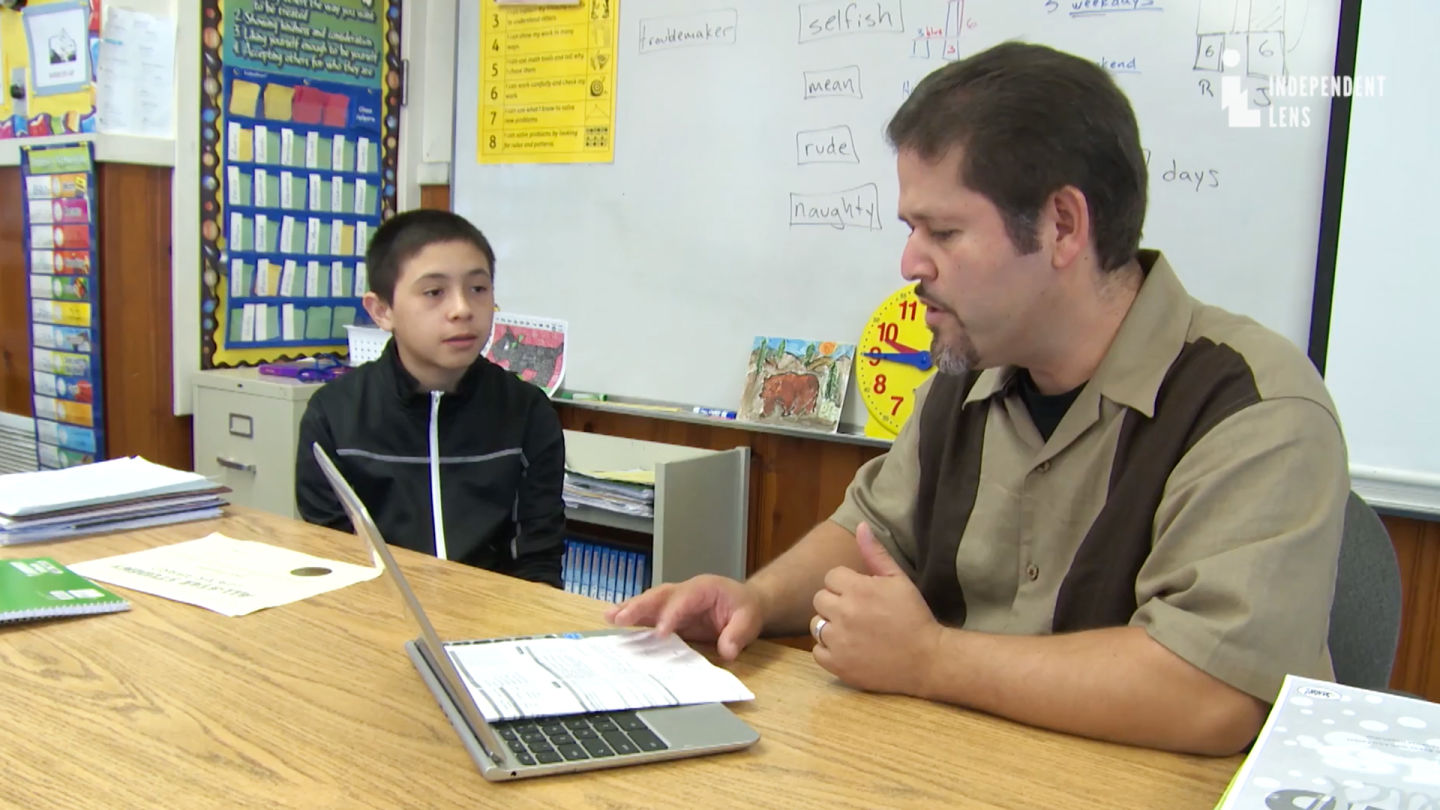
"caption": "Castlemont High School teacher Carrie Haslanger goes over an assignment with a newcomer ethnic studies class.",
"description": null,
"title": "Haslanger 1",
"credit": "Zaidee Stavely/KQED",
"status": "inherit",
"isLoading": false,
"fetchFailed": false
},
"news_10798492": {
"type": "attachments",
"id": "news_10798492",
"meta": {
"index": "attachments_1716263798",
"site": "news",
"id": "10798492",
"found": true
},
"parent": 10798486,
"imgSizes": {
"twentyfourteen-full-width": {
"file": "https://ww2.kqed.org/app/uploads/sites/10/2015/12/jorgeandmrramos-1038x576.jpg",
"width": 1038,
"mimeType": "image/jpeg",
"height": 576
},
"thumbnail": {
"file": "https://ww2.kqed.org/app/uploads/sites/10/2015/12/jorgeandmrramos-400x225.jpg",
"width": 400,
"mimeType": "image/jpeg",
"height": 225
},
"fd-sm": {
"file": "https://ww2.kqed.org/app/uploads/sites/10/2015/12/jorgeandmrramos-960x540.jpg",
"width": 960,
"mimeType": "image/jpeg",
"height": 540
},
"post-thumbnail": {
"file": "https://ww2.kqed.org/app/uploads/sites/10/2015/12/jorgeandmrramos-672x372.jpg",
"width": 672,
"mimeType": "image/jpeg",
"height": 372
},
"kqedFullSize": {
"file": "https://ww2.kqed.org/app/uploads/sites/10/2015/12/jorgeandmrramos.jpg",
"width": 1920,
"height": 1080
},
"large": {
"file": "https://ww2.kqed.org/app/uploads/sites/10/2015/12/jorgeandmrramos-1440x810.jpg",
"width": 1440,
"mimeType": "image/jpeg",
"height": 810
},
"guest-author-96": {
"file": "https://ww2.kqed.org/app/uploads/sites/10/2015/12/jorgeandmrramos-96x96.jpg",
"width": 96,
"mimeType": "image/jpeg",
"height": 96
},
"medium": {
"file": "https://ww2.kqed.org/app/uploads/sites/10/2015/12/jorgeandmrramos-800x450.jpg",
"width": 800,
"mimeType": "image/jpeg",
"height": 450
},
"guest-author-64": {
"file": "https://ww2.kqed.org/app/uploads/sites/10/2015/12/jorgeandmrramos-64x64.jpg",
"width": 64,
"mimeType": "image/jpeg",
"height": 64
},
"guest-author-32": {
"file": "https://ww2.kqed.org/app/uploads/sites/10/2015/12/jorgeandmrramos-32x32.jpg",
"width": 32,
"mimeType": "image/jpeg",
"height": 32
},
"jmtc-small-thumb": {
"file": "https://ww2.kqed.org/app/uploads/sites/10/2015/12/jorgeandmrramos-280x150.jpg",
"width": 280,
"mimeType": "image/jpeg",
"height": 150
},
"fd-lrg": {
"file": "https://ww2.kqed.org/app/uploads/sites/10/2015/12/jorgeandmrramos-1920x1080.jpg",
"width": 1920,
"mimeType": "image/jpeg",
"height": 1080
},
"fd-med": {
"file": "https://ww2.kqed.org/app/uploads/sites/10/2015/12/jorgeandmrramos-1180x664.jpg",
"width": 1180,
"mimeType": "image/jpeg",
"height": 664
},
"detail": {
"file": "https://ww2.kqed.org/app/uploads/sites/10/2015/12/jorgeandmrramos-75x75.jpg",
"width": 75,
"mimeType": "image/jpeg",
"height": 75
},
"medium_large": {
"file": "https://ww2.kqed.org/app/uploads/sites/10/2015/12/jorgeandmrramos-768x432.jpg",
"width": 768,
"mimeType": "image/jpeg",
"height": 432
},
"guest-author-128": {
"file": "https://ww2.kqed.org/app/uploads/sites/10/2015/12/jorgeandmrramos-128x128.jpg",
"width": 128,
"mimeType": "image/jpeg",
"height": 128
}
},
"publishDate": 1450400029,
"modified": 1450489494,
"caption": "Third-grade teacher Oscar Ramos works with his former student Jose Ansaldo. ",
"description": null,
"title": "jorgeandmrramos",
"credit": "Courtesy ITVS",
"status": "inherit",
"isLoading": false,
"fetchFailed": false
},
"news_10796837": {
"type": "attachments",
"id": "news_10796837",
"meta": {
"index": "attachments_1716263798",
"site": "news",
"id": "10796837",
"found": true
},
"parent": 10796779,
"imgSizes": {
"twentyfourteen-full-width": {
"file": "https://ww2.kqed.org/app/uploads/sites/10/2015/12/Assyrians-1038x576.jpg",
"width": 1038,
"mimeType": "image/jpeg",
"height": 576
},
"thumbnail": {
"file": "https://ww2.kqed.org/app/uploads/sites/10/2015/12/Assyrians-400x300.jpg",
"width": 400,
"mimeType": "image/jpeg",
"height": 300
},
"fd-sm": {
"file": "https://ww2.kqed.org/app/uploads/sites/10/2015/12/Assyrians-960x720.jpg",
"width": 960,
"mimeType": "image/jpeg",
"height": 720
},
"post-thumbnail": {
"file": "https://ww2.kqed.org/app/uploads/sites/10/2015/12/Assyrians-672x372.jpg",
"width": 672,
"mimeType": "image/jpeg",
"height": 372
},
"kqedFullSize": {
"file": "https://ww2.kqed.org/app/uploads/sites/10/2015/12/Assyrians.jpg",
"width": 1920,
"height": 1440
},
"large": {
"file": "https://ww2.kqed.org/app/uploads/sites/10/2015/12/Assyrians-1440x1080.jpg",
"width": 1440,
"mimeType": "image/jpeg",
"height": 1080
},
"guest-author-96": {
"file": "https://ww2.kqed.org/app/uploads/sites/10/2015/12/Assyrians-96x96.jpg",
"width": 96,
"mimeType": "image/jpeg",
"height": 96
},
"medium": {
"file": "https://ww2.kqed.org/app/uploads/sites/10/2015/12/Assyrians-800x600.jpg",
"width": 800,
"mimeType": "image/jpeg",
"height": 600
},
"guest-author-64": {
"file": "https://ww2.kqed.org/app/uploads/sites/10/2015/12/Assyrians-64x64.jpg",
"width": 64,
"mimeType": "image/jpeg",
"height": 64
},
"guest-author-32": {
"file": "https://ww2.kqed.org/app/uploads/sites/10/2015/12/Assyrians-32x32.jpg",
"width": 32,
"mimeType": "image/jpeg",
"height": 32
},
"jmtc-small-thumb": {
"file": "https://ww2.kqed.org/app/uploads/sites/10/2015/12/Assyrians-280x150.jpg",
"width": 280,
"mimeType": "image/jpeg",
"height": 150
},
"fd-lrg": {
"file": "https://ww2.kqed.org/app/uploads/sites/10/2015/12/Assyrians-1920x1440.jpg",
"width": 1920,
"mimeType": "image/jpeg",
"height": 1440
},
"fd-med": {
"file": "https://ww2.kqed.org/app/uploads/sites/10/2015/12/Assyrians-1180x885.jpg",
"width": 1180,
"mimeType": "image/jpeg",
"height": 885
},
"detail": {
"file": "https://ww2.kqed.org/app/uploads/sites/10/2015/12/Assyrians-75x75.jpg",
"width": 75,
"mimeType": "image/jpeg",
"height": 75
},
"medium_large": {
"file": "https://ww2.kqed.org/app/uploads/sites/10/2015/12/Assyrians-768x576.jpg",
"width": 768,
"mimeType": "image/jpeg",
"height": 576
},
"guest-author-128": {
"file": "https://ww2.kqed.org/app/uploads/sites/10/2015/12/Assyrians-128x128.jpg",
"width": 128,
"mimeType": "image/jpeg",
"height": 128
}
},
"publishDate": 1450298218,
"modified": 1450310662,
"caption": "Parishioners worship at Mar Yosip Assyrian Church of the East in November 2015. Assyrians -- one of the Middle East’s oldest ethno-religious groups -- now face extinction at the hands of the self-described Islamic State.",
"description": "Parishioners worship at Mar Yosip Assyrian Church of the East in Nov. 2015. Assyrians -- one of the Middle East’s oldest ethno-religious groups -- now face extinction at the hands of the self-described Islamic State.",
"title": "Assyrians",
"credit": "Kaitlyn Landgraf/Peninsula Press",
"status": "inherit",
"isLoading": false,
"fetchFailed": false
},
"news_10790827": {
"type": "attachments",
"id": "news_10790827",
"meta": {
"index": "attachments_1716263798",
"site": "news",
"id": "10790827",
"found": true
},
"parent": 10790822,
"imgSizes": {
"twentyfourteen-full-width": {
"file": "https://ww2.kqed.org/app/uploads/sites/10/2015/12/LeonRod-1038x576.jpg",
"width": 1038,
"mimeType": "image/jpeg",
"height": 576
},
"thumbnail": {
"file": "https://ww2.kqed.org/app/uploads/sites/10/2015/12/LeonRod-400x286.jpg",
"width": 400,
"mimeType": "image/jpeg",
"height": 286
},
"fd-sm": {
"file": "https://ww2.kqed.org/app/uploads/sites/10/2015/12/LeonRod-960x687.jpg",
"width": 960,
"mimeType": "image/jpeg",
"height": 687
},
"post-thumbnail": {
"file": "https://ww2.kqed.org/app/uploads/sites/10/2015/12/LeonRod-672x372.jpg",
"width": 672,
"mimeType": "image/jpeg",
"height": 372
},
"kqedFullSize": {
"file": "https://ww2.kqed.org/app/uploads/sites/10/2015/12/LeonRod.jpg",
"width": 1920,
"height": 1373
},
"large": {
"file": "https://ww2.kqed.org/app/uploads/sites/10/2015/12/LeonRod-1440x1030.jpg",
"width": 1440,
"mimeType": "image/jpeg",
"height": 1030
},
"guest-author-96": {
"file": "https://ww2.kqed.org/app/uploads/sites/10/2015/12/LeonRod-96x96.jpg",
"width": 96,
"mimeType": "image/jpeg",
"height": 96
},
"medium": {
"file": "https://ww2.kqed.org/app/uploads/sites/10/2015/12/LeonRod-800x572.jpg",
"width": 800,
"mimeType": "image/jpeg",
"height": 572
},
"guest-author-64": {
"file": "https://ww2.kqed.org/app/uploads/sites/10/2015/12/LeonRod-64x64.jpg",
"width": 64,
"mimeType": "image/jpeg",
"height": 64
},
"guest-author-32": {
"file": "https://ww2.kqed.org/app/uploads/sites/10/2015/12/LeonRod-32x32.jpg",
"width": 32,
"mimeType": "image/jpeg",
"height": 32
},
"jmtc-small-thumb": {
"file": "https://ww2.kqed.org/app/uploads/sites/10/2015/12/LeonRod-280x150.jpg",
"width": 280,
"mimeType": "image/jpeg",
"height": 150
},
"fd-lrg": {
"file": "https://ww2.kqed.org/app/uploads/sites/10/2015/12/LeonRod-1920x1373.jpg",
"width": 1920,
"mimeType": "image/jpeg",
"height": 1373
},
"fd-med": {
"file": "https://ww2.kqed.org/app/uploads/sites/10/2015/12/LeonRod-1180x844.jpg",
"width": 1180,
"mimeType": "image/jpeg",
"height": 844
},
"detail": {
"file": "https://ww2.kqed.org/app/uploads/sites/10/2015/12/LeonRod-75x75.jpg",
"width": 75,
"mimeType": "image/jpeg",
"height": 75
},
"medium_large": {
"file": "https://ww2.kqed.org/app/uploads/sites/10/2015/12/LeonRod-768x549.jpg",
"width": 768,
"mimeType": "image/jpeg",
"height": 549
},
"guest-author-128": {
"file": "https://ww2.kqed.org/app/uploads/sites/10/2015/12/LeonRod-128x128.jpg",
"width": 128,
"mimeType": "image/jpeg",
"height": 128
}
},
"publishDate": 1449860569,
"modified": 1449872272,
"caption": "U.S. Citizenship and Immigration Services director Leon Rodriguez speaks during a naturalization ceremony in Virginia in May, 2015. He told the House Judiciary Committee on Thursday that his agency is reviewing the K-1 fiance(e) visa program along with all recently approved fiance(e) visas.",
"description": "U.S. Citizenship and Immigration Services Director Leon Rodriguez speaks during a naturalization ceremony in Virginia in May, 2015. He told the House Judiciary Committee on Thursday that his agency is reviewing the K-1 fiancé(e) visa program along with all recently approved fiancé(e) visas.",
"title": "LeonRod",
"credit": "Saul Loeb/AFP/Getty Images",
"status": "inherit",
"isLoading": false,
"fetchFailed": false
},
"news_10787027": {
"type": "attachments",
"id": "news_10787027",
"meta": {
"index": "attachments_1716263798",
"site": "news",
"id": "10787027",
"found": true
},
"parent": 10787026,
"imgSizes": {
"twentyfourteen-full-width": {
"file": "https://ww2.kqed.org/app/uploads/sites/10/2015/12/ap_748787470938_wide-24fff1123cf61d2b7cf02ef80d4d30bacfd7e96c-1038x576.jpg",
"width": 1038,
"mimeType": "image/jpeg",
"height": 576
},
"thumbnail": {
"file": "https://ww2.kqed.org/app/uploads/sites/10/2015/12/ap_748787470938_wide-24fff1123cf61d2b7cf02ef80d4d30bacfd7e96c-400x225.jpg",
"width": 400,
"mimeType": "image/jpeg",
"height": 225
},
"fd-sm": {
"file": "https://ww2.kqed.org/app/uploads/sites/10/2015/12/ap_748787470938_wide-24fff1123cf61d2b7cf02ef80d4d30bacfd7e96c-960x540.jpg",
"width": 960,
"mimeType": "image/jpeg",
"height": 540
},
"post-thumbnail": {
"file": "https://ww2.kqed.org/app/uploads/sites/10/2015/12/ap_748787470938_wide-24fff1123cf61d2b7cf02ef80d4d30bacfd7e96c-672x372.jpg",
"width": 672,
"mimeType": "image/jpeg",
"height": 372
},
"kqedFullSize": {
"file": "https://ww2.kqed.org/app/uploads/sites/10/2015/12/ap_748787470938_wide-24fff1123cf61d2b7cf02ef80d4d30bacfd7e96c.jpg",
"width": 2748,
"height": 1545
},
"large": {
"file": "https://ww2.kqed.org/app/uploads/sites/10/2015/12/ap_748787470938_wide-24fff1123cf61d2b7cf02ef80d4d30bacfd7e96c-1440x810.jpg",
"width": 1440,
"mimeType": "image/jpeg",
"height": 810
},
"guest-author-96": {
"file": "https://ww2.kqed.org/app/uploads/sites/10/2015/12/ap_748787470938_wide-24fff1123cf61d2b7cf02ef80d4d30bacfd7e96c-96x96.jpg",
"width": 96,
"mimeType": "image/jpeg",
"height": 96
},
"medium": {
"file": "https://ww2.kqed.org/app/uploads/sites/10/2015/12/ap_748787470938_wide-24fff1123cf61d2b7cf02ef80d4d30bacfd7e96c-800x450.jpg",
"width": 800,
"mimeType": "image/jpeg",
"height": 450
},
"guest-author-64": {
"file": "https://ww2.kqed.org/app/uploads/sites/10/2015/12/ap_748787470938_wide-24fff1123cf61d2b7cf02ef80d4d30bacfd7e96c-64x64.jpg",
"width": 64,
"mimeType": "image/jpeg",
"height": 64
},
"guest-author-32": {
"file": "https://ww2.kqed.org/app/uploads/sites/10/2015/12/ap_748787470938_wide-24fff1123cf61d2b7cf02ef80d4d30bacfd7e96c-32x32.jpg",
"width": 32,
"mimeType": "image/jpeg",
"height": 32
},
"jmtc-small-thumb": {
"file": "https://ww2.kqed.org/app/uploads/sites/10/2015/12/ap_748787470938_wide-24fff1123cf61d2b7cf02ef80d4d30bacfd7e96c-280x150.jpg",
"width": 280,
"mimeType": "image/jpeg",
"height": 150
},
"fd-lrg": {
"file": "https://ww2.kqed.org/app/uploads/sites/10/2015/12/ap_748787470938_wide-24fff1123cf61d2b7cf02ef80d4d30bacfd7e96c-1920x1079.jpg",
"width": 1920,
"mimeType": "image/jpeg",
"height": 1079
},
"fd-med": {
"file": "https://ww2.kqed.org/app/uploads/sites/10/2015/12/ap_748787470938_wide-24fff1123cf61d2b7cf02ef80d4d30bacfd7e96c-1180x663.jpg",
"width": 1180,
"mimeType": "image/jpeg",
"height": 663
},
"detail": {
"file": "https://ww2.kqed.org/app/uploads/sites/10/2015/12/ap_748787470938_wide-24fff1123cf61d2b7cf02ef80d4d30bacfd7e96c-75x75.jpg",
"width": 75,
"mimeType": "image/jpeg",
"height": 75
},
"guest-author-128": {
"file": "https://ww2.kqed.org/app/uploads/sites/10/2015/12/ap_748787470938_wide-24fff1123cf61d2b7cf02ef80d4d30bacfd7e96c-128x128.jpg",
"width": 128,
"mimeType": "image/jpeg",
"height": 128
}
},
"publishDate": 1449594413,
"modified": 1449594413,
"caption": null,
"description": "Two Texas voters are challenging the 2010 Texas reapportionment as unconstitutional. They say the correct constitutional metric should be eligible voters, not total population.",
"title": "Two Texas voters are challenging the 2010 Texas reapportionment as unconstitutional. They say the correct constitutional metric should be eligible voters, not total population.",
"credit": null,
"status": "inherit",
"isLoading": false,
"fetchFailed": false
},
"news_10765903": {
"type": "attachments",
"id": "news_10765903",
"meta": {
"index": "attachments_1716263798",
"site": "news",
"id": "10765903",
"found": true
},
"parent": 10765900,
"imgSizes": {
"jmtc-small-thumb": {
"file": "https://ww2.kqed.org/app/uploads/sites/10/2015/11/spanishTCR-280x150.jpg",
"width": 280,
"mimeType": "image/jpeg",
"height": 150
},
"thumbnail": {
"file": "https://ww2.kqed.org/app/uploads/sites/10/2015/11/spanishTCR-400x266.jpg",
"width": 400,
"mimeType": "image/jpeg",
"height": 266
},
"post-thumbnail": {
"file": "https://ww2.kqed.org/app/uploads/sites/10/2015/11/spanishTCR-672x372.jpg",
"width": 672,
"mimeType": "image/jpeg",
"height": 372
},
"kqedFullSize": {
"file": "https://ww2.kqed.org/app/uploads/sites/10/2015/11/spanishTCR.jpg",
"width": 787,
"height": 523
},
"guest-author-96": {
"file": "https://ww2.kqed.org/app/uploads/sites/10/2015/11/spanishTCR-96x96.jpg",
"width": 96,
"mimeType": "image/jpeg",
"height": 96
},
"guest-author-64": {
"file": "https://ww2.kqed.org/app/uploads/sites/10/2015/11/spanishTCR-64x64.jpg",
"width": 64,
"mimeType": "image/jpeg",
"height": 64
},
"detail": {
"file": "https://ww2.kqed.org/app/uploads/sites/10/2015/11/spanishTCR-75x75.jpg",
"width": 75,
"mimeType": "image/jpeg",
"height": 75
},
"guest-author-32": {
"file": "https://ww2.kqed.org/app/uploads/sites/10/2015/11/spanishTCR-32x32.jpg",
"width": 32,
"mimeType": "image/jpeg",
"height": 32
},
"guest-author-128": {
"file": "https://ww2.kqed.org/app/uploads/sites/10/2015/11/spanishTCR-128x128.jpg",
"width": 128,
"mimeType": "image/jpeg",
"height": 128
}
},
"publishDate": 1448048564,
"modified": 1448048638,
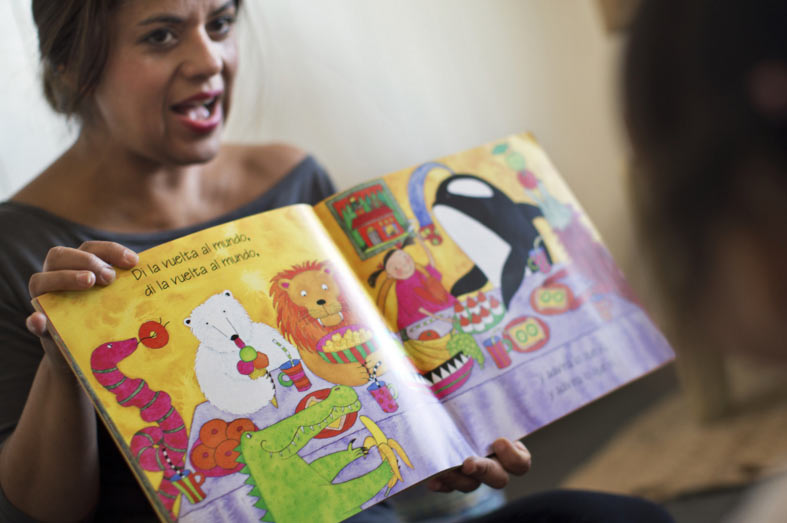
"caption": "Maria Palazzolo, owner of The Family Nest in Long Beach, reads a book in Spanish during an art class on Thursday morning, Nov. 12, 2015. Palazzolo's newly launched business provides bilingual early childhood education classes.",
"description": null,
"title": "spanishTCR",
"credit": "Maya Sugarmann/KPCC",
"status": "inherit",
"isLoading": false,
"fetchFailed": false
},
"news_10763972": {
"type": "attachments",
"id": "news_10763972",
"meta": {
"index": "attachments_1716263798",
"site": "news",
"id": "10763972",
"found": true
},
"parent": 10763791,
"imgSizes": {
"twentyfourteen-full-width": {
"file": "https://ww2.kqed.org/app/uploads/sites/10/2015/11/image1.JPG-1038x576.jpeg",
"width": 1038,
"mimeType": "image/jpeg",
"height": 576
},
"thumbnail": {
"file": "https://ww2.kqed.org/app/uploads/sites/10/2015/11/image1.JPG-400x267.jpeg",
"width": 400,
"mimeType": "image/jpeg",
"height": 267
},
"fd-sm": {
"file": "https://ww2.kqed.org/app/uploads/sites/10/2015/11/image1.JPG-960x641.jpeg",
"width": 960,
"mimeType": "image/jpeg",
"height": 641
},
"post-thumbnail": {
"file": "https://ww2.kqed.org/app/uploads/sites/10/2015/11/image1.JPG-672x372.jpeg",
"width": 672,
"mimeType": "image/jpeg",
"height": 372
},
"kqedFullSize": {
"file": "https://ww2.kqed.org/app/uploads/sites/10/2015/11/image1.JPG.jpeg",
"width": 1259,
"height": 840
},
"guest-author-96": {
"file": "https://ww2.kqed.org/app/uploads/sites/10/2015/11/image1.JPG-96x96.jpeg",
"width": 96,
"mimeType": "image/jpeg",
"height": 96
},
"medium": {
"file": "https://ww2.kqed.org/app/uploads/sites/10/2015/11/image1.JPG-800x534.jpeg",
"width": 800,
"mimeType": "image/jpeg",
"height": 534
},
"guest-author-64": {
"file": "https://ww2.kqed.org/app/uploads/sites/10/2015/11/image1.JPG-64x64.jpeg",
"width": 64,
"mimeType": "image/jpeg",
"height": 64
},
"guest-author-32": {
"file": "https://ww2.kqed.org/app/uploads/sites/10/2015/11/image1.JPG-32x32.jpeg",
"width": 32,
"mimeType": "image/jpeg",
"height": 32
},
"jmtc-small-thumb": {
"file": "https://ww2.kqed.org/app/uploads/sites/10/2015/11/image1.JPG-280x150.jpeg",
"width": 280,
"mimeType": "image/jpeg",
"height": 150
},
"fd-med": {
"file": "https://ww2.kqed.org/app/uploads/sites/10/2015/11/image1.JPG-1180x787.jpeg",
"width": 1180,
"mimeType": "image/jpeg",
"height": 787
},
"detail": {
"file": "https://ww2.kqed.org/app/uploads/sites/10/2015/11/image1.JPG-75x75.jpeg",
"width": 75,
"mimeType": "image/jpeg",
"height": 75
},
"guest-author-128": {
"file": "https://ww2.kqed.org/app/uploads/sites/10/2015/11/image1.JPG-128x128.jpeg",
"width": 128,
"mimeType": "image/jpeg",
"height": 128
}
},
"publishDate": 1447898021,
"modified": 1447898149,
"caption": "Eireann Dolan and Sean Doolittle.",
"description": null,
"title": "image1.JPG",
"credit": "Courtesy Eireann Dolan and Mystic Images Photography.",
"status": "inherit",
"isLoading": false,
"fetchFailed": false
},
"news_10762301": {
"type": "attachments",
"id": "news_10762301",
"meta": {
"index": "attachments_1716263798",
"site": "news",
"id": "10762301",
"found": true
},
"parent": 10761293,
"imgSizes": {
"twentyfourteen-full-width": {
"file": "https://ww2.kqed.org/app/uploads/sites/10/2015/11/KingCityTCR-1038x576.jpg",
"width": 1038,
"mimeType": "image/jpeg",
"height": 576
},
"thumbnail": {
"file": "https://ww2.kqed.org/app/uploads/sites/10/2015/11/KingCityTCR-400x299.jpg",
"width": 400,
"mimeType": "image/jpeg",
"height": 299
},
"fd-sm": {
"file": "https://ww2.kqed.org/app/uploads/sites/10/2015/11/KingCityTCR-960x719.jpg",
"width": 960,
"mimeType": "image/jpeg",
"height": 719
},
"post-thumbnail": {
"file": "https://ww2.kqed.org/app/uploads/sites/10/2015/11/KingCityTCR-672x372.jpg",
"width": 672,
"mimeType": "image/jpeg",
"height": 372
},
"kqedFullSize": {
"file": "https://ww2.kqed.org/app/uploads/sites/10/2015/11/KingCityTCR.jpg",
"width": 1920,
"height": 1437
},
"large": {
"file": "https://ww2.kqed.org/app/uploads/sites/10/2015/11/KingCityTCR-1440x1078.jpg",
"width": 1440,
"mimeType": "image/jpeg",
"height": 1078
},
"guest-author-96": {
"file": "https://ww2.kqed.org/app/uploads/sites/10/2015/11/KingCityTCR-96x96.jpg",
"width": 96,
"mimeType": "image/jpeg",
"height": 96
},
"medium": {
"file": "https://ww2.kqed.org/app/uploads/sites/10/2015/11/KingCityTCR-800x599.jpg",
"width": 800,
"mimeType": "image/jpeg",
"height": 599
},
"guest-author-64": {
"file": "https://ww2.kqed.org/app/uploads/sites/10/2015/11/KingCityTCR-64x64.jpg",
"width": 64,
"mimeType": "image/jpeg",
"height": 64
},
"guest-author-32": {
"file": "https://ww2.kqed.org/app/uploads/sites/10/2015/11/KingCityTCR-32x32.jpg",
"width": 32,
"mimeType": "image/jpeg",
"height": 32
},
"jmtc-small-thumb": {
"file": "https://ww2.kqed.org/app/uploads/sites/10/2015/11/KingCityTCR-280x150.jpg",
"width": 280,
"mimeType": "image/jpeg",
"height": 150
},
"fd-lrg": {
"file": "https://ww2.kqed.org/app/uploads/sites/10/2015/11/KingCityTCR-1920x1437.jpg",
"width": 1920,
"mimeType": "image/jpeg",
"height": 1437
},
"fd-med": {
"file": "https://ww2.kqed.org/app/uploads/sites/10/2015/11/KingCityTCR-1180x883.jpg",
"width": 1180,
"mimeType": "image/jpeg",
"height": 883
},
"detail": {
"file": "https://ww2.kqed.org/app/uploads/sites/10/2015/11/KingCityTCR-75x75.jpg",
"width": 75,
"mimeType": "image/jpeg",
"height": 75
},
"guest-author-128": {
"file": "https://ww2.kqed.org/app/uploads/sites/10/2015/11/KingCityTCR-128x128.jpg",
"width": 128,
"mimeType": "image/jpeg",
"height": 128
}
},
"publishDate": 1447784234,
"modified": 1447800329,
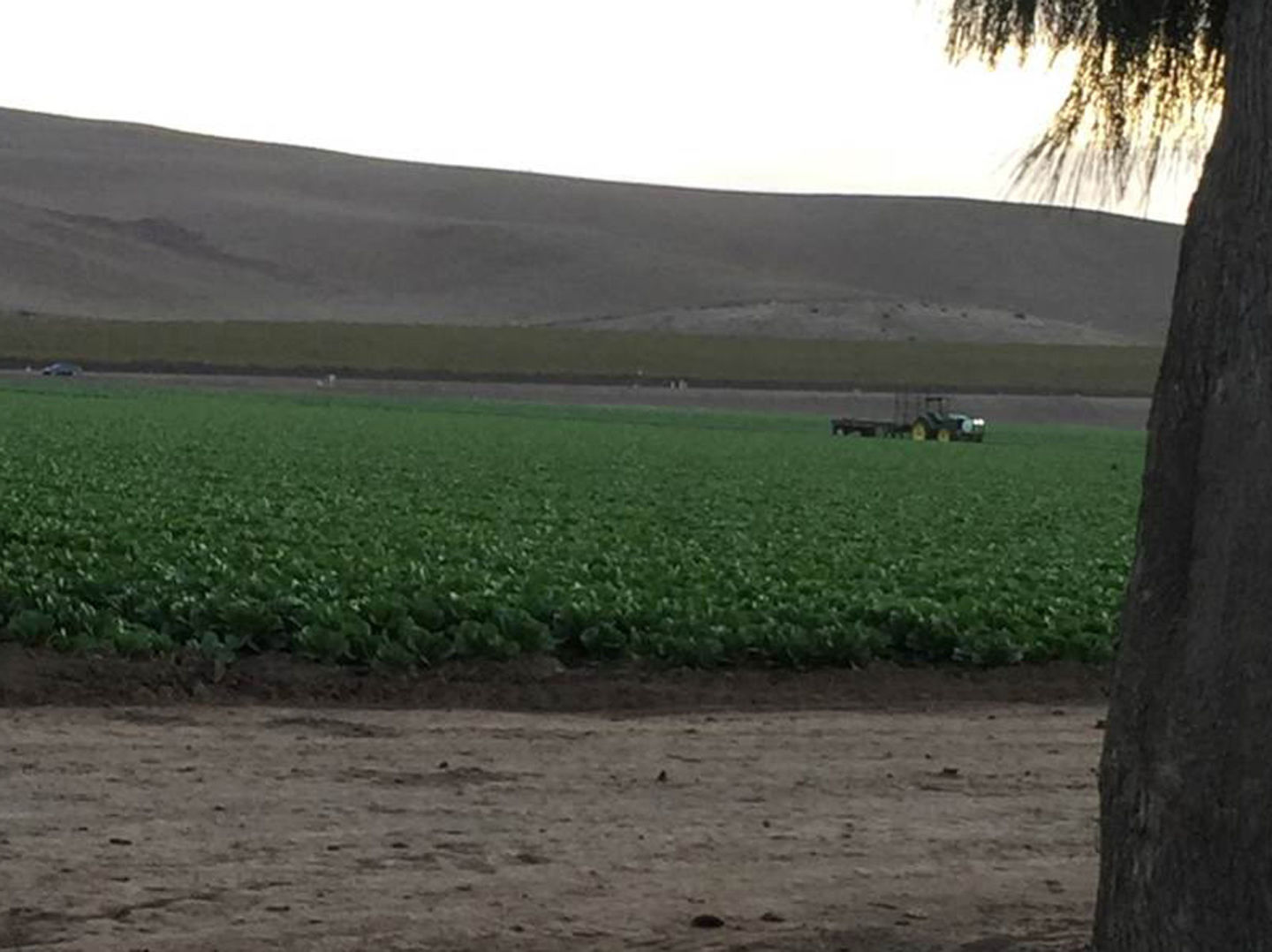
"caption": "Fields outside King City.",
"description": null,
"title": "KingCityTCR",
"credit": "Leslie Griffy/KQED",
"status": "inherit",
"isLoading": false,
"fetchFailed": false
},
"news_10746203": {
"type": "attachments",
"id": "news_10746203",
"meta": {
"index": "attachments_1716263798",
"site": "news",
"id": "10746203",
"found": true
},
"parent": 10746180,
"imgSizes": {
"twentyfourteen-full-width": {
"file": "https://ww2.kqed.org/app/uploads/sites/10/2015/11/CruzFeinstein-1038x576.jpg",
"width": 1038,
"mimeType": "image/jpeg",
"height": 576
},
"thumbnail": {
"file": "https://ww2.kqed.org/app/uploads/sites/10/2015/11/CruzFeinstein-400x225.jpg",
"width": 400,
"mimeType": "image/jpeg",
"height": 225
},
"fd-sm": {
"file": "https://ww2.kqed.org/app/uploads/sites/10/2015/11/CruzFeinstein-960x540.jpg",
"width": 960,
"mimeType": "image/jpeg",
"height": 540
},
"post-thumbnail": {
"file": "https://ww2.kqed.org/app/uploads/sites/10/2015/11/CruzFeinstein-672x372.jpg",
"width": 672,
"mimeType": "image/jpeg",
"height": 372
},
"kqedFullSize": {
"file": "https://ww2.kqed.org/app/uploads/sites/10/2015/11/CruzFeinstein.jpg",
"width": 1920,
"height": 1080
},
"large": {
"file": "https://ww2.kqed.org/app/uploads/sites/10/2015/11/CruzFeinstein-1440x810.jpg",
"width": 1440,
"mimeType": "image/jpeg",
"height": 810
},
"guest-author-96": {
"file": "https://ww2.kqed.org/app/uploads/sites/10/2015/11/CruzFeinstein-96x96.jpg",
"width": 96,
"mimeType": "image/jpeg",
"height": 96
},
"medium": {
"file": "https://ww2.kqed.org/app/uploads/sites/10/2015/11/CruzFeinstein-800x450.jpg",
"width": 800,
"mimeType": "image/jpeg",
"height": 450
},
"guest-author-64": {
"file": "https://ww2.kqed.org/app/uploads/sites/10/2015/11/CruzFeinstein-64x64.jpg",
"width": 64,
"mimeType": "image/jpeg",
"height": 64
},
"guest-author-32": {
"file": "https://ww2.kqed.org/app/uploads/sites/10/2015/11/CruzFeinstein-32x32.jpg",
"width": 32,
"mimeType": "image/jpeg",
"height": 32
},
"jmtc-small-thumb": {
"file": "https://ww2.kqed.org/app/uploads/sites/10/2015/11/CruzFeinstein-280x150.jpg",
"width": 280,
"mimeType": "image/jpeg",
"height": 150
},
"fd-lrg": {
"file": "https://ww2.kqed.org/app/uploads/sites/10/2015/11/CruzFeinstein-1920x1080.jpg",
"width": 1920,
"mimeType": "image/jpeg",
"height": 1080
},
"fd-med": {
"file": "https://ww2.kqed.org/app/uploads/sites/10/2015/11/CruzFeinstein-1180x664.jpg",
"width": 1180,
"mimeType": "image/jpeg",
"height": 664
},
"detail": {
"file": "https://ww2.kqed.org/app/uploads/sites/10/2015/11/CruzFeinstein-75x75.jpg",
"width": 75,
"mimeType": "image/jpeg",
"height": 75
},
"guest-author-128": {
"file": "https://ww2.kqed.org/app/uploads/sites/10/2015/11/CruzFeinstein-128x128.jpg",
"width": 128,
"mimeType": "image/jpeg",
"height": 128
}
},
"publishDate": 1446678872,
"modified": 1446679003,
"caption": "Senators Ted Cruz and Dianne Feinstein sparred on the U.S. Senate floor on Wednesday, Nov. 4, 2015.",
"description": "Senators Ted Cruz and Dianne Feinstein sparred on the U.S. Senate floor on Wednesday, Nov. 4, 2015.",
"title": "CruzFeinstein",
"credit": "Paul J. Richards and Mark Wilson/AFP/Getty Images",
"status": "inherit",
"isLoading": false,
"fetchFailed": false
},
"news_10737329": {
"type": "attachments",
"id": "news_10737329",
"meta": {
"index": "attachments_1716263798",
"site": "news",
"id": "10737329",
"found": true
},
"parent": 10737275,
"imgSizes": {
"twentyfourteen-full-width": {
"file": "https://ww2.kqed.org/app/uploads/sites/10/2015/10/ImmigrantsShackles-1038x576.jpg",
"width": 1038,
"mimeType": "image/jpeg",
"height": 576
},
"thumbnail": {
"file": "https://ww2.kqed.org/app/uploads/sites/10/2015/10/ImmigrantsShackles-400x267.jpg",
"width": 400,
"mimeType": "image/jpeg",
"height": 267
},
"fd-sm": {
"file": "https://ww2.kqed.org/app/uploads/sites/10/2015/10/ImmigrantsShackles-960x640.jpg",
"width": 960,
"mimeType": "image/jpeg",
"height": 640
},
"post-thumbnail": {
"file": "https://ww2.kqed.org/app/uploads/sites/10/2015/10/ImmigrantsShackles-672x372.jpg",
"width": 672,
"mimeType": "image/jpeg",
"height": 372
},
"kqedFullSize": {
"file": "https://ww2.kqed.org/app/uploads/sites/10/2015/10/ImmigrantsShackles.jpg",
"width": 1920,
"height": 1280
},
"large": {
"file": "https://ww2.kqed.org/app/uploads/sites/10/2015/10/ImmigrantsShackles-1440x960.jpg",
"width": 1440,
"mimeType": "image/jpeg",
"height": 960
},
"guest-author-96": {
"file": "https://ww2.kqed.org/app/uploads/sites/10/2015/10/ImmigrantsShackles-96x96.jpg",
"width": 96,
"mimeType": "image/jpeg",
"height": 96
},
"medium": {
"file": "https://ww2.kqed.org/app/uploads/sites/10/2015/10/ImmigrantsShackles-800x533.jpg",
"width": 800,
"mimeType": "image/jpeg",
"height": 533
},
"guest-author-64": {
"file": "https://ww2.kqed.org/app/uploads/sites/10/2015/10/ImmigrantsShackles-64x64.jpg",
"width": 64,
"mimeType": "image/jpeg",
"height": 64
},
"guest-author-32": {
"file": "https://ww2.kqed.org/app/uploads/sites/10/2015/10/ImmigrantsShackles-32x32.jpg",
"width": 32,
"mimeType": "image/jpeg",
"height": 32
},
"jmtc-small-thumb": {
"file": "https://ww2.kqed.org/app/uploads/sites/10/2015/10/ImmigrantsShackles-280x150.jpg",
"width": 280,
"mimeType": "image/jpeg",
"height": 150
},
"fd-lrg": {
"file": "https://ww2.kqed.org/app/uploads/sites/10/2015/10/ImmigrantsShackles-1920x1280.jpg",
"width": 1920,
"mimeType": "image/jpeg",
"height": 1280
},
"fd-med": {
"file": "https://ww2.kqed.org/app/uploads/sites/10/2015/10/ImmigrantsShackles-1180x787.jpg",
"width": 1180,
"mimeType": "image/jpeg",
"height": 787
},
"detail": {
"file": "https://ww2.kqed.org/app/uploads/sites/10/2015/10/ImmigrantsShackles-75x75.jpg",
"width": 75,
"mimeType": "image/jpeg",
"height": 75
},
"guest-author-128": {
"file": "https://ww2.kqed.org/app/uploads/sites/10/2015/10/ImmigrantsShackles-128x128.jpg",
"width": 128,
"mimeType": "image/jpeg",
"height": 128
}
},
"publishDate": 1446070750,
"modified": 1513361704,
"caption": "Immigrants prepare to be unshackled and set free from the Adelanto Detention Facility in Adelanto, California. ",
"description": "Immigrants prepare to be unshackled and set free from the Adelanto Detention Facility in Adelanto, California. As of 2013, the center houses an average of 1,100 immigrants in custody pending a decision in their cases or awaiting deportation.",
"title": "ImmigrantsShackles",
"credit": "John Moore/Getty Images",
"status": "inherit",
"isLoading": false,
"fetchFailed": false
},
"news_10727445": {
"type": "attachments",
"id": "news_10727445",
"meta": {
"index": "attachments_1716263798",
"site": "news",
"id": "10727445",
"found": true
},
"parent": 10727365,
"imgSizes": {
"twentyfourteen-full-width": {
"file": "https://ww2.kqed.org/app/uploads/sites/10/2015/10/RS17139_Zenaida-1.JPG-qut-800x576.jpg",
"width": 800,
"mimeType": "image/jpeg",
"height": 576
},
"jmtc-small-thumb": {
"file": "https://ww2.kqed.org/app/uploads/sites/10/2015/10/RS17139_Zenaida-1.JPG-qut-280x150.jpg",
"width": 280,
"mimeType": "image/jpeg",
"height": 150
},
"thumbnail": {
"file": "https://ww2.kqed.org/app/uploads/sites/10/2015/10/RS17139_Zenaida-1.JPG-qut-400x294.jpg",
"width": 400,
"mimeType": "image/jpeg",
"height": 294
},
"post-thumbnail": {
"file": "https://ww2.kqed.org/app/uploads/sites/10/2015/10/RS17139_Zenaida-1.JPG-qut-672x372.jpg",
"width": 672,
"mimeType": "image/jpeg",
"height": 372
},
"kqedFullSize": {
"file": "https://ww2.kqed.org/app/uploads/sites/10/2015/10/RS17139_Zenaida-1.JPG-qut.jpg",
"width": 800,
"height": 587
},
"guest-author-96": {
"file": "https://ww2.kqed.org/app/uploads/sites/10/2015/10/RS17139_Zenaida-1.JPG-qut-96x96.jpg",
"width": 96,
"mimeType": "image/jpeg",
"height": 96
},
"medium": {
"file": "https://ww2.kqed.org/app/uploads/sites/10/2015/10/RS17139_Zenaida-1.JPG-qut-800x587.jpg",
"width": 800,
"mimeType": "image/jpeg",
"height": 587
},
"guest-author-64": {
"file": "https://ww2.kqed.org/app/uploads/sites/10/2015/10/RS17139_Zenaida-1.JPG-qut-64x64.jpg",
"width": 64,
"mimeType": "image/jpeg",
"height": 64
},
"detail": {
"file": "https://ww2.kqed.org/app/uploads/sites/10/2015/10/RS17139_Zenaida-1.JPG-qut-75x75.jpg",
"width": 75,
"mimeType": "image/jpeg",
"height": 75
},
"guest-author-32": {
"file": "https://ww2.kqed.org/app/uploads/sites/10/2015/10/RS17139_Zenaida-1.JPG-qut-32x32.jpg",
"width": 32,
"mimeType": "image/jpeg",
"height": 32
},
"guest-author-128": {
"file": "https://ww2.kqed.org/app/uploads/sites/10/2015/10/RS17139_Zenaida-1.JPG-qut-128x128.jpg",
"width": 128,
"mimeType": "image/jpeg",
"height": 128
}
},
"publishDate": 1445459638,
"modified": 1445637745,
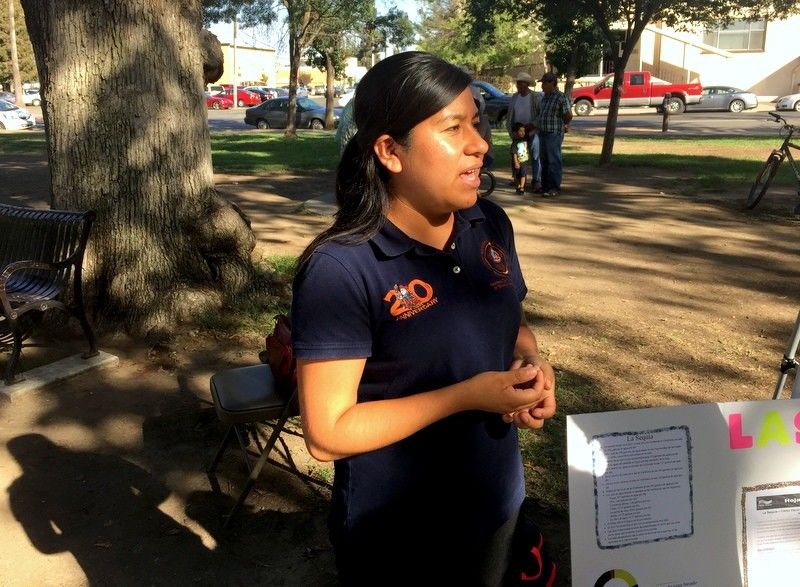
"caption": "Zenaida Ventura, a former farmworker, conducts surveys of indigenous farmworkers at the farmers market in Madera. 'For me, everything is connected, immigration, health and the drought. I think we need to find a way that we can work this from the roots,' she says.",
"description": null,
"title": "RS17139_Zenaida 1.JPG-qut",
"credit": "Sasha Khokha/KQED",
"status": "inherit",
"isLoading": false,
"fetchFailed": false
},
"news_10689850": {
"type": "attachments",
"id": "news_10689850",
"meta": {
"index": "attachments_1716263798",
"site": "news",
"id": "10689850",
"found": true
},
"parent": 10689848,
"imgSizes": {
"twentyfourteen-full-width": {
"file": "https://ww2.kqed.org/app/uploads/sites/10/2015/09/Gomathi-Prashanth_WEDDING-1038x576.jpg",
"width": 1038,
"mimeType": "image/jpeg",
"height": 576
},
"thumbnail": {
"file": "https://ww2.kqed.org/app/uploads/sites/10/2015/09/Gomathi-Prashanth_WEDDING-400x266.jpg",
"width": 400,
"mimeType": "image/jpeg",
"height": 266
},
"fd-sm": {
"file": "https://ww2.kqed.org/app/uploads/sites/10/2015/09/Gomathi-Prashanth_WEDDING-960x638.jpg",
"width": 960,
"mimeType": "image/jpeg",
"height": 638
},
"post-thumbnail": {
"file": "https://ww2.kqed.org/app/uploads/sites/10/2015/09/Gomathi-Prashanth_WEDDING-672x372.jpg",
"width": 672,
"mimeType": "image/jpeg",
"height": 372
},
"kqedFullSize": {
"file": "https://ww2.kqed.org/app/uploads/sites/10/2015/09/Gomathi-Prashanth_WEDDING.jpg",
"width": 3216,
"height": 2136
},
"large": {
"file": "https://ww2.kqed.org/app/uploads/sites/10/2015/09/Gomathi-Prashanth_WEDDING-1440x956.jpg",
"width": 1440,
"mimeType": "image/jpeg",
"height": 956
},
"guest-author-96": {
"file": "https://ww2.kqed.org/app/uploads/sites/10/2015/09/Gomathi-Prashanth_WEDDING-96x96.jpg",
"width": 96,
"mimeType": "image/jpeg",
"height": 96
},
"medium": {
"file": "https://ww2.kqed.org/app/uploads/sites/10/2015/09/Gomathi-Prashanth_WEDDING-800x531.jpg",
"width": 800,
"mimeType": "image/jpeg",
"height": 531
},
"guest-author-64": {
"file": "https://ww2.kqed.org/app/uploads/sites/10/2015/09/Gomathi-Prashanth_WEDDING-64x64.jpg",
"width": 64,
"mimeType": "image/jpeg",
"height": 64
},
"guest-author-32": {
"file": "https://ww2.kqed.org/app/uploads/sites/10/2015/09/Gomathi-Prashanth_WEDDING-32x32.jpg",
"width": 32,
"mimeType": "image/jpeg",
"height": 32
},
"jmtc-small-thumb": {
"file": "https://ww2.kqed.org/app/uploads/sites/10/2015/09/Gomathi-Prashanth_WEDDING-280x150.jpg",
"width": 280,
"mimeType": "image/jpeg",
"height": 150
},
"fd-lrg": {
"file": "https://ww2.kqed.org/app/uploads/sites/10/2015/09/Gomathi-Prashanth_WEDDING-1920x1275.jpg",
"width": 1920,
"mimeType": "image/jpeg",
"height": 1275
},
"fd-med": {
"file": "https://ww2.kqed.org/app/uploads/sites/10/2015/09/Gomathi-Prashanth_WEDDING-1180x784.jpg",
"width": 1180,
"mimeType": "image/jpeg",
"height": 784
},
"detail": {
"file": "https://ww2.kqed.org/app/uploads/sites/10/2015/09/Gomathi-Prashanth_WEDDING-75x75.jpg",
"width": 75,
"mimeType": "image/jpeg",
"height": 75
},
"guest-author-128": {
"file": "https://ww2.kqed.org/app/uploads/sites/10/2015/09/Gomathi-Prashanth_WEDDING-128x128.jpg",
"width": 128,
"mimeType": "image/jpeg",
"height": 128
}
},
"publishDate": 1442707103,
"modified": 1442876272,
"caption": "Gomathi Ramakrishnan and Prashanth Vishnumangalam Narayanan at their wedding in Chennai, Tamil Nadu, India. ",
"description": "Gomathi Ramakrishnan and Prashanth Vishnumangalam Narayanan at their wedding in Chennai, Tamil Nadu, India. ",
"title": "Gomathi & Prashanth_WEDDING",
"credit": "Photo courtesy of Sathya Sai Video",
"status": "inherit",
"isLoading": false,
"fetchFailed": false
}
},
"audioPlayerReducer": {
"postId": "stream_live",
"isPaused": true,
"isPlaying": false,
"pfsActive": false,
"pledgeModalIsOpen": true,
"playerDrawerIsOpen": false,
"liveAudioPlayStartedAt": 0,
"liveAudioPlayContext": ""
},
"authorsReducer": {
"byline_news_10796779": {
"type": "authors",
"id": "byline_news_10796779",
"meta": {
"override": true
},
"slug": "byline_news_10796779",
"name": "\u003cstrong>\u003ca href=\"http://peninsulapress.com/author/kaitlynlandgraf/\">Kaitlyn Landgraf\u003c/a>\u003cbr>\u003ca href=\"http://peninsulapress.com/\">Peninsula Press\u003c/a>\u003c/strong>",
"isLoading": false
},
"byline_news_10790822": {
"type": "authors",
"id": "byline_news_10790822",
"meta": {
"override": true
},
"slug": "byline_news_10790822",
"name": "\u003cstrong>\u003ca href=\"http://www.scpr.org/about/people/staff/leslie-berestein-rojas\">Leslie Berestein Rojas\u003c/a>\u003c/strong>",
"isLoading": false
},
"byline_news_10787026": {
"type": "authors",
"id": "byline_news_10787026",
"meta": {
"override": true
},
"slug": "byline_news_10787026",
"name": "Nina Totenberg",
"isLoading": false
},
"byline_news_10765900": {
"type": "authors",
"id": "byline_news_10765900",
"meta": {
"override": true
},
"slug": "byline_news_10765900",
"name": "Leslie Berestein Rojas\u003cbr />KPCC",
"isLoading": false
},
"byline_news_10761293": {
"type": "authors",
"id": "byline_news_10761293",
"meta": {
"override": true
},
"slug": "byline_news_10761293",
"name": "Leslie Griffy",
"isLoading": false
},
"byline_news_10746180": {
"type": "authors",
"id": "byline_news_10746180",
"meta": {
"override": true
},
"slug": "byline_news_10746180",
"name": "\u003cstrong>Mary Clare Jalonick\u003cbr>Associated Press\u003c/strong>",
"isLoading": false
},
"byline_news_10737275": {
"type": "authors",
"id": "byline_news_10737275",
"meta": {
"override": true
},
"slug": "byline_news_10737275",
"name": "\u003cstrong>Associated Press\u003c/strong>",
"isLoading": false
},
"agrossberg": {
"type": "authors",
"id": "188",
"meta": {
"index": "authors_1716337520",
"id": "188",
"found": true
},
"name": "Adam Grossberg",
"firstName": "Adam",
"lastName": "Grossberg",
"slug": "agrossberg",
"email": "agrossberg@KQED.org",
"display_author_email": false,
"staff_mastheads": [],
"title": "KQED Contributor",
"bio": "Adam Grossberg is a former video producer at KQED News. Prior to coming to KQED, he produced videos for PBS, The New York Times, Current TV and The Center for Investigative Reporting. His work has received an Excellence in Journalism award from the Society of Professional Journalists, a regional Murrow award and two Northern California Emmy awards. He is a graduate of the UC Berkeley Graduate School of Journalism.",
"avatar": "https://secure.gravatar.com/avatar/8e96dbdaaf98f5959a2c778289e0f9b5?s=600&d=blank&r=g",
"twitter": null,
"facebook": null,
"instagram": null,
"linkedin": null,
"sites": [
{
"site": "arts",
"roles": [
"contributor"
]
},
{
"site": "news",
"roles": [
"subscriber"
]
},
{
"site": "stateofhealth",
"roles": [
"editor"
]
},
{
"site": "science",
"roles": [
"editor"
]
}
],
"headData": {
"title": "Adam Grossberg | KQED",
"description": "KQED Contributor",
"ogImgSrc": "https://secure.gravatar.com/avatar/8e96dbdaaf98f5959a2c778289e0f9b5?s=600&d=blank&r=g",
"twImgSrc": "https://secure.gravatar.com/avatar/8e96dbdaaf98f5959a2c778289e0f9b5?s=600&d=blank&r=g"
},
"isLoading": false,
"link": "/author/agrossberg"
},
"ninathorsen": {
"type": "authors",
"id": "246",
"meta": {
"index": "authors_1716337520",
"id": "246",
"found": true
},
"name": "Nina Thorsen",
"firstName": "Nina",
"lastName": "Thorsen",
"slug": "ninathorsen",
"email": "nthorsen@kqed.org",
"display_author_email": false,
"staff_mastheads": [
"news"
],
"title": "Producer, Radio",
"bio": "\u003cspan style=\"color: #000000;\">Nina Thorsen is a KQED radio producer, and frequently reports on sports and culture. \u003c/span>\u003cspan style=\"color: #000000;\">She co-created and produced KQED's \u003cem>Pacific Time, \u003c/em> a weekly radio program on Asian and Asian American issues that aired from 2000 to 2007. Before coming to KQED, Thorsen was the deputy foreign editor for \u003cem>Marketplace, \u003c/em>and in her home state of Minnesota, worked for \u003cem>A Prairie Home Companion\u003c/em> and for Public Radio International. \u003c/span>",
"avatar": "https://secure.gravatar.com/avatar/e13dc7282cec33c15d973ebb56d57ead?s=600&d=blank&r=g",
"twitter": "NinaKQED",
"facebook": null,
"instagram": null,
"linkedin": null,
"sites": [
{
"site": "news",
"roles": [
"editor"
]
},
{
"site": "podcasts",
"roles": [
"editor"
]
}
],
"headData": {
"title": "Nina Thorsen | KQED",
"description": "Producer, Radio",
"ogImgSrc": "https://secure.gravatar.com/avatar/e13dc7282cec33c15d973ebb56d57ead?s=600&d=blank&r=g",
"twImgSrc": "https://secure.gravatar.com/avatar/e13dc7282cec33c15d973ebb56d57ead?s=600&d=blank&r=g"
},
"isLoading": false,
"link": "/author/ninathorsen"
},
"pollystryker": {
"type": "authors",
"id": "250",
"meta": {
"index": "authors_1716337520",
"id": "250",
"found": true
},
"name": "Polly Stryker",
"firstName": "Polly",
"lastName": "Stryker",
"slug": "pollystryker",
"email": "pstryker@kqed.org",
"display_author_email": false,
"staff_mastheads": [
"science"
],
"title": "Editor",
"bio": "Polly Stryker is a former editor for KQED's Science desk. She and reporter/host Rachael Myrow produced the KQED podcast, \u003ca href=\"http://www.npr.org/podcasts/448072249/love-in-the-digital-age\">Love in the Digital Age\u003c/a>.\r\n\r\nPolly has worked for a variety of news and public affairs programs, including most recently as editor of \u003cem>The California Report\u003c/em>. She also edited \u003ca href=\"https://ww2.kqed.org/news/programs/the-california-report\" target=\"_blank\" rel=\"noopener noreferrer\">\u003cem>The California Report'\u003c/em>s\u003c/a> \u003ca href=\"http://www.californiareport.org/healthdialogues/\" target=\"_blank\" rel=\"noopener noreferrer\">“Health Dialogues.”\u003c/a> Before that, she was a producer on \u003cem>\u003ca href=\"http://www.scpr.org/programs/airtalk/\" target=\"_blank\" rel=\"noopener noreferrer\">AirTalk\u003c/a>\u003c/em> with Larry Mantle on \u003ca href=\"http://www.scpr.org/\" target=\"_blank\" rel=\"noopener noreferrer\">KPCC\u003c/a> radio, and \u003cem>\u003ca href=\"http://www.kpbs.org/news/midday-edition/\">These Days\u003c/a>\u003c/em> on KPBS. Polly’s work has won awards from the Radio and Television News Directors Association of Northern California, the Society of Professional Journalists (Southern California and Northern California chapters), the Radio and Television News Association. She's also won a Taste Award.\r\n\r\nShe considers herself to be a citizen of the world, having grown up in Cairo before coming to the United States. Polly speaks Arabic and can say, \"I’d like a martini, please\" in Swahili.",
"avatar": "https://secure.gravatar.com/avatar/5012854a99868cb15a517a876d88f736?s=600&d=blank&r=g",
"twitter": null,
"facebook": null,
"instagram": null,
"linkedin": null,
"sites": [
{
"site": "",
"roles": [
"editor"
]
},
{
"site": "arts",
"roles": [
"administrator"
]
},
{
"site": "news",
"roles": [
"subscriber"
]
},
{
"site": "stateofhealth",
"roles": [
"author"
]
},
{
"site": "science",
"roles": [
"editor"
]
},
{
"site": "forum",
"roles": [
"editor"
]
}
],
"headData": {
"title": "Polly Stryker | KQED",
"description": "Editor",
"ogImgSrc": "https://secure.gravatar.com/avatar/5012854a99868cb15a517a876d88f736?s=600&d=blank&r=g",
"twImgSrc": "https://secure.gravatar.com/avatar/5012854a99868cb15a517a876d88f736?s=600&d=blank&r=g"
},
"isLoading": false,
"link": "/author/pollystryker"
},
"sasha-khokha": {
"type": "authors",
"id": "254",
"meta": {
"index": "authors_1716337520",
"id": "254",
"found": true
},
"name": "Sasha Khokha",
"firstName": "Sasha",
"lastName": "Khokha",
"slug": "sasha-khokha",
"email": "skhokha@kqed.org",
"display_author_email": true,
"staff_mastheads": [
"news"
],
"title": "Host, The California Report Magazine",
"bio": "Sasha Khokha is the host of \u003cem>The California Report's \u003c/em> weekly magazine program, which takes listeners on sound-rich excursions to meet the people that make the Golden State unique -- through audio documentaries and long-form stories. As \u003cem>The California Report's\u003c/em> Central Valley Bureau Chief based in Fresno for nearly a dozen years, Sasha brought the lives and concerns of rural Californians to listeners around the state. Her reporting helped expose the hidden price immigrant women janitors and farmworkers may pay to keep their jobs: sexual assault at work. It inspired two new California laws to protect them from sexual harassment. She was a key member of the reporting team for the Frontline film \u003cem>Rape on the Night Shift, \u003c/em>which was nominated for two national Emmys. Sasha has also won a national Edward R. Murrow and a national PRNDI award for investigative reporting, as well as multiple prizes from the Society for Professional Journalists. Sasha is a proud alum of the UC Berkeley Graduate School of Journalism and Brown University and a member of the South Asian Journalists Association.",
"avatar": "https://secure.gravatar.com/avatar/e4b5e1541aaeea2aa356aa1fb2a68950?s=600&d=blank&r=g",
"twitter": "KQEDSashaKhokha",
"facebook": null,
"instagram": null,
"linkedin": null,
"sites": [
{
"site": "news",
"roles": [
"editor"
]
},
{
"site": "stateofhealth",
"roles": [
"author"
]
},
{
"site": "science",
"roles": [
"author"
]
},
{
"site": "quest",
"roles": [
"subscriber"
]
}
],
"headData": {
"title": "Sasha Khokha | KQED",
"description": "Host, The California Report Magazine",
"ogImgSrc": "https://secure.gravatar.com/avatar/e4b5e1541aaeea2aa356aa1fb2a68950?s=600&d=blank&r=g",
"twImgSrc": "https://secure.gravatar.com/avatar/e4b5e1541aaeea2aa356aa1fb2a68950?s=600&d=blank&r=g"
},
"isLoading": false,
"link": "/author/sasha-khokha"
},
"zstavely": {
"type": "authors",
"id": "3225",
"meta": {
"index": "authors_1716337520",
"id": "3225",
"found": true
},
"name": "Zaidee Stavely",
"firstName": "Zaidee",
"lastName": "Stavely",
"slug": "zstavely",
"email": "zstavely@gmail.com",
"display_author_email": false,
"staff_mastheads": [],
"title": "KQED Contributor",
"bio": "Zaidee Stavely is an award-winning reporter who writes about race, equity, immigration, and education.",
"avatar": "https://secure.gravatar.com/avatar/5154b3ee56a721c916ca429372ae629c?s=600&d=blank&r=g",
"twitter": null,
"facebook": null,
"instagram": null,
"linkedin": null,
"sites": [
{
"site": "news",
"roles": [
"subscriber"
]
},
{
"site": "mindshift",
"roles": [
"contributor"
]
}
],
"headData": {
"title": "Zaidee Stavely | KQED",
"description": "KQED Contributor",
"ogImgSrc": "https://secure.gravatar.com/avatar/5154b3ee56a721c916ca429372ae629c?s=600&d=blank&r=g",
"twImgSrc": "https://secure.gravatar.com/avatar/5154b3ee56a721c916ca429372ae629c?s=600&d=blank&r=g"
},
"isLoading": false,
"link": "/author/zstavely"
}
},
"pagesReducer": {
"news_category_immigration": {
"type": "terms",
"id": "news_1169",
"meta": {
"index": "terms_1716263798",
"site": "news",
"id": "1169",
"score": 10.909687
},
"featImg": null,
"name": "Immigration",
"description": null,
"taxonomy": "category",
"headData": {
"twImgId": null,
"twTitle": null,
"ogTitle": null,
"ogImgId": null,
"twDescription": null,
"description": null,
"title": "Immigration Archives | KQED News",
"ogDescription": null
},
"ttid": 1180,
"slug": "immigration",
"isLoading": false,
"title": "Immigration",
"pageMeta": {
"site": "news",
"WpPageTemplate": "page-topic-editorial",
"currentPage": 181
},
"blocks": [
{
"blockName": "kqed/post-list",
"attrs": {
"layout": "cardArticle2",
"query": "posts/news?category=immigration",
"seeMore": false,
"paginated": true,
"page": 181
}
},
{
"blockName": "kqed/ad"
}
]
}
},
"pfsSessionReducer": {},
"postsReducer": {
"stream_live": {
"type": "live",
"id": "stream_live",
"audioUrl": "https://streams.kqed.org/kqedradio",
"title": "Live Stream",
"excerpt": "Live Stream information currently unavailable.",
"link": "/radio",
"featImg": "",
"label": {
"name": "KQED Live",
"link": "/"
}
},
"stream_kqedNewscast": {
"type": "posts",
"id": "stream_kqedNewscast",
"audioUrl": "https://www.kqed.org/.stream/anon/radio/RDnews/newscast.mp3?_=1",
"title": "KQED Newscast",
"featImg": "",
"label": {
"name": "88.5 FM",
"link": "/"
}
},
"news_10799363": {
"type": "posts",
"id": "news_10799363",
"meta": {
"index": "posts_1716263798",
"site": "news",
"id": "10799363",
"score": null,
"sort": [
1450724563000
]
},
"parent": 0,
"labelTerm": {
"site": "news",
"term": 72
},
"blocks": [],
"publishDate": 1450724563,
"format": "standard",
"disqusTitle": "Oakland Teachers Struggle to Get Help for Kids Fleeing Violence",
"title": "Oakland Teachers Struggle to Get Help for Kids Fleeing Violence",
"headTitle": "The California Report | KQED News",
"content": "\u003cp>Unaccompanied minors fleeing violence in Central America are still arriving to live with family members or guardians in communities across California, while they wait for their court dates to find out if they can stay in this country. In fact, the numbers of children being detained at the U.S.-Mexico border \u003ca href=\"http://www.cbp.gov/newsroom/stats/southwest-border-unaccompanied-children/fy-2016\">has more than doubled in October and November\u003c/a> compared with a year ago.\u003c/p>\n\u003cp>In California, Los Angeles County has the largest number of these kids, and Alameda County is next. A steady stream of newcomers in Oakland has now filled all four of the school district's high school newcomer programs to capacity.\u003c/p>\n\u003cp>In her first-period ethnic studies class for newcomers, \u003ca href=\"http://www.ousd.org/castlemont\">Castlemont High School\u003c/a> teacher Carrie Haslanger goes over how to communicate feelings in English.\u003c/p>\n\u003cp>\"Scared. \u003cem>Repítelo\u003c/em>: scared,\" she says. The class repeats the word. \"Very good. ¿\u003cem>Y cómo se dice poderoso en ingles?\u003c/em> Powerful.\"\u003c/p>\n\u003cp>[soundcloud url=\"https://api.soundcloud.com/tracks/238197385\" params=\"color=ff5500&auto_play=false&hide_related=false&show_comments=true&show_user=true&show_reposts=false\" width=\"100%\" height=\"166\" iframe=\"true\" /]\u003c/p>\n\u003cp>Of the 10 students in this class, eight arrived just last week, from Guatemala, El Salvador and Honduras. For the other two, it's their very first day. Then, halfway through the class, three more students show up. Haslanger receives them with a smile.\u003c/p>\n\u003cp>[ad fullwidth]\u003c/p>\n\u003cp>\"Yes, more students, great! \u003cem>Bienvenidos,\"\u003c/em> she says.\u003c/p>\n\u003cp>Close to 500 Central American students seeking refuge enrolled in Oakland schools since the district started tracking them in June 2013. The newcomer program at Castlemont High School was set up just this year, because three other high schools with newcomer programs were full. The district expected 100 new arrivals to enroll at Castlemont throughout the year, but the program was at capacity before winter break. Oakland Unified just announced four new teacher positions for newcomers and is looking at where to enroll new high school students who arrive in January.\u003c/p>\n\u003cp>Being able to go to school in Oakland is a relief for some students.\u003c/p>\n\u003cp>\"I stopped going to school for a year in Honduras because the gangs would wait outside and kidnap people,\" says one teenage girl, in Spanish, at her attorney's office at \u003ca href=\"http://centrolegal.org/\">Centro Legal de la Raza\u003c/a>. Her attorney asked not to disclose her name or school because her asylum case is ongoing.\u003c/p>\n\u003cp>She says she was afraid in Honduras because girls with light-brown hair were being targeted by gangs. \"They say only the women in the gangs can have light hair,\" she says, \"so they rape girls and kill them. They put rocks in their intimate parts.\"\u003c/p>\n\u003cp>Teachers are having to learn fast how to teach kids English and subject content at the same time, and how to support children with extremely high levels of trauma.\u003c/p>\n\u003cp>\"The reason I teach emotion words in the beginning is, in ethnic studies, we work to make sure all stories are told. And I start by saying the most important story is yours,\" says Carrie Haslanger. \"So giving them the first six words you saw today, happy, sad, angry, powerful, and then expanding the wheel so they're able to say depressed, blessed, optimistic, energetic. And from there we'll go into learning about ethnicity and race and class and gender. But first, that’s too much when you don't know how to say good morning.\"\u003c/p>\n\u003cfigure id=\"attachment_10799606\" class=\"wp-caption alignright\" style=\"max-width: 800px\">\u003cimg class=\"wp-image-10799606 size-medium\" src=\"http://ww2.kqed.org/news/wp-content/uploads/sites/10/2015/12/Haslanger-closeup-800x600.jpg\" alt=\"Oakland teacher Carrie Haslanger is works hard to provide emotional and academic support to her newcomer students at Castlemont High School.\" width=\"800\" height=\"600\" srcset=\"https://ww2.kqed.org/app/uploads/sites/10/2015/12/Haslanger-closeup-800x600.jpg 800w, https://ww2.kqed.org/app/uploads/sites/10/2015/12/Haslanger-closeup-400x300.jpg 400w, https://ww2.kqed.org/app/uploads/sites/10/2015/12/Haslanger-closeup-768x576.jpg 768w, https://ww2.kqed.org/app/uploads/sites/10/2015/12/Haslanger-closeup-1440x1080.jpg 1440w, https://ww2.kqed.org/app/uploads/sites/10/2015/12/Haslanger-closeup.jpg 1920w, https://ww2.kqed.org/app/uploads/sites/10/2015/12/Haslanger-closeup-1180x885.jpg 1180w, https://ww2.kqed.org/app/uploads/sites/10/2015/12/Haslanger-closeup-960x720.jpg 960w\" sizes=\"(max-width: 800px) 100vw, 800px\">\u003cfigcaption class=\"wp-caption-text\">Oakland teacher Carrie Haslanger works hard to provide emotional and academic support to her newcomer students at Castlemont High School. \u003ccite>(Zaidee Stavely/KQED)\u003c/cite>\u003c/figcaption>\u003c/figure>\n\u003cp>Haslanger coordinates the newcomer program at Castlemont. Most of her students start in ninth grade, even if they are 16 or 17 when they arrive, since they don’t usually have credits they can transfer to high school. They take P.E. and music with other students, and they take five classes as a cohort. Teachers have to adapt these classes so they can teach English at the same time as algebra, science and computers.\u003c/p>\n\u003cp>That's just one of the challenges teachers face.\u003c/p>\n\u003cp>\"These students are fleeing a level of violence that I don’t know we can really comprehend in this country,\" says Haslanger. \"Two students I’m working with right now, one of them has seen massacres [of people] by the government ... in front of his eyes.\"\u003c/p>\n\u003cp>That kind of trauma affects kids’ ability to learn and the way they react in the classroom. Haslanger says teachers get an hour and a half of training on how to teach English learners once a month, and they receive some training in teaching children who have experienced trauma, but she says it's not enough.\u003c/p>\n\u003cp>\"When a teacher raises their voice at a young person and yells at them, that kid who has experienced trauma, sometimes they won't react, but the ones I’m working with are becoming defiant and angry and acting out,\" she says. Haslanger wants to see more training for teachers and translators for newcomers, as well as more after-school programs and mental health therapists.\u003c/p>\n\u003cp>At the height of the national media's attention to the children fleeing violence in Central America, Oakland Unified used private funds to hire a coordinator, Ariana Flores, to refer students to legal help and coordinate mental health services.\u003c/p>\n\u003cp>Almost every day, Flores can be found helping enroll students in school, handing out backpacks and Spanish-English dictionaries. Flores has referred hundreds of kids to free legal help, partially paid for by the city of Oakland, and she works hard to get them mental health services through community organizations that partner with the district. Alameda County set aside money for school-based mental health providers to bill for these services, since these students don't have health insurance. Still, there's a huge need for more Spanish-speaking therapists.\u003c/p>\n\u003cp>\"We’re going to keep getting kids all year round, and on any given day a child can lose their housing, or can be triggered to a point where these emotions they’ve been tamping down for months come to a head,\" says Flores. \"It becomes this really difficult game of, all right, we’ve got three spots left and, you know, we’ve got six kids. This one kid is crying uncontrollably in class, this other kid is getting into fights. And which three do we choose?\"\u003c/p>\n\u003cp>[ad floatright]\u003c/p>\n\u003cp>That question could become a lot trickier in coming months, as school districts like Oakland begin to enroll some of the thousands of kids now being detained on the border.\u003c/p>\n\n",
"disqusIdentifier": "10799363 http://ww2.kqed.org/news/?p=10799363",
"disqusUrl": "https://ww2.kqed.org/news/2015/12/21/oakland-teachers-struggle-to-get-help-for-kids-fleeing-violence/",
"stats": {
"hasVideo": false,
"hasChartOrMap": false,
"hasAudio": false,
"hasPolis": false,
"wordCount": 1136,
"hasGoogleForm": false,
"hasGallery": false,
"hasHearkenModule": false,
"iframeSrcs": [],
"paragraphCount": 24
},
"modified": 1450728726,
"excerpt": "Teachers have to quickly learn how to teach kids from Central America who don't speak English and who are experiencing high levels of trauma.",
"headData": {
"twImgId": "",
"twTitle": "",
"ogTitle": "",
"ogImgId": "",
"twDescription": "",
"description": "Teachers have to quickly learn how to teach kids from Central America who don't speak English and who are experiencing high levels of trauma.",
"title": "Oakland Teachers Struggle to Get Help for Kids Fleeing Violence | KQED",
"ogDescription": "",
"schema": {
"@context": "https://schema.org",
"@type": "NewsArticle",
"headline": "Oakland Teachers Struggle to Get Help for Kids Fleeing Violence",
"datePublished": "2015-12-21T11:02:43-08:00",
"dateModified": "2015-12-21T12:12:06-08:00",
"image": "https://cdn.kqed.org/wp-content/uploads/2020/02/KQED-OG-Image@1x.png",
"isAccessibleForFree": "True",
"publisher": {
"@type": "NewsMediaOrganization",
"@id": "https://www.kqed.org/#organization",
"name": "KQED",
"logo": "https://cdn.kqed.org/wp-content/uploads/2020/02/KQED-OG-Image@1x.png",
"url": "https://www.kqed.org",
"sameAs": [
"https://www.facebook.com/KQED",
"https://twitter.com/KQED",
"https://www.instagram.com/kqed/",
"https://www.tiktok.com/@kqedofficial",
"https://www.linkedin.com/company/kqed",
"https://www.youtube.com/channel/UCeC0IOo7i1P_61zVUWbJ4nw"
]
}
}
},
"guestAuthors": [],
"slug": "oakland-teachers-struggle-to-get-help-for-kids-fleeing-violence",
"status": "publish",
"path": "/news/10799363/oakland-teachers-struggle-to-get-help-for-kids-fleeing-violence",
"audioTrackLength": null,
"parsedContent": [
{
"type": "contentString",
"content": "\u003cdiv class=\"post-body\">\u003cp>\u003cp>Unaccompanied minors fleeing violence in Central America are still arriving to live with family members or guardians in communities across California, while they wait for their court dates to find out if they can stay in this country. In fact, the numbers of children being detained at the U.S.-Mexico border \u003ca href=\"http://www.cbp.gov/newsroom/stats/southwest-border-unaccompanied-children/fy-2016\">has more than doubled in October and November\u003c/a> compared with a year ago.\u003c/p>\n\u003cp>In California, Los Angeles County has the largest number of these kids, and Alameda County is next. A steady stream of newcomers in Oakland has now filled all four of the school district's high school newcomer programs to capacity.\u003c/p>\n\u003cp>In her first-period ethnic studies class for newcomers, \u003ca href=\"http://www.ousd.org/castlemont\">Castlemont High School\u003c/a> teacher Carrie Haslanger goes over how to communicate feelings in English.\u003c/p>\n\u003cp>\"Scared. \u003cem>Repítelo\u003c/em>: scared,\" she says. The class repeats the word. \"Very good. ¿\u003cem>Y cómo se dice poderoso en ingles?\u003c/em> Powerful.\"\u003c/p>\n\u003cp>\u003c/p>\u003cp>\u003cdiv class='utils-parseShortcode-shortcodes-__shortcodes__shortcodeWrapper'>\n \u003ciframe width='100%' height='166'\n scrolling='no' frameborder='no'\n src='https://w.soundcloud.com/player/?url=https://api.soundcloud.com/tracks/238197385&visual=true&color=ff5500&auto_play=false&hide_related=false&show_comments=true&show_user=true&show_reposts=false'\n title='https://api.soundcloud.com/tracks/238197385'>\n \u003c/iframe>\n \u003c/div>\u003c/p>\u003cp>\u003c/p>\n\u003cp>Of the 10 students in this class, eight arrived just last week, from Guatemala, El Salvador and Honduras. For the other two, it's their very first day. Then, halfway through the class, three more students show up. Haslanger receives them with a smile.\u003c/p>\n\u003cp>\u003c/p>\u003c/div>",
"attributes": {
"named": {},
"numeric": []
}
},
{
"type": "component",
"content": "",
"name": "ad",
"attributes": {
"named": {
"label": "fullwidth"
},
"numeric": [
"fullwidth"
]
}
},
{
"type": "contentString",
"content": "\u003cdiv class=\"post-body\">\u003cp>\u003c/p>\n\u003cp>\"Yes, more students, great! \u003cem>Bienvenidos,\"\u003c/em> she says.\u003c/p>\n\u003cp>Close to 500 Central American students seeking refuge enrolled in Oakland schools since the district started tracking them in June 2013. The newcomer program at Castlemont High School was set up just this year, because three other high schools with newcomer programs were full. The district expected 100 new arrivals to enroll at Castlemont throughout the year, but the program was at capacity before winter break. Oakland Unified just announced four new teacher positions for newcomers and is looking at where to enroll new high school students who arrive in January.\u003c/p>\n\u003cp>Being able to go to school in Oakland is a relief for some students.\u003c/p>\n\u003cp>\"I stopped going to school for a year in Honduras because the gangs would wait outside and kidnap people,\" says one teenage girl, in Spanish, at her attorney's office at \u003ca href=\"http://centrolegal.org/\">Centro Legal de la Raza\u003c/a>. Her attorney asked not to disclose her name or school because her asylum case is ongoing.\u003c/p>\n\u003cp>She says she was afraid in Honduras because girls with light-brown hair were being targeted by gangs. \"They say only the women in the gangs can have light hair,\" she says, \"so they rape girls and kill them. They put rocks in their intimate parts.\"\u003c/p>\n\u003cp>Teachers are having to learn fast how to teach kids English and subject content at the same time, and how to support children with extremely high levels of trauma.\u003c/p>\n\u003cp>\"The reason I teach emotion words in the beginning is, in ethnic studies, we work to make sure all stories are told. And I start by saying the most important story is yours,\" says Carrie Haslanger. \"So giving them the first six words you saw today, happy, sad, angry, powerful, and then expanding the wheel so they're able to say depressed, blessed, optimistic, energetic. And from there we'll go into learning about ethnicity and race and class and gender. But first, that’s too much when you don't know how to say good morning.\"\u003c/p>\n\u003cfigure id=\"attachment_10799606\" class=\"wp-caption alignright\" style=\"max-width: 800px\">\u003cimg class=\"wp-image-10799606 size-medium\" src=\"http://ww2.kqed.org/news/wp-content/uploads/sites/10/2015/12/Haslanger-closeup-800x600.jpg\" alt=\"Oakland teacher Carrie Haslanger is works hard to provide emotional and academic support to her newcomer students at Castlemont High School.\" width=\"800\" height=\"600\" srcset=\"https://ww2.kqed.org/app/uploads/sites/10/2015/12/Haslanger-closeup-800x600.jpg 800w, https://ww2.kqed.org/app/uploads/sites/10/2015/12/Haslanger-closeup-400x300.jpg 400w, https://ww2.kqed.org/app/uploads/sites/10/2015/12/Haslanger-closeup-768x576.jpg 768w, https://ww2.kqed.org/app/uploads/sites/10/2015/12/Haslanger-closeup-1440x1080.jpg 1440w, https://ww2.kqed.org/app/uploads/sites/10/2015/12/Haslanger-closeup.jpg 1920w, https://ww2.kqed.org/app/uploads/sites/10/2015/12/Haslanger-closeup-1180x885.jpg 1180w, https://ww2.kqed.org/app/uploads/sites/10/2015/12/Haslanger-closeup-960x720.jpg 960w\" sizes=\"(max-width: 800px) 100vw, 800px\">\u003cfigcaption class=\"wp-caption-text\">Oakland teacher Carrie Haslanger works hard to provide emotional and academic support to her newcomer students at Castlemont High School. \u003ccite>(Zaidee Stavely/KQED)\u003c/cite>\u003c/figcaption>\u003c/figure>\n\u003cp>Haslanger coordinates the newcomer program at Castlemont. Most of her students start in ninth grade, even if they are 16 or 17 when they arrive, since they don’t usually have credits they can transfer to high school. They take P.E. and music with other students, and they take five classes as a cohort. Teachers have to adapt these classes so they can teach English at the same time as algebra, science and computers.\u003c/p>\n\u003cp>That's just one of the challenges teachers face.\u003c/p>\n\u003cp>\"These students are fleeing a level of violence that I don’t know we can really comprehend in this country,\" says Haslanger. \"Two students I’m working with right now, one of them has seen massacres [of people] by the government ... in front of his eyes.\"\u003c/p>\n\u003cp>That kind of trauma affects kids’ ability to learn and the way they react in the classroom. Haslanger says teachers get an hour and a half of training on how to teach English learners once a month, and they receive some training in teaching children who have experienced trauma, but she says it's not enough.\u003c/p>\n\u003cp>\"When a teacher raises their voice at a young person and yells at them, that kid who has experienced trauma, sometimes they won't react, but the ones I’m working with are becoming defiant and angry and acting out,\" she says. Haslanger wants to see more training for teachers and translators for newcomers, as well as more after-school programs and mental health therapists.\u003c/p>\n\u003cp>At the height of the national media's attention to the children fleeing violence in Central America, Oakland Unified used private funds to hire a coordinator, Ariana Flores, to refer students to legal help and coordinate mental health services.\u003c/p>\n\u003cp>Almost every day, Flores can be found helping enroll students in school, handing out backpacks and Spanish-English dictionaries. Flores has referred hundreds of kids to free legal help, partially paid for by the city of Oakland, and she works hard to get them mental health services through community organizations that partner with the district. Alameda County set aside money for school-based mental health providers to bill for these services, since these students don't have health insurance. Still, there's a huge need for more Spanish-speaking therapists.\u003c/p>\n\u003cp>\"We’re going to keep getting kids all year round, and on any given day a child can lose their housing, or can be triggered to a point where these emotions they’ve been tamping down for months come to a head,\" says Flores. \"It becomes this really difficult game of, all right, we’ve got three spots left and, you know, we’ve got six kids. This one kid is crying uncontrollably in class, this other kid is getting into fights. And which three do we choose?\"\u003c/p>\n\u003cp>\u003c/p>\u003c/div>",
"attributes": {
"named": {},
"numeric": []
}
},
{
"type": "component",
"content": "",
"name": "ad",
"attributes": {
"named": {
"label": "floatright"
},
"numeric": [
"floatright"
]
}
},
{
"type": "contentString",
"content": "\u003cdiv class=\"post-body\">\u003cp>\u003c/p>\n\u003cp>That question could become a lot trickier in coming months, as school districts like Oakland begin to enroll some of the thousands of kids now being detained on the border.\u003c/p>\n\n\u003c/div>\u003c/p>",
"attributes": {
"named": {},
"numeric": []
}
}
],
"link": "/news/10799363/oakland-teachers-struggle-to-get-help-for-kids-fleeing-violence",
"authors": [
"3225"
],
"programs": [
"news_72"
],
"categories": [
"news_18540",
"news_1169"
],
"tags": [
"news_19006",
"news_17286",
"news_17041",
"news_6886"
],
"featImg": "news_10799561",
"label": "news_72"
},
"news_10798486": {
"type": "posts",
"id": "news_10798486",
"meta": {
"index": "posts_1716263798",
"site": "news",
"id": "10798486",
"score": null,
"sort": [
1450627259000
]
},
"parent": 0,
"labelTerm": {
"site": "news",
"term": 72
},
"blocks": [],
"publishDate": 1450627259,
"format": "video",
"disqusTitle": "Jose and Mr. Ramos: A Top Student Faces Uncertain Future Due to Immigration Status",
"title": "Jose and Mr. Ramos: A Top Student Faces Uncertain Future Due to Immigration Status",
"headTitle": "Immigrant Shift: The Changing California Workforce | The California Report | KQED News",
"content": "\u003cp>Oscar Ramos teaches third grade at Sherwood Elementary School in Salinas. Many of his students are immigrants, children of migrant farmers who work long hours in the field, from sunup to sundown. They live in cramped apartments in neighborhoods plagued by gang violence. Many of them have never been to the beach, even though it’s only 20 minutes away.\u003c/p>\n\u003cp>Ramos can relate. His parents were also migrant workers who brought him to the United States at a young age.\u003c/p>\n\u003cp>In the face of his students’ struggles, Ramos gives them access to a world that often seems beyond their reach. He is proof that education can improve their lives and help secure their families’ futures.\u003c/p>\n\u003cfigure id=\"attachment_10798492\" class=\"wp-caption alignright\" style=\"max-width: 640px\">\u003cimg class=\"wp-image-10798492 size-large\" src=\"http://ww2.kqed.org/news/wp-content/uploads/sites/10/2015/12/jorgeandmrramos-1440x810.jpg\" alt=\"Third grade teacher Oscar Ramos works with his former student Jose Ansaldo. (Courtesy ITVS) \" width=\"640\" height=\"360\" srcset=\"https://ww2.kqed.org/app/uploads/sites/10/2015/12/jorgeandmrramos-1440x810.jpg 1440w, https://ww2.kqed.org/app/uploads/sites/10/2015/12/jorgeandmrramos-400x225.jpg 400w, https://ww2.kqed.org/app/uploads/sites/10/2015/12/jorgeandmrramos-800x450.jpg 800w, https://ww2.kqed.org/app/uploads/sites/10/2015/12/jorgeandmrramos-768x432.jpg 768w, https://ww2.kqed.org/app/uploads/sites/10/2015/12/jorgeandmrramos.jpg 1920w, https://ww2.kqed.org/app/uploads/sites/10/2015/12/jorgeandmrramos-1180x664.jpg 1180w, https://ww2.kqed.org/app/uploads/sites/10/2015/12/jorgeandmrramos-960x540.jpg 960w\" sizes=\"(max-width: 640px) 100vw, 640px\">\u003cfigcaption class=\"wp-caption-text\">Third-grade teacher Oscar Ramos works with his former student Jose Ansaldo. (Courtesy ITVS) \u003ccite>(Courtesy ITVS)\u003c/cite>\u003c/figcaption>\u003c/figure>\n\u003cp>But for one of his best students, Ramos' guidance and dedication might not be enough.\u003c/p>\n\u003cp>Jose Ansaldo is full of energy, smarts and potential. He excels in math despite having moved between seven different schools in three years before ending up in Ramos’ class at Sherwood Elementary several years ago.\u003c/p>\n\u003cp>[ad fullwidth]\u003c/p>\n\u003cp>Jose is also undocumented. He was born in Mexico.\u003c/p>\n\u003cp>Like many migrant children, as Jose grows older he is beginning to understand the situation he faces — and the opportunities that may be lost to him because of his undocumented status.\u003c/p>\n\u003cp>A new documentary, \u003ca href=\"http://www.pbs.org/independentlens/films/east-of-salinas/\" target=\"_blank\">\"East of Salinas,\"\u003c/a> follows Jose and his teacher Mr. Ramos over three years, demonstrating the cruelty of circumstance that touches on the futures of millions of undocumented kids in America.\u003c/p>\n\u003cp>\u003cem>\u003ca href=\"http://www.pbs.org/independentlens/films/east-of-salinas/.\" target=\"_blank\">\"East of Salinas,\"\u003c/a> directed by Laura Pacheco and Jackie Mow, airs nationally on PBS' Independent Lens on Monday, Dec. 28, at 10 p.m., and locally on KQED on Monday, Jan. 18, at 10 p.m. The above video is a short version of the full-length documentary.\u003c/em>\u003c/p>\n\u003cp>\u003c/p>\n\u003cp>\u003cem>For more information about the film visit \u003ca href=\"http://www.pbs.org/independentlens/films/east-of-salinas/\" target=\"_blank\">Independent Lens.\u003c/a> \u003c/em>\u003c/p>\n\n",
"disqusIdentifier": "10798486 http://ww2.kqed.org/news/?p=10798486",
"disqusUrl": "https://ww2.kqed.org/news/2015/12/20/jose-and-mr-ramos-teacher-and-student-face-uncertain-future-due-to-immigrant-status/",
"stats": {
"hasVideo": false,
"hasChartOrMap": false,
"hasAudio": false,
"hasPolis": false,
"wordCount": 325,
"hasGoogleForm": false,
"hasGallery": false,
"hasHearkenModule": false,
"iframeSrcs": [],
"paragraphCount": 12
},
"modified": 1450491611,
"excerpt": "A new documentary follows an undocumented student and his teacher over three uncertain years.",
"headData": {
"twImgId": "",
"twTitle": "",
"ogTitle": "",
"ogImgId": "",
"twDescription": "",
"description": "A new documentary follows an undocumented student and his teacher over three uncertain years.",
"title": "Jose and Mr. Ramos: A Top Student Faces Uncertain Future Due to Immigration Status | KQED",
"ogDescription": "",
"schema": {
"@context": "https://schema.org",
"@type": "NewsArticle",
"headline": "Jose and Mr. Ramos: A Top Student Faces Uncertain Future Due to Immigration Status",
"datePublished": "2015-12-20T08:00:59-08:00",
"dateModified": "2015-12-18T18:20:11-08:00",
"image": "https://cdn.kqed.org/wp-content/uploads/2020/02/KQED-OG-Image@1x.png",
"isAccessibleForFree": "True",
"publisher": {
"@type": "NewsMediaOrganization",
"@id": "https://www.kqed.org/#organization",
"name": "KQED",
"logo": "https://cdn.kqed.org/wp-content/uploads/2020/02/KQED-OG-Image@1x.png",
"url": "https://www.kqed.org",
"sameAs": [
"https://www.facebook.com/KQED",
"https://twitter.com/KQED",
"https://www.instagram.com/kqed/",
"https://www.tiktok.com/@kqedofficial",
"https://www.linkedin.com/company/kqed",
"https://www.youtube.com/channel/UCeC0IOo7i1P_61zVUWbJ4nw"
]
}
}
},
"guestAuthors": [],
"slug": "jose-and-mr-ramos-teacher-and-student-face-uncertain-future-due-to-immigrant-status",
"status": "publish",
"videoEmbed": "https://youtu.be/RsSRnhe_nGw",
"path": "/news/10798486/jose-and-mr-ramos-teacher-and-student-face-uncertain-future-due-to-immigrant-status",
"audioTrackLength": null,
"parsedContent": [
{
"type": "contentString",
"content": "\u003cdiv class=\"post-body\">\u003cp>\u003cp>Oscar Ramos teaches third grade at Sherwood Elementary School in Salinas. Many of his students are immigrants, children of migrant farmers who work long hours in the field, from sunup to sundown. They live in cramped apartments in neighborhoods plagued by gang violence. Many of them have never been to the beach, even though it’s only 20 minutes away.\u003c/p>\n\u003cp>Ramos can relate. His parents were also migrant workers who brought him to the United States at a young age.\u003c/p>\n\u003cp>In the face of his students’ struggles, Ramos gives them access to a world that often seems beyond their reach. He is proof that education can improve their lives and help secure their families’ futures.\u003c/p>\n\u003cfigure id=\"attachment_10798492\" class=\"wp-caption alignright\" style=\"max-width: 640px\">\u003cimg class=\"wp-image-10798492 size-large\" src=\"http://ww2.kqed.org/news/wp-content/uploads/sites/10/2015/12/jorgeandmrramos-1440x810.jpg\" alt=\"Third grade teacher Oscar Ramos works with his former student Jose Ansaldo. (Courtesy ITVS) \" width=\"640\" height=\"360\" srcset=\"https://ww2.kqed.org/app/uploads/sites/10/2015/12/jorgeandmrramos-1440x810.jpg 1440w, https://ww2.kqed.org/app/uploads/sites/10/2015/12/jorgeandmrramos-400x225.jpg 400w, https://ww2.kqed.org/app/uploads/sites/10/2015/12/jorgeandmrramos-800x450.jpg 800w, https://ww2.kqed.org/app/uploads/sites/10/2015/12/jorgeandmrramos-768x432.jpg 768w, https://ww2.kqed.org/app/uploads/sites/10/2015/12/jorgeandmrramos.jpg 1920w, https://ww2.kqed.org/app/uploads/sites/10/2015/12/jorgeandmrramos-1180x664.jpg 1180w, https://ww2.kqed.org/app/uploads/sites/10/2015/12/jorgeandmrramos-960x540.jpg 960w\" sizes=\"(max-width: 640px) 100vw, 640px\">\u003cfigcaption class=\"wp-caption-text\">Third-grade teacher Oscar Ramos works with his former student Jose Ansaldo. (Courtesy ITVS) \u003ccite>(Courtesy ITVS)\u003c/cite>\u003c/figcaption>\u003c/figure>\n\u003cp>But for one of his best students, Ramos' guidance and dedication might not be enough.\u003c/p>\n\u003cp>Jose Ansaldo is full of energy, smarts and potential. He excels in math despite having moved between seven different schools in three years before ending up in Ramos’ class at Sherwood Elementary several years ago.\u003c/p>\n\u003cp>\u003c/p>\u003c/div>",
"attributes": {
"named": {},
"numeric": []
}
},
{
"type": "component",
"content": "",
"name": "ad",
"attributes": {
"named": {
"label": "fullwidth"
},
"numeric": [
"fullwidth"
]
}
},
{
"type": "contentString",
"content": "\u003cdiv class=\"post-body\">\u003cp>\u003c/p>\n\u003cp>Jose is also undocumented. He was born in Mexico.\u003c/p>\n\u003cp>Like many migrant children, as Jose grows older he is beginning to understand the situation he faces — and the opportunities that may be lost to him because of his undocumented status.\u003c/p>\n\u003cp>A new documentary, \u003ca href=\"http://www.pbs.org/independentlens/films/east-of-salinas/\" target=\"_blank\">\"East of Salinas,\"\u003c/a> follows Jose and his teacher Mr. Ramos over three years, demonstrating the cruelty of circumstance that touches on the futures of millions of undocumented kids in America.\u003c/p>\n\u003cp>\u003cem>\u003ca href=\"http://www.pbs.org/independentlens/films/east-of-salinas/.\" target=\"_blank\">\"East of Salinas,\"\u003c/a> directed by Laura Pacheco and Jackie Mow, airs nationally on PBS' Independent Lens on Monday, Dec. 28, at 10 p.m., and locally on KQED on Monday, Jan. 18, at 10 p.m. The above video is a short version of the full-length documentary.\u003c/em>\u003c/p>\n\u003cp>\u003c/p>\n\u003cp>\u003cem>For more information about the film visit \u003ca href=\"http://www.pbs.org/independentlens/films/east-of-salinas/\" target=\"_blank\">Independent Lens.\u003c/a> \u003c/em>\u003c/p>\n\n\u003c/div>\u003c/p>",
"attributes": {
"named": {},
"numeric": []
}
}
],
"link": "/news/10798486/jose-and-mr-ramos-teacher-and-student-face-uncertain-future-due-to-immigrant-status",
"authors": [
"188"
],
"programs": [
"news_6944",
"news_72"
],
"series": [
"news_18211"
],
"categories": [
"news_18540",
"news_1169",
"news_8"
],
"tags": [
"news_4889",
"news_150"
],
"featImg": "news_10798492",
"label": "news_72"
},
"news_10796779": {
"type": "posts",
"id": "news_10796779",
"meta": {
"index": "posts_1716263798",
"site": "news",
"id": "10796779",
"score": null,
"sort": [
1450339524000
]
},
"parent": 0,
"labelTerm": {
"site": "news",
"term": 72
},
"blocks": [],
"publishDate": 1450339524,
"format": "standard",
"disqusTitle": "Torn From Their Homeland, Bay Area Assyrians Yearn for Persecution to End",
"title": "Torn From Their Homeland, Bay Area Assyrians Yearn for Persecution to End",
"headTitle": "The California Report | KQED News",
"content": "\u003cp>On a recent Sunday morning inside Mar Yosip Assyrian Church of the East in San Jose, sunbeams slant through clouds of incense smoke onto the face of the Rev. Lawrance Namato as he leads his congregation in a liturgy nearly 2,000 years old. The suited men and veiled women in the pews — nearly all of them Assyrian — join in the ancient chants as they pray for peace and resolution to a crisis both historic and modern: the persecution of their brothers and sisters in the Middle East.\u003c/p>\n\u003cp>Indigenous to northern Iraq, Assyrians have lived in the region for more than 6,000 years. They converted as a people to Christianity in the first century A.D. and are one of the oldest continuous Christian communities in the world. But in the past century, violence and religious persecution have escalated, forcing most of them to seek safety in other countries. Some 10,000 now reside in the Bay Area.\u003c/p>\n\u003cp>With the rise of the self-described Islamic State, they now risk vanishing from their homeland altogether.\u003c/p>\n\u003cp>The problem is that “the Christians have nowhere to go,” said Namato, whose family fled Kirkuk, Iraq, when he was 14 as former Iraqi President Saddam Hussein rose to power.\u003c/p>\n\u003cp>https://www.youtube.com/watch?v=p2LUkoEgF8A\u003c/p>\n\u003cp>[ad fullwidth]\u003c/p>\n\u003cp>Most of the parishioners at Mar Yosip are from Iraq or Iran, although a few are from Syria and other countries in the Middle East. Many in the community still have family in the Middle East: some who have remained by choice, others who are caught in the limbo of refugee camps as they await a chance at a new life.\u003c/p>\n\u003cp>Since the rise of the Islamic State, Assyrians in the Bay Area have tried multiple avenues to help their relatives in the region. Some have petitioned the State Department to more forcefully defend Christians in the Middle East. Others are urging the United States Agency for International Development to directly fund Assyrian humanitarian aid groups. And others are working to get families approved for asylum in the United States.\u003c/p>\n\u003caside class=\"pullquote alignleft\">'Before the war the Assyrians [in Syria] had a good life and they were safe. Now, they are targeted by everybody.'\u003c/aside>\n\u003cp>But many in the community feel disappointed so far in the U.S. response. And there is a deep worry that this ancient group could disappear completely.\u003c/p>\n\u003cp>“We kind of feel like our life is paralyzed,” said Rochelle Yousefian, president of the Assyrian American Association of San Jose. “The government that we are so proud of living in, in the country of peace, is not taking any actions. It’s not even open to listen to these atrocities. It makes us feel hopeless; it makes us unproductive because we don’t know what to do, we don’t know how to help.”\u003c/p>\n\u003cp>The history of Assyrian Christians in the Middle East has been punctuated by periods of violent persecution. In 1915, the year Assyrians call the Seyfo — “the year of the sword” — the Ottoman Empire slaughtered as many as 300,000 Assyrians. In 2003, it was estimated that 30,000 Assyrian Christians still lived in the city of Mosul in northern Iraq. But after the Islamic State captured the city in the summer of 2014, none remain — having been either killed or forced to flee.\u003c/p>\n\u003cfigure id=\"attachment_10796850\" class=\"wp-caption alignright\" style=\"max-width: 1920px\">\u003cimg class=\"size-full wp-image-10796850\" src=\"http://ww2.kqed.org/news/wp-content/uploads/sites/10/2015/12/AssyrianLiturgy.jpg\" alt=\"The Assyrian liturgy -- which has been used by the Assyrian Church of the East for nearly 2,000 years -- is printed in English and the Assyrian language.\" width=\"1920\" height=\"2560\" srcset=\"https://ww2.kqed.org/app/uploads/sites/10/2015/12/AssyrianLiturgy.jpg 1920w, https://ww2.kqed.org/app/uploads/sites/10/2015/12/AssyrianLiturgy-400x533.jpg 400w, https://ww2.kqed.org/app/uploads/sites/10/2015/12/AssyrianLiturgy-800x1067.jpg 800w, https://ww2.kqed.org/app/uploads/sites/10/2015/12/AssyrianLiturgy-768x1024.jpg 768w, https://ww2.kqed.org/app/uploads/sites/10/2015/12/AssyrianLiturgy-1440x1920.jpg 1440w, https://ww2.kqed.org/app/uploads/sites/10/2015/12/AssyrianLiturgy-1180x1573.jpg 1180w, https://ww2.kqed.org/app/uploads/sites/10/2015/12/AssyrianLiturgy-960x1280.jpg 960w\" sizes=\"(max-width: 1920px) 100vw, 1920px\">\u003cfigcaption class=\"wp-caption-text\">The Assyrian liturgy -- which has been used by the Assyrian Church of the East for nearly 2,000 years -- is printed in English and the Assyrian language. \u003ccite>(Kaitlyn Landgraf/Peninsula Press)\u003c/cite>\u003c/figcaption>\u003c/figure>\n\u003cp>“This is a genocide,” said Albert Nissan, a Mar Yosip parishioner who emigrated from Baghdad in 1975 and has family members still living there.\u003c/p>\n\u003cp>“The people who emptied Mosul of its Christians are the same people who bombed Paris,” he added, referring to the November attacks by Islamic extremists that killed 130 people and injured hundreds more.\u003c/p>\n\u003cp>\u003cstrong>No Safety in Syria\u003c/strong>\u003c/p>\n\u003cp>When the United States invaded Iraq in 2003, many Assyrians sought refuge in Syria, which was comparably peaceful at the time. But they were held in U.N. refugee camps “for years,” said Namato, and when civil war broke out in Syria five years ago, some were trapped again by the violence they had hoped to escape.\u003c/p>\n\u003cp>Conditions for Assyrians in Syrian refugee camps are “horrible,” said Poline Maiel, a parishioner of Mar Yosip. Girls risk being kidnapped and Christians are frequently targets of violence, she said.\u003c/p>\n\u003cp>“Whatever we think about [Syrian President Bashar al-] Assad, before the war the Assyrians [in Syria] had a good life and they were safe. Now, they are targeted by everybody.”\u003c/p>\n\u003cp>In February, the Islamic State captured around 230 Assyrian Christians in Syria and held them for a ransom of around $14 million. That month, Assyrian bishops in the United States called on Secretary of State John Kerry to take “concrete steps to help the remaining Assyrian Christians in the region to protect themselves.” The Islamic State released some of the sick and elderly prisoners, but continues to hold around 150 Assyrian Christian hostages.\u003c/p>\n\u003cp>In October, three of the hostages were executed. One of the victims was the first cousin of a parishioner at Mar Yosip, and other family members are still being held for ransom by the Islamic State.\u003c/p>\n\u003cp>\u003cstrong>Asylum at Last\u003c/strong>\u003c/p>\n\u003cp>In June 2014, Shamiran left her village outside Mosul with her three teenage children on temporary visitor visas to attend a family wedding and visit her parents in the Bay Area, who are parishioners at Mar Yosip. But when ISIS overtook Mosul that summer, her husband, who had remained in Iraq, told her not to return because of the security risk.\u003c/p>\n\u003cp>Unable to return to Iraq, “Shamiran” — who didn’t want her real name used because of security concerns — and her children applied for asylum in the United States. In June, nearly a year after their arrival, they were granted asylum.\u003c/p>\n\u003cfigure id=\"attachment_10796862\" class=\"wp-caption alignright\" style=\"max-width: 1920px\">\u003cimg class=\"wp-image-10796862 size-full\" src=\"http://ww2.kqed.org/news/wp-content/uploads/sites/10/2015/12/AssyriansKurdishRegion.jpg\" alt=\"Iraqi Assyrian Christians attend a ceremony at Saint Youhanna church in Arbil, the capital of the autonomous Kurdish region of northern Iraq on September 18, 2015.\" width=\"1920\" height=\"1238\" srcset=\"https://ww2.kqed.org/app/uploads/sites/10/2015/12/AssyriansKurdishRegion.jpg 1920w, https://ww2.kqed.org/app/uploads/sites/10/2015/12/AssyriansKurdishRegion-400x258.jpg 400w, https://ww2.kqed.org/app/uploads/sites/10/2015/12/AssyriansKurdishRegion-800x516.jpg 800w, https://ww2.kqed.org/app/uploads/sites/10/2015/12/AssyriansKurdishRegion-768x495.jpg 768w, https://ww2.kqed.org/app/uploads/sites/10/2015/12/AssyriansKurdishRegion-1440x929.jpg 1440w, https://ww2.kqed.org/app/uploads/sites/10/2015/12/AssyriansKurdishRegion-1180x761.jpg 1180w, https://ww2.kqed.org/app/uploads/sites/10/2015/12/AssyriansKurdishRegion-960x619.jpg 960w\" sizes=\"(max-width: 1920px) 100vw, 1920px\">\u003cfigcaption class=\"wp-caption-text\">Iraqi Assyrian Christians attend a ceremony at Saint Youhanna church in Arbil, the capital of the autonomous Kurdish region of northern Iraq, on Sept. 18, 2015. \u003ccite>(SAFIN HAMED/AFP/Getty Images)\u003c/cite>\u003c/figcaption>\u003c/figure>\n\u003cp>In broken English, Shamiran described the experience of Christians in Mosul who were forced to flee the city and have their houses marked as being inhabited by Christians. “There were many Christian families in Mosul,” she said. “They left everything in Mosul and they went. [ISIS] put Arabic letter “Nun” [on our houses]. It means Christian — “Nazarene.”\u003c/p>\n\u003cp>Shamiran’s husband’s request for asylum has also been approved, but he’s still waiting for the U.S. Embassy in Baghdad to certify his identity and complete a background check.\u003c/p>\n\u003cp>Having been in the United States for a year and a half now, Shamiran has found a job working at a grocery store, and her three children are earning A’s in Bay Area high schools. But she yearns for the day when she can be reunited with her husband. “My husband is safe now, thank God. I need for him to come here to live in peace with us to be a family again.\"\u003c/p>\n\u003cp>\u003cstrong>Waiting for Visas\u003c/strong>\u003c/p>\n\u003cp>For the few Assyrian Christians left in the Middle East, the threat of attacks by the Islamic State makes each day more perilous. But migrating to the West has become increasingly difficult, as waves of refugees from the Middle East and North Africa pour into Europe. In the United States, fears of terrorism have prompted debates about how many — if any — refugees the United States should admit.\u003c/p>\n\u003cp>Namato agrees that refugees to the United States should be screened carefully to prevent terrorists from being admitted to the country. “But they have to differentiate between who’s doing the killing and who’s being persecuted,” he said.\u003c/p>\n\u003cfigure id=\"attachment_10796864\" class=\"wp-caption aligncenter\" style=\"max-width: 1920px\">\u003cimg class=\"size-full wp-image-10796864\" src=\"http://ww2.kqed.org/news/wp-content/uploads/sites/10/2015/12/AnnaEshoo.jpg\" alt=\"California Rep. Anna Eshoo, the only Assyrian member of Congress.\" width=\"1920\" height=\"1264\" srcset=\"https://ww2.kqed.org/app/uploads/sites/10/2015/12/AnnaEshoo.jpg 1920w, https://ww2.kqed.org/app/uploads/sites/10/2015/12/AnnaEshoo-400x263.jpg 400w, https://ww2.kqed.org/app/uploads/sites/10/2015/12/AnnaEshoo-800x527.jpg 800w, https://ww2.kqed.org/app/uploads/sites/10/2015/12/AnnaEshoo-768x506.jpg 768w, https://ww2.kqed.org/app/uploads/sites/10/2015/12/AnnaEshoo-1440x948.jpg 1440w, https://ww2.kqed.org/app/uploads/sites/10/2015/12/AnnaEshoo-1180x777.jpg 1180w, https://ww2.kqed.org/app/uploads/sites/10/2015/12/AnnaEshoo-960x632.jpg 960w\" sizes=\"(max-width: 1920px) 100vw, 1920px\">\u003cfigcaption class=\"wp-caption-text\">California Rep. Anna Eshoo, the only Assyrian member of Congress. \u003ccite>(Tom Williams/CQ Roll Call/Getty Images)\u003c/cite>\u003c/figcaption>\u003c/figure>\n\u003cp>Rep. Anna Eshoo, the only Assyrian member of Congress, serves California’s 18th Congressional District, covering parts of San Mateo, Santa Clara and Santa Cruz counties. Eshoo, a Democrat whose parents are Assyrian Christians who fled persecution in the Middle East, voted in November against a House Republican bill to pause the admittance of Syrian refugees into the United States. Despite its passage by a wide majority that included many Democratic votes, Eshoo voted against the measure because it amounted to a “bureaucratic blockade for all refugee applicants.”\u003c/p>\n\u003cp>In June, Eshoo, who is the co-chair of the Religious Minorities in the Middle East Caucus, called on President Barack Obama to do more to help Middle Eastern religious minorities like Assyrians by prioritizing additional security support for vulnerable populations, especially the ancient Christian community. Eshoo has also called on the president to designate an additional 5,000 priority refugee visas for religious minorities from the Middle East.\u003c/p>\n\u003cp>[ad floatright]\u003c/p>\n\u003cp>But the process, said Eshoo in a recent interview, is “very, very slow,” since the United States has a complex system of rules for granting refugee visas. Eshoo says her goal is to expedite visas for Middle East Christians, since she fears that relief might not arrive before they are “dead and gone.\"\u003c/p>\n\n",
"disqusIdentifier": "10796779 http://ww2.kqed.org/news/?p=10796779",
"disqusUrl": "https://ww2.kqed.org/news/2015/12/17/torn-from-their-homeland-bay-area-assyrians-yearn-for-persecution-to-end/",
"stats": {
"hasVideo": true,
"hasChartOrMap": false,
"hasAudio": false,
"hasPolis": false,
"wordCount": 1564,
"hasGoogleForm": false,
"hasGallery": false,
"hasHearkenModule": false,
"iframeSrcs": [],
"paragraphCount": 31
},
"modified": 1450397559,
"excerpt": "Assyrians are one of the world's oldest Christian communities. But with the rise of ISIS, they now risk vanishing from their homeland altogether.",
"headData": {
"twImgId": "",
"twTitle": "",
"ogTitle": "",
"ogImgId": "",
"twDescription": "",
"description": "Assyrians are one of the world's oldest Christian communities. But with the rise of ISIS, they now risk vanishing from their homeland altogether.",
"title": "Torn From Their Homeland, Bay Area Assyrians Yearn for Persecution to End | KQED",
"ogDescription": "",
"schema": {
"@context": "https://schema.org",
"@type": "NewsArticle",
"headline": "Torn From Their Homeland, Bay Area Assyrians Yearn for Persecution to End",
"datePublished": "2015-12-17T00:05:24-08:00",
"dateModified": "2015-12-17T16:12:39-08:00",
"image": "https://cdn.kqed.org/wp-content/uploads/2020/02/KQED-OG-Image@1x.png",
"isAccessibleForFree": "True",
"publisher": {
"@type": "NewsMediaOrganization",
"@id": "https://www.kqed.org/#organization",
"name": "KQED",
"logo": "https://cdn.kqed.org/wp-content/uploads/2020/02/KQED-OG-Image@1x.png",
"url": "https://www.kqed.org",
"sameAs": [
"https://www.facebook.com/KQED",
"https://twitter.com/KQED",
"https://www.instagram.com/kqed/",
"https://www.tiktok.com/@kqedofficial",
"https://www.linkedin.com/company/kqed",
"https://www.youtube.com/channel/UCeC0IOo7i1P_61zVUWbJ4nw"
]
}
}
},
"guestAuthors": [],
"slug": "torn-from-their-homeland-bay-area-assyrians-yearn-for-persecution-to-end",
"status": "publish",
"nprByline": "\u003cstrong>\u003ca href=\"http://peninsulapress.com/author/kaitlynlandgraf/\">Kaitlyn Landgraf\u003c/a>\u003cbr>\u003ca href=\"http://peninsulapress.com/\">Peninsula Press\u003c/a>\u003c/strong>",
"path": "/news/10796779/torn-from-their-homeland-bay-area-assyrians-yearn-for-persecution-to-end",
"audioTrackLength": null,
"parsedContent": [
{
"type": "contentString",
"content": "\u003cdiv class=\"post-body\">\u003cp>\u003cp>On a recent Sunday morning inside Mar Yosip Assyrian Church of the East in San Jose, sunbeams slant through clouds of incense smoke onto the face of the Rev. Lawrance Namato as he leads his congregation in a liturgy nearly 2,000 years old. The suited men and veiled women in the pews — nearly all of them Assyrian — join in the ancient chants as they pray for peace and resolution to a crisis both historic and modern: the persecution of their brothers and sisters in the Middle East.\u003c/p>\n\u003cp>Indigenous to northern Iraq, Assyrians have lived in the region for more than 6,000 years. They converted as a people to Christianity in the first century A.D. and are one of the oldest continuous Christian communities in the world. But in the past century, violence and religious persecution have escalated, forcing most of them to seek safety in other countries. Some 10,000 now reside in the Bay Area.\u003c/p>\n\u003cp>With the rise of the self-described Islamic State, they now risk vanishing from their homeland altogether.\u003c/p>\n\u003cp>The problem is that “the Christians have nowhere to go,” said Namato, whose family fled Kirkuk, Iraq, when he was 14 as former Iraqi President Saddam Hussein rose to power.\u003c/p>\u003c/p>\u003cp>\u003cspan class='utils-parseShortcode-shortcodes-__youtubeShortcode__embedYoutube'>\n \u003cspan class='utils-parseShortcode-shortcodes-__youtubeShortcode__embedYoutubeInside'>\n \u003ciframe\n loading='lazy'\n class='utils-parseShortcode-shortcodes-__youtubeShortcode__youtubePlayer'\n type='text/html'\n src='//www.youtube.com/embed/p2LUkoEgF8A'\n title='//www.youtube.com/embed/p2LUkoEgF8A'\n allowfullscreen='true'\n style='border:0;'>\u003c/iframe>\n \u003c/span>\n \u003c/span>\u003c/p>\u003cp>\u003cp>\u003c/p>\u003c/div>",
"attributes": {
"named": {},
"numeric": []
}
},
{
"type": "component",
"content": "",
"name": "ad",
"attributes": {
"named": {
"label": "fullwidth"
},
"numeric": [
"fullwidth"
]
}
},
{
"type": "contentString",
"content": "\u003cdiv class=\"post-body\">\u003cp>\u003c/p>\n\u003cp>Most of the parishioners at Mar Yosip are from Iraq or Iran, although a few are from Syria and other countries in the Middle East. Many in the community still have family in the Middle East: some who have remained by choice, others who are caught in the limbo of refugee camps as they await a chance at a new life.\u003c/p>\n\u003cp>Since the rise of the Islamic State, Assyrians in the Bay Area have tried multiple avenues to help their relatives in the region. Some have petitioned the State Department to more forcefully defend Christians in the Middle East. Others are urging the United States Agency for International Development to directly fund Assyrian humanitarian aid groups. And others are working to get families approved for asylum in the United States.\u003c/p>\n\u003caside class=\"pullquote alignleft\">'Before the war the Assyrians [in Syria] had a good life and they were safe. Now, they are targeted by everybody.'\u003c/aside>\n\u003cp>But many in the community feel disappointed so far in the U.S. response. And there is a deep worry that this ancient group could disappear completely.\u003c/p>\n\u003cp>“We kind of feel like our life is paralyzed,” said Rochelle Yousefian, president of the Assyrian American Association of San Jose. “The government that we are so proud of living in, in the country of peace, is not taking any actions. It’s not even open to listen to these atrocities. It makes us feel hopeless; it makes us unproductive because we don’t know what to do, we don’t know how to help.”\u003c/p>\n\u003cp>The history of Assyrian Christians in the Middle East has been punctuated by periods of violent persecution. In 1915, the year Assyrians call the Seyfo — “the year of the sword” — the Ottoman Empire slaughtered as many as 300,000 Assyrians. In 2003, it was estimated that 30,000 Assyrian Christians still lived in the city of Mosul in northern Iraq. But after the Islamic State captured the city in the summer of 2014, none remain — having been either killed or forced to flee.\u003c/p>\n\u003cfigure id=\"attachment_10796850\" class=\"wp-caption alignright\" style=\"max-width: 1920px\">\u003cimg class=\"size-full wp-image-10796850\" src=\"http://ww2.kqed.org/news/wp-content/uploads/sites/10/2015/12/AssyrianLiturgy.jpg\" alt=\"The Assyrian liturgy -- which has been used by the Assyrian Church of the East for nearly 2,000 years -- is printed in English and the Assyrian language.\" width=\"1920\" height=\"2560\" srcset=\"https://ww2.kqed.org/app/uploads/sites/10/2015/12/AssyrianLiturgy.jpg 1920w, https://ww2.kqed.org/app/uploads/sites/10/2015/12/AssyrianLiturgy-400x533.jpg 400w, https://ww2.kqed.org/app/uploads/sites/10/2015/12/AssyrianLiturgy-800x1067.jpg 800w, https://ww2.kqed.org/app/uploads/sites/10/2015/12/AssyrianLiturgy-768x1024.jpg 768w, https://ww2.kqed.org/app/uploads/sites/10/2015/12/AssyrianLiturgy-1440x1920.jpg 1440w, https://ww2.kqed.org/app/uploads/sites/10/2015/12/AssyrianLiturgy-1180x1573.jpg 1180w, https://ww2.kqed.org/app/uploads/sites/10/2015/12/AssyrianLiturgy-960x1280.jpg 960w\" sizes=\"(max-width: 1920px) 100vw, 1920px\">\u003cfigcaption class=\"wp-caption-text\">The Assyrian liturgy -- which has been used by the Assyrian Church of the East for nearly 2,000 years -- is printed in English and the Assyrian language. \u003ccite>(Kaitlyn Landgraf/Peninsula Press)\u003c/cite>\u003c/figcaption>\u003c/figure>\n\u003cp>“This is a genocide,” said Albert Nissan, a Mar Yosip parishioner who emigrated from Baghdad in 1975 and has family members still living there.\u003c/p>\n\u003cp>“The people who emptied Mosul of its Christians are the same people who bombed Paris,” he added, referring to the November attacks by Islamic extremists that killed 130 people and injured hundreds more.\u003c/p>\n\u003cp>\u003cstrong>No Safety in Syria\u003c/strong>\u003c/p>\n\u003cp>When the United States invaded Iraq in 2003, many Assyrians sought refuge in Syria, which was comparably peaceful at the time. But they were held in U.N. refugee camps “for years,” said Namato, and when civil war broke out in Syria five years ago, some were trapped again by the violence they had hoped to escape.\u003c/p>\n\u003cp>Conditions for Assyrians in Syrian refugee camps are “horrible,” said Poline Maiel, a parishioner of Mar Yosip. Girls risk being kidnapped and Christians are frequently targets of violence, she said.\u003c/p>\n\u003cp>“Whatever we think about [Syrian President Bashar al-] Assad, before the war the Assyrians [in Syria] had a good life and they were safe. Now, they are targeted by everybody.”\u003c/p>\n\u003cp>In February, the Islamic State captured around 230 Assyrian Christians in Syria and held them for a ransom of around $14 million. That month, Assyrian bishops in the United States called on Secretary of State John Kerry to take “concrete steps to help the remaining Assyrian Christians in the region to protect themselves.” The Islamic State released some of the sick and elderly prisoners, but continues to hold around 150 Assyrian Christian hostages.\u003c/p>\n\u003cp>In October, three of the hostages were executed. One of the victims was the first cousin of a parishioner at Mar Yosip, and other family members are still being held for ransom by the Islamic State.\u003c/p>\n\u003cp>\u003cstrong>Asylum at Last\u003c/strong>\u003c/p>\n\u003cp>In June 2014, Shamiran left her village outside Mosul with her three teenage children on temporary visitor visas to attend a family wedding and visit her parents in the Bay Area, who are parishioners at Mar Yosip. But when ISIS overtook Mosul that summer, her husband, who had remained in Iraq, told her not to return because of the security risk.\u003c/p>\n\u003cp>Unable to return to Iraq, “Shamiran” — who didn’t want her real name used because of security concerns — and her children applied for asylum in the United States. In June, nearly a year after their arrival, they were granted asylum.\u003c/p>\n\u003cfigure id=\"attachment_10796862\" class=\"wp-caption alignright\" style=\"max-width: 1920px\">\u003cimg class=\"wp-image-10796862 size-full\" src=\"http://ww2.kqed.org/news/wp-content/uploads/sites/10/2015/12/AssyriansKurdishRegion.jpg\" alt=\"Iraqi Assyrian Christians attend a ceremony at Saint Youhanna church in Arbil, the capital of the autonomous Kurdish region of northern Iraq on September 18, 2015.\" width=\"1920\" height=\"1238\" srcset=\"https://ww2.kqed.org/app/uploads/sites/10/2015/12/AssyriansKurdishRegion.jpg 1920w, https://ww2.kqed.org/app/uploads/sites/10/2015/12/AssyriansKurdishRegion-400x258.jpg 400w, https://ww2.kqed.org/app/uploads/sites/10/2015/12/AssyriansKurdishRegion-800x516.jpg 800w, https://ww2.kqed.org/app/uploads/sites/10/2015/12/AssyriansKurdishRegion-768x495.jpg 768w, https://ww2.kqed.org/app/uploads/sites/10/2015/12/AssyriansKurdishRegion-1440x929.jpg 1440w, https://ww2.kqed.org/app/uploads/sites/10/2015/12/AssyriansKurdishRegion-1180x761.jpg 1180w, https://ww2.kqed.org/app/uploads/sites/10/2015/12/AssyriansKurdishRegion-960x619.jpg 960w\" sizes=\"(max-width: 1920px) 100vw, 1920px\">\u003cfigcaption class=\"wp-caption-text\">Iraqi Assyrian Christians attend a ceremony at Saint Youhanna church in Arbil, the capital of the autonomous Kurdish region of northern Iraq, on Sept. 18, 2015. \u003ccite>(SAFIN HAMED/AFP/Getty Images)\u003c/cite>\u003c/figcaption>\u003c/figure>\n\u003cp>In broken English, Shamiran described the experience of Christians in Mosul who were forced to flee the city and have their houses marked as being inhabited by Christians. “There were many Christian families in Mosul,” she said. “They left everything in Mosul and they went. [ISIS] put Arabic letter “Nun” [on our houses]. It means Christian — “Nazarene.”\u003c/p>\n\u003cp>Shamiran’s husband’s request for asylum has also been approved, but he’s still waiting for the U.S. Embassy in Baghdad to certify his identity and complete a background check.\u003c/p>\n\u003cp>Having been in the United States for a year and a half now, Shamiran has found a job working at a grocery store, and her three children are earning A’s in Bay Area high schools. But she yearns for the day when she can be reunited with her husband. “My husband is safe now, thank God. I need for him to come here to live in peace with us to be a family again.\"\u003c/p>\n\u003cp>\u003cstrong>Waiting for Visas\u003c/strong>\u003c/p>\n\u003cp>For the few Assyrian Christians left in the Middle East, the threat of attacks by the Islamic State makes each day more perilous. But migrating to the West has become increasingly difficult, as waves of refugees from the Middle East and North Africa pour into Europe. In the United States, fears of terrorism have prompted debates about how many — if any — refugees the United States should admit.\u003c/p>\n\u003cp>Namato agrees that refugees to the United States should be screened carefully to prevent terrorists from being admitted to the country. “But they have to differentiate between who’s doing the killing and who’s being persecuted,” he said.\u003c/p>\n\u003cfigure id=\"attachment_10796864\" class=\"wp-caption aligncenter\" style=\"max-width: 1920px\">\u003cimg class=\"size-full wp-image-10796864\" src=\"http://ww2.kqed.org/news/wp-content/uploads/sites/10/2015/12/AnnaEshoo.jpg\" alt=\"California Rep. Anna Eshoo, the only Assyrian member of Congress.\" width=\"1920\" height=\"1264\" srcset=\"https://ww2.kqed.org/app/uploads/sites/10/2015/12/AnnaEshoo.jpg 1920w, https://ww2.kqed.org/app/uploads/sites/10/2015/12/AnnaEshoo-400x263.jpg 400w, https://ww2.kqed.org/app/uploads/sites/10/2015/12/AnnaEshoo-800x527.jpg 800w, https://ww2.kqed.org/app/uploads/sites/10/2015/12/AnnaEshoo-768x506.jpg 768w, https://ww2.kqed.org/app/uploads/sites/10/2015/12/AnnaEshoo-1440x948.jpg 1440w, https://ww2.kqed.org/app/uploads/sites/10/2015/12/AnnaEshoo-1180x777.jpg 1180w, https://ww2.kqed.org/app/uploads/sites/10/2015/12/AnnaEshoo-960x632.jpg 960w\" sizes=\"(max-width: 1920px) 100vw, 1920px\">\u003cfigcaption class=\"wp-caption-text\">California Rep. Anna Eshoo, the only Assyrian member of Congress. \u003ccite>(Tom Williams/CQ Roll Call/Getty Images)\u003c/cite>\u003c/figcaption>\u003c/figure>\n\u003cp>Rep. Anna Eshoo, the only Assyrian member of Congress, serves California’s 18th Congressional District, covering parts of San Mateo, Santa Clara and Santa Cruz counties. Eshoo, a Democrat whose parents are Assyrian Christians who fled persecution in the Middle East, voted in November against a House Republican bill to pause the admittance of Syrian refugees into the United States. Despite its passage by a wide majority that included many Democratic votes, Eshoo voted against the measure because it amounted to a “bureaucratic blockade for all refugee applicants.”\u003c/p>\n\u003cp>In June, Eshoo, who is the co-chair of the Religious Minorities in the Middle East Caucus, called on President Barack Obama to do more to help Middle Eastern religious minorities like Assyrians by prioritizing additional security support for vulnerable populations, especially the ancient Christian community. Eshoo has also called on the president to designate an additional 5,000 priority refugee visas for religious minorities from the Middle East.\u003c/p>\n\u003cp>\u003c/p>\u003c/div>",
"attributes": {
"named": {},
"numeric": []
}
},
{
"type": "component",
"content": "",
"name": "ad",
"attributes": {
"named": {
"label": "floatright"
},
"numeric": [
"floatright"
]
}
},
{
"type": "contentString",
"content": "\u003cdiv class=\"post-body\">\u003cp>\u003c/p>\n\u003cp>But the process, said Eshoo in a recent interview, is “very, very slow,” since the United States has a complex system of rules for granting refugee visas. Eshoo says her goal is to expedite visas for Middle East Christians, since she fears that relief might not arrive before they are “dead and gone.\"\u003c/p>\n\n\u003c/div>\u003c/p>",
"attributes": {
"named": {},
"numeric": []
}
}
],
"link": "/news/10796779/torn-from-their-homeland-bay-area-assyrians-yearn-for-persecution-to-end",
"authors": [
"byline_news_10796779"
],
"programs": [
"news_6944",
"news_72"
],
"categories": [
"news_1169",
"news_8",
"news_13"
],
"tags": [
"news_233",
"news_6780",
"news_856",
"news_18541",
"news_4768",
"news_17286"
],
"affiliates": [
"news_5933"
],
"featImg": "news_10796837",
"label": "news_72"
},
"news_10790822": {
"type": "posts",
"id": "news_10790822",
"meta": {
"index": "posts_1716263798",
"site": "news",
"id": "10790822",
"score": null,
"sort": [
1449861050000
]
},
"parent": 0,
"labelTerm": {},
"blocks": [],
"publishDate": 1449861050,
"format": "standard",
"disqusTitle": "Feds to Review Fiance Visas Going Back at Least 2 Years",
"title": "Feds to Review Fiance Visas Going Back at Least 2 Years",
"headTitle": "The California Report | KQED News",
"content": "\u003cp>Homeland Security officials confirm they’re reviewing what’s known as the \u003ca href=\"http://www.uscis.gov/family/family-us-citizens/fiancee-visa/fiancee-visas\">K-1 fiance(e) visa program\u003c/a>, used by U.S. citizens to bring over foreign brides and grooms.\u003c/p>\n\u003cp>In 2014, the United States granted 35,925 K-1 visas; one bride arriving on the K-1 that year was \u003ca href=\"http://www.scpr.org/news/2015/12/07/56013/san-bernardino-shooting-what-we-know-about-shooter/\">Tashfeen Malik, who with her husband shot and killed 14 people\u003c/a> in San Bernardino last week. Malik, a native of Pakistan, entered the U.S. in July of that year.\u003c/p>\n\u003cp>[contextly_sidebar id=\"U04KtXcnl8EbiWuGEnvq0S5MEShuqpJQ\"]\u003c/p>\n\u003cp>On Thursday, U.S. Citizenship and Immigration Services director Leon Rodriguez told the House Judiciary Committee that his agency \u003ca href=\"http://judiciary.house.gov/index.cfm/hearings?ID=DEA0F8AB-4CB9-4C09-B8F4-CA562C6BCA86\">is reviewing the program, along with all recently approved fiance(e) visas\u003c/a>. From a \u003ca href=\"http://judiciary.house.gov/index.cfm/hearings?ID=DEA0F8AB-4CB9-4C09-B8F4-CA562C6BCA86\">transcript\u003c/a> of Rodriguez's statement:\u003c/p>\n\u003cblockquote>\u003cp>The president and secretary have both directed USCIS to review both the K-1 visa program as a whole, which we are in the process of doing right now, but also to do a retrospective look at cases approved in recent years under the K-1 visa program. We are fully along in conducting that effort.\u003c/p>\u003c/blockquote>\n\u003cp>A USCIS spokesman said retroactive case reviews will go back at least to December 2013.\u003c/p>\n\u003cp>[ad fullwidth]\u003c/p>\n\u003cp>In his statement to the committee, Rodriguez said the agency would look for security flaws in other visa programs as well: \"So while we are focusing on the K-1 today, I want to make clear to the committee, and importantly also to the public, that our focus will be across all lines of business to ensure that bad guys do not gain admission to the United States.\"\u003c/p>\n\u003cp>\u003c/p>\n\u003cp>\u003cstrong>\u003cem>\u003ca href=\"http://www.scpr.org/news/2015/12/11/56171/feds-to-review-fiance-visas-going-back-at-least-tw/\" target=\"_blank\">Read the full story via KPCC\u003c/a>\u003c/em>\u003c/strong>\u003c/p>\n\n",
"disqusIdentifier": "10790822 http://ww2.kqed.org/news/?p=10790822",
"disqusUrl": "https://ww2.kqed.org/news/2015/12/11/feds-to-review-fiance-visas-going-back-at-least-2-years/",
"stats": {
"hasVideo": false,
"hasChartOrMap": false,
"hasAudio": false,
"hasPolis": false,
"wordCount": 271,
"hasGoogleForm": false,
"hasGallery": false,
"hasHearkenModule": false,
"iframeSrcs": [],
"paragraphCount": 10
},
"modified": 1449872422,
"excerpt": "Officials confirm they're reviewing the K-1 fiance(e) visa program, used by U.S. citizens to bring over foreign brides and grooms.",
"headData": {
"twImgId": "",
"twTitle": "",
"ogTitle": "",
"ogImgId": "",
"twDescription": "",
"description": "Officials confirm they're reviewing the K-1 fiance(e) visa program, used by U.S. citizens to bring over foreign brides and grooms.",
"title": "Feds to Review Fiance Visas Going Back at Least 2 Years | KQED",
"ogDescription": "",
"schema": {
"@context": "https://schema.org",
"@type": "NewsArticle",
"headline": "Feds to Review Fiance Visas Going Back at Least 2 Years",
"datePublished": "2015-12-11T11:10:50-08:00",
"dateModified": "2015-12-11T14:20:22-08:00",
"image": "https://cdn.kqed.org/wp-content/uploads/2020/02/KQED-OG-Image@1x.png",
"isAccessibleForFree": "True",
"publisher": {
"@type": "NewsMediaOrganization",
"@id": "https://www.kqed.org/#organization",
"name": "KQED",
"logo": "https://cdn.kqed.org/wp-content/uploads/2020/02/KQED-OG-Image@1x.png",
"url": "https://www.kqed.org",
"sameAs": [
"https://www.facebook.com/KQED",
"https://twitter.com/KQED",
"https://www.instagram.com/kqed/",
"https://www.tiktok.com/@kqedofficial",
"https://www.linkedin.com/company/kqed",
"https://www.youtube.com/channel/UCeC0IOo7i1P_61zVUWbJ4nw"
]
}
}
},
"guestAuthors": [],
"slug": "feds-to-review-fiance-visas-going-back-at-least-2-years",
"status": "publish",
"sourceUrl": "http://www.scpr.org/news/2015/12/11/56171/feds-to-review-fiance-visas-going-back-at-least-tw/",
"nprByline": "\u003cstrong>\u003ca href=\"http://www.scpr.org/about/people/staff/leslie-berestein-rojas\">Leslie Berestein Rojas\u003c/a>\u003c/strong>",
"source": "KPCC",
"path": "/news/10790822/feds-to-review-fiance-visas-going-back-at-least-2-years",
"audioTrackLength": null,
"parsedContent": [
{
"type": "contentString",
"content": "\u003cdiv class=\"post-body\">\u003cp>\u003cp>Homeland Security officials confirm they’re reviewing what’s known as the \u003ca href=\"http://www.uscis.gov/family/family-us-citizens/fiancee-visa/fiancee-visas\">K-1 fiance(e) visa program\u003c/a>, used by U.S. citizens to bring over foreign brides and grooms.\u003c/p>\n\u003cp>In 2014, the United States granted 35,925 K-1 visas; one bride arriving on the K-1 that year was \u003ca href=\"http://www.scpr.org/news/2015/12/07/56013/san-bernardino-shooting-what-we-know-about-shooter/\">Tashfeen Malik, who with her husband shot and killed 14 people\u003c/a> in San Bernardino last week. Malik, a native of Pakistan, entered the U.S. in July of that year.\u003c/p>\n\u003cp>\u003c/p>\u003cp>\u003c/p>\u003cp>\u003c/p>\n\u003cp>On Thursday, U.S. Citizenship and Immigration Services director Leon Rodriguez told the House Judiciary Committee that his agency \u003ca href=\"http://judiciary.house.gov/index.cfm/hearings?ID=DEA0F8AB-4CB9-4C09-B8F4-CA562C6BCA86\">is reviewing the program, along with all recently approved fiance(e) visas\u003c/a>. From a \u003ca href=\"http://judiciary.house.gov/index.cfm/hearings?ID=DEA0F8AB-4CB9-4C09-B8F4-CA562C6BCA86\">transcript\u003c/a> of Rodriguez's statement:\u003c/p>\n\u003cblockquote>\u003cp>The president and secretary have both directed USCIS to review both the K-1 visa program as a whole, which we are in the process of doing right now, but also to do a retrospective look at cases approved in recent years under the K-1 visa program. We are fully along in conducting that effort.\u003c/p>\u003c/blockquote>\n\u003cp>A USCIS spokesman said retroactive case reviews will go back at least to December 2013.\u003c/p>\n\u003cp>\u003c/p>\u003c/div>",
"attributes": {
"named": {},
"numeric": []
}
},
{
"type": "component",
"content": "",
"name": "ad",
"attributes": {
"named": {
"label": "fullwidth"
},
"numeric": [
"fullwidth"
]
}
},
{
"type": "contentString",
"content": "\u003cdiv class=\"post-body\">\u003cp>\u003c/p>\n\u003cp>In his statement to the committee, Rodriguez said the agency would look for security flaws in other visa programs as well: \"So while we are focusing on the K-1 today, I want to make clear to the committee, and importantly also to the public, that our focus will be across all lines of business to ensure that bad guys do not gain admission to the United States.\"\u003c/p>\n\u003cp>\u003c/p>\n\u003cp>\u003cstrong>\u003cem>\u003ca href=\"http://www.scpr.org/news/2015/12/11/56171/feds-to-review-fiance-visas-going-back-at-least-tw/\" target=\"_blank\">Read the full story via KPCC\u003c/a>\u003c/em>\u003c/strong>\u003c/p>\n\n\u003c/div>\u003c/p>",
"attributes": {
"named": {},
"numeric": []
}
}
],
"link": "/news/10790822/feds-to-review-fiance-visas-going-back-at-least-2-years",
"authors": [
"byline_news_10790822"
],
"programs": [
"news_72"
],
"categories": [
"news_1169",
"news_8",
"news_13"
],
"tags": [
"news_3716",
"news_17286"
],
"affiliates": [
"news_7055"
],
"featImg": "news_10790827",
"label": "source_news_10790822"
},
"news_10787026": {
"type": "posts",
"id": "news_10787026",
"meta": {
"index": "posts_1716263798",
"site": "news",
"id": "10787026",
"score": null,
"sort": [
1449595500000
]
},
"parent": 0,
"labelTerm": {
"site": "news",
"term": 72
},
"blocks": [],
"publishDate": 1449595500,
"format": "standard",
"disqusTitle": "When Drawing Legislative Maps, Should States Count People -- or Only Voters?",
"title": "When Drawing Legislative Maps, Should States Count People -- or Only Voters?",
"headTitle": "The California Report | KQED News",
"content": "\u003cp>The U.S. Supreme Court on Tuesday heard an elections case that could dramatically change the way state legislative districts are drawn and could tilt some states in a decidedly more Republican direction.\u003c/p>\n\u003cp>The federal Constitution is clear. The House of Representatives is to be apportioned based on the total population in each congressional district, and the census is to count each person, whether eligible to vote or not, so that all are represented. The status of state legislative districts, however, is less clear.\u003c/p>\n\u003cp>Until 1964, state legislative districts often varied wildly in population. In Alabama, for instance, the population variances between two state Senate districts was 41-1. In a landmark 1964 decision, the Supreme Court struck down the Alabama redistricting and ruled by an 8-1 vote that the 14th Amendment's guarantee of equal protection mandates the principle of \"one person, one vote.\"\u003c/p>\n\u003caside class=\"alignright\">\n\u003ch3>Outcome could impact political clout of Latinos in California\u003c/h3>\n\u003cp>[soundcloud url=\"https://api.soundcloud.com/tracks/236666632\" params=\"color=ff5500&auto_play=false&hide_related=false&show_comments=true&show_user=true&show_reposts=false\" width=\"100%\" height=\"166\" iframe=\"true\" /]\u003c/p>\n\u003c/aside>\n\u003cp>But what does that mean? Does it mean that the total population of state legislative districts should be equal, or does it mean the number of eligible voters in the districts should be equal, or the number of registered voters?\u003c/p>\n\u003cp>The Supreme Court has never specifically answered that question, but virtually all the states now draw lines for their legislative districts based on equality of total population, not eligible or registered voters.\u003c/p>\n\u003cp>[ad fullwidth]\u003c/p>\n\u003cp>Should that change, it would mean that children, and immigrants, both legal and illegal, and other groups would be excluded from the population count when state legislative districts are drawn.\u003c/p>\n\u003cp>The lawsuit before the Supreme Court seeks to do just that.\u003c/p>\n\u003cp>Two Texas voters are challenging the 2010 Texas reapportionment as unconstitutional because it created 31 state Senate districts to be as equal as possible in total population. The challengers claim that the correct constitutional metric should be eligible voters, not total population. Using that standard, they say that the Texas Senate map gives them roughly 50 percent less voting power.\u003c/p>\n\u003cp>\u003c!-- iframe plugin v.4.3 wordpress.org/plugins/iframe/ -->\u003cbr>\n\u003ciframe src=\"http://www.npr.org/player/embed/458795687/458887885\" width=\"100%\" height=\"290\" frameborder=\"0\" scrolling=\"no\" title=\"NPR embedded audio player\" class=\"iframe-class\">\u003c/iframe>\u003c/p>\n\u003cp>Sue Evenwel, a member of the Texas State Republican Executive Committee, is the lead plaintiff. She notes, for instance, that her mainly rural district has 584,000 citizens eligible to vote, while a neighboring rural district, equal in total population, has only 372,000 eligible voters. Evenwel argues that the Texas districting scheme violates the \"one person, one vote\" principle because her vote has less weight relative to a person in a neighboring district with fewer eligible voters.\u003c/p>\n\u003cp>The Republican-dominated Texas government nonetheless defends total population as the best and most reliable means of ensuring equality in representation.\u003c/p>\n\u003cp>\"The federal census data right now doesn't ask for citizenship,\" notes Texas Solicitor General Scott Keller. \"So, we are using the best data set available.\"\u003c/p>\n\u003cp>[contextly_sidebar id=\"hiQSuIsKsIscvRrFQ3SdJKMOL4fgardW\"]\u003c/p>\n\u003cp>Keller maintains that under previous Supreme Court rulings, the state can choose which population it is seeking to equalize, as long as it is not targeting one group for discrimination. \"Texas, like every other state, has used total population for decades,\" he observes, adding that \"there has been no claim that there's been unfair representation or our system of democracy has been undermined.\"\u003c/p>\n\u003cp>The challenge to the Texas redistricting has been coordinated by conservative activist Edward Blum. Some have called him the \"mastermind\" behind a series of cases that have successfully challenged long-established civil rights principles. Two years ago, Blum and a small cadre of lawyers succeeded in gutting a key portion of the 1965 Voting Rights Act. This week he has two more cases before the high court: the legislative districting case and another case he spearheaded, also from Texas, challenging affirmative action programs in state college admissions.\u003c/p>\n\u003cp>Blum used to be quite open about his work, but he is no longer talking to broadcasters, he says, because he isn't good at it. The lawyers arguing the cases are not talking either. So we turned to Ilya Shapiro, a senior fellow at the conservative and libertarian Cato Institute.\u003c/p>\n\u003cp>\"If you have a situation where one person's vote is effectively worth half of what another person's vote is in the neighboring district, that, I think, is a problem,\" Shapiro says.\u003c/p>\n\u003cp>Shapiro points to Utah, a state with a high birthrate, as an example of a state that has greater representation for rural districts with lots of children, than for the urban and \"more hipster\" district that includes the city of Salt Lake. But ultimately, he tracks the disparities between total population and eligible voters to the immigrant population.\u003c/p>\n\u003cp>In the last half century, he says, total population has generally tracked eligible voting population. The late 1960s and early 1970s represented the \"lowest foreign-born population in this country that we've had in at least the last hundred years or so,\" Shapiro adds. \"And now, we're approaching the highest again, so that's why you have this disparity.\"\u003c/p>\n\u003cp>Shapiro, who wrote a brief siding with the challengers in this case, contends that the Constitution is based on voter equality and not population equality.\u003c/p>\n\u003cp>But David Gans, of the liberal-leaning Constitutional Accountability Center, co-authored a contrary brief, noting that when Congress debated and passed the 14th Amendment following the Civil War, the fight was over who should be covered by the equal protection guarantee.\u003c/p>\n\u003cp>On one side were those making the same argument that the challengers are in this case, he says, namely that \"representation should be based on number of voters.\" Had that view prevailed, he notes, it \"would have excluded women; it would have excluded aliens; it would have excluded children.\"\u003c/p>\n\u003cp>But, he continues, that view did not prevail; it was repeatedly voted down by the House and Senate.\u003c/p>\n\u003cp>The theory that the framers of the 14th Amendment adopted was to include everyone in the population so as to ensure \"that everyone's voices are accounted for in representation,\" he says.\u003c/p>\n\u003cp>There is one other aspect of this case: the pragmatic difficulty of creating districts of equal numbers of voters when those numbers are not compiled anywhere, when voting rolls are notoriously inaccurate, fluctuating and unpurged, and when people age into the voting population every day.\u003c/p>\n\u003cp>[ad floatright]\u003c/p>\n\u003cp>A brief filed by five demographers contends that it could be done, using a tried-and-true Census Bureau sampling technique instead of actual enumeration. But a brief filed by former Census Bureau chiefs from both Republican and Democratic administrations says that adequate data for a citizen-only, eligible-voter population count simply does not exist now, nor is it likely that sufficiently precise and reliable data of that kind could be obtained.\u003c/p>\n\u003cdiv class=\"fullattribution\">Copyright 2015 NPR. To see more, visit http://www.npr.org/.\u003cimg src=\"http://www.google-analytics.com/__utm.gif?utmac=UA-5828686-4&utmdt=When+Drawing+Districts%2C+Should+States+Count+Each+Person+Or+Each+Voter%3F&utme=8(APIKey)9(MDAxOTAwOTE4MDEyMTkxMDAzNjczZDljZA004)\" alt=\"\">\u003c/div>\n\n",
"disqusIdentifier": "10787026 http://ww2.kqed.org/news/?p=10787026",
"disqusUrl": "https://ww2.kqed.org/news/2015/12/08/when-drawing-legislative-maps-should-states-count-people-or-only-voters/",
"stats": {
"hasVideo": false,
"hasChartOrMap": false,
"hasAudio": false,
"hasPolis": false,
"wordCount": 1141,
"hasGoogleForm": false,
"hasGallery": false,
"hasHearkenModule": false,
"iframeSrcs": [],
"paragraphCount": 29
},
"modified": 1449613116,
"excerpt": "A case before the Supreme Court could dramatically change the way legislative districts are drawn, and could tilt some states in a decidedly more Republican direction.",
"headData": {
"twImgId": "",
"twTitle": "",
"ogTitle": "",
"ogImgId": "",
"twDescription": "",
"description": "A case before the Supreme Court could dramatically change the way legislative districts are drawn, and could tilt some states in a decidedly more Republican direction.",
"title": "When Drawing Legislative Maps, Should States Count People -- or Only Voters? | KQED",
"ogDescription": "",
"schema": {
"@context": "https://schema.org",
"@type": "NewsArticle",
"headline": "When Drawing Legislative Maps, Should States Count People -- or Only Voters?",
"datePublished": "2015-12-08T09:25:00-08:00",
"dateModified": "2015-12-08T14:18:36-08:00",
"image": "https://cdn.kqed.org/wp-content/uploads/2020/02/KQED-OG-Image@1x.png",
"isAccessibleForFree": "True",
"publisher": {
"@type": "NewsMediaOrganization",
"@id": "https://www.kqed.org/#organization",
"name": "KQED",
"logo": "https://cdn.kqed.org/wp-content/uploads/2020/02/KQED-OG-Image@1x.png",
"url": "https://www.kqed.org",
"sameAs": [
"https://www.facebook.com/KQED",
"https://twitter.com/KQED",
"https://www.instagram.com/kqed/",
"https://www.tiktok.com/@kqedofficial",
"https://www.linkedin.com/company/kqed",
"https://www.youtube.com/channel/UCeC0IOo7i1P_61zVUWbJ4nw"
]
}
}
},
"guestAuthors": [],
"slug": "when-drawing-legislative-maps-should-states-count-people-or-only-voters",
"status": "publish",
"nprApiLink": "http://api.npr.org/query?id=458795687&apiKey=MDAxOTAwOTE4MDEyMTkxMDAzNjczZDljZA004",
"nprByline": "Nina Totenberg",
"nprStoryDate": "Tue, 08 Dec 2015 05:03:00 -0500",
"nprLastModifiedDate": "Tue, 08 Dec 2015 11:40:37 -0500",
"nprHtmlLink": "http://www.npr.org/2015/12/08/458795687/when-drawing-districts-should-states-count-each-person-or-each-voter?ft=nprml&f=458795687",
"nprAudio": "http://pd.npr.org/anon.npr-mp3/npr/me/2015/12/20151208_me_when_drawing_districts_should_states_count_each_person_or_each_voter.mp3?orgId=1&topicId=1014&d=408&p=3&story=458795687&t=progseg&e=458885964&seg=16&ft=nprml&f=458795687",
"nprImageAgency": "AP",
"nprImageCredit": "Eric Gay",
"nprAudioM3u": "http://api.npr.org/m3u/1458887885-02522a.m3u?orgId=1&topicId=1014&d=408&p=3&story=458795687&t=progseg&e=458885964&seg=16&ft=nprml&f=458795687",
"nprStoryId": "458795687",
"nprRetrievedStory": "1",
"nprPubDate": "Tue, 08 Dec 2015 11:40:00 -0500",
"path": "/news/10787026/when-drawing-legislative-maps-should-states-count-people-or-only-voters",
"audioUrl": "http://pd.npr.org/anon.npr-mp3/npr/me/2015/12/20151208_me_when_drawing_districts_should_states_count_each_person_or_each_voter.mp3?orgId=1&topicId=1014&d=408&p=3&story=458795687&t=progseg&e=458885964&seg=16&ft=nprml&f=458795687",
"audioTrackLength": null,
"parsedContent": [
{
"type": "contentString",
"content": "\u003cdiv class=\"post-body\">\u003cp>\u003cp>The U.S. Supreme Court on Tuesday heard an elections case that could dramatically change the way state legislative districts are drawn and could tilt some states in a decidedly more Republican direction.\u003c/p>\n\u003cp>The federal Constitution is clear. The House of Representatives is to be apportioned based on the total population in each congressional district, and the census is to count each person, whether eligible to vote or not, so that all are represented. The status of state legislative districts, however, is less clear.\u003c/p>\n\u003cp>Until 1964, state legislative districts often varied wildly in population. In Alabama, for instance, the population variances between two state Senate districts was 41-1. In a landmark 1964 decision, the Supreme Court struck down the Alabama redistricting and ruled by an 8-1 vote that the 14th Amendment's guarantee of equal protection mandates the principle of \"one person, one vote.\"\u003c/p>\n\u003caside class=\"alignright\">\n\u003ch3>Outcome could impact political clout of Latinos in California\u003c/h3>\n\u003cp>\u003c/p>\u003cp>\u003cdiv class='utils-parseShortcode-shortcodes-__shortcodes__shortcodeWrapper'>\n \u003ciframe width='100%' height='166'\n scrolling='no' frameborder='no'\n src='https://w.soundcloud.com/player/?url=https://api.soundcloud.com/tracks/236666632&visual=true&color=ff5500&auto_play=false&hide_related=false&show_comments=true&show_user=true&show_reposts=false'\n title='https://api.soundcloud.com/tracks/236666632'>\n \u003c/iframe>\n \u003c/div>\u003c/p>\u003cp>\u003c/p>\n\u003c/aside>\n\u003cp>But what does that mean? Does it mean that the total population of state legislative districts should be equal, or does it mean the number of eligible voters in the districts should be equal, or the number of registered voters?\u003c/p>\n\u003cp>The Supreme Court has never specifically answered that question, but virtually all the states now draw lines for their legislative districts based on equality of total population, not eligible or registered voters.\u003c/p>\n\u003cp>\u003c/p>\u003c/div>",
"attributes": {
"named": {},
"numeric": []
}
},
{
"type": "component",
"content": "",
"name": "ad",
"attributes": {
"named": {
"label": "fullwidth"
},
"numeric": [
"fullwidth"
]
}
},
{
"type": "contentString",
"content": "\u003cdiv class=\"post-body\">\u003cp>\u003c/p>\n\u003cp>Should that change, it would mean that children, and immigrants, both legal and illegal, and other groups would be excluded from the population count when state legislative districts are drawn.\u003c/p>\n\u003cp>The lawsuit before the Supreme Court seeks to do just that.\u003c/p>\n\u003cp>Two Texas voters are challenging the 2010 Texas reapportionment as unconstitutional because it created 31 state Senate districts to be as equal as possible in total population. The challengers claim that the correct constitutional metric should be eligible voters, not total population. Using that standard, they say that the Texas Senate map gives them roughly 50 percent less voting power.\u003c/p>\n\u003cp>\u003c!-- iframe plugin v.4.3 wordpress.org/plugins/iframe/ -->\u003cbr>\n\u003ciframe src=\"http://www.npr.org/player/embed/458795687/458887885\" width=\"100%\" height=\"290\" frameborder=\"0\" scrolling=\"no\" title=\"NPR embedded audio player\" class=\"iframe-class\">\u003c/iframe>\u003c/p>\n\u003cp>Sue Evenwel, a member of the Texas State Republican Executive Committee, is the lead plaintiff. She notes, for instance, that her mainly rural district has 584,000 citizens eligible to vote, while a neighboring rural district, equal in total population, has only 372,000 eligible voters. Evenwel argues that the Texas districting scheme violates the \"one person, one vote\" principle because her vote has less weight relative to a person in a neighboring district with fewer eligible voters.\u003c/p>\n\u003cp>The Republican-dominated Texas government nonetheless defends total population as the best and most reliable means of ensuring equality in representation.\u003c/p>\n\u003cp>\"The federal census data right now doesn't ask for citizenship,\" notes Texas Solicitor General Scott Keller. \"So, we are using the best data set available.\"\u003c/p>\n\u003cp>\u003c/p>\u003cp>\u003c/p>\u003cp>\u003c/p>\n\u003cp>Keller maintains that under previous Supreme Court rulings, the state can choose which population it is seeking to equalize, as long as it is not targeting one group for discrimination. \"Texas, like every other state, has used total population for decades,\" he observes, adding that \"there has been no claim that there's been unfair representation or our system of democracy has been undermined.\"\u003c/p>\n\u003cp>The challenge to the Texas redistricting has been coordinated by conservative activist Edward Blum. Some have called him the \"mastermind\" behind a series of cases that have successfully challenged long-established civil rights principles. Two years ago, Blum and a small cadre of lawyers succeeded in gutting a key portion of the 1965 Voting Rights Act. This week he has two more cases before the high court: the legislative districting case and another case he spearheaded, also from Texas, challenging affirmative action programs in state college admissions.\u003c/p>\n\u003cp>Blum used to be quite open about his work, but he is no longer talking to broadcasters, he says, because he isn't good at it. The lawyers arguing the cases are not talking either. So we turned to Ilya Shapiro, a senior fellow at the conservative and libertarian Cato Institute.\u003c/p>\n\u003cp>\"If you have a situation where one person's vote is effectively worth half of what another person's vote is in the neighboring district, that, I think, is a problem,\" Shapiro says.\u003c/p>\n\u003cp>Shapiro points to Utah, a state with a high birthrate, as an example of a state that has greater representation for rural districts with lots of children, than for the urban and \"more hipster\" district that includes the city of Salt Lake. But ultimately, he tracks the disparities between total population and eligible voters to the immigrant population.\u003c/p>\n\u003cp>In the last half century, he says, total population has generally tracked eligible voting population. The late 1960s and early 1970s represented the \"lowest foreign-born population in this country that we've had in at least the last hundred years or so,\" Shapiro adds. \"And now, we're approaching the highest again, so that's why you have this disparity.\"\u003c/p>\n\u003cp>Shapiro, who wrote a brief siding with the challengers in this case, contends that the Constitution is based on voter equality and not population equality.\u003c/p>\n\u003cp>But David Gans, of the liberal-leaning Constitutional Accountability Center, co-authored a contrary brief, noting that when Congress debated and passed the 14th Amendment following the Civil War, the fight was over who should be covered by the equal protection guarantee.\u003c/p>\n\u003cp>On one side were those making the same argument that the challengers are in this case, he says, namely that \"representation should be based on number of voters.\" Had that view prevailed, he notes, it \"would have excluded women; it would have excluded aliens; it would have excluded children.\"\u003c/p>\n\u003cp>But, he continues, that view did not prevail; it was repeatedly voted down by the House and Senate.\u003c/p>\n\u003cp>The theory that the framers of the 14th Amendment adopted was to include everyone in the population so as to ensure \"that everyone's voices are accounted for in representation,\" he says.\u003c/p>\n\u003cp>There is one other aspect of this case: the pragmatic difficulty of creating districts of equal numbers of voters when those numbers are not compiled anywhere, when voting rolls are notoriously inaccurate, fluctuating and unpurged, and when people age into the voting population every day.\u003c/p>\n\u003cp>\u003c/p>\u003c/div>",
"attributes": {
"named": {},
"numeric": []
}
},
{
"type": "component",
"content": "",
"name": "ad",
"attributes": {
"named": {
"label": "floatright"
},
"numeric": [
"floatright"
]
}
},
{
"type": "contentString",
"content": "\u003cdiv class=\"post-body\">\u003cp>\u003c/p>\n\u003cp>A brief filed by five demographers contends that it could be done, using a tried-and-true Census Bureau sampling technique instead of actual enumeration. But a brief filed by former Census Bureau chiefs from both Republican and Democratic administrations says that adequate data for a citizen-only, eligible-voter population count simply does not exist now, nor is it likely that sufficiently precise and reliable data of that kind could be obtained.\u003c/p>\n\u003cdiv class=\"fullattribution\">Copyright 2015 NPR. To see more, visit http://www.npr.org/.\u003cimg src=\"http://www.google-analytics.com/__utm.gif?utmac=UA-5828686-4&utmdt=When+Drawing+Districts%2C+Should+States+Count+Each+Person+Or+Each+Voter%3F&utme=8(APIKey)9(MDAxOTAwOTE4MDEyMTkxMDAzNjczZDljZA004)\" alt=\"\">\u003c/div>\n\n\u003c/div>\u003c/p>",
"attributes": {
"named": {},
"numeric": []
}
}
],
"link": "/news/10787026/when-drawing-legislative-maps-should-states-count-people-or-only-voters",
"authors": [
"byline_news_10787026"
],
"programs": [
"news_6944",
"news_72"
],
"categories": [
"news_1169",
"news_6188",
"news_13"
],
"tags": [
"news_282",
"news_17286",
"news_17041",
"news_1172",
"news_2027"
],
"affiliates": [
"news_253"
],
"featImg": "news_10787027",
"label": "news_72"
},
"news_10765900": {
"type": "posts",
"id": "news_10765900",
"meta": {
"index": "posts_1716263798",
"site": "news",
"id": "10765900",
"score": null,
"sort": [
1448121619000
]
},
"guestAuthors": [],
"slug": "teaching-spanish-to-the-kids-isnt-easy-for-second-generation-parents",
"title": "Teaching Spanish to the Kids Isn't Easy for Second-Generation Parents",
"publishDate": 1448121619,
"format": "standard",
"headTitle": "Teaching Spanish to the Kids Isn’t Easy for Second-Generation Parents | KQED",
"labelTerm": {
"term": 72,
"site": "news"
},
"content": "\u003cp>One recent Saturday morning inside a small storefront classroom in Long Beach, preschoolers, toddlers and their parents bounced along to a Spanish-language song. Afterward, they talked among themselves in Spanish — some with more difficulty than others.\u003c/p>\n\u003cp>[soundcloud url=”https://api.soundcloud.com/tracks/234374427″ params=”color=ff5500&auto_play=false&hide_related=false&show_comments=true&show_user=true&show_reposts=false” width=”100%” height=”166″ iframe=”true” /]\u003c/p>\n\u003cp>The place is called The Family Nest, a part-time Spanish immersion school for young children. The parents that come here are mostly Latino. But many aren’t immigrants — or, for that matter, great Spanish speakers.\u003c/p>\n\u003cp>Some have had to work at it — and still are, along with their kids.\u003c/p>\n\u003cp>“It’s challenging, because I’ve spoken English for 30 years of my life,” said Mariela Salgado, who attends classes there with her two young daughters. “I’ve been in American schools all my life. I have an MBA. I worked in corporate America. So English has been my primary language.”\u003c/p>\n\u003cp>[ad fullwidth]\u003c/p>\n\u003cp>\u003c/p>\n\u003cp>\u003ca href=\"http://www.scpr.org/news/2015/11/17/55696/teaching-spanish-to-the-kids-isn-t-easy-for-second/\" target=\"_blank\" rel=\"noopener noreferrer\">Read the full story on KPCC\u003c/a>\u003c/p>\n\n",
"blocks": [],
"excerpt": "Spanish-speaking households are shrinking. By 2020, only two-thirds of U.S. Latino households are projected to speak Spanish.",
"status": "publish",
"parent": 0,
"modified": 1721108065,
"stats": {
"hasAudio": false,
"hasVideo": false,
"hasChartOrMap": false,
"iframeSrcs": [],
"hasGoogleForm": false,
"hasGallery": false,
"hasHearkenModule": false,
"hasPolis": false,
"paragraphCount": 8,
"wordCount": 199
},
"headData": {
"title": "Teaching Spanish to the Kids Isn't Easy for Second-Generation Parents | KQED",
"description": "Spanish-speaking households are shrinking. By 2020, only two-thirds of U.S. Latino households are projected to speak Spanish.",
"ogTitle": "",
"ogDescription": "",
"ogImgId": "",
"twTitle": "",
"twDescription": "",
"twImgId": "",
"schema": {
"@context": "https://schema.org",
"@type": "NewsArticle",
"headline": "Teaching Spanish to the Kids Isn't Easy for Second-Generation Parents",
"datePublished": "2015-11-21T08:00:19-08:00",
"dateModified": "2024-07-15T22:34:25-07:00",
"image": "https://cdn.kqed.org/wp-content/uploads/2020/02/KQED-OG-Image@1x.png",
"isAccessibleForFree": "True",
"publisher": {
"@type": "NewsMediaOrganization",
"@id": "https://www.kqed.org/#organization",
"name": "KQED",
"logo": "https://cdn.kqed.org/wp-content/uploads/2020/02/KQED-OG-Image@1x.png",
"url": "https://www.kqed.org",
"sameAs": [
"https://www.facebook.com/KQED",
"https://twitter.com/KQED",
"https://www.instagram.com/kqed/",
"https://www.tiktok.com/@kqedofficial",
"https://www.linkedin.com/company/kqed",
"https://www.youtube.com/channel/UCeC0IOo7i1P_61zVUWbJ4nw"
]
}
}
},
"sticky": false,
"nprByline": "Leslie Berestein Rojas\u003cbr />KPCC",
"path": "/news/10765900/teaching-spanish-to-the-kids-isnt-easy-for-second-generation-parents",
"audioTrackLength": null,
"parsedContent": [
{
"type": "contentString",
"content": "\u003cdiv class=\"post-body\">\u003cp>\u003cp>One recent Saturday morning inside a small storefront classroom in Long Beach, preschoolers, toddlers and their parents bounced along to a Spanish-language song. Afterward, they talked among themselves in Spanish — some with more difficulty than others.\u003c/p>\n\u003cp>\u003c/p>\u003cp>\u003cdiv class='utils-parseShortcode-shortcodes-__shortcodes__shortcodeWrapper'>\n \u003ciframe width='”100%”' height='”166″'\n scrolling='no' frameborder='no'\n src='https://w.soundcloud.com/player/?url=”https://api.soundcloud.com/tracks/234374427″&visual=true&”color=ff5500&auto_play=false&hide_related=false&show_comments=true&show_user=true&show_reposts=false”'\n title='”https://api.soundcloud.com/tracks/234374427″'>\n \u003c/iframe>\n \u003c/div>\u003c/p>\u003cp>\u003c/p>\n\u003cp>The place is called The Family Nest, a part-time Spanish immersion school for young children. The parents that come here are mostly Latino. But many aren’t immigrants — or, for that matter, great Spanish speakers.\u003c/p>\n\u003cp>Some have had to work at it — and still are, along with their kids.\u003c/p>\n\u003cp>“It’s challenging, because I’ve spoken English for 30 years of my life,” said Mariela Salgado, who attends classes there with her two young daughters. “I’ve been in American schools all my life. I have an MBA. I worked in corporate America. So English has been my primary language.”\u003c/p>\n\u003cp>\u003c/p>\u003c/div>",
"attributes": {
"named": {},
"numeric": []
}
},
{
"type": "component",
"content": "",
"name": "ad",
"attributes": {
"named": {
"label": "fullwidth"
},
"numeric": [
"fullwidth"
]
}
},
{
"type": "contentString",
"content": "\u003cdiv class=\"post-body\">\u003cp>\u003c/p>\n\u003cp>\u003c/p>\n\u003cp>\u003ca href=\"http://www.scpr.org/news/2015/11/17/55696/teaching-spanish-to-the-kids-isn-t-easy-for-second/\" target=\"_blank\" rel=\"noopener noreferrer\">Read the full story on KPCC\u003c/a>\u003c/p>\n\n\u003c/div>\u003c/p>",
"attributes": {
"named": {},
"numeric": []
}
}
],
"link": "/news/10765900/teaching-spanish-to-the-kids-isnt-easy-for-second-generation-parents",
"authors": [
"byline_news_10765900"
],
"programs": [
"news_72"
],
"categories": [
"news_1169",
"news_8"
],
"tags": [
"news_20013",
"news_25409",
"news_17286",
"news_17041"
],
"featImg": "news_10765903",
"label": "news_72"
},
"news_10763791": {
"type": "posts",
"id": "news_10763791",
"meta": {
"index": "posts_1716263798",
"site": "news",
"id": "10763791",
"score": null,
"sort": [
1447948823000
]
},
"parent": 0,
"labelTerm": {
"site": "news",
"term": 6944
},
"blocks": [],
"publishDate": 1447948823,
"format": "standard",
"disqusTitle": "One Woman's 'Better Idea' for Welcoming Syrian Refugees",
"title": "One Woman's 'Better Idea' for Welcoming Syrian Refugees",
"headTitle": "News Fix | KQED News",
"content": "\u003cp>Eireann Dolan is not happy with her state's attitude on accepting refugees from the conflict in Syria.\u003c/p>\n\u003cp>Dolan, a writer and broadcaster, lives in the Bay Area for about half the year while her partner, Sean Doolittle, is pitching for the Oakland A's. But like many baseball people, their official residence is Arizona. That state's governor, Doug Ducey, has \u003ca href=\"http://azgovernor.gov/governor/news/2015/11/statement-governor-doug-ducey\" target=\"_blank\">called for an immediate halt \u003c/a>to resettling any refugees there, in light of the terrorist attacks in Paris on Nov. 13. The governors of Dolan's home state of Illinois, \u003ca href=\"http://abc7chicago.com/news/gov-rauner-says-illinois-will-stop-accepting-syrian-refugees/1086662/\" target=\"_blank\">Bruce Rauner\u003c/a>, and Doolittle's home state of New Jersey, \u003ca href=\"http://www.nj.com/politics/index.ssf/2015/11/christie_reverses_earlier_call_to_accept_syrian_re_1.html\" target=\"_blank\">Chris Christie\u003c/a>, have made similar statements.\u003c/p>\n\u003cp>So Dolan decided to do something more than complain. She contacted Chicago's Syrian Resettlement Network and arranged to host the families they're working with at a Thanksgiving dinner next week, when she'll be visiting her family in Illinois.\u003c/p>\n\u003cp>In a \u003ca href=\"http://thankyoubasedball.com/2015/11/18/heres-a-better-idea/\" target=\"_blank\">post to her blog\u003c/a> today, Dolan explains part of her motivation. \u003cem>(Editor's note: On Thursday, Dolan deleted her post. She has now reposted it. Her explanation is at the top of the post.]\u003c/em>\u003c/p>\n\u003cblockquote>\u003cp>About three weeks ago, my grandfather James Dolan passed away. One of his favorite holidays was Thanksgiving. When his family came to this country, it was one of the first American traditions they embraced. I have so many memories of him at Thanksgiving with his wife, their ten children and their children’s spouses, and their children’s children – all thirty of us grandkids.\u003c/p>\n\u003cp>It will certainly be strange to have a Thanksgiving celebration without him. But I know a way we can still have him there with us. We can bring one of his earliest associations with American hospitality and togetherness to local Syrian refugees.\u003c/p>\u003c/blockquote>\n\u003cp>Dolan knows that not many of us have the ability she and Doolittle have to buy dinner for a dozen or more families. But, she writes, that shouldn't stop people from doing what they can.\u003c/p>\n\u003cblockquote>\u003cp>These people are your neighbors. They need winter coats, non-perishable food, children’s school supplies, and personal items too. If you can’t personally donate items or money, you can donate your time. You can help them build resumes, fill out job applications, or offer job training or English lessons.\u003c/p>\u003c/blockquote>\n\u003cp>The Northern California office of the International Rescue Committee has a\u003ca href=\"http://www.rescue.org/us-program/us-northern-california/what-we-need-help-irc-kind-donations-and-staff-referrals\" target=\"_blank\"> wish list of Bay Area needs\u003c/a> and is hosting its own \u003ca href=\"http://www.rescue.org/us-program/us-northern-california-ca/give-thanks-irc-oakland\" target=\"_blank\">refugee Thanksgiving dinner\u003c/a> in Oakland on Nov. 19.\u003c/p>\n\u003cp>[ad fullwidth]\u003c/p>\n\u003cp>This is not the first time Dolan and Doolittle have made forays into activism. The couple\u003ca href=\"https://sfhrcgala.org/content/2015-hrc-sf-bay-area-local-award-winners\" target=\"_blank\"> received the Ally for Equality Award\u003c/a> from the San Francisco Human Rights Campaign last month for raising money for local LGBT groups as part of the \u003ca href=\"http://sfbay.ca/2015/06/18/as-honor-equality-on-first-lgbt-pride-night/\" target=\"_blank\">A's first-ever Pride Night\u003c/a>.\u003c/p>\n\u003cp>\u003c/p>\n\u003cp> \u003c/p>\n\n",
"disqusIdentifier": "10763791 http://ww2.kqed.org/news/?p=10763791",
"disqusUrl": "https://ww2.kqed.org/news/2015/11/19/one-womans-better-idea-for-welcoming-syrian-refugees/",
"stats": {
"hasVideo": false,
"hasChartOrMap": false,
"hasAudio": false,
"hasPolis": false,
"wordCount": 468,
"hasGoogleForm": false,
"hasGallery": false,
"hasHearkenModule": false,
"iframeSrcs": [],
"paragraphCount": 12
},
"modified": 1448051177,
"excerpt": "She'll host newly arrived families at a Thanksgiving dinner next week in Illinois when she's visiting her relatives.",
"headData": {
"twImgId": "",
"twTitle": "",
"ogTitle": "",
"ogImgId": "",
"twDescription": "",
"description": "She'll host newly arrived families at a Thanksgiving dinner next week in Illinois when she's visiting her relatives.",
"title": "One Woman's 'Better Idea' for Welcoming Syrian Refugees | KQED",
"ogDescription": "",
"schema": {
"@context": "https://schema.org",
"@type": "NewsArticle",
"headline": "One Woman's 'Better Idea' for Welcoming Syrian Refugees",
"datePublished": "2015-11-19T08:00:23-08:00",
"dateModified": "2015-11-20T12:26:17-08:00",
"image": "https://cdn.kqed.org/wp-content/uploads/2020/02/KQED-OG-Image@1x.png",
"isAccessibleForFree": "True",
"publisher": {
"@type": "NewsMediaOrganization",
"@id": "https://www.kqed.org/#organization",
"name": "KQED",
"logo": "https://cdn.kqed.org/wp-content/uploads/2020/02/KQED-OG-Image@1x.png",
"url": "https://www.kqed.org",
"sameAs": [
"https://www.facebook.com/KQED",
"https://twitter.com/KQED",
"https://www.instagram.com/kqed/",
"https://www.tiktok.com/@kqedofficial",
"https://www.linkedin.com/company/kqed",
"https://www.youtube.com/channel/UCeC0IOo7i1P_61zVUWbJ4nw"
]
}
}
},
"guestAuthors": [],
"slug": "one-womans-better-idea-for-welcoming-syrian-refugees",
"status": "publish",
"path": "/news/10763791/one-womans-better-idea-for-welcoming-syrian-refugees",
"audioTrackLength": null,
"parsedContent": [
{
"type": "contentString",
"content": "\u003cdiv class=\"post-body\">\u003cp>\u003cp>Eireann Dolan is not happy with her state's attitude on accepting refugees from the conflict in Syria.\u003c/p>\n\u003cp>Dolan, a writer and broadcaster, lives in the Bay Area for about half the year while her partner, Sean Doolittle, is pitching for the Oakland A's. But like many baseball people, their official residence is Arizona. That state's governor, Doug Ducey, has \u003ca href=\"http://azgovernor.gov/governor/news/2015/11/statement-governor-doug-ducey\" target=\"_blank\">called for an immediate halt \u003c/a>to resettling any refugees there, in light of the terrorist attacks in Paris on Nov. 13. The governors of Dolan's home state of Illinois, \u003ca href=\"http://abc7chicago.com/news/gov-rauner-says-illinois-will-stop-accepting-syrian-refugees/1086662/\" target=\"_blank\">Bruce Rauner\u003c/a>, and Doolittle's home state of New Jersey, \u003ca href=\"http://www.nj.com/politics/index.ssf/2015/11/christie_reverses_earlier_call_to_accept_syrian_re_1.html\" target=\"_blank\">Chris Christie\u003c/a>, have made similar statements.\u003c/p>\n\u003cp>So Dolan decided to do something more than complain. She contacted Chicago's Syrian Resettlement Network and arranged to host the families they're working with at a Thanksgiving dinner next week, when she'll be visiting her family in Illinois.\u003c/p>\n\u003cp>In a \u003ca href=\"http://thankyoubasedball.com/2015/11/18/heres-a-better-idea/\" target=\"_blank\">post to her blog\u003c/a> today, Dolan explains part of her motivation. \u003cem>(Editor's note: On Thursday, Dolan deleted her post. She has now reposted it. Her explanation is at the top of the post.]\u003c/em>\u003c/p>\n\u003cblockquote>\u003cp>About three weeks ago, my grandfather James Dolan passed away. One of his favorite holidays was Thanksgiving. When his family came to this country, it was one of the first American traditions they embraced. I have so many memories of him at Thanksgiving with his wife, their ten children and their children’s spouses, and their children’s children – all thirty of us grandkids.\u003c/p>\n\u003cp>It will certainly be strange to have a Thanksgiving celebration without him. But I know a way we can still have him there with us. We can bring one of his earliest associations with American hospitality and togetherness to local Syrian refugees.\u003c/p>\u003c/blockquote>\n\u003cp>Dolan knows that not many of us have the ability she and Doolittle have to buy dinner for a dozen or more families. But, she writes, that shouldn't stop people from doing what they can.\u003c/p>\n\u003cblockquote>\u003cp>These people are your neighbors. They need winter coats, non-perishable food, children’s school supplies, and personal items too. If you can’t personally donate items or money, you can donate your time. You can help them build resumes, fill out job applications, or offer job training or English lessons.\u003c/p>\u003c/blockquote>\n\u003cp>The Northern California office of the International Rescue Committee has a\u003ca href=\"http://www.rescue.org/us-program/us-northern-california/what-we-need-help-irc-kind-donations-and-staff-referrals\" target=\"_blank\"> wish list of Bay Area needs\u003c/a> and is hosting its own \u003ca href=\"http://www.rescue.org/us-program/us-northern-california-ca/give-thanks-irc-oakland\" target=\"_blank\">refugee Thanksgiving dinner\u003c/a> in Oakland on Nov. 19.\u003c/p>\n\u003cp>\u003c/p>\u003c/div>",
"attributes": {
"named": {},
"numeric": []
}
},
{
"type": "component",
"content": "",
"name": "ad",
"attributes": {
"named": {
"label": "fullwidth"
},
"numeric": [
"fullwidth"
]
}
},
{
"type": "contentString",
"content": "\u003cdiv class=\"post-body\">\u003cp>\u003c/p>\n\u003cp>This is not the first time Dolan and Doolittle have made forays into activism. The couple\u003ca href=\"https://sfhrcgala.org/content/2015-hrc-sf-bay-area-local-award-winners\" target=\"_blank\"> received the Ally for Equality Award\u003c/a> from the San Francisco Human Rights Campaign last month for raising money for local LGBT groups as part of the \u003ca href=\"http://sfbay.ca/2015/06/18/as-honor-equality-on-first-lgbt-pride-night/\" target=\"_blank\">A's first-ever Pride Night\u003c/a>.\u003c/p>\n\u003cp>\u003c/p>\n\u003cp> \u003c/p>\n\n\u003c/div>\u003c/p>",
"attributes": {
"named": {},
"numeric": []
}
}
],
"link": "/news/10763791/one-womans-better-idea-for-welcoming-syrian-refugees",
"authors": [
"246"
],
"programs": [
"news_6944"
],
"categories": [
"news_1169",
"news_10"
],
"featImg": "news_10763972",
"label": "news_6944"
},
"news_10761293": {
"type": "posts",
"id": "news_10761293",
"meta": {
"index": "posts_1716263798",
"site": "news",
"id": "10761293",
"score": null,
"sort": [
1447798611000
]
},
"guestAuthors": [],
"slug": "for-migrant-farmworkers-educating-kids-presents-wrenching-choices",
"title": "For Migrant Farmworkers, Educating Kids Presents Wrenching Choices",
"publishDate": 1447798611,
"format": "standard",
"headTitle": "For Migrant Farmworkers, Educating Kids Presents Wrenching Choices | KQED",
"labelTerm": {
"term": 72,
"site": "news"
},
"content": "\u003cp>As the growing season wraps up in the Salinas Valley, some workers are facing an age-old decision: move with the seasons or stay.\u003c/p>\n\u003cp>The annual trek following harvests up and down the West Coast is called \u003cem>la corrida\u003c/em>. And although it has gone on for generations, it’s especially hard on families.\u003c/p>\n\u003cp>Myra Gomez and Maricela Herrera are two farmworkers whose children attend classes in the same school district. The choices they must make to give their kids a decent education can be wrenching.\u003c/p>\n\u003cp>It’s still dark outside King City as Myra Gomez huddles in her gray sweatshirt, pulling the hood up over her hair as she gets ready to go into the fields to cut row upon row of red peppers.\u003c/p>\n\u003cp>Soon the work will dry up and so will the money. Gomez has thought about following the harvest to Arizona. But she decided it is not worth the paycheck.\u003c/p>\n\u003cp>[ad fullwidth]\u003c/p>\n\u003cp>“I don’t want to move my kids,” she says. “I don’t want to move them because they are used to their school here, and all of my family is here.”\u003c/p>\n\u003cp>[soundcloud url=”https://api.soundcloud.com/tracks/233466207″ params=”color=ff5500&auto_play=false&hide_related=false&show_comments=true&show_user=true&show_reposts=false” width=”100%” height=”166″ iframe=”true” /]\u003c/p>\n\u003cp>Because Gomez is a citizen, she has a fallback option. Like seasonal workers in fishing or construction, she can collect unemployment during the fallow time.\u003c/p>\n\u003cp>It’s a smaller check, so it requires some belt-tightening, but it offers other perks.\u003c/p>\n\u003cp>“It’s good,” she says. “I mean because my kid gets this vacation off school, too. So we just go out to places like the park. Places they can have fun in.”\u003c/p>\n\u003cp>Staying put provides her 6-year-old son and preschool-age daughter with stability. But putting the kids first isn’t an option for the majority of farmworker families in the state. Most are undocumented and a handful are here on visas. They don’t qualify for unemployment and must keep moving, says law professor Maria Ontiveros, who specializes in labor law and immigration at the University of San Francisco.\u003c/p>\n\u003cp>“It is not uncommon for a child of a migrant family to go to two or three different schools in a school year,” says Ontiveros. “And it makes it incredibly difficult for the child to graduate on time or even to graduate with a high school diploma.”\u003c/p>\n\u003cp>Those are the challenges facing farmworker Maricela Herrera’s family. They trek up and down the state, from Orange County to Monterey County. Sometimes the jobs last only a month. Once it was just 15 days. The work provides money the family needs, but not stability for Herrera’s 9-year-old daughter, Lilibeth.\u003c/p>\n\u003cp>She’s one of nearly 140,000 young people whom California identifies as migrant youth.\u003c/p>\n\u003cp>“It’s traumatic for them to meet new classmates, new teachers,” says Herrera in Spanish. “They fall behind academically.”\u003c/p>\n\u003cp>Herrera and her husband came to the United States to work in the fields about a decade ago, and they’ve been on the move ever since.\u003c/p>\n\u003cp>“It’s not that we decide. It has to be done,” says Herrera. “My husband’s job finishes here, and he has to continue and move on. His boss tells him, ‘You have a job; you need to continue in Yuma.’ ”\u003c/p>\n\u003cp>This year Herrera has found an afterschool program that Lilibeth adores. So Herrera and her husband have decided that when he moves on to Yuma later this month, she will stay behind in King City. That way Lilibeth can at least finish the semester before she has to move again and start over in a new school.\u003c/p>\n\u003cp>That kind of strategy is encouraged by the migrant education program here in Monterey County.\u003c/p>\n\u003cp>Through the program, Lilibeth gets the afterschool classes she loves and Herrera has found her voice as a mentor to other migrant parents.\u003c/p>\n\u003cp>In a portable classroom at Lilibeth’s elementary school, Herrera and some other moms practice a presentation they’ll give to farmworker parents.\u003c/p>\n\u003cp>\u003c/p>\n\u003cp>Her message? Small sacrifices — like staying behind while a spouse moves on so kids can finish up school — won’t create a perfectly stable life for their children, but they can help buffer youngsters from the upheavals of migration.\u003c/p>\n\n",
"blocks": [],
"excerpt": "Many still follow the harvest to make a living, but their children's schooling suffers from repeated moves.",
"status": "publish",
"parent": 0,
"modified": 1721108285,
"stats": {
"hasAudio": false,
"hasVideo": false,
"hasChartOrMap": false,
"iframeSrcs": [],
"hasGoogleForm": false,
"hasGallery": false,
"hasHearkenModule": false,
"hasPolis": false,
"paragraphCount": 24,
"wordCount": 776
},
"headData": {
"title": "For Migrant Farmworkers, Educating Kids Presents Wrenching Choices | KQED",
"description": "Many still follow the harvest to make a living, but their children's schooling suffers from repeated moves.",
"ogTitle": "",
"ogDescription": "",
"ogImgId": "",
"twTitle": "",
"twDescription": "",
"twImgId": "",
"schema": {
"@context": "https://schema.org",
"@type": "NewsArticle",
"headline": "For Migrant Farmworkers, Educating Kids Presents Wrenching Choices",
"datePublished": "2015-11-17T14:16:51-08:00",
"dateModified": "2024-07-15T22:38:05-07:00",
"image": "https://cdn.kqed.org/wp-content/uploads/2020/02/KQED-OG-Image@1x.png",
"isAccessibleForFree": "True",
"publisher": {
"@type": "NewsMediaOrganization",
"@id": "https://www.kqed.org/#organization",
"name": "KQED",
"logo": "https://cdn.kqed.org/wp-content/uploads/2020/02/KQED-OG-Image@1x.png",
"url": "https://www.kqed.org",
"sameAs": [
"https://www.facebook.com/KQED",
"https://twitter.com/KQED",
"https://www.instagram.com/kqed/",
"https://www.tiktok.com/@kqedofficial",
"https://www.linkedin.com/company/kqed",
"https://www.youtube.com/channel/UCeC0IOo7i1P_61zVUWbJ4nw"
]
}
}
},
"sticky": false,
"nprByline": "Leslie Griffy",
"path": "/news/10761293/for-migrant-farmworkers-educating-kids-presents-wrenching-choices",
"audioTrackLength": null,
"parsedContent": [
{
"type": "contentString",
"content": "\u003cdiv class=\"post-body\">\u003cp>\u003cp>As the growing season wraps up in the Salinas Valley, some workers are facing an age-old decision: move with the seasons or stay.\u003c/p>\n\u003cp>The annual trek following harvests up and down the West Coast is called \u003cem>la corrida\u003c/em>. And although it has gone on for generations, it’s especially hard on families.\u003c/p>\n\u003cp>Myra Gomez and Maricela Herrera are two farmworkers whose children attend classes in the same school district. The choices they must make to give their kids a decent education can be wrenching.\u003c/p>\n\u003cp>It’s still dark outside King City as Myra Gomez huddles in her gray sweatshirt, pulling the hood up over her hair as she gets ready to go into the fields to cut row upon row of red peppers.\u003c/p>\n\u003cp>Soon the work will dry up and so will the money. Gomez has thought about following the harvest to Arizona. But she decided it is not worth the paycheck.\u003c/p>\n\u003cp>\u003c/p>\u003c/div>",
"attributes": {
"named": {},
"numeric": []
}
},
{
"type": "component",
"content": "",
"name": "ad",
"attributes": {
"named": {
"label": "fullwidth"
},
"numeric": [
"fullwidth"
]
}
},
{
"type": "contentString",
"content": "\u003cdiv class=\"post-body\">\u003cp>\u003c/p>\n\u003cp>“I don’t want to move my kids,” she says. “I don’t want to move them because they are used to their school here, and all of my family is here.”\u003c/p>\n\u003cp>\u003c/p>\u003cp>\u003cdiv class='utils-parseShortcode-shortcodes-__shortcodes__shortcodeWrapper'>\n \u003ciframe width='”100%”' height='”166″'\n scrolling='no' frameborder='no'\n src='https://w.soundcloud.com/player/?url=”https://api.soundcloud.com/tracks/233466207″&visual=true&”color=ff5500&auto_play=false&hide_related=false&show_comments=true&show_user=true&show_reposts=false”'\n title='”https://api.soundcloud.com/tracks/233466207″'>\n \u003c/iframe>\n \u003c/div>\u003c/p>\u003cp>\u003c/p>\n\u003cp>Because Gomez is a citizen, she has a fallback option. Like seasonal workers in fishing or construction, she can collect unemployment during the fallow time.\u003c/p>\n\u003cp>It’s a smaller check, so it requires some belt-tightening, but it offers other perks.\u003c/p>\n\u003cp>“It’s good,” she says. “I mean because my kid gets this vacation off school, too. So we just go out to places like the park. Places they can have fun in.”\u003c/p>\n\u003cp>Staying put provides her 6-year-old son and preschool-age daughter with stability. But putting the kids first isn’t an option for the majority of farmworker families in the state. Most are undocumented and a handful are here on visas. They don’t qualify for unemployment and must keep moving, says law professor Maria Ontiveros, who specializes in labor law and immigration at the University of San Francisco.\u003c/p>\n\u003cp>“It is not uncommon for a child of a migrant family to go to two or three different schools in a school year,” says Ontiveros. “And it makes it incredibly difficult for the child to graduate on time or even to graduate with a high school diploma.”\u003c/p>\n\u003cp>Those are the challenges facing farmworker Maricela Herrera’s family. They trek up and down the state, from Orange County to Monterey County. Sometimes the jobs last only a month. Once it was just 15 days. The work provides money the family needs, but not stability for Herrera’s 9-year-old daughter, Lilibeth.\u003c/p>\n\u003cp>She’s one of nearly 140,000 young people whom California identifies as migrant youth.\u003c/p>\n\u003cp>“It’s traumatic for them to meet new classmates, new teachers,” says Herrera in Spanish. “They fall behind academically.”\u003c/p>\n\u003cp>Herrera and her husband came to the United States to work in the fields about a decade ago, and they’ve been on the move ever since.\u003c/p>\n\u003cp>“It’s not that we decide. It has to be done,” says Herrera. “My husband’s job finishes here, and he has to continue and move on. His boss tells him, ‘You have a job; you need to continue in Yuma.’ ”\u003c/p>\n\u003cp>This year Herrera has found an afterschool program that Lilibeth adores. So Herrera and her husband have decided that when he moves on to Yuma later this month, she will stay behind in King City. That way Lilibeth can at least finish the semester before she has to move again and start over in a new school.\u003c/p>\n\u003cp>That kind of strategy is encouraged by the migrant education program here in Monterey County.\u003c/p>\n\u003cp>Through the program, Lilibeth gets the afterschool classes she loves and Herrera has found her voice as a mentor to other migrant parents.\u003c/p>\n\u003cp>In a portable classroom at Lilibeth’s elementary school, Herrera and some other moms practice a presentation they’ll give to farmworker parents.\u003c/p>\n\u003cp>\u003c/p>\n\u003cp>Her message? Small sacrifices — like staying behind while a spouse moves on so kids can finish up school — won’t create a perfectly stable life for their children, but they can help buffer youngsters from the upheavals of migration.\u003c/p>\n\n\u003c/div>\u003c/p>",
"attributes": {
"named": {},
"numeric": []
}
}
],
"link": "/news/10761293/for-migrant-farmworkers-educating-kids-presents-wrenching-choices",
"authors": [
"byline_news_10761293"
],
"programs": [
"news_72"
],
"series": [
"news_18211"
],
"categories": [
"news_18540",
"news_1169",
"news_8"
],
"tags": [
"news_18269",
"news_4889",
"news_17286"
],
"featImg": "news_10762301",
"label": "news_72"
},
"news_10746180": {
"type": "posts",
"id": "news_10746180",
"meta": {
"index": "posts_1716263798",
"site": "news",
"id": "10746180",
"score": null,
"sort": [
1446680224000
]
},
"parent": 0,
"labelTerm": {
"site": "news",
"term": 72
},
"blocks": [],
"publishDate": 1446680224,
"format": "standard",
"disqusTitle": "Feinstein, Cruz Spar on Senate Floor Over Sanctuary Cities",
"title": "Feinstein, Cruz Spar on Senate Floor Over Sanctuary Cities",
"headTitle": "The California Report | KQED News",
"content": "\u003cp>It was another round of Cruz vs. Feinstein.\u003c/p>\n\u003cp>Republican presidential candidate Ted Cruz and five-term Democratic Sen. Dianne Feinstein engaged in a heated exchange on the Senate floor on Wednesday over \"sanctuary cities\" that shield residents from federal immigration authorities and over human rights in China.\u003c/p>\n\u003cp>The debate ended with the Texas freshman senator all but calling Feinstein a Communist.\u003c/p>\n\u003cp>\u003cstrong>Naming a Street After Chinese Activist\u003c/strong>\u003c/p>\n\u003cp>\"It saddens me that in the face of unspeakable brutality and evil, that the Democratic senator chooses to align herself with the Communist Party dictators rather than a Nobel peace laureate,\" Cruz said.\u003c/p>\n\u003cp>[ad fullwidth]\u003c/p>\n\u003cp>At issue is legislation that Cruz has been trying to pass that would name the street in front of the Chinese Embassy in Washington \"Liu Xiaobo Plaza.\" Liu Xiaobo is a Chinese activist and Nobel Peace Prize winner imprisoned on charges of inciting state subversion. Cruz, like most of his Republican rivals, has been critical of China's role in the world.\u003c/p>\n\u003cp>Cruz tried to pass the bill by voice vote Wednesday. Feinstein objected, saying that such a move could be detrimental to U.S. efforts to negotiate with the country.\u003c/p>\n\u003cp>\"Unlike the senator from Texas, I've had a long experience with the Chinese, going back more than 30 years,\" Feinstein said. \"And I know what can convince them to move toward a goal.\"\u003c/p>\n\u003cp>\u003cstrong>Sanctuary Cities\u003c/strong>\u003c/p>\n\u003cp>The two also tussled over so-called sanctuary cities. Last month, Senate Democrats blocked a bill that would crack down on cities that have adopted policies of disregarding federal immigration requests, or \"detainers,\" which advocates say can unfairly target innocent immigrants.\u003c/p>\n\u003caside class=\"pullquote alignleft\">'Respectfully, senator, I do not believe you know much about San Francisco.'\u003ccite>Dianne Feinstein\u003c/cite>\u003c/aside>\n\u003cp>Republicans have pushed the legislation since the \u003ca href=\"http://ww2.kqed.org/news/2015/07/06/kate-steinle-shooting-opens-can-of-worms-on-san-francisco-immigration-policy\" target=\"_blank\">July 1 shooting of Kathryn Steinle\u003c/a> in San Francisco. The man charged in the killing had a long criminal record and was in the country illegally. He had been released by San Francisco authorities despite a request from federal immigration authorities to keep him detained.\u003c/p>\n\u003cp>Cruz tried to pass that bill, too, by voice vote. Senate Democratic Leader Harry Reid objected, prompting Cruz to say that Reid was choosing \"to stand with violent criminal illegal aliens instead of the American citizens.\"\u003c/p>\n\u003cp>[contextly_sidebar id=\"pdKGSZUCJg6wIUDgmSpkr4bD33MGV23P\"]\u003c/p>\n\u003cp>Feinstein again took issue with Cruz, noting that he had mentioned the \u003ca href=\"http://ww2.kqed.org/news/2015/11/04/mirkarimi-gets-swamped-by-vicki-hennessy\" target=\"_blank\">defeat of San Francisco Sheriff Ross Mirkarimi\u003c/a> in Tuesday's elections. Mirkarimi's office had released Steinle's killer.\u003c/p>\n\u003cp>Feinstein said the sheriff's defeat was \"multifaceted\" and was not for just one reason.\u003c/p>\n\u003cp>\"Respectfully, senator, I do not believe you know much about San Francisco,\" said Feinstein, a city native who served as mayor.\u003c/p>\n\u003cp>The 44-year-old Cruz and 82-year-old Feinstein have a history of facing off. Twice earlier this year, Feinstein blocked Cruz from passing the street-naming bill. In 2013, the two exchanged harsh words over gun control legislation during a committee vote on an assault weapons ban sponsored by Feinstein.\u003c/p>\n\u003cp>\"I'm not a sixth-grader,\" Feinstein snapped when Cruz challenged her with a legal comparison between the proposed assault weapons ban and the First Amendment only hypothetically applying to certain books.\u003c/p>\n\u003cp>\u003c/p>\n\u003cp>\"It's fine you want to lecture me on the Constitution,\" Feinstein told Cruz. \"I appreciate it. Just know I've been here for a long time.\"\u003c/p>\n\n",
"disqusIdentifier": "10746180 http://ww2.kqed.org/news/?p=10746180",
"disqusUrl": "https://ww2.kqed.org/news/2015/11/04/feinstein-cruz-spar-on-senate-floor-over-sanctuary-cities/",
"stats": {
"hasVideo": false,
"hasChartOrMap": false,
"hasAudio": false,
"hasPolis": false,
"wordCount": 553,
"hasGoogleForm": false,
"hasGallery": false,
"hasHearkenModule": false,
"iframeSrcs": [],
"paragraphCount": 21
},
"modified": 1446689348,
"excerpt": "The U.S. senators' heated exchange ended with the Texas freshman all but calling Feinstein a Communist.",
"headData": {
"twImgId": "",
"twTitle": "",
"ogTitle": "",
"ogImgId": "",
"twDescription": "",
"description": "The U.S. senators' heated exchange ended with the Texas freshman all but calling Feinstein a Communist.",
"title": "Feinstein, Cruz Spar on Senate Floor Over Sanctuary Cities | KQED",
"ogDescription": "",
"schema": {
"@context": "https://schema.org",
"@type": "NewsArticle",
"headline": "Feinstein, Cruz Spar on Senate Floor Over Sanctuary Cities",
"datePublished": "2015-11-04T15:37:04-08:00",
"dateModified": "2015-11-04T18:09:08-08:00",
"image": "https://cdn.kqed.org/wp-content/uploads/2020/02/KQED-OG-Image@1x.png",
"isAccessibleForFree": "True",
"publisher": {
"@type": "NewsMediaOrganization",
"@id": "https://www.kqed.org/#organization",
"name": "KQED",
"logo": "https://cdn.kqed.org/wp-content/uploads/2020/02/KQED-OG-Image@1x.png",
"url": "https://www.kqed.org",
"sameAs": [
"https://www.facebook.com/KQED",
"https://twitter.com/KQED",
"https://www.instagram.com/kqed/",
"https://www.tiktok.com/@kqedofficial",
"https://www.linkedin.com/company/kqed",
"https://www.youtube.com/channel/UCeC0IOo7i1P_61zVUWbJ4nw"
]
}
}
},
"guestAuthors": [],
"slug": "feinstein-cruz-spar-on-senate-floor-over-sanctuary-cities",
"status": "publish",
"nprByline": "\u003cstrong>Mary Clare Jalonick\u003cbr>Associated Press\u003c/strong>",
"path": "/news/10746180/feinstein-cruz-spar-on-senate-floor-over-sanctuary-cities",
"audioTrackLength": null,
"parsedContent": [
{
"type": "contentString",
"content": "\u003cdiv class=\"post-body\">\u003cp>\u003cp>It was another round of Cruz vs. Feinstein.\u003c/p>\n\u003cp>Republican presidential candidate Ted Cruz and five-term Democratic Sen. Dianne Feinstein engaged in a heated exchange on the Senate floor on Wednesday over \"sanctuary cities\" that shield residents from federal immigration authorities and over human rights in China.\u003c/p>\n\u003cp>The debate ended with the Texas freshman senator all but calling Feinstein a Communist.\u003c/p>\n\u003cp>\u003cstrong>Naming a Street After Chinese Activist\u003c/strong>\u003c/p>\n\u003cp>\"It saddens me that in the face of unspeakable brutality and evil, that the Democratic senator chooses to align herself with the Communist Party dictators rather than a Nobel peace laureate,\" Cruz said.\u003c/p>\n\u003cp>\u003c/p>\u003c/div>",
"attributes": {
"named": {},
"numeric": []
}
},
{
"type": "component",
"content": "",
"name": "ad",
"attributes": {
"named": {
"label": "fullwidth"
},
"numeric": [
"fullwidth"
]
}
},
{
"type": "contentString",
"content": "\u003cdiv class=\"post-body\">\u003cp>\u003c/p>\n\u003cp>At issue is legislation that Cruz has been trying to pass that would name the street in front of the Chinese Embassy in Washington \"Liu Xiaobo Plaza.\" Liu Xiaobo is a Chinese activist and Nobel Peace Prize winner imprisoned on charges of inciting state subversion. Cruz, like most of his Republican rivals, has been critical of China's role in the world.\u003c/p>\n\u003cp>Cruz tried to pass the bill by voice vote Wednesday. Feinstein objected, saying that such a move could be detrimental to U.S. efforts to negotiate with the country.\u003c/p>\n\u003cp>\"Unlike the senator from Texas, I've had a long experience with the Chinese, going back more than 30 years,\" Feinstein said. \"And I know what can convince them to move toward a goal.\"\u003c/p>\n\u003cp>\u003cstrong>Sanctuary Cities\u003c/strong>\u003c/p>\n\u003cp>The two also tussled over so-called sanctuary cities. Last month, Senate Democrats blocked a bill that would crack down on cities that have adopted policies of disregarding federal immigration requests, or \"detainers,\" which advocates say can unfairly target innocent immigrants.\u003c/p>\n\u003caside class=\"pullquote alignleft\">'Respectfully, senator, I do not believe you know much about San Francisco.'\u003ccite>Dianne Feinstein\u003c/cite>\u003c/aside>\n\u003cp>Republicans have pushed the legislation since the \u003ca href=\"http://ww2.kqed.org/news/2015/07/06/kate-steinle-shooting-opens-can-of-worms-on-san-francisco-immigration-policy\" target=\"_blank\">July 1 shooting of Kathryn Steinle\u003c/a> in San Francisco. The man charged in the killing had a long criminal record and was in the country illegally. He had been released by San Francisco authorities despite a request from federal immigration authorities to keep him detained.\u003c/p>\n\u003cp>Cruz tried to pass that bill, too, by voice vote. Senate Democratic Leader Harry Reid objected, prompting Cruz to say that Reid was choosing \"to stand with violent criminal illegal aliens instead of the American citizens.\"\u003c/p>\n\u003cp>\u003c/p>\u003cp>\u003c/p>\u003cp>\u003c/p>\n\u003cp>Feinstein again took issue with Cruz, noting that he had mentioned the \u003ca href=\"http://ww2.kqed.org/news/2015/11/04/mirkarimi-gets-swamped-by-vicki-hennessy\" target=\"_blank\">defeat of San Francisco Sheriff Ross Mirkarimi\u003c/a> in Tuesday's elections. Mirkarimi's office had released Steinle's killer.\u003c/p>\n\u003cp>Feinstein said the sheriff's defeat was \"multifaceted\" and was not for just one reason.\u003c/p>\n\u003cp>\"Respectfully, senator, I do not believe you know much about San Francisco,\" said Feinstein, a city native who served as mayor.\u003c/p>\n\u003cp>The 44-year-old Cruz and 82-year-old Feinstein have a history of facing off. Twice earlier this year, Feinstein blocked Cruz from passing the street-naming bill. In 2013, the two exchanged harsh words over gun control legislation during a committee vote on an assault weapons ban sponsored by Feinstein.\u003c/p>\n\u003cp>\"I'm not a sixth-grader,\" Feinstein snapped when Cruz challenged her with a legal comparison between the proposed assault weapons ban and the First Amendment only hypothetically applying to certain books.\u003c/p>\n\u003cp>\u003c/p>\n\u003cp>\"It's fine you want to lecture me on the Constitution,\" Feinstein told Cruz. \"I appreciate it. Just know I've been here for a long time.\"\u003c/p>\n\n\u003c/div>\u003c/p>",
"attributes": {
"named": {},
"numeric": []
}
}
],
"link": "/news/10746180/feinstein-cruz-spar-on-senate-floor-over-sanctuary-cities",
"authors": [
"byline_news_10746180"
],
"programs": [
"news_72"
],
"categories": [
"news_1169",
"news_8",
"news_13"
],
"tags": [
"news_274",
"news_17286",
"news_18840",
"news_17041",
"news_17628"
],
"featImg": "news_10746203",
"label": "news_72"
},
"news_10737275": {
"type": "posts",
"id": "news_10737275",
"meta": {
"index": "posts_1716263798",
"site": "news",
"id": "10737275",
"score": null,
"sort": [
1446071481000
]
},
"parent": 0,
"labelTerm": {
"site": "news",
"term": 72
},
"blocks": [],
"publishDate": 1446071481,
"format": "standard",
"disqusTitle": "More Immigrants in Detention Should Get Bond Hearings, Court Rules",
"title": "More Immigrants in Detention Should Get Bond Hearings, Court Rules",
"headTitle": "The California Report | KQED News",
"content": "\u003cp>A federal appeals court in California ruled Wednesday that more immigrants in detention should get bond hearings and those held more than a year should get additional hearings.\u003c/p>\n\u003cp>A three-judge panel of the 9th U.S. Circuit Court of Appeals expanded the number of immigrants in nine Western states who should get bond hearings after six months in detention.\u003c/p>\n\u003cp>The panel also said immigrants held more than a year should get bond hearings every six months where the federal government must show why they should remain locked up.\u003c/p>\n\u003cp>[contextly_sidebar id=\"5THlYbFZuIPnSrOcTSTigWqgTME7q6oI\"]\u003c/p>\n\u003cp>\"It substantially decreases the likelihood people will get lost in the system for years on end because there will be some examination of why the person is still incarcerated,\" said Ahilan Arulanantham, deputy legal director for the American Civil Liberties Union of Southern California, which represented plaintiffs in the case.\u003c/p>\n\u003cp>[ad fullwidth]\u003c/p>\n\u003cp>The government is reviewing the court's decision, said Nicole Navas, a spokeswoman for the Department of Justice.\u003c/p>\n\u003cp>The ruling came after years of litigation over whether immigrants unable to make bond or not initially granted bond are entitled to additional bond hearings. The ACLU in Southern California filed the lawsuit in 2007 on behalf of Mexican immigrant Alejandro Rodriguez, who was detained for several years without a bond hearing.\u003c/p>\n\u003cp>For several years now, the hearings have been taking place but the ruling expands which immigrants should get them. Arulanantham said the appellate decision could increase the number of immigrants who get the hearings by roughly a third.\u003c/p>\n\u003cp>\u003c/p>\n\u003cp>An ACLU study released last year found that 69 percent of 1,680 detained immigrants in Southern California who got the bond hearings over an 18-month period were granted bond.\u003c/p>\n\n",
"disqusIdentifier": "10737275 http://ww2.kqed.org/news/?p=10737275",
"disqusUrl": "https://ww2.kqed.org/news/2015/10/28/more-immigrants-in-detention-should-get-bond-hearings-court-rules/",
"stats": {
"hasVideo": false,
"hasChartOrMap": false,
"hasAudio": false,
"hasPolis": false,
"wordCount": 283,
"hasGoogleForm": false,
"hasGallery": false,
"hasHearkenModule": false,
"iframeSrcs": [],
"paragraphCount": 11
},
"modified": 1446079080,
"excerpt": "The ruling came after years of litigation over whether immigrants unable to make bond or not initially granted bond are entitled to more hearings.",
"headData": {
"twImgId": "",
"twTitle": "",
"ogTitle": "",
"ogImgId": "",
"twDescription": "",
"description": "The ruling came after years of litigation over whether immigrants unable to make bond or not initially granted bond are entitled to more hearings.",
"title": "More Immigrants in Detention Should Get Bond Hearings, Court Rules | KQED",
"ogDescription": "",
"schema": {
"@context": "https://schema.org",
"@type": "NewsArticle",
"headline": "More Immigrants in Detention Should Get Bond Hearings, Court Rules",
"datePublished": "2015-10-28T15:31:21-07:00",
"dateModified": "2015-10-28T17:38:00-07:00",
"image": "https://cdn.kqed.org/wp-content/uploads/2020/02/KQED-OG-Image@1x.png",
"isAccessibleForFree": "True",
"publisher": {
"@type": "NewsMediaOrganization",
"@id": "https://www.kqed.org/#organization",
"name": "KQED",
"logo": "https://cdn.kqed.org/wp-content/uploads/2020/02/KQED-OG-Image@1x.png",
"url": "https://www.kqed.org",
"sameAs": [
"https://www.facebook.com/KQED",
"https://twitter.com/KQED",
"https://www.instagram.com/kqed/",
"https://www.tiktok.com/@kqedofficial",
"https://www.linkedin.com/company/kqed",
"https://www.youtube.com/channel/UCeC0IOo7i1P_61zVUWbJ4nw"
]
}
}
},
"guestAuthors": [],
"slug": "more-immigrants-in-detention-should-get-bond-hearings-court-rules",
"status": "publish",
"nprByline": "\u003cstrong>Associated Press\u003c/strong>",
"path": "/news/10737275/more-immigrants-in-detention-should-get-bond-hearings-court-rules",
"audioTrackLength": null,
"parsedContent": [
{
"type": "contentString",
"content": "\u003cdiv class=\"post-body\">\u003cp>\u003cp>A federal appeals court in California ruled Wednesday that more immigrants in detention should get bond hearings and those held more than a year should get additional hearings.\u003c/p>\n\u003cp>A three-judge panel of the 9th U.S. Circuit Court of Appeals expanded the number of immigrants in nine Western states who should get bond hearings after six months in detention.\u003c/p>\n\u003cp>The panel also said immigrants held more than a year should get bond hearings every six months where the federal government must show why they should remain locked up.\u003c/p>\n\u003cp>\u003c/p>\u003cp>\u003c/p>\u003cp>\u003c/p>\n\u003cp>\"It substantially decreases the likelihood people will get lost in the system for years on end because there will be some examination of why the person is still incarcerated,\" said Ahilan Arulanantham, deputy legal director for the American Civil Liberties Union of Southern California, which represented plaintiffs in the case.\u003c/p>\n\u003cp>\u003c/p>\u003c/div>",
"attributes": {
"named": {},
"numeric": []
}
},
{
"type": "component",
"content": "",
"name": "ad",
"attributes": {
"named": {
"label": "fullwidth"
},
"numeric": [
"fullwidth"
]
}
},
{
"type": "contentString",
"content": "\u003cdiv class=\"post-body\">\u003cp>\u003c/p>\n\u003cp>The government is reviewing the court's decision, said Nicole Navas, a spokeswoman for the Department of Justice.\u003c/p>\n\u003cp>The ruling came after years of litigation over whether immigrants unable to make bond or not initially granted bond are entitled to additional bond hearings. The ACLU in Southern California filed the lawsuit in 2007 on behalf of Mexican immigrant Alejandro Rodriguez, who was detained for several years without a bond hearing.\u003c/p>\n\u003cp>For several years now, the hearings have been taking place but the ruling expands which immigrants should get them. Arulanantham said the appellate decision could increase the number of immigrants who get the hearings by roughly a third.\u003c/p>\n\u003cp>\u003c/p>\n\u003cp>An ACLU study released last year found that 69 percent of 1,680 detained immigrants in Southern California who got the bond hearings over an 18-month period were granted bond.\u003c/p>\n\n\u003c/div>\u003c/p>",
"attributes": {
"named": {},
"numeric": []
}
}
],
"link": "/news/10737275/more-immigrants-in-detention-should-get-bond-hearings-court-rules",
"authors": [
"byline_news_10737275"
],
"programs": [
"news_72"
],
"categories": [
"news_1169",
"news_6188",
"news_8"
],
"tags": [
"news_6884",
"news_17286",
"news_20529"
],
"featImg": "news_10737329",
"label": "news_72"
},
"news_10727365": {
"type": "posts",
"id": "news_10727365",
"meta": {
"index": "posts_1716263798",
"site": "news",
"id": "10727365",
"score": null,
"sort": [
1445691665000
]
},
"parent": 0,
"labelTerm": {
"site": "news",
"term": 72
},
"blocks": [],
"publishDate": 1445691665,
"format": "standard",
"disqusTitle": "Drought Survey: Jobs Drying Up for Indigenous Farmworkers",
"title": "Drought Survey: Jobs Drying Up for Indigenous Farmworkers",
"headTitle": "The California Report | KQED News",
"content": "\u003cp>I first met Zenaida Ventura 11 years ago, when she was just a teenager. She was wielding giant clippers, pruning gnarled grapevines in a field south of Fresno one cold morning. She was working alongside her father, Rufino, and I showed up with my microphone to ask them how they protected themselves from pesticides.\u003c/p>\n\u003caside class=\"alignright\">\n\u003ch2>Rufino Ventura on protecting farmworkers from pesticide, 2004\u003c/h2>\n\u003cp>[soundcloud url=\"https://api.soundcloud.com/tracks/229813009\" params=\"color=ff5500&inverse=false&auto_play=false&show_user=true\" width=\"100%\" height=\"20\" iframe=\"true\" /]\u003cbr>\n\u003c/p>\u003c/aside>\n\u003cp>The Venturas were recent immigrants then, who spoke Mixteco, an indigenous language from Oaxaca. The term “indigenous” means their language and culture predate the Spanish conquest of Mexico.\u003c/p>\n\u003cp>I ran into Zenaida again a few weeks ago. Now she’s 29 and trilingual -- she speaks Spanish, Mixteco and English. She has become a community leader, and is helping to conduct a unique survey of other \u003ca href=\"http://www.indigenousfarmworkers.org/index.shtml\">indigenous farmworkers\u003c/a> through the \u003ca href=\"http://centrobinacional.org/en/about-us/\">Binational Center for the Development of Oaxacan Indigenous Communities\u003c/a> (CBDIO), a nonprofit that works in both Mexico and the U.S.\u003c/p>\n\u003cp>She’s standing at a booth at a farmers market in Madera County, home to one of the highest concentrations of Mexican indigenous immigrants in California.\u003c/p>\n\u003cp>[soundcloud url=\"https://api.soundcloud.com/tracks/229804366\" params=\"color=ff5500&auto_play=false&hide_related=false&show_comments=true&show_user=true&show_reposts=false\" width=\"100%\" height=\"166\" iframe=\"true\" /]\u003c/p>\n\u003cp>“We’re doing surveys, especially to the farmworkers that are indigenous from Oaxaca, or Guerrero, Pueblo,” she explains. “Have they worked in the fields? Have they been affected because of the drought?”\u003c/p>\n\u003cp>[ad fullwidth]\u003c/p>\n\u003cp>A woman pushing her kids in a stroller approaches Ventura’s booth and agrees to answer the survey questions. She says her husband went to Washington state this year for the first time to pick blueberries. It was just too hard to piece together enough hours of work in California.\u003c/p>\n\u003cp>Studies have tried to quantify the economic impact of the drought on workers. One recent \u003ca href=\"https://watershed.ucdavis.edu/files/biblio/Final_Drought%20Report_08182015_Full_Report_WithAppendices.pdf\">UC Davis forecast\u003c/a>, for example, estimates more than 10,000 California farmworkers will have lost their jobs this year due to farms having less water. What those studies don’t show is that indigenous farmworkers are more likely to be undocumented and among the first to lose their jobs.\u003c/p>\n\u003cfigure id=\"attachment_10727448\" class=\"wp-caption alignright\" style=\"max-width: 800px\">\u003cimg src=\"http://ww2.kqed.org/news/wp-content/uploads/sites/10/2015/10/RS17133_Dona-Maura-2.JPG-qut1-800x533.jpg\" alt=\"Maura Lukas is Mixteca, part of an indigenous group from Oaxaca, in southern Mexico. She says with the drought, this year has been the hardest to make ends in the fields since she came to the U.S. a dozen years ago.\" width=\"800\" height=\"533\" class=\"size-medium wp-image-10727448\" srcset=\"https://ww2.kqed.org/app/uploads/sites/10/2015/10/RS17133_Dona-Maura-2.JPG-qut1-800x533.jpg 800w, https://ww2.kqed.org/app/uploads/sites/10/2015/10/RS17133_Dona-Maura-2.JPG-qut1-400x267.jpg 400w, https://ww2.kqed.org/app/uploads/sites/10/2015/10/RS17133_Dona-Maura-2.JPG-qut1-1440x960.jpg 1440w, https://ww2.kqed.org/app/uploads/sites/10/2015/10/RS17133_Dona-Maura-2.JPG-qut1.jpg 1920w, https://ww2.kqed.org/app/uploads/sites/10/2015/10/RS17133_Dona-Maura-2.JPG-qut1-1180x787.jpg 1180w, https://ww2.kqed.org/app/uploads/sites/10/2015/10/RS17133_Dona-Maura-2.JPG-qut1-960x640.jpg 960w\" sizes=\"(max-width: 800px) 100vw, 800px\">\u003cfigcaption class=\"wp-caption-text\">Maura Lukas is Mixteca, part of an indigenous group from Oaxaca, in southern Mexico. She says with the drought, this year has been the hardest to make ends in the fields since she came to the U.S. a dozen years ago. \u003ccite>(Sasha Khokha/KQED)\u003c/cite>\u003c/figcaption>\u003c/figure>\n\u003cp>“Many people do not realize, but there is a pecking order, a hierarchy, in the labor force in agriculture,” says Professor \u003ca href=\"http://www.labor.ucla.edu/gaspar-rivera-salgado/\">Gaspar Rivera-Salgado\u003c/a>. He studies Mexican migration at the UCLA Labor Center.\u003c/p>\n\u003cp>“Not only hierarchy in terms of when you migrated,\" he explains, \"but also this ethnic hierarchy, because these indigenous migrants that come from Mexico also tend to be very discriminated against, not only in Mexico, but also here in the United States.\u003cstrong>”\u003c/strong>\u003c/p>\n\u003cp>They’re less likely to get more stable jobs as tractor drivers or supervisors. Those jobs usually go to mestizos, Mexicans who have mixed Spanish and indigenous heritage.\u003c/p>\n\u003cp>Rivera-Salgado says this new grass-roots survey of more than 350 farmworkers -- a collaboration between several nonprofit organizations in Fresno and Madera County, including CBDIO, \u003ca href=\"http://centralcallegal.org\" target=\"_blank\">Central California Legal Services\u003c/a> and the\u003ca href=\"http://www.crlaf.org/\" target=\"_blank\"> CRLA Foundation\u003c/a> -- is taking an important pulse of the drought.\u003c/p>\n\u003cp>“They’ve been really picking up a lot of details about how tough it has been for families to make ends meet,\" says Rivera-Salgado. \"A lot of these families, they’re really at a crossroads.”\u003c/p>\n\u003cfigure id=\"attachment_10727449\" class=\"wp-caption alignnone\" style=\"max-width: 800px\">\u003ca href=\"http://ww2.kqed.org/news/wp-content/uploads/sites/10/2015/10/RS17136_Dona-Maura-w-garden-3.JPG-qut.jpg\">\u003cimg class=\"size-medium wp-image-10727449\" src=\"http://ww2.kqed.org/news/wp-content/uploads/sites/10/2015/10/RS17136_Dona-Maura-w-garden-3.JPG-qut-800x533.jpg\" alt=\"Maura Lukas and her husband have only been able to pay the landlord half the rent for months, and are struggling to make meals stretch to feed her family.\" width=\"800\" height=\"533\" srcset=\"https://ww2.kqed.org/app/uploads/sites/10/2015/10/RS17136_Dona-Maura-w-garden-3.JPG-qut-800x533.jpg 800w, https://ww2.kqed.org/app/uploads/sites/10/2015/10/RS17136_Dona-Maura-w-garden-3.JPG-qut-400x267.jpg 400w, https://ww2.kqed.org/app/uploads/sites/10/2015/10/RS17136_Dona-Maura-w-garden-3.JPG-qut-1440x960.jpg 1440w, https://ww2.kqed.org/app/uploads/sites/10/2015/10/RS17136_Dona-Maura-w-garden-3.JPG-qut.jpg 1920w, https://ww2.kqed.org/app/uploads/sites/10/2015/10/RS17136_Dona-Maura-w-garden-3.JPG-qut-1180x787.jpg 1180w, https://ww2.kqed.org/app/uploads/sites/10/2015/10/RS17136_Dona-Maura-w-garden-3.JPG-qut-960x640.jpg 960w\" sizes=\"(max-width: 800px) 100vw, 800px\">\u003c/a>\u003cfigcaption class=\"wp-caption-text\">Maura Lukas and her husband have only been able to pay the landlord half the rent for months, and are struggling to make meals stretch to feed her family. \u003ccite>(Sasha Khokha/KQED)\u003c/cite>\u003c/figcaption>\u003c/figure>\n\u003cp>In fact, 92 percent of the indigenous farmworkers surveyed in this project say they’ve had less work or no work because of the drought.\u003c/p>\n\u003cp>Like Maura Lukas, a Mixteca woman who lives in a cramped two-bedroom apartment with her husband and four children near downtown Fresno. She’s chopping some onions she got at a food bank on a table set up in a patch of dirt in front of her apartment, next to where she hangs laundry.\u003c/p>\n\u003cp>[contextly_sidebar id=\"5GjcnjOHzCAbIoB2R0KlLWzNmzzC9R2i\"]\u003c/p>\n\u003cp>“Our rent is $600, and the truth is, we could only pay half, $300,” she tells me. “Our electricity was $119. I have to pay that in payments, too. There just isn’t money for everything. We don’t have enough to eat. That’s what we really need.”\u003c/p>\n\u003cp>Lukas says this year has been the hardest since they came to the U.S. from Oaxaca. They’ve scrambled to get enough hours picking grapes, raisins and cherries.\u003c/p>\n\u003cp>She says she’s trying to make meals stretch as best she can, especially as winter approaches. Normally, that’s the time when farmworkers try to live off the savings they’ve scraped together from the harvest season.\u003c/p>\n\u003cp>But this year, she says, there aren’t any savings.\u003c/p>\n\u003cp>Zenaida Ventura says the workers she’s surveyed who \u003cem>do\u003c/em> have jobs say working conditions have gotten worse.\u003c/p>\n\u003cfigure id=\"attachment_10727450\" class=\"wp-caption alignright\" style=\"max-width: 800px\">\u003ca href=\"http://ww2.kqed.org/news/wp-content/uploads/sites/10/2015/10/RS17137_Dona-Mauras-apartment-bldg-1.JPG-qut.jpg\">\u003cimg class=\"size-medium wp-image-10727450\" src=\"http://ww2.kqed.org/news/wp-content/uploads/sites/10/2015/10/RS17137_Dona-Mauras-apartment-bldg-1.JPG-qut-800x533.jpg\" alt=\"Farmworker Maura Lukas lives in a cramped two-bedroom apartment with her husband and four children near downtown Fresno.\" width=\"800\" height=\"533\" srcset=\"https://ww2.kqed.org/app/uploads/sites/10/2015/10/RS17137_Dona-Mauras-apartment-bldg-1.JPG-qut-800x533.jpg 800w, https://ww2.kqed.org/app/uploads/sites/10/2015/10/RS17137_Dona-Mauras-apartment-bldg-1.JPG-qut-400x267.jpg 400w, https://ww2.kqed.org/app/uploads/sites/10/2015/10/RS17137_Dona-Mauras-apartment-bldg-1.JPG-qut-1440x960.jpg 1440w, https://ww2.kqed.org/app/uploads/sites/10/2015/10/RS17137_Dona-Mauras-apartment-bldg-1.JPG-qut.jpg 1920w, https://ww2.kqed.org/app/uploads/sites/10/2015/10/RS17137_Dona-Mauras-apartment-bldg-1.JPG-qut-1180x787.jpg 1180w, https://ww2.kqed.org/app/uploads/sites/10/2015/10/RS17137_Dona-Mauras-apartment-bldg-1.JPG-qut-960x640.jpg 960w\" sizes=\"(max-width: 800px) 100vw, 800px\">\u003c/a>\u003cfigcaption class=\"wp-caption-text\">Farmworker Maura Lukas lives in a cramped two-bedroom apartment with her husband and four children near downtown Fresno. \u003ccite>(Sasha Khokha/KQED)\u003c/cite>\u003c/figcaption>\u003c/figure>\n\u003cp>“Because of the lack of jobs, you have to do whatever it takes to stay there, no matter if they don’t give you shade or water or your rights. Your working rights. \"\u003c/p>\n\u003cp>Ventura isn’t surprised that 81 percent of those surveyed have no knowledge of any programs to help farmworkers affected by the drought.\u003c/p>\n\u003cp>But even if they knew about them, Ventura says, they’re not necessarily eligible. Some \u003ca href=\"http://fresnocitycollege.edu/index.aspx?page=3158\">drought-related job retraining programs \u003c/a>for farmworkers require a Social Security number, GED or high school diploma. Farmworkers can’t get unemployment benefits if they’re undocumented.\u003c/p>\n\u003cp>“The documented farmworkers, they can go and apply for unemployment,” says Ventura, “or they can look for another job, if there’s an opening for a restaurant to do dishes. But for the undocumented farmworker, there’s nothing. Nothing.”\u003c/p>\n\u003cp>[ad floatright]\u003c/p>\n\u003cp>The nonprofit groups conducting the surveys plan to present their results at a legislative briefing in Sacramento next week.\u003c/p>\n\n",
"disqusIdentifier": "10727365 http://ww2.kqed.org/news/?p=10727365",
"disqusUrl": "https://ww2.kqed.org/news/2015/10/24/drought-survey-jobs-drying-up-for-indigenous-farmworkers/",
"stats": {
"hasVideo": false,
"hasChartOrMap": false,
"hasAudio": false,
"hasPolis": false,
"wordCount": 1106,
"hasGoogleForm": false,
"hasGallery": false,
"hasHearkenModule": false,
"iframeSrcs": [],
"paragraphCount": 29
},
"modified": 1445883088,
"excerpt": "'They’ve been really picking up a lot of details about how tough it has been for families to make ends meet.'",
"headData": {
"twImgId": "",
"twTitle": "",
"ogTitle": "",
"ogImgId": "",
"twDescription": "",
"description": "'They’ve been really picking up a lot of details about how tough it has been for families to make ends meet.'",
"title": "Drought Survey: Jobs Drying Up for Indigenous Farmworkers | KQED",
"ogDescription": "",
"schema": {
"@context": "https://schema.org",
"@type": "NewsArticle",
"headline": "Drought Survey: Jobs Drying Up for Indigenous Farmworkers",
"datePublished": "2015-10-24T06:01:05-07:00",
"dateModified": "2015-10-26T11:11:28-07:00",
"image": "https://cdn.kqed.org/wp-content/uploads/2020/02/KQED-OG-Image@1x.png",
"isAccessibleForFree": "True",
"publisher": {
"@type": "NewsMediaOrganization",
"@id": "https://www.kqed.org/#organization",
"name": "KQED",
"logo": "https://cdn.kqed.org/wp-content/uploads/2020/02/KQED-OG-Image@1x.png",
"url": "https://www.kqed.org",
"sameAs": [
"https://www.facebook.com/KQED",
"https://twitter.com/KQED",
"https://www.instagram.com/kqed/",
"https://www.tiktok.com/@kqedofficial",
"https://www.linkedin.com/company/kqed",
"https://www.youtube.com/channel/UCeC0IOo7i1P_61zVUWbJ4nw"
]
}
}
},
"guestAuthors": [],
"slug": "drought-survey-jobs-drying-up-for-indigenous-farmworkers",
"status": "publish",
"path": "/news/10727365/drought-survey-jobs-drying-up-for-indigenous-farmworkers",
"audioTrackLength": null,
"parsedContent": [
{
"type": "contentString",
"content": "\u003cdiv class=\"post-body\">\u003cp>\u003cp>I first met Zenaida Ventura 11 years ago, when she was just a teenager. She was wielding giant clippers, pruning gnarled grapevines in a field south of Fresno one cold morning. She was working alongside her father, Rufino, and I showed up with my microphone to ask them how they protected themselves from pesticides.\u003c/p>\n\u003caside class=\"alignright\">\n\u003ch2>Rufino Ventura on protecting farmworkers from pesticide, 2004\u003c/h2>\n\u003cp>\u003c/p>\u003cp>\u003cdiv class='utils-parseShortcode-shortcodes-__shortcodes__shortcodeWrapper'>\n \u003ciframe width='100%' height='20'\n scrolling='no' frameborder='no'\n src='https://w.soundcloud.com/player/?url=https://api.soundcloud.com/tracks/229813009&visual=true&color=ff5500&inverse=false&auto_play=false&show_user=true'\n title='https://api.soundcloud.com/tracks/229813009'>\n \u003c/iframe>\n \u003c/div>\u003c/p>\u003cp>\u003cbr>\n\u003c/p>\u003c/aside>\n\u003cp>The Venturas were recent immigrants then, who spoke Mixteco, an indigenous language from Oaxaca. The term “indigenous” means their language and culture predate the Spanish conquest of Mexico.\u003c/p>\n\u003cp>I ran into Zenaida again a few weeks ago. Now she’s 29 and trilingual -- she speaks Spanish, Mixteco and English. She has become a community leader, and is helping to conduct a unique survey of other \u003ca href=\"http://www.indigenousfarmworkers.org/index.shtml\">indigenous farmworkers\u003c/a> through the \u003ca href=\"http://centrobinacional.org/en/about-us/\">Binational Center for the Development of Oaxacan Indigenous Communities\u003c/a> (CBDIO), a nonprofit that works in both Mexico and the U.S.\u003c/p>\n\u003cp>She’s standing at a booth at a farmers market in Madera County, home to one of the highest concentrations of Mexican indigenous immigrants in California.\u003c/p>\n\u003cp>\u003c/p>\u003cp>\u003cdiv class='utils-parseShortcode-shortcodes-__shortcodes__shortcodeWrapper'>\n \u003ciframe width='100%' height='166'\n scrolling='no' frameborder='no'\n src='https://w.soundcloud.com/player/?url=https://api.soundcloud.com/tracks/229804366&visual=true&color=ff5500&auto_play=false&hide_related=false&show_comments=true&show_user=true&show_reposts=false'\n title='https://api.soundcloud.com/tracks/229804366'>\n \u003c/iframe>\n \u003c/div>\u003c/p>\u003cp>\u003c/p>\n\u003cp>“We’re doing surveys, especially to the farmworkers that are indigenous from Oaxaca, or Guerrero, Pueblo,” she explains. “Have they worked in the fields? Have they been affected because of the drought?”\u003c/p>\n\u003cp>\u003c/p>\u003c/div>",
"attributes": {
"named": {},
"numeric": []
}
},
{
"type": "component",
"content": "",
"name": "ad",
"attributes": {
"named": {
"label": "fullwidth"
},
"numeric": [
"fullwidth"
]
}
},
{
"type": "contentString",
"content": "\u003cdiv class=\"post-body\">\u003cp>\u003c/p>\n\u003cp>A woman pushing her kids in a stroller approaches Ventura’s booth and agrees to answer the survey questions. She says her husband went to Washington state this year for the first time to pick blueberries. It was just too hard to piece together enough hours of work in California.\u003c/p>\n\u003cp>Studies have tried to quantify the economic impact of the drought on workers. One recent \u003ca href=\"https://watershed.ucdavis.edu/files/biblio/Final_Drought%20Report_08182015_Full_Report_WithAppendices.pdf\">UC Davis forecast\u003c/a>, for example, estimates more than 10,000 California farmworkers will have lost their jobs this year due to farms having less water. What those studies don’t show is that indigenous farmworkers are more likely to be undocumented and among the first to lose their jobs.\u003c/p>\n\u003cfigure id=\"attachment_10727448\" class=\"wp-caption alignright\" style=\"max-width: 800px\">\u003cimg src=\"http://ww2.kqed.org/news/wp-content/uploads/sites/10/2015/10/RS17133_Dona-Maura-2.JPG-qut1-800x533.jpg\" alt=\"Maura Lukas is Mixteca, part of an indigenous group from Oaxaca, in southern Mexico. She says with the drought, this year has been the hardest to make ends in the fields since she came to the U.S. a dozen years ago.\" width=\"800\" height=\"533\" class=\"size-medium wp-image-10727448\" srcset=\"https://ww2.kqed.org/app/uploads/sites/10/2015/10/RS17133_Dona-Maura-2.JPG-qut1-800x533.jpg 800w, https://ww2.kqed.org/app/uploads/sites/10/2015/10/RS17133_Dona-Maura-2.JPG-qut1-400x267.jpg 400w, https://ww2.kqed.org/app/uploads/sites/10/2015/10/RS17133_Dona-Maura-2.JPG-qut1-1440x960.jpg 1440w, https://ww2.kqed.org/app/uploads/sites/10/2015/10/RS17133_Dona-Maura-2.JPG-qut1.jpg 1920w, https://ww2.kqed.org/app/uploads/sites/10/2015/10/RS17133_Dona-Maura-2.JPG-qut1-1180x787.jpg 1180w, https://ww2.kqed.org/app/uploads/sites/10/2015/10/RS17133_Dona-Maura-2.JPG-qut1-960x640.jpg 960w\" sizes=\"(max-width: 800px) 100vw, 800px\">\u003cfigcaption class=\"wp-caption-text\">Maura Lukas is Mixteca, part of an indigenous group from Oaxaca, in southern Mexico. She says with the drought, this year has been the hardest to make ends in the fields since she came to the U.S. a dozen years ago. \u003ccite>(Sasha Khokha/KQED)\u003c/cite>\u003c/figcaption>\u003c/figure>\n\u003cp>“Many people do not realize, but there is a pecking order, a hierarchy, in the labor force in agriculture,” says Professor \u003ca href=\"http://www.labor.ucla.edu/gaspar-rivera-salgado/\">Gaspar Rivera-Salgado\u003c/a>. He studies Mexican migration at the UCLA Labor Center.\u003c/p>\n\u003cp>“Not only hierarchy in terms of when you migrated,\" he explains, \"but also this ethnic hierarchy, because these indigenous migrants that come from Mexico also tend to be very discriminated against, not only in Mexico, but also here in the United States.\u003cstrong>”\u003c/strong>\u003c/p>\n\u003cp>They’re less likely to get more stable jobs as tractor drivers or supervisors. Those jobs usually go to mestizos, Mexicans who have mixed Spanish and indigenous heritage.\u003c/p>\n\u003cp>Rivera-Salgado says this new grass-roots survey of more than 350 farmworkers -- a collaboration between several nonprofit organizations in Fresno and Madera County, including CBDIO, \u003ca href=\"http://centralcallegal.org\" target=\"_blank\">Central California Legal Services\u003c/a> and the\u003ca href=\"http://www.crlaf.org/\" target=\"_blank\"> CRLA Foundation\u003c/a> -- is taking an important pulse of the drought.\u003c/p>\n\u003cp>“They’ve been really picking up a lot of details about how tough it has been for families to make ends meet,\" says Rivera-Salgado. \"A lot of these families, they’re really at a crossroads.”\u003c/p>\n\u003cfigure id=\"attachment_10727449\" class=\"wp-caption alignnone\" style=\"max-width: 800px\">\u003ca href=\"http://ww2.kqed.org/news/wp-content/uploads/sites/10/2015/10/RS17136_Dona-Maura-w-garden-3.JPG-qut.jpg\">\u003cimg class=\"size-medium wp-image-10727449\" src=\"http://ww2.kqed.org/news/wp-content/uploads/sites/10/2015/10/RS17136_Dona-Maura-w-garden-3.JPG-qut-800x533.jpg\" alt=\"Maura Lukas and her husband have only been able to pay the landlord half the rent for months, and are struggling to make meals stretch to feed her family.\" width=\"800\" height=\"533\" srcset=\"https://ww2.kqed.org/app/uploads/sites/10/2015/10/RS17136_Dona-Maura-w-garden-3.JPG-qut-800x533.jpg 800w, https://ww2.kqed.org/app/uploads/sites/10/2015/10/RS17136_Dona-Maura-w-garden-3.JPG-qut-400x267.jpg 400w, https://ww2.kqed.org/app/uploads/sites/10/2015/10/RS17136_Dona-Maura-w-garden-3.JPG-qut-1440x960.jpg 1440w, https://ww2.kqed.org/app/uploads/sites/10/2015/10/RS17136_Dona-Maura-w-garden-3.JPG-qut.jpg 1920w, https://ww2.kqed.org/app/uploads/sites/10/2015/10/RS17136_Dona-Maura-w-garden-3.JPG-qut-1180x787.jpg 1180w, https://ww2.kqed.org/app/uploads/sites/10/2015/10/RS17136_Dona-Maura-w-garden-3.JPG-qut-960x640.jpg 960w\" sizes=\"(max-width: 800px) 100vw, 800px\">\u003c/a>\u003cfigcaption class=\"wp-caption-text\">Maura Lukas and her husband have only been able to pay the landlord half the rent for months, and are struggling to make meals stretch to feed her family. \u003ccite>(Sasha Khokha/KQED)\u003c/cite>\u003c/figcaption>\u003c/figure>\n\u003cp>In fact, 92 percent of the indigenous farmworkers surveyed in this project say they’ve had less work or no work because of the drought.\u003c/p>\n\u003cp>Like Maura Lukas, a Mixteca woman who lives in a cramped two-bedroom apartment with her husband and four children near downtown Fresno. She’s chopping some onions she got at a food bank on a table set up in a patch of dirt in front of her apartment, next to where she hangs laundry.\u003c/p>\n\u003cp>\u003c/p>\u003cp>\u003c/p>\u003cp>\u003c/p>\n\u003cp>“Our rent is $600, and the truth is, we could only pay half, $300,” she tells me. “Our electricity was $119. I have to pay that in payments, too. There just isn’t money for everything. We don’t have enough to eat. That’s what we really need.”\u003c/p>\n\u003cp>Lukas says this year has been the hardest since they came to the U.S. from Oaxaca. They’ve scrambled to get enough hours picking grapes, raisins and cherries.\u003c/p>\n\u003cp>She says she’s trying to make meals stretch as best she can, especially as winter approaches. Normally, that’s the time when farmworkers try to live off the savings they’ve scraped together from the harvest season.\u003c/p>\n\u003cp>But this year, she says, there aren’t any savings.\u003c/p>\n\u003cp>Zenaida Ventura says the workers she’s surveyed who \u003cem>do\u003c/em> have jobs say working conditions have gotten worse.\u003c/p>\n\u003cfigure id=\"attachment_10727450\" class=\"wp-caption alignright\" style=\"max-width: 800px\">\u003ca href=\"http://ww2.kqed.org/news/wp-content/uploads/sites/10/2015/10/RS17137_Dona-Mauras-apartment-bldg-1.JPG-qut.jpg\">\u003cimg class=\"size-medium wp-image-10727450\" src=\"http://ww2.kqed.org/news/wp-content/uploads/sites/10/2015/10/RS17137_Dona-Mauras-apartment-bldg-1.JPG-qut-800x533.jpg\" alt=\"Farmworker Maura Lukas lives in a cramped two-bedroom apartment with her husband and four children near downtown Fresno.\" width=\"800\" height=\"533\" srcset=\"https://ww2.kqed.org/app/uploads/sites/10/2015/10/RS17137_Dona-Mauras-apartment-bldg-1.JPG-qut-800x533.jpg 800w, https://ww2.kqed.org/app/uploads/sites/10/2015/10/RS17137_Dona-Mauras-apartment-bldg-1.JPG-qut-400x267.jpg 400w, https://ww2.kqed.org/app/uploads/sites/10/2015/10/RS17137_Dona-Mauras-apartment-bldg-1.JPG-qut-1440x960.jpg 1440w, https://ww2.kqed.org/app/uploads/sites/10/2015/10/RS17137_Dona-Mauras-apartment-bldg-1.JPG-qut.jpg 1920w, https://ww2.kqed.org/app/uploads/sites/10/2015/10/RS17137_Dona-Mauras-apartment-bldg-1.JPG-qut-1180x787.jpg 1180w, https://ww2.kqed.org/app/uploads/sites/10/2015/10/RS17137_Dona-Mauras-apartment-bldg-1.JPG-qut-960x640.jpg 960w\" sizes=\"(max-width: 800px) 100vw, 800px\">\u003c/a>\u003cfigcaption class=\"wp-caption-text\">Farmworker Maura Lukas lives in a cramped two-bedroom apartment with her husband and four children near downtown Fresno. \u003ccite>(Sasha Khokha/KQED)\u003c/cite>\u003c/figcaption>\u003c/figure>\n\u003cp>“Because of the lack of jobs, you have to do whatever it takes to stay there, no matter if they don’t give you shade or water or your rights. Your working rights. \"\u003c/p>\n\u003cp>Ventura isn’t surprised that 81 percent of those surveyed have no knowledge of any programs to help farmworkers affected by the drought.\u003c/p>\n\u003cp>But even if they knew about them, Ventura says, they’re not necessarily eligible. Some \u003ca href=\"http://fresnocitycollege.edu/index.aspx?page=3158\">drought-related job retraining programs \u003c/a>for farmworkers require a Social Security number, GED or high school diploma. Farmworkers can’t get unemployment benefits if they’re undocumented.\u003c/p>\n\u003cp>“The documented farmworkers, they can go and apply for unemployment,” says Ventura, “or they can look for another job, if there’s an opening for a restaurant to do dishes. But for the undocumented farmworker, there’s nothing. Nothing.”\u003c/p>\n\u003cp>\u003c/p>\u003c/div>",
"attributes": {
"named": {},
"numeric": []
}
},
{
"type": "component",
"content": "",
"name": "ad",
"attributes": {
"named": {
"label": "floatright"
},
"numeric": [
"floatright"
]
}
},
{
"type": "contentString",
"content": "\u003cdiv class=\"post-body\">\u003cp>\u003c/p>\n\u003cp>The nonprofit groups conducting the surveys plan to present their results at a legislative briefing in Sacramento next week.\u003c/p>\n\n\u003c/div>\u003c/p>",
"attributes": {
"named": {},
"numeric": []
}
}
],
"link": "/news/10727365/drought-survey-jobs-drying-up-for-indigenous-farmworkers",
"authors": [
"254"
],
"programs": [
"news_72"
],
"categories": [
"news_19906",
"news_1169",
"news_8"
],
"tags": [
"news_17601",
"news_18269",
"news_19904",
"news_17286"
],
"featImg": "news_10727445",
"label": "news_72"
},
"news_10689848": {
"type": "posts",
"id": "news_10689848",
"meta": {
"index": "posts_1716263798",
"site": "news",
"id": "10689848",
"score": null,
"sort": [
1443223840000
]
},
"guestAuthors": [],
"slug": "love-in-the-digital-age-gomathi-prashanth",
"title": "Love in the Digital Age: Gomathi & Prashanth",
"publishDate": 1443223840,
"format": "audio",
"headTitle": "Love in the Digital Age: Gomathi & Prashanth | KQED",
"labelTerm": {
"term": 72,
"site": "news"
},
"content": "\u003cp>In India, middle-class couples used to find each other and marry through family connections, a marriage broker or by way of a newspaper ad. Today, they — and their counterparts around the world — are just as likely to use any one of an explosion of matrimonial websites, some with apps for your smartphone. Two of the largest sites are \u003ca href=\"http://www.shaadi.com/\">\u003cu>Shaadi.com\u003c/u>\u003c/a> and \u003ca href=\"http://www.bharatmatrimony.com/\">\u003cu>Bharatmatrimony.com\u003c/u>\u003c/a>.\u003c/p>\n\u003cfigure id=\"attachment_10689918\" class=\"wp-caption alignright\" style=\"max-width: 200px\">\u003ca href=\"http://ww2.kqed.org/news/wp-content/uploads/sites/10/2015/09/RS16723_BharatMatrimony.com_.PNG-qut1.jpg\">\u003cimg loading=\"lazy\" decoding=\"async\" class=\"wp-image-10689918\" src=\"http://ww2.kqed.org/news/wp-content/uploads/sites/10/2015/09/RS16723_BharatMatrimony.com_.PNG-qut1-400x710.jpg\" alt=\"Screen shot from the iPhone app.\" width=\"200\" height=\"355\" srcset=\"https://cdn.kqed.org/wp-content/uploads/sites/10/2015/09/RS16723_BharatMatrimony.com_.PNG-qut1-400x710.jpg 400w, https://cdn.kqed.org/wp-content/uploads/sites/10/2015/09/RS16723_BharatMatrimony.com_.PNG-qut1.jpg 640w\" sizes=\"(max-width: 200px) 100vw, 200px\">\u003c/a>\u003cfigcaption class=\"wp-caption-text\">Screen shot from the iPhone app. \u003ccite>(Courtesy of BharatMatrimony)\u003c/cite>\u003c/figcaption>\u003c/figure>\n\u003cp>A growing number of the profiles on these sites are written by the hopeful wedding seekers themselves, but those with a more traditional mindset will allow their parents to write them. That was the case for Gomathi Ramakrishnan and her husband, Prashanth Vishnumangalam Narayanan:\u003c/p>\n\u003cp>\u003cem>Gomathi: She’s intelligent…pursing her Master’s in Canada…she’s homely and traditional…plays Badminton…she’s cute. \u003c/em>\u003c/p>\n\u003cp>\u003cem>Prashanth: He’s an Iyer Brahmin…he doesn’t eat meat…he doesn’t drink. He’s a good boy. He’s done his bachelor’s, he’s done his master’s, and he’s based out of California.\u003c/em>\u003c/p>\n\u003cp>\u003cstrong>Gomathi\u003c/strong>\u003c/p>\n\u003cp>[ad fullwidth]\u003c/p>\n\u003cp>About three years ago, Gomathi was 22 years old and working to complete a master’s degree in neuroscience at the University of Alberta in Edmonton, Canada. One day her father called from her hometown of Chennai in southern India. “We’re going to put up a profile for you on Bharatmatrimony.com,” he said matter-of-factly.\u003c/p>\n\u003cdiv class=\"callout alignright\">\n\u003cp>\u003cimg decoding=\"async\" class=\"alignleft\" src=\"http://u.s.kqed.net/2015/09/14/LITDApodcastlogo.jpg\" alt=\"\">\u003c/p>\n\u003ch3>\u003ca href=\"https://itunes.apple.com/us/podcast/love-in-the-digital-age/id1037051180?mt=2\">Subscribe in iTunes\u003c/a>\u003c/h3>\n\u003cp>Don’t miss an episode of ‘Love in the Digital Age’\u003c/p>\n\u003c/div>\n\u003cp>Gomathi delights in sharing what happened next. “He started entering \u003cem>his\u003c/em> profile information. He typed his name, he typed his age, and he typed all stuff about him.” In retrospect, she figures he probably thought he was registering, as opposed to creating a profile. But the error became apparent when the first bite of interest came from an older woman.\u003c/p>\n\u003cp>“My dad was like, ‘Why is someone who is 50 years old giving information for my daughter?’ ” Gomathi giggles.\u003c/p>\n\u003cp>A tech-savvy cousin soon came to the rescue — and now Gomathi was on the hot seat. “Within two weeks, he [her father] came back with a list of 15 guys. I was really overwhelmed!”\u003c/p>\n\u003cp>She demurred, but her dad insisted, and then begged her to at least call his favorite: Prashanth.\u003c/p>\n\u003cp>\u003cstrong>Prashanth\u003c/strong>\u003c/p>\n\u003cp>Prashanth Vishnumangalam Narayanan was 27, a Fremont resident and established consultant on supply chain management for PricewaterhouseCoopers in San Jose, when he started getting curious calls from his mother in Chennai.\u003c/p>\n\u003cfigure id=\"attachment_10694743\" class=\"wp-caption alignright\" style=\"max-width: 361px\">\u003cimg loading=\"lazy\" decoding=\"async\" class=\"size-full wp-image-10694743\" src=\"http://ww2.kqed.org/news/wp-content/uploads/sites/10/2015/09/GomathiPrashanthVERT.jpg\" alt=\"Gomathi and Prashanth\" width=\"361\" height=\"554\">\u003cfigcaption class=\"wp-caption-text\">Gomathi and Prashanth\u003c/figcaption>\u003c/figure>\n\u003cp>She told him women were expressing interest in getting to know him better, which made no sense, until she admitted she’d posted a profile of him online. Soon after, she sent him a list of 25 matches. And she hardly let the matter rest there.\u003c/p>\n\u003cp>“I had my mom’s sister call me and say, ‘This is the right time to talk.’ Then I had my grandma call me and say, ‘This is the right time to talk.’ Then my dad, then everybody, decided to take turns calling me, and say, ‘This is the right time to talk,’ ” says Prashanth. It was obvious he had to talk to somebody, soon. He had to name at least one candidate.\u003c/p>\n\u003cp>Prashanth chose Gomathi.\u003c/p>\n\u003cp>\u003cstrong>Semi-Arranged Marriage\u003c/strong>\u003c/p>\n\u003cp>Even though their parents wrote the profiles, picked the candidates and met each other before giving the go-ahead to Gomathi and Prashanth, they call the process that led to their wedding \u003cem>semi-arranged. \u003c/em>That’s because they did get to pick who to talk to, and they got to talk for nine months before settling on each other.\u003c/p>\n\u003cp>Prashanth explains, “I got introduced to the person I was getting married to through family relations and connections, and they established the connection through a digital website. But then we talked, and we really understood each other, and we got married. I had my freedom, and she had her freedom.”\u003c/p>\n\u003cp>That said, even with the freedom to choose over time, they still felt pressure to come to a decision eventually.\u003c/p>\n\u003cp>[contextly_sidebar id=”SkD29tNEiyVCEFchT7DTtN443eU0BTSA”]\u003c/p>\n\u003cp>Had Gomathi and Prashanth not liked each other, they would have worked through match No. 2, No. 3 — and so on — until they agreed to somebody their parents found suitable.\u003c/p>\n\u003cp>Gomathi says the two sets of parents got along really well. “Based on their hard work, they were able to come up in life,” she says. “That was something, that both of them have mutual respect for each other. That was something that I also wanted in the person that I was going to marry.”\u003c/p>\n\u003cp>Then came the first phone call. “I remember Gomathi being the one who asked a lot more questions than me asking her,” says Prashanth, laughing. “She was like, ‘Who’s your favorite actress? Who’s your favorite actor? What movies do you like?’ I found her to be very full of energy.”\u003c/p>\n\u003cp>The couple began phoning, texting and talking on FaceTime regularly.\u003c/p>\n\u003cp>After a few months, Prashanth and Gomathi decided to meet in Canada. The gravity of it all hit Prashanth as he went through the airport in Edmonton. When the visa officer asked him the purpose of his visit, he said he was going to see “a friend.” A friend he had never met, perhaps his future wife. Prashanth had seen Gomathi only virtually, and he scanned the airport for her. “She seemed small. And I was like, “I’ve seen her before.’ Then I realized: That’s Gomathi!”\u003c/p>\n\u003cfigure id=\"attachment_10689853\" class=\"wp-caption aligncenter\" style=\"max-width: 800px\">\u003ca href=\"http://ww2.kqed.org/news/wp-content/uploads/sites/10/2015/09/Gomathi-Prashanth.jpg\">\u003cimg loading=\"lazy\" decoding=\"async\" class=\"wp-image-10689853 size-medium\" src=\"http://ww2.kqed.org/news/wp-content/uploads/sites/10/2015/09/Gomathi-Prashanth-800x600.jpg\" alt=\"Gomathi and Prashanth at home in Fremont, California\" width=\"800\" height=\"600\" srcset=\"https://cdn.kqed.org/wp-content/uploads/sites/10/2015/09/Gomathi-Prashanth-800x600.jpg 800w, https://cdn.kqed.org/wp-content/uploads/sites/10/2015/09/Gomathi-Prashanth-400x300.jpg 400w, https://cdn.kqed.org/wp-content/uploads/sites/10/2015/09/Gomathi-Prashanth-1440x1080.jpg 1440w, https://cdn.kqed.org/wp-content/uploads/sites/10/2015/09/Gomathi-Prashanth-1920x1440.jpg 1920w, https://cdn.kqed.org/wp-content/uploads/sites/10/2015/09/Gomathi-Prashanth-1180x885.jpg 1180w, https://cdn.kqed.org/wp-content/uploads/sites/10/2015/09/Gomathi-Prashanth-960x720.jpg 960w\" sizes=\"(max-width: 800px) 100vw, 800px\">\u003c/a>\u003cfigcaption class=\"wp-caption-text\">Gomathi and Prashanth at home in Fremont, California \u003ccite>(Polly Stryker/KQED )\u003c/cite>\u003c/figcaption>\u003c/figure>\n\u003cp>Gomathi remembers, “It felt really odd, because you have spoken to this person over the phone, but you haven’t met the other person.”\u003c/p>\n\u003cp>They spent a long weekend getting to know each other: going out to eat, taking walks, watching the movie “Brave.” When Gomathi cried during the film, Prashanth felt touched by her empathy with the characters. But by the time he left Canada, Gomathi had not made a decision.\u003c/p>\n\u003cp>“I felt kind of sad,” Prashanth says. “I thought, initially, I wasn’t emotionally invested, but I learned that I’d been \u003cem>heavily\u003c/em> emotionally invested.”\u003c/p>\n\u003cp>“You need to understand the person really well before getting married,” Gomathi says, “because it’s a one-time thing, and you just don’t want to screw it up. You just don’t want to make a decision until you know, ‘Yes, this is it!’ ”\u003c/p>\n\u003cp>Prashanth’s mother urged him to talk to other matches from Bharat Matrimony. He told her he wasn’t interested.\u003c/p>\n\u003cp>The couple talked for several more months. Gomathi says her love for Prashanth “deepened more when I realized who Prashanth was and what sort of a guy he was. When I was able to trust him, I really fell for him. I know in my heart that he has high moral standards. That was the point that I came to when I decided, ‘Yes, I should get engaged to Prashanth.’ ”\u003c/p>\n\u003cp>It didn’t hurt that Prashanth plays a mean game of badminton, Gomathi’s favorite sport. The wedding was on. Their families organized a lavish three-day event that took place in Chennai on June 28, 2013.\u003c/p>\n\u003cp>\u003cstrong>Fremont, Capital of Indian California\u003c/strong>\u003c/p>\n\u003cp>Today, Gomathi and Prashanth live in Fremont, home to a large and growing population of immigrants from India, filled with bustling Indian restaurants and stores. \u003ca href=\"http://politicalscience.ucr.edu/people/faculty/ramakrishnan/\">\u003cu>Karthick Ramakrishnan\u003c/u>\u003c/a> (no relation to Gomathi), professor of Public Policy at UC Riverside, says that Indian immigration more than doubled in Silicon Valley between 2000-2014.\u003c/p>\n\u003cfigure id=\"attachment_10689913\" class=\"wp-caption aligncenter\" style=\"max-width: 800px\">\u003ca href=\"http://ww2.kqed.org/news/wp-content/uploads/sites/10/2015/09/RS16712_aapidata-kqed-infog-southbay-qut.jpg\">\u003cimg loading=\"lazy\" decoding=\"async\" class=\"wp-image-10689913 size-medium\" src=\"http://ww2.kqed.org/news/wp-content/uploads/sites/10/2015/09/RS16712_aapidata-kqed-infog-southbay-qut-800x667.jpg\" alt='Indian population size and growth in Alameda and Santa Clara counties from 2000-2014, according to the U.S. Census, as distinct from the \"Other Asian\" category.' width=\"800\" height=\"667\" srcset=\"https://cdn.kqed.org/wp-content/uploads/sites/10/2015/09/RS16712_aapidata-kqed-infog-southbay-qut-800x667.jpg 800w, https://cdn.kqed.org/wp-content/uploads/sites/10/2015/09/RS16712_aapidata-kqed-infog-southbay-qut-400x333.jpg 400w, https://cdn.kqed.org/wp-content/uploads/sites/10/2015/09/RS16712_aapidata-kqed-infog-southbay-qut-1440x1200.jpg 1440w, https://cdn.kqed.org/wp-content/uploads/sites/10/2015/09/RS16712_aapidata-kqed-infog-southbay-qut.jpg 1920w, https://cdn.kqed.org/wp-content/uploads/sites/10/2015/09/RS16712_aapidata-kqed-infog-southbay-qut-1180x983.jpg 1180w, https://cdn.kqed.org/wp-content/uploads/sites/10/2015/09/RS16712_aapidata-kqed-infog-southbay-qut-960x800.jpg 960w\" sizes=\"(max-width: 800px) 100vw, 800px\">\u003c/a>\u003cfigcaption class=\"wp-caption-text\">Indian population size and growth in Alameda and Santa Clara counties from 2000-2014, according to the U.S. Census, as distinct from the “Other Asian” category. \u003ccite>(Courtesy of Professor Karthick Ramakrishnan)\u003c/cite>\u003c/figcaption>\u003c/figure>\n\u003cp>That shift is reflected in the number of Californians on Indian matrimonial websites. Shaadi’s chief marketing officer, \u003ca href=\"http://brandequity.economictimes.indiatimes.com/news/the-people-report/aditya-save-is-shaadi-coms-new-cmo-anupam-mittal-steps-down-as-ceo/48013510\">\u003cu>\u003cspan style=\"color: #0000ff\">Aditya Save\u003c/span>\u003c/u>\u003c/a>, says approximately 200,000 accounts are registered to people living in the state. He adds that the platform is used mostly by South Asians — and not just first-generation immigrants.\u003c/p>\n\u003cp>“A lot of our platform is used by people of Indian origin, born in the U.S., the UK and Australia. A larger percentage of that 200,000 (in California) would be people who are American citizens, born in America, but of Indian descent,” he says. For those spouse seekers, Save says it’s more likely they’ll set up their own profiles, as opposed to letting their parents do it.\u003c/p>\n\u003cp>Today, Gomathi Ramakrishnan co-manages a neuroscience lab at UC San Francisco. Prashanth still works at PricewaterhouseCoopers.\u003c/p>\n\u003cp>Their lives as newlyweds are filled with pleasures they enjoy together: playing badminton, watching TV shows like “\u003ca href=\"http://www.hbo.com/game-of-thrones\">\u003cu>Game of Thrones\u003c/u>\u003c/a>\u003ca href=\"http://www.hbo.com/game-of-thrones\">”\u003c/a> and eating ice cream at \u003ca href=\"mailto:https://www.coldstonecreamery.com\">\u003cu>Cold Stone Creamery\u003c/u>\u003c/a>. Gomathi isn’t shy when she explains how she and Prashanth found compatibility first, allowing love to follow after.\u003c/p>\n\u003cp>“Love doesn’t happen one sudden day,” she says. “It takes a really long time. I feel like we are still falling in love.”\u003c/p>\n\u003cp>[ad floatright]\u003c/p>\n\u003cp>\u003cspan style=\"color: #000000;font-family: Calibri\">\u003cem>This podcast features music by Karthick Iyer (“Brovabarama” and “Manavyalakim”).\u003c/em> \u003c/span>\u003c/p>\n\n",
"blocks": [],
"excerpt": "Matrimonial websites are becoming a matchmaking tool of choice for middle-class couples in India and abroad.",
"status": "publish",
"parent": 0,
"modified": 1729029686,
"stats": {
"hasAudio": false,
"hasVideo": false,
"hasChartOrMap": false,
"iframeSrcs": [],
"hasGoogleForm": false,
"hasGallery": false,
"hasHearkenModule": false,
"hasPolis": false,
"paragraphCount": 44,
"wordCount": 1656
},
"headData": {
"title": "Love in the Digital Age: Gomathi & Prashanth | KQED",
"description": "Matrimonial websites are becoming a matchmaking tool of choice for middle-class couples in India and abroad.",
"ogTitle": "",
"ogDescription": "",
"ogImgId": "",
"twTitle": "",
"twDescription": "",
"twImgId": "",
"schema": {
"@context": "https://schema.org",
"@type": "NewsArticle",
"headline": "Love in the Digital Age: Gomathi & Prashanth",
"datePublished": "2015-09-25T16:30:40-07:00",
"dateModified": "2024-10-15T15:01:26-07:00",
"image": "https://cdn.kqed.org/wp-content/uploads/2020/02/KQED-OG-Image@1x.png",
"isAccessibleForFree": "True",
"publisher": {
"@type": "NewsMediaOrganization",
"@id": "https://www.kqed.org/#organization",
"name": "KQED",
"logo": "https://cdn.kqed.org/wp-content/uploads/2020/02/KQED-OG-Image@1x.png",
"url": "https://www.kqed.org",
"sameAs": [
"https://www.facebook.com/KQED",
"https://twitter.com/KQED",
"https://www.instagram.com/kqed/",
"https://www.tiktok.com/@kqedofficial",
"https://www.linkedin.com/company/kqed",
"https://www.youtube.com/channel/UCeC0IOo7i1P_61zVUWbJ4nw"
]
}
}
},
"audioUrl": "https://www.kqed.org/.stream/mp3splice/radio/tcr/2015/09/LDAIndia.mp3",
"sticky": false,
"customPermalink": "2015/09/22/love-in-the-digital-age-gomathi-prashanth/",
"templateType": "standard",
"featuredImageType": "standard",
"path": "/news/10689848/love-in-the-digital-age-gomathi-prashanth",
"audioTrackLength": null,
"parsedContent": [
{
"type": "contentString",
"content": "\u003cdiv class=\"post-body\">\u003cp>\u003cp>In India, middle-class couples used to find each other and marry through family connections, a marriage broker or by way of a newspaper ad. Today, they — and their counterparts around the world — are just as likely to use any one of an explosion of matrimonial websites, some with apps for your smartphone. Two of the largest sites are \u003ca href=\"http://www.shaadi.com/\">\u003cu>Shaadi.com\u003c/u>\u003c/a> and \u003ca href=\"http://www.bharatmatrimony.com/\">\u003cu>Bharatmatrimony.com\u003c/u>\u003c/a>.\u003c/p>\n\u003cfigure id=\"attachment_10689918\" class=\"wp-caption alignright\" style=\"max-width: 200px\">\u003ca href=\"http://ww2.kqed.org/news/wp-content/uploads/sites/10/2015/09/RS16723_BharatMatrimony.com_.PNG-qut1.jpg\">\u003cimg loading=\"lazy\" decoding=\"async\" class=\"wp-image-10689918\" src=\"http://ww2.kqed.org/news/wp-content/uploads/sites/10/2015/09/RS16723_BharatMatrimony.com_.PNG-qut1-400x710.jpg\" alt=\"Screen shot from the iPhone app.\" width=\"200\" height=\"355\" srcset=\"https://cdn.kqed.org/wp-content/uploads/sites/10/2015/09/RS16723_BharatMatrimony.com_.PNG-qut1-400x710.jpg 400w, https://cdn.kqed.org/wp-content/uploads/sites/10/2015/09/RS16723_BharatMatrimony.com_.PNG-qut1.jpg 640w\" sizes=\"(max-width: 200px) 100vw, 200px\">\u003c/a>\u003cfigcaption class=\"wp-caption-text\">Screen shot from the iPhone app. \u003ccite>(Courtesy of BharatMatrimony)\u003c/cite>\u003c/figcaption>\u003c/figure>\n\u003cp>A growing number of the profiles on these sites are written by the hopeful wedding seekers themselves, but those with a more traditional mindset will allow their parents to write them. That was the case for Gomathi Ramakrishnan and her husband, Prashanth Vishnumangalam Narayanan:\u003c/p>\n\u003cp>\u003cem>Gomathi: She’s intelligent…pursing her Master’s in Canada…she’s homely and traditional…plays Badminton…she’s cute. \u003c/em>\u003c/p>\n\u003cp>\u003cem>Prashanth: He’s an Iyer Brahmin…he doesn’t eat meat…he doesn’t drink. He’s a good boy. He’s done his bachelor’s, he’s done his master’s, and he’s based out of California.\u003c/em>\u003c/p>\n\u003cp>\u003cstrong>Gomathi\u003c/strong>\u003c/p>\n\u003cp>\u003c/p>\u003c/div>",
"attributes": {
"named": {},
"numeric": []
}
},
{
"type": "component",
"content": "",
"name": "ad",
"attributes": {
"named": {
"label": "fullwidth"
},
"numeric": [
"fullwidth"
]
}
},
{
"type": "contentString",
"content": "\u003cdiv class=\"post-body\">\u003cp>\u003c/p>\n\u003cp>About three years ago, Gomathi was 22 years old and working to complete a master’s degree in neuroscience at the University of Alberta in Edmonton, Canada. One day her father called from her hometown of Chennai in southern India. “We’re going to put up a profile for you on Bharatmatrimony.com,” he said matter-of-factly.\u003c/p>\n\u003cdiv class=\"callout alignright\">\n\u003cp>\u003cimg decoding=\"async\" class=\"alignleft\" src=\"http://u.s.kqed.net/2015/09/14/LITDApodcastlogo.jpg\" alt=\"\">\u003c/p>\n\u003ch3>\u003ca href=\"https://itunes.apple.com/us/podcast/love-in-the-digital-age/id1037051180?mt=2\">Subscribe in iTunes\u003c/a>\u003c/h3>\n\u003cp>Don’t miss an episode of ‘Love in the Digital Age’\u003c/p>\n\u003c/div>\n\u003cp>Gomathi delights in sharing what happened next. “He started entering \u003cem>his\u003c/em> profile information. He typed his name, he typed his age, and he typed all stuff about him.” In retrospect, she figures he probably thought he was registering, as opposed to creating a profile. But the error became apparent when the first bite of interest came from an older woman.\u003c/p>\n\u003cp>“My dad was like, ‘Why is someone who is 50 years old giving information for my daughter?’ ” Gomathi giggles.\u003c/p>\n\u003cp>A tech-savvy cousin soon came to the rescue — and now Gomathi was on the hot seat. “Within two weeks, he [her father] came back with a list of 15 guys. I was really overwhelmed!”\u003c/p>\n\u003cp>She demurred, but her dad insisted, and then begged her to at least call his favorite: Prashanth.\u003c/p>\n\u003cp>\u003cstrong>Prashanth\u003c/strong>\u003c/p>\n\u003cp>Prashanth Vishnumangalam Narayanan was 27, a Fremont resident and established consultant on supply chain management for PricewaterhouseCoopers in San Jose, when he started getting curious calls from his mother in Chennai.\u003c/p>\n\u003cfigure id=\"attachment_10694743\" class=\"wp-caption alignright\" style=\"max-width: 361px\">\u003cimg loading=\"lazy\" decoding=\"async\" class=\"size-full wp-image-10694743\" src=\"http://ww2.kqed.org/news/wp-content/uploads/sites/10/2015/09/GomathiPrashanthVERT.jpg\" alt=\"Gomathi and Prashanth\" width=\"361\" height=\"554\">\u003cfigcaption class=\"wp-caption-text\">Gomathi and Prashanth\u003c/figcaption>\u003c/figure>\n\u003cp>She told him women were expressing interest in getting to know him better, which made no sense, until she admitted she’d posted a profile of him online. Soon after, she sent him a list of 25 matches. And she hardly let the matter rest there.\u003c/p>\n\u003cp>“I had my mom’s sister call me and say, ‘This is the right time to talk.’ Then I had my grandma call me and say, ‘This is the right time to talk.’ Then my dad, then everybody, decided to take turns calling me, and say, ‘This is the right time to talk,’ ” says Prashanth. It was obvious he had to talk to somebody, soon. He had to name at least one candidate.\u003c/p>\n\u003cp>Prashanth chose Gomathi.\u003c/p>\n\u003cp>\u003cstrong>Semi-Arranged Marriage\u003c/strong>\u003c/p>\n\u003cp>Even though their parents wrote the profiles, picked the candidates and met each other before giving the go-ahead to Gomathi and Prashanth, they call the process that led to their wedding \u003cem>semi-arranged. \u003c/em>That’s because they did get to pick who to talk to, and they got to talk for nine months before settling on each other.\u003c/p>\n\u003cp>Prashanth explains, “I got introduced to the person I was getting married to through family relations and connections, and they established the connection through a digital website. But then we talked, and we really understood each other, and we got married. I had my freedom, and she had her freedom.”\u003c/p>\n\u003cp>That said, even with the freedom to choose over time, they still felt pressure to come to a decision eventually.\u003c/p>\n\u003cp>\u003c/p>\u003cp>\u003c/p>\u003cp>\u003c/p>\n\u003cp>Had Gomathi and Prashanth not liked each other, they would have worked through match No. 2, No. 3 — and so on — until they agreed to somebody their parents found suitable.\u003c/p>\n\u003cp>Gomathi says the two sets of parents got along really well. “Based on their hard work, they were able to come up in life,” she says. “That was something, that both of them have mutual respect for each other. That was something that I also wanted in the person that I was going to marry.”\u003c/p>\n\u003cp>Then came the first phone call. “I remember Gomathi being the one who asked a lot more questions than me asking her,” says Prashanth, laughing. “She was like, ‘Who’s your favorite actress? Who’s your favorite actor? What movies do you like?’ I found her to be very full of energy.”\u003c/p>\n\u003cp>The couple began phoning, texting and talking on FaceTime regularly.\u003c/p>\n\u003cp>After a few months, Prashanth and Gomathi decided to meet in Canada. The gravity of it all hit Prashanth as he went through the airport in Edmonton. When the visa officer asked him the purpose of his visit, he said he was going to see “a friend.” A friend he had never met, perhaps his future wife. Prashanth had seen Gomathi only virtually, and he scanned the airport for her. “She seemed small. And I was like, “I’ve seen her before.’ Then I realized: That’s Gomathi!”\u003c/p>\n\u003cfigure id=\"attachment_10689853\" class=\"wp-caption aligncenter\" style=\"max-width: 800px\">\u003ca href=\"http://ww2.kqed.org/news/wp-content/uploads/sites/10/2015/09/Gomathi-Prashanth.jpg\">\u003cimg loading=\"lazy\" decoding=\"async\" class=\"wp-image-10689853 size-medium\" src=\"http://ww2.kqed.org/news/wp-content/uploads/sites/10/2015/09/Gomathi-Prashanth-800x600.jpg\" alt=\"Gomathi and Prashanth at home in Fremont, California\" width=\"800\" height=\"600\" srcset=\"https://cdn.kqed.org/wp-content/uploads/sites/10/2015/09/Gomathi-Prashanth-800x600.jpg 800w, https://cdn.kqed.org/wp-content/uploads/sites/10/2015/09/Gomathi-Prashanth-400x300.jpg 400w, https://cdn.kqed.org/wp-content/uploads/sites/10/2015/09/Gomathi-Prashanth-1440x1080.jpg 1440w, https://cdn.kqed.org/wp-content/uploads/sites/10/2015/09/Gomathi-Prashanth-1920x1440.jpg 1920w, https://cdn.kqed.org/wp-content/uploads/sites/10/2015/09/Gomathi-Prashanth-1180x885.jpg 1180w, https://cdn.kqed.org/wp-content/uploads/sites/10/2015/09/Gomathi-Prashanth-960x720.jpg 960w\" sizes=\"(max-width: 800px) 100vw, 800px\">\u003c/a>\u003cfigcaption class=\"wp-caption-text\">Gomathi and Prashanth at home in Fremont, California \u003ccite>(Polly Stryker/KQED )\u003c/cite>\u003c/figcaption>\u003c/figure>\n\u003cp>Gomathi remembers, “It felt really odd, because you have spoken to this person over the phone, but you haven’t met the other person.”\u003c/p>\n\u003cp>They spent a long weekend getting to know each other: going out to eat, taking walks, watching the movie “Brave.” When Gomathi cried during the film, Prashanth felt touched by her empathy with the characters. But by the time he left Canada, Gomathi had not made a decision.\u003c/p>\n\u003cp>“I felt kind of sad,” Prashanth says. “I thought, initially, I wasn’t emotionally invested, but I learned that I’d been \u003cem>heavily\u003c/em> emotionally invested.”\u003c/p>\n\u003cp>“You need to understand the person really well before getting married,” Gomathi says, “because it’s a one-time thing, and you just don’t want to screw it up. You just don’t want to make a decision until you know, ‘Yes, this is it!’ ”\u003c/p>\n\u003cp>Prashanth’s mother urged him to talk to other matches from Bharat Matrimony. He told her he wasn’t interested.\u003c/p>\n\u003cp>The couple talked for several more months. Gomathi says her love for Prashanth “deepened more when I realized who Prashanth was and what sort of a guy he was. When I was able to trust him, I really fell for him. I know in my heart that he has high moral standards. That was the point that I came to when I decided, ‘Yes, I should get engaged to Prashanth.’ ”\u003c/p>\n\u003cp>It didn’t hurt that Prashanth plays a mean game of badminton, Gomathi’s favorite sport. The wedding was on. Their families organized a lavish three-day event that took place in Chennai on June 28, 2013.\u003c/p>\n\u003cp>\u003cstrong>Fremont, Capital of Indian California\u003c/strong>\u003c/p>\n\u003cp>Today, Gomathi and Prashanth live in Fremont, home to a large and growing population of immigrants from India, filled with bustling Indian restaurants and stores. \u003ca href=\"http://politicalscience.ucr.edu/people/faculty/ramakrishnan/\">\u003cu>Karthick Ramakrishnan\u003c/u>\u003c/a> (no relation to Gomathi), professor of Public Policy at UC Riverside, says that Indian immigration more than doubled in Silicon Valley between 2000-2014.\u003c/p>\n\u003cfigure id=\"attachment_10689913\" class=\"wp-caption aligncenter\" style=\"max-width: 800px\">\u003ca href=\"http://ww2.kqed.org/news/wp-content/uploads/sites/10/2015/09/RS16712_aapidata-kqed-infog-southbay-qut.jpg\">\u003cimg loading=\"lazy\" decoding=\"async\" class=\"wp-image-10689913 size-medium\" src=\"http://ww2.kqed.org/news/wp-content/uploads/sites/10/2015/09/RS16712_aapidata-kqed-infog-southbay-qut-800x667.jpg\" alt='Indian population size and growth in Alameda and Santa Clara counties from 2000-2014, according to the U.S. Census, as distinct from the \"Other Asian\" category.' width=\"800\" height=\"667\" srcset=\"https://cdn.kqed.org/wp-content/uploads/sites/10/2015/09/RS16712_aapidata-kqed-infog-southbay-qut-800x667.jpg 800w, https://cdn.kqed.org/wp-content/uploads/sites/10/2015/09/RS16712_aapidata-kqed-infog-southbay-qut-400x333.jpg 400w, https://cdn.kqed.org/wp-content/uploads/sites/10/2015/09/RS16712_aapidata-kqed-infog-southbay-qut-1440x1200.jpg 1440w, https://cdn.kqed.org/wp-content/uploads/sites/10/2015/09/RS16712_aapidata-kqed-infog-southbay-qut.jpg 1920w, https://cdn.kqed.org/wp-content/uploads/sites/10/2015/09/RS16712_aapidata-kqed-infog-southbay-qut-1180x983.jpg 1180w, https://cdn.kqed.org/wp-content/uploads/sites/10/2015/09/RS16712_aapidata-kqed-infog-southbay-qut-960x800.jpg 960w\" sizes=\"(max-width: 800px) 100vw, 800px\">\u003c/a>\u003cfigcaption class=\"wp-caption-text\">Indian population size and growth in Alameda and Santa Clara counties from 2000-2014, according to the U.S. Census, as distinct from the “Other Asian” category. \u003ccite>(Courtesy of Professor Karthick Ramakrishnan)\u003c/cite>\u003c/figcaption>\u003c/figure>\n\u003cp>That shift is reflected in the number of Californians on Indian matrimonial websites. Shaadi’s chief marketing officer, \u003ca href=\"http://brandequity.economictimes.indiatimes.com/news/the-people-report/aditya-save-is-shaadi-coms-new-cmo-anupam-mittal-steps-down-as-ceo/48013510\">\u003cu>\u003cspan style=\"color: #0000ff\">Aditya Save\u003c/span>\u003c/u>\u003c/a>, says approximately 200,000 accounts are registered to people living in the state. He adds that the platform is used mostly by South Asians — and not just first-generation immigrants.\u003c/p>\n\u003cp>“A lot of our platform is used by people of Indian origin, born in the U.S., the UK and Australia. A larger percentage of that 200,000 (in California) would be people who are American citizens, born in America, but of Indian descent,” he says. For those spouse seekers, Save says it’s more likely they’ll set up their own profiles, as opposed to letting their parents do it.\u003c/p>\n\u003cp>Today, Gomathi Ramakrishnan co-manages a neuroscience lab at UC San Francisco. Prashanth still works at PricewaterhouseCoopers.\u003c/p>\n\u003cp>Their lives as newlyweds are filled with pleasures they enjoy together: playing badminton, watching TV shows like “\u003ca href=\"http://www.hbo.com/game-of-thrones\">\u003cu>Game of Thrones\u003c/u>\u003c/a>\u003ca href=\"http://www.hbo.com/game-of-thrones\">”\u003c/a> and eating ice cream at \u003ca href=\"mailto:https://www.coldstonecreamery.com\">\u003cu>Cold Stone Creamery\u003c/u>\u003c/a>. Gomathi isn’t shy when she explains how she and Prashanth found compatibility first, allowing love to follow after.\u003c/p>\n\u003cp>“Love doesn’t happen one sudden day,” she says. “It takes a really long time. I feel like we are still falling in love.”\u003c/p>\n\u003cp>\u003c/p>\u003c/div>",
"attributes": {
"named": {},
"numeric": []
}
},
{
"type": "component",
"content": "",
"name": "ad",
"attributes": {
"named": {
"label": "floatright"
},
"numeric": [
"floatright"
]
}
},
{
"type": "contentString",
"content": "\u003cdiv class=\"post-body\">\u003cp>\u003c/p>\n\u003cp>\u003cspan style=\"color: #000000;font-family: Calibri\">\u003cem>This podcast features music by Karthick Iyer (“Brovabarama” and “Manavyalakim”).\u003c/em> \u003c/span>\u003c/p>\n\n\u003c/div>\u003c/p>",
"attributes": {
"named": {},
"numeric": []
}
}
],
"link": "/news/10689848/love-in-the-digital-age-gomathi-prashanth",
"authors": [
"250"
],
"programs": [
"news_72"
],
"categories": [
"news_223",
"news_1169",
"news_33520",
"news_248"
],
"tags": [
"news_18436",
"news_29274",
"news_2947",
"news_17286",
"news_1631"
],
"featImg": "news_10689850",
"label": "news_72"
}
},
"podcastsReducer": {
"isFetching": false,
"fetchFailed": false,
"hasFetched": false,
"podcasts": {}
},
"radioProgramsReducer": {
"isFetching": false,
"fetchFailed": false,
"hasFetched": false,
"radioPrograms": {}
},
"radioSearchSegmentsReducer": {},
"programsReducer": {
"all-things-considered": {
"id": "all-things-considered",
"title": "All Things Considered",
"info": "Every weekday, \u003cem>All Things Considered\u003c/em> hosts Robert Siegel, Audie Cornish, Ari Shapiro, and Kelly McEvers present the program's trademark mix of news, interviews, commentaries, reviews, and offbeat features. Michel Martin hosts on the weekends.",
"airtime": "MON-FRI 1pm-2pm, 4:30pm-6:30pm\u003cbr />SAT-SUN 5pm-6pm",
"imageSrc": "https://cdn.kqed.org/wp-content/uploads/2024/04/All-Things-Considered-Podcast-Tile-360x360-1.jpg",
"officialWebsiteLink": "https://www.npr.org/programs/all-things-considered/",
"meta": {
"site": "news",
"source": "npr"
},
"link": "/radio/program/all-things-considered"
},
"american-suburb-podcast": {
"id": "american-suburb-podcast",
"title": "American Suburb: The Podcast",
"tagline": "The flip side of gentrification, told through one town",
"info": "Gentrification is changing cities across America, forcing people from neighborhoods they have long called home. Call them the displaced. Now those priced out of the Bay Area are looking for a better life in an unlikely place. American Suburb follows this migration to one California town along the Delta, 45 miles from San Francisco. But is this once sleepy suburb ready for them?",
"imageSrc": "https://cdn.kqed.org/wp-content/uploads/2024/04/American-Suburb-Podcast-Tile-703x703-1.jpg",
"officialWebsiteLink": "/news/series/american-suburb-podcast",
"meta": {
"site": "news",
"source": "kqed",
"order": 19
},
"link": "/news/series/american-suburb-podcast/",
"subscribe": {
"npr": "https://rpb3r.app.goo.gl/RBrW",
"apple": "https://itunes.apple.com/WebObjects/MZStore.woa/wa/viewPodcast?mt=2&id=1287748328",
"tuneIn": "https://tunein.com/radio/American-Suburb-p1086805/",
"rss": "https://ww2.kqed.org/news/series/american-suburb-podcast/feed/podcast",
"google": "https://podcasts.google.com/feed/aHR0cHM6Ly9mZWVkcy5tZWdhcGhvbmUuZm0vS1FJTkMzMDExODgxNjA5"
}
},
"baycurious": {
"id": "baycurious",
"title": "Bay Curious",
"tagline": "Exploring the Bay Area, one question at a time",
"info": "KQED’s new podcast, Bay Curious, gets to the bottom of the mysteries — both profound and peculiar — that give the Bay Area its unique identity. And we’ll do it with your help! You ask the questions. You decide what Bay Curious investigates. And you join us on the journey to find the answers.",
"imageSrc": "https://cdn.kqed.org/wp-content/uploads/2024/04/Bay-Curious-Podcast-Tile-703x703-1.jpg",
"imageAlt": "KQED Bay Curious",
"officialWebsiteLink": "/news/series/baycurious",
"meta": {
"site": "news",
"source": "kqed",
"order": 3
},
"link": "/podcasts/baycurious",
"subscribe": {
"apple": "https://podcasts.apple.com/us/podcast/bay-curious/id1172473406",
"npr": "https://www.npr.org/podcasts/500557090/bay-curious",
"rss": "https://ww2.kqed.org/news/category/bay-curious-podcast/feed/podcast",
"amazon": "https://music.amazon.com/podcasts/9a90d476-aa04-455d-9a4c-0871ed6216d4/bay-curious",
"stitcher": "https://www.stitcher.com/podcast/kqed/bay-curious",
"spotify": "https://open.spotify.com/show/6O76IdmhixfijmhTZLIJ8k"
}
},
"bbc-world-service": {
"id": "bbc-world-service",
"title": "BBC World Service",
"info": "The day's top stories from BBC News compiled twice daily in the week, once at weekends.",
"airtime": "MON-FRI 9pm-10pm, TUE-FRI 1am-2am",
"imageSrc": "https://cdn.kqed.org/wp-content/uploads/2024/04/BBC-World-Service-Podcast-Tile-360x360-1.jpg",
"officialWebsiteLink": "https://www.bbc.co.uk/sounds/play/live:bbc_world_service",
"meta": {
"site": "news",
"source": "BBC World Service"
},
"link": "/radio/program/bbc-world-service",
"subscribe": {
"apple": "https://itunes.apple.com/us/podcast/global-news-podcast/id135067274?mt=2",
"tuneIn": "https://tunein.com/radio/BBC-World-Service-p455581/",
"rss": "https://podcasts.files.bbci.co.uk/p02nq0gn.rss"
}
},
"californiareport": {
"id": "californiareport",
"title": "The California Report",
"tagline": "California, day by day",
"info": "KQED’s statewide radio news program providing daily coverage of issues, trends and public policy decisions.",
"imageSrc": "https://cdn.kqed.org/wp-content/uploads/2024/04/The-California-Report-Podcast-Tile-703x703-1.jpg",
"imageAlt": "KQED The California Report",
"officialWebsiteLink": "/californiareport",
"meta": {
"site": "news",
"source": "kqed",
"order": 8
},
"link": "/californiareport",
"subscribe": {
"apple": "https://podcasts.apple.com/us/podcast/kqeds-the-california-report/id79681292",
"amazon": "https://music.amazon.com/podcasts/26099305-72af-4542-9dde-ac1807fe36d5/kqed-s-the-california-report",
"npr": "https://www.npr.org/podcasts/432285393/the-california-report",
"stitcher": "https://www.stitcher.com/podcast/kqedfm-kqeds-the-california-report-podcast-8838",
"rss": "https://ww2.kqed.org/news/tag/tcram/feed/podcast"
}
},
"californiareportmagazine": {
"id": "californiareportmagazine",
"title": "The California Report Magazine",
"tagline": "Your state, your stories",
"info": "Every week, The California Report Magazine takes you on a road trip for the ears: to visit the places and meet the people who make California unique. The in-depth storytelling podcast from the California Report.",
"airtime": "FRI 4:30pm-5pm, 6:30pm-7pm, 11pm-11:30pm",
"imageSrc": "https://cdn.kqed.org/wp-content/uploads/2024/04/The-California-Report-Magazine-Podcast-Tile-703x703-1.jpg",
"imageAlt": "KQED The California Report Magazine",
"officialWebsiteLink": "/californiareportmagazine",
"meta": {
"site": "news",
"source": "kqed",
"order": 10
},
"link": "/californiareportmagazine",
"subscribe": {
"apple": "https://podcasts.apple.com/us/podcast/the-california-report-magazine/id1314750545",
"google": "https://podcasts.google.com/feed/aHR0cHM6Ly9mZWVkcy5tZWdhcGhvbmUuZm0vS1FJTkM3NjkwNjk1OTAz",
"npr": "https://www.npr.org/podcasts/564733126/the-california-report-magazine",
"stitcher": "https://www.stitcher.com/podcast/kqed/the-california-report-magazine",
"rss": "https://ww2.kqed.org/news/tag/tcrmag/feed/podcast"
}
},
"city-arts": {
"id": "city-arts",
"title": "City Arts & Lectures",
"info": "A one-hour radio program to hear celebrated writers, artists and thinkers address contemporary ideas and values, often discussing the creative process. Please note: tapes or transcripts are not available",
"imageSrc": "https://ww2.kqed.org/radio/wp-content/uploads/sites/50/2018/05/cityartsandlecture-300x300.jpg",
"officialWebsiteLink": "https://www.cityarts.net/",
"airtime": "SUN 1pm-2pm, TUE 10pm, WED 1am",
"meta": {
"site": "news",
"source": "City Arts & Lectures"
},
"link": "https://www.cityarts.net",
"subscribe": {
"tuneIn": "https://tunein.com/radio/City-Arts-and-Lectures-p692/",
"rss": "https://www.cityarts.net/feed/"
}
},
"closealltabs": {
"id": "closealltabs",
"title": "Close All Tabs",
"tagline": "Your irreverent guide to the trends redefining our world",
"info": "Close All Tabs breaks down how digital culture shapes our world through thoughtful insights and irreverent humor.",
"imageSrc": "https://cdn.kqed.org/wp-content/uploads/2025/02/CAT_2_Tile-scaled.jpg",
"imageAlt": "KQED Close All Tabs",
"officialWebsiteLink": "/podcasts/closealltabs",
"meta": {
"site": "news",
"source": "kqed",
"order": 1
},
"link": "/podcasts/closealltabs",
"subscribe": {
"apple": "https://podcasts.apple.com/us/podcast/close-all-tabs/id214663465",
"rss": "https://feeds.megaphone.fm/KQINC6993880386",
"amazon": "https://music.amazon.com/podcasts/92d9d4ac-67a3-4eed-b10a-fb45d45b1ef2/close-all-tabs",
"spotify": "https://open.spotify.com/show/6LAJFHnGK1pYXYzv6SIol6?si=deb0cae19813417c"
}
},
"code-switch-life-kit": {
"id": "code-switch-life-kit",
"title": "Code Switch / Life Kit",
"info": "\u003cem>Code Switch\u003c/em>, which listeners will hear in the first part of the hour, has fearless and much-needed conversations about race. Hosted by journalists of color, the show tackles the subject of race head-on, exploring how it impacts every part of society — from politics and pop culture to history, sports and more.\u003cbr />\u003cbr />\u003cem>Life Kit\u003c/em>, which will be in the second part of the hour, guides you through spaces and feelings no one prepares you for — from finances to mental health, from workplace microaggressions to imposter syndrome, from relationships to parenting. The show features experts with real world experience and shares their knowledge. Because everyone needs a little help being human.\u003cbr />\u003cbr />\u003ca href=\"https://www.npr.org/podcasts/510312/codeswitch\">\u003cem>Code Switch\u003c/em> offical site and podcast\u003c/a>\u003cbr />\u003ca href=\"https://www.npr.org/lifekit\">\u003cem>Life Kit\u003c/em> offical site and podcast\u003c/a>\u003cbr />",
"airtime": "SUN 9pm-10pm",
"imageSrc": "https://cdn.kqed.org/wp-content/uploads/2024/04/Code-Switch-Life-Kit-Podcast-Tile-360x360-1.jpg",
"meta": {
"site": "radio",
"source": "npr"
},
"link": "/radio/program/code-switch-life-kit",
"subscribe": {
"apple": "https://podcasts.apple.com/podcast/1112190608?mt=2&at=11l79Y&ct=nprdirectory",
"google": "https://podcasts.google.com/feed/aHR0cHM6Ly93d3cubnByLm9yZy9yc3MvcG9kY2FzdC5waHA_aWQ9NTEwMzEy",
"spotify": "https://open.spotify.com/show/3bExJ9JQpkwNhoHvaIIuyV",
"rss": "https://feeds.npr.org/510312/podcast.xml"
}
},
"commonwealth-club": {
"id": "commonwealth-club",
"title": "Commonwealth Club of California Podcast",
"info": "The Commonwealth Club of California is the nation's oldest and largest public affairs forum. As a non-partisan forum, The Club brings to the public airwaves diverse viewpoints on important topics. The Club's weekly radio broadcast - the oldest in the U.S., dating back to 1924 - is carried across the nation on public radio stations and is now podcasting. Our website archive features audio of our recent programs, as well as selected speeches from our long and distinguished history. This podcast feed is usually updated twice a week and is always un-edited.",
"airtime": "THU 10pm, FRI 1am",
"imageSrc": "https://cdn.kqed.org/wp-content/uploads/2024/04/Commonwealth-Club-Podcast-Tile-360x360-1.jpg",
"officialWebsiteLink": "https://www.commonwealthclub.org/podcasts",
"meta": {
"site": "news",
"source": "Commonwealth Club of California"
},
"link": "/radio/program/commonwealth-club",
"subscribe": {
"apple": "https://itunes.apple.com/us/podcast/commonwealth-club-of-california-podcast/id976334034?mt=2",
"google": "https://podcasts.google.com/feed/aHR0cDovL3d3dy5jb21tb253ZWFsdGhjbHViLm9yZy9hdWRpby9wb2RjYXN0L3dlZWtseS54bWw",
"tuneIn": "https://tunein.com/radio/Commonwealth-Club-of-California-p1060/"
}
},
"forum": {
"id": "forum",
"title": "Forum",
"tagline": "The conversation starts here",
"info": "KQED’s live call-in program discussing local, state, national and international issues, as well as in-depth interviews.",
"airtime": "MON-FRI 9am-11am, 10pm-11pm",
"imageSrc": "https://cdn.kqed.org/wp-content/uploads/2024/04/Forum-Podcast-Tile-703x703-1.jpg",
"imageAlt": "KQED Forum with Mina Kim and Alexis Madrigal",
"officialWebsiteLink": "/forum",
"meta": {
"site": "news",
"source": "kqed",
"order": 9
},
"link": "/forum",
"subscribe": {
"apple": "https://podcasts.apple.com/us/podcast/kqeds-forum/id73329719",
"google": "https://podcasts.google.com/feed/aHR0cHM6Ly9mZWVkcy5tZWdhcGhvbmUuZm0vS1FJTkM5NTU3MzgxNjMz",
"npr": "https://www.npr.org/podcasts/432307980/forum",
"stitcher": "https://www.stitcher.com/podcast/kqedfm-kqeds-forum-podcast",
"rss": "https://feeds.megaphone.fm/KQINC9557381633"
}
},
"freakonomics-radio": {
"id": "freakonomics-radio",
"title": "Freakonomics Radio",
"info": "Freakonomics Radio is a one-hour award-winning podcast and public-radio project hosted by Stephen Dubner, with co-author Steve Levitt as a regular guest. It is produced in partnership with WNYC.",
"imageSrc": "https://ww2.kqed.org/news/wp-content/uploads/sites/10/2018/05/freakonomicsRadio.png",
"officialWebsiteLink": "http://freakonomics.com/",
"airtime": "SUN 1am-2am, SAT 3pm-4pm",
"meta": {
"site": "radio",
"source": "WNYC"
},
"link": "/radio/program/freakonomics-radio",
"subscribe": {
"npr": "https://rpb3r.app.goo.gl/4s8b",
"apple": "https://itunes.apple.com/us/podcast/freakonomics-radio/id354668519",
"tuneIn": "https://tunein.com/podcasts/WNYC-Podcasts/Freakonomics-Radio-p272293/",
"rss": "https://feeds.feedburner.com/freakonomicsradio"
}
},
"fresh-air": {
"id": "fresh-air",
"title": "Fresh Air",
"info": "Hosted by Terry Gross, \u003cem>Fresh Air from WHYY\u003c/em> is the Peabody Award-winning weekday magazine of contemporary arts and issues. One of public radio's most popular programs, Fresh Air features intimate conversations with today's biggest luminaries.",
"airtime": "MON-FRI 7pm-8pm",
"imageSrc": "https://cdn.kqed.org/wp-content/uploads/2024/04/Fresh-Air-Podcast-Tile-360x360-1.jpg",
"officialWebsiteLink": "https://www.npr.org/programs/fresh-air/",
"meta": {
"site": "radio",
"source": "npr"
},
"link": "/radio/program/fresh-air",
"subscribe": {
"npr": "https://rpb3r.app.goo.gl/4s8b",
"apple": "https://itunes.apple.com/WebObjects/MZStore.woa/wa/viewPodcast?s=143441&mt=2&id=214089682&at=11l79Y&ct=nprdirectory",
"tuneIn": "https://tunein.com/radio/Fresh-Air-p17/",
"rss": "https://feeds.npr.org/381444908/podcast.xml"
}
},
"here-and-now": {
"id": "here-and-now",
"title": "Here & Now",
"info": "A live production of NPR and WBUR Boston, in collaboration with stations across the country, Here & Now reflects the fluid world of news as it's happening in the middle of the day, with timely, in-depth news, interviews and conversation. Hosted by Robin Young, Jeremy Hobson and Tonya Mosley.",
"airtime": "MON-THU 11am-12pm",
"imageSrc": "https://cdn.kqed.org/wp-content/uploads/2024/04/Here-And-Now-Podcast-Tile-360x360-1.jpg",
"officialWebsiteLink": "http://www.wbur.org/hereandnow",
"meta": {
"site": "news",
"source": "npr"
},
"link": "/radio/program/here-and-now",
"subsdcribe": {
"apple": "https://itunes.apple.com/WebObjects/MZStore.woa/wa/viewPodcast?mt=2&id=426698661",
"tuneIn": "https://tunein.com/radio/Here--Now-p211/",
"rss": "https://feeds.npr.org/510051/podcast.xml"
}
},
"hidden-brain": {
"id": "hidden-brain",
"title": "Hidden Brain",
"info": "Shankar Vedantam uses science and storytelling to reveal the unconscious patterns that drive human behavior, shape our choices and direct our relationships.",
"imageSrc": "https://ww2.kqed.org/radio/wp-content/uploads/sites/50/2018/05/hiddenbrain.jpg",
"officialWebsiteLink": "https://www.npr.org/series/423302056/hidden-brain",
"airtime": "SUN 7pm-8pm",
"meta": {
"site": "news",
"source": "NPR"
},
"link": "/radio/program/hidden-brain",
"subscribe": {
"apple": "https://itunes.apple.com/us/podcast/hidden-brain/id1028908750?mt=2",
"tuneIn": "https://tunein.com/podcasts/Science-Podcasts/Hidden-Brain-p787503/",
"rss": "https://feeds.npr.org/510308/podcast.xml"
}
},
"how-i-built-this": {
"id": "how-i-built-this",
"title": "How I Built This with Guy Raz",
"info": "Guy Raz dives into the stories behind some of the world's best known companies. How I Built This weaves a narrative journey about innovators, entrepreneurs and idealists—and the movements they built.",
"imageSrc": "https://ww2.kqed.org/news/wp-content/uploads/sites/10/2018/05/howIBuiltThis.png",
"officialWebsiteLink": "https://www.npr.org/podcasts/510313/how-i-built-this",
"airtime": "SUN 7:30pm-8pm",
"meta": {
"site": "news",
"source": "npr"
},
"link": "/radio/program/how-i-built-this",
"subscribe": {
"npr": "https://rpb3r.app.goo.gl/3zxy",
"apple": "https://itunes.apple.com/us/podcast/how-i-built-this-with-guy-raz/id1150510297?mt=2",
"tuneIn": "https://tunein.com/podcasts/Arts--Culture-Podcasts/How-I-Built-This-p910896/",
"rss": "https://feeds.npr.org/510313/podcast.xml"
}
},
"hyphenacion": {
"id": "hyphenacion",
"title": "Hyphenación",
"tagline": "Where conversation and cultura meet",
"info": "What kind of no sabo word is Hyphenación? For us, it’s about living within a hyphenation. Like being a third-gen Mexican-American from the Texas border now living that Bay Area Chicano life. Like Xorje! Each week we bring together a couple of hyphenated Latinos to talk all about personal life choices: family, careers, relationships, belonging … everything is on the table. ",
"imageSrc": "https://cdn.kqed.org/wp-content/uploads/2025/03/Hyphenacion_FinalAssets_PodcastTile.png",
"imageAlt": "KQED Hyphenación",
"officialWebsiteLink": "/podcasts/hyphenacion",
"meta": {
"site": "news",
"source": "kqed",
"order": 15
},
"link": "/podcasts/hyphenacion",
"subscribe": {
"apple": "https://podcasts.apple.com/us/podcast/hyphenaci%C3%B3n/id1191591838",
"spotify": "https://open.spotify.com/show/2p3Fifq96nw9BPcmFdIq0o?si=39209f7b25774f38",
"youtube": "https://www.youtube.com/c/kqedarts",
"amazon": "https://music.amazon.com/podcasts/6c3dd23c-93fb-4aab-97ba-1725fa6315f1/hyphenaci%C3%B3n",
"rss": "https://feeds.megaphone.fm/KQINC2275451163"
}
},
"jerrybrown": {
"id": "jerrybrown",
"title": "The Political Mind of Jerry Brown",
"tagline": "Lessons from a lifetime in politics",
"info": "The Political Mind of Jerry Brown brings listeners the wisdom of the former Governor, Mayor, and presidential candidate. Scott Shafer interviewed Brown for more than 40 hours, covering the former governor's life and half-century in the political game – and Brown has some lessons he'd like to share. ",
"imageSrc": "https://cdn.kqed.org/wp-content/uploads/2024/04/The-Political-Mind-of-Jerry-Brown-Podcast-Tile-703x703-1.jpg",
"imageAlt": "KQED The Political Mind of Jerry Brown",
"officialWebsiteLink": "/podcasts/jerrybrown",
"meta": {
"site": "news",
"source": "kqed",
"order": 18
},
"link": "/podcasts/jerrybrown",
"subscribe": {
"npr": "https://www.npr.org/podcasts/790253322/the-political-mind-of-jerry-brown",
"apple": "https://itunes.apple.com/us/podcast/id1492194549",
"rss": "https://ww2.kqed.org/news/series/jerrybrown/feed/podcast/",
"tuneIn": "http://tun.in/pjGcK",
"stitcher": "https://www.stitcher.com/podcast/kqed/the-political-mind-of-jerry-brown",
"spotify": "https://open.spotify.com/show/54C1dmuyFyKMFttY6X2j6r?si=K8SgRCoISNK6ZbjpXrX5-w",
"amazon": "https://music.amazon.com/podcasts/44420f75-3b0e-4301-ab3b-16da6b09e543/the-political-mind-of-jerry-brown"
}
},
"latino-usa": {
"id": "latino-usa",
"title": "Latino USA",
"airtime": "MON 1am-2am, SUN 6pm-7pm",
"info": "Latino USA, the radio journal of news and culture, is the only national, English-language radio program produced from a Latino perspective.",
"imageSrc": "https://ww2.kqed.org/radio/wp-content/uploads/sites/50/2018/04/latinoUsa.jpg",
"officialWebsiteLink": "http://latinousa.org/",
"meta": {
"site": "news",
"source": "npr"
},
"link": "/radio/program/latino-usa",
"subscribe": {
"npr": "https://rpb3r.app.goo.gl/xtTd",
"apple": "https://itunes.apple.com/WebObjects/MZStore.woa/wa/viewPodcast?s=143441&mt=2&id=79681317&at=11l79Y&ct=nprdirectory",
"tuneIn": "https://tunein.com/radio/Latino-USA-p621/",
"rss": "https://feeds.npr.org/510016/podcast.xml"
}
},
"marketplace": {
"id": "marketplace",
"title": "Marketplace",
"info": "Our flagship program, helmed by Kai Ryssdal, examines what the day in money delivered, through stories, conversations, newsworthy numbers and more. Updated Monday through Friday at about 3:30 p.m. PT.",
"airtime": "MON-FRI 4pm-4:30pm, MON-WED 6:30pm-7pm",
"imageSrc": "https://cdn.kqed.org/wp-content/uploads/2024/04/Marketplace-Podcast-Tile-360x360-1.jpg",
"officialWebsiteLink": "https://www.marketplace.org/",
"meta": {
"site": "news",
"source": "American Public Media"
},
"link": "/radio/program/marketplace",
"subscribe": {
"apple": "https://itunes.apple.com/WebObjects/MZStore.woa/wa/viewPodcast?s=143441&mt=2&id=201853034&at=11l79Y&ct=nprdirectory",
"tuneIn": "https://tunein.com/radio/APM-Marketplace-p88/",
"rss": "https://feeds.publicradio.org/public_feeds/marketplace-pm/rss/rss"
}
},
"masters-of-scale": {
"id": "masters-of-scale",
"title": "Masters of Scale",
"info": "Masters of Scale is an original podcast in which LinkedIn co-founder and Greylock Partner Reid Hoffman sets out to describe and prove theories that explain how great entrepreneurs take their companies from zero to a gazillion in ingenious fashion.",
"airtime": "Every other Wednesday June 12 through October 16 at 8pm (repeats Thursdays at 2am)",
"imageSrc": "https://cdn.kqed.org/wp-content/uploads/2024/04/Masters-of-Scale-Podcast-Tile-360x360-1.jpg",
"officialWebsiteLink": "https://mastersofscale.com/",
"meta": {
"site": "radio",
"source": "WaitWhat"
},
"link": "/radio/program/masters-of-scale",
"subscribe": {
"apple": "http://mastersofscale.app.link/",
"rss": "https://rss.art19.com/masters-of-scale"
}
},
"mindshift": {
"id": "mindshift",
"title": "MindShift",
"tagline": "A podcast about the future of learning and how we raise our kids",
"info": "The MindShift podcast explores the innovations in education that are shaping how kids learn. Hosts Ki Sung and Katrina Schwartz introduce listeners to educators, researchers, parents and students who are developing effective ways to improve how kids learn. We cover topics like how fed-up administrators are developing surprising tactics to deal with classroom disruptions; how listening to podcasts are helping kids develop reading skills; the consequences of overparenting; and why interdisciplinary learning can engage students on all ends of the traditional achievement spectrum. This podcast is part of the MindShift education site, a division of KQED News. KQED is an NPR/PBS member station based in San Francisco. You can also visit the MindShift website for episodes and supplemental blog posts or tweet us \u003ca href=\"https://twitter.com/MindShiftKQED\">@MindShiftKQED\u003c/a> or visit us at \u003ca href=\"/mindshift\">MindShift.KQED.org\u003c/a>",
"imageSrc": "https://cdn.kqed.org/wp-content/uploads/2024/04/Mindshift-Podcast-Tile-703x703-1.jpg",
"imageAlt": "KQED MindShift: How We Will Learn",
"officialWebsiteLink": "/mindshift/",
"meta": {
"site": "news",
"source": "kqed",
"order": 12
},
"link": "/podcasts/mindshift",
"subscribe": {
"apple": "https://podcasts.apple.com/us/podcast/mindshift-podcast/id1078765985",
"google": "https://podcasts.google.com/feed/aHR0cHM6Ly9mZWVkcy5tZWdhcGhvbmUuZm0vS1FJTkM1NzY0NjAwNDI5",
"npr": "https://www.npr.org/podcasts/464615685/mind-shift-podcast",
"stitcher": "https://www.stitcher.com/podcast/kqed/stories-teachers-share",
"spotify": "https://open.spotify.com/show/0MxSpNYZKNprFLCl7eEtyx"
}
},
"morning-edition": {
"id": "morning-edition",
"title": "Morning Edition",
"info": "\u003cem>Morning Edition\u003c/em> takes listeners around the country and the world with multi-faceted stories and commentaries every weekday. Hosts Steve Inskeep, David Greene and Rachel Martin bring you the latest breaking news and features to prepare you for the day.",
"airtime": "MON-FRI 3am-9am",
"imageSrc": "https://cdn.kqed.org/wp-content/uploads/2024/04/Morning-Edition-Podcast-Tile-360x360-1.jpg",
"officialWebsiteLink": "https://www.npr.org/programs/morning-edition/",
"meta": {
"site": "news",
"source": "npr"
},
"link": "/radio/program/morning-edition"
},
"onourwatch": {
"id": "onourwatch",
"title": "On Our Watch",
"tagline": "Deeply-reported investigative journalism",
"info": "For decades, the process for how police police themselves has been inconsistent – if not opaque. In some states, like California, these proceedings were completely hidden. After a new police transparency law unsealed scores of internal affairs files, our reporters set out to examine these cases and the shadow world of police discipline. On Our Watch brings listeners into the rooms where officers are questioned and witnesses are interrogated to find out who this system is really protecting. Is it the officers, or the public they've sworn to serve?",
"imageSrc": "https://cdn.kqed.org/wp-content/uploads/2024/04/On-Our-Watch-Podcast-Tile-703x703-1.jpg",
"imageAlt": "On Our Watch from NPR and KQED",
"officialWebsiteLink": "/podcasts/onourwatch",
"meta": {
"site": "news",
"source": "kqed",
"order": 11
},
"link": "/podcasts/onourwatch",
"subscribe": {
"apple": "https://podcasts.apple.com/podcast/id1567098962",
"google": "https://podcasts.google.com/feed/aHR0cHM6Ly9mZWVkcy5ucHIub3JnLzUxMDM2MC9wb2RjYXN0LnhtbD9zYz1nb29nbGVwb2RjYXN0cw",
"npr": "https://rpb3r.app.goo.gl/onourwatch",
"spotify": "https://open.spotify.com/show/0OLWoyizopu6tY1XiuX70x",
"tuneIn": "https://tunein.com/radio/On-Our-Watch-p1436229/",
"stitcher": "https://www.stitcher.com/show/on-our-watch",
"rss": "https://feeds.npr.org/510360/podcast.xml"
}
},
"on-the-media": {
"id": "on-the-media",
"title": "On The Media",
"info": "Our weekly podcast explores how the media 'sausage' is made, casts an incisive eye on fluctuations in the marketplace of ideas, and examines threats to the freedom of information and expression in America and abroad. For one hour a week, the show tries to lift the veil from the process of \"making media,\" especially news media, because it's through that lens that we see the world and the world sees us",
"airtime": "SUN 2pm-3pm, MON 12am-1am",
"imageSrc": "https://ww2.kqed.org/radio/wp-content/uploads/sites/50/2018/04/onTheMedia.png",
"officialWebsiteLink": "https://www.wnycstudios.org/shows/otm",
"meta": {
"site": "news",
"source": "wnyc"
},
"link": "/radio/program/on-the-media",
"subscribe": {
"apple": "https://itunes.apple.com/us/podcast/on-the-media/id73330715?mt=2",
"tuneIn": "https://tunein.com/radio/On-the-Media-p69/",
"rss": "http://feeds.wnyc.org/onthemedia"
}
},
"pbs-newshour": {
"id": "pbs-newshour",
"title": "PBS NewsHour",
"info": "Analysis, background reports and updates from the PBS NewsHour putting today's news in context.",
"airtime": "MON-FRI 3pm-4pm",
"imageSrc": "https://cdn.kqed.org/wp-content/uploads/2024/04/PBS-News-Hour-Podcast-Tile-360x360-1.jpg",
"officialWebsiteLink": "https://www.pbs.org/newshour/",
"meta": {
"site": "news",
"source": "pbs"
},
"link": "/radio/program/pbs-newshour",
"subscribe": {
"apple": "https://itunes.apple.com/us/podcast/pbs-newshour-full-show/id394432287?mt=2",
"tuneIn": "https://tunein.com/radio/PBS-NewsHour---Full-Show-p425698/",
"rss": "https://www.pbs.org/newshour/feeds/rss/podcasts/show"
}
},
"perspectives": {
"id": "perspectives",
"title": "Perspectives",
"tagline": "KQED's series of daily listener commentaries since 1991",
"info": "KQED's series of daily listener commentaries since 1991.",
"imageSrc": "https://cdn.kqed.org/wp-content/uploads/2025/01/Perspectives_Tile_Final.jpg",
"imageAlt": "KQED Perspectives",
"officialWebsiteLink": "/perspectives/",
"meta": {
"site": "radio",
"source": "kqed",
"order": 14
},
"link": "/perspectives",
"subscribe": {
"apple": "https://podcasts.apple.com/us/podcast/id73801135",
"npr": "https://www.npr.org/podcasts/432309616/perspectives",
"rss": "https://ww2.kqed.org/perspectives/category/perspectives/feed/",
"google": "https://podcasts.google.com/feed/aHR0cHM6Ly93dzIua3FlZC5vcmcvcGVyc3BlY3RpdmVzL2NhdGVnb3J5L3BlcnNwZWN0aXZlcy9mZWVkLw"
}
},
"planet-money": {
"id": "planet-money",
"title": "Planet Money",
"info": "The economy explained. Imagine you could call up a friend and say, Meet me at the bar and tell me what's going on with the economy. Now imagine that's actually a fun evening.",
"airtime": "SUN 3pm-4pm",
"imageSrc": "https://ww2.kqed.org/radio/wp-content/uploads/sites/50/2018/04/planetmoney.jpg",
"officialWebsiteLink": "https://www.npr.org/sections/money/",
"meta": {
"site": "news",
"source": "npr"
},
"link": "/radio/program/planet-money",
"subscribe": {
"npr": "https://rpb3r.app.goo.gl/M4f5",
"apple": "https://itunes.apple.com/us/podcast/planet-money/id290783428?mt=2",
"tuneIn": "https://tunein.com/podcasts/Business--Economics-Podcasts/Planet-Money-p164680/",
"rss": "https://feeds.npr.org/510289/podcast.xml"
}
},
"politicalbreakdown": {
"id": "politicalbreakdown",
"title": "Political Breakdown",
"tagline": "Politics from a personal perspective",
"info": "Political Breakdown is a new series that explores the political intersection of California and the nation. Each week hosts Scott Shafer and Marisa Lagos are joined with a new special guest to unpack politics -- with personality — and offer an insider’s glimpse at how politics happens.",
"airtime": "THU 6:30pm-7pm",
"imageSrc": "https://cdn.kqed.org/wp-content/uploads/2024/04/Political-Breakdown-2024-Podcast-Tile-703x703-1.jpg",
"imageAlt": "KQED Political Breakdown",
"officialWebsiteLink": "/podcasts/politicalbreakdown",
"meta": {
"site": "radio",
"source": "kqed",
"order": 5
},
"link": "/podcasts/politicalbreakdown",
"subscribe": {
"apple": "https://podcasts.apple.com/us/podcast/political-breakdown/id1327641087",
"amazon": "https://music.amazon.com/podcasts/e0c2d153-ad36-4c8d-901d-f1da6a724824/political-breakdown",
"npr": "https://www.npr.org/podcasts/572155894/political-breakdown",
"stitcher": "https://www.stitcher.com/podcast/kqed/political-breakdown",
"spotify": "https://open.spotify.com/show/07RVyIjIdk2WDuVehvBMoN",
"rss": "https://ww2.kqed.org/news/tag/political-breakdown/feed/podcast"
}
},
"possible": {
"id": "possible",
"title": "Possible",
"info": "Possible is hosted by entrepreneur Reid Hoffman and writer Aria Finger. Together in Possible, Hoffman and Finger lead enlightening discussions about building a brighter collective future. The show features interviews with visionary guests like Trevor Noah, Sam Altman and Janette Sadik-Khan. Possible paints an optimistic portrait of the world we can create through science, policy, business, art and our shared humanity. It asks: What if everything goes right for once? How can we get there? Each episode also includes a short fiction story generated by advanced AI GPT-4, serving as a thought-provoking springboard to speculate how humanity could leverage technology for good.",
"airtime": "SUN 2pm",
"imageSrc": "https://cdn.kqed.org/wp-content/uploads/2024/04/Possible-Podcast-Tile-360x360-1.jpg",
"officialWebsiteLink": "https://www.possible.fm/",
"meta": {
"site": "news",
"source": "Possible"
},
"link": "/radio/program/possible",
"subscribe": {
"apple": "https://podcasts.apple.com/us/podcast/possible/id1677184070",
"spotify": "https://open.spotify.com/show/730YpdUSNlMyPQwNnyjp4k"
}
},
"pri-the-world": {
"id": "pri-the-world",
"title": "PRI's The World: Latest Edition",
"info": "Each weekday, host Marco Werman and his team of producers bring you the world's most interesting stories in an hour of radio that reminds us just how small our planet really is.",
"airtime": "MON-FRI 2pm-3pm",
"imageSrc": "https://cdn.kqed.org/wp-content/uploads/2024/04/The-World-Podcast-Tile-360x360-1.jpg",
"officialWebsiteLink": "https://www.pri.org/programs/the-world",
"meta": {
"site": "news",
"source": "PRI"
},
"link": "/radio/program/pri-the-world",
"subscribe": {
"apple": "https://itunes.apple.com/us/podcast/pris-the-world-latest-edition/id278196007?mt=2",
"tuneIn": "https://tunein.com/podcasts/News--Politics-Podcasts/PRIs-The-World-p24/",
"rss": "http://feeds.feedburner.com/pri/theworld"
}
},
"radiolab": {
"id": "radiolab",
"title": "Radiolab",
"info": "A two-time Peabody Award-winner, Radiolab is an investigation told through sounds and stories, and centered around one big idea. In the Radiolab world, information sounds like music and science and culture collide. Hosted by Jad Abumrad and Robert Krulwich, the show is designed for listeners who demand skepticism, but appreciate wonder. WNYC Studios is the producer of other leading podcasts including Freakonomics Radio, Death, Sex & Money, On the Media and many more.",
"airtime": "SUN 12am-1am, SAT 2pm-3pm",
"imageSrc": "https://ww2.kqed.org/radio/wp-content/uploads/sites/50/2018/04/radiolab1400.png",
"officialWebsiteLink": "https://www.wnycstudios.org/shows/radiolab/",
"meta": {
"site": "science",
"source": "WNYC"
},
"link": "/radio/program/radiolab",
"subscribe": {
"apple": "https://itunes.apple.com/us/podcast/radiolab/id152249110?mt=2",
"tuneIn": "https://tunein.com/radio/RadioLab-p68032/",
"rss": "https://feeds.wnyc.org/radiolab"
}
},
"reveal": {
"id": "reveal",
"title": "Reveal",
"info": "Created by The Center for Investigative Reporting and PRX, Reveal is public radios first one-hour weekly radio show and podcast dedicated to investigative reporting. Credible, fact based and without a partisan agenda, Reveal combines the power and artistry of driveway moment storytelling with data-rich reporting on critically important issues. The result is stories that inform and inspire, arming our listeners with information to right injustices, hold the powerful accountable and improve lives.Reveal is hosted by Al Letson and showcases the award-winning work of CIR and newsrooms large and small across the nation. In a radio and podcast market crowded with choices, Reveal focuses on important and often surprising stories that illuminate the world for our listeners.",
"airtime": "SAT 4pm-5pm",
"imageSrc": "https://ww2.kqed.org/radio/wp-content/uploads/sites/50/2018/04/reveal300px.png",
"officialWebsiteLink": "https://www.revealnews.org/episodes/",
"meta": {
"site": "news",
"source": "npr"
},
"link": "/radio/program/reveal",
"subscribe": {
"apple": "https://itunes.apple.com/us/podcast/reveal/id886009669",
"tuneIn": "https://tunein.com/radio/Reveal-p679597/",
"rss": "http://feeds.revealradio.org/revealpodcast"
}
},
"rightnowish": {
"id": "rightnowish",
"title": "Rightnowish",
"tagline": "Art is where you find it",
"info": "Rightnowish digs into life in the Bay Area right now… ish. Journalist Pendarvis Harshaw takes us to galleries painted on the sides of liquor stores in West Oakland. We'll dance in warehouses in the Bayview, make smoothies with kids in South Berkeley, and listen to classical music in a 1984 Cutlass Supreme in Richmond. Every week, Pen talks to movers and shakers about how the Bay Area shapes what they create, and how they shape the place we call home.",
"imageSrc": "https://cdn.kqed.org/wp-content/uploads/2024/04/Rightnowish-Podcast-Tile-500x500-1.jpg",
"imageAlt": "KQED Rightnowish with Pendarvis Harshaw",
"officialWebsiteLink": "/podcasts/rightnowish",
"meta": {
"site": "arts",
"source": "kqed",
"order": 16
},
"link": "/podcasts/rightnowish",
"subscribe": {
"npr": "https://www.npr.org/podcasts/721590300/rightnowish",
"rss": "https://ww2.kqed.org/arts/programs/rightnowish/feed/podcast",
"apple": "https://podcasts.apple.com/us/podcast/rightnowish/id1482187648",
"stitcher": "https://www.stitcher.com/podcast/kqed/rightnowish",
"google": "https://podcasts.google.com/feed/aHR0cHM6Ly9mZWVkcy5tZWdhcGhvbmUuZm0vS1FJTkMxMjU5MTY3NDc4",
"spotify": "https://open.spotify.com/show/7kEJuafTzTVan7B78ttz1I"
}
},
"science-friday": {
"id": "science-friday",
"title": "Science Friday",
"info": "Science Friday is a weekly science talk show, broadcast live over public radio stations nationwide. Each week, the show focuses on science topics that are in the news and tries to bring an educated, balanced discussion to bear on the scientific issues at hand. Panels of expert guests join host Ira Flatow, a veteran science journalist, to discuss science and to take questions from listeners during the call-in portion of the program.",
"airtime": "FRI 11am-1pm",
"imageSrc": "https://cdn.kqed.org/wp-content/uploads/2024/04/Science-Friday-Podcast-Tile-360x360-1.jpg",
"officialWebsiteLink": "https://www.wnycstudios.org/shows/science-friday",
"meta": {
"site": "news",
"source": "npr"
},
"link": "/radio/program/science-friday",
"subscribe": {
"apple": "https://itunes.apple.com/WebObjects/MZStore.woa/wa/viewPodcast?s=143441&mt=2&id=73329284&at=11l79Y&ct=nprdirectory",
"tuneIn": "https://tunein.com/radio/Science-Friday-p394/",
"rss": "http://feeds.wnyc.org/science-friday"
}
},
"snap-judgment": {
"id": "snap-judgment",
"title": "Snap Judgment",
"tagline": "Real stories with killer beats",
"info": "The Snap Judgment radio show and podcast mixes real stories with killer beats to produce cinematic, dramatic radio. Snap's musical brand of storytelling dares listeners to see the world through the eyes of another. This is storytelling... with a BEAT!! Snap first aired on public radio stations nationwide in July 2010. Today, Snap Judgment airs on over 450 public radio stations and is brought to the airwaves by KQED & PRX.",
"airtime": "SAT 1pm-2pm, 9pm-10pm",
"imageSrc": "https://cdn.kqed.org/wp-content/uploads/2024/05/Snap-Judgment-Podcast-Tile-703x703-1.jpg",
"imageAlt": "KQED Snap Judgment",
"officialWebsiteLink": "https://snapjudgment.org",
"meta": {
"site": "arts",
"source": "kqed",
"order": 4
},
"link": "https://snapjudgment.org",
"subscribe": {
"apple": "https://podcasts.apple.com/us/podcast/snap-judgment/id283657561",
"npr": "https://www.npr.org/podcasts/449018144/snap-judgment",
"stitcher": "https://www.pandora.com/podcast/snap-judgment/PC:241?source=stitcher-sunset",
"spotify": "https://open.spotify.com/show/3Cct7ZWmxHNAtLgBTqjC5v",
"rss": "https://snap.feed.snapjudgment.org/"
}
},
"soldout": {
"id": "soldout",
"title": "SOLD OUT: Rethinking Housing in America",
"tagline": "A new future for housing",
"info": "Sold Out: Rethinking Housing in America",
"imageSrc": "https://cdn.kqed.org/wp-content/uploads/2024/04/Sold-Out-Podcast-Tile-703x703-1.jpg",
"imageAlt": "KQED Sold Out: Rethinking Housing in America",
"officialWebsiteLink": "/podcasts/soldout",
"meta": {
"site": "news",
"source": "kqed",
"order": 13
},
"link": "/podcasts/soldout",
"subscribe": {
"npr": "https://www.npr.org/podcasts/911586047/s-o-l-d-o-u-t-a-new-future-for-housing",
"apple": "https://podcasts.apple.com/us/podcast/introducing-sold-out-rethinking-housing-in-america/id1531354937",
"rss": "https://feeds.megaphone.fm/soldout",
"spotify": "https://open.spotify.com/show/38dTBSk2ISFoPiyYNoKn1X",
"stitcher": "https://www.stitcher.com/podcast/kqed/sold-out-rethinking-housing-in-america",
"tunein": "https://tunein.com/radio/SOLD-OUT-Rethinking-Housing-in-America-p1365871/"
}
},
"spooked": {
"id": "spooked",
"title": "Spooked",
"tagline": "True-life supernatural stories",
"info": "",
"imageSrc": "https://cdn.kqed.org/wp-content/uploads/2024/10/Spooked-Podcast-Tile-703x703-1.jpg",
"imageAlt": "KQED Spooked",
"officialWebsiteLink": "https://spookedpodcast.org/",
"meta": {
"site": "news",
"source": "kqed",
"order": 7
},
"link": "https://spookedpodcast.org/",
"subscribe": {
"apple": "https://podcasts.apple.com/us/podcast/spooked/id1279361017",
"npr": "https://www.npr.org/podcasts/549547848/snap-judgment-presents-spooked",
"spotify": "https://open.spotify.com/show/76571Rfl3m7PLJQZKQIGCT",
"rss": "https://feeds.simplecast.com/TBotaapn"
}
},
"tech-nation": {
"id": "tech-nation",
"title": "Tech Nation Radio Podcast",
"info": "Tech Nation is a weekly public radio program, hosted by Dr. Moira Gunn. Founded in 1993, it has grown from a simple interview show to a multi-faceted production, featuring conversations with noted technology and science leaders, and a weekly science and technology-related commentary.",
"airtime": "FRI 10pm",
"imageSrc": "https://cdn.kqed.org/wp-content/uploads/2024/04/Tech-Nation-Radio-Podcast-Tile-360x360-1.jpg",
"officialWebsiteLink": "http://technation.podomatic.com/",
"meta": {
"site": "science",
"source": "Tech Nation Media"
},
"link": "/radio/program/tech-nation",
"subscribe": {
"rss": "https://technation.podomatic.com/rss2.xml"
}
},
"ted-radio-hour": {
"id": "ted-radio-hour",
"title": "TED Radio Hour",
"info": "The TED Radio Hour is a journey through fascinating ideas, astonishing inventions, fresh approaches to old problems, and new ways to think and create.",
"airtime": "SUN 3pm-4pm, SAT 10pm-11pm",
"imageSrc": "https://ww2.kqed.org/radio/wp-content/uploads/sites/50/2018/04/tedRadioHour.jpg",
"officialWebsiteLink": "https://www.npr.org/programs/ted-radio-hour/?showDate=2018-06-22",
"meta": {
"site": "news",
"source": "npr"
},
"link": "/radio/program/ted-radio-hour",
"subscribe": {
"npr": "https://rpb3r.app.goo.gl/8vsS",
"apple": "https://itunes.apple.com/WebObjects/MZStore.woa/wa/viewPodcast?s=143441&mt=2&id=523121474&at=11l79Y&ct=nprdirectory",
"tuneIn": "https://tunein.com/radio/TED-Radio-Hour-p418021/",
"rss": "https://feeds.npr.org/510298/podcast.xml"
}
},
"thebay": {
"id": "thebay",
"title": "The Bay",
"tagline": "Local news to keep you rooted",
"info": "Host Devin Katayama walks you through the biggest story of the day with reporters and newsmakers.",
"imageSrc": "https://cdn.kqed.org/wp-content/uploads/2024/04/The-Bay-Podcast-Tile-703x703-1.jpg",
"imageAlt": "KQED The Bay",
"officialWebsiteLink": "/podcasts/thebay",
"meta": {
"site": "radio",
"source": "kqed",
"order": 2
},
"link": "/podcasts/thebay",
"subscribe": {
"apple": "https://podcasts.apple.com/us/podcast/the-bay/id1350043452",
"amazon": "https://music.amazon.com/podcasts/d800ea4c-7a2c-42f2-b861-edaf78a5db0b/the-bay",
"npr": "https://www.npr.org/podcasts/586725995/the-bay",
"stitcher": "https://www.stitcher.com/podcast/kqed/the-bay",
"spotify": "https://open.spotify.com/show/4BIKBKIujizLHlIlBNaAqQ",
"rss": "https://feeds.megaphone.fm/KQINC8259786327"
}
},
"thelatest": {
"id": "thelatest",
"title": "The Latest",
"tagline": "Trusted local news in real time",
"info": "",
"imageSrc": "https://cdn.kqed.org/wp-content/uploads/2025/05/The-Latest-2025-Podcast-Tile-703x703-1.jpg",
"imageAlt": "KQED The Latest",
"officialWebsiteLink": "/thelatest",
"meta": {
"site": "news",
"source": "kqed",
"order": 6
},
"link": "/thelatest",
"subscribe": {
"apple": "https://podcasts.apple.com/us/podcast/the-latest-from-kqed/id1197721799",
"npr": "https://www.npr.org/podcasts/1257949365/the-latest-from-k-q-e-d",
"spotify": "https://open.spotify.com/show/5KIIXMgM9GTi5AepwOYvIZ?si=bd3053fec7244dba",
"rss": "https://feeds.megaphone.fm/KQINC9137121918"
}
},
"theleap": {
"id": "theleap",
"title": "The Leap",
"tagline": "What if you closed your eyes, and jumped?",
"info": "Stories about people making dramatic, risky changes, told by award-winning public radio reporter Judy Campbell.",
"imageSrc": "https://cdn.kqed.org/wp-content/uploads/2024/04/The-Leap-Podcast-Tile-703x703-1.jpg",
"imageAlt": "KQED The Leap",
"officialWebsiteLink": "/podcasts/theleap",
"meta": {
"site": "news",
"source": "kqed",
"order": 17
},
"link": "/podcasts/theleap",
"subscribe": {
"apple": "https://podcasts.apple.com/us/podcast/the-leap/id1046668171",
"npr": "https://www.npr.org/podcasts/447248267/the-leap",
"stitcher": "https://www.stitcher.com/podcast/kqed/the-leap",
"spotify": "https://open.spotify.com/show/3sSlVHHzU0ytLwuGs1SD1U",
"rss": "https://ww2.kqed.org/news/programs/the-leap/feed/podcast"
}
},
"the-moth-radio-hour": {
"id": "the-moth-radio-hour",
"title": "The Moth Radio Hour",
"info": "Since its launch in 1997, The Moth has presented thousands of true stories, told live and without notes, to standing-room-only crowds worldwide. Moth storytellers stand alone, under a spotlight, with only a microphone and a roomful of strangers. The storyteller and the audience embark on a high-wire act of shared experience which is both terrifying and exhilarating. Since 2008, The Moth podcast has featured many of our favorite stories told live on Moth stages around the country. For information on all of our programs and live events, visit themoth.org.",
"airtime": "SAT 8pm-9pm and SUN 11am-12pm",
"imageSrc": "https://ww2.kqed.org/radio/wp-content/uploads/sites/50/2018/04/theMoth.jpg",
"officialWebsiteLink": "https://themoth.org/",
"meta": {
"site": "arts",
"source": "prx"
},
"link": "/radio/program/the-moth-radio-hour",
"subscribe": {
"apple": "https://itunes.apple.com/us/podcast/the-moth-podcast/id275699983?mt=2",
"tuneIn": "https://tunein.com/radio/The-Moth-p273888/",
"rss": "http://feeds.themoth.org/themothpodcast"
}
},
"the-new-yorker-radio-hour": {
"id": "the-new-yorker-radio-hour",
"title": "The New Yorker Radio Hour",
"info": "The New Yorker Radio Hour is a weekly program presented by the magazine's editor, David Remnick, and produced by WNYC Studios and The New Yorker. Each episode features a diverse mix of interviews, profiles, storytelling, and an occasional burst of humor inspired by the magazine, and shaped by its writers, artists, and editors. This isn't a radio version of a magazine, but something all its own, reflecting the rich possibilities of audio storytelling and conversation. Theme music for the show was composed and performed by Merrill Garbus of tUnE-YArDs.",
"airtime": "SAT 10am-11am",
"imageSrc": "https://cdn.kqed.org/wp-content/uploads/2024/04/The-New-Yorker-Podcast-Tile-360x360-1.jpg",
"officialWebsiteLink": "https://www.wnycstudios.org/shows/tnyradiohour",
"meta": {
"site": "arts",
"source": "WNYC"
},
"link": "/radio/program/the-new-yorker-radio-hour",
"subscribe": {
"apple": "https://itunes.apple.com/us/podcast/id1050430296",
"tuneIn": "https://tunein.com/podcasts/WNYC-Podcasts/New-Yorker-Radio-Hour-p803804/",
"rss": "https://feeds.feedburner.com/newyorkerradiohour"
}
},
"the-sam-sanders-show": {
"id": "the-sam-sanders-show",
"title": "The Sam Sanders Show",
"info": "One of public radio's most dynamic voices, Sam Sanders helped launch The NPR Politics Podcast and hosted NPR's hit show It's Been A Minute. Now, the award-winning host returns with something brand new, The Sam Sanders Show. Every week, Sam Sanders and friends dig into the culture that shapes our lives: what's driving the biggest trends, how artists really think, and even the memes you can't stop scrolling past. Sam is beloved for his way of unpacking the world and bringing you up close to fresh currents and engaging conversations. The Sam Sanders Show is smart, funny and always a good time.",
"airtime": "FRI 12-1pm AND SAT 11am-12pm",
"imageSrc": "https://cdn.kqed.org/wp-content/uploads/2025/11/The-Sam-Sanders-Show-Podcast-Tile-400x400-1.jpg",
"officialWebsiteLink": "https://www.kcrw.com/shows/the-sam-sanders-show/latest",
"meta": {
"site": "arts",
"source": "KCRW"
},
"link": "https://www.kcrw.com/shows/the-sam-sanders-show/latest",
"subscribe": {
"rss": "https://feed.cdnstream1.com/zjb/feed/download/ac/28/59/ac28594c-e1d0-4231-8728-61865cdc80e8.xml"
}
},
"the-splendid-table": {
"id": "the-splendid-table",
"title": "The Splendid Table",
"info": "\u003cem>The Splendid Table\u003c/em> hosts our nation's conversations about cooking, sustainability and food culture.",
"imageSrc": "https://cdn.kqed.org/wp-content/uploads/2024/04/The-Splendid-Table-Podcast-Tile-360x360-1.jpg",
"officialWebsiteLink": "https://www.splendidtable.org/",
"airtime": "SUN 10-11 pm",
"meta": {
"site": "radio",
"source": "npr"
},
"link": "/radio/program/the-splendid-table"
},
"this-american-life": {
"id": "this-american-life",
"title": "This American Life",
"info": "This American Life is a weekly public radio show, heard by 2.2 million people on more than 500 stations. Another 2.5 million people download the weekly podcast. It is hosted by Ira Glass, produced in collaboration with Chicago Public Media, delivered to stations by PRX The Public Radio Exchange, and has won all of the major broadcasting awards.",
"airtime": "SAT 12pm-1pm, 7pm-8pm",
"imageSrc": "https://ww2.kqed.org/radio/wp-content/uploads/sites/50/2018/04/thisAmericanLife.png",
"officialWebsiteLink": "https://www.thisamericanlife.org/",
"meta": {
"site": "news",
"source": "wbez"
},
"link": "/radio/program/this-american-life",
"subscribe": {
"apple": "https://itunes.apple.com/WebObjects/MZStore.woa/wa/viewPodcast?s=143441&mt=2&id=201671138&at=11l79Y&ct=nprdirectory",
"rss": "https://www.thisamericanlife.org/podcast/rss.xml"
}
},
"tinydeskradio": {
"id": "tinydeskradio",
"title": "Tiny Desk Radio",
"info": "We're bringing the best of Tiny Desk to the airwaves, only on public radio.",
"airtime": "SUN 8pm and SAT 9pm",
"imageSrc": "https://cdn.kqed.org/wp-content/uploads/2025/04/300x300-For-Member-Station-Logo-Tiny-Desk-Radio-@2x.png",
"officialWebsiteLink": "https://www.npr.org/series/g-s1-52030/tiny-desk-radio",
"meta": {
"site": "news",
"source": "npr"
},
"link": "/radio/program/tinydeskradio",
"subscribe": {
"rss": "https://feeds.npr.org/g-s1-52030/rss.xml"
}
},
"wait-wait-dont-tell-me": {
"id": "wait-wait-dont-tell-me",
"title": "Wait Wait... Don't Tell Me!",
"info": "Peter Sagal and Bill Kurtis host the weekly NPR News quiz show alongside some of the best and brightest news and entertainment personalities.",
"airtime": "SUN 10am-11am, SAT 11am-12pm, SAT 6pm-7pm",
"imageSrc": "https://cdn.kqed.org/wp-content/uploads/2024/04/Wait-Wait-Podcast-Tile-300x300-1.jpg",
"officialWebsiteLink": "https://www.npr.org/programs/wait-wait-dont-tell-me/",
"meta": {
"site": "news",
"source": "npr"
},
"link": "/radio/program/wait-wait-dont-tell-me",
"subscribe": {
"npr": "https://rpb3r.app.goo.gl/Xogv",
"apple": "https://itunes.apple.com/WebObjects/MZStore.woa/wa/viewPodcast?s=143441&mt=2&id=121493804&at=11l79Y&ct=nprdirectory",
"tuneIn": "https://tunein.com/radio/Wait-Wait-Dont-Tell-Me-p46/",
"rss": "https://feeds.npr.org/344098539/podcast.xml"
}
},
"weekend-edition-saturday": {
"id": "weekend-edition-saturday",
"title": "Weekend Edition Saturday",
"info": "Weekend Edition Saturday wraps up the week's news and offers a mix of analysis and features on a wide range of topics, including arts, sports, entertainment, and human interest stories. The two-hour program is hosted by NPR's Peabody Award-winning Scott Simon.",
"airtime": "SAT 5am-10am",
"imageSrc": "https://cdn.kqed.org/wp-content/uploads/2024/04/Weekend-Edition-Podcast-Tile-360x360-1.jpg",
"officialWebsiteLink": "https://www.npr.org/programs/weekend-edition-saturday/",
"meta": {
"site": "news",
"source": "npr"
},
"link": "/radio/program/weekend-edition-saturday"
},
"weekend-edition-sunday": {
"id": "weekend-edition-sunday",
"title": "Weekend Edition Sunday",
"info": "Weekend Edition Sunday features interviews with newsmakers, artists, scientists, politicians, musicians, writers, theologians and historians. The program has covered news events from Nelson Mandela's 1990 release from a South African prison to the capture of Saddam Hussein.",
"airtime": "SUN 5am-10am",
"imageSrc": "https://cdn.kqed.org/wp-content/uploads/2024/04/Weekend-Edition-Podcast-Tile-360x360-1.jpg",
"officialWebsiteLink": "https://www.npr.org/programs/weekend-edition-sunday/",
"meta": {
"site": "news",
"source": "npr"
},
"link": "/radio/program/weekend-edition-sunday"
}
},
"racesReducer": {},
"racesGenElectionReducer": {},
"racesGenElection2026Reducer": {},
"racesGenElection2026PresidentialReducer": {},
"radioSchedulesReducer": {},
"listsReducer": {
"posts/news?category=immigration": {
"isFetching": false,
"latestQuery": {
"from": 2160,
"size": 12
},
"vitalsOnly": false,
"totalRequested": 12,
"isLoading": false,
"isLoadingMore": true,
"total": {
"value": 2387,
"relation": "eq"
},
"items": [
"news_10799363",
"news_10798486",
"news_10796779",
"news_10790822",
"news_10787026",
"news_10765900",
"news_10763791",
"news_10761293",
"news_10746180",
"news_10737275",
"news_10727365",
"news_10689848"
],
"complete": true
}
},
"recallGuideReducer": {
"intros": {},
"policy": {},
"candidates": {}
},
"savedArticleReducer": {
"articles": [],
"status": {}
},
"newslettersReducer": {
"isFetching": false,
"fetchFailed": false,
"hasFetched": false,
"newsletters": {},
"isSubscribing": false,
"isUnsubscribing": false,
"subscribedNewsletters": {}
},
"termsReducer": {
"about": {
"name": "About",
"type": "terms",
"id": "about",
"slug": "about",
"link": "/about",
"taxonomy": "site"
},
"arts": {
"name": "Arts & Culture",
"grouping": [
"arts",
"pop",
"trulyca"
],
"description": "KQED Arts provides daily in-depth coverage of the Bay Area's music, art, film, performing arts, literature and arts news, as well as cultural commentary and criticism.",
"type": "terms",
"id": "arts",
"slug": "arts",
"link": "/arts",
"taxonomy": "site"
},
"artschool": {
"name": "Art School",
"parent": "arts",
"type": "terms",
"id": "artschool",
"slug": "artschool",
"link": "/artschool",
"taxonomy": "site"
},
"bayareabites": {
"name": "KQED food",
"grouping": [
"food",
"bayareabites",
"checkplease"
],
"parent": "food",
"type": "terms",
"id": "bayareabites",
"slug": "bayareabites",
"link": "/food",
"taxonomy": "site"
},
"bayareahiphop": {
"name": "Bay Area Hiphop",
"type": "terms",
"id": "bayareahiphop",
"slug": "bayareahiphop",
"link": "/bayareahiphop",
"taxonomy": "site"
},
"campaign21": {
"name": "Campaign 21",
"type": "terms",
"id": "campaign21",
"slug": "campaign21",
"link": "/campaign21",
"taxonomy": "site"
},
"careers": {
"name": "Careers",
"type": "terms",
"id": "careers",
"slug": "careers",
"link": "/careers",
"taxonomy": "site"
},
"checkplease": {
"name": "KQED food",
"grouping": [
"food",
"bayareabites",
"checkplease"
],
"parent": "food",
"type": "terms",
"id": "checkplease",
"slug": "checkplease",
"link": "/food",
"taxonomy": "site"
},
"education": {
"name": "Education",
"grouping": [
"education"
],
"type": "terms",
"id": "education",
"slug": "education",
"link": "/education",
"taxonomy": "site"
},
"elections": {
"name": "Elections",
"type": "terms",
"id": "elections",
"slug": "elections",
"link": "/elections",
"taxonomy": "site"
},
"events": {
"name": "Events",
"type": "terms",
"id": "events",
"slug": "events",
"link": "/events",
"taxonomy": "site"
},
"event": {
"name": "Event",
"alias": "events",
"type": "terms",
"id": "event",
"slug": "event",
"link": "/event",
"taxonomy": "site"
},
"filmschoolshorts": {
"name": "Film School Shorts",
"type": "terms",
"id": "filmschoolshorts",
"slug": "filmschoolshorts",
"link": "/filmschoolshorts",
"taxonomy": "site"
},
"food": {
"name": "KQED food",
"grouping": [
"food",
"bayareabites",
"checkplease"
],
"type": "terms",
"id": "food",
"slug": "food",
"link": "/food",
"taxonomy": "site"
},
"forum": {
"name": "Forum",
"relatedContentQuery": "posts/forum?",
"parent": "news",
"type": "terms",
"id": "forum",
"slug": "forum",
"link": "/forum",
"taxonomy": "site"
},
"futureofyou": {
"name": "Future of You",
"grouping": [
"science",
"futureofyou"
],
"parent": "science",
"type": "terms",
"id": "futureofyou",
"slug": "futureofyou",
"link": "/futureofyou",
"taxonomy": "site"
},
"jpepinheart": {
"name": "KQED food",
"relatedContentQuery": "posts/food,bayareabites,checkplease",
"parent": "food",
"type": "terms",
"id": "jpepinheart",
"slug": "jpepinheart",
"link": "/food",
"taxonomy": "site"
},
"liveblog": {
"name": "Live Blog",
"type": "terms",
"id": "liveblog",
"slug": "liveblog",
"link": "/liveblog",
"taxonomy": "site"
},
"livetv": {
"name": "Live TV",
"parent": "tv",
"type": "terms",
"id": "livetv",
"slug": "livetv",
"link": "/livetv",
"taxonomy": "site"
},
"lowdown": {
"name": "The Lowdown",
"relatedContentQuery": "posts/lowdown?",
"parent": "news",
"type": "terms",
"id": "lowdown",
"slug": "lowdown",
"link": "/lowdown",
"taxonomy": "site"
},
"mindshift": {
"name": "Mindshift",
"parent": "news",
"description": "MindShift explores the future of education by highlighting the innovative – and sometimes counterintuitive – ways educators and parents are helping all children succeed.",
"type": "terms",
"id": "mindshift",
"slug": "mindshift",
"link": "/mindshift",
"taxonomy": "site"
},
"news": {
"name": "News",
"grouping": [
"news",
"forum"
],
"type": "terms",
"id": "news",
"slug": "news",
"link": "/news",
"taxonomy": "site"
},
"newsletters": {
"name": "newsletters",
"type": "terms",
"id": "newsletters",
"slug": "newsletters",
"link": "/newsletters",
"taxonomy": "site"
},
"perspectives": {
"name": "Perspectives",
"parent": "radio",
"type": "terms",
"id": "perspectives",
"slug": "perspectives",
"link": "/perspectives",
"taxonomy": "site"
},
"podcasts": {
"name": "Podcasts",
"type": "terms",
"id": "podcasts",
"slug": "podcasts",
"link": "/podcasts",
"taxonomy": "site"
},
"pop": {
"name": "Pop",
"parent": "arts",
"type": "terms",
"id": "pop",
"slug": "pop",
"link": "/pop",
"taxonomy": "site"
},
"pressroom": {
"name": "Pressroom",
"type": "terms",
"id": "pressroom",
"slug": "pressroom",
"link": "/pressroom",
"taxonomy": "site"
},
"quest": {
"name": "Quest",
"parent": "science",
"type": "terms",
"id": "quest",
"slug": "quest",
"link": "/quest",
"taxonomy": "site"
},
"radio": {
"name": "Radio",
"grouping": [
"forum",
"perspectives"
],
"description": "Listen to KQED Public Radio – home of Forum and The California Report – on 88.5 FM in San Francisco, 89.3 FM in Sacramento, 88.3 FM in Santa Rosa and 88.1 FM in Martinez.",
"type": "terms",
"id": "radio",
"slug": "radio",
"link": "/radio",
"taxonomy": "site"
},
"root": {
"name": "KQED",
"image": "https://ww2.kqed.org/app/uploads/2020/02/KQED-OG-Image@1x.png",
"imageWidth": 1200,
"imageHeight": 630,
"headData": {
"title": "KQED | News, Radio, Podcasts, TV | Public Media for Northern California",
"description": "KQED provides public radio, television, and independent reporting on issues that matter to the Bay Area. We’re the NPR and PBS member station for Northern California."
},
"type": "terms",
"id": "root",
"slug": "root",
"link": "/root",
"taxonomy": "site"
},
"science": {
"name": "Science",
"grouping": [
"science",
"futureofyou"
],
"description": "KQED Science brings you award-winning science and environment coverage from the Bay Area and beyond.",
"type": "terms",
"id": "science",
"slug": "science",
"link": "/science",
"taxonomy": "site"
},
"stateofhealth": {
"name": "State of Health",
"parent": "science",
"type": "terms",
"id": "stateofhealth",
"slug": "stateofhealth",
"link": "/stateofhealth",
"taxonomy": "site"
},
"support": {
"name": "Support",
"type": "terms",
"id": "support",
"slug": "support",
"link": "/support",
"taxonomy": "site"
},
"thedolist": {
"name": "The Do List",
"parent": "arts",
"type": "terms",
"id": "thedolist",
"slug": "thedolist",
"link": "/thedolist",
"taxonomy": "site"
},
"trulyca": {
"name": "Truly CA",
"grouping": [
"arts",
"pop",
"trulyca"
],
"parent": "arts",
"type": "terms",
"id": "trulyca",
"slug": "trulyca",
"link": "/trulyca",
"taxonomy": "site"
},
"tv": {
"name": "TV",
"type": "terms",
"id": "tv",
"slug": "tv",
"link": "/tv",
"taxonomy": "site"
},
"voterguide": {
"name": "Voter Guide",
"parent": "elections",
"alias": "elections",
"type": "terms",
"id": "voterguide",
"slug": "voterguide",
"link": "/voterguide",
"taxonomy": "site"
},
"guiaelectoral": {
"name": "Guia Electoral",
"parent": "elections",
"alias": "elections",
"type": "terms",
"id": "guiaelectoral",
"slug": "guiaelectoral",
"link": "/guiaelectoral",
"taxonomy": "site"
},
"news_category_immigration": {
"isLoading": true
},
"news_1169": {
"type": "terms",
"id": "news_1169",
"meta": {
"index": "terms_1716263798",
"site": "news",
"id": "1169",
"found": true
},
"relationships": {},
"featImg": null,
"name": "Immigration",
"description": null,
"taxonomy": "category",
"headData": {
"twImgId": null,
"twTitle": null,
"ogTitle": null,
"ogImgId": null,
"twDescription": null,
"description": null,
"title": "Immigration Archives | KQED News",
"ogDescription": null
},
"ttid": 1180,
"slug": "immigration",
"isLoading": false,
"link": "/news/category/immigration"
},
"source_news_10790822": {
"type": "terms",
"id": "source_news_10790822",
"meta": {
"override": true
},
"name": "KPCC",
"link": "http://www.scpr.org/news/2015/12/11/56171/feds-to-review-fiance-visas-going-back-at-least-tw/",
"isLoading": false
},
"news_72": {
"type": "terms",
"id": "news_72",
"meta": {
"index": "terms_1716263798",
"site": "news",
"id": "72",
"found": true
},
"relationships": {},
"featImg": "https://ww2.kqed.org/app/uploads/sites/10/2014/10/TCR-2-Logo-Web-Banners-03.png",
"name": "The California Report",
"description": null,
"taxonomy": "program",
"headData": {
"twImgId": null,
"twTitle": null,
"ogTitle": null,
"ogImgId": null,
"twDescription": null,
"description": null,
"title": "The California Report Archives | KQED News",
"ogDescription": null
},
"ttid": 6969,
"slug": "the-california-report",
"isLoading": false,
"link": "/news/program/the-california-report"
},
"news_18540": {
"type": "terms",
"id": "news_18540",
"meta": {
"index": "terms_1716263798",
"site": "news",
"id": "18540",
"found": true
},
"relationships": {},
"featImg": null,
"name": "Education",
"description": null,
"taxonomy": "category",
"headData": {
"twImgId": null,
"twTitle": null,
"ogTitle": null,
"ogImgId": null,
"twDescription": null,
"description": null,
"title": "Education Archives | KQED News",
"ogDescription": null
},
"ttid": 2595,
"slug": "education",
"isLoading": false,
"link": "/news/category/education"
},
"news_19006": {
"type": "terms",
"id": "news_19006",
"meta": {
"index": "terms_1716263798",
"site": "news",
"id": "19006",
"found": true
},
"relationships": {},
"featImg": null,
"name": "refugees",
"description": null,
"taxonomy": "tag",
"headData": {
"twImgId": null,
"twTitle": null,
"ogTitle": null,
"ogImgId": null,
"twDescription": null,
"description": null,
"title": "refugees Archives | KQED News",
"ogDescription": null
},
"ttid": 19023,
"slug": "refugees",
"isLoading": false,
"link": "/news/tag/refugees"
},
"news_17286": {
"type": "terms",
"id": "news_17286",
"meta": {
"index": "terms_1716263798",
"site": "news",
"id": "17286",
"found": true
},
"relationships": {},
"featImg": null,
"name": "tcr",
"description": null,
"taxonomy": "tag",
"headData": {
"twImgId": null,
"twTitle": null,
"ogTitle": null,
"ogImgId": null,
"twDescription": null,
"description": null,
"title": "tcr Archives | KQED News",
"ogDescription": null
},
"ttid": 17318,
"slug": "tcr",
"isLoading": false,
"link": "/news/tag/tcr"
},
"news_17041": {
"type": "terms",
"id": "news_17041",
"meta": {
"index": "terms_1716263798",
"site": "news",
"id": "17041",
"found": true
},
"relationships": {},
"featImg": null,
"name": "the-california-report-featured",
"description": null,
"taxonomy": "tag",
"headData": {
"twImgId": null,
"twTitle": null,
"ogTitle": null,
"ogImgId": null,
"twDescription": null,
"description": null,
"title": "the-california-report-featured Archives | KQED News",
"ogDescription": null
},
"ttid": 17067,
"slug": "the-california-report-featured",
"isLoading": false,
"link": "/news/tag/the-california-report-featured"
},
"news_6886": {
"type": "terms",
"id": "news_6886",
"meta": {
"index": "terms_1716263798",
"site": "news",
"id": "6886",
"found": true
},
"relationships": {},
"featImg": null,
"name": "unaccompanied minors",
"description": null,
"taxonomy": "tag",
"headData": {
"twImgId": null,
"twTitle": null,
"ogTitle": null,
"ogImgId": null,
"twDescription": null,
"description": null,
"title": "unaccompanied minors Archives | KQED News",
"ogDescription": null
},
"ttid": 6910,
"slug": "unaccompanied-minors",
"isLoading": false,
"link": "/news/tag/unaccompanied-minors"
},
"news_6944": {
"type": "terms",
"id": "news_6944",
"meta": {
"index": "terms_1716263798",
"site": "news",
"id": "6944",
"found": true
},
"relationships": {},
"featImg": "https://ww2.kqed.org/app/uploads/sites/10/2014/10/News-Fix-Logo-Web-Banners-04.png",
"name": "News Fix",
"description": null,
"taxonomy": "program",
"headData": {
"twImgId": null,
"twTitle": null,
"ogTitle": null,
"ogImgId": null,
"twDescription": null,
"description": "The News Fix is a daily news podcast from KQED that breaks down the latest headlines and provides in-depth analysis of the stories that matter to the Bay Area.",
"title": "News Fix - Daily Dose of Bay Area News | KQED",
"ogDescription": null
},
"ttid": 6968,
"slug": "news-fix",
"isLoading": false,
"link": "/news/program/news-fix"
},
"news_18211": {
"type": "terms",
"id": "news_18211",
"meta": {
"index": "terms_1716263798",
"site": "news",
"id": "18211",
"found": true
},
"relationships": {},
"featImg": "https://ww2.kqed.org/app/uploads/sites/10/2015/07/ImmShiftFeat1.jpg",
"name": "Immigrant Shift: The Changing California Workforce",
"description": "\u003ch1>\u003cstrong>Immigrant Shift\u003c/strong>\u003c/h1>\r\n\u003ch2>The Changing California Workforce\u003c/h2>\r\n\r\nCalifornia has the seventh-largest economy in the world, and immigrants have a long history in building that prosperity. Today, one out of every three working people in California is an immigrant – and their share has grown in recent decades. Our economy is shaped by these workers and entrepreneurs – 6 million people who’ve found a job in the Golden State.\r\n\r\nIn our series “Immigrant Shift,” KQED and The California Report will explore the work they do, the challenges they face and the policies that affect them. How California's immigrant workers actually fare will mean a lot for the state's future.",
"taxonomy": "series",
"headData": {
"twImgId": null,
"twTitle": null,
"ogTitle": null,
"ogImgId": null,
"twDescription": null,
"description": "Immigrant Shift The Changing California Workforce California has the seventh-largest economy in the world, and immigrants have a long history in building that prosperity. Today, one out of every three working people in California is an immigrant – and their share has grown in recent decades. Our economy is shaped by these workers and entrepreneurs – 6 million people who’ve found a job in the Golden State. In our series “Immigrant Shift,” KQED and The California Report will explore the work they do, the challenges they face and the policies that affect them. How California's immigrant workers actually fare will mean a lot for the state's future.",
"title": "Immigrant Shift: The Changing California Workforce Archives | KQED News",
"ogDescription": null
},
"ttid": 18245,
"slug": "california-immigrants-at-work",
"isLoading": false,
"link": "/news/series/california-immigrants-at-work"
},
"news_8": {
"type": "terms",
"id": "news_8",
"meta": {
"index": "terms_1716263798",
"site": "news",
"id": "8",
"found": true
},
"relationships": {},
"featImg": null,
"name": "News",
"description": null,
"taxonomy": "category",
"headData": {
"twImgId": null,
"twTitle": null,
"ogTitle": null,
"ogImgId": null,
"twDescription": null,
"description": null,
"title": "News Archives | KQED News",
"ogDescription": null
},
"ttid": 8,
"slug": "news",
"isLoading": false,
"link": "/news/category/news"
},
"news_4889": {
"type": "terms",
"id": "news_4889",
"meta": {
"index": "terms_1716263798",
"site": "news",
"id": "4889",
"found": true
},
"relationships": {},
"featImg": null,
"name": "Salinas",
"description": null,
"taxonomy": "tag",
"headData": {
"twImgId": null,
"twTitle": null,
"ogTitle": null,
"ogImgId": null,
"twDescription": null,
"description": null,
"title": "Salinas Archives | KQED News",
"ogDescription": null
},
"ttid": 4908,
"slug": "salinas",
"isLoading": false,
"link": "/news/tag/salinas"
},
"news_150": {
"type": "terms",
"id": "news_150",
"meta": {
"index": "terms_1716263798",
"site": "news",
"id": "150",
"found": true
},
"relationships": {},
"featImg": null,
"name": "video",
"description": null,
"taxonomy": "tag",
"headData": {
"twImgId": null,
"twTitle": null,
"ogTitle": null,
"ogImgId": null,
"twDescription": null,
"description": null,
"title": "video Archives | KQED News",
"ogDescription": null
},
"ttid": 157,
"slug": "video",
"isLoading": false,
"link": "/news/tag/video"
},
"news_13": {
"type": "terms",
"id": "news_13",
"meta": {
"index": "terms_1716263798",
"site": "news",
"id": "13",
"found": true
},
"relationships": {},
"name": "Politics",
"slug": "politics",
"taxonomy": "category",
"description": null,
"featImg": null,
"headData": {
"title": "Politics | KQED News",
"description": null,
"ogTitle": null,
"ogDescription": null,
"ogImgId": null,
"twTitle": null,
"twDescription": null,
"twImgId": null
},
"ttid": 13,
"isLoading": false,
"link": "/news/category/politics"
},
"news_6780": {
"type": "terms",
"id": "news_6780",
"meta": {
"index": "terms_1716263798",
"site": "news",
"id": "6780",
"found": true
},
"relationships": {},
"featImg": null,
"name": "ISIS",
"description": null,
"taxonomy": "tag",
"headData": {
"twImgId": null,
"twTitle": null,
"ogTitle": null,
"ogImgId": null,
"twDescription": null,
"description": null,
"title": "ISIS Archives | KQED News",
"ogDescription": null
},
"ttid": 6804,
"slug": "isis",
"isLoading": false,
"link": "/news/tag/isis"
},
"news_856": {
"type": "terms",
"id": "news_856",
"meta": {
"index": "terms_1716263798",
"site": "news",
"id": "856",
"found": true
},
"relationships": {},
"featImg": null,
"name": "Religion",
"description": null,
"taxonomy": "tag",
"headData": {
"twImgId": null,
"twTitle": null,
"ogTitle": null,
"ogImgId": null,
"twDescription": null,
"description": null,
"title": "Religion Archives | KQED News",
"ogDescription": null
},
"ttid": 866,
"slug": "religion",
"isLoading": false,
"link": "/news/tag/religion"
},
"news_18541": {
"type": "terms",
"id": "news_18541",
"meta": {
"index": "terms_1716263798",
"site": "news",
"id": "18541",
"found": true
},
"relationships": {},
"featImg": null,
"name": "San Jose",
"description": null,
"taxonomy": "tag",
"headData": {
"twImgId": null,
"twTitle": null,
"ogTitle": null,
"ogImgId": null,
"twDescription": null,
"description": null,
"title": "San Jose Archives | KQED News",
"ogDescription": null
},
"ttid": 91,
"slug": "san-jose",
"isLoading": false,
"link": "/news/tag/san-jose"
},
"news_4768": {
"type": "terms",
"id": "news_4768",
"meta": {
"index": "terms_1716263798",
"site": "news",
"id": "4768",
"found": true
},
"relationships": {},
"featImg": null,
"name": "Syria",
"description": null,
"taxonomy": "tag",
"headData": {
"twImgId": null,
"twTitle": null,
"ogTitle": null,
"ogImgId": null,
"twDescription": null,
"description": null,
"title": "Syria Archives | KQED News",
"ogDescription": null
},
"ttid": 4787,
"slug": "syria",
"isLoading": false,
"link": "/news/tag/syria"
},
"news_5933": {
"type": "terms",
"id": "news_5933",
"meta": {
"index": "terms_1716263798",
"site": "news",
"id": "5933",
"found": true
},
"relationships": {},
"featImg": null,
"name": "Peninsula Press",
"description": null,
"taxonomy": "affiliate",
"headData": {
"twImgId": null,
"twTitle": null,
"ogTitle": null,
"ogImgId": null,
"twDescription": null,
"description": null,
"title": "Peninsula Press Archives | KQED Arts",
"ogDescription": null
},
"ttid": 7088,
"slug": "peninsula-press",
"isLoading": false,
"link": "/news/affiliate/peninsula-press"
},
"news_3716": {
"type": "terms",
"id": "news_3716",
"meta": {
"index": "terms_1716263798",
"site": "news",
"id": "3716",
"found": true
},
"relationships": {},
"featImg": null,
"name": "Department of Homeland Security",
"description": null,
"taxonomy": "tag",
"headData": {
"twImgId": null,
"twTitle": null,
"ogTitle": null,
"ogImgId": null,
"twDescription": null,
"description": null,
"title": "Department of Homeland Security Archives | KQED News",
"ogDescription": null
},
"ttid": 3734,
"slug": "department-of-homeland-security",
"isLoading": false,
"link": "/news/tag/department-of-homeland-security"
},
"news_7055": {
"type": "terms",
"id": "news_7055",
"meta": {
"index": "terms_1716263798",
"site": "news",
"id": "7055",
"found": true
},
"relationships": {},
"featImg": null,
"name": "KPCC",
"description": null,
"taxonomy": "affiliate",
"headData": {
"twImgId": null,
"twTitle": null,
"ogTitle": null,
"ogImgId": null,
"twDescription": null,
"description": null,
"title": "KPCC Archives | KQED Arts",
"ogDescription": null
},
"ttid": 7082,
"slug": "kpcc",
"isLoading": false,
"link": "/news/affiliate/kpcc"
},
"news_6188": {
"type": "terms",
"id": "news_6188",
"meta": {
"index": "terms_1716263798",
"site": "news",
"id": "6188",
"found": true
},
"relationships": {},
"featImg": null,
"name": "Law and Justice",
"description": null,
"taxonomy": "category",
"headData": {
"twImgId": null,
"twTitle": null,
"ogTitle": null,
"ogImgId": null,
"twDescription": null,
"description": null,
"title": "Law and Justice Archives | KQED News",
"ogDescription": null
},
"ttid": 6212,
"slug": "law-and-justice",
"isLoading": false,
"link": "/news/category/law-and-justice"
},
"news_282": {
"type": "terms",
"id": "news_282",
"meta": {
"index": "terms_1716263798",
"site": "news",
"id": "282",
"found": true
},
"relationships": {},
"featImg": null,
"name": "redistricting",
"description": null,
"taxonomy": "tag",
"headData": {
"twImgId": null,
"twTitle": null,
"ogTitle": null,
"ogImgId": null,
"twDescription": null,
"description": null,
"title": "redistricting Archives | KQED News",
"ogDescription": null
},
"ttid": 290,
"slug": "redistricting",
"isLoading": false,
"link": "/news/tag/redistricting"
},
"news_1172": {
"type": "terms",
"id": "news_1172",
"meta": {
"index": "terms_1716263798",
"site": "news",
"id": "1172",
"found": true
},
"relationships": {},
"featImg": null,
"name": "U.S. Supreme Court",
"description": null,
"taxonomy": "tag",
"headData": {
"twImgId": null,
"twTitle": null,
"ogTitle": null,
"ogImgId": null,
"twDescription": null,
"description": null,
"title": "U.S. Supreme Court Archives | KQED News",
"ogDescription": null
},
"ttid": 1183,
"slug": "u-s-supreme-court",
"isLoading": false,
"link": "/news/tag/u-s-supreme-court"
},
"news_2027": {
"type": "terms",
"id": "news_2027",
"meta": {
"index": "terms_1716263798",
"site": "news",
"id": "2027",
"found": true
},
"relationships": {},
"featImg": null,
"name": "voting",
"description": null,
"taxonomy": "tag",
"headData": {
"twImgId": null,
"twTitle": null,
"ogTitle": null,
"ogImgId": null,
"twDescription": null,
"description": null,
"title": "voting Archives | KQED News",
"ogDescription": null
},
"ttid": 2042,
"slug": "voting",
"isLoading": false,
"link": "/news/tag/voting"
},
"news_253": {
"type": "terms",
"id": "news_253",
"meta": {
"index": "terms_1716263798",
"site": "news",
"id": "253",
"found": true
},
"relationships": {},
"featImg": null,
"name": "NPR",
"description": null,
"taxonomy": "affiliate",
"headData": {
"twImgId": null,
"twTitle": null,
"ogTitle": null,
"ogImgId": null,
"twDescription": null,
"description": "KQED is the NPR station for the Bay Area, providing award-winning news, programming, and community engagement.",
"title": "NPR Archives - Get the Latest News and Reports from California | KQED",
"ogDescription": null
},
"ttid": 7083,
"slug": "npr",
"isLoading": false,
"link": "/news/affiliate/npr"
},
"news_20013": {
"type": "terms",
"id": "news_20013",
"meta": {
"index": "terms_1716263798",
"site": "news",
"id": "20013",
"found": true
},
"relationships": {},
"featImg": null,
"name": "education",
"description": null,
"taxonomy": "tag",
"headData": {
"twImgId": null,
"twTitle": null,
"ogTitle": null,
"ogImgId": null,
"twDescription": null,
"description": null,
"title": "education Archives | KQED News",
"ogDescription": null
},
"ttid": 20030,
"slug": "education",
"isLoading": false,
"link": "/news/tag/education"
},
"news_25409": {
"type": "terms",
"id": "news_25409",
"meta": {
"index": "terms_1716263798",
"site": "news",
"id": "25409",
"found": true
},
"relationships": {},
"featImg": null,
"name": "Latinx",
"description": null,
"taxonomy": "tag",
"headData": {
"twImgId": null,
"twTitle": null,
"ogTitle": null,
"ogImgId": null,
"twDescription": null,
"description": null,
"title": "Latinx Archives | KQED News",
"ogDescription": null
},
"ttid": 25426,
"slug": "latinx",
"isLoading": false,
"link": "/news/tag/latinx"
},
"news_10": {
"type": "terms",
"id": "news_10",
"meta": {
"index": "terms_1716263798",
"site": "news",
"id": "10",
"found": true
},
"relationships": {},
"featImg": null,
"name": "Sports",
"description": null,
"taxonomy": "category",
"headData": {
"twImgId": null,
"twTitle": null,
"ogTitle": null,
"ogImgId": null,
"twDescription": null,
"description": null,
"title": "Sports Archives | KQED News",
"ogDescription": null
},
"ttid": 10,
"slug": "sports",
"isLoading": false,
"link": "/news/category/sports"
},
"news_18269": {
"type": "terms",
"id": "news_18269",
"meta": {
"index": "terms_1716263798",
"site": "news",
"id": "18269",
"found": true
},
"relationships": {},
"featImg": null,
"name": "farmworkers",
"description": null,
"taxonomy": "tag",
"headData": {
"twImgId": null,
"twTitle": null,
"ogTitle": null,
"ogImgId": null,
"twDescription": null,
"description": null,
"title": "farmworkers Archives | KQED News",
"ogDescription": null
},
"ttid": 18303,
"slug": "farmworkers",
"isLoading": false,
"link": "/news/tag/farmworkers"
},
"news_274": {
"type": "terms",
"id": "news_274",
"meta": {
"index": "terms_1716263798",
"site": "news",
"id": "274",
"found": true
},
"relationships": {},
"featImg": null,
"name": "Dianne Feinstein",
"description": null,
"taxonomy": "tag",
"headData": {
"twImgId": null,
"twTitle": null,
"ogTitle": null,
"ogImgId": null,
"twDescription": null,
"description": null,
"title": "Dianne Feinstein Archives | KQED News",
"ogDescription": null
},
"ttid": 282,
"slug": "dianne-feinstein",
"isLoading": false,
"link": "/news/tag/dianne-feinstein"
},
"news_18840": {
"type": "terms",
"id": "news_18840",
"meta": {
"index": "terms_1716263798",
"site": "news",
"id": "18840",
"found": true
},
"relationships": {},
"name": "ted cruz",
"slug": "ted-cruz",
"taxonomy": "tag",
"description": null,
"featImg": null,
"headData": {
"title": "ted cruz | KQED News",
"description": null,
"ogTitle": null,
"ogDescription": null,
"ogImgId": null,
"twTitle": null,
"twDescription": null,
"twImgId": null,
"metaRobotsNoIndex": "noindex"
},
"ttid": 18857,
"isLoading": false,
"link": "/news/tag/ted-cruz"
},
"news_17628": {
"type": "terms",
"id": "news_17628",
"meta": {
"index": "terms_1716263798",
"site": "news",
"id": "17628",
"found": true
},
"relationships": {},
"featImg": null,
"name": "U.S. Senate",
"description": null,
"taxonomy": "tag",
"headData": {
"twImgId": null,
"twTitle": null,
"ogTitle": null,
"ogImgId": null,
"twDescription": null,
"description": null,
"title": "U.S. Senate Archives | KQED News",
"ogDescription": null
},
"ttid": 17662,
"slug": "u-s-senate",
"isLoading": false,
"link": "/news/tag/u-s-senate"
},
"news_6884": {
"type": "terms",
"id": "news_6884",
"meta": {
"index": "terms_1716263798",
"site": "news",
"id": "6884",
"found": true
},
"relationships": {},
"featImg": null,
"name": "ICE detention",
"description": null,
"taxonomy": "tag",
"headData": {
"twImgId": null,
"twTitle": null,
"ogTitle": null,
"ogImgId": null,
"twDescription": null,
"description": null,
"title": "ICE detention Archives | KQED News",
"ogDescription": null
},
"ttid": 6908,
"slug": "ice-detention",
"isLoading": false,
"link": "/news/tag/ice-detention"
},
"news_20529": {
"type": "terms",
"id": "news_20529",
"meta": {
"index": "terms_1716263798",
"site": "news",
"id": "20529",
"found": true
},
"relationships": {},
"featImg": null,
"name": "U.S. Immigration and Customs Enforcement",
"description": null,
"taxonomy": "tag",
"headData": {
"twImgId": null,
"twTitle": null,
"ogTitle": null,
"ogImgId": null,
"twDescription": null,
"description": null,
"title": "U.S. Immigration and Customs Enforcement Archives | KQED News",
"ogDescription": null
},
"ttid": 20546,
"slug": "u-s-immigration-and-customs-enforcement",
"isLoading": false,
"link": "/news/tag/u-s-immigration-and-customs-enforcement"
},
"news_19906": {
"type": "terms",
"id": "news_19906",
"meta": {
"index": "terms_1716263798",
"site": "news",
"id": "19906",
"found": true
},
"relationships": {},
"featImg": null,
"name": "Environment",
"description": null,
"taxonomy": "category",
"headData": {
"twImgId": null,
"twTitle": null,
"ogTitle": null,
"ogImgId": null,
"twDescription": null,
"description": null,
"title": "Environment Archives | KQED News",
"ogDescription": null
},
"ttid": 19923,
"slug": "environment",
"isLoading": false,
"link": "/news/category/environment"
},
"news_17601": {
"type": "terms",
"id": "news_17601",
"meta": {
"index": "terms_1716263798",
"site": "news",
"id": "17601",
"found": true
},
"relationships": {},
"featImg": null,
"name": "Drought",
"description": null,
"taxonomy": "tag",
"headData": {
"twImgId": null,
"twTitle": null,
"ogTitle": null,
"ogImgId": null,
"twDescription": null,
"description": null,
"title": "Drought Archives | KQED News",
"ogDescription": null
},
"ttid": 17635,
"slug": "drought",
"isLoading": false,
"link": "/news/tag/drought"
},
"news_19904": {
"type": "terms",
"id": "news_19904",
"meta": {
"index": "terms_1716263798",
"site": "news",
"id": "19904",
"found": true
},
"relationships": {},
"name": "Labor",
"slug": "labor",
"taxonomy": "tag",
"description": null,
"featImg": null,
"headData": {
"title": "Labor | KQED News",
"description": null,
"ogTitle": null,
"ogDescription": null,
"ogImgId": null,
"twTitle": null,
"twDescription": null,
"twImgId": null
},
"ttid": 19921,
"isLoading": false,
"link": "/news/tag/labor"
},
"news_223": {
"type": "terms",
"id": "news_223",
"meta": {
"index": "terms_1716263798",
"site": "news",
"id": "223",
"found": true
},
"relationships": {},
"featImg": null,
"name": "Arts and Culture",
"description": null,
"taxonomy": "category",
"headData": {
"twImgId": null,
"twTitle": null,
"ogTitle": null,
"ogImgId": null,
"twDescription": null,
"description": null,
"title": "Arts and Culture Archives | KQED News",
"ogDescription": null
},
"ttid": 231,
"slug": "arts-and-culture",
"isLoading": false,
"link": "/news/category/arts-and-culture"
},
"news_33520": {
"type": "terms",
"id": "news_33520",
"meta": {
"index": "terms_1716263798",
"site": "news",
"id": "33520",
"found": true
},
"relationships": {},
"featImg": null,
"name": "Podcast",
"description": null,
"taxonomy": "category",
"headData": {
"twImgId": null,
"twTitle": null,
"ogTitle": null,
"ogImgId": null,
"twDescription": null,
"description": null,
"title": "Podcast Archives | KQED News",
"ogDescription": null
},
"ttid": 33537,
"slug": "podcast",
"isLoading": false,
"link": "/news/category/podcast"
},
"news_248": {
"type": "terms",
"id": "news_248",
"meta": {
"index": "terms_1716263798",
"site": "news",
"id": "248",
"found": true
},
"relationships": {},
"featImg": null,
"name": "Technology",
"description": null,
"taxonomy": "category",
"headData": {
"twImgId": null,
"twTitle": null,
"ogTitle": null,
"ogImgId": null,
"twDescription": null,
"description": null,
"title": "Technology Archives | KQED News",
"ogDescription": null
},
"ttid": 256,
"slug": "technology",
"isLoading": false,
"link": "/news/category/technology"
},
"news_18436": {
"type": "terms",
"id": "news_18436",
"meta": {
"index": "terms_1716263798",
"site": "news",
"id": "18436",
"found": true
},
"relationships": {},
"featImg": null,
"name": "India",
"description": null,
"taxonomy": "tag",
"headData": {
"twImgId": null,
"twTitle": null,
"ogTitle": null,
"ogImgId": null,
"twDescription": null,
"description": null,
"title": "India Archives | KQED News",
"ogDescription": null
},
"ttid": 18470,
"slug": "india",
"isLoading": false,
"link": "/news/tag/india"
},
"news_29274": {
"type": "terms",
"id": "news_29274",
"meta": {
"index": "terms_1716263798",
"site": "news",
"id": "29274",
"found": true
},
"relationships": {},
"featImg": null,
"name": "LITDA",
"description": null,
"taxonomy": "tag",
"headData": {
"twImgId": null,
"twTitle": null,
"ogTitle": null,
"ogImgId": null,
"twDescription": null,
"description": null,
"title": "LITDA Archives | KQED News",
"ogDescription": null
},
"ttid": 29291,
"slug": "litda",
"isLoading": false,
"link": "/news/tag/litda"
},
"news_2947": {
"type": "terms",
"id": "news_2947",
"meta": {
"index": "terms_1716263798",
"site": "news",
"id": "2947",
"found": true
},
"relationships": {},
"featImg": null,
"name": "marriage",
"description": null,
"taxonomy": "tag",
"headData": {
"twImgId": null,
"twTitle": null,
"ogTitle": null,
"ogImgId": null,
"twDescription": null,
"description": null,
"title": "marriage Archives | KQED News",
"ogDescription": null
},
"ttid": 2965,
"slug": "marriage",
"isLoading": false,
"link": "/news/tag/marriage"
},
"news_1631": {
"type": "terms",
"id": "news_1631",
"meta": {
"index": "terms_1716263798",
"site": "news",
"id": "1631",
"found": true
},
"relationships": {},
"name": "Technology",
"slug": "technology",
"taxonomy": "tag",
"description": null,
"featImg": null,
"headData": {
"title": "Technology | KQED News",
"description": null,
"ogTitle": null,
"ogDescription": null,
"ogImgId": null,
"twTitle": null,
"twDescription": null,
"twImgId": null
},
"ttid": 1643,
"isLoading": false,
"link": "/news/tag/technology"
}
},
"userPermissionsReducer": {
"wpLoggedIn": false
},
"eventsReducer": {},
"fssReducer": {},
"tvDailyScheduleReducer": {},
"tvWeeklyScheduleReducer": {},
"tvPrimetimeScheduleReducer": {},
"tvMonthlyScheduleReducer": {},
"userAccountReducer": {
"user": {
"email": null,
"emailStatus": "EMAIL_UNVALIDATED",
"loggedStatus": "LOGGED_OUT",
"loggingChecked": false,
"articles": [],
"firstName": null,
"lastName": null,
"phoneNumber": null,
"fetchingMembership": false,
"membershipError": false,
"memberships": [
{
"id": null,
"startDate": null,
"firstName": null,
"lastName": null,
"familyNumber": null,
"memberNumber": null,
"memberSince": null,
"expirationDate": null,
"pfsEligible": false,
"isSustaining": false,
"membershipLevel": "Prospect",
"membershipStatus": "Non Member",
"lastGiftDate": null,
"renewalDate": null,
"lastDonationAmount": null
}
]
},
"authModal": {
"isOpen": false,
"view": "LANDING_VIEW"
},
"error": null
},
"youthMediaReducer": {},
"checkPleaseReducer": {
"filterData": {
"region": {
"key": "Restaurant Region",
"filters": [
"Any Region"
]
},
"cuisine": {
"key": "Restaurant Cuisine",
"filters": [
"Any Cuisine"
]
}
},
"restaurantDataById": {},
"restaurantIdsSorted": [],
"error": null
},
"userAgentReducer": {
"userAgent": "Mozilla/5.0 AppleWebKit/537.36 (KHTML, like Gecko; compatible; ClaudeBot/1.0; +claudebot@anthropic.com)",
"isBot": true
},
"requestOutcomesReducer": {
"notFound": []
}
}