window.__IS_SSR__=true
window.__INITIAL_STATE__={
"attachmentsReducer": {
"audio_0": {
"type": "attachments",
"id": "audio_0",
"imgSizes": {
"kqedFullSize": {
"file": "https://ww2.kqed.org/news/wp-content/themes/KQED-unified/img/audio_bgs/background0.jpg"
}
}
},
"audio_1": {
"type": "attachments",
"id": "audio_1",
"imgSizes": {
"kqedFullSize": {
"file": "https://ww2.kqed.org/news/wp-content/themes/KQED-unified/img/audio_bgs/background1.jpg"
}
}
},
"audio_2": {
"type": "attachments",
"id": "audio_2",
"imgSizes": {
"kqedFullSize": {
"file": "https://ww2.kqed.org/news/wp-content/themes/KQED-unified/img/audio_bgs/background2.jpg"
}
}
},
"audio_3": {
"type": "attachments",
"id": "audio_3",
"imgSizes": {
"kqedFullSize": {
"file": "https://ww2.kqed.org/news/wp-content/themes/KQED-unified/img/audio_bgs/background3.jpg"
}
}
},
"audio_4": {
"type": "attachments",
"id": "audio_4",
"imgSizes": {
"kqedFullSize": {
"file": "https://ww2.kqed.org/news/wp-content/themes/KQED-unified/img/audio_bgs/background4.jpg"
}
}
},
"placeholder": {
"type": "attachments",
"id": "placeholder",
"imgSizes": {
"thumbnail": {
"file": "https://cdn.kqed.org/wp-content/uploads/2024/12/KQED-Default-Image-816638274-2000x1333-1-160x107.jpg",
"width": 160,
"height": 107,
"mimeType": "image/jpeg"
},
"medium": {
"file": "https://cdn.kqed.org/wp-content/uploads/2024/12/KQED-Default-Image-816638274-2000x1333-1-800x533.jpg",
"width": 800,
"height": 533,
"mimeType": "image/jpeg"
},
"medium_large": {
"file": "https://cdn.kqed.org/wp-content/uploads/2024/12/KQED-Default-Image-816638274-2000x1333-1-768x512.jpg",
"width": 768,
"height": 512,
"mimeType": "image/jpeg"
},
"large": {
"file": "https://cdn.kqed.org/wp-content/uploads/2024/12/KQED-Default-Image-816638274-2000x1333-1-1020x680.jpg",
"width": 1020,
"height": 680,
"mimeType": "image/jpeg"
},
"1536x1536": {
"file": "https://cdn.kqed.org/wp-content/uploads/2024/12/KQED-Default-Image-816638274-2000x1333-1-1536x1024.jpg",
"width": 1536,
"height": 1024,
"mimeType": "image/jpeg"
},
"fd-lrg": {
"file": "https://cdn.kqed.org/wp-content/uploads/2024/12/KQED-Default-Image-816638274-2000x1333-1-1536x1024.jpg",
"width": 1536,
"height": 1024,
"mimeType": "image/jpeg"
},
"fd-med": {
"file": "https://cdn.kqed.org/wp-content/uploads/2024/12/KQED-Default-Image-816638274-2000x1333-1-1020x680.jpg",
"width": 1020,
"height": 680,
"mimeType": "image/jpeg"
},
"fd-sm": {
"file": "https://cdn.kqed.org/wp-content/uploads/2024/12/KQED-Default-Image-816638274-2000x1333-1-800x533.jpg",
"width": 800,
"height": 533,
"mimeType": "image/jpeg"
},
"post-thumbnail": {
"file": "https://cdn.kqed.org/wp-content/uploads/2024/12/KQED-Default-Image-816638274-2000x1333-1-672x372.jpg",
"width": 672,
"height": 372,
"mimeType": "image/jpeg"
},
"twentyfourteen-full-width": {
"file": "https://cdn.kqed.org/wp-content/uploads/2024/12/KQED-Default-Image-816638274-2000x1333-1-1038x576.jpg",
"width": 1038,
"height": 576,
"mimeType": "image/jpeg"
},
"xxsmall": {
"file": "https://cdn.kqed.org/wp-content/uploads/2024/12/KQED-Default-Image-816638274-2000x1333-1-160x107.jpg",
"width": 160,
"height": 107,
"mimeType": "image/jpeg"
},
"xsmall": {
"file": "https://cdn.kqed.org/wp-content/uploads/2024/12/KQED-Default-Image-816638274-2000x1333-1-672x372.jpg",
"width": 672,
"height": 372,
"mimeType": "image/jpeg"
},
"small": {
"file": "https://cdn.kqed.org/wp-content/uploads/2024/12/KQED-Default-Image-816638274-2000x1333-1-672x372.jpg",
"width": 672,
"height": 372,
"mimeType": "image/jpeg"
},
"xlarge": {
"file": "https://cdn.kqed.org/wp-content/uploads/2024/12/KQED-Default-Image-816638274-2000x1333-1-1020x680.jpg",
"width": 1020,
"height": 680,
"mimeType": "image/jpeg"
},
"full-width": {
"file": "https://cdn.kqed.org/wp-content/uploads/2024/12/KQED-Default-Image-816638274-2000x1333-1-1920x1280.jpg",
"width": 1920,
"height": 1280,
"mimeType": "image/jpeg"
},
"guest-author-32": {
"file": "https://cdn.kqed.org/wp-content/uploads/2025/01/KQED-Default-Image-816638274-1333x1333-1-160x160.jpg",
"width": 32,
"height": 32,
"mimeType": "image/jpeg"
},
"guest-author-50": {
"file": "https://cdn.kqed.org/wp-content/uploads/2025/01/KQED-Default-Image-816638274-1333x1333-1-160x160.jpg",
"width": 50,
"height": 50,
"mimeType": "image/jpeg"
},
"guest-author-64": {
"file": "https://cdn.kqed.org/wp-content/uploads/2025/01/KQED-Default-Image-816638274-1333x1333-1-160x160.jpg",
"width": 64,
"height": 64,
"mimeType": "image/jpeg"
},
"guest-author-96": {
"file": "https://cdn.kqed.org/wp-content/uploads/2025/01/KQED-Default-Image-816638274-1333x1333-1-160x160.jpg",
"width": 96,
"height": 96,
"mimeType": "image/jpeg"
},
"guest-author-128": {
"file": "https://cdn.kqed.org/wp-content/uploads/2025/01/KQED-Default-Image-816638274-1333x1333-1-160x160.jpg",
"width": 128,
"height": 128,
"mimeType": "image/jpeg"
},
"detail": {
"file": "https://cdn.kqed.org/wp-content/uploads/2025/01/KQED-Default-Image-816638274-1333x1333-1-160x160.jpg",
"width": 160,
"height": 160,
"mimeType": "image/jpeg"
},
"kqedFullSize": {
"file": "https://cdn.kqed.org/wp-content/uploads/2024/12/KQED-Default-Image-816638274-2000x1333-1.jpg",
"width": 2000,
"height": 1333
}
}
},
"news_10449240": {
"type": "attachments",
"id": "news_10449240",
"meta": {
"index": "attachments_1716263798",
"site": "news",
"id": "10449240",
"found": true
},
"parent": 10449167,
"imgSizes": {
"twentyfourteen-full-width": {
"file": "https://ww2.kqed.org/app/uploads/sites/10/2015/03/RS14462_Chavez_Rocky_Senate2016-qut-e1425592446756-1038x576.jpg",
"width": 1038,
"mimeType": "image/jpeg",
"height": 576
},
"thumbnail": {
"file": "https://ww2.kqed.org/app/uploads/sites/10/2015/03/RS14462_Chavez_Rocky_Senate2016-qut-e1425592446756-400x271.jpg",
"width": 400,
"mimeType": "image/jpeg",
"height": 271
},
"fd-sm": {
"file": "https://ww2.kqed.org/app/uploads/sites/10/2015/03/RS14462_Chavez_Rocky_Senate2016-qut-e1425592446756-320x217.jpg",
"width": 320,
"mimeType": "image/jpeg",
"height": 217
},
"post-thumbnail": {
"file": "https://ww2.kqed.org/app/uploads/sites/10/2015/03/RS14462_Chavez_Rocky_Senate2016-qut-e1425592446756-672x372.jpg",
"width": 672,
"mimeType": "image/jpeg",
"height": 372
},
"kqedFullSize": {
"file": "https://ww2.kqed.org/app/uploads/sites/10/2015/03/RS14462_Chavez_Rocky_Senate2016-qut-e1425592446756.jpg",
"width": 1920,
"height": 1303
},
"large": {
"file": "https://ww2.kqed.org/app/uploads/sites/10/2015/03/RS14462_Chavez_Rocky_Senate2016-qut-e1425592446756-1440x977.jpg",
"width": 1440,
"mimeType": "image/jpeg",
"height": 977
},
"guest-author-96": {
"file": "https://ww2.kqed.org/app/uploads/sites/10/2015/03/RS14462_Chavez_Rocky_Senate2016-qut-e1425592446756-96x96.jpg",
"width": 96,
"mimeType": "image/jpeg",
"height": 96
},
"medium": {
"file": "https://ww2.kqed.org/app/uploads/sites/10/2015/03/RS14462_Chavez_Rocky_Senate2016-qut-e1425592446756-800x543.jpg",
"width": 800,
"mimeType": "image/jpeg",
"height": 543
},
"guest-author-64": {
"file": "https://ww2.kqed.org/app/uploads/sites/10/2015/03/RS14462_Chavez_Rocky_Senate2016-qut-e1425592446756-64x64.jpg",
"width": 64,
"mimeType": "image/jpeg",
"height": 64
},
"guest-author-32": {
"file": "https://ww2.kqed.org/app/uploads/sites/10/2015/03/RS14462_Chavez_Rocky_Senate2016-qut-e1425592446756-32x32.jpg",
"width": 32,
"mimeType": "image/jpeg",
"height": 32
},
"fd-lrg": {
"file": "https://ww2.kqed.org/app/uploads/sites/10/2015/03/RS14462_Chavez_Rocky_Senate2016-qut-e1425592446756-1180x801.jpg",
"width": 1180,
"mimeType": "image/jpeg",
"height": 801
},
"fd-med": {
"file": "https://ww2.kqed.org/app/uploads/sites/10/2015/03/RS14462_Chavez_Rocky_Senate2016-qut-e1425592446756-768x521.jpg",
"width": 768,
"mimeType": "image/jpeg",
"height": 521
},
"detail": {
"file": "https://ww2.kqed.org/app/uploads/sites/10/2015/03/RS14462_Chavez_Rocky_Senate2016-qut-e1425592446756-75x75.jpg",
"width": 75,
"mimeType": "image/jpeg",
"height": 75
},
"guest-author-128": {
"file": "https://ww2.kqed.org/app/uploads/sites/10/2015/03/RS14462_Chavez_Rocky_Senate2016-qut-e1425592446756-128x128.jpg",
"width": 128,
"mimeType": "image/jpeg",
"height": 128
}
},
"publishDate": 1425588141,
"modified": 1455142419,
"caption": "Assemblyman Rocky Chavez, R-Oceanside, was running for U.S. Senate.",
"description": "Assemblyman Rocky Chavez, R-Oceanside, was running for U.S. Senate.",
"title": "Rocky Chavez",
"credit": "Courtesy of Chavez campaign",
"status": "inherit",
"isLoading": false,
"fetchFailed": false
},
"news_10852575": {
"type": "attachments",
"id": "news_10852575",
"meta": {
"index": "attachments_1716263798",
"site": "news",
"id": "10852575",
"found": true
},
"parent": 10852416,
"imgSizes": {
"twentyfourteen-full-width": {
"file": "https://ww2.kqed.org/app/uploads/sites/10/2016/02/NoMasBebes-1038x576.jpg",
"width": 1038,
"mimeType": "image/jpeg",
"height": 576
},
"thumbnail": {
"file": "https://ww2.kqed.org/app/uploads/sites/10/2016/02/NoMasBebes-400x223.jpg",
"width": 400,
"mimeType": "image/jpeg",
"height": 223
},
"fd-sm": {
"file": "https://ww2.kqed.org/app/uploads/sites/10/2016/02/NoMasBebes-960x536.jpg",
"width": 960,
"mimeType": "image/jpeg",
"height": 536
},
"post-thumbnail": {
"file": "https://ww2.kqed.org/app/uploads/sites/10/2016/02/NoMasBebes-672x372.jpg",
"width": 672,
"mimeType": "image/jpeg",
"height": 372
},
"kqedFullSize": {
"file": "https://ww2.kqed.org/app/uploads/sites/10/2016/02/NoMasBebes.jpg",
"width": 1920,
"height": 1072
},
"large": {
"file": "https://ww2.kqed.org/app/uploads/sites/10/2016/02/NoMasBebes-1440x804.jpg",
"width": 1440,
"mimeType": "image/jpeg",
"height": 804
},
"guest-author-96": {
"file": "https://ww2.kqed.org/app/uploads/sites/10/2016/02/NoMasBebes-96x96.jpg",
"width": 96,
"mimeType": "image/jpeg",
"height": 96
},
"medium": {
"file": "https://ww2.kqed.org/app/uploads/sites/10/2016/02/NoMasBebes-800x447.jpg",
"width": 800,
"mimeType": "image/jpeg",
"height": 447
},
"guest-author-64": {
"file": "https://ww2.kqed.org/app/uploads/sites/10/2016/02/NoMasBebes-64x64.jpg",
"width": 64,
"mimeType": "image/jpeg",
"height": 64
},
"guest-author-32": {
"file": "https://ww2.kqed.org/app/uploads/sites/10/2016/02/NoMasBebes-32x32.jpg",
"width": 32,
"mimeType": "image/jpeg",
"height": 32
},
"jmtc-small-thumb": {
"file": "https://ww2.kqed.org/app/uploads/sites/10/2016/02/NoMasBebes-280x150.jpg",
"width": 280,
"mimeType": "image/jpeg",
"height": 150
},
"fd-lrg": {
"file": "https://ww2.kqed.org/app/uploads/sites/10/2016/02/NoMasBebes-1920x1072.jpg",
"width": 1920,
"mimeType": "image/jpeg",
"height": 1072
},
"fd-med": {
"file": "https://ww2.kqed.org/app/uploads/sites/10/2016/02/NoMasBebes-1180x659.jpg",
"width": 1180,
"mimeType": "image/jpeg",
"height": 659
},
"detail": {
"file": "https://ww2.kqed.org/app/uploads/sites/10/2016/02/NoMasBebes-75x75.jpg",
"width": 75,
"mimeType": "image/jpeg",
"height": 75
},
"medium_large": {
"file": "https://ww2.kqed.org/app/uploads/sites/10/2016/02/NoMasBebes-768x429.jpg",
"width": 768,
"mimeType": "image/jpeg",
"height": 429
},
"guest-author-128": {
"file": "https://ww2.kqed.org/app/uploads/sites/10/2016/02/NoMasBebes-128x128.jpg",
"width": 128,
"mimeType": "image/jpeg",
"height": 128
}
},
"publishDate": 1454452576,
"modified": 1454454531,
"caption": "Carolina 'Maria' Hurtado in the now-abandoned maternity ward of the Los Angeles County-USC Medical Center, where she was sterilized four decades ago.",
"description": "Carolina \"Maria\" Hurtado in the now abandoned maternity ward of the Los Angeles County-USC Medical Center, where she was sterilized four decades ago.",
"title": "NoMasBebes",
"credit": "Photo: Renee Tajima-Peña",
"status": "inherit",
"isLoading": false,
"fetchFailed": false
},
"news_10851766": {
"type": "attachments",
"id": "news_10851766",
"meta": {
"index": "attachments_1716263798",
"site": "news",
"id": "10851766",
"found": true
},
"parent": 10851400,
"imgSizes": {
"twentyfourteen-full-width": {
"file": "https://ww2.kqed.org/app/uploads/sites/10/2016/02/ImmigrantDeportees-1038x576.jpg",
"width": 1038,
"mimeType": "image/jpeg",
"height": 576
},
"thumbnail": {
"file": "https://ww2.kqed.org/app/uploads/sites/10/2016/02/ImmigrantDeportees-400x267.jpg",
"width": 400,
"mimeType": "image/jpeg",
"height": 267
},
"fd-sm": {
"file": "https://ww2.kqed.org/app/uploads/sites/10/2016/02/ImmigrantDeportees-960x640.jpg",
"width": 960,
"mimeType": "image/jpeg",
"height": 640
},
"post-thumbnail": {
"file": "https://ww2.kqed.org/app/uploads/sites/10/2016/02/ImmigrantDeportees-672x372.jpg",
"width": 672,
"mimeType": "image/jpeg",
"height": 372
},
"kqedFullSize": {
"file": "https://ww2.kqed.org/app/uploads/sites/10/2016/02/ImmigrantDeportees.jpg",
"width": 1920,
"height": 1280
},
"large": {
"file": "https://ww2.kqed.org/app/uploads/sites/10/2016/02/ImmigrantDeportees-1440x960.jpg",
"width": 1440,
"mimeType": "image/jpeg",
"height": 960
},
"guest-author-96": {
"file": "https://ww2.kqed.org/app/uploads/sites/10/2016/02/ImmigrantDeportees-96x96.jpg",
"width": 96,
"mimeType": "image/jpeg",
"height": 96
},
"medium": {
"file": "https://ww2.kqed.org/app/uploads/sites/10/2016/02/ImmigrantDeportees-800x533.jpg",
"width": 800,
"mimeType": "image/jpeg",
"height": 533
},
"guest-author-64": {
"file": "https://ww2.kqed.org/app/uploads/sites/10/2016/02/ImmigrantDeportees-64x64.jpg",
"width": 64,
"mimeType": "image/jpeg",
"height": 64
},
"guest-author-32": {
"file": "https://ww2.kqed.org/app/uploads/sites/10/2016/02/ImmigrantDeportees-32x32.jpg",
"width": 32,
"mimeType": "image/jpeg",
"height": 32
},
"jmtc-small-thumb": {
"file": "https://ww2.kqed.org/app/uploads/sites/10/2016/02/ImmigrantDeportees-280x150.jpg",
"width": 280,
"mimeType": "image/jpeg",
"height": 150
},
"fd-lrg": {
"file": "https://ww2.kqed.org/app/uploads/sites/10/2016/02/ImmigrantDeportees-1920x1280.jpg",
"width": 1920,
"mimeType": "image/jpeg",
"height": 1280
},
"fd-med": {
"file": "https://ww2.kqed.org/app/uploads/sites/10/2016/02/ImmigrantDeportees-1180x787.jpg",
"width": 1180,
"mimeType": "image/jpeg",
"height": 787
},
"detail": {
"file": "https://ww2.kqed.org/app/uploads/sites/10/2016/02/ImmigrantDeportees-75x75.jpg",
"width": 75,
"mimeType": "image/jpeg",
"height": 75
},
"medium_large": {
"file": "https://ww2.kqed.org/app/uploads/sites/10/2016/02/ImmigrantDeportees-768x512.jpg",
"width": 768,
"mimeType": "image/jpeg",
"height": 512
},
"guest-author-128": {
"file": "https://ww2.kqed.org/app/uploads/sites/10/2016/02/ImmigrantDeportees-128x128.jpg",
"width": 128,
"mimeType": "image/jpeg",
"height": 128
}
},
"publishDate": 1454375013,
"modified": 1454375076,
"caption": "Central American immigrants wait to be transported after turning themselves in to U.S. Border Patrol agents on December 8, 2015. They had just illegally crossed the U.S.-Mexico border into Texas to seek asylum.",
"description": "Central American immigrants wait to be transported after turning themselves in to U.S. Border Patrol agents on December 8, 2015. They had just illegally crossed the U.S.-Mexico border into Texas to seek asylum.",
"title": "ImmigrantDeportees",
"credit": "John Moore/Getty Images",
"status": "inherit",
"isLoading": false,
"fetchFailed": false
},
"news_10841886": {
"type": "attachments",
"id": "news_10841886",
"meta": {
"index": "attachments_1716263798",
"site": "news",
"id": "10841886",
"found": true
},
"parent": 10841880,
"imgSizes": {
"twentyfourteen-full-width": {
"file": "https://ww2.kqed.org/app/uploads/sites/10/2016/01/KoreanImmigrant-1038x576.jpg",
"width": 1038,
"mimeType": "image/jpeg",
"height": 576
},
"thumbnail": {
"file": "https://ww2.kqed.org/app/uploads/sites/10/2016/01/KoreanImmigrant-400x269.jpg",
"width": 400,
"mimeType": "image/jpeg",
"height": 269
},
"fd-sm": {
"file": "https://ww2.kqed.org/app/uploads/sites/10/2016/01/KoreanImmigrant-960x646.jpg",
"width": 960,
"mimeType": "image/jpeg",
"height": 646
},
"post-thumbnail": {
"file": "https://ww2.kqed.org/app/uploads/sites/10/2016/01/KoreanImmigrant-672x372.jpg",
"width": 672,
"mimeType": "image/jpeg",
"height": 372
},
"kqedFullSize": {
"file": "https://ww2.kqed.org/app/uploads/sites/10/2016/01/KoreanImmigrant.jpg",
"width": 1920,
"height": 1292
},
"large": {
"file": "https://ww2.kqed.org/app/uploads/sites/10/2016/01/KoreanImmigrant-1440x969.jpg",
"width": 1440,
"mimeType": "image/jpeg",
"height": 969
},
"guest-author-96": {
"file": "https://ww2.kqed.org/app/uploads/sites/10/2016/01/KoreanImmigrant-96x96.jpg",
"width": 96,
"mimeType": "image/jpeg",
"height": 96
},
"medium": {
"file": "https://ww2.kqed.org/app/uploads/sites/10/2016/01/KoreanImmigrant-800x538.jpg",
"width": 800,
"mimeType": "image/jpeg",
"height": 538
},
"guest-author-64": {
"file": "https://ww2.kqed.org/app/uploads/sites/10/2016/01/KoreanImmigrant-64x64.jpg",
"width": 64,
"mimeType": "image/jpeg",
"height": 64
},
"guest-author-32": {
"file": "https://ww2.kqed.org/app/uploads/sites/10/2016/01/KoreanImmigrant-32x32.jpg",
"width": 32,
"mimeType": "image/jpeg",
"height": 32
},
"jmtc-small-thumb": {
"file": "https://ww2.kqed.org/app/uploads/sites/10/2016/01/KoreanImmigrant-280x150.jpg",
"width": 280,
"mimeType": "image/jpeg",
"height": 150
},
"fd-lrg": {
"file": "https://ww2.kqed.org/app/uploads/sites/10/2016/01/KoreanImmigrant-1920x1292.jpg",
"width": 1920,
"mimeType": "image/jpeg",
"height": 1292
},
"fd-med": {
"file": "https://ww2.kqed.org/app/uploads/sites/10/2016/01/KoreanImmigrant-1180x794.jpg",
"width": 1180,
"mimeType": "image/jpeg",
"height": 794
},
"detail": {
"file": "https://ww2.kqed.org/app/uploads/sites/10/2016/01/KoreanImmigrant-75x75.jpg",
"width": 75,
"mimeType": "image/jpeg",
"height": 75
},
"medium_large": {
"file": "https://ww2.kqed.org/app/uploads/sites/10/2016/01/KoreanImmigrant-768x517.jpg",
"width": 768,
"mimeType": "image/jpeg",
"height": 517
},
"guest-author-128": {
"file": "https://ww2.kqed.org/app/uploads/sites/10/2016/01/KoreanImmigrant-128x128.jpg",
"width": 128,
"mimeType": "image/jpeg",
"height": 128
}
},
"publishDate": 1453513829,
"modified": 1453513864,
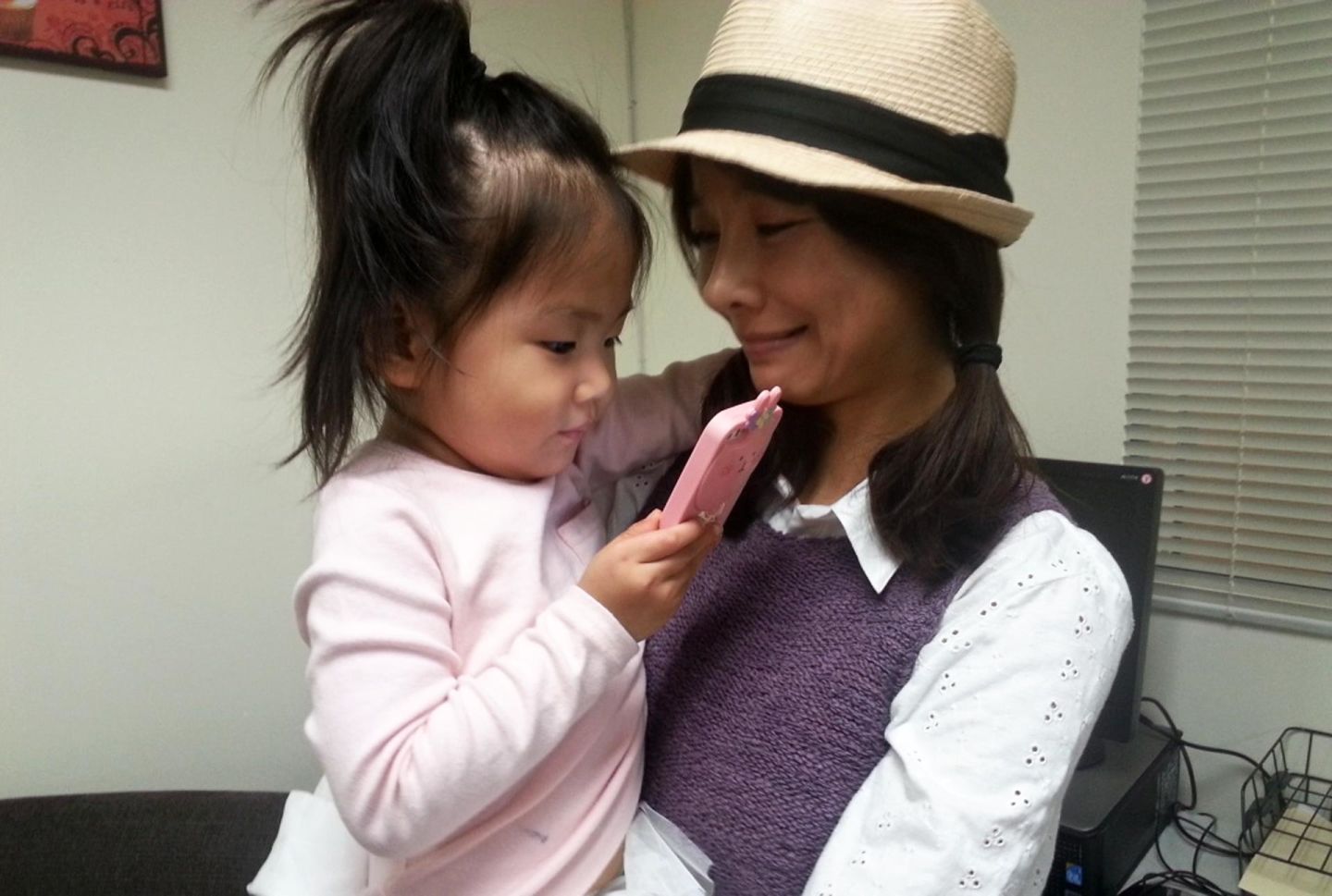
"caption": "Ahyun and her three-year-old daughter, Joanna, watch anime while visiting the offices of Korean American Family Services. Ahyun, 31, is a survivor of domestic violence and receives counseling at the agency. ",
"description": "Ahyun and her three-year-old daughter, Joanna, watch anime while visiting the offices of Korean American Family Services. Ahyun, 31, is a survivor of domestic violence and receives counseling at the agency. ",
"title": "KoreanImmigrant",
"credit": "Elizabeth Aguilera/KPCC",
"status": "inherit",
"isLoading": false,
"fetchFailed": false
},
"news_10804161": {
"type": "attachments",
"id": "news_10804161",
"meta": {
"index": "attachments_1716263798",
"site": "news",
"id": "10804161",
"found": true
},
"parent": 10804159,
"imgSizes": {
"twentyfourteen-full-width": {
"file": "https://ww2.kqed.org/app/uploads/sites/10/2015/12/Hijab-1024x576.jpg",
"width": 1024,
"mimeType": "image/jpeg",
"height": 576
},
"thumbnail": {
"file": "https://ww2.kqed.org/app/uploads/sites/10/2015/12/Hijab-400x267.jpg",
"width": 400,
"mimeType": "image/jpeg",
"height": 267
},
"fd-sm": {
"file": "https://ww2.kqed.org/app/uploads/sites/10/2015/12/Hijab-960x640.jpg",
"width": 960,
"mimeType": "image/jpeg",
"height": 640
},
"post-thumbnail": {
"file": "https://ww2.kqed.org/app/uploads/sites/10/2015/12/Hijab-672x372.jpg",
"width": 672,
"mimeType": "image/jpeg",
"height": 372
},
"kqedFullSize": {
"file": "https://ww2.kqed.org/app/uploads/sites/10/2015/12/Hijab.jpg",
"width": 1024,
"height": 683
},
"guest-author-96": {
"file": "https://ww2.kqed.org/app/uploads/sites/10/2015/12/Hijab-96x96.jpg",
"width": 96,
"mimeType": "image/jpeg",
"height": 96
},
"medium": {
"file": "https://ww2.kqed.org/app/uploads/sites/10/2015/12/Hijab-800x534.jpg",
"width": 800,
"mimeType": "image/jpeg",
"height": 534
},
"guest-author-64": {
"file": "https://ww2.kqed.org/app/uploads/sites/10/2015/12/Hijab-64x64.jpg",
"width": 64,
"mimeType": "image/jpeg",
"height": 64
},
"guest-author-32": {
"file": "https://ww2.kqed.org/app/uploads/sites/10/2015/12/Hijab-32x32.jpg",
"width": 32,
"mimeType": "image/jpeg",
"height": 32
},
"jmtc-small-thumb": {
"file": "https://ww2.kqed.org/app/uploads/sites/10/2015/12/Hijab-280x150.jpg",
"width": 280,
"mimeType": "image/jpeg",
"height": 150
},
"detail": {
"file": "https://ww2.kqed.org/app/uploads/sites/10/2015/12/Hijab-75x75.jpg",
"width": 75,
"mimeType": "image/jpeg",
"height": 75
},
"medium_large": {
"file": "https://ww2.kqed.org/app/uploads/sites/10/2015/12/Hijab-768x512.jpg",
"width": 768,
"mimeType": "image/jpeg",
"height": 512
},
"guest-author-128": {
"file": "https://ww2.kqed.org/app/uploads/sites/10/2015/12/Hijab-128x128.jpg",
"width": 128,
"mimeType": "image/jpeg",
"height": 128
}
},
"publishDate": 1450812419,
"modified": 1452297602,
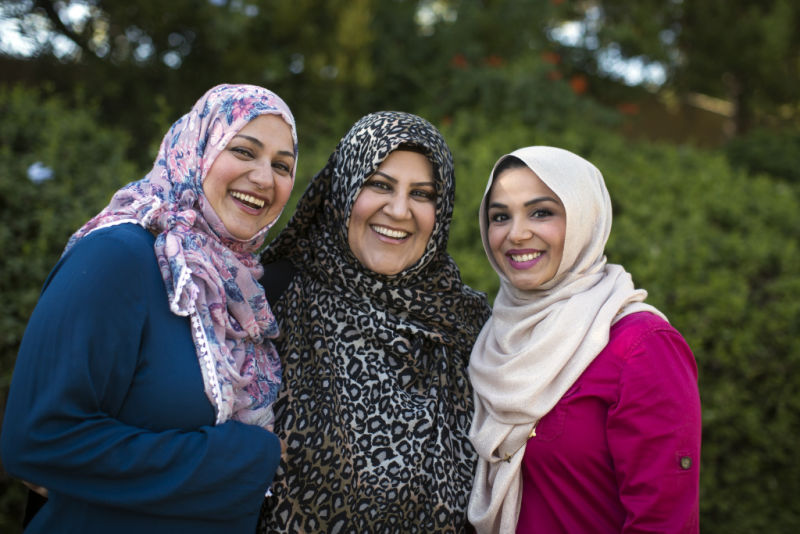
"caption": "Maria Ahmed (L), Hosai Mojaddidi and Shahzia Rahman founded a co-op preschool together and are good friends. Ahmed and Mojaddidi have long worn hijab. Rahman is a practicing Muslim but did not wear hijab until recently. She decided to begin wearing it in hopes of doing her part to counter anti-Muslim prejudice.",
"description": "Maria Ahmed (L), Hosai Mojaddidi and Shahzia Rahman founded a co-op preschool together and are good friends. Ahmed and Mojaddidi have long worn hijab. Rahman is a practicing Muslim but did not wear hijab until recently. She decided to begin wearing it in hopes of doing her part to counter anti-Muslim prejudice.",
"title": "Hijab",
"credit": "Maya Sugarman/KPCC",
"status": "inherit",
"isLoading": false,
"fetchFailed": false
},
"news_10821043": {
"type": "attachments",
"id": "news_10821043",
"meta": {
"index": "attachments_1716263798",
"site": "news",
"id": "10821043",
"found": true
},
"parent": 10804052,
"imgSizes": {
"jmtc-small-thumb": {
"file": "https://ww2.kqed.org/app/uploads/sites/10/2016/01/beer-280x150.jpg",
"width": 280,
"mimeType": "image/jpeg",
"height": 150
},
"thumbnail": {
"file": "https://ww2.kqed.org/app/uploads/sites/10/2016/01/beer-400x225.jpg",
"width": 400,
"mimeType": "image/jpeg",
"height": 225
},
"kqedFullSize": {
"file": "https://ww2.kqed.org/app/uploads/sites/10/2016/01/beer.jpg",
"width": 640,
"height": 360
},
"guest-author-96": {
"file": "https://ww2.kqed.org/app/uploads/sites/10/2016/01/beer-96x96.jpg",
"width": 96,
"mimeType": "image/jpeg",
"height": 96
},
"guest-author-64": {
"file": "https://ww2.kqed.org/app/uploads/sites/10/2016/01/beer-64x64.jpg",
"width": 64,
"mimeType": "image/jpeg",
"height": 64
},
"detail": {
"file": "https://ww2.kqed.org/app/uploads/sites/10/2016/01/beer-75x75.jpg",
"width": 75,
"mimeType": "image/jpeg",
"height": 75
},
"guest-author-32": {
"file": "https://ww2.kqed.org/app/uploads/sites/10/2016/01/beer-32x32.jpg",
"width": 32,
"mimeType": "image/jpeg",
"height": 32
},
"guest-author-128": {
"file": "https://ww2.kqed.org/app/uploads/sites/10/2016/01/beer-128x128.jpg",
"width": 128,
"mimeType": "image/jpeg",
"height": 128
}
},
"publishDate": 1451932850,
"modified": 1451932951,
"caption": "Beer tasting may be coming to a farmers market near you. ",
"description": "Beer tasting may be coming to a farmers market near you. ",
"title": "beer",
"credit": "\u003ca href=\"https://www.flickr.com/photos/skynoir/7228382140/\" target=\"_blank\">W.H. Dickinson\u003c/a>/Flickr",
"status": "inherit",
"isLoading": false,
"fetchFailed": false
},
"news_10614780": {
"type": "attachments",
"id": "news_10614780",
"meta": {
"index": "attachments_1716263798",
"site": "news",
"id": "10614780",
"found": true
},
"parent": 10608541,
"imgSizes": {
"twentyfourteen-full-width": {
"file": "https://ww2.kqed.org/app/uploads/sites/10/2015/07/Lynda-1038x576.jpg",
"width": 1038,
"mimeType": "image/jpeg",
"height": 576
},
"thumbnail": {
"file": "https://ww2.kqed.org/app/uploads/sites/10/2015/07/Lynda-400x333.jpg",
"width": 400,
"mimeType": "image/jpeg",
"height": 333
},
"fd-sm": {
"file": "https://ww2.kqed.org/app/uploads/sites/10/2015/07/Lynda-960x799.jpg",
"width": 960,
"mimeType": "image/jpeg",
"height": 799
},
"post-thumbnail": {
"file": "https://ww2.kqed.org/app/uploads/sites/10/2015/07/Lynda-672x372.jpg",
"width": 672,
"mimeType": "image/jpeg",
"height": 372
},
"kqedFullSize": {
"file": "https://ww2.kqed.org/app/uploads/sites/10/2015/07/Lynda.jpg",
"width": 1920,
"height": 1597
},
"large": {
"file": "https://ww2.kqed.org/app/uploads/sites/10/2015/07/Lynda-1440x1198.jpg",
"width": 1440,
"mimeType": "image/jpeg",
"height": 1198
},
"guest-author-96": {
"file": "https://ww2.kqed.org/app/uploads/sites/10/2015/07/Lynda-96x96.jpg",
"width": 96,
"mimeType": "image/jpeg",
"height": 96
},
"medium": {
"file": "https://ww2.kqed.org/app/uploads/sites/10/2015/07/Lynda-800x665.jpg",
"width": 800,
"mimeType": "image/jpeg",
"height": 665
},
"guest-author-64": {
"file": "https://ww2.kqed.org/app/uploads/sites/10/2015/07/Lynda-64x64.jpg",
"width": 64,
"mimeType": "image/jpeg",
"height": 64
},
"guest-author-32": {
"file": "https://ww2.kqed.org/app/uploads/sites/10/2015/07/Lynda-32x32.jpg",
"width": 32,
"mimeType": "image/jpeg",
"height": 32
},
"jmtc-small-thumb": {
"file": "https://ww2.kqed.org/app/uploads/sites/10/2015/07/Lynda-280x150.jpg",
"width": 280,
"mimeType": "image/jpeg",
"height": 150
},
"fd-lrg": {
"file": "https://ww2.kqed.org/app/uploads/sites/10/2015/07/Lynda-1400x1164.jpg",
"width": 1400,
"mimeType": "image/jpeg",
"height": 1164
},
"fd-med": {
"file": "https://ww2.kqed.org/app/uploads/sites/10/2015/07/Lynda-1180x981.jpg",
"width": 1180,
"mimeType": "image/jpeg",
"height": 981
},
"detail": {
"file": "https://ww2.kqed.org/app/uploads/sites/10/2015/07/Lynda-75x75.jpg",
"width": 75,
"mimeType": "image/jpeg",
"height": 75
},
"guest-author-128": {
"file": "https://ww2.kqed.org/app/uploads/sites/10/2015/07/Lynda-128x128.jpg",
"width": 128,
"mimeType": "image/jpeg",
"height": 128
}
},
"publishDate": 1437788411,
"modified": 1437788881,
"caption": "Lynda Trang Dai in the kitchen of her bánh mì shop, Lynda Sandwich, in Westminster.",
"description": "Lynda Trang Dai in the kitchen of her bánh mì shop, Lynda Sandwich, in Westminster.",
"title": "Lynda",
"credit": "Vickie Ly/KQED",
"status": "inherit",
"isLoading": false,
"fetchFailed": false
},
"news_10813895": {
"type": "attachments",
"id": "news_10813895",
"meta": {
"index": "attachments_1716263798",
"site": "news",
"id": "10813895",
"found": true
},
"parent": 10813816,
"imgSizes": {
"twentyfourteen-full-width": {
"file": "https://ww2.kqed.org/app/uploads/sites/10/2015/12/5604249012_1ef894483a_o.jpg-1038x576.jpeg",
"width": 1038,
"mimeType": "image/jpeg",
"height": 576
},
"thumbnail": {
"file": "https://ww2.kqed.org/app/uploads/sites/10/2015/12/5604249012_1ef894483a_o.jpg-400x266.jpeg",
"width": 400,
"mimeType": "image/jpeg",
"height": 266
},
"fd-sm": {
"file": "https://ww2.kqed.org/app/uploads/sites/10/2015/12/5604249012_1ef894483a_o.jpg-960x638.jpeg",
"width": 960,
"mimeType": "image/jpeg",
"height": 638
},
"post-thumbnail": {
"file": "https://ww2.kqed.org/app/uploads/sites/10/2015/12/5604249012_1ef894483a_o.jpg-672x372.jpeg",
"width": 672,
"mimeType": "image/jpeg",
"height": 372
},
"kqedFullSize": {
"file": "https://ww2.kqed.org/app/uploads/sites/10/2015/12/5604249012_1ef894483a_o.jpg-e1451436714360.jpeg",
"width": 1920,
"height": 1275
},
"large": {
"file": "https://ww2.kqed.org/app/uploads/sites/10/2015/12/5604249012_1ef894483a_o.jpg-1440x956.jpeg",
"width": 1440,
"mimeType": "image/jpeg",
"height": 956
},
"guest-author-96": {
"file": "https://ww2.kqed.org/app/uploads/sites/10/2015/12/5604249012_1ef894483a_o.jpg-96x96.jpeg",
"width": 96,
"mimeType": "image/jpeg",
"height": 96
},
"medium": {
"file": "https://ww2.kqed.org/app/uploads/sites/10/2015/12/5604249012_1ef894483a_o.jpg-800x531.jpeg",
"width": 800,
"mimeType": "image/jpeg",
"height": 531
},
"guest-author-64": {
"file": "https://ww2.kqed.org/app/uploads/sites/10/2015/12/5604249012_1ef894483a_o.jpg-64x64.jpeg",
"width": 64,
"mimeType": "image/jpeg",
"height": 64
},
"guest-author-32": {
"file": "https://ww2.kqed.org/app/uploads/sites/10/2015/12/5604249012_1ef894483a_o.jpg-32x32.jpeg",
"width": 32,
"mimeType": "image/jpeg",
"height": 32
},
"jmtc-small-thumb": {
"file": "https://ww2.kqed.org/app/uploads/sites/10/2015/12/5604249012_1ef894483a_o.jpg-280x150.jpeg",
"width": 280,
"mimeType": "image/jpeg",
"height": 150
},
"fd-lrg": {
"file": "https://ww2.kqed.org/app/uploads/sites/10/2015/12/5604249012_1ef894483a_o.jpg-1920x1275.jpeg",
"width": 1920,
"mimeType": "image/jpeg",
"height": 1275
},
"fd-med": {
"file": "https://ww2.kqed.org/app/uploads/sites/10/2015/12/5604249012_1ef894483a_o.jpg-1180x784.jpeg",
"width": 1180,
"mimeType": "image/jpeg",
"height": 784
},
"detail": {
"file": "https://ww2.kqed.org/app/uploads/sites/10/2015/12/5604249012_1ef894483a_o.jpg-75x75.jpeg",
"width": 75,
"mimeType": "image/jpeg",
"height": 75
},
"medium_large": {
"file": "https://ww2.kqed.org/app/uploads/sites/10/2015/12/5604249012_1ef894483a_o.jpg-768x510.jpeg",
"width": 768,
"mimeType": "image/jpeg",
"height": 510
},
"guest-author-128": {
"file": "https://ww2.kqed.org/app/uploads/sites/10/2015/12/5604249012_1ef894483a_o.jpg-128x128.jpeg",
"width": 128,
"mimeType": "image/jpeg",
"height": 128
}
},
"publishDate": 1451436702,
"modified": 1451436777,
"caption": "No Islamaphobia rally in 2011.",
"description": "No Islamaphobia rally in 2011.",
"title": "5604249012_1ef894483a_o.jpg",
"credit": "\u003ca href=\"https://www.flickr.com/photos/jorgeq82/5604249012/\">Jorge Quinteros/Flickr",
"status": "inherit",
"isLoading": false,
"fetchFailed": false
},
"news_10806652": {
"type": "attachments",
"id": "news_10806652",
"meta": {
"index": "attachments_1716263798",
"site": "news",
"id": "10806652",
"found": true
},
"parent": 10806650,
"imgSizes": {
"jmtc-small-thumb": {
"file": "https://ww2.kqed.org/app/uploads/sites/10/2015/12/Boom-280x150.jpg",
"width": 280,
"mimeType": "image/jpeg",
"height": 150
},
"thumbnail": {
"file": "https://ww2.kqed.org/app/uploads/sites/10/2015/12/Boom-400x170.jpg",
"width": 400,
"mimeType": "image/jpeg",
"height": 170
},
"kqedFullSize": {
"file": "https://ww2.kqed.org/app/uploads/sites/10/2015/12/Boom.jpg",
"width": 553,
"height": 235
},
"guest-author-96": {
"file": "https://ww2.kqed.org/app/uploads/sites/10/2015/12/Boom-96x96.jpg",
"width": 96,
"mimeType": "image/jpeg",
"height": 96
},
"guest-author-64": {
"file": "https://ww2.kqed.org/app/uploads/sites/10/2015/12/Boom-64x64.jpg",
"width": 64,
"mimeType": "image/jpeg",
"height": 64
},
"detail": {
"file": "https://ww2.kqed.org/app/uploads/sites/10/2015/12/Boom-75x75.jpg",
"width": 75,
"mimeType": "image/jpeg",
"height": 75
},
"guest-author-32": {
"file": "https://ww2.kqed.org/app/uploads/sites/10/2015/12/Boom-32x32.jpg",
"width": 32,
"mimeType": "image/jpeg",
"height": 32
},
"guest-author-128": {
"file": "https://ww2.kqed.org/app/uploads/sites/10/2015/12/Boom-128x128.jpg",
"width": 128,
"mimeType": "image/jpeg",
"height": 128
}
},
"publishDate": 1450975956,
"modified": 1450976034,
"caption": "Student at Zaytuna College in Berkeley. ",
"description": "Student at Zaytuna College in Berkeley. ",
"title": "Boom",
"credit": "Zaytuna College",
"status": "inherit",
"isLoading": false,
"fetchFailed": false
},
"news_10802805": {
"type": "attachments",
"id": "news_10802805",
"meta": {
"index": "attachments_1716263798",
"site": "news",
"id": "10802805",
"found": true
},
"parent": 10802799,
"imgSizes": {
"twentyfourteen-full-width": {
"file": "https://ww2.kqed.org/app/uploads/sites/10/2015/12/IMG_2591-1038x576.jpg",
"width": 1038,
"mimeType": "image/jpeg",
"height": 576
},
"thumbnail": {
"file": "https://ww2.kqed.org/app/uploads/sites/10/2015/12/IMG_2591-400x267.jpg",
"width": 400,
"mimeType": "image/jpeg",
"height": 267
},
"fd-sm": {
"file": "https://ww2.kqed.org/app/uploads/sites/10/2015/12/IMG_2591-960x640.jpg",
"width": 960,
"mimeType": "image/jpeg",
"height": 640
},
"post-thumbnail": {
"file": "https://ww2.kqed.org/app/uploads/sites/10/2015/12/IMG_2591-672x372.jpg",
"width": 672,
"mimeType": "image/jpeg",
"height": 372
},
"kqedFullSize": {
"file": "https://ww2.kqed.org/app/uploads/sites/10/2015/12/IMG_2591.jpg",
"width": 4774,
"height": 3182
},
"large": {
"file": "https://ww2.kqed.org/app/uploads/sites/10/2015/12/IMG_2591-1440x960.jpg",
"width": 1440,
"mimeType": "image/jpeg",
"height": 960
},
"guest-author-96": {
"file": "https://ww2.kqed.org/app/uploads/sites/10/2015/12/IMG_2591-96x96.jpg",
"width": 96,
"mimeType": "image/jpeg",
"height": 96
},
"medium": {
"file": "https://ww2.kqed.org/app/uploads/sites/10/2015/12/IMG_2591-800x533.jpg",
"width": 800,
"mimeType": "image/jpeg",
"height": 533
},
"guest-author-64": {
"file": "https://ww2.kqed.org/app/uploads/sites/10/2015/12/IMG_2591-64x64.jpg",
"width": 64,
"mimeType": "image/jpeg",
"height": 64
},
"guest-author-32": {
"file": "https://ww2.kqed.org/app/uploads/sites/10/2015/12/IMG_2591-32x32.jpg",
"width": 32,
"mimeType": "image/jpeg",
"height": 32
},
"jmtc-small-thumb": {
"file": "https://ww2.kqed.org/app/uploads/sites/10/2015/12/IMG_2591-280x150.jpg",
"width": 280,
"mimeType": "image/jpeg",
"height": 150
},
"fd-lrg": {
"file": "https://ww2.kqed.org/app/uploads/sites/10/2015/12/IMG_2591-1920x1280.jpg",
"width": 1920,
"mimeType": "image/jpeg",
"height": 1280
},
"fd-med": {
"file": "https://ww2.kqed.org/app/uploads/sites/10/2015/12/IMG_2591-1180x787.jpg",
"width": 1180,
"mimeType": "image/jpeg",
"height": 787
},
"detail": {
"file": "https://ww2.kqed.org/app/uploads/sites/10/2015/12/IMG_2591-75x75.jpg",
"width": 75,
"mimeType": "image/jpeg",
"height": 75
},
"medium_large": {
"file": "https://ww2.kqed.org/app/uploads/sites/10/2015/12/IMG_2591-768x512.jpg",
"width": 768,
"mimeType": "image/jpeg",
"height": 512
},
"guest-author-128": {
"file": "https://ww2.kqed.org/app/uploads/sites/10/2015/12/IMG_2591-128x128.jpg",
"width": 128,
"mimeType": "image/jpeg",
"height": 128
}
},
"publishDate": 1450723180,
"modified": 1450724199,
"caption": "Nicole Castro, Kevin Torion and Johnllen Crisostomo were recognized as leaders of a movement to name a school after Filipino-Americans for the first time in U.S. history. ",
"description": null,
"title": "IMG_2591",
"credit": "Ericka Cruz Guevarra/KQED",
"status": "inherit",
"isLoading": false,
"fetchFailed": false
},
"news_10803001": {
"type": "attachments",
"id": "news_10803001",
"meta": {
"index": "attachments_1716263798",
"site": "news",
"id": "10803001",
"found": true
},
"parent": 10779460,
"imgSizes": {
"twentyfourteen-full-width": {
"file": "https://ww2.kqed.org/app/uploads/sites/10/2015/12/DSC3399-2-1038x576.jpg",
"width": 1038,
"mimeType": "image/jpeg",
"height": 576
},
"thumbnail": {
"file": "https://ww2.kqed.org/app/uploads/sites/10/2015/12/DSC3399-2-400x266.jpg",
"width": 400,
"mimeType": "image/jpeg",
"height": 266
},
"fd-sm": {
"file": "https://ww2.kqed.org/app/uploads/sites/10/2015/12/DSC3399-2-960x638.jpg",
"width": 960,
"mimeType": "image/jpeg",
"height": 638
},
"post-thumbnail": {
"file": "https://ww2.kqed.org/app/uploads/sites/10/2015/12/DSC3399-2-672x372.jpg",
"width": 672,
"mimeType": "image/jpeg",
"height": 372
},
"kqedFullSize": {
"file": "https://ww2.kqed.org/app/uploads/sites/10/2015/12/DSC3399-2.jpg",
"width": 3774,
"height": 2509
},
"large": {
"file": "https://ww2.kqed.org/app/uploads/sites/10/2015/12/DSC3399-2-1440x957.jpg",
"width": 1440,
"mimeType": "image/jpeg",
"height": 957
},
"guest-author-96": {
"file": "https://ww2.kqed.org/app/uploads/sites/10/2015/12/DSC3399-2-96x96.jpg",
"width": 96,
"mimeType": "image/jpeg",
"height": 96
},
"medium": {
"file": "https://ww2.kqed.org/app/uploads/sites/10/2015/12/DSC3399-2-800x532.jpg",
"width": 800,
"mimeType": "image/jpeg",
"height": 532
},
"guest-author-64": {
"file": "https://ww2.kqed.org/app/uploads/sites/10/2015/12/DSC3399-2-64x64.jpg",
"width": 64,
"mimeType": "image/jpeg",
"height": 64
},
"guest-author-32": {
"file": "https://ww2.kqed.org/app/uploads/sites/10/2015/12/DSC3399-2-32x32.jpg",
"width": 32,
"mimeType": "image/jpeg",
"height": 32
},
"jmtc-small-thumb": {
"file": "https://ww2.kqed.org/app/uploads/sites/10/2015/12/DSC3399-2-280x150.jpg",
"width": 280,
"mimeType": "image/jpeg",
"height": 150
},
"fd-lrg": {
"file": "https://ww2.kqed.org/app/uploads/sites/10/2015/12/DSC3399-2-1920x1276.jpg",
"width": 1920,
"mimeType": "image/jpeg",
"height": 1276
},
"fd-med": {
"file": "https://ww2.kqed.org/app/uploads/sites/10/2015/12/DSC3399-2-1180x784.jpg",
"width": 1180,
"mimeType": "image/jpeg",
"height": 784
},
"detail": {
"file": "https://ww2.kqed.org/app/uploads/sites/10/2015/12/DSC3399-2-75x75.jpg",
"width": 75,
"mimeType": "image/jpeg",
"height": 75
},
"medium_large": {
"file": "https://ww2.kqed.org/app/uploads/sites/10/2015/12/DSC3399-2-768x511.jpg",
"width": 768,
"mimeType": "image/jpeg",
"height": 511
},
"guest-author-128": {
"file": "https://ww2.kqed.org/app/uploads/sites/10/2015/12/DSC3399-2-128x128.jpg",
"width": 128,
"mimeType": "image/jpeg",
"height": 128
}
},
"publishDate": 1450732858,
"modified": 1450825925,
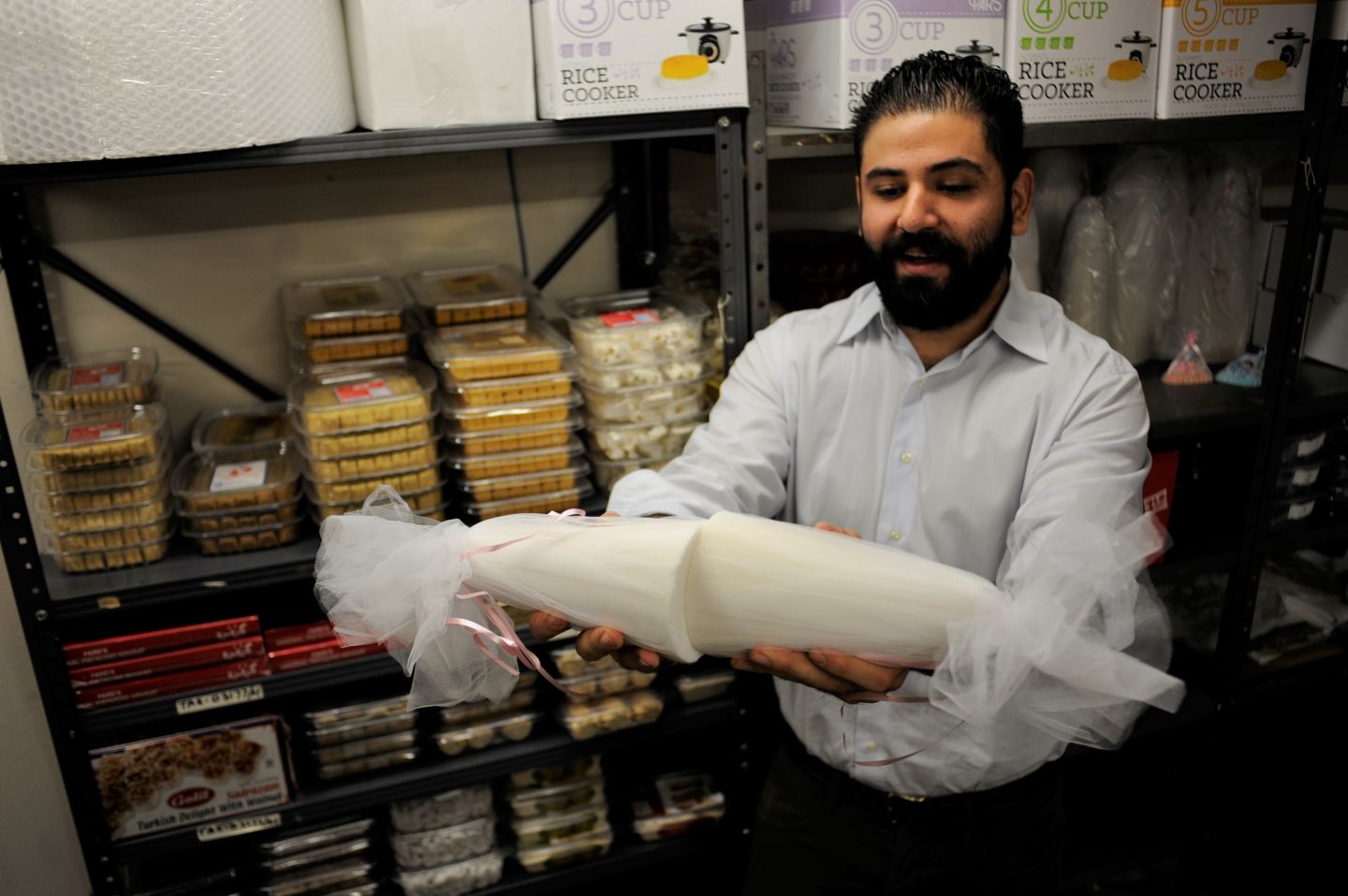
"caption": "Idin Deeb in the warehouse of Kalamala, the online Persian food company he started when just a teenager.",
"description": null,
"title": "_DSC3399 (2)",
"credit": "Blair Wells",
"status": "inherit",
"isLoading": false,
"fetchFailed": false
},
"news_10799642": {
"type": "attachments",
"id": "news_10799642",
"meta": {
"index": "attachments_1716263798",
"site": "news",
"id": "10799642",
"found": true
},
"parent": 10799545,
"imgSizes": {
"twentyfourteen-full-width": {
"file": "https://ww2.kqed.org/app/uploads/sites/10/2015/12/RS17867_IMG_9321.JPG-qut-1038x576.jpg",
"width": 1038,
"mimeType": "image/jpeg",
"height": 576
},
"thumbnail": {
"file": "https://ww2.kqed.org/app/uploads/sites/10/2015/12/RS17867_IMG_9321.JPG-qut-400x267.jpg",
"width": 400,
"mimeType": "image/jpeg",
"height": 267
},
"fd-sm": {
"file": "https://ww2.kqed.org/app/uploads/sites/10/2015/12/RS17867_IMG_9321.JPG-qut-960x640.jpg",
"width": 960,
"mimeType": "image/jpeg",
"height": 640
},
"post-thumbnail": {
"file": "https://ww2.kqed.org/app/uploads/sites/10/2015/12/RS17867_IMG_9321.JPG-qut-672x372.jpg",
"width": 672,
"mimeType": "image/jpeg",
"height": 372
},
"kqedFullSize": {
"file": "https://ww2.kqed.org/app/uploads/sites/10/2015/12/RS17867_IMG_9321.JPG-qut.jpg",
"width": 1920,
"height": 1280
},
"large": {
"file": "https://ww2.kqed.org/app/uploads/sites/10/2015/12/RS17867_IMG_9321.JPG-qut-1440x960.jpg",
"width": 1440,
"mimeType": "image/jpeg",
"height": 960
},
"guest-author-96": {
"file": "https://ww2.kqed.org/app/uploads/sites/10/2015/12/RS17867_IMG_9321.JPG-qut-96x96.jpg",
"width": 96,
"mimeType": "image/jpeg",
"height": 96
},
"medium": {
"file": "https://ww2.kqed.org/app/uploads/sites/10/2015/12/RS17867_IMG_9321.JPG-qut-800x533.jpg",
"width": 800,
"mimeType": "image/jpeg",
"height": 533
},
"guest-author-64": {
"file": "https://ww2.kqed.org/app/uploads/sites/10/2015/12/RS17867_IMG_9321.JPG-qut-64x64.jpg",
"width": 64,
"mimeType": "image/jpeg",
"height": 64
},
"guest-author-32": {
"file": "https://ww2.kqed.org/app/uploads/sites/10/2015/12/RS17867_IMG_9321.JPG-qut-32x32.jpg",
"width": 32,
"mimeType": "image/jpeg",
"height": 32
},
"jmtc-small-thumb": {
"file": "https://ww2.kqed.org/app/uploads/sites/10/2015/12/RS17867_IMG_9321.JPG-qut-280x150.jpg",
"width": 280,
"mimeType": "image/jpeg",
"height": 150
},
"fd-lrg": {
"file": "https://ww2.kqed.org/app/uploads/sites/10/2015/12/RS17867_IMG_9321.JPG-qut-1920x1280.jpg",
"width": 1920,
"mimeType": "image/jpeg",
"height": 1280
},
"fd-med": {
"file": "https://ww2.kqed.org/app/uploads/sites/10/2015/12/RS17867_IMG_9321.JPG-qut-1180x787.jpg",
"width": 1180,
"mimeType": "image/jpeg",
"height": 787
},
"detail": {
"file": "https://ww2.kqed.org/app/uploads/sites/10/2015/12/RS17867_IMG_9321.JPG-qut-75x75.jpg",
"width": 75,
"mimeType": "image/jpeg",
"height": 75
},
"medium_large": {
"file": "https://ww2.kqed.org/app/uploads/sites/10/2015/12/RS17867_IMG_9321.JPG-qut-768x512.jpg",
"width": 768,
"mimeType": "image/jpeg",
"height": 512
},
"guest-author-128": {
"file": "https://ww2.kqed.org/app/uploads/sites/10/2015/12/RS17867_IMG_9321.JPG-qut-128x128.jpg",
"width": 128,
"mimeType": "image/jpeg",
"height": 128
}
},
"publishDate": 1450480349,
"modified": 1486420583,
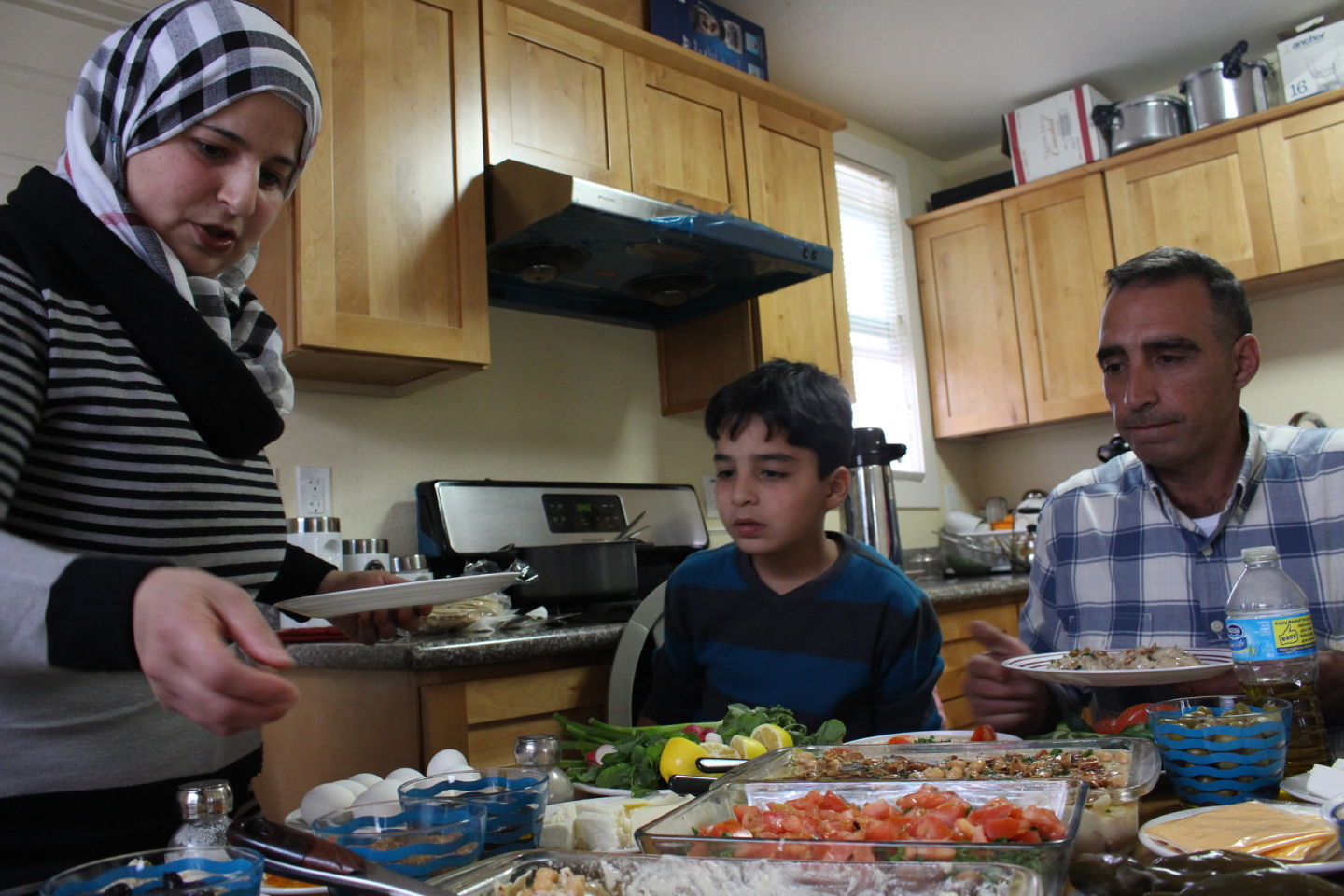
"caption": "Rawaa Kasedah serves breakfast to her son, Mohamad, 10, as husband Mohammad Rawoas, awaits his turn.",
"description": null,
"title": "RS17867_IMG_9321.JPG-qut",
"credit": "Farida Jhabvala Romero/KQED",
"status": "inherit",
"isLoading": false,
"fetchFailed": false
}
},
"audioPlayerReducer": {
"postId": "stream_live",
"isPaused": true,
"isPlaying": false,
"pfsActive": false,
"pledgeModalIsOpen": true,
"playerDrawerIsOpen": false,
"liveAudioPlayStartedAt": 0,
"liveAudioPlayContext": ""
},
"authorsReducer": {
"byline_news_10852416": {
"type": "authors",
"id": "byline_news_10852416",
"meta": {
"override": true
},
"slug": "byline_news_10852416",
"name": "\u003cstrong>Shereen Marisol Meraji\u003cbr>NPR\u003c/strong>",
"isLoading": false
},
"byline_news_10841880": {
"type": "authors",
"id": "byline_news_10841880",
"meta": {
"override": true
},
"slug": "byline_news_10841880",
"name": "\u003cstrong>\u003ca href=\"http://www.scpr.org/about/people/staff/elizabeth-aguilera\">Elizabeth Aguilera\u003cbr>KPCC\u003c/strong>",
"isLoading": false
},
"byline_news_10804159": {
"type": "authors",
"id": "byline_news_10804159",
"meta": {
"override": true
},
"slug": "byline_news_10804159",
"name": "\u003cstrong>\u003ca href=\"http://www.scpr.org/about/people/staff/leslie-berestein-rojas\">Leslie Berestein Rojas\u003c/a>\u003cbr>\u003ca href=\"http://www.scpr.org/news/2015/12/22/56360/climate-of-fear-has-some-muslim-women-making-diffi/\">KPCC\u003c/a>\u003c/strong>",
"isLoading": false
},
"byline_news_10806650": {
"type": "authors",
"id": "byline_news_10806650",
"meta": {
"override": true
},
"slug": "byline_news_10806650",
"name": "Anna Challet\u003cbr />Boom",
"isLoading": false
},
"lisapickoffwhite-2": {
"type": "authors",
"id": "199",
"meta": {
"index": "authors_1716337520",
"id": "199",
"found": true
},
"name": "Lisa Pickoff-White",
"firstName": "Lisa",
"lastName": "Pickoff-White",
"slug": "lisapickoffwhite-2",
"email": "lpickoffwhite@kqed.org",
"display_author_email": false,
"staff_mastheads": [
"news"
],
"title": "Data Journalist, Senior Producer",
"bio": "Lisa Pickoff-White is KQED's data reporter. Lisa specializes in simplifying complex topics and bringing them to life through compelling visuals, including photography and data visualizations. She previously has worked at the Center for Investigative Reporting and other national outlets. Her work has been honored with awards from the Online News Association, Investigative Reporters and Editors, the Society of Professional Journalists and SXSW Interactive. \u003cstrong> \u003c/strong>",
"avatar": "https://secure.gravatar.com/avatar/5513c5f3967df792aa65bee2501e84d6?s=600&d=blank&r=g",
"twitter": "pickoffwhite",
"facebook": null,
"instagram": null,
"linkedin": null,
"sites": [
{
"site": "",
"roles": [
"editor"
]
},
{
"site": "arts",
"roles": []
},
{
"site": "news",
"roles": [
"administrator"
]
},
{
"site": "about",
"roles": [
"editor"
]
},
{
"site": "stateofhealth",
"roles": [
"administrator"
]
},
{
"site": "science",
"roles": [
"editor"
]
},
{
"site": "quest",
"roles": [
"editor"
]
},
{
"site": "forum",
"roles": [
"editor"
]
}
],
"headData": {
"title": "Lisa Pickoff-White | KQED",
"description": "Data Journalist, Senior Producer",
"ogImgSrc": "https://secure.gravatar.com/avatar/5513c5f3967df792aa65bee2501e84d6?s=600&d=blank&r=g",
"twImgSrc": "https://secure.gravatar.com/avatar/5513c5f3967df792aa65bee2501e84d6?s=600&d=blank&r=g"
},
"isLoading": false,
"link": "/author/lisapickoffwhite-2"
},
"scottshafer": {
"type": "authors",
"id": "255",
"meta": {
"index": "authors_1716337520",
"id": "255",
"found": true
},
"name": "Scott Shafer",
"firstName": "Scott",
"lastName": "Shafer",
"slug": "scottshafer",
"email": "sshafer@kqed.org",
"display_author_email": false,
"staff_mastheads": [
"news"
],
"title": "KQED Contributor",
"bio": "Scott Shafer is a senior editor with the KQED Politics and Government desk. He is co-host of Political Breakdown, the award-winning radio show and podcast with a personal take on the world of politics. Scott came to KQED in 1998 to host the statewide\u003cem> California Report\u003c/em>. Prior to that he had extended stints in politics and government\u003cem>.\u003c/em> He uses that inside experience at KQED in his, reporting, hosting and analysis for the politics desk. Scott collaborated \u003cem>Political Breakdown a\u003c/em>nd on \u003cem>The Political Mind of Jerry Brown, \u003c/em>an eight-part series about the life and extraordinary political career of the former governor. For fun, he plays water polo with the San Francisco Tsunami.",
"avatar": "https://secure.gravatar.com/avatar/a62ebae45b79d7aed1a39a0e3bf68104?s=600&d=blank&r=g",
"twitter": "scottshafer",
"bluesky": null,
"facebook": null,
"instagram": null,
"linkedin": null,
"sites": [
{
"site": "news",
"roles": [
"editor"
]
},
{
"site": "stateofhealth",
"roles": [
"author"
]
},
{
"site": "science",
"roles": [
"author"
]
},
{
"site": "forum",
"roles": [
"subscriber"
]
},
{
"site": "liveblog",
"roles": [
"author"
]
}
],
"headData": {
"title": "Scott Shafer | KQED",
"description": "KQED Contributor",
"ogImgSrc": "https://secure.gravatar.com/avatar/a62ebae45b79d7aed1a39a0e3bf68104?s=600&d=blank&r=g",
"twImgSrc": "https://secure.gravatar.com/avatar/a62ebae45b79d7aed1a39a0e3bf68104?s=600&d=blank&r=g"
},
"isLoading": false,
"link": "/author/scottshafer"
},
"shossaini": {
"type": "authors",
"id": "3214",
"meta": {
"index": "authors_1716337520",
"id": "3214",
"found": true
},
"name": "Sara Hossaini",
"firstName": "Sara",
"lastName": "Hossaini",
"slug": "shossaini",
"email": "shossaini@kqed.org",
"display_author_email": true,
"staff_mastheads": [
"news"
],
"title": "KQED Reporter",
"bio": "Sara Hossaini came to general assignment reporting at KQED in 2013 after two winters reporting at Wyoming Public Radio. She holds a bachelor's degree in broadcast journalism from the University of Nebraska-Lincoln. Her radio romance began after a bitter breakup with documentary film (Ok, maybe it's still complicated). Her first simultaneous jobs in San Francisco were as Associate Producer on a PBS film series through the Center for Asian American Media and as a butler. She likes to trot, plot and make things with her hands.",
"avatar": "https://secure.gravatar.com/avatar/060e9f56b9554e17942e89f413242774?s=600&d=blank&r=g",
"twitter": "mshossaini",
"facebook": null,
"instagram": null,
"linkedin": null,
"sites": [
{
"site": "news",
"roles": [
"author"
]
},
{
"site": "stateofhealth",
"roles": [
"author"
]
}
],
"headData": {
"title": "Sara Hossaini | KQED",
"description": "KQED Reporter",
"ogImgSrc": "https://secure.gravatar.com/avatar/060e9f56b9554e17942e89f413242774?s=600&d=blank&r=g",
"twImgSrc": "https://secure.gravatar.com/avatar/060e9f56b9554e17942e89f413242774?s=600&d=blank&r=g"
},
"isLoading": false,
"link": "/author/shossaini"
},
"zstavely": {
"type": "authors",
"id": "3225",
"meta": {
"index": "authors_1716337520",
"id": "3225",
"found": true
},
"name": "Zaidee Stavely",
"firstName": "Zaidee",
"lastName": "Stavely",
"slug": "zstavely",
"email": "zstavely@gmail.com",
"display_author_email": false,
"staff_mastheads": [],
"title": "KQED Contributor",
"bio": "Zaidee Stavely is an award-winning reporter who writes about race, equity, immigration, and education.",
"avatar": "https://secure.gravatar.com/avatar/5154b3ee56a721c916ca429372ae629c?s=600&d=blank&r=g",
"twitter": null,
"facebook": null,
"instagram": null,
"linkedin": null,
"sites": [
{
"site": "news",
"roles": [
"subscriber"
]
},
{
"site": "mindshift",
"roles": [
"contributor"
]
}
],
"headData": {
"title": "Zaidee Stavely | KQED",
"description": "KQED Contributor",
"ogImgSrc": "https://secure.gravatar.com/avatar/5154b3ee56a721c916ca429372ae629c?s=600&d=blank&r=g",
"twImgSrc": "https://secure.gravatar.com/avatar/5154b3ee56a721c916ca429372ae629c?s=600&d=blank&r=g"
},
"isLoading": false,
"link": "/author/zstavely"
},
"lmorehouse": {
"type": "authors",
"id": "3229",
"meta": {
"index": "authors_1716337520",
"id": "3229",
"found": true
},
"name": "Lisa Morehouse",
"firstName": "Lisa",
"lastName": "Morehouse",
"slug": "lmorehouse",
"email": "morehouse.lisa@gmail.com",
"display_author_email": false,
"staff_mastheads": [],
"title": "KQED Contributor",
"bio": "Lisa Morehouse is an award-winning public radio and print journalist, who has filed for National Public Radio, American Public Media, KQED Public Radio, Edutopia, and McSweeney’s. Her reporting has taken her from Samoan traveling circuses to Mississippi Delta classrooms to the homes of Lao refugees in rural Iowa. In addition to reporting, she teaches radio production to at-risk youth in the Bay Area. Her series \u003ca href=\"http://afterthegoldrushradio.com/\">After the Gold Rush\u003c/a> featured the changing industries, populations and identities of rural towns throughout California. She’s now producing \u003ca href=\"http://www.californiafoodways.com/\">California Foodways\u003c/a>, a series exploring the intersections of food, culture, economics, history and labor. Follow along on the \u003ca href=\"https://www.facebook.com/californiafoodways?ref=hl\">Facebook page\u003c/a> or on Twitter @cafoodways.",
"avatar": "https://secure.gravatar.com/avatar/dae74b002a6e256f39abb19d6f5acaea?s=600&d=blank&r=g",
"twitter": null,
"facebook": null,
"instagram": null,
"linkedin": null,
"sites": [
{
"site": "",
"roles": [
"editor"
]
},
{
"site": "news",
"roles": [
"author"
]
}
],
"headData": {
"title": "Lisa Morehouse | KQED",
"description": "KQED Contributor",
"ogImgSrc": "https://secure.gravatar.com/avatar/dae74b002a6e256f39abb19d6f5acaea?s=600&d=blank&r=g",
"twImgSrc": "https://secure.gravatar.com/avatar/dae74b002a6e256f39abb19d6f5acaea?s=600&d=blank&r=g"
},
"isLoading": false,
"link": "/author/lmorehouse"
},
"mlagos": {
"type": "authors",
"id": "3239",
"meta": {
"index": "authors_1716337520",
"id": "3239",
"found": true
},
"name": "Marisa Lagos",
"firstName": "Marisa",
"lastName": "Lagos",
"slug": "mlagos",
"email": "mlagos@kqed.org",
"display_author_email": false,
"staff_mastheads": [
"news"
],
"title": "KQED Contributor",
"bio": "Marisa Lagos is a correspondent for KQED’s California Politics and Government Desk and co-hosts the award-winning show and podcast, Political Breakdown. At KQED, Lagos also conducts reporting, analysis and investigations into state, local and national politics for radio, TV, online and onstage. In 2022, she and co-host, Scott Shafer, moderated the only gubernatorial debate in California. In 2020, the \u003ci>Washington Post\u003c/i> named her one of the top political journalists in California; she was nominated for a Peabody and won several other awards for her work investigating the 2017 California wildfires. She has worked at the \u003ci>San Francisco Chronicle\u003c/i>, \u003ci>San Francisco Examiner\u003c/i> and \u003ci>Los Angeles Times\u003c/i>. A UC Santa Barbara graduate, she lives in San Francisco with her two sons and husband.",
"avatar": "https://secure.gravatar.com/avatar/a261a0d3696fc066871ef96b85b5e7d2?s=600&d=blank&r=g",
"twitter": "@mlagos",
"facebook": null,
"instagram": null,
"linkedin": null,
"sites": [
{
"site": "arts",
"roles": [
"author"
]
},
{
"site": "news",
"roles": [
"editor"
]
},
{
"site": "science",
"roles": [
"editor"
]
},
{
"site": "forum",
"roles": [
"author"
]
},
{
"site": "liveblog",
"roles": [
"author"
]
}
],
"headData": {
"title": "Marisa Lagos | KQED",
"description": "KQED Contributor",
"ogImgSrc": "https://secure.gravatar.com/avatar/a261a0d3696fc066871ef96b85b5e7d2?s=600&d=blank&r=g",
"twImgSrc": "https://secure.gravatar.com/avatar/a261a0d3696fc066871ef96b85b5e7d2?s=600&d=blank&r=g"
},
"isLoading": false,
"link": "/author/mlagos"
},
"ecruzguevarra": {
"type": "authors",
"id": "8654",
"meta": {
"index": "authors_1716337520",
"id": "8654",
"found": true
},
"name": "Ericka Cruz Guevarra",
"firstName": "Ericka",
"lastName": "Cruz Guevarra",
"slug": "ecruzguevarra",
"email": "ecruzguevarra@kqed.org",
"display_author_email": true,
"staff_mastheads": [
"news"
],
"title": "Producer, The Bay Podcast",
"bio": "Ericka Cruz Guevarra is host of \u003ca href=\"https://www.kqed.org/podcasts/thebay\">\u003cem>The Bay\u003c/em>\u003c/a> podcast at KQED. Before host, she was the show’s producer. Her work in that capacity includes a three-part reported series on policing in Vallejo, which won a 2020 excellence in journalism award from the Society of Professional Journalists. Ericka has worked as a breaking news reporter at Oregon Public Broadcasting, helped produce the Code Switch podcast, and was KQED’s inaugural Raul Ramirez Diversity Fund intern. She’s also an alumna of NPR’s Next Generation Radio program. Send her an email if you have strong feelings about whether Fairfield and Suisun City are the Bay. Ericka is represented by SAG-AFTRA.",
"avatar": "https://secure.gravatar.com/avatar/accefc1de4bafc7e234b69bcb9b6f6536c130fd84709bc3069ef11a78787e1bb?s=600&d=blank&r=g",
"twitter": "NotoriousECG",
"bluesky": null,
"facebook": null,
"instagram": null,
"linkedin": null,
"sites": [
{
"site": "arts",
"roles": [
"subscriber"
]
},
{
"site": "news",
"roles": [
"editor",
"manage_categories"
]
},
{
"site": "futureofyou",
"roles": [
"subscriber"
]
},
{
"site": "stateofhealth",
"roles": [
"subscriber"
]
},
{
"site": "science",
"roles": [
"editor"
]
},
{
"site": "forum",
"roles": [
"subscriber"
]
}
],
"headData": {
"title": "Ericka Cruz Guevarra | KQED",
"description": "Producer, The Bay Podcast",
"ogImgSrc": "https://secure.gravatar.com/avatar/accefc1de4bafc7e234b69bcb9b6f6536c130fd84709bc3069ef11a78787e1bb?s=600&d=blank&r=g",
"twImgSrc": "https://secure.gravatar.com/avatar/accefc1de4bafc7e234b69bcb9b6f6536c130fd84709bc3069ef11a78787e1bb?s=600&d=blank&r=g"
},
"isLoading": false,
"link": "/author/ecruzguevarra"
},
"fjhabvala": {
"type": "authors",
"id": "8659",
"meta": {
"index": "authors_1716337520",
"id": "8659",
"found": true
},
"name": "Farida Jhabvala Romero",
"firstName": "Farida",
"lastName": "Jhabvala Romero",
"slug": "fjhabvala",
"email": "fjhabvala@kqed.org",
"display_author_email": true,
"staff_mastheads": [
"news"
],
"title": "KQED Contributor",
"bio": "Farida Jhabvala Romero is a Labor Correspondent for KQED. She previously covered immigration. Farida was \u003ca href=\"https://www.ccnma.org/2022-most-influential-latina-journalists\">named\u003c/a> one of the 10 Most Influential Latina Journalists in California in 2022 by the California Chicano News Media Association. Her work has won awards from the Society of Professional Journalists (Northern California), as well as a national and regional Edward M. Murrow Award for the collaborative reporting projects “Dangerous Air” and “Graying California.” Before joining KQED, Farida worked as a producer at Radio Bilingüe, a national public radio network. Farida earned her master’s degree in journalism from Stanford University.",
"avatar": "https://secure.gravatar.com/avatar/f9f022d4e2609741874222a1e9d41f48fea74011aa7c615eef91d9a50c944ebe?s=600&d=blank&r=g",
"twitter": "FaridaJhabvala",
"bluesky": null,
"facebook": null,
"instagram": null,
"linkedin": "https://www.linkedin.com/in/faridajhabvala/",
"sites": [
{
"site": "news",
"roles": [
"editor"
]
},
{
"site": "stateofhealth",
"roles": [
"author"
]
},
{
"site": "liveblog",
"roles": [
"author"
]
}
],
"headData": {
"title": "Farida Jhabvala Romero | KQED",
"description": "KQED Contributor",
"ogImgSrc": "https://secure.gravatar.com/avatar/f9f022d4e2609741874222a1e9d41f48fea74011aa7c615eef91d9a50c944ebe?s=600&d=blank&r=g",
"twImgSrc": "https://secure.gravatar.com/avatar/f9f022d4e2609741874222a1e9d41f48fea74011aa7c615eef91d9a50c944ebe?s=600&d=blank&r=g"
},
"isLoading": false,
"link": "/author/fjhabvala"
}
},
"pagesReducer": {
"news_category_immigration": {
"type": "terms",
"id": "news_1169",
"meta": {
"index": "terms_1716263798",
"site": "news",
"id": "1169",
"score": 10.909731
},
"featImg": null,
"name": "Immigration",
"description": null,
"taxonomy": "category",
"headData": {
"twImgId": null,
"twTitle": null,
"ogTitle": null,
"ogImgId": null,
"twDescription": null,
"description": null,
"title": "Immigration Archives | KQED News",
"ogDescription": null
},
"ttid": 1180,
"slug": "immigration",
"isLoading": false,
"title": "Immigration",
"pageMeta": {
"site": "news",
"WpPageTemplate": "page-topic-editorial",
"currentPage": 180
},
"blocks": [
{
"blockName": "kqed/post-list",
"attrs": {
"layout": "cardArticle2",
"query": "posts/news?category=immigration",
"seeMore": false,
"paginated": true,
"page": 180
}
},
{
"blockName": "kqed/ad"
}
]
}
},
"pfsSessionReducer": {},
"postsReducer": {
"stream_live": {
"type": "live",
"id": "stream_live",
"audioUrl": "https://streams.kqed.org/kqedradio",
"title": "Live Stream",
"excerpt": "Live Stream information currently unavailable.",
"link": "/radio",
"featImg": "",
"label": {
"name": "KQED Live",
"link": "/"
}
},
"stream_kqedNewscast": {
"type": "posts",
"id": "stream_kqedNewscast",
"audioUrl": "https://www.kqed.org/.stream/anon/radio/RDnews/newscast.mp3?_=1",
"title": "KQED Newscast",
"featImg": "",
"label": {
"name": "88.5 FM",
"link": "/"
}
},
"news_10858526": {
"type": "posts",
"id": "news_10858526",
"meta": {
"index": "posts_1716263798",
"site": "news",
"id": "10858526",
"score": null,
"sort": [
1454983292000
]
},
"guestAuthors": [],
"slug": "gop-assemblyman-rocky-chavez-drops-his-senate-bid",
"title": "GOP Assemblyman Rocky Chavez Drops His Senate Bid",
"publishDate": 1454983292,
"format": "standard",
"headTitle": "GOP Assemblyman Rocky Chavez Drops His Senate Bid | KQED",
"labelTerm": {
"term": 72,
"site": "news"
},
"content": "\u003cp>Struggling for cash and mired in single digits in recent polls, Republican Assemblyman Rocky Chavez is ending his bid for the U.S. Senate. Instead, he’ll run for re-election to the Assembly.\u003c/p>\n\u003cp>Chavez announced his decision at the beginning of a radio debate at KOGO-AM in San Diego. His decision leaves two Republicans in the race to replace retiring Sen. Barbara Boxer.\u003c/p>\n\u003cp>\u003c!-- iframe plugin v.4.3 wordpress.org/plugins/iframe/ -->\u003cbr>\n\u003ciframe loading=\"lazy\" src=\"http://www.sacbee.com/news/politics-government/capitol-alert/article59233138.html/video-embed\" width=\"640\" height=\"380\" frameborder=\"0\" scrolling=\"no\" allowfullscreen=\"true\" class=\"iframe-class\">\u003c/iframe>\u003c/p>\n\u003cp>Given the Republican Party’s “image problem” among Latinos, Chavez seemed like the kind of candidate the GOP would rally around. And yet his two main Republican rivals are both former party chairs. What did Chavez make of that?\u003c/p>\n\u003cp>“That speaks for itself,” Chavez told me in a recent interview. “This election is not about insiders,” he said, citing support for Donald Trump and Bernie Sanders as evidence voters are looking for outsiders.\u003c/p>\n\u003cp>[ad fullwidth]\u003c/p>\n\u003cp>When I pointed out that California currently has no statewide officeholders who are Republican, he said that other failed statewide candidates, presumably like Meg Whitman and Carly Fiorina, were flawed.\u003c/p>\n\u003caside class=\"pullquote alignright\">Chavez ends his campaign with $369 in cash and debts of $42,889.\u003c/aside>\n\u003cp>“The other candidates we had were nice people, but they were never elected and they do not reflect the complexity of California,” Chavez said. “Unlike me, born in L.A., worked the fields with my cousins around Fresno. Graduated from Chico State working in the packing plants and working in the almond fields. I’m not a silver-spoon person that gave a lot of money. I worked my way through.”\u003c/p>\n\u003cp>Chavez was commissioned in the U.S. Marines in 1974, and he retired 10 days before the 9/11 terrorist attacks that led to wars in Afghanistan and Iraq. Two years later, Gov. Arnold Schwarzenegger chose Chavez to be undersecretary of the California Department of Veterans Affairs. He was elected to the state Assembly from Oceanside in 2012.\u003c/p>\n\u003cp>When asked why he’s better prepared to represent California in the U.S. Senate than the two Democrats running — Rep. Loretta Sanchez and state Attorney General Kamala Harris — Chavez gave a surprising answer.\u003c/p>\n\u003cp>[contextly_sidebar id=”h7RULuaw5gJOzrbb5CeiBdvZGh3SVNiE”]\u003c/p>\n\u003cp>“I’m married,” Chavez said. “Three kids and five grandkids, unlike my opponents that don’t have kids. And I was a single parent. Try being a parent, try being a \u003cem>single\u003c/em> parent. Neither one of those ladies have ever experienced that and I have. And all three of my children have college degrees. And that’s called the California experience and dream.”\u003c/p>\n\u003cp>Chavez seemed to recoil at the notion of being labeled a “Latino candidate.”\u003c/p>\n\u003cp>“I never saw myself as a Latino Marine,” he said.\u003c/p>\n\u003cp>When asked about immigration reform, Chavez took a tortured path before finally saying he’d support a path to citizenship for undocumented immigrants.\u003c/p>\n\u003cp>“People are saying you need a path to citizenship, and I’m saying it’s a little more complex than that,” Chavez said. “If children are here and their parents have come here because of migration and the drive of jobs, they should be able to be here and be recognized. That’s not citizenship, that’s residency.”\u003c/p>\n\u003cp>Criticizing anti-immigrant, pro-deportation statements from members of his own party, including Donald Trump, Chavez said “children shouldn’t have to worry at night if their father is going to be gone.”\u003c/p>\n\u003cp>As far as citizenship goes, he said “I wouldn’t allow anyone to the front of the line or support amnesty or anything else.”\u003c/p>\n\u003cp>Now that he’s withdrawn from the Senate race, Chavez won’t have to deal with that issue. Based on campaign finance \u003ca href=\"http://www.fec.gov/disclosurehs/HSCandDetail.do\" target=\"_blank\" rel=\"noopener\">reports \u003c/a>filed last week with the Federal Election Commission, Chavez was trailing badly in the money race.\u003c/p>\n\u003cp>\u003c/p>\n\u003cp>His campaign raised $105,035 in 2015, ending the year with just $369 in cash and debts of $42,889. That’s less than the former GOP chairs running against him, \u003ca href=\"http://www.fec.gov/disclosurehs/HSCandDetail.do\" target=\"_blank\" rel=\"noopener\">Duf Sundheim \u003c/a>and \u003ca href=\"http://www.fec.gov/disclosurehs/HSCandDetail.do\" target=\"_blank\" rel=\"noopener\">Tom Del Beccaro\u003c/a>. All of them — and Sanchez — have been dwarfed by the campaign cash hauled in by front-runner \u003ca href=\"http://www.fec.gov/disclosurehs/HSCandDetail.do\" target=\"_blank\" rel=\"noopener\">Harris\u003c/a>.\u003c/p>\n\n",
"blocks": [],
"excerpt": "Struggling for cash and mired in single digits in polls, Assemblyman Rocky Chavez is ending his bid for the U.S. Senate.",
"status": "publish",
"parent": 0,
"modified": 1721150412,
"stats": {
"hasAudio": false,
"hasVideo": false,
"hasChartOrMap": false,
"iframeSrcs": [],
"hasGoogleForm": false,
"hasGallery": false,
"hasHearkenModule": false,
"hasPolis": false,
"paragraphCount": 21,
"wordCount": 730
},
"headData": {
"title": "GOP Assemblyman Rocky Chavez Drops His Senate Bid | KQED",
"description": "Struggling for cash and mired in single digits in polls, Assemblyman Rocky Chavez is ending his bid for the U.S. Senate.",
"ogTitle": "",
"ogDescription": "",
"ogImgId": "",
"twTitle": "",
"twDescription": "",
"twImgId": "",
"schema": {
"@context": "https://schema.org",
"@type": "NewsArticle",
"headline": "GOP Assemblyman Rocky Chavez Drops His Senate Bid",
"datePublished": "2016-02-08T18:01:32-08:00",
"dateModified": "2024-07-16T10:20:12-07:00",
"image": "https://cdn.kqed.org/wp-content/uploads/2020/02/KQED-OG-Image@1x.png",
"isAccessibleForFree": "True",
"publisher": {
"@type": "NewsMediaOrganization",
"@id": "https://www.kqed.org/#organization",
"name": "KQED",
"logo": "https://cdn.kqed.org/wp-content/uploads/2020/02/KQED-OG-Image@1x.png",
"url": "https://www.kqed.org",
"sameAs": [
"https://www.facebook.com/KQED",
"https://twitter.com/KQED",
"https://www.instagram.com/kqed/",
"https://www.tiktok.com/@kqedofficial",
"https://www.linkedin.com/company/kqed",
"https://www.youtube.com/channel/UCeC0IOo7i1P_61zVUWbJ4nw"
]
}
}
},
"sticky": false,
"nprStoryId": "466080283",
"path": "/news/10858526/gop-assemblyman-rocky-chavez-drops-his-senate-bid",
"audioTrackLength": null,
"parsedContent": [
{
"type": "contentString",
"content": "\u003cdiv class=\"post-body\">\u003cp>\u003cp>Struggling for cash and mired in single digits in recent polls, Republican Assemblyman Rocky Chavez is ending his bid for the U.S. Senate. Instead, he’ll run for re-election to the Assembly.\u003c/p>\n\u003cp>Chavez announced his decision at the beginning of a radio debate at KOGO-AM in San Diego. His decision leaves two Republicans in the race to replace retiring Sen. Barbara Boxer.\u003c/p>\n\u003cp>\u003c!-- iframe plugin v.4.3 wordpress.org/plugins/iframe/ -->\u003cbr>\n\u003ciframe loading=\"lazy\" src=\"http://www.sacbee.com/news/politics-government/capitol-alert/article59233138.html/video-embed\" width=\"640\" height=\"380\" frameborder=\"0\" scrolling=\"no\" allowfullscreen=\"true\" class=\"iframe-class\">\u003c/iframe>\u003c/p>\n\u003cp>Given the Republican Party’s “image problem” among Latinos, Chavez seemed like the kind of candidate the GOP would rally around. And yet his two main Republican rivals are both former party chairs. What did Chavez make of that?\u003c/p>\n\u003cp>“That speaks for itself,” Chavez told me in a recent interview. “This election is not about insiders,” he said, citing support for Donald Trump and Bernie Sanders as evidence voters are looking for outsiders.\u003c/p>\n\u003cp>\u003c/p>\u003c/div>",
"attributes": {
"named": {},
"numeric": []
}
},
{
"type": "component",
"content": "",
"name": "ad",
"attributes": {
"named": {
"label": "fullwidth"
},
"numeric": [
"fullwidth"
]
}
},
{
"type": "contentString",
"content": "\u003cdiv class=\"post-body\">\u003cp>\u003c/p>\n\u003cp>When I pointed out that California currently has no statewide officeholders who are Republican, he said that other failed statewide candidates, presumably like Meg Whitman and Carly Fiorina, were flawed.\u003c/p>\n\u003caside class=\"pullquote alignright\">Chavez ends his campaign with $369 in cash and debts of $42,889.\u003c/aside>\n\u003cp>“The other candidates we had were nice people, but they were never elected and they do not reflect the complexity of California,” Chavez said. “Unlike me, born in L.A., worked the fields with my cousins around Fresno. Graduated from Chico State working in the packing plants and working in the almond fields. I’m not a silver-spoon person that gave a lot of money. I worked my way through.”\u003c/p>\n\u003cp>Chavez was commissioned in the U.S. Marines in 1974, and he retired 10 days before the 9/11 terrorist attacks that led to wars in Afghanistan and Iraq. Two years later, Gov. Arnold Schwarzenegger chose Chavez to be undersecretary of the California Department of Veterans Affairs. He was elected to the state Assembly from Oceanside in 2012.\u003c/p>\n\u003cp>When asked why he’s better prepared to represent California in the U.S. Senate than the two Democrats running — Rep. Loretta Sanchez and state Attorney General Kamala Harris — Chavez gave a surprising answer.\u003c/p>\n\u003cp>\u003c/p>\u003cp>\u003c/p>\u003cp>\u003c/p>\n\u003cp>“I’m married,” Chavez said. “Three kids and five grandkids, unlike my opponents that don’t have kids. And I was a single parent. Try being a parent, try being a \u003cem>single\u003c/em> parent. Neither one of those ladies have ever experienced that and I have. And all three of my children have college degrees. And that’s called the California experience and dream.”\u003c/p>\n\u003cp>Chavez seemed to recoil at the notion of being labeled a “Latino candidate.”\u003c/p>\n\u003cp>“I never saw myself as a Latino Marine,” he said.\u003c/p>\n\u003cp>When asked about immigration reform, Chavez took a tortured path before finally saying he’d support a path to citizenship for undocumented immigrants.\u003c/p>\n\u003cp>“People are saying you need a path to citizenship, and I’m saying it’s a little more complex than that,” Chavez said. “If children are here and their parents have come here because of migration and the drive of jobs, they should be able to be here and be recognized. That’s not citizenship, that’s residency.”\u003c/p>\n\u003cp>Criticizing anti-immigrant, pro-deportation statements from members of his own party, including Donald Trump, Chavez said “children shouldn’t have to worry at night if their father is going to be gone.”\u003c/p>\n\u003cp>As far as citizenship goes, he said “I wouldn’t allow anyone to the front of the line or support amnesty or anything else.”\u003c/p>\n\u003cp>Now that he’s withdrawn from the Senate race, Chavez won’t have to deal with that issue. Based on campaign finance \u003ca href=\"http://www.fec.gov/disclosurehs/HSCandDetail.do\" target=\"_blank\" rel=\"noopener\">reports \u003c/a>filed last week with the Federal Election Commission, Chavez was trailing badly in the money race.\u003c/p>\n\u003cp>\u003c/p>\n\u003cp>His campaign raised $105,035 in 2015, ending the year with just $369 in cash and debts of $42,889. That’s less than the former GOP chairs running against him, \u003ca href=\"http://www.fec.gov/disclosurehs/HSCandDetail.do\" target=\"_blank\" rel=\"noopener\">Duf Sundheim \u003c/a>and \u003ca href=\"http://www.fec.gov/disclosurehs/HSCandDetail.do\" target=\"_blank\" rel=\"noopener\">Tom Del Beccaro\u003c/a>. All of them — and Sanchez — have been dwarfed by the campaign cash hauled in by front-runner \u003ca href=\"http://www.fec.gov/disclosurehs/HSCandDetail.do\" target=\"_blank\" rel=\"noopener\">Harris\u003c/a>.\u003c/p>\n\n\u003c/div>\u003c/p>",
"attributes": {
"named": {},
"numeric": []
}
}
],
"link": "/news/10858526/gop-assemblyman-rocky-chavez-drops-his-senate-bid",
"authors": [
"255"
],
"programs": [
"news_72"
],
"series": [
"news_19101"
],
"categories": [
"news_1169",
"news_8",
"news_13"
],
"tags": [
"news_17286",
"news_17041",
"news_17628"
],
"featImg": "news_10449240",
"label": "news_72"
},
"news_10852416": {
"type": "posts",
"id": "news_10852416",
"meta": {
"index": "posts_1716263798",
"site": "news",
"id": "10852416",
"score": null,
"sort": [
1454453250000
]
},
"guestAuthors": [],
"slug": "film-portrays-a-perfect-storm-that-led-to-unwanted-sterilizations-for-many-latinas",
"title": "Film Portrays a 'Perfect Storm' That Led to Unwanted Sterilizations for Many Latinas",
"publishDate": 1454453250,
"format": "standard",
"headTitle": "Film Portrays a ‘Perfect Storm’ That Led to Unwanted Sterilizations for Many Latinas | KQED",
"labelTerm": {},
"content": "\u003cp>About 40 years ago, when she was 24, Consuelo Hermosillo had an emergency cesarean section at Los Angeles County-USC Medical Center. In the new documentary, “No Más Bebés,” she recalls asking her doctor what type of birth control she should use going forward.\u003c/p>\n\u003cp>“He goes, ‘You don’t need anything. We cut your tubes,’ ” Hermosillo says in the film. “And I said, ‘Why?’ And he said, ‘Well you signed for it.’ And I said, ‘Me?’ ”\u003c/p>\n\u003cp>\u003ca href=\"http://www.nomasbebesmovie.com/\">“No Más Bebés (No More Babies),”\u003c/a> which aired on PBS Monday night, tells the story of how 10 immigrant Mexican women, Hermosillo included, sued Los Angeles County doctors, the state and the U.S. government in 1975 for allegedly violating their civil rights. The women’s cases were similar. Each had an emergency cesarean section and each said she was either unaware that she signed for a tubal ligation or was told by a medical professional that not signing for one could mean death for her and her unborn child.\u003c/p>\n\u003cp>You can \u003ca href=\"http://www.pbs.org/independentlens/videos/no-mas-bebes/\" target=\"_blank\" rel=\"noopener\">watch the full “No Más Bebés” film here\u003c/a>.\u003c/p>\n\u003cp>It examines how the lawsuit, \u003cem>Madrigal v. Quilligan\u003c/em>, came to be, how questions of informed consent — or lack thereof — and coercion played into the case, and how the collision of various societal issues resulted in stories like Hermosillo’s.\u003c/p>\n\u003cp>[ad fullwidth]\u003c/p>\n\u003cp>https://www.youtube.com/watch?v=aseQlmKg25U\u003c/p>\n\u003cp>“When you’re a filmmaker, the easiest thing to do is make a film about the good guys and the bad guys, the heroes and the villains,” says director \u003ca href=\"http://www.asianam.ucla.edu/people/renee-tajima-pe%C3%B1a\">Renee Tajima-Peña\u003c/a>. She says she and co-producer \u003ca href=\"http://itvs.org/films/no-mas-bebes/filmmaker\">Virginia Espino\u003c/a>, a historian who wrote her dissertation on the case, wanted to tell a multilayered story, one that revealed how even the best intentions could do harm.\u003c/p>\n\u003cp>Tajima-Peña and Espino explore the roles played by federally funded family-planning programs; a growing popular movement to curb population growth that attracted both environmentalists and anti-immigration proponents; doctors fresh out of medical school working in under-resourced maternity wards; cultural misunderstandings; and the popular belief that poor women who need public assistance should abstain from having children.\u003c/p>\n\u003cp>Taken together, these factors created what Tajima-Peña calls a “perfect storm” resulting in the sterilization of thousands of vulnerable women across the country in the late ’60s and early 1970s. She and Espino say their goal was to document a history that continues to repeat itself — they point to \u003ca href=\"http://cironline.org/reports/female-inmates-sterilized-california-prisons-without-approval-4917\">nearly 150 women sterilized in California prisons between 2006 and 2010\u003c/a> as the most recent example.\u003c/p>\n\u003cp>In telling this history, the film highlights the role played by the Family Planning and Population Research Act, which Congress passed in 1970, allocating millions for family-planning purposes. That money went to fund contraceptives, education, research and training. “You’ve got money for family planning programs, which were good programs and provided contraceptives for women who couldn’t afford it,” says Tajima-Peña. Congress also lifted a ban on federal funding for sterilization, so hospitals that provided the indigent with medical care, like Los Angeles County General Hospital, could apply for government money to perform tubal ligations.\u003c/p>\n\u003cp>Meanwhile, lobbying efforts in Washington, fueled by a fear of overpopulation gripping the nation, led to yet more funding for family planning programs. Inspired by the popularity of biologist Paul Ehrlich’s best-selling 1968 book, “\u003ca href=\"http://www.nytimes.com/2015/06/01/us/the-unrealized-horrors-of-population-explosion.html\">The Population Bomb\u003c/a>,” which predicted that at some point in the 1980s, overpopulation would make it impossible for the planet to support humanity, members of the “zero population movement” worked to convince the public that having children was a very bad idea. Some went so far as promoting the sterilization of women deemed to have had too many. (They also called for a dramatic reduction to immigration.)\u003c/p>\n\u003cp>[contextly_sidebar id=”Akm8so5PCpQmztRAsKC6euza1J5VHAba”]\u003c/p>\n\u003cp>Then, there were divisions within the feminist movement on how sterilization fit into the bigger picture of reproductive rights. Mainstream white feminists marched for “the right to choose,” including unfettered access to sterilizations, contraception and abortions. Feminists of color also called for abortion rights and easy access to contraception, but broke with white feminists on the issue of sterilization, arguing that for women of color, sterilization was not always a matter of choice. They called for waiting periods before tubal ligation procedures, and Latina activists called for Spanish-language consent forms.\u003c/p>\n\u003cp>In “No Más Bebés,” California politician \u003ca href=\"http://www.latimes.com/la-oe-morrison-new29-2009aug29-column.html\">Gloria Molina\u003c/a>, who was active in the Chicana feminist movement in the 1970s, says the idea of a waiting period was “totally offensive” to white feminists, who, she says, pushed for sterilization upon demand. “They weren’t taking into account that if you were Spanish-speaking, and if you don’t speak English, you were being denied a right, totally,” Molina says in the film.\u003c/p>\n\u003cp>And then there was the long-held stance, still popular today, that poor women should not have children they can’t afford to support, especially poor women of color. For decades, \u003ca href=\"https://www.uic.edu/orgs/cwluherstory/CWLUArchive/puertorico.html\">Puerto Rican women had been subjected to sterilizations at various points\u003c/a> as a way to combat astronomical unemployment and poverty on the island; a 1965 survey found that a third of Puerto Rican mothers living on the island at the time had been sterilized. \u003ca href=\"https://muse.jhu.edu/login?auth=0&type=summary&url=/journals/american_indian_quarterly/v024/24.3lawrence.html\">Native American women\u003c/a> were sterilized at the hands of the Indian Health Service in the 1970s. Poor African-American women on government assistance were also sterilized across the country during that time period. \u003ca href=\"https://www.splcenter.org/seeking-justice/case-docket/relf-v-weinberger\">A particularly damning case\u003c/a>, brought two years before \u003cem>Madrigal v. Quilligan\u003c/em>, involved two black sisters sterilized at ages 14 and 12 in Alabama.\u003c/p>\n\u003cp>So, to recap: You had a surge of federal money for sterilizations, mainstream feminists calling for easier access to them, a fear that overpopulation would soon destroy the planet and the fear that poor women were burdening the country with children whom taxpayers would need to feed, clothe and educate. This nexus of events — and the consequences, intended and unintended, that followed — is the knot that “No Más Bebés” tries to untie.\u003c/p>\n\u003cp>“Why were they doing it?” Consuelo Hermosillo, one of the 10 plaintiffs in \u003cem>Madrigal v. Quilligan\u003c/em>, asks on camera at one point in the film, nearly 40 years after her sterilization at L.A. County General. “I always keep these questions with me, and I never get those answers,” she says.\u003c/p>\n\u003cp>[ad floatright]\u003c/p>\n\u003cp>Copyright 2016 NPR. To see more, visit http://www.npr.org/\u003c/p>\n\n",
"blocks": [],
"excerpt": "About 40 years ago, Consuelo Hermosillo went to the hospital for an emergency c-section. Against her will, she left unable to have more children.",
"status": "publish",
"parent": 0,
"modified": 1726009473,
"stats": {
"hasAudio": false,
"hasVideo": true,
"hasChartOrMap": false,
"iframeSrcs": [],
"hasGoogleForm": false,
"hasGallery": false,
"hasHearkenModule": false,
"hasPolis": false,
"paragraphCount": 19,
"wordCount": 1139
},
"headData": {
"title": "Film Portrays a 'Perfect Storm' That Led to Unwanted Sterilizations for Many Latinas | KQED",
"description": "About 40 years ago, Consuelo Hermosillo went to the hospital for an emergency c-section. Against her will, she left unable to have more children.",
"ogTitle": "",
"ogDescription": "",
"ogImgId": "",
"twTitle": "",
"twDescription": "",
"twImgId": "",
"schema": {
"@context": "https://schema.org",
"@type": "NewsArticle",
"headline": "Film Portrays a 'Perfect Storm' That Led to Unwanted Sterilizations for Many Latinas",
"datePublished": "2016-02-02T14:47:30-08:00",
"dateModified": "2024-09-10T16:04:33-07:00",
"image": "https://cdn.kqed.org/wp-content/uploads/2020/02/KQED-OG-Image@1x.png",
"isAccessibleForFree": "True",
"publisher": {
"@type": "NewsMediaOrganization",
"@id": "https://www.kqed.org/#organization",
"name": "KQED",
"logo": "https://cdn.kqed.org/wp-content/uploads/2020/02/KQED-OG-Image@1x.png",
"url": "https://www.kqed.org",
"sameAs": [
"https://www.facebook.com/KQED",
"https://twitter.com/KQED",
"https://www.instagram.com/kqed/",
"https://www.tiktok.com/@kqedofficial",
"https://www.linkedin.com/company/kqed",
"https://www.youtube.com/channel/UCeC0IOo7i1P_61zVUWbJ4nw"
]
}
}
},
"source": "NPR",
"sourceUrl": "http://www.npr.org/sections/codeswitch/",
"sticky": false,
"nprByline": "\u003cstrong>Shereen Marisol Meraji\u003cbr>NPR\u003c/strong>",
"nprImageAgency": "Renee Tajima-Peña",
"nprStoryId": "464596760",
"nprApiLink": "http://api.npr.org/query?id=464596760&apiKey=MDAxOTAwOTE4MDEyMTkxMDAzNjczZDljZA004",
"nprHtmlLink": "http://www.npr.org/sections/codeswitch/2016/01/31/464596760/in-no-m-s-beb-s-a-perfect-storm-led-to-unwanted-sterilizations-for-many-latinas?ft=nprml&f=464596760",
"nprRetrievedStory": "1",
"nprPubDate": "Mon, 01 Feb 2016 14:00:00 -0500",
"nprStoryDate": "Sun, 31 Jan 2016 18:00:00 -0500",
"nprLastModifiedDate": "Mon, 01 Feb 2016 14:00:21 -0500",
"nprAudio": "http://pd.npr.org/anon.npr-mp3/npr/atc/2016/01/20160131_atc_in_no_ms_bebs_a_perfect_storm_led_to_unwanted_sterilizations_for_many_latinas.mp3?orgId=1&topicId=1027&d=365&p=2&story=464596760&t=progseg&e=465040081&seg=8&ft=nprml&f=464596760",
"nprAudioM3u": "http://api.npr.org/m3u/1465067388-d7de47.m3u?orgId=1&topicId=1027&d=365&p=2&story=464596760&t=progseg&e=465040081&seg=8&ft=nprml&f=464596760",
"path": "/news/10852416/film-portrays-a-perfect-storm-that-led-to-unwanted-sterilizations-for-many-latinas",
"audioUrl": "http://pd.npr.org/anon.npr-mp3/npr/atc/2016/01/20160131_atc_in_no_ms_bebs_a_perfect_storm_led_to_unwanted_sterilizations_for_many_latinas.mp3?orgId=1&topicId=1027&d=365&p=2&story=464596760&t=progseg&e=465040081&seg=8&ft=nprml&f=464596760",
"audioTrackLength": null,
"parsedContent": [
{
"type": "contentString",
"content": "\u003cdiv class=\"post-body\">\u003cp>\u003cp>About 40 years ago, when she was 24, Consuelo Hermosillo had an emergency cesarean section at Los Angeles County-USC Medical Center. In the new documentary, “No Más Bebés,” she recalls asking her doctor what type of birth control she should use going forward.\u003c/p>\n\u003cp>“He goes, ‘You don’t need anything. We cut your tubes,’ ” Hermosillo says in the film. “And I said, ‘Why?’ And he said, ‘Well you signed for it.’ And I said, ‘Me?’ ”\u003c/p>\n\u003cp>\u003ca href=\"http://www.nomasbebesmovie.com/\">“No Más Bebés (No More Babies),”\u003c/a> which aired on PBS Monday night, tells the story of how 10 immigrant Mexican women, Hermosillo included, sued Los Angeles County doctors, the state and the U.S. government in 1975 for allegedly violating their civil rights. The women’s cases were similar. Each had an emergency cesarean section and each said she was either unaware that she signed for a tubal ligation or was told by a medical professional that not signing for one could mean death for her and her unborn child.\u003c/p>\n\u003cp>You can \u003ca href=\"http://www.pbs.org/independentlens/videos/no-mas-bebes/\" target=\"_blank\" rel=\"noopener\">watch the full “No Más Bebés” film here\u003c/a>.\u003c/p>\n\u003cp>It examines how the lawsuit, \u003cem>Madrigal v. Quilligan\u003c/em>, came to be, how questions of informed consent — or lack thereof — and coercion played into the case, and how the collision of various societal issues resulted in stories like Hermosillo’s.\u003c/p>\n\u003cp>\u003c/p>\u003c/div>",
"attributes": {
"named": {},
"numeric": []
}
},
{
"type": "component",
"content": "",
"name": "ad",
"attributes": {
"named": {
"label": "fullwidth"
},
"numeric": [
"fullwidth"
]
}
},
{
"type": "contentString",
"content": "\u003cdiv class=\"post-body\">\u003cp>\u003c/p>\u003c/p>\u003cp>\u003cspan class='utils-parseShortcode-shortcodes-__youtubeShortcode__embedYoutube'>\n \u003cspan class='utils-parseShortcode-shortcodes-__youtubeShortcode__embedYoutubeInside'>\n \u003ciframe\n loading='lazy'\n class='utils-parseShortcode-shortcodes-__youtubeShortcode__youtubePlayer'\n type='text/html'\n src='//www.youtube.com/embed/aseQlmKg25U'\n title='//www.youtube.com/embed/aseQlmKg25U'\n allowfullscreen='true'\n style='border:0;'>\u003c/iframe>\n \u003c/span>\n \u003c/span>\u003c/p>\u003cp>\u003cp>“When you’re a filmmaker, the easiest thing to do is make a film about the good guys and the bad guys, the heroes and the villains,” says director \u003ca href=\"http://www.asianam.ucla.edu/people/renee-tajima-pe%C3%B1a\">Renee Tajima-Peña\u003c/a>. She says she and co-producer \u003ca href=\"http://itvs.org/films/no-mas-bebes/filmmaker\">Virginia Espino\u003c/a>, a historian who wrote her dissertation on the case, wanted to tell a multilayered story, one that revealed how even the best intentions could do harm.\u003c/p>\n\u003cp>Tajima-Peña and Espino explore the roles played by federally funded family-planning programs; a growing popular movement to curb population growth that attracted both environmentalists and anti-immigration proponents; doctors fresh out of medical school working in under-resourced maternity wards; cultural misunderstandings; and the popular belief that poor women who need public assistance should abstain from having children.\u003c/p>\n\u003cp>Taken together, these factors created what Tajima-Peña calls a “perfect storm” resulting in the sterilization of thousands of vulnerable women across the country in the late ’60s and early 1970s. She and Espino say their goal was to document a history that continues to repeat itself — they point to \u003ca href=\"http://cironline.org/reports/female-inmates-sterilized-california-prisons-without-approval-4917\">nearly 150 women sterilized in California prisons between 2006 and 2010\u003c/a> as the most recent example.\u003c/p>\n\u003cp>In telling this history, the film highlights the role played by the Family Planning and Population Research Act, which Congress passed in 1970, allocating millions for family-planning purposes. That money went to fund contraceptives, education, research and training. “You’ve got money for family planning programs, which were good programs and provided contraceptives for women who couldn’t afford it,” says Tajima-Peña. Congress also lifted a ban on federal funding for sterilization, so hospitals that provided the indigent with medical care, like Los Angeles County General Hospital, could apply for government money to perform tubal ligations.\u003c/p>\n\u003cp>Meanwhile, lobbying efforts in Washington, fueled by a fear of overpopulation gripping the nation, led to yet more funding for family planning programs. Inspired by the popularity of biologist Paul Ehrlich’s best-selling 1968 book, “\u003ca href=\"http://www.nytimes.com/2015/06/01/us/the-unrealized-horrors-of-population-explosion.html\">The Population Bomb\u003c/a>,” which predicted that at some point in the 1980s, overpopulation would make it impossible for the planet to support humanity, members of the “zero population movement” worked to convince the public that having children was a very bad idea. Some went so far as promoting the sterilization of women deemed to have had too many. (They also called for a dramatic reduction to immigration.)\u003c/p>\n\u003cp>\u003c/p>\u003cp>\u003c/p>\u003cp>\u003c/p>\n\u003cp>Then, there were divisions within the feminist movement on how sterilization fit into the bigger picture of reproductive rights. Mainstream white feminists marched for “the right to choose,” including unfettered access to sterilizations, contraception and abortions. Feminists of color also called for abortion rights and easy access to contraception, but broke with white feminists on the issue of sterilization, arguing that for women of color, sterilization was not always a matter of choice. They called for waiting periods before tubal ligation procedures, and Latina activists called for Spanish-language consent forms.\u003c/p>\n\u003cp>In “No Más Bebés,” California politician \u003ca href=\"http://www.latimes.com/la-oe-morrison-new29-2009aug29-column.html\">Gloria Molina\u003c/a>, who was active in the Chicana feminist movement in the 1970s, says the idea of a waiting period was “totally offensive” to white feminists, who, she says, pushed for sterilization upon demand. “They weren’t taking into account that if you were Spanish-speaking, and if you don’t speak English, you were being denied a right, totally,” Molina says in the film.\u003c/p>\n\u003cp>And then there was the long-held stance, still popular today, that poor women should not have children they can’t afford to support, especially poor women of color. For decades, \u003ca href=\"https://www.uic.edu/orgs/cwluherstory/CWLUArchive/puertorico.html\">Puerto Rican women had been subjected to sterilizations at various points\u003c/a> as a way to combat astronomical unemployment and poverty on the island; a 1965 survey found that a third of Puerto Rican mothers living on the island at the time had been sterilized. \u003ca href=\"https://muse.jhu.edu/login?auth=0&type=summary&url=/journals/american_indian_quarterly/v024/24.3lawrence.html\">Native American women\u003c/a> were sterilized at the hands of the Indian Health Service in the 1970s. Poor African-American women on government assistance were also sterilized across the country during that time period. \u003ca href=\"https://www.splcenter.org/seeking-justice/case-docket/relf-v-weinberger\">A particularly damning case\u003c/a>, brought two years before \u003cem>Madrigal v. Quilligan\u003c/em>, involved two black sisters sterilized at ages 14 and 12 in Alabama.\u003c/p>\n\u003cp>So, to recap: You had a surge of federal money for sterilizations, mainstream feminists calling for easier access to them, a fear that overpopulation would soon destroy the planet and the fear that poor women were burdening the country with children whom taxpayers would need to feed, clothe and educate. This nexus of events — and the consequences, intended and unintended, that followed — is the knot that “No Más Bebés” tries to untie.\u003c/p>\n\u003cp>“Why were they doing it?” Consuelo Hermosillo, one of the 10 plaintiffs in \u003cem>Madrigal v. Quilligan\u003c/em>, asks on camera at one point in the film, nearly 40 years after her sterilization at L.A. County General. “I always keep these questions with me, and I never get those answers,” she says.\u003c/p>\n\u003cp>\u003c/p>\u003c/div>",
"attributes": {
"named": {},
"numeric": []
}
},
{
"type": "component",
"content": "",
"name": "ad",
"attributes": {
"named": {
"label": "floatright"
},
"numeric": [
"floatright"
]
}
},
{
"type": "contentString",
"content": "\u003cdiv class=\"post-body\">\u003cp>\u003c/p>\n\u003cp>Copyright 2016 NPR. To see more, visit http://www.npr.org/\u003c/p>\n\n\u003c/div>\u003c/p>",
"attributes": {
"named": {},
"numeric": []
}
}
],
"link": "/news/10852416/film-portrays-a-perfect-storm-that-led-to-unwanted-sterilizations-for-many-latinas",
"authors": [
"byline_news_10852416"
],
"programs": [
"news_72"
],
"categories": [
"news_223",
"news_457",
"news_1169",
"news_8"
],
"tags": [
"news_4750",
"news_18543",
"news_18142",
"news_17286"
],
"affiliates": [
"news_253"
],
"featImg": "news_10852575",
"label": "source_news_10852416"
},
"news_10851400": {
"type": "posts",
"id": "news_10851400",
"meta": {
"index": "posts_1716263798",
"site": "news",
"id": "10851400",
"score": null,
"sort": [
1454400349000
]
},
"parent": 0,
"labelTerm": {
"site": "news",
"term": 72
},
"blocks": [],
"publishDate": 1454400349,
"format": "standard",
"disqusTitle": "Lacking Legal Help, Asylum-Seeking Migrants Often Deported",
"title": "Lacking Legal Help, Asylum-Seeking Migrants Often Deported",
"headTitle": "The California Report | KQED News",
"content": "\u003cp>New data show the vast majority of women with children seeking refuge in the U.S. who were ordered deported in the last year and a half never had a lawyer. One of those women was 21-year-old María Pérez, who escaped violence in her town in Mexico and in her home. She applied for asylum, but due to confusion missed an all-important court date.\u003c/p>\n\u003cp>Pérez lived in the state of Michoacán, Mexico, with her two small children and her husband. She says he was involved with a drug cartel and often beat her. She didn’t trust the police to protect her. After all, she says, they did nothing about the kidnappings, rapes and killings that had become common.\u003c/p>\n\u003cp>[soundcloud url=\"https://api.soundcloud.com/tracks/245078175\" params=\"color=ff5500&auto_play=false&hide_related=false&show_comments=true&show_user=true&show_reposts=false\" width=\"100%\" height=\"166\" iframe=\"true\" /]\u003c/p>\n\u003cp>\"The cartels showed up ... and corpses appeared all over,\" says Pérez. \"The government didn’t do anything. Nothing. That’s how the government is in Mexico.\"\u003c/p>\n\u003cp>Pérez says after her husband’s enemies shot up her house, she took her baby daughter and 3-year-old son and fled north. At the California border, she asked for asylum.\u003c/p>\n\u003cp>[ad fullwidth]\u003c/p>\n\u003cp>\u003cstrong>New Home in Central Valley\u003c/strong>\u003c/p>\n\u003cp>Pérez settled in the Central Valley, and she says she tried to do everything the government asked. She traveled every month to San Francisco to check in with immigration authorities. She didn’t have a lawyer, though, and when she got a court date in the mail, she mistakenly showed up at the immigration office again, instead of the courthouse.\u003c/p>\n\u003cp>\"I got there and I asked, 'Where is the court? I was supposed to have court.' But the officer didn’t speak Spanish. He just told me to sign in, and then he gave me a new date to come back. So I thought I had done what I had to do,\" Pérez says.\u003c/p>\n\u003cfigure id=\"attachment_10851710\" class=\"wp-caption alignright\" style=\"max-width: 800px\">\u003cimg src=\"http://ww2.kqed.org/news/wp-content/uploads/sites/10/2016/02/PolsteinPerez-800x550.jpg\" alt=\"Immigration attorney Laura Polstein (L) confers with Maria Perez. Perez was ordered deported without a day in court, but later won asylum with Polstein's help.\" width=\"800\" height=\"550\" class=\"size-medium wp-image-10851710\" srcset=\"https://ww2.kqed.org/app/uploads/sites/10/2016/02/PolsteinPerez-800x550.jpg 800w, https://ww2.kqed.org/app/uploads/sites/10/2016/02/PolsteinPerez-400x275.jpg 400w, https://ww2.kqed.org/app/uploads/sites/10/2016/02/PolsteinPerez-768x528.jpg 768w, https://ww2.kqed.org/app/uploads/sites/10/2016/02/PolsteinPerez-1440x989.jpg 1440w, https://ww2.kqed.org/app/uploads/sites/10/2016/02/PolsteinPerez.jpg 1920w, https://ww2.kqed.org/app/uploads/sites/10/2016/02/PolsteinPerez-1180x811.jpg 1180w, https://ww2.kqed.org/app/uploads/sites/10/2016/02/PolsteinPerez-960x660.jpg 960w\" sizes=\"(max-width: 800px) 100vw, 800px\">\u003cfigcaption class=\"wp-caption-text\">Immigration attorney Laura Polstein (L) confers with María Pérez, who was ordered deported without a day in court but later won asylum with Polstein's help. \u003ccite>(Zaidee Stavely/KQED)\u003c/cite>\u003c/figcaption>\u003c/figure>\n\u003cp>If you don’t show up to immigration court -- and it looks to the judge like you were told when and where to show up -- you can be ordered deported. That’s what happened to Pérez.\u003c/p>\n\u003cp>According to the nonpartisan \u003ca href=\"http://trac.syr.edu/phptools/immigration/mwc/\">Transactional Records Access Clearinghouse (TRAC) at Syracuse University\u003c/a>, 18,607 women and children seeking asylum in the U.S. were issued final orders of removal between July 2014 and December 2015. Like Pérez, 86 percent of them did not have a lawyer. And also like Pérez, the vast majority simply never made it to court.\u003c/p>\n\u003cp>\u003cstrong>Importance of a Lawyer\u003c/strong>\u003c/p>\n\u003cp>Dana Marks, president of the National Association of Immigration Judges, says when potential asylees have legal representation, it makes it easier for judges to be sure they have all the facts before making a decision. That's important, she says, because the stakes are high.\u003c/p>\n\u003cp>\"If a judge makes a decision that someone has to go back, they may be sent to a life-threatening situation,\" says Marks, who speaks as an official of her union, not on behalf of her employer, the Executive Office for Immigration Review, which is part of the United States Department of Justice.\u003c/p>\n\u003caside class=\"pullquote alignright\">'These are people who are truly fleeing persecution, but they are not able to win without an attorney.'\u003ccite>Attorney Laura Polstein\u003c/cite>\u003c/aside>\n\u003cp>Marks says even if you do have a lawyer and make your case to a judge, it’s still hard to qualify for asylum.\u003c/p>\n\u003cp>\"I compare asylum law to putting together a jigsaw puzzle,\" Marks says. \"You may have enough pieces that we all know what the picture is going to look like, but if there is a piece missing, that case cannot be granted.\"\u003c/p>\n\u003cp>\u003cstrong>Winning Asylum\u003c/strong>\u003c/p>\n\u003cp>Facing deportation, María Pérez started desperately calling attorneys until she found \u003ca href=\"http://centrolegal.org/\">Centro Legal de la Raza\u003c/a> in Oakland. Attorney Laura Polstein was able to reopen Pérez’s case, arguing that she did not willfully miss her court date.\u003c/p>\n\u003cp>In October, Pérez and her children won asylum in the United States. Polstein says attorneys had to do extensive research and submit multiple news articles, human rights reports and expert affidavits to document the violence by drug cartels in Mexico and the lack of protection for victims of domestic violence. She says the attorney for the government cross-examined Pérez extensively for about two hours.\u003c/p>\n\u003cp>\"From a legal point of view, this is not something people can do without an attorney, especially if they have a low literacy level,\" says Polstein.\u003c/p>\n\u003cp>She believes many other families who were ordered deported could also have valid claims.\u003c/p>\n\u003cp>[contextly_sidebar id=\"fU6MN3r3TXf4aiISNYib9Ng7N5b9BkY5\"]\u003c/p>\n\u003cp>\"Every day we have people coming to our doors, and we meet people at court who need attorneys and who we are not able to provide services to,\" says Polstein.\u003c/p>\n\u003cp>\"These are people who are truly fleeing persecution, but they are not able to win without an attorney.\"\u003c/p>\n\u003cp>Statistics from TRAC also show that if women with children have an attorney, \u003ca href=\"http://trac.syr.edu/immigration/reports/396/\">their chance to win their asylum cases goes up 14 times\u003c/a>. The overwhelming lack of legal counsel in these cases prompted the bipartisan U.S. Civil Rights Commission to call for \u003ca href=\"http://www.usccr.gov/press/2016/PR_ICE_Deportations_Announcement.pdf\">halting all deportations of women and children from Central America \u003c/a>who are seeking asylum, until their cases can be reviewed to see if they had due process.\u003c/p>\n\u003cp>Those who advocate for restricting immigration say asylum seekers who didn’t show up in court have had their chance.\u003c/p>\n\u003cp>\"I don’t see any reason to use government resources to go back through and give people another bite of the apple when they’ve already abused the system,\" says Jessica Vaughan, of the Center for Immigration Studies in Washington, D.C. \"What needs to happen is they should be sent home.\"\u003c/p>\n\u003cp>\u003cstrong>More Detainees Last Month\u003c/strong>\u003c/p>\n\u003cp>When Immigration and Customs Enforcement (ICE) officials detained 121 women and children in early January, Homeland Security Secretary Jeh Johnson\u003ca href=\"http://www.dhs.gov/news/2016/01/04/statement-secretary-jeh-c-johnson-southwest-border-security\"> also argued these people had exhausted their legal options\u003c/a>. ICE officials say no targeted operations happened in California, but that immigration agents do conduct routine enforcement here. ICE spokeswoman Virginia Kice says most of the time, officers detain people at their homes.\u003c/p>\n\u003cp>Recently, María Pérez says she was stopped by officers wearing jackets that said \"police\" outside a McDonald’s, where she went to apply for a job. Even though Pérez has asylum now, she was terrified.\u003c/p>\n\u003cp>\"I was afraid they would take me without even asking me for an ID,\" Pérez says. \"I was worried I’d be separated from my children, who were home with my mom.\"\u003c/p>\n\u003cp>Thankfully, Pérez says, she was carrying her work permit with her. She showed it to the officers and they let her go.\u003c/p>\n\u003cp>[ad floatright]\u003c/p>\n\u003cp>She says she’s overcome with relief that she and her kids are safe now.\u003c/p>\n\n",
"disqusIdentifier": "10851400 http://ww2.kqed.org/news/?p=10851400",
"disqusUrl": "https://ww2.kqed.org/news/2016/02/02/ordered-deported-without-a-day-in-court/",
"stats": {
"hasVideo": false,
"hasChartOrMap": false,
"hasAudio": false,
"hasPolis": false,
"wordCount": 1249,
"hasGoogleForm": false,
"hasGallery": false,
"hasHearkenModule": false,
"iframeSrcs": [],
"paragraphCount": 34
},
"modified": 1454437765,
"excerpt": "\"These are people who are truly fleeing persecution, but they are not able to win without an attorney.\"",
"headData": {
"twImgId": "",
"twTitle": "",
"ogTitle": "",
"ogImgId": "",
"twDescription": "",
"description": ""These are people who are truly fleeing persecution, but they are not able to win without an attorney."",
"title": "Lacking Legal Help, Asylum-Seeking Migrants Often Deported | KQED",
"ogDescription": "",
"schema": {
"@context": "https://schema.org",
"@type": "NewsArticle",
"headline": "Lacking Legal Help, Asylum-Seeking Migrants Often Deported",
"datePublished": "2016-02-02T00:05:49-08:00",
"dateModified": "2016-02-02T10:29:25-08:00",
"image": "https://cdn.kqed.org/wp-content/uploads/2020/02/KQED-OG-Image@1x.png",
"isAccessibleForFree": "True",
"publisher": {
"@type": "NewsMediaOrganization",
"@id": "https://www.kqed.org/#organization",
"name": "KQED",
"logo": "https://cdn.kqed.org/wp-content/uploads/2020/02/KQED-OG-Image@1x.png",
"url": "https://www.kqed.org",
"sameAs": [
"https://www.facebook.com/KQED",
"https://twitter.com/KQED",
"https://www.instagram.com/kqed/",
"https://www.tiktok.com/@kqedofficial",
"https://www.linkedin.com/company/kqed",
"https://www.youtube.com/channel/UCeC0IOo7i1P_61zVUWbJ4nw"
]
}
}
},
"guestAuthors": [],
"slug": "ordered-deported-without-a-day-in-court",
"status": "publish",
"nprStoryId": "465238399",
"path": "/news/10851400/ordered-deported-without-a-day-in-court",
"audioTrackLength": null,
"parsedContent": [
{
"type": "contentString",
"content": "\u003cdiv class=\"post-body\">\u003cp>\u003cp>New data show the vast majority of women with children seeking refuge in the U.S. who were ordered deported in the last year and a half never had a lawyer. One of those women was 21-year-old María Pérez, who escaped violence in her town in Mexico and in her home. She applied for asylum, but due to confusion missed an all-important court date.\u003c/p>\n\u003cp>Pérez lived in the state of Michoacán, Mexico, with her two small children and her husband. She says he was involved with a drug cartel and often beat her. She didn’t trust the police to protect her. After all, she says, they did nothing about the kidnappings, rapes and killings that had become common.\u003c/p>\n\u003cp>\u003c/p>\u003cp>\u003cdiv class='utils-parseShortcode-shortcodes-__shortcodes__shortcodeWrapper'>\n \u003ciframe width='100%' height='166'\n scrolling='no' frameborder='no'\n src='https://w.soundcloud.com/player/?url=https://api.soundcloud.com/tracks/245078175&visual=true&color=ff5500&auto_play=false&hide_related=false&show_comments=true&show_user=true&show_reposts=false'\n title='https://api.soundcloud.com/tracks/245078175'>\n \u003c/iframe>\n \u003c/div>\u003c/p>\u003cp>\u003c/p>\n\u003cp>\"The cartels showed up ... and corpses appeared all over,\" says Pérez. \"The government didn’t do anything. Nothing. That’s how the government is in Mexico.\"\u003c/p>\n\u003cp>Pérez says after her husband’s enemies shot up her house, she took her baby daughter and 3-year-old son and fled north. At the California border, she asked for asylum.\u003c/p>\n\u003cp>\u003c/p>\u003c/div>",
"attributes": {
"named": {},
"numeric": []
}
},
{
"type": "component",
"content": "",
"name": "ad",
"attributes": {
"named": {
"label": "fullwidth"
},
"numeric": [
"fullwidth"
]
}
},
{
"type": "contentString",
"content": "\u003cdiv class=\"post-body\">\u003cp>\u003c/p>\n\u003cp>\u003cstrong>New Home in Central Valley\u003c/strong>\u003c/p>\n\u003cp>Pérez settled in the Central Valley, and she says she tried to do everything the government asked. She traveled every month to San Francisco to check in with immigration authorities. She didn’t have a lawyer, though, and when she got a court date in the mail, she mistakenly showed up at the immigration office again, instead of the courthouse.\u003c/p>\n\u003cp>\"I got there and I asked, 'Where is the court? I was supposed to have court.' But the officer didn’t speak Spanish. He just told me to sign in, and then he gave me a new date to come back. So I thought I had done what I had to do,\" Pérez says.\u003c/p>\n\u003cfigure id=\"attachment_10851710\" class=\"wp-caption alignright\" style=\"max-width: 800px\">\u003cimg src=\"http://ww2.kqed.org/news/wp-content/uploads/sites/10/2016/02/PolsteinPerez-800x550.jpg\" alt=\"Immigration attorney Laura Polstein (L) confers with Maria Perez. Perez was ordered deported without a day in court, but later won asylum with Polstein's help.\" width=\"800\" height=\"550\" class=\"size-medium wp-image-10851710\" srcset=\"https://ww2.kqed.org/app/uploads/sites/10/2016/02/PolsteinPerez-800x550.jpg 800w, https://ww2.kqed.org/app/uploads/sites/10/2016/02/PolsteinPerez-400x275.jpg 400w, https://ww2.kqed.org/app/uploads/sites/10/2016/02/PolsteinPerez-768x528.jpg 768w, https://ww2.kqed.org/app/uploads/sites/10/2016/02/PolsteinPerez-1440x989.jpg 1440w, https://ww2.kqed.org/app/uploads/sites/10/2016/02/PolsteinPerez.jpg 1920w, https://ww2.kqed.org/app/uploads/sites/10/2016/02/PolsteinPerez-1180x811.jpg 1180w, https://ww2.kqed.org/app/uploads/sites/10/2016/02/PolsteinPerez-960x660.jpg 960w\" sizes=\"(max-width: 800px) 100vw, 800px\">\u003cfigcaption class=\"wp-caption-text\">Immigration attorney Laura Polstein (L) confers with María Pérez, who was ordered deported without a day in court but later won asylum with Polstein's help. \u003ccite>(Zaidee Stavely/KQED)\u003c/cite>\u003c/figcaption>\u003c/figure>\n\u003cp>If you don’t show up to immigration court -- and it looks to the judge like you were told when and where to show up -- you can be ordered deported. That’s what happened to Pérez.\u003c/p>\n\u003cp>According to the nonpartisan \u003ca href=\"http://trac.syr.edu/phptools/immigration/mwc/\">Transactional Records Access Clearinghouse (TRAC) at Syracuse University\u003c/a>, 18,607 women and children seeking asylum in the U.S. were issued final orders of removal between July 2014 and December 2015. Like Pérez, 86 percent of them did not have a lawyer. And also like Pérez, the vast majority simply never made it to court.\u003c/p>\n\u003cp>\u003cstrong>Importance of a Lawyer\u003c/strong>\u003c/p>\n\u003cp>Dana Marks, president of the National Association of Immigration Judges, says when potential asylees have legal representation, it makes it easier for judges to be sure they have all the facts before making a decision. That's important, she says, because the stakes are high.\u003c/p>\n\u003cp>\"If a judge makes a decision that someone has to go back, they may be sent to a life-threatening situation,\" says Marks, who speaks as an official of her union, not on behalf of her employer, the Executive Office for Immigration Review, which is part of the United States Department of Justice.\u003c/p>\n\u003caside class=\"pullquote alignright\">'These are people who are truly fleeing persecution, but they are not able to win without an attorney.'\u003ccite>Attorney Laura Polstein\u003c/cite>\u003c/aside>\n\u003cp>Marks says even if you do have a lawyer and make your case to a judge, it’s still hard to qualify for asylum.\u003c/p>\n\u003cp>\"I compare asylum law to putting together a jigsaw puzzle,\" Marks says. \"You may have enough pieces that we all know what the picture is going to look like, but if there is a piece missing, that case cannot be granted.\"\u003c/p>\n\u003cp>\u003cstrong>Winning Asylum\u003c/strong>\u003c/p>\n\u003cp>Facing deportation, María Pérez started desperately calling attorneys until she found \u003ca href=\"http://centrolegal.org/\">Centro Legal de la Raza\u003c/a> in Oakland. Attorney Laura Polstein was able to reopen Pérez’s case, arguing that she did not willfully miss her court date.\u003c/p>\n\u003cp>In October, Pérez and her children won asylum in the United States. Polstein says attorneys had to do extensive research and submit multiple news articles, human rights reports and expert affidavits to document the violence by drug cartels in Mexico and the lack of protection for victims of domestic violence. She says the attorney for the government cross-examined Pérez extensively for about two hours.\u003c/p>\n\u003cp>\"From a legal point of view, this is not something people can do without an attorney, especially if they have a low literacy level,\" says Polstein.\u003c/p>\n\u003cp>She believes many other families who were ordered deported could also have valid claims.\u003c/p>\n\u003cp>\u003c/p>\u003cp>\u003c/p>\u003cp>\u003c/p>\n\u003cp>\"Every day we have people coming to our doors, and we meet people at court who need attorneys and who we are not able to provide services to,\" says Polstein.\u003c/p>\n\u003cp>\"These are people who are truly fleeing persecution, but they are not able to win without an attorney.\"\u003c/p>\n\u003cp>Statistics from TRAC also show that if women with children have an attorney, \u003ca href=\"http://trac.syr.edu/immigration/reports/396/\">their chance to win their asylum cases goes up 14 times\u003c/a>. The overwhelming lack of legal counsel in these cases prompted the bipartisan U.S. Civil Rights Commission to call for \u003ca href=\"http://www.usccr.gov/press/2016/PR_ICE_Deportations_Announcement.pdf\">halting all deportations of women and children from Central America \u003c/a>who are seeking asylum, until their cases can be reviewed to see if they had due process.\u003c/p>\n\u003cp>Those who advocate for restricting immigration say asylum seekers who didn’t show up in court have had their chance.\u003c/p>\n\u003cp>\"I don’t see any reason to use government resources to go back through and give people another bite of the apple when they’ve already abused the system,\" says Jessica Vaughan, of the Center for Immigration Studies in Washington, D.C. \"What needs to happen is they should be sent home.\"\u003c/p>\n\u003cp>\u003cstrong>More Detainees Last Month\u003c/strong>\u003c/p>\n\u003cp>When Immigration and Customs Enforcement (ICE) officials detained 121 women and children in early January, Homeland Security Secretary Jeh Johnson\u003ca href=\"http://www.dhs.gov/news/2016/01/04/statement-secretary-jeh-c-johnson-southwest-border-security\"> also argued these people had exhausted their legal options\u003c/a>. ICE officials say no targeted operations happened in California, but that immigration agents do conduct routine enforcement here. ICE spokeswoman Virginia Kice says most of the time, officers detain people at their homes.\u003c/p>\n\u003cp>Recently, María Pérez says she was stopped by officers wearing jackets that said \"police\" outside a McDonald’s, where she went to apply for a job. Even though Pérez has asylum now, she was terrified.\u003c/p>\n\u003cp>\"I was afraid they would take me without even asking me for an ID,\" Pérez says. \"I was worried I’d be separated from my children, who were home with my mom.\"\u003c/p>\n\u003cp>Thankfully, Pérez says, she was carrying her work permit with her. She showed it to the officers and they let her go.\u003c/p>\n\u003cp>\u003c/p>\u003c/div>",
"attributes": {
"named": {},
"numeric": []
}
},
{
"type": "component",
"content": "",
"name": "ad",
"attributes": {
"named": {
"label": "floatright"
},
"numeric": [
"floatright"
]
}
},
{
"type": "contentString",
"content": "\u003cdiv class=\"post-body\">\u003cp>\u003c/p>\n\u003cp>She says she’s overcome with relief that she and her kids are safe now.\u003c/p>\n\n\u003c/div>\u003c/p>",
"attributes": {
"named": {},
"numeric": []
}
}
],
"link": "/news/10851400/ordered-deported-without-a-day-in-court",
"authors": [
"3225"
],
"programs": [
"news_72"
],
"categories": [
"news_1169",
"news_6188",
"news_8"
],
"tags": [
"news_18123",
"news_2403",
"news_17286",
"news_17041",
"news_20529"
],
"featImg": "news_10851766",
"label": "news_72"
},
"news_10841880": {
"type": "posts",
"id": "news_10841880",
"meta": {
"index": "posts_1716263798",
"site": "news",
"id": "10841880",
"score": null,
"sort": [
1453626020000
]
},
"parent": 0,
"labelTerm": {},
"blocks": [],
"publishDate": 1453626020,
"format": "standard",
"disqusTitle": "Advocates Reach Out to L.A.'s Korean Pastors to Stem Domestic Violence",
"title": "Advocates Reach Out to L.A.'s Korean Pastors to Stem Domestic Violence",
"headTitle": "The California Report | KQED News",
"content": "\u003cp>Domestic violence in Asian immigrant communities is a persistent problem, \u003ca href=\"https://www.law.berkeley.edu/php-programs/centers/crrj/zotero/loadfile.php?entity_key=TK6SKUGM\">studies show\u003c/a>, and research suggests it looms especially large for Korean immigrant women.\u003c/p>\n\u003cp>Now an advocacy group in Southern California is working to educate Korean pastors about domestic abuse in an effort that challenges both cultural norms and the traditional practices of church leaders.\u003c/p>\n\u003cp>[soundcloud url=\"https://api.soundcloud.com/tracks/243325755\" params=\"color=ff5500&auto_play=false&hide_related=false&show_comments=true&show_user=true&show_reposts=false\" width=\"100%\" height=\"166\" iframe=\"true\" /]\u003c/p>\n\u003cp>Cultural taboos, a patriarchal culture, immigration and acculturation pressures, language isolation and alcohol can all play a role in domestic violence in the Korean community, according to Connie Chung Joe, executive director of \u003ca href=\"http://kfamla.org/\">Korean American Family Services\u003c/a>. The agency, known as KFAM, works with both Korean victims and batterers to reduce domestic abuse.\u003c/p>\n\u003cp>\"Men who are traditionally the breadwinners and considered the leaders in their family, they come to the U.S. and their wives are able to acculturate better, learn English faster and maybe they can get a job better,\" she said. \"And a lot of the men really have trouble with this.\"\u003c/p>\n\u003cp>[ad fullwidth]\u003c/p>\n\u003cp>According to one survey out of Chicago, about 60 percent of Korean immigrant women reported experiencing an episode of domestic violence.\u003c/p>\n\u003cp>In the last two years, KFAM has been recruiting pastors as partners in addressing domestic violence within the Korean community. Last month, it held its first two-day retreat for faith leaders dedicated to domestic violence.\u003c/p>\n\u003cp>\u003c/p>\n\u003cp>\u003cstrong>\u003cem>\u003ca href=\"http://www.scpr.org/news/2016/01/04/56571/domestic-violence-victim-advocates-reach-out-to-ko/\" target=\"_blank\">Read the full story via KPCC\u003c/a>\u003c/em>\u003c/strong>\u003c/p>\n\n",
"disqusIdentifier": "10841880 http://ww2.kqed.org/news/?p=10841880",
"disqusUrl": "https://ww2.kqed.org/news/2016/01/24/advocates-reach-out-to-l-a-s-korean-pastors-to-stem-domestic-violence/",
"stats": {
"hasVideo": false,
"hasChartOrMap": false,
"hasAudio": false,
"hasPolis": false,
"wordCount": 258,
"hasGoogleForm": false,
"hasGallery": false,
"hasHearkenModule": false,
"iframeSrcs": [],
"paragraphCount": 10
},
"modified": 1453518588,
"excerpt": "Domestic violence in Asian immigrant communities is a persistent problem, and research suggests it looms especially large for Korean immigrant women.",
"headData": {
"twImgId": "",
"twTitle": "",
"ogTitle": "",
"ogImgId": "",
"twDescription": "",
"description": "Domestic violence in Asian immigrant communities is a persistent problem, and research suggests it looms especially large for Korean immigrant women.",
"title": "Advocates Reach Out to L.A.'s Korean Pastors to Stem Domestic Violence | KQED",
"ogDescription": "",
"schema": {
"@context": "https://schema.org",
"@type": "NewsArticle",
"headline": "Advocates Reach Out to L.A.'s Korean Pastors to Stem Domestic Violence",
"datePublished": "2016-01-24T01:00:20-08:00",
"dateModified": "2016-01-22T19:09:48-08:00",
"image": "https://cdn.kqed.org/wp-content/uploads/2020/02/KQED-OG-Image@1x.png",
"isAccessibleForFree": "True",
"publisher": {
"@type": "NewsMediaOrganization",
"@id": "https://www.kqed.org/#organization",
"name": "KQED",
"logo": "https://cdn.kqed.org/wp-content/uploads/2020/02/KQED-OG-Image@1x.png",
"url": "https://www.kqed.org",
"sameAs": [
"https://www.facebook.com/KQED",
"https://twitter.com/KQED",
"https://www.instagram.com/kqed/",
"https://www.tiktok.com/@kqedofficial",
"https://www.linkedin.com/company/kqed",
"https://www.youtube.com/channel/UCeC0IOo7i1P_61zVUWbJ4nw"
]
}
}
},
"guestAuthors": [],
"slug": "advocates-reach-out-to-l-a-s-korean-pastors-to-stem-domestic-violence",
"status": "publish",
"sourceUrl": "http://www.scpr.org/news/2016/01/04/56571/domestic-violence-victim-advocates-reach-out-to-ko/",
"nprByline": "\u003cstrong>\u003ca href=\"http://www.scpr.org/about/people/staff/elizabeth-aguilera\">Elizabeth Aguilera\u003cbr>KPCC\u003c/strong>",
"source": "KPCC",
"nprStoryId": "464171845",
"path": "/news/10841880/advocates-reach-out-to-l-a-s-korean-pastors-to-stem-domestic-violence",
"audioTrackLength": null,
"parsedContent": [
{
"type": "contentString",
"content": "\u003cdiv class=\"post-body\">\u003cp>\u003cp>Domestic violence in Asian immigrant communities is a persistent problem, \u003ca href=\"https://www.law.berkeley.edu/php-programs/centers/crrj/zotero/loadfile.php?entity_key=TK6SKUGM\">studies show\u003c/a>, and research suggests it looms especially large for Korean immigrant women.\u003c/p>\n\u003cp>Now an advocacy group in Southern California is working to educate Korean pastors about domestic abuse in an effort that challenges both cultural norms and the traditional practices of church leaders.\u003c/p>\n\u003cp>\u003c/p>\u003cp>\u003cdiv class='utils-parseShortcode-shortcodes-__shortcodes__shortcodeWrapper'>\n \u003ciframe width='100%' height='166'\n scrolling='no' frameborder='no'\n src='https://w.soundcloud.com/player/?url=https://api.soundcloud.com/tracks/243325755&visual=true&color=ff5500&auto_play=false&hide_related=false&show_comments=true&show_user=true&show_reposts=false'\n title='https://api.soundcloud.com/tracks/243325755'>\n \u003c/iframe>\n \u003c/div>\u003c/p>\u003cp>\u003c/p>\n\u003cp>Cultural taboos, a patriarchal culture, immigration and acculturation pressures, language isolation and alcohol can all play a role in domestic violence in the Korean community, according to Connie Chung Joe, executive director of \u003ca href=\"http://kfamla.org/\">Korean American Family Services\u003c/a>. The agency, known as KFAM, works with both Korean victims and batterers to reduce domestic abuse.\u003c/p>\n\u003cp>\"Men who are traditionally the breadwinners and considered the leaders in their family, they come to the U.S. and their wives are able to acculturate better, learn English faster and maybe they can get a job better,\" she said. \"And a lot of the men really have trouble with this.\"\u003c/p>\n\u003cp>\u003c/p>\u003c/div>",
"attributes": {
"named": {},
"numeric": []
}
},
{
"type": "component",
"content": "",
"name": "ad",
"attributes": {
"named": {
"label": "fullwidth"
},
"numeric": [
"fullwidth"
]
}
},
{
"type": "contentString",
"content": "\u003cdiv class=\"post-body\">\u003cp>\u003c/p>\n\u003cp>According to one survey out of Chicago, about 60 percent of Korean immigrant women reported experiencing an episode of domestic violence.\u003c/p>\n\u003cp>In the last two years, KFAM has been recruiting pastors as partners in addressing domestic violence within the Korean community. Last month, it held its first two-day retreat for faith leaders dedicated to domestic violence.\u003c/p>\n\u003cp>\u003c/p>\n\u003cp>\u003cstrong>\u003cem>\u003ca href=\"http://www.scpr.org/news/2016/01/04/56571/domestic-violence-victim-advocates-reach-out-to-ko/\" target=\"_blank\">Read the full story via KPCC\u003c/a>\u003c/em>\u003c/strong>\u003c/p>\n\n\u003c/div>\u003c/p>",
"attributes": {
"named": {},
"numeric": []
}
}
],
"link": "/news/10841880/advocates-reach-out-to-l-a-s-korean-pastors-to-stem-domestic-violence",
"authors": [
"byline_news_10841880"
],
"programs": [
"news_72"
],
"categories": [
"news_457",
"news_1169",
"news_6188",
"news_8"
],
"tags": [
"news_18283",
"news_17759",
"news_2168",
"news_4",
"news_856",
"news_17286",
"news_17041"
],
"affiliates": [
"news_7055"
],
"featImg": "news_10841886",
"label": "source_news_10841880"
},
"news_10804159": {
"type": "posts",
"id": "news_10804159",
"meta": {
"index": "posts_1716263798",
"site": "news",
"id": "10804159",
"score": null,
"sort": [
1452344447000
]
},
"parent": 0,
"labelTerm": {},
"blocks": [],
"publishDate": 1452344447,
"format": "standard",
"disqusTitle": "California Muslim Women Reconsider Wearing Hijab Over Safety Concerns",
"title": "California Muslim Women Reconsider Wearing Hijab Over Safety Concerns",
"headTitle": "The California Report | KQED News",
"content": "\u003cp>Some Muslim women have been on edge in the wake of the recent \u003ca href=\"http://ww2.kqed.org/news/2015/12/04/official-wife-in-san-bernardino-massacre-pledged-allegiance-to-isis\" target=\"_blank\">mass shooting in San Bernardino\u003c/a>, and before then, the \u003ca href=\"http://ww2.kqed.org/news/2015/11/13/photos-scenes-of-chaos-after-paris-attacks\" target=\"_blank\">terror attacks in Paris\u003c/a> in November.\u003c/p>\n\u003cp>[soundcloud url=\"https://api.soundcloud.com/tracks/241060657\" params=\"color=ff5500&auto_play=false&hide_related=false&show_comments=true&show_user=true&show_reposts=false\" width=\"100%\" height=\"166\" iframe=\"true\" /]\u003c/p>\n\u003cp>After enduring stares, dirty looks and harsh words in recent weeks, some women who wear hijab, the traditional headscarf, are now making difficult choices about whether or not to wear it.\u003c/p>\n\u003cp>One of them is Sidra, a 23-year-old Cal State Los Angeles student who was born and raised in Southern California. Not long ago, she and her aunt were on their way to their local Wal-Mart when someone pulled up alongside their car.\u003c/p>\n\u003cp>[contextly_sidebar id=\"RjrnqSYjaxjwQc5h6gr4bk8EEtpbaUnm\"]\u003c/p>\n\u003cp>“This lady pulled down her window, and she spat at my car, and then she drove away,\" said Sidra, who didn't want her last name used. \"I can’t imagine why she would do that, unless she had something against me. And the clear and obvious answer was my scarf.\"\u003c/p>\n\u003cp>[ad fullwidth]\u003c/p>\n\u003cp>The hijab is used by many Muslim women around the world to cover their hair, as a sign of modesty. But with Islamophobia and \u003ca href=\"http://www.nytimes.com/2015/12/18/us/politics/crimes-against-muslim-americans-and-mosques-rise-sharply.html?_r=1\" target=\"_blank\">hate crimes against Muslims on the rise\u003c/a>, some outsiders have zeroed in on those scarves as an obvious sign of otherness.\u003c/p>\n\u003cp>\u003c/p>\n\u003cp>\u003cstrong>\u003cem>\u003ca href=\"http://www.scpr.org/news/2015/12/22/56360/climate-of-fear-has-some-muslim-women-making-diffi/\" target=\"_blank\">Read the full story via KPCC\u003c/a>\u003c/em>\u003c/strong>\u003c/p>\n\n",
"disqusIdentifier": "10804159 http://ww2.kqed.org/news/?p=10804159",
"disqusUrl": "https://ww2.kqed.org/news/2016/01/09/california-muslim-women-reconsider-wearing-hijab-over-safety-concerns/",
"stats": {
"hasVideo": false,
"hasChartOrMap": false,
"hasAudio": false,
"hasPolis": false,
"wordCount": 246,
"hasGoogleForm": false,
"hasGallery": false,
"hasHearkenModule": false,
"iframeSrcs": [],
"paragraphCount": 10
},
"modified": 1452303035,
"excerpt": "Hate crimes against Muslims are on the rise, forcing some women to make difficult choices about wearing the traditional headscarf. ",
"headData": {
"twImgId": "",
"twTitle": "",
"ogTitle": "",
"ogImgId": "",
"twDescription": "",
"description": "Hate crimes against Muslims are on the rise, forcing some women to make difficult choices about wearing the traditional headscarf. ",
"title": "California Muslim Women Reconsider Wearing Hijab Over Safety Concerns | KQED",
"ogDescription": "",
"schema": {
"@context": "https://schema.org",
"@type": "NewsArticle",
"headline": "California Muslim Women Reconsider Wearing Hijab Over Safety Concerns",
"datePublished": "2016-01-09T05:00:47-08:00",
"dateModified": "2016-01-08T17:30:35-08:00",
"image": "https://cdn.kqed.org/wp-content/uploads/2020/02/KQED-OG-Image@1x.png",
"isAccessibleForFree": "True",
"publisher": {
"@type": "NewsMediaOrganization",
"@id": "https://www.kqed.org/#organization",
"name": "KQED",
"logo": "https://cdn.kqed.org/wp-content/uploads/2020/02/KQED-OG-Image@1x.png",
"url": "https://www.kqed.org",
"sameAs": [
"https://www.facebook.com/KQED",
"https://twitter.com/KQED",
"https://www.instagram.com/kqed/",
"https://www.tiktok.com/@kqedofficial",
"https://www.linkedin.com/company/kqed",
"https://www.youtube.com/channel/UCeC0IOo7i1P_61zVUWbJ4nw"
]
}
}
},
"guestAuthors": [],
"slug": "california-muslim-women-reconsider-wearing-hijab-over-safety-concerns",
"status": "publish",
"sourceUrl": "http://www.scpr.org/news/2015/12/22/56360/climate-of-fear-has-some-muslim-women-making-diffi/",
"nprByline": "\u003cstrong>\u003ca href=\"http://www.scpr.org/about/people/staff/leslie-berestein-rojas\">Leslie Berestein Rojas\u003c/a>\u003cbr>\u003ca href=\"http://www.scpr.org/news/2015/12/22/56360/climate-of-fear-has-some-muslim-women-making-diffi/\">KPCC\u003c/a>\u003c/strong>",
"source": "KPCC",
"nprStoryId": "462481417",
"path": "/news/10804159/california-muslim-women-reconsider-wearing-hijab-over-safety-concerns",
"audioTrackLength": null,
"parsedContent": [
{
"type": "contentString",
"content": "\u003cdiv class=\"post-body\">\u003cp>\u003cp>Some Muslim women have been on edge in the wake of the recent \u003ca href=\"http://ww2.kqed.org/news/2015/12/04/official-wife-in-san-bernardino-massacre-pledged-allegiance-to-isis\" target=\"_blank\">mass shooting in San Bernardino\u003c/a>, and before then, the \u003ca href=\"http://ww2.kqed.org/news/2015/11/13/photos-scenes-of-chaos-after-paris-attacks\" target=\"_blank\">terror attacks in Paris\u003c/a> in November.\u003c/p>\n\u003cp>\u003c/p>\u003cp>\u003cdiv class='utils-parseShortcode-shortcodes-__shortcodes__shortcodeWrapper'>\n \u003ciframe width='100%' height='166'\n scrolling='no' frameborder='no'\n src='https://w.soundcloud.com/player/?url=https://api.soundcloud.com/tracks/241060657&visual=true&color=ff5500&auto_play=false&hide_related=false&show_comments=true&show_user=true&show_reposts=false'\n title='https://api.soundcloud.com/tracks/241060657'>\n \u003c/iframe>\n \u003c/div>\u003c/p>\u003cp>\u003c/p>\n\u003cp>After enduring stares, dirty looks and harsh words in recent weeks, some women who wear hijab, the traditional headscarf, are now making difficult choices about whether or not to wear it.\u003c/p>\n\u003cp>One of them is Sidra, a 23-year-old Cal State Los Angeles student who was born and raised in Southern California. Not long ago, she and her aunt were on their way to their local Wal-Mart when someone pulled up alongside their car.\u003c/p>\n\u003cp>\u003c/p>\u003cp>\u003c/p>\u003cp>\u003c/p>\n\u003cp>“This lady pulled down her window, and she spat at my car, and then she drove away,\" said Sidra, who didn't want her last name used. \"I can’t imagine why she would do that, unless she had something against me. And the clear and obvious answer was my scarf.\"\u003c/p>\n\u003cp>\u003c/p>\u003c/div>",
"attributes": {
"named": {},
"numeric": []
}
},
{
"type": "component",
"content": "",
"name": "ad",
"attributes": {
"named": {
"label": "fullwidth"
},
"numeric": [
"fullwidth"
]
}
},
{
"type": "contentString",
"content": "\u003cdiv class=\"post-body\">\u003cp>\u003c/p>\n\u003cp>The hijab is used by many Muslim women around the world to cover their hair, as a sign of modesty. But with Islamophobia and \u003ca href=\"http://www.nytimes.com/2015/12/18/us/politics/crimes-against-muslim-americans-and-mosques-rise-sharply.html?_r=1\" target=\"_blank\">hate crimes against Muslims on the rise\u003c/a>, some outsiders have zeroed in on those scarves as an obvious sign of otherness.\u003c/p>\n\u003cp>\u003c/p>\n\u003cp>\u003cstrong>\u003cem>\u003ca href=\"http://www.scpr.org/news/2015/12/22/56360/climate-of-fear-has-some-muslim-women-making-diffi/\" target=\"_blank\">Read the full story via KPCC\u003c/a>\u003c/em>\u003c/strong>\u003c/p>\n\n\u003c/div>\u003c/p>",
"attributes": {
"named": {},
"numeric": []
}
}
],
"link": "/news/10804159/california-muslim-women-reconsider-wearing-hijab-over-safety-concerns",
"authors": [
"byline_news_10804159"
],
"programs": [
"news_72"
],
"categories": [
"news_1169",
"news_8"
],
"tags": [
"news_1006",
"news_1768",
"news_4272",
"news_17286",
"news_17041"
],
"featImg": "news_10804161",
"label": "source_news_10804159"
},
"news_10804052": {
"type": "posts",
"id": "news_10804052",
"meta": {
"index": "posts_1716263798",
"site": "news",
"id": "10804052",
"score": null,
"sort": [
1451662241000
]
},
"guestAuthors": [],
"slug": "the-most-significant-new-laws-of-2016",
"title": "The Most Important New California Laws of 2016",
"publishDate": 1451662241,
"format": "standard",
"headTitle": "The Most Important New California Laws of 2016 | KQED",
"labelTerm": {
"term": 72,
"site": "news"
},
"content": "\u003cp>It was a big year, legislatively, in Sacramento: With the budget wrapped up in June, lawmakers passed hundreds of laws dealing with everything from climate change to workers rights. Here’s KQED’s annual roundup of highlights.\u003c/p>\n\u003cp>All of these bills take effect Jan. 1, unless we note otherwise.\u003c/p>\n\u003cp>[soundcloud url=”https://api.soundcloud.com/tracks/239851144″ params=”color=ff5500&auto_play=false&hide_related=false&show_comments=true&show_user=true&show_reposts=false” width=”100%” height=”166″ iframe=”true” /]\u003c/p>\n\u003cp>\u003cstrong>Climate Change and the Environment\u003c/strong>\u003c/p>\n\u003cp>Addressing global warming loomed large in Sacramento, after Gov. Jerry Brown and Senate President pro tem Kevin de León (D-Los Angeles), both made the issue their top priority in 2015. The state’s drought also received some attention, though most of the rules around water use were handled administratively by the state’s water board.\u003c/p>\n\u003cul>\n\u003cli>\u003cstrong>\u003ca href=\"http://leginfo.legislature.ca.gov/faces/billNavClient.xhtml?bill_id=201520160SB350\" target=\"_blank\" rel=\"noopener\">Senate Bill 350\u003c/a>\u003c/strong>: De León’s signature climate change legislation wasn’t as ambitious as he’d hoped, after the \u003ca href=\"http://ww2.kqed.org/news/Democrats-strip-oil-goal-from-climate-legislation\" target=\"_blank\" rel=\"noopener\">oil industry killed a target\u003c/a> of cutting in half gas consumption over the next 15 years. But it’s still groundbreaking, mandating that 50 percent of California electricity come from renewable sources by 2030, and doubling energy efficiency requirements for existing buildings.\u003c/li>\n\u003cli>\u003cstrong>\u003ca href=\"http://leginfo.legislature.ca.gov/faces/billNavClient.xhtml?bill_id=201520160AB1288\" target=\"_blank\" rel=\"noopener\">Assembly Bill 1288\u003c/a>\u003c/strong>: Authored by Assembly Speaker Toni Atkins (D-San Diego), this bill seeks to bring different voices to the state’s powerful Air Resources Board by expanding its membership to 14. The two new appointees will be named by the Legislature and must represent someone who works directly with the most polluted communities in the state.\u003c/li>\n\u003cli>\u003cstrong>Senate Bills \u003ca href=\"http://leginfo.legislature.ca.gov/faces/billNavClient.xhtml?bill_id=201520160SB295\" target=\"_blank\" rel=\"noopener\">295\u003c/a>\u003c/strong> and \u003cstrong>\u003ca href=\"http://leginfo.legislature.ca.gov/faces/billNavClient.xhtml?bill_id=201520160SB414\">414\u003c/a>\u003c/strong> were introduced by Central Coast Democrat Sen. Hannah-Beth Jackson after \u003ca href=\"http://ww2.kqed.org/news/2015/05/20/crews-struggle-to-clean-up-oil-spill-near-santa-barbara\" target=\"_blank\" rel=\"noopener\">the Santa Barbara oil spill\u003c/a> in May. The legislation will increase oil pipeline inspections and make oil spill cleanup quicker and more effective by requiring state officials to study new chemical dispersants and coordinate more cleanup drills with federal agencies.\u003c/li>\n\u003cli>To encourage water conservation, lawmakers passed both\u003cstrong> \u003ca href=\"http://leginfo.legislature.ca.gov/faces/billNavClient.xhtml?bill_id=201520160AB1\" target=\"_blank\" rel=\"noopener\">Assembly Bill 1\u003c/a>\u003c/strong> by Assemblywoman Cheryl Brown, D-San Bernardino, and\u003cstrong>\u003ca href=\"http://leginfo.legislature.ca.gov/faces/billNavClient.xhtml?bill_id=201520160AB1164\" target=\"_blank\" rel=\"noopener\"> Assembly Bill 1164\u003c/a>\u003c/strong> by Glendale Assemblyman Mike Gatto. AB1 prohibits localities from fining residents for letting their lawns turn brown; AB1164, which took effect in the summer, prohibits localities from forbidding drought-tolerant landscaping, including artificial turf.\u003c/li>\n\u003cli>Two groundbreaking environmental restrictions were also approved in 2015 but won’t take effect immediately. \u003cstrong>\u003ca href=\"http://leginfo.legislature.ca.gov/faces/billNavClient.xhtml?bill_id=201520160AB96\" target=\"_blank\" rel=\"noopener\">Assembly Bill 96\u003c/a>\u003c/strong>, by Atkins, will ban the import, selling or possession of ivory beginning July 1, 2016; and\u003ca href=\"http://leginfo.legislature.ca.gov/faces/billNavClient.xhtml?bill_id=201520160AB888\" target=\"_blank\" rel=\"noopener\">\u003cstrong> Assembly Bill 888,\u003c/strong> \u003c/a>by Santa Monica Democrat Richard Bloom, will ban the sale of personal products containing environmentally harmful plastic microbeads, come January 2020.\u003c/li>\n\u003c/ul>\n\u003cp>\u003cstrong>Criminal Justice\u003c/strong>\u003c/p>\n\u003cp>[ad fullwidth]\u003c/p>\n\u003cp>Even with Brown’s veto of a number of criminal bills, the Legislature managed to pass dozens of laws addressing crime and law enforcement.\u003c/p>\n\u003cul>\n\u003cli>The governor signed several bills aimed at making police departments more accountable. \u003cstrong>\u003ca href=\"http://leginfo.legislature.ca.gov/faces/billTextClient.xhtml?bill_id=201520160AB953\" target=\"_blank\" rel=\"noopener\">Assembly Bill 953\u003c/a>,\u003c/strong> by Assemblywoman Shirley Weber (D-San Diego), mandates a system for law enforcement to collect information on each stop they make, data that would have to be reported to the attorney general each year. The law also expands the state’s definition of profiling beyond race to include things such as gender, national origin, religion and sexual orientation. Another bill that grew from recent protests over police behavior is \u003ca href=\"http://leginfo.legislature.ca.gov/faces/billNavClient.xhtml?bill_id=201520160SB411\" target=\"_blank\" rel=\"noopener\">\u003cstrong>Senate Bill 411,\u003c/strong> \u003c/a>by Sen. Ricardo Lara (D-Bell Gardens), which clarifies that the public is allowed to take video of a police officer. And \u003cstrong>\u003ca href=\"http://leginfo.legislature.ca.gov/faces/billNavClient.xhtml?bill_id=201520160SB227\" target=\"_blank\" rel=\"noopener\">Senate Bill 227\u003c/a>,\u003c/strong> by Los Angeles Democrat Holly Mitchell, bars the use of grand juries in police shooting investigations.\u003c/li>\n\u003cli>Sen. Mark Leno (D-San Francisco) fought hard for \u003cstrong>\u003ca href=\"http://leginfo.legislature.ca.gov/faces/billNavClient.xhtml?bill_id=201520160SB178\" target=\"_blank\" rel=\"noopener\">Senate Bill 178\u003c/a>,\u003c/strong> after seeing previous versions vetoed by Gov. Brown. The bill requires law enforcement to secure a court-ordered search warrant before inspecting electronic information stored on electronic devices like computers or cellphones.\u003c/li>\n\u003cli>Lawmakers and the governor \u003ca href=\"http://ww2.kqed.org/news/2015/09/11/Lawmakers-agree-on-medical-marijuana-regulations\" target=\"_blank\" rel=\"noopener\">finally came together around comprehensive statewide medical marijuana regulations\u003c/a> in 2015 — nearly two decades after it became legal in California and a year ahead of the plant’s potential full legalization by voters. \u003cstrong>\u003ca href=\"http://leginfo.legislature.ca.gov/faces/billNavClient.xhtml?bill_id=201520160AB243\" target=\"_blank\" rel=\"noopener\">Assembly Bills 243\u003c/a> \u003c/strong>and \u003cstrong>\u003ca href=\"http://leginfo.legislature.ca.gov/faces/billNavClient.xhtml?bill_id=201520160AB266\" target=\"_blank\" rel=\"noopener\">266\u003c/a>\u003c/strong> and \u003cstrong>\u003cstrong>\u003ca href=\"http://leginfo.legislature.ca.gov/faces/billNavClient.xhtml?bill_id=201520160SB643\" target=\"_blank\" rel=\"noopener\">Senate Bill 643 \u003c/a>\u003c/strong>\u003c/strong>create a new agency, the state Bureau of Medical Marijuana Regulation, under the Department of Consumer Affairs. The bureau, jokingly nicknamed “BUMMER,” will be charged with licensing the entire medical marijuana supply chain, including the growing process, safety testing, transportation, distribution and sales.\u003c/li>\n\u003cli>Two new gun control laws will take effect in January: \u003cstrong>\u003ca href=\"http://leginfo.legislature.ca.gov/faces/billNavClient.xhtml?bill_id=201520160SB707\" target=\"_blank\" rel=\"noopener\">Senate Bill 707, \u003c/a>\u003c/strong>by Sen. Lois Wolk (D-Davis), bars concealed weapons on school campuses, while \u003cstrong>\u003ca href=\"http://leginfo.legislature.ca.gov/faces/billNavClient.xhtml?bill_id=201320140AB1014\" target=\"_blank\" rel=\"noopener\">Assembly Bill 1014\u003c/a>\u003c/strong>, a 2013 measure by former Assemblywoman Nancy Skinner (D-Berkeley), allows families and law enforcement to seek a court-ordered temporary restraining order to remove someone’s firearms if they pose a threat.\u003c/li>\n\u003cli>Sen. Loni Hancock (D-Berkeley) authored two measures aimed at making it easier for some people to secure release from behind bars. \u003cstrong>\u003ca href=\"http://leginfo.legislature.ca.gov/faces/billNavClient.xhtml?bill_id=201520160SB261\" target=\"_blank\" rel=\"noopener\">Senate Bill 261\u003c/a> \u003c/strong>requires the parole board to consider the release of many offenders in state prison who committed their crimes under the age of 23. \u003cstrong>\u003ca href=\"http://leginfo.legislature.ca.gov/faces/billNavClient.xhtml?bill_id=201520160SB230\" target=\"_blank\" rel=\"noopener\">Senate Bill 230\u003c/a>\u003c/strong> mandates that the parole board release prisoners once they are found suitable to leave prison.\u003c/li>\n\u003cli>\u003ca href=\"http://leginfo.legislature.ca.gov/faces/billTextClient.xhtml?bill_id=201520160SB230\" target=\"_blank\" rel=\"noopener\">\u003cstrong>Senate Bill 405\u003c/strong>\u003c/a> has already taken effect. Authored by Sen. Bob Hertzberg (D-Los Angeles), the measure \u003ca href=\"http://sd18.senate.ca.gov/news/9302015-governor-signs-sen-bob-hertzberg-plan-allowing-motorists-fight-tickets-paying-fines\" target=\"_blank\" rel=\"noopener\">lets people contest a traffic ticket \u003c/a>without first paying the fine.\u003c/li>\n\u003c/ul>\n\u003cp>\u003cstrong>Health Care \u003c/strong>\u003c/p>\n\u003cp>Vaccinations and assisted suicide dominated discussion at the Capitol, though lawmakers also tackled questions of insurance rules and passed one measure regulating electronic cigarettes, while killing a slew of other tobacco-related bills. (For more detail on new health laws, \u003ca href=\"http://ww2.kqed.org/stateofhealth/2015/12/30/californias-new-health-laws-coming-in-2016/\" target=\"_blank\" rel=\"noopener\">visit our State of Health blog\u003c/a>.)\u003c/p>\n\u003cul>\n\u003cli>\u003ca href=\"http://leginfo.legislature.ca.gov/faces/billNavClient.xhtml?bill_id=201520160AB277\" target=\"_blank\" rel=\"noopener\">\u003cstrong>Senate Bill 277\u003c/strong>\u003c/a> ended California’s personal belief exemption for vaccinations and \u003ca href=\"http://ww2.kqed.org/stateofhealth/2015/06/29/bill-ending-vaccine-exemptions-passes-california-senate-moves-to-governors-desk/\" target=\"_blank\" rel=\"noopener\">makes the state’s vaccine laws among the strictest in the nation\u003c/a>. Beginning July 1, it requires parents to vaccinate their kids in order for them to attend school, unless they have a medical reason. Authored by Sen. Richard Pan (D-Sacramento), it was among the year’s most hotly contested measures. With far less debate, lawmakers also approved \u003cstrong>\u003ca href=\"http://leginfo.legislature.ca.gov/faces/billNavClient.xhtml?bill_id=201520160SB792\" target=\"_blank\" rel=\"noopener\">Senate Bill 792\u003c/a>\u003c/strong>, by Sen. Tony Mendoza (D-Artesia), which requires day care providers to be vaccinated.\u003c/li>\n\u003cli>\u003ca href=\"http://leginfo.legislature.ca.gov/faces/billNavClient.xhtml?bill_id=201520160AB216\" target=\"_blank\" rel=\"noopener\">\u003cstrong>Assembly Bill 216,\u003c/strong> \u003c/a>by Cristina Garcia (D-Bell Gardens), prohibits the sale of electronic cigarettes to minors, even if the device does not contain tobacco.\u003c/li>\n\u003cli>And \u003cstrong>\u003ca href=\"http://leginfo.legislature.ca.gov/faces/billTextClient.xhtml?bill_id=201520160AB960\" target=\"_blank\" rel=\"noopener\">Assembly Bill 960\u003c/a>\u003c/strong> by San Francisco Assemblyman David Chiu, a Democrat, makes it easier for people to donate sperm or eggs and for unmarried parents who use assisted reproduction to be recognized as legal guardians.\u003c/li>\n\u003c/ul>\n\u003cp>\u003cstrong>Workers Rights and Equality\u003c/strong>\u003c/p>\n\u003cp>Lawmakers and the governor couldn’t agree on much around affordable housing, but they did back a number of bills expanding workers rights, particularly for women and parents — including a groundbreaking gender pay bill.\u003c/p>\n\u003cul>\n\u003cli>\u003ca href=\"http://leginfo.legislature.ca.gov/faces/billNavClient.xhtml?bill_id=201520160SB358\" target=\"_blank\" rel=\"noopener\">\u003cstrong>Senate Bill 358\u003c/strong>\u003c/a> by Sen. Jackson has been framed as \u003ca href=\"http://ww2.kqed.org/news/2015/10/07/california-governor-signs-legislation-targeting-wage-gap\" target=\"_blank\" rel=\"noopener\">among the nation’s strongest laws\u003c/a> seeking to close the wage gap between men and women. It aims to do that by \u003ca href=\"http://ww2.kqed.org/news/2015/08/31/equal-pay-bill-heads-to-governors-desk-for-promised-signature\" target=\"_blank\" rel=\"noopener\">closing some loopholes \u003c/a>that allowed employers to defend disparate wages for men and women — namely specifying that women must be paid the same as their male colleagues “for substantially similar work,” and allowing employees to challenge wage gaps that exist at different worksites. It seeks to give women more ability to figure out when disparities exist by barring retaliation against women who discuss their pay or ask about the salaries of colleagues.\u003c/li>\n\u003cli>\u003ca href=\"http://leginfo.legislature.ca.gov/faces/billNavClient.xhtml?bill_id=201520160SB579\" target=\"_blank\" rel=\"noopener\">\u003cstrong>Senate Bill 579\u003c/strong>\u003c/a>, also by Jackson, expands family leave laws to allow parents to take time off work to respond to child-care emergencies or enroll kids in school or child care.\u003c/li>\n\u003cli>\u003ca href=\"http://leginfo.legislature.ca.gov/faces/billNavClient.xhtml?bill_id=201520160AB277\" target=\"_blank\" rel=\"noopener\">\u003cstrong>Assembly Bill 202\u003c/strong>\u003c/a> by Assemblywoman Lorena Gonzalez (D-San Diego) — a former Stanford cheerleader — requires professional sports teams to treat their cheerleaders as full-time employees, not contractors. It grew out of disputes over pay for the entertainers for teams that included the Oakland Raiders, who \u003ca href=\"http://www.latimes.com/local/abcarian/la-me-ra-raiders-settle-cheerleader-lawsuit-20140904-column.html\" target=\"_blank\" rel=\"noopener\">settled a class-action wage theft lawsuit last year\u003c/a>.\u003c/li>\n\u003c/ul>\n\u003cp>\u003cstrong>Foster Care\u003c/strong>\u003c/p>\n\u003cp>The plight of foster kids was in the news a lot in 2015, particularly after a San Jose Mercury News series \u003ca href=\"http://webspecial.mercurynews.com/druggedkids/\" target=\"_blank\" rel=\"noopener\">documenting the shocking number of foster children on psychotropic medication\u003c/a>. Several new laws seek to tackle that and other issues.\u003c/p>\n\u003cul>\n\u003cli>\u003cstrong>\u003ca href=\"http://leginfo.legislature.ca.gov/faces/billNavClient.xhtml?bill_id=201520160SB238\" target=\"_blank\" rel=\"noopener\">Senate Bill 238\u003c/a> \u003c/strong>by Sen. Mitchell gives child welfare social workers better oversight of mental health treatment for foster kids, including the prescription of psychotropic medications.\u003c/li>\n\u003cli>\u003cstrong>\u003ca href=\"http://leginfo.legislature.ca.gov/faces/billNavClient.xhtml?bill_id=201520160SB731\" target=\"_blank\" rel=\"noopener\">Senate Bill 731\u003c/a>\u003c/strong> by Sen. Leno aims to keep transgender foster kids safe by giving them the right to placements with families that support their gender identity.\u003c/li>\n\u003c/ul>\n\u003cp>\u003cstrong>Voting Rights\u003c/strong>\u003c/p>\n\u003cp>While some states have seen efforts to roll back their voting rights laws, California passed a major law to expand ballot box engagement as well as measures dealing with ballot initiatives and campaign finance.\u003c/p>\n\u003cul>\n\u003cli>\u003cstrong>\u003ca href=\"http://leginfo.legislature.ca.gov/faces/billNavClient.xhtml?bill_id=201520160AB1461\" target=\"_blank\" rel=\"noopener\">Assembly Bill 1461, \u003c/a>\u003c/strong>by Assemblywoman Gonzalez, is known as the “motor voter” law. Sponsored by Secretary of State Alex Padilla, it registers people to vote when they receive or renew their driver’s license, unless they opt out.\u003c/li>\n\u003cli>\u003cstrong>\u003ca href=\"http://leginfo.legislature.ca.gov/faces/billNavClient.xhtml?bill_id=201520160AB990\" target=\"_blank\" rel=\"noopener\">Assembly Bill 990\u003c/a>,\u003c/strong> by Assemblywoman Susan Bonilla (D-Concord), requires clearer disclosure on campaign fliers so it’s apparent who is paying for them. It took effect in October.\u003c/li>\n\u003cli>AB1100, by Assemblyman Evan Low (D-Campbell), raises the filing fee for ballot measures from $200 to $2,000 to discourage abuse.\u003c/li>\n\u003c/ul>\n\u003cp>[ad floatright]\u003c/p>\n\u003cp>\u003cstrong>Everything else\u003c/strong>\u003c/p>\n\u003cul>\n\u003cli>\u003cstrong>\u003ca href=\"http://leginfo.legislature.ca.gov/faces/billNavClient.xhtml?bill_id=201520160AB40\" target=\"_blank\" rel=\"noopener\">Assembly Bill 40\u003c/a>,\u003c/strong> by Assemblyman Phil Ting (D-San Francisco), bars the Golden Gate Bridge District and other state-owned bridges from charging tolls to pedestrians and bicyclists.\u003c/li>\n\u003cli>\u003cstrong>\u003ca href=\"http://leginfo.legislature.ca.gov/faces/billNavClient.xhtml?bill_id=201520160AB774\" target=\"_blank\" rel=\"noopener\">Assembly Bill 774\u003c/a>,\u003c/strong> by Assemblyman Mark Levine (D-Marin), allows beer tastings at farmers markets.\u003c/li>\n\u003cli>\u003cstrong>\u003ca href=\"http://leginfo.legislature.ca.gov/faces/billNavClient.xhtml?bill_id=201520160AB1116\" target=\"_blank\" rel=\"noopener\">Assembly Bill 1116\u003c/a>, \u003c/strong>by Assemblyman Gatto, protects Californians from television voice-recognition features that could surreptitiously record private conversations.\u003c/li>\n\u003cli>\u003ca href=\"http://leginfo.legislature.ca.gov/faces/billNavClient.xhtml?bill_id=201520160AB30\" target=\"_blank\" rel=\"noopener\">\u003cstrong>Assembly Bill 30,\u003c/strong> \u003c/a>by Assemblyman Luis Alejo (D-Salinas), takes effect in 2017 and bars schools from using “Redskins” as their mascot.\u003c/li>\n\u003c/ul>\n\n",
"blocks": [],
"excerpt": "KQED tells you about the most important laws taking effect in 2016.",
"status": "publish",
"parent": 0,
"modified": 1721105974,
"stats": {
"hasAudio": false,
"hasVideo": false,
"hasChartOrMap": false,
"iframeSrcs": [],
"hasGoogleForm": false,
"hasGallery": false,
"hasHearkenModule": false,
"hasPolis": false,
"paragraphCount": 18,
"wordCount": 1722
},
"headData": {
"title": "The Most Important New California Laws of 2016 | KQED",
"description": "KQED tells you about the most important laws taking effect in 2016.",
"ogTitle": "",
"ogDescription": "",
"ogImgId": "",
"twTitle": "",
"twDescription": "",
"twImgId": "",
"schema": {
"@context": "https://schema.org",
"@type": "NewsArticle",
"headline": "The Most Important New California Laws of 2016",
"datePublished": "2016-01-01T07:30:41-08:00",
"dateModified": "2024-07-15T21:59:34-07:00",
"image": "https://cdn.kqed.org/wp-content/uploads/2020/02/KQED-OG-Image@1x.png",
"isAccessibleForFree": "True",
"publisher": {
"@type": "NewsMediaOrganization",
"@id": "https://www.kqed.org/#organization",
"name": "KQED",
"logo": "https://cdn.kqed.org/wp-content/uploads/2020/02/KQED-OG-Image@1x.png",
"url": "https://www.kqed.org",
"sameAs": [
"https://www.facebook.com/KQED",
"https://twitter.com/KQED",
"https://www.instagram.com/kqed/",
"https://www.tiktok.com/@kqedofficial",
"https://www.linkedin.com/company/kqed",
"https://www.youtube.com/channel/UCeC0IOo7i1P_61zVUWbJ4nw"
]
}
}
},
"sticky": false,
"customPermalink": "2016/1/1/the-biggest-new-laws-of-2016/",
"path": "/news/10804052/the-most-significant-new-laws-of-2016",
"audioTrackLength": null,
"parsedContent": [
{
"type": "contentString",
"content": "\u003cdiv class=\"post-body\">\u003cp>\u003cp>It was a big year, legislatively, in Sacramento: With the budget wrapped up in June, lawmakers passed hundreds of laws dealing with everything from climate change to workers rights. Here’s KQED’s annual roundup of highlights.\u003c/p>\n\u003cp>All of these bills take effect Jan. 1, unless we note otherwise.\u003c/p>\n\u003cp>\u003c/p>\u003cp>\u003cdiv class='utils-parseShortcode-shortcodes-__shortcodes__shortcodeWrapper'>\n \u003ciframe width='”100%”' height='”166″'\n scrolling='no' frameborder='no'\n src='https://w.soundcloud.com/player/?url=”https://api.soundcloud.com/tracks/239851144″&visual=true&”color=ff5500&auto_play=false&hide_related=false&show_comments=true&show_user=true&show_reposts=false”'\n title='”https://api.soundcloud.com/tracks/239851144″'>\n \u003c/iframe>\n \u003c/div>\u003c/p>\u003cp>\u003c/p>\n\u003cp>\u003cstrong>Climate Change and the Environment\u003c/strong>\u003c/p>\n\u003cp>Addressing global warming loomed large in Sacramento, after Gov. Jerry Brown and Senate President pro tem Kevin de León (D-Los Angeles), both made the issue their top priority in 2015. The state’s drought also received some attention, though most of the rules around water use were handled administratively by the state’s water board.\u003c/p>\n\u003cul>\n\u003cli>\u003cstrong>\u003ca href=\"http://leginfo.legislature.ca.gov/faces/billNavClient.xhtml?bill_id=201520160SB350\" target=\"_blank\" rel=\"noopener\">Senate Bill 350\u003c/a>\u003c/strong>: De León’s signature climate change legislation wasn’t as ambitious as he’d hoped, after the \u003ca href=\"http://ww2.kqed.org/news/Democrats-strip-oil-goal-from-climate-legislation\" target=\"_blank\" rel=\"noopener\">oil industry killed a target\u003c/a> of cutting in half gas consumption over the next 15 years. But it’s still groundbreaking, mandating that 50 percent of California electricity come from renewable sources by 2030, and doubling energy efficiency requirements for existing buildings.\u003c/li>\n\u003cli>\u003cstrong>\u003ca href=\"http://leginfo.legislature.ca.gov/faces/billNavClient.xhtml?bill_id=201520160AB1288\" target=\"_blank\" rel=\"noopener\">Assembly Bill 1288\u003c/a>\u003c/strong>: Authored by Assembly Speaker Toni Atkins (D-San Diego), this bill seeks to bring different voices to the state’s powerful Air Resources Board by expanding its membership to 14. The two new appointees will be named by the Legislature and must represent someone who works directly with the most polluted communities in the state.\u003c/li>\n\u003cli>\u003cstrong>Senate Bills \u003ca href=\"http://leginfo.legislature.ca.gov/faces/billNavClient.xhtml?bill_id=201520160SB295\" target=\"_blank\" rel=\"noopener\">295\u003c/a>\u003c/strong> and \u003cstrong>\u003ca href=\"http://leginfo.legislature.ca.gov/faces/billNavClient.xhtml?bill_id=201520160SB414\">414\u003c/a>\u003c/strong> were introduced by Central Coast Democrat Sen. Hannah-Beth Jackson after \u003ca href=\"http://ww2.kqed.org/news/2015/05/20/crews-struggle-to-clean-up-oil-spill-near-santa-barbara\" target=\"_blank\" rel=\"noopener\">the Santa Barbara oil spill\u003c/a> in May. The legislation will increase oil pipeline inspections and make oil spill cleanup quicker and more effective by requiring state officials to study new chemical dispersants and coordinate more cleanup drills with federal agencies.\u003c/li>\n\u003cli>To encourage water conservation, lawmakers passed both\u003cstrong> \u003ca href=\"http://leginfo.legislature.ca.gov/faces/billNavClient.xhtml?bill_id=201520160AB1\" target=\"_blank\" rel=\"noopener\">Assembly Bill 1\u003c/a>\u003c/strong> by Assemblywoman Cheryl Brown, D-San Bernardino, and\u003cstrong>\u003ca href=\"http://leginfo.legislature.ca.gov/faces/billNavClient.xhtml?bill_id=201520160AB1164\" target=\"_blank\" rel=\"noopener\"> Assembly Bill 1164\u003c/a>\u003c/strong> by Glendale Assemblyman Mike Gatto. AB1 prohibits localities from fining residents for letting their lawns turn brown; AB1164, which took effect in the summer, prohibits localities from forbidding drought-tolerant landscaping, including artificial turf.\u003c/li>\n\u003cli>Two groundbreaking environmental restrictions were also approved in 2015 but won’t take effect immediately. \u003cstrong>\u003ca href=\"http://leginfo.legislature.ca.gov/faces/billNavClient.xhtml?bill_id=201520160AB96\" target=\"_blank\" rel=\"noopener\">Assembly Bill 96\u003c/a>\u003c/strong>, by Atkins, will ban the import, selling or possession of ivory beginning July 1, 2016; and\u003ca href=\"http://leginfo.legislature.ca.gov/faces/billNavClient.xhtml?bill_id=201520160AB888\" target=\"_blank\" rel=\"noopener\">\u003cstrong> Assembly Bill 888,\u003c/strong> \u003c/a>by Santa Monica Democrat Richard Bloom, will ban the sale of personal products containing environmentally harmful plastic microbeads, come January 2020.\u003c/li>\n\u003c/ul>\n\u003cp>\u003cstrong>Criminal Justice\u003c/strong>\u003c/p>\n\u003cp>\u003c/p>\u003c/div>",
"attributes": {
"named": {},
"numeric": []
}
},
{
"type": "component",
"content": "",
"name": "ad",
"attributes": {
"named": {
"label": "fullwidth"
},
"numeric": [
"fullwidth"
]
}
},
{
"type": "contentString",
"content": "\u003cdiv class=\"post-body\">\u003cp>\u003c/p>\n\u003cp>Even with Brown’s veto of a number of criminal bills, the Legislature managed to pass dozens of laws addressing crime and law enforcement.\u003c/p>\n\u003cul>\n\u003cli>The governor signed several bills aimed at making police departments more accountable. \u003cstrong>\u003ca href=\"http://leginfo.legislature.ca.gov/faces/billTextClient.xhtml?bill_id=201520160AB953\" target=\"_blank\" rel=\"noopener\">Assembly Bill 953\u003c/a>,\u003c/strong> by Assemblywoman Shirley Weber (D-San Diego), mandates a system for law enforcement to collect information on each stop they make, data that would have to be reported to the attorney general each year. The law also expands the state’s definition of profiling beyond race to include things such as gender, national origin, religion and sexual orientation. Another bill that grew from recent protests over police behavior is \u003ca href=\"http://leginfo.legislature.ca.gov/faces/billNavClient.xhtml?bill_id=201520160SB411\" target=\"_blank\" rel=\"noopener\">\u003cstrong>Senate Bill 411,\u003c/strong> \u003c/a>by Sen. Ricardo Lara (D-Bell Gardens), which clarifies that the public is allowed to take video of a police officer. And \u003cstrong>\u003ca href=\"http://leginfo.legislature.ca.gov/faces/billNavClient.xhtml?bill_id=201520160SB227\" target=\"_blank\" rel=\"noopener\">Senate Bill 227\u003c/a>,\u003c/strong> by Los Angeles Democrat Holly Mitchell, bars the use of grand juries in police shooting investigations.\u003c/li>\n\u003cli>Sen. Mark Leno (D-San Francisco) fought hard for \u003cstrong>\u003ca href=\"http://leginfo.legislature.ca.gov/faces/billNavClient.xhtml?bill_id=201520160SB178\" target=\"_blank\" rel=\"noopener\">Senate Bill 178\u003c/a>,\u003c/strong> after seeing previous versions vetoed by Gov. Brown. The bill requires law enforcement to secure a court-ordered search warrant before inspecting electronic information stored on electronic devices like computers or cellphones.\u003c/li>\n\u003cli>Lawmakers and the governor \u003ca href=\"http://ww2.kqed.org/news/2015/09/11/Lawmakers-agree-on-medical-marijuana-regulations\" target=\"_blank\" rel=\"noopener\">finally came together around comprehensive statewide medical marijuana regulations\u003c/a> in 2015 — nearly two decades after it became legal in California and a year ahead of the plant’s potential full legalization by voters. \u003cstrong>\u003ca href=\"http://leginfo.legislature.ca.gov/faces/billNavClient.xhtml?bill_id=201520160AB243\" target=\"_blank\" rel=\"noopener\">Assembly Bills 243\u003c/a> \u003c/strong>and \u003cstrong>\u003ca href=\"http://leginfo.legislature.ca.gov/faces/billNavClient.xhtml?bill_id=201520160AB266\" target=\"_blank\" rel=\"noopener\">266\u003c/a>\u003c/strong> and \u003cstrong>\u003cstrong>\u003ca href=\"http://leginfo.legislature.ca.gov/faces/billNavClient.xhtml?bill_id=201520160SB643\" target=\"_blank\" rel=\"noopener\">Senate Bill 643 \u003c/a>\u003c/strong>\u003c/strong>create a new agency, the state Bureau of Medical Marijuana Regulation, under the Department of Consumer Affairs. The bureau, jokingly nicknamed “BUMMER,” will be charged with licensing the entire medical marijuana supply chain, including the growing process, safety testing, transportation, distribution and sales.\u003c/li>\n\u003cli>Two new gun control laws will take effect in January: \u003cstrong>\u003ca href=\"http://leginfo.legislature.ca.gov/faces/billNavClient.xhtml?bill_id=201520160SB707\" target=\"_blank\" rel=\"noopener\">Senate Bill 707, \u003c/a>\u003c/strong>by Sen. Lois Wolk (D-Davis), bars concealed weapons on school campuses, while \u003cstrong>\u003ca href=\"http://leginfo.legislature.ca.gov/faces/billNavClient.xhtml?bill_id=201320140AB1014\" target=\"_blank\" rel=\"noopener\">Assembly Bill 1014\u003c/a>\u003c/strong>, a 2013 measure by former Assemblywoman Nancy Skinner (D-Berkeley), allows families and law enforcement to seek a court-ordered temporary restraining order to remove someone’s firearms if they pose a threat.\u003c/li>\n\u003cli>Sen. Loni Hancock (D-Berkeley) authored two measures aimed at making it easier for some people to secure release from behind bars. \u003cstrong>\u003ca href=\"http://leginfo.legislature.ca.gov/faces/billNavClient.xhtml?bill_id=201520160SB261\" target=\"_blank\" rel=\"noopener\">Senate Bill 261\u003c/a> \u003c/strong>requires the parole board to consider the release of many offenders in state prison who committed their crimes under the age of 23. \u003cstrong>\u003ca href=\"http://leginfo.legislature.ca.gov/faces/billNavClient.xhtml?bill_id=201520160SB230\" target=\"_blank\" rel=\"noopener\">Senate Bill 230\u003c/a>\u003c/strong> mandates that the parole board release prisoners once they are found suitable to leave prison.\u003c/li>\n\u003cli>\u003ca href=\"http://leginfo.legislature.ca.gov/faces/billTextClient.xhtml?bill_id=201520160SB230\" target=\"_blank\" rel=\"noopener\">\u003cstrong>Senate Bill 405\u003c/strong>\u003c/a> has already taken effect. Authored by Sen. Bob Hertzberg (D-Los Angeles), the measure \u003ca href=\"http://sd18.senate.ca.gov/news/9302015-governor-signs-sen-bob-hertzberg-plan-allowing-motorists-fight-tickets-paying-fines\" target=\"_blank\" rel=\"noopener\">lets people contest a traffic ticket \u003c/a>without first paying the fine.\u003c/li>\n\u003c/ul>\n\u003cp>\u003cstrong>Health Care \u003c/strong>\u003c/p>\n\u003cp>Vaccinations and assisted suicide dominated discussion at the Capitol, though lawmakers also tackled questions of insurance rules and passed one measure regulating electronic cigarettes, while killing a slew of other tobacco-related bills. (For more detail on new health laws, \u003ca href=\"http://ww2.kqed.org/stateofhealth/2015/12/30/californias-new-health-laws-coming-in-2016/\" target=\"_blank\" rel=\"noopener\">visit our State of Health blog\u003c/a>.)\u003c/p>\n\u003cul>\n\u003cli>\u003ca href=\"http://leginfo.legislature.ca.gov/faces/billNavClient.xhtml?bill_id=201520160AB277\" target=\"_blank\" rel=\"noopener\">\u003cstrong>Senate Bill 277\u003c/strong>\u003c/a> ended California’s personal belief exemption for vaccinations and \u003ca href=\"http://ww2.kqed.org/stateofhealth/2015/06/29/bill-ending-vaccine-exemptions-passes-california-senate-moves-to-governors-desk/\" target=\"_blank\" rel=\"noopener\">makes the state’s vaccine laws among the strictest in the nation\u003c/a>. Beginning July 1, it requires parents to vaccinate their kids in order for them to attend school, unless they have a medical reason. Authored by Sen. Richard Pan (D-Sacramento), it was among the year’s most hotly contested measures. With far less debate, lawmakers also approved \u003cstrong>\u003ca href=\"http://leginfo.legislature.ca.gov/faces/billNavClient.xhtml?bill_id=201520160SB792\" target=\"_blank\" rel=\"noopener\">Senate Bill 792\u003c/a>\u003c/strong>, by Sen. Tony Mendoza (D-Artesia), which requires day care providers to be vaccinated.\u003c/li>\n\u003cli>\u003ca href=\"http://leginfo.legislature.ca.gov/faces/billNavClient.xhtml?bill_id=201520160AB216\" target=\"_blank\" rel=\"noopener\">\u003cstrong>Assembly Bill 216,\u003c/strong> \u003c/a>by Cristina Garcia (D-Bell Gardens), prohibits the sale of electronic cigarettes to minors, even if the device does not contain tobacco.\u003c/li>\n\u003cli>And \u003cstrong>\u003ca href=\"http://leginfo.legislature.ca.gov/faces/billTextClient.xhtml?bill_id=201520160AB960\" target=\"_blank\" rel=\"noopener\">Assembly Bill 960\u003c/a>\u003c/strong> by San Francisco Assemblyman David Chiu, a Democrat, makes it easier for people to donate sperm or eggs and for unmarried parents who use assisted reproduction to be recognized as legal guardians.\u003c/li>\n\u003c/ul>\n\u003cp>\u003cstrong>Workers Rights and Equality\u003c/strong>\u003c/p>\n\u003cp>Lawmakers and the governor couldn’t agree on much around affordable housing, but they did back a number of bills expanding workers rights, particularly for women and parents — including a groundbreaking gender pay bill.\u003c/p>\n\u003cul>\n\u003cli>\u003ca href=\"http://leginfo.legislature.ca.gov/faces/billNavClient.xhtml?bill_id=201520160SB358\" target=\"_blank\" rel=\"noopener\">\u003cstrong>Senate Bill 358\u003c/strong>\u003c/a> by Sen. Jackson has been framed as \u003ca href=\"http://ww2.kqed.org/news/2015/10/07/california-governor-signs-legislation-targeting-wage-gap\" target=\"_blank\" rel=\"noopener\">among the nation’s strongest laws\u003c/a> seeking to close the wage gap between men and women. It aims to do that by \u003ca href=\"http://ww2.kqed.org/news/2015/08/31/equal-pay-bill-heads-to-governors-desk-for-promised-signature\" target=\"_blank\" rel=\"noopener\">closing some loopholes \u003c/a>that allowed employers to defend disparate wages for men and women — namely specifying that women must be paid the same as their male colleagues “for substantially similar work,” and allowing employees to challenge wage gaps that exist at different worksites. It seeks to give women more ability to figure out when disparities exist by barring retaliation against women who discuss their pay or ask about the salaries of colleagues.\u003c/li>\n\u003cli>\u003ca href=\"http://leginfo.legislature.ca.gov/faces/billNavClient.xhtml?bill_id=201520160SB579\" target=\"_blank\" rel=\"noopener\">\u003cstrong>Senate Bill 579\u003c/strong>\u003c/a>, also by Jackson, expands family leave laws to allow parents to take time off work to respond to child-care emergencies or enroll kids in school or child care.\u003c/li>\n\u003cli>\u003ca href=\"http://leginfo.legislature.ca.gov/faces/billNavClient.xhtml?bill_id=201520160AB277\" target=\"_blank\" rel=\"noopener\">\u003cstrong>Assembly Bill 202\u003c/strong>\u003c/a> by Assemblywoman Lorena Gonzalez (D-San Diego) — a former Stanford cheerleader — requires professional sports teams to treat their cheerleaders as full-time employees, not contractors. It grew out of disputes over pay for the entertainers for teams that included the Oakland Raiders, who \u003ca href=\"http://www.latimes.com/local/abcarian/la-me-ra-raiders-settle-cheerleader-lawsuit-20140904-column.html\" target=\"_blank\" rel=\"noopener\">settled a class-action wage theft lawsuit last year\u003c/a>.\u003c/li>\n\u003c/ul>\n\u003cp>\u003cstrong>Foster Care\u003c/strong>\u003c/p>\n\u003cp>The plight of foster kids was in the news a lot in 2015, particularly after a San Jose Mercury News series \u003ca href=\"http://webspecial.mercurynews.com/druggedkids/\" target=\"_blank\" rel=\"noopener\">documenting the shocking number of foster children on psychotropic medication\u003c/a>. Several new laws seek to tackle that and other issues.\u003c/p>\n\u003cul>\n\u003cli>\u003cstrong>\u003ca href=\"http://leginfo.legislature.ca.gov/faces/billNavClient.xhtml?bill_id=201520160SB238\" target=\"_blank\" rel=\"noopener\">Senate Bill 238\u003c/a> \u003c/strong>by Sen. Mitchell gives child welfare social workers better oversight of mental health treatment for foster kids, including the prescription of psychotropic medications.\u003c/li>\n\u003cli>\u003cstrong>\u003ca href=\"http://leginfo.legislature.ca.gov/faces/billNavClient.xhtml?bill_id=201520160SB731\" target=\"_blank\" rel=\"noopener\">Senate Bill 731\u003c/a>\u003c/strong> by Sen. Leno aims to keep transgender foster kids safe by giving them the right to placements with families that support their gender identity.\u003c/li>\n\u003c/ul>\n\u003cp>\u003cstrong>Voting Rights\u003c/strong>\u003c/p>\n\u003cp>While some states have seen efforts to roll back their voting rights laws, California passed a major law to expand ballot box engagement as well as measures dealing with ballot initiatives and campaign finance.\u003c/p>\n\u003cul>\n\u003cli>\u003cstrong>\u003ca href=\"http://leginfo.legislature.ca.gov/faces/billNavClient.xhtml?bill_id=201520160AB1461\" target=\"_blank\" rel=\"noopener\">Assembly Bill 1461, \u003c/a>\u003c/strong>by Assemblywoman Gonzalez, is known as the “motor voter” law. Sponsored by Secretary of State Alex Padilla, it registers people to vote when they receive or renew their driver’s license, unless they opt out.\u003c/li>\n\u003cli>\u003cstrong>\u003ca href=\"http://leginfo.legislature.ca.gov/faces/billNavClient.xhtml?bill_id=201520160AB990\" target=\"_blank\" rel=\"noopener\">Assembly Bill 990\u003c/a>,\u003c/strong> by Assemblywoman Susan Bonilla (D-Concord), requires clearer disclosure on campaign fliers so it’s apparent who is paying for them. It took effect in October.\u003c/li>\n\u003cli>AB1100, by Assemblyman Evan Low (D-Campbell), raises the filing fee for ballot measures from $200 to $2,000 to discourage abuse.\u003c/li>\n\u003c/ul>\n\u003cp>\u003c/p>\u003c/div>",
"attributes": {
"named": {},
"numeric": []
}
},
{
"type": "component",
"content": "",
"name": "ad",
"attributes": {
"named": {
"label": "floatright"
},
"numeric": [
"floatright"
]
}
},
{
"type": "contentString",
"content": "\u003cdiv class=\"post-body\">\u003cp>\u003c/p>\n\u003cp>\u003cstrong>Everything else\u003c/strong>\u003c/p>\n\u003cul>\n\u003cli>\u003cstrong>\u003ca href=\"http://leginfo.legislature.ca.gov/faces/billNavClient.xhtml?bill_id=201520160AB40\" target=\"_blank\" rel=\"noopener\">Assembly Bill 40\u003c/a>,\u003c/strong> by Assemblyman Phil Ting (D-San Francisco), bars the Golden Gate Bridge District and other state-owned bridges from charging tolls to pedestrians and bicyclists.\u003c/li>\n\u003cli>\u003cstrong>\u003ca href=\"http://leginfo.legislature.ca.gov/faces/billNavClient.xhtml?bill_id=201520160AB774\" target=\"_blank\" rel=\"noopener\">Assembly Bill 774\u003c/a>,\u003c/strong> by Assemblyman Mark Levine (D-Marin), allows beer tastings at farmers markets.\u003c/li>\n\u003cli>\u003cstrong>\u003ca href=\"http://leginfo.legislature.ca.gov/faces/billNavClient.xhtml?bill_id=201520160AB1116\" target=\"_blank\" rel=\"noopener\">Assembly Bill 1116\u003c/a>, \u003c/strong>by Assemblyman Gatto, protects Californians from television voice-recognition features that could surreptitiously record private conversations.\u003c/li>\n\u003cli>\u003ca href=\"http://leginfo.legislature.ca.gov/faces/billNavClient.xhtml?bill_id=201520160AB30\" target=\"_blank\" rel=\"noopener\">\u003cstrong>Assembly Bill 30,\u003c/strong> \u003c/a>by Assemblyman Luis Alejo (D-Salinas), takes effect in 2017 and bars schools from using “Redskins” as their mascot.\u003c/li>\n\u003c/ul>\n\n\u003c/div>\u003c/p>",
"attributes": {
"named": {},
"numeric": []
}
}
],
"link": "/news/10804052/the-most-significant-new-laws-of-2016",
"authors": [
"3239"
],
"programs": [
"news_6944",
"news_72"
],
"categories": [
"news_19906",
"news_457",
"news_6266",
"news_1169",
"news_6188",
"news_8",
"news_13",
"news_356"
],
"tags": [
"news_30",
"news_17968",
"news_17286"
],
"featImg": "news_10821043",
"label": "news_72"
},
"news_10608541": {
"type": "posts",
"id": "news_10608541",
"meta": {
"index": "posts_1716263798",
"site": "news",
"id": "10608541",
"score": null,
"sort": [
1451637057000
]
},
"parent": 0,
"labelTerm": {
"site": "news",
"term": 72
},
"blocks": [],
"publishDate": 1451637057,
"format": "standard",
"disqusTitle": "How the 'Vietnamese Madonna' Became a Sandwich Maven in Orange County",
"title": "How the 'Vietnamese Madonna' Became a Sandwich Maven in Orange County",
"headTitle": "California Foodways | The California Report | KQED News",
"content": "\u003cp>In Orange County, California, there’s no shortage of restaurants selling bánh mì, that delicious Vietnamese sandwich featuring a crunchy baguette filled with grilled meat, pate, and fresh and pickled vegetables. The county's Little Saigon is home to the largest Vietnamese population outside Vietnam. But go to the town of Westminster and you can see a pop star behind the counter, a woman known as the \"Vietnamese Madonna.\"\u003c/p>\n\u003cp>[soundcloud url=\"https://api.soundcloud.com/tracks/216225838\" params=\"color=ff5500&auto_play=false&hide_related=false&show_comments=true&show_user=true&show_reposts=false\" width=\"100%\" height=\"166\" iframe=\"true\" /]\u003c/p>\n\u003cp>Lynda Trang Dai is the most glamorous proprietor of a sandwich shop I’ve ever seen. She sports stiletto heels, a short skirt and perfect makeup -- including false eyelashes. She’s also a bit of a diva. She makes me wait two hours to interview her! Yet in between text messages and phone calls, \u003cem>she’s\u003c/em> the one running to the kitchen -- checking an industrial mixer as it churns a special sauce for the sandwiches. She’s the only one who knows the recipe.\u003c/p>\n\u003cp>Her shop, Lynda Sandwich, sit in the middle of a parking lot in a strip mall. Inside, though, it feels like a posh living room, with lush plants, brightly painted murals of her idols like Michael Jackson and Marilyn Monroe, and a wide-screen TV playing the Food Network. There’s also a wall of fame, with framed images of Vietnamese-American singers, but Lynda Trang Dai might be more famous than any of them.\u003c/p>\n\u003cfigure id=\"attachment_10614788\" class=\"wp-caption alignright\" style=\"max-width: 800px\">\u003cimg src=\"http://ww2.kqed.org/news/wp-content/uploads/sites/10/2015/07/LyndaStorefront-800x603.jpg\" alt=\"The storefront of Lynda Sandwich in Westminster, Orange County.\" width=\"800\" height=\"603\" class=\"size-medium wp-image-10614788\" srcset=\"https://ww2.kqed.org/app/uploads/sites/10/2015/07/LyndaStorefront-800x603.jpg 800w, https://ww2.kqed.org/app/uploads/sites/10/2015/07/LyndaStorefront-400x301.jpg 400w, https://ww2.kqed.org/app/uploads/sites/10/2015/07/LyndaStorefront-1440x1085.jpg 1440w, https://ww2.kqed.org/app/uploads/sites/10/2015/07/LyndaStorefront-1400x1054.jpg 1400w, https://ww2.kqed.org/app/uploads/sites/10/2015/07/LyndaStorefront-1180x889.jpg 1180w, https://ww2.kqed.org/app/uploads/sites/10/2015/07/LyndaStorefront-960x723.jpg 960w, https://ww2.kqed.org/app/uploads/sites/10/2015/07/LyndaStorefront.jpg 1920w\" sizes=\"(max-width: 800px) 100vw, 800px\">\u003cfigcaption class=\"wp-caption-text\">The storefront of Lynda Sandwich in Westminster, Orange County. \u003ccite>(Vickie Ly/KQED)\u003c/cite>\u003c/figcaption>\u003c/figure>\n\u003cp>“I used to watch her in videos with my parents when I was a kid growing up. So, she's pretty famous among the Vietnamese community,” says customer Patrick Pham, adding sheepishly, “I never met her, personally,” even though she’s actually at a table just a few feet away.\u003c/p>\n\u003cp>[ad fullwidth]\u003c/p>\n\u003cp>He’s clearly star-struck, but he insists he comes for the bánh mì. “They have really good food here. Yeah, it's really simple, you know what I mean?\" he says. \"I think the whole baguette came from like France, when they colonized us for 100 years.”\u003c/p>\n\u003cp>Another customer, Javier Alcala, works at the local community college. He’s eating his favorite \u003cem>cha tom\u003c/em>, a slightly unconventional bánh mì with shrimp cake. Alcala first came in out of curiosity. For years he’d seen posters around town, announcing the singer’s concerts, so he wanted to come in and try the food made by the Madonna of Little Saigon.\u003c/p>\n\u003cp>Lynda Trang Dai’s journey to Orange County was pretty arduous, but as she talks even about her earliest days, in the ‘70s in central Vietnam, it’s clear that food has always been a driving force.\u003c/p>\n\u003cfigure id=\"attachment_10614792\" class=\"wp-caption alignleft\" style=\"max-width: 800px\">\u003cimg src=\"http://ww2.kqed.org/news/wp-content/uploads/sites/10/2015/07/LyndaInside-800x805.jpg\" alt=\"Lynda Trang Dai's shop features framed images of Vietnamese-American singers, but she might be more famous than any of them.\" width=\"800\" height=\"805\" class=\"size-medium wp-image-10614792\" srcset=\"https://ww2.kqed.org/app/uploads/sites/10/2015/07/LyndaInside-800x805.jpg 800w, https://ww2.kqed.org/app/uploads/sites/10/2015/07/LyndaInside-400x403.jpg 400w, https://ww2.kqed.org/app/uploads/sites/10/2015/07/LyndaInside-1440x1450.jpg 1440w, https://ww2.kqed.org/app/uploads/sites/10/2015/07/LyndaInside-1400x1409.jpg 1400w, https://ww2.kqed.org/app/uploads/sites/10/2015/07/LyndaInside-1180x1188.jpg 1180w, https://ww2.kqed.org/app/uploads/sites/10/2015/07/LyndaInside-960x967.jpg 960w, https://ww2.kqed.org/app/uploads/sites/10/2015/07/LyndaInside-32x32.jpg 32w, https://ww2.kqed.org/app/uploads/sites/10/2015/07/LyndaInside-64x64.jpg 64w, https://ww2.kqed.org/app/uploads/sites/10/2015/07/LyndaInside-96x96.jpg 96w, https://ww2.kqed.org/app/uploads/sites/10/2015/07/LyndaInside-128x128.jpg 128w, https://ww2.kqed.org/app/uploads/sites/10/2015/07/LyndaInside-75x75.jpg 75w, https://ww2.kqed.org/app/uploads/sites/10/2015/07/LyndaInside.jpg 1920w\" sizes=\"(max-width: 800px) 100vw, 800px\">\u003cfigcaption class=\"wp-caption-text\">Lynda Trang Dai's shop features framed images of Vietnamese-American singers, but she might be more famous than any of them. \u003ccite>(Vickie Ly/KQED)\u003c/cite>\u003c/figcaption>\u003c/figure>\n\u003cp>“I remember sitting on this wooden table. My grandmother taught me how to make \u003cem>bánh bèo\u003c/em>, dough with shrimp on it,” a dish she still loves.\u003c/p>\n\u003cp>After the war, her family went from well-off to poor, and she remembers, “I would buy fruit, a whole big watermelon, cut it up, and sell it and make money.\"\u003c/p>\n\u003cp>Then, in 1979, her father got tipped off that the government was going to investigate him on suspicion of aiding the CIA during the war. They escaped at 2:00 in the morning, family members split between tiny boats.\u003c/p>\n\u003cp>“We had to be quiet, so quiet,” Lynda remembers. “It was scary. If we got caught, we'd go to jail.”\u003c/p>\n\u003cp>They went through storms and ran out of food, and finally found some refuge on a Chinese island, where she says they were fed rice with sugar. “It’s strange to eat rice with sugar, but it was so good at the time,” she says.\u003c/p>\n\u003cp>They got back on the water, headed for Hong Kong, and then saw the large British ship that would save them. They all started waving.\u003c/p>\n\u003cp>“I could never forget. It was just unbelievable, the most amazing moment,” Lynda remembers, choking up. “When we got up for them to rescue us into land, they gave us croissants. That was like going from hell to heaven.”\u003c/p>\n\u003cfigure id=\"attachment_10614790\" class=\"wp-caption alignright\" style=\"max-width: 800px\">\u003cimg src=\"http://ww2.kqed.org/news/wp-content/uploads/sites/10/2015/07/BanhMi-800x532.jpg\" alt=\"One of Lynda's signature bánh mì.\" width=\"800\" height=\"532\" class=\"size-medium wp-image-10614790\" srcset=\"https://ww2.kqed.org/app/uploads/sites/10/2015/07/BanhMi-800x532.jpg 800w, https://ww2.kqed.org/app/uploads/sites/10/2015/07/BanhMi-400x266.jpg 400w, https://ww2.kqed.org/app/uploads/sites/10/2015/07/BanhMi-1440x958.jpg 1440w, https://ww2.kqed.org/app/uploads/sites/10/2015/07/BanhMi-1400x931.jpg 1400w, https://ww2.kqed.org/app/uploads/sites/10/2015/07/BanhMi-1180x785.jpg 1180w, https://ww2.kqed.org/app/uploads/sites/10/2015/07/BanhMi-960x639.jpg 960w, https://ww2.kqed.org/app/uploads/sites/10/2015/07/BanhMi.jpg 1920w\" sizes=\"(max-width: 800px) 100vw, 800px\">\u003cfigcaption class=\"wp-caption-text\">One of Lynda's signature bánh mì. \u003ccite>(Vickie Ly/KQED)\u003c/cite>\u003c/figcaption>\u003c/figure>\n\u003cp>But when her family got to the United States, she developed another passion, and found her first career. She always loved to sing, the first to volunteer in elementary school, she says. As a high school student she started performing in tiny venues around Little Saigon, putting up her own fliers. \u003c/p>\n\u003cp>And then one night she was discovered singing at a club. She was invited to film her first spot in a variety show called \"Paris By Night\" -- a hugely popular video series -- so she missed her high school graduation and flew to France.\u003c/p>\n\u003cp>She became a star, dressing provocatively, singing in both English and Vietnamese, a draw for young Vietnamese-Americans. In the '90s in any home throughout the Vietnamese diaspora, you’d probably find a VHS tape featuring Lynda Trang Dai. The videos even made it back to Vietnam in a kind of gray market.\u003c/p>\n\u003caside class=\"pullquote alignleft\">'Sometimes when I travel to sing on a tour, I would be up all night making sauce, and just sleep on the plane.'\u003c/aside>\n\u003cp>“Back then, it's illegal to watch,” Lynda explains, adding that if people got caught they could go to jail. But an estimated 72 million people in Vietnam did watch.\u003c/p>\n\u003cp>Lynda started touring Vietnamese communities around the U.S. and the world, but her obsession with Vietnamese food remained constant. She says the first time she went to Australia, she brought food on the plane with her, including \u003cem>bánh bèo \u003c/em>and a noodle soup that she asked the flight attendant to heat up.\u003c/p>\n\u003cp>“All the other Vietnamese singers would look at me, like, ‘You are so weird,’ ” she says. But she found good Vietnamese food all over the world, and started a kind of ritual wherever she touched down.\u003c/p>\n\u003cp>“In any city I'd go to, I'd just check in on the hotel, throw all my luggage down and go and find a Vietnamese restaurant, that’s it,” she says.\u003c/p>\n\u003cfigure id=\"attachment_10614785\" class=\"wp-caption alignright\" style=\"max-width: 800px\">\u003cimg src=\"http://ww2.kqed.org/news/wp-content/uploads/sites/10/2015/07/LyndaPerforming-800x562.jpg\" alt=\"Lynda Trang Dai at a recent performance.\" width=\"800\" height=\"562\" class=\"size-medium wp-image-10614785\" srcset=\"https://ww2.kqed.org/app/uploads/sites/10/2015/07/LyndaPerforming-800x562.jpg 800w, https://ww2.kqed.org/app/uploads/sites/10/2015/07/LyndaPerforming-400x281.jpg 400w, https://ww2.kqed.org/app/uploads/sites/10/2015/07/LyndaPerforming-1440x1012.jpg 1440w, https://ww2.kqed.org/app/uploads/sites/10/2015/07/LyndaPerforming-1400x984.jpg 1400w, https://ww2.kqed.org/app/uploads/sites/10/2015/07/LyndaPerforming-1180x829.jpg 1180w, https://ww2.kqed.org/app/uploads/sites/10/2015/07/LyndaPerforming-960x675.jpg 960w, https://ww2.kqed.org/app/uploads/sites/10/2015/07/LyndaPerforming.jpg 1920w\" sizes=\"(max-width: 800px) 100vw, 800px\">\u003cfigcaption class=\"wp-caption-text\">Lynda Trang Dai at a recent performance. \u003ccite>(Vickie Ly/KQED)\u003c/cite>\u003c/figcaption>\u003c/figure>\n\u003cp>She still tours a lot, but when I visit she’s performing in Westminster with her contemporaries in a banquet hall, just a few hundred feet away from her bánh mì shop. People in the crowd are dressed to the nines, including sisters Hang and Juliette Nguyen. They came from L.A. to see this show.\u003c/p>\n\u003cp>When they were younger, the sisters say, these were the big Vietnamese stars. They used to watch them on videos, and go to their concerts whenever they came to the South.\u003c/p>\n\u003cp>The sisters say there weren’t a lot of Vietnamese people in Alabama in the '80s. Tonight the singer is dressed in a barely-there strappy outfit. It fits the image the sisters remember: the sex symbol among Vietnamese singers. She was the \"Vietnamese Madonna,” they say in unison.\u003c/p>\n\u003cp>That comparison thrills Lynda, who is in her late 40s, but she says she worked hard to communicate to the larger community that it was just her onstage persona. “When I’m off stage I’m like 100 percent completely different, a total Vietnamese traditional girl who takes care of their family, food on the table, everything,\" she says.\u003c/p>\n\u003cp>Case in point: She started her sandwich shop as a business with her family, and though a small staff does most of the food prep and sales, Lynda Trang Dai is still is the only one to make the special Lynda Sauce.\u003c/p>\n\u003cp>“Sometimes when I travel to Australia to sing on a tour, or to Europe, I would be up all night here making sauce, and just sleep on the plane if I have to.” Anything, she says, for a great meal.\u003c/p>\n\u003cp>\u003cem>This story was originally produced for KCRW’s \u003ca href=\"http://www.kcrw.com/news-culture/independent-producer-project\">Independent Producers Project\u003c/a> while Morehouse was at a residency at \u003ca href=\"http://www.mesarefuge.org/\">Mesa Refuge\u003c/a>. The series \u003ca href=\"http://californiafoodways.com/\">California Foodways\u003c/a> is supported by \u003ca href=\"http://www.calhum.org/\">Cal Humanities\u003c/a>.\u003c/em>\u003c/p>\n\u003cp>[ad floatright]\u003c/p>\n\u003cp>\u003cem>This article was originally published on July 25, 2015.\u003c/em>\u003c/p>\n\n",
"disqusIdentifier": "10608541 http://ww2.kqed.org/news/?p=10608541",
"disqusUrl": "https://ww2.kqed.org/news/2016/01/01/how-a-vietnamese-pop-star-became-a-sandwich-maven-in-orange-county/",
"stats": {
"hasVideo": false,
"hasChartOrMap": false,
"hasAudio": false,
"hasPolis": false,
"wordCount": 1460,
"hasGoogleForm": false,
"hasGallery": false,
"hasHearkenModule": false,
"iframeSrcs": [],
"paragraphCount": 32
},
"modified": 1451613600,
"excerpt": "In the OC, there’s a sandwich shop run by a pop star who’s comfortable behind the stove and the mic. ",
"headData": {
"twImgId": "",
"twTitle": "",
"ogTitle": "",
"ogImgId": "",
"twDescription": "",
"description": "In the OC, there’s a sandwich shop run by a pop star who’s comfortable behind the stove and the mic. ",
"title": "How the 'Vietnamese Madonna' Became a Sandwich Maven in Orange County | KQED",
"ogDescription": "",
"schema": {
"@context": "https://schema.org",
"@type": "NewsArticle",
"headline": "How the 'Vietnamese Madonna' Became a Sandwich Maven in Orange County",
"datePublished": "2016-01-01T00:30:57-08:00",
"dateModified": "2015-12-31T18:00:00-08:00",
"image": "https://cdn.kqed.org/wp-content/uploads/2020/02/KQED-OG-Image@1x.png",
"isAccessibleForFree": "True",
"publisher": {
"@type": "NewsMediaOrganization",
"@id": "https://www.kqed.org/#organization",
"name": "KQED",
"logo": "https://cdn.kqed.org/wp-content/uploads/2020/02/KQED-OG-Image@1x.png",
"url": "https://www.kqed.org",
"sameAs": [
"https://www.facebook.com/KQED",
"https://twitter.com/KQED",
"https://www.instagram.com/kqed/",
"https://www.tiktok.com/@kqedofficial",
"https://www.linkedin.com/company/kqed",
"https://www.youtube.com/channel/UCeC0IOo7i1P_61zVUWbJ4nw"
]
}
}
},
"guestAuthors": [],
"slug": "how-a-vietnamese-pop-star-became-a-sandwich-maven-in-orange-county",
"status": "publish",
"customPermalink": "2015/07/25/how-a-vietnamese-pop-star-became-a-sandwich-maven-in-orange-county/",
"path": "/news/10608541/how-a-vietnamese-pop-star-became-a-sandwich-maven-in-orange-county",
"audioTrackLength": null,
"parsedContent": [
{
"type": "contentString",
"content": "\u003cdiv class=\"post-body\">\u003cp>\u003cp>In Orange County, California, there’s no shortage of restaurants selling bánh mì, that delicious Vietnamese sandwich featuring a crunchy baguette filled with grilled meat, pate, and fresh and pickled vegetables. The county's Little Saigon is home to the largest Vietnamese population outside Vietnam. But go to the town of Westminster and you can see a pop star behind the counter, a woman known as the \"Vietnamese Madonna.\"\u003c/p>\n\u003cp>\u003c/p>\u003cp>\u003cdiv class='utils-parseShortcode-shortcodes-__shortcodes__shortcodeWrapper'>\n \u003ciframe width='100%' height='166'\n scrolling='no' frameborder='no'\n src='https://w.soundcloud.com/player/?url=https://api.soundcloud.com/tracks/216225838&visual=true&color=ff5500&auto_play=false&hide_related=false&show_comments=true&show_user=true&show_reposts=false'\n title='https://api.soundcloud.com/tracks/216225838'>\n \u003c/iframe>\n \u003c/div>\u003c/p>\u003cp>\u003c/p>\n\u003cp>Lynda Trang Dai is the most glamorous proprietor of a sandwich shop I’ve ever seen. She sports stiletto heels, a short skirt and perfect makeup -- including false eyelashes. She’s also a bit of a diva. She makes me wait two hours to interview her! Yet in between text messages and phone calls, \u003cem>she’s\u003c/em> the one running to the kitchen -- checking an industrial mixer as it churns a special sauce for the sandwiches. She’s the only one who knows the recipe.\u003c/p>\n\u003cp>Her shop, Lynda Sandwich, sit in the middle of a parking lot in a strip mall. Inside, though, it feels like a posh living room, with lush plants, brightly painted murals of her idols like Michael Jackson and Marilyn Monroe, and a wide-screen TV playing the Food Network. There’s also a wall of fame, with framed images of Vietnamese-American singers, but Lynda Trang Dai might be more famous than any of them.\u003c/p>\n\u003cfigure id=\"attachment_10614788\" class=\"wp-caption alignright\" style=\"max-width: 800px\">\u003cimg src=\"http://ww2.kqed.org/news/wp-content/uploads/sites/10/2015/07/LyndaStorefront-800x603.jpg\" alt=\"The storefront of Lynda Sandwich in Westminster, Orange County.\" width=\"800\" height=\"603\" class=\"size-medium wp-image-10614788\" srcset=\"https://ww2.kqed.org/app/uploads/sites/10/2015/07/LyndaStorefront-800x603.jpg 800w, https://ww2.kqed.org/app/uploads/sites/10/2015/07/LyndaStorefront-400x301.jpg 400w, https://ww2.kqed.org/app/uploads/sites/10/2015/07/LyndaStorefront-1440x1085.jpg 1440w, https://ww2.kqed.org/app/uploads/sites/10/2015/07/LyndaStorefront-1400x1054.jpg 1400w, https://ww2.kqed.org/app/uploads/sites/10/2015/07/LyndaStorefront-1180x889.jpg 1180w, https://ww2.kqed.org/app/uploads/sites/10/2015/07/LyndaStorefront-960x723.jpg 960w, https://ww2.kqed.org/app/uploads/sites/10/2015/07/LyndaStorefront.jpg 1920w\" sizes=\"(max-width: 800px) 100vw, 800px\">\u003cfigcaption class=\"wp-caption-text\">The storefront of Lynda Sandwich in Westminster, Orange County. \u003ccite>(Vickie Ly/KQED)\u003c/cite>\u003c/figcaption>\u003c/figure>\n\u003cp>“I used to watch her in videos with my parents when I was a kid growing up. So, she's pretty famous among the Vietnamese community,” says customer Patrick Pham, adding sheepishly, “I never met her, personally,” even though she’s actually at a table just a few feet away.\u003c/p>\n\u003cp>\u003c/p>\u003c/div>",
"attributes": {
"named": {},
"numeric": []
}
},
{
"type": "component",
"content": "",
"name": "ad",
"attributes": {
"named": {
"label": "fullwidth"
},
"numeric": [
"fullwidth"
]
}
},
{
"type": "contentString",
"content": "\u003cdiv class=\"post-body\">\u003cp>\u003c/p>\n\u003cp>He’s clearly star-struck, but he insists he comes for the bánh mì. “They have really good food here. Yeah, it's really simple, you know what I mean?\" he says. \"I think the whole baguette came from like France, when they colonized us for 100 years.”\u003c/p>\n\u003cp>Another customer, Javier Alcala, works at the local community college. He’s eating his favorite \u003cem>cha tom\u003c/em>, a slightly unconventional bánh mì with shrimp cake. Alcala first came in out of curiosity. For years he’d seen posters around town, announcing the singer’s concerts, so he wanted to come in and try the food made by the Madonna of Little Saigon.\u003c/p>\n\u003cp>Lynda Trang Dai’s journey to Orange County was pretty arduous, but as she talks even about her earliest days, in the ‘70s in central Vietnam, it’s clear that food has always been a driving force.\u003c/p>\n\u003cfigure id=\"attachment_10614792\" class=\"wp-caption alignleft\" style=\"max-width: 800px\">\u003cimg src=\"http://ww2.kqed.org/news/wp-content/uploads/sites/10/2015/07/LyndaInside-800x805.jpg\" alt=\"Lynda Trang Dai's shop features framed images of Vietnamese-American singers, but she might be more famous than any of them.\" width=\"800\" height=\"805\" class=\"size-medium wp-image-10614792\" srcset=\"https://ww2.kqed.org/app/uploads/sites/10/2015/07/LyndaInside-800x805.jpg 800w, https://ww2.kqed.org/app/uploads/sites/10/2015/07/LyndaInside-400x403.jpg 400w, https://ww2.kqed.org/app/uploads/sites/10/2015/07/LyndaInside-1440x1450.jpg 1440w, https://ww2.kqed.org/app/uploads/sites/10/2015/07/LyndaInside-1400x1409.jpg 1400w, https://ww2.kqed.org/app/uploads/sites/10/2015/07/LyndaInside-1180x1188.jpg 1180w, https://ww2.kqed.org/app/uploads/sites/10/2015/07/LyndaInside-960x967.jpg 960w, https://ww2.kqed.org/app/uploads/sites/10/2015/07/LyndaInside-32x32.jpg 32w, https://ww2.kqed.org/app/uploads/sites/10/2015/07/LyndaInside-64x64.jpg 64w, https://ww2.kqed.org/app/uploads/sites/10/2015/07/LyndaInside-96x96.jpg 96w, https://ww2.kqed.org/app/uploads/sites/10/2015/07/LyndaInside-128x128.jpg 128w, https://ww2.kqed.org/app/uploads/sites/10/2015/07/LyndaInside-75x75.jpg 75w, https://ww2.kqed.org/app/uploads/sites/10/2015/07/LyndaInside.jpg 1920w\" sizes=\"(max-width: 800px) 100vw, 800px\">\u003cfigcaption class=\"wp-caption-text\">Lynda Trang Dai's shop features framed images of Vietnamese-American singers, but she might be more famous than any of them. \u003ccite>(Vickie Ly/KQED)\u003c/cite>\u003c/figcaption>\u003c/figure>\n\u003cp>“I remember sitting on this wooden table. My grandmother taught me how to make \u003cem>bánh bèo\u003c/em>, dough with shrimp on it,” a dish she still loves.\u003c/p>\n\u003cp>After the war, her family went from well-off to poor, and she remembers, “I would buy fruit, a whole big watermelon, cut it up, and sell it and make money.\"\u003c/p>\n\u003cp>Then, in 1979, her father got tipped off that the government was going to investigate him on suspicion of aiding the CIA during the war. They escaped at 2:00 in the morning, family members split between tiny boats.\u003c/p>\n\u003cp>“We had to be quiet, so quiet,” Lynda remembers. “It was scary. If we got caught, we'd go to jail.”\u003c/p>\n\u003cp>They went through storms and ran out of food, and finally found some refuge on a Chinese island, where she says they were fed rice with sugar. “It’s strange to eat rice with sugar, but it was so good at the time,” she says.\u003c/p>\n\u003cp>They got back on the water, headed for Hong Kong, and then saw the large British ship that would save them. They all started waving.\u003c/p>\n\u003cp>“I could never forget. It was just unbelievable, the most amazing moment,” Lynda remembers, choking up. “When we got up for them to rescue us into land, they gave us croissants. That was like going from hell to heaven.”\u003c/p>\n\u003cfigure id=\"attachment_10614790\" class=\"wp-caption alignright\" style=\"max-width: 800px\">\u003cimg src=\"http://ww2.kqed.org/news/wp-content/uploads/sites/10/2015/07/BanhMi-800x532.jpg\" alt=\"One of Lynda's signature bánh mì.\" width=\"800\" height=\"532\" class=\"size-medium wp-image-10614790\" srcset=\"https://ww2.kqed.org/app/uploads/sites/10/2015/07/BanhMi-800x532.jpg 800w, https://ww2.kqed.org/app/uploads/sites/10/2015/07/BanhMi-400x266.jpg 400w, https://ww2.kqed.org/app/uploads/sites/10/2015/07/BanhMi-1440x958.jpg 1440w, https://ww2.kqed.org/app/uploads/sites/10/2015/07/BanhMi-1400x931.jpg 1400w, https://ww2.kqed.org/app/uploads/sites/10/2015/07/BanhMi-1180x785.jpg 1180w, https://ww2.kqed.org/app/uploads/sites/10/2015/07/BanhMi-960x639.jpg 960w, https://ww2.kqed.org/app/uploads/sites/10/2015/07/BanhMi.jpg 1920w\" sizes=\"(max-width: 800px) 100vw, 800px\">\u003cfigcaption class=\"wp-caption-text\">One of Lynda's signature bánh mì. \u003ccite>(Vickie Ly/KQED)\u003c/cite>\u003c/figcaption>\u003c/figure>\n\u003cp>But when her family got to the United States, she developed another passion, and found her first career. She always loved to sing, the first to volunteer in elementary school, she says. As a high school student she started performing in tiny venues around Little Saigon, putting up her own fliers. \u003c/p>\n\u003cp>And then one night she was discovered singing at a club. She was invited to film her first spot in a variety show called \"Paris By Night\" -- a hugely popular video series -- so she missed her high school graduation and flew to France.\u003c/p>\n\u003cp>She became a star, dressing provocatively, singing in both English and Vietnamese, a draw for young Vietnamese-Americans. In the '90s in any home throughout the Vietnamese diaspora, you’d probably find a VHS tape featuring Lynda Trang Dai. The videos even made it back to Vietnam in a kind of gray market.\u003c/p>\n\u003caside class=\"pullquote alignleft\">'Sometimes when I travel to sing on a tour, I would be up all night making sauce, and just sleep on the plane.'\u003c/aside>\n\u003cp>“Back then, it's illegal to watch,” Lynda explains, adding that if people got caught they could go to jail. But an estimated 72 million people in Vietnam did watch.\u003c/p>\n\u003cp>Lynda started touring Vietnamese communities around the U.S. and the world, but her obsession with Vietnamese food remained constant. She says the first time she went to Australia, she brought food on the plane with her, including \u003cem>bánh bèo \u003c/em>and a noodle soup that she asked the flight attendant to heat up.\u003c/p>\n\u003cp>“All the other Vietnamese singers would look at me, like, ‘You are so weird,’ ” she says. But she found good Vietnamese food all over the world, and started a kind of ritual wherever she touched down.\u003c/p>\n\u003cp>“In any city I'd go to, I'd just check in on the hotel, throw all my luggage down and go and find a Vietnamese restaurant, that’s it,” she says.\u003c/p>\n\u003cfigure id=\"attachment_10614785\" class=\"wp-caption alignright\" style=\"max-width: 800px\">\u003cimg src=\"http://ww2.kqed.org/news/wp-content/uploads/sites/10/2015/07/LyndaPerforming-800x562.jpg\" alt=\"Lynda Trang Dai at a recent performance.\" width=\"800\" height=\"562\" class=\"size-medium wp-image-10614785\" srcset=\"https://ww2.kqed.org/app/uploads/sites/10/2015/07/LyndaPerforming-800x562.jpg 800w, https://ww2.kqed.org/app/uploads/sites/10/2015/07/LyndaPerforming-400x281.jpg 400w, https://ww2.kqed.org/app/uploads/sites/10/2015/07/LyndaPerforming-1440x1012.jpg 1440w, https://ww2.kqed.org/app/uploads/sites/10/2015/07/LyndaPerforming-1400x984.jpg 1400w, https://ww2.kqed.org/app/uploads/sites/10/2015/07/LyndaPerforming-1180x829.jpg 1180w, https://ww2.kqed.org/app/uploads/sites/10/2015/07/LyndaPerforming-960x675.jpg 960w, https://ww2.kqed.org/app/uploads/sites/10/2015/07/LyndaPerforming.jpg 1920w\" sizes=\"(max-width: 800px) 100vw, 800px\">\u003cfigcaption class=\"wp-caption-text\">Lynda Trang Dai at a recent performance. \u003ccite>(Vickie Ly/KQED)\u003c/cite>\u003c/figcaption>\u003c/figure>\n\u003cp>She still tours a lot, but when I visit she’s performing in Westminster with her contemporaries in a banquet hall, just a few hundred feet away from her bánh mì shop. People in the crowd are dressed to the nines, including sisters Hang and Juliette Nguyen. They came from L.A. to see this show.\u003c/p>\n\u003cp>When they were younger, the sisters say, these were the big Vietnamese stars. They used to watch them on videos, and go to their concerts whenever they came to the South.\u003c/p>\n\u003cp>The sisters say there weren’t a lot of Vietnamese people in Alabama in the '80s. Tonight the singer is dressed in a barely-there strappy outfit. It fits the image the sisters remember: the sex symbol among Vietnamese singers. She was the \"Vietnamese Madonna,” they say in unison.\u003c/p>\n\u003cp>That comparison thrills Lynda, who is in her late 40s, but she says she worked hard to communicate to the larger community that it was just her onstage persona. “When I’m off stage I’m like 100 percent completely different, a total Vietnamese traditional girl who takes care of their family, food on the table, everything,\" she says.\u003c/p>\n\u003cp>Case in point: She started her sandwich shop as a business with her family, and though a small staff does most of the food prep and sales, Lynda Trang Dai is still is the only one to make the special Lynda Sauce.\u003c/p>\n\u003cp>“Sometimes when I travel to Australia to sing on a tour, or to Europe, I would be up all night here making sauce, and just sleep on the plane if I have to.” Anything, she says, for a great meal.\u003c/p>\n\u003cp>\u003cem>This story was originally produced for KCRW’s \u003ca href=\"http://www.kcrw.com/news-culture/independent-producer-project\">Independent Producers Project\u003c/a> while Morehouse was at a residency at \u003ca href=\"http://www.mesarefuge.org/\">Mesa Refuge\u003c/a>. The series \u003ca href=\"http://californiafoodways.com/\">California Foodways\u003c/a> is supported by \u003ca href=\"http://www.calhum.org/\">Cal Humanities\u003c/a>.\u003c/em>\u003c/p>\n\u003cp>\u003c/p>\u003c/div>",
"attributes": {
"named": {},
"numeric": []
}
},
{
"type": "component",
"content": "",
"name": "ad",
"attributes": {
"named": {
"label": "floatright"
},
"numeric": [
"floatright"
]
}
},
{
"type": "contentString",
"content": "\u003cdiv class=\"post-body\">\u003cp>\u003c/p>\n\u003cp>\u003cem>This article was originally published on July 25, 2015.\u003c/em>\u003c/p>\n\n\u003c/div>\u003c/p>",
"attributes": {
"named": {},
"numeric": []
}
}
],
"link": "/news/10608541/how-a-vietnamese-pop-star-became-a-sandwich-maven-in-orange-county",
"authors": [
"3229"
],
"programs": [
"news_72"
],
"series": [
"news_17045"
],
"categories": [
"news_223",
"news_1169"
],
"tags": [
"news_333",
"news_1425",
"news_18371",
"news_17286",
"news_17041"
],
"featImg": "news_10614780",
"label": "news_72"
},
"news_10813816": {
"type": "posts",
"id": "news_10813816",
"meta": {
"index": "posts_1716263798",
"site": "news",
"id": "10813816",
"score": null,
"sort": [
1451491257000
]
},
"parent": 0,
"labelTerm": {
"site": "news",
"term": 72
},
"blocks": [],
"publishDate": 1451491257,
"format": "standard",
"disqusTitle": "Law Enforcement, Advocates Blame Politics for Increase in Hate Crimes",
"title": "Law Enforcement, Advocates Blame Politics for Increase in Hate Crimes",
"headTitle": "The California Report | KQED News",
"content": "\u003cp>Authorities in Northern California are investigating nearly half a dozen attacks against Muslims and Islamic institutions in the last month.\u003c/p>\n\u003cp>\"It seems like every few days there's a vandalism or attempted firebombing of a mosque nationally,\" said Basim Elkarra, executive director for Sacramento Valley's Council on American-Islamic Relations.\u003c/p>\n\u003caside class=\"pullquote alignright\">'The recent spike in hate incidents has been unprecedented and we feel it's due to the political rhetoric in the campaign.'\u003ccite>Basim Elkarra, executive director for Sacramento Valley CAIR\u003c/cite>\u003c/aside>\n\u003cp>Elkarra says recent incidents in Tracy, Richmond, Santa Clara and Castro Valley are part an alarming trend; that includes more than 50 suspected hate crimes against Muslims across the country in just the last month.\u003c/p>\n\u003cp>[soundcloud url=\"https://api.soundcloud.com/tracks/239632310\" params=\"color=ff5500&auto_play=false&hide_related=false&show_comments=true&show_user=true&show_reposts=false\" width=\"100%\" height=\"166\" iframe=\"true\" /]\u003c/p>\n\u003cp>He blames the 2016 presidential candidates: \"The recent spike in hate incidents has been unprecedented and we feel it's due to the political rhetoric in the campaign.\"\u003c/p>\n\u003cp>[ad fullwidth]\u003c/p>\n\u003cp>Most recently, Donald Trump has called for a \"total and complete shutdown of Muslims entering the United States.\" The candidate has also said that he would increase the surveillance of mosques \"because something is happening in there. Man, there's anger, and we have to know about it.\" Marco Rubio also called for a ban on immigration from \"that part of the world\" and said that \"there is no evidence in this country that there’s widespread and systemic discrimination.\"\u003c/p>\n\u003cp>Some law enforcement officers agree that these statements have influence.\u003c/p>\n\u003cp>Jeffrey Harp recently retired as second-in-command of the San Francisco office of the FBI, which investigates such crimes. He compares the impact of such messages with that of Southern officials who rejected integration a half-century ago.\u003c/p>\n\u003cfigure id=\"attachment_10813905\" class=\"wp-caption alignleft\" style=\"max-width: 800px\">\u003ca href=\"http://ww2.kqed.org/news/wp-content/uploads/sites/10/2015/12/17907_transform.jpg\" rel=\"attachment wp-att-10813905\">\u003cimg class=\"size-medium wp-image-10813905\" src=\"http://ww2.kqed.org/news/wp-content/uploads/sites/10/2015/12/17907_transform-800x1067.jpg\" alt=\"Mosque leaders in Tracy contacted CAIR after discovering fire damage on a side door from what appeared to be a Molotov cocktail.\" width=\"800\" height=\"1067\" srcset=\"https://ww2.kqed.org/app/uploads/sites/10/2015/12/17907_transform-800x1067.jpg 800w, https://ww2.kqed.org/app/uploads/sites/10/2015/12/17907_transform-400x533.jpg 400w, https://ww2.kqed.org/app/uploads/sites/10/2015/12/17907_transform-768x1024.jpg 768w, https://ww2.kqed.org/app/uploads/sites/10/2015/12/17907_transform-1440x1920.jpg 1440w, https://ww2.kqed.org/app/uploads/sites/10/2015/12/17907_transform-1920x2560.jpg 1920w, https://ww2.kqed.org/app/uploads/sites/10/2015/12/17907_transform-1180x1573.jpg 1180w, https://ww2.kqed.org/app/uploads/sites/10/2015/12/17907_transform-960x1280.jpg 960w\" sizes=\"(max-width: 800px) 100vw, 800px\">\u003c/a>\u003cfigcaption class=\"wp-caption-text\">Mosque leaders contacted CAIR after discovering fire damage on a side door from what appeared to be a Molotov cocktail. \u003ccite>(Courtesy CAIR)\u003c/cite>\u003c/figcaption>\u003c/figure>\n\u003cp>\"You're going to have people who are watching those candidates who say, well, these are supposedly leaders in our nation and they're going to think those people are the gospel,\" Harp said.\u003c/p>\n\u003cp>Harp said the FBI works with local law enforcement and civil rights groups to try to prevent such crimes, but often it's public tips that make the difference. Recently, a Richmond man allegedly made criminal threats against Muslims and posted a picture of what appeared to be a pipe bomb online. In that case, a Facebook friend reportedly alerted authorities.\u003c/p>\n\u003cp>Franklin Zimring, director of criminal justice at UC Berkeley's School of Law, says that local law enforcement should look for the \"usual suspects\" when investigating hate crimes.\u003c/p>\n\u003cp>\"If you're a police officer there, and there's a brick through a Muslim house of worship, then what you have to do is round up the usual suspects. They're the same people who drink too many beers in bars and will in other situations go off gay-bashing or finding themselves racial minorities,\" he said. \"Those are essentially thugs taking on different targets because Muslims are in the news.\"\u003c/p>\n\u003cp>\u003c/p>\n\u003cp>\u003cem>Penny Nelson contributed to this story.\u003c/em>\u003c/p>\n\n",
"disqusIdentifier": "10813816 http://ww2.kqed.org/news/?p=10813816",
"disqusUrl": "https://ww2.kqed.org/news/2015/12/30/law-enforcement-advocates-blame-politics-for-increase-in-hate-crimes/",
"stats": {
"hasVideo": false,
"hasChartOrMap": false,
"hasAudio": false,
"hasPolis": false,
"wordCount": 531,
"hasGoogleForm": false,
"hasGallery": false,
"hasHearkenModule": false,
"iframeSrcs": [],
"paragraphCount": 15
},
"modified": 1451955451,
"excerpt": "Authorities are investigating nearly half a dozen attacks against Muslims and Islamic institutions in the last month.",
"headData": {
"twImgId": "",
"twTitle": "",
"ogTitle": "",
"ogImgId": "",
"twDescription": "",
"description": "Authorities are investigating nearly half a dozen attacks against Muslims and Islamic institutions in the last month.",
"title": "Law Enforcement, Advocates Blame Politics for Increase in Hate Crimes | KQED",
"ogDescription": "",
"schema": {
"@context": "https://schema.org",
"@type": "NewsArticle",
"headline": "Law Enforcement, Advocates Blame Politics for Increase in Hate Crimes",
"datePublished": "2015-12-30T08:00:57-08:00",
"dateModified": "2016-01-04T16:57:31-08:00",
"image": "https://cdn.kqed.org/wp-content/uploads/2020/02/KQED-OG-Image@1x.png",
"isAccessibleForFree": "True",
"publisher": {
"@type": "NewsMediaOrganization",
"@id": "https://www.kqed.org/#organization",
"name": "KQED",
"logo": "https://cdn.kqed.org/wp-content/uploads/2020/02/KQED-OG-Image@1x.png",
"url": "https://www.kqed.org",
"sameAs": [
"https://www.facebook.com/KQED",
"https://twitter.com/KQED",
"https://www.instagram.com/kqed/",
"https://www.tiktok.com/@kqedofficial",
"https://www.linkedin.com/company/kqed",
"https://www.youtube.com/channel/UCeC0IOo7i1P_61zVUWbJ4nw"
]
}
}
},
"guestAuthors": [],
"slug": "law-enforcement-advocates-blame-politics-for-increase-in-hate-crimes",
"status": "publish",
"customPermalink": "2015/12/30/hate-crimes-against-muslims-increase-because-politics/",
"path": "/news/10813816/law-enforcement-advocates-blame-politics-for-increase-in-hate-crimes",
"audioTrackLength": null,
"parsedContent": [
{
"type": "contentString",
"content": "\u003cdiv class=\"post-body\">\u003cp>\u003cp>Authorities in Northern California are investigating nearly half a dozen attacks against Muslims and Islamic institutions in the last month.\u003c/p>\n\u003cp>\"It seems like every few days there's a vandalism or attempted firebombing of a mosque nationally,\" said Basim Elkarra, executive director for Sacramento Valley's Council on American-Islamic Relations.\u003c/p>\n\u003caside class=\"pullquote alignright\">'The recent spike in hate incidents has been unprecedented and we feel it's due to the political rhetoric in the campaign.'\u003ccite>Basim Elkarra, executive director for Sacramento Valley CAIR\u003c/cite>\u003c/aside>\n\u003cp>Elkarra says recent incidents in Tracy, Richmond, Santa Clara and Castro Valley are part an alarming trend; that includes more than 50 suspected hate crimes against Muslims across the country in just the last month.\u003c/p>\n\u003cp>\u003c/p>\u003cp>\u003cdiv class='utils-parseShortcode-shortcodes-__shortcodes__shortcodeWrapper'>\n \u003ciframe width='100%' height='166'\n scrolling='no' frameborder='no'\n src='https://w.soundcloud.com/player/?url=https://api.soundcloud.com/tracks/239632310&visual=true&color=ff5500&auto_play=false&hide_related=false&show_comments=true&show_user=true&show_reposts=false'\n title='https://api.soundcloud.com/tracks/239632310'>\n \u003c/iframe>\n \u003c/div>\u003c/p>\u003cp>\u003c/p>\n\u003cp>He blames the 2016 presidential candidates: \"The recent spike in hate incidents has been unprecedented and we feel it's due to the political rhetoric in the campaign.\"\u003c/p>\n\u003cp>\u003c/p>\u003c/div>",
"attributes": {
"named": {},
"numeric": []
}
},
{
"type": "component",
"content": "",
"name": "ad",
"attributes": {
"named": {
"label": "fullwidth"
},
"numeric": [
"fullwidth"
]
}
},
{
"type": "contentString",
"content": "\u003cdiv class=\"post-body\">\u003cp>\u003c/p>\n\u003cp>Most recently, Donald Trump has called for a \"total and complete shutdown of Muslims entering the United States.\" The candidate has also said that he would increase the surveillance of mosques \"because something is happening in there. Man, there's anger, and we have to know about it.\" Marco Rubio also called for a ban on immigration from \"that part of the world\" and said that \"there is no evidence in this country that there’s widespread and systemic discrimination.\"\u003c/p>\n\u003cp>Some law enforcement officers agree that these statements have influence.\u003c/p>\n\u003cp>Jeffrey Harp recently retired as second-in-command of the San Francisco office of the FBI, which investigates such crimes. He compares the impact of such messages with that of Southern officials who rejected integration a half-century ago.\u003c/p>\n\u003cfigure id=\"attachment_10813905\" class=\"wp-caption alignleft\" style=\"max-width: 800px\">\u003ca href=\"http://ww2.kqed.org/news/wp-content/uploads/sites/10/2015/12/17907_transform.jpg\" rel=\"attachment wp-att-10813905\">\u003cimg class=\"size-medium wp-image-10813905\" src=\"http://ww2.kqed.org/news/wp-content/uploads/sites/10/2015/12/17907_transform-800x1067.jpg\" alt=\"Mosque leaders in Tracy contacted CAIR after discovering fire damage on a side door from what appeared to be a Molotov cocktail.\" width=\"800\" height=\"1067\" srcset=\"https://ww2.kqed.org/app/uploads/sites/10/2015/12/17907_transform-800x1067.jpg 800w, https://ww2.kqed.org/app/uploads/sites/10/2015/12/17907_transform-400x533.jpg 400w, https://ww2.kqed.org/app/uploads/sites/10/2015/12/17907_transform-768x1024.jpg 768w, https://ww2.kqed.org/app/uploads/sites/10/2015/12/17907_transform-1440x1920.jpg 1440w, https://ww2.kqed.org/app/uploads/sites/10/2015/12/17907_transform-1920x2560.jpg 1920w, https://ww2.kqed.org/app/uploads/sites/10/2015/12/17907_transform-1180x1573.jpg 1180w, https://ww2.kqed.org/app/uploads/sites/10/2015/12/17907_transform-960x1280.jpg 960w\" sizes=\"(max-width: 800px) 100vw, 800px\">\u003c/a>\u003cfigcaption class=\"wp-caption-text\">Mosque leaders contacted CAIR after discovering fire damage on a side door from what appeared to be a Molotov cocktail. \u003ccite>(Courtesy CAIR)\u003c/cite>\u003c/figcaption>\u003c/figure>\n\u003cp>\"You're going to have people who are watching those candidates who say, well, these are supposedly leaders in our nation and they're going to think those people are the gospel,\" Harp said.\u003c/p>\n\u003cp>Harp said the FBI works with local law enforcement and civil rights groups to try to prevent such crimes, but often it's public tips that make the difference. Recently, a Richmond man allegedly made criminal threats against Muslims and posted a picture of what appeared to be a pipe bomb online. In that case, a Facebook friend reportedly alerted authorities.\u003c/p>\n\u003cp>Franklin Zimring, director of criminal justice at UC Berkeley's School of Law, says that local law enforcement should look for the \"usual suspects\" when investigating hate crimes.\u003c/p>\n\u003cp>\"If you're a police officer there, and there's a brick through a Muslim house of worship, then what you have to do is round up the usual suspects. They're the same people who drink too many beers in bars and will in other situations go off gay-bashing or finding themselves racial minorities,\" he said. \"Those are essentially thugs taking on different targets because Muslims are in the news.\"\u003c/p>\n\u003cp>\u003c/p>\n\u003cp>\u003cem>Penny Nelson contributed to this story.\u003c/em>\u003c/p>\n\n\u003c/div>\u003c/p>",
"attributes": {
"named": {},
"numeric": []
}
}
],
"link": "/news/10813816/law-enforcement-advocates-blame-politics-for-increase-in-hate-crimes",
"authors": [
"3214",
"199"
],
"programs": [
"news_72"
],
"categories": [
"news_1169",
"news_6188",
"news_8"
],
"tags": [
"news_17041"
],
"featImg": "news_10813895",
"label": "news_72"
},
"news_10806650": {
"type": "posts",
"id": "news_10806650",
"meta": {
"index": "posts_1716263798",
"site": "news",
"id": "10806650",
"score": null,
"sort": [
1450978005000
]
},
"parent": 0,
"labelTerm": {
"site": "news",
"term": 6944
},
"blocks": [],
"publishDate": 1450978005,
"format": "standard",
"disqusTitle": "Berkeley's Zaytuna College Asks Muslims to Think Outside the Mosque",
"title": "Berkeley's Zaytuna College Asks Muslims to Think Outside the Mosque",
"headTitle": "News Fix | KQED News",
"content": "\u003cp>If the American Muslim community has a tendency toward isolation, Zaytuna College is where that insularity comes to die. At the only accredited Muslim college in the United States, students spend a lot of time thinking about what it means to be American.\u003c/p>\n\u003cp>Zaytuna is located on ‘‘Holy Hill’’ in Berkeley, just around the corner from the Graduate Theological Union, a consortium of Christian seminaries affiliated with University of California, Berkeley. The college emerged from the Zaytuna Institute, an Islamic educational organization founded in nearby Hayward in 1996. The college admitted its first class in 2010 and was accredited by the Western Association of Schools and Colleges earlier this year.\u003c/p>\n\u003caside class=\"pullquote alignright\">‘‘How are we going to engage the broader community if we’re only working within our own community?’’\u003c/aside>\n\u003cp>The school has 60 students, split almost equally between men and women. About half are from California, and the rest are from other parts of the United States. Students don’t take out loans, and they graduate debt-free, although most of them receive financial assistance from the school, which is supported by individual American Muslim donors.\u003c/p>\n\u003cp>Zaytuna offers only one bachelor’s degree, in Islamic law and theology, but the curriculum combines Islamic and Western teachings. If students are going to be Muslims in the United States, Zaytuna believes they need to understand the country’s history and founding principles.\u003c/p>\n\u003cp>Religious study isn’t enough at this college. Islam may be the world’s second-largest religion, but in the United States, it is the subject of much misunderstanding and even hatred, and its adherents are often maligned. At Zaytuna, young Muslims are asked to figure out the future of their faith in America.\u003c/p>\n\u003cp>[ad fullwidth]\u003c/p>\n\u003cp>\u003cstrong>From Islamophobia to Conversion\u003c/strong>\u003c/p>\n\u003cp>‘‘I’m an American and I’m a Muslim and those things can go together,’’ says Nirav Bhardwaj, a 25-year-old sophomore at Zaytuna. ‘‘Unfortunately, people think being Muslim means hiding in a little pocket. That’s not what it’s about.’’\u003c/p>\n\u003cp>Bhardwaj is a convert to Islam. He was raised Hindu. Both of his parents are from Rajasthan in northern India.\u003c/p>\n\u003cp>Bhardwaj says he was ‘‘Islamaphobic’’ in college. But after graduating from University of California, Irvine, with a degree in business administration, he got what he describes as his ‘‘dream job,’’ working for a major league baseball team doing statistics for scouting and player development. While traveling with the team, he became disillusioned. ‘‘We had players who were married,’’ he says, ‘‘and that just went out the window when they were out at the clubs. It was all about seeking immediate satisfaction. I started asking myself, ‘What are you doing? What benefit does baseball provide society anyway? What is the purpose of life?’’’\u003c/p>\n\u003cp>Around that time, a Muslim friend shared some Islamic lectures with Bhardwaj. ‘‘I opened a Koran and started reading it, and it worked,’’ he says. Bhardwaj decided to travel in the Muslim world and quit his job. He and his friend went to Egypt. It was there that Bhardwaj converted, while studying with a local sheik in 6th of October City outside Cairo.\u003c/p>\n\u003cp>There was tension when he returned home. ‘‘I don’t think I’ve ever made my mom cry except for two times,’’ he says, ‘‘and one of those times was when I told her I converted.’’\u003c/p>\n\u003cp>Bhardwaj says his mother has become supportive after seeing how he has found his place at Zaytuna. Bhardwaj was drawn to the college to study Islamic principles of economics and transactional law.\u003c/p>\n\u003cp>‘‘I think Muslims have a lot to offer in the field of finance,’’ he says, especially given ‘‘the corruption on Wall Street.’’\u003c/p>\n\u003cp>\u003cstrong>Thinking Outside the Mosque\u003c/strong>\u003c/p>\n\u003cp>Zaytuna’s coordinator of learning outside the classroom, Dawood Yasin, says the college wants students ‘‘to think outside the masjid,’’ using the Arabic word for mosque. ‘‘How are we going to engage the broader community if we’re only working within our own community?’’\u003c/p>\n\u003cp>Yasin is also a convert. He was raised Catholic and is a fourth-generation native of Nantucket, Massachusetts. So it’s pretty ironic, he says, ‘‘when people give me the finger and say, ‘Go back to your country!’’’\u003c/p>\n\u003cp>Yasin worked as a fashion model in the 1990s in New York, Paris, and South Africa. It was while working in South Africa that he converted.\u003c/p>\n\u003cp>‘‘A lot of times conversion stories are about hitting rock bottom, but I was doing quite well in South Africa, doing TV, and print, and runway,’’ he says. ‘‘But I was asking myself, ‘What does this all mean?’’’\u003c/p>\n\u003cp>After converting, Yasin backpacked around the Muslim world and studied at an Islamic seminary in Damascus, eventually coming back to the United States, working as an Arabic teaching assistant at Yale and later studying at Dartmouth.\u003c/p>\n\u003cp>At Zaytuna, he leads service education trips with students, in which they work with non-Muslims through organizations such as Habitat for Humanity and with state forestry departments. He also sets up volunteer experiences for students at places such as domestic violence shelters.\u003c/p>\n\u003cp>Some students traveled to Ferguson, Missouri, last year after the death of Michael Brown, to work as community organizers.\u003c/p>\n\u003cp>Yasin’s focus with the students is not a ‘‘feel-good Islam,’’ he says. Yasin wants students to think about their faith in the context of issues such as poverty and the environment.\u003c/p>\n\u003cp>‘‘How do I buy that pint of strawberries that I know is being picked by people who don’t have access to health care or education?’’ he asks students, when ‘‘the Koran is telling me to eat that which is pure.’’\u003c/p>\n\u003cp>‘‘The Koran talks to you through the natural world,’’ Yasin says. ‘‘It’s talking about the mountains and the sky and the rivers and the stars.’’\u003c/p>\n\u003cp>He adds: ‘‘The Koran serves as a reminder to you to be mindful of your responsibility.’’\u003c/p>\n\u003cp>\u003cstrong>Decision to Wear Hijab\u003c/strong>\u003c/p>\n\u003cp>Sophomore Iman Hamze is a 19-year-old Bay Area native. A first-generation American, her mother is South African and her father is Lebanese. She was raised Muslim. Part of what attracted Hamze to Zaytuna was the chance to study Arabic intensively. She eventually wants to teach the language, ‘‘so that more people can know what the religion is really about. If you can read the Koran, you can figure out the religion for yourself, so it’s not just people feeding it to you.’’\u003c/p>\n\u003cp>Hamze has three older sisters, but she’s the only one of the children in her family to wear the hijab, the head covering worn by some Muslim women, which is not required at Zaytuna. ‘‘My mom wore the hijab and really wanted me to,’’ she says. ‘‘And I never really cared what people thought.’’\u003c/p>\n\u003cp>For Hamze, wearing the hijab hasn’t been isolating. On the contrary, it’s been a way for her to connect with non-Muslims. ‘‘I guess people have this idea of women in Islam, that they’re oppressed,’’ Hamze says. ‘‘For me the hijab is empowering. I like that it makes me stand out. People ask me about it. Or they ask me about the way I live my life. And I can talk to them and they can see that we’re just like everyone else.’’\u003c/p>\n\u003cp>\u003cstrong>\"American Muslim Women Have High Goals\"\u003c/strong>\u003c/p>\n\u003cp>‘‘Things are really bleak in the Muslim world,’’ says Colleen Keyes, the dean of students at Zaytuna. ‘‘There’s so much suffering.’’\u003c/p>\n\u003cp>Keyes believes these ‘‘miserable conditions’’ draw people to extremist Islamic groups. But, she says, those radical views reflect ignorance of Muslim traditions, and ‘‘people around the world are hungry for solid scholarship and thought that makes sense.’’\u003c/p>\n\u003cp>Originally from New Haven, Connecticut, Keyes was raised Catholic. She converted to Islam in the late 1980s. She was teaching English at a community college and had several Muslim students. She wanted to learn more about Islam and in the process realized that the religion resonated with her in ways that Catholicism hadn’t.\u003c/p>\n\u003cp>Her family was taken aback, especially when she began praying five times a day and fasting during Ramadan. ‘‘My mom said, ‘Can’t you find an easier religion?’’’ says Keyes. ‘‘And my sister said, ‘I give her six months.’’’\u003c/p>\n\u003cp>Keyes taught at an Islamic university in the United Arab Emirates in the 1990s, before returning to the United States to work in community college administration. Keyes is the first woman in administration at Zaytuna. ‘‘Some of the women wish there were more female scholars,’’ she says. ‘‘I tell them that when they get their Ph.D. they can come back and be those female scholars. We’re waiting.’’\u003c/p>\n\u003cp>She adds: ‘‘American Muslim women have high goals. As they pursue those goals, there will be change. Change has always been part of the Islamic tradition. Wherever it has gone, it has adapted to its environment. I don’t know how there could be anything but change.’’\u003c/p>\n\u003cp>[ad floatright]\u003c/p>\n\u003cp>\u003cem>Anna Challet is a reporter with New America Media.\u003c/em>\u003c/p>\n\n",
"disqusIdentifier": "10806650 http://ww2.kqed.org/news/?p=10806650",
"disqusUrl": "https://ww2.kqed.org/news/2015/12/24/berkeleys-zaytuna-college-asks-muslims-to-think-outside-the-mosque/",
"stats": {
"hasVideo": false,
"hasChartOrMap": false,
"hasAudio": false,
"hasPolis": false,
"wordCount": 1682,
"hasGoogleForm": false,
"hasGallery": false,
"hasHearkenModule": false,
"iframeSrcs": [],
"paragraphCount": 39
},
"modified": 1450978005,
"excerpt": "At the only accredited Muslim college in the United States, students spend a lot of time thinking about what it means to be American.",
"headData": {
"twImgId": "",
"twTitle": "",
"ogTitle": "",
"ogImgId": "",
"twDescription": "",
"description": "At the only accredited Muslim college in the United States, students spend a lot of time thinking about what it means to be American.",
"title": "Berkeley's Zaytuna College Asks Muslims to Think Outside the Mosque | KQED",
"ogDescription": "",
"schema": {
"@context": "https://schema.org",
"@type": "NewsArticle",
"headline": "Berkeley's Zaytuna College Asks Muslims to Think Outside the Mosque",
"datePublished": "2015-12-24T09:26:45-08:00",
"dateModified": "2015-12-24T09:26:45-08:00",
"image": "https://cdn.kqed.org/wp-content/uploads/2020/02/KQED-OG-Image@1x.png",
"isAccessibleForFree": "True",
"publisher": {
"@type": "NewsMediaOrganization",
"@id": "https://www.kqed.org/#organization",
"name": "KQED",
"logo": "https://cdn.kqed.org/wp-content/uploads/2020/02/KQED-OG-Image@1x.png",
"url": "https://www.kqed.org",
"sameAs": [
"https://www.facebook.com/KQED",
"https://twitter.com/KQED",
"https://www.instagram.com/kqed/",
"https://www.tiktok.com/@kqedofficial",
"https://www.linkedin.com/company/kqed",
"https://www.youtube.com/channel/UCeC0IOo7i1P_61zVUWbJ4nw"
]
}
}
},
"guestAuthors": [],
"slug": "berkeleys-zaytuna-college-asks-muslims-to-think-outside-the-mosque",
"status": "publish",
"nprByline": "Anna Challet\u003cbr />Boom",
"path": "/news/10806650/berkeleys-zaytuna-college-asks-muslims-to-think-outside-the-mosque",
"audioTrackLength": null,
"parsedContent": [
{
"type": "contentString",
"content": "\u003cdiv class=\"post-body\">\u003cp>\u003cp>If the American Muslim community has a tendency toward isolation, Zaytuna College is where that insularity comes to die. At the only accredited Muslim college in the United States, students spend a lot of time thinking about what it means to be American.\u003c/p>\n\u003cp>Zaytuna is located on ‘‘Holy Hill’’ in Berkeley, just around the corner from the Graduate Theological Union, a consortium of Christian seminaries affiliated with University of California, Berkeley. The college emerged from the Zaytuna Institute, an Islamic educational organization founded in nearby Hayward in 1996. The college admitted its first class in 2010 and was accredited by the Western Association of Schools and Colleges earlier this year.\u003c/p>\n\u003caside class=\"pullquote alignright\">‘‘How are we going to engage the broader community if we’re only working within our own community?’’\u003c/aside>\n\u003cp>The school has 60 students, split almost equally between men and women. About half are from California, and the rest are from other parts of the United States. Students don’t take out loans, and they graduate debt-free, although most of them receive financial assistance from the school, which is supported by individual American Muslim donors.\u003c/p>\n\u003cp>Zaytuna offers only one bachelor’s degree, in Islamic law and theology, but the curriculum combines Islamic and Western teachings. If students are going to be Muslims in the United States, Zaytuna believes they need to understand the country’s history and founding principles.\u003c/p>\n\u003cp>Religious study isn’t enough at this college. Islam may be the world’s second-largest religion, but in the United States, it is the subject of much misunderstanding and even hatred, and its adherents are often maligned. At Zaytuna, young Muslims are asked to figure out the future of their faith in America.\u003c/p>\n\u003cp>\u003c/p>\u003c/div>",
"attributes": {
"named": {},
"numeric": []
}
},
{
"type": "component",
"content": "",
"name": "ad",
"attributes": {
"named": {
"label": "fullwidth"
},
"numeric": [
"fullwidth"
]
}
},
{
"type": "contentString",
"content": "\u003cdiv class=\"post-body\">\u003cp>\u003c/p>\n\u003cp>\u003cstrong>From Islamophobia to Conversion\u003c/strong>\u003c/p>\n\u003cp>‘‘I’m an American and I’m a Muslim and those things can go together,’’ says Nirav Bhardwaj, a 25-year-old sophomore at Zaytuna. ‘‘Unfortunately, people think being Muslim means hiding in a little pocket. That’s not what it’s about.’’\u003c/p>\n\u003cp>Bhardwaj is a convert to Islam. He was raised Hindu. Both of his parents are from Rajasthan in northern India.\u003c/p>\n\u003cp>Bhardwaj says he was ‘‘Islamaphobic’’ in college. But after graduating from University of California, Irvine, with a degree in business administration, he got what he describes as his ‘‘dream job,’’ working for a major league baseball team doing statistics for scouting and player development. While traveling with the team, he became disillusioned. ‘‘We had players who were married,’’ he says, ‘‘and that just went out the window when they were out at the clubs. It was all about seeking immediate satisfaction. I started asking myself, ‘What are you doing? What benefit does baseball provide society anyway? What is the purpose of life?’’’\u003c/p>\n\u003cp>Around that time, a Muslim friend shared some Islamic lectures with Bhardwaj. ‘‘I opened a Koran and started reading it, and it worked,’’ he says. Bhardwaj decided to travel in the Muslim world and quit his job. He and his friend went to Egypt. It was there that Bhardwaj converted, while studying with a local sheik in 6th of October City outside Cairo.\u003c/p>\n\u003cp>There was tension when he returned home. ‘‘I don’t think I’ve ever made my mom cry except for two times,’’ he says, ‘‘and one of those times was when I told her I converted.’’\u003c/p>\n\u003cp>Bhardwaj says his mother has become supportive after seeing how he has found his place at Zaytuna. Bhardwaj was drawn to the college to study Islamic principles of economics and transactional law.\u003c/p>\n\u003cp>‘‘I think Muslims have a lot to offer in the field of finance,’’ he says, especially given ‘‘the corruption on Wall Street.’’\u003c/p>\n\u003cp>\u003cstrong>Thinking Outside the Mosque\u003c/strong>\u003c/p>\n\u003cp>Zaytuna’s coordinator of learning outside the classroom, Dawood Yasin, says the college wants students ‘‘to think outside the masjid,’’ using the Arabic word for mosque. ‘‘How are we going to engage the broader community if we’re only working within our own community?’’\u003c/p>\n\u003cp>Yasin is also a convert. He was raised Catholic and is a fourth-generation native of Nantucket, Massachusetts. So it’s pretty ironic, he says, ‘‘when people give me the finger and say, ‘Go back to your country!’’’\u003c/p>\n\u003cp>Yasin worked as a fashion model in the 1990s in New York, Paris, and South Africa. It was while working in South Africa that he converted.\u003c/p>\n\u003cp>‘‘A lot of times conversion stories are about hitting rock bottom, but I was doing quite well in South Africa, doing TV, and print, and runway,’’ he says. ‘‘But I was asking myself, ‘What does this all mean?’’’\u003c/p>\n\u003cp>After converting, Yasin backpacked around the Muslim world and studied at an Islamic seminary in Damascus, eventually coming back to the United States, working as an Arabic teaching assistant at Yale and later studying at Dartmouth.\u003c/p>\n\u003cp>At Zaytuna, he leads service education trips with students, in which they work with non-Muslims through organizations such as Habitat for Humanity and with state forestry departments. He also sets up volunteer experiences for students at places such as domestic violence shelters.\u003c/p>\n\u003cp>Some students traveled to Ferguson, Missouri, last year after the death of Michael Brown, to work as community organizers.\u003c/p>\n\u003cp>Yasin’s focus with the students is not a ‘‘feel-good Islam,’’ he says. Yasin wants students to think about their faith in the context of issues such as poverty and the environment.\u003c/p>\n\u003cp>‘‘How do I buy that pint of strawberries that I know is being picked by people who don’t have access to health care or education?’’ he asks students, when ‘‘the Koran is telling me to eat that which is pure.’’\u003c/p>\n\u003cp>‘‘The Koran talks to you through the natural world,’’ Yasin says. ‘‘It’s talking about the mountains and the sky and the rivers and the stars.’’\u003c/p>\n\u003cp>He adds: ‘‘The Koran serves as a reminder to you to be mindful of your responsibility.’’\u003c/p>\n\u003cp>\u003cstrong>Decision to Wear Hijab\u003c/strong>\u003c/p>\n\u003cp>Sophomore Iman Hamze is a 19-year-old Bay Area native. A first-generation American, her mother is South African and her father is Lebanese. She was raised Muslim. Part of what attracted Hamze to Zaytuna was the chance to study Arabic intensively. She eventually wants to teach the language, ‘‘so that more people can know what the religion is really about. If you can read the Koran, you can figure out the religion for yourself, so it’s not just people feeding it to you.’’\u003c/p>\n\u003cp>Hamze has three older sisters, but she’s the only one of the children in her family to wear the hijab, the head covering worn by some Muslim women, which is not required at Zaytuna. ‘‘My mom wore the hijab and really wanted me to,’’ she says. ‘‘And I never really cared what people thought.’’\u003c/p>\n\u003cp>For Hamze, wearing the hijab hasn’t been isolating. On the contrary, it’s been a way for her to connect with non-Muslims. ‘‘I guess people have this idea of women in Islam, that they’re oppressed,’’ Hamze says. ‘‘For me the hijab is empowering. I like that it makes me stand out. People ask me about it. Or they ask me about the way I live my life. And I can talk to them and they can see that we’re just like everyone else.’’\u003c/p>\n\u003cp>\u003cstrong>\"American Muslim Women Have High Goals\"\u003c/strong>\u003c/p>\n\u003cp>‘‘Things are really bleak in the Muslim world,’’ says Colleen Keyes, the dean of students at Zaytuna. ‘‘There’s so much suffering.’’\u003c/p>\n\u003cp>Keyes believes these ‘‘miserable conditions’’ draw people to extremist Islamic groups. But, she says, those radical views reflect ignorance of Muslim traditions, and ‘‘people around the world are hungry for solid scholarship and thought that makes sense.’’\u003c/p>\n\u003cp>Originally from New Haven, Connecticut, Keyes was raised Catholic. She converted to Islam in the late 1980s. She was teaching English at a community college and had several Muslim students. She wanted to learn more about Islam and in the process realized that the religion resonated with her in ways that Catholicism hadn’t.\u003c/p>\n\u003cp>Her family was taken aback, especially when she began praying five times a day and fasting during Ramadan. ‘‘My mom said, ‘Can’t you find an easier religion?’’’ says Keyes. ‘‘And my sister said, ‘I give her six months.’’’\u003c/p>\n\u003cp>Keyes taught at an Islamic university in the United Arab Emirates in the 1990s, before returning to the United States to work in community college administration. Keyes is the first woman in administration at Zaytuna. ‘‘Some of the women wish there were more female scholars,’’ she says. ‘‘I tell them that when they get their Ph.D. they can come back and be those female scholars. We’re waiting.’’\u003c/p>\n\u003cp>She adds: ‘‘American Muslim women have high goals. As they pursue those goals, there will be change. Change has always been part of the Islamic tradition. Wherever it has gone, it has adapted to its environment. I don’t know how there could be anything but change.’’\u003c/p>\n\u003cp>\u003c/p>\u003c/div>",
"attributes": {
"named": {},
"numeric": []
}
},
{
"type": "component",
"content": "",
"name": "ad",
"attributes": {
"named": {
"label": "floatright"
},
"numeric": [
"floatright"
]
}
},
{
"type": "contentString",
"content": "\u003cdiv class=\"post-body\">\u003cp>\u003c/p>\n\u003cp>\u003cem>Anna Challet is a reporter with New America Media.\u003c/em>\u003c/p>\n\n\u003c/div>\u003c/p>",
"attributes": {
"named": {},
"numeric": []
}
}
],
"link": "/news/10806650/berkeleys-zaytuna-college-asks-muslims-to-think-outside-the-mosque",
"authors": [
"byline_news_10806650"
],
"programs": [
"news_6944"
],
"categories": [
"news_1169",
"news_8"
],
"tags": [
"news_1006"
],
"featImg": "news_10806652",
"label": "news_6944"
},
"news_10802799": {
"type": "posts",
"id": "news_10802799",
"meta": {
"index": "posts_1716263798",
"site": "news",
"id": "10802799",
"score": null,
"sort": [
1450886421000
]
},
"guestAuthors": [],
"slug": "how-high-schoolers-efforts-led-to-the-historic-recognition-of-filipino-american-leaders",
"title": "How High Schoolers' Efforts Led to the Historic Recognition of Filipino-American Leaders",
"publishDate": 1450886421,
"format": "standard",
"headTitle": "How High Schoolers’ Efforts Led to the Historic Recognition of Filipino-American Leaders | KQED",
"labelTerm": {
"term": 6944,
"site": "news"
},
"content": "\u003cp>Nicole Castro had no idea she was going to make history.\u003c/p>\n\u003cp>Two years ago she was just a senior at James Logan High School in Union City. That’s when she realized that she never saw Filipinos in the history books she read in school.\u003c/p>\n\u003cp>But on Dec. 18, she was sharing a stage with East Bay Assemblyman Rob Bonta, the first Filipino-American state legislator in California history, and \u003ca href=\"http://www.nytimes.com/2012/10/19/us/larry-itliong-forgotten-filipino-labor-leader.html?_r=0\">Johnny Itliong\u003c/a>, the son of a Filipino labor leader she’d learned about in an ethnic studies class.\u003c/p>\n\u003cp>Castro and two other former James Logan students were being recognized for leading an effort to rename the first school in the nation to honor Filipino-Americans.\u003c/p>\n\u003cp>“Driving up, we saw the [school] signs change and it just gave me goosebumps,” said Castro, who’s now 20 and studying nursing. “I still can’t believe I was a part of it.”\u003c/p>\n\u003cfigure id=\"attachment_10802807\" class=\"wp-caption alignright\" style=\"max-width: 400px\">\u003cimg loading=\"lazy\" decoding=\"async\" class=\"wp-image-10802807 size-thumbnail\" src=\"http://ww2.kqed.org/news/wp-content/uploads/sites/10/2015/12/IMG_2608-400x267.jpg\" alt=\"IMG_2608\" width=\"400\" height=\"267\" srcset=\"https://cdn.kqed.org/wp-content/uploads/sites/10/2015/12/IMG_2608-400x267.jpg 400w, https://cdn.kqed.org/wp-content/uploads/sites/10/2015/12/IMG_2608-800x533.jpg 800w, https://cdn.kqed.org/wp-content/uploads/sites/10/2015/12/IMG_2608-768x512.jpg 768w, https://cdn.kqed.org/wp-content/uploads/sites/10/2015/12/IMG_2608-1440x960.jpg 1440w, https://cdn.kqed.org/wp-content/uploads/sites/10/2015/12/IMG_2608-1920x1280.jpg 1920w, https://cdn.kqed.org/wp-content/uploads/sites/10/2015/12/IMG_2608-1180x787.jpg 1180w, https://cdn.kqed.org/wp-content/uploads/sites/10/2015/12/IMG_2608-960x640.jpg 960w\" sizes=\"(max-width: 400px) 100vw, 400px\">\u003cfigcaption class=\"wp-caption-text\">Assemblymember Rob Bonta (D-Oakland), the first Filipino-American Assembly member in California history, stands with students in front of new signage at Itliong-Vera Cruz Middle School. \u003ccite>(Ericka Cruz Guevarra/KQED)\u003c/cite>\u003c/figcaption>\u003c/figure>\n\u003cp>Itliong- Vera Cruz Middle School in Union City — formerly Alvarado Middle School — honors Larry Itliong and Philip Vera Cruz, two Filipino-American leaders who organized for farmworkers rights in California. The two helped lead the successful \u003ca href=\"http://www.kqed.org/a/forum/R201509100930\">Delano Grape Strike of 1965,\u003c/a> which ultimately led to the formation of the United Farm Workers union.\u003c/p>\n\u003cp>[ad fullwidth]\u003c/p>\n\u003cp>“Usually when people think of the farmworkers movement, they think of Cesar Chavez,” said 19-year-old Kevin Torion, one of the three students who led the campaign, who is currently majoring in Asian American Studies at San Francisco State. “The history of the Delano Manongs has been marginalized throughout history … [and] I feel like this renaming is the perfect time to recognize those efforts.”\u003c/p>\n\u003cp>The students got involved after what began as a civics lesson in their Filipino Heritage Studies class at James Logan three years ago. Their teacher, Ivan Santos, was starting a unit on Filipino-American history. Their discussions focused on immigration, Filipino communities and labor organizing.\u003c/p>\n\u003cp>“Then it gradually started growing bigger than all of us,” said Torion.\u003c/p>\n\u003cp>It was in that class that the students learned about the largely \u003ca href=\"http://ww2.kqed.org/news/2015/09/04/50-years-later-the-forgotten-origins-of-the-historic-delano-grape-strike\">forgotten history\u003c/a> of Filipino farmworkers in California, and the 13-year effort to get New Haven Unified School District to name a school after Filipino-Americans, which was finally \u003ca href=\"http://www.mercurynews.com/ci_23065812/union-city-school-is-nations-first-named-after\">approved\u003c/a> by the school board in April 2013 but didn’t take effect until Dec. 18, 2015. Johnllen Crisostomo, a 20-year-old student who now studies psychology at Ohlone College, was also a leader in the effort.\u003c/p>\n\u003cp>“I became more aware of the community,” said Crisostomo, who regularly attended school board meetings to talk about the name change. “We have a Cesar Chavez Middle School. Why not have one for Filipinos to represent both sides of the movement?”\u003c/p>\n\u003cp>Many students began dedicating their semester projects to the name change, and Santos began pulling in support from the Filipino community and beyond. But there was something special about these three students in particular. They were introverts.\u003c/p>\n\u003cp>“They weren’t your traditional leaders — the high-energy, overachieving students most teachers think of when they think of leaders,” said Santos. “When they were tasked to learn about the experience of their own families, they connected it all with the curriculum. That’s when their engagement jumped. They saw themselves in the history and found motivation to not only take leadership roles in the classroom, but also out in the community.”\u003c/p>\n\u003cp>Efforts to get the district to name a school after Filipino-Americans were first initiated in 1992 by the New Haven Pilipino-American Society for Education, or NHPASE.\u003c/p>\n\u003cp>Tracie Noriega, who holds a district position and serves as president of NHPASE, said that campaign was revived by the city’s youth.\u003c/p>\n\u003cp>“These three young people were instrumental in bringing our vision to reality,” said Noriega. “They organized walks and spirit rallies, as well as gathered support from fellow youth, including Cesar Chavez’s grandson.”\u003c/p>\n\u003cp>But when you ask any of the three students about their role in the efforts, they deflect attention from themselves. Even as Torion introduced Itliong’s son, Johnny, in the gym where the official renaming ceremony took place, he was reluctant to take credit.\u003c/p>\n\u003cfigure id=\"attachment_10802808\" class=\"wp-caption alignleft\" style=\"max-width: 400px\">\u003cimg loading=\"lazy\" decoding=\"async\" class=\"wp-image-10802808 size-thumbnail\" src=\"http://ww2.kqed.org/news/wp-content/uploads/sites/10/2015/12/IMG_2573-400x267.jpg\" alt=\"IMG_2573\" width=\"400\" height=\"267\" srcset=\"https://cdn.kqed.org/wp-content/uploads/sites/10/2015/12/IMG_2573-400x267.jpg 400w, https://cdn.kqed.org/wp-content/uploads/sites/10/2015/12/IMG_2573-800x533.jpg 800w, https://cdn.kqed.org/wp-content/uploads/sites/10/2015/12/IMG_2573-768x512.jpg 768w, https://cdn.kqed.org/wp-content/uploads/sites/10/2015/12/IMG_2573-1440x960.jpg 1440w, https://cdn.kqed.org/wp-content/uploads/sites/10/2015/12/IMG_2573-1920x1280.jpg 1920w, https://cdn.kqed.org/wp-content/uploads/sites/10/2015/12/IMG_2573-1180x787.jpg 1180w, https://cdn.kqed.org/wp-content/uploads/sites/10/2015/12/IMG_2573-960x640.jpg 960w\" sizes=\"(max-width: 400px) 100vw, 400px\">\u003cfigcaption class=\"wp-caption-text\">Johnny Itliong, son of Filipino-American labor leader Larry Itliong, pauses during a ceremony to officially rename Alvarado Middle School to honor his father. ‘This has been a long time coming,’ he said to applause. \u003ccite>(Ericka Cruz Guevarra/KQED)\u003c/cite>\u003c/figcaption>\u003c/figure>\n\u003cp>“Looking at the words of Manong Philip, leadership is not essential to the movement,” said Torion, who got involved when he was just a junior in high school two years ago. “The movement should move past its leaders because if we just focus on the leaders, then the movement is going to die with the leaders.”\u003c/p>\n\u003cp>Torion managed an Instagram account for the movement and even worked as an instructional aide in Santos’ class. Crisostomo organized and counted petitions, and worked as Santos’ instructional aide her senior year. Castro regularly attended school board meetings and had background discussions with other local leaders to discuss the name change.\u003c/p>\n\u003cp>“We were told that it was going to be a big thing, that we were gonna make history,” said Castro. “But for me it never really was about that. We’re always absent in the books. But Itliong and Vera Cruz were just as important as Cesar Chavez, [and] I just felt like it was the right thing to do.”\u003c/p>\n\u003cp>At the end of the ceremony, Crisostomo was overwhelmed with emotions. She didn’t think their high school efforts would lead to anything after she graduated from high school in 2013. But now that it has, she realizes how the historic naming demonstrates the importance of understanding history.\u003c/p>\n\u003cp>\u003c/p>\n\u003cp>“They are now a part of the rich tradition of Filipino organizing and activism,” said Santos. “This win, this victory, is awesome. But it’s even better that they still feel like there’s work to be done.”\u003c/p>\n\n",
"blocks": [],
"excerpt": "Itliong-Vera Cruz Middle School in Union City is the first school in U.S. named after Filipino-Americans.",
"status": "publish",
"parent": 0,
"modified": 1721150839,
"stats": {
"hasAudio": false,
"hasVideo": false,
"hasChartOrMap": false,
"iframeSrcs": [],
"hasGoogleForm": false,
"hasGallery": false,
"hasHearkenModule": false,
"hasPolis": false,
"paragraphCount": 24,
"wordCount": 1084
},
"headData": {
"title": "How High Schoolers' Efforts Led to the Historic Recognition of Filipino-American Leaders | KQED",
"description": "Itliong-Vera Cruz Middle School in Union City is the first school in U.S. named after Filipino-Americans.",
"ogTitle": "",
"ogDescription": "",
"ogImgId": "",
"twTitle": "",
"twDescription": "",
"twImgId": "",
"schema": {
"@context": "https://schema.org",
"@type": "NewsArticle",
"headline": "How High Schoolers' Efforts Led to the Historic Recognition of Filipino-American Leaders",
"datePublished": "2015-12-23T08:00:21-08:00",
"dateModified": "2024-07-16T10:27:19-07:00",
"image": "https://cdn.kqed.org/wp-content/uploads/2020/02/KQED-OG-Image@1x.png",
"isAccessibleForFree": "True",
"publisher": {
"@type": "NewsMediaOrganization",
"@id": "https://www.kqed.org/#organization",
"name": "KQED",
"logo": "https://cdn.kqed.org/wp-content/uploads/2020/02/KQED-OG-Image@1x.png",
"url": "https://www.kqed.org",
"sameAs": [
"https://www.facebook.com/KQED",
"https://twitter.com/KQED",
"https://www.instagram.com/kqed/",
"https://www.tiktok.com/@kqedofficial",
"https://www.linkedin.com/company/kqed",
"https://www.youtube.com/channel/UCeC0IOo7i1P_61zVUWbJ4nw"
]
}
}
},
"sticky": false,
"path": "/news/10802799/how-high-schoolers-efforts-led-to-the-historic-recognition-of-filipino-american-leaders",
"audioTrackLength": null,
"parsedContent": [
{
"type": "contentString",
"content": "\u003cdiv class=\"post-body\">\u003cp>\u003cp>Nicole Castro had no idea she was going to make history.\u003c/p>\n\u003cp>Two years ago she was just a senior at James Logan High School in Union City. That’s when she realized that she never saw Filipinos in the history books she read in school.\u003c/p>\n\u003cp>But on Dec. 18, she was sharing a stage with East Bay Assemblyman Rob Bonta, the first Filipino-American state legislator in California history, and \u003ca href=\"http://www.nytimes.com/2012/10/19/us/larry-itliong-forgotten-filipino-labor-leader.html?_r=0\">Johnny Itliong\u003c/a>, the son of a Filipino labor leader she’d learned about in an ethnic studies class.\u003c/p>\n\u003cp>Castro and two other former James Logan students were being recognized for leading an effort to rename the first school in the nation to honor Filipino-Americans.\u003c/p>\n\u003cp>“Driving up, we saw the [school] signs change and it just gave me goosebumps,” said Castro, who’s now 20 and studying nursing. “I still can’t believe I was a part of it.”\u003c/p>\n\u003cfigure id=\"attachment_10802807\" class=\"wp-caption alignright\" style=\"max-width: 400px\">\u003cimg loading=\"lazy\" decoding=\"async\" class=\"wp-image-10802807 size-thumbnail\" src=\"http://ww2.kqed.org/news/wp-content/uploads/sites/10/2015/12/IMG_2608-400x267.jpg\" alt=\"IMG_2608\" width=\"400\" height=\"267\" srcset=\"https://cdn.kqed.org/wp-content/uploads/sites/10/2015/12/IMG_2608-400x267.jpg 400w, https://cdn.kqed.org/wp-content/uploads/sites/10/2015/12/IMG_2608-800x533.jpg 800w, https://cdn.kqed.org/wp-content/uploads/sites/10/2015/12/IMG_2608-768x512.jpg 768w, https://cdn.kqed.org/wp-content/uploads/sites/10/2015/12/IMG_2608-1440x960.jpg 1440w, https://cdn.kqed.org/wp-content/uploads/sites/10/2015/12/IMG_2608-1920x1280.jpg 1920w, https://cdn.kqed.org/wp-content/uploads/sites/10/2015/12/IMG_2608-1180x787.jpg 1180w, https://cdn.kqed.org/wp-content/uploads/sites/10/2015/12/IMG_2608-960x640.jpg 960w\" sizes=\"(max-width: 400px) 100vw, 400px\">\u003cfigcaption class=\"wp-caption-text\">Assemblymember Rob Bonta (D-Oakland), the first Filipino-American Assembly member in California history, stands with students in front of new signage at Itliong-Vera Cruz Middle School. \u003ccite>(Ericka Cruz Guevarra/KQED)\u003c/cite>\u003c/figcaption>\u003c/figure>\n\u003cp>Itliong- Vera Cruz Middle School in Union City — formerly Alvarado Middle School — honors Larry Itliong and Philip Vera Cruz, two Filipino-American leaders who organized for farmworkers rights in California. The two helped lead the successful \u003ca href=\"http://www.kqed.org/a/forum/R201509100930\">Delano Grape Strike of 1965,\u003c/a> which ultimately led to the formation of the United Farm Workers union.\u003c/p>\n\u003cp>\u003c/p>\u003c/div>",
"attributes": {
"named": {},
"numeric": []
}
},
{
"type": "component",
"content": "",
"name": "ad",
"attributes": {
"named": {
"label": "fullwidth"
},
"numeric": [
"fullwidth"
]
}
},
{
"type": "contentString",
"content": "\u003cdiv class=\"post-body\">\u003cp>\u003c/p>\n\u003cp>“Usually when people think of the farmworkers movement, they think of Cesar Chavez,” said 19-year-old Kevin Torion, one of the three students who led the campaign, who is currently majoring in Asian American Studies at San Francisco State. “The history of the Delano Manongs has been marginalized throughout history … [and] I feel like this renaming is the perfect time to recognize those efforts.”\u003c/p>\n\u003cp>The students got involved after what began as a civics lesson in their Filipino Heritage Studies class at James Logan three years ago. Their teacher, Ivan Santos, was starting a unit on Filipino-American history. Their discussions focused on immigration, Filipino communities and labor organizing.\u003c/p>\n\u003cp>“Then it gradually started growing bigger than all of us,” said Torion.\u003c/p>\n\u003cp>It was in that class that the students learned about the largely \u003ca href=\"http://ww2.kqed.org/news/2015/09/04/50-years-later-the-forgotten-origins-of-the-historic-delano-grape-strike\">forgotten history\u003c/a> of Filipino farmworkers in California, and the 13-year effort to get New Haven Unified School District to name a school after Filipino-Americans, which was finally \u003ca href=\"http://www.mercurynews.com/ci_23065812/union-city-school-is-nations-first-named-after\">approved\u003c/a> by the school board in April 2013 but didn’t take effect until Dec. 18, 2015. Johnllen Crisostomo, a 20-year-old student who now studies psychology at Ohlone College, was also a leader in the effort.\u003c/p>\n\u003cp>“I became more aware of the community,” said Crisostomo, who regularly attended school board meetings to talk about the name change. “We have a Cesar Chavez Middle School. Why not have one for Filipinos to represent both sides of the movement?”\u003c/p>\n\u003cp>Many students began dedicating their semester projects to the name change, and Santos began pulling in support from the Filipino community and beyond. But there was something special about these three students in particular. They were introverts.\u003c/p>\n\u003cp>“They weren’t your traditional leaders — the high-energy, overachieving students most teachers think of when they think of leaders,” said Santos. “When they were tasked to learn about the experience of their own families, they connected it all with the curriculum. That’s when their engagement jumped. They saw themselves in the history and found motivation to not only take leadership roles in the classroom, but also out in the community.”\u003c/p>\n\u003cp>Efforts to get the district to name a school after Filipino-Americans were first initiated in 1992 by the New Haven Pilipino-American Society for Education, or NHPASE.\u003c/p>\n\u003cp>Tracie Noriega, who holds a district position and serves as president of NHPASE, said that campaign was revived by the city’s youth.\u003c/p>\n\u003cp>“These three young people were instrumental in bringing our vision to reality,” said Noriega. “They organized walks and spirit rallies, as well as gathered support from fellow youth, including Cesar Chavez’s grandson.”\u003c/p>\n\u003cp>But when you ask any of the three students about their role in the efforts, they deflect attention from themselves. Even as Torion introduced Itliong’s son, Johnny, in the gym where the official renaming ceremony took place, he was reluctant to take credit.\u003c/p>\n\u003cfigure id=\"attachment_10802808\" class=\"wp-caption alignleft\" style=\"max-width: 400px\">\u003cimg loading=\"lazy\" decoding=\"async\" class=\"wp-image-10802808 size-thumbnail\" src=\"http://ww2.kqed.org/news/wp-content/uploads/sites/10/2015/12/IMG_2573-400x267.jpg\" alt=\"IMG_2573\" width=\"400\" height=\"267\" srcset=\"https://cdn.kqed.org/wp-content/uploads/sites/10/2015/12/IMG_2573-400x267.jpg 400w, https://cdn.kqed.org/wp-content/uploads/sites/10/2015/12/IMG_2573-800x533.jpg 800w, https://cdn.kqed.org/wp-content/uploads/sites/10/2015/12/IMG_2573-768x512.jpg 768w, https://cdn.kqed.org/wp-content/uploads/sites/10/2015/12/IMG_2573-1440x960.jpg 1440w, https://cdn.kqed.org/wp-content/uploads/sites/10/2015/12/IMG_2573-1920x1280.jpg 1920w, https://cdn.kqed.org/wp-content/uploads/sites/10/2015/12/IMG_2573-1180x787.jpg 1180w, https://cdn.kqed.org/wp-content/uploads/sites/10/2015/12/IMG_2573-960x640.jpg 960w\" sizes=\"(max-width: 400px) 100vw, 400px\">\u003cfigcaption class=\"wp-caption-text\">Johnny Itliong, son of Filipino-American labor leader Larry Itliong, pauses during a ceremony to officially rename Alvarado Middle School to honor his father. ‘This has been a long time coming,’ he said to applause. \u003ccite>(Ericka Cruz Guevarra/KQED)\u003c/cite>\u003c/figcaption>\u003c/figure>\n\u003cp>“Looking at the words of Manong Philip, leadership is not essential to the movement,” said Torion, who got involved when he was just a junior in high school two years ago. “The movement should move past its leaders because if we just focus on the leaders, then the movement is going to die with the leaders.”\u003c/p>\n\u003cp>Torion managed an Instagram account for the movement and even worked as an instructional aide in Santos’ class. Crisostomo organized and counted petitions, and worked as Santos’ instructional aide her senior year. Castro regularly attended school board meetings and had background discussions with other local leaders to discuss the name change.\u003c/p>\n\u003cp>“We were told that it was going to be a big thing, that we were gonna make history,” said Castro. “But for me it never really was about that. We’re always absent in the books. But Itliong and Vera Cruz were just as important as Cesar Chavez, [and] I just felt like it was the right thing to do.”\u003c/p>\n\u003cp>At the end of the ceremony, Crisostomo was overwhelmed with emotions. She didn’t think their high school efforts would lead to anything after she graduated from high school in 2013. But now that it has, she realizes how the historic naming demonstrates the importance of understanding history.\u003c/p>\n\u003cp>\u003c/p>\n\u003cp>“They are now a part of the rich tradition of Filipino organizing and activism,” said Santos. “This win, this victory, is awesome. But it’s even better that they still feel like there’s work to be done.”\u003c/p>\n\n\u003c/div>\u003c/p>",
"attributes": {
"named": {},
"numeric": []
}
}
],
"link": "/news/10802799/how-high-schoolers-efforts-led-to-the-historic-recognition-of-filipino-american-leaders",
"authors": [
"8654"
],
"programs": [
"news_6944"
],
"categories": [
"news_1169",
"news_8"
],
"tags": [
"news_5056"
],
"featImg": "news_10802805",
"label": "news_6944"
},
"news_10779460": {
"type": "posts",
"id": "news_10779460",
"meta": {
"index": "posts_1716263798",
"site": "news",
"id": "10779460",
"score": null,
"sort": [
1450794659000
]
},
"parent": 0,
"labelTerm": {
"site": "news",
"term": 72
},
"blocks": [],
"publishDate": 1450794659,
"format": "standard",
"disqusTitle": "Iranian-American Entrepreneurs Hope to Do More Business After Nuclear Deal",
"title": "Iranian-American Entrepreneurs Hope to Do More Business After Nuclear Deal",
"headTitle": "Immigrant Shift: The Changing California Workforce | The California Report | KQED News",
"content": "\u003cp>The new nuclear deal with Iran has some Californians salivating, quite literally. That's because the deal will lift longtime bans on the imports of food and carpets after Iran meets certain obligations to change its nuclear program, possibly as soon as next summer. With more than 200,000 people of Persian descent in California, that has piqued the interest of some Iranian entrepreneurs here.\u003c/p>\n\u003cp>They include Idin Deeb, who immigrated to the Los Angeles area from Tehran with his parents at the age of 5. As such, the Persian food distributor knows something about the little longings of his homesick patrons.\u003c/p>\n\u003cp>\"It's candies and gums and prepared foods of certain brands that no one else can get quite right, \" says Deeb, \"I've had people wax poetic for 25 minutes about a gumball before.\"\u003c/p>\n\u003cp>Deeb, 27, started his company, \u003ca href=\"http://www.kalamala.com/\" target=\"_blank\">Kalamala, \u003c/a>as a hobby when he was just 15 with the help of his dad, who imports olive oils from around the world.\u003c/p>\n\u003cp>[soundcloud url=\"https://api.soundcloud.com/tracks/238664199\" params=\"color=ff5500&auto_play=false&hide_related=false&show_comments=true&show_user=true&show_reposts=false\" width=\"100%\" height=\"166\" iframe=\"true\" /]\u003c/p>\n\u003cp>\"I was always raised with that kind of Iranian-American entrepreneurial mindset, even from a young age. There was no allowance or anything like that. You wanna buy this, how are you gonna make the money to do it?\" remembers Deeb. \"And I knew that there were Persians all throughout the U.S. who were looking for certain ingredients and items. \"\u003c/p>\n\u003cp>[ad fullwidth]\u003c/p>\n\u003cp>Deeb fields regular calls from people in the Iranian diaspora desperate, after more than three decades of trade bans, for what he calls \"nostalgic foods,\" which are laden with memories of childhood and homeland. Walking through his Van Nuys warehouse, Deeb demonstrates how two sugar loaves are rubbed together over a couple during their wedding ceremony to bless them with sweetness.\u003c/p>\n\u003cp>\"You see, there's a sprinkling of sugar,\" says Deeb.\u003c/p>\n\u003cp>Deeb found a local Southern California woman who makes these sugar loaves, an example of how he's had to get creative -- because of sanctions, none of his products are actually from Iran. Teas are often from India, and other products come from places as far as China. He says he's hoping that thawing relations will soon allow him to import authentic Persian foods.\u003c/p>\n\u003cfigure id=\"attachment_10802966\" class=\"wp-caption aligncenter\" style=\"max-width: 640px\">\u003cimg class=\"size-large wp-image-10802966\" src=\"http://ww2.kqed.org/news/wp-content/uploads/sites/10/2015/12/IMG_3833-1440x960.jpg\" alt=\"Siamak Shamouilzadeh at his Ariana Rug Gallery in Los Gatos\" width=\"640\" height=\"427\">\u003cfigcaption class=\"wp-caption-text\">Siamak Shamouilzadeh at his Ariana Rug Gallery in Los Gatos \u003ccite>(Sara Hossaini)\u003c/cite>\u003c/figcaption>\u003c/figure>\n\u003cp>\"We're hoping that once the embargo has dropped and relations have normalized a little bit,\" says Deeb, \"that this room will be filled with stuff that's all foreign labeling and been produced in \u003cspan class=\"il\">Iran.\"\u003c/span>\u003c/p>\n\u003cp>If the idea of Persian Cheetos doesn't quicken your pulse, perhaps Persian caviar, \u003ca href=\"http://www.najmiehskitchen.com/pdf/FoodofLife_2012_FishFreshHerbs.pdf\" target=\"_blank\">pistachios, saffron or the sweet-sour barberry\u003c/a>? That could be just the start, says Deeb.\u003c/p>\n\u003cp>Since the embargo, he says, there's been an explosion when it comes to literacy around foreign cuisine. A foodie at heart, he's most eager to see the flavors he loves make their mark here.\u003c/p>\n\u003cp>\"I'm really, really excited to see great Western chefs get their hands on traditional Iranian ingredients that have been used for thousands of years,\" says Deeb.\u003c/p>\n\u003caside class=\"alignright\">\u003ca href=\"http://ww2.kqed.org/news/series/california-immigrants-at-work\">\u003cimg src=\"http://ww2.kqed.org/news/wp-content/uploads/sites/10/2016/01/ImmShift375.jpg\">\u003c/a>\n\u003ch3>Stories from Immigrant Shift: The Changing California Workforce\u003c/h3>\n\u003c/aside>\n\u003cp>While Deeb could have his way relatively soon, sanctions expert Sam Cutler of \u003ca href=\"http://www.ferrariassociatespc.com/\" target=\"_blank\">Ferrari and Associates \u003c/a>in Washington, D.C., says the trade opening is still very narrow.\u003c/p>\n\u003cp>\"There's very little actually changing if you're inside the United States,\" says Cutler.\u003c/p>\n\u003cp>Cutler warns that most transactions between the U.S. and Iran -- whether business or personal -- will still be banned. That means people can still get in trouble for shipping products with possible military uses.\u003c/p>\n\u003cp>\"You've seen over the past couple of years a number of prosecutions of individuals for shipping items to Iran that may not be thought to be sensitive,\" says Cutler, \"like MRI coils or air-conditioning equipment.\"\u003c/p>\n\u003cp>Cutler says the U.S. will lift sanctions only around foreign subsidiaries, commercial airplane parts, food and carpets.\u003c/p>\n\u003cp>Siamak Shamouilzadeh has been in that business for three decades. He shows off one of his favorite pieces in his Ariana Rug Gallery in Los Gatos, a Kashan from the 1880s. While he says traditional rugs like these have fallen out of favor with Americans, he’s confident of their enduring value.\u003c/p>\n\u003cp>\"As far as rugs go, Persian rugs are amongst the very best in the world,\" says Shamouilzadeh.\u003c/p>\n\u003cp>With craft culture all the rage these days, Shamouilzadeh is optimistic about a comeback for handmade Persian rugs. He still has connections to rug makers in Iran, and hopes that once the trade ban is lifted, he can travel back and forth to commission rugs for American clients.\u003c/p>\n\u003cp>\"[They could] focus on the type of pattern and designs and colors that would be more usable in this country and, in that manner, expand production,\" he says.\u003c/p>\n\u003cp>While Shamouilzadeh is looking forward to his own business opportunities, he says he's even more hopeful that increased trade will help make lives easier for people back in Iran.\u003c/p>\n\u003cp>Many people share that sentiment, says attorney Nazy Fahimi of the Persian community organization \u003ca href=\"http://www.parsequalitycenter.org/\" target=\"_blank\">Pars Equality Center\u003c/a>. But she advises people to consult a lawyer before doing any business in Iran. (The Treasury Department has a mind-bogglingly detailed informational page about Iran sanctions \u003ca href=\"https://www.treasury.gov/resource-center/sanctions/Programs/Pages/iran.aspx\" target=\"_blank\">here.\u003c/a>)\u003c/p>\n\u003cp>\"The majority of folks that we talk to are very excited about this deal,\" says Fahimi. \"But unfortunately, and what we're most concerned about, is that they might be overly eager.\"\u003c/p>\n\u003cp>\u003c/p>\n\u003cp>The center is currently hosting an ongoing series of \u003ca href=\"http://www.parsequalitycenter.org/events/\" target=\"_blank\">seminars\u003c/a> to teach the Iranian community what it can -- and still can't -- do if the embargo lifts.\u003c/p>\n\n",
"disqusIdentifier": "10779460 http://ww2.kqed.org/news/?p=10779460",
"disqusUrl": "https://ww2.kqed.org/news/2015/12/22/iranian-american-entrepreneurs-want-you-to-taste-the-fruit-of-the-recent-nuclear-deal/",
"stats": {
"hasVideo": false,
"hasChartOrMap": false,
"hasAudio": false,
"hasPolis": false,
"wordCount": 986,
"hasGoogleForm": false,
"hasGallery": false,
"hasHearkenModule": false,
"iframeSrcs": [],
"paragraphCount": 28
},
"modified": 1452115989,
"excerpt": "'I'm really, really excited to see great Western chefs get their hands on traditional Iranian ingredients that have been used for thousands of years,' says Deeb.",
"headData": {
"twImgId": "",
"twTitle": "",
"ogTitle": "",
"ogImgId": "",
"twDescription": "",
"description": "'I'm really, really excited to see great Western chefs get their hands on traditional Iranian ingredients that have been used for thousands of years,' says Deeb.",
"title": "Iranian-American Entrepreneurs Hope to Do More Business After Nuclear Deal | KQED",
"ogDescription": "",
"schema": {
"@context": "https://schema.org",
"@type": "NewsArticle",
"headline": "Iranian-American Entrepreneurs Hope to Do More Business After Nuclear Deal",
"datePublished": "2015-12-22T06:30:59-08:00",
"dateModified": "2016-01-06T13:33:09-08:00",
"image": "https://cdn.kqed.org/wp-content/uploads/2020/02/KQED-OG-Image@1x.png",
"isAccessibleForFree": "True",
"publisher": {
"@type": "NewsMediaOrganization",
"@id": "https://www.kqed.org/#organization",
"name": "KQED",
"logo": "https://cdn.kqed.org/wp-content/uploads/2020/02/KQED-OG-Image@1x.png",
"url": "https://www.kqed.org",
"sameAs": [
"https://www.facebook.com/KQED",
"https://twitter.com/KQED",
"https://www.instagram.com/kqed/",
"https://www.tiktok.com/@kqedofficial",
"https://www.linkedin.com/company/kqed",
"https://www.youtube.com/channel/UCeC0IOo7i1P_61zVUWbJ4nw"
]
}
}
},
"guestAuthors": [],
"slug": "iranian-american-entrepreneurs-want-you-to-taste-the-fruit-of-the-recent-nuclear-deal",
"status": "publish",
"path": "/news/10779460/iranian-american-entrepreneurs-want-you-to-taste-the-fruit-of-the-recent-nuclear-deal",
"audioTrackLength": null,
"parsedContent": [
{
"type": "contentString",
"content": "\u003cdiv class=\"post-body\">\u003cp>\u003cp>The new nuclear deal with Iran has some Californians salivating, quite literally. That's because the deal will lift longtime bans on the imports of food and carpets after Iran meets certain obligations to change its nuclear program, possibly as soon as next summer. With more than 200,000 people of Persian descent in California, that has piqued the interest of some Iranian entrepreneurs here.\u003c/p>\n\u003cp>They include Idin Deeb, who immigrated to the Los Angeles area from Tehran with his parents at the age of 5. As such, the Persian food distributor knows something about the little longings of his homesick patrons.\u003c/p>\n\u003cp>\"It's candies and gums and prepared foods of certain brands that no one else can get quite right, \" says Deeb, \"I've had people wax poetic for 25 minutes about a gumball before.\"\u003c/p>\n\u003cp>Deeb, 27, started his company, \u003ca href=\"http://www.kalamala.com/\" target=\"_blank\">Kalamala, \u003c/a>as a hobby when he was just 15 with the help of his dad, who imports olive oils from around the world.\u003c/p>\n\u003cp>\u003c/p>\u003cp>\u003cdiv class='utils-parseShortcode-shortcodes-__shortcodes__shortcodeWrapper'>\n \u003ciframe width='100%' height='166'\n scrolling='no' frameborder='no'\n src='https://w.soundcloud.com/player/?url=https://api.soundcloud.com/tracks/238664199&visual=true&color=ff5500&auto_play=false&hide_related=false&show_comments=true&show_user=true&show_reposts=false'\n title='https://api.soundcloud.com/tracks/238664199'>\n \u003c/iframe>\n \u003c/div>\u003c/p>\u003cp>\u003c/p>\n\u003cp>\"I was always raised with that kind of Iranian-American entrepreneurial mindset, even from a young age. There was no allowance or anything like that. You wanna buy this, how are you gonna make the money to do it?\" remembers Deeb. \"And I knew that there were Persians all throughout the U.S. who were looking for certain ingredients and items. \"\u003c/p>\n\u003cp>\u003c/p>\u003c/div>",
"attributes": {
"named": {},
"numeric": []
}
},
{
"type": "component",
"content": "",
"name": "ad",
"attributes": {
"named": {
"label": "fullwidth"
},
"numeric": [
"fullwidth"
]
}
},
{
"type": "contentString",
"content": "\u003cdiv class=\"post-body\">\u003cp>\u003c/p>\n\u003cp>Deeb fields regular calls from people in the Iranian diaspora desperate, after more than three decades of trade bans, for what he calls \"nostalgic foods,\" which are laden with memories of childhood and homeland. Walking through his Van Nuys warehouse, Deeb demonstrates how two sugar loaves are rubbed together over a couple during their wedding ceremony to bless them with sweetness.\u003c/p>\n\u003cp>\"You see, there's a sprinkling of sugar,\" says Deeb.\u003c/p>\n\u003cp>Deeb found a local Southern California woman who makes these sugar loaves, an example of how he's had to get creative -- because of sanctions, none of his products are actually from Iran. Teas are often from India, and other products come from places as far as China. He says he's hoping that thawing relations will soon allow him to import authentic Persian foods.\u003c/p>\n\u003cfigure id=\"attachment_10802966\" class=\"wp-caption aligncenter\" style=\"max-width: 640px\">\u003cimg class=\"size-large wp-image-10802966\" src=\"http://ww2.kqed.org/news/wp-content/uploads/sites/10/2015/12/IMG_3833-1440x960.jpg\" alt=\"Siamak Shamouilzadeh at his Ariana Rug Gallery in Los Gatos\" width=\"640\" height=\"427\">\u003cfigcaption class=\"wp-caption-text\">Siamak Shamouilzadeh at his Ariana Rug Gallery in Los Gatos \u003ccite>(Sara Hossaini)\u003c/cite>\u003c/figcaption>\u003c/figure>\n\u003cp>\"We're hoping that once the embargo has dropped and relations have normalized a little bit,\" says Deeb, \"that this room will be filled with stuff that's all foreign labeling and been produced in \u003cspan class=\"il\">Iran.\"\u003c/span>\u003c/p>\n\u003cp>If the idea of Persian Cheetos doesn't quicken your pulse, perhaps Persian caviar, \u003ca href=\"http://www.najmiehskitchen.com/pdf/FoodofLife_2012_FishFreshHerbs.pdf\" target=\"_blank\">pistachios, saffron or the sweet-sour barberry\u003c/a>? That could be just the start, says Deeb.\u003c/p>\n\u003cp>Since the embargo, he says, there's been an explosion when it comes to literacy around foreign cuisine. A foodie at heart, he's most eager to see the flavors he loves make their mark here.\u003c/p>\n\u003cp>\"I'm really, really excited to see great Western chefs get their hands on traditional Iranian ingredients that have been used for thousands of years,\" says Deeb.\u003c/p>\n\u003caside class=\"alignright\">\u003ca href=\"http://ww2.kqed.org/news/series/california-immigrants-at-work\">\u003cimg src=\"http://ww2.kqed.org/news/wp-content/uploads/sites/10/2016/01/ImmShift375.jpg\">\u003c/a>\n\u003ch3>Stories from Immigrant Shift: The Changing California Workforce\u003c/h3>\n\u003c/aside>\n\u003cp>While Deeb could have his way relatively soon, sanctions expert Sam Cutler of \u003ca href=\"http://www.ferrariassociatespc.com/\" target=\"_blank\">Ferrari and Associates \u003c/a>in Washington, D.C., says the trade opening is still very narrow.\u003c/p>\n\u003cp>\"There's very little actually changing if you're inside the United States,\" says Cutler.\u003c/p>\n\u003cp>Cutler warns that most transactions between the U.S. and Iran -- whether business or personal -- will still be banned. That means people can still get in trouble for shipping products with possible military uses.\u003c/p>\n\u003cp>\"You've seen over the past couple of years a number of prosecutions of individuals for shipping items to Iran that may not be thought to be sensitive,\" says Cutler, \"like MRI coils or air-conditioning equipment.\"\u003c/p>\n\u003cp>Cutler says the U.S. will lift sanctions only around foreign subsidiaries, commercial airplane parts, food and carpets.\u003c/p>\n\u003cp>Siamak Shamouilzadeh has been in that business for three decades. He shows off one of his favorite pieces in his Ariana Rug Gallery in Los Gatos, a Kashan from the 1880s. While he says traditional rugs like these have fallen out of favor with Americans, he’s confident of their enduring value.\u003c/p>\n\u003cp>\"As far as rugs go, Persian rugs are amongst the very best in the world,\" says Shamouilzadeh.\u003c/p>\n\u003cp>With craft culture all the rage these days, Shamouilzadeh is optimistic about a comeback for handmade Persian rugs. He still has connections to rug makers in Iran, and hopes that once the trade ban is lifted, he can travel back and forth to commission rugs for American clients.\u003c/p>\n\u003cp>\"[They could] focus on the type of pattern and designs and colors that would be more usable in this country and, in that manner, expand production,\" he says.\u003c/p>\n\u003cp>While Shamouilzadeh is looking forward to his own business opportunities, he says he's even more hopeful that increased trade will help make lives easier for people back in Iran.\u003c/p>\n\u003cp>Many people share that sentiment, says attorney Nazy Fahimi of the Persian community organization \u003ca href=\"http://www.parsequalitycenter.org/\" target=\"_blank\">Pars Equality Center\u003c/a>. But she advises people to consult a lawyer before doing any business in Iran. (The Treasury Department has a mind-bogglingly detailed informational page about Iran sanctions \u003ca href=\"https://www.treasury.gov/resource-center/sanctions/Programs/Pages/iran.aspx\" target=\"_blank\">here.\u003c/a>)\u003c/p>\n\u003cp>\"The majority of folks that we talk to are very excited about this deal,\" says Fahimi. \"But unfortunately, and what we're most concerned about, is that they might be overly eager.\"\u003c/p>\n\u003cp>\u003c/p>\n\u003cp>The center is currently hosting an ongoing series of \u003ca href=\"http://www.parsequalitycenter.org/events/\" target=\"_blank\">seminars\u003c/a> to teach the Iranian community what it can -- and still can't -- do if the embargo lifts.\u003c/p>\n\n\u003c/div>\u003c/p>",
"attributes": {
"named": {},
"numeric": []
}
}
],
"link": "/news/10779460/iranian-american-entrepreneurs-want-you-to-taste-the-fruit-of-the-recent-nuclear-deal",
"authors": [
"3214"
],
"programs": [
"news_72"
],
"series": [
"news_18211"
],
"categories": [
"news_1758",
"news_1169"
],
"tags": [
"news_17611",
"news_17708",
"news_17286",
"news_18696"
],
"featImg": "news_10803001",
"label": "news_72"
},
"news_10799545": {
"type": "posts",
"id": "news_10799545",
"meta": {
"index": "posts_1716263798",
"site": "news",
"id": "10799545",
"score": null,
"sort": [
1450726203000
]
},
"guestAuthors": [],
"slug": "syrian-refugee-family-adapts-to-new-life-in-oakland",
"title": "Syrian Refugee Family Adapts to Life in Oakland",
"publishDate": 1450726203,
"format": "standard",
"headTitle": "Syrian Refugee Family Adapts to Life in Oakland | KQED",
"labelTerm": {
"term": 72,
"site": "news"
},
"content": "\u003cp>At her apartment in East Oakland, Rawaa Kasedah, 37, fries almonds in a deep pan. She adds them to the chickpea, pita bread and yogurt dish she is preparing.\u003c/p>\n\u003cp>“It’s called fatteh hummus,” she says in Arabic. Her husband, Mohammad Rawoas, and their four children fill their plates with boiled eggs, olives and baba ghanoush already on the table. The meal is the “perfect Syrian breakfast,” they say.\u003c/p>\n\u003cp>The six members of the Rawoas family arrived in the U.S. nine months ago as refugees. They are among the roughly 260 Syrian refugees who have been resettled in California since March 2011, when Syria’s civil war began.\u003c/p>\n\u003cp>[soundcloud url=”https://api.soundcloud.com/tracks/238517553″ params=”color=ff5500&auto_play=false&hide_related=false&show_comments=true&show_user=true&show_reposts=false” width=”100%” height=”166″ iframe=”true” /]\u003c/p>\n\u003cp>But the Paris attacks last month sparked a controversy in the United States over whether to admit more Syrian refugees, and the resettlement program has come under fire from mostly Republican lawmakers and elected officials. In unconfirmed reports, one of the gunmen in Paris was alleged to have entered Europe by posing as a refugee with a Syrian passport, which authorities now recognize as fake, according to the \u003ca href=\"https://www.washingtonpost.com/news/worldviews/wp/2015/11/17/were-syrian-refugees-involved-in-the-paris-attacks-what-we-know-and-dont-know/\" target=\"_blank\" rel=\"noopener\">Washington Post\u003c/a>.\u003c/p>\n\u003cp>[ad fullwidth]\u003c/p>\n\u003cp>Syria’s civil war has forced over \u003ca href=\"http://data.unhcr.org/syrianrefugees/regional.php\" target=\"_blank\" rel=\"noopener\">4.3 million people\u003c/a> to register as refugees in asylum countries such as Egypt and Jordan, according to the United Nations The U.S. has admitted just \u003ca href=\"http://www.wrapsnet.org/Reports/InteractiveReporting/tabid/393/Default.aspx\" target=\"_blank\" rel=\"noopener\">2,310\u003c/a> since the conflict began, significantly fewer than countries like Germany and Canada.\u003c/p>\n\u003cp>In the suburb of Damascus where the Rawoas family lived, Mohammed Rawoas owned and managed a clothing factory. He had to lay off all 50 employees when the area turned into a war zone. Three of Rawaa Kasedah’s cousins were arrested and disappeared. Tanks rolled on the streets and sniper fire flew into the Rawoas home. Many of their neighbors were killed during bombings.\u003c/p>\n\u003cp>“We would see dead bodies on the streets,” Rawoas, 47, says in Arabic. “Sometimes gunfire would start on the street and I’d be trapped in my car. I would just say my prayers and prepare to die.”\u003c/p>\n\u003cp>The family fled to Jordan. First it was a temporary haven but, as they realized the conflict was not subsiding, they applied to the U.N. for refugee status. Obtaining it took more than a year.\u003c/p>\n\u003cp>The family underwent background checks by agencies like Homeland Security and the FBI. There were fingerprints, iris scans and multiple interviews of each parent and child by U.N. and American officials.\u003c/p>\n\u003cp>(For a White House infographic of the screening process for refugee entry into the U.S. click \u003ca href=\"https://www.whitehouse.gov/blog/2015/11/20/infographic-screening-process-refugee-entry-united-states\">here\u003c/a>.)\u003c/p>\n\u003cfigure id=\"attachment_10799643\" class=\"wp-caption aligncenter\" style=\"max-width: 1920px\">\u003cimg loading=\"lazy\" decoding=\"async\" class=\"wp-image-10799643 size-full\" src=\"http://ww2.kqed.org/news/wp-content/uploads/sites/10/2015/12/RS17869_IMG_9337_edited-qut.jpg\" alt=\"Mohammed Rawoas, 10, plays in his family's Oakland apartment with a cat he adopted and called Simbad.\" width=\"1920\" height=\"1469\" srcset=\"https://cdn.kqed.org/wp-content/uploads/sites/10/2015/12/RS17869_IMG_9337_edited-qut.jpg 1920w, https://cdn.kqed.org/wp-content/uploads/sites/10/2015/12/RS17869_IMG_9337_edited-qut-400x306.jpg 400w, https://cdn.kqed.org/wp-content/uploads/sites/10/2015/12/RS17869_IMG_9337_edited-qut-800x612.jpg 800w, https://cdn.kqed.org/wp-content/uploads/sites/10/2015/12/RS17869_IMG_9337_edited-qut-768x588.jpg 768w, https://cdn.kqed.org/wp-content/uploads/sites/10/2015/12/RS17869_IMG_9337_edited-qut-1440x1102.jpg 1440w, https://cdn.kqed.org/wp-content/uploads/sites/10/2015/12/RS17869_IMG_9337_edited-qut-1180x903.jpg 1180w, https://cdn.kqed.org/wp-content/uploads/sites/10/2015/12/RS17869_IMG_9337_edited-qut-960x735.jpg 960w\" sizes=\"(max-width: 1920px) 100vw, 1920px\">\u003cfigcaption class=\"wp-caption-text\">Mohamad Rawoas, 10, plays in his family’s Oakland apartment with Simbad, a cat he recently adopted. Mohamad attends fourth grade at a public school. \u003ccite>(Farida Jhabvala Romero/KQED)\u003c/cite>\u003c/figcaption>\u003c/figure>\n\u003cp>The U.S. government screens Syrian refugees more thoroughly than almost anyone else applying to come into this country, and that process that can take years. That’s one reason that fears of Syrian refugees are misplaced, says Kate Jastram, a UC Berkeley law professor who has worked on refugee issues for over 25 years.\u003c/p>\n\u003cp>“It’s not very likely that the enterprising terrorist is going to want to take that route to get to the U.S.,” says Jastram.\u003c/p>\n\u003cp>Still, governors of 31 states said in November that they object to admitting Syrian refugees. Officials in Texas sued the federal government to keep new refugee families out of the state.\u003c/p>\n\u003cp>It’s a much less welcoming environment than just a few months ago, when images of a drowned 3-year-old boy lying on a Turkish beach galvanized public attention to the plight of Syrians fleeing the war, says Karen Ferguson, executive director of the International Rescue Committee of Northern California.\u003c/p>\n\u003cp>“What’s been interesting is watching the country really swing as a pendulum,” says Ferguson. “There was such incredible compassion and swelling up of people’s understanding of the plight of Syrian refugees. And then, unfortunately, the natural reaction of panic and fear that came with the Paris attacks.”\u003c/p>\n\u003cp>In the aftermath of the Paris and San Bernardino attacks, fears of terrorism have increased in the U.S.\u003c/p>\n\u003cp>The Council on American-Islamic Relations says that anti-Muslim hate crimes have spiked nationwide in recent weeks. The organization \u003ca href=\"http://www.cair.com/press-center/press-releases/13309-cair-calls-for-condemnation-of-spike-in-anti-muslim-hate-crimes-during-tonight-s-gop-debate.html\" target=\"_blank\" rel=\"noopener\">attributes\u003c/a> these incidents in part to rhetoric by presidential candidate Donald Trump, who called for a ban on Muslims entering the U.S. “until our country’s representatives can figure out what’s going on.”\u003c/p>\n\u003cp>As part of their cultural orientation classes, Ferguson’s resettlement agency is now telling Syrian and Muslim refugees about how to handle potential aggression here in America.\u003c/p>\n\u003cp>“So if they experience something, to know that they don’t have to respond and that they can bring that to the attention of their community members or the police,” says Ferguson.\u003c/p>\n\u003cfigure id=\"attachment_10799645\" class=\"wp-caption aligncenter\" style=\"max-width: 1920px\">\u003cimg loading=\"lazy\" decoding=\"async\" class=\"wp-image-10799645 size-full\" src=\"http://ww2.kqed.org/news/wp-content/uploads/sites/10/2015/12/RS17870_IMG_9342.JPG-qut.jpg\" alt=\"Ghaidaa Mousabacha visits with the Rawoas. Mousabacha volunteers to help Syrian refugee families in the East Bay with translations and other support.\" width=\"1920\" height=\"1280\" srcset=\"https://cdn.kqed.org/wp-content/uploads/sites/10/2015/12/RS17870_IMG_9342.JPG-qut.jpg 1920w, https://cdn.kqed.org/wp-content/uploads/sites/10/2015/12/RS17870_IMG_9342.JPG-qut-400x267.jpg 400w, https://cdn.kqed.org/wp-content/uploads/sites/10/2015/12/RS17870_IMG_9342.JPG-qut-800x533.jpg 800w, https://cdn.kqed.org/wp-content/uploads/sites/10/2015/12/RS17870_IMG_9342.JPG-qut-768x512.jpg 768w, https://cdn.kqed.org/wp-content/uploads/sites/10/2015/12/RS17870_IMG_9342.JPG-qut-1440x960.jpg 1440w, https://cdn.kqed.org/wp-content/uploads/sites/10/2015/12/RS17870_IMG_9342.JPG-qut-1180x787.jpg 1180w, https://cdn.kqed.org/wp-content/uploads/sites/10/2015/12/RS17870_IMG_9342.JPG-qut-960x640.jpg 960w\" sizes=\"(max-width: 1920px) 100vw, 1920px\">\u003cfigcaption class=\"wp-caption-text\">Ghaidaa Mousabacha, from San Jose, visits with the Rawoas family. Mousabacha volunteers to help the Rawoas family and another Syrian refugee family in Oakland with translations and other support. \u003ccite>(Farida Jhabvala Romero/KQED)\u003c/cite>\u003c/figcaption>\u003c/figure>\n\u003cp>Syrian-American Ghaidaa Mousabacha, a middle school teacher from San Jose, has been helping refugee families like the Rawoases navigate life in their new home. Mousabacha admits that some members of her community are a little worried about extra scrutiny by airport security, or unfriendly looks from strangers. But Mousabacha says she has actually felt a lot of support recently from co-workers and even strangers.\u003c/p>\n\u003cp>“I went to a church yesterday and I attended a choir celebration for Christmas,” she says. “And people who knew that I was Syrian, they all hugged me … and I felt that they cared.”\u003c/p>\n\u003cp>Members of the Rawoas family say they haven’t felt any discrimination either. Mostly they are just trying to adapt to a whole new language and culture. Mohammad Rawoas has found work as a delivery driver. Money is tight, but the family is finding a sense of community through the local mosque and through other Syrian immigrants.\u003c/p>\n\u003cp>The three younger kids, Batool, Bayan and Mohamad, are in school, and Hanan, the oldest, is studying English and working to continue her college education to become a pharmacist.\u003c/p>\n\u003cp>“On Tuesday and Thursday I take a health care program and I prepare for the pharmacy technician examination board,” Hanan says in English.\u003c/p>\n\u003cp>Her father, Mohammad Rawoas, believes Americans who still mistrust Syrians should get to know his family so they can change their minds. Rawoas says the governor of Texas, Greg Abbott — who sued to bar Syrian refugees — would be welcome to come to his home for a Syrian brunch.\u003c/p>\n\u003cp>“We will host him for the whole day, from morning to night,” says Rawoas with a smile.\u003c/p>\n\u003cp>[ad floatright]\u003c/p>\n\u003cp>He and his wife hope their relatives still living in war-torn Syria might eventually gain refugee status here as well.\u003c/p>\n\n",
"blocks": [],
"excerpt": "Safe from the horror of war, they now face mistrust of Syrians and Muslims by Americans fearing terrorism.",
"status": "publish",
"parent": 0,
"modified": 1721150953,
"stats": {
"hasAudio": false,
"hasVideo": false,
"hasChartOrMap": false,
"iframeSrcs": [],
"hasGoogleForm": false,
"hasGallery": false,
"hasHearkenModule": false,
"hasPolis": false,
"paragraphCount": 30,
"wordCount": 1260
},
"headData": {
"title": "Syrian Refugee Family Adapts to Life in Oakland | KQED",
"description": "Safe from the horror of war, they now face mistrust of Syrians and Muslims by Americans fearing terrorism.",
"ogTitle": "",
"ogDescription": "",
"ogImgId": "",
"twTitle": "",
"twDescription": "",
"twImgId": "",
"schema": {
"@context": "https://schema.org",
"@type": "NewsArticle",
"headline": "Syrian Refugee Family Adapts to Life in Oakland",
"datePublished": "2015-12-21T11:30:03-08:00",
"dateModified": "2024-07-16T10:29:13-07:00",
"image": "https://cdn.kqed.org/wp-content/uploads/2020/02/KQED-OG-Image@1x.png",
"isAccessibleForFree": "True",
"publisher": {
"@type": "NewsMediaOrganization",
"@id": "https://www.kqed.org/#organization",
"name": "KQED",
"logo": "https://cdn.kqed.org/wp-content/uploads/2020/02/KQED-OG-Image@1x.png",
"url": "https://www.kqed.org",
"sameAs": [
"https://www.facebook.com/KQED",
"https://twitter.com/KQED",
"https://www.instagram.com/kqed/",
"https://www.tiktok.com/@kqedofficial",
"https://www.linkedin.com/company/kqed",
"https://www.youtube.com/channel/UCeC0IOo7i1P_61zVUWbJ4nw"
]
}
}
},
"sticky": false,
"path": "/news/10799545/syrian-refugee-family-adapts-to-new-life-in-oakland",
"audioTrackLength": null,
"parsedContent": [
{
"type": "contentString",
"content": "\u003cdiv class=\"post-body\">\u003cp>\u003cp>At her apartment in East Oakland, Rawaa Kasedah, 37, fries almonds in a deep pan. She adds them to the chickpea, pita bread and yogurt dish she is preparing.\u003c/p>\n\u003cp>“It’s called fatteh hummus,” she says in Arabic. Her husband, Mohammad Rawoas, and their four children fill their plates with boiled eggs, olives and baba ghanoush already on the table. The meal is the “perfect Syrian breakfast,” they say.\u003c/p>\n\u003cp>The six members of the Rawoas family arrived in the U.S. nine months ago as refugees. They are among the roughly 260 Syrian refugees who have been resettled in California since March 2011, when Syria’s civil war began.\u003c/p>\n\u003cp>\u003c/p>\u003cp>\u003cdiv class='utils-parseShortcode-shortcodes-__shortcodes__shortcodeWrapper'>\n \u003ciframe width='”100%”' height='”166″'\n scrolling='no' frameborder='no'\n src='https://w.soundcloud.com/player/?url=”https://api.soundcloud.com/tracks/238517553″&visual=true&”color=ff5500&auto_play=false&hide_related=false&show_comments=true&show_user=true&show_reposts=false”'\n title='”https://api.soundcloud.com/tracks/238517553″'>\n \u003c/iframe>\n \u003c/div>\u003c/p>\u003cp>\u003c/p>\n\u003cp>But the Paris attacks last month sparked a controversy in the United States over whether to admit more Syrian refugees, and the resettlement program has come under fire from mostly Republican lawmakers and elected officials. In unconfirmed reports, one of the gunmen in Paris was alleged to have entered Europe by posing as a refugee with a Syrian passport, which authorities now recognize as fake, according to the \u003ca href=\"https://www.washingtonpost.com/news/worldviews/wp/2015/11/17/were-syrian-refugees-involved-in-the-paris-attacks-what-we-know-and-dont-know/\" target=\"_blank\" rel=\"noopener\">Washington Post\u003c/a>.\u003c/p>\n\u003cp>\u003c/p>\u003c/div>",
"attributes": {
"named": {},
"numeric": []
}
},
{
"type": "component",
"content": "",
"name": "ad",
"attributes": {
"named": {
"label": "fullwidth"
},
"numeric": [
"fullwidth"
]
}
},
{
"type": "contentString",
"content": "\u003cdiv class=\"post-body\">\u003cp>\u003c/p>\n\u003cp>Syria’s civil war has forced over \u003ca href=\"http://data.unhcr.org/syrianrefugees/regional.php\" target=\"_blank\" rel=\"noopener\">4.3 million people\u003c/a> to register as refugees in asylum countries such as Egypt and Jordan, according to the United Nations The U.S. has admitted just \u003ca href=\"http://www.wrapsnet.org/Reports/InteractiveReporting/tabid/393/Default.aspx\" target=\"_blank\" rel=\"noopener\">2,310\u003c/a> since the conflict began, significantly fewer than countries like Germany and Canada.\u003c/p>\n\u003cp>In the suburb of Damascus where the Rawoas family lived, Mohammed Rawoas owned and managed a clothing factory. He had to lay off all 50 employees when the area turned into a war zone. Three of Rawaa Kasedah’s cousins were arrested and disappeared. Tanks rolled on the streets and sniper fire flew into the Rawoas home. Many of their neighbors were killed during bombings.\u003c/p>\n\u003cp>“We would see dead bodies on the streets,” Rawoas, 47, says in Arabic. “Sometimes gunfire would start on the street and I’d be trapped in my car. I would just say my prayers and prepare to die.”\u003c/p>\n\u003cp>The family fled to Jordan. First it was a temporary haven but, as they realized the conflict was not subsiding, they applied to the U.N. for refugee status. Obtaining it took more than a year.\u003c/p>\n\u003cp>The family underwent background checks by agencies like Homeland Security and the FBI. There were fingerprints, iris scans and multiple interviews of each parent and child by U.N. and American officials.\u003c/p>\n\u003cp>(For a White House infographic of the screening process for refugee entry into the U.S. click \u003ca href=\"https://www.whitehouse.gov/blog/2015/11/20/infographic-screening-process-refugee-entry-united-states\">here\u003c/a>.)\u003c/p>\n\u003cfigure id=\"attachment_10799643\" class=\"wp-caption aligncenter\" style=\"max-width: 1920px\">\u003cimg loading=\"lazy\" decoding=\"async\" class=\"wp-image-10799643 size-full\" src=\"http://ww2.kqed.org/news/wp-content/uploads/sites/10/2015/12/RS17869_IMG_9337_edited-qut.jpg\" alt=\"Mohammed Rawoas, 10, plays in his family's Oakland apartment with a cat he adopted and called Simbad.\" width=\"1920\" height=\"1469\" srcset=\"https://cdn.kqed.org/wp-content/uploads/sites/10/2015/12/RS17869_IMG_9337_edited-qut.jpg 1920w, https://cdn.kqed.org/wp-content/uploads/sites/10/2015/12/RS17869_IMG_9337_edited-qut-400x306.jpg 400w, https://cdn.kqed.org/wp-content/uploads/sites/10/2015/12/RS17869_IMG_9337_edited-qut-800x612.jpg 800w, https://cdn.kqed.org/wp-content/uploads/sites/10/2015/12/RS17869_IMG_9337_edited-qut-768x588.jpg 768w, https://cdn.kqed.org/wp-content/uploads/sites/10/2015/12/RS17869_IMG_9337_edited-qut-1440x1102.jpg 1440w, https://cdn.kqed.org/wp-content/uploads/sites/10/2015/12/RS17869_IMG_9337_edited-qut-1180x903.jpg 1180w, https://cdn.kqed.org/wp-content/uploads/sites/10/2015/12/RS17869_IMG_9337_edited-qut-960x735.jpg 960w\" sizes=\"(max-width: 1920px) 100vw, 1920px\">\u003cfigcaption class=\"wp-caption-text\">Mohamad Rawoas, 10, plays in his family’s Oakland apartment with Simbad, a cat he recently adopted. Mohamad attends fourth grade at a public school. \u003ccite>(Farida Jhabvala Romero/KQED)\u003c/cite>\u003c/figcaption>\u003c/figure>\n\u003cp>The U.S. government screens Syrian refugees more thoroughly than almost anyone else applying to come into this country, and that process that can take years. That’s one reason that fears of Syrian refugees are misplaced, says Kate Jastram, a UC Berkeley law professor who has worked on refugee issues for over 25 years.\u003c/p>\n\u003cp>“It’s not very likely that the enterprising terrorist is going to want to take that route to get to the U.S.,” says Jastram.\u003c/p>\n\u003cp>Still, governors of 31 states said in November that they object to admitting Syrian refugees. Officials in Texas sued the federal government to keep new refugee families out of the state.\u003c/p>\n\u003cp>It’s a much less welcoming environment than just a few months ago, when images of a drowned 3-year-old boy lying on a Turkish beach galvanized public attention to the plight of Syrians fleeing the war, says Karen Ferguson, executive director of the International Rescue Committee of Northern California.\u003c/p>\n\u003cp>“What’s been interesting is watching the country really swing as a pendulum,” says Ferguson. “There was such incredible compassion and swelling up of people’s understanding of the plight of Syrian refugees. And then, unfortunately, the natural reaction of panic and fear that came with the Paris attacks.”\u003c/p>\n\u003cp>In the aftermath of the Paris and San Bernardino attacks, fears of terrorism have increased in the U.S.\u003c/p>\n\u003cp>The Council on American-Islamic Relations says that anti-Muslim hate crimes have spiked nationwide in recent weeks. The organization \u003ca href=\"http://www.cair.com/press-center/press-releases/13309-cair-calls-for-condemnation-of-spike-in-anti-muslim-hate-crimes-during-tonight-s-gop-debate.html\" target=\"_blank\" rel=\"noopener\">attributes\u003c/a> these incidents in part to rhetoric by presidential candidate Donald Trump, who called for a ban on Muslims entering the U.S. “until our country’s representatives can figure out what’s going on.”\u003c/p>\n\u003cp>As part of their cultural orientation classes, Ferguson’s resettlement agency is now telling Syrian and Muslim refugees about how to handle potential aggression here in America.\u003c/p>\n\u003cp>“So if they experience something, to know that they don’t have to respond and that they can bring that to the attention of their community members or the police,” says Ferguson.\u003c/p>\n\u003cfigure id=\"attachment_10799645\" class=\"wp-caption aligncenter\" style=\"max-width: 1920px\">\u003cimg loading=\"lazy\" decoding=\"async\" class=\"wp-image-10799645 size-full\" src=\"http://ww2.kqed.org/news/wp-content/uploads/sites/10/2015/12/RS17870_IMG_9342.JPG-qut.jpg\" alt=\"Ghaidaa Mousabacha visits with the Rawoas. Mousabacha volunteers to help Syrian refugee families in the East Bay with translations and other support.\" width=\"1920\" height=\"1280\" srcset=\"https://cdn.kqed.org/wp-content/uploads/sites/10/2015/12/RS17870_IMG_9342.JPG-qut.jpg 1920w, https://cdn.kqed.org/wp-content/uploads/sites/10/2015/12/RS17870_IMG_9342.JPG-qut-400x267.jpg 400w, https://cdn.kqed.org/wp-content/uploads/sites/10/2015/12/RS17870_IMG_9342.JPG-qut-800x533.jpg 800w, https://cdn.kqed.org/wp-content/uploads/sites/10/2015/12/RS17870_IMG_9342.JPG-qut-768x512.jpg 768w, https://cdn.kqed.org/wp-content/uploads/sites/10/2015/12/RS17870_IMG_9342.JPG-qut-1440x960.jpg 1440w, https://cdn.kqed.org/wp-content/uploads/sites/10/2015/12/RS17870_IMG_9342.JPG-qut-1180x787.jpg 1180w, https://cdn.kqed.org/wp-content/uploads/sites/10/2015/12/RS17870_IMG_9342.JPG-qut-960x640.jpg 960w\" sizes=\"(max-width: 1920px) 100vw, 1920px\">\u003cfigcaption class=\"wp-caption-text\">Ghaidaa Mousabacha, from San Jose, visits with the Rawoas family. Mousabacha volunteers to help the Rawoas family and another Syrian refugee family in Oakland with translations and other support. \u003ccite>(Farida Jhabvala Romero/KQED)\u003c/cite>\u003c/figcaption>\u003c/figure>\n\u003cp>Syrian-American Ghaidaa Mousabacha, a middle school teacher from San Jose, has been helping refugee families like the Rawoases navigate life in their new home. Mousabacha admits that some members of her community are a little worried about extra scrutiny by airport security, or unfriendly looks from strangers. But Mousabacha says she has actually felt a lot of support recently from co-workers and even strangers.\u003c/p>\n\u003cp>“I went to a church yesterday and I attended a choir celebration for Christmas,” she says. “And people who knew that I was Syrian, they all hugged me … and I felt that they cared.”\u003c/p>\n\u003cp>Members of the Rawoas family say they haven’t felt any discrimination either. Mostly they are just trying to adapt to a whole new language and culture. Mohammad Rawoas has found work as a delivery driver. Money is tight, but the family is finding a sense of community through the local mosque and through other Syrian immigrants.\u003c/p>\n\u003cp>The three younger kids, Batool, Bayan and Mohamad, are in school, and Hanan, the oldest, is studying English and working to continue her college education to become a pharmacist.\u003c/p>\n\u003cp>“On Tuesday and Thursday I take a health care program and I prepare for the pharmacy technician examination board,” Hanan says in English.\u003c/p>\n\u003cp>Her father, Mohammad Rawoas, believes Americans who still mistrust Syrians should get to know his family so they can change their minds. Rawoas says the governor of Texas, Greg Abbott — who sued to bar Syrian refugees — would be welcome to come to his home for a Syrian brunch.\u003c/p>\n\u003cp>“We will host him for the whole day, from morning to night,” says Rawoas with a smile.\u003c/p>\n\u003cp>\u003c/p>\u003c/div>",
"attributes": {
"named": {},
"numeric": []
}
},
{
"type": "component",
"content": "",
"name": "ad",
"attributes": {
"named": {
"label": "floatright"
},
"numeric": [
"floatright"
]
}
},
{
"type": "contentString",
"content": "\u003cdiv class=\"post-body\">\u003cp>\u003c/p>\n\u003cp>He and his wife hope their relatives still living in war-torn Syria might eventually gain refugee status here as well.\u003c/p>\n\n\u003c/div>\u003c/p>",
"attributes": {
"named": {},
"numeric": []
}
}
],
"link": "/news/10799545/syrian-refugee-family-adapts-to-new-life-in-oakland",
"authors": [
"8659"
],
"programs": [
"news_6944",
"news_72"
],
"categories": [
"news_1169",
"news_8"
],
"tags": [
"news_17286",
"news_17041"
],
"featImg": "news_10799642",
"label": "news_72"
}
},
"podcastsReducer": {
"isFetching": false,
"fetchFailed": false,
"hasFetched": false,
"podcasts": {}
},
"radioProgramsReducer": {
"isFetching": false,
"fetchFailed": false,
"hasFetched": false,
"radioPrograms": {}
},
"radioSearchSegmentsReducer": {},
"programsReducer": {
"all-things-considered": {
"id": "all-things-considered",
"title": "All Things Considered",
"info": "Every weekday, \u003cem>All Things Considered\u003c/em> hosts Robert Siegel, Audie Cornish, Ari Shapiro, and Kelly McEvers present the program's trademark mix of news, interviews, commentaries, reviews, and offbeat features. Michel Martin hosts on the weekends.",
"airtime": "MON-FRI 1pm-2pm, 4:30pm-6:30pm\u003cbr />SAT-SUN 5pm-6pm",
"imageSrc": "https://cdn.kqed.org/wp-content/uploads/2024/04/All-Things-Considered-Podcast-Tile-360x360-1.jpg",
"officialWebsiteLink": "https://www.npr.org/programs/all-things-considered/",
"meta": {
"site": "news",
"source": "npr"
},
"link": "/radio/program/all-things-considered"
},
"american-suburb-podcast": {
"id": "american-suburb-podcast",
"title": "American Suburb: The Podcast",
"tagline": "The flip side of gentrification, told through one town",
"info": "Gentrification is changing cities across America, forcing people from neighborhoods they have long called home. Call them the displaced. Now those priced out of the Bay Area are looking for a better life in an unlikely place. American Suburb follows this migration to one California town along the Delta, 45 miles from San Francisco. But is this once sleepy suburb ready for them?",
"imageSrc": "https://cdn.kqed.org/wp-content/uploads/2024/04/American-Suburb-Podcast-Tile-703x703-1.jpg",
"officialWebsiteLink": "/news/series/american-suburb-podcast",
"meta": {
"site": "news",
"source": "kqed",
"order": 19
},
"link": "/news/series/american-suburb-podcast/",
"subscribe": {
"npr": "https://rpb3r.app.goo.gl/RBrW",
"apple": "https://itunes.apple.com/WebObjects/MZStore.woa/wa/viewPodcast?mt=2&id=1287748328",
"tuneIn": "https://tunein.com/radio/American-Suburb-p1086805/",
"rss": "https://ww2.kqed.org/news/series/american-suburb-podcast/feed/podcast",
"google": "https://podcasts.google.com/feed/aHR0cHM6Ly9mZWVkcy5tZWdhcGhvbmUuZm0vS1FJTkMzMDExODgxNjA5"
}
},
"baycurious": {
"id": "baycurious",
"title": "Bay Curious",
"tagline": "Exploring the Bay Area, one question at a time",
"info": "KQED’s new podcast, Bay Curious, gets to the bottom of the mysteries — both profound and peculiar — that give the Bay Area its unique identity. And we’ll do it with your help! You ask the questions. You decide what Bay Curious investigates. And you join us on the journey to find the answers.",
"imageSrc": "https://cdn.kqed.org/wp-content/uploads/2024/04/Bay-Curious-Podcast-Tile-703x703-1.jpg",
"imageAlt": "KQED Bay Curious",
"officialWebsiteLink": "/news/series/baycurious",
"meta": {
"site": "news",
"source": "kqed",
"order": 3
},
"link": "/podcasts/baycurious",
"subscribe": {
"apple": "https://podcasts.apple.com/us/podcast/bay-curious/id1172473406",
"npr": "https://www.npr.org/podcasts/500557090/bay-curious",
"rss": "https://ww2.kqed.org/news/category/bay-curious-podcast/feed/podcast",
"amazon": "https://music.amazon.com/podcasts/9a90d476-aa04-455d-9a4c-0871ed6216d4/bay-curious",
"stitcher": "https://www.stitcher.com/podcast/kqed/bay-curious",
"spotify": "https://open.spotify.com/show/6O76IdmhixfijmhTZLIJ8k"
}
},
"bbc-world-service": {
"id": "bbc-world-service",
"title": "BBC World Service",
"info": "The day's top stories from BBC News compiled twice daily in the week, once at weekends.",
"airtime": "MON-FRI 9pm-10pm, TUE-FRI 1am-2am",
"imageSrc": "https://cdn.kqed.org/wp-content/uploads/2024/04/BBC-World-Service-Podcast-Tile-360x360-1.jpg",
"officialWebsiteLink": "https://www.bbc.co.uk/sounds/play/live:bbc_world_service",
"meta": {
"site": "news",
"source": "BBC World Service"
},
"link": "/radio/program/bbc-world-service",
"subscribe": {
"apple": "https://itunes.apple.com/us/podcast/global-news-podcast/id135067274?mt=2",
"tuneIn": "https://tunein.com/radio/BBC-World-Service-p455581/",
"rss": "https://podcasts.files.bbci.co.uk/p02nq0gn.rss"
}
},
"californiareport": {
"id": "californiareport",
"title": "The California Report",
"tagline": "California, day by day",
"info": "KQED’s statewide radio news program providing daily coverage of issues, trends and public policy decisions.",
"imageSrc": "https://cdn.kqed.org/wp-content/uploads/2024/04/The-California-Report-Podcast-Tile-703x703-1.jpg",
"imageAlt": "KQED The California Report",
"officialWebsiteLink": "/californiareport",
"meta": {
"site": "news",
"source": "kqed",
"order": 8
},
"link": "/californiareport",
"subscribe": {
"apple": "https://podcasts.apple.com/us/podcast/kqeds-the-california-report/id79681292",
"amazon": "https://music.amazon.com/podcasts/26099305-72af-4542-9dde-ac1807fe36d5/kqed-s-the-california-report",
"npr": "https://www.npr.org/podcasts/432285393/the-california-report",
"stitcher": "https://www.stitcher.com/podcast/kqedfm-kqeds-the-california-report-podcast-8838",
"rss": "https://ww2.kqed.org/news/tag/tcram/feed/podcast"
}
},
"californiareportmagazine": {
"id": "californiareportmagazine",
"title": "The California Report Magazine",
"tagline": "Your state, your stories",
"info": "Every week, The California Report Magazine takes you on a road trip for the ears: to visit the places and meet the people who make California unique. The in-depth storytelling podcast from the California Report.",
"airtime": "FRI 4:30pm-5pm, 6:30pm-7pm, 11pm-11:30pm",
"imageSrc": "https://cdn.kqed.org/wp-content/uploads/2024/04/The-California-Report-Magazine-Podcast-Tile-703x703-1.jpg",
"imageAlt": "KQED The California Report Magazine",
"officialWebsiteLink": "/californiareportmagazine",
"meta": {
"site": "news",
"source": "kqed",
"order": 10
},
"link": "/californiareportmagazine",
"subscribe": {
"apple": "https://podcasts.apple.com/us/podcast/the-california-report-magazine/id1314750545",
"google": "https://podcasts.google.com/feed/aHR0cHM6Ly9mZWVkcy5tZWdhcGhvbmUuZm0vS1FJTkM3NjkwNjk1OTAz",
"npr": "https://www.npr.org/podcasts/564733126/the-california-report-magazine",
"stitcher": "https://www.stitcher.com/podcast/kqed/the-california-report-magazine",
"rss": "https://ww2.kqed.org/news/tag/tcrmag/feed/podcast"
}
},
"city-arts": {
"id": "city-arts",
"title": "City Arts & Lectures",
"info": "A one-hour radio program to hear celebrated writers, artists and thinkers address contemporary ideas and values, often discussing the creative process. Please note: tapes or transcripts are not available",
"imageSrc": "https://ww2.kqed.org/radio/wp-content/uploads/sites/50/2018/05/cityartsandlecture-300x300.jpg",
"officialWebsiteLink": "https://www.cityarts.net/",
"airtime": "SUN 1pm-2pm, TUE 10pm, WED 1am",
"meta": {
"site": "news",
"source": "City Arts & Lectures"
},
"link": "https://www.cityarts.net",
"subscribe": {
"tuneIn": "https://tunein.com/radio/City-Arts-and-Lectures-p692/",
"rss": "https://www.cityarts.net/feed/"
}
},
"closealltabs": {
"id": "closealltabs",
"title": "Close All Tabs",
"tagline": "Your irreverent guide to the trends redefining our world",
"info": "Close All Tabs breaks down how digital culture shapes our world through thoughtful insights and irreverent humor.",
"imageSrc": "https://cdn.kqed.org/wp-content/uploads/2025/02/CAT_2_Tile-scaled.jpg",
"imageAlt": "KQED Close All Tabs",
"officialWebsiteLink": "/podcasts/closealltabs",
"meta": {
"site": "news",
"source": "kqed",
"order": 1
},
"link": "/podcasts/closealltabs",
"subscribe": {
"apple": "https://podcasts.apple.com/us/podcast/close-all-tabs/id214663465",
"rss": "https://feeds.megaphone.fm/KQINC6993880386",
"amazon": "https://music.amazon.com/podcasts/92d9d4ac-67a3-4eed-b10a-fb45d45b1ef2/close-all-tabs",
"spotify": "https://open.spotify.com/show/6LAJFHnGK1pYXYzv6SIol6?si=deb0cae19813417c"
}
},
"code-switch-life-kit": {
"id": "code-switch-life-kit",
"title": "Code Switch / Life Kit",
"info": "\u003cem>Code Switch\u003c/em>, which listeners will hear in the first part of the hour, has fearless and much-needed conversations about race. Hosted by journalists of color, the show tackles the subject of race head-on, exploring how it impacts every part of society — from politics and pop culture to history, sports and more.\u003cbr />\u003cbr />\u003cem>Life Kit\u003c/em>, which will be in the second part of the hour, guides you through spaces and feelings no one prepares you for — from finances to mental health, from workplace microaggressions to imposter syndrome, from relationships to parenting. The show features experts with real world experience and shares their knowledge. Because everyone needs a little help being human.\u003cbr />\u003cbr />\u003ca href=\"https://www.npr.org/podcasts/510312/codeswitch\">\u003cem>Code Switch\u003c/em> offical site and podcast\u003c/a>\u003cbr />\u003ca href=\"https://www.npr.org/lifekit\">\u003cem>Life Kit\u003c/em> offical site and podcast\u003c/a>\u003cbr />",
"airtime": "SUN 9pm-10pm",
"imageSrc": "https://cdn.kqed.org/wp-content/uploads/2024/04/Code-Switch-Life-Kit-Podcast-Tile-360x360-1.jpg",
"meta": {
"site": "radio",
"source": "npr"
},
"link": "/radio/program/code-switch-life-kit",
"subscribe": {
"apple": "https://podcasts.apple.com/podcast/1112190608?mt=2&at=11l79Y&ct=nprdirectory",
"google": "https://podcasts.google.com/feed/aHR0cHM6Ly93d3cubnByLm9yZy9yc3MvcG9kY2FzdC5waHA_aWQ9NTEwMzEy",
"spotify": "https://open.spotify.com/show/3bExJ9JQpkwNhoHvaIIuyV",
"rss": "https://feeds.npr.org/510312/podcast.xml"
}
},
"commonwealth-club": {
"id": "commonwealth-club",
"title": "Commonwealth Club of California Podcast",
"info": "The Commonwealth Club of California is the nation's oldest and largest public affairs forum. As a non-partisan forum, The Club brings to the public airwaves diverse viewpoints on important topics. The Club's weekly radio broadcast - the oldest in the U.S., dating back to 1924 - is carried across the nation on public radio stations and is now podcasting. Our website archive features audio of our recent programs, as well as selected speeches from our long and distinguished history. This podcast feed is usually updated twice a week and is always un-edited.",
"airtime": "THU 10pm, FRI 1am",
"imageSrc": "https://cdn.kqed.org/wp-content/uploads/2024/04/Commonwealth-Club-Podcast-Tile-360x360-1.jpg",
"officialWebsiteLink": "https://www.commonwealthclub.org/podcasts",
"meta": {
"site": "news",
"source": "Commonwealth Club of California"
},
"link": "/radio/program/commonwealth-club",
"subscribe": {
"apple": "https://itunes.apple.com/us/podcast/commonwealth-club-of-california-podcast/id976334034?mt=2",
"google": "https://podcasts.google.com/feed/aHR0cDovL3d3dy5jb21tb253ZWFsdGhjbHViLm9yZy9hdWRpby9wb2RjYXN0L3dlZWtseS54bWw",
"tuneIn": "https://tunein.com/radio/Commonwealth-Club-of-California-p1060/"
}
},
"forum": {
"id": "forum",
"title": "Forum",
"tagline": "The conversation starts here",
"info": "KQED’s live call-in program discussing local, state, national and international issues, as well as in-depth interviews.",
"airtime": "MON-FRI 9am-11am, 10pm-11pm",
"imageSrc": "https://cdn.kqed.org/wp-content/uploads/2024/04/Forum-Podcast-Tile-703x703-1.jpg",
"imageAlt": "KQED Forum with Mina Kim and Alexis Madrigal",
"officialWebsiteLink": "/forum",
"meta": {
"site": "news",
"source": "kqed",
"order": 9
},
"link": "/forum",
"subscribe": {
"apple": "https://podcasts.apple.com/us/podcast/kqeds-forum/id73329719",
"google": "https://podcasts.google.com/feed/aHR0cHM6Ly9mZWVkcy5tZWdhcGhvbmUuZm0vS1FJTkM5NTU3MzgxNjMz",
"npr": "https://www.npr.org/podcasts/432307980/forum",
"stitcher": "https://www.stitcher.com/podcast/kqedfm-kqeds-forum-podcast",
"rss": "https://feeds.megaphone.fm/KQINC9557381633"
}
},
"freakonomics-radio": {
"id": "freakonomics-radio",
"title": "Freakonomics Radio",
"info": "Freakonomics Radio is a one-hour award-winning podcast and public-radio project hosted by Stephen Dubner, with co-author Steve Levitt as a regular guest. It is produced in partnership with WNYC.",
"imageSrc": "https://ww2.kqed.org/news/wp-content/uploads/sites/10/2018/05/freakonomicsRadio.png",
"officialWebsiteLink": "http://freakonomics.com/",
"airtime": "SUN 1am-2am, SAT 3pm-4pm",
"meta": {
"site": "radio",
"source": "WNYC"
},
"link": "/radio/program/freakonomics-radio",
"subscribe": {
"npr": "https://rpb3r.app.goo.gl/4s8b",
"apple": "https://itunes.apple.com/us/podcast/freakonomics-radio/id354668519",
"tuneIn": "https://tunein.com/podcasts/WNYC-Podcasts/Freakonomics-Radio-p272293/",
"rss": "https://feeds.feedburner.com/freakonomicsradio"
}
},
"fresh-air": {
"id": "fresh-air",
"title": "Fresh Air",
"info": "Hosted by Terry Gross, \u003cem>Fresh Air from WHYY\u003c/em> is the Peabody Award-winning weekday magazine of contemporary arts and issues. One of public radio's most popular programs, Fresh Air features intimate conversations with today's biggest luminaries.",
"airtime": "MON-FRI 7pm-8pm",
"imageSrc": "https://cdn.kqed.org/wp-content/uploads/2024/04/Fresh-Air-Podcast-Tile-360x360-1.jpg",
"officialWebsiteLink": "https://www.npr.org/programs/fresh-air/",
"meta": {
"site": "radio",
"source": "npr"
},
"link": "/radio/program/fresh-air",
"subscribe": {
"npr": "https://rpb3r.app.goo.gl/4s8b",
"apple": "https://itunes.apple.com/WebObjects/MZStore.woa/wa/viewPodcast?s=143441&mt=2&id=214089682&at=11l79Y&ct=nprdirectory",
"tuneIn": "https://tunein.com/radio/Fresh-Air-p17/",
"rss": "https://feeds.npr.org/381444908/podcast.xml"
}
},
"here-and-now": {
"id": "here-and-now",
"title": "Here & Now",
"info": "A live production of NPR and WBUR Boston, in collaboration with stations across the country, Here & Now reflects the fluid world of news as it's happening in the middle of the day, with timely, in-depth news, interviews and conversation. Hosted by Robin Young, Jeremy Hobson and Tonya Mosley.",
"airtime": "MON-THU 11am-12pm",
"imageSrc": "https://cdn.kqed.org/wp-content/uploads/2024/04/Here-And-Now-Podcast-Tile-360x360-1.jpg",
"officialWebsiteLink": "http://www.wbur.org/hereandnow",
"meta": {
"site": "news",
"source": "npr"
},
"link": "/radio/program/here-and-now",
"subsdcribe": {
"apple": "https://itunes.apple.com/WebObjects/MZStore.woa/wa/viewPodcast?mt=2&id=426698661",
"tuneIn": "https://tunein.com/radio/Here--Now-p211/",
"rss": "https://feeds.npr.org/510051/podcast.xml"
}
},
"hidden-brain": {
"id": "hidden-brain",
"title": "Hidden Brain",
"info": "Shankar Vedantam uses science and storytelling to reveal the unconscious patterns that drive human behavior, shape our choices and direct our relationships.",
"imageSrc": "https://ww2.kqed.org/radio/wp-content/uploads/sites/50/2018/05/hiddenbrain.jpg",
"officialWebsiteLink": "https://www.npr.org/series/423302056/hidden-brain",
"airtime": "SUN 7pm-8pm",
"meta": {
"site": "news",
"source": "NPR"
},
"link": "/radio/program/hidden-brain",
"subscribe": {
"apple": "https://itunes.apple.com/us/podcast/hidden-brain/id1028908750?mt=2",
"tuneIn": "https://tunein.com/podcasts/Science-Podcasts/Hidden-Brain-p787503/",
"rss": "https://feeds.npr.org/510308/podcast.xml"
}
},
"how-i-built-this": {
"id": "how-i-built-this",
"title": "How I Built This with Guy Raz",
"info": "Guy Raz dives into the stories behind some of the world's best known companies. How I Built This weaves a narrative journey about innovators, entrepreneurs and idealists—and the movements they built.",
"imageSrc": "https://ww2.kqed.org/news/wp-content/uploads/sites/10/2018/05/howIBuiltThis.png",
"officialWebsiteLink": "https://www.npr.org/podcasts/510313/how-i-built-this",
"airtime": "SUN 7:30pm-8pm",
"meta": {
"site": "news",
"source": "npr"
},
"link": "/radio/program/how-i-built-this",
"subscribe": {
"npr": "https://rpb3r.app.goo.gl/3zxy",
"apple": "https://itunes.apple.com/us/podcast/how-i-built-this-with-guy-raz/id1150510297?mt=2",
"tuneIn": "https://tunein.com/podcasts/Arts--Culture-Podcasts/How-I-Built-This-p910896/",
"rss": "https://feeds.npr.org/510313/podcast.xml"
}
},
"hyphenacion": {
"id": "hyphenacion",
"title": "Hyphenación",
"tagline": "Where conversation and cultura meet",
"info": "What kind of no sabo word is Hyphenación? For us, it’s about living within a hyphenation. Like being a third-gen Mexican-American from the Texas border now living that Bay Area Chicano life. Like Xorje! Each week we bring together a couple of hyphenated Latinos to talk all about personal life choices: family, careers, relationships, belonging … everything is on the table. ",
"imageSrc": "https://cdn.kqed.org/wp-content/uploads/2025/03/Hyphenacion_FinalAssets_PodcastTile.png",
"imageAlt": "KQED Hyphenación",
"officialWebsiteLink": "/podcasts/hyphenacion",
"meta": {
"site": "news",
"source": "kqed",
"order": 15
},
"link": "/podcasts/hyphenacion",
"subscribe": {
"apple": "https://podcasts.apple.com/us/podcast/hyphenaci%C3%B3n/id1191591838",
"spotify": "https://open.spotify.com/show/2p3Fifq96nw9BPcmFdIq0o?si=39209f7b25774f38",
"youtube": "https://www.youtube.com/c/kqedarts",
"amazon": "https://music.amazon.com/podcasts/6c3dd23c-93fb-4aab-97ba-1725fa6315f1/hyphenaci%C3%B3n",
"rss": "https://feeds.megaphone.fm/KQINC2275451163"
}
},
"jerrybrown": {
"id": "jerrybrown",
"title": "The Political Mind of Jerry Brown",
"tagline": "Lessons from a lifetime in politics",
"info": "The Political Mind of Jerry Brown brings listeners the wisdom of the former Governor, Mayor, and presidential candidate. Scott Shafer interviewed Brown for more than 40 hours, covering the former governor's life and half-century in the political game – and Brown has some lessons he'd like to share. ",
"imageSrc": "https://cdn.kqed.org/wp-content/uploads/2024/04/The-Political-Mind-of-Jerry-Brown-Podcast-Tile-703x703-1.jpg",
"imageAlt": "KQED The Political Mind of Jerry Brown",
"officialWebsiteLink": "/podcasts/jerrybrown",
"meta": {
"site": "news",
"source": "kqed",
"order": 18
},
"link": "/podcasts/jerrybrown",
"subscribe": {
"npr": "https://www.npr.org/podcasts/790253322/the-political-mind-of-jerry-brown",
"apple": "https://itunes.apple.com/us/podcast/id1492194549",
"rss": "https://ww2.kqed.org/news/series/jerrybrown/feed/podcast/",
"tuneIn": "http://tun.in/pjGcK",
"stitcher": "https://www.stitcher.com/podcast/kqed/the-political-mind-of-jerry-brown",
"spotify": "https://open.spotify.com/show/54C1dmuyFyKMFttY6X2j6r?si=K8SgRCoISNK6ZbjpXrX5-w",
"amazon": "https://music.amazon.com/podcasts/44420f75-3b0e-4301-ab3b-16da6b09e543/the-political-mind-of-jerry-brown"
}
},
"latino-usa": {
"id": "latino-usa",
"title": "Latino USA",
"airtime": "MON 1am-2am, SUN 6pm-7pm",
"info": "Latino USA, the radio journal of news and culture, is the only national, English-language radio program produced from a Latino perspective.",
"imageSrc": "https://ww2.kqed.org/radio/wp-content/uploads/sites/50/2018/04/latinoUsa.jpg",
"officialWebsiteLink": "http://latinousa.org/",
"meta": {
"site": "news",
"source": "npr"
},
"link": "/radio/program/latino-usa",
"subscribe": {
"npr": "https://rpb3r.app.goo.gl/xtTd",
"apple": "https://itunes.apple.com/WebObjects/MZStore.woa/wa/viewPodcast?s=143441&mt=2&id=79681317&at=11l79Y&ct=nprdirectory",
"tuneIn": "https://tunein.com/radio/Latino-USA-p621/",
"rss": "https://feeds.npr.org/510016/podcast.xml"
}
},
"marketplace": {
"id": "marketplace",
"title": "Marketplace",
"info": "Our flagship program, helmed by Kai Ryssdal, examines what the day in money delivered, through stories, conversations, newsworthy numbers and more. Updated Monday through Friday at about 3:30 p.m. PT.",
"airtime": "MON-FRI 4pm-4:30pm, MON-WED 6:30pm-7pm",
"imageSrc": "https://cdn.kqed.org/wp-content/uploads/2024/04/Marketplace-Podcast-Tile-360x360-1.jpg",
"officialWebsiteLink": "https://www.marketplace.org/",
"meta": {
"site": "news",
"source": "American Public Media"
},
"link": "/radio/program/marketplace",
"subscribe": {
"apple": "https://itunes.apple.com/WebObjects/MZStore.woa/wa/viewPodcast?s=143441&mt=2&id=201853034&at=11l79Y&ct=nprdirectory",
"tuneIn": "https://tunein.com/radio/APM-Marketplace-p88/",
"rss": "https://feeds.publicradio.org/public_feeds/marketplace-pm/rss/rss"
}
},
"masters-of-scale": {
"id": "masters-of-scale",
"title": "Masters of Scale",
"info": "Masters of Scale is an original podcast in which LinkedIn co-founder and Greylock Partner Reid Hoffman sets out to describe and prove theories that explain how great entrepreneurs take their companies from zero to a gazillion in ingenious fashion.",
"airtime": "Every other Wednesday June 12 through October 16 at 8pm (repeats Thursdays at 2am)",
"imageSrc": "https://cdn.kqed.org/wp-content/uploads/2024/04/Masters-of-Scale-Podcast-Tile-360x360-1.jpg",
"officialWebsiteLink": "https://mastersofscale.com/",
"meta": {
"site": "radio",
"source": "WaitWhat"
},
"link": "/radio/program/masters-of-scale",
"subscribe": {
"apple": "http://mastersofscale.app.link/",
"rss": "https://rss.art19.com/masters-of-scale"
}
},
"mindshift": {
"id": "mindshift",
"title": "MindShift",
"tagline": "A podcast about the future of learning and how we raise our kids",
"info": "The MindShift podcast explores the innovations in education that are shaping how kids learn. Hosts Ki Sung and Katrina Schwartz introduce listeners to educators, researchers, parents and students who are developing effective ways to improve how kids learn. We cover topics like how fed-up administrators are developing surprising tactics to deal with classroom disruptions; how listening to podcasts are helping kids develop reading skills; the consequences of overparenting; and why interdisciplinary learning can engage students on all ends of the traditional achievement spectrum. This podcast is part of the MindShift education site, a division of KQED News. KQED is an NPR/PBS member station based in San Francisco. You can also visit the MindShift website for episodes and supplemental blog posts or tweet us \u003ca href=\"https://twitter.com/MindShiftKQED\">@MindShiftKQED\u003c/a> or visit us at \u003ca href=\"/mindshift\">MindShift.KQED.org\u003c/a>",
"imageSrc": "https://cdn.kqed.org/wp-content/uploads/2024/04/Mindshift-Podcast-Tile-703x703-1.jpg",
"imageAlt": "KQED MindShift: How We Will Learn",
"officialWebsiteLink": "/mindshift/",
"meta": {
"site": "news",
"source": "kqed",
"order": 12
},
"link": "/podcasts/mindshift",
"subscribe": {
"apple": "https://podcasts.apple.com/us/podcast/mindshift-podcast/id1078765985",
"google": "https://podcasts.google.com/feed/aHR0cHM6Ly9mZWVkcy5tZWdhcGhvbmUuZm0vS1FJTkM1NzY0NjAwNDI5",
"npr": "https://www.npr.org/podcasts/464615685/mind-shift-podcast",
"stitcher": "https://www.stitcher.com/podcast/kqed/stories-teachers-share",
"spotify": "https://open.spotify.com/show/0MxSpNYZKNprFLCl7eEtyx"
}
},
"morning-edition": {
"id": "morning-edition",
"title": "Morning Edition",
"info": "\u003cem>Morning Edition\u003c/em> takes listeners around the country and the world with multi-faceted stories and commentaries every weekday. Hosts Steve Inskeep, David Greene and Rachel Martin bring you the latest breaking news and features to prepare you for the day.",
"airtime": "MON-FRI 3am-9am",
"imageSrc": "https://cdn.kqed.org/wp-content/uploads/2024/04/Morning-Edition-Podcast-Tile-360x360-1.jpg",
"officialWebsiteLink": "https://www.npr.org/programs/morning-edition/",
"meta": {
"site": "news",
"source": "npr"
},
"link": "/radio/program/morning-edition"
},
"onourwatch": {
"id": "onourwatch",
"title": "On Our Watch",
"tagline": "Deeply-reported investigative journalism",
"info": "For decades, the process for how police police themselves has been inconsistent – if not opaque. In some states, like California, these proceedings were completely hidden. After a new police transparency law unsealed scores of internal affairs files, our reporters set out to examine these cases and the shadow world of police discipline. On Our Watch brings listeners into the rooms where officers are questioned and witnesses are interrogated to find out who this system is really protecting. Is it the officers, or the public they've sworn to serve?",
"imageSrc": "https://cdn.kqed.org/wp-content/uploads/2024/04/On-Our-Watch-Podcast-Tile-703x703-1.jpg",
"imageAlt": "On Our Watch from NPR and KQED",
"officialWebsiteLink": "/podcasts/onourwatch",
"meta": {
"site": "news",
"source": "kqed",
"order": 11
},
"link": "/podcasts/onourwatch",
"subscribe": {
"apple": "https://podcasts.apple.com/podcast/id1567098962",
"google": "https://podcasts.google.com/feed/aHR0cHM6Ly9mZWVkcy5ucHIub3JnLzUxMDM2MC9wb2RjYXN0LnhtbD9zYz1nb29nbGVwb2RjYXN0cw",
"npr": "https://rpb3r.app.goo.gl/onourwatch",
"spotify": "https://open.spotify.com/show/0OLWoyizopu6tY1XiuX70x",
"tuneIn": "https://tunein.com/radio/On-Our-Watch-p1436229/",
"stitcher": "https://www.stitcher.com/show/on-our-watch",
"rss": "https://feeds.npr.org/510360/podcast.xml"
}
},
"on-the-media": {
"id": "on-the-media",
"title": "On The Media",
"info": "Our weekly podcast explores how the media 'sausage' is made, casts an incisive eye on fluctuations in the marketplace of ideas, and examines threats to the freedom of information and expression in America and abroad. For one hour a week, the show tries to lift the veil from the process of \"making media,\" especially news media, because it's through that lens that we see the world and the world sees us",
"airtime": "SUN 2pm-3pm, MON 12am-1am",
"imageSrc": "https://ww2.kqed.org/radio/wp-content/uploads/sites/50/2018/04/onTheMedia.png",
"officialWebsiteLink": "https://www.wnycstudios.org/shows/otm",
"meta": {
"site": "news",
"source": "wnyc"
},
"link": "/radio/program/on-the-media",
"subscribe": {
"apple": "https://itunes.apple.com/us/podcast/on-the-media/id73330715?mt=2",
"tuneIn": "https://tunein.com/radio/On-the-Media-p69/",
"rss": "http://feeds.wnyc.org/onthemedia"
}
},
"pbs-newshour": {
"id": "pbs-newshour",
"title": "PBS NewsHour",
"info": "Analysis, background reports and updates from the PBS NewsHour putting today's news in context.",
"airtime": "MON-FRI 3pm-4pm",
"imageSrc": "https://cdn.kqed.org/wp-content/uploads/2024/04/PBS-News-Hour-Podcast-Tile-360x360-1.jpg",
"officialWebsiteLink": "https://www.pbs.org/newshour/",
"meta": {
"site": "news",
"source": "pbs"
},
"link": "/radio/program/pbs-newshour",
"subscribe": {
"apple": "https://itunes.apple.com/us/podcast/pbs-newshour-full-show/id394432287?mt=2",
"tuneIn": "https://tunein.com/radio/PBS-NewsHour---Full-Show-p425698/",
"rss": "https://www.pbs.org/newshour/feeds/rss/podcasts/show"
}
},
"perspectives": {
"id": "perspectives",
"title": "Perspectives",
"tagline": "KQED's series of daily listener commentaries since 1991",
"info": "KQED's series of daily listener commentaries since 1991.",
"imageSrc": "https://cdn.kqed.org/wp-content/uploads/2025/01/Perspectives_Tile_Final.jpg",
"imageAlt": "KQED Perspectives",
"officialWebsiteLink": "/perspectives/",
"meta": {
"site": "radio",
"source": "kqed",
"order": 14
},
"link": "/perspectives",
"subscribe": {
"apple": "https://podcasts.apple.com/us/podcast/id73801135",
"npr": "https://www.npr.org/podcasts/432309616/perspectives",
"rss": "https://ww2.kqed.org/perspectives/category/perspectives/feed/",
"google": "https://podcasts.google.com/feed/aHR0cHM6Ly93dzIua3FlZC5vcmcvcGVyc3BlY3RpdmVzL2NhdGVnb3J5L3BlcnNwZWN0aXZlcy9mZWVkLw"
}
},
"planet-money": {
"id": "planet-money",
"title": "Planet Money",
"info": "The economy explained. Imagine you could call up a friend and say, Meet me at the bar and tell me what's going on with the economy. Now imagine that's actually a fun evening.",
"airtime": "SUN 3pm-4pm",
"imageSrc": "https://ww2.kqed.org/radio/wp-content/uploads/sites/50/2018/04/planetmoney.jpg",
"officialWebsiteLink": "https://www.npr.org/sections/money/",
"meta": {
"site": "news",
"source": "npr"
},
"link": "/radio/program/planet-money",
"subscribe": {
"npr": "https://rpb3r.app.goo.gl/M4f5",
"apple": "https://itunes.apple.com/us/podcast/planet-money/id290783428?mt=2",
"tuneIn": "https://tunein.com/podcasts/Business--Economics-Podcasts/Planet-Money-p164680/",
"rss": "https://feeds.npr.org/510289/podcast.xml"
}
},
"politicalbreakdown": {
"id": "politicalbreakdown",
"title": "Political Breakdown",
"tagline": "Politics from a personal perspective",
"info": "Political Breakdown is a new series that explores the political intersection of California and the nation. Each week hosts Scott Shafer and Marisa Lagos are joined with a new special guest to unpack politics -- with personality — and offer an insider’s glimpse at how politics happens.",
"airtime": "THU 6:30pm-7pm",
"imageSrc": "https://cdn.kqed.org/wp-content/uploads/2024/04/Political-Breakdown-2024-Podcast-Tile-703x703-1.jpg",
"imageAlt": "KQED Political Breakdown",
"officialWebsiteLink": "/podcasts/politicalbreakdown",
"meta": {
"site": "radio",
"source": "kqed",
"order": 5
},
"link": "/podcasts/politicalbreakdown",
"subscribe": {
"apple": "https://podcasts.apple.com/us/podcast/political-breakdown/id1327641087",
"amazon": "https://music.amazon.com/podcasts/e0c2d153-ad36-4c8d-901d-f1da6a724824/political-breakdown",
"npr": "https://www.npr.org/podcasts/572155894/political-breakdown",
"stitcher": "https://www.stitcher.com/podcast/kqed/political-breakdown",
"spotify": "https://open.spotify.com/show/07RVyIjIdk2WDuVehvBMoN",
"rss": "https://ww2.kqed.org/news/tag/political-breakdown/feed/podcast"
}
},
"possible": {
"id": "possible",
"title": "Possible",
"info": "Possible is hosted by entrepreneur Reid Hoffman and writer Aria Finger. Together in Possible, Hoffman and Finger lead enlightening discussions about building a brighter collective future. The show features interviews with visionary guests like Trevor Noah, Sam Altman and Janette Sadik-Khan. Possible paints an optimistic portrait of the world we can create through science, policy, business, art and our shared humanity. It asks: What if everything goes right for once? How can we get there? Each episode also includes a short fiction story generated by advanced AI GPT-4, serving as a thought-provoking springboard to speculate how humanity could leverage technology for good.",
"airtime": "SUN 2pm",
"imageSrc": "https://cdn.kqed.org/wp-content/uploads/2024/04/Possible-Podcast-Tile-360x360-1.jpg",
"officialWebsiteLink": "https://www.possible.fm/",
"meta": {
"site": "news",
"source": "Possible"
},
"link": "/radio/program/possible",
"subscribe": {
"apple": "https://podcasts.apple.com/us/podcast/possible/id1677184070",
"spotify": "https://open.spotify.com/show/730YpdUSNlMyPQwNnyjp4k"
}
},
"pri-the-world": {
"id": "pri-the-world",
"title": "PRI's The World: Latest Edition",
"info": "Each weekday, host Marco Werman and his team of producers bring you the world's most interesting stories in an hour of radio that reminds us just how small our planet really is.",
"airtime": "MON-FRI 2pm-3pm",
"imageSrc": "https://cdn.kqed.org/wp-content/uploads/2024/04/The-World-Podcast-Tile-360x360-1.jpg",
"officialWebsiteLink": "https://www.pri.org/programs/the-world",
"meta": {
"site": "news",
"source": "PRI"
},
"link": "/radio/program/pri-the-world",
"subscribe": {
"apple": "https://itunes.apple.com/us/podcast/pris-the-world-latest-edition/id278196007?mt=2",
"tuneIn": "https://tunein.com/podcasts/News--Politics-Podcasts/PRIs-The-World-p24/",
"rss": "http://feeds.feedburner.com/pri/theworld"
}
},
"radiolab": {
"id": "radiolab",
"title": "Radiolab",
"info": "A two-time Peabody Award-winner, Radiolab is an investigation told through sounds and stories, and centered around one big idea. In the Radiolab world, information sounds like music and science and culture collide. Hosted by Jad Abumrad and Robert Krulwich, the show is designed for listeners who demand skepticism, but appreciate wonder. WNYC Studios is the producer of other leading podcasts including Freakonomics Radio, Death, Sex & Money, On the Media and many more.",
"airtime": "SUN 12am-1am, SAT 2pm-3pm",
"imageSrc": "https://ww2.kqed.org/radio/wp-content/uploads/sites/50/2018/04/radiolab1400.png",
"officialWebsiteLink": "https://www.wnycstudios.org/shows/radiolab/",
"meta": {
"site": "science",
"source": "WNYC"
},
"link": "/radio/program/radiolab",
"subscribe": {
"apple": "https://itunes.apple.com/us/podcast/radiolab/id152249110?mt=2",
"tuneIn": "https://tunein.com/radio/RadioLab-p68032/",
"rss": "https://feeds.wnyc.org/radiolab"
}
},
"reveal": {
"id": "reveal",
"title": "Reveal",
"info": "Created by The Center for Investigative Reporting and PRX, Reveal is public radios first one-hour weekly radio show and podcast dedicated to investigative reporting. Credible, fact based and without a partisan agenda, Reveal combines the power and artistry of driveway moment storytelling with data-rich reporting on critically important issues. The result is stories that inform and inspire, arming our listeners with information to right injustices, hold the powerful accountable and improve lives.Reveal is hosted by Al Letson and showcases the award-winning work of CIR and newsrooms large and small across the nation. In a radio and podcast market crowded with choices, Reveal focuses on important and often surprising stories that illuminate the world for our listeners.",
"airtime": "SAT 4pm-5pm",
"imageSrc": "https://ww2.kqed.org/radio/wp-content/uploads/sites/50/2018/04/reveal300px.png",
"officialWebsiteLink": "https://www.revealnews.org/episodes/",
"meta": {
"site": "news",
"source": "npr"
},
"link": "/radio/program/reveal",
"subscribe": {
"apple": "https://itunes.apple.com/us/podcast/reveal/id886009669",
"tuneIn": "https://tunein.com/radio/Reveal-p679597/",
"rss": "http://feeds.revealradio.org/revealpodcast"
}
},
"rightnowish": {
"id": "rightnowish",
"title": "Rightnowish",
"tagline": "Art is where you find it",
"info": "Rightnowish digs into life in the Bay Area right now… ish. Journalist Pendarvis Harshaw takes us to galleries painted on the sides of liquor stores in West Oakland. We'll dance in warehouses in the Bayview, make smoothies with kids in South Berkeley, and listen to classical music in a 1984 Cutlass Supreme in Richmond. Every week, Pen talks to movers and shakers about how the Bay Area shapes what they create, and how they shape the place we call home.",
"imageSrc": "https://cdn.kqed.org/wp-content/uploads/2024/04/Rightnowish-Podcast-Tile-500x500-1.jpg",
"imageAlt": "KQED Rightnowish with Pendarvis Harshaw",
"officialWebsiteLink": "/podcasts/rightnowish",
"meta": {
"site": "arts",
"source": "kqed",
"order": 16
},
"link": "/podcasts/rightnowish",
"subscribe": {
"npr": "https://www.npr.org/podcasts/721590300/rightnowish",
"rss": "https://ww2.kqed.org/arts/programs/rightnowish/feed/podcast",
"apple": "https://podcasts.apple.com/us/podcast/rightnowish/id1482187648",
"stitcher": "https://www.stitcher.com/podcast/kqed/rightnowish",
"google": "https://podcasts.google.com/feed/aHR0cHM6Ly9mZWVkcy5tZWdhcGhvbmUuZm0vS1FJTkMxMjU5MTY3NDc4",
"spotify": "https://open.spotify.com/show/7kEJuafTzTVan7B78ttz1I"
}
},
"science-friday": {
"id": "science-friday",
"title": "Science Friday",
"info": "Science Friday is a weekly science talk show, broadcast live over public radio stations nationwide. Each week, the show focuses on science topics that are in the news and tries to bring an educated, balanced discussion to bear on the scientific issues at hand. Panels of expert guests join host Ira Flatow, a veteran science journalist, to discuss science and to take questions from listeners during the call-in portion of the program.",
"airtime": "FRI 11am-1pm",
"imageSrc": "https://cdn.kqed.org/wp-content/uploads/2024/04/Science-Friday-Podcast-Tile-360x360-1.jpg",
"officialWebsiteLink": "https://www.wnycstudios.org/shows/science-friday",
"meta": {
"site": "news",
"source": "npr"
},
"link": "/radio/program/science-friday",
"subscribe": {
"apple": "https://itunes.apple.com/WebObjects/MZStore.woa/wa/viewPodcast?s=143441&mt=2&id=73329284&at=11l79Y&ct=nprdirectory",
"tuneIn": "https://tunein.com/radio/Science-Friday-p394/",
"rss": "http://feeds.wnyc.org/science-friday"
}
},
"snap-judgment": {
"id": "snap-judgment",
"title": "Snap Judgment",
"tagline": "Real stories with killer beats",
"info": "The Snap Judgment radio show and podcast mixes real stories with killer beats to produce cinematic, dramatic radio. Snap's musical brand of storytelling dares listeners to see the world through the eyes of another. This is storytelling... with a BEAT!! Snap first aired on public radio stations nationwide in July 2010. Today, Snap Judgment airs on over 450 public radio stations and is brought to the airwaves by KQED & PRX.",
"airtime": "SAT 1pm-2pm, 9pm-10pm",
"imageSrc": "https://cdn.kqed.org/wp-content/uploads/2024/05/Snap-Judgment-Podcast-Tile-703x703-1.jpg",
"imageAlt": "KQED Snap Judgment",
"officialWebsiteLink": "https://snapjudgment.org",
"meta": {
"site": "arts",
"source": "kqed",
"order": 4
},
"link": "https://snapjudgment.org",
"subscribe": {
"apple": "https://podcasts.apple.com/us/podcast/snap-judgment/id283657561",
"npr": "https://www.npr.org/podcasts/449018144/snap-judgment",
"stitcher": "https://www.pandora.com/podcast/snap-judgment/PC:241?source=stitcher-sunset",
"spotify": "https://open.spotify.com/show/3Cct7ZWmxHNAtLgBTqjC5v",
"rss": "https://snap.feed.snapjudgment.org/"
}
},
"soldout": {
"id": "soldout",
"title": "SOLD OUT: Rethinking Housing in America",
"tagline": "A new future for housing",
"info": "Sold Out: Rethinking Housing in America",
"imageSrc": "https://cdn.kqed.org/wp-content/uploads/2024/04/Sold-Out-Podcast-Tile-703x703-1.jpg",
"imageAlt": "KQED Sold Out: Rethinking Housing in America",
"officialWebsiteLink": "/podcasts/soldout",
"meta": {
"site": "news",
"source": "kqed",
"order": 13
},
"link": "/podcasts/soldout",
"subscribe": {
"npr": "https://www.npr.org/podcasts/911586047/s-o-l-d-o-u-t-a-new-future-for-housing",
"apple": "https://podcasts.apple.com/us/podcast/introducing-sold-out-rethinking-housing-in-america/id1531354937",
"rss": "https://feeds.megaphone.fm/soldout",
"spotify": "https://open.spotify.com/show/38dTBSk2ISFoPiyYNoKn1X",
"stitcher": "https://www.stitcher.com/podcast/kqed/sold-out-rethinking-housing-in-america",
"tunein": "https://tunein.com/radio/SOLD-OUT-Rethinking-Housing-in-America-p1365871/"
}
},
"spooked": {
"id": "spooked",
"title": "Spooked",
"tagline": "True-life supernatural stories",
"info": "",
"imageSrc": "https://cdn.kqed.org/wp-content/uploads/2024/10/Spooked-Podcast-Tile-703x703-1.jpg",
"imageAlt": "KQED Spooked",
"officialWebsiteLink": "https://spookedpodcast.org/",
"meta": {
"site": "news",
"source": "kqed",
"order": 7
},
"link": "https://spookedpodcast.org/",
"subscribe": {
"apple": "https://podcasts.apple.com/us/podcast/spooked/id1279361017",
"npr": "https://www.npr.org/podcasts/549547848/snap-judgment-presents-spooked",
"spotify": "https://open.spotify.com/show/76571Rfl3m7PLJQZKQIGCT",
"rss": "https://feeds.simplecast.com/TBotaapn"
}
},
"tech-nation": {
"id": "tech-nation",
"title": "Tech Nation Radio Podcast",
"info": "Tech Nation is a weekly public radio program, hosted by Dr. Moira Gunn. Founded in 1993, it has grown from a simple interview show to a multi-faceted production, featuring conversations with noted technology and science leaders, and a weekly science and technology-related commentary.",
"airtime": "FRI 10pm",
"imageSrc": "https://cdn.kqed.org/wp-content/uploads/2024/04/Tech-Nation-Radio-Podcast-Tile-360x360-1.jpg",
"officialWebsiteLink": "http://technation.podomatic.com/",
"meta": {
"site": "science",
"source": "Tech Nation Media"
},
"link": "/radio/program/tech-nation",
"subscribe": {
"rss": "https://technation.podomatic.com/rss2.xml"
}
},
"ted-radio-hour": {
"id": "ted-radio-hour",
"title": "TED Radio Hour",
"info": "The TED Radio Hour is a journey through fascinating ideas, astonishing inventions, fresh approaches to old problems, and new ways to think and create.",
"airtime": "SUN 3pm-4pm, SAT 10pm-11pm",
"imageSrc": "https://ww2.kqed.org/radio/wp-content/uploads/sites/50/2018/04/tedRadioHour.jpg",
"officialWebsiteLink": "https://www.npr.org/programs/ted-radio-hour/?showDate=2018-06-22",
"meta": {
"site": "news",
"source": "npr"
},
"link": "/radio/program/ted-radio-hour",
"subscribe": {
"npr": "https://rpb3r.app.goo.gl/8vsS",
"apple": "https://itunes.apple.com/WebObjects/MZStore.woa/wa/viewPodcast?s=143441&mt=2&id=523121474&at=11l79Y&ct=nprdirectory",
"tuneIn": "https://tunein.com/radio/TED-Radio-Hour-p418021/",
"rss": "https://feeds.npr.org/510298/podcast.xml"
}
},
"thebay": {
"id": "thebay",
"title": "The Bay",
"tagline": "Local news to keep you rooted",
"info": "Host Devin Katayama walks you through the biggest story of the day with reporters and newsmakers.",
"imageSrc": "https://cdn.kqed.org/wp-content/uploads/2024/04/The-Bay-Podcast-Tile-703x703-1.jpg",
"imageAlt": "KQED The Bay",
"officialWebsiteLink": "/podcasts/thebay",
"meta": {
"site": "radio",
"source": "kqed",
"order": 2
},
"link": "/podcasts/thebay",
"subscribe": {
"apple": "https://podcasts.apple.com/us/podcast/the-bay/id1350043452",
"amazon": "https://music.amazon.com/podcasts/d800ea4c-7a2c-42f2-b861-edaf78a5db0b/the-bay",
"npr": "https://www.npr.org/podcasts/586725995/the-bay",
"stitcher": "https://www.stitcher.com/podcast/kqed/the-bay",
"spotify": "https://open.spotify.com/show/4BIKBKIujizLHlIlBNaAqQ",
"rss": "https://feeds.megaphone.fm/KQINC8259786327"
}
},
"thelatest": {
"id": "thelatest",
"title": "The Latest",
"tagline": "Trusted local news in real time",
"info": "",
"imageSrc": "https://cdn.kqed.org/wp-content/uploads/2025/05/The-Latest-2025-Podcast-Tile-703x703-1.jpg",
"imageAlt": "KQED The Latest",
"officialWebsiteLink": "/thelatest",
"meta": {
"site": "news",
"source": "kqed",
"order": 6
},
"link": "/thelatest",
"subscribe": {
"apple": "https://podcasts.apple.com/us/podcast/the-latest-from-kqed/id1197721799",
"npr": "https://www.npr.org/podcasts/1257949365/the-latest-from-k-q-e-d",
"spotify": "https://open.spotify.com/show/5KIIXMgM9GTi5AepwOYvIZ?si=bd3053fec7244dba",
"rss": "https://feeds.megaphone.fm/KQINC9137121918"
}
},
"theleap": {
"id": "theleap",
"title": "The Leap",
"tagline": "What if you closed your eyes, and jumped?",
"info": "Stories about people making dramatic, risky changes, told by award-winning public radio reporter Judy Campbell.",
"imageSrc": "https://cdn.kqed.org/wp-content/uploads/2024/04/The-Leap-Podcast-Tile-703x703-1.jpg",
"imageAlt": "KQED The Leap",
"officialWebsiteLink": "/podcasts/theleap",
"meta": {
"site": "news",
"source": "kqed",
"order": 17
},
"link": "/podcasts/theleap",
"subscribe": {
"apple": "https://podcasts.apple.com/us/podcast/the-leap/id1046668171",
"npr": "https://www.npr.org/podcasts/447248267/the-leap",
"stitcher": "https://www.stitcher.com/podcast/kqed/the-leap",
"spotify": "https://open.spotify.com/show/3sSlVHHzU0ytLwuGs1SD1U",
"rss": "https://ww2.kqed.org/news/programs/the-leap/feed/podcast"
}
},
"the-moth-radio-hour": {
"id": "the-moth-radio-hour",
"title": "The Moth Radio Hour",
"info": "Since its launch in 1997, The Moth has presented thousands of true stories, told live and without notes, to standing-room-only crowds worldwide. Moth storytellers stand alone, under a spotlight, with only a microphone and a roomful of strangers. The storyteller and the audience embark on a high-wire act of shared experience which is both terrifying and exhilarating. Since 2008, The Moth podcast has featured many of our favorite stories told live on Moth stages around the country. For information on all of our programs and live events, visit themoth.org.",
"airtime": "SAT 8pm-9pm and SUN 11am-12pm",
"imageSrc": "https://ww2.kqed.org/radio/wp-content/uploads/sites/50/2018/04/theMoth.jpg",
"officialWebsiteLink": "https://themoth.org/",
"meta": {
"site": "arts",
"source": "prx"
},
"link": "/radio/program/the-moth-radio-hour",
"subscribe": {
"apple": "https://itunes.apple.com/us/podcast/the-moth-podcast/id275699983?mt=2",
"tuneIn": "https://tunein.com/radio/The-Moth-p273888/",
"rss": "http://feeds.themoth.org/themothpodcast"
}
},
"the-new-yorker-radio-hour": {
"id": "the-new-yorker-radio-hour",
"title": "The New Yorker Radio Hour",
"info": "The New Yorker Radio Hour is a weekly program presented by the magazine's editor, David Remnick, and produced by WNYC Studios and The New Yorker. Each episode features a diverse mix of interviews, profiles, storytelling, and an occasional burst of humor inspired by the magazine, and shaped by its writers, artists, and editors. This isn't a radio version of a magazine, but something all its own, reflecting the rich possibilities of audio storytelling and conversation. Theme music for the show was composed and performed by Merrill Garbus of tUnE-YArDs.",
"airtime": "SAT 10am-11am",
"imageSrc": "https://cdn.kqed.org/wp-content/uploads/2024/04/The-New-Yorker-Podcast-Tile-360x360-1.jpg",
"officialWebsiteLink": "https://www.wnycstudios.org/shows/tnyradiohour",
"meta": {
"site": "arts",
"source": "WNYC"
},
"link": "/radio/program/the-new-yorker-radio-hour",
"subscribe": {
"apple": "https://itunes.apple.com/us/podcast/id1050430296",
"tuneIn": "https://tunein.com/podcasts/WNYC-Podcasts/New-Yorker-Radio-Hour-p803804/",
"rss": "https://feeds.feedburner.com/newyorkerradiohour"
}
},
"the-sam-sanders-show": {
"id": "the-sam-sanders-show",
"title": "The Sam Sanders Show",
"info": "One of public radio's most dynamic voices, Sam Sanders helped launch The NPR Politics Podcast and hosted NPR's hit show It's Been A Minute. Now, the award-winning host returns with something brand new, The Sam Sanders Show. Every week, Sam Sanders and friends dig into the culture that shapes our lives: what's driving the biggest trends, how artists really think, and even the memes you can't stop scrolling past. Sam is beloved for his way of unpacking the world and bringing you up close to fresh currents and engaging conversations. The Sam Sanders Show is smart, funny and always a good time.",
"airtime": "FRI 12-1pm AND SAT 11am-12pm",
"imageSrc": "https://cdn.kqed.org/wp-content/uploads/2025/11/The-Sam-Sanders-Show-Podcast-Tile-400x400-1.jpg",
"officialWebsiteLink": "https://www.kcrw.com/shows/the-sam-sanders-show/latest",
"meta": {
"site": "arts",
"source": "KCRW"
},
"link": "https://www.kcrw.com/shows/the-sam-sanders-show/latest",
"subscribe": {
"rss": "https://feed.cdnstream1.com/zjb/feed/download/ac/28/59/ac28594c-e1d0-4231-8728-61865cdc80e8.xml"
}
},
"the-splendid-table": {
"id": "the-splendid-table",
"title": "The Splendid Table",
"info": "\u003cem>The Splendid Table\u003c/em> hosts our nation's conversations about cooking, sustainability and food culture.",
"imageSrc": "https://cdn.kqed.org/wp-content/uploads/2024/04/The-Splendid-Table-Podcast-Tile-360x360-1.jpg",
"officialWebsiteLink": "https://www.splendidtable.org/",
"airtime": "SUN 10-11 pm",
"meta": {
"site": "radio",
"source": "npr"
},
"link": "/radio/program/the-splendid-table"
},
"this-american-life": {
"id": "this-american-life",
"title": "This American Life",
"info": "This American Life is a weekly public radio show, heard by 2.2 million people on more than 500 stations. Another 2.5 million people download the weekly podcast. It is hosted by Ira Glass, produced in collaboration with Chicago Public Media, delivered to stations by PRX The Public Radio Exchange, and has won all of the major broadcasting awards.",
"airtime": "SAT 12pm-1pm, 7pm-8pm",
"imageSrc": "https://ww2.kqed.org/radio/wp-content/uploads/sites/50/2018/04/thisAmericanLife.png",
"officialWebsiteLink": "https://www.thisamericanlife.org/",
"meta": {
"site": "news",
"source": "wbez"
},
"link": "/radio/program/this-american-life",
"subscribe": {
"apple": "https://itunes.apple.com/WebObjects/MZStore.woa/wa/viewPodcast?s=143441&mt=2&id=201671138&at=11l79Y&ct=nprdirectory",
"rss": "https://www.thisamericanlife.org/podcast/rss.xml"
}
},
"tinydeskradio": {
"id": "tinydeskradio",
"title": "Tiny Desk Radio",
"info": "We're bringing the best of Tiny Desk to the airwaves, only on public radio.",
"airtime": "SUN 8pm and SAT 9pm",
"imageSrc": "https://cdn.kqed.org/wp-content/uploads/2025/04/300x300-For-Member-Station-Logo-Tiny-Desk-Radio-@2x.png",
"officialWebsiteLink": "https://www.npr.org/series/g-s1-52030/tiny-desk-radio",
"meta": {
"site": "news",
"source": "npr"
},
"link": "/radio/program/tinydeskradio",
"subscribe": {
"rss": "https://feeds.npr.org/g-s1-52030/rss.xml"
}
},
"wait-wait-dont-tell-me": {
"id": "wait-wait-dont-tell-me",
"title": "Wait Wait... Don't Tell Me!",
"info": "Peter Sagal and Bill Kurtis host the weekly NPR News quiz show alongside some of the best and brightest news and entertainment personalities.",
"airtime": "SUN 10am-11am, SAT 11am-12pm, SAT 6pm-7pm",
"imageSrc": "https://cdn.kqed.org/wp-content/uploads/2024/04/Wait-Wait-Podcast-Tile-300x300-1.jpg",
"officialWebsiteLink": "https://www.npr.org/programs/wait-wait-dont-tell-me/",
"meta": {
"site": "news",
"source": "npr"
},
"link": "/radio/program/wait-wait-dont-tell-me",
"subscribe": {
"npr": "https://rpb3r.app.goo.gl/Xogv",
"apple": "https://itunes.apple.com/WebObjects/MZStore.woa/wa/viewPodcast?s=143441&mt=2&id=121493804&at=11l79Y&ct=nprdirectory",
"tuneIn": "https://tunein.com/radio/Wait-Wait-Dont-Tell-Me-p46/",
"rss": "https://feeds.npr.org/344098539/podcast.xml"
}
},
"weekend-edition-saturday": {
"id": "weekend-edition-saturday",
"title": "Weekend Edition Saturday",
"info": "Weekend Edition Saturday wraps up the week's news and offers a mix of analysis and features on a wide range of topics, including arts, sports, entertainment, and human interest stories. The two-hour program is hosted by NPR's Peabody Award-winning Scott Simon.",
"airtime": "SAT 5am-10am",
"imageSrc": "https://cdn.kqed.org/wp-content/uploads/2024/04/Weekend-Edition-Podcast-Tile-360x360-1.jpg",
"officialWebsiteLink": "https://www.npr.org/programs/weekend-edition-saturday/",
"meta": {
"site": "news",
"source": "npr"
},
"link": "/radio/program/weekend-edition-saturday"
},
"weekend-edition-sunday": {
"id": "weekend-edition-sunday",
"title": "Weekend Edition Sunday",
"info": "Weekend Edition Sunday features interviews with newsmakers, artists, scientists, politicians, musicians, writers, theologians and historians. The program has covered news events from Nelson Mandela's 1990 release from a South African prison to the capture of Saddam Hussein.",
"airtime": "SUN 5am-10am",
"imageSrc": "https://cdn.kqed.org/wp-content/uploads/2024/04/Weekend-Edition-Podcast-Tile-360x360-1.jpg",
"officialWebsiteLink": "https://www.npr.org/programs/weekend-edition-sunday/",
"meta": {
"site": "news",
"source": "npr"
},
"link": "/radio/program/weekend-edition-sunday"
}
},
"racesReducer": {},
"racesGenElectionReducer": {},
"racesGenElection2026Reducer": {},
"racesGenElection2026PresidentialReducer": {},
"radioSchedulesReducer": {},
"listsReducer": {
"posts/news?category=immigration": {
"isFetching": false,
"latestQuery": {
"from": 2148,
"size": 12
},
"vitalsOnly": false,
"totalRequested": 12,
"isLoading": false,
"isLoadingMore": true,
"total": {
"value": 2387,
"relation": "eq"
},
"items": [
"news_10858526",
"news_10852416",
"news_10851400",
"news_10841880",
"news_10804159",
"news_10804052",
"news_10608541",
"news_10813816",
"news_10806650",
"news_10802799",
"news_10779460",
"news_10799545"
],
"complete": true
}
},
"recallGuideReducer": {
"intros": {},
"policy": {},
"candidates": {}
},
"savedArticleReducer": {
"articles": [],
"status": {}
},
"newslettersReducer": {
"isFetching": false,
"fetchFailed": false,
"hasFetched": false,
"newsletters": {},
"isSubscribing": false,
"isUnsubscribing": false,
"subscribedNewsletters": {}
},
"termsReducer": {
"about": {
"name": "About",
"type": "terms",
"id": "about",
"slug": "about",
"link": "/about",
"taxonomy": "site"
},
"arts": {
"name": "Arts & Culture",
"grouping": [
"arts",
"pop",
"trulyca"
],
"description": "KQED Arts provides daily in-depth coverage of the Bay Area's music, art, film, performing arts, literature and arts news, as well as cultural commentary and criticism.",
"type": "terms",
"id": "arts",
"slug": "arts",
"link": "/arts",
"taxonomy": "site"
},
"artschool": {
"name": "Art School",
"parent": "arts",
"type": "terms",
"id": "artschool",
"slug": "artschool",
"link": "/artschool",
"taxonomy": "site"
},
"bayareabites": {
"name": "KQED food",
"grouping": [
"food",
"bayareabites",
"checkplease"
],
"parent": "food",
"type": "terms",
"id": "bayareabites",
"slug": "bayareabites",
"link": "/food",
"taxonomy": "site"
},
"bayareahiphop": {
"name": "Bay Area Hiphop",
"type": "terms",
"id": "bayareahiphop",
"slug": "bayareahiphop",
"link": "/bayareahiphop",
"taxonomy": "site"
},
"campaign21": {
"name": "Campaign 21",
"type": "terms",
"id": "campaign21",
"slug": "campaign21",
"link": "/campaign21",
"taxonomy": "site"
},
"careers": {
"name": "Careers",
"type": "terms",
"id": "careers",
"slug": "careers",
"link": "/careers",
"taxonomy": "site"
},
"checkplease": {
"name": "KQED food",
"grouping": [
"food",
"bayareabites",
"checkplease"
],
"parent": "food",
"type": "terms",
"id": "checkplease",
"slug": "checkplease",
"link": "/food",
"taxonomy": "site"
},
"education": {
"name": "Education",
"grouping": [
"education"
],
"type": "terms",
"id": "education",
"slug": "education",
"link": "/education",
"taxonomy": "site"
},
"elections": {
"name": "Elections",
"type": "terms",
"id": "elections",
"slug": "elections",
"link": "/elections",
"taxonomy": "site"
},
"events": {
"name": "Events",
"type": "terms",
"id": "events",
"slug": "events",
"link": "/events",
"taxonomy": "site"
},
"event": {
"name": "Event",
"alias": "events",
"type": "terms",
"id": "event",
"slug": "event",
"link": "/event",
"taxonomy": "site"
},
"filmschoolshorts": {
"name": "Film School Shorts",
"type": "terms",
"id": "filmschoolshorts",
"slug": "filmschoolshorts",
"link": "/filmschoolshorts",
"taxonomy": "site"
},
"food": {
"name": "KQED food",
"grouping": [
"food",
"bayareabites",
"checkplease"
],
"type": "terms",
"id": "food",
"slug": "food",
"link": "/food",
"taxonomy": "site"
},
"forum": {
"name": "Forum",
"relatedContentQuery": "posts/forum?",
"parent": "news",
"type": "terms",
"id": "forum",
"slug": "forum",
"link": "/forum",
"taxonomy": "site"
},
"futureofyou": {
"name": "Future of You",
"grouping": [
"science",
"futureofyou"
],
"parent": "science",
"type": "terms",
"id": "futureofyou",
"slug": "futureofyou",
"link": "/futureofyou",
"taxonomy": "site"
},
"jpepinheart": {
"name": "KQED food",
"relatedContentQuery": "posts/food,bayareabites,checkplease",
"parent": "food",
"type": "terms",
"id": "jpepinheart",
"slug": "jpepinheart",
"link": "/food",
"taxonomy": "site"
},
"liveblog": {
"name": "Live Blog",
"type": "terms",
"id": "liveblog",
"slug": "liveblog",
"link": "/liveblog",
"taxonomy": "site"
},
"livetv": {
"name": "Live TV",
"parent": "tv",
"type": "terms",
"id": "livetv",
"slug": "livetv",
"link": "/livetv",
"taxonomy": "site"
},
"lowdown": {
"name": "The Lowdown",
"relatedContentQuery": "posts/lowdown?",
"parent": "news",
"type": "terms",
"id": "lowdown",
"slug": "lowdown",
"link": "/lowdown",
"taxonomy": "site"
},
"mindshift": {
"name": "Mindshift",
"parent": "news",
"description": "MindShift explores the future of education by highlighting the innovative – and sometimes counterintuitive – ways educators and parents are helping all children succeed.",
"type": "terms",
"id": "mindshift",
"slug": "mindshift",
"link": "/mindshift",
"taxonomy": "site"
},
"news": {
"name": "News",
"grouping": [
"news",
"forum"
],
"type": "terms",
"id": "news",
"slug": "news",
"link": "/news",
"taxonomy": "site"
},
"newsletters": {
"name": "newsletters",
"type": "terms",
"id": "newsletters",
"slug": "newsletters",
"link": "/newsletters",
"taxonomy": "site"
},
"perspectives": {
"name": "Perspectives",
"parent": "radio",
"type": "terms",
"id": "perspectives",
"slug": "perspectives",
"link": "/perspectives",
"taxonomy": "site"
},
"podcasts": {
"name": "Podcasts",
"type": "terms",
"id": "podcasts",
"slug": "podcasts",
"link": "/podcasts",
"taxonomy": "site"
},
"pop": {
"name": "Pop",
"parent": "arts",
"type": "terms",
"id": "pop",
"slug": "pop",
"link": "/pop",
"taxonomy": "site"
},
"pressroom": {
"name": "Pressroom",
"type": "terms",
"id": "pressroom",
"slug": "pressroom",
"link": "/pressroom",
"taxonomy": "site"
},
"quest": {
"name": "Quest",
"parent": "science",
"type": "terms",
"id": "quest",
"slug": "quest",
"link": "/quest",
"taxonomy": "site"
},
"radio": {
"name": "Radio",
"grouping": [
"forum",
"perspectives"
],
"description": "Listen to KQED Public Radio – home of Forum and The California Report – on 88.5 FM in San Francisco, 89.3 FM in Sacramento, 88.3 FM in Santa Rosa and 88.1 FM in Martinez.",
"type": "terms",
"id": "radio",
"slug": "radio",
"link": "/radio",
"taxonomy": "site"
},
"root": {
"name": "KQED",
"image": "https://ww2.kqed.org/app/uploads/2020/02/KQED-OG-Image@1x.png",
"imageWidth": 1200,
"imageHeight": 630,
"headData": {
"title": "KQED | News, Radio, Podcasts, TV | Public Media for Northern California",
"description": "KQED provides public radio, television, and independent reporting on issues that matter to the Bay Area. We’re the NPR and PBS member station for Northern California."
},
"type": "terms",
"id": "root",
"slug": "root",
"link": "/root",
"taxonomy": "site"
},
"science": {
"name": "Science",
"grouping": [
"science",
"futureofyou"
],
"description": "KQED Science brings you award-winning science and environment coverage from the Bay Area and beyond.",
"type": "terms",
"id": "science",
"slug": "science",
"link": "/science",
"taxonomy": "site"
},
"stateofhealth": {
"name": "State of Health",
"parent": "science",
"type": "terms",
"id": "stateofhealth",
"slug": "stateofhealth",
"link": "/stateofhealth",
"taxonomy": "site"
},
"support": {
"name": "Support",
"type": "terms",
"id": "support",
"slug": "support",
"link": "/support",
"taxonomy": "site"
},
"thedolist": {
"name": "The Do List",
"parent": "arts",
"type": "terms",
"id": "thedolist",
"slug": "thedolist",
"link": "/thedolist",
"taxonomy": "site"
},
"trulyca": {
"name": "Truly CA",
"grouping": [
"arts",
"pop",
"trulyca"
],
"parent": "arts",
"type": "terms",
"id": "trulyca",
"slug": "trulyca",
"link": "/trulyca",
"taxonomy": "site"
},
"tv": {
"name": "TV",
"type": "terms",
"id": "tv",
"slug": "tv",
"link": "/tv",
"taxonomy": "site"
},
"voterguide": {
"name": "Voter Guide",
"parent": "elections",
"alias": "elections",
"type": "terms",
"id": "voterguide",
"slug": "voterguide",
"link": "/voterguide",
"taxonomy": "site"
},
"guiaelectoral": {
"name": "Guia Electoral",
"parent": "elections",
"alias": "elections",
"type": "terms",
"id": "guiaelectoral",
"slug": "guiaelectoral",
"link": "/guiaelectoral",
"taxonomy": "site"
},
"news_category_immigration": {
"isLoading": true
},
"news_1169": {
"type": "terms",
"id": "news_1169",
"meta": {
"index": "terms_1716263798",
"site": "news",
"id": "1169",
"found": true
},
"relationships": {},
"featImg": null,
"name": "Immigration",
"description": null,
"taxonomy": "category",
"headData": {
"twImgId": null,
"twTitle": null,
"ogTitle": null,
"ogImgId": null,
"twDescription": null,
"description": null,
"title": "Immigration Archives | KQED News",
"ogDescription": null
},
"ttid": 1180,
"slug": "immigration",
"isLoading": false,
"link": "/news/category/immigration"
},
"source_news_10852416": {
"type": "terms",
"id": "source_news_10852416",
"meta": {
"override": true
},
"name": "NPR",
"link": "http://www.npr.org/sections/codeswitch/",
"isLoading": false
},
"source_news_10841880": {
"type": "terms",
"id": "source_news_10841880",
"meta": {
"override": true
},
"name": "KPCC",
"link": "http://www.scpr.org/news/2016/01/04/56571/domestic-violence-victim-advocates-reach-out-to-ko/",
"isLoading": false
},
"source_news_10804159": {
"type": "terms",
"id": "source_news_10804159",
"meta": {
"override": true
},
"name": "KPCC",
"link": "http://www.scpr.org/news/2015/12/22/56360/climate-of-fear-has-some-muslim-women-making-diffi/",
"isLoading": false
},
"news_72": {
"type": "terms",
"id": "news_72",
"meta": {
"index": "terms_1716263798",
"site": "news",
"id": "72",
"found": true
},
"relationships": {},
"featImg": "https://ww2.kqed.org/app/uploads/sites/10/2014/10/TCR-2-Logo-Web-Banners-03.png",
"name": "The California Report",
"description": null,
"taxonomy": "program",
"headData": {
"twImgId": null,
"twTitle": null,
"ogTitle": null,
"ogImgId": null,
"twDescription": null,
"description": null,
"title": "The California Report Archives | KQED News",
"ogDescription": null
},
"ttid": 6969,
"slug": "the-california-report",
"isLoading": false,
"link": "/news/program/the-california-report"
},
"news_19101": {
"type": "terms",
"id": "news_19101",
"meta": {
"index": "terms_1716263798",
"site": "news",
"id": "19101",
"found": true
},
"relationships": {},
"featImg": "https://ww2.kqed.org/app/uploads/sites/10/2016/04/election2016_hor.png",
"name": "Election 2016",
"description": null,
"taxonomy": "series",
"headData": {
"twImgId": null,
"twTitle": null,
"ogTitle": null,
"ogImgId": null,
"twDescription": null,
"description": null,
"title": "Election 2016 Archives | KQED News",
"ogDescription": null
},
"ttid": 19118,
"slug": "election-2016",
"isLoading": false,
"link": "/news/series/election-2016"
},
"news_8": {
"type": "terms",
"id": "news_8",
"meta": {
"index": "terms_1716263798",
"site": "news",
"id": "8",
"found": true
},
"relationships": {},
"featImg": null,
"name": "News",
"description": null,
"taxonomy": "category",
"headData": {
"twImgId": null,
"twTitle": null,
"ogTitle": null,
"ogImgId": null,
"twDescription": null,
"description": null,
"title": "News Archives | KQED News",
"ogDescription": null
},
"ttid": 8,
"slug": "news",
"isLoading": false,
"link": "/news/category/news"
},
"news_13": {
"type": "terms",
"id": "news_13",
"meta": {
"index": "terms_1716263798",
"site": "news",
"id": "13",
"found": true
},
"relationships": {},
"name": "Politics",
"slug": "politics",
"taxonomy": "category",
"description": null,
"featImg": null,
"headData": {
"title": "Politics | KQED News",
"description": null,
"ogTitle": null,
"ogDescription": null,
"ogImgId": null,
"twTitle": null,
"twDescription": null,
"twImgId": null
},
"ttid": 13,
"isLoading": false,
"link": "/news/category/politics"
},
"news_17286": {
"type": "terms",
"id": "news_17286",
"meta": {
"index": "terms_1716263798",
"site": "news",
"id": "17286",
"found": true
},
"relationships": {},
"featImg": null,
"name": "tcr",
"description": null,
"taxonomy": "tag",
"headData": {
"twImgId": null,
"twTitle": null,
"ogTitle": null,
"ogImgId": null,
"twDescription": null,
"description": null,
"title": "tcr Archives | KQED News",
"ogDescription": null
},
"ttid": 17318,
"slug": "tcr",
"isLoading": false,
"link": "/news/tag/tcr"
},
"news_17041": {
"type": "terms",
"id": "news_17041",
"meta": {
"index": "terms_1716263798",
"site": "news",
"id": "17041",
"found": true
},
"relationships": {},
"featImg": null,
"name": "the-california-report-featured",
"description": null,
"taxonomy": "tag",
"headData": {
"twImgId": null,
"twTitle": null,
"ogTitle": null,
"ogImgId": null,
"twDescription": null,
"description": null,
"title": "the-california-report-featured Archives | KQED News",
"ogDescription": null
},
"ttid": 17067,
"slug": "the-california-report-featured",
"isLoading": false,
"link": "/news/tag/the-california-report-featured"
},
"news_17628": {
"type": "terms",
"id": "news_17628",
"meta": {
"index": "terms_1716263798",
"site": "news",
"id": "17628",
"found": true
},
"relationships": {},
"featImg": null,
"name": "U.S. Senate",
"description": null,
"taxonomy": "tag",
"headData": {
"twImgId": null,
"twTitle": null,
"ogTitle": null,
"ogImgId": null,
"twDescription": null,
"description": null,
"title": "U.S. Senate Archives | KQED News",
"ogDescription": null
},
"ttid": 17662,
"slug": "u-s-senate",
"isLoading": false,
"link": "/news/tag/u-s-senate"
},
"news_223": {
"type": "terms",
"id": "news_223",
"meta": {
"index": "terms_1716263798",
"site": "news",
"id": "223",
"found": true
},
"relationships": {},
"featImg": null,
"name": "Arts and Culture",
"description": null,
"taxonomy": "category",
"headData": {
"twImgId": null,
"twTitle": null,
"ogTitle": null,
"ogImgId": null,
"twDescription": null,
"description": null,
"title": "Arts and Culture Archives | KQED News",
"ogDescription": null
},
"ttid": 231,
"slug": "arts-and-culture",
"isLoading": false,
"link": "/news/category/arts-and-culture"
},
"news_457": {
"type": "terms",
"id": "news_457",
"meta": {
"index": "terms_1716263798",
"site": "news",
"id": "457",
"found": true
},
"relationships": {},
"featImg": null,
"name": "Health",
"description": null,
"taxonomy": "category",
"headData": {
"twImgId": null,
"twTitle": null,
"ogTitle": null,
"ogImgId": null,
"twDescription": null,
"description": null,
"title": "Health Archives | KQED News",
"ogDescription": null
},
"ttid": 16998,
"slug": "health",
"isLoading": false,
"link": "/news/category/health"
},
"news_4750": {
"type": "terms",
"id": "news_4750",
"meta": {
"index": "terms_1716263798",
"site": "news",
"id": "4750",
"found": true
},
"relationships": {},
"featImg": null,
"name": "civil rights",
"description": null,
"taxonomy": "tag",
"headData": {
"twImgId": null,
"twTitle": null,
"ogTitle": null,
"ogImgId": null,
"twDescription": null,
"description": null,
"title": "civil rights Archives | KQED News",
"ogDescription": null
},
"ttid": 4769,
"slug": "civil-rights",
"isLoading": false,
"link": "/news/tag/civil-rights"
},
"news_18543": {
"type": "terms",
"id": "news_18543",
"meta": {
"index": "terms_1716263798",
"site": "news",
"id": "18543",
"found": true
},
"relationships": {},
"featImg": null,
"name": "Health",
"description": null,
"taxonomy": "tag",
"headData": {
"twImgId": null,
"twTitle": null,
"ogTitle": null,
"ogImgId": null,
"twDescription": null,
"description": null,
"title": "Health Archives | KQED News",
"ogDescription": null
},
"ttid": 466,
"slug": "health",
"isLoading": false,
"link": "/news/tag/health"
},
"news_18142": {
"type": "terms",
"id": "news_18142",
"meta": {
"index": "terms_1716263798",
"site": "news",
"id": "18142",
"found": true
},
"relationships": {},
"featImg": null,
"name": "Latinos",
"description": null,
"taxonomy": "tag",
"headData": {
"twImgId": null,
"twTitle": null,
"ogTitle": null,
"ogImgId": null,
"twDescription": null,
"description": null,
"title": "Latinos Archives | KQED News",
"ogDescription": null
},
"ttid": 18176,
"slug": "latinos",
"isLoading": false,
"link": "/news/tag/latinos"
},
"news_253": {
"type": "terms",
"id": "news_253",
"meta": {
"index": "terms_1716263798",
"site": "news",
"id": "253",
"found": true
},
"relationships": {},
"featImg": null,
"name": "NPR",
"description": null,
"taxonomy": "affiliate",
"headData": {
"twImgId": null,
"twTitle": null,
"ogTitle": null,
"ogImgId": null,
"twDescription": null,
"description": "KQED is the NPR station for the Bay Area, providing award-winning news, programming, and community engagement.",
"title": "NPR Archives - Get the Latest News and Reports from California | KQED",
"ogDescription": null
},
"ttid": 7083,
"slug": "npr",
"isLoading": false,
"link": "/news/affiliate/npr"
},
"news_6188": {
"type": "terms",
"id": "news_6188",
"meta": {
"index": "terms_1716263798",
"site": "news",
"id": "6188",
"found": true
},
"relationships": {},
"featImg": null,
"name": "Law and Justice",
"description": null,
"taxonomy": "category",
"headData": {
"twImgId": null,
"twTitle": null,
"ogTitle": null,
"ogImgId": null,
"twDescription": null,
"description": null,
"title": "Law and Justice Archives | KQED News",
"ogDescription": null
},
"ttid": 6212,
"slug": "law-and-justice",
"isLoading": false,
"link": "/news/category/law-and-justice"
},
"news_18123": {
"type": "terms",
"id": "news_18123",
"meta": {
"index": "terms_1716263798",
"site": "news",
"id": "18123",
"found": true
},
"relationships": {},
"featImg": null,
"name": "deportation",
"description": null,
"taxonomy": "tag",
"headData": {
"twImgId": null,
"twTitle": null,
"ogTitle": null,
"ogImgId": null,
"twDescription": null,
"description": null,
"title": "deportation Archives | KQED News",
"ogDescription": null
},
"ttid": 18157,
"slug": "deportation",
"isLoading": false,
"link": "/news/tag/deportation"
},
"news_2403": {
"type": "terms",
"id": "news_2403",
"meta": {
"index": "terms_1716263798",
"site": "news",
"id": "2403",
"found": true
},
"relationships": {},
"featImg": null,
"name": "Mexico",
"description": null,
"taxonomy": "tag",
"headData": {
"twImgId": null,
"twTitle": null,
"ogTitle": null,
"ogImgId": null,
"twDescription": null,
"description": null,
"title": "Mexico Archives | KQED News",
"ogDescription": null
},
"ttid": 2418,
"slug": "mexico",
"isLoading": false,
"link": "/news/tag/mexico"
},
"news_20529": {
"type": "terms",
"id": "news_20529",
"meta": {
"index": "terms_1716263798",
"site": "news",
"id": "20529",
"found": true
},
"relationships": {},
"featImg": null,
"name": "U.S. Immigration and Customs Enforcement",
"description": null,
"taxonomy": "tag",
"headData": {
"twImgId": null,
"twTitle": null,
"ogTitle": null,
"ogImgId": null,
"twDescription": null,
"description": null,
"title": "U.S. Immigration and Customs Enforcement Archives | KQED News",
"ogDescription": null
},
"ttid": 20546,
"slug": "u-s-immigration-and-customs-enforcement",
"isLoading": false,
"link": "/news/tag/u-s-immigration-and-customs-enforcement"
},
"news_18283": {
"type": "terms",
"id": "news_18283",
"meta": {
"index": "terms_1716263798",
"site": "news",
"id": "18283",
"found": true
},
"relationships": {},
"featImg": null,
"name": "domestic abuse",
"description": null,
"taxonomy": "tag",
"headData": {
"twImgId": null,
"twTitle": null,
"ogTitle": null,
"ogImgId": null,
"twDescription": null,
"description": null,
"title": "domestic abuse Archives | KQED News",
"ogDescription": null
},
"ttid": 18317,
"slug": "domestic-abuse",
"isLoading": false,
"link": "/news/tag/domestic-abuse"
},
"news_17759": {
"type": "terms",
"id": "news_17759",
"meta": {
"index": "terms_1716263798",
"site": "news",
"id": "17759",
"found": true
},
"relationships": {},
"featImg": null,
"name": "domestic violence",
"description": null,
"taxonomy": "tag",
"headData": {
"twImgId": null,
"twTitle": null,
"ogTitle": null,
"ogImgId": null,
"twDescription": null,
"description": null,
"title": "domestic violence Archives | KQED News",
"ogDescription": null
},
"ttid": 17793,
"slug": "domestic-violence",
"isLoading": false,
"link": "/news/tag/domestic-violence"
},
"news_2168": {
"type": "terms",
"id": "news_2168",
"meta": {
"index": "terms_1716263798",
"site": "news",
"id": "2168",
"found": true
},
"relationships": {},
"featImg": null,
"name": "Koreatown",
"description": null,
"taxonomy": "tag",
"headData": {
"twImgId": null,
"twTitle": null,
"ogTitle": null,
"ogImgId": null,
"twDescription": null,
"description": null,
"title": "Koreatown Archives | KQED News",
"ogDescription": null
},
"ttid": 2183,
"slug": "koreatown",
"isLoading": false,
"link": "/news/tag/koreatown"
},
"news_4": {
"type": "terms",
"id": "news_4",
"meta": {
"index": "terms_1716263798",
"site": "news",
"id": "4",
"found": true
},
"relationships": {},
"featImg": null,
"name": "los angeles",
"description": null,
"taxonomy": "tag",
"headData": {
"twImgId": null,
"twTitle": null,
"ogTitle": null,
"ogImgId": null,
"twDescription": null,
"description": null,
"title": "los angeles Archives | KQED News",
"ogDescription": null
},
"ttid": 4,
"slug": "los-angeles",
"isLoading": false,
"link": "/news/tag/los-angeles"
},
"news_856": {
"type": "terms",
"id": "news_856",
"meta": {
"index": "terms_1716263798",
"site": "news",
"id": "856",
"found": true
},
"relationships": {},
"featImg": null,
"name": "Religion",
"description": null,
"taxonomy": "tag",
"headData": {
"twImgId": null,
"twTitle": null,
"ogTitle": null,
"ogImgId": null,
"twDescription": null,
"description": null,
"title": "Religion Archives | KQED News",
"ogDescription": null
},
"ttid": 866,
"slug": "religion",
"isLoading": false,
"link": "/news/tag/religion"
},
"news_7055": {
"type": "terms",
"id": "news_7055",
"meta": {
"index": "terms_1716263798",
"site": "news",
"id": "7055",
"found": true
},
"relationships": {},
"featImg": null,
"name": "KPCC",
"description": null,
"taxonomy": "affiliate",
"headData": {
"twImgId": null,
"twTitle": null,
"ogTitle": null,
"ogImgId": null,
"twDescription": null,
"description": null,
"title": "KPCC Archives | KQED Arts",
"ogDescription": null
},
"ttid": 7082,
"slug": "kpcc",
"isLoading": false,
"link": "/news/affiliate/kpcc"
},
"news_1006": {
"type": "terms",
"id": "news_1006",
"meta": {
"index": "terms_1716263798",
"site": "news",
"id": "1006",
"found": true
},
"relationships": {},
"featImg": null,
"name": "American Muslims",
"description": null,
"taxonomy": "tag",
"headData": {
"twImgId": null,
"twTitle": null,
"ogTitle": null,
"ogImgId": null,
"twDescription": null,
"description": null,
"title": "American Muslims Archives | KQED News",
"ogDescription": null
},
"ttid": 1016,
"slug": "american-muslims",
"isLoading": false,
"link": "/news/tag/american-muslims"
},
"news_1768": {
"type": "terms",
"id": "news_1768",
"meta": {
"index": "terms_1716263798",
"site": "news",
"id": "1768",
"found": true
},
"relationships": {},
"featImg": null,
"name": "Islam",
"description": null,
"taxonomy": "tag",
"headData": {
"twImgId": null,
"twTitle": null,
"ogTitle": null,
"ogImgId": null,
"twDescription": null,
"description": null,
"title": "Islam Archives | KQED News",
"ogDescription": null
},
"ttid": 1782,
"slug": "islam",
"isLoading": false,
"link": "/news/tag/islam"
},
"news_4272": {
"type": "terms",
"id": "news_4272",
"meta": {
"index": "terms_1716263798",
"site": "news",
"id": "4272",
"found": true
},
"relationships": {},
"featImg": null,
"name": "Muslims",
"description": null,
"taxonomy": "tag",
"headData": {
"twImgId": null,
"twTitle": null,
"ogTitle": null,
"ogImgId": null,
"twDescription": null,
"description": null,
"title": "Muslims Archives | KQED News",
"ogDescription": null
},
"ttid": 4291,
"slug": "muslims",
"isLoading": false,
"link": "/news/tag/muslims"
},
"news_6944": {
"type": "terms",
"id": "news_6944",
"meta": {
"index": "terms_1716263798",
"site": "news",
"id": "6944",
"found": true
},
"relationships": {},
"featImg": "https://ww2.kqed.org/app/uploads/sites/10/2014/10/News-Fix-Logo-Web-Banners-04.png",
"name": "News Fix",
"description": null,
"taxonomy": "program",
"headData": {
"twImgId": null,
"twTitle": null,
"ogTitle": null,
"ogImgId": null,
"twDescription": null,
"description": "The News Fix is a daily news podcast from KQED that breaks down the latest headlines and provides in-depth analysis of the stories that matter to the Bay Area.",
"title": "News Fix - Daily Dose of Bay Area News | KQED",
"ogDescription": null
},
"ttid": 6968,
"slug": "news-fix",
"isLoading": false,
"link": "/news/program/news-fix"
},
"news_19906": {
"type": "terms",
"id": "news_19906",
"meta": {
"index": "terms_1716263798",
"site": "news",
"id": "19906",
"found": true
},
"relationships": {},
"featImg": null,
"name": "Environment",
"description": null,
"taxonomy": "category",
"headData": {
"twImgId": null,
"twTitle": null,
"ogTitle": null,
"ogImgId": null,
"twDescription": null,
"description": null,
"title": "Environment Archives | KQED News",
"ogDescription": null
},
"ttid": 19923,
"slug": "environment",
"isLoading": false,
"link": "/news/category/environment"
},
"news_6266": {
"type": "terms",
"id": "news_6266",
"meta": {
"index": "terms_1716263798",
"site": "news",
"id": "6266",
"found": true
},
"relationships": {},
"featImg": null,
"name": "Housing",
"description": null,
"taxonomy": "category",
"headData": {
"twImgId": null,
"twTitle": null,
"ogTitle": null,
"ogImgId": null,
"twDescription": null,
"description": null,
"title": "Housing Archives | KQED News",
"ogDescription": null
},
"ttid": 6290,
"slug": "housing",
"isLoading": false,
"link": "/news/category/housing"
},
"news_356": {
"type": "terms",
"id": "news_356",
"meta": {
"index": "terms_1716263798",
"site": "news",
"id": "356",
"found": true
},
"relationships": {},
"featImg": null,
"name": "Science",
"description": null,
"taxonomy": "category",
"headData": {
"twImgId": null,
"twTitle": null,
"ogTitle": null,
"ogImgId": null,
"twDescription": null,
"description": null,
"title": "Science Archives | KQED News",
"ogDescription": null
},
"ttid": 364,
"slug": "science",
"isLoading": false,
"link": "/news/category/science"
},
"news_30": {
"type": "terms",
"id": "news_30",
"meta": {
"index": "terms_1716263798",
"site": "news",
"id": "30",
"found": true
},
"relationships": {},
"featImg": null,
"name": "Jerry Brown",
"description": null,
"taxonomy": "tag",
"headData": {
"twImgId": null,
"twTitle": null,
"ogTitle": null,
"ogImgId": null,
"twDescription": null,
"description": null,
"title": "Jerry Brown Archives | KQED News",
"ogDescription": null
},
"ttid": 30,
"slug": "jerry-brown",
"isLoading": false,
"link": "/news/tag/jerry-brown"
},
"news_17968": {
"type": "terms",
"id": "news_17968",
"meta": {
"index": "terms_1716263798",
"site": "news",
"id": "17968",
"found": true
},
"relationships": {},
"name": "Politics",
"slug": "politics",
"taxonomy": "tag",
"description": null,
"featImg": null,
"headData": {
"title": "Politics | KQED News",
"description": null,
"ogTitle": null,
"ogDescription": null,
"ogImgId": null,
"twTitle": null,
"twDescription": null,
"twImgId": null
},
"ttid": 18002,
"isLoading": false,
"link": "/news/tag/politics"
},
"news_17045": {
"type": "terms",
"id": "news_17045",
"meta": {
"index": "terms_1716263798",
"site": "news",
"id": "17045",
"found": true
},
"relationships": {},
"featImg": null,
"name": "California Foodways",
"description": "\u003ca href=\"http://www.californiafoodways.com/\" target=\"_blank\">California Foodways\u003c/a> is a series by independent producer Lisa Morehouse. She's traveling county by county reporting on people and places at the intersection of food, culture, history and economy.\r\n\r\nFollow the series on \u003ca href=\"https://www.facebook.com/californiafoodways\">Facebook\u003c/a> and Twitter \u003ca href=\"https://twitter.com/cafoodways\">@cafoodways.\r\n\u003c/a>\r\n\u003cem>Funded in part by \u003ca href=\"http://www.calhum.org/\">Cal Humanities\u003c/a>.\u003c/em>",
"taxonomy": "series",
"headData": {
"twImgId": null,
"twTitle": null,
"ogTitle": null,
"ogImgId": null,
"twDescription": null,
"description": "California Foodways is a series by independent producer Lisa Morehouse. She's traveling county by county reporting on people and places at the intersection of food, culture, history and economy. Follow the series on Facebook and Twitter @cafoodways. Funded in part by Cal Humanities.",
"title": "California Foodways Archives | KQED News",
"ogDescription": null
},
"ttid": 17073,
"slug": "california-foodways",
"isLoading": false,
"link": "/news/series/california-foodways"
},
"news_333": {
"type": "terms",
"id": "news_333",
"meta": {
"index": "terms_1716263798",
"site": "news",
"id": "333",
"found": true
},
"relationships": {},
"featImg": null,
"name": "Food",
"description": null,
"taxonomy": "tag",
"headData": {
"twImgId": null,
"twTitle": null,
"ogTitle": null,
"ogImgId": null,
"twDescription": null,
"description": null,
"title": "Food Archives | KQED News",
"ogDescription": null
},
"ttid": 341,
"slug": "food",
"isLoading": false,
"link": "/news/tag/food"
},
"news_1425": {
"type": "terms",
"id": "news_1425",
"meta": {
"index": "terms_1716263798",
"site": "news",
"id": "1425",
"found": true
},
"relationships": {},
"featImg": null,
"name": "music",
"description": null,
"taxonomy": "tag",
"headData": {
"twImgId": null,
"twTitle": null,
"ogTitle": null,
"ogImgId": null,
"twDescription": null,
"description": null,
"title": "music Archives | KQED News",
"ogDescription": null
},
"ttid": 1437,
"slug": "music",
"isLoading": false,
"link": "/news/tag/music"
},
"news_18371": {
"type": "terms",
"id": "news_18371",
"meta": {
"index": "terms_1716263798",
"site": "news",
"id": "18371",
"found": true
},
"relationships": {},
"featImg": null,
"name": "orange county",
"description": null,
"taxonomy": "tag",
"headData": {
"twImgId": null,
"twTitle": null,
"ogTitle": null,
"ogImgId": null,
"twDescription": null,
"description": null,
"title": "orange county Archives | KQED News",
"ogDescription": null
},
"ttid": 18405,
"slug": "orange-county",
"isLoading": false,
"link": "/news/tag/orange-county"
},
"news_5056": {
"type": "terms",
"id": "news_5056",
"meta": {
"index": "terms_1716263798",
"site": "news",
"id": "5056",
"found": true
},
"relationships": {},
"featImg": null,
"name": "Filipino Americans",
"description": null,
"taxonomy": "tag",
"headData": {
"twImgId": null,
"twTitle": null,
"ogTitle": null,
"ogImgId": null,
"twDescription": null,
"description": null,
"title": "Filipino Americans Archives | KQED News",
"ogDescription": null
},
"ttid": 5077,
"slug": "filipino-americans",
"isLoading": false,
"link": "/news/tag/filipino-americans"
},
"news_18211": {
"type": "terms",
"id": "news_18211",
"meta": {
"index": "terms_1716263798",
"site": "news",
"id": "18211",
"found": true
},
"relationships": {},
"featImg": "https://ww2.kqed.org/app/uploads/sites/10/2015/07/ImmShiftFeat1.jpg",
"name": "Immigrant Shift: The Changing California Workforce",
"description": "\u003ch1>\u003cstrong>Immigrant Shift\u003c/strong>\u003c/h1>\r\n\u003ch2>The Changing California Workforce\u003c/h2>\r\n\r\nCalifornia has the seventh-largest economy in the world, and immigrants have a long history in building that prosperity. Today, one out of every three working people in California is an immigrant – and their share has grown in recent decades. Our economy is shaped by these workers and entrepreneurs – 6 million people who’ve found a job in the Golden State.\r\n\r\nIn our series “Immigrant Shift,” KQED and The California Report will explore the work they do, the challenges they face and the policies that affect them. How California's immigrant workers actually fare will mean a lot for the state's future.",
"taxonomy": "series",
"headData": {
"twImgId": null,
"twTitle": null,
"ogTitle": null,
"ogImgId": null,
"twDescription": null,
"description": "Immigrant Shift The Changing California Workforce California has the seventh-largest economy in the world, and immigrants have a long history in building that prosperity. Today, one out of every three working people in California is an immigrant – and their share has grown in recent decades. Our economy is shaped by these workers and entrepreneurs – 6 million people who’ve found a job in the Golden State. In our series “Immigrant Shift,” KQED and The California Report will explore the work they do, the challenges they face and the policies that affect them. How California's immigrant workers actually fare will mean a lot for the state's future.",
"title": "Immigrant Shift: The Changing California Workforce Archives | KQED News",
"ogDescription": null
},
"ttid": 18245,
"slug": "california-immigrants-at-work",
"isLoading": false,
"link": "/news/series/california-immigrants-at-work"
},
"news_1758": {
"type": "terms",
"id": "news_1758",
"meta": {
"index": "terms_1716263798",
"site": "news",
"id": "1758",
"found": true
},
"relationships": {},
"featImg": null,
"name": "Economy",
"description": null,
"taxonomy": "category",
"headData": {
"twImgId": null,
"twTitle": null,
"ogTitle": null,
"ogImgId": null,
"twDescription": null,
"description": "Full coverage of the economy",
"title": "Economy Archives | KQED News",
"ogDescription": null
},
"ttid": 2648,
"slug": "economy",
"isLoading": false,
"link": "/news/category/economy"
},
"news_17611": {
"type": "terms",
"id": "news_17611",
"meta": {
"index": "terms_1716263798",
"site": "news",
"id": "17611",
"found": true
},
"relationships": {},
"featImg": null,
"name": "business",
"description": null,
"taxonomy": "tag",
"headData": {
"twImgId": null,
"twTitle": null,
"ogTitle": null,
"ogImgId": null,
"twDescription": null,
"description": null,
"title": "business Archives | KQED News",
"ogDescription": null
},
"ttid": 17645,
"slug": "business",
"isLoading": false,
"link": "/news/tag/business"
},
"news_17708": {
"type": "terms",
"id": "news_17708",
"meta": {
"index": "terms_1716263798",
"site": "news",
"id": "17708",
"found": true
},
"relationships": {},
"featImg": null,
"name": "immigrants",
"description": null,
"taxonomy": "tag",
"headData": {
"twImgId": null,
"twTitle": null,
"ogTitle": null,
"ogImgId": null,
"twDescription": null,
"description": null,
"title": "immigrants Archives | KQED News",
"ogDescription": null
},
"ttid": 17742,
"slug": "immigrants",
"isLoading": false,
"link": "/news/tag/immigrants"
},
"news_18696": {
"type": "terms",
"id": "news_18696",
"meta": {
"index": "terms_1716263798",
"site": "news",
"id": "18696",
"found": true
},
"relationships": {},
"featImg": null,
"name": "trade",
"description": null,
"taxonomy": "tag",
"headData": {
"twImgId": null,
"twTitle": null,
"ogTitle": null,
"ogImgId": null,
"twDescription": null,
"description": null,
"title": "trade Archives | KQED News",
"ogDescription": null
},
"ttid": 18713,
"slug": "trade",
"isLoading": false,
"link": "/news/tag/trade"
}
},
"userPermissionsReducer": {
"wpLoggedIn": false
},
"eventsReducer": {},
"fssReducer": {},
"tvDailyScheduleReducer": {},
"tvWeeklyScheduleReducer": {},
"tvPrimetimeScheduleReducer": {},
"tvMonthlyScheduleReducer": {},
"userAccountReducer": {
"user": {
"email": null,
"emailStatus": "EMAIL_UNVALIDATED",
"loggedStatus": "LOGGED_OUT",
"loggingChecked": false,
"articles": [],
"firstName": null,
"lastName": null,
"phoneNumber": null,
"fetchingMembership": false,
"membershipError": false,
"memberships": [
{
"id": null,
"startDate": null,
"firstName": null,
"lastName": null,
"familyNumber": null,
"memberNumber": null,
"memberSince": null,
"expirationDate": null,
"pfsEligible": false,
"isSustaining": false,
"membershipLevel": "Prospect",
"membershipStatus": "Non Member",
"lastGiftDate": null,
"renewalDate": null,
"lastDonationAmount": null
}
]
},
"authModal": {
"isOpen": false,
"view": "LANDING_VIEW"
},
"error": null
},
"youthMediaReducer": {},
"checkPleaseReducer": {
"filterData": {
"region": {
"key": "Restaurant Region",
"filters": [
"Any Region"
]
},
"cuisine": {
"key": "Restaurant Cuisine",
"filters": [
"Any Cuisine"
]
}
},
"restaurantDataById": {},
"restaurantIdsSorted": [],
"error": null
},
"userAgentReducer": {
"userAgent": "Mozilla/5.0 AppleWebKit/537.36 (KHTML, like Gecko; compatible; ClaudeBot/1.0; +claudebot@anthropic.com)",
"isBot": true
},
"requestOutcomesReducer": {
"notFound": []
}
}