window.__IS_SSR__=true
window.__INITIAL_STATE__={
"attachmentsReducer": {
"audio_0": {
"type": "attachments",
"id": "audio_0",
"imgSizes": {
"kqedFullSize": {
"file": "https://ww2.kqed.org/news/wp-content/themes/KQED-unified/img/audio_bgs/background0.jpg"
}
}
},
"audio_1": {
"type": "attachments",
"id": "audio_1",
"imgSizes": {
"kqedFullSize": {
"file": "https://ww2.kqed.org/news/wp-content/themes/KQED-unified/img/audio_bgs/background1.jpg"
}
}
},
"audio_2": {
"type": "attachments",
"id": "audio_2",
"imgSizes": {
"kqedFullSize": {
"file": "https://ww2.kqed.org/news/wp-content/themes/KQED-unified/img/audio_bgs/background2.jpg"
}
}
},
"audio_3": {
"type": "attachments",
"id": "audio_3",
"imgSizes": {
"kqedFullSize": {
"file": "https://ww2.kqed.org/news/wp-content/themes/KQED-unified/img/audio_bgs/background3.jpg"
}
}
},
"audio_4": {
"type": "attachments",
"id": "audio_4",
"imgSizes": {
"kqedFullSize": {
"file": "https://ww2.kqed.org/news/wp-content/themes/KQED-unified/img/audio_bgs/background4.jpg"
}
}
},
"placeholder": {
"type": "attachments",
"id": "placeholder",
"imgSizes": {
"thumbnail": {
"file": "https://cdn.kqed.org/wp-content/uploads/2024/12/KQED-Default-Image-816638274-2000x1333-1-160x107.jpg",
"width": 160,
"height": 107,
"mimeType": "image/jpeg"
},
"medium": {
"file": "https://cdn.kqed.org/wp-content/uploads/2024/12/KQED-Default-Image-816638274-2000x1333-1-800x533.jpg",
"width": 800,
"height": 533,
"mimeType": "image/jpeg"
},
"medium_large": {
"file": "https://cdn.kqed.org/wp-content/uploads/2024/12/KQED-Default-Image-816638274-2000x1333-1-768x512.jpg",
"width": 768,
"height": 512,
"mimeType": "image/jpeg"
},
"large": {
"file": "https://cdn.kqed.org/wp-content/uploads/2024/12/KQED-Default-Image-816638274-2000x1333-1-1020x680.jpg",
"width": 1020,
"height": 680,
"mimeType": "image/jpeg"
},
"1536x1536": {
"file": "https://cdn.kqed.org/wp-content/uploads/2024/12/KQED-Default-Image-816638274-2000x1333-1-1536x1024.jpg",
"width": 1536,
"height": 1024,
"mimeType": "image/jpeg"
},
"fd-lrg": {
"file": "https://cdn.kqed.org/wp-content/uploads/2024/12/KQED-Default-Image-816638274-2000x1333-1-1536x1024.jpg",
"width": 1536,
"height": 1024,
"mimeType": "image/jpeg"
},
"fd-med": {
"file": "https://cdn.kqed.org/wp-content/uploads/2024/12/KQED-Default-Image-816638274-2000x1333-1-1020x680.jpg",
"width": 1020,
"height": 680,
"mimeType": "image/jpeg"
},
"fd-sm": {
"file": "https://cdn.kqed.org/wp-content/uploads/2024/12/KQED-Default-Image-816638274-2000x1333-1-800x533.jpg",
"width": 800,
"height": 533,
"mimeType": "image/jpeg"
},
"post-thumbnail": {
"file": "https://cdn.kqed.org/wp-content/uploads/2024/12/KQED-Default-Image-816638274-2000x1333-1-672x372.jpg",
"width": 672,
"height": 372,
"mimeType": "image/jpeg"
},
"twentyfourteen-full-width": {
"file": "https://cdn.kqed.org/wp-content/uploads/2024/12/KQED-Default-Image-816638274-2000x1333-1-1038x576.jpg",
"width": 1038,
"height": 576,
"mimeType": "image/jpeg"
},
"xxsmall": {
"file": "https://cdn.kqed.org/wp-content/uploads/2024/12/KQED-Default-Image-816638274-2000x1333-1-160x107.jpg",
"width": 160,
"height": 107,
"mimeType": "image/jpeg"
},
"xsmall": {
"file": "https://cdn.kqed.org/wp-content/uploads/2024/12/KQED-Default-Image-816638274-2000x1333-1-672x372.jpg",
"width": 672,
"height": 372,
"mimeType": "image/jpeg"
},
"small": {
"file": "https://cdn.kqed.org/wp-content/uploads/2024/12/KQED-Default-Image-816638274-2000x1333-1-672x372.jpg",
"width": 672,
"height": 372,
"mimeType": "image/jpeg"
},
"xlarge": {
"file": "https://cdn.kqed.org/wp-content/uploads/2024/12/KQED-Default-Image-816638274-2000x1333-1-1020x680.jpg",
"width": 1020,
"height": 680,
"mimeType": "image/jpeg"
},
"full-width": {
"file": "https://cdn.kqed.org/wp-content/uploads/2024/12/KQED-Default-Image-816638274-2000x1333-1-1920x1280.jpg",
"width": 1920,
"height": 1280,
"mimeType": "image/jpeg"
},
"guest-author-32": {
"file": "https://cdn.kqed.org/wp-content/uploads/2025/01/KQED-Default-Image-816638274-1333x1333-1-160x160.jpg",
"width": 32,
"height": 32,
"mimeType": "image/jpeg"
},
"guest-author-50": {
"file": "https://cdn.kqed.org/wp-content/uploads/2025/01/KQED-Default-Image-816638274-1333x1333-1-160x160.jpg",
"width": 50,
"height": 50,
"mimeType": "image/jpeg"
},
"guest-author-64": {
"file": "https://cdn.kqed.org/wp-content/uploads/2025/01/KQED-Default-Image-816638274-1333x1333-1-160x160.jpg",
"width": 64,
"height": 64,
"mimeType": "image/jpeg"
},
"guest-author-96": {
"file": "https://cdn.kqed.org/wp-content/uploads/2025/01/KQED-Default-Image-816638274-1333x1333-1-160x160.jpg",
"width": 96,
"height": 96,
"mimeType": "image/jpeg"
},
"guest-author-128": {
"file": "https://cdn.kqed.org/wp-content/uploads/2025/01/KQED-Default-Image-816638274-1333x1333-1-160x160.jpg",
"width": 128,
"height": 128,
"mimeType": "image/jpeg"
},
"detail": {
"file": "https://cdn.kqed.org/wp-content/uploads/2025/01/KQED-Default-Image-816638274-1333x1333-1-160x160.jpg",
"width": 160,
"height": 160,
"mimeType": "image/jpeg"
},
"kqedFullSize": {
"file": "https://cdn.kqed.org/wp-content/uploads/2024/12/KQED-Default-Image-816638274-2000x1333-1.jpg",
"width": 2000,
"height": 1333
}
}
},
"news_10913473": {
"type": "attachments",
"id": "news_10913473",
"meta": {
"index": "attachments_1716263798",
"site": "news",
"id": "10913473",
"found": true
},
"parent": 10913471,
"imgSizes": {
"twentyfourteen-full-width": {
"file": "https://ww2.kqed.org/app/uploads/sites/10/2016/03/119586-full-1024x576.jpg",
"width": 1024,
"mimeType": "image/jpeg",
"height": 576
},
"jmtc-small-thumb": {
"file": "https://ww2.kqed.org/app/uploads/sites/10/2016/03/119586-full-280x150.jpg",
"width": 280,
"mimeType": "image/jpeg",
"height": 150
},
"thumbnail": {
"file": "https://ww2.kqed.org/app/uploads/sites/10/2016/03/119586-full-400x267.jpg",
"width": 400,
"mimeType": "image/jpeg",
"height": 267
},
"fd-sm": {
"file": "https://ww2.kqed.org/app/uploads/sites/10/2016/03/119586-full-960x640.jpg",
"width": 960,
"mimeType": "image/jpeg",
"height": 640
},
"post-thumbnail": {
"file": "https://ww2.kqed.org/app/uploads/sites/10/2016/03/119586-full-672x372.jpg",
"width": 672,
"mimeType": "image/jpeg",
"height": 372
},
"kqedFullSize": {
"file": "https://ww2.kqed.org/app/uploads/sites/10/2016/03/119586-full.jpg",
"width": 1024,
"height": 683
},
"guest-author-96": {
"file": "https://ww2.kqed.org/app/uploads/sites/10/2016/03/119586-full-96x96.jpg",
"width": 96,
"mimeType": "image/jpeg",
"height": 96
},
"medium": {
"file": "https://ww2.kqed.org/app/uploads/sites/10/2016/03/119586-full-800x534.jpg",
"width": 800,
"mimeType": "image/jpeg",
"height": 534
},
"guest-author-64": {
"file": "https://ww2.kqed.org/app/uploads/sites/10/2016/03/119586-full-64x64.jpg",
"width": 64,
"mimeType": "image/jpeg",
"height": 64
},
"detail": {
"file": "https://ww2.kqed.org/app/uploads/sites/10/2016/03/119586-full-75x75.jpg",
"width": 75,
"mimeType": "image/jpeg",
"height": 75
},
"guest-author-32": {
"file": "https://ww2.kqed.org/app/uploads/sites/10/2016/03/119586-full-32x32.jpg",
"width": 32,
"mimeType": "image/jpeg",
"height": 32
},
"guest-author-128": {
"file": "https://ww2.kqed.org/app/uploads/sites/10/2016/03/119586-full-128x128.jpg",
"width": 128,
"mimeType": "image/jpeg",
"height": 128
}
},
"publishDate": 1459286654,
"modified": 1459365635,
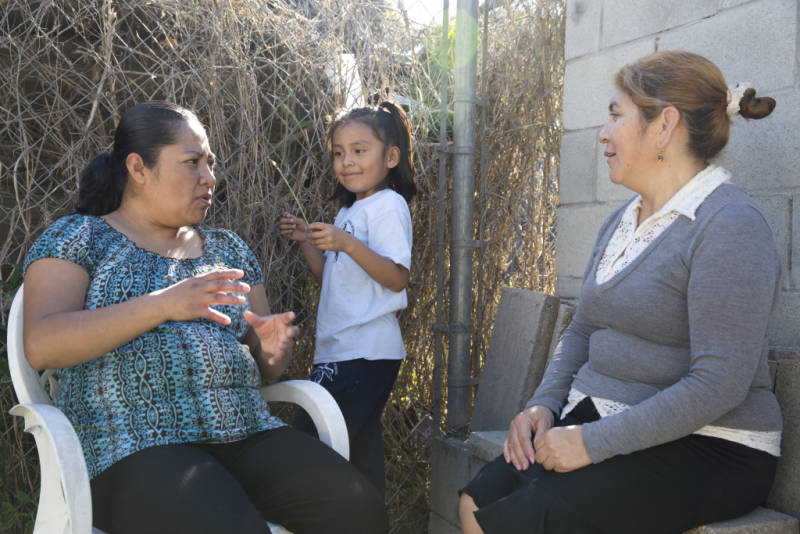
"caption": "Rocio Alfaro (L), Wendy Mendez and Mery Alvarez (R) attend a lunch on Feb. 10, 2016 in Watts where the topic of conversation was the upcoming 2016 elections.",
"description": "Rocio Alfaro (L), Wendy Mendez and Mery Alvarez (R) attend a lunch on Feb. 10, 2016 in Watts where the topic of conversation was the upcoming 2016 elections.",
"title": "Rocio Alfaro (L), Wendy Mendea and Mery Alvarez (R) attend a lunch on Feb. 10, 2016 in Watts where the topic of conversation was the upcoming 2016 elections.",
"credit": "Dan Tuffs/KPCC",
"status": "inherit",
"isLoading": false,
"fetchFailed": false
},
"news_10730459": {
"type": "attachments",
"id": "news_10730459",
"meta": {
"index": "attachments_1716263798",
"site": "news",
"id": "10730459",
"found": true
},
"parent": 10730454,
"imgSizes": {
"twentyfourteen-full-width": {
"file": "https://ww2.kqed.org/app/uploads/sites/10/2015/10/voting_sign_20111017_0103-1038x576.jpg",
"width": 1038,
"mimeType": "image/jpeg",
"height": 576
},
"thumbnail": {
"file": "https://ww2.kqed.org/app/uploads/sites/10/2015/10/voting_sign_20111017_0103-400x245.jpg",
"width": 400,
"mimeType": "image/jpeg",
"height": 245
},
"fd-sm": {
"file": "https://ww2.kqed.org/app/uploads/sites/10/2015/10/voting_sign_20111017_0103-960x587.jpg",
"width": 960,
"mimeType": "image/jpeg",
"height": 587
},
"post-thumbnail": {
"file": "https://ww2.kqed.org/app/uploads/sites/10/2015/10/voting_sign_20111017_0103-672x372.jpg",
"width": 672,
"mimeType": "image/jpeg",
"height": 372
},
"kqedFullSize": {
"file": "https://ww2.kqed.org/app/uploads/sites/10/2015/10/voting_sign_20111017_0103.jpg",
"width": 1920,
"height": 1174
},
"large": {
"file": "https://ww2.kqed.org/app/uploads/sites/10/2015/10/voting_sign_20111017_0103-1440x881.jpg",
"width": 1440,
"mimeType": "image/jpeg",
"height": 881
},
"guest-author-96": {
"file": "https://ww2.kqed.org/app/uploads/sites/10/2015/10/voting_sign_20111017_0103-96x96.jpg",
"width": 96,
"mimeType": "image/jpeg",
"height": 96
},
"medium": {
"file": "https://ww2.kqed.org/app/uploads/sites/10/2015/10/voting_sign_20111017_0103-800x489.jpg",
"width": 800,
"mimeType": "image/jpeg",
"height": 489
},
"guest-author-64": {
"file": "https://ww2.kqed.org/app/uploads/sites/10/2015/10/voting_sign_20111017_0103-64x64.jpg",
"width": 64,
"mimeType": "image/jpeg",
"height": 64
},
"guest-author-32": {
"file": "https://ww2.kqed.org/app/uploads/sites/10/2015/10/voting_sign_20111017_0103-32x32.jpg",
"width": 32,
"mimeType": "image/jpeg",
"height": 32
},
"jmtc-small-thumb": {
"file": "https://ww2.kqed.org/app/uploads/sites/10/2015/10/voting_sign_20111017_0103-280x150.jpg",
"width": 280,
"mimeType": "image/jpeg",
"height": 150
},
"fd-lrg": {
"file": "https://ww2.kqed.org/app/uploads/sites/10/2015/10/voting_sign_20111017_0103-1920x1174.jpg",
"width": 1920,
"mimeType": "image/jpeg",
"height": 1174
},
"fd-med": {
"file": "https://ww2.kqed.org/app/uploads/sites/10/2015/10/voting_sign_20111017_0103-1180x722.jpg",
"width": 1180,
"mimeType": "image/jpeg",
"height": 722
},
"detail": {
"file": "https://ww2.kqed.org/app/uploads/sites/10/2015/10/voting_sign_20111017_0103-75x75.jpg",
"width": 75,
"mimeType": "image/jpeg",
"height": 75
},
"guest-author-128": {
"file": "https://ww2.kqed.org/app/uploads/sites/10/2015/10/voting_sign_20111017_0103-128x128.jpg",
"width": 128,
"mimeType": "image/jpeg",
"height": 128
}
},
"publishDate": 1445633644,
"modified": 1445633658,
"caption": null,
"description": null,
"title": "voting_sign_20111017_0103",
"credit": "Michelle Gachet/KQED",
"status": "inherit",
"isLoading": false,
"fetchFailed": false
},
"news_10905415": {
"type": "attachments",
"id": "news_10905415",
"meta": {
"index": "attachments_1716263798",
"site": "news",
"id": "10905415",
"found": true
},
"parent": 10900787,
"imgSizes": {
"twentyfourteen-full-width": {
"file": "https://ww2.kqed.org/app/uploads/sites/10/2016/03/MayorRamonaVillarrealPadilla-1038x576.jpg",
"width": 1038,
"mimeType": "image/jpeg",
"height": 576
},
"thumbnail": {
"file": "https://ww2.kqed.org/app/uploads/sites/10/2016/03/MayorRamonaVillarrealPadilla-400x263.jpg",
"width": 400,
"mimeType": "image/jpeg",
"height": 263
},
"fd-sm": {
"file": "https://ww2.kqed.org/app/uploads/sites/10/2016/03/MayorRamonaVillarrealPadilla-960x631.jpg",
"width": 960,
"mimeType": "image/jpeg",
"height": 631
},
"post-thumbnail": {
"file": "https://ww2.kqed.org/app/uploads/sites/10/2016/03/MayorRamonaVillarrealPadilla-672x372.jpg",
"width": 672,
"mimeType": "image/jpeg",
"height": 372
},
"kqedFullSize": {
"file": "https://ww2.kqed.org/app/uploads/sites/10/2016/03/MayorRamonaVillarrealPadilla.jpg",
"width": 1920,
"height": 1261
},
"large": {
"file": "https://ww2.kqed.org/app/uploads/sites/10/2016/03/MayorRamonaVillarrealPadilla-1920x1261.jpg",
"width": 1920,
"mimeType": "image/jpeg",
"height": 1261
},
"guest-author-96": {
"file": "https://ww2.kqed.org/app/uploads/sites/10/2016/03/MayorRamonaVillarrealPadilla-96x96.jpg",
"width": 96,
"mimeType": "image/jpeg",
"height": 96
},
"medium": {
"file": "https://ww2.kqed.org/app/uploads/sites/10/2016/03/MayorRamonaVillarrealPadilla-800x525.jpg",
"width": 800,
"mimeType": "image/jpeg",
"height": 525
},
"guest-author-64": {
"file": "https://ww2.kqed.org/app/uploads/sites/10/2016/03/MayorRamonaVillarrealPadilla-64x64.jpg",
"width": 64,
"mimeType": "image/jpeg",
"height": 64
},
"guest-author-32": {
"file": "https://ww2.kqed.org/app/uploads/sites/10/2016/03/MayorRamonaVillarrealPadilla-32x32.jpg",
"width": 32,
"mimeType": "image/jpeg",
"height": 32
},
"jmtc-small-thumb": {
"file": "https://ww2.kqed.org/app/uploads/sites/10/2016/03/MayorRamonaVillarrealPadilla-280x150.jpg",
"width": 280,
"mimeType": "image/jpeg",
"height": 150
},
"fd-lrg": {
"file": "https://ww2.kqed.org/app/uploads/sites/10/2016/03/MayorRamonaVillarrealPadilla-1920x1261.jpg",
"width": 1920,
"mimeType": "image/jpeg",
"height": 1261
},
"fd-med": {
"file": "https://ww2.kqed.org/app/uploads/sites/10/2016/03/MayorRamonaVillarrealPadilla-1180x775.jpg",
"width": 1180,
"mimeType": "image/jpeg",
"height": 775
},
"detail": {
"file": "https://ww2.kqed.org/app/uploads/sites/10/2016/03/MayorRamonaVillarrealPadilla-75x75.jpg",
"width": 75,
"mimeType": "image/jpeg",
"height": 75
},
"guest-author-128": {
"file": "https://ww2.kqed.org/app/uploads/sites/10/2016/03/MayorRamonaVillarrealPadilla-128x128.jpg",
"width": 128,
"mimeType": "image/jpeg",
"height": 128
}
},
"publishDate": 1458678695,
"modified": 1458678741,
"caption": "Ramona Villarreal-Padilla is Lindsay's first Latina mayor. The mayorship pays $75 a year and rotates among City Council members. She won her seat by about 50 votes in the 2014 election.",
"description": "Ramona Villarreal-Padilla is Lindsay's first Latina mayor. The mayorship pays $75 a year and rotates among City Council members. She won her seat by about 50 votes in the 2014 election.",
"title": "MayorRamonaVillarrealPadilla",
"credit": "Kerry Klein/KQED",
"status": "inherit",
"isLoading": false,
"fetchFailed": false
},
"news_10889596": {
"type": "attachments",
"id": "news_10889596",
"meta": {
"index": "attachments_1716263798",
"site": "news",
"id": "10889596",
"found": true
},
"parent": 10889595,
"imgSizes": {
"twentyfourteen-full-width": {
"file": "https://ww2.kqed.org/app/uploads/sites/10/2016/03/1369962517_f187e8464c_o-1038x576.jpg",
"width": 1038,
"mimeType": "image/jpeg",
"height": 576
},
"thumbnail": {
"file": "https://ww2.kqed.org/app/uploads/sites/10/2016/03/1369962517_f187e8464c_o-400x267.jpg",
"width": 400,
"mimeType": "image/jpeg",
"height": 267
},
"fd-sm": {
"file": "https://ww2.kqed.org/app/uploads/sites/10/2016/03/1369962517_f187e8464c_o-960x640.jpg",
"width": 960,
"mimeType": "image/jpeg",
"height": 640
},
"post-thumbnail": {
"file": "https://ww2.kqed.org/app/uploads/sites/10/2016/03/1369962517_f187e8464c_o-672x372.jpg",
"width": 672,
"mimeType": "image/jpeg",
"height": 372
},
"kqedFullSize": {
"file": "https://ww2.kqed.org/app/uploads/sites/10/2016/03/1369962517_f187e8464c_o.jpg",
"width": 2100,
"height": 1400
},
"large": {
"file": "https://ww2.kqed.org/app/uploads/sites/10/2016/03/1369962517_f187e8464c_o-1920x1280.jpg",
"width": 1920,
"mimeType": "image/jpeg",
"height": 1280
},
"guest-author-96": {
"file": "https://ww2.kqed.org/app/uploads/sites/10/2016/03/1369962517_f187e8464c_o-96x96.jpg",
"width": 96,
"mimeType": "image/jpeg",
"height": 96
},
"medium": {
"file": "https://ww2.kqed.org/app/uploads/sites/10/2016/03/1369962517_f187e8464c_o-800x533.jpg",
"width": 800,
"mimeType": "image/jpeg",
"height": 533
},
"guest-author-64": {
"file": "https://ww2.kqed.org/app/uploads/sites/10/2016/03/1369962517_f187e8464c_o-64x64.jpg",
"width": 64,
"mimeType": "image/jpeg",
"height": 64
},
"guest-author-32": {
"file": "https://ww2.kqed.org/app/uploads/sites/10/2016/03/1369962517_f187e8464c_o-32x32.jpg",
"width": 32,
"mimeType": "image/jpeg",
"height": 32
},
"jmtc-small-thumb": {
"file": "https://ww2.kqed.org/app/uploads/sites/10/2016/03/1369962517_f187e8464c_o-280x150.jpg",
"width": 280,
"mimeType": "image/jpeg",
"height": 150
},
"fd-lrg": {
"file": "https://ww2.kqed.org/app/uploads/sites/10/2016/03/1369962517_f187e8464c_o-1920x1280.jpg",
"width": 1920,
"mimeType": "image/jpeg",
"height": 1280
},
"fd-med": {
"file": "https://ww2.kqed.org/app/uploads/sites/10/2016/03/1369962517_f187e8464c_o-1180x787.jpg",
"width": 1180,
"mimeType": "image/jpeg",
"height": 787
},
"detail": {
"file": "https://ww2.kqed.org/app/uploads/sites/10/2016/03/1369962517_f187e8464c_o-75x75.jpg",
"width": 75,
"mimeType": "image/jpeg",
"height": 75
},
"guest-author-128": {
"file": "https://ww2.kqed.org/app/uploads/sites/10/2016/03/1369962517_f187e8464c_o-128x128.jpg",
"width": 128,
"mimeType": "image/jpeg",
"height": 128
}
},
"publishDate": 1457470008,
"modified": 1457573377,
"caption": "A study released by UC Berkeley’s Center for Labor Research and Education found that subcontracted janitorial and security service work is increasing while wages stay low. ",
"description": null,
"title": "1369962517_f187e8464c_o",
"credit": "\u003ca href=\"https://www.flickr.com/photos/darkensiva/1369962517/in/photolist-364q8p-4jCPvb-7BgTaN-a4rMh-4rBtNm-7hYQSB-bYhg9Y-cVcHdL-aWMM6R-7hYQLv-ptND2q-ddUXgH-ptP9Lp-wYK2bN-g6xvD3-2cU1sm-oPrZbP-hgjC9p-2bjC58-KqkhH-pL1MNB-oPrZfB-pJa6VQ-ptL2pt-8NENep-7wxUr8-iVCPYU-pJa5wN-ptR9Ro-9TVAEx-8mgh3i-edFiBR-e3dugs-8ZtMPr-8aEbhH-9TVABH-8aHsNC-8aHsRW-9TVAJV-9TYqrs-ptNBY3-8aEbDR-bHHJax-8aHsmY-8aHsvG-9TVAHF-952cFL-9TYqxE-jsrZKc-4m8dUa\">Slayer\u003c/a>/Flickr",
"status": "inherit",
"isLoading": false,
"fetchFailed": false
},
"news_10889849": {
"type": "attachments",
"id": "news_10889849",
"meta": {
"index": "attachments_1716263798",
"site": "news",
"id": "10889849",
"found": true
},
"parent": 10889812,
"imgSizes": {
"twentyfourteen-full-width": {
"file": "https://ww2.kqed.org/app/uploads/sites/10/2016/03/AliPortrait-1038x576.jpg",
"width": 1038,
"mimeType": "image/jpeg",
"height": 576
},
"thumbnail": {
"file": "https://ww2.kqed.org/app/uploads/sites/10/2016/03/AliPortrait-400x230.jpg",
"width": 400,
"mimeType": "image/jpeg",
"height": 230
},
"fd-sm": {
"file": "https://ww2.kqed.org/app/uploads/sites/10/2016/03/AliPortrait-960x553.jpg",
"width": 960,
"mimeType": "image/jpeg",
"height": 553
},
"post-thumbnail": {
"file": "https://ww2.kqed.org/app/uploads/sites/10/2016/03/AliPortrait-672x372.jpg",
"width": 672,
"mimeType": "image/jpeg",
"height": 372
},
"kqedFullSize": {
"file": "https://ww2.kqed.org/app/uploads/sites/10/2016/03/AliPortrait.jpg",
"width": 1920,
"height": 1105
},
"large": {
"file": "https://ww2.kqed.org/app/uploads/sites/10/2016/03/AliPortrait-1920x1105.jpg",
"width": 1920,
"mimeType": "image/jpeg",
"height": 1105
},
"guest-author-96": {
"file": "https://ww2.kqed.org/app/uploads/sites/10/2016/03/AliPortrait-96x96.jpg",
"width": 96,
"mimeType": "image/jpeg",
"height": 96
},
"medium": {
"file": "https://ww2.kqed.org/app/uploads/sites/10/2016/03/AliPortrait-800x460.jpg",
"width": 800,
"mimeType": "image/jpeg",
"height": 460
},
"guest-author-64": {
"file": "https://ww2.kqed.org/app/uploads/sites/10/2016/03/AliPortrait-64x64.jpg",
"width": 64,
"mimeType": "image/jpeg",
"height": 64
},
"guest-author-32": {
"file": "https://ww2.kqed.org/app/uploads/sites/10/2016/03/AliPortrait-32x32.jpg",
"width": 32,
"mimeType": "image/jpeg",
"height": 32
},
"jmtc-small-thumb": {
"file": "https://ww2.kqed.org/app/uploads/sites/10/2016/03/AliPortrait-280x150.jpg",
"width": 280,
"mimeType": "image/jpeg",
"height": 150
},
"fd-lrg": {
"file": "https://ww2.kqed.org/app/uploads/sites/10/2016/03/AliPortrait-1920x1105.jpg",
"width": 1920,
"mimeType": "image/jpeg",
"height": 1105
},
"fd-med": {
"file": "https://ww2.kqed.org/app/uploads/sites/10/2016/03/AliPortrait-1180x679.jpg",
"width": 1180,
"mimeType": "image/jpeg",
"height": 679
},
"detail": {
"file": "https://ww2.kqed.org/app/uploads/sites/10/2016/03/AliPortrait-75x75.jpg",
"width": 75,
"mimeType": "image/jpeg",
"height": 75
},
"guest-author-128": {
"file": "https://ww2.kqed.org/app/uploads/sites/10/2016/03/AliPortrait-128x128.jpg",
"width": 128,
"mimeType": "image/jpeg",
"height": 128
}
},
"publishDate": 1457486480,
"modified": 1457486556,
"caption": "Mariam Ali, a Somali refugee who lives in San Diego, says it’s important to her to vote in every election.",
"description": "Mariam Ali, a Somali refugee who lives in San Diego, says it’s important to her to vote in every election.",
"title": "AliPortrait",
"credit": "Brian Myers/Media Arts Center San Diego",
"status": "inherit",
"isLoading": false,
"fetchFailed": false
},
"news_10886214": {
"type": "attachments",
"id": "news_10886214",
"meta": {
"index": "attachments_1716263798",
"site": "news",
"id": "10886214",
"found": true
},
"parent": 10885303,
"imgSizes": {
"twentyfourteen-full-width": {
"file": "https://ww2.kqed.org/app/uploads/sites/10/2016/03/NahasAndHertz-1038x576.jpg",
"width": 1038,
"mimeType": "image/jpeg",
"height": 576
},
"thumbnail": {
"file": "https://ww2.kqed.org/app/uploads/sites/10/2016/03/NahasAndHertz-400x233.jpg",
"width": 400,
"mimeType": "image/jpeg",
"height": 233
},
"fd-sm": {
"file": "https://ww2.kqed.org/app/uploads/sites/10/2016/03/NahasAndHertz-960x560.jpg",
"width": 960,
"mimeType": "image/jpeg",
"height": 560
},
"post-thumbnail": {
"file": "https://ww2.kqed.org/app/uploads/sites/10/2016/03/NahasAndHertz-672x372.jpg",
"width": 672,
"mimeType": "image/jpeg",
"height": 372
},
"kqedFullSize": {
"file": "https://ww2.kqed.org/app/uploads/sites/10/2016/03/NahasAndHertz.jpg",
"width": 1920,
"height": 1119
},
"large": {
"file": "https://ww2.kqed.org/app/uploads/sites/10/2016/03/NahasAndHertz-1920x1119.jpg",
"width": 1920,
"mimeType": "image/jpeg",
"height": 1119
},
"guest-author-96": {
"file": "https://ww2.kqed.org/app/uploads/sites/10/2016/03/NahasAndHertz-96x96.jpg",
"width": 96,
"mimeType": "image/jpeg",
"height": 96
},
"medium": {
"file": "https://ww2.kqed.org/app/uploads/sites/10/2016/03/NahasAndHertz-800x466.jpg",
"width": 800,
"mimeType": "image/jpeg",
"height": 466
},
"guest-author-64": {
"file": "https://ww2.kqed.org/app/uploads/sites/10/2016/03/NahasAndHertz-64x64.jpg",
"width": 64,
"mimeType": "image/jpeg",
"height": 64
},
"guest-author-32": {
"file": "https://ww2.kqed.org/app/uploads/sites/10/2016/03/NahasAndHertz-32x32.jpg",
"width": 32,
"mimeType": "image/jpeg",
"height": 32
},
"jmtc-small-thumb": {
"file": "https://ww2.kqed.org/app/uploads/sites/10/2016/03/NahasAndHertz-280x150.jpg",
"width": 280,
"mimeType": "image/jpeg",
"height": 150
},
"fd-lrg": {
"file": "https://ww2.kqed.org/app/uploads/sites/10/2016/03/NahasAndHertz-1920x1119.jpg",
"width": 1920,
"mimeType": "image/jpeg",
"height": 1119
},
"fd-med": {
"file": "https://ww2.kqed.org/app/uploads/sites/10/2016/03/NahasAndHertz-1180x688.jpg",
"width": 1180,
"mimeType": "image/jpeg",
"height": 688
},
"detail": {
"file": "https://ww2.kqed.org/app/uploads/sites/10/2016/03/NahasAndHertz-75x75.jpg",
"width": 75,
"mimeType": "image/jpeg",
"height": 75
},
"guest-author-128": {
"file": "https://ww2.kqed.org/app/uploads/sites/10/2016/03/NahasAndHertz-128x128.jpg",
"width": 128,
"mimeType": "image/jpeg",
"height": 128
}
},
"publishDate": 1457128991,
"modified": 1457129025,
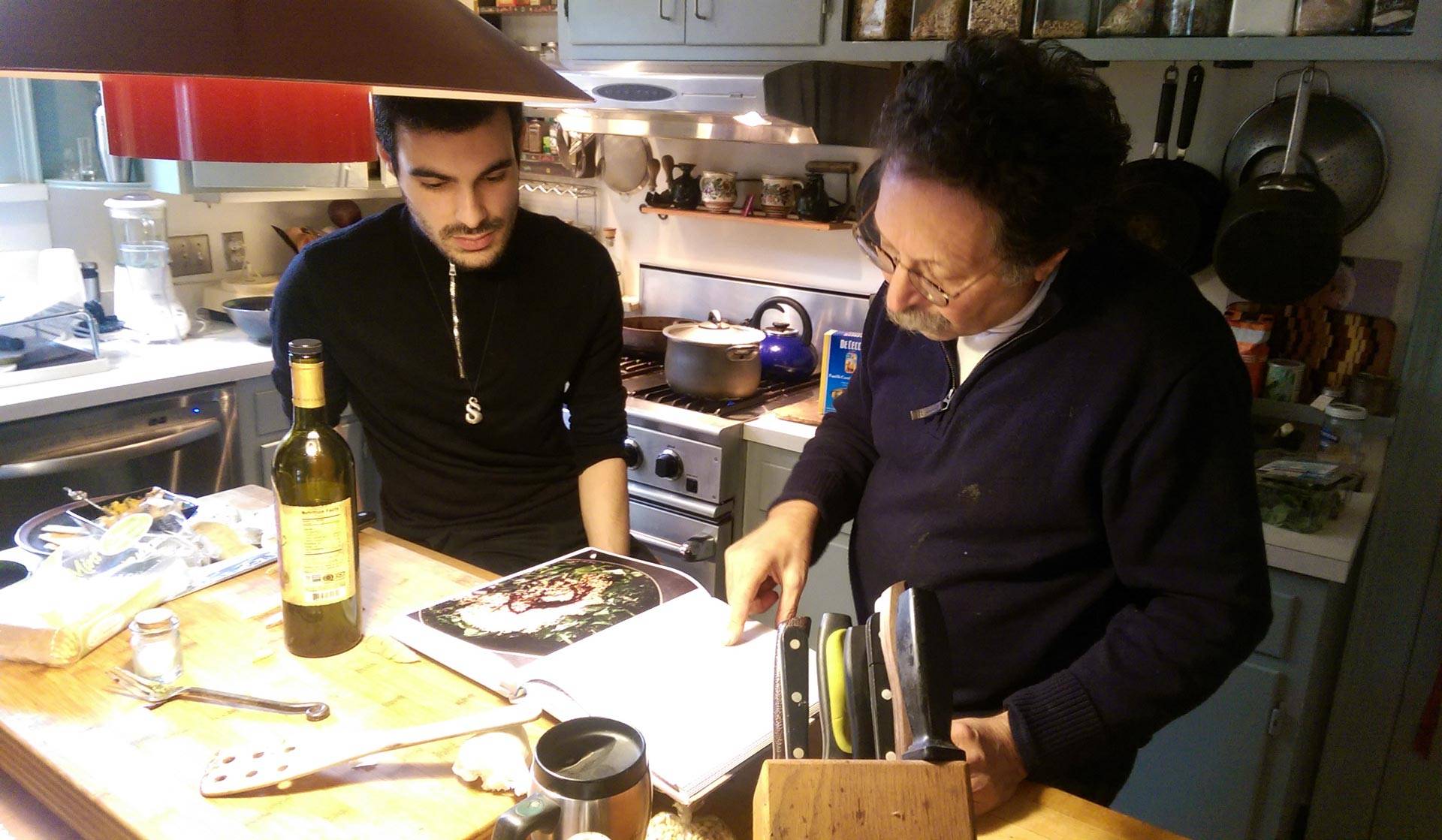
"caption": "Subhi Nahas (L) with Fred Hertz, who hosted him for his first two months in California.",
"description": "Subhi Nahas (L) with Fred Hertz, who hosted him for his first two months in California.",
"title": "NahasAndHertz",
"credit": "Eli Wirtschafter/KQED",
"status": "inherit",
"isLoading": false,
"fetchFailed": false
},
"news_10883095": {
"type": "attachments",
"id": "news_10883095",
"meta": {
"index": "attachments_1716263798",
"site": "news",
"id": "10883095",
"found": true
},
"parent": 10879280,
"imgSizes": {
"twentyfourteen-full-width": {
"file": "https://ww2.kqed.org/app/uploads/sites/10/2016/02/BudAndErnesto-1038x576.jpg",
"width": 1038,
"mimeType": "image/jpeg",
"height": 576
},
"thumbnail": {
"file": "https://ww2.kqed.org/app/uploads/sites/10/2016/02/BudAndErnesto-400x320.jpg",
"width": 400,
"mimeType": "image/jpeg",
"height": 320
},
"fd-sm": {
"file": "https://ww2.kqed.org/app/uploads/sites/10/2016/02/BudAndErnesto-960x768.jpg",
"width": 960,
"mimeType": "image/jpeg",
"height": 768
},
"post-thumbnail": {
"file": "https://ww2.kqed.org/app/uploads/sites/10/2016/02/BudAndErnesto-672x372.jpg",
"width": 672,
"mimeType": "image/jpeg",
"height": 372
},
"kqedFullSize": {
"file": "https://ww2.kqed.org/app/uploads/sites/10/2016/02/BudAndErnesto.jpg",
"width": 1920,
"height": 1536
},
"large": {
"file": "https://ww2.kqed.org/app/uploads/sites/10/2016/02/BudAndErnesto-1920x1536.jpg",
"width": 1920,
"mimeType": "image/jpeg",
"height": 1536
},
"guest-author-96": {
"file": "https://ww2.kqed.org/app/uploads/sites/10/2016/02/BudAndErnesto-96x96.jpg",
"width": 96,
"mimeType": "image/jpeg",
"height": 96
},
"medium": {
"file": "https://ww2.kqed.org/app/uploads/sites/10/2016/02/BudAndErnesto-800x640.jpg",
"width": 800,
"mimeType": "image/jpeg",
"height": 640
},
"guest-author-64": {
"file": "https://ww2.kqed.org/app/uploads/sites/10/2016/02/BudAndErnesto-64x64.jpg",
"width": 64,
"mimeType": "image/jpeg",
"height": 64
},
"guest-author-32": {
"file": "https://ww2.kqed.org/app/uploads/sites/10/2016/02/BudAndErnesto-32x32.jpg",
"width": 32,
"mimeType": "image/jpeg",
"height": 32
},
"jmtc-small-thumb": {
"file": "https://ww2.kqed.org/app/uploads/sites/10/2016/02/BudAndErnesto-280x150.jpg",
"width": 280,
"mimeType": "image/jpeg",
"height": 150
},
"fd-lrg": {
"file": "https://ww2.kqed.org/app/uploads/sites/10/2016/02/BudAndErnesto-1920x1536.jpg",
"width": 1920,
"mimeType": "image/jpeg",
"height": 1536
},
"fd-med": {
"file": "https://ww2.kqed.org/app/uploads/sites/10/2016/02/BudAndErnesto-1180x944.jpg",
"width": 1180,
"mimeType": "image/jpeg",
"height": 944
},
"detail": {
"file": "https://ww2.kqed.org/app/uploads/sites/10/2016/02/BudAndErnesto-75x75.jpg",
"width": 75,
"mimeType": "image/jpeg",
"height": 75
},
"guest-author-128": {
"file": "https://ww2.kqed.org/app/uploads/sites/10/2016/02/BudAndErnesto-128x128.jpg",
"width": 128,
"mimeType": "image/jpeg",
"height": 128
}
},
"publishDate": 1456872713,
"modified": 1456882081,
"caption": "\"Bordertown\" is based on next door neighbors in a fictional bordertown: the Buckwalds and Gonzalezes. Bud Buckwald (L) is a border patrol agent. Ernesto Gonzalez, a gardener, is his family's patriarch.",
"description": "\"Bordertown\" is based on next door neighbors in a fictional bordertown: the Buckwalds and Gonzalezes. Bud Buckwald (L) is a border patrol agent. Ernesto Gonzalez, a gardener, is his family's patriarch.",
"title": "BudAndErnesto",
"credit": "Courtesy Fox",
"status": "inherit",
"isLoading": false,
"fetchFailed": false
},
"news_10881043": {
"type": "attachments",
"id": "news_10881043",
"meta": {
"index": "attachments_1716263798",
"site": "news",
"id": "10881043",
"found": true
},
"parent": 10881008,
"imgSizes": {
"twentyfourteen-full-width": {
"file": "https://ww2.kqed.org/app/uploads/sites/10/2016/02/GettyImages-508011758-1038x576.jpg",
"width": 1038,
"mimeType": "image/jpeg",
"height": 576
},
"thumbnail": {
"file": "https://ww2.kqed.org/app/uploads/sites/10/2016/02/GettyImages-508011758-400x267.jpg",
"width": 400,
"mimeType": "image/jpeg",
"height": 267
},
"fd-sm": {
"file": "https://ww2.kqed.org/app/uploads/sites/10/2016/02/GettyImages-508011758-960x640.jpg",
"width": 960,
"mimeType": "image/jpeg",
"height": 640
},
"post-thumbnail": {
"file": "https://ww2.kqed.org/app/uploads/sites/10/2016/02/GettyImages-508011758-672x372.jpg",
"width": 672,
"mimeType": "image/jpeg",
"height": 372
},
"kqedFullSize": {
"file": "https://ww2.kqed.org/app/uploads/sites/10/2016/02/GettyImages-508011758-e1456696593873.jpg",
"width": 1920,
"height": 1280
},
"large": {
"file": "https://ww2.kqed.org/app/uploads/sites/10/2016/02/GettyImages-508011758-1920x1280.jpg",
"width": 1920,
"mimeType": "image/jpeg",
"height": 1280
},
"guest-author-96": {
"file": "https://ww2.kqed.org/app/uploads/sites/10/2016/02/GettyImages-508011758-96x96.jpg",
"width": 96,
"mimeType": "image/jpeg",
"height": 96
},
"medium": {
"file": "https://ww2.kqed.org/app/uploads/sites/10/2016/02/GettyImages-508011758-800x533.jpg",
"width": 800,
"mimeType": "image/jpeg",
"height": 533
},
"guest-author-64": {
"file": "https://ww2.kqed.org/app/uploads/sites/10/2016/02/GettyImages-508011758-64x64.jpg",
"width": 64,
"mimeType": "image/jpeg",
"height": 64
},
"guest-author-32": {
"file": "https://ww2.kqed.org/app/uploads/sites/10/2016/02/GettyImages-508011758-32x32.jpg",
"width": 32,
"mimeType": "image/jpeg",
"height": 32
},
"jmtc-small-thumb": {
"file": "https://ww2.kqed.org/app/uploads/sites/10/2016/02/GettyImages-508011758-280x150.jpg",
"width": 280,
"mimeType": "image/jpeg",
"height": 150
},
"fd-lrg": {
"file": "https://ww2.kqed.org/app/uploads/sites/10/2016/02/GettyImages-508011758-1920x1280.jpg",
"width": 1920,
"mimeType": "image/jpeg",
"height": 1280
},
"fd-med": {
"file": "https://ww2.kqed.org/app/uploads/sites/10/2016/02/GettyImages-508011758-1180x787.jpg",
"width": 1180,
"mimeType": "image/jpeg",
"height": 787
},
"detail": {
"file": "https://ww2.kqed.org/app/uploads/sites/10/2016/02/GettyImages-508011758-75x75.jpg",
"width": 75,
"mimeType": "image/jpeg",
"height": 75
},
"guest-author-128": {
"file": "https://ww2.kqed.org/app/uploads/sites/10/2016/02/GettyImages-508011758-128x128.jpg",
"width": 128,
"mimeType": "image/jpeg",
"height": 128
}
},
"publishDate": 1456696468,
"modified": 1470263150,
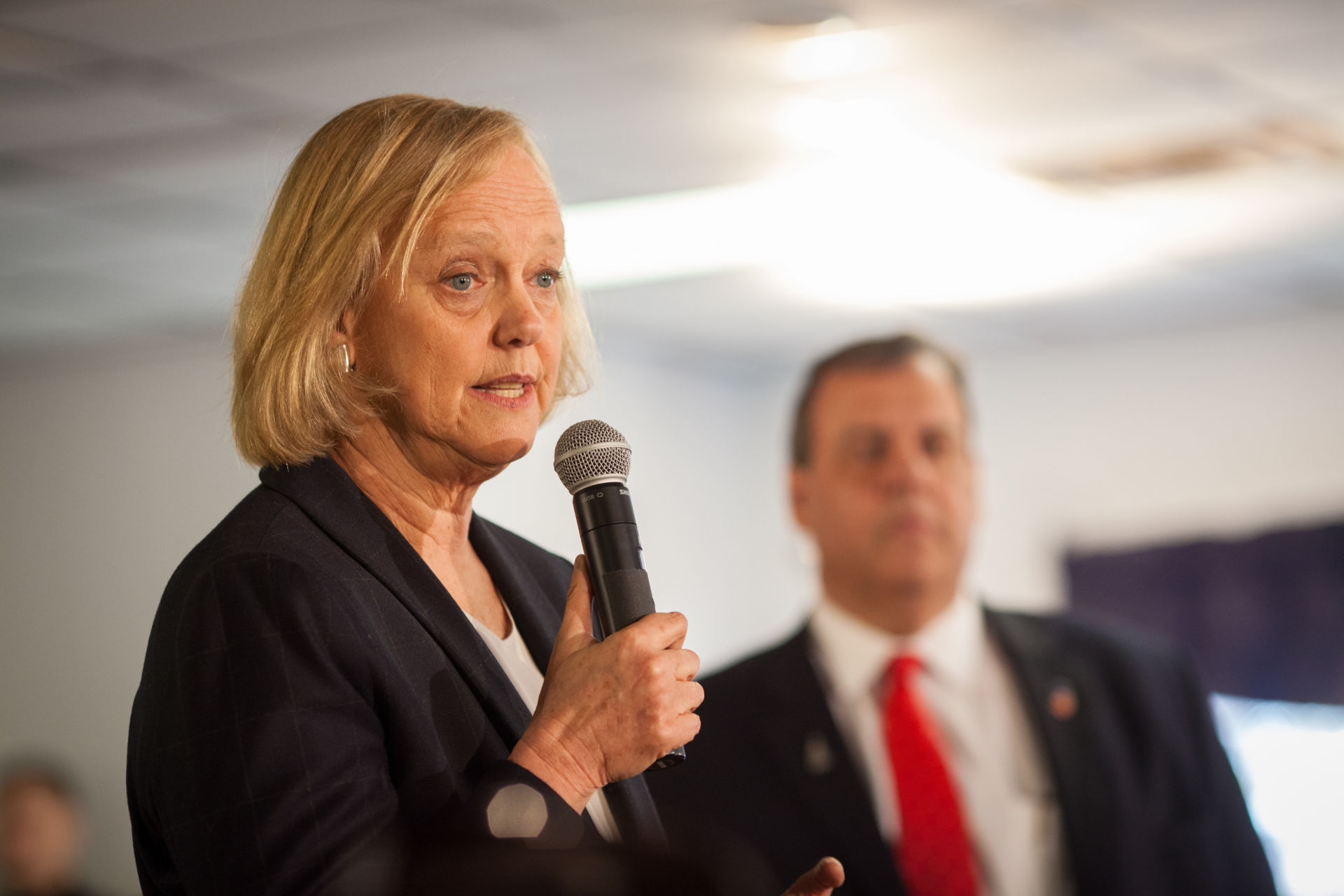
"caption": "Hewlett Packard Enterprise CEO Meg Whitman introduced New Jersey Gov. Chris Christie at a campaign event in Epping, New Hampshire, in early February.",
"description": null,
"title": "Meg Whitman Joins Chris Christie For Town Hall In New Hampshire",
"credit": "Matthew Cavanaugh/Getty Images",
"status": "inherit",
"isLoading": false,
"fetchFailed": false
},
"news_10754823": {
"type": "attachments",
"id": "news_10754823",
"meta": {
"index": "attachments_1716263798",
"site": "news",
"id": "10754823",
"found": true
},
"parent": 10746111,
"imgSizes": {
"twentyfourteen-full-width": {
"file": "https://ww2.kqed.org/app/uploads/sites/10/2015/11/IMG_86271-1038x576.jpg",
"width": 1038,
"mimeType": "image/jpeg",
"height": 576
},
"thumbnail": {
"file": "https://ww2.kqed.org/app/uploads/sites/10/2015/11/IMG_86271-400x267.jpg",
"width": 400,
"mimeType": "image/jpeg",
"height": 267
},
"fd-sm": {
"file": "https://ww2.kqed.org/app/uploads/sites/10/2015/11/IMG_86271-960x640.jpg",
"width": 960,
"mimeType": "image/jpeg",
"height": 640
},
"post-thumbnail": {
"file": "https://ww2.kqed.org/app/uploads/sites/10/2015/11/IMG_86271-672x372.jpg",
"width": 672,
"mimeType": "image/jpeg",
"height": 372
},
"kqedFullSize": {
"file": "https://ww2.kqed.org/app/uploads/sites/10/2015/11/IMG_86271-e1570041950872.jpg",
"width": 1920,
"height": 1280
},
"large": {
"file": "https://ww2.kqed.org/app/uploads/sites/10/2015/11/IMG_86271-1440x960.jpg",
"width": 1440,
"mimeType": "image/jpeg",
"height": 960
},
"guest-author-96": {
"file": "https://ww2.kqed.org/app/uploads/sites/10/2015/11/IMG_86271-96x96.jpg",
"width": 96,
"mimeType": "image/jpeg",
"height": 96
},
"medium": {
"file": "https://ww2.kqed.org/app/uploads/sites/10/2015/11/IMG_86271-800x533.jpg",
"width": 800,
"mimeType": "image/jpeg",
"height": 533
},
"guest-author-64": {
"file": "https://ww2.kqed.org/app/uploads/sites/10/2015/11/IMG_86271-64x64.jpg",
"width": 64,
"mimeType": "image/jpeg",
"height": 64
},
"guest-author-32": {
"file": "https://ww2.kqed.org/app/uploads/sites/10/2015/11/IMG_86271-32x32.jpg",
"width": 32,
"mimeType": "image/jpeg",
"height": 32
},
"jmtc-small-thumb": {
"file": "https://ww2.kqed.org/app/uploads/sites/10/2015/11/IMG_86271-280x150.jpg",
"width": 280,
"mimeType": "image/jpeg",
"height": 150
},
"fd-lrg": {
"file": "https://ww2.kqed.org/app/uploads/sites/10/2015/11/IMG_86271-1920x1280.jpg",
"width": 1920,
"mimeType": "image/jpeg",
"height": 1280
},
"fd-med": {
"file": "https://ww2.kqed.org/app/uploads/sites/10/2015/11/IMG_86271-1180x787.jpg",
"width": 1180,
"mimeType": "image/jpeg",
"height": 787
},
"detail": {
"file": "https://ww2.kqed.org/app/uploads/sites/10/2015/11/IMG_86271-75x75.jpg",
"width": 75,
"mimeType": "image/jpeg",
"height": 75
},
"guest-author-128": {
"file": "https://ww2.kqed.org/app/uploads/sites/10/2015/11/IMG_86271-128x128.jpg",
"width": 128,
"mimeType": "image/jpeg",
"height": 128
}
},
"publishDate": 1447266185,
"modified": 1449529148,
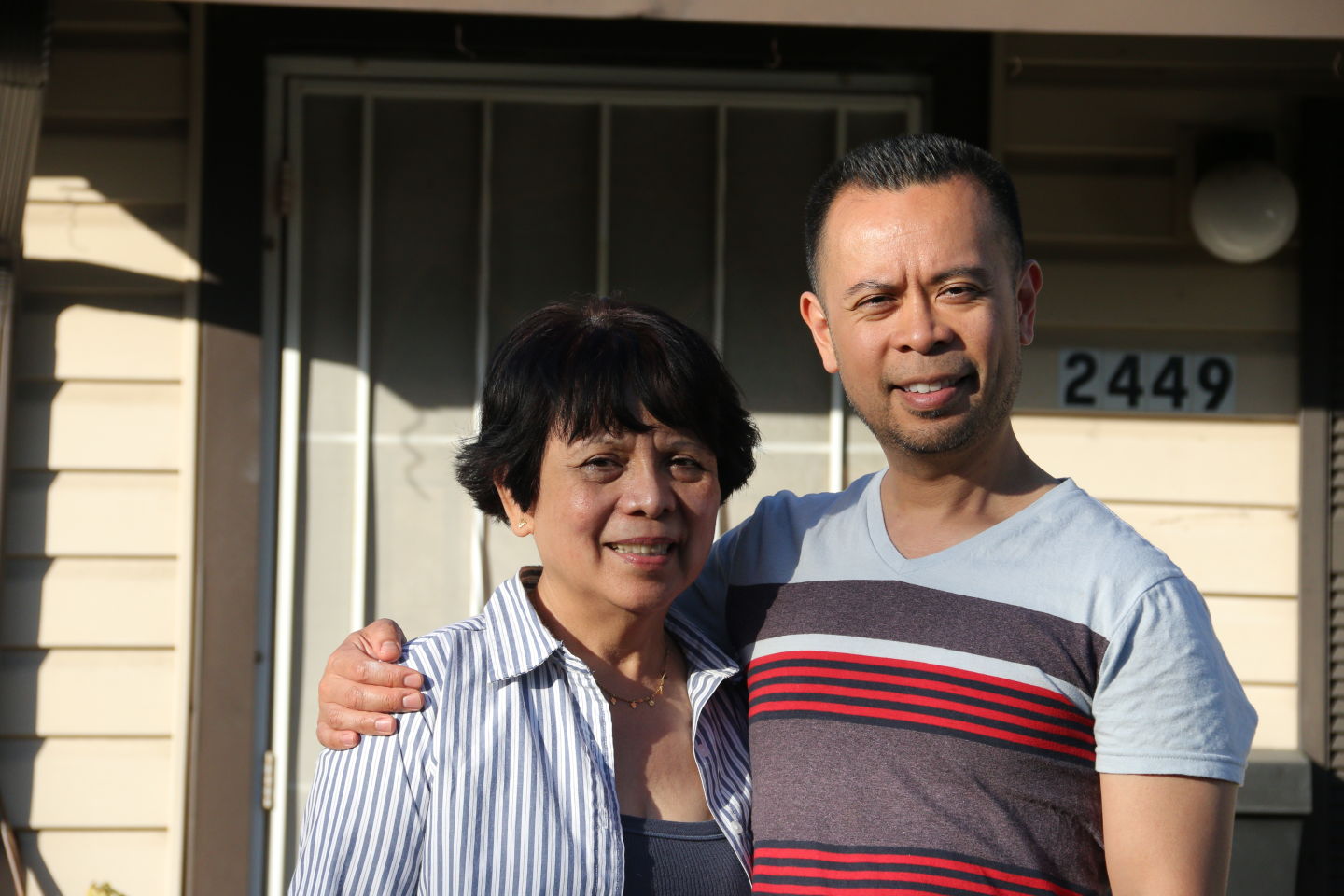
"caption": "Dominic Lim stands with his mother, Consuelo Tokita, in front of her Concord home. ",
"description": null,
"title": "IMG_8627",
"credit": "Ericka Cruz Guevarra/KQED",
"status": "inherit",
"isLoading": false,
"fetchFailed": false
},
"news_10874735": {
"type": "attachments",
"id": "news_10874735",
"meta": {
"index": "attachments_1716263798",
"site": "news",
"id": "10874735",
"found": true
},
"parent": 10871277,
"imgSizes": {
"twentyfourteen-full-width": {
"file": "https://ww2.kqed.org/app/uploads/sites/10/2016/02/RS18532_view-of-foothills-qut-1038x576.jpg",
"width": 1038,
"mimeType": "image/jpeg",
"height": 576
},
"thumbnail": {
"file": "https://ww2.kqed.org/app/uploads/sites/10/2016/02/RS18532_view-of-foothills-qut-400x267.jpg",
"width": 400,
"mimeType": "image/jpeg",
"height": 267
},
"fd-sm": {
"file": "https://ww2.kqed.org/app/uploads/sites/10/2016/02/RS18532_view-of-foothills-qut-960x640.jpg",
"width": 960,
"mimeType": "image/jpeg",
"height": 640
},
"post-thumbnail": {
"file": "https://ww2.kqed.org/app/uploads/sites/10/2016/02/RS18532_view-of-foothills-qut-672x372.jpg",
"width": 672,
"mimeType": "image/jpeg",
"height": 372
},
"kqedFullSize": {
"file": "https://ww2.kqed.org/app/uploads/sites/10/2016/02/RS18532_view-of-foothills-qut.jpg",
"width": 1920,
"height": 1280
},
"large": {
"file": "https://ww2.kqed.org/app/uploads/sites/10/2016/02/RS18532_view-of-foothills-qut-1920x1280.jpg",
"width": 1920,
"mimeType": "image/jpeg",
"height": 1280
},
"guest-author-96": {
"file": "https://ww2.kqed.org/app/uploads/sites/10/2016/02/RS18532_view-of-foothills-qut-96x96.jpg",
"width": 96,
"mimeType": "image/jpeg",
"height": 96
},
"medium": {
"file": "https://ww2.kqed.org/app/uploads/sites/10/2016/02/RS18532_view-of-foothills-qut-800x533.jpg",
"width": 800,
"mimeType": "image/jpeg",
"height": 533
},
"guest-author-64": {
"file": "https://ww2.kqed.org/app/uploads/sites/10/2016/02/RS18532_view-of-foothills-qut-64x64.jpg",
"width": 64,
"mimeType": "image/jpeg",
"height": 64
},
"guest-author-32": {
"file": "https://ww2.kqed.org/app/uploads/sites/10/2016/02/RS18532_view-of-foothills-qut-32x32.jpg",
"width": 32,
"mimeType": "image/jpeg",
"height": 32
},
"jmtc-small-thumb": {
"file": "https://ww2.kqed.org/app/uploads/sites/10/2016/02/RS18532_view-of-foothills-qut-280x150.jpg",
"width": 280,
"mimeType": "image/jpeg",
"height": 150
},
"fd-lrg": {
"file": "https://ww2.kqed.org/app/uploads/sites/10/2016/02/RS18532_view-of-foothills-qut-1920x1280.jpg",
"width": 1920,
"mimeType": "image/jpeg",
"height": 1280
},
"fd-med": {
"file": "https://ww2.kqed.org/app/uploads/sites/10/2016/02/RS18532_view-of-foothills-qut-1180x787.jpg",
"width": 1180,
"mimeType": "image/jpeg",
"height": 787
},
"detail": {
"file": "https://ww2.kqed.org/app/uploads/sites/10/2016/02/RS18532_view-of-foothills-qut-75x75.jpg",
"width": 75,
"mimeType": "image/jpeg",
"height": 75
},
"guest-author-128": {
"file": "https://ww2.kqed.org/app/uploads/sites/10/2016/02/RS18532_view-of-foothills-qut-128x128.jpg",
"width": 128,
"mimeType": "image/jpeg",
"height": 128
}
},
"publishDate": 1456178011,
"modified": 1456182417,
"caption": "Lindsay, California, is a town of about 12,000 in the heart of the state's citrus- farming belt in Tulare County.",
"description": null,
"title": "RS18532_view of foothills-qut",
"credit": "Kerry Klein/KQED",
"status": "inherit",
"isLoading": false,
"fetchFailed": false
},
"news_10866767": {
"type": "attachments",
"id": "news_10866767",
"meta": {
"index": "attachments_1716263798",
"site": "news",
"id": "10866767",
"found": true
},
"parent": 10866766,
"imgSizes": {
"twentyfourteen-full-width": {
"file": "https://ww2.kqed.org/app/uploads/sites/10/2016/02/pedro-b66d0bdc9594781c7c5280a6da6cdb099654f57b-1038x576.jpg",
"width": 1038,
"mimeType": "image/jpeg",
"height": 576
},
"thumbnail": {
"file": "https://ww2.kqed.org/app/uploads/sites/10/2016/02/pedro-b66d0bdc9594781c7c5280a6da6cdb099654f57b-400x300.jpg",
"width": 400,
"mimeType": "image/jpeg",
"height": 300
},
"fd-sm": {
"file": "https://ww2.kqed.org/app/uploads/sites/10/2016/02/pedro-b66d0bdc9594781c7c5280a6da6cdb099654f57b-960x720.jpg",
"width": 960,
"mimeType": "image/jpeg",
"height": 720
},
"post-thumbnail": {
"file": "https://ww2.kqed.org/app/uploads/sites/10/2016/02/pedro-b66d0bdc9594781c7c5280a6da6cdb099654f57b-672x372.jpg",
"width": 672,
"mimeType": "image/jpeg",
"height": 372
},
"kqedFullSize": {
"file": "https://ww2.kqed.org/app/uploads/sites/10/2016/02/pedro-b66d0bdc9594781c7c5280a6da6cdb099654f57b.jpg",
"width": 2985,
"height": 2239
},
"large": {
"file": "https://ww2.kqed.org/app/uploads/sites/10/2016/02/pedro-b66d0bdc9594781c7c5280a6da6cdb099654f57b-1440x1080.jpg",
"width": 1440,
"mimeType": "image/jpeg",
"height": 1080
},
"guest-author-96": {
"file": "https://ww2.kqed.org/app/uploads/sites/10/2016/02/pedro-b66d0bdc9594781c7c5280a6da6cdb099654f57b-96x96.jpg",
"width": 96,
"mimeType": "image/jpeg",
"height": 96
},
"medium": {
"file": "https://ww2.kqed.org/app/uploads/sites/10/2016/02/pedro-b66d0bdc9594781c7c5280a6da6cdb099654f57b-800x600.jpg",
"width": 800,
"mimeType": "image/jpeg",
"height": 600
},
"guest-author-64": {
"file": "https://ww2.kqed.org/app/uploads/sites/10/2016/02/pedro-b66d0bdc9594781c7c5280a6da6cdb099654f57b-64x64.jpg",
"width": 64,
"mimeType": "image/jpeg",
"height": 64
},
"guest-author-32": {
"file": "https://ww2.kqed.org/app/uploads/sites/10/2016/02/pedro-b66d0bdc9594781c7c5280a6da6cdb099654f57b-32x32.jpg",
"width": 32,
"mimeType": "image/jpeg",
"height": 32
},
"jmtc-small-thumb": {
"file": "https://ww2.kqed.org/app/uploads/sites/10/2016/02/pedro-b66d0bdc9594781c7c5280a6da6cdb099654f57b-280x150.jpg",
"width": 280,
"mimeType": "image/jpeg",
"height": 150
},
"fd-lrg": {
"file": "https://ww2.kqed.org/app/uploads/sites/10/2016/02/pedro-b66d0bdc9594781c7c5280a6da6cdb099654f57b-1920x1440.jpg",
"width": 1920,
"mimeType": "image/jpeg",
"height": 1440
},
"fd-med": {
"file": "https://ww2.kqed.org/app/uploads/sites/10/2016/02/pedro-b66d0bdc9594781c7c5280a6da6cdb099654f57b-1180x885.jpg",
"width": 1180,
"mimeType": "image/jpeg",
"height": 885
},
"detail": {
"file": "https://ww2.kqed.org/app/uploads/sites/10/2016/02/pedro-b66d0bdc9594781c7c5280a6da6cdb099654f57b-75x75.jpg",
"width": 75,
"mimeType": "image/jpeg",
"height": 75
},
"medium_large": {
"file": "https://ww2.kqed.org/app/uploads/sites/10/2016/02/pedro-b66d0bdc9594781c7c5280a6da6cdb099654f57b-768x576.jpg",
"width": 768,
"mimeType": "image/jpeg",
"height": 576
},
"guest-author-128": {
"file": "https://ww2.kqed.org/app/uploads/sites/10/2016/02/pedro-b66d0bdc9594781c7c5280a6da6cdb099654f57b-128x128.jpg",
"width": 128,
"mimeType": "image/jpeg",
"height": 128
}
},
"publishDate": 1455650059,
"modified": 1455651074,
"caption": "Pedro Figueroa, 31, reported his car stolen. When San Francisco law enforcement officers found out there was a warrant for his arrest, they called federal immigration officials.",
"description": "Pedro Figueroa, 31, reported his car stolen. When San Francisco law enforcement officers found out there was a warrant for his arrest, they called federal immigration officials.",
"title": "Pedro Figueroa, 31, reported his car stolen. When San Francisco law enforcement officers found out there was a warrant for his arrest, they called federal immigration officials.",
"credit": "Courtesy of Jon Rodney",
"status": "inherit",
"isLoading": false,
"fetchFailed": false
},
"news_10860397": {
"type": "attachments",
"id": "news_10860397",
"meta": {
"index": "attachments_1716263798",
"site": "news",
"id": "10860397",
"found": true
},
"parent": 10859344,
"imgSizes": {
"twentyfourteen-full-width": {
"file": "https://ww2.kqed.org/app/uploads/sites/10/2016/02/iStock_000061624928_Large-1038x576.jpg",
"width": 1038,
"mimeType": "image/jpeg",
"height": 576
},
"thumbnail": {
"file": "https://ww2.kqed.org/app/uploads/sites/10/2016/02/iStock_000061624928_Large-400x255.jpg",
"width": 400,
"mimeType": "image/jpeg",
"height": 255
},
"fd-sm": {
"file": "https://ww2.kqed.org/app/uploads/sites/10/2016/02/iStock_000061624928_Large-960x612.jpg",
"width": 960,
"mimeType": "image/jpeg",
"height": 612
},
"post-thumbnail": {
"file": "https://ww2.kqed.org/app/uploads/sites/10/2016/02/iStock_000061624928_Large-672x372.jpg",
"width": 672,
"mimeType": "image/jpeg",
"height": 372
},
"kqedFullSize": {
"file": "https://ww2.kqed.org/app/uploads/sites/10/2016/02/iStock_000061624928_Large-e1455139982964.jpg",
"width": 1920,
"height": 1223
},
"large": {
"file": "https://ww2.kqed.org/app/uploads/sites/10/2016/02/iStock_000061624928_Large-1440x917.jpg",
"width": 1440,
"mimeType": "image/jpeg",
"height": 917
},
"guest-author-96": {
"file": "https://ww2.kqed.org/app/uploads/sites/10/2016/02/iStock_000061624928_Large-96x96.jpg",
"width": 96,
"mimeType": "image/jpeg",
"height": 96
},
"medium": {
"file": "https://ww2.kqed.org/app/uploads/sites/10/2016/02/iStock_000061624928_Large-800x510.jpg",
"width": 800,
"mimeType": "image/jpeg",
"height": 510
},
"guest-author-64": {
"file": "https://ww2.kqed.org/app/uploads/sites/10/2016/02/iStock_000061624928_Large-64x64.jpg",
"width": 64,
"mimeType": "image/jpeg",
"height": 64
},
"guest-author-32": {
"file": "https://ww2.kqed.org/app/uploads/sites/10/2016/02/iStock_000061624928_Large-32x32.jpg",
"width": 32,
"mimeType": "image/jpeg",
"height": 32
},
"jmtc-small-thumb": {
"file": "https://ww2.kqed.org/app/uploads/sites/10/2016/02/iStock_000061624928_Large-280x150.jpg",
"width": 280,
"mimeType": "image/jpeg",
"height": 150
},
"fd-lrg": {
"file": "https://ww2.kqed.org/app/uploads/sites/10/2016/02/iStock_000061624928_Large-1920x1223.jpg",
"width": 1920,
"mimeType": "image/jpeg",
"height": 1223
},
"fd-med": {
"file": "https://ww2.kqed.org/app/uploads/sites/10/2016/02/iStock_000061624928_Large-1180x752.jpg",
"width": 1180,
"mimeType": "image/jpeg",
"height": 752
},
"detail": {
"file": "https://ww2.kqed.org/app/uploads/sites/10/2016/02/iStock_000061624928_Large-75x75.jpg",
"width": 75,
"mimeType": "image/jpeg",
"height": 75
},
"medium_large": {
"file": "https://ww2.kqed.org/app/uploads/sites/10/2016/02/iStock_000061624928_Large-768x489.jpg",
"width": 768,
"mimeType": "image/jpeg",
"height": 489
},
"guest-author-128": {
"file": "https://ww2.kqed.org/app/uploads/sites/10/2016/02/iStock_000061624928_Large-128x128.jpg",
"width": 128,
"mimeType": "image/jpeg",
"height": 128
}
},
"publishDate": 1455139934,
"modified": 1455140015,
"caption": null,
"description": null,
"title": "Visa",
"credit": "iStockphoto",
"status": "inherit",
"isLoading": false,
"fetchFailed": false
}
},
"audioPlayerReducer": {
"postId": "stream_live",
"isPaused": true,
"isPlaying": false,
"pfsActive": false,
"pledgeModalIsOpen": true,
"playerDrawerIsOpen": false,
"liveAudioPlayStartedAt": 0,
"liveAudioPlayContext": ""
},
"authorsReducer": {
"byline_news_10913471": {
"type": "authors",
"id": "byline_news_10913471",
"meta": {
"override": true
},
"slug": "byline_news_10913471",
"name": "\u003cstrong>\u003ca href=\"http://www.scpr.org/about/people/staff/mary-plummer\">Mary Plummer\u003c/a>\u003cbr>\u003ca href=\"http://www.scpr.org/\">KPCC\u003c/a>\u003c/strong>",
"isLoading": false
},
"byline_news_10889812": {
"type": "authors",
"id": "byline_news_10889812",
"meta": {
"override": true
},
"slug": "byline_news_10889812",
"name": "\u003cstrong>\u003ca href=\"http://www.kpbs.org/staff/megan-burks/\">Megan Burks\u003c/a>\u003cbr>KPBS\u003c/strong>",
"isLoading": false
},
"byline_news_10885303": {
"type": "authors",
"id": "byline_news_10885303",
"meta": {
"override": true
},
"slug": "byline_news_10885303",
"name": "Eli Wirtschafter",
"isLoading": false
},
"byline_news_10866766": {
"type": "authors",
"id": "byline_news_10866766",
"meta": {
"override": true
},
"slug": "byline_news_10866766",
"name": "\u003cstrong>\u003ca href=\"http://www.npr.org/people/2100569/richard-gonzales?ft=nprml&f=465278302\">Richard Gonzales\u003c/a>\u003cbr>NPR\u003c/strong>",
"isLoading": false
},
"danbrekke": {
"type": "authors",
"id": "222",
"meta": {
"index": "authors_1716337520",
"id": "222",
"found": true
},
"name": "Dan Brekke",
"firstName": "Dan",
"lastName": "Brekke",
"slug": "danbrekke",
"email": "dbrekke@kqed.org",
"display_author_email": true,
"staff_mastheads": [
"news",
"science"
],
"title": "KQED Editor and Reporter",
"bio": "Dan Brekke is a reporter and editor for KQED News, responsible for coverage of topics ranging from California water issues to the Bay Area's transportation challenges. In a newsroom career that began in Chicago in 1972, Dan has worked for \u003cem>The San Francisco Examiner,\u003c/em> Wired and TechTV and has been published in The New York Times, The New York Times Magazine, Business 2.0, Salon and elsewhere.\r\n\r\nSince joining KQED in 2007, Dan has reported, edited and produced both radio and online features and breaking news pieces. He has shared as both editor and reporter in four Society of Professional Journalists Norcal Excellence in Journalism awards and one Edward R. Murrow regional award. He was chosen for a spring 2017 residency at the Mesa Refuge to advance his research on California salmon.\r\n\r\nEmail Dan at: \u003ca href=\"mailto:dbrekke@kqed.org\">dbrekke@kqed.org\u003c/a>\r\n\r\n\u003cstrong>Twitter:\u003c/strong> \u003ca href=\"https://twitter.com/danbrekke\" rel=\"noopener noreferrer\">twitter.com/danbrekke\u003c/a>\r\n\u003cstrong>Facebook:\u003c/strong> \u003ca href=\"https://www.facebook.com/danbrekke\" rel=\"noopener noreferrer\">www.facebook.com/danbrekke\u003c/a>\r\n\u003cstrong>LinkedIn:\u003c/strong> \u003ca href=\"https://www.linkedin.com/in/danbrekke\" rel=\"noopener noreferrer\">www.linkedin.com/in/danbrekke\u003c/a>",
"avatar": "https://secure.gravatar.com/avatar/8f1f0d2a978fb3b23426c922c7e2af558fa36905b49c4ce76a97dc3c72d27226?s=600&d=mm&r=g",
"twitter": "danbrekke",
"bluesky": null,
"facebook": null,
"instagram": "https://www.instagram.com/dan.brekke/",
"linkedin": "https://www.linkedin.com/in/danbrekke/",
"sites": [
{
"site": "news",
"roles": [
"administrator",
"create_posts"
]
},
{
"site": "stateofhealth",
"roles": [
"editor"
]
},
{
"site": "science",
"roles": [
"editor"
]
},
{
"site": "quest",
"roles": [
"contributor"
]
},
{
"site": "food",
"roles": [
"contributor"
]
},
{
"site": "forum",
"roles": [
"contributor"
]
},
{
"site": "elections",
"roles": [
"editor"
]
},
{
"site": "liveblog",
"roles": [
"editor"
]
}
],
"headData": {
"title": "Dan Brekke | KQED",
"description": "KQED Editor and Reporter",
"ogImgSrc": "https://secure.gravatar.com/avatar/8f1f0d2a978fb3b23426c922c7e2af558fa36905b49c4ce76a97dc3c72d27226?s=600&d=mm&r=g",
"twImgSrc": "https://secure.gravatar.com/avatar/8f1f0d2a978fb3b23426c922c7e2af558fa36905b49c4ce76a97dc3c72d27226?s=600&d=mm&r=g"
},
"isLoading": false,
"link": "/author/danbrekke"
},
"samharnett": {
"type": "authors",
"id": "253",
"meta": {
"index": "authors_1716337520",
"id": "253",
"found": true
},
"name": "Sam Harnett",
"firstName": "Sam",
"lastName": "Harnett",
"slug": "samharnett",
"email": "samharnett@gmail.com",
"display_author_email": false,
"staff_mastheads": [],
"title": "KQED Contributor",
"bio": "Sam Harnett covered tech and work at KQED. He is the co-creator of \u003cem>\u003ca href=\"http://www.theworldaccordingtosound.org\">The World According to Sound\u003c/a>,\u003c/em> a 90-second podcast that features different sounds and the stories behind them.\r\n\r\nBefore coming to KQED, Sam worked as an independent reporter who contributed regularly to \u003cem>The California Report, Marketplace,\u003c/em> \u003cem>The World \u003c/em>and NPR.",
"avatar": "https://secure.gravatar.com/avatar/2538b972ac02f2b9546c7a6c59a0f3d0?s=600&d=blank&r=g",
"twitter": "Samwharnett",
"facebook": null,
"instagram": null,
"linkedin": null,
"sites": [
{
"site": "news",
"roles": [
"edit_others_posts",
"subscriber"
]
},
{
"site": "stateofhealth",
"roles": [
"author"
]
},
{
"site": "science",
"roles": [
"editor"
]
},
{
"site": "quest",
"roles": [
"subscriber"
]
}
],
"headData": {
"title": "Sam Harnett | KQED",
"description": "KQED Contributor",
"ogImgSrc": "https://secure.gravatar.com/avatar/2538b972ac02f2b9546c7a6c59a0f3d0?s=600&d=blank&r=g",
"twImgSrc": "https://secure.gravatar.com/avatar/2538b972ac02f2b9546c7a6c59a0f3d0?s=600&d=blank&r=g"
},
"isLoading": false,
"link": "/author/samharnett"
},
"sasha-khokha": {
"type": "authors",
"id": "254",
"meta": {
"index": "authors_1716337520",
"id": "254",
"found": true
},
"name": "Sasha Khokha",
"firstName": "Sasha",
"lastName": "Khokha",
"slug": "sasha-khokha",
"email": "skhokha@kqed.org",
"display_author_email": true,
"staff_mastheads": [
"news"
],
"title": "Host, The California Report Magazine",
"bio": "Sasha Khokha is the host of \u003cem>The California Report's \u003c/em> weekly magazine program, which takes listeners on sound-rich excursions to meet the people that make the Golden State unique -- through audio documentaries and long-form stories. As \u003cem>The California Report's\u003c/em> Central Valley Bureau Chief based in Fresno for nearly a dozen years, Sasha brought the lives and concerns of rural Californians to listeners around the state. Her reporting helped expose the hidden price immigrant women janitors and farmworkers may pay to keep their jobs: sexual assault at work. It inspired two new California laws to protect them from sexual harassment. She was a key member of the reporting team for the Frontline film \u003cem>Rape on the Night Shift, \u003c/em>which was nominated for two national Emmys. Sasha has also won a national Edward R. Murrow and a national PRNDI award for investigative reporting, as well as multiple prizes from the Society for Professional Journalists. Sasha is a proud alum of the UC Berkeley Graduate School of Journalism and Brown University and a member of the South Asian Journalists Association.",
"avatar": "https://secure.gravatar.com/avatar/e4b5e1541aaeea2aa356aa1fb2a68950?s=600&d=blank&r=g",
"twitter": "KQEDSashaKhokha",
"facebook": null,
"instagram": null,
"linkedin": null,
"sites": [
{
"site": "news",
"roles": [
"editor"
]
},
{
"site": "stateofhealth",
"roles": [
"author"
]
},
{
"site": "science",
"roles": [
"author"
]
},
{
"site": "quest",
"roles": [
"subscriber"
]
}
],
"headData": {
"title": "Sasha Khokha | KQED",
"description": "Host, The California Report Magazine",
"ogImgSrc": "https://secure.gravatar.com/avatar/e4b5e1541aaeea2aa356aa1fb2a68950?s=600&d=blank&r=g",
"twImgSrc": "https://secure.gravatar.com/avatar/e4b5e1541aaeea2aa356aa1fb2a68950?s=600&d=blank&r=g"
},
"isLoading": false,
"link": "/author/sasha-khokha"
},
"scottshafer": {
"type": "authors",
"id": "255",
"meta": {
"index": "authors_1716337520",
"id": "255",
"found": true
},
"name": "Scott Shafer",
"firstName": "Scott",
"lastName": "Shafer",
"slug": "scottshafer",
"email": "sshafer@kqed.org",
"display_author_email": false,
"staff_mastheads": [
"news"
],
"title": "KQED Contributor",
"bio": "Scott Shafer is a senior editor with the KQED Politics and Government desk. He is co-host of Political Breakdown, the award-winning radio show and podcast with a personal take on the world of politics. Scott came to KQED in 1998 to host the statewide\u003cem> California Report\u003c/em>. Prior to that he had extended stints in politics and government\u003cem>.\u003c/em> He uses that inside experience at KQED in his, reporting, hosting and analysis for the politics desk. Scott collaborated \u003cem>Political Breakdown a\u003c/em>nd on \u003cem>The Political Mind of Jerry Brown, \u003c/em>an eight-part series about the life and extraordinary political career of the former governor. For fun, he plays water polo with the San Francisco Tsunami.",
"avatar": "https://secure.gravatar.com/avatar/a62ebae45b79d7aed1a39a0e3bf68104?s=600&d=blank&r=g",
"twitter": "scottshafer",
"bluesky": null,
"facebook": null,
"instagram": null,
"linkedin": null,
"sites": [
{
"site": "news",
"roles": [
"editor"
]
},
{
"site": "stateofhealth",
"roles": [
"author"
]
},
{
"site": "science",
"roles": [
"author"
]
},
{
"site": "forum",
"roles": [
"subscriber"
]
},
{
"site": "liveblog",
"roles": [
"author"
]
}
],
"headData": {
"title": "Scott Shafer | KQED",
"description": "KQED Contributor",
"ogImgSrc": "https://secure.gravatar.com/avatar/a62ebae45b79d7aed1a39a0e3bf68104?s=600&d=blank&r=g",
"twImgSrc": "https://secure.gravatar.com/avatar/a62ebae45b79d7aed1a39a0e3bf68104?s=600&d=blank&r=g"
},
"isLoading": false,
"link": "/author/scottshafer"
},
"ecruzguevarra": {
"type": "authors",
"id": "8654",
"meta": {
"index": "authors_1716337520",
"id": "8654",
"found": true
},
"name": "Ericka Cruz Guevarra",
"firstName": "Ericka",
"lastName": "Cruz Guevarra",
"slug": "ecruzguevarra",
"email": "ecruzguevarra@kqed.org",
"display_author_email": true,
"staff_mastheads": [
"news"
],
"title": "Producer, The Bay Podcast",
"bio": "Ericka Cruz Guevarra is host of \u003ca href=\"https://www.kqed.org/podcasts/thebay\">\u003cem>The Bay\u003c/em>\u003c/a> podcast at KQED. Before host, she was the show’s producer. Her work in that capacity includes a three-part reported series on policing in Vallejo, which won a 2020 excellence in journalism award from the Society of Professional Journalists. Ericka has worked as a breaking news reporter at Oregon Public Broadcasting, helped produce the Code Switch podcast, and was KQED’s inaugural Raul Ramirez Diversity Fund intern. She’s also an alumna of NPR’s Next Generation Radio program. Send her an email if you have strong feelings about whether Fairfield and Suisun City are the Bay. Ericka is represented by SAG-AFTRA.",
"avatar": "https://secure.gravatar.com/avatar/accefc1de4bafc7e234b69bcb9b6f6536c130fd84709bc3069ef11a78787e1bb?s=600&d=blank&r=g",
"twitter": "NotoriousECG",
"bluesky": null,
"facebook": null,
"instagram": null,
"linkedin": null,
"sites": [
{
"site": "arts",
"roles": [
"subscriber"
]
},
{
"site": "news",
"roles": [
"editor",
"manage_categories"
]
},
{
"site": "futureofyou",
"roles": [
"subscriber"
]
},
{
"site": "stateofhealth",
"roles": [
"subscriber"
]
},
{
"site": "science",
"roles": [
"editor"
]
},
{
"site": "forum",
"roles": [
"subscriber"
]
}
],
"headData": {
"title": "Ericka Cruz Guevarra | KQED",
"description": "Producer, The Bay Podcast",
"ogImgSrc": "https://secure.gravatar.com/avatar/accefc1de4bafc7e234b69bcb9b6f6536c130fd84709bc3069ef11a78787e1bb?s=600&d=blank&r=g",
"twImgSrc": "https://secure.gravatar.com/avatar/accefc1de4bafc7e234b69bcb9b6f6536c130fd84709bc3069ef11a78787e1bb?s=600&d=blank&r=g"
},
"isLoading": false,
"link": "/author/ecruzguevarra"
},
"qkim": {
"type": "authors",
"id": "11099",
"meta": {
"index": "authors_1716337520",
"id": "11099",
"found": true
},
"name": "Queena Sook Kim",
"firstName": "Queena",
"lastName": "Kim",
"slug": "qkim",
"email": "qkim@kqed.org",
"display_author_email": false,
"staff_mastheads": [
"news"
],
"title": "Senior Editor",
"bio": "\u003cspan style=\"font-weight: 400;\">Queena Sook Kim is a former senior editor of the weekend desk at KQED. Before taking on that post, she was the Senior Editor of the Silicon Valley Desk and was the \u003c/span>\u003cspan style=\"font-weight: 400;\">host of The California Report. The daily morning show airs on KQED in San Francisco, one of the nation’s largest NPR affiliates, and on 30 stations across the state. In that role, she produces and reports on news, politics and life in the Golden State. Queena likes to take sideways look at the larger trends changing the state. One of her favorite stories asked\u003c/span>\u003ca href=\"https://ww2.kqed.org/news/2015/02/15/why-the-heck-do-mexican-reporters-on-public-radio-say-their-names-that-way\"> \u003cspan style=\"font-weight: 400;\">why Latino journalists “over’pronounce” their Spanish surnames\u003c/span>\u003c/a>\u003cspan style=\"font-weight: 400;\"> as a way of looking at how immigration is creating a culture shift in California.\u003c/span>\r\n\r\n\u003cspan style=\"font-weight: 400;\">Before joining The California Report, Queena was a \u003ca href=\"http://www.marketplace.org/people/queena-kim\">Senior Reporter covering technology for Marketplace\u003c/a>, the daily business show that airs on public radio. Queena covered daily tech business stories and reported on larger technology trends. She did a series of stories looking at role of social engineering in hacking and on a start-up in Silicon Valley that’s trying to use technology, instead of animals, to make meat that bleeds.\u003c/span>\r\n\r\n\u003cspan style=\"font-weight: 400;\">Queena started her career as a business journalist at the Wall Street Journal, where she spent four years covering the paper, home building and toy industries. She wrote A1 stories about the unusually aggressive tactics KB Home took against its home buyers. and the resurgence of “Cracker” architecture in Florida. She also wrote section front stories on marketing trends and\u003c/span>\r\n\r\n\u003cspan style=\"font-weight: 400;\">As a journalist, Queena has spent much of her career helping start-up editorial products. She was on the founding editorial team of The Bay Citizen, an experimental, online news site in San Francisco that was funded by the late hillbilly billionaire Warren Hellman. In 2009, Queena received a grant from the Corporation of Public Broadcasting to start-up a podcast called \u003ca href=\"https://soundcloud.com/cyberfrequencies\">CyberFrequencies\u003c/a>, which reported on the culture of technology. She also helped start-up two radio shows - Off-Ramp and Pacific Drift - for KPCC, the NPR-affiliate in Los Angeles. Off-Ramp was awarded 1st Place for news and Public Affairs programming by the PRINDI and the L.A. Press club. \u003ca href=\"https://soundcloud.com/queena-sook-kim\">Queena’s stories have appeared \u003c/a>on NPR’s Day to Day, Hearing Voices, WNYC’s Studio 360, WBUR’s Here and Now, BBC’s Global Perspectives and New York Times’ multimedia page.\u003c/span>\r\n\r\n\u003cspan style=\"font-weight: 400;\">In 1994, Queena won a Fulbright Grant to teach and study in Seoul, South Korea. She was also selected to be a Teach For America Corps Member in 1991 and taught elementary school in the Inglewood Unified School District in Southern California.\u003c/span>\r\n\r\n\u003cspan style=\"font-weight: 400;\">Queena is a frequent public speaker and has given talks at UC Berkeley, Stanford University, San Francisco State University, PRINDI conference and the Craigslist Foundation Boot Camp. Queena went to UC Berkeley’s Graduate School of Journalism and graduated cum laude from New York University with a B.A. in Politics. She grew up in Southern California and lives in Berkeley, Ca in a big fixer on which she spends most weekends, well, fixing.\u003c/span>",
"avatar": "https://secure.gravatar.com/avatar/b72382fd0db351b99f8a31939f4853fc?s=600&d=blank&r=g",
"twitter": "queenasookkim",
"facebook": null,
"instagram": null,
"linkedin": null,
"sites": [
{
"site": "news",
"roles": [
"subscriber"
]
},
{
"site": "forum",
"roles": [
"author"
]
},
{
"site": "breakingnews",
"roles": [
"editor"
]
}
],
"headData": {
"title": "Queena Sook Kim | KQED",
"description": "Senior Editor",
"ogImgSrc": "https://secure.gravatar.com/avatar/b72382fd0db351b99f8a31939f4853fc?s=600&d=blank&r=g",
"twImgSrc": "https://secure.gravatar.com/avatar/b72382fd0db351b99f8a31939f4853fc?s=600&d=blank&r=g"
},
"isLoading": false,
"link": "/author/qkim"
}
},
"pagesReducer": {
"news_category_immigration": {
"type": "terms",
"id": "news_1169",
"meta": {
"index": "terms_1716263798",
"site": "news",
"id": "1169",
"score": 10.910025
},
"featImg": null,
"name": "Immigration",
"description": null,
"taxonomy": "category",
"headData": {
"twImgId": null,
"twTitle": null,
"ogTitle": null,
"ogImgId": null,
"twDescription": null,
"description": null,
"title": "Immigration Archives | KQED News",
"ogDescription": null
},
"ttid": 1180,
"slug": "immigration",
"isLoading": false,
"title": "Immigration",
"pageMeta": {
"site": "news",
"WpPageTemplate": "page-topic-editorial",
"currentPage": 179
},
"blocks": [
{
"blockName": "kqed/post-list",
"attrs": {
"layout": "cardArticle2",
"query": "posts/news?category=immigration",
"seeMore": false,
"paginated": true,
"page": 179
}
},
{
"blockName": "kqed/ad"
}
]
}
},
"pfsSessionReducer": {},
"postsReducer": {
"stream_live": {
"type": "live",
"id": "stream_live",
"audioUrl": "https://streams.kqed.org/kqedradio",
"title": "Live Stream",
"excerpt": "Live Stream information currently unavailable.",
"link": "/radio",
"featImg": "",
"label": {
"name": "KQED Live",
"link": "/"
}
},
"stream_kqedNewscast": {
"type": "posts",
"id": "stream_kqedNewscast",
"audioUrl": "https://www.kqed.org/.stream/anon/radio/RDnews/newscast.mp3?_=1",
"title": "KQED Newscast",
"featImg": "",
"label": {
"name": "88.5 FM",
"link": "/"
}
},
"news_10913471": {
"type": "posts",
"id": "news_10913471",
"meta": {
"index": "posts_1716263798",
"site": "news",
"id": "10913471",
"score": null,
"sort": [
1459324832000
]
},
"guestAuthors": [],
"slug": "as-june-primary-nears-latina-influence-could-be-key-to-turnout",
"title": "As June Primary Nears, Latina Influence Could Be Key to Turnout",
"publishDate": 1459324832,
"format": "standard",
"headTitle": "As June Primary Nears, Latina Influence Could Be Key to Turnout | KQED",
"labelTerm": {
"term": 72,
"site": "news"
},
"content": "\u003cp>It’s lunchtime in Watts, and Norma Salas and others have gathered in a home on Juniper Street to enjoy homemade tostadas and talk about a problem that’s growing more critical as California’s June 7 primary draws closer.\u003c/p>\n\u003cp>The issue: \u003ca href=\"http://www.scpr.org/news/2016/02/03/57155/california-counts-demographics-changing-in-watts-b/\">Few people vote\u003c/a> in this South Los Angeles neighborhood, and as the community grapples with high crime rates, poverty and unemployment, community activists wonder how these problems will get solved when so many feel disengaged.\u003c/p>\n\u003cp>[soundcloud url=”https://api.soundcloud.com/tracks/256481992″ params=”color=ff5500&auto_play=false&hide_related=false&show_comments=true&show_user=true&show_reposts=false” width=”100%” height=”166″ iframe=”true” /]\u003c/p>\n\u003cp>A mother of four, Salas worries daily about keeping her kids safe.\u003c/p>\n\u003cp>“We’re trying really hard to keep control of our lives, but all these politicians are the people who make decisions,” she said. “So we have to, if we want it to go our way, we have to speak up. And so if we do not vote then it’s not going to happen.”\u003c/p>\n\u003cp>[ad fullwidth]\u003c/p>\n\u003cp>As get-out-the-vote efforts ramp up in California ahead of the primary election, the influence of women, even those who like Salas can’t cast a ballot, could prove key in fulfilling the promise of the Latino vote this year.\u003c/p>\n\u003cfigure id=\"attachment_10913478\" class=\"wp-caption aligncenter\" style=\"max-width: 800px\">\u003cimg loading=\"lazy\" decoding=\"async\" class=\"size-medium wp-image-10913478\" src=\"http://ww2.kqed.org/news/wp-content/uploads/sites/10/2016/03/119568-full-800x534.jpg\" alt=\"Norma Salas (L) talks with Keshia Mills at a home in Watts where a lunch discussion focused on voting on Feb. 10, 2016.\" width=\"800\" height=\"534\" srcset=\"https://cdn.kqed.org/wp-content/uploads/sites/10/2016/03/119568-full-800x534.jpg 800w, https://cdn.kqed.org/wp-content/uploads/sites/10/2016/03/119568-full-400x267.jpg 400w, https://cdn.kqed.org/wp-content/uploads/sites/10/2016/03/119568-full-960x640.jpg 960w, https://cdn.kqed.org/wp-content/uploads/sites/10/2016/03/119568-full.jpg 1024w\" sizes=\"(max-width: 800px) 100vw, 800px\">\u003cfigcaption class=\"wp-caption-text\">Norma Salas (L) talks with Keshia Mills at a home in Watts where a lunch discussion focused on voting on Feb. 10, 2016. \u003ccite>(Dan Tuffs/KPCC)\u003c/cite>\u003c/figcaption>\u003c/figure>\n\u003cp>With over 6.9 million eligible Latino voters in the state, their collective influence could be substantial if participation is high. Low turnout in the past in communities like Watts, however, has blunted their political standing.\u003c/p>\n\u003cp>Fewer than 17 percent of Latinos voted in most of Watts’ precincts during the 2014 general election. That’s about 5 percentage points lower than the total population’s turnout in most areas of Watts.\u003c/p>\n\u003cp>Resident Mery Alvarez said she feels like politicians have left Watts behind. She’d like to see more of them reach out to residents and provide civic education to the community.\u003c/p>\n\u003cp>\u003cstrong>Mobilizing the Vote\u003c/strong>\u003c/p>\n\u003cp>Many of the women chatting over lunch here are Latina mothers and, although some are ineligible to vote since they’re not U.S. citizens, they are a secret weapon of sorts.\u003c/p>\n\u003cp>They care about Watts deeply and they’re telling their family members why voting matters, and in some cases, who and what they should vote for.\u003c/p>\n\u003caside class=\"pullquote alignright\">It’s not celebrities nor community leaders who are best at convincing citizens to vote, but rather family members.\u003c/aside>\n\u003cp>Leticia Martinez pays attention to the newspapers and candidates, but she can’t vote. Her husband, who can vote, doesn’t read up on the candidates or the issues. “When it’s time to vote, I tell him, ‘This is who you’re going to vote for,'” she said, speaking in Spanish.\u003c/p>\n\u003cp>In Latino families, such influence is not unusual, according to Angelica Peña, California deputy director of civic engagement for the nonprofit \u003ca href=\"http://www.naleo.org/\">National Association of Latino Elected and Appointed Officials Education Fund\u003c/a> (NALEO).\u003c/p>\n\u003cp>“When we asked which family members folks felt would be best to engage them, we heard a lot of responses that were female — so my mother, my grandmother, my sister,” Peña said.\u003c/p>\n\u003cp>Peña calls these people the “messengers,” those most likely to motivate other Latinos to get out and vote.\u003c/p>\n\u003cp>“There’s this misconception that there’s apathy among our community members and that people don’t want to vote because they just don’t care. And that’s actually untrue,” she said. “It’s not for a lack of interest or not understanding the importance of an election but just the feeling like they couldn’t relate to it.”\u003c/p>\n\u003cfigure id=\"attachment_10913477\" class=\"wp-caption aligncenter\" style=\"max-width: 800px\">\u003cimg loading=\"lazy\" decoding=\"async\" class=\"size-medium wp-image-10913477\" src=\"http://ww2.kqed.org/news/wp-content/uploads/sites/10/2016/03/119577-full-800x534.jpg\" alt=\"Leticia Martinez attends a discussion on the upcoming 2016 elections in Watts on Feb. 10, 2016.\" width=\"800\" height=\"534\" srcset=\"https://cdn.kqed.org/wp-content/uploads/sites/10/2016/03/119577-full-800x534.jpg 800w, https://cdn.kqed.org/wp-content/uploads/sites/10/2016/03/119577-full-400x267.jpg 400w, https://cdn.kqed.org/wp-content/uploads/sites/10/2016/03/119577-full-960x640.jpg 960w, https://cdn.kqed.org/wp-content/uploads/sites/10/2016/03/119577-full.jpg 1024w\" sizes=\"(max-width: 800px) 100vw, 800px\">\u003cfigcaption class=\"wp-caption-text\">Leticia Martinez attends a discussion on the upcoming 2016 elections in Watts on Feb. 10, 2016. \u003ccite>(Dan Tuffs/KPCC)\u003c/cite>\u003c/figcaption>\u003c/figure>\n\u003cp>NALEO conducted research in 2014 to uncover what practices proved most effective in mobilizing Latino voters. The group found that it’s not celebrities nor community leaders who are best at convincing citizens to vote, but rather family members, including the women closest to them.\u003c/p>\n\u003cp>Outside Peña’s NALEO office recently, about a dozen workers were busy answering phone calls at the group’s call center.\u003c/p>\n\u003cp>In May, the desks will be filled with phone canvassers working the phones to get out the vote as part of a nonpartisan campaign. They will be putting the insights from NALEO’s voter research to the test, refining exactly who and what message works best to get Latinos to cast their ballots.\u003c/p>\n\u003cp>One longtime hotline worker is Lillian Meza. A mother and a messenger herself, Meza regularly encourages others to register to vote, jumping on social media platforms like Facebook to spread the word.\u003c/p>\n\u003cp>[contextly_sidebar id=”jCzWtNlvyfbJl7rTT6qmajqvT32yQFHQ”]\u003c/p>\n\u003cp>Meza has even done this work within her own family. She recently convinced her 19 and 21-year-old daughters to register to vote. This year will be the first time they’ll participate in a presidential election.\u003c/p>\n\u003cp>“Here in California we have online registration. So their morning breakfast, [I ask] did you register to vote already. Did you register to vote already? It only takes five minutes online,” she said.\u003c/p>\n\u003cp>Meza’s oldest daughter, Shirley Guzman, said in hindsight, she’s glad her mother pressed her to register.\u003c/p>\n\u003cp>“She would bring it up every single time,” she said. “It was almost frustrating, but we understood like the importance of it.”\u003c/p>\n\u003cp>As for Meza, she said she doesn’t care who her daughters pick in the upcoming presidential election, just as long as they vote.\u003c/p>\n\u003cp>Copyright 2015 KPCC. To see more election coverage, visit \u003ca href=\"http://www.scpr.org/\" target=\"_blank\" rel=\"noopener\">KPCC.org\u003c/a>\u003c/p>\n\u003cp>\u003c/p>\n\u003cp>\u003cem>California Counts is a collaboration of KPBS, KPCC, KQED and Capital Public Radio to report on the 2016 election. The coverage focuses on major issues and solicits diverse voices on what’s important to the future of California.\u003c/em>\u003c/p>\n\n",
"blocks": [],
"excerpt": "As candidates and advocacy groups ramp up their get-out-the-vote efforts, it turns out one group could prove persuasive in Latino families.",
"status": "publish",
"parent": 0,
"modified": 1721150730,
"stats": {
"hasAudio": false,
"hasVideo": false,
"hasChartOrMap": false,
"iframeSrcs": [],
"hasGoogleForm": false,
"hasGallery": false,
"hasHearkenModule": false,
"hasPolis": false,
"paragraphCount": 31,
"wordCount": 1055
},
"headData": {
"title": "As June Primary Nears, Latina Influence Could Be Key to Turnout | KQED",
"description": "As candidates and advocacy groups ramp up their get-out-the-vote efforts, it turns out one group could prove persuasive in Latino families.",
"ogTitle": "",
"ogDescription": "",
"ogImgId": "",
"twTitle": "",
"twDescription": "",
"twImgId": "",
"schema": {
"@context": "https://schema.org",
"@type": "NewsArticle",
"headline": "As June Primary Nears, Latina Influence Could Be Key to Turnout",
"datePublished": "2016-03-30T01:00:32-07:00",
"dateModified": "2024-07-16T10:25:30-07:00",
"image": "https://cdn.kqed.org/wp-content/uploads/2020/02/KQED-OG-Image@1x.png",
"isAccessibleForFree": "True",
"publisher": {
"@type": "NewsMediaOrganization",
"@id": "https://www.kqed.org/#organization",
"name": "KQED",
"logo": "https://cdn.kqed.org/wp-content/uploads/2020/02/KQED-OG-Image@1x.png",
"url": "https://www.kqed.org",
"sameAs": [
"https://www.facebook.com/KQED",
"https://twitter.com/KQED",
"https://www.instagram.com/kqed/",
"https://www.tiktok.com/@kqedofficial",
"https://www.linkedin.com/company/kqed",
"https://www.youtube.com/channel/UCeC0IOo7i1P_61zVUWbJ4nw"
]
}
}
},
"sticky": false,
"nprByline": "\u003cstrong>\u003ca href=\"http://www.scpr.org/about/people/staff/mary-plummer\">Mary Plummer\u003c/a>\u003cbr>\u003ca href=\"http://www.scpr.org/\">KPCC\u003c/a>\u003c/strong>",
"path": "/news/10913471/as-june-primary-nears-latina-influence-could-be-key-to-turnout",
"audioTrackLength": null,
"parsedContent": [
{
"type": "contentString",
"content": "\u003cdiv class=\"post-body\">\u003cp>\u003cp>It’s lunchtime in Watts, and Norma Salas and others have gathered in a home on Juniper Street to enjoy homemade tostadas and talk about a problem that’s growing more critical as California’s June 7 primary draws closer.\u003c/p>\n\u003cp>The issue: \u003ca href=\"http://www.scpr.org/news/2016/02/03/57155/california-counts-demographics-changing-in-watts-b/\">Few people vote\u003c/a> in this South Los Angeles neighborhood, and as the community grapples with high crime rates, poverty and unemployment, community activists wonder how these problems will get solved when so many feel disengaged.\u003c/p>\n\u003cp>\u003c/p>\u003cp>\u003cdiv class='utils-parseShortcode-shortcodes-__shortcodes__shortcodeWrapper'>\n \u003ciframe width='”100%”' height='”166″'\n scrolling='no' frameborder='no'\n src='https://w.soundcloud.com/player/?url=”https://api.soundcloud.com/tracks/256481992″&visual=true&”color=ff5500&auto_play=false&hide_related=false&show_comments=true&show_user=true&show_reposts=false”'\n title='”https://api.soundcloud.com/tracks/256481992″'>\n \u003c/iframe>\n \u003c/div>\u003c/p>\u003cp>\u003c/p>\n\u003cp>A mother of four, Salas worries daily about keeping her kids safe.\u003c/p>\n\u003cp>“We’re trying really hard to keep control of our lives, but all these politicians are the people who make decisions,” she said. “So we have to, if we want it to go our way, we have to speak up. And so if we do not vote then it’s not going to happen.”\u003c/p>\n\u003cp>\u003c/p>\u003c/div>",
"attributes": {
"named": {},
"numeric": []
}
},
{
"type": "component",
"content": "",
"name": "ad",
"attributes": {
"named": {
"label": "fullwidth"
},
"numeric": [
"fullwidth"
]
}
},
{
"type": "contentString",
"content": "\u003cdiv class=\"post-body\">\u003cp>\u003c/p>\n\u003cp>As get-out-the-vote efforts ramp up in California ahead of the primary election, the influence of women, even those who like Salas can’t cast a ballot, could prove key in fulfilling the promise of the Latino vote this year.\u003c/p>\n\u003cfigure id=\"attachment_10913478\" class=\"wp-caption aligncenter\" style=\"max-width: 800px\">\u003cimg loading=\"lazy\" decoding=\"async\" class=\"size-medium wp-image-10913478\" src=\"http://ww2.kqed.org/news/wp-content/uploads/sites/10/2016/03/119568-full-800x534.jpg\" alt=\"Norma Salas (L) talks with Keshia Mills at a home in Watts where a lunch discussion focused on voting on Feb. 10, 2016.\" width=\"800\" height=\"534\" srcset=\"https://cdn.kqed.org/wp-content/uploads/sites/10/2016/03/119568-full-800x534.jpg 800w, https://cdn.kqed.org/wp-content/uploads/sites/10/2016/03/119568-full-400x267.jpg 400w, https://cdn.kqed.org/wp-content/uploads/sites/10/2016/03/119568-full-960x640.jpg 960w, https://cdn.kqed.org/wp-content/uploads/sites/10/2016/03/119568-full.jpg 1024w\" sizes=\"(max-width: 800px) 100vw, 800px\">\u003cfigcaption class=\"wp-caption-text\">Norma Salas (L) talks with Keshia Mills at a home in Watts where a lunch discussion focused on voting on Feb. 10, 2016. \u003ccite>(Dan Tuffs/KPCC)\u003c/cite>\u003c/figcaption>\u003c/figure>\n\u003cp>With over 6.9 million eligible Latino voters in the state, their collective influence could be substantial if participation is high. Low turnout in the past in communities like Watts, however, has blunted their political standing.\u003c/p>\n\u003cp>Fewer than 17 percent of Latinos voted in most of Watts’ precincts during the 2014 general election. That’s about 5 percentage points lower than the total population’s turnout in most areas of Watts.\u003c/p>\n\u003cp>Resident Mery Alvarez said she feels like politicians have left Watts behind. She’d like to see more of them reach out to residents and provide civic education to the community.\u003c/p>\n\u003cp>\u003cstrong>Mobilizing the Vote\u003c/strong>\u003c/p>\n\u003cp>Many of the women chatting over lunch here are Latina mothers and, although some are ineligible to vote since they’re not U.S. citizens, they are a secret weapon of sorts.\u003c/p>\n\u003cp>They care about Watts deeply and they’re telling their family members why voting matters, and in some cases, who and what they should vote for.\u003c/p>\n\u003caside class=\"pullquote alignright\">It’s not celebrities nor community leaders who are best at convincing citizens to vote, but rather family members.\u003c/aside>\n\u003cp>Leticia Martinez pays attention to the newspapers and candidates, but she can’t vote. Her husband, who can vote, doesn’t read up on the candidates or the issues. “When it’s time to vote, I tell him, ‘This is who you’re going to vote for,'” she said, speaking in Spanish.\u003c/p>\n\u003cp>In Latino families, such influence is not unusual, according to Angelica Peña, California deputy director of civic engagement for the nonprofit \u003ca href=\"http://www.naleo.org/\">National Association of Latino Elected and Appointed Officials Education Fund\u003c/a> (NALEO).\u003c/p>\n\u003cp>“When we asked which family members folks felt would be best to engage them, we heard a lot of responses that were female — so my mother, my grandmother, my sister,” Peña said.\u003c/p>\n\u003cp>Peña calls these people the “messengers,” those most likely to motivate other Latinos to get out and vote.\u003c/p>\n\u003cp>“There’s this misconception that there’s apathy among our community members and that people don’t want to vote because they just don’t care. And that’s actually untrue,” she said. “It’s not for a lack of interest or not understanding the importance of an election but just the feeling like they couldn’t relate to it.”\u003c/p>\n\u003cfigure id=\"attachment_10913477\" class=\"wp-caption aligncenter\" style=\"max-width: 800px\">\u003cimg loading=\"lazy\" decoding=\"async\" class=\"size-medium wp-image-10913477\" src=\"http://ww2.kqed.org/news/wp-content/uploads/sites/10/2016/03/119577-full-800x534.jpg\" alt=\"Leticia Martinez attends a discussion on the upcoming 2016 elections in Watts on Feb. 10, 2016.\" width=\"800\" height=\"534\" srcset=\"https://cdn.kqed.org/wp-content/uploads/sites/10/2016/03/119577-full-800x534.jpg 800w, https://cdn.kqed.org/wp-content/uploads/sites/10/2016/03/119577-full-400x267.jpg 400w, https://cdn.kqed.org/wp-content/uploads/sites/10/2016/03/119577-full-960x640.jpg 960w, https://cdn.kqed.org/wp-content/uploads/sites/10/2016/03/119577-full.jpg 1024w\" sizes=\"(max-width: 800px) 100vw, 800px\">\u003cfigcaption class=\"wp-caption-text\">Leticia Martinez attends a discussion on the upcoming 2016 elections in Watts on Feb. 10, 2016. \u003ccite>(Dan Tuffs/KPCC)\u003c/cite>\u003c/figcaption>\u003c/figure>\n\u003cp>NALEO conducted research in 2014 to uncover what practices proved most effective in mobilizing Latino voters. The group found that it’s not celebrities nor community leaders who are best at convincing citizens to vote, but rather family members, including the women closest to them.\u003c/p>\n\u003cp>Outside Peña’s NALEO office recently, about a dozen workers were busy answering phone calls at the group’s call center.\u003c/p>\n\u003cp>In May, the desks will be filled with phone canvassers working the phones to get out the vote as part of a nonpartisan campaign. They will be putting the insights from NALEO’s voter research to the test, refining exactly who and what message works best to get Latinos to cast their ballots.\u003c/p>\n\u003cp>One longtime hotline worker is Lillian Meza. A mother and a messenger herself, Meza regularly encourages others to register to vote, jumping on social media platforms like Facebook to spread the word.\u003c/p>\n\u003cp>\u003c/p>\u003cp>\u003c/p>\u003cp>\u003c/p>\n\u003cp>Meza has even done this work within her own family. She recently convinced her 19 and 21-year-old daughters to register to vote. This year will be the first time they’ll participate in a presidential election.\u003c/p>\n\u003cp>“Here in California we have online registration. So their morning breakfast, [I ask] did you register to vote already. Did you register to vote already? It only takes five minutes online,” she said.\u003c/p>\n\u003cp>Meza’s oldest daughter, Shirley Guzman, said in hindsight, she’s glad her mother pressed her to register.\u003c/p>\n\u003cp>“She would bring it up every single time,” she said. “It was almost frustrating, but we understood like the importance of it.”\u003c/p>\n\u003cp>As for Meza, she said she doesn’t care who her daughters pick in the upcoming presidential election, just as long as they vote.\u003c/p>\n\u003cp>Copyright 2015 KPCC. To see more election coverage, visit \u003ca href=\"http://www.scpr.org/\" target=\"_blank\" rel=\"noopener\">KPCC.org\u003c/a>\u003c/p>\n\u003cp>\u003c/p>\n\u003cp>\u003cem>California Counts is a collaboration of KPBS, KPCC, KQED and Capital Public Radio to report on the 2016 election. The coverage focuses on major issues and solicits diverse voices on what’s important to the future of California.\u003c/em>\u003c/p>\n\n\u003c/div>\u003c/p>",
"attributes": {
"named": {},
"numeric": []
}
}
],
"link": "/news/10913471/as-june-primary-nears-latina-influence-could-be-key-to-turnout",
"authors": [
"byline_news_10913471"
],
"programs": [
"news_72"
],
"series": [
"news_19101"
],
"categories": [
"news_1169",
"news_8",
"news_13"
],
"tags": [
"news_19217",
"news_18142",
"news_17286"
],
"featImg": "news_10913473",
"label": "news_72"
},
"news_10913418": {
"type": "posts",
"id": "news_10913418",
"meta": {
"index": "posts_1716263798",
"site": "news",
"id": "10913418",
"score": null,
"sort": [
1459310741000
]
},
"parent": 0,
"labelTerm": {
"site": "news",
"term": 72
},
"blocks": [],
"publishDate": 1459310741,
"format": "standard",
"disqusTitle": "Who Votes, Who Doesn't? The Haves and the Have Nots",
"title": "Who Votes, Who Doesn't? The Haves and the Have Nots",
"headTitle": "Election 2016 | The California Report | KQED News",
"content": "\u003cp>Eighty-two percent of California's adults are eligible to vote, but only half will bother to cast ballots in 2016. And those who do vote will not reflect the state's diversity. That's a key takeaway of \u003ca href=\"http://www.ppic.org/main/publication.asp?i=705\" target=\"_blank\">California's Exclusive Electorate\u003c/a>, a new report from the Public Policy Institute of California (PPIC) examining voter participation.\u003c/p>\n\u003cp>The PPIC study found that the half of adults who vote tend to be older, whiter, more affluent and better educated than non-voters, who tend to be younger, Latino, renters and less wealthy than those who cast ballots.\u003c/p>\n\u003cp>While California's population is 42 percent white and 36 percent Latino, six in 10 California voters are white and only 18 percent are Latino.\u003c/p>\n\u003caside class=\"pullquote alignright\">'The divide between voters and non-voters appears to be deep, persistent, and difficult to bridge.'\u003c/aside>\n\u003cp>The result, PPIC researchers say, is that the \"haves\" are making important decisions for the \"have nots,\" and in a state that often makes critical public policy decisions at the ballot box, that creates the risk of undermining confidence in elections and government.\u003c/p>\n\u003cp>For example, PPIC found that when it comes to issues like bridging the gap between rich and poor, seven in 10 Californians who are \u003cem>not\u003c/em> registered to vote think the government should do more to help low-income people. For \u003cem>likely voters\u003c/em>, a little over 5 in 10 believe government should do more.\u003c/p>\n\u003cp>[ad fullwidth]\u003c/p>\n\u003cp>\"The divide between voters and non-voters appears to be deep, persistent and difficult to bridge,\" said Mark Baldassare, PPIC president and CEO. \"It will have far-reaching consequences this fall, when issues as important as the minimum wage, school bonds and the death penalty are likely to be on the ballot.\"\u003c/p>\n\u003cp>California is taking steps to increase voter participation. There are more than 7 million eligible voters who have not bothered to register and soon, under AB-1461, the California Department of Motor Vehicles will begin automatically registering eligible voters who come into the DMV for a drivers license, unless they deliberately opt out.\u003c/p>\n\u003cp>[contextly_sidebar id=\"H9oSXAAwDmXDowTTGUpFqLlw1FkGMtgw\"]\u003c/p>\n\u003cp>But the PPIC report finds that's only part of the battle. Once they're registered they have to be motivated to actually cast a ballot. The key, according to PPIC researchers, is civic engagement.\u003c/p>\n\u003cp>\"When registered voters are asked why they do not always vote, their top reasons are also a lack of interest and time as well as little confidence and trust,\" the PPIC report said. \u003c/p>\n\u003cp>\"Public and private efforts, including targeted drives to increase civics education, voter registration and voting among underrepresented groups (such as Latino, Asian, low-income, renters and youth communities) could result in more diversity in the electorate.\"\u003c/p>\n\u003cp>The lack of voter participation is partly explained by immigration. Immigrants who come from places with military dictatorships or corrupt elections may not trust democracy or the electoral process. In return, they may not become citizens, register to vote or even talk with their children about the importance of civic engagement at home around the kitchen table.\u003c/p>\n\u003cp>\u003c/p>\n\u003cp>All the more reason, PPIC says, for schools and other public institutions to encourage participation in our democracy.\u003c/p>\n\n",
"disqusIdentifier": "10913418 http://ww2.kqed.org/news/?p=10913418",
"disqusUrl": "https://ww2.kqed.org/news/2016/03/29/who-votes-who-doesnt-the-haves-and-the-have-nots/",
"stats": {
"hasVideo": false,
"hasChartOrMap": false,
"hasAudio": false,
"hasPolis": false,
"wordCount": 533,
"hasGoogleForm": false,
"hasGallery": false,
"hasHearkenModule": false,
"iframeSrcs": [],
"paragraphCount": 15
},
"modified": 1459297853,
"excerpt": "A new report on voting trends in California finds that those who vote are whiter, richer, older and better educated than non-voters.",
"headData": {
"twImgId": "",
"twTitle": "",
"ogTitle": "",
"ogImgId": "",
"twDescription": "",
"description": "A new report on voting trends in California finds that those who vote are whiter, richer, older and better educated than non-voters.",
"title": "Who Votes, Who Doesn't? The Haves and the Have Nots | KQED",
"ogDescription": "",
"schema": {
"@context": "https://schema.org",
"@type": "NewsArticle",
"headline": "Who Votes, Who Doesn't? The Haves and the Have Nots",
"datePublished": "2016-03-29T21:05:41-07:00",
"dateModified": "2016-03-29T17:30:53-07:00",
"image": "https://cdn.kqed.org/wp-content/uploads/2020/02/KQED-OG-Image@1x.png",
"isAccessibleForFree": "True",
"publisher": {
"@type": "NewsMediaOrganization",
"@id": "https://www.kqed.org/#organization",
"name": "KQED",
"logo": "https://cdn.kqed.org/wp-content/uploads/2020/02/KQED-OG-Image@1x.png",
"url": "https://www.kqed.org",
"sameAs": [
"https://www.facebook.com/KQED",
"https://twitter.com/KQED",
"https://www.instagram.com/kqed/",
"https://www.tiktok.com/@kqedofficial",
"https://www.linkedin.com/company/kqed",
"https://www.youtube.com/channel/UCeC0IOo7i1P_61zVUWbJ4nw"
]
}
}
},
"guestAuthors": [],
"slug": "who-votes-who-doesnt-the-haves-and-the-have-nots",
"status": "publish",
"path": "/news/10913418/who-votes-who-doesnt-the-haves-and-the-have-nots",
"audioTrackLength": null,
"parsedContent": [
{
"type": "contentString",
"content": "\u003cdiv class=\"post-body\">\u003cp>\u003cp>Eighty-two percent of California's adults are eligible to vote, but only half will bother to cast ballots in 2016. And those who do vote will not reflect the state's diversity. That's a key takeaway of \u003ca href=\"http://www.ppic.org/main/publication.asp?i=705\" target=\"_blank\">California's Exclusive Electorate\u003c/a>, a new report from the Public Policy Institute of California (PPIC) examining voter participation.\u003c/p>\n\u003cp>The PPIC study found that the half of adults who vote tend to be older, whiter, more affluent and better educated than non-voters, who tend to be younger, Latino, renters and less wealthy than those who cast ballots.\u003c/p>\n\u003cp>While California's population is 42 percent white and 36 percent Latino, six in 10 California voters are white and only 18 percent are Latino.\u003c/p>\n\u003caside class=\"pullquote alignright\">'The divide between voters and non-voters appears to be deep, persistent, and difficult to bridge.'\u003c/aside>\n\u003cp>The result, PPIC researchers say, is that the \"haves\" are making important decisions for the \"have nots,\" and in a state that often makes critical public policy decisions at the ballot box, that creates the risk of undermining confidence in elections and government.\u003c/p>\n\u003cp>For example, PPIC found that when it comes to issues like bridging the gap between rich and poor, seven in 10 Californians who are \u003cem>not\u003c/em> registered to vote think the government should do more to help low-income people. For \u003cem>likely voters\u003c/em>, a little over 5 in 10 believe government should do more.\u003c/p>\n\u003cp>\u003c/p>\u003c/div>",
"attributes": {
"named": {},
"numeric": []
}
},
{
"type": "component",
"content": "",
"name": "ad",
"attributes": {
"named": {
"label": "fullwidth"
},
"numeric": [
"fullwidth"
]
}
},
{
"type": "contentString",
"content": "\u003cdiv class=\"post-body\">\u003cp>\u003c/p>\n\u003cp>\"The divide between voters and non-voters appears to be deep, persistent and difficult to bridge,\" said Mark Baldassare, PPIC president and CEO. \"It will have far-reaching consequences this fall, when issues as important as the minimum wage, school bonds and the death penalty are likely to be on the ballot.\"\u003c/p>\n\u003cp>California is taking steps to increase voter participation. There are more than 7 million eligible voters who have not bothered to register and soon, under AB-1461, the California Department of Motor Vehicles will begin automatically registering eligible voters who come into the DMV for a drivers license, unless they deliberately opt out.\u003c/p>\n\u003cp>\u003c/p>\u003cp>\u003c/p>\u003cp>\u003c/p>\n\u003cp>But the PPIC report finds that's only part of the battle. Once they're registered they have to be motivated to actually cast a ballot. The key, according to PPIC researchers, is civic engagement.\u003c/p>\n\u003cp>\"When registered voters are asked why they do not always vote, their top reasons are also a lack of interest and time as well as little confidence and trust,\" the PPIC report said. \u003c/p>\n\u003cp>\"Public and private efforts, including targeted drives to increase civics education, voter registration and voting among underrepresented groups (such as Latino, Asian, low-income, renters and youth communities) could result in more diversity in the electorate.\"\u003c/p>\n\u003cp>The lack of voter participation is partly explained by immigration. Immigrants who come from places with military dictatorships or corrupt elections may not trust democracy or the electoral process. In return, they may not become citizens, register to vote or even talk with their children about the importance of civic engagement at home around the kitchen table.\u003c/p>\n\u003cp>\u003c/p>\n\u003cp>All the more reason, PPIC says, for schools and other public institutions to encourage participation in our democracy.\u003c/p>\n\n\u003c/div>\u003c/p>",
"attributes": {
"named": {},
"numeric": []
}
}
],
"link": "/news/10913418/who-votes-who-doesnt-the-haves-and-the-have-nots",
"authors": [
"255"
],
"programs": [
"news_6944",
"news_72"
],
"series": [
"news_19101"
],
"categories": [
"news_1169",
"news_8",
"news_13"
],
"tags": [
"news_17286",
"news_17041",
"news_17648",
"news_2027"
],
"featImg": "news_10730459",
"label": "news_72"
},
"news_10900787": {
"type": "posts",
"id": "news_10900787",
"meta": {
"index": "posts_1716263798",
"site": "news",
"id": "10900787",
"score": null,
"sort": [
1458716724000
]
},
"guestAuthors": [],
"slug": "latinos-majority-in-small-farm-town-but-will-their-political-influence-wane-if-young-people-dont-vote",
"title": "Will Central Valley Town’s Latinos Lose Political Clout If Youth Don’t Vote?",
"publishDate": 1458716724,
"format": "standard",
"headTitle": "Will Central Valley Town’s Latinos Lose Political Clout If Youth Don’t Vote? | KQED",
"labelTerm": {
"term": 72,
"site": "news"
},
"content": "\u003cp>When we \u003ca href=\"http://ww2.kqed.org/news/2016/02/24/central-valley-teen-is-familys-only-vote-but-will-she-cast-a-ballot\">last visited the Central Valley farm town of Lindsay\u003c/a>, Amy Huerta and her brother, Luis, were in the middle of a pretty intense dinnertime conversation about voting.\u003c/p>\n\u003cp>“I mean, these are things that matter,” says Luis, who can’t vote because he’s undocumented. Amy is 18, and she could be the first in her family to vote, so he’s putting a lot of pressure on her.\u003c/p>\n\u003cp>“I don’t always take his side,” laughs Amy. “I don’t always do what he tells me to do, because we both have different minds.”\u003c/p>\n\u003cp>[soundcloud url=”https://api.soundcloud.com/tracks/255017454″ params=”color=ff5500&auto_play=false&hide_related=false&show_comments=true&show_user=true&show_reposts=false” width=”100%” height=”166″ iframe=”true” /]\u003c/p>\n\u003cp>But other potential young voters in Lindsay come from families where politics are not a main course during family dinner.\u003c/p>\n\u003cp>[ad fullwidth]\u003c/p>\n\u003cp>\u003cstrong>‘It Doesn’t Matter If I Vote or Not’\u003c/strong>\u003c/p>\n\u003cp>Across town from the Huerta household, 22-year-old Cassandra Baca’s daughter, Amoriee, just woke up from a nap.\u003c/p>\n\u003cp>Baca says she hasn’t really thought at all about voting. She’s got enough on her plate as a single mom with a baby. She works as a kitchen assistant in a facility for senior citizens.\u003c/p>\n\u003cp>“It doesn’t matter if I vote or not. I don’t think it would count. It really doesn’t have anything to do with me,” she says, as she tries to distract the baby by jangling her car keys.\u003c/p>\n\u003cp>Cassandra’s dad migrated from Mexico to work in the fields. After she got her GED, she picked fruit in the citrus orchards, too, climbing on top of the tall ladders and braving the thorny branches to pick lemons.\u003c/p>\n\u003cfigure id=\"attachment_10905494\" class=\"wp-caption alignright\" style=\"max-width: 800px\">\u003cimg loading=\"lazy\" decoding=\"async\" src=\"http://ww2.kqed.org/news/wp-content/uploads/sites/10/2016/03/CassandraBaca-800x827.jpg\" alt=\"Cassandra Baca, 22, and her baby daughter, Amoriee. Baca says she's too busy as a working single mom to think about voting.\" width=\"800\" height=\"827\" class=\"size-medium wp-image-10905494\" srcset=\"https://cdn.kqed.org/wp-content/uploads/sites/10/2016/03/CassandraBaca-800x827.jpg 800w, https://cdn.kqed.org/wp-content/uploads/sites/10/2016/03/CassandraBaca-400x414.jpg 400w, https://cdn.kqed.org/wp-content/uploads/sites/10/2016/03/CassandraBaca.jpg 1920w, https://cdn.kqed.org/wp-content/uploads/sites/10/2016/03/CassandraBaca-1180x1220.jpg 1180w, https://cdn.kqed.org/wp-content/uploads/sites/10/2016/03/CassandraBaca-960x993.jpg 960w, https://cdn.kqed.org/wp-content/uploads/sites/10/2016/03/CassandraBaca-32x32.jpg 32w\" sizes=\"(max-width: 800px) 100vw, 800px\">\u003cfigcaption class=\"wp-caption-text\">Cassandra Baca, 22, and her baby daughter, Amoriee. Baca says she’s too busy as a working single mom to think about voting. \u003ccite>(Sasha Khokha/KQED)\u003c/cite>\u003c/figcaption>\u003c/figure>\n\u003cp>As for working in the fields?\u003c/p>\n\u003cp>“It was hard, but it was a lesson,” she says.\u003c/p>\n\u003cp>Was the lesson that she didn’t want to do it?\u003c/p>\n\u003cp>“Yeah, to do something better than working in the fields. It was a good experience to know you can work hard for your money, and that’s not an easy job,” she says. “A lot of Americans just sit around on their desk while immigrants are actually out here, from the dawn to when the sun goes down, working in the fields.”\u003c/p>\n\u003cp>In fact, the only thing that’s caught her attention this election season has been Donald Trump’s message about immigrants.\u003c/p>\n\u003cp>“Some of the stuff he’s been saying about Mexicans,” says Baca. “If it wasn’t for the immigrants, we wouldn’t have any fruit or vegetables. So I think it’s pretty cruel for him to be out there doing that.”\u003c/p>\n\u003cp>Maybe, just maybe, she says, Trump might be enough to drive her to the polls.\u003c/p>\n\u003cp>But so far, no one has ever encouraged her to register to vote or to cast a ballot.\u003c/p>\n\u003cp>“I think that makes perfect sense,” says Lindsay’s first Latina mayor, \u003ca href=\"http://www.lindsay.ca.us/citygov/council/\">Ramona Villarreal-Padilla\u003c/a>. “If you’ve never heard why it’s important to vote, if you’ve never seen Latinos moving forward and being in office, if you’ve never seen or been exposed to that, how would one make that first move?”\u003c/p>\n\u003cp>\u003cstrong>Latinos’ Hard-Won Political Power\u003c/strong>\u003c/p>\n\u003cp>Latinos make up more than 85 percent of Lindsay’s population. Padilla is in her 50s, and she says when she was growing up here, the town was mostly white, and controlled by white farmers.\u003c/p>\n\u003caside class=\"pullquote alignright\">‘If everybody thought voting wasn’t important, we wouldn’t be moving forward in the Latino movement.’\u003ccite>Mayor Ramona Villarreal-Padilla\u003c/cite>\u003c/aside>\n\u003cp>She says it’s taken a long time for Latinos to achieve a balance of power in local government. Now three out of the five members on the \u003ca href=\"http://www.lindsay.ca.us/citygov/council/\">City Council\u003c/a> are Latino.\u003c/p>\n\u003cp>But she worries that the activism that helped sweep Latinos like her into power in Lindsay could be diminished by a generation of would-be voters who are less politically engaged.\u003c/p>\n\u003cp>“If everybody thought voting wasn’t important, we wouldn’t be moving forward in the Latino movement, the Latino caucus, or anywhere you see that Latinos make a difference, because we are the majority,” says Padilla.\u003c/p>\n\u003cp>Padilla says her father marched with Cesar Chavez, and farmworkers were always stopping by their house for advice.\u003c/p>\n\u003cp>“Even though my dad wasn’t on city council or anything, he was an activist for the people’s voice,” explains Padilla. “I think that’s the ethic and the legacy that I’m taking over from my father, still being a voice for here in the town where I was raised.”\u003c/p>\n\u003cp>Padilla says her dad, who had only a second-grade education, taught his 14 children the importance of voting.\u003c/p>\n\u003cp>“I didn’t think it really mattered. But my dad, if he left anything for any of us to know, he says, ‘If you don’t vote, or don’t register to vote, then the government will take your voice away.'”\u003c/p>\n\u003cfigure id=\"attachment_10905499\" class=\"wp-caption aligncenter\" style=\"max-width: 800px\">\u003cimg loading=\"lazy\" decoding=\"async\" src=\"http://ww2.kqed.org/news/wp-content/uploads/sites/10/2016/03/DowntownLindsay-800x503.jpg\" alt=\"Lindsay, California is a town of about 12,000 in the heart of the state's citrus farming belt in Tulare County.\" width=\"800\" height=\"503\" class=\"size-medium wp-image-10905499\" srcset=\"https://cdn.kqed.org/wp-content/uploads/sites/10/2016/03/DowntownLindsay-800x503.jpg 800w, https://cdn.kqed.org/wp-content/uploads/sites/10/2016/03/DowntownLindsay-400x251.jpg 400w, https://cdn.kqed.org/wp-content/uploads/sites/10/2016/03/DowntownLindsay.jpg 1920w, https://cdn.kqed.org/wp-content/uploads/sites/10/2016/03/DowntownLindsay-1180x742.jpg 1180w, https://cdn.kqed.org/wp-content/uploads/sites/10/2016/03/DowntownLindsay-960x604.jpg 960w\" sizes=\"(max-width: 800px) 100vw, 800px\">\u003cfigcaption class=\"wp-caption-text\">Lindsay, California is a town of about 12,000 in the heart of the state’s citrus farming belt in Tulare County. \u003ccite>(Kerry Klein/KQED)\u003c/cite>\u003c/figcaption>\u003c/figure>\n\u003cp>Like a lot of mayors from small towns and mid-size cities, Padilla is hardly a fat-cat politician. As mayor, she receives only a $75 stipend each month. Her day job is as a mental health clinician in the schools. She’s also working toward a Ph.D. in psychology.\u003c/p>\n\u003cp>Padilla takes me on a tour of the \u003ca href=\"http://www.mcdermontfieldhouse.com/\">McDermont Field House\u003c/a>, a former citrus packinghouse that the city turned into 172,000-square-foot indoor sports complex. It’s got indoor soccer fields, the largest laser tag space in the world and an indoor wave rider where landlocked farm kids can hang ten on a man-made swell.\u003c/p>\n\u003cp>“This was a project for Lindsay to be a fit city,” explains Padilla. “To improve engagement of youth in Lindsay, to have a place where they can come and not get themselves into trouble.”\u003c/p>\n\u003cp>[contextly_sidebar id=”TP90BZhO4e3Q1CC3ok1y0YzLetfcYjS7″]\u003c/p>\n\u003cp>But trouble came nonetheless. Not from kids, but through alleged financial mismanagement by previous city leaders that has left Lindsay’s current administration trying to figure out to pay for the sports complex.\u003c/p>\n\u003cp>Padilla says she’s trying to bring more transparency to the city and to get residents engaged. And that means all residents, including undocumented farmworkers who can’t vote. And their children, who can, but maybe don’t.\u003c/p>\n\u003cp>Like Amy Huerta. The mayor has a message for her:\u003c/p>\n\u003cp>“Amy, I get the sense that you’re thinking that it might not make a difference whether you would vote,” Padilla says. \u003c/p>\n\u003cp>“I’d like to say to you that it does make a difference because I remember from Lindsay City Council, people won by one vote. That (one vote) could be you.”\u003c/p>\n\u003cp>[ad floatright]\u003c/p>\n\u003cp>\u003cem>California Counts is a collaboration of KPBS, KPCC, KQED and Capital Public Radio to report on the 2016 election. The coverage focuses on major issues and solicits diverse voices on what’s important to the future of California.\u003c/em>\u003c/p>\n\n",
"blocks": [],
"excerpt": "A majority of Lindsay’s leaders are Latino. But they worry their hard-won gains could be diminished by a less politically engaged generation.",
"status": "publish",
"parent": 0,
"modified": 1721151035,
"stats": {
"hasAudio": false,
"hasVideo": false,
"hasChartOrMap": false,
"iframeSrcs": [],
"hasGoogleForm": false,
"hasGallery": false,
"hasHearkenModule": false,
"hasPolis": false,
"paragraphCount": 40,
"wordCount": 1316
},
"headData": {
"title": "Will Central Valley Town’s Latinos Lose Political Clout If Youth Don’t Vote? | KQED",
"description": "A majority of Lindsay’s leaders are Latino. But they worry their hard-won gains could be diminished by a less politically engaged generation.",
"ogTitle": "",
"ogDescription": "",
"ogImgId": "",
"twTitle": "",
"twDescription": "",
"twImgId": "",
"schema": {
"@context": "https://schema.org",
"@type": "NewsArticle",
"headline": "Will Central Valley Town’s Latinos Lose Political Clout If Youth Don’t Vote?",
"datePublished": "2016-03-23T00:05:24-07:00",
"dateModified": "2024-07-16T10:30:35-07:00",
"image": "https://cdn.kqed.org/wp-content/uploads/2020/02/KQED-OG-Image@1x.png",
"isAccessibleForFree": "True",
"publisher": {
"@type": "NewsMediaOrganization",
"@id": "https://www.kqed.org/#organization",
"name": "KQED",
"logo": "https://cdn.kqed.org/wp-content/uploads/2020/02/KQED-OG-Image@1x.png",
"url": "https://www.kqed.org",
"sameAs": [
"https://www.facebook.com/KQED",
"https://twitter.com/KQED",
"https://www.instagram.com/kqed/",
"https://www.tiktok.com/@kqedofficial",
"https://www.linkedin.com/company/kqed",
"https://www.youtube.com/channel/UCeC0IOo7i1P_61zVUWbJ4nw"
]
}
}
},
"sticky": false,
"path": "/news/10900787/latinos-majority-in-small-farm-town-but-will-their-political-influence-wane-if-young-people-dont-vote",
"audioTrackLength": null,
"parsedContent": [
{
"type": "contentString",
"content": "\u003cdiv class=\"post-body\">\u003cp>\u003cp>When we \u003ca href=\"http://ww2.kqed.org/news/2016/02/24/central-valley-teen-is-familys-only-vote-but-will-she-cast-a-ballot\">last visited the Central Valley farm town of Lindsay\u003c/a>, Amy Huerta and her brother, Luis, were in the middle of a pretty intense dinnertime conversation about voting.\u003c/p>\n\u003cp>“I mean, these are things that matter,” says Luis, who can’t vote because he’s undocumented. Amy is 18, and she could be the first in her family to vote, so he’s putting a lot of pressure on her.\u003c/p>\n\u003cp>“I don’t always take his side,” laughs Amy. “I don’t always do what he tells me to do, because we both have different minds.”\u003c/p>\n\u003cp>\u003c/p>\u003cp>\u003cdiv class='utils-parseShortcode-shortcodes-__shortcodes__shortcodeWrapper'>\n \u003ciframe width='”100%”' height='”166″'\n scrolling='no' frameborder='no'\n src='https://w.soundcloud.com/player/?url=”https://api.soundcloud.com/tracks/255017454″&visual=true&”color=ff5500&auto_play=false&hide_related=false&show_comments=true&show_user=true&show_reposts=false”'\n title='”https://api.soundcloud.com/tracks/255017454″'>\n \u003c/iframe>\n \u003c/div>\u003c/p>\u003cp>\u003c/p>\n\u003cp>But other potential young voters in Lindsay come from families where politics are not a main course during family dinner.\u003c/p>\n\u003cp>\u003c/p>\u003c/div>",
"attributes": {
"named": {},
"numeric": []
}
},
{
"type": "component",
"content": "",
"name": "ad",
"attributes": {
"named": {
"label": "fullwidth"
},
"numeric": [
"fullwidth"
]
}
},
{
"type": "contentString",
"content": "\u003cdiv class=\"post-body\">\u003cp>\u003c/p>\n\u003cp>\u003cstrong>‘It Doesn’t Matter If I Vote or Not’\u003c/strong>\u003c/p>\n\u003cp>Across town from the Huerta household, 22-year-old Cassandra Baca’s daughter, Amoriee, just woke up from a nap.\u003c/p>\n\u003cp>Baca says she hasn’t really thought at all about voting. She’s got enough on her plate as a single mom with a baby. She works as a kitchen assistant in a facility for senior citizens.\u003c/p>\n\u003cp>“It doesn’t matter if I vote or not. I don’t think it would count. It really doesn’t have anything to do with me,” she says, as she tries to distract the baby by jangling her car keys.\u003c/p>\n\u003cp>Cassandra’s dad migrated from Mexico to work in the fields. After she got her GED, she picked fruit in the citrus orchards, too, climbing on top of the tall ladders and braving the thorny branches to pick lemons.\u003c/p>\n\u003cfigure id=\"attachment_10905494\" class=\"wp-caption alignright\" style=\"max-width: 800px\">\u003cimg loading=\"lazy\" decoding=\"async\" src=\"http://ww2.kqed.org/news/wp-content/uploads/sites/10/2016/03/CassandraBaca-800x827.jpg\" alt=\"Cassandra Baca, 22, and her baby daughter, Amoriee. Baca says she's too busy as a working single mom to think about voting.\" width=\"800\" height=\"827\" class=\"size-medium wp-image-10905494\" srcset=\"https://cdn.kqed.org/wp-content/uploads/sites/10/2016/03/CassandraBaca-800x827.jpg 800w, https://cdn.kqed.org/wp-content/uploads/sites/10/2016/03/CassandraBaca-400x414.jpg 400w, https://cdn.kqed.org/wp-content/uploads/sites/10/2016/03/CassandraBaca.jpg 1920w, https://cdn.kqed.org/wp-content/uploads/sites/10/2016/03/CassandraBaca-1180x1220.jpg 1180w, https://cdn.kqed.org/wp-content/uploads/sites/10/2016/03/CassandraBaca-960x993.jpg 960w, https://cdn.kqed.org/wp-content/uploads/sites/10/2016/03/CassandraBaca-32x32.jpg 32w\" sizes=\"(max-width: 800px) 100vw, 800px\">\u003cfigcaption class=\"wp-caption-text\">Cassandra Baca, 22, and her baby daughter, Amoriee. Baca says she’s too busy as a working single mom to think about voting. \u003ccite>(Sasha Khokha/KQED)\u003c/cite>\u003c/figcaption>\u003c/figure>\n\u003cp>As for working in the fields?\u003c/p>\n\u003cp>“It was hard, but it was a lesson,” she says.\u003c/p>\n\u003cp>Was the lesson that she didn’t want to do it?\u003c/p>\n\u003cp>“Yeah, to do something better than working in the fields. It was a good experience to know you can work hard for your money, and that’s not an easy job,” she says. “A lot of Americans just sit around on their desk while immigrants are actually out here, from the dawn to when the sun goes down, working in the fields.”\u003c/p>\n\u003cp>In fact, the only thing that’s caught her attention this election season has been Donald Trump’s message about immigrants.\u003c/p>\n\u003cp>“Some of the stuff he’s been saying about Mexicans,” says Baca. “If it wasn’t for the immigrants, we wouldn’t have any fruit or vegetables. So I think it’s pretty cruel for him to be out there doing that.”\u003c/p>\n\u003cp>Maybe, just maybe, she says, Trump might be enough to drive her to the polls.\u003c/p>\n\u003cp>But so far, no one has ever encouraged her to register to vote or to cast a ballot.\u003c/p>\n\u003cp>“I think that makes perfect sense,” says Lindsay’s first Latina mayor, \u003ca href=\"http://www.lindsay.ca.us/citygov/council/\">Ramona Villarreal-Padilla\u003c/a>. “If you’ve never heard why it’s important to vote, if you’ve never seen Latinos moving forward and being in office, if you’ve never seen or been exposed to that, how would one make that first move?”\u003c/p>\n\u003cp>\u003cstrong>Latinos’ Hard-Won Political Power\u003c/strong>\u003c/p>\n\u003cp>Latinos make up more than 85 percent of Lindsay’s population. Padilla is in her 50s, and she says when she was growing up here, the town was mostly white, and controlled by white farmers.\u003c/p>\n\u003caside class=\"pullquote alignright\">‘If everybody thought voting wasn’t important, we wouldn’t be moving forward in the Latino movement.’\u003ccite>Mayor Ramona Villarreal-Padilla\u003c/cite>\u003c/aside>\n\u003cp>She says it’s taken a long time for Latinos to achieve a balance of power in local government. Now three out of the five members on the \u003ca href=\"http://www.lindsay.ca.us/citygov/council/\">City Council\u003c/a> are Latino.\u003c/p>\n\u003cp>But she worries that the activism that helped sweep Latinos like her into power in Lindsay could be diminished by a generation of would-be voters who are less politically engaged.\u003c/p>\n\u003cp>“If everybody thought voting wasn’t important, we wouldn’t be moving forward in the Latino movement, the Latino caucus, or anywhere you see that Latinos make a difference, because we are the majority,” says Padilla.\u003c/p>\n\u003cp>Padilla says her father marched with Cesar Chavez, and farmworkers were always stopping by their house for advice.\u003c/p>\n\u003cp>“Even though my dad wasn’t on city council or anything, he was an activist for the people’s voice,” explains Padilla. “I think that’s the ethic and the legacy that I’m taking over from my father, still being a voice for here in the town where I was raised.”\u003c/p>\n\u003cp>Padilla says her dad, who had only a second-grade education, taught his 14 children the importance of voting.\u003c/p>\n\u003cp>“I didn’t think it really mattered. But my dad, if he left anything for any of us to know, he says, ‘If you don’t vote, or don’t register to vote, then the government will take your voice away.'”\u003c/p>\n\u003cfigure id=\"attachment_10905499\" class=\"wp-caption aligncenter\" style=\"max-width: 800px\">\u003cimg loading=\"lazy\" decoding=\"async\" src=\"http://ww2.kqed.org/news/wp-content/uploads/sites/10/2016/03/DowntownLindsay-800x503.jpg\" alt=\"Lindsay, California is a town of about 12,000 in the heart of the state's citrus farming belt in Tulare County.\" width=\"800\" height=\"503\" class=\"size-medium wp-image-10905499\" srcset=\"https://cdn.kqed.org/wp-content/uploads/sites/10/2016/03/DowntownLindsay-800x503.jpg 800w, https://cdn.kqed.org/wp-content/uploads/sites/10/2016/03/DowntownLindsay-400x251.jpg 400w, https://cdn.kqed.org/wp-content/uploads/sites/10/2016/03/DowntownLindsay.jpg 1920w, https://cdn.kqed.org/wp-content/uploads/sites/10/2016/03/DowntownLindsay-1180x742.jpg 1180w, https://cdn.kqed.org/wp-content/uploads/sites/10/2016/03/DowntownLindsay-960x604.jpg 960w\" sizes=\"(max-width: 800px) 100vw, 800px\">\u003cfigcaption class=\"wp-caption-text\">Lindsay, California is a town of about 12,000 in the heart of the state’s citrus farming belt in Tulare County. \u003ccite>(Kerry Klein/KQED)\u003c/cite>\u003c/figcaption>\u003c/figure>\n\u003cp>Like a lot of mayors from small towns and mid-size cities, Padilla is hardly a fat-cat politician. As mayor, she receives only a $75 stipend each month. Her day job is as a mental health clinician in the schools. She’s also working toward a Ph.D. in psychology.\u003c/p>\n\u003cp>Padilla takes me on a tour of the \u003ca href=\"http://www.mcdermontfieldhouse.com/\">McDermont Field House\u003c/a>, a former citrus packinghouse that the city turned into 172,000-square-foot indoor sports complex. It’s got indoor soccer fields, the largest laser tag space in the world and an indoor wave rider where landlocked farm kids can hang ten on a man-made swell.\u003c/p>\n\u003cp>“This was a project for Lindsay to be a fit city,” explains Padilla. “To improve engagement of youth in Lindsay, to have a place where they can come and not get themselves into trouble.”\u003c/p>\n\u003cp>\u003c/p>\u003cp>\u003c/p>\u003cp>\u003c/p>\n\u003cp>But trouble came nonetheless. Not from kids, but through alleged financial mismanagement by previous city leaders that has left Lindsay’s current administration trying to figure out to pay for the sports complex.\u003c/p>\n\u003cp>Padilla says she’s trying to bring more transparency to the city and to get residents engaged. And that means all residents, including undocumented farmworkers who can’t vote. And their children, who can, but maybe don’t.\u003c/p>\n\u003cp>Like Amy Huerta. The mayor has a message for her:\u003c/p>\n\u003cp>“Amy, I get the sense that you’re thinking that it might not make a difference whether you would vote,” Padilla says. \u003c/p>\n\u003cp>“I’d like to say to you that it does make a difference because I remember from Lindsay City Council, people won by one vote. That (one vote) could be you.”\u003c/p>\n\u003cp>\u003c/p>\u003c/div>",
"attributes": {
"named": {},
"numeric": []
}
},
{
"type": "component",
"content": "",
"name": "ad",
"attributes": {
"named": {
"label": "floatright"
},
"numeric": [
"floatright"
]
}
},
{
"type": "contentString",
"content": "\u003cdiv class=\"post-body\">\u003cp>\u003c/p>\n\u003cp>\u003cem>California Counts is a collaboration of KPBS, KPCC, KQED and Capital Public Radio to report on the 2016 election. The coverage focuses on major issues and solicits diverse voices on what’s important to the future of California.\u003c/em>\u003c/p>\n\n\u003c/div>\u003c/p>",
"attributes": {
"named": {},
"numeric": []
}
}
],
"link": "/news/10900787/latinos-majority-in-small-farm-town-but-will-their-political-influence-wane-if-young-people-dont-vote",
"authors": [
"254"
],
"programs": [
"news_72"
],
"series": [
"news_19101"
],
"categories": [
"news_1169",
"news_8",
"news_13"
],
"tags": [
"news_19217",
"news_311",
"news_18269",
"news_18142",
"news_17286",
"news_17041",
"news_2027",
"news_98"
],
"featImg": "news_10905415",
"label": "news_72"
},
"news_10889595": {
"type": "posts",
"id": "news_10889595",
"meta": {
"index": "posts_1716263798",
"site": "news",
"id": "10889595",
"score": null,
"sort": [
1457553473000
]
},
"parent": 0,
"labelTerm": {
"site": "news",
"term": 72
},
"blocks": [],
"publishDate": 1457553473,
"format": "standard",
"disqusTitle": "California's Janitors, Security Guards Face 'Inferior Working Conditions'",
"title": "California's Janitors, Security Guards Face 'Inferior Working Conditions'",
"headTitle": "The California Report | KQED News",
"content": "\u003cp>Maria Trujillo cleaned buildings for 25 years.\u003c/p>\n\u003cp>But on Tuesday, she was leading a chant at a rally outside the state Capitol, calling for an end to abusive working conditions and sexual harassment for janitors like herself who have experienced sexual assault on the job.\u003c/p>\n\u003cp>\"At the beginning, I felt really worthless,\" said Trujillo. \"I felt like I was worth nothing. I felt like as an immigrant woman, I had to take this, and anyone could step all over me.\"\u003c/p>\n\u003cp>California Assemblywoman Lorena Gonzalez attended the same rally, where she \u003ca href=\"https://www.revealnews.org/blog/a-plan-is-emerging-to-fight-the-sexual-abuse-of-janitors-in-california/\" target=\"_blank\"> announced that her office is working on a bill\u003c/a> to increase protections for female janitors.\u003c/p>\n\u003cp>[soundcloud url=\"https://api.soundcloud.com/tracks/251051351\" params=\"color=ff5500&auto_play=false&hide_related=false&show_comments=true&show_user=true&show_reposts=false\" width=\"100%\" height=\"166\" iframe=\"true\" /]\u003c/p>\n\u003cp>Gonzalez said she was moved to tears by \u003ca href=\"http://ww2.kqed.org/news/tag/night-shift\" target=\"_blank\">\"Rape on the Night Shift,\"\u003c/a> a collaboration between Reveal, the Investigative Reporting Program at UC Berkeley, KQED, Frontline and Univision, and that it inspired her to improve conditions for women who are subject to abuse while cleaning buildings alone at night.\u003c/p>\n\u003cp>[ad fullwidth]\u003c/p>\n\u003cp>Tuesday's rallies -- which also marked International Women's Day -- came as a \u003ca href=\"http://laborcenter.berkeley.edu/pdf/2016/Race-to-the-Bottom.pdf\" target=\"_blank\">new study\u003c/a> released by UC Berkeley's \u003ca href=\"http://laborcenter.berkeley.edu/\" target=\"_blank\">Center for Labor Research and Education\u003c/a> linked subcontracting work to lower wages, fewer benefits, risk of sexual assault and other employment law violations, compared with non-subcontracted workers.\u003c/p>\n\u003cp>Researchers looked at janitorial and security service workers in California over a 30-year period to examine the impact of subcontract work on job quality outcomes for more than 200,000 service workers laboring under a subcontract.\u003c/p>\n\u003cfigure id=\"attachment_10889886\" class=\"wp-caption alignright\" style=\"max-width: 800px\">\u003cimg class=\"size-medium wp-image-10889886\" src=\"http://ww2.kqed.org/news/wp-content/uploads/sites/10/2016/03/RS18732_JanitorsRally-800x490.jpg\" alt=\"Protesters rally in support of janitors, and to bring attention to issues of sexual harassment and assault in the workplace at the state Capitol on March 8, 2016.\" width=\"800\" height=\"490\" srcset=\"https://ww2.kqed.org/app/uploads/sites/10/2016/03/RS18732_JanitorsRally-800x490.jpg 800w, https://ww2.kqed.org/app/uploads/sites/10/2016/03/RS18732_JanitorsRally-400x245.jpg 400w, https://ww2.kqed.org/app/uploads/sites/10/2016/03/RS18732_JanitorsRally.jpg 1920w, https://ww2.kqed.org/app/uploads/sites/10/2016/03/RS18732_JanitorsRally-1180x723.jpg 1180w, https://ww2.kqed.org/app/uploads/sites/10/2016/03/RS18732_JanitorsRally-960x588.jpg 960w\" sizes=\"(max-width: 800px) 100vw, 800px\">\u003cfigcaption class=\"wp-caption-text\">Protesters rally in support of janitors, and to bring attention to issues of sexual harassment and assault in the workplace at the state Capitol on March 8, 2016. \u003ccite>(Katie Orr/KQED)\u003c/cite>\u003c/figcaption>\u003c/figure>\n\u003cp>They found that wages within the property services industry have declined or remained stagnant, even as employment in the janitorial and security industry has increased faster than other sectors of the economy.\u003c/p>\n\u003cp>Contracted janitors earned 20 percent less than noncontracted janitors, while contracted security officers earned 18 percent less.\u003c/p>\n\u003cp>\"This is the first time we’ve been able to look specifically at this industry and confirm that the trend of low wages and poor work incomes is associated with subcontracting over time,\" said Sara Hinkley, a postdoctoral fellow at the\u003ca href=\"http://laborcenter.berkeley.edu/\" target=\"_blank\"> Labor Center at UC Berkeley\u003c/a> and an author the study. \"We're talking about a significant number of workers that really represent the archetype of subcontracting.\"\u003c/p>\n\u003cp>The report also shows that contracted workers are significantly less likely to have health insurance. Thirty-five percent of contracted janitors had health insurance through their employer or union, while 62 percent of noncontracted janitors had health insurance.\u003c/p>\n\u003cp>\u003cstrong>High Risk of Sexual Harassment and Assault\u003c/strong>\u003c/p>\n\u003cp>In looking at sexual harassment and assault in the workplace, researchers repeatedly cited reporting from \"Rape on the Night Shift.\" They found that the property services industry is structured in a way that leaves workers \u003ca href=\"http://ww2.kqed.org/news/2015/06/23/former-janitors-go-undercover-to-clean-up-abuses-rape-on-the-night-shift/\" target=\"_blank\">vulnerable\u003c/a> to sexual assault and afraid to report it.\u003c/p>\n\u003cp>\"Janitors and security officers tend to work alone at night in empty buildings and are isolated from almost everyone except their immediate supervisor,\" said Helen Chen, co-author of the study and coordinator of public programs at the UC Berkeley Labor Occupational Health Program. \"\u003ca href=\"http://ww2.kqed.org/news/2015/06/23/working-alone-at-night-janitors-risk-sexual-violence-rape-on-the-night-shift/\" target=\"_blank\">This isolation is a major risk factor \u003c/a>for sexual harassment, particularly when the harasser is their supervisor, which is a common occurrence in this industry.\"\u003c/p>\n\u003cp>Several other factors that researchers found increase the risk of sexual harassment include lack of accountability and lack of resources for prevention services on the part of smaller employers.\u003c/p>\n\u003cp>Researchers add that a workplace culture that does not support survivors, coupled with a high number of immigrant and undocumented female workers, leaves many in fear of retribution. Thus, many incidents go unreported.\u003c/p>\n\u003cp>\"We talked to one janitor who was sexually propositioned by her supervisor and harassed for a year,\" said Chen. \"That same supervisor harassed other women in the workplace and was never reprimanded. Employers generally do not have sexual harassment policies in place, and if they do, those policies are inadequate or are not enforced.\"\u003c/p>\n\u003cp>\u003cstrong>Disproportionately Affecting Immigrants, People of Color\u003c/strong>\u003c/p>\n\u003cp>While Latinos make up 37 percent of California's overall workforce, they make up 82 percent of contracted janitors and 41 percent of those who are not contracted.\u003c/p>\n\u003cp>[contextly_sidebar id=\"oQktQM16n0yp7JDEd8B58VzE3wImXj8R\"]\u003c/p>\n\u003cp>The majority of contracted janitors are also immigrants, with 75 percent of them being foreign-born.\u003c/p>\n\u003cp>\"You have a situation where contractors use the situation of immigrant status and gender as a means to create an environment of exploitation and harassment,\" said David Huerta, president of \u003ca href=\"http://www.seiu-usww.org/\" target=\"_blank\">Service Employees International Union United Service Workers West\u003c/a>, which represents 45,000 service workers throughout California.\u003c/p>\n\u003cp>Security officers are less likely to be immigrants because of the English-language requirements for the job. However, they are more likely to be African-American.\u003c/p>\n\u003cp>\"These are things we've been talking about for some time now,,\" said Huerta. \"And as we start talking about the issue of racial justice and immigrant justice in this country, more and more we're going to see that this dysfunction within subcontract industries exist.\"\u003c/p>\n\u003cp>\u003cstrong>High Competition, Lower wages\u003c/strong>\u003c/p>\n\u003cp>In talking with employers and industry experts, researchers found that the intense competition between contract companies, coupled with the labor-intensive nature of contract work, is what puts wages and working conditions on the chopping block.\u003c/p>\n\u003cp>Because labor cost accounts for the largest percentage of a contractor's cost of doing business, companies often find themselves unable to compete if their prices don't remain competitive.\u003c/p>\n\u003cp>\"The most room that they have to cut costs is in the group of expenditures associated with hiring workers,\" said Hinkley. \"They're continually competing with companies that are offering lower and lower costs based on being able to reduce the amount of money they spend on labor.\"\u003c/p>\n\u003cp>In conducting her research, Hinkley did find that there are employers out there who were genuine about wanting to offer their workers good jobs.\u003c/p>\n\u003cp>\"These employers want to compete based on offering quality services, innovation and productivity enhancements. But instead, they have to compete in a market that's all about cutting labor costs,\" said Hinkley.\u003c/p>\n\u003cp>As for Huerta, who represents property service workers on the West Coast, his union's relatively strong footprint isn't cause for celebration. He notes that it's important to recognize the work to be done.\u003c/p>\n\u003cp>\"This study indicates where progress has been made, but also shows where progress hasn't been made, and the reality that subcontractors had on the depressed wages on this industry and our economy,\" Huerta said.\u003c/p>\n\u003cp>[ad floatright]\u003c/p>\n\u003cp>Chen, who co-authored the report's section on sexual assault and harassment, said her office is developing a set of recommendations for the property service industry that will be released in April.\u003c/p>\n\n",
"disqusIdentifier": "10889595 http://ww2.kqed.org/news/?p=10889595",
"disqusUrl": "https://ww2.kqed.org/news/2016/03/09/californias-janitors-security-guards-face-inferior-working-conditions/",
"stats": {
"hasVideo": false,
"hasChartOrMap": false,
"hasAudio": false,
"hasPolis": false,
"wordCount": 1162,
"hasGoogleForm": false,
"hasGallery": false,
"hasHearkenModule": false,
"iframeSrcs": [],
"paragraphCount": 36
},
"modified": 1516054566,
"excerpt": "A new study links subcontracting work to lower wages, fewer benefits, risk of sexual assault and other employment law violations.",
"headData": {
"twImgId": "",
"twTitle": "",
"ogTitle": "",
"ogImgId": "",
"twDescription": "",
"description": "A new study links subcontracting work to lower wages, fewer benefits, risk of sexual assault and other employment law violations.",
"title": "California's Janitors, Security Guards Face 'Inferior Working Conditions' | KQED",
"ogDescription": "",
"schema": {
"@context": "https://schema.org",
"@type": "NewsArticle",
"headline": "California's Janitors, Security Guards Face 'Inferior Working Conditions'",
"datePublished": "2016-03-09T11:57:53-08:00",
"dateModified": "2018-01-15T14:16:06-08:00",
"image": "https://cdn.kqed.org/wp-content/uploads/2020/02/KQED-OG-Image@1x.png",
"isAccessibleForFree": "True",
"publisher": {
"@type": "NewsMediaOrganization",
"@id": "https://www.kqed.org/#organization",
"name": "KQED",
"logo": "https://cdn.kqed.org/wp-content/uploads/2020/02/KQED-OG-Image@1x.png",
"url": "https://www.kqed.org",
"sameAs": [
"https://www.facebook.com/KQED",
"https://twitter.com/KQED",
"https://www.instagram.com/kqed/",
"https://www.tiktok.com/@kqedofficial",
"https://www.linkedin.com/company/kqed",
"https://www.youtube.com/channel/UCeC0IOo7i1P_61zVUWbJ4nw"
]
}
}
},
"guestAuthors": [],
"slug": "californias-janitors-security-guards-face-inferior-working-conditions",
"status": "publish",
"path": "/news/10889595/californias-janitors-security-guards-face-inferior-working-conditions",
"audioTrackLength": null,
"parsedContent": [
{
"type": "contentString",
"content": "\u003cdiv class=\"post-body\">\u003cp>\u003cp>Maria Trujillo cleaned buildings for 25 years.\u003c/p>\n\u003cp>But on Tuesday, she was leading a chant at a rally outside the state Capitol, calling for an end to abusive working conditions and sexual harassment for janitors like herself who have experienced sexual assault on the job.\u003c/p>\n\u003cp>\"At the beginning, I felt really worthless,\" said Trujillo. \"I felt like I was worth nothing. I felt like as an immigrant woman, I had to take this, and anyone could step all over me.\"\u003c/p>\n\u003cp>California Assemblywoman Lorena Gonzalez attended the same rally, where she \u003ca href=\"https://www.revealnews.org/blog/a-plan-is-emerging-to-fight-the-sexual-abuse-of-janitors-in-california/\" target=\"_blank\"> announced that her office is working on a bill\u003c/a> to increase protections for female janitors.\u003c/p>\n\u003cp>\u003c/p>\u003cp>\u003cdiv class='utils-parseShortcode-shortcodes-__shortcodes__shortcodeWrapper'>\n \u003ciframe width='100%' height='166'\n scrolling='no' frameborder='no'\n src='https://w.soundcloud.com/player/?url=https://api.soundcloud.com/tracks/251051351&visual=true&color=ff5500&auto_play=false&hide_related=false&show_comments=true&show_user=true&show_reposts=false'\n title='https://api.soundcloud.com/tracks/251051351'>\n \u003c/iframe>\n \u003c/div>\u003c/p>\u003cp>\u003c/p>\n\u003cp>Gonzalez said she was moved to tears by \u003ca href=\"http://ww2.kqed.org/news/tag/night-shift\" target=\"_blank\">\"Rape on the Night Shift,\"\u003c/a> a collaboration between Reveal, the Investigative Reporting Program at UC Berkeley, KQED, Frontline and Univision, and that it inspired her to improve conditions for women who are subject to abuse while cleaning buildings alone at night.\u003c/p>\n\u003cp>\u003c/p>\u003c/div>",
"attributes": {
"named": {},
"numeric": []
}
},
{
"type": "component",
"content": "",
"name": "ad",
"attributes": {
"named": {
"label": "fullwidth"
},
"numeric": [
"fullwidth"
]
}
},
{
"type": "contentString",
"content": "\u003cdiv class=\"post-body\">\u003cp>\u003c/p>\n\u003cp>Tuesday's rallies -- which also marked International Women's Day -- came as a \u003ca href=\"http://laborcenter.berkeley.edu/pdf/2016/Race-to-the-Bottom.pdf\" target=\"_blank\">new study\u003c/a> released by UC Berkeley's \u003ca href=\"http://laborcenter.berkeley.edu/\" target=\"_blank\">Center for Labor Research and Education\u003c/a> linked subcontracting work to lower wages, fewer benefits, risk of sexual assault and other employment law violations, compared with non-subcontracted workers.\u003c/p>\n\u003cp>Researchers looked at janitorial and security service workers in California over a 30-year period to examine the impact of subcontract work on job quality outcomes for more than 200,000 service workers laboring under a subcontract.\u003c/p>\n\u003cfigure id=\"attachment_10889886\" class=\"wp-caption alignright\" style=\"max-width: 800px\">\u003cimg class=\"size-medium wp-image-10889886\" src=\"http://ww2.kqed.org/news/wp-content/uploads/sites/10/2016/03/RS18732_JanitorsRally-800x490.jpg\" alt=\"Protesters rally in support of janitors, and to bring attention to issues of sexual harassment and assault in the workplace at the state Capitol on March 8, 2016.\" width=\"800\" height=\"490\" srcset=\"https://ww2.kqed.org/app/uploads/sites/10/2016/03/RS18732_JanitorsRally-800x490.jpg 800w, https://ww2.kqed.org/app/uploads/sites/10/2016/03/RS18732_JanitorsRally-400x245.jpg 400w, https://ww2.kqed.org/app/uploads/sites/10/2016/03/RS18732_JanitorsRally.jpg 1920w, https://ww2.kqed.org/app/uploads/sites/10/2016/03/RS18732_JanitorsRally-1180x723.jpg 1180w, https://ww2.kqed.org/app/uploads/sites/10/2016/03/RS18732_JanitorsRally-960x588.jpg 960w\" sizes=\"(max-width: 800px) 100vw, 800px\">\u003cfigcaption class=\"wp-caption-text\">Protesters rally in support of janitors, and to bring attention to issues of sexual harassment and assault in the workplace at the state Capitol on March 8, 2016. \u003ccite>(Katie Orr/KQED)\u003c/cite>\u003c/figcaption>\u003c/figure>\n\u003cp>They found that wages within the property services industry have declined or remained stagnant, even as employment in the janitorial and security industry has increased faster than other sectors of the economy.\u003c/p>\n\u003cp>Contracted janitors earned 20 percent less than noncontracted janitors, while contracted security officers earned 18 percent less.\u003c/p>\n\u003cp>\"This is the first time we’ve been able to look specifically at this industry and confirm that the trend of low wages and poor work incomes is associated with subcontracting over time,\" said Sara Hinkley, a postdoctoral fellow at the\u003ca href=\"http://laborcenter.berkeley.edu/\" target=\"_blank\"> Labor Center at UC Berkeley\u003c/a> and an author the study. \"We're talking about a significant number of workers that really represent the archetype of subcontracting.\"\u003c/p>\n\u003cp>The report also shows that contracted workers are significantly less likely to have health insurance. Thirty-five percent of contracted janitors had health insurance through their employer or union, while 62 percent of noncontracted janitors had health insurance.\u003c/p>\n\u003cp>\u003cstrong>High Risk of Sexual Harassment and Assault\u003c/strong>\u003c/p>\n\u003cp>In looking at sexual harassment and assault in the workplace, researchers repeatedly cited reporting from \"Rape on the Night Shift.\" They found that the property services industry is structured in a way that leaves workers \u003ca href=\"http://ww2.kqed.org/news/2015/06/23/former-janitors-go-undercover-to-clean-up-abuses-rape-on-the-night-shift/\" target=\"_blank\">vulnerable\u003c/a> to sexual assault and afraid to report it.\u003c/p>\n\u003cp>\"Janitors and security officers tend to work alone at night in empty buildings and are isolated from almost everyone except their immediate supervisor,\" said Helen Chen, co-author of the study and coordinator of public programs at the UC Berkeley Labor Occupational Health Program. \"\u003ca href=\"http://ww2.kqed.org/news/2015/06/23/working-alone-at-night-janitors-risk-sexual-violence-rape-on-the-night-shift/\" target=\"_blank\">This isolation is a major risk factor \u003c/a>for sexual harassment, particularly when the harasser is their supervisor, which is a common occurrence in this industry.\"\u003c/p>\n\u003cp>Several other factors that researchers found increase the risk of sexual harassment include lack of accountability and lack of resources for prevention services on the part of smaller employers.\u003c/p>\n\u003cp>Researchers add that a workplace culture that does not support survivors, coupled with a high number of immigrant and undocumented female workers, leaves many in fear of retribution. Thus, many incidents go unreported.\u003c/p>\n\u003cp>\"We talked to one janitor who was sexually propositioned by her supervisor and harassed for a year,\" said Chen. \"That same supervisor harassed other women in the workplace and was never reprimanded. Employers generally do not have sexual harassment policies in place, and if they do, those policies are inadequate or are not enforced.\"\u003c/p>\n\u003cp>\u003cstrong>Disproportionately Affecting Immigrants, People of Color\u003c/strong>\u003c/p>\n\u003cp>While Latinos make up 37 percent of California's overall workforce, they make up 82 percent of contracted janitors and 41 percent of those who are not contracted.\u003c/p>\n\u003cp>\u003c/p>\u003cp>\u003c/p>\u003cp>\u003c/p>\n\u003cp>The majority of contracted janitors are also immigrants, with 75 percent of them being foreign-born.\u003c/p>\n\u003cp>\"You have a situation where contractors use the situation of immigrant status and gender as a means to create an environment of exploitation and harassment,\" said David Huerta, president of \u003ca href=\"http://www.seiu-usww.org/\" target=\"_blank\">Service Employees International Union United Service Workers West\u003c/a>, which represents 45,000 service workers throughout California.\u003c/p>\n\u003cp>Security officers are less likely to be immigrants because of the English-language requirements for the job. However, they are more likely to be African-American.\u003c/p>\n\u003cp>\"These are things we've been talking about for some time now,,\" said Huerta. \"And as we start talking about the issue of racial justice and immigrant justice in this country, more and more we're going to see that this dysfunction within subcontract industries exist.\"\u003c/p>\n\u003cp>\u003cstrong>High Competition, Lower wages\u003c/strong>\u003c/p>\n\u003cp>In talking with employers and industry experts, researchers found that the intense competition between contract companies, coupled with the labor-intensive nature of contract work, is what puts wages and working conditions on the chopping block.\u003c/p>\n\u003cp>Because labor cost accounts for the largest percentage of a contractor's cost of doing business, companies often find themselves unable to compete if their prices don't remain competitive.\u003c/p>\n\u003cp>\"The most room that they have to cut costs is in the group of expenditures associated with hiring workers,\" said Hinkley. \"They're continually competing with companies that are offering lower and lower costs based on being able to reduce the amount of money they spend on labor.\"\u003c/p>\n\u003cp>In conducting her research, Hinkley did find that there are employers out there who were genuine about wanting to offer their workers good jobs.\u003c/p>\n\u003cp>\"These employers want to compete based on offering quality services, innovation and productivity enhancements. But instead, they have to compete in a market that's all about cutting labor costs,\" said Hinkley.\u003c/p>\n\u003cp>As for Huerta, who represents property service workers on the West Coast, his union's relatively strong footprint isn't cause for celebration. He notes that it's important to recognize the work to be done.\u003c/p>\n\u003cp>\"This study indicates where progress has been made, but also shows where progress hasn't been made, and the reality that subcontractors had on the depressed wages on this industry and our economy,\" Huerta said.\u003c/p>\n\u003cp>\u003c/p>\u003c/div>",
"attributes": {
"named": {},
"numeric": []
}
},
{
"type": "component",
"content": "",
"name": "ad",
"attributes": {
"named": {
"label": "floatright"
},
"numeric": [
"floatright"
]
}
},
{
"type": "contentString",
"content": "\u003cdiv class=\"post-body\">\u003cp>\u003c/p>\n\u003cp>Chen, who co-authored the report's section on sexual assault and harassment, said her office is developing a set of recommendations for the property service industry that will be released in April.\u003c/p>\n\n\u003c/div>\u003c/p>",
"attributes": {
"named": {},
"numeric": []
}
}
],
"link": "/news/10889595/californias-janitors-security-guards-face-inferior-working-conditions",
"authors": [
"8654"
],
"programs": [
"news_6944",
"news_72"
],
"categories": [
"news_1169",
"news_6188",
"news_8"
],
"tags": [
"news_19904",
"news_18239",
"news_17286",
"news_17041",
"news_17597"
],
"featImg": "news_10889596",
"label": "news_72"
},
"news_10889812": {
"type": "posts",
"id": "news_10889812",
"meta": {
"index": "posts_1716263798",
"site": "news",
"id": "10889812",
"score": null,
"sort": [
1457510742000
]
},
"parent": 0,
"labelTerm": {
"site": "news",
"term": 72
},
"blocks": [],
"publishDate": 1457510742,
"format": "standard",
"disqusTitle": "California Counts: Mobilizing the State’s Refugee Voters",
"title": "California Counts: Mobilizing the State’s Refugee Voters",
"headTitle": "Election 2016 | The California Report | KQED News",
"content": "\u003cp>People up and down the state are trying to crack the code on California's \u003ca href=\"http://www.kpbs.org/news/2016/jan/28/why-dont-more-californians-vote/\">dismal voter turnout\u003c/a>, which reached a record low for general elections in 2014. Just 42.2 percent of registered voters cast ballots.\u003c/p>\n\u003cp>Under a new law, the Department of Motor Vehicles is getting ready to \u003ca href=\"http://www.kpbs.org/news/2015/oct/14/will-californias-new-motor-voter-law-boost-turnout/\" target=\"_blank\">register drivers automatically to vote\u003c/a>, and there's talk of \u003ca href=\"http://www.scpr.org/programs/take-two/2016/01/26/46056/ca-secretary-of-state-alex-padilla-s-plan-to-get-m/\" target=\"_blank\">sending mail-in ballots\u003c/a> to every registered voter.\u003c/p>\n\u003cp>But a San Diego nonprofit, the \u003ca href=\"http://www.panasd.org/\">Partnership for the Advancement of New Americans\u003c/a>, sees untapped potential in one voting bloc: refugees. The group noticed that refugees who do vote tend to never miss an election. They’re super voters.\u003c/p>\n\u003cp>[soundcloud url=\"https://api.soundcloud.com/tracks/251017007\" params=\"color=ff5500&auto_play=false&hide_related=false&show_comments=true&show_user=true&show_reposts=false\" width=\"100%\" height=\"166\" iframe=\"true\" /]\u003c/p>\n\u003cp>How big is the opportunity? California has resettled \u003ca href=\"http://www.migrationpolicy.org/article/refugee-resettlement-metropolitan-america\">about 300,000 refugees\u003c/a> since the 1980s.\u003c/p>\n\u003cp>[ad fullwidth]\u003c/p>\n\u003cp>Ramla Sahid is PANA's executive director and a U.S.-born daughter of Somali refugees.\u003c/p>\n\u003cp>\"We grow, we have children, children get married, they have more children. So I think former refugees and new refugees are sort of an underengaged, overlooked, potentially huge voter base that could, I think, impact the way we do things,\" she said.\u003c/p>\n\u003cfigure id=\"attachment_10889865\" class=\"wp-caption alignright\" style=\"max-width: 800px\">\u003ca href=\"http://ww2.kqed.org/news/wp-content/uploads/sites/10/2016/03/VoterDemogsTeralta.jpg\">\u003cimg class=\"wp-image-10889865 size-medium\" src=\"http://ww2.kqed.org/news/wp-content/uploads/sites/10/2016/03/VoterDemogsTeralta-800x955.jpg\" alt=\"Demographics for San Diego’s Teralta neighborhood in the City Heights area shows 47 percent of voters there are foreign born.\" width=\"800\" height=\"955\" srcset=\"https://ww2.kqed.org/app/uploads/sites/10/2016/03/VoterDemogsTeralta-800x955.jpg 800w, https://ww2.kqed.org/app/uploads/sites/10/2016/03/VoterDemogsTeralta-400x478.jpg 400w, https://ww2.kqed.org/app/uploads/sites/10/2016/03/VoterDemogsTeralta.jpg 1920w, https://ww2.kqed.org/app/uploads/sites/10/2016/03/VoterDemogsTeralta-1180x1409.jpg 1180w, https://ww2.kqed.org/app/uploads/sites/10/2016/03/VoterDemogsTeralta-960x1146.jpg 960w\" sizes=\"(max-width: 800px) 100vw, 800px\">\u003c/a>\u003cfigcaption class=\"wp-caption-text\">Demographics for San Diego’s Teralta neighborhood in the City Heights area shows 47 percent of voters there are foreign born.\u003c/figcaption>\u003c/figure>\n\u003cp>Sahid is working this election year to replicate on a larger scale what's happening in Mariam Ali's home. Ali lives in San Diego's \u003ca href=\"http://www.kpbs.org/news/2016/feb/10/san-diego-neighborhoods-close-distance-miles-apart/\">Teralta\u003c/a> neighborhood, where just 27 percent of registered voters cast ballots in the 2014 general election.\u003c/p>\n\u003cp>\u003cstrong>From War to Ballot Box\u003c/strong>\u003c/p>\n\u003cp>On a recent afternoon, Ali was cooking pasta for her children.\u003c/p>\n\u003cp>\"My kids, they love this stuff,\" she said. \"'Mommy, make the alfredo sauce!'\"\u003c/p>\n\u003cp>It's the store-bought kind but spiked with curry and ground African peppers.\u003c/p>\n\u003cp>Twenty-five years ago, Ali was begging nomadic tribes for a pot to boil what little food she had. She and her family had fled \u003ca href=\"http://www.bbc.com/news/world-africa-14094503\">civil war in Somalia\u003c/a> and were walking to a refugee camp about 200 miles from their home.\u003c/p>\n\u003cp>\"They took my house, they took my money, they took my belongings and I escaped with nothing,\" Ali said. Rebels were seizing towns amid the fighting between Somalia's Hawiye and Darod clans, of which Ali's family and ousted Somali President Mohamed Siad Barre were members.\u003c/p>\n\u003cp>Ali went from seeing a government toppled in Somalia to living for years in a Kenyan refugee camp with no civic structure — just United Nations workers keeping things running.\u003c/p>\n\u003cp>Today, in the United States, Ali is a super voter. That means she's voted in every election since becoming a U.S. citizen in 2003. Her first vote for president went to Democrat John Kerry, who lost to Republican incumbent George W. Bush.\u003c/p>\n\u003cfigure id=\"attachment_10889854\" class=\"wp-caption aligncenter\" style=\"max-width: 800px\">\u003cimg class=\"wp-image-10889854 size-medium\" src=\"http://ww2.kqed.org/news/wp-content/uploads/sites/10/2016/03/AliCooking-800x550.jpg\" alt=\"Mariam Ali cooks pasta in her home in Diego’s Teralta neighborhood.\" width=\"800\" height=\"550\" srcset=\"https://ww2.kqed.org/app/uploads/sites/10/2016/03/AliCooking-800x550.jpg 800w, https://ww2.kqed.org/app/uploads/sites/10/2016/03/AliCooking-400x275.jpg 400w, https://ww2.kqed.org/app/uploads/sites/10/2016/03/AliCooking.jpg 1920w, https://ww2.kqed.org/app/uploads/sites/10/2016/03/AliCooking-1180x811.jpg 1180w, https://ww2.kqed.org/app/uploads/sites/10/2016/03/AliCooking-960x660.jpg 960w\" sizes=\"(max-width: 800px) 100vw, 800px\">\u003cfigcaption class=\"wp-caption-text\">Mariam Ali cooks pasta in her home in San Diego’s Teralta neighborhood. \u003ccite>(Brian Myers/Media Arts Center San Diego)\u003c/cite>\u003c/figcaption>\u003c/figure>\n\u003cp>\"I was like, 'Oh, my God.' We went to the county office and I didn't know what to do,\" Ali said, recalling that first vote.\u003c/p>\n\u003cp>Ali has since encouraged her three older sons to vote. She said they fill out their mail-in ballots as a family.\u003c/p>\n\u003cp>\u003cstrong>A Small But Mighty Voting Bloc\u003c/strong>\u003c/p>\n\u003cp>Most refugee families are not like Ali's.\u003c/p>\n\u003cp>Statewide, about 32 percent of foreign-born residents vote, compared with 46 percent of those born in the U.S., according to data from the U.S. Census and \u003ca href=\"http://politicaldata.com/\">Political Data Inc.\u003c/a>, a company that analyzes voter information for campaigns and others. Turnout among refugees is hard to pinpoint — foreign-born also includes people who voluntarily left home, immigrants who are living in the country illegally and cannot vote, and legal residents who aren't yet citizens.\u003c/p>\n\u003cp>But a survey by PANA of 953 East Africans in San Diego shows 30 percent of those registered are super voters, or voted in at least eight of the past 10 elections. That's compared with 20 percent of the state's voting population, according to data from the U.S. Census and Political Data Inc.\u003c/p>\n\u003cp>\u003cstrong>Democrat:\u003c/strong> 45 percent\u003cbr>\n\u003cstrong>Republican:\u003c/strong> 40 percent\u003cbr>\n\u003cstrong>African-American:\u003c/strong> 3 percent\u003cbr>\n\u003cstrong>Asian:\u003c/strong> 7 percent\u003cbr>\n\u003cstrong>Latino:\u003c/strong> 10 percent\u003cbr>\n\u003cstrong>Age 65 or older:\u003c/strong> 58 percent\u003cbr>\n\u003cstrong>Earns $100,000 or more:\u003c/strong> 37 percent\u003cbr>\n\u003cstrong>Homeowner:\u003c/strong> 78 percent\u003cbr>\n\u003cem>Source: Political Data Inc.\u003c/em>\u003c/p>\n\u003cp>Of the refugees surveyed, 75 percent are also active voters, meaning they don't show up only for presidential elections, like a lot of U.S.-born voters.\u003c/p>\n\u003cp>It's unclear whether this phenomenon is seen elsewhere in the state. According to Political Data Inc., 13 percent of California's foreign-born voters are super voters. The data don't account for refugees alone.\u003c/p>\n\u003cp>But Sahid said it would make sense to see staunch refugee voters throughout the state.\u003c/p>\n\u003cp>\"I think when you're kicked out of your home, you're persecuted, you've fled wars, and you have to start over and rebuild your entire life, it means something more when you can actually engage in decision-making,\" Sahid said.\u003c/p>\n\u003cp>[contextly_sidebar id=\"ietcPzhokMQnz3LuWWdAGRKbzcr2BIZN\"]\u003c/p>\n\u003cp>Ali said she votes because she wants her community's needs addressed.\u003c/p>\n\u003cp>\"It's very important to vote because my voice will be heard,\" Ali said. \"If I need something and I don't vote, who knows me? Who knows my needs? No one.\"\u003c/p>\n\u003cp>Ali cares a lot about empowering women — her father pushed her into an abusive marriage at age 14. She said her vote in this year's presidential race is going to Democrat Hillary Clinton.\u003c/p>\n\u003cp>\"I am very excited,\" Ali said. \"Women can do what the men do, too.\"\u003c/p>\n\u003cp>Ali said she also cares about rising college tuition and racial inequality. She said she's surprised those issues don't draw more U.S.-born voters to the polls.\u003c/p>\n\u003cp>\"I want my community members to vote and come out of the shell that they (are) hiding in,\" Ali said.\u003c/p>\n\u003cp>\u003cstrong>Casting Doubt on 'Every Vote Counts'\u003c/strong>\u003c/p>\n\u003cp>Noreen H. Green lives down the street from Ali. She said racial inequality is exactly why she hasn't voted since the 1990s.\u003c/p>\n\u003cp>\"I talk to refugees and they think this is the greatest country on Earth,\" Green said. \"I see it from a different perspective because I'm a black American and my ancestors were brought here as slaves and worked 400 years for free, and that's how a lot of the wealth of this country was built. So I see it from that lens.\"\u003c/p>\n\u003cp>Green comes from a family of super voters. In fact, the last time she went to the polls was in 2014 to drop off a ballot for her mother, who had a stroke that year and was paralyzed.\u003c/p>\n\u003cp>\"It was that important to her,\" she said.\u003c/p>\n\u003cfigure id=\"attachment_10889861\" class=\"wp-caption aligncenter\" style=\"max-width: 800px\">\u003cimg class=\"size-medium wp-image-10889861\" src=\"http://ww2.kqed.org/news/wp-content/uploads/sites/10/2016/03/GreenPortrait-800x509.jpg\" alt=\"Noreen H. Green works for a San Diego nonprofit that promotes voting and social justice issues.\" width=\"800\" height=\"509\" srcset=\"https://ww2.kqed.org/app/uploads/sites/10/2016/03/GreenPortrait-800x509.jpg 800w, https://ww2.kqed.org/app/uploads/sites/10/2016/03/GreenPortrait-400x254.jpg 400w, https://ww2.kqed.org/app/uploads/sites/10/2016/03/GreenPortrait.jpg 1920w, https://ww2.kqed.org/app/uploads/sites/10/2016/03/GreenPortrait-1180x750.jpg 1180w, https://ww2.kqed.org/app/uploads/sites/10/2016/03/GreenPortrait-960x611.jpg 960w\" sizes=\"(max-width: 800px) 100vw, 800px\">\u003cfigcaption class=\"wp-caption-text\">Noreen H. Green works for a San Diego nonprofit that promotes voting and social justice issues. \u003ccite>(Brian Myers/Media Arts Center San Diego)\u003c/cite>\u003c/figcaption>\u003c/figure>\n\u003cp>Green's husband is also a super voter. But not Green. She said casting a ballot would mean supporting a system she considers unjust.\u003c/p>\n\u003cp>\"From young black men and women being killed — and there really have been no consequences for that — to the fact that you have to have millions, sometimes billions, to run for president. And our county Board of Supervisors sat on a huge \u003ca href=\"http://www.cpisandiego.org/debate_erupts_over_county_s_reserve_funds\">reserve\u003c/a> during the recession.\" Green said. \"I don't vote because I don't believe anyone deserves my vote.\"\u003c/p>\n\u003cp>That includes whichever candidate squares off with Republican Donald Trump if he wins the nomination.\u003c/p>\n\u003cp>\"That's another thing. It's like watching a circus,\" Green said, referring to this year’s GOP presidential campaign.\u003c/p>\n\u003cp>Ironically, Green is interning with a nonprofit that works to get out the vote during election years. The \u003ca href=\"http://www.sdop.net/\">San Diego Organizing Project\u003c/a> also organizes the community around social justice issues.\u003c/p>\n\u003cp>Green said for her to vote, the system would have to look a lot different. And she said it will be those she organizes — the Black Lives Matter protesters, immigrant \u003ca href=\"http://www.kpbs.org/news/2016/feb/25/central-valley-teen-familys-only-vote-will-she-cas/\">DREAMers\u003c/a> and refugees like Ali — who will shape it.\u003c/p>\n\u003cp>\"I think it's important to empower people and create this mass of people that can make change,\" Green said. \"Because it's going to take a mass movement.\"\u003c/p>\n\u003cp>PANA believes refugees are that mass to push for change — at the ballot box. San Diego has resettled an \u003ca href=\"http://www.kpbs.org/news/2013/jun/21/san-diego-marks-world-refugee-day/\">estimated 100,000 refugees\u003c/a> since 1975. To PANA, that's 100,000 potential super voters.\u003c/p>\n\u003cp>Copyright 2016 KPBS. To see more election coverage, visit www.\u003ca href=\"http://www.kpbs.org/\">kpbs.org\u003c/a>\u003c/p>\n\u003cp>\u003cem>CORRECTION: The original version of this story said DMV is already registering drivers automatically to vote. That's not happening yet. The story has been updated.\u003c/em>\u003c/p>\n\u003cp>\u003cem>California Counts is a collaboration of KPBS, KPCC, KQED and Capital Public Radio to report on the 2016 election. The coverage focuses on major issues and solicits diverse voices on what's important to the future of California.\u003c/em>\u003c/p>\n\u003cp>[ad floatright]\u003c/p>\n\u003cp>\u003cem>\u003ca href=\"http://ww2.kqed.org/news/tag/cacounts\">Read more in this series\u003c/a> and let us know your thoughts on Twitter using the hashtag \u003ca href=\"https://twitter.com/search?q=%23iamsouthla&src=typd\">#\u003c/a>\u003ca href=\"https://twitter.com/search?q=%23CACounts&src=typd\">CACounts\u003c/a>.\u003c/em>\u003c/p>\n\n",
"disqusIdentifier": "10889812 http://ww2.kqed.org/news/?p=10889812",
"disqusUrl": "https://ww2.kqed.org/news/2016/03/09/california-counts-mobilizing-the-states-refugee-voters/",
"stats": {
"hasVideo": false,
"hasChartOrMap": false,
"hasAudio": false,
"hasPolis": false,
"wordCount": 1520,
"hasGoogleForm": false,
"hasGallery": false,
"hasHearkenModule": false,
"iframeSrcs": [],
"paragraphCount": 53
},
"modified": 1457997688,
"excerpt": "Voter turnout in San Diego's refugee community is low, but those refugees who do vote never miss an election. Now a nonprofit is working to get out the vote among refugees -- betting they'll become super voters.",
"headData": {
"twImgId": "",
"twTitle": "",
"ogTitle": "",
"ogImgId": "",
"twDescription": "",
"description": "Voter turnout in San Diego's refugee community is low, but those refugees who do vote never miss an election. Now a nonprofit is working to get out the vote among refugees -- betting they'll become super voters.",
"title": "California Counts: Mobilizing the State’s Refugee Voters | KQED",
"ogDescription": "",
"schema": {
"@context": "https://schema.org",
"@type": "NewsArticle",
"headline": "California Counts: Mobilizing the State’s Refugee Voters",
"datePublished": "2016-03-09T00:05:42-08:00",
"dateModified": "2016-03-14T16:21:28-07:00",
"image": "https://cdn.kqed.org/wp-content/uploads/2020/02/KQED-OG-Image@1x.png",
"isAccessibleForFree": "True",
"publisher": {
"@type": "NewsMediaOrganization",
"@id": "https://www.kqed.org/#organization",
"name": "KQED",
"logo": "https://cdn.kqed.org/wp-content/uploads/2020/02/KQED-OG-Image@1x.png",
"url": "https://www.kqed.org",
"sameAs": [
"https://www.facebook.com/KQED",
"https://twitter.com/KQED",
"https://www.instagram.com/kqed/",
"https://www.tiktok.com/@kqedofficial",
"https://www.linkedin.com/company/kqed",
"https://www.youtube.com/channel/UCeC0IOo7i1P_61zVUWbJ4nw"
]
}
}
},
"guestAuthors": [],
"slug": "california-counts-mobilizing-the-states-refugee-voters",
"status": "publish",
"nprByline": "\u003cstrong>\u003ca href=\"http://www.kpbs.org/staff/megan-burks/\">Megan Burks\u003c/a>\u003cbr>KPBS\u003c/strong>",
"path": "/news/10889812/california-counts-mobilizing-the-states-refugee-voters",
"audioTrackLength": null,
"parsedContent": [
{
"type": "contentString",
"content": "\u003cdiv class=\"post-body\">\u003cp>\u003cp>People up and down the state are trying to crack the code on California's \u003ca href=\"http://www.kpbs.org/news/2016/jan/28/why-dont-more-californians-vote/\">dismal voter turnout\u003c/a>, which reached a record low for general elections in 2014. Just 42.2 percent of registered voters cast ballots.\u003c/p>\n\u003cp>Under a new law, the Department of Motor Vehicles is getting ready to \u003ca href=\"http://www.kpbs.org/news/2015/oct/14/will-californias-new-motor-voter-law-boost-turnout/\" target=\"_blank\">register drivers automatically to vote\u003c/a>, and there's talk of \u003ca href=\"http://www.scpr.org/programs/take-two/2016/01/26/46056/ca-secretary-of-state-alex-padilla-s-plan-to-get-m/\" target=\"_blank\">sending mail-in ballots\u003c/a> to every registered voter.\u003c/p>\n\u003cp>But a San Diego nonprofit, the \u003ca href=\"http://www.panasd.org/\">Partnership for the Advancement of New Americans\u003c/a>, sees untapped potential in one voting bloc: refugees. The group noticed that refugees who do vote tend to never miss an election. They’re super voters.\u003c/p>\n\u003cp>\u003c/p>\u003cp>\u003cdiv class='utils-parseShortcode-shortcodes-__shortcodes__shortcodeWrapper'>\n \u003ciframe width='100%' height='166'\n scrolling='no' frameborder='no'\n src='https://w.soundcloud.com/player/?url=https://api.soundcloud.com/tracks/251017007&visual=true&color=ff5500&auto_play=false&hide_related=false&show_comments=true&show_user=true&show_reposts=false'\n title='https://api.soundcloud.com/tracks/251017007'>\n \u003c/iframe>\n \u003c/div>\u003c/p>\u003cp>\u003c/p>\n\u003cp>How big is the opportunity? California has resettled \u003ca href=\"http://www.migrationpolicy.org/article/refugee-resettlement-metropolitan-america\">about 300,000 refugees\u003c/a> since the 1980s.\u003c/p>\n\u003cp>\u003c/p>\u003c/div>",
"attributes": {
"named": {},
"numeric": []
}
},
{
"type": "component",
"content": "",
"name": "ad",
"attributes": {
"named": {
"label": "fullwidth"
},
"numeric": [
"fullwidth"
]
}
},
{
"type": "contentString",
"content": "\u003cdiv class=\"post-body\">\u003cp>\u003c/p>\n\u003cp>Ramla Sahid is PANA's executive director and a U.S.-born daughter of Somali refugees.\u003c/p>\n\u003cp>\"We grow, we have children, children get married, they have more children. So I think former refugees and new refugees are sort of an underengaged, overlooked, potentially huge voter base that could, I think, impact the way we do things,\" she said.\u003c/p>\n\u003cfigure id=\"attachment_10889865\" class=\"wp-caption alignright\" style=\"max-width: 800px\">\u003ca href=\"http://ww2.kqed.org/news/wp-content/uploads/sites/10/2016/03/VoterDemogsTeralta.jpg\">\u003cimg class=\"wp-image-10889865 size-medium\" src=\"http://ww2.kqed.org/news/wp-content/uploads/sites/10/2016/03/VoterDemogsTeralta-800x955.jpg\" alt=\"Demographics for San Diego’s Teralta neighborhood in the City Heights area shows 47 percent of voters there are foreign born.\" width=\"800\" height=\"955\" srcset=\"https://ww2.kqed.org/app/uploads/sites/10/2016/03/VoterDemogsTeralta-800x955.jpg 800w, https://ww2.kqed.org/app/uploads/sites/10/2016/03/VoterDemogsTeralta-400x478.jpg 400w, https://ww2.kqed.org/app/uploads/sites/10/2016/03/VoterDemogsTeralta.jpg 1920w, https://ww2.kqed.org/app/uploads/sites/10/2016/03/VoterDemogsTeralta-1180x1409.jpg 1180w, https://ww2.kqed.org/app/uploads/sites/10/2016/03/VoterDemogsTeralta-960x1146.jpg 960w\" sizes=\"(max-width: 800px) 100vw, 800px\">\u003c/a>\u003cfigcaption class=\"wp-caption-text\">Demographics for San Diego’s Teralta neighborhood in the City Heights area shows 47 percent of voters there are foreign born.\u003c/figcaption>\u003c/figure>\n\u003cp>Sahid is working this election year to replicate on a larger scale what's happening in Mariam Ali's home. Ali lives in San Diego's \u003ca href=\"http://www.kpbs.org/news/2016/feb/10/san-diego-neighborhoods-close-distance-miles-apart/\">Teralta\u003c/a> neighborhood, where just 27 percent of registered voters cast ballots in the 2014 general election.\u003c/p>\n\u003cp>\u003cstrong>From War to Ballot Box\u003c/strong>\u003c/p>\n\u003cp>On a recent afternoon, Ali was cooking pasta for her children.\u003c/p>\n\u003cp>\"My kids, they love this stuff,\" she said. \"'Mommy, make the alfredo sauce!'\"\u003c/p>\n\u003cp>It's the store-bought kind but spiked with curry and ground African peppers.\u003c/p>\n\u003cp>Twenty-five years ago, Ali was begging nomadic tribes for a pot to boil what little food she had. She and her family had fled \u003ca href=\"http://www.bbc.com/news/world-africa-14094503\">civil war in Somalia\u003c/a> and were walking to a refugee camp about 200 miles from their home.\u003c/p>\n\u003cp>\"They took my house, they took my money, they took my belongings and I escaped with nothing,\" Ali said. Rebels were seizing towns amid the fighting between Somalia's Hawiye and Darod clans, of which Ali's family and ousted Somali President Mohamed Siad Barre were members.\u003c/p>\n\u003cp>Ali went from seeing a government toppled in Somalia to living for years in a Kenyan refugee camp with no civic structure — just United Nations workers keeping things running.\u003c/p>\n\u003cp>Today, in the United States, Ali is a super voter. That means she's voted in every election since becoming a U.S. citizen in 2003. Her first vote for president went to Democrat John Kerry, who lost to Republican incumbent George W. Bush.\u003c/p>\n\u003cfigure id=\"attachment_10889854\" class=\"wp-caption aligncenter\" style=\"max-width: 800px\">\u003cimg class=\"wp-image-10889854 size-medium\" src=\"http://ww2.kqed.org/news/wp-content/uploads/sites/10/2016/03/AliCooking-800x550.jpg\" alt=\"Mariam Ali cooks pasta in her home in Diego’s Teralta neighborhood.\" width=\"800\" height=\"550\" srcset=\"https://ww2.kqed.org/app/uploads/sites/10/2016/03/AliCooking-800x550.jpg 800w, https://ww2.kqed.org/app/uploads/sites/10/2016/03/AliCooking-400x275.jpg 400w, https://ww2.kqed.org/app/uploads/sites/10/2016/03/AliCooking.jpg 1920w, https://ww2.kqed.org/app/uploads/sites/10/2016/03/AliCooking-1180x811.jpg 1180w, https://ww2.kqed.org/app/uploads/sites/10/2016/03/AliCooking-960x660.jpg 960w\" sizes=\"(max-width: 800px) 100vw, 800px\">\u003cfigcaption class=\"wp-caption-text\">Mariam Ali cooks pasta in her home in San Diego’s Teralta neighborhood. \u003ccite>(Brian Myers/Media Arts Center San Diego)\u003c/cite>\u003c/figcaption>\u003c/figure>\n\u003cp>\"I was like, 'Oh, my God.' We went to the county office and I didn't know what to do,\" Ali said, recalling that first vote.\u003c/p>\n\u003cp>Ali has since encouraged her three older sons to vote. She said they fill out their mail-in ballots as a family.\u003c/p>\n\u003cp>\u003cstrong>A Small But Mighty Voting Bloc\u003c/strong>\u003c/p>\n\u003cp>Most refugee families are not like Ali's.\u003c/p>\n\u003cp>Statewide, about 32 percent of foreign-born residents vote, compared with 46 percent of those born in the U.S., according to data from the U.S. Census and \u003ca href=\"http://politicaldata.com/\">Political Data Inc.\u003c/a>, a company that analyzes voter information for campaigns and others. Turnout among refugees is hard to pinpoint — foreign-born also includes people who voluntarily left home, immigrants who are living in the country illegally and cannot vote, and legal residents who aren't yet citizens.\u003c/p>\n\u003cp>But a survey by PANA of 953 East Africans in San Diego shows 30 percent of those registered are super voters, or voted in at least eight of the past 10 elections. That's compared with 20 percent of the state's voting population, according to data from the U.S. Census and Political Data Inc.\u003c/p>\n\u003cp>\u003cstrong>Democrat:\u003c/strong> 45 percent\u003cbr>\n\u003cstrong>Republican:\u003c/strong> 40 percent\u003cbr>\n\u003cstrong>African-American:\u003c/strong> 3 percent\u003cbr>\n\u003cstrong>Asian:\u003c/strong> 7 percent\u003cbr>\n\u003cstrong>Latino:\u003c/strong> 10 percent\u003cbr>\n\u003cstrong>Age 65 or older:\u003c/strong> 58 percent\u003cbr>\n\u003cstrong>Earns $100,000 or more:\u003c/strong> 37 percent\u003cbr>\n\u003cstrong>Homeowner:\u003c/strong> 78 percent\u003cbr>\n\u003cem>Source: Political Data Inc.\u003c/em>\u003c/p>\n\u003cp>Of the refugees surveyed, 75 percent are also active voters, meaning they don't show up only for presidential elections, like a lot of U.S.-born voters.\u003c/p>\n\u003cp>It's unclear whether this phenomenon is seen elsewhere in the state. According to Political Data Inc., 13 percent of California's foreign-born voters are super voters. The data don't account for refugees alone.\u003c/p>\n\u003cp>But Sahid said it would make sense to see staunch refugee voters throughout the state.\u003c/p>\n\u003cp>\"I think when you're kicked out of your home, you're persecuted, you've fled wars, and you have to start over and rebuild your entire life, it means something more when you can actually engage in decision-making,\" Sahid said.\u003c/p>\n\u003cp>\u003c/p>\u003cp>\u003c/p>\u003cp>\u003c/p>\n\u003cp>Ali said she votes because she wants her community's needs addressed.\u003c/p>\n\u003cp>\"It's very important to vote because my voice will be heard,\" Ali said. \"If I need something and I don't vote, who knows me? Who knows my needs? No one.\"\u003c/p>\n\u003cp>Ali cares a lot about empowering women — her father pushed her into an abusive marriage at age 14. She said her vote in this year's presidential race is going to Democrat Hillary Clinton.\u003c/p>\n\u003cp>\"I am very excited,\" Ali said. \"Women can do what the men do, too.\"\u003c/p>\n\u003cp>Ali said she also cares about rising college tuition and racial inequality. She said she's surprised those issues don't draw more U.S.-born voters to the polls.\u003c/p>\n\u003cp>\"I want my community members to vote and come out of the shell that they (are) hiding in,\" Ali said.\u003c/p>\n\u003cp>\u003cstrong>Casting Doubt on 'Every Vote Counts'\u003c/strong>\u003c/p>\n\u003cp>Noreen H. Green lives down the street from Ali. She said racial inequality is exactly why she hasn't voted since the 1990s.\u003c/p>\n\u003cp>\"I talk to refugees and they think this is the greatest country on Earth,\" Green said. \"I see it from a different perspective because I'm a black American and my ancestors were brought here as slaves and worked 400 years for free, and that's how a lot of the wealth of this country was built. So I see it from that lens.\"\u003c/p>\n\u003cp>Green comes from a family of super voters. In fact, the last time she went to the polls was in 2014 to drop off a ballot for her mother, who had a stroke that year and was paralyzed.\u003c/p>\n\u003cp>\"It was that important to her,\" she said.\u003c/p>\n\u003cfigure id=\"attachment_10889861\" class=\"wp-caption aligncenter\" style=\"max-width: 800px\">\u003cimg class=\"size-medium wp-image-10889861\" src=\"http://ww2.kqed.org/news/wp-content/uploads/sites/10/2016/03/GreenPortrait-800x509.jpg\" alt=\"Noreen H. Green works for a San Diego nonprofit that promotes voting and social justice issues.\" width=\"800\" height=\"509\" srcset=\"https://ww2.kqed.org/app/uploads/sites/10/2016/03/GreenPortrait-800x509.jpg 800w, https://ww2.kqed.org/app/uploads/sites/10/2016/03/GreenPortrait-400x254.jpg 400w, https://ww2.kqed.org/app/uploads/sites/10/2016/03/GreenPortrait.jpg 1920w, https://ww2.kqed.org/app/uploads/sites/10/2016/03/GreenPortrait-1180x750.jpg 1180w, https://ww2.kqed.org/app/uploads/sites/10/2016/03/GreenPortrait-960x611.jpg 960w\" sizes=\"(max-width: 800px) 100vw, 800px\">\u003cfigcaption class=\"wp-caption-text\">Noreen H. Green works for a San Diego nonprofit that promotes voting and social justice issues. \u003ccite>(Brian Myers/Media Arts Center San Diego)\u003c/cite>\u003c/figcaption>\u003c/figure>\n\u003cp>Green's husband is also a super voter. But not Green. She said casting a ballot would mean supporting a system she considers unjust.\u003c/p>\n\u003cp>\"From young black men and women being killed — and there really have been no consequences for that — to the fact that you have to have millions, sometimes billions, to run for president. And our county Board of Supervisors sat on a huge \u003ca href=\"http://www.cpisandiego.org/debate_erupts_over_county_s_reserve_funds\">reserve\u003c/a> during the recession.\" Green said. \"I don't vote because I don't believe anyone deserves my vote.\"\u003c/p>\n\u003cp>That includes whichever candidate squares off with Republican Donald Trump if he wins the nomination.\u003c/p>\n\u003cp>\"That's another thing. It's like watching a circus,\" Green said, referring to this year’s GOP presidential campaign.\u003c/p>\n\u003cp>Ironically, Green is interning with a nonprofit that works to get out the vote during election years. The \u003ca href=\"http://www.sdop.net/\">San Diego Organizing Project\u003c/a> also organizes the community around social justice issues.\u003c/p>\n\u003cp>Green said for her to vote, the system would have to look a lot different. And she said it will be those she organizes — the Black Lives Matter protesters, immigrant \u003ca href=\"http://www.kpbs.org/news/2016/feb/25/central-valley-teen-familys-only-vote-will-she-cas/\">DREAMers\u003c/a> and refugees like Ali — who will shape it.\u003c/p>\n\u003cp>\"I think it's important to empower people and create this mass of people that can make change,\" Green said. \"Because it's going to take a mass movement.\"\u003c/p>\n\u003cp>PANA believes refugees are that mass to push for change — at the ballot box. San Diego has resettled an \u003ca href=\"http://www.kpbs.org/news/2013/jun/21/san-diego-marks-world-refugee-day/\">estimated 100,000 refugees\u003c/a> since 1975. To PANA, that's 100,000 potential super voters.\u003c/p>\n\u003cp>Copyright 2016 KPBS. To see more election coverage, visit www.\u003ca href=\"http://www.kpbs.org/\">kpbs.org\u003c/a>\u003c/p>\n\u003cp>\u003cem>CORRECTION: The original version of this story said DMV is already registering drivers automatically to vote. That's not happening yet. The story has been updated.\u003c/em>\u003c/p>\n\u003cp>\u003cem>California Counts is a collaboration of KPBS, KPCC, KQED and Capital Public Radio to report on the 2016 election. The coverage focuses on major issues and solicits diverse voices on what's important to the future of California.\u003c/em>\u003c/p>\n\u003cp>\u003c/p>\u003c/div>",
"attributes": {
"named": {},
"numeric": []
}
},
{
"type": "component",
"content": "",
"name": "ad",
"attributes": {
"named": {
"label": "floatright"
},
"numeric": [
"floatright"
]
}
},
{
"type": "contentString",
"content": "\u003cdiv class=\"post-body\">\u003cp>\u003c/p>\n\u003cp>\u003cem>\u003ca href=\"http://ww2.kqed.org/news/tag/cacounts\">Read more in this series\u003c/a> and let us know your thoughts on Twitter using the hashtag \u003ca href=\"https://twitter.com/search?q=%23iamsouthla&src=typd\">#\u003c/a>\u003ca href=\"https://twitter.com/search?q=%23CACounts&src=typd\">CACounts\u003c/a>.\u003c/em>\u003c/p>\n\n\u003c/div>\u003c/p>",
"attributes": {
"named": {},
"numeric": []
}
}
],
"link": "/news/10889812/california-counts-mobilizing-the-states-refugee-voters",
"authors": [
"byline_news_10889812"
],
"programs": [
"news_72"
],
"series": [
"news_19101"
],
"categories": [
"news_1169",
"news_8",
"news_13"
],
"tags": [
"news_19217",
"news_19006",
"news_17286",
"news_17041",
"news_2027"
],
"featImg": "news_10889849",
"label": "news_72"
},
"news_10885303": {
"type": "posts",
"id": "news_10885303",
"meta": {
"index": "posts_1716263798",
"site": "news",
"id": "10885303",
"score": null,
"sort": [
1457251553000
]
},
"guestAuthors": [],
"slug": "gay-and-syrian-one-refugees-journey-to-the-bay-area",
"title": "A Gay Syrian Refugee Rebuilds His Life in the Bay Area",
"publishDate": 1457251553,
"format": "standard",
"headTitle": "A Gay Syrian Refugee Rebuilds His Life in the Bay Area | KQED",
"labelTerm": {
"term": 72,
"site": "news"
},
"content": "\u003cp>Subhi Nahas remembers the exact day when he knew he’d have to leave Syria. It was in the spring of 2012. He was 24, on a bus, going to his university to take a final exam. It was the last exam he needed to graduate.\u003c/p>\n\u003cp>He says they came up to a checkpoint, and a group of soldiers stopped the bus. They checked the IDs of all the young men, and then they singled out Nahas.\u003c/p>\n\u003cp>He describes what happened next. “They take you to a room, and put you in a chair, where you’re all alone,” he recalls. “The chairs, and the table, and the ground, they’re full of blood.”\u003c/p>\n\u003cp>[soundcloud url=”https://api.soundcloud.com/tracks/250266753″ params=”color=ff5500&auto_play=false&hide_related=false&show_comments=true&show_user=true&show_reposts=false” width=”100%” height=”166″ iframe=”true” /]\u003c/p>\n\u003cp>These were Syrian government soldiers. They were cracking down on rebels who opposed the president, Bashar al-Assad.\u003c/p>\n\u003cp>[ad fullwidth]\u003c/p>\n\u003cp>And although Nahas had nothing to do with the civil war, these soldiers decided to pick on him anyway. They’d noticed that he looked different. He acted effeminate.\u003c/p>\n\u003cp>He says for 30 minutes they harassed him and called him homophobic names. He was scared for his life.\u003c/p>\n\u003cp>“And that moment I was like, feeling that — yeah, that’s the end of it,” Nahas says.\u003c/p>\n\u003cp>It wasn’t. They let him go without hurting him. But after that, Nahas was too afraid to go back to school.\u003c/p>\n\u003cp>“When I came back home I was saying to myself, ‘What’s the point of staying in Syria, while you cannot complete your studies?’ Without this you cannot do anything.’”\u003c/p>\n\u003cp>\u003cstrong>Dangers at Home\u003c/strong>\u003c/p>\n\u003cp>The soldiers who messed with Nahas were from the Assad regime. But a few months later, rebels opposing Assad took root in Nahas’ city, Maarat al-Numan. They belonged to al-Nusra Front, which is the Syrian branch of al-Qaida. For Nahas, they were even worse than the regime. He remembers them announcing that they would “cleanse the city of sodomites.”\u003c/p>\n\u003cfigure id=\"attachment_10886257\" class=\"wp-caption aligncenter\" style=\"max-width: 800px\">\u003cimg loading=\"lazy\" decoding=\"async\" class=\"size-medium wp-image-10886257\" src=\"http://ww2.kqed.org/news/wp-content/uploads/sites/10/2016/03/AlNusraFighters-800x564.jpg\" alt=\"Fighters with the al-Nusra Front drive in the Syrian city of Aleppo, flying Islamist flags in 2015. For gay refugees like Nahas, they were even worse than the Assad regime.\" width=\"800\" height=\"564\" srcset=\"https://cdn.kqed.org/wp-content/uploads/sites/10/2016/03/AlNusraFighters-800x564.jpg 800w, https://cdn.kqed.org/wp-content/uploads/sites/10/2016/03/AlNusraFighters-400x282.jpg 400w, https://cdn.kqed.org/wp-content/uploads/sites/10/2016/03/AlNusraFighters.jpg 1920w, https://cdn.kqed.org/wp-content/uploads/sites/10/2016/03/AlNusraFighters-1180x832.jpg 1180w, https://cdn.kqed.org/wp-content/uploads/sites/10/2016/03/AlNusraFighters-960x677.jpg 960w\" sizes=\"(max-width: 800px) 100vw, 800px\">\u003cfigcaption class=\"wp-caption-text\">Fighters with the al-Nusra Front drive in the Syrian city of Aleppo, flying Islamist flags in 2015. For gay refugees like Nahas, they were even worse than the Assad regime. \u003ccite>(Fadi al-Halabi/AFP/Getty Images)\u003c/cite>\u003c/figcaption>\u003c/figure>\n\u003cp>“So I cannot go to university, I cannot go out,” Nahas remembers. “So I have to stay home all the time. But, then, staying at home was not safe, too.”\u003c/p>\n\u003cp>Like many LGBT people who become refugees, Nahas felt threatened by his own family. His parents never accepted the idea of a gay son. Nahas lived at home with them, but his father didn’t speak to him.\u003c/p>\n\u003cp>“Sometimes we did not even say good morning to each other,” says Nahas. “Even when we speak, he never expressed his emotions or feelings … except when he’s really angry and he wanted to express how angry he is.”\u003c/p>\n\u003cp>One day, they were in the kitchen. They had a fight, and his father lost his temper.\u003c/p>\n\u003cp>“He grabbed my head from the back and he just smashed it into the kitchen counter.”\u003c/p>\n\u003cp>Nahas still has a scar on his chin.\u003c/p>\n\u003cp>“If you’re not safe outside and you’re not safe inside, and your family will not protect you from your father because your father has anger management issues, you better run,” Nahas says. “Nobody’s going to save you.”\u003c/p>\n\u003cp>He immediately made plans to cross the border into Lebanon, where he had a friend he could stay with. This journey was legal, but he had heard horrible stories about gay people who were raped as they tried to get across. So he bribed a taxi driver to deal with all the checkpoints. Nahas sat in the back of the cab and pretended he couldn’t talk.\u003c/p>\n\u003cp>\u003cstrong>In Refugee Limbo\u003c/strong>\u003c/p>\n\u003cp>He stayed in Lebanon for six months. And then he moved to Turkey, where it was a little easier to be gay.\u003c/p>\n\u003cp>“It was a different, completely different experience,” says Nahas, “especially exploring myself, exploring my sexuality, trying to understand my body more.”\u003c/p>\n\u003cp>He even went to his first gay pride parade in Istanbul. It was there that he met a lawyer from a group called \u003ca href=\"http://www.oraminternational.org\">ORAM\u003c/a>, the Organization for Refuge and Migration. They’re based in San Francisco and they advocate for LGBT refugees around the world. He kept the lawyer’s card.\u003c/p>\n\u003cp>“I never knew that my life would be threatened the next week after meeting them,” Nahas says.\u003c/p>\n\u003cp>Nahas started to get threatening phone calls.\u003c/p>\n\u003cp>“Because of what you’re doing, promoting this perversion,” Nahas remembers the caller saying, “either you stop, or you deserve to die.”\u003c/p>\n\u003cp>[contextly_sidebar id=”VFWhWLxAbUZbF0wRZRDw0g0HaFRo6MXy”]\u003c/p>\n\u003cp>He discovered that the caller was a friend of a friend who had joined ISIS. Nahas remembers at one point getting 40 calls in a single hour.\u003c/p>\n\u003cp>He contacted ORAM, and asked how to get out of the country. They told him about the U.N.’s Refugee Resettlement Program.\u003c/p>\n\u003cp>Syrian migrants in Turkey have two basic options if they want to settle in another country. They can travel to a country like Germany, hoping they receive asylum, or they can petition the U.N. for resettlement.\u003c/p>\n\u003cp>The U.N. resettles only people who are part of a persecuted group. One of those groups is LGBT people. But there are \u003ca href=\"http://data.unhcr.org/syrianrefugees/regional.php\">4.5 million\u003c/a> Syrian refugees. And less than \u003ca href=\"http://www.unhcr.org/559ce97f9.html\">1 percent\u003c/a> of them are resettled by the U.N.\u003c/p>\n\u003cp>“I never knew that my case would be, like, really accepted,” says Nahas.\u003c/p>\n\u003cp>The process took almost a year. He did interview after interview, screening after screening, until one day the Department of Homeland Security sent him a letter saying, effectively, “Your case has been deferred for further investigation, thank you.”\u003c/p>\n\u003cp>Nahas says this was the hardest part — not knowing if they’d ever get back to him. His friends at ORAM tried to keep his hopes up.\u003c/p>\n\u003cp>“They were like, calming me, helping me to, you know, digest the whole thing,” Nahas says.\u003c/p>\n\u003cp>And then suddenly, with no more explanation than before, he found out that he was cleared.\u003c/p>\n\u003cp>Nahas flew to California on June 4, 2015. He even knew who he was going to live with — an older gay couple in Oakland had agreed to be his sponsors, to host him in their home.\u003c/p>\n\u003cp>\u003cstrong>Home in the Bay Area\u003c/strong>\u003c/p>\n\u003cp>Fred Hertz and his partner gave Nahas a room in their house in North Oakland. He lived there for two months before finding other housing. (Hertz’s partner requested not to be identified for this story).\u003c/p>\n\u003cfigure id=\"attachment_10886217\" class=\"wp-caption aligncenter\" style=\"max-width: 800px\">\u003cimg loading=\"lazy\" decoding=\"async\" class=\"size-medium wp-image-10886217\" src=\"http://ww2.kqed.org/news/wp-content/uploads/sites/10/2016/03/HertzNahas-800x588.jpg\" alt=\"Fred Hertz with Subhi Nahas, at Fred’s home.\" width=\"800\" height=\"588\" srcset=\"https://cdn.kqed.org/wp-content/uploads/sites/10/2016/03/HertzNahas-800x588.jpg 800w, https://cdn.kqed.org/wp-content/uploads/sites/10/2016/03/HertzNahas-400x294.jpg 400w, https://cdn.kqed.org/wp-content/uploads/sites/10/2016/03/HertzNahas.jpg 1920w, https://cdn.kqed.org/wp-content/uploads/sites/10/2016/03/HertzNahas-1180x867.jpg 1180w, https://cdn.kqed.org/wp-content/uploads/sites/10/2016/03/HertzNahas-960x706.jpg 960w\" sizes=\"(max-width: 800px) 100vw, 800px\">\u003cfigcaption class=\"wp-caption-text\">Fred Hertz with Subhi Nahas, at Fred’s home. \u003ccite>(Eli Wirtschafter/KQED)\u003c/cite>\u003c/figcaption>\u003c/figure>\n\u003cp>Hertz got involved with LGBT refugee rights five years ago. “Here I am this successful gay lawyer living a liberated life,” says Hertz. “When someone comes forward saying there are gay people in trouble in other countries, how could I say no?”\u003c/p>\n\u003cp>He had donated time and money to ORAM, but hosting a refugee in his home was a much more personal commitment.\u003c/p>\n\u003cp>Hertz says his biggest concerns were “things like, ‘Oh my God, what if he gets here and has a nervous breakdown and locks himself in his room and doesn’t come out for six months? What am I going to \u003cem>do\u003c/em>?’ ”\u003c/p>\n\u003cp>But they got along like family. They especially enjoyed cooking Mediterranean food together.\u003c/p>\n\u003cp>Recently, Nahas went back to Hertz’s house to prepare an elaborate lunch.\u003c/p>\n\u003cfigure id=\"attachment_10886220\" class=\"wp-caption alignright\" style=\"max-width: 800px\">\u003cimg loading=\"lazy\" decoding=\"async\" class=\"size-medium wp-image-10886220\" src=\"http://ww2.kqed.org/news/wp-content/uploads/sites/10/2016/03/WatermelonSalad-800x508.jpg\" alt=\"A watermelon and feta salad Subhi and Fred made together. \" width=\"800\" height=\"508\" srcset=\"https://cdn.kqed.org/wp-content/uploads/sites/10/2016/03/WatermelonSalad-800x508.jpg 800w, https://cdn.kqed.org/wp-content/uploads/sites/10/2016/03/WatermelonSalad-400x254.jpg 400w, https://cdn.kqed.org/wp-content/uploads/sites/10/2016/03/WatermelonSalad.jpg 1920w, https://cdn.kqed.org/wp-content/uploads/sites/10/2016/03/WatermelonSalad-1180x750.jpg 1180w, https://cdn.kqed.org/wp-content/uploads/sites/10/2016/03/WatermelonSalad-960x610.jpg 960w\" sizes=\"(max-width: 800px) 100vw, 800px\">\u003cfigcaption class=\"wp-caption-text\">A watermelon and feta salad Subhi and Fred made together. \u003ccite>(Eli Wirtschafter/KQED)\u003c/cite>\u003c/figcaption>\u003c/figure>\n\u003cp>Nahas shows Hertz the way he learned how to cut a pomegranate without getting juice everywhere. The pomegranate goes on a roasted eggplant dish, which Nahas calls \u003cem>mlatash\u003c/em>.\u003c/p>\n\u003cp>One of Hertz’s commitments as a sponsor was to help Nahas with his paperwork. \u003ca href=\"http://jfcs-eastbay.org/lgbt-refugee-services/\">JFCS East Bay\u003c/a>, Nahas’s official resettlement agency, gave Hertz a list of all the appointments Nahas needed to get to.\u003c/p>\n\u003cp>When Hertz wasn’t available, he got his friends to help. Nahas explained why — especially for LGBT refugees — creating that kind of community is essential.\u003c/p>\n\u003cp>Whereas most refugees might be resettled into a community from their home country, “if you’re an LGBT most of the time you’re escaping from your own community, or you’re escaping from your family, or you have nobody,” says Nahas. “So you need somebody to be with you, and you need somebody to help you in the first steps.”\u003c/p>\n\u003cp>Now Nahas is working at ORAM — the same organization he reached out to when he was in Turkey.\u003c/p>\n\u003cp>Nahas shows me a poster that he designed with ORAM. It says “You Are Safe Here” in a dozen languages, in rainbow colors. They’re sending it to refugee offices around the world.\u003c/p>\n\u003cp>Nahas has had a remarkably smooth transition into the United States. Some help came from the government. When they first arrive, refugees get a small stipend, food stamps and health care. And like almost everybody in the refugee program, Nahas is on track to eventually get a green card and U.S. citizenship. But what sets his case apart is the bond he made with Hertz and the local gay community.\u003c/p>\n\u003cp>“It’s a good feeling when you really know that somebody cares and loves you this much,” says Nahas. “It’s life-changing.”\u003c/p>\n\u003cp>[ad floatright]\u003c/p>\n\u003cp>\u003cem>This article first appeared at \u003c/em>\u003ca href=\"http://kalw.org/post/gay-and-syrian-one-refugee-s-journey-san-francisco\">\u003cem>KALW.org\u003c/em>\u003c/a>\u003c/p>\n\n",
"blocks": [],
"excerpt": "'If you're not safe outside and you're not safe inside ... nobody's going to save you.'",
"status": "publish",
"parent": 0,
"modified": 1721150949,
"stats": {
"hasAudio": false,
"hasVideo": false,
"hasChartOrMap": false,
"iframeSrcs": [],
"hasGoogleForm": false,
"hasGallery": false,
"hasHearkenModule": false,
"hasPolis": false,
"paragraphCount": 56,
"wordCount": 1672
},
"headData": {
"title": "A Gay Syrian Refugee Rebuilds His Life in the Bay Area | KQED",
"description": "'If you're not safe outside and you're not safe inside ... nobody's going to save you.'",
"ogTitle": "",
"ogDescription": "",
"ogImgId": "",
"twTitle": "",
"twDescription": "",
"twImgId": "",
"schema": {
"@context": "https://schema.org",
"@type": "NewsArticle",
"headline": "A Gay Syrian Refugee Rebuilds His Life in the Bay Area",
"datePublished": "2016-03-06T00:05:53-08:00",
"dateModified": "2024-07-16T10:29:09-07:00",
"image": "https://cdn.kqed.org/wp-content/uploads/2020/02/KQED-OG-Image@1x.png",
"isAccessibleForFree": "True",
"publisher": {
"@type": "NewsMediaOrganization",
"@id": "https://www.kqed.org/#organization",
"name": "KQED",
"logo": "https://cdn.kqed.org/wp-content/uploads/2020/02/KQED-OG-Image@1x.png",
"url": "https://www.kqed.org",
"sameAs": [
"https://www.facebook.com/KQED",
"https://twitter.com/KQED",
"https://www.instagram.com/kqed/",
"https://www.tiktok.com/@kqedofficial",
"https://www.linkedin.com/company/kqed",
"https://www.youtube.com/channel/UCeC0IOo7i1P_61zVUWbJ4nw"
]
}
}
},
"sticky": false,
"nprByline": "Eli Wirtschafter",
"path": "/news/10885303/gay-and-syrian-one-refugees-journey-to-the-bay-area",
"audioTrackLength": null,
"parsedContent": [
{
"type": "contentString",
"content": "\u003cdiv class=\"post-body\">\u003cp>\u003cp>Subhi Nahas remembers the exact day when he knew he’d have to leave Syria. It was in the spring of 2012. He was 24, on a bus, going to his university to take a final exam. It was the last exam he needed to graduate.\u003c/p>\n\u003cp>He says they came up to a checkpoint, and a group of soldiers stopped the bus. They checked the IDs of all the young men, and then they singled out Nahas.\u003c/p>\n\u003cp>He describes what happened next. “They take you to a room, and put you in a chair, where you’re all alone,” he recalls. “The chairs, and the table, and the ground, they’re full of blood.”\u003c/p>\n\u003cp>\u003c/p>\u003cp>\u003cdiv class='utils-parseShortcode-shortcodes-__shortcodes__shortcodeWrapper'>\n \u003ciframe width='”100%”' height='”166″'\n scrolling='no' frameborder='no'\n src='https://w.soundcloud.com/player/?url=”https://api.soundcloud.com/tracks/250266753″&visual=true&”color=ff5500&auto_play=false&hide_related=false&show_comments=true&show_user=true&show_reposts=false”'\n title='”https://api.soundcloud.com/tracks/250266753″'>\n \u003c/iframe>\n \u003c/div>\u003c/p>\u003cp>\u003c/p>\n\u003cp>These were Syrian government soldiers. They were cracking down on rebels who opposed the president, Bashar al-Assad.\u003c/p>\n\u003cp>\u003c/p>\u003c/div>",
"attributes": {
"named": {},
"numeric": []
}
},
{
"type": "component",
"content": "",
"name": "ad",
"attributes": {
"named": {
"label": "fullwidth"
},
"numeric": [
"fullwidth"
]
}
},
{
"type": "contentString",
"content": "\u003cdiv class=\"post-body\">\u003cp>\u003c/p>\n\u003cp>And although Nahas had nothing to do with the civil war, these soldiers decided to pick on him anyway. They’d noticed that he looked different. He acted effeminate.\u003c/p>\n\u003cp>He says for 30 minutes they harassed him and called him homophobic names. He was scared for his life.\u003c/p>\n\u003cp>“And that moment I was like, feeling that — yeah, that’s the end of it,” Nahas says.\u003c/p>\n\u003cp>It wasn’t. They let him go without hurting him. But after that, Nahas was too afraid to go back to school.\u003c/p>\n\u003cp>“When I came back home I was saying to myself, ‘What’s the point of staying in Syria, while you cannot complete your studies?’ Without this you cannot do anything.’”\u003c/p>\n\u003cp>\u003cstrong>Dangers at Home\u003c/strong>\u003c/p>\n\u003cp>The soldiers who messed with Nahas were from the Assad regime. But a few months later, rebels opposing Assad took root in Nahas’ city, Maarat al-Numan. They belonged to al-Nusra Front, which is the Syrian branch of al-Qaida. For Nahas, they were even worse than the regime. He remembers them announcing that they would “cleanse the city of sodomites.”\u003c/p>\n\u003cfigure id=\"attachment_10886257\" class=\"wp-caption aligncenter\" style=\"max-width: 800px\">\u003cimg loading=\"lazy\" decoding=\"async\" class=\"size-medium wp-image-10886257\" src=\"http://ww2.kqed.org/news/wp-content/uploads/sites/10/2016/03/AlNusraFighters-800x564.jpg\" alt=\"Fighters with the al-Nusra Front drive in the Syrian city of Aleppo, flying Islamist flags in 2015. For gay refugees like Nahas, they were even worse than the Assad regime.\" width=\"800\" height=\"564\" srcset=\"https://cdn.kqed.org/wp-content/uploads/sites/10/2016/03/AlNusraFighters-800x564.jpg 800w, https://cdn.kqed.org/wp-content/uploads/sites/10/2016/03/AlNusraFighters-400x282.jpg 400w, https://cdn.kqed.org/wp-content/uploads/sites/10/2016/03/AlNusraFighters.jpg 1920w, https://cdn.kqed.org/wp-content/uploads/sites/10/2016/03/AlNusraFighters-1180x832.jpg 1180w, https://cdn.kqed.org/wp-content/uploads/sites/10/2016/03/AlNusraFighters-960x677.jpg 960w\" sizes=\"(max-width: 800px) 100vw, 800px\">\u003cfigcaption class=\"wp-caption-text\">Fighters with the al-Nusra Front drive in the Syrian city of Aleppo, flying Islamist flags in 2015. For gay refugees like Nahas, they were even worse than the Assad regime. \u003ccite>(Fadi al-Halabi/AFP/Getty Images)\u003c/cite>\u003c/figcaption>\u003c/figure>\n\u003cp>“So I cannot go to university, I cannot go out,” Nahas remembers. “So I have to stay home all the time. But, then, staying at home was not safe, too.”\u003c/p>\n\u003cp>Like many LGBT people who become refugees, Nahas felt threatened by his own family. His parents never accepted the idea of a gay son. Nahas lived at home with them, but his father didn’t speak to him.\u003c/p>\n\u003cp>“Sometimes we did not even say good morning to each other,” says Nahas. “Even when we speak, he never expressed his emotions or feelings … except when he’s really angry and he wanted to express how angry he is.”\u003c/p>\n\u003cp>One day, they were in the kitchen. They had a fight, and his father lost his temper.\u003c/p>\n\u003cp>“He grabbed my head from the back and he just smashed it into the kitchen counter.”\u003c/p>\n\u003cp>Nahas still has a scar on his chin.\u003c/p>\n\u003cp>“If you’re not safe outside and you’re not safe inside, and your family will not protect you from your father because your father has anger management issues, you better run,” Nahas says. “Nobody’s going to save you.”\u003c/p>\n\u003cp>He immediately made plans to cross the border into Lebanon, where he had a friend he could stay with. This journey was legal, but he had heard horrible stories about gay people who were raped as they tried to get across. So he bribed a taxi driver to deal with all the checkpoints. Nahas sat in the back of the cab and pretended he couldn’t talk.\u003c/p>\n\u003cp>\u003cstrong>In Refugee Limbo\u003c/strong>\u003c/p>\n\u003cp>He stayed in Lebanon for six months. And then he moved to Turkey, where it was a little easier to be gay.\u003c/p>\n\u003cp>“It was a different, completely different experience,” says Nahas, “especially exploring myself, exploring my sexuality, trying to understand my body more.”\u003c/p>\n\u003cp>He even went to his first gay pride parade in Istanbul. It was there that he met a lawyer from a group called \u003ca href=\"http://www.oraminternational.org\">ORAM\u003c/a>, the Organization for Refuge and Migration. They’re based in San Francisco and they advocate for LGBT refugees around the world. He kept the lawyer’s card.\u003c/p>\n\u003cp>“I never knew that my life would be threatened the next week after meeting them,” Nahas says.\u003c/p>\n\u003cp>Nahas started to get threatening phone calls.\u003c/p>\n\u003cp>“Because of what you’re doing, promoting this perversion,” Nahas remembers the caller saying, “either you stop, or you deserve to die.”\u003c/p>\n\u003cp>\u003c/p>\u003cp>\u003c/p>\u003cp>\u003c/p>\n\u003cp>He discovered that the caller was a friend of a friend who had joined ISIS. Nahas remembers at one point getting 40 calls in a single hour.\u003c/p>\n\u003cp>He contacted ORAM, and asked how to get out of the country. They told him about the U.N.’s Refugee Resettlement Program.\u003c/p>\n\u003cp>Syrian migrants in Turkey have two basic options if they want to settle in another country. They can travel to a country like Germany, hoping they receive asylum, or they can petition the U.N. for resettlement.\u003c/p>\n\u003cp>The U.N. resettles only people who are part of a persecuted group. One of those groups is LGBT people. But there are \u003ca href=\"http://data.unhcr.org/syrianrefugees/regional.php\">4.5 million\u003c/a> Syrian refugees. And less than \u003ca href=\"http://www.unhcr.org/559ce97f9.html\">1 percent\u003c/a> of them are resettled by the U.N.\u003c/p>\n\u003cp>“I never knew that my case would be, like, really accepted,” says Nahas.\u003c/p>\n\u003cp>The process took almost a year. He did interview after interview, screening after screening, until one day the Department of Homeland Security sent him a letter saying, effectively, “Your case has been deferred for further investigation, thank you.”\u003c/p>\n\u003cp>Nahas says this was the hardest part — not knowing if they’d ever get back to him. His friends at ORAM tried to keep his hopes up.\u003c/p>\n\u003cp>“They were like, calming me, helping me to, you know, digest the whole thing,” Nahas says.\u003c/p>\n\u003cp>And then suddenly, with no more explanation than before, he found out that he was cleared.\u003c/p>\n\u003cp>Nahas flew to California on June 4, 2015. He even knew who he was going to live with — an older gay couple in Oakland had agreed to be his sponsors, to host him in their home.\u003c/p>\n\u003cp>\u003cstrong>Home in the Bay Area\u003c/strong>\u003c/p>\n\u003cp>Fred Hertz and his partner gave Nahas a room in their house in North Oakland. He lived there for two months before finding other housing. (Hertz’s partner requested not to be identified for this story).\u003c/p>\n\u003cfigure id=\"attachment_10886217\" class=\"wp-caption aligncenter\" style=\"max-width: 800px\">\u003cimg loading=\"lazy\" decoding=\"async\" class=\"size-medium wp-image-10886217\" src=\"http://ww2.kqed.org/news/wp-content/uploads/sites/10/2016/03/HertzNahas-800x588.jpg\" alt=\"Fred Hertz with Subhi Nahas, at Fred’s home.\" width=\"800\" height=\"588\" srcset=\"https://cdn.kqed.org/wp-content/uploads/sites/10/2016/03/HertzNahas-800x588.jpg 800w, https://cdn.kqed.org/wp-content/uploads/sites/10/2016/03/HertzNahas-400x294.jpg 400w, https://cdn.kqed.org/wp-content/uploads/sites/10/2016/03/HertzNahas.jpg 1920w, https://cdn.kqed.org/wp-content/uploads/sites/10/2016/03/HertzNahas-1180x867.jpg 1180w, https://cdn.kqed.org/wp-content/uploads/sites/10/2016/03/HertzNahas-960x706.jpg 960w\" sizes=\"(max-width: 800px) 100vw, 800px\">\u003cfigcaption class=\"wp-caption-text\">Fred Hertz with Subhi Nahas, at Fred’s home. \u003ccite>(Eli Wirtschafter/KQED)\u003c/cite>\u003c/figcaption>\u003c/figure>\n\u003cp>Hertz got involved with LGBT refugee rights five years ago. “Here I am this successful gay lawyer living a liberated life,” says Hertz. “When someone comes forward saying there are gay people in trouble in other countries, how could I say no?”\u003c/p>\n\u003cp>He had donated time and money to ORAM, but hosting a refugee in his home was a much more personal commitment.\u003c/p>\n\u003cp>Hertz says his biggest concerns were “things like, ‘Oh my God, what if he gets here and has a nervous breakdown and locks himself in his room and doesn’t come out for six months? What am I going to \u003cem>do\u003c/em>?’ ”\u003c/p>\n\u003cp>But they got along like family. They especially enjoyed cooking Mediterranean food together.\u003c/p>\n\u003cp>Recently, Nahas went back to Hertz’s house to prepare an elaborate lunch.\u003c/p>\n\u003cfigure id=\"attachment_10886220\" class=\"wp-caption alignright\" style=\"max-width: 800px\">\u003cimg loading=\"lazy\" decoding=\"async\" class=\"size-medium wp-image-10886220\" src=\"http://ww2.kqed.org/news/wp-content/uploads/sites/10/2016/03/WatermelonSalad-800x508.jpg\" alt=\"A watermelon and feta salad Subhi and Fred made together. \" width=\"800\" height=\"508\" srcset=\"https://cdn.kqed.org/wp-content/uploads/sites/10/2016/03/WatermelonSalad-800x508.jpg 800w, https://cdn.kqed.org/wp-content/uploads/sites/10/2016/03/WatermelonSalad-400x254.jpg 400w, https://cdn.kqed.org/wp-content/uploads/sites/10/2016/03/WatermelonSalad.jpg 1920w, https://cdn.kqed.org/wp-content/uploads/sites/10/2016/03/WatermelonSalad-1180x750.jpg 1180w, https://cdn.kqed.org/wp-content/uploads/sites/10/2016/03/WatermelonSalad-960x610.jpg 960w\" sizes=\"(max-width: 800px) 100vw, 800px\">\u003cfigcaption class=\"wp-caption-text\">A watermelon and feta salad Subhi and Fred made together. \u003ccite>(Eli Wirtschafter/KQED)\u003c/cite>\u003c/figcaption>\u003c/figure>\n\u003cp>Nahas shows Hertz the way he learned how to cut a pomegranate without getting juice everywhere. The pomegranate goes on a roasted eggplant dish, which Nahas calls \u003cem>mlatash\u003c/em>.\u003c/p>\n\u003cp>One of Hertz’s commitments as a sponsor was to help Nahas with his paperwork. \u003ca href=\"http://jfcs-eastbay.org/lgbt-refugee-services/\">JFCS East Bay\u003c/a>, Nahas’s official resettlement agency, gave Hertz a list of all the appointments Nahas needed to get to.\u003c/p>\n\u003cp>When Hertz wasn’t available, he got his friends to help. Nahas explained why — especially for LGBT refugees — creating that kind of community is essential.\u003c/p>\n\u003cp>Whereas most refugees might be resettled into a community from their home country, “if you’re an LGBT most of the time you’re escaping from your own community, or you’re escaping from your family, or you have nobody,” says Nahas. “So you need somebody to be with you, and you need somebody to help you in the first steps.”\u003c/p>\n\u003cp>Now Nahas is working at ORAM — the same organization he reached out to when he was in Turkey.\u003c/p>\n\u003cp>Nahas shows me a poster that he designed with ORAM. It says “You Are Safe Here” in a dozen languages, in rainbow colors. They’re sending it to refugee offices around the world.\u003c/p>\n\u003cp>Nahas has had a remarkably smooth transition into the United States. Some help came from the government. When they first arrive, refugees get a small stipend, food stamps and health care. And like almost everybody in the refugee program, Nahas is on track to eventually get a green card and U.S. citizenship. But what sets his case apart is the bond he made with Hertz and the local gay community.\u003c/p>\n\u003cp>“It’s a good feeling when you really know that somebody cares and loves you this much,” says Nahas. “It’s life-changing.”\u003c/p>\n\u003cp>\u003c/p>\u003c/div>",
"attributes": {
"named": {},
"numeric": []
}
},
{
"type": "component",
"content": "",
"name": "ad",
"attributes": {
"named": {
"label": "floatright"
},
"numeric": [
"floatright"
]
}
},
{
"type": "contentString",
"content": "\u003cdiv class=\"post-body\">\u003cp>\u003c/p>\n\u003cp>\u003cem>This article first appeared at \u003c/em>\u003ca href=\"http://kalw.org/post/gay-and-syrian-one-refugee-s-journey-san-francisco\">\u003cem>KALW.org\u003c/em>\u003c/a>\u003c/p>\n\n\u003c/div>\u003c/p>",
"attributes": {
"named": {},
"numeric": []
}
}
],
"link": "/news/10885303/gay-and-syrian-one-refugees-journey-to-the-bay-area",
"authors": [
"byline_news_10885303"
],
"programs": [
"news_72"
],
"categories": [
"news_457",
"news_1169",
"news_8"
],
"tags": [
"news_82",
"news_19006",
"news_17286",
"news_17041"
],
"featImg": "news_10886214",
"label": "news_72"
},
"news_10879280": {
"type": "posts",
"id": "news_10879280",
"meta": {
"index": "posts_1716263798",
"site": "news",
"id": "10879280",
"score": null,
"sort": [
1456905953000
]
},
"guestAuthors": [],
"slug": "how-the-comedy-of-bordertown-perfectly-addresses-immigration-tensions",
"title": "How the Comedy of ‘Bordertown’ Nails Immigration Tensions",
"publishDate": 1456905953,
"format": "standard",
"headTitle": "How the Comedy of ‘Bordertown’ Nails Immigration Tensions | KQED",
"labelTerm": {
"term": 72,
"site": "news"
},
"content": "\u003cp>I don’t think I’m going out on a limb here by saying it’s been a wacky presidential primary season. And while reasonable minds can disagree on immigration policy, we can all agree that \u003ca href=\"https://www.youtube.com/watch?v=Yi33KkhKRWs\">lots of ugly things\u003c/a> are being said about immigrants.\u003c/p>\n\u003cp>For some insight, I turned to an unlikely source: \u003ca href=\"http://www.fox.com/watch/594219587792/7765855488\">“Bordertown.”\u003c/a> It’s an animated sitcom on Fox, set in the fictional bordertown of Mexifornia. It’s basically a comedy about immigration.\u003c/p>\n\u003cp>[soundcloud url=”https://api.soundcloud.com/tracks/249017415″ params=”color=ff5500&auto_play=false&hide_related=false&show_comments=true&show_user=true&show_reposts=false” width=”100%” height=”166″ iframe=”true” /]\u003c/p>\n\u003cp>In the \u003ca href=\"http://www.fox.com/watch/598904899611/7765855488\">second episode\u003c/a>, Mexifornia residents congregate at a town hall meeting to discuss what to do with a $10 million windfall to the city budget.\u003c/p>\n\u003cp>“I think it should go toward building a border wall,” suggests Bud Buckwald, a border patrol agent and one of the show’s main characters.\u003c/p>\n\u003cp>[ad fullwidth]\u003c/p>\n\u003cp>Sound familiar?\u003c/p>\n\u003cp>http://www.fox.com/watch/598904899611/7765855488\u003c/p>\n\u003cp>“We wrote the show two years ago, before Donald Trump,” says \u003ca href=\"http://laloalcaraz.com/\">Lalo Alcaraz\u003c/a>, a writer and consultant on “Bordertown.”\u003c/p>\n\u003cp>America has been going through a huge demographic shift, and this election season is bringing the huge rifts it’s created into stark relief. Alcaraz, a longtime political cartoonist in Los Angeles, says animated comedy could be the best way for us to address these controversial topics head-on.\u003c/p>\n\u003cp>This wouldn’t be the first time Americans turned to comedy during times of social upheaval. “Bordertown” creator \u003ca href=\"http://www.imdb.com/name/nm0378262/\" target=\"_blank\" rel=\"noopener\">Mark Hentemann\u003c/a> modeled his animated sitcom on \u003ca href=\"http://www.imdb.com/title/tt0066626/\">“All in the Family.”\u003c/a> The legendary sitcom was set in the 1970s, in the midst of the Civil Rights Movement.\u003c/p>\n\u003cfigure id=\"attachment_10883078\" class=\"wp-caption alignright\" style=\"max-width: 436px\">\u003cimg loading=\"lazy\" decoding=\"async\" class=\" wp-image-10883078\" src=\"http://ww2.kqed.org/news/wp-content/uploads/sites/10/2016/02/LaloAlcaraz-800x940.jpg\" alt='Lalo Alcaraz, writer, cartoonist and consultant on \"Bordertown.\"' width=\"436\" height=\"512\" srcset=\"https://cdn.kqed.org/wp-content/uploads/sites/10/2016/02/LaloAlcaraz-800x940.jpg 800w, https://cdn.kqed.org/wp-content/uploads/sites/10/2016/02/LaloAlcaraz-400x470.jpg 400w, https://cdn.kqed.org/wp-content/uploads/sites/10/2016/02/LaloAlcaraz.jpg 1920w, https://cdn.kqed.org/wp-content/uploads/sites/10/2016/02/LaloAlcaraz-1180x1387.jpg 1180w, https://cdn.kqed.org/wp-content/uploads/sites/10/2016/02/LaloAlcaraz-960x1128.jpg 960w\" sizes=\"(max-width: 436px) 100vw, 436px\">\u003cfigcaption class=\"wp-caption-text\">Lalo Alcaraz, writer, cartoonist and consultant on “Bordertown.” \u003ccite>(Wikimedia Commons)\u003c/cite>\u003c/figcaption>\u003c/figure>\n\u003cp>“Back in the ‘All In the Family’ days in the ’70s, Archie Bunker was complaining about Black Power, feminism, the emerging gay rights movement,” Alcaraz says. “This is an updated version, and set in a place where we can talk about those things.”\u003c/p>\n\u003cp>While “All In the Family” was based in Queens and focused on urban issues, “Bordertown” is set on the outskirts of America. But the issues it raises are at the center of our political debate.\u003c/p>\n\u003cp>The show is based on two families, the Buckwalds and Gonzalezes. They are next-door neighbors. The Buckwalds are headed by Bud, who is a border patrol agent. And Ernesto, a gardener, is the patriarch of his clan.\u003c/p>\n\u003cp>“Bud Buckwald, who’s kind of a bigoted Archie Bunker-ish white guy,” Alcaraz says. “He feels out of sorts. He feels like his world has changed and can’t cope with the new reality that is the U.S.”\u003c/p>\n\u003cp>In one episode, Bud Buckwald bemoans what he sees, as his status declines in an increasingly diverse America.\u003c/p>\n\u003cp>“You know I was always told if I worked for the man long enough, eventually I’d become the man,” Buckwald says. “Well, I’ve been working at that station for 20 years but I ain’t the man. Steve is. Even Ernesto is the boss of his grass thingy. It’s like the Mexican has become the man and I’ve become the Mexican.”\u003c/p>\n\u003cp>And Bud’s Mexican immigrant neighbor, Ernesto?\u003c/p>\n\u003cfigure id=\"attachment_10883241\" class=\"wp-caption alignright\" style=\"max-width: 800px\">\u003cimg loading=\"lazy\" decoding=\"async\" src=\"http://ww2.kqed.org/news/wp-content/uploads/sites/10/2016/02/BordertownDriving-800x510.jpg\" alt=\"Bud (L) is enraged when he finds out that his daughter is engaged to J.C., Ernesto’s nephew.\" width=\"800\" height=\"510\" class=\"size-medium wp-image-10883241\" srcset=\"https://cdn.kqed.org/wp-content/uploads/sites/10/2016/02/BordertownDriving-800x510.jpg 800w, https://cdn.kqed.org/wp-content/uploads/sites/10/2016/02/BordertownDriving-400x255.jpg 400w, https://cdn.kqed.org/wp-content/uploads/sites/10/2016/02/BordertownDriving.jpg 1920w, https://cdn.kqed.org/wp-content/uploads/sites/10/2016/02/BordertownDriving-1180x752.jpg 1180w, https://cdn.kqed.org/wp-content/uploads/sites/10/2016/02/BordertownDriving-960x612.jpg 960w\" sizes=\"(max-width: 800px) 100vw, 800px\">\u003cfigcaption class=\"wp-caption-text\">Bud (L) is enraged when he finds out that his daughter is engaged to J.C., Ernesto’s nephew. \u003ccite>(Courtesy Fox)\u003c/cite>\u003c/figcaption>\u003c/figure>\n\u003cp>“Ernesto Gonzalez has been in the U.S. for 25 years or so and is doing a little bit better than Bud, and Bud cannot deal with that,” Alcaraz says.\u003c/p>\n\u003cp>But like all the characters in “Bordertown,” and really, in much of America, Ernesto’s views on immigration are not easily understood.\u003c/p>\n\u003cp>In the episode about the border wall, Ernesto’s nephew urges him to speak out against it. Ernesto obliges and starts by telling the crowd, “I came to the U.S. where everybody’s voice can be heard and counted.”\u003c/p>\n\u003cp>Alcaraz says you think Ernesto is going to give an inspiring speech about how great America is, but it quickly devolves.\u003c/p>\n\u003cp>Ernesto hails America’s democratic process. It might not be perfect, he says, but it’s better than the government he left behind. And then he ends his speech by saying, “So in conclusion, Gonzalez landscaping, we love you lawn time!”\u003c/p>\n\u003cp>Alcaraz says the scene is a riff on how immigrants may have a political point of view, but at the end of the day they’re very practical people.\u003c/p>\n\u003cp>http://www.fox.com/watch/592630339703/7765855488\u003c/p>\n\u003cp>“In animation and cartoons, I firmly believe you can say so much more that you can’t in live action or boring old essays,” Alcaraz says.\u003c/p>\n\u003cp>\u003c/p>\n\u003cp>The jury is still out as to whether audiences agree, and there’s no word yet if “Bordertown” will get a second season. But a Trump presidency might make a second season too irresistible to pass up.\u003c/p>\n\n",
"blocks": [],
"excerpt": "Longtime political cartoonist Lalo Alcaraz says the animated show could be the best way to address controversial topics head-on.",
"status": "publish",
"parent": 0,
"modified": 1721104180,
"stats": {
"hasAudio": false,
"hasVideo": false,
"hasChartOrMap": false,
"iframeSrcs": [],
"hasGoogleForm": false,
"hasGallery": false,
"hasHearkenModule": false,
"hasPolis": false,
"paragraphCount": 26,
"wordCount": 907
},
"headData": {
"title": "How the Comedy of ‘Bordertown’ Nails Immigration Tensions | KQED",
"description": "Longtime political cartoonist Lalo Alcaraz says the animated show could be the best way to address controversial topics head-on.",
"ogTitle": "",
"ogDescription": "",
"ogImgId": "",
"twTitle": "",
"twDescription": "",
"twImgId": "",
"schema": {
"@context": "https://schema.org",
"@type": "NewsArticle",
"headline": "How the Comedy of ‘Bordertown’ Nails Immigration Tensions",
"datePublished": "2016-03-02T00:05:53-08:00",
"dateModified": "2024-07-15T21:29:40-07:00",
"image": "https://cdn.kqed.org/wp-content/uploads/2020/02/KQED-OG-Image@1x.png",
"isAccessibleForFree": "True",
"publisher": {
"@type": "NewsMediaOrganization",
"@id": "https://www.kqed.org/#organization",
"name": "KQED",
"logo": "https://cdn.kqed.org/wp-content/uploads/2020/02/KQED-OG-Image@1x.png",
"url": "https://www.kqed.org",
"sameAs": [
"https://www.facebook.com/KQED",
"https://twitter.com/KQED",
"https://www.instagram.com/kqed/",
"https://www.tiktok.com/@kqedofficial",
"https://www.linkedin.com/company/kqed",
"https://www.youtube.com/channel/UCeC0IOo7i1P_61zVUWbJ4nw"
]
}
}
},
"sticky": false,
"path": "/news/10879280/how-the-comedy-of-bordertown-perfectly-addresses-immigration-tensions",
"audioTrackLength": null,
"parsedContent": [
{
"type": "contentString",
"content": "\u003cdiv class=\"post-body\">\u003cp>\u003cp>I don’t think I’m going out on a limb here by saying it’s been a wacky presidential primary season. And while reasonable minds can disagree on immigration policy, we can all agree that \u003ca href=\"https://www.youtube.com/watch?v=Yi33KkhKRWs\">lots of ugly things\u003c/a> are being said about immigrants.\u003c/p>\n\u003cp>For some insight, I turned to an unlikely source: \u003ca href=\"http://www.fox.com/watch/594219587792/7765855488\">“Bordertown.”\u003c/a> It’s an animated sitcom on Fox, set in the fictional bordertown of Mexifornia. It’s basically a comedy about immigration.\u003c/p>\n\u003cp>\u003c/p>\u003cp>\u003cdiv class='utils-parseShortcode-shortcodes-__shortcodes__shortcodeWrapper'>\n \u003ciframe width='”100%”' height='”166″'\n scrolling='no' frameborder='no'\n src='https://w.soundcloud.com/player/?url=”https://api.soundcloud.com/tracks/249017415″&visual=true&”color=ff5500&auto_play=false&hide_related=false&show_comments=true&show_user=true&show_reposts=false”'\n title='”https://api.soundcloud.com/tracks/249017415″'>\n \u003c/iframe>\n \u003c/div>\u003c/p>\u003cp>\u003c/p>\n\u003cp>In the \u003ca href=\"http://www.fox.com/watch/598904899611/7765855488\">second episode\u003c/a>, Mexifornia residents congregate at a town hall meeting to discuss what to do with a $10 million windfall to the city budget.\u003c/p>\n\u003cp>“I think it should go toward building a border wall,” suggests Bud Buckwald, a border patrol agent and one of the show’s main characters.\u003c/p>\n\u003cp>\u003c/p>\u003c/div>",
"attributes": {
"named": {},
"numeric": []
}
},
{
"type": "component",
"content": "",
"name": "ad",
"attributes": {
"named": {
"label": "fullwidth"
},
"numeric": [
"fullwidth"
]
}
},
{
"type": "contentString",
"content": "\u003cdiv class=\"post-body\">\u003cp>\u003c/p>\n\u003cp>Sound familiar?\u003c/p>\n\u003cp>http://www.fox.com/watch/598904899611/7765855488\u003c/p>\n\u003cp>“We wrote the show two years ago, before Donald Trump,” says \u003ca href=\"http://laloalcaraz.com/\">Lalo Alcaraz\u003c/a>, a writer and consultant on “Bordertown.”\u003c/p>\n\u003cp>America has been going through a huge demographic shift, and this election season is bringing the huge rifts it’s created into stark relief. Alcaraz, a longtime political cartoonist in Los Angeles, says animated comedy could be the best way for us to address these controversial topics head-on.\u003c/p>\n\u003cp>This wouldn’t be the first time Americans turned to comedy during times of social upheaval. “Bordertown” creator \u003ca href=\"http://www.imdb.com/name/nm0378262/\" target=\"_blank\" rel=\"noopener\">Mark Hentemann\u003c/a> modeled his animated sitcom on \u003ca href=\"http://www.imdb.com/title/tt0066626/\">“All in the Family.”\u003c/a> The legendary sitcom was set in the 1970s, in the midst of the Civil Rights Movement.\u003c/p>\n\u003cfigure id=\"attachment_10883078\" class=\"wp-caption alignright\" style=\"max-width: 436px\">\u003cimg loading=\"lazy\" decoding=\"async\" class=\" wp-image-10883078\" src=\"http://ww2.kqed.org/news/wp-content/uploads/sites/10/2016/02/LaloAlcaraz-800x940.jpg\" alt='Lalo Alcaraz, writer, cartoonist and consultant on \"Bordertown.\"' width=\"436\" height=\"512\" srcset=\"https://cdn.kqed.org/wp-content/uploads/sites/10/2016/02/LaloAlcaraz-800x940.jpg 800w, https://cdn.kqed.org/wp-content/uploads/sites/10/2016/02/LaloAlcaraz-400x470.jpg 400w, https://cdn.kqed.org/wp-content/uploads/sites/10/2016/02/LaloAlcaraz.jpg 1920w, https://cdn.kqed.org/wp-content/uploads/sites/10/2016/02/LaloAlcaraz-1180x1387.jpg 1180w, https://cdn.kqed.org/wp-content/uploads/sites/10/2016/02/LaloAlcaraz-960x1128.jpg 960w\" sizes=\"(max-width: 436px) 100vw, 436px\">\u003cfigcaption class=\"wp-caption-text\">Lalo Alcaraz, writer, cartoonist and consultant on “Bordertown.” \u003ccite>(Wikimedia Commons)\u003c/cite>\u003c/figcaption>\u003c/figure>\n\u003cp>“Back in the ‘All In the Family’ days in the ’70s, Archie Bunker was complaining about Black Power, feminism, the emerging gay rights movement,” Alcaraz says. “This is an updated version, and set in a place where we can talk about those things.”\u003c/p>\n\u003cp>While “All In the Family” was based in Queens and focused on urban issues, “Bordertown” is set on the outskirts of America. But the issues it raises are at the center of our political debate.\u003c/p>\n\u003cp>The show is based on two families, the Buckwalds and Gonzalezes. They are next-door neighbors. The Buckwalds are headed by Bud, who is a border patrol agent. And Ernesto, a gardener, is the patriarch of his clan.\u003c/p>\n\u003cp>“Bud Buckwald, who’s kind of a bigoted Archie Bunker-ish white guy,” Alcaraz says. “He feels out of sorts. He feels like his world has changed and can’t cope with the new reality that is the U.S.”\u003c/p>\n\u003cp>In one episode, Bud Buckwald bemoans what he sees, as his status declines in an increasingly diverse America.\u003c/p>\n\u003cp>“You know I was always told if I worked for the man long enough, eventually I’d become the man,” Buckwald says. “Well, I’ve been working at that station for 20 years but I ain’t the man. Steve is. Even Ernesto is the boss of his grass thingy. It’s like the Mexican has become the man and I’ve become the Mexican.”\u003c/p>\n\u003cp>And Bud’s Mexican immigrant neighbor, Ernesto?\u003c/p>\n\u003cfigure id=\"attachment_10883241\" class=\"wp-caption alignright\" style=\"max-width: 800px\">\u003cimg loading=\"lazy\" decoding=\"async\" src=\"http://ww2.kqed.org/news/wp-content/uploads/sites/10/2016/02/BordertownDriving-800x510.jpg\" alt=\"Bud (L) is enraged when he finds out that his daughter is engaged to J.C., Ernesto’s nephew.\" width=\"800\" height=\"510\" class=\"size-medium wp-image-10883241\" srcset=\"https://cdn.kqed.org/wp-content/uploads/sites/10/2016/02/BordertownDriving-800x510.jpg 800w, https://cdn.kqed.org/wp-content/uploads/sites/10/2016/02/BordertownDriving-400x255.jpg 400w, https://cdn.kqed.org/wp-content/uploads/sites/10/2016/02/BordertownDriving.jpg 1920w, https://cdn.kqed.org/wp-content/uploads/sites/10/2016/02/BordertownDriving-1180x752.jpg 1180w, https://cdn.kqed.org/wp-content/uploads/sites/10/2016/02/BordertownDriving-960x612.jpg 960w\" sizes=\"(max-width: 800px) 100vw, 800px\">\u003cfigcaption class=\"wp-caption-text\">Bud (L) is enraged when he finds out that his daughter is engaged to J.C., Ernesto’s nephew. \u003ccite>(Courtesy Fox)\u003c/cite>\u003c/figcaption>\u003c/figure>\n\u003cp>“Ernesto Gonzalez has been in the U.S. for 25 years or so and is doing a little bit better than Bud, and Bud cannot deal with that,” Alcaraz says.\u003c/p>\n\u003cp>But like all the characters in “Bordertown,” and really, in much of America, Ernesto’s views on immigration are not easily understood.\u003c/p>\n\u003cp>In the episode about the border wall, Ernesto’s nephew urges him to speak out against it. Ernesto obliges and starts by telling the crowd, “I came to the U.S. where everybody’s voice can be heard and counted.”\u003c/p>\n\u003cp>Alcaraz says you think Ernesto is going to give an inspiring speech about how great America is, but it quickly devolves.\u003c/p>\n\u003cp>Ernesto hails America’s democratic process. It might not be perfect, he says, but it’s better than the government he left behind. And then he ends his speech by saying, “So in conclusion, Gonzalez landscaping, we love you lawn time!”\u003c/p>\n\u003cp>Alcaraz says the scene is a riff on how immigrants may have a political point of view, but at the end of the day they’re very practical people.\u003c/p>\n\u003cp>http://www.fox.com/watch/592630339703/7765855488\u003c/p>\n\u003cp>“In animation and cartoons, I firmly believe you can say so much more that you can’t in live action or boring old essays,” Alcaraz says.\u003c/p>\n\u003cp>\u003c/p>\n\u003cp>The jury is still out as to whether audiences agree, and there’s no word yet if “Bordertown” will get a second season. But a Trump presidency might make a second season too irresistible to pass up.\u003c/p>\n\n\u003c/div>\u003c/p>",
"attributes": {
"named": {},
"numeric": []
}
}
],
"link": "/news/10879280/how-the-comedy-of-bordertown-perfectly-addresses-immigration-tensions",
"authors": [
"11099"
],
"programs": [
"news_72"
],
"categories": [
"news_223",
"news_1169",
"news_8",
"news_13"
],
"tags": [
"news_17286",
"news_472"
],
"featImg": "news_10883095",
"label": "news_72"
},
"news_10881008": {
"type": "posts",
"id": "news_10881008",
"meta": {
"index": "posts_1716263798",
"site": "news",
"id": "10881008",
"score": null,
"sort": [
1456696938000
]
},
"parent": 0,
"labelTerm": {
"site": "news",
"term": 72
},
"blocks": [],
"publishDate": 1456696938,
"format": "standard",
"disqusTitle": "Meg Whitman Blasts Christie, Calls Trump a 'Dishonest Demagogue'",
"title": "Meg Whitman Blasts Christie, Calls Trump a 'Dishonest Demagogue'",
"headTitle": "The California Report | KQED News",
"content": "\u003cp>Hewlett Packard Enterprise CEO Meg Whitman, who's been moonlighting as national finance co-chair for New Jersey Gov. Chris Christie's failed presidential bid, on Sunday issued a statement blasting Christie for endorsing Republican front-runner Donald Trump.\u003c/p>\n\u003cp>Whitman's statement was issued via NBC's \"\u003ca href=\"http://www.nbcnews.com/meet-the-press/meet-press-february-28-2016-n527506\" target=\"_blank\">Meet the Press\u003c/a>\" program Sunday:\u003c/p>\n\u003cblockquote>\u003cp>Chris Christie's endorsement of Donald Trump is an astonishing display of political opportunism. Donald Trump is unfit to be President. He is a dishonest demagogue who plays to our worst fears. Trump would take America on a dangerous journey. Christie knows all that and indicated as much many times publicly. The governor is mistaken if he believes he can now count on my support, and I call on Christie's donors and supporters to reject the Governor and Donald Trump outright. I believe they will. For some of us, principle and country still matter.\u003c/p>\u003c/blockquote>\n\u003cp>Christie was on ABC's \"\u003ca href=\"http://abcnews.go.com/Politics/week-transcript-chris-christie-ted-cruz-bernie-sanders/story?id=37242166\" target=\"_blank\">This Week\u003c/a>.\" His response:\u003c/p>\n\u003cblockquote>\u003cp>Well, listen, I love Meg Whitman. She's a great friend to me and to Mary Pat [Christie's wife], always has been. We obviously, from that statement, have a difference of political opinion. And that's OK. That's what makes this country great is that people can have differences of political opinion.\u003c/p>\n\u003cp>And so Meg has always been free to express her views and I honor her. And we absolutely adore our relationship with her and I'm sure it'll continue.\u003c/p>\u003c/blockquote>\n\u003cp>Whitman is best known politically for her unsuccessful bid to become California governor in 2010, a race in which she spent more than $140 million of her own money. Whitman amassed her fortune as chief of eBay, a company she led from 1998 through 2007.\u003c/p>\n\u003cp>\"This Week\" host George Stephanopoulos challenged Christie on how he can support a candidate he very recently ridiculed for the grandiosity and vagueness of his campaign platform. Christie said Trump will eventually come up with a plan to pay for his promised wall with Mexico and deliver a blueprint to deal with long-term financial challenges for Social Security and Medicare.\u003c/p>\n\u003cp>[ad fullwidth]\u003c/p>\n\u003cp>\u003c/p>\n\u003cp>Then Stephanopolous played a clip focusing on Christie's criticism of Trump's pledge to ban all Muslims from entering the United States and asked Christie to react:\u003c/p>\n\u003cblockquote>\u003cp>(BEGIN VIDEO CLIP)\u003c/p>\n\u003cp>CHRISTIE: The idea of banning all Muslims from this country is ridiculous. And the reason it's ridiculous is because you don't need to do that to make America safe.\u003c/p>\n\u003cp>When Donald Trump said that, he was dead wrong. And he's dead wrong now.\u003c/p>\n\u003cp>(END VIDEO CLIP)\u003c/p>\n\u003cp>STEPHANOPOULOS: Is he dead wrong now?\u003c/p>\n\u003cp>CHRISTIE: Listen, and that's not what he says any longer. He's backed off of that position over the course of time.\u003c/p>\n\u003cp>STEPHANOPOULOS: Only for citizens.\u003c/p>\n\u003cp>CHRISTIE: Over the -- well, but that's a big difference, George. That's a big difference from what his position...\u003c/p>\n\u003cp>STEPHANOPOULOS: He's still banning Muslims...\u003c/p>\n\u003cp>CHRISTIE: -- was.\u003c/p>\n\u003cp>STEPHANOPOULOS: -- from coming into the United States.\u003c/p>\n\u003cp>CHRISTIE: It's a big difference from where the position was and -- and what we need to do for...\u003c/p>\n\u003cp>STEPHANOPOULOS: So you endorse the one he has now?\u003c/p>\n\u003cp>CHRISTIE: -- (INAUDIBLE) excuse me. Let me answer, George.\u003c/p>\n\u003cp>What we need to do is have a coherent national security policy that's very clear, that says that we need to go after folks who want to do harm to this country. And having good, competent law enforcement. Mr. Trump has talked about the idea of making sure we restore NSA authority, he's -- which some people in this race have not been in favor of, like Senator Cruz.\u003c/p>\n\u003cp>He has stood up and said that he wants to make our military stronger, which we need to do. He's stood up for law enforcement in ways that other candidates in this race have not done.\u003c/p>\n\u003cp>So let's not just take one section of it and make that the entire national security policy. There's been a lot of other conversations about it.\u003c/p>\n\u003cp>And by the way, I'll continue to have conversations with him about this as the campaign goes forward, to be able to make all of these things more fulsome.\u003c/p>\n\u003cp>But we're, again, at the end of February, George. This is the -- Donald Trump is going to...\u003c/p>\n\u003cp>STEPHANOPOULOS: (INAUDIBLE) June?\u003c/p>\n\u003cp>CHRISTIE: -- Donald Trump is going to be the Republican nominee for president of the United States. And he is going to bring this race to Hillary Clinton. He is the best candidate to beat Hillary Clinton in November and the best candidate to restore national security for our country.\u003c/p>\u003c/blockquote>\n\n",
"disqusIdentifier": "10881008 http://ww2.kqed.org/news/?p=10881008",
"disqusUrl": "https://ww2.kqed.org/news/2016/02/28/meg-whitman-blasts-christie-calls-trump-a-dishonest-demagogue/",
"stats": {
"hasVideo": false,
"hasChartOrMap": false,
"hasAudio": false,
"hasPolis": false,
"wordCount": 767,
"hasGoogleForm": false,
"hasGallery": false,
"hasHearkenModule": false,
"iframeSrcs": [],
"paragraphCount": 32
},
"modified": 1456787906,
"excerpt": "After serving as fundraiser for New Jersey governor's failed presidential bid, she calls him an opportunist for throwing his support to front-runner.",
"headData": {
"twImgId": "",
"twTitle": "",
"ogTitle": "",
"ogImgId": "",
"twDescription": "",
"description": "After serving as fundraiser for New Jersey governor's failed presidential bid, she calls him an opportunist for throwing his support to front-runner.",
"title": "Meg Whitman Blasts Christie, Calls Trump a 'Dishonest Demagogue' | KQED",
"ogDescription": "",
"schema": {
"@context": "https://schema.org",
"@type": "NewsArticle",
"headline": "Meg Whitman Blasts Christie, Calls Trump a 'Dishonest Demagogue'",
"datePublished": "2016-02-28T14:02:18-08:00",
"dateModified": "2016-02-29T15:18:26-08:00",
"image": "https://cdn.kqed.org/wp-content/uploads/2020/02/KQED-OG-Image@1x.png",
"isAccessibleForFree": "True",
"publisher": {
"@type": "NewsMediaOrganization",
"@id": "https://www.kqed.org/#organization",
"name": "KQED",
"logo": "https://cdn.kqed.org/wp-content/uploads/2020/02/KQED-OG-Image@1x.png",
"url": "https://www.kqed.org",
"sameAs": [
"https://www.facebook.com/KQED",
"https://twitter.com/KQED",
"https://www.instagram.com/kqed/",
"https://www.tiktok.com/@kqedofficial",
"https://www.linkedin.com/company/kqed",
"https://www.youtube.com/channel/UCeC0IOo7i1P_61zVUWbJ4nw"
]
}
}
},
"guestAuthors": [],
"slug": "meg-whitman-blasts-christie-calls-trump-a-dishonest-demagogue",
"status": "publish",
"path": "/news/10881008/meg-whitman-blasts-christie-calls-trump-a-dishonest-demagogue",
"audioTrackLength": null,
"parsedContent": [
{
"type": "contentString",
"content": "\u003cdiv class=\"post-body\">\u003cp>\u003cp>Hewlett Packard Enterprise CEO Meg Whitman, who's been moonlighting as national finance co-chair for New Jersey Gov. Chris Christie's failed presidential bid, on Sunday issued a statement blasting Christie for endorsing Republican front-runner Donald Trump.\u003c/p>\n\u003cp>Whitman's statement was issued via NBC's \"\u003ca href=\"http://www.nbcnews.com/meet-the-press/meet-press-february-28-2016-n527506\" target=\"_blank\">Meet the Press\u003c/a>\" program Sunday:\u003c/p>\n\u003cblockquote>\u003cp>Chris Christie's endorsement of Donald Trump is an astonishing display of political opportunism. Donald Trump is unfit to be President. He is a dishonest demagogue who plays to our worst fears. Trump would take America on a dangerous journey. Christie knows all that and indicated as much many times publicly. The governor is mistaken if he believes he can now count on my support, and I call on Christie's donors and supporters to reject the Governor and Donald Trump outright. I believe they will. For some of us, principle and country still matter.\u003c/p>\u003c/blockquote>\n\u003cp>Christie was on ABC's \"\u003ca href=\"http://abcnews.go.com/Politics/week-transcript-chris-christie-ted-cruz-bernie-sanders/story?id=37242166\" target=\"_blank\">This Week\u003c/a>.\" His response:\u003c/p>\n\u003cblockquote>\u003cp>Well, listen, I love Meg Whitman. She's a great friend to me and to Mary Pat [Christie's wife], always has been. We obviously, from that statement, have a difference of political opinion. And that's OK. That's what makes this country great is that people can have differences of political opinion.\u003c/p>\n\u003cp>And so Meg has always been free to express her views and I honor her. And we absolutely adore our relationship with her and I'm sure it'll continue.\u003c/p>\u003c/blockquote>\n\u003cp>Whitman is best known politically for her unsuccessful bid to become California governor in 2010, a race in which she spent more than $140 million of her own money. Whitman amassed her fortune as chief of eBay, a company she led from 1998 through 2007.\u003c/p>\n\u003cp>\"This Week\" host George Stephanopoulos challenged Christie on how he can support a candidate he very recently ridiculed for the grandiosity and vagueness of his campaign platform. Christie said Trump will eventually come up with a plan to pay for his promised wall with Mexico and deliver a blueprint to deal with long-term financial challenges for Social Security and Medicare.\u003c/p>\n\u003cp>\u003c/p>\u003c/div>",
"attributes": {
"named": {},
"numeric": []
}
},
{
"type": "component",
"content": "",
"name": "ad",
"attributes": {
"named": {
"label": "fullwidth"
},
"numeric": [
"fullwidth"
]
}
},
{
"type": "contentString",
"content": "\u003cdiv class=\"post-body\">\u003cp>\u003c/p>\n\u003cp>\u003c/p>\n\u003cp>Then Stephanopolous played a clip focusing on Christie's criticism of Trump's pledge to ban all Muslims from entering the United States and asked Christie to react:\u003c/p>\n\u003cblockquote>\u003cp>(BEGIN VIDEO CLIP)\u003c/p>\n\u003cp>CHRISTIE: The idea of banning all Muslims from this country is ridiculous. And the reason it's ridiculous is because you don't need to do that to make America safe.\u003c/p>\n\u003cp>When Donald Trump said that, he was dead wrong. And he's dead wrong now.\u003c/p>\n\u003cp>(END VIDEO CLIP)\u003c/p>\n\u003cp>STEPHANOPOULOS: Is he dead wrong now?\u003c/p>\n\u003cp>CHRISTIE: Listen, and that's not what he says any longer. He's backed off of that position over the course of time.\u003c/p>\n\u003cp>STEPHANOPOULOS: Only for citizens.\u003c/p>\n\u003cp>CHRISTIE: Over the -- well, but that's a big difference, George. That's a big difference from what his position...\u003c/p>\n\u003cp>STEPHANOPOULOS: He's still banning Muslims...\u003c/p>\n\u003cp>CHRISTIE: -- was.\u003c/p>\n\u003cp>STEPHANOPOULOS: -- from coming into the United States.\u003c/p>\n\u003cp>CHRISTIE: It's a big difference from where the position was and -- and what we need to do for...\u003c/p>\n\u003cp>STEPHANOPOULOS: So you endorse the one he has now?\u003c/p>\n\u003cp>CHRISTIE: -- (INAUDIBLE) excuse me. Let me answer, George.\u003c/p>\n\u003cp>What we need to do is have a coherent national security policy that's very clear, that says that we need to go after folks who want to do harm to this country. And having good, competent law enforcement. Mr. Trump has talked about the idea of making sure we restore NSA authority, he's -- which some people in this race have not been in favor of, like Senator Cruz.\u003c/p>\n\u003cp>He has stood up and said that he wants to make our military stronger, which we need to do. He's stood up for law enforcement in ways that other candidates in this race have not done.\u003c/p>\n\u003cp>So let's not just take one section of it and make that the entire national security policy. There's been a lot of other conversations about it.\u003c/p>\n\u003cp>And by the way, I'll continue to have conversations with him about this as the campaign goes forward, to be able to make all of these things more fulsome.\u003c/p>\n\u003cp>But we're, again, at the end of February, George. This is the -- Donald Trump is going to...\u003c/p>\n\u003cp>STEPHANOPOULOS: (INAUDIBLE) June?\u003c/p>\n\u003cp>CHRISTIE: -- Donald Trump is going to be the Republican nominee for president of the United States. And he is going to bring this race to Hillary Clinton. He is the best candidate to beat Hillary Clinton in November and the best candidate to restore national security for our country.\u003c/p>\u003c/blockquote>\n\n\u003c/div>\u003c/p>",
"attributes": {
"named": {},
"numeric": []
}
}
],
"link": "/news/10881008/meg-whitman-blasts-christie-calls-trump-a-dishonest-demagogue",
"authors": [
"222"
],
"programs": [
"news_6944",
"news_72"
],
"categories": [
"news_1169",
"news_13"
],
"tags": [
"news_1323",
"news_26"
],
"featImg": "news_10881043",
"label": "news_72"
},
"news_10746111": {
"type": "posts",
"id": "news_10746111",
"meta": {
"index": "posts_1716263798",
"site": "news",
"id": "10746111",
"score": null,
"sort": [
1456526756000
]
},
"parent": 0,
"labelTerm": {
"site": "news",
"term": 72
},
"blocks": [],
"publishDate": 1456526756,
"format": "standard",
"disqusTitle": "For Some Filipino-Americans, Language Barriers Leave Culture Lost in Translation",
"title": "For Some Filipino-Americans, Language Barriers Leave Culture Lost in Translation",
"headTitle": "The California Report | KQED News",
"content": "\u003cp>When it came time for Dominic Lim to pick a language to study in high school, he chose French. He chose it not because he was particularly interested in the language, but because the only other option was Spanish.\u003c/p>\n\u003cp>\"I consciously picked French because I didn't want to learn Spanish and then feel bad that I was learning Spanish, which was so similar to Tagalog ...\" said Lim. \"I know that's very bizarre but it's like, if I learned French then I wouldn't feel so bad that I didn't learn Tagalog.\"\u003c/p>\n\u003cp>Lim, 41, is first-generation Filipino-American. He never learned to speak his family's native language, Tagalog.\u003c/p>\n\u003cp>[soundcloud url=\"https://api.soundcloud.com/tracks/249102122\" params=\"color=ff5500&auto_play=false&hide_related=false&show_comments=true&show_user=true&show_reposts=false\" width=\"100%\" height=\"166\" iframe=\"true\" /]\u003c/p>\n\u003cp>He loves adobo, sinigang and lumpia. He grew up surrounded by his large extended family, whom he regularly saw at gatherings.\u003c/p>\n\u003cp>[ad fullwidth]\u003c/p>\n\u003cp>\"Going to all these family parties and weddings and everything, you know you hear the older cousins talking to aunts and uncles, but you can't really join in,\" said Lim. \"I felt like they probably didn't respect the kids as much because we couldn't talk to them in their own language. That was, for me, the biggest,\u003ca href=\"http://theracecardproject.com/i-cant-speak-my-own-language/\"> most emotional regret\u003c/a> that I have. It's the most emotional component, for me, of being Filipino.\"\u003c/p>\n\u003cfigure id=\"attachment_10761085\" class=\"wp-caption alignright\" style=\"max-width: 400px\">\u003ca href=\"http://ww2.kqed.org/news/wp-content/uploads/sites/10/2015/11/IMG_85971.jpg\">\u003cimg class=\"wp-image-10761085 size-thumbnail\" src=\"http://ww2.kqed.org/news/wp-content/uploads/sites/10/2015/11/IMG_85971-400x267.jpg\" alt=\"Dominic Lim, 41, is first generation Filipino-American. He grew up never learning to speak his family's native dialect, Tagalog. \" width=\"400\" height=\"267\" srcset=\"https://ww2.kqed.org/app/uploads/sites/10/2015/11/IMG_85971-400x267.jpg 400w, https://ww2.kqed.org/app/uploads/sites/10/2015/11/IMG_85971-800x533.jpg 800w, https://ww2.kqed.org/app/uploads/sites/10/2015/11/IMG_85971-1440x960.jpg 1440w, https://ww2.kqed.org/app/uploads/sites/10/2015/11/IMG_85971-1920x1280.jpg 1920w, https://ww2.kqed.org/app/uploads/sites/10/2015/11/IMG_85971-1180x787.jpg 1180w, https://ww2.kqed.org/app/uploads/sites/10/2015/11/IMG_85971-960x640.jpg 960w\" sizes=\"(max-width: 400px) 100vw, 400px\">\u003c/a>\u003cfigcaption class=\"wp-caption-text\">Dominic Lim, 41, is first-generation Filipino-American. He grew up never learning to speak his family's native dialect, Tagalog. \u003ccite>(Ericka Cruz Guevarra/KQED)\u003c/cite>\u003c/figcaption>\u003c/figure>\n\u003cp>It was this language barrier that made him question what it meant to be Filipino in America, a situation \u003ca href=\"http://www.herculture.org/blog/2014/6/18/z7a2iwaic5tevj28pxt4uu8hd4pm7c#.VjqxIyuYHaI\">not uncommon\u003c/a> among Filipino-Americans (including me). According to the most recent\u003ca href=\"http://www.advancingjustice-la.org/system/files/Communities_of_Contrast_California_2013.pdf\"> U.S. Census data\u003c/a>, only about half of the 1.4 million Filipinos in California speak Tagalog, Ilocano or Visayan.\u003c/p>\n\u003cp>“Even though I’ve always been proud of being Filipino, I had never really questioned the facets of one's own racial identity,” said Lim. “But I always thought that the language component of it was sort of the one piece I was lacking.”\u003c/p>\n\u003cp>While he can understand the language, he often wondered about the stories or conversations he missed out on with his family because he couldn’t speak it back. He tried learning on his own in his 20s, but nothing ever really stuck. He wondered, for a long time, why his parents never taught him the language in the first place.\u003c/p>\n\u003cp>\u003cstrong>The 'Benefits' of Speaking English\u003c/strong>\u003c/p>\n\u003cp>Lim now works as a paralegal at a biotech firm in Emeryville. He was a successful student, in part because his mother was very keen on perfecting his English.\u003c/p>\n\u003cp>His mother, Consuelo Tokita, is a small woman with a strong Filipino accent. She taught English in the Philippines before the family moved to the United States in 1975, but knew that there was no way that she'd be allowed to teach it here because of her accent.\u003c/p>\n\u003cp>“I know for everybody coming here to the United States, it's always a struggle,\" said Tokita. \"There’s always that portion of being scared. Will my husband get a job? Will I be able to get a job myself? How will I take care of my baby? How will I feed him? Things like that came to my mind.”\u003c/p>\n\u003cfigure id=\"attachment_10754897\" class=\"wp-caption alignleft\" style=\"max-width: 400px\">\u003ca href=\"http://ww2.kqed.org/news/wp-content/uploads/sites/10/2015/11/IMG_9608-e1447698778981.jpg\">\u003cimg class=\"size-thumbnail wp-image-10754897\" src=\"http://ww2.kqed.org/news/wp-content/uploads/sites/10/2015/11/IMG_9608-e1447698778981-400x275.jpg\" alt=\"From left to right: Dominic's brother John, Connie, and Dominic at 8 years old.\" width=\"400\" height=\"275\" srcset=\"https://ww2.kqed.org/app/uploads/sites/10/2015/11/IMG_9608-e1447698778981-400x275.jpg 400w, https://ww2.kqed.org/app/uploads/sites/10/2015/11/IMG_9608-e1447698778981-800x549.jpg 800w, https://ww2.kqed.org/app/uploads/sites/10/2015/11/IMG_9608-e1447698778981-1440x989.jpg 1440w, https://ww2.kqed.org/app/uploads/sites/10/2015/11/IMG_9608-e1447698778981-1920x1318.jpg 1920w, https://ww2.kqed.org/app/uploads/sites/10/2015/11/IMG_9608-e1447698778981-1180x810.jpg 1180w, https://ww2.kqed.org/app/uploads/sites/10/2015/11/IMG_9608-e1447698778981-960x659.jpg 960w\" sizes=\"(max-width: 400px) 100vw, 400px\">\u003c/a>\u003cfigcaption class=\"wp-caption-text\">From left to right: Dominic's brother Joseph, Consuelo and Dominic at 8 years old. \u003ccite>(Courtesy of Consuelo Tokita)\u003c/cite>\u003c/figcaption>\u003c/figure>\n\u003cp>For Tokita, being tough about learning English was all about assimilating, and protecting her four kids.\u003c/p>\n\u003cp>“The fact that I could read, even before I went into kindergarten, really set in motion my academic track throughout my entire life. ... It was really important for my mom to do that for me,” said Lim.\u003c/p>\n\u003cp>Upon arriving to the United States, the family settled down in Newport News, Virginia, where Tokita said she experienced discrimination everywhere from the streets to church.\u003c/p>\n\u003cp>Tokita's husband, who passed away in 2005, lost his job 13 times, partly because he had difficulty socializing and speaking English.\u003c/p>\n\u003cp>“There were regrets also on my part, and I had wished that I had exposed (the kids) to Tagalog,” she said. “But the benefits of talking in English are larger than speaking to them in our language.”\u003c/p>\n\u003cp>Lily Wong Fillmore, a professor emerita of education at the University of California at Berkeley, studies the benefits of bilingualism. She says there is a lot to gain from knowing more than one language.\u003c/p>\n\u003cp>\"Children are naturally endowed with the capacity to learn as many languages as they have opportunity and social support for learning,\" said Fillmore. \"Recent \u003ca href=\"http://www.theguardian.com/science/2011/feb/18/bilingual-alzheimers-brain-power-multitasking\">research\u003c/a> in Canada indicates that full bilingualism may even confer some protection against memory loss in old age. The evidence is very strong that bilingualism endows children with greater intellectual flexibility and advantages that may last throughout their lives.\"\u003c/p>\n\u003cp>\u003cb>A \u003c/b>\u003cstrong>Residual\u003c/strong> \u003cb>Effect of Colonialism \u003c/b>\u003c/p>\n\u003cp>Lily Ann Villaraza is a historian who specializes in Philippine and Southeast Asian history. She is also the chair of the \u003ca href=\"http://www.ccsf.edu/en/educational-programs/school-and-departments/school-of-behavioral-and-social-sciences/philippine-studies.html\">Philippine Studies Department\u003c/a> at City College of San Francisco, the only department in the country with faculty and a department chair solely focused on the study of the Philippines.\u003c/p>\n\u003caside class=\"pullquote alignright\">'Listening to my grandmother speak to me in Tagalog and having to sit there and be like, ‘I don’t know what you’re talking about,’ kind of gave me this sense of disconnection with culture.' \u003ccite>Vicenta Asuncion\u003c/cite>\u003c/aside>\n\u003cp>Villaraza said that a Filipino immigrant family's reluctance to teach a native language is a residual effect of American colonialism, whereby Filipinos were taught to believe that English was the only linguistic gateway to success.\u003c/p>\n\u003cp>“Parents and grandparents who’ve come here have been convinced that their children and grandchildren only need to know English to be successful,” said Villaraza. “(But) if you learn the language and are able to communicate with people in their primary language, whether it be Tagalog, Ilonggo or whatever, there’s an immediate 'Oh!' and there's an opening up, and a greater willingness to share. And I think that’s what a lot of Fil-Ams are looking for.”\u003c/p>\n\u003cp>\u003cb>Language and Identity \u003c/b>\u003c/p>\n\u003cp>Niel Calara, 18, was born in the Philippines and immigrated to the United States when he was 15. He knows how to speak Tagalog, but generally chooses not to speak it.\u003c/p>\n\u003cp>“English became a big part of me,” said Calara, who is in his first year at City College of San Francisco. \"Apparently people think I'm whitewashed because I speak English at home.”\u003c/p>\n\u003cp>Calara was overwhelmed by the United States when he arrived, but he was also fascinated by it. He watched American movies all his life and even contemplated majoring in English. He shifted to English as his primary language, even at home, where his parents continued to speak their native dialect.\u003c/p>\n\u003cp>But in the process of learning about American culture, the undeniable aspects of his Filipino identity only became more apparent to him.\u003c/p>\n\u003caside class=\"pullquote alignleft\">'What I think (people) need to realize is that language is one of the most important gateways for people to have a deeper understanding of who they are and the cultures that they come from.'\u003cbr>\n\u003ccite>Lily Ann Villaraza, department chair of Philippine Studies at City College of San Francisco\u003c/cite>\u003c/aside>\n\u003cp>“I started to imitate them and participate in their culture. But like, if I think about it, I look so different from them,” he said.\u003c/p>\n\u003cp>In his attempt to assimilate in the way that Lim’s mother hoped her children would, Calara found himself realizing the differences he \u003cem>couldn't\u003c/em> hide from, no matter how good his English was.\u003c/p>\n\u003cp>“What do I represent, you know? Because I can't just say 'I’m white' because I know how to speak English properly. I can't just say that because I represent something. There's something about me that's original. And I began to question that.”\u003c/p>\n\u003cp>It was here that Calara began to appreciate those differences.\u003c/p>\n\u003cp>“For me, I feel like I valued my culture once I arrived here,” said Calara. “I never got to learn the actual value we had, and I thought it was beautiful.”\u003c/p>\n\u003cp>\u003cstrong>Language as a Bridge\u003c/strong>\u003c/p>\n\u003cp>Vicenta Asuncion, 25, sat in the front of Villaraza’s Filipino Family class at City College of San Francisco. A second-generation Filipina-American, Asuncion lived in Alabama for a few years, where she had something of an identity crisis.\u003c/p>\n\u003cp>“I didn’t know who I was, because I was the only one with chinky eyes,” she said. “Growing up, I thought I was just a brown white girl.”\u003c/p>\n\u003cp>Then she moved back to Daly City with her grandparents, whose primary language was Tagalog. It was there that her grandparents would teach her about Filipino culture. But in order to learn from them, she said, she knew she had to be able to communicate with them in their language.\u003c/p>\n\u003cp>“Listening to my grandmother speak to me in Tagalog and having to sit there and be like, ‘I don’t know what you’re talking about,’ kind of gave me this sense of disconnection with culture.”\u003c/p>\n\u003cp>Asuncion began taking Tagalog classes in the second grade. Now, she speaks Ilocano, Tagalog and Visayan.\u003c/p>\n\u003caside class=\"pullquote alignright\">'But if there has been any regret, it’s because I couldn’t talk to the people I probably should’ve talked to, about the things that might have been important.' \u003ccite>Dominic Lim\u003c/cite>\u003c/aside>\n\u003cp>“Finally being able to communicate with my grandmother, instead of her getting frustrated trying to explain stuff to me in English because she doesn't speak English very well, being able to hear her and understand everything she's saying and being able to articulate my answers to her just made everything so much better for me,\" Asuncion said. \"Language is how you get a foot in the door with culture.\"\u003c/p>\n\u003cp>As for Dominic Lim, he doesn’t think that there’s enough cultural support from the Filipino-American community that stresses learning native Filipino languages. Villaraza is working to change that.\u003c/p>\n\u003cp>“What I think (people) need to realize is that language is one of the most important gateways for people to have a deeper understanding of who they are and the cultures that they come from,” said Villaraza. “And to not discount that, to believe that there is value in learning Filipino but also retaining the language.”\u003c/p>\n\u003cp>Lim said he doesn’t think he’ll ever be able to reconcile never learning his parents' native language. His mother reminds him that it’s never too late to learn. But in some ways, he says, it is.\u003c/p>\n\u003cp>[ad floatright]\u003c/p>\n\u003cp>“I think the politics and the relationship between the Philippines and the United States is a long one, and that's not really our job to sort that out,\" Lim said. \"But if there has been any regret, it’s because I couldn't talk to the people I probably should've talked to, about the things that might have been important.”\u003c/p>\n\n",
"disqusIdentifier": "10746111 http://ww2.kqed.org/news/?p=10746111",
"disqusUrl": "https://ww2.kqed.org/news/2016/02/26/for-some-filipino-americans-language-barriers-leave-culture-lost-in-translation/",
"stats": {
"hasVideo": false,
"hasChartOrMap": false,
"hasAudio": false,
"hasPolis": false,
"wordCount": 1910,
"hasGoogleForm": false,
"hasGallery": false,
"hasHearkenModule": false,
"iframeSrcs": [],
"paragraphCount": 47
},
"modified": 1570041958,
"excerpt": "For some Filipino-Americans, never learning their parents' native dialect leads to feelings of disconnection to culture. ",
"headData": {
"twImgId": "",
"twTitle": "",
"ogTitle": "",
"ogImgId": "",
"twDescription": "",
"description": "For some Filipino-Americans, never learning their parents' native dialect leads to feelings of disconnection to culture. ",
"title": "For Some Filipino-Americans, Language Barriers Leave Culture Lost in Translation | KQED",
"ogDescription": "",
"schema": {
"@context": "https://schema.org",
"@type": "NewsArticle",
"headline": "For Some Filipino-Americans, Language Barriers Leave Culture Lost in Translation",
"datePublished": "2016-02-26T14:45:56-08:00",
"dateModified": "2019-10-02T11:45:58-07:00",
"image": "https://cdn.kqed.org/wp-content/uploads/2020/02/KQED-OG-Image@1x.png",
"isAccessibleForFree": "True",
"publisher": {
"@type": "NewsMediaOrganization",
"@id": "https://www.kqed.org/#organization",
"name": "KQED",
"logo": "https://cdn.kqed.org/wp-content/uploads/2020/02/KQED-OG-Image@1x.png",
"url": "https://www.kqed.org",
"sameAs": [
"https://www.facebook.com/KQED",
"https://twitter.com/KQED",
"https://www.instagram.com/kqed/",
"https://www.tiktok.com/@kqedofficial",
"https://www.linkedin.com/company/kqed",
"https://www.youtube.com/channel/UCeC0IOo7i1P_61zVUWbJ4nw"
]
}
}
},
"guestAuthors": [],
"slug": "for-some-filipino-americans-language-barriers-leave-culture-lost-in-translation",
"status": "publish",
"customPermalink": "2015/12/08/for-some-filipino-americans-language-barriers-leave-culture-lost-in-translation/",
"path": "/news/10746111/for-some-filipino-americans-language-barriers-leave-culture-lost-in-translation",
"audioTrackLength": null,
"parsedContent": [
{
"type": "contentString",
"content": "\u003cdiv class=\"post-body\">\u003cp>\u003cp>When it came time for Dominic Lim to pick a language to study in high school, he chose French. He chose it not because he was particularly interested in the language, but because the only other option was Spanish.\u003c/p>\n\u003cp>\"I consciously picked French because I didn't want to learn Spanish and then feel bad that I was learning Spanish, which was so similar to Tagalog ...\" said Lim. \"I know that's very bizarre but it's like, if I learned French then I wouldn't feel so bad that I didn't learn Tagalog.\"\u003c/p>\n\u003cp>Lim, 41, is first-generation Filipino-American. He never learned to speak his family's native language, Tagalog.\u003c/p>\n\u003cp>\u003c/p>\u003cp>\u003cdiv class='utils-parseShortcode-shortcodes-__shortcodes__shortcodeWrapper'>\n \u003ciframe width='100%' height='166'\n scrolling='no' frameborder='no'\n src='https://w.soundcloud.com/player/?url=https://api.soundcloud.com/tracks/249102122&visual=true&color=ff5500&auto_play=false&hide_related=false&show_comments=true&show_user=true&show_reposts=false'\n title='https://api.soundcloud.com/tracks/249102122'>\n \u003c/iframe>\n \u003c/div>\u003c/p>\u003cp>\u003c/p>\n\u003cp>He loves adobo, sinigang and lumpia. He grew up surrounded by his large extended family, whom he regularly saw at gatherings.\u003c/p>\n\u003cp>\u003c/p>\u003c/div>",
"attributes": {
"named": {},
"numeric": []
}
},
{
"type": "component",
"content": "",
"name": "ad",
"attributes": {
"named": {
"label": "fullwidth"
},
"numeric": [
"fullwidth"
]
}
},
{
"type": "contentString",
"content": "\u003cdiv class=\"post-body\">\u003cp>\u003c/p>\n\u003cp>\"Going to all these family parties and weddings and everything, you know you hear the older cousins talking to aunts and uncles, but you can't really join in,\" said Lim. \"I felt like they probably didn't respect the kids as much because we couldn't talk to them in their own language. That was, for me, the biggest,\u003ca href=\"http://theracecardproject.com/i-cant-speak-my-own-language/\"> most emotional regret\u003c/a> that I have. It's the most emotional component, for me, of being Filipino.\"\u003c/p>\n\u003cfigure id=\"attachment_10761085\" class=\"wp-caption alignright\" style=\"max-width: 400px\">\u003ca href=\"http://ww2.kqed.org/news/wp-content/uploads/sites/10/2015/11/IMG_85971.jpg\">\u003cimg class=\"wp-image-10761085 size-thumbnail\" src=\"http://ww2.kqed.org/news/wp-content/uploads/sites/10/2015/11/IMG_85971-400x267.jpg\" alt=\"Dominic Lim, 41, is first generation Filipino-American. He grew up never learning to speak his family's native dialect, Tagalog. \" width=\"400\" height=\"267\" srcset=\"https://ww2.kqed.org/app/uploads/sites/10/2015/11/IMG_85971-400x267.jpg 400w, https://ww2.kqed.org/app/uploads/sites/10/2015/11/IMG_85971-800x533.jpg 800w, https://ww2.kqed.org/app/uploads/sites/10/2015/11/IMG_85971-1440x960.jpg 1440w, https://ww2.kqed.org/app/uploads/sites/10/2015/11/IMG_85971-1920x1280.jpg 1920w, https://ww2.kqed.org/app/uploads/sites/10/2015/11/IMG_85971-1180x787.jpg 1180w, https://ww2.kqed.org/app/uploads/sites/10/2015/11/IMG_85971-960x640.jpg 960w\" sizes=\"(max-width: 400px) 100vw, 400px\">\u003c/a>\u003cfigcaption class=\"wp-caption-text\">Dominic Lim, 41, is first-generation Filipino-American. He grew up never learning to speak his family's native dialect, Tagalog. \u003ccite>(Ericka Cruz Guevarra/KQED)\u003c/cite>\u003c/figcaption>\u003c/figure>\n\u003cp>It was this language barrier that made him question what it meant to be Filipino in America, a situation \u003ca href=\"http://www.herculture.org/blog/2014/6/18/z7a2iwaic5tevj28pxt4uu8hd4pm7c#.VjqxIyuYHaI\">not uncommon\u003c/a> among Filipino-Americans (including me). According to the most recent\u003ca href=\"http://www.advancingjustice-la.org/system/files/Communities_of_Contrast_California_2013.pdf\"> U.S. Census data\u003c/a>, only about half of the 1.4 million Filipinos in California speak Tagalog, Ilocano or Visayan.\u003c/p>\n\u003cp>“Even though I’ve always been proud of being Filipino, I had never really questioned the facets of one's own racial identity,” said Lim. “But I always thought that the language component of it was sort of the one piece I was lacking.”\u003c/p>\n\u003cp>While he can understand the language, he often wondered about the stories or conversations he missed out on with his family because he couldn’t speak it back. He tried learning on his own in his 20s, but nothing ever really stuck. He wondered, for a long time, why his parents never taught him the language in the first place.\u003c/p>\n\u003cp>\u003cstrong>The 'Benefits' of Speaking English\u003c/strong>\u003c/p>\n\u003cp>Lim now works as a paralegal at a biotech firm in Emeryville. He was a successful student, in part because his mother was very keen on perfecting his English.\u003c/p>\n\u003cp>His mother, Consuelo Tokita, is a small woman with a strong Filipino accent. She taught English in the Philippines before the family moved to the United States in 1975, but knew that there was no way that she'd be allowed to teach it here because of her accent.\u003c/p>\n\u003cp>“I know for everybody coming here to the United States, it's always a struggle,\" said Tokita. \"There’s always that portion of being scared. Will my husband get a job? Will I be able to get a job myself? How will I take care of my baby? How will I feed him? Things like that came to my mind.”\u003c/p>\n\u003cfigure id=\"attachment_10754897\" class=\"wp-caption alignleft\" style=\"max-width: 400px\">\u003ca href=\"http://ww2.kqed.org/news/wp-content/uploads/sites/10/2015/11/IMG_9608-e1447698778981.jpg\">\u003cimg class=\"size-thumbnail wp-image-10754897\" src=\"http://ww2.kqed.org/news/wp-content/uploads/sites/10/2015/11/IMG_9608-e1447698778981-400x275.jpg\" alt=\"From left to right: Dominic's brother John, Connie, and Dominic at 8 years old.\" width=\"400\" height=\"275\" srcset=\"https://ww2.kqed.org/app/uploads/sites/10/2015/11/IMG_9608-e1447698778981-400x275.jpg 400w, https://ww2.kqed.org/app/uploads/sites/10/2015/11/IMG_9608-e1447698778981-800x549.jpg 800w, https://ww2.kqed.org/app/uploads/sites/10/2015/11/IMG_9608-e1447698778981-1440x989.jpg 1440w, https://ww2.kqed.org/app/uploads/sites/10/2015/11/IMG_9608-e1447698778981-1920x1318.jpg 1920w, https://ww2.kqed.org/app/uploads/sites/10/2015/11/IMG_9608-e1447698778981-1180x810.jpg 1180w, https://ww2.kqed.org/app/uploads/sites/10/2015/11/IMG_9608-e1447698778981-960x659.jpg 960w\" sizes=\"(max-width: 400px) 100vw, 400px\">\u003c/a>\u003cfigcaption class=\"wp-caption-text\">From left to right: Dominic's brother Joseph, Consuelo and Dominic at 8 years old. \u003ccite>(Courtesy of Consuelo Tokita)\u003c/cite>\u003c/figcaption>\u003c/figure>\n\u003cp>For Tokita, being tough about learning English was all about assimilating, and protecting her four kids.\u003c/p>\n\u003cp>“The fact that I could read, even before I went into kindergarten, really set in motion my academic track throughout my entire life. ... It was really important for my mom to do that for me,” said Lim.\u003c/p>\n\u003cp>Upon arriving to the United States, the family settled down in Newport News, Virginia, where Tokita said she experienced discrimination everywhere from the streets to church.\u003c/p>\n\u003cp>Tokita's husband, who passed away in 2005, lost his job 13 times, partly because he had difficulty socializing and speaking English.\u003c/p>\n\u003cp>“There were regrets also on my part, and I had wished that I had exposed (the kids) to Tagalog,” she said. “But the benefits of talking in English are larger than speaking to them in our language.”\u003c/p>\n\u003cp>Lily Wong Fillmore, a professor emerita of education at the University of California at Berkeley, studies the benefits of bilingualism. She says there is a lot to gain from knowing more than one language.\u003c/p>\n\u003cp>\"Children are naturally endowed with the capacity to learn as many languages as they have opportunity and social support for learning,\" said Fillmore. \"Recent \u003ca href=\"http://www.theguardian.com/science/2011/feb/18/bilingual-alzheimers-brain-power-multitasking\">research\u003c/a> in Canada indicates that full bilingualism may even confer some protection against memory loss in old age. The evidence is very strong that bilingualism endows children with greater intellectual flexibility and advantages that may last throughout their lives.\"\u003c/p>\n\u003cp>\u003cb>A \u003c/b>\u003cstrong>Residual\u003c/strong> \u003cb>Effect of Colonialism \u003c/b>\u003c/p>\n\u003cp>Lily Ann Villaraza is a historian who specializes in Philippine and Southeast Asian history. She is also the chair of the \u003ca href=\"http://www.ccsf.edu/en/educational-programs/school-and-departments/school-of-behavioral-and-social-sciences/philippine-studies.html\">Philippine Studies Department\u003c/a> at City College of San Francisco, the only department in the country with faculty and a department chair solely focused on the study of the Philippines.\u003c/p>\n\u003caside class=\"pullquote alignright\">'Listening to my grandmother speak to me in Tagalog and having to sit there and be like, ‘I don’t know what you’re talking about,’ kind of gave me this sense of disconnection with culture.' \u003ccite>Vicenta Asuncion\u003c/cite>\u003c/aside>\n\u003cp>Villaraza said that a Filipino immigrant family's reluctance to teach a native language is a residual effect of American colonialism, whereby Filipinos were taught to believe that English was the only linguistic gateway to success.\u003c/p>\n\u003cp>“Parents and grandparents who’ve come here have been convinced that their children and grandchildren only need to know English to be successful,” said Villaraza. “(But) if you learn the language and are able to communicate with people in their primary language, whether it be Tagalog, Ilonggo or whatever, there’s an immediate 'Oh!' and there's an opening up, and a greater willingness to share. And I think that’s what a lot of Fil-Ams are looking for.”\u003c/p>\n\u003cp>\u003cb>Language and Identity \u003c/b>\u003c/p>\n\u003cp>Niel Calara, 18, was born in the Philippines and immigrated to the United States when he was 15. He knows how to speak Tagalog, but generally chooses not to speak it.\u003c/p>\n\u003cp>“English became a big part of me,” said Calara, who is in his first year at City College of San Francisco. \"Apparently people think I'm whitewashed because I speak English at home.”\u003c/p>\n\u003cp>Calara was overwhelmed by the United States when he arrived, but he was also fascinated by it. He watched American movies all his life and even contemplated majoring in English. He shifted to English as his primary language, even at home, where his parents continued to speak their native dialect.\u003c/p>\n\u003cp>But in the process of learning about American culture, the undeniable aspects of his Filipino identity only became more apparent to him.\u003c/p>\n\u003caside class=\"pullquote alignleft\">'What I think (people) need to realize is that language is one of the most important gateways for people to have a deeper understanding of who they are and the cultures that they come from.'\u003cbr>\n\u003ccite>Lily Ann Villaraza, department chair of Philippine Studies at City College of San Francisco\u003c/cite>\u003c/aside>\n\u003cp>“I started to imitate them and participate in their culture. But like, if I think about it, I look so different from them,” he said.\u003c/p>\n\u003cp>In his attempt to assimilate in the way that Lim’s mother hoped her children would, Calara found himself realizing the differences he \u003cem>couldn't\u003c/em> hide from, no matter how good his English was.\u003c/p>\n\u003cp>“What do I represent, you know? Because I can't just say 'I’m white' because I know how to speak English properly. I can't just say that because I represent something. There's something about me that's original. And I began to question that.”\u003c/p>\n\u003cp>It was here that Calara began to appreciate those differences.\u003c/p>\n\u003cp>“For me, I feel like I valued my culture once I arrived here,” said Calara. “I never got to learn the actual value we had, and I thought it was beautiful.”\u003c/p>\n\u003cp>\u003cstrong>Language as a Bridge\u003c/strong>\u003c/p>\n\u003cp>Vicenta Asuncion, 25, sat in the front of Villaraza’s Filipino Family class at City College of San Francisco. A second-generation Filipina-American, Asuncion lived in Alabama for a few years, where she had something of an identity crisis.\u003c/p>\n\u003cp>“I didn’t know who I was, because I was the only one with chinky eyes,” she said. “Growing up, I thought I was just a brown white girl.”\u003c/p>\n\u003cp>Then she moved back to Daly City with her grandparents, whose primary language was Tagalog. It was there that her grandparents would teach her about Filipino culture. But in order to learn from them, she said, she knew she had to be able to communicate with them in their language.\u003c/p>\n\u003cp>“Listening to my grandmother speak to me in Tagalog and having to sit there and be like, ‘I don’t know what you’re talking about,’ kind of gave me this sense of disconnection with culture.”\u003c/p>\n\u003cp>Asuncion began taking Tagalog classes in the second grade. Now, she speaks Ilocano, Tagalog and Visayan.\u003c/p>\n\u003caside class=\"pullquote alignright\">'But if there has been any regret, it’s because I couldn’t talk to the people I probably should’ve talked to, about the things that might have been important.' \u003ccite>Dominic Lim\u003c/cite>\u003c/aside>\n\u003cp>“Finally being able to communicate with my grandmother, instead of her getting frustrated trying to explain stuff to me in English because she doesn't speak English very well, being able to hear her and understand everything she's saying and being able to articulate my answers to her just made everything so much better for me,\" Asuncion said. \"Language is how you get a foot in the door with culture.\"\u003c/p>\n\u003cp>As for Dominic Lim, he doesn’t think that there’s enough cultural support from the Filipino-American community that stresses learning native Filipino languages. Villaraza is working to change that.\u003c/p>\n\u003cp>“What I think (people) need to realize is that language is one of the most important gateways for people to have a deeper understanding of who they are and the cultures that they come from,” said Villaraza. “And to not discount that, to believe that there is value in learning Filipino but also retaining the language.”\u003c/p>\n\u003cp>Lim said he doesn’t think he’ll ever be able to reconcile never learning his parents' native language. His mother reminds him that it’s never too late to learn. But in some ways, he says, it is.\u003c/p>\n\u003cp>\u003c/p>\u003c/div>",
"attributes": {
"named": {},
"numeric": []
}
},
{
"type": "component",
"content": "",
"name": "ad",
"attributes": {
"named": {
"label": "floatright"
},
"numeric": [
"floatright"
]
}
},
{
"type": "contentString",
"content": "\u003cdiv class=\"post-body\">\u003cp>\u003c/p>\n\u003cp>“I think the politics and the relationship between the Philippines and the United States is a long one, and that's not really our job to sort that out,\" Lim said. \"But if there has been any regret, it’s because I couldn't talk to the people I probably should've talked to, about the things that might have been important.”\u003c/p>\n\n\u003c/div>\u003c/p>",
"attributes": {
"named": {},
"numeric": []
}
}
],
"link": "/news/10746111/for-some-filipino-americans-language-barriers-leave-culture-lost-in-translation",
"authors": [
"8654"
],
"programs": [
"news_72"
],
"categories": [
"news_1169",
"news_8"
],
"tags": [
"news_5056",
"news_6080",
"news_17286"
],
"featImg": "news_10754823",
"label": "news_72"
},
"news_10871277": {
"type": "posts",
"id": "news_10871277",
"meta": {
"index": "posts_1716263798",
"site": "news",
"id": "10871277",
"score": null,
"sort": [
1456300884000
]
},
"parent": 0,
"labelTerm": {
"site": "news",
"term": 72
},
"blocks": [],
"publishDate": 1456300884,
"format": "standard",
"disqusTitle": "Central Valley Teen Is Family's Only Vote -- But Will She Cast a Ballot?",
"title": "Central Valley Teen Is Family's Only Vote -- But Will She Cast a Ballot?",
"headTitle": "Election 2016 | The California Report | KQED News",
"content": "\u003cp>The soundtrack of Luis Medellin’s childhood was the sound of the orange and lemon harvest.\u003c/p>\n\u003cp>Early mornings, he’d hear the clink of farmworkers setting up tall ladders in the orchards to pick the fruit. On cold nights, giant wind machines would whirr to life, as farmers scrambled to warm up the trees. All day long, trucks would rumble past his house, hauling loads of fresh fruit to one of the nearby packinghouses.\u003c/p>\n\u003cp>[soundcloud url=\"https://api.soundcloud.com/tracks/248688389\" params=\"color=ff5500&auto_play=false&hide_related=false&show_comments=true&show_user=true&show_reposts=false\" width=\"100%\" height=\"166\" iframe=\"true\" /]\u003c/p>\n\u003cp>Medellin grew up in \u003ca href=\"http://www.lindsay.ca.us/\">Lindsay\u003c/a>, a largely Latino town in Tulare County, in the heart of the state’s citrus belt.\u003c/p>\n\u003cp>“The streets are all battered because of the heavy trucks that come by with oranges,” says Medellin, as he drives me around town in his minivan. “When I was little, I’d stand on the sidewalk, and hopefully they’d honk. There’s just so many trucks in this town, it’s crazy!”\u003c/p>\n\u003cfigure id=\"attachment_10874616\" class=\"wp-caption alignleft\" style=\"max-width: 800px\">\u003ca href=\"http://ww2.kqed.org/news/wp-content/uploads/sites/10/2016/02/select.jpg\" rel=\"attachment wp-att-10874616\">\u003cimg class=\"wp-image-10874616 size-medium\" src=\"http://ww2.kqed.org/news/wp-content/uploads/sites/10/2016/02/select-800x1346.jpg\" alt=\"Luis Medellin, 29, with his sister Amy Huerta, 18, in their backyard in Lindsay, California. Amy is the only one in her family who can cast a ballot this fall.\" width=\"800\" height=\"1346\" srcset=\"https://ww2.kqed.org/app/uploads/sites/10/2016/02/select-800x1346.jpg 800w, https://ww2.kqed.org/app/uploads/sites/10/2016/02/select-400x673.jpg 400w, https://ww2.kqed.org/app/uploads/sites/10/2016/02/select.jpg 1920w, https://ww2.kqed.org/app/uploads/sites/10/2016/02/select-1180x1986.jpg 1180w, https://ww2.kqed.org/app/uploads/sites/10/2016/02/select-960x1616.jpg 960w\" sizes=\"(max-width: 800px) 100vw, 800px\">\u003c/a>\u003cfigcaption class=\"wp-caption-text\">Luis Medellin, 29, with his sister, Amy Huerta, 18, in their backyard in Lindsay, California. Amy is the only one in her family who can cast a ballot this fall. \u003ccite>(Kerry Klein/KQED)\u003c/cite>\u003c/figcaption>\u003c/figure>\n\u003cp>On a clear day in winter, Lindsay boasts a spectacular view of the snow-covered Sierra and lush green foothills. But Medellin says Lindsay is a hardscrabble place.\u003c/p>\n\u003cp>[ad fullwidth]\u003c/p>\n\u003cp>“Sure, it’s beautiful in the front, but on the backside there are people that go home late at night because they have to pay bills, or their kids go to school next to orange fields any given day when they’re spraying pesticides,” he says.\u003c/p>\n\u003cp>Medellin became a community activist when he was a teenager. He lobbied the county to help keep \u003ca href=\"http://www.pesticidereform.org/article.php?id=317\">pesticide drift\u003c/a> away from schools, and spoke up about air and water quality for people in Lindsay, which is now more than 85 percent Latino.\u003c/p>\n\u003cp>But for all his passion about community issues, Luis Medellin can’t vote. He’s undocumented.\u003c/p>\n\u003cp>His three younger sisters were born in the United States. The oldest, Amy Huerta, is 18. We meet up over a dinner of Hamburger Helper in the family's kitchen.\u003c/p>\n\u003cp>“Hey donut!” greets his sister, as Luis comes in the door from work. “Hey ugly!” he retorts.\u003c/p>\n\u003cp>“We’re a really open family,” he laughs. “We joke and do the occasional back-of-the-head slap.”\u003c/p>\n\u003cp>But when we sit down to eat, Luis wants to talk about something serious.\u003c/p>\n\u003cp>“The way I feel is that in my household, Amy is our family’s voice. Because myself, I don’t have legal status, my parents don’t have legal status,” says Luis. “[We] depend on her, for our vote to count.”\u003c/p>\n\u003cp>“I’m pretty sure you’re registered to vote, ’cuz you turned 18 last year,” he says, looking at Amy across the table.\u003cbr>\n[contextly_sidebar id=\"HsgQ52zlCeK8hgfqE0ScnS2oXmdtIl0i\"]\u003cbr>\n“Yeah, I did register to vote, when I got my California ID,” says Amy.\u003c/p>\n\u003cp>“And are you going to vote?” Luis asks.\u003c/p>\n\u003cp>“I don’t know,” laughs Amy. “I feel like sometimes my vote doesn’t count. Especially ’cuz right now, the generation is at a point where they don’t care. Most of us are not going to vote, we don’t care.”\u003c/p>\n\u003cp>Amy does care about art. She draws fantasy characters like dragons and aliens. She eventually wants to leave this farm town and go to Hollywood to do special effects. Now, she’s studying fine art at community college. She’s the first in her family to go to college, and she could be the first to vote. But she’s not sure.\u003c/p>\n\u003cp>“We’re not really well informed in some of the laws, what’s going down,” she tells Luis.\u003c/p>\n\u003cp>“So the issues are what get you guys?” Luis asks. \"The issues of who’s running, what measures -- that’s what confuses this generation. But yet, there’s so much information. I think it’s just not to be lazy. The information is there. Read it.”\u003c/p>\n\u003cp>Amy says she’s used to Luis and other people in her family giving her advice and urging her to pay attention to politics.\u003c/p>\n\u003cp>“I’ve been growing up in this whole environment, going to community meetings and protests with my brother,\" she says. \"He always speaks the truth about what he feels. Sometimes, I reflect, and realize he has a point. But I don’t always take his side. We both have different minds.”\u003c/p>\n\u003cp>The fact that young people like Amy Huerta may chose not to vote upsets the city’s first Latina mayor, Ramona Villarreal-Padilla. She won her place on the City Council in the 2012 election, when just 949 voters in Lindsay, a town of 12,000, cast a ballot.\u003c/p>\n\u003cfigure id=\"attachment_10874563\" class=\"wp-caption alignnone\" style=\"max-width: 1920px\">\u003ca href=\"http://ww2.kqed.org/news/wp-content/uploads/sites/10/2016/02/registered-turnout.jpg\" rel=\"attachment wp-att-10874563\">\u003cimg class=\"wp-image-10874563 size-full\" src=\"http://ww2.kqed.org/news/wp-content/uploads/sites/10/2016/02/registered-turnout.jpg\" alt=\"registered-turnout\" width=\"1920\" height=\"1015\" srcset=\"https://ww2.kqed.org/app/uploads/sites/10/2016/02/registered-turnout.jpg 1920w, https://ww2.kqed.org/app/uploads/sites/10/2016/02/registered-turnout-400x211.jpg 400w, https://ww2.kqed.org/app/uploads/sites/10/2016/02/registered-turnout-800x423.jpg 800w, https://ww2.kqed.org/app/uploads/sites/10/2016/02/registered-turnout-1180x624.jpg 1180w, https://ww2.kqed.org/app/uploads/sites/10/2016/02/registered-turnout-960x508.jpg 960w\" sizes=\"(max-width: 1920px) 100vw, 1920px\">\u003c/a>\u003cfigcaption class=\"wp-caption-text\">Tulare County is one of California’s most impoverished regions. There is a gap between eligible and registered voters though, especially when it comes to Latinos.\u003c/figcaption>\u003c/figure>\n\u003cp>“I won by maybe 50 votes. We really need to have the young people go out there and vote,” says Padilla. “If you think about it, if you’re the future generation that’s coming up, and you decide that you don’t want to, then lots of other people are going to be making choices for you.”\u003c/p>\n\u003cp>\u003cem>We’ll check in with Mayor Padilla, as well as Amy Huerta and other young eligible voters in Lindsay, over the coming months as part of our “California Counts” election collaboration with KPBS, KPCC and Capital Public Radio.\u003c/em>\u003c/p>\n\u003cp>\u003cem>California Counts is a collaboration of KPBS, KPCC, KQED and Capital Public Radio to report on the 2016 election. The coverage focuses on major issues and solicits diverse voices on what's important to the future of California.\u003c/em>\u003c/p>\n\u003cp>\u003c/p>\n\u003cp>\u003cem>Copyright 2016 KQED. To see more election coverage, visit\u003ca href=\"http://kqed.org/election2016\">kqed.org/election2016.\u003c/a>\u003c/em>\u003c/p>\n\n",
"disqusIdentifier": "10871277 http://ww2.kqed.org/news/?p=10871277",
"disqusUrl": "https://ww2.kqed.org/news/2016/02/24/central-valley-teen-is-familys-only-vote-but-will-she-cast-a-ballot/",
"stats": {
"hasVideo": false,
"hasChartOrMap": false,
"hasAudio": false,
"hasPolis": false,
"wordCount": 1066,
"hasGoogleForm": false,
"hasGallery": false,
"hasHearkenModule": false,
"iframeSrcs": [],
"paragraphCount": 29
},
"modified": 1457643755,
"excerpt": "Amy Huerta comes from a family of community activists, but most are undocumented and can't vote. ",
"headData": {
"twImgId": "",
"twTitle": "",
"ogTitle": "",
"ogImgId": "",
"twDescription": "",
"description": "Amy Huerta comes from a family of community activists, but most are undocumented and can't vote. ",
"title": "Central Valley Teen Is Family's Only Vote -- But Will She Cast a Ballot? | KQED",
"ogDescription": "",
"schema": {
"@context": "https://schema.org",
"@type": "NewsArticle",
"headline": "Central Valley Teen Is Family's Only Vote -- But Will She Cast a Ballot?",
"datePublished": "2016-02-24T00:01:24-08:00",
"dateModified": "2016-03-10T13:02:35-08:00",
"image": "https://cdn.kqed.org/wp-content/uploads/2020/02/KQED-OG-Image@1x.png",
"isAccessibleForFree": "True",
"publisher": {
"@type": "NewsMediaOrganization",
"@id": "https://www.kqed.org/#organization",
"name": "KQED",
"logo": "https://cdn.kqed.org/wp-content/uploads/2020/02/KQED-OG-Image@1x.png",
"url": "https://www.kqed.org",
"sameAs": [
"https://www.facebook.com/KQED",
"https://twitter.com/KQED",
"https://www.instagram.com/kqed/",
"https://www.tiktok.com/@kqedofficial",
"https://www.linkedin.com/company/kqed",
"https://www.youtube.com/channel/UCeC0IOo7i1P_61zVUWbJ4nw"
]
}
}
},
"guestAuthors": [],
"slug": "central-valley-teen-is-familys-only-vote-but-will-she-cast-a-ballot",
"status": "publish",
"path": "/news/10871277/central-valley-teen-is-familys-only-vote-but-will-she-cast-a-ballot",
"audioTrackLength": null,
"parsedContent": [
{
"type": "contentString",
"content": "\u003cdiv class=\"post-body\">\u003cp>\u003cp>The soundtrack of Luis Medellin’s childhood was the sound of the orange and lemon harvest.\u003c/p>\n\u003cp>Early mornings, he’d hear the clink of farmworkers setting up tall ladders in the orchards to pick the fruit. On cold nights, giant wind machines would whirr to life, as farmers scrambled to warm up the trees. All day long, trucks would rumble past his house, hauling loads of fresh fruit to one of the nearby packinghouses.\u003c/p>\n\u003cp>\u003c/p>\u003cp>\u003cdiv class='utils-parseShortcode-shortcodes-__shortcodes__shortcodeWrapper'>\n \u003ciframe width='100%' height='166'\n scrolling='no' frameborder='no'\n src='https://w.soundcloud.com/player/?url=https://api.soundcloud.com/tracks/248688389&visual=true&color=ff5500&auto_play=false&hide_related=false&show_comments=true&show_user=true&show_reposts=false'\n title='https://api.soundcloud.com/tracks/248688389'>\n \u003c/iframe>\n \u003c/div>\u003c/p>\u003cp>\u003c/p>\n\u003cp>Medellin grew up in \u003ca href=\"http://www.lindsay.ca.us/\">Lindsay\u003c/a>, a largely Latino town in Tulare County, in the heart of the state’s citrus belt.\u003c/p>\n\u003cp>“The streets are all battered because of the heavy trucks that come by with oranges,” says Medellin, as he drives me around town in his minivan. “When I was little, I’d stand on the sidewalk, and hopefully they’d honk. There’s just so many trucks in this town, it’s crazy!”\u003c/p>\n\u003cfigure id=\"attachment_10874616\" class=\"wp-caption alignleft\" style=\"max-width: 800px\">\u003ca href=\"http://ww2.kqed.org/news/wp-content/uploads/sites/10/2016/02/select.jpg\" rel=\"attachment wp-att-10874616\">\u003cimg class=\"wp-image-10874616 size-medium\" src=\"http://ww2.kqed.org/news/wp-content/uploads/sites/10/2016/02/select-800x1346.jpg\" alt=\"Luis Medellin, 29, with his sister Amy Huerta, 18, in their backyard in Lindsay, California. Amy is the only one in her family who can cast a ballot this fall.\" width=\"800\" height=\"1346\" srcset=\"https://ww2.kqed.org/app/uploads/sites/10/2016/02/select-800x1346.jpg 800w, https://ww2.kqed.org/app/uploads/sites/10/2016/02/select-400x673.jpg 400w, https://ww2.kqed.org/app/uploads/sites/10/2016/02/select.jpg 1920w, https://ww2.kqed.org/app/uploads/sites/10/2016/02/select-1180x1986.jpg 1180w, https://ww2.kqed.org/app/uploads/sites/10/2016/02/select-960x1616.jpg 960w\" sizes=\"(max-width: 800px) 100vw, 800px\">\u003c/a>\u003cfigcaption class=\"wp-caption-text\">Luis Medellin, 29, with his sister, Amy Huerta, 18, in their backyard in Lindsay, California. Amy is the only one in her family who can cast a ballot this fall. \u003ccite>(Kerry Klein/KQED)\u003c/cite>\u003c/figcaption>\u003c/figure>\n\u003cp>On a clear day in winter, Lindsay boasts a spectacular view of the snow-covered Sierra and lush green foothills. But Medellin says Lindsay is a hardscrabble place.\u003c/p>\n\u003cp>\u003c/p>\u003c/div>",
"attributes": {
"named": {},
"numeric": []
}
},
{
"type": "component",
"content": "",
"name": "ad",
"attributes": {
"named": {
"label": "fullwidth"
},
"numeric": [
"fullwidth"
]
}
},
{
"type": "contentString",
"content": "\u003cdiv class=\"post-body\">\u003cp>\u003c/p>\n\u003cp>“Sure, it’s beautiful in the front, but on the backside there are people that go home late at night because they have to pay bills, or their kids go to school next to orange fields any given day when they’re spraying pesticides,” he says.\u003c/p>\n\u003cp>Medellin became a community activist when he was a teenager. He lobbied the county to help keep \u003ca href=\"http://www.pesticidereform.org/article.php?id=317\">pesticide drift\u003c/a> away from schools, and spoke up about air and water quality for people in Lindsay, which is now more than 85 percent Latino.\u003c/p>\n\u003cp>But for all his passion about community issues, Luis Medellin can’t vote. He’s undocumented.\u003c/p>\n\u003cp>His three younger sisters were born in the United States. The oldest, Amy Huerta, is 18. We meet up over a dinner of Hamburger Helper in the family's kitchen.\u003c/p>\n\u003cp>“Hey donut!” greets his sister, as Luis comes in the door from work. “Hey ugly!” he retorts.\u003c/p>\n\u003cp>“We’re a really open family,” he laughs. “We joke and do the occasional back-of-the-head slap.”\u003c/p>\n\u003cp>But when we sit down to eat, Luis wants to talk about something serious.\u003c/p>\n\u003cp>“The way I feel is that in my household, Amy is our family’s voice. Because myself, I don’t have legal status, my parents don’t have legal status,” says Luis. “[We] depend on her, for our vote to count.”\u003c/p>\n\u003cp>“I’m pretty sure you’re registered to vote, ’cuz you turned 18 last year,” he says, looking at Amy across the table.\u003cbr>\n\u003c/p>\u003cp>\u003c/p>\u003cp>\u003cbr>\n“Yeah, I did register to vote, when I got my California ID,” says Amy.\u003c/p>\n\u003cp>“And are you going to vote?” Luis asks.\u003c/p>\n\u003cp>“I don’t know,” laughs Amy. “I feel like sometimes my vote doesn’t count. Especially ’cuz right now, the generation is at a point where they don’t care. Most of us are not going to vote, we don’t care.”\u003c/p>\n\u003cp>Amy does care about art. She draws fantasy characters like dragons and aliens. She eventually wants to leave this farm town and go to Hollywood to do special effects. Now, she’s studying fine art at community college. She’s the first in her family to go to college, and she could be the first to vote. But she’s not sure.\u003c/p>\n\u003cp>“We’re not really well informed in some of the laws, what’s going down,” she tells Luis.\u003c/p>\n\u003cp>“So the issues are what get you guys?” Luis asks. \"The issues of who’s running, what measures -- that’s what confuses this generation. But yet, there’s so much information. I think it’s just not to be lazy. The information is there. Read it.”\u003c/p>\n\u003cp>Amy says she’s used to Luis and other people in her family giving her advice and urging her to pay attention to politics.\u003c/p>\n\u003cp>“I’ve been growing up in this whole environment, going to community meetings and protests with my brother,\" she says. \"He always speaks the truth about what he feels. Sometimes, I reflect, and realize he has a point. But I don’t always take his side. We both have different minds.”\u003c/p>\n\u003cp>The fact that young people like Amy Huerta may chose not to vote upsets the city’s first Latina mayor, Ramona Villarreal-Padilla. She won her place on the City Council in the 2012 election, when just 949 voters in Lindsay, a town of 12,000, cast a ballot.\u003c/p>\n\u003cfigure id=\"attachment_10874563\" class=\"wp-caption alignnone\" style=\"max-width: 1920px\">\u003ca href=\"http://ww2.kqed.org/news/wp-content/uploads/sites/10/2016/02/registered-turnout.jpg\" rel=\"attachment wp-att-10874563\">\u003cimg class=\"wp-image-10874563 size-full\" src=\"http://ww2.kqed.org/news/wp-content/uploads/sites/10/2016/02/registered-turnout.jpg\" alt=\"registered-turnout\" width=\"1920\" height=\"1015\" srcset=\"https://ww2.kqed.org/app/uploads/sites/10/2016/02/registered-turnout.jpg 1920w, https://ww2.kqed.org/app/uploads/sites/10/2016/02/registered-turnout-400x211.jpg 400w, https://ww2.kqed.org/app/uploads/sites/10/2016/02/registered-turnout-800x423.jpg 800w, https://ww2.kqed.org/app/uploads/sites/10/2016/02/registered-turnout-1180x624.jpg 1180w, https://ww2.kqed.org/app/uploads/sites/10/2016/02/registered-turnout-960x508.jpg 960w\" sizes=\"(max-width: 1920px) 100vw, 1920px\">\u003c/a>\u003cfigcaption class=\"wp-caption-text\">Tulare County is one of California’s most impoverished regions. There is a gap between eligible and registered voters though, especially when it comes to Latinos.\u003c/figcaption>\u003c/figure>\n\u003cp>“I won by maybe 50 votes. We really need to have the young people go out there and vote,” says Padilla. “If you think about it, if you’re the future generation that’s coming up, and you decide that you don’t want to, then lots of other people are going to be making choices for you.”\u003c/p>\n\u003cp>\u003cem>We’ll check in with Mayor Padilla, as well as Amy Huerta and other young eligible voters in Lindsay, over the coming months as part of our “California Counts” election collaboration with KPBS, KPCC and Capital Public Radio.\u003c/em>\u003c/p>\n\u003cp>\u003cem>California Counts is a collaboration of KPBS, KPCC, KQED and Capital Public Radio to report on the 2016 election. The coverage focuses on major issues and solicits diverse voices on what's important to the future of California.\u003c/em>\u003c/p>\n\u003cp>\u003c/p>\n\u003cp>\u003cem>Copyright 2016 KQED. To see more election coverage, visit\u003ca href=\"http://kqed.org/election2016\">kqed.org/election2016.\u003c/a>\u003c/em>\u003c/p>\n\n\u003c/div>\u003c/p>",
"attributes": {
"named": {},
"numeric": []
}
}
],
"link": "/news/10871277/central-valley-teen-is-familys-only-vote-but-will-she-cast-a-ballot",
"authors": [
"254"
],
"programs": [
"news_72"
],
"series": [
"news_19101"
],
"categories": [
"news_1169",
"news_13"
],
"tags": [
"news_19217",
"news_17286",
"news_17041",
"news_2027"
],
"featImg": "news_10874735",
"label": "news_72"
},
"news_10866766": {
"type": "posts",
"id": "news_10866766",
"meta": {
"index": "posts_1716263798",
"site": "news",
"id": "10866766",
"score": null,
"sort": [
1455652759000
]
},
"parent": 0,
"labelTerm": {},
"blocks": [],
"publishDate": 1455652759,
"format": "standard",
"disqusTitle": "Man Reports Car Stolen, Ends Up in Deportation Limbo",
"title": "Man Reports Car Stolen, Ends Up in Deportation Limbo",
"headTitle": "The California Report | KQED News",
"content": "\u003cp>\u003cem>\u003cstrong>Update, 1:24 p.m. on Feb. 17:\u003c/strong> Pedro Figueroa was released on bail from an ICE detention center on Feb. 3. Also, the San Francisco Police Department initially denied that it had cooperated with federal immigration agents. But an internal ICE document shows that the police and sheriff were in direct communication with ICE about Figueroa.\u003c/em>\u003c/p>\n\u003cp>Pedro Figueroa recently reported to San Francisco police that his car had been stolen. When it was recovered, the police summoned Figueroa to a neighborhood station, where they asked for proof that he owned the car. They also ran his name to check for warrants.\u003c/p>\n\u003cp>\"And they come up with a hit on a warrant in the criminal justice system,\" San Francisco Sheriff Vicki Hennessy says.\u003c/p>\n\u003cp>The police had called her agency for help to check for what's known as a failure-to-appear warrant issued by Immigration and Customs Enforcement. It turned out that Figueroa, 31, was in this country illegally. So a sheriff's clerk called the feds. But Hennessy said no one seemed to know what the warrant was for. Since the police didn't have enough information to hold Figueroa, they decided to release him. And that's when Figueroa's story really got complicated.\u003c/p>\n\u003cp>\"And then my understanding is, there was an agent outside the police station that then picked him up,\" Hennessy says.\u003c/p>\n\u003cp>[ad fullwidth]\u003c/p>\n\u003cp>\u003c!-- iframe plugin v.4.3 wordpress.org/plugins/iframe/ -->\u003cbr>\n\u003ciframe src=\"http://www.npr.org/player/embed/465278302/466898745\" width=\"100%\" height=\"290\" frameborder=\"0\" scrolling=\"no\" title=\"NPR embedded audio player\" class=\"iframe-class\">\u003c/iframe>\u003c/p>\n\u003cp>This situation has brought San Francisco's sanctuary city law under scrutiny again. Local law enforcement officials are forbidden from cooperating with federal immigration authorities, except in the cases of violent felons. The law \u003ca href=\"http://ww2.kqed.org/news/2015/07/06/kate-steinle-shooting-opens-can-of-worms-on-san-francisco-immigration-policy\">came under fire\u003c/a> from critics after the \u003ca href=\"http://ww2.kqed.org/news/tag/kate-steinle\" target=\"_blank\">shooting death of Kate Steinle\u003c/a> last July at the hands of a man who was in this country illegally and had been deported multiple times. In the curious case of Figueroa, supporters of the law say the police may have undermined it.\u003c/p>\n\u003cp>Local law enforcement wasn't supposed to contact the feds about Figueroa, says his attorney, Zachary Nightingale.\u003c/p>\n\u003cp>\"I think that Pedro went into the police station honestly believing he had nothing to worry about, that he would collect his stolen car as a crime victim,\" Nightingale says.\u003c/p>\n\u003cp>A spokesman for the San Francisco Police Department was adamant that his agency did not cooperate with federal immigration agents. In a statement released by ICE, the agency said Figueroa was arrested based on his conviction for a misdemeanor DUI and an outstanding deportation order dating back to 2005.\u003c/p>\n\u003caside class=\"pullquote alignright\">'He expected a notice. They didn't have a notice to send him. But they ordered him deported anyways, even though they knew they had never sent him a notice.'\u003ccite>Attorney Zachary Nightingale\u003c/cite>\u003c/aside>\n\u003cp>But when Figueroa's lawyers looked into why he was ordered deported, they found an odd and complex story. In 2005, Figueroa came to the United States seeking asylum after being threatened by gangs in his native El Salvador. Immigration authorities released him from custody pending a hearing. But his case fell through the cracks. Figueroa never knew that ICE tried to deport him because the government never called him to a hearing. And apparently he didn't ask why.\u003c/p>\n\u003cp>Nightingale says the immigration system is riddled with due process problems. \"He expected a notice. They didn't have a notice to send him. But they ordered him deported anyways, even though they knew they had never sent him a notice,\" he says.\u003c/p>\n\u003cp>An immigration judge in Texas acknowledged there was an error in Figueroa's case and agreed to reopen it. The case also reopens the local debate about San Francisco's sanctuary city law. Immigration advocates said someone in the police or sheriff's department dropped the dime on Figueroa. Hennessy denied that.\u003c/p>\n\u003cp>[contextly_sidebar id=\"N560sy4r2BrHcqi47qG6y4Qn7Xhm9KT2\"]\u003c/p>\n\u003cp>\"No, it's not an attack on sanctuary city. I believe in the sanctuary city policies the way they're written now. But I do think there's room for some discretion in looking at particular people with convictions for violent felonies that may come into our custody,\" Hennessy says.\u003c/p>\n\u003cp>But Figueroa has no history of violence. His DUI was a misdemeanor, not a violent felony. San Francisco Supervisor John Avalos worried that the Figueroa case could dissuade unauthorized immigrants from ever talking with the police.\u003c/p>\n\u003cp>\"And we know that if a person who is an immigrant, undocumented, is a witness or victim of a crime, if he or she feels that by talking to law enforcement they'll get caught up in the justice system, they're going to be silent,\" Avalos says.\u003c/p>\n\u003cp>For now, Pedro Figueroa sits in an ICE detention center just east of San Francisco. The immigration court considers his case to be such a priority that it has scheduled a hearing, based on his original asylum claim, for November 2019.\u003c/p>\n\u003cp>\u003c/p>\n\u003cp>Copyright 2016 NPR. To see more, visit http://www.npr.org/.\u003c/p>\n\n",
"disqusIdentifier": "10866766 http://ww2.kqed.org/news/?p=10866766",
"disqusUrl": "https://ww2.kqed.org/news/2016/02/16/man-reports-car-stolen-ends-up-in-deportation-limbo/",
"stats": {
"hasVideo": false,
"hasChartOrMap": false,
"hasAudio": false,
"hasPolis": false,
"wordCount": 805,
"hasGoogleForm": false,
"hasGallery": false,
"hasHearkenModule": false,
"iframeSrcs": [],
"paragraphCount": 21
},
"modified": 1455746830,
"excerpt": "Immigration advocates say Pedro Figueroa's detainment violates San Francisco's sanctuary city law.",
"headData": {
"twImgId": "",
"twTitle": "",
"ogTitle": "",
"ogImgId": "",
"twDescription": "",
"description": "Immigration advocates say Pedro Figueroa's detainment violates San Francisco's sanctuary city law.",
"title": "Man Reports Car Stolen, Ends Up in Deportation Limbo | KQED",
"ogDescription": "",
"schema": {
"@context": "https://schema.org",
"@type": "NewsArticle",
"headline": "Man Reports Car Stolen, Ends Up in Deportation Limbo",
"datePublished": "2016-02-16T11:59:19-08:00",
"dateModified": "2016-02-17T14:07:10-08:00",
"image": "https://cdn.kqed.org/wp-content/uploads/2020/02/KQED-OG-Image@1x.png",
"isAccessibleForFree": "True",
"publisher": {
"@type": "NewsMediaOrganization",
"@id": "https://www.kqed.org/#organization",
"name": "KQED",
"logo": "https://cdn.kqed.org/wp-content/uploads/2020/02/KQED-OG-Image@1x.png",
"url": "https://www.kqed.org",
"sameAs": [
"https://www.facebook.com/KQED",
"https://twitter.com/KQED",
"https://www.instagram.com/kqed/",
"https://www.tiktok.com/@kqedofficial",
"https://www.linkedin.com/company/kqed",
"https://www.youtube.com/channel/UCeC0IOo7i1P_61zVUWbJ4nw"
]
}
}
},
"guestAuthors": [],
"slug": "man-reports-car-stolen-ends-up-in-deportation-limbo",
"status": "publish",
"nprApiLink": "http://api.npr.org/query?id=465278302&apiKey=MDAxOTAwOTE4MDEyMTkxMDAzNjczZDljZA004",
"nprStoryDate": "Tue, 16 Feb 2016 04:46:00 -0500",
"nprLastModifiedDate": "Tue, 16 Feb 2016 10:34:03 -0500",
"nprHtmlLink": "http://www.npr.org/2016/02/16/465278302/the-curious-case-of-the-man-in-the-u-s-illegally-and-his-stolen-car?ft=nprml&f=465278302",
"nprAudio": "http://pd.npr.org/anon.npr-mp3/npr/me/2016/02/20160216_me_the_curious_case_of_the_man_in_the_us_illegally_and_his_stolen_car.mp3?orgId=1&topicId=1091&d=231&p=3&story=465278302&t=progseg&e=466888688&seg=6&ft=nprml&f=465278302",
"nprImageAgency": "Courtesy of Jon Rodney",
"source": "NPR",
"nprAudioM3u": "http://api.npr.org/m3u/1466898745-1a9254.m3u?orgId=1&topicId=1091&d=231&p=3&story=465278302&t=progseg&e=466888688&seg=6&ft=nprml&f=465278302",
"nprStoryId": "465278302",
"sourceUrl": "http://www.npr.org/",
"nprByline": "\u003cstrong>\u003ca href=\"http://www.npr.org/people/2100569/richard-gonzales?ft=nprml&f=465278302\">Richard Gonzales\u003c/a>\u003cbr>NPR\u003c/strong>",
"nprRetrievedStory": "1",
"nprPubDate": "Tue, 16 Feb 2016 10:34:00 -0500",
"path": "/news/10866766/man-reports-car-stolen-ends-up-in-deportation-limbo",
"audioUrl": "http://pd.npr.org/anon.npr-mp3/npr/me/2016/02/20160216_me_the_curious_case_of_the_man_in_the_us_illegally_and_his_stolen_car.mp3?orgId=1&topicId=1091&d=231&p=3&story=465278302&t=progseg&e=466888688&seg=6&ft=nprml&f=465278302",
"audioTrackLength": null,
"parsedContent": [
{
"type": "contentString",
"content": "\u003cdiv class=\"post-body\">\u003cp>\u003cp>\u003cem>\u003cstrong>Update, 1:24 p.m. on Feb. 17:\u003c/strong> Pedro Figueroa was released on bail from an ICE detention center on Feb. 3. Also, the San Francisco Police Department initially denied that it had cooperated with federal immigration agents. But an internal ICE document shows that the police and sheriff were in direct communication with ICE about Figueroa.\u003c/em>\u003c/p>\n\u003cp>Pedro Figueroa recently reported to San Francisco police that his car had been stolen. When it was recovered, the police summoned Figueroa to a neighborhood station, where they asked for proof that he owned the car. They also ran his name to check for warrants.\u003c/p>\n\u003cp>\"And they come up with a hit on a warrant in the criminal justice system,\" San Francisco Sheriff Vicki Hennessy says.\u003c/p>\n\u003cp>The police had called her agency for help to check for what's known as a failure-to-appear warrant issued by Immigration and Customs Enforcement. It turned out that Figueroa, 31, was in this country illegally. So a sheriff's clerk called the feds. But Hennessy said no one seemed to know what the warrant was for. Since the police didn't have enough information to hold Figueroa, they decided to release him. And that's when Figueroa's story really got complicated.\u003c/p>\n\u003cp>\"And then my understanding is, there was an agent outside the police station that then picked him up,\" Hennessy says.\u003c/p>\n\u003cp>\u003c/p>\u003c/div>",
"attributes": {
"named": {},
"numeric": []
}
},
{
"type": "component",
"content": "",
"name": "ad",
"attributes": {
"named": {
"label": "fullwidth"
},
"numeric": [
"fullwidth"
]
}
},
{
"type": "contentString",
"content": "\u003cdiv class=\"post-body\">\u003cp>\u003c/p>\n\u003cp>\u003c!-- iframe plugin v.4.3 wordpress.org/plugins/iframe/ -->\u003cbr>\n\u003ciframe src=\"http://www.npr.org/player/embed/465278302/466898745\" width=\"100%\" height=\"290\" frameborder=\"0\" scrolling=\"no\" title=\"NPR embedded audio player\" class=\"iframe-class\">\u003c/iframe>\u003c/p>\n\u003cp>This situation has brought San Francisco's sanctuary city law under scrutiny again. Local law enforcement officials are forbidden from cooperating with federal immigration authorities, except in the cases of violent felons. The law \u003ca href=\"http://ww2.kqed.org/news/2015/07/06/kate-steinle-shooting-opens-can-of-worms-on-san-francisco-immigration-policy\">came under fire\u003c/a> from critics after the \u003ca href=\"http://ww2.kqed.org/news/tag/kate-steinle\" target=\"_blank\">shooting death of Kate Steinle\u003c/a> last July at the hands of a man who was in this country illegally and had been deported multiple times. In the curious case of Figueroa, supporters of the law say the police may have undermined it.\u003c/p>\n\u003cp>Local law enforcement wasn't supposed to contact the feds about Figueroa, says his attorney, Zachary Nightingale.\u003c/p>\n\u003cp>\"I think that Pedro went into the police station honestly believing he had nothing to worry about, that he would collect his stolen car as a crime victim,\" Nightingale says.\u003c/p>\n\u003cp>A spokesman for the San Francisco Police Department was adamant that his agency did not cooperate with federal immigration agents. In a statement released by ICE, the agency said Figueroa was arrested based on his conviction for a misdemeanor DUI and an outstanding deportation order dating back to 2005.\u003c/p>\n\u003caside class=\"pullquote alignright\">'He expected a notice. They didn't have a notice to send him. But they ordered him deported anyways, even though they knew they had never sent him a notice.'\u003ccite>Attorney Zachary Nightingale\u003c/cite>\u003c/aside>\n\u003cp>But when Figueroa's lawyers looked into why he was ordered deported, they found an odd and complex story. In 2005, Figueroa came to the United States seeking asylum after being threatened by gangs in his native El Salvador. Immigration authorities released him from custody pending a hearing. But his case fell through the cracks. Figueroa never knew that ICE tried to deport him because the government never called him to a hearing. And apparently he didn't ask why.\u003c/p>\n\u003cp>Nightingale says the immigration system is riddled with due process problems. \"He expected a notice. They didn't have a notice to send him. But they ordered him deported anyways, even though they knew they had never sent him a notice,\" he says.\u003c/p>\n\u003cp>An immigration judge in Texas acknowledged there was an error in Figueroa's case and agreed to reopen it. The case also reopens the local debate about San Francisco's sanctuary city law. Immigration advocates said someone in the police or sheriff's department dropped the dime on Figueroa. Hennessy denied that.\u003c/p>\n\u003cp>\u003c/p>\u003cp>\u003c/p>\u003cp>\u003c/p>\n\u003cp>\"No, it's not an attack on sanctuary city. I believe in the sanctuary city policies the way they're written now. But I do think there's room for some discretion in looking at particular people with convictions for violent felonies that may come into our custody,\" Hennessy says.\u003c/p>\n\u003cp>But Figueroa has no history of violence. His DUI was a misdemeanor, not a violent felony. San Francisco Supervisor John Avalos worried that the Figueroa case could dissuade unauthorized immigrants from ever talking with the police.\u003c/p>\n\u003cp>\"And we know that if a person who is an immigrant, undocumented, is a witness or victim of a crime, if he or she feels that by talking to law enforcement they'll get caught up in the justice system, they're going to be silent,\" Avalos says.\u003c/p>\n\u003cp>For now, Pedro Figueroa sits in an ICE detention center just east of San Francisco. The immigration court considers his case to be such a priority that it has scheduled a hearing, based on his original asylum claim, for November 2019.\u003c/p>\n\u003cp>\u003c/p>\n\u003cp>Copyright 2016 NPR. To see more, visit http://www.npr.org/.\u003c/p>\n\n\u003c/div>\u003c/p>",
"attributes": {
"named": {},
"numeric": []
}
}
],
"link": "/news/10866766/man-reports-car-stolen-ends-up-in-deportation-limbo",
"authors": [
"byline_news_10866766"
],
"programs": [
"news_6944",
"news_72"
],
"categories": [
"news_1169",
"news_6188",
"news_8"
],
"tags": [
"news_545",
"news_18775",
"news_20529",
"news_244"
],
"featImg": "news_10866767",
"label": "source_news_10866766"
},
"news_10859344": {
"type": "posts",
"id": "news_10859344",
"meta": {
"index": "posts_1716263798",
"site": "news",
"id": "10859344",
"score": null,
"sort": [
1455227340000
]
},
"guestAuthors": [],
"slug": "silicon-valleys-indian-community-pushes-to-reform-h1b-visa-program",
"title": "Silicon Valley's Indian Community Pushes to Reform H1B Visa Program",
"publishDate": 1455227340,
"format": "standard",
"headTitle": "Silicon Valley’s Indian Community Pushes to Reform H1B Visa Program | KQED",
"labelTerm": {
"term": 72,
"site": "news"
},
"content": "\u003cp>The H1B visa is such a big deal for the Indian expatriate community in Silicon Valley that immigration lawyer Madhuri Nemali has been able to build her business around it. Nemali says over half of her clients are Indian nationals struggling with some aspect of the visa program.\u003c/p>\n\u003cp>The H1B is a temporary work permit that’s intended for those with highly specialized skills, like computer engineering. Workers from India receive far more H1Bs than people from any other country — some years, nearly 10 times as many as workers from China, \u003ca href=\"https://www.uscis.gov/sites/default/files/USCIS/Resources/Reports%20and%20Studies/H-1B/h-1B-characteristics-report-14.pdf\">who are second on the list\u003c/a>.\u003c/p>\n\u003cp>Hundreds of thousands of Indian expats hold H1B visas. Many live in Silicon Valley, and many feel the H1B program has major problems no one is addressing.\u003c/p>\n\u003cp>[soundcloud url=”https://api.soundcloud.com/tracks/247562281″ params=”color=ff5500&auto_play=false&hide_related=false&show_comments=true&show_user=true&show_reposts=false” width=”100%” height=”166″ iframe=”true” /]\u003c/p>\n\u003cp>Nemali says clients come to her office in San Jose with all kinds of H1B issues. Many have trouble getting one. Some who hold the visa are being taken advantage of by their employers. Others have put down roots but now can’t get a green card, which is proof of permanent residency. The H1B visa affects the whole Indian community, Nemali says.\u003c/p>\n\u003cfigure id=\"attachment_10861405\" class=\"wp-caption alignleft\" style=\"max-width: 380px\">\u003cimg loading=\"lazy\" decoding=\"async\" class=\" wp-image-10861405\" src=\"http://ww2.kqed.org/news/wp-content/uploads/sites/10/2016/02/Madhuri-Nemali-KQED-Pic-800x486.jpg\" alt=\"Madhuri Nemali says over half her clients are Indians struggling with H1B visas\" width=\"380\" height=\"231\" srcset=\"https://cdn.kqed.org/wp-content/uploads/sites/10/2016/02/Madhuri-Nemali-KQED-Pic-800x486.jpg 800w, https://cdn.kqed.org/wp-content/uploads/sites/10/2016/02/Madhuri-Nemali-KQED-Pic-400x243.jpg 400w, https://cdn.kqed.org/wp-content/uploads/sites/10/2016/02/Madhuri-Nemali-KQED-Pic-768x466.jpg 768w, https://cdn.kqed.org/wp-content/uploads/sites/10/2016/02/Madhuri-Nemali-KQED-Pic-1440x874.jpg 1440w, https://cdn.kqed.org/wp-content/uploads/sites/10/2016/02/Madhuri-Nemali-KQED-Pic-1920x1165.jpg 1920w, https://cdn.kqed.org/wp-content/uploads/sites/10/2016/02/Madhuri-Nemali-KQED-Pic-1180x716.jpg 1180w, https://cdn.kqed.org/wp-content/uploads/sites/10/2016/02/Madhuri-Nemali-KQED-Pic-960x583.jpg 960w\" sizes=\"auto, (max-width: 380px) 100vw, 380px\">\u003cfigcaption class=\"wp-caption-text\">Madhuri Nemali says over half her clients are Indians struggling with H1B visas \u003ccite>(Madhuri Nemali)\u003c/cite>\u003c/figcaption>\u003c/figure>\n\u003cp>“It’s kind of one of those solidarity things,” Nemali says. “You’re either going through it personally, or you know someone who is going through it.”\u003c/p>\n\u003cp>[ad fullwidth]\u003c/p>\n\u003cp>There is so much discontent about the visa that some Indians on H1Bs, like Avinash Conda, are trying to change the system.\u003c/p>\n\u003cp>Conda is a marketing manager. He says that, unlike with most people, the visa has worked well for him. He came from India, finished graduate school in Kentucky and got an H1B to work at a small tech company. Now his current employer is sponsoring him for a green card.\u003c/p>\n\u003cp>“I wish my story wasn’t an anomaly,” Conda says. “I wish everyone had the path as easy as I had it.”\u003c/p>\n\u003cp>First, Conda says, H1Bs are hard to get. There’s a lottery, and sometimes just one of every three or four applicants succeeds. If you do get one, you are then dependent on an employer for sponsorship. Companies have been sued for abusing this leverage, doing illegal things like forcing employees to pay thousands in visa fees, or making them sign bondage contracts so they cannot quit without paying a bunch of cash.\u003c/p>\n\u003caside class=\"pullquote alignright\">‘It’s modern-day slavery, more or less.’\u003ccite>Avinash Conda,\u003cbr>\nH1B visa holder\u003c/cite>\u003c/aside>\n\u003cp>“It’s modern-day slavery, more or less,” Conda says.\u003c/p>\n\u003cp>Conda concedes that’s a bit of an overstatement. But he says it should be easier for H1B workers to become permanent residents so that they have more power in the workplace. He is writing to legislators and organizing with other foreign workers who he says are overlooked by politicians.\u003c/p>\n\u003cp>“None of the H1Bs are voters,” Conda says. “We’re hardly heard because we don’t matter at this point.”\u003c/p>\n\u003cp>One of the biggest advocates in the Indian community for overhauling the H1B visa is not a worker, but a tech businessman — Neeraj Gupta.\u003c/p>\n\u003cp>Like Conda, Gupta was also on an H1B once. He says worker abuse is the result of a bigger problem: The visa is no longer being used just to get top talent, but instead to outsource jobs.\u003c/p>\n\u003caside class=\"pullquote alignleft\">‘As you delve deeper into the data, it’s quite clear that a large majority of the use of the program is directed toward the outsourcing industry.’ \u003ccite>Neeraj Gupta,\u003cbr>\nVenture capitalist\u003c/cite>\u003c/aside>\n\u003cp>“As you delve deeper into the data,” Gupta says, “it’s quite clear that a large majority of the use of the program is directed toward the outsourcing industry.”\u003c/p>\n\u003cp>Here is how the outsourcing works: Gupta says about 80 percent of H1B visas go to low-level IT workers at contracting companies you have probably never heard of, firms like Wipro and Infosys. This makes it harder for higher-skilled workers like Avinash Conda to win the H1B lottery.\u003c/p>\n\u003cp>Meanwhile, Gupta says American businesses lay off employees and hand over the work to IT contractors. Last year, Disney and Southern California Edison were in the news for \u003ca href=\"http://www.nytimes.com/2015/06/04/us/last-task-after-layoff-at-disney-train-foreign-replacements.html?_r=0\">replacing long-term employees with H1Bs.\u003c/a>\u003c/p>\n\u003cp>Gupta saw the tactic in action as an executive for a big outsourcing firm.\u003c/p>\n\u003cp>“I remember sitting in Washington, D.C., in 2008 with a proposal that was going to outsource 300 jobs,” he says.\u003c/p>\n\u003cp>The tech industry \u003ca href=\"http://audio.californiareport.org/archive/R201303220850/b\">has lobbied aggressively for more H1Bs\u003c/a>, saying there is not enough talent in the United States to fill jobs. Gupta doesn’t buy it. The outsourcing made him so queasy he founded his own IT staffing company, one that “in-sourced” — hired Americans and immigrants who had put down roots here.\u003c/p>\n\u003cp>“I believe there is an underutilized workforce here in the U.S.,” Gupta says, “Kids who could get much more meaningful jobs in the technology industry.”\u003c/p>\n\u003cp>Gupta has testified before Congress, where reform efforts have failed again and again. He does not think the H1B will be revamped anytime soon, especially considering that we’re in an election year.\u003c/p>\n\u003cp>Madhuri Nemali is meeting with another client, a young college grad who needs an H1B to stay in the country. Nemali explains that there are not many options if she does not win the H1B lottery. The woman is sitting with her boyfriend, taking notes, writing down the important dates and key numbers. She cannot believe her fate is up to a random lottery.\u003c/p>\n\u003cp>\u003c/p>\n\u003cp>Nemali says it makes sense that Indians are the ones speaking up about the H1B. More than anyone, they are experiencing the problems connected to this visa. Indians are on the frontlines Nemali says. It’s up to them to keep pushing for change.\u003c/p>\n\n",
"blocks": [],
"excerpt": "Both South Asian workers and immigrant entrepreneurs seek changes in system they say is overly restrictive. ",
"status": "publish",
"parent": 0,
"modified": 1740179153,
"stats": {
"hasAudio": false,
"hasVideo": false,
"hasChartOrMap": false,
"iframeSrcs": [],
"hasGoogleForm": false,
"hasGallery": false,
"hasHearkenModule": false,
"hasPolis": false,
"paragraphCount": 27,
"wordCount": 1046
},
"headData": {
"title": "Silicon Valley's Indian Community Pushes to Reform H1B Visa Program | KQED",
"description": "Both South Asian workers and immigrant entrepreneurs seek changes in system they say is overly restrictive. ",
"ogTitle": "",
"ogDescription": "",
"ogImgId": "",
"twTitle": "",
"twDescription": "",
"twImgId": "",
"schema": {
"@context": "https://schema.org",
"@type": "NewsArticle",
"headline": "Silicon Valley's Indian Community Pushes to Reform H1B Visa Program",
"datePublished": "2016-02-11T13:49:00-08:00",
"dateModified": "2025-02-21T15:05:53-08:00",
"image": "https://cdn.kqed.org/wp-content/uploads/2020/02/KQED-OG-Image@1x.png",
"isAccessibleForFree": "True",
"publisher": {
"@type": "NewsMediaOrganization",
"@id": "https://www.kqed.org/#organization",
"name": "KQED",
"logo": "https://cdn.kqed.org/wp-content/uploads/2020/02/KQED-OG-Image@1x.png",
"url": "https://www.kqed.org",
"sameAs": [
"https://www.facebook.com/KQED",
"https://twitter.com/KQED",
"https://www.instagram.com/kqed/",
"https://www.tiktok.com/@kqedofficial",
"https://www.linkedin.com/company/kqed",
"https://www.youtube.com/channel/UCeC0IOo7i1P_61zVUWbJ4nw"
]
}
}
},
"sticky": false,
"path": "/news/10859344/silicon-valleys-indian-community-pushes-to-reform-h1b-visa-program",
"audioTrackLength": null,
"parsedContent": [
{
"type": "contentString",
"content": "\u003cdiv class=\"post-body\">\u003cp>\u003cp>The H1B visa is such a big deal for the Indian expatriate community in Silicon Valley that immigration lawyer Madhuri Nemali has been able to build her business around it. Nemali says over half of her clients are Indian nationals struggling with some aspect of the visa program.\u003c/p>\n\u003cp>The H1B is a temporary work permit that’s intended for those with highly specialized skills, like computer engineering. Workers from India receive far more H1Bs than people from any other country — some years, nearly 10 times as many as workers from China, \u003ca href=\"https://www.uscis.gov/sites/default/files/USCIS/Resources/Reports%20and%20Studies/H-1B/h-1B-characteristics-report-14.pdf\">who are second on the list\u003c/a>.\u003c/p>\n\u003cp>Hundreds of thousands of Indian expats hold H1B visas. Many live in Silicon Valley, and many feel the H1B program has major problems no one is addressing.\u003c/p>\n\u003cp>\u003c/p>\u003cp>\u003cdiv class='utils-parseShortcode-shortcodes-__shortcodes__shortcodeWrapper'>\n \u003ciframe width='”100%”' height='”166″'\n scrolling='no' frameborder='no'\n src='https://w.soundcloud.com/player/?url=”https://api.soundcloud.com/tracks/247562281″&visual=true&”color=ff5500&auto_play=false&hide_related=false&show_comments=true&show_user=true&show_reposts=false”'\n title='”https://api.soundcloud.com/tracks/247562281″'>\n \u003c/iframe>\n \u003c/div>\u003c/p>\u003cp>\u003c/p>\n\u003cp>Nemali says clients come to her office in San Jose with all kinds of H1B issues. Many have trouble getting one. Some who hold the visa are being taken advantage of by their employers. Others have put down roots but now can’t get a green card, which is proof of permanent residency. The H1B visa affects the whole Indian community, Nemali says.\u003c/p>\n\u003cfigure id=\"attachment_10861405\" class=\"wp-caption alignleft\" style=\"max-width: 380px\">\u003cimg loading=\"lazy\" decoding=\"async\" class=\" wp-image-10861405\" src=\"http://ww2.kqed.org/news/wp-content/uploads/sites/10/2016/02/Madhuri-Nemali-KQED-Pic-800x486.jpg\" alt=\"Madhuri Nemali says over half her clients are Indians struggling with H1B visas\" width=\"380\" height=\"231\" srcset=\"https://cdn.kqed.org/wp-content/uploads/sites/10/2016/02/Madhuri-Nemali-KQED-Pic-800x486.jpg 800w, https://cdn.kqed.org/wp-content/uploads/sites/10/2016/02/Madhuri-Nemali-KQED-Pic-400x243.jpg 400w, https://cdn.kqed.org/wp-content/uploads/sites/10/2016/02/Madhuri-Nemali-KQED-Pic-768x466.jpg 768w, https://cdn.kqed.org/wp-content/uploads/sites/10/2016/02/Madhuri-Nemali-KQED-Pic-1440x874.jpg 1440w, https://cdn.kqed.org/wp-content/uploads/sites/10/2016/02/Madhuri-Nemali-KQED-Pic-1920x1165.jpg 1920w, https://cdn.kqed.org/wp-content/uploads/sites/10/2016/02/Madhuri-Nemali-KQED-Pic-1180x716.jpg 1180w, https://cdn.kqed.org/wp-content/uploads/sites/10/2016/02/Madhuri-Nemali-KQED-Pic-960x583.jpg 960w\" sizes=\"auto, (max-width: 380px) 100vw, 380px\">\u003cfigcaption class=\"wp-caption-text\">Madhuri Nemali says over half her clients are Indians struggling with H1B visas \u003ccite>(Madhuri Nemali)\u003c/cite>\u003c/figcaption>\u003c/figure>\n\u003cp>“It’s kind of one of those solidarity things,” Nemali says. “You’re either going through it personally, or you know someone who is going through it.”\u003c/p>\n\u003cp>\u003c/p>\u003c/div>",
"attributes": {
"named": {},
"numeric": []
}
},
{
"type": "component",
"content": "",
"name": "ad",
"attributes": {
"named": {
"label": "fullwidth"
},
"numeric": [
"fullwidth"
]
}
},
{
"type": "contentString",
"content": "\u003cdiv class=\"post-body\">\u003cp>\u003c/p>\n\u003cp>There is so much discontent about the visa that some Indians on H1Bs, like Avinash Conda, are trying to change the system.\u003c/p>\n\u003cp>Conda is a marketing manager. He says that, unlike with most people, the visa has worked well for him. He came from India, finished graduate school in Kentucky and got an H1B to work at a small tech company. Now his current employer is sponsoring him for a green card.\u003c/p>\n\u003cp>“I wish my story wasn’t an anomaly,” Conda says. “I wish everyone had the path as easy as I had it.”\u003c/p>\n\u003cp>First, Conda says, H1Bs are hard to get. There’s a lottery, and sometimes just one of every three or four applicants succeeds. If you do get one, you are then dependent on an employer for sponsorship. Companies have been sued for abusing this leverage, doing illegal things like forcing employees to pay thousands in visa fees, or making them sign bondage contracts so they cannot quit without paying a bunch of cash.\u003c/p>\n\u003caside class=\"pullquote alignright\">‘It’s modern-day slavery, more or less.’\u003ccite>Avinash Conda,\u003cbr>\nH1B visa holder\u003c/cite>\u003c/aside>\n\u003cp>“It’s modern-day slavery, more or less,” Conda says.\u003c/p>\n\u003cp>Conda concedes that’s a bit of an overstatement. But he says it should be easier for H1B workers to become permanent residents so that they have more power in the workplace. He is writing to legislators and organizing with other foreign workers who he says are overlooked by politicians.\u003c/p>\n\u003cp>“None of the H1Bs are voters,” Conda says. “We’re hardly heard because we don’t matter at this point.”\u003c/p>\n\u003cp>One of the biggest advocates in the Indian community for overhauling the H1B visa is not a worker, but a tech businessman — Neeraj Gupta.\u003c/p>\n\u003cp>Like Conda, Gupta was also on an H1B once. He says worker abuse is the result of a bigger problem: The visa is no longer being used just to get top talent, but instead to outsource jobs.\u003c/p>\n\u003caside class=\"pullquote alignleft\">‘As you delve deeper into the data, it’s quite clear that a large majority of the use of the program is directed toward the outsourcing industry.’ \u003ccite>Neeraj Gupta,\u003cbr>\nVenture capitalist\u003c/cite>\u003c/aside>\n\u003cp>“As you delve deeper into the data,” Gupta says, “it’s quite clear that a large majority of the use of the program is directed toward the outsourcing industry.”\u003c/p>\n\u003cp>Here is how the outsourcing works: Gupta says about 80 percent of H1B visas go to low-level IT workers at contracting companies you have probably never heard of, firms like Wipro and Infosys. This makes it harder for higher-skilled workers like Avinash Conda to win the H1B lottery.\u003c/p>\n\u003cp>Meanwhile, Gupta says American businesses lay off employees and hand over the work to IT contractors. Last year, Disney and Southern California Edison were in the news for \u003ca href=\"http://www.nytimes.com/2015/06/04/us/last-task-after-layoff-at-disney-train-foreign-replacements.html?_r=0\">replacing long-term employees with H1Bs.\u003c/a>\u003c/p>\n\u003cp>Gupta saw the tactic in action as an executive for a big outsourcing firm.\u003c/p>\n\u003cp>“I remember sitting in Washington, D.C., in 2008 with a proposal that was going to outsource 300 jobs,” he says.\u003c/p>\n\u003cp>The tech industry \u003ca href=\"http://audio.californiareport.org/archive/R201303220850/b\">has lobbied aggressively for more H1Bs\u003c/a>, saying there is not enough talent in the United States to fill jobs. Gupta doesn’t buy it. The outsourcing made him so queasy he founded his own IT staffing company, one that “in-sourced” — hired Americans and immigrants who had put down roots here.\u003c/p>\n\u003cp>“I believe there is an underutilized workforce here in the U.S.,” Gupta says, “Kids who could get much more meaningful jobs in the technology industry.”\u003c/p>\n\u003cp>Gupta has testified before Congress, where reform efforts have failed again and again. He does not think the H1B will be revamped anytime soon, especially considering that we’re in an election year.\u003c/p>\n\u003cp>Madhuri Nemali is meeting with another client, a young college grad who needs an H1B to stay in the country. Nemali explains that there are not many options if she does not win the H1B lottery. The woman is sitting with her boyfriend, taking notes, writing down the important dates and key numbers. She cannot believe her fate is up to a random lottery.\u003c/p>\n\u003cp>\u003c/p>\n\u003cp>Nemali says it makes sense that Indians are the ones speaking up about the H1B. More than anyone, they are experiencing the problems connected to this visa. Indians are on the frontlines Nemali says. It’s up to them to keep pushing for change.\u003c/p>\n\n\u003c/div>\u003c/p>",
"attributes": {
"named": {},
"numeric": []
}
}
],
"link": "/news/10859344/silicon-valleys-indian-community-pushes-to-reform-h1b-visa-program",
"authors": [
"253"
],
"programs": [
"news_6944",
"news_72"
],
"categories": [
"news_1758",
"news_1169",
"news_33520",
"news_248"
],
"tags": [
"news_28145",
"news_22750",
"news_22800",
"news_17286",
"news_1631"
],
"featImg": "news_10860397",
"label": "news_72"
}
},
"podcastsReducer": {
"isFetching": false,
"fetchFailed": false,
"hasFetched": false,
"podcasts": {}
},
"radioProgramsReducer": {
"isFetching": false,
"fetchFailed": false,
"hasFetched": false,
"radioPrograms": {}
},
"radioSearchSegmentsReducer": {},
"programsReducer": {
"all-things-considered": {
"id": "all-things-considered",
"title": "All Things Considered",
"info": "Every weekday, \u003cem>All Things Considered\u003c/em> hosts Robert Siegel, Audie Cornish, Ari Shapiro, and Kelly McEvers present the program's trademark mix of news, interviews, commentaries, reviews, and offbeat features. Michel Martin hosts on the weekends.",
"airtime": "MON-FRI 1pm-2pm, 4:30pm-6:30pm\u003cbr />SAT-SUN 5pm-6pm",
"imageSrc": "https://cdn.kqed.org/wp-content/uploads/2024/04/All-Things-Considered-Podcast-Tile-360x360-1.jpg",
"officialWebsiteLink": "https://www.npr.org/programs/all-things-considered/",
"meta": {
"site": "news",
"source": "npr"
},
"link": "/radio/program/all-things-considered"
},
"american-suburb-podcast": {
"id": "american-suburb-podcast",
"title": "American Suburb: The Podcast",
"tagline": "The flip side of gentrification, told through one town",
"info": "Gentrification is changing cities across America, forcing people from neighborhoods they have long called home. Call them the displaced. Now those priced out of the Bay Area are looking for a better life in an unlikely place. American Suburb follows this migration to one California town along the Delta, 45 miles from San Francisco. But is this once sleepy suburb ready for them?",
"imageSrc": "https://cdn.kqed.org/wp-content/uploads/2024/04/American-Suburb-Podcast-Tile-703x703-1.jpg",
"officialWebsiteLink": "/news/series/american-suburb-podcast",
"meta": {
"site": "news",
"source": "kqed",
"order": 19
},
"link": "/news/series/american-suburb-podcast/",
"subscribe": {
"npr": "https://rpb3r.app.goo.gl/RBrW",
"apple": "https://itunes.apple.com/WebObjects/MZStore.woa/wa/viewPodcast?mt=2&id=1287748328",
"tuneIn": "https://tunein.com/radio/American-Suburb-p1086805/",
"rss": "https://ww2.kqed.org/news/series/american-suburb-podcast/feed/podcast",
"google": "https://podcasts.google.com/feed/aHR0cHM6Ly9mZWVkcy5tZWdhcGhvbmUuZm0vS1FJTkMzMDExODgxNjA5"
}
},
"baycurious": {
"id": "baycurious",
"title": "Bay Curious",
"tagline": "Exploring the Bay Area, one question at a time",
"info": "KQED’s new podcast, Bay Curious, gets to the bottom of the mysteries — both profound and peculiar — that give the Bay Area its unique identity. And we’ll do it with your help! You ask the questions. You decide what Bay Curious investigates. And you join us on the journey to find the answers.",
"imageSrc": "https://cdn.kqed.org/wp-content/uploads/2024/04/Bay-Curious-Podcast-Tile-703x703-1.jpg",
"imageAlt": "KQED Bay Curious",
"officialWebsiteLink": "/news/series/baycurious",
"meta": {
"site": "news",
"source": "kqed",
"order": 3
},
"link": "/podcasts/baycurious",
"subscribe": {
"apple": "https://podcasts.apple.com/us/podcast/bay-curious/id1172473406",
"npr": "https://www.npr.org/podcasts/500557090/bay-curious",
"rss": "https://ww2.kqed.org/news/category/bay-curious-podcast/feed/podcast",
"amazon": "https://music.amazon.com/podcasts/9a90d476-aa04-455d-9a4c-0871ed6216d4/bay-curious",
"stitcher": "https://www.stitcher.com/podcast/kqed/bay-curious",
"spotify": "https://open.spotify.com/show/6O76IdmhixfijmhTZLIJ8k"
}
},
"bbc-world-service": {
"id": "bbc-world-service",
"title": "BBC World Service",
"info": "The day's top stories from BBC News compiled twice daily in the week, once at weekends.",
"airtime": "MON-FRI 9pm-10pm, TUE-FRI 1am-2am",
"imageSrc": "https://cdn.kqed.org/wp-content/uploads/2024/04/BBC-World-Service-Podcast-Tile-360x360-1.jpg",
"officialWebsiteLink": "https://www.bbc.co.uk/sounds/play/live:bbc_world_service",
"meta": {
"site": "news",
"source": "BBC World Service"
},
"link": "/radio/program/bbc-world-service",
"subscribe": {
"apple": "https://itunes.apple.com/us/podcast/global-news-podcast/id135067274?mt=2",
"tuneIn": "https://tunein.com/radio/BBC-World-Service-p455581/",
"rss": "https://podcasts.files.bbci.co.uk/p02nq0gn.rss"
}
},
"californiareport": {
"id": "californiareport",
"title": "The California Report",
"tagline": "California, day by day",
"info": "KQED’s statewide radio news program providing daily coverage of issues, trends and public policy decisions.",
"imageSrc": "https://cdn.kqed.org/wp-content/uploads/2024/04/The-California-Report-Podcast-Tile-703x703-1.jpg",
"imageAlt": "KQED The California Report",
"officialWebsiteLink": "/californiareport",
"meta": {
"site": "news",
"source": "kqed",
"order": 8
},
"link": "/californiareport",
"subscribe": {
"apple": "https://podcasts.apple.com/us/podcast/kqeds-the-california-report/id79681292",
"amazon": "https://music.amazon.com/podcasts/26099305-72af-4542-9dde-ac1807fe36d5/kqed-s-the-california-report",
"npr": "https://www.npr.org/podcasts/432285393/the-california-report",
"stitcher": "https://www.stitcher.com/podcast/kqedfm-kqeds-the-california-report-podcast-8838",
"rss": "https://ww2.kqed.org/news/tag/tcram/feed/podcast"
}
},
"californiareportmagazine": {
"id": "californiareportmagazine",
"title": "The California Report Magazine",
"tagline": "Your state, your stories",
"info": "Every week, The California Report Magazine takes you on a road trip for the ears: to visit the places and meet the people who make California unique. The in-depth storytelling podcast from the California Report.",
"airtime": "FRI 4:30pm-5pm, 6:30pm-7pm, 11pm-11:30pm",
"imageSrc": "https://cdn.kqed.org/wp-content/uploads/2024/04/The-California-Report-Magazine-Podcast-Tile-703x703-1.jpg",
"imageAlt": "KQED The California Report Magazine",
"officialWebsiteLink": "/californiareportmagazine",
"meta": {
"site": "news",
"source": "kqed",
"order": 10
},
"link": "/californiareportmagazine",
"subscribe": {
"apple": "https://podcasts.apple.com/us/podcast/the-california-report-magazine/id1314750545",
"google": "https://podcasts.google.com/feed/aHR0cHM6Ly9mZWVkcy5tZWdhcGhvbmUuZm0vS1FJTkM3NjkwNjk1OTAz",
"npr": "https://www.npr.org/podcasts/564733126/the-california-report-magazine",
"stitcher": "https://www.stitcher.com/podcast/kqed/the-california-report-magazine",
"rss": "https://ww2.kqed.org/news/tag/tcrmag/feed/podcast"
}
},
"city-arts": {
"id": "city-arts",
"title": "City Arts & Lectures",
"info": "A one-hour radio program to hear celebrated writers, artists and thinkers address contemporary ideas and values, often discussing the creative process. Please note: tapes or transcripts are not available",
"imageSrc": "https://ww2.kqed.org/radio/wp-content/uploads/sites/50/2018/05/cityartsandlecture-300x300.jpg",
"officialWebsiteLink": "https://www.cityarts.net/",
"airtime": "SUN 1pm-2pm, TUE 10pm, WED 1am",
"meta": {
"site": "news",
"source": "City Arts & Lectures"
},
"link": "https://www.cityarts.net",
"subscribe": {
"tuneIn": "https://tunein.com/radio/City-Arts-and-Lectures-p692/",
"rss": "https://www.cityarts.net/feed/"
}
},
"closealltabs": {
"id": "closealltabs",
"title": "Close All Tabs",
"tagline": "Your irreverent guide to the trends redefining our world",
"info": "Close All Tabs breaks down how digital culture shapes our world through thoughtful insights and irreverent humor.",
"imageSrc": "https://cdn.kqed.org/wp-content/uploads/2025/02/CAT_2_Tile-scaled.jpg",
"imageAlt": "KQED Close All Tabs",
"officialWebsiteLink": "/podcasts/closealltabs",
"meta": {
"site": "news",
"source": "kqed",
"order": 1
},
"link": "/podcasts/closealltabs",
"subscribe": {
"apple": "https://podcasts.apple.com/us/podcast/close-all-tabs/id214663465",
"rss": "https://feeds.megaphone.fm/KQINC6993880386",
"amazon": "https://music.amazon.com/podcasts/92d9d4ac-67a3-4eed-b10a-fb45d45b1ef2/close-all-tabs",
"spotify": "https://open.spotify.com/show/6LAJFHnGK1pYXYzv6SIol6?si=deb0cae19813417c"
}
},
"code-switch-life-kit": {
"id": "code-switch-life-kit",
"title": "Code Switch / Life Kit",
"info": "\u003cem>Code Switch\u003c/em>, which listeners will hear in the first part of the hour, has fearless and much-needed conversations about race. Hosted by journalists of color, the show tackles the subject of race head-on, exploring how it impacts every part of society — from politics and pop culture to history, sports and more.\u003cbr />\u003cbr />\u003cem>Life Kit\u003c/em>, which will be in the second part of the hour, guides you through spaces and feelings no one prepares you for — from finances to mental health, from workplace microaggressions to imposter syndrome, from relationships to parenting. The show features experts with real world experience and shares their knowledge. Because everyone needs a little help being human.\u003cbr />\u003cbr />\u003ca href=\"https://www.npr.org/podcasts/510312/codeswitch\">\u003cem>Code Switch\u003c/em> offical site and podcast\u003c/a>\u003cbr />\u003ca href=\"https://www.npr.org/lifekit\">\u003cem>Life Kit\u003c/em> offical site and podcast\u003c/a>\u003cbr />",
"airtime": "SUN 9pm-10pm",
"imageSrc": "https://cdn.kqed.org/wp-content/uploads/2024/04/Code-Switch-Life-Kit-Podcast-Tile-360x360-1.jpg",
"meta": {
"site": "radio",
"source": "npr"
},
"link": "/radio/program/code-switch-life-kit",
"subscribe": {
"apple": "https://podcasts.apple.com/podcast/1112190608?mt=2&at=11l79Y&ct=nprdirectory",
"google": "https://podcasts.google.com/feed/aHR0cHM6Ly93d3cubnByLm9yZy9yc3MvcG9kY2FzdC5waHA_aWQ9NTEwMzEy",
"spotify": "https://open.spotify.com/show/3bExJ9JQpkwNhoHvaIIuyV",
"rss": "https://feeds.npr.org/510312/podcast.xml"
}
},
"commonwealth-club": {
"id": "commonwealth-club",
"title": "Commonwealth Club of California Podcast",
"info": "The Commonwealth Club of California is the nation's oldest and largest public affairs forum. As a non-partisan forum, The Club brings to the public airwaves diverse viewpoints on important topics. The Club's weekly radio broadcast - the oldest in the U.S., dating back to 1924 - is carried across the nation on public radio stations and is now podcasting. Our website archive features audio of our recent programs, as well as selected speeches from our long and distinguished history. This podcast feed is usually updated twice a week and is always un-edited.",
"airtime": "THU 10pm, FRI 1am",
"imageSrc": "https://cdn.kqed.org/wp-content/uploads/2024/04/Commonwealth-Club-Podcast-Tile-360x360-1.jpg",
"officialWebsiteLink": "https://www.commonwealthclub.org/podcasts",
"meta": {
"site": "news",
"source": "Commonwealth Club of California"
},
"link": "/radio/program/commonwealth-club",
"subscribe": {
"apple": "https://itunes.apple.com/us/podcast/commonwealth-club-of-california-podcast/id976334034?mt=2",
"google": "https://podcasts.google.com/feed/aHR0cDovL3d3dy5jb21tb253ZWFsdGhjbHViLm9yZy9hdWRpby9wb2RjYXN0L3dlZWtseS54bWw",
"tuneIn": "https://tunein.com/radio/Commonwealth-Club-of-California-p1060/"
}
},
"forum": {
"id": "forum",
"title": "Forum",
"tagline": "The conversation starts here",
"info": "KQED’s live call-in program discussing local, state, national and international issues, as well as in-depth interviews.",
"airtime": "MON-FRI 9am-11am, 10pm-11pm",
"imageSrc": "https://cdn.kqed.org/wp-content/uploads/2024/04/Forum-Podcast-Tile-703x703-1.jpg",
"imageAlt": "KQED Forum with Mina Kim and Alexis Madrigal",
"officialWebsiteLink": "/forum",
"meta": {
"site": "news",
"source": "kqed",
"order": 9
},
"link": "/forum",
"subscribe": {
"apple": "https://podcasts.apple.com/us/podcast/kqeds-forum/id73329719",
"google": "https://podcasts.google.com/feed/aHR0cHM6Ly9mZWVkcy5tZWdhcGhvbmUuZm0vS1FJTkM5NTU3MzgxNjMz",
"npr": "https://www.npr.org/podcasts/432307980/forum",
"stitcher": "https://www.stitcher.com/podcast/kqedfm-kqeds-forum-podcast",
"rss": "https://feeds.megaphone.fm/KQINC9557381633"
}
},
"freakonomics-radio": {
"id": "freakonomics-radio",
"title": "Freakonomics Radio",
"info": "Freakonomics Radio is a one-hour award-winning podcast and public-radio project hosted by Stephen Dubner, with co-author Steve Levitt as a regular guest. It is produced in partnership with WNYC.",
"imageSrc": "https://ww2.kqed.org/news/wp-content/uploads/sites/10/2018/05/freakonomicsRadio.png",
"officialWebsiteLink": "http://freakonomics.com/",
"airtime": "SUN 1am-2am, SAT 3pm-4pm",
"meta": {
"site": "radio",
"source": "WNYC"
},
"link": "/radio/program/freakonomics-radio",
"subscribe": {
"npr": "https://rpb3r.app.goo.gl/4s8b",
"apple": "https://itunes.apple.com/us/podcast/freakonomics-radio/id354668519",
"tuneIn": "https://tunein.com/podcasts/WNYC-Podcasts/Freakonomics-Radio-p272293/",
"rss": "https://feeds.feedburner.com/freakonomicsradio"
}
},
"fresh-air": {
"id": "fresh-air",
"title": "Fresh Air",
"info": "Hosted by Terry Gross, \u003cem>Fresh Air from WHYY\u003c/em> is the Peabody Award-winning weekday magazine of contemporary arts and issues. One of public radio's most popular programs, Fresh Air features intimate conversations with today's biggest luminaries.",
"airtime": "MON-FRI 7pm-8pm",
"imageSrc": "https://cdn.kqed.org/wp-content/uploads/2024/04/Fresh-Air-Podcast-Tile-360x360-1.jpg",
"officialWebsiteLink": "https://www.npr.org/programs/fresh-air/",
"meta": {
"site": "radio",
"source": "npr"
},
"link": "/radio/program/fresh-air",
"subscribe": {
"npr": "https://rpb3r.app.goo.gl/4s8b",
"apple": "https://itunes.apple.com/WebObjects/MZStore.woa/wa/viewPodcast?s=143441&mt=2&id=214089682&at=11l79Y&ct=nprdirectory",
"tuneIn": "https://tunein.com/radio/Fresh-Air-p17/",
"rss": "https://feeds.npr.org/381444908/podcast.xml"
}
},
"here-and-now": {
"id": "here-and-now",
"title": "Here & Now",
"info": "A live production of NPR and WBUR Boston, in collaboration with stations across the country, Here & Now reflects the fluid world of news as it's happening in the middle of the day, with timely, in-depth news, interviews and conversation. Hosted by Robin Young, Jeremy Hobson and Tonya Mosley.",
"airtime": "MON-THU 11am-12pm",
"imageSrc": "https://cdn.kqed.org/wp-content/uploads/2024/04/Here-And-Now-Podcast-Tile-360x360-1.jpg",
"officialWebsiteLink": "http://www.wbur.org/hereandnow",
"meta": {
"site": "news",
"source": "npr"
},
"link": "/radio/program/here-and-now",
"subsdcribe": {
"apple": "https://itunes.apple.com/WebObjects/MZStore.woa/wa/viewPodcast?mt=2&id=426698661",
"tuneIn": "https://tunein.com/radio/Here--Now-p211/",
"rss": "https://feeds.npr.org/510051/podcast.xml"
}
},
"hidden-brain": {
"id": "hidden-brain",
"title": "Hidden Brain",
"info": "Shankar Vedantam uses science and storytelling to reveal the unconscious patterns that drive human behavior, shape our choices and direct our relationships.",
"imageSrc": "https://ww2.kqed.org/radio/wp-content/uploads/sites/50/2018/05/hiddenbrain.jpg",
"officialWebsiteLink": "https://www.npr.org/series/423302056/hidden-brain",
"airtime": "SUN 7pm-8pm",
"meta": {
"site": "news",
"source": "NPR"
},
"link": "/radio/program/hidden-brain",
"subscribe": {
"apple": "https://itunes.apple.com/us/podcast/hidden-brain/id1028908750?mt=2",
"tuneIn": "https://tunein.com/podcasts/Science-Podcasts/Hidden-Brain-p787503/",
"rss": "https://feeds.npr.org/510308/podcast.xml"
}
},
"how-i-built-this": {
"id": "how-i-built-this",
"title": "How I Built This with Guy Raz",
"info": "Guy Raz dives into the stories behind some of the world's best known companies. How I Built This weaves a narrative journey about innovators, entrepreneurs and idealists—and the movements they built.",
"imageSrc": "https://ww2.kqed.org/news/wp-content/uploads/sites/10/2018/05/howIBuiltThis.png",
"officialWebsiteLink": "https://www.npr.org/podcasts/510313/how-i-built-this",
"airtime": "SUN 7:30pm-8pm",
"meta": {
"site": "news",
"source": "npr"
},
"link": "/radio/program/how-i-built-this",
"subscribe": {
"npr": "https://rpb3r.app.goo.gl/3zxy",
"apple": "https://itunes.apple.com/us/podcast/how-i-built-this-with-guy-raz/id1150510297?mt=2",
"tuneIn": "https://tunein.com/podcasts/Arts--Culture-Podcasts/How-I-Built-This-p910896/",
"rss": "https://feeds.npr.org/510313/podcast.xml"
}
},
"hyphenacion": {
"id": "hyphenacion",
"title": "Hyphenación",
"tagline": "Where conversation and cultura meet",
"info": "What kind of no sabo word is Hyphenación? For us, it’s about living within a hyphenation. Like being a third-gen Mexican-American from the Texas border now living that Bay Area Chicano life. Like Xorje! Each week we bring together a couple of hyphenated Latinos to talk all about personal life choices: family, careers, relationships, belonging … everything is on the table. ",
"imageSrc": "https://cdn.kqed.org/wp-content/uploads/2025/03/Hyphenacion_FinalAssets_PodcastTile.png",
"imageAlt": "KQED Hyphenación",
"officialWebsiteLink": "/podcasts/hyphenacion",
"meta": {
"site": "news",
"source": "kqed",
"order": 15
},
"link": "/podcasts/hyphenacion",
"subscribe": {
"apple": "https://podcasts.apple.com/us/podcast/hyphenaci%C3%B3n/id1191591838",
"spotify": "https://open.spotify.com/show/2p3Fifq96nw9BPcmFdIq0o?si=39209f7b25774f38",
"youtube": "https://www.youtube.com/c/kqedarts",
"amazon": "https://music.amazon.com/podcasts/6c3dd23c-93fb-4aab-97ba-1725fa6315f1/hyphenaci%C3%B3n",
"rss": "https://feeds.megaphone.fm/KQINC2275451163"
}
},
"jerrybrown": {
"id": "jerrybrown",
"title": "The Political Mind of Jerry Brown",
"tagline": "Lessons from a lifetime in politics",
"info": "The Political Mind of Jerry Brown brings listeners the wisdom of the former Governor, Mayor, and presidential candidate. Scott Shafer interviewed Brown for more than 40 hours, covering the former governor's life and half-century in the political game – and Brown has some lessons he'd like to share. ",
"imageSrc": "https://cdn.kqed.org/wp-content/uploads/2024/04/The-Political-Mind-of-Jerry-Brown-Podcast-Tile-703x703-1.jpg",
"imageAlt": "KQED The Political Mind of Jerry Brown",
"officialWebsiteLink": "/podcasts/jerrybrown",
"meta": {
"site": "news",
"source": "kqed",
"order": 18
},
"link": "/podcasts/jerrybrown",
"subscribe": {
"npr": "https://www.npr.org/podcasts/790253322/the-political-mind-of-jerry-brown",
"apple": "https://itunes.apple.com/us/podcast/id1492194549",
"rss": "https://ww2.kqed.org/news/series/jerrybrown/feed/podcast/",
"tuneIn": "http://tun.in/pjGcK",
"stitcher": "https://www.stitcher.com/podcast/kqed/the-political-mind-of-jerry-brown",
"spotify": "https://open.spotify.com/show/54C1dmuyFyKMFttY6X2j6r?si=K8SgRCoISNK6ZbjpXrX5-w",
"amazon": "https://music.amazon.com/podcasts/44420f75-3b0e-4301-ab3b-16da6b09e543/the-political-mind-of-jerry-brown"
}
},
"latino-usa": {
"id": "latino-usa",
"title": "Latino USA",
"airtime": "MON 1am-2am, SUN 6pm-7pm",
"info": "Latino USA, the radio journal of news and culture, is the only national, English-language radio program produced from a Latino perspective.",
"imageSrc": "https://ww2.kqed.org/radio/wp-content/uploads/sites/50/2018/04/latinoUsa.jpg",
"officialWebsiteLink": "http://latinousa.org/",
"meta": {
"site": "news",
"source": "npr"
},
"link": "/radio/program/latino-usa",
"subscribe": {
"npr": "https://rpb3r.app.goo.gl/xtTd",
"apple": "https://itunes.apple.com/WebObjects/MZStore.woa/wa/viewPodcast?s=143441&mt=2&id=79681317&at=11l79Y&ct=nprdirectory",
"tuneIn": "https://tunein.com/radio/Latino-USA-p621/",
"rss": "https://feeds.npr.org/510016/podcast.xml"
}
},
"marketplace": {
"id": "marketplace",
"title": "Marketplace",
"info": "Our flagship program, helmed by Kai Ryssdal, examines what the day in money delivered, through stories, conversations, newsworthy numbers and more. Updated Monday through Friday at about 3:30 p.m. PT.",
"airtime": "MON-FRI 4pm-4:30pm, MON-WED 6:30pm-7pm",
"imageSrc": "https://cdn.kqed.org/wp-content/uploads/2024/04/Marketplace-Podcast-Tile-360x360-1.jpg",
"officialWebsiteLink": "https://www.marketplace.org/",
"meta": {
"site": "news",
"source": "American Public Media"
},
"link": "/radio/program/marketplace",
"subscribe": {
"apple": "https://itunes.apple.com/WebObjects/MZStore.woa/wa/viewPodcast?s=143441&mt=2&id=201853034&at=11l79Y&ct=nprdirectory",
"tuneIn": "https://tunein.com/radio/APM-Marketplace-p88/",
"rss": "https://feeds.publicradio.org/public_feeds/marketplace-pm/rss/rss"
}
},
"masters-of-scale": {
"id": "masters-of-scale",
"title": "Masters of Scale",
"info": "Masters of Scale is an original podcast in which LinkedIn co-founder and Greylock Partner Reid Hoffman sets out to describe and prove theories that explain how great entrepreneurs take their companies from zero to a gazillion in ingenious fashion.",
"airtime": "Every other Wednesday June 12 through October 16 at 8pm (repeats Thursdays at 2am)",
"imageSrc": "https://cdn.kqed.org/wp-content/uploads/2024/04/Masters-of-Scale-Podcast-Tile-360x360-1.jpg",
"officialWebsiteLink": "https://mastersofscale.com/",
"meta": {
"site": "radio",
"source": "WaitWhat"
},
"link": "/radio/program/masters-of-scale",
"subscribe": {
"apple": "http://mastersofscale.app.link/",
"rss": "https://rss.art19.com/masters-of-scale"
}
},
"mindshift": {
"id": "mindshift",
"title": "MindShift",
"tagline": "A podcast about the future of learning and how we raise our kids",
"info": "The MindShift podcast explores the innovations in education that are shaping how kids learn. Hosts Ki Sung and Katrina Schwartz introduce listeners to educators, researchers, parents and students who are developing effective ways to improve how kids learn. We cover topics like how fed-up administrators are developing surprising tactics to deal with classroom disruptions; how listening to podcasts are helping kids develop reading skills; the consequences of overparenting; and why interdisciplinary learning can engage students on all ends of the traditional achievement spectrum. This podcast is part of the MindShift education site, a division of KQED News. KQED is an NPR/PBS member station based in San Francisco. You can also visit the MindShift website for episodes and supplemental blog posts or tweet us \u003ca href=\"https://twitter.com/MindShiftKQED\">@MindShiftKQED\u003c/a> or visit us at \u003ca href=\"/mindshift\">MindShift.KQED.org\u003c/a>",
"imageSrc": "https://cdn.kqed.org/wp-content/uploads/2024/04/Mindshift-Podcast-Tile-703x703-1.jpg",
"imageAlt": "KQED MindShift: How We Will Learn",
"officialWebsiteLink": "/mindshift/",
"meta": {
"site": "news",
"source": "kqed",
"order": 12
},
"link": "/podcasts/mindshift",
"subscribe": {
"apple": "https://podcasts.apple.com/us/podcast/mindshift-podcast/id1078765985",
"google": "https://podcasts.google.com/feed/aHR0cHM6Ly9mZWVkcy5tZWdhcGhvbmUuZm0vS1FJTkM1NzY0NjAwNDI5",
"npr": "https://www.npr.org/podcasts/464615685/mind-shift-podcast",
"stitcher": "https://www.stitcher.com/podcast/kqed/stories-teachers-share",
"spotify": "https://open.spotify.com/show/0MxSpNYZKNprFLCl7eEtyx"
}
},
"morning-edition": {
"id": "morning-edition",
"title": "Morning Edition",
"info": "\u003cem>Morning Edition\u003c/em> takes listeners around the country and the world with multi-faceted stories and commentaries every weekday. Hosts Steve Inskeep, David Greene and Rachel Martin bring you the latest breaking news and features to prepare you for the day.",
"airtime": "MON-FRI 3am-9am",
"imageSrc": "https://cdn.kqed.org/wp-content/uploads/2024/04/Morning-Edition-Podcast-Tile-360x360-1.jpg",
"officialWebsiteLink": "https://www.npr.org/programs/morning-edition/",
"meta": {
"site": "news",
"source": "npr"
},
"link": "/radio/program/morning-edition"
},
"onourwatch": {
"id": "onourwatch",
"title": "On Our Watch",
"tagline": "Deeply-reported investigative journalism",
"info": "For decades, the process for how police police themselves has been inconsistent – if not opaque. In some states, like California, these proceedings were completely hidden. After a new police transparency law unsealed scores of internal affairs files, our reporters set out to examine these cases and the shadow world of police discipline. On Our Watch brings listeners into the rooms where officers are questioned and witnesses are interrogated to find out who this system is really protecting. Is it the officers, or the public they've sworn to serve?",
"imageSrc": "https://cdn.kqed.org/wp-content/uploads/2024/04/On-Our-Watch-Podcast-Tile-703x703-1.jpg",
"imageAlt": "On Our Watch from NPR and KQED",
"officialWebsiteLink": "/podcasts/onourwatch",
"meta": {
"site": "news",
"source": "kqed",
"order": 11
},
"link": "/podcasts/onourwatch",
"subscribe": {
"apple": "https://podcasts.apple.com/podcast/id1567098962",
"google": "https://podcasts.google.com/feed/aHR0cHM6Ly9mZWVkcy5ucHIub3JnLzUxMDM2MC9wb2RjYXN0LnhtbD9zYz1nb29nbGVwb2RjYXN0cw",
"npr": "https://rpb3r.app.goo.gl/onourwatch",
"spotify": "https://open.spotify.com/show/0OLWoyizopu6tY1XiuX70x",
"tuneIn": "https://tunein.com/radio/On-Our-Watch-p1436229/",
"stitcher": "https://www.stitcher.com/show/on-our-watch",
"rss": "https://feeds.npr.org/510360/podcast.xml"
}
},
"on-the-media": {
"id": "on-the-media",
"title": "On The Media",
"info": "Our weekly podcast explores how the media 'sausage' is made, casts an incisive eye on fluctuations in the marketplace of ideas, and examines threats to the freedom of information and expression in America and abroad. For one hour a week, the show tries to lift the veil from the process of \"making media,\" especially news media, because it's through that lens that we see the world and the world sees us",
"airtime": "SUN 2pm-3pm, MON 12am-1am",
"imageSrc": "https://ww2.kqed.org/radio/wp-content/uploads/sites/50/2018/04/onTheMedia.png",
"officialWebsiteLink": "https://www.wnycstudios.org/shows/otm",
"meta": {
"site": "news",
"source": "wnyc"
},
"link": "/radio/program/on-the-media",
"subscribe": {
"apple": "https://itunes.apple.com/us/podcast/on-the-media/id73330715?mt=2",
"tuneIn": "https://tunein.com/radio/On-the-Media-p69/",
"rss": "http://feeds.wnyc.org/onthemedia"
}
},
"pbs-newshour": {
"id": "pbs-newshour",
"title": "PBS NewsHour",
"info": "Analysis, background reports and updates from the PBS NewsHour putting today's news in context.",
"airtime": "MON-FRI 3pm-4pm",
"imageSrc": "https://cdn.kqed.org/wp-content/uploads/2024/04/PBS-News-Hour-Podcast-Tile-360x360-1.jpg",
"officialWebsiteLink": "https://www.pbs.org/newshour/",
"meta": {
"site": "news",
"source": "pbs"
},
"link": "/radio/program/pbs-newshour",
"subscribe": {
"apple": "https://itunes.apple.com/us/podcast/pbs-newshour-full-show/id394432287?mt=2",
"tuneIn": "https://tunein.com/radio/PBS-NewsHour---Full-Show-p425698/",
"rss": "https://www.pbs.org/newshour/feeds/rss/podcasts/show"
}
},
"perspectives": {
"id": "perspectives",
"title": "Perspectives",
"tagline": "KQED's series of daily listener commentaries since 1991",
"info": "KQED's series of daily listener commentaries since 1991.",
"imageSrc": "https://cdn.kqed.org/wp-content/uploads/2025/01/Perspectives_Tile_Final.jpg",
"imageAlt": "KQED Perspectives",
"officialWebsiteLink": "/perspectives/",
"meta": {
"site": "radio",
"source": "kqed",
"order": 14
},
"link": "/perspectives",
"subscribe": {
"apple": "https://podcasts.apple.com/us/podcast/id73801135",
"npr": "https://www.npr.org/podcasts/432309616/perspectives",
"rss": "https://ww2.kqed.org/perspectives/category/perspectives/feed/",
"google": "https://podcasts.google.com/feed/aHR0cHM6Ly93dzIua3FlZC5vcmcvcGVyc3BlY3RpdmVzL2NhdGVnb3J5L3BlcnNwZWN0aXZlcy9mZWVkLw"
}
},
"planet-money": {
"id": "planet-money",
"title": "Planet Money",
"info": "The economy explained. Imagine you could call up a friend and say, Meet me at the bar and tell me what's going on with the economy. Now imagine that's actually a fun evening.",
"airtime": "SUN 3pm-4pm",
"imageSrc": "https://ww2.kqed.org/radio/wp-content/uploads/sites/50/2018/04/planetmoney.jpg",
"officialWebsiteLink": "https://www.npr.org/sections/money/",
"meta": {
"site": "news",
"source": "npr"
},
"link": "/radio/program/planet-money",
"subscribe": {
"npr": "https://rpb3r.app.goo.gl/M4f5",
"apple": "https://itunes.apple.com/us/podcast/planet-money/id290783428?mt=2",
"tuneIn": "https://tunein.com/podcasts/Business--Economics-Podcasts/Planet-Money-p164680/",
"rss": "https://feeds.npr.org/510289/podcast.xml"
}
},
"politicalbreakdown": {
"id": "politicalbreakdown",
"title": "Political Breakdown",
"tagline": "Politics from a personal perspective",
"info": "Political Breakdown is a new series that explores the political intersection of California and the nation. Each week hosts Scott Shafer and Marisa Lagos are joined with a new special guest to unpack politics -- with personality — and offer an insider’s glimpse at how politics happens.",
"airtime": "THU 6:30pm-7pm",
"imageSrc": "https://cdn.kqed.org/wp-content/uploads/2024/04/Political-Breakdown-2024-Podcast-Tile-703x703-1.jpg",
"imageAlt": "KQED Political Breakdown",
"officialWebsiteLink": "/podcasts/politicalbreakdown",
"meta": {
"site": "radio",
"source": "kqed",
"order": 5
},
"link": "/podcasts/politicalbreakdown",
"subscribe": {
"apple": "https://podcasts.apple.com/us/podcast/political-breakdown/id1327641087",
"amazon": "https://music.amazon.com/podcasts/e0c2d153-ad36-4c8d-901d-f1da6a724824/political-breakdown",
"npr": "https://www.npr.org/podcasts/572155894/political-breakdown",
"stitcher": "https://www.stitcher.com/podcast/kqed/political-breakdown",
"spotify": "https://open.spotify.com/show/07RVyIjIdk2WDuVehvBMoN",
"rss": "https://ww2.kqed.org/news/tag/political-breakdown/feed/podcast"
}
},
"possible": {
"id": "possible",
"title": "Possible",
"info": "Possible is hosted by entrepreneur Reid Hoffman and writer Aria Finger. Together in Possible, Hoffman and Finger lead enlightening discussions about building a brighter collective future. The show features interviews with visionary guests like Trevor Noah, Sam Altman and Janette Sadik-Khan. Possible paints an optimistic portrait of the world we can create through science, policy, business, art and our shared humanity. It asks: What if everything goes right for once? How can we get there? Each episode also includes a short fiction story generated by advanced AI GPT-4, serving as a thought-provoking springboard to speculate how humanity could leverage technology for good.",
"airtime": "SUN 2pm",
"imageSrc": "https://cdn.kqed.org/wp-content/uploads/2024/04/Possible-Podcast-Tile-360x360-1.jpg",
"officialWebsiteLink": "https://www.possible.fm/",
"meta": {
"site": "news",
"source": "Possible"
},
"link": "/radio/program/possible",
"subscribe": {
"apple": "https://podcasts.apple.com/us/podcast/possible/id1677184070",
"spotify": "https://open.spotify.com/show/730YpdUSNlMyPQwNnyjp4k"
}
},
"pri-the-world": {
"id": "pri-the-world",
"title": "PRI's The World: Latest Edition",
"info": "Each weekday, host Marco Werman and his team of producers bring you the world's most interesting stories in an hour of radio that reminds us just how small our planet really is.",
"airtime": "MON-FRI 2pm-3pm",
"imageSrc": "https://cdn.kqed.org/wp-content/uploads/2024/04/The-World-Podcast-Tile-360x360-1.jpg",
"officialWebsiteLink": "https://www.pri.org/programs/the-world",
"meta": {
"site": "news",
"source": "PRI"
},
"link": "/radio/program/pri-the-world",
"subscribe": {
"apple": "https://itunes.apple.com/us/podcast/pris-the-world-latest-edition/id278196007?mt=2",
"tuneIn": "https://tunein.com/podcasts/News--Politics-Podcasts/PRIs-The-World-p24/",
"rss": "http://feeds.feedburner.com/pri/theworld"
}
},
"radiolab": {
"id": "radiolab",
"title": "Radiolab",
"info": "A two-time Peabody Award-winner, Radiolab is an investigation told through sounds and stories, and centered around one big idea. In the Radiolab world, information sounds like music and science and culture collide. Hosted by Jad Abumrad and Robert Krulwich, the show is designed for listeners who demand skepticism, but appreciate wonder. WNYC Studios is the producer of other leading podcasts including Freakonomics Radio, Death, Sex & Money, On the Media and many more.",
"airtime": "SUN 12am-1am, SAT 2pm-3pm",
"imageSrc": "https://ww2.kqed.org/radio/wp-content/uploads/sites/50/2018/04/radiolab1400.png",
"officialWebsiteLink": "https://www.wnycstudios.org/shows/radiolab/",
"meta": {
"site": "science",
"source": "WNYC"
},
"link": "/radio/program/radiolab",
"subscribe": {
"apple": "https://itunes.apple.com/us/podcast/radiolab/id152249110?mt=2",
"tuneIn": "https://tunein.com/radio/RadioLab-p68032/",
"rss": "https://feeds.wnyc.org/radiolab"
}
},
"reveal": {
"id": "reveal",
"title": "Reveal",
"info": "Created by The Center for Investigative Reporting and PRX, Reveal is public radios first one-hour weekly radio show and podcast dedicated to investigative reporting. Credible, fact based and without a partisan agenda, Reveal combines the power and artistry of driveway moment storytelling with data-rich reporting on critically important issues. The result is stories that inform and inspire, arming our listeners with information to right injustices, hold the powerful accountable and improve lives.Reveal is hosted by Al Letson and showcases the award-winning work of CIR and newsrooms large and small across the nation. In a radio and podcast market crowded with choices, Reveal focuses on important and often surprising stories that illuminate the world for our listeners.",
"airtime": "SAT 4pm-5pm",
"imageSrc": "https://ww2.kqed.org/radio/wp-content/uploads/sites/50/2018/04/reveal300px.png",
"officialWebsiteLink": "https://www.revealnews.org/episodes/",
"meta": {
"site": "news",
"source": "npr"
},
"link": "/radio/program/reveal",
"subscribe": {
"apple": "https://itunes.apple.com/us/podcast/reveal/id886009669",
"tuneIn": "https://tunein.com/radio/Reveal-p679597/",
"rss": "http://feeds.revealradio.org/revealpodcast"
}
},
"rightnowish": {
"id": "rightnowish",
"title": "Rightnowish",
"tagline": "Art is where you find it",
"info": "Rightnowish digs into life in the Bay Area right now… ish. Journalist Pendarvis Harshaw takes us to galleries painted on the sides of liquor stores in West Oakland. We'll dance in warehouses in the Bayview, make smoothies with kids in South Berkeley, and listen to classical music in a 1984 Cutlass Supreme in Richmond. Every week, Pen talks to movers and shakers about how the Bay Area shapes what they create, and how they shape the place we call home.",
"imageSrc": "https://cdn.kqed.org/wp-content/uploads/2024/04/Rightnowish-Podcast-Tile-500x500-1.jpg",
"imageAlt": "KQED Rightnowish with Pendarvis Harshaw",
"officialWebsiteLink": "/podcasts/rightnowish",
"meta": {
"site": "arts",
"source": "kqed",
"order": 16
},
"link": "/podcasts/rightnowish",
"subscribe": {
"npr": "https://www.npr.org/podcasts/721590300/rightnowish",
"rss": "https://ww2.kqed.org/arts/programs/rightnowish/feed/podcast",
"apple": "https://podcasts.apple.com/us/podcast/rightnowish/id1482187648",
"stitcher": "https://www.stitcher.com/podcast/kqed/rightnowish",
"google": "https://podcasts.google.com/feed/aHR0cHM6Ly9mZWVkcy5tZWdhcGhvbmUuZm0vS1FJTkMxMjU5MTY3NDc4",
"spotify": "https://open.spotify.com/show/7kEJuafTzTVan7B78ttz1I"
}
},
"science-friday": {
"id": "science-friday",
"title": "Science Friday",
"info": "Science Friday is a weekly science talk show, broadcast live over public radio stations nationwide. Each week, the show focuses on science topics that are in the news and tries to bring an educated, balanced discussion to bear on the scientific issues at hand. Panels of expert guests join host Ira Flatow, a veteran science journalist, to discuss science and to take questions from listeners during the call-in portion of the program.",
"airtime": "FRI 11am-1pm",
"imageSrc": "https://cdn.kqed.org/wp-content/uploads/2024/04/Science-Friday-Podcast-Tile-360x360-1.jpg",
"officialWebsiteLink": "https://www.wnycstudios.org/shows/science-friday",
"meta": {
"site": "news",
"source": "npr"
},
"link": "/radio/program/science-friday",
"subscribe": {
"apple": "https://itunes.apple.com/WebObjects/MZStore.woa/wa/viewPodcast?s=143441&mt=2&id=73329284&at=11l79Y&ct=nprdirectory",
"tuneIn": "https://tunein.com/radio/Science-Friday-p394/",
"rss": "http://feeds.wnyc.org/science-friday"
}
},
"snap-judgment": {
"id": "snap-judgment",
"title": "Snap Judgment",
"tagline": "Real stories with killer beats",
"info": "The Snap Judgment radio show and podcast mixes real stories with killer beats to produce cinematic, dramatic radio. Snap's musical brand of storytelling dares listeners to see the world through the eyes of another. This is storytelling... with a BEAT!! Snap first aired on public radio stations nationwide in July 2010. Today, Snap Judgment airs on over 450 public radio stations and is brought to the airwaves by KQED & PRX.",
"airtime": "SAT 1pm-2pm, 9pm-10pm",
"imageSrc": "https://cdn.kqed.org/wp-content/uploads/2024/05/Snap-Judgment-Podcast-Tile-703x703-1.jpg",
"imageAlt": "KQED Snap Judgment",
"officialWebsiteLink": "https://snapjudgment.org",
"meta": {
"site": "arts",
"source": "kqed",
"order": 4
},
"link": "https://snapjudgment.org",
"subscribe": {
"apple": "https://podcasts.apple.com/us/podcast/snap-judgment/id283657561",
"npr": "https://www.npr.org/podcasts/449018144/snap-judgment",
"stitcher": "https://www.pandora.com/podcast/snap-judgment/PC:241?source=stitcher-sunset",
"spotify": "https://open.spotify.com/show/3Cct7ZWmxHNAtLgBTqjC5v",
"rss": "https://snap.feed.snapjudgment.org/"
}
},
"soldout": {
"id": "soldout",
"title": "SOLD OUT: Rethinking Housing in America",
"tagline": "A new future for housing",
"info": "Sold Out: Rethinking Housing in America",
"imageSrc": "https://cdn.kqed.org/wp-content/uploads/2024/04/Sold-Out-Podcast-Tile-703x703-1.jpg",
"imageAlt": "KQED Sold Out: Rethinking Housing in America",
"officialWebsiteLink": "/podcasts/soldout",
"meta": {
"site": "news",
"source": "kqed",
"order": 13
},
"link": "/podcasts/soldout",
"subscribe": {
"npr": "https://www.npr.org/podcasts/911586047/s-o-l-d-o-u-t-a-new-future-for-housing",
"apple": "https://podcasts.apple.com/us/podcast/introducing-sold-out-rethinking-housing-in-america/id1531354937",
"rss": "https://feeds.megaphone.fm/soldout",
"spotify": "https://open.spotify.com/show/38dTBSk2ISFoPiyYNoKn1X",
"stitcher": "https://www.stitcher.com/podcast/kqed/sold-out-rethinking-housing-in-america",
"tunein": "https://tunein.com/radio/SOLD-OUT-Rethinking-Housing-in-America-p1365871/"
}
},
"spooked": {
"id": "spooked",
"title": "Spooked",
"tagline": "True-life supernatural stories",
"info": "",
"imageSrc": "https://cdn.kqed.org/wp-content/uploads/2024/10/Spooked-Podcast-Tile-703x703-1.jpg",
"imageAlt": "KQED Spooked",
"officialWebsiteLink": "https://spookedpodcast.org/",
"meta": {
"site": "news",
"source": "kqed",
"order": 7
},
"link": "https://spookedpodcast.org/",
"subscribe": {
"apple": "https://podcasts.apple.com/us/podcast/spooked/id1279361017",
"npr": "https://www.npr.org/podcasts/549547848/snap-judgment-presents-spooked",
"spotify": "https://open.spotify.com/show/76571Rfl3m7PLJQZKQIGCT",
"rss": "https://feeds.simplecast.com/TBotaapn"
}
},
"tech-nation": {
"id": "tech-nation",
"title": "Tech Nation Radio Podcast",
"info": "Tech Nation is a weekly public radio program, hosted by Dr. Moira Gunn. Founded in 1993, it has grown from a simple interview show to a multi-faceted production, featuring conversations with noted technology and science leaders, and a weekly science and technology-related commentary.",
"airtime": "FRI 10pm",
"imageSrc": "https://cdn.kqed.org/wp-content/uploads/2024/04/Tech-Nation-Radio-Podcast-Tile-360x360-1.jpg",
"officialWebsiteLink": "http://technation.podomatic.com/",
"meta": {
"site": "science",
"source": "Tech Nation Media"
},
"link": "/radio/program/tech-nation",
"subscribe": {
"rss": "https://technation.podomatic.com/rss2.xml"
}
},
"ted-radio-hour": {
"id": "ted-radio-hour",
"title": "TED Radio Hour",
"info": "The TED Radio Hour is a journey through fascinating ideas, astonishing inventions, fresh approaches to old problems, and new ways to think and create.",
"airtime": "SUN 3pm-4pm, SAT 10pm-11pm",
"imageSrc": "https://ww2.kqed.org/radio/wp-content/uploads/sites/50/2018/04/tedRadioHour.jpg",
"officialWebsiteLink": "https://www.npr.org/programs/ted-radio-hour/?showDate=2018-06-22",
"meta": {
"site": "news",
"source": "npr"
},
"link": "/radio/program/ted-radio-hour",
"subscribe": {
"npr": "https://rpb3r.app.goo.gl/8vsS",
"apple": "https://itunes.apple.com/WebObjects/MZStore.woa/wa/viewPodcast?s=143441&mt=2&id=523121474&at=11l79Y&ct=nprdirectory",
"tuneIn": "https://tunein.com/radio/TED-Radio-Hour-p418021/",
"rss": "https://feeds.npr.org/510298/podcast.xml"
}
},
"thebay": {
"id": "thebay",
"title": "The Bay",
"tagline": "Local news to keep you rooted",
"info": "Host Devin Katayama walks you through the biggest story of the day with reporters and newsmakers.",
"imageSrc": "https://cdn.kqed.org/wp-content/uploads/2024/04/The-Bay-Podcast-Tile-703x703-1.jpg",
"imageAlt": "KQED The Bay",
"officialWebsiteLink": "/podcasts/thebay",
"meta": {
"site": "radio",
"source": "kqed",
"order": 2
},
"link": "/podcasts/thebay",
"subscribe": {
"apple": "https://podcasts.apple.com/us/podcast/the-bay/id1350043452",
"amazon": "https://music.amazon.com/podcasts/d800ea4c-7a2c-42f2-b861-edaf78a5db0b/the-bay",
"npr": "https://www.npr.org/podcasts/586725995/the-bay",
"stitcher": "https://www.stitcher.com/podcast/kqed/the-bay",
"spotify": "https://open.spotify.com/show/4BIKBKIujizLHlIlBNaAqQ",
"rss": "https://feeds.megaphone.fm/KQINC8259786327"
}
},
"thelatest": {
"id": "thelatest",
"title": "The Latest",
"tagline": "Trusted local news in real time",
"info": "",
"imageSrc": "https://cdn.kqed.org/wp-content/uploads/2025/05/The-Latest-2025-Podcast-Tile-703x703-1.jpg",
"imageAlt": "KQED The Latest",
"officialWebsiteLink": "/thelatest",
"meta": {
"site": "news",
"source": "kqed",
"order": 6
},
"link": "/thelatest",
"subscribe": {
"apple": "https://podcasts.apple.com/us/podcast/the-latest-from-kqed/id1197721799",
"npr": "https://www.npr.org/podcasts/1257949365/the-latest-from-k-q-e-d",
"spotify": "https://open.spotify.com/show/5KIIXMgM9GTi5AepwOYvIZ?si=bd3053fec7244dba",
"rss": "https://feeds.megaphone.fm/KQINC9137121918"
}
},
"theleap": {
"id": "theleap",
"title": "The Leap",
"tagline": "What if you closed your eyes, and jumped?",
"info": "Stories about people making dramatic, risky changes, told by award-winning public radio reporter Judy Campbell.",
"imageSrc": "https://cdn.kqed.org/wp-content/uploads/2024/04/The-Leap-Podcast-Tile-703x703-1.jpg",
"imageAlt": "KQED The Leap",
"officialWebsiteLink": "/podcasts/theleap",
"meta": {
"site": "news",
"source": "kqed",
"order": 17
},
"link": "/podcasts/theleap",
"subscribe": {
"apple": "https://podcasts.apple.com/us/podcast/the-leap/id1046668171",
"npr": "https://www.npr.org/podcasts/447248267/the-leap",
"stitcher": "https://www.stitcher.com/podcast/kqed/the-leap",
"spotify": "https://open.spotify.com/show/3sSlVHHzU0ytLwuGs1SD1U",
"rss": "https://ww2.kqed.org/news/programs/the-leap/feed/podcast"
}
},
"the-moth-radio-hour": {
"id": "the-moth-radio-hour",
"title": "The Moth Radio Hour",
"info": "Since its launch in 1997, The Moth has presented thousands of true stories, told live and without notes, to standing-room-only crowds worldwide. Moth storytellers stand alone, under a spotlight, with only a microphone and a roomful of strangers. The storyteller and the audience embark on a high-wire act of shared experience which is both terrifying and exhilarating. Since 2008, The Moth podcast has featured many of our favorite stories told live on Moth stages around the country. For information on all of our programs and live events, visit themoth.org.",
"airtime": "SAT 8pm-9pm and SUN 11am-12pm",
"imageSrc": "https://ww2.kqed.org/radio/wp-content/uploads/sites/50/2018/04/theMoth.jpg",
"officialWebsiteLink": "https://themoth.org/",
"meta": {
"site": "arts",
"source": "prx"
},
"link": "/radio/program/the-moth-radio-hour",
"subscribe": {
"apple": "https://itunes.apple.com/us/podcast/the-moth-podcast/id275699983?mt=2",
"tuneIn": "https://tunein.com/radio/The-Moth-p273888/",
"rss": "http://feeds.themoth.org/themothpodcast"
}
},
"the-new-yorker-radio-hour": {
"id": "the-new-yorker-radio-hour",
"title": "The New Yorker Radio Hour",
"info": "The New Yorker Radio Hour is a weekly program presented by the magazine's editor, David Remnick, and produced by WNYC Studios and The New Yorker. Each episode features a diverse mix of interviews, profiles, storytelling, and an occasional burst of humor inspired by the magazine, and shaped by its writers, artists, and editors. This isn't a radio version of a magazine, but something all its own, reflecting the rich possibilities of audio storytelling and conversation. Theme music for the show was composed and performed by Merrill Garbus of tUnE-YArDs.",
"airtime": "SAT 10am-11am",
"imageSrc": "https://cdn.kqed.org/wp-content/uploads/2024/04/The-New-Yorker-Podcast-Tile-360x360-1.jpg",
"officialWebsiteLink": "https://www.wnycstudios.org/shows/tnyradiohour",
"meta": {
"site": "arts",
"source": "WNYC"
},
"link": "/radio/program/the-new-yorker-radio-hour",
"subscribe": {
"apple": "https://itunes.apple.com/us/podcast/id1050430296",
"tuneIn": "https://tunein.com/podcasts/WNYC-Podcasts/New-Yorker-Radio-Hour-p803804/",
"rss": "https://feeds.feedburner.com/newyorkerradiohour"
}
},
"the-sam-sanders-show": {
"id": "the-sam-sanders-show",
"title": "The Sam Sanders Show",
"info": "One of public radio's most dynamic voices, Sam Sanders helped launch The NPR Politics Podcast and hosted NPR's hit show It's Been A Minute. Now, the award-winning host returns with something brand new, The Sam Sanders Show. Every week, Sam Sanders and friends dig into the culture that shapes our lives: what's driving the biggest trends, how artists really think, and even the memes you can't stop scrolling past. Sam is beloved for his way of unpacking the world and bringing you up close to fresh currents and engaging conversations. The Sam Sanders Show is smart, funny and always a good time.",
"airtime": "FRI 12-1pm AND SAT 11am-12pm",
"imageSrc": "https://cdn.kqed.org/wp-content/uploads/2025/11/The-Sam-Sanders-Show-Podcast-Tile-400x400-1.jpg",
"officialWebsiteLink": "https://www.kcrw.com/shows/the-sam-sanders-show/latest",
"meta": {
"site": "arts",
"source": "KCRW"
},
"link": "https://www.kcrw.com/shows/the-sam-sanders-show/latest",
"subscribe": {
"rss": "https://feed.cdnstream1.com/zjb/feed/download/ac/28/59/ac28594c-e1d0-4231-8728-61865cdc80e8.xml"
}
},
"the-splendid-table": {
"id": "the-splendid-table",
"title": "The Splendid Table",
"info": "\u003cem>The Splendid Table\u003c/em> hosts our nation's conversations about cooking, sustainability and food culture.",
"imageSrc": "https://cdn.kqed.org/wp-content/uploads/2024/04/The-Splendid-Table-Podcast-Tile-360x360-1.jpg",
"officialWebsiteLink": "https://www.splendidtable.org/",
"airtime": "SUN 10-11 pm",
"meta": {
"site": "radio",
"source": "npr"
},
"link": "/radio/program/the-splendid-table"
},
"this-american-life": {
"id": "this-american-life",
"title": "This American Life",
"info": "This American Life is a weekly public radio show, heard by 2.2 million people on more than 500 stations. Another 2.5 million people download the weekly podcast. It is hosted by Ira Glass, produced in collaboration with Chicago Public Media, delivered to stations by PRX The Public Radio Exchange, and has won all of the major broadcasting awards.",
"airtime": "SAT 12pm-1pm, 7pm-8pm",
"imageSrc": "https://ww2.kqed.org/radio/wp-content/uploads/sites/50/2018/04/thisAmericanLife.png",
"officialWebsiteLink": "https://www.thisamericanlife.org/",
"meta": {
"site": "news",
"source": "wbez"
},
"link": "/radio/program/this-american-life",
"subscribe": {
"apple": "https://itunes.apple.com/WebObjects/MZStore.woa/wa/viewPodcast?s=143441&mt=2&id=201671138&at=11l79Y&ct=nprdirectory",
"rss": "https://www.thisamericanlife.org/podcast/rss.xml"
}
},
"tinydeskradio": {
"id": "tinydeskradio",
"title": "Tiny Desk Radio",
"info": "We're bringing the best of Tiny Desk to the airwaves, only on public radio.",
"airtime": "SUN 8pm and SAT 9pm",
"imageSrc": "https://cdn.kqed.org/wp-content/uploads/2025/04/300x300-For-Member-Station-Logo-Tiny-Desk-Radio-@2x.png",
"officialWebsiteLink": "https://www.npr.org/series/g-s1-52030/tiny-desk-radio",
"meta": {
"site": "news",
"source": "npr"
},
"link": "/radio/program/tinydeskradio",
"subscribe": {
"rss": "https://feeds.npr.org/g-s1-52030/rss.xml"
}
},
"wait-wait-dont-tell-me": {
"id": "wait-wait-dont-tell-me",
"title": "Wait Wait... Don't Tell Me!",
"info": "Peter Sagal and Bill Kurtis host the weekly NPR News quiz show alongside some of the best and brightest news and entertainment personalities.",
"airtime": "SUN 10am-11am, SAT 11am-12pm, SAT 6pm-7pm",
"imageSrc": "https://cdn.kqed.org/wp-content/uploads/2024/04/Wait-Wait-Podcast-Tile-300x300-1.jpg",
"officialWebsiteLink": "https://www.npr.org/programs/wait-wait-dont-tell-me/",
"meta": {
"site": "news",
"source": "npr"
},
"link": "/radio/program/wait-wait-dont-tell-me",
"subscribe": {
"npr": "https://rpb3r.app.goo.gl/Xogv",
"apple": "https://itunes.apple.com/WebObjects/MZStore.woa/wa/viewPodcast?s=143441&mt=2&id=121493804&at=11l79Y&ct=nprdirectory",
"tuneIn": "https://tunein.com/radio/Wait-Wait-Dont-Tell-Me-p46/",
"rss": "https://feeds.npr.org/344098539/podcast.xml"
}
},
"weekend-edition-saturday": {
"id": "weekend-edition-saturday",
"title": "Weekend Edition Saturday",
"info": "Weekend Edition Saturday wraps up the week's news and offers a mix of analysis and features on a wide range of topics, including arts, sports, entertainment, and human interest stories. The two-hour program is hosted by NPR's Peabody Award-winning Scott Simon.",
"airtime": "SAT 5am-10am",
"imageSrc": "https://cdn.kqed.org/wp-content/uploads/2024/04/Weekend-Edition-Podcast-Tile-360x360-1.jpg",
"officialWebsiteLink": "https://www.npr.org/programs/weekend-edition-saturday/",
"meta": {
"site": "news",
"source": "npr"
},
"link": "/radio/program/weekend-edition-saturday"
},
"weekend-edition-sunday": {
"id": "weekend-edition-sunday",
"title": "Weekend Edition Sunday",
"info": "Weekend Edition Sunday features interviews with newsmakers, artists, scientists, politicians, musicians, writers, theologians and historians. The program has covered news events from Nelson Mandela's 1990 release from a South African prison to the capture of Saddam Hussein.",
"airtime": "SUN 5am-10am",
"imageSrc": "https://cdn.kqed.org/wp-content/uploads/2024/04/Weekend-Edition-Podcast-Tile-360x360-1.jpg",
"officialWebsiteLink": "https://www.npr.org/programs/weekend-edition-sunday/",
"meta": {
"site": "news",
"source": "npr"
},
"link": "/radio/program/weekend-edition-sunday"
}
},
"racesReducer": {},
"racesGenElectionReducer": {},
"racesGenElection2026Reducer": {},
"racesGenElection2026PresidentialReducer": {},
"radioSchedulesReducer": {},
"listsReducer": {
"posts/news?category=immigration": {
"isFetching": false,
"latestQuery": {
"from": 2136,
"size": 12
},
"vitalsOnly": false,
"totalRequested": 12,
"isLoading": false,
"isLoadingMore": true,
"total": {
"value": 2387,
"relation": "eq"
},
"items": [
"news_10913471",
"news_10913418",
"news_10900787",
"news_10889595",
"news_10889812",
"news_10885303",
"news_10879280",
"news_10881008",
"news_10746111",
"news_10871277",
"news_10866766",
"news_10859344"
],
"complete": true
}
},
"recallGuideReducer": {
"intros": {},
"policy": {},
"candidates": {}
},
"savedArticleReducer": {
"articles": [],
"status": {}
},
"newslettersReducer": {
"isFetching": false,
"fetchFailed": false,
"hasFetched": false,
"newsletters": {},
"isSubscribing": false,
"isUnsubscribing": false,
"subscribedNewsletters": {}
},
"termsReducer": {
"about": {
"name": "About",
"type": "terms",
"id": "about",
"slug": "about",
"link": "/about",
"taxonomy": "site"
},
"arts": {
"name": "Arts & Culture",
"grouping": [
"arts",
"pop",
"trulyca"
],
"description": "KQED Arts provides daily in-depth coverage of the Bay Area's music, art, film, performing arts, literature and arts news, as well as cultural commentary and criticism.",
"type": "terms",
"id": "arts",
"slug": "arts",
"link": "/arts",
"taxonomy": "site"
},
"artschool": {
"name": "Art School",
"parent": "arts",
"type": "terms",
"id": "artschool",
"slug": "artschool",
"link": "/artschool",
"taxonomy": "site"
},
"bayareabites": {
"name": "KQED food",
"grouping": [
"food",
"bayareabites",
"checkplease"
],
"parent": "food",
"type": "terms",
"id": "bayareabites",
"slug": "bayareabites",
"link": "/food",
"taxonomy": "site"
},
"bayareahiphop": {
"name": "Bay Area Hiphop",
"type": "terms",
"id": "bayareahiphop",
"slug": "bayareahiphop",
"link": "/bayareahiphop",
"taxonomy": "site"
},
"campaign21": {
"name": "Campaign 21",
"type": "terms",
"id": "campaign21",
"slug": "campaign21",
"link": "/campaign21",
"taxonomy": "site"
},
"careers": {
"name": "Careers",
"type": "terms",
"id": "careers",
"slug": "careers",
"link": "/careers",
"taxonomy": "site"
},
"checkplease": {
"name": "KQED food",
"grouping": [
"food",
"bayareabites",
"checkplease"
],
"parent": "food",
"type": "terms",
"id": "checkplease",
"slug": "checkplease",
"link": "/food",
"taxonomy": "site"
},
"education": {
"name": "Education",
"grouping": [
"education"
],
"type": "terms",
"id": "education",
"slug": "education",
"link": "/education",
"taxonomy": "site"
},
"elections": {
"name": "Elections",
"type": "terms",
"id": "elections",
"slug": "elections",
"link": "/elections",
"taxonomy": "site"
},
"events": {
"name": "Events",
"type": "terms",
"id": "events",
"slug": "events",
"link": "/events",
"taxonomy": "site"
},
"event": {
"name": "Event",
"alias": "events",
"type": "terms",
"id": "event",
"slug": "event",
"link": "/event",
"taxonomy": "site"
},
"filmschoolshorts": {
"name": "Film School Shorts",
"type": "terms",
"id": "filmschoolshorts",
"slug": "filmschoolshorts",
"link": "/filmschoolshorts",
"taxonomy": "site"
},
"food": {
"name": "KQED food",
"grouping": [
"food",
"bayareabites",
"checkplease"
],
"type": "terms",
"id": "food",
"slug": "food",
"link": "/food",
"taxonomy": "site"
},
"forum": {
"name": "Forum",
"relatedContentQuery": "posts/forum?",
"parent": "news",
"type": "terms",
"id": "forum",
"slug": "forum",
"link": "/forum",
"taxonomy": "site"
},
"futureofyou": {
"name": "Future of You",
"grouping": [
"science",
"futureofyou"
],
"parent": "science",
"type": "terms",
"id": "futureofyou",
"slug": "futureofyou",
"link": "/futureofyou",
"taxonomy": "site"
},
"jpepinheart": {
"name": "KQED food",
"relatedContentQuery": "posts/food,bayareabites,checkplease",
"parent": "food",
"type": "terms",
"id": "jpepinheart",
"slug": "jpepinheart",
"link": "/food",
"taxonomy": "site"
},
"liveblog": {
"name": "Live Blog",
"type": "terms",
"id": "liveblog",
"slug": "liveblog",
"link": "/liveblog",
"taxonomy": "site"
},
"livetv": {
"name": "Live TV",
"parent": "tv",
"type": "terms",
"id": "livetv",
"slug": "livetv",
"link": "/livetv",
"taxonomy": "site"
},
"lowdown": {
"name": "The Lowdown",
"relatedContentQuery": "posts/lowdown?",
"parent": "news",
"type": "terms",
"id": "lowdown",
"slug": "lowdown",
"link": "/lowdown",
"taxonomy": "site"
},
"mindshift": {
"name": "Mindshift",
"parent": "news",
"description": "MindShift explores the future of education by highlighting the innovative – and sometimes counterintuitive – ways educators and parents are helping all children succeed.",
"type": "terms",
"id": "mindshift",
"slug": "mindshift",
"link": "/mindshift",
"taxonomy": "site"
},
"news": {
"name": "News",
"grouping": [
"news",
"forum"
],
"type": "terms",
"id": "news",
"slug": "news",
"link": "/news",
"taxonomy": "site"
},
"newsletters": {
"name": "newsletters",
"type": "terms",
"id": "newsletters",
"slug": "newsletters",
"link": "/newsletters",
"taxonomy": "site"
},
"perspectives": {
"name": "Perspectives",
"parent": "radio",
"type": "terms",
"id": "perspectives",
"slug": "perspectives",
"link": "/perspectives",
"taxonomy": "site"
},
"podcasts": {
"name": "Podcasts",
"type": "terms",
"id": "podcasts",
"slug": "podcasts",
"link": "/podcasts",
"taxonomy": "site"
},
"pop": {
"name": "Pop",
"parent": "arts",
"type": "terms",
"id": "pop",
"slug": "pop",
"link": "/pop",
"taxonomy": "site"
},
"pressroom": {
"name": "Pressroom",
"type": "terms",
"id": "pressroom",
"slug": "pressroom",
"link": "/pressroom",
"taxonomy": "site"
},
"quest": {
"name": "Quest",
"parent": "science",
"type": "terms",
"id": "quest",
"slug": "quest",
"link": "/quest",
"taxonomy": "site"
},
"radio": {
"name": "Radio",
"grouping": [
"forum",
"perspectives"
],
"description": "Listen to KQED Public Radio – home of Forum and The California Report – on 88.5 FM in San Francisco, 89.3 FM in Sacramento, 88.3 FM in Santa Rosa and 88.1 FM in Martinez.",
"type": "terms",
"id": "radio",
"slug": "radio",
"link": "/radio",
"taxonomy": "site"
},
"root": {
"name": "KQED",
"image": "https://ww2.kqed.org/app/uploads/2020/02/KQED-OG-Image@1x.png",
"imageWidth": 1200,
"imageHeight": 630,
"headData": {
"title": "KQED | News, Radio, Podcasts, TV | Public Media for Northern California",
"description": "KQED provides public radio, television, and independent reporting on issues that matter to the Bay Area. We’re the NPR and PBS member station for Northern California."
},
"type": "terms",
"id": "root",
"slug": "root",
"link": "/root",
"taxonomy": "site"
},
"science": {
"name": "Science",
"grouping": [
"science",
"futureofyou"
],
"description": "KQED Science brings you award-winning science and environment coverage from the Bay Area and beyond.",
"type": "terms",
"id": "science",
"slug": "science",
"link": "/science",
"taxonomy": "site"
},
"stateofhealth": {
"name": "State of Health",
"parent": "science",
"type": "terms",
"id": "stateofhealth",
"slug": "stateofhealth",
"link": "/stateofhealth",
"taxonomy": "site"
},
"support": {
"name": "Support",
"type": "terms",
"id": "support",
"slug": "support",
"link": "/support",
"taxonomy": "site"
},
"thedolist": {
"name": "The Do List",
"parent": "arts",
"type": "terms",
"id": "thedolist",
"slug": "thedolist",
"link": "/thedolist",
"taxonomy": "site"
},
"trulyca": {
"name": "Truly CA",
"grouping": [
"arts",
"pop",
"trulyca"
],
"parent": "arts",
"type": "terms",
"id": "trulyca",
"slug": "trulyca",
"link": "/trulyca",
"taxonomy": "site"
},
"tv": {
"name": "TV",
"type": "terms",
"id": "tv",
"slug": "tv",
"link": "/tv",
"taxonomy": "site"
},
"voterguide": {
"name": "Voter Guide",
"parent": "elections",
"alias": "elections",
"type": "terms",
"id": "voterguide",
"slug": "voterguide",
"link": "/voterguide",
"taxonomy": "site"
},
"guiaelectoral": {
"name": "Guia Electoral",
"parent": "elections",
"alias": "elections",
"type": "terms",
"id": "guiaelectoral",
"slug": "guiaelectoral",
"link": "/guiaelectoral",
"taxonomy": "site"
},
"news_category_immigration": {
"isLoading": true
},
"news_1169": {
"type": "terms",
"id": "news_1169",
"meta": {
"index": "terms_1716263798",
"site": "news",
"id": "1169",
"found": true
},
"relationships": {},
"featImg": null,
"name": "Immigration",
"description": null,
"taxonomy": "category",
"headData": {
"twImgId": null,
"twTitle": null,
"ogTitle": null,
"ogImgId": null,
"twDescription": null,
"description": null,
"title": "Immigration Archives | KQED News",
"ogDescription": null
},
"ttid": 1180,
"slug": "immigration",
"isLoading": false,
"link": "/news/category/immigration"
},
"source_news_10866766": {
"type": "terms",
"id": "source_news_10866766",
"meta": {
"override": true
},
"name": "NPR",
"link": "http://www.npr.org/",
"isLoading": false
},
"news_72": {
"type": "terms",
"id": "news_72",
"meta": {
"index": "terms_1716263798",
"site": "news",
"id": "72",
"found": true
},
"relationships": {},
"featImg": "https://ww2.kqed.org/app/uploads/sites/10/2014/10/TCR-2-Logo-Web-Banners-03.png",
"name": "The California Report",
"description": null,
"taxonomy": "program",
"headData": {
"twImgId": null,
"twTitle": null,
"ogTitle": null,
"ogImgId": null,
"twDescription": null,
"description": null,
"title": "The California Report Archives | KQED News",
"ogDescription": null
},
"ttid": 6969,
"slug": "the-california-report",
"isLoading": false,
"link": "/news/program/the-california-report"
},
"news_19101": {
"type": "terms",
"id": "news_19101",
"meta": {
"index": "terms_1716263798",
"site": "news",
"id": "19101",
"found": true
},
"relationships": {},
"featImg": "https://ww2.kqed.org/app/uploads/sites/10/2016/04/election2016_hor.png",
"name": "Election 2016",
"description": null,
"taxonomy": "series",
"headData": {
"twImgId": null,
"twTitle": null,
"ogTitle": null,
"ogImgId": null,
"twDescription": null,
"description": null,
"title": "Election 2016 Archives | KQED News",
"ogDescription": null
},
"ttid": 19118,
"slug": "election-2016",
"isLoading": false,
"link": "/news/series/election-2016"
},
"news_8": {
"type": "terms",
"id": "news_8",
"meta": {
"index": "terms_1716263798",
"site": "news",
"id": "8",
"found": true
},
"relationships": {},
"featImg": null,
"name": "News",
"description": null,
"taxonomy": "category",
"headData": {
"twImgId": null,
"twTitle": null,
"ogTitle": null,
"ogImgId": null,
"twDescription": null,
"description": null,
"title": "News Archives | KQED News",
"ogDescription": null
},
"ttid": 8,
"slug": "news",
"isLoading": false,
"link": "/news/category/news"
},
"news_13": {
"type": "terms",
"id": "news_13",
"meta": {
"index": "terms_1716263798",
"site": "news",
"id": "13",
"found": true
},
"relationships": {},
"name": "Politics",
"slug": "politics",
"taxonomy": "category",
"description": null,
"featImg": null,
"headData": {
"title": "Politics | KQED News",
"description": null,
"ogTitle": null,
"ogDescription": null,
"ogImgId": null,
"twTitle": null,
"twDescription": null,
"twImgId": null
},
"ttid": 13,
"isLoading": false,
"link": "/news/category/politics"
},
"news_19217": {
"type": "terms",
"id": "news_19217",
"meta": {
"index": "terms_1716263798",
"site": "news",
"id": "19217",
"found": true
},
"relationships": {},
"featImg": null,
"name": "CACounts",
"description": null,
"taxonomy": "tag",
"headData": {
"twImgId": null,
"twTitle": null,
"ogTitle": null,
"ogImgId": null,
"twDescription": null,
"description": null,
"title": "CACounts Archives | KQED News",
"ogDescription": null
},
"ttid": 19234,
"slug": "cacounts",
"isLoading": false,
"link": "/news/tag/cacounts"
},
"news_18142": {
"type": "terms",
"id": "news_18142",
"meta": {
"index": "terms_1716263798",
"site": "news",
"id": "18142",
"found": true
},
"relationships": {},
"featImg": null,
"name": "Latinos",
"description": null,
"taxonomy": "tag",
"headData": {
"twImgId": null,
"twTitle": null,
"ogTitle": null,
"ogImgId": null,
"twDescription": null,
"description": null,
"title": "Latinos Archives | KQED News",
"ogDescription": null
},
"ttid": 18176,
"slug": "latinos",
"isLoading": false,
"link": "/news/tag/latinos"
},
"news_17286": {
"type": "terms",
"id": "news_17286",
"meta": {
"index": "terms_1716263798",
"site": "news",
"id": "17286",
"found": true
},
"relationships": {},
"featImg": null,
"name": "tcr",
"description": null,
"taxonomy": "tag",
"headData": {
"twImgId": null,
"twTitle": null,
"ogTitle": null,
"ogImgId": null,
"twDescription": null,
"description": null,
"title": "tcr Archives | KQED News",
"ogDescription": null
},
"ttid": 17318,
"slug": "tcr",
"isLoading": false,
"link": "/news/tag/tcr"
},
"news_6944": {
"type": "terms",
"id": "news_6944",
"meta": {
"index": "terms_1716263798",
"site": "news",
"id": "6944",
"found": true
},
"relationships": {},
"featImg": "https://ww2.kqed.org/app/uploads/sites/10/2014/10/News-Fix-Logo-Web-Banners-04.png",
"name": "News Fix",
"description": null,
"taxonomy": "program",
"headData": {
"twImgId": null,
"twTitle": null,
"ogTitle": null,
"ogImgId": null,
"twDescription": null,
"description": "The News Fix is a daily news podcast from KQED that breaks down the latest headlines and provides in-depth analysis of the stories that matter to the Bay Area.",
"title": "News Fix - Daily Dose of Bay Area News | KQED",
"ogDescription": null
},
"ttid": 6968,
"slug": "news-fix",
"isLoading": false,
"link": "/news/program/news-fix"
},
"news_17041": {
"type": "terms",
"id": "news_17041",
"meta": {
"index": "terms_1716263798",
"site": "news",
"id": "17041",
"found": true
},
"relationships": {},
"featImg": null,
"name": "the-california-report-featured",
"description": null,
"taxonomy": "tag",
"headData": {
"twImgId": null,
"twTitle": null,
"ogTitle": null,
"ogImgId": null,
"twDescription": null,
"description": null,
"title": "the-california-report-featured Archives | KQED News",
"ogDescription": null
},
"ttid": 17067,
"slug": "the-california-report-featured",
"isLoading": false,
"link": "/news/tag/the-california-report-featured"
},
"news_17648": {
"type": "terms",
"id": "news_17648",
"meta": {
"index": "terms_1716263798",
"site": "news",
"id": "17648",
"found": true
},
"relationships": {},
"featImg": null,
"name": "voter turnout",
"description": null,
"taxonomy": "tag",
"headData": {
"twImgId": null,
"twTitle": null,
"ogTitle": null,
"ogImgId": null,
"twDescription": null,
"description": null,
"title": "voter turnout Archives | KQED News",
"ogDescription": null
},
"ttid": 17682,
"slug": "voter-turnout",
"isLoading": false,
"link": "/news/tag/voter-turnout"
},
"news_2027": {
"type": "terms",
"id": "news_2027",
"meta": {
"index": "terms_1716263798",
"site": "news",
"id": "2027",
"found": true
},
"relationships": {},
"featImg": null,
"name": "voting",
"description": null,
"taxonomy": "tag",
"headData": {
"twImgId": null,
"twTitle": null,
"ogTitle": null,
"ogImgId": null,
"twDescription": null,
"description": null,
"title": "voting Archives | KQED News",
"ogDescription": null
},
"ttid": 2042,
"slug": "voting",
"isLoading": false,
"link": "/news/tag/voting"
},
"news_311": {
"type": "terms",
"id": "news_311",
"meta": {
"index": "terms_1716263798",
"site": "news",
"id": "311",
"found": true
},
"relationships": {},
"featImg": null,
"name": "Central Valley",
"description": null,
"taxonomy": "tag",
"headData": {
"twImgId": null,
"twTitle": null,
"ogTitle": null,
"ogImgId": null,
"twDescription": null,
"description": null,
"title": "Central Valley Archives | KQED News",
"ogDescription": null
},
"ttid": 319,
"slug": "central-valley",
"isLoading": false,
"link": "/news/tag/central-valley"
},
"news_18269": {
"type": "terms",
"id": "news_18269",
"meta": {
"index": "terms_1716263798",
"site": "news",
"id": "18269",
"found": true
},
"relationships": {},
"featImg": null,
"name": "farmworkers",
"description": null,
"taxonomy": "tag",
"headData": {
"twImgId": null,
"twTitle": null,
"ogTitle": null,
"ogImgId": null,
"twDescription": null,
"description": null,
"title": "farmworkers Archives | KQED News",
"ogDescription": null
},
"ttid": 18303,
"slug": "farmworkers",
"isLoading": false,
"link": "/news/tag/farmworkers"
},
"news_98": {
"type": "terms",
"id": "news_98",
"meta": {
"index": "terms_1716263798",
"site": "news",
"id": "98",
"found": true
},
"relationships": {},
"featImg": null,
"name": "Youth",
"description": null,
"taxonomy": "tag",
"headData": {
"twImgId": null,
"twTitle": null,
"ogTitle": null,
"ogImgId": null,
"twDescription": null,
"description": null,
"title": "Youth Archives | KQED News",
"ogDescription": null
},
"ttid": 101,
"slug": "youth",
"isLoading": false,
"link": "/news/tag/youth"
},
"news_6188": {
"type": "terms",
"id": "news_6188",
"meta": {
"index": "terms_1716263798",
"site": "news",
"id": "6188",
"found": true
},
"relationships": {},
"featImg": null,
"name": "Law and Justice",
"description": null,
"taxonomy": "category",
"headData": {
"twImgId": null,
"twTitle": null,
"ogTitle": null,
"ogImgId": null,
"twDescription": null,
"description": null,
"title": "Law and Justice Archives | KQED News",
"ogDescription": null
},
"ttid": 6212,
"slug": "law-and-justice",
"isLoading": false,
"link": "/news/category/law-and-justice"
},
"news_19904": {
"type": "terms",
"id": "news_19904",
"meta": {
"index": "terms_1716263798",
"site": "news",
"id": "19904",
"found": true
},
"relationships": {},
"name": "Labor",
"slug": "labor",
"taxonomy": "tag",
"description": null,
"featImg": null,
"headData": {
"title": "Labor | KQED News",
"description": null,
"ogTitle": null,
"ogDescription": null,
"ogImgId": null,
"twTitle": null,
"twDescription": null,
"twImgId": null
},
"ttid": 19921,
"isLoading": false,
"link": "/news/tag/labor"
},
"news_18239": {
"type": "terms",
"id": "news_18239",
"meta": {
"index": "terms_1716263798",
"site": "news",
"id": "18239",
"found": true
},
"relationships": {},
"featImg": "https://ww2.kqed.org/app/uploads/sites/10/2015/06/rotns1.jpg",
"name": "Night Shift",
"description": "\u003ca href=\"http://ww2.kqed.org/news/wp-content/uploads/sites/10/2015/06/rotns2.jpg\">\u003cimg class=\"aligncenter size-full wp-image-10573271\" src=\"http://ww2.kqed.org/news/wp-content/uploads/sites/10/2015/06/rotns2.jpg\" alt=\"rotns\" width=\"1920\" height=\"803\" />\u003c/a>\r\n\r\n\u003ca href=\"http://ww2.kqed.org/news/tag/night-shift\">\u003cimg class=\"alignleft size-full wp-image-10573152\" style=\"margin-right: 20px; margin-left: 55px;\" src=\"http://ww2.kqed.org/news/wp-content/uploads/sites/10/2015/06/kqed.jpg\" alt=\"kqed\" width=\"83\" height=\"25\" />\u003c/a>\u003ca href=\"http://www.pbs.org/wgbh/pages/frontline/rape-on-the-night-shift/\">\u003cimg class=\"alignleft size-full wp-image-10573151\" style=\"margin-right: 20px;\" src=\"http://ww2.kqed.org/news/wp-content/uploads/sites/10/2015/06/frontline.jpg\" alt=\"frontline\" width=\"93\" height=\"30\" />\u003c/a>\u003ca href=\"http://noticias.univision.com/article/2375918/2015-06-21/estados-unidos/noticias/violacion-de-un-sueno-jornada-nocturna\">\u003cimg class=\"alignleft size-full wp-image-10573154\" style=\"margin-right: 20px;\" src=\"http://ww2.kqed.org/news/wp-content/uploads/sites/10/2015/06/univision.jpg\" alt=\"univision\" width=\"58\" height=\"50\" />\u003c/a>\u003ca href=\"https://www.revealnews.org/\">\u003cimg class=\"alignleft size-full wp-image-10573155\" style=\"margin-right: 20px;\" src=\"http://ww2.kqed.org/news/wp-content/uploads/sites/10/2015/06/reveal.jpg\" alt=\"reveal\" width=\"123\" height=\"44\" />\u003c/a>\u003ca href=\"https://investigativereportingprogram.com/\">\u003cimg class=\"alignleft size-full wp-image-10573156\" style=\"margin-right: 60px;\" src=\"http://ww2.kqed.org/news/wp-content/uploads/sites/10/2015/06/irp2.jpg\" alt=\"irp2\" width=\"110\" height=\"48\" />\u003c/a>\r\n\r\n\u003cbr clear=\"all\"/>\r\n- \u003ca href=\"https://www.revealnews.org/article/nations-largest-janitorial-company-faces-new-allegations-of-rape/\" target=\"_blank\">Updated reporting \u003c/a> from Reveal on the nation's largest janitorial company\r\n- How a group of janitors \u003ca href=\"https://www.revealnews.org/article/a-group-of-janitors-started-a-movement-to-stop-sexual-abuse/\" target=\"_blank\">started a movement\u003c/a> to stop sexual abuse\r\n- Frontline's updated \u003ca href=\"http://www.pbs.org/wgbh/pages/frontline/rape-on-the-night-shift/\" target=\"_blank\">\"Rape on the Night Shift\" documentary\u003c/a>\r\n- \u003ca href=\"https://www.revealnews.org/article/under-cover-of-darkness-female-janitors-face-rape-and-assault/\" target=\"_blank\">Original in-depth report by Reveal\u003c/a>\r\n- \u003ca href=\"https://www.univision.com/noticias/violacion-de-un-sueno\" target=\"_blank\">Univision: en español\u003c/a>\r\n- Tweet with \u003ca href=\"https://twitter.com/hashtag/TheNightShift?src=hash\" target=\"_blank\">#TheNightShift\u003c/a>",
"taxonomy": "tag",
"headData": {
"twImgId": null,
"twTitle": null,
"ogTitle": null,
"ogImgId": null,
"twDescription": null,
"description": "- Updated reporting from Reveal on the nation's largest janitorial company - How a group of janitors started a movement to stop sexual abuse - Frontline's updated \"Rape on the Night Shift\" documentary - Original in-depth report by Reveal - Univision: en español - Tweet with #TheNightShift",
"title": "Night Shift Archives | KQED News",
"ogDescription": null
},
"ttid": 18273,
"slug": "night-shift",
"isLoading": false,
"link": "/news/tag/night-shift"
},
"news_17597": {
"type": "terms",
"id": "news_17597",
"meta": {
"index": "terms_1716263798",
"site": "news",
"id": "17597",
"found": true
},
"relationships": {},
"featImg": null,
"name": "UC Berkeley",
"description": null,
"taxonomy": "tag",
"headData": {
"twImgId": null,
"twTitle": null,
"ogTitle": null,
"ogImgId": null,
"twDescription": null,
"description": null,
"title": "UC Berkeley Archives | KQED News",
"ogDescription": null
},
"ttid": 17631,
"slug": "uc-berkeley",
"isLoading": false,
"link": "/news/tag/uc-berkeley"
},
"news_19006": {
"type": "terms",
"id": "news_19006",
"meta": {
"index": "terms_1716263798",
"site": "news",
"id": "19006",
"found": true
},
"relationships": {},
"featImg": null,
"name": "refugees",
"description": null,
"taxonomy": "tag",
"headData": {
"twImgId": null,
"twTitle": null,
"ogTitle": null,
"ogImgId": null,
"twDescription": null,
"description": null,
"title": "refugees Archives | KQED News",
"ogDescription": null
},
"ttid": 19023,
"slug": "refugees",
"isLoading": false,
"link": "/news/tag/refugees"
},
"news_457": {
"type": "terms",
"id": "news_457",
"meta": {
"index": "terms_1716263798",
"site": "news",
"id": "457",
"found": true
},
"relationships": {},
"featImg": null,
"name": "Health",
"description": null,
"taxonomy": "category",
"headData": {
"twImgId": null,
"twTitle": null,
"ogTitle": null,
"ogImgId": null,
"twDescription": null,
"description": null,
"title": "Health Archives | KQED News",
"ogDescription": null
},
"ttid": 16998,
"slug": "health",
"isLoading": false,
"link": "/news/category/health"
},
"news_82": {
"type": "terms",
"id": "news_82",
"meta": {
"index": "terms_1716263798",
"site": "news",
"id": "82",
"found": true
},
"relationships": {},
"featImg": null,
"name": "LGBT",
"description": null,
"taxonomy": "tag",
"headData": {
"twImgId": null,
"twTitle": null,
"ogTitle": null,
"ogImgId": null,
"twDescription": null,
"description": null,
"title": "LGBT Archives | KQED News",
"ogDescription": null
},
"ttid": 83,
"slug": "lgbt",
"isLoading": false,
"link": "/news/tag/lgbt"
},
"news_223": {
"type": "terms",
"id": "news_223",
"meta": {
"index": "terms_1716263798",
"site": "news",
"id": "223",
"found": true
},
"relationships": {},
"featImg": null,
"name": "Arts and Culture",
"description": null,
"taxonomy": "category",
"headData": {
"twImgId": null,
"twTitle": null,
"ogTitle": null,
"ogImgId": null,
"twDescription": null,
"description": null,
"title": "Arts and Culture Archives | KQED News",
"ogDescription": null
},
"ttid": 231,
"slug": "arts-and-culture",
"isLoading": false,
"link": "/news/category/arts-and-culture"
},
"news_472": {
"type": "terms",
"id": "news_472",
"meta": {
"index": "terms_1716263798",
"site": "news",
"id": "472",
"found": true
},
"relationships": {},
"featImg": null,
"name": "television",
"description": null,
"taxonomy": "tag",
"headData": {
"twImgId": null,
"twTitle": null,
"ogTitle": null,
"ogImgId": null,
"twDescription": null,
"description": null,
"title": "television Archives | KQED News",
"ogDescription": null
},
"ttid": 481,
"slug": "television",
"isLoading": false,
"link": "/news/tag/television"
},
"news_1323": {
"type": "terms",
"id": "news_1323",
"meta": {
"index": "terms_1716263798",
"site": "news",
"id": "1323",
"found": true
},
"relationships": {},
"featImg": null,
"name": "Donald Trump",
"description": null,
"taxonomy": "tag",
"headData": {
"twImgId": null,
"twTitle": null,
"ogTitle": null,
"ogImgId": null,
"twDescription": null,
"description": null,
"title": "Donald Trump Archives | KQED News",
"ogDescription": null
},
"ttid": 1335,
"slug": "donald-trump",
"isLoading": false,
"link": "/news/tag/donald-trump"
},
"news_26": {
"type": "terms",
"id": "news_26",
"meta": {
"index": "terms_1716263798",
"site": "news",
"id": "26",
"found": true
},
"relationships": {},
"featImg": null,
"name": "Meg Whitman",
"description": null,
"taxonomy": "tag",
"headData": {
"twImgId": null,
"twTitle": null,
"ogTitle": null,
"ogImgId": null,
"twDescription": null,
"description": null,
"title": "Meg Whitman Archives | KQED News",
"ogDescription": null
},
"ttid": 26,
"slug": "meg-whitman",
"isLoading": false,
"link": "/news/tag/meg-whitman"
},
"news_5056": {
"type": "terms",
"id": "news_5056",
"meta": {
"index": "terms_1716263798",
"site": "news",
"id": "5056",
"found": true
},
"relationships": {},
"featImg": null,
"name": "Filipino Americans",
"description": null,
"taxonomy": "tag",
"headData": {
"twImgId": null,
"twTitle": null,
"ogTitle": null,
"ogImgId": null,
"twDescription": null,
"description": null,
"title": "Filipino Americans Archives | KQED News",
"ogDescription": null
},
"ttid": 5077,
"slug": "filipino-americans",
"isLoading": false,
"link": "/news/tag/filipino-americans"
},
"news_6080": {
"type": "terms",
"id": "news_6080",
"meta": {
"index": "terms_1716263798",
"site": "news",
"id": "6080",
"found": true
},
"relationships": {},
"name": "Tagalog",
"slug": "tagalog",
"taxonomy": "tag",
"description": null,
"featImg": null,
"headData": {
"title": "Tagalog | KQED News",
"description": null,
"ogTitle": null,
"ogDescription": null,
"ogImgId": null,
"twTitle": null,
"twDescription": null,
"twImgId": null,
"metaRobotsNoIndex": "noindex"
},
"ttid": 6104,
"isLoading": false,
"link": "/news/tag/tagalog"
},
"news_545": {
"type": "terms",
"id": "news_545",
"meta": {
"index": "terms_1716263798",
"site": "news",
"id": "545",
"found": true
},
"relationships": {},
"featImg": null,
"name": "San Francisco Police Department",
"description": null,
"taxonomy": "tag",
"headData": {
"twImgId": null,
"twTitle": null,
"ogTitle": null,
"ogImgId": null,
"twDescription": null,
"description": null,
"title": "San Francisco Police Department Archives | KQED News",
"ogDescription": null
},
"ttid": 554,
"slug": "san-francisco-police-department",
"isLoading": false,
"link": "/news/tag/san-francisco-police-department"
},
"news_18775": {
"type": "terms",
"id": "news_18775",
"meta": {
"index": "terms_1716263798",
"site": "news",
"id": "18775",
"found": true
},
"relationships": {},
"featImg": null,
"name": "sanctuary city",
"description": null,
"taxonomy": "tag",
"headData": {
"twImgId": null,
"twTitle": null,
"ogTitle": null,
"ogImgId": null,
"twDescription": null,
"description": null,
"title": "sanctuary city Archives | KQED News",
"ogDescription": null
},
"ttid": 18792,
"slug": "sanctuary-city",
"isLoading": false,
"link": "/news/tag/sanctuary-city"
},
"news_20529": {
"type": "terms",
"id": "news_20529",
"meta": {
"index": "terms_1716263798",
"site": "news",
"id": "20529",
"found": true
},
"relationships": {},
"featImg": null,
"name": "U.S. Immigration and Customs Enforcement",
"description": null,
"taxonomy": "tag",
"headData": {
"twImgId": null,
"twTitle": null,
"ogTitle": null,
"ogImgId": null,
"twDescription": null,
"description": null,
"title": "U.S. Immigration and Customs Enforcement Archives | KQED News",
"ogDescription": null
},
"ttid": 20546,
"slug": "u-s-immigration-and-customs-enforcement",
"isLoading": false,
"link": "/news/tag/u-s-immigration-and-customs-enforcement"
},
"news_244": {
"type": "terms",
"id": "news_244",
"meta": {
"index": "terms_1716263798",
"site": "news",
"id": "244",
"found": true
},
"relationships": {},
"featImg": null,
"name": "undocumented immigrants",
"description": null,
"taxonomy": "tag",
"headData": {
"twImgId": null,
"twTitle": null,
"ogTitle": null,
"ogImgId": null,
"twDescription": null,
"description": null,
"title": "undocumented immigrants Archives | KQED News",
"ogDescription": null
},
"ttid": 252,
"slug": "undocumented-immigrants",
"isLoading": false,
"link": "/news/tag/undocumented-immigrants"
},
"news_1758": {
"type": "terms",
"id": "news_1758",
"meta": {
"index": "terms_1716263798",
"site": "news",
"id": "1758",
"found": true
},
"relationships": {},
"featImg": null,
"name": "Economy",
"description": null,
"taxonomy": "category",
"headData": {
"twImgId": null,
"twTitle": null,
"ogTitle": null,
"ogImgId": null,
"twDescription": null,
"description": "Full coverage of the economy",
"title": "Economy Archives | KQED News",
"ogDescription": null
},
"ttid": 2648,
"slug": "economy",
"isLoading": false,
"link": "/news/category/economy"
},
"news_33520": {
"type": "terms",
"id": "news_33520",
"meta": {
"index": "terms_1716263798",
"site": "news",
"id": "33520",
"found": true
},
"relationships": {},
"featImg": null,
"name": "Podcast",
"description": null,
"taxonomy": "category",
"headData": {
"twImgId": null,
"twTitle": null,
"ogTitle": null,
"ogImgId": null,
"twDescription": null,
"description": null,
"title": "Podcast Archives | KQED News",
"ogDescription": null
},
"ttid": 33537,
"slug": "podcast",
"isLoading": false,
"link": "/news/category/podcast"
},
"news_248": {
"type": "terms",
"id": "news_248",
"meta": {
"index": "terms_1716263798",
"site": "news",
"id": "248",
"found": true
},
"relationships": {},
"featImg": null,
"name": "Technology",
"description": null,
"taxonomy": "category",
"headData": {
"twImgId": null,
"twTitle": null,
"ogTitle": null,
"ogImgId": null,
"twDescription": null,
"description": null,
"title": "Technology Archives | KQED News",
"ogDescription": null
},
"ttid": 256,
"slug": "technology",
"isLoading": false,
"link": "/news/category/technology"
},
"news_28145": {
"type": "terms",
"id": "news_28145",
"meta": {
"index": "terms_1716263798",
"site": "news",
"id": "28145",
"found": true
},
"relationships": {},
"featImg": null,
"name": "H1B visas",
"description": null,
"taxonomy": "tag",
"headData": {
"twImgId": null,
"twTitle": null,
"ogTitle": null,
"ogImgId": null,
"twDescription": null,
"description": null,
"title": "H1B visas Archives | KQED News",
"ogDescription": null
},
"ttid": 28162,
"slug": "h1b-visas",
"isLoading": false,
"link": "/news/tag/h1b-visas"
},
"news_22750": {
"type": "terms",
"id": "news_22750",
"meta": {
"index": "terms_1716263798",
"site": "news",
"id": "22750",
"found": true
},
"relationships": {},
"featImg": null,
"name": "Indians",
"description": null,
"taxonomy": "tag",
"headData": {
"twImgId": null,
"twTitle": null,
"ogTitle": null,
"ogImgId": null,
"twDescription": null,
"description": null,
"title": "Indians Archives | KQED News",
"ogDescription": null
},
"ttid": 22767,
"slug": "indians",
"isLoading": false,
"link": "/news/tag/indians"
},
"news_22800": {
"type": "terms",
"id": "news_22800",
"meta": {
"index": "terms_1716263798",
"site": "news",
"id": "22800",
"found": true
},
"relationships": {},
"featImg": null,
"name": "Sam Harnett",
"description": null,
"taxonomy": "tag",
"headData": {
"twImgId": null,
"twTitle": null,
"ogTitle": null,
"ogImgId": null,
"twDescription": null,
"description": null,
"title": "Sam Harnett Archives | KQED News",
"ogDescription": null
},
"ttid": 22817,
"slug": "sam-harnett",
"isLoading": false,
"link": "/news/tag/sam-harnett"
},
"news_1631": {
"type": "terms",
"id": "news_1631",
"meta": {
"index": "terms_1716263798",
"site": "news",
"id": "1631",
"found": true
},
"relationships": {},
"name": "Technology",
"slug": "technology",
"taxonomy": "tag",
"description": null,
"featImg": null,
"headData": {
"title": "Technology | KQED News",
"description": null,
"ogTitle": null,
"ogDescription": null,
"ogImgId": null,
"twTitle": null,
"twDescription": null,
"twImgId": null
},
"ttid": 1643,
"isLoading": false,
"link": "/news/tag/technology"
}
},
"userPermissionsReducer": {
"wpLoggedIn": false
},
"eventsReducer": {},
"fssReducer": {},
"tvDailyScheduleReducer": {},
"tvWeeklyScheduleReducer": {},
"tvPrimetimeScheduleReducer": {},
"tvMonthlyScheduleReducer": {},
"userAccountReducer": {
"user": {
"email": null,
"emailStatus": "EMAIL_UNVALIDATED",
"loggedStatus": "LOGGED_OUT",
"loggingChecked": false,
"articles": [],
"firstName": null,
"lastName": null,
"phoneNumber": null,
"fetchingMembership": false,
"membershipError": false,
"memberships": [
{
"id": null,
"startDate": null,
"firstName": null,
"lastName": null,
"familyNumber": null,
"memberNumber": null,
"memberSince": null,
"expirationDate": null,
"pfsEligible": false,
"isSustaining": false,
"membershipLevel": "Prospect",
"membershipStatus": "Non Member",
"lastGiftDate": null,
"renewalDate": null,
"lastDonationAmount": null
}
]
},
"authModal": {
"isOpen": false,
"view": "LANDING_VIEW"
},
"error": null
},
"youthMediaReducer": {},
"checkPleaseReducer": {
"filterData": {
"region": {
"key": "Restaurant Region",
"filters": [
"Any Region"
]
},
"cuisine": {
"key": "Restaurant Cuisine",
"filters": [
"Any Cuisine"
]
}
},
"restaurantDataById": {},
"restaurantIdsSorted": [],
"error": null
},
"userAgentReducer": {
"userAgent": "Mozilla/5.0 AppleWebKit/537.36 (KHTML, like Gecko; compatible; ClaudeBot/1.0; +claudebot@anthropic.com)",
"isBot": true
},
"requestOutcomesReducer": {
"notFound": []
}
}