window.__IS_SSR__=true
window.__INITIAL_STATE__={
"attachmentsReducer": {
"audio_0": {
"type": "attachments",
"id": "audio_0",
"imgSizes": {
"kqedFullSize": {
"file": "https://ww2.kqed.org/news/wp-content/themes/KQED-unified/img/audio_bgs/background0.jpg"
}
}
},
"audio_1": {
"type": "attachments",
"id": "audio_1",
"imgSizes": {
"kqedFullSize": {
"file": "https://ww2.kqed.org/news/wp-content/themes/KQED-unified/img/audio_bgs/background1.jpg"
}
}
},
"audio_2": {
"type": "attachments",
"id": "audio_2",
"imgSizes": {
"kqedFullSize": {
"file": "https://ww2.kqed.org/news/wp-content/themes/KQED-unified/img/audio_bgs/background2.jpg"
}
}
},
"audio_3": {
"type": "attachments",
"id": "audio_3",
"imgSizes": {
"kqedFullSize": {
"file": "https://ww2.kqed.org/news/wp-content/themes/KQED-unified/img/audio_bgs/background3.jpg"
}
}
},
"audio_4": {
"type": "attachments",
"id": "audio_4",
"imgSizes": {
"kqedFullSize": {
"file": "https://ww2.kqed.org/news/wp-content/themes/KQED-unified/img/audio_bgs/background4.jpg"
}
}
},
"placeholder": {
"type": "attachments",
"id": "placeholder",
"imgSizes": {
"thumbnail": {
"file": "https://cdn.kqed.org/wp-content/uploads/2024/12/KQED-Default-Image-816638274-2000x1333-1-160x107.jpg",
"width": 160,
"height": 107,
"mimeType": "image/jpeg"
},
"medium": {
"file": "https://cdn.kqed.org/wp-content/uploads/2024/12/KQED-Default-Image-816638274-2000x1333-1-800x533.jpg",
"width": 800,
"height": 533,
"mimeType": "image/jpeg"
},
"medium_large": {
"file": "https://cdn.kqed.org/wp-content/uploads/2024/12/KQED-Default-Image-816638274-2000x1333-1-768x512.jpg",
"width": 768,
"height": 512,
"mimeType": "image/jpeg"
},
"large": {
"file": "https://cdn.kqed.org/wp-content/uploads/2024/12/KQED-Default-Image-816638274-2000x1333-1-1020x680.jpg",
"width": 1020,
"height": 680,
"mimeType": "image/jpeg"
},
"1536x1536": {
"file": "https://cdn.kqed.org/wp-content/uploads/2024/12/KQED-Default-Image-816638274-2000x1333-1-1536x1024.jpg",
"width": 1536,
"height": 1024,
"mimeType": "image/jpeg"
},
"fd-lrg": {
"file": "https://cdn.kqed.org/wp-content/uploads/2024/12/KQED-Default-Image-816638274-2000x1333-1-1536x1024.jpg",
"width": 1536,
"height": 1024,
"mimeType": "image/jpeg"
},
"fd-med": {
"file": "https://cdn.kqed.org/wp-content/uploads/2024/12/KQED-Default-Image-816638274-2000x1333-1-1020x680.jpg",
"width": 1020,
"height": 680,
"mimeType": "image/jpeg"
},
"fd-sm": {
"file": "https://cdn.kqed.org/wp-content/uploads/2024/12/KQED-Default-Image-816638274-2000x1333-1-800x533.jpg",
"width": 800,
"height": 533,
"mimeType": "image/jpeg"
},
"post-thumbnail": {
"file": "https://cdn.kqed.org/wp-content/uploads/2024/12/KQED-Default-Image-816638274-2000x1333-1-672x372.jpg",
"width": 672,
"height": 372,
"mimeType": "image/jpeg"
},
"twentyfourteen-full-width": {
"file": "https://cdn.kqed.org/wp-content/uploads/2024/12/KQED-Default-Image-816638274-2000x1333-1-1038x576.jpg",
"width": 1038,
"height": 576,
"mimeType": "image/jpeg"
},
"xxsmall": {
"file": "https://cdn.kqed.org/wp-content/uploads/2024/12/KQED-Default-Image-816638274-2000x1333-1-160x107.jpg",
"width": 160,
"height": 107,
"mimeType": "image/jpeg"
},
"xsmall": {
"file": "https://cdn.kqed.org/wp-content/uploads/2024/12/KQED-Default-Image-816638274-2000x1333-1-672x372.jpg",
"width": 672,
"height": 372,
"mimeType": "image/jpeg"
},
"small": {
"file": "https://cdn.kqed.org/wp-content/uploads/2024/12/KQED-Default-Image-816638274-2000x1333-1-672x372.jpg",
"width": 672,
"height": 372,
"mimeType": "image/jpeg"
},
"xlarge": {
"file": "https://cdn.kqed.org/wp-content/uploads/2024/12/KQED-Default-Image-816638274-2000x1333-1-1020x680.jpg",
"width": 1020,
"height": 680,
"mimeType": "image/jpeg"
},
"full-width": {
"file": "https://cdn.kqed.org/wp-content/uploads/2024/12/KQED-Default-Image-816638274-2000x1333-1-1920x1280.jpg",
"width": 1920,
"height": 1280,
"mimeType": "image/jpeg"
},
"guest-author-32": {
"file": "https://cdn.kqed.org/wp-content/uploads/2025/01/KQED-Default-Image-816638274-1333x1333-1-160x160.jpg",
"width": 32,
"height": 32,
"mimeType": "image/jpeg"
},
"guest-author-50": {
"file": "https://cdn.kqed.org/wp-content/uploads/2025/01/KQED-Default-Image-816638274-1333x1333-1-160x160.jpg",
"width": 50,
"height": 50,
"mimeType": "image/jpeg"
},
"guest-author-64": {
"file": "https://cdn.kqed.org/wp-content/uploads/2025/01/KQED-Default-Image-816638274-1333x1333-1-160x160.jpg",
"width": 64,
"height": 64,
"mimeType": "image/jpeg"
},
"guest-author-96": {
"file": "https://cdn.kqed.org/wp-content/uploads/2025/01/KQED-Default-Image-816638274-1333x1333-1-160x160.jpg",
"width": 96,
"height": 96,
"mimeType": "image/jpeg"
},
"guest-author-128": {
"file": "https://cdn.kqed.org/wp-content/uploads/2025/01/KQED-Default-Image-816638274-1333x1333-1-160x160.jpg",
"width": 128,
"height": 128,
"mimeType": "image/jpeg"
},
"detail": {
"file": "https://cdn.kqed.org/wp-content/uploads/2025/01/KQED-Default-Image-816638274-1333x1333-1-160x160.jpg",
"width": 160,
"height": 160,
"mimeType": "image/jpeg"
},
"kqedFullSize": {
"file": "https://cdn.kqed.org/wp-content/uploads/2024/12/KQED-Default-Image-816638274-2000x1333-1.jpg",
"width": 2000,
"height": 1333
}
}
},
"news_11956172": {
"type": "attachments",
"id": "news_11956172",
"meta": {
"index": "attachments_1716263798",
"site": "news",
"id": "11956172",
"found": true
},
"parent": 0,
"imgSizes": {
"twentyfourteen-full-width": {
"file": "https://ww2.kqed.org/app/uploads/sites/10/2023/07/CalMattersHousing01-1038x576.jpg",
"width": 1038,
"mimeType": "image/jpeg",
"height": 576
},
"thumbnail": {
"file": "https://ww2.kqed.org/app/uploads/sites/10/2023/07/CalMattersHousing01-160x107.jpg",
"width": 160,
"mimeType": "image/jpeg",
"height": 107
},
"post-thumbnail": {
"file": "https://ww2.kqed.org/app/uploads/sites/10/2023/07/CalMattersHousing01-672x372.jpg",
"width": 672,
"mimeType": "image/jpeg",
"height": 372
},
"kqedFullSize": {
"file": "https://ww2.kqed.org/app/uploads/sites/10/2023/07/CalMattersHousing01.jpg",
"width": 2000,
"height": 1333
},
"large": {
"file": "https://ww2.kqed.org/app/uploads/sites/10/2023/07/CalMattersHousing01-1020x680.jpg",
"width": 1020,
"mimeType": "image/jpeg",
"height": 680
},
"1536x1536": {
"file": "https://ww2.kqed.org/app/uploads/sites/10/2023/07/CalMattersHousing01-1536x1024.jpg",
"width": 1536,
"mimeType": "image/jpeg",
"height": 1024
},
"full-width": {
"file": "https://ww2.kqed.org/app/uploads/sites/10/2023/07/CalMattersHousing01-1920x1280.jpg",
"width": 1920,
"mimeType": "image/jpeg",
"height": 1280
},
"medium": {
"file": "https://ww2.kqed.org/app/uploads/sites/10/2023/07/CalMattersHousing01-800x533.jpg",
"width": 800,
"mimeType": "image/jpeg",
"height": 533
}
},
"publishDate": 1689966373,
"modified": 1689966481,
"caption": "A home with a real estate sign in Tower District in central Fresno on June 28, 2022.",
"description": null,
"title": "CalMattersHousing01",
"credit": "Larry Valenzuela/CalMatters/CatchLight Local",
"status": "inherit",
"altTag": "A real estate sign is in front of a house with a dried lawn on a sunny day.",
"isLoading": false,
"fetchFailed": false
},
"news_11955872": {
"type": "attachments",
"id": "news_11955872",
"meta": {
"index": "attachments_1716263798",
"site": "news",
"id": "11955872",
"found": true
},
"parent": 0,
"imgSizes": {
"twentyfourteen-full-width": {
"file": "https://ww2.kqed.org/app/uploads/sites/10/2023/07/CalMattersNewsom-1038x576.jpg",
"width": 1038,
"mimeType": "image/jpeg",
"height": 576
},
"thumbnail": {
"file": "https://ww2.kqed.org/app/uploads/sites/10/2023/07/CalMattersNewsom-160x107.jpg",
"width": 160,
"mimeType": "image/jpeg",
"height": 107
},
"post-thumbnail": {
"file": "https://ww2.kqed.org/app/uploads/sites/10/2023/07/CalMattersNewsom-672x372.jpg",
"width": 672,
"mimeType": "image/jpeg",
"height": 372
},
"kqedFullSize": {
"file": "https://ww2.kqed.org/app/uploads/sites/10/2023/07/CalMattersNewsom.jpg",
"width": 2000,
"height": 1334
},
"large": {
"file": "https://ww2.kqed.org/app/uploads/sites/10/2023/07/CalMattersNewsom-1020x680.jpg",
"width": 1020,
"mimeType": "image/jpeg",
"height": 680
},
"1536x1536": {
"file": "https://ww2.kqed.org/app/uploads/sites/10/2023/07/CalMattersNewsom-1536x1025.jpg",
"width": 1536,
"mimeType": "image/jpeg",
"height": 1025
},
"full-width": {
"file": "https://ww2.kqed.org/app/uploads/sites/10/2023/07/CalMattersNewsom-1920x1281.jpg",
"width": 1920,
"mimeType": "image/jpeg",
"height": 1281
},
"medium": {
"file": "https://ww2.kqed.org/app/uploads/sites/10/2023/07/CalMattersNewsom-800x534.jpg",
"width": 800,
"mimeType": "image/jpeg",
"height": 534
}
},
"publishDate": 1689620343,
"modified": 1689620468,
"caption": "Gov. Gavin Newsom speaks at a news conference announcing a proposed a 2024 ballot initiative to improve mental health services across the state, at Alvarado Hospital in San Diego, on March 19, 2023.",
"description": null,
"title": "Califorina Governor",
"credit": "Adriana Heldiz/The San Diego Union-Tribune via AP, Pool",
"status": "inherit",
"altTag": "California Gov. Gavin Newsom in a navy blazer and white shirt speaks from behind a black podium with a sign on the front that reads, \"Better Mental Health Treatment.\" Eight men and women in business attire stand solemn-faced behind him.",
"isLoading": false,
"fetchFailed": false
},
"news_11955794": {
"type": "attachments",
"id": "news_11955794",
"meta": {
"index": "attachments_1716263798",
"site": "news",
"id": "11955794",
"found": true
},
"parent": 11955733,
"imgSizes": {
"twentyfourteen-full-width": {
"file": "https://ww2.kqed.org/app/uploads/sites/10/2023/07/GettyImages-1444525626-1-1038x576.jpg",
"width": 1038,
"mimeType": "image/jpeg",
"height": 576
},
"thumbnail": {
"file": "https://ww2.kqed.org/app/uploads/sites/10/2023/07/GettyImages-1444525626-1-160x107.jpg",
"width": 160,
"mimeType": "image/jpeg",
"height": 107
},
"post-thumbnail": {
"file": "https://ww2.kqed.org/app/uploads/sites/10/2023/07/GettyImages-1444525626-1-672x372.jpg",
"width": 672,
"mimeType": "image/jpeg",
"height": 372
},
"kqedFullSize": {
"file": "https://ww2.kqed.org/app/uploads/sites/10/2023/07/GettyImages-1444525626-1-scaled.jpg",
"width": 2560,
"height": 1706
},
"2048x2048": {
"file": "https://ww2.kqed.org/app/uploads/sites/10/2023/07/GettyImages-1444525626-1-2048x1365.jpg",
"width": 2048,
"mimeType": "image/jpeg",
"height": 1365
},
"large": {
"file": "https://ww2.kqed.org/app/uploads/sites/10/2023/07/GettyImages-1444525626-1-1020x680.jpg",
"width": 1020,
"mimeType": "image/jpeg",
"height": 680
},
"1536x1536": {
"file": "https://ww2.kqed.org/app/uploads/sites/10/2023/07/GettyImages-1444525626-1-1536x1024.jpg",
"width": 1536,
"mimeType": "image/jpeg",
"height": 1024
},
"full-width": {
"file": "https://ww2.kqed.org/app/uploads/sites/10/2023/07/GettyImages-1444525626-1-1920x1280.jpg",
"width": 1920,
"mimeType": "image/jpeg",
"height": 1280
},
"medium": {
"file": "https://ww2.kqed.org/app/uploads/sites/10/2023/07/GettyImages-1444525626-1-800x533.jpg",
"width": 800,
"mimeType": "image/jpeg",
"height": 533
}
},
"publishDate": 1689382733,
"modified": 1689382827,
"caption": "Starting July 15, landlords in Oakland can now evict renters or terminate tenancies for any just cause, including for not paying rent. However, there are still some protections in place for tenants.",
"description": null,
"title": "GettyImages-1444525626 (1)",
"credit": "MattGush/Getty Images",
"status": "inherit",
"altTag": "A street near Lake Merritt in Oakland, with several apartment buildings all lined up next to one another. The sky is clear and near the apartment buildings, there are a couple palm trees.",
"isLoading": false,
"fetchFailed": false
},
"news_11954853": {
"type": "attachments",
"id": "news_11954853",
"meta": {
"index": "attachments_1716263798",
"site": "news",
"id": "11954853",
"found": true
},
"parent": 0,
"imgSizes": {
"twentyfourteen-full-width": {
"file": "https://ww2.kqed.org/app/uploads/sites/10/2023/06/230630100-Van-Ness-MB-KQED-1038x576.jpg",
"width": 1038,
"mimeType": "image/jpeg",
"height": 576
},
"thumbnail": {
"file": "https://ww2.kqed.org/app/uploads/sites/10/2023/06/230630100-Van-Ness-MB-KQED-160x71.jpg",
"width": 160,
"mimeType": "image/jpeg",
"height": 71
},
"post-thumbnail": {
"file": "https://ww2.kqed.org/app/uploads/sites/10/2023/06/230630100-Van-Ness-MB-KQED-672x372.jpg",
"width": 672,
"mimeType": "image/jpeg",
"height": 372
},
"kqedFullSize": {
"file": "https://ww2.kqed.org/app/uploads/sites/10/2023/06/230630100-Van-Ness-MB-KQED.jpg",
"width": 2500,
"height": 1111
},
"2048x2048": {
"file": "https://ww2.kqed.org/app/uploads/sites/10/2023/06/230630100-Van-Ness-MB-KQED-2048x910.jpg",
"width": 2048,
"mimeType": "image/jpeg",
"height": 910
},
"large": {
"file": "https://ww2.kqed.org/app/uploads/sites/10/2023/06/230630100-Van-Ness-MB-KQED-1020x453.jpg",
"width": 1020,
"mimeType": "image/jpeg",
"height": 453
},
"1536x1536": {
"file": "https://ww2.kqed.org/app/uploads/sites/10/2023/06/230630100-Van-Ness-MB-KQED-1536x683.jpg",
"width": 1536,
"mimeType": "image/jpeg",
"height": 683
},
"full-width": {
"file": "https://ww2.kqed.org/app/uploads/sites/10/2023/06/230630100-Van-Ness-MB-KQED-1920x853.jpg",
"width": 1920,
"mimeType": "image/jpeg",
"height": 853
},
"medium": {
"file": "https://ww2.kqed.org/app/uploads/sites/10/2023/06/230630100-Van-Ness-MB-KQED-800x356.jpg",
"width": 800,
"mimeType": "image/jpeg",
"height": 356
}
},
"publishDate": 1688166476,
"modified": 1689272499,
"caption": "In 2012, the 100 Van Ness building was converted from office space to residential apartment units and the building's concrete facade was replaced by glass.",
"description": null,
"title": "230630100 Van Ness-MB-KQED",
"credit": "Courtesy of Marc Babsin",
"status": "inherit",
"altTag": "Three images of the same building at different points in construction. In the first, it has a concrete facade. In the second, the building has no facade. In the third, it has a modern glass facade.",
"isLoading": false,
"fetchFailed": false
},
"news_11955130": {
"type": "attachments",
"id": "news_11955130",
"meta": {
"index": "attachments_1716263798",
"site": "news",
"id": "11955130",
"found": true
},
"parent": 11955088,
"imgSizes": {
"twentyfourteen-full-width": {
"file": "https://ww2.kqed.org/app/uploads/sites/10/2023/07/GettyImages-513381988-1038x576.jpg",
"width": 1038,
"mimeType": "image/jpeg",
"height": 576
},
"thumbnail": {
"file": "https://ww2.kqed.org/app/uploads/sites/10/2023/07/GettyImages-513381988-160x107.jpg",
"width": 160,
"mimeType": "image/jpeg",
"height": 107
},
"post-thumbnail": {
"file": "https://ww2.kqed.org/app/uploads/sites/10/2023/07/GettyImages-513381988-672x372.jpg",
"width": 672,
"mimeType": "image/jpeg",
"height": 372
},
"kqedFullSize": {
"file": "https://ww2.kqed.org/app/uploads/sites/10/2023/07/GettyImages-513381988.jpg",
"width": 2119,
"height": 1414
},
"2048x2048": {
"file": "https://ww2.kqed.org/app/uploads/sites/10/2023/07/GettyImages-513381988-2048x1367.jpg",
"width": 2048,
"mimeType": "image/jpeg",
"height": 1367
},
"large": {
"file": "https://ww2.kqed.org/app/uploads/sites/10/2023/07/GettyImages-513381988-1020x681.jpg",
"width": 1020,
"mimeType": "image/jpeg",
"height": 681
},
"1536x1536": {
"file": "https://ww2.kqed.org/app/uploads/sites/10/2023/07/GettyImages-513381988-1536x1025.jpg",
"width": 1536,
"mimeType": "image/jpeg",
"height": 1025
},
"full-width": {
"file": "https://ww2.kqed.org/app/uploads/sites/10/2023/07/GettyImages-513381988-1920x1281.jpg",
"width": 1920,
"mimeType": "image/jpeg",
"height": 1281
},
"medium": {
"file": "https://ww2.kqed.org/app/uploads/sites/10/2023/07/GettyImages-513381988-800x534.jpg",
"width": 800,
"mimeType": "image/jpeg",
"height": 534
}
},
"publishDate": 1688688877,
"modified": 1688688995,
"caption": "The coast and beaches of the city of Carlsbad, San Diego County.",
"description": null,
"title": "Coastline of Carlsbad California - San Diego",
"credit": "Art Wager/Getty Images",
"status": "inherit",
"altTag": null,
"isLoading": false,
"fetchFailed": false
},
"news_11955043": {
"type": "attachments",
"id": "news_11955043",
"meta": {
"index": "attachments_1716263798",
"site": "news",
"id": "11955043",
"found": true
},
"parent": 11955006,
"imgSizes": {
"twentyfourteen-full-width": {
"file": "https://ww2.kqed.org/app/uploads/sites/10/2023/07/GettyImages-1501211574-1038x576.jpg",
"width": 1038,
"mimeType": "image/jpeg",
"height": 576
},
"thumbnail": {
"file": "https://ww2.kqed.org/app/uploads/sites/10/2023/07/GettyImages-1501211574-160x107.jpg",
"width": 160,
"mimeType": "image/jpeg",
"height": 107
},
"post-thumbnail": {
"file": "https://ww2.kqed.org/app/uploads/sites/10/2023/07/GettyImages-1501211574-672x372.jpg",
"width": 672,
"mimeType": "image/jpeg",
"height": 372
},
"kqedFullSize": {
"file": "https://ww2.kqed.org/app/uploads/sites/10/2023/07/GettyImages-1501211574-scaled.jpg",
"width": 2560,
"height": 1707
},
"2048x2048": {
"file": "https://ww2.kqed.org/app/uploads/sites/10/2023/07/GettyImages-1501211574-2048x1365.jpg",
"width": 2048,
"mimeType": "image/jpeg",
"height": 1365
},
"large": {
"file": "https://ww2.kqed.org/app/uploads/sites/10/2023/07/GettyImages-1501211574-1020x680.jpg",
"width": 1020,
"mimeType": "image/jpeg",
"height": 680
},
"1536x1536": {
"file": "https://ww2.kqed.org/app/uploads/sites/10/2023/07/GettyImages-1501211574-1536x1024.jpg",
"width": 1536,
"mimeType": "image/jpeg",
"height": 1024
},
"full-width": {
"file": "https://ww2.kqed.org/app/uploads/sites/10/2023/07/GettyImages-1501211574-1920x1280.jpg",
"width": 1920,
"mimeType": "image/jpeg",
"height": 1280
},
"medium": {
"file": "https://ww2.kqed.org/app/uploads/sites/10/2023/07/GettyImages-1501211574-800x533.jpg",
"width": 800,
"mimeType": "image/jpeg",
"height": 533
}
},
"publishDate": 1688595739,
"modified": 1688597892,
"caption": "Regardless of where you live, tenants have rights, and many groups in the Bay Area can help you communicate with your landlord.",
"description": null,
"title": "Financial consultant giving to sign new insurance agreement to client",
"credit": "JulPo",
"status": "inherit",
"altTag": "A woman sits on one side of a desk having a serious conversation with someone else that is off camera. In front of her, is a notebook.",
"isLoading": false,
"fetchFailed": false
},
"news_11954914": {
"type": "attachments",
"id": "news_11954914",
"meta": {
"index": "attachments_1716263798",
"site": "news",
"id": "11954914",
"found": true
},
"title": "CalMattersUnhousedLA01",
"publishDate": 1688402998,
"status": "inherit",
"parent": 12101122,
"modified": 1790183874,
"caption": "The city of Los Angeles relocated a large homeless camp in the Beverly Grove area, next to Beverly Hills, on May 11, 2023.",
"credit": "Ted Soqui/SIPA USA via Reuters",
"altTag": "Tents line a paved road near a sidewalk. A bicycle is on its side in front of a gray and navy tent with a blue tarp covering its roof. Scattered belongings and cardboard boxes cover the spaces between each tent. A city bus is seen driving in the background.",
"description": null,
"imgSizes": {
"medium": {
"file": "https://cdn.kqed.org/wp-content/uploads/sites/10/2023/07/CalMattersUnhousedLA01-800x533.jpg",
"width": 800,
"height": 533,
"mimeType": "image/jpeg"
},
"large": {
"file": "https://cdn.kqed.org/wp-content/uploads/sites/10/2023/07/CalMattersUnhousedLA01-1020x680.jpg",
"width": 1020,
"height": 680,
"mimeType": "image/jpeg"
},
"thumbnail": {
"file": "https://cdn.kqed.org/wp-content/uploads/sites/10/2023/07/CalMattersUnhousedLA01-160x107.jpg",
"width": 160,
"height": 107,
"mimeType": "image/jpeg"
},
"1536x1536": {
"file": "https://cdn.kqed.org/wp-content/uploads/sites/10/2023/07/CalMattersUnhousedLA01-1536x1024.jpg",
"width": 1536,
"height": 1024,
"mimeType": "image/jpeg"
},
"post-thumbnail": {
"file": "https://cdn.kqed.org/wp-content/uploads/sites/10/2023/07/CalMattersUnhousedLA01-672x372.jpg",
"width": 672,
"height": 372,
"mimeType": "image/jpeg"
},
"twentyfourteen-full-width": {
"file": "https://cdn.kqed.org/wp-content/uploads/sites/10/2023/07/CalMattersUnhousedLA01-1038x576.jpg",
"width": 1038,
"height": 576,
"mimeType": "image/jpeg"
},
"kqedFullSize": {
"file": "https://cdn.kqed.org/wp-content/uploads/sites/10/2023/07/CalMattersUnhousedLA01.jpg",
"width": 1920,
"height": 1280
}
},
"isLoading": false,
"fetchFailed": false
},
"news_11954468": {
"type": "attachments",
"id": "news_11954468",
"meta": {
"index": "attachments_1716263798",
"site": "news",
"id": "11954468",
"found": true
},
"parent": 0,
"imgSizes": {
"twentyfourteen-full-width": {
"file": "https://ww2.kqed.org/app/uploads/sites/10/2023/06/CalMattersTexas02-1038x576.jpg",
"width": 1038,
"mimeType": "image/jpeg",
"height": 576
},
"thumbnail": {
"file": "https://ww2.kqed.org/app/uploads/sites/10/2023/06/CalMattersTexas02-160x107.jpg",
"width": 160,
"mimeType": "image/jpeg",
"height": 107
},
"post-thumbnail": {
"file": "https://ww2.kqed.org/app/uploads/sites/10/2023/06/CalMattersTexas02-672x372.jpg",
"width": 672,
"mimeType": "image/jpeg",
"height": 372
},
"kqedFullSize": {
"file": "https://ww2.kqed.org/app/uploads/sites/10/2023/06/CalMattersTexas02.jpg",
"width": 1920,
"height": 1279
},
"large": {
"file": "https://ww2.kqed.org/app/uploads/sites/10/2023/06/CalMattersTexas02-1020x679.jpg",
"width": 1020,
"mimeType": "image/jpeg",
"height": 679
},
"1536x1536": {
"file": "https://ww2.kqed.org/app/uploads/sites/10/2023/06/CalMattersTexas02-1536x1023.jpg",
"width": 1536,
"mimeType": "image/jpeg",
"height": 1023
},
"medium": {
"file": "https://ww2.kqed.org/app/uploads/sites/10/2023/06/CalMattersTexas02-800x533.jpg",
"width": 800,
"mimeType": "image/jpeg",
"height": 533
}
},
"publishDate": 1687996491,
"modified": 1687996652,
"caption": "A small homeless encampment in Houston, Texas on May 5, 2023.",
"description": null,
"title": "CalMattersTexas02",
"credit": "Jordan Vonderhaar/CalMatters",
"status": "inherit",
"altTag": "A man sits on a milk crate outside of his small, blue tent. A barbed-wire fence surrounds a building in the background. He appears to have set up a small camp under an overpass. A few trees are pictured in the background as well. The sky is gray. Trash is littered around his area.",
"isLoading": false,
"fetchFailed": false
},
"news_11953070": {
"type": "attachments",
"id": "news_11953070",
"meta": {
"index": "attachments_1716263798",
"site": "news",
"id": "11953070",
"found": true
},
"title": "Tents line Fulton Street near City Hall on April 5, 2020.",
"publishDate": 1686863978,
"status": "inherit",
"parent": 11954718,
"modified": 1718058833,
"caption": "Tents line Fulton Street near City Hall on April 5, 2020.",
"credit": "Beth LaBerge/KQED",
"altTag": "Three tents line a public street with San Francisco's City Hall building shining as the sun comes up in the early morning hours. Rows of trees line a path toward the city building.",
"description": "Tents line Fulton Street near City Hall on April 5, 2020. In June, budget battles are underway in the Bay Area's two largest cities, with Mayors London Breed in San Francisco and Matt Mahan in San José pushing for more voter-approved homelessness dollars to go toward temporary housing.",
"imgSizes": {
"medium": {
"file": "https://cdn.kqed.org/wp-content/uploads/sites/10/2023/06/RS43040_011_KQED_SanFrancisco_TentEncampments_05052020-qut-800x533.jpg",
"width": 800,
"height": 533,
"mimeType": "image/jpeg"
},
"large": {
"file": "https://cdn.kqed.org/wp-content/uploads/sites/10/2023/06/RS43040_011_KQED_SanFrancisco_TentEncampments_05052020-qut-1020x680.jpg",
"width": 1020,
"height": 680,
"mimeType": "image/jpeg"
},
"thumbnail": {
"file": "https://cdn.kqed.org/wp-content/uploads/sites/10/2023/06/RS43040_011_KQED_SanFrancisco_TentEncampments_05052020-qut-160x107.jpg",
"width": 160,
"height": 107,
"mimeType": "image/jpeg"
},
"1536x1536": {
"file": "https://cdn.kqed.org/wp-content/uploads/sites/10/2023/06/RS43040_011_KQED_SanFrancisco_TentEncampments_05052020-qut-1536x1024.jpg",
"width": 1536,
"height": 1024,
"mimeType": "image/jpeg"
},
"post-thumbnail": {
"file": "https://cdn.kqed.org/wp-content/uploads/sites/10/2023/06/RS43040_011_KQED_SanFrancisco_TentEncampments_05052020-qut-672x372.jpg",
"width": 672,
"height": 372,
"mimeType": "image/jpeg"
},
"twentyfourteen-full-width": {
"file": "https://cdn.kqed.org/wp-content/uploads/sites/10/2023/06/RS43040_011_KQED_SanFrancisco_TentEncampments_05052020-qut-1038x576.jpg",
"width": 1038,
"height": 576,
"mimeType": "image/jpeg"
},
"kqedFullSize": {
"file": "https://cdn.kqed.org/wp-content/uploads/sites/10/2023/06/RS43040_011_KQED_SanFrancisco_TentEncampments_05052020-qut.jpg",
"width": 1920,
"height": 1280
}
},
"isLoading": false,
"fetchFailed": false
},
"news_11953253": {
"type": "attachments",
"id": "news_11953253",
"meta": {
"index": "attachments_1716263798",
"site": "news",
"id": "11953253",
"found": true
},
"parent": 0,
"imgSizes": {
"twentyfourteen-full-width": {
"file": "https://ww2.kqed.org/app/uploads/sites/10/2023/06/061623-UNHOUSED-LOS-ANGELES-AP-DD-KQED-1038x576.jpg",
"width": 1038,
"mimeType": "image/jpeg",
"height": 576
},
"thumbnail": {
"file": "https://ww2.kqed.org/app/uploads/sites/10/2023/06/061623-UNHOUSED-LOS-ANGELES-AP-DD-KQED-160x107.jpg",
"width": 160,
"mimeType": "image/jpeg",
"height": 107
},
"post-thumbnail": {
"file": "https://ww2.kqed.org/app/uploads/sites/10/2023/06/061623-UNHOUSED-LOS-ANGELES-AP-DD-KQED-672x372.jpg",
"width": 672,
"mimeType": "image/jpeg",
"height": 372
},
"kqedFullSize": {
"file": "https://ww2.kqed.org/app/uploads/sites/10/2023/06/061623-UNHOUSED-LOS-ANGELES-AP-DD-KQED.jpg",
"width": 2000,
"height": 1333
},
"large": {
"file": "https://ww2.kqed.org/app/uploads/sites/10/2023/06/061623-UNHOUSED-LOS-ANGELES-AP-DD-KQED-1020x680.jpg",
"width": 1020,
"mimeType": "image/jpeg",
"height": 680
},
"1536x1536": {
"file": "https://ww2.kqed.org/app/uploads/sites/10/2023/06/061623-UNHOUSED-LOS-ANGELES-AP-DD-KQED-1536x1024.jpg",
"width": 1536,
"mimeType": "image/jpeg",
"height": 1024
},
"full-width": {
"file": "https://ww2.kqed.org/app/uploads/sites/10/2023/06/061623-UNHOUSED-LOS-ANGELES-AP-DD-KQED-1920x1280.jpg",
"width": 1920,
"mimeType": "image/jpeg",
"height": 1280
},
"medium": {
"file": "https://ww2.kqed.org/app/uploads/sites/10/2023/06/061623-UNHOUSED-LOS-ANGELES-AP-DD-KQED-800x533.jpg",
"width": 800,
"mimeType": "image/jpeg",
"height": 533
}
},
"publishDate": 1686951237,
"modified": 1686958318,
"caption": "An unhoused person sits outside the entrance to the 7th Street/Metro Center subway station in downtown Los Angeles on March 19, 2023.",
"description": null,
"title": "Homeless Encampments",
"credit": "Damian Dovarganes/AP",
"status": "inherit",
"altTag": "An unhoused person sits wrapped up in a blanket in front of a large metro map as another person wearing a pink poncho passes in front of them.",
"isLoading": false,
"fetchFailed": false
},
"news_11953264": {
"type": "attachments",
"id": "news_11953264",
"meta": {
"index": "attachments_1716263798",
"site": "news",
"id": "11953264",
"found": true
},
"parent": 11953252,
"imgSizes": {
"twentyfourteen-full-width": {
"file": "https://ww2.kqed.org/app/uploads/sites/10/2023/06/110818-Paradise-Fire-AP-CM-01-copy-1038x576.jpg",
"width": 1038,
"mimeType": "image/jpeg",
"height": 576
},
"thumbnail": {
"file": "https://ww2.kqed.org/app/uploads/sites/10/2023/06/110818-Paradise-Fire-AP-CM-01-copy-160x107.jpg",
"width": 160,
"mimeType": "image/jpeg",
"height": 107
},
"post-thumbnail": {
"file": "https://ww2.kqed.org/app/uploads/sites/10/2023/06/110818-Paradise-Fire-AP-CM-01-copy-672x372.jpg",
"width": 672,
"mimeType": "image/jpeg",
"height": 372
},
"kqedFullSize": {
"file": "https://ww2.kqed.org/app/uploads/sites/10/2023/06/110818-Paradise-Fire-AP-CM-01-copy.jpg",
"width": 2000,
"height": 1333
},
"large": {
"file": "https://ww2.kqed.org/app/uploads/sites/10/2023/06/110818-Paradise-Fire-AP-CM-01-copy-1020x680.jpg",
"width": 1020,
"mimeType": "image/jpeg",
"height": 680
},
"1536x1536": {
"file": "https://ww2.kqed.org/app/uploads/sites/10/2023/06/110818-Paradise-Fire-AP-CM-01-copy-1536x1024.jpg",
"width": 1536,
"mimeType": "image/jpeg",
"height": 1024
},
"full-width": {
"file": "https://ww2.kqed.org/app/uploads/sites/10/2023/06/110818-Paradise-Fire-AP-CM-01-copy-1920x1280.jpg",
"width": 1920,
"mimeType": "image/jpeg",
"height": 1280
},
"medium": {
"file": "https://ww2.kqed.org/app/uploads/sites/10/2023/06/110818-Paradise-Fire-AP-CM-01-copy-800x533.jpg",
"width": 800,
"mimeType": "image/jpeg",
"height": 533
}
},
"publishDate": 1686954767,
"modified": 1686954881,
"caption": "A home burns as the Camp Fire rages through Paradise on Nov. 8, 2018.",
"description": null,
"title": "110818-Paradise-Fire-AP-CM-01 copy",
"credit": "Noah Berger/The Associated Press",
"status": "inherit",
"altTag": "A burning structure with a firefighter in the foreground.",
"isLoading": false,
"fetchFailed": false
}
},
"audioPlayerReducer": {
"postId": "stream_live",
"isPaused": true,
"isPlaying": false,
"pfsActive": false,
"pledgeModalIsOpen": true,
"playerDrawerIsOpen": false,
"liveAudioPlayStartedAt": 0,
"liveAudioPlayContext": ""
},
"authorsReducer": {
"byline_news_11956168": {
"type": "authors",
"id": "byline_news_11956168",
"meta": {
"override": true
},
"slug": "byline_news_11956168",
"name": "\u003ca href=\"https://calmatters.org/author/ben-christopher/\">Ben Christopher\u003c/a>",
"isLoading": false
},
"byline_news_11955844": {
"type": "authors",
"id": "byline_news_11955844",
"meta": {
"override": true
},
"slug": "byline_news_11955844",
"name": "\u003ca href=\"https://calmatters.org/author/kristen-hwang/\">Kristen Hwang\u003c/a>",
"isLoading": false
},
"byline_news_11955088": {
"type": "authors",
"id": "byline_news_11955088",
"meta": {
"override": true
},
"slug": "byline_news_11955088",
"name": "\u003ca href=\"https://calmatters.org/author/ben-christopher/\">Ben Christopher\u003c/a>",
"isLoading": false
},
"byline_news_11955006": {
"type": "authors",
"id": "byline_news_11955006",
"meta": {
"override": true
},
"slug": "byline_news_11955006",
"name": "\u003ca href=\"https://www.npr.org/people/776533008/andee-tagle\">Andee Tagle\u003c/a>",
"isLoading": false
},
"byline_news_11954909": {
"type": "authors",
"id": "byline_news_11954909",
"meta": {
"override": true
},
"slug": "byline_news_11954909",
"name": "\u003ca href=\"https://calmatters.org/author/marisa-kendall/\">Marisa Kendall\u003c/a>",
"isLoading": false
},
"byline_news_11954379": {
"type": "authors",
"id": "byline_news_11954379",
"meta": {
"override": true
},
"slug": "byline_news_11954379",
"name": "\u003ca href=\"https://calmatters.org/author/marisa-kendall/\">Marisa Kendall\u003c/a>",
"isLoading": false
},
"byline_news_11953252": {
"type": "authors",
"id": "byline_news_11953252",
"meta": {
"override": true
},
"slug": "byline_news_11953252",
"name": "\u003ca href=\"https://calmatters.org/author/grace-gedye/\">Grace Gedye\u003c/a>",
"isLoading": false
},
"gmarzorati": {
"type": "authors",
"id": "227",
"meta": {
"index": "authors_1716337520",
"id": "227",
"found": true
},
"name": "Guy Marzorati",
"firstName": "Guy",
"lastName": "Marzorati",
"slug": "gmarzorati",
"email": "gmarzorati@KQED.org",
"display_author_email": true,
"staff_mastheads": [
"news"
],
"title": "Correspondent",
"bio": "Guy Marzorati is a correspondent on KQED's California Politics and Government Desk, based in San Jose. A graduate of Santa Clara University, Guy joined KQED in 2013. He reports on state and local politics and produces KQED's digital voter guide.",
"avatar": "https://secure.gravatar.com/avatar/e7038b8dbfd55b104369b76b1cd0b9de?s=600&d=blank&r=g",
"twitter": "guymarzorati",
"facebook": null,
"instagram": null,
"linkedin": null,
"sites": [
{
"site": "",
"roles": [
"editor"
]
},
{
"site": "news",
"roles": [
"editor"
]
},
{
"site": "science",
"roles": [
"editor"
]
},
{
"site": "forum",
"roles": [
"editor"
]
},
{
"site": "elections",
"roles": [
"editor"
]
},
{
"site": "liveblog",
"roles": [
"editor"
]
}
],
"headData": {
"title": "Guy Marzorati | KQED",
"description": "Correspondent",
"ogImgSrc": "https://secure.gravatar.com/avatar/e7038b8dbfd55b104369b76b1cd0b9de?s=600&d=blank&r=g",
"twImgSrc": "https://secure.gravatar.com/avatar/e7038b8dbfd55b104369b76b1cd0b9de?s=600&d=blank&r=g"
},
"isLoading": false,
"link": "/author/gmarzorati"
},
"kdomara": {
"type": "authors",
"id": "1459",
"meta": {
"index": "authors_1716337520",
"id": "1459",
"found": true
},
"name": "Kelly O'Mara",
"firstName": "Kelly",
"lastName": "O'Mara",
"slug": "kdomara",
"email": "komara@kqed.org",
"display_author_email": false,
"staff_mastheads": [
"news"
],
"title": "KQED Contributor",
"bio": "Kelly O'Mara is a writer and reporter in the San Francisco Bay Area. She writes about food, health, sports, travel, business and California news. Her work has appeared on KQED, online for Outside Magazine, epsnW, VICE and in Competitor Magazine, among others. Follow Kelly on Twitter \u003ca href=\"https://twitter.com/kellydomara\">@kellydomara\u003c/a>.",
"avatar": "https://secure.gravatar.com/avatar/768fec7412028b72f13bdd0f5f9d8186?s=600&d=blank&r=g",
"twitter": null,
"facebook": null,
"instagram": null,
"linkedin": null,
"sites": [
{
"site": "arts",
"roles": []
},
{
"site": "news",
"roles": []
},
{
"site": "bayareabites",
"roles": []
},
{
"site": "stateofhealth",
"roles": []
},
{
"site": "science",
"roles": []
},
{
"site": "checkplease",
"roles": [
"editor"
]
},
{
"site": "food",
"roles": []
},
{
"site": "forum",
"roles": [
"editor"
]
},
{
"site": "liveblog",
"roles": [
"editor"
]
}
],
"headData": {
"title": "Kelly O'Mara | KQED",
"description": "KQED Contributor",
"ogImgSrc": "https://secure.gravatar.com/avatar/768fec7412028b72f13bdd0f5f9d8186?s=600&d=blank&r=g",
"twImgSrc": "https://secure.gravatar.com/avatar/768fec7412028b72f13bdd0f5f9d8186?s=600&d=blank&r=g"
},
"isLoading": false,
"link": "/author/kdomara"
},
"ecruzguevarra": {
"type": "authors",
"id": "8654",
"meta": {
"index": "authors_1716337520",
"id": "8654",
"found": true
},
"name": "Ericka Cruz Guevarra",
"firstName": "Ericka",
"lastName": "Cruz Guevarra",
"slug": "ecruzguevarra",
"email": "ecruzguevarra@kqed.org",
"display_author_email": true,
"staff_mastheads": [
"news"
],
"title": "Producer, The Bay Podcast",
"bio": "Ericka Cruz Guevarra is host of \u003ca href=\"https://www.kqed.org/podcasts/thebay\">\u003cem>The Bay\u003c/em>\u003c/a> podcast at KQED. Before host, she was the show’s producer. Her work in that capacity includes a three-part reported series on policing in Vallejo, which won a 2020 excellence in journalism award from the Society of Professional Journalists. Ericka has worked as a breaking news reporter at Oregon Public Broadcasting, helped produce the Code Switch podcast, and was KQED’s inaugural Raul Ramirez Diversity Fund intern. She’s also an alumna of NPR’s Next Generation Radio program. Send her an email if you have strong feelings about whether Fairfield and Suisun City are the Bay. Ericka is represented by SAG-AFTRA.",
"avatar": "https://secure.gravatar.com/avatar/accefc1de4bafc7e234b69bcb9b6f6536c130fd84709bc3069ef11a78787e1bb?s=600&d=blank&r=g",
"twitter": "NotoriousECG",
"bluesky": null,
"facebook": null,
"instagram": null,
"linkedin": null,
"sites": [
{
"site": "arts",
"roles": [
"subscriber"
]
},
{
"site": "news",
"roles": [
"editor",
"manage_categories"
]
},
{
"site": "futureofyou",
"roles": [
"subscriber"
]
},
{
"site": "stateofhealth",
"roles": [
"subscriber"
]
},
{
"site": "science",
"roles": [
"editor"
]
},
{
"site": "forum",
"roles": [
"subscriber"
]
}
],
"headData": {
"title": "Ericka Cruz Guevarra | KQED",
"description": "Producer, The Bay Podcast",
"ogImgSrc": "https://secure.gravatar.com/avatar/accefc1de4bafc7e234b69bcb9b6f6536c130fd84709bc3069ef11a78787e1bb?s=600&d=blank&r=g",
"twImgSrc": "https://secure.gravatar.com/avatar/accefc1de4bafc7e234b69bcb9b6f6536c130fd84709bc3069ef11a78787e1bb?s=600&d=blank&r=g"
},
"isLoading": false,
"link": "/author/ecruzguevarra"
},
"amontecillo": {
"type": "authors",
"id": "11649",
"meta": {
"index": "authors_1716337520",
"id": "11649",
"found": true
},
"name": "Alan Montecillo",
"firstName": "Alan",
"lastName": "Montecillo",
"slug": "amontecillo",
"email": "amontecillo@kqed.org",
"display_author_email": false,
"staff_mastheads": [
"news"
],
"title": "KQED Contributor",
"bio": "Alan Montecillo is the senior editor of \u003cem>\u003ca href=\"http://kqed.org/thebay\">The Bay\u003c/a>, \u003c/em> KQED's local news podcast. Before moving to the Bay Area, he worked as a senior talk show producer for WILL in Champaign-Urbana, Illinois and at Oregon Public Broadcasting in Portland, Oregon. He has won journalism awards from the Society of Professional Journalists Northern California, the Public Media Journalists Association, The Signal Awards, and has also received a regional Edward R. Murrow award. Alan is a Filipino American from Hong Kong and a graduate of Reed College.",
"avatar": "https://secure.gravatar.com/avatar/268f53a2066899ea9efdd8a5900218b17c822d9862cbc9326cccec53ef41d349?s=600&d=blank&r=g",
"twitter": "alanmontecillo",
"bluesky": null,
"facebook": null,
"instagram": null,
"linkedin": null,
"sites": [
{
"site": "",
"roles": [
"editor"
]
},
{
"site": "news",
"roles": [
"editor",
"manage_categories"
]
}
],
"headData": {
"title": "Alan Montecillo | KQED",
"description": "KQED Contributor",
"ogImgSrc": "https://secure.gravatar.com/avatar/268f53a2066899ea9efdd8a5900218b17c822d9862cbc9326cccec53ef41d349?s=600&d=blank&r=g",
"twImgSrc": "https://secure.gravatar.com/avatar/268f53a2066899ea9efdd8a5900218b17c822d9862cbc9326cccec53ef41d349?s=600&d=blank&r=g"
},
"isLoading": false,
"link": "/author/amontecillo"
},
"jrodriguez": {
"type": "authors",
"id": "11690",
"meta": {
"index": "authors_1716337520",
"id": "11690",
"found": true
},
"name": "Joe Fitzgerald Rodriguez",
"firstName": "Joe",
"lastName": "Fitzgerald Rodriguez",
"slug": "jrodriguez",
"email": "jrodriguez@kqed.org",
"display_author_email": true,
"staff_mastheads": [
"news"
],
"title": "Reporter and Producer",
"bio": "Joe Fitzgerald Rodriguez is a reporter and digital producer for KQED covering politics. Joe most recently wrote for the \u003cem>San Francisco Examiner\u003c/em> as a political columnist covering The City. He was raised in San Francisco and has spent his reporting career in his beloved, foggy, city by the bay. Joe was 12-years-old when he conducted his first interview in journalism, grilling former San Francisco Mayor Willie Brown for the Marina Middle School newspaper, \u003cem>The Penguin Press, \u003c/em>and he continues to report on the San Francisco Bay Area to this day.",
"avatar": "https://secure.gravatar.com/avatar/2247beb0564c1e9c62228d5649d2edac?s=600&d=blank&r=g",
"twitter": "FitztheReporter",
"facebook": null,
"instagram": "https://www.instagram.com/fitzthereporter/",
"linkedin": null,
"sites": [
{
"site": "",
"roles": [
"editor"
]
},
{
"site": "arts",
"roles": [
"editor"
]
},
{
"site": "news",
"roles": [
"editor"
]
},
{
"site": "science",
"roles": [
"editor"
]
},
{
"site": "elections",
"roles": [
"editor"
]
},
{
"site": "liveblog",
"roles": [
"editor"
]
}
],
"headData": {
"title": "Joe Fitzgerald Rodriguez | KQED",
"description": "Reporter and Producer",
"ogImgSrc": "https://secure.gravatar.com/avatar/2247beb0564c1e9c62228d5649d2edac?s=600&d=blank&r=g",
"twImgSrc": "https://secure.gravatar.com/avatar/2247beb0564c1e9c62228d5649d2edac?s=600&d=blank&r=g"
},
"isLoading": false,
"link": "/author/jrodriguez"
},
"mesquinca": {
"type": "authors",
"id": "11802",
"meta": {
"index": "authors_1716337520",
"id": "11802",
"found": true
},
"name": "Maria Esquinca",
"firstName": "Maria",
"lastName": "Esquinca",
"slug": "mesquinca",
"email": "mesquinca@kqed.org",
"display_author_email": false,
"staff_mastheads": [],
"title": "Producer, The Bay",
"bio": "María Esquinca is a producer of The Bay. Before that, she was a New York Women’s Foundation IGNITE Fellow at Latino USA. She worked at Radio Bilingue where she covered the San Joaquin Valley. Maria has interned at WLRN, News 21, The New York Times Student Journalism Institute and at Crain’s Detroit Business as a Dow Jones News Fund Business Reporting Intern. She is an MFA graduate from the University of Miami. In 2017, she graduated from the Walter Cronkite School of Journalism and Mass Communication with a Master of Mass Communication. A fronteriza, she was born in Ciudad Juárez, Chihuahua, Mexico and grew up in El Paso, Texas.",
"avatar": "https://secure.gravatar.com/avatar/77cedba18aae91da775038ba06dcd8d0?s=600&d=blank&r=g",
"twitter": "@m_esquinca",
"facebook": null,
"instagram": null,
"linkedin": null,
"sites": [
{
"site": "news",
"roles": []
}
],
"headData": {
"title": "Maria Esquinca | KQED",
"description": "Producer, The Bay",
"ogImgSrc": "https://secure.gravatar.com/avatar/77cedba18aae91da775038ba06dcd8d0?s=600&d=blank&r=g",
"twImgSrc": "https://secure.gravatar.com/avatar/77cedba18aae91da775038ba06dcd8d0?s=600&d=blank&r=g"
},
"isLoading": false,
"link": "/author/mesquinca"
},
"apelit": {
"type": "authors",
"id": "11812",
"meta": {
"index": "authors_1716337520",
"id": "11812",
"found": true
},
"name": "Attila Pelit",
"firstName": "Attila",
"lastName": "Pelit",
"slug": "apelit",
"email": "apelit@kqed.org",
"display_author_email": false,
"staff_mastheads": [],
"title": "KQED Contributor",
"bio": null,
"avatar": "https://secure.gravatar.com/avatar/9b7b8a9e595d58a1f4d853f8608ae584?s=600&d=mm&r=g",
"twitter": null,
"facebook": null,
"instagram": null,
"linkedin": null,
"sites": [
{
"site": "news",
"roles": [
"editor"
]
},
{
"site": "science",
"roles": [
"editor"
]
},
{
"site": "elections",
"roles": [
"editor"
]
},
{
"site": "liveblog",
"roles": [
"editor"
]
}
],
"headData": {
"title": "Attila Pelit | KQED",
"description": "KQED Contributor",
"ogImgSrc": "https://secure.gravatar.com/avatar/9b7b8a9e595d58a1f4d853f8608ae584?s=600&d=mm&r=g",
"twImgSrc": "https://secure.gravatar.com/avatar/9b7b8a9e595d58a1f4d853f8608ae584?s=600&d=mm&r=g"
},
"isLoading": false,
"link": "/author/apelit"
},
"sjohnson": {
"type": "authors",
"id": "11840",
"meta": {
"index": "authors_1716337520",
"id": "11840",
"found": true
},
"name": "Sydney Johnson",
"firstName": "Sydney",
"lastName": "Johnson",
"slug": "sjohnson",
"email": "sjohnson@kqed.org",
"display_author_email": false,
"staff_mastheads": [
"news"
],
"title": "KQED Reporter",
"bio": "Sydney Johnson is a general assignment reporter at KQED. She previously reported on public health and city government at the San Francisco Examiner, and before that, she covered statewide education policy for EdSource. Her reporting has won multiple local, state and national awards. Sydney is a graduate of the University of California, Berkeley and lives in San Francisco.",
"avatar": "https://secure.gravatar.com/avatar/97855f2719b72ad6190b7c535fe642c8?s=600&d=blank&r=g",
"twitter": "sydneyfjohnson",
"facebook": null,
"instagram": null,
"linkedin": null,
"sites": [
{
"site": "news",
"roles": [
"editor"
]
}
],
"headData": {
"title": "Sydney Johnson | KQED",
"description": "KQED Reporter",
"ogImgSrc": "https://secure.gravatar.com/avatar/97855f2719b72ad6190b7c535fe642c8?s=600&d=blank&r=g",
"twImgSrc": "https://secure.gravatar.com/avatar/97855f2719b72ad6190b7c535fe642c8?s=600&d=blank&r=g"
},
"isLoading": false,
"link": "/author/sjohnson"
},
"pbartolone": {
"type": "authors",
"id": "11879",
"meta": {
"index": "authors_1716337520",
"id": "11879",
"found": true
},
"name": "Pauline Bartolone",
"firstName": "Pauline",
"lastName": "Bartolone",
"slug": "pbartolone",
"email": "pbartolone@kqed.org",
"display_author_email": false,
"staff_mastheads": [],
"title": "KQED Contributor",
"bio": "Pauline Bartolone has been a journalist for two decades, specializing in longform audio storytelling. Before editing and producing for podcasts like Bay Curious, she was a health care journalist for public radio and print outlets such as CalMatters and Kaiser Health News. Her reporting has won several regional Edward R. Murrow awards, national recognition from the Society of Professional Journalists and a first-place prize from the Association of Health Care Journalists.\r\n\r\nPauline’s work has aired frequently on National Public Radio, and bylines have appeared in The Los Angeles Times, CNN.com, Washingtonpost.com, USA Today and Scientific American.\r\n\r\nPauline has lived in Northern California for 20 years. Her other passions are crafts (now done in collaboration with her daughter) and the Brazilian martial art of capoeira.",
"avatar": "https://secure.gravatar.com/avatar/95001c30374b0d3878007af9cf1e120a?s=600&d=blank&r=g",
"twitter": "pbartolone",
"facebook": null,
"instagram": null,
"linkedin": null,
"sites": [
{
"site": "news",
"roles": [
"editor"
]
},
{
"site": "podcasts",
"roles": [
"subscriber"
]
}
],
"headData": {
"title": "Pauline Bartolone | KQED",
"description": "KQED Contributor",
"ogImgSrc": "https://secure.gravatar.com/avatar/95001c30374b0d3878007af9cf1e120a?s=600&d=blank&r=g",
"twImgSrc": "https://secure.gravatar.com/avatar/95001c30374b0d3878007af9cf1e120a?s=600&d=blank&r=g"
},
"isLoading": false,
"link": "/author/pbartolone"
}
},
"pagesReducer": {
"news_category_housing": {
"type": "terms",
"id": "news_6266",
"meta": {
"index": "terms_1716263798",
"site": "news",
"id": "6266",
"score": 11.039913
},
"featImg": null,
"name": "Housing",
"description": null,
"taxonomy": "category",
"headData": {
"twImgId": null,
"twTitle": null,
"ogTitle": null,
"ogImgId": null,
"twDescription": null,
"description": null,
"title": "Housing Archives | KQED News",
"ogDescription": null
},
"ttid": 6290,
"slug": "housing",
"isLoading": false,
"title": "Housing",
"pageMeta": {
"site": "news",
"WpPageTemplate": "page-topic-editorial",
"currentPage": 51
},
"blocks": [
{
"blockName": "kqed/post-list",
"attrs": {
"layout": "cardArticle2",
"query": "posts/news?category=housing",
"seeMore": false,
"paginated": true,
"page": 51
}
},
{
"blockName": "kqed/ad"
}
]
}
},
"pfsSessionReducer": {},
"postsReducer": {
"stream_live": {
"type": "live",
"id": "stream_live",
"audioUrl": "https://streams.kqed.org/kqedradio",
"title": "Live Stream",
"excerpt": "Live Stream information currently unavailable.",
"link": "/radio",
"featImg": "",
"label": {
"name": "KQED Live",
"link": "/"
}
},
"stream_kqedNewscast": {
"type": "posts",
"id": "stream_kqedNewscast",
"audioUrl": "https://www.kqed.org/.stream/anon/radio/RDnews/newscast.mp3?_=1",
"title": "KQED Newscast",
"featImg": "",
"label": {
"name": "88.5 FM",
"link": "/"
}
},
"news_11956168": {
"type": "posts",
"id": "news_11956168",
"meta": {
"index": "posts_1716263798",
"site": "news",
"id": "11956168",
"score": null,
"sort": [
1689974612000
]
},
"parent": 0,
"labelTerm": {},
"blocks": [],
"publishDate": 1689974612,
"format": "standard",
"title": "Some of California's 'Cheapest' Cities See the Biggest Rent Hikes",
"headTitle": "Some of California’s ‘Cheapest’ Cities See the Biggest Rent Hikes | KQED",
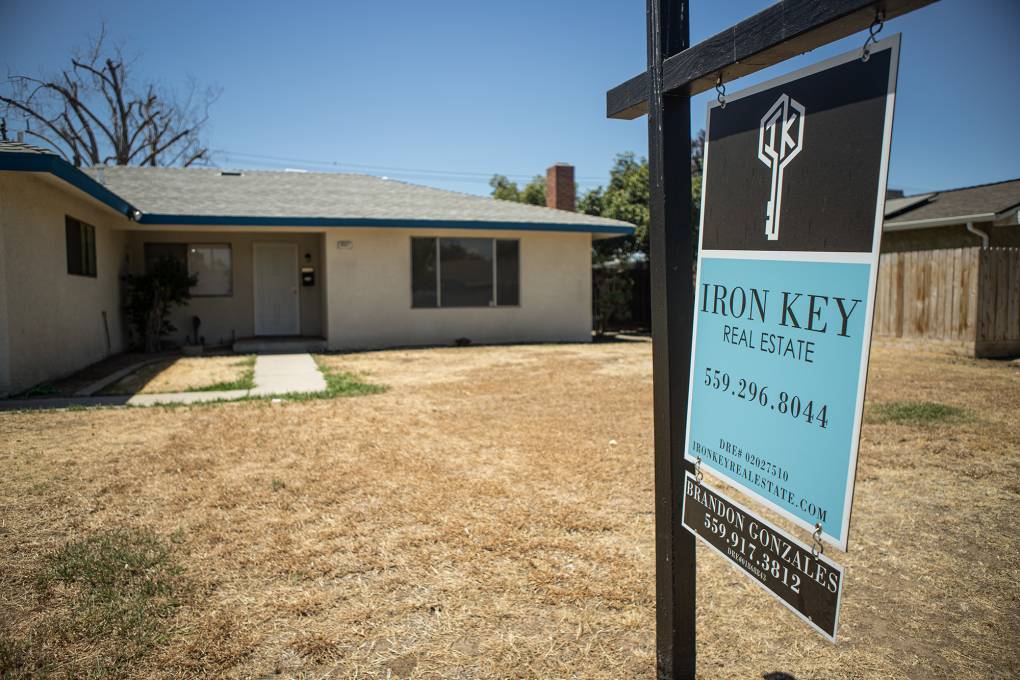
"content": "\u003cp>Inland cities including Bakersfield, Fresno, Visalia and Riverside — once cheaper options than pricey places such as the Bay Area — are no longer refuges from California’s housing affordability crisis.\u003c/p>\n\u003cp>Since the beginning of the pandemic, the typical asking rent in these former bastions of relative affordability has exploded by as much as 40%, according to \u003ca href=\"https://www.zillow.com/research/data/\">data from the real estate listings company Zillow\u003c/a>.\u003c/p>\n\u003cp>California’s inland rent spike is yet another lasting effect of the COVID-19 pandemic. Beginning in 2020, California’s \u003ca href=\"https://www.axios.com/2023/01/31/cities-pandemic-moving-trends\">dense metropolitan coast saw an outflux\u003c/a> of people, as \u003ca href=\"https://www.nytimes.com/interactive/2023/05/15/upshot/migrations-college-super-cities.html\">educated white-collar workers\u003c/a>, suddenly untethered from the office, packed their bags in search of cheaper and more socially distanced modes of living.\u003c/p>\n\u003cp>For many smaller California towns, the surge of new residents competing for housing has placed new financial pressures on lower-income residents, upended local housing markets and, in some cases, shifted the politics around housing and affordability.\u003c/p>\n\u003cp>\u003c!-- iframe plugin v.4.3 wordpress.org/plugins/iframe/ -->\u003cbr>\n\u003ciframe loading=\"lazy\" src=\"https://flo.uri.sh/visualisation/14082160/embed?auto=1\" width=\"800\" height=\"850\" scrolling=\"yes\" class=\"iframe-class\" frameborder=\"0\">\u003c/iframe>\u003c/p>\n\u003cp>In Santa Maria, just an hour up the 101 from Santa Barbara, the last three years have been a “perfect storm” for renters, said Victor Honma, who oversees housing vouchers across the region for the Housing Authority of the County of Santa Barbara.\u003c/p>\n\u003cp>The town was awash in suburb-seeking homebuyers from Los Angeles, the Bay Area and nearby Santa Barbara and San Luis Obispo. The suddenly hot housing market persuaded many longtime local property owners to sell their rentals to the wave of new homebuyers, reducing the rental stock further. And though Santa Maria had always had a “healthy supply of inventory,” said Honma, the available homes ran on the large side, leaving few one-bedroom units to go around for many suddenly desperate renters.\u003c/p>\n\u003cp>These trends were in the works prior to 2020, but “the pandemic was a stimulus,” he said.\u003c/p>\n\u003cp>[ad fullwidth]\u003c/p>\n\u003cp>It’s the same story in Bakersfield, where rents have jumped 39% since March 2020, as priced-out Angelenos migrated north of the Grapevine, said Stephen Pelz, executive director of the housing authority in Kern County.\u003c/p>\n\u003cp>Since then rising interest rates have cooled the national housing market. But Pelz said the higher cost of borrowing has only added to the woes of Kern County renters: Fewer people purchasing homes has meant more competition for the area’s remaining rental units.\u003c/p>\n\u003ch2>An inevitable consequence\u003c/h2>\n\u003cp>Jeff Tucker, an economist at Zillow, said the inland rental crunch is the inevitable result of California’s overall housing shortage, as the affordability crisis along the coast ripples outward. Cities in the Central Valley used to enjoy a healthy “affordability advantage” over coastal urban areas, he said. But that advantage has begun to shrink over the last three years.\u003c/p>\n\u003cp>“People have been moving towards that more affordable option when they don’t have anywhere else in California that they can afford,” said Tucker.\u003c/p>\n\u003cp>[pullquote size=\"medium\" align=\"right\" citation=\"Jeff Tucker, economist, Zillow\"]‘People have been moving towards that more affordable option when they don’t have anywhere else in California that they can afford.’[/pullquote]\u003c/p>\n\u003cp>According to Zillow’s seasonally adjusted “observed rent index” — a kind of gussied-up average that strips out exceptionally pricey or cheap outliers in a given market — the typical rent in the Fresno metropolitan used to be 54% cheaper than that in San Francisco. As of June 2023, that discount dropped to 40%.\u003c/p>\n\u003cp>Further south in Bakersfield, where renters used to pay roughly half of L.A. area tenants, on average, the difference has narrowed to 40%.\u003c/p>\n\u003cp>In part, that’s just a function of arithmetic. In both the Bakersfield and the Los Angeles metro areas, the typical rent has increased by a little more than $500 since the beginning of the pandemic. Because Kern County rents were much lower, $500 represents a larger percentage hike.\u003c/p>\n\u003cp>But for the average Bakersfield area resident, that $500 rent hike pinches a lot harder: The \u003ca href=\"https://www.census.gov/quickfacts/fact/table/losangelescountycalifornia,kerncountycalifornia/PST045222\">average income in Kern County is roughly $25,000\u003c/a>, according to the most recent Census data. In L.A. County, the average is $38,000.\u003c/p>\n\u003cp>Some modest relief could be on the way.[aside postID=news_11955733 hero='https://ww2.kqed.org/app/uploads/sites/10/2023/07/GettyImages-1444525626-1-1020x680.jpg']The cities of Bakersfield, Visalia and Fresno have all permitted roughly 15% more units in 2021 and 2022 than they did in the two years before the pandemic, according to data collected by the state Housing and Community Development Department.\u003c/p>\n\u003cp>The city of \u003ca href=\"https://www.hcd.ca.gov/planning-and-community-development/housing-open-data-tools/housing-element-implementation-and-apr-dashboard\">Santa Maria has permitted 150% more\u003c/a>. The bulk of the new or incoming units around town are accessory dwelling units — backyard cottages and annexes. For a city short on lower-cost single-bedroom places to live, the new crop of ADUs are “really filling that gap,” Honma said.\u003c/p>\n\u003ch2>Pro-renter advocates unsuccessful\u003c/h2>\n\u003cp>While building more places for people to live is one part of the battle, others have tried to soften the impact on rents of existing housing stock.\u003c/p>\n\u003cp>Earlier this year, tenant rights and anti-poverty advocates mounted a campaign to push the city of Fresno to adopt a rent control ordinance. For a city whose most notable politico, Democratic U.S. Rep. Jim Costa, lent his name to a state law that \u003ca href=\"https://en.wikipedia.org/wiki/Costa%E2%80%93Hawkins_Rental_Housing_Act\">restricts local governments for enacting or expanding rent control laws\u003c/a>, it was a symbolic push.[aside postID=news_11955554 hero='https://ww2.kqed.org/app/uploads/sites/10/2023/06/230630100-Van-Ness-MB-KQED-1020x453.jpg']Further south, activists in Delano were competing to see which town would be the first in the Central Valley to enact a permanent cap on rent hikes.\u003c/p>\n\u003cp>Neither campaign was successful. Fresno’s city council \u003ca href=\"https://fresnoland.org/2023/06/28/frustrated-rent-control-advocates-say-fresno-leaders-arent-listening-but-the-fight-isnt-over/\">declined to include a rent stabilization program in its budget\u003c/a> for this fiscal year and elected leaders in Delano \u003ca href=\"https://www.bakersfield.com/news/delano-leaders-dodge-rent-control-agree-to-study-costs/article_635dc4e4-d297-11ed-b2fb-1b90089b6133.html\">agreed only to study the issue\u003c/a>.\u003c/p>\n\u003cp>In Sacramento, many of these same advocacy organizations have been pushing a bill by state Sen. \u003ca href=\"https://calmatters.org/legislator-tracker/maria-elena-durazo-1953/\">María Elena Durazo\u003c/a> that would have, among other things, lowered a \u003ca href=\"https://calmatters.org/california-divide/2023/06/california-renters/\">statewide cap on annual rent increases\u003c/a> from 10% to a mere 5%. But that \u003ca href=\"https://calmatters.org/california-divide/2023/06/california-renters/\">provision was stripped out\u003c/a>, leaving only new rules that make it harder for landlords to evict tenants without cause.\u003c/p>\n\u003cp>\u003c/p>\n",
"stats": {
"hasVideo": false,
"hasChartOrMap": true,
"hasAudio": false,
"hasPolis": false,
"wordCount": 1062,
"hasGoogleForm": false,
"hasGallery": false,
"hasHearkenModule": false,
"iframeSrcs": [
"https://flo.uri.sh/visualisation/14082160/embed"
],
"paragraphCount": 25
},
"modified": 1690318291,
"excerpt": "A lack of affordable housing for Californians has increased inland rent prices to match coastal prices, removing large swaths of previously cheaper rental units.",
"headData": {
"twImgId": "",
"twTitle": "",
"ogTitle": "",
"ogImgId": "",
"twDescription": "",
"description": "A lack of affordable housing for Californians has increased inland rent prices to match coastal prices, removing large swaths of previously cheaper rental units.",
"title": "Some of California's 'Cheapest' Cities See the Biggest Rent Hikes | KQED",
"ogDescription": "",
"schema": {
"@context": "https://schema.org",
"@type": "NewsArticle",
"headline": "Some of California's 'Cheapest' Cities See the Biggest Rent Hikes",
"datePublished": "2023-07-21T14:23:32-07:00",
"dateModified": "2023-07-25T13:51:31-07:00",
"image": "https://cdn.kqed.org/wp-content/uploads/2020/02/KQED-OG-Image@1x.png",
"isAccessibleForFree": "True",
"publisher": {
"@type": "NewsMediaOrganization",
"@id": "https://www.kqed.org/#organization",
"name": "KQED",
"logo": "https://cdn.kqed.org/wp-content/uploads/2020/02/KQED-OG-Image@1x.png",
"url": "https://www.kqed.org",
"sameAs": [
"https://www.facebook.com/KQED",
"https://twitter.com/KQED",
"https://www.instagram.com/kqed/",
"https://www.tiktok.com/@kqedofficial",
"https://www.linkedin.com/company/kqed",
"https://www.youtube.com/channel/UCeC0IOo7i1P_61zVUWbJ4nw"
]
}
}
},
"guestAuthors": [],
"slug": "some-of-californias-cheapest-cities-see-the-biggest-rent-hikes",
"status": "publish",
"sourceUrl": "https://calmatters.org/",
"nprByline": "\u003ca href=\"https://calmatters.org/author/ben-christopher/\">Ben Christopher\u003c/a>",
"excludeFromSiteSearch": "Include",
"source": "CalMatters",
"showOnAuthorArchivePages": "No",
"articleAge": "0",
"path": "/news/11956168/some-of-californias-cheapest-cities-see-the-biggest-rent-hikes",
"audioTrackLength": null,
"parsedContent": [
{
"type": "contentString",
"content": "\u003cdiv class=\"post-body\">\u003cp>\u003cp>Inland cities including Bakersfield, Fresno, Visalia and Riverside — once cheaper options than pricey places such as the Bay Area — are no longer refuges from California’s housing affordability crisis.\u003c/p>\n\u003cp>Since the beginning of the pandemic, the typical asking rent in these former bastions of relative affordability has exploded by as much as 40%, according to \u003ca href=\"https://www.zillow.com/research/data/\">data from the real estate listings company Zillow\u003c/a>.\u003c/p>\n\u003cp>California’s inland rent spike is yet another lasting effect of the COVID-19 pandemic. Beginning in 2020, California’s \u003ca href=\"https://www.axios.com/2023/01/31/cities-pandemic-moving-trends\">dense metropolitan coast saw an outflux\u003c/a> of people, as \u003ca href=\"https://www.nytimes.com/interactive/2023/05/15/upshot/migrations-college-super-cities.html\">educated white-collar workers\u003c/a>, suddenly untethered from the office, packed their bags in search of cheaper and more socially distanced modes of living.\u003c/p>\n\u003cp>For many smaller California towns, the surge of new residents competing for housing has placed new financial pressures on lower-income residents, upended local housing markets and, in some cases, shifted the politics around housing and affordability.\u003c/p>\n\u003cp>\u003c!-- iframe plugin v.4.3 wordpress.org/plugins/iframe/ -->\u003cbr>\n\u003ciframe loading=\"lazy\" src=\"https://flo.uri.sh/visualisation/14082160/embed?auto=1\" width=\"800\" height=\"850\" scrolling=\"yes\" class=\"iframe-class\" frameborder=\"0\">\u003c/iframe>\u003c/p>\n\u003cp>In Santa Maria, just an hour up the 101 from Santa Barbara, the last three years have been a “perfect storm” for renters, said Victor Honma, who oversees housing vouchers across the region for the Housing Authority of the County of Santa Barbara.\u003c/p>\n\u003cp>The town was awash in suburb-seeking homebuyers from Los Angeles, the Bay Area and nearby Santa Barbara and San Luis Obispo. The suddenly hot housing market persuaded many longtime local property owners to sell their rentals to the wave of new homebuyers, reducing the rental stock further. And though Santa Maria had always had a “healthy supply of inventory,” said Honma, the available homes ran on the large side, leaving few one-bedroom units to go around for many suddenly desperate renters.\u003c/p>\n\u003cp>These trends were in the works prior to 2020, but “the pandemic was a stimulus,” he said.\u003c/p>\n\u003cp>\u003c/p>\u003c/div>",
"attributes": {
"named": {},
"numeric": []
}
},
{
"type": "component",
"content": "",
"name": "ad",
"attributes": {
"named": {
"label": "fullwidth"
},
"numeric": [
"fullwidth"
]
}
},
{
"type": "contentString",
"content": "\u003cdiv class=\"post-body\">\u003cp>\u003c/p>\n\u003cp>It’s the same story in Bakersfield, where rents have jumped 39% since March 2020, as priced-out Angelenos migrated north of the Grapevine, said Stephen Pelz, executive director of the housing authority in Kern County.\u003c/p>\n\u003cp>Since then rising interest rates have cooled the national housing market. But Pelz said the higher cost of borrowing has only added to the woes of Kern County renters: Fewer people purchasing homes has meant more competition for the area’s remaining rental units.\u003c/p>\n\u003ch2>An inevitable consequence\u003c/h2>\n\u003cp>Jeff Tucker, an economist at Zillow, said the inland rental crunch is the inevitable result of California’s overall housing shortage, as the affordability crisis along the coast ripples outward. Cities in the Central Valley used to enjoy a healthy “affordability advantage” over coastal urban areas, he said. But that advantage has begun to shrink over the last three years.\u003c/p>\n\u003cp>“People have been moving towards that more affordable option when they don’t have anywhere else in California that they can afford,” said Tucker.\u003c/p>\n\u003cp>\u003c/p>\u003c/div>",
"attributes": {
"named": {},
"numeric": []
}
},
{
"type": "component",
"content": "‘People have been moving towards that more affordable option when they don’t have anywhere else in California that they can afford.’",
"name": "pullquote",
"attributes": {
"named": {
"size": "medium",
"align": "right",
"citation": "Jeff Tucker, economist, Zillow",
"label": ""
},
"numeric": []
}
},
{
"type": "contentString",
"content": "\u003cdiv class=\"post-body\">\u003cp>\u003c/p>\n\u003cp>According to Zillow’s seasonally adjusted “observed rent index” — a kind of gussied-up average that strips out exceptionally pricey or cheap outliers in a given market — the typical rent in the Fresno metropolitan used to be 54% cheaper than that in San Francisco. As of June 2023, that discount dropped to 40%.\u003c/p>\n\u003cp>Further south in Bakersfield, where renters used to pay roughly half of L.A. area tenants, on average, the difference has narrowed to 40%.\u003c/p>\n\u003cp>In part, that’s just a function of arithmetic. In both the Bakersfield and the Los Angeles metro areas, the typical rent has increased by a little more than $500 since the beginning of the pandemic. Because Kern County rents were much lower, $500 represents a larger percentage hike.\u003c/p>\n\u003cp>But for the average Bakersfield area resident, that $500 rent hike pinches a lot harder: The \u003ca href=\"https://www.census.gov/quickfacts/fact/table/losangelescountycalifornia,kerncountycalifornia/PST045222\">average income in Kern County is roughly $25,000\u003c/a>, according to the most recent Census data. In L.A. County, the average is $38,000.\u003c/p>\n\u003cp>Some modest relief could be on the way.\u003c/p>\u003c/div>",
"attributes": {
"named": {},
"numeric": []
}
},
{
"type": "component",
"content": "",
"name": "aside",
"attributes": {
"named": {
"postid": "news_11955733",
"hero": "https://ww2.kqed.org/app/uploads/sites/10/2023/07/GettyImages-1444525626-1-1020x680.jpg",
"label": ""
},
"numeric": []
}
},
{
"type": "contentString",
"content": "\u003cdiv class=\"post-body\">\u003cp>The cities of Bakersfield, Visalia and Fresno have all permitted roughly 15% more units in 2021 and 2022 than they did in the two years before the pandemic, according to data collected by the state Housing and Community Development Department.\u003c/p>\n\u003cp>The city of \u003ca href=\"https://www.hcd.ca.gov/planning-and-community-development/housing-open-data-tools/housing-element-implementation-and-apr-dashboard\">Santa Maria has permitted 150% more\u003c/a>. The bulk of the new or incoming units around town are accessory dwelling units — backyard cottages and annexes. For a city short on lower-cost single-bedroom places to live, the new crop of ADUs are “really filling that gap,” Honma said.\u003c/p>\n\u003ch2>Pro-renter advocates unsuccessful\u003c/h2>\n\u003cp>While building more places for people to live is one part of the battle, others have tried to soften the impact on rents of existing housing stock.\u003c/p>\n\u003cp>Earlier this year, tenant rights and anti-poverty advocates mounted a campaign to push the city of Fresno to adopt a rent control ordinance. For a city whose most notable politico, Democratic U.S. Rep. Jim Costa, lent his name to a state law that \u003ca href=\"https://en.wikipedia.org/wiki/Costa%E2%80%93Hawkins_Rental_Housing_Act\">restricts local governments for enacting or expanding rent control laws\u003c/a>, it was a symbolic push.\u003c/p>\u003c/div>",
"attributes": {
"named": {},
"numeric": []
}
},
{
"type": "component",
"content": "",
"name": "aside",
"attributes": {
"named": {
"postid": "news_11955554",
"hero": "https://ww2.kqed.org/app/uploads/sites/10/2023/06/230630100-Van-Ness-MB-KQED-1020x453.jpg",
"label": ""
},
"numeric": []
}
},
{
"type": "contentString",
"content": "\u003cdiv class=\"post-body\">\u003cp>Further south, activists in Delano were competing to see which town would be the first in the Central Valley to enact a permanent cap on rent hikes.\u003c/p>\n\u003cp>Neither campaign was successful. Fresno’s city council \u003ca href=\"https://fresnoland.org/2023/06/28/frustrated-rent-control-advocates-say-fresno-leaders-arent-listening-but-the-fight-isnt-over/\">declined to include a rent stabilization program in its budget\u003c/a> for this fiscal year and elected leaders in Delano \u003ca href=\"https://www.bakersfield.com/news/delano-leaders-dodge-rent-control-agree-to-study-costs/article_635dc4e4-d297-11ed-b2fb-1b90089b6133.html\">agreed only to study the issue\u003c/a>.\u003c/p>\n\u003cp>In Sacramento, many of these same advocacy organizations have been pushing a bill by state Sen. \u003ca href=\"https://calmatters.org/legislator-tracker/maria-elena-durazo-1953/\">María Elena Durazo\u003c/a> that would have, among other things, lowered a \u003ca href=\"https://calmatters.org/california-divide/2023/06/california-renters/\">statewide cap on annual rent increases\u003c/a> from 10% to a mere 5%. But that \u003ca href=\"https://calmatters.org/california-divide/2023/06/california-renters/\">provision was stripped out\u003c/a>, leaving only new rules that make it harder for landlords to evict tenants without cause.\u003c/p>\n\u003cp>\u003c/p>\n\u003c/div>\u003c/p>",
"attributes": {
"named": {},
"numeric": []
}
}
],
"link": "/news/11956168/some-of-californias-cheapest-cities-see-the-biggest-rent-hikes",
"authors": [
"byline_news_11956168"
],
"categories": [
"news_6266",
"news_8"
],
"tags": [
"news_5563",
"news_18538",
"news_30796",
"news_21238"
],
"affiliates": [
"news_18481"
],
"featImg": "news_11956172",
"label": "source_news_11956168"
},
"news_11955844": {
"type": "posts",
"id": "news_11955844",
"meta": {
"index": "posts_1716263798",
"site": "news",
"id": "11955844",
"score": null,
"sort": [
1689628193000
]
},
"guestAuthors": [],
"slug": "newsom-mental-health-plan-strips-700-million-in-services",
"title": "Newsom’s Mental Health Plan Could Strip Over $700 Million in Services",
"publishDate": 1689628193,
"format": "standard",
"headTitle": "Newsom’s Mental Health Plan Could Strip Over $700 Million in Services | KQED",
"labelTerm": {},
"content": "\u003cp>A \u003ca href=\"https://www.kqed.org/news/11954314/3-big-takeaways-from-californias-311-billion-budget-deal\">major proposal from Gov. Gavin Newsom\u003c/a> to overhaul the state’s behavioral and mental health system is likely to take nearly $720 million away from services provided by county governments annually, according to a \u003ca href=\"https://lao.ca.gov/Publications/Report/4782\">new analysis\u003c/a> from the Legislative Analyst’s Office.\u003c/p>\n\u003cp>Although that money would be reallocated within the system, in part to \u003ca href=\"https://calmatters.org/health/mental-health/2023/06/mental-health-funding-2/\">house homeless individuals with severe mental illness\u003c/a> and addiction disorders, the report authors note that Newsom and key legislators supporting the proposal have neither provided a complete justification for the changes nor have they published an analysis on how the changes may “negatively impact current services.”\u003c/p>\n\u003cp>“Consequently, as the Legislature considers the proposal, we recommend asking the administration certain questions to assess whether the proposal is warranted,” the report states.\u003c/p>\n\u003cp>Newsom wants the Legislature to put his proposal before voters next year in tandem with a $4.68 billion bond measure to add psychiatric treatment beds. It would change how the state allocates money under the Mental Health Services Act, which levies a 1% tax on income above $1 million to fund behavioral health services.\u003c/p>\n\u003cp>[ad fullwidth]\u003c/p>\n\u003cp>Homelessness has become one of the most \u003ca href=\"https://calmatters.org/housing/homelessness/2023/04/california-homeless-spending-audit/\">high-profile challenges plaguing California\u003c/a>, increasing 32% in the past four years. Newsom, who promised to reduce homelessness, announced his intent during his \u003ca href=\"https://calmatters.org/politics/2023/03/gavin-newsom-legacy-tour/\">State of the State tour\u003c/a> to divert nearly one-third of the state’s Mental Health Services Act money to help address homelessness.\u003c/p>\n\u003cp>Since that time, \u003ca href=\"https://calmatters.org/health/2023/04/mental-health-funding/\">local behavioral health providers and county officials\u003c/a> have criticized the proposal because of its potential to cut services and pit mental health programs against homeless services. The state has spent more than $20 billion on \u003ca href=\"https://calmatters.org/housing/homelessness/2023/04/california-homeless-spending-audit/\">housing and homelessness since 2018\u003c/a>.\u003c/p>\n\u003cp>Supporters, meanwhile, say reprioritizing how the money is spent is long overdue in light of the growing needs of the state’s homeless population as well as the addition of new funding sources for mental health programs.\u003c/p>\n\u003cp>In a statement, Newsom’s Deputy Communications Director Brandon Richards said “upsetting the status quo” was necessary in light of California’s changing health care needs.\u003c/p>\n\u003ch2>Mental health needs among California homeless\u003c/h2>\n\u003cp>A recent study from UC San Francisco found that two-thirds of \u003ca href=\"https://calmatters.org/housing/2023/06/california-homeless-growth-report/\">homeless individuals experience mental health conditions\u003c/a>, although income loss is the driving force behind the state’s homelessness crisis.\u003c/p>\n\u003cp>“What’s more upsetting is watching people continue to suffer on the streets with ineffective interventions and inability to access much-needed treatment,” Richards said. “A California behavioral health system of care that is more focused, more transparent, and more accountable for results is what all Californians deserve and what this historic reform aims to achieve.”\u003c/p>\n\u003cp>Roughly one-third of the county mental health infrastructure in the state is supported by the Mental Health Services Act, which was approved by voters in 2004 as a ballot initiative. Substantial changes to the act, like the ones Newsom proposed, require voter approval. Last year the tax generated about $3.8 billion.\u003c/p>\n\u003cp>[pullquote size=\"medium\" align=\"right\" citation=\"Brandon Richards, deputy communications director, Gov. Gavin Newsom\"]‘What’s more upsetting, is watching people continue to suffer on the streets with ineffective interventions and inability to access much-needed treatment.’[/pullquote]\u003c/p>\n\u003cp>Critics of Newsom’s proposal say the new analysis bolsters their argument that the changes will result in significant cuts to current programs, particularly those that \u003ca href=\"https://calmatters.org/health/mental-health/2023/06/mental-health-funding-2/\">support children\u003c/a>.\u003c/p>\n\u003cp>Newsom’s office has so far “danced around” how much money would be cut, said Adrienne Shilton, a lobbyist for the California Alliance of Children and Family Services, which represents behavioral health providers in every county. The report is the first to quantify how the proposal would impact programs statewide.\u003c/p>\n\u003cp>“We’re seeing in real dollars what the impact would be,” Shilton said.\u003c/p>\n\u003cp>The analysis estimates spending on current programs would be reduced from $1.34 billion to $621 million under the plan.\u003c/p>\n\u003ch2>Housing money in Gavin Newsom’s plan\u003c/h2>\n\u003cp>The report identified several key changes and unanswered questions for the Legislature to consider in \u003ca href=\"https://lao.ca.gov/Publications/Series/3\">Newsom’s plan\u003c/a>:\u003c/p>\n\u003cul>\n\u003cli>\u003cstrong>Reduced flexibility: \u003c/strong>Counties would have less flexibility to determine how money is spent. Based on current expenditures, counties would be required to increase spending on housing by $493 million and on “full-service partnerships” by $121 million. “Full-service partnerships” include intensive wraparound services like case management, housing and employment support as well as clinical care.\u003c/li>\n\u003cli>\u003cstrong>Program cuts likely: \u003c/strong>To meet spending targets and caps, counties would likely need to reduce spending on current programs including “outpatient services, crisis response, prevention services, and outreach.”\u003c/li>\n\u003cli>\u003cstrong>Less independent oversight: \u003c/strong>The proposed restructuring moves much of the program implementation and oversight authority to the Department of Health Care Services. The change “significantly limits” the independent oversight of the current Mental Health Services Oversight and Accountability Commission.[aside label='More on Mental Health Care' tag='mental-health']Sacramento Mayor Darrell Steinberg, who helped author the original law and has been a key supporter of the changes, said the law was always meant to prioritize “the plight of people living with serious mental illness on our streets.”\u003c/li>\n\u003c/ul>\n\u003cp>“It’s appropriate, in fact, it’s necessary to set priority status,” Steinberg said.\u003c/p>\n\u003cp>Steinberg and Newsom’s office also contend that the state has invested heavily in the mental health safety net in other ways, including changes to the Medi-Cal system and a $4.4 billion one-time infusion into the \u003ca href=\"https://calmatters.org/health/2022/03/california-children-mental-health-crisis/\">Children and Youth Behavioral Health Initiative\u003c/a>.\u003c/p>\n\u003cp>“It’s no longer a funding source that stands alone,” Steinberg said. “[Now], the opportunity is to weave all these pieces together so that everyone has access to care, and nobody is left out or left behind.”\u003c/p>\n\u003cp>Still, advocates say it is premature to assume those investments have had a positive impact and that many have not yet been implemented. In an opposition letter, Lishaun Francis, senior director for behavioral health at Children Now said the state “has yet to demonstrate that it has delivered” on its promises and that the proposal deprioritizes children and youth.[pullquote size=\"medium\" align=\"right\" citation=\"Sacramento Mayor Darrell Steinberg\"]‘The opportunity is to weave all these pieces together so that everyone has access to care — and nobody is left out or left behind.’[/pullquote]Advocates also say those funding sources, particularly Medi-Cal, won’t reimburse for the non-clinical programs like classroom interventions and family resource centers that have historically been supported by the Mental Health Services Act. Medi-Cal is the state’s health insurance program for extremely low-income Californians.\u003c/p>\n\u003cp>“Families need flexibility,” said Christine Stoner-Mertz, chief executive officer of the California Alliance of Child and Family Services. “We need community-designed practices, and we haven’t been successful in doing that with just Medi-Cal.”\u003c/p>\n\u003cp>[ad floatright]\u003c/p>\n",
"blocks": [],
"excerpt": "Gov. Gavin Newsom wants to direct more funds from California's millionaire’s tax toward housing. Some county-run mental health programs could lose out.",
"status": "publish",
"parent": 0,
"modified": 1726004910,
"stats": {
"hasAudio": false,
"hasVideo": false,
"hasChartOrMap": false,
"iframeSrcs": [],
"hasGoogleForm": false,
"hasGallery": false,
"hasHearkenModule": false,
"hasPolis": false,
"paragraphCount": 24,
"wordCount": 1188
},
"headData": {
"title": "Newsom’s Mental Health Plan Could Strip Over $700 Million in Services | KQED",
"description": "Gov. Gavin Newsom wants to direct more funds from California's millionaire’s tax toward housing. Some county-run mental health programs could lose out.",
"ogTitle": "",
"ogDescription": "",
"ogImgId": "",
"twTitle": "",
"twDescription": "",
"twImgId": "",
"schema": {
"@context": "https://schema.org",
"@type": "NewsArticle",
"headline": "Newsom’s Mental Health Plan Could Strip Over $700 Million in Services",
"datePublished": "2023-07-17T14:09:53-07:00",
"dateModified": "2024-09-10T14:48:30-07:00",
"image": "https://cdn.kqed.org/wp-content/uploads/2020/02/KQED-OG-Image@1x.png",
"isAccessibleForFree": "True",
"publisher": {
"@type": "NewsMediaOrganization",
"@id": "https://www.kqed.org/#organization",
"name": "KQED",
"logo": "https://cdn.kqed.org/wp-content/uploads/2020/02/KQED-OG-Image@1x.png",
"url": "https://www.kqed.org",
"sameAs": [
"https://www.facebook.com/KQED",
"https://twitter.com/KQED",
"https://www.instagram.com/kqed/",
"https://www.tiktok.com/@kqedofficial",
"https://www.linkedin.com/company/kqed",
"https://www.youtube.com/channel/UCeC0IOo7i1P_61zVUWbJ4nw"
]
}
}
},
"source": "CalMatters",
"sourceUrl": "https://calmatters.org/",
"sticky": false,
"nprByline": "\u003ca href=\"https://calmatters.org/author/kristen-hwang/\">Kristen Hwang\u003c/a>",
"excludeFromSiteSearch": "Include",
"showOnAuthorArchivePages": "No",
"articleAge": "0",
"path": "/news/11955844/newsom-mental-health-plan-strips-700-million-in-services",
"audioTrackLength": null,
"parsedContent": [
{
"type": "contentString",
"content": "\u003cdiv class=\"post-body\">\u003cp>\u003cp>A \u003ca href=\"https://www.kqed.org/news/11954314/3-big-takeaways-from-californias-311-billion-budget-deal\">major proposal from Gov. Gavin Newsom\u003c/a> to overhaul the state’s behavioral and mental health system is likely to take nearly $720 million away from services provided by county governments annually, according to a \u003ca href=\"https://lao.ca.gov/Publications/Report/4782\">new analysis\u003c/a> from the Legislative Analyst’s Office.\u003c/p>\n\u003cp>Although that money would be reallocated within the system, in part to \u003ca href=\"https://calmatters.org/health/mental-health/2023/06/mental-health-funding-2/\">house homeless individuals with severe mental illness\u003c/a> and addiction disorders, the report authors note that Newsom and key legislators supporting the proposal have neither provided a complete justification for the changes nor have they published an analysis on how the changes may “negatively impact current services.”\u003c/p>\n\u003cp>“Consequently, as the Legislature considers the proposal, we recommend asking the administration certain questions to assess whether the proposal is warranted,” the report states.\u003c/p>\n\u003cp>Newsom wants the Legislature to put his proposal before voters next year in tandem with a $4.68 billion bond measure to add psychiatric treatment beds. It would change how the state allocates money under the Mental Health Services Act, which levies a 1% tax on income above $1 million to fund behavioral health services.\u003c/p>\n\u003cp>\u003c/p>\u003c/div>",
"attributes": {
"named": {},
"numeric": []
}
},
{
"type": "component",
"content": "",
"name": "ad",
"attributes": {
"named": {
"label": "fullwidth"
},
"numeric": [
"fullwidth"
]
}
},
{
"type": "contentString",
"content": "\u003cdiv class=\"post-body\">\u003cp>\u003c/p>\n\u003cp>Homelessness has become one of the most \u003ca href=\"https://calmatters.org/housing/homelessness/2023/04/california-homeless-spending-audit/\">high-profile challenges plaguing California\u003c/a>, increasing 32% in the past four years. Newsom, who promised to reduce homelessness, announced his intent during his \u003ca href=\"https://calmatters.org/politics/2023/03/gavin-newsom-legacy-tour/\">State of the State tour\u003c/a> to divert nearly one-third of the state’s Mental Health Services Act money to help address homelessness.\u003c/p>\n\u003cp>Since that time, \u003ca href=\"https://calmatters.org/health/2023/04/mental-health-funding/\">local behavioral health providers and county officials\u003c/a> have criticized the proposal because of its potential to cut services and pit mental health programs against homeless services. The state has spent more than $20 billion on \u003ca href=\"https://calmatters.org/housing/homelessness/2023/04/california-homeless-spending-audit/\">housing and homelessness since 2018\u003c/a>.\u003c/p>\n\u003cp>Supporters, meanwhile, say reprioritizing how the money is spent is long overdue in light of the growing needs of the state’s homeless population as well as the addition of new funding sources for mental health programs.\u003c/p>\n\u003cp>In a statement, Newsom’s Deputy Communications Director Brandon Richards said “upsetting the status quo” was necessary in light of California’s changing health care needs.\u003c/p>\n\u003ch2>Mental health needs among California homeless\u003c/h2>\n\u003cp>A recent study from UC San Francisco found that two-thirds of \u003ca href=\"https://calmatters.org/housing/2023/06/california-homeless-growth-report/\">homeless individuals experience mental health conditions\u003c/a>, although income loss is the driving force behind the state’s homelessness crisis.\u003c/p>\n\u003cp>“What’s more upsetting is watching people continue to suffer on the streets with ineffective interventions and inability to access much-needed treatment,” Richards said. “A California behavioral health system of care that is more focused, more transparent, and more accountable for results is what all Californians deserve and what this historic reform aims to achieve.”\u003c/p>\n\u003cp>Roughly one-third of the county mental health infrastructure in the state is supported by the Mental Health Services Act, which was approved by voters in 2004 as a ballot initiative. Substantial changes to the act, like the ones Newsom proposed, require voter approval. Last year the tax generated about $3.8 billion.\u003c/p>\n\u003cp>\u003c/p>\u003c/div>",
"attributes": {
"named": {},
"numeric": []
}
},
{
"type": "component",
"content": "‘What’s more upsetting, is watching people continue to suffer on the streets with ineffective interventions and inability to access much-needed treatment.’",
"name": "pullquote",
"attributes": {
"named": {
"size": "medium",
"align": "right",
"citation": "Brandon Richards, deputy communications director, Gov. Gavin Newsom",
"label": ""
},
"numeric": []
}
},
{
"type": "contentString",
"content": "\u003cdiv class=\"post-body\">\u003cp>\u003c/p>\n\u003cp>Critics of Newsom’s proposal say the new analysis bolsters their argument that the changes will result in significant cuts to current programs, particularly those that \u003ca href=\"https://calmatters.org/health/mental-health/2023/06/mental-health-funding-2/\">support children\u003c/a>.\u003c/p>\n\u003cp>Newsom’s office has so far “danced around” how much money would be cut, said Adrienne Shilton, a lobbyist for the California Alliance of Children and Family Services, which represents behavioral health providers in every county. The report is the first to quantify how the proposal would impact programs statewide.\u003c/p>\n\u003cp>“We’re seeing in real dollars what the impact would be,” Shilton said.\u003c/p>\n\u003cp>The analysis estimates spending on current programs would be reduced from $1.34 billion to $621 million under the plan.\u003c/p>\n\u003ch2>Housing money in Gavin Newsom’s plan\u003c/h2>\n\u003cp>The report identified several key changes and unanswered questions for the Legislature to consider in \u003ca href=\"https://lao.ca.gov/Publications/Series/3\">Newsom’s plan\u003c/a>:\u003c/p>\n\u003cul>\n\u003cli>\u003cstrong>Reduced flexibility: \u003c/strong>Counties would have less flexibility to determine how money is spent. Based on current expenditures, counties would be required to increase spending on housing by $493 million and on “full-service partnerships” by $121 million. “Full-service partnerships” include intensive wraparound services like case management, housing and employment support as well as clinical care.\u003c/li>\n\u003cli>\u003cstrong>Program cuts likely: \u003c/strong>To meet spending targets and caps, counties would likely need to reduce spending on current programs including “outpatient services, crisis response, prevention services, and outreach.”\u003c/li>\n\u003cli>\u003cstrong>Less independent oversight: \u003c/strong>The proposed restructuring moves much of the program implementation and oversight authority to the Department of Health Care Services. The change “significantly limits” the independent oversight of the current Mental Health Services Oversight and Accountability Commission.\u003c/p>\u003c/div>",
"attributes": {
"named": {},
"numeric": []
}
},
{
"type": "component",
"content": "",
"name": "aside",
"attributes": {
"named": {
"label": "More on Mental Health Care ",
"tag": "mental-health"
},
"numeric": []
}
},
{
"type": "contentString",
"content": "\u003cdiv class=\"post-body\">\u003cp>Sacramento Mayor Darrell Steinberg, who helped author the original law and has been a key supporter of the changes, said the law was always meant to prioritize “the plight of people living with serious mental illness on our streets.”\u003c/li>\n\u003c/ul>\n\u003cp>“It’s appropriate, in fact, it’s necessary to set priority status,” Steinberg said.\u003c/p>\n\u003cp>Steinberg and Newsom’s office also contend that the state has invested heavily in the mental health safety net in other ways, including changes to the Medi-Cal system and a $4.4 billion one-time infusion into the \u003ca href=\"https://calmatters.org/health/2022/03/california-children-mental-health-crisis/\">Children and Youth Behavioral Health Initiative\u003c/a>.\u003c/p>\n\u003cp>“It’s no longer a funding source that stands alone,” Steinberg said. “[Now], the opportunity is to weave all these pieces together so that everyone has access to care, and nobody is left out or left behind.”\u003c/p>\n\u003cp>Still, advocates say it is premature to assume those investments have had a positive impact and that many have not yet been implemented. In an opposition letter, Lishaun Francis, senior director for behavioral health at Children Now said the state “has yet to demonstrate that it has delivered” on its promises and that the proposal deprioritizes children and youth.\u003c/p>\u003c/div>",
"attributes": {
"named": {},
"numeric": []
}
},
{
"type": "component",
"content": "‘The opportunity is to weave all these pieces together so that everyone has access to care — and nobody is left out or left behind.’",
"name": "pullquote",
"attributes": {
"named": {
"size": "medium",
"align": "right",
"citation": "Sacramento Mayor Darrell Steinberg",
"label": ""
},
"numeric": []
}
},
{
"type": "contentString",
"content": "\u003cdiv class=\"post-body\">\u003cp>Advocates also say those funding sources, particularly Medi-Cal, won’t reimburse for the non-clinical programs like classroom interventions and family resource centers that have historically been supported by the Mental Health Services Act. Medi-Cal is the state’s health insurance program for extremely low-income Californians.\u003c/p>\n\u003cp>“Families need flexibility,” said Christine Stoner-Mertz, chief executive officer of the California Alliance of Child and Family Services. “We need community-designed practices, and we haven’t been successful in doing that with just Medi-Cal.”\u003c/p>\n\u003cp>\u003c/p>\u003c/div>",
"attributes": {
"named": {},
"numeric": []
}
},
{
"type": "component",
"content": "",
"name": "ad",
"attributes": {
"named": {
"label": "floatright"
},
"numeric": [
"floatright"
]
}
},
{
"type": "contentString",
"content": "\u003cdiv class=\"post-body\">\u003cp>\u003c/p>\n\u003c/div>\u003c/p>",
"attributes": {
"named": {},
"numeric": []
}
}
],
"link": "/news/11955844/newsom-mental-health-plan-strips-700-million-in-services",
"authors": [
"byline_news_11955844"
],
"categories": [
"news_457",
"news_6266",
"news_8"
],
"tags": [
"news_18538",
"news_596",
"news_16",
"news_18543",
"news_4020",
"news_1775",
"news_2109",
"news_17983"
],
"affiliates": [
"news_18481"
],
"featImg": "news_11955872",
"label": "source_news_11955844"
},
"news_11955733": {
"type": "posts",
"id": "news_11955733",
"meta": {
"index": "posts_1716263798",
"site": "news",
"id": "11955733",
"score": null,
"sort": [
1689431459000
]
},
"guestAuthors": [],
"slug": "oaklands-eviction-moratorium-just-ended-whats-next-for-renters-and-landlords",
"title": "Oakland Eviction Moratorium Ends: What You Need to Know",
"publishDate": 1689431459,
"format": "standard",
"headTitle": "Oakland Eviction Moratorium Ends: What You Need to Know | KQED",
"labelTerm": {
"site": "news"
},
"content": "\u003cp>After months of debate, Oakland’s eviction moratorium expired on Saturday, July 15. The move comes after Alameda County ended its public health emergency and \u003ca href=\"https://www.kqed.org/news/11947933/alameda-countys-eviction-moratorium-ends-saturday-whats-next-for-renters-and-landlords\">its own eviction moratorium back in April\u003c/a>. Oakland had been one of the last remaining cities in the country with this type of protection for tenants, along with San Francisco and Berkeley.\u003c/p>\n\u003cp>In the rest of Alameda County, \u003ca href=\"https://oaklandside.org/2023/05/24/evictions-cases-are-rising-fast-after-end-of-alameda-county-moratorium/\">evictions spiked after the county’s moratorium was lifted, rising to above pre-pandemic highs\u003c/a>. With the majority of Oakland residents renting their homes, and the city \u003ca href=\"https://www.housinginitiative.org/uploads/1/3/2/9/132946414/hip_oakland_market_study_9-29-20_small.pdf\">having a higher percentage of renters compared to the county as a whole (PDF)\u003c/a>, many advocates fear that this change will lead to an even greater wave of evictions.\u003c/p>\n\u003cp>\u003cstrong>Jump straight to:\u003c/strong>\u003c/p>\n\u003cul>\n\u003cli>\u003ca href=\"#impacts\">\u003cstrong>What does the end of Oakland’s eviction moratorium mean for renters?\u003c/strong>\u003c/a>\u003c/li>\n\u003cli>\u003ca href=\"#evictions\">\u003cstrong>What can Oakland renters be evicted for starting July 15?\u003c/strong>\u003c/a>\u003c/li>\n\u003cli>\u003ca href=\"#backrent\">\u003cstrong>Do Oakland renters now have to pay back rent?\u003c/strong>\u003c/a>\u003c/li>\n\u003cli>\u003ca href=\"#advice\">\u003cstrong>Where can Oakland renters find legal advice and resources?\u003c/strong>\u003c/a>\u003c/li>\n\u003cli>\u003ca href=\"#landlords\">\u003cstrong>What should Oakland landlords know?\u003c/strong>\u003c/a>\u003c/li>\n\u003c/ul>\n\u003ch2>Evictions on the horizon\u003c/h2>\n\u003cp>“We’re all terrified to see [the moratorium] sunset,” said Anne Tamiko Omura, executive director of the \u003ca href=\"https://www.evictiondefensecenteroakland.org/\">Eviction Defense Center (EDC)\u003c/a>. “We’ve already seen the effects of the Alameda County moratorium sunsetting and the massive amounts of evictions that are being filed. So we can only imagine what’s waiting for us in Oakland.”\u003c/p>\n\u003cp>In 2019, Tamiko Omura said, there were less than 4,000 evictions — but she expects that after the moratorium lifts, evictions will now surpass that number in less than three months.\u003c/p>\n\u003cp>If you’re a renter, this doesn’t necessarily mean you can be immediately evicted, as various tenant protections still remain in place and some were recently added by the Oakland City Council.\u003c/p>\n\u003cul>\n\u003cli>\u003ca href=\"#tellus\">\u003cstrong>Tell us: What else do you need information about right now?\u003c/strong>\u003c/a>\u003c/li>\n\u003c/ul>\n\u003cp>Leah Simon-Weisberg, legal director of the \u003ca href=\"https://www.acceaction.org/renterhelp\">Alliance of Californians for Community Empowerment (ACCE)\u003c/a>, said her organization is “expecting to see a lot of evictions filed.”\u003c/p>\n\u003cp>Simon-Weisberg’s key message? “We’re working really hard to get the message out that you can’t be evicted for the rent that people may have accrued during the pandemic,” she said.\u003c/p>\n\u003cp>So what do you need to know about Oakland’s eviction moratorium expiring? If you’re an Oakland renter — or a landlord in the city — how will the end of the moratorium affect you? Keep reading for details on who can be evicted in Oakland and what renter protections continue to exist after July 15.\u003cbr>\n[ad fullwidth]\u003c/p>\n\u003ch2>\u003ca id=\"impacts\">\u003c/a>What does the end of the moratorium mean for renters?\u003c/h2>\n\u003cp>In March 2020, the Oakland City Council adopted an eviction moratorium in response to the COVID-19 pandemic — which ensured that renters could not be evicted over unpaid rent.\u003c/p>\n\u003cp>In fact, there were actually \u003ca href=\"https://www.oaklandca.gov/services/important-covid-19-information\">three renter protections Oakland put into place in 2020\u003c/a>:\u003c/p>\n\u003cul>\n\u003cli>All evictions were prohibited — unless they were on health or safety grounds, or under a state law that allows landlords to evict tenants if they’re permanently taking their units off the rental market (e.g., moving themselves or a family member into the unit).\u003c/li>\n\u003cli>All late fees for nonpayment of rent were prohibited.\u003c/li>\n\u003cli>All rent increases were prohibited unless they were established inflation adjustments or approved through a petition under \u003ca href=\"https://apps.oaklandca.gov/rappetitions/Petitions.aspx\">Oakland’s Rent Adjustment Program\u003c/a>.\u003c/li>\n\u003c/ul>\n\u003cp>So, what’s changing?\u003c/p>\n\u003cp>Starting July 15, \u003ca href=\"https://www.oaklandca.gov/news/2023/oakland-eviction-moratorium-phase-out\">landlords will be able to evict for nonpayment of rent moving forward\u003c/a>. Landlords will also be able to once again charge late fees.\u003c/p>\n\u003cp>However, \u003cstrong>the moratorium on\u003c/strong> \u003cstrong>rent increases is not ending on July 15\u003c/strong>. That will remain in place until July 1, 2024, one year away. Until that date, all rent increases will remain prohibited.\u003c/p>\n\u003cp>\u003ca href=\"https://www.oaklandca.gov/news/2023/oakland-eviction-moratorium-phase-out\">See the details of what will change for Oakland renters and landlords starting July 1 on the city of Oakland’s website.\u003c/a>\u003c/p>\n\u003ch2>\u003ca id=\"evictions\">\u003c/a>What can Oakland renters now be evicted for, starting July 15?\u003c/h2>\n\u003cp>Starting July 15, landlords in Oakland can now evict renters or terminate tenancies for any just cause, including not paying rent.\u003c/p>\n\u003cp>Because for most tenants rent is due on the first day of the month, this means that most Oakland renters will have to start paying their rent on or after August 1. And if they don’t, their landlord can start eviction proceedings. If you are someone who pays rent on the first of the month, be aware that \u003cstrong>your landlord could technically ask you on July 15 to pay half of your July rent\u003c/strong>.[aside label='More Guides from KQED' tag='audience-news']Oakland landlords can also resume charging their tenants late fees for late rent payments moving forward — but this does not include late payments during the moratorium period. So housing advocates stress that renters should start paying their landlord again as soon as their rent is due.\u003c/p>\n\u003cp>Tenants can also now be evicted for having violated their lease in other ways during the eviction moratorium. To this end, the Oakland City Council did approve a “just cause” ordinance, which says that the landlord must show that the lease violation is based on a reasonable term that the tenant accepted in writing and \u003ca href=\"https://oaklandside.org/2023/06/07/oakland-city-council-eviction-lease/\">it has to be a violation that causes substantial injury to the landlord\u003c/a>.\u003c/p>\n\u003cp>Additionally, city officials told KQED that a landlord cannot proceed with an eviction if the unit in question has not been registered with \u003ca href=\"https://www.oaklandca.gov/resources/rent-registration-in-oakland-information-and-faqs\">the city’s rent registry\u003c/a> — something the city now requires for all rental units covered by rent control or “just cause” protections.\u003c/p>\n\u003cp>\u003ca href=\"#advice\">\u003cstrong>Jump to more resources available to renters in Oakland.\u003c/strong>\u003c/a>\u003c/p>\n\u003ch2>\u003ca id=\"backrent\">\u003c/a>Do Oakland renters have to pay back rent now that the eviction moratorium has expired?\u003c/h2>\n\u003cp>Landlords in Oakland can demand back rent starting July 15, and can take tenants to small claims court. They can also ultimately pursue evictions for the back rent that was missed during the moratorium period.\u003c/p>\n\u003cp>However, this development regarding back rent comes with two big caveats.\u003c/p>\n\u003cp>First, \u003cstrong>tenants cannot be evicted for any back rent owed between March 9, 2020, and July 14, 2021\u003c/strong>, if they can show that the missed payment was due to financial hardship caused by the COVID-19 pandemic.\u003c/p>\n\u003cp>Additionally, \u003cstrong>tenants cannot be evicted for owing less than one month of fair market rent during that period\u003c/strong>.\u003c/p>\n\u003cp>How do you show that your financial hardship or loss \u003cem>was\u003c/em> caused by the pandemic? Alameda County Housing Secure advises that “you should submit \u003ca href=\"https://www.ac-housingsecure.org/ac-eviction-moratorium-guide\">proof of your COVID-related loss of income or increase in expenses to your landlord\u003c/a> in the form of pay stubs, bank statements, a letter from your employer, child care bills or medical bills.”\u003c/p>\n\u003cp>The city of Oakland is also encouraging \u003ca href=\"https://cao-94612.s3.amazonaws.com/documents/Info-Sheet_Tenant-Repayment-Negotiation_EN_10.11.22_FINAL.pdf\">tenants and landlords to enter into repayment negotiations (PDF)\u003c/a>. Legally, repayment plans cannot come with late fees and cannot be conditioned on changes to the lease.[pullquote size='medium' align='right']Tenants cannot be evicted for rent owed between March 9, 2020, and July 14, 2021, as long as they can prove it was due to a COVID-19 related hardship.[/pullquote]Simon-Weisberg, from ACCE, says that many tenants are being pressured by landlords who say they’ll forgive the debt if the tenant agrees to move out. And while that might sound like a good deal for those who may not have the budget to pay back the debt, she argues it’s more stressful to end up with nowhere to live.\u003c/p>\n\u003cp>“I think that people aren’t quite sure what to do with the debt that they owe,” said Simon-Weisberg. “So we really want to encourage folks to hang tight. And I think we’ll be going into a period of trying to really help people figure out what to do about the debt.”\u003c/p>\n\u003cfigure id=\"attachment_11955781\" class=\"wp-caption aligncenter\" style=\"max-width: 2560px\">\u003cimg loading=\"lazy\" decoding=\"async\" class=\"size-full wp-image-11955781\" src=\"https://ww2.kqed.org/app/uploads/sites/10/2023/07/GettyImages-861724936-scaled.jpg\" alt=\"A street in Oakland's Chinatown during the morning. Cars are parked along the street, in front of apartment buildings with shops on the ground level.\" width=\"2560\" height=\"1708\">\u003cfigcaption class=\"wp-caption-text\">The city of Oakland is encouraging tenants who owe back rent to enter into repayment negotiations with their landlords. Legally, repayment plans cannot come with late fees and cannot be conditioned on changes to the lease. \u003ccite>(Nicolo Sertorio/Getty Images)\u003c/cite>\u003c/figcaption>\u003c/figure>\n\u003ch2>\u003ca id=\"advice\">\u003c/a>Resources for Oakland renters\u003c/h2>\n\u003cp>Tamiko Omura, from the EDC, said that her group is advising renters “to do the best they can to pay their rent for the month of July and to contact a legal service provider if they get any paperwork as soon as possible.” Often, if you receive an eviction notice or summons, you have to respond within three days or face losing the opportunity to make your case.\u003c/p>\n\u003cp>During the debate over the eviction moratorium, Oakland City Council members said \u003ca href=\"https://www.oaklandca.gov/resources/housing-resources-erap-emergency-rental-assistance\">the city’s rental assistance program administered $60 million in assistance, but that these funds have not been fully utilized\u003c/a>. However, applications are now closed — though the program is administered through the following local nonprofits, many of which also offer legal assistance:\u003c/p>\n\u003cul>\n\u003cli>\u003ca href=\"https://www.bayareacs.org/\">Bay Area Community Services\u003c/a>\u003c/li>\n\u003cli>\u003ca href=\"https://www.self-sufficiency.org/\">Building Opportunities for Self-Sufficiency\u003c/a>\u003c/li>\n\u003cli>\u003ca href=\"https://www.cceb.org/\">Catholic Charities East Bay\u003c/a>\u003c/li>\n\u003cli>\u003ca href=\"https://www.centrolegal.org/?lang=es\">Centro Legal de la Raza\u003c/a>\u003c/li>\n\u003cli>\u003ca href=\"https://ebaldc.org/\">East Bay Asian Local Development Corporation\u003c/a>\u003c/li>\n\u003cli>\u003ca href=\"https://www.evictiondefensecenteroakland.org/\">Eviction Defense Center\u003c/a>\u003c/li>\n\u003cli>\u003ca href=\"https://safepassages.org/\">Safe Passages\u003c/a>\u003c/li>\n\u003c/ul>\n\u003cp>“Oakland has done everything it can to try to get more money. It’s not enough,” said Tamiko Omura. “The state coverage was not enough. The money we have left is not enough.”\u003c/p>\n\u003ch2>Which other Bay Area cities still have their own eviction moratoriums?\u003c/h2>\n\u003cp>These Bay Area cities still have their own, separate eviction moratoriums, which are ongoing:\u003c/p>\n\u003cp>\u003ca href=\"https://sf.gov/news/local-eviction-protections-non-payment-rent-during-covid-19-extended-through-august-29-2023#:~:text=Specifically%2C%20no%20tenant%20may%20be,19%20Proclamation%20of%20Local%20Emergency.\">\u003cstrong>San Francisco eviction moratorium:\u003c/strong>\u003c/a> After the city’s public health emergency ended on June 30, the rental eviction moratorium was extended to August 29, and will expire August 30.\u003c/p>\n\u003cp>\u003ca href=\"https://rentboard.berkeleyca.gov/rights-responsibilities/covid-19-information-tenants-landlords\">\u003cstrong>Berkeley eviction moratorium:\u003c/strong>\u003c/a> The city of Berkeley’s eviction moratorium is expiring in stages. Starting May 1, some evictions were allowed for health and safety, owner move-ins or nonpayment of rent where the tenant had not provided documentation establishing a reason for not paying. After September 1, the moratorium will fully expire.[aside postID=\"news_11952870\" hero=\"https://ww2.kqed.org/app/uploads/sites/10/2021/02/RS41773_007_KQED_HousingSanFrancisco_02102020_2898-qut-1020x680.jpg\"]\u003ca href=\"https://www.sanleandro.org/1199/Eviction-Moratorium\">\u003cstrong>San Leandro eviction moratorium:\u003c/strong>\u003c/a> The eviction moratorium in San Leandro will end July 31. Tenants will have to pay past due rent within 180 days.\u003c/p>\n\u003cp>Additionally, the Contra Costa cities of \u003cstrong>\u003ca href=\"https://www.ci.richmond.ca.us/4082/COVID-19-Rental-Related-Information?eType=EmailBlastContent&eId=44444444-4444-4444-4444-444444444444\">Richmond\u003c/a>\u003c/strong> and \u003cstrong>\u003ca href=\"https://ebho.org/covid19-policy/#:~:text=Residents%20of%20Alameda%20County%20are,ended%20on%20April%2029%2C%202023.\">El Cerrito\u003c/a>\u003c/strong> have some extra tenant protections related to missed rent during the pandemic — though neither city still has an eviction moratorium in place.\u003c/p>\n\u003ch2>\u003ca id=\"landlords\">\u003c/a>What should landlords in Oakland know?\u003c/h2>\n\u003cp>Landlords should be aware that if their property is under rent control, they are now required \u003ca href=\"https://www.oaklandca.gov/resources/rent-registration-in-oakland-information-and-faqs\">to register their units in the city’s rent registry\u003c/a>. The deadline to register was July 5, 2022. City officials told KQED that if a landlord has not registered a unit, they currently cannot proceed with an eviction for the tenants living in that unit.\u003c/p>\n\u003cp>“It is not that we are asking them to register their eviction, even though they are to provide the city with a copy,” said Oakland’s Rent Adjustment Program Manager Victor Ramirez. “The registration is not for them to register an eviction lawsuit. It is for them to provide information about the tenancy that they currently have.”\u003c/p>\n\u003cp>Another challenge landlords are facing is the sheer size of outstanding rent owed throughout the city. When Alameda County’s eviction moratorium expired back in April, Michelle Starratt, housing director for Alameda County, said there was between $125 million and $300 million in outstanding rent owed throughout the county — even with the federal and state assistance that had paid some of the back rent.[pullquote align=\"right\" size=\"medium\" citation=\"Michelle Starratt, housing director, Alameda County\"]‘At this point, the best recourse for landlords is to go to small claims court to obtain the back rent owed from those tenants.’[/pullquote]In an Alameda County survey of landlords from fall 2022 and spring 2023, landlords reported that 50% of the rent that was owed was actually owed by tenants who were considered over-income — as in, their income was higher than 80% of the area’s median income.\u003c/p>\n\u003cp>“At this point, the best recourse for landlords is to go to small claims court to obtain the back rent owed from those tenants,” Starratt said at the time. Alameda County also deployed about $5 million in emergency foreclosure prevention money.\u003c/p>\n\u003cp>During the Oakland City Council meetings, a number of smaller Oakland landlords spoke out about the financial stress they had been struggling with as well.\u003c/p>\n\u003cp>The state of California additionally \u003ca href=\"https://camortgagerelief.org/\">runs a mortgage relief program\u003c/a>, which earlier this year \u003ca href=\"https://calmatters.org/housing/2023/02/california-mortgage-relief-expansion/\">expanded who qualified\u003c/a>.\u003c/p>\n\u003cp>“We really don’t want landlords to lose their properties, so we’re trying to get some of these resources into the community,” Starratt said. “But nearly $5 million in funding is just a drop in the bucket if we have over $300 million worth of outstanding rent and half of that is for over-income tenants.”\u003c/p>\n\u003cp>“The over-income tenants need to help us by paying their rent,” said Starratt.\u003c/p>\n\u003cp>\u003cem>KQED’s Rachel Vasquez, Azul Dahlstrom-Eckman and Alexander Gonzalez contributed to this reporting.\u003c/em>\u003c/p>\n\u003ch2>\u003ca id=\"tellus\">\u003c/a>Tell us: What else do you need information about?\u003c/h2>\n\u003cp>At KQED News, we know that it can sometimes be hard to track down the answers to navigate life in the Bay Area in 2023. We’ve published \u003ca href=\"https://www.kqed.org/news/tag/coronavirus-resources-and-explainers\">clear, practical explainers and guides about COVID\u003c/a>, \u003ca href=\"https://www.kqed.org/news/11936674/how-to-prepare-for-this-weeks-atmospheric-river-storm-sandbags-emergency-kits-and-more\">how to cope with intense winter weather\u003c/a> and \u003ca href=\"https://www.kqed.org/news/11821950/how-to-safely-attend-a-protest-in-the-bay-area\">how to exercise your right to protest safely\u003c/a>.\u003c/p>\n\u003cp>So tell us: What do you need to know more about? Tell us, and you could see your question answered online or on social media. What you submit will make our reporting stronger, and help us decide what to cover here on our site, and on KQED Public Radio, too.\u003c/p>\n\u003cp>[hearken id=\"10483\" src=\"https://modules.wearehearken.com/kqed/embed/10483.js\"]\u003c/p>\n\u003cp>[ad fullwidth]\u003c/p>\n\u003cp>[ad floatright]\u003c/p>\n",
"blocks": [],
"excerpt": "Oakland's eviction moratorium ended on July 15, 2023 and tenants are now required to pay rent. Tenants who don't pay their rent can now be evicted by their landlord but there are still some protections left.",
"status": "publish",
"parent": 0,
"modified": 1746619364,
"stats": {
"hasAudio": false,
"hasVideo": false,
"hasChartOrMap": false,
"iframeSrcs": [],
"hasGoogleForm": false,
"hasGallery": false,
"hasHearkenModule": true,
"hasPolis": false,
"paragraphCount": 48,
"wordCount": 2337
},
"headData": {
"title": "Oakland Eviction Moratorium Ended: Are You Prepared? | KQED",
"description": "Oakland's eviction ban has lifted. Get crucial information now on updated rights, landlord obligations, and what to expect next for housing in the city.",
"ogTitle": "",
"ogDescription": "",
"ogImgId": "",
"twTitle": "",
"twDescription": "",
"twImgId": "",
"socialTitle": "Oakland Eviction Moratorium Ended: Are You Prepared? | KQED",
"socialDescription": "Oakland's eviction ban has lifted. Get crucial information now on updated rights, landlord obligations, and what to expect next for housing in the city.",
"schema": {
"@context": "https://schema.org",
"@type": "NewsArticle",
"headline": "Oakland Eviction Moratorium Ends: What You Need to Know",
"datePublished": "2023-07-15T07:30:59-07:00",
"dateModified": "2025-05-07T05:02:44-07:00",
"image": "https://cdn.kqed.org/wp-content/uploads/2020/02/KQED-OG-Image@1x.png",
"isAccessibleForFree": "True",
"publisher": {
"@type": "NewsMediaOrganization",
"@id": "https://www.kqed.org/#organization",
"name": "KQED",
"logo": "https://cdn.kqed.org/wp-content/uploads/2020/02/KQED-OG-Image@1x.png",
"url": "https://www.kqed.org",
"sameAs": [
"https://www.facebook.com/KQED",
"https://twitter.com/KQED",
"https://www.instagram.com/kqed/",
"https://www.tiktok.com/@kqedofficial",
"https://www.linkedin.com/company/kqed",
"https://www.youtube.com/channel/UCeC0IOo7i1P_61zVUWbJ4nw"
]
}
}
},
"sticky": false,
"templateType": "standard",
"featuredImageType": "standard",
"excludeFromSiteSearch": "Include",
"articleAge": "0",
"path": "/news/11955733/oaklands-eviction-moratorium-just-ended-whats-next-for-renters-and-landlords",
"audioTrackLength": null,
"parsedContent": [
{
"type": "contentString",
"content": "\u003cdiv class=\"post-body\">\u003cp>\u003cp>After months of debate, Oakland’s eviction moratorium expired on Saturday, July 15. The move comes after Alameda County ended its public health emergency and \u003ca href=\"https://www.kqed.org/news/11947933/alameda-countys-eviction-moratorium-ends-saturday-whats-next-for-renters-and-landlords\">its own eviction moratorium back in April\u003c/a>. Oakland had been one of the last remaining cities in the country with this type of protection for tenants, along with San Francisco and Berkeley.\u003c/p>\n\u003cp>In the rest of Alameda County, \u003ca href=\"https://oaklandside.org/2023/05/24/evictions-cases-are-rising-fast-after-end-of-alameda-county-moratorium/\">evictions spiked after the county’s moratorium was lifted, rising to above pre-pandemic highs\u003c/a>. With the majority of Oakland residents renting their homes, and the city \u003ca href=\"https://www.housinginitiative.org/uploads/1/3/2/9/132946414/hip_oakland_market_study_9-29-20_small.pdf\">having a higher percentage of renters compared to the county as a whole (PDF)\u003c/a>, many advocates fear that this change will lead to an even greater wave of evictions.\u003c/p>\n\u003cp>\u003cstrong>Jump straight to:\u003c/strong>\u003c/p>\n\u003cul>\n\u003cli>\u003ca href=\"#impacts\">\u003cstrong>What does the end of Oakland’s eviction moratorium mean for renters?\u003c/strong>\u003c/a>\u003c/li>\n\u003cli>\u003ca href=\"#evictions\">\u003cstrong>What can Oakland renters be evicted for starting July 15?\u003c/strong>\u003c/a>\u003c/li>\n\u003cli>\u003ca href=\"#backrent\">\u003cstrong>Do Oakland renters now have to pay back rent?\u003c/strong>\u003c/a>\u003c/li>\n\u003cli>\u003ca href=\"#advice\">\u003cstrong>Where can Oakland renters find legal advice and resources?\u003c/strong>\u003c/a>\u003c/li>\n\u003cli>\u003ca href=\"#landlords\">\u003cstrong>What should Oakland landlords know?\u003c/strong>\u003c/a>\u003c/li>\n\u003c/ul>\n\u003ch2>Evictions on the horizon\u003c/h2>\n\u003cp>“We’re all terrified to see [the moratorium] sunset,” said Anne Tamiko Omura, executive director of the \u003ca href=\"https://www.evictiondefensecenteroakland.org/\">Eviction Defense Center (EDC)\u003c/a>. “We’ve already seen the effects of the Alameda County moratorium sunsetting and the massive amounts of evictions that are being filed. So we can only imagine what’s waiting for us in Oakland.”\u003c/p>\n\u003cp>In 2019, Tamiko Omura said, there were less than 4,000 evictions — but she expects that after the moratorium lifts, evictions will now surpass that number in less than three months.\u003c/p>\n\u003cp>If you’re a renter, this doesn’t necessarily mean you can be immediately evicted, as various tenant protections still remain in place and some were recently added by the Oakland City Council.\u003c/p>\n\u003cul>\n\u003cli>\u003ca href=\"#tellus\">\u003cstrong>Tell us: What else do you need information about right now?\u003c/strong>\u003c/a>\u003c/li>\n\u003c/ul>\n\u003cp>Leah Simon-Weisberg, legal director of the \u003ca href=\"https://www.acceaction.org/renterhelp\">Alliance of Californians for Community Empowerment (ACCE)\u003c/a>, said her organization is “expecting to see a lot of evictions filed.”\u003c/p>\n\u003cp>Simon-Weisberg’s key message? “We’re working really hard to get the message out that you can’t be evicted for the rent that people may have accrued during the pandemic,” she said.\u003c/p>\n\u003cp>So what do you need to know about Oakland’s eviction moratorium expiring? If you’re an Oakland renter — or a landlord in the city — how will the end of the moratorium affect you? Keep reading for details on who can be evicted in Oakland and what renter protections continue to exist after July 15.\u003cbr>\n\u003c/p>\u003c/div>",
"attributes": {
"named": {},
"numeric": []
}
},
{
"type": "component",
"content": "",
"name": "ad",
"attributes": {
"named": {
"label": "fullwidth"
},
"numeric": [
"fullwidth"
]
}
},
{
"type": "contentString",
"content": "\u003cdiv class=\"post-body\">\u003cp>\u003c/p>\n\u003ch2>\u003ca id=\"impacts\">\u003c/a>What does the end of the moratorium mean for renters?\u003c/h2>\n\u003cp>In March 2020, the Oakland City Council adopted an eviction moratorium in response to the COVID-19 pandemic — which ensured that renters could not be evicted over unpaid rent.\u003c/p>\n\u003cp>In fact, there were actually \u003ca href=\"https://www.oaklandca.gov/services/important-covid-19-information\">three renter protections Oakland put into place in 2020\u003c/a>:\u003c/p>\n\u003cul>\n\u003cli>All evictions were prohibited — unless they were on health or safety grounds, or under a state law that allows landlords to evict tenants if they’re permanently taking their units off the rental market (e.g., moving themselves or a family member into the unit).\u003c/li>\n\u003cli>All late fees for nonpayment of rent were prohibited.\u003c/li>\n\u003cli>All rent increases were prohibited unless they were established inflation adjustments or approved through a petition under \u003ca href=\"https://apps.oaklandca.gov/rappetitions/Petitions.aspx\">Oakland’s Rent Adjustment Program\u003c/a>.\u003c/li>\n\u003c/ul>\n\u003cp>So, what’s changing?\u003c/p>\n\u003cp>Starting July 15, \u003ca href=\"https://www.oaklandca.gov/news/2023/oakland-eviction-moratorium-phase-out\">landlords will be able to evict for nonpayment of rent moving forward\u003c/a>. Landlords will also be able to once again charge late fees.\u003c/p>\n\u003cp>However, \u003cstrong>the moratorium on\u003c/strong> \u003cstrong>rent increases is not ending on July 15\u003c/strong>. That will remain in place until July 1, 2024, one year away. Until that date, all rent increases will remain prohibited.\u003c/p>\n\u003cp>\u003ca href=\"https://www.oaklandca.gov/news/2023/oakland-eviction-moratorium-phase-out\">See the details of what will change for Oakland renters and landlords starting July 1 on the city of Oakland’s website.\u003c/a>\u003c/p>\n\u003ch2>\u003ca id=\"evictions\">\u003c/a>What can Oakland renters now be evicted for, starting July 15?\u003c/h2>\n\u003cp>Starting July 15, landlords in Oakland can now evict renters or terminate tenancies for any just cause, including not paying rent.\u003c/p>\n\u003cp>Because for most tenants rent is due on the first day of the month, this means that most Oakland renters will have to start paying their rent on or after August 1. And if they don’t, their landlord can start eviction proceedings. If you are someone who pays rent on the first of the month, be aware that \u003cstrong>your landlord could technically ask you on July 15 to pay half of your July rent\u003c/strong>.\u003c/p>\u003c/div>",
"attributes": {
"named": {},
"numeric": []
}
},
{
"type": "component",
"content": "",
"name": "aside",
"attributes": {
"named": {
"label": "More Guides from KQED ",
"tag": "audience-news"
},
"numeric": []
}
},
{
"type": "contentString",
"content": "\u003cdiv class=\"post-body\">\u003cp>Oakland landlords can also resume charging their tenants late fees for late rent payments moving forward — but this does not include late payments during the moratorium period. So housing advocates stress that renters should start paying their landlord again as soon as their rent is due.\u003c/p>\n\u003cp>Tenants can also now be evicted for having violated their lease in other ways during the eviction moratorium. To this end, the Oakland City Council did approve a “just cause” ordinance, which says that the landlord must show that the lease violation is based on a reasonable term that the tenant accepted in writing and \u003ca href=\"https://oaklandside.org/2023/06/07/oakland-city-council-eviction-lease/\">it has to be a violation that causes substantial injury to the landlord\u003c/a>.\u003c/p>\n\u003cp>Additionally, city officials told KQED that a landlord cannot proceed with an eviction if the unit in question has not been registered with \u003ca href=\"https://www.oaklandca.gov/resources/rent-registration-in-oakland-information-and-faqs\">the city’s rent registry\u003c/a> — something the city now requires for all rental units covered by rent control or “just cause” protections.\u003c/p>\n\u003cp>\u003ca href=\"#advice\">\u003cstrong>Jump to more resources available to renters in Oakland.\u003c/strong>\u003c/a>\u003c/p>\n\u003ch2>\u003ca id=\"backrent\">\u003c/a>Do Oakland renters have to pay back rent now that the eviction moratorium has expired?\u003c/h2>\n\u003cp>Landlords in Oakland can demand back rent starting July 15, and can take tenants to small claims court. They can also ultimately pursue evictions for the back rent that was missed during the moratorium period.\u003c/p>\n\u003cp>However, this development regarding back rent comes with two big caveats.\u003c/p>\n\u003cp>First, \u003cstrong>tenants cannot be evicted for any back rent owed between March 9, 2020, and July 14, 2021\u003c/strong>, if they can show that the missed payment was due to financial hardship caused by the COVID-19 pandemic.\u003c/p>\n\u003cp>Additionally, \u003cstrong>tenants cannot be evicted for owing less than one month of fair market rent during that period\u003c/strong>.\u003c/p>\n\u003cp>How do you show that your financial hardship or loss \u003cem>was\u003c/em> caused by the pandemic? Alameda County Housing Secure advises that “you should submit \u003ca href=\"https://www.ac-housingsecure.org/ac-eviction-moratorium-guide\">proof of your COVID-related loss of income or increase in expenses to your landlord\u003c/a> in the form of pay stubs, bank statements, a letter from your employer, child care bills or medical bills.”\u003c/p>\n\u003cp>The city of Oakland is also encouraging \u003ca href=\"https://cao-94612.s3.amazonaws.com/documents/Info-Sheet_Tenant-Repayment-Negotiation_EN_10.11.22_FINAL.pdf\">tenants and landlords to enter into repayment negotiations (PDF)\u003c/a>. Legally, repayment plans cannot come with late fees and cannot be conditioned on changes to the lease.\u003c/p>\u003c/div>",
"attributes": {
"named": {},
"numeric": []
}
},
{
"type": "component",
"content": "Tenants cannot be evicted for rent owed between March 9, 2020, and July 14, 2021, as long as they can prove it was due to a COVID-19 related hardship.",
"name": "pullquote",
"attributes": {
"named": {
"size": "medium",
"align": "right",
"label": ""
},
"numeric": []
}
},
{
"type": "contentString",
"content": "\u003cdiv class=\"post-body\">\u003cp>Simon-Weisberg, from ACCE, says that many tenants are being pressured by landlords who say they’ll forgive the debt if the tenant agrees to move out. And while that might sound like a good deal for those who may not have the budget to pay back the debt, she argues it’s more stressful to end up with nowhere to live.\u003c/p>\n\u003cp>“I think that people aren’t quite sure what to do with the debt that they owe,” said Simon-Weisberg. “So we really want to encourage folks to hang tight. And I think we’ll be going into a period of trying to really help people figure out what to do about the debt.”\u003c/p>\n\u003cfigure id=\"attachment_11955781\" class=\"wp-caption aligncenter\" style=\"max-width: 2560px\">\u003cimg loading=\"lazy\" decoding=\"async\" class=\"size-full wp-image-11955781\" src=\"https://ww2.kqed.org/app/uploads/sites/10/2023/07/GettyImages-861724936-scaled.jpg\" alt=\"A street in Oakland's Chinatown during the morning. Cars are parked along the street, in front of apartment buildings with shops on the ground level.\" width=\"2560\" height=\"1708\">\u003cfigcaption class=\"wp-caption-text\">The city of Oakland is encouraging tenants who owe back rent to enter into repayment negotiations with their landlords. Legally, repayment plans cannot come with late fees and cannot be conditioned on changes to the lease. \u003ccite>(Nicolo Sertorio/Getty Images)\u003c/cite>\u003c/figcaption>\u003c/figure>\n\u003ch2>\u003ca id=\"advice\">\u003c/a>Resources for Oakland renters\u003c/h2>\n\u003cp>Tamiko Omura, from the EDC, said that her group is advising renters “to do the best they can to pay their rent for the month of July and to contact a legal service provider if they get any paperwork as soon as possible.” Often, if you receive an eviction notice or summons, you have to respond within three days or face losing the opportunity to make your case.\u003c/p>\n\u003cp>During the debate over the eviction moratorium, Oakland City Council members said \u003ca href=\"https://www.oaklandca.gov/resources/housing-resources-erap-emergency-rental-assistance\">the city’s rental assistance program administered $60 million in assistance, but that these funds have not been fully utilized\u003c/a>. However, applications are now closed — though the program is administered through the following local nonprofits, many of which also offer legal assistance:\u003c/p>\n\u003cul>\n\u003cli>\u003ca href=\"https://www.bayareacs.org/\">Bay Area Community Services\u003c/a>\u003c/li>\n\u003cli>\u003ca href=\"https://www.self-sufficiency.org/\">Building Opportunities for Self-Sufficiency\u003c/a>\u003c/li>\n\u003cli>\u003ca href=\"https://www.cceb.org/\">Catholic Charities East Bay\u003c/a>\u003c/li>\n\u003cli>\u003ca href=\"https://www.centrolegal.org/?lang=es\">Centro Legal de la Raza\u003c/a>\u003c/li>\n\u003cli>\u003ca href=\"https://ebaldc.org/\">East Bay Asian Local Development Corporation\u003c/a>\u003c/li>\n\u003cli>\u003ca href=\"https://www.evictiondefensecenteroakland.org/\">Eviction Defense Center\u003c/a>\u003c/li>\n\u003cli>\u003ca href=\"https://safepassages.org/\">Safe Passages\u003c/a>\u003c/li>\n\u003c/ul>\n\u003cp>“Oakland has done everything it can to try to get more money. It’s not enough,” said Tamiko Omura. “The state coverage was not enough. The money we have left is not enough.”\u003c/p>\n\u003ch2>Which other Bay Area cities still have their own eviction moratoriums?\u003c/h2>\n\u003cp>These Bay Area cities still have their own, separate eviction moratoriums, which are ongoing:\u003c/p>\n\u003cp>\u003ca href=\"https://sf.gov/news/local-eviction-protections-non-payment-rent-during-covid-19-extended-through-august-29-2023#:~:text=Specifically%2C%20no%20tenant%20may%20be,19%20Proclamation%20of%20Local%20Emergency.\">\u003cstrong>San Francisco eviction moratorium:\u003c/strong>\u003c/a> After the city’s public health emergency ended on June 30, the rental eviction moratorium was extended to August 29, and will expire August 30.\u003c/p>\n\u003cp>\u003ca href=\"https://rentboard.berkeleyca.gov/rights-responsibilities/covid-19-information-tenants-landlords\">\u003cstrong>Berkeley eviction moratorium:\u003c/strong>\u003c/a> The city of Berkeley’s eviction moratorium is expiring in stages. Starting May 1, some evictions were allowed for health and safety, owner move-ins or nonpayment of rent where the tenant had not provided documentation establishing a reason for not paying. After September 1, the moratorium will fully expire.\u003c/p>\u003c/div>",
"attributes": {
"named": {},
"numeric": []
}
},
{
"type": "component",
"content": "",
"name": "aside",
"attributes": {
"named": {
"postid": "news_11952870",
"hero": "https://ww2.kqed.org/app/uploads/sites/10/2021/02/RS41773_007_KQED_HousingSanFrancisco_02102020_2898-qut-1020x680.jpg",
"label": ""
},
"numeric": []
}
},
{
"type": "contentString",
"content": "\u003cdiv class=\"post-body\">\u003cp>\u003ca href=\"https://www.sanleandro.org/1199/Eviction-Moratorium\">\u003cstrong>San Leandro eviction moratorium:\u003c/strong>\u003c/a> The eviction moratorium in San Leandro will end July 31. Tenants will have to pay past due rent within 180 days.\u003c/p>\n\u003cp>Additionally, the Contra Costa cities of \u003cstrong>\u003ca href=\"https://www.ci.richmond.ca.us/4082/COVID-19-Rental-Related-Information?eType=EmailBlastContent&eId=44444444-4444-4444-4444-444444444444\">Richmond\u003c/a>\u003c/strong> and \u003cstrong>\u003ca href=\"https://ebho.org/covid19-policy/#:~:text=Residents%20of%20Alameda%20County%20are,ended%20on%20April%2029%2C%202023.\">El Cerrito\u003c/a>\u003c/strong> have some extra tenant protections related to missed rent during the pandemic — though neither city still has an eviction moratorium in place.\u003c/p>\n\u003ch2>\u003ca id=\"landlords\">\u003c/a>What should landlords in Oakland know?\u003c/h2>\n\u003cp>Landlords should be aware that if their property is under rent control, they are now required \u003ca href=\"https://www.oaklandca.gov/resources/rent-registration-in-oakland-information-and-faqs\">to register their units in the city’s rent registry\u003c/a>. The deadline to register was July 5, 2022. City officials told KQED that if a landlord has not registered a unit, they currently cannot proceed with an eviction for the tenants living in that unit.\u003c/p>\n\u003cp>“It is not that we are asking them to register their eviction, even though they are to provide the city with a copy,” said Oakland’s Rent Adjustment Program Manager Victor Ramirez. “The registration is not for them to register an eviction lawsuit. It is for them to provide information about the tenancy that they currently have.”\u003c/p>\n\u003cp>Another challenge landlords are facing is the sheer size of outstanding rent owed throughout the city. When Alameda County’s eviction moratorium expired back in April, Michelle Starratt, housing director for Alameda County, said there was between $125 million and $300 million in outstanding rent owed throughout the county — even with the federal and state assistance that had paid some of the back rent.\u003c/p>\u003c/div>",
"attributes": {
"named": {},
"numeric": []
}
},
{
"type": "component",
"content": "‘At this point, the best recourse for landlords is to go to small claims court to obtain the back rent owed from those tenants.’",
"name": "pullquote",
"attributes": {
"named": {
"align": "right",
"size": "medium",
"citation": "Michelle Starratt, housing director, Alameda County",
"label": ""
},
"numeric": []
}
},
{
"type": "contentString",
"content": "\u003cdiv class=\"post-body\">\u003cp>In an Alameda County survey of landlords from fall 2022 and spring 2023, landlords reported that 50% of the rent that was owed was actually owed by tenants who were considered over-income — as in, their income was higher than 80% of the area’s median income.\u003c/p>\n\u003cp>“At this point, the best recourse for landlords is to go to small claims court to obtain the back rent owed from those tenants,” Starratt said at the time. Alameda County also deployed about $5 million in emergency foreclosure prevention money.\u003c/p>\n\u003cp>During the Oakland City Council meetings, a number of smaller Oakland landlords spoke out about the financial stress they had been struggling with as well.\u003c/p>\n\u003cp>The state of California additionally \u003ca href=\"https://camortgagerelief.org/\">runs a mortgage relief program\u003c/a>, which earlier this year \u003ca href=\"https://calmatters.org/housing/2023/02/california-mortgage-relief-expansion/\">expanded who qualified\u003c/a>.\u003c/p>\n\u003cp>“We really don’t want landlords to lose their properties, so we’re trying to get some of these resources into the community,” Starratt said. “But nearly $5 million in funding is just a drop in the bucket if we have over $300 million worth of outstanding rent and half of that is for over-income tenants.”\u003c/p>\n\u003cp>“The over-income tenants need to help us by paying their rent,” said Starratt.\u003c/p>\n\u003cp>\u003cem>KQED’s Rachel Vasquez, Azul Dahlstrom-Eckman and Alexander Gonzalez contributed to this reporting.\u003c/em>\u003c/p>\n\u003ch2>\u003ca id=\"tellus\">\u003c/a>Tell us: What else do you need information about?\u003c/h2>\n\u003cp>At KQED News, we know that it can sometimes be hard to track down the answers to navigate life in the Bay Area in 2023. We’ve published \u003ca href=\"https://www.kqed.org/news/tag/coronavirus-resources-and-explainers\">clear, practical explainers and guides about COVID\u003c/a>, \u003ca href=\"https://www.kqed.org/news/11936674/how-to-prepare-for-this-weeks-atmospheric-river-storm-sandbags-emergency-kits-and-more\">how to cope with intense winter weather\u003c/a> and \u003ca href=\"https://www.kqed.org/news/11821950/how-to-safely-attend-a-protest-in-the-bay-area\">how to exercise your right to protest safely\u003c/a>.\u003c/p>\n\u003cp>So tell us: What do you need to know more about? Tell us, and you could see your question answered online or on social media. What you submit will make our reporting stronger, and help us decide what to cover here on our site, and on KQED Public Radio, too.\u003c/p>\n\u003cp>\u003c/p>\u003c/div>",
"attributes": {
"named": {},
"numeric": []
}
},
{
"type": "component",
"content": "",
"name": "hearken",
"attributes": {
"named": {
"id": "10483",
"src": "https://modules.wearehearken.com/kqed/embed/10483.js",
"label": ""
},
"numeric": []
}
},
{
"type": "contentString",
"content": "\u003cdiv class=\"post-body\">\u003cp>\u003c/p>\n\u003cp>\u003c/p>\u003c/div>",
"attributes": {
"named": {},
"numeric": []
}
},
{
"type": "component",
"content": "",
"name": "ad",
"attributes": {
"named": {
"label": "fullwidth"
},
"numeric": [
"fullwidth"
]
}
},
{
"type": "contentString",
"content": "\u003cdiv class=\"post-body\">\u003cp>\u003c/p>\n\u003cp>\u003c/p>\u003c/div>",
"attributes": {
"named": {},
"numeric": []
}
},
{
"type": "component",
"content": "",
"name": "ad",
"attributes": {
"named": {
"label": "floatright"
},
"numeric": [
"floatright"
]
}
},
{
"type": "contentString",
"content": "\u003cdiv class=\"post-body\">\u003cp>\u003c/p>\n\u003c/div>\u003c/p>",
"attributes": {
"named": {},
"numeric": []
}
}
],
"link": "/news/11955733/oaklands-eviction-moratorium-just-ended-whats-next-for-renters-and-landlords",
"authors": [
"11812",
"1459"
],
"categories": [
"news_6266",
"news_8",
"news_13"
],
"tags": [
"news_32707",
"news_27701",
"news_18372",
"news_27626",
"news_1775",
"news_26702",
"news_28957",
"news_6185",
"news_643",
"news_20967",
"news_27707"
],
"featImg": "news_11955794",
"label": "news"
},
"news_11955554": {
"type": "posts",
"id": "news_11955554",
"meta": {
"index": "posts_1716263798",
"site": "news",
"id": "11955554",
"score": null,
"sort": [
1689242421000
]
},
"guestAuthors": [],
"slug": "could-empty-offices-in-san-francisco-be-converted-to-homes",
"title": "Could Empty Offices in San Francisco Be Converted to Homes?",
"publishDate": 1689242421,
"format": "standard",
"headTitle": "Could Empty Offices in San Francisco Be Converted to Homes? | KQED",
"labelTerm": {
"term": 33523,
"site": "news"
},
"content": "\u003cp>\u003cem>\u003ca href=\"https://drive.google.com/file/d/1q7BNr6kOVbzQpP46ZuANDKQEgjwIpge7/view?usp=drive_link\">Read a transcript of this episode. \u003c/a>\u003c/em>\u003c/p>\n\u003cp>If you watch national TV news — or eavesdrop at your local coffee shop — you may have heard something like this: San Francisco’s offices are lying vacant, homelessness is rampant, and the city is floundering.\u003c/p>\n\u003cp>Bay Curious listener Judith Gottlieb, a retired nurse in Oakland, has been hearing some of those stories. And the idea of people sleeping on the street breaks her heart. One day, she got an idea.\u003c/p>\n\u003cp>“I heard about all these empty office buildings in San Francisco, and I was thinking, couldn’t we just move [people] in there really quickly?” Gottlieb asked Bay Curious.\u003c/p>\n\u003cp>Office vacancy is hovering around 30% in downtown San Francisco, and recently there’s been a lot of talk about converting all these empty offices to living space as a way to create much-needed housing and revive downtown at the same time. [baycuriouspodcastinfo]\u003c/p>\n\u003cp>“The unhoused need dignity. They need a roof over their head,” said Gottlieb. “Anything we can do is better than just waiting around.”\u003cbr>\nBay Curious looked into the economics of converting office space to housing in the city, and explored whether this is a good option for getting people off the streets.\u003c/p>\n\u003ch2>How difficult is conversion?\u003c/h2>\n\u003cp>Offices have been converted to housing before in San Francisco, but only a handful of times, according to the San Francisco Planning Commission. But as far as the agency knows, it hasn’t been done for people experiencing homelessness.\u003c/p>\n\u003cp>A prime example of a market-rate conversion is 100 Van Ness, a 28-story, glass-covered tower just steps from Market Street and City Hall.\u003c/p>\n\u003cp>This tower first belonged to the California State Automobile Association and was built in the 1970s. Back then, it was a beige tower of concrete with small rectangular windows. Now its exterior is almost all glass.\u003c/p>\n\u003cfigure id=\"attachment_11955562\" class=\"wp-caption aligncenter\" style=\"max-width: 2560px\">\u003ca href=\"https://ww2.kqed.org/app/uploads/sites/10/2023/07/IMG_6909-scaled.jpeg\">\u003cimg loading=\"lazy\" decoding=\"async\" class=\"wp-image-11955562 size-full\" src=\"https://ww2.kqed.org/app/uploads/sites/10/2023/07/IMG_6909-scaled.jpeg\" alt=\"A white man wearing a suit smiles at the camera in the foreground. He's standing on the rooftop of a skyscraper. Behind him is a view of the San Francisco city skyline.\" width=\"2560\" height=\"1920\" srcset=\"https://cdn.kqed.org/wp-content/uploads/sites/10/2023/07/IMG_6909-scaled.jpeg 2560w, https://cdn.kqed.org/wp-content/uploads/sites/10/2023/07/IMG_6909-800x600.jpeg 800w, https://cdn.kqed.org/wp-content/uploads/sites/10/2023/07/IMG_6909-1020x765.jpeg 1020w, https://cdn.kqed.org/wp-content/uploads/sites/10/2023/07/IMG_6909-160x120.jpeg 160w, https://cdn.kqed.org/wp-content/uploads/sites/10/2023/07/IMG_6909-1536x1152.jpeg 1536w, https://cdn.kqed.org/wp-content/uploads/sites/10/2023/07/IMG_6909-2048x1536.jpeg 2048w, https://cdn.kqed.org/wp-content/uploads/sites/10/2023/07/IMG_6909-1920x1440.jpeg 1920w\" sizes=\"(max-width: 2560px) 100vw, 2560px\">\u003c/a>\u003cfigcaption class=\"wp-caption-text\">Strachan Forgan stands on the rooftop of 100 Van Ness. \u003ccite>(Pauline Bartolone/KQED)\u003c/cite>\u003c/figcaption>\u003c/figure>\n\u003cp>“We essentially took off the entire façade of the building and replaced it with this floor-to-ceiling glass,” said Strachan Forgan, a principal at SCB, the architectural firm that helped create the residential units in 2015.\u003c/p>\n\u003cp>During a recent tour of 100 Van Ness, Forgan explained the complete transformation of the interior of the building. The once sprawling open floors of office space have been carved up into hundreds of luxury apartments. Only four of the original eight elevators remain, because residential settings have less need for elevators, according to Forgan.\u003c/p>\n\u003cp>The converted apartments — ranging from $3,159 for a tiny studio to more than $6,000 for a roomy two-bedroom — are not without design quirks. Some are attractive, others less so.\u003c/p>\n\u003cp>Things residents may enjoy are the elevated ceilings — slightly higher than in your standard apartment. Developers also removed the heating and cooling machinery, which is typically kept on office building roofs, to make open leisure space instead, complete with chairs and 360-degree views of the Bay Area.\u003c/p>\n\u003cp>“It has pretty spectacular views in every direction,” said Forgan, with a backdrop of the Marin Headlands, and the many hills of San Francisco, behind him.\u003c/p>\n\u003cp>On the downside, some apartments at Van Ness have fewer surface area for windows, so bedrooms use “borrowed light” from living spaces. Because the apartments are carved out of a vast open office floor, many of the apartments are long and deep, stretching from the window to the center elevators.\u003c/p>\n\u003cp>As a result, many apartments at 100 Van Ness have long, tunnel-like hallways with windows at the end. In one of the building’s one-bedroom units, a windowless bedroom in the middle of the layout has a semi-transparent wall to let in light from the living room.\u003c/p>\n\u003cfigure id=\"attachment_11954821\" class=\"wp-caption aligncenter\" style=\"max-width: 2000px\">\u003ca href=\"https://ww2.kqed.org/app/uploads/sites/10/2023/06/230630-100-VAN-NESS-MHN-14-KQED.jpg\">\u003cimg loading=\"lazy\" decoding=\"async\" class=\"wp-image-11954821 size-full\" src=\"https://ww2.kqed.org/app/uploads/sites/10/2023/06/230630-100-VAN-NESS-MHN-14-KQED.jpg\" alt=\"A large empty room with a glass sliding door and glass panels in one wall.\" width=\"2000\" height=\"1333\" srcset=\"https://cdn.kqed.org/wp-content/uploads/sites/10/2023/06/230630-100-VAN-NESS-MHN-14-KQED.jpg 2000w, https://cdn.kqed.org/wp-content/uploads/sites/10/2023/06/230630-100-VAN-NESS-MHN-14-KQED-800x533.jpg 800w, https://cdn.kqed.org/wp-content/uploads/sites/10/2023/06/230630-100-VAN-NESS-MHN-14-KQED-1020x680.jpg 1020w, https://cdn.kqed.org/wp-content/uploads/sites/10/2023/06/230630-100-VAN-NESS-MHN-14-KQED-160x107.jpg 160w, https://cdn.kqed.org/wp-content/uploads/sites/10/2023/06/230630-100-VAN-NESS-MHN-14-KQED-1536x1024.jpg 1536w, https://cdn.kqed.org/wp-content/uploads/sites/10/2023/06/230630-100-VAN-NESS-MHN-14-KQED-1920x1280.jpg 1920w\" sizes=\"(max-width: 2000px) 100vw, 2000px\">\u003c/a>\u003cfigcaption class=\"wp-caption-text\">A sliding door and light panels allow light through to an interior bedroom in a converted apartment at 100 Van Ness in San Francisco on June 30, 2023. Built in 1974, the building was converted from office space to residential apartment units in 2012. \u003ccite>(Martin do Nascimento/KQED)\u003c/cite>\u003c/figcaption>\u003c/figure>\n\u003cp>When 100 Van Ness first opened to residents, units with windowless bedrooms were initially offered with significant discounts, but developers soon found that wasn’t necessary.\u003c/p>\n\u003cp>“Actually, the residents really like it because it’s very quiet,” said Forgan. “You’re away from the hustle and bustle. It can be a little darker, so if you’re sleeping there, it’s fine.”\u003c/p>\n\u003ch2>It comes down to money\u003c/h2>\n\u003cp>Forgan’s firm wants to stay in this business of designing conversions of offices to housing. They see the value to downtown San Francisco, and the environment. Reusing an existing building has a smaller carbon footprint than knocking it down and starting from scratch.\u003cbr>\nSo why is this project one of only a handful of office-to-residential conversions in San Francisco?\u003c/p>\n\u003cp>Perhaps not surprisingly, it has largely to do with the high cost of housing development.\u003c/p>\n\u003cp>On a very basic level, there’s the cost of new plumbing and electrical. You need pipes for new kitchens and bathrooms. Then, a lot of these buildings need a seismic upgrade. Forgan says the kind of housing that would recoup costs of a conversion would be at the higher end of the market.\u003c/p>\n\u003cp>“You’ve got to buy the building and do everything to convert it. And by the time you add up those costs, the only thing that pencils [out] is more of a luxury product, especially with a building like this that has great views and a good location,” he said.\u003c/p>\n\u003cfigure id=\"attachment_11954820\" class=\"wp-caption aligncenter\" style=\"max-width: 2000px\">\u003ca href=\"https://ww2.kqed.org/app/uploads/sites/10/2023/06/230630-100-VAN-NESS-MHN-10-KQED.jpg\">\u003cimg loading=\"lazy\" decoding=\"async\" class=\"wp-image-11954820 size-full\" src=\"https://ww2.kqed.org/app/uploads/sites/10/2023/06/230630-100-VAN-NESS-MHN-10-KQED.jpg\" alt=\"People pass a sign on a city sidewalk advertising luxury apartments.\" width=\"2000\" height=\"1333\" srcset=\"https://cdn.kqed.org/wp-content/uploads/sites/10/2023/06/230630-100-VAN-NESS-MHN-10-KQED.jpg 2000w, https://cdn.kqed.org/wp-content/uploads/sites/10/2023/06/230630-100-VAN-NESS-MHN-10-KQED-800x533.jpg 800w, https://cdn.kqed.org/wp-content/uploads/sites/10/2023/06/230630-100-VAN-NESS-MHN-10-KQED-1020x680.jpg 1020w, https://cdn.kqed.org/wp-content/uploads/sites/10/2023/06/230630-100-VAN-NESS-MHN-10-KQED-160x107.jpg 160w, https://cdn.kqed.org/wp-content/uploads/sites/10/2023/06/230630-100-VAN-NESS-MHN-10-KQED-1536x1024.jpg 1536w, https://cdn.kqed.org/wp-content/uploads/sites/10/2023/06/230630-100-VAN-NESS-MHN-10-KQED-1920x1280.jpg 1920w\" sizes=\"(max-width: 2000px) 100vw, 2000px\">\u003c/a>\u003cfigcaption class=\"wp-caption-text\">People pass by the entrance to the 100 Van Ness building in San Francisco on June 30, 2023. \u003ccite>(Martin do Nascimento/KQED)\u003c/cite>\u003c/figcaption>\u003c/figure>\n\u003cp>Housing developers like the Emerald Fund, which backed 100 Van Ness, say they’re interested in doing more office-to-housing conversions. The raw construction costs of converting offices could actually be done more cheaply than building a brand-new apartment tower, says Marc Babsin, president of the fund.\u003c/p>\n\u003cp>Babsin says they’ve looked at four office buildings to convert recently, but so far, no new project has made sense cost-wise.\u003c/p>\n\u003cp>“We continue to look. We think this is a great idea from a public policy perspective. We do need to save our downtowns and this is a great way to do that, to bring people onto the street,” said Babsin. “It’s a great way to produce housing that is currently not being produced.”\u003c/p>\n\u003cp>Public policy experts at the San Francisco Bay Area Planning and Urban Research Association (SPUR) agree that the hefty costs of development can make such a project a nonstarter.\u003c/p>\n\u003cp>Sujata Srivastava, San Francisco director at SPUR, explained a few of the financial burdens that give housing developers pause:\u003c/p>\n\u003cul>\n\u003cli>City fees that support public projects like child care programs and transportation, which can add up to millions of dollars.\u003c/li>\n\u003cli>Transfer and property taxes.\u003c/li>\n\u003cli>Reduced revenue potential, because San Francisco requires a certain number of units be affordable to lower-income tenants.\u003c/li>\n\u003cli>Construction costs, which are very expensive right now.\u003c/li>\n\u003c/ul>\n\u003cp>“It doesn’t really make any financial sense to do conversions under the current costs that we have in San Francisco,” said Srivastava, adding that housing development is even less likely because rents are also down since before the pandemic. “The math just doesn’t really work.”\u003c/p>\n\u003cp>A recent SPUR report suggests city lawmakers need to make major changes if they want to jump-start these conversions.\u003c/p>\n\u003cp>[ad fullwidth]\u003c/p>\n\u003cp>San Francisco politicians have already made some changes, and are working on more. The Mayor’s Office and supervisors have relaxed rules about open space, sunlight and apartment sizes for some conversions. Elected city officials have proposed reducing affordable housing requirements and impact fees on all new housing developments, but not as low as developers want.\u003c/p>\n\u003cp>It’s all part of the city’s effort to jump-start more activity downtown and build more housing.\u003c/p>\n\u003ch2>A solution for homelessness?\u003c/h2>\n\u003cp>Since the pandemic emptied out office space in the Financial District, downtown streets look vacant; pedestrians experience windy sidewalks, empty restaurants and sparse foot traffic. Graham Luth was sitting on the sidewalk on 2nd Street near Montgomery Street one recent Friday morning, trying to get money to go to Colorado.\u003c/p>\n\u003cp>“I got evicted, sort of,” said Luth about being temporarily without a home. “I got a job offer but I’m short on bus money.”\u003c/p>\n\u003cp>When asked about this idea of sheltering people in empty office space downtown, Luth looked up at the tall buildings around him, and said, if no one’s using them, why not?\u003c/p>\n\u003cp>“I think it’s a fantastic idea because there is a lot of space that is just … sitting there,” said Luth. “So I guess just being able to figure out who owns the spaces and if … they’re not gaining or losing, that the space can be used for a matter that would help support the whole community.”\u003c/p>\n\u003cp>However, the city of San Francisco may have already found a different way to shelter people without housing: buying underused hotels.\u003c/p>\n\u003cp>“One of the things that happened during the pandemic that … really kind of changed the landscape around solving homelessness was this idea of using hotels,” said Jennifer Friedenbach, executive director of the Coalition on Homelessness.\u003c/p>\n\u003cp>During the pandemic, San Francisco and their partner organizations bought eight hotels and apartment buildings to provide permanent supportive housing to people who were formerly on the streets. It has created almost 1,000 new housing units for people without shelter. The city is in the process of acquiring two more buildings. [emailsignup newslettername=\"baycurious\" align=\"right\"]\u003c/p>\n\u003cp>As a result of San Francisco’s efforts, the unsheltered unhoused population has gone down 15% since 2020. That’s as homelessness in general has gone up around the state, according to the Public Policy Institute of California.\u003c/p>\n\u003cp>“Folks are getting housed,” said Friedenbach. “That has been really incredible.”\u003c/p>\n\u003cp>San Francisco used state COVID-19 money through Project Homekey and a local tax on large corporations, known to San Francisco voters as Proposition C, to purchase and operate the buildings.\u003c/p>\n\u003cp>“We had unprecedented success during COVID,” said Shireen McSpadden, executive director of San Francisco’s Department of Homelessness and Supportive Housing, about their recent efforts to house unsheltered people.\u003c/p>\n\u003cp>The success is due to the enormous resources that were made available to them through Project Homekey and local tax dollars, said McSpadden.\u003c/p>\n\u003cp>“It really showed what can happen when you can marshal resources,” she said.\u003c/p>\n\u003cp>Friedenbach says making housing out of hotel rooms is easier and cheaper because it already has living space infrastructure.\u003c/p>\n\u003cp>“A lot of the tourist hotels have larger rooms. You can turn them into studio apartments and have small kitchens,” Friedenbach said. “There’s all these design things you can do that are really cool and you’ve already got the pipes, the electricity, the water.”\u003c/p>\n\u003cp>With nationally owned hotels like the Hilton and Parc 55 abandoning their Union Square buildings, and the city’s recent track record of housing people in hotels, repurposing these newly abandoned buildings doesn’t seem like a wild idea.\u003c/p>\n\u003cp>As for Judith Gottlieb’s question, it seems that vacant hotels may be a better option for housing unsheltered people. But those vacant offices in the city’s core could one day be high-end housing, especially if lawmakers take more steps to make conversions cheaper.\u003c/p>\n\u003cp>[baycuriousquestion]\u003c/p>\n\u003cp>[ad floatright]\u003c/p>\n",
"blocks": [],
"excerpt": "The office vacancy rate in downtown San Francisco is hovering around 30%. Is it feasible to turn these empty buildings into new housing? ",
"status": "publish",
"parent": 0,
"modified": 1729027514,
"stats": {
"hasAudio": false,
"hasVideo": false,
"hasChartOrMap": false,
"iframeSrcs": [],
"hasGoogleForm": false,
"hasGallery": false,
"hasHearkenModule": true,
"hasPolis": false,
"paragraphCount": 51,
"wordCount": 1976
},
"headData": {
"title": "Could Empty Offices in San Francisco Be Converted to Homes? | KQED",
"description": "The office vacancy rate in downtown San Francisco is hovering around 30%. Is it feasible to turn these empty buildings into new housing? ",
"ogTitle": "",
"ogDescription": "",
"ogImgId": "",
"twTitle": "",
"twDescription": "",
"twImgId": "",
"schema": {
"@context": "https://schema.org",
"@type": "NewsArticle",
"headline": "Could Empty Offices in San Francisco Be Converted to Homes?",
"datePublished": "2023-07-13T03:00:21-07:00",
"dateModified": "2024-10-15T14:25:14-07:00",
"image": "https://cdn.kqed.org/wp-content/uploads/2020/02/KQED-OG-Image@1x.png",
"isAccessibleForFree": "True",
"publisher": {
"@type": "NewsMediaOrganization",
"@id": "https://www.kqed.org/#organization",
"name": "KQED",
"logo": "https://cdn.kqed.org/wp-content/uploads/2020/02/KQED-OG-Image@1x.png",
"url": "https://www.kqed.org",
"sameAs": [
"https://www.facebook.com/KQED",
"https://twitter.com/KQED",
"https://www.instagram.com/kqed/",
"https://www.tiktok.com/@kqedofficial",
"https://www.linkedin.com/company/kqed",
"https://www.youtube.com/channel/UCeC0IOo7i1P_61zVUWbJ4nw"
]
}
}
},
"audioUrl": "https://www.podtrac.com/pts/redirect.mp3/pdst.fm/e/chrt.fm/track/G6C7C3/traffic.megaphone.fm/KQINC3726965618.mp3?updated=1689205690",
"sticky": false,
"excludeFromSiteSearch": "Include",
"showOnAuthorArchivePages": "No",
"articleAge": "0",
"path": "/news/11955554/could-empty-offices-in-san-francisco-be-converted-to-homes",
"audioTrackLength": null,
"parsedContent": [
{
"type": "contentString",
"content": "\u003cdiv class=\"post-body\">\u003cp>\u003cp>\u003cem>\u003ca href=\"https://drive.google.com/file/d/1q7BNr6kOVbzQpP46ZuANDKQEgjwIpge7/view?usp=drive_link\">Read a transcript of this episode. \u003c/a>\u003c/em>\u003c/p>\n\u003cp>If you watch national TV news — or eavesdrop at your local coffee shop — you may have heard something like this: San Francisco’s offices are lying vacant, homelessness is rampant, and the city is floundering.\u003c/p>\n\u003cp>Bay Curious listener Judith Gottlieb, a retired nurse in Oakland, has been hearing some of those stories. And the idea of people sleeping on the street breaks her heart. One day, she got an idea.\u003c/p>\n\u003cp>“I heard about all these empty office buildings in San Francisco, and I was thinking, couldn’t we just move [people] in there really quickly?” Gottlieb asked Bay Curious.\u003c/p>\n\u003cp>Office vacancy is hovering around 30% in downtown San Francisco, and recently there’s been a lot of talk about converting all these empty offices to living space as a way to create much-needed housing and revive downtown at the same time. \u003c/p>\u003cp>\u003caside class=\"alignleft utils-parseShortcode-shortcodes-__bayCuriousPodcastShortcode__bayCurious\">\u003cimg src=https://cdn.kqed.org/wp-content/uploads/2023/02/bayCuriousLogo.png alt=\"Bay Curious Podcast\" loading=\"lazy\" />\n \u003ca href=\"/news/series/baycurious\">Bay Curious\u003c/a> is a podcast that answers your questions about the Bay Area.\n Subscribe on \u003ca href=\"https://itunes.apple.com/us/podcast/bay-curious/id1172473406\" target=\"_blank\" rel=\"noopener noreferrer\">Apple Podcasts\u003c/a>,\n \u003ca href=\"http://www.npr.org/podcasts/500557090/bay-curious\" target=\"_blank\" rel=\"noopener noreferrer\">NPR One\u003c/a> or your favorite podcast platform.\u003c/aside>\u003c/p>\u003cp>\u003c/p>\n\u003cp>“The unhoused need dignity. They need a roof over their head,” said Gottlieb. “Anything we can do is better than just waiting around.”\u003cbr>\nBay Curious looked into the economics of converting office space to housing in the city, and explored whether this is a good option for getting people off the streets.\u003c/p>\n\u003ch2>How difficult is conversion?\u003c/h2>\n\u003cp>Offices have been converted to housing before in San Francisco, but only a handful of times, according to the San Francisco Planning Commission. But as far as the agency knows, it hasn’t been done for people experiencing homelessness.\u003c/p>\n\u003cp>A prime example of a market-rate conversion is 100 Van Ness, a 28-story, glass-covered tower just steps from Market Street and City Hall.\u003c/p>\n\u003cp>This tower first belonged to the California State Automobile Association and was built in the 1970s. Back then, it was a beige tower of concrete with small rectangular windows. Now its exterior is almost all glass.\u003c/p>\n\u003cfigure id=\"attachment_11955562\" class=\"wp-caption aligncenter\" style=\"max-width: 2560px\">\u003ca href=\"https://ww2.kqed.org/app/uploads/sites/10/2023/07/IMG_6909-scaled.jpeg\">\u003cimg loading=\"lazy\" decoding=\"async\" class=\"wp-image-11955562 size-full\" src=\"https://ww2.kqed.org/app/uploads/sites/10/2023/07/IMG_6909-scaled.jpeg\" alt=\"A white man wearing a suit smiles at the camera in the foreground. He's standing on the rooftop of a skyscraper. Behind him is a view of the San Francisco city skyline.\" width=\"2560\" height=\"1920\" srcset=\"https://cdn.kqed.org/wp-content/uploads/sites/10/2023/07/IMG_6909-scaled.jpeg 2560w, https://cdn.kqed.org/wp-content/uploads/sites/10/2023/07/IMG_6909-800x600.jpeg 800w, https://cdn.kqed.org/wp-content/uploads/sites/10/2023/07/IMG_6909-1020x765.jpeg 1020w, https://cdn.kqed.org/wp-content/uploads/sites/10/2023/07/IMG_6909-160x120.jpeg 160w, https://cdn.kqed.org/wp-content/uploads/sites/10/2023/07/IMG_6909-1536x1152.jpeg 1536w, https://cdn.kqed.org/wp-content/uploads/sites/10/2023/07/IMG_6909-2048x1536.jpeg 2048w, https://cdn.kqed.org/wp-content/uploads/sites/10/2023/07/IMG_6909-1920x1440.jpeg 1920w\" sizes=\"(max-width: 2560px) 100vw, 2560px\">\u003c/a>\u003cfigcaption class=\"wp-caption-text\">Strachan Forgan stands on the rooftop of 100 Van Ness. \u003ccite>(Pauline Bartolone/KQED)\u003c/cite>\u003c/figcaption>\u003c/figure>\n\u003cp>“We essentially took off the entire façade of the building and replaced it with this floor-to-ceiling glass,” said Strachan Forgan, a principal at SCB, the architectural firm that helped create the residential units in 2015.\u003c/p>\n\u003cp>During a recent tour of 100 Van Ness, Forgan explained the complete transformation of the interior of the building. The once sprawling open floors of office space have been carved up into hundreds of luxury apartments. Only four of the original eight elevators remain, because residential settings have less need for elevators, according to Forgan.\u003c/p>\n\u003cp>The converted apartments — ranging from $3,159 for a tiny studio to more than $6,000 for a roomy two-bedroom — are not without design quirks. Some are attractive, others less so.\u003c/p>\n\u003cp>Things residents may enjoy are the elevated ceilings — slightly higher than in your standard apartment. Developers also removed the heating and cooling machinery, which is typically kept on office building roofs, to make open leisure space instead, complete with chairs and 360-degree views of the Bay Area.\u003c/p>\n\u003cp>“It has pretty spectacular views in every direction,” said Forgan, with a backdrop of the Marin Headlands, and the many hills of San Francisco, behind him.\u003c/p>\n\u003cp>On the downside, some apartments at Van Ness have fewer surface area for windows, so bedrooms use “borrowed light” from living spaces. Because the apartments are carved out of a vast open office floor, many of the apartments are long and deep, stretching from the window to the center elevators.\u003c/p>\n\u003cp>As a result, many apartments at 100 Van Ness have long, tunnel-like hallways with windows at the end. In one of the building’s one-bedroom units, a windowless bedroom in the middle of the layout has a semi-transparent wall to let in light from the living room.\u003c/p>\n\u003cfigure id=\"attachment_11954821\" class=\"wp-caption aligncenter\" style=\"max-width: 2000px\">\u003ca href=\"https://ww2.kqed.org/app/uploads/sites/10/2023/06/230630-100-VAN-NESS-MHN-14-KQED.jpg\">\u003cimg loading=\"lazy\" decoding=\"async\" class=\"wp-image-11954821 size-full\" src=\"https://ww2.kqed.org/app/uploads/sites/10/2023/06/230630-100-VAN-NESS-MHN-14-KQED.jpg\" alt=\"A large empty room with a glass sliding door and glass panels in one wall.\" width=\"2000\" height=\"1333\" srcset=\"https://cdn.kqed.org/wp-content/uploads/sites/10/2023/06/230630-100-VAN-NESS-MHN-14-KQED.jpg 2000w, https://cdn.kqed.org/wp-content/uploads/sites/10/2023/06/230630-100-VAN-NESS-MHN-14-KQED-800x533.jpg 800w, https://cdn.kqed.org/wp-content/uploads/sites/10/2023/06/230630-100-VAN-NESS-MHN-14-KQED-1020x680.jpg 1020w, https://cdn.kqed.org/wp-content/uploads/sites/10/2023/06/230630-100-VAN-NESS-MHN-14-KQED-160x107.jpg 160w, https://cdn.kqed.org/wp-content/uploads/sites/10/2023/06/230630-100-VAN-NESS-MHN-14-KQED-1536x1024.jpg 1536w, https://cdn.kqed.org/wp-content/uploads/sites/10/2023/06/230630-100-VAN-NESS-MHN-14-KQED-1920x1280.jpg 1920w\" sizes=\"(max-width: 2000px) 100vw, 2000px\">\u003c/a>\u003cfigcaption class=\"wp-caption-text\">A sliding door and light panels allow light through to an interior bedroom in a converted apartment at 100 Van Ness in San Francisco on June 30, 2023. Built in 1974, the building was converted from office space to residential apartment units in 2012. \u003ccite>(Martin do Nascimento/KQED)\u003c/cite>\u003c/figcaption>\u003c/figure>\n\u003cp>When 100 Van Ness first opened to residents, units with windowless bedrooms were initially offered with significant discounts, but developers soon found that wasn’t necessary.\u003c/p>\n\u003cp>“Actually, the residents really like it because it’s very quiet,” said Forgan. “You’re away from the hustle and bustle. It can be a little darker, so if you’re sleeping there, it’s fine.”\u003c/p>\n\u003ch2>It comes down to money\u003c/h2>\n\u003cp>Forgan’s firm wants to stay in this business of designing conversions of offices to housing. They see the value to downtown San Francisco, and the environment. Reusing an existing building has a smaller carbon footprint than knocking it down and starting from scratch.\u003cbr>\nSo why is this project one of only a handful of office-to-residential conversions in San Francisco?\u003c/p>\n\u003cp>Perhaps not surprisingly, it has largely to do with the high cost of housing development.\u003c/p>\n\u003cp>On a very basic level, there’s the cost of new plumbing and electrical. You need pipes for new kitchens and bathrooms. Then, a lot of these buildings need a seismic upgrade. Forgan says the kind of housing that would recoup costs of a conversion would be at the higher end of the market.\u003c/p>\n\u003cp>“You’ve got to buy the building and do everything to convert it. And by the time you add up those costs, the only thing that pencils [out] is more of a luxury product, especially with a building like this that has great views and a good location,” he said.\u003c/p>\n\u003cfigure id=\"attachment_11954820\" class=\"wp-caption aligncenter\" style=\"max-width: 2000px\">\u003ca href=\"https://ww2.kqed.org/app/uploads/sites/10/2023/06/230630-100-VAN-NESS-MHN-10-KQED.jpg\">\u003cimg loading=\"lazy\" decoding=\"async\" class=\"wp-image-11954820 size-full\" src=\"https://ww2.kqed.org/app/uploads/sites/10/2023/06/230630-100-VAN-NESS-MHN-10-KQED.jpg\" alt=\"People pass a sign on a city sidewalk advertising luxury apartments.\" width=\"2000\" height=\"1333\" srcset=\"https://cdn.kqed.org/wp-content/uploads/sites/10/2023/06/230630-100-VAN-NESS-MHN-10-KQED.jpg 2000w, https://cdn.kqed.org/wp-content/uploads/sites/10/2023/06/230630-100-VAN-NESS-MHN-10-KQED-800x533.jpg 800w, https://cdn.kqed.org/wp-content/uploads/sites/10/2023/06/230630-100-VAN-NESS-MHN-10-KQED-1020x680.jpg 1020w, https://cdn.kqed.org/wp-content/uploads/sites/10/2023/06/230630-100-VAN-NESS-MHN-10-KQED-160x107.jpg 160w, https://cdn.kqed.org/wp-content/uploads/sites/10/2023/06/230630-100-VAN-NESS-MHN-10-KQED-1536x1024.jpg 1536w, https://cdn.kqed.org/wp-content/uploads/sites/10/2023/06/230630-100-VAN-NESS-MHN-10-KQED-1920x1280.jpg 1920w\" sizes=\"(max-width: 2000px) 100vw, 2000px\">\u003c/a>\u003cfigcaption class=\"wp-caption-text\">People pass by the entrance to the 100 Van Ness building in San Francisco on June 30, 2023. \u003ccite>(Martin do Nascimento/KQED)\u003c/cite>\u003c/figcaption>\u003c/figure>\n\u003cp>Housing developers like the Emerald Fund, which backed 100 Van Ness, say they’re interested in doing more office-to-housing conversions. The raw construction costs of converting offices could actually be done more cheaply than building a brand-new apartment tower, says Marc Babsin, president of the fund.\u003c/p>\n\u003cp>Babsin says they’ve looked at four office buildings to convert recently, but so far, no new project has made sense cost-wise.\u003c/p>\n\u003cp>“We continue to look. We think this is a great idea from a public policy perspective. We do need to save our downtowns and this is a great way to do that, to bring people onto the street,” said Babsin. “It’s a great way to produce housing that is currently not being produced.”\u003c/p>\n\u003cp>Public policy experts at the San Francisco Bay Area Planning and Urban Research Association (SPUR) agree that the hefty costs of development can make such a project a nonstarter.\u003c/p>\n\u003cp>Sujata Srivastava, San Francisco director at SPUR, explained a few of the financial burdens that give housing developers pause:\u003c/p>\n\u003cul>\n\u003cli>City fees that support public projects like child care programs and transportation, which can add up to millions of dollars.\u003c/li>\n\u003cli>Transfer and property taxes.\u003c/li>\n\u003cli>Reduced revenue potential, because San Francisco requires a certain number of units be affordable to lower-income tenants.\u003c/li>\n\u003cli>Construction costs, which are very expensive right now.\u003c/li>\n\u003c/ul>\n\u003cp>“It doesn’t really make any financial sense to do conversions under the current costs that we have in San Francisco,” said Srivastava, adding that housing development is even less likely because rents are also down since before the pandemic. “The math just doesn’t really work.”\u003c/p>\n\u003cp>A recent SPUR report suggests city lawmakers need to make major changes if they want to jump-start these conversions.\u003c/p>\n\u003cp>\u003c/p>\u003c/div>",
"attributes": {
"named": {},
"numeric": []
}
},
{
"type": "component",
"content": "",
"name": "ad",
"attributes": {
"named": {
"label": "fullwidth"
},
"numeric": [
"fullwidth"
]
}
},
{
"type": "contentString",
"content": "\u003cdiv class=\"post-body\">\u003cp>\u003c/p>\n\u003cp>San Francisco politicians have already made some changes, and are working on more. The Mayor’s Office and supervisors have relaxed rules about open space, sunlight and apartment sizes for some conversions. Elected city officials have proposed reducing affordable housing requirements and impact fees on all new housing developments, but not as low as developers want.\u003c/p>\n\u003cp>It’s all part of the city’s effort to jump-start more activity downtown and build more housing.\u003c/p>\n\u003ch2>A solution for homelessness?\u003c/h2>\n\u003cp>Since the pandemic emptied out office space in the Financial District, downtown streets look vacant; pedestrians experience windy sidewalks, empty restaurants and sparse foot traffic. Graham Luth was sitting on the sidewalk on 2nd Street near Montgomery Street one recent Friday morning, trying to get money to go to Colorado.\u003c/p>\n\u003cp>“I got evicted, sort of,” said Luth about being temporarily without a home. “I got a job offer but I’m short on bus money.”\u003c/p>\n\u003cp>When asked about this idea of sheltering people in empty office space downtown, Luth looked up at the tall buildings around him, and said, if no one’s using them, why not?\u003c/p>\n\u003cp>“I think it’s a fantastic idea because there is a lot of space that is just … sitting there,” said Luth. “So I guess just being able to figure out who owns the spaces and if … they’re not gaining or losing, that the space can be used for a matter that would help support the whole community.”\u003c/p>\n\u003cp>However, the city of San Francisco may have already found a different way to shelter people without housing: buying underused hotels.\u003c/p>\n\u003cp>“One of the things that happened during the pandemic that … really kind of changed the landscape around solving homelessness was this idea of using hotels,” said Jennifer Friedenbach, executive director of the Coalition on Homelessness.\u003c/p>\n\u003cp>During the pandemic, San Francisco and their partner organizations bought eight hotels and apartment buildings to provide permanent supportive housing to people who were formerly on the streets. It has created almost 1,000 new housing units for people without shelter. The city is in the process of acquiring two more buildings. \u003c/p>\u003c/div>",
"attributes": {
"named": {},
"numeric": []
}
},
{
"type": "component",
"content": "",
"name": "emailsignup",
"attributes": {
"named": {
"newslettername": "baycurious",
"align": "right",
"label": ""
},
"numeric": []
}
},
{
"type": "contentString",
"content": "\u003cdiv class=\"post-body\">\u003cp>\u003c/p>\n\u003cp>As a result of San Francisco’s efforts, the unsheltered unhoused population has gone down 15% since 2020. That’s as homelessness in general has gone up around the state, according to the Public Policy Institute of California.\u003c/p>\n\u003cp>“Folks are getting housed,” said Friedenbach. “That has been really incredible.”\u003c/p>\n\u003cp>San Francisco used state COVID-19 money through Project Homekey and a local tax on large corporations, known to San Francisco voters as Proposition C, to purchase and operate the buildings.\u003c/p>\n\u003cp>“We had unprecedented success during COVID,” said Shireen McSpadden, executive director of San Francisco’s Department of Homelessness and Supportive Housing, about their recent efforts to house unsheltered people.\u003c/p>\n\u003cp>The success is due to the enormous resources that were made available to them through Project Homekey and local tax dollars, said McSpadden.\u003c/p>\n\u003cp>“It really showed what can happen when you can marshal resources,” she said.\u003c/p>\n\u003cp>Friedenbach says making housing out of hotel rooms is easier and cheaper because it already has living space infrastructure.\u003c/p>\n\u003cp>“A lot of the tourist hotels have larger rooms. You can turn them into studio apartments and have small kitchens,” Friedenbach said. “There’s all these design things you can do that are really cool and you’ve already got the pipes, the electricity, the water.”\u003c/p>\n\u003cp>With nationally owned hotels like the Hilton and Parc 55 abandoning their Union Square buildings, and the city’s recent track record of housing people in hotels, repurposing these newly abandoned buildings doesn’t seem like a wild idea.\u003c/p>\n\u003cp>As for Judith Gottlieb’s question, it seems that vacant hotels may be a better option for housing unsheltered people. But those vacant offices in the city’s core could one day be high-end housing, especially if lawmakers take more steps to make conversions cheaper.\u003c/p>\n\u003cp>\u003c/p>\u003c/div>",
"attributes": {
"named": {},
"numeric": []
}
},
{
"type": "component",
"content": "",
"name": "baycuriousquestion",
"attributes": {
"named": {
"label": ""
},
"numeric": []
}
},
{
"type": "contentString",
"content": "\u003cdiv class=\"post-body\">\u003cp>\u003c/p>\n\u003cp>\u003c/p>\u003c/div>",
"attributes": {
"named": {},
"numeric": []
}
},
{
"type": "component",
"content": "",
"name": "ad",
"attributes": {
"named": {
"label": "floatright"
},
"numeric": [
"floatright"
]
}
},
{
"type": "contentString",
"content": "\u003cdiv class=\"post-body\">\u003cp>\u003c/p>\n\u003c/div>\u003c/p>",
"attributes": {
"named": {},
"numeric": []
}
}
],
"link": "/news/11955554/could-empty-offices-in-san-francisco-be-converted-to-homes",
"authors": [
"11879"
],
"programs": [
"news_28779",
"news_34552",
"news_33523"
],
"series": [
"news_17986"
],
"categories": [
"news_6266",
"news_8",
"news_33520",
"news_248"
],
"tags": [
"news_3921",
"news_27626",
"news_4020",
"news_1775",
"news_38",
"news_1631"
],
"featImg": "news_11954853",
"label": "news_33523"
},
"news_11955088": {
"type": "posts",
"id": "news_11955088",
"meta": {
"index": "posts_1716263798",
"site": "news",
"id": "11955088",
"score": null,
"sort": [
1688727633000
]
},
"guestAuthors": [],
"slug": "why-californias-affordable-housing-crisis-threatens-its-powerful-coastal-commission",
"title": "Why California's Affordable Housing Crisis Threatens Its Powerful Coastal Commission",
"publishDate": 1688727633,
"format": "standard",
"headTitle": "Why California’s Affordable Housing Crisis Threatens Its Powerful Coastal Commission | KQED",
"labelTerm": {
"term": 18481,
"site": "news"
},
"content": "\u003cp>California lawmakers have been busy over the last decade trying to make it easier to build homes across a housing-strapped state. But there’s an 840-mile-long exception.\u003c/p>\n\u003cp>In an undulating band that generally runs 1,000 yards from the shoreline, the 12 members of the California Coastal Commission have the final say over what gets built, where and how.\u003c/p>\n\u003cp>Voters empowered the commission to protect the state’s iconic beaches in 1972, responding to a \u003ca href=\"https://www.npr.org/2019/01/28/688219307/how-californias-worst-oil-spill-turned-beaches-black-and-the-nation-green\">crisis of despoiled seas\u003c/a> and the prospect of the Miami-fication of the California coast.\u003c/p>\n\u003cp>But five decades later, the state faces a different crisis as millions of Californians struggle to find an affordable place to call home. Now, a growing number of legislators and housing advocates are trying to wrest away some of the commission’s power.\u003c/p>\n\u003cp>Legislation by San Francisco Democratic Sen. Scott Wiener would \u003ca href=\"https://calmatters.org/housing/2023/04/california-housing-law-union-dispute-2/\">fast-track apartment development\u003c/a> in parts of the state that haven’t met their state-set housing goals, exempting them from lengthy public hearings and environmental legal challenges. The coast is no exception, effectively cutting the Coastal Commission out of the process.\u003c/p>\n\u003cp>Commission members, staff and environmental advocates say the bill may be the most direct assault yet at the agency’s voter-backed mandate.\u003c/p>\n\u003cp>“Once you start exempting classes of development from the \u003ca href=\"https://www.coastal.ca.gov/coastact.pdf\">Coastal Act (PDF)\u003c/a> there will be no shutting that barn door,” said Sarah Christie, a lobbyist for the commission. “You’re going to lose some of the best things about California.”\u003c/p>\n\u003cp>And as rising seas threaten to bring down bluffs and flood beachfront neighborhoods, coastal advocates argue that carefully considered development is more important than ever.\u003c/p>\n\u003cp>Wiener and his allies reject the argument that the commission is the only thing standing in the way of a development free-for-all, since current zoning rules and environmental protection laws would still apply. Ending what has become the regular practice of exempting the coast from California’s most aggressive pro-housing development laws is also fair, they argue. California’s beachfront happens to be home to some of the state’s richest residents.\u003c/p>\n\u003cp>“The coastal zone is much whiter and wealthier than the rest of the state,” Wiener noted at a recent Assembly committee hearing. “The idea we would be applying state housing law inland … while we literally \u003ca href=\"https://twitter.com/FromBenC/status/1674113439395090432\">exempt whiter, wealthier coastal communities is offensive to me\u003c/a>.”[pullquote align=\"right\" size=\"medium\" citation=\"State Sen. Scott Wiener (D-San Francisco)\"]‘The idea we would be applying state housing law inland … while we literally exempt whiter, wealthier coastal communities is offensive to me.’[/pullquote]Wiener said he plans to introduce tweaks to the bill before its next hearing on July 10 in an effort to “compromise” with the commission. But the two sides remain far apart.\u003c/p>\n\u003cp>The tension between the state’s aggressive housing goals and its longstanding commitment to coastal preservation is particularly acute in Southern California, where the \u003ca href=\"https://www.latimes.com/california/story/2019-11-07/housing-building-density-zoning-coastal-inland-empire-southern-california-scag\">latest round of state housing goals\u003c/a> shifted the bulk of the region’s planned growth from inland communities — the traditional, sprawling outlets for pent-up housing demand — to coastal ones. That includes cities like Santa Monica, Malibu, Los Angeles, Encinitas and San Diego, all of which fall at least in part, if not entirely, within the coastal zone.\u003c/p>\n\u003cp>“If you have the Coastal Commission, with their ‘less is more’ mindset saying, ‘no, you can’t build here’ … how are cities even supposed to attempt to achieve meeting that (housing) goal?” said Elizabeth Hansburg, executive director of People For Housing, a pro-housing advocacy group in Orange County.\u003c/p>\n\u003cp>Christopher Pederson, who served as chief counsel for the commission before retiring in 2018, said it’s possible for the state to build up the coast while maintaining “really strong protections” in undeveloped coastal land and for delicate ecosystems. In fact, he said, if the alternative to building in dense coastal cities is encouraging car-oriented sprawl in the exurbs, the two goals may necessarily go hand in hand.\u003c/p>\n\u003cp>“From an environmental perspective, from a climate policy perspective, from a housing perspective and from a transportation perspective, I think it makes a lot of sense to encourage more multifamily housing in the coastal zone,” said Pederson.\u003c/p>\n\u003ch2>Will the Coastal Commission hold the line?\u003c/h2>\n\u003cp>This isn’t the first time the Legislature has taken a crack at the Coastal Commission’s authority. It’s not even the first time this year.\u003c/p>\n\u003cp>San Diego Assemblymember David Alvarez, a Democrat, introduced a bill in February that would encourage developers to set aside units for lower income residents by \u003ca href=\"https://leginfo.legislature.ca.gov/faces/billNavClient.xhtml?bill_id=202320240AB1287\">allowing them to build higher and denser projects\u003c/a>. The bill builds on past “density bonus” policies that have made their way through the Legislature. But unlike its predecessors — and unlike some of the most significant housing bills in recent years, including one that \u003ca href=\"https://calmatters.org/housing/2022/04/duplex-housing-resistance/\">allows the construction of duplexes in areas zoned for single-family homes\u003c/a> across the state — Alvarez’s bill explicitly went out of its way to include the coastal zone.\u003c/p>\n\u003cp>[ad fullwidth]\u003c/p>\n\u003cp>Then, in April, the bill reached the Assembly Natural Resources Committee and a coastal exception was added back in.\u003c/p>\n\u003cp>Chair Luz Rivas of Arleta, and other Democrats including Gail Pellerin of Santa Cruz and Dawn Addis of San Luis Obispo, made clear at the hearing that overriding the commission was a no-go.\u003c/p>\n\u003cp>Alvarez accepted the change rather than see his bill die. But he was visibly frustrated.\u003c/p>\n\u003cp>“I heard a statement that coastal access is important and that people should have the opportunity to visit the coast,” he said, referring to one of the commission’s key mandates to keep California beaches open to the public. “People should also have the opportunity to live on the coast, not just visit the coast.”\u003c/p>\n\u003ch2>‘The ocean is coming’\u003c/h2>\n\u003cp>So far Wiener’s bill has not met the same fate, though it goes before the same committee later this month. His bill also, arguably, represents a bigger challenge to the commission’s authority.\u003c/p>\n\u003cp>In \u003ca href=\"https://cahcd.maps.arcgis.com/apps/webappviewer/index.html?id=29fd695819064f38afee6c9880c30ae3\">most of the state’s cities and counties\u003c/a>, proposed multiplexes and apartment projects are allowed to skirt lengthy public approval processes. Instead they get automatic approval as long as they check the right boxes — among them, offering a certain share of units at below-market rents or prices and \u003ca href=\"https://calmatters.org/housing/2023/05/california-housing-development/\">abiding by stricter labor standards\u003c/a>.[aside label=\"Related Stories\" postID=\"news_11952870,news_11943154,news_11929505\"]But the Coastal Commission doesn’t \u003cem>do\u003c/em> box checking.\u003c/p>\n\u003cp>Along much of the coast, the commission has to approve city growth and zoning plans. In neighborhoods especially close to the water, foes of proposed developments can appeal directly to the commission.\u003c/p>\n\u003cp>And in cities that haven’t come up with their own coastal protection plans, which \u003ca href=\"https://documents.coastal.ca.gov/assets/rflg/LCPStatusSummaryChart_October%202020.pdf\">includes about a quarter of coastal cities (PDF)\u003c/a> including Los Angeles, the Coastal Commission enforces the law alone, armed only with the Coastal Act. And the act itself is \u003ca href=\"https://leginfo.legislature.ca.gov/faces/codes_displayText.xhtml?lawCode=PRC&division=20.&title=&part=&chapter=3.&article=1.\">fairly light on specifics\u003c/a>.\u003c/p>\n\u003cp>That’s for good reason, said Christie, the commission lobbyist.\u003c/p>\n\u003cp>Ensuring that a proposed development is built “far enough away from an eroding bluff that it’s not going to fall into the ocean in 20 years, there is no objective standard that can speak to that complexity,” she said.\u003c/p>\n\u003cp>Climate change and rising sea levels add yet another level of complexity and another reason not to rush development, she added.\u003c/p>\n\u003cp>“The last thing that California should be doing is concentrating more new development in these hazardous flood-prone areas,” she said. “It’s going to be a managed retreat or an unmanaged retreat because the ocean is coming and nature bats last.”\u003c/p>\n\u003cp>That view is shared by all 12 members of the commission, who are appointed by the governor or the Legislature.\u003c/p>\n\u003cp>“We take a lot of time and effort in evaluating each and every project that comes before us,” said Commissioner Dayna Bochco during a June 7 hearing. “You can’t just make a mathematical formula as to what works in any given project on the coast.”\u003c/p>\n\u003cp>The commission \u003ca href=\"https://calmatters.org/newsletters/whatmatters/2023/06/caste-discrimination-bill/#wm-story-2\">voted unanimously to oppose Wiener’s bill\u003c/a>.\u003c/p>\n\u003ch2>Must fit plans for California coast\u003c/h2>\n\u003cp>The bill does include its own set of checks on which projects get the red-carpet treatment and which get closer review.\u003c/p>\n\u003cp>In order to receive the fast-tracked approval process, the land in question already has to be zoned by local governments for housing. A proposed building has to have pre-existing “urban” development on at least three of its four sides.\u003c/p>\n\u003cp>According to estimates put together by California YIMBY, a pro-housing development organization that supports the bill, of the nearly 1.5 million acres within the coastal zone, the bill would allow for streamlined development on just 277,160 acres. The vast majority of the land — wetlands, floodplains, beaches and river channels — either are explicitly exempted from the bill or aren’t zoned for housing by locals.\u003c/p>\n\u003cfigure id=\"attachment_11955110\" class=\"wp-caption alignright\" style=\"max-width: 1920px\">\u003cimg loading=\"lazy\" decoding=\"async\" class=\"size-full wp-image-11955110\" src=\"https://ww2.kqed.org/app/uploads/sites/10/2023/07/RS53926_032_KQED_UkraineRally_02242022-qut.jpg\" alt=\"A white man in a suit and tie speaks into a handheld microphone in front of a building.\" width=\"1920\" height=\"1278\" srcset=\"https://cdn.kqed.org/wp-content/uploads/sites/10/2023/07/RS53926_032_KQED_UkraineRally_02242022-qut.jpg 1920w, https://cdn.kqed.org/wp-content/uploads/sites/10/2023/07/RS53926_032_KQED_UkraineRally_02242022-qut-800x533.jpg 800w, https://cdn.kqed.org/wp-content/uploads/sites/10/2023/07/RS53926_032_KQED_UkraineRally_02242022-qut-1020x679.jpg 1020w, https://cdn.kqed.org/wp-content/uploads/sites/10/2023/07/RS53926_032_KQED_UkraineRally_02242022-qut-160x107.jpg 160w, https://cdn.kqed.org/wp-content/uploads/sites/10/2023/07/RS53926_032_KQED_UkraineRally_02242022-qut-1536x1022.jpg 1536w\" sizes=\"(max-width: 1920px) 100vw, 1920px\">\u003cfigcaption class=\"wp-caption-text\">State Sen. Scott Wiener speaks during a protest in front of San Francisco City Hall on Feb. 24, 2022. \u003ccite>(Beth LaBerge/KQED)\u003c/cite>\u003c/figcaption>\u003c/figure>\n\u003cp>“Approximately 85% of the Coastal Zone is already excluded from the bill. The remaining 15% are existing urbanized, developed communities,” Wiener said in a written statement. He added that the state “can’t afford to continue excluding these areas if we are to meet our climate goals — the lack of housing in coastal zones these exclusions produce already means coastal workers have to drive 10% more on average than their inland counterparts.”\u003c/p>\n\u003cp>Wiener and his allies also reject the idea that proper planning for rising oceans requires detailed, site-by-site analysis. The senator’s office pointed to voluntary planning guidelines produced by the \u003ca href=\"https://www.bayadapt.org/\">San Francisco Bay Conservation and Development Commission\u003c/a> and \u003ca href=\"https://oneshoreline.org/\">San Mateo County Flood Control District\u003c/a>. The San Mateo County planning document builds on \u003ca href=\"https://webapps.usgs.gov/infrm/estbfe/\">nationwide flood risk mapping\u003c/a> from the Federal Emergency Management Agency.\u003c/p>\n\u003cp>Though his office has yet to provide details, Wiener said his proposed compromise language to the Coastal Commission includes preserving the current discretionary review process for the most at-risk slivers of the coast and adding specific “objective development standards” around rising sea levels.\u003c/p>\n\u003cp>Not that anyone can say with certainty how much shore the sea is likely to swallow across the entire coast in the coming decades.\u003c/p>\n\u003cp>“Everybody admits that it’s not a hard science, it’s probabilities,” said Joseph Smith, a land-use consultant for \u003ca href=\"https://www.californiacoastalworks.com/\">California Coastal Works\u003c/a> who advises developers and governments navigating the Coastal Act. “But if it is absolutely important to get housing into the coastal zone, then yes, you could pick a number.”\u003c/p>\n\u003ch2>Building a California coast for all\u003c/h2>\n\u003cp>The commission and its defenders say pro-housing advocates and legislators are picking on the wrong enemy.\u003c/p>\n\u003cp>For the first decade of its life, the Coastal Commission was empowered to make the construction of affordable housing a condition of its approval of residential projects. In 1981, the Legislature took that power away over the commission’s objections.\u003c/p>\n\u003cp>Revoking that power will “make sure that the \u003ca href=\"https://calmatters.org/wp-content/uploads/2023/07/GroteCoastalCommissionTestimony.pdf\">ability to live near the coast is reserved for the wealthy\u003c/a>,” then-Chairman Lenard Grote warned at a legislative hearing at the time.\u003c/p>\n\u003cp>Susan Jordan, founder of the \u003ca href=\"https://www.latimes.com/local/lanow/la-me-ln-lopez-kitchen-20160809-snap-story.html\">nonprofit California Coastal Protection Network\u003c/a>, is a familiar face at the state’s public hearings, where she regularly challenges oceanside projects for violations of the Coastal Act. A recent win: the Poseidon Water \u003ca href=\"https://calmatters.org/environment/2022/05/california-desalination-plant-coastal-commission/\">desalination project in Huntington Beach\u003c/a>, which the Coastal Commission rejected last year.\u003c/p>\n\u003cp>“The Legislature ‘broke’ it and now it needs to ‘fix’ it,” Jordan said in a statement.\u003c/p>\n\u003cp>The commission’s supporters regularly stress that it has never rejected a proposed affordable housing project.\u003c/p>\n\u003cp>But for many developers — including those who build deed-restricted units for lower-income residents — the possibility of years of delay with no certain outcome has created a “chilling effect,” said Jeannette Temple, a San Diego land use consultant.\u003c/p>\n\u003cp>“If you’re an affordable housing developer, you’re already operating on the margins, so most of the time my clients, and people my clients know, don’t even look in the coastal zone,” she said. “In my opinion it’s just another kind of \u003ca href=\"https://www.npr.org/sections/thetwo-way/2016/10/19/498536077/interactive-redlining-map-zooms-in-on-americas-history-of-discrimination\">redlining\u003c/a>.”\u003c/p>\n\u003cp>[ad floatright]\u003c/p>\n",
"blocks": [],
"excerpt": "The California Coastal Commission has broad authority to protect the state's shoreline. Now, some want to curtail its power over affordable housing proposals.",
"status": "publish",
"parent": 0,
"modified": 1721119999,
"stats": {
"hasAudio": false,
"hasVideo": false,
"hasChartOrMap": false,
"iframeSrcs": [],
"hasGoogleForm": false,
"hasGallery": false,
"hasHearkenModule": false,
"hasPolis": false,
"paragraphCount": 49,
"wordCount": 2158
},
"headData": {
"title": "Why California's Affordable Housing Crisis Threatens Its Powerful Coastal Commission | KQED",
"description": "The California Coastal Commission has broad authority to protect the state's shoreline. Now, some want to curtail its power over affordable housing proposals.",
"ogTitle": "",
"ogDescription": "",
"ogImgId": "",
"twTitle": "",
"twDescription": "",
"twImgId": "",
"schema": {
"@context": "https://schema.org",
"@type": "NewsArticle",
"headline": "Why California's Affordable Housing Crisis Threatens Its Powerful Coastal Commission",
"datePublished": "2023-07-07T04:00:33-07:00",
"dateModified": "2024-07-16T01:53:19-07:00",
"image": "https://cdn.kqed.org/wp-content/uploads/2020/02/KQED-OG-Image@1x.png",
"isAccessibleForFree": "True",
"publisher": {
"@type": "NewsMediaOrganization",
"@id": "https://www.kqed.org/#organization",
"name": "KQED",
"logo": "https://cdn.kqed.org/wp-content/uploads/2020/02/KQED-OG-Image@1x.png",
"url": "https://www.kqed.org",
"sameAs": [
"https://www.facebook.com/KQED",
"https://twitter.com/KQED",
"https://www.instagram.com/kqed/",
"https://www.tiktok.com/@kqedofficial",
"https://www.linkedin.com/company/kqed",
"https://www.youtube.com/channel/UCeC0IOo7i1P_61zVUWbJ4nw"
]
}
}
},
"sticky": false,
"nprByline": "\u003ca href=\"https://calmatters.org/author/ben-christopher/\">Ben Christopher\u003c/a>",
"excludeFromSiteSearch": "Include",
"showOnAuthorArchivePages": "No",
"articleAge": "0",
"path": "/news/11955088/why-californias-affordable-housing-crisis-threatens-its-powerful-coastal-commission",
"audioTrackLength": null,
"parsedContent": [
{
"type": "contentString",
"content": "\u003cdiv class=\"post-body\">\u003cp>\u003cp>California lawmakers have been busy over the last decade trying to make it easier to build homes across a housing-strapped state. But there’s an 840-mile-long exception.\u003c/p>\n\u003cp>In an undulating band that generally runs 1,000 yards from the shoreline, the 12 members of the California Coastal Commission have the final say over what gets built, where and how.\u003c/p>\n\u003cp>Voters empowered the commission to protect the state’s iconic beaches in 1972, responding to a \u003ca href=\"https://www.npr.org/2019/01/28/688219307/how-californias-worst-oil-spill-turned-beaches-black-and-the-nation-green\">crisis of despoiled seas\u003c/a> and the prospect of the Miami-fication of the California coast.\u003c/p>\n\u003cp>But five decades later, the state faces a different crisis as millions of Californians struggle to find an affordable place to call home. Now, a growing number of legislators and housing advocates are trying to wrest away some of the commission’s power.\u003c/p>\n\u003cp>Legislation by San Francisco Democratic Sen. Scott Wiener would \u003ca href=\"https://calmatters.org/housing/2023/04/california-housing-law-union-dispute-2/\">fast-track apartment development\u003c/a> in parts of the state that haven’t met their state-set housing goals, exempting them from lengthy public hearings and environmental legal challenges. The coast is no exception, effectively cutting the Coastal Commission out of the process.\u003c/p>\n\u003cp>Commission members, staff and environmental advocates say the bill may be the most direct assault yet at the agency’s voter-backed mandate.\u003c/p>\n\u003cp>“Once you start exempting classes of development from the \u003ca href=\"https://www.coastal.ca.gov/coastact.pdf\">Coastal Act (PDF)\u003c/a> there will be no shutting that barn door,” said Sarah Christie, a lobbyist for the commission. “You’re going to lose some of the best things about California.”\u003c/p>\n\u003cp>And as rising seas threaten to bring down bluffs and flood beachfront neighborhoods, coastal advocates argue that carefully considered development is more important than ever.\u003c/p>\n\u003cp>Wiener and his allies reject the argument that the commission is the only thing standing in the way of a development free-for-all, since current zoning rules and environmental protection laws would still apply. Ending what has become the regular practice of exempting the coast from California’s most aggressive pro-housing development laws is also fair, they argue. California’s beachfront happens to be home to some of the state’s richest residents.\u003c/p>\n\u003cp>“The coastal zone is much whiter and wealthier than the rest of the state,” Wiener noted at a recent Assembly committee hearing. “The idea we would be applying state housing law inland … while we literally \u003ca href=\"https://twitter.com/FromBenC/status/1674113439395090432\">exempt whiter, wealthier coastal communities is offensive to me\u003c/a>.”\u003c/p>\u003c/div>",
"attributes": {
"named": {},
"numeric": []
}
},
{
"type": "component",
"content": "‘The idea we would be applying state housing law inland … while we literally exempt whiter, wealthier coastal communities is offensive to me.’",
"name": "pullquote",
"attributes": {
"named": {
"align": "right",
"size": "medium",
"citation": "State Sen. Scott Wiener (D-San Francisco)",
"label": ""
},
"numeric": []
}
},
{
"type": "contentString",
"content": "\u003cdiv class=\"post-body\">\u003cp>Wiener said he plans to introduce tweaks to the bill before its next hearing on July 10 in an effort to “compromise” with the commission. But the two sides remain far apart.\u003c/p>\n\u003cp>The tension between the state’s aggressive housing goals and its longstanding commitment to coastal preservation is particularly acute in Southern California, where the \u003ca href=\"https://www.latimes.com/california/story/2019-11-07/housing-building-density-zoning-coastal-inland-empire-southern-california-scag\">latest round of state housing goals\u003c/a> shifted the bulk of the region’s planned growth from inland communities — the traditional, sprawling outlets for pent-up housing demand — to coastal ones. That includes cities like Santa Monica, Malibu, Los Angeles, Encinitas and San Diego, all of which fall at least in part, if not entirely, within the coastal zone.\u003c/p>\n\u003cp>“If you have the Coastal Commission, with their ‘less is more’ mindset saying, ‘no, you can’t build here’ … how are cities even supposed to attempt to achieve meeting that (housing) goal?” said Elizabeth Hansburg, executive director of People For Housing, a pro-housing advocacy group in Orange County.\u003c/p>\n\u003cp>Christopher Pederson, who served as chief counsel for the commission before retiring in 2018, said it’s possible for the state to build up the coast while maintaining “really strong protections” in undeveloped coastal land and for delicate ecosystems. In fact, he said, if the alternative to building in dense coastal cities is encouraging car-oriented sprawl in the exurbs, the two goals may necessarily go hand in hand.\u003c/p>\n\u003cp>“From an environmental perspective, from a climate policy perspective, from a housing perspective and from a transportation perspective, I think it makes a lot of sense to encourage more multifamily housing in the coastal zone,” said Pederson.\u003c/p>\n\u003ch2>Will the Coastal Commission hold the line?\u003c/h2>\n\u003cp>This isn’t the first time the Legislature has taken a crack at the Coastal Commission’s authority. It’s not even the first time this year.\u003c/p>\n\u003cp>San Diego Assemblymember David Alvarez, a Democrat, introduced a bill in February that would encourage developers to set aside units for lower income residents by \u003ca href=\"https://leginfo.legislature.ca.gov/faces/billNavClient.xhtml?bill_id=202320240AB1287\">allowing them to build higher and denser projects\u003c/a>. The bill builds on past “density bonus” policies that have made their way through the Legislature. But unlike its predecessors — and unlike some of the most significant housing bills in recent years, including one that \u003ca href=\"https://calmatters.org/housing/2022/04/duplex-housing-resistance/\">allows the construction of duplexes in areas zoned for single-family homes\u003c/a> across the state — Alvarez’s bill explicitly went out of its way to include the coastal zone.\u003c/p>\n\u003cp>\u003c/p>\u003c/div>",
"attributes": {
"named": {},
"numeric": []
}
},
{
"type": "component",
"content": "",
"name": "ad",
"attributes": {
"named": {
"label": "fullwidth"
},
"numeric": [
"fullwidth"
]
}
},
{
"type": "contentString",
"content": "\u003cdiv class=\"post-body\">\u003cp>\u003c/p>\n\u003cp>Then, in April, the bill reached the Assembly Natural Resources Committee and a coastal exception was added back in.\u003c/p>\n\u003cp>Chair Luz Rivas of Arleta, and other Democrats including Gail Pellerin of Santa Cruz and Dawn Addis of San Luis Obispo, made clear at the hearing that overriding the commission was a no-go.\u003c/p>\n\u003cp>Alvarez accepted the change rather than see his bill die. But he was visibly frustrated.\u003c/p>\n\u003cp>“I heard a statement that coastal access is important and that people should have the opportunity to visit the coast,” he said, referring to one of the commission’s key mandates to keep California beaches open to the public. “People should also have the opportunity to live on the coast, not just visit the coast.”\u003c/p>\n\u003ch2>‘The ocean is coming’\u003c/h2>\n\u003cp>So far Wiener’s bill has not met the same fate, though it goes before the same committee later this month. His bill also, arguably, represents a bigger challenge to the commission’s authority.\u003c/p>\n\u003cp>In \u003ca href=\"https://cahcd.maps.arcgis.com/apps/webappviewer/index.html?id=29fd695819064f38afee6c9880c30ae3\">most of the state’s cities and counties\u003c/a>, proposed multiplexes and apartment projects are allowed to skirt lengthy public approval processes. Instead they get automatic approval as long as they check the right boxes — among them, offering a certain share of units at below-market rents or prices and \u003ca href=\"https://calmatters.org/housing/2023/05/california-housing-development/\">abiding by stricter labor standards\u003c/a>.\u003c/p>\u003c/div>",
"attributes": {
"named": {},
"numeric": []
}
},
{
"type": "component",
"content": "",
"name": "aside",
"attributes": {
"named": {
"label": "Related Stories ",
"postid": "news_11952870,news_11943154,news_11929505"
},
"numeric": []
}
},
{
"type": "contentString",
"content": "\u003cdiv class=\"post-body\">\u003cp>But the Coastal Commission doesn’t \u003cem>do\u003c/em> box checking.\u003c/p>\n\u003cp>Along much of the coast, the commission has to approve city growth and zoning plans. In neighborhoods especially close to the water, foes of proposed developments can appeal directly to the commission.\u003c/p>\n\u003cp>And in cities that haven’t come up with their own coastal protection plans, which \u003ca href=\"https://documents.coastal.ca.gov/assets/rflg/LCPStatusSummaryChart_October%202020.pdf\">includes about a quarter of coastal cities (PDF)\u003c/a> including Los Angeles, the Coastal Commission enforces the law alone, armed only with the Coastal Act. And the act itself is \u003ca href=\"https://leginfo.legislature.ca.gov/faces/codes_displayText.xhtml?lawCode=PRC&division=20.&title=&part=&chapter=3.&article=1.\">fairly light on specifics\u003c/a>.\u003c/p>\n\u003cp>That’s for good reason, said Christie, the commission lobbyist.\u003c/p>\n\u003cp>Ensuring that a proposed development is built “far enough away from an eroding bluff that it’s not going to fall into the ocean in 20 years, there is no objective standard that can speak to that complexity,” she said.\u003c/p>\n\u003cp>Climate change and rising sea levels add yet another level of complexity and another reason not to rush development, she added.\u003c/p>\n\u003cp>“The last thing that California should be doing is concentrating more new development in these hazardous flood-prone areas,” she said. “It’s going to be a managed retreat or an unmanaged retreat because the ocean is coming and nature bats last.”\u003c/p>\n\u003cp>That view is shared by all 12 members of the commission, who are appointed by the governor or the Legislature.\u003c/p>\n\u003cp>“We take a lot of time and effort in evaluating each and every project that comes before us,” said Commissioner Dayna Bochco during a June 7 hearing. “You can’t just make a mathematical formula as to what works in any given project on the coast.”\u003c/p>\n\u003cp>The commission \u003ca href=\"https://calmatters.org/newsletters/whatmatters/2023/06/caste-discrimination-bill/#wm-story-2\">voted unanimously to oppose Wiener’s bill\u003c/a>.\u003c/p>\n\u003ch2>Must fit plans for California coast\u003c/h2>\n\u003cp>The bill does include its own set of checks on which projects get the red-carpet treatment and which get closer review.\u003c/p>\n\u003cp>In order to receive the fast-tracked approval process, the land in question already has to be zoned by local governments for housing. A proposed building has to have pre-existing “urban” development on at least three of its four sides.\u003c/p>\n\u003cp>According to estimates put together by California YIMBY, a pro-housing development organization that supports the bill, of the nearly 1.5 million acres within the coastal zone, the bill would allow for streamlined development on just 277,160 acres. The vast majority of the land — wetlands, floodplains, beaches and river channels — either are explicitly exempted from the bill or aren’t zoned for housing by locals.\u003c/p>\n\u003cfigure id=\"attachment_11955110\" class=\"wp-caption alignright\" style=\"max-width: 1920px\">\u003cimg loading=\"lazy\" decoding=\"async\" class=\"size-full wp-image-11955110\" src=\"https://ww2.kqed.org/app/uploads/sites/10/2023/07/RS53926_032_KQED_UkraineRally_02242022-qut.jpg\" alt=\"A white man in a suit and tie speaks into a handheld microphone in front of a building.\" width=\"1920\" height=\"1278\" srcset=\"https://cdn.kqed.org/wp-content/uploads/sites/10/2023/07/RS53926_032_KQED_UkraineRally_02242022-qut.jpg 1920w, https://cdn.kqed.org/wp-content/uploads/sites/10/2023/07/RS53926_032_KQED_UkraineRally_02242022-qut-800x533.jpg 800w, https://cdn.kqed.org/wp-content/uploads/sites/10/2023/07/RS53926_032_KQED_UkraineRally_02242022-qut-1020x679.jpg 1020w, https://cdn.kqed.org/wp-content/uploads/sites/10/2023/07/RS53926_032_KQED_UkraineRally_02242022-qut-160x107.jpg 160w, https://cdn.kqed.org/wp-content/uploads/sites/10/2023/07/RS53926_032_KQED_UkraineRally_02242022-qut-1536x1022.jpg 1536w\" sizes=\"(max-width: 1920px) 100vw, 1920px\">\u003cfigcaption class=\"wp-caption-text\">State Sen. Scott Wiener speaks during a protest in front of San Francisco City Hall on Feb. 24, 2022. \u003ccite>(Beth LaBerge/KQED)\u003c/cite>\u003c/figcaption>\u003c/figure>\n\u003cp>“Approximately 85% of the Coastal Zone is already excluded from the bill. The remaining 15% are existing urbanized, developed communities,” Wiener said in a written statement. He added that the state “can’t afford to continue excluding these areas if we are to meet our climate goals — the lack of housing in coastal zones these exclusions produce already means coastal workers have to drive 10% more on average than their inland counterparts.”\u003c/p>\n\u003cp>Wiener and his allies also reject the idea that proper planning for rising oceans requires detailed, site-by-site analysis. The senator’s office pointed to voluntary planning guidelines produced by the \u003ca href=\"https://www.bayadapt.org/\">San Francisco Bay Conservation and Development Commission\u003c/a> and \u003ca href=\"https://oneshoreline.org/\">San Mateo County Flood Control District\u003c/a>. The San Mateo County planning document builds on \u003ca href=\"https://webapps.usgs.gov/infrm/estbfe/\">nationwide flood risk mapping\u003c/a> from the Federal Emergency Management Agency.\u003c/p>\n\u003cp>Though his office has yet to provide details, Wiener said his proposed compromise language to the Coastal Commission includes preserving the current discretionary review process for the most at-risk slivers of the coast and adding specific “objective development standards” around rising sea levels.\u003c/p>\n\u003cp>Not that anyone can say with certainty how much shore the sea is likely to swallow across the entire coast in the coming decades.\u003c/p>\n\u003cp>“Everybody admits that it’s not a hard science, it’s probabilities,” said Joseph Smith, a land-use consultant for \u003ca href=\"https://www.californiacoastalworks.com/\">California Coastal Works\u003c/a> who advises developers and governments navigating the Coastal Act. “But if it is absolutely important to get housing into the coastal zone, then yes, you could pick a number.”\u003c/p>\n\u003ch2>Building a California coast for all\u003c/h2>\n\u003cp>The commission and its defenders say pro-housing advocates and legislators are picking on the wrong enemy.\u003c/p>\n\u003cp>For the first decade of its life, the Coastal Commission was empowered to make the construction of affordable housing a condition of its approval of residential projects. In 1981, the Legislature took that power away over the commission’s objections.\u003c/p>\n\u003cp>Revoking that power will “make sure that the \u003ca href=\"https://calmatters.org/wp-content/uploads/2023/07/GroteCoastalCommissionTestimony.pdf\">ability to live near the coast is reserved for the wealthy\u003c/a>,” then-Chairman Lenard Grote warned at a legislative hearing at the time.\u003c/p>\n\u003cp>Susan Jordan, founder of the \u003ca href=\"https://www.latimes.com/local/lanow/la-me-ln-lopez-kitchen-20160809-snap-story.html\">nonprofit California Coastal Protection Network\u003c/a>, is a familiar face at the state’s public hearings, where she regularly challenges oceanside projects for violations of the Coastal Act. A recent win: the Poseidon Water \u003ca href=\"https://calmatters.org/environment/2022/05/california-desalination-plant-coastal-commission/\">desalination project in Huntington Beach\u003c/a>, which the Coastal Commission rejected last year.\u003c/p>\n\u003cp>“The Legislature ‘broke’ it and now it needs to ‘fix’ it,” Jordan said in a statement.\u003c/p>\n\u003cp>The commission’s supporters regularly stress that it has never rejected a proposed affordable housing project.\u003c/p>\n\u003cp>But for many developers — including those who build deed-restricted units for lower-income residents — the possibility of years of delay with no certain outcome has created a “chilling effect,” said Jeannette Temple, a San Diego land use consultant.\u003c/p>\n\u003cp>“If you’re an affordable housing developer, you’re already operating on the margins, so most of the time my clients, and people my clients know, don’t even look in the coastal zone,” she said. “In my opinion it’s just another kind of \u003ca href=\"https://www.npr.org/sections/thetwo-way/2016/10/19/498536077/interactive-redlining-map-zooms-in-on-americas-history-of-discrimination\">redlining\u003c/a>.”\u003c/p>\n\u003cp>\u003c/p>\u003c/div>",
"attributes": {
"named": {},
"numeric": []
}
},
{
"type": "component",
"content": "",
"name": "ad",
"attributes": {
"named": {
"label": "floatright"
},
"numeric": [
"floatright"
]
}
},
{
"type": "contentString",
"content": "\u003cdiv class=\"post-body\">\u003cp>\u003c/p>\n\u003c/div>\u003c/p>",
"attributes": {
"named": {},
"numeric": []
}
}
],
"link": "/news/11955088/why-californias-affordable-housing-crisis-threatens-its-powerful-coastal-commission",
"authors": [
"byline_news_11955088"
],
"categories": [
"news_31795",
"news_6266",
"news_8"
],
"tags": [
"news_3921",
"news_1775"
],
"affiliates": [
"news_18481"
],
"featImg": "news_11955130",
"label": "news_18481"
},
"news_11955006": {
"type": "posts",
"id": "news_11955006",
"meta": {
"index": "posts_1716263798",
"site": "news",
"id": "11955006",
"score": null,
"sort": [
1688648437000
]
},
"guestAuthors": [],
"slug": "your-renters-rights",
"title": "Your Renters' Rights: What California Tenants Need to Know",
"publishDate": 1688648437,
"format": "standard",
"headTitle": "Your Renters’ Rights: What California Tenants Need to Know | KQED",
"labelTerm": {
"term": 253,
"site": "news"
},
"content": "\u003cp>Renters headed about \u003ca href=\"https://www.pewresearch.org/short-reads/2021/08/02/as-national-eviction-ban-expires-a-look-at-who-rents-and-who-owns-in-the-u-s/\">36% of the nation’s 122.8 million households in 2019\u003c/a>. If you’re one of them, whether you’re renting a single-family house in a small town or a studio apartment in an urban 300-unit high-rise, you might feel like you’re at a disadvantage.\u003c/p>\n\u003cp>“In general in our country, we’re very oriented toward property ownership,” says \u003ca href=\"https://www.pdx.edu/profile/lisa-bates\">Lisa Bates\u003c/a>, a professor at the Toulan School of Urban Studies and Planning at Portland State University in Oregon. “Renters face an uphill battle in policy and in law because they’re always considered subordinate in terms of their rights in the space.”\u003c/p>\n\u003cp>But not owning your home shouldn’t mean you experience unstable living conditions, she says.\u003c/p>\n\u003cp>“No tenant is alone,” says Nina Rosenblatt, the know your rights training coordinator for the California-based tenants’ rights coalition, Tenants Together. “All tenants in all states have some extent of rights.”\u003c/p>\n\u003cp>This is true regardless of disability, family status, immigration status or age but regulations and resources vary depending on which state — \u003ca href=\"https://www.huduser.gov/portal/datasets/fmr/smallarea/index.html\">and even zip code\u003c/a> — you live in, so it’s important to understand your specific rights.\u003c/p>\n\u003cp>To start, here are some tips to help you become a more empowered renter regardless of where you live:\u003c/p>\n\u003ch2>Learn to read your lease agreement\u003c/h2>\n\u003cp>There is \u003ca href=\"https://www.nolo.com/legal-encyclopedia/free-books/renters-rights-book/chapter2-4.html\">no standard rental agreement\u003c/a>. So it’s critical to look at the unique contours of your lease and note any additions or omissions that might affect your standard of living or that might be outside local laws.\u003c/p>\n\u003cp>Look closely at any fees on top of monthly rent. If there’s a late rent fee, Rosenblatt says that number should be \u003ca href=\"https://www.nolo.com/legal-encyclopedia/free-books/renters-rights-book/chapter3-6.html\">no more than about 5% of your monthly rent\u003c/a>. And if a lease doesn’t specifically list a fee, know your landlord can’t tack on an arbitrary fee after the lease has been signed.\u003c/p>\n\u003cul>\n\u003cli>\u003cstrong>\u003ca href=\"#tellus\">Tell us: What else do you need information about right now?\u003c/a>\u003c/strong>\u003c/li>\n\u003c/ul>\n\u003cp>Rosenblatt says she’s also seen things like expensive application fees and move-in fees charged to new tenants for things like fresh paint, key fobs or the use of a freight elevator. So make sure any additional costs seem reasonable and affordable to you. If you feel something might be off, try and look at other local rental applications and lease agreements, or ask friends and family about their experiences renting in the area.\u003c/p>\n\u003cp>Also, look out for vague timelines and overly broad language. “Most states have a law which specifies that the landlord is responsible for making any appropriate and necessary repairs,” says Rosenblatt. So watch out for phrases like “the tenant is responsible for all damages and repairs” or “this lease can be amended at any time during the year of tenancy.” Phrases like these could be a landlord’s attempt to transfer responsibility to a tenant unfairly.\u003c/p>\n\u003cp>If you realize after signing your lease that some language or a clause seems fishy, \u003ca href=\"https://law.shu.edu/faculty/full-time/paula-franzese.cfm\">Paula Franzese\u003c/a>, legal scholar and professor of property law at the Seton Hall University School of Law, says fear not. Any clause deemed “unconscionable” or “oppressive” would be unenforceable if you sought legal action.\u003c/p>\n\u003cp>[ad fullwidth]\u003c/p>\n\u003ch2>Keep your receipts\u003c/h2>\n\u003cp>When it comes to a healthy relationship with your landlord, thorough documentation and ongoing communication are key — starting as soon as you move into a new place.\u003c/p>\n\u003cp>Rosenblatt says, “Keep in mind the conditions of the unit and have documentation of what it looks like, especially in its initial condition.”\u003c/p>\n\u003cp>Off-kilter ceiling fan, missing blinds or stains on the carpet?\u003c/p>\n\u003cp>[aside label='More Guides from KQED' tag='audience-news']Take a picture or video, says Rosenblatt. Don’t get your deposit dinged for issues that came before you. Make sure to send documentation to the landlord with a date and timestamp included.\u003c/p>\n\u003cp>Opt for email or text messages when contacting your landlord. “It is really important that all communication is written,” says Rosenblatt. If you talk over the phone, make sure there are “follow-up emails summarizing what was spoken about.” She says to include a timeline in the email of when a repair will be fixed by, for example, so there’s documentation of that agreement.\u003c/p>\n\u003cp>And if you have a persistent problem and receive inconsistent communication from your landlord — document that, too. “It’s important to keep records of the number of phone calls made,” says Franzese.\u003c/p>\n\u003ch2>Learn some powerful words to resolve conflicts with landlords\u003c/h2>\n\u003cp>Oftentimes, says Lisa Bates, the key to quickly resolving a rental dispute requires knowing what she calls “magic words” — phrases, often legal, that signal to a landlord you’re aware of your rights and can exercise them if needed.\u003c/p>\n\u003cp>For example: if your landlord is unresponsive to a repair request for something like mold or pests, the magic words might be city inspection or code enforcement.[aside postID=\"news_11938251\" hero=\"https://ww2.kqed.org/app/uploads/sites/10/2023/01/RS62026_GettyImages-1455813510-qut-1536x1024.jpg\"]Rosenblatt says you could try saying something like: “I want to work collaboratively with you on finding a solution. But if not, I’d like to request a city inspection, or I plan on going to code enforcement and getting them to come in and check out these conditions.”\u003c/p>\n\u003cp>This sort of language will often encourage landlords to take action because going through a city or county can be more time intensive and costly than just addressing the issue themselves, says Rosenblatt.\u003c/p>\n\u003ch2>If you have a problem, don’t go it alone\u003c/h2>\n\u003cp>Get to know your neighbors. Our experts say seeking out community and working towards joint solutions is a critical tool for renters who want to make a difference in their housing situation.\u003c/p>\n\u003cp>Especially if you live in a building with a lot of other units — the problems you’re dealing with likely affect more than just you. “If you have roaches, somebody else has roaches,” says Bates.[pullquote align=\"right\" size=\"medium\" citation=\"Nina Rosenblatt, Tenants Together\"]‘It’s really important to not make decisions based on fear or panic … instead, [make] decisions based on tenant’s rights knowledge.’[/pullquote]Connecting with fellow tenants can give you context for your issues, help you prepare if something like a rent increase is coming down the pipeline and give you strength in numbers when requesting action from a property owner.\u003c/p>\n\u003cp>Then, if your building doesn’t already have one, \u003ca href=\"https://www.tenantstogether.org/resources/form-tenants-union\">find or form a local tenant union\u003c/a>. These organizations can provide writing templates, legal advice and other collective action options to help with difficult landlords.\u003c/p>\n\u003cp>And what’s more, they can help you act from a place of empowerment instead of intimidation. “It’s really important to not make decisions based on fear or panic,” says Rosenblatt. “Instead, [make] decisions based on tenant’s rights knowledge.”\u003c/p>\n\u003ch2>\u003ca id=\"tellus\">\u003c/a>Tell us: What else do you need information about?\u003c/h2>\n\u003cp>At KQED News, we know that it can sometimes be hard to track down the answers to navigate life in the Bay Area in 2023. We’ve published \u003ca href=\"https://www.kqed.org/news/tag/coronavirus-resources-and-explainers\">clear, practical explainers and guides about COVID\u003c/a>, \u003ca href=\"https://www.kqed.org/news/11936674/how-to-prepare-for-this-weeks-atmospheric-river-storm-sandbags-emergency-kits-and-more\">how to cope with intense winter weather\u003c/a> and \u003ca href=\"https://www.kqed.org/news/11821950/how-to-safely-attend-a-protest-in-the-bay-area\">how to exercise your right to protest safely\u003c/a>.\u003c/p>\n\u003cp>So tell us: What do you need to know more about? Tell us, and you could see your question answered online or on social media. What you submit will make our reporting stronger, and help us decide what to cover here on our site, and on KQED Public Radio, too.\u003c/p>\n\u003cp>[hearken id=\"10483\" src=\"https://modules.wearehearken.com/kqed/embed/10483.js\"]\u003c/p>\n\u003cp>[ad fullwidth]\u003c/p>\n\u003cp>[ad floatright]\u003c/p>\n",
"blocks": [],
"excerpt": "From understanding your lease agreement to resolving conflicts with your landlord, tenants always have rights. Learn what yours are.",
"status": "publish",
"parent": 0,
"modified": 1746619162,
"stats": {
"hasAudio": false,
"hasVideo": false,
"hasChartOrMap": false,
"iframeSrcs": [],
"hasGoogleForm": false,
"hasGallery": false,
"hasHearkenModule": true,
"hasPolis": false,
"paragraphCount": 30,
"wordCount": 1329
},
"headData": {
"title": "California Renters' Rights: Know Your Protections | KQED",
"description": "Don't get caught unaware! Find out your essential renters' rights in California. Learn about evictions, security deposits, and fair housing laws.",
"ogTitle": "",
"ogDescription": "",
"ogImgId": "",
"twTitle": "",
"twDescription": "",
"twImgId": "",
"socialTitle": "California Renters' Rights: Know Your Protections | KQED",
"socialDescription": "Don't get caught unaware! Find out your essential renters' rights in California. Learn about evictions, security deposits, and fair housing laws.",
"schema": {
"@context": "https://schema.org",
"@type": "NewsArticle",
"headline": "Your Renters' Rights: What California Tenants Need to Know",
"datePublished": "2023-07-06T06:00:37-07:00",
"dateModified": "2025-05-07T04:59:22-07:00",
"image": "https://cdn.kqed.org/wp-content/uploads/2020/02/KQED-OG-Image@1x.png",
"isAccessibleForFree": "True",
"publisher": {
"@type": "NewsMediaOrganization",
"@id": "https://www.kqed.org/#organization",
"name": "KQED",
"logo": "https://cdn.kqed.org/wp-content/uploads/2020/02/KQED-OG-Image@1x.png",
"url": "https://www.kqed.org",
"sameAs": [
"https://www.facebook.com/KQED",
"https://twitter.com/KQED",
"https://www.instagram.com/kqed/",
"https://www.tiktok.com/@kqedofficial",
"https://www.linkedin.com/company/kqed",
"https://www.youtube.com/channel/UCeC0IOo7i1P_61zVUWbJ4nw"
]
}
}
},
"sticky": false,
"nprByline": "\u003ca href=\"https://www.npr.org/people/776533008/andee-tagle\">Andee Tagle\u003c/a>",
"templateType": "standard",
"featuredImageType": "standard",
"excludeFromSiteSearch": "Include",
"showOnAuthorArchivePages": "No",
"articleAge": "0",
"path": "/news/11955006/your-renters-rights",
"audioTrackLength": null,
"parsedContent": [
{
"type": "contentString",
"content": "\u003cdiv class=\"post-body\">\u003cp>\u003cp>Renters headed about \u003ca href=\"https://www.pewresearch.org/short-reads/2021/08/02/as-national-eviction-ban-expires-a-look-at-who-rents-and-who-owns-in-the-u-s/\">36% of the nation’s 122.8 million households in 2019\u003c/a>. If you’re one of them, whether you’re renting a single-family house in a small town or a studio apartment in an urban 300-unit high-rise, you might feel like you’re at a disadvantage.\u003c/p>\n\u003cp>“In general in our country, we’re very oriented toward property ownership,” says \u003ca href=\"https://www.pdx.edu/profile/lisa-bates\">Lisa Bates\u003c/a>, a professor at the Toulan School of Urban Studies and Planning at Portland State University in Oregon. “Renters face an uphill battle in policy and in law because they’re always considered subordinate in terms of their rights in the space.”\u003c/p>\n\u003cp>But not owning your home shouldn’t mean you experience unstable living conditions, she says.\u003c/p>\n\u003cp>“No tenant is alone,” says Nina Rosenblatt, the know your rights training coordinator for the California-based tenants’ rights coalition, Tenants Together. “All tenants in all states have some extent of rights.”\u003c/p>\n\u003cp>This is true regardless of disability, family status, immigration status or age but regulations and resources vary depending on which state — \u003ca href=\"https://www.huduser.gov/portal/datasets/fmr/smallarea/index.html\">and even zip code\u003c/a> — you live in, so it’s important to understand your specific rights.\u003c/p>\n\u003cp>To start, here are some tips to help you become a more empowered renter regardless of where you live:\u003c/p>\n\u003ch2>Learn to read your lease agreement\u003c/h2>\n\u003cp>There is \u003ca href=\"https://www.nolo.com/legal-encyclopedia/free-books/renters-rights-book/chapter2-4.html\">no standard rental agreement\u003c/a>. So it’s critical to look at the unique contours of your lease and note any additions or omissions that might affect your standard of living or that might be outside local laws.\u003c/p>\n\u003cp>Look closely at any fees on top of monthly rent. If there’s a late rent fee, Rosenblatt says that number should be \u003ca href=\"https://www.nolo.com/legal-encyclopedia/free-books/renters-rights-book/chapter3-6.html\">no more than about 5% of your monthly rent\u003c/a>. And if a lease doesn’t specifically list a fee, know your landlord can’t tack on an arbitrary fee after the lease has been signed.\u003c/p>\n\u003cul>\n\u003cli>\u003cstrong>\u003ca href=\"#tellus\">Tell us: What else do you need information about right now?\u003c/a>\u003c/strong>\u003c/li>\n\u003c/ul>\n\u003cp>Rosenblatt says she’s also seen things like expensive application fees and move-in fees charged to new tenants for things like fresh paint, key fobs or the use of a freight elevator. So make sure any additional costs seem reasonable and affordable to you. If you feel something might be off, try and look at other local rental applications and lease agreements, or ask friends and family about their experiences renting in the area.\u003c/p>\n\u003cp>Also, look out for vague timelines and overly broad language. “Most states have a law which specifies that the landlord is responsible for making any appropriate and necessary repairs,” says Rosenblatt. So watch out for phrases like “the tenant is responsible for all damages and repairs” or “this lease can be amended at any time during the year of tenancy.” Phrases like these could be a landlord’s attempt to transfer responsibility to a tenant unfairly.\u003c/p>\n\u003cp>If you realize after signing your lease that some language or a clause seems fishy, \u003ca href=\"https://law.shu.edu/faculty/full-time/paula-franzese.cfm\">Paula Franzese\u003c/a>, legal scholar and professor of property law at the Seton Hall University School of Law, says fear not. Any clause deemed “unconscionable” or “oppressive” would be unenforceable if you sought legal action.\u003c/p>\n\u003cp>\u003c/p>\u003c/div>",
"attributes": {
"named": {},
"numeric": []
}
},
{
"type": "component",
"content": "",
"name": "ad",
"attributes": {
"named": {
"label": "fullwidth"
},
"numeric": [
"fullwidth"
]
}
},
{
"type": "contentString",
"content": "\u003cdiv class=\"post-body\">\u003cp>\u003c/p>\n\u003ch2>Keep your receipts\u003c/h2>\n\u003cp>When it comes to a healthy relationship with your landlord, thorough documentation and ongoing communication are key — starting as soon as you move into a new place.\u003c/p>\n\u003cp>Rosenblatt says, “Keep in mind the conditions of the unit and have documentation of what it looks like, especially in its initial condition.”\u003c/p>\n\u003cp>Off-kilter ceiling fan, missing blinds or stains on the carpet?\u003c/p>\n\u003cp>\u003c/p>\u003c/div>",
"attributes": {
"named": {},
"numeric": []
}
},
{
"type": "component",
"content": "",
"name": "aside",
"attributes": {
"named": {
"label": "More Guides from KQED ",
"tag": "audience-news"
},
"numeric": []
}
},
{
"type": "contentString",
"content": "\u003cdiv class=\"post-body\">\u003cp>Take a picture or video, says Rosenblatt. Don’t get your deposit dinged for issues that came before you. Make sure to send documentation to the landlord with a date and timestamp included.\u003c/p>\n\u003cp>Opt for email or text messages when contacting your landlord. “It is really important that all communication is written,” says Rosenblatt. If you talk over the phone, make sure there are “follow-up emails summarizing what was spoken about.” She says to include a timeline in the email of when a repair will be fixed by, for example, so there’s documentation of that agreement.\u003c/p>\n\u003cp>And if you have a persistent problem and receive inconsistent communication from your landlord — document that, too. “It’s important to keep records of the number of phone calls made,” says Franzese.\u003c/p>\n\u003ch2>Learn some powerful words to resolve conflicts with landlords\u003c/h2>\n\u003cp>Oftentimes, says Lisa Bates, the key to quickly resolving a rental dispute requires knowing what she calls “magic words” — phrases, often legal, that signal to a landlord you’re aware of your rights and can exercise them if needed.\u003c/p>\n\u003cp>For example: if your landlord is unresponsive to a repair request for something like mold or pests, the magic words might be city inspection or code enforcement.\u003c/p>\u003c/div>",
"attributes": {
"named": {},
"numeric": []
}
},
{
"type": "component",
"content": "",
"name": "aside",
"attributes": {
"named": {
"postid": "news_11938251",
"hero": "https://ww2.kqed.org/app/uploads/sites/10/2023/01/RS62026_GettyImages-1455813510-qut-1536x1024.jpg",
"label": ""
},
"numeric": []
}
},
{
"type": "contentString",
"content": "\u003cdiv class=\"post-body\">\u003cp>Rosenblatt says you could try saying something like: “I want to work collaboratively with you on finding a solution. But if not, I’d like to request a city inspection, or I plan on going to code enforcement and getting them to come in and check out these conditions.”\u003c/p>\n\u003cp>This sort of language will often encourage landlords to take action because going through a city or county can be more time intensive and costly than just addressing the issue themselves, says Rosenblatt.\u003c/p>\n\u003ch2>If you have a problem, don’t go it alone\u003c/h2>\n\u003cp>Get to know your neighbors. Our experts say seeking out community and working towards joint solutions is a critical tool for renters who want to make a difference in their housing situation.\u003c/p>\n\u003cp>Especially if you live in a building with a lot of other units — the problems you’re dealing with likely affect more than just you. “If you have roaches, somebody else has roaches,” says Bates.\u003c/p>\u003c/div>",
"attributes": {
"named": {},
"numeric": []
}
},
{
"type": "component",
"content": "‘It’s really important to not make decisions based on fear or panic … instead, [make] decisions based on tenant’s rights knowledge.’",
"name": "pullquote",
"attributes": {
"named": {
"align": "right",
"size": "medium",
"citation": "Nina Rosenblatt, Tenants Together",
"label": ""
},
"numeric": []
}
},
{
"type": "contentString",
"content": "\u003cdiv class=\"post-body\">\u003cp>Connecting with fellow tenants can give you context for your issues, help you prepare if something like a rent increase is coming down the pipeline and give you strength in numbers when requesting action from a property owner.\u003c/p>\n\u003cp>Then, if your building doesn’t already have one, \u003ca href=\"https://www.tenantstogether.org/resources/form-tenants-union\">find or form a local tenant union\u003c/a>. These organizations can provide writing templates, legal advice and other collective action options to help with difficult landlords.\u003c/p>\n\u003cp>And what’s more, they can help you act from a place of empowerment instead of intimidation. “It’s really important to not make decisions based on fear or panic,” says Rosenblatt. “Instead, [make] decisions based on tenant’s rights knowledge.”\u003c/p>\n\u003ch2>\u003ca id=\"tellus\">\u003c/a>Tell us: What else do you need information about?\u003c/h2>\n\u003cp>At KQED News, we know that it can sometimes be hard to track down the answers to navigate life in the Bay Area in 2023. We’ve published \u003ca href=\"https://www.kqed.org/news/tag/coronavirus-resources-and-explainers\">clear, practical explainers and guides about COVID\u003c/a>, \u003ca href=\"https://www.kqed.org/news/11936674/how-to-prepare-for-this-weeks-atmospheric-river-storm-sandbags-emergency-kits-and-more\">how to cope with intense winter weather\u003c/a> and \u003ca href=\"https://www.kqed.org/news/11821950/how-to-safely-attend-a-protest-in-the-bay-area\">how to exercise your right to protest safely\u003c/a>.\u003c/p>\n\u003cp>So tell us: What do you need to know more about? Tell us, and you could see your question answered online or on social media. What you submit will make our reporting stronger, and help us decide what to cover here on our site, and on KQED Public Radio, too.\u003c/p>\n\u003cp>\u003c/p>\u003c/div>",
"attributes": {
"named": {},
"numeric": []
}
},
{
"type": "component",
"content": "",
"name": "hearken",
"attributes": {
"named": {
"id": "10483",
"src": "https://modules.wearehearken.com/kqed/embed/10483.js",
"label": ""
},
"numeric": []
}
},
{
"type": "contentString",
"content": "\u003cdiv class=\"post-body\">\u003cp>\u003c/p>\n\u003cp>\u003c/p>\u003c/div>",
"attributes": {
"named": {},
"numeric": []
}
},
{
"type": "component",
"content": "",
"name": "ad",
"attributes": {
"named": {
"label": "fullwidth"
},
"numeric": [
"fullwidth"
]
}
},
{
"type": "contentString",
"content": "\u003cdiv class=\"post-body\">\u003cp>\u003c/p>\n\u003cp>\u003c/p>\u003c/div>",
"attributes": {
"named": {},
"numeric": []
}
},
{
"type": "component",
"content": "",
"name": "ad",
"attributes": {
"named": {
"label": "floatright"
},
"numeric": [
"floatright"
]
}
},
{
"type": "contentString",
"content": "\u003cdiv class=\"post-body\">\u003cp>\u003c/p>\n\u003c/div>\u003c/p>",
"attributes": {
"named": {},
"numeric": []
}
}
],
"link": "/news/11955006/your-renters-rights",
"authors": [
"byline_news_11955006"
],
"categories": [
"news_6266",
"news_8"
],
"tags": [
"news_3921",
"news_32707",
"news_1775",
"news_26702",
"news_27707"
],
"affiliates": [
"news_253"
],
"featImg": "news_11955043",
"label": "news_253"
},
"news_11954909": {
"type": "posts",
"id": "news_11954909",
"meta": {
"index": "posts_1716263798",
"site": "news",
"id": "11954909",
"score": null,
"sort": [
1688411182000
]
},
"guestAuthors": [],
"slug": "this-california-city-made-a-huge-impact-on-homelessness-then-money-ran-out",
"title": "This California City Made a Huge Impact on Homelessness. Then Money Ran Out",
"publishDate": 1688411182,
"format": "standard",
"headTitle": "This California City Made a Huge Impact on Homelessness. Then Money Ran Out | KQED",
"labelTerm": {},
"content": "\u003cp>A new homeless outreach program pairing a social worker with a police officer in Grass Valley, a small town in the Sierra Nevada foothills, seemed to be working.\u003c/p>\n\u003cp>The state-funded effort sent the team to homeless encampments, where they helped build trust among vulnerable people and persuaded them to accept help, according to the nonprofit Hospitality House, which ran the program.\u003c/p>\n\u003cp>It blew past its goal of engaging 90 people in three years, instead meeting with more than 200. It even helped move some people directly into housing, including an 80-year-old veteran.\u003c/p>\n\u003cp>But when the three-year grant paying for that outreach ended in June, there was no money to replace it. So the program came to a screeching halt, to the disappointment of all involved.\u003c/p>\n\u003cp>[ad fullwidth]\u003c/p>\n\u003cp>“It is a profound loss to not be able to do this,” said Nancy Baglietto, executive director of Hospitality House.\u003c/p>\n\u003cp>That loss embodies the worst fears of homeless service providers across California, as they struggle to piece together new funding sources after their state grants expire.\u003c/p>\n\u003cp>[pullquote size=\"medium\" align=\"right\" citation=\"Carolyn Coleman, executive director and CEO, League of California Cities\"]‘It really defies logic that the state budget once again fails to include funding to match the scale of the crisis we are experiencing.’[/pullquote]\u003c/p>\n\u003cp>Many had hoped that Gov. Gavin Newsom and legislative leaders would change that dynamic in the state budget deal they announced last week by committing ongoing funds for homelessness that nonprofits, cities and counties could rely on year after year.\u003c/p>\n\u003cp>It didn’t happen.\u003c/p>\n\u003cp>Instead, Newsom and lawmakers settled on another round of one-time funding.\u003c/p>\n\u003cp>“It really defies logic that the state budget once again fails to include funding to match the scale of the crisis we are experiencing,” said Carolyn Coleman, executive director and CEO of the League of California Cities, which \u003ca href=\"https://calmatters.org/newsletters/whatmatters/2023/04/california-homeless-cities/\">pressed Newsom’s administration for a guaranteed $3 billion a year in homelessness funding\u003c/a>.\u003c/p>\n\u003ch2>‘Unprecedented’ homelessness funding under Newsom\u003c/h2>\n\u003cp>As California grapples with how to provide for its massive population of more than 170,000 unhoused residents, Newsom has stepped up homelessness funding to unprecedented levels. He’s funneled nearly $21 billion into housing and homelessness since the 2018–19 fiscal year.\u003c/p>\n\u003cp>This year, for the third year in a row, the state budget allocates $1 billion to the Homeless Housing, Assistance and Prevention fund, which local officials can use for housing, outreach at encampments, emergency shelters and more.\u003c/p>\n\u003cp>But the vast majority of Newsom’s homelessness spending has been in one-time grants, which providers say makes it difficult to fund the kind of long-term programs that could make a noticeable dent in the crisis.\u003c/p>\n\u003cfigure id=\"attachment_11954915\" class=\"wp-caption aligncenter\" style=\"max-width: 1200px\">\u003cimg loading=\"lazy\" decoding=\"async\" class=\"wp-image-11954915 size-full\" src=\"https://ww2.kqed.org/app/uploads/sites/10/2023/07/CalMattersUnhousedLA02.jpg\" alt=\"There are tents, belongings scattered and stacked, RVs in the background, a random shopping cart, and more. Many blue tarps cover the tops of the encampment area.\" width=\"1200\" height=\"800\" srcset=\"https://cdn.kqed.org/wp-content/uploads/sites/10/2023/07/CalMattersUnhousedLA02.jpg 1200w, https://cdn.kqed.org/wp-content/uploads/sites/10/2023/07/CalMattersUnhousedLA02-800x533.jpg 800w, https://cdn.kqed.org/wp-content/uploads/sites/10/2023/07/CalMattersUnhousedLA02-1020x680.jpg 1020w, https://cdn.kqed.org/wp-content/uploads/sites/10/2023/07/CalMattersUnhousedLA02-160x107.jpg 160w\" sizes=\"auto, (max-width: 1200px) 100vw, 1200px\">\u003cfigcaption class=\"wp-caption-text\">An encampment in Los Angeles, on June 20, 2023. \u003ccite>(Julie A Hotz/CalMatters)\u003c/cite>\u003c/figcaption>\u003c/figure>\n\u003cp>California would need to spend \u003ca href=\"https://www.mercurynews.com/2022/12/20/what-will-it-cost-to-end-homelessness-in-california-8-billion-a-year-for-12-years/\">$8.1 billion a year for a dozen years\u003c/a> to eliminate homelessness in the state, according to \u003ca href=\"https://calneeds.csh.org/\">a report by the Corporation for Supportive Housing and the California Housing Partnership\u003c/a>, two nonprofit advocacy groups.\u003c/p>\n\u003cp>The governor’s office defended this approach to funding homelessness, pointing out that the state has provided an “unprecedented” $15.3 billion for the issue since he took office at the start of 2019.[aside postID=news_11949327 hero='https://ww2.kqed.org/app/uploads/sites/10/2023/05/RS58533_080_KQED_WoodStreetOaklandCalTrans_09082022-1020x680.jpg']The governor has also \u003ca href=\"https://www.gov.ca.gov/2023/03/19/governor-newsom-proposes-modernization-of-californias-behavioral-health-system-and-more-mental-health-housing/#:~:text=Amend%20the%20Mental%20Health%20Services,people%20with%20substance%20use%20disorders.\">proposed a 2024 ballot measure to amend the Mental Health Services Act\u003c/a> that would provide $1 billion a year for housing for people with mental illnesses and substance abuse disorders. That amendment would require voter approval to take effect.\u003c/p>\n\u003cp>“This budget provides not just funding to address homelessness — it builds in the accountability needed to ensure that tax dollars are being maximized to produce real results,” Daniel Lopez, Newsom’s deputy communications director, said in an emailed statement. “Ultimately, the challenge of homelessness and housing must be met not only with dollars, but it also requires strong accountability coupled with financial resources to make lasting progress for our state.”\u003c/p>\n\u003cp>To be eligible for homelessness funding under this budget, cities and counties must submit homeless action plans — in coordination with other jurisdictions in their region — that detail the progress they’ve made.\u003c/p>\n\u003ch2>Short-term homeless services\u003c/h2>\n\u003cp>There was some momentum this year to move away from one-time spending on homelessness. More than two dozen state legislators \u003ca href=\"https://www.calcities.org/docs/default-source/advocacy/ad-67-2023-24-budget-request-housing-and-homelessness.pdf?sfvrsn=4fbcd4a9_3/AD-67-2023-24-Budget-Request-Housing-and-Homel\">signed a letter in May supporting the League of California Cities’ demand (PDF)\u003c/a> for $3 billion a year. A coalition led by the California State Association of Counties also called for ongoing funds and drafted bill language it urged legislators to adopt.\u003c/p>\n\u003cp>But that proved to be a tough ask with Newsom’s office projecting a $30 billion-plus budget deficit.\u003c/p>\n\u003cp>For years, city and county leaders, legislators and homelessness nonprofits have been clamoring for a source of ongoing funding to tackle the homelessness crisis. \u003ca href=\"https://calmatters.org/legislator-tracker/luz-rivas-1974/\">Assemblymember Luz Rivas, a Democrat from Arleta\u003c/a>, pushed a \u003ca href=\"https://leginfo.legislature.ca.gov/faces/billTextClient.xhtml?bill_id=202120220AB71\">bill in 2021\u003c/a> that would have established ongoing homelessness funding by \u003ca href=\"https://www.mercurynews.com/2021/01/13/new-bill-would-fight-homelessness-by-raising-californias-corporate-tax-rates/\">raising taxes on large businesses\u003c/a>, but the bill died without making it out of the Assembly. Last year, California voters rejected a \u003ca href=\"https://www.mercurynews.com/2022/01/31/could-betting-on-sports-games-help-solve-californias-homelessness-crisis/\">ballot measure to legalize sports betting\u003c/a>, which would have directed fees and taxes from those wages into a fund for homelessness.\u003c/p>\n\u003cp>Baglietto, of Hospitality House, says that type of permanent funding could have helped save her organization’s Grass Valley outreach program.[pullquote size=\"medium\" align=\"right\" citation=\"Nancy Baglietto, executive director, Hospitality House\"]‘We don’t know each year where the funding is going to come from. It’s kind of a nail-biting scenario.’[/pullquote]Hospitality House and the Grass Valley Police Department received $575,000 in 2020 through a state violence intervention program. The city put the money toward homeless outreach as a way to prevent unhoused people from experiencing violence in encampments, and also to reduce confrontations between police and unhoused people. By the time the grant ran out this year, Grass Valley’s crime rate had improved and the city was no longer eligible for the money, Baglietto said.\u003c/p>\n\u003cp>It wasn’t the first time the nonprofit was forced to scramble because of unreliable state funding. Hospitality House’s 65-bed homeless shelter was once largely funded by state grants. Several years ago, the state changed how that money was allocated — focusing on permanent housing instead of shelter — and Hospitality House’s portion dried up. So the nonprofit cobbled together funding from a dozen different sources to fill the hole left by the state money, Baglietto said.\u003c/p>\n\u003cp>Now, Hospitality House keeps its shelter open through money from \u003ca href=\"https://calmatters.org/health/2022/02/california-medi-cal-reform/\">CalAIM, Newsom’s recent Medi-Cal expansion\u003c/a>. The nonprofit still has a “massive” gap, which it is temporarily filling with federal COVID funds designed to help businesses retain employees. That money runs out next year.\u003c/p>\n\u003cp>“We don’t know each year where the funding is going to come from,” Baglietto said. “It’s kind of a nail-biting scenario.”\u003c/p>\n\u003ch2>‘Havoc’ for California nonprofits\u003c/h2>\n\u003cp>Union Station Homeless Services, which coordinates programs throughout the San Gabriel Valley in Los Angeles County, faces the same issues, said CEO Anne Miskey. Every budget cycle, her team has to spend two or three months piecing together their financing as the funding they get from the state changes or ends. Sometimes, the parameters for a state grant shift and clients Union Station has been working with for years suddenly are no longer eligible.[aside label='More on California’s Unhoused Community' tag='homelessness']“This is just creating havoc in our sector,” Miskey said. “And this is why people are leaving. It’s not the clients. It’s not the work. It’s this piece.”\u003c/p>\n\u003cp>The new state budget has some new language around homelessness funding. It requires that anyone applying for a grant be part of a regional plan that lays out the specific roles and responsibilities of each participant.\u003c/p>\n\u003cp>That was something the \u003ca href=\"https://www.counties.org/sites/main/files/file-attachments/at_home_-_accountability_details_-_final_5-19-23.pdf?1684533540\">California State Association of Counties pushed for (PDF)\u003c/a>, arguing that currently cities, counties and other groups too often fight over who should be building shelters, offering mental health help or providing other homeless services.\u003c/p>\n\u003cp>The budget also promises that it is the Legislature’s “intent” to provide additional the same funding in the 2024-25 fiscal year.\u003c/p>\n\u003cp>That’s not enough, said Graham Knaus, CEO of the California State Association of Counties.\u003c/p>\n\u003cp>“Counties cannot budget based on legislative intent,” he said. “Nobody can. We certainly can’t make multi-year commitments based upon intent where there’s no clarity about what’s going to happen next year.”\u003c/p>\n\u003cp>[ad floatright]\u003c/p>\n",
"blocks": [],
"excerpt": "Gov. Gavin Newsom poured 'unprecedented' money into homelessness, but providers say one-time grants do not allow for long-term solutions to the state's biggest crisis.",
"status": "publish",
"parent": 0,
"modified": 1740517971,
"stats": {
"hasAudio": false,
"hasVideo": false,
"hasChartOrMap": false,
"iframeSrcs": [],
"hasGoogleForm": false,
"hasGallery": false,
"hasHearkenModule": false,
"hasPolis": false,
"paragraphCount": 33,
"wordCount": 1502
},
"headData": {
"title": "This California City Made a Huge Impact on Homelessness. Then Money Ran Out | KQED",
"description": "Gov. Gavin Newsom poured 'unprecedented' money into homelessness, but providers say one-time grants do not allow for long-term solutions to the state's biggest crisis.",
"ogTitle": "",
"ogDescription": "",
"ogImgId": "",
"twTitle": "",
"twDescription": "",
"twImgId": "",
"schema": {
"@context": "https://schema.org",
"@type": "NewsArticle",
"headline": "This California City Made a Huge Impact on Homelessness. Then Money Ran Out",
"datePublished": "2023-07-03T12:06:22-07:00",
"dateModified": "2025-02-25T13:12:51-08:00",
"image": "https://cdn.kqed.org/wp-content/uploads/2020/02/KQED-OG-Image@1x.png",
"isAccessibleForFree": "True",
"publisher": {
"@type": "NewsMediaOrganization",
"@id": "https://www.kqed.org/#organization",
"name": "KQED",
"logo": "https://cdn.kqed.org/wp-content/uploads/2020/02/KQED-OG-Image@1x.png",
"url": "https://www.kqed.org",
"sameAs": [
"https://www.facebook.com/KQED",
"https://twitter.com/KQED",
"https://www.instagram.com/kqed/",
"https://www.tiktok.com/@kqedofficial",
"https://www.linkedin.com/company/kqed",
"https://www.youtube.com/channel/UCeC0IOo7i1P_61zVUWbJ4nw"
]
}
}
},
"source": "CalMatters",
"sourceUrl": "https://calmatters.org/",
"sticky": false,
"nprByline": "\u003ca href=\"https://calmatters.org/author/marisa-kendall/\">Marisa Kendall\u003c/a>",
"excludeFromSiteSearch": "Include",
"showOnAuthorArchivePages": "No",
"articleAge": "0",
"path": "/news/11954909/this-california-city-made-a-huge-impact-on-homelessness-then-money-ran-out",
"audioTrackLength": null,
"parsedContent": [
{
"type": "contentString",
"content": "\u003cdiv class=\"post-body\">\u003cp>\u003cp>A new homeless outreach program pairing a social worker with a police officer in Grass Valley, a small town in the Sierra Nevada foothills, seemed to be working.\u003c/p>\n\u003cp>The state-funded effort sent the team to homeless encampments, where they helped build trust among vulnerable people and persuaded them to accept help, according to the nonprofit Hospitality House, which ran the program.\u003c/p>\n\u003cp>It blew past its goal of engaging 90 people in three years, instead meeting with more than 200. It even helped move some people directly into housing, including an 80-year-old veteran.\u003c/p>\n\u003cp>But when the three-year grant paying for that outreach ended in June, there was no money to replace it. So the program came to a screeching halt, to the disappointment of all involved.\u003c/p>\n\u003cp>\u003c/p>\u003c/div>",
"attributes": {
"named": {},
"numeric": []
}
},
{
"type": "component",
"content": "",
"name": "ad",
"attributes": {
"named": {
"label": "fullwidth"
},
"numeric": [
"fullwidth"
]
}
},
{
"type": "contentString",
"content": "\u003cdiv class=\"post-body\">\u003cp>\u003c/p>\n\u003cp>“It is a profound loss to not be able to do this,” said Nancy Baglietto, executive director of Hospitality House.\u003c/p>\n\u003cp>That loss embodies the worst fears of homeless service providers across California, as they struggle to piece together new funding sources after their state grants expire.\u003c/p>\n\u003cp>\u003c/p>\u003c/div>",
"attributes": {
"named": {},
"numeric": []
}
},
{
"type": "component",
"content": "‘It really defies logic that the state budget once again fails to include funding to match the scale of the crisis we are experiencing.’",
"name": "pullquote",
"attributes": {
"named": {
"size": "medium",
"align": "right",
"citation": "Carolyn Coleman, executive director and CEO, League of California Cities",
"label": ""
},
"numeric": []
}
},
{
"type": "contentString",
"content": "\u003cdiv class=\"post-body\">\u003cp>\u003c/p>\n\u003cp>Many had hoped that Gov. Gavin Newsom and legislative leaders would change that dynamic in the state budget deal they announced last week by committing ongoing funds for homelessness that nonprofits, cities and counties could rely on year after year.\u003c/p>\n\u003cp>It didn’t happen.\u003c/p>\n\u003cp>Instead, Newsom and lawmakers settled on another round of one-time funding.\u003c/p>\n\u003cp>“It really defies logic that the state budget once again fails to include funding to match the scale of the crisis we are experiencing,” said Carolyn Coleman, executive director and CEO of the League of California Cities, which \u003ca href=\"https://calmatters.org/newsletters/whatmatters/2023/04/california-homeless-cities/\">pressed Newsom’s administration for a guaranteed $3 billion a year in homelessness funding\u003c/a>.\u003c/p>\n\u003ch2>‘Unprecedented’ homelessness funding under Newsom\u003c/h2>\n\u003cp>As California grapples with how to provide for its massive population of more than 170,000 unhoused residents, Newsom has stepped up homelessness funding to unprecedented levels. He’s funneled nearly $21 billion into housing and homelessness since the 2018–19 fiscal year.\u003c/p>\n\u003cp>This year, for the third year in a row, the state budget allocates $1 billion to the Homeless Housing, Assistance and Prevention fund, which local officials can use for housing, outreach at encampments, emergency shelters and more.\u003c/p>\n\u003cp>But the vast majority of Newsom’s homelessness spending has been in one-time grants, which providers say makes it difficult to fund the kind of long-term programs that could make a noticeable dent in the crisis.\u003c/p>\n\u003cfigure id=\"attachment_11954915\" class=\"wp-caption aligncenter\" style=\"max-width: 1200px\">\u003cimg loading=\"lazy\" decoding=\"async\" class=\"wp-image-11954915 size-full\" src=\"https://ww2.kqed.org/app/uploads/sites/10/2023/07/CalMattersUnhousedLA02.jpg\" alt=\"There are tents, belongings scattered and stacked, RVs in the background, a random shopping cart, and more. Many blue tarps cover the tops of the encampment area.\" width=\"1200\" height=\"800\" srcset=\"https://cdn.kqed.org/wp-content/uploads/sites/10/2023/07/CalMattersUnhousedLA02.jpg 1200w, https://cdn.kqed.org/wp-content/uploads/sites/10/2023/07/CalMattersUnhousedLA02-800x533.jpg 800w, https://cdn.kqed.org/wp-content/uploads/sites/10/2023/07/CalMattersUnhousedLA02-1020x680.jpg 1020w, https://cdn.kqed.org/wp-content/uploads/sites/10/2023/07/CalMattersUnhousedLA02-160x107.jpg 160w\" sizes=\"auto, (max-width: 1200px) 100vw, 1200px\">\u003cfigcaption class=\"wp-caption-text\">An encampment in Los Angeles, on June 20, 2023. \u003ccite>(Julie A Hotz/CalMatters)\u003c/cite>\u003c/figcaption>\u003c/figure>\n\u003cp>California would need to spend \u003ca href=\"https://www.mercurynews.com/2022/12/20/what-will-it-cost-to-end-homelessness-in-california-8-billion-a-year-for-12-years/\">$8.1 billion a year for a dozen years\u003c/a> to eliminate homelessness in the state, according to \u003ca href=\"https://calneeds.csh.org/\">a report by the Corporation for Supportive Housing and the California Housing Partnership\u003c/a>, two nonprofit advocacy groups.\u003c/p>\n\u003cp>The governor’s office defended this approach to funding homelessness, pointing out that the state has provided an “unprecedented” $15.3 billion for the issue since he took office at the start of 2019.\u003c/p>\u003c/div>",
"attributes": {
"named": {},
"numeric": []
}
},
{
"type": "component",
"content": "",
"name": "aside",
"attributes": {
"named": {
"postid": "news_11949327",
"hero": "https://ww2.kqed.org/app/uploads/sites/10/2023/05/RS58533_080_KQED_WoodStreetOaklandCalTrans_09082022-1020x680.jpg",
"label": ""
},
"numeric": []
}
},
{
"type": "contentString",
"content": "\u003cdiv class=\"post-body\">\u003cp>The governor has also \u003ca href=\"https://www.gov.ca.gov/2023/03/19/governor-newsom-proposes-modernization-of-californias-behavioral-health-system-and-more-mental-health-housing/#:~:text=Amend%20the%20Mental%20Health%20Services,people%20with%20substance%20use%20disorders.\">proposed a 2024 ballot measure to amend the Mental Health Services Act\u003c/a> that would provide $1 billion a year for housing for people with mental illnesses and substance abuse disorders. That amendment would require voter approval to take effect.\u003c/p>\n\u003cp>“This budget provides not just funding to address homelessness — it builds in the accountability needed to ensure that tax dollars are being maximized to produce real results,” Daniel Lopez, Newsom’s deputy communications director, said in an emailed statement. “Ultimately, the challenge of homelessness and housing must be met not only with dollars, but it also requires strong accountability coupled with financial resources to make lasting progress for our state.”\u003c/p>\n\u003cp>To be eligible for homelessness funding under this budget, cities and counties must submit homeless action plans — in coordination with other jurisdictions in their region — that detail the progress they’ve made.\u003c/p>\n\u003ch2>Short-term homeless services\u003c/h2>\n\u003cp>There was some momentum this year to move away from one-time spending on homelessness. More than two dozen state legislators \u003ca href=\"https://www.calcities.org/docs/default-source/advocacy/ad-67-2023-24-budget-request-housing-and-homelessness.pdf?sfvrsn=4fbcd4a9_3/AD-67-2023-24-Budget-Request-Housing-and-Homel\">signed a letter in May supporting the League of California Cities’ demand (PDF)\u003c/a> for $3 billion a year. A coalition led by the California State Association of Counties also called for ongoing funds and drafted bill language it urged legislators to adopt.\u003c/p>\n\u003cp>But that proved to be a tough ask with Newsom’s office projecting a $30 billion-plus budget deficit.\u003c/p>\n\u003cp>For years, city and county leaders, legislators and homelessness nonprofits have been clamoring for a source of ongoing funding to tackle the homelessness crisis. \u003ca href=\"https://calmatters.org/legislator-tracker/luz-rivas-1974/\">Assemblymember Luz Rivas, a Democrat from Arleta\u003c/a>, pushed a \u003ca href=\"https://leginfo.legislature.ca.gov/faces/billTextClient.xhtml?bill_id=202120220AB71\">bill in 2021\u003c/a> that would have established ongoing homelessness funding by \u003ca href=\"https://www.mercurynews.com/2021/01/13/new-bill-would-fight-homelessness-by-raising-californias-corporate-tax-rates/\">raising taxes on large businesses\u003c/a>, but the bill died without making it out of the Assembly. Last year, California voters rejected a \u003ca href=\"https://www.mercurynews.com/2022/01/31/could-betting-on-sports-games-help-solve-californias-homelessness-crisis/\">ballot measure to legalize sports betting\u003c/a>, which would have directed fees and taxes from those wages into a fund for homelessness.\u003c/p>\n\u003cp>Baglietto, of Hospitality House, says that type of permanent funding could have helped save her organization’s Grass Valley outreach program.\u003c/p>\u003c/div>",
"attributes": {
"named": {},
"numeric": []
}
},
{
"type": "component",
"content": "‘We don’t know each year where the funding is going to come from. It’s kind of a nail-biting scenario.’",
"name": "pullquote",
"attributes": {
"named": {
"size": "medium",
"align": "right",
"citation": "Nancy Baglietto, executive director, Hospitality House",
"label": ""
},
"numeric": []
}
},
{
"type": "contentString",
"content": "\u003cdiv class=\"post-body\">\u003cp>Hospitality House and the Grass Valley Police Department received $575,000 in 2020 through a state violence intervention program. The city put the money toward homeless outreach as a way to prevent unhoused people from experiencing violence in encampments, and also to reduce confrontations between police and unhoused people. By the time the grant ran out this year, Grass Valley’s crime rate had improved and the city was no longer eligible for the money, Baglietto said.\u003c/p>\n\u003cp>It wasn’t the first time the nonprofit was forced to scramble because of unreliable state funding. Hospitality House’s 65-bed homeless shelter was once largely funded by state grants. Several years ago, the state changed how that money was allocated — focusing on permanent housing instead of shelter — and Hospitality House’s portion dried up. So the nonprofit cobbled together funding from a dozen different sources to fill the hole left by the state money, Baglietto said.\u003c/p>\n\u003cp>Now, Hospitality House keeps its shelter open through money from \u003ca href=\"https://calmatters.org/health/2022/02/california-medi-cal-reform/\">CalAIM, Newsom’s recent Medi-Cal expansion\u003c/a>. The nonprofit still has a “massive” gap, which it is temporarily filling with federal COVID funds designed to help businesses retain employees. That money runs out next year.\u003c/p>\n\u003cp>“We don’t know each year where the funding is going to come from,” Baglietto said. “It’s kind of a nail-biting scenario.”\u003c/p>\n\u003ch2>‘Havoc’ for California nonprofits\u003c/h2>\n\u003cp>Union Station Homeless Services, which coordinates programs throughout the San Gabriel Valley in Los Angeles County, faces the same issues, said CEO Anne Miskey. Every budget cycle, her team has to spend two or three months piecing together their financing as the funding they get from the state changes or ends. Sometimes, the parameters for a state grant shift and clients Union Station has been working with for years suddenly are no longer eligible.\u003c/p>\u003c/div>",
"attributes": {
"named": {},
"numeric": []
}
},
{
"type": "component",
"content": "",
"name": "aside",
"attributes": {
"named": {
"label": "More on Californias Unhoused Community ",
"tag": "homelessness"
},
"numeric": []
}
},
{
"type": "contentString",
"content": "\u003cdiv class=\"post-body\">\u003cp>“This is just creating havoc in our sector,” Miskey said. “And this is why people are leaving. It’s not the clients. It’s not the work. It’s this piece.”\u003c/p>\n\u003cp>The new state budget has some new language around homelessness funding. It requires that anyone applying for a grant be part of a regional plan that lays out the specific roles and responsibilities of each participant.\u003c/p>\n\u003cp>That was something the \u003ca href=\"https://www.counties.org/sites/main/files/file-attachments/at_home_-_accountability_details_-_final_5-19-23.pdf?1684533540\">California State Association of Counties pushed for (PDF)\u003c/a>, arguing that currently cities, counties and other groups too often fight over who should be building shelters, offering mental health help or providing other homeless services.\u003c/p>\n\u003cp>The budget also promises that it is the Legislature’s “intent” to provide additional the same funding in the 2024-25 fiscal year.\u003c/p>\n\u003cp>That’s not enough, said Graham Knaus, CEO of the California State Association of Counties.\u003c/p>\n\u003cp>“Counties cannot budget based on legislative intent,” he said. “Nobody can. We certainly can’t make multi-year commitments based upon intent where there’s no clarity about what’s going to happen next year.”\u003c/p>\n\u003cp>\u003c/p>\u003c/div>",
"attributes": {
"named": {},
"numeric": []
}
},
{
"type": "component",
"content": "",
"name": "ad",
"attributes": {
"named": {
"label": "floatright"
},
"numeric": [
"floatright"
]
}
},
{
"type": "contentString",
"content": "\u003cdiv class=\"post-body\">\u003cp>\u003c/p>\n\u003c/div>\u003c/p>",
"attributes": {
"named": {},
"numeric": []
}
}
],
"link": "/news/11954909/this-california-city-made-a-huge-impact-on-homelessness-then-money-ran-out",
"authors": [
"byline_news_11954909"
],
"categories": [
"news_31795",
"news_6266",
"news_8"
],
"tags": [
"news_3921",
"news_24805",
"news_18538",
"news_27626",
"news_16",
"news_4020",
"news_4",
"news_2109",
"news_17983",
"news_29607"
],
"affiliates": [
"news_18481"
],
"featImg": "news_11954914",
"label": "source_news_11954909"
},
"news_11954379": {
"type": "posts",
"id": "news_11954379",
"meta": {
"index": "posts_1716263798",
"site": "news",
"id": "11954379",
"score": null,
"sort": [
1688070698000
]
},
"guestAuthors": [],
"slug": "what-california-can-learn-from-texas-shrinking-unhoused-population",
"title": "What California Can Learn From Texas' Shrinking Unhoused Population",
"publishDate": 1688070698,
"format": "standard",
"headTitle": "What California Can Learn From Texas’ Shrinking Unhoused Population | KQED",
"labelTerm": {},
"content": "\u003cp>\u003cem>LaVoy Darden is looking for someone. \u003c/em>\u003c/p>\n\u003cp>\u003cem>Making the rounds through Houston’s homeless encampments as an outreach specialist for a local nonprofit group, he offers snacks, builds trust, and puts people on a waitlist for affordable housing. On good days he gets to tell them they’re moving into a home. \u003c/em>\u003c/p>\n\u003cp>\u003cem>But first, he has to find them. Today it’s a scorching 93 degrees, and there aren’t as many people out and about as usual. He spends hours combing the streets of Houston in his van — stopping along the way to update other clients on their housing searches — before he spots her.\u003c/em>\u003c/p>\n\u003cp>\u003cem>He leans out the driver’s-side window and yells. “Hey! You move in Monday!” \u003c/em>\u003c/p>\n\u003cp>[ad fullwidth]\u003c/p>\n\u003cp>Sending someone from the street into permanent housing is the ultimate goal for Darden and legions of other outreach workers like him all over America. But it seems to happen more often in Houston, where the unhoused population shrank by more than half over the past decade. Compare that to California’s major cities, where the population surged by double-digits, and in some cases triple-digits.\u003c/p>\n\u003cp>It’s not just Houston. Texas as a whole last year recorded a 28% drop in homelessness since 2012, while California’s unhoused population grew by 43% over the same period. In Texas, 81 people are unhoused for every 100,000 residents. In California, the rate is more than five times worse.\u003c/p>\n\u003cfigure id=\"attachment_11954467\" class=\"wp-caption aligncenter\" style=\"max-width: 1200px\">\u003cimg loading=\"lazy\" decoding=\"async\" class=\"size-full wp-image-11954467\" src=\"https://ww2.kqed.org/app/uploads/sites/10/2023/06/CalMattersTexas01.jpg\" alt=\"A man with long dreadlocks and a tan hat sits inside his vehicle as he writes on a piece of paper that's attached to a clipboard. A parking lot of cars is seen in the background, along with trees. The key is in the vehicle's ignition.\" width=\"1200\" height=\"800\" srcset=\"https://cdn.kqed.org/wp-content/uploads/sites/10/2023/06/CalMattersTexas01.jpg 1200w, https://cdn.kqed.org/wp-content/uploads/sites/10/2023/06/CalMattersTexas01-800x533.jpg 800w, https://cdn.kqed.org/wp-content/uploads/sites/10/2023/06/CalMattersTexas01-1020x680.jpg 1020w, https://cdn.kqed.org/wp-content/uploads/sites/10/2023/06/CalMattersTexas01-160x107.jpg 160w\" sizes=\"auto, (max-width: 1200px) 100vw, 1200px\">\u003cfigcaption class=\"wp-caption-text\">LaVoy Darden with Search Homeless Services drives through his service area looking for clients in Houston, Texas on May 5, 2023. \u003ccite>(Jordan Vonderhaar/CalMatters)\u003c/cite>\u003c/figcaption>\u003c/figure>\n\u003cp>And that’s despite the fact that Texas spends far fewer state dollars on homelessness. Last year, not counting federal money, Texas put $19.7 million into its three main homelessness programs — equal to about $806 per unhoused person. California, on the other hand, poured $1.85 billion into its three main programs — or $10,786 for every unhoused person.[aside postID=news_11949978 hero='https://ww2.kqed.org/app/uploads/sites/10/2023/05/001_KQED_WoodStreet_JessicaFountaine_01052023-1020x680.jpg']How do residents view homelessness in each state? The difference is stark: Homelessness is \u003ca href=\"https://poll.qu.edu/poll-release?releaseid=3868\">the No. 1 issue on California voters’ minds\u003c/a>, according to a recent Quinnipiac University poll. In a 2020 poll of Texas residents, \u003ca href=\"https://www.texaslyceum.org/assets/docs/Poll/2020/2020%20Lyceum%20Day%201%20Executive_Summary.pdf\">it didn’t even crack the top 10 (PDF)\u003c/a>.\u003c/p>\n\u003cp>Why is \u003ca href=\"https://calmatters.org/housing/2023/06/california-homeless-texas-comparison/\">Texas doing so much better\u003c/a> on homelessness? Right-leaning observers are quick to blame the discrepancy on California’s too-progressive policies. Liberals may distrust the statistics coming out of Texas. But the reality is more nuanced — as California leaders are realizing, while their cities and nonprofits send delegation after delegation to Texas.\u003c/p>\n\u003cp>With homelessness causing major tension in many California cities, and local and state efforts to get people off the streets continuing to fall short, Golden State leaders are desperate for new solutions. So desperate, that they’re going to a state whose deep-red policies California Democrats are better known for scorning than emulating.\u003c/p>\n\u003cp>\u003c!-- iframe plugin v.4.3 wordpress.org/plugins/iframe/ -->\u003cbr>\n\u003ciframe loading=\"lazy\" src=\"https://datawrapper.dwcdn.net/bRrVN/1/\" width=\"800\" height=\"800\" scrolling=\"yes\" class=\"iframe-class\" frameborder=\"0\">\u003c/iframe>\u003c/p>\n\u003cp>San José’s homelessness response team visited Houston earlier this year. City and county representatives from the Los Angeles area went last fall. They came away jealous of some of the advantages Houston has over California cities — such as the lower housing costs that make it easier for the Texas metropolis to find or build homes for people.\u003c/p>\n\u003cp>But the Californians also were impressed by the way the city coordinates with the county and other local organizations, prioritizes funding for permanent housing instead of temporary shelters and finds places for people before clearing encampments.\u003c/p>\n\u003cp>“What those folks are doing — really focusing on housing folks — is working,” said Alex Visotzky, senior California policy fellow for the National Alliance to End Homelessness.\u003c/p>\n\u003cp>In April, two city council members from the East Bay city of Richmond headed to \u003ca href=\"https://calmatters.org/housing/2023/06/austin-tiny-homes-california/\">Austin to tour a 51-acre tiny home community\u003c/a> that provides permanent housing for 350-and-counting unhoused residents. Elected officials from Sacramento trekked to \u003ca href=\"https://calmatters.org/housing/2023/06/texas-homeless-shelter/\">San Antonio to see a 1,600-person shelter\u003c/a> that offers everything from dental care to counseling — serving nearly the city’s entire unhoused population in one place.\u003c/p>\n\u003cfigure id=\"attachment_11954518\" class=\"wp-caption aligncenter\" style=\"max-width: 2560px\">\u003cimg loading=\"lazy\" decoding=\"async\" class=\"size-full wp-image-11954518\" src=\"https://ww2.kqed.org/app/uploads/sites/10/2023/06/230629-CM-TEXAS-COMBO-1-JV-KQED.jpg\" alt=\"Left: Tiny homes used as residences at Community First! Village in Austin, Texas on May 12, 2023. Right: An employee plants sunflowers at Community First! Village in Austin, Texas on May 12, 2023.\" width=\"2560\" height=\"847\" srcset=\"https://cdn.kqed.org/wp-content/uploads/sites/10/2023/06/230629-CM-TEXAS-COMBO-1-JV-KQED.jpg 2560w, https://cdn.kqed.org/wp-content/uploads/sites/10/2023/06/230629-CM-TEXAS-COMBO-1-JV-KQED-800x265.jpg 800w, https://cdn.kqed.org/wp-content/uploads/sites/10/2023/06/230629-CM-TEXAS-COMBO-1-JV-KQED-1020x337.jpg 1020w, https://cdn.kqed.org/wp-content/uploads/sites/10/2023/06/230629-CM-TEXAS-COMBO-1-JV-KQED-160x53.jpg 160w, https://cdn.kqed.org/wp-content/uploads/sites/10/2023/06/230629-CM-TEXAS-COMBO-1-JV-KQED-1536x508.jpg 1536w, https://cdn.kqed.org/wp-content/uploads/sites/10/2023/06/230629-CM-TEXAS-COMBO-1-JV-KQED-2048x678.jpg 2048w, https://cdn.kqed.org/wp-content/uploads/sites/10/2023/06/230629-CM-TEXAS-COMBO-1-JV-KQED-1920x635.jpg 1920w\" sizes=\"auto, (max-width: 2560px) 100vw, 2560px\">\u003cfigcaption class=\"wp-caption-text\">Left: Tiny homes used as residences at Community First! Village in Austin, Texas on May 12, 2023. Right: An employee plants sunflowers at Community First! Village in Austin, Texas on May 12, 2023. \u003ccite>(Jordan Vonderhaar/CalMatters)\u003c/cite>\u003c/figcaption>\u003c/figure>\n\u003cp>Many experts agree California can learn something from these homeless solutions. But unless the Golden State fixes its housing affordability crisis decades in the making, copying the Lone Star State will get us only so far, said Eric Tars, legal director of the National Homelessness Law Center.\u003c/p>\n\u003cp>“Elected officials in California are desperate for quick-fix solutions,” he said. “They want a silver bullet to be able to solve homelessness for them. And so when they see results like what’s happening in Houston … they say, ‘that’s great, we want that.’”\u003c/p>\n\u003ch2>California Democrats often at odds with Texas GOP\u003c/h2>\n\u003cp>Texas may seem like an unlikely place for California to find inspiration on anything — especially social services. After all, the Republican-led state is completely out of sync with California’s liberal majorities on everything from guns to abortion to LGBTQ rights — feeding an ongoing public feud between Gov. Gavin Newsom and his Texas counterpart, Gov. Greg Abbott.\u003c/p>\n\u003cp>Adding to the animosity, the California Legislature and some Golden State cities don’t even allow publicly funded travel to Texas. Some Californians who have made the trip have had to seek exemptions by arguing the travel is in their jurisdiction’s best interest.[pullquote size=\"medium\" align=\"right\" citation=\"California Gov. Gavin Newsom\"]‘I don’t want to see any more people die in the streets and call that compassion.’[/pullquote]“When best practices are happening somewhere, don’t worry about what state they’re in,” said state \u003ca href=\"https://calmatters.org/legislator-tracker/dave-cortese-1956/\">Sen. Dave Cortese\u003c/a>, a Silicon Valley Democrat. “I have no problem looking them right in the eye and saying, ‘I don’t like where you’re going in terms of reproductive rights. I don’t like where you’re going in terms of your stubbornness on mass shootings and gun safety. But I do like what you’re doing on the housing front and I’d like to replicate some of that.’”\u003c/p>\n\u003cp>Attitudes toward homelessness also differ widely between the two states. Earlier this year, \u003ca href=\"https://www.ppic.org/publication/ppic-statewide-survey-californians-and-their-government-february-2023/\">70% of Californians said homelessness is a “big problem”\u003c/a> in their part of the state, according to a Public Policy Institute of California poll. That’s \u003ca href=\"https://www.ppic.org/blog/californians-see-a-rise-in-homelessness-in-their-communities/\">up from 63% in 2019\u003c/a>. By contrast, just \u003ca href=\"https://www.texaslyceum.org/assets/docs/Poll/2020/2020%20Lyceum%20Day%201%20Executive_Summary.pdf\">3% of Texans polled in 2020 said homelessness was the most important issue facing their state (PDF)\u003c/a>, according to the nonprofit Texas Lyceum.[aside postID=news_11926519 hero='https://ww2.kqed.org/app/uploads/sites/10/2022/09/RS57341_027_KQED_WoodStreetEncampment_07192022-qut-1-1020x680.jpg']The three Texas cities getting the most attention from California — Houston, Austin and San Antonio — are blue islands in a red state. Houston, a bustling metropolis of 2.3 million people, is Texas’ largest city. Austin, the state’s capital and a mecca for artists, students and foodies, is famously quirky — and urges everyone to “keep Austin weird.” San Antonio lures tourists with the historic Alamo mission and picturesque, restaurant-lined river walk.\u003c/p>\n\u003cp>Cortese, who \u003ca href=\"https://calmatters.org/housing/homelessness/2023/04/california-homeless-spending-audit/\">recently called for an audit of California’s homelessness spending\u003c/a>, tried to bring a version of the Austin tiny home village to Santa Clara County while serving as a county supervisor several years ago, but the idea never got off the ground.\u003c/p>\n\u003cp>He and others in California argue what the Golden State is doing so far isn’t working, even though Newsom poured nearly $21 billion into housing and homelessness since he took office and vowed the issue is a top priority.\u003c/p>\n\u003cp>“I don’t want to see any more people die in the streets and call that compassion,” \u003ca href=\"https://calmatters.org/politics/2022/01/california-homelessness-camps-newsom/\">Newsom said last year\u003c/a>.\u003c/p>\n\u003cfigure id=\"attachment_11954471\" class=\"wp-caption aligncenter\" style=\"max-width: 1200px\">\u003cimg loading=\"lazy\" decoding=\"async\" class=\"size-full wp-image-11954471\" src=\"https://ww2.kqed.org/app/uploads/sites/10/2023/06/CalMattersTexas05.jpg\" alt=\"A man is seen outside of his makeshift tent, with a shopping cart full of his belongings, warming his hands by a small fire. It's nighttime. A "No Parking Anytime" sign in the background.\" width=\"1200\" height=\"800\" srcset=\"https://cdn.kqed.org/wp-content/uploads/sites/10/2023/06/CalMattersTexas05.jpg 1200w, https://cdn.kqed.org/wp-content/uploads/sites/10/2023/06/CalMattersTexas05-800x533.jpg 800w, https://cdn.kqed.org/wp-content/uploads/sites/10/2023/06/CalMattersTexas05-1020x680.jpg 1020w, https://cdn.kqed.org/wp-content/uploads/sites/10/2023/06/CalMattersTexas05-160x107.jpg 160w\" sizes=\"auto, (max-width: 1200px) 100vw, 1200px\">\u003cfigcaption class=\"wp-caption-text\">Muhammad, who declined to provide his last name, warms his hand at a fire near his tent in Sacramento. \u003ccite>(Miguel Gutierrez Jr./CalMatters)\u003c/cite>\u003c/figcaption>\u003c/figure>\n\u003cp>His administration is well aware of the buzz around the Texas programs. Hafsa Kaka, the governor’s new senior adviser on homelessness, said Newsom’s policies compare well against the Texas sites.[pullquote size=\"medium\" align=\"right\" citation=\"Hafsa Kaka, Gov. Gavin Newsom’s senior adviser on homelessness\"]‘California continues to make unprecedented investments into housing and homelessness which includes shelter and wrap-around supportive services, cleaning up encampments, and creating more housing.’[/pullquote]Houston, Austin and San Antonio employ the same “housing first” approach that California has used for years, she said.\u003c/p>\n\u003cp>“While Austin built 350 small homes, we are putting 1,200 across the state, including 500 in Los Angeles,” she said in an emailed statement sent on behalf of Newsom’s office. “California continues to make unprecedented investments into housing and homelessness which includes shelter and wrap-around supportive services, cleaning up encampments, and creating more housing. The state has invested more to increase housing supply than ever before in our history while holding local governments accountable.”\u003c/p>\n\u003cp>But the difference in outcomes in Texas versus California is unmistakable. The Houston area’s unhoused population dropped 57% between 2012 and last year, dipping to 3,124, according to the federally mandated point-in-time count. \u003ca href=\"https://www.nytimes.com/2022/06/14/headway/houston-homeless-people.html\">A New York Times article\u003c/a> published last year highlighted the “remarkable progress,” catapulting the city that was already known in wonky homeless policy circles into the national limelight — and catching California’s attention.\u003c/p>\n\u003cp>Los Angeles County’s unhoused population increased 106% over the same period. Sacramento County’s jumped a whopping 230%.\u003c/p>\n\u003cp>\u003c!-- iframe plugin v.4.3 wordpress.org/plugins/iframe/ -->\u003cbr>\n\u003ciframe loading=\"lazy\" src=\"https://datawrapper.dwcdn.net/2vIpF/10/\" width=\"800\" height=\"800\" scrolling=\"yes\" class=\"iframe-class\" frameborder=\"0\">\u003c/iframe>\u003c/p>\n\u003cp>Experts agree the point-in-time counts supplying those numbers — which generally rely on volunteers and outreach workers tallying every unhoused person they see over one night — miss portions of the unhoused community. But the counts can be a useful tool to measure the change in a city’s unhoused population.\u003c/p>\n\u003ch2>Cheaper rent, more housing\u003c/h2>\n\u003cp>One reason more people find housing in Texas: costs. The median rent for a one-bedroom home in the state was $1,233 in early June, according to Zillow. In California, it was $2,200 — making it harder for people to get and stay housed here.\u003c/p>\n\u003cp>Land and construction costs are cheaper in Texas, too, and the Lone Star State has fewer regulations that restrict construction. The city of Houston, for example, has no zoning — coupled with a strong mayor who can push projects through — making it easier to build and harder to block housing.\u003c/p>\n\u003cp>\u003ca href=\"https://ww2.kqed.org/app/uploads/sites/10/2023/06/Screenshot-2023-06-29-at-11.58.06-AM.png\">\u003cimg loading=\"lazy\" decoding=\"async\" class=\"aligncenter size-medium wp-image-11954580\" src=\"https://ww2.kqed.org/app/uploads/sites/10/2023/06/Screenshot-2023-06-29-at-11.58.06-AM-800x622.png\" alt=\"\" width=\"800\" height=\"622\" srcset=\"https://cdn.kqed.org/wp-content/uploads/sites/10/2023/06/Screenshot-2023-06-29-at-11.58.06-AM-800x622.png 800w, https://cdn.kqed.org/wp-content/uploads/sites/10/2023/06/Screenshot-2023-06-29-at-11.58.06-AM-1020x793.png 1020w, https://cdn.kqed.org/wp-content/uploads/sites/10/2023/06/Screenshot-2023-06-29-at-11.58.06-AM-160x124.png 160w, https://cdn.kqed.org/wp-content/uploads/sites/10/2023/06/Screenshot-2023-06-29-at-11.58.06-AM-1536x1194.png 1536w, https://cdn.kqed.org/wp-content/uploads/sites/10/2023/06/Screenshot-2023-06-29-at-11.58.06-AM.png 1610w\" sizes=\"auto, (max-width: 800px) 100vw, 800px\">\u003c/a>\u003c/p>\n\u003cp>Last year, \u003ca href=\"https://socds.huduser.gov/permits/output_annual.odb\">Texas permitted more than twice as many\u003c/a> new homes \u003ca href=\"https://socds.huduser.gov/permits/output_annual.odb\">as California\u003c/a>, even though California has about 9 million more residents.\u003c/p>\n\u003cp>That means even when a California city is doing everything right, it’s still not going to be as successful as its Texas counterpart in reducing homelessness, said Jennifer Loving, CEO of nonprofit Destination: Home in Santa Clara County, who visited Houston in March.\u003c/p>\n\u003cp>“We do all the same stuff,” she said. “And the major difference is how much housing they have, how quickly it’s getting built.”\u003c/p>\n\u003cp>\u003c!-- iframe plugin v.4.3 wordpress.org/plugins/iframe/ -->\u003cbr>\n\u003ciframe loading=\"lazy\" src=\"https://e.infogram.com/4cd4fb85-56dc-4fd9-bc53-a1a394daf2c8?parent_url=https%3A%2F%2Fcalmatters.org%2Fhousing%2F2023%2F06%2Fcalifornia-houston-homeless-solutions%2F&src=embed#async_embed\" width=\"800\" height=\"700\" scrolling=\"yes\" class=\"iframe-class\" frameborder=\"0\">\u003c/iframe>\u003c/p>\n\u003cp>But despite its lower housing costs and dramatic drop in homelessness, Houston hasn’t managed to get everyone off the street.\u003c/p>\n\u003cp>\u003cem>As Darden, the outreach worker, continues his rounds, he ends up under the Highway Spur 527 overpass, where seven tents are arranged on a dirt lot amid a few dining room chairs and other scattered furniture. \u003c/em>\u003c/p>\n\u003cp>\u003cem>Several of the people Darden speaks to at the camp already are housed or in the process of getting housing.\u003c/em>\u003c/p>\n\u003cfigure id=\"attachment_11954519\" class=\"wp-caption aligncenter\" style=\"max-width: 2560px\">\u003cimg loading=\"lazy\" decoding=\"async\" class=\"size-full wp-image-11954519\" src=\"https://ww2.kqed.org/app/uploads/sites/10/2023/06/230629-CM-TEXAS-COMBO-2-JV-KQED.jpg\" alt=\"Left: Allison Hillman, left, and LaVoy Darden, right, with Search Homeless Services speak with a client about potential future housing in Houston, Texas on May 5, 2023. Right: A homeless encampment under Interstate Highway 69 in downtown Houston on May 5, 2023.\" width=\"2560\" height=\"847\" srcset=\"https://cdn.kqed.org/wp-content/uploads/sites/10/2023/06/230629-CM-TEXAS-COMBO-2-JV-KQED.jpg 2560w, https://cdn.kqed.org/wp-content/uploads/sites/10/2023/06/230629-CM-TEXAS-COMBO-2-JV-KQED-800x265.jpg 800w, https://cdn.kqed.org/wp-content/uploads/sites/10/2023/06/230629-CM-TEXAS-COMBO-2-JV-KQED-1020x337.jpg 1020w, https://cdn.kqed.org/wp-content/uploads/sites/10/2023/06/230629-CM-TEXAS-COMBO-2-JV-KQED-160x53.jpg 160w, https://cdn.kqed.org/wp-content/uploads/sites/10/2023/06/230629-CM-TEXAS-COMBO-2-JV-KQED-1536x508.jpg 1536w, https://cdn.kqed.org/wp-content/uploads/sites/10/2023/06/230629-CM-TEXAS-COMBO-2-JV-KQED-2048x678.jpg 2048w, https://cdn.kqed.org/wp-content/uploads/sites/10/2023/06/230629-CM-TEXAS-COMBO-2-JV-KQED-1920x635.jpg 1920w\" sizes=\"auto, (max-width: 2560px) 100vw, 2560px\">\u003cfigcaption class=\"wp-caption-text\">Left: Allison Hillman, left, and LaVoy Darden, right, with Search Homeless Services speak with a client about potential future housing in Houston, Texas on May 5, 2023. Right: A homeless encampment under Interstate Highway 69 in downtown Houston on May 5, 2023. \u003ccite>(Jordan Vonderhaar/CalMatters)\u003c/cite>\u003c/figcaption>\u003c/figure>\n\u003cp>\u003cem>One of them is 71-year-old Albert Mack, who has been homeless in Houston off-and-on for 15 years, alternating time on the street with housing placements that didn’t pan out. He left his last apartment because the neighborhood was too dangerous, he said. Now, he’s once again on his way to living indoors — he’s just waiting for a copy of his birth certificate from his home state of Alabama. He’s excited. This time, Mack said, he’s going to stay housed.\u003c/em>\u003c/p>\n\u003cp>\u003cem>“I can take me a shower every day,” he said. “I can be inside. I don’t have to worry about nobody bothering me.”\u003c/em>\u003c/p>\n\u003ch2>More permanent housing, and collaboration\u003c/h2>\n\u003cp>When people like Mack get housed, it’s not only because rent is cheaper. Texas cities are doing other things differently than California, and Houston is a good example.\u003c/p>\n\u003cp>Texas’ largest city pours its homeless funding — including COVID emergency dollars — into long-term housing instead of shelters that offer a temporary fix. Most of that housing is in privately-owned apartments, where vouchers help formerly homeless people pay the rent.\u003c/p>\n\u003cp>California, on the other hand, divides its resources between temporary and permanent homeless solutions. The state funneled COVID funds into short-term hotels that as of last year had given 50,000 people — almost 30% of the state’s unhoused population — brief respites from the street. Newsom’s administration later used COVID and general funds to turn nearly 13,000 hotel rooms, apartments and other units into longer-term homeless housing.\u003c/p>\n\u003cp>\u003c!-- iframe plugin v.4.3 wordpress.org/plugins/iframe/ -->\u003cbr>\n\u003ciframe loading=\"lazy\" src=\"https://e.infogram.com/d528338b-0ce5-422e-b71e-2db4f5079124?parent_url=https%3A%2F%2Fcalmatters.org%2Fhousing%2F2023%2F06%2Fcalifornia-houston-homeless-solutions%2F&src=embed#async_embed\" width=\"800\" height=\"850\" scrolling=\"yes\" class=\"iframe-class\" frameborder=\"0\">\u003c/iframe>\u003c/p>\n\u003cp>And in Texas’ largest city, government agencies have a reputation for working together. Houston collaborates with Harris County and local nonprofits on a shared plan.\u003c/p>\n\u003cp>In Los Angeles County, by contrast, four different local government groups apply separately for limited homelessness funding from the state.\u003c/p>\n\u003cp>“I think that what we haven’t done is come together with a single plan,” said Cheri Todoroff, executive director of Los Angeles County’s Homeless Initiative, who went to Houston in September. “And that’s really what we were looking to learn from Houston.”\u003c/p>\n\u003cp>LA County is working on creating a collaborative leadership commission, mirroring Houston’s, that would include elected officials, businesses, nonprofits and other leaders.\u003c/p>\n\u003ch2>Strict homeless enforcement in Texas\u003c/h2>\n\u003cp>Other parts of Texas’ approach to homelessness are more punitive than practices favored by California cities and state officials.\u003c/p>\n\u003cp>The red state passed a law \u003ca href=\"https://www.texastribune.org/2021/05/20/texas-homeless-camps-ban-legislature/\">banning encampments throughout Texas\u003c/a> in 2021, obligating cities to clear camps and empowering law enforcement to cite and fine campers. California Republicans \u003ca href=\"https://calmatters.org/housing/2023/04/california-homeless-city-laws/\">proposed two similar bills this year\u003c/a>, but got no traction.\u003c/p>\n\u003cp>Individual cities in Texas also have their own local camping bans. In Austin, for example, police sometimes force unhoused residents to move out of encampments, even if they have nowhere else to go, and cite them if they don’t comply.\u003c/p>\n\u003cfigure id=\"attachment_11954474\" class=\"wp-caption aligncenter\" style=\"max-width: 1200px\">\u003cimg loading=\"lazy\" decoding=\"async\" class=\"size-full wp-image-11954474\" src=\"https://ww2.kqed.org/app/uploads/sites/10/2023/06/CalMattersTexas08.jpg\" alt=\"City workers in yellow and orange reflective vests work out in the hot Houston heat cleaning up an encampment. A man is pictured using a push-broom in the background.\" width=\"1200\" height=\"800\" srcset=\"https://cdn.kqed.org/wp-content/uploads/sites/10/2023/06/CalMattersTexas08.jpg 1200w, https://cdn.kqed.org/wp-content/uploads/sites/10/2023/06/CalMattersTexas08-800x533.jpg 800w, https://cdn.kqed.org/wp-content/uploads/sites/10/2023/06/CalMattersTexas08-1020x680.jpg 1020w, https://cdn.kqed.org/wp-content/uploads/sites/10/2023/06/CalMattersTexas08-160x107.jpg 160w\" sizes=\"auto, (max-width: 1200px) 100vw, 1200px\">\u003cfigcaption class=\"wp-caption-text\">Temporary Workers, contracted by the Texas Department of Transportation, remove trash and personal belongings from a homeless encampment under US Route 290 at Westgate Boulevard in Austin, Texas on Nov. 4, 2019. \u003ccite>(Jordan Vonderhaar/CalMatters)\u003c/cite>\u003c/figcaption>\u003c/figure>\n\u003cp>Texas Gov. Abbott cultivates a hard-line stance against homelessness — leading a charge to clear encampments on state property, publicly attacking Austin’s Democratic leaders for being too soft on homelessness and pushing for the state’s camping ban. “No one has a right to urinate & defecate wherever they want,” he tweeted before the camping ban passed.\u003c/p>\n\u003cp>Seeming to take a page out of Texas’ book, California cities also are growing increasingly punitive. For instance, San Diego recently \u003ca href=\"https://voiceofsandiego.org/2023/06/14/san-diego-city-council-approves-crack-down-on-homeless-camps/\">approved a controversial encampment ban\u003c/a>, and \u003ca href=\"https://calmatters.org/housing/2023/04/california-homeless-city-laws/\">other cities have taken similar steps\u003c/a>. But a major difference: Due to the \u003ca href=\"https://law.justia.com/cases/federal/appellate-courts/ca9/15-35845/15-35845-2018-09-04.html\">2018 federal court ruling Martin v. Boise\u003c/a>, California cities cannot clear camps or unilaterally ban encampments unless they have shelter beds to offer. Texas, in a different federal district, is not subject to that ruling.\u003c/p>\n\u003cp>Other aspects of Houston’s approach also might not translate well in California. Because Houston prioritizes long-term housing — the city and its county partners have moved more than 28,000 people into permanent housing since 2012 — it neglects the type of short-term shelters that quickly get someone off the street.\u003c/p>\n\u003cp>Five days a week, 60-year-old Rachel Gonzales goes to The Beacon day center to eat breakfast and lunch, shower and do her laundry. At night, when the center is closed, she heads across the street to sleep on the sidewalk — without even a tent to protect her from the elements.\u003c/p>\n\u003cp>Beacon staff are trained to connect clients to permanent housing, and last year, about two-thirds of those who signed up gained a place to live. But the process can take months.\u003c/p>\n\u003cp>Gonzales has been waiting since November.\u003c/p>\n\u003cp>“I don’t think it’s gonna be anytime soon,” she said. “You gotta think day by day. You can’t think about tomorrow, because if you think about tomorrow, think about a week from now, you’ll actually go crazy.”\u003c/p>\n\u003ch2>Encampments still visible in Houston\u003c/h2>\n\u003cp>Houston’s lack of shelter beds and long wait times for housing allowed homeless encampments to proliferate, frustrating local residents — as they have in California. In 2018, the city began a push to “decommission” homeless camps. Now, former homeless camps dot the landscape — grassy strips by the side of the road or patches of dirt under overpasses that used to hold dozens of tents, but now are empty and circled by chain-link fences.[pullquote size=\"medium\" align=\"right\" citation=\"Terry Hardison, Houston navigation center resident\"]‘They make you realize you somebody again.’[/pullquote]How homeless camps are removed is one of the most contentious issues of the homelessness debate in California. Though the Boise ruling prevents cities in the Golden State from clearing camps without offering the occupants shelter, activists say many people aren’t given options that work for them. Some people may not be willing to give up a beloved pet in exchange for a bed in an animal-free shelter, for example, while others may have mental health conditions that make it hard to sleep in a crowded room. As a result, they instead scatter throughout the streets, losing contact with their caseworkers.\u003c/p>\n\u003cp>In Houston, when it’s time to clear a camp, outreach workers spend a month or more getting to know the occupants and figuring out what they need. Anyone they can’t immediately house generally is offered a spot in the city’s 100-bed navigation center, which opened in January.\u003c/p>\n\u003cp>The navigation center is a big step up from traditional shelters where dozens of people sleep together, occupants have to leave early each morning, and residents often see no discernible path to long-term housing. At the navigation center, people sleep four to a room, can bring pets, and during the day can relax in a comfy living room with TVs, a pool table and snacks. Entire encampments move into the center at once, allowing people to maintain close friendships forged on the streets.\u003c/p>\n\u003cp>“They make you realize you somebody again,” said 51-year-old Terry Hardison, who has been unhoused off and on since 1999. He was living under a bridge before coming to the navigation center. On a recent Saturday afternoon, he sat on the couch in the center’s common room, watching “G.I. Joe” on the TV with friends.[aside label='More on California’s Unhoused Community' tag='wood-street']But with only 100 beds, the navigation center can’t come close to accommodating everyone. People Darden meets on the street constantly ask how they can get in. He has to tell them the hard truth: Most often, they can’t.\u003c/p>\n\u003cp>For those lucky enough to get a spot, there’s one big way the navigation center differs from a regular shelter: It gets people into permanent housing.\u003c/p>\n\u003cp>Of the 57 occupants who moved through the navigation center since it opened, as of early May, 91% went into permanent housing — and it generally takes just 30 days. Navigation center clients are bumped up to the top of Houston’s housing waitlist.\u003c/p>\n\u003cp>California also has navigation centers, but they haven’t been nearly as successful because there’s often no direct path from there into long-term housing. San Francisco’s largest center, for example, reported just 8% of the people who left its program ended up in permanent housing last year.\u003c/p>\n\u003cfigure id=\"attachment_11954475\" class=\"wp-caption aligncenter\" style=\"max-width: 1200px\">\u003cimg loading=\"lazy\" decoding=\"async\" class=\"size-full wp-image-11954475\" src=\"https://ww2.kqed.org/app/uploads/sites/10/2023/06/CalMattersTexas09.jpg\" alt='A man with calm expression and a friendly smile poses for a portrait. He has a T-shirt on that reads, \"Search.\"' width=\"1200\" height=\"800\" srcset=\"https://cdn.kqed.org/wp-content/uploads/sites/10/2023/06/CalMattersTexas09.jpg 1200w, https://cdn.kqed.org/wp-content/uploads/sites/10/2023/06/CalMattersTexas09-800x533.jpg 800w, https://cdn.kqed.org/wp-content/uploads/sites/10/2023/06/CalMattersTexas09-1020x680.jpg 1020w, https://cdn.kqed.org/wp-content/uploads/sites/10/2023/06/CalMattersTexas09-160x107.jpg 160w\" sizes=\"auto, (max-width: 1200px) 100vw, 1200px\">\u003cfigcaption class=\"wp-caption-text\">LaVoy Darden with Search Homeless Services in Houston, Texas on May 5, 2023. \u003ccite>(Jordan Vonderhaar/CalMatters)\u003c/cite>\u003c/figcaption>\u003c/figure>\n\u003cp>For other people, housing success stories play out outside the walls of the navigation center. Back in Darden’s outreach van, he’s making someone’s day.\u003c/p>\n\u003cp>\u003cem>The woman on the side of the road hears Darden yell, telling her she’s moving into her new apartment Monday. She’d been referred for a placement before and never followed through. But this time, after one of her friends recently died on the street, Darden believes she’s ready to end her homelessness.\u003c/em>\u003c/p>\n\u003cp>\u003cem>The woman stops what she’s doing and breaks into a happy dance. The dream of a permanent place to call home — something that seems so impossible for so many people living in tents and cars from Texas to California — is finally hers.\u003c/em>\u003c/p>\n\u003cp>\u003cem>Darden grins. “Whew, I feel a lot better now,” he says, steering the outreach van back toward his office.\u003c/em>\u003c/p>\n\u003cp>\u003cem>“It feels great. Just to see the look on their face.”\u003c/em>\u003c/p>\n\u003cp>[ad floatright]\u003c/p>\n",
"blocks": [],
"excerpt": "In Texas, 81 people are homeless for every 100,000 residents. In California, the rate is more than 5 times worse.",
"status": "publish",
"parent": 0,
"modified": 1740528345,
"stats": {
"hasAudio": false,
"hasVideo": false,
"hasChartOrMap": true,
"iframeSrcs": [
"https://datawrapper.dwcdn.net/bRrVN/1/",
"https://datawrapper.dwcdn.net/2vIpF/10/",
"https://e.infogram.com/4cd4fb85-56dc-4fd9-bc53-a1a394daf2c8",
"https://e.infogram.com/d528338b-0ce5-422e-b71e-2db4f5079124"
],
"hasGoogleForm": false,
"hasGallery": false,
"hasHearkenModule": false,
"hasPolis": false,
"paragraphCount": 72,
"wordCount": 3731
},
"headData": {
"title": "What California Can Learn From Texas' Shrinking Unhoused Population | KQED",
"description": "In Texas, 81 people are homeless for every 100,000 residents. In California, the rate is more than 5 times worse.",
"ogTitle": "",
"ogDescription": "",
"ogImgId": "",
"twTitle": "",
"twDescription": "",
"twImgId": "",
"schema": {
"@context": "https://schema.org",
"@type": "NewsArticle",
"headline": "What California Can Learn From Texas' Shrinking Unhoused Population",
"datePublished": "2023-06-29T13:31:38-07:00",
"dateModified": "2025-02-25T16:05:45-08:00",
"image": "https://cdn.kqed.org/wp-content/uploads/2020/02/KQED-OG-Image@1x.png",
"isAccessibleForFree": "True",
"publisher": {
"@type": "NewsMediaOrganization",
"@id": "https://www.kqed.org/#organization",
"name": "KQED",
"logo": "https://cdn.kqed.org/wp-content/uploads/2020/02/KQED-OG-Image@1x.png",
"url": "https://www.kqed.org",
"sameAs": [
"https://www.facebook.com/KQED",
"https://twitter.com/KQED",
"https://www.instagram.com/kqed/",
"https://www.tiktok.com/@kqedofficial",
"https://www.linkedin.com/company/kqed",
"https://www.youtube.com/channel/UCeC0IOo7i1P_61zVUWbJ4nw"
]
}
}
},
"source": "CalMatters",
"sourceUrl": "https://calmatters.org/",
"sticky": false,
"nprByline": "\u003ca href=\"https://calmatters.org/author/marisa-kendall/\">Marisa Kendall\u003c/a>",
"excludeFromSiteSearch": "Include",
"showOnAuthorArchivePages": "No",
"articleAge": "0",
"path": "/news/11954379/what-california-can-learn-from-texas-shrinking-unhoused-population",
"audioTrackLength": null,
"parsedContent": [
{
"type": "contentString",
"content": "\u003cdiv class=\"post-body\">\u003cp>\u003cp>\u003cem>LaVoy Darden is looking for someone. \u003c/em>\u003c/p>\n\u003cp>\u003cem>Making the rounds through Houston’s homeless encampments as an outreach specialist for a local nonprofit group, he offers snacks, builds trust, and puts people on a waitlist for affordable housing. On good days he gets to tell them they’re moving into a home. \u003c/em>\u003c/p>\n\u003cp>\u003cem>But first, he has to find them. Today it’s a scorching 93 degrees, and there aren’t as many people out and about as usual. He spends hours combing the streets of Houston in his van — stopping along the way to update other clients on their housing searches — before he spots her.\u003c/em>\u003c/p>\n\u003cp>\u003cem>He leans out the driver’s-side window and yells. “Hey! You move in Monday!” \u003c/em>\u003c/p>\n\u003cp>\u003c/p>\u003c/div>",
"attributes": {
"named": {},
"numeric": []
}
},
{
"type": "component",
"content": "",
"name": "ad",
"attributes": {
"named": {
"label": "fullwidth"
},
"numeric": [
"fullwidth"
]
}
},
{
"type": "contentString",
"content": "\u003cdiv class=\"post-body\">\u003cp>\u003c/p>\n\u003cp>Sending someone from the street into permanent housing is the ultimate goal for Darden and legions of other outreach workers like him all over America. But it seems to happen more often in Houston, where the unhoused population shrank by more than half over the past decade. Compare that to California’s major cities, where the population surged by double-digits, and in some cases triple-digits.\u003c/p>\n\u003cp>It’s not just Houston. Texas as a whole last year recorded a 28% drop in homelessness since 2012, while California’s unhoused population grew by 43% over the same period. In Texas, 81 people are unhoused for every 100,000 residents. In California, the rate is more than five times worse.\u003c/p>\n\u003cfigure id=\"attachment_11954467\" class=\"wp-caption aligncenter\" style=\"max-width: 1200px\">\u003cimg loading=\"lazy\" decoding=\"async\" class=\"size-full wp-image-11954467\" src=\"https://ww2.kqed.org/app/uploads/sites/10/2023/06/CalMattersTexas01.jpg\" alt=\"A man with long dreadlocks and a tan hat sits inside his vehicle as he writes on a piece of paper that's attached to a clipboard. A parking lot of cars is seen in the background, along with trees. The key is in the vehicle's ignition.\" width=\"1200\" height=\"800\" srcset=\"https://cdn.kqed.org/wp-content/uploads/sites/10/2023/06/CalMattersTexas01.jpg 1200w, https://cdn.kqed.org/wp-content/uploads/sites/10/2023/06/CalMattersTexas01-800x533.jpg 800w, https://cdn.kqed.org/wp-content/uploads/sites/10/2023/06/CalMattersTexas01-1020x680.jpg 1020w, https://cdn.kqed.org/wp-content/uploads/sites/10/2023/06/CalMattersTexas01-160x107.jpg 160w\" sizes=\"auto, (max-width: 1200px) 100vw, 1200px\">\u003cfigcaption class=\"wp-caption-text\">LaVoy Darden with Search Homeless Services drives through his service area looking for clients in Houston, Texas on May 5, 2023. \u003ccite>(Jordan Vonderhaar/CalMatters)\u003c/cite>\u003c/figcaption>\u003c/figure>\n\u003cp>And that’s despite the fact that Texas spends far fewer state dollars on homelessness. Last year, not counting federal money, Texas put $19.7 million into its three main homelessness programs — equal to about $806 per unhoused person. California, on the other hand, poured $1.85 billion into its three main programs — or $10,786 for every unhoused person.\u003c/p>\u003c/div>",
"attributes": {
"named": {},
"numeric": []
}
},
{
"type": "component",
"content": "",
"name": "aside",
"attributes": {
"named": {
"postid": "news_11949978",
"hero": "https://ww2.kqed.org/app/uploads/sites/10/2023/05/001_KQED_WoodStreet_JessicaFountaine_01052023-1020x680.jpg",
"label": ""
},
"numeric": []
}
},
{
"type": "contentString",
"content": "\u003cdiv class=\"post-body\">\u003cp>How do residents view homelessness in each state? The difference is stark: Homelessness is \u003ca href=\"https://poll.qu.edu/poll-release?releaseid=3868\">the No. 1 issue on California voters’ minds\u003c/a>, according to a recent Quinnipiac University poll. In a 2020 poll of Texas residents, \u003ca href=\"https://www.texaslyceum.org/assets/docs/Poll/2020/2020%20Lyceum%20Day%201%20Executive_Summary.pdf\">it didn’t even crack the top 10 (PDF)\u003c/a>.\u003c/p>\n\u003cp>Why is \u003ca href=\"https://calmatters.org/housing/2023/06/california-homeless-texas-comparison/\">Texas doing so much better\u003c/a> on homelessness? Right-leaning observers are quick to blame the discrepancy on California’s too-progressive policies. Liberals may distrust the statistics coming out of Texas. But the reality is more nuanced — as California leaders are realizing, while their cities and nonprofits send delegation after delegation to Texas.\u003c/p>\n\u003cp>With homelessness causing major tension in many California cities, and local and state efforts to get people off the streets continuing to fall short, Golden State leaders are desperate for new solutions. So desperate, that they’re going to a state whose deep-red policies California Democrats are better known for scorning than emulating.\u003c/p>\n\u003cp>\u003c!-- iframe plugin v.4.3 wordpress.org/plugins/iframe/ -->\u003cbr>\n\u003ciframe loading=\"lazy\" src=\"https://datawrapper.dwcdn.net/bRrVN/1/\" width=\"800\" height=\"800\" scrolling=\"yes\" class=\"iframe-class\" frameborder=\"0\">\u003c/iframe>\u003c/p>\n\u003cp>San José’s homelessness response team visited Houston earlier this year. City and county representatives from the Los Angeles area went last fall. They came away jealous of some of the advantages Houston has over California cities — such as the lower housing costs that make it easier for the Texas metropolis to find or build homes for people.\u003c/p>\n\u003cp>But the Californians also were impressed by the way the city coordinates with the county and other local organizations, prioritizes funding for permanent housing instead of temporary shelters and finds places for people before clearing encampments.\u003c/p>\n\u003cp>“What those folks are doing — really focusing on housing folks — is working,” said Alex Visotzky, senior California policy fellow for the National Alliance to End Homelessness.\u003c/p>\n\u003cp>In April, two city council members from the East Bay city of Richmond headed to \u003ca href=\"https://calmatters.org/housing/2023/06/austin-tiny-homes-california/\">Austin to tour a 51-acre tiny home community\u003c/a> that provides permanent housing for 350-and-counting unhoused residents. Elected officials from Sacramento trekked to \u003ca href=\"https://calmatters.org/housing/2023/06/texas-homeless-shelter/\">San Antonio to see a 1,600-person shelter\u003c/a> that offers everything from dental care to counseling — serving nearly the city’s entire unhoused population in one place.\u003c/p>\n\u003cfigure id=\"attachment_11954518\" class=\"wp-caption aligncenter\" style=\"max-width: 2560px\">\u003cimg loading=\"lazy\" decoding=\"async\" class=\"size-full wp-image-11954518\" src=\"https://ww2.kqed.org/app/uploads/sites/10/2023/06/230629-CM-TEXAS-COMBO-1-JV-KQED.jpg\" alt=\"Left: Tiny homes used as residences at Community First! Village in Austin, Texas on May 12, 2023. Right: An employee plants sunflowers at Community First! Village in Austin, Texas on May 12, 2023.\" width=\"2560\" height=\"847\" srcset=\"https://cdn.kqed.org/wp-content/uploads/sites/10/2023/06/230629-CM-TEXAS-COMBO-1-JV-KQED.jpg 2560w, https://cdn.kqed.org/wp-content/uploads/sites/10/2023/06/230629-CM-TEXAS-COMBO-1-JV-KQED-800x265.jpg 800w, https://cdn.kqed.org/wp-content/uploads/sites/10/2023/06/230629-CM-TEXAS-COMBO-1-JV-KQED-1020x337.jpg 1020w, https://cdn.kqed.org/wp-content/uploads/sites/10/2023/06/230629-CM-TEXAS-COMBO-1-JV-KQED-160x53.jpg 160w, https://cdn.kqed.org/wp-content/uploads/sites/10/2023/06/230629-CM-TEXAS-COMBO-1-JV-KQED-1536x508.jpg 1536w, https://cdn.kqed.org/wp-content/uploads/sites/10/2023/06/230629-CM-TEXAS-COMBO-1-JV-KQED-2048x678.jpg 2048w, https://cdn.kqed.org/wp-content/uploads/sites/10/2023/06/230629-CM-TEXAS-COMBO-1-JV-KQED-1920x635.jpg 1920w\" sizes=\"auto, (max-width: 2560px) 100vw, 2560px\">\u003cfigcaption class=\"wp-caption-text\">Left: Tiny homes used as residences at Community First! Village in Austin, Texas on May 12, 2023. Right: An employee plants sunflowers at Community First! Village in Austin, Texas on May 12, 2023. \u003ccite>(Jordan Vonderhaar/CalMatters)\u003c/cite>\u003c/figcaption>\u003c/figure>\n\u003cp>Many experts agree California can learn something from these homeless solutions. But unless the Golden State fixes its housing affordability crisis decades in the making, copying the Lone Star State will get us only so far, said Eric Tars, legal director of the National Homelessness Law Center.\u003c/p>\n\u003cp>“Elected officials in California are desperate for quick-fix solutions,” he said. “They want a silver bullet to be able to solve homelessness for them. And so when they see results like what’s happening in Houston … they say, ‘that’s great, we want that.’”\u003c/p>\n\u003ch2>California Democrats often at odds with Texas GOP\u003c/h2>\n\u003cp>Texas may seem like an unlikely place for California to find inspiration on anything — especially social services. After all, the Republican-led state is completely out of sync with California’s liberal majorities on everything from guns to abortion to LGBTQ rights — feeding an ongoing public feud between Gov. Gavin Newsom and his Texas counterpart, Gov. Greg Abbott.\u003c/p>\n\u003cp>Adding to the animosity, the California Legislature and some Golden State cities don’t even allow publicly funded travel to Texas. Some Californians who have made the trip have had to seek exemptions by arguing the travel is in their jurisdiction’s best interest.\u003c/p>\u003c/div>",
"attributes": {
"named": {},
"numeric": []
}
},
{
"type": "component",
"content": "‘I don’t want to see any more people die in the streets and call that compassion.’",
"name": "pullquote",
"attributes": {
"named": {
"size": "medium",
"align": "right",
"citation": "California Gov. Gavin Newsom",
"label": ""
},
"numeric": []
}
},
{
"type": "contentString",
"content": "\u003cdiv class=\"post-body\">\u003cp>“When best practices are happening somewhere, don’t worry about what state they’re in,” said state \u003ca href=\"https://calmatters.org/legislator-tracker/dave-cortese-1956/\">Sen. Dave Cortese\u003c/a>, a Silicon Valley Democrat. “I have no problem looking them right in the eye and saying, ‘I don’t like where you’re going in terms of reproductive rights. I don’t like where you’re going in terms of your stubbornness on mass shootings and gun safety. But I do like what you’re doing on the housing front and I’d like to replicate some of that.’”\u003c/p>\n\u003cp>Attitudes toward homelessness also differ widely between the two states. Earlier this year, \u003ca href=\"https://www.ppic.org/publication/ppic-statewide-survey-californians-and-their-government-february-2023/\">70% of Californians said homelessness is a “big problem”\u003c/a> in their part of the state, according to a Public Policy Institute of California poll. That’s \u003ca href=\"https://www.ppic.org/blog/californians-see-a-rise-in-homelessness-in-their-communities/\">up from 63% in 2019\u003c/a>. By contrast, just \u003ca href=\"https://www.texaslyceum.org/assets/docs/Poll/2020/2020%20Lyceum%20Day%201%20Executive_Summary.pdf\">3% of Texans polled in 2020 said homelessness was the most important issue facing their state (PDF)\u003c/a>, according to the nonprofit Texas Lyceum.\u003c/p>\u003c/div>",
"attributes": {
"named": {},
"numeric": []
}
},
{
"type": "component",
"content": "",
"name": "aside",
"attributes": {
"named": {
"postid": "news_11926519",
"hero": "https://ww2.kqed.org/app/uploads/sites/10/2022/09/RS57341_027_KQED_WoodStreetEncampment_07192022-qut-1-1020x680.jpg",
"label": ""
},
"numeric": []
}
},
{
"type": "contentString",
"content": "\u003cdiv class=\"post-body\">\u003cp>The three Texas cities getting the most attention from California — Houston, Austin and San Antonio — are blue islands in a red state. Houston, a bustling metropolis of 2.3 million people, is Texas’ largest city. Austin, the state’s capital and a mecca for artists, students and foodies, is famously quirky — and urges everyone to “keep Austin weird.” San Antonio lures tourists with the historic Alamo mission and picturesque, restaurant-lined river walk.\u003c/p>\n\u003cp>Cortese, who \u003ca href=\"https://calmatters.org/housing/homelessness/2023/04/california-homeless-spending-audit/\">recently called for an audit of California’s homelessness spending\u003c/a>, tried to bring a version of the Austin tiny home village to Santa Clara County while serving as a county supervisor several years ago, but the idea never got off the ground.\u003c/p>\n\u003cp>He and others in California argue what the Golden State is doing so far isn’t working, even though Newsom poured nearly $21 billion into housing and homelessness since he took office and vowed the issue is a top priority.\u003c/p>\n\u003cp>“I don’t want to see any more people die in the streets and call that compassion,” \u003ca href=\"https://calmatters.org/politics/2022/01/california-homelessness-camps-newsom/\">Newsom said last year\u003c/a>.\u003c/p>\n\u003cfigure id=\"attachment_11954471\" class=\"wp-caption aligncenter\" style=\"max-width: 1200px\">\u003cimg loading=\"lazy\" decoding=\"async\" class=\"size-full wp-image-11954471\" src=\"https://ww2.kqed.org/app/uploads/sites/10/2023/06/CalMattersTexas05.jpg\" alt=\"A man is seen outside of his makeshift tent, with a shopping cart full of his belongings, warming his hands by a small fire. It's nighttime. A "No Parking Anytime" sign in the background.\" width=\"1200\" height=\"800\" srcset=\"https://cdn.kqed.org/wp-content/uploads/sites/10/2023/06/CalMattersTexas05.jpg 1200w, https://cdn.kqed.org/wp-content/uploads/sites/10/2023/06/CalMattersTexas05-800x533.jpg 800w, https://cdn.kqed.org/wp-content/uploads/sites/10/2023/06/CalMattersTexas05-1020x680.jpg 1020w, https://cdn.kqed.org/wp-content/uploads/sites/10/2023/06/CalMattersTexas05-160x107.jpg 160w\" sizes=\"auto, (max-width: 1200px) 100vw, 1200px\">\u003cfigcaption class=\"wp-caption-text\">Muhammad, who declined to provide his last name, warms his hand at a fire near his tent in Sacramento. \u003ccite>(Miguel Gutierrez Jr./CalMatters)\u003c/cite>\u003c/figcaption>\u003c/figure>\n\u003cp>His administration is well aware of the buzz around the Texas programs. Hafsa Kaka, the governor’s new senior adviser on homelessness, said Newsom’s policies compare well against the Texas sites.\u003c/p>\u003c/div>",
"attributes": {
"named": {},
"numeric": []
}
},
{
"type": "component",
"content": "‘California continues to make unprecedented investments into housing and homelessness which includes shelter and wrap-around supportive services, cleaning up encampments, and creating more housing.’",
"name": "pullquote",
"attributes": {
"named": {
"size": "medium",
"align": "right",
"citation": "Hafsa Kaka, Gov. Gavin Newsom’s senior adviser on homelessness",
"label": ""
},
"numeric": []
}
},
{
"type": "contentString",
"content": "\u003cdiv class=\"post-body\">\u003cp>Houston, Austin and San Antonio employ the same “housing first” approach that California has used for years, she said.\u003c/p>\n\u003cp>“While Austin built 350 small homes, we are putting 1,200 across the state, including 500 in Los Angeles,” she said in an emailed statement sent on behalf of Newsom’s office. “California continues to make unprecedented investments into housing and homelessness which includes shelter and wrap-around supportive services, cleaning up encampments, and creating more housing. The state has invested more to increase housing supply than ever before in our history while holding local governments accountable.”\u003c/p>\n\u003cp>But the difference in outcomes in Texas versus California is unmistakable. The Houston area’s unhoused population dropped 57% between 2012 and last year, dipping to 3,124, according to the federally mandated point-in-time count. \u003ca href=\"https://www.nytimes.com/2022/06/14/headway/houston-homeless-people.html\">A New York Times article\u003c/a> published last year highlighted the “remarkable progress,” catapulting the city that was already known in wonky homeless policy circles into the national limelight — and catching California’s attention.\u003c/p>\n\u003cp>Los Angeles County’s unhoused population increased 106% over the same period. Sacramento County’s jumped a whopping 230%.\u003c/p>\n\u003cp>\u003c!-- iframe plugin v.4.3 wordpress.org/plugins/iframe/ -->\u003cbr>\n\u003ciframe loading=\"lazy\" src=\"https://datawrapper.dwcdn.net/2vIpF/10/\" width=\"800\" height=\"800\" scrolling=\"yes\" class=\"iframe-class\" frameborder=\"0\">\u003c/iframe>\u003c/p>\n\u003cp>Experts agree the point-in-time counts supplying those numbers — which generally rely on volunteers and outreach workers tallying every unhoused person they see over one night — miss portions of the unhoused community. But the counts can be a useful tool to measure the change in a city’s unhoused population.\u003c/p>\n\u003ch2>Cheaper rent, more housing\u003c/h2>\n\u003cp>One reason more people find housing in Texas: costs. The median rent for a one-bedroom home in the state was $1,233 in early June, according to Zillow. In California, it was $2,200 — making it harder for people to get and stay housed here.\u003c/p>\n\u003cp>Land and construction costs are cheaper in Texas, too, and the Lone Star State has fewer regulations that restrict construction. The city of Houston, for example, has no zoning — coupled with a strong mayor who can push projects through — making it easier to build and harder to block housing.\u003c/p>\n\u003cp>\u003ca href=\"https://ww2.kqed.org/app/uploads/sites/10/2023/06/Screenshot-2023-06-29-at-11.58.06-AM.png\">\u003cimg loading=\"lazy\" decoding=\"async\" class=\"aligncenter size-medium wp-image-11954580\" src=\"https://ww2.kqed.org/app/uploads/sites/10/2023/06/Screenshot-2023-06-29-at-11.58.06-AM-800x622.png\" alt=\"\" width=\"800\" height=\"622\" srcset=\"https://cdn.kqed.org/wp-content/uploads/sites/10/2023/06/Screenshot-2023-06-29-at-11.58.06-AM-800x622.png 800w, https://cdn.kqed.org/wp-content/uploads/sites/10/2023/06/Screenshot-2023-06-29-at-11.58.06-AM-1020x793.png 1020w, https://cdn.kqed.org/wp-content/uploads/sites/10/2023/06/Screenshot-2023-06-29-at-11.58.06-AM-160x124.png 160w, https://cdn.kqed.org/wp-content/uploads/sites/10/2023/06/Screenshot-2023-06-29-at-11.58.06-AM-1536x1194.png 1536w, https://cdn.kqed.org/wp-content/uploads/sites/10/2023/06/Screenshot-2023-06-29-at-11.58.06-AM.png 1610w\" sizes=\"auto, (max-width: 800px) 100vw, 800px\">\u003c/a>\u003c/p>\n\u003cp>Last year, \u003ca href=\"https://socds.huduser.gov/permits/output_annual.odb\">Texas permitted more than twice as many\u003c/a> new homes \u003ca href=\"https://socds.huduser.gov/permits/output_annual.odb\">as California\u003c/a>, even though California has about 9 million more residents.\u003c/p>\n\u003cp>That means even when a California city is doing everything right, it’s still not going to be as successful as its Texas counterpart in reducing homelessness, said Jennifer Loving, CEO of nonprofit Destination: Home in Santa Clara County, who visited Houston in March.\u003c/p>\n\u003cp>“We do all the same stuff,” she said. “And the major difference is how much housing they have, how quickly it’s getting built.”\u003c/p>\n\u003cp>\u003c!-- iframe plugin v.4.3 wordpress.org/plugins/iframe/ -->\u003cbr>\n\u003ciframe loading=\"lazy\" src=\"https://e.infogram.com/4cd4fb85-56dc-4fd9-bc53-a1a394daf2c8?parent_url=https%3A%2F%2Fcalmatters.org%2Fhousing%2F2023%2F06%2Fcalifornia-houston-homeless-solutions%2F&src=embed#async_embed\" width=\"800\" height=\"700\" scrolling=\"yes\" class=\"iframe-class\" frameborder=\"0\">\u003c/iframe>\u003c/p>\n\u003cp>But despite its lower housing costs and dramatic drop in homelessness, Houston hasn’t managed to get everyone off the street.\u003c/p>\n\u003cp>\u003cem>As Darden, the outreach worker, continues his rounds, he ends up under the Highway Spur 527 overpass, where seven tents are arranged on a dirt lot amid a few dining room chairs and other scattered furniture. \u003c/em>\u003c/p>\n\u003cp>\u003cem>Several of the people Darden speaks to at the camp already are housed or in the process of getting housing.\u003c/em>\u003c/p>\n\u003cfigure id=\"attachment_11954519\" class=\"wp-caption aligncenter\" style=\"max-width: 2560px\">\u003cimg loading=\"lazy\" decoding=\"async\" class=\"size-full wp-image-11954519\" src=\"https://ww2.kqed.org/app/uploads/sites/10/2023/06/230629-CM-TEXAS-COMBO-2-JV-KQED.jpg\" alt=\"Left: Allison Hillman, left, and LaVoy Darden, right, with Search Homeless Services speak with a client about potential future housing in Houston, Texas on May 5, 2023. Right: A homeless encampment under Interstate Highway 69 in downtown Houston on May 5, 2023.\" width=\"2560\" height=\"847\" srcset=\"https://cdn.kqed.org/wp-content/uploads/sites/10/2023/06/230629-CM-TEXAS-COMBO-2-JV-KQED.jpg 2560w, https://cdn.kqed.org/wp-content/uploads/sites/10/2023/06/230629-CM-TEXAS-COMBO-2-JV-KQED-800x265.jpg 800w, https://cdn.kqed.org/wp-content/uploads/sites/10/2023/06/230629-CM-TEXAS-COMBO-2-JV-KQED-1020x337.jpg 1020w, https://cdn.kqed.org/wp-content/uploads/sites/10/2023/06/230629-CM-TEXAS-COMBO-2-JV-KQED-160x53.jpg 160w, https://cdn.kqed.org/wp-content/uploads/sites/10/2023/06/230629-CM-TEXAS-COMBO-2-JV-KQED-1536x508.jpg 1536w, https://cdn.kqed.org/wp-content/uploads/sites/10/2023/06/230629-CM-TEXAS-COMBO-2-JV-KQED-2048x678.jpg 2048w, https://cdn.kqed.org/wp-content/uploads/sites/10/2023/06/230629-CM-TEXAS-COMBO-2-JV-KQED-1920x635.jpg 1920w\" sizes=\"auto, (max-width: 2560px) 100vw, 2560px\">\u003cfigcaption class=\"wp-caption-text\">Left: Allison Hillman, left, and LaVoy Darden, right, with Search Homeless Services speak with a client about potential future housing in Houston, Texas on May 5, 2023. Right: A homeless encampment under Interstate Highway 69 in downtown Houston on May 5, 2023. \u003ccite>(Jordan Vonderhaar/CalMatters)\u003c/cite>\u003c/figcaption>\u003c/figure>\n\u003cp>\u003cem>One of them is 71-year-old Albert Mack, who has been homeless in Houston off-and-on for 15 years, alternating time on the street with housing placements that didn’t pan out. He left his last apartment because the neighborhood was too dangerous, he said. Now, he’s once again on his way to living indoors — he’s just waiting for a copy of his birth certificate from his home state of Alabama. He’s excited. This time, Mack said, he’s going to stay housed.\u003c/em>\u003c/p>\n\u003cp>\u003cem>“I can take me a shower every day,” he said. “I can be inside. I don’t have to worry about nobody bothering me.”\u003c/em>\u003c/p>\n\u003ch2>More permanent housing, and collaboration\u003c/h2>\n\u003cp>When people like Mack get housed, it’s not only because rent is cheaper. Texas cities are doing other things differently than California, and Houston is a good example.\u003c/p>\n\u003cp>Texas’ largest city pours its homeless funding — including COVID emergency dollars — into long-term housing instead of shelters that offer a temporary fix. Most of that housing is in privately-owned apartments, where vouchers help formerly homeless people pay the rent.\u003c/p>\n\u003cp>California, on the other hand, divides its resources between temporary and permanent homeless solutions. The state funneled COVID funds into short-term hotels that as of last year had given 50,000 people — almost 30% of the state’s unhoused population — brief respites from the street. Newsom’s administration later used COVID and general funds to turn nearly 13,000 hotel rooms, apartments and other units into longer-term homeless housing.\u003c/p>\n\u003cp>\u003c!-- iframe plugin v.4.3 wordpress.org/plugins/iframe/ -->\u003cbr>\n\u003ciframe loading=\"lazy\" src=\"https://e.infogram.com/d528338b-0ce5-422e-b71e-2db4f5079124?parent_url=https%3A%2F%2Fcalmatters.org%2Fhousing%2F2023%2F06%2Fcalifornia-houston-homeless-solutions%2F&src=embed#async_embed\" width=\"800\" height=\"850\" scrolling=\"yes\" class=\"iframe-class\" frameborder=\"0\">\u003c/iframe>\u003c/p>\n\u003cp>And in Texas’ largest city, government agencies have a reputation for working together. Houston collaborates with Harris County and local nonprofits on a shared plan.\u003c/p>\n\u003cp>In Los Angeles County, by contrast, four different local government groups apply separately for limited homelessness funding from the state.\u003c/p>\n\u003cp>“I think that what we haven’t done is come together with a single plan,” said Cheri Todoroff, executive director of Los Angeles County’s Homeless Initiative, who went to Houston in September. “And that’s really what we were looking to learn from Houston.”\u003c/p>\n\u003cp>LA County is working on creating a collaborative leadership commission, mirroring Houston’s, that would include elected officials, businesses, nonprofits and other leaders.\u003c/p>\n\u003ch2>Strict homeless enforcement in Texas\u003c/h2>\n\u003cp>Other parts of Texas’ approach to homelessness are more punitive than practices favored by California cities and state officials.\u003c/p>\n\u003cp>The red state passed a law \u003ca href=\"https://www.texastribune.org/2021/05/20/texas-homeless-camps-ban-legislature/\">banning encampments throughout Texas\u003c/a> in 2021, obligating cities to clear camps and empowering law enforcement to cite and fine campers. California Republicans \u003ca href=\"https://calmatters.org/housing/2023/04/california-homeless-city-laws/\">proposed two similar bills this year\u003c/a>, but got no traction.\u003c/p>\n\u003cp>Individual cities in Texas also have their own local camping bans. In Austin, for example, police sometimes force unhoused residents to move out of encampments, even if they have nowhere else to go, and cite them if they don’t comply.\u003c/p>\n\u003cfigure id=\"attachment_11954474\" class=\"wp-caption aligncenter\" style=\"max-width: 1200px\">\u003cimg loading=\"lazy\" decoding=\"async\" class=\"size-full wp-image-11954474\" src=\"https://ww2.kqed.org/app/uploads/sites/10/2023/06/CalMattersTexas08.jpg\" alt=\"City workers in yellow and orange reflective vests work out in the hot Houston heat cleaning up an encampment. A man is pictured using a push-broom in the background.\" width=\"1200\" height=\"800\" srcset=\"https://cdn.kqed.org/wp-content/uploads/sites/10/2023/06/CalMattersTexas08.jpg 1200w, https://cdn.kqed.org/wp-content/uploads/sites/10/2023/06/CalMattersTexas08-800x533.jpg 800w, https://cdn.kqed.org/wp-content/uploads/sites/10/2023/06/CalMattersTexas08-1020x680.jpg 1020w, https://cdn.kqed.org/wp-content/uploads/sites/10/2023/06/CalMattersTexas08-160x107.jpg 160w\" sizes=\"auto, (max-width: 1200px) 100vw, 1200px\">\u003cfigcaption class=\"wp-caption-text\">Temporary Workers, contracted by the Texas Department of Transportation, remove trash and personal belongings from a homeless encampment under US Route 290 at Westgate Boulevard in Austin, Texas on Nov. 4, 2019. \u003ccite>(Jordan Vonderhaar/CalMatters)\u003c/cite>\u003c/figcaption>\u003c/figure>\n\u003cp>Texas Gov. Abbott cultivates a hard-line stance against homelessness — leading a charge to clear encampments on state property, publicly attacking Austin’s Democratic leaders for being too soft on homelessness and pushing for the state’s camping ban. “No one has a right to urinate & defecate wherever they want,” he tweeted before the camping ban passed.\u003c/p>\n\u003cp>Seeming to take a page out of Texas’ book, California cities also are growing increasingly punitive. For instance, San Diego recently \u003ca href=\"https://voiceofsandiego.org/2023/06/14/san-diego-city-council-approves-crack-down-on-homeless-camps/\">approved a controversial encampment ban\u003c/a>, and \u003ca href=\"https://calmatters.org/housing/2023/04/california-homeless-city-laws/\">other cities have taken similar steps\u003c/a>. But a major difference: Due to the \u003ca href=\"https://law.justia.com/cases/federal/appellate-courts/ca9/15-35845/15-35845-2018-09-04.html\">2018 federal court ruling Martin v. Boise\u003c/a>, California cities cannot clear camps or unilaterally ban encampments unless they have shelter beds to offer. Texas, in a different federal district, is not subject to that ruling.\u003c/p>\n\u003cp>Other aspects of Houston’s approach also might not translate well in California. Because Houston prioritizes long-term housing — the city and its county partners have moved more than 28,000 people into permanent housing since 2012 — it neglects the type of short-term shelters that quickly get someone off the street.\u003c/p>\n\u003cp>Five days a week, 60-year-old Rachel Gonzales goes to The Beacon day center to eat breakfast and lunch, shower and do her laundry. At night, when the center is closed, she heads across the street to sleep on the sidewalk — without even a tent to protect her from the elements.\u003c/p>\n\u003cp>Beacon staff are trained to connect clients to permanent housing, and last year, about two-thirds of those who signed up gained a place to live. But the process can take months.\u003c/p>\n\u003cp>Gonzales has been waiting since November.\u003c/p>\n\u003cp>“I don’t think it’s gonna be anytime soon,” she said. “You gotta think day by day. You can’t think about tomorrow, because if you think about tomorrow, think about a week from now, you’ll actually go crazy.”\u003c/p>\n\u003ch2>Encampments still visible in Houston\u003c/h2>\n\u003cp>Houston’s lack of shelter beds and long wait times for housing allowed homeless encampments to proliferate, frustrating local residents — as they have in California. In 2018, the city began a push to “decommission” homeless camps. Now, former homeless camps dot the landscape — grassy strips by the side of the road or patches of dirt under overpasses that used to hold dozens of tents, but now are empty and circled by chain-link fences.\u003c/p>\u003c/div>",
"attributes": {
"named": {},
"numeric": []
}
},
{
"type": "component",
"content": "‘They make you realize you somebody again.’",
"name": "pullquote",
"attributes": {
"named": {
"size": "medium",
"align": "right",
"citation": "Terry Hardison, Houston navigation center resident",
"label": ""
},
"numeric": []
}
},
{
"type": "contentString",
"content": "\u003cdiv class=\"post-body\">\u003cp>How homeless camps are removed is one of the most contentious issues of the homelessness debate in California. Though the Boise ruling prevents cities in the Golden State from clearing camps without offering the occupants shelter, activists say many people aren’t given options that work for them. Some people may not be willing to give up a beloved pet in exchange for a bed in an animal-free shelter, for example, while others may have mental health conditions that make it hard to sleep in a crowded room. As a result, they instead scatter throughout the streets, losing contact with their caseworkers.\u003c/p>\n\u003cp>In Houston, when it’s time to clear a camp, outreach workers spend a month or more getting to know the occupants and figuring out what they need. Anyone they can’t immediately house generally is offered a spot in the city’s 100-bed navigation center, which opened in January.\u003c/p>\n\u003cp>The navigation center is a big step up from traditional shelters where dozens of people sleep together, occupants have to leave early each morning, and residents often see no discernible path to long-term housing. At the navigation center, people sleep four to a room, can bring pets, and during the day can relax in a comfy living room with TVs, a pool table and snacks. Entire encampments move into the center at once, allowing people to maintain close friendships forged on the streets.\u003c/p>\n\u003cp>“They make you realize you somebody again,” said 51-year-old Terry Hardison, who has been unhoused off and on since 1999. He was living under a bridge before coming to the navigation center. On a recent Saturday afternoon, he sat on the couch in the center’s common room, watching “G.I. Joe” on the TV with friends.\u003c/p>\u003c/div>",
"attributes": {
"named": {},
"numeric": []
}
},
{
"type": "component",
"content": "",
"name": "aside",
"attributes": {
"named": {
"label": "More on Californias Unhoused Community ",
"tag": "wood-street"
},
"numeric": []
}
},
{
"type": "contentString",
"content": "\u003cdiv class=\"post-body\">\u003cp>But with only 100 beds, the navigation center can’t come close to accommodating everyone. People Darden meets on the street constantly ask how they can get in. He has to tell them the hard truth: Most often, they can’t.\u003c/p>\n\u003cp>For those lucky enough to get a spot, there’s one big way the navigation center differs from a regular shelter: It gets people into permanent housing.\u003c/p>\n\u003cp>Of the 57 occupants who moved through the navigation center since it opened, as of early May, 91% went into permanent housing — and it generally takes just 30 days. Navigation center clients are bumped up to the top of Houston’s housing waitlist.\u003c/p>\n\u003cp>California also has navigation centers, but they haven’t been nearly as successful because there’s often no direct path from there into long-term housing. San Francisco’s largest center, for example, reported just 8% of the people who left its program ended up in permanent housing last year.\u003c/p>\n\u003cfigure id=\"attachment_11954475\" class=\"wp-caption aligncenter\" style=\"max-width: 1200px\">\u003cimg loading=\"lazy\" decoding=\"async\" class=\"size-full wp-image-11954475\" src=\"https://ww2.kqed.org/app/uploads/sites/10/2023/06/CalMattersTexas09.jpg\" alt='A man with calm expression and a friendly smile poses for a portrait. He has a T-shirt on that reads, \"Search.\"' width=\"1200\" height=\"800\" srcset=\"https://cdn.kqed.org/wp-content/uploads/sites/10/2023/06/CalMattersTexas09.jpg 1200w, https://cdn.kqed.org/wp-content/uploads/sites/10/2023/06/CalMattersTexas09-800x533.jpg 800w, https://cdn.kqed.org/wp-content/uploads/sites/10/2023/06/CalMattersTexas09-1020x680.jpg 1020w, https://cdn.kqed.org/wp-content/uploads/sites/10/2023/06/CalMattersTexas09-160x107.jpg 160w\" sizes=\"auto, (max-width: 1200px) 100vw, 1200px\">\u003cfigcaption class=\"wp-caption-text\">LaVoy Darden with Search Homeless Services in Houston, Texas on May 5, 2023. \u003ccite>(Jordan Vonderhaar/CalMatters)\u003c/cite>\u003c/figcaption>\u003c/figure>\n\u003cp>For other people, housing success stories play out outside the walls of the navigation center. Back in Darden’s outreach van, he’s making someone’s day.\u003c/p>\n\u003cp>\u003cem>The woman on the side of the road hears Darden yell, telling her she’s moving into her new apartment Monday. She’d been referred for a placement before and never followed through. But this time, after one of her friends recently died on the street, Darden believes she’s ready to end her homelessness.\u003c/em>\u003c/p>\n\u003cp>\u003cem>The woman stops what she’s doing and breaks into a happy dance. The dream of a permanent place to call home — something that seems so impossible for so many people living in tents and cars from Texas to California — is finally hers.\u003c/em>\u003c/p>\n\u003cp>\u003cem>Darden grins. “Whew, I feel a lot better now,” he says, steering the outreach van back toward his office.\u003c/em>\u003c/p>\n\u003cp>\u003cem>“It feels great. Just to see the look on their face.”\u003c/em>\u003c/p>\n\u003cp>\u003c/p>\u003c/div>",
"attributes": {
"named": {},
"numeric": []
}
},
{
"type": "component",
"content": "",
"name": "ad",
"attributes": {
"named": {
"label": "floatright"
},
"numeric": [
"floatright"
]
}
},
{
"type": "contentString",
"content": "\u003cdiv class=\"post-body\">\u003cp>\u003c/p>\n\u003c/div>\u003c/p>",
"attributes": {
"named": {},
"numeric": []
}
}
],
"link": "/news/11954379/what-california-can-learn-from-texas-shrinking-unhoused-population",
"authors": [
"byline_news_11954379"
],
"categories": [
"news_6266",
"news_8"
],
"tags": [
"news_18538",
"news_16",
"news_21214",
"news_4020",
"news_1775",
"news_21540",
"news_29607"
],
"affiliates": [
"news_18481"
],
"featImg": "news_11954468",
"label": "source_news_11954379"
},
"news_11953454": {
"type": "posts",
"id": "news_11953454",
"meta": {
"index": "posts_1716263798",
"site": "news",
"id": "11953454",
"score": null,
"sort": [
1687341653000
]
},
"guestAuthors": [],
"slug": "california-mayors-want-to-get-unhoused-people-off-the-streets-faster",
"title": "California Mayors Are Focusing On Temporary Shelter to Reduce Street Homelessness. But There’s a Tradeoff",
"publishDate": 1687341653,
"format": "audio",
"headTitle": "California Mayors Are Focusing On Temporary Shelter to Reduce Street Homelessness. But There’s a Tradeoff | KQED",
"labelTerm": {},
"content": "\u003cp>\u003cspan style=\"font-weight: 400\">Fear of crime and blight in some of California’s biggest cities is increasing pressure on mayors to reduce visible street homelessness fast — even if it means not putting everyone into permanent affordable housing.\u003c/span>\u003c/p>\n\u003cp>\u003cspan style=\"font-weight: 400\">To do this, San Jose Mayor Matt Mahan and San Francisco’s London Breed have pushed for more funding for shelters and temporary housing in their city budgets. But homeless advocates worry that more funding for temporary solutions means less funding for permanent housing.\u003c/span>\u003c/p>\n\u003cp>\u003ca href=\"https://bit.ly/3DCs9qg\">\u003cem>Episode transcript\u003c/em>\u003c/a>\u003c/p>\n\u003cp>\u003cb>Guests: \u003c/b>\u003ca href=\"https://twitter.com/FitzTheReporter\">\u003cspan style=\"font-weight: 400\">Joe Fitzgerald Rodriguez\u003c/span>\u003c/a>\u003cspan style=\"font-weight: 400\">, political reporter for KQED and \u003c/span>\u003ca href=\"https://twitter.com/GuyMarzorati\">\u003cspan style=\"font-weight: 400\">Guy Marzorati\u003c/span>\u003c/a>\u003cspan style=\"font-weight: 400\">, correspondent for KQED’s Politics & Government desk and producer of the Political Breakdown podcast\u003c/span>\u003c/p>\n\u003cdiv class=\"card card--enclosed grey\">\n\u003cp id=\"embed-code\" class=\"inconsolata\">\n\u003c!-- iframe plugin v.4.3 wordpress.org/plugins/iframe/ -->\u003cbr>\n\u003ciframe loading=\"lazy\" frameborder=\"0\" height=\"200\" scrolling=\"no\" src=\"https://playlist.megaphone.fm/?e=KQINC2416506717&light=true\" width=\"100%\" class=\"iframe-class\">\u003c/iframe>\n\u003c/p>\n\u003c/div>\n\u003cp>[ad fullwidth]\u003c/p>\u003cp>\u003c/p>\n",
"blocks": [],
"excerpt": "In San Jose and San Francisco, Mayors Matt Mahan and London Breed want to increase spending on temporary shelters.",
"status": "publish",
"parent": 0,
"modified": 1725923788,
"stats": {
"hasAudio": true,
"hasVideo": false,
"hasChartOrMap": false,
"iframeSrcs": [],
"hasGoogleForm": false,
"hasGallery": false,
"hasHearkenModule": false,
"hasPolis": false,
"paragraphCount": 6,
"wordCount": 112
},
"headData": {
"title": "California Mayors Are Focusing On Temporary Shelter to Reduce Street Homelessness. But There’s a Tradeoff | KQED",
"description": "In San Jose and San Francisco, Mayors Matt Mahan and London Breed want to increase spending on temporary shelters.",
"ogTitle": "",
"ogDescription": "",
"ogImgId": "",
"twTitle": "",
"twDescription": "",
"twImgId": "",
"schema": {
"@context": "https://schema.org",
"@type": "NewsArticle",
"headline": "California Mayors Are Focusing On Temporary Shelter to Reduce Street Homelessness. But There’s a Tradeoff",
"datePublished": "2023-06-21T03:00:53-07:00",
"dateModified": "2024-09-09T16:16:28-07:00",
"image": "https://cdn.kqed.org/wp-content/uploads/2020/02/KQED-OG-Image@1x.png",
"isAccessibleForFree": "True",
"publisher": {
"@type": "NewsMediaOrganization",
"@id": "https://www.kqed.org/#organization",
"name": "KQED",
"logo": "https://cdn.kqed.org/wp-content/uploads/2020/02/KQED-OG-Image@1x.png",
"url": "https://www.kqed.org",
"sameAs": [
"https://www.facebook.com/KQED",
"https://twitter.com/KQED",
"https://www.instagram.com/kqed/",
"https://www.tiktok.com/@kqedofficial",
"https://www.linkedin.com/company/kqed",
"https://www.youtube.com/channel/UCeC0IOo7i1P_61zVUWbJ4nw"
]
}
}
},
"source": "The Bay",
"sourceUrl": "https://www.kqed.org/podcasts/thebay",
"audioUrl": "https://www.podtrac.com/pts/redirect.mp3/chrt.fm/track/G6C7C3/traffic.megaphone.fm/KQINC2416506717.mp3?updated=1687294573",
"sticky": false,
"excludeFromSiteSearch": "Include",
"articleAge": "0",
"path": "/news/11953454/california-mayors-want-to-get-unhoused-people-off-the-streets-faster",
"audioTrackLength": null,
"parsedContent": [
{
"type": "contentString",
"content": "\u003cdiv class=\"post-body\">\u003cp>\u003cp>\u003cspan style=\"font-weight: 400\">Fear of crime and blight in some of California’s biggest cities is increasing pressure on mayors to reduce visible street homelessness fast — even if it means not putting everyone into permanent affordable housing.\u003c/span>\u003c/p>\n\u003cp>\u003cspan style=\"font-weight: 400\">To do this, San Jose Mayor Matt Mahan and San Francisco’s London Breed have pushed for more funding for shelters and temporary housing in their city budgets. But homeless advocates worry that more funding for temporary solutions means less funding for permanent housing.\u003c/span>\u003c/p>\n\u003cp>\u003ca href=\"https://bit.ly/3DCs9qg\">\u003cem>Episode transcript\u003c/em>\u003c/a>\u003c/p>\n\u003cp>\u003cb>Guests: \u003c/b>\u003ca href=\"https://twitter.com/FitzTheReporter\">\u003cspan style=\"font-weight: 400\">Joe Fitzgerald Rodriguez\u003c/span>\u003c/a>\u003cspan style=\"font-weight: 400\">, political reporter for KQED and \u003c/span>\u003ca href=\"https://twitter.com/GuyMarzorati\">\u003cspan style=\"font-weight: 400\">Guy Marzorati\u003c/span>\u003c/a>\u003cspan style=\"font-weight: 400\">, correspondent for KQED’s Politics & Government desk and producer of the Political Breakdown podcast\u003c/span>\u003c/p>\n\u003cdiv class=\"card card--enclosed grey\">\n\u003cp id=\"embed-code\" class=\"inconsolata\">\n\u003c!-- iframe plugin v.4.3 wordpress.org/plugins/iframe/ -->\u003cbr>\n\u003ciframe loading=\"lazy\" frameborder=\"0\" height=\"200\" scrolling=\"no\" src=\"https://playlist.megaphone.fm/?e=KQINC2416506717&light=true\" width=\"100%\" class=\"iframe-class\">\u003c/iframe>\n\u003c/p>\n\u003c/div>\n\u003cp>\u003c/p>\u003c/div>",
"attributes": {
"named": {},
"numeric": []
}
},
{
"type": "component",
"content": "",
"name": "ad",
"attributes": {
"named": {
"label": "fullwidth"
},
"numeric": [
"fullwidth"
]
}
},
{
"type": "contentString",
"content": "\u003cdiv class=\"post-body\">\u003cp>\u003c/p>\u003cp>\u003c/p>\n\u003c/div>\u003c/p>",
"attributes": {
"named": {},
"numeric": []
}
}
],
"link": "/news/11953454/california-mayors-want-to-get-unhoused-people-off-the-streets-faster",
"authors": [
"8654",
"227",
"11690",
"11802",
"11844",
"11649"
],
"programs": [
"news_28779"
],
"categories": [
"news_6266",
"news_8",
"news_33520"
],
"tags": [
"news_4020",
"news_22598"
],
"featImg": "news_11953070",
"label": "source_news_11953454"
},
"news_11953216": {
"type": "posts",
"id": "news_11953216",
"meta": {
"index": "posts_1716263798",
"site": "news",
"id": "11953216",
"score": null,
"sort": [
1687244475000
]
},
"parent": 0,
"labelTerm": {
"site": "news"
},
"blocks": [],
"publishDate": 1687244475,
"format": "standard",
"title": "Lack of Affordable Housing Is Driving Older Californians Into Homelessness",
"headTitle": "Lack of Affordable Housing Is Driving Older Californians Into Homelessness | KQED",
"content": "\u003cp>With modern home prices out of reach for many California residents on fixed incomes, older adults have become the fastest-growing segment of the unhoused population across the state, according to \u003ca href=\"https://homelessness.ucsf.edu/CASPEH\">new research released Tuesday from UCSF\u003c/a>.\u003c/p>\n\u003cp>California makes up 30% of the nation’s unhoused population and is home to half of all the country’s unsheltered population, according to the \u003ca href=\"https://homelessness.ucsf.edu/CASPEH\">landmark study\u003c/a>, which looks at how people in the Golden State become unhoused, experience homelessness, and exit homelessness. Nearly half of all unhoused adults in the study were age 50 or older, and Black and Native American residents were “dramatically overrepresented,” the study shows.\u003c/p>\n\u003cp>“The results of the study confirm that far too many Californians experience homelessness because they cannot afford housing,” said Dr. Margot Kushel, director of the UCSF Benioff Homelessness and Housing Initiative and principal investigator of the landmark study.\u003c/p>\n\u003cp>The year-long study included responses from a sample of nearly 3,200 unhoused participants who together are representative of all adults experiencing homelessness statewide.\u003c/p>\n\u003cp>[pullquote align=\"right\" size=\"medium\" citation=\"Dr. Margot Kushel, director, UCSF Benioff Homelessness and Housing Initiative\"]‘There aren’t as many unions, pensions, and housing costs have skyrocketed. The disconnect between what people make and what it costs to live is widening and widening.’[/pullquote]Contrary to beliefs that people migrate to California for homelessness services, the report found that the vast majority — 90% — of people who are unhoused in California are from California. And 75% of survey respondents were living in the same California county where they lost their housing.\u003c/p>\n\u003cp>Tomiquia Moss, founder and CEO of All Home, a regional homelessness policy organization, said those statistics mirror what she has encountered here in the Bay Area.\u003c/p>\n\u003cp>“We don’t see a lot of those migration patterns even across the region. Rising housing costs and stagnant incomes in places where that is exacerbated is where we see significant increases in homelessness,” Moss told KQED. “We saw this in Oakland between 2017 and 2019, when housing costs rose exponentially, incomes dropped or were flat for folks, and homelessness rose 41% during that time period.”\u003c/p>\n\u003cp>For most respondents, high housing prices were just unsustainable. About 21% of leaseholders cited loss of income as the main reason they lost their housing.\u003c/p>\n\u003cp>Many of those who held a lease just prior to becoming unhoused reported they were given just 10 days’ notice before they lost their housing, and non-leaseholders had often been given just one day’s notice.\u003c/p>\n\u003cp>“As structural factors get less forgiving, you need fewer individual factors to become homeless. And the structural factors have gotten worse,” Kushel said. “There aren’t as many unions, pensions, and housing costs have skyrocketed. The disconnect between what people make and what it costs to live is widening and widening.”\u003c/p>\n\u003cp>[aside label=\"Related Stories\" postID=\"news_11952984,news_11953006,news_11952870\"]Nearly all participants in the study expressed interest in obtaining housing. However, 89% of all respondents said they can’t afford housing.\u003c/p>\n\u003cp>The findings are familiar for Patricia Wall, executive director of the Homeless Action Center, an organization that helps people including those experiencing homelessness sign up for programs like supplemental security income.\u003c/p>\n\u003cp>“I have watched the population of homeless people age. Over the last 10 years particularly, we are seeing more and more clients over the age of 50,” Wall told KQED. “There isn’t the kind of safety net we like to imagine that there is.”\u003c/p>\n\u003cp>Wall, who has worked closely with the unhoused population for nearly three decades, said she sees over and over again older clients get priced out of their homes and become unhoused when they don’t have a strong enough safety net.\u003c/p>\n\u003cp>But even some of the options that do exist for people with low or fixed incomes, such as housing vouchers and units in subsidized buildings, have grown incredibly hard to access due to increasing demand and stagnant supply.\u003c/p>\n\u003cp>“What used to be a resource for seniors has become like winning the lottery,” said Wall. “It takes years to get housing. If you are on top of your game and apply immediately when you see the opening, then your name gets on a list and you’re on there for maybe five years. There just aren’t enough physical units and subsidies available to make the kind of progress we need to make to reduce the number of unsheltered homeless. ”\u003c/p>\n\u003cp>[ad fullwidth]\u003c/p>\n\u003cp>Many of Wall’s clients are on SSI benefits either because they are too old to work or have a disability that prevents them from working. But the state has not kept pace with population growth in terms of building new affordable housing units, or units that can be made affordable through housing vouchers, leaving many people who could qualify to become unhoused.\u003c/p>\n\u003cp>“There aren’t enough units for affordable housing,” Wall said.\u003c/p>\n\u003cp>In addition to highlighting barriers to exiting homelessness, the study also provides six recommendations for government and policymakers. They include increasing access to affordable units to extremely low-income households, either by building or expanding rental subsidies like housing vouchers and making it so more housing units can accept those vouchers.\u003c/p>\n\u003cp>Also recommended is targeted homelessness prevention, such as financial assistance and legal support, and increased street-level outreach to people who are unsheltered. It also advocates for more robust services for mental health and substance use challenges for people while they are experiencing homelessness and in supportive housing.\u003c/p>\n\u003cp>Opportunities to increase household income such as employment training and support signing up for benefits also were recommended. And researchers called for racial equity to guide these recommendations.\u003c/p>\n\u003cp>Several components of the study offer hope as well. At least 86% of respondents said that just $300–$500 could be enough to get them into housing, and 90% believed a housing voucher or a similar option could have prevented their homelessness.\u003c/p>\n\u003cp>“There’s no question that the current situation is untenable. The question is, how do you allocate scarce resources?” Kushel said. “It was very hard to find anyone who didn’t want housing. When we asked what gets in the way of that, they said, ‘I can’t afford it.’ Period.”\u003c/p>\n\u003cp>[ad floatright]\u003c/p>\n",
"stats": {
"hasVideo": false,
"hasChartOrMap": false,
"hasAudio": false,
"hasPolis": false,
"wordCount": 1078,
"hasGoogleForm": false,
"hasGallery": false,
"hasHearkenModule": false,
"iframeSrcs": [],
"paragraphCount": 25
},
"modified": 1687370795,
"excerpt": "'Far too many Californians experience homelessness because they cannot afford housing,' said Dr. Margot Kushel, director of the UCSF Benioff Homelessness and Housing Initiative.",
"headData": {
"twImgId": "",
"twTitle": "",
"ogTitle": "",
"ogImgId": "",
"twDescription": "",
"description": "'Far too many Californians experience homelessness because they cannot afford housing,' said Dr. Margot Kushel, director of the UCSF Benioff Homelessness and Housing Initiative.",
"title": "Lack of Affordable Housing Is Driving Older Californians Into Homelessness | KQED",
"ogDescription": "",
"schema": {
"@context": "https://schema.org",
"@type": "NewsArticle",
"headline": "Lack of Affordable Housing Is Driving Older Californians Into Homelessness",
"datePublished": "2023-06-20T00:01:15-07:00",
"dateModified": "2023-06-21T11:06:35-07:00",
"image": "https://cdn.kqed.org/wp-content/uploads/2020/02/KQED-OG-Image@1x.png",
"isAccessibleForFree": "True",
"publisher": {
"@type": "NewsMediaOrganization",
"@id": "https://www.kqed.org/#organization",
"name": "KQED",
"logo": "https://cdn.kqed.org/wp-content/uploads/2020/02/KQED-OG-Image@1x.png",
"url": "https://www.kqed.org",
"sameAs": [
"https://www.facebook.com/KQED",
"https://twitter.com/KQED",
"https://www.instagram.com/kqed/",
"https://www.tiktok.com/@kqedofficial",
"https://www.linkedin.com/company/kqed",
"https://www.youtube.com/channel/UCeC0IOo7i1P_61zVUWbJ4nw"
]
}
}
},
"guestAuthors": [],
"slug": "lack-of-affordable-housing-is-driving-older-californians-into-homelessness",
"status": "publish",
"audioUrl": "https://traffic.omny.fm/d/clips/0af137ef-751e-4b19-a055-aaef00d2d578/ffca7e9f-6831-41c5-bcaf-aaef00f5a073/530f4ced-d859-4c7c-b7ed-b02801140f8f/audio.mp3",
"excludeFromSiteSearch": "Include",
"articleAge": "0",
"path": "/news/11953216/lack-of-affordable-housing-is-driving-older-californians-into-homelessness",
"audioTrackLength": null,
"parsedContent": [
{
"type": "contentString",
"content": "\u003cdiv class=\"post-body\">\u003cp>\u003cp>With modern home prices out of reach for many California residents on fixed incomes, older adults have become the fastest-growing segment of the unhoused population across the state, according to \u003ca href=\"https://homelessness.ucsf.edu/CASPEH\">new research released Tuesday from UCSF\u003c/a>.\u003c/p>\n\u003cp>California makes up 30% of the nation’s unhoused population and is home to half of all the country’s unsheltered population, according to the \u003ca href=\"https://homelessness.ucsf.edu/CASPEH\">landmark study\u003c/a>, which looks at how people in the Golden State become unhoused, experience homelessness, and exit homelessness. Nearly half of all unhoused adults in the study were age 50 or older, and Black and Native American residents were “dramatically overrepresented,” the study shows.\u003c/p>\n\u003cp>“The results of the study confirm that far too many Californians experience homelessness because they cannot afford housing,” said Dr. Margot Kushel, director of the UCSF Benioff Homelessness and Housing Initiative and principal investigator of the landmark study.\u003c/p>\n\u003cp>The year-long study included responses from a sample of nearly 3,200 unhoused participants who together are representative of all adults experiencing homelessness statewide.\u003c/p>\n\u003cp>\u003c/p>\u003c/div>",
"attributes": {
"named": {},
"numeric": []
}
},
{
"type": "component",
"content": "‘There aren’t as many unions, pensions, and housing costs have skyrocketed. The disconnect between what people make and what it costs to live is widening and widening.’",
"name": "pullquote",
"attributes": {
"named": {
"align": "right",
"size": "medium",
"citation": "Dr. Margot Kushel, director, UCSF Benioff Homelessness and Housing Initiative",
"label": ""
},
"numeric": []
}
},
{
"type": "contentString",
"content": "\u003cdiv class=\"post-body\">\u003cp>Contrary to beliefs that people migrate to California for homelessness services, the report found that the vast majority — 90% — of people who are unhoused in California are from California. And 75% of survey respondents were living in the same California county where they lost their housing.\u003c/p>\n\u003cp>Tomiquia Moss, founder and CEO of All Home, a regional homelessness policy organization, said those statistics mirror what she has encountered here in the Bay Area.\u003c/p>\n\u003cp>“We don’t see a lot of those migration patterns even across the region. Rising housing costs and stagnant incomes in places where that is exacerbated is where we see significant increases in homelessness,” Moss told KQED. “We saw this in Oakland between 2017 and 2019, when housing costs rose exponentially, incomes dropped or were flat for folks, and homelessness rose 41% during that time period.”\u003c/p>\n\u003cp>For most respondents, high housing prices were just unsustainable. About 21% of leaseholders cited loss of income as the main reason they lost their housing.\u003c/p>\n\u003cp>Many of those who held a lease just prior to becoming unhoused reported they were given just 10 days’ notice before they lost their housing, and non-leaseholders had often been given just one day’s notice.\u003c/p>\n\u003cp>“As structural factors get less forgiving, you need fewer individual factors to become homeless. And the structural factors have gotten worse,” Kushel said. “There aren’t as many unions, pensions, and housing costs have skyrocketed. The disconnect between what people make and what it costs to live is widening and widening.”\u003c/p>\n\u003cp>\u003c/p>\u003c/div>",
"attributes": {
"named": {},
"numeric": []
}
},
{
"type": "component",
"content": "",
"name": "aside",
"attributes": {
"named": {
"label": "Related Stories ",
"postid": "news_11952984,news_11953006,news_11952870"
},
"numeric": []
}
},
{
"type": "contentString",
"content": "\u003cdiv class=\"post-body\">\u003cp>Nearly all participants in the study expressed interest in obtaining housing. However, 89% of all respondents said they can’t afford housing.\u003c/p>\n\u003cp>The findings are familiar for Patricia Wall, executive director of the Homeless Action Center, an organization that helps people including those experiencing homelessness sign up for programs like supplemental security income.\u003c/p>\n\u003cp>“I have watched the population of homeless people age. Over the last 10 years particularly, we are seeing more and more clients over the age of 50,” Wall told KQED. “There isn’t the kind of safety net we like to imagine that there is.”\u003c/p>\n\u003cp>Wall, who has worked closely with the unhoused population for nearly three decades, said she sees over and over again older clients get priced out of their homes and become unhoused when they don’t have a strong enough safety net.\u003c/p>\n\u003cp>But even some of the options that do exist for people with low or fixed incomes, such as housing vouchers and units in subsidized buildings, have grown incredibly hard to access due to increasing demand and stagnant supply.\u003c/p>\n\u003cp>“What used to be a resource for seniors has become like winning the lottery,” said Wall. “It takes years to get housing. If you are on top of your game and apply immediately when you see the opening, then your name gets on a list and you’re on there for maybe five years. There just aren’t enough physical units and subsidies available to make the kind of progress we need to make to reduce the number of unsheltered homeless. ”\u003c/p>\n\u003cp>\u003c/p>\u003c/div>",
"attributes": {
"named": {},
"numeric": []
}
},
{
"type": "component",
"content": "",
"name": "ad",
"attributes": {
"named": {
"label": "fullwidth"
},
"numeric": [
"fullwidth"
]
}
},
{
"type": "contentString",
"content": "\u003cdiv class=\"post-body\">\u003cp>\u003c/p>\n\u003cp>Many of Wall’s clients are on SSI benefits either because they are too old to work or have a disability that prevents them from working. But the state has not kept pace with population growth in terms of building new affordable housing units, or units that can be made affordable through housing vouchers, leaving many people who could qualify to become unhoused.\u003c/p>\n\u003cp>“There aren’t enough units for affordable housing,” Wall said.\u003c/p>\n\u003cp>In addition to highlighting barriers to exiting homelessness, the study also provides six recommendations for government and policymakers. They include increasing access to affordable units to extremely low-income households, either by building or expanding rental subsidies like housing vouchers and making it so more housing units can accept those vouchers.\u003c/p>\n\u003cp>Also recommended is targeted homelessness prevention, such as financial assistance and legal support, and increased street-level outreach to people who are unsheltered. It also advocates for more robust services for mental health and substance use challenges for people while they are experiencing homelessness and in supportive housing.\u003c/p>\n\u003cp>Opportunities to increase household income such as employment training and support signing up for benefits also were recommended. And researchers called for racial equity to guide these recommendations.\u003c/p>\n\u003cp>Several components of the study offer hope as well. At least 86% of respondents said that just $300–$500 could be enough to get them into housing, and 90% believed a housing voucher or a similar option could have prevented their homelessness.\u003c/p>\n\u003cp>“There’s no question that the current situation is untenable. The question is, how do you allocate scarce resources?” Kushel said. “It was very hard to find anyone who didn’t want housing. When we asked what gets in the way of that, they said, ‘I can’t afford it.’ Period.”\u003c/p>\n\u003cp>\u003c/p>\u003c/div>",
"attributes": {
"named": {},
"numeric": []
}
},
{
"type": "component",
"content": "",
"name": "ad",
"attributes": {
"named": {
"label": "floatright"
},
"numeric": [
"floatright"
]
}
},
{
"type": "contentString",
"content": "\u003cdiv class=\"post-body\">\u003cp>\u003c/p>\n\u003c/div>\u003c/p>",
"attributes": {
"named": {},
"numeric": []
}
}
],
"link": "/news/11953216/lack-of-affordable-housing-is-driving-older-californians-into-homelessness",
"authors": [
"11840"
],
"categories": [
"news_31795",
"news_6266",
"news_8"
],
"tags": [
"news_24805",
"news_18538",
"news_27626",
"news_4020",
"news_1775"
],
"featImg": "news_11953253",
"label": "news"
},
"news_11953252": {
"type": "posts",
"id": "news_11953252",
"meta": {
"index": "posts_1716263798",
"site": "news",
"id": "11953252",
"score": null,
"sort": [
1687093246000
]
},
"guestAuthors": [],
"slug": "what-california-can-do-as-home-insurance-companies-retreat-in-face-of-mounting-climate-change-risks",
"title": "What California Can Do as Home Insurance Companies Retreat in Face of Mounting Climate Change Risks",
"publishDate": 1687093246,
"format": "standard",
"headTitle": "What California Can Do as Home Insurance Companies Retreat in Face of Mounting Climate Change Risks | KQED",
"labelTerm": {
"term": 18481,
"site": "news"
},
"content": "\u003cp>After State Farm \u003ca href=\"https://newsroom.statefarm.com/state-farm-general-insurance-company-california-new-business-update//\">declared\u003c/a> in late May that \u003ca href=\"https://calmatters.org/housing/2023/05/state-farm-california-insurance/\">it wouldn’t sell any new home insurance policies in California\u003c/a>, people shopping around for new insurance had one fewer option. When days later \u003ca href=\"https://www.sfchronicle.com/california/article/insurance-allstate-fires-18130622.php\">it was revealed\u003c/a> that Allstate had quietly made the same decision last year, Californians are now left wondering: How bad is this? And how should the state respond?\u003c/p>\n\u003cp>The “crisis” in California’s insurance market was caused by “a laser focus only on affordability,” said Nancy Watkins, a principal at Milliman, an actuarial firm, at a legislative hearing on Wednesday. The companies are operating with “very crude tools” at the expense of availability and reliability, she said.\u003c/p>\n\u003cp>She said the current regulatory system is too rigid. “It’s like you’ve got your steering wheel locked straight ahead, you’ve got your speed set on cruise control, and now you find yourself on the Pacific Coast Highway,” she said. “What insurance company would agree to that?”[pullquote align=\"right\" size=\"medium\" citation=\"Nancy Watkins, principal, Milliman\"]‘It’s like you’ve got your steering wheel locked straight ahead, you’ve got your speed set on cruise control, and now you find yourself on the Pacific Coast Highway. What insurance company would agree to that?’[/pullquote]Home insurance premiums in California are a little cheaper than the national average — and much lower than premiums in other disaster-prone states like Florida and Louisiana. That’s without accounting for the fact that California has some of the most expensive housing in the country.\u003c/p>\n\u003cp>California still has about 115 companies offering home insurance, said Michael Soller, a deputy commissioner for the state’s insurance department. As for whether more companies are likely to follow State Farm and Allstate, “we don’t think that will happen,” he said.\u003c/p>\n\u003cp>Consumer and insurance industry groups and other experts have ideas for what they’d like to see California do in the wake of the news — few of which they agree upon. Here’s the debate over four of those ideas.\u003c/p>\n\u003ch2>1. Require State Farm to keep issuing new policies\u003c/h2>\n\u003cp>There’s disagreement whether this idea, backed by the group Consumer Watchdog, is legal.\u003c/p>\n\u003cp>The idea hinges on how insurance prices are regulated in California. Under current laws, insurance companies can’t just charge whatever they want: They have to submit their proposed rates to the insurance department, which they back up by explaining their projected costs, losses, revenue and more. State regulators can approve a company’s proposed rates, or deny them, if they think, for example, the rates are unjustifiably high, or so low that they could put the company’s finances at risk.[aside label=\"Related Stories\" postID=\"forum_2010101893331,news_11951923,news_11937459\"]Harvey Rosenfield, founder of Consumer Watchdog, said if a company suddenly says that it’s not going to take the same number of customers that it had projected when it got the department’s approval, then it has changed the assumptions on which the approval was based.\u003c/p>\n\u003cp>“They granted themselves a de facto rate increase by reducing the risk” in a state where that’s illegal, said Rosenfield. The department could issue a notice to State Farm, he said, and tell the company it needs to keep selling new home insurance policies until it submits new rates and those rates are approved.\u003c/p>\n\u003cp>The insurance department disputes that it has the power to do this. “Their claims are not supported by law,” said Soller, the deputy commissioner. “There’s a reason why it hasn’t been done by any insurance commissioner before.”\u003c/p>\n\u003ch2>2. Let insurance companies use forward-looking catastrophe models\u003c/h2>\n\u003cp>The kinds of data and statistical models insurance companies can use to set prices may sound like a nighttime sleep aid, but it’s a matter of lively discussion in insurance circles.\u003c/p>\n\u003cp>When a company tries to justify rate changes, it is required to rely on past losses to project future losses. It can’t use factors like the locations of new homes it is covering — whether they’re in downtown San Francisco or rural wine country — or the increased risk of wildfires due to climate change.\u003c/p>\n\u003cp>“We do it in a very old-fashioned way, and it needs to be updated,” said Rex Frazier, president of the Personal Insurance Federation of California, an insurance industry group that counts State Farm as a member. He supports the use of forward-looking models, which are generally provided by other private companies. California already permits insurers to use models for earthquake insurance.\u003c/p>\n\u003cp>If a company is trying to figure out how much it should charge for earthquake coverage, it would look at proximity to fault lines, Frazier said, but for wildfire insurance, California doesn’t do that.\u003c/p>\n\u003cp>[ad fullwidth]\u003c/p>\n\u003cp>“For wildfire it just says ‘Well, looking backward, what have you paid over the last 20 years for wildfire clients?’” he said.\u003c/p>\n\u003cp>Consumer groups generally oppose letting insurance companies use models, fearing that companies will use them to justify extreme price hikes, and that complex math will make scrutiny a challenge.\u003c/p>\n\u003cp>“They’re just very sophisticated crystal balls,” said Amy Bach, executive director for United Policyholders, a consumer group. Modeling companies generally see their models as intellectual property, which can pose a challenge for transparency. “Our fear is that they overstate risk,” said Bach.\u003c/p>\n\u003cp>About a week and a half after State Farm’s announcement, the insurance department said it would host a public workshop on use of models in insurance pricing, ahead of considering regulations. The \u003ca href=\"https://www.insurance.ca.gov/0250-insurers/0500-legal-info/0300-workshop-insurers/upload/California-Department-of-Insurance-Invitation-to-Workshop-Examining-Catastrophe-Modeling-and-Insurance.pdf\">workshop will take place on July 13 (PDF)\u003c/a>.\u003c/p>\n\u003cp>On Wednesday, the Assembly’s insurance committee held a hearing on models. When asked by a legislator whether the department was moving toward incorporating catastrophe models, a department representative confirmed that it was.\u003c/p>\n\u003cp>“Historic losses do not fully account for growing wildfire risks, or risk mitigation measures taken by communities,” said Michael Peterson, a deputy commissioner at the insurance department, during the hearing.\u003c/p>\n\u003ch2>3. Address the increasing cost of insurance — for insurance companies\u003c/h2>\n\u003cp>Insurance companies are just like us: They buy insurance! When insurance companies buy it, it’s called “reinsurance.”\u003c/p>\n\u003cp>The \u003ca href=\"https://www.ft.com/content/f5f9d450-c539-47a7-bc5c-44a8db57e74e\">cost of reinsurance has risen dramatically\u003c/a>, and State Farm cited “a challenging reinsurance market” as one of the reasons it decided to stop selling new home insurance policies in California.[pullquote align=\"right\" size=\"medium\" citation=\"Rex Frazier, president, Personal Insurance Federation of California\"]‘What are insurers supposed to do when, on the one hand, the Department of Insurance is telling them ‘maintain your solvency,’ and then, on the other hand, when their costs go up, you can’t charge for it?’[/pullquote]When insurance companies explain their costs to the insurance department as part of the process for justifying their prices, they aren’t allowed to include the cost of reinsurance. The department hasn’t historically permitted it, Soller said, because it doesn’t regulate reinsurance.\u003c/p>\n\u003cp>“What are insurers supposed to do when, on the one hand, the Department of Insurance is telling them ‘maintain your solvency,’ and then, on the other hand, when their costs go up, you can’t charge for it?” said Frazier.\u003c/p>\n\u003cp>Insurance industry groups say it would help if they could incorporate the cost of reinsurance into their prices. But consumer groups say that the move would cause premiums to spike.\u003c/p>\n\u003cp>“Californians would see immediate massive rate hikes — both as soon as that went into effect and ongoing,” said Carmen Balber executive director of Consumer Watchdog. A reinsurance provider regulated by California would address problems she sees with the reinsurance market, Balber said, but that doesn’t exist currently.\u003c/p>\n\u003ch2>4. Reduce the risk of disasters\u003c/h2>\n\u003cp>The underlying problem is that disasters happen in California — at an increasing rate thanks to climate change — and that homes are at risk. They’re in the middle of the woods, or surrounded by flammable grasslands, or on the edge of bluffs that are expected to erode. Making homes less likely to burn, flood or collapse would be good for homeowners and would also make California feel less risky to insurers.\u003c/p>\n\u003cp>There’s no shortage of ideas for how to reduce risk, and there’s been action on this front in recent years. The insurance department, for example, has \u003ca href=\"https://calmatters.org/economy/2022/05/fire-insurance-rules/\">required insurance companies to consider whether homeowners take certain steps to protect their homes\u003c/a> — like installing fire-resistant vents and clearing out vegetation under decks — in their prices.\u003c/p>\n\u003cp>California has set aside $2.7 billion for wildfire resilience over the past three years, according to the insurance department. When the department convened a group of environmental advocates, researchers, and public policy and insurance experts to make recommendations on how to reduce the risks of climate change, \u003ca href=\"https://www.insurance.ca.gov/CCI/docs/climate-insurance-report.pdf\">they came up with a long list (PDF)\u003c/a>. Among the recommendations:\u003c/p>\n\u003cul>\n\u003cli>Create statewide hazard maps so that future risks are more clear to the public.\u003c/li>\n\u003cli>Increase funding to retrofit homes.\u003c/li>\n\u003cli>Apply fire-resistant building codes in areas with moderate to higher fire risk.\u003c/li>\n\u003c/ul>\n\u003cp>Cutting greenhouse gas emissions would ultimately be the best way to reduce the risk, said Alice Hill, chair of the group convened by the department and a senior fellow for energy and the environment at the Council on Foreign Relations. But the world will get warmer even if we reduce emissions, she said, so focusing on where and how homes are built remains important.\u003c/p>\n\u003cp>“That could mean not building in areas that are just becoming too risky,” Hill said.\u003c/p>\n\u003cp>[ad floatright]\u003c/p>\n",
"blocks": [],
"excerpt": "After California's largest home insurance provider said it wouldn't issue new policies, consumer and insurance industry groups share ideas for what they'd like to see California do. Here's the debate over four of these.",
"status": "publish",
"parent": 0,
"modified": 1721146676,
"stats": {
"hasAudio": false,
"hasVideo": false,
"hasChartOrMap": false,
"iframeSrcs": [],
"hasGoogleForm": false,
"hasGallery": false,
"hasHearkenModule": false,
"hasPolis": false,
"paragraphCount": 31,
"wordCount": 1670
},
"headData": {
"title": "What California Can Do as Home Insurance Companies Retreat in Face of Mounting Climate Change Risks | KQED",
"description": "After California's largest home insurance provider said it wouldn't issue new policies, consumer and insurance industry groups share ideas for what they'd like to see California do. Here's the debate over four of these.",
"ogTitle": "",
"ogDescription": "",
"ogImgId": "",
"twTitle": "",
"twDescription": "",
"twImgId": "",
"schema": {
"@context": "https://schema.org",
"@type": "NewsArticle",
"headline": "What California Can Do as Home Insurance Companies Retreat in Face of Mounting Climate Change Risks",
"datePublished": "2023-06-18T06:00:46-07:00",
"dateModified": "2024-07-16T09:17:56-07:00",
"image": "https://cdn.kqed.org/wp-content/uploads/2020/02/KQED-OG-Image@1x.png",
"isAccessibleForFree": "True",
"publisher": {
"@type": "NewsMediaOrganization",
"@id": "https://www.kqed.org/#organization",
"name": "KQED",
"logo": "https://cdn.kqed.org/wp-content/uploads/2020/02/KQED-OG-Image@1x.png",
"url": "https://www.kqed.org",
"sameAs": [
"https://www.facebook.com/KQED",
"https://twitter.com/KQED",
"https://www.instagram.com/kqed/",
"https://www.tiktok.com/@kqedofficial",
"https://www.linkedin.com/company/kqed",
"https://www.youtube.com/channel/UCeC0IOo7i1P_61zVUWbJ4nw"
]
}
}
},
"sticky": false,
"nprByline": "\u003ca href=\"https://calmatters.org/author/grace-gedye/\">Grace Gedye\u003c/a>",
"excludeFromSiteSearch": "Include",
"showOnAuthorArchivePages": "No",
"articleAge": "0",
"path": "/news/11953252/what-california-can-do-as-home-insurance-companies-retreat-in-face-of-mounting-climate-change-risks",
"audioTrackLength": null,
"parsedContent": [
{
"type": "contentString",
"content": "\u003cdiv class=\"post-body\">\u003cp>\u003cp>After State Farm \u003ca href=\"https://newsroom.statefarm.com/state-farm-general-insurance-company-california-new-business-update//\">declared\u003c/a> in late May that \u003ca href=\"https://calmatters.org/housing/2023/05/state-farm-california-insurance/\">it wouldn’t sell any new home insurance policies in California\u003c/a>, people shopping around for new insurance had one fewer option. When days later \u003ca href=\"https://www.sfchronicle.com/california/article/insurance-allstate-fires-18130622.php\">it was revealed\u003c/a> that Allstate had quietly made the same decision last year, Californians are now left wondering: How bad is this? And how should the state respond?\u003c/p>\n\u003cp>The “crisis” in California’s insurance market was caused by “a laser focus only on affordability,” said Nancy Watkins, a principal at Milliman, an actuarial firm, at a legislative hearing on Wednesday. The companies are operating with “very crude tools” at the expense of availability and reliability, she said.\u003c/p>\n\u003cp>She said the current regulatory system is too rigid. “It’s like you’ve got your steering wheel locked straight ahead, you’ve got your speed set on cruise control, and now you find yourself on the Pacific Coast Highway,” she said. “What insurance company would agree to that?”\u003c/p>\u003c/div>",
"attributes": {
"named": {},
"numeric": []
}
},
{
"type": "component",
"content": "‘It’s like you’ve got your steering wheel locked straight ahead, you’ve got your speed set on cruise control, and now you find yourself on the Pacific Coast Highway. What insurance company would agree to that?’",
"name": "pullquote",
"attributes": {
"named": {
"align": "right",
"size": "medium",
"citation": "Nancy Watkins, principal, Milliman",
"label": ""
},
"numeric": []
}
},
{
"type": "contentString",
"content": "\u003cdiv class=\"post-body\">\u003cp>Home insurance premiums in California are a little cheaper than the national average — and much lower than premiums in other disaster-prone states like Florida and Louisiana. That’s without accounting for the fact that California has some of the most expensive housing in the country.\u003c/p>\n\u003cp>California still has about 115 companies offering home insurance, said Michael Soller, a deputy commissioner for the state’s insurance department. As for whether more companies are likely to follow State Farm and Allstate, “we don’t think that will happen,” he said.\u003c/p>\n\u003cp>Consumer and insurance industry groups and other experts have ideas for what they’d like to see California do in the wake of the news — few of which they agree upon. Here’s the debate over four of those ideas.\u003c/p>\n\u003ch2>1. Require State Farm to keep issuing new policies\u003c/h2>\n\u003cp>There’s disagreement whether this idea, backed by the group Consumer Watchdog, is legal.\u003c/p>\n\u003cp>The idea hinges on how insurance prices are regulated in California. Under current laws, insurance companies can’t just charge whatever they want: They have to submit their proposed rates to the insurance department, which they back up by explaining their projected costs, losses, revenue and more. State regulators can approve a company’s proposed rates, or deny them, if they think, for example, the rates are unjustifiably high, or so low that they could put the company’s finances at risk.\u003c/p>\u003c/div>",
"attributes": {
"named": {},
"numeric": []
}
},
{
"type": "component",
"content": "",
"name": "aside",
"attributes": {
"named": {
"label": "Related Stories ",
"postid": "forum_2010101893331,news_11951923,news_11937459"
},
"numeric": []
}
},
{
"type": "contentString",
"content": "\u003cdiv class=\"post-body\">\u003cp>Harvey Rosenfield, founder of Consumer Watchdog, said if a company suddenly says that it’s not going to take the same number of customers that it had projected when it got the department’s approval, then it has changed the assumptions on which the approval was based.\u003c/p>\n\u003cp>“They granted themselves a de facto rate increase by reducing the risk” in a state where that’s illegal, said Rosenfield. The department could issue a notice to State Farm, he said, and tell the company it needs to keep selling new home insurance policies until it submits new rates and those rates are approved.\u003c/p>\n\u003cp>The insurance department disputes that it has the power to do this. “Their claims are not supported by law,” said Soller, the deputy commissioner. “There’s a reason why it hasn’t been done by any insurance commissioner before.”\u003c/p>\n\u003ch2>2. Let insurance companies use forward-looking catastrophe models\u003c/h2>\n\u003cp>The kinds of data and statistical models insurance companies can use to set prices may sound like a nighttime sleep aid, but it’s a matter of lively discussion in insurance circles.\u003c/p>\n\u003cp>When a company tries to justify rate changes, it is required to rely on past losses to project future losses. It can’t use factors like the locations of new homes it is covering — whether they’re in downtown San Francisco or rural wine country — or the increased risk of wildfires due to climate change.\u003c/p>\n\u003cp>“We do it in a very old-fashioned way, and it needs to be updated,” said Rex Frazier, president of the Personal Insurance Federation of California, an insurance industry group that counts State Farm as a member. He supports the use of forward-looking models, which are generally provided by other private companies. California already permits insurers to use models for earthquake insurance.\u003c/p>\n\u003cp>If a company is trying to figure out how much it should charge for earthquake coverage, it would look at proximity to fault lines, Frazier said, but for wildfire insurance, California doesn’t do that.\u003c/p>\n\u003cp>\u003c/p>\u003c/div>",
"attributes": {
"named": {},
"numeric": []
}
},
{
"type": "component",
"content": "",
"name": "ad",
"attributes": {
"named": {
"label": "fullwidth"
},
"numeric": [
"fullwidth"
]
}
},
{
"type": "contentString",
"content": "\u003cdiv class=\"post-body\">\u003cp>\u003c/p>\n\u003cp>“For wildfire it just says ‘Well, looking backward, what have you paid over the last 20 years for wildfire clients?’” he said.\u003c/p>\n\u003cp>Consumer groups generally oppose letting insurance companies use models, fearing that companies will use them to justify extreme price hikes, and that complex math will make scrutiny a challenge.\u003c/p>\n\u003cp>“They’re just very sophisticated crystal balls,” said Amy Bach, executive director for United Policyholders, a consumer group. Modeling companies generally see their models as intellectual property, which can pose a challenge for transparency. “Our fear is that they overstate risk,” said Bach.\u003c/p>\n\u003cp>About a week and a half after State Farm’s announcement, the insurance department said it would host a public workshop on use of models in insurance pricing, ahead of considering regulations. The \u003ca href=\"https://www.insurance.ca.gov/0250-insurers/0500-legal-info/0300-workshop-insurers/upload/California-Department-of-Insurance-Invitation-to-Workshop-Examining-Catastrophe-Modeling-and-Insurance.pdf\">workshop will take place on July 13 (PDF)\u003c/a>.\u003c/p>\n\u003cp>On Wednesday, the Assembly’s insurance committee held a hearing on models. When asked by a legislator whether the department was moving toward incorporating catastrophe models, a department representative confirmed that it was.\u003c/p>\n\u003cp>“Historic losses do not fully account for growing wildfire risks, or risk mitigation measures taken by communities,” said Michael Peterson, a deputy commissioner at the insurance department, during the hearing.\u003c/p>\n\u003ch2>3. Address the increasing cost of insurance — for insurance companies\u003c/h2>\n\u003cp>Insurance companies are just like us: They buy insurance! When insurance companies buy it, it’s called “reinsurance.”\u003c/p>\n\u003cp>The \u003ca href=\"https://www.ft.com/content/f5f9d450-c539-47a7-bc5c-44a8db57e74e\">cost of reinsurance has risen dramatically\u003c/a>, and State Farm cited “a challenging reinsurance market” as one of the reasons it decided to stop selling new home insurance policies in California.\u003c/p>\u003c/div>",
"attributes": {
"named": {},
"numeric": []
}
},
{
"type": "component",
"content": "‘What are insurers supposed to do when, on the one hand, the Department of Insurance is telling them ‘maintain your solvency,’ and then, on the other hand, when their costs go up, you can’t charge for it?’",
"name": "pullquote",
"attributes": {
"named": {
"align": "right",
"size": "medium",
"citation": "Rex Frazier, president, Personal Insurance Federation of California",
"label": ""
},
"numeric": []
}
},
{
"type": "contentString",
"content": "\u003cdiv class=\"post-body\">\u003cp>When insurance companies explain their costs to the insurance department as part of the process for justifying their prices, they aren’t allowed to include the cost of reinsurance. The department hasn’t historically permitted it, Soller said, because it doesn’t regulate reinsurance.\u003c/p>\n\u003cp>“What are insurers supposed to do when, on the one hand, the Department of Insurance is telling them ‘maintain your solvency,’ and then, on the other hand, when their costs go up, you can’t charge for it?” said Frazier.\u003c/p>\n\u003cp>Insurance industry groups say it would help if they could incorporate the cost of reinsurance into their prices. But consumer groups say that the move would cause premiums to spike.\u003c/p>\n\u003cp>“Californians would see immediate massive rate hikes — both as soon as that went into effect and ongoing,” said Carmen Balber executive director of Consumer Watchdog. A reinsurance provider regulated by California would address problems she sees with the reinsurance market, Balber said, but that doesn’t exist currently.\u003c/p>\n\u003ch2>4. Reduce the risk of disasters\u003c/h2>\n\u003cp>The underlying problem is that disasters happen in California — at an increasing rate thanks to climate change — and that homes are at risk. They’re in the middle of the woods, or surrounded by flammable grasslands, or on the edge of bluffs that are expected to erode. Making homes less likely to burn, flood or collapse would be good for homeowners and would also make California feel less risky to insurers.\u003c/p>\n\u003cp>There’s no shortage of ideas for how to reduce risk, and there’s been action on this front in recent years. The insurance department, for example, has \u003ca href=\"https://calmatters.org/economy/2022/05/fire-insurance-rules/\">required insurance companies to consider whether homeowners take certain steps to protect their homes\u003c/a> — like installing fire-resistant vents and clearing out vegetation under decks — in their prices.\u003c/p>\n\u003cp>California has set aside $2.7 billion for wildfire resilience over the past three years, according to the insurance department. When the department convened a group of environmental advocates, researchers, and public policy and insurance experts to make recommendations on how to reduce the risks of climate change, \u003ca href=\"https://www.insurance.ca.gov/CCI/docs/climate-insurance-report.pdf\">they came up with a long list (PDF)\u003c/a>. Among the recommendations:\u003c/p>\n\u003cul>\n\u003cli>Create statewide hazard maps so that future risks are more clear to the public.\u003c/li>\n\u003cli>Increase funding to retrofit homes.\u003c/li>\n\u003cli>Apply fire-resistant building codes in areas with moderate to higher fire risk.\u003c/li>\n\u003c/ul>\n\u003cp>Cutting greenhouse gas emissions would ultimately be the best way to reduce the risk, said Alice Hill, chair of the group convened by the department and a senior fellow for energy and the environment at the Council on Foreign Relations. But the world will get warmer even if we reduce emissions, she said, so focusing on where and how homes are built remains important.\u003c/p>\n\u003cp>“That could mean not building in areas that are just becoming too risky,” Hill said.\u003c/p>\n\u003cp>\u003c/p>\u003c/div>",
"attributes": {
"named": {},
"numeric": []
}
},
{
"type": "component",
"content": "",
"name": "ad",
"attributes": {
"named": {
"label": "floatright"
},
"numeric": [
"floatright"
]
}
},
{
"type": "contentString",
"content": "\u003cdiv class=\"post-body\">\u003cp>\u003c/p>\n\u003c/div>\u003c/p>",
"attributes": {
"named": {},
"numeric": []
}
}
],
"link": "/news/11953252/what-california-can-do-as-home-insurance-companies-retreat-in-face-of-mounting-climate-change-risks",
"authors": [
"byline_news_11953252"
],
"categories": [
"news_31795",
"news_19906",
"news_6266",
"news_8"
],
"tags": [
"news_20472",
"news_18159",
"news_4463"
],
"affiliates": [
"news_18481"
],
"featImg": "news_11953264",
"label": "news_18481"
},
"news_11953006": {
"type": "posts",
"id": "news_11953006",
"meta": {
"index": "posts_1716263798",
"site": "news",
"id": "11953006",
"score": null,
"sort": [
1686925837000
]
},
"guestAuthors": [],
"slug": "sf-san-jose-mayors-push-to-fund-shelters-as-pressure-builds-on-encampments",
"title": "SF, San José Mayors Push to Fund Shelters as Pressure Builds on Encampments",
"publishDate": 1686925837,
"format": "standard",
"headTitle": "SF, San José Mayors Push to Fund Shelters as Pressure Builds on Encampments | KQED",
"labelTerm": {
"site": "news"
},
"content": "\u003cp>A growing number of California mayors are pushing for a realignment of homelessness spending \u003ca href=\"https://www.kqed.org/news/11952913/san-jose-council-approves-modest-shift-toward-temporary-homeless-housing\">toward shelters and temporary housing\u003c/a> in the face of political pressure to clear encampments and deliver visible reductions of people experiencing homelessness.\u003c/p>\n\u003cp>But that shift has a trade-off: In a world of limited and often dwindling local dollars, more money for short-term solutions means less funding for permanent housing.\u003c/p>\n\u003cp>This dynamic has led to pitched budget battles this month in the Bay Area’s two largest cities, with Mayors London Breed in San Francisco and Matt Mahan in San José pushing for more voter-approved homelessness dollars to go toward temporary housing.\u003c/p>\n\u003cp>\u003cspan style=\"font-weight: 400\">[ad fullwidth]\u003c/span>\u003c/p>\n\u003cp>The mayors are grappling with the legal reality that making housing available is a prerequisite for clearing tents — and they are bolstered by advancements in the quality of temporary shelters they can offer residents living on the street.\u003c/p>\n\u003cp>“We certainly need housing at all levels of affordability that will require public subsidy — not disagreeing with any of that,” said Mahan, who was dealt a setback this week \u003ca href=\"https://www.kqed.org/news/11952913/san-jose-council-approves-modest-shift-toward-temporary-homeless-housing\">when his homelessness spending plan was voted down\u003c/a> by the city council.\u003c/p>\n\u003cp>\u003cspan style=\"font-weight: 400\">[pullquote size=\"medium\" align=\"right\" citation=\"San Francisco Mayor London Breed\"]‘The goal is to shift it towards what the needs are. And so that includes housing, it includes shelter because we need to immediately get people into a place to help decide where they belong.’[/pullquote]\u003c/span>\u003c/p>\n\u003cp>“But as long as we have thousands of people living and literally dying on our streets, I think we have to lean into the faster-to-deploy, more cost-effective solutions for getting people into a safe, managed environment with the privacy and stability that they need to take advantage of supportive services,” he said.\u003c/p>\n\u003cp>The pressures driving this pivot are familiar to mayors across the state and the nation. Thousands of unsheltered residents are suffering and dying on city sidewalks, and \u003ca href=\"https://www.ppic.org/blog/homeless-populations-are-rising-around-california/\">homelessness in California has risen since the pandemic at a higher rate than elsewhere in the country\u003c/a>.\u003c/p>\n\u003cp>For Breed, the shift is a political response to worsening street conditions. In her budget reveal at the end of May, she proposed a controversial move to help fund temporary shelters for unhoused adults by reallocating funding meant to build housing for families and young adults.\u003c/p>\n\u003cp>“The goal is to shift it towards what the needs are. And so that includes housing, it includes shelter because we need to immediately get people into a place to help decide where they belong,” Breed said.\u003c/p>\n\u003cfigure id=\"attachment_11953071\" class=\"wp-caption aligncenter\" style=\"max-width: 1920px\">\u003cimg loading=\"lazy\" decoding=\"async\" class=\"size-full wp-image-11953071\" src=\"https://ww2.kqed.org/app/uploads/sites/10/2023/06/RS52736_023_SanFrancisco_OmicronPressConference_12012021-qut.jpg\" alt=\"A woman with brown hair and a light blue dress stands with her hands folded in front of her. She is looking toward the left. She is standing in front of San Francisco's City Hall building listening to a speech.\" width=\"1920\" height=\"1278\" srcset=\"https://cdn.kqed.org/wp-content/uploads/sites/10/2023/06/RS52736_023_SanFrancisco_OmicronPressConference_12012021-qut.jpg 1920w, https://cdn.kqed.org/wp-content/uploads/sites/10/2023/06/RS52736_023_SanFrancisco_OmicronPressConference_12012021-qut-800x533.jpg 800w, https://cdn.kqed.org/wp-content/uploads/sites/10/2023/06/RS52736_023_SanFrancisco_OmicronPressConference_12012021-qut-1020x679.jpg 1020w, https://cdn.kqed.org/wp-content/uploads/sites/10/2023/06/RS52736_023_SanFrancisco_OmicronPressConference_12012021-qut-160x107.jpg 160w, https://cdn.kqed.org/wp-content/uploads/sites/10/2023/06/RS52736_023_SanFrancisco_OmicronPressConference_12012021-qut-1536x1022.jpg 1536w\" sizes=\"auto, (max-width: 1920px) 100vw, 1920px\">\u003cfigcaption class=\"wp-caption-text\">Mayor London Breed at San Francisco City Hall on Dec. 1, 2021. \u003ccite>(Beth LaBerge/KQED)\u003c/cite>\u003c/figcaption>\u003c/figure>\n\u003cp>In Los Angeles, Mayor Karen Bass defeated a more pro-shelter opponent in last year’s mayoral election. But she has turned to temporary units and hotels as a way to ameliorate street homelessness.\u003c/p>\n\u003cp>In Sacramento, city officials are scrambling to implement a voter-approved measure requiring a certain level of shelter capacity. And hours after San José’s vote, the city council in San Diego approved \u003ca href=\"https://www.sandiegouniontribune.com/news/homelessness/story/2023-06-13/study-shows-san-diego-falls-far-short-of-shelter-beds-needed-to-house-homeless-people\">an encampment ban that will necessitate an expansion of shelter beds\u003c/a>.\u003c/p>\n\u003cp>“We are seeing interest in the quick-build, particularly, because I think to really address the dangerous encampments, to try to do it as quickly as possible, you need this kind of mid-term or interim approach,” said Michael Lane, state policy director at SPUR, a Bay Area think tank.\u003c/p>\n\u003cp>“I think that’s why you’re seeing some of these fights at the local level, because that is a relatively new development over the past few years to really say, yes, we need all of this,” he said.\u003c/p>\n\u003cp>Lane shares in the consensus that cities need investments in permanent as well as temporary housing. But debates in San José and San Francisco have centered on limited pools of tax dollars dedicated to reducing homelessness.\u003cspan style=\"font-weight: 400\">[aside postID=news_11952870 hero='https://ww2.kqed.org/app/uploads/sites/10/2021/02/RS41773_007_KQED_HousingSanFrancisco_02102020_2898-qut-1020x680.jpg']\u003c/span>In that context, a dollar spent paying for an affordable apartment complex can’t be used for a shelter bed. And then, there’s the politics: Both Mahan and Breed are up for reelection next year and face “tremendous pressure” to ensure their city streets are clear of homelessness, Lane said.\u003c/p>\n\u003cp>On Tuesday, Mahan’s homelessness spending plan ran into heavy opposition from members of the city council, who \u003ca href=\"https://www.kqed.org/news/11952913/san-jose-council-approves-modest-shift-toward-temporary-homeless-housing\">instead opted to approve a more modest reallocation toward temporary beds\u003c/a>. Nevertheless, Mahan said that conversations with fellow mayors have led him to believe a broader “rebalancing” of homelessness spending priorities is underway.\u003c/p>\n\u003cp>“I believe this is a trend across the state,” he said. “I suspect that we will see federal, state and county sources shift toward the solutions that are faster and more cost-effective and help us scale solutions.”\u003c/p>\n\u003cp>Also informing the mayors’ moves: the changing nature of shelter beds and the length of time people can stay in them.\u003c/p>\n\u003cp>San José has opened six interim housing sites that bear little resemblance to traditional congregate shelters. Instead of a cot in a large room, residents of the city’s emergency interim housing units can stay for months — and sometimes longer — in a prefabricated apartment, often with a private bathroom and on-site supportive services. When Breed announced her homelessness funding plan in May, she did so at the site of a tiny-home village on Gough Street.\u003c/p>\n\u003ch2>\u003cstrong>San Francisco mayor looks to redirect money for youth\u003c/strong>\u003c/h2>\n\u003cp>In San Francisco, the permanent housing funds that Breed wants to tap come from a hard-fought pot of money intended for youth and families.\u003c/p>\n\u003cp>The 2018 ballot measure known as Proposition C, the Our City, Our Home tax, got just under a two-thirds majority vote to pass, opening it up to legal challenge — even after the effort got major financial backing from Salesforce CEO Marc Benioff. The measure eventually won out, and it taxes businesses making more than $50 million to raise an expected $300 million annually, half of which was earmarked for permanent housing by voter mandate.\u003c/p>\n\u003cp>Facing a $780 million budget shortfall over the next two years, however, Breed’s new budget proposes the city reallocate roughly $60 million of Proposition C funding over the next two years — money that was intended to build permanent homes for young people age 18–24 who are experiencing homelessness, or families with children.\u003c/p>\n\u003cp>Now, that funding may pay for the expansion of hours at two city homeless shelters, add 350 slots for temporary rental assistance and 75 units of supportive housing for adults, maintain the operation of a program helping people who live in oversize RVs to repair their vehicles, and to help fund a Bayview small-cabin shelter site.\u003c/p>\n\u003cp>Sherilyn Adams, executive director of Larkin Street Youth Services, a service provider focused on unhoused youth, said the city already under-spends on young people as well as “transitional age youth,” who are between 18 and 25.[pullquote size=\"medium\" align=\"right\" citation=\"Sherilyn Adams, executive director, Larkin Street Youth Services\"]‘The reason there are people living outside is because we have insufficient housing stock for young people. That only gets worse if we don’t bring on any new interventions.’[/pullquote]There were roughly 1,100 people under 25 years old living on San Francisco’s streets during the last point-in-time count.\u003c/p>\n\u003cp>“The reason there are people living outside is because we have insufficient housing stock for young people. That only gets worse if we don’t bring on any new interventions” like building more housing, Adams said.\u003c/p>\n\u003cp>On \u003ca href=\"https://www.kqed.org/forum/2010101893348/s-f-mayor-london-breed-on-how-to-prevent-an-economic-doom-loop-and-her-new-budget\">KQED’s Forum in early June\u003c/a>, Breed defended her budget reallocation, saying there aren’t any sites in San Francisco that have been identified yet to build housing for transitional-age youth. But Adams said that’s an easily fixable problem.\u003c/p>\n\u003cp>“Not having a building identified for transition-aged youth, so that they could allocate or use the existing Prop. C funds, does not mean that there’s not young people sleeping outside. It means you didn’t find a building. Unallocated is not the same as unneeded,” Adams said.\u003c/p>\n\u003ch2>\u003cstrong>Legal and national pressures on mayors \u003c/strong>\u003c/h2>\n\u003cp>Part of the push for California mayors to favor shelters over permanent housing is the result of legal constraints. The \u003ca href=\"https://www.vox.com/23748522/tent-encampments-martin-boise-homelessness-housing\">2018 Martin v. City of Boise federal appeals court decision\u003c/a> bars locales from clearing out tent encampments if they don’t have enough shelter to offer.\u003c/p>\n\u003cp>San Francisco doesn’t have enough shelter placements for the number of people experiencing homelessness in the city, which in December prompted U.S. Magistrate Judge Donna M. Ryu to place an \u003ca href=\"https://www.kqed.org/news/11950967/advocates-for-unhoused-san-franciscans-say-encampment-sweeps-continue-despite-court-order-call-on-judge-to-rein-city-in\">injunction against encampment sweeps\u003c/a>.\u003cspan style=\"font-weight: 400\">[pullquote size=\"medium\" align=\"right\" citation=\"Eric Tars, legal director, National Homelessness Law Center\"]‘When you have that increased street homelessness, in particular, you get this pressure for increased short-term, quick-fix kind of solutions. People want folks out of sight, out of mind.’[/pullquote]\u003c/span>Building more temporary shelters, then, is a pathway to gain the legal go-ahead to conduct more encampment sweeps.\u003c/p>\n\u003cp>So while California is home to 30% of the U.S. unhoused population, the shift in funding allocation to favor temporary shelter is a national one.\u003c/p>\n\u003cp>Eric Tars, legal director of the National Homelessness Law Center, said in addition to the push being seen in Democratic California cities, many red states are contemplating the adoption of model legislation to put more funding toward short-term housing.\u003c/p>\n\u003cp>“When you have that increased street homelessness, in particular, you get this pressure for increased short-term, quick-fix kind of solutions. People want folks out of sight, out of mind. And so our elected officials are under pressure to kind of get those quick results,” Tars said.\u003c/p>\n\u003cp>While he doesn’t think shelters are unnecessary — far from it — he does think the budget reallocations are shortsighted, and will actually increase homelessness rates in the long term.\u003c/p>\n\u003ch2>\u003cstrong>Budget challenges ahead sharpen the debate\u003c/strong>\u003c/h2>\n\u003cp>Advocates involved in homelessness policy expect the tug-of-war between permanent and temporary housing to intensify — infusing future debates over shrinking local budgets and any attempts to bolster city coffers with new tax or bond money.\u003c/p>\n\u003cp>In San Francisco, long-term budget projections are far from rosy. The Mayor’s Office confirmed its budget proposal still has structural deficits that will remain in future years and has large amounts of deficits plugged by one-time funding sources. The San Francisco Board of Supervisors is expected to debate the budget with the mayor throughout June and put forward a compromise budget proposal by July.\u003c/p>\n\u003cfigure id=\"attachment_11953073\" class=\"wp-caption aligncenter\" style=\"max-width: 1920px\">\u003cimg loading=\"lazy\" decoding=\"async\" class=\"size-full wp-image-11953073\" src=\"https://ww2.kqed.org/app/uploads/sites/10/2023/06/RS61499_IMG_4613-qut.jpg\" alt='A man with a beard wearing a suit and tie stands behind a podium labeled, \"San José Capital of Silicon Valley.\" He is surrounded by people holding various signs. Some read, \"Protect our Democracy.\"' width=\"1920\" height=\"1182\" srcset=\"https://cdn.kqed.org/wp-content/uploads/sites/10/2023/06/RS61499_IMG_4613-qut.jpg 1920w, https://cdn.kqed.org/wp-content/uploads/sites/10/2023/06/RS61499_IMG_4613-qut-800x493.jpg 800w, https://cdn.kqed.org/wp-content/uploads/sites/10/2023/06/RS61499_IMG_4613-qut-1020x628.jpg 1020w, https://cdn.kqed.org/wp-content/uploads/sites/10/2023/06/RS61499_IMG_4613-qut-160x99.jpg 160w, https://cdn.kqed.org/wp-content/uploads/sites/10/2023/06/RS61499_IMG_4613-qut-1536x946.jpg 1536w\" sizes=\"auto, (max-width: 1920px) 100vw, 1920px\">\u003cfigcaption class=\"wp-caption-text\">San José Mayor Matt Mahan said that conversations with fellow mayors have led him to believe a broader ‘rebalancing’ of homelessness spending priorities is underway. ‘I believe this is a trend across the state,’ he said. ‘I suspect that we will see federal, state and county sources shift toward the solutions that are faster and more cost-effective and help us scale solutions.’ \u003ccite>(Guy Marzorati/KQED)\u003c/cite>\u003c/figcaption>\u003c/figure>\n\u003cp>The debate over homelessness spending in San José hinged on money created by Measure E, a voter-approved tax on expensive home sales in the city. Mahan proposed spending $40 million in Measure E funds on short-term solutions such as prefabricated homes and parking lots for RV dwellers. When that plan was voted down, he joined a council majority to support putting $29 million toward those interim programs — leaving the largest share of city homelessness dollars for permanent housing.\u003cspan style=\"font-weight: 400\">[aside label='More Stories on the Unhoused Community' tag='unhoused']\u003c/span>David Low, director of policy and communications for the nonprofit Destination: Home, said those funds are vital for the half-dozen permanent affordable housing projects awaiting Measure E funding next year.\u003c/p>\n\u003cp>“We have affordable housing projects ready to go, and without that funding, we will see further delays, increased costs, at a time we can afford neither, or the very serious risk that some of these projects will all fall apart together,” said Low, a former senior adviser to San José’s previous mayor, Sam Liccardo. “So it’s that real-world trade-off and that real-world opportunity we have to build more affordable housing that we don’t want to lose.”\u003c/p>\n\u003cp>Those trade-offs are likely to dominate future budget discussions across the region and state, particularly as cities grapple with diminished general fund resources, said Lane, with SPUR.\u003c/p>\n\u003cp>The push and pull between permanent and temporary housing will animate discussions about state housing aid from the Legislature and Gov. Gavin Newsom. And the fight could be a key factor in determining the shape of a regional housing bond that could go before Bay Area voters next year.\u003c/p>\n\u003cp>“To show that we actually have a way that we can move people from off the streets ultimately into permanent affordable housing … interim and mid-term types of solutions have to be a key part of that,” Lane said. “And I think that the voters will expect to see that as well.”\u003c/p>\n\u003cp>Tomiquia Moss, CEO of the nonprofit All Home, sees the injection of new revenue as an opportunity to break the growing homelessness policy binary. Her organization works with elected officials, businesses and nonprofits across the Bay Area to promote regional strategies to reduce homelessness. At the core is a belief in concurrent investments in both temporary and permanent housing, in addition to aid for renters.\u003c/p>\n\u003cp>Tax and bond measures are no easy lift, particularly across a nine-county region. But Moss, who previously worked for Mayors Ed Lee in San Francisco and Libby Schaaf in Oakland, said such an initiative could unlock that full portfolio of solutions — and unite the factions of homelessness spending around a single cause.\u003c/p>\n\u003cp>“That, to me, is where you are growing the pie,” Moss added. “You are not robbing Peter to pay Paul. You are increasing resources for the entire region.”\u003c/p>\n\u003cp>[ad floatright]\u003c/p>\n",
"blocks": [],
"excerpt": "San José Mayor Matt Mahan and San Francisco’s London Breed are pushing to divert money from permanent affordable housing plans to temporary ones to aid the unhoused.",
"status": "publish",
"parent": 0,
"modified": 1740530027,
"stats": {
"hasAudio": false,
"hasVideo": false,
"hasChartOrMap": false,
"iframeSrcs": [],
"hasGoogleForm": false,
"hasGallery": false,
"hasHearkenModule": false,
"hasPolis": false,
"paragraphCount": 45,
"wordCount": 2393
},
"headData": {
"title": "SF, San José Mayors Push to Fund Shelters as Pressure Builds on Encampments | KQED",
"description": "San José Mayor Matt Mahan and San Francisco’s London Breed are pushing to divert money from permanent affordable housing plans to temporary ones to aid the unhoused.",
"ogTitle": "",
"ogDescription": "",
"ogImgId": "",
"twTitle": "",
"twDescription": "",
"twImgId": "",
"schema": {
"@context": "https://schema.org",
"@type": "NewsArticle",
"headline": "SF, San José Mayors Push to Fund Shelters as Pressure Builds on Encampments",
"datePublished": "2023-06-16T07:30:37-07:00",
"dateModified": "2025-02-25T16:33:47-08:00",
"image": "https://cdn.kqed.org/wp-content/uploads/2020/02/KQED-OG-Image@1x.png",
"isAccessibleForFree": "True",
"publisher": {
"@type": "NewsMediaOrganization",
"@id": "https://www.kqed.org/#organization",
"name": "KQED",
"logo": "https://cdn.kqed.org/wp-content/uploads/2020/02/KQED-OG-Image@1x.png",
"url": "https://www.kqed.org",
"sameAs": [
"https://www.facebook.com/KQED",
"https://twitter.com/KQED",
"https://www.instagram.com/kqed/",
"https://www.tiktok.com/@kqedofficial",
"https://www.linkedin.com/company/kqed",
"https://www.youtube.com/channel/UCeC0IOo7i1P_61zVUWbJ4nw"
]
}
}
},
"sticky": false,
"excludeFromSiteSearch": "Include",
"articleAge": "0",
"path": "/news/11953006/sf-san-jose-mayors-push-to-fund-shelters-as-pressure-builds-on-encampments",
"audioTrackLength": null,
"parsedContent": [
{
"type": "contentString",
"content": "\u003cdiv class=\"post-body\">\u003cp>\u003cp>A growing number of California mayors are pushing for a realignment of homelessness spending \u003ca href=\"https://www.kqed.org/news/11952913/san-jose-council-approves-modest-shift-toward-temporary-homeless-housing\">toward shelters and temporary housing\u003c/a> in the face of political pressure to clear encampments and deliver visible reductions of people experiencing homelessness.\u003c/p>\n\u003cp>But that shift has a trade-off: In a world of limited and often dwindling local dollars, more money for short-term solutions means less funding for permanent housing.\u003c/p>\n\u003cp>This dynamic has led to pitched budget battles this month in the Bay Area’s two largest cities, with Mayors London Breed in San Francisco and Matt Mahan in San José pushing for more voter-approved homelessness dollars to go toward temporary housing.\u003c/p>\n\u003cp>\u003cspan style=\"font-weight: 400\">\u003c/p>\u003c/div>",
"attributes": {
"named": {},
"numeric": []
}
},
{
"type": "component",
"content": "",
"name": "ad",
"attributes": {
"named": {
"label": "fullwidth"
},
"numeric": [
"fullwidth"
]
}
},
{
"type": "contentString",
"content": "\u003cdiv class=\"post-body\">\u003cp>\u003c/span>\u003c/p>\n\u003cp>The mayors are grappling with the legal reality that making housing available is a prerequisite for clearing tents — and they are bolstered by advancements in the quality of temporary shelters they can offer residents living on the street.\u003c/p>\n\u003cp>“We certainly need housing at all levels of affordability that will require public subsidy — not disagreeing with any of that,” said Mahan, who was dealt a setback this week \u003ca href=\"https://www.kqed.org/news/11952913/san-jose-council-approves-modest-shift-toward-temporary-homeless-housing\">when his homelessness spending plan was voted down\u003c/a> by the city council.\u003c/p>\n\u003cp>\u003cspan style=\"font-weight: 400\">\u003c/p>\u003c/div>",
"attributes": {
"named": {},
"numeric": []
}
},
{
"type": "component",
"content": "‘The goal is to shift it towards what the needs are. And so that includes housing, it includes shelter because we need to immediately get people into a place to help decide where they belong.’",
"name": "pullquote",
"attributes": {
"named": {
"size": "medium",
"align": "right",
"citation": "San Francisco Mayor London Breed",
"label": ""
},
"numeric": []
}
},
{
"type": "contentString",
"content": "\u003cdiv class=\"post-body\">\u003cp>\u003c/span>\u003c/p>\n\u003cp>“But as long as we have thousands of people living and literally dying on our streets, I think we have to lean into the faster-to-deploy, more cost-effective solutions for getting people into a safe, managed environment with the privacy and stability that they need to take advantage of supportive services,” he said.\u003c/p>\n\u003cp>The pressures driving this pivot are familiar to mayors across the state and the nation. Thousands of unsheltered residents are suffering and dying on city sidewalks, and \u003ca href=\"https://www.ppic.org/blog/homeless-populations-are-rising-around-california/\">homelessness in California has risen since the pandemic at a higher rate than elsewhere in the country\u003c/a>.\u003c/p>\n\u003cp>For Breed, the shift is a political response to worsening street conditions. In her budget reveal at the end of May, she proposed a controversial move to help fund temporary shelters for unhoused adults by reallocating funding meant to build housing for families and young adults.\u003c/p>\n\u003cp>“The goal is to shift it towards what the needs are. And so that includes housing, it includes shelter because we need to immediately get people into a place to help decide where they belong,” Breed said.\u003c/p>\n\u003cfigure id=\"attachment_11953071\" class=\"wp-caption aligncenter\" style=\"max-width: 1920px\">\u003cimg loading=\"lazy\" decoding=\"async\" class=\"size-full wp-image-11953071\" src=\"https://ww2.kqed.org/app/uploads/sites/10/2023/06/RS52736_023_SanFrancisco_OmicronPressConference_12012021-qut.jpg\" alt=\"A woman with brown hair and a light blue dress stands with her hands folded in front of her. She is looking toward the left. She is standing in front of San Francisco's City Hall building listening to a speech.\" width=\"1920\" height=\"1278\" srcset=\"https://cdn.kqed.org/wp-content/uploads/sites/10/2023/06/RS52736_023_SanFrancisco_OmicronPressConference_12012021-qut.jpg 1920w, https://cdn.kqed.org/wp-content/uploads/sites/10/2023/06/RS52736_023_SanFrancisco_OmicronPressConference_12012021-qut-800x533.jpg 800w, https://cdn.kqed.org/wp-content/uploads/sites/10/2023/06/RS52736_023_SanFrancisco_OmicronPressConference_12012021-qut-1020x679.jpg 1020w, https://cdn.kqed.org/wp-content/uploads/sites/10/2023/06/RS52736_023_SanFrancisco_OmicronPressConference_12012021-qut-160x107.jpg 160w, https://cdn.kqed.org/wp-content/uploads/sites/10/2023/06/RS52736_023_SanFrancisco_OmicronPressConference_12012021-qut-1536x1022.jpg 1536w\" sizes=\"auto, (max-width: 1920px) 100vw, 1920px\">\u003cfigcaption class=\"wp-caption-text\">Mayor London Breed at San Francisco City Hall on Dec. 1, 2021. \u003ccite>(Beth LaBerge/KQED)\u003c/cite>\u003c/figcaption>\u003c/figure>\n\u003cp>In Los Angeles, Mayor Karen Bass defeated a more pro-shelter opponent in last year’s mayoral election. But she has turned to temporary units and hotels as a way to ameliorate street homelessness.\u003c/p>\n\u003cp>In Sacramento, city officials are scrambling to implement a voter-approved measure requiring a certain level of shelter capacity. And hours after San José’s vote, the city council in San Diego approved \u003ca href=\"https://www.sandiegouniontribune.com/news/homelessness/story/2023-06-13/study-shows-san-diego-falls-far-short-of-shelter-beds-needed-to-house-homeless-people\">an encampment ban that will necessitate an expansion of shelter beds\u003c/a>.\u003c/p>\n\u003cp>“We are seeing interest in the quick-build, particularly, because I think to really address the dangerous encampments, to try to do it as quickly as possible, you need this kind of mid-term or interim approach,” said Michael Lane, state policy director at SPUR, a Bay Area think tank.\u003c/p>\n\u003cp>“I think that’s why you’re seeing some of these fights at the local level, because that is a relatively new development over the past few years to really say, yes, we need all of this,” he said.\u003c/p>\n\u003cp>Lane shares in the consensus that cities need investments in permanent as well as temporary housing. But debates in San José and San Francisco have centered on limited pools of tax dollars dedicated to reducing homelessness.\u003cspan style=\"font-weight: 400\">\u003c/p>\u003c/div>",
"attributes": {
"named": {},
"numeric": []
}
},
{
"type": "component",
"content": "",
"name": "aside",
"attributes": {
"named": {
"postid": "news_11952870",
"hero": "https://ww2.kqed.org/app/uploads/sites/10/2021/02/RS41773_007_KQED_HousingSanFrancisco_02102020_2898-qut-1020x680.jpg",
"label": ""
},
"numeric": []
}
},
{
"type": "contentString",
"content": "\u003cdiv class=\"post-body\">\u003cp>\u003c/span>In that context, a dollar spent paying for an affordable apartment complex can’t be used for a shelter bed. And then, there’s the politics: Both Mahan and Breed are up for reelection next year and face “tremendous pressure” to ensure their city streets are clear of homelessness, Lane said.\u003c/p>\n\u003cp>On Tuesday, Mahan’s homelessness spending plan ran into heavy opposition from members of the city council, who \u003ca href=\"https://www.kqed.org/news/11952913/san-jose-council-approves-modest-shift-toward-temporary-homeless-housing\">instead opted to approve a more modest reallocation toward temporary beds\u003c/a>. Nevertheless, Mahan said that conversations with fellow mayors have led him to believe a broader “rebalancing” of homelessness spending priorities is underway.\u003c/p>\n\u003cp>“I believe this is a trend across the state,” he said. “I suspect that we will see federal, state and county sources shift toward the solutions that are faster and more cost-effective and help us scale solutions.”\u003c/p>\n\u003cp>Also informing the mayors’ moves: the changing nature of shelter beds and the length of time people can stay in them.\u003c/p>\n\u003cp>San José has opened six interim housing sites that bear little resemblance to traditional congregate shelters. Instead of a cot in a large room, residents of the city’s emergency interim housing units can stay for months — and sometimes longer — in a prefabricated apartment, often with a private bathroom and on-site supportive services. When Breed announced her homelessness funding plan in May, she did so at the site of a tiny-home village on Gough Street.\u003c/p>\n\u003ch2>\u003cstrong>San Francisco mayor looks to redirect money for youth\u003c/strong>\u003c/h2>\n\u003cp>In San Francisco, the permanent housing funds that Breed wants to tap come from a hard-fought pot of money intended for youth and families.\u003c/p>\n\u003cp>The 2018 ballot measure known as Proposition C, the Our City, Our Home tax, got just under a two-thirds majority vote to pass, opening it up to legal challenge — even after the effort got major financial backing from Salesforce CEO Marc Benioff. The measure eventually won out, and it taxes businesses making more than $50 million to raise an expected $300 million annually, half of which was earmarked for permanent housing by voter mandate.\u003c/p>\n\u003cp>Facing a $780 million budget shortfall over the next two years, however, Breed’s new budget proposes the city reallocate roughly $60 million of Proposition C funding over the next two years — money that was intended to build permanent homes for young people age 18–24 who are experiencing homelessness, or families with children.\u003c/p>\n\u003cp>Now, that funding may pay for the expansion of hours at two city homeless shelters, add 350 slots for temporary rental assistance and 75 units of supportive housing for adults, maintain the operation of a program helping people who live in oversize RVs to repair their vehicles, and to help fund a Bayview small-cabin shelter site.\u003c/p>\n\u003cp>Sherilyn Adams, executive director of Larkin Street Youth Services, a service provider focused on unhoused youth, said the city already under-spends on young people as well as “transitional age youth,” who are between 18 and 25.\u003c/p>\u003c/div>",
"attributes": {
"named": {},
"numeric": []
}
},
{
"type": "component",
"content": "‘The reason there are people living outside is because we have insufficient housing stock for young people. That only gets worse if we don’t bring on any new interventions.’",
"name": "pullquote",
"attributes": {
"named": {
"size": "medium",
"align": "right",
"citation": "Sherilyn Adams, executive director, Larkin Street Youth Services",
"label": ""
},
"numeric": []
}
},
{
"type": "contentString",
"content": "\u003cdiv class=\"post-body\">\u003cp>There were roughly 1,100 people under 25 years old living on San Francisco’s streets during the last point-in-time count.\u003c/p>\n\u003cp>“The reason there are people living outside is because we have insufficient housing stock for young people. That only gets worse if we don’t bring on any new interventions” like building more housing, Adams said.\u003c/p>\n\u003cp>On \u003ca href=\"https://www.kqed.org/forum/2010101893348/s-f-mayor-london-breed-on-how-to-prevent-an-economic-doom-loop-and-her-new-budget\">KQED’s Forum in early June\u003c/a>, Breed defended her budget reallocation, saying there aren’t any sites in San Francisco that have been identified yet to build housing for transitional-age youth. But Adams said that’s an easily fixable problem.\u003c/p>\n\u003cp>“Not having a building identified for transition-aged youth, so that they could allocate or use the existing Prop. C funds, does not mean that there’s not young people sleeping outside. It means you didn’t find a building. Unallocated is not the same as unneeded,” Adams said.\u003c/p>\n\u003ch2>\u003cstrong>Legal and national pressures on mayors \u003c/strong>\u003c/h2>\n\u003cp>Part of the push for California mayors to favor shelters over permanent housing is the result of legal constraints. The \u003ca href=\"https://www.vox.com/23748522/tent-encampments-martin-boise-homelessness-housing\">2018 Martin v. City of Boise federal appeals court decision\u003c/a> bars locales from clearing out tent encampments if they don’t have enough shelter to offer.\u003c/p>\n\u003cp>San Francisco doesn’t have enough shelter placements for the number of people experiencing homelessness in the city, which in December prompted U.S. Magistrate Judge Donna M. Ryu to place an \u003ca href=\"https://www.kqed.org/news/11950967/advocates-for-unhoused-san-franciscans-say-encampment-sweeps-continue-despite-court-order-call-on-judge-to-rein-city-in\">injunction against encampment sweeps\u003c/a>.\u003cspan style=\"font-weight: 400\">\u003c/p>\u003c/div>",
"attributes": {
"named": {},
"numeric": []
}
},
{
"type": "component",
"content": "‘When you have that increased street homelessness, in particular, you get this pressure for increased short-term, quick-fix kind of solutions. People want folks out of sight, out of mind.’",
"name": "pullquote",
"attributes": {
"named": {
"size": "medium",
"align": "right",
"citation": "Eric Tars, legal director, National Homelessness Law Center",
"label": ""
},
"numeric": []
}
},
{
"type": "contentString",
"content": "\u003cdiv class=\"post-body\">\u003cp>\u003c/span>Building more temporary shelters, then, is a pathway to gain the legal go-ahead to conduct more encampment sweeps.\u003c/p>\n\u003cp>So while California is home to 30% of the U.S. unhoused population, the shift in funding allocation to favor temporary shelter is a national one.\u003c/p>\n\u003cp>Eric Tars, legal director of the National Homelessness Law Center, said in addition to the push being seen in Democratic California cities, many red states are contemplating the adoption of model legislation to put more funding toward short-term housing.\u003c/p>\n\u003cp>“When you have that increased street homelessness, in particular, you get this pressure for increased short-term, quick-fix kind of solutions. People want folks out of sight, out of mind. And so our elected officials are under pressure to kind of get those quick results,” Tars said.\u003c/p>\n\u003cp>While he doesn’t think shelters are unnecessary — far from it — he does think the budget reallocations are shortsighted, and will actually increase homelessness rates in the long term.\u003c/p>\n\u003ch2>\u003cstrong>Budget challenges ahead sharpen the debate\u003c/strong>\u003c/h2>\n\u003cp>Advocates involved in homelessness policy expect the tug-of-war between permanent and temporary housing to intensify — infusing future debates over shrinking local budgets and any attempts to bolster city coffers with new tax or bond money.\u003c/p>\n\u003cp>In San Francisco, long-term budget projections are far from rosy. The Mayor’s Office confirmed its budget proposal still has structural deficits that will remain in future years and has large amounts of deficits plugged by one-time funding sources. The San Francisco Board of Supervisors is expected to debate the budget with the mayor throughout June and put forward a compromise budget proposal by July.\u003c/p>\n\u003cfigure id=\"attachment_11953073\" class=\"wp-caption aligncenter\" style=\"max-width: 1920px\">\u003cimg loading=\"lazy\" decoding=\"async\" class=\"size-full wp-image-11953073\" src=\"https://ww2.kqed.org/app/uploads/sites/10/2023/06/RS61499_IMG_4613-qut.jpg\" alt='A man with a beard wearing a suit and tie stands behind a podium labeled, \"San José Capital of Silicon Valley.\" He is surrounded by people holding various signs. Some read, \"Protect our Democracy.\"' width=\"1920\" height=\"1182\" srcset=\"https://cdn.kqed.org/wp-content/uploads/sites/10/2023/06/RS61499_IMG_4613-qut.jpg 1920w, https://cdn.kqed.org/wp-content/uploads/sites/10/2023/06/RS61499_IMG_4613-qut-800x493.jpg 800w, https://cdn.kqed.org/wp-content/uploads/sites/10/2023/06/RS61499_IMG_4613-qut-1020x628.jpg 1020w, https://cdn.kqed.org/wp-content/uploads/sites/10/2023/06/RS61499_IMG_4613-qut-160x99.jpg 160w, https://cdn.kqed.org/wp-content/uploads/sites/10/2023/06/RS61499_IMG_4613-qut-1536x946.jpg 1536w\" sizes=\"auto, (max-width: 1920px) 100vw, 1920px\">\u003cfigcaption class=\"wp-caption-text\">San José Mayor Matt Mahan said that conversations with fellow mayors have led him to believe a broader ‘rebalancing’ of homelessness spending priorities is underway. ‘I believe this is a trend across the state,’ he said. ‘I suspect that we will see federal, state and county sources shift toward the solutions that are faster and more cost-effective and help us scale solutions.’ \u003ccite>(Guy Marzorati/KQED)\u003c/cite>\u003c/figcaption>\u003c/figure>\n\u003cp>The debate over homelessness spending in San José hinged on money created by Measure E, a voter-approved tax on expensive home sales in the city. Mahan proposed spending $40 million in Measure E funds on short-term solutions such as prefabricated homes and parking lots for RV dwellers. When that plan was voted down, he joined a council majority to support putting $29 million toward those interim programs — leaving the largest share of city homelessness dollars for permanent housing.\u003cspan style=\"font-weight: 400\">\u003c/p>\u003c/div>",
"attributes": {
"named": {},
"numeric": []
}
},
{
"type": "component",
"content": "",
"name": "aside",
"attributes": {
"named": {
"label": "More Stories on the Unhoused Community ",
"tag": "unhoused"
},
"numeric": []
}
},
{
"type": "contentString",
"content": "\u003cdiv class=\"post-body\">\u003cp>\u003c/span>David Low, director of policy and communications for the nonprofit Destination: Home, said those funds are vital for the half-dozen permanent affordable housing projects awaiting Measure E funding next year.\u003c/p>\n\u003cp>“We have affordable housing projects ready to go, and without that funding, we will see further delays, increased costs, at a time we can afford neither, or the very serious risk that some of these projects will all fall apart together,” said Low, a former senior adviser to San José’s previous mayor, Sam Liccardo. “So it’s that real-world trade-off and that real-world opportunity we have to build more affordable housing that we don’t want to lose.”\u003c/p>\n\u003cp>Those trade-offs are likely to dominate future budget discussions across the region and state, particularly as cities grapple with diminished general fund resources, said Lane, with SPUR.\u003c/p>\n\u003cp>The push and pull between permanent and temporary housing will animate discussions about state housing aid from the Legislature and Gov. Gavin Newsom. And the fight could be a key factor in determining the shape of a regional housing bond that could go before Bay Area voters next year.\u003c/p>\n\u003cp>“To show that we actually have a way that we can move people from off the streets ultimately into permanent affordable housing … interim and mid-term types of solutions have to be a key part of that,” Lane said. “And I think that the voters will expect to see that as well.”\u003c/p>\n\u003cp>Tomiquia Moss, CEO of the nonprofit All Home, sees the injection of new revenue as an opportunity to break the growing homelessness policy binary. Her organization works with elected officials, businesses and nonprofits across the Bay Area to promote regional strategies to reduce homelessness. At the core is a belief in concurrent investments in both temporary and permanent housing, in addition to aid for renters.\u003c/p>\n\u003cp>Tax and bond measures are no easy lift, particularly across a nine-county region. But Moss, who previously worked for Mayors Ed Lee in San Francisco and Libby Schaaf in Oakland, said such an initiative could unlock that full portfolio of solutions — and unite the factions of homelessness spending around a single cause.\u003c/p>\n\u003cp>“That, to me, is where you are growing the pie,” Moss added. “You are not robbing Peter to pay Paul. You are increasing resources for the entire region.”\u003c/p>\n\u003cp>\u003c/p>\u003c/div>",
"attributes": {
"named": {},
"numeric": []
}
},
{
"type": "component",
"content": "",
"name": "ad",
"attributes": {
"named": {
"label": "floatright"
},
"numeric": [
"floatright"
]
}
},
{
"type": "contentString",
"content": "\u003cdiv class=\"post-body\">\u003cp>\u003c/p>\n\u003c/div>\u003c/p>",
"attributes": {
"named": {},
"numeric": []
}
}
],
"link": "/news/11953006/sf-san-jose-mayors-push-to-fund-shelters-as-pressure-builds-on-encampments",
"authors": [
"227",
"11690"
],
"categories": [
"news_6266",
"news_8",
"news_13"
],
"tags": [
"news_18538",
"news_16",
"news_21214",
"news_4020",
"news_1775",
"news_6931",
"news_31197",
"news_17968",
"news_38",
"news_18541",
"news_29607"
],
"featImg": "news_11953070",
"label": "news"
}
},
"podcastsReducer": {
"isFetching": false,
"fetchFailed": false,
"hasFetched": false,
"podcasts": {}
},
"radioProgramsReducer": {
"isFetching": false,
"fetchFailed": false,
"hasFetched": false,
"radioPrograms": {}
},
"radioSearchSegmentsReducer": {},
"programsReducer": {
"all-things-considered": {
"id": "all-things-considered",
"title": "All Things Considered",
"info": "Every weekday, \u003cem>All Things Considered\u003c/em> hosts Robert Siegel, Audie Cornish, Ari Shapiro, and Kelly McEvers present the program's trademark mix of news, interviews, commentaries, reviews, and offbeat features. Michel Martin hosts on the weekends.",
"airtime": "MON-FRI 1pm-2pm, 4:30pm-6:30pm\u003cbr />SAT-SUN 5pm-6pm",
"imageSrc": "https://cdn.kqed.org/wp-content/uploads/2024/04/All-Things-Considered-Podcast-Tile-360x360-1.jpg",
"officialWebsiteLink": "https://www.npr.org/programs/all-things-considered/",
"meta": {
"site": "news",
"source": "npr"
},
"link": "/radio/program/all-things-considered"
},
"american-suburb-podcast": {
"id": "american-suburb-podcast",
"title": "American Suburb: The Podcast",
"tagline": "The flip side of gentrification, told through one town",
"info": "Gentrification is changing cities across America, forcing people from neighborhoods they have long called home. Call them the displaced. Now those priced out of the Bay Area are looking for a better life in an unlikely place. American Suburb follows this migration to one California town along the Delta, 45 miles from San Francisco. But is this once sleepy suburb ready for them?",
"imageSrc": "https://cdn.kqed.org/wp-content/uploads/2024/04/American-Suburb-Podcast-Tile-703x703-1.jpg",
"officialWebsiteLink": "/news/series/american-suburb-podcast",
"meta": {
"site": "news",
"source": "kqed",
"order": 19
},
"link": "/news/series/american-suburb-podcast/",
"subscribe": {
"npr": "https://rpb3r.app.goo.gl/RBrW",
"apple": "https://itunes.apple.com/WebObjects/MZStore.woa/wa/viewPodcast?mt=2&id=1287748328",
"tuneIn": "https://tunein.com/radio/American-Suburb-p1086805/",
"rss": "https://ww2.kqed.org/news/series/american-suburb-podcast/feed/podcast",
"google": "https://podcasts.google.com/feed/aHR0cHM6Ly9mZWVkcy5tZWdhcGhvbmUuZm0vS1FJTkMzMDExODgxNjA5"
}
},
"baycurious": {
"id": "baycurious",
"title": "Bay Curious",
"tagline": "Exploring the Bay Area, one question at a time",
"info": "KQED’s new podcast, Bay Curious, gets to the bottom of the mysteries — both profound and peculiar — that give the Bay Area its unique identity. And we’ll do it with your help! You ask the questions. You decide what Bay Curious investigates. And you join us on the journey to find the answers.",
"imageSrc": "https://cdn.kqed.org/wp-content/uploads/2024/04/Bay-Curious-Podcast-Tile-703x703-1.jpg",
"imageAlt": "KQED Bay Curious",
"officialWebsiteLink": "/news/series/baycurious",
"meta": {
"site": "news",
"source": "kqed",
"order": 3
},
"link": "/podcasts/baycurious",
"subscribe": {
"apple": "https://podcasts.apple.com/us/podcast/bay-curious/id1172473406",
"npr": "https://www.npr.org/podcasts/500557090/bay-curious",
"rss": "https://ww2.kqed.org/news/category/bay-curious-podcast/feed/podcast",
"amazon": "https://music.amazon.com/podcasts/9a90d476-aa04-455d-9a4c-0871ed6216d4/bay-curious",
"stitcher": "https://www.stitcher.com/podcast/kqed/bay-curious",
"spotify": "https://open.spotify.com/show/6O76IdmhixfijmhTZLIJ8k"
}
},
"bbc-world-service": {
"id": "bbc-world-service",
"title": "BBC World Service",
"info": "The day's top stories from BBC News compiled twice daily in the week, once at weekends.",
"airtime": "MON-FRI 9pm-10pm, TUE-FRI 1am-2am",
"imageSrc": "https://cdn.kqed.org/wp-content/uploads/2024/04/BBC-World-Service-Podcast-Tile-360x360-1.jpg",
"officialWebsiteLink": "https://www.bbc.co.uk/sounds/play/live:bbc_world_service",
"meta": {
"site": "news",
"source": "BBC World Service"
},
"link": "/radio/program/bbc-world-service",
"subscribe": {
"apple": "https://itunes.apple.com/us/podcast/global-news-podcast/id135067274?mt=2",
"tuneIn": "https://tunein.com/radio/BBC-World-Service-p455581/",
"rss": "https://podcasts.files.bbci.co.uk/p02nq0gn.rss"
}
},
"californiareport": {
"id": "californiareport",
"title": "The California Report",
"tagline": "California, day by day",
"info": "KQED’s statewide radio news program providing daily coverage of issues, trends and public policy decisions.",
"imageSrc": "https://cdn.kqed.org/wp-content/uploads/2024/04/The-California-Report-Podcast-Tile-703x703-1.jpg",
"imageAlt": "KQED The California Report",
"officialWebsiteLink": "/californiareport",
"meta": {
"site": "news",
"source": "kqed",
"order": 8
},
"link": "/californiareport",
"subscribe": {
"apple": "https://podcasts.apple.com/us/podcast/kqeds-the-california-report/id79681292",
"amazon": "https://music.amazon.com/podcasts/26099305-72af-4542-9dde-ac1807fe36d5/kqed-s-the-california-report",
"npr": "https://www.npr.org/podcasts/432285393/the-california-report",
"stitcher": "https://www.stitcher.com/podcast/kqedfm-kqeds-the-california-report-podcast-8838",
"rss": "https://ww2.kqed.org/news/tag/tcram/feed/podcast"
}
},
"californiareportmagazine": {
"id": "californiareportmagazine",
"title": "The California Report Magazine",
"tagline": "Your state, your stories",
"info": "Every week, The California Report Magazine takes you on a road trip for the ears: to visit the places and meet the people who make California unique. The in-depth storytelling podcast from the California Report.",
"airtime": "FRI 4:30pm-5pm, 6:30pm-7pm, 11pm-11:30pm",
"imageSrc": "https://cdn.kqed.org/wp-content/uploads/2024/04/The-California-Report-Magazine-Podcast-Tile-703x703-1.jpg",
"imageAlt": "KQED The California Report Magazine",
"officialWebsiteLink": "/californiareportmagazine",
"meta": {
"site": "news",
"source": "kqed",
"order": 10
},
"link": "/californiareportmagazine",
"subscribe": {
"apple": "https://podcasts.apple.com/us/podcast/the-california-report-magazine/id1314750545",
"google": "https://podcasts.google.com/feed/aHR0cHM6Ly9mZWVkcy5tZWdhcGhvbmUuZm0vS1FJTkM3NjkwNjk1OTAz",
"npr": "https://www.npr.org/podcasts/564733126/the-california-report-magazine",
"stitcher": "https://www.stitcher.com/podcast/kqed/the-california-report-magazine",
"rss": "https://ww2.kqed.org/news/tag/tcrmag/feed/podcast"
}
},
"city-arts": {
"id": "city-arts",
"title": "City Arts & Lectures",
"info": "A one-hour radio program to hear celebrated writers, artists and thinkers address contemporary ideas and values, often discussing the creative process. Please note: tapes or transcripts are not available",
"imageSrc": "https://ww2.kqed.org/radio/wp-content/uploads/sites/50/2018/05/cityartsandlecture-300x300.jpg",
"officialWebsiteLink": "https://www.cityarts.net/",
"airtime": "SUN 1pm-2pm, TUE 10pm, WED 1am",
"meta": {
"site": "news",
"source": "City Arts & Lectures"
},
"link": "https://www.cityarts.net",
"subscribe": {
"tuneIn": "https://tunein.com/radio/City-Arts-and-Lectures-p692/",
"rss": "https://www.cityarts.net/feed/"
}
},
"closealltabs": {
"id": "closealltabs",
"title": "Close All Tabs",
"tagline": "Your irreverent guide to the trends redefining our world",
"info": "Close All Tabs breaks down how digital culture shapes our world through thoughtful insights and irreverent humor.",
"imageSrc": "https://cdn.kqed.org/wp-content/uploads/2025/02/CAT_2_Tile-scaled.jpg",
"imageAlt": "KQED Close All Tabs",
"officialWebsiteLink": "/podcasts/closealltabs",
"meta": {
"site": "news",
"source": "kqed",
"order": 1
},
"link": "/podcasts/closealltabs",
"subscribe": {
"apple": "https://podcasts.apple.com/us/podcast/close-all-tabs/id214663465",
"rss": "https://feeds.megaphone.fm/KQINC6993880386",
"amazon": "https://music.amazon.com/podcasts/92d9d4ac-67a3-4eed-b10a-fb45d45b1ef2/close-all-tabs",
"spotify": "https://open.spotify.com/show/6LAJFHnGK1pYXYzv6SIol6?si=deb0cae19813417c"
}
},
"code-switch-life-kit": {
"id": "code-switch-life-kit",
"title": "Code Switch / Life Kit",
"info": "\u003cem>Code Switch\u003c/em>, which listeners will hear in the first part of the hour, has fearless and much-needed conversations about race. Hosted by journalists of color, the show tackles the subject of race head-on, exploring how it impacts every part of society — from politics and pop culture to history, sports and more.\u003cbr />\u003cbr />\u003cem>Life Kit\u003c/em>, which will be in the second part of the hour, guides you through spaces and feelings no one prepares you for — from finances to mental health, from workplace microaggressions to imposter syndrome, from relationships to parenting. The show features experts with real world experience and shares their knowledge. Because everyone needs a little help being human.\u003cbr />\u003cbr />\u003ca href=\"https://www.npr.org/podcasts/510312/codeswitch\">\u003cem>Code Switch\u003c/em> offical site and podcast\u003c/a>\u003cbr />\u003ca href=\"https://www.npr.org/lifekit\">\u003cem>Life Kit\u003c/em> offical site and podcast\u003c/a>\u003cbr />",
"airtime": "SUN 9pm-10pm",
"imageSrc": "https://cdn.kqed.org/wp-content/uploads/2024/04/Code-Switch-Life-Kit-Podcast-Tile-360x360-1.jpg",
"meta": {
"site": "radio",
"source": "npr"
},
"link": "/radio/program/code-switch-life-kit",
"subscribe": {
"apple": "https://podcasts.apple.com/podcast/1112190608?mt=2&at=11l79Y&ct=nprdirectory",
"google": "https://podcasts.google.com/feed/aHR0cHM6Ly93d3cubnByLm9yZy9yc3MvcG9kY2FzdC5waHA_aWQ9NTEwMzEy",
"spotify": "https://open.spotify.com/show/3bExJ9JQpkwNhoHvaIIuyV",
"rss": "https://feeds.npr.org/510312/podcast.xml"
}
},
"commonwealth-club": {
"id": "commonwealth-club",
"title": "Commonwealth Club of California Podcast",
"info": "The Commonwealth Club of California is the nation's oldest and largest public affairs forum. As a non-partisan forum, The Club brings to the public airwaves diverse viewpoints on important topics. The Club's weekly radio broadcast - the oldest in the U.S., dating back to 1924 - is carried across the nation on public radio stations and is now podcasting. Our website archive features audio of our recent programs, as well as selected speeches from our long and distinguished history. This podcast feed is usually updated twice a week and is always un-edited.",
"airtime": "THU 10pm, FRI 1am",
"imageSrc": "https://cdn.kqed.org/wp-content/uploads/2024/04/Commonwealth-Club-Podcast-Tile-360x360-1.jpg",
"officialWebsiteLink": "https://www.commonwealthclub.org/podcasts",
"meta": {
"site": "news",
"source": "Commonwealth Club of California"
},
"link": "/radio/program/commonwealth-club",
"subscribe": {
"apple": "https://itunes.apple.com/us/podcast/commonwealth-club-of-california-podcast/id976334034?mt=2",
"google": "https://podcasts.google.com/feed/aHR0cDovL3d3dy5jb21tb253ZWFsdGhjbHViLm9yZy9hdWRpby9wb2RjYXN0L3dlZWtseS54bWw",
"tuneIn": "https://tunein.com/radio/Commonwealth-Club-of-California-p1060/"
}
},
"forum": {
"id": "forum",
"title": "Forum",
"tagline": "The conversation starts here",
"info": "KQED’s live call-in program discussing local, state, national and international issues, as well as in-depth interviews.",
"airtime": "MON-FRI 9am-11am, 10pm-11pm",
"imageSrc": "https://cdn.kqed.org/wp-content/uploads/2024/04/Forum-Podcast-Tile-703x703-1.jpg",
"imageAlt": "KQED Forum with Mina Kim and Alexis Madrigal",
"officialWebsiteLink": "/forum",
"meta": {
"site": "news",
"source": "kqed",
"order": 9
},
"link": "/forum",
"subscribe": {
"apple": "https://podcasts.apple.com/us/podcast/kqeds-forum/id73329719",
"google": "https://podcasts.google.com/feed/aHR0cHM6Ly9mZWVkcy5tZWdhcGhvbmUuZm0vS1FJTkM5NTU3MzgxNjMz",
"npr": "https://www.npr.org/podcasts/432307980/forum",
"stitcher": "https://www.stitcher.com/podcast/kqedfm-kqeds-forum-podcast",
"rss": "https://feeds.megaphone.fm/KQINC9557381633"
}
},
"freakonomics-radio": {
"id": "freakonomics-radio",
"title": "Freakonomics Radio",
"info": "Freakonomics Radio is a one-hour award-winning podcast and public-radio project hosted by Stephen Dubner, with co-author Steve Levitt as a regular guest. It is produced in partnership with WNYC.",
"imageSrc": "https://ww2.kqed.org/news/wp-content/uploads/sites/10/2018/05/freakonomicsRadio.png",
"officialWebsiteLink": "http://freakonomics.com/",
"airtime": "SUN 1am-2am, SAT 3pm-4pm",
"meta": {
"site": "radio",
"source": "WNYC"
},
"link": "/radio/program/freakonomics-radio",
"subscribe": {
"npr": "https://rpb3r.app.goo.gl/4s8b",
"apple": "https://itunes.apple.com/us/podcast/freakonomics-radio/id354668519",
"tuneIn": "https://tunein.com/podcasts/WNYC-Podcasts/Freakonomics-Radio-p272293/",
"rss": "https://feeds.feedburner.com/freakonomicsradio"
}
},
"fresh-air": {
"id": "fresh-air",
"title": "Fresh Air",
"info": "Hosted by Terry Gross, \u003cem>Fresh Air from WHYY\u003c/em> is the Peabody Award-winning weekday magazine of contemporary arts and issues. One of public radio's most popular programs, Fresh Air features intimate conversations with today's biggest luminaries.",
"airtime": "MON-FRI 7pm-8pm",
"imageSrc": "https://cdn.kqed.org/wp-content/uploads/2024/04/Fresh-Air-Podcast-Tile-360x360-1.jpg",
"officialWebsiteLink": "https://www.npr.org/programs/fresh-air/",
"meta": {
"site": "radio",
"source": "npr"
},
"link": "/radio/program/fresh-air",
"subscribe": {
"npr": "https://rpb3r.app.goo.gl/4s8b",
"apple": "https://itunes.apple.com/WebObjects/MZStore.woa/wa/viewPodcast?s=143441&mt=2&id=214089682&at=11l79Y&ct=nprdirectory",
"tuneIn": "https://tunein.com/radio/Fresh-Air-p17/",
"rss": "https://feeds.npr.org/381444908/podcast.xml"
}
},
"here-and-now": {
"id": "here-and-now",
"title": "Here & Now",
"info": "A live production of NPR and WBUR Boston, in collaboration with stations across the country, Here & Now reflects the fluid world of news as it's happening in the middle of the day, with timely, in-depth news, interviews and conversation. Hosted by Robin Young, Jeremy Hobson and Tonya Mosley.",
"airtime": "MON-THU 11am-12pm",
"imageSrc": "https://cdn.kqed.org/wp-content/uploads/2024/04/Here-And-Now-Podcast-Tile-360x360-1.jpg",
"officialWebsiteLink": "http://www.wbur.org/hereandnow",
"meta": {
"site": "news",
"source": "npr"
},
"link": "/radio/program/here-and-now",
"subsdcribe": {
"apple": "https://itunes.apple.com/WebObjects/MZStore.woa/wa/viewPodcast?mt=2&id=426698661",
"tuneIn": "https://tunein.com/radio/Here--Now-p211/",
"rss": "https://feeds.npr.org/510051/podcast.xml"
}
},
"hidden-brain": {
"id": "hidden-brain",
"title": "Hidden Brain",
"info": "Shankar Vedantam uses science and storytelling to reveal the unconscious patterns that drive human behavior, shape our choices and direct our relationships.",
"imageSrc": "https://ww2.kqed.org/radio/wp-content/uploads/sites/50/2018/05/hiddenbrain.jpg",
"officialWebsiteLink": "https://www.npr.org/series/423302056/hidden-brain",
"airtime": "SUN 7pm-8pm",
"meta": {
"site": "news",
"source": "NPR"
},
"link": "/radio/program/hidden-brain",
"subscribe": {
"apple": "https://itunes.apple.com/us/podcast/hidden-brain/id1028908750?mt=2",
"tuneIn": "https://tunein.com/podcasts/Science-Podcasts/Hidden-Brain-p787503/",
"rss": "https://feeds.npr.org/510308/podcast.xml"
}
},
"how-i-built-this": {
"id": "how-i-built-this",
"title": "How I Built This with Guy Raz",
"info": "Guy Raz dives into the stories behind some of the world's best known companies. How I Built This weaves a narrative journey about innovators, entrepreneurs and idealists—and the movements they built.",
"imageSrc": "https://ww2.kqed.org/news/wp-content/uploads/sites/10/2018/05/howIBuiltThis.png",
"officialWebsiteLink": "https://www.npr.org/podcasts/510313/how-i-built-this",
"airtime": "SUN 7:30pm-8pm",
"meta": {
"site": "news",
"source": "npr"
},
"link": "/radio/program/how-i-built-this",
"subscribe": {
"npr": "https://rpb3r.app.goo.gl/3zxy",
"apple": "https://itunes.apple.com/us/podcast/how-i-built-this-with-guy-raz/id1150510297?mt=2",
"tuneIn": "https://tunein.com/podcasts/Arts--Culture-Podcasts/How-I-Built-This-p910896/",
"rss": "https://feeds.npr.org/510313/podcast.xml"
}
},
"hyphenacion": {
"id": "hyphenacion",
"title": "Hyphenación",
"tagline": "Where conversation and cultura meet",
"info": "What kind of no sabo word is Hyphenación? For us, it’s about living within a hyphenation. Like being a third-gen Mexican-American from the Texas border now living that Bay Area Chicano life. Like Xorje! Each week we bring together a couple of hyphenated Latinos to talk all about personal life choices: family, careers, relationships, belonging … everything is on the table. ",
"imageSrc": "https://cdn.kqed.org/wp-content/uploads/2025/03/Hyphenacion_FinalAssets_PodcastTile.png",
"imageAlt": "KQED Hyphenación",
"officialWebsiteLink": "/podcasts/hyphenacion",
"meta": {
"site": "news",
"source": "kqed",
"order": 15
},
"link": "/podcasts/hyphenacion",
"subscribe": {
"apple": "https://podcasts.apple.com/us/podcast/hyphenaci%C3%B3n/id1191591838",
"spotify": "https://open.spotify.com/show/2p3Fifq96nw9BPcmFdIq0o?si=39209f7b25774f38",
"youtube": "https://www.youtube.com/c/kqedarts",
"amazon": "https://music.amazon.com/podcasts/6c3dd23c-93fb-4aab-97ba-1725fa6315f1/hyphenaci%C3%B3n",
"rss": "https://feeds.megaphone.fm/KQINC2275451163"
}
},
"jerrybrown": {
"id": "jerrybrown",
"title": "The Political Mind of Jerry Brown",
"tagline": "Lessons from a lifetime in politics",
"info": "The Political Mind of Jerry Brown brings listeners the wisdom of the former Governor, Mayor, and presidential candidate. Scott Shafer interviewed Brown for more than 40 hours, covering the former governor's life and half-century in the political game – and Brown has some lessons he'd like to share. ",
"imageSrc": "https://cdn.kqed.org/wp-content/uploads/2024/04/The-Political-Mind-of-Jerry-Brown-Podcast-Tile-703x703-1.jpg",
"imageAlt": "KQED The Political Mind of Jerry Brown",
"officialWebsiteLink": "/podcasts/jerrybrown",
"meta": {
"site": "news",
"source": "kqed",
"order": 18
},
"link": "/podcasts/jerrybrown",
"subscribe": {
"npr": "https://www.npr.org/podcasts/790253322/the-political-mind-of-jerry-brown",
"apple": "https://itunes.apple.com/us/podcast/id1492194549",
"rss": "https://ww2.kqed.org/news/series/jerrybrown/feed/podcast/",
"tuneIn": "http://tun.in/pjGcK",
"stitcher": "https://www.stitcher.com/podcast/kqed/the-political-mind-of-jerry-brown",
"spotify": "https://open.spotify.com/show/54C1dmuyFyKMFttY6X2j6r?si=K8SgRCoISNK6ZbjpXrX5-w",
"amazon": "https://music.amazon.com/podcasts/44420f75-3b0e-4301-ab3b-16da6b09e543/the-political-mind-of-jerry-brown"
}
},
"latino-usa": {
"id": "latino-usa",
"title": "Latino USA",
"airtime": "MON 1am-2am, SUN 6pm-7pm",
"info": "Latino USA, the radio journal of news and culture, is the only national, English-language radio program produced from a Latino perspective.",
"imageSrc": "https://ww2.kqed.org/radio/wp-content/uploads/sites/50/2018/04/latinoUsa.jpg",
"officialWebsiteLink": "http://latinousa.org/",
"meta": {
"site": "news",
"source": "npr"
},
"link": "/radio/program/latino-usa",
"subscribe": {
"npr": "https://rpb3r.app.goo.gl/xtTd",
"apple": "https://itunes.apple.com/WebObjects/MZStore.woa/wa/viewPodcast?s=143441&mt=2&id=79681317&at=11l79Y&ct=nprdirectory",
"tuneIn": "https://tunein.com/radio/Latino-USA-p621/",
"rss": "https://feeds.npr.org/510016/podcast.xml"
}
},
"marketplace": {
"id": "marketplace",
"title": "Marketplace",
"info": "Our flagship program, helmed by Kai Ryssdal, examines what the day in money delivered, through stories, conversations, newsworthy numbers and more. Updated Monday through Friday at about 3:30 p.m. PT.",
"airtime": "MON-FRI 4pm-4:30pm, MON-WED 6:30pm-7pm",
"imageSrc": "https://cdn.kqed.org/wp-content/uploads/2024/04/Marketplace-Podcast-Tile-360x360-1.jpg",
"officialWebsiteLink": "https://www.marketplace.org/",
"meta": {
"site": "news",
"source": "American Public Media"
},
"link": "/radio/program/marketplace",
"subscribe": {
"apple": "https://itunes.apple.com/WebObjects/MZStore.woa/wa/viewPodcast?s=143441&mt=2&id=201853034&at=11l79Y&ct=nprdirectory",
"tuneIn": "https://tunein.com/radio/APM-Marketplace-p88/",
"rss": "https://feeds.publicradio.org/public_feeds/marketplace-pm/rss/rss"
}
},
"masters-of-scale": {
"id": "masters-of-scale",
"title": "Masters of Scale",
"info": "Masters of Scale is an original podcast in which LinkedIn co-founder and Greylock Partner Reid Hoffman sets out to describe and prove theories that explain how great entrepreneurs take their companies from zero to a gazillion in ingenious fashion.",
"airtime": "Every other Wednesday June 12 through October 16 at 8pm (repeats Thursdays at 2am)",
"imageSrc": "https://cdn.kqed.org/wp-content/uploads/2024/04/Masters-of-Scale-Podcast-Tile-360x360-1.jpg",
"officialWebsiteLink": "https://mastersofscale.com/",
"meta": {
"site": "radio",
"source": "WaitWhat"
},
"link": "/radio/program/masters-of-scale",
"subscribe": {
"apple": "http://mastersofscale.app.link/",
"rss": "https://rss.art19.com/masters-of-scale"
}
},
"mindshift": {
"id": "mindshift",
"title": "MindShift",
"tagline": "A podcast about the future of learning and how we raise our kids",
"info": "The MindShift podcast explores the innovations in education that are shaping how kids learn. Hosts Ki Sung and Katrina Schwartz introduce listeners to educators, researchers, parents and students who are developing effective ways to improve how kids learn. We cover topics like how fed-up administrators are developing surprising tactics to deal with classroom disruptions; how listening to podcasts are helping kids develop reading skills; the consequences of overparenting; and why interdisciplinary learning can engage students on all ends of the traditional achievement spectrum. This podcast is part of the MindShift education site, a division of KQED News. KQED is an NPR/PBS member station based in San Francisco. You can also visit the MindShift website for episodes and supplemental blog posts or tweet us \u003ca href=\"https://twitter.com/MindShiftKQED\">@MindShiftKQED\u003c/a> or visit us at \u003ca href=\"/mindshift\">MindShift.KQED.org\u003c/a>",
"imageSrc": "https://cdn.kqed.org/wp-content/uploads/2024/04/Mindshift-Podcast-Tile-703x703-1.jpg",
"imageAlt": "KQED MindShift: How We Will Learn",
"officialWebsiteLink": "/mindshift/",
"meta": {
"site": "news",
"source": "kqed",
"order": 12
},
"link": "/podcasts/mindshift",
"subscribe": {
"apple": "https://podcasts.apple.com/us/podcast/mindshift-podcast/id1078765985",
"google": "https://podcasts.google.com/feed/aHR0cHM6Ly9mZWVkcy5tZWdhcGhvbmUuZm0vS1FJTkM1NzY0NjAwNDI5",
"npr": "https://www.npr.org/podcasts/464615685/mind-shift-podcast",
"stitcher": "https://www.stitcher.com/podcast/kqed/stories-teachers-share",
"spotify": "https://open.spotify.com/show/0MxSpNYZKNprFLCl7eEtyx"
}
},
"morning-edition": {
"id": "morning-edition",
"title": "Morning Edition",
"info": "\u003cem>Morning Edition\u003c/em> takes listeners around the country and the world with multi-faceted stories and commentaries every weekday. Hosts Steve Inskeep, David Greene and Rachel Martin bring you the latest breaking news and features to prepare you for the day.",
"airtime": "MON-FRI 3am-9am",
"imageSrc": "https://cdn.kqed.org/wp-content/uploads/2024/04/Morning-Edition-Podcast-Tile-360x360-1.jpg",
"officialWebsiteLink": "https://www.npr.org/programs/morning-edition/",
"meta": {
"site": "news",
"source": "npr"
},
"link": "/radio/program/morning-edition"
},
"onourwatch": {
"id": "onourwatch",
"title": "On Our Watch",
"tagline": "Deeply-reported investigative journalism",
"info": "For decades, the process for how police police themselves has been inconsistent – if not opaque. In some states, like California, these proceedings were completely hidden. After a new police transparency law unsealed scores of internal affairs files, our reporters set out to examine these cases and the shadow world of police discipline. On Our Watch brings listeners into the rooms where officers are questioned and witnesses are interrogated to find out who this system is really protecting. Is it the officers, or the public they've sworn to serve?",
"imageSrc": "https://cdn.kqed.org/wp-content/uploads/2024/04/On-Our-Watch-Podcast-Tile-703x703-1.jpg",
"imageAlt": "On Our Watch from NPR and KQED",
"officialWebsiteLink": "/podcasts/onourwatch",
"meta": {
"site": "news",
"source": "kqed",
"order": 11
},
"link": "/podcasts/onourwatch",
"subscribe": {
"apple": "https://podcasts.apple.com/podcast/id1567098962",
"google": "https://podcasts.google.com/feed/aHR0cHM6Ly9mZWVkcy5ucHIub3JnLzUxMDM2MC9wb2RjYXN0LnhtbD9zYz1nb29nbGVwb2RjYXN0cw",
"npr": "https://rpb3r.app.goo.gl/onourwatch",
"spotify": "https://open.spotify.com/show/0OLWoyizopu6tY1XiuX70x",
"tuneIn": "https://tunein.com/radio/On-Our-Watch-p1436229/",
"stitcher": "https://www.stitcher.com/show/on-our-watch",
"rss": "https://feeds.npr.org/510360/podcast.xml"
}
},
"on-the-media": {
"id": "on-the-media",
"title": "On The Media",
"info": "Our weekly podcast explores how the media 'sausage' is made, casts an incisive eye on fluctuations in the marketplace of ideas, and examines threats to the freedom of information and expression in America and abroad. For one hour a week, the show tries to lift the veil from the process of \"making media,\" especially news media, because it's through that lens that we see the world and the world sees us",
"airtime": "SUN 2pm-3pm, MON 12am-1am",
"imageSrc": "https://ww2.kqed.org/radio/wp-content/uploads/sites/50/2018/04/onTheMedia.png",
"officialWebsiteLink": "https://www.wnycstudios.org/shows/otm",
"meta": {
"site": "news",
"source": "wnyc"
},
"link": "/radio/program/on-the-media",
"subscribe": {
"apple": "https://itunes.apple.com/us/podcast/on-the-media/id73330715?mt=2",
"tuneIn": "https://tunein.com/radio/On-the-Media-p69/",
"rss": "http://feeds.wnyc.org/onthemedia"
}
},
"pbs-newshour": {
"id": "pbs-newshour",
"title": "PBS NewsHour",
"info": "Analysis, background reports and updates from the PBS NewsHour putting today's news in context.",
"airtime": "MON-FRI 3pm-4pm",
"imageSrc": "https://cdn.kqed.org/wp-content/uploads/2024/04/PBS-News-Hour-Podcast-Tile-360x360-1.jpg",
"officialWebsiteLink": "https://www.pbs.org/newshour/",
"meta": {
"site": "news",
"source": "pbs"
},
"link": "/radio/program/pbs-newshour",
"subscribe": {
"apple": "https://itunes.apple.com/us/podcast/pbs-newshour-full-show/id394432287?mt=2",
"tuneIn": "https://tunein.com/radio/PBS-NewsHour---Full-Show-p425698/",
"rss": "https://www.pbs.org/newshour/feeds/rss/podcasts/show"
}
},
"perspectives": {
"id": "perspectives",
"title": "Perspectives",
"tagline": "KQED's series of daily listener commentaries since 1991",
"info": "KQED's series of daily listener commentaries since 1991.",
"imageSrc": "https://cdn.kqed.org/wp-content/uploads/2025/01/Perspectives_Tile_Final.jpg",
"imageAlt": "KQED Perspectives",
"officialWebsiteLink": "/perspectives/",
"meta": {
"site": "radio",
"source": "kqed",
"order": 14
},
"link": "/perspectives",
"subscribe": {
"apple": "https://podcasts.apple.com/us/podcast/id73801135",
"npr": "https://www.npr.org/podcasts/432309616/perspectives",
"rss": "https://ww2.kqed.org/perspectives/category/perspectives/feed/",
"google": "https://podcasts.google.com/feed/aHR0cHM6Ly93dzIua3FlZC5vcmcvcGVyc3BlY3RpdmVzL2NhdGVnb3J5L3BlcnNwZWN0aXZlcy9mZWVkLw"
}
},
"planet-money": {
"id": "planet-money",
"title": "Planet Money",
"info": "The economy explained. Imagine you could call up a friend and say, Meet me at the bar and tell me what's going on with the economy. Now imagine that's actually a fun evening.",
"airtime": "SUN 3pm-4pm",
"imageSrc": "https://ww2.kqed.org/radio/wp-content/uploads/sites/50/2018/04/planetmoney.jpg",
"officialWebsiteLink": "https://www.npr.org/sections/money/",
"meta": {
"site": "news",
"source": "npr"
},
"link": "/radio/program/planet-money",
"subscribe": {
"npr": "https://rpb3r.app.goo.gl/M4f5",
"apple": "https://itunes.apple.com/us/podcast/planet-money/id290783428?mt=2",
"tuneIn": "https://tunein.com/podcasts/Business--Economics-Podcasts/Planet-Money-p164680/",
"rss": "https://feeds.npr.org/510289/podcast.xml"
}
},
"politicalbreakdown": {
"id": "politicalbreakdown",
"title": "Political Breakdown",
"tagline": "Politics from a personal perspective",
"info": "Political Breakdown is a new series that explores the political intersection of California and the nation. Each week hosts Scott Shafer and Marisa Lagos are joined with a new special guest to unpack politics -- with personality — and offer an insider’s glimpse at how politics happens.",
"airtime": "THU 6:30pm-7pm",
"imageSrc": "https://cdn.kqed.org/wp-content/uploads/2024/04/Political-Breakdown-2024-Podcast-Tile-703x703-1.jpg",
"imageAlt": "KQED Political Breakdown",
"officialWebsiteLink": "/podcasts/politicalbreakdown",
"meta": {
"site": "radio",
"source": "kqed",
"order": 5
},
"link": "/podcasts/politicalbreakdown",
"subscribe": {
"apple": "https://podcasts.apple.com/us/podcast/political-breakdown/id1327641087",
"amazon": "https://music.amazon.com/podcasts/e0c2d153-ad36-4c8d-901d-f1da6a724824/political-breakdown",
"npr": "https://www.npr.org/podcasts/572155894/political-breakdown",
"stitcher": "https://www.stitcher.com/podcast/kqed/political-breakdown",
"spotify": "https://open.spotify.com/show/07RVyIjIdk2WDuVehvBMoN",
"rss": "https://ww2.kqed.org/news/tag/political-breakdown/feed/podcast"
}
},
"possible": {
"id": "possible",
"title": "Possible",
"info": "Possible is hosted by entrepreneur Reid Hoffman and writer Aria Finger. Together in Possible, Hoffman and Finger lead enlightening discussions about building a brighter collective future. The show features interviews with visionary guests like Trevor Noah, Sam Altman and Janette Sadik-Khan. Possible paints an optimistic portrait of the world we can create through science, policy, business, art and our shared humanity. It asks: What if everything goes right for once? How can we get there? Each episode also includes a short fiction story generated by advanced AI GPT-4, serving as a thought-provoking springboard to speculate how humanity could leverage technology for good.",
"airtime": "SUN 2pm",
"imageSrc": "https://cdn.kqed.org/wp-content/uploads/2024/04/Possible-Podcast-Tile-360x360-1.jpg",
"officialWebsiteLink": "https://www.possible.fm/",
"meta": {
"site": "news",
"source": "Possible"
},
"link": "/radio/program/possible",
"subscribe": {
"apple": "https://podcasts.apple.com/us/podcast/possible/id1677184070",
"spotify": "https://open.spotify.com/show/730YpdUSNlMyPQwNnyjp4k"
}
},
"pri-the-world": {
"id": "pri-the-world",
"title": "PRI's The World: Latest Edition",
"info": "Each weekday, host Marco Werman and his team of producers bring you the world's most interesting stories in an hour of radio that reminds us just how small our planet really is.",
"airtime": "MON-FRI 2pm-3pm",
"imageSrc": "https://cdn.kqed.org/wp-content/uploads/2024/04/The-World-Podcast-Tile-360x360-1.jpg",
"officialWebsiteLink": "https://www.pri.org/programs/the-world",
"meta": {
"site": "news",
"source": "PRI"
},
"link": "/radio/program/pri-the-world",
"subscribe": {
"apple": "https://itunes.apple.com/us/podcast/pris-the-world-latest-edition/id278196007?mt=2",
"tuneIn": "https://tunein.com/podcasts/News--Politics-Podcasts/PRIs-The-World-p24/",
"rss": "http://feeds.feedburner.com/pri/theworld"
}
},
"radiolab": {
"id": "radiolab",
"title": "Radiolab",
"info": "A two-time Peabody Award-winner, Radiolab is an investigation told through sounds and stories, and centered around one big idea. In the Radiolab world, information sounds like music and science and culture collide. Hosted by Jad Abumrad and Robert Krulwich, the show is designed for listeners who demand skepticism, but appreciate wonder. WNYC Studios is the producer of other leading podcasts including Freakonomics Radio, Death, Sex & Money, On the Media and many more.",
"airtime": "SUN 12am-1am, SAT 2pm-3pm",
"imageSrc": "https://ww2.kqed.org/radio/wp-content/uploads/sites/50/2018/04/radiolab1400.png",
"officialWebsiteLink": "https://www.wnycstudios.org/shows/radiolab/",
"meta": {
"site": "science",
"source": "WNYC"
},
"link": "/radio/program/radiolab",
"subscribe": {
"apple": "https://itunes.apple.com/us/podcast/radiolab/id152249110?mt=2",
"tuneIn": "https://tunein.com/radio/RadioLab-p68032/",
"rss": "https://feeds.wnyc.org/radiolab"
}
},
"reveal": {
"id": "reveal",
"title": "Reveal",
"info": "Created by The Center for Investigative Reporting and PRX, Reveal is public radios first one-hour weekly radio show and podcast dedicated to investigative reporting. Credible, fact based and without a partisan agenda, Reveal combines the power and artistry of driveway moment storytelling with data-rich reporting on critically important issues. The result is stories that inform and inspire, arming our listeners with information to right injustices, hold the powerful accountable and improve lives.Reveal is hosted by Al Letson and showcases the award-winning work of CIR and newsrooms large and small across the nation. In a radio and podcast market crowded with choices, Reveal focuses on important and often surprising stories that illuminate the world for our listeners.",
"airtime": "SAT 4pm-5pm",
"imageSrc": "https://ww2.kqed.org/radio/wp-content/uploads/sites/50/2018/04/reveal300px.png",
"officialWebsiteLink": "https://www.revealnews.org/episodes/",
"meta": {
"site": "news",
"source": "npr"
},
"link": "/radio/program/reveal",
"subscribe": {
"apple": "https://itunes.apple.com/us/podcast/reveal/id886009669",
"tuneIn": "https://tunein.com/radio/Reveal-p679597/",
"rss": "http://feeds.revealradio.org/revealpodcast"
}
},
"rightnowish": {
"id": "rightnowish",
"title": "Rightnowish",
"tagline": "Art is where you find it",
"info": "Rightnowish digs into life in the Bay Area right now… ish. Journalist Pendarvis Harshaw takes us to galleries painted on the sides of liquor stores in West Oakland. We'll dance in warehouses in the Bayview, make smoothies with kids in South Berkeley, and listen to classical music in a 1984 Cutlass Supreme in Richmond. Every week, Pen talks to movers and shakers about how the Bay Area shapes what they create, and how they shape the place we call home.",
"imageSrc": "https://cdn.kqed.org/wp-content/uploads/2024/04/Rightnowish-Podcast-Tile-500x500-1.jpg",
"imageAlt": "KQED Rightnowish with Pendarvis Harshaw",
"officialWebsiteLink": "/podcasts/rightnowish",
"meta": {
"site": "arts",
"source": "kqed",
"order": 16
},
"link": "/podcasts/rightnowish",
"subscribe": {
"npr": "https://www.npr.org/podcasts/721590300/rightnowish",
"rss": "https://ww2.kqed.org/arts/programs/rightnowish/feed/podcast",
"apple": "https://podcasts.apple.com/us/podcast/rightnowish/id1482187648",
"stitcher": "https://www.stitcher.com/podcast/kqed/rightnowish",
"google": "https://podcasts.google.com/feed/aHR0cHM6Ly9mZWVkcy5tZWdhcGhvbmUuZm0vS1FJTkMxMjU5MTY3NDc4",
"spotify": "https://open.spotify.com/show/7kEJuafTzTVan7B78ttz1I"
}
},
"science-friday": {
"id": "science-friday",
"title": "Science Friday",
"info": "Science Friday is a weekly science talk show, broadcast live over public radio stations nationwide. Each week, the show focuses on science topics that are in the news and tries to bring an educated, balanced discussion to bear on the scientific issues at hand. Panels of expert guests join host Ira Flatow, a veteran science journalist, to discuss science and to take questions from listeners during the call-in portion of the program.",
"airtime": "FRI 11am-1pm",
"imageSrc": "https://cdn.kqed.org/wp-content/uploads/2024/04/Science-Friday-Podcast-Tile-360x360-1.jpg",
"officialWebsiteLink": "https://www.wnycstudios.org/shows/science-friday",
"meta": {
"site": "news",
"source": "npr"
},
"link": "/radio/program/science-friday",
"subscribe": {
"apple": "https://itunes.apple.com/WebObjects/MZStore.woa/wa/viewPodcast?s=143441&mt=2&id=73329284&at=11l79Y&ct=nprdirectory",
"tuneIn": "https://tunein.com/radio/Science-Friday-p394/",
"rss": "http://feeds.wnyc.org/science-friday"
}
},
"snap-judgment": {
"id": "snap-judgment",
"title": "Snap Judgment",
"tagline": "Real stories with killer beats",
"info": "The Snap Judgment radio show and podcast mixes real stories with killer beats to produce cinematic, dramatic radio. Snap's musical brand of storytelling dares listeners to see the world through the eyes of another. This is storytelling... with a BEAT!! Snap first aired on public radio stations nationwide in July 2010. Today, Snap Judgment airs on over 450 public radio stations and is brought to the airwaves by KQED & PRX.",
"airtime": "SAT 1pm-2pm, 9pm-10pm",
"imageSrc": "https://cdn.kqed.org/wp-content/uploads/2024/05/Snap-Judgment-Podcast-Tile-703x703-1.jpg",
"imageAlt": "KQED Snap Judgment",
"officialWebsiteLink": "https://snapjudgment.org",
"meta": {
"site": "arts",
"source": "kqed",
"order": 4
},
"link": "https://snapjudgment.org",
"subscribe": {
"apple": "https://podcasts.apple.com/us/podcast/snap-judgment/id283657561",
"npr": "https://www.npr.org/podcasts/449018144/snap-judgment",
"stitcher": "https://www.pandora.com/podcast/snap-judgment/PC:241?source=stitcher-sunset",
"spotify": "https://open.spotify.com/show/3Cct7ZWmxHNAtLgBTqjC5v",
"rss": "https://snap.feed.snapjudgment.org/"
}
},
"soldout": {
"id": "soldout",
"title": "SOLD OUT: Rethinking Housing in America",
"tagline": "A new future for housing",
"info": "Sold Out: Rethinking Housing in America",
"imageSrc": "https://cdn.kqed.org/wp-content/uploads/2024/04/Sold-Out-Podcast-Tile-703x703-1.jpg",
"imageAlt": "KQED Sold Out: Rethinking Housing in America",
"officialWebsiteLink": "/podcasts/soldout",
"meta": {
"site": "news",
"source": "kqed",
"order": 13
},
"link": "/podcasts/soldout",
"subscribe": {
"npr": "https://www.npr.org/podcasts/911586047/s-o-l-d-o-u-t-a-new-future-for-housing",
"apple": "https://podcasts.apple.com/us/podcast/introducing-sold-out-rethinking-housing-in-america/id1531354937",
"rss": "https://feeds.megaphone.fm/soldout",
"spotify": "https://open.spotify.com/show/38dTBSk2ISFoPiyYNoKn1X",
"stitcher": "https://www.stitcher.com/podcast/kqed/sold-out-rethinking-housing-in-america",
"tunein": "https://tunein.com/radio/SOLD-OUT-Rethinking-Housing-in-America-p1365871/"
}
},
"spooked": {
"id": "spooked",
"title": "Spooked",
"tagline": "True-life supernatural stories",
"info": "",
"imageSrc": "https://cdn.kqed.org/wp-content/uploads/2024/10/Spooked-Podcast-Tile-703x703-1.jpg",
"imageAlt": "KQED Spooked",
"officialWebsiteLink": "https://spookedpodcast.org/",
"meta": {
"site": "news",
"source": "kqed",
"order": 7
},
"link": "https://spookedpodcast.org/",
"subscribe": {
"apple": "https://podcasts.apple.com/us/podcast/spooked/id1279361017",
"npr": "https://www.npr.org/podcasts/549547848/snap-judgment-presents-spooked",
"spotify": "https://open.spotify.com/show/76571Rfl3m7PLJQZKQIGCT",
"rss": "https://feeds.simplecast.com/TBotaapn"
}
},
"tech-nation": {
"id": "tech-nation",
"title": "Tech Nation Radio Podcast",
"info": "Tech Nation is a weekly public radio program, hosted by Dr. Moira Gunn. Founded in 1993, it has grown from a simple interview show to a multi-faceted production, featuring conversations with noted technology and science leaders, and a weekly science and technology-related commentary.",
"airtime": "FRI 10pm",
"imageSrc": "https://cdn.kqed.org/wp-content/uploads/2024/04/Tech-Nation-Radio-Podcast-Tile-360x360-1.jpg",
"officialWebsiteLink": "http://technation.podomatic.com/",
"meta": {
"site": "science",
"source": "Tech Nation Media"
},
"link": "/radio/program/tech-nation",
"subscribe": {
"rss": "https://technation.podomatic.com/rss2.xml"
}
},
"ted-radio-hour": {
"id": "ted-radio-hour",
"title": "TED Radio Hour",
"info": "The TED Radio Hour is a journey through fascinating ideas, astonishing inventions, fresh approaches to old problems, and new ways to think and create.",
"airtime": "SUN 3pm-4pm, SAT 10pm-11pm",
"imageSrc": "https://ww2.kqed.org/radio/wp-content/uploads/sites/50/2018/04/tedRadioHour.jpg",
"officialWebsiteLink": "https://www.npr.org/programs/ted-radio-hour/?showDate=2018-06-22",
"meta": {
"site": "news",
"source": "npr"
},
"link": "/radio/program/ted-radio-hour",
"subscribe": {
"npr": "https://rpb3r.app.goo.gl/8vsS",
"apple": "https://itunes.apple.com/WebObjects/MZStore.woa/wa/viewPodcast?s=143441&mt=2&id=523121474&at=11l79Y&ct=nprdirectory",
"tuneIn": "https://tunein.com/radio/TED-Radio-Hour-p418021/",
"rss": "https://feeds.npr.org/510298/podcast.xml"
}
},
"thebay": {
"id": "thebay",
"title": "The Bay",
"tagline": "Local news to keep you rooted",
"info": "Host Devin Katayama walks you through the biggest story of the day with reporters and newsmakers.",
"imageSrc": "https://cdn.kqed.org/wp-content/uploads/2024/04/The-Bay-Podcast-Tile-703x703-1.jpg",
"imageAlt": "KQED The Bay",
"officialWebsiteLink": "/podcasts/thebay",
"meta": {
"site": "radio",
"source": "kqed",
"order": 2
},
"link": "/podcasts/thebay",
"subscribe": {
"apple": "https://podcasts.apple.com/us/podcast/the-bay/id1350043452",
"amazon": "https://music.amazon.com/podcasts/d800ea4c-7a2c-42f2-b861-edaf78a5db0b/the-bay",
"npr": "https://www.npr.org/podcasts/586725995/the-bay",
"stitcher": "https://www.stitcher.com/podcast/kqed/the-bay",
"spotify": "https://open.spotify.com/show/4BIKBKIujizLHlIlBNaAqQ",
"rss": "https://feeds.megaphone.fm/KQINC8259786327"
}
},
"thelatest": {
"id": "thelatest",
"title": "The Latest",
"tagline": "Trusted local news in real time",
"info": "",
"imageSrc": "https://cdn.kqed.org/wp-content/uploads/2025/05/The-Latest-2025-Podcast-Tile-703x703-1.jpg",
"imageAlt": "KQED The Latest",
"officialWebsiteLink": "/thelatest",
"meta": {
"site": "news",
"source": "kqed",
"order": 6
},
"link": "/thelatest",
"subscribe": {
"apple": "https://podcasts.apple.com/us/podcast/the-latest-from-kqed/id1197721799",
"npr": "https://www.npr.org/podcasts/1257949365/the-latest-from-k-q-e-d",
"spotify": "https://open.spotify.com/show/5KIIXMgM9GTi5AepwOYvIZ?si=bd3053fec7244dba",
"rss": "https://feeds.megaphone.fm/KQINC9137121918"
}
},
"theleap": {
"id": "theleap",
"title": "The Leap",
"tagline": "What if you closed your eyes, and jumped?",
"info": "Stories about people making dramatic, risky changes, told by award-winning public radio reporter Judy Campbell.",
"imageSrc": "https://cdn.kqed.org/wp-content/uploads/2024/04/The-Leap-Podcast-Tile-703x703-1.jpg",
"imageAlt": "KQED The Leap",
"officialWebsiteLink": "/podcasts/theleap",
"meta": {
"site": "news",
"source": "kqed",
"order": 17
},
"link": "/podcasts/theleap",
"subscribe": {
"apple": "https://podcasts.apple.com/us/podcast/the-leap/id1046668171",
"npr": "https://www.npr.org/podcasts/447248267/the-leap",
"stitcher": "https://www.stitcher.com/podcast/kqed/the-leap",
"spotify": "https://open.spotify.com/show/3sSlVHHzU0ytLwuGs1SD1U",
"rss": "https://ww2.kqed.org/news/programs/the-leap/feed/podcast"
}
},
"the-moth-radio-hour": {
"id": "the-moth-radio-hour",
"title": "The Moth Radio Hour",
"info": "Since its launch in 1997, The Moth has presented thousands of true stories, told live and without notes, to standing-room-only crowds worldwide. Moth storytellers stand alone, under a spotlight, with only a microphone and a roomful of strangers. The storyteller and the audience embark on a high-wire act of shared experience which is both terrifying and exhilarating. Since 2008, The Moth podcast has featured many of our favorite stories told live on Moth stages around the country. For information on all of our programs and live events, visit themoth.org.",
"airtime": "SAT 8pm-9pm and SUN 11am-12pm",
"imageSrc": "https://ww2.kqed.org/radio/wp-content/uploads/sites/50/2018/04/theMoth.jpg",
"officialWebsiteLink": "https://themoth.org/",
"meta": {
"site": "arts",
"source": "prx"
},
"link": "/radio/program/the-moth-radio-hour",
"subscribe": {
"apple": "https://itunes.apple.com/us/podcast/the-moth-podcast/id275699983?mt=2",
"tuneIn": "https://tunein.com/radio/The-Moth-p273888/",
"rss": "http://feeds.themoth.org/themothpodcast"
}
},
"the-new-yorker-radio-hour": {
"id": "the-new-yorker-radio-hour",
"title": "The New Yorker Radio Hour",
"info": "The New Yorker Radio Hour is a weekly program presented by the magazine's editor, David Remnick, and produced by WNYC Studios and The New Yorker. Each episode features a diverse mix of interviews, profiles, storytelling, and an occasional burst of humor inspired by the magazine, and shaped by its writers, artists, and editors. This isn't a radio version of a magazine, but something all its own, reflecting the rich possibilities of audio storytelling and conversation. Theme music for the show was composed and performed by Merrill Garbus of tUnE-YArDs.",
"airtime": "SAT 10am-11am",
"imageSrc": "https://cdn.kqed.org/wp-content/uploads/2024/04/The-New-Yorker-Podcast-Tile-360x360-1.jpg",
"officialWebsiteLink": "https://www.wnycstudios.org/shows/tnyradiohour",
"meta": {
"site": "arts",
"source": "WNYC"
},
"link": "/radio/program/the-new-yorker-radio-hour",
"subscribe": {
"apple": "https://itunes.apple.com/us/podcast/id1050430296",
"tuneIn": "https://tunein.com/podcasts/WNYC-Podcasts/New-Yorker-Radio-Hour-p803804/",
"rss": "https://feeds.feedburner.com/newyorkerradiohour"
}
},
"the-sam-sanders-show": {
"id": "the-sam-sanders-show",
"title": "The Sam Sanders Show",
"info": "One of public radio's most dynamic voices, Sam Sanders helped launch The NPR Politics Podcast and hosted NPR's hit show It's Been A Minute. Now, the award-winning host returns with something brand new, The Sam Sanders Show. Every week, Sam Sanders and friends dig into the culture that shapes our lives: what's driving the biggest trends, how artists really think, and even the memes you can't stop scrolling past. Sam is beloved for his way of unpacking the world and bringing you up close to fresh currents and engaging conversations. The Sam Sanders Show is smart, funny and always a good time.",
"airtime": "FRI 12-1pm AND SAT 11am-12pm",
"imageSrc": "https://cdn.kqed.org/wp-content/uploads/2025/11/The-Sam-Sanders-Show-Podcast-Tile-400x400-1.jpg",
"officialWebsiteLink": "https://www.kcrw.com/shows/the-sam-sanders-show/latest",
"meta": {
"site": "arts",
"source": "KCRW"
},
"link": "https://www.kcrw.com/shows/the-sam-sanders-show/latest",
"subscribe": {
"rss": "https://feed.cdnstream1.com/zjb/feed/download/ac/28/59/ac28594c-e1d0-4231-8728-61865cdc80e8.xml"
}
},
"the-splendid-table": {
"id": "the-splendid-table",
"title": "The Splendid Table",
"info": "\u003cem>The Splendid Table\u003c/em> hosts our nation's conversations about cooking, sustainability and food culture.",
"imageSrc": "https://cdn.kqed.org/wp-content/uploads/2024/04/The-Splendid-Table-Podcast-Tile-360x360-1.jpg",
"officialWebsiteLink": "https://www.splendidtable.org/",
"airtime": "SUN 10-11 pm",
"meta": {
"site": "radio",
"source": "npr"
},
"link": "/radio/program/the-splendid-table"
},
"this-american-life": {
"id": "this-american-life",
"title": "This American Life",
"info": "This American Life is a weekly public radio show, heard by 2.2 million people on more than 500 stations. Another 2.5 million people download the weekly podcast. It is hosted by Ira Glass, produced in collaboration with Chicago Public Media, delivered to stations by PRX The Public Radio Exchange, and has won all of the major broadcasting awards.",
"airtime": "SAT 12pm-1pm, 7pm-8pm",
"imageSrc": "https://ww2.kqed.org/radio/wp-content/uploads/sites/50/2018/04/thisAmericanLife.png",
"officialWebsiteLink": "https://www.thisamericanlife.org/",
"meta": {
"site": "news",
"source": "wbez"
},
"link": "/radio/program/this-american-life",
"subscribe": {
"apple": "https://itunes.apple.com/WebObjects/MZStore.woa/wa/viewPodcast?s=143441&mt=2&id=201671138&at=11l79Y&ct=nprdirectory",
"rss": "https://www.thisamericanlife.org/podcast/rss.xml"
}
},
"tinydeskradio": {
"id": "tinydeskradio",
"title": "Tiny Desk Radio",
"info": "We're bringing the best of Tiny Desk to the airwaves, only on public radio.",
"airtime": "SUN 8pm and SAT 9pm",
"imageSrc": "https://cdn.kqed.org/wp-content/uploads/2025/04/300x300-For-Member-Station-Logo-Tiny-Desk-Radio-@2x.png",
"officialWebsiteLink": "https://www.npr.org/series/g-s1-52030/tiny-desk-radio",
"meta": {
"site": "news",
"source": "npr"
},
"link": "/radio/program/tinydeskradio",
"subscribe": {
"rss": "https://feeds.npr.org/g-s1-52030/rss.xml"
}
},
"wait-wait-dont-tell-me": {
"id": "wait-wait-dont-tell-me",
"title": "Wait Wait... Don't Tell Me!",
"info": "Peter Sagal and Bill Kurtis host the weekly NPR News quiz show alongside some of the best and brightest news and entertainment personalities.",
"airtime": "SUN 10am-11am, SAT 11am-12pm, SAT 6pm-7pm",
"imageSrc": "https://cdn.kqed.org/wp-content/uploads/2024/04/Wait-Wait-Podcast-Tile-300x300-1.jpg",
"officialWebsiteLink": "https://www.npr.org/programs/wait-wait-dont-tell-me/",
"meta": {
"site": "news",
"source": "npr"
},
"link": "/radio/program/wait-wait-dont-tell-me",
"subscribe": {
"npr": "https://rpb3r.app.goo.gl/Xogv",
"apple": "https://itunes.apple.com/WebObjects/MZStore.woa/wa/viewPodcast?s=143441&mt=2&id=121493804&at=11l79Y&ct=nprdirectory",
"tuneIn": "https://tunein.com/radio/Wait-Wait-Dont-Tell-Me-p46/",
"rss": "https://feeds.npr.org/344098539/podcast.xml"
}
},
"weekend-edition-saturday": {
"id": "weekend-edition-saturday",
"title": "Weekend Edition Saturday",
"info": "Weekend Edition Saturday wraps up the week's news and offers a mix of analysis and features on a wide range of topics, including arts, sports, entertainment, and human interest stories. The two-hour program is hosted by NPR's Peabody Award-winning Scott Simon.",
"airtime": "SAT 5am-10am",
"imageSrc": "https://cdn.kqed.org/wp-content/uploads/2024/04/Weekend-Edition-Podcast-Tile-360x360-1.jpg",
"officialWebsiteLink": "https://www.npr.org/programs/weekend-edition-saturday/",
"meta": {
"site": "news",
"source": "npr"
},
"link": "/radio/program/weekend-edition-saturday"
},
"weekend-edition-sunday": {
"id": "weekend-edition-sunday",
"title": "Weekend Edition Sunday",
"info": "Weekend Edition Sunday features interviews with newsmakers, artists, scientists, politicians, musicians, writers, theologians and historians. The program has covered news events from Nelson Mandela's 1990 release from a South African prison to the capture of Saddam Hussein.",
"airtime": "SUN 5am-10am",
"imageSrc": "https://cdn.kqed.org/wp-content/uploads/2024/04/Weekend-Edition-Podcast-Tile-360x360-1.jpg",
"officialWebsiteLink": "https://www.npr.org/programs/weekend-edition-sunday/",
"meta": {
"site": "news",
"source": "npr"
},
"link": "/radio/program/weekend-edition-sunday"
}
},
"racesReducer": {},
"racesGenElectionReducer": {},
"racesGenElection2026Reducer": {},
"racesGenElection2026PresidentialReducer": {},
"radioSchedulesReducer": {},
"listsReducer": {
"posts/news?category=housing": {
"isFetching": false,
"latestQuery": {
"from": 600,
"size": 12
},
"vitalsOnly": false,
"totalRequested": 12,
"isLoading": false,
"isLoadingMore": true,
"total": {
"value": 2339,
"relation": "eq"
},
"items": [
"news_11956168",
"news_11955844",
"news_11955733",
"news_11955554",
"news_11955088",
"news_11955006",
"news_11954909",
"news_11954379",
"news_11953454",
"news_11953216",
"news_11953252",
"news_11953006"
],
"complete": true
}
},
"recallGuideReducer": {
"intros": {},
"policy": {},
"candidates": {}
},
"savedArticleReducer": {
"articles": [],
"status": {}
},
"newslettersReducer": {
"isFetching": false,
"fetchFailed": false,
"hasFetched": false,
"newsletters": {},
"isSubscribing": false,
"isUnsubscribing": false,
"subscribedNewsletters": {}
},
"termsReducer": {
"about": {
"name": "About",
"type": "terms",
"id": "about",
"slug": "about",
"link": "/about",
"taxonomy": "site"
},
"arts": {
"name": "Arts & Culture",
"grouping": [
"arts",
"pop",
"trulyca"
],
"description": "KQED Arts provides daily in-depth coverage of the Bay Area's music, art, film, performing arts, literature and arts news, as well as cultural commentary and criticism.",
"type": "terms",
"id": "arts",
"slug": "arts",
"link": "/arts",
"taxonomy": "site"
},
"artschool": {
"name": "Art School",
"parent": "arts",
"type": "terms",
"id": "artschool",
"slug": "artschool",
"link": "/artschool",
"taxonomy": "site"
},
"bayareabites": {
"name": "KQED food",
"grouping": [
"food",
"bayareabites",
"checkplease"
],
"parent": "food",
"type": "terms",
"id": "bayareabites",
"slug": "bayareabites",
"link": "/food",
"taxonomy": "site"
},
"bayareahiphop": {
"name": "Bay Area Hiphop",
"type": "terms",
"id": "bayareahiphop",
"slug": "bayareahiphop",
"link": "/bayareahiphop",
"taxonomy": "site"
},
"campaign21": {
"name": "Campaign 21",
"type": "terms",
"id": "campaign21",
"slug": "campaign21",
"link": "/campaign21",
"taxonomy": "site"
},
"careers": {
"name": "Careers",
"type": "terms",
"id": "careers",
"slug": "careers",
"link": "/careers",
"taxonomy": "site"
},
"checkplease": {
"name": "KQED food",
"grouping": [
"food",
"bayareabites",
"checkplease"
],
"parent": "food",
"type": "terms",
"id": "checkplease",
"slug": "checkplease",
"link": "/food",
"taxonomy": "site"
},
"education": {
"name": "Education",
"grouping": [
"education"
],
"type": "terms",
"id": "education",
"slug": "education",
"link": "/education",
"taxonomy": "site"
},
"elections": {
"name": "Elections",
"type": "terms",
"id": "elections",
"slug": "elections",
"link": "/elections",
"taxonomy": "site"
},
"events": {
"name": "Events",
"type": "terms",
"id": "events",
"slug": "events",
"link": "/events",
"taxonomy": "site"
},
"event": {
"name": "Event",
"alias": "events",
"type": "terms",
"id": "event",
"slug": "event",
"link": "/event",
"taxonomy": "site"
},
"filmschoolshorts": {
"name": "Film School Shorts",
"type": "terms",
"id": "filmschoolshorts",
"slug": "filmschoolshorts",
"link": "/filmschoolshorts",
"taxonomy": "site"
},
"food": {
"name": "KQED food",
"grouping": [
"food",
"bayareabites",
"checkplease"
],
"type": "terms",
"id": "food",
"slug": "food",
"link": "/food",
"taxonomy": "site"
},
"forum": {
"name": "Forum",
"relatedContentQuery": "posts/forum?",
"parent": "news",
"type": "terms",
"id": "forum",
"slug": "forum",
"link": "/forum",
"taxonomy": "site"
},
"futureofyou": {
"name": "Future of You",
"grouping": [
"science",
"futureofyou"
],
"parent": "science",
"type": "terms",
"id": "futureofyou",
"slug": "futureofyou",
"link": "/futureofyou",
"taxonomy": "site"
},
"jpepinheart": {
"name": "KQED food",
"relatedContentQuery": "posts/food,bayareabites,checkplease",
"parent": "food",
"type": "terms",
"id": "jpepinheart",
"slug": "jpepinheart",
"link": "/food",
"taxonomy": "site"
},
"liveblog": {
"name": "Live Blog",
"type": "terms",
"id": "liveblog",
"slug": "liveblog",
"link": "/liveblog",
"taxonomy": "site"
},
"livetv": {
"name": "Live TV",
"parent": "tv",
"type": "terms",
"id": "livetv",
"slug": "livetv",
"link": "/livetv",
"taxonomy": "site"
},
"lowdown": {
"name": "The Lowdown",
"relatedContentQuery": "posts/lowdown?",
"parent": "news",
"type": "terms",
"id": "lowdown",
"slug": "lowdown",
"link": "/lowdown",
"taxonomy": "site"
},
"mindshift": {
"name": "Mindshift",
"parent": "news",
"description": "MindShift explores the future of education by highlighting the innovative – and sometimes counterintuitive – ways educators and parents are helping all children succeed.",
"type": "terms",
"id": "mindshift",
"slug": "mindshift",
"link": "/mindshift",
"taxonomy": "site"
},
"news": {
"name": "News",
"grouping": [
"news",
"forum"
],
"type": "terms",
"id": "news",
"slug": "news",
"link": "/news",
"taxonomy": "site"
},
"newsletters": {
"name": "newsletters",
"type": "terms",
"id": "newsletters",
"slug": "newsletters",
"link": "/newsletters",
"taxonomy": "site"
},
"perspectives": {
"name": "Perspectives",
"parent": "radio",
"type": "terms",
"id": "perspectives",
"slug": "perspectives",
"link": "/perspectives",
"taxonomy": "site"
},
"podcasts": {
"name": "Podcasts",
"type": "terms",
"id": "podcasts",
"slug": "podcasts",
"link": "/podcasts",
"taxonomy": "site"
},
"pop": {
"name": "Pop",
"parent": "arts",
"type": "terms",
"id": "pop",
"slug": "pop",
"link": "/pop",
"taxonomy": "site"
},
"pressroom": {
"name": "Pressroom",
"type": "terms",
"id": "pressroom",
"slug": "pressroom",
"link": "/pressroom",
"taxonomy": "site"
},
"quest": {
"name": "Quest",
"parent": "science",
"type": "terms",
"id": "quest",
"slug": "quest",
"link": "/quest",
"taxonomy": "site"
},
"radio": {
"name": "Radio",
"grouping": [
"forum",
"perspectives"
],
"description": "Listen to KQED Public Radio – home of Forum and The California Report – on 88.5 FM in San Francisco, 89.3 FM in Sacramento, 88.3 FM in Santa Rosa and 88.1 FM in Martinez.",
"type": "terms",
"id": "radio",
"slug": "radio",
"link": "/radio",
"taxonomy": "site"
},
"root": {
"name": "KQED",
"image": "https://ww2.kqed.org/app/uploads/2020/02/KQED-OG-Image@1x.png",
"imageWidth": 1200,
"imageHeight": 630,
"headData": {
"title": "KQED | News, Radio, Podcasts, TV | Public Media for Northern California",
"description": "KQED provides public radio, television, and independent reporting on issues that matter to the Bay Area. We’re the NPR and PBS member station for Northern California."
},
"type": "terms",
"id": "root",
"slug": "root",
"link": "/root",
"taxonomy": "site"
},
"science": {
"name": "Science",
"grouping": [
"science",
"futureofyou"
],
"description": "KQED Science brings you award-winning science and environment coverage from the Bay Area and beyond.",
"type": "terms",
"id": "science",
"slug": "science",
"link": "/science",
"taxonomy": "site"
},
"stateofhealth": {
"name": "State of Health",
"parent": "science",
"type": "terms",
"id": "stateofhealth",
"slug": "stateofhealth",
"link": "/stateofhealth",
"taxonomy": "site"
},
"support": {
"name": "Support",
"type": "terms",
"id": "support",
"slug": "support",
"link": "/support",
"taxonomy": "site"
},
"thedolist": {
"name": "The Do List",
"parent": "arts",
"type": "terms",
"id": "thedolist",
"slug": "thedolist",
"link": "/thedolist",
"taxonomy": "site"
},
"trulyca": {
"name": "Truly CA",
"grouping": [
"arts",
"pop",
"trulyca"
],
"parent": "arts",
"type": "terms",
"id": "trulyca",
"slug": "trulyca",
"link": "/trulyca",
"taxonomy": "site"
},
"tv": {
"name": "TV",
"type": "terms",
"id": "tv",
"slug": "tv",
"link": "/tv",
"taxonomy": "site"
},
"voterguide": {
"name": "Voter Guide",
"parent": "elections",
"alias": "elections",
"type": "terms",
"id": "voterguide",
"slug": "voterguide",
"link": "/voterguide",
"taxonomy": "site"
},
"guiaelectoral": {
"name": "Guia Electoral",
"parent": "elections",
"alias": "elections",
"type": "terms",
"id": "guiaelectoral",
"slug": "guiaelectoral",
"link": "/guiaelectoral",
"taxonomy": "site"
},
"news_category_housing": {
"isLoading": true
},
"news_6266": {
"type": "terms",
"id": "news_6266",
"meta": {
"index": "terms_1716263798",
"site": "news",
"id": "6266",
"found": true
},
"relationships": {},
"featImg": null,
"name": "Housing",
"description": null,
"taxonomy": "category",
"headData": {
"twImgId": null,
"twTitle": null,
"ogTitle": null,
"ogImgId": null,
"twDescription": null,
"description": null,
"title": "Housing Archives | KQED News",
"ogDescription": null
},
"ttid": 6290,
"slug": "housing",
"isLoading": false,
"link": "/news/category/housing"
},
"source_news_11956168": {
"type": "terms",
"id": "source_news_11956168",
"meta": {
"override": true
},
"name": "CalMatters",
"link": "https://calmatters.org/",
"isLoading": false
},
"source_news_11955844": {
"type": "terms",
"id": "source_news_11955844",
"meta": {
"override": true
},
"name": "CalMatters",
"link": "https://calmatters.org/",
"isLoading": false
},
"source_news_11954909": {
"type": "terms",
"id": "source_news_11954909",
"meta": {
"override": true
},
"name": "CalMatters",
"link": "https://calmatters.org/",
"isLoading": false
},
"source_news_11954379": {
"type": "terms",
"id": "source_news_11954379",
"meta": {
"override": true
},
"name": "CalMatters",
"link": "https://calmatters.org/",
"isLoading": false
},
"source_news_11953454": {
"type": "terms",
"id": "source_news_11953454",
"meta": {
"override": true
},
"name": "The Bay",
"link": "https://www.kqed.org/podcasts/thebay",
"isLoading": false
},
"news_8": {
"type": "terms",
"id": "news_8",
"meta": {
"index": "terms_1716263798",
"site": "news",
"id": "8",
"found": true
},
"relationships": {},
"featImg": null,
"name": "News",
"description": null,
"taxonomy": "category",
"headData": {
"twImgId": null,
"twTitle": null,
"ogTitle": null,
"ogImgId": null,
"twDescription": null,
"description": null,
"title": "News Archives | KQED News",
"ogDescription": null
},
"ttid": 8,
"slug": "news",
"isLoading": false,
"link": "/news/category/news"
},
"news_5563": {
"type": "terms",
"id": "news_5563",
"meta": {
"index": "terms_1716263798",
"site": "news",
"id": "5563",
"found": true
},
"relationships": {},
"featImg": null,
"name": "Bakersfield",
"description": null,
"taxonomy": "tag",
"headData": {
"twImgId": null,
"twTitle": null,
"ogTitle": null,
"ogImgId": null,
"twDescription": null,
"description": null,
"title": "Bakersfield Archives | KQED News",
"ogDescription": null
},
"ttid": 5587,
"slug": "bakersfield",
"isLoading": false,
"link": "/news/tag/bakersfield"
},
"news_18538": {
"type": "terms",
"id": "news_18538",
"meta": {
"index": "terms_1716263798",
"site": "news",
"id": "18538",
"found": true
},
"relationships": {},
"featImg": null,
"name": "California",
"description": null,
"taxonomy": "tag",
"headData": {
"twImgId": null,
"twTitle": null,
"ogTitle": null,
"ogImgId": null,
"twDescription": null,
"description": null,
"title": "California Archives | KQED News",
"ogDescription": null
},
"ttid": 31,
"slug": "california",
"isLoading": false,
"link": "/news/tag/california"
},
"news_30796": {
"type": "terms",
"id": "news_30796",
"meta": {
"index": "terms_1716263798",
"site": "news",
"id": "30796",
"found": true
},
"relationships": {},
"featImg": null,
"name": "housing market",
"description": null,
"taxonomy": "tag",
"headData": {
"twImgId": null,
"twTitle": null,
"ogTitle": null,
"ogImgId": null,
"twDescription": null,
"description": null,
"title": "housing market Archives | KQED News",
"ogDescription": null
},
"ttid": 30813,
"slug": "housing-market",
"isLoading": false,
"link": "/news/tag/housing-market"
},
"news_21238": {
"type": "terms",
"id": "news_21238",
"meta": {
"index": "terms_1716263798",
"site": "news",
"id": "21238",
"found": true
},
"relationships": {},
"featImg": null,
"name": "Los Angeles County",
"description": null,
"taxonomy": "tag",
"headData": {
"twImgId": null,
"twTitle": null,
"ogTitle": null,
"ogImgId": null,
"twDescription": null,
"description": null,
"title": "Los Angeles County Archives | KQED News",
"ogDescription": null
},
"ttid": 21255,
"slug": "los-angeles-county",
"isLoading": false,
"link": "/news/tag/los-angeles-county"
},
"news_18481": {
"type": "terms",
"id": "news_18481",
"meta": {
"index": "terms_1716263798",
"site": "news",
"id": "18481",
"found": true
},
"relationships": {},
"featImg": null,
"name": "CALmatters",
"description": null,
"taxonomy": "affiliate",
"headData": {
"twImgId": null,
"twTitle": null,
"ogTitle": null,
"ogImgId": null,
"twDescription": null,
"description": null,
"title": "CALmatters Archives | KQED Arts",
"ogDescription": null
},
"ttid": 18515,
"slug": "calmatters",
"isLoading": false,
"link": "/news/affiliate/calmatters"
},
"news_457": {
"type": "terms",
"id": "news_457",
"meta": {
"index": "terms_1716263798",
"site": "news",
"id": "457",
"found": true
},
"relationships": {},
"featImg": null,
"name": "Health",
"description": null,
"taxonomy": "category",
"headData": {
"twImgId": null,
"twTitle": null,
"ogTitle": null,
"ogImgId": null,
"twDescription": null,
"description": null,
"title": "Health Archives | KQED News",
"ogDescription": null
},
"ttid": 16998,
"slug": "health",
"isLoading": false,
"link": "/news/category/health"
},
"news_596": {
"type": "terms",
"id": "news_596",
"meta": {
"index": "terms_1716263798",
"site": "news",
"id": "596",
"found": true
},
"relationships": {},
"featImg": null,
"name": "Darrell Steinberg",
"description": null,
"taxonomy": "tag",
"headData": {
"twImgId": null,
"twTitle": null,
"ogTitle": null,
"ogImgId": null,
"twDescription": null,
"description": null,
"title": "Darrell Steinberg Archives | KQED News",
"ogDescription": null
},
"ttid": 605,
"slug": "darrell-steinberg",
"isLoading": false,
"link": "/news/tag/darrell-steinberg"
},
"news_16": {
"type": "terms",
"id": "news_16",
"meta": {
"index": "terms_1716263798",
"site": "news",
"id": "16",
"found": true
},
"relationships": {},
"featImg": null,
"name": "Gavin Newsom",
"description": null,
"taxonomy": "tag",
"headData": {
"twImgId": null,
"twTitle": null,
"ogTitle": null,
"ogImgId": null,
"twDescription": null,
"description": null,
"title": "Gavin Newsom Archives | KQED News",
"ogDescription": null
},
"ttid": 16,
"slug": "gavin-newsom",
"isLoading": false,
"link": "/news/tag/gavin-newsom"
},
"news_18543": {
"type": "terms",
"id": "news_18543",
"meta": {
"index": "terms_1716263798",
"site": "news",
"id": "18543",
"found": true
},
"relationships": {},
"featImg": null,
"name": "Health",
"description": null,
"taxonomy": "tag",
"headData": {
"twImgId": null,
"twTitle": null,
"ogTitle": null,
"ogImgId": null,
"twDescription": null,
"description": null,
"title": "Health Archives | KQED News",
"ogDescription": null
},
"ttid": 466,
"slug": "health",
"isLoading": false,
"link": "/news/tag/health"
},
"news_4020": {
"type": "terms",
"id": "news_4020",
"meta": {
"index": "terms_1716263798",
"site": "news",
"id": "4020",
"found": true
},
"relationships": {},
"name": "Homelessness",
"slug": "homelessness",
"taxonomy": "tag",
"description": null,
"featImg": null,
"headData": {
"title": "Homelessness | KQED News",
"description": null,
"ogTitle": null,
"ogDescription": null,
"ogImgId": null,
"twTitle": null,
"twDescription": null,
"twImgId": null,
"metaRobotsNoIndex": "index"
},
"ttid": 4039,
"isLoading": false,
"link": "/news/tag/homelessness"
},
"news_1775": {
"type": "terms",
"id": "news_1775",
"meta": {
"index": "terms_1716263798",
"site": "news",
"id": "1775",
"found": true
},
"relationships": {},
"featImg": null,
"name": "housing",
"description": null,
"taxonomy": "tag",
"headData": {
"twImgId": null,
"twTitle": null,
"ogTitle": null,
"ogImgId": null,
"twDescription": null,
"description": null,
"title": "housing Archives | KQED News",
"ogDescription": null
},
"ttid": 1790,
"slug": "housing",
"isLoading": false,
"link": "/news/tag/housing"
},
"news_2109": {
"type": "terms",
"id": "news_2109",
"meta": {
"index": "terms_1716263798",
"site": "news",
"id": "2109",
"found": true
},
"relationships": {},
"featImg": null,
"name": "mental health",
"description": null,
"taxonomy": "tag",
"headData": {
"twImgId": null,
"twTitle": null,
"ogTitle": null,
"ogImgId": null,
"twDescription": null,
"description": null,
"title": "mental health Archives | KQED News",
"ogDescription": null
},
"ttid": 2124,
"slug": "mental-health",
"isLoading": false,
"link": "/news/tag/mental-health"
},
"news_17983": {
"type": "terms",
"id": "news_17983",
"meta": {
"index": "terms_1716263798",
"site": "news",
"id": "17983",
"found": true
},
"relationships": {},
"featImg": null,
"name": "mental illness",
"description": null,
"taxonomy": "tag",
"headData": {
"twImgId": null,
"twTitle": null,
"ogTitle": null,
"ogImgId": null,
"twDescription": null,
"description": null,
"title": "mental illness Archives | KQED News",
"ogDescription": null
},
"ttid": 18017,
"slug": "mental-illness",
"isLoading": false,
"link": "/news/tag/mental-illness"
},
"news_13": {
"type": "terms",
"id": "news_13",
"meta": {
"index": "terms_1716263798",
"site": "news",
"id": "13",
"found": true
},
"relationships": {},
"name": "Politics",
"slug": "politics",
"taxonomy": "category",
"description": null,
"featImg": null,
"headData": {
"title": "Politics | KQED News",
"description": null,
"ogTitle": null,
"ogDescription": null,
"ogImgId": null,
"twTitle": null,
"twDescription": null,
"twImgId": null
},
"ttid": 13,
"isLoading": false,
"link": "/news/category/politics"
},
"news_32707": {
"type": "terms",
"id": "news_32707",
"meta": {
"index": "terms_1716263798",
"site": "news",
"id": "32707",
"found": true
},
"relationships": {},
"featImg": null,
"name": "audience-news",
"description": null,
"taxonomy": "tag",
"headData": {
"twImgId": null,
"twTitle": null,
"ogTitle": null,
"ogImgId": null,
"twDescription": null,
"description": null,
"title": "audience-news Archives | KQED News",
"ogDescription": null
},
"ttid": 32724,
"slug": "audience-news",
"isLoading": false,
"link": "/news/tag/audience-news"
},
"news_27701": {
"type": "terms",
"id": "news_27701",
"meta": {
"index": "terms_1716263798",
"site": "news",
"id": "27701",
"found": true
},
"relationships": {},
"featImg": null,
"name": "eviction moratorium",
"description": null,
"taxonomy": "tag",
"headData": {
"twImgId": null,
"twTitle": null,
"ogTitle": null,
"ogImgId": null,
"twDescription": null,
"description": null,
"title": "eviction moratorium Archives | KQED News",
"ogDescription": null
},
"ttid": 27718,
"slug": "eviction-moratorium",
"isLoading": false,
"link": "/news/tag/eviction-moratorium"
},
"news_18372": {
"type": "terms",
"id": "news_18372",
"meta": {
"index": "terms_1716263798",
"site": "news",
"id": "18372",
"found": true
},
"relationships": {},
"featImg": null,
"name": "evictions",
"description": null,
"taxonomy": "tag",
"headData": {
"twImgId": null,
"twTitle": null,
"ogTitle": null,
"ogImgId": null,
"twDescription": null,
"description": null,
"title": "evictions Archives | KQED News",
"ogDescription": null
},
"ttid": 18406,
"slug": "evictions",
"isLoading": false,
"link": "/news/tag/evictions"
},
"news_27626": {
"type": "terms",
"id": "news_27626",
"meta": {
"index": "terms_1716263798",
"site": "news",
"id": "27626",
"found": true
},
"relationships": {},
"featImg": null,
"name": "featured-news",
"description": null,
"taxonomy": "tag",
"headData": {
"twImgId": null,
"twTitle": null,
"ogTitle": null,
"ogImgId": null,
"twDescription": null,
"description": null,
"title": "featured-news Archives | KQED News",
"ogDescription": null
},
"ttid": 27643,
"slug": "featured-news",
"isLoading": false,
"link": "/news/tag/featured-news"
},
"news_26702": {
"type": "terms",
"id": "news_26702",
"meta": {
"index": "terms_1716263798",
"site": "news",
"id": "26702",
"found": true
},
"relationships": {},
"featImg": null,
"name": "KQED guides",
"description": null,
"taxonomy": "tag",
"headData": {
"twImgId": null,
"twTitle": null,
"ogTitle": null,
"ogImgId": null,
"twDescription": null,
"description": null,
"title": "KQED guides Archives | KQED News",
"ogDescription": null
},
"ttid": 26719,
"slug": "kqed-guides",
"isLoading": false,
"link": "/news/tag/kqed-guides"
},
"news_28957": {
"type": "terms",
"id": "news_28957",
"meta": {
"index": "terms_1716263798",
"site": "news",
"id": "28957",
"found": true
},
"relationships": {},
"featImg": null,
"name": "landlords",
"description": null,
"taxonomy": "tag",
"headData": {
"twImgId": null,
"twTitle": null,
"ogTitle": null,
"ogImgId": null,
"twDescription": null,
"description": null,
"title": "landlords Archives | KQED News",
"ogDescription": null
},
"ttid": 28974,
"slug": "landlords",
"isLoading": false,
"link": "/news/tag/landlords"
},
"news_6185": {
"type": "terms",
"id": "news_6185",
"meta": {
"index": "terms_1716263798",
"site": "news",
"id": "6185",
"found": true
},
"relationships": {},
"name": "Oakland Airport Connector",
"slug": "oakland-airport-connector",
"taxonomy": "tag",
"description": null,
"featImg": null,
"headData": {
"title": "Oakland Airport Connector | KQED News",
"description": null,
"ogTitle": null,
"ogDescription": null,
"ogImgId": null,
"twTitle": null,
"twDescription": null,
"twImgId": null,
"metaRobotsNoIndex": "noindex"
},
"ttid": 6209,
"isLoading": false,
"link": "/news/tag/oakland-airport-connector"
},
"news_643": {
"type": "terms",
"id": "news_643",
"meta": {
"index": "terms_1716263798",
"site": "news",
"id": "643",
"found": true
},
"relationships": {},
"featImg": null,
"name": "Oakland City Council",
"description": null,
"taxonomy": "tag",
"headData": {
"twImgId": null,
"twTitle": null,
"ogTitle": null,
"ogImgId": null,
"twDescription": null,
"description": null,
"title": "Oakland City Council Archives | KQED News",
"ogDescription": null
},
"ttid": 652,
"slug": "oakland-city-council",
"isLoading": false,
"link": "/news/tag/oakland-city-council"
},
"news_20967": {
"type": "terms",
"id": "news_20967",
"meta": {
"index": "terms_1716263798",
"site": "news",
"id": "20967",
"found": true
},
"relationships": {},
"featImg": null,
"name": "Rent",
"description": null,
"taxonomy": "tag",
"headData": {
"twImgId": null,
"twTitle": null,
"ogTitle": null,
"ogImgId": null,
"twDescription": null,
"description": null,
"title": "Rent Archives | KQED News",
"ogDescription": null
},
"ttid": 20984,
"slug": "rent",
"isLoading": false,
"link": "/news/tag/rent"
},
"news_27707": {
"type": "terms",
"id": "news_27707",
"meta": {
"index": "terms_1716263798",
"site": "news",
"id": "27707",
"found": true
},
"relationships": {},
"featImg": null,
"name": "tenants",
"description": null,
"taxonomy": "tag",
"headData": {
"twImgId": null,
"twTitle": null,
"ogTitle": null,
"ogImgId": null,
"twDescription": null,
"description": null,
"title": "tenants Archives | KQED News",
"ogDescription": null
},
"ttid": 27724,
"slug": "tenants",
"isLoading": false,
"link": "/news/tag/tenants"
},
"news_28779": {
"type": "terms",
"id": "news_28779",
"meta": {
"index": "terms_1716263798",
"site": "news",
"id": "28779",
"found": true
},
"relationships": {},
"featImg": null,
"name": "The Bay",
"description": null,
"taxonomy": "program",
"headData": {
"twImgId": null,
"twTitle": null,
"ogTitle": null,
"ogImgId": null,
"twDescription": null,
"description": "The Bay is a daily news and culture program from KQED that covers the latest headlines, trends, and stories that matter to the Bay Area.",
"title": "The Bay Area Archives | KQED",
"ogDescription": null
},
"ttid": 28796,
"slug": "the-bay",
"isLoading": false,
"link": "/news/program/the-bay"
},
"news_34552": {
"type": "terms",
"id": "news_34552",
"meta": {
"index": "terms_1716263798",
"site": "news",
"id": "34552",
"found": true
},
"relationships": {},
"name": "baycurious",
"slug": "baycurious",
"taxonomy": "program",
"description": null,
"featImg": null,
"headData": {
"title": "baycurious | KQED News",
"description": null,
"ogTitle": null,
"ogDescription": null,
"ogImgId": null,
"twTitle": null,
"twDescription": null,
"twImgId": null
},
"ttid": 34569,
"isLoading": false,
"link": "/news/program/baycurious"
},
"news_33523": {
"type": "terms",
"id": "news_33523",
"meta": {
"index": "terms_1716263798",
"site": "news",
"id": "33523",
"found": true
},
"relationships": {},
"featImg": null,
"name": "Bay Curious",
"description": null,
"taxonomy": "program",
"headData": {
"twImgId": null,
"twTitle": null,
"ogTitle": null,
"ogImgId": null,
"twDescription": null,
"description": null,
"title": "Bay Curious Archives | KQED News",
"ogDescription": null
},
"ttid": 33540,
"slug": "bay-curious",
"isLoading": false,
"link": "/news/program/bay-curious"
},
"news_17986": {
"type": "terms",
"id": "news_17986",
"meta": {
"index": "terms_1716263798",
"site": "news",
"id": "17986",
"found": true
},
"relationships": {},
"featImg": "https://ww2.kqed.org/app/uploads/sites/10/2016/11/BayCuriousLogoFinal01-e1493662037229.png",
"name": "Bay Curious",
"description": "\u003ch2>A podcast exploring the Bay Area one question at a time\u003c/h2>\r\n\r\n\u003caside>\r\n\u003cdiv style=\"width: 100%; padding-right: 20px;\">\r\n\r\nKQED’s \u003cstrong>Bay Curious\u003c/strong> gets to the bottom of the mysteries — both profound and peculiar — that give the Bay Area its unique identity. And we’ll do it with your help! You ask the questions. You decide what Bay Curious investigates. And you join us on the journey to find the answers.\r\n\u003cbr />\r\n\u003cspan class=\"alignleft\">\u003ca href=\"https://itunes.apple.com/us/podcast/id1172473406\">\u003cimg width=\"75px\" src=\"https://ww2.kqed.org/news/wp-content/uploads/sites/10/2016/11/DownloadOniTunes_100x100.png\">\u003c/a> \u003ca href=\"https://goo.gl/app/playmusic?ibi=com.google.PlayMusic&isi=691797987&ius=googleplaymusic&link=https://play.google.com/music/m/Ipi2mc5aqfen4nr2daayiziiyuy?t%3DBay_Curious\">\u003cimg width=\"75px\" src=\"https://ww2.kqed.org/news/wp-content/uploads/sites/10/2016/11/Google_Play_100x100.png\">\u003c/a>\u003c/span>\u003c/div>\r\n\u003c/aside> \r\n\u003ch2>What's your question?\u003c/h2>\r\n\u003cdiv id=\"huxq6\" class=\"curiosity-module\" data-pym-src=\"//modules.wearehearken.com/kqed/curiosity_modules/133\">\u003c/div>\r\n\u003cscript src=\"//assets.wearehearken.com/production/thirdparty/p.m.js\">\u003c/script>\r\n\u003ch2>Bay Curious monthly newsletter\u003c/h2>\r\nWe're launching it soon! \u003ca href=\"https://docs.google.com/forms/d/e/1FAIpQLSdEtzbyNbSQkRHCCAkKhoGiAl3Bd0zWxhk0ZseJ1KH_o_ZDjQ/viewform\" target=\"_blank\">Sign up\u003c/a> so you don't miss it when it drops.\r\n",
"taxonomy": "series",
"headData": {
"twImgId": null,
"twTitle": null,
"ogTitle": null,
"ogImgId": null,
"twDescription": null,
"description": "A podcast exploring the Bay Area one question at a time KQED’s Bay Curious gets to the bottom of the mysteries — both profound and peculiar — that give the Bay Area its unique identity. And we’ll do it with your help! You ask the questions. You decide what Bay Curious investigates. And you join us on the journey to find the answers. What's your question? Bay Curious monthly newsletter We're launching it soon! Sign up so you don't miss it when it drops.",
"title": "Bay Curious Archives | KQED News",
"ogDescription": null
},
"ttid": 18020,
"slug": "baycurious",
"isLoading": false,
"link": "/news/series/baycurious"
},
"news_33520": {
"type": "terms",
"id": "news_33520",
"meta": {
"index": "terms_1716263798",
"site": "news",
"id": "33520",
"found": true
},
"relationships": {},
"featImg": null,
"name": "Podcast",
"description": null,
"taxonomy": "category",
"headData": {
"twImgId": null,
"twTitle": null,
"ogTitle": null,
"ogImgId": null,
"twDescription": null,
"description": null,
"title": "Podcast Archives | KQED News",
"ogDescription": null
},
"ttid": 33537,
"slug": "podcast",
"isLoading": false,
"link": "/news/category/podcast"
},
"news_248": {
"type": "terms",
"id": "news_248",
"meta": {
"index": "terms_1716263798",
"site": "news",
"id": "248",
"found": true
},
"relationships": {},
"featImg": null,
"name": "Technology",
"description": null,
"taxonomy": "category",
"headData": {
"twImgId": null,
"twTitle": null,
"ogTitle": null,
"ogImgId": null,
"twDescription": null,
"description": null,
"title": "Technology Archives | KQED News",
"ogDescription": null
},
"ttid": 256,
"slug": "technology",
"isLoading": false,
"link": "/news/category/technology"
},
"news_3921": {
"type": "terms",
"id": "news_3921",
"meta": {
"index": "terms_1716263798",
"site": "news",
"id": "3921",
"found": true
},
"relationships": {},
"featImg": null,
"name": "affordable housing",
"description": null,
"taxonomy": "tag",
"headData": {
"twImgId": null,
"twTitle": null,
"ogTitle": null,
"ogImgId": null,
"twDescription": null,
"description": null,
"title": "affordable housing Archives | KQED News",
"ogDescription": null
},
"ttid": 3940,
"slug": "affordable-housing",
"isLoading": false,
"link": "/news/tag/affordable-housing"
},
"news_38": {
"type": "terms",
"id": "news_38",
"meta": {
"index": "terms_1716263798",
"site": "news",
"id": "38",
"found": true
},
"relationships": {},
"featImg": null,
"name": "San Francisco",
"description": null,
"taxonomy": "tag",
"headData": {
"twImgId": null,
"twTitle": null,
"ogTitle": null,
"ogImgId": null,
"twDescription": null,
"description": null,
"title": "San Francisco Archives | KQED News",
"ogDescription": null
},
"ttid": 58,
"slug": "san-francisco",
"isLoading": false,
"link": "/news/tag/san-francisco"
},
"news_1631": {
"type": "terms",
"id": "news_1631",
"meta": {
"index": "terms_1716263798",
"site": "news",
"id": "1631",
"found": true
},
"relationships": {},
"name": "Technology",
"slug": "technology",
"taxonomy": "tag",
"description": null,
"featImg": null,
"headData": {
"title": "Technology | KQED News",
"description": null,
"ogTitle": null,
"ogDescription": null,
"ogImgId": null,
"twTitle": null,
"twDescription": null,
"twImgId": null
},
"ttid": 1643,
"isLoading": false,
"link": "/news/tag/technology"
},
"news_31795": {
"type": "terms",
"id": "news_31795",
"meta": {
"index": "terms_1716263798",
"site": "news",
"id": "31795",
"found": true
},
"relationships": {},
"featImg": null,
"name": "California",
"description": null,
"taxonomy": "category",
"headData": {
"twImgId": null,
"twTitle": null,
"ogTitle": null,
"ogImgId": null,
"twDescription": null,
"description": null,
"title": "California Archives | KQED News",
"ogDescription": null
},
"ttid": 31812,
"slug": "california",
"isLoading": false,
"link": "/news/category/california"
},
"news_253": {
"type": "terms",
"id": "news_253",
"meta": {
"index": "terms_1716263798",
"site": "news",
"id": "253",
"found": true
},
"relationships": {},
"featImg": null,
"name": "NPR",
"description": null,
"taxonomy": "affiliate",
"headData": {
"twImgId": null,
"twTitle": null,
"ogTitle": null,
"ogImgId": null,
"twDescription": null,
"description": "KQED is the NPR station for the Bay Area, providing award-winning news, programming, and community engagement.",
"title": "NPR Archives - Get the Latest News and Reports from California | KQED",
"ogDescription": null
},
"ttid": 7083,
"slug": "npr",
"isLoading": false,
"link": "/news/affiliate/npr"
},
"news_24805": {
"type": "terms",
"id": "news_24805",
"meta": {
"index": "terms_1716263798",
"site": "news",
"id": "24805",
"found": true
},
"relationships": {},
"featImg": null,
"name": "affordable housing crisis",
"description": null,
"taxonomy": "tag",
"headData": {
"twImgId": null,
"twTitle": null,
"ogTitle": null,
"ogImgId": null,
"twDescription": null,
"description": null,
"title": "affordable housing crisis Archives | KQED News",
"ogDescription": null
},
"ttid": 24822,
"slug": "affordable-housing-crisis",
"isLoading": false,
"link": "/news/tag/affordable-housing-crisis"
},
"news_4": {
"type": "terms",
"id": "news_4",
"meta": {
"index": "terms_1716263798",
"site": "news",
"id": "4",
"found": true
},
"relationships": {},
"featImg": null,
"name": "los angeles",
"description": null,
"taxonomy": "tag",
"headData": {
"twImgId": null,
"twTitle": null,
"ogTitle": null,
"ogImgId": null,
"twDescription": null,
"description": null,
"title": "los angeles Archives | KQED News",
"ogDescription": null
},
"ttid": 4,
"slug": "los-angeles",
"isLoading": false,
"link": "/news/tag/los-angeles"
},
"news_29607": {
"type": "terms",
"id": "news_29607",
"meta": {
"index": "terms_1716263798",
"site": "news",
"id": "29607",
"found": true
},
"relationships": {},
"featImg": null,
"name": "unhoused",
"description": null,
"taxonomy": "tag",
"headData": {
"twImgId": null,
"twTitle": null,
"ogTitle": null,
"ogImgId": null,
"twDescription": null,
"description": null,
"title": "unhoused Archives | KQED News",
"ogDescription": null
},
"ttid": 29624,
"slug": "unhoused",
"isLoading": false,
"link": "/news/tag/unhoused"
},
"news_21214": {
"type": "terms",
"id": "news_21214",
"meta": {
"index": "terms_1716263798",
"site": "news",
"id": "21214",
"found": true
},
"relationships": {},
"featImg": null,
"name": "homeless encampments",
"description": null,
"taxonomy": "tag",
"headData": {
"twImgId": null,
"twTitle": null,
"ogTitle": null,
"ogImgId": null,
"twDescription": null,
"description": null,
"title": "homeless encampments Archives | KQED News",
"ogDescription": null
},
"ttid": 21231,
"slug": "homeless-encampments",
"isLoading": false,
"link": "/news/tag/homeless-encampments"
},
"news_21540": {
"type": "terms",
"id": "news_21540",
"meta": {
"index": "terms_1716263798",
"site": "news",
"id": "21540",
"found": true
},
"relationships": {},
"featImg": null,
"name": "Texas",
"description": null,
"taxonomy": "tag",
"headData": {
"twImgId": null,
"twTitle": null,
"ogTitle": null,
"ogImgId": null,
"twDescription": null,
"description": null,
"title": "Texas Archives | KQED News",
"ogDescription": null
},
"ttid": 21557,
"slug": "texas",
"isLoading": false,
"link": "/news/tag/texas"
},
"news_22598": {
"type": "terms",
"id": "news_22598",
"meta": {
"index": "terms_1716263798",
"site": "news",
"id": "22598",
"found": true
},
"relationships": {},
"featImg": null,
"name": "The Bay",
"description": "\u003cimg class=\"alignnone size-medium wp-image-11638190\" src=\"https://ww2.kqed.org/news/wp-content/uploads/sites/10/2018/02/TheBay_1200x6301.png\" alt=\"\" />\r\n\u003cbr/>\r\n\r\nEvery good story starts local. So that’s where we start. \u003ci>The Bay\u003c/i> is storytelling for daily news. KQED host Devin Katayama talks with reporters to help us make sense of what’s happening in the Bay Area. One story. One conversation. One idea.\r\n\r\n\u003cstrong>Subscribe to The Bay:\u003c/strong>\r\n\r\n\u003ca href=\"https://itunes.apple.com/us/podcast/the-bay/id1350043452?mt=2\">\u003cimg src=\"https://ww2.kqed.org/news/wp-content/uploads/sites/10/2018/01/Listen_on_Apple_Podcasts_sRGB_US-e1515635079510.png\" />\u003c/a>",
"taxonomy": "tag",
"headData": {
"twImgId": null,
"twTitle": null,
"ogTitle": null,
"ogImgId": null,
"twDescription": null,
"description": "Every good story starts local. So that’s where we start. The Bay is storytelling for daily news. KQED host Devin Katayama talks with reporters to help us make sense of what’s happening in the Bay Area. One story. One conversation. One idea. Subscribe to The Bay:",
"title": "The Bay Archives | KQED News",
"ogDescription": null
},
"ttid": 22615,
"slug": "the-bay",
"isLoading": false,
"link": "/news/tag/the-bay"
},
"news_19906": {
"type": "terms",
"id": "news_19906",
"meta": {
"index": "terms_1716263798",
"site": "news",
"id": "19906",
"found": true
},
"relationships": {},
"featImg": null,
"name": "Environment",
"description": null,
"taxonomy": "category",
"headData": {
"twImgId": null,
"twTitle": null,
"ogTitle": null,
"ogImgId": null,
"twDescription": null,
"description": null,
"title": "Environment Archives | KQED News",
"ogDescription": null
},
"ttid": 19923,
"slug": "environment",
"isLoading": false,
"link": "/news/category/environment"
},
"news_20472": {
"type": "terms",
"id": "news_20472",
"meta": {
"index": "terms_1716263798",
"site": "news",
"id": "20472",
"found": true
},
"relationships": {},
"featImg": null,
"name": "california housing",
"description": null,
"taxonomy": "tag",
"headData": {
"twImgId": null,
"twTitle": null,
"ogTitle": null,
"ogImgId": null,
"twDescription": null,
"description": null,
"title": "california housing Archives | KQED News",
"ogDescription": null
},
"ttid": 20489,
"slug": "california-housing",
"isLoading": false,
"link": "/news/tag/california-housing"
},
"news_18159": {
"type": "terms",
"id": "news_18159",
"meta": {
"index": "terms_1716263798",
"site": "news",
"id": "18159",
"found": true
},
"relationships": {},
"featImg": null,
"name": "insurance",
"description": null,
"taxonomy": "tag",
"headData": {
"twImgId": null,
"twTitle": null,
"ogTitle": null,
"ogImgId": null,
"twDescription": null,
"description": null,
"title": "insurance Archives | KQED News",
"ogDescription": null
},
"ttid": 18193,
"slug": "insurance",
"isLoading": false,
"link": "/news/tag/insurance"
},
"news_4463": {
"type": "terms",
"id": "news_4463",
"meta": {
"index": "terms_1716263798",
"site": "news",
"id": "4463",
"found": true
},
"relationships": {},
"featImg": null,
"name": "wildfires",
"description": null,
"taxonomy": "tag",
"headData": {
"twImgId": null,
"twTitle": null,
"ogTitle": null,
"ogImgId": null,
"twDescription": null,
"description": null,
"title": "wildfires Archives | KQED News",
"ogDescription": null
},
"ttid": 4482,
"slug": "wildfires",
"isLoading": false,
"link": "/news/tag/wildfires"
},
"news_6931": {
"type": "terms",
"id": "news_6931",
"meta": {
"index": "terms_1716263798",
"site": "news",
"id": "6931",
"found": true
},
"relationships": {},
"featImg": null,
"name": "London Breed",
"description": null,
"taxonomy": "tag",
"headData": {
"twImgId": null,
"twTitle": null,
"ogTitle": null,
"ogImgId": null,
"twDescription": null,
"description": null,
"title": "London Breed Archives | KQED News",
"ogDescription": null
},
"ttid": 6955,
"slug": "london-breed",
"isLoading": false,
"link": "/news/tag/london-breed"
},
"news_31197": {
"type": "terms",
"id": "news_31197",
"meta": {
"index": "terms_1716263798",
"site": "news",
"id": "31197",
"found": true
},
"relationships": {},
"name": "Matt Mahan",
"slug": "matt-mahan",
"taxonomy": "tag",
"description": null,
"featImg": null,
"headData": {
"title": "Matt Mahan | KQED News",
"description": null,
"ogTitle": null,
"ogDescription": null,
"ogImgId": null,
"twTitle": null,
"twDescription": null,
"twImgId": null
},
"ttid": 31214,
"isLoading": false,
"link": "/news/tag/matt-mahan"
},
"news_17968": {
"type": "terms",
"id": "news_17968",
"meta": {
"index": "terms_1716263798",
"site": "news",
"id": "17968",
"found": true
},
"relationships": {},
"name": "Politics",
"slug": "politics",
"taxonomy": "tag",
"description": null,
"featImg": null,
"headData": {
"title": "Politics | KQED News",
"description": null,
"ogTitle": null,
"ogDescription": null,
"ogImgId": null,
"twTitle": null,
"twDescription": null,
"twImgId": null
},
"ttid": 18002,
"isLoading": false,
"link": "/news/tag/politics"
},
"news_18541": {
"type": "terms",
"id": "news_18541",
"meta": {
"index": "terms_1716263798",
"site": "news",
"id": "18541",
"found": true
},
"relationships": {},
"featImg": null,
"name": "San Jose",
"description": null,
"taxonomy": "tag",
"headData": {
"twImgId": null,
"twTitle": null,
"ogTitle": null,
"ogImgId": null,
"twDescription": null,
"description": null,
"title": "San Jose Archives | KQED News",
"ogDescription": null
},
"ttid": 91,
"slug": "san-jose",
"isLoading": false,
"link": "/news/tag/san-jose"
}
},
"userPermissionsReducer": {
"wpLoggedIn": false
},
"eventsReducer": {},
"fssReducer": {},
"tvDailyScheduleReducer": {},
"tvWeeklyScheduleReducer": {},
"tvPrimetimeScheduleReducer": {},
"tvMonthlyScheduleReducer": {},
"userAccountReducer": {
"user": {
"email": null,
"emailStatus": "EMAIL_UNVALIDATED",
"loggedStatus": "LOGGED_OUT",
"loggingChecked": false,
"articles": [],
"firstName": null,
"lastName": null,
"phoneNumber": null,
"fetchingMembership": false,
"membershipError": false,
"memberships": [
{
"id": null,
"startDate": null,
"firstName": null,
"lastName": null,
"familyNumber": null,
"memberNumber": null,
"memberSince": null,
"expirationDate": null,
"pfsEligible": false,
"isSustaining": false,
"membershipLevel": "Prospect",
"membershipStatus": "Non Member",
"lastGiftDate": null,
"renewalDate": null,
"lastDonationAmount": null
}
]
},
"authModal": {
"isOpen": false,
"view": "LANDING_VIEW"
},
"error": null
},
"youthMediaReducer": {},
"checkPleaseReducer": {
"filterData": {
"region": {
"key": "Restaurant Region",
"filters": [
"Any Region"
]
},
"cuisine": {
"key": "Restaurant Cuisine",
"filters": [
"Any Cuisine"
]
}
},
"restaurantDataById": {},
"restaurantIdsSorted": [],
"error": null
},
"userAgentReducer": {
"userAgent": "Mozilla/5.0 AppleWebKit/537.36 (KHTML, like Gecko; compatible; ClaudeBot/1.0; +claudebot@anthropic.com)",
"isBot": true
},
"requestOutcomesReducer": {
"notFound": []
}
}