window.__IS_SSR__=true
window.__INITIAL_STATE__={
"attachmentsReducer": {
"audio_0": {
"type": "attachments",
"id": "audio_0",
"imgSizes": {
"kqedFullSize": {
"file": "https://ww2.kqed.org/news/wp-content/themes/KQED-unified/img/audio_bgs/background0.jpg"
}
}
},
"audio_1": {
"type": "attachments",
"id": "audio_1",
"imgSizes": {
"kqedFullSize": {
"file": "https://ww2.kqed.org/news/wp-content/themes/KQED-unified/img/audio_bgs/background1.jpg"
}
}
},
"audio_2": {
"type": "attachments",
"id": "audio_2",
"imgSizes": {
"kqedFullSize": {
"file": "https://ww2.kqed.org/news/wp-content/themes/KQED-unified/img/audio_bgs/background2.jpg"
}
}
},
"audio_3": {
"type": "attachments",
"id": "audio_3",
"imgSizes": {
"kqedFullSize": {
"file": "https://ww2.kqed.org/news/wp-content/themes/KQED-unified/img/audio_bgs/background3.jpg"
}
}
},
"audio_4": {
"type": "attachments",
"id": "audio_4",
"imgSizes": {
"kqedFullSize": {
"file": "https://ww2.kqed.org/news/wp-content/themes/KQED-unified/img/audio_bgs/background4.jpg"
}
}
},
"placeholder": {
"type": "attachments",
"id": "placeholder",
"imgSizes": {
"thumbnail": {
"file": "https://cdn.kqed.org/wp-content/uploads/2024/12/KQED-Default-Image-816638274-2000x1333-1-160x107.jpg",
"width": 160,
"height": 107,
"mimeType": "image/jpeg"
},
"medium": {
"file": "https://cdn.kqed.org/wp-content/uploads/2024/12/KQED-Default-Image-816638274-2000x1333-1-800x533.jpg",
"width": 800,
"height": 533,
"mimeType": "image/jpeg"
},
"medium_large": {
"file": "https://cdn.kqed.org/wp-content/uploads/2024/12/KQED-Default-Image-816638274-2000x1333-1-768x512.jpg",
"width": 768,
"height": 512,
"mimeType": "image/jpeg"
},
"large": {
"file": "https://cdn.kqed.org/wp-content/uploads/2024/12/KQED-Default-Image-816638274-2000x1333-1-1020x680.jpg",
"width": 1020,
"height": 680,
"mimeType": "image/jpeg"
},
"1536x1536": {
"file": "https://cdn.kqed.org/wp-content/uploads/2024/12/KQED-Default-Image-816638274-2000x1333-1-1536x1024.jpg",
"width": 1536,
"height": 1024,
"mimeType": "image/jpeg"
},
"fd-lrg": {
"file": "https://cdn.kqed.org/wp-content/uploads/2024/12/KQED-Default-Image-816638274-2000x1333-1-1536x1024.jpg",
"width": 1536,
"height": 1024,
"mimeType": "image/jpeg"
},
"fd-med": {
"file": "https://cdn.kqed.org/wp-content/uploads/2024/12/KQED-Default-Image-816638274-2000x1333-1-1020x680.jpg",
"width": 1020,
"height": 680,
"mimeType": "image/jpeg"
},
"fd-sm": {
"file": "https://cdn.kqed.org/wp-content/uploads/2024/12/KQED-Default-Image-816638274-2000x1333-1-800x533.jpg",
"width": 800,
"height": 533,
"mimeType": "image/jpeg"
},
"post-thumbnail": {
"file": "https://cdn.kqed.org/wp-content/uploads/2024/12/KQED-Default-Image-816638274-2000x1333-1-672x372.jpg",
"width": 672,
"height": 372,
"mimeType": "image/jpeg"
},
"twentyfourteen-full-width": {
"file": "https://cdn.kqed.org/wp-content/uploads/2024/12/KQED-Default-Image-816638274-2000x1333-1-1038x576.jpg",
"width": 1038,
"height": 576,
"mimeType": "image/jpeg"
},
"xxsmall": {
"file": "https://cdn.kqed.org/wp-content/uploads/2024/12/KQED-Default-Image-816638274-2000x1333-1-160x107.jpg",
"width": 160,
"height": 107,
"mimeType": "image/jpeg"
},
"xsmall": {
"file": "https://cdn.kqed.org/wp-content/uploads/2024/12/KQED-Default-Image-816638274-2000x1333-1-672x372.jpg",
"width": 672,
"height": 372,
"mimeType": "image/jpeg"
},
"small": {
"file": "https://cdn.kqed.org/wp-content/uploads/2024/12/KQED-Default-Image-816638274-2000x1333-1-672x372.jpg",
"width": 672,
"height": 372,
"mimeType": "image/jpeg"
},
"xlarge": {
"file": "https://cdn.kqed.org/wp-content/uploads/2024/12/KQED-Default-Image-816638274-2000x1333-1-1020x680.jpg",
"width": 1020,
"height": 680,
"mimeType": "image/jpeg"
},
"full-width": {
"file": "https://cdn.kqed.org/wp-content/uploads/2024/12/KQED-Default-Image-816638274-2000x1333-1-1920x1280.jpg",
"width": 1920,
"height": 1280,
"mimeType": "image/jpeg"
},
"guest-author-32": {
"file": "https://cdn.kqed.org/wp-content/uploads/2025/01/KQED-Default-Image-816638274-1333x1333-1-160x160.jpg",
"width": 32,
"height": 32,
"mimeType": "image/jpeg"
},
"guest-author-50": {
"file": "https://cdn.kqed.org/wp-content/uploads/2025/01/KQED-Default-Image-816638274-1333x1333-1-160x160.jpg",
"width": 50,
"height": 50,
"mimeType": "image/jpeg"
},
"guest-author-64": {
"file": "https://cdn.kqed.org/wp-content/uploads/2025/01/KQED-Default-Image-816638274-1333x1333-1-160x160.jpg",
"width": 64,
"height": 64,
"mimeType": "image/jpeg"
},
"guest-author-96": {
"file": "https://cdn.kqed.org/wp-content/uploads/2025/01/KQED-Default-Image-816638274-1333x1333-1-160x160.jpg",
"width": 96,
"height": 96,
"mimeType": "image/jpeg"
},
"guest-author-128": {
"file": "https://cdn.kqed.org/wp-content/uploads/2025/01/KQED-Default-Image-816638274-1333x1333-1-160x160.jpg",
"width": 128,
"height": 128,
"mimeType": "image/jpeg"
},
"detail": {
"file": "https://cdn.kqed.org/wp-content/uploads/2025/01/KQED-Default-Image-816638274-1333x1333-1-160x160.jpg",
"width": 160,
"height": 160,
"mimeType": "image/jpeg"
},
"kqedFullSize": {
"file": "https://cdn.kqed.org/wp-content/uploads/2024/12/KQED-Default-Image-816638274-2000x1333-1.jpg",
"width": 2000,
"height": 1333
}
}
},
"news_12002440": {
"type": "attachments",
"id": "news_12002440",
"meta": {
"index": "attachments_1716263798",
"site": "news",
"id": "12002440",
"found": true
},
"title": "BadBoyBearCamp",
"publishDate": 1724972660,
"status": "inherit",
"parent": 0,
"modified": 1724972932,
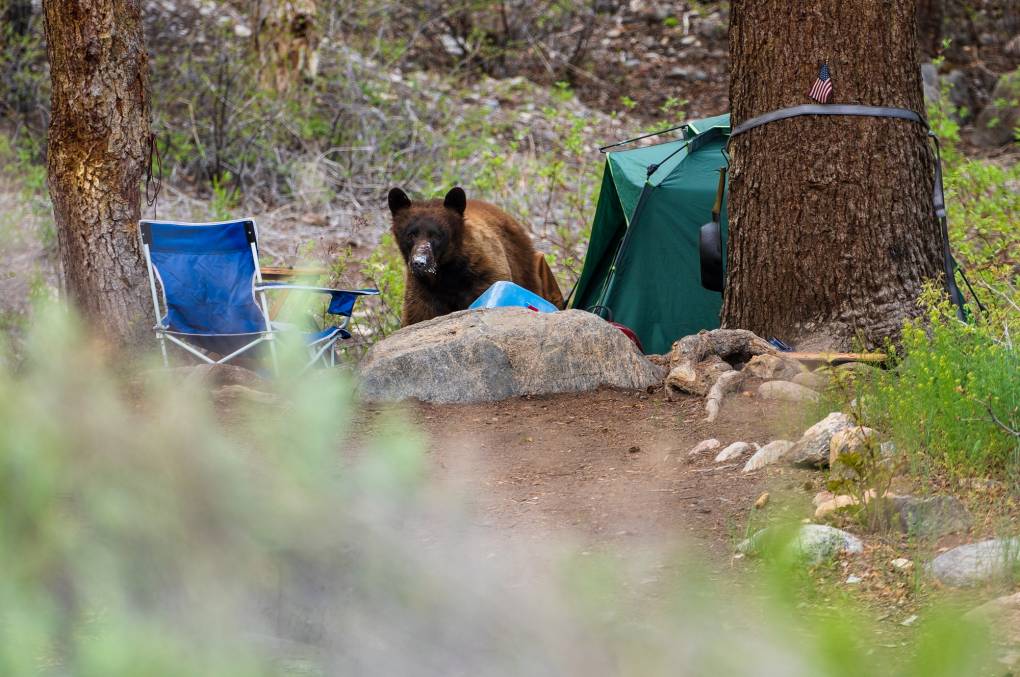
"caption": "A black bear enters a campsite in search of food. Making sure your food along with any scented items are kept in a bear box is a key way to reduce unwanted bear encounters while camping.",
"credit": "Getty Images",
"altTag": null,
"description": null,
"imgSizes": {
"medium": {
"file": "https://cdn.kqed.org/wp-content/uploads/sites/10/2024/08/BadBoyBearCamp-800x531.jpg",
"width": 800,
"height": 531,
"mimeType": "image/jpeg"
},
"large": {
"file": "https://cdn.kqed.org/wp-content/uploads/sites/10/2024/08/BadBoyBearCamp-1020x677.jpg",
"width": 1020,
"height": 677,
"mimeType": "image/jpeg"
},
"thumbnail": {
"file": "https://cdn.kqed.org/wp-content/uploads/sites/10/2024/08/BadBoyBearCamp-160x106.jpg",
"width": 160,
"height": 106,
"mimeType": "image/jpeg"
},
"1536x1536": {
"file": "https://cdn.kqed.org/wp-content/uploads/sites/10/2024/08/BadBoyBearCamp-1536x1019.jpg",
"width": 1536,
"height": 1019,
"mimeType": "image/jpeg"
},
"post-thumbnail": {
"file": "https://cdn.kqed.org/wp-content/uploads/sites/10/2024/08/BadBoyBearCamp-672x372.jpg",
"width": 672,
"height": 372,
"mimeType": "image/jpeg"
},
"twentyfourteen-full-width": {
"file": "https://cdn.kqed.org/wp-content/uploads/sites/10/2024/08/BadBoyBearCamp-1038x576.jpg",
"width": 1038,
"height": 576,
"mimeType": "image/jpeg"
},
"full-width": {
"file": "https://cdn.kqed.org/wp-content/uploads/sites/10/2024/08/BadBoyBearCamp-1920x1274.jpg",
"width": 1920,
"height": 1274,
"mimeType": "image/jpeg"
},
"kqedFullSize": {
"file": "https://cdn.kqed.org/wp-content/uploads/sites/10/2024/08/BadBoyBearCamp.jpg",
"width": 2000,
"height": 1327
}
},
"isLoading": false,
"fetchFailed": false
},
"news_12007456": {
"type": "attachments",
"id": "news_12007456",
"meta": {
"index": "attachments_1716263798",
"site": "news",
"id": "12007456",
"found": true
},
"title": "Beachgoers During Heat Wave At Crissy Field In San Francisco, California",
"publishDate": 1727893031,
"status": "inherit",
"parent": 11878134,
"modified": 1727893064,
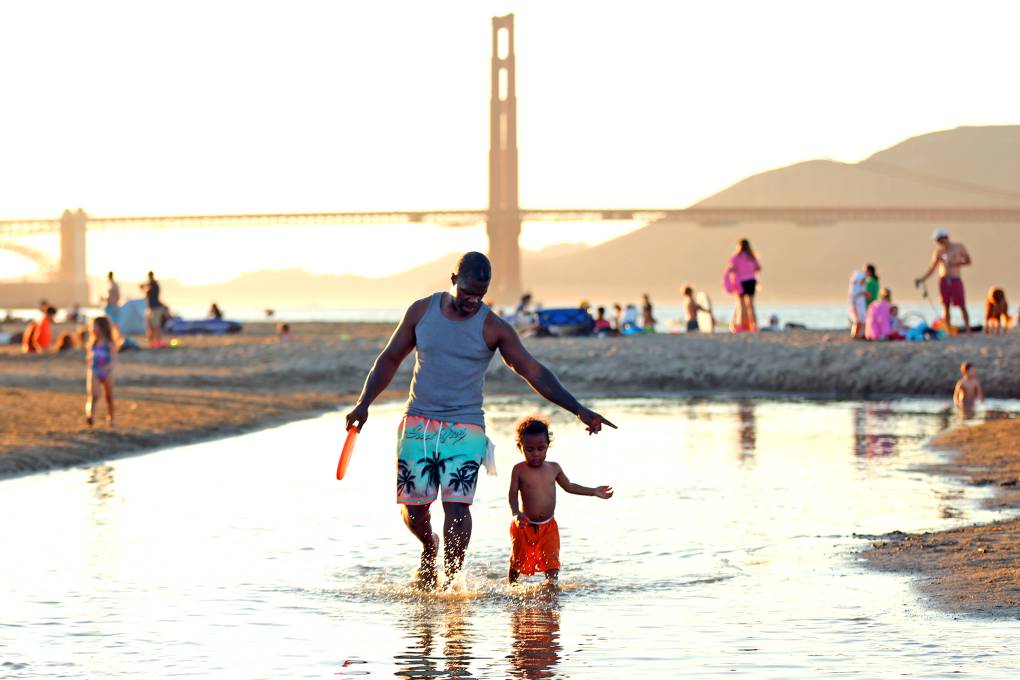
"caption": "Douglas Williams leads his son, DJ, 2, through a pool of water at Crissy Field in San Francisco on Tuesday, October 1, 2024. ",
"credit": "Scott Strazzante/San Francisco Chronicle via Getty Images",
"altTag": null,
"description": null,
"imgSizes": {
"medium": {
"file": "https://cdn.kqed.org/wp-content/uploads/sites/10/2024/09/GettyImages-2175344883-800x534.jpg",
"width": 800,
"height": 534,
"mimeType": "image/jpeg"
},
"large": {
"file": "https://cdn.kqed.org/wp-content/uploads/sites/10/2024/09/GettyImages-2175344883-1020x680.jpg",
"width": 1020,
"height": 680,
"mimeType": "image/jpeg"
},
"thumbnail": {
"file": "https://cdn.kqed.org/wp-content/uploads/sites/10/2024/09/GettyImages-2175344883-160x107.jpg",
"width": 160,
"height": 107,
"mimeType": "image/jpeg"
},
"1536x1536": {
"file": "https://cdn.kqed.org/wp-content/uploads/sites/10/2024/09/GettyImages-2175344883-1536x1025.jpg",
"width": 1536,
"height": 1025,
"mimeType": "image/jpeg"
},
"2048x2048": {
"file": "https://cdn.kqed.org/wp-content/uploads/sites/10/2024/09/GettyImages-2175344883-2048x1366.jpg",
"width": 2048,
"height": 1366,
"mimeType": "image/jpeg"
},
"post-thumbnail": {
"file": "https://cdn.kqed.org/wp-content/uploads/sites/10/2024/09/GettyImages-2175344883-672x372.jpg",
"width": 672,
"height": 372,
"mimeType": "image/jpeg"
},
"twentyfourteen-full-width": {
"file": "https://cdn.kqed.org/wp-content/uploads/sites/10/2024/09/GettyImages-2175344883-1038x576.jpg",
"width": 1038,
"height": 576,
"mimeType": "image/jpeg"
},
"full-width": {
"file": "https://cdn.kqed.org/wp-content/uploads/sites/10/2024/09/GettyImages-2175344883-1920x1281.jpg",
"width": 1920,
"height": 1281,
"mimeType": "image/jpeg"
},
"kqedFullSize": {
"file": "https://cdn.kqed.org/wp-content/uploads/sites/10/2024/09/GettyImages-2175344883-scaled-e1773420511511.jpg",
"width": 2000,
"height": 1334
}
},
"isLoading": false,
"fetchFailed": false
},
"news_12007304": {
"type": "attachments",
"id": "news_12007304",
"meta": {
"index": "attachments_1716263798",
"site": "news",
"id": "12007304",
"found": true
},
"title": "Fantastic Negrito performs on the Swan Stage during the Hardly Strictly Bluegrass Festival 2019 at Golden Gate Park in San Francisco, Calif., on Sunday, October 6, 2019",
"publishDate": 1727804307,
"status": "inherit",
"parent": 12007103,
"modified": 1727804434,
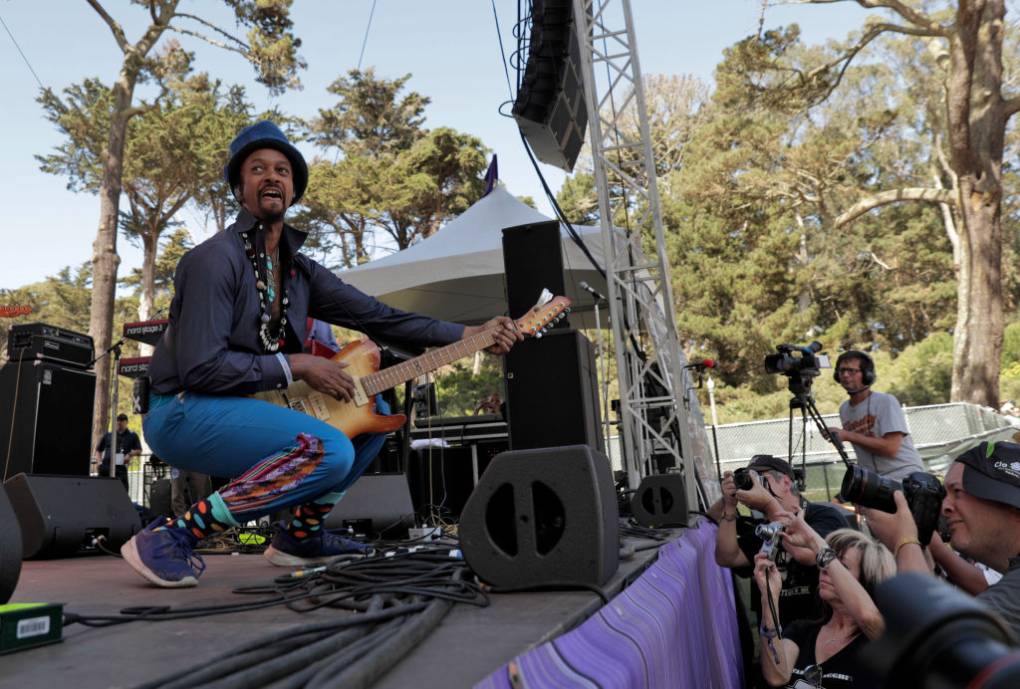
"caption": "Fantastic Negrito performs on the Swan Stage during the Hardly Strictly Bluegrass Festival 2019 at Golden Gate Park in San Francisco on Sunday, Oct. 6, 2019. ",
"credit": "Carlos Avila Gonzalez/The San Francisco Chronicle via Getty Images",
"altTag": "A Black man wearing blue pants and a dark shirt squats while playing a guitar on stage as people take pictures from below.",
"description": null,
"imgSizes": {
"medium": {
"file": "https://cdn.kqed.org/wp-content/uploads/sites/10/2024/10/GettyImages-1409103744-800x541.jpg",
"width": 800,
"height": 541,
"mimeType": "image/jpeg"
},
"large": {
"file": "https://cdn.kqed.org/wp-content/uploads/sites/10/2024/10/GettyImages-1409103744-1020x689.jpg",
"width": 1020,
"height": 689,
"mimeType": "image/jpeg"
},
"thumbnail": {
"file": "https://cdn.kqed.org/wp-content/uploads/sites/10/2024/10/GettyImages-1409103744-160x108.jpg",
"width": 160,
"height": 108,
"mimeType": "image/jpeg"
},
"post-thumbnail": {
"file": "https://cdn.kqed.org/wp-content/uploads/sites/10/2024/10/GettyImages-1409103744-672x372.jpg",
"width": 672,
"height": 372,
"mimeType": "image/jpeg"
},
"twentyfourteen-full-width": {
"file": "https://cdn.kqed.org/wp-content/uploads/sites/10/2024/10/GettyImages-1409103744-1024x576.jpg",
"width": 1024,
"height": 576,
"mimeType": "image/jpeg"
},
"kqedFullSize": {
"file": "https://cdn.kqed.org/wp-content/uploads/sites/10/2024/10/GettyImages-1409103744.jpg",
"width": 1024,
"height": 692
}
},
"isLoading": false,
"fetchFailed": false
},
"news_12007005": {
"type": "attachments",
"id": "news_12007005",
"meta": {
"index": "attachments_1716263798",
"site": "news",
"id": "12007005",
"found": true
},
"title": "College savings jar full of coins",
"publishDate": 1727494310,
"status": "inherit",
"parent": 12006867,
"modified": 1727494608,
"caption": "It's generally suggested that families start saving early, years before their children begin college – even if it’s in small amounts.",
"credit": "Getty Images",
"altTag": "A glass jar full of change labeled 'College.'",
"description": null,
"imgSizes": {
"medium": {
"file": "https://cdn.kqed.org/wp-content/uploads/sites/10/2024/09/GettyImages-610976620-800x533.jpg",
"width": 800,
"height": 533,
"mimeType": "image/jpeg"
},
"large": {
"file": "https://cdn.kqed.org/wp-content/uploads/sites/10/2024/09/GettyImages-610976620-1020x680.jpg",
"width": 1020,
"height": 680,
"mimeType": "image/jpeg"
},
"thumbnail": {
"file": "https://cdn.kqed.org/wp-content/uploads/sites/10/2024/09/GettyImages-610976620-160x107.jpg",
"width": 160,
"height": 107,
"mimeType": "image/jpeg"
},
"1536x1536": {
"file": "https://cdn.kqed.org/wp-content/uploads/sites/10/2024/09/GettyImages-610976620-1536x1024.jpg",
"width": 1536,
"height": 1024,
"mimeType": "image/jpeg"
},
"2048x2048": {
"file": "https://cdn.kqed.org/wp-content/uploads/sites/10/2024/09/GettyImages-610976620-2048x1365.jpg",
"width": 2048,
"height": 1365,
"mimeType": "image/jpeg"
},
"post-thumbnail": {
"file": "https://cdn.kqed.org/wp-content/uploads/sites/10/2024/09/GettyImages-610976620-672x372.jpg",
"width": 672,
"height": 372,
"mimeType": "image/jpeg"
},
"twentyfourteen-full-width": {
"file": "https://cdn.kqed.org/wp-content/uploads/sites/10/2024/09/GettyImages-610976620-1038x576.jpg",
"width": 1038,
"height": 576,
"mimeType": "image/jpeg"
},
"full-width": {
"file": "https://cdn.kqed.org/wp-content/uploads/sites/10/2024/09/GettyImages-610976620-1920x1280.jpg",
"width": 1920,
"height": 1280,
"mimeType": "image/jpeg"
},
"kqedFullSize": {
"file": "https://cdn.kqed.org/wp-content/uploads/sites/10/2024/09/GettyImages-610976620.jpg",
"width": 2121,
"height": 1414
}
},
"isLoading": false,
"fetchFailed": false
},
"news_12006696": {
"type": "attachments",
"id": "news_12006696",
"meta": {
"index": "attachments_1716263798",
"site": "news",
"id": "12006696",
"found": true
},
"title": "covid-nimbus-variant-razor-blade-throat",
"publishDate": 1727387407,
"status": "inherit",
"parent": 12006600,
"modified": 1752685623,
"caption": "What to know about COVID symptoms, testing and incubation in 2025. ",
"credit": "Jens Kalaene/picture alliance via Getty Images",
"altTag": "An antigen test to detect COVID-19 for self-testing is on a red FFP-2 mask.",
"description": null,
"imgSizes": {
"medium": {
"file": "https://cdn.kqed.org/wp-content/uploads/sites/10/2024/09/GettyImages-1668874864-800x507.jpg",
"width": 800,
"height": 507,
"mimeType": "image/jpeg"
},
"large": {
"file": "https://cdn.kqed.org/wp-content/uploads/sites/10/2024/09/GettyImages-1668874864-1020x646.jpg",
"width": 1020,
"height": 646,
"mimeType": "image/jpeg"
},
"thumbnail": {
"file": "https://cdn.kqed.org/wp-content/uploads/sites/10/2024/09/GettyImages-1668874864-160x101.jpg",
"width": 160,
"height": 101,
"mimeType": "image/jpeg"
},
"post-thumbnail": {
"file": "https://cdn.kqed.org/wp-content/uploads/sites/10/2024/09/GettyImages-1668874864-672x372.jpg",
"width": 672,
"height": 372,
"mimeType": "image/jpeg"
},
"twentyfourteen-full-width": {
"file": "https://cdn.kqed.org/wp-content/uploads/sites/10/2024/09/GettyImages-1668874864-1024x576.jpg",
"width": 1024,
"height": 576,
"mimeType": "image/jpeg"
},
"kqedFullSize": {
"file": "https://cdn.kqed.org/wp-content/uploads/sites/10/2024/09/GettyImages-1668874864.jpg",
"width": 1024,
"height": 649
}
},
"isLoading": false,
"fetchFailed": false
},
"news_12005996": {
"type": "attachments",
"id": "news_12005996",
"meta": {
"index": "attachments_1716263798",
"site": "news",
"id": "12005996",
"found": true
},
"title": "012",
"publishDate": 1727132043,
"status": "inherit",
"parent": 12005960,
"modified": 1731091192,
"caption": "Rainbow flags line the plaza in front of the San Francisco City Hall on June 26, 2013, following the rulings brought down by the Supreme Court on same sex marriage.",
"credit": "Deborah Svoboda/KQED",
"altTag": "A row of flagpoles displaying rainbow flags stands in front of San Francisco City Hall.",
"description": null,
"imgSizes": {
"medium": {
"file": "https://cdn.kqed.org/wp-content/uploads/sites/10/2024/09/012-800x533.jpg",
"width": 800,
"height": 533,
"mimeType": "image/jpeg"
},
"large": {
"file": "https://cdn.kqed.org/wp-content/uploads/sites/10/2024/09/012-1020x680.jpg",
"width": 1020,
"height": 680,
"mimeType": "image/jpeg"
},
"thumbnail": {
"file": "https://cdn.kqed.org/wp-content/uploads/sites/10/2024/09/012-160x107.jpg",
"width": 160,
"height": 107,
"mimeType": "image/jpeg"
},
"1536x1536": {
"file": "https://cdn.kqed.org/wp-content/uploads/sites/10/2024/09/012-1536x1024.jpg",
"width": 1536,
"height": 1024,
"mimeType": "image/jpeg"
},
"post-thumbnail": {
"file": "https://cdn.kqed.org/wp-content/uploads/sites/10/2024/09/012-672x372.jpg",
"width": 672,
"height": 372,
"mimeType": "image/jpeg"
},
"twentyfourteen-full-width": {
"file": "https://cdn.kqed.org/wp-content/uploads/sites/10/2024/09/012-1038x576.jpg",
"width": 1038,
"height": 576,
"mimeType": "image/jpeg"
},
"full-width": {
"file": "https://cdn.kqed.org/wp-content/uploads/sites/10/2024/09/012-1920x1280.jpg",
"width": 1920,
"height": 1280,
"mimeType": "image/jpeg"
},
"kqedFullSize": {
"file": "https://cdn.kqed.org/wp-content/uploads/sites/10/2024/09/012.jpg",
"width": 2000,
"height": 1333
}
},
"isLoading": false,
"fetchFailed": false
},
"news_12005302": {
"type": "attachments",
"id": "news_12005302",
"meta": {
"index": "attachments_1716263798",
"site": "news",
"id": "12005302",
"found": true
},
"title": "can-my-landlord-keep-my-security-deposit",
"publishDate": 1726692566,
"status": "inherit",
"parent": 12005287,
"modified": 1726693688,
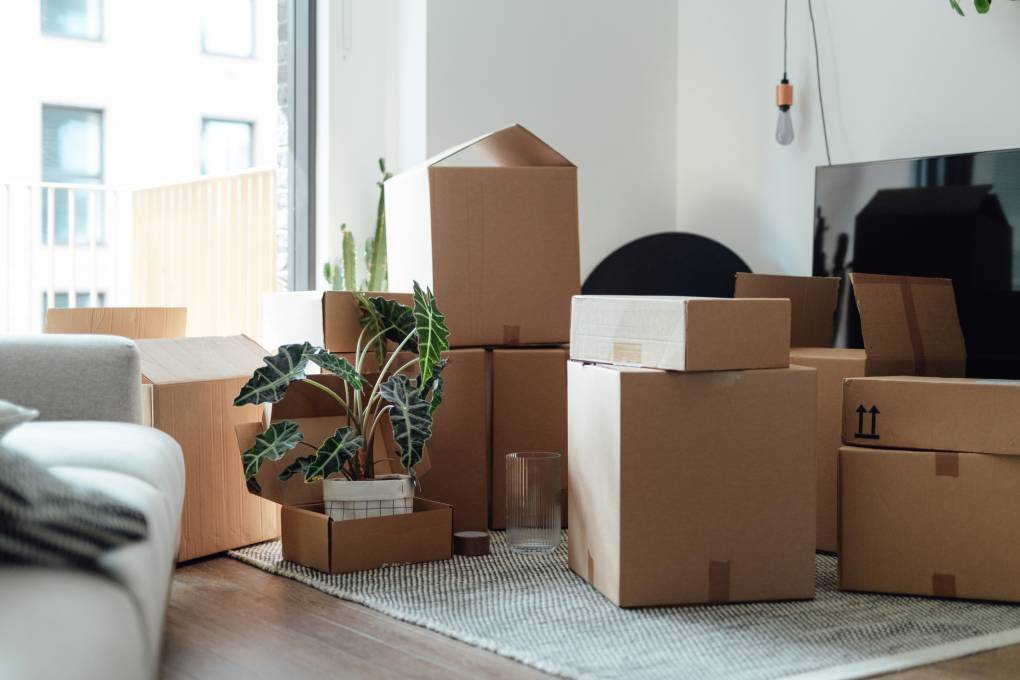
"caption": "What can you do if your landlord wants to keep your security deposit?",
"credit": "Oscar Wong via Getty Images",
"altTag": "Stacking of cardboard boxes and a potted plant in the living room of a house.",
"description": null,
"imgSizes": {
"medium": {
"file": "https://cdn.kqed.org/wp-content/uploads/sites/10/2024/09/GettyImages-1454882740-800x533.jpg",
"width": 800,
"height": 533,
"mimeType": "image/jpeg"
},
"large": {
"file": "https://cdn.kqed.org/wp-content/uploads/sites/10/2024/09/GettyImages-1454882740-1020x680.jpg",
"width": 1020,
"height": 680,
"mimeType": "image/jpeg"
},
"thumbnail": {
"file": "https://cdn.kqed.org/wp-content/uploads/sites/10/2024/09/GettyImages-1454882740-160x107.jpg",
"width": 160,
"height": 107,
"mimeType": "image/jpeg"
},
"1536x1536": {
"file": "https://cdn.kqed.org/wp-content/uploads/sites/10/2024/09/GettyImages-1454882740-1536x1024.jpg",
"width": 1536,
"height": 1024,
"mimeType": "image/jpeg"
},
"2048x2048": {
"file": "https://cdn.kqed.org/wp-content/uploads/sites/10/2024/09/GettyImages-1454882740-2048x1365.jpg",
"width": 2048,
"height": 1365,
"mimeType": "image/jpeg"
},
"post-thumbnail": {
"file": "https://cdn.kqed.org/wp-content/uploads/sites/10/2024/09/GettyImages-1454882740-672x372.jpg",
"width": 672,
"height": 372,
"mimeType": "image/jpeg"
},
"twentyfourteen-full-width": {
"file": "https://cdn.kqed.org/wp-content/uploads/sites/10/2024/09/GettyImages-1454882740-1038x576.jpg",
"width": 1038,
"height": 576,
"mimeType": "image/jpeg"
},
"full-width": {
"file": "https://cdn.kqed.org/wp-content/uploads/sites/10/2024/09/GettyImages-1454882740-1920x1280.jpg",
"width": 1920,
"height": 1280,
"mimeType": "image/jpeg"
},
"kqedFullSize": {
"file": "https://cdn.kqed.org/wp-content/uploads/sites/10/2024/09/GettyImages-1454882740.jpg",
"width": 2121,
"height": 1414
}
},
"isLoading": false,
"fetchFailed": false
},
"news_12004767": {
"type": "attachments",
"id": "news_12004767",
"meta": {
"index": "attachments_1716263798",
"site": "news",
"id": "12004767",
"found": true
},
"title": "Asian voter voting in polling place",
"publishDate": 1726267383,
"status": "inherit",
"parent": 12004754,
"modified": 1726267404,
"caption": null,
"credit": "Hill Street Studios/Getty Images",
"altTag": null,
"description": null,
"imgSizes": {
"medium": {
"file": "https://cdn.kqed.org/wp-content/uploads/sites/10/2024/09/GettyImages-138711407-800x533.jpg",
"width": 800,
"height": 533,
"mimeType": "image/jpeg"
},
"large": {
"file": "https://cdn.kqed.org/wp-content/uploads/sites/10/2024/09/GettyImages-138711407-1020x680.jpg",
"width": 1020,
"height": 680,
"mimeType": "image/jpeg"
},
"thumbnail": {
"file": "https://cdn.kqed.org/wp-content/uploads/sites/10/2024/09/GettyImages-138711407-160x107.jpg",
"width": 160,
"height": 107,
"mimeType": "image/jpeg"
},
"1536x1536": {
"file": "https://cdn.kqed.org/wp-content/uploads/sites/10/2024/09/GettyImages-138711407-1536x1024.jpg",
"width": 1536,
"height": 1024,
"mimeType": "image/jpeg"
},
"2048x2048": {
"file": "https://cdn.kqed.org/wp-content/uploads/sites/10/2024/09/GettyImages-138711407-2048x1365.jpg",
"width": 2048,
"height": 1365,
"mimeType": "image/jpeg"
},
"post-thumbnail": {
"file": "https://cdn.kqed.org/wp-content/uploads/sites/10/2024/09/GettyImages-138711407-672x372.jpg",
"width": 672,
"height": 372,
"mimeType": "image/jpeg"
},
"twentyfourteen-full-width": {
"file": "https://cdn.kqed.org/wp-content/uploads/sites/10/2024/09/GettyImages-138711407-1038x576.jpg",
"width": 1038,
"height": 576,
"mimeType": "image/jpeg"
},
"full-width": {
"file": "https://cdn.kqed.org/wp-content/uploads/sites/10/2024/09/GettyImages-138711407-1920x1280.jpg",
"width": 1920,
"height": 1280,
"mimeType": "image/jpeg"
},
"kqedFullSize": {
"file": "https://cdn.kqed.org/wp-content/uploads/sites/10/2024/09/GettyImages-138711407.jpg",
"width": 2121,
"height": 1414
}
},
"isLoading": false,
"fetchFailed": false
},
"news_12004531": {
"type": "attachments",
"id": "news_12004531",
"meta": {
"index": "attachments_1716263798",
"site": "news",
"id": "12004531",
"found": true
},
"title": "oakland-athletics-last-games-moving",
"publishDate": 1726168282,
"status": "inherit",
"parent": 12004485,
"modified": 1726174138,
"caption": "An Oakland Athletics fan sits in the upper deck during a regular season game between the Chicago White Sox and Oakland Athletics on July 2, 2023, at RingCentral Coliseum in Oakland. ",
"credit": "Brandon Sloter/Icon Sportswire via Getty Images",
"altTag": "A man wearing a green and yellow cap sits alone in the upper deck seats of a stadium.",
"description": null,
"imgSizes": {
"medium": {
"file": "https://cdn.kqed.org/wp-content/uploads/sites/10/2024/09/GettyImages-1425516638-800x534.jpg",
"width": 800,
"height": 534,
"mimeType": "image/jpeg"
},
"large": {
"file": "https://cdn.kqed.org/wp-content/uploads/sites/10/2024/09/GettyImages-1425516638-1020x680.jpg",
"width": 1020,
"height": 680,
"mimeType": "image/jpeg"
},
"thumbnail": {
"file": "https://cdn.kqed.org/wp-content/uploads/sites/10/2024/09/GettyImages-1425516638-160x107.jpg",
"width": 160,
"height": 107,
"mimeType": "image/jpeg"
},
"post-thumbnail": {
"file": "https://cdn.kqed.org/wp-content/uploads/sites/10/2024/09/GettyImages-1425516638-672x372.jpg",
"width": 672,
"height": 372,
"mimeType": "image/jpeg"
},
"twentyfourteen-full-width": {
"file": "https://cdn.kqed.org/wp-content/uploads/sites/10/2024/09/GettyImages-1425516638-1024x576.jpg",
"width": 1024,
"height": 576,
"mimeType": "image/jpeg"
},
"kqedFullSize": {
"file": "https://cdn.kqed.org/wp-content/uploads/sites/10/2024/09/GettyImages-1425516638.jpg",
"width": 1024,
"height": 683
}
},
"isLoading": false,
"fetchFailed": false
},
"news_12003860": {
"type": "attachments",
"id": "news_12003860",
"meta": {
"index": "attachments_1716263798",
"site": "news",
"id": "12003860",
"found": true
},
"title": "Senior US citizen signing up for voting with help of black female volunteer at polling place.",
"publishDate": 1725998163,
"status": "inherit",
"parent": 12003124,
"modified": 1743281613,
"caption": "While voting by noncitizens does occur, it typically involves a tiny fraction of ballots and is more often an individual mistake rather than an intentional and coordinated attempt to subvert an election. ",
"credit": "Drazen Zigic via iStock/Getty Images Plus",
"altTag": "A Black woman assists a senior white man in signing up to vote for the elections.",
"description": null,
"imgSizes": {
"medium": {
"file": "https://cdn.kqed.org/wp-content/uploads/sites/10/2024/09/GettyImages-2042931083-800x533.jpg",
"width": 800,
"height": 533,
"mimeType": "image/jpeg"
},
"large": {
"file": "https://cdn.kqed.org/wp-content/uploads/sites/10/2024/09/GettyImages-2042931083-1020x680.jpg",
"width": 1020,
"height": 680,
"mimeType": "image/jpeg"
},
"thumbnail": {
"file": "https://cdn.kqed.org/wp-content/uploads/sites/10/2024/09/GettyImages-2042931083-160x107.jpg",
"width": 160,
"height": 107,
"mimeType": "image/jpeg"
},
"1536x1536": {
"file": "https://cdn.kqed.org/wp-content/uploads/sites/10/2024/09/GettyImages-2042931083-1536x1024.jpg",
"width": 1536,
"height": 1024,
"mimeType": "image/jpeg"
},
"2048x2048": {
"file": "https://cdn.kqed.org/wp-content/uploads/sites/10/2024/09/GettyImages-2042931083-2048x1365.jpg",
"width": 2048,
"height": 1365,
"mimeType": "image/jpeg"
},
"post-thumbnail": {
"file": "https://cdn.kqed.org/wp-content/uploads/sites/10/2024/09/GettyImages-2042931083-672x372.jpg",
"width": 672,
"height": 372,
"mimeType": "image/jpeg"
},
"twentyfourteen-full-width": {
"file": "https://cdn.kqed.org/wp-content/uploads/sites/10/2024/09/GettyImages-2042931083-1038x576.jpg",
"width": 1038,
"height": 576,
"mimeType": "image/jpeg"
},
"full-width": {
"file": "https://cdn.kqed.org/wp-content/uploads/sites/10/2024/09/GettyImages-2042931083-1920x1280.jpg",
"width": 1920,
"height": 1280,
"mimeType": "image/jpeg"
},
"kqedFullSize": {
"file": "https://cdn.kqed.org/wp-content/uploads/sites/10/2024/09/GettyImages-2042931083.jpg",
"width": 2121,
"height": 1414
}
},
"isLoading": false,
"fetchFailed": false
},
"news_11875482": {
"type": "attachments",
"id": "news_11875482",
"meta": {
"index": "attachments_1716263798",
"site": "news",
"id": "11875482",
"found": true
},
"parent": 11764070,
"imgSizes": {
"twentyfourteen-full-width": {
"file": "https://ww2.kqed.org/app/uploads/sites/10/2019/07/pexels-ketut-subiyanto-4473797-1038x576.jpg",
"width": 1038,
"mimeType": "image/jpeg",
"height": 576
},
"thumbnail": {
"file": "https://ww2.kqed.org/app/uploads/sites/10/2019/07/pexels-ketut-subiyanto-4473797-160x107.jpg",
"width": 160,
"mimeType": "image/jpeg",
"height": 107
},
"post-thumbnail": {
"file": "https://ww2.kqed.org/app/uploads/sites/10/2019/07/pexels-ketut-subiyanto-4473797-672x372.jpg",
"width": 672,
"mimeType": "image/jpeg",
"height": 372
},
"kqedFullSize": {
"file": "https://ww2.kqed.org/app/uploads/sites/10/2019/07/pexels-ketut-subiyanto-4473797.jpg",
"width": 1920,
"height": 1280
},
"large": {
"file": "https://ww2.kqed.org/app/uploads/sites/10/2019/07/pexels-ketut-subiyanto-4473797-1020x680.jpg",
"width": 1020,
"mimeType": "image/jpeg",
"height": 680
},
"1536x1536": {
"file": "https://ww2.kqed.org/app/uploads/sites/10/2019/07/pexels-ketut-subiyanto-4473797-1536x1024.jpg",
"width": 1536,
"mimeType": "image/jpeg",
"height": 1024
},
"medium": {
"file": "https://ww2.kqed.org/app/uploads/sites/10/2019/07/pexels-ketut-subiyanto-4473797-800x533.jpg",
"width": 800,
"mimeType": "image/jpeg",
"height": 533
}
},
"publishDate": 1622058072,
"modified": 1674620884,
"caption": "When traumatic events like shootings are in the news, how should you best discuss them with kids — or, given their age, should you?",
"description": null,
"title": "pexels-ketut-subiyanto-4473797",
"credit": "Ketut Subiyanto/Pexels",
"status": "inherit",
"altTag": "A woman and a child lie facing each other on their sides, talking",
"isLoading": false,
"fetchFailed": false
},
"news_12002982": {
"type": "attachments",
"id": "news_12002982",
"meta": {
"index": "attachments_1716263798",
"site": "news",
"id": "12002982",
"found": true
},
"title": "Increase In Housing Starts At End Of Year Signals Housing Market Recovery",
"publishDate": 1725469759,
"status": "inherit",
"parent": 12002901,
"modified": 1725471299,
"caption": "A worker carries lumber as he builds a new home on January 21, 2015, in Petaluma.",
"credit": "Justin Sullivan/Getty Images",
"altTag": "Two men dressed in construction uniforms carry large pieces of wood at a construction site for a house.",
"description": null,
"imgSizes": {
"medium": {
"file": "https://cdn.kqed.org/wp-content/uploads/sites/10/2024/09/GettyImages-461907968-800x552.jpg",
"width": 800,
"height": 552,
"mimeType": "image/jpeg"
},
"large": {
"file": "https://cdn.kqed.org/wp-content/uploads/sites/10/2024/09/GettyImages-461907968-1020x703.jpg",
"width": 1020,
"height": 703,
"mimeType": "image/jpeg"
},
"thumbnail": {
"file": "https://cdn.kqed.org/wp-content/uploads/sites/10/2024/09/GettyImages-461907968-160x110.jpg",
"width": 160,
"height": 110,
"mimeType": "image/jpeg"
},
"post-thumbnail": {
"file": "https://cdn.kqed.org/wp-content/uploads/sites/10/2024/09/GettyImages-461907968-672x372.jpg",
"width": 672,
"height": 372,
"mimeType": "image/jpeg"
},
"twentyfourteen-full-width": {
"file": "https://cdn.kqed.org/wp-content/uploads/sites/10/2024/09/GettyImages-461907968-1024x576.jpg",
"width": 1024,
"height": 576,
"mimeType": "image/jpeg"
},
"kqedFullSize": {
"file": "https://cdn.kqed.org/wp-content/uploads/sites/10/2024/09/GettyImages-461907968.jpg",
"width": 1024,
"height": 706
}
},
"isLoading": false,
"fetchFailed": false
}
},
"audioPlayerReducer": {
"postId": "stream_live",
"isPaused": true,
"isPlaying": false,
"pfsActive": false,
"pledgeModalIsOpen": true,
"playerDrawerIsOpen": false,
"liveAudioPlayStartedAt": 0,
"liveAudioPlayContext": ""
},
"authorsReducer": {
"ohubertallen": {
"type": "authors",
"id": "102",
"meta": {
"index": "authors_1716337520",
"id": "102",
"found": true
},
"name": "Olivia Allen-Price",
"firstName": "Olivia",
"lastName": "Allen-Price",
"slug": "ohubertallen",
"email": "oallenprice@kqed.org",
"display_author_email": false,
"staff_mastheads": [
"news"
],
"title": "Senior Editor",
"bio": "Olivia Allen-Price is senior editor and host of the award-winning Bay Curious podcast. Prior to joining KQED in 2013, Olivia worked at The Baltimore Sun and The Virginian-Pilot in Norfolk, Va. She holds degrees in journalism and political science from Elon University. Her work has earned awards from the Society of Professional Journalists, the Hearst Foundation and Hearken. She loves to talk about running and curly hair.\r\n\r\nFollow: \u003ca href=\"https://twitter.com/oallenprice\">@oallenprice\u003c/a>\r\nEmail: \u003ca href=\"mailto:oallenprice@kqed.org\">oallenprice@kqed.org\u003c/a>",
"avatar": "https://secure.gravatar.com/avatar/07f7803c1f6be56f3be58ef276dfa64dce898502e0554408ef4858451a8294f7?s=600&d=blank&r=g",
"twitter": "oallenprice",
"bluesky": null,
"facebook": null,
"instagram": null,
"linkedin": null,
"sites": [
{
"site": "",
"roles": [
"editor"
]
},
{
"site": "arts",
"roles": [
"subscriber"
]
},
{
"site": "news",
"roles": [
"administrator"
]
},
{
"site": "pop",
"roles": [
"administrator"
]
},
{
"site": "bayareabites",
"roles": [
"contributor"
]
},
{
"site": "stateofhealth",
"roles": [
"administrator"
]
},
{
"site": "science",
"roles": [
"editor"
]
}
],
"headData": {
"title": "Olivia Allen-Price | KQED",
"description": "Senior Editor",
"ogImgSrc": "https://secure.gravatar.com/avatar/07f7803c1f6be56f3be58ef276dfa64dce898502e0554408ef4858451a8294f7?s=600&d=blank&r=g",
"twImgSrc": "https://secure.gravatar.com/avatar/07f7803c1f6be56f3be58ef276dfa64dce898502e0554408ef4858451a8294f7?s=600&d=blank&r=g"
},
"isLoading": false,
"link": "/author/ohubertallen"
},
"kqed": {
"type": "authors",
"id": "236",
"meta": {
"index": "authors_1716337520",
"id": "236",
"found": true
},
"name": "KQED News Staff",
"firstName": "KQED News Staff",
"lastName": null,
"slug": "kqed",
"email": "faq@kqed.org",
"display_author_email": false,
"staff_mastheads": [],
"title": null,
"bio": null,
"avatar": "https://secure.gravatar.com/avatar/ef0e801a68c4c54afa9180db14084167?s=600&d=blank&r=g",
"twitter": null,
"facebook": null,
"instagram": null,
"linkedin": null,
"sites": [
{
"site": "arts",
"roles": [
"contributor"
]
},
{
"site": "news",
"roles": [
"editor"
]
},
{
"site": "futureofyou",
"roles": [
"author"
]
}
],
"headData": {
"title": "KQED News Staff | KQED",
"description": null,
"ogImgSrc": "https://secure.gravatar.com/avatar/ef0e801a68c4c54afa9180db14084167?s=600&d=blank&r=g",
"twImgSrc": "https://secure.gravatar.com/avatar/ef0e801a68c4c54afa9180db14084167?s=600&d=blank&r=g"
},
"isLoading": false,
"link": "/author/kqed"
},
"scottshafer": {
"type": "authors",
"id": "255",
"meta": {
"index": "authors_1716337520",
"id": "255",
"found": true
},
"name": "Scott Shafer",
"firstName": "Scott",
"lastName": "Shafer",
"slug": "scottshafer",
"email": "sshafer@kqed.org",
"display_author_email": false,
"staff_mastheads": [
"news"
],
"title": "KQED Contributor",
"bio": "Scott Shafer is a senior editor with the KQED Politics and Government desk. He is co-host of Political Breakdown, the award-winning radio show and podcast with a personal take on the world of politics. Scott came to KQED in 1998 to host the statewide\u003cem> California Report\u003c/em>. Prior to that he had extended stints in politics and government\u003cem>.\u003c/em> He uses that inside experience at KQED in his, reporting, hosting and analysis for the politics desk. Scott collaborated \u003cem>Political Breakdown a\u003c/em>nd on \u003cem>The Political Mind of Jerry Brown, \u003c/em>an eight-part series about the life and extraordinary political career of the former governor. For fun, he plays water polo with the San Francisco Tsunami.",
"avatar": "https://secure.gravatar.com/avatar/a62ebae45b79d7aed1a39a0e3bf68104?s=600&d=blank&r=g",
"twitter": "scottshafer",
"bluesky": null,
"facebook": null,
"instagram": null,
"linkedin": null,
"sites": [
{
"site": "news",
"roles": [
"editor"
]
},
{
"site": "stateofhealth",
"roles": [
"author"
]
},
{
"site": "science",
"roles": [
"author"
]
},
{
"site": "forum",
"roles": [
"subscriber"
]
},
{
"site": "liveblog",
"roles": [
"author"
]
}
],
"headData": {
"title": "Scott Shafer | KQED",
"description": "KQED Contributor",
"ogImgSrc": "https://secure.gravatar.com/avatar/a62ebae45b79d7aed1a39a0e3bf68104?s=600&d=blank&r=g",
"twImgSrc": "https://secure.gravatar.com/avatar/a62ebae45b79d7aed1a39a0e3bf68104?s=600&d=blank&r=g"
},
"isLoading": false,
"link": "/author/scottshafer"
},
"carlysevern": {
"type": "authors",
"id": "3243",
"meta": {
"index": "authors_1716337520",
"id": "3243",
"found": true
},
"name": "Carly Severn",
"firstName": "Carly",
"lastName": "Severn",
"slug": "carlysevern",
"email": "csevern@kqed.org",
"display_author_email": false,
"staff_mastheads": [
"news"
],
"title": "Senior Editor, Audience News ",
"bio": "Carly is KQED's Senior Editor of Audience News on the Digital News team, and has reported for the California Report Magazine, Bay Curious and KQED Arts. She's formerly the host of \u003ca href=\"http://ww2.kqed.org/pop/category/the-cooler/\" rel=\"noopener noreferrer\">The Cooler\u003c/a> podcast.",
"avatar": "https://secure.gravatar.com/avatar/54037bf5c128fe678f0ef26cec97a93f2e7f220a22d7285703328f12c42c1b1d?s=600&d=blank&r=g",
"twitter": "teacupinthebay",
"bluesky": null,
"facebook": null,
"instagram": null,
"linkedin": null,
"sites": [
{
"site": "",
"roles": [
"editor"
]
},
{
"site": "arts",
"roles": [
"editor"
]
},
{
"site": "news",
"roles": [
"administrator"
]
},
{
"site": "pop",
"roles": [
"editor"
]
},
{
"site": "futureofyou",
"roles": [
"editor"
]
},
{
"site": "about",
"roles": [
"administrator"
]
},
{
"site": "mindshift",
"roles": [
"editor"
]
},
{
"site": "bayareabites",
"roles": [
"editor"
]
},
{
"site": "stateofhealth",
"roles": [
"editor"
]
},
{
"site": "science",
"roles": [
"editor"
]
},
{
"site": "food",
"roles": [
"contributor"
]
},
{
"site": "forum",
"roles": [
"editor"
]
},
{
"site": "perspectives",
"roles": [
"administrator"
]
},
{
"site": "liveblog",
"roles": [
"editor"
]
}
],
"headData": {
"title": "Carly Severn | KQED",
"description": "Senior Editor, Audience News ",
"ogImgSrc": "https://secure.gravatar.com/avatar/54037bf5c128fe678f0ef26cec97a93f2e7f220a22d7285703328f12c42c1b1d?s=600&d=blank&r=g",
"twImgSrc": "https://secure.gravatar.com/avatar/54037bf5c128fe678f0ef26cec97a93f2e7f220a22d7285703328f12c42c1b1d?s=600&d=blank&r=g"
},
"isLoading": false,
"link": "/author/carlysevern"
},
"ksung": {
"type": "authors",
"id": "4596",
"meta": {
"index": "authors_1716337520",
"id": "4596",
"found": true
},
"name": "Ki Sung",
"firstName": "Ki",
"lastName": "Sung",
"slug": "ksung",
"email": "ksung@kqed.org",
"display_author_email": false,
"staff_mastheads": [
"news"
],
"title": "KQED Contributor",
"bio": "Ki Sung is Managing Editor of Digital News at KQED. She is former Senior Editor of MindShift and worked at NPR before joining KQED in 2014.",
"avatar": "https://secure.gravatar.com/avatar/64271e01dc95486c133be56937739045b7c00c990525bf9add12d3dd4f0433c9?s=600&d=blank&r=g",
"twitter": null,
"bluesky": null,
"facebook": null,
"instagram": null,
"linkedin": null,
"sites": [
{
"site": "news",
"roles": [
"editor"
]
},
{
"site": "mindshift",
"roles": [
"administrator"
]
},
{
"site": "elections",
"roles": [
"administrator"
]
}
],
"headData": {
"title": "Ki Sung | KQED",
"description": "KQED Contributor",
"ogImgSrc": "https://secure.gravatar.com/avatar/64271e01dc95486c133be56937739045b7c00c990525bf9add12d3dd4f0433c9?s=600&d=blank&r=g",
"twImgSrc": "https://secure.gravatar.com/avatar/64271e01dc95486c133be56937739045b7c00c990525bf9add12d3dd4f0433c9?s=600&d=blank&r=g"
},
"isLoading": false,
"link": "/author/ksung"
},
"afont": {
"type": "authors",
"id": "8637",
"meta": {
"index": "authors_1716337520",
"id": "8637",
"found": true
},
"name": "Amanda Font",
"firstName": "Amanda",
"lastName": "Font",
"slug": "afont",
"email": "afont@kqed.org",
"display_author_email": false,
"staff_mastheads": [],
"title": "KQED Contributor",
"bio": "Amanda Font is a producer on \u003cem>The Latest\u003c/em> podcast, and the host and co-producer of the series \u003cem>Audible Cosmos\u003c/em>. She has previously worked as a producer and reporter on the \u003cem>Bay Curious\u003c/em> podcast, and director of \u003cem>The California Report Magazine\u003c/em>. She grew up in the deserts of Southern California and moved north for the trees. Amanda earned a B.A. from the BECA program at San Francisco State, where she worked in the university's radio station. Amanda Font is represented by SAG-AFTRA.",
"avatar": "https://secure.gravatar.com/avatar/d9e81cf0117d5849b9cfb7ab4b1422f1?s=600&d=blank&r=g",
"twitter": null,
"facebook": null,
"instagram": null,
"linkedin": null,
"sites": [
{
"site": "news",
"roles": [
"add_users",
"create_users"
]
},
{
"site": "science",
"roles": []
},
{
"site": "forum",
"roles": [
"administrator"
]
},
{
"site": "perspectives",
"roles": [
"administrator"
]
},
{
"site": "radio",
"roles": [
"administrator"
]
}
],
"headData": {
"title": "Amanda Font | KQED",
"description": "KQED Contributor",
"ogImgSrc": "https://secure.gravatar.com/avatar/d9e81cf0117d5849b9cfb7ab4b1422f1?s=600&d=blank&r=g",
"twImgSrc": "https://secure.gravatar.com/avatar/d9e81cf0117d5849b9cfb7ab4b1422f1?s=600&d=blank&r=g"
},
"isLoading": false,
"link": "/author/afont"
},
"ecruzguevarra": {
"type": "authors",
"id": "8654",
"meta": {
"index": "authors_1716337520",
"id": "8654",
"found": true
},
"name": "Ericka Cruz Guevarra",
"firstName": "Ericka",
"lastName": "Cruz Guevarra",
"slug": "ecruzguevarra",
"email": "ecruzguevarra@kqed.org",
"display_author_email": true,
"staff_mastheads": [
"news"
],
"title": "Producer, The Bay Podcast",
"bio": "Ericka Cruz Guevarra is host of \u003ca href=\"https://www.kqed.org/podcasts/thebay\">\u003cem>The Bay\u003c/em>\u003c/a> podcast at KQED. Before host, she was the show’s producer. Her work in that capacity includes a three-part reported series on policing in Vallejo, which won a 2020 excellence in journalism award from the Society of Professional Journalists. Ericka has worked as a breaking news reporter at Oregon Public Broadcasting, helped produce the Code Switch podcast, and was KQED’s inaugural Raul Ramirez Diversity Fund intern. She’s also an alumna of NPR’s Next Generation Radio program. Send her an email if you have strong feelings about whether Fairfield and Suisun City are the Bay. Ericka is represented by SAG-AFTRA.",
"avatar": "https://secure.gravatar.com/avatar/accefc1de4bafc7e234b69bcb9b6f6536c130fd84709bc3069ef11a78787e1bb?s=600&d=blank&r=g",
"twitter": "NotoriousECG",
"bluesky": null,
"facebook": null,
"instagram": null,
"linkedin": null,
"sites": [
{
"site": "arts",
"roles": [
"subscriber"
]
},
{
"site": "news",
"roles": [
"editor",
"manage_categories"
]
},
{
"site": "futureofyou",
"roles": [
"subscriber"
]
},
{
"site": "stateofhealth",
"roles": [
"subscriber"
]
},
{
"site": "science",
"roles": [
"editor"
]
},
{
"site": "forum",
"roles": [
"subscriber"
]
}
],
"headData": {
"title": "Ericka Cruz Guevarra | KQED",
"description": "Producer, The Bay Podcast",
"ogImgSrc": "https://secure.gravatar.com/avatar/accefc1de4bafc7e234b69bcb9b6f6536c130fd84709bc3069ef11a78787e1bb?s=600&d=blank&r=g",
"twImgSrc": "https://secure.gravatar.com/avatar/accefc1de4bafc7e234b69bcb9b6f6536c130fd84709bc3069ef11a78787e1bb?s=600&d=blank&r=g"
},
"isLoading": false,
"link": "/author/ecruzguevarra"
},
"mpeterson": {
"type": "authors",
"id": "11223",
"meta": {
"index": "authors_1716337520",
"id": "11223",
"found": true
},
"name": "Molly Peterson",
"firstName": "Molly",
"lastName": "Peterson",
"slug": "mpeterson",
"email": "mpeterson@kqed.org",
"display_author_email": false,
"staff_mastheads": [],
"title": null,
"bio": "Molly Peterson reports for KQED science and news on climate change, catastrophe and risk. Previously she was environment correspondent at Southern California Public Radio. Her work has also appeared at The New York Times, The Guardian, on NPR, at High Country News, on Code Switch, and other national outlets. She has been honored with awards from Public Radio News Directors Incorporated, Investigative Reporters and Editors, the Society for Professional Journalists, the Los Angeles Press Club, and RTNDA Edward R. Murrow awards, among others.",
"avatar": "https://secure.gravatar.com/avatar/7908e2807131f776cc8165c649530b05?s=600&d=blank&r=g",
"twitter": "Mollydacious",
"facebook": null,
"instagram": "https://www.instagram.com/radiomolly/",
"linkedin": null,
"sites": [
{
"site": "news",
"roles": [
"subscriber"
]
},
{
"site": "futureofyou",
"roles": [
"editor"
]
},
{
"site": "science",
"roles": [
"editor"
]
}
],
"headData": {
"title": "Molly Peterson | KQED",
"description": null,
"ogImgSrc": "https://secure.gravatar.com/avatar/7908e2807131f776cc8165c649530b05?s=600&d=blank&r=g",
"twImgSrc": "https://secure.gravatar.com/avatar/7908e2807131f776cc8165c649530b05?s=600&d=blank&r=g"
},
"isLoading": false,
"link": "/author/mpeterson"
},
"kevinstark": {
"type": "authors",
"id": "11608",
"meta": {
"index": "authors_1716337520",
"id": "11608",
"found": true
},
"name": "Kevin Stark",
"firstName": "Kevin",
"lastName": "Stark",
"slug": "kevinstark",
"email": "kstark@kqed.org",
"display_author_email": true,
"staff_mastheads": [
"science"
],
"title": "Senior Editor",
"bio": "Kevin is a senior editor for KQED Science, managing the station's health and climate desks. His journalism career began in the Pacific Northwest, and he later became a lead reporter for the San Francisco Public Press. His work has appeared in Pacific Standard magazine, the Energy News Network, the Center for Investigative Reporting's Reveal and WBEZ in Chicago. Kevin joined KQED in 2019, and has covered issues related to energy, wildfire, climate change and the environment.",
"avatar": "https://secure.gravatar.com/avatar/365aaa4b597d3a8374f67504ff0facd323d7906e8eb4be0a7efd2427408e802c?s=600&d=blank&r=g",
"twitter": "starkkev",
"bluesky": null,
"facebook": null,
"instagram": null,
"linkedin": null,
"sites": [
{
"site": "",
"roles": [
"editor"
]
},
{
"site": "news",
"roles": [
"editor"
]
},
{
"site": "science",
"roles": [
"administrator"
]
}
],
"headData": {
"title": "Kevin Stark | KQED",
"description": "Senior Editor",
"ogImgSrc": "https://secure.gravatar.com/avatar/365aaa4b597d3a8374f67504ff0facd323d7906e8eb4be0a7efd2427408e802c?s=600&d=blank&r=g",
"twImgSrc": "https://secure.gravatar.com/avatar/365aaa4b597d3a8374f67504ff0facd323d7906e8eb4be0a7efd2427408e802c?s=600&d=blank&r=g"
},
"isLoading": false,
"link": "/author/kevinstark"
},
"amontecillo": {
"type": "authors",
"id": "11649",
"meta": {
"index": "authors_1716337520",
"id": "11649",
"found": true
},
"name": "Alan Montecillo",
"firstName": "Alan",
"lastName": "Montecillo",
"slug": "amontecillo",
"email": "amontecillo@kqed.org",
"display_author_email": false,
"staff_mastheads": [
"news"
],
"title": "KQED Contributor",
"bio": "Alan Montecillo is the senior editor of \u003cem>\u003ca href=\"http://kqed.org/thebay\">The Bay\u003c/a>, \u003c/em> KQED's local news podcast. Before moving to the Bay Area, he worked as a senior talk show producer for WILL in Champaign-Urbana, Illinois and at Oregon Public Broadcasting in Portland, Oregon. He has won journalism awards from the Society of Professional Journalists Northern California, the Public Media Journalists Association, The Signal Awards, and has also received a regional Edward R. Murrow award. Alan is a Filipino American from Hong Kong and a graduate of Reed College.",
"avatar": "https://secure.gravatar.com/avatar/268f53a2066899ea9efdd8a5900218b17c822d9862cbc9326cccec53ef41d349?s=600&d=blank&r=g",
"twitter": "alanmontecillo",
"bluesky": null,
"facebook": null,
"instagram": null,
"linkedin": null,
"sites": [
{
"site": "",
"roles": [
"editor"
]
},
{
"site": "news",
"roles": [
"editor",
"manage_categories"
]
}
],
"headData": {
"title": "Alan Montecillo | KQED",
"description": "KQED Contributor",
"ogImgSrc": "https://secure.gravatar.com/avatar/268f53a2066899ea9efdd8a5900218b17c822d9862cbc9326cccec53ef41d349?s=600&d=blank&r=g",
"twImgSrc": "https://secure.gravatar.com/avatar/268f53a2066899ea9efdd8a5900218b17c822d9862cbc9326cccec53ef41d349?s=600&d=blank&r=g"
},
"isLoading": false,
"link": "/author/amontecillo"
},
"ccabreralomeli": {
"type": "authors",
"id": "11708",
"meta": {
"index": "authors_1716337520",
"id": "11708",
"found": true
},
"name": "Carlos Cabrera-Lomelí",
"firstName": "Carlos",
"lastName": "Cabrera-Lomelí",
"slug": "ccabreralomeli",
"email": "ccabreralomeli@KQED.org",
"display_author_email": true,
"staff_mastheads": [
"news"
],
"title": "Community Reporter",
"bio": "Carlos Cabrera-Lomelí is a community reporter with KQED's digital engagement team. He also reports and co-produces for KQED's bilingual news hub KQED en Español. He grew up in San Francisco's Mission District and has previously worked with Univision, 48 Hills and REFORMA in Mexico City.",
"avatar": "https://secure.gravatar.com/avatar/c309be9665e484f887b818c89e273ecc673004f426f36b24d00a4d813a2e0518?s=600&d=blank&r=g",
"twitter": "@LomeliCabrera",
"bluesky": null,
"facebook": null,
"instagram": null,
"linkedin": null,
"sites": [
{
"site": "arts",
"roles": [
"editor"
]
},
{
"site": "news",
"roles": [
"editor"
]
},
{
"site": "about",
"roles": [
"editor"
]
},
{
"site": "science",
"roles": [
"editor"
]
},
{
"site": "perspectives",
"roles": [
"editor"
]
},
{
"site": "elections",
"roles": [
"editor"
]
},
{
"site": "liveblog",
"roles": [
"contributor"
]
}
],
"headData": {
"title": "Carlos Cabrera-Lomelí | KQED",
"description": "Community Reporter",
"ogImgSrc": "https://secure.gravatar.com/avatar/c309be9665e484f887b818c89e273ecc673004f426f36b24d00a4d813a2e0518?s=600&d=blank&r=g",
"twImgSrc": "https://secure.gravatar.com/avatar/c309be9665e484f887b818c89e273ecc673004f426f36b24d00a4d813a2e0518?s=600&d=blank&r=g"
},
"isLoading": false,
"link": "/author/ccabreralomeli"
},
"jessicakariisa": {
"type": "authors",
"id": "11831",
"meta": {
"index": "authors_1716337520",
"id": "11831",
"found": true
},
"name": "Jessica Kariisa",
"firstName": "Jessica",
"lastName": "Kariisa",
"slug": "jessicakariisa",
"email": "jkariisa@kqed.org",
"display_author_email": false,
"staff_mastheads": [],
"title": "Producer, The Bay",
"bio": "Jessica Kariisa is the producer of The Bay. She first joined KQED as an intern for The California Report Magazine, after which she became an on-call producer. She reported a Bay Curious episode on the use of rap lyrics in criminal trials which won a Society of Professional Journalists award in 2023 for Excellence in Features Journalism and the 2023 Signal Award for Best Conversation Starter. She’s worked on podcasts for Snap Judgment and American Public Media. Before embarking on her audio career, she was a music journalist.\r\n\r\nJessica Kariisa is represented by SAG-AFTRA.",
"avatar": "https://secure.gravatar.com/avatar/522e97b28ac0b3d411621c0fde8f3419c7b71ea2c5c262c57c4bb600963f328c?s=600&d=blank&r=g",
"twitter": null,
"bluesky": null,
"facebook": null,
"instagram": null,
"linkedin": null,
"sites": [
{
"site": "arts",
"roles": [
"author"
]
},
{
"site": "news",
"roles": [
"editor",
"manage_categories"
]
}
],
"headData": {
"title": "Jessica Kariisa | KQED",
"description": "Producer, The Bay",
"ogImgSrc": "https://secure.gravatar.com/avatar/522e97b28ac0b3d411621c0fde8f3419c7b71ea2c5c262c57c4bb600963f328c?s=600&d=blank&r=g",
"twImgSrc": "https://secure.gravatar.com/avatar/522e97b28ac0b3d411621c0fde8f3419c7b71ea2c5c262c57c4bb600963f328c?s=600&d=blank&r=g"
},
"isLoading": false,
"link": "/author/jessicakariisa"
},
"sjohnson": {
"type": "authors",
"id": "11840",
"meta": {
"index": "authors_1716337520",
"id": "11840",
"found": true
},
"name": "Sydney Johnson",
"firstName": "Sydney",
"lastName": "Johnson",
"slug": "sjohnson",
"email": "sjohnson@kqed.org",
"display_author_email": false,
"staff_mastheads": [
"news"
],
"title": "KQED Reporter",
"bio": "Sydney Johnson is a general assignment reporter at KQED. She previously reported on public health and city government at the San Francisco Examiner, and before that, she covered statewide education policy for EdSource. Her reporting has won multiple local, state and national awards. Sydney is a graduate of the University of California, Berkeley and lives in San Francisco.",
"avatar": "https://secure.gravatar.com/avatar/97855f2719b72ad6190b7c535fe642c8?s=600&d=blank&r=g",
"twitter": "sydneyfjohnson",
"facebook": null,
"instagram": null,
"linkedin": null,
"sites": [
{
"site": "news",
"roles": [
"editor"
]
}
],
"headData": {
"title": "Sydney Johnson | KQED",
"description": "KQED Reporter",
"ogImgSrc": "https://secure.gravatar.com/avatar/97855f2719b72ad6190b7c535fe642c8?s=600&d=blank&r=g",
"twImgSrc": "https://secure.gravatar.com/avatar/97855f2719b72ad6190b7c535fe642c8?s=600&d=blank&r=g"
},
"isLoading": false,
"link": "/author/sjohnson"
},
"nkhan": {
"type": "authors",
"id": "11867",
"meta": {
"index": "authors_1716337520",
"id": "11867",
"found": true
},
"name": "Nisa Khan",
"firstName": "Nisa",
"lastName": "Khan",
"slug": "nkhan",
"email": "nkhan@kqed.org",
"display_author_email": false,
"staff_mastheads": [],
"title": "KQED Contributor",
"bio": "Nisa Khan is a reporter for KQED's Audience News Desk. She was formerly a data reporter at Michigan Radio. She earned a Bachelor of Science in Information from the University of Michigan and a Master of Arts in Communication from Stanford University.",
"avatar": "https://secure.gravatar.com/avatar/8720459eef081ff64582b3506b124d58523e80e120704a0cbd9892533c914991?s=600&d=blank&r=g",
"twitter": "mnisakhan",
"bluesky": null,
"facebook": null,
"instagram": null,
"linkedin": null,
"sites": [
{
"site": "arts",
"roles": [
"editor"
]
},
{
"site": "news",
"roles": [
"editor"
]
},
{
"site": "science",
"roles": [
"editor",
"author"
]
},
{
"site": "forum",
"roles": [
"editor"
]
},
{
"site": "liveblog",
"roles": [
"contributor"
]
}
],
"headData": {
"title": "Nisa Khan | KQED",
"description": "KQED Contributor",
"ogImgSrc": "https://secure.gravatar.com/avatar/8720459eef081ff64582b3506b124d58523e80e120704a0cbd9892533c914991?s=600&d=blank&r=g",
"twImgSrc": "https://secure.gravatar.com/avatar/8720459eef081ff64582b3506b124d58523e80e120704a0cbd9892533c914991?s=600&d=blank&r=g"
},
"isLoading": false,
"link": "/author/nkhan"
},
"jgeha": {
"type": "authors",
"id": "11906",
"meta": {
"index": "authors_1716337520",
"id": "11906",
"found": true
},
"name": "Joseph Geha",
"firstName": "Joseph",
"lastName": "Geha",
"slug": "jgeha",
"email": "jgeha@kqed.org",
"display_author_email": false,
"staff_mastheads": [
"news",
"science"
],
"title": "KQED Contributor",
"bio": null,
"avatar": "https://secure.gravatar.com/avatar/ea84d2b6dd93d6369d453edf19dd583f117cd1759d2d9c9c92f9de77017354fe?s=600&d=blank&r=g",
"twitter": null,
"bluesky": null,
"facebook": null,
"instagram": null,
"linkedin": null,
"sites": [
{
"site": "news",
"roles": [
"editor"
]
},
{
"site": "liveblog",
"roles": [
"author"
]
}
],
"headData": {
"title": "Joseph Geha | KQED",
"description": "KQED Contributor",
"ogImgSrc": "https://secure.gravatar.com/avatar/ea84d2b6dd93d6369d453edf19dd583f117cd1759d2d9c9c92f9de77017354fe?s=600&d=blank&r=g",
"twImgSrc": "https://secure.gravatar.com/avatar/ea84d2b6dd93d6369d453edf19dd583f117cd1759d2d9c9c92f9de77017354fe?s=600&d=blank&r=g"
},
"isLoading": false,
"link": "/author/jgeha"
}
},
"pagesReducer": {
"news_category_guides-and-explainers": {
"type": "terms",
"id": "news_34168",
"meta": {
"index": "terms_1716263798",
"site": "news",
"id": "34168",
"score": 14.406026
},
"name": "Guides and Explainers",
"slug": "guides-and-explainers",
"taxonomy": "category",
"description": null,
"featImg": null,
"headData": {
"title": "Guides and Explainers Archives | KQED News",
"description": null,
"ogTitle": null,
"ogDescription": null,
"ogImgId": null,
"twTitle": null,
"twDescription": null,
"twImgId": null
},
"ttid": 34185,
"isLoading": false,
"title": "Guides and Explainers",
"pageMeta": {
"site": "news",
"WpPageTemplate": "page-topic-editorial",
"currentPage": 33
},
"blocks": [
{
"blockName": "kqed/post-list",
"attrs": {
"layout": "cardArticle2",
"query": "posts/news?category=guides-and-explainers",
"seeMore": false,
"paginated": true,
"page": 33
}
},
{
"blockName": "kqed/ad"
}
]
}
},
"pfsSessionReducer": {},
"postsReducer": {
"stream_live": {
"type": "live",
"id": "stream_live",
"audioUrl": "https://streams.kqed.org/kqedradio",
"title": "Live Stream",
"excerpt": "Live Stream information currently unavailable.",
"link": "/radio",
"featImg": "",
"label": {
"name": "KQED Live",
"link": "/"
}
},
"stream_kqedNewscast": {
"type": "posts",
"id": "stream_kqedNewscast",
"audioUrl": "https://www.kqed.org/.stream/anon/radio/RDnews/newscast.mp3?_=1",
"title": "KQED Newscast",
"featImg": "",
"label": {
"name": "88.5 FM",
"link": "/"
}
},
"news_12002429": {
"type": "posts",
"id": "news_12002429",
"meta": {
"index": "posts_1716263798",
"site": "news",
"id": "12002429",
"score": null,
"sort": [
1728414033000
]
},
"guestAuthors": [],
"slug": "california-camping-tahoe-yosemite-bears-safety-what-to-do-bear-spray",
"title": "Camping in California? If a Bear Shows Up, Here's What to Do",
"publishDate": 1728414033,
"format": "image",
"headTitle": "Camping in California? If a Bear Shows Up, Here’s What to Do | KQED",
"labelTerm": {
"site": "news"
},
"content": "\u003cp>[dropcap]T[/dropcap]his year’s \u003ca href=\"https://explore.org/fat-bear-week\">\u003cem>Fat Bear Week\u003c/em>\u003c/a> in Alaska’s Katmai National Park – an annual event allowing fans to vote online for their favored portly bear – is drawing to a close.\u003c/p>\n\u003cp>And while these huge creatures you can see on \u003ca href=\"https://explore.org/livecams/brown-bears/brown-bear-salmon-cam-brooks-falls\">the \u003cem>Fat Bear Week\u003c/em> live-cams\u003c/a> are grizzlies and \u003cem>not\u003c/em> the \u003ca href=\"https://www.parks.ca.gov/?page_id=29317\">black bears\u003c/a> we have here in California, the behavior on display every year in the contest is shared among all kinds of bears: \u003ca href=\"https://www.nps.gov/articles/bears-winter.htm\">the process known as hyperphagia\u003c/a>, which sees the animals relentlessly seek out extra food to fuel up for their winter hibernation.\u003c/p>\n\u003cp>\u003ca href=\"#fat-bear-week\">This biological motivation to seek out more food in the fall \u003c/a>doesn’t just make for bulky bears. It also means that if you’re enjoying some late-season camping, you might be more likely to encounter a bear in your campground – one who’s even more food motivated and bold than usual.\u003c/p>\n\u003cp>For \u003ca href=\"https://www.kqed.org/news/11953853/how-to-find-a-camping-spot-in-california-when-they-always-seem-to-be-fully-booked\">campers in Northern California\u003c/a>, especially the Lake Tahoe region, encountering a black bear for the first time can be a rite of passage. But even if you’ve done your homework on bear encounters and patiently listen every time to the bear advisories given at the campground check-in, the first time a bear wanders into your campsite in search of food can be a jarring – even nerve-wracking – moment. Especially if you didn’t \u003cem>really \u003c/em>expect to see a bear during your trip.\u003c/p>\n\u003cp>“We definitely have a denser population of bears” in the Lake Tahoe region compared to other parts of the state, said Sarinah Simons, human-bear management specialist at the California Department of Parks and Recreation. “And so if you come and camp in Tahoe, you’re probably going to see a bear.”\u003c/p>\n\u003cul>\n\u003cli>\u003cstrong>Jump to: \u003ca href=\"#bear-campsite\">If a bear comes into my campsite, how do I scare it away?\u003c/a>\u003c/strong>\u003c/li>\n\u003c/ul>\n\u003cp>The rare but alarming headlines about bears – \u003ca href=\"https://apnews.com/article/first-california-fatal-black-bear-attack-0e511f4dd2f07f2df9b06802847105b9\">the confirmation of the state’s first documented fatal black bear attack\u003c/a> on a human in 2023, \u003ca href=\"https://www.latimes.com/california/story/2024-07-10/ultra-runner-attacked-by-a-bear-in-yosemite-valley\">an ultra-marathon runner’s collision with a bear\u003c/a> in Yosemite this July – can be unsettling, especially for newer campers. But “we can’t demonize bears for just existing and sharing space with us,” said Simons, who spends much of her days fostering good relations between campers and bears in the region.\u003c/p>\n\u003cp>So whether you’re heading to somewhere like Tahoe on a camping trip this weekend or just want to be fully prepared without anxiety in the moment, keep reading for everything to know about encountering a bear in your campsite for the first time – including how to successfully drive a bear away, the mistakes many campers make when locking up food, how to talk to young campers about bear encounters, using bear spray and what to do if a bear comes to investigate your tent in the middle of the night.\u003c/p>\n\u003cp>\u003cstrong>Or jump straight to:\u003c/strong>\u003c/p>\n\u003cul>\n\u003cli>\u003cstrong>\u003ca href=\"#bear-cars\">Why is using my car for storage a bad idea?\u003c/a>\u003c/strong>\u003c/li>\n\u003cli>\u003cstrong>\u003ca href=\"#bear-campsite\">If a bear comes into my campsite, how do I scare it away?\u003c/a>\u003c/strong>\u003c/li>\n\u003cli>\u003cstrong>\u003ca href=\"#bear-smell\">What are some non-food items that might still attract a bear?\u003c/a>\u003c/strong>\u003c/li>\n\u003cli>\u003cstrong>\u003ca href=\"#bear-tent\">What should I do if I accidentally bring food into my tent overnight?\u003c/a>\u003c/strong>\u003c/li>\n\u003cli>\u003cstrong>\u003ca href=\"#bear-hiking\">How should I act differently if I see a bear on the trail?\u003c/a>\u003c/strong>\u003c/li>\n\u003cli>\u003cstrong>\u003ca href=\"#bear-aggression\">How do I know if a bear is being aggressive?\u003c/a>\u003c/strong>\u003c/li>\n\u003cli>\u003cstrong>\u003ca href=\"#bear-spray\">Should I bring bear spray camping?\u003c/a>\u003c/strong>\u003c/li>\n\u003c/ul>\n\u003ch2>Going camping? Don’t skip the refresher on bears\u003c/h2>\n\u003cp>Remember, the bear species you’ll see camping in California are \u003ca href=\"https://www.parks.ca.gov/?page_id=29317\">black bears\u003c/a> – there \u003ca href=\"https://capitolmuseum.ca.gov/state-symbols/state-animal-grizzly-bear/\">haven’t been grizzly bears in California since the 1920s\u003c/a> – although in reality, you’ll see black bears in many shades including brown, cinnamon and blonde.\u003c/p>\n\u003cp>And even if you grew up in bear country, or have been exploring the Tahoe area for decades, you might still be taken aback by the boldness and persistence of today’s black bears in California, said Simons.\u003c/p>\n\u003cp>“We have an evolving situation,” she said. “People that grew up camping in a particular area over the years … the bears have changed over those years. And the bear \u003cem>behavior\u003c/em> has changed over those years.” Simons said she hears from “old timer campers” in Tahoe that they remember seeing a bear once a summer decades ago, but “now, it’s multiple bears a day.”\u003c/p>\n\u003cp>The increasing presence of humans in once-wild areas means that \u003ca href=\"https://www.sfgate.com/renotahoe/article/lake-tahoe-bears-trash-garbage-collection-19535187.php?utm_content=cta&sid=5fb5333729fa2e011e279f8b&utm_source=newsletter&utm_medium=email&utm_term=roundup&utm_campaign=sfgt%20%7C%20the%20daily&stn=nf\">more bears are now venturing into built-up spaces like campsites and neighborhoods\u003c/a> in search of the food and trash they know humans bring. So when you enter a campground in bear country, you’ll get what Simons calls the “bear spiel” from the staff at the entrance checking you in – and you should really listen to what they have to say, she advises. \u003ca href=\"#bear-aggression\">Jump straight to tips on bear behavior.\u003c/a>\u003c/p>\n\u003cp>https://www.youtube.com/watch?v=dICg4q3TU8o\u003c/p>\n\u003ch2>Remember: Bears care about food, not humans…\u003c/h2>\n\u003cp>In essence, a bear is a “walking nose with a big, hungry belly,” said Simons – albeit a belly that can weigh up to 400 lbs. And while bears can be audacious in their quest for your food, they don’t want to hurt you for it.\u003c/p>\n\u003cp>“Even a bear that we would consider a ‘’Tahoe bear’ that eats garbage every day, goes to the neighborhoods and sees humans on a daily basis? Ultimately, they just don’t want anything to do with us,” she said. “If we don’t have food, they don’t care.”\u003c/p>\n\u003cul>\n\u003cli>\u003cstrong>\u003ca href=\"#tellus\">Tell us: What else do you need to know about getting outdoors?\u003c/a>\u003c/strong>\u003c/li>\n\u003c/ul>\n\u003cp>“And I know that that can feel really strange, especially with an animal that’s so big, that has amazing, powerful claws, that has sharp teeth,” Simons acknowledged. “But I think we have to get back to a place where we just recognize that they’ve been here a lot longer than we have.”\u003c/p>\n\u003cp>“They’re not here to hurt us. They’re not here to scare us. If anything, we’ve encroached on their habitat and made it even harder for them to just be wild bears.”\u003c/p>\n\u003ch2>…but bears should never be allowed to snag human food\u003c/h2>\n\u003cp>Just because bears \u003cem>really\u003c/em> want our food doesn’t mean they should get it. On the contrary, not only are bears “perfectly capable of foraging for food out in the wild,” said Simons, feeding a bear – whether accidentally or purposefully – will teach it that food is worth pursuing humans for.\u003c/p>\n\u003cp>Over time, this can make bears lose their instinctive fear of humans and even begin to act aggressively in pursuit of a food reward. This is the source of the phrase \u003ca href=\"https://www.parks.ca.gov/?page_id=29317\">“a fed bear is a dead bear” \u003c/a> – because a bear that’s no longer afraid of humans can start to pose a physical danger, and at worst, may have to be euthanized to prevent it from attacking humans. And even if a bear does not ultimately become physically aggressive, losing a natural fear of being in human spaces makes bears more vulnerable to being killed by vehicles on the road.[aside postID='science_1983841,arts_13961982,science_1993633' label='More Outdoor Guides']\u003c/p>\n\u003cp>In short, when you’re camping you should do everything in your power to prevent a bear from eating your food – not only so you don’t lose your costly groceries, but to prevent a potential chain of events that leads to a bear being killed.\u003c/p>\n\u003cp>“Let’s just try to set bears up for success, do what we can to keep them wild and keep them safe,” urged Simons. “And in doing so, that’s going to keep us safe, too.”\u003c/p>\n\u003ch2>\u003ca id=\"bear-smell\">\u003c/a>Never underestimate a bear’s sense of smell – and the importance of your campsite’s ‘bear box’\u003c/h2>\n\u003cp>“I really can’t express how incredible a bear’s sense of smell is,” said Simons. “We’re talking 7,000 times better than our own – seven times better than a bloodhound.”\u003c/p>\n\u003cp>A bear’s keen nose will lead them straight to anything that smells \u003cem>remotely\u003c/em> exciting in your campsite. Which is why campgrounds in bear country provide each site with a heavy-duty bear-proof box in which to store not just every scrap of food you’ve brought, but anything that is at all scented, including stoves and cookware.\u003c/p>\n\u003cp>But even responsible campers who are otherwise super conscientious about locking all their food away in bear boxes can forget that they’ve brought many other things that smell good to a bear, said Simons – including cans and beverages even when they’re unopened. Beer cans, wine bottles, even that lone can of Lacroix: “Basically anything other than plain water or ice” left out in your camp will smell interesting to a bear, and be considered a food violation by campground staff, warned Simons.\u003c/p>\n\u003cp>Folks also forget that non-food smells will attract a bear, said Simons – “even things that we consider maybe not attractive to a bear, like cleaning products or toothpaste, lotion, bug spray, candles.”\u003c/p>\n\u003cp>As a rule, “literally anything that has a scent should be considered a scented item and should go in the bear box at all times,” she said – because even if you think you’ve really hidden an item away in your tent or your car, the bear still knows it’s there due to its phenomenal sense of smell.\u003c/p>\n\u003cp>Bears can keenly remember places – and specific campsites – where they’ve found food in the past, and will return to them in the hope of striking it lucky again. They can also recognize specific types of objects which have yielded treats before, said Simons. “Even just the sight of a cooler gets a bear really excited even if there’s nothing inside,” she said.\u003c/p>\n\u003cp>Simons also warned against placing your trust in expensive “bear-proof” or “bear-resistant” coolers, because “they don’t advertise that you need to have locks on all corners of those, and that a bear can easily get into them without those locks.” And even when a bear-proof locker is correctly locked, you still might get a bear that will try to get inside – “and there goes your $400 cooler.” (One of Simons’ most treasured props for educating campers about bears is the “completely destroyed” bear-proof cooler she found tossed in a campsite dumpster by a clearly-dismayed owner.)\u003c/p>\n\u003cfigure id=\"attachment_12002437\" class=\"wp-caption aligncenter\" style=\"max-width: 2000px\">\u003cimg loading=\"lazy\" decoding=\"async\" class=\"size-full wp-image-12002437\" src=\"https://cdn.kqed.org/wp-content/uploads/sites/10/2024/08/BearBoxes.jpg\" alt=\"\" width=\"2000\" height=\"1333\" srcset=\"https://cdn.kqed.org/wp-content/uploads/sites/10/2024/08/BearBoxes.jpg 2000w, https://cdn.kqed.org/wp-content/uploads/sites/10/2024/08/BearBoxes-800x533.jpg 800w, https://cdn.kqed.org/wp-content/uploads/sites/10/2024/08/BearBoxes-1020x680.jpg 1020w, https://cdn.kqed.org/wp-content/uploads/sites/10/2024/08/BearBoxes-160x107.jpg 160w, https://cdn.kqed.org/wp-content/uploads/sites/10/2024/08/BearBoxes-1536x1024.jpg 1536w, https://cdn.kqed.org/wp-content/uploads/sites/10/2024/08/BearBoxes-1920x1280.jpg 1920w\" sizes=\"(max-width: 2000px) 100vw, 2000px\">\u003cfigcaption class=\"wp-caption-text\">Bear safe food storage lockers for campers in Yosemite National Park. \u003ccite>(Smith Collection/Gado/Getty Images)\u003c/cite>\u003c/figcaption>\u003c/figure>\n\u003ch2>\u003ca id=\"bear-cars\">\u003c/a>Remember: Your car is not bear-proof\u003c/h2>\n\u003cp>As tempting as it might be to use your car as convenient storage, your vehicle is absolutely \u003cem>not\u003c/em> a substitute for the bear-proof storage box in your campsite – even when locked.\u003c/p>\n\u003cp>For Bay Area folks, Simons said it’s helpful to think of all the ways you try to reduce your chances of suffering a car break-in at home – and translate that to bear country, with bears in place of \u003ca href=\"https://www.kqed.org/news/11959799/how-to-avoid-a-car-break-in-bay-area\">bippers\u003c/a>. So just like in the Bay, you want to clear your car of anything remotely alluring to reduce the risks of being broken into.\u003c/p>\n\u003cp>Calling bears the “petty criminals” of the wild, Simons said that parks staff refer to bears as “‘opportunivores,’ because if they have time, they’re going to try it” – and that includes checking your car door to see if it’s unlocked. And a bear that’s intrigued by a smell inside your car – “not even necessarily good, but just something maybe they’ve never smelled before,” said Simons – will often try to do “whatever it takes to get inside” your vehicle to investigate.\u003c/p>\n\u003cp>“And that can lead to a car being completely totaled, just for, like, a lip balm or a tiny candy or toddler crumbs behind the car seat,” said Simons. “It definitely pays to be extra diligent, because the trade off can be pretty, pretty destructive.”\u003c/p>\n\u003ch2>Be prepared for a bear to wander into your camp at any time\u003c/h2>\n\u003cp>A bear can visit your campsite at any time of day or night. And the #1 way to be prepared for that is “keep a clean, tidy, consolidated campsite,” advised Simons – having your stuff gathered in a way “so that if you do get a bear coming into your campsite while you’re there, you can easily grab everything and put it in the bear box.”\u003c/p>\n\u003cp>What this looks like in practice:\u003c/p>\n\u003cul>\n\u003cli>Your food, scented items are stored in your bear box, and only come out when you’re actively cooking or eating\u003c/li>\n\u003cli>When your items \u003cem>are\u003c/em> out, everything is gathered close together and not sprawled over your table and campsite\u003c/li>\n\u003cli>Your trash bag is also kept close by, and either stored in your bear box or deposited in the nearest bear-proof dumpster.\u003c/li>\n\u003c/ul>\n\u003cp>If a bear does wander into your campsite, and your things are out of the bear box, Simons recommends you move quickly but calmly to gather your things and swiftly lock them back in the bear box. Don’t panic, she said, because “really, all that bear wants is your food or your garbage. They just want what smells good to them. And so if you eliminate that, they’re probably going to move away.”\u003c/p>\n\u003cfigure id=\"attachment_12002438\" class=\"wp-caption aligncenter\" style=\"max-width: 2000px\">\u003cimg loading=\"lazy\" decoding=\"async\" class=\"size-full wp-image-12002438\" src=\"https://cdn.kqed.org/wp-content/uploads/sites/10/2024/08/BearCollarCamp.jpg\" alt=\"\" width=\"2000\" height=\"1333\" srcset=\"https://cdn.kqed.org/wp-content/uploads/sites/10/2024/08/BearCollarCamp.jpg 2000w, https://cdn.kqed.org/wp-content/uploads/sites/10/2024/08/BearCollarCamp-800x533.jpg 800w, https://cdn.kqed.org/wp-content/uploads/sites/10/2024/08/BearCollarCamp-1020x680.jpg 1020w, https://cdn.kqed.org/wp-content/uploads/sites/10/2024/08/BearCollarCamp-160x107.jpg 160w, https://cdn.kqed.org/wp-content/uploads/sites/10/2024/08/BearCollarCamp-1536x1024.jpg 1536w, https://cdn.kqed.org/wp-content/uploads/sites/10/2024/08/BearCollarCamp-1920x1280.jpg 1920w\" sizes=\"(max-width: 2000px) 100vw, 2000px\">\u003cfigcaption class=\"wp-caption-text\">A bear wearing a tag and transmitter collar walks near a campground in Yosemite National Park. \u003ccite>(Apu Gomes/AFP via Getty Images)\u003c/cite>\u003c/figcaption>\u003c/figure>\n\u003cp>But what if the bear \u003cem>doesn’t\u003c/em> move away after you’ve locked up your scented stuff? Bears usually show this kind of tenacity “because they’ve learned over time that if they stay persistent, stay diligent, they’re going to get a food reward,” said Simons.\u003c/p>\n\u003cp>So in this situation, it’s especially important that you and your camping party stay calm and stand your ground, she said. Because it’s folks doing exactly the opposite – panicking at the sight of the bear and running away from their campsite, leaving all their goodies up for grabs – that teaches bears that merely announcing their presence to humans could win them a table full of tasty treats to enjoy solo.\u003c/p>\n\u003cp>Which leads us to…\u003c/p>\n\u003ch2>\u003ca id=\"bear-campsite\">\u003c/a>Know how you’ll drive a bear away\u003c/h2>\n\u003cp>How you should act around a bear depends on whether you’re in human territory or bear territory. The campground is human territory, so it’s important to stand your ground and drive the bear out by making loud noises. (\u003ca href=\"#bear-hiking\">Jump to what to do if you see a bear in the bear’s territory.)\u003c/a>\u003c/p>\n\u003cp>Physically, you should stand tall – and folks who aren’t tall, including children, can raise their hands over their heads to seem bigger – but don’t make aggressive moves toward the bear.\u003c/p>\n\u003cp>To make a suitable amount of noise:\u003c/p>\n\u003cul>\n\u003cli>Shout “Go bear, go!”\u003c/li>\n\u003cli>Bang pots and pans together\u003c/li>\n\u003cli>Sound an air horn, if you have one\u003c/li>\n\u003cli>Set off your car’s alarm.\u003c/li>\n\u003c/ul>\n\u003cp>All this combined “usually does the trick pretty quickly,” said Simons. And if your heart is pounding, that’s normal – but as nerve-wracking as a first bear encounter can be in the moment, try shifting your perspective, said Simons. That involves “changing our perception of bears not as something that’s scary, but as an animal that’s curious and intelligent,” she said. “And understanding what they really want, which is the food, not you.”\u003c/p>\n\u003cp>“I think that helps kind of reframe that mindset of fear that people tend to have, especially if you’re not used to bears,” said Simons.\u003c/p>\n\u003cp>[ad fullwidth]\u003c/p>\n\u003ch2>Set yourself up for a less stressful night by shutting your campsite down fully\u003c/h2>\n\u003cp>It’s an experience many campers in bear country campgrounds are familiar with: Just as you manage to get cozy inside your tent and fall asleep, you’re woken by the sound of loud noises coming from the campsites around you, indicating that a bear is moving through the campground …. and might be on its way to your site.\u003c/p>\n\u003cp>This, said Simons, is where you’ll truly thank yourself for putting absolutely \u003cem>everything\u003c/em> away inside your bear box and cleaning up your site before going to bed – because you’ll know that even if you hear a bear visiting your site in search of treats, it’s going to strike out and move on.\u003c/p>\n\u003cp>This is also when you’ll be grateful you made sure you didn’t bring anything remotely scented – even a lip balm – into your tent, because now you won’t have to worry about a curious bear coming over to investigate those smells. If you’re sharing your tent with others, remind them to check their pockets too before going to bed for the night. And to be extra sure, don’t sleep in clothing you’ve worn while cooking in your campsite, as the tasty smells can linger for a long time on material.\u003c/p>\n\u003cp>If you do hear a bear in your campsite, Simons said it’s always a good idea to remind the bear it’s not welcome by making loud noises, either from inside your tent or by getting out of it.\u003c/p>\n\u003cp>But if you’re nervous about a nighttime bear encounter or have frozen up, there’s zero harm in just staying put in your sleeping bag and quietly waiting for the bear to pass by once it realizes it’s not going to find any food, she confirmed.\u003c/p>\n\u003cp>“I can’t stress enough: The bears are not interested in us,” said Simon. “They just want our food and garbage.”\u003c/p>\n\u003ch2>\u003ca id=\"bear-tent\">\u003c/a>If you accidentally bring food into your tent, it’s never too late to use the bear box\u003c/h2>\n\u003cp>So despite your best intentions, your attempts to remove all food and scented items from your tent before bedtime failed – and you’ve woken up to the sound of a bear headed your way to investigate the protein bar you forgot was in your pocket. What do you do then?\u003c/p>\n\u003cp>This is \u003cem>exactly\u003c/em> the scenario where you definitely want to make loud noises immediately to scare the bear away, said Simons: “Make that potential food reward not worth the experience of dealing with you.”\u003c/p>\n\u003cp>As well as making noise get out of your tent, move swiftly to your bear box and throw the item inside. \u003cem>Don’t\u003c/em> throw the offending foodstuff out of your tent, said Simons, because then you’re essentially just feeding the bear.\u003c/p>\n\u003cp>Don’t be discouraged if the bear doesn’t immediately back off, she said. All bears are different, and you might just be dealing with one that’s gotten pretty used to humans by this point. Match the bear’s persistence with your own in making noise, and it should eventually leave your campsite.\u003c/p>\n\u003cfigure id=\"attachment_12002439\" class=\"wp-caption aligncenter\" style=\"max-width: 2000px\">\u003cimg loading=\"lazy\" decoding=\"async\" class=\"size-full wp-image-12002439\" src=\"https://cdn.kqed.org/wp-content/uploads/sites/10/2024/08/BlackBearWalks.jpg\" alt=\"\" width=\"2000\" height=\"1401\" srcset=\"https://cdn.kqed.org/wp-content/uploads/sites/10/2024/08/BlackBearWalks.jpg 2000w, https://cdn.kqed.org/wp-content/uploads/sites/10/2024/08/BlackBearWalks-800x560.jpg 800w, https://cdn.kqed.org/wp-content/uploads/sites/10/2024/08/BlackBearWalks-1020x715.jpg 1020w, https://cdn.kqed.org/wp-content/uploads/sites/10/2024/08/BlackBearWalks-160x112.jpg 160w, https://cdn.kqed.org/wp-content/uploads/sites/10/2024/08/BlackBearWalks-1536x1076.jpg 1536w, https://cdn.kqed.org/wp-content/uploads/sites/10/2024/08/BlackBearWalks-1920x1345.jpg 1920w\" sizes=\"(max-width: 2000px) 100vw, 2000px\">\u003cfigcaption class=\"wp-caption-text\">A black bear scavenges for food at Sequoia National Park. \u003ccite>(Mark Ralston/Getty Images)\u003c/cite>\u003c/figcaption>\u003c/figure>\n\u003ch2>Prepare your youngest campers for camping and bears\u003c/h2>\n\u003cp>As unsettled as some kids might be by seeing a bear in their campground, Simons said that children are often way more likely to find these encounters exciting – especially if they witness how relatively quickly a bear will amble on when it doesn’t find food.\u003c/p>\n\u003cp>“I think as soon as a kid sees a bear for the first time, then they’re good,” she said. “They’re like, ‘Whoa, that was really cool, awesome!’”\u003c/p>\n\u003cp>Let the kids in your camping party know that they might see a bear up-close on their trip, and remind them repeatedly of the bear’s priorities: It wants to find food, not mess with people. In her work in bear education, Simons said she’s found it helpful to stress that bears and humans are co-existing in this camping environment – and that humans aren’t #1 in this conversation. “I think kids get it the fastest and the best,” she said. “They really understand that they are part of the ecosystem.”\u003c/p>\n\u003cp>Remind kids of what you’re all going to do if a bear wanders into your campsite – why everyone needs to swiftly pack away food and scented items in the bear box, and how you’ll all make noise to drive the bear away, rather than run away.\u003c/p>\n\u003cp>Simons also recommends chatting as a family to campground staff about bears, as they may have more tips and materials for kids around bear education. “Once you start to really understand them, I think the fear just kind of melts away,” said Simons.\u003c/p>\n\u003ch2>\u003ca id=\"bear-hiking\">\u003c/a>If you spot a bear while hiking away from your campsite\u003c/h2>\n\u003cp>How you should act when you see a bear outside a campground, on its own turf, is quite different to how you should act in your campsite.\u003c/p>\n\u003cp>This is the bear’s space, not yours, said Simons – so instead of making noise and trying to drive the bear away, as you would in the campsite, you should:\u003c/p>\n\u003cul>\n\u003cli style=\"list-style-type: none;\">\n\u003cul>\n\u003cli style=\"list-style-type: none;\">\n\u003cul>\n\u003cli>Stop, but don’t run away\u003c/li>\n\u003cli>Make yourself seem big: Raise your hiking poles, and pick up small children if you’re hiking with them\u003c/li>\n\u003cli>Make the bear aware of your presence with low noise, so you don’t startle it: Calmly say something like “Hello bear!” and jangle your keys\u003c/li>\n\u003cli>Give the bear as much space as you can and slowly back away.\u003c/li>\n\u003c/ul>\n\u003c/li>\n\u003c/ul>\n\u003c/li>\n\u003c/ul>\n\u003cp>“People often ask ‘Well, how do I act around bears?’” said Simons, “and I ask, ‘Well, how would you want a bear to act around you?’ You would want that bear to give you a respectful distance, and just kind of go about business as usual.”\u003c/p>\n\u003cp>“You’re both not looking for trouble,” she said. “So I think there’s just kind of a mutual respect that has to happen, where you give each other space, you acknowledge each other’s presence, and then you move on.”\u003c/p>\n\u003cp>\u003cem>Only\u003c/em> when the bear approaches you should you revert to what you’d do in the campground to drive the bear away: Make noise and yell “go bear, go!”\u003c/p>\n\u003ch2>\u003ca id=\"bear-aggression\">\u003c/a>How to know when a bear is being aggressive (and when it’s not)\u003c/h2>\n\u003cp>A common misconception about bears, said Simons, is that an animal that’s rearing up on its hind legs is about to attack you. But rearing up is usually always because a bear’s eyesight – unlike its sense of smell – is poor, and they’re just trying to get a better look at what’s going on.\u003c/p>\n\u003cp>But what \u003cem>is\u003c/em> actually a sign of aggression is what’s called “bluff charging”: when a bear assumes a low stance with ears back, and starts huffing and chomping and kicking up the dirt with its paws. And if the bear in front of you is doing this, you should realize that it’s almost certainly because of something it thinks \u003cem>you’re\u003c/em> doing, said Simon. [aside postID=\"news_11910495,news_11953853,news_11973183\" label=\"More KQED Outdoor Guides\"]\u003c/p>\n\u003cp>“Nine times out of ten it’s because you are between them and a food reward” she said. “Or you’re between a sow and her cubs, or you’re between the bear and its escape route.”\u003c/p>\n\u003cp>As intimidating as this behavior can be, it’s important to think in the moment about why this bear is expressing itself this way, “because the bear isn’t isn’t doing this for fun, or for no reason,” said Simons. And the sooner you work out what you’re doing that is making the bear agitated, the sooner you can fix it – whether that’s moving away from any cubs you can see, getting out of the bear’s escape route, or locking up the food on display and backing off.\u003c/p>\n\u003cp>What if you’ve tried to fix the situation and the bear still hasn’t backed off? In these “very, very rare cases” Simons advised contacting park rangers or calling 911, once you’ve backed off and moved into a safe place. “Sometimes in that case, it’s a sick animal,” she said: “A bear that’s really confused, maybe it’s dehydrated. Maybe it has something else going on, so wildlife staff or ranger staff can get involved at that point.”\u003c/p>\n\u003cp>Simons stressed that calling rangers or 911 isn’t condemning the bear to anything, although she encouraged campers and hikers to “recognize when there’s actually a real problem, versus just a bear being curious.” But rangers will take reports of a truly aggressive bear seriously, she said, and they’ll investigate to “get into that conversation of a public safety issue.”\u003c/p>\n\u003ch2>\u003ca id=\"bear-spray\">\u003c/a>Do you need bear spray?\u003c/h2>\n\u003cp>Some campers and hikers choose to carry bear spray – essentially a form of pepper spray with a long range which will irritate and repel a bear. Simons said she doesn’t personally carry it for use in California with black bears – not least because any type of pepper spray “can lead to a lot of human error,” namely accidentally spraying yourself in the face, and causing a lot of pain. “I feel like the risk versus the use case [from] pepper spray – it’s not something I personally recommend,” she said.\u003c/p>\n\u003cp>Pepper spray is more commonly carried in other states – the ones with grizzly bears. For Simons, “the better thing to carry around this area” that carries less risk of human error would be an airhorn, or some other kind of item that can produce loud noise. “I feel like that just deters the bear better, and has more of a distance if you need it,” said Simons.\u003c/p>\n\u003cp>That said, if not carrying bear spray is “keeping you at home versus enjoying nature, which I think is really important, then do what feels comfortable,” said Simons. Remember that \u003ca href=\"https://www.nps.gov/yose/planyourvisit/scarebears.htm\">bear spray is not permitted in certain areas, including Yosemite National Park\u003c/a>.\u003c/p>\n\u003cp>And if you own a firearm, strongly consider leaving it at home even if it’s legal to carry where you’re going. The Association of Fish & Wildlife Agencies note that in the rare instances a bear encounter does turn aggressive,\u003ca href=\"https://bearwise.org/bear-safety-tips/bear-spray/\"> “studies show that even if you are a firearms expert, bear spray offers several advantages”\u003c/a> – including the fact that you can seriously injure or kill someone, including yourself, with an “accidental or inaccurate shot.”\u003c/p>\n\u003ch2>\u003ca id=\"fat-bear-week\">\u003c/a>Why bears get extra-hungry (and bold) in the fall\u003c/h2>\n\u003cp>Before entering into hibernation for the winter, bears need to gain weight and go into what Simons calls “eating overdrive: like, ‘no amount of food can satiate me.’” (If you’re familiar with Katmai National Park’s\u003ca href=\"https://www.nps.gov/katm/learn/fat-bear-week.htm\"> Fat Bear Week tournament \u003c/a>in Alaska, then you’ll know about this process.)\u003c/p>\n\u003cp>Known as \u003ca href=\"https://www.nps.gov/articles/bears-winter.htm\">hyperphagia\u003c/a>, this period in the fall sees bears become even more food motivated than usual – and extra bold in their quest for your campsite’s food. So during this period, which can span from late August through October and even November during mild years, you should be “extra diligent” about locking up all your food and scented items, urged Simons.\u003c/p>\n\u003cp>That said, there are now bears in Tahoe that no longer hibernate over winter, said Simons: “Because there’s humans here year round, not just here in the summer, but for ski season.”\u003c/p>\n\u003cp>With food and trash up for grabs during all four seasons, “there’s really no biological need for them to hibernate if they, in their mind, think that they can get a food reward any time of the year,” said Simons. “Hibernation is really only a way for them to survive the winter. And if they don’t need that tool, they’re not going to use it.”\u003c/p>\n\u003cp>In other words: Don’t assume that just because it’s winter, the takeout trash in your unlocked car is necessarily safe from a bear.\u003c/p>\n\u003ch2>\u003ca id=\"tellus\">\u003c/a>Tell us: What else do you need information about?\u003c/h2>\n\u003cp>At KQED News, we know that it can sometimes be hard to track down the answers to navigate life in the Bay Area (and beyond) in 2024. We’ve published \u003ca href=\"https://www.kqed.org/news/tag/coronavirus-resources-and-explainers\">clear, practical explainers and guides about COVID\u003c/a>, \u003ca href=\"https://www.kqed.org/news/11936674/how-to-prepare-for-this-weeks-atmospheric-river-storm-sandbags-emergency-kits-and-more\">how to cope with intense winter weather\u003c/a> and \u003ca href=\"https://www.kqed.org/news/11821950/how-to-safely-attend-a-protest-in-the-bay-area\">how to exercise your right to protest safely\u003c/a>.\u003c/p>\n\u003cp>So tell us: What do you need to know more about? Tell us, and you could see your question answered online or on social media. What you submit will make our reporting stronger, and help us decide what to cover here on our site, and on KQED Public Radio, too.\u003c/p>\n\u003cp>[hearken id=\"10483\" src=\"https://modules.wearehearken.com/kqed/embed/10483.js\"]\u003c/p>\n\u003cp>\u003cem>This story was originally published on Aug. 30, 2024.\u003c/em>\u003c/p>\n\u003cp>[ad floatright]\u003c/p>\n",
"blocks": [],
"excerpt": "From Yosemite to Tahoe to the backcountry, even seasoned campers can be startled by their first bear encounter. From how to stand your ground to the mistakes campers make, here's what to know.",
"status": "publish",
"parent": 0,
"modified": 1728406815,
"stats": {
"hasAudio": false,
"hasVideo": true,
"hasChartOrMap": false,
"iframeSrcs": [],
"hasGoogleForm": false,
"hasGallery": false,
"hasHearkenModule": true,
"hasPolis": false,
"paragraphCount": 83,
"wordCount": 5069
},
"headData": {
"title": "Camping in California? If a Bear Shows Up, Here's What to Do | KQED",
"description": "From Yosemite to Tahoe to the backcountry, even seasoned campers can be startled by their first bear encounter. From how to stand your ground to the mistakes campers make, here's what to know.",
"ogTitle": "",
"ogDescription": "",
"ogImgId": "",
"twTitle": "",
"twDescription": "",
"twImgId": "",
"schema": {
"@context": "https://schema.org",
"@type": "NewsArticle",
"headline": "Camping in California? If a Bear Shows Up, Here's What to Do",
"datePublished": "2024-10-08T12:00:33-07:00",
"dateModified": "2024-10-08T10:00:15-07:00",
"image": "https://cdn.kqed.org/wp-content/uploads/2020/02/KQED-OG-Image@1x.png",
"isAccessibleForFree": "True",
"publisher": {
"@type": "NewsMediaOrganization",
"@id": "https://www.kqed.org/#organization",
"name": "KQED",
"logo": "https://cdn.kqed.org/wp-content/uploads/2020/02/KQED-OG-Image@1x.png",
"url": "https://www.kqed.org",
"sameAs": [
"https://www.facebook.com/KQED",
"https://twitter.com/KQED",
"https://www.instagram.com/kqed/",
"https://www.tiktok.com/@kqedofficial",
"https://www.linkedin.com/company/kqed",
"https://www.youtube.com/channel/UCeC0IOo7i1P_61zVUWbJ4nw"
]
}
}
},
"sticky": false,
"nprStoryId": "kqed-12002429",
"excludeFromSiteSearch": "Include",
"articleAge": "0",
"path": "/news/12002429/california-camping-tahoe-yosemite-bears-safety-what-to-do-bear-spray",
"audioTrackLength": null,
"parsedContent": [
{
"type": "contentString",
"content": "\u003cdiv class=\"post-body\">\u003cp>\u003cp>\u003c/p>\u003cp>\u003cspan class=\"utils-parseShortcode-shortcodes-__dropcapShortcode__dropcap\">T\u003c/span>\u003c/p>\u003cp>his year’s \u003ca href=\"https://explore.org/fat-bear-week\">\u003cem>Fat Bear Week\u003c/em>\u003c/a> in Alaska’s Katmai National Park – an annual event allowing fans to vote online for their favored portly bear – is drawing to a close.\u003c/p>\n\u003cp>And while these huge creatures you can see on \u003ca href=\"https://explore.org/livecams/brown-bears/brown-bear-salmon-cam-brooks-falls\">the \u003cem>Fat Bear Week\u003c/em> live-cams\u003c/a> are grizzlies and \u003cem>not\u003c/em> the \u003ca href=\"https://www.parks.ca.gov/?page_id=29317\">black bears\u003c/a> we have here in California, the behavior on display every year in the contest is shared among all kinds of bears: \u003ca href=\"https://www.nps.gov/articles/bears-winter.htm\">the process known as hyperphagia\u003c/a>, which sees the animals relentlessly seek out extra food to fuel up for their winter hibernation.\u003c/p>\n\u003cp>\u003ca href=\"#fat-bear-week\">This biological motivation to seek out more food in the fall \u003c/a>doesn’t just make for bulky bears. It also means that if you’re enjoying some late-season camping, you might be more likely to encounter a bear in your campground – one who’s even more food motivated and bold than usual.\u003c/p>\n\u003cp>For \u003ca href=\"https://www.kqed.org/news/11953853/how-to-find-a-camping-spot-in-california-when-they-always-seem-to-be-fully-booked\">campers in Northern California\u003c/a>, especially the Lake Tahoe region, encountering a black bear for the first time can be a rite of passage. But even if you’ve done your homework on bear encounters and patiently listen every time to the bear advisories given at the campground check-in, the first time a bear wanders into your campsite in search of food can be a jarring – even nerve-wracking – moment. Especially if you didn’t \u003cem>really \u003c/em>expect to see a bear during your trip.\u003c/p>\n\u003cp>“We definitely have a denser population of bears” in the Lake Tahoe region compared to other parts of the state, said Sarinah Simons, human-bear management specialist at the California Department of Parks and Recreation. “And so if you come and camp in Tahoe, you’re probably going to see a bear.”\u003c/p>\n\u003cul>\n\u003cli>\u003cstrong>Jump to: \u003ca href=\"#bear-campsite\">If a bear comes into my campsite, how do I scare it away?\u003c/a>\u003c/strong>\u003c/li>\n\u003c/ul>\n\u003cp>The rare but alarming headlines about bears – \u003ca href=\"https://apnews.com/article/first-california-fatal-black-bear-attack-0e511f4dd2f07f2df9b06802847105b9\">the confirmation of the state’s first documented fatal black bear attack\u003c/a> on a human in 2023, \u003ca href=\"https://www.latimes.com/california/story/2024-07-10/ultra-runner-attacked-by-a-bear-in-yosemite-valley\">an ultra-marathon runner’s collision with a bear\u003c/a> in Yosemite this July – can be unsettling, especially for newer campers. But “we can’t demonize bears for just existing and sharing space with us,” said Simons, who spends much of her days fostering good relations between campers and bears in the region.\u003c/p>\n\u003cp>So whether you’re heading to somewhere like Tahoe on a camping trip this weekend or just want to be fully prepared without anxiety in the moment, keep reading for everything to know about encountering a bear in your campsite for the first time – including how to successfully drive a bear away, the mistakes many campers make when locking up food, how to talk to young campers about bear encounters, using bear spray and what to do if a bear comes to investigate your tent in the middle of the night.\u003c/p>\n\u003cp>\u003cstrong>Or jump straight to:\u003c/strong>\u003c/p>\n\u003cul>\n\u003cli>\u003cstrong>\u003ca href=\"#bear-cars\">Why is using my car for storage a bad idea?\u003c/a>\u003c/strong>\u003c/li>\n\u003cli>\u003cstrong>\u003ca href=\"#bear-campsite\">If a bear comes into my campsite, how do I scare it away?\u003c/a>\u003c/strong>\u003c/li>\n\u003cli>\u003cstrong>\u003ca href=\"#bear-smell\">What are some non-food items that might still attract a bear?\u003c/a>\u003c/strong>\u003c/li>\n\u003cli>\u003cstrong>\u003ca href=\"#bear-tent\">What should I do if I accidentally bring food into my tent overnight?\u003c/a>\u003c/strong>\u003c/li>\n\u003cli>\u003cstrong>\u003ca href=\"#bear-hiking\">How should I act differently if I see a bear on the trail?\u003c/a>\u003c/strong>\u003c/li>\n\u003cli>\u003cstrong>\u003ca href=\"#bear-aggression\">How do I know if a bear is being aggressive?\u003c/a>\u003c/strong>\u003c/li>\n\u003cli>\u003cstrong>\u003ca href=\"#bear-spray\">Should I bring bear spray camping?\u003c/a>\u003c/strong>\u003c/li>\n\u003c/ul>\n\u003ch2>Going camping? Don’t skip the refresher on bears\u003c/h2>\n\u003cp>Remember, the bear species you’ll see camping in California are \u003ca href=\"https://www.parks.ca.gov/?page_id=29317\">black bears\u003c/a> – there \u003ca href=\"https://capitolmuseum.ca.gov/state-symbols/state-animal-grizzly-bear/\">haven’t been grizzly bears in California since the 1920s\u003c/a> – although in reality, you’ll see black bears in many shades including brown, cinnamon and blonde.\u003c/p>\n\u003cp>And even if you grew up in bear country, or have been exploring the Tahoe area for decades, you might still be taken aback by the boldness and persistence of today’s black bears in California, said Simons.\u003c/p>\n\u003cp>“We have an evolving situation,” she said. “People that grew up camping in a particular area over the years … the bears have changed over those years. And the bear \u003cem>behavior\u003c/em> has changed over those years.” Simons said she hears from “old timer campers” in Tahoe that they remember seeing a bear once a summer decades ago, but “now, it’s multiple bears a day.”\u003c/p>\n\u003cp>The increasing presence of humans in once-wild areas means that \u003ca href=\"https://www.sfgate.com/renotahoe/article/lake-tahoe-bears-trash-garbage-collection-19535187.php?utm_content=cta&sid=5fb5333729fa2e011e279f8b&utm_source=newsletter&utm_medium=email&utm_term=roundup&utm_campaign=sfgt%20%7C%20the%20daily&stn=nf\">more bears are now venturing into built-up spaces like campsites and neighborhoods\u003c/a> in search of the food and trash they know humans bring. So when you enter a campground in bear country, you’ll get what Simons calls the “bear spiel” from the staff at the entrance checking you in – and you should really listen to what they have to say, she advises. \u003ca href=\"#bear-aggression\">Jump straight to tips on bear behavior.\u003c/a>\u003c/p>\u003c/p>\u003cp>\u003cspan class='utils-parseShortcode-shortcodes-__youtubeShortcode__embedYoutube'>\n \u003cspan class='utils-parseShortcode-shortcodes-__youtubeShortcode__embedYoutubeInside'>\n \u003ciframe\n loading='lazy'\n class='utils-parseShortcode-shortcodes-__youtubeShortcode__youtubePlayer'\n type='text/html'\n src='//www.youtube.com/embed/dICg4q3TU8o'\n title='//www.youtube.com/embed/dICg4q3TU8o'\n allowfullscreen='true'\n style='border:0;'>\u003c/iframe>\n \u003c/span>\n \u003c/span>\u003c/p>\u003cp>\u003ch2>Remember: Bears care about food, not humans…\u003c/h2>\n\u003cp>In essence, a bear is a “walking nose with a big, hungry belly,” said Simons – albeit a belly that can weigh up to 400 lbs. And while bears can be audacious in their quest for your food, they don’t want to hurt you for it.\u003c/p>\n\u003cp>“Even a bear that we would consider a ‘’Tahoe bear’ that eats garbage every day, goes to the neighborhoods and sees humans on a daily basis? Ultimately, they just don’t want anything to do with us,” she said. “If we don’t have food, they don’t care.”\u003c/p>\n\u003cul>\n\u003cli>\u003cstrong>\u003ca href=\"#tellus\">Tell us: What else do you need to know about getting outdoors?\u003c/a>\u003c/strong>\u003c/li>\n\u003c/ul>\n\u003cp>“And I know that that can feel really strange, especially with an animal that’s so big, that has amazing, powerful claws, that has sharp teeth,” Simons acknowledged. “But I think we have to get back to a place where we just recognize that they’ve been here a lot longer than we have.”\u003c/p>\n\u003cp>“They’re not here to hurt us. They’re not here to scare us. If anything, we’ve encroached on their habitat and made it even harder for them to just be wild bears.”\u003c/p>\n\u003ch2>…but bears should never be allowed to snag human food\u003c/h2>\n\u003cp>Just because bears \u003cem>really\u003c/em> want our food doesn’t mean they should get it. On the contrary, not only are bears “perfectly capable of foraging for food out in the wild,” said Simons, feeding a bear – whether accidentally or purposefully – will teach it that food is worth pursuing humans for.\u003c/p>\n\u003cp>Over time, this can make bears lose their instinctive fear of humans and even begin to act aggressively in pursuit of a food reward. This is the source of the phrase \u003ca href=\"https://www.parks.ca.gov/?page_id=29317\">“a fed bear is a dead bear” \u003c/a> – because a bear that’s no longer afraid of humans can start to pose a physical danger, and at worst, may have to be euthanized to prevent it from attacking humans. And even if a bear does not ultimately become physically aggressive, losing a natural fear of being in human spaces makes bears more vulnerable to being killed by vehicles on the road.\u003c/p>\u003c/div>",
"attributes": {
"named": {},
"numeric": []
}
},
{
"type": "component",
"content": "",
"name": "aside",
"attributes": {
"named": {
"postid": "science_1983841,arts_13961982,science_1993633",
"label": "More Outdoor Guides "
},
"numeric": []
}
},
{
"type": "contentString",
"content": "\u003cdiv class=\"post-body\">\u003cp>\u003c/p>\n\u003cp>In short, when you’re camping you should do everything in your power to prevent a bear from eating your food – not only so you don’t lose your costly groceries, but to prevent a potential chain of events that leads to a bear being killed.\u003c/p>\n\u003cp>“Let’s just try to set bears up for success, do what we can to keep them wild and keep them safe,” urged Simons. “And in doing so, that’s going to keep us safe, too.”\u003c/p>\n\u003ch2>\u003ca id=\"bear-smell\">\u003c/a>Never underestimate a bear’s sense of smell – and the importance of your campsite’s ‘bear box’\u003c/h2>\n\u003cp>“I really can’t express how incredible a bear’s sense of smell is,” said Simons. “We’re talking 7,000 times better than our own – seven times better than a bloodhound.”\u003c/p>\n\u003cp>A bear’s keen nose will lead them straight to anything that smells \u003cem>remotely\u003c/em> exciting in your campsite. Which is why campgrounds in bear country provide each site with a heavy-duty bear-proof box in which to store not just every scrap of food you’ve brought, but anything that is at all scented, including stoves and cookware.\u003c/p>\n\u003cp>But even responsible campers who are otherwise super conscientious about locking all their food away in bear boxes can forget that they’ve brought many other things that smell good to a bear, said Simons – including cans and beverages even when they’re unopened. Beer cans, wine bottles, even that lone can of Lacroix: “Basically anything other than plain water or ice” left out in your camp will smell interesting to a bear, and be considered a food violation by campground staff, warned Simons.\u003c/p>\n\u003cp>Folks also forget that non-food smells will attract a bear, said Simons – “even things that we consider maybe not attractive to a bear, like cleaning products or toothpaste, lotion, bug spray, candles.”\u003c/p>\n\u003cp>As a rule, “literally anything that has a scent should be considered a scented item and should go in the bear box at all times,” she said – because even if you think you’ve really hidden an item away in your tent or your car, the bear still knows it’s there due to its phenomenal sense of smell.\u003c/p>\n\u003cp>Bears can keenly remember places – and specific campsites – where they’ve found food in the past, and will return to them in the hope of striking it lucky again. They can also recognize specific types of objects which have yielded treats before, said Simons. “Even just the sight of a cooler gets a bear really excited even if there’s nothing inside,” she said.\u003c/p>\n\u003cp>Simons also warned against placing your trust in expensive “bear-proof” or “bear-resistant” coolers, because “they don’t advertise that you need to have locks on all corners of those, and that a bear can easily get into them without those locks.” And even when a bear-proof locker is correctly locked, you still might get a bear that will try to get inside – “and there goes your $400 cooler.” (One of Simons’ most treasured props for educating campers about bears is the “completely destroyed” bear-proof cooler she found tossed in a campsite dumpster by a clearly-dismayed owner.)\u003c/p>\n\u003cfigure id=\"attachment_12002437\" class=\"wp-caption aligncenter\" style=\"max-width: 2000px\">\u003cimg loading=\"lazy\" decoding=\"async\" class=\"size-full wp-image-12002437\" src=\"https://cdn.kqed.org/wp-content/uploads/sites/10/2024/08/BearBoxes.jpg\" alt=\"\" width=\"2000\" height=\"1333\" srcset=\"https://cdn.kqed.org/wp-content/uploads/sites/10/2024/08/BearBoxes.jpg 2000w, https://cdn.kqed.org/wp-content/uploads/sites/10/2024/08/BearBoxes-800x533.jpg 800w, https://cdn.kqed.org/wp-content/uploads/sites/10/2024/08/BearBoxes-1020x680.jpg 1020w, https://cdn.kqed.org/wp-content/uploads/sites/10/2024/08/BearBoxes-160x107.jpg 160w, https://cdn.kqed.org/wp-content/uploads/sites/10/2024/08/BearBoxes-1536x1024.jpg 1536w, https://cdn.kqed.org/wp-content/uploads/sites/10/2024/08/BearBoxes-1920x1280.jpg 1920w\" sizes=\"(max-width: 2000px) 100vw, 2000px\">\u003cfigcaption class=\"wp-caption-text\">Bear safe food storage lockers for campers in Yosemite National Park. \u003ccite>(Smith Collection/Gado/Getty Images)\u003c/cite>\u003c/figcaption>\u003c/figure>\n\u003ch2>\u003ca id=\"bear-cars\">\u003c/a>Remember: Your car is not bear-proof\u003c/h2>\n\u003cp>As tempting as it might be to use your car as convenient storage, your vehicle is absolutely \u003cem>not\u003c/em> a substitute for the bear-proof storage box in your campsite – even when locked.\u003c/p>\n\u003cp>For Bay Area folks, Simons said it’s helpful to think of all the ways you try to reduce your chances of suffering a car break-in at home – and translate that to bear country, with bears in place of \u003ca href=\"https://www.kqed.org/news/11959799/how-to-avoid-a-car-break-in-bay-area\">bippers\u003c/a>. So just like in the Bay, you want to clear your car of anything remotely alluring to reduce the risks of being broken into.\u003c/p>\n\u003cp>Calling bears the “petty criminals” of the wild, Simons said that parks staff refer to bears as “‘opportunivores,’ because if they have time, they’re going to try it” – and that includes checking your car door to see if it’s unlocked. And a bear that’s intrigued by a smell inside your car – “not even necessarily good, but just something maybe they’ve never smelled before,” said Simons – will often try to do “whatever it takes to get inside” your vehicle to investigate.\u003c/p>\n\u003cp>“And that can lead to a car being completely totaled, just for, like, a lip balm or a tiny candy or toddler crumbs behind the car seat,” said Simons. “It definitely pays to be extra diligent, because the trade off can be pretty, pretty destructive.”\u003c/p>\n\u003ch2>Be prepared for a bear to wander into your camp at any time\u003c/h2>\n\u003cp>A bear can visit your campsite at any time of day or night. And the #1 way to be prepared for that is “keep a clean, tidy, consolidated campsite,” advised Simons – having your stuff gathered in a way “so that if you do get a bear coming into your campsite while you’re there, you can easily grab everything and put it in the bear box.”\u003c/p>\n\u003cp>What this looks like in practice:\u003c/p>\n\u003cul>\n\u003cli>Your food, scented items are stored in your bear box, and only come out when you’re actively cooking or eating\u003c/li>\n\u003cli>When your items \u003cem>are\u003c/em> out, everything is gathered close together and not sprawled over your table and campsite\u003c/li>\n\u003cli>Your trash bag is also kept close by, and either stored in your bear box or deposited in the nearest bear-proof dumpster.\u003c/li>\n\u003c/ul>\n\u003cp>If a bear does wander into your campsite, and your things are out of the bear box, Simons recommends you move quickly but calmly to gather your things and swiftly lock them back in the bear box. Don’t panic, she said, because “really, all that bear wants is your food or your garbage. They just want what smells good to them. And so if you eliminate that, they’re probably going to move away.”\u003c/p>\n\u003cfigure id=\"attachment_12002438\" class=\"wp-caption aligncenter\" style=\"max-width: 2000px\">\u003cimg loading=\"lazy\" decoding=\"async\" class=\"size-full wp-image-12002438\" src=\"https://cdn.kqed.org/wp-content/uploads/sites/10/2024/08/BearCollarCamp.jpg\" alt=\"\" width=\"2000\" height=\"1333\" srcset=\"https://cdn.kqed.org/wp-content/uploads/sites/10/2024/08/BearCollarCamp.jpg 2000w, https://cdn.kqed.org/wp-content/uploads/sites/10/2024/08/BearCollarCamp-800x533.jpg 800w, https://cdn.kqed.org/wp-content/uploads/sites/10/2024/08/BearCollarCamp-1020x680.jpg 1020w, https://cdn.kqed.org/wp-content/uploads/sites/10/2024/08/BearCollarCamp-160x107.jpg 160w, https://cdn.kqed.org/wp-content/uploads/sites/10/2024/08/BearCollarCamp-1536x1024.jpg 1536w, https://cdn.kqed.org/wp-content/uploads/sites/10/2024/08/BearCollarCamp-1920x1280.jpg 1920w\" sizes=\"(max-width: 2000px) 100vw, 2000px\">\u003cfigcaption class=\"wp-caption-text\">A bear wearing a tag and transmitter collar walks near a campground in Yosemite National Park. \u003ccite>(Apu Gomes/AFP via Getty Images)\u003c/cite>\u003c/figcaption>\u003c/figure>\n\u003cp>But what if the bear \u003cem>doesn’t\u003c/em> move away after you’ve locked up your scented stuff? Bears usually show this kind of tenacity “because they’ve learned over time that if they stay persistent, stay diligent, they’re going to get a food reward,” said Simons.\u003c/p>\n\u003cp>So in this situation, it’s especially important that you and your camping party stay calm and stand your ground, she said. Because it’s folks doing exactly the opposite – panicking at the sight of the bear and running away from their campsite, leaving all their goodies up for grabs – that teaches bears that merely announcing their presence to humans could win them a table full of tasty treats to enjoy solo.\u003c/p>\n\u003cp>Which leads us to…\u003c/p>\n\u003ch2>\u003ca id=\"bear-campsite\">\u003c/a>Know how you’ll drive a bear away\u003c/h2>\n\u003cp>How you should act around a bear depends on whether you’re in human territory or bear territory. The campground is human territory, so it’s important to stand your ground and drive the bear out by making loud noises. (\u003ca href=\"#bear-hiking\">Jump to what to do if you see a bear in the bear’s territory.)\u003c/a>\u003c/p>\n\u003cp>Physically, you should stand tall – and folks who aren’t tall, including children, can raise their hands over their heads to seem bigger – but don’t make aggressive moves toward the bear.\u003c/p>\n\u003cp>To make a suitable amount of noise:\u003c/p>\n\u003cul>\n\u003cli>Shout “Go bear, go!”\u003c/li>\n\u003cli>Bang pots and pans together\u003c/li>\n\u003cli>Sound an air horn, if you have one\u003c/li>\n\u003cli>Set off your car’s alarm.\u003c/li>\n\u003c/ul>\n\u003cp>All this combined “usually does the trick pretty quickly,” said Simons. And if your heart is pounding, that’s normal – but as nerve-wracking as a first bear encounter can be in the moment, try shifting your perspective, said Simons. That involves “changing our perception of bears not as something that’s scary, but as an animal that’s curious and intelligent,” she said. “And understanding what they really want, which is the food, not you.”\u003c/p>\n\u003cp>“I think that helps kind of reframe that mindset of fear that people tend to have, especially if you’re not used to bears,” said Simons.\u003c/p>\n\u003cp>\u003c/p>\u003c/div>",
"attributes": {
"named": {},
"numeric": []
}
},
{
"type": "component",
"content": "",
"name": "ad",
"attributes": {
"named": {
"label": "fullwidth"
},
"numeric": [
"fullwidth"
]
}
},
{
"type": "contentString",
"content": "\u003cdiv class=\"post-body\">\u003cp>\u003c/p>\n\u003ch2>Set yourself up for a less stressful night by shutting your campsite down fully\u003c/h2>\n\u003cp>It’s an experience many campers in bear country campgrounds are familiar with: Just as you manage to get cozy inside your tent and fall asleep, you’re woken by the sound of loud noises coming from the campsites around you, indicating that a bear is moving through the campground …. and might be on its way to your site.\u003c/p>\n\u003cp>This, said Simons, is where you’ll truly thank yourself for putting absolutely \u003cem>everything\u003c/em> away inside your bear box and cleaning up your site before going to bed – because you’ll know that even if you hear a bear visiting your site in search of treats, it’s going to strike out and move on.\u003c/p>\n\u003cp>This is also when you’ll be grateful you made sure you didn’t bring anything remotely scented – even a lip balm – into your tent, because now you won’t have to worry about a curious bear coming over to investigate those smells. If you’re sharing your tent with others, remind them to check their pockets too before going to bed for the night. And to be extra sure, don’t sleep in clothing you’ve worn while cooking in your campsite, as the tasty smells can linger for a long time on material.\u003c/p>\n\u003cp>If you do hear a bear in your campsite, Simons said it’s always a good idea to remind the bear it’s not welcome by making loud noises, either from inside your tent or by getting out of it.\u003c/p>\n\u003cp>But if you’re nervous about a nighttime bear encounter or have frozen up, there’s zero harm in just staying put in your sleeping bag and quietly waiting for the bear to pass by once it realizes it’s not going to find any food, she confirmed.\u003c/p>\n\u003cp>“I can’t stress enough: The bears are not interested in us,” said Simon. “They just want our food and garbage.”\u003c/p>\n\u003ch2>\u003ca id=\"bear-tent\">\u003c/a>If you accidentally bring food into your tent, it’s never too late to use the bear box\u003c/h2>\n\u003cp>So despite your best intentions, your attempts to remove all food and scented items from your tent before bedtime failed – and you’ve woken up to the sound of a bear headed your way to investigate the protein bar you forgot was in your pocket. What do you do then?\u003c/p>\n\u003cp>This is \u003cem>exactly\u003c/em> the scenario where you definitely want to make loud noises immediately to scare the bear away, said Simons: “Make that potential food reward not worth the experience of dealing with you.”\u003c/p>\n\u003cp>As well as making noise get out of your tent, move swiftly to your bear box and throw the item inside. \u003cem>Don’t\u003c/em> throw the offending foodstuff out of your tent, said Simons, because then you’re essentially just feeding the bear.\u003c/p>\n\u003cp>Don’t be discouraged if the bear doesn’t immediately back off, she said. All bears are different, and you might just be dealing with one that’s gotten pretty used to humans by this point. Match the bear’s persistence with your own in making noise, and it should eventually leave your campsite.\u003c/p>\n\u003cfigure id=\"attachment_12002439\" class=\"wp-caption aligncenter\" style=\"max-width: 2000px\">\u003cimg loading=\"lazy\" decoding=\"async\" class=\"size-full wp-image-12002439\" src=\"https://cdn.kqed.org/wp-content/uploads/sites/10/2024/08/BlackBearWalks.jpg\" alt=\"\" width=\"2000\" height=\"1401\" srcset=\"https://cdn.kqed.org/wp-content/uploads/sites/10/2024/08/BlackBearWalks.jpg 2000w, https://cdn.kqed.org/wp-content/uploads/sites/10/2024/08/BlackBearWalks-800x560.jpg 800w, https://cdn.kqed.org/wp-content/uploads/sites/10/2024/08/BlackBearWalks-1020x715.jpg 1020w, https://cdn.kqed.org/wp-content/uploads/sites/10/2024/08/BlackBearWalks-160x112.jpg 160w, https://cdn.kqed.org/wp-content/uploads/sites/10/2024/08/BlackBearWalks-1536x1076.jpg 1536w, https://cdn.kqed.org/wp-content/uploads/sites/10/2024/08/BlackBearWalks-1920x1345.jpg 1920w\" sizes=\"(max-width: 2000px) 100vw, 2000px\">\u003cfigcaption class=\"wp-caption-text\">A black bear scavenges for food at Sequoia National Park. \u003ccite>(Mark Ralston/Getty Images)\u003c/cite>\u003c/figcaption>\u003c/figure>\n\u003ch2>Prepare your youngest campers for camping and bears\u003c/h2>\n\u003cp>As unsettled as some kids might be by seeing a bear in their campground, Simons said that children are often way more likely to find these encounters exciting – especially if they witness how relatively quickly a bear will amble on when it doesn’t find food.\u003c/p>\n\u003cp>“I think as soon as a kid sees a bear for the first time, then they’re good,” she said. “They’re like, ‘Whoa, that was really cool, awesome!’”\u003c/p>\n\u003cp>Let the kids in your camping party know that they might see a bear up-close on their trip, and remind them repeatedly of the bear’s priorities: It wants to find food, not mess with people. In her work in bear education, Simons said she’s found it helpful to stress that bears and humans are co-existing in this camping environment – and that humans aren’t #1 in this conversation. “I think kids get it the fastest and the best,” she said. “They really understand that they are part of the ecosystem.”\u003c/p>\n\u003cp>Remind kids of what you’re all going to do if a bear wanders into your campsite – why everyone needs to swiftly pack away food and scented items in the bear box, and how you’ll all make noise to drive the bear away, rather than run away.\u003c/p>\n\u003cp>Simons also recommends chatting as a family to campground staff about bears, as they may have more tips and materials for kids around bear education. “Once you start to really understand them, I think the fear just kind of melts away,” said Simons.\u003c/p>\n\u003ch2>\u003ca id=\"bear-hiking\">\u003c/a>If you spot a bear while hiking away from your campsite\u003c/h2>\n\u003cp>How you should act when you see a bear outside a campground, on its own turf, is quite different to how you should act in your campsite.\u003c/p>\n\u003cp>This is the bear’s space, not yours, said Simons – so instead of making noise and trying to drive the bear away, as you would in the campsite, you should:\u003c/p>\n\u003cul>\n\u003cli style=\"list-style-type: none;\">\n\u003cul>\n\u003cli style=\"list-style-type: none;\">\n\u003cul>\n\u003cli>Stop, but don’t run away\u003c/li>\n\u003cli>Make yourself seem big: Raise your hiking poles, and pick up small children if you’re hiking with them\u003c/li>\n\u003cli>Make the bear aware of your presence with low noise, so you don’t startle it: Calmly say something like “Hello bear!” and jangle your keys\u003c/li>\n\u003cli>Give the bear as much space as you can and slowly back away.\u003c/li>\n\u003c/ul>\n\u003c/li>\n\u003c/ul>\n\u003c/li>\n\u003c/ul>\n\u003cp>“People often ask ‘Well, how do I act around bears?’” said Simons, “and I ask, ‘Well, how would you want a bear to act around you?’ You would want that bear to give you a respectful distance, and just kind of go about business as usual.”\u003c/p>\n\u003cp>“You’re both not looking for trouble,” she said. “So I think there’s just kind of a mutual respect that has to happen, where you give each other space, you acknowledge each other’s presence, and then you move on.”\u003c/p>\n\u003cp>\u003cem>Only\u003c/em> when the bear approaches you should you revert to what you’d do in the campground to drive the bear away: Make noise and yell “go bear, go!”\u003c/p>\n\u003ch2>\u003ca id=\"bear-aggression\">\u003c/a>How to know when a bear is being aggressive (and when it’s not)\u003c/h2>\n\u003cp>A common misconception about bears, said Simons, is that an animal that’s rearing up on its hind legs is about to attack you. But rearing up is usually always because a bear’s eyesight – unlike its sense of smell – is poor, and they’re just trying to get a better look at what’s going on.\u003c/p>\n\u003cp>But what \u003cem>is\u003c/em> actually a sign of aggression is what’s called “bluff charging”: when a bear assumes a low stance with ears back, and starts huffing and chomping and kicking up the dirt with its paws. And if the bear in front of you is doing this, you should realize that it’s almost certainly because of something it thinks \u003cem>you’re\u003c/em> doing, said Simon. \u003c/p>\u003c/div>",
"attributes": {
"named": {},
"numeric": []
}
},
{
"type": "component",
"content": "",
"name": "aside",
"attributes": {
"named": {
"postid": "news_11910495,news_11953853,news_11973183",
"label": "More KQED Outdoor Guides "
},
"numeric": []
}
},
{
"type": "contentString",
"content": "\u003cdiv class=\"post-body\">\u003cp>\u003c/p>\n\u003cp>“Nine times out of ten it’s because you are between them and a food reward” she said. “Or you’re between a sow and her cubs, or you’re between the bear and its escape route.”\u003c/p>\n\u003cp>As intimidating as this behavior can be, it’s important to think in the moment about why this bear is expressing itself this way, “because the bear isn’t isn’t doing this for fun, or for no reason,” said Simons. And the sooner you work out what you’re doing that is making the bear agitated, the sooner you can fix it – whether that’s moving away from any cubs you can see, getting out of the bear’s escape route, or locking up the food on display and backing off.\u003c/p>\n\u003cp>What if you’ve tried to fix the situation and the bear still hasn’t backed off? In these “very, very rare cases” Simons advised contacting park rangers or calling 911, once you’ve backed off and moved into a safe place. “Sometimes in that case, it’s a sick animal,” she said: “A bear that’s really confused, maybe it’s dehydrated. Maybe it has something else going on, so wildlife staff or ranger staff can get involved at that point.”\u003c/p>\n\u003cp>Simons stressed that calling rangers or 911 isn’t condemning the bear to anything, although she encouraged campers and hikers to “recognize when there’s actually a real problem, versus just a bear being curious.” But rangers will take reports of a truly aggressive bear seriously, she said, and they’ll investigate to “get into that conversation of a public safety issue.”\u003c/p>\n\u003ch2>\u003ca id=\"bear-spray\">\u003c/a>Do you need bear spray?\u003c/h2>\n\u003cp>Some campers and hikers choose to carry bear spray – essentially a form of pepper spray with a long range which will irritate and repel a bear. Simons said she doesn’t personally carry it for use in California with black bears – not least because any type of pepper spray “can lead to a lot of human error,” namely accidentally spraying yourself in the face, and causing a lot of pain. “I feel like the risk versus the use case [from] pepper spray – it’s not something I personally recommend,” she said.\u003c/p>\n\u003cp>Pepper spray is more commonly carried in other states – the ones with grizzly bears. For Simons, “the better thing to carry around this area” that carries less risk of human error would be an airhorn, or some other kind of item that can produce loud noise. “I feel like that just deters the bear better, and has more of a distance if you need it,” said Simons.\u003c/p>\n\u003cp>That said, if not carrying bear spray is “keeping you at home versus enjoying nature, which I think is really important, then do what feels comfortable,” said Simons. Remember that \u003ca href=\"https://www.nps.gov/yose/planyourvisit/scarebears.htm\">bear spray is not permitted in certain areas, including Yosemite National Park\u003c/a>.\u003c/p>\n\u003cp>And if you own a firearm, strongly consider leaving it at home even if it’s legal to carry where you’re going. The Association of Fish & Wildlife Agencies note that in the rare instances a bear encounter does turn aggressive,\u003ca href=\"https://bearwise.org/bear-safety-tips/bear-spray/\"> “studies show that even if you are a firearms expert, bear spray offers several advantages”\u003c/a> – including the fact that you can seriously injure or kill someone, including yourself, with an “accidental or inaccurate shot.”\u003c/p>\n\u003ch2>\u003ca id=\"fat-bear-week\">\u003c/a>Why bears get extra-hungry (and bold) in the fall\u003c/h2>\n\u003cp>Before entering into hibernation for the winter, bears need to gain weight and go into what Simons calls “eating overdrive: like, ‘no amount of food can satiate me.’” (If you’re familiar with Katmai National Park’s\u003ca href=\"https://www.nps.gov/katm/learn/fat-bear-week.htm\"> Fat Bear Week tournament \u003c/a>in Alaska, then you’ll know about this process.)\u003c/p>\n\u003cp>Known as \u003ca href=\"https://www.nps.gov/articles/bears-winter.htm\">hyperphagia\u003c/a>, this period in the fall sees bears become even more food motivated than usual – and extra bold in their quest for your campsite’s food. So during this period, which can span from late August through October and even November during mild years, you should be “extra diligent” about locking up all your food and scented items, urged Simons.\u003c/p>\n\u003cp>That said, there are now bears in Tahoe that no longer hibernate over winter, said Simons: “Because there’s humans here year round, not just here in the summer, but for ski season.”\u003c/p>\n\u003cp>With food and trash up for grabs during all four seasons, “there’s really no biological need for them to hibernate if they, in their mind, think that they can get a food reward any time of the year,” said Simons. “Hibernation is really only a way for them to survive the winter. And if they don’t need that tool, they’re not going to use it.”\u003c/p>\n\u003cp>In other words: Don’t assume that just because it’s winter, the takeout trash in your unlocked car is necessarily safe from a bear.\u003c/p>\n\u003ch2>\u003ca id=\"tellus\">\u003c/a>Tell us: What else do you need information about?\u003c/h2>\n\u003cp>At KQED News, we know that it can sometimes be hard to track down the answers to navigate life in the Bay Area (and beyond) in 2024. We’ve published \u003ca href=\"https://www.kqed.org/news/tag/coronavirus-resources-and-explainers\">clear, practical explainers and guides about COVID\u003c/a>, \u003ca href=\"https://www.kqed.org/news/11936674/how-to-prepare-for-this-weeks-atmospheric-river-storm-sandbags-emergency-kits-and-more\">how to cope with intense winter weather\u003c/a> and \u003ca href=\"https://www.kqed.org/news/11821950/how-to-safely-attend-a-protest-in-the-bay-area\">how to exercise your right to protest safely\u003c/a>.\u003c/p>\n\u003cp>So tell us: What do you need to know more about? Tell us, and you could see your question answered online or on social media. What you submit will make our reporting stronger, and help us decide what to cover here on our site, and on KQED Public Radio, too.\u003c/p>\n\u003cp>\u003c/p>\u003c/div>",
"attributes": {
"named": {},
"numeric": []
}
},
{
"type": "component",
"content": "",
"name": "hearken",
"attributes": {
"named": {
"id": "10483",
"src": "https://modules.wearehearken.com/kqed/embed/10483.js",
"label": ""
},
"numeric": []
}
},
{
"type": "contentString",
"content": "\u003cdiv class=\"post-body\">\u003cp>\u003c/p>\n\u003cp>\u003cem>This story was originally published on Aug. 30, 2024.\u003c/em>\u003c/p>\n\u003cp>\u003c/p>\u003c/div>",
"attributes": {
"named": {},
"numeric": []
}
},
{
"type": "component",
"content": "",
"name": "ad",
"attributes": {
"named": {
"label": "floatright"
},
"numeric": [
"floatright"
]
}
},
{
"type": "contentString",
"content": "\u003cdiv class=\"post-body\">\u003cp>\u003c/p>\n\u003c/div>\u003c/p>",
"attributes": {
"named": {},
"numeric": []
}
}
],
"link": "/news/12002429/california-camping-tahoe-yosemite-bears-safety-what-to-do-bear-spray",
"authors": [
"3243"
],
"categories": [
"news_31795",
"news_19906",
"news_34168",
"news_8"
],
"tags": [
"news_32707",
"news_19757",
"news_20023",
"news_26702",
"news_1430",
"news_25259",
"news_1421"
],
"featImg": "news_12002440",
"label": "news"
},
"news_11878134": {
"type": "posts",
"id": "news_11878134",
"meta": {
"index": "posts_1716263798",
"site": "news",
"id": "11878134",
"score": null,
"sort": [
1727893244000
]
},
"guestAuthors": [],
"slug": "bay-area-heat-wave-how-to-stay-safe-during-dangerously-hot-weather",
"title": "How to Stay Safe During the Bay Area Heat Wave",
"publishDate": 1727893244,
"format": "standard",
"headTitle": "How to Stay Safe During the Bay Area Heat Wave | KQED",
"labelTerm": {
"site": "news"
},
"content": "\u003cp>\u003ca href=\"https://www.kqed.org/science/1994574/bay-area-faces-another-heat-wave-this-week-as-fire-risk-rises\">Another heat wave is here, Bay Area\u003c/a>.\u003c/p>\n\u003cp>https://twitter.com/NWSBayArea/status/1841452245201850830\u003c/p>\n\u003cul>\n\u003cli>\u003ca href=\"#protect\">\u003cstrong>Jump straight to: Critical safety tips for extremely warm weather\u003c/strong>\u003c/a>\u003c/li>\n\u003c/ul>\n\u003cp>High levels of heat can be particularly dangerous for people who work outdoors, or who don’t have adequate cooling in their homes. For Bay Area residents, many of whom are not adjusted to living with high heat, even temperatures in the high 80s can be potentially hazardous.\u003c/p>\n\u003cp>Those most vulnerable are older adults, infants and children — who don’t sweat as efficiently as younger adults. Other vulnerable populations include those with underlying conditions, such as heart and lung issues, asthma, obesity and diabetes. (And yes, pets are vulnerable too.) If the nights also remain unusually warm during a heat wave, people don’t cool down as readily during sleep. So heat continues to build up in their bodies day after day as temperatures rise.\u003c/p>\n\u003cp>\u003c!-- iframe plugin v.4.3 wordpress.org/plugins/iframe/ -->\u003cbr>\n\u003ciframe loading=\"lazy\" src=\"https://kqedsf.maps.arcgis.com/apps/instant/basic/index.html?appid=bf643abda876496db0b74dacc2620b53\" width=\"1000\" height=\"700\" frameborder=\"0\" style=\"border:0\" scrolling=\"yes\" class=\"iframe-class\">\u003c/iframe>\u003cbr>\n\u003cstrong>Source: National Weather Service\u003c/strong> | \u003ci>Map by Matthew Green/KQED\u003c/i>\u003c/p>\n\u003cp>\u003cstrong>Jump straight to:\u003c/strong>\u003c/p>\n\u003cul>\n\u003cli>\u003ca href=\"#protect\">\u003cstrong>What you can do to protect yourself and loved ones in a heat wave\u003c/strong>\u003c/a>\u003c/li>\n\u003cli>\u003cstrong>\u003ca href=\"#center\">Find a cooling center near you\u003c/a>\u003c/strong>\u003c/li>\n\u003cli>\u003ca href=\"#work\">\u003cstrong>What to do if you’re working in the heat\u003c/strong>\u003c/a>\u003c/li>\n\u003c/ul>\n\u003ch2>\u003ca id=\"risk\">\u003c/a>Why everyone is at risk from extreme weather and climate change\u003c/h2>\n\u003cp>Your body isn’t prepared for sudden heat spikes. It’s possible to get used to heat — but not overnight.\u003c/p>\n\u003cp>“It takes almost two weeks for your body to acclimate to the heat,” said Dr. Naveena Bobba, who directs public health emergency preparedness and response for the San Francisco Department of Public Health.\u003c/p>\n\u003cp>\u003cstrong>You don’t need triple-digit temperatures for heat to be a threat in the Bay Area.\u003c/strong>\u003c/p>\n\u003cp>Even 85 degrees can be dangerous; in San Francisco, health officials say they start keeping an eye out when temperatures get that high. People who live in cooler climates can get heat-sick at lower temperatures, partly because they can’t adjust quickly. And when nighttime temperatures rise, it deprives people of the ability to cool down overnight — before temperatures heat up their bodies again the next day.\u003c/p>\n\u003cp>\u003cstrong>Where you live can make you more vulnerable to extreme heat.\u003c/strong>\u003c/p>\n\u003cp>When the Bay Area had a major heat wave in 2017, \u003ca href=\"https://www.kqed.org/science/1932903/extreme-heat-killed-14-people-in-the-bay-area-last-year-10-takeaways-from-our-investigation\">79% of people killed by heat began to get sick at home\u003c/a>. In Contra Costa and in Santa Clara counties, homes that had their temperature and humidity measured over a period of time became hotter inside than out, and held onto heat longer. At night, houses might be 15–20 degrees warmer inside than it is outside.\u003c/p>\n\u003cp>That’s a problem for people who can’t afford or don’t have air-conditioning, says the Public Health Institute’s Linda Rudolph. “When the nighttime temperatures don’t go down, which is what’s increasingly happening with climate change, it’s harder for them to get that kind of physiological rest period,” Rudolph said.\u003c/p>\n\u003ch2>\u003ca id=\"protect\">\u003c/a>Here’s how you can keep yourself safe in a heat wave\u003c/h2>\n\u003cp>\u003cstrong>DO: Drink lots of water. \u003c/strong>\u003cbr>\n“People lose huge amounts of fluid from their body when it’s hot. So the key message is drink, drink, drink — nonalcoholic, please,” said Dr. Gina Solomon, with the Public Health Institute.\u003c/p>\n\u003cp>\u003cstrong>DO: Check on your neighbors.\u003c/strong>\u003cbr>\n“During these unprecedented times, it’s most important that we’re neighborly and that we care for those who may be vulnerable to the impacts of [wildfire] smoke, heat and the virus,” said Dr. Rohan Radhakrishna, director of the California Department of Public Health’s Office of Health Equity.\u003c/p>\n\u003cfigure id=\"attachment_11925065\" class=\"wp-caption alignnone\" style=\"max-width: 800px\">\u003ca href=\"https://ww2.kqed.org/app/uploads/sites/10/2022/09/78396E80-ED07-4ACD-B88B-0319A2A341F9.jpg\">\u003cimg loading=\"lazy\" decoding=\"async\" class=\"size-medium wp-image-11925065\" src=\"https://ww2.kqed.org/app/uploads/sites/10/2022/09/78396E80-ED07-4ACD-B88B-0319A2A341F9-800x533.jpg\" alt=\"A girl and her father buy ice cream from an outdoor vendor.\" width=\"800\" height=\"533\" srcset=\"https://cdn.kqed.org/wp-content/uploads/sites/10/2022/09/78396E80-ED07-4ACD-B88B-0319A2A341F9-800x533.jpg 800w, https://cdn.kqed.org/wp-content/uploads/sites/10/2022/09/78396E80-ED07-4ACD-B88B-0319A2A341F9-1020x680.jpg 1020w, https://cdn.kqed.org/wp-content/uploads/sites/10/2022/09/78396E80-ED07-4ACD-B88B-0319A2A341F9-160x107.jpg 160w, https://cdn.kqed.org/wp-content/uploads/sites/10/2022/09/78396E80-ED07-4ACD-B88B-0319A2A341F9-1536x1024.jpg 1536w, https://cdn.kqed.org/wp-content/uploads/sites/10/2022/09/78396E80-ED07-4ACD-B88B-0319A2A341F9.jpg 1620w\" sizes=\"auto, (max-width: 800px) 100vw, 800px\">\u003c/a>\u003cfigcaption class=\"wp-caption-text\">A father buys her daughter ice cream outside of Meadow Homes Elementary School in Concord, where the temperature rose to 108 degrees, on Sept. 8, 2022. \u003ccite>(Beth LaBerge/KQED)\u003c/cite>\u003c/figcaption>\u003c/figure>\n\u003cp>\u003cstrong>DO: Take cool baths or showers. \u003c/strong>\u003cbr>\nAn all-over drench is great, but there are other ways to cool down quickly, like freezing a bandana and putting it around your neck (efficient), or sticking your head inside the freezer (inefficient).[aside postID=news_11776602 hero='https://ww2.kqed.org/app/uploads/sites/10/2019/09/ElderlyWoman-1020x680.jpg']Cooling your body’s pulse points, including behind your neck, inside your elbows, and behind your knees, can bring quick relief.\u003c/p>\n\u003cp>\u003cstrong>DO: Become familiar with the signs of heat illness.\u003c/strong>\u003cbr>\nHeat exhaustion happens when your body has lost too much water and salt. You may notice symptoms such as cramps, headache, nausea, tiredness or dizziness. Heatstroke happens when your body can no longer control its temperature, and your core temperature begins to rise. You may have a throbbing headache, nausea, confusion or hot, dry skin.\u003c/p>\n\u003cp>\u003ca href=\"https://www.cdph.ca.gov/Programs/EPO/pages/bi_natural-disasters_extreme-heat_tips-for-treating-heat-related-illness.aspx\">This guide from the state department of public health\u003c/a> has the lowdown, with special sections for older people, infants and pets.\u003c/p>\n\u003cp>\u003cstrong>AVOID: Alcohol and caffeine. \u003c/strong>\u003cbr>\nOr at the very least, know that you still need to drink water to offset them. That’s because they’re both potent diuretics: That is, they cause you to urinate. “That reduces your body water,” Solomon said. “You might think that drinking alcohol or drinking a lot of coffee would be helpful, but it’s less helpful than you think.”\u003c/p>\n\u003cp>[ad fullwidth]\u003c/p>\n\u003cp>\u003cstrong>AND: If there’s a wildfire and you’re choosing between a stuffy house and smoke pollution …\u003c/strong>\u003cbr>\nFirst choice would be to keep the windows closed. That’s advice from Mary Griffin, a nurse who leads the home care division for the nonprofit Institute on Aging. Griffin says to use a filter setting, if you can, on the air conditioner — and use fans if you can’t.\u003c/p>\n\u003cp>“A lot of people have these air conditioners that are in the window and they’re really not very good when there’s smoke out there, bringing air in from outside,” Griffin says. “So we’re saying use fans instead in the house because the fans will help circulate air in the house and not bring in outside air.”\u003c/p>\n\u003cp>However, indoor fans without air-conditioning \u003ca href=\"https://www.scientificamerican.com/article/fans-may-be-okay-for-muggy-days-but-avoid-them-in-extreme-dry-heat/\">may not be as good a choice in extreme and dry heat events, or when extreme heat combines with wildfire smoke\u003c/a>. Solomon of the Public Health Institute points out that in a battle between two threats, heat-related illness can kill people quickly.\u003c/p>\n\u003cp>“Air pollution isn’t good for people, but it’s less likely to kill you right away,” she said. “If you end up in a furnace situation in a closed house with no air-conditioning, that’s immediately dangerous to your health.”\u003c/p>\n\u003cp>The trouble with fans, says Radhakrishna, is that when temperatures hit the mid-90s, they start to just move hot air around, helping it to become drier, which doesn’t help. If you are experiencing smoke and heat, here are \u003ca href=\"https://covid-19.acgov.org/covid19-assets/docs/health-safety/wildfire-smoke-faq-2020.08.28.pdf\">tips from Alameda County public officials about protecting your health against smoke (PDF)\u003c/a>.\u003c/p>\n\u003ch2>\u003ca id=\"center\">\u003c/a>Find a cooling center near you\u003c/h2>\n\u003cp>If you don’t have access to air-conditioning, another option is to look for your county’s cooling center or your public library. Most counties keep up a list of available cooling centers — you can review what your county offers below and whether a cooling center near you is open:\u003c/p>\n\u003cul>\n\u003cli>\u003ca href=\"https://emergencymanagement.sccgov.org/residents/hot-weather-safety\">\u003cstrong>Cooling centers in Santa Clara County\u003c/strong>\u003c/a>\u003c/li>\n\u003cli>\u003cstrong>\u003ca href=\"https://www.acgov.org/cda/planning/sustainability/heat-health-resources.htm\">Cooling centers in Alameda County\u003c/a>\u003c/strong>\u003c/li>\n\u003cli>\u003ca href=\"https://socoemergency.org/emergency/cooling-centers/\">\u003cstrong>Cooling centers in Sonoma County\u003c/strong>\u003c/a>\u003c/li>\n\u003cli>\u003ca href=\"https://www.solanocounty.com/depts/oes/cooling_centers.asp\">\u003cstrong>Cooling centers in Solano County\u003c/strong>\u003c/a>\u003c/li>\n\u003cli>\u003ca href=\"https://www.countyofnapa.org/606/Visit\">\u003cstrong>Public libraries in Napa County\u003c/strong>\u003c/a>\u003c/li>\n\u003cli>\u003ca href=\"https://www.marinhhs.org/cooling-centers\">\u003cstrong>Cooling centers in Marin County\u003c/strong>\u003c/a>\u003c/li>\n\u003cli>\u003cstrong>\u003ca href=\"https://smcl.bibliocommons.com/locations/list/\">Public libraries in San Mateo County\u003c/a>\u003c/strong>\u003c/li>\n\u003cli>\u003ca href=\"https://sfpl.org/services/cooling-centers\">\u003cstrong>Cooling centers in San Francisco\u003c/strong>\u003c/a>\u003c/li>\n\u003c/ul>\n\u003cp>Contra Costa County says that during periods of “very hot weather,” information about their cooling centers will appear on \u003ca href=\"https://www.contracosta.ca.gov/\">the Contra Costa government website\u003c/a>.\u003c/p>\n\u003ch2>\u003ca id=\"work\">\u003c/a>If you work in the heat, outdoors or indoors, you have labor protections\u003c/h2>\n\u003cp>\u003cstrong>If you work outdoors in the heat\u003c/strong>\u003c/p>\n\u003cp>In July 2006, a major \u003ca href=\"https://oehha.ca.gov/epic/impacts-biological-systems/heat-related-mortality-and-morbidity\">heat wave in California resulted in at least 140 deaths\u003c/a> over two weeks, the highest fatality rate on record from a single heat event, prompting state regulators to strengthen protections.\u003c/p>\n\u003cp>“The employer must provide drinking water that is fresh, cool and free so that each worker has a sufficient amount to drink,” said Angela Yahaira Breining, a staff attorney with the Workers’ Rights Program at \u003ca href=\"https://www.centrolegal.org/\">Centro Legal de la Raza\u003c/a> in Oakland.[aside postID=\"news_11886628\" hero=\"https://ww2.kqed.org/app//uploads/sites/10/2021/08/RS50596_019_SanFrancisco_HeatWaveImpacts_08062021-qut-1020x680.jpg\"]California defines a “sufficient” drinking supply as at least one quart of water per hour. And even if workers bring their own water bottles, employers must still have enough water available on-site.\u003c/p>\n\u003cp>When temperatures rise above 80 degrees, employers must also provide an area with enough shade to accommodate every worker on-site. But, Breining adds, workers also have the right to request breaks in the shade — regardless of temperature — whenever they feel the need to.\u003c/p>\n\u003cp>And when temperatures rise over 95 degrees, “employers or supervisors must observe these employees regularly,” Breining said.\u003c/p>\n\u003cp>Having a supervisor on-site, she explains, is key to setting up a communication system that can swing into action if a worker starts to feel sick. “If someone is getting a headache, having them sit down, making sure that there is a safe way of communicating with higher-ups, and having an emergency plan in place,” she said.\u003c/p>\n\u003cp>Setting up an emergency plan is the next requirement for employers, says David Hornung from Cal/OSHA. That includes “training for all the employees so they recognize the signs and symptoms of heat illness in themselves or in their co-workers,” he said.\u003c/p>\n\u003cp>These protections include all workers — regardless of immigration or contract status. A misconception Hornung says he often hears is that Cal/OSHA rules only apply to certain industries.\u003c/p>\n\u003cp>“It applies to all outdoor workers, not just agriculture,” he said. “It applies to construction workers, gardeners, landscapers, maintenance people and anyone driving around in trucks that don’t have air-conditioning.”\u003c/p>\n\u003cp>\u003cstrong>If you work indoors in the heat\u003c/strong>\u003c/p>\n\u003cp>As of July 24, 2024, the state’s Occupational Safety and Health Standards Board (Cal/OSHA) enforced \u003ca href=\"https://www.dir.ca.gov/oshsb/documents/Indoor-Heat-updated-txtbrdconsider.pdf\">a whole set of rules that protect indoor workers\u003c/a> in addition to existing protections for outdoor workers, regardless of their immigration or employment status.\u003c/p>\n\u003cp>Now, the millions of Californians who work in restaurants, offices, warehouses, supermarkets and almost every other indoor workplace are legally protected by the state when working in excessive or dangerous heat. The protections lay out:\u003c/p>\n\u003cul>\n\u003cli>Your rights as an employee — and responsibilities of your employer — when temperatures in the workplace \u003cstrong>reach or exceed 82 degrees\u003c/strong>\u003c/li>\n\u003cli>What your employer must do when temperatures \u003cstrong>reach or exceed 87 degrees\u003c/strong>\u003c/li>\n\u003c/ul>\n\u003cp>The law now demands that employees are provided with water, rest, cool-down areas and training in certain heat-related situations. \u003ca href=\"https://www.kqed.org/news/11999014/working-inside-during-a-heat-wave-what-to-know-about-californias-new-protections\">Read KQED’s full guide to the new heat protections for indoor workers\u003c/a>, including what to do if your employer is refusing to follow the rules.\u003c/p>\n\u003cp>Cal/OSHA’s new rules protect every person working indoors in California — with one exception: people who work in prisons, local detention facilities and juvenile facilities. California’s prisons \u003ca href=\"https://www.kqed.org/news/11993408/incarcerated-women-plead-for-help-after-central-valley-prison-death-amid-extreme-heat\">employ tens of thousands of guards, nurses, janitors and other positions\u003c/a>, along with nearly 39,000 incarcerated people who also have jobs in state prisons, \u003ca href=\"https://www.kqed.org/news/11983846/state-prisons-offset-new-inmate-wage-hikes-by-cutting-hours-for-some-workers\">most of whom make less than $1 per hour\u003c/a>.\u003c/p>\n\u003cp>\u003cem>An earlier version of this story was published September 3, 2024. This post is adapted from \u003ca href=\"https://www.kqed.org/news/11836824/how-to-cope-with-the-california-heat-wave#tips\">an earlier KQED story\u003c/a> and includes reporting from Bay City News and The Associated Press.\u003c/em>\u003c/p>\n\u003cp>[ad floatright]\u003c/p>\n",
"blocks": [],
"excerpt": "Another California heat wave is hitting the Bay Area, and anyone's health can be at risk when the weather warms up. Here are the safety tips everyone should know.",
"status": "publish",
"parent": 0,
"modified": 1746515565,
"stats": {
"hasAudio": false,
"hasVideo": false,
"hasChartOrMap": true,
"iframeSrcs": [
"https://kqedsf.maps.arcgis.com/apps/instant/basic/index.html"
],
"hasGoogleForm": false,
"hasGallery": false,
"hasHearkenModule": false,
"hasPolis": false,
"paragraphCount": 42,
"wordCount": 1959
},
"headData": {
"title": "Stay Cool & Safe During Bay Area Heat Waves | KQED",
"description": "Discover essential tips to beat the heat and stay safe during a California heat wave in the Bay Area. Learn how to keep cool and protect your health.",
"ogTitle": "",
"ogDescription": "",
"ogImgId": "",
"twTitle": "",
"twDescription": "",
"twImgId": "",
"socialTitle": "Stay Cool & Safe During Bay Area Heat Waves | KQED",
"socialDescription": "Discover essential tips to beat the heat and stay safe during a California heat wave in the Bay Area. Learn how to keep cool and protect your health.",
"schema": {
"@context": "https://schema.org",
"@type": "NewsArticle",
"headline": "How to Stay Safe During the Bay Area Heat Wave",
"datePublished": "2024-10-02T11:20:44-07:00",
"dateModified": "2025-05-06T00:12:45-07:00",
"image": "https://cdn.kqed.org/wp-content/uploads/2020/02/KQED-OG-Image@1x.png",
"isAccessibleForFree": "True",
"publisher": {
"@type": "NewsMediaOrganization",
"@id": "https://www.kqed.org/#organization",
"name": "KQED",
"logo": "https://cdn.kqed.org/wp-content/uploads/2020/02/KQED-OG-Image@1x.png",
"url": "https://www.kqed.org",
"sameAs": [
"https://www.facebook.com/KQED",
"https://twitter.com/KQED",
"https://www.instagram.com/kqed/",
"https://www.tiktok.com/@kqedofficial",
"https://www.linkedin.com/company/kqed",
"https://www.youtube.com/channel/UCeC0IOo7i1P_61zVUWbJ4nw"
]
}
}
},
"sticky": false,
"templateType": "standard",
"featuredImageType": "standard",
"excludeFromSiteSearch": "Include",
"articleAge": "0",
"path": "/news/11878134/bay-area-heat-wave-how-to-stay-safe-during-dangerously-hot-weather",
"audioTrackLength": null,
"parsedContent": [
{
"type": "contentString",
"content": "\u003cdiv class=\"post-body\">\u003cp>\u003cp>\u003ca href=\"https://www.kqed.org/science/1994574/bay-area-faces-another-heat-wave-this-week-as-fire-risk-rises\">Another heat wave is here, Bay Area\u003c/a>.\u003c/p>\u003c/p>\u003c/div>",
"attributes": {
"named": {},
"numeric": []
}
},
{
"type": "component",
"content": "",
"name": "singleTwitterStatus",
"attributes": {
"named": {
"id": "1841452245201850830"
},
"numeric": []
}
},
{
"type": "contentString",
"content": "\u003cdiv class=\"post-body\">\u003cp>\n\u003cul>\n\u003cli>\u003ca href=\"#protect\">\u003cstrong>Jump straight to: Critical safety tips for extremely warm weather\u003c/strong>\u003c/a>\u003c/li>\n\u003c/ul>\n\u003cp>High levels of heat can be particularly dangerous for people who work outdoors, or who don’t have adequate cooling in their homes. For Bay Area residents, many of whom are not adjusted to living with high heat, even temperatures in the high 80s can be potentially hazardous.\u003c/p>\n\u003cp>Those most vulnerable are older adults, infants and children — who don’t sweat as efficiently as younger adults. Other vulnerable populations include those with underlying conditions, such as heart and lung issues, asthma, obesity and diabetes. (And yes, pets are vulnerable too.) If the nights also remain unusually warm during a heat wave, people don’t cool down as readily during sleep. So heat continues to build up in their bodies day after day as temperatures rise.\u003c/p>\n\u003cp>\u003c!-- iframe plugin v.4.3 wordpress.org/plugins/iframe/ -->\u003cbr>\n\u003ciframe loading=\"lazy\" src=\"https://kqedsf.maps.arcgis.com/apps/instant/basic/index.html?appid=bf643abda876496db0b74dacc2620b53\" width=\"1000\" height=\"700\" frameborder=\"0\" style=\"border:0\" scrolling=\"yes\" class=\"iframe-class\">\u003c/iframe>\u003cbr>\n\u003cstrong>Source: National Weather Service\u003c/strong> | \u003ci>Map by Matthew Green/KQED\u003c/i>\u003c/p>\n\u003cp>\u003cstrong>Jump straight to:\u003c/strong>\u003c/p>\n\u003cul>\n\u003cli>\u003ca href=\"#protect\">\u003cstrong>What you can do to protect yourself and loved ones in a heat wave\u003c/strong>\u003c/a>\u003c/li>\n\u003cli>\u003cstrong>\u003ca href=\"#center\">Find a cooling center near you\u003c/a>\u003c/strong>\u003c/li>\n\u003cli>\u003ca href=\"#work\">\u003cstrong>What to do if you’re working in the heat\u003c/strong>\u003c/a>\u003c/li>\n\u003c/ul>\n\u003ch2>\u003ca id=\"risk\">\u003c/a>Why everyone is at risk from extreme weather and climate change\u003c/h2>\n\u003cp>Your body isn’t prepared for sudden heat spikes. It’s possible to get used to heat — but not overnight.\u003c/p>\n\u003cp>“It takes almost two weeks for your body to acclimate to the heat,” said Dr. Naveena Bobba, who directs public health emergency preparedness and response for the San Francisco Department of Public Health.\u003c/p>\n\u003cp>\u003cstrong>You don’t need triple-digit temperatures for heat to be a threat in the Bay Area.\u003c/strong>\u003c/p>\n\u003cp>Even 85 degrees can be dangerous; in San Francisco, health officials say they start keeping an eye out when temperatures get that high. People who live in cooler climates can get heat-sick at lower temperatures, partly because they can’t adjust quickly. And when nighttime temperatures rise, it deprives people of the ability to cool down overnight — before temperatures heat up their bodies again the next day.\u003c/p>\n\u003cp>\u003cstrong>Where you live can make you more vulnerable to extreme heat.\u003c/strong>\u003c/p>\n\u003cp>When the Bay Area had a major heat wave in 2017, \u003ca href=\"https://www.kqed.org/science/1932903/extreme-heat-killed-14-people-in-the-bay-area-last-year-10-takeaways-from-our-investigation\">79% of people killed by heat began to get sick at home\u003c/a>. In Contra Costa and in Santa Clara counties, homes that had their temperature and humidity measured over a period of time became hotter inside than out, and held onto heat longer. At night, houses might be 15–20 degrees warmer inside than it is outside.\u003c/p>\n\u003cp>That’s a problem for people who can’t afford or don’t have air-conditioning, says the Public Health Institute’s Linda Rudolph. “When the nighttime temperatures don’t go down, which is what’s increasingly happening with climate change, it’s harder for them to get that kind of physiological rest period,” Rudolph said.\u003c/p>\n\u003ch2>\u003ca id=\"protect\">\u003c/a>Here’s how you can keep yourself safe in a heat wave\u003c/h2>\n\u003cp>\u003cstrong>DO: Drink lots of water. \u003c/strong>\u003cbr>\n“People lose huge amounts of fluid from their body when it’s hot. So the key message is drink, drink, drink — nonalcoholic, please,” said Dr. Gina Solomon, with the Public Health Institute.\u003c/p>\n\u003cp>\u003cstrong>DO: Check on your neighbors.\u003c/strong>\u003cbr>\n“During these unprecedented times, it’s most important that we’re neighborly and that we care for those who may be vulnerable to the impacts of [wildfire] smoke, heat and the virus,” said Dr. Rohan Radhakrishna, director of the California Department of Public Health’s Office of Health Equity.\u003c/p>\n\u003cfigure id=\"attachment_11925065\" class=\"wp-caption alignnone\" style=\"max-width: 800px\">\u003ca href=\"https://ww2.kqed.org/app/uploads/sites/10/2022/09/78396E80-ED07-4ACD-B88B-0319A2A341F9.jpg\">\u003cimg loading=\"lazy\" decoding=\"async\" class=\"size-medium wp-image-11925065\" src=\"https://ww2.kqed.org/app/uploads/sites/10/2022/09/78396E80-ED07-4ACD-B88B-0319A2A341F9-800x533.jpg\" alt=\"A girl and her father buy ice cream from an outdoor vendor.\" width=\"800\" height=\"533\" srcset=\"https://cdn.kqed.org/wp-content/uploads/sites/10/2022/09/78396E80-ED07-4ACD-B88B-0319A2A341F9-800x533.jpg 800w, https://cdn.kqed.org/wp-content/uploads/sites/10/2022/09/78396E80-ED07-4ACD-B88B-0319A2A341F9-1020x680.jpg 1020w, https://cdn.kqed.org/wp-content/uploads/sites/10/2022/09/78396E80-ED07-4ACD-B88B-0319A2A341F9-160x107.jpg 160w, https://cdn.kqed.org/wp-content/uploads/sites/10/2022/09/78396E80-ED07-4ACD-B88B-0319A2A341F9-1536x1024.jpg 1536w, https://cdn.kqed.org/wp-content/uploads/sites/10/2022/09/78396E80-ED07-4ACD-B88B-0319A2A341F9.jpg 1620w\" sizes=\"auto, (max-width: 800px) 100vw, 800px\">\u003c/a>\u003cfigcaption class=\"wp-caption-text\">A father buys her daughter ice cream outside of Meadow Homes Elementary School in Concord, where the temperature rose to 108 degrees, on Sept. 8, 2022. \u003ccite>(Beth LaBerge/KQED)\u003c/cite>\u003c/figcaption>\u003c/figure>\n\u003cp>\u003cstrong>DO: Take cool baths or showers. \u003c/strong>\u003cbr>\nAn all-over drench is great, but there are other ways to cool down quickly, like freezing a bandana and putting it around your neck (efficient), or sticking your head inside the freezer (inefficient).\u003c/p>\u003c/div>",
"attributes": {
"named": {},
"numeric": []
}
},
{
"type": "component",
"content": "",
"name": "aside",
"attributes": {
"named": {
"postid": "news_11776602",
"hero": "https://ww2.kqed.org/app/uploads/sites/10/2019/09/ElderlyWoman-1020x680.jpg",
"label": ""
},
"numeric": []
}
},
{
"type": "contentString",
"content": "\u003cdiv class=\"post-body\">\u003cp>Cooling your body’s pulse points, including behind your neck, inside your elbows, and behind your knees, can bring quick relief.\u003c/p>\n\u003cp>\u003cstrong>DO: Become familiar with the signs of heat illness.\u003c/strong>\u003cbr>\nHeat exhaustion happens when your body has lost too much water and salt. You may notice symptoms such as cramps, headache, nausea, tiredness or dizziness. Heatstroke happens when your body can no longer control its temperature, and your core temperature begins to rise. You may have a throbbing headache, nausea, confusion or hot, dry skin.\u003c/p>\n\u003cp>\u003ca href=\"https://www.cdph.ca.gov/Programs/EPO/pages/bi_natural-disasters_extreme-heat_tips-for-treating-heat-related-illness.aspx\">This guide from the state department of public health\u003c/a> has the lowdown, with special sections for older people, infants and pets.\u003c/p>\n\u003cp>\u003cstrong>AVOID: Alcohol and caffeine. \u003c/strong>\u003cbr>\nOr at the very least, know that you still need to drink water to offset them. That’s because they’re both potent diuretics: That is, they cause you to urinate. “That reduces your body water,” Solomon said. “You might think that drinking alcohol or drinking a lot of coffee would be helpful, but it’s less helpful than you think.”\u003c/p>\n\u003cp>\u003c/p>\u003c/div>",
"attributes": {
"named": {},
"numeric": []
}
},
{
"type": "component",
"content": "",
"name": "ad",
"attributes": {
"named": {
"label": "fullwidth"
},
"numeric": [
"fullwidth"
]
}
},
{
"type": "contentString",
"content": "\u003cdiv class=\"post-body\">\u003cp>\u003c/p>\n\u003cp>\u003cstrong>AND: If there’s a wildfire and you’re choosing between a stuffy house and smoke pollution …\u003c/strong>\u003cbr>\nFirst choice would be to keep the windows closed. That’s advice from Mary Griffin, a nurse who leads the home care division for the nonprofit Institute on Aging. Griffin says to use a filter setting, if you can, on the air conditioner — and use fans if you can’t.\u003c/p>\n\u003cp>“A lot of people have these air conditioners that are in the window and they’re really not very good when there’s smoke out there, bringing air in from outside,” Griffin says. “So we’re saying use fans instead in the house because the fans will help circulate air in the house and not bring in outside air.”\u003c/p>\n\u003cp>However, indoor fans without air-conditioning \u003ca href=\"https://www.scientificamerican.com/article/fans-may-be-okay-for-muggy-days-but-avoid-them-in-extreme-dry-heat/\">may not be as good a choice in extreme and dry heat events, or when extreme heat combines with wildfire smoke\u003c/a>. Solomon of the Public Health Institute points out that in a battle between two threats, heat-related illness can kill people quickly.\u003c/p>\n\u003cp>“Air pollution isn’t good for people, but it’s less likely to kill you right away,” she said. “If you end up in a furnace situation in a closed house with no air-conditioning, that’s immediately dangerous to your health.”\u003c/p>\n\u003cp>The trouble with fans, says Radhakrishna, is that when temperatures hit the mid-90s, they start to just move hot air around, helping it to become drier, which doesn’t help. If you are experiencing smoke and heat, here are \u003ca href=\"https://covid-19.acgov.org/covid19-assets/docs/health-safety/wildfire-smoke-faq-2020.08.28.pdf\">tips from Alameda County public officials about protecting your health against smoke (PDF)\u003c/a>.\u003c/p>\n\u003ch2>\u003ca id=\"center\">\u003c/a>Find a cooling center near you\u003c/h2>\n\u003cp>If you don’t have access to air-conditioning, another option is to look for your county’s cooling center or your public library. Most counties keep up a list of available cooling centers — you can review what your county offers below and whether a cooling center near you is open:\u003c/p>\n\u003cul>\n\u003cli>\u003ca href=\"https://emergencymanagement.sccgov.org/residents/hot-weather-safety\">\u003cstrong>Cooling centers in Santa Clara County\u003c/strong>\u003c/a>\u003c/li>\n\u003cli>\u003cstrong>\u003ca href=\"https://www.acgov.org/cda/planning/sustainability/heat-health-resources.htm\">Cooling centers in Alameda County\u003c/a>\u003c/strong>\u003c/li>\n\u003cli>\u003ca href=\"https://socoemergency.org/emergency/cooling-centers/\">\u003cstrong>Cooling centers in Sonoma County\u003c/strong>\u003c/a>\u003c/li>\n\u003cli>\u003ca href=\"https://www.solanocounty.com/depts/oes/cooling_centers.asp\">\u003cstrong>Cooling centers in Solano County\u003c/strong>\u003c/a>\u003c/li>\n\u003cli>\u003ca href=\"https://www.countyofnapa.org/606/Visit\">\u003cstrong>Public libraries in Napa County\u003c/strong>\u003c/a>\u003c/li>\n\u003cli>\u003ca href=\"https://www.marinhhs.org/cooling-centers\">\u003cstrong>Cooling centers in Marin County\u003c/strong>\u003c/a>\u003c/li>\n\u003cli>\u003cstrong>\u003ca href=\"https://smcl.bibliocommons.com/locations/list/\">Public libraries in San Mateo County\u003c/a>\u003c/strong>\u003c/li>\n\u003cli>\u003ca href=\"https://sfpl.org/services/cooling-centers\">\u003cstrong>Cooling centers in San Francisco\u003c/strong>\u003c/a>\u003c/li>\n\u003c/ul>\n\u003cp>Contra Costa County says that during periods of “very hot weather,” information about their cooling centers will appear on \u003ca href=\"https://www.contracosta.ca.gov/\">the Contra Costa government website\u003c/a>.\u003c/p>\n\u003ch2>\u003ca id=\"work\">\u003c/a>If you work in the heat, outdoors or indoors, you have labor protections\u003c/h2>\n\u003cp>\u003cstrong>If you work outdoors in the heat\u003c/strong>\u003c/p>\n\u003cp>In July 2006, a major \u003ca href=\"https://oehha.ca.gov/epic/impacts-biological-systems/heat-related-mortality-and-morbidity\">heat wave in California resulted in at least 140 deaths\u003c/a> over two weeks, the highest fatality rate on record from a single heat event, prompting state regulators to strengthen protections.\u003c/p>\n\u003cp>“The employer must provide drinking water that is fresh, cool and free so that each worker has a sufficient amount to drink,” said Angela Yahaira Breining, a staff attorney with the Workers’ Rights Program at \u003ca href=\"https://www.centrolegal.org/\">Centro Legal de la Raza\u003c/a> in Oakland.\u003c/p>\u003c/div>",
"attributes": {
"named": {},
"numeric": []
}
},
{
"type": "component",
"content": "",
"name": "aside",
"attributes": {
"named": {
"postid": "news_11886628",
"hero": "https://ww2.kqed.org/app//uploads/sites/10/2021/08/RS50596_019_SanFrancisco_HeatWaveImpacts_08062021-qut-1020x680.jpg",
"label": ""
},
"numeric": []
}
},
{
"type": "contentString",
"content": "\u003cdiv class=\"post-body\">\u003cp>California defines a “sufficient” drinking supply as at least one quart of water per hour. And even if workers bring their own water bottles, employers must still have enough water available on-site.\u003c/p>\n\u003cp>When temperatures rise above 80 degrees, employers must also provide an area with enough shade to accommodate every worker on-site. But, Breining adds, workers also have the right to request breaks in the shade — regardless of temperature — whenever they feel the need to.\u003c/p>\n\u003cp>And when temperatures rise over 95 degrees, “employers or supervisors must observe these employees regularly,” Breining said.\u003c/p>\n\u003cp>Having a supervisor on-site, she explains, is key to setting up a communication system that can swing into action if a worker starts to feel sick. “If someone is getting a headache, having them sit down, making sure that there is a safe way of communicating with higher-ups, and having an emergency plan in place,” she said.\u003c/p>\n\u003cp>Setting up an emergency plan is the next requirement for employers, says David Hornung from Cal/OSHA. That includes “training for all the employees so they recognize the signs and symptoms of heat illness in themselves or in their co-workers,” he said.\u003c/p>\n\u003cp>These protections include all workers — regardless of immigration or contract status. A misconception Hornung says he often hears is that Cal/OSHA rules only apply to certain industries.\u003c/p>\n\u003cp>“It applies to all outdoor workers, not just agriculture,” he said. “It applies to construction workers, gardeners, landscapers, maintenance people and anyone driving around in trucks that don’t have air-conditioning.”\u003c/p>\n\u003cp>\u003cstrong>If you work indoors in the heat\u003c/strong>\u003c/p>\n\u003cp>As of July 24, 2024, the state’s Occupational Safety and Health Standards Board (Cal/OSHA) enforced \u003ca href=\"https://www.dir.ca.gov/oshsb/documents/Indoor-Heat-updated-txtbrdconsider.pdf\">a whole set of rules that protect indoor workers\u003c/a> in addition to existing protections for outdoor workers, regardless of their immigration or employment status.\u003c/p>\n\u003cp>Now, the millions of Californians who work in restaurants, offices, warehouses, supermarkets and almost every other indoor workplace are legally protected by the state when working in excessive or dangerous heat. The protections lay out:\u003c/p>\n\u003cul>\n\u003cli>Your rights as an employee — and responsibilities of your employer — when temperatures in the workplace \u003cstrong>reach or exceed 82 degrees\u003c/strong>\u003c/li>\n\u003cli>What your employer must do when temperatures \u003cstrong>reach or exceed 87 degrees\u003c/strong>\u003c/li>\n\u003c/ul>\n\u003cp>The law now demands that employees are provided with water, rest, cool-down areas and training in certain heat-related situations. \u003ca href=\"https://www.kqed.org/news/11999014/working-inside-during-a-heat-wave-what-to-know-about-californias-new-protections\">Read KQED’s full guide to the new heat protections for indoor workers\u003c/a>, including what to do if your employer is refusing to follow the rules.\u003c/p>\n\u003cp>Cal/OSHA’s new rules protect every person working indoors in California — with one exception: people who work in prisons, local detention facilities and juvenile facilities. California’s prisons \u003ca href=\"https://www.kqed.org/news/11993408/incarcerated-women-plead-for-help-after-central-valley-prison-death-amid-extreme-heat\">employ tens of thousands of guards, nurses, janitors and other positions\u003c/a>, along with nearly 39,000 incarcerated people who also have jobs in state prisons, \u003ca href=\"https://www.kqed.org/news/11983846/state-prisons-offset-new-inmate-wage-hikes-by-cutting-hours-for-some-workers\">most of whom make less than $1 per hour\u003c/a>.\u003c/p>\n\u003cp>\u003cem>An earlier version of this story was published September 3, 2024. This post is adapted from \u003ca href=\"https://www.kqed.org/news/11836824/how-to-cope-with-the-california-heat-wave#tips\">an earlier KQED story\u003c/a> and includes reporting from Bay City News and The Associated Press.\u003c/em>\u003c/p>\n\u003cp>\u003c/p>\u003c/div>",
"attributes": {
"named": {},
"numeric": []
}
},
{
"type": "component",
"content": "",
"name": "ad",
"attributes": {
"named": {
"label": "floatright"
},
"numeric": [
"floatright"
]
}
},
{
"type": "contentString",
"content": "\u003cdiv class=\"post-body\">\u003cp>\u003c/p>\n\u003c/div>\u003c/p>",
"attributes": {
"named": {},
"numeric": []
}
}
],
"link": "/news/11878134/bay-area-heat-wave-how-to-stay-safe-during-dangerously-hot-weather",
"authors": [
"11223",
"11608",
"3243",
"11708"
],
"categories": [
"news_34165",
"news_34168",
"news_457",
"news_8",
"news_356"
],
"tags": [
"news_32707",
"news_255",
"news_2929",
"news_18578",
"news_3187"
],
"featImg": "news_12007456",
"label": "news"
},
"news_12007103": {
"type": "posts",
"id": "news_12007103",
"meta": {
"index": "posts_1716263798",
"site": "news",
"id": "12007103",
"score": null,
"sort": [
1727816405000
]
},
"guestAuthors": [],
"slug": "hardly-strictly-bluegrass-2024-schedule-parking-maps-road-closures-alcohol",
"title": "Hardly Strictly 2024: The Schedule, Parking, Maps and What You Can Bring",
"publishDate": 1727816405,
"format": "standard",
"headTitle": "Hardly Strictly 2024: The Schedule, Parking, Maps and What You Can Bring | KQED",
"labelTerm": {
"site": "news"
},
"content": "\u003cp>This weekend, you might get your chance to see \u003ca href=\"https://www.kqed.org/arts/13961499/hardly-strictly-bluegrass-2024-initial-lineup-free-golden-gate-park\">\u003cem>the\u003c/em> Patti Smith\u003c/a> for free — and many more artists.\u003c/p>\n\u003cp>Hardly Strictly Bluegrass, often just called “Hardly Strictly” or HSB, is San Francisco’s \u003ca href=\"https://www.kqed.org/arts/13961499/hardly-strictly-bluegrass-2024-initial-lineup-free-golden-gate-park\">free music festival for all ages\u003c/a> and has a long lineup this year, with performances from country, folk, and R&B performers — and, of course, bluegrass too. No tickets or RSVP is needed for the festival.\u003c/p>\n\u003cp>Can’t make the festival but want to watch? KQED.org will\u003ca href=\"https://www.kqed.org/event/4680\"> livestream Hardly Strictly on Friday, Oct. 4\u003c/a>, with performances from the Banjo Stage all weekend.\u003c/p>\n\u003cp>If it’s been a while since you attended the festival, there are \u003ca href=\"https://www.hardlystrictlybluegrass.com/info/#venue\">some newer rules to keep in mind before you head in this year. \u003c/a>Read more to learn how to best plan for Hardly Strictly.\u003c/p>\n\u003cp>\u003cstrong>Jump straight to:\u003c/strong>\u003c/p>\n\u003cul>\n\u003cli>\u003cstrong>\u003ca href=\"#schedule\">What’s the Hardly Strictly schedule?\u003c/a>\u003c/strong>\u003c/li>\n\u003cli>\u003cstrong>\u003ca href=\"#parking\">Where is parking for Hardly Strictly?\u003c/a>\u003c/strong>\u003c/li>\n\u003cli>\u003cstrong>\u003ca href=\"#bring\">What food and drink can I still bring into Hardly Strictly (and what’s now banned)?\u003c/a>\u003c/strong>\u003c/li>\n\u003c/ul>\n\u003ch2>What are the basics at Hardly Strictly?\u003c/h2>\n\u003cp>Hardly Strictly will be held at Hellman Hollow and Lindley and Marx meadows in Golden Gate Park on Friday, Oct. 4, Saturday, Oct. 5 and Sunday, Oct. 6.\u003c/p>\n\u003cp>[ad fullwidth]\u003c/p>\n\u003cp>Entrances will open on Friday at 11 a.m. and at 9 a.m. on both Saturday and Sunday. Attendees are asked to enter via \u003ca href=\"https://www.hardlystrictlybluegrass.com/faq-info\">any of these four openings\u003c/a>:\u003c/p>\n\u003cul>\n\u003cli>JFK Drive and Transverse Drive.\u003c/li>\n\u003cli>Fulton Street and 30th Avenue.\u003c/li>\n\u003cli>JFK Drive and 36th Avenue.\u003c/li>\n\u003cli>South Polo Field.\u003c/li>\n\u003c/ul>\n\u003cp>Here is a map of entrances, bathrooms and more:\u003c/p>\n\u003cp>\u003cimg loading=\"lazy\" decoding=\"async\" class=\"alignnone size-medium wp-image-12007138\" src=\"https://cdn.kqed.org/wp-content/uploads/sites/10/2024/09/HSB2024map-800x542.png\" alt=\"\" width=\"800\" height=\"542\" srcset=\"https://cdn.kqed.org/wp-content/uploads/sites/10/2024/09/HSB2024map-800x542.png 800w, https://cdn.kqed.org/wp-content/uploads/sites/10/2024/09/HSB2024map-1020x691.png 1020w, https://cdn.kqed.org/wp-content/uploads/sites/10/2024/09/HSB2024map-160x108.png 160w, https://cdn.kqed.org/wp-content/uploads/sites/10/2024/09/HSB2024map.png 1304w\" sizes=\"(max-width: 800px) 100vw, 800px\">\u003c/p>\n\u003cp>Performances end daily at 7 p.m.\u003c/p>\n\u003cp>It gets crowded at Hardly Strictly, so it’s good to get there early to claim your spot (although this might make subsequent stage-hopping hard). There is also a \u003ca href=\"https://www.hardlystrictlybluegrass.com/info/#venue\">“sweep” of the park by waste management\u003c/a> each night after performances end, so you can’t “save your place” the day before.\u003c/p>\n\u003ch2>What will the weather be like this year?\u003c/h2>\n\u003cp>Usually, Golden Gate Park is an area of San Francisco that you can rely on to bring the chill even on the balmiest days.\u003c/p>\n\u003cp>That said, \u003ca href=\"https://www.kqed.org/science/1994574/bay-area-faces-another-heat-wave-this-week-as-fire-risk-rises\">the Bay Area is in the middle of a heat wave right now\u003c/a>, bringing a heat advisory that the National Weather Service’s Bay Area office says could be extended beyond Wednesday.\u003c/p>\n\u003cp>\u003ca href=\"https://forecast.weather.gov/product.php?format=ci&glossary=1&issuedby=mtr&product=afd&site=mtr&version=1\">Keep an eye on the weather forecast \u003c/a>and plan to bring the usual Golden Gate Park survival kit: water, sunscreen and layers.\u003c/p>\n\u003ch2>\u003ca id=\"schedule\">\u003c/a>What’s the Hardly Strictly schedule, and which artists are playing?\u003c/h2>\n\u003cp>The \u003ca href=\"https://www.hardlystrictlybluegrass.com/schedule\">entire lineup and schedule can be found on the Hardly Strictly website\u003c/a>. Highlights include:\u003c/p>\n\u003cul>\n\u003cli>Famed singer, writer, and poet \u003ca href=\"https://www.pattismith.net/intro.html\">Patti Smith\u003c/a>\u003c/li>\n\u003cli>Singer-songwriter \u003ca href=\"https://www.haley-heynderickx.com/about\">Haley Heynderickx\u003c/a>\u003c/li>\n\u003cli>Pop band \u003ca href=\"https://youtu.be/gn5EWQtlevI?si=F6NwtasjKqDYnh8R\">Big Star\u003c/a>, who are celebrating the 50th anniversary of their influential album \u003cem>Radio City\u003c/em>\u003c/li>\n\u003cli>2024 Grammy winner \u003ca href=\"https://youtu.be/1Q_pdutDQPs?si=Hl2zC9n5F83LIPCh\">Bobby Rush\u003c/a>\u003c/li>\n\u003cli>Folk band \u003ca href=\"https://youtu.be/KQKPmO2vgjc?si=e2jaHWmaisznXqEu\">The Wood Brothers \u003c/a>\u003c/li>\n\u003cli>Folk-meets-art pop singer \u003ca href=\"https://youtu.be/ng-m9CCgyCc?si=JN4uyWSpY-npqcCX\">The Bones of J.R. Jones\u003c/a>\u003c/li>\n\u003c/ul>\n\u003ch2>\u003ca id=\"bring\">\u003c/a>What can I bring to Hardly Strictly?\u003c/h2>\n\u003cp>Expect a security presence at Hardly Strictly, meaning body scanners and a potential search of bags and coolers.\u003c/p>\n\u003cp>If you haven’t been to HSB for a while, many of these measures will be new to you — including the fences and being asked to enter at the four main entry points (as described above). These \u003ca href=\"https://datebook.sfchronicle.com/music/hardly-strictly-announces-new-security-measures-leave-your-cooler-at-home\">security measures were implemented in 2019\u003c/a> after a wave of mass shootings across the U.S. at large events.\u003c/p>\n\u003cp>\u003cimg loading=\"lazy\" decoding=\"async\" class=\"alignnone size-full wp-image-12007148\" src=\"https://cdn.kqed.org/wp-content/uploads/sites/10/2024/09/HSB24dodonts.png\" alt=\"\" width=\"757\" height=\"885\" srcset=\"https://cdn.kqed.org/wp-content/uploads/sites/10/2024/09/HSB24dodonts.png 757w, https://cdn.kqed.org/wp-content/uploads/sites/10/2024/09/HSB24dodonts-160x187.png 160w\" sizes=\"(max-width: 757px) 100vw, 757px\">\u003c/p>\n\u003cp>Clear bags are recommended for the easiest access. Regular bags (like a non-transparent backpack) over 22″ x 15″ x 10″ will be redirected to a physical search, which will probably cause some delay as you enter the festival.\u003c/p>\n\u003cp>Larger hard-sided coolers, like the one seen in the image above, are “discouraged” and will be searched before you can bring them in — which HSB organizers advise may also cause delays in entering. Organizers say that the festival “reserves the right to reject any cooler for any reason.”\u003c/p>\n\u003cp>Beer and wine can be brought, but should be in non-glass containers.\u003c/p>\n\u003cp>Blankets and tarps up to 5′ x 7′ and short-backed chairs and collapsible wagons are allowed.\u003c/p>\n\u003cp>Dogs are allowed to join in, but they must be on a leash.\u003c/p>\n\u003cp>\u003cstrong>You cannot bring:\u003c/strong>\u003c/p>\n\u003cul>\n\u003cli>High-backed chairs\u003c/li>\n\u003cli>Tables\u003c/li>\n\u003cli>Tents\u003c/li>\n\u003cli>Umbrellas and shade structures\u003c/li>\n\u003cli>Items with an open flame, firearms, drones, fireworks\u003c/li>\n\u003cli>Kegs, beverages for the purpose of vending\u003c/li>\n\u003cli>Glass containers\u003c/li>\n\u003cli>Devices for amplified sound or any item/device that could cause damage or injury\u003c/li>\n\u003cli>Cameras are okay but without tripods or \u003ca href=\"https://www.hardlystrictlybluegrass.com/info/#venue\">“intrusive equipment.”\u003c/a>\u003c/li>\n\u003c/ul>\n\u003cp>Smoking is also not allowed in any area in Golden Gate Park due to a San Francisco ordinance.\u003c/p>\n\u003ch2>What about food at Hardly Strictly?\u003c/h2>\n\u003cp>Guests are also allowed to bring their own food (just no glass containers).\u003c/p>\n\u003cp>You can \u003ca href=\"https://www.hardlystrictlybluegrass.com/food-and-beverages\">scope out the list of vendors on Hardly Strictly’s website\u003c/a>. Plan for things to be cashless, and see \u003ca href=\"https://b694fae9-cb85-4756-bccc-c3c83afc8c36.usrfiles.com/ugd/b694fa_6dc56242d3f14a7aa23894a5a1e1386c.pdf\">a map of where the vendors will be (PDF)\u003c/a>.\u003c/p>\n\u003cp>The Bluegrass General Store also allows attendees to pick up picnic supplies, clothing, ice, water and more. There is free water available near bathrooms, between Banjo Stage and Arrow Meadow, as well as McClaren Pass.\u003c/p>\n\u003ch2>Will there be a bus running in the park during Hardly Strictly?\u003c/h2>\n\u003cp>The park service will be \u003ca href=\"https://www.sfrecpark.org/1617/Golden-Gate-Park-Free-Shuttle\">running their shuttle during the music festival\u003c/a>.\u003c/p>\n\u003cp>\u003ca href=\"https://www.sfrecpark.org/1617/Golden-Gate-Park-Free-Shuttle\">Get the shuttle hours and schedule.\u003c/a>\u003c/p>\n\u003cp>\u003cimg loading=\"lazy\" decoding=\"async\" class=\"alignnone size-medium wp-image-12007196\" src=\"https://cdn.kqed.org/wp-content/uploads/sites/10/2024/09/Mapshuttle2024-800x303.png\" alt=\"\" width=\"800\" height=\"303\" srcset=\"https://cdn.kqed.org/wp-content/uploads/sites/10/2024/09/Mapshuttle2024-800x303.png 800w, https://cdn.kqed.org/wp-content/uploads/sites/10/2024/09/Mapshuttle2024-1020x386.png 1020w, https://cdn.kqed.org/wp-content/uploads/sites/10/2024/09/Mapshuttle2024-160x61.png 160w, https://cdn.kqed.org/wp-content/uploads/sites/10/2024/09/Mapshuttle2024.png 1212w\" sizes=\"(max-width: 800px) 100vw, 800px\">\u003c/p>\n\u003ch2>What does public transit look like during Hardly Strictly?\u003c/h2>\n\u003cp>You can consult \u003ca class=\"c-link\" href=\"https://www.sfmta.com/travel-updates/hardly-strictly-bluegrass-october-4-6-2024\" target=\"_blank\" rel=\"noopener noreferrer\" data-stringify-link=\"https://www.sfmta.com/travel-updates/hardly-strictly-bluegrass-october-4-6-2024\" data-sk=\"tooltip_parent\">SFMTA’s webpage for the quickest updates for Muni\u003c/a>, including extra service during festival days.\u003c/p>\n\u003cp>There will be no bike valet this year, but places to park your bike can be found on the HSB map. Organizers ask people not to “lock bikes to trees or fences.”\u003c/p>\n\u003cp>\u003cimg loading=\"lazy\" decoding=\"async\" class=\"alignnone size-medium wp-image-12007198\" src=\"https://cdn.kqed.org/wp-content/uploads/sites/10/2024/09/HSB2024map-1-800x542.png\" alt=\"\" width=\"800\" height=\"542\" srcset=\"https://cdn.kqed.org/wp-content/uploads/sites/10/2024/09/HSB2024map-1-800x542.png 800w, https://cdn.kqed.org/wp-content/uploads/sites/10/2024/09/HSB2024map-1-1020x691.png 1020w, https://cdn.kqed.org/wp-content/uploads/sites/10/2024/09/HSB2024map-1-160x108.png 160w, https://cdn.kqed.org/wp-content/uploads/sites/10/2024/09/HSB2024map-1.png 1304w\" sizes=\"(max-width: 800px) 100vw, 800px\">\u003c/p>\n\u003ch2>What roads will be closed around Golden Gate Park?\u003c/h2>\n\u003cp>According to \u003ca href=\"https://www.hardlystrictlybluegrass.com/faq-info\">Hardly Strictly’s website\u003c/a>, these roads will be closed before and during the event:\u003c/p>\n\u003cul>\n\u003cli>JFK Drive between Transverse Drive and Chain of Lakes Drive.\u003c/li>\n\u003cli>36th Avenue between Fulton and JFK Drive.\u003c/li>\n\u003cli>30th Avenue between Fulton and JFK Drive.\u003c/li>\n\u003cli>Transverse Drive between Crossover Drive (25th Avenue) and MLK Drive.\u003c/li>\n\u003cli>Overlook Drive between Transverse and Middle Drive West.\u003c/li>\n\u003cli>Middle Drive West between Transverse and Martin Luther King Jr. Drive.\u003c/li>\n\u003cli>Metson Drive between Middle Drive West and MLK.\u003c/li>\n\u003cli>Parking area at Polo Fields at North Stables and on Metson Drive (south side of Polo fields).\u003c/li>\n\u003cli>MLK Westbound Between 25th Avenue and Chain of Lakes\u003c/li>\n\u003c/ul>\n\u003ch2>\u003ca id=\"parking\">\u003c/a>What parking is available at Hardly Strictly?\u003c/h2>\n\u003cp>Hardly Strictly encourages public transportation to the event. If you choose to drive, however, there may be paid parking on a first-come, first-serve basis.\u003c/p>\n\u003cp>Below are the paid parking lots that are usually available during this event. However, they are independently owned, so Hardly Strictly \u003ca href=\"https://www.hardlystrictlybluegrass.com/info/#transportation\">cannot guarantee it will be the same this year.\u003c/a>\u003c/p>\n\u003cul>\n\u003cli>George Washington High School — 600 32nd Ave.\u003c/li>\n\u003cli>Argonne — 680 18th Ave.\u003c/li>\n\u003cli>Jefferson Elementary School — 1725 Irving St.\u003c/li>\n\u003cli>Lawton Alternative School — 1570 31st Ave.\u003c/li>\n\u003cli>Lafayette Elementary — 4545 Anza St.\u003c/li>\n\u003c/ul>\n\u003cp>Accessible parking is available along JFK, west of Chain of Lakes. There will be shuttle stops at JFK & Bernice Rodgers Way, JFK & Chain of Lakes, JFK near Gate 3 entry and GGP Senior Center, 6101 Fulton St.\u003c/p>\n\u003cp>Remember, if you’re choosing to try to park near Hardly Strictly, \u003ca href=\"https://www.kqed.org/news/11959477/car-break-ins-bay-area-glass-repair-what-to-do\">break-ins are common in San Francisco\u003c/a> — so leave nothing visible in your vehicle, and if at all possible, leave your trunk exposed to show it’s empty. Don’t leave any electronics like laptops in your vehicle, even if you think they’re hidden. \u003ca href=\"https://www.kqed.org/news/11959799/how-to-avoid-a-car-break-in-bay-area\">Read more about how to potentially reduce your risk of getting your car broken into.\u003c/a>\u003c/p>\n\u003cp>During Hardly Strictly, the SFMTA will enforce blocked driveways “on a complaint basis only,” says SFMTA. Of course, that’s not giving you free rein to block a person’s driveway — they’ll almost certainly make that complaint and have you towed if they don’t recognize your car.\u003c/p>\n\u003ch2>How does rideshare pickup/drop-off work at Hardly Strictly?\u003c/h2>\n\u003cp>There will be taxi stands at Fulton from 22nd Avenue to 24th Avenue.\u003c/p>\n\u003cp>There are pickups and drop-offs for rideshares like Lyft and Uber around “Washington High School on both 30th Avenue between Anza and Balboa and on Balboa between 30th and 31st [avenues],” according to the \u003ca href=\"https://www.hardlystrictlybluegrass.com/info/\">Hardly Strictly website\u003c/a>.\u003c/p>\n\u003cp>There are pickups on Irving between 25th Avenue and 27th Avenue.\u003c/p>\n\u003cp>“Due to the large amounts of traffic coming to and from the park, ridesharing apps will only allow pin drops from the designated pickup area, so you should make your way to the drop-off/pickup location before calling for your ride,” the website notes.\u003c/p>\n\u003ch2>What should I know about accessibility at Hardly Strictly?\u003c/h2>\n\u003cp>Guests who seek \u003ca href=\"https://www.hardlystrictlybluegrass.com/faq-info\">accessible services can get a wristband\u003c/a>. The map below highlights accessible services at Hardly Strictly, like entrances, viewing spots and accessible portable bathrooms.\u003c/p>\n\u003cp>\u003cimg loading=\"lazy\" decoding=\"async\" class=\"alignnone size-medium wp-image-12007200\" src=\"https://cdn.kqed.org/wp-content/uploads/sites/10/2024/09/access2024-800x597.png\" alt=\"\" width=\"800\" height=\"597\" srcset=\"https://cdn.kqed.org/wp-content/uploads/sites/10/2024/09/access2024-800x597.png 800w, https://cdn.kqed.org/wp-content/uploads/sites/10/2024/09/access2024-160x119.png 160w, https://cdn.kqed.org/wp-content/uploads/sites/10/2024/09/access2024.png 1019w\" sizes=\"(max-width: 800px) 100vw, 800px\">\u003c/p>\n\u003cp>There are also shuttles throughout the park; the stops include:\u003c/p>\n\u003cul>\n\u003cli>JFK and Bernice Rodgers Way.\u003c/li>\n\u003cli>JFK and Chain of Lakes.\u003c/li>\n\u003cli>JFK near the Gate 3 entry.\u003c/li>\n\u003cli>GGP Senior Center — 6101 Fulton St.\u003c/li>\n\u003c/ul>\n\u003cp>\u003cimg loading=\"lazy\" decoding=\"async\" class=\"alignnone size-medium wp-image-12007201\" src=\"https://cdn.kqed.org/wp-content/uploads/sites/10/2024/09/access2024more-800x596.png\" alt=\"\" width=\"800\" height=\"596\" srcset=\"https://cdn.kqed.org/wp-content/uploads/sites/10/2024/09/access2024more-800x596.png 800w, https://cdn.kqed.org/wp-content/uploads/sites/10/2024/09/access2024more-1020x760.png 1020w, https://cdn.kqed.org/wp-content/uploads/sites/10/2024/09/access2024more-160x119.png 160w, https://cdn.kqed.org/wp-content/uploads/sites/10/2024/09/access2024more.png 1022w\" sizes=\"(max-width: 800px) 100vw, 800px\">\u003c/p>\n\u003cp>Accessible parking is available along JFK, west of Chain of Lakes.\u003c/p>\n\u003cp>The Accessibility Ambassador tent is at “JFK and 36th Ave., adjacent to Gate 3 at Spreckels Lake,” according to their website. You will get a number at the tent to text, in case you need to request a golf cart to reach you.\u003c/p>\n\u003cp>Accessible golf-cart stops are along JFK:\u003c/p>\n\u003cul>\n\u003cli>Lloyd Lake (pedestrian path) for Banjo and Arrow.\u003c/li>\n\u003cli>Marx Meadow for Rooster.\u003c/li>\n\u003cli>30th Avenue for Swan and Towers of Gold.\u003c/li>\n\u003c/ul>\n\u003cp>There will be a medical team at the festival. The nearest hospital is Health Connection St. Mary’s Hospital & Medical Center at 450 Stanyan St.\u003c/p>\n\u003ch2>What should I do in a crowd?\u003c/h2>\n\u003cp>Crowds can be overwhelming for some people. With \u003ca href=\"https://www.npr.org/2021/11/11/1054765905/what-went-wrong-at-astroworld-the-deadly-dynamics-of-crowd-surge\">past tragic incidents at other festivals\u003c/a>, it does not hurt to be cautious and prepared. Read \u003ca href=\"https://www.npr.org/2021/11/09/1053828800/south-korea-seoul-halloween-crowd-safety-tips\">NPR’s full guide on what to do if you find yourself caught in a crowd crush\u003c/a>.\u003c/p>\n\u003cp>According to Mehdi Moussaïd, a research scientist in Berlin who studies crowd behavior, rely on your instincts and senses if you feel like the crowd is getting too dense. If you get stuck in a crush, move with the crowd, put your arms out in front of your chest and hold them there.\u003c/p>\n\u003cp>“In this position, you would have some space, just a little bit, to push for half a centimeter or just 1 centimeter — enough for you to keep breathing,” \u003ca href=\"https://www.npr.org/2021/11/09/1053828800/south-korea-seoul-halloween-crowd-safety-tips\">Moussaïd told NPR in 2022\u003c/a>. “It’s not going to be comfortable. You’re going to be feeling really bad, but at least you’ll survive.”\u003c/p>\n\u003cp>[ad floatright]\u003c/p>\n\u003cp>\u003cem>Nastia Voynovskaya and Gabe Meline contributed to this report.\u003c/em>\u003c/p>\n\n",
"blocks": [],
"excerpt": "Hardly Strictly Bluegrass is San Francisco's 20-year-plus music festival for all ages with a 73-artist lineup this year. With new rules in effect, learn how to best plan for the free festival.",
"status": "publish",
"parent": 0,
"modified": 1728600069,
"stats": {
"hasAudio": false,
"hasVideo": false,
"hasChartOrMap": false,
"iframeSrcs": [],
"hasGoogleForm": false,
"hasGallery": false,
"hasHearkenModule": false,
"hasPolis": false,
"paragraphCount": 58,
"wordCount": 1830
},
"headData": {
"title": "Hardly Strictly 2024: The Schedule, Parking, Maps and What You Can Bring | KQED",
"description": "Hardly Strictly Bluegrass is San Francisco's 20-year-plus music festival for all ages with a 73-artist lineup this year. With new rules in effect, learn how to best plan for the free festival.",
"ogTitle": "",
"ogDescription": "",
"ogImgId": "",
"twTitle": "",
"twDescription": "",
"twImgId": "",
"schema": {
"@context": "https://schema.org",
"@type": "NewsArticle",
"headline": "Hardly Strictly 2024: The Schedule, Parking, Maps and What You Can Bring",
"datePublished": "2024-10-01T14:00:05-07:00",
"dateModified": "2024-10-10T15:41:09-07:00",
"image": "https://cdn.kqed.org/wp-content/uploads/2020/02/KQED-OG-Image@1x.png",
"isAccessibleForFree": "True",
"publisher": {
"@type": "NewsMediaOrganization",
"@id": "https://www.kqed.org/#organization",
"name": "KQED",
"logo": "https://cdn.kqed.org/wp-content/uploads/2020/02/KQED-OG-Image@1x.png",
"url": "https://www.kqed.org",
"sameAs": [
"https://www.facebook.com/KQED",
"https://twitter.com/KQED",
"https://www.instagram.com/kqed/",
"https://www.tiktok.com/@kqedofficial",
"https://www.linkedin.com/company/kqed",
"https://www.youtube.com/channel/UCeC0IOo7i1P_61zVUWbJ4nw"
]
}
}
},
"sticky": false,
"templateType": "standard",
"featuredImageType": "standard",
"excludeFromSiteSearch": "Include",
"articleAge": "0",
"path": "/news/12007103/hardly-strictly-bluegrass-2024-schedule-parking-maps-road-closures-alcohol",
"audioTrackLength": null,
"parsedContent": [
{
"type": "contentString",
"content": "\u003cdiv class=\"post-body\">\u003cp>\u003cp>This weekend, you might get your chance to see \u003ca href=\"https://www.kqed.org/arts/13961499/hardly-strictly-bluegrass-2024-initial-lineup-free-golden-gate-park\">\u003cem>the\u003c/em> Patti Smith\u003c/a> for free — and many more artists.\u003c/p>\n\u003cp>Hardly Strictly Bluegrass, often just called “Hardly Strictly” or HSB, is San Francisco’s \u003ca href=\"https://www.kqed.org/arts/13961499/hardly-strictly-bluegrass-2024-initial-lineup-free-golden-gate-park\">free music festival for all ages\u003c/a> and has a long lineup this year, with performances from country, folk, and R&B performers — and, of course, bluegrass too. No tickets or RSVP is needed for the festival.\u003c/p>\n\u003cp>Can’t make the festival but want to watch? KQED.org will\u003ca href=\"https://www.kqed.org/event/4680\"> livestream Hardly Strictly on Friday, Oct. 4\u003c/a>, with performances from the Banjo Stage all weekend.\u003c/p>\n\u003cp>If it’s been a while since you attended the festival, there are \u003ca href=\"https://www.hardlystrictlybluegrass.com/info/#venue\">some newer rules to keep in mind before you head in this year. \u003c/a>Read more to learn how to best plan for Hardly Strictly.\u003c/p>\n\u003cp>\u003cstrong>Jump straight to:\u003c/strong>\u003c/p>\n\u003cul>\n\u003cli>\u003cstrong>\u003ca href=\"#schedule\">What’s the Hardly Strictly schedule?\u003c/a>\u003c/strong>\u003c/li>\n\u003cli>\u003cstrong>\u003ca href=\"#parking\">Where is parking for Hardly Strictly?\u003c/a>\u003c/strong>\u003c/li>\n\u003cli>\u003cstrong>\u003ca href=\"#bring\">What food and drink can I still bring into Hardly Strictly (and what’s now banned)?\u003c/a>\u003c/strong>\u003c/li>\n\u003c/ul>\n\u003ch2>What are the basics at Hardly Strictly?\u003c/h2>\n\u003cp>Hardly Strictly will be held at Hellman Hollow and Lindley and Marx meadows in Golden Gate Park on Friday, Oct. 4, Saturday, Oct. 5 and Sunday, Oct. 6.\u003c/p>\n\u003cp>\u003c/p>\u003c/div>",
"attributes": {
"named": {},
"numeric": []
}
},
{
"type": "component",
"content": "",
"name": "ad",
"attributes": {
"named": {
"label": "fullwidth"
},
"numeric": [
"fullwidth"
]
}
},
{
"type": "contentString",
"content": "\u003cdiv class=\"post-body\">\u003cp>\u003c/p>\n\u003cp>Entrances will open on Friday at 11 a.m. and at 9 a.m. on both Saturday and Sunday. Attendees are asked to enter via \u003ca href=\"https://www.hardlystrictlybluegrass.com/faq-info\">any of these four openings\u003c/a>:\u003c/p>\n\u003cul>\n\u003cli>JFK Drive and Transverse Drive.\u003c/li>\n\u003cli>Fulton Street and 30th Avenue.\u003c/li>\n\u003cli>JFK Drive and 36th Avenue.\u003c/li>\n\u003cli>South Polo Field.\u003c/li>\n\u003c/ul>\n\u003cp>Here is a map of entrances, bathrooms and more:\u003c/p>\n\u003cp>\u003cimg loading=\"lazy\" decoding=\"async\" class=\"alignnone size-medium wp-image-12007138\" src=\"https://cdn.kqed.org/wp-content/uploads/sites/10/2024/09/HSB2024map-800x542.png\" alt=\"\" width=\"800\" height=\"542\" srcset=\"https://cdn.kqed.org/wp-content/uploads/sites/10/2024/09/HSB2024map-800x542.png 800w, https://cdn.kqed.org/wp-content/uploads/sites/10/2024/09/HSB2024map-1020x691.png 1020w, https://cdn.kqed.org/wp-content/uploads/sites/10/2024/09/HSB2024map-160x108.png 160w, https://cdn.kqed.org/wp-content/uploads/sites/10/2024/09/HSB2024map.png 1304w\" sizes=\"(max-width: 800px) 100vw, 800px\">\u003c/p>\n\u003cp>Performances end daily at 7 p.m.\u003c/p>\n\u003cp>It gets crowded at Hardly Strictly, so it’s good to get there early to claim your spot (although this might make subsequent stage-hopping hard). There is also a \u003ca href=\"https://www.hardlystrictlybluegrass.com/info/#venue\">“sweep” of the park by waste management\u003c/a> each night after performances end, so you can’t “save your place” the day before.\u003c/p>\n\u003ch2>What will the weather be like this year?\u003c/h2>\n\u003cp>Usually, Golden Gate Park is an area of San Francisco that you can rely on to bring the chill even on the balmiest days.\u003c/p>\n\u003cp>That said, \u003ca href=\"https://www.kqed.org/science/1994574/bay-area-faces-another-heat-wave-this-week-as-fire-risk-rises\">the Bay Area is in the middle of a heat wave right now\u003c/a>, bringing a heat advisory that the National Weather Service’s Bay Area office says could be extended beyond Wednesday.\u003c/p>\n\u003cp>\u003ca href=\"https://forecast.weather.gov/product.php?format=ci&glossary=1&issuedby=mtr&product=afd&site=mtr&version=1\">Keep an eye on the weather forecast \u003c/a>and plan to bring the usual Golden Gate Park survival kit: water, sunscreen and layers.\u003c/p>\n\u003ch2>\u003ca id=\"schedule\">\u003c/a>What’s the Hardly Strictly schedule, and which artists are playing?\u003c/h2>\n\u003cp>The \u003ca href=\"https://www.hardlystrictlybluegrass.com/schedule\">entire lineup and schedule can be found on the Hardly Strictly website\u003c/a>. Highlights include:\u003c/p>\n\u003cul>\n\u003cli>Famed singer, writer, and poet \u003ca href=\"https://www.pattismith.net/intro.html\">Patti Smith\u003c/a>\u003c/li>\n\u003cli>Singer-songwriter \u003ca href=\"https://www.haley-heynderickx.com/about\">Haley Heynderickx\u003c/a>\u003c/li>\n\u003cli>Pop band \u003ca href=\"https://youtu.be/gn5EWQtlevI?si=F6NwtasjKqDYnh8R\">Big Star\u003c/a>, who are celebrating the 50th anniversary of their influential album \u003cem>Radio City\u003c/em>\u003c/li>\n\u003cli>2024 Grammy winner \u003ca href=\"https://youtu.be/1Q_pdutDQPs?si=Hl2zC9n5F83LIPCh\">Bobby Rush\u003c/a>\u003c/li>\n\u003cli>Folk band \u003ca href=\"https://youtu.be/KQKPmO2vgjc?si=e2jaHWmaisznXqEu\">The Wood Brothers \u003c/a>\u003c/li>\n\u003cli>Folk-meets-art pop singer \u003ca href=\"https://youtu.be/ng-m9CCgyCc?si=JN4uyWSpY-npqcCX\">The Bones of J.R. Jones\u003c/a>\u003c/li>\n\u003c/ul>\n\u003ch2>\u003ca id=\"bring\">\u003c/a>What can I bring to Hardly Strictly?\u003c/h2>\n\u003cp>Expect a security presence at Hardly Strictly, meaning body scanners and a potential search of bags and coolers.\u003c/p>\n\u003cp>If you haven’t been to HSB for a while, many of these measures will be new to you — including the fences and being asked to enter at the four main entry points (as described above). These \u003ca href=\"https://datebook.sfchronicle.com/music/hardly-strictly-announces-new-security-measures-leave-your-cooler-at-home\">security measures were implemented in 2019\u003c/a> after a wave of mass shootings across the U.S. at large events.\u003c/p>\n\u003cp>\u003cimg loading=\"lazy\" decoding=\"async\" class=\"alignnone size-full wp-image-12007148\" src=\"https://cdn.kqed.org/wp-content/uploads/sites/10/2024/09/HSB24dodonts.png\" alt=\"\" width=\"757\" height=\"885\" srcset=\"https://cdn.kqed.org/wp-content/uploads/sites/10/2024/09/HSB24dodonts.png 757w, https://cdn.kqed.org/wp-content/uploads/sites/10/2024/09/HSB24dodonts-160x187.png 160w\" sizes=\"(max-width: 757px) 100vw, 757px\">\u003c/p>\n\u003cp>Clear bags are recommended for the easiest access. Regular bags (like a non-transparent backpack) over 22″ x 15″ x 10″ will be redirected to a physical search, which will probably cause some delay as you enter the festival.\u003c/p>\n\u003cp>Larger hard-sided coolers, like the one seen in the image above, are “discouraged” and will be searched before you can bring them in — which HSB organizers advise may also cause delays in entering. Organizers say that the festival “reserves the right to reject any cooler for any reason.”\u003c/p>\n\u003cp>Beer and wine can be brought, but should be in non-glass containers.\u003c/p>\n\u003cp>Blankets and tarps up to 5′ x 7′ and short-backed chairs and collapsible wagons are allowed.\u003c/p>\n\u003cp>Dogs are allowed to join in, but they must be on a leash.\u003c/p>\n\u003cp>\u003cstrong>You cannot bring:\u003c/strong>\u003c/p>\n\u003cul>\n\u003cli>High-backed chairs\u003c/li>\n\u003cli>Tables\u003c/li>\n\u003cli>Tents\u003c/li>\n\u003cli>Umbrellas and shade structures\u003c/li>\n\u003cli>Items with an open flame, firearms, drones, fireworks\u003c/li>\n\u003cli>Kegs, beverages for the purpose of vending\u003c/li>\n\u003cli>Glass containers\u003c/li>\n\u003cli>Devices for amplified sound or any item/device that could cause damage or injury\u003c/li>\n\u003cli>Cameras are okay but without tripods or \u003ca href=\"https://www.hardlystrictlybluegrass.com/info/#venue\">“intrusive equipment.”\u003c/a>\u003c/li>\n\u003c/ul>\n\u003cp>Smoking is also not allowed in any area in Golden Gate Park due to a San Francisco ordinance.\u003c/p>\n\u003ch2>What about food at Hardly Strictly?\u003c/h2>\n\u003cp>Guests are also allowed to bring their own food (just no glass containers).\u003c/p>\n\u003cp>You can \u003ca href=\"https://www.hardlystrictlybluegrass.com/food-and-beverages\">scope out the list of vendors on Hardly Strictly’s website\u003c/a>. Plan for things to be cashless, and see \u003ca href=\"https://b694fae9-cb85-4756-bccc-c3c83afc8c36.usrfiles.com/ugd/b694fa_6dc56242d3f14a7aa23894a5a1e1386c.pdf\">a map of where the vendors will be (PDF)\u003c/a>.\u003c/p>\n\u003cp>The Bluegrass General Store also allows attendees to pick up picnic supplies, clothing, ice, water and more. There is free water available near bathrooms, between Banjo Stage and Arrow Meadow, as well as McClaren Pass.\u003c/p>\n\u003ch2>Will there be a bus running in the park during Hardly Strictly?\u003c/h2>\n\u003cp>The park service will be \u003ca href=\"https://www.sfrecpark.org/1617/Golden-Gate-Park-Free-Shuttle\">running their shuttle during the music festival\u003c/a>.\u003c/p>\n\u003cp>\u003ca href=\"https://www.sfrecpark.org/1617/Golden-Gate-Park-Free-Shuttle\">Get the shuttle hours and schedule.\u003c/a>\u003c/p>\n\u003cp>\u003cimg loading=\"lazy\" decoding=\"async\" class=\"alignnone size-medium wp-image-12007196\" src=\"https://cdn.kqed.org/wp-content/uploads/sites/10/2024/09/Mapshuttle2024-800x303.png\" alt=\"\" width=\"800\" height=\"303\" srcset=\"https://cdn.kqed.org/wp-content/uploads/sites/10/2024/09/Mapshuttle2024-800x303.png 800w, https://cdn.kqed.org/wp-content/uploads/sites/10/2024/09/Mapshuttle2024-1020x386.png 1020w, https://cdn.kqed.org/wp-content/uploads/sites/10/2024/09/Mapshuttle2024-160x61.png 160w, https://cdn.kqed.org/wp-content/uploads/sites/10/2024/09/Mapshuttle2024.png 1212w\" sizes=\"(max-width: 800px) 100vw, 800px\">\u003c/p>\n\u003ch2>What does public transit look like during Hardly Strictly?\u003c/h2>\n\u003cp>You can consult \u003ca class=\"c-link\" href=\"https://www.sfmta.com/travel-updates/hardly-strictly-bluegrass-october-4-6-2024\" target=\"_blank\" rel=\"noopener noreferrer\" data-stringify-link=\"https://www.sfmta.com/travel-updates/hardly-strictly-bluegrass-october-4-6-2024\" data-sk=\"tooltip_parent\">SFMTA’s webpage for the quickest updates for Muni\u003c/a>, including extra service during festival days.\u003c/p>\n\u003cp>There will be no bike valet this year, but places to park your bike can be found on the HSB map. Organizers ask people not to “lock bikes to trees or fences.”\u003c/p>\n\u003cp>\u003cimg loading=\"lazy\" decoding=\"async\" class=\"alignnone size-medium wp-image-12007198\" src=\"https://cdn.kqed.org/wp-content/uploads/sites/10/2024/09/HSB2024map-1-800x542.png\" alt=\"\" width=\"800\" height=\"542\" srcset=\"https://cdn.kqed.org/wp-content/uploads/sites/10/2024/09/HSB2024map-1-800x542.png 800w, https://cdn.kqed.org/wp-content/uploads/sites/10/2024/09/HSB2024map-1-1020x691.png 1020w, https://cdn.kqed.org/wp-content/uploads/sites/10/2024/09/HSB2024map-1-160x108.png 160w, https://cdn.kqed.org/wp-content/uploads/sites/10/2024/09/HSB2024map-1.png 1304w\" sizes=\"(max-width: 800px) 100vw, 800px\">\u003c/p>\n\u003ch2>What roads will be closed around Golden Gate Park?\u003c/h2>\n\u003cp>According to \u003ca href=\"https://www.hardlystrictlybluegrass.com/faq-info\">Hardly Strictly’s website\u003c/a>, these roads will be closed before and during the event:\u003c/p>\n\u003cul>\n\u003cli>JFK Drive between Transverse Drive and Chain of Lakes Drive.\u003c/li>\n\u003cli>36th Avenue between Fulton and JFK Drive.\u003c/li>\n\u003cli>30th Avenue between Fulton and JFK Drive.\u003c/li>\n\u003cli>Transverse Drive between Crossover Drive (25th Avenue) and MLK Drive.\u003c/li>\n\u003cli>Overlook Drive between Transverse and Middle Drive West.\u003c/li>\n\u003cli>Middle Drive West between Transverse and Martin Luther King Jr. Drive.\u003c/li>\n\u003cli>Metson Drive between Middle Drive West and MLK.\u003c/li>\n\u003cli>Parking area at Polo Fields at North Stables and on Metson Drive (south side of Polo fields).\u003c/li>\n\u003cli>MLK Westbound Between 25th Avenue and Chain of Lakes\u003c/li>\n\u003c/ul>\n\u003ch2>\u003ca id=\"parking\">\u003c/a>What parking is available at Hardly Strictly?\u003c/h2>\n\u003cp>Hardly Strictly encourages public transportation to the event. If you choose to drive, however, there may be paid parking on a first-come, first-serve basis.\u003c/p>\n\u003cp>Below are the paid parking lots that are usually available during this event. However, they are independently owned, so Hardly Strictly \u003ca href=\"https://www.hardlystrictlybluegrass.com/info/#transportation\">cannot guarantee it will be the same this year.\u003c/a>\u003c/p>\n\u003cul>\n\u003cli>George Washington High School — 600 32nd Ave.\u003c/li>\n\u003cli>Argonne — 680 18th Ave.\u003c/li>\n\u003cli>Jefferson Elementary School — 1725 Irving St.\u003c/li>\n\u003cli>Lawton Alternative School — 1570 31st Ave.\u003c/li>\n\u003cli>Lafayette Elementary — 4545 Anza St.\u003c/li>\n\u003c/ul>\n\u003cp>Accessible parking is available along JFK, west of Chain of Lakes. There will be shuttle stops at JFK & Bernice Rodgers Way, JFK & Chain of Lakes, JFK near Gate 3 entry and GGP Senior Center, 6101 Fulton St.\u003c/p>\n\u003cp>Remember, if you’re choosing to try to park near Hardly Strictly, \u003ca href=\"https://www.kqed.org/news/11959477/car-break-ins-bay-area-glass-repair-what-to-do\">break-ins are common in San Francisco\u003c/a> — so leave nothing visible in your vehicle, and if at all possible, leave your trunk exposed to show it’s empty. Don’t leave any electronics like laptops in your vehicle, even if you think they’re hidden. \u003ca href=\"https://www.kqed.org/news/11959799/how-to-avoid-a-car-break-in-bay-area\">Read more about how to potentially reduce your risk of getting your car broken into.\u003c/a>\u003c/p>\n\u003cp>During Hardly Strictly, the SFMTA will enforce blocked driveways “on a complaint basis only,” says SFMTA. Of course, that’s not giving you free rein to block a person’s driveway — they’ll almost certainly make that complaint and have you towed if they don’t recognize your car.\u003c/p>\n\u003ch2>How does rideshare pickup/drop-off work at Hardly Strictly?\u003c/h2>\n\u003cp>There will be taxi stands at Fulton from 22nd Avenue to 24th Avenue.\u003c/p>\n\u003cp>There are pickups and drop-offs for rideshares like Lyft and Uber around “Washington High School on both 30th Avenue between Anza and Balboa and on Balboa between 30th and 31st [avenues],” according to the \u003ca href=\"https://www.hardlystrictlybluegrass.com/info/\">Hardly Strictly website\u003c/a>.\u003c/p>\n\u003cp>There are pickups on Irving between 25th Avenue and 27th Avenue.\u003c/p>\n\u003cp>“Due to the large amounts of traffic coming to and from the park, ridesharing apps will only allow pin drops from the designated pickup area, so you should make your way to the drop-off/pickup location before calling for your ride,” the website notes.\u003c/p>\n\u003ch2>What should I know about accessibility at Hardly Strictly?\u003c/h2>\n\u003cp>Guests who seek \u003ca href=\"https://www.hardlystrictlybluegrass.com/faq-info\">accessible services can get a wristband\u003c/a>. The map below highlights accessible services at Hardly Strictly, like entrances, viewing spots and accessible portable bathrooms.\u003c/p>\n\u003cp>\u003cimg loading=\"lazy\" decoding=\"async\" class=\"alignnone size-medium wp-image-12007200\" src=\"https://cdn.kqed.org/wp-content/uploads/sites/10/2024/09/access2024-800x597.png\" alt=\"\" width=\"800\" height=\"597\" srcset=\"https://cdn.kqed.org/wp-content/uploads/sites/10/2024/09/access2024-800x597.png 800w, https://cdn.kqed.org/wp-content/uploads/sites/10/2024/09/access2024-160x119.png 160w, https://cdn.kqed.org/wp-content/uploads/sites/10/2024/09/access2024.png 1019w\" sizes=\"(max-width: 800px) 100vw, 800px\">\u003c/p>\n\u003cp>There are also shuttles throughout the park; the stops include:\u003c/p>\n\u003cul>\n\u003cli>JFK and Bernice Rodgers Way.\u003c/li>\n\u003cli>JFK and Chain of Lakes.\u003c/li>\n\u003cli>JFK near the Gate 3 entry.\u003c/li>\n\u003cli>GGP Senior Center — 6101 Fulton St.\u003c/li>\n\u003c/ul>\n\u003cp>\u003cimg loading=\"lazy\" decoding=\"async\" class=\"alignnone size-medium wp-image-12007201\" src=\"https://cdn.kqed.org/wp-content/uploads/sites/10/2024/09/access2024more-800x596.png\" alt=\"\" width=\"800\" height=\"596\" srcset=\"https://cdn.kqed.org/wp-content/uploads/sites/10/2024/09/access2024more-800x596.png 800w, https://cdn.kqed.org/wp-content/uploads/sites/10/2024/09/access2024more-1020x760.png 1020w, https://cdn.kqed.org/wp-content/uploads/sites/10/2024/09/access2024more-160x119.png 160w, https://cdn.kqed.org/wp-content/uploads/sites/10/2024/09/access2024more.png 1022w\" sizes=\"(max-width: 800px) 100vw, 800px\">\u003c/p>\n\u003cp>Accessible parking is available along JFK, west of Chain of Lakes.\u003c/p>\n\u003cp>The Accessibility Ambassador tent is at “JFK and 36th Ave., adjacent to Gate 3 at Spreckels Lake,” according to their website. You will get a number at the tent to text, in case you need to request a golf cart to reach you.\u003c/p>\n\u003cp>Accessible golf-cart stops are along JFK:\u003c/p>\n\u003cul>\n\u003cli>Lloyd Lake (pedestrian path) for Banjo and Arrow.\u003c/li>\n\u003cli>Marx Meadow for Rooster.\u003c/li>\n\u003cli>30th Avenue for Swan and Towers of Gold.\u003c/li>\n\u003c/ul>\n\u003cp>There will be a medical team at the festival. The nearest hospital is Health Connection St. Mary’s Hospital & Medical Center at 450 Stanyan St.\u003c/p>\n\u003ch2>What should I do in a crowd?\u003c/h2>\n\u003cp>Crowds can be overwhelming for some people. With \u003ca href=\"https://www.npr.org/2021/11/11/1054765905/what-went-wrong-at-astroworld-the-deadly-dynamics-of-crowd-surge\">past tragic incidents at other festivals\u003c/a>, it does not hurt to be cautious and prepared. Read \u003ca href=\"https://www.npr.org/2021/11/09/1053828800/south-korea-seoul-halloween-crowd-safety-tips\">NPR’s full guide on what to do if you find yourself caught in a crowd crush\u003c/a>.\u003c/p>\n\u003cp>According to Mehdi Moussaïd, a research scientist in Berlin who studies crowd behavior, rely on your instincts and senses if you feel like the crowd is getting too dense. If you get stuck in a crush, move with the crowd, put your arms out in front of your chest and hold them there.\u003c/p>\n\u003cp>“In this position, you would have some space, just a little bit, to push for half a centimeter or just 1 centimeter — enough for you to keep breathing,” \u003ca href=\"https://www.npr.org/2021/11/09/1053828800/south-korea-seoul-halloween-crowd-safety-tips\">Moussaïd told NPR in 2022\u003c/a>. “It’s not going to be comfortable. You’re going to be feeling really bad, but at least you’ll survive.”\u003c/p>\n\u003cp>\u003c/p>\u003c/div>",
"attributes": {
"named": {},
"numeric": []
}
},
{
"type": "component",
"content": "",
"name": "ad",
"attributes": {
"named": {
"label": "floatright"
},
"numeric": [
"floatright"
]
}
},
{
"type": "contentString",
"content": "\u003cdiv class=\"post-body\">\u003cp>\u003c/p>\n\u003cp>\u003cem>Nastia Voynovskaya and Gabe Meline contributed to this report.\u003c/em>\u003c/p>\n\n\u003c/div>\u003c/p>",
"attributes": {
"named": {},
"numeric": []
}
}
],
"link": "/news/12007103/hardly-strictly-bluegrass-2024-schedule-parking-maps-road-closures-alcohol",
"authors": [
"11867"
],
"categories": [
"news_29992",
"news_223",
"news_34168",
"news_8"
],
"tags": [
"news_19133",
"news_32707",
"news_2553",
"news_1425",
"news_1159"
],
"featImg": "news_12007304",
"label": "news"
},
"news_12006867": {
"type": "posts",
"id": "news_12006867",
"meta": {
"index": "posts_1716263798",
"site": "news",
"id": "12006867",
"score": null,
"sort": [
1727521208000
]
},
"guestAuthors": [],
"slug": "saving-for-college-how-to-make-the-most-of-your-investment",
"title": "Saving for College? How to Make the Most of Your Investment",
"publishDate": 1727521208,
"format": "standard",
"headTitle": "Saving for College? How to Make the Most of Your Investment | KQED",
"labelTerm": {
"site": "news"
},
"content": "\u003cp>College is not cheap. And as the price of attending a four-year university \u003ca href=\"https://www.npr.org/2023/04/28/1172684287/families-grapple-with-the-rising-cost-of-a-college-education\">keeps increasing each year\u003c/a>, parents and caregivers are getting more creative on how to finance such a big expense.\u003c/p>\n\u003cp>One strategy that’s working: \u003ca href=\"https://www.kqed.org/news/12004855/sf-narrowed-college-enrollment-gap-by-giving-kindergarteners-50-in-savings-study-finds\">Start saving early\u003c/a> — years before your kid starts filling out college applications — even if it’s in small amounts. And in California, that’s become easier to do thanks to multiple college savings options and additional financial support provided by the government and non-profit organizations.\u003c/p>\n\u003cp>But how effective is it to start saving early? And most importantly, for parents who have to carefully balance the family budget each year, is it worth setting aside a handful of dollars each month for such a far-off expense?\u003c/p>\n\u003cp>Keep reading for what you need to know about saving for college, or jump straight to:\u003c/p>\n\u003cul>\n\u003cli>\u003cstrong>\u003ca href=\"#k2c\">San Francisco’s Kindergarten 2 College program\u003c/a>\u003c/strong>\u003c/li>\n\u003cli>\u003cstrong>\u003ca href=\"#difference\">The differences between college savings accounts\u003c/a>\u003c/strong>\u003c/li>\n\u003cli>\u003cstrong>\u003ca href=\"#state\">What the state can offer\u003c/a>\u003c/strong>\u003c/li>\n\u003cli>\u003cstrong>\u003ca href=\"#kids\">How to talk to kids about saving for college\u003c/a>\u003c/strong>\u003c/li>\n\u003c/ul>\n\u003ch2>\u003ca id=\"k2c\">\u003c/a>One mom’s story\u003c/h2>\n\u003cp>Over a decade ago, San Francisco mom of four Aisha Brown sat down with her eldest daughter, Tierra, to talk about her college goals. Tierra was just in middle school at the time but she was already deeply motivated to get a degree.\u003c/p>\n\u003cp>[ad fullwidth]\u003c/p>\n\u003cp>Hearing her daughter talk about her dreams with so much determination gave Brown a feeling of pride, but thinking about saving money to pay for college felt insurmountable.\u003c/p>\n\u003cp>“I knew that it was going to be a struggle trying to put my kids in college,” said Brown, adding that even applying to college comes with a price tag — application fees, testing fees, visiting college campuses and other related costs.\u003c/p>\n\u003cp>And as Brown started to do the math, she remembered that she had \u003ci>been \u003c/i>saving for Tierra’s college costs for several years already. When Tierra was in kindergarten, the city opened a savings account in her name and deposited $50, and Brown had also added money whenever she could. Tierra, now in her second year studying nursing at Grambling State University in Louisiana, was part of the founding class of Kindergarten 2 College (K2C), \u003ca href=\"https://www.kqed.org/news/11952106/kindergarten-to-college-2023\">San Francisco’s universal college savings account program for kids enrolled in the city’s public schools\u003c/a>.\u003c/p>\n\u003cp>“I looked at the K2C account and I said to myself, ‘Well, that can help with [application costs],’” Brown explained. At that point, they had a little over $1,000. “That’s not tuition money, but it’s something.”\u003c/p>\n\u003cp>And as Tierra grew and moved through high school, Brown kept saving and learned a few things along the way about how to make the most of what she was setting aside. For many families, even a few hundred dollars each month can make a big difference in household expenses. So if you’re planning on starting to save up for college for your little ones, here’s a few things to keep in mind to make the most of this hard-won investment in the future.\u003c/p>\n\u003ch2>The positive side effects of saving for college\u003c/h2>\n\u003cp>Earlier this month, researchers from the University of Michigan and Summitlab Corporation \u003ca href=\"https://www.kqed.org/news/12004855/sf-narrowed-college-enrollment-gap-by-giving-kindergarteners-50-in-savings-study-finds\">presented the findings of a years-long study that tracked college enrollment data among San Francisco Unified School District students\u003c/a>. The study compares the college enrollment of students who graduated high school in 2023 — who were the first group to be part of K2C when the program began in 2011 — with those who graduated in 2022 and started kindergarten before K2C launched.\u003c/p>\n\u003cp>In both groups, white and Asian students (identified in the study as “represented students”) enrolled in college at higher rates than Black, Latino, Filipino, Pacific Islander and Native students (“underrepresented students”).\u003c/p>\n\u003cp>However, \u003ca href=\"https://www.sfgov.org/k2c/media/420/download?attachment\">the gap between represented and underrepresented students was smaller in the class of 2023\u003c/a> — the first K2C group — than in the class of 2022.\u003c/p>\n\u003cp>[aside postID=\"news_12004855\" hero='https://cdn.kqed.org/wp-content/uploads/sites/10/2023/06/RS65701_025_KQED_Kindergarten2College_05162023-qut-1020x680.jpg']\u003c/p>\n\u003cp>“The gap between the represented and underrepresented groups narrowed by 30% relative to the gap in the comparison group,” said William Elliott, a professor at the University of Michigan’s School of Social Work and one of the authors of the study. Elliott has been studying CSA services for years and is familiar with the various positive impacts that these accounts have on students who come from lower-income families.\u003c/p>\n\u003cp>Having these accounts — and using them — can give kids and their families what Elliot describes as “tangible hope.”\u003c/p>\n\u003cp>“Tangible hope is when you have reasons in your world, in your environment, that make achieving your dream seem reasonable,” he said. “It’s not that you have all the money [for college] today, but rather the perception that you now have a strategy for how to pay for college.”\u003c/p>\n\u003cp>It’s critical to also pair this feeling of tangible hope with concrete steps. As your child grows up and gets closer to college, make the times you deposit into their account also an opportunity to talk to them about preparing for college. These conversations don’t have to only be about having the money to pay for school, but can also encompass other ideas like grades, tests and information about specific universities or majors.\u003c/p>\n\u003cp>After all, having a college savings account (known as CSA) doesn’t mean you’ll automatically have the funds to go to college – but it gets you one step closer to figuring out some really big questions.\u003c/p>\n\u003cp>“You are giving families access to an institution that allows them to build wealth that’s coupled with a change in attitude and reflecting on what’s now achievable for them,” Elliot said.\u003c/p>\n\u003ch2>\u003ca id=\"difference\">\u003c/a>There are many types of college savings accounts. Know the differences\u003c/h2>\n\u003cp>Not all CSAs are the same. Some only serve families in specific cities or who have kids starting at a certain age. There are some options, like San Francisco’s K2C, that offer cash incentives when students take time to explore their account or learn more about personal finance. Others offer an experience that somewhat resembles having an investment portfolio, where families can see annual returns based on what they save.\u003c/p>\n\u003cp>In San Francisco, every student enrolled in the district’, regardless of their grade or academic performance, already has \u003ca href=\"https://www.kqed.org/news/11952106/kindergarten-to-college-2023\">a K2C account in their name with $50 deposited in it\u003c/a>, made possible by the Office of the City Treasurer. Parents don’t have to do anything to open up their child’s account – that’s done automatically for them. But if they want to contribute to the account, see the balance, or withdraw the savings when it’s time for college, they need to \u003ca href=\"https://sfgov.org/k2c/my-account/register-view-balance-online\">visit the K2C portal\u003c/a> and register their child’s information.\u003c/p>\n\u003ch2>Nonprofit organizations that help Oakland families save for college\u003c/h2>\n\u003cp>The nonprofit Oakland Promise manages two similar programs: \u003ca href=\"https://oaklandpromise.org/resources/family-resources/\">Oakland Promise Kindergarten to College\u003c/a> helps open savings accounts for families in Oakland public schools and offers scholarships for students who graduate high school, and the \u003ca href=\"https://oaklandpromise.org/brilliant-baby/\">Brilliant Baby program\u003c/a>, opens college savings accounts with $500 already added, for families who recently had a baby and who qualify for Medi-Cal or food stamps.\u003c/p>\n\u003cp>Families in Oakland Promise’s Kindergarten to College program have two options: they can either open a college savings account with Self-Help Federal Credit Union at the West Oakland branch or open a \u003ca href=\"https://www.investopedia.com/terms/1/529plan.asp\">529 plan, a college savings plan\u003c/a> that in many cases offers annual returns to the account.\u003c/p>\n\u003ch2>\u003ca id=\"state\">\u003c/a>California-based college savings programs\u003c/h2>\n\u003cp>Wherever you live in California, you can always open up a 529 account – even years before your child starts school, thanks to the state’s own 529 plan: \u003ca href=\"https://www.scholarshare529.com/\">ScholarShare 529\u003c/a>.\u003c/p>\n\u003cp>Families can define their financial goals and set the length of time they want to save for. They can even choose for savings to go into bigger investment portfolios, which comes with risk, but also the possibility of annual returns.[aside postID=\"news_11988925\" hero='https://ww2.kqed.org/app/uploads/sites/10/2023/11/IMG_0524-1020x659.jpg']Another savings option California offers for families across the state is \u003ca href=\"https://calkids.org/need-help/\">CalKIDS\u003c/a>. Two groups of young Californians are eligible for CalKIDS: children born on or after the creation of the program on July 1, 2022 and current K–12 students enrolled in any California public school who are unhoused, enrolled in a foster youth program or are considered by the state to come from lower-income households.\u003c/p>\n\u003cp>You don’t have to be the parent or the child’s legal guardian to make a deposit into a CSA. These accounts make it very easy for relatives and friends to make deposits into these accounts.\u003c/p>\n\u003cp>One option is to share your child’s CSA account details to folks who are unsure what to give as a birthday present, making sure to let them know that each dollar received can only be used for educational purposes. And that way, your community can support this goal as your child grows up.\u003c/p>\n\u003cp>Something else to look out for: Some CSA programs will add cash into your account if you or your child take certain online courses or participate in contests. In San Francisco’s K2C, for example, whenever students take time to explore their account or learn more about personal finances, the program rewards them by adding small amounts into their accounts.\u003c/p>\n\u003cp>Check your student’s CSA website to learn more about specific cash incentives available for your account.\u003c/p>\n\u003ch2>\u003ca id=\"kids\">\u003c/a>Overall, college savings is a family affair\u003c/h2>\n\u003cp>The most important piece of advice Brown has for fellow parents: “Make sure your kids understand what this program is.”\u003c/p>\n\u003cp>In San Francisco, it’s common for kids during kindergarten or the start of elementary school to go on a field trip to the bank where they can walk up to the teller and make a contribution to their K2C savings account. That’s a great experience, Brown says, but adds that it’s also very important for a family to sit down and talk about what that experience means.\u003c/p>\n\u003cp>“Maybe they’re not really paying attention then to what their college future or college goals may be,” she said. “But I think having those continuous conversations will help children understand how important college is to them, their family and how they want to get there and what it takes to get there.”\u003c/p>\n\u003cp>Remember, it’s normal to feel a little discouraged as a parent during these conversations, considering the overall costs of college that might feel hard to reach. But when talking to your child, Brown recommends explaining how “starting small can lead to something, and even if parents feel they don’t have anything — something is better than nothing.”\u003c/p>\n\u003cp>And if you feel your kid may be too young to focus on the complexity of college finances or savings, start off with something that feels more familiar – even if that’s just explaining the exciting concept of college itself. As chief programs officer for Oakland Promise, Veena Pawloski has spoken to hundreds of families, many of them in which both parents and children are approaching the topic of college for the first time. Her advice to get a conversation started with a family is asking, “Have you heard of college? What do you know about college?”\u003c/p>\n\u003cp>[ad floatright]\u003c/p>\n\u003cp>“Then we start talking from there because if you just start talking about a college savings account, it’s super overwhelming,” she said.\u003c/p>\n\n",
"blocks": [],
"excerpt": "As the price of college keeps going up, more families are starting to save early on, while their kids are still very young. And in California, that’s become easier to do thanks to multiple college savings options and additional financial support.",
"status": "publish",
"parent": 0,
"modified": 1728600079,
"stats": {
"hasAudio": false,
"hasVideo": false,
"hasChartOrMap": false,
"iframeSrcs": [],
"hasGoogleForm": false,
"hasGallery": false,
"hasHearkenModule": false,
"hasPolis": false,
"paragraphCount": 38,
"wordCount": 1987
},
"headData": {
"title": "Saving for College? How to Make the Most of Your Investment | KQED",
"description": "As the price of college keeps going up, more families are starting to save early on, while their kids are still very young. And in California, that’s become easier to do thanks to multiple college savings options and additional financial support.",
"ogTitle": "",
"ogDescription": "",
"ogImgId": "",
"twTitle": "",
"twDescription": "",
"twImgId": "",
"schema": {
"@context": "https://schema.org",
"@type": "NewsArticle",
"headline": "Saving for College? How to Make the Most of Your Investment",
"datePublished": "2024-09-28T04:00:08-07:00",
"dateModified": "2024-10-10T15:41:19-07:00",
"image": "https://cdn.kqed.org/wp-content/uploads/2020/02/KQED-OG-Image@1x.png",
"isAccessibleForFree": "True",
"publisher": {
"@type": "NewsMediaOrganization",
"@id": "https://www.kqed.org/#organization",
"name": "KQED",
"logo": "https://cdn.kqed.org/wp-content/uploads/2020/02/KQED-OG-Image@1x.png",
"url": "https://www.kqed.org",
"sameAs": [
"https://www.facebook.com/KQED",
"https://twitter.com/KQED",
"https://www.instagram.com/kqed/",
"https://www.tiktok.com/@kqedofficial",
"https://www.linkedin.com/company/kqed",
"https://www.youtube.com/channel/UCeC0IOo7i1P_61zVUWbJ4nw"
]
}
}
},
"sticky": false,
"excludeFromSiteSearch": "Include",
"articleAge": "0",
"path": "/news/12006867/saving-for-college-how-to-make-the-most-of-your-investment",
"audioTrackLength": null,
"parsedContent": [
{
"type": "contentString",
"content": "\u003cdiv class=\"post-body\">\u003cp>\u003cp>College is not cheap. And as the price of attending a four-year university \u003ca href=\"https://www.npr.org/2023/04/28/1172684287/families-grapple-with-the-rising-cost-of-a-college-education\">keeps increasing each year\u003c/a>, parents and caregivers are getting more creative on how to finance such a big expense.\u003c/p>\n\u003cp>One strategy that’s working: \u003ca href=\"https://www.kqed.org/news/12004855/sf-narrowed-college-enrollment-gap-by-giving-kindergarteners-50-in-savings-study-finds\">Start saving early\u003c/a> — years before your kid starts filling out college applications — even if it’s in small amounts. And in California, that’s become easier to do thanks to multiple college savings options and additional financial support provided by the government and non-profit organizations.\u003c/p>\n\u003cp>But how effective is it to start saving early? And most importantly, for parents who have to carefully balance the family budget each year, is it worth setting aside a handful of dollars each month for such a far-off expense?\u003c/p>\n\u003cp>Keep reading for what you need to know about saving for college, or jump straight to:\u003c/p>\n\u003cul>\n\u003cli>\u003cstrong>\u003ca href=\"#k2c\">San Francisco’s Kindergarten 2 College program\u003c/a>\u003c/strong>\u003c/li>\n\u003cli>\u003cstrong>\u003ca href=\"#difference\">The differences between college savings accounts\u003c/a>\u003c/strong>\u003c/li>\n\u003cli>\u003cstrong>\u003ca href=\"#state\">What the state can offer\u003c/a>\u003c/strong>\u003c/li>\n\u003cli>\u003cstrong>\u003ca href=\"#kids\">How to talk to kids about saving for college\u003c/a>\u003c/strong>\u003c/li>\n\u003c/ul>\n\u003ch2>\u003ca id=\"k2c\">\u003c/a>One mom’s story\u003c/h2>\n\u003cp>Over a decade ago, San Francisco mom of four Aisha Brown sat down with her eldest daughter, Tierra, to talk about her college goals. Tierra was just in middle school at the time but she was already deeply motivated to get a degree.\u003c/p>\n\u003cp>\u003c/p>\u003c/div>",
"attributes": {
"named": {},
"numeric": []
}
},
{
"type": "component",
"content": "",
"name": "ad",
"attributes": {
"named": {
"label": "fullwidth"
},
"numeric": [
"fullwidth"
]
}
},
{
"type": "contentString",
"content": "\u003cdiv class=\"post-body\">\u003cp>\u003c/p>\n\u003cp>Hearing her daughter talk about her dreams with so much determination gave Brown a feeling of pride, but thinking about saving money to pay for college felt insurmountable.\u003c/p>\n\u003cp>“I knew that it was going to be a struggle trying to put my kids in college,” said Brown, adding that even applying to college comes with a price tag — application fees, testing fees, visiting college campuses and other related costs.\u003c/p>\n\u003cp>And as Brown started to do the math, she remembered that she had \u003ci>been \u003c/i>saving for Tierra’s college costs for several years already. When Tierra was in kindergarten, the city opened a savings account in her name and deposited $50, and Brown had also added money whenever she could. Tierra, now in her second year studying nursing at Grambling State University in Louisiana, was part of the founding class of Kindergarten 2 College (K2C), \u003ca href=\"https://www.kqed.org/news/11952106/kindergarten-to-college-2023\">San Francisco’s universal college savings account program for kids enrolled in the city’s public schools\u003c/a>.\u003c/p>\n\u003cp>“I looked at the K2C account and I said to myself, ‘Well, that can help with [application costs],’” Brown explained. At that point, they had a little over $1,000. “That’s not tuition money, but it’s something.”\u003c/p>\n\u003cp>And as Tierra grew and moved through high school, Brown kept saving and learned a few things along the way about how to make the most of what she was setting aside. For many families, even a few hundred dollars each month can make a big difference in household expenses. So if you’re planning on starting to save up for college for your little ones, here’s a few things to keep in mind to make the most of this hard-won investment in the future.\u003c/p>\n\u003ch2>The positive side effects of saving for college\u003c/h2>\n\u003cp>Earlier this month, researchers from the University of Michigan and Summitlab Corporation \u003ca href=\"https://www.kqed.org/news/12004855/sf-narrowed-college-enrollment-gap-by-giving-kindergarteners-50-in-savings-study-finds\">presented the findings of a years-long study that tracked college enrollment data among San Francisco Unified School District students\u003c/a>. The study compares the college enrollment of students who graduated high school in 2023 — who were the first group to be part of K2C when the program began in 2011 — with those who graduated in 2022 and started kindergarten before K2C launched.\u003c/p>\n\u003cp>In both groups, white and Asian students (identified in the study as “represented students”) enrolled in college at higher rates than Black, Latino, Filipino, Pacific Islander and Native students (“underrepresented students”).\u003c/p>\n\u003cp>However, \u003ca href=\"https://www.sfgov.org/k2c/media/420/download?attachment\">the gap between represented and underrepresented students was smaller in the class of 2023\u003c/a> — the first K2C group — than in the class of 2022.\u003c/p>\n\u003cp>\u003c/p>\u003c/div>",
"attributes": {
"named": {},
"numeric": []
}
},
{
"type": "component",
"content": "",
"name": "aside",
"attributes": {
"named": {
"postid": "news_12004855",
"hero": "https://cdn.kqed.org/wp-content/uploads/sites/10/2023/06/RS65701_025_KQED_Kindergarten2College_05162023-qut-1020x680.jpg",
"label": ""
},
"numeric": []
}
},
{
"type": "contentString",
"content": "\u003cdiv class=\"post-body\">\u003cp>\u003c/p>\n\u003cp>“The gap between the represented and underrepresented groups narrowed by 30% relative to the gap in the comparison group,” said William Elliott, a professor at the University of Michigan’s School of Social Work and one of the authors of the study. Elliott has been studying CSA services for years and is familiar with the various positive impacts that these accounts have on students who come from lower-income families.\u003c/p>\n\u003cp>Having these accounts — and using them — can give kids and their families what Elliot describes as “tangible hope.”\u003c/p>\n\u003cp>“Tangible hope is when you have reasons in your world, in your environment, that make achieving your dream seem reasonable,” he said. “It’s not that you have all the money [for college] today, but rather the perception that you now have a strategy for how to pay for college.”\u003c/p>\n\u003cp>It’s critical to also pair this feeling of tangible hope with concrete steps. As your child grows up and gets closer to college, make the times you deposit into their account also an opportunity to talk to them about preparing for college. These conversations don’t have to only be about having the money to pay for school, but can also encompass other ideas like grades, tests and information about specific universities or majors.\u003c/p>\n\u003cp>After all, having a college savings account (known as CSA) doesn’t mean you’ll automatically have the funds to go to college – but it gets you one step closer to figuring out some really big questions.\u003c/p>\n\u003cp>“You are giving families access to an institution that allows them to build wealth that’s coupled with a change in attitude and reflecting on what’s now achievable for them,” Elliot said.\u003c/p>\n\u003ch2>\u003ca id=\"difference\">\u003c/a>There are many types of college savings accounts. Know the differences\u003c/h2>\n\u003cp>Not all CSAs are the same. Some only serve families in specific cities or who have kids starting at a certain age. There are some options, like San Francisco’s K2C, that offer cash incentives when students take time to explore their account or learn more about personal finance. Others offer an experience that somewhat resembles having an investment portfolio, where families can see annual returns based on what they save.\u003c/p>\n\u003cp>In San Francisco, every student enrolled in the district’, regardless of their grade or academic performance, already has \u003ca href=\"https://www.kqed.org/news/11952106/kindergarten-to-college-2023\">a K2C account in their name with $50 deposited in it\u003c/a>, made possible by the Office of the City Treasurer. Parents don’t have to do anything to open up their child’s account – that’s done automatically for them. But if they want to contribute to the account, see the balance, or withdraw the savings when it’s time for college, they need to \u003ca href=\"https://sfgov.org/k2c/my-account/register-view-balance-online\">visit the K2C portal\u003c/a> and register their child’s information.\u003c/p>\n\u003ch2>Nonprofit organizations that help Oakland families save for college\u003c/h2>\n\u003cp>The nonprofit Oakland Promise manages two similar programs: \u003ca href=\"https://oaklandpromise.org/resources/family-resources/\">Oakland Promise Kindergarten to College\u003c/a> helps open savings accounts for families in Oakland public schools and offers scholarships for students who graduate high school, and the \u003ca href=\"https://oaklandpromise.org/brilliant-baby/\">Brilliant Baby program\u003c/a>, opens college savings accounts with $500 already added, for families who recently had a baby and who qualify for Medi-Cal or food stamps.\u003c/p>\n\u003cp>Families in Oakland Promise’s Kindergarten to College program have two options: they can either open a college savings account with Self-Help Federal Credit Union at the West Oakland branch or open a \u003ca href=\"https://www.investopedia.com/terms/1/529plan.asp\">529 plan, a college savings plan\u003c/a> that in many cases offers annual returns to the account.\u003c/p>\n\u003ch2>\u003ca id=\"state\">\u003c/a>California-based college savings programs\u003c/h2>\n\u003cp>Wherever you live in California, you can always open up a 529 account – even years before your child starts school, thanks to the state’s own 529 plan: \u003ca href=\"https://www.scholarshare529.com/\">ScholarShare 529\u003c/a>.\u003c/p>\n\u003cp>Families can define their financial goals and set the length of time they want to save for. They can even choose for savings to go into bigger investment portfolios, which comes with risk, but also the possibility of annual returns.\u003c/p>\u003c/div>",
"attributes": {
"named": {},
"numeric": []
}
},
{
"type": "component",
"content": "",
"name": "aside",
"attributes": {
"named": {
"postid": "news_11988925",
"hero": "https://ww2.kqed.org/app/uploads/sites/10/2023/11/IMG_0524-1020x659.jpg",
"label": ""
},
"numeric": []
}
},
{
"type": "contentString",
"content": "\u003cdiv class=\"post-body\">\u003cp>Another savings option California offers for families across the state is \u003ca href=\"https://calkids.org/need-help/\">CalKIDS\u003c/a>. Two groups of young Californians are eligible for CalKIDS: children born on or after the creation of the program on July 1, 2022 and current K–12 students enrolled in any California public school who are unhoused, enrolled in a foster youth program or are considered by the state to come from lower-income households.\u003c/p>\n\u003cp>You don’t have to be the parent or the child’s legal guardian to make a deposit into a CSA. These accounts make it very easy for relatives and friends to make deposits into these accounts.\u003c/p>\n\u003cp>One option is to share your child’s CSA account details to folks who are unsure what to give as a birthday present, making sure to let them know that each dollar received can only be used for educational purposes. And that way, your community can support this goal as your child grows up.\u003c/p>\n\u003cp>Something else to look out for: Some CSA programs will add cash into your account if you or your child take certain online courses or participate in contests. In San Francisco’s K2C, for example, whenever students take time to explore their account or learn more about personal finances, the program rewards them by adding small amounts into their accounts.\u003c/p>\n\u003cp>Check your student’s CSA website to learn more about specific cash incentives available for your account.\u003c/p>\n\u003ch2>\u003ca id=\"kids\">\u003c/a>Overall, college savings is a family affair\u003c/h2>\n\u003cp>The most important piece of advice Brown has for fellow parents: “Make sure your kids understand what this program is.”\u003c/p>\n\u003cp>In San Francisco, it’s common for kids during kindergarten or the start of elementary school to go on a field trip to the bank where they can walk up to the teller and make a contribution to their K2C savings account. That’s a great experience, Brown says, but adds that it’s also very important for a family to sit down and talk about what that experience means.\u003c/p>\n\u003cp>“Maybe they’re not really paying attention then to what their college future or college goals may be,” she said. “But I think having those continuous conversations will help children understand how important college is to them, their family and how they want to get there and what it takes to get there.”\u003c/p>\n\u003cp>Remember, it’s normal to feel a little discouraged as a parent during these conversations, considering the overall costs of college that might feel hard to reach. But when talking to your child, Brown recommends explaining how “starting small can lead to something, and even if parents feel they don’t have anything — something is better than nothing.”\u003c/p>\n\u003cp>And if you feel your kid may be too young to focus on the complexity of college finances or savings, start off with something that feels more familiar – even if that’s just explaining the exciting concept of college itself. As chief programs officer for Oakland Promise, Veena Pawloski has spoken to hundreds of families, many of them in which both parents and children are approaching the topic of college for the first time. Her advice to get a conversation started with a family is asking, “Have you heard of college? What do you know about college?”\u003c/p>\n\u003cp>\u003c/p>\u003c/div>",
"attributes": {
"named": {},
"numeric": []
}
},
{
"type": "component",
"content": "",
"name": "ad",
"attributes": {
"named": {
"label": "floatright"
},
"numeric": [
"floatright"
]
}
},
{
"type": "contentString",
"content": "\u003cdiv class=\"post-body\">\u003cp>\u003c/p>\n\u003cp>“Then we start talking from there because if you just start talking about a college savings account, it’s super overwhelming,” she said.\u003c/p>\n\n\u003c/div>\u003c/p>",
"attributes": {
"named": {},
"numeric": []
}
}
],
"link": "/news/12006867/saving-for-college-how-to-make-the-most-of-your-investment",
"authors": [
"11708"
],
"categories": [
"news_18540",
"news_34168",
"news_8"
],
"tags": [
"news_32707",
"news_18085",
"news_20013",
"news_27626",
"news_31498"
],
"featImg": "news_12007005",
"label": "news"
},
"news_12006600": {
"type": "posts",
"id": "news_12006600",
"meta": {
"index": "posts_1716263798",
"site": "news",
"id": "12006600",
"score": null,
"sort": [
1727388059000
]
},
"guestAuthors": [],
"slug": "free-covid-tests-antigen-usps-order-2024-september",
"title": "More Free COVID Tests via USPS Are Now Available to Order",
"publishDate": 1727388059,
"format": "standard",
"headTitle": "More Free COVID Tests via USPS Are Now Available to Order | KQED",
"labelTerm": {
"site": "news"
},
"content": "\u003cp>You can once again order four free at-home \u003ca href=\"https://www.kqed.org/news/tag/coronavirus-resources-and-explainers\">COVID-19\u003c/a> tests from the federal government through the United States Postal Service (USPS) at\u003ca href=\"https://covidtests.gov/\"> covidtests.gov\u003c/a>.\u003c/p>\n\u003cp>The White House program reopened Thursday in the wake of a nationwide surge in COVID-19 infections this summer. Keep reading for how to order your four new tests, or jump straight to how you can:\u003c/p>\n\u003cul>\n\u003cli>\u003cstrong>\u003ca href=\"#USPSCOVIDtests\">Order more at-home COVID tests via USPS\u003c/a>\u003c/strong>\u003c/li>\n\u003cli>\u003cstrong>\u003ca href=\"#findtests\">Find another free or low-cost COVID test near you\u003c/a>\u003c/strong>\u003c/li>\n\u003cli>\u003cstrong>\u003ca href=\"#covidincubationtime\">Learn about current COVID-19 incubation times and the latest CDC isolation guidance\u003c/a> \u003c/strong>\u003c/li>\n\u003c/ul>\n\u003cp>And remember, \u003ca href=\"https://www.kqed.org/news/12001396/where-can-i-get-new-covid-vaccine-near-me-2024\">a new updated version of the COVID-19 vaccine from Pfizer, Moderna and now Novavax\u003c/a> is currently available across the state at pharmacies, health providers and clinics, ahead of a predicted winter rise in infections. \u003ca href=\"https://www.kqed.org/news/12001396/where-can-i-get-new-covid-vaccine-near-me-2024\">Read more on how to find your 2024 COVID-19 vaccine.\u003c/a>\u003c/p>\n\u003ch2>Why have these free COVID tests returned? Are infection rates that bad?\u003c/h2>\n\u003cp>This is the first time that these free COVID-19 tests have been made available again this year since the White House program shut down on March 8.\u003c/p>\n\u003cp>It also marks the second time that the program has been reopened in the fall on the heels of a national rise in infections: First, in 2023 with \u003ca href=\"https://www.kqed.org/news/11957790/the-new-covid-eris-variant-and-rising-cases-what-you-need-to-know\">the EG.5 “Eris” variant\u003c/a>, and now this year, after \u003ca href=\"https://www.kqed.org/news/11987343/covid-bay-area-wastewater-variant-symptoms-isolation-guidance\">a nationwide surge fueled by the so-called “FLiRT” variants\u003c/a> KP.1.1, KP.2 and KP.3.\u003c/p>\n\u003cp>After a summer surge that saw COVID-19 infections soar nationwide, levels in the Bay Area have fallen, says Amanda Bidwell at Stanford University’s WastewaterSCAN team, which monitors viral levels in human sewage locally.\u003c/p>\n\u003cfigure id=\"attachment_12006655\" class=\"wp-caption alignnone\" style=\"max-width: 1920px\">\u003cimg loading=\"lazy\" decoding=\"async\" class=\"size-full wp-image-12006655\" src=\"https://cdn.kqed.org/wp-content/uploads/sites/10/2024/09/WWSCAN_SARS-CoV-2_BayArea_092424.png\" alt=\"\" width=\"1920\" height=\"897\" srcset=\"https://cdn.kqed.org/wp-content/uploads/sites/10/2024/09/WWSCAN_SARS-CoV-2_BayArea_092424.png 1920w, https://cdn.kqed.org/wp-content/uploads/sites/10/2024/09/WWSCAN_SARS-CoV-2_BayArea_092424-800x374.png 800w, https://cdn.kqed.org/wp-content/uploads/sites/10/2024/09/WWSCAN_SARS-CoV-2_BayArea_092424-1020x477.png 1020w, https://cdn.kqed.org/wp-content/uploads/sites/10/2024/09/WWSCAN_SARS-CoV-2_BayArea_092424-160x75.png 160w, https://cdn.kqed.org/wp-content/uploads/sites/10/2024/09/WWSCAN_SARS-CoV-2_BayArea_092424-1536x718.png 1536w\" sizes=\"(max-width: 1920px) 100vw, 1920px\">\u003cfigcaption class=\"wp-caption-text\">A snapshot of the levels of COVID-19 detected in Bay Area wastewater as of Sept. 24. \u003ccite>(WastewaterSCAN, Stanford University)\u003c/cite>\u003c/figcaption>\u003c/figure>\n\u003cp>But a new omicron subvariant, XEC, has fast been spreading across Europe, and has \u003ca href=\"https://www.abc10.com/article/news/local/new-covid-variant-catches-doctors-attention/103-aa480605-d45c-417e-9b56-dac9d4000ee6\">already been detected in several U.S. states, including California\u003c/a>. And while the CDC isn’t ranking XEC among\u003ca href=\"https://covid.cdc.gov/covid-data-tracker/#variant-proportions\"> the top COVID-19 variants nationwide\u003c/a>, and WastewaterSCAN isn’t testing for it in the Bay just yet, each new subvariant rises because of how much more transmissible it is — meaning that \u003ca href=\"https://www.latimes.com/california/story/2024-09-23/new-covid-subvariant-xec-a-potential-threat-for-winter-as-doctors-urge-vaccinations\">XEC could be poised to fuel a likely winter surge.\u003c/a>\u003c/p>\n\u003cp>WastewaterSCAN’s Bidwell says her team is already watching for signs of a rise in COVID-19 levels in Bay Area wastewater heading into the fall/winter respiratory virus season, which last year began in late October.\u003c/p>\n\u003cp>Back in spring, \u003ca href=\"https://www.kqed.org/news/11973108/how-long-to-isolate-with-covid-in-2024-california-now-says-that-depends-on-symptoms\">the Centers for Disease Control and Prevention (CDC) also released new guidelines on isolating with COVID-19 \u003c/a>that de-emphasize testing in favor of people monitoring their symptoms to judge when they should leave isolation. \u003ca href=\"https://www.kqed.org/news/11973108/how-long-to-isolate-with-covid-in-2024-california-now-says-that-depends-on-symptoms\">Read more about how long you might be contagious with COVID-19 and the CDC’s new isolation guidelines.\u003c/a>\u003c/p>\n\u003cp>[aside postID=news_11973108 hero='https://cdn.kqed.org/wp-content/uploads/sites/10/2024/01/GettyImages-1361590305-1-1020x680.jpg']\u003c/p>\n\u003cp>\u003ca href=\"https://www.kqed.org/news/12001396/where-can-i-get-new-covid-vaccine-near-me-2024\">A new updated version of the COVID-19 vaccine\u003c/a> is now available across the state at pharmacies, health providers and clinics, ahead of this predicted winter rise. \u003ca href=\"https://www.kqed.org/news/12001396/where-can-i-get-new-covid-vaccine-near-me-2024\">Read more on how to find your 2024 COVID-19 vaccine.\u003c/a>\u003c/p>\n\u003cp>All of this means having extra COVID-19 antigen tests in your household over the next few months could be a good idea, to help you swiftly identify any infection, and \u003ca href=\"https://www.kqed.org/news/11973108/how-long-to-isolate-with-covid-in-2024-california-now-says-that-depends-on-symptoms\">know when to isolate from others. \u003c/a>But in Year 5 of COVID-19, if you’ve been finding it increasingly hard to find a low-cost antigen test more generally, you’re not alone. Use the links below to \u003ca href=\"#COVIDtestsinsurance\">find a free or low-cost COVID-19 test near you\u003c/a>, or keep reading to find out more about these latest USPS test kits.\u003c/p>\n\u003ch2>\u003ca id=\"USPSCOVIDtests\">\u003c/a>Order free at-home COVID tests from the US government via USPS\u003c/h2>\n\u003cp>Starting Sept. 26, you can once again \u003ca href=\"https://www.kqed.org/news/11901928/you-can-now-order-free-covid-at-home-tests-via-usps\">order four free at-home COVID-19 antigen tests from covidtests.gov.\u003c/a> No payment or credit card details will be required to place an order. You also won’t need to provide any ID or health insurance information.\u003c/p>\n\u003cp>(This program is separate from the one that allows folks with private health insurance to get reimbursed for the cost of at-home COVID-19 tests. \u003ca href=\"https://www.kqed.org/news/11901928/you-can-now-order-free-covid-at-home-tests-via-usps#reimburse\">Read more about getting reimbursed by your health insurer for at-home tests.\u003c/a>)\u003c/p>\n\u003cp>You can \u003ca href=\"https://special.usps.com/testkits\">place your order for these four free COVID-19 tests online at USPS.com (the direct link from covidtests.gov)\u003c/a> or order from USPS by phone at 800-232-0233.\u003c/p>\n\u003cp>At \u003ca href=\"https://www.kqed.org/news/11901928/you-can-now-order-free-covid-at-home-tests-via-usps\">covidtests.gov\u003c/a> and after placing an order, you’ll also see a message that the Food and Drug Administration (FDA) has extended the expiration dates on these tests. So don’t worry if you see “expired” on any box of tests you receive — you can still use them, but check \u003ca href=\"https://www.fda.gov/medical-devices/coronavirus-covid-19-and-medical-devices/home-otc-covid-19-diagnostic-tests#list\">the FDA’s full list of expiration date extensions\u003c/a> first to be sure.\u003c/p>\n\u003cfigure id=\"attachment_11909889\" class=\"wp-caption alignnone\" style=\"max-width: 2560px\">\u003cimg loading=\"lazy\" decoding=\"async\" class=\"wp-image-11909889 size-full\" src=\"https://ww2.kqed.org/app/uploads/sites/10/2022/03/gettyimages-1239245283-17cffb6eec48649d7f7d32a186d471e0213b6ffa-scaled.jpg\" alt='A woman with black hair and dark brown skin, wearing a black skirt and bright pink sweater walks across a stone plaza in the background. In the foreground is a blue sign saying \"No Cost To You\" COVID-19 Testing. A pink swirl wraps around the words: No Cost To You.' width=\"2560\" height=\"1920\" srcset=\"https://cdn.kqed.org/wp-content/uploads/sites/10/2022/03/gettyimages-1239245283-17cffb6eec48649d7f7d32a186d471e0213b6ffa-scaled.jpg 2560w, https://cdn.kqed.org/wp-content/uploads/sites/10/2022/03/gettyimages-1239245283-17cffb6eec48649d7f7d32a186d471e0213b6ffa-800x600.jpg 800w, https://cdn.kqed.org/wp-content/uploads/sites/10/2022/03/gettyimages-1239245283-17cffb6eec48649d7f7d32a186d471e0213b6ffa-1020x765.jpg 1020w, https://cdn.kqed.org/wp-content/uploads/sites/10/2022/03/gettyimages-1239245283-17cffb6eec48649d7f7d32a186d471e0213b6ffa-160x120.jpg 160w, https://cdn.kqed.org/wp-content/uploads/sites/10/2022/03/gettyimages-1239245283-17cffb6eec48649d7f7d32a186d471e0213b6ffa-1536x1152.jpg 1536w, https://cdn.kqed.org/wp-content/uploads/sites/10/2022/03/gettyimages-1239245283-17cffb6eec48649d7f7d32a186d471e0213b6ffa-2048x1536.jpg 2048w, https://cdn.kqed.org/wp-content/uploads/sites/10/2022/03/gettyimages-1239245283-17cffb6eec48649d7f7d32a186d471e0213b6ffa-1920x1440.jpg 1920w\" sizes=\"(max-width: 2560px) 100vw, 2560px\">\u003cfigcaption class=\"wp-caption-text\">COVID-19 testing has changed hugely over the course of the pandemic. \u003ccite>(Stefani Reynolds/AFP via Getty Images)\u003c/cite>\u003c/figcaption>\u003c/figure>\n\u003cp>Every residential address (and \u003ca href=\"https://faq.usps.com/s/article/At-Home-COVID-19-Test-Kits\">residential P.O. box\u003c/a>) in the United States is eligible to receive one order of four at-home COVID-19 tests — not every person or every family. This means multiple orders to the same address under different names won’t be processed.\u003c/p>\n\u003cp>For example, if you live with several roommates or in a large multigenerational household, only one person can place an order for that address. Realistically, this might mean that the tests you receive are not enough to cover everyone in your household.\u003c/p>\n\u003ch2>\u003ca id=\"COVIDtestsinsurance\">\u003c/a>Find a COVID test through your health care provider\u003c/h2>\n\u003cp>If you are insured with major Bay Area providers such as Kaiser Permanente or Sutter Health, the easiest option to secure a COVID-19 test may be to make an appointment through that particular provider. Most providers offer sign-ups online through a member’s login, and appointments can also be made by phone.\u003c/p>\n\u003cp>Remember that people with private insurance may experience new out-of-pocket costs for PCR tests after the end of the emergency orders last year, depending on the provider.\u003c/p>\n\u003cp>\u003ca href=\"https://www.medicare.gov/coverage/coronavirus-disease-2019-covid-19-diagnostic-tests\">Medicare will continue to cover PCR test costs.\u003c/a> And under the American Rescue Plan, \u003ca href=\"https://www.cdph.ca.gov/Programs/CID/DCDC/CDPH%20Document%20Library/COVID-19/Simple-COVID-19-Coverage-Change.pdf\">people on Medicaid can continue to get free at-home tests until Sept. 30, 2024\u003c/a>.\u003c/p>\n\u003cp>Most people, regardless of insurance coverage, will have to pay for over-the-counter rapid at-home COVID-19 tests after the federal emergency order ends. Thanks to a state bill passed in October 2021, \u003ca href=\"https://www.kqed.org/news/11902122/at-home-covid-test-reimbursement-from-blue-shield-to-kaiser-how-to-get-your-health-insurance-to-pay-you-back\">Californians can still claim reimbursement from their health insurer for rapid antigen tests\u003c/a>, although as of last year, those tests have to be obtained “in-network.”\u003c/p>\n\u003ch2>Find a COVID test through California’s statewide testing map\u003c/h2>\n\u003cp>\u003ca href=\"https://myturn.ca.gov/testing.html\">California’s map of COVID-19 testing and treatment sites\u003c/a> will still show you a list of testing sites, where you can also find locations offering tests for flu and RSV.\u003c/p>\n\u003cp>Since so many vaccination sites closed in 2023 with the end of the COVID-19 federal emergency orders, call ahead before making the trip for a drop-in, just in case a site closure isn’t reflected on this map.\u003c/p>\n\u003cfigure id=\"attachment_11902349\" class=\"wp-caption alignnone\" style=\"max-width: 1920px\">\u003cimg loading=\"lazy\" decoding=\"async\" class=\"wp-image-11902349 size-full\" src=\"https://ww2.kqed.org/app/uploads/sites/10/2022/01/RS53252_GettyImages-1237291550-qut.jpg\" alt=\"A hand holds an at-home COVID test, while another person's hand points to the test.\" width=\"1920\" height=\"1280\" srcset=\"https://cdn.kqed.org/wp-content/uploads/sites/10/2022/01/RS53252_GettyImages-1237291550-qut.jpg 1920w, https://cdn.kqed.org/wp-content/uploads/sites/10/2022/01/RS53252_GettyImages-1237291550-qut-800x533.jpg 800w, https://cdn.kqed.org/wp-content/uploads/sites/10/2022/01/RS53252_GettyImages-1237291550-qut-1020x680.jpg 1020w, https://cdn.kqed.org/wp-content/uploads/sites/10/2022/01/RS53252_GettyImages-1237291550-qut-160x107.jpg 160w, https://cdn.kqed.org/wp-content/uploads/sites/10/2022/01/RS53252_GettyImages-1237291550-qut-1536x1024.jpg 1536w\" sizes=\"(max-width: 1920px) 100vw, 1920px\">\u003cfigcaption class=\"wp-caption-text\">Free COVID-19 tests are much harder to find in 2023. \u003ccite>(Joseph Prezioso/AFP via Getty Images)\u003c/cite>\u003c/figcaption>\u003c/figure>\n\u003ch2>\u003ca id=\"findtests\">\u003c/a>Find a COVID test through the CDC’s No-Cost Testing Locator\u003c/h2>\n\u003cp>The CDC still maintains\u003ca href=\"https://testinglocator.cdc.gov/\"> a nationwide map of COVID-19 testing locations at testinglocator.cdc.gov,\u003c/a> and all testing facilities listed on the site “are available at no cost for people without health insurance” through the Increasing Community Access to Testing (ICATT) program.\u003c/p>\n\u003cp>In the Bay Area, you’ll find that the locations returned when you \u003ca href=\"https://testinglocator.cdc.gov/Search\">search for a free COVID-19 test through testinglocator.cdc.gov\u003c/a> are primarily pharmacies like CVS and Walgreens, and Quest Patient Service Centers.\u003c/p>\n\u003ch2>\u003ca id=\"COVIDtestscounty\">\u003c/a>Find a COVID test through your Bay Area county\u003c/h2>\n\u003cp>The majority of the county testing sites you saw at the height of the pandemic have now shut down — but your county may have several sites still operating, often in partnership with community groups.\u003c/p>\n\u003cp>Updated testing site locations can be found at each county’s testing webpage below, although you may find some of these pages redirect you to the state or U.S. testing location finders instead.\u003c/p>\n\u003cul>\n\u003cli>\u003cstrong>\u003ca href=\"https://covid-19.acgov.org/testing.page\">Alameda County COVID-19 tests\u003c/a>\u003c/strong>\u003c/li>\n\u003cli>\u003cstrong>\u003ca href=\"https://berkeleyca.gov/safety-health/covid-19/get-tested-covid-19\">City of Berkeley COVID-19 tests\u003c/a>\u003c/strong>\u003c/li>\n\u003cli>\u003cstrong>\u003ca href=\"https://cchealth.org/covid19/testing/\">Contra Costa County COVID-19 tests\u003c/a>\u003c/strong>\u003c/li>\n\u003cli>\u003cstrong>\u003ca href=\"https://coronavirus.marinhhs.org/testing\">Marin County COVID-19 tests\u003c/a>\u003c/strong>\u003c/li>\n\u003cli>\u003cstrong>\u003ca href=\"https://www.countyofnapa.org/2776/Testing\">Napa County COVID-19 tests\u003c/a>\u003c/strong>\u003c/li>\n\u003cli>\u003cstrong>\u003ca href=\"https://sf.gov/find-out-about-your-covid-19-testing-options\">San Francisco city and county COVID-19 tests\u003c/a>\u003c/strong>\u003c/li>\n\u003cli>\u003cstrong>\u003ca href=\"https://covid19.sccgov.org/covid-19-testing\">Santa Clara County COVID-19 tests\u003c/a>\u003c/strong>\u003c/li>\n\u003cli>\u003cstrong>\u003ca href=\"https://www.solanocounty.com/depts/ph/coronavirus_links/faq___community_testing_sites.asp\">Solano County COVID-19 tests\u003c/a>\u003c/strong>\u003c/li>\n\u003cli>\u003cstrong>\u003ca href=\"https://socoemergency.org/emergency/novel-coronavirus/testing-and-tracing/\">Sonoma County COVID-19 tests\u003c/a>\u003c/strong>\u003c/li>\n\u003c/ul>\n\u003cp>\u003ca href=\"https://www.smcgov.org/covid-19-testing\">San Mateo COVID-19 testing page\u003c/a> now says that “State-sponsored COVID-19 testing has ended in San Mateo County” and that PCR and antigen tests “remain widely available through health care providers and pharmacies.” \u003ca href=\"https://sonomacounty.ca.gov/health-and-human-services/health-services/divisions/public-health/disease-control/covid-19\">Sonoma County’s COVID-19 testing page\u003c/a> does not offer county residents any free or low-cost testing locations or resources without insurance and instead says that you should “request a test from your health care provider or use an over-the-counter antigen test purchased at a local pharmacy.”\u003c/p>\n\u003ch2>\u003ca id=\"COVIDtestsprivate\">\u003c/a>Find a COVID test through private providers\u003c/h2>\n\u003cp>\u003cem>Always\u003c/em> check to see how much you might be charged for a COVID-19 test at these private testing facilities before your visit. Below are some of the private providers still offering COVID-19 testing in the Bay Area:\u003c/p>\n\u003cul>\n\u003cli>\u003cstrong>\u003ca href=\"https://carbonhealth.com/covid-testing\">Carbon Health COVID testing\u003c/a>\u003c/strong>\u003c/li>\n\u003cli>\u003cstrong>\u003ca href=\"https://care.cityhealth.com/\">CityHealth COVID testing\u003c/a>\u003c/strong>\u003c/li>\n\u003c/ul>\n\u003cp>[ad fullwidth]\u003c/p>\n\u003ch2>\u003ca id=\"COVIDtestspharmacy\">\u003c/a>Find a COVID test at your local pharmacy\u003c/h2>\n\u003cp>\u003ca href=\"https://www.walgreens.com/findcare/covid19/pcrpickup\">Walgreens offers PCR tests to take home and mail in\u003c/a>, with results in about two days. If you have insurance, the pharmacist will confirm whether you can bill your test to your insurer. Walgreens says that uninsured people who meet federal eligibility criteria “may qualify for no cost testing.” Be sure to ask questions about cost and billing \u003cem>before\u003c/em> taking your test at a pharmacy to make sure you won’t get hit with an unexpected bill.\u003c/p>\n\u003cp>Other pharmacies that previously offered free COVID-19 testing on-site, in a pharmacy location, have started charging for those same tests after the end of the federal emergency. Be careful to read the billing details if you are uninsured and it is marked as “free” or “no-cost.” Check the following pharmacy websites to see what’s available in your area:\u003c/p>\n\u003cul>\n\u003cli>\u003ca href=\"https://www.walgreens.com/findcare/covid19/testing?ban=covid_vanity_testing\">Walgreens COVID-19 testing\u003c/a>\u003c/li>\n\u003cli>\u003ca href=\"https://www.cvs.com/minuteclinic/covid-19-testing\">CVS COVID-19 testing\u003c/a>\u003c/li>\n\u003cli>\u003ca href=\"https://www.riteaid.com/pharmacy/services/covid-19-testing\">Rite Aid COVID-19 testing\u003c/a>\u003c/li>\n\u003c/ul>\n\u003cp>If you have health insurance, you can also purchase at-home COVID-19 testing kits from a pharmacy and request reimbursement from your insurer. \u003ca href=\"https://www.kqed.org/news/11902122/at-home-covid-test-reimbursement-from-blue-shield-to-kaiser-how-to-get-your-health-insurance-to-pay-you-back\">Find out how to claim reimbursement from your insurer for rapid antigen tests.\u003c/a>\u003c/p>\n\u003ch2>\u003ca id=\"COVIDtestsschool\">\u003c/a>Find a COVID test from your school district\u003c/h2>\n\u003cp>Many Bay Area school districts have offered COVID-19 testing for students and staff — and sometimes the families of students — during the pandemic, and some may have continued their programs into this school year.\u003c/p>\n\u003cp>Check directly with your child’s school.\u003c/p>\n\u003ch2>\u003ca id=\"covidincubationtime\">\u003c/a>A reminder on \u003cem>when\u003c/em> to test for COVID\u003c/h2>\n\u003cp>Regardless of your vaccination status, if you’re experiencing COVID-19 symptoms, you should get tested.\u003c/p>\n\u003cp>As for the best time to test, if you’ve heard that incubation times for the virus are getting shorter — that is, the amount of time between getting exposed to COVID-19 and testing positive — it’s true. People are testing positive for COVID-19 more quickly than in 2020 when the average incubation period was five days because the incubation period has changed with each new variant, confirms Dr. Peter Chin-Hong, an infectious disease expert at UCSF. In 2024, he says, it now makes sense to take a test as early as two days after a possible exposure if you’re experiencing symptoms.\u003c/p>\n\u003cp>But there’s another wrinkle: Some medical experts say they’ve noticed that at this stage of the pandemic, it’s often taking much \u003cem>longer\u003c/em> for people to get a positive test result on an at-home antigen test. In other words, they’re observing that people with COVID-19 symptoms are taking an antigen test and getting a negative result — only to get a positive result on a different test several days later. This means that many people could wrongly assume they don’t have COVID-19 after that first negative test and then inadvertently spread the virus to friends and family. \u003ca href=\"https://www.kqed.org/news/11972313/negative-covid-test-incubation-period\">Read more about why your COVID-19 symptoms might start earlier and what to do if you initially test negative.\u003c/a>\u003c/p>\n\u003cp>\u003cstrong>And if you do test positive for COVID-19…\u003c/strong>\u003c/p>\n\u003cp>“How long am I contagious with COVID?” is a question on a lot of people’s minds in 2024. Back in spring, \u003ca href=\"https://www.kqed.org/news/11973108/how-long-to-isolate-with-covid-in-2024-california-now-says-that-depends-on-symptoms\">the Centers for Disease Control and Prevention (CDC) released new guidelines on isolating with COVID-19 \u003c/a>that de-emphasize testing in favor of people monitoring their symptoms to judge when they should leave isolation.\u003c/p>\n\u003cp>According to the CDC, you should isolate from other people for as long as you’re experiencing COVID-19 symptoms that aren’t improving. Once your symptoms start improving, \u003cem>and\u003c/em> any fever you’ve had has been gone for 24 hours without the aid of fever-reducing medication, the CDC says that you can exit isolation.\u003c/p>\n\u003cp>But you’ll need both of these things — symptoms improving for at least 24 hours \u003cem>and\u003c/em> the absence of fever for at least 24 hours — to happen before you can leave isolation. So if your fever has been gone more than a day but your other symptoms haven’t improved, you still need to keep isolating until they do improve, the CDC says. And if your other symptoms get better but you get a new fever, you need to keep isolating (or go back into isolation) until that fever has been gone for 24 hours.\u003c/p>\n\u003cp>It’s not exactly intuitive, so \u003ca href=\"https://www.kqed.org/news/11973108/how-long-to-isolate-with-covid-in-2024-california-now-says-that-depends-on-symptoms\">read our full guide to how long you might be contagious with COVID-19 and the CDC’s new isolation guidelines.\u003c/a> And remember, if you get COVID-19, there’s nothing stopping you — if you’re able — from continuing to use at-home antigen testing and leaving isolation only when you get that negative result. (In fact, t\u003ca href=\"http://publichealth.lacounty.gov/acd/ncorona2019/covidcommunity/\">he Los Angeles County Department of Public Health still recommends that you “test negative\u003c/a> before leaving isolation.”)\u003c/p>\n\u003cp>[ad floatright]\u003c/p>\n",
"blocks": [],
"excerpt": "You can once again order free COVID-19 tests via USPS. Here's how to order yours and where to find other kinds of free COVID-19 tests near you in the Bay Area.",
"status": "publish",
"parent": 0,
"modified": 1728600091,
"stats": {
"hasAudio": false,
"hasVideo": false,
"hasChartOrMap": false,
"iframeSrcs": [],
"hasGoogleForm": false,
"hasGallery": false,
"hasHearkenModule": false,
"hasPolis": false,
"paragraphCount": 45,
"wordCount": 2433
},
"headData": {
"title": "More Free COVID Tests via USPS Are Now Available to Order | KQED",
"description": "You can once again order free COVID-19 tests via USPS. Here's how to order yours and where to find other kinds of free COVID-19 tests near you in the Bay Area.",
"ogTitle": "",
"ogDescription": "",
"ogImgId": "",
"twTitle": "",
"twDescription": "",
"twImgId": "",
"schema": {
"@context": "https://schema.org",
"@type": "NewsArticle",
"headline": "More Free COVID Tests via USPS Are Now Available to Order",
"datePublished": "2024-09-26T15:00:59-07:00",
"dateModified": "2024-10-10T15:41:31-07:00",
"image": "https://cdn.kqed.org/wp-content/uploads/2020/02/KQED-OG-Image@1x.png",
"isAccessibleForFree": "True",
"publisher": {
"@type": "NewsMediaOrganization",
"@id": "https://www.kqed.org/#organization",
"name": "KQED",
"logo": "https://cdn.kqed.org/wp-content/uploads/2020/02/KQED-OG-Image@1x.png",
"url": "https://www.kqed.org",
"sameAs": [
"https://www.facebook.com/KQED",
"https://twitter.com/KQED",
"https://www.instagram.com/kqed/",
"https://www.tiktok.com/@kqedofficial",
"https://www.linkedin.com/company/kqed",
"https://www.youtube.com/channel/UCeC0IOo7i1P_61zVUWbJ4nw"
]
}
}
},
"sticky": false,
"excludeFromSiteSearch": "Include",
"articleAge": "0",
"path": "/news/12006600/free-covid-tests-antigen-usps-order-2024-september",
"audioTrackLength": null,
"parsedContent": [
{
"type": "contentString",
"content": "\u003cdiv class=\"post-body\">\u003cp>\u003cp>You can once again order four free at-home \u003ca href=\"https://www.kqed.org/news/tag/coronavirus-resources-and-explainers\">COVID-19\u003c/a> tests from the federal government through the United States Postal Service (USPS) at\u003ca href=\"https://covidtests.gov/\"> covidtests.gov\u003c/a>.\u003c/p>\n\u003cp>The White House program reopened Thursday in the wake of a nationwide surge in COVID-19 infections this summer. Keep reading for how to order your four new tests, or jump straight to how you can:\u003c/p>\n\u003cul>\n\u003cli>\u003cstrong>\u003ca href=\"#USPSCOVIDtests\">Order more at-home COVID tests via USPS\u003c/a>\u003c/strong>\u003c/li>\n\u003cli>\u003cstrong>\u003ca href=\"#findtests\">Find another free or low-cost COVID test near you\u003c/a>\u003c/strong>\u003c/li>\n\u003cli>\u003cstrong>\u003ca href=\"#covidincubationtime\">Learn about current COVID-19 incubation times and the latest CDC isolation guidance\u003c/a> \u003c/strong>\u003c/li>\n\u003c/ul>\n\u003cp>And remember, \u003ca href=\"https://www.kqed.org/news/12001396/where-can-i-get-new-covid-vaccine-near-me-2024\">a new updated version of the COVID-19 vaccine from Pfizer, Moderna and now Novavax\u003c/a> is currently available across the state at pharmacies, health providers and clinics, ahead of a predicted winter rise in infections. \u003ca href=\"https://www.kqed.org/news/12001396/where-can-i-get-new-covid-vaccine-near-me-2024\">Read more on how to find your 2024 COVID-19 vaccine.\u003c/a>\u003c/p>\n\u003ch2>Why have these free COVID tests returned? Are infection rates that bad?\u003c/h2>\n\u003cp>This is the first time that these free COVID-19 tests have been made available again this year since the White House program shut down on March 8.\u003c/p>\n\u003cp>It also marks the second time that the program has been reopened in the fall on the heels of a national rise in infections: First, in 2023 with \u003ca href=\"https://www.kqed.org/news/11957790/the-new-covid-eris-variant-and-rising-cases-what-you-need-to-know\">the EG.5 “Eris” variant\u003c/a>, and now this year, after \u003ca href=\"https://www.kqed.org/news/11987343/covid-bay-area-wastewater-variant-symptoms-isolation-guidance\">a nationwide surge fueled by the so-called “FLiRT” variants\u003c/a> KP.1.1, KP.2 and KP.3.\u003c/p>\n\u003cp>After a summer surge that saw COVID-19 infections soar nationwide, levels in the Bay Area have fallen, says Amanda Bidwell at Stanford University’s WastewaterSCAN team, which monitors viral levels in human sewage locally.\u003c/p>\n\u003cfigure id=\"attachment_12006655\" class=\"wp-caption alignnone\" style=\"max-width: 1920px\">\u003cimg loading=\"lazy\" decoding=\"async\" class=\"size-full wp-image-12006655\" src=\"https://cdn.kqed.org/wp-content/uploads/sites/10/2024/09/WWSCAN_SARS-CoV-2_BayArea_092424.png\" alt=\"\" width=\"1920\" height=\"897\" srcset=\"https://cdn.kqed.org/wp-content/uploads/sites/10/2024/09/WWSCAN_SARS-CoV-2_BayArea_092424.png 1920w, https://cdn.kqed.org/wp-content/uploads/sites/10/2024/09/WWSCAN_SARS-CoV-2_BayArea_092424-800x374.png 800w, https://cdn.kqed.org/wp-content/uploads/sites/10/2024/09/WWSCAN_SARS-CoV-2_BayArea_092424-1020x477.png 1020w, https://cdn.kqed.org/wp-content/uploads/sites/10/2024/09/WWSCAN_SARS-CoV-2_BayArea_092424-160x75.png 160w, https://cdn.kqed.org/wp-content/uploads/sites/10/2024/09/WWSCAN_SARS-CoV-2_BayArea_092424-1536x718.png 1536w\" sizes=\"(max-width: 1920px) 100vw, 1920px\">\u003cfigcaption class=\"wp-caption-text\">A snapshot of the levels of COVID-19 detected in Bay Area wastewater as of Sept. 24. \u003ccite>(WastewaterSCAN, Stanford University)\u003c/cite>\u003c/figcaption>\u003c/figure>\n\u003cp>But a new omicron subvariant, XEC, has fast been spreading across Europe, and has \u003ca href=\"https://www.abc10.com/article/news/local/new-covid-variant-catches-doctors-attention/103-aa480605-d45c-417e-9b56-dac9d4000ee6\">already been detected in several U.S. states, including California\u003c/a>. And while the CDC isn’t ranking XEC among\u003ca href=\"https://covid.cdc.gov/covid-data-tracker/#variant-proportions\"> the top COVID-19 variants nationwide\u003c/a>, and WastewaterSCAN isn’t testing for it in the Bay just yet, each new subvariant rises because of how much more transmissible it is — meaning that \u003ca href=\"https://www.latimes.com/california/story/2024-09-23/new-covid-subvariant-xec-a-potential-threat-for-winter-as-doctors-urge-vaccinations\">XEC could be poised to fuel a likely winter surge.\u003c/a>\u003c/p>\n\u003cp>WastewaterSCAN’s Bidwell says her team is already watching for signs of a rise in COVID-19 levels in Bay Area wastewater heading into the fall/winter respiratory virus season, which last year began in late October.\u003c/p>\n\u003cp>Back in spring, \u003ca href=\"https://www.kqed.org/news/11973108/how-long-to-isolate-with-covid-in-2024-california-now-says-that-depends-on-symptoms\">the Centers for Disease Control and Prevention (CDC) also released new guidelines on isolating with COVID-19 \u003c/a>that de-emphasize testing in favor of people monitoring their symptoms to judge when they should leave isolation. \u003ca href=\"https://www.kqed.org/news/11973108/how-long-to-isolate-with-covid-in-2024-california-now-says-that-depends-on-symptoms\">Read more about how long you might be contagious with COVID-19 and the CDC’s new isolation guidelines.\u003c/a>\u003c/p>\n\u003cp>\u003c/p>\u003c/div>",
"attributes": {
"named": {},
"numeric": []
}
},
{
"type": "component",
"content": "",
"name": "aside",
"attributes": {
"named": {
"postid": "news_11973108",
"hero": "https://cdn.kqed.org/wp-content/uploads/sites/10/2024/01/GettyImages-1361590305-1-1020x680.jpg",
"label": ""
},
"numeric": []
}
},
{
"type": "contentString",
"content": "\u003cdiv class=\"post-body\">\u003cp>\u003c/p>\n\u003cp>\u003ca href=\"https://www.kqed.org/news/12001396/where-can-i-get-new-covid-vaccine-near-me-2024\">A new updated version of the COVID-19 vaccine\u003c/a> is now available across the state at pharmacies, health providers and clinics, ahead of this predicted winter rise. \u003ca href=\"https://www.kqed.org/news/12001396/where-can-i-get-new-covid-vaccine-near-me-2024\">Read more on how to find your 2024 COVID-19 vaccine.\u003c/a>\u003c/p>\n\u003cp>All of this means having extra COVID-19 antigen tests in your household over the next few months could be a good idea, to help you swiftly identify any infection, and \u003ca href=\"https://www.kqed.org/news/11973108/how-long-to-isolate-with-covid-in-2024-california-now-says-that-depends-on-symptoms\">know when to isolate from others. \u003c/a>But in Year 5 of COVID-19, if you’ve been finding it increasingly hard to find a low-cost antigen test more generally, you’re not alone. Use the links below to \u003ca href=\"#COVIDtestsinsurance\">find a free or low-cost COVID-19 test near you\u003c/a>, or keep reading to find out more about these latest USPS test kits.\u003c/p>\n\u003ch2>\u003ca id=\"USPSCOVIDtests\">\u003c/a>Order free at-home COVID tests from the US government via USPS\u003c/h2>\n\u003cp>Starting Sept. 26, you can once again \u003ca href=\"https://www.kqed.org/news/11901928/you-can-now-order-free-covid-at-home-tests-via-usps\">order four free at-home COVID-19 antigen tests from covidtests.gov.\u003c/a> No payment or credit card details will be required to place an order. You also won’t need to provide any ID or health insurance information.\u003c/p>\n\u003cp>(This program is separate from the one that allows folks with private health insurance to get reimbursed for the cost of at-home COVID-19 tests. \u003ca href=\"https://www.kqed.org/news/11901928/you-can-now-order-free-covid-at-home-tests-via-usps#reimburse\">Read more about getting reimbursed by your health insurer for at-home tests.\u003c/a>)\u003c/p>\n\u003cp>You can \u003ca href=\"https://special.usps.com/testkits\">place your order for these four free COVID-19 tests online at USPS.com (the direct link from covidtests.gov)\u003c/a> or order from USPS by phone at 800-232-0233.\u003c/p>\n\u003cp>At \u003ca href=\"https://www.kqed.org/news/11901928/you-can-now-order-free-covid-at-home-tests-via-usps\">covidtests.gov\u003c/a> and after placing an order, you’ll also see a message that the Food and Drug Administration (FDA) has extended the expiration dates on these tests. So don’t worry if you see “expired” on any box of tests you receive — you can still use them, but check \u003ca href=\"https://www.fda.gov/medical-devices/coronavirus-covid-19-and-medical-devices/home-otc-covid-19-diagnostic-tests#list\">the FDA’s full list of expiration date extensions\u003c/a> first to be sure.\u003c/p>\n\u003cfigure id=\"attachment_11909889\" class=\"wp-caption alignnone\" style=\"max-width: 2560px\">\u003cimg loading=\"lazy\" decoding=\"async\" class=\"wp-image-11909889 size-full\" src=\"https://ww2.kqed.org/app/uploads/sites/10/2022/03/gettyimages-1239245283-17cffb6eec48649d7f7d32a186d471e0213b6ffa-scaled.jpg\" alt='A woman with black hair and dark brown skin, wearing a black skirt and bright pink sweater walks across a stone plaza in the background. In the foreground is a blue sign saying \"No Cost To You\" COVID-19 Testing. A pink swirl wraps around the words: No Cost To You.' width=\"2560\" height=\"1920\" srcset=\"https://cdn.kqed.org/wp-content/uploads/sites/10/2022/03/gettyimages-1239245283-17cffb6eec48649d7f7d32a186d471e0213b6ffa-scaled.jpg 2560w, https://cdn.kqed.org/wp-content/uploads/sites/10/2022/03/gettyimages-1239245283-17cffb6eec48649d7f7d32a186d471e0213b6ffa-800x600.jpg 800w, https://cdn.kqed.org/wp-content/uploads/sites/10/2022/03/gettyimages-1239245283-17cffb6eec48649d7f7d32a186d471e0213b6ffa-1020x765.jpg 1020w, https://cdn.kqed.org/wp-content/uploads/sites/10/2022/03/gettyimages-1239245283-17cffb6eec48649d7f7d32a186d471e0213b6ffa-160x120.jpg 160w, https://cdn.kqed.org/wp-content/uploads/sites/10/2022/03/gettyimages-1239245283-17cffb6eec48649d7f7d32a186d471e0213b6ffa-1536x1152.jpg 1536w, https://cdn.kqed.org/wp-content/uploads/sites/10/2022/03/gettyimages-1239245283-17cffb6eec48649d7f7d32a186d471e0213b6ffa-2048x1536.jpg 2048w, https://cdn.kqed.org/wp-content/uploads/sites/10/2022/03/gettyimages-1239245283-17cffb6eec48649d7f7d32a186d471e0213b6ffa-1920x1440.jpg 1920w\" sizes=\"(max-width: 2560px) 100vw, 2560px\">\u003cfigcaption class=\"wp-caption-text\">COVID-19 testing has changed hugely over the course of the pandemic. \u003ccite>(Stefani Reynolds/AFP via Getty Images)\u003c/cite>\u003c/figcaption>\u003c/figure>\n\u003cp>Every residential address (and \u003ca href=\"https://faq.usps.com/s/article/At-Home-COVID-19-Test-Kits\">residential P.O. box\u003c/a>) in the United States is eligible to receive one order of four at-home COVID-19 tests — not every person or every family. This means multiple orders to the same address under different names won’t be processed.\u003c/p>\n\u003cp>For example, if you live with several roommates or in a large multigenerational household, only one person can place an order for that address. Realistically, this might mean that the tests you receive are not enough to cover everyone in your household.\u003c/p>\n\u003ch2>\u003ca id=\"COVIDtestsinsurance\">\u003c/a>Find a COVID test through your health care provider\u003c/h2>\n\u003cp>If you are insured with major Bay Area providers such as Kaiser Permanente or Sutter Health, the easiest option to secure a COVID-19 test may be to make an appointment through that particular provider. Most providers offer sign-ups online through a member’s login, and appointments can also be made by phone.\u003c/p>\n\u003cp>Remember that people with private insurance may experience new out-of-pocket costs for PCR tests after the end of the emergency orders last year, depending on the provider.\u003c/p>\n\u003cp>\u003ca href=\"https://www.medicare.gov/coverage/coronavirus-disease-2019-covid-19-diagnostic-tests\">Medicare will continue to cover PCR test costs.\u003c/a> And under the American Rescue Plan, \u003ca href=\"https://www.cdph.ca.gov/Programs/CID/DCDC/CDPH%20Document%20Library/COVID-19/Simple-COVID-19-Coverage-Change.pdf\">people on Medicaid can continue to get free at-home tests until Sept. 30, 2024\u003c/a>.\u003c/p>\n\u003cp>Most people, regardless of insurance coverage, will have to pay for over-the-counter rapid at-home COVID-19 tests after the federal emergency order ends. Thanks to a state bill passed in October 2021, \u003ca href=\"https://www.kqed.org/news/11902122/at-home-covid-test-reimbursement-from-blue-shield-to-kaiser-how-to-get-your-health-insurance-to-pay-you-back\">Californians can still claim reimbursement from their health insurer for rapid antigen tests\u003c/a>, although as of last year, those tests have to be obtained “in-network.”\u003c/p>\n\u003ch2>Find a COVID test through California’s statewide testing map\u003c/h2>\n\u003cp>\u003ca href=\"https://myturn.ca.gov/testing.html\">California’s map of COVID-19 testing and treatment sites\u003c/a> will still show you a list of testing sites, where you can also find locations offering tests for flu and RSV.\u003c/p>\n\u003cp>Since so many vaccination sites closed in 2023 with the end of the COVID-19 federal emergency orders, call ahead before making the trip for a drop-in, just in case a site closure isn’t reflected on this map.\u003c/p>\n\u003cfigure id=\"attachment_11902349\" class=\"wp-caption alignnone\" style=\"max-width: 1920px\">\u003cimg loading=\"lazy\" decoding=\"async\" class=\"wp-image-11902349 size-full\" src=\"https://ww2.kqed.org/app/uploads/sites/10/2022/01/RS53252_GettyImages-1237291550-qut.jpg\" alt=\"A hand holds an at-home COVID test, while another person's hand points to the test.\" width=\"1920\" height=\"1280\" srcset=\"https://cdn.kqed.org/wp-content/uploads/sites/10/2022/01/RS53252_GettyImages-1237291550-qut.jpg 1920w, https://cdn.kqed.org/wp-content/uploads/sites/10/2022/01/RS53252_GettyImages-1237291550-qut-800x533.jpg 800w, https://cdn.kqed.org/wp-content/uploads/sites/10/2022/01/RS53252_GettyImages-1237291550-qut-1020x680.jpg 1020w, https://cdn.kqed.org/wp-content/uploads/sites/10/2022/01/RS53252_GettyImages-1237291550-qut-160x107.jpg 160w, https://cdn.kqed.org/wp-content/uploads/sites/10/2022/01/RS53252_GettyImages-1237291550-qut-1536x1024.jpg 1536w\" sizes=\"(max-width: 1920px) 100vw, 1920px\">\u003cfigcaption class=\"wp-caption-text\">Free COVID-19 tests are much harder to find in 2023. \u003ccite>(Joseph Prezioso/AFP via Getty Images)\u003c/cite>\u003c/figcaption>\u003c/figure>\n\u003ch2>\u003ca id=\"findtests\">\u003c/a>Find a COVID test through the CDC’s No-Cost Testing Locator\u003c/h2>\n\u003cp>The CDC still maintains\u003ca href=\"https://testinglocator.cdc.gov/\"> a nationwide map of COVID-19 testing locations at testinglocator.cdc.gov,\u003c/a> and all testing facilities listed on the site “are available at no cost for people without health insurance” through the Increasing Community Access to Testing (ICATT) program.\u003c/p>\n\u003cp>In the Bay Area, you’ll find that the locations returned when you \u003ca href=\"https://testinglocator.cdc.gov/Search\">search for a free COVID-19 test through testinglocator.cdc.gov\u003c/a> are primarily pharmacies like CVS and Walgreens, and Quest Patient Service Centers.\u003c/p>\n\u003ch2>\u003ca id=\"COVIDtestscounty\">\u003c/a>Find a COVID test through your Bay Area county\u003c/h2>\n\u003cp>The majority of the county testing sites you saw at the height of the pandemic have now shut down — but your county may have several sites still operating, often in partnership with community groups.\u003c/p>\n\u003cp>Updated testing site locations can be found at each county’s testing webpage below, although you may find some of these pages redirect you to the state or U.S. testing location finders instead.\u003c/p>\n\u003cul>\n\u003cli>\u003cstrong>\u003ca href=\"https://covid-19.acgov.org/testing.page\">Alameda County COVID-19 tests\u003c/a>\u003c/strong>\u003c/li>\n\u003cli>\u003cstrong>\u003ca href=\"https://berkeleyca.gov/safety-health/covid-19/get-tested-covid-19\">City of Berkeley COVID-19 tests\u003c/a>\u003c/strong>\u003c/li>\n\u003cli>\u003cstrong>\u003ca href=\"https://cchealth.org/covid19/testing/\">Contra Costa County COVID-19 tests\u003c/a>\u003c/strong>\u003c/li>\n\u003cli>\u003cstrong>\u003ca href=\"https://coronavirus.marinhhs.org/testing\">Marin County COVID-19 tests\u003c/a>\u003c/strong>\u003c/li>\n\u003cli>\u003cstrong>\u003ca href=\"https://www.countyofnapa.org/2776/Testing\">Napa County COVID-19 tests\u003c/a>\u003c/strong>\u003c/li>\n\u003cli>\u003cstrong>\u003ca href=\"https://sf.gov/find-out-about-your-covid-19-testing-options\">San Francisco city and county COVID-19 tests\u003c/a>\u003c/strong>\u003c/li>\n\u003cli>\u003cstrong>\u003ca href=\"https://covid19.sccgov.org/covid-19-testing\">Santa Clara County COVID-19 tests\u003c/a>\u003c/strong>\u003c/li>\n\u003cli>\u003cstrong>\u003ca href=\"https://www.solanocounty.com/depts/ph/coronavirus_links/faq___community_testing_sites.asp\">Solano County COVID-19 tests\u003c/a>\u003c/strong>\u003c/li>\n\u003cli>\u003cstrong>\u003ca href=\"https://socoemergency.org/emergency/novel-coronavirus/testing-and-tracing/\">Sonoma County COVID-19 tests\u003c/a>\u003c/strong>\u003c/li>\n\u003c/ul>\n\u003cp>\u003ca href=\"https://www.smcgov.org/covid-19-testing\">San Mateo COVID-19 testing page\u003c/a> now says that “State-sponsored COVID-19 testing has ended in San Mateo County” and that PCR and antigen tests “remain widely available through health care providers and pharmacies.” \u003ca href=\"https://sonomacounty.ca.gov/health-and-human-services/health-services/divisions/public-health/disease-control/covid-19\">Sonoma County’s COVID-19 testing page\u003c/a> does not offer county residents any free or low-cost testing locations or resources without insurance and instead says that you should “request a test from your health care provider or use an over-the-counter antigen test purchased at a local pharmacy.”\u003c/p>\n\u003ch2>\u003ca id=\"COVIDtestsprivate\">\u003c/a>Find a COVID test through private providers\u003c/h2>\n\u003cp>\u003cem>Always\u003c/em> check to see how much you might be charged for a COVID-19 test at these private testing facilities before your visit. Below are some of the private providers still offering COVID-19 testing in the Bay Area:\u003c/p>\n\u003cul>\n\u003cli>\u003cstrong>\u003ca href=\"https://carbonhealth.com/covid-testing\">Carbon Health COVID testing\u003c/a>\u003c/strong>\u003c/li>\n\u003cli>\u003cstrong>\u003ca href=\"https://care.cityhealth.com/\">CityHealth COVID testing\u003c/a>\u003c/strong>\u003c/li>\n\u003c/ul>\n\u003cp>\u003c/p>\u003c/div>",
"attributes": {
"named": {},
"numeric": []
}
},
{
"type": "component",
"content": "",
"name": "ad",
"attributes": {
"named": {
"label": "fullwidth"
},
"numeric": [
"fullwidth"
]
}
},
{
"type": "contentString",
"content": "\u003cdiv class=\"post-body\">\u003cp>\u003c/p>\n\u003ch2>\u003ca id=\"COVIDtestspharmacy\">\u003c/a>Find a COVID test at your local pharmacy\u003c/h2>\n\u003cp>\u003ca href=\"https://www.walgreens.com/findcare/covid19/pcrpickup\">Walgreens offers PCR tests to take home and mail in\u003c/a>, with results in about two days. If you have insurance, the pharmacist will confirm whether you can bill your test to your insurer. Walgreens says that uninsured people who meet federal eligibility criteria “may qualify for no cost testing.” Be sure to ask questions about cost and billing \u003cem>before\u003c/em> taking your test at a pharmacy to make sure you won’t get hit with an unexpected bill.\u003c/p>\n\u003cp>Other pharmacies that previously offered free COVID-19 testing on-site, in a pharmacy location, have started charging for those same tests after the end of the federal emergency. Be careful to read the billing details if you are uninsured and it is marked as “free” or “no-cost.” Check the following pharmacy websites to see what’s available in your area:\u003c/p>\n\u003cul>\n\u003cli>\u003ca href=\"https://www.walgreens.com/findcare/covid19/testing?ban=covid_vanity_testing\">Walgreens COVID-19 testing\u003c/a>\u003c/li>\n\u003cli>\u003ca href=\"https://www.cvs.com/minuteclinic/covid-19-testing\">CVS COVID-19 testing\u003c/a>\u003c/li>\n\u003cli>\u003ca href=\"https://www.riteaid.com/pharmacy/services/covid-19-testing\">Rite Aid COVID-19 testing\u003c/a>\u003c/li>\n\u003c/ul>\n\u003cp>If you have health insurance, you can also purchase at-home COVID-19 testing kits from a pharmacy and request reimbursement from your insurer. \u003ca href=\"https://www.kqed.org/news/11902122/at-home-covid-test-reimbursement-from-blue-shield-to-kaiser-how-to-get-your-health-insurance-to-pay-you-back\">Find out how to claim reimbursement from your insurer for rapid antigen tests.\u003c/a>\u003c/p>\n\u003ch2>\u003ca id=\"COVIDtestsschool\">\u003c/a>Find a COVID test from your school district\u003c/h2>\n\u003cp>Many Bay Area school districts have offered COVID-19 testing for students and staff — and sometimes the families of students — during the pandemic, and some may have continued their programs into this school year.\u003c/p>\n\u003cp>Check directly with your child’s school.\u003c/p>\n\u003ch2>\u003ca id=\"covidincubationtime\">\u003c/a>A reminder on \u003cem>when\u003c/em> to test for COVID\u003c/h2>\n\u003cp>Regardless of your vaccination status, if you’re experiencing COVID-19 symptoms, you should get tested.\u003c/p>\n\u003cp>As for the best time to test, if you’ve heard that incubation times for the virus are getting shorter — that is, the amount of time between getting exposed to COVID-19 and testing positive — it’s true. People are testing positive for COVID-19 more quickly than in 2020 when the average incubation period was five days because the incubation period has changed with each new variant, confirms Dr. Peter Chin-Hong, an infectious disease expert at UCSF. In 2024, he says, it now makes sense to take a test as early as two days after a possible exposure if you’re experiencing symptoms.\u003c/p>\n\u003cp>But there’s another wrinkle: Some medical experts say they’ve noticed that at this stage of the pandemic, it’s often taking much \u003cem>longer\u003c/em> for people to get a positive test result on an at-home antigen test. In other words, they’re observing that people with COVID-19 symptoms are taking an antigen test and getting a negative result — only to get a positive result on a different test several days later. This means that many people could wrongly assume they don’t have COVID-19 after that first negative test and then inadvertently spread the virus to friends and family. \u003ca href=\"https://www.kqed.org/news/11972313/negative-covid-test-incubation-period\">Read more about why your COVID-19 symptoms might start earlier and what to do if you initially test negative.\u003c/a>\u003c/p>\n\u003cp>\u003cstrong>And if you do test positive for COVID-19…\u003c/strong>\u003c/p>\n\u003cp>“How long am I contagious with COVID?” is a question on a lot of people’s minds in 2024. Back in spring, \u003ca href=\"https://www.kqed.org/news/11973108/how-long-to-isolate-with-covid-in-2024-california-now-says-that-depends-on-symptoms\">the Centers for Disease Control and Prevention (CDC) released new guidelines on isolating with COVID-19 \u003c/a>that de-emphasize testing in favor of people monitoring their symptoms to judge when they should leave isolation.\u003c/p>\n\u003cp>According to the CDC, you should isolate from other people for as long as you’re experiencing COVID-19 symptoms that aren’t improving. Once your symptoms start improving, \u003cem>and\u003c/em> any fever you’ve had has been gone for 24 hours without the aid of fever-reducing medication, the CDC says that you can exit isolation.\u003c/p>\n\u003cp>But you’ll need both of these things — symptoms improving for at least 24 hours \u003cem>and\u003c/em> the absence of fever for at least 24 hours — to happen before you can leave isolation. So if your fever has been gone more than a day but your other symptoms haven’t improved, you still need to keep isolating until they do improve, the CDC says. And if your other symptoms get better but you get a new fever, you need to keep isolating (or go back into isolation) until that fever has been gone for 24 hours.\u003c/p>\n\u003cp>It’s not exactly intuitive, so \u003ca href=\"https://www.kqed.org/news/11973108/how-long-to-isolate-with-covid-in-2024-california-now-says-that-depends-on-symptoms\">read our full guide to how long you might be contagious with COVID-19 and the CDC’s new isolation guidelines.\u003c/a> And remember, if you get COVID-19, there’s nothing stopping you — if you’re able — from continuing to use at-home antigen testing and leaving isolation only when you get that negative result. (In fact, t\u003ca href=\"http://publichealth.lacounty.gov/acd/ncorona2019/covidcommunity/\">he Los Angeles County Department of Public Health still recommends that you “test negative\u003c/a> before leaving isolation.”)\u003c/p>\n\u003cp>\u003c/p>\u003c/div>",
"attributes": {
"named": {},
"numeric": []
}
},
{
"type": "component",
"content": "",
"name": "ad",
"attributes": {
"named": {
"label": "floatright"
},
"numeric": [
"floatright"
]
}
},
{
"type": "contentString",
"content": "\u003cdiv class=\"post-body\">\u003cp>\u003c/p>\n\u003c/div>\u003c/p>",
"attributes": {
"named": {},
"numeric": []
}
}
],
"link": "/news/12006600/free-covid-tests-antigen-usps-order-2024-september",
"authors": [
"11840",
"3243"
],
"categories": [
"news_34168",
"news_457",
"news_8"
],
"tags": [
"news_32707",
"news_18538",
"news_29029",
"news_27989",
"news_29123",
"news_27504"
],
"featImg": "news_12006696",
"label": "news"
},
"news_12005960": {
"type": "posts",
"id": "news_12005960",
"meta": {
"index": "posts_1716263798",
"site": "news",
"id": "12005960",
"score": null,
"sort": [
1727172055000
]
},
"guestAuthors": [],
"slug": "proposition-3-would-enshrine-marriage-equality-into-californias-constitution",
"title": "Proposition 3 Would Enshrine Marriage Equality into California's Constitution",
"publishDate": 1727172055,
"format": "audio",
"headTitle": "Proposition 3 Would Enshrine Marriage Equality into California’s Constitution | KQED",
"labelTerm": {},
"content": "\u003cp>\u003ca href=\"https://www.kqed.org/propfest\">Prop Fest\u003c/a> is a collaboration from Bay Curious and The Bay podcasts, where we break down each of the 10 statewide propositions that will be on your November 2024 ballot. Check out \u003ca href=\"https://www.kqed.org/voterguide\">KQED’s Voter Guide\u003c/a> for more information on state and local races.\u003c/p>\n\u003cp>In this episode, we’re discussing Prop 3, which would add a constitutional amendment stating that all people have a right to marry regardless of sex or race. It would also strip out language that currently defines marriage as being between a man and woman only. To help us break it down we speak with Scott Shafer, co-host of \u003ca href=\"https://www.kqed.org/podcasts/politicalbreakdown\">Political Breakdown\u003c/a>.\u003c/p>\n\u003cp>\u003c!-- iframe plugin v.4.3 wordpress.org/plugins/iframe/ -->\u003cbr>\n\u003ciframe loading=\"lazy\" frameborder=\"0\" height=\"200\" scrolling=\"no\" src=\"https://playlist.megaphone.fm/?e=KQINC9687023038\" width=\"100%\" class=\"iframe-class\">\u003c/iframe>\u003c/p>\n\u003cp>\u003cem>This is a transcript of the episode. \u003c/em>\u003c/p>\n\u003cp>\u003cem>[Music: Wedding March]\u003c/em>\u003c/p>\n\u003cp>\u003cstrong>Olivia Allen-Price:\u003c/strong> Same-sex marriage has been legal in the United States for nine years…\u003c/p>\n\u003cp>[ad fullwidth]\u003c/p>\n\u003cp>\u003cstrong>Ericka Cruz Guevarra:\u003c/strong> …And legal here in California for eleven years.\u003c/p>\n\u003cp>\u003cstrong>Olivia Allen-Price:\u003c/strong> So you might be surprised to know that the California Constitution still says same-sex marriage is banned.\u003c/p>\n\u003cp>\u003cem>[Wedding March slows down and stops]\u003c/em>\u003c/p>\n\u003cp>\u003cstrong>Olivia Allen-Price:\u003c/strong> I’m Olivia Allen-Price … Host of Bay Curious.\u003c/p>\n\u003cp>\u003cstrong>Ericka Cruz Guevarra:\u003c/strong> And I’m Ericka Cruz Guevarra, Host of The Bay. And you’re listening to Prop Fest – A breakdown of ALL the statewide propositions on your ballot this year.\u003c/p>\n\u003cp>\u003cstrong>Olivia Allen-Price:\u003c/strong> Spooky season is just around the corner, and as luck would have it, today we’re going to talk about zombies. Specifically the “zombie law” that bans same-sex marriage in California…\u003c/p>\n\u003cp>\u003cstrong>Ericka Cruz Guevarra\u003c/strong>: It’s dead, but it could resurrect!\u003c/p>\n\u003cp>\u003cstrong>Olivia Allen-Price:\u003c/strong> Californians will vote on Prop 3 to decide if we should take that same-sex marriage ban out of the state constitution and replace it with something that affirms marriage is for everyone.\u003c/p>\n\u003cp>\u003cstrong>Ericka Cruz Guavarra:\u003c/strong> And if I remember correctly, California’s history on same-sex marriage is pretty complicated.\u003c/p>\n\u003cp>\u003cstrong>Olivia Allen-Price:\u003c/strong> Super complicated. Today, we’re going back on the twisty, turny road of same-sex marriage legalization in this state. Because it helps explain why that zombie law is there in the first place. Then we’ll break down what exactly is up for consideration with Prop 3\u003c/p>\n\u003cp>\u003cstrong>Ericka Cruz Guavarra:\u003c/strong> That’s coming up on Prop Fest, a collaboration between The Bay and Bay. Curious. Stay with us.\u003c/p>\n\u003cp>SPONSOR MESSAGE\u003c/p>\n\u003cp>\u003cstrong>Olivia Allen-Price:\u003c/strong> Today we’re talking about Proposition 3. Here’s how it will read on your ballot…\u003c/p>\n\u003cp>\u003cstrong>Voiceover:\u003c/strong> Prop 3 is a constitutional right to marriage proposed by the state legislature. It amends the California Constitution to recognize the fundamental right to marry, regardless of sex or race. It also removes language in the California Constitution stating that marriage is only between a man and a woman.\u003c/p>\n\u003cp>\u003cstrong>Olivia Allen-Price:\u003c/strong> Essentially it overwrites a ban on same-sex marriage that’s currently in California’s constitution. Because same-sex marriage is legal federally, that ban is unenforceable or a zombie law. So let’s start with a history lesson on how exactly we got here with KQED’s Scott Shafer, who is the co-host of Political Breakdown, a daily podcast about California politics. Hey, Scott.\u003c/p>\n\u003cp>\u003cstrong>Scott Shafer:\u003c/strong> Hey, Olivia.\u003c/p>\n\u003cp>\u003cstrong>Olivia Allen-Price:\u003c/strong> So walk us back. When did California voters first weigh in on the issue of same-sex marriage?\u003c/p>\n\u003cp>\u003cstrong>Scott Shafer:\u003c/strong> You’d have to go back to around the year 2000. That was when some states began issuing civil unions to same-sex couples. And it was kind of ‘marriage lite’. It wasn’t all the rights, legal rights of marriage that now gay couples and lesbian couples enjoy. But it was a recognition that these relationships were important and that they should be afforded some rights. For example, the right to visit your partner in the hospital, which was not a given in a lot of states. And so states like Vermont and Hawaii and Massachusetts began talking about rights for same-sex couples. And that really concerned a lot of religious conservatives.\u003c/p>\n\u003cp>And so in the year 2000, a state senator from Southern California named Pete Knight got a ballot measure on the November ballot, Proposition 22, which changed the family code in the state of California, and said that marriage was only between a man and a woman. That passed pretty easily with about 61% of the vote. And that’s where it stayed until Gavin Newsom got elected mayor in San Francisco in the year 2003. A few weeks after becoming mayor in San Francisco…\u003c/p>\n\u003cp>\u003cstrong>Gov. Gavin Newsom (archival tape):\u003c/strong> \u003cem>Today, San Francisco took the step to make the case that we believe in the words in the California Constitution, and we took action to implement that.\u003c/em>\u003c/p>\n\u003cp>\u003cstrong>Scott Shafer:\u003c/strong> Gavin Newsom decided he was going to allow the county of San Francisco to begin issuing marriage licenses to same-sex couples. And this stunned people. It kind of came out of the blue and within hours, people started flocking to San Francisco City Hall, lining up and taking their vows, taking marriage licenses out from the recorder’s office. And it became a huge national story.\u003cbr>\nIt was pretty widely expected that the courts would shut this down because Newsom really didn’t have any legal right to be doing this. But 4,000 couples lined up over the course of a few weeks to get married at City Hall, and they became known as ‘Newsom twosomes.’ A lot of people sort of assumed that those would not really hold up legally. But it was, you know, a validation of relationships and it really became a huge international story.\u003c/p>\n\u003cp>\u003cstrong>Olivia Allen-Price:\u003c/strong> But questionable legally, as we soon find out. Right. What happens next?\u003c/p>\n\u003cp>\u003cstrong>Scott Shafer:\u003c/strong> So after this went on for a few weeks, there was a lawsuit filed by several parties to stop the marriages and declare them unconstitutional or illegal. And so the marriages were stopped. And a few months later, the California Supreme Court said, ‘You know what? Yes, these marriages are not valid. All the people who got married sorry, folks, you’re not married anymore and you have to stop doing this.’ And that’s where it stood for some time.\u003c/p>\n\u003cp>\u003cstrong>Olivia Allen-Price:\u003c/strong> I can’t imagine being married, and then you wake up one day and find a headline that you’re not anymore. That must have been really tough. But people didn’t give up. You know, they wanted those rights back. So what happens next?\u003c/p>\n\u003cp>\u003cstrong>Scott Shafer:\u003c/strong> So there was a lawsuit filed in the state of California in which Proposition 22, which had passed in the year 2000, was challenged as being unconstitutional. And it went to the California Supreme Court. And in May of 2008, the court declared that, in fact, Prop 22 was unconstitutional. And so there was a a kind of euphoria among same-sex marriage supporters on the day that the Supreme Court in California ruled by a 4 to 3 margin, that, yeah, in fact, same-sex couples could legally get married and many did.\u003c/p>\n\u003cp>\u003cstrong>Archival clip of couple at San Francisco City Hall:\u003c/strong> \u003cem>We’ve been planning this for a year to actually be able to get married and be a part of this time in history, and time in our history is amazing.\u003c/em>\u003c/p>\n\u003cp>\u003cstrong>Scott Shafer:\u003c/strong> In that window of time in 2008, some 17,000 same-sex couples rushed to their city halls and county offices to take out marriage licenses and tie the knot. But at the same time, there was a group of religious conservatives, a group called Protect Marriage dot com was collecting the signatures to put on the ballot– a ballot measure that became known as Proposition 8, which declared again, as a constitutional amendment, that marriage in California was between one man and one woman.\u003c/p>\n\u003cp>So voters by 52% to 48% passed Proposition 8. It was kind of a shock for liberal, what we thought was liberal California, which had easily voted for Barack Obama over John McCain in that very same election, voted more narrowly, but nonetheless to take away the right of same-sex couples to get married. And there was a lot of anger. And there were some very, you know, big protests that broke out across California from LGBT folks and their supporters protesting the vote. But there it was. I mean, it was now the law of the land in California\u003c/p>\n\u003cp>\u003cstrong>News Clips:\u003c/strong> \u003cem>“Shame on you!/Supporters of gay marriage targeted L.A.’s Mormon temple protesting the more than $15 million the church poured into passing proposition 8…/Equal rights! Equal rights!/For the third straight day thousands marched in California protesting the election night passing of Proposition 8, banning same-sex marriage.\u003c/em>\u003c/p>\n\u003cp>\u003cstrong>Scott Shafer:\u003c/strong> So after all the protests, there was a lawsuit filed in state court to try to overturn Prop 8, saying that it was a violation of the state constitution. But after considering all of the arguments on both sides, the state Supreme Court, which, you know, just like a year earlier had said same-sex marriage was legal, said no. Now the voters have changed the Constitution. And if the voters have done it, then it is in fact, constitutional. So that was, we thought, the end of the road.\u003c/p>\n\u003cp>\u003cstrong>Olivia Allen-Price:\u003c/strong> But then things move on to federal court. So we’re leveling up here. Where do we go next?\u003c/p>\n\u003cp>\u003cstrong>Scott Shafer:\u003c/strong> Not too long after the California Supreme Court upheld Proposition 8, there was an effort to file in federal court very quietly. You know, there was this really small group of people, including the Human Rights Campaign, which is based in Washington. Rob Reiner, the director, who came together and said, ‘why don’t we put our own legal case together? We’ll find some plaintiffs and we’ll file it in federal court in San Francisco and see what’ll happen. Maybe, maybe we can get this legalized that way.’\u003c/p>\n\u003cp>And there was a huge disagreement within the LGBTQ and the legal rights, civil rights communities, because there was a concern that if they filed this in federal court, the outcome was very unclear. And so there was a fear that it would be a setback for the movement ultimately if they didn’t win.\u003c/p>\n\u003cp>\u003cstrong>Olivia Allen-Price:\u003c/strong> And how does that case make its way through the courts?\u003c/p>\n\u003cp>\u003cstrong>Scott Shafer:\u003c/strong> Well, you know, these cases are assigned randomly. The backers of same-sex marriage really caught a break because the judge to whom this was assigned was Vaughn Walker. Vaughn Walker, although he was appointed by a Republican president, was known as kind of a Libertarian. He was also known as being gay. He wasn’t particularly open about it, but I think people thought, wow, this guy is a Libertarian. He’s gay and he is going to consider this case. Maybe we do have a chance of getting a favorable ruling.\u003c/p>\n\u003cp>One of the things that Vaughn Walker did at the very beginning that surprised everybody is that he called for an actual trial with evidence and witnesses and testimony on the record. And this surprised everybody. And I think in particular, the folks who were supporting the idea of legalizing same-sex marriage were really happy because this gave them a chance to put all of these arguments against same-sex marriage on trial. And a lot of those arguments, as came out during the course of the trial, really weren’t based in fact. They weren’t backed up by any kind of evidence or research. They were really kind of fringy–A lot of them considered homophobic, honestly, that really didn’t hold up under scrutiny.\u003c/p>\n\u003cp>\u003cstrong>Olivia Allen-Price:\u003c/strong> And how did it go?\u003c/p>\n\u003cp>\u003cstrong>Scott Shafer:\u003c/strong> Well, it was fascinating. I sat in on the courtroom for those two weeks of testimony here in San Francisco at the federal court building. And there was some very emotional testimony from the plaintiffs. There were a lesbian couple from Berkeley, two gay men from Los Angeles. They talked about the importance of getting married to them, why it was important to them, what it would mean for them to have this very public acknowledgment of their relationship. A historian from Yale testified.\u003c/p>\n\u003cp>And on the other side, there was a very small number of witnesses, maybe four. And they withered under cross-examination, Their testimony didn’t hold up. Subsequently, actually, some of them changed their minds about same-sex marriage. And so after several months of taking it all into consideration, Judge Vaughn Walker issued his ruling in August of 2010, striking down Prop 8, saying it was in violation of the U.S. Constitution and the equal protection and due process clauses.\u003c/p>\n\u003cp>\u003cstrong>Olivia Allen-Price:\u003c/strong> And with that decision, Prop 8 officially becomes a zombie law in California, still on the books, but it’s not enforceable. But just like supporters of same sex marriage had been, the Prop 8, people weren’t going to give up yet. There’s an appeal.\u003c/p>\n\u003cp>\u003cstrong>Scott Shafer:\u003c/strong> Yes. And in fact, Judge Vaughn Walker, although he struck down Prop 8, he put that on hold. He issued a stay. And that gave the supporters of Prop 8 an opportunity to appeal. And so they went to the Ninth Circuit. The appeals court upheld the lower court ruling and then they appealed to the U.S. Supreme Court. And it took until 2013, three years after the initial ruling, striking down Prop 8 for the U.S. Supreme Court to weigh in on same-sex marriage.\u003c/p>\n\u003cp>\u003cstrong>Olivia Allen-Price:\u003c/strong> So what really started as Newsom kind of going rogue and marrying people at San Francisco City Hall has now snowballed into the highest court in the United States, taking up the issue, essentially.\u003c/p>\n\u003cp>\u003cstrong>Scott Shafer:\u003c/strong> Exactly. And this issue was just a California ballot measure. And it wasn’t a very clean decision, ultimately. The attorneys for the ‘No on Prop 8’ side, they would have liked it if the U.S. Supreme Court said right then and there, ‘Same-sex marriage should be legal throughout the country.’ They didn’t do that. They didn’t issue a decision on the merits. What they said was, ‘You guys who are challenging this law, you don’t have standing, you don’t have legal standing. You’re not really directly affected by Proposition 8. Therefore, we’re going to let the lower court decision stand because you all don’t have a right to be here.’\u003c/p>\n\u003cp>\u003cstrong>Olivia Allen-Price:\u003c/strong> Got it. So same-sex marriage is legal, but only in California and various other states at that point had legalized it.\u003c/p>\n\u003cp>\u003cstrong>Scott Shafer:\u003c/strong> Correct. So it did apply to California. It was back on in California. So same-sex couples could get married, but it did not apply nationwide.\u003c/p>\n\u003cp>\u003cstrong>Olivia Allen-Price:\u003c/strong> So then how do we get to the place where we are today, where it’s legal nationwide?\u003c/p>\n\u003cp>\u003cstrong>Scott Shafer:\u003c/strong> So once Proposition 8 was struck down, yes, gay marriage, same-sex marriage was legal here in California, but not nationwide. But then a couple of years later, there was another case brought by a plaintiff named Jim Obergefell. He lived in Ohio and he wanted to get married to his partner. And he made a very similar case to the U.S. Supreme Court based on the 14th Amendment and the due process and equal protection clauses, saying that he should not be barred from getting married just because he’s gay. And in a 5 to 4 decision, the Supreme Court decided that, yes, in fact, same-sex marriage should be legal nationwide. That was a historic ruling and it changed everything. It changed the landscape.\u003c/p>\n\u003cp>\u003cstrong>Olivia Allen-Price:\u003c/strong> So this year we’re voting on Prop 3. How does Prop 3 tie into all this history?\u003c/p>\n\u003cp>\u003cstrong>Scott Shafer:\u003c/strong> So the 2013 decision striking down Prop 8 invalidated Prop 8. But, you know, the law was on the books. Technically, it was a zombie law. And there was concern in Sacramento that it could come back to life like a zombie. If, for example, the U.S. Supreme Court, you know, decided for whatever reason, that maybe that Obergefell decision was wrongly decided. We’ve seen that with abortion.\u003c/p>\n\u003cp>That said, Congress did pass legislation sort of enshrining the right to same-sex marriage into law in 2022. So it would be much harder to overturn that now. But in Sacramento, some of the opponents of Prop 8 said, you know what? Let’s just strip this out of the California Constitution once and for all. And so the state legislature, without any dissenting votes in the assembly or the Senate, voted to put Prop 3 on the ballot. That’s what we’re voting on in November. It would replace that language that the voters passed with Prop 8, with language saying that all people have the right to get married and that it’s a part of their fundamental right to enjoy life, liberty and the pursuit of happiness.\u003c/p>\n\u003cp>\u003cstrong>Olivia Allen-Price:\u003c/strong> You’ve sort of answered, I think, a part of this, but maybe you won’t elaborate. You know, Prop 8 has been sitting there, you know, in California’s constitution, unenforceable for a decade. Why make this change now?\u003c/p>\n\u003cp>\u003cstrong>Scott Shafer:\u003c/strong> It is somewhat symbolic on one hand, because, as you say, you know, it can’t be enforced. But I think it’s also kind of a statement that not just getting rid of the old language, but affirming, you know, in a positive way, the right to same-sex marriage, enshrining that in the law. Something similar happened, you know, a couple of years ago with abortion in California. Abortion is legal here. But there was a ballot measure fundamentally enshrining it into the state constitution as a way of really making an emphatic statement that this is a fundamental right that women should have. And I think they also want to send a message maybe to the rest of the country to show how far California has come. So they’re hoping that this ballot measure will pass overwhelmingly. And really just kind of put an exclamation point on this change in attitude and law. You know, that gay couples now can rely on.\u003c/p>\n\u003cp>\u003cstrong>Olivia Allen-Price:\u003c/strong> Now, back in 2008, when Prop 8 was passed, it had a lot of financial support from the Mormon temple and other religious organizations. What does opposition to Prop 3 look like at this point?\u003c/p>\n\u003cp>\u003cstrong>Scott Shafer:\u003c/strong> Right now, the opponents of Proposition 3 have $0. You know, they have to file financial statements with the state of California. And in the most recent filing, they literally had raised no money whatsoever. The yes side, on the other hand, has raised at least $4 million. And it has widespread political support from Governor Newsom, virtually every statewide elected official, if not everyone. The California Democratic Party, organized labor, the labor federation. There are corporations and just many others who are happy to give money to this cause, to take this anti-gay language out of the state constitution.\u003c/p>\n\u003cp>I don’t want to suggest that, like everyone now supports same-sex marriage because that’s not the case. Even though there were no no votes in the state legislature, there were a number of legislators, mostly Republicans, who just skipped the vote. They didn’t vote at all. It’s hard to say exactly whether they would have been yes or no. My guess is they oppose same-sex marriage, but didn’t really want to put their names to the opposition to Proposition 3.\u003c/p>\n\u003cp>And there are some groups that still, you know, have put ballot arguments in the voter guide. There’s a group called the California Capital Connection. They have an alliance with independent Baptist ministers and churches to put out a statement. And their statement reads, ‘God instituted marriage and defined it as a union between a man and a woman. And you know that people cannot redefine what God has already defined.’ So there’s definitely still opposition to same-sex marriage. It’s just that the broad public has really shifted in support.\u003c/p>\n\u003cp>\u003cstrong>Olivia Allen-Price:\u003c/strong> All right. Well, Scott Shafer is the co-host of Political Breakdown KQED daily podcast, all about California politics. Scott, before you go, just tell people what can they expect from you on the podcast over the next couple of weeks before Election Day?\u003c/p>\n\u003cp>\u003cstrong>Scott Shafer:\u003c/strong> California has a lot of races in play that will either help the Democrats take the House or keep it a Republican majority. It’s going to be an exciting sprint to Election Day.\u003c/p>\n\u003cp>\u003cstrong>Olivia Allen-Price:\u003c/strong> All right. Well, thanks for helping us out today, Scott.\u003c/p>\n\u003cp>\u003cstrong>Scott Shafer:\u003c/strong> Yes, happy to do it. Thank you for doing it.\u003c/p>\n\u003cp>\u003cstrong>Olivia Allen-Price:\u003c/strong> In summary, a vote yes on Prop 3 would take language that defines marriage as between a man and a woman out of California’s constitution. And it adds into the Constitution the right to marry regardless of sex or race.\u003c/p>\n\u003cp>A vote no on Prop 3 would keep the same-sex marriage ban in California’s constitution. There would be no change in who can marry.\u003c/p>\n\u003cp>That’s it for Proposition 3. If you’re a new listener, just tuning in for our Prop Fest series, be sure to subscribe to the Bay Curious podcast. Every Thursday we drop episodes that explore listener questions about the San Francisco Bay Area. It’s a lot of fun, and we always learn so much – so if you’re digging Prop Fest so far, I think you’ll enjoy our other work too.\u003c/p>\n\u003cp>\u003cstrong>Ericka Cruz Guevarra:\u003c/strong> Prop Fest is a collaboration between The Bay and Bay Curious podcasts. It is produced by Amanda Font, Christopher Beale, Ana De Almeda Amaral, Olivia Allen-Price, Alan Montecillo, Jessica Kariisa, and me Ericka Cruz Guevarra.\u003c/p>\n\u003cp>\u003cstrong>Olivia Allen-Price:\u003c/strong> Extra support from Katie Sprenger, Jen Chien, Maha Sanad, Holly Kernan, And the whole KQED family\u003c/p>\n\u003cp>\u003cstrong>Ericka Cruz Guevarra:\u003c/strong> You can find audio and transcripts for this series at KQED.org/PropFest.\u003c/p>\n\u003cp>\u003cstrong>Olivia Allen-Price:\u003c/strong> Our show is made in San Francisco at member-supported KQED. If you value podcasts like this one, please consider becoming a sustaining member of KQED. Learn more at KQED.org/donate.\u003c/p>\n\u003cp>\u003cstrong>Olivia Allen-Price:\u003c/strong> I’m Olivia Allen-Price\u003c/p>\n\u003cp>\u003cstrong>Ericka Cruz Guevarra:\u003c/strong> And I’m Ericka Cruz Guevarra. We’ll be back tomorrow with an explainer on Proposition 4 – the climate change bond.\u003c/p>\n\u003cp>[ad floatright]\u003c/p>\n\u003cp>\u003cstrong>Olivia Allen-Price:\u003c/strong> We’ll see ya then!\u003c/p>\n\n",
"blocks": [],
"excerpt": "Same-sex marriage is already legal in California, but Prop 3 would make sure a 'zombie law' gets removed from the books. ",
"status": "publish",
"parent": 0,
"modified": 1729130479,
"stats": {
"hasAudio": true,
"hasVideo": false,
"hasChartOrMap": false,
"iframeSrcs": [],
"hasGoogleForm": false,
"hasGallery": false,
"hasHearkenModule": false,
"hasPolis": false,
"paragraphCount": 78,
"wordCount": 3919
},
"headData": {
"title": "Proposition 3 Would Enshrine Marriage Equality into California's Constitution | KQED",
"description": "Same-sex marriage is already legal in California, but Prop 3 would make sure a 'zombie law' gets removed from the books. ",
"ogTitle": "",
"ogDescription": "",
"ogImgId": "",
"twTitle": "",
"twDescription": "",
"twImgId": "",
"schema": {
"@context": "https://schema.org",
"@type": "NewsArticle",
"headline": "Proposition 3 Would Enshrine Marriage Equality into California's Constitution",
"datePublished": "2024-09-24T03:00:55-07:00",
"dateModified": "2024-10-16T19:01:19-07:00",
"image": "https://cdn.kqed.org/wp-content/uploads/2020/02/KQED-OG-Image@1x.png",
"isAccessibleForFree": "True",
"publisher": {
"@type": "NewsMediaOrganization",
"@id": "https://www.kqed.org/#organization",
"name": "KQED",
"logo": "https://cdn.kqed.org/wp-content/uploads/2020/02/KQED-OG-Image@1x.png",
"url": "https://www.kqed.org",
"sameAs": [
"https://www.facebook.com/KQED",
"https://twitter.com/KQED",
"https://www.instagram.com/kqed/",
"https://www.tiktok.com/@kqedofficial",
"https://www.linkedin.com/company/kqed",
"https://www.youtube.com/channel/UCeC0IOo7i1P_61zVUWbJ4nw"
]
}
}
},
"source": "Prop Fest 2024",
"sourceUrl": "https://www.kqed.org/propfest",
"audioUrl": "https://www.podtrac.com/pts/redirect.mp3/pdst.fm/e/chrt.fm/track/G6C7C3/traffic.megaphone.fm/KQINC9687023038.mp3?updated=1727123763",
"sticky": false,
"nprStoryId": "kqed-12005960",
"excludeFromSiteSearch": "Include",
"articleAge": "0",
"path": "/news/12005960/proposition-3-would-enshrine-marriage-equality-into-californias-constitution",
"audioTrackLength": null,
"parsedContent": [
{
"type": "contentString",
"content": "\u003cdiv class=\"post-body\">\u003cp>\u003cp>\u003ca href=\"https://www.kqed.org/propfest\">Prop Fest\u003c/a> is a collaboration from Bay Curious and The Bay podcasts, where we break down each of the 10 statewide propositions that will be on your November 2024 ballot. Check out \u003ca href=\"https://www.kqed.org/voterguide\">KQED’s Voter Guide\u003c/a> for more information on state and local races.\u003c/p>\n\u003cp>In this episode, we’re discussing Prop 3, which would add a constitutional amendment stating that all people have a right to marry regardless of sex or race. It would also strip out language that currently defines marriage as being between a man and woman only. To help us break it down we speak with Scott Shafer, co-host of \u003ca href=\"https://www.kqed.org/podcasts/politicalbreakdown\">Political Breakdown\u003c/a>.\u003c/p>\n\u003cp>\u003c!-- iframe plugin v.4.3 wordpress.org/plugins/iframe/ -->\u003cbr>\n\u003ciframe loading=\"lazy\" frameborder=\"0\" height=\"200\" scrolling=\"no\" src=\"https://playlist.megaphone.fm/?e=KQINC9687023038\" width=\"100%\" class=\"iframe-class\">\u003c/iframe>\u003c/p>\n\u003cp>\u003cem>This is a transcript of the episode. \u003c/em>\u003c/p>\n\u003cp>\u003cem>[Music: Wedding March]\u003c/em>\u003c/p>\n\u003cp>\u003cstrong>Olivia Allen-Price:\u003c/strong> Same-sex marriage has been legal in the United States for nine years…\u003c/p>\n\u003cp>\u003c/p>\u003c/div>",
"attributes": {
"named": {},
"numeric": []
}
},
{
"type": "component",
"content": "",
"name": "ad",
"attributes": {
"named": {
"label": "fullwidth"
},
"numeric": [
"fullwidth"
]
}
},
{
"type": "contentString",
"content": "\u003cdiv class=\"post-body\">\u003cp>\u003c/p>\n\u003cp>\u003cstrong>Ericka Cruz Guevarra:\u003c/strong> …And legal here in California for eleven years.\u003c/p>\n\u003cp>\u003cstrong>Olivia Allen-Price:\u003c/strong> So you might be surprised to know that the California Constitution still says same-sex marriage is banned.\u003c/p>\n\u003cp>\u003cem>[Wedding March slows down and stops]\u003c/em>\u003c/p>\n\u003cp>\u003cstrong>Olivia Allen-Price:\u003c/strong> I’m Olivia Allen-Price … Host of Bay Curious.\u003c/p>\n\u003cp>\u003cstrong>Ericka Cruz Guevarra:\u003c/strong> And I’m Ericka Cruz Guevarra, Host of The Bay. And you’re listening to Prop Fest – A breakdown of ALL the statewide propositions on your ballot this year.\u003c/p>\n\u003cp>\u003cstrong>Olivia Allen-Price:\u003c/strong> Spooky season is just around the corner, and as luck would have it, today we’re going to talk about zombies. Specifically the “zombie law” that bans same-sex marriage in California…\u003c/p>\n\u003cp>\u003cstrong>Ericka Cruz Guevarra\u003c/strong>: It’s dead, but it could resurrect!\u003c/p>\n\u003cp>\u003cstrong>Olivia Allen-Price:\u003c/strong> Californians will vote on Prop 3 to decide if we should take that same-sex marriage ban out of the state constitution and replace it with something that affirms marriage is for everyone.\u003c/p>\n\u003cp>\u003cstrong>Ericka Cruz Guavarra:\u003c/strong> And if I remember correctly, California’s history on same-sex marriage is pretty complicated.\u003c/p>\n\u003cp>\u003cstrong>Olivia Allen-Price:\u003c/strong> Super complicated. Today, we’re going back on the twisty, turny road of same-sex marriage legalization in this state. Because it helps explain why that zombie law is there in the first place. Then we’ll break down what exactly is up for consideration with Prop 3\u003c/p>\n\u003cp>\u003cstrong>Ericka Cruz Guavarra:\u003c/strong> That’s coming up on Prop Fest, a collaboration between The Bay and Bay. Curious. Stay with us.\u003c/p>\n\u003cp>SPONSOR MESSAGE\u003c/p>\n\u003cp>\u003cstrong>Olivia Allen-Price:\u003c/strong> Today we’re talking about Proposition 3. Here’s how it will read on your ballot…\u003c/p>\n\u003cp>\u003cstrong>Voiceover:\u003c/strong> Prop 3 is a constitutional right to marriage proposed by the state legislature. It amends the California Constitution to recognize the fundamental right to marry, regardless of sex or race. It also removes language in the California Constitution stating that marriage is only between a man and a woman.\u003c/p>\n\u003cp>\u003cstrong>Olivia Allen-Price:\u003c/strong> Essentially it overwrites a ban on same-sex marriage that’s currently in California’s constitution. Because same-sex marriage is legal federally, that ban is unenforceable or a zombie law. So let’s start with a history lesson on how exactly we got here with KQED’s Scott Shafer, who is the co-host of Political Breakdown, a daily podcast about California politics. Hey, Scott.\u003c/p>\n\u003cp>\u003cstrong>Scott Shafer:\u003c/strong> Hey, Olivia.\u003c/p>\n\u003cp>\u003cstrong>Olivia Allen-Price:\u003c/strong> So walk us back. When did California voters first weigh in on the issue of same-sex marriage?\u003c/p>\n\u003cp>\u003cstrong>Scott Shafer:\u003c/strong> You’d have to go back to around the year 2000. That was when some states began issuing civil unions to same-sex couples. And it was kind of ‘marriage lite’. It wasn’t all the rights, legal rights of marriage that now gay couples and lesbian couples enjoy. But it was a recognition that these relationships were important and that they should be afforded some rights. For example, the right to visit your partner in the hospital, which was not a given in a lot of states. And so states like Vermont and Hawaii and Massachusetts began talking about rights for same-sex couples. And that really concerned a lot of religious conservatives.\u003c/p>\n\u003cp>And so in the year 2000, a state senator from Southern California named Pete Knight got a ballot measure on the November ballot, Proposition 22, which changed the family code in the state of California, and said that marriage was only between a man and a woman. That passed pretty easily with about 61% of the vote. And that’s where it stayed until Gavin Newsom got elected mayor in San Francisco in the year 2003. A few weeks after becoming mayor in San Francisco…\u003c/p>\n\u003cp>\u003cstrong>Gov. Gavin Newsom (archival tape):\u003c/strong> \u003cem>Today, San Francisco took the step to make the case that we believe in the words in the California Constitution, and we took action to implement that.\u003c/em>\u003c/p>\n\u003cp>\u003cstrong>Scott Shafer:\u003c/strong> Gavin Newsom decided he was going to allow the county of San Francisco to begin issuing marriage licenses to same-sex couples. And this stunned people. It kind of came out of the blue and within hours, people started flocking to San Francisco City Hall, lining up and taking their vows, taking marriage licenses out from the recorder’s office. And it became a huge national story.\u003cbr>\nIt was pretty widely expected that the courts would shut this down because Newsom really didn’t have any legal right to be doing this. But 4,000 couples lined up over the course of a few weeks to get married at City Hall, and they became known as ‘Newsom twosomes.’ A lot of people sort of assumed that those would not really hold up legally. But it was, you know, a validation of relationships and it really became a huge international story.\u003c/p>\n\u003cp>\u003cstrong>Olivia Allen-Price:\u003c/strong> But questionable legally, as we soon find out. Right. What happens next?\u003c/p>\n\u003cp>\u003cstrong>Scott Shafer:\u003c/strong> So after this went on for a few weeks, there was a lawsuit filed by several parties to stop the marriages and declare them unconstitutional or illegal. And so the marriages were stopped. And a few months later, the California Supreme Court said, ‘You know what? Yes, these marriages are not valid. All the people who got married sorry, folks, you’re not married anymore and you have to stop doing this.’ And that’s where it stood for some time.\u003c/p>\n\u003cp>\u003cstrong>Olivia Allen-Price:\u003c/strong> I can’t imagine being married, and then you wake up one day and find a headline that you’re not anymore. That must have been really tough. But people didn’t give up. You know, they wanted those rights back. So what happens next?\u003c/p>\n\u003cp>\u003cstrong>Scott Shafer:\u003c/strong> So there was a lawsuit filed in the state of California in which Proposition 22, which had passed in the year 2000, was challenged as being unconstitutional. And it went to the California Supreme Court. And in May of 2008, the court declared that, in fact, Prop 22 was unconstitutional. And so there was a a kind of euphoria among same-sex marriage supporters on the day that the Supreme Court in California ruled by a 4 to 3 margin, that, yeah, in fact, same-sex couples could legally get married and many did.\u003c/p>\n\u003cp>\u003cstrong>Archival clip of couple at San Francisco City Hall:\u003c/strong> \u003cem>We’ve been planning this for a year to actually be able to get married and be a part of this time in history, and time in our history is amazing.\u003c/em>\u003c/p>\n\u003cp>\u003cstrong>Scott Shafer:\u003c/strong> In that window of time in 2008, some 17,000 same-sex couples rushed to their city halls and county offices to take out marriage licenses and tie the knot. But at the same time, there was a group of religious conservatives, a group called Protect Marriage dot com was collecting the signatures to put on the ballot– a ballot measure that became known as Proposition 8, which declared again, as a constitutional amendment, that marriage in California was between one man and one woman.\u003c/p>\n\u003cp>So voters by 52% to 48% passed Proposition 8. It was kind of a shock for liberal, what we thought was liberal California, which had easily voted for Barack Obama over John McCain in that very same election, voted more narrowly, but nonetheless to take away the right of same-sex couples to get married. And there was a lot of anger. And there were some very, you know, big protests that broke out across California from LGBT folks and their supporters protesting the vote. But there it was. I mean, it was now the law of the land in California\u003c/p>\n\u003cp>\u003cstrong>News Clips:\u003c/strong> \u003cem>“Shame on you!/Supporters of gay marriage targeted L.A.’s Mormon temple protesting the more than $15 million the church poured into passing proposition 8…/Equal rights! Equal rights!/For the third straight day thousands marched in California protesting the election night passing of Proposition 8, banning same-sex marriage.\u003c/em>\u003c/p>\n\u003cp>\u003cstrong>Scott Shafer:\u003c/strong> So after all the protests, there was a lawsuit filed in state court to try to overturn Prop 8, saying that it was a violation of the state constitution. But after considering all of the arguments on both sides, the state Supreme Court, which, you know, just like a year earlier had said same-sex marriage was legal, said no. Now the voters have changed the Constitution. And if the voters have done it, then it is in fact, constitutional. So that was, we thought, the end of the road.\u003c/p>\n\u003cp>\u003cstrong>Olivia Allen-Price:\u003c/strong> But then things move on to federal court. So we’re leveling up here. Where do we go next?\u003c/p>\n\u003cp>\u003cstrong>Scott Shafer:\u003c/strong> Not too long after the California Supreme Court upheld Proposition 8, there was an effort to file in federal court very quietly. You know, there was this really small group of people, including the Human Rights Campaign, which is based in Washington. Rob Reiner, the director, who came together and said, ‘why don’t we put our own legal case together? We’ll find some plaintiffs and we’ll file it in federal court in San Francisco and see what’ll happen. Maybe, maybe we can get this legalized that way.’\u003c/p>\n\u003cp>And there was a huge disagreement within the LGBTQ and the legal rights, civil rights communities, because there was a concern that if they filed this in federal court, the outcome was very unclear. And so there was a fear that it would be a setback for the movement ultimately if they didn’t win.\u003c/p>\n\u003cp>\u003cstrong>Olivia Allen-Price:\u003c/strong> And how does that case make its way through the courts?\u003c/p>\n\u003cp>\u003cstrong>Scott Shafer:\u003c/strong> Well, you know, these cases are assigned randomly. The backers of same-sex marriage really caught a break because the judge to whom this was assigned was Vaughn Walker. Vaughn Walker, although he was appointed by a Republican president, was known as kind of a Libertarian. He was also known as being gay. He wasn’t particularly open about it, but I think people thought, wow, this guy is a Libertarian. He’s gay and he is going to consider this case. Maybe we do have a chance of getting a favorable ruling.\u003c/p>\n\u003cp>One of the things that Vaughn Walker did at the very beginning that surprised everybody is that he called for an actual trial with evidence and witnesses and testimony on the record. And this surprised everybody. And I think in particular, the folks who were supporting the idea of legalizing same-sex marriage were really happy because this gave them a chance to put all of these arguments against same-sex marriage on trial. And a lot of those arguments, as came out during the course of the trial, really weren’t based in fact. They weren’t backed up by any kind of evidence or research. They were really kind of fringy–A lot of them considered homophobic, honestly, that really didn’t hold up under scrutiny.\u003c/p>\n\u003cp>\u003cstrong>Olivia Allen-Price:\u003c/strong> And how did it go?\u003c/p>\n\u003cp>\u003cstrong>Scott Shafer:\u003c/strong> Well, it was fascinating. I sat in on the courtroom for those two weeks of testimony here in San Francisco at the federal court building. And there was some very emotional testimony from the plaintiffs. There were a lesbian couple from Berkeley, two gay men from Los Angeles. They talked about the importance of getting married to them, why it was important to them, what it would mean for them to have this very public acknowledgment of their relationship. A historian from Yale testified.\u003c/p>\n\u003cp>And on the other side, there was a very small number of witnesses, maybe four. And they withered under cross-examination, Their testimony didn’t hold up. Subsequently, actually, some of them changed their minds about same-sex marriage. And so after several months of taking it all into consideration, Judge Vaughn Walker issued his ruling in August of 2010, striking down Prop 8, saying it was in violation of the U.S. Constitution and the equal protection and due process clauses.\u003c/p>\n\u003cp>\u003cstrong>Olivia Allen-Price:\u003c/strong> And with that decision, Prop 8 officially becomes a zombie law in California, still on the books, but it’s not enforceable. But just like supporters of same sex marriage had been, the Prop 8, people weren’t going to give up yet. There’s an appeal.\u003c/p>\n\u003cp>\u003cstrong>Scott Shafer:\u003c/strong> Yes. And in fact, Judge Vaughn Walker, although he struck down Prop 8, he put that on hold. He issued a stay. And that gave the supporters of Prop 8 an opportunity to appeal. And so they went to the Ninth Circuit. The appeals court upheld the lower court ruling and then they appealed to the U.S. Supreme Court. And it took until 2013, three years after the initial ruling, striking down Prop 8 for the U.S. Supreme Court to weigh in on same-sex marriage.\u003c/p>\n\u003cp>\u003cstrong>Olivia Allen-Price:\u003c/strong> So what really started as Newsom kind of going rogue and marrying people at San Francisco City Hall has now snowballed into the highest court in the United States, taking up the issue, essentially.\u003c/p>\n\u003cp>\u003cstrong>Scott Shafer:\u003c/strong> Exactly. And this issue was just a California ballot measure. And it wasn’t a very clean decision, ultimately. The attorneys for the ‘No on Prop 8’ side, they would have liked it if the U.S. Supreme Court said right then and there, ‘Same-sex marriage should be legal throughout the country.’ They didn’t do that. They didn’t issue a decision on the merits. What they said was, ‘You guys who are challenging this law, you don’t have standing, you don’t have legal standing. You’re not really directly affected by Proposition 8. Therefore, we’re going to let the lower court decision stand because you all don’t have a right to be here.’\u003c/p>\n\u003cp>\u003cstrong>Olivia Allen-Price:\u003c/strong> Got it. So same-sex marriage is legal, but only in California and various other states at that point had legalized it.\u003c/p>\n\u003cp>\u003cstrong>Scott Shafer:\u003c/strong> Correct. So it did apply to California. It was back on in California. So same-sex couples could get married, but it did not apply nationwide.\u003c/p>\n\u003cp>\u003cstrong>Olivia Allen-Price:\u003c/strong> So then how do we get to the place where we are today, where it’s legal nationwide?\u003c/p>\n\u003cp>\u003cstrong>Scott Shafer:\u003c/strong> So once Proposition 8 was struck down, yes, gay marriage, same-sex marriage was legal here in California, but not nationwide. But then a couple of years later, there was another case brought by a plaintiff named Jim Obergefell. He lived in Ohio and he wanted to get married to his partner. And he made a very similar case to the U.S. Supreme Court based on the 14th Amendment and the due process and equal protection clauses, saying that he should not be barred from getting married just because he’s gay. And in a 5 to 4 decision, the Supreme Court decided that, yes, in fact, same-sex marriage should be legal nationwide. That was a historic ruling and it changed everything. It changed the landscape.\u003c/p>\n\u003cp>\u003cstrong>Olivia Allen-Price:\u003c/strong> So this year we’re voting on Prop 3. How does Prop 3 tie into all this history?\u003c/p>\n\u003cp>\u003cstrong>Scott Shafer:\u003c/strong> So the 2013 decision striking down Prop 8 invalidated Prop 8. But, you know, the law was on the books. Technically, it was a zombie law. And there was concern in Sacramento that it could come back to life like a zombie. If, for example, the U.S. Supreme Court, you know, decided for whatever reason, that maybe that Obergefell decision was wrongly decided. We’ve seen that with abortion.\u003c/p>\n\u003cp>That said, Congress did pass legislation sort of enshrining the right to same-sex marriage into law in 2022. So it would be much harder to overturn that now. But in Sacramento, some of the opponents of Prop 8 said, you know what? Let’s just strip this out of the California Constitution once and for all. And so the state legislature, without any dissenting votes in the assembly or the Senate, voted to put Prop 3 on the ballot. That’s what we’re voting on in November. It would replace that language that the voters passed with Prop 8, with language saying that all people have the right to get married and that it’s a part of their fundamental right to enjoy life, liberty and the pursuit of happiness.\u003c/p>\n\u003cp>\u003cstrong>Olivia Allen-Price:\u003c/strong> You’ve sort of answered, I think, a part of this, but maybe you won’t elaborate. You know, Prop 8 has been sitting there, you know, in California’s constitution, unenforceable for a decade. Why make this change now?\u003c/p>\n\u003cp>\u003cstrong>Scott Shafer:\u003c/strong> It is somewhat symbolic on one hand, because, as you say, you know, it can’t be enforced. But I think it’s also kind of a statement that not just getting rid of the old language, but affirming, you know, in a positive way, the right to same-sex marriage, enshrining that in the law. Something similar happened, you know, a couple of years ago with abortion in California. Abortion is legal here. But there was a ballot measure fundamentally enshrining it into the state constitution as a way of really making an emphatic statement that this is a fundamental right that women should have. And I think they also want to send a message maybe to the rest of the country to show how far California has come. So they’re hoping that this ballot measure will pass overwhelmingly. And really just kind of put an exclamation point on this change in attitude and law. You know, that gay couples now can rely on.\u003c/p>\n\u003cp>\u003cstrong>Olivia Allen-Price:\u003c/strong> Now, back in 2008, when Prop 8 was passed, it had a lot of financial support from the Mormon temple and other religious organizations. What does opposition to Prop 3 look like at this point?\u003c/p>\n\u003cp>\u003cstrong>Scott Shafer:\u003c/strong> Right now, the opponents of Proposition 3 have $0. You know, they have to file financial statements with the state of California. And in the most recent filing, they literally had raised no money whatsoever. The yes side, on the other hand, has raised at least $4 million. And it has widespread political support from Governor Newsom, virtually every statewide elected official, if not everyone. The California Democratic Party, organized labor, the labor federation. There are corporations and just many others who are happy to give money to this cause, to take this anti-gay language out of the state constitution.\u003c/p>\n\u003cp>I don’t want to suggest that, like everyone now supports same-sex marriage because that’s not the case. Even though there were no no votes in the state legislature, there were a number of legislators, mostly Republicans, who just skipped the vote. They didn’t vote at all. It’s hard to say exactly whether they would have been yes or no. My guess is they oppose same-sex marriage, but didn’t really want to put their names to the opposition to Proposition 3.\u003c/p>\n\u003cp>And there are some groups that still, you know, have put ballot arguments in the voter guide. There’s a group called the California Capital Connection. They have an alliance with independent Baptist ministers and churches to put out a statement. And their statement reads, ‘God instituted marriage and defined it as a union between a man and a woman. And you know that people cannot redefine what God has already defined.’ So there’s definitely still opposition to same-sex marriage. It’s just that the broad public has really shifted in support.\u003c/p>\n\u003cp>\u003cstrong>Olivia Allen-Price:\u003c/strong> All right. Well, Scott Shafer is the co-host of Political Breakdown KQED daily podcast, all about California politics. Scott, before you go, just tell people what can they expect from you on the podcast over the next couple of weeks before Election Day?\u003c/p>\n\u003cp>\u003cstrong>Scott Shafer:\u003c/strong> California has a lot of races in play that will either help the Democrats take the House or keep it a Republican majority. It’s going to be an exciting sprint to Election Day.\u003c/p>\n\u003cp>\u003cstrong>Olivia Allen-Price:\u003c/strong> All right. Well, thanks for helping us out today, Scott.\u003c/p>\n\u003cp>\u003cstrong>Scott Shafer:\u003c/strong> Yes, happy to do it. Thank you for doing it.\u003c/p>\n\u003cp>\u003cstrong>Olivia Allen-Price:\u003c/strong> In summary, a vote yes on Prop 3 would take language that defines marriage as between a man and a woman out of California’s constitution. And it adds into the Constitution the right to marry regardless of sex or race.\u003c/p>\n\u003cp>A vote no on Prop 3 would keep the same-sex marriage ban in California’s constitution. There would be no change in who can marry.\u003c/p>\n\u003cp>That’s it for Proposition 3. If you’re a new listener, just tuning in for our Prop Fest series, be sure to subscribe to the Bay Curious podcast. Every Thursday we drop episodes that explore listener questions about the San Francisco Bay Area. It’s a lot of fun, and we always learn so much – so if you’re digging Prop Fest so far, I think you’ll enjoy our other work too.\u003c/p>\n\u003cp>\u003cstrong>Ericka Cruz Guevarra:\u003c/strong> Prop Fest is a collaboration between The Bay and Bay Curious podcasts. It is produced by Amanda Font, Christopher Beale, Ana De Almeda Amaral, Olivia Allen-Price, Alan Montecillo, Jessica Kariisa, and me Ericka Cruz Guevarra.\u003c/p>\n\u003cp>\u003cstrong>Olivia Allen-Price:\u003c/strong> Extra support from Katie Sprenger, Jen Chien, Maha Sanad, Holly Kernan, And the whole KQED family\u003c/p>\n\u003cp>\u003cstrong>Ericka Cruz Guevarra:\u003c/strong> You can find audio and transcripts for this series at KQED.org/PropFest.\u003c/p>\n\u003cp>\u003cstrong>Olivia Allen-Price:\u003c/strong> Our show is made in San Francisco at member-supported KQED. If you value podcasts like this one, please consider becoming a sustaining member of KQED. Learn more at KQED.org/donate.\u003c/p>\n\u003cp>\u003cstrong>Olivia Allen-Price:\u003c/strong> I’m Olivia Allen-Price\u003c/p>\n\u003cp>\u003cstrong>Ericka Cruz Guevarra:\u003c/strong> And I’m Ericka Cruz Guevarra. We’ll be back tomorrow with an explainer on Proposition 4 – the climate change bond.\u003c/p>\n\u003cp>\u003c/p>\u003c/div>",
"attributes": {
"named": {},
"numeric": []
}
},
{
"type": "component",
"content": "",
"name": "ad",
"attributes": {
"named": {
"label": "floatright"
},
"numeric": [
"floatright"
]
}
},
{
"type": "contentString",
"content": "\u003cdiv class=\"post-body\">\u003cp>\u003c/p>\n\u003cp>\u003cstrong>Olivia Allen-Price:\u003c/strong> We’ll see ya then!\u003c/p>\n\n\u003c/div>\u003c/p>",
"attributes": {
"named": {},
"numeric": []
}
}
],
"link": "/news/12005960/proposition-3-would-enshrine-marriage-equality-into-californias-constitution",
"authors": [
"102",
"8637",
"11649",
"8654",
"11831",
"255"
],
"programs": [
"news_33523",
"news_28779"
],
"series": [
"news_17986"
],
"categories": [
"news_34168",
"news_8",
"news_33520"
],
"tags": [
"news_28606",
"news_32839",
"news_33812",
"news_20004",
"news_28645",
"news_34563",
"news_322",
"news_22598"
],
"featImg": "news_12005996",
"label": "source_news_12005960"
},
"news_12005287": {
"type": "posts",
"id": "news_12005287",
"meta": {
"index": "posts_1716263798",
"site": "news",
"id": "12005287",
"score": null,
"sort": [
1726743625000
]
},
"guestAuthors": [],
"slug": "landlord-security-deposit-california-renters-law-notice",
"title": "Landlord Trying to Keep Your Security Deposit? What Renters Can Do",
"publishDate": 1726743625,
"format": "standard",
"headTitle": "Landlord Trying to Keep Your Security Deposit? What Renters Can Do | KQED",
"labelTerm": {
"site": "news"
},
"content": "\u003cp>\u003cem>Updated 1:30 p.m. Friday: \u003c/em>\u003cem>The bill AB 2801 has been \u003ca href=\"https://trackbill.com/bill/california-assembly-bill-2801-tenancy-security-deposits/2519336/\">signed into law\u003c/a>. It allows tenants to receive all of their security deposit back if they leave their apartment as clean as it was when they moved in.\u003c/em>\u003c/p>\n\u003cp>I’m not a fan of my old landlord. But this isn’t unique to me — or even California, as\u003ca href=\"https://www.irishtimes.com/life-style/2023/03/18/sally-rooney-renters-are-being-exploited-and-evictions-must-be-stopped/\"> people throughout the world grapple with the often uneven relationship\u003c/a> between tenant and property owner.\u003c/p>\n\u003cp>A March survey by a U.S. lending company found that \u003ca href=\"https://www.lendingtree.com/home/mortgage/landlord-survey/\">more than half of the over 2,000 respondents disliked a landlord\u003c/a>. One in four disliked their \u003ci>current \u003c/i>landlord.\u003c/p>\n\u003cp>My own story might be familiar to those who’ve lived San Francisco’s rental market — in this case, the specific and brutal “20/30-something young professionals” circuit, which is often not unlike Tinder dating in how it demands talking to multiple people at once and jumping on whatever seems like the best at the moment. And for many, \u003ci>many\u003c/i> reasons, I was ready to leave this particular property the minute my lease was up.\u003c/p>\n\u003cp>But the instant I moved out, my landlord texted me that he allegedly found scratches on the floor — and wanted to keep a sizable chunk of my security deposit.\u003c/p>\n\u003cul>\n\u003cli>\u003cstrong>Jump straight to: \u003ca href=\"#landlord-security-deposit-help\">Where can I find assistance if my landlord wants to keep my security deposit?\u003c/a>\u003c/strong>\u003c/li>\n\u003c/ul>\n\u003ch2>My experience with a security deposit disagreement\u003c/h2>\n\u003cp>I felt like a kid who got a failing grade on their report card. However, I’m also a reporter, so I did some research and found that I could visit the \u003ca href=\"https://sftu.org/\">SF Tenants Union\u003c/a> for some guidance. Even getting there well before they opened, I was already at the end of a long line in a crowded room — feeling a bit sheepish about my situation that felt a lot less dangerous as I overheard people detail their stories of eviction, mold and more.\u003c/p>\n\u003cp>[ad fullwidth]\u003c/p>\n\u003cp>The advising lawyer — who earlier had announced to the room that he was willing to stay after hours to help until he felt like his brain was fried — took one look at my landlord’s pictures and said I should argue for “normal wear and tear” (more on this below). The lawyer then even helped me draft a text to my landlord to clarify that his attempts at getting my money wouldn’t be so simple.\u003c/p>\n\u003cp>After a back and forth with my landlord, however, he ultimately offered to pay for half of the (pricey) fixes while I paid for the other half. And while I wasn’t exactly happy with this — I didn’t think it was right or fair — the experience and the apartment had worn me down, and I wanted him out of my life\u003ci>. \u003c/i>\u003c/p>\n\u003cp>Sadly, my experience is a common one. So, what should you do if it happens to you and a landlord attempts to keep part or all of your security deposit in a way you don’t think is justified? Below, you’ll find my conversations with experts to break down the deposit process, what to do when moving out, and how you can try to keep your money. (Basically, everything I wish I knew and did when it happened to me.)\u003c/p>\n\u003ch2>How is a security deposit meant to work?\u003c/h2>\n\u003cp>Along with the monthly rent money, most landlords ask a potential tenant to submit a one-time security deposit before moving in.\u003c/p>\n\u003cp>This is a certain amount of money the tenant can get back after moving out. However, the landlord can also dip into it if the tenant doesn’t pay rent for a month or there are damages to the unit after the tenant leaves. Remember, there is no such thing as \u003ca href=\"https://www.sf.gov/reports/march-2024/security-deposits\">a nonrefundable security deposit\u003c/a>, which means there should \u003ci>always \u003c/i>be a chance you will get this money back.\u003c/p>\n\u003cp>Security deposits in California used to be much more expensive — up to three months of rent for furnished apartments. However, as of July, all security deposits in the state must just cost\u003ca href=\"https://www.sf.gov/news/security-deposit-laws-are-changing-july-1-2024\"> one month’s worth of rent\u003c/a>. The exception to this is smaller landlords, who have \u003ca href=\"https://caanet.org/new-law-limiting-security-deposits-now-in-effect/\">less property to lease\u003c/a> and who can still ask you for two months’ rent as a deposit.\u003c/p>\n\u003cp>Amid the \u003ca href=\"https://www.kqed.org/housing\">housing affordability crisis\u003c/a> in the Bay Area, almost \u003ca href=\"https://www.ppic.org/blog/californias-renters/\">half of Californians\u003c/a> are renting. The average cost of renting in the San Francisco area is $3,100 per month while, for the average American resident, it’s $1,700, according to \u003ca href=\"https://www.axios.com/local/san-francisco/2024/09/10/rent-s-just-too-high\">CoStar Group data\u003c/a>. In addition to the cost of rent, security deposits can be another of the many barriers people face when trying to find somewhere to live — especially when the security deposit costs more than the rent advertised.\u003c/p>\n\u003cp>There can be consequences for landlords who withhold security deposits. In April, after being sued by the state’s Attorney General, Arnel Management Co. in Southern California \u003ca href=\"https://www.latimes.com/california/story/2024-04-01/southern-california-landlord-arnel-management-illegally-withheld-security-deposits-attorney-general-alleges\">agreed to pay $1.15 million\u003c/a> to its renters and their advocates for illegally withholding their security deposits for unnecessary cleaning and repairs.\u003c/p>\n\u003ch2>What should I do before I move in to increase my chances of keeping my security deposit?\u003c/h2>\n\u003cp>Dan Beaver, who leads the \u003ca href=\"https://www.sfbar.org/jdc/jdc-legal-services-programs/tap/\">Tenants Advocacy Project\u003c/a> at the \u003ca href=\"https://www.sfbar.org/jdc/\">Justice and Diversity Center of the Bar Association of San Francisco\u003c/a>, said tenants should familiarize themselves with their rights by reading California’s \u003ca href=\"https://leginfo.legislature.ca.gov/faces/codes_displaySection.xhtml?lawCode=CIV§ionNum=1950.5\">statute on renting units\u003c/a> and printing out a checklist (\u003ca href=\"https://www.apartments.com/blog/the-ultimate-walk-through-checklist-what-to-look-for-before-moving-in\">like this one from apartments.com\u003c/a>) that walks tenants through each stage of the move-in and move-out process.\u003c/p>\n\u003cp>Tenants also should take pictures of \u003ci>everything \u003c/i>when they move in, including walls, stoves, floors and more. These pictures, Beaver said, will be your best evidence should the landlord retain too much of the deposit and you have to go to small claims court (more on this below.)\u003c/p>\n\u003cp>“One thing I would tell tenants is to be proactive during their tenancy,” Beaver said. “A lot of tenants just find that it’s not worth the trouble, and then [they don’t] complain to the landlord about a problem at the unit.” And if a tenant doesn’t complain, it’s “going to make it harder for them to contest a withholding of a security deposit later,” he said.\u003c/p>\n\u003cp>Beaver said tenants should keep up communications with their landlords about the unit through text or email and keep the tone polite — but firm.\u003c/p>\n\u003cp>Former Bay Area property manager Lian Ng also emphasized the importance of the conditions checklist when you move in. She said she’s “seen people get charged $3,000, $4,000 to repaint because there were stains on the wall or cracks that were preexisting, only because they didn’t do their condition checklist.”\u003c/p>\n\u003cp>“Be very detailed because if you are, you’ll get your whole deposit back,” she said. In particular, “Make sure you’re notating the carpet because that’s probably the most expensive thing you pay for when you’re moving out of the apartment.”\u003c/p>\n\u003ch2>What should I do right \u003cem>before\u003c/em> moving out?\u003c/h2>\n\u003cp>After telling the landlord you wish to move out in 30 days, you can ask for them to do a walk-through of the unit. It’s something a lot of tenants don’t do, Beaver said, but it’s important because this is the time to ask questions about what the landlord might deduct. Tenants can then even \u003ca href=\"https://www.nolo.com/legal-encyclopedia/california-tenant-rights-withhold-rent-repair-deduct.html\">try to make those repairs\u003c/a> themselves.\u003c/p>\n\u003cp>Landlords are supposed to detail their notes in a checklist and hand them to the tenant when the tenant is still living in the unit.\u003c/p>\n\u003cp>“It can get a little weird because sometimes the landlord doesn’t like those repairs, or the landlord doesn’t want the tenant to make those repairs, but the tenant does have that right,” Beaver said.\u003c/p>\n\u003cp>After the tenant moves out, the landlord will still likely do another walk-through.\u003c/p>\n\u003ch2>What should I do after I move out?\u003c/h2>\n\u003cp>How long does a landlord have to return your deposit?” The short answer is: three weeks.\u003c/p>\n\u003cp>The landlord has 21 days after the move-out to make an accounting of the unit, including creating an itemized list of what needs to be repaired or deducted from the security deposit. This list should include the specific items the landlord actually has to buy to make these repairs, along with good faith estimates.\u003c/p>\n\u003cp>A landlord cannot just decide “‘I’m withholding $1,000 because the place was a mess,’ Beaver said. “They can’t do that.”\u003c/p>\n\u003cp>“At that point, the tenant should contest anything that the tenant believes was improperly deducted and send a letter or text or email back to the landlord disputing those charges,” Beaver said. “In a perfect world, they work it out.”\u003c/p>\n\u003cp>The big thing here: Tenants can argue for normal wear and tear — which the landlord cannot deduct for. “\u003ca href=\"https://www.sandiegopropertymanagement.com/blog/security-deposits-deductions-and-wear-and-tear-in-california\">Normal wear and tear\u003c/a>” includes things like faded paint, carpets worn down in places with a lot of walking, like an entranceway, and minor scratches on floors and walls. It wouldn’t include something like a floor stain caused by a pet.\u003c/p>\n\u003cp>“If the landlord does not provide that itemized list within 21 days, it subjects them to potential \u003ca href=\"https://www.law.cornell.edu/wex/treble_damages\">treble damages\u003c/a> in small claims court for a bad faith retention of the deposit or a bad faith failure to provide the accounting within 21 days,” he said.\u003c/p>\n\u003cp>But keep in mind — the 21 days is a landlord’s deadline, not a \u003ci>tenant’s \u003c/i>deadline. As the tenant, you can still challenge your old landlord up to \u003ca href=\"https://martinezlawcenter.com/statutes-of-limitations-on-tenant-claims/#:~:text=%F0%9F%91%89Two%20years%20for%20renters,be%20extended%20in%20certain%20instances.\">two years\u003c/a> after moving out.\u003c/p>\n\u003cp>This means you can change their mind about how you want to push back on a landlord, even months later.\u003c/p>\n\u003cp>“You could write to a landlord and say, ‘Hey, I contest these items, or you did not give me sufficient documentation for the things that you claimed on your deposit accounting. Please provide me with those, or I will take you to court,’” Beaver said.\u003c/p>\n\u003cp>“People have different reactions when you threaten to report them to authority. Some people don’t react well, but others just say, ‘Hey, I don’t want to get in trouble,’ and they do the right thing.”\u003c/p>\n\u003ch2>\u003ca id=\"landlord-security-deposit-help\">\u003c/a>My landlord wants to keep my security deposit. What should I do?\u003c/h2>\n\u003cp>If you feel like the situation with your landlord is not improving, go to a tenant advocacy group in your city to get help navigating it. Resources include:\u003c/p>\n\u003cul>\n\u003cli style=\"font-weight: 400\">\u003ca href=\"https://sftu.org/\">San Francisco Tenants Union\u003c/a>\u003c/li>\n\u003cli style=\"font-weight: 400\">\u003ca href=\"https://www.sfbar.org/jdc/jdc-legal-services-programs/tap/\">Tenant Advocacy Project\u003c/a>\u003c/li>\n\u003cli style=\"font-weight: 400\">\u003ca href=\"https://www.tenantstogether.org/\">Tenants Together\u003c/a>\u003c/li>\n\u003cli style=\"font-weight: 400\">\u003ca href=\"https://hrcsf.org/know-your-rights-as-a-tenant-in-sf/\">Housing Rights Committee\u003c/a>\u003c/li>\n\u003cli style=\"font-weight: 400\">Your city’s \u003ca href=\"https://www.sf.gov/departments/rent-board\">rent board\u003c/a>\u003c/li>\n\u003cli style=\"font-weight: 400\">\u003ca href=\"https://baytanc.com/tanc-locals/\">Tenant and Neighborhood Councils\u003c/a>\u003c/li>\n\u003cli style=\"font-weight: 400\">\u003ca href=\"https://www.centrolegal.org/\">Centro Legal de la Raza\u003c/a>\u003c/li>\n\u003cli style=\"font-weight: 400\">\u003ca href=\"https://evictorbook.com/tenant-resources/\">The Oakland Tenants’ Union \u003c/a>\u003c/li>\n\u003c/ul>\n\u003cp>After my visit to the San Francisco Tenants Union, I would recommend bringing a notepad and paper to take down any suggestions the legal expert has. I noticed a lot of tenants recording their meeting with the lawyer, with plans to transcribe it late and have the lawyer’s exact words on hand.\u003c/p>\n\u003cp>I’d also say to have a fully charged phone or a book with you to pass the time. After filling out the paperwork, I waited for the long line of people ahead of me.\u003c/p>\n\u003cp>However, there is a chance that a small claims court might be your last resort.\u003c/p>\n\u003cp>“It’s not fun,” Beaver said. “It doesn’t happen immediately. It can be hard to collect if the tenant does win, but it is really the only remedy that the tenant has if the landlord doesn’t act in good faith and comply with the law.”\u003c/p>\n\u003cp>Lawyers are \u003ci>not\u003c/i> allowed to represent clients in small claims court, which means you’d be representing yourself, as would your landlord — something Beaver acknowledges can be intimidating for tenants. He recommended bringing a friend or someone to support you during the hearing so they could remind you of certain parts of your case if you forget anything under pressure.\u003c/p>\n\u003cp>Small claims courts are also not presided over by full-time judges. They are run by people called \u003ca href=\"https://dictionary.law.com/Default.aspx?selected=1663#:~:text=short%20for%20the%20Latin%20pro,substitute%20for%20a%20regular%20judge.\">Judge Pro Tems\u003c/a> — usually attorneys like Beaver — and they can hear around 10 to 30 cases in a shift.\u003c/p>\n\u003cp>Beaver emphasized that tenants should expect a crowded room — and very little time to present their case. So, tenants should come organized and prepared to be as concise as possible.\u003c/p>\n\u003cp>“The biggest mistake I see people making in small claims court is that they want to tell the entire story,” he said, adding that tenants should just aim to describe what the landlord did and why they are wrong. “Your goal is to get in and out in probably five minutes or less, if possible.”\u003c/p>\n\u003cp>The small claims court process could take longer if the judge has questions or wants to look at any photos, emails or texts you have. However, judges will usually require that the landlord and the tenant talk it out in the courtroom’s hallway before the hearing to try to settle the case.[aside postID=\"news_1195500,news_11970546,news_11955006\" label=\"Related Stories\"]\u003c/p>\n\u003cp>“Sometimes you’ll be lucky enough to have some mediators out there who can help facilitate it,” he said. “If that doesn’t happen, you’re going to be waiting a long time … and sometimes the morning sessions don’t finish the calendar.”\u003c/p>\n\u003cp>If a landlord loses, they risk paying triple the costs of the amount of the security deposit they wanted to withhold. (Although judges often won’t triple it except in egregious cases, Beaver said.) However, a tenant would not be asked to pay anything more if they lost.\u003c/p>\n\u003cp>“There’s very little downside except the loss of time on a work day for the tenant to bring that case,” he said.\u003c/p>\n\u003ch3>What’s the future of security deposit law in California?\u003c/h3>\n\u003cp>There is currently a bill — \u003ca href=\"https://legiscan.com/CA/text/AB2801/id/2988034\">AB 2801\u003c/a> — on California Gov. Gavin Newsom’s desk that would allow a tenant to get their deposit back \u003ci>in full\u003c/i> as long as the unit is as clean as it was when the tenant moved in.\u003c/p>\n\u003cp>“Whether or not you get your security deposit back, or how little or how much of it will be returned, shouldn’t be one of the great mysteries of the universe,” said Assemblymember Laura Friedman (D-Burbank), who \u003ca href=\"https://a44.asmdc.org/press-releases/20240828-california-will-not-turn-blind-eye-illegally-withholding-security-deposits\">proposed the bill\u003c/a>. “Mortgage and rent prices are high enough in California. Unfairly retained security deposits cannot be one more financial hurdle we expect Californians just trying to keep a roof over their heads to jump over successfully.”\u003c/p>\n\u003cp>The bill also would no longer allow deposits to be retained to pay for cleaning after a tenant moves out and they \u003ci>did\u003c/i> clean the place. If a landlord wants to keep a portion of the security deposit, they would have to present photographic evidence.\u003c/p>\n\u003cp>[ad floatright]\u003c/p>\n\u003cp>Newsom has until Sept. 30 to sign the bill into law.\u003c/p>\n\n",
"blocks": [],
"excerpt": "Renters: If your landlord claims you've caused damage, that means they should keep part or all of your security deposit; what can you do if you disagree? Here's where to find help and what actually happens in small claims court.",
"status": "publish",
"parent": 0,
"modified": 1738784514,
"stats": {
"hasAudio": false,
"hasVideo": false,
"hasChartOrMap": false,
"iframeSrcs": [],
"hasGoogleForm": false,
"hasGallery": false,
"hasHearkenModule": false,
"hasPolis": false,
"paragraphCount": 53,
"wordCount": 2582
},
"headData": {
"title": "Landlord Trying to Keep Your Security Deposit? What Renters Can Do | KQED",
"description": "Renters: If your landlord claims you've caused damage, that means they should keep part or all of your security deposit; what can you do if you disagree? Here's where to find help and what actually happens in small claims court.",
"ogTitle": "",
"ogDescription": "",
"ogImgId": "",
"twTitle": "",
"twDescription": "",
"twImgId": "",
"schema": {
"@context": "https://schema.org",
"@type": "NewsArticle",
"headline": "Landlord Trying to Keep Your Security Deposit? What Renters Can Do",
"datePublished": "2024-09-19T04:00:25-07:00",
"dateModified": "2025-02-05T11:41:54-08:00",
"image": "https://cdn.kqed.org/wp-content/uploads/2020/02/KQED-OG-Image@1x.png",
"isAccessibleForFree": "True",
"publisher": {
"@type": "NewsMediaOrganization",
"@id": "https://www.kqed.org/#organization",
"name": "KQED",
"logo": "https://cdn.kqed.org/wp-content/uploads/2020/02/KQED-OG-Image@1x.png",
"url": "https://www.kqed.org",
"sameAs": [
"https://www.facebook.com/KQED",
"https://twitter.com/KQED",
"https://www.instagram.com/kqed/",
"https://www.tiktok.com/@kqedofficial",
"https://www.linkedin.com/company/kqed",
"https://www.youtube.com/channel/UCeC0IOo7i1P_61zVUWbJ4nw"
]
}
}
},
"sticky": false,
"nprStoryId": "kqed-12005287",
"excludeFromSiteSearch": "Include",
"articleAge": "0",
"path": "/news/12005287/landlord-security-deposit-california-renters-law-notice",
"audioTrackLength": null,
"parsedContent": [
{
"type": "contentString",
"content": "\u003cdiv class=\"post-body\">\u003cp>\u003cp>\u003cem>Updated 1:30 p.m. Friday: \u003c/em>\u003cem>The bill AB 2801 has been \u003ca href=\"https://trackbill.com/bill/california-assembly-bill-2801-tenancy-security-deposits/2519336/\">signed into law\u003c/a>. It allows tenants to receive all of their security deposit back if they leave their apartment as clean as it was when they moved in.\u003c/em>\u003c/p>\n\u003cp>I’m not a fan of my old landlord. But this isn’t unique to me — or even California, as\u003ca href=\"https://www.irishtimes.com/life-style/2023/03/18/sally-rooney-renters-are-being-exploited-and-evictions-must-be-stopped/\"> people throughout the world grapple with the often uneven relationship\u003c/a> between tenant and property owner.\u003c/p>\n\u003cp>A March survey by a U.S. lending company found that \u003ca href=\"https://www.lendingtree.com/home/mortgage/landlord-survey/\">more than half of the over 2,000 respondents disliked a landlord\u003c/a>. One in four disliked their \u003ci>current \u003c/i>landlord.\u003c/p>\n\u003cp>My own story might be familiar to those who’ve lived San Francisco’s rental market — in this case, the specific and brutal “20/30-something young professionals” circuit, which is often not unlike Tinder dating in how it demands talking to multiple people at once and jumping on whatever seems like the best at the moment. And for many, \u003ci>many\u003c/i> reasons, I was ready to leave this particular property the minute my lease was up.\u003c/p>\n\u003cp>But the instant I moved out, my landlord texted me that he allegedly found scratches on the floor — and wanted to keep a sizable chunk of my security deposit.\u003c/p>\n\u003cul>\n\u003cli>\u003cstrong>Jump straight to: \u003ca href=\"#landlord-security-deposit-help\">Where can I find assistance if my landlord wants to keep my security deposit?\u003c/a>\u003c/strong>\u003c/li>\n\u003c/ul>\n\u003ch2>My experience with a security deposit disagreement\u003c/h2>\n\u003cp>I felt like a kid who got a failing grade on their report card. However, I’m also a reporter, so I did some research and found that I could visit the \u003ca href=\"https://sftu.org/\">SF Tenants Union\u003c/a> for some guidance. Even getting there well before they opened, I was already at the end of a long line in a crowded room — feeling a bit sheepish about my situation that felt a lot less dangerous as I overheard people detail their stories of eviction, mold and more.\u003c/p>\n\u003cp>\u003c/p>\u003c/div>",
"attributes": {
"named": {},
"numeric": []
}
},
{
"type": "component",
"content": "",
"name": "ad",
"attributes": {
"named": {
"label": "fullwidth"
},
"numeric": [
"fullwidth"
]
}
},
{
"type": "contentString",
"content": "\u003cdiv class=\"post-body\">\u003cp>\u003c/p>\n\u003cp>The advising lawyer — who earlier had announced to the room that he was willing to stay after hours to help until he felt like his brain was fried — took one look at my landlord’s pictures and said I should argue for “normal wear and tear” (more on this below). The lawyer then even helped me draft a text to my landlord to clarify that his attempts at getting my money wouldn’t be so simple.\u003c/p>\n\u003cp>After a back and forth with my landlord, however, he ultimately offered to pay for half of the (pricey) fixes while I paid for the other half. And while I wasn’t exactly happy with this — I didn’t think it was right or fair — the experience and the apartment had worn me down, and I wanted him out of my life\u003ci>. \u003c/i>\u003c/p>\n\u003cp>Sadly, my experience is a common one. So, what should you do if it happens to you and a landlord attempts to keep part or all of your security deposit in a way you don’t think is justified? Below, you’ll find my conversations with experts to break down the deposit process, what to do when moving out, and how you can try to keep your money. (Basically, everything I wish I knew and did when it happened to me.)\u003c/p>\n\u003ch2>How is a security deposit meant to work?\u003c/h2>\n\u003cp>Along with the monthly rent money, most landlords ask a potential tenant to submit a one-time security deposit before moving in.\u003c/p>\n\u003cp>This is a certain amount of money the tenant can get back after moving out. However, the landlord can also dip into it if the tenant doesn’t pay rent for a month or there are damages to the unit after the tenant leaves. Remember, there is no such thing as \u003ca href=\"https://www.sf.gov/reports/march-2024/security-deposits\">a nonrefundable security deposit\u003c/a>, which means there should \u003ci>always \u003c/i>be a chance you will get this money back.\u003c/p>\n\u003cp>Security deposits in California used to be much more expensive — up to three months of rent for furnished apartments. However, as of July, all security deposits in the state must just cost\u003ca href=\"https://www.sf.gov/news/security-deposit-laws-are-changing-july-1-2024\"> one month’s worth of rent\u003c/a>. The exception to this is smaller landlords, who have \u003ca href=\"https://caanet.org/new-law-limiting-security-deposits-now-in-effect/\">less property to lease\u003c/a> and who can still ask you for two months’ rent as a deposit.\u003c/p>\n\u003cp>Amid the \u003ca href=\"https://www.kqed.org/housing\">housing affordability crisis\u003c/a> in the Bay Area, almost \u003ca href=\"https://www.ppic.org/blog/californias-renters/\">half of Californians\u003c/a> are renting. The average cost of renting in the San Francisco area is $3,100 per month while, for the average American resident, it’s $1,700, according to \u003ca href=\"https://www.axios.com/local/san-francisco/2024/09/10/rent-s-just-too-high\">CoStar Group data\u003c/a>. In addition to the cost of rent, security deposits can be another of the many barriers people face when trying to find somewhere to live — especially when the security deposit costs more than the rent advertised.\u003c/p>\n\u003cp>There can be consequences for landlords who withhold security deposits. In April, after being sued by the state’s Attorney General, Arnel Management Co. in Southern California \u003ca href=\"https://www.latimes.com/california/story/2024-04-01/southern-california-landlord-arnel-management-illegally-withheld-security-deposits-attorney-general-alleges\">agreed to pay $1.15 million\u003c/a> to its renters and their advocates for illegally withholding their security deposits for unnecessary cleaning and repairs.\u003c/p>\n\u003ch2>What should I do before I move in to increase my chances of keeping my security deposit?\u003c/h2>\n\u003cp>Dan Beaver, who leads the \u003ca href=\"https://www.sfbar.org/jdc/jdc-legal-services-programs/tap/\">Tenants Advocacy Project\u003c/a> at the \u003ca href=\"https://www.sfbar.org/jdc/\">Justice and Diversity Center of the Bar Association of San Francisco\u003c/a>, said tenants should familiarize themselves with their rights by reading California’s \u003ca href=\"https://leginfo.legislature.ca.gov/faces/codes_displaySection.xhtml?lawCode=CIV§ionNum=1950.5\">statute on renting units\u003c/a> and printing out a checklist (\u003ca href=\"https://www.apartments.com/blog/the-ultimate-walk-through-checklist-what-to-look-for-before-moving-in\">like this one from apartments.com\u003c/a>) that walks tenants through each stage of the move-in and move-out process.\u003c/p>\n\u003cp>Tenants also should take pictures of \u003ci>everything \u003c/i>when they move in, including walls, stoves, floors and more. These pictures, Beaver said, will be your best evidence should the landlord retain too much of the deposit and you have to go to small claims court (more on this below.)\u003c/p>\n\u003cp>“One thing I would tell tenants is to be proactive during their tenancy,” Beaver said. “A lot of tenants just find that it’s not worth the trouble, and then [they don’t] complain to the landlord about a problem at the unit.” And if a tenant doesn’t complain, it’s “going to make it harder for them to contest a withholding of a security deposit later,” he said.\u003c/p>\n\u003cp>Beaver said tenants should keep up communications with their landlords about the unit through text or email and keep the tone polite — but firm.\u003c/p>\n\u003cp>Former Bay Area property manager Lian Ng also emphasized the importance of the conditions checklist when you move in. She said she’s “seen people get charged $3,000, $4,000 to repaint because there were stains on the wall or cracks that were preexisting, only because they didn’t do their condition checklist.”\u003c/p>\n\u003cp>“Be very detailed because if you are, you’ll get your whole deposit back,” she said. In particular, “Make sure you’re notating the carpet because that’s probably the most expensive thing you pay for when you’re moving out of the apartment.”\u003c/p>\n\u003ch2>What should I do right \u003cem>before\u003c/em> moving out?\u003c/h2>\n\u003cp>After telling the landlord you wish to move out in 30 days, you can ask for them to do a walk-through of the unit. It’s something a lot of tenants don’t do, Beaver said, but it’s important because this is the time to ask questions about what the landlord might deduct. Tenants can then even \u003ca href=\"https://www.nolo.com/legal-encyclopedia/california-tenant-rights-withhold-rent-repair-deduct.html\">try to make those repairs\u003c/a> themselves.\u003c/p>\n\u003cp>Landlords are supposed to detail their notes in a checklist and hand them to the tenant when the tenant is still living in the unit.\u003c/p>\n\u003cp>“It can get a little weird because sometimes the landlord doesn’t like those repairs, or the landlord doesn’t want the tenant to make those repairs, but the tenant does have that right,” Beaver said.\u003c/p>\n\u003cp>After the tenant moves out, the landlord will still likely do another walk-through.\u003c/p>\n\u003ch2>What should I do after I move out?\u003c/h2>\n\u003cp>How long does a landlord have to return your deposit?” The short answer is: three weeks.\u003c/p>\n\u003cp>The landlord has 21 days after the move-out to make an accounting of the unit, including creating an itemized list of what needs to be repaired or deducted from the security deposit. This list should include the specific items the landlord actually has to buy to make these repairs, along with good faith estimates.\u003c/p>\n\u003cp>A landlord cannot just decide “‘I’m withholding $1,000 because the place was a mess,’ Beaver said. “They can’t do that.”\u003c/p>\n\u003cp>“At that point, the tenant should contest anything that the tenant believes was improperly deducted and send a letter or text or email back to the landlord disputing those charges,” Beaver said. “In a perfect world, they work it out.”\u003c/p>\n\u003cp>The big thing here: Tenants can argue for normal wear and tear — which the landlord cannot deduct for. “\u003ca href=\"https://www.sandiegopropertymanagement.com/blog/security-deposits-deductions-and-wear-and-tear-in-california\">Normal wear and tear\u003c/a>” includes things like faded paint, carpets worn down in places with a lot of walking, like an entranceway, and minor scratches on floors and walls. It wouldn’t include something like a floor stain caused by a pet.\u003c/p>\n\u003cp>“If the landlord does not provide that itemized list within 21 days, it subjects them to potential \u003ca href=\"https://www.law.cornell.edu/wex/treble_damages\">treble damages\u003c/a> in small claims court for a bad faith retention of the deposit or a bad faith failure to provide the accounting within 21 days,” he said.\u003c/p>\n\u003cp>But keep in mind — the 21 days is a landlord’s deadline, not a \u003ci>tenant’s \u003c/i>deadline. As the tenant, you can still challenge your old landlord up to \u003ca href=\"https://martinezlawcenter.com/statutes-of-limitations-on-tenant-claims/#:~:text=%F0%9F%91%89Two%20years%20for%20renters,be%20extended%20in%20certain%20instances.\">two years\u003c/a> after moving out.\u003c/p>\n\u003cp>This means you can change their mind about how you want to push back on a landlord, even months later.\u003c/p>\n\u003cp>“You could write to a landlord and say, ‘Hey, I contest these items, or you did not give me sufficient documentation for the things that you claimed on your deposit accounting. Please provide me with those, or I will take you to court,’” Beaver said.\u003c/p>\n\u003cp>“People have different reactions when you threaten to report them to authority. Some people don’t react well, but others just say, ‘Hey, I don’t want to get in trouble,’ and they do the right thing.”\u003c/p>\n\u003ch2>\u003ca id=\"landlord-security-deposit-help\">\u003c/a>My landlord wants to keep my security deposit. What should I do?\u003c/h2>\n\u003cp>If you feel like the situation with your landlord is not improving, go to a tenant advocacy group in your city to get help navigating it. Resources include:\u003c/p>\n\u003cul>\n\u003cli style=\"font-weight: 400\">\u003ca href=\"https://sftu.org/\">San Francisco Tenants Union\u003c/a>\u003c/li>\n\u003cli style=\"font-weight: 400\">\u003ca href=\"https://www.sfbar.org/jdc/jdc-legal-services-programs/tap/\">Tenant Advocacy Project\u003c/a>\u003c/li>\n\u003cli style=\"font-weight: 400\">\u003ca href=\"https://www.tenantstogether.org/\">Tenants Together\u003c/a>\u003c/li>\n\u003cli style=\"font-weight: 400\">\u003ca href=\"https://hrcsf.org/know-your-rights-as-a-tenant-in-sf/\">Housing Rights Committee\u003c/a>\u003c/li>\n\u003cli style=\"font-weight: 400\">Your city’s \u003ca href=\"https://www.sf.gov/departments/rent-board\">rent board\u003c/a>\u003c/li>\n\u003cli style=\"font-weight: 400\">\u003ca href=\"https://baytanc.com/tanc-locals/\">Tenant and Neighborhood Councils\u003c/a>\u003c/li>\n\u003cli style=\"font-weight: 400\">\u003ca href=\"https://www.centrolegal.org/\">Centro Legal de la Raza\u003c/a>\u003c/li>\n\u003cli style=\"font-weight: 400\">\u003ca href=\"https://evictorbook.com/tenant-resources/\">The Oakland Tenants’ Union \u003c/a>\u003c/li>\n\u003c/ul>\n\u003cp>After my visit to the San Francisco Tenants Union, I would recommend bringing a notepad and paper to take down any suggestions the legal expert has. I noticed a lot of tenants recording their meeting with the lawyer, with plans to transcribe it late and have the lawyer’s exact words on hand.\u003c/p>\n\u003cp>I’d also say to have a fully charged phone or a book with you to pass the time. After filling out the paperwork, I waited for the long line of people ahead of me.\u003c/p>\n\u003cp>However, there is a chance that a small claims court might be your last resort.\u003c/p>\n\u003cp>“It’s not fun,” Beaver said. “It doesn’t happen immediately. It can be hard to collect if the tenant does win, but it is really the only remedy that the tenant has if the landlord doesn’t act in good faith and comply with the law.”\u003c/p>\n\u003cp>Lawyers are \u003ci>not\u003c/i> allowed to represent clients in small claims court, which means you’d be representing yourself, as would your landlord — something Beaver acknowledges can be intimidating for tenants. He recommended bringing a friend or someone to support you during the hearing so they could remind you of certain parts of your case if you forget anything under pressure.\u003c/p>\n\u003cp>Small claims courts are also not presided over by full-time judges. They are run by people called \u003ca href=\"https://dictionary.law.com/Default.aspx?selected=1663#:~:text=short%20for%20the%20Latin%20pro,substitute%20for%20a%20regular%20judge.\">Judge Pro Tems\u003c/a> — usually attorneys like Beaver — and they can hear around 10 to 30 cases in a shift.\u003c/p>\n\u003cp>Beaver emphasized that tenants should expect a crowded room — and very little time to present their case. So, tenants should come organized and prepared to be as concise as possible.\u003c/p>\n\u003cp>“The biggest mistake I see people making in small claims court is that they want to tell the entire story,” he said, adding that tenants should just aim to describe what the landlord did and why they are wrong. “Your goal is to get in and out in probably five minutes or less, if possible.”\u003c/p>\n\u003cp>The small claims court process could take longer if the judge has questions or wants to look at any photos, emails or texts you have. However, judges will usually require that the landlord and the tenant talk it out in the courtroom’s hallway before the hearing to try to settle the case.\u003c/p>\u003c/div>",
"attributes": {
"named": {},
"numeric": []
}
},
{
"type": "component",
"content": "",
"name": "aside",
"attributes": {
"named": {
"postid": "news_1195500,news_11970546,news_11955006",
"label": "Related Stories "
},
"numeric": []
}
},
{
"type": "contentString",
"content": "\u003cdiv class=\"post-body\">\u003cp>\u003c/p>\n\u003cp>“Sometimes you’ll be lucky enough to have some mediators out there who can help facilitate it,” he said. “If that doesn’t happen, you’re going to be waiting a long time … and sometimes the morning sessions don’t finish the calendar.”\u003c/p>\n\u003cp>If a landlord loses, they risk paying triple the costs of the amount of the security deposit they wanted to withhold. (Although judges often won’t triple it except in egregious cases, Beaver said.) However, a tenant would not be asked to pay anything more if they lost.\u003c/p>\n\u003cp>“There’s very little downside except the loss of time on a work day for the tenant to bring that case,” he said.\u003c/p>\n\u003ch3>What’s the future of security deposit law in California?\u003c/h3>\n\u003cp>There is currently a bill — \u003ca href=\"https://legiscan.com/CA/text/AB2801/id/2988034\">AB 2801\u003c/a> — on California Gov. Gavin Newsom’s desk that would allow a tenant to get their deposit back \u003ci>in full\u003c/i> as long as the unit is as clean as it was when the tenant moved in.\u003c/p>\n\u003cp>“Whether or not you get your security deposit back, or how little or how much of it will be returned, shouldn’t be one of the great mysteries of the universe,” said Assemblymember Laura Friedman (D-Burbank), who \u003ca href=\"https://a44.asmdc.org/press-releases/20240828-california-will-not-turn-blind-eye-illegally-withholding-security-deposits\">proposed the bill\u003c/a>. “Mortgage and rent prices are high enough in California. Unfairly retained security deposits cannot be one more financial hurdle we expect Californians just trying to keep a roof over their heads to jump over successfully.”\u003c/p>\n\u003cp>The bill also would no longer allow deposits to be retained to pay for cleaning after a tenant moves out and they \u003ci>did\u003c/i> clean the place. If a landlord wants to keep a portion of the security deposit, they would have to present photographic evidence.\u003c/p>\n\u003cp>\u003c/p>\u003c/div>",
"attributes": {
"named": {},
"numeric": []
}
},
{
"type": "component",
"content": "",
"name": "ad",
"attributes": {
"named": {
"label": "floatright"
},
"numeric": [
"floatright"
]
}
},
{
"type": "contentString",
"content": "\u003cdiv class=\"post-body\">\u003cp>\u003c/p>\n\u003cp>Newsom has until Sept. 30 to sign the bill into law.\u003c/p>\n\n\u003c/div>\u003c/p>",
"attributes": {
"named": {},
"numeric": []
}
}
],
"link": "/news/12005287/landlord-security-deposit-california-renters-law-notice",
"authors": [
"11867"
],
"categories": [
"news_34168",
"news_6266",
"news_8"
],
"tags": [
"news_32707",
"news_1775",
"news_28957",
"news_20967",
"news_38",
"news_27707"
],
"featImg": "news_12005302",
"label": "news"
},
"news_12004754": {
"type": "posts",
"id": "news_12004754",
"meta": {
"index": "posts_1716263798",
"site": "news",
"id": "12004754",
"score": null,
"sort": [
1726484451000
]
},
"guestAuthors": [],
"slug": "how-to-keep-your-vote-private-and-what-to-do-if-youre-facing-pressure",
"title": "Election 2024: How to Keep Your Vote Private — and What to Do if You're Facing Pressure",
"publishDate": 1726484451,
"format": "standard",
"headTitle": "Election 2024: How to Keep Your Vote Private — and What to Do if You’re Facing Pressure | KQED",
"labelTerm": {
"site": "news"
},
"content": "\u003cp>According to the U.S. Census, California has the \u003ca href=\"https://www.census.gov/newsroom/press-releases/2023/2020-census-demographic-profile-and-dhc.html\">second-lowest rate\u003c/a> of people living alone in the entire country. This means Californians are far more likely to live with people such as parents, grandparents, partners and roommates than most Americans.\u003c/p>\n\u003cp>But for all \u003ca href=\"https://www.ncbi.nlm.nih.gov/pmc/articles/PMC5769098/\">the benefits that sharing your home can bring\u003c/a>, this might not always be a smooth living situation when it comes to politics — especially during \u003ca href=\"https://www.kqed.org/electionsnews\">election season\u003c/a>.\u003c/p>\n\u003cp>Americans and their view of politics have been \u003ca href=\"https://www.pewresearch.org/politics/2023/09/19/americans-feelings-about-politics-polarization-and-the-tone-of-political-discourse/\">increasingly polarized\u003c/a> over the years — to the point where many people have \u003ca href=\"https://www.pewresearch.org/journalism/2020/02/05/a-sore-subject-almost-half-of-americans-have-stopped-talking-politics-with-someone/\">stopped talking\u003c/a> to \u003ca href=\"https://www.npr.org/2020/10/27/928209548/dude-i-m-done-when-politics-tears-families-and-friendships-apart\">friends and family members\u003c/a> about politics and even sought \u003ca href=\"https://www.newyorker.com/culture/annals-of-inquiry/why-so-many-people-are-going-no-contact-with-their-parents\">estrangement\u003c/a>.\u003c/p>\n\u003cp>[ad fullwidth]\u003c/p>\n\u003cp>Last month, in \u003ca href=\"https://x.com/thedigitalyenta/status/1821281407601406171\">a viral post on X (formerly Twitter)\u003c/a>, the founder of a “divorce registry” company wrote that the question “\u003ca href=\"https://www.washingtonpost.com/technology/2024/08/12/voting-privacy-election-2024-spouse-online/\">Can my husband find out who I am voting for in the Presidential Election?\u003c/a>” was one she’d been hearing “a lot.”\u003c/p>\n\u003cp>“There are a number of people that live in households where certain members of their family might have \u003ca href=\"https://www.refinery29.com/en-us/2020/10/10099003/domestic-violence-voter-suppression-2020-election\">very strong opinions\u003c/a> and want people in their household to \u003ca href=\"https://www.covid19taskforcedv.org/obstacles-to-voting\">share those opinions\u003c/a>,” said Kim Alexander, the president of the nonpartisan California Voter Foundation. “It’s difficult when it’s somebody who is close to you [like] a family member, trying to pressure you to vote a certain way.”\u003c/p>\n\u003cp>But as “a voter, you have the right to vote a secret ballot,” Alexander said.\u003c/p>\n\u003cp>So what can you do if you’re feeling under pressure at home to vote a certain way? How can you successfully hide who you vote for from your partner, parents or roommates — especially if you’re in an abusive domestic situation? Read on to learn more about your rights when it comes to voting and ways you can protect the voting privacy the law entitles you.\u003c/p>\n\u003cp>Every situation is different, and as such, this guide can’t provide legal advice for your own circumstances. Remember also that advice for people on how to protect their voting privacy is not to suggest there’s some kind of \u003ca href=\"https://www.npr.org/2022/09/04/1120904265/claims-voter-fraud-donald-trump\">voter fraud epidemic\u003c/a> of people’s ballots being used in a way they hadn’t intended.\u003c/p>\n\u003cp>If you suspect your voting rights are being violated, you can reach out to \u003ca href=\"https://www.sos.ca.gov/elections/publications-and-resources/voter-complaint\">the secretary of state\u003c/a>.\u003c/p>\n\u003ch2>\u003cstrong>Nobody can find out who you voted for\u003c/strong>\u003c/h2>\n\u003cp>Your voting record — that is, which candidates you’ve voted for in the past — is never made public and is not findable online anywhere.\u003c/p>\n\u003cp>What \u003cem>is \u003c/em>technically findable online: Your political party preference on your voter registration — i.e., whether you’re registered to vote as a Republican, a Democrat or “no party preference,” also known as an independent voter. (For what it’s worth, \u003ca href=\"https://www.kqed.org/news/11974134/no-party-preference-how-to-vote-california-presidential-primary\">unlike the primary elections earlier this year\u003c/a>, you can vote for any presidential candidate in the upcoming November general election — not just the candidate with the party you’re registered with.)\u003c/p>\n\u003cp>Voter registration isn’t available to the general public, but \u003ca href=\"https://www.sos.ca.gov/elections/frequently-asked-questions\">California law allows some of your information — including your party registration and which elections you voted in — to be released\u003c/a> to certain people, including political candidates and anyone who will use it for “election, scholarly, journalistic or political purpose or for governmental purposes,” according to the secretary of state.\u003c/p>\n\u003cp>History fact: From the colonial days to the 1890s, voting was \u003ca href=\"https://sociallogic.iath.virginia.edu/node/30\">very much a public act\u003c/a>. Secret ballots were an idea \u003ca href=\"https://sociallogic.iath.virginia.edu/node/30\">borrowed from Australia\u003c/a>, and since then, Americans “feel very protective of” their votes being private, Alexander said.\u003c/p>\n\u003cp>In the modern day, Alexander said, nobody should be able to find out \u003cem>how \u003c/em>anybody voted — unless the voter made a photocopy of their ballot or showed someone their ballot. (A few years ago, there was a controversy over people taking “ballot selfies,” but that law was changed \u003ca href=\"https://www.documentcloud.org/documents/4465253-18104jl.html\">in California\u003c/a> in 2017 to permit such photos.)\u003c/p>\n\u003cp>In short, the only way someone can find out how you voted in November is if \u003cem>you \u003c/em>choose to tell them.\u003c/p>\n\u003ch2>\u003cstrong>Voting in person may be the safest bet\u003c/strong>\u003c/h2>\n\u003cp>It’s OK to receive \u003cem>assistance \u003c/em>filling out your ballot — whether you are a teen asking for advice about candidates or a parent asking their kid to help translate sentences.\u003c/p>\n\u003cp>But lines could potentially be crossed into coercion. And if you feel that is your case, Alexander suggested you should try voting in person.\u003c/p>\n\u003cp>“If you go to vote in person, you have the privacy of the voting booth, and your ballot is absolutely secret,” she said. (People \u003cem>can \u003c/em>receive \u003ca href=\"https://www.usvotefoundation.org/disabled-voter-guide/california\">assistance\u003c/a> at the polls: For example, the person accompanying the \u003ca href=\"https://www.advancingjustice-aajc.org/sites/default/files/2016-09/sec208-English_0.pdf\">voter may need to complete paperwork\u003c/a> to say that the voter has difficulty reading, speaking or writing in English.)\u003c/p>\n\u003cp>Guidance from the \u003ca href=\"https://nnedv.org/content/safe-voting-tips-for-survivors/\">National Network to End Domestic Violence\u003c/a> reads people can vote “when their abuser is busy,” bring a friend with them to the polls for support, and \u003ca href=\"https://nnedv.org/content/safe-voting-tips-for-survivors/\">talk to a poll worker\u003c/a> if they have concerns.\u003c/p>\n\u003cp>The organization said people should do their candidate research before they vote, so the process itself of filling out their ballot can go as quickly as possible in the moment — and decrease chances of \u003ca href=\"https://nnedv.org/content/safe-voting-tips-for-survivors/\">running into someone at the polling station\u003c/a>.\u003c/p>\n\u003cp>You can also vote in person \u003cem>before \u003c/em>Election Day. Information about this process will be available on \u003ca href=\"https://caearlyvoting.sos.ca.gov/\">the state’s website\u003c/a> closer to November. You can also reach out to \u003ca href=\"https://www.sos.ca.gov/elections/voting-resources/county-elections-offices\">your county’s election office\u003c/a> to learn more about early voting in person.\u003c/p>\n\u003ch2>\u003cstrong>Worried about your ballot? You can fill it out and seal it straightaway\u003c/strong>\u003c/h2>\n\u003cp>If you are in a situation where you are concerned someone is trying to influence how you vote on your mail-in ballot, and voting in person isn’t an option for you, Alexander recommends that you can fill out your mail-in ballot in private and then put it in the envelope straightaway, signing and dating it immediately.\u003c/p>\n\u003cp>“If somebody in your household wants to find out how you voted, they would have to break a federal law and tamper with your mail,” she said.\u003c/p>\n\u003ch2>\u003cstrong>Your signature will be verified (so someone else can’t sign it)\u003c/strong>\u003c/h2>\n\u003cp>Someone \u003cem>cannot\u003c/em> — under the penalty of perjury — fill out your ballot, sign your name and turn it in. This is \u003ca href=\"https://www.shouselaw.com/ca/defense/penal-code/118/#:~:text=California%20Penal%20Code%20%C2%A7%20118,years%20in%20jail%20or%20prison.\">a felony\u003c/a>.\u003c/p>\n\u003cp>What’s more, \u003ca href=\"https://www.kqed.org/news/11974391/i-made-a-mistake-on-my-ballot-how-to-fix-presidential-primary-california-election-2024\">your signature on your ballot envelope must match\u003c/a> the signature you provided when you registered to vote — which is usually the same as the one on your California driver’s license or state ID card.\u003c/p>\n\u003cp>Your county elections office has a robust system in place to flag ballot envelope signatures that don’t match the signature on record for that voter to make sure they weren’t filled out and signed by someone else. So if your county’s election staff receives your ballot and detects that signature mismatch on your ballot, they’ll reach out to you via mail to verify whether it’s yours or not (also known as “curing” a ballot).\u003c/p>\n\u003ch2>\u003cstrong>But someone else \u003cem>is \u003c/em>allowed to turn in your ballot\u003c/strong>\u003c/h2>\n\u003cp>If you can’t return your ballot yourself, “\u003ca href=\"https://www.sos.ca.gov/elections/frequently-asked-questions\">you may designate any person to return the ballot\u003c/a> to the elections official or the precinct board at any polling place within the jurisdiction,” according to the secretary of state. Alexander pointed out that “you do have to fill out on the ballot your relationship to the voter and sign it if you’re turning in a ballot for someone else.”\u003c/p>\n\u003cp>\u003ca href=\"https://calmatters.org/politics/2023/10/california-election-voting-republicans/\">“Ballot harvesting”\u003c/a> — in which groups collect piles of votes to drop them off — is legal in California. However, the people collecting the ballots cannot force you to vote in any way. If this person is part of the same organization or party as you — and you feel \u003ca href=\"https://calmatters.org/politics/2023/10/california-election-voting-republicans\">uncomfortable\u003c/a> — you can also ask to turn it in yourself.\u003c/p>\n\u003ch2>\u003cstrong>California’s ‘Safe At Home’ program can keep your voter registration private\u003c/strong>\u003c/h2>\n\u003cp>While the contents of your vote are private, your voter registration information may not be — which is \u003ca href=\"https://www.cnn.com/2020/10/27/us/domestic-violence-voting-election-privacy-trnd/index.html\">a recurring concern\u003c/a> for survivors of domestic abuse or harassment who don’t want details like their home address known.\u003c/p>\n\u003cp>This is because, as above, certain people — including political candidates and anyone who will use it for “election, scholarly, journalistic or political purpose or for governmental purposes” — can request a person’s voter registration information under California law. Although your social security number, your driver’s license number and your signature will always stay private, your address, party preference and birth date can be accessed this way.\u003c/p>\n\u003cp>[aside label=\"Related Stories\" postID=\"forum_2010101904519,news_11989095,news_12000987\"]\u003c/p>\n\u003cp>“This is actually something that keeps some people from registering to vote at all because they don’t want that information to be circulated,” Alexander said. “It’s a lot of personal information.”\u003c/p>\n\u003cp>But there is a way to keep your address on your voter registration secret — by applying to become a confidential voter through \u003ca href=\"https://www.sos.ca.gov/registries/safe-home\">California’s Safe at Home program\u003c/a>, which allows your mail to be directed to another address to keep your real home address private.\u003c/p>\n\u003cp>According to the state’s website, “Safe at Home offers a substitute mailing address to receive first class, certified, and registered mail for victims of domestic violence, sexual assault, stalking, human trafficking, and elder or dependent adult abuse.” The program is also open to “reproductive health care workers and public entity employees who are in fear for their safety.”\u003c/p>\n\u003cp>To enroll in Safe at Home, you can find \u003ca href=\"https://www.sos.ca.gov/registries/safe-home/where-find-an-enrolling-agency\">a list of offices\u003c/a> in your county on the state’s website. You can also contact 877-322-5227 or SafeAtHome@sos.ca.gov.\u003c/p>\n\u003cp>The deadline to register to vote as a confidential voter for the upcoming presidential election through Safe at Home is Oct. 21, 2024 — the same date as the deadline to register to vote online generally. If you miss the deadline, you can still register to vote in person — but you will \u003cem>not \u003c/em>be a confidential voter.\u003c/p>\n\u003cp>Alexander said she has been working on this aspect of voter privacy for years but that it’s one of the issues that she’s had a hard time making progress on. “Sadly, one of the reasons why we’ve not been able to make many changes in this area of the law is because the biggest consumers of this data are the same politicians who make the laws that decide how we govern voter data,” Alexander said. “It’s not in their interests to restrict their own access to it.”\u003c/p>\n\u003cp>But “I don’t think you should have to part with your personal information in order to be able to participate in democracy,” she said.\u003c/p>\n\u003ch2>\u003cstrong>More resources if you’re concerned about your voting privacy\u003c/strong>\u003c/h2>\n\u003cul>\n\u003cli>\u003ca href=\"https://www.techsafety.org/voter-registration-privacy\">Safety Net Project\u003c/a>\u003c/li>\n\u003cli>\u003ca href=\"https://nnedv.org/content/safe-voting-tips-for-survivors/\">National Network to End Domestic Violence’s Voting Tips\u003c/a>\u003c/li>\n\u003cli>\u003ca href=\"https://www.brennancenter.org/our-work/research-reports/guide-laws-against-intimidation-voters-and-election-workers\">Brennan Center’s Guide to Laws Against Intimidation of Voters\u003c/a>\u003c/li>\n\u003cli>\u003ca href=\"https://voterguide.sos.ca.gov/voter-info/voter-reg-privacy-info.htm\">California Secretary of State\u003c/a>\u003c/li>\n\u003c/ul>\n\u003cp>\u003cem>KQED’s Carly Severn contributed to this story.\u003c/em>\u003c/p>\n\u003cp>[ad floatright]\u003c/p>\n",
"blocks": [],
"excerpt": "Every American has the right to voter privacy. Here's a guide to various situations in which voting privacy could be compromised and what you can do about it.",
"status": "publish",
"parent": 0,
"modified": 1728427519,
"stats": {
"hasAudio": false,
"hasVideo": false,
"hasChartOrMap": false,
"iframeSrcs": [],
"hasGoogleForm": false,
"hasGallery": false,
"hasHearkenModule": false,
"hasPolis": false,
"paragraphCount": 41,
"wordCount": 1910
},
"headData": {
"title": "Election 2024: How to Keep Your Vote Private — and What to Do if You're Facing Pressure | KQED",
"description": "Every American has the right to voter privacy. Here's a guide to various situations in which voting privacy could be compromised and what you can do about it.",
"ogTitle": "",
"ogDescription": "",
"ogImgId": "",
"twTitle": "",
"twDescription": "",
"twImgId": "",
"schema": {
"@context": "https://schema.org",
"@type": "NewsArticle",
"headline": "Election 2024: How to Keep Your Vote Private — and What to Do if You're Facing Pressure",
"datePublished": "2024-09-16T04:00:51-07:00",
"dateModified": "2024-10-08T15:45:19-07:00",
"image": "https://cdn.kqed.org/wp-content/uploads/2020/02/KQED-OG-Image@1x.png",
"isAccessibleForFree": "True",
"publisher": {
"@type": "NewsMediaOrganization",
"@id": "https://www.kqed.org/#organization",
"name": "KQED",
"logo": "https://cdn.kqed.org/wp-content/uploads/2020/02/KQED-OG-Image@1x.png",
"url": "https://www.kqed.org",
"sameAs": [
"https://www.facebook.com/KQED",
"https://twitter.com/KQED",
"https://www.instagram.com/kqed/",
"https://www.tiktok.com/@kqedofficial",
"https://www.linkedin.com/company/kqed",
"https://www.youtube.com/channel/UCeC0IOo7i1P_61zVUWbJ4nw"
]
}
}
},
"sticky": false,
"nprStoryId": "kqed-12004754",
"excludeFromSiteSearch": "Include",
"articleAge": "0",
"path": "/news/12004754/how-to-keep-your-vote-private-and-what-to-do-if-youre-facing-pressure",
"audioTrackLength": null,
"parsedContent": [
{
"type": "contentString",
"content": "\u003cdiv class=\"post-body\">\u003cp>\u003cp>According to the U.S. Census, California has the \u003ca href=\"https://www.census.gov/newsroom/press-releases/2023/2020-census-demographic-profile-and-dhc.html\">second-lowest rate\u003c/a> of people living alone in the entire country. This means Californians are far more likely to live with people such as parents, grandparents, partners and roommates than most Americans.\u003c/p>\n\u003cp>But for all \u003ca href=\"https://www.ncbi.nlm.nih.gov/pmc/articles/PMC5769098/\">the benefits that sharing your home can bring\u003c/a>, this might not always be a smooth living situation when it comes to politics — especially during \u003ca href=\"https://www.kqed.org/electionsnews\">election season\u003c/a>.\u003c/p>\n\u003cp>Americans and their view of politics have been \u003ca href=\"https://www.pewresearch.org/politics/2023/09/19/americans-feelings-about-politics-polarization-and-the-tone-of-political-discourse/\">increasingly polarized\u003c/a> over the years — to the point where many people have \u003ca href=\"https://www.pewresearch.org/journalism/2020/02/05/a-sore-subject-almost-half-of-americans-have-stopped-talking-politics-with-someone/\">stopped talking\u003c/a> to \u003ca href=\"https://www.npr.org/2020/10/27/928209548/dude-i-m-done-when-politics-tears-families-and-friendships-apart\">friends and family members\u003c/a> about politics and even sought \u003ca href=\"https://www.newyorker.com/culture/annals-of-inquiry/why-so-many-people-are-going-no-contact-with-their-parents\">estrangement\u003c/a>.\u003c/p>\n\u003cp>\u003c/p>\u003c/div>",
"attributes": {
"named": {},
"numeric": []
}
},
{
"type": "component",
"content": "",
"name": "ad",
"attributes": {
"named": {
"label": "fullwidth"
},
"numeric": [
"fullwidth"
]
}
},
{
"type": "contentString",
"content": "\u003cdiv class=\"post-body\">\u003cp>\u003c/p>\n\u003cp>Last month, in \u003ca href=\"https://x.com/thedigitalyenta/status/1821281407601406171\">a viral post on X (formerly Twitter)\u003c/a>, the founder of a “divorce registry” company wrote that the question “\u003ca href=\"https://www.washingtonpost.com/technology/2024/08/12/voting-privacy-election-2024-spouse-online/\">Can my husband find out who I am voting for in the Presidential Election?\u003c/a>” was one she’d been hearing “a lot.”\u003c/p>\n\u003cp>“There are a number of people that live in households where certain members of their family might have \u003ca href=\"https://www.refinery29.com/en-us/2020/10/10099003/domestic-violence-voter-suppression-2020-election\">very strong opinions\u003c/a> and want people in their household to \u003ca href=\"https://www.covid19taskforcedv.org/obstacles-to-voting\">share those opinions\u003c/a>,” said Kim Alexander, the president of the nonpartisan California Voter Foundation. “It’s difficult when it’s somebody who is close to you [like] a family member, trying to pressure you to vote a certain way.”\u003c/p>\n\u003cp>But as “a voter, you have the right to vote a secret ballot,” Alexander said.\u003c/p>\n\u003cp>So what can you do if you’re feeling under pressure at home to vote a certain way? How can you successfully hide who you vote for from your partner, parents or roommates — especially if you’re in an abusive domestic situation? Read on to learn more about your rights when it comes to voting and ways you can protect the voting privacy the law entitles you.\u003c/p>\n\u003cp>Every situation is different, and as such, this guide can’t provide legal advice for your own circumstances. Remember also that advice for people on how to protect their voting privacy is not to suggest there’s some kind of \u003ca href=\"https://www.npr.org/2022/09/04/1120904265/claims-voter-fraud-donald-trump\">voter fraud epidemic\u003c/a> of people’s ballots being used in a way they hadn’t intended.\u003c/p>\n\u003cp>If you suspect your voting rights are being violated, you can reach out to \u003ca href=\"https://www.sos.ca.gov/elections/publications-and-resources/voter-complaint\">the secretary of state\u003c/a>.\u003c/p>\n\u003ch2>\u003cstrong>Nobody can find out who you voted for\u003c/strong>\u003c/h2>\n\u003cp>Your voting record — that is, which candidates you’ve voted for in the past — is never made public and is not findable online anywhere.\u003c/p>\n\u003cp>What \u003cem>is \u003c/em>technically findable online: Your political party preference on your voter registration — i.e., whether you’re registered to vote as a Republican, a Democrat or “no party preference,” also known as an independent voter. (For what it’s worth, \u003ca href=\"https://www.kqed.org/news/11974134/no-party-preference-how-to-vote-california-presidential-primary\">unlike the primary elections earlier this year\u003c/a>, you can vote for any presidential candidate in the upcoming November general election — not just the candidate with the party you’re registered with.)\u003c/p>\n\u003cp>Voter registration isn’t available to the general public, but \u003ca href=\"https://www.sos.ca.gov/elections/frequently-asked-questions\">California law allows some of your information — including your party registration and which elections you voted in — to be released\u003c/a> to certain people, including political candidates and anyone who will use it for “election, scholarly, journalistic or political purpose or for governmental purposes,” according to the secretary of state.\u003c/p>\n\u003cp>History fact: From the colonial days to the 1890s, voting was \u003ca href=\"https://sociallogic.iath.virginia.edu/node/30\">very much a public act\u003c/a>. Secret ballots were an idea \u003ca href=\"https://sociallogic.iath.virginia.edu/node/30\">borrowed from Australia\u003c/a>, and since then, Americans “feel very protective of” their votes being private, Alexander said.\u003c/p>\n\u003cp>In the modern day, Alexander said, nobody should be able to find out \u003cem>how \u003c/em>anybody voted — unless the voter made a photocopy of their ballot or showed someone their ballot. (A few years ago, there was a controversy over people taking “ballot selfies,” but that law was changed \u003ca href=\"https://www.documentcloud.org/documents/4465253-18104jl.html\">in California\u003c/a> in 2017 to permit such photos.)\u003c/p>\n\u003cp>In short, the only way someone can find out how you voted in November is if \u003cem>you \u003c/em>choose to tell them.\u003c/p>\n\u003ch2>\u003cstrong>Voting in person may be the safest bet\u003c/strong>\u003c/h2>\n\u003cp>It’s OK to receive \u003cem>assistance \u003c/em>filling out your ballot — whether you are a teen asking for advice about candidates or a parent asking their kid to help translate sentences.\u003c/p>\n\u003cp>But lines could potentially be crossed into coercion. And if you feel that is your case, Alexander suggested you should try voting in person.\u003c/p>\n\u003cp>“If you go to vote in person, you have the privacy of the voting booth, and your ballot is absolutely secret,” she said. (People \u003cem>can \u003c/em>receive \u003ca href=\"https://www.usvotefoundation.org/disabled-voter-guide/california\">assistance\u003c/a> at the polls: For example, the person accompanying the \u003ca href=\"https://www.advancingjustice-aajc.org/sites/default/files/2016-09/sec208-English_0.pdf\">voter may need to complete paperwork\u003c/a> to say that the voter has difficulty reading, speaking or writing in English.)\u003c/p>\n\u003cp>Guidance from the \u003ca href=\"https://nnedv.org/content/safe-voting-tips-for-survivors/\">National Network to End Domestic Violence\u003c/a> reads people can vote “when their abuser is busy,” bring a friend with them to the polls for support, and \u003ca href=\"https://nnedv.org/content/safe-voting-tips-for-survivors/\">talk to a poll worker\u003c/a> if they have concerns.\u003c/p>\n\u003cp>The organization said people should do their candidate research before they vote, so the process itself of filling out their ballot can go as quickly as possible in the moment — and decrease chances of \u003ca href=\"https://nnedv.org/content/safe-voting-tips-for-survivors/\">running into someone at the polling station\u003c/a>.\u003c/p>\n\u003cp>You can also vote in person \u003cem>before \u003c/em>Election Day. Information about this process will be available on \u003ca href=\"https://caearlyvoting.sos.ca.gov/\">the state’s website\u003c/a> closer to November. You can also reach out to \u003ca href=\"https://www.sos.ca.gov/elections/voting-resources/county-elections-offices\">your county’s election office\u003c/a> to learn more about early voting in person.\u003c/p>\n\u003ch2>\u003cstrong>Worried about your ballot? You can fill it out and seal it straightaway\u003c/strong>\u003c/h2>\n\u003cp>If you are in a situation where you are concerned someone is trying to influence how you vote on your mail-in ballot, and voting in person isn’t an option for you, Alexander recommends that you can fill out your mail-in ballot in private and then put it in the envelope straightaway, signing and dating it immediately.\u003c/p>\n\u003cp>“If somebody in your household wants to find out how you voted, they would have to break a federal law and tamper with your mail,” she said.\u003c/p>\n\u003ch2>\u003cstrong>Your signature will be verified (so someone else can’t sign it)\u003c/strong>\u003c/h2>\n\u003cp>Someone \u003cem>cannot\u003c/em> — under the penalty of perjury — fill out your ballot, sign your name and turn it in. This is \u003ca href=\"https://www.shouselaw.com/ca/defense/penal-code/118/#:~:text=California%20Penal%20Code%20%C2%A7%20118,years%20in%20jail%20or%20prison.\">a felony\u003c/a>.\u003c/p>\n\u003cp>What’s more, \u003ca href=\"https://www.kqed.org/news/11974391/i-made-a-mistake-on-my-ballot-how-to-fix-presidential-primary-california-election-2024\">your signature on your ballot envelope must match\u003c/a> the signature you provided when you registered to vote — which is usually the same as the one on your California driver’s license or state ID card.\u003c/p>\n\u003cp>Your county elections office has a robust system in place to flag ballot envelope signatures that don’t match the signature on record for that voter to make sure they weren’t filled out and signed by someone else. So if your county’s election staff receives your ballot and detects that signature mismatch on your ballot, they’ll reach out to you via mail to verify whether it’s yours or not (also known as “curing” a ballot).\u003c/p>\n\u003ch2>\u003cstrong>But someone else \u003cem>is \u003c/em>allowed to turn in your ballot\u003c/strong>\u003c/h2>\n\u003cp>If you can’t return your ballot yourself, “\u003ca href=\"https://www.sos.ca.gov/elections/frequently-asked-questions\">you may designate any person to return the ballot\u003c/a> to the elections official or the precinct board at any polling place within the jurisdiction,” according to the secretary of state. Alexander pointed out that “you do have to fill out on the ballot your relationship to the voter and sign it if you’re turning in a ballot for someone else.”\u003c/p>\n\u003cp>\u003ca href=\"https://calmatters.org/politics/2023/10/california-election-voting-republicans/\">“Ballot harvesting”\u003c/a> — in which groups collect piles of votes to drop them off — is legal in California. However, the people collecting the ballots cannot force you to vote in any way. If this person is part of the same organization or party as you — and you feel \u003ca href=\"https://calmatters.org/politics/2023/10/california-election-voting-republicans\">uncomfortable\u003c/a> — you can also ask to turn it in yourself.\u003c/p>\n\u003ch2>\u003cstrong>California’s ‘Safe At Home’ program can keep your voter registration private\u003c/strong>\u003c/h2>\n\u003cp>While the contents of your vote are private, your voter registration information may not be — which is \u003ca href=\"https://www.cnn.com/2020/10/27/us/domestic-violence-voting-election-privacy-trnd/index.html\">a recurring concern\u003c/a> for survivors of domestic abuse or harassment who don’t want details like their home address known.\u003c/p>\n\u003cp>This is because, as above, certain people — including political candidates and anyone who will use it for “election, scholarly, journalistic or political purpose or for governmental purposes” — can request a person’s voter registration information under California law. Although your social security number, your driver’s license number and your signature will always stay private, your address, party preference and birth date can be accessed this way.\u003c/p>\n\u003cp>\u003c/p>\u003c/div>",
"attributes": {
"named": {},
"numeric": []
}
},
{
"type": "component",
"content": "",
"name": "aside",
"attributes": {
"named": {
"label": "Related Stories ",
"postid": "forum_2010101904519,news_11989095,news_12000987"
},
"numeric": []
}
},
{
"type": "contentString",
"content": "\u003cdiv class=\"post-body\">\u003cp>\u003c/p>\n\u003cp>“This is actually something that keeps some people from registering to vote at all because they don’t want that information to be circulated,” Alexander said. “It’s a lot of personal information.”\u003c/p>\n\u003cp>But there is a way to keep your address on your voter registration secret — by applying to become a confidential voter through \u003ca href=\"https://www.sos.ca.gov/registries/safe-home\">California’s Safe at Home program\u003c/a>, which allows your mail to be directed to another address to keep your real home address private.\u003c/p>\n\u003cp>According to the state’s website, “Safe at Home offers a substitute mailing address to receive first class, certified, and registered mail for victims of domestic violence, sexual assault, stalking, human trafficking, and elder or dependent adult abuse.” The program is also open to “reproductive health care workers and public entity employees who are in fear for their safety.”\u003c/p>\n\u003cp>To enroll in Safe at Home, you can find \u003ca href=\"https://www.sos.ca.gov/registries/safe-home/where-find-an-enrolling-agency\">a list of offices\u003c/a> in your county on the state’s website. You can also contact 877-322-5227 or SafeAtHome@sos.ca.gov.\u003c/p>\n\u003cp>The deadline to register to vote as a confidential voter for the upcoming presidential election through Safe at Home is Oct. 21, 2024 — the same date as the deadline to register to vote online generally. If you miss the deadline, you can still register to vote in person — but you will \u003cem>not \u003c/em>be a confidential voter.\u003c/p>\n\u003cp>Alexander said she has been working on this aspect of voter privacy for years but that it’s one of the issues that she’s had a hard time making progress on. “Sadly, one of the reasons why we’ve not been able to make many changes in this area of the law is because the biggest consumers of this data are the same politicians who make the laws that decide how we govern voter data,” Alexander said. “It’s not in their interests to restrict their own access to it.”\u003c/p>\n\u003cp>But “I don’t think you should have to part with your personal information in order to be able to participate in democracy,” she said.\u003c/p>\n\u003ch2>\u003cstrong>More resources if you’re concerned about your voting privacy\u003c/strong>\u003c/h2>\n\u003cul>\n\u003cli>\u003ca href=\"https://www.techsafety.org/voter-registration-privacy\">Safety Net Project\u003c/a>\u003c/li>\n\u003cli>\u003ca href=\"https://nnedv.org/content/safe-voting-tips-for-survivors/\">National Network to End Domestic Violence’s Voting Tips\u003c/a>\u003c/li>\n\u003cli>\u003ca href=\"https://www.brennancenter.org/our-work/research-reports/guide-laws-against-intimidation-voters-and-election-workers\">Brennan Center’s Guide to Laws Against Intimidation of Voters\u003c/a>\u003c/li>\n\u003cli>\u003ca href=\"https://voterguide.sos.ca.gov/voter-info/voter-reg-privacy-info.htm\">California Secretary of State\u003c/a>\u003c/li>\n\u003c/ul>\n\u003cp>\u003cem>KQED’s Carly Severn contributed to this story.\u003c/em>\u003c/p>\n\u003cp>\u003c/p>\u003c/div>",
"attributes": {
"named": {},
"numeric": []
}
},
{
"type": "component",
"content": "",
"name": "ad",
"attributes": {
"named": {
"label": "floatright"
},
"numeric": [
"floatright"
]
}
},
{
"type": "contentString",
"content": "\u003cdiv class=\"post-body\">\u003cp>\u003c/p>\n\u003c/div>\u003c/p>",
"attributes": {
"named": {},
"numeric": []
}
}
],
"link": "/news/12004754/how-to-keep-your-vote-private-and-what-to-do-if-youre-facing-pressure",
"authors": [
"11867"
],
"categories": [
"news_34168",
"news_8",
"news_13"
],
"tags": [
"news_32707",
"news_34218",
"news_27166",
"news_18283",
"news_32839",
"news_28639",
"news_27626",
"news_26702",
"news_29111",
"news_20147"
],
"featImg": "news_12004767",
"label": "news"
},
"news_12004485": {
"type": "posts",
"id": "news_12004485",
"meta": {
"index": "posts_1716263798",
"site": "news",
"id": "12004485",
"score": null,
"sort": [
1726225266000
]
},
"guestAuthors": [],
"slug": "oakland-as-athletics-leaving-last-games",
"title": "There Is Crying in Baseball: Why It's OK to Grieve the Oakland A’s",
"publishDate": 1726225266,
"format": "standard",
"headTitle": "There Is Crying in Baseball: Why It’s OK to Grieve the Oakland A’s | KQED",
"labelTerm": {
"site": "news"
},
"content": "\u003cp>With the \u003ca href=\"https://www.kqed.org/news/tag/oakland-as\">Oakland A’s just weeks away from permanently leaving the Bay Area\u003c/a>, fans of the ballclub — including myself — have been feeling a range of emotions, to say the least.\u003c/p>\n\u003cp>The A’s ownership announced in April 2023 that the team planned to develop a stadium in Las Vegas in time for the 2028 season and move out of Oakland. Since then, fans of many different depths of devotion have experienced \u003ca href=\"https://www.kqed.org/news/11967603/oakland-as-relocation-to-las-vegas-sparks-outrage-among-fans\">anger\u003c/a>, grief, disbelief and \u003ca href=\"https://www.kqed.org/news/11947286/devastated-oakland-as-fans-react-to-teams-vegas-move\">sadness\u003c/a>.\u003c/p>\n\u003cp>And while many fans thought they had a few years to process the news and prepare mentally for the move, the team’s last season in Oakland is now upon us. As various proposals to \u003ca href=\"https://www.kqed.org/news/11981876/oakland-as-relocate-to-sacramento-river-cats-home-stadium-for-3-seasons\">keep the team\u003c/a> in Oakland for longer failed, the team’s current plan is to play temporarily in \u003ca href=\"https://www.kqed.org/news/11981876/oakland-as-relocate-to-sacramento-river-cats-home-stadium-for-3-seasons\">West Sacramento\u003c/a> before heading to \u003ca href=\"https://www.kqed.org/news/11949532/oakland-as-signal-move-to-las-vegas-strip-after-reaching-an-agreement-for-potential-stadium-site\">Vegas\u003c/a> after 57 years in the Town. The A’s last game in Oakland is Sept. 26.\u003c/p>\n\u003cfigure id=\"attachment_12004530\" class=\"wp-caption aligncenter\" style=\"max-width: 1024px\">\u003ca href=\"https://cdn.kqed.org/wp-content/uploads/sites/10/2024/09/GettyImages-1250054983.jpg\">\u003cimg loading=\"lazy\" decoding=\"async\" class=\"size-full wp-image-12004530\" src=\"https://cdn.kqed.org/wp-content/uploads/sites/10/2024/09/GettyImages-1250054983.jpg\" alt=\"Men and women wearing green and yellow clothing in a stadium stand while holding a sign that reads "We Love You Oakland A's."\" width=\"1024\" height=\"683\" srcset=\"https://cdn.kqed.org/wp-content/uploads/sites/10/2024/09/GettyImages-1250054983.jpg 1024w, https://cdn.kqed.org/wp-content/uploads/sites/10/2024/09/GettyImages-1250054983-800x534.jpg 800w, https://cdn.kqed.org/wp-content/uploads/sites/10/2024/09/GettyImages-1250054983-1020x680.jpg 1020w, https://cdn.kqed.org/wp-content/uploads/sites/10/2024/09/GettyImages-1250054983-160x107.jpg 160w\" sizes=\"(max-width: 1024px) 100vw, 1024px\">\u003c/a>\u003cfigcaption class=\"wp-caption-text\">Oakland Athletics fans hold up a banner during the game between the Los Angeles Angels and the Oakland Athletics at RingCentral Coliseum on Thursday, March 30, 2023, in Oakland. \u003ccite>(Suzanna Mitchell/MLB Photos via Getty Images)\u003c/cite>\u003c/figcaption>\u003c/figure>\n\u003cp>So, with just six more A’s games left to be played at Oakland Coliseum, what’s a fan to do? Or if you’re a friend or family member of a fan going through it, how can you be supportive in this moment?\u003c/p>\n\u003cp>We spoke with experts in grief, psychology and sports fandom to explore how and why fans might be hurting. Keep reading for tips about how you might consider processing the waves of feelings resulting from the reality of the team pulling up stakes.\u003c/p>\n\u003ch3>Acknowledge — don’t discount — your feelings\u003c/h3>\n\u003cp>First thing first: A’s fans should acknowledge their feelings as honestly as possible, without judging themselves for feeling the way they do.\u003c/p>\n\u003cp>[ad fullwidth]\u003c/p>\n\u003cp>That’s because a team and a sport can become embedded in your identity — and serve as a major part of your mental well-being.\u003c/p>\n\u003cp>“Sport matters to people as fans in deep, important and profound ways,” said \u003ca href=\"https://www.murraystate.edu/academics/CollegesDepartments/CollegeOfHumanitiesAndFineArts/Psychology/Faculty/DWannFacInfo.aspx\" target=\"_blank\" rel=\"noopener\">Daniel Wann\u003c/a>, a psychology professor at Murray State University in Kentucky, who studies the psychology of sports fandom. “It helps meet basic psychological needs.”\u003c/p>\n\u003cp>For A’s fans, Wann said, the team can help them meet “the need to belong, the need for distinctness, the search for meaning in life.”\u003c/p>\n\u003cp>The feelings are only intensified when fans put years, decades or even generations into supporting their team, which becomes woven into the fabric of their lives where it’s often associated with family members and friend circles. Teams and players also cultivate relationships with fans and the local community in person and on social media, helping to establish deeper connections.\u003c/p>\n\u003cp>“And when the team goes, it’s like you’ve lost a loved one,” Wann said. “A part of their identity — an important, central, critical part of their identity — is ripped away.”\u003c/p>\n\u003cp>“That is a loss, plain and simple. It is a psychological loss.”\u003c/p>\n\u003cp>\u003ca href=\"https://www.transforminggriefpsychotherapy.com/\" target=\"_blank\" rel=\"noopener\">Wendy Rolón\u003c/a>, a licensed marriage and family therapist specializing in grief counseling based in Oakland, says fans should know that feeling sad about the team leaving is normal.\u003c/p>\n\u003cp>“I think grief is definitely the right word,” Rolón said. “It’s not bereavement — that’s more explicit. But I consider grief to be about loss.”\u003c/p>\n\u003cp>“It doesn’t have to be about a death,” she said. “It’s not something to be pushed away. It’s not something to be avoided.”\u003c/p>\n\u003ch3>Watch out for other feelings of loss welling up, and understand the importance of the A’s to you\u003c/h3>\n\u003cp>“Be prepared for it to matter to you — maybe even more than you thought,” Wann said.\u003c/p>\n\u003cp>Some fans underestimate the depth of their feelings — and therefore the depth of their loss — and that can catch people by surprise. The grief you feel is the result of important things being taken away from you.\u003c/p>\n\u003cp>“And it’s OK because you’re not alone,” Wann said. “There are a lot of other fans who probably feel that way as well.”\u003c/p>\n\u003cp>Rolón says that other grief from past losses can surface whenever a new loss occurs, even if it seems unrelated. For A’s fans, especially those whose fandom is wrapped up in family history or lore, the loss of the team might spur older feelings of loss of another person or past relationship.\u003c/p>\n\u003cp>“And you feel like, ‘Am I losing my mind? I thought I was getting over that. And now, all of a sudden, I’m back thinking about my grandpa,’ she said. “So it’s all connected.”\u003c/p>\n\u003ch3>Don’t let others tell you how to feel about the A’s\u003c/h3>\n\u003cp>Everyone is at a different place regarding continuing their relationship with the A’s, and those feelings are rarely neat and tidy.\u003c/p>\n\u003cfigure id=\"attachment_12000673\" class=\"wp-caption aligncenter\" style=\"max-width: 2000px\">\u003ca href=\"https://cdn.kqed.org/wp-content/uploads/sites/10/2024/08/20240818_LastBoB_GC-53_qed.jpg\">\u003cimg loading=\"lazy\" decoding=\"async\" class=\"size-full wp-image-12000673\" src=\"https://cdn.kqed.org/wp-content/uploads/sites/10/2024/08/20240818_LastBoB_GC-53_qed.jpg\" alt=\"Wide shot of green grass on a baseball field with blue sky overhead.\" width=\"2000\" height=\"1333\" srcset=\"https://cdn.kqed.org/wp-content/uploads/sites/10/2024/08/20240818_LastBoB_GC-53_qed.jpg 2000w, https://cdn.kqed.org/wp-content/uploads/sites/10/2024/08/20240818_LastBoB_GC-53_qed-800x533.jpg 800w, https://cdn.kqed.org/wp-content/uploads/sites/10/2024/08/20240818_LastBoB_GC-53_qed-1020x680.jpg 1020w, https://cdn.kqed.org/wp-content/uploads/sites/10/2024/08/20240818_LastBoB_GC-53_qed-160x107.jpg 160w, https://cdn.kqed.org/wp-content/uploads/sites/10/2024/08/20240818_LastBoB_GC-53_qed-1536x1024.jpg 1536w, https://cdn.kqed.org/wp-content/uploads/sites/10/2024/08/20240818_LastBoB_GC-53_qed-1920x1280.jpg 1920w\" sizes=\"(max-width: 2000px) 100vw, 2000px\">\u003c/a>\u003cfigcaption class=\"wp-caption-text\">The Oakland Coliseum stadium hosts the final Battle of the Bay game between the A’s and the Giants at the Oakland Coliseum on Aug. 18, 2024. \u003ccite>(Gina Castro/KQED)\u003c/cite>\u003c/figcaption>\u003c/figure>\n\u003cp>Some fans have long ago sworn off attending more A’s games at the Coliseum and plan to sever their fandom after the team moves out of town. Others will continue to follow the team loyally, like some \u003ca href=\"https://www.kqed.org/arts/13871579/the-raiders-leave-oakland-and-to-hell-with-your-feelings\">Raiders fans\u003c/a>, while many others may remain undecided for a time on whether to continue supporting or take a more nuanced approach.\u003c/p>\n\u003cp>It’s important to remember your personal coping strategy may be different than someone else’s, so don’t judge others and don’t let others tell you how you should feel in the wake of the loss — according to \u003ca href=\"https://www.athmindset.io/\" target=\"_blank\" rel=\"noopener\">Lisa Bonta Sumii\u003c/a>, a licensed clinical social worker and mental performance coach for the Oakland Roots SC.\u003c/p>\n\u003cp>“Grief goes up and down. There are so many levels of what grief can be: Denial, anger, depression, acceptance,” she said.\u003c/p>\n\u003cp>“We go around and back and through, and it’s a circular process not to be judged as right or wrong, but it’s your own. It’s your own process.”\u003c/p>\n\u003ch3>Consider marking the end with a ritual\u003c/h3>\n\u003cp>Bonta Sumii says it’s easier for people to process a loss if we mark it with a ritual of some kind, akin to a funeral or celebration of life services for a person who has died.\u003c/p>\n\u003cp>“It could be a watch party, a block party or tailgating,” Bonta Sumii said. Creating a commemorative event, such as putting together a remembrance slideshow of the best A’s moments for you, your friends, family and neighbors can be cathartic and helpful. For example, an A’s fan group, Last Dive Bar, is \u003ca href=\"https://twitter.com/LastDiveBar/status/1832094620257599534\">hosting a “wake”\u003c/a> for the team at Line 51 Brewing Company in Oakland after the last home game of the year on Sept. 26.\u003c/p>\n\u003cp>Instead of solely focusing on the loss at hand, reminisce about the good memories the team has brought you and your circles — as well as what it’s brought the city of Oakland and the Bay Area.\u003c/p>\n\u003ch3>Use the moment as an opportunity to talk about loss in your family or friends group\u003c/h3>\n\u003cp>Rolón says fans might be feeling like the A’s have a “terminal diagnosis” because of the amount of time they’ve had to see the end coming. And while it \u003ci>is \u003c/i>sad, this situation offers a chance to reduce the taboo around feeling sad or dealing with loss openly in families and friend groups.\u003c/p>\n\u003cp>“Life is change, and it’s filled with saying goodbye to things all the time — all these little griefs that are the real throughline of our existence,” she said.\u003c/p>\n\u003cp>Instead of trying to forget or shut out an important part of your life, you can turn the loss into a teachable moment. “Things aren’t permanent. We are not permanent. This is all kind of passing by,” Rolón said.\u003c/p>\n\u003cp>“So how do we honor the stuff that we love after we’ve lost it?” she asked. “How do we stick together and have it be OK to talk about stuff?”’\u003c/p>\n\u003cp>Similar to how some cultures honor their dead loved ones with rituals annually, A’s fans could choose to have regular celebrations of their former home team, Rolón said.\u003c/p>\n\u003cp>Bonta Sumii says while these kinds of celebrations or rituals can be group gatherings, like barbecues and get-togethers with other fans and family, they can also be private — like scrapbooking or journaling about your thoughts related to the team.\u003c/p>\n\u003ch3>Consider new avenues for your fandom\u003c/h3>\n\u003cp>The experts we spoke with say while you cannot replace the A’s, you can find new ways to channel the energy, love and passion you had for the team into other activities and reestablish feelings of belonging, emotional well-being and connection to others.\u003c/p>\n\u003cp>Because people’s reasons for becoming and staying a fan of a team are unique, there will be a variety of different ways for fans to try and capture similar feelings in other ways — and in different locations:\u003c/p>\n\u003cul>\n\u003cli style=\"font-weight: 400;\">If you want to continue following baseball or other sports locally, you could find a new team to support, like the Oakland Ballers or the Oakland Roots or collegiate baseball teams around the Bay Area.\u003c/li>\n\u003cli style=\"font-weight: 400;\">Fans who are able could join a recreational baseball or softball team in their area or start a new team with their friends and family.\u003c/li>\n\u003cli style=\"font-weight: 400;\">Bonta Sumii says other good options include coaching a sport, like a youth baseball team or volunteering to support young athletes coming up in the Bay Area.\u003c/li>\n\u003c/ul>\n\u003cp>“When someone’s spouse leaves them, the most frequent thought is, ‘No one will ever love me again, and I will never love again.’ And it is amazing how many people get loved again and love again,” Wann said.\u003c/p>\n\u003cp>“So I would just tell A’s fans: you’re probably going to have to have a mourning period,” Wann said. “You don’t want to jump on the rebound team, but something will replace that. Something will fill that void. Maybe not completely and maybe not in the same way.”\u003c/p>\n\u003ch3>Know that professional help is available — if you need it\u003c/h3>\n\u003cp>If some of these coping strategies and ideas for other activities aren’t enough to help you feel more at peace, you can seek out professional help if you think you need it.[aside postID=\"news_11947286,news_12003029,news_11981232\" label=\"Related Stories\"]\u003c/p>\n\u003cp>Rolón says if you are having “ruminating thoughts,” or if you feel like you’re flooded with anger all the time, are getting insomnia, lose your appetite or arguing with a spouse or family member often, those could be cues that you should talk to a therapist or counselor who can help you manage these reactions.\u003c/p>\n\u003cp>Bonta Sumii said while feeling a range of emotions is normal, if you are talking negatively frequently or using drugs or alcohol to numb your feelings, you should consider seeking professional advice. \u003ca href=\"https://www.kqed.org/arts/13881725/where-to-find-affordable-culturally-competent-therapy-in-bay-area-and-beyond\">See KQED’s 2020 list of affordable, culturally competent therapy options in the Bay Area.\u003c/a>\u003c/p>\n\u003cp>[ad floatright]\u003c/p>\n\u003cp>You can also \u003ca href=\"https://988lifeline.org/\">call or text 988\u003c/a>, the free 24/7 Suicide and Crisis Lifeline, if you are experiencing a mental health crisis or emotional distress.\u003c/p>\n\n",
"blocks": [],
"excerpt": "With the Oakland A’s just weeks away from permanently leaving the Bay Area, fans have been feeling a range of emotions. Here are some tips from experts on how to process those feelings.\r\n",
"status": "publish",
"parent": 0,
"modified": 1728600118,
"stats": {
"hasAudio": false,
"hasVideo": false,
"hasChartOrMap": false,
"iframeSrcs": [],
"hasGoogleForm": false,
"hasGallery": false,
"hasHearkenModule": false,
"hasPolis": false,
"paragraphCount": 44,
"wordCount": 1994
},
"headData": {
"title": "There Is Crying in Baseball: Why It's OK to Grieve the Oakland A’s | KQED",
"description": "With the Oakland A’s just weeks away from permanently leaving the Bay Area, fans have been feeling a range of emotions. Here are some tips from experts on how to process those feelings.\r\n",
"ogTitle": "",
"ogDescription": "",
"ogImgId": "",
"twTitle": "",
"twDescription": "",
"twImgId": "",
"schema": {
"@context": "https://schema.org",
"@type": "NewsArticle",
"headline": "There Is Crying in Baseball: Why It's OK to Grieve the Oakland A’s",
"datePublished": "2024-09-13T04:01:06-07:00",
"dateModified": "2024-10-10T15:41:58-07:00",
"image": "https://cdn.kqed.org/wp-content/uploads/2020/02/KQED-OG-Image@1x.png",
"isAccessibleForFree": "True",
"publisher": {
"@type": "NewsMediaOrganization",
"@id": "https://www.kqed.org/#organization",
"name": "KQED",
"logo": "https://cdn.kqed.org/wp-content/uploads/2020/02/KQED-OG-Image@1x.png",
"url": "https://www.kqed.org",
"sameAs": [
"https://www.facebook.com/KQED",
"https://twitter.com/KQED",
"https://www.instagram.com/kqed/",
"https://www.tiktok.com/@kqedofficial",
"https://www.linkedin.com/company/kqed",
"https://www.youtube.com/channel/UCeC0IOo7i1P_61zVUWbJ4nw"
]
}
}
},
"audioUrl": "https://traffic.omny.fm/d/clips/0af137ef-751e-4b19-a055-aaef00d2d578/ffca7e9f-6831-41c5-bcaf-aaef00f5a073/61f8b857-245a-4d8e-a574-b1f4010bddc8/audio.mp3",
"sticky": false,
"nprStoryId": "kqed-12004485",
"excludeFromSiteSearch": "Include",
"articleAge": "0",
"path": "/news/12004485/oakland-as-athletics-leaving-last-games",
"audioTrackLength": null,
"parsedContent": [
{
"type": "contentString",
"content": "\u003cdiv class=\"post-body\">\u003cp>\u003cp>With the \u003ca href=\"https://www.kqed.org/news/tag/oakland-as\">Oakland A’s just weeks away from permanently leaving the Bay Area\u003c/a>, fans of the ballclub — including myself — have been feeling a range of emotions, to say the least.\u003c/p>\n\u003cp>The A’s ownership announced in April 2023 that the team planned to develop a stadium in Las Vegas in time for the 2028 season and move out of Oakland. Since then, fans of many different depths of devotion have experienced \u003ca href=\"https://www.kqed.org/news/11967603/oakland-as-relocation-to-las-vegas-sparks-outrage-among-fans\">anger\u003c/a>, grief, disbelief and \u003ca href=\"https://www.kqed.org/news/11947286/devastated-oakland-as-fans-react-to-teams-vegas-move\">sadness\u003c/a>.\u003c/p>\n\u003cp>And while many fans thought they had a few years to process the news and prepare mentally for the move, the team’s last season in Oakland is now upon us. As various proposals to \u003ca href=\"https://www.kqed.org/news/11981876/oakland-as-relocate-to-sacramento-river-cats-home-stadium-for-3-seasons\">keep the team\u003c/a> in Oakland for longer failed, the team’s current plan is to play temporarily in \u003ca href=\"https://www.kqed.org/news/11981876/oakland-as-relocate-to-sacramento-river-cats-home-stadium-for-3-seasons\">West Sacramento\u003c/a> before heading to \u003ca href=\"https://www.kqed.org/news/11949532/oakland-as-signal-move-to-las-vegas-strip-after-reaching-an-agreement-for-potential-stadium-site\">Vegas\u003c/a> after 57 years in the Town. The A’s last game in Oakland is Sept. 26.\u003c/p>\n\u003cfigure id=\"attachment_12004530\" class=\"wp-caption aligncenter\" style=\"max-width: 1024px\">\u003ca href=\"https://cdn.kqed.org/wp-content/uploads/sites/10/2024/09/GettyImages-1250054983.jpg\">\u003cimg loading=\"lazy\" decoding=\"async\" class=\"size-full wp-image-12004530\" src=\"https://cdn.kqed.org/wp-content/uploads/sites/10/2024/09/GettyImages-1250054983.jpg\" alt=\"Men and women wearing green and yellow clothing in a stadium stand while holding a sign that reads "We Love You Oakland A's."\" width=\"1024\" height=\"683\" srcset=\"https://cdn.kqed.org/wp-content/uploads/sites/10/2024/09/GettyImages-1250054983.jpg 1024w, https://cdn.kqed.org/wp-content/uploads/sites/10/2024/09/GettyImages-1250054983-800x534.jpg 800w, https://cdn.kqed.org/wp-content/uploads/sites/10/2024/09/GettyImages-1250054983-1020x680.jpg 1020w, https://cdn.kqed.org/wp-content/uploads/sites/10/2024/09/GettyImages-1250054983-160x107.jpg 160w\" sizes=\"(max-width: 1024px) 100vw, 1024px\">\u003c/a>\u003cfigcaption class=\"wp-caption-text\">Oakland Athletics fans hold up a banner during the game between the Los Angeles Angels and the Oakland Athletics at RingCentral Coliseum on Thursday, March 30, 2023, in Oakland. \u003ccite>(Suzanna Mitchell/MLB Photos via Getty Images)\u003c/cite>\u003c/figcaption>\u003c/figure>\n\u003cp>So, with just six more A’s games left to be played at Oakland Coliseum, what’s a fan to do? Or if you’re a friend or family member of a fan going through it, how can you be supportive in this moment?\u003c/p>\n\u003cp>We spoke with experts in grief, psychology and sports fandom to explore how and why fans might be hurting. Keep reading for tips about how you might consider processing the waves of feelings resulting from the reality of the team pulling up stakes.\u003c/p>\n\u003ch3>Acknowledge — don’t discount — your feelings\u003c/h3>\n\u003cp>First thing first: A’s fans should acknowledge their feelings as honestly as possible, without judging themselves for feeling the way they do.\u003c/p>\n\u003cp>\u003c/p>\u003c/div>",
"attributes": {
"named": {},
"numeric": []
}
},
{
"type": "component",
"content": "",
"name": "ad",
"attributes": {
"named": {
"label": "fullwidth"
},
"numeric": [
"fullwidth"
]
}
},
{
"type": "contentString",
"content": "\u003cdiv class=\"post-body\">\u003cp>\u003c/p>\n\u003cp>That’s because a team and a sport can become embedded in your identity — and serve as a major part of your mental well-being.\u003c/p>\n\u003cp>“Sport matters to people as fans in deep, important and profound ways,” said \u003ca href=\"https://www.murraystate.edu/academics/CollegesDepartments/CollegeOfHumanitiesAndFineArts/Psychology/Faculty/DWannFacInfo.aspx\" target=\"_blank\" rel=\"noopener\">Daniel Wann\u003c/a>, a psychology professor at Murray State University in Kentucky, who studies the psychology of sports fandom. “It helps meet basic psychological needs.”\u003c/p>\n\u003cp>For A’s fans, Wann said, the team can help them meet “the need to belong, the need for distinctness, the search for meaning in life.”\u003c/p>\n\u003cp>The feelings are only intensified when fans put years, decades or even generations into supporting their team, which becomes woven into the fabric of their lives where it’s often associated with family members and friend circles. Teams and players also cultivate relationships with fans and the local community in person and on social media, helping to establish deeper connections.\u003c/p>\n\u003cp>“And when the team goes, it’s like you’ve lost a loved one,” Wann said. “A part of their identity — an important, central, critical part of their identity — is ripped away.”\u003c/p>\n\u003cp>“That is a loss, plain and simple. It is a psychological loss.”\u003c/p>\n\u003cp>\u003ca href=\"https://www.transforminggriefpsychotherapy.com/\" target=\"_blank\" rel=\"noopener\">Wendy Rolón\u003c/a>, a licensed marriage and family therapist specializing in grief counseling based in Oakland, says fans should know that feeling sad about the team leaving is normal.\u003c/p>\n\u003cp>“I think grief is definitely the right word,” Rolón said. “It’s not bereavement — that’s more explicit. But I consider grief to be about loss.”\u003c/p>\n\u003cp>“It doesn’t have to be about a death,” she said. “It’s not something to be pushed away. It’s not something to be avoided.”\u003c/p>\n\u003ch3>Watch out for other feelings of loss welling up, and understand the importance of the A’s to you\u003c/h3>\n\u003cp>“Be prepared for it to matter to you — maybe even more than you thought,” Wann said.\u003c/p>\n\u003cp>Some fans underestimate the depth of their feelings — and therefore the depth of their loss — and that can catch people by surprise. The grief you feel is the result of important things being taken away from you.\u003c/p>\n\u003cp>“And it’s OK because you’re not alone,” Wann said. “There are a lot of other fans who probably feel that way as well.”\u003c/p>\n\u003cp>Rolón says that other grief from past losses can surface whenever a new loss occurs, even if it seems unrelated. For A’s fans, especially those whose fandom is wrapped up in family history or lore, the loss of the team might spur older feelings of loss of another person or past relationship.\u003c/p>\n\u003cp>“And you feel like, ‘Am I losing my mind? I thought I was getting over that. And now, all of a sudden, I’m back thinking about my grandpa,’ she said. “So it’s all connected.”\u003c/p>\n\u003ch3>Don’t let others tell you how to feel about the A’s\u003c/h3>\n\u003cp>Everyone is at a different place regarding continuing their relationship with the A’s, and those feelings are rarely neat and tidy.\u003c/p>\n\u003cfigure id=\"attachment_12000673\" class=\"wp-caption aligncenter\" style=\"max-width: 2000px\">\u003ca href=\"https://cdn.kqed.org/wp-content/uploads/sites/10/2024/08/20240818_LastBoB_GC-53_qed.jpg\">\u003cimg loading=\"lazy\" decoding=\"async\" class=\"size-full wp-image-12000673\" src=\"https://cdn.kqed.org/wp-content/uploads/sites/10/2024/08/20240818_LastBoB_GC-53_qed.jpg\" alt=\"Wide shot of green grass on a baseball field with blue sky overhead.\" width=\"2000\" height=\"1333\" srcset=\"https://cdn.kqed.org/wp-content/uploads/sites/10/2024/08/20240818_LastBoB_GC-53_qed.jpg 2000w, https://cdn.kqed.org/wp-content/uploads/sites/10/2024/08/20240818_LastBoB_GC-53_qed-800x533.jpg 800w, https://cdn.kqed.org/wp-content/uploads/sites/10/2024/08/20240818_LastBoB_GC-53_qed-1020x680.jpg 1020w, https://cdn.kqed.org/wp-content/uploads/sites/10/2024/08/20240818_LastBoB_GC-53_qed-160x107.jpg 160w, https://cdn.kqed.org/wp-content/uploads/sites/10/2024/08/20240818_LastBoB_GC-53_qed-1536x1024.jpg 1536w, https://cdn.kqed.org/wp-content/uploads/sites/10/2024/08/20240818_LastBoB_GC-53_qed-1920x1280.jpg 1920w\" sizes=\"(max-width: 2000px) 100vw, 2000px\">\u003c/a>\u003cfigcaption class=\"wp-caption-text\">The Oakland Coliseum stadium hosts the final Battle of the Bay game between the A’s and the Giants at the Oakland Coliseum on Aug. 18, 2024. \u003ccite>(Gina Castro/KQED)\u003c/cite>\u003c/figcaption>\u003c/figure>\n\u003cp>Some fans have long ago sworn off attending more A’s games at the Coliseum and plan to sever their fandom after the team moves out of town. Others will continue to follow the team loyally, like some \u003ca href=\"https://www.kqed.org/arts/13871579/the-raiders-leave-oakland-and-to-hell-with-your-feelings\">Raiders fans\u003c/a>, while many others may remain undecided for a time on whether to continue supporting or take a more nuanced approach.\u003c/p>\n\u003cp>It’s important to remember your personal coping strategy may be different than someone else’s, so don’t judge others and don’t let others tell you how you should feel in the wake of the loss — according to \u003ca href=\"https://www.athmindset.io/\" target=\"_blank\" rel=\"noopener\">Lisa Bonta Sumii\u003c/a>, a licensed clinical social worker and mental performance coach for the Oakland Roots SC.\u003c/p>\n\u003cp>“Grief goes up and down. There are so many levels of what grief can be: Denial, anger, depression, acceptance,” she said.\u003c/p>\n\u003cp>“We go around and back and through, and it’s a circular process not to be judged as right or wrong, but it’s your own. It’s your own process.”\u003c/p>\n\u003ch3>Consider marking the end with a ritual\u003c/h3>\n\u003cp>Bonta Sumii says it’s easier for people to process a loss if we mark it with a ritual of some kind, akin to a funeral or celebration of life services for a person who has died.\u003c/p>\n\u003cp>“It could be a watch party, a block party or tailgating,” Bonta Sumii said. Creating a commemorative event, such as putting together a remembrance slideshow of the best A’s moments for you, your friends, family and neighbors can be cathartic and helpful. For example, an A’s fan group, Last Dive Bar, is \u003ca href=\"https://twitter.com/LastDiveBar/status/1832094620257599534\">hosting a “wake”\u003c/a> for the team at Line 51 Brewing Company in Oakland after the last home game of the year on Sept. 26.\u003c/p>\n\u003cp>Instead of solely focusing on the loss at hand, reminisce about the good memories the team has brought you and your circles — as well as what it’s brought the city of Oakland and the Bay Area.\u003c/p>\n\u003ch3>Use the moment as an opportunity to talk about loss in your family or friends group\u003c/h3>\n\u003cp>Rolón says fans might be feeling like the A’s have a “terminal diagnosis” because of the amount of time they’ve had to see the end coming. And while it \u003ci>is \u003c/i>sad, this situation offers a chance to reduce the taboo around feeling sad or dealing with loss openly in families and friend groups.\u003c/p>\n\u003cp>“Life is change, and it’s filled with saying goodbye to things all the time — all these little griefs that are the real throughline of our existence,” she said.\u003c/p>\n\u003cp>Instead of trying to forget or shut out an important part of your life, you can turn the loss into a teachable moment. “Things aren’t permanent. We are not permanent. This is all kind of passing by,” Rolón said.\u003c/p>\n\u003cp>“So how do we honor the stuff that we love after we’ve lost it?” she asked. “How do we stick together and have it be OK to talk about stuff?”’\u003c/p>\n\u003cp>Similar to how some cultures honor their dead loved ones with rituals annually, A’s fans could choose to have regular celebrations of their former home team, Rolón said.\u003c/p>\n\u003cp>Bonta Sumii says while these kinds of celebrations or rituals can be group gatherings, like barbecues and get-togethers with other fans and family, they can also be private — like scrapbooking or journaling about your thoughts related to the team.\u003c/p>\n\u003ch3>Consider new avenues for your fandom\u003c/h3>\n\u003cp>The experts we spoke with say while you cannot replace the A’s, you can find new ways to channel the energy, love and passion you had for the team into other activities and reestablish feelings of belonging, emotional well-being and connection to others.\u003c/p>\n\u003cp>Because people’s reasons for becoming and staying a fan of a team are unique, there will be a variety of different ways for fans to try and capture similar feelings in other ways — and in different locations:\u003c/p>\n\u003cul>\n\u003cli style=\"font-weight: 400;\">If you want to continue following baseball or other sports locally, you could find a new team to support, like the Oakland Ballers or the Oakland Roots or collegiate baseball teams around the Bay Area.\u003c/li>\n\u003cli style=\"font-weight: 400;\">Fans who are able could join a recreational baseball or softball team in their area or start a new team with their friends and family.\u003c/li>\n\u003cli style=\"font-weight: 400;\">Bonta Sumii says other good options include coaching a sport, like a youth baseball team or volunteering to support young athletes coming up in the Bay Area.\u003c/li>\n\u003c/ul>\n\u003cp>“When someone’s spouse leaves them, the most frequent thought is, ‘No one will ever love me again, and I will never love again.’ And it is amazing how many people get loved again and love again,” Wann said.\u003c/p>\n\u003cp>“So I would just tell A’s fans: you’re probably going to have to have a mourning period,” Wann said. “You don’t want to jump on the rebound team, but something will replace that. Something will fill that void. Maybe not completely and maybe not in the same way.”\u003c/p>\n\u003ch3>Know that professional help is available — if you need it\u003c/h3>\n\u003cp>If some of these coping strategies and ideas for other activities aren’t enough to help you feel more at peace, you can seek out professional help if you think you need it.\u003c/p>\u003c/div>",
"attributes": {
"named": {},
"numeric": []
}
},
{
"type": "component",
"content": "",
"name": "aside",
"attributes": {
"named": {
"postid": "news_11947286,news_12003029,news_11981232",
"label": "Related Stories "
},
"numeric": []
}
},
{
"type": "contentString",
"content": "\u003cdiv class=\"post-body\">\u003cp>\u003c/p>\n\u003cp>Rolón says if you are having “ruminating thoughts,” or if you feel like you’re flooded with anger all the time, are getting insomnia, lose your appetite or arguing with a spouse or family member often, those could be cues that you should talk to a therapist or counselor who can help you manage these reactions.\u003c/p>\n\u003cp>Bonta Sumii said while feeling a range of emotions is normal, if you are talking negatively frequently or using drugs or alcohol to numb your feelings, you should consider seeking professional advice. \u003ca href=\"https://www.kqed.org/arts/13881725/where-to-find-affordable-culturally-competent-therapy-in-bay-area-and-beyond\">See KQED’s 2020 list of affordable, culturally competent therapy options in the Bay Area.\u003c/a>\u003c/p>\n\u003cp>\u003c/p>\u003c/div>",
"attributes": {
"named": {},
"numeric": []
}
},
{
"type": "component",
"content": "",
"name": "ad",
"attributes": {
"named": {
"label": "floatright"
},
"numeric": [
"floatright"
]
}
},
{
"type": "contentString",
"content": "\u003cdiv class=\"post-body\">\u003cp>\u003c/p>\n\u003cp>You can also \u003ca href=\"https://988lifeline.org/\">call or text 988\u003c/a>, the free 24/7 Suicide and Crisis Lifeline, if you are experiencing a mental health crisis or emotional distress.\u003c/p>\n\n\u003c/div>\u003c/p>",
"attributes": {
"named": {},
"numeric": []
}
}
],
"link": "/news/12004485/oakland-as-athletics-leaving-last-games",
"authors": [
"11906"
],
"categories": [
"news_34168",
"news_8",
"news_10"
],
"tags": [
"news_32707",
"news_34495",
"news_27626",
"news_161",
"news_17596"
],
"featImg": "news_12004531",
"label": "news"
},
"news_12003124": {
"type": "posts",
"id": "news_12003124",
"meta": {
"index": "posts_1716263798",
"site": "news",
"id": "12003124",
"score": null,
"sort": [
1726052433000
]
},
"guestAuthors": [],
"slug": "how-do-i-know-if-im-registered-to-vote-heres-how-to-check",
"title": "Election 2024: How Do I Know if I'm Registered to Vote? Here's How to Check",
"publishDate": 1726052433,
"format": "standard",
"headTitle": "Election 2024: How Do I Know if I’m Registered to Vote? Here’s How to Check | KQED",
"labelTerm": {
"site": "news"
},
"content": "\u003cp>Election Day is Nov. 5. And your mail-in ballot will be arriving in your mailbox up to a month before that — as long your voter registration is up-to-date.\u003c/p>\n\u003cp>But what if you’re wondering, “How do I know if I’m registered to vote?” whether election officials have your correct mailing address and when voter registration ends? What if you want to register to vote for the very first time and need to know the requirements for registration? And what if you’re registered to vote with a particular political party but you’re considering voting for another party’s presidential candidate?\u003c/p>\n\u003cp>Keep reading for everything you need to know about registering to vote or jump straight to:\u003c/p>\n\u003cul>\n\u003cli>\u003cstrong>\u003ca href=\"#change-address-voter-registration\">What should I do if I’ve moved to a new address?\u003c/a>\u003c/strong>\u003c/li>\n\u003cli>\u003cstrong>\u003ca href=\"#change-name-voter-registration\">I changed my name — how do I update my voter registration?\u003c/a>\u003c/strong>\u003c/li>\n\u003cli>\u003cstrong>\u003ca href=\"#register-to-vote-first-time\">I want to register for the first time\u003c/a>\u003c/strong>\u003c/li>\n\u003cli>\u003cstrong>\u003ca href=\"#when-will-my-ballot-arrive\">When will my ballot arrive?\u003c/a>\u003c/strong>\u003c/li>\n\u003cli>\u003cstrong>\u003ca href=\"#vote-for-president\">I’m registered to vote with a specific political party. Do I have to vote for their presidential candidate?\u003c/a>\u003c/strong>\u003c/li>\n\u003c/ul>\n\u003ch2>I’m pretty sure I’m already registered to vote, but how can I check?\u003c/h2>\n\u003cp>You can check your voter registration status at \u003ca href=\"https://voterstatus.sos.ca.gov/\">voterstatus.sos.ca.gov\u003c/a>. This will show whether you’re actually registered to vote and to which address.\u003c/p>\n\u003cp>If your voter registration shows as active, and your address and name are all up-to-date, great: You can rest easy in the knowledge that your mail-in ballot will be arriving in several weeks.\u003c/p>\n\u003cp>Closer to the election, you can also use \u003ca href=\"https://voterstatus.sos.ca.gov/\">voterstatus.sos.ca.gov\u003c/a> to check if your ballot was mailed out. You can also use \u003ca href=\"https://california.ballottrax.net/voter/\">the Where’s My Ballot? Tool\u003c/a> to check whether your ballot has been sent.\u003c/p>\n\u003ch2>What are some reasons I might need to update my voter registration?\u003c/h2>\n\u003cp>Updating your voter registration is also known as “re-registering” to vote — because to update elements of your voter record at \u003ca href=\"https://registertovote.ca.gov/\">registertovote.ca.gov\u003c/a>, you’ll need to register to vote \u003cem>again\u003c/em> as if you were making a new application.\u003c/p>\n\u003cp>As a general rule, you’ll definitely need to re-register if your name or address has changed. But if registering to vote when you know you’re already registered feels weird, don’t worry: this won’t be seen as you trying to fraudulently register to vote twice or anything like that. Because your voter registration is tied to your social security number and your driver’s license/state ID card number, your new voter registration will be matched with your \u003cem>existing\u003c/em> voter registration and your details will be updated that way. There will also be a section on the form where you can provide any previous addresses and names you’ve been registered to vote under.\u003c/p>\n\u003cp>If you want to change your party preference, you’ll also need to re-register to do that — but remember that \u003ca href=\"https://www.kqed.org/news/11974134/no-party-preference-how-to-vote-california-presidential-primary\">unlike the primary elections earlier this year,\u003c/a> you can vote for any presidential candidate in a general election — not just the candidate with the party you’re registered with.\u003ca href=\"https://www.kqed.org/news/11974134/no-party-preference-how-to-vote-california-presidential-primary\"> \u003c/a>\u003c/p>\n\u003cp>For smaller changes, your county may allow you to submit a Voter Action Form by mail or online. For example, if San Francisco residents want to make minor changes to their voter registration, they can use \u003ca href=\"https://www.sfelections.org/tools/regupdate/regupd.php\">a form from the San Francisco Department of Elections\u003c/a> to determine whether they can do so online. \u003ca href=\"#countylist\">Find your Bay Area county elections office’s website and contact details\u003c/a>.\u003c/p>\n\u003cp>You should update your voter registration if:\u003cbr>\n\u003cstrong>\u003ca id=\"change-address-voter-registration\">\u003c/a>If you have moved to a new address within California\u003c/strong>\u003c/p>\n\u003cp>If your old address is on your voter registration, then your mail-in ballot will automatically be sent to that address — not your new one. Your voter registration will only reflect your new address if you’ve manually updated it or \u003ca href=\"https://www.sos.ca.gov/elections/frequently-asked-questions\">if you’ve updated your address with the DMV.\u003c/a>\u003c/p>\n\u003cp>Register to vote with your new address at \u003ca href=\"https://registertovote.ca.gov/\">registertovote.ca.gov\u003c/a>.\u003c/p>\n\u003cp>The state says that you can also send a signed letter to your current county elections official to let them know you’ve moved, along with your date of birth and current address. \u003ca href=\"#countylist\">Find your Bay Area county elections office’s website and contact details\u003c/a>.\u003c/p>\n\u003cp>\u003ca id=\"change-name-voter-registration\">\u003c/a>\u003cstrong>If you have legally changed your name\u003c/strong>\u003c/p>\n\u003cp>In this case, you’ll need to re-register to vote with your current (new) name. One important thing: Before you do that, the Secretary of State recommends that you \u003ca href=\"https://www.sos.ca.gov/elections/frequently-asked-questions\">update your California driver’s license or identification card with the DMV \u003cem>first.\u003c/em>\u003c/a>\u003c/p>\n\u003cp>This is because when you register to vote online, your county elections office electronically requests a copy of the signature the DMV currently has for you. And if you haven’t updated your signature with the DMV, the signature the agency sends to your county elections office will be the signature for your previous name, not your new one, and your registration will be rejected. \u003ca href=\"https://www.dmv.ca.gov/portal/driver-licenses-identification-cards/updating-information-on-your-driver-license-or-identification-dl-id-card/\">Read how to update your signature with the DMV.\u003c/a>\u003c/p>\n\u003cp>What if you aren’t able to update your details with the DMV first? Then, the state recommends you select “decline” on the application when asked to use your DMV signature to register to vote — but you’ll have to hit “print” and sign the paper application, which you’ll mail it.\u003c/p>\n\u003cp>Register to vote with your new name at \u003ca href=\"https://registertovote.ca.gov/\">registertovote.ca.gov\u003c/a>.\u003c/p>\n\u003cp>\u003cstrong>If you haven’t voted in a while\u003c/strong>\u003c/p>\n\u003cp>“In general,” says the state, you’ll stay registered to vote for as long as you remain at the same address you’re registered with — but “\u003ca href=\"https://www.sos.ca.gov/elections/frequently-asked-questions\">there are cases in which voter registration can be canceled\u003c/a> if a voter has not voted in several consecutive general elections.”\u003c/p>\n\u003cp>So if your ballot doesn’t arrive in October, and you suspect it might be because you haven’t voted in many years, contact your county’s elections office ASAP. \u003ca href=\"#countylist\">Jump straight to our list of Bay Area county elections offices\u003c/a>.\u003c/p>\n\u003ch2>When is my last chance to update my voter registration?\u003c/h2>\n\u003cp>If you forget to re-register with your new address or name, and your ballot is sent out in October to the wrong address or without your current name, don’t worry. As long as you update your voter registration online at \u003ca href=\"https://registertovote.ca.gov/\">registertovote.ca.gov \u003c/a>before the Oct. 21 deadline, your county will just cancel the ballot that went to your old address and send you a new one.\u003c/p>\n\u003cp>And if things get hectic in October and you miss that Oct. 21 to re-register online, you can still update your voter registration — you’ll just have to do it in person at that stage. Go to \u003ca href=\"#countylist\">your county elections office \u003c/a>or an open voting location and ask to register in person via Same Day Registration (also called conditional registration). You can do this up until when polls close at 8 p.m. on Election Day, Nov. 5.\u003c/p>\n\u003ch2>\u003ca id=\"register-to-vote-first-time\">\u003c/a>How can I register to vote for the first time?\u003c/h2>\n\u003cp>You can register to vote if you’re:\u003c/p>\n\u003cul>\n\u003cli>A United States citizen and a resident of California,\u003c/li>\n\u003cli>18 years old or older on Election Day\u003c/li>\n\u003c/ul>\n\u003cp>People who are currently serving a state or federal prison term for the conviction of a felony cannot vote or register to vote.\u003c/p>\n\u003cp>You can register to vote online at \u003ca href=\"https://registertovote.ca.gov/\">registertovote.ca.gov \u003c/a>before the Oct. 21 deadline. After that, you can register to vote in person at\u003ca href=\"#countylist\"> your county elections office \u003c/a>or an open voting location, where you can register through Same Day Registration (also called conditional registration). You can do this up until when polls close at 8 p.m. on Election Day, Nov. 5.\u003c/p>\n\u003cp>If you’re unhoused or have no fixed address, you can still register to vote by providing a description of the place where you spend most of your time if you don’t have a street address, including cross streets. You can \u003ca href=\"https://registertovote.ca.gov/\">register to vote this way via online application\u003c/a> before Oct. 21 or on the paper voter registration application you can pick up at any Department of Motor Vehicles field office, or many post offices, public libraries, government offices or \u003ca href=\"https://www.sos.ca.gov/elections/voting-resources/county-elections-offices\">your county elections office\u003c/a> by request (where you can also use Same Day Registration in person.)\u003c/p>\n\u003ch2>My voter registration is fine, but do I have to request a mail-in ballot for Election 2024?\u003c/h2>\n\u003cp>No — every registered voter in California will automatically receive a ballot in the mail.\u003c/p>\n\u003cp>You can use that ballot to cast your vote or you can forget that ballot and request a fresh one at a voting location. The one that arrived in the mail will be canceled.\u003c/p>\n\u003ch2>\u003ca id=\"when-will-my-ballot-arrive\">\u003c/a>When will my ballot arrive?\u003c/h2>\n\u003cp>Oct. 7 is the deadline for Bay Area counties to start mailing out ballots, but many counties will get started several days before that. This means your ballot will most likely be arriving in early-mid October.\u003c/p>\n\u003cp>You can use both \u003ca href=\"https://voterstatus.sos.ca.gov/\">voterstatus.sos.ca.gov\u003c/a> and the state’s \u003ca href=\"https://california.ballottrax.net/voter/\">Where’s My Ballot? Tool\u003c/a> to check whether your ballot has been sent out.\u003c/p>\n\u003ch2>\u003ca id=\"vote-for-president\">\u003c/a>When voting for president, do I have to vote for the party I’m registered with?\u003c/h2>\n\u003cp>In a general election, you can vote for any candidate — not just the candidate with the party you’re registered with.\u003ca href=\"https://www.kqed.org/news/11974134/no-party-preference-how-to-vote-california-presidential-primary\"> Unlike in the primary elections earlier this year,\u003c/a> this means that even if you’re a registered Republican, you can vote for the Democratic candidate or vice versa. Same for if you’re a “no party preference” voter (also known as an independent): you can vote for any presidential candidate on your ballot.\u003c/p>\n\u003cp>[ad fullwidth]\u003c/p>\n\u003ch2>\u003ca id=\"countylist\">\u003c/a>How can I contact my county directly about voting?\u003c/h2>\n\u003cp>Across the Bay Area, elections officials are encouraging voters to reach out — early — with any questions or concerns. Here’s the contact information for your county:\u003c/p>\n\u003cul>\n\u003cli>\u003cstrong>\u003ca href=\"https://www.acvote.org/index\">Alameda\u003c/a>\u003c/strong>: For information about voting by mail, registration and polling place lookup, call 510-267-8683.\u003c/li>\n\u003cli>\u003cstrong>\u003ca href=\"https://www.cocovote.us/\">Contra Costa\u003c/a>\u003c/strong>: Call 925-335-7800 or email voter.services@vote.cccounty.us.\u003c/li>\n\u003cli>\u003cstrong>\u003ca href=\"https://www.marincounty.org/depts/rv\">Marin\u003c/a>\u003c/strong>: Call 415-473-6456 or go to the Marin County elections webpage to \u003ca href=\"https://www.marincounty.org/depts/rv/contact-us\">send a form email\u003c/a>.\u003c/li>\n\u003cli>\u003cstrong>\u003ca href=\"https://www.countyofnapa.org/396/Elections\">Napa\u003c/a>\u003c/strong>: Call 707-253-4321 or email the elections office at elections@countyofnapa.org.\u003c/li>\n\u003cli>\u003cstrong>\u003ca href=\"https://sfelections.sfgov.org/\">San Francisco\u003c/a>\u003c/strong>: Call 415-554-4375 or email sfvote@sfgov.org.\u003c/li>\n\u003cli>\u003cstrong>\u003ca href=\"https://www.smcacre.org/elections\">San Mateo\u003c/a>\u003c/strong>: Call 888-762-8683 or email registrar@smcacre.org.\u003c/li>\n\u003cli>\u003ca href=\"https://www.sccgov.org/sites/rov/Pages/Registrar-of-Voters.aspx\">\u003cstrong>Santa Clara\u003c/strong>\u003c/a>: Call toll-free at 866-430-VOTE (8683) or email registrar@rov.sccgov.org.\u003c/li>\n\u003cli>\u003cstrong>\u003ca href=\"https://www.solanocounty.com/depts/rov/default.asp\">Solano\u003c/a>\u003c/strong>\u003cstrong>: \u003c/strong>Call 707-784-6675 or 888-933-VOTE (8683). You can also email elections@solanocounty.com.\u003c/li>\n\u003cli>\u003cstrong>\u003ca href=\"https://sonomacounty.ca.gov/CRA/Registrar-of-Voters/\">Sonoma\u003c/a>\u003c/strong>: Call 707-565-6800 or toll-free at 800-750-8683.\u003c/li>\n\u003c/ul>\n\u003cp>The state also has a full list of \u003ca href=\"https://www.sos.ca.gov/elections/voting-resources/county-elections-offices/\">every county elections office in California\u003c/a>.\u003c/p>\n\u003ch2>\u003ca id=\"tellus\">\u003c/a>Tell us: What else do you need to know about voting in 2024?\u003c/h2>\n\u003cp>Use the comment box below, and you may see your question answered online or on social media.\u003c/p>\n\u003cp>We can’t respond to everyone who sends a question, but what you submit will make our reporting stronger and help us decide what to cover here on our site and on KQED Public Radio, too.\u003c/p>\n\u003cp>[hearken id=\"10483\" src=\"https://modules.wearehearken.com/kqed/embed/10483.js\"]\u003c/p>\n\u003cp>[ad floatright]\u003c/p>\n",
"blocks": [],
"excerpt": "With Election Day just eight weeks away, here's how to confirm your California voter registration — especially if you've moved to a new address.",
"status": "publish",
"parent": 0,
"modified": 1728406303,
"stats": {
"hasAudio": false,
"hasVideo": false,
"hasChartOrMap": false,
"iframeSrcs": [],
"hasGoogleForm": false,
"hasGallery": false,
"hasHearkenModule": true,
"hasPolis": false,
"paragraphCount": 40,
"wordCount": 1928
},
"headData": {
"title": "Election 2024: How Do I Know if I'm Registered to Vote? Here's How to Check | KQED",
"description": "With Election Day just eight weeks away, here's how to confirm your California voter registration — especially if you've moved to a new address.",
"ogTitle": "",
"ogDescription": "",
"ogImgId": "",
"twTitle": "",
"twDescription": "",
"twImgId": "",
"schema": {
"@context": "https://schema.org",
"@type": "NewsArticle",
"headline": "Election 2024: How Do I Know if I'm Registered to Vote? Here's How to Check",
"datePublished": "2024-09-11T04:00:33-07:00",
"dateModified": "2024-10-08T09:51:43-07:00",
"image": "https://cdn.kqed.org/wp-content/uploads/2020/02/KQED-OG-Image@1x.png",
"isAccessibleForFree": "True",
"publisher": {
"@type": "NewsMediaOrganization",
"@id": "https://www.kqed.org/#organization",
"name": "KQED",
"logo": "https://cdn.kqed.org/wp-content/uploads/2020/02/KQED-OG-Image@1x.png",
"url": "https://www.kqed.org",
"sameAs": [
"https://www.facebook.com/KQED",
"https://twitter.com/KQED",
"https://www.instagram.com/kqed/",
"https://www.tiktok.com/@kqedofficial",
"https://www.linkedin.com/company/kqed",
"https://www.youtube.com/channel/UCeC0IOo7i1P_61zVUWbJ4nw"
]
}
}
},
"sticky": false,
"nprStoryId": "kqed-12003124",
"excludeFromSiteSearch": "Include",
"articleAge": "0",
"path": "/news/12003124/how-do-i-know-if-im-registered-to-vote-heres-how-to-check",
"audioTrackLength": null,
"parsedContent": [
{
"type": "contentString",
"content": "\u003cdiv class=\"post-body\">\u003cp>\u003cp>Election Day is Nov. 5. And your mail-in ballot will be arriving in your mailbox up to a month before that — as long your voter registration is up-to-date.\u003c/p>\n\u003cp>But what if you’re wondering, “How do I know if I’m registered to vote?” whether election officials have your correct mailing address and when voter registration ends? What if you want to register to vote for the very first time and need to know the requirements for registration? And what if you’re registered to vote with a particular political party but you’re considering voting for another party’s presidential candidate?\u003c/p>\n\u003cp>Keep reading for everything you need to know about registering to vote or jump straight to:\u003c/p>\n\u003cul>\n\u003cli>\u003cstrong>\u003ca href=\"#change-address-voter-registration\">What should I do if I’ve moved to a new address?\u003c/a>\u003c/strong>\u003c/li>\n\u003cli>\u003cstrong>\u003ca href=\"#change-name-voter-registration\">I changed my name — how do I update my voter registration?\u003c/a>\u003c/strong>\u003c/li>\n\u003cli>\u003cstrong>\u003ca href=\"#register-to-vote-first-time\">I want to register for the first time\u003c/a>\u003c/strong>\u003c/li>\n\u003cli>\u003cstrong>\u003ca href=\"#when-will-my-ballot-arrive\">When will my ballot arrive?\u003c/a>\u003c/strong>\u003c/li>\n\u003cli>\u003cstrong>\u003ca href=\"#vote-for-president\">I’m registered to vote with a specific political party. Do I have to vote for their presidential candidate?\u003c/a>\u003c/strong>\u003c/li>\n\u003c/ul>\n\u003ch2>I’m pretty sure I’m already registered to vote, but how can I check?\u003c/h2>\n\u003cp>You can check your voter registration status at \u003ca href=\"https://voterstatus.sos.ca.gov/\">voterstatus.sos.ca.gov\u003c/a>. This will show whether you’re actually registered to vote and to which address.\u003c/p>\n\u003cp>If your voter registration shows as active, and your address and name are all up-to-date, great: You can rest easy in the knowledge that your mail-in ballot will be arriving in several weeks.\u003c/p>\n\u003cp>Closer to the election, you can also use \u003ca href=\"https://voterstatus.sos.ca.gov/\">voterstatus.sos.ca.gov\u003c/a> to check if your ballot was mailed out. You can also use \u003ca href=\"https://california.ballottrax.net/voter/\">the Where’s My Ballot? Tool\u003c/a> to check whether your ballot has been sent.\u003c/p>\n\u003ch2>What are some reasons I might need to update my voter registration?\u003c/h2>\n\u003cp>Updating your voter registration is also known as “re-registering” to vote — because to update elements of your voter record at \u003ca href=\"https://registertovote.ca.gov/\">registertovote.ca.gov\u003c/a>, you’ll need to register to vote \u003cem>again\u003c/em> as if you were making a new application.\u003c/p>\n\u003cp>As a general rule, you’ll definitely need to re-register if your name or address has changed. But if registering to vote when you know you’re already registered feels weird, don’t worry: this won’t be seen as you trying to fraudulently register to vote twice or anything like that. Because your voter registration is tied to your social security number and your driver’s license/state ID card number, your new voter registration will be matched with your \u003cem>existing\u003c/em> voter registration and your details will be updated that way. There will also be a section on the form where you can provide any previous addresses and names you’ve been registered to vote under.\u003c/p>\n\u003cp>If you want to change your party preference, you’ll also need to re-register to do that — but remember that \u003ca href=\"https://www.kqed.org/news/11974134/no-party-preference-how-to-vote-california-presidential-primary\">unlike the primary elections earlier this year,\u003c/a> you can vote for any presidential candidate in a general election — not just the candidate with the party you’re registered with.\u003ca href=\"https://www.kqed.org/news/11974134/no-party-preference-how-to-vote-california-presidential-primary\"> \u003c/a>\u003c/p>\n\u003cp>For smaller changes, your county may allow you to submit a Voter Action Form by mail or online. For example, if San Francisco residents want to make minor changes to their voter registration, they can use \u003ca href=\"https://www.sfelections.org/tools/regupdate/regupd.php\">a form from the San Francisco Department of Elections\u003c/a> to determine whether they can do so online. \u003ca href=\"#countylist\">Find your Bay Area county elections office’s website and contact details\u003c/a>.\u003c/p>\n\u003cp>You should update your voter registration if:\u003cbr>\n\u003cstrong>\u003ca id=\"change-address-voter-registration\">\u003c/a>If you have moved to a new address within California\u003c/strong>\u003c/p>\n\u003cp>If your old address is on your voter registration, then your mail-in ballot will automatically be sent to that address — not your new one. Your voter registration will only reflect your new address if you’ve manually updated it or \u003ca href=\"https://www.sos.ca.gov/elections/frequently-asked-questions\">if you’ve updated your address with the DMV.\u003c/a>\u003c/p>\n\u003cp>Register to vote with your new address at \u003ca href=\"https://registertovote.ca.gov/\">registertovote.ca.gov\u003c/a>.\u003c/p>\n\u003cp>The state says that you can also send a signed letter to your current county elections official to let them know you’ve moved, along with your date of birth and current address. \u003ca href=\"#countylist\">Find your Bay Area county elections office’s website and contact details\u003c/a>.\u003c/p>\n\u003cp>\u003ca id=\"change-name-voter-registration\">\u003c/a>\u003cstrong>If you have legally changed your name\u003c/strong>\u003c/p>\n\u003cp>In this case, you’ll need to re-register to vote with your current (new) name. One important thing: Before you do that, the Secretary of State recommends that you \u003ca href=\"https://www.sos.ca.gov/elections/frequently-asked-questions\">update your California driver’s license or identification card with the DMV \u003cem>first.\u003c/em>\u003c/a>\u003c/p>\n\u003cp>This is because when you register to vote online, your county elections office electronically requests a copy of the signature the DMV currently has for you. And if you haven’t updated your signature with the DMV, the signature the agency sends to your county elections office will be the signature for your previous name, not your new one, and your registration will be rejected. \u003ca href=\"https://www.dmv.ca.gov/portal/driver-licenses-identification-cards/updating-information-on-your-driver-license-or-identification-dl-id-card/\">Read how to update your signature with the DMV.\u003c/a>\u003c/p>\n\u003cp>What if you aren’t able to update your details with the DMV first? Then, the state recommends you select “decline” on the application when asked to use your DMV signature to register to vote — but you’ll have to hit “print” and sign the paper application, which you’ll mail it.\u003c/p>\n\u003cp>Register to vote with your new name at \u003ca href=\"https://registertovote.ca.gov/\">registertovote.ca.gov\u003c/a>.\u003c/p>\n\u003cp>\u003cstrong>If you haven’t voted in a while\u003c/strong>\u003c/p>\n\u003cp>“In general,” says the state, you’ll stay registered to vote for as long as you remain at the same address you’re registered with — but “\u003ca href=\"https://www.sos.ca.gov/elections/frequently-asked-questions\">there are cases in which voter registration can be canceled\u003c/a> if a voter has not voted in several consecutive general elections.”\u003c/p>\n\u003cp>So if your ballot doesn’t arrive in October, and you suspect it might be because you haven’t voted in many years, contact your county’s elections office ASAP. \u003ca href=\"#countylist\">Jump straight to our list of Bay Area county elections offices\u003c/a>.\u003c/p>\n\u003ch2>When is my last chance to update my voter registration?\u003c/h2>\n\u003cp>If you forget to re-register with your new address or name, and your ballot is sent out in October to the wrong address or without your current name, don’t worry. As long as you update your voter registration online at \u003ca href=\"https://registertovote.ca.gov/\">registertovote.ca.gov \u003c/a>before the Oct. 21 deadline, your county will just cancel the ballot that went to your old address and send you a new one.\u003c/p>\n\u003cp>And if things get hectic in October and you miss that Oct. 21 to re-register online, you can still update your voter registration — you’ll just have to do it in person at that stage. Go to \u003ca href=\"#countylist\">your county elections office \u003c/a>or an open voting location and ask to register in person via Same Day Registration (also called conditional registration). You can do this up until when polls close at 8 p.m. on Election Day, Nov. 5.\u003c/p>\n\u003ch2>\u003ca id=\"register-to-vote-first-time\">\u003c/a>How can I register to vote for the first time?\u003c/h2>\n\u003cp>You can register to vote if you’re:\u003c/p>\n\u003cul>\n\u003cli>A United States citizen and a resident of California,\u003c/li>\n\u003cli>18 years old or older on Election Day\u003c/li>\n\u003c/ul>\n\u003cp>People who are currently serving a state or federal prison term for the conviction of a felony cannot vote or register to vote.\u003c/p>\n\u003cp>You can register to vote online at \u003ca href=\"https://registertovote.ca.gov/\">registertovote.ca.gov \u003c/a>before the Oct. 21 deadline. After that, you can register to vote in person at\u003ca href=\"#countylist\"> your county elections office \u003c/a>or an open voting location, where you can register through Same Day Registration (also called conditional registration). You can do this up until when polls close at 8 p.m. on Election Day, Nov. 5.\u003c/p>\n\u003cp>If you’re unhoused or have no fixed address, you can still register to vote by providing a description of the place where you spend most of your time if you don’t have a street address, including cross streets. You can \u003ca href=\"https://registertovote.ca.gov/\">register to vote this way via online application\u003c/a> before Oct. 21 or on the paper voter registration application you can pick up at any Department of Motor Vehicles field office, or many post offices, public libraries, government offices or \u003ca href=\"https://www.sos.ca.gov/elections/voting-resources/county-elections-offices\">your county elections office\u003c/a> by request (where you can also use Same Day Registration in person.)\u003c/p>\n\u003ch2>My voter registration is fine, but do I have to request a mail-in ballot for Election 2024?\u003c/h2>\n\u003cp>No — every registered voter in California will automatically receive a ballot in the mail.\u003c/p>\n\u003cp>You can use that ballot to cast your vote or you can forget that ballot and request a fresh one at a voting location. The one that arrived in the mail will be canceled.\u003c/p>\n\u003ch2>\u003ca id=\"when-will-my-ballot-arrive\">\u003c/a>When will my ballot arrive?\u003c/h2>\n\u003cp>Oct. 7 is the deadline for Bay Area counties to start mailing out ballots, but many counties will get started several days before that. This means your ballot will most likely be arriving in early-mid October.\u003c/p>\n\u003cp>You can use both \u003ca href=\"https://voterstatus.sos.ca.gov/\">voterstatus.sos.ca.gov\u003c/a> and the state’s \u003ca href=\"https://california.ballottrax.net/voter/\">Where’s My Ballot? Tool\u003c/a> to check whether your ballot has been sent out.\u003c/p>\n\u003ch2>\u003ca id=\"vote-for-president\">\u003c/a>When voting for president, do I have to vote for the party I’m registered with?\u003c/h2>\n\u003cp>In a general election, you can vote for any candidate — not just the candidate with the party you’re registered with.\u003ca href=\"https://www.kqed.org/news/11974134/no-party-preference-how-to-vote-california-presidential-primary\"> Unlike in the primary elections earlier this year,\u003c/a> this means that even if you’re a registered Republican, you can vote for the Democratic candidate or vice versa. Same for if you’re a “no party preference” voter (also known as an independent): you can vote for any presidential candidate on your ballot.\u003c/p>\n\u003cp>\u003c/p>\u003c/div>",
"attributes": {
"named": {},
"numeric": []
}
},
{
"type": "component",
"content": "",
"name": "ad",
"attributes": {
"named": {
"label": "fullwidth"
},
"numeric": [
"fullwidth"
]
}
},
{
"type": "contentString",
"content": "\u003cdiv class=\"post-body\">\u003cp>\u003c/p>\n\u003ch2>\u003ca id=\"countylist\">\u003c/a>How can I contact my county directly about voting?\u003c/h2>\n\u003cp>Across the Bay Area, elections officials are encouraging voters to reach out — early — with any questions or concerns. Here’s the contact information for your county:\u003c/p>\n\u003cul>\n\u003cli>\u003cstrong>\u003ca href=\"https://www.acvote.org/index\">Alameda\u003c/a>\u003c/strong>: For information about voting by mail, registration and polling place lookup, call 510-267-8683.\u003c/li>\n\u003cli>\u003cstrong>\u003ca href=\"https://www.cocovote.us/\">Contra Costa\u003c/a>\u003c/strong>: Call 925-335-7800 or email voter.services@vote.cccounty.us.\u003c/li>\n\u003cli>\u003cstrong>\u003ca href=\"https://www.marincounty.org/depts/rv\">Marin\u003c/a>\u003c/strong>: Call 415-473-6456 or go to the Marin County elections webpage to \u003ca href=\"https://www.marincounty.org/depts/rv/contact-us\">send a form email\u003c/a>.\u003c/li>\n\u003cli>\u003cstrong>\u003ca href=\"https://www.countyofnapa.org/396/Elections\">Napa\u003c/a>\u003c/strong>: Call 707-253-4321 or email the elections office at elections@countyofnapa.org.\u003c/li>\n\u003cli>\u003cstrong>\u003ca href=\"https://sfelections.sfgov.org/\">San Francisco\u003c/a>\u003c/strong>: Call 415-554-4375 or email sfvote@sfgov.org.\u003c/li>\n\u003cli>\u003cstrong>\u003ca href=\"https://www.smcacre.org/elections\">San Mateo\u003c/a>\u003c/strong>: Call 888-762-8683 or email registrar@smcacre.org.\u003c/li>\n\u003cli>\u003ca href=\"https://www.sccgov.org/sites/rov/Pages/Registrar-of-Voters.aspx\">\u003cstrong>Santa Clara\u003c/strong>\u003c/a>: Call toll-free at 866-430-VOTE (8683) or email registrar@rov.sccgov.org.\u003c/li>\n\u003cli>\u003cstrong>\u003ca href=\"https://www.solanocounty.com/depts/rov/default.asp\">Solano\u003c/a>\u003c/strong>\u003cstrong>: \u003c/strong>Call 707-784-6675 or 888-933-VOTE (8683). You can also email elections@solanocounty.com.\u003c/li>\n\u003cli>\u003cstrong>\u003ca href=\"https://sonomacounty.ca.gov/CRA/Registrar-of-Voters/\">Sonoma\u003c/a>\u003c/strong>: Call 707-565-6800 or toll-free at 800-750-8683.\u003c/li>\n\u003c/ul>\n\u003cp>The state also has a full list of \u003ca href=\"https://www.sos.ca.gov/elections/voting-resources/county-elections-offices/\">every county elections office in California\u003c/a>.\u003c/p>\n\u003ch2>\u003ca id=\"tellus\">\u003c/a>Tell us: What else do you need to know about voting in 2024?\u003c/h2>\n\u003cp>Use the comment box below, and you may see your question answered online or on social media.\u003c/p>\n\u003cp>We can’t respond to everyone who sends a question, but what you submit will make our reporting stronger and help us decide what to cover here on our site and on KQED Public Radio, too.\u003c/p>\n\u003cp>\u003c/p>\u003c/div>",
"attributes": {
"named": {},
"numeric": []
}
},
{
"type": "component",
"content": "",
"name": "hearken",
"attributes": {
"named": {
"id": "10483",
"src": "https://modules.wearehearken.com/kqed/embed/10483.js",
"label": ""
},
"numeric": []
}
},
{
"type": "contentString",
"content": "\u003cdiv class=\"post-body\">\u003cp>\u003c/p>\n\u003cp>\u003c/p>\u003c/div>",
"attributes": {
"named": {},
"numeric": []
}
},
{
"type": "component",
"content": "",
"name": "ad",
"attributes": {
"named": {
"label": "floatright"
},
"numeric": [
"floatright"
]
}
},
{
"type": "contentString",
"content": "\u003cdiv class=\"post-body\">\u003cp>\u003c/p>\n\u003c/div>\u003c/p>",
"attributes": {
"named": {},
"numeric": []
}
}
],
"link": "/news/12003124/how-do-i-know-if-im-registered-to-vote-heres-how-to-check",
"authors": [
"3243"
],
"categories": [
"news_34168",
"news_8"
],
"tags": [
"news_32707",
"news_32839",
"news_28639",
"news_27626",
"news_2027"
],
"featImg": "news_12003860",
"label": "news"
},
"news_11764070": {
"type": "posts",
"id": "news_11764070",
"meta": {
"index": "posts_1716263798",
"site": "news",
"id": "11764070",
"score": null,
"sort": [
1725648626000
]
},
"guestAuthors": [],
"slug": "how-to-talk-with-kids-after-a-traumatic-event",
"title": "How to Talk to Kids of Traumatic News: Expert Tips",
"publishDate": 1725648626,
"format": "standard",
"headTitle": "How to Talk to Kids of Traumatic News: Expert Tips | KQED",
"labelTerm": {},
"content": "\u003cp>This week, \u003ca href=\"https://www.npr.org/2024/09/05/nx-s1-5101890/apalachee-high-school-shooting-charges-investigation\">a 14-year-old Georgia high school student was charged as an adult\u003c/a> with four counts of felony murder for allegedly using an assault-style rifle to kill two students and two teachers in the hallway outside his algebra classroom, according to authorities.\u003c/p>\n\u003cp>The shooting at Apalachee High School in Winder, about an hour’s drive from Atlanta, is \u003ca href=\"https://projects.apnews.com/features/2023/mass-killings/index.html\">the latest among dozens of school shootings across the U.S. in recent years\u003c/a>, including especially deadly ones in Newtown, Connecticut; Parkland, Florida; and Uvalde, Texas.\u003c/p>\n\u003cp>The media coverage of these events are once again prompting conversations about how to talk with kids about the news — especially \u003ca href=\"https://www.kqed.org/news/11996268/gun-violence-mental-health-support-compensation-bay-area\">gun violence.\u003c/a> Such acts of violence are disturbing for children to witness, but kid also are exposed to scary-sounding news and alarming imagery when similar traumatic events occur around the country.\u003c/p>\n\u003cp>Schools in the United States have become more prepared for mass shootings in recent years, which has meant learning how to talk with kids about active shooters and “bad guys” on school campuses. While \u003ca href=\"https://www.npr.org/sections/ed/2018/08/27/640323347/the-school-shootings-that-werent\">the incidence of on-campus shootings is extremely low\u003c/a>, they’re something many teachers and parents have prepared for.\u003c/p>\n\u003cp>“The most helpful thing for parents to share with their kids is that these events are rare and that adults are there to protect them,” said Stephen Brock, professor of psychology at CSU Sacramento. “We can’t deny the reality of these things, but kids need to be reassured with these facts.”\u003c/p>\n\u003cp>Some kids find out about the news by seeing it themselves or hearing it discussed at school, at home or in their communities. Young children can especially be harmed by this exposure, so experts recommend restricting their access to traumatic news. Kids old enough to have smartphones will likely get misinformation on the internet and social media, so it’s even more important for parents and caregivers to support their kids.\u003c/p>\n\u003cp>Here are some key steps parents and caregivers can take:\u003c/p>\n\u003ch2>Remind kids that they are safe\u003c/h2>\n\u003cp>Children need to be reassured by their caregivers that they are safe. \u003ca href=\"https://www.apa.org/helpcenter/talking-to-children\">The American Psychological Association says, above all, reassure\u003c/a>:\u003c/p>\n\u003cp>“ … reassure your children that you will do everything you know how to do to keep them safe and to watch out for them. Reassure them that you will be available to answer any questions or talk about this topic again in the future. Reassure them that they are loved.”\u003c/p>\n\u003ch2>Limit young children’s exposure to traumatic news\u003c/h2>\n\u003cp>Young children have less developed skills to separate facts from fears, so psychologists recommend minimizing a child’s exposure to traumatic news.\u003c/p>\n\u003cp>“When kids see the news, even if they are not a resident of [the affected place], they have the mistaken perception that they could be shot at any time,” said Brock. “For little ones, turn [the news] off.”\u003c/p>\n\u003cp>And sometimes, that fear is transferred to children through adult behavior. If adults are behaving in an anxious or fearful manner, kids will pick up on that, especially those in primary grades and younger.\u003c/p>\n\u003cp>“Kids will look to adults to see how scared they should be,” said Brock.\u003c/p>\n\u003cp>[ad fullwidth]\u003c/p>\n\u003ch2>Observe your kids for verbal and nonverbal cues\u003c/h2>\n\u003cp>A parent might overhear a child talking about a traumatic news event, or the child might ask about it. If it looks like the child is curious, engage the child in conversation, said Brock, adding, “Let their questions be your guide.”\u003c/p>\n\u003cp>But not all kids can verbalize what they’re feeling, so look for changes in behavior. According to \u003ca href=\"https://www.nasponline.org/resources-and-publications/resources-and-podcasts/school-climate-safety-and-crisis/school-violence-resources/talking-to-children-about-violence-tips-for-parents-and-teachers\">the “Talking to Children About Violence: Tips for Parents and Teachers” report\u003c/a> from the National Association of School Psychologists (NASP), caregivers are advised to:\u003c/p>\n\u003cp>“Watch for clues that they may want to talk, such as hovering around while you do the dishes or yard work. Some children prefer writing, playing music, or doing an art project as an outlet. Young children may need concrete activities (such as drawing, looking at picture books, or imaginative play) to help them identify and express their feelings.”\u003c/p>\n\u003cp>But if the child is not aware or expressing any interest in a traumatic event, it’s best to not bring it up.\u003c/p>\n\u003cp>“You don’t want to interject traumatic events into a child,” said Brock, who co-authored the report.\u003c/p>\n\u003ch2>Talk with your kids in a way that’s developmentally appropriate\u003c/h2>\n\u003cp>Parents can talk with kids about anything, but it must be developmentally appropriate. Communicating with a 15-year-old is going to be different from talking with a 4-year-old. The \u003ca href=\"https://www.nasponline.org/resources-and-publications/resources-and-podcasts/school-climate-safety-and-crisis/school-violence-resources/talking-to-children-about-violence-tips-for-parents-and-teachers\">NASP\u003c/a> has this advice on how to explain traumas, especially in schools, to different age groups:\u003c/p>\n\u003cp>\u003cem>\u003cstrong>Early elementary school children\u003c/strong> need brief, simple information that should be balanced with reassurances that their schools and homes are safe and that adults are there to protect them. Give simple examples of school safety like reminding children about exterior doors being locked, child monitoring efforts on the playground, and emergency drills practiced during the school day.\u003c/em>\u003c/p>\n\u003cp>\u003cem>\u003cstrong>Upper elementary and early middle school children\u003c/strong> will be more vocal in asking questions about whether they truly are safe and what is being done at their school. They may need assistance separating reality from fantasy. Discuss efforts of school and community leaders to provide safe schools.\u003c/em>\u003c/p>\n\u003cp>\u003cem>\u003cstrong>Upper middle school and high school students\u003c/strong> will have strong and varying opinions about the causes of violence in schools and society. They will share concrete suggestions about how to make school safer and how to prevent tragedies in society. Emphasize the role that students have in maintaining safe schools by following school safety guidelines (e.g., not providing building access to strangers, reporting strangers on campus, reporting threats to the school safety made by students or community members, etc.), communicating any personal safety concerns to school administrators, and accessing support for emotional needs.\u003c/em>\u003c/p>\n\u003cp>Teens need guidance from their parents, too, especially since they’re absorbing the chatter on social media networks and direct messages from friends. Kids with phones will likely see graphic images through friends and news updates, which can create added trauma and anxiety. \u003ca href=\"https://www.commonsensemedia.org/blog/explaining-the-news-to-our-kids\">Common Sense Media advises parents to check in\u003c/a> on their teens:\u003c/p>\n\u003cp>“Since, in many instances, teens will have absorbed the news independently of you, talking with them can offer great insights into their developing politics and their senses of justice and morality. It will also help you get a sense of what they already know or have learned about the situation from their own social networks. It will also give you the opportunity to throw your own insights into the mix (just don’t dismiss theirs, since that will shut down the conversation immediately).”\u003c/p>\n\u003ch2>Maintain a normal routine\u003c/h2>\n\u003cp>Brock said, to the extent that it’s possible, maintain a normal routine. This will be helpful for the kid who’s frightened or anxious about a traumatic event.\u003c/p>\n\u003cp>“The more typical the routine, the more reassuring it can be,” he said.\u003c/p>\n\u003cp>\u003cem>This story contains reporting by the Associated Press, and KQED’s Carly Severn and Spencer Whitney also contributed to this story. A previous version of this story was published on July 15, 2024.\u003c/em>\u003c/p>\n\u003cp>[ad floatright]\u003c/p>\n",
"blocks": [],
"excerpt": "How can parents and caregivers talk with their children about traumatic events they might be seeing in the news — in developmentally appropriate ways?",
"status": "publish",
"parent": 0,
"modified": 1746460449,
"stats": {
"hasAudio": false,
"hasVideo": false,
"hasChartOrMap": false,
"iframeSrcs": [],
"hasGoogleForm": false,
"hasGallery": false,
"hasHearkenModule": false,
"hasPolis": false,
"paragraphCount": 29,
"wordCount": 1228
},
"headData": {
"title": "Discussing Disturbing News with Kids: A Parent's Guide | KQED",
"description": "Learn effective strategies to talk with your kids about disturbing news, helping them process information and manage their emotions in a healthy way.",
"ogTitle": "",
"ogDescription": "",
"ogImgId": "",
"twTitle": "",
"twDescription": "",
"twImgId": "",
"socialTitle": "Discussing Disturbing News with Kids: A Parent's Guide | KQED",
"socialDescription": "Learn effective strategies to talk with your kids about disturbing news, helping them process information and manage their emotions in a healthy way.",
"schema": {
"@context": "https://schema.org",
"@type": "NewsArticle",
"headline": "How to Talk to Kids of Traumatic News: Expert Tips",
"datePublished": "2024-09-06T11:50:26-07:00",
"dateModified": "2025-05-05T08:54:09-07:00",
"image": "https://cdn.kqed.org/wp-content/uploads/2020/02/KQED-OG-Image@1x.png",
"isAccessibleForFree": "True",
"publisher": {
"@type": "NewsMediaOrganization",
"@id": "https://www.kqed.org/#organization",
"name": "KQED",
"logo": "https://cdn.kqed.org/wp-content/uploads/2020/02/KQED-OG-Image@1x.png",
"url": "https://www.kqed.org",
"sameAs": [
"https://www.facebook.com/KQED",
"https://twitter.com/KQED",
"https://www.instagram.com/kqed/",
"https://www.tiktok.com/@kqedofficial",
"https://www.linkedin.com/company/kqed",
"https://www.youtube.com/channel/UCeC0IOo7i1P_61zVUWbJ4nw"
]
}
}
},
"source": "News",
"sourceUrl": "https://www.kqed.org/news/",
"sticky": false,
"templateType": "standard",
"featuredImageType": "standard",
"excludeFromSiteSearch": "Include",
"articleAge": "0",
"path": "/news/11764070/how-to-talk-with-kids-after-a-traumatic-event",
"audioTrackLength": null,
"parsedContent": [
{
"type": "contentString",
"content": "\u003cdiv class=\"post-body\">\u003cp>\u003cp>This week, \u003ca href=\"https://www.npr.org/2024/09/05/nx-s1-5101890/apalachee-high-school-shooting-charges-investigation\">a 14-year-old Georgia high school student was charged as an adult\u003c/a> with four counts of felony murder for allegedly using an assault-style rifle to kill two students and two teachers in the hallway outside his algebra classroom, according to authorities.\u003c/p>\n\u003cp>The shooting at Apalachee High School in Winder, about an hour’s drive from Atlanta, is \u003ca href=\"https://projects.apnews.com/features/2023/mass-killings/index.html\">the latest among dozens of school shootings across the U.S. in recent years\u003c/a>, including especially deadly ones in Newtown, Connecticut; Parkland, Florida; and Uvalde, Texas.\u003c/p>\n\u003cp>The media coverage of these events are once again prompting conversations about how to talk with kids about the news — especially \u003ca href=\"https://www.kqed.org/news/11996268/gun-violence-mental-health-support-compensation-bay-area\">gun violence.\u003c/a> Such acts of violence are disturbing for children to witness, but kid also are exposed to scary-sounding news and alarming imagery when similar traumatic events occur around the country.\u003c/p>\n\u003cp>Schools in the United States have become more prepared for mass shootings in recent years, which has meant learning how to talk with kids about active shooters and “bad guys” on school campuses. While \u003ca href=\"https://www.npr.org/sections/ed/2018/08/27/640323347/the-school-shootings-that-werent\">the incidence of on-campus shootings is extremely low\u003c/a>, they’re something many teachers and parents have prepared for.\u003c/p>\n\u003cp>“The most helpful thing for parents to share with their kids is that these events are rare and that adults are there to protect them,” said Stephen Brock, professor of psychology at CSU Sacramento. “We can’t deny the reality of these things, but kids need to be reassured with these facts.”\u003c/p>\n\u003cp>Some kids find out about the news by seeing it themselves or hearing it discussed at school, at home or in their communities. Young children can especially be harmed by this exposure, so experts recommend restricting their access to traumatic news. Kids old enough to have smartphones will likely get misinformation on the internet and social media, so it’s even more important for parents and caregivers to support their kids.\u003c/p>\n\u003cp>Here are some key steps parents and caregivers can take:\u003c/p>\n\u003ch2>Remind kids that they are safe\u003c/h2>\n\u003cp>Children need to be reassured by their caregivers that they are safe. \u003ca href=\"https://www.apa.org/helpcenter/talking-to-children\">The American Psychological Association says, above all, reassure\u003c/a>:\u003c/p>\n\u003cp>“ … reassure your children that you will do everything you know how to do to keep them safe and to watch out for them. Reassure them that you will be available to answer any questions or talk about this topic again in the future. Reassure them that they are loved.”\u003c/p>\n\u003ch2>Limit young children’s exposure to traumatic news\u003c/h2>\n\u003cp>Young children have less developed skills to separate facts from fears, so psychologists recommend minimizing a child’s exposure to traumatic news.\u003c/p>\n\u003cp>“When kids see the news, even if they are not a resident of [the affected place], they have the mistaken perception that they could be shot at any time,” said Brock. “For little ones, turn [the news] off.”\u003c/p>\n\u003cp>And sometimes, that fear is transferred to children through adult behavior. If adults are behaving in an anxious or fearful manner, kids will pick up on that, especially those in primary grades and younger.\u003c/p>\n\u003cp>“Kids will look to adults to see how scared they should be,” said Brock.\u003c/p>\n\u003cp>\u003c/p>\u003c/div>",
"attributes": {
"named": {},
"numeric": []
}
},
{
"type": "component",
"content": "",
"name": "ad",
"attributes": {
"named": {
"label": "fullwidth"
},
"numeric": [
"fullwidth"
]
}
},
{
"type": "contentString",
"content": "\u003cdiv class=\"post-body\">\u003cp>\u003c/p>\n\u003ch2>Observe your kids for verbal and nonverbal cues\u003c/h2>\n\u003cp>A parent might overhear a child talking about a traumatic news event, or the child might ask about it. If it looks like the child is curious, engage the child in conversation, said Brock, adding, “Let their questions be your guide.”\u003c/p>\n\u003cp>But not all kids can verbalize what they’re feeling, so look for changes in behavior. According to \u003ca href=\"https://www.nasponline.org/resources-and-publications/resources-and-podcasts/school-climate-safety-and-crisis/school-violence-resources/talking-to-children-about-violence-tips-for-parents-and-teachers\">the “Talking to Children About Violence: Tips for Parents and Teachers” report\u003c/a> from the National Association of School Psychologists (NASP), caregivers are advised to:\u003c/p>\n\u003cp>“Watch for clues that they may want to talk, such as hovering around while you do the dishes or yard work. Some children prefer writing, playing music, or doing an art project as an outlet. Young children may need concrete activities (such as drawing, looking at picture books, or imaginative play) to help them identify and express their feelings.”\u003c/p>\n\u003cp>But if the child is not aware or expressing any interest in a traumatic event, it’s best to not bring it up.\u003c/p>\n\u003cp>“You don’t want to interject traumatic events into a child,” said Brock, who co-authored the report.\u003c/p>\n\u003ch2>Talk with your kids in a way that’s developmentally appropriate\u003c/h2>\n\u003cp>Parents can talk with kids about anything, but it must be developmentally appropriate. Communicating with a 15-year-old is going to be different from talking with a 4-year-old. The \u003ca href=\"https://www.nasponline.org/resources-and-publications/resources-and-podcasts/school-climate-safety-and-crisis/school-violence-resources/talking-to-children-about-violence-tips-for-parents-and-teachers\">NASP\u003c/a> has this advice on how to explain traumas, especially in schools, to different age groups:\u003c/p>\n\u003cp>\u003cem>\u003cstrong>Early elementary school children\u003c/strong> need brief, simple information that should be balanced with reassurances that their schools and homes are safe and that adults are there to protect them. Give simple examples of school safety like reminding children about exterior doors being locked, child monitoring efforts on the playground, and emergency drills practiced during the school day.\u003c/em>\u003c/p>\n\u003cp>\u003cem>\u003cstrong>Upper elementary and early middle school children\u003c/strong> will be more vocal in asking questions about whether they truly are safe and what is being done at their school. They may need assistance separating reality from fantasy. Discuss efforts of school and community leaders to provide safe schools.\u003c/em>\u003c/p>\n\u003cp>\u003cem>\u003cstrong>Upper middle school and high school students\u003c/strong> will have strong and varying opinions about the causes of violence in schools and society. They will share concrete suggestions about how to make school safer and how to prevent tragedies in society. Emphasize the role that students have in maintaining safe schools by following school safety guidelines (e.g., not providing building access to strangers, reporting strangers on campus, reporting threats to the school safety made by students or community members, etc.), communicating any personal safety concerns to school administrators, and accessing support for emotional needs.\u003c/em>\u003c/p>\n\u003cp>Teens need guidance from their parents, too, especially since they’re absorbing the chatter on social media networks and direct messages from friends. Kids with phones will likely see graphic images through friends and news updates, which can create added trauma and anxiety. \u003ca href=\"https://www.commonsensemedia.org/blog/explaining-the-news-to-our-kids\">Common Sense Media advises parents to check in\u003c/a> on their teens:\u003c/p>\n\u003cp>“Since, in many instances, teens will have absorbed the news independently of you, talking with them can offer great insights into their developing politics and their senses of justice and morality. It will also help you get a sense of what they already know or have learned about the situation from their own social networks. It will also give you the opportunity to throw your own insights into the mix (just don’t dismiss theirs, since that will shut down the conversation immediately).”\u003c/p>\n\u003ch2>Maintain a normal routine\u003c/h2>\n\u003cp>Brock said, to the extent that it’s possible, maintain a normal routine. This will be helpful for the kid who’s frightened or anxious about a traumatic event.\u003c/p>\n\u003cp>“The more typical the routine, the more reassuring it can be,” he said.\u003c/p>\n\u003cp>\u003cem>This story contains reporting by the Associated Press, and KQED’s Carly Severn and Spencer Whitney also contributed to this story. A previous version of this story was published on July 15, 2024.\u003c/em>\u003c/p>\n\u003cp>\u003c/p>\u003c/div>",
"attributes": {
"named": {},
"numeric": []
}
},
{
"type": "component",
"content": "",
"name": "ad",
"attributes": {
"named": {
"label": "floatright"
},
"numeric": [
"floatright"
]
}
},
{
"type": "contentString",
"content": "\u003cdiv class=\"post-body\">\u003cp>\u003c/p>\n\u003c/div>\u003c/p>",
"attributes": {
"named": {},
"numeric": []
}
}
],
"link": "/news/11764070/how-to-talk-with-kids-after-a-traumatic-event",
"authors": [
"4596"
],
"programs": [
"news_72"
],
"categories": [
"news_34168",
"news_457",
"news_6188",
"news_8",
"news_33520"
],
"tags": [
"news_32707",
"news_2043",
"news_25066",
"news_26309",
"news_26310",
"news_18543",
"news_17762",
"news_18939",
"news_2109",
"news_18541",
"news_29513",
"news_2138",
"news_20675"
],
"featImg": "news_11875482",
"label": "source_news_11764070"
},
"news_12002901": {
"type": "posts",
"id": "news_12002901",
"meta": {
"index": "posts_1716263798",
"site": "news",
"id": "12002901",
"score": null,
"sort": [
1725476417000
]
},
"guestAuthors": [],
"slug": "housing-bay-area-california-your-questions",
"title": "Housing: You've Got Questions. We Want to Answer Them",
"publishDate": 1725476417,
"format": "standard",
"headTitle": "Housing: You’ve Got Questions. We Want to Answer Them | KQED",
"labelTerm": {
"site": "news"
},
"content": "\u003cp>Housing is one of the most crucial — and contentious — issues in the Bay Area, and here at KQED, we have a whole team dedicated to exploring \u003ca href=\"https://www.kqed.org/housing\">stories about housing affordability\u003c/a>.\u003c/p>\n\u003cp>As part of our work, we also want to bring you explainers and guides about housing in the region, offering practical advice and insight for renters, homeowners and unhoused folks on a wide range of housing situations. We also want you to send us your story ideas and tips, share your personal experience with housing in the Bay Area or volunteer to be one of the KQED readers and listeners we consult about housing stories.\u003c/p>\n\u003cp>\u003cstrong>So tell us: What housing question should we answer next?\u003c/strong>\u003c/p>\n\u003cp>You can use the comment box below to submit your question about housing in the Bay Area or California more widely. Or, maybe there’s a housing program you want explained or investigated. Whatever’s on your mind, use the Google Form below to talk to us.\u003c/p>\n\u003cp>Maybe you want to know:\u003c/p>\n\u003cul>\n\u003cli>How can I get my security deposit back from an unwilling landlord?\u003c/li>\n\u003cli>How have the rules around buying and selling a home changed?\u003c/li>\n\u003cli>What housing laws are most effective?\u003c/li>\n\u003c/ul>\n\u003cp>Need more inspiration? Here are some recent explainers and guides we’ve published around housing from KQED to give you an idea of the kind of stories we’d like to publish for you:\u003c/p>\n\u003cul>\n\u003cli>\u003ca href=\"https://www.kqed.org/news/11976218/california-will-help-fund-the-down-payment-for-your-first-house-heres-how-to-apply\">\u003cstrong>California Will Help Fund the Down Payment for Your First House. Here’s How to Apply\u003c/strong>\u003c/a>\u003c/li>\n\u003cli>\u003cstrong>\u003ca href=\"https://www.kqed.org/news/11938251/renters-was-your-home-damaged-by-rain-or-floods-heres-what-to-do\">Renters: Was Your Home Damaged by Rain or Floods? Here’s What to Do\u003c/a>\u003c/strong>\u003c/li>\n\u003cli>\u003cstrong>\u003ca href=\"https://www.kqed.org/news/12000987/what-rights-do-unhoused-people-have-amid-heightened-sweeps\">What Rights Do Unhoused People Have Amid Heightened Sweeps?\u003c/a>\u003c/strong>\u003c/li>\n\u003cli>\u003cstrong>\u003ca href=\"https://www.kqed.org/news/11956396/could-this-new-tool-help-you-find-affordable-housing-listings-in-the-bay-area\">Could This New Tool Help You Find Affordable Housing Listings in the Bay Area?\u003c/a>\u003c/strong>\u003c/li>\n\u003cli>\u003cstrong>\u003ca href=\"https://www.kqed.org/news/11980019/national-association-realtors-class-action-lawsuit-buy-sell-house-california-is-about-to-change-heres-how\">Buying and Selling a Home in California Is About to Change: Here’s How\u003c/a>\u003c/strong>\u003c/li>\n\u003cli>\u003cstrong>\u003ca href=\"https://www.kqed.org/news/11975582/inheriting-a-home-in-california-heres-what-you-need-to-know\">Inheriting a Home in California? Here’s What You Need to Know\u003c/a>\u003c/strong>\u003c/li>\n\u003c/ul>\n\u003cp>The information you provide here will be shared with the folks who work on KQED’s housing coverage, and we may follow up with you directly through the contact details you provide. (We’ll never share your information outside of KQED without your permission.) We won’t be able to reply to everyone who submits a question, but what you tell us will make our reporting stronger on KQED.org, KQED Public Radio and our social media channels.\u003c/p>\n\u003cp>https://docs.google.com/forms/d/e/1FAIpQLSfZ-ZKtuSHdeWqxooQwfEcr-oiOpdpJcf2RLZInU7aqjjQlRQ/viewform?embedded=true\u003c/p>\n\u003cp>[ad fullwidth]\u003c/p>\n\u003cp>\u003c/p>\n",
"blocks": [],
"excerpt": "KQED is here to answer your housing questions. Send us your story ideas and tips, share your personal experience with housing in the Bay Area or volunteer to be one of the KQED readers and listeners we consult about housing stories.",
"status": "publish",
"parent": 0,
"modified": 1726011683,
"stats": {
"hasAudio": false,
"hasVideo": false,
"hasChartOrMap": false,
"iframeSrcs": [],
"hasGoogleForm": true,
"hasGallery": false,
"hasHearkenModule": false,
"hasPolis": false,
"paragraphCount": 9,
"wordCount": 415
},
"headData": {
"title": "Housing: You've Got Questions. We Want to Answer Them | KQED",
"description": "KQED is here to answer your housing questions. Send us your story ideas and tips, share your personal experience with housing in the Bay Area or volunteer to be one of the KQED readers and listeners we consult about housing stories.",
"ogTitle": "",
"ogDescription": "",
"ogImgId": "",
"twTitle": "",
"twDescription": "",
"twImgId": "",
"schema": {
"@context": "https://schema.org",
"@type": "NewsArticle",
"headline": "Housing: You've Got Questions. We Want to Answer Them",
"datePublished": "2024-09-04T12:00:17-07:00",
"dateModified": "2024-09-10T16:41:23-07:00",
"image": "https://cdn.kqed.org/wp-content/uploads/2020/02/KQED-OG-Image@1x.png",
"isAccessibleForFree": "True",
"publisher": {
"@type": "NewsMediaOrganization",
"@id": "https://www.kqed.org/#organization",
"name": "KQED",
"logo": "https://cdn.kqed.org/wp-content/uploads/2020/02/KQED-OG-Image@1x.png",
"url": "https://www.kqed.org",
"sameAs": [
"https://www.facebook.com/KQED",
"https://twitter.com/KQED",
"https://www.instagram.com/kqed/",
"https://www.tiktok.com/@kqedofficial",
"https://www.linkedin.com/company/kqed",
"https://www.youtube.com/channel/UCeC0IOo7i1P_61zVUWbJ4nw"
]
}
}
},
"sticky": false,
"nprStoryId": "kqed-12002901",
"excludeFromSiteSearch": "Include",
"articleAge": "0",
"path": "/news/12002901/housing-bay-area-california-your-questions",
"audioTrackLength": null,
"parsedContent": [
{
"type": "contentString",
"content": "\u003cdiv class=\"post-body\">\u003cp>\u003cp>Housing is one of the most crucial — and contentious — issues in the Bay Area, and here at KQED, we have a whole team dedicated to exploring \u003ca href=\"https://www.kqed.org/housing\">stories about housing affordability\u003c/a>.\u003c/p>\n\u003cp>As part of our work, we also want to bring you explainers and guides about housing in the region, offering practical advice and insight for renters, homeowners and unhoused folks on a wide range of housing situations. We also want you to send us your story ideas and tips, share your personal experience with housing in the Bay Area or volunteer to be one of the KQED readers and listeners we consult about housing stories.\u003c/p>\n\u003cp>\u003cstrong>So tell us: What housing question should we answer next?\u003c/strong>\u003c/p>\n\u003cp>You can use the comment box below to submit your question about housing in the Bay Area or California more widely. Or, maybe there’s a housing program you want explained or investigated. Whatever’s on your mind, use the Google Form below to talk to us.\u003c/p>\n\u003cp>Maybe you want to know:\u003c/p>\n\u003cul>\n\u003cli>How can I get my security deposit back from an unwilling landlord?\u003c/li>\n\u003cli>How have the rules around buying and selling a home changed?\u003c/li>\n\u003cli>What housing laws are most effective?\u003c/li>\n\u003c/ul>\n\u003cp>Need more inspiration? Here are some recent explainers and guides we’ve published around housing from KQED to give you an idea of the kind of stories we’d like to publish for you:\u003c/p>\n\u003cul>\n\u003cli>\u003ca href=\"https://www.kqed.org/news/11976218/california-will-help-fund-the-down-payment-for-your-first-house-heres-how-to-apply\">\u003cstrong>California Will Help Fund the Down Payment for Your First House. Here’s How to Apply\u003c/strong>\u003c/a>\u003c/li>\n\u003cli>\u003cstrong>\u003ca href=\"https://www.kqed.org/news/11938251/renters-was-your-home-damaged-by-rain-or-floods-heres-what-to-do\">Renters: Was Your Home Damaged by Rain or Floods? Here’s What to Do\u003c/a>\u003c/strong>\u003c/li>\n\u003cli>\u003cstrong>\u003ca href=\"https://www.kqed.org/news/12000987/what-rights-do-unhoused-people-have-amid-heightened-sweeps\">What Rights Do Unhoused People Have Amid Heightened Sweeps?\u003c/a>\u003c/strong>\u003c/li>\n\u003cli>\u003cstrong>\u003ca href=\"https://www.kqed.org/news/11956396/could-this-new-tool-help-you-find-affordable-housing-listings-in-the-bay-area\">Could This New Tool Help You Find Affordable Housing Listings in the Bay Area?\u003c/a>\u003c/strong>\u003c/li>\n\u003cli>\u003cstrong>\u003ca href=\"https://www.kqed.org/news/11980019/national-association-realtors-class-action-lawsuit-buy-sell-house-california-is-about-to-change-heres-how\">Buying and Selling a Home in California Is About to Change: Here’s How\u003c/a>\u003c/strong>\u003c/li>\n\u003cli>\u003cstrong>\u003ca href=\"https://www.kqed.org/news/11975582/inheriting-a-home-in-california-heres-what-you-need-to-know\">Inheriting a Home in California? Here’s What You Need to Know\u003c/a>\u003c/strong>\u003c/li>\n\u003c/ul>\n\u003cp>The information you provide here will be shared with the folks who work on KQED’s housing coverage, and we may follow up with you directly through the contact details you provide. (We’ll never share your information outside of KQED without your permission.) We won’t be able to reply to everyone who submits a question, but what you tell us will make our reporting stronger on KQED.org, KQED Public Radio and our social media channels.\u003c/p>\u003c/p>\u003cp>\u003cdiv class='utils-parseShortcode-shortcodes-__shortcodes__shortcodeWrapper'>\n \u003ciframe\n src='https://docs.google.com/forms/d/e/1FAIpQLSfZ-ZKtuSHdeWqxooQwfEcr-oiOpdpJcf2RLZInU7aqjjQlRQ/viewform?embedded=true?embedded=true'\n title='https://docs.google.com/forms/d/e/1FAIpQLSfZ-ZKtuSHdeWqxooQwfEcr-oiOpdpJcf2RLZInU7aqjjQlRQ/viewform?embedded=true'\n width='760' height='500'\n frameborder='0'\n marginheight='0' marginwidth='0'>\u003c/iframe>\u003c/div>\u003c/p>\u003cp>\u003cp>\u003c/p>\u003c/div>",
"attributes": {
"named": {},
"numeric": []
}
},
{
"type": "component",
"content": "",
"name": "ad",
"attributes": {
"named": {
"label": "fullwidth"
},
"numeric": [
"fullwidth"
]
}
},
{
"type": "contentString",
"content": "\u003cdiv class=\"post-body\">\u003cp>\u003c/p>\n\u003cp>\u003c/p>\n\u003c/div>\u003c/p>",
"attributes": {
"named": {},
"numeric": []
}
}
],
"link": "/news/12002901/housing-bay-area-california-your-questions",
"authors": [
"236"
],
"categories": [
"news_34168",
"news_6266",
"news_8"
],
"tags": [
"news_3921",
"news_32707",
"news_1775"
],
"featImg": "news_12002982",
"label": "news"
}
},
"podcastsReducer": {
"isFetching": false,
"fetchFailed": false,
"hasFetched": false,
"podcasts": {}
},
"radioProgramsReducer": {
"isFetching": false,
"fetchFailed": false,
"hasFetched": false,
"radioPrograms": {}
},
"radioSearchSegmentsReducer": {},
"programsReducer": {
"all-things-considered": {
"id": "all-things-considered",
"title": "All Things Considered",
"info": "Every weekday, \u003cem>All Things Considered\u003c/em> hosts Robert Siegel, Audie Cornish, Ari Shapiro, and Kelly McEvers present the program's trademark mix of news, interviews, commentaries, reviews, and offbeat features. Michel Martin hosts on the weekends.",
"airtime": "MON-FRI 1pm-2pm, 4:30pm-6:30pm\u003cbr />SAT-SUN 5pm-6pm",
"imageSrc": "https://cdn.kqed.org/wp-content/uploads/2024/04/All-Things-Considered-Podcast-Tile-360x360-1.jpg",
"officialWebsiteLink": "https://www.npr.org/programs/all-things-considered/",
"meta": {
"site": "news",
"source": "npr"
},
"link": "/radio/program/all-things-considered"
},
"american-suburb-podcast": {
"id": "american-suburb-podcast",
"title": "American Suburb: The Podcast",
"tagline": "The flip side of gentrification, told through one town",
"info": "Gentrification is changing cities across America, forcing people from neighborhoods they have long called home. Call them the displaced. Now those priced out of the Bay Area are looking for a better life in an unlikely place. American Suburb follows this migration to one California town along the Delta, 45 miles from San Francisco. But is this once sleepy suburb ready for them?",
"imageSrc": "https://cdn.kqed.org/wp-content/uploads/2024/04/American-Suburb-Podcast-Tile-703x703-1.jpg",
"officialWebsiteLink": "/news/series/american-suburb-podcast",
"meta": {
"site": "news",
"source": "kqed",
"order": 19
},
"link": "/news/series/american-suburb-podcast/",
"subscribe": {
"npr": "https://rpb3r.app.goo.gl/RBrW",
"apple": "https://itunes.apple.com/WebObjects/MZStore.woa/wa/viewPodcast?mt=2&id=1287748328",
"tuneIn": "https://tunein.com/radio/American-Suburb-p1086805/",
"rss": "https://ww2.kqed.org/news/series/american-suburb-podcast/feed/podcast",
"google": "https://podcasts.google.com/feed/aHR0cHM6Ly9mZWVkcy5tZWdhcGhvbmUuZm0vS1FJTkMzMDExODgxNjA5"
}
},
"baycurious": {
"id": "baycurious",
"title": "Bay Curious",
"tagline": "Exploring the Bay Area, one question at a time",
"info": "KQED’s new podcast, Bay Curious, gets to the bottom of the mysteries — both profound and peculiar — that give the Bay Area its unique identity. And we’ll do it with your help! You ask the questions. You decide what Bay Curious investigates. And you join us on the journey to find the answers.",
"imageSrc": "https://cdn.kqed.org/wp-content/uploads/2024/04/Bay-Curious-Podcast-Tile-703x703-1.jpg",
"imageAlt": "KQED Bay Curious",
"officialWebsiteLink": "/news/series/baycurious",
"meta": {
"site": "news",
"source": "kqed",
"order": 3
},
"link": "/podcasts/baycurious",
"subscribe": {
"apple": "https://podcasts.apple.com/us/podcast/bay-curious/id1172473406",
"npr": "https://www.npr.org/podcasts/500557090/bay-curious",
"rss": "https://ww2.kqed.org/news/category/bay-curious-podcast/feed/podcast",
"amazon": "https://music.amazon.com/podcasts/9a90d476-aa04-455d-9a4c-0871ed6216d4/bay-curious",
"stitcher": "https://www.stitcher.com/podcast/kqed/bay-curious",
"spotify": "https://open.spotify.com/show/6O76IdmhixfijmhTZLIJ8k"
}
},
"bbc-world-service": {
"id": "bbc-world-service",
"title": "BBC World Service",
"info": "The day's top stories from BBC News compiled twice daily in the week, once at weekends.",
"airtime": "MON-FRI 9pm-10pm, TUE-FRI 1am-2am",
"imageSrc": "https://cdn.kqed.org/wp-content/uploads/2024/04/BBC-World-Service-Podcast-Tile-360x360-1.jpg",
"officialWebsiteLink": "https://www.bbc.co.uk/sounds/play/live:bbc_world_service",
"meta": {
"site": "news",
"source": "BBC World Service"
},
"link": "/radio/program/bbc-world-service",
"subscribe": {
"apple": "https://itunes.apple.com/us/podcast/global-news-podcast/id135067274?mt=2",
"tuneIn": "https://tunein.com/radio/BBC-World-Service-p455581/",
"rss": "https://podcasts.files.bbci.co.uk/p02nq0gn.rss"
}
},
"californiareport": {
"id": "californiareport",
"title": "The California Report",
"tagline": "California, day by day",
"info": "KQED’s statewide radio news program providing daily coverage of issues, trends and public policy decisions.",
"imageSrc": "https://cdn.kqed.org/wp-content/uploads/2024/04/The-California-Report-Podcast-Tile-703x703-1.jpg",
"imageAlt": "KQED The California Report",
"officialWebsiteLink": "/californiareport",
"meta": {
"site": "news",
"source": "kqed",
"order": 8
},
"link": "/californiareport",
"subscribe": {
"apple": "https://podcasts.apple.com/us/podcast/kqeds-the-california-report/id79681292",
"amazon": "https://music.amazon.com/podcasts/26099305-72af-4542-9dde-ac1807fe36d5/kqed-s-the-california-report",
"npr": "https://www.npr.org/podcasts/432285393/the-california-report",
"stitcher": "https://www.stitcher.com/podcast/kqedfm-kqeds-the-california-report-podcast-8838",
"rss": "https://ww2.kqed.org/news/tag/tcram/feed/podcast"
}
},
"californiareportmagazine": {
"id": "californiareportmagazine",
"title": "The California Report Magazine",
"tagline": "Your state, your stories",
"info": "Every week, The California Report Magazine takes you on a road trip for the ears: to visit the places and meet the people who make California unique. The in-depth storytelling podcast from the California Report.",
"airtime": "FRI 4:30pm-5pm, 6:30pm-7pm, 11pm-11:30pm",
"imageSrc": "https://cdn.kqed.org/wp-content/uploads/2024/04/The-California-Report-Magazine-Podcast-Tile-703x703-1.jpg",
"imageAlt": "KQED The California Report Magazine",
"officialWebsiteLink": "/californiareportmagazine",
"meta": {
"site": "news",
"source": "kqed",
"order": 10
},
"link": "/californiareportmagazine",
"subscribe": {
"apple": "https://podcasts.apple.com/us/podcast/the-california-report-magazine/id1314750545",
"google": "https://podcasts.google.com/feed/aHR0cHM6Ly9mZWVkcy5tZWdhcGhvbmUuZm0vS1FJTkM3NjkwNjk1OTAz",
"npr": "https://www.npr.org/podcasts/564733126/the-california-report-magazine",
"stitcher": "https://www.stitcher.com/podcast/kqed/the-california-report-magazine",
"rss": "https://ww2.kqed.org/news/tag/tcrmag/feed/podcast"
}
},
"city-arts": {
"id": "city-arts",
"title": "City Arts & Lectures",
"info": "A one-hour radio program to hear celebrated writers, artists and thinkers address contemporary ideas and values, often discussing the creative process. Please note: tapes or transcripts are not available",
"imageSrc": "https://ww2.kqed.org/radio/wp-content/uploads/sites/50/2018/05/cityartsandlecture-300x300.jpg",
"officialWebsiteLink": "https://www.cityarts.net/",
"airtime": "SUN 1pm-2pm, TUE 10pm, WED 1am",
"meta": {
"site": "news",
"source": "City Arts & Lectures"
},
"link": "https://www.cityarts.net",
"subscribe": {
"tuneIn": "https://tunein.com/radio/City-Arts-and-Lectures-p692/",
"rss": "https://www.cityarts.net/feed/"
}
},
"closealltabs": {
"id": "closealltabs",
"title": "Close All Tabs",
"tagline": "Your irreverent guide to the trends redefining our world",
"info": "Close All Tabs breaks down how digital culture shapes our world through thoughtful insights and irreverent humor.",
"imageSrc": "https://cdn.kqed.org/wp-content/uploads/2025/02/CAT_2_Tile-scaled.jpg",
"imageAlt": "KQED Close All Tabs",
"officialWebsiteLink": "/podcasts/closealltabs",
"meta": {
"site": "news",
"source": "kqed",
"order": 1
},
"link": "/podcasts/closealltabs",
"subscribe": {
"apple": "https://podcasts.apple.com/us/podcast/close-all-tabs/id214663465",
"rss": "https://feeds.megaphone.fm/KQINC6993880386",
"amazon": "https://music.amazon.com/podcasts/92d9d4ac-67a3-4eed-b10a-fb45d45b1ef2/close-all-tabs",
"spotify": "https://open.spotify.com/show/6LAJFHnGK1pYXYzv6SIol6?si=deb0cae19813417c"
}
},
"code-switch-life-kit": {
"id": "code-switch-life-kit",
"title": "Code Switch / Life Kit",
"info": "\u003cem>Code Switch\u003c/em>, which listeners will hear in the first part of the hour, has fearless and much-needed conversations about race. Hosted by journalists of color, the show tackles the subject of race head-on, exploring how it impacts every part of society — from politics and pop culture to history, sports and more.\u003cbr />\u003cbr />\u003cem>Life Kit\u003c/em>, which will be in the second part of the hour, guides you through spaces and feelings no one prepares you for — from finances to mental health, from workplace microaggressions to imposter syndrome, from relationships to parenting. The show features experts with real world experience and shares their knowledge. Because everyone needs a little help being human.\u003cbr />\u003cbr />\u003ca href=\"https://www.npr.org/podcasts/510312/codeswitch\">\u003cem>Code Switch\u003c/em> offical site and podcast\u003c/a>\u003cbr />\u003ca href=\"https://www.npr.org/lifekit\">\u003cem>Life Kit\u003c/em> offical site and podcast\u003c/a>\u003cbr />",
"airtime": "SUN 9pm-10pm",
"imageSrc": "https://cdn.kqed.org/wp-content/uploads/2024/04/Code-Switch-Life-Kit-Podcast-Tile-360x360-1.jpg",
"meta": {
"site": "radio",
"source": "npr"
},
"link": "/radio/program/code-switch-life-kit",
"subscribe": {
"apple": "https://podcasts.apple.com/podcast/1112190608?mt=2&at=11l79Y&ct=nprdirectory",
"google": "https://podcasts.google.com/feed/aHR0cHM6Ly93d3cubnByLm9yZy9yc3MvcG9kY2FzdC5waHA_aWQ9NTEwMzEy",
"spotify": "https://open.spotify.com/show/3bExJ9JQpkwNhoHvaIIuyV",
"rss": "https://feeds.npr.org/510312/podcast.xml"
}
},
"commonwealth-club": {
"id": "commonwealth-club",
"title": "Commonwealth Club of California Podcast",
"info": "The Commonwealth Club of California is the nation's oldest and largest public affairs forum. As a non-partisan forum, The Club brings to the public airwaves diverse viewpoints on important topics. The Club's weekly radio broadcast - the oldest in the U.S., dating back to 1924 - is carried across the nation on public radio stations and is now podcasting. Our website archive features audio of our recent programs, as well as selected speeches from our long and distinguished history. This podcast feed is usually updated twice a week and is always un-edited.",
"airtime": "THU 10pm, FRI 1am",
"imageSrc": "https://cdn.kqed.org/wp-content/uploads/2024/04/Commonwealth-Club-Podcast-Tile-360x360-1.jpg",
"officialWebsiteLink": "https://www.commonwealthclub.org/podcasts",
"meta": {
"site": "news",
"source": "Commonwealth Club of California"
},
"link": "/radio/program/commonwealth-club",
"subscribe": {
"apple": "https://itunes.apple.com/us/podcast/commonwealth-club-of-california-podcast/id976334034?mt=2",
"google": "https://podcasts.google.com/feed/aHR0cDovL3d3dy5jb21tb253ZWFsdGhjbHViLm9yZy9hdWRpby9wb2RjYXN0L3dlZWtseS54bWw",
"tuneIn": "https://tunein.com/radio/Commonwealth-Club-of-California-p1060/"
}
},
"forum": {
"id": "forum",
"title": "Forum",
"tagline": "The conversation starts here",
"info": "KQED’s live call-in program discussing local, state, national and international issues, as well as in-depth interviews.",
"airtime": "MON-FRI 9am-11am, 10pm-11pm",
"imageSrc": "https://cdn.kqed.org/wp-content/uploads/2024/04/Forum-Podcast-Tile-703x703-1.jpg",
"imageAlt": "KQED Forum with Mina Kim and Alexis Madrigal",
"officialWebsiteLink": "/forum",
"meta": {
"site": "news",
"source": "kqed",
"order": 9
},
"link": "/forum",
"subscribe": {
"apple": "https://podcasts.apple.com/us/podcast/kqeds-forum/id73329719",
"google": "https://podcasts.google.com/feed/aHR0cHM6Ly9mZWVkcy5tZWdhcGhvbmUuZm0vS1FJTkM5NTU3MzgxNjMz",
"npr": "https://www.npr.org/podcasts/432307980/forum",
"stitcher": "https://www.stitcher.com/podcast/kqedfm-kqeds-forum-podcast",
"rss": "https://feeds.megaphone.fm/KQINC9557381633"
}
},
"freakonomics-radio": {
"id": "freakonomics-radio",
"title": "Freakonomics Radio",
"info": "Freakonomics Radio is a one-hour award-winning podcast and public-radio project hosted by Stephen Dubner, with co-author Steve Levitt as a regular guest. It is produced in partnership with WNYC.",
"imageSrc": "https://ww2.kqed.org/news/wp-content/uploads/sites/10/2018/05/freakonomicsRadio.png",
"officialWebsiteLink": "http://freakonomics.com/",
"airtime": "SUN 1am-2am, SAT 3pm-4pm",
"meta": {
"site": "radio",
"source": "WNYC"
},
"link": "/radio/program/freakonomics-radio",
"subscribe": {
"npr": "https://rpb3r.app.goo.gl/4s8b",
"apple": "https://itunes.apple.com/us/podcast/freakonomics-radio/id354668519",
"tuneIn": "https://tunein.com/podcasts/WNYC-Podcasts/Freakonomics-Radio-p272293/",
"rss": "https://feeds.feedburner.com/freakonomicsradio"
}
},
"fresh-air": {
"id": "fresh-air",
"title": "Fresh Air",
"info": "Hosted by Terry Gross, \u003cem>Fresh Air from WHYY\u003c/em> is the Peabody Award-winning weekday magazine of contemporary arts and issues. One of public radio's most popular programs, Fresh Air features intimate conversations with today's biggest luminaries.",
"airtime": "MON-FRI 7pm-8pm",
"imageSrc": "https://cdn.kqed.org/wp-content/uploads/2024/04/Fresh-Air-Podcast-Tile-360x360-1.jpg",
"officialWebsiteLink": "https://www.npr.org/programs/fresh-air/",
"meta": {
"site": "radio",
"source": "npr"
},
"link": "/radio/program/fresh-air",
"subscribe": {
"npr": "https://rpb3r.app.goo.gl/4s8b",
"apple": "https://itunes.apple.com/WebObjects/MZStore.woa/wa/viewPodcast?s=143441&mt=2&id=214089682&at=11l79Y&ct=nprdirectory",
"tuneIn": "https://tunein.com/radio/Fresh-Air-p17/",
"rss": "https://feeds.npr.org/381444908/podcast.xml"
}
},
"here-and-now": {
"id": "here-and-now",
"title": "Here & Now",
"info": "A live production of NPR and WBUR Boston, in collaboration with stations across the country, Here & Now reflects the fluid world of news as it's happening in the middle of the day, with timely, in-depth news, interviews and conversation. Hosted by Robin Young, Jeremy Hobson and Tonya Mosley.",
"airtime": "MON-THU 11am-12pm",
"imageSrc": "https://cdn.kqed.org/wp-content/uploads/2024/04/Here-And-Now-Podcast-Tile-360x360-1.jpg",
"officialWebsiteLink": "http://www.wbur.org/hereandnow",
"meta": {
"site": "news",
"source": "npr"
},
"link": "/radio/program/here-and-now",
"subsdcribe": {
"apple": "https://itunes.apple.com/WebObjects/MZStore.woa/wa/viewPodcast?mt=2&id=426698661",
"tuneIn": "https://tunein.com/radio/Here--Now-p211/",
"rss": "https://feeds.npr.org/510051/podcast.xml"
}
},
"hidden-brain": {
"id": "hidden-brain",
"title": "Hidden Brain",
"info": "Shankar Vedantam uses science and storytelling to reveal the unconscious patterns that drive human behavior, shape our choices and direct our relationships.",
"imageSrc": "https://ww2.kqed.org/radio/wp-content/uploads/sites/50/2018/05/hiddenbrain.jpg",
"officialWebsiteLink": "https://www.npr.org/series/423302056/hidden-brain",
"airtime": "SUN 7pm-8pm",
"meta": {
"site": "news",
"source": "NPR"
},
"link": "/radio/program/hidden-brain",
"subscribe": {
"apple": "https://itunes.apple.com/us/podcast/hidden-brain/id1028908750?mt=2",
"tuneIn": "https://tunein.com/podcasts/Science-Podcasts/Hidden-Brain-p787503/",
"rss": "https://feeds.npr.org/510308/podcast.xml"
}
},
"how-i-built-this": {
"id": "how-i-built-this",
"title": "How I Built This with Guy Raz",
"info": "Guy Raz dives into the stories behind some of the world's best known companies. How I Built This weaves a narrative journey about innovators, entrepreneurs and idealists—and the movements they built.",
"imageSrc": "https://ww2.kqed.org/news/wp-content/uploads/sites/10/2018/05/howIBuiltThis.png",
"officialWebsiteLink": "https://www.npr.org/podcasts/510313/how-i-built-this",
"airtime": "SUN 7:30pm-8pm",
"meta": {
"site": "news",
"source": "npr"
},
"link": "/radio/program/how-i-built-this",
"subscribe": {
"npr": "https://rpb3r.app.goo.gl/3zxy",
"apple": "https://itunes.apple.com/us/podcast/how-i-built-this-with-guy-raz/id1150510297?mt=2",
"tuneIn": "https://tunein.com/podcasts/Arts--Culture-Podcasts/How-I-Built-This-p910896/",
"rss": "https://feeds.npr.org/510313/podcast.xml"
}
},
"hyphenacion": {
"id": "hyphenacion",
"title": "Hyphenación",
"tagline": "Where conversation and cultura meet",
"info": "What kind of no sabo word is Hyphenación? For us, it’s about living within a hyphenation. Like being a third-gen Mexican-American from the Texas border now living that Bay Area Chicano life. Like Xorje! Each week we bring together a couple of hyphenated Latinos to talk all about personal life choices: family, careers, relationships, belonging … everything is on the table. ",
"imageSrc": "https://cdn.kqed.org/wp-content/uploads/2025/03/Hyphenacion_FinalAssets_PodcastTile.png",
"imageAlt": "KQED Hyphenación",
"officialWebsiteLink": "/podcasts/hyphenacion",
"meta": {
"site": "news",
"source": "kqed",
"order": 15
},
"link": "/podcasts/hyphenacion",
"subscribe": {
"apple": "https://podcasts.apple.com/us/podcast/hyphenaci%C3%B3n/id1191591838",
"spotify": "https://open.spotify.com/show/2p3Fifq96nw9BPcmFdIq0o?si=39209f7b25774f38",
"youtube": "https://www.youtube.com/c/kqedarts",
"amazon": "https://music.amazon.com/podcasts/6c3dd23c-93fb-4aab-97ba-1725fa6315f1/hyphenaci%C3%B3n",
"rss": "https://feeds.megaphone.fm/KQINC2275451163"
}
},
"jerrybrown": {
"id": "jerrybrown",
"title": "The Political Mind of Jerry Brown",
"tagline": "Lessons from a lifetime in politics",
"info": "The Political Mind of Jerry Brown brings listeners the wisdom of the former Governor, Mayor, and presidential candidate. Scott Shafer interviewed Brown for more than 40 hours, covering the former governor's life and half-century in the political game – and Brown has some lessons he'd like to share. ",
"imageSrc": "https://cdn.kqed.org/wp-content/uploads/2024/04/The-Political-Mind-of-Jerry-Brown-Podcast-Tile-703x703-1.jpg",
"imageAlt": "KQED The Political Mind of Jerry Brown",
"officialWebsiteLink": "/podcasts/jerrybrown",
"meta": {
"site": "news",
"source": "kqed",
"order": 18
},
"link": "/podcasts/jerrybrown",
"subscribe": {
"npr": "https://www.npr.org/podcasts/790253322/the-political-mind-of-jerry-brown",
"apple": "https://itunes.apple.com/us/podcast/id1492194549",
"rss": "https://ww2.kqed.org/news/series/jerrybrown/feed/podcast/",
"tuneIn": "http://tun.in/pjGcK",
"stitcher": "https://www.stitcher.com/podcast/kqed/the-political-mind-of-jerry-brown",
"spotify": "https://open.spotify.com/show/54C1dmuyFyKMFttY6X2j6r?si=K8SgRCoISNK6ZbjpXrX5-w",
"amazon": "https://music.amazon.com/podcasts/44420f75-3b0e-4301-ab3b-16da6b09e543/the-political-mind-of-jerry-brown"
}
},
"latino-usa": {
"id": "latino-usa",
"title": "Latino USA",
"airtime": "MON 1am-2am, SUN 6pm-7pm",
"info": "Latino USA, the radio journal of news and culture, is the only national, English-language radio program produced from a Latino perspective.",
"imageSrc": "https://ww2.kqed.org/radio/wp-content/uploads/sites/50/2018/04/latinoUsa.jpg",
"officialWebsiteLink": "http://latinousa.org/",
"meta": {
"site": "news",
"source": "npr"
},
"link": "/radio/program/latino-usa",
"subscribe": {
"npr": "https://rpb3r.app.goo.gl/xtTd",
"apple": "https://itunes.apple.com/WebObjects/MZStore.woa/wa/viewPodcast?s=143441&mt=2&id=79681317&at=11l79Y&ct=nprdirectory",
"tuneIn": "https://tunein.com/radio/Latino-USA-p621/",
"rss": "https://feeds.npr.org/510016/podcast.xml"
}
},
"marketplace": {
"id": "marketplace",
"title": "Marketplace",
"info": "Our flagship program, helmed by Kai Ryssdal, examines what the day in money delivered, through stories, conversations, newsworthy numbers and more. Updated Monday through Friday at about 3:30 p.m. PT.",
"airtime": "MON-FRI 4pm-4:30pm, MON-WED 6:30pm-7pm",
"imageSrc": "https://cdn.kqed.org/wp-content/uploads/2024/04/Marketplace-Podcast-Tile-360x360-1.jpg",
"officialWebsiteLink": "https://www.marketplace.org/",
"meta": {
"site": "news",
"source": "American Public Media"
},
"link": "/radio/program/marketplace",
"subscribe": {
"apple": "https://itunes.apple.com/WebObjects/MZStore.woa/wa/viewPodcast?s=143441&mt=2&id=201853034&at=11l79Y&ct=nprdirectory",
"tuneIn": "https://tunein.com/radio/APM-Marketplace-p88/",
"rss": "https://feeds.publicradio.org/public_feeds/marketplace-pm/rss/rss"
}
},
"masters-of-scale": {
"id": "masters-of-scale",
"title": "Masters of Scale",
"info": "Masters of Scale is an original podcast in which LinkedIn co-founder and Greylock Partner Reid Hoffman sets out to describe and prove theories that explain how great entrepreneurs take their companies from zero to a gazillion in ingenious fashion.",
"airtime": "Every other Wednesday June 12 through October 16 at 8pm (repeats Thursdays at 2am)",
"imageSrc": "https://cdn.kqed.org/wp-content/uploads/2024/04/Masters-of-Scale-Podcast-Tile-360x360-1.jpg",
"officialWebsiteLink": "https://mastersofscale.com/",
"meta": {
"site": "radio",
"source": "WaitWhat"
},
"link": "/radio/program/masters-of-scale",
"subscribe": {
"apple": "http://mastersofscale.app.link/",
"rss": "https://rss.art19.com/masters-of-scale"
}
},
"mindshift": {
"id": "mindshift",
"title": "MindShift",
"tagline": "A podcast about the future of learning and how we raise our kids",
"info": "The MindShift podcast explores the innovations in education that are shaping how kids learn. Hosts Ki Sung and Katrina Schwartz introduce listeners to educators, researchers, parents and students who are developing effective ways to improve how kids learn. We cover topics like how fed-up administrators are developing surprising tactics to deal with classroom disruptions; how listening to podcasts are helping kids develop reading skills; the consequences of overparenting; and why interdisciplinary learning can engage students on all ends of the traditional achievement spectrum. This podcast is part of the MindShift education site, a division of KQED News. KQED is an NPR/PBS member station based in San Francisco. You can also visit the MindShift website for episodes and supplemental blog posts or tweet us \u003ca href=\"https://twitter.com/MindShiftKQED\">@MindShiftKQED\u003c/a> or visit us at \u003ca href=\"/mindshift\">MindShift.KQED.org\u003c/a>",
"imageSrc": "https://cdn.kqed.org/wp-content/uploads/2024/04/Mindshift-Podcast-Tile-703x703-1.jpg",
"imageAlt": "KQED MindShift: How We Will Learn",
"officialWebsiteLink": "/mindshift/",
"meta": {
"site": "news",
"source": "kqed",
"order": 12
},
"link": "/podcasts/mindshift",
"subscribe": {
"apple": "https://podcasts.apple.com/us/podcast/mindshift-podcast/id1078765985",
"google": "https://podcasts.google.com/feed/aHR0cHM6Ly9mZWVkcy5tZWdhcGhvbmUuZm0vS1FJTkM1NzY0NjAwNDI5",
"npr": "https://www.npr.org/podcasts/464615685/mind-shift-podcast",
"stitcher": "https://www.stitcher.com/podcast/kqed/stories-teachers-share",
"spotify": "https://open.spotify.com/show/0MxSpNYZKNprFLCl7eEtyx"
}
},
"morning-edition": {
"id": "morning-edition",
"title": "Morning Edition",
"info": "\u003cem>Morning Edition\u003c/em> takes listeners around the country and the world with multi-faceted stories and commentaries every weekday. Hosts Steve Inskeep, David Greene and Rachel Martin bring you the latest breaking news and features to prepare you for the day.",
"airtime": "MON-FRI 3am-9am",
"imageSrc": "https://cdn.kqed.org/wp-content/uploads/2024/04/Morning-Edition-Podcast-Tile-360x360-1.jpg",
"officialWebsiteLink": "https://www.npr.org/programs/morning-edition/",
"meta": {
"site": "news",
"source": "npr"
},
"link": "/radio/program/morning-edition"
},
"onourwatch": {
"id": "onourwatch",
"title": "On Our Watch",
"tagline": "Deeply-reported investigative journalism",
"info": "For decades, the process for how police police themselves has been inconsistent – if not opaque. In some states, like California, these proceedings were completely hidden. After a new police transparency law unsealed scores of internal affairs files, our reporters set out to examine these cases and the shadow world of police discipline. On Our Watch brings listeners into the rooms where officers are questioned and witnesses are interrogated to find out who this system is really protecting. Is it the officers, or the public they've sworn to serve?",
"imageSrc": "https://cdn.kqed.org/wp-content/uploads/2024/04/On-Our-Watch-Podcast-Tile-703x703-1.jpg",
"imageAlt": "On Our Watch from NPR and KQED",
"officialWebsiteLink": "/podcasts/onourwatch",
"meta": {
"site": "news",
"source": "kqed",
"order": 11
},
"link": "/podcasts/onourwatch",
"subscribe": {
"apple": "https://podcasts.apple.com/podcast/id1567098962",
"google": "https://podcasts.google.com/feed/aHR0cHM6Ly9mZWVkcy5ucHIub3JnLzUxMDM2MC9wb2RjYXN0LnhtbD9zYz1nb29nbGVwb2RjYXN0cw",
"npr": "https://rpb3r.app.goo.gl/onourwatch",
"spotify": "https://open.spotify.com/show/0OLWoyizopu6tY1XiuX70x",
"tuneIn": "https://tunein.com/radio/On-Our-Watch-p1436229/",
"stitcher": "https://www.stitcher.com/show/on-our-watch",
"rss": "https://feeds.npr.org/510360/podcast.xml"
}
},
"on-the-media": {
"id": "on-the-media",
"title": "On The Media",
"info": "Our weekly podcast explores how the media 'sausage' is made, casts an incisive eye on fluctuations in the marketplace of ideas, and examines threats to the freedom of information and expression in America and abroad. For one hour a week, the show tries to lift the veil from the process of \"making media,\" especially news media, because it's through that lens that we see the world and the world sees us",
"airtime": "SUN 2pm-3pm, MON 12am-1am",
"imageSrc": "https://ww2.kqed.org/radio/wp-content/uploads/sites/50/2018/04/onTheMedia.png",
"officialWebsiteLink": "https://www.wnycstudios.org/shows/otm",
"meta": {
"site": "news",
"source": "wnyc"
},
"link": "/radio/program/on-the-media",
"subscribe": {
"apple": "https://itunes.apple.com/us/podcast/on-the-media/id73330715?mt=2",
"tuneIn": "https://tunein.com/radio/On-the-Media-p69/",
"rss": "http://feeds.wnyc.org/onthemedia"
}
},
"pbs-newshour": {
"id": "pbs-newshour",
"title": "PBS NewsHour",
"info": "Analysis, background reports and updates from the PBS NewsHour putting today's news in context.",
"airtime": "MON-FRI 3pm-4pm",
"imageSrc": "https://cdn.kqed.org/wp-content/uploads/2024/04/PBS-News-Hour-Podcast-Tile-360x360-1.jpg",
"officialWebsiteLink": "https://www.pbs.org/newshour/",
"meta": {
"site": "news",
"source": "pbs"
},
"link": "/radio/program/pbs-newshour",
"subscribe": {
"apple": "https://itunes.apple.com/us/podcast/pbs-newshour-full-show/id394432287?mt=2",
"tuneIn": "https://tunein.com/radio/PBS-NewsHour---Full-Show-p425698/",
"rss": "https://www.pbs.org/newshour/feeds/rss/podcasts/show"
}
},
"perspectives": {
"id": "perspectives",
"title": "Perspectives",
"tagline": "KQED's series of daily listener commentaries since 1991",
"info": "KQED's series of daily listener commentaries since 1991.",
"imageSrc": "https://cdn.kqed.org/wp-content/uploads/2025/01/Perspectives_Tile_Final.jpg",
"imageAlt": "KQED Perspectives",
"officialWebsiteLink": "/perspectives/",
"meta": {
"site": "radio",
"source": "kqed",
"order": 14
},
"link": "/perspectives",
"subscribe": {
"apple": "https://podcasts.apple.com/us/podcast/id73801135",
"npr": "https://www.npr.org/podcasts/432309616/perspectives",
"rss": "https://ww2.kqed.org/perspectives/category/perspectives/feed/",
"google": "https://podcasts.google.com/feed/aHR0cHM6Ly93dzIua3FlZC5vcmcvcGVyc3BlY3RpdmVzL2NhdGVnb3J5L3BlcnNwZWN0aXZlcy9mZWVkLw"
}
},
"planet-money": {
"id": "planet-money",
"title": "Planet Money",
"info": "The economy explained. Imagine you could call up a friend and say, Meet me at the bar and tell me what's going on with the economy. Now imagine that's actually a fun evening.",
"airtime": "SUN 3pm-4pm",
"imageSrc": "https://ww2.kqed.org/radio/wp-content/uploads/sites/50/2018/04/planetmoney.jpg",
"officialWebsiteLink": "https://www.npr.org/sections/money/",
"meta": {
"site": "news",
"source": "npr"
},
"link": "/radio/program/planet-money",
"subscribe": {
"npr": "https://rpb3r.app.goo.gl/M4f5",
"apple": "https://itunes.apple.com/us/podcast/planet-money/id290783428?mt=2",
"tuneIn": "https://tunein.com/podcasts/Business--Economics-Podcasts/Planet-Money-p164680/",
"rss": "https://feeds.npr.org/510289/podcast.xml"
}
},
"politicalbreakdown": {
"id": "politicalbreakdown",
"title": "Political Breakdown",
"tagline": "Politics from a personal perspective",
"info": "Political Breakdown is a new series that explores the political intersection of California and the nation. Each week hosts Scott Shafer and Marisa Lagos are joined with a new special guest to unpack politics -- with personality — and offer an insider’s glimpse at how politics happens.",
"airtime": "THU 6:30pm-7pm",
"imageSrc": "https://cdn.kqed.org/wp-content/uploads/2024/04/Political-Breakdown-2024-Podcast-Tile-703x703-1.jpg",
"imageAlt": "KQED Political Breakdown",
"officialWebsiteLink": "/podcasts/politicalbreakdown",
"meta": {
"site": "radio",
"source": "kqed",
"order": 5
},
"link": "/podcasts/politicalbreakdown",
"subscribe": {
"apple": "https://podcasts.apple.com/us/podcast/political-breakdown/id1327641087",
"amazon": "https://music.amazon.com/podcasts/e0c2d153-ad36-4c8d-901d-f1da6a724824/political-breakdown",
"npr": "https://www.npr.org/podcasts/572155894/political-breakdown",
"stitcher": "https://www.stitcher.com/podcast/kqed/political-breakdown",
"spotify": "https://open.spotify.com/show/07RVyIjIdk2WDuVehvBMoN",
"rss": "https://ww2.kqed.org/news/tag/political-breakdown/feed/podcast"
}
},
"possible": {
"id": "possible",
"title": "Possible",
"info": "Possible is hosted by entrepreneur Reid Hoffman and writer Aria Finger. Together in Possible, Hoffman and Finger lead enlightening discussions about building a brighter collective future. The show features interviews with visionary guests like Trevor Noah, Sam Altman and Janette Sadik-Khan. Possible paints an optimistic portrait of the world we can create through science, policy, business, art and our shared humanity. It asks: What if everything goes right for once? How can we get there? Each episode also includes a short fiction story generated by advanced AI GPT-4, serving as a thought-provoking springboard to speculate how humanity could leverage technology for good.",
"airtime": "SUN 2pm",
"imageSrc": "https://cdn.kqed.org/wp-content/uploads/2024/04/Possible-Podcast-Tile-360x360-1.jpg",
"officialWebsiteLink": "https://www.possible.fm/",
"meta": {
"site": "news",
"source": "Possible"
},
"link": "/radio/program/possible",
"subscribe": {
"apple": "https://podcasts.apple.com/us/podcast/possible/id1677184070",
"spotify": "https://open.spotify.com/show/730YpdUSNlMyPQwNnyjp4k"
}
},
"pri-the-world": {
"id": "pri-the-world",
"title": "PRI's The World: Latest Edition",
"info": "Each weekday, host Marco Werman and his team of producers bring you the world's most interesting stories in an hour of radio that reminds us just how small our planet really is.",
"airtime": "MON-FRI 2pm-3pm",
"imageSrc": "https://cdn.kqed.org/wp-content/uploads/2024/04/The-World-Podcast-Tile-360x360-1.jpg",
"officialWebsiteLink": "https://www.pri.org/programs/the-world",
"meta": {
"site": "news",
"source": "PRI"
},
"link": "/radio/program/pri-the-world",
"subscribe": {
"apple": "https://itunes.apple.com/us/podcast/pris-the-world-latest-edition/id278196007?mt=2",
"tuneIn": "https://tunein.com/podcasts/News--Politics-Podcasts/PRIs-The-World-p24/",
"rss": "http://feeds.feedburner.com/pri/theworld"
}
},
"radiolab": {
"id": "radiolab",
"title": "Radiolab",
"info": "A two-time Peabody Award-winner, Radiolab is an investigation told through sounds and stories, and centered around one big idea. In the Radiolab world, information sounds like music and science and culture collide. Hosted by Jad Abumrad and Robert Krulwich, the show is designed for listeners who demand skepticism, but appreciate wonder. WNYC Studios is the producer of other leading podcasts including Freakonomics Radio, Death, Sex & Money, On the Media and many more.",
"airtime": "SUN 12am-1am, SAT 2pm-3pm",
"imageSrc": "https://ww2.kqed.org/radio/wp-content/uploads/sites/50/2018/04/radiolab1400.png",
"officialWebsiteLink": "https://www.wnycstudios.org/shows/radiolab/",
"meta": {
"site": "science",
"source": "WNYC"
},
"link": "/radio/program/radiolab",
"subscribe": {
"apple": "https://itunes.apple.com/us/podcast/radiolab/id152249110?mt=2",
"tuneIn": "https://tunein.com/radio/RadioLab-p68032/",
"rss": "https://feeds.wnyc.org/radiolab"
}
},
"reveal": {
"id": "reveal",
"title": "Reveal",
"info": "Created by The Center for Investigative Reporting and PRX, Reveal is public radios first one-hour weekly radio show and podcast dedicated to investigative reporting. Credible, fact based and without a partisan agenda, Reveal combines the power and artistry of driveway moment storytelling with data-rich reporting on critically important issues. The result is stories that inform and inspire, arming our listeners with information to right injustices, hold the powerful accountable and improve lives.Reveal is hosted by Al Letson and showcases the award-winning work of CIR and newsrooms large and small across the nation. In a radio and podcast market crowded with choices, Reveal focuses on important and often surprising stories that illuminate the world for our listeners.",
"airtime": "SAT 4pm-5pm",
"imageSrc": "https://ww2.kqed.org/radio/wp-content/uploads/sites/50/2018/04/reveal300px.png",
"officialWebsiteLink": "https://www.revealnews.org/episodes/",
"meta": {
"site": "news",
"source": "npr"
},
"link": "/radio/program/reveal",
"subscribe": {
"apple": "https://itunes.apple.com/us/podcast/reveal/id886009669",
"tuneIn": "https://tunein.com/radio/Reveal-p679597/",
"rss": "http://feeds.revealradio.org/revealpodcast"
}
},
"rightnowish": {
"id": "rightnowish",
"title": "Rightnowish",
"tagline": "Art is where you find it",
"info": "Rightnowish digs into life in the Bay Area right now… ish. Journalist Pendarvis Harshaw takes us to galleries painted on the sides of liquor stores in West Oakland. We'll dance in warehouses in the Bayview, make smoothies with kids in South Berkeley, and listen to classical music in a 1984 Cutlass Supreme in Richmond. Every week, Pen talks to movers and shakers about how the Bay Area shapes what they create, and how they shape the place we call home.",
"imageSrc": "https://cdn.kqed.org/wp-content/uploads/2024/04/Rightnowish-Podcast-Tile-500x500-1.jpg",
"imageAlt": "KQED Rightnowish with Pendarvis Harshaw",
"officialWebsiteLink": "/podcasts/rightnowish",
"meta": {
"site": "arts",
"source": "kqed",
"order": 16
},
"link": "/podcasts/rightnowish",
"subscribe": {
"npr": "https://www.npr.org/podcasts/721590300/rightnowish",
"rss": "https://ww2.kqed.org/arts/programs/rightnowish/feed/podcast",
"apple": "https://podcasts.apple.com/us/podcast/rightnowish/id1482187648",
"stitcher": "https://www.stitcher.com/podcast/kqed/rightnowish",
"google": "https://podcasts.google.com/feed/aHR0cHM6Ly9mZWVkcy5tZWdhcGhvbmUuZm0vS1FJTkMxMjU5MTY3NDc4",
"spotify": "https://open.spotify.com/show/7kEJuafTzTVan7B78ttz1I"
}
},
"science-friday": {
"id": "science-friday",
"title": "Science Friday",
"info": "Science Friday is a weekly science talk show, broadcast live over public radio stations nationwide. Each week, the show focuses on science topics that are in the news and tries to bring an educated, balanced discussion to bear on the scientific issues at hand. Panels of expert guests join host Ira Flatow, a veteran science journalist, to discuss science and to take questions from listeners during the call-in portion of the program.",
"airtime": "FRI 11am-1pm",
"imageSrc": "https://cdn.kqed.org/wp-content/uploads/2024/04/Science-Friday-Podcast-Tile-360x360-1.jpg",
"officialWebsiteLink": "https://www.wnycstudios.org/shows/science-friday",
"meta": {
"site": "news",
"source": "npr"
},
"link": "/radio/program/science-friday",
"subscribe": {
"apple": "https://itunes.apple.com/WebObjects/MZStore.woa/wa/viewPodcast?s=143441&mt=2&id=73329284&at=11l79Y&ct=nprdirectory",
"tuneIn": "https://tunein.com/radio/Science-Friday-p394/",
"rss": "http://feeds.wnyc.org/science-friday"
}
},
"snap-judgment": {
"id": "snap-judgment",
"title": "Snap Judgment",
"tagline": "Real stories with killer beats",
"info": "The Snap Judgment radio show and podcast mixes real stories with killer beats to produce cinematic, dramatic radio. Snap's musical brand of storytelling dares listeners to see the world through the eyes of another. This is storytelling... with a BEAT!! Snap first aired on public radio stations nationwide in July 2010. Today, Snap Judgment airs on over 450 public radio stations and is brought to the airwaves by KQED & PRX.",
"airtime": "SAT 1pm-2pm, 9pm-10pm",
"imageSrc": "https://cdn.kqed.org/wp-content/uploads/2024/05/Snap-Judgment-Podcast-Tile-703x703-1.jpg",
"imageAlt": "KQED Snap Judgment",
"officialWebsiteLink": "https://snapjudgment.org",
"meta": {
"site": "arts",
"source": "kqed",
"order": 4
},
"link": "https://snapjudgment.org",
"subscribe": {
"apple": "https://podcasts.apple.com/us/podcast/snap-judgment/id283657561",
"npr": "https://www.npr.org/podcasts/449018144/snap-judgment",
"stitcher": "https://www.pandora.com/podcast/snap-judgment/PC:241?source=stitcher-sunset",
"spotify": "https://open.spotify.com/show/3Cct7ZWmxHNAtLgBTqjC5v",
"rss": "https://snap.feed.snapjudgment.org/"
}
},
"soldout": {
"id": "soldout",
"title": "SOLD OUT: Rethinking Housing in America",
"tagline": "A new future for housing",
"info": "Sold Out: Rethinking Housing in America",
"imageSrc": "https://cdn.kqed.org/wp-content/uploads/2024/04/Sold-Out-Podcast-Tile-703x703-1.jpg",
"imageAlt": "KQED Sold Out: Rethinking Housing in America",
"officialWebsiteLink": "/podcasts/soldout",
"meta": {
"site": "news",
"source": "kqed",
"order": 13
},
"link": "/podcasts/soldout",
"subscribe": {
"npr": "https://www.npr.org/podcasts/911586047/s-o-l-d-o-u-t-a-new-future-for-housing",
"apple": "https://podcasts.apple.com/us/podcast/introducing-sold-out-rethinking-housing-in-america/id1531354937",
"rss": "https://feeds.megaphone.fm/soldout",
"spotify": "https://open.spotify.com/show/38dTBSk2ISFoPiyYNoKn1X",
"stitcher": "https://www.stitcher.com/podcast/kqed/sold-out-rethinking-housing-in-america",
"tunein": "https://tunein.com/radio/SOLD-OUT-Rethinking-Housing-in-America-p1365871/"
}
},
"spooked": {
"id": "spooked",
"title": "Spooked",
"tagline": "True-life supernatural stories",
"info": "",
"imageSrc": "https://cdn.kqed.org/wp-content/uploads/2024/10/Spooked-Podcast-Tile-703x703-1.jpg",
"imageAlt": "KQED Spooked",
"officialWebsiteLink": "https://spookedpodcast.org/",
"meta": {
"site": "news",
"source": "kqed",
"order": 7
},
"link": "https://spookedpodcast.org/",
"subscribe": {
"apple": "https://podcasts.apple.com/us/podcast/spooked/id1279361017",
"npr": "https://www.npr.org/podcasts/549547848/snap-judgment-presents-spooked",
"spotify": "https://open.spotify.com/show/76571Rfl3m7PLJQZKQIGCT",
"rss": "https://feeds.simplecast.com/TBotaapn"
}
},
"tech-nation": {
"id": "tech-nation",
"title": "Tech Nation Radio Podcast",
"info": "Tech Nation is a weekly public radio program, hosted by Dr. Moira Gunn. Founded in 1993, it has grown from a simple interview show to a multi-faceted production, featuring conversations with noted technology and science leaders, and a weekly science and technology-related commentary.",
"airtime": "FRI 10pm",
"imageSrc": "https://cdn.kqed.org/wp-content/uploads/2024/04/Tech-Nation-Radio-Podcast-Tile-360x360-1.jpg",
"officialWebsiteLink": "http://technation.podomatic.com/",
"meta": {
"site": "science",
"source": "Tech Nation Media"
},
"link": "/radio/program/tech-nation",
"subscribe": {
"rss": "https://technation.podomatic.com/rss2.xml"
}
},
"ted-radio-hour": {
"id": "ted-radio-hour",
"title": "TED Radio Hour",
"info": "The TED Radio Hour is a journey through fascinating ideas, astonishing inventions, fresh approaches to old problems, and new ways to think and create.",
"airtime": "SUN 3pm-4pm, SAT 10pm-11pm",
"imageSrc": "https://ww2.kqed.org/radio/wp-content/uploads/sites/50/2018/04/tedRadioHour.jpg",
"officialWebsiteLink": "https://www.npr.org/programs/ted-radio-hour/?showDate=2018-06-22",
"meta": {
"site": "news",
"source": "npr"
},
"link": "/radio/program/ted-radio-hour",
"subscribe": {
"npr": "https://rpb3r.app.goo.gl/8vsS",
"apple": "https://itunes.apple.com/WebObjects/MZStore.woa/wa/viewPodcast?s=143441&mt=2&id=523121474&at=11l79Y&ct=nprdirectory",
"tuneIn": "https://tunein.com/radio/TED-Radio-Hour-p418021/",
"rss": "https://feeds.npr.org/510298/podcast.xml"
}
},
"thebay": {
"id": "thebay",
"title": "The Bay",
"tagline": "Local news to keep you rooted",
"info": "Host Devin Katayama walks you through the biggest story of the day with reporters and newsmakers.",
"imageSrc": "https://cdn.kqed.org/wp-content/uploads/2024/04/The-Bay-Podcast-Tile-703x703-1.jpg",
"imageAlt": "KQED The Bay",
"officialWebsiteLink": "/podcasts/thebay",
"meta": {
"site": "radio",
"source": "kqed",
"order": 2
},
"link": "/podcasts/thebay",
"subscribe": {
"apple": "https://podcasts.apple.com/us/podcast/the-bay/id1350043452",
"amazon": "https://music.amazon.com/podcasts/d800ea4c-7a2c-42f2-b861-edaf78a5db0b/the-bay",
"npr": "https://www.npr.org/podcasts/586725995/the-bay",
"stitcher": "https://www.stitcher.com/podcast/kqed/the-bay",
"spotify": "https://open.spotify.com/show/4BIKBKIujizLHlIlBNaAqQ",
"rss": "https://feeds.megaphone.fm/KQINC8259786327"
}
},
"thelatest": {
"id": "thelatest",
"title": "The Latest",
"tagline": "Trusted local news in real time",
"info": "",
"imageSrc": "https://cdn.kqed.org/wp-content/uploads/2025/05/The-Latest-2025-Podcast-Tile-703x703-1.jpg",
"imageAlt": "KQED The Latest",
"officialWebsiteLink": "/thelatest",
"meta": {
"site": "news",
"source": "kqed",
"order": 6
},
"link": "/thelatest",
"subscribe": {
"apple": "https://podcasts.apple.com/us/podcast/the-latest-from-kqed/id1197721799",
"npr": "https://www.npr.org/podcasts/1257949365/the-latest-from-k-q-e-d",
"spotify": "https://open.spotify.com/show/5KIIXMgM9GTi5AepwOYvIZ?si=bd3053fec7244dba",
"rss": "https://feeds.megaphone.fm/KQINC9137121918"
}
},
"theleap": {
"id": "theleap",
"title": "The Leap",
"tagline": "What if you closed your eyes, and jumped?",
"info": "Stories about people making dramatic, risky changes, told by award-winning public radio reporter Judy Campbell.",
"imageSrc": "https://cdn.kqed.org/wp-content/uploads/2024/04/The-Leap-Podcast-Tile-703x703-1.jpg",
"imageAlt": "KQED The Leap",
"officialWebsiteLink": "/podcasts/theleap",
"meta": {
"site": "news",
"source": "kqed",
"order": 17
},
"link": "/podcasts/theleap",
"subscribe": {
"apple": "https://podcasts.apple.com/us/podcast/the-leap/id1046668171",
"npr": "https://www.npr.org/podcasts/447248267/the-leap",
"stitcher": "https://www.stitcher.com/podcast/kqed/the-leap",
"spotify": "https://open.spotify.com/show/3sSlVHHzU0ytLwuGs1SD1U",
"rss": "https://ww2.kqed.org/news/programs/the-leap/feed/podcast"
}
},
"the-moth-radio-hour": {
"id": "the-moth-radio-hour",
"title": "The Moth Radio Hour",
"info": "Since its launch in 1997, The Moth has presented thousands of true stories, told live and without notes, to standing-room-only crowds worldwide. Moth storytellers stand alone, under a spotlight, with only a microphone and a roomful of strangers. The storyteller and the audience embark on a high-wire act of shared experience which is both terrifying and exhilarating. Since 2008, The Moth podcast has featured many of our favorite stories told live on Moth stages around the country. For information on all of our programs and live events, visit themoth.org.",
"airtime": "SAT 8pm-9pm and SUN 11am-12pm",
"imageSrc": "https://ww2.kqed.org/radio/wp-content/uploads/sites/50/2018/04/theMoth.jpg",
"officialWebsiteLink": "https://themoth.org/",
"meta": {
"site": "arts",
"source": "prx"
},
"link": "/radio/program/the-moth-radio-hour",
"subscribe": {
"apple": "https://itunes.apple.com/us/podcast/the-moth-podcast/id275699983?mt=2",
"tuneIn": "https://tunein.com/radio/The-Moth-p273888/",
"rss": "http://feeds.themoth.org/themothpodcast"
}
},
"the-new-yorker-radio-hour": {
"id": "the-new-yorker-radio-hour",
"title": "The New Yorker Radio Hour",
"info": "The New Yorker Radio Hour is a weekly program presented by the magazine's editor, David Remnick, and produced by WNYC Studios and The New Yorker. Each episode features a diverse mix of interviews, profiles, storytelling, and an occasional burst of humor inspired by the magazine, and shaped by its writers, artists, and editors. This isn't a radio version of a magazine, but something all its own, reflecting the rich possibilities of audio storytelling and conversation. Theme music for the show was composed and performed by Merrill Garbus of tUnE-YArDs.",
"airtime": "SAT 10am-11am",
"imageSrc": "https://cdn.kqed.org/wp-content/uploads/2024/04/The-New-Yorker-Podcast-Tile-360x360-1.jpg",
"officialWebsiteLink": "https://www.wnycstudios.org/shows/tnyradiohour",
"meta": {
"site": "arts",
"source": "WNYC"
},
"link": "/radio/program/the-new-yorker-radio-hour",
"subscribe": {
"apple": "https://itunes.apple.com/us/podcast/id1050430296",
"tuneIn": "https://tunein.com/podcasts/WNYC-Podcasts/New-Yorker-Radio-Hour-p803804/",
"rss": "https://feeds.feedburner.com/newyorkerradiohour"
}
},
"the-sam-sanders-show": {
"id": "the-sam-sanders-show",
"title": "The Sam Sanders Show",
"info": "One of public radio's most dynamic voices, Sam Sanders helped launch The NPR Politics Podcast and hosted NPR's hit show It's Been A Minute. Now, the award-winning host returns with something brand new, The Sam Sanders Show. Every week, Sam Sanders and friends dig into the culture that shapes our lives: what's driving the biggest trends, how artists really think, and even the memes you can't stop scrolling past. Sam is beloved for his way of unpacking the world and bringing you up close to fresh currents and engaging conversations. The Sam Sanders Show is smart, funny and always a good time.",
"airtime": "FRI 12-1pm AND SAT 11am-12pm",
"imageSrc": "https://cdn.kqed.org/wp-content/uploads/2025/11/The-Sam-Sanders-Show-Podcast-Tile-400x400-1.jpg",
"officialWebsiteLink": "https://www.kcrw.com/shows/the-sam-sanders-show/latest",
"meta": {
"site": "arts",
"source": "KCRW"
},
"link": "https://www.kcrw.com/shows/the-sam-sanders-show/latest",
"subscribe": {
"rss": "https://feed.cdnstream1.com/zjb/feed/download/ac/28/59/ac28594c-e1d0-4231-8728-61865cdc80e8.xml"
}
},
"the-splendid-table": {
"id": "the-splendid-table",
"title": "The Splendid Table",
"info": "\u003cem>The Splendid Table\u003c/em> hosts our nation's conversations about cooking, sustainability and food culture.",
"imageSrc": "https://cdn.kqed.org/wp-content/uploads/2024/04/The-Splendid-Table-Podcast-Tile-360x360-1.jpg",
"officialWebsiteLink": "https://www.splendidtable.org/",
"airtime": "SUN 10-11 pm",
"meta": {
"site": "radio",
"source": "npr"
},
"link": "/radio/program/the-splendid-table"
},
"this-american-life": {
"id": "this-american-life",
"title": "This American Life",
"info": "This American Life is a weekly public radio show, heard by 2.2 million people on more than 500 stations. Another 2.5 million people download the weekly podcast. It is hosted by Ira Glass, produced in collaboration with Chicago Public Media, delivered to stations by PRX The Public Radio Exchange, and has won all of the major broadcasting awards.",
"airtime": "SAT 12pm-1pm, 7pm-8pm",
"imageSrc": "https://ww2.kqed.org/radio/wp-content/uploads/sites/50/2018/04/thisAmericanLife.png",
"officialWebsiteLink": "https://www.thisamericanlife.org/",
"meta": {
"site": "news",
"source": "wbez"
},
"link": "/radio/program/this-american-life",
"subscribe": {
"apple": "https://itunes.apple.com/WebObjects/MZStore.woa/wa/viewPodcast?s=143441&mt=2&id=201671138&at=11l79Y&ct=nprdirectory",
"rss": "https://www.thisamericanlife.org/podcast/rss.xml"
}
},
"tinydeskradio": {
"id": "tinydeskradio",
"title": "Tiny Desk Radio",
"info": "We're bringing the best of Tiny Desk to the airwaves, only on public radio.",
"airtime": "SUN 8pm and SAT 9pm",
"imageSrc": "https://cdn.kqed.org/wp-content/uploads/2025/04/300x300-For-Member-Station-Logo-Tiny-Desk-Radio-@2x.png",
"officialWebsiteLink": "https://www.npr.org/series/g-s1-52030/tiny-desk-radio",
"meta": {
"site": "news",
"source": "npr"
},
"link": "/radio/program/tinydeskradio",
"subscribe": {
"rss": "https://feeds.npr.org/g-s1-52030/rss.xml"
}
},
"wait-wait-dont-tell-me": {
"id": "wait-wait-dont-tell-me",
"title": "Wait Wait... Don't Tell Me!",
"info": "Peter Sagal and Bill Kurtis host the weekly NPR News quiz show alongside some of the best and brightest news and entertainment personalities.",
"airtime": "SUN 10am-11am, SAT 11am-12pm, SAT 6pm-7pm",
"imageSrc": "https://cdn.kqed.org/wp-content/uploads/2024/04/Wait-Wait-Podcast-Tile-300x300-1.jpg",
"officialWebsiteLink": "https://www.npr.org/programs/wait-wait-dont-tell-me/",
"meta": {
"site": "news",
"source": "npr"
},
"link": "/radio/program/wait-wait-dont-tell-me",
"subscribe": {
"npr": "https://rpb3r.app.goo.gl/Xogv",
"apple": "https://itunes.apple.com/WebObjects/MZStore.woa/wa/viewPodcast?s=143441&mt=2&id=121493804&at=11l79Y&ct=nprdirectory",
"tuneIn": "https://tunein.com/radio/Wait-Wait-Dont-Tell-Me-p46/",
"rss": "https://feeds.npr.org/344098539/podcast.xml"
}
},
"weekend-edition-saturday": {
"id": "weekend-edition-saturday",
"title": "Weekend Edition Saturday",
"info": "Weekend Edition Saturday wraps up the week's news and offers a mix of analysis and features on a wide range of topics, including arts, sports, entertainment, and human interest stories. The two-hour program is hosted by NPR's Peabody Award-winning Scott Simon.",
"airtime": "SAT 5am-10am",
"imageSrc": "https://cdn.kqed.org/wp-content/uploads/2024/04/Weekend-Edition-Podcast-Tile-360x360-1.jpg",
"officialWebsiteLink": "https://www.npr.org/programs/weekend-edition-saturday/",
"meta": {
"site": "news",
"source": "npr"
},
"link": "/radio/program/weekend-edition-saturday"
},
"weekend-edition-sunday": {
"id": "weekend-edition-sunday",
"title": "Weekend Edition Sunday",
"info": "Weekend Edition Sunday features interviews with newsmakers, artists, scientists, politicians, musicians, writers, theologians and historians. The program has covered news events from Nelson Mandela's 1990 release from a South African prison to the capture of Saddam Hussein.",
"airtime": "SUN 5am-10am",
"imageSrc": "https://cdn.kqed.org/wp-content/uploads/2024/04/Weekend-Edition-Podcast-Tile-360x360-1.jpg",
"officialWebsiteLink": "https://www.npr.org/programs/weekend-edition-sunday/",
"meta": {
"site": "news",
"source": "npr"
},
"link": "/radio/program/weekend-edition-sunday"
}
},
"racesReducer": {},
"racesGenElectionReducer": {},
"racesGenElection2026Reducer": {},
"radioSchedulesReducer": {},
"listsReducer": {
"posts/news?category=guides-and-explainers": {
"isFetching": false,
"latestQuery": {
"from": 384,
"size": 12
},
"vitalsOnly": false,
"totalRequested": 12,
"isLoading": false,
"isLoadingMore": true,
"total": {
"value": 439,
"relation": "eq"
},
"items": [
"news_12002429",
"news_11878134",
"news_12007103",
"news_12006867",
"news_12006600",
"news_12005960",
"news_12005287",
"news_12004754",
"news_12004485",
"news_12003124",
"news_11764070",
"news_12002901"
],
"complete": true
}
},
"recallGuideReducer": {
"intros": {},
"policy": {},
"candidates": {}
},
"savedArticleReducer": {
"articles": [],
"status": {}
},
"newslettersReducer": {
"isFetching": false,
"fetchFailed": false,
"hasFetched": false,
"newsletters": {},
"isSubscribing": false,
"isUnsubscribing": false,
"subscribedNewsletters": {}
},
"termsReducer": {
"about": {
"name": "About",
"type": "terms",
"id": "about",
"slug": "about",
"link": "/about",
"taxonomy": "site"
},
"arts": {
"name": "Arts & Culture",
"grouping": [
"arts",
"pop",
"trulyca"
],
"description": "KQED Arts provides daily in-depth coverage of the Bay Area's music, art, film, performing arts, literature and arts news, as well as cultural commentary and criticism.",
"type": "terms",
"id": "arts",
"slug": "arts",
"link": "/arts",
"taxonomy": "site"
},
"artschool": {
"name": "Art School",
"parent": "arts",
"type": "terms",
"id": "artschool",
"slug": "artschool",
"link": "/artschool",
"taxonomy": "site"
},
"bayareabites": {
"name": "KQED food",
"grouping": [
"food",
"bayareabites",
"checkplease"
],
"parent": "food",
"type": "terms",
"id": "bayareabites",
"slug": "bayareabites",
"link": "/food",
"taxonomy": "site"
},
"bayareahiphop": {
"name": "Bay Area Hiphop",
"type": "terms",
"id": "bayareahiphop",
"slug": "bayareahiphop",
"link": "/bayareahiphop",
"taxonomy": "site"
},
"campaign21": {
"name": "Campaign 21",
"type": "terms",
"id": "campaign21",
"slug": "campaign21",
"link": "/campaign21",
"taxonomy": "site"
},
"careers": {
"name": "Careers",
"type": "terms",
"id": "careers",
"slug": "careers",
"link": "/careers",
"taxonomy": "site"
},
"checkplease": {
"name": "KQED food",
"grouping": [
"food",
"bayareabites",
"checkplease"
],
"parent": "food",
"type": "terms",
"id": "checkplease",
"slug": "checkplease",
"link": "/food",
"taxonomy": "site"
},
"education": {
"name": "Education",
"grouping": [
"education"
],
"type": "terms",
"id": "education",
"slug": "education",
"link": "/education",
"taxonomy": "site"
},
"elections": {
"name": "Elections",
"type": "terms",
"id": "elections",
"slug": "elections",
"link": "/elections",
"taxonomy": "site"
},
"events": {
"name": "Events",
"type": "terms",
"id": "events",
"slug": "events",
"link": "/events",
"taxonomy": "site"
},
"event": {
"name": "Event",
"alias": "events",
"type": "terms",
"id": "event",
"slug": "event",
"link": "/event",
"taxonomy": "site"
},
"filmschoolshorts": {
"name": "Film School Shorts",
"type": "terms",
"id": "filmschoolshorts",
"slug": "filmschoolshorts",
"link": "/filmschoolshorts",
"taxonomy": "site"
},
"food": {
"name": "KQED food",
"grouping": [
"food",
"bayareabites",
"checkplease"
],
"type": "terms",
"id": "food",
"slug": "food",
"link": "/food",
"taxonomy": "site"
},
"forum": {
"name": "Forum",
"relatedContentQuery": "posts/forum?",
"parent": "news",
"type": "terms",
"id": "forum",
"slug": "forum",
"link": "/forum",
"taxonomy": "site"
},
"futureofyou": {
"name": "Future of You",
"grouping": [
"science",
"futureofyou"
],
"parent": "science",
"type": "terms",
"id": "futureofyou",
"slug": "futureofyou",
"link": "/futureofyou",
"taxonomy": "site"
},
"jpepinheart": {
"name": "KQED food",
"relatedContentQuery": "posts/food,bayareabites,checkplease",
"parent": "food",
"type": "terms",
"id": "jpepinheart",
"slug": "jpepinheart",
"link": "/food",
"taxonomy": "site"
},
"liveblog": {
"name": "Live Blog",
"type": "terms",
"id": "liveblog",
"slug": "liveblog",
"link": "/liveblog",
"taxonomy": "site"
},
"livetv": {
"name": "Live TV",
"parent": "tv",
"type": "terms",
"id": "livetv",
"slug": "livetv",
"link": "/livetv",
"taxonomy": "site"
},
"lowdown": {
"name": "The Lowdown",
"relatedContentQuery": "posts/lowdown?",
"parent": "news",
"type": "terms",
"id": "lowdown",
"slug": "lowdown",
"link": "/lowdown",
"taxonomy": "site"
},
"mindshift": {
"name": "Mindshift",
"parent": "news",
"description": "MindShift explores the future of education by highlighting the innovative – and sometimes counterintuitive – ways educators and parents are helping all children succeed.",
"type": "terms",
"id": "mindshift",
"slug": "mindshift",
"link": "/mindshift",
"taxonomy": "site"
},
"news": {
"name": "News",
"grouping": [
"news",
"forum"
],
"type": "terms",
"id": "news",
"slug": "news",
"link": "/news",
"taxonomy": "site"
},
"newsletters": {
"name": "newsletters",
"type": "terms",
"id": "newsletters",
"slug": "newsletters",
"link": "/newsletters",
"taxonomy": "site"
},
"perspectives": {
"name": "Perspectives",
"parent": "radio",
"type": "terms",
"id": "perspectives",
"slug": "perspectives",
"link": "/perspectives",
"taxonomy": "site"
},
"podcasts": {
"name": "Podcasts",
"type": "terms",
"id": "podcasts",
"slug": "podcasts",
"link": "/podcasts",
"taxonomy": "site"
},
"pop": {
"name": "Pop",
"parent": "arts",
"type": "terms",
"id": "pop",
"slug": "pop",
"link": "/pop",
"taxonomy": "site"
},
"pressroom": {
"name": "Pressroom",
"type": "terms",
"id": "pressroom",
"slug": "pressroom",
"link": "/pressroom",
"taxonomy": "site"
},
"quest": {
"name": "Quest",
"parent": "science",
"type": "terms",
"id": "quest",
"slug": "quest",
"link": "/quest",
"taxonomy": "site"
},
"radio": {
"name": "Radio",
"grouping": [
"forum",
"perspectives"
],
"description": "Listen to KQED Public Radio – home of Forum and The California Report – on 88.5 FM in San Francisco, 89.3 FM in Sacramento, 88.3 FM in Santa Rosa and 88.1 FM in Martinez.",
"type": "terms",
"id": "radio",
"slug": "radio",
"link": "/radio",
"taxonomy": "site"
},
"root": {
"name": "KQED",
"image": "https://ww2.kqed.org/app/uploads/2020/02/KQED-OG-Image@1x.png",
"imageWidth": 1200,
"imageHeight": 630,
"headData": {
"title": "KQED | News, Radio, Podcasts, TV | Public Media for Northern California",
"description": "KQED provides public radio, television, and independent reporting on issues that matter to the Bay Area. We’re the NPR and PBS member station for Northern California."
},
"type": "terms",
"id": "root",
"slug": "root",
"link": "/root",
"taxonomy": "site"
},
"science": {
"name": "Science",
"grouping": [
"science",
"futureofyou"
],
"description": "KQED Science brings you award-winning science and environment coverage from the Bay Area and beyond.",
"type": "terms",
"id": "science",
"slug": "science",
"link": "/science",
"taxonomy": "site"
},
"stateofhealth": {
"name": "State of Health",
"parent": "science",
"type": "terms",
"id": "stateofhealth",
"slug": "stateofhealth",
"link": "/stateofhealth",
"taxonomy": "site"
},
"support": {
"name": "Support",
"type": "terms",
"id": "support",
"slug": "support",
"link": "/support",
"taxonomy": "site"
},
"thedolist": {
"name": "The Do List",
"parent": "arts",
"type": "terms",
"id": "thedolist",
"slug": "thedolist",
"link": "/thedolist",
"taxonomy": "site"
},
"trulyca": {
"name": "Truly CA",
"grouping": [
"arts",
"pop",
"trulyca"
],
"parent": "arts",
"type": "terms",
"id": "trulyca",
"slug": "trulyca",
"link": "/trulyca",
"taxonomy": "site"
},
"tv": {
"name": "TV",
"type": "terms",
"id": "tv",
"slug": "tv",
"link": "/tv",
"taxonomy": "site"
},
"voterguide": {
"name": "Voter Guide",
"parent": "elections",
"alias": "elections",
"type": "terms",
"id": "voterguide",
"slug": "voterguide",
"link": "/voterguide",
"taxonomy": "site"
},
"guiaelectoral": {
"name": "Guia Electoral",
"parent": "elections",
"alias": "elections",
"type": "terms",
"id": "guiaelectoral",
"slug": "guiaelectoral",
"link": "/guiaelectoral",
"taxonomy": "site"
},
"news_category_guides-and-explainers": {
"isLoading": true
},
"news_34168": {
"type": "terms",
"id": "news_34168",
"meta": {
"index": "terms_1716263798",
"site": "news",
"id": "34168",
"found": true
},
"relationships": {},
"name": "Guides and Explainers",
"slug": "guides-and-explainers",
"taxonomy": "category",
"description": null,
"featImg": null,
"headData": {
"title": "Guides and Explainers Archives | KQED News",
"description": null,
"ogTitle": null,
"ogDescription": null,
"ogImgId": null,
"twTitle": null,
"twDescription": null,
"twImgId": null
},
"ttid": 34185,
"isLoading": false,
"link": "/news/category/guides-and-explainers"
},
"source_news_12005960": {
"type": "terms",
"id": "source_news_12005960",
"meta": {
"override": true
},
"name": "Prop Fest 2024",
"link": "https://www.kqed.org/propfest",
"isLoading": false
},
"source_news_11764070": {
"type": "terms",
"id": "source_news_11764070",
"meta": {
"override": true
},
"name": "News",
"link": "https://www.kqed.org/news/",
"isLoading": false
},
"news_31795": {
"type": "terms",
"id": "news_31795",
"meta": {
"index": "terms_1716263798",
"site": "news",
"id": "31795",
"found": true
},
"relationships": {},
"featImg": null,
"name": "California",
"description": null,
"taxonomy": "category",
"headData": {
"twImgId": null,
"twTitle": null,
"ogTitle": null,
"ogImgId": null,
"twDescription": null,
"description": null,
"title": "California Archives | KQED News",
"ogDescription": null
},
"ttid": 31812,
"slug": "california",
"isLoading": false,
"link": "/news/category/california"
},
"news_19906": {
"type": "terms",
"id": "news_19906",
"meta": {
"index": "terms_1716263798",
"site": "news",
"id": "19906",
"found": true
},
"relationships": {},
"featImg": null,
"name": "Environment",
"description": null,
"taxonomy": "category",
"headData": {
"twImgId": null,
"twTitle": null,
"ogTitle": null,
"ogImgId": null,
"twDescription": null,
"description": null,
"title": "Environment Archives | KQED News",
"ogDescription": null
},
"ttid": 19923,
"slug": "environment",
"isLoading": false,
"link": "/news/category/environment"
},
"news_8": {
"type": "terms",
"id": "news_8",
"meta": {
"index": "terms_1716263798",
"site": "news",
"id": "8",
"found": true
},
"relationships": {},
"featImg": null,
"name": "News",
"description": null,
"taxonomy": "category",
"headData": {
"twImgId": null,
"twTitle": null,
"ogTitle": null,
"ogImgId": null,
"twDescription": null,
"description": null,
"title": "News Archives | KQED News",
"ogDescription": null
},
"ttid": 8,
"slug": "news",
"isLoading": false,
"link": "/news/category/news"
},
"news_32707": {
"type": "terms",
"id": "news_32707",
"meta": {
"index": "terms_1716263798",
"site": "news",
"id": "32707",
"found": true
},
"relationships": {},
"featImg": null,
"name": "audience-news",
"description": null,
"taxonomy": "tag",
"headData": {
"twImgId": null,
"twTitle": null,
"ogTitle": null,
"ogImgId": null,
"twDescription": null,
"description": null,
"title": "audience-news Archives | KQED News",
"ogDescription": null
},
"ttid": 32724,
"slug": "audience-news",
"isLoading": false,
"link": "/news/tag/audience-news"
},
"news_19757": {
"type": "terms",
"id": "news_19757",
"meta": {
"index": "terms_1716263798",
"site": "news",
"id": "19757",
"found": true
},
"relationships": {},
"featImg": null,
"name": "bears",
"description": null,
"taxonomy": "tag",
"headData": {
"twImgId": null,
"twTitle": null,
"ogTitle": null,
"ogImgId": null,
"twDescription": null,
"description": null,
"title": "bears Archives | KQED News",
"ogDescription": null
},
"ttid": 19774,
"slug": "bears",
"isLoading": false,
"link": "/news/tag/bears"
},
"news_20023": {
"type": "terms",
"id": "news_20023",
"meta": {
"index": "terms_1716263798",
"site": "news",
"id": "20023",
"found": true
},
"relationships": {},
"featImg": null,
"name": "environment",
"description": null,
"taxonomy": "tag",
"headData": {
"twImgId": null,
"twTitle": null,
"ogTitle": null,
"ogImgId": null,
"twDescription": null,
"description": null,
"title": "environment Archives | KQED News",
"ogDescription": null
},
"ttid": 20040,
"slug": "environment",
"isLoading": false,
"link": "/news/tag/environment"
},
"news_26702": {
"type": "terms",
"id": "news_26702",
"meta": {
"index": "terms_1716263798",
"site": "news",
"id": "26702",
"found": true
},
"relationships": {},
"featImg": null,
"name": "KQED guides",
"description": null,
"taxonomy": "tag",
"headData": {
"twImgId": null,
"twTitle": null,
"ogTitle": null,
"ogImgId": null,
"twDescription": null,
"description": null,
"title": "KQED guides Archives | KQED News",
"ogDescription": null
},
"ttid": 26719,
"slug": "kqed-guides",
"isLoading": false,
"link": "/news/tag/kqed-guides"
},
"news_1430": {
"type": "terms",
"id": "news_1430",
"meta": {
"index": "terms_1716263798",
"site": "news",
"id": "1430",
"found": true
},
"relationships": {},
"featImg": null,
"name": "Lake Tahoe",
"description": null,
"taxonomy": "tag",
"headData": {
"twImgId": null,
"twTitle": null,
"ogTitle": null,
"ogImgId": null,
"twDescription": null,
"description": null,
"title": "Lake Tahoe Archives | KQED News",
"ogDescription": null
},
"ttid": 1442,
"slug": "lake-tahoe",
"isLoading": false,
"link": "/news/tag/lake-tahoe"
},
"news_25259": {
"type": "terms",
"id": "news_25259",
"meta": {
"index": "terms_1716263798",
"site": "news",
"id": "25259",
"found": true
},
"relationships": {},
"featImg": null,
"name": "South Lake Tahoe",
"description": null,
"taxonomy": "tag",
"headData": {
"twImgId": null,
"twTitle": null,
"ogTitle": null,
"ogImgId": null,
"twDescription": null,
"description": null,
"title": "South Lake Tahoe Archives | KQED News",
"ogDescription": null
},
"ttid": 25276,
"slug": "south-lake-tahoe",
"isLoading": false,
"link": "/news/tag/south-lake-tahoe"
},
"news_1421": {
"type": "terms",
"id": "news_1421",
"meta": {
"index": "terms_1716263798",
"site": "news",
"id": "1421",
"found": true
},
"relationships": {},
"featImg": null,
"name": "wildlife",
"description": null,
"taxonomy": "tag",
"headData": {
"twImgId": null,
"twTitle": null,
"ogTitle": null,
"ogImgId": null,
"twDescription": null,
"description": null,
"title": "wildlife Archives | KQED News",
"ogDescription": null
},
"ttid": 1433,
"slug": "wildlife",
"isLoading": false,
"link": "/news/tag/wildlife"
},
"news_33738": {
"type": "terms",
"id": "news_33738",
"meta": {
"index": "terms_1716263798",
"site": "news",
"id": "33738",
"found": true
},
"relationships": {},
"featImg": null,
"name": "California",
"description": null,
"taxonomy": "interest",
"headData": {
"twImgId": null,
"twTitle": null,
"ogTitle": null,
"ogImgId": null,
"twDescription": null,
"description": null,
"title": "California Archives | KQED News",
"ogDescription": null
},
"ttid": 33755,
"slug": "california",
"isLoading": false,
"link": "/news/interest/california"
},
"news_34165": {
"type": "terms",
"id": "news_34165",
"meta": {
"index": "terms_1716263798",
"site": "news",
"id": "34165",
"found": true
},
"relationships": {},
"name": "Climate",
"slug": "climate",
"taxonomy": "category",
"description": null,
"featImg": null,
"headData": {
"title": "Climate Archives | KQED News",
"description": null,
"ogTitle": null,
"ogDescription": null,
"ogImgId": null,
"twTitle": null,
"twDescription": null,
"twImgId": null
},
"ttid": 34182,
"isLoading": false,
"link": "/news/category/climate"
},
"news_457": {
"type": "terms",
"id": "news_457",
"meta": {
"index": "terms_1716263798",
"site": "news",
"id": "457",
"found": true
},
"relationships": {},
"featImg": null,
"name": "Health",
"description": null,
"taxonomy": "category",
"headData": {
"twImgId": null,
"twTitle": null,
"ogTitle": null,
"ogImgId": null,
"twDescription": null,
"description": null,
"title": "Health Archives | KQED News",
"ogDescription": null
},
"ttid": 16998,
"slug": "health",
"isLoading": false,
"link": "/news/category/health"
},
"news_356": {
"type": "terms",
"id": "news_356",
"meta": {
"index": "terms_1716263798",
"site": "news",
"id": "356",
"found": true
},
"relationships": {},
"featImg": null,
"name": "Science",
"description": null,
"taxonomy": "category",
"headData": {
"twImgId": null,
"twTitle": null,
"ogTitle": null,
"ogImgId": null,
"twDescription": null,
"description": null,
"title": "Science Archives | KQED News",
"ogDescription": null
},
"ttid": 364,
"slug": "science",
"isLoading": false,
"link": "/news/category/science"
},
"news_255": {
"type": "terms",
"id": "news_255",
"meta": {
"index": "terms_1716263798",
"site": "news",
"id": "255",
"found": true
},
"relationships": {},
"featImg": null,
"name": "climate change",
"description": null,
"taxonomy": "tag",
"headData": {
"twImgId": null,
"twTitle": null,
"ogTitle": null,
"ogImgId": null,
"twDescription": null,
"description": null,
"title": "climate change Archives | KQED News",
"ogDescription": null
},
"ttid": 263,
"slug": "climate-change",
"isLoading": false,
"link": "/news/tag/climate-change"
},
"news_2929": {
"type": "terms",
"id": "news_2929",
"meta": {
"index": "terms_1716263798",
"site": "news",
"id": "2929",
"found": true
},
"relationships": {},
"featImg": null,
"name": "heat",
"description": null,
"taxonomy": "tag",
"headData": {
"twImgId": null,
"twTitle": null,
"ogTitle": null,
"ogImgId": null,
"twDescription": null,
"description": null,
"title": "heat Archives | KQED News",
"ogDescription": null
},
"ttid": 2947,
"slug": "heat",
"isLoading": false,
"link": "/news/tag/heat"
},
"news_18578": {
"type": "terms",
"id": "news_18578",
"meta": {
"index": "terms_1716263798",
"site": "news",
"id": "18578",
"found": true
},
"relationships": {},
"featImg": null,
"name": "heat wave",
"description": null,
"taxonomy": "tag",
"headData": {
"twImgId": null,
"twTitle": null,
"ogTitle": null,
"ogImgId": null,
"twDescription": null,
"description": null,
"title": "heat wave Archives | KQED News",
"ogDescription": null
},
"ttid": 18595,
"slug": "heat-wave",
"isLoading": false,
"link": "/news/tag/heat-wave"
},
"news_3187": {
"type": "terms",
"id": "news_3187",
"meta": {
"index": "terms_1716263798",
"site": "news",
"id": "3187",
"found": true
},
"relationships": {},
"featImg": null,
"name": "science",
"description": null,
"taxonomy": "tag",
"headData": {
"twImgId": null,
"twTitle": null,
"ogTitle": null,
"ogImgId": null,
"twDescription": null,
"description": null,
"title": "science Archives | KQED News",
"ogDescription": null
},
"ttid": 3205,
"slug": "science-2",
"isLoading": false,
"link": "/news/tag/science-2"
},
"news_33750": {
"type": "terms",
"id": "news_33750",
"meta": {
"index": "terms_1716263798",
"site": "news",
"id": "33750",
"found": true
},
"relationships": {},
"featImg": null,
"name": "Climate",
"description": null,
"taxonomy": "interest",
"headData": {
"twImgId": null,
"twTitle": null,
"ogTitle": null,
"ogImgId": null,
"twDescription": null,
"description": null,
"title": "Climate Archives | KQED News",
"ogDescription": null
},
"ttid": 33767,
"slug": "climate",
"isLoading": false,
"link": "/news/interest/climate"
},
"news_33747": {
"type": "terms",
"id": "news_33747",
"meta": {
"index": "terms_1716263798",
"site": "news",
"id": "33747",
"found": true
},
"relationships": {},
"featImg": null,
"name": "Health",
"description": null,
"taxonomy": "interest",
"headData": {
"twImgId": null,
"twTitle": null,
"ogTitle": null,
"ogImgId": null,
"twDescription": null,
"description": null,
"title": "Health Archives | KQED News",
"ogDescription": null
},
"ttid": 33764,
"slug": "health",
"isLoading": false,
"link": "/news/interest/health"
},
"news_33733": {
"type": "terms",
"id": "news_33733",
"meta": {
"index": "terms_1716263798",
"site": "news",
"id": "33733",
"found": true
},
"relationships": {},
"featImg": null,
"name": "News",
"description": null,
"taxonomy": "interest",
"headData": {
"twImgId": null,
"twTitle": null,
"ogTitle": null,
"ogImgId": null,
"twDescription": null,
"description": null,
"title": "News Archives | KQED News",
"ogDescription": null
},
"ttid": 33750,
"slug": "news",
"isLoading": false,
"link": "/news/interest/news"
},
"news_29992": {
"type": "terms",
"id": "news_29992",
"meta": {
"index": "terms_1716263798",
"site": "news",
"id": "29992",
"found": true
},
"relationships": {},
"featImg": null,
"name": "Arts",
"description": null,
"taxonomy": "category",
"headData": {
"twImgId": null,
"twTitle": null,
"ogTitle": null,
"ogImgId": null,
"twDescription": null,
"description": null,
"title": "Arts Archives | KQED News",
"ogDescription": null
},
"ttid": 30009,
"slug": "arts",
"isLoading": false,
"link": "/news/category/arts"
},
"news_223": {
"type": "terms",
"id": "news_223",
"meta": {
"index": "terms_1716263798",
"site": "news",
"id": "223",
"found": true
},
"relationships": {},
"featImg": null,
"name": "Arts and Culture",
"description": null,
"taxonomy": "category",
"headData": {
"twImgId": null,
"twTitle": null,
"ogTitle": null,
"ogImgId": null,
"twDescription": null,
"description": null,
"title": "Arts and Culture Archives | KQED News",
"ogDescription": null
},
"ttid": 231,
"slug": "arts-and-culture",
"isLoading": false,
"link": "/news/category/arts-and-culture"
},
"news_19133": {
"type": "terms",
"id": "news_19133",
"meta": {
"index": "terms_1716263798",
"site": "news",
"id": "19133",
"found": true
},
"relationships": {},
"featImg": null,
"name": "Arts",
"description": null,
"taxonomy": "tag",
"headData": {
"twImgId": null,
"twTitle": null,
"ogTitle": null,
"ogImgId": null,
"twDescription": null,
"description": null,
"title": "Arts Archives | KQED News",
"ogDescription": null
},
"ttid": 19150,
"slug": "arts",
"isLoading": false,
"link": "/news/tag/arts"
},
"news_2553": {
"type": "terms",
"id": "news_2553",
"meta": {
"index": "terms_1716263798",
"site": "news",
"id": "2553",
"found": true
},
"relationships": {},
"featImg": null,
"name": "Hardly Strictly Bluegrass",
"description": null,
"taxonomy": "tag",
"headData": {
"twImgId": null,
"twTitle": null,
"ogTitle": null,
"ogImgId": null,
"twDescription": null,
"description": null,
"title": "Hardly Strictly Bluegrass Archives | KQED News",
"ogDescription": null
},
"ttid": 2568,
"slug": "hardly-strictly-bluegrass",
"isLoading": false,
"link": "/news/tag/hardly-strictly-bluegrass"
},
"news_1425": {
"type": "terms",
"id": "news_1425",
"meta": {
"index": "terms_1716263798",
"site": "news",
"id": "1425",
"found": true
},
"relationships": {},
"featImg": null,
"name": "music",
"description": null,
"taxonomy": "tag",
"headData": {
"twImgId": null,
"twTitle": null,
"ogTitle": null,
"ogImgId": null,
"twDescription": null,
"description": null,
"title": "music Archives | KQED News",
"ogDescription": null
},
"ttid": 1437,
"slug": "music",
"isLoading": false,
"link": "/news/tag/music"
},
"news_1159": {
"type": "terms",
"id": "news_1159",
"meta": {
"index": "terms_1716263798",
"site": "news",
"id": "1159",
"found": true
},
"relationships": {},
"featImg": null,
"name": "Parking",
"description": null,
"taxonomy": "tag",
"headData": {
"twImgId": null,
"twTitle": null,
"ogTitle": null,
"ogImgId": null,
"twDescription": null,
"description": null,
"title": "Parking Archives | KQED News",
"ogDescription": null
},
"ttid": 1170,
"slug": "parking",
"isLoading": false,
"link": "/news/tag/parking"
},
"news_33749": {
"type": "terms",
"id": "news_33749",
"meta": {
"index": "terms_1716263798",
"site": "news",
"id": "33749",
"found": true
},
"relationships": {},
"featImg": null,
"name": "Entertainment",
"description": null,
"taxonomy": "interest",
"headData": {
"twImgId": null,
"twTitle": null,
"ogTitle": null,
"ogImgId": null,
"twDescription": null,
"description": null,
"title": "Entertainment Archives | KQED News",
"ogDescription": null
},
"ttid": 33766,
"slug": "entertainment",
"isLoading": false,
"link": "/news/interest/entertainment"
},
"news_33740": {
"type": "terms",
"id": "news_33740",
"meta": {
"index": "terms_1716263798",
"site": "news",
"id": "33740",
"found": true
},
"relationships": {},
"featImg": null,
"name": "Events",
"description": null,
"taxonomy": "interest",
"headData": {
"twImgId": null,
"twTitle": null,
"ogTitle": null,
"ogImgId": null,
"twDescription": null,
"description": null,
"title": "Events Archives | KQED News",
"ogDescription": null
},
"ttid": 33757,
"slug": "events",
"isLoading": false,
"link": "/news/interest/events"
},
"news_18540": {
"type": "terms",
"id": "news_18540",
"meta": {
"index": "terms_1716263798",
"site": "news",
"id": "18540",
"found": true
},
"relationships": {},
"featImg": null,
"name": "Education",
"description": null,
"taxonomy": "category",
"headData": {
"twImgId": null,
"twTitle": null,
"ogTitle": null,
"ogImgId": null,
"twDescription": null,
"description": null,
"title": "Education Archives | KQED News",
"ogDescription": null
},
"ttid": 2595,
"slug": "education",
"isLoading": false,
"link": "/news/category/education"
},
"news_18085": {
"type": "terms",
"id": "news_18085",
"meta": {
"index": "terms_1716263798",
"site": "news",
"id": "18085",
"found": true
},
"relationships": {},
"name": "College",
"slug": "college",
"taxonomy": "tag",
"description": null,
"featImg": null,
"headData": {
"title": "College | KQED News",
"description": null,
"ogTitle": null,
"ogDescription": null,
"ogImgId": null,
"twTitle": null,
"twDescription": null,
"twImgId": null
},
"ttid": 18119,
"isLoading": false,
"link": "/news/tag/college"
},
"news_20013": {
"type": "terms",
"id": "news_20013",
"meta": {
"index": "terms_1716263798",
"site": "news",
"id": "20013",
"found": true
},
"relationships": {},
"featImg": null,
"name": "education",
"description": null,
"taxonomy": "tag",
"headData": {
"twImgId": null,
"twTitle": null,
"ogTitle": null,
"ogImgId": null,
"twDescription": null,
"description": null,
"title": "education Archives | KQED News",
"ogDescription": null
},
"ttid": 20030,
"slug": "education",
"isLoading": false,
"link": "/news/tag/education"
},
"news_27626": {
"type": "terms",
"id": "news_27626",
"meta": {
"index": "terms_1716263798",
"site": "news",
"id": "27626",
"found": true
},
"relationships": {},
"featImg": null,
"name": "featured-news",
"description": null,
"taxonomy": "tag",
"headData": {
"twImgId": null,
"twTitle": null,
"ogTitle": null,
"ogImgId": null,
"twDescription": null,
"description": null,
"title": "featured-news Archives | KQED News",
"ogDescription": null
},
"ttid": 27643,
"slug": "featured-news",
"isLoading": false,
"link": "/news/tag/featured-news"
},
"news_31498": {
"type": "terms",
"id": "news_31498",
"meta": {
"index": "terms_1716263798",
"site": "news",
"id": "31498",
"found": true
},
"relationships": {},
"name": "personal finance",
"slug": "personal-finance",
"taxonomy": "tag",
"description": null,
"featImg": null,
"headData": {
"title": "personal finance | KQED News",
"description": null,
"ogTitle": null,
"ogDescription": null,
"ogImgId": null,
"twTitle": null,
"twDescription": null,
"twImgId": null,
"metaRobotsNoIndex": "noindex"
},
"ttid": 31515,
"isLoading": false,
"link": "/news/tag/personal-finance"
},
"news_33746": {
"type": "terms",
"id": "news_33746",
"meta": {
"index": "terms_1716263798",
"site": "news",
"id": "33746",
"found": true
},
"relationships": {},
"featImg": null,
"name": "Education",
"description": null,
"taxonomy": "interest",
"headData": {
"twImgId": null,
"twTitle": null,
"ogTitle": null,
"ogImgId": null,
"twDescription": null,
"description": null,
"title": "Education Archives | KQED News",
"ogDescription": null
},
"ttid": 33763,
"slug": "education",
"isLoading": false,
"link": "/news/interest/education"
},
"news_18538": {
"type": "terms",
"id": "news_18538",
"meta": {
"index": "terms_1716263798",
"site": "news",
"id": "18538",
"found": true
},
"relationships": {},
"featImg": null,
"name": "California",
"description": null,
"taxonomy": "tag",
"headData": {
"twImgId": null,
"twTitle": null,
"ogTitle": null,
"ogImgId": null,
"twDescription": null,
"description": null,
"title": "California Archives | KQED News",
"ogDescription": null
},
"ttid": 31,
"slug": "california",
"isLoading": false,
"link": "/news/tag/california"
},
"news_29029": {
"type": "terms",
"id": "news_29029",
"meta": {
"index": "terms_1716263798",
"site": "news",
"id": "29029",
"found": true
},
"relationships": {},
"featImg": null,
"name": "Coronavirus Resources and Explainers",
"description": null,
"taxonomy": "tag",
"headData": {
"twImgId": null,
"twTitle": null,
"ogTitle": null,
"ogImgId": null,
"twDescription": null,
"description": null,
"title": "Coronavirus Resources and Explainers Archives | KQED News",
"ogDescription": null
},
"ttid": 29046,
"slug": "coronavirus-resources-and-explainers",
"isLoading": false,
"link": "/news/tag/coronavirus-resources-and-explainers"
},
"news_27989": {
"type": "terms",
"id": "news_27989",
"meta": {
"index": "terms_1716263798",
"site": "news",
"id": "27989",
"found": true
},
"relationships": {},
"featImg": null,
"name": "covid",
"description": null,
"taxonomy": "tag",
"headData": {
"twImgId": null,
"twTitle": null,
"ogTitle": null,
"ogImgId": null,
"twDescription": null,
"description": null,
"title": "covid Archives | KQED News",
"ogDescription": null
},
"ttid": 28006,
"slug": "covid",
"isLoading": false,
"link": "/news/tag/covid"
},
"news_29123": {
"type": "terms",
"id": "news_29123",
"meta": {
"index": "terms_1716263798",
"site": "news",
"id": "29123",
"found": true
},
"relationships": {},
"featImg": null,
"name": "covid testing",
"description": null,
"taxonomy": "tag",
"headData": {
"twImgId": null,
"twTitle": null,
"ogTitle": null,
"ogImgId": null,
"twDescription": null,
"description": null,
"title": "covid testing Archives | KQED News",
"ogDescription": null
},
"ttid": 29140,
"slug": "covid-testing",
"isLoading": false,
"link": "/news/tag/covid-testing"
},
"news_27504": {
"type": "terms",
"id": "news_27504",
"meta": {
"index": "terms_1716263798",
"site": "news",
"id": "27504",
"found": true
},
"relationships": {},
"featImg": null,
"name": "covid-19",
"description": null,
"taxonomy": "tag",
"headData": {
"twImgId": null,
"twTitle": null,
"ogTitle": null,
"ogImgId": null,
"twDescription": null,
"description": null,
"title": "covid-19 Archives | KQED News",
"ogDescription": null
},
"ttid": 27521,
"slug": "covid-19",
"isLoading": false,
"link": "/news/tag/covid-19"
},
"news_33523": {
"type": "terms",
"id": "news_33523",
"meta": {
"index": "terms_1716263798",
"site": "news",
"id": "33523",
"found": true
},
"relationships": {},
"featImg": null,
"name": "Bay Curious",
"description": null,
"taxonomy": "program",
"headData": {
"twImgId": null,
"twTitle": null,
"ogTitle": null,
"ogImgId": null,
"twDescription": null,
"description": null,
"title": "Bay Curious Archives | KQED News",
"ogDescription": null
},
"ttid": 33540,
"slug": "bay-curious",
"isLoading": false,
"link": "/news/program/bay-curious"
},
"news_28779": {
"type": "terms",
"id": "news_28779",
"meta": {
"index": "terms_1716263798",
"site": "news",
"id": "28779",
"found": true
},
"relationships": {},
"featImg": null,
"name": "The Bay",
"description": null,
"taxonomy": "program",
"headData": {
"twImgId": null,
"twTitle": null,
"ogTitle": null,
"ogImgId": null,
"twDescription": null,
"description": "The Bay is a daily news and culture program from KQED that covers the latest headlines, trends, and stories that matter to the Bay Area.",
"title": "The Bay Area Archives | KQED",
"ogDescription": null
},
"ttid": 28796,
"slug": "the-bay",
"isLoading": false,
"link": "/news/program/the-bay"
},
"news_17986": {
"type": "terms",
"id": "news_17986",
"meta": {
"index": "terms_1716263798",
"site": "news",
"id": "17986",
"found": true
},
"relationships": {},
"featImg": "https://ww2.kqed.org/app/uploads/sites/10/2016/11/BayCuriousLogoFinal01-e1493662037229.png",
"name": "Bay Curious",
"description": "\u003ch2>A podcast exploring the Bay Area one question at a time\u003c/h2>\r\n\r\n\u003caside>\r\n\u003cdiv style=\"width: 100%; padding-right: 20px;\">\r\n\r\nKQED’s \u003cstrong>Bay Curious\u003c/strong> gets to the bottom of the mysteries — both profound and peculiar — that give the Bay Area its unique identity. And we’ll do it with your help! You ask the questions. You decide what Bay Curious investigates. And you join us on the journey to find the answers.\r\n\u003cbr />\r\n\u003cspan class=\"alignleft\">\u003ca href=\"https://itunes.apple.com/us/podcast/id1172473406\">\u003cimg width=\"75px\" src=\"https://ww2.kqed.org/news/wp-content/uploads/sites/10/2016/11/DownloadOniTunes_100x100.png\">\u003c/a> \u003ca href=\"https://goo.gl/app/playmusic?ibi=com.google.PlayMusic&isi=691797987&ius=googleplaymusic&link=https://play.google.com/music/m/Ipi2mc5aqfen4nr2daayiziiyuy?t%3DBay_Curious\">\u003cimg width=\"75px\" src=\"https://ww2.kqed.org/news/wp-content/uploads/sites/10/2016/11/Google_Play_100x100.png\">\u003c/a>\u003c/span>\u003c/div>\r\n\u003c/aside> \r\n\u003ch2>What's your question?\u003c/h2>\r\n\u003cdiv id=\"huxq6\" class=\"curiosity-module\" data-pym-src=\"//modules.wearehearken.com/kqed/curiosity_modules/133\">\u003c/div>\r\n\u003cscript src=\"//assets.wearehearken.com/production/thirdparty/p.m.js\">\u003c/script>\r\n\u003ch2>Bay Curious monthly newsletter\u003c/h2>\r\nWe're launching it soon! \u003ca href=\"https://docs.google.com/forms/d/e/1FAIpQLSdEtzbyNbSQkRHCCAkKhoGiAl3Bd0zWxhk0ZseJ1KH_o_ZDjQ/viewform\" target=\"_blank\">Sign up\u003c/a> so you don't miss it when it drops.\r\n",
"taxonomy": "series",
"headData": {
"twImgId": null,
"twTitle": null,
"ogTitle": null,
"ogImgId": null,
"twDescription": null,
"description": "A podcast exploring the Bay Area one question at a time KQED’s Bay Curious gets to the bottom of the mysteries — both profound and peculiar — that give the Bay Area its unique identity. And we’ll do it with your help! You ask the questions. You decide what Bay Curious investigates. And you join us on the journey to find the answers. What's your question? Bay Curious monthly newsletter We're launching it soon! Sign up so you don't miss it when it drops.",
"title": "Bay Curious Archives | KQED News",
"ogDescription": null
},
"ttid": 18020,
"slug": "baycurious",
"isLoading": false,
"link": "/news/series/baycurious"
},
"news_33520": {
"type": "terms",
"id": "news_33520",
"meta": {
"index": "terms_1716263798",
"site": "news",
"id": "33520",
"found": true
},
"relationships": {},
"featImg": null,
"name": "Podcast",
"description": null,
"taxonomy": "category",
"headData": {
"twImgId": null,
"twTitle": null,
"ogTitle": null,
"ogImgId": null,
"twDescription": null,
"description": null,
"title": "Podcast Archives | KQED News",
"ogDescription": null
},
"ttid": 33537,
"slug": "podcast",
"isLoading": false,
"link": "/news/category/podcast"
},
"news_28606": {
"type": "terms",
"id": "news_28606",
"meta": {
"index": "terms_1716263798",
"site": "news",
"id": "28606",
"found": true
},
"relationships": {},
"featImg": null,
"name": "Bay Curious Prop Fest",
"description": null,
"taxonomy": "tag",
"headData": {
"twImgId": null,
"twTitle": null,
"ogTitle": null,
"ogImgId": null,
"twDescription": null,
"description": null,
"title": "Bay Curious Prop Fest Archives | KQED News",
"ogDescription": null
},
"ttid": 28623,
"slug": "bay-curious-prop-fest",
"isLoading": false,
"link": "/news/tag/bay-curious-prop-fest"
},
"news_32839": {
"type": "terms",
"id": "news_32839",
"meta": {
"index": "terms_1716263798",
"site": "news",
"id": "32839",
"found": true
},
"relationships": {},
"featImg": null,
"name": "Election 2024",
"description": null,
"taxonomy": "tag",
"headData": {
"twImgId": null,
"twTitle": null,
"ogTitle": null,
"ogImgId": null,
"twDescription": null,
"description": null,
"title": "Election 2024 Archives | KQED News",
"ogDescription": null
},
"ttid": 32856,
"slug": "election-2024",
"isLoading": false,
"link": "/news/tag/election-2024"
},
"news_33812": {
"type": "terms",
"id": "news_33812",
"meta": {
"index": "terms_1716263798",
"site": "news",
"id": "33812",
"found": true
},
"relationships": {},
"featImg": null,
"name": "Interests",
"description": null,
"taxonomy": "tag",
"headData": {
"twImgId": null,
"twTitle": null,
"ogTitle": null,
"ogImgId": null,
"twDescription": null,
"description": null,
"title": "Interests Archives | KQED News",
"ogDescription": null
},
"ttid": 33829,
"slug": "interests",
"isLoading": false,
"link": "/news/tag/interests"
},
"news_20004": {
"type": "terms",
"id": "news_20004",
"meta": {
"index": "terms_1716263798",
"site": "news",
"id": "20004",
"found": true
},
"relationships": {},
"featImg": null,
"name": "LGBTQ",
"description": null,
"taxonomy": "tag",
"headData": {
"twImgId": null,
"twTitle": null,
"ogTitle": null,
"ogImgId": null,
"twDescription": null,
"description": null,
"title": "LGBTQ Archives | KQED News",
"ogDescription": null
},
"ttid": 20021,
"slug": "lgbtq",
"isLoading": false,
"link": "/news/tag/lgbtq"
},
"news_28645": {
"type": "terms",
"id": "news_28645",
"meta": {
"index": "terms_1716263798",
"site": "news",
"id": "28645",
"found": true
},
"relationships": {},
"featImg": null,
"name": "prop fest",
"description": null,
"taxonomy": "tag",
"headData": {
"twImgId": null,
"twTitle": null,
"ogTitle": null,
"ogImgId": null,
"twDescription": null,
"description": null,
"title": "prop fest Archives | KQED News",
"ogDescription": null
},
"ttid": 28662,
"slug": "prop-fest",
"isLoading": false,
"link": "/news/tag/prop-fest"
},
"news_34563": {
"type": "terms",
"id": "news_34563",
"meta": {
"index": "terms_1716263798",
"site": "news",
"id": "34563",
"found": true
},
"relationships": {},
"name": "Proposition-3",
"slug": "proposition-3",
"taxonomy": "tag",
"description": null,
"featImg": null,
"headData": {
"title": "Proposition-3 | KQED News",
"description": null,
"ogTitle": null,
"ogDescription": null,
"ogImgId": null,
"twTitle": null,
"twDescription": null,
"twImgId": null,
"metaRobotsNoIndex": "noindex"
},
"ttid": 34580,
"isLoading": false,
"link": "/news/tag/proposition-3"
},
"news_322": {
"type": "terms",
"id": "news_322",
"meta": {
"index": "terms_1716263798",
"site": "news",
"id": "322",
"found": true
},
"relationships": {},
"featImg": null,
"name": "same-sex marriage",
"description": null,
"taxonomy": "tag",
"headData": {
"twImgId": null,
"twTitle": null,
"ogTitle": null,
"ogImgId": null,
"twDescription": null,
"description": null,
"title": "same-sex marriage Archives | KQED News",
"ogDescription": null
},
"ttid": 330,
"slug": "same-sex-marriage",
"isLoading": false,
"link": "/news/tag/same-sex-marriage"
},
"news_22598": {
"type": "terms",
"id": "news_22598",
"meta": {
"index": "terms_1716263798",
"site": "news",
"id": "22598",
"found": true
},
"relationships": {},
"featImg": null,
"name": "The Bay",
"description": "\u003cimg class=\"alignnone size-medium wp-image-11638190\" src=\"https://ww2.kqed.org/news/wp-content/uploads/sites/10/2018/02/TheBay_1200x6301.png\" alt=\"\" />\r\n\u003cbr/>\r\n\r\nEvery good story starts local. So that’s where we start. \u003ci>The Bay\u003c/i> is storytelling for daily news. KQED host Devin Katayama talks with reporters to help us make sense of what’s happening in the Bay Area. One story. One conversation. One idea.\r\n\r\n\u003cstrong>Subscribe to The Bay:\u003c/strong>\r\n\r\n\u003ca href=\"https://itunes.apple.com/us/podcast/the-bay/id1350043452?mt=2\">\u003cimg src=\"https://ww2.kqed.org/news/wp-content/uploads/sites/10/2018/01/Listen_on_Apple_Podcasts_sRGB_US-e1515635079510.png\" />\u003c/a>",
"taxonomy": "tag",
"headData": {
"twImgId": null,
"twTitle": null,
"ogTitle": null,
"ogImgId": null,
"twDescription": null,
"description": "Every good story starts local. So that’s where we start. The Bay is storytelling for daily news. KQED host Devin Katayama talks with reporters to help us make sense of what’s happening in the Bay Area. One story. One conversation. One idea. Subscribe to The Bay:",
"title": "The Bay Archives | KQED News",
"ogDescription": null
},
"ttid": 22615,
"slug": "the-bay",
"isLoading": false,
"link": "/news/tag/the-bay"
},
"news_6266": {
"type": "terms",
"id": "news_6266",
"meta": {
"index": "terms_1716263798",
"site": "news",
"id": "6266",
"found": true
},
"relationships": {},
"featImg": null,
"name": "Housing",
"description": null,
"taxonomy": "category",
"headData": {
"twImgId": null,
"twTitle": null,
"ogTitle": null,
"ogImgId": null,
"twDescription": null,
"description": null,
"title": "Housing Archives | KQED News",
"ogDescription": null
},
"ttid": 6290,
"slug": "housing",
"isLoading": false,
"link": "/news/category/housing"
},
"news_1775": {
"type": "terms",
"id": "news_1775",
"meta": {
"index": "terms_1716263798",
"site": "news",
"id": "1775",
"found": true
},
"relationships": {},
"featImg": null,
"name": "housing",
"description": null,
"taxonomy": "tag",
"headData": {
"twImgId": null,
"twTitle": null,
"ogTitle": null,
"ogImgId": null,
"twDescription": null,
"description": null,
"title": "housing Archives | KQED News",
"ogDescription": null
},
"ttid": 1790,
"slug": "housing",
"isLoading": false,
"link": "/news/tag/housing"
},
"news_28957": {
"type": "terms",
"id": "news_28957",
"meta": {
"index": "terms_1716263798",
"site": "news",
"id": "28957",
"found": true
},
"relationships": {},
"featImg": null,
"name": "landlords",
"description": null,
"taxonomy": "tag",
"headData": {
"twImgId": null,
"twTitle": null,
"ogTitle": null,
"ogImgId": null,
"twDescription": null,
"description": null,
"title": "landlords Archives | KQED News",
"ogDescription": null
},
"ttid": 28974,
"slug": "landlords",
"isLoading": false,
"link": "/news/tag/landlords"
},
"news_20967": {
"type": "terms",
"id": "news_20967",
"meta": {
"index": "terms_1716263798",
"site": "news",
"id": "20967",
"found": true
},
"relationships": {},
"featImg": null,
"name": "Rent",
"description": null,
"taxonomy": "tag",
"headData": {
"twImgId": null,
"twTitle": null,
"ogTitle": null,
"ogImgId": null,
"twDescription": null,
"description": null,
"title": "Rent Archives | KQED News",
"ogDescription": null
},
"ttid": 20984,
"slug": "rent",
"isLoading": false,
"link": "/news/tag/rent"
},
"news_38": {
"type": "terms",
"id": "news_38",
"meta": {
"index": "terms_1716263798",
"site": "news",
"id": "38",
"found": true
},
"relationships": {},
"featImg": null,
"name": "San Francisco",
"description": null,
"taxonomy": "tag",
"headData": {
"twImgId": null,
"twTitle": null,
"ogTitle": null,
"ogImgId": null,
"twDescription": null,
"description": null,
"title": "San Francisco Archives | KQED News",
"ogDescription": null
},
"ttid": 58,
"slug": "san-francisco",
"isLoading": false,
"link": "/news/tag/san-francisco"
},
"news_27707": {
"type": "terms",
"id": "news_27707",
"meta": {
"index": "terms_1716263798",
"site": "news",
"id": "27707",
"found": true
},
"relationships": {},
"featImg": null,
"name": "tenants",
"description": null,
"taxonomy": "tag",
"headData": {
"twImgId": null,
"twTitle": null,
"ogTitle": null,
"ogImgId": null,
"twDescription": null,
"description": null,
"title": "tenants Archives | KQED News",
"ogDescription": null
},
"ttid": 27724,
"slug": "tenants",
"isLoading": false,
"link": "/news/tag/tenants"
},
"news_33739": {
"type": "terms",
"id": "news_33739",
"meta": {
"index": "terms_1716263798",
"site": "news",
"id": "33739",
"found": true
},
"relationships": {},
"featImg": null,
"name": "Housing",
"description": null,
"taxonomy": "interest",
"headData": {
"twImgId": null,
"twTitle": null,
"ogTitle": null,
"ogImgId": null,
"twDescription": null,
"description": null,
"title": "Housing Archives | KQED News",
"ogDescription": null
},
"ttid": 33756,
"slug": "housing",
"isLoading": false,
"link": "/news/interest/housing"
},
"news_13": {
"type": "terms",
"id": "news_13",
"meta": {
"index": "terms_1716263798",
"site": "news",
"id": "13",
"found": true
},
"relationships": {},
"name": "Politics",
"slug": "politics",
"taxonomy": "category",
"description": null,
"featImg": null,
"headData": {
"title": "Politics | KQED News",
"description": null,
"ogTitle": null,
"ogDescription": null,
"ogImgId": null,
"twTitle": null,
"twDescription": null,
"twImgId": null
},
"ttid": 13,
"isLoading": false,
"link": "/news/category/politics"
},
"news_34218": {
"type": "terms",
"id": "news_34218",
"meta": {
"index": "terms_1716263798",
"site": "news",
"id": "34218",
"found": true
},
"relationships": {},
"name": "ballot",
"slug": "ballot",
"taxonomy": "tag",
"description": null,
"featImg": null,
"headData": {
"title": "ballot | KQED News",
"description": null,
"ogTitle": null,
"ogDescription": null,
"ogImgId": null,
"twTitle": null,
"twDescription": null,
"twImgId": null,
"metaRobotsNoIndex": "noindex"
},
"ttid": 34235,
"isLoading": false,
"link": "/news/tag/ballot"
},
"news_27166": {
"type": "terms",
"id": "news_27166",
"meta": {
"index": "terms_1716263798",
"site": "news",
"id": "27166",
"found": true
},
"relationships": {},
"featImg": null,
"name": "california voters",
"description": null,
"taxonomy": "tag",
"headData": {
"twImgId": null,
"twTitle": null,
"ogTitle": null,
"ogImgId": null,
"twDescription": null,
"description": null,
"title": "california voters Archives | KQED News",
"ogDescription": null
},
"ttid": 27183,
"slug": "california-voters",
"isLoading": false,
"link": "/news/tag/california-voters"
},
"news_18283": {
"type": "terms",
"id": "news_18283",
"meta": {
"index": "terms_1716263798",
"site": "news",
"id": "18283",
"found": true
},
"relationships": {},
"featImg": null,
"name": "domestic abuse",
"description": null,
"taxonomy": "tag",
"headData": {
"twImgId": null,
"twTitle": null,
"ogTitle": null,
"ogImgId": null,
"twDescription": null,
"description": null,
"title": "domestic abuse Archives | KQED News",
"ogDescription": null
},
"ttid": 18317,
"slug": "domestic-abuse",
"isLoading": false,
"link": "/news/tag/domestic-abuse"
},
"news_28639": {
"type": "terms",
"id": "news_28639",
"meta": {
"index": "terms_1716263798",
"site": "news",
"id": "28639",
"found": true
},
"relationships": {},
"featImg": null,
"name": "Election Explainers",
"description": null,
"taxonomy": "tag",
"headData": {
"twImgId": null,
"twTitle": null,
"ogTitle": null,
"ogImgId": null,
"twDescription": null,
"description": null,
"title": "Election Explainers Archives | KQED News",
"ogDescription": null
},
"ttid": 28656,
"slug": "election-explainers",
"isLoading": false,
"link": "/news/tag/election-explainers"
},
"news_29111": {
"type": "terms",
"id": "news_29111",
"meta": {
"index": "terms_1716263798",
"site": "news",
"id": "29111",
"found": true
},
"relationships": {},
"name": "Presidential Election",
"slug": "presidential-election",
"taxonomy": "tag",
"description": null,
"featImg": null,
"headData": {
"title": "Presidential Election Archives | KQED News",
"description": null,
"ogTitle": null,
"ogDescription": null,
"ogImgId": null,
"twTitle": null,
"twDescription": null,
"twImgId": null
},
"ttid": 29128,
"isLoading": false,
"link": "/news/tag/presidential-election"
},
"news_20147": {
"type": "terms",
"id": "news_20147",
"meta": {
"index": "terms_1716263798",
"site": "news",
"id": "20147",
"found": true
},
"relationships": {},
"featImg": null,
"name": "voters",
"description": null,
"taxonomy": "tag",
"headData": {
"twImgId": null,
"twTitle": null,
"ogTitle": null,
"ogImgId": null,
"twDescription": null,
"description": null,
"title": "voters Archives | KQED News",
"ogDescription": null
},
"ttid": 20164,
"slug": "voters",
"isLoading": false,
"link": "/news/tag/voters"
},
"news_10": {
"type": "terms",
"id": "news_10",
"meta": {
"index": "terms_1716263798",
"site": "news",
"id": "10",
"found": true
},
"relationships": {},
"featImg": null,
"name": "Sports",
"description": null,
"taxonomy": "category",
"headData": {
"twImgId": null,
"twTitle": null,
"ogTitle": null,
"ogImgId": null,
"twDescription": null,
"description": null,
"title": "Sports Archives | KQED News",
"ogDescription": null
},
"ttid": 10,
"slug": "sports",
"isLoading": false,
"link": "/news/category/sports"
},
"news_34495": {
"type": "terms",
"id": "news_34495",
"meta": {
"index": "terms_1716263798",
"site": "news",
"id": "34495",
"found": true
},
"relationships": {},
"name": "fandom",
"slug": "fandom",
"taxonomy": "tag",
"description": null,
"featImg": null,
"headData": {
"title": "fandom | KQED News",
"description": null,
"ogTitle": null,
"ogDescription": null,
"ogImgId": null,
"twTitle": null,
"twDescription": null,
"twImgId": null,
"metaRobotsNoIndex": "noindex"
},
"ttid": 34512,
"isLoading": false,
"link": "/news/tag/fandom"
},
"news_161": {
"type": "terms",
"id": "news_161",
"meta": {
"index": "terms_1716263798",
"site": "news",
"id": "161",
"found": true
},
"relationships": {},
"name": "Oakland As",
"slug": "oakland-as",
"taxonomy": "tag",
"description": null,
"featImg": null,
"headData": {
"title": "Oakland As | KQED News",
"description": null,
"ogTitle": null,
"ogDescription": null,
"ogImgId": null,
"twTitle": null,
"twDescription": null,
"twImgId": null
},
"ttid": 168,
"isLoading": false,
"link": "/news/tag/oakland-as"
},
"news_17596": {
"type": "terms",
"id": "news_17596",
"meta": {
"index": "terms_1716263798",
"site": "news",
"id": "17596",
"found": true
},
"relationships": {},
"featImg": null,
"name": "Oakland Coliseum",
"description": null,
"taxonomy": "tag",
"headData": {
"twImgId": null,
"twTitle": null,
"ogTitle": null,
"ogImgId": null,
"twDescription": null,
"description": null,
"title": "Oakland Coliseum Archives | KQED News",
"ogDescription": null
},
"ttid": 17630,
"slug": "oakland-coliseum",
"isLoading": false,
"link": "/news/tag/oakland-coliseum"
},
"news_33730": {
"type": "terms",
"id": "news_33730",
"meta": {
"index": "terms_1716263798",
"site": "news",
"id": "33730",
"found": true
},
"relationships": {},
"featImg": null,
"name": "Oakland",
"description": null,
"taxonomy": "interest",
"headData": {
"twImgId": null,
"twTitle": null,
"ogTitle": null,
"ogImgId": null,
"twDescription": null,
"description": null,
"title": "Oakland Archives | KQED News",
"ogDescription": null
},
"ttid": 33747,
"slug": "oakland",
"isLoading": false,
"link": "/news/interest/oakland"
},
"news_2027": {
"type": "terms",
"id": "news_2027",
"meta": {
"index": "terms_1716263798",
"site": "news",
"id": "2027",
"found": true
},
"relationships": {},
"featImg": null,
"name": "voting",
"description": null,
"taxonomy": "tag",
"headData": {
"twImgId": null,
"twTitle": null,
"ogTitle": null,
"ogImgId": null,
"twDescription": null,
"description": null,
"title": "voting Archives | KQED News",
"ogDescription": null
},
"ttid": 2042,
"slug": "voting",
"isLoading": false,
"link": "/news/tag/voting"
},
"news_33734": {
"type": "terms",
"id": "news_33734",
"meta": {
"index": "terms_1716263798",
"site": "news",
"id": "33734",
"found": true
},
"relationships": {},
"featImg": null,
"name": "Local Politics",
"description": null,
"taxonomy": "interest",
"headData": {
"twImgId": null,
"twTitle": null,
"ogTitle": null,
"ogImgId": null,
"twDescription": null,
"description": null,
"title": "Local Politics Archives | KQED News",
"ogDescription": null
},
"ttid": 33751,
"slug": "local-politics",
"isLoading": false,
"link": "/news/interest/local-politics"
},
"news_72": {
"type": "terms",
"id": "news_72",
"meta": {
"index": "terms_1716263798",
"site": "news",
"id": "72",
"found": true
},
"relationships": {},
"featImg": "https://ww2.kqed.org/app/uploads/sites/10/2014/10/TCR-2-Logo-Web-Banners-03.png",
"name": "The California Report",
"description": null,
"taxonomy": "program",
"headData": {
"twImgId": null,
"twTitle": null,
"ogTitle": null,
"ogImgId": null,
"twDescription": null,
"description": null,
"title": "The California Report Archives | KQED News",
"ogDescription": null
},
"ttid": 6969,
"slug": "the-california-report",
"isLoading": false,
"link": "/news/program/the-california-report"
},
"news_6188": {
"type": "terms",
"id": "news_6188",
"meta": {
"index": "terms_1716263798",
"site": "news",
"id": "6188",
"found": true
},
"relationships": {},
"featImg": null,
"name": "Law and Justice",
"description": null,
"taxonomy": "category",
"headData": {
"twImgId": null,
"twTitle": null,
"ogTitle": null,
"ogImgId": null,
"twDescription": null,
"description": null,
"title": "Law and Justice Archives | KQED News",
"ogDescription": null
},
"ttid": 6212,
"slug": "law-and-justice",
"isLoading": false,
"link": "/news/category/law-and-justice"
},
"news_2043": {
"type": "terms",
"id": "news_2043",
"meta": {
"index": "terms_1716263798",
"site": "news",
"id": "2043",
"found": true
},
"relationships": {},
"featImg": null,
"name": "children",
"description": null,
"taxonomy": "tag",
"headData": {
"twImgId": null,
"twTitle": null,
"ogTitle": null,
"ogImgId": null,
"twDescription": null,
"description": null,
"title": "children Archives | KQED News",
"ogDescription": null
},
"ttid": 2058,
"slug": "children",
"isLoading": false,
"link": "/news/tag/children"
},
"news_25066": {
"type": "terms",
"id": "news_25066",
"meta": {
"index": "terms_1716263798",
"site": "news",
"id": "25066",
"found": true
},
"relationships": {},
"featImg": null,
"name": "Gilroy",
"description": null,
"taxonomy": "tag",
"headData": {
"twImgId": null,
"twTitle": null,
"ogTitle": null,
"ogImgId": null,
"twDescription": null,
"description": null,
"title": "Gilroy Archives | KQED News",
"ogDescription": null
},
"ttid": 25083,
"slug": "gilroy",
"isLoading": false,
"link": "/news/tag/gilroy"
},
"news_26309": {
"type": "terms",
"id": "news_26309",
"meta": {
"index": "terms_1716263798",
"site": "news",
"id": "26309",
"found": true
},
"relationships": {},
"featImg": null,
"name": "Gilroy Garlic Festival shooting",
"description": null,
"taxonomy": "tag",
"headData": {
"twImgId": null,
"twTitle": null,
"ogTitle": null,
"ogImgId": null,
"twDescription": null,
"description": null,
"title": "Gilroy Garlic Festival shooting Archives | KQED News",
"ogDescription": null
},
"ttid": 26326,
"slug": "gilroy-garlic-festival-shooting",
"isLoading": false,
"link": "/news/tag/gilroy-garlic-festival-shooting"
},
"news_26310": {
"type": "terms",
"id": "news_26310",
"meta": {
"index": "terms_1716263798",
"site": "news",
"id": "26310",
"found": true
},
"relationships": {},
"featImg": null,
"name": "Gilroy shooting",
"description": null,
"taxonomy": "tag",
"headData": {
"twImgId": null,
"twTitle": null,
"ogTitle": null,
"ogImgId": null,
"twDescription": null,
"description": null,
"title": "Gilroy shooting Archives | KQED News",
"ogDescription": null
},
"ttid": 26327,
"slug": "gilroy-shooting",
"isLoading": false,
"link": "/news/tag/gilroy-shooting"
},
"news_18543": {
"type": "terms",
"id": "news_18543",
"meta": {
"index": "terms_1716263798",
"site": "news",
"id": "18543",
"found": true
},
"relationships": {},
"featImg": null,
"name": "Health",
"description": null,
"taxonomy": "tag",
"headData": {
"twImgId": null,
"twTitle": null,
"ogTitle": null,
"ogImgId": null,
"twDescription": null,
"description": null,
"title": "Health Archives | KQED News",
"ogDescription": null
},
"ttid": 466,
"slug": "health",
"isLoading": false,
"link": "/news/tag/health"
},
"news_17762": {
"type": "terms",
"id": "news_17762",
"meta": {
"index": "terms_1716263798",
"site": "news",
"id": "17762",
"found": true
},
"relationships": {},
"featImg": null,
"name": "kids",
"description": null,
"taxonomy": "tag",
"headData": {
"twImgId": null,
"twTitle": null,
"ogTitle": null,
"ogImgId": null,
"twDescription": null,
"description": null,
"title": "kids Archives | KQED News",
"ogDescription": null
},
"ttid": 17796,
"slug": "kids",
"isLoading": false,
"link": "/news/tag/kids"
},
"news_18939": {
"type": "terms",
"id": "news_18939",
"meta": {
"index": "terms_1716263798",
"site": "news",
"id": "18939",
"found": true
},
"relationships": {},
"featImg": null,
"name": "mass shootings",
"description": null,
"taxonomy": "tag",
"headData": {
"twImgId": null,
"twTitle": null,
"ogTitle": null,
"ogImgId": null,
"twDescription": null,
"description": null,
"title": "mass shootings Archives | KQED News",
"ogDescription": null
},
"ttid": 18956,
"slug": "mass-shootings",
"isLoading": false,
"link": "/news/tag/mass-shootings"
},
"news_2109": {
"type": "terms",
"id": "news_2109",
"meta": {
"index": "terms_1716263798",
"site": "news",
"id": "2109",
"found": true
},
"relationships": {},
"featImg": null,
"name": "mental health",
"description": null,
"taxonomy": "tag",
"headData": {
"twImgId": null,
"twTitle": null,
"ogTitle": null,
"ogImgId": null,
"twDescription": null,
"description": null,
"title": "mental health Archives | KQED News",
"ogDescription": null
},
"ttid": 2124,
"slug": "mental-health",
"isLoading": false,
"link": "/news/tag/mental-health"
},
"news_18541": {
"type": "terms",
"id": "news_18541",
"meta": {
"index": "terms_1716263798",
"site": "news",
"id": "18541",
"found": true
},
"relationships": {},
"featImg": null,
"name": "San Jose",
"description": null,
"taxonomy": "tag",
"headData": {
"twImgId": null,
"twTitle": null,
"ogTitle": null,
"ogImgId": null,
"twDescription": null,
"description": null,
"title": "San Jose Archives | KQED News",
"ogDescription": null
},
"ttid": 91,
"slug": "san-jose",
"isLoading": false,
"link": "/news/tag/san-jose"
},
"news_29513": {
"type": "terms",
"id": "news_29513",
"meta": {
"index": "terms_1716263798",
"site": "news",
"id": "29513",
"found": true
},
"relationships": {},
"featImg": null,
"name": "san jose shooting",
"description": null,
"taxonomy": "tag",
"headData": {
"twImgId": null,
"twTitle": null,
"ogTitle": null,
"ogImgId": null,
"twDescription": null,
"description": null,
"title": "san jose shooting Archives | KQED News",
"ogDescription": null
},
"ttid": 29530,
"slug": "san-jose-shooting",
"isLoading": false,
"link": "/news/tag/san-jose-shooting"
},
"news_2138": {
"type": "terms",
"id": "news_2138",
"meta": {
"index": "terms_1716263798",
"site": "news",
"id": "2138",
"found": true
},
"relationships": {},
"featImg": null,
"name": "trauma",
"description": null,
"taxonomy": "tag",
"headData": {
"twImgId": null,
"twTitle": null,
"ogTitle": null,
"ogImgId": null,
"twDescription": null,
"description": null,
"title": "trauma Archives | KQED News",
"ogDescription": null
},
"ttid": 2153,
"slug": "trauma",
"isLoading": false,
"link": "/news/tag/trauma"
},
"news_20675": {
"type": "terms",
"id": "news_20675",
"meta": {
"index": "terms_1716263798",
"site": "news",
"id": "20675",
"found": true
},
"relationships": {},
"featImg": null,
"name": "VTA",
"description": null,
"taxonomy": "tag",
"headData": {
"twImgId": null,
"twTitle": null,
"ogTitle": null,
"ogImgId": null,
"twDescription": null,
"description": null,
"title": "VTA Archives | KQED News",
"ogDescription": null
},
"ttid": 20692,
"slug": "vta",
"isLoading": false,
"link": "/news/tag/vta"
},
"news_3921": {
"type": "terms",
"id": "news_3921",
"meta": {
"index": "terms_1716263798",
"site": "news",
"id": "3921",
"found": true
},
"relationships": {},
"featImg": null,
"name": "affordable housing",
"description": null,
"taxonomy": "tag",
"headData": {
"twImgId": null,
"twTitle": null,
"ogTitle": null,
"ogImgId": null,
"twDescription": null,
"description": null,
"title": "affordable housing Archives | KQED News",
"ogDescription": null
},
"ttid": 3940,
"slug": "affordable-housing",
"isLoading": false,
"link": "/news/tag/affordable-housing"
}
},
"userPermissionsReducer": {
"wpLoggedIn": false
},
"eventsReducer": {},
"fssReducer": {},
"tvDailyScheduleReducer": {},
"tvWeeklyScheduleReducer": {},
"tvPrimetimeScheduleReducer": {},
"tvMonthlyScheduleReducer": {},
"userAccountReducer": {
"user": {
"email": null,
"emailStatus": "EMAIL_UNVALIDATED",
"loggedStatus": "LOGGED_OUT",
"loggingChecked": false,
"articles": [],
"firstName": null,
"lastName": null,
"phoneNumber": null,
"fetchingMembership": false,
"membershipError": false,
"memberships": [
{
"id": null,
"startDate": null,
"firstName": null,
"lastName": null,
"familyNumber": null,
"memberNumber": null,
"memberSince": null,
"expirationDate": null,
"pfsEligible": false,
"isSustaining": false,
"membershipLevel": "Prospect",
"membershipStatus": "Non Member",
"lastGiftDate": null,
"renewalDate": null,
"lastDonationAmount": null
}
]
},
"authModal": {
"isOpen": false,
"view": "LANDING_VIEW"
},
"error": null
},
"youthMediaReducer": {},
"checkPleaseReducer": {
"filterData": {
"region": {
"key": "Restaurant Region",
"filters": [
"Any Region"
]
},
"cuisine": {
"key": "Restaurant Cuisine",
"filters": [
"Any Cuisine"
]
}
},
"restaurantDataById": {},
"restaurantIdsSorted": [],
"error": null
},
"userAgentReducer": {
"userAgent": "Mozilla/5.0 AppleWebKit/537.36 (KHTML, like Gecko; compatible; ClaudeBot/1.0; +claudebot@anthropic.com)",
"isBot": true
},
"requestOutcomesReducer": {
"notFound": []
}
}