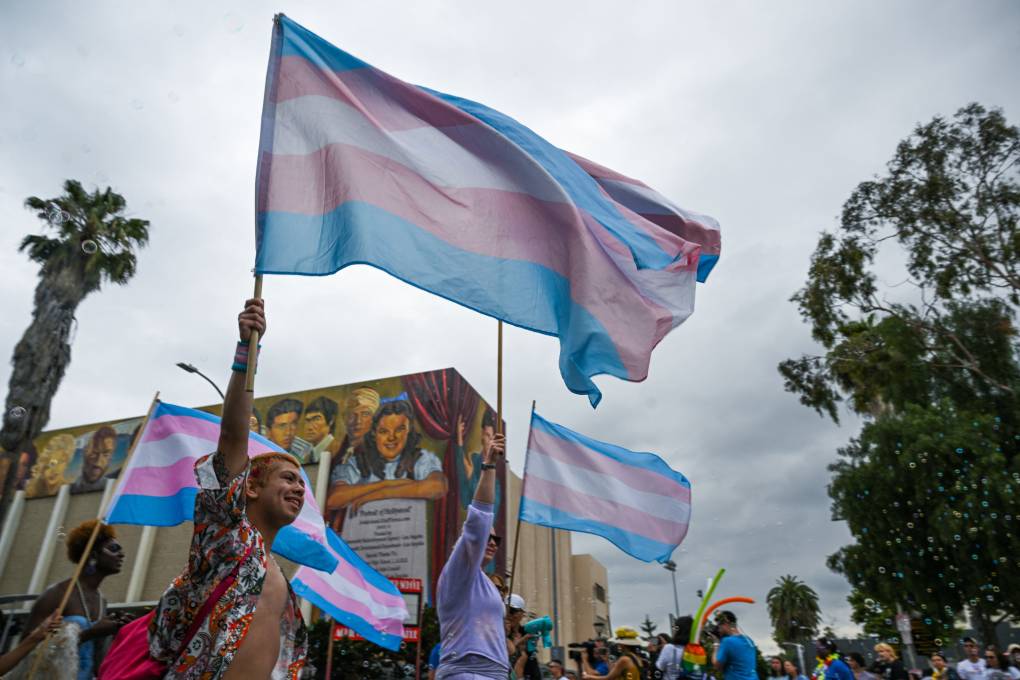
window.__IS_SSR__=true
window.__INITIAL_STATE__={
"attachmentsReducer": {
"audio_0": {
"type": "attachments",
"id": "audio_0",
"imgSizes": {
"kqedFullSize": {
"file": "https://ww2.kqed.org/news/wp-content/themes/KQED-unified/img/audio_bgs/background0.jpg"
}
}
},
"audio_1": {
"type": "attachments",
"id": "audio_1",
"imgSizes": {
"kqedFullSize": {
"file": "https://ww2.kqed.org/news/wp-content/themes/KQED-unified/img/audio_bgs/background1.jpg"
}
}
},
"audio_2": {
"type": "attachments",
"id": "audio_2",
"imgSizes": {
"kqedFullSize": {
"file": "https://ww2.kqed.org/news/wp-content/themes/KQED-unified/img/audio_bgs/background2.jpg"
}
}
},
"audio_3": {
"type": "attachments",
"id": "audio_3",
"imgSizes": {
"kqedFullSize": {
"file": "https://ww2.kqed.org/news/wp-content/themes/KQED-unified/img/audio_bgs/background3.jpg"
}
}
},
"audio_4": {
"type": "attachments",
"id": "audio_4",
"imgSizes": {
"kqedFullSize": {
"file": "https://ww2.kqed.org/news/wp-content/themes/KQED-unified/img/audio_bgs/background4.jpg"
}
}
},
"placeholder": {
"type": "attachments",
"id": "placeholder",
"imgSizes": {
"thumbnail": {
"file": "https://cdn.kqed.org/wp-content/uploads/2024/12/KQED-Default-Image-816638274-2000x1333-1-160x107.jpg",
"width": 160,
"height": 107,
"mimeType": "image/jpeg"
},
"medium": {
"file": "https://cdn.kqed.org/wp-content/uploads/2024/12/KQED-Default-Image-816638274-2000x1333-1-800x533.jpg",
"width": 800,
"height": 533,
"mimeType": "image/jpeg"
},
"medium_large": {
"file": "https://cdn.kqed.org/wp-content/uploads/2024/12/KQED-Default-Image-816638274-2000x1333-1-768x512.jpg",
"width": 768,
"height": 512,
"mimeType": "image/jpeg"
},
"large": {
"file": "https://cdn.kqed.org/wp-content/uploads/2024/12/KQED-Default-Image-816638274-2000x1333-1-1020x680.jpg",
"width": 1020,
"height": 680,
"mimeType": "image/jpeg"
},
"1536x1536": {
"file": "https://cdn.kqed.org/wp-content/uploads/2024/12/KQED-Default-Image-816638274-2000x1333-1-1536x1024.jpg",
"width": 1536,
"height": 1024,
"mimeType": "image/jpeg"
},
"fd-lrg": {
"file": "https://cdn.kqed.org/wp-content/uploads/2024/12/KQED-Default-Image-816638274-2000x1333-1-1536x1024.jpg",
"width": 1536,
"height": 1024,
"mimeType": "image/jpeg"
},
"fd-med": {
"file": "https://cdn.kqed.org/wp-content/uploads/2024/12/KQED-Default-Image-816638274-2000x1333-1-1020x680.jpg",
"width": 1020,
"height": 680,
"mimeType": "image/jpeg"
},
"fd-sm": {
"file": "https://cdn.kqed.org/wp-content/uploads/2024/12/KQED-Default-Image-816638274-2000x1333-1-800x533.jpg",
"width": 800,
"height": 533,
"mimeType": "image/jpeg"
},
"post-thumbnail": {
"file": "https://cdn.kqed.org/wp-content/uploads/2024/12/KQED-Default-Image-816638274-2000x1333-1-672x372.jpg",
"width": 672,
"height": 372,
"mimeType": "image/jpeg"
},
"twentyfourteen-full-width": {
"file": "https://cdn.kqed.org/wp-content/uploads/2024/12/KQED-Default-Image-816638274-2000x1333-1-1038x576.jpg",
"width": 1038,
"height": 576,
"mimeType": "image/jpeg"
},
"xxsmall": {
"file": "https://cdn.kqed.org/wp-content/uploads/2024/12/KQED-Default-Image-816638274-2000x1333-1-160x107.jpg",
"width": 160,
"height": 107,
"mimeType": "image/jpeg"
},
"xsmall": {
"file": "https://cdn.kqed.org/wp-content/uploads/2024/12/KQED-Default-Image-816638274-2000x1333-1-672x372.jpg",
"width": 672,
"height": 372,
"mimeType": "image/jpeg"
},
"small": {
"file": "https://cdn.kqed.org/wp-content/uploads/2024/12/KQED-Default-Image-816638274-2000x1333-1-672x372.jpg",
"width": 672,
"height": 372,
"mimeType": "image/jpeg"
},
"xlarge": {
"file": "https://cdn.kqed.org/wp-content/uploads/2024/12/KQED-Default-Image-816638274-2000x1333-1-1020x680.jpg",
"width": 1020,
"height": 680,
"mimeType": "image/jpeg"
},
"full-width": {
"file": "https://cdn.kqed.org/wp-content/uploads/2024/12/KQED-Default-Image-816638274-2000x1333-1-1920x1280.jpg",
"width": 1920,
"height": 1280,
"mimeType": "image/jpeg"
},
"guest-author-32": {
"file": "https://cdn.kqed.org/wp-content/uploads/2025/01/KQED-Default-Image-816638274-1333x1333-1-160x160.jpg",
"width": 32,
"height": 32,
"mimeType": "image/jpeg"
},
"guest-author-50": {
"file": "https://cdn.kqed.org/wp-content/uploads/2025/01/KQED-Default-Image-816638274-1333x1333-1-160x160.jpg",
"width": 50,
"height": 50,
"mimeType": "image/jpeg"
},
"guest-author-64": {
"file": "https://cdn.kqed.org/wp-content/uploads/2025/01/KQED-Default-Image-816638274-1333x1333-1-160x160.jpg",
"width": 64,
"height": 64,
"mimeType": "image/jpeg"
},
"guest-author-96": {
"file": "https://cdn.kqed.org/wp-content/uploads/2025/01/KQED-Default-Image-816638274-1333x1333-1-160x160.jpg",
"width": 96,
"height": 96,
"mimeType": "image/jpeg"
},
"guest-author-128": {
"file": "https://cdn.kqed.org/wp-content/uploads/2025/01/KQED-Default-Image-816638274-1333x1333-1-160x160.jpg",
"width": 128,
"height": 128,
"mimeType": "image/jpeg"
},
"detail": {
"file": "https://cdn.kqed.org/wp-content/uploads/2025/01/KQED-Default-Image-816638274-1333x1333-1-160x160.jpg",
"width": 160,
"height": 160,
"mimeType": "image/jpeg"
},
"kqedFullSize": {
"file": "https://cdn.kqed.org/wp-content/uploads/2024/12/KQED-Default-Image-816638274-2000x1333-1.jpg",
"width": 2000,
"height": 1333
}
}
},
"news_12014354": {
"type": "attachments",
"id": "news_12014354",
"meta": {
"index": "attachments_1716263798",
"site": "news",
"id": "12014354",
"found": true
},
"title": "US-LGBTQ-PRIDE-PARADE",
"publishDate": 1731546195,
"status": "inherit",
"parent": 12014337,
"modified": 1738432051,
"caption": "A demonstrator waves a Transgender Pride flag in 2023 in Los Angeles. As Donald Trump prepares to reenter the White House, advocates for trans communities have expressed deep concerns about trans rights over the coming years.",
"credit": "Robyn Beck/AFP via Getty Images",
"altTag": null,
"description": null,
"imgSizes": {
"medium": {
"file": "https://cdn.kqed.org/wp-content/uploads/sites/10/2024/11/GettyImages-1258626528-800x533.jpg",
"width": 800,
"height": 533,
"mimeType": "image/jpeg"
},
"large": {
"file": "https://cdn.kqed.org/wp-content/uploads/sites/10/2024/11/GettyImages-1258626528-1020x680.jpg",
"width": 1020,
"height": 680,
"mimeType": "image/jpeg"
},
"thumbnail": {
"file": "https://cdn.kqed.org/wp-content/uploads/sites/10/2024/11/GettyImages-1258626528-160x107.jpg",
"width": 160,
"height": 107,
"mimeType": "image/jpeg"
},
"1536x1536": {
"file": "https://cdn.kqed.org/wp-content/uploads/sites/10/2024/11/GettyImages-1258626528-1536x1024.jpg",
"width": 1536,
"height": 1024,
"mimeType": "image/jpeg"
},
"2048x2048": {
"file": "https://cdn.kqed.org/wp-content/uploads/sites/10/2024/11/GettyImages-1258626528-2048x1365.jpg",
"width": 2048,
"height": 1365,
"mimeType": "image/jpeg"
},
"post-thumbnail": {
"file": "https://cdn.kqed.org/wp-content/uploads/sites/10/2024/11/GettyImages-1258626528-672x372.jpg",
"width": 672,
"height": 372,
"mimeType": "image/jpeg"
},
"twentyfourteen-full-width": {
"file": "https://cdn.kqed.org/wp-content/uploads/sites/10/2024/11/GettyImages-1258626528-1038x576.jpg",
"width": 1038,
"height": 576,
"mimeType": "image/jpeg"
},
"full-width": {
"file": "https://cdn.kqed.org/wp-content/uploads/sites/10/2024/11/GettyImages-1258626528-1920x1280.jpg",
"width": 1920,
"height": 1280,
"mimeType": "image/jpeg"
},
"kqedFullSize": {
"file": "https://cdn.kqed.org/wp-content/uploads/sites/10/2024/11/GettyImages-1258626528-scaled-e1761343966938.jpg",
"width": 2000,
"height": 1334
}
},
"isLoading": false,
"fetchFailed": false
},
"news_11952676": {
"type": "attachments",
"id": "news_11952676",
"meta": {
"index": "attachments_1716263798",
"site": "news",
"id": "11952676",
"found": true
},
"title": null,
"publishDate": 1686345807,
"status": "inherit",
"parent": 11952673,
"modified": 1731451855,
"caption": "A billboard reads, 'Welcome to California, where abortion is safe and still legal,' on July 12, 2022.",
"credit": "Mario Tama/Getty Images",
"altTag": "A colorful billboard in front of palm trees on the side of a road reads, \"Welcome to California, where abortion is safe and still legal.\"",
"description": null,
"imgSizes": {
"medium": {
"file": "https://cdn.kqed.org/wp-content/uploads/sites/10/2023/06/GettyImages-1408364819-800x530.jpg",
"width": 800,
"height": 530,
"mimeType": "image/jpeg"
},
"large": {
"file": "https://cdn.kqed.org/wp-content/uploads/sites/10/2023/06/GettyImages-1408364819-1020x675.jpg",
"width": 1020,
"height": 675,
"mimeType": "image/jpeg"
},
"thumbnail": {
"file": "https://cdn.kqed.org/wp-content/uploads/sites/10/2023/06/GettyImages-1408364819-160x106.jpg",
"width": 160,
"height": 106,
"mimeType": "image/jpeg"
},
"post-thumbnail": {
"file": "https://cdn.kqed.org/wp-content/uploads/sites/10/2023/06/GettyImages-1408364819-672x372.jpg",
"width": 672,
"height": 372,
"mimeType": "image/jpeg"
},
"twentyfourteen-full-width": {
"file": "https://cdn.kqed.org/wp-content/uploads/sites/10/2023/06/GettyImages-1408364819-1024x576.jpg",
"width": 1024,
"height": 576,
"mimeType": "image/jpeg"
},
"kqedFullSize": {
"file": "https://cdn.kqed.org/wp-content/uploads/sites/10/2023/06/GettyImages-1408364819.jpg",
"width": 1024,
"height": 678
}
},
"isLoading": false,
"fetchFailed": false
},
"news_11907152": {
"type": "attachments",
"id": "news_11907152",
"meta": {
"index": "attachments_1716263798",
"site": "news",
"id": "11907152",
"found": true
},
"title": "where-to-vote-today",
"publishDate": 1646357766,
"status": "inherit",
"parent": 11907125,
"modified": 1730762246,
"caption": "Dax Strane drops off his mail-in ballot at the Alameda County Registrar of Voters in Oakland on Oct. 27, 2020. Alameda was one of the dozens of counties that consolidated voting locations in 2020. ",
"credit": "Beth LaBerge/KQED",
"altTag": null,
"description": null,
"imgSizes": {
"medium": {
"file": "https://cdn.kqed.org/wp-content/uploads/sites/10/2022/03/RS45463_011_KQED_Oakland_RegistrarofVoters_10272020-qut-800x533.jpg",
"width": 800,
"height": 533,
"mimeType": "image/jpeg"
},
"large": {
"file": "https://cdn.kqed.org/wp-content/uploads/sites/10/2022/03/RS45463_011_KQED_Oakland_RegistrarofVoters_10272020-qut-1020x680.jpg",
"width": 1020,
"height": 680,
"mimeType": "image/jpeg"
},
"thumbnail": {
"file": "https://cdn.kqed.org/wp-content/uploads/sites/10/2022/03/RS45463_011_KQED_Oakland_RegistrarofVoters_10272020-qut-160x107.jpg",
"width": 160,
"height": 107,
"mimeType": "image/jpeg"
},
"1536x1536": {
"file": "https://cdn.kqed.org/wp-content/uploads/sites/10/2022/03/RS45463_011_KQED_Oakland_RegistrarofVoters_10272020-qut-1536x1024.jpg",
"width": 1536,
"height": 1024,
"mimeType": "image/jpeg"
},
"post-thumbnail": {
"file": "https://cdn.kqed.org/wp-content/uploads/sites/10/2022/03/RS45463_011_KQED_Oakland_RegistrarofVoters_10272020-qut-672x372.jpg",
"width": 672,
"height": 372,
"mimeType": "image/jpeg"
},
"twentyfourteen-full-width": {
"file": "https://cdn.kqed.org/wp-content/uploads/sites/10/2022/03/RS45463_011_KQED_Oakland_RegistrarofVoters_10272020-qut-1038x576.jpg",
"width": 1038,
"height": 576,
"mimeType": "image/jpeg"
},
"kqedFullSize": {
"file": "https://cdn.kqed.org/wp-content/uploads/sites/10/2022/03/RS45463_011_KQED_Oakland_RegistrarofVoters_10272020-qut.jpg",
"width": 1920,
"height": 1280
}
},
"isLoading": false,
"fetchFailed": false
},
"news_12011931": {
"type": "attachments",
"id": "news_12011931",
"meta": {
"index": "attachments_1716263798",
"site": "news",
"id": "12011931",
"found": true
},
"title": null,
"publishDate": 1730402610,
"status": "inherit",
"parent": 12011916,
"modified": 1730402679,
"caption": "Besides election exhaustion and anxiety, there's frustration and straight-up fear. We got expert advice on how to cope.",
"credit": "Xavier Lorenzo/Getty Images",
"altTag": null,
"description": null,
"imgSizes": {
"medium": {
"file": "https://cdn.kqed.org/wp-content/uploads/sites/10/2024/10/GettyImages-1353656914-800x533.jpg",
"width": 800,
"height": 533,
"mimeType": "image/jpeg"
},
"large": {
"file": "https://cdn.kqed.org/wp-content/uploads/sites/10/2024/10/GettyImages-1353656914-1020x680.jpg",
"width": 1020,
"height": 680,
"mimeType": "image/jpeg"
},
"thumbnail": {
"file": "https://cdn.kqed.org/wp-content/uploads/sites/10/2024/10/GettyImages-1353656914-160x107.jpg",
"width": 160,
"height": 107,
"mimeType": "image/jpeg"
},
"1536x1536": {
"file": "https://cdn.kqed.org/wp-content/uploads/sites/10/2024/10/GettyImages-1353656914-1536x1024.jpg",
"width": 1536,
"height": 1024,
"mimeType": "image/jpeg"
},
"2048x2048": {
"file": "https://cdn.kqed.org/wp-content/uploads/sites/10/2024/10/GettyImages-1353656914-2048x1365.jpg",
"width": 2048,
"height": 1365,
"mimeType": "image/jpeg"
},
"post-thumbnail": {
"file": "https://cdn.kqed.org/wp-content/uploads/sites/10/2024/10/GettyImages-1353656914-672x372.jpg",
"width": 672,
"height": 372,
"mimeType": "image/jpeg"
},
"twentyfourteen-full-width": {
"file": "https://cdn.kqed.org/wp-content/uploads/sites/10/2024/10/GettyImages-1353656914-1038x576.jpg",
"width": 1038,
"height": 576,
"mimeType": "image/jpeg"
},
"full-width": {
"file": "https://cdn.kqed.org/wp-content/uploads/sites/10/2024/10/GettyImages-1353656914-1920x1280.jpg",
"width": 1920,
"height": 1280,
"mimeType": "image/jpeg"
},
"kqedFullSize": {
"file": "https://cdn.kqed.org/wp-content/uploads/sites/10/2024/10/GettyImages-1353656914-scaled.jpg",
"width": 2560,
"height": 1707
}
},
"isLoading": false,
"fetchFailed": false
},
"news_12009161": {
"type": "attachments",
"id": "news_12009161",
"meta": {
"index": "attachments_1716263798",
"site": "news",
"id": "12009161",
"found": true
},
"title": "where-do-i-vote",
"publishDate": 1728678128,
"status": "inherit",
"parent": 12008419,
"modified": 1730484462,
"caption": "A voter drops off his ballot in a box outside of the Santa Clara County Registrar of Voters office on Oct. 13, 2020, in San Jose, California. The Santa Clara County registrar of voters is preparing to take in and process thousands of ballots as early voting is underway in the state of California.",
"credit": "Justin Sullivan/Getty Images",
"altTag": null,
"description": null,
"imgSizes": {
"medium": {
"file": "https://cdn.kqed.org/wp-content/uploads/sites/10/2024/10/GettyImages-1280030498-800x533.jpg",
"width": 800,
"height": 533,
"mimeType": "image/jpeg"
},
"large": {
"file": "https://cdn.kqed.org/wp-content/uploads/sites/10/2024/10/GettyImages-1280030498-1020x680.jpg",
"width": 1020,
"height": 680,
"mimeType": "image/jpeg"
},
"thumbnail": {
"file": "https://cdn.kqed.org/wp-content/uploads/sites/10/2024/10/GettyImages-1280030498-160x107.jpg",
"width": 160,
"height": 107,
"mimeType": "image/jpeg"
},
"1536x1536": {
"file": "https://cdn.kqed.org/wp-content/uploads/sites/10/2024/10/GettyImages-1280030498-1536x1024.jpg",
"width": 1536,
"height": 1024,
"mimeType": "image/jpeg"
},
"post-thumbnail": {
"file": "https://cdn.kqed.org/wp-content/uploads/sites/10/2024/10/GettyImages-1280030498-672x372.jpg",
"width": 672,
"height": 372,
"mimeType": "image/jpeg"
},
"twentyfourteen-full-width": {
"file": "https://cdn.kqed.org/wp-content/uploads/sites/10/2024/10/GettyImages-1280030498-1038x576.jpg",
"width": 1038,
"height": 576,
"mimeType": "image/jpeg"
},
"kqedFullSize": {
"file": "https://cdn.kqed.org/wp-content/uploads/sites/10/2024/10/GettyImages-1280030498.jpg",
"width": 1920,
"height": 1280
}
},
"isLoading": false,
"fetchFailed": false
},
"news_12010850": {
"type": "attachments",
"id": "news_12010850",
"meta": {
"index": "attachments_1716263798",
"site": "news",
"id": "12010850",
"found": true
},
"title": "241022-JAILVOTING-14-BL-KQED",
"publishDate": 1729722879,
"status": "inherit",
"parent": 0,
"modified": 1729723038,
"caption": "Margaret Wilson (left) and Aurora Garza Jimenez, Cameo House program manager, review voting material for tabling events at Cameo House in San Francisco on Oct. 22, 2024.",
"credit": "Beth LaBerge/KQED",
"altTag": null,
"description": null,
"imgSizes": {
"medium": {
"file": "https://cdn.kqed.org/wp-content/uploads/sites/10/2024/10/241022-JAILVOTING-14-BL-KQED-800x533.jpg",
"width": 800,
"height": 533,
"mimeType": "image/jpeg"
},
"large": {
"file": "https://cdn.kqed.org/wp-content/uploads/sites/10/2024/10/241022-JAILVOTING-14-BL-KQED-1020x680.jpg",
"width": 1020,
"height": 680,
"mimeType": "image/jpeg"
},
"thumbnail": {
"file": "https://cdn.kqed.org/wp-content/uploads/sites/10/2024/10/241022-JAILVOTING-14-BL-KQED-160x107.jpg",
"width": 160,
"height": 107,
"mimeType": "image/jpeg"
},
"1536x1536": {
"file": "https://cdn.kqed.org/wp-content/uploads/sites/10/2024/10/241022-JAILVOTING-14-BL-KQED-1536x1024.jpg",
"width": 1536,
"height": 1024,
"mimeType": "image/jpeg"
},
"post-thumbnail": {
"file": "https://cdn.kqed.org/wp-content/uploads/sites/10/2024/10/241022-JAILVOTING-14-BL-KQED-672x372.jpg",
"width": 672,
"height": 372,
"mimeType": "image/jpeg"
},
"twentyfourteen-full-width": {
"file": "https://cdn.kqed.org/wp-content/uploads/sites/10/2024/10/241022-JAILVOTING-14-BL-KQED-1038x576.jpg",
"width": 1038,
"height": 576,
"mimeType": "image/jpeg"
},
"full-width": {
"file": "https://cdn.kqed.org/wp-content/uploads/sites/10/2024/10/241022-JAILVOTING-14-BL-KQED-1920x1280.jpg",
"width": 1920,
"height": 1280,
"mimeType": "image/jpeg"
},
"kqedFullSize": {
"file": "https://cdn.kqed.org/wp-content/uploads/sites/10/2024/10/241022-JAILVOTING-14-BL-KQED.jpg",
"width": 2000,
"height": 1333
}
},
"isLoading": false,
"fetchFailed": false
},
"news_12010929": {
"type": "attachments",
"id": "news_12010929",
"meta": {
"index": "attachments_1716263798",
"site": "news",
"id": "12010929",
"found": true
},
"title": "004_Oakland_ItzelDiazandFamily_09092021_qed",
"publishDate": 1729795242,
"status": "inherit",
"parent": 12008332,
"modified": 1729795304,
"caption": "A Bay Area resident prepares to fill out their mail-in ballot in 2021.",
"credit": "Beth LaBerge/KQED",
"altTag": null,
"description": null,
"imgSizes": {
"medium": {
"file": "https://cdn.kqed.org/wp-content/uploads/sites/10/2024/10/004_Oakland_ItzelDiazandFamily_09092021_qed-e1729796712493-800x531.jpg",
"width": 800,
"height": 531,
"mimeType": "image/jpeg"
},
"large": {
"file": "https://cdn.kqed.org/wp-content/uploads/sites/10/2024/10/004_Oakland_ItzelDiazandFamily_09092021_qed-e1729796712493-1020x677.jpg",
"width": 1020,
"height": 677,
"mimeType": "image/jpeg"
},
"thumbnail": {
"file": "https://cdn.kqed.org/wp-content/uploads/sites/10/2024/10/004_Oakland_ItzelDiazandFamily_09092021_qed-e1729796712493-160x106.jpg",
"width": 160,
"height": 106,
"mimeType": "image/jpeg"
},
"1536x1536": {
"file": "https://cdn.kqed.org/wp-content/uploads/sites/10/2024/10/004_Oakland_ItzelDiazandFamily_09092021_qed-e1729796712493-1536x1020.jpg",
"width": 1536,
"height": 1020,
"mimeType": "image/jpeg"
},
"post-thumbnail": {
"file": "https://cdn.kqed.org/wp-content/uploads/sites/10/2024/10/004_Oakland_ItzelDiazandFamily_09092021_qed-e1729796712493-672x372.jpg",
"width": 672,
"height": 372,
"mimeType": "image/jpeg"
},
"twentyfourteen-full-width": {
"file": "https://cdn.kqed.org/wp-content/uploads/sites/10/2024/10/004_Oakland_ItzelDiazandFamily_09092021_qed-e1729796712493-1038x576.jpg",
"width": 1038,
"height": 576,
"mimeType": "image/jpeg"
},
"full-width": {
"file": "https://cdn.kqed.org/wp-content/uploads/sites/10/2024/10/004_Oakland_ItzelDiazandFamily_09092021_qed-e1729796712493-1920x1275.jpg",
"width": 1920,
"height": 1275,
"mimeType": "image/jpeg"
},
"kqedFullSize": {
"file": "https://cdn.kqed.org/wp-content/uploads/sites/10/2024/10/004_Oakland_ItzelDiazandFamily_09092021_qed-e1729796712493.jpg",
"width": 1993,
"height": 1323
}
},
"isLoading": false,
"fetchFailed": false
},
"news_12010427": {
"type": "attachments",
"id": "news_12010427",
"meta": {
"index": "attachments_1716263798",
"site": "news",
"id": "12010427",
"found": true
},
"title": "Polling place volunteer assisting black woman to sign up for voting during USA elections.",
"publishDate": 1729535954,
"status": "inherit",
"parent": 12010355,
"modified": 1729536089,
"caption": "You can register to vote online at registertovote.ca.gov before midnight on Oct. 21. You can also register to vote by printing off a paper application, but this must be postmarked by Oct. 21.",
"credit": "Drazen Zigic via iStock/Getty Images Plus",
"altTag": "Two Black women standing and looking at a clipboard over a table and signs that say \"Vote\" with other people waiting in line behind the woman with the red shirt.",
"description": null,
"imgSizes": {
"medium": {
"file": "https://cdn.kqed.org/wp-content/uploads/sites/10/2024/10/GettyImages-2042927844-800x533.jpg",
"width": 800,
"height": 533,
"mimeType": "image/jpeg"
},
"large": {
"file": "https://cdn.kqed.org/wp-content/uploads/sites/10/2024/10/GettyImages-2042927844-1020x680.jpg",
"width": 1020,
"height": 680,
"mimeType": "image/jpeg"
},
"thumbnail": {
"file": "https://cdn.kqed.org/wp-content/uploads/sites/10/2024/10/GettyImages-2042927844-160x107.jpg",
"width": 160,
"height": 107,
"mimeType": "image/jpeg"
},
"1536x1536": {
"file": "https://cdn.kqed.org/wp-content/uploads/sites/10/2024/10/GettyImages-2042927844-1536x1024.jpg",
"width": 1536,
"height": 1024,
"mimeType": "image/jpeg"
},
"2048x2048": {
"file": "https://cdn.kqed.org/wp-content/uploads/sites/10/2024/10/GettyImages-2042927844-2048x1365.jpg",
"width": 2048,
"height": 1365,
"mimeType": "image/jpeg"
},
"post-thumbnail": {
"file": "https://cdn.kqed.org/wp-content/uploads/sites/10/2024/10/GettyImages-2042927844-672x372.jpg",
"width": 672,
"height": 372,
"mimeType": "image/jpeg"
},
"twentyfourteen-full-width": {
"file": "https://cdn.kqed.org/wp-content/uploads/sites/10/2024/10/GettyImages-2042927844-1038x576.jpg",
"width": 1038,
"height": 576,
"mimeType": "image/jpeg"
},
"full-width": {
"file": "https://cdn.kqed.org/wp-content/uploads/sites/10/2024/10/GettyImages-2042927844-1920x1280.jpg",
"width": 1920,
"height": 1280,
"mimeType": "image/jpeg"
},
"kqedFullSize": {
"file": "https://cdn.kqed.org/wp-content/uploads/sites/10/2024/10/GettyImages-2042927844.jpg",
"width": 2121,
"height": 1414
}
},
"isLoading": false,
"fetchFailed": false
},
"news_12008560": {
"type": "attachments",
"id": "news_12008560",
"meta": {
"index": "attachments_1716263798",
"site": "news",
"id": "12008560",
"found": true
},
"title": "Charli-xcx-guide_3",
"publishDate": 1728425586,
"status": "inherit",
"parent": 12008551,
"modified": 1728425595,
"caption": "Illustration by Darren Tu",
"credit": null,
"altTag": null,
"description": null,
"imgSizes": {
"medium": {
"file": "https://cdn.kqed.org/wp-content/uploads/sites/10/2024/10/Charli-xcx-guide_3-800x517.jpg",
"width": 800,
"height": 517,
"mimeType": "image/jpeg"
},
"large": {
"file": "https://cdn.kqed.org/wp-content/uploads/sites/10/2024/10/Charli-xcx-guide_3-1020x659.jpg",
"width": 1020,
"height": 659,
"mimeType": "image/jpeg"
},
"thumbnail": {
"file": "https://cdn.kqed.org/wp-content/uploads/sites/10/2024/10/Charli-xcx-guide_3-160x103.jpg",
"width": 160,
"height": 103,
"mimeType": "image/jpeg"
},
"1536x1536": {
"file": "https://cdn.kqed.org/wp-content/uploads/sites/10/2024/10/Charli-xcx-guide_3-1536x992.jpg",
"width": 1536,
"height": 992,
"mimeType": "image/jpeg"
},
"post-thumbnail": {
"file": "https://cdn.kqed.org/wp-content/uploads/sites/10/2024/10/Charli-xcx-guide_3-672x372.jpg",
"width": 672,
"height": 372,
"mimeType": "image/jpeg"
},
"twentyfourteen-full-width": {
"file": "https://cdn.kqed.org/wp-content/uploads/sites/10/2024/10/Charli-xcx-guide_3-1038x576.jpg",
"width": 1038,
"height": 576,
"mimeType": "image/jpeg"
},
"kqedFullSize": {
"file": "https://cdn.kqed.org/wp-content/uploads/sites/10/2024/10/Charli-xcx-guide_3.jpg",
"width": 1920,
"height": 1240
}
},
"isLoading": false,
"fetchFailed": false
},
"news_12006905": {
"type": "attachments",
"id": "news_12006905",
"meta": {
"index": "attachments_1716263798",
"site": "news",
"id": "12006905",
"found": true
},
"title": "002_KQED_ElectionStockPhotos_TikaHall_10062020_qed",
"publishDate": 1727470265,
"status": "inherit",
"parent": 12003469,
"modified": 1727470295,
"caption": "A San Francisco resident fills out their mail-in ballot.",
"credit": "Beth LaBerge/KQED",
"altTag": null,
"description": null,
"imgSizes": {
"medium": {
"file": "https://cdn.kqed.org/wp-content/uploads/sites/10/2024/09/002_KQED_ElectionStockPhotos_TikaHall_10062020_qed-800x533.jpg",
"width": 800,
"height": 533,
"mimeType": "image/jpeg"
},
"large": {
"file": "https://cdn.kqed.org/wp-content/uploads/sites/10/2024/09/002_KQED_ElectionStockPhotos_TikaHall_10062020_qed-1020x680.jpg",
"width": 1020,
"height": 680,
"mimeType": "image/jpeg"
},
"thumbnail": {
"file": "https://cdn.kqed.org/wp-content/uploads/sites/10/2024/09/002_KQED_ElectionStockPhotos_TikaHall_10062020_qed-160x107.jpg",
"width": 160,
"height": 107,
"mimeType": "image/jpeg"
},
"1536x1536": {
"file": "https://cdn.kqed.org/wp-content/uploads/sites/10/2024/09/002_KQED_ElectionStockPhotos_TikaHall_10062020_qed-1536x1024.jpg",
"width": 1536,
"height": 1024,
"mimeType": "image/jpeg"
},
"post-thumbnail": {
"file": "https://cdn.kqed.org/wp-content/uploads/sites/10/2024/09/002_KQED_ElectionStockPhotos_TikaHall_10062020_qed-672x372.jpg",
"width": 672,
"height": 372,
"mimeType": "image/jpeg"
},
"twentyfourteen-full-width": {
"file": "https://cdn.kqed.org/wp-content/uploads/sites/10/2024/09/002_KQED_ElectionStockPhotos_TikaHall_10062020_qed-1038x576.jpg",
"width": 1038,
"height": 576,
"mimeType": "image/jpeg"
},
"full-width": {
"file": "https://cdn.kqed.org/wp-content/uploads/sites/10/2024/09/002_KQED_ElectionStockPhotos_TikaHall_10062020_qed-1920x1280.jpg",
"width": 1920,
"height": 1280,
"mimeType": "image/jpeg"
},
"kqedFullSize": {
"file": "https://cdn.kqed.org/wp-content/uploads/sites/10/2024/09/002_KQED_ElectionStockPhotos_TikaHall_10062020_qed.jpg",
"width": 2000,
"height": 1333
}
},
"isLoading": false,
"fetchFailed": false
},
"news_12008451": {
"type": "attachments",
"id": "news_12008451",
"meta": {
"index": "attachments_1716263798",
"site": "news",
"id": "12008451",
"found": true
},
"title": "018_SanJose_AntiEvictionProtest_01272021_qed",
"publishDate": 1728408942,
"status": "inherit",
"parent": 12008424,
"modified": 1728431123,
"caption": "A protester stands in front of the Santa Clara Superior Court in San Jose on Jan. 27, 2021, to call for stronger state and local eviction protections.",
"credit": "Beth LaBerge/KQED",
"altTag": "A woman wearing a yellow coat with a sign around her neck that reads \"Evictions Are Violent. We Won't Be Silenced.\"",
"description": null,
"imgSizes": {
"medium": {
"file": "https://cdn.kqed.org/wp-content/uploads/sites/10/2024/10/018_SanJose_AntiEvictionProtest_01272021_qed-800x533.jpg",
"width": 800,
"height": 533,
"mimeType": "image/jpeg"
},
"large": {
"file": "https://cdn.kqed.org/wp-content/uploads/sites/10/2024/10/018_SanJose_AntiEvictionProtest_01272021_qed-1020x680.jpg",
"width": 1020,
"height": 680,
"mimeType": "image/jpeg"
},
"thumbnail": {
"file": "https://cdn.kqed.org/wp-content/uploads/sites/10/2024/10/018_SanJose_AntiEvictionProtest_01272021_qed-160x107.jpg",
"width": 160,
"height": 107,
"mimeType": "image/jpeg"
},
"1536x1536": {
"file": "https://cdn.kqed.org/wp-content/uploads/sites/10/2024/10/018_SanJose_AntiEvictionProtest_01272021_qed-1536x1024.jpg",
"width": 1536,
"height": 1024,
"mimeType": "image/jpeg"
},
"post-thumbnail": {
"file": "https://cdn.kqed.org/wp-content/uploads/sites/10/2024/10/018_SanJose_AntiEvictionProtest_01272021_qed-672x372.jpg",
"width": 672,
"height": 372,
"mimeType": "image/jpeg"
},
"twentyfourteen-full-width": {
"file": "https://cdn.kqed.org/wp-content/uploads/sites/10/2024/10/018_SanJose_AntiEvictionProtest_01272021_qed-1038x576.jpg",
"width": 1038,
"height": 576,
"mimeType": "image/jpeg"
},
"full-width": {
"file": "https://cdn.kqed.org/wp-content/uploads/sites/10/2024/10/018_SanJose_AntiEvictionProtest_01272021_qed-1920x1280.jpg",
"width": 1920,
"height": 1280,
"mimeType": "image/jpeg"
},
"kqedFullSize": {
"file": "https://cdn.kqed.org/wp-content/uploads/sites/10/2024/10/018_SanJose_AntiEvictionProtest_01272021_qed.jpg",
"width": 2000,
"height": 1333
}
},
"isLoading": false,
"fetchFailed": false
},
"news_12008537": {
"type": "attachments",
"id": "news_12008537",
"meta": {
"index": "attachments_1716263798",
"site": "news",
"id": "12008537",
"found": true
},
"title": "240916-UnionSFSchoolClosures-38-BL_qed",
"publishDate": 1728419967,
"status": "inherit",
"parent": 12008524,
"modified": 1728434009,
"caption": "Teanna Tillery (center), a Para Educator, listens to Cassondra Curiel, President of United Educators of San Francisco, during a press conference outside San Francisco Unified School District offices on Sept. 16 regarding the planned closure and mergers of schools.",
"credit": "Beth LaBerge/KQED",
"altTag": null,
"description": null,
"imgSizes": {
"medium": {
"file": "https://cdn.kqed.org/wp-content/uploads/sites/10/2024/10/240916-UnionSFSchoolClosures-38-BL_qed-800x533.jpg",
"width": 800,
"height": 533,
"mimeType": "image/jpeg"
},
"large": {
"file": "https://cdn.kqed.org/wp-content/uploads/sites/10/2024/10/240916-UnionSFSchoolClosures-38-BL_qed-1020x680.jpg",
"width": 1020,
"height": 680,
"mimeType": "image/jpeg"
},
"thumbnail": {
"file": "https://cdn.kqed.org/wp-content/uploads/sites/10/2024/10/240916-UnionSFSchoolClosures-38-BL_qed-160x107.jpg",
"width": 160,
"height": 107,
"mimeType": "image/jpeg"
},
"1536x1536": {
"file": "https://cdn.kqed.org/wp-content/uploads/sites/10/2024/10/240916-UnionSFSchoolClosures-38-BL_qed-1536x1024.jpg",
"width": 1536,
"height": 1024,
"mimeType": "image/jpeg"
},
"post-thumbnail": {
"file": "https://cdn.kqed.org/wp-content/uploads/sites/10/2024/10/240916-UnionSFSchoolClosures-38-BL_qed-672x372.jpg",
"width": 672,
"height": 372,
"mimeType": "image/jpeg"
},
"twentyfourteen-full-width": {
"file": "https://cdn.kqed.org/wp-content/uploads/sites/10/2024/10/240916-UnionSFSchoolClosures-38-BL_qed-1038x576.jpg",
"width": 1038,
"height": 576,
"mimeType": "image/jpeg"
},
"full-width": {
"file": "https://cdn.kqed.org/wp-content/uploads/sites/10/2024/10/240916-UnionSFSchoolClosures-38-BL_qed-1920x1280.jpg",
"width": 1920,
"height": 1280,
"mimeType": "image/jpeg"
},
"kqedFullSize": {
"file": "https://cdn.kqed.org/wp-content/uploads/sites/10/2024/10/240916-UnionSFSchoolClosures-38-BL_qed.jpg",
"width": 2000,
"height": 1333
}
},
"isLoading": false,
"fetchFailed": false
}
},
"audioPlayerReducer": {
"postId": "stream_live",
"isPaused": true,
"isPlaying": false,
"pfsActive": false,
"pledgeModalIsOpen": true,
"playerDrawerIsOpen": false,
"liveAudioPlayStartedAt": 0,
"liveAudioPlayContext": ""
},
"authorsReducer": {
"gmarzorati": {
"type": "authors",
"id": "227",
"meta": {
"index": "authors_1716337520",
"id": "227",
"found": true
},
"name": "Guy Marzorati",
"firstName": "Guy",
"lastName": "Marzorati",
"slug": "gmarzorati",
"email": "gmarzorati@KQED.org",
"display_author_email": true,
"staff_mastheads": [
"news"
],
"title": "Correspondent",
"bio": "Guy Marzorati is a correspondent on KQED's California Politics and Government Desk, based in San Jose. A graduate of Santa Clara University, Guy joined KQED in 2013. He reports on state and local politics and produces KQED's digital voter guide.",
"avatar": "https://secure.gravatar.com/avatar/e7038b8dbfd55b104369b76b1cd0b9de?s=600&d=blank&r=g",
"twitter": "guymarzorati",
"facebook": null,
"instagram": null,
"linkedin": null,
"sites": [
{
"site": "",
"roles": [
"editor"
]
},
{
"site": "news",
"roles": [
"editor"
]
},
{
"site": "science",
"roles": [
"editor"
]
},
{
"site": "forum",
"roles": [
"editor"
]
},
{
"site": "elections",
"roles": [
"editor"
]
},
{
"site": "liveblog",
"roles": [
"editor"
]
}
],
"headData": {
"title": "Guy Marzorati | KQED",
"description": "Correspondent",
"ogImgSrc": "https://secure.gravatar.com/avatar/e7038b8dbfd55b104369b76b1cd0b9de?s=600&d=blank&r=g",
"twImgSrc": "https://secure.gravatar.com/avatar/e7038b8dbfd55b104369b76b1cd0b9de?s=600&d=blank&r=g"
},
"isLoading": false,
"link": "/author/gmarzorati"
},
"carlysevern": {
"type": "authors",
"id": "3243",
"meta": {
"index": "authors_1716337520",
"id": "3243",
"found": true
},
"name": "Carly Severn",
"firstName": "Carly",
"lastName": "Severn",
"slug": "carlysevern",
"email": "csevern@kqed.org",
"display_author_email": false,
"staff_mastheads": [
"news"
],
"title": "Senior Editor, Audience News ",
"bio": "Carly is KQED's Senior Editor of Audience News on the Digital News team, and has reported for the California Report Magazine, Bay Curious and KQED Arts. She's formerly the host of \u003ca href=\"http://ww2.kqed.org/pop/category/the-cooler/\" rel=\"noopener noreferrer\">The Cooler\u003c/a> podcast.",
"avatar": "https://secure.gravatar.com/avatar/54037bf5c128fe678f0ef26cec97a93f2e7f220a22d7285703328f12c42c1b1d?s=600&d=blank&r=g",
"twitter": "teacupinthebay",
"bluesky": null,
"facebook": null,
"instagram": null,
"linkedin": null,
"sites": [
{
"site": "",
"roles": [
"editor"
]
},
{
"site": "arts",
"roles": [
"editor"
]
},
{
"site": "news",
"roles": [
"administrator"
]
},
{
"site": "pop",
"roles": [
"editor"
]
},
{
"site": "futureofyou",
"roles": [
"editor"
]
},
{
"site": "about",
"roles": [
"administrator"
]
},
{
"site": "mindshift",
"roles": [
"editor"
]
},
{
"site": "bayareabites",
"roles": [
"editor"
]
},
{
"site": "stateofhealth",
"roles": [
"editor"
]
},
{
"site": "science",
"roles": [
"editor"
]
},
{
"site": "food",
"roles": [
"contributor"
]
},
{
"site": "forum",
"roles": [
"editor"
]
},
{
"site": "perspectives",
"roles": [
"administrator"
]
},
{
"site": "liveblog",
"roles": [
"editor"
]
}
],
"headData": {
"title": "Carly Severn | KQED",
"description": "Senior Editor, Audience News ",
"ogImgSrc": "https://secure.gravatar.com/avatar/54037bf5c128fe678f0ef26cec97a93f2e7f220a22d7285703328f12c42c1b1d?s=600&d=blank&r=g",
"twImgSrc": "https://secure.gravatar.com/avatar/54037bf5c128fe678f0ef26cec97a93f2e7f220a22d7285703328f12c42c1b1d?s=600&d=blank&r=g"
},
"isLoading": false,
"link": "/author/carlysevern"
},
"vrancano": {
"type": "authors",
"id": "11276",
"meta": {
"index": "authors_1716337520",
"id": "11276",
"found": true
},
"name": "Vanessa Rancaño",
"firstName": "Vanessa",
"lastName": "Rancaño",
"slug": "vrancano",
"email": "vrancano@kqed.org",
"display_author_email": false,
"staff_mastheads": [
"news"
],
"title": "Reporter",
"bio": "Vanessa Rancaño is a features reporter for KQED. She’s also covered homelessness and education for the station and reported from the Central Valley. Her work has aired across public radio, from flagship national news shows to longform narrative podcasts. Before taking up a mic, she worked as a freelance print journalist. She’s been recognized with a number of national and regional awards. Vanessa grew up in California's Central Valley. She's a former NPR Kroc Fellow, and a graduate of the UC Berkeley Graduate School of Journalism.",
"avatar": "https://secure.gravatar.com/avatar/b3a383dfb0e7ee1c17568f2cf067904ab654d6e3de9743fc661f3c788ade1bed?s=600&d=blank&r=g",
"twitter": "vanessarancano",
"bluesky": null,
"facebook": null,
"instagram": null,
"linkedin": null,
"sites": [
{
"site": "arts",
"roles": [
"editor"
]
},
{
"site": "news",
"roles": [
"editor"
]
},
{
"site": "liveblog",
"roles": [
"contributor"
]
}
],
"headData": {
"title": "Vanessa Rancaño | KQED",
"description": "Reporter",
"ogImgSrc": "https://secure.gravatar.com/avatar/b3a383dfb0e7ee1c17568f2cf067904ab654d6e3de9743fc661f3c788ade1bed?s=600&d=blank&r=g",
"twImgSrc": "https://secure.gravatar.com/avatar/b3a383dfb0e7ee1c17568f2cf067904ab654d6e3de9743fc661f3c788ade1bed?s=600&d=blank&r=g"
},
"isLoading": false,
"link": "/author/vrancano"
},
"ccabreralomeli": {
"type": "authors",
"id": "11708",
"meta": {
"index": "authors_1716337520",
"id": "11708",
"found": true
},
"name": "Carlos Cabrera-Lomelí",
"firstName": "Carlos",
"lastName": "Cabrera-Lomelí",
"slug": "ccabreralomeli",
"email": "ccabreralomeli@KQED.org",
"display_author_email": true,
"staff_mastheads": [
"news"
],
"title": "Community Reporter",
"bio": "Carlos Cabrera-Lomelí is a community reporter with KQED's digital engagement team. He also reports and co-produces for KQED's bilingual news hub KQED en Español. He grew up in San Francisco's Mission District and has previously worked with Univision, 48 Hills and REFORMA in Mexico City.",
"avatar": "https://secure.gravatar.com/avatar/c309be9665e484f887b818c89e273ecc673004f426f36b24d00a4d813a2e0518?s=600&d=blank&r=g",
"twitter": "@LomeliCabrera",
"bluesky": null,
"facebook": null,
"instagram": null,
"linkedin": null,
"sites": [
{
"site": "arts",
"roles": [
"editor"
]
},
{
"site": "news",
"roles": [
"editor"
]
},
{
"site": "about",
"roles": [
"editor"
]
},
{
"site": "science",
"roles": [
"editor"
]
},
{
"site": "perspectives",
"roles": [
"editor"
]
},
{
"site": "elections",
"roles": [
"editor"
]
},
{
"site": "liveblog",
"roles": [
"contributor"
]
}
],
"headData": {
"title": "Carlos Cabrera-Lomelí | KQED",
"description": "Community Reporter",
"ogImgSrc": "https://secure.gravatar.com/avatar/c309be9665e484f887b818c89e273ecc673004f426f36b24d00a4d813a2e0518?s=600&d=blank&r=g",
"twImgSrc": "https://secure.gravatar.com/avatar/c309be9665e484f887b818c89e273ecc673004f426f36b24d00a4d813a2e0518?s=600&d=blank&r=g"
},
"isLoading": false,
"link": "/author/ccabreralomeli"
},
"nkhan": {
"type": "authors",
"id": "11867",
"meta": {
"index": "authors_1716337520",
"id": "11867",
"found": true
},
"name": "Nisa Khan",
"firstName": "Nisa",
"lastName": "Khan",
"slug": "nkhan",
"email": "nkhan@kqed.org",
"display_author_email": false,
"staff_mastheads": [],
"title": "KQED Contributor",
"bio": "Nisa Khan is a reporter for KQED's Audience News Desk. She was formerly a data reporter at Michigan Radio. She earned a Bachelor of Science in Information from the University of Michigan and a Master of Arts in Communication from Stanford University.",
"avatar": "https://secure.gravatar.com/avatar/8720459eef081ff64582b3506b124d58523e80e120704a0cbd9892533c914991?s=600&d=blank&r=g",
"twitter": "mnisakhan",
"bluesky": null,
"facebook": null,
"instagram": null,
"linkedin": null,
"sites": [
{
"site": "arts",
"roles": [
"editor"
]
},
{
"site": "news",
"roles": [
"editor"
]
},
{
"site": "science",
"roles": [
"editor",
"author"
]
},
{
"site": "forum",
"roles": [
"editor"
]
},
{
"site": "liveblog",
"roles": [
"contributor"
]
}
],
"headData": {
"title": "Nisa Khan | KQED",
"description": "KQED Contributor",
"ogImgSrc": "https://secure.gravatar.com/avatar/8720459eef081ff64582b3506b124d58523e80e120704a0cbd9892533c914991?s=600&d=blank&r=g",
"twImgSrc": "https://secure.gravatar.com/avatar/8720459eef081ff64582b3506b124d58523e80e120704a0cbd9892533c914991?s=600&d=blank&r=g"
},
"isLoading": false,
"link": "/author/nkhan"
},
"udursun": {
"type": "authors",
"id": "11883",
"meta": {
"index": "authors_1716337520",
"id": "11883",
"found": true
},
"name": "Ugur Dursun",
"firstName": "Ugur",
"lastName": "Dursun",
"slug": "udursun",
"email": "udursun@kqed.org",
"display_author_email": true,
"staff_mastheads": [
"arts"
],
"title": "Engagement Producer, KQED Arts & Culture",
"bio": "Ugur Dursun is a reporter and audience engagement producer for KQED Arts. Previously, her reporting has appeared on SFGate, East Bay Times, The Mercury News, KTVU, NBC Bay Area, The Stanford Daily, and other Bay Area local news outlets. In 2023, she was a recipient of Online News Association's \u003ca href=\"https://journalists.org/programs/mj-bear-fellowship/\">MJ Bear Fellowship\u003c/a>, which honors six standout journalists under the age of 30 who are pushing innovation in digital news.",
"avatar": "https://secure.gravatar.com/avatar/9c5fe6a93389635670fe02d7fa44666938055adfbfc2cfd7fffc1de9e29072a2?s=600&d=blank&r=g",
"twitter": null,
"bluesky": null,
"facebook": null,
"instagram": null,
"linkedin": null,
"sites": [
{
"site": "arts",
"roles": [
"administrator"
]
},
{
"site": "news",
"roles": [
"editor"
]
}
],
"headData": {
"title": "Ugur Dursun | KQED",
"description": "Engagement Producer, KQED Arts & Culture",
"ogImgSrc": "https://secure.gravatar.com/avatar/9c5fe6a93389635670fe02d7fa44666938055adfbfc2cfd7fffc1de9e29072a2?s=600&d=blank&r=g",
"twImgSrc": "https://secure.gravatar.com/avatar/9c5fe6a93389635670fe02d7fa44666938055adfbfc2cfd7fffc1de9e29072a2?s=600&d=blank&r=g"
},
"isLoading": false,
"link": "/author/udursun"
},
"kdebenedetti": {
"type": "authors",
"id": "11913",
"meta": {
"index": "authors_1716337520",
"id": "11913",
"found": true
},
"name": "Katie DeBenedetti",
"firstName": "Katie",
"lastName": "DeBenedetti",
"slug": "kdebenedetti",
"email": "kdebenedetti@kqed.org",
"display_author_email": false,
"staff_mastheads": [
"news",
"science"
],
"title": "KQED Contributor",
"bio": "Katie DeBenedetti is a digital reporter covering daily news for the Express Desk. Prior to joining KQED as a culture reporting intern in January 2024, she covered education and city government for the Napa Valley Register.",
"avatar": "https://secure.gravatar.com/avatar/6e31073cb8f7e4214ab03f42771d0f45?s=600&d=blank&r=g",
"twitter": null,
"facebook": null,
"instagram": null,
"linkedin": null,
"sites": [
{
"site": "news",
"roles": [
"author"
]
},
{
"site": "science",
"roles": [
"author"
]
},
{
"site": "liveblog",
"roles": [
"author"
]
}
],
"headData": {
"title": "Katie DeBenedetti | KQED",
"description": "KQED Contributor",
"ogImgSrc": "https://secure.gravatar.com/avatar/6e31073cb8f7e4214ab03f42771d0f45?s=600&d=blank&r=g",
"twImgSrc": "https://secure.gravatar.com/avatar/6e31073cb8f7e4214ab03f42771d0f45?s=600&d=blank&r=g"
},
"isLoading": false,
"link": "/author/kdebenedetti"
}
},
"pagesReducer": {
"news_category_guides-and-explainers": {
"type": "terms",
"id": "news_34168",
"meta": {
"index": "terms_1716263798",
"site": "news",
"id": "34168",
"score": 14.406069
},
"name": "Guides and Explainers",
"slug": "guides-and-explainers",
"taxonomy": "category",
"description": null,
"featImg": null,
"headData": {
"title": "Guides and Explainers Archives | KQED News",
"description": null,
"ogTitle": null,
"ogDescription": null,
"ogImgId": null,
"twTitle": null,
"twDescription": null,
"twImgId": null
},
"ttid": 34185,
"isLoading": false,
"title": "Guides and Explainers",
"pageMeta": {
"site": "news",
"WpPageTemplate": "page-topic-editorial",
"currentPage": 32
},
"blocks": [
{
"blockName": "kqed/post-list",
"attrs": {
"layout": "cardArticle2",
"query": "posts/news?category=guides-and-explainers",
"seeMore": false,
"paginated": true,
"page": 32
}
},
{
"blockName": "kqed/ad"
}
]
}
},
"pfsSessionReducer": {},
"postsReducer": {
"stream_live": {
"type": "live",
"id": "stream_live",
"audioUrl": "https://streams.kqed.org/kqedradio",
"title": "Live Stream",
"excerpt": "Live Stream information currently unavailable.",
"link": "/radio",
"featImg": "",
"label": {
"name": "KQED Live",
"link": "/"
}
},
"stream_kqedNewscast": {
"type": "posts",
"id": "stream_kqedNewscast",
"audioUrl": "https://www.kqed.org/.stream/anon/radio/RDnews/newscast.mp3?_=1",
"title": "KQED Newscast",
"featImg": "",
"label": {
"name": "88.5 FM",
"link": "/"
}
},
"news_12014337": {
"type": "posts",
"id": "news_12014337",
"meta": {
"index": "posts_1716263798",
"site": "news",
"id": "12014337",
"score": null,
"sort": [
1731585653000
]
},
"guestAuthors": [],
"slug": "what-can-trans-folks-do-to-prepare-for-another-trump-administration",
"title": "What Can Trans Folks Do to Prepare for Another Trump Administration?",
"publishDate": 1731585653,
"format": "image",
"headTitle": "What Can Trans Folks Do to Prepare for Another Trump Administration? | KQED",
"labelTerm": {
"site": "news"
},
"content": "\u003cp>\u003ca href=\"https://www.kqed.org/news/12015520/que-pueden-hacer-personas-trans-para-otro-gobierno-trump\">Leer en español\u003c/a>\u003c/p>\n\u003cp>\u003cem>Updated 9:45 a.m. Friday\u003c/em>\u003c/p>\n\u003cp>[dropcap]A[/dropcap]s former President Donald Trump prepares to reenter the White House in January, \u003ca href=\"https://www.kqed.org/forum/2010101907810/the-future-of-trans-rights-in-a-trump-presidency\">advocates for trans communities have expressed their deep concerns\u003c/a> about trans rights over the coming years.\u003c/p>\n\u003cp>The final weeks of Trump’s presidential campaign were especially marked by repeated attacks on transgender people, not least at his Madison Square Garden rally, where Trump railed at “transgender insanity” and trans athletes. \u003ca href=\"https://abcnews.go.com/US/wake-call-lgbtq-crisis-hotlines-surge-calls-amid/story?id=115811488\">Calls to LBGTQ+ support hotlines have now reportedly surged\u003c/a> in the wake of the election.\u003c/p>\n\u003cp>After the election, “the fear was really, really real,” said Chase Overholt, director of development at Positive Images, a LGBTQIA+ community center in Santa Rosa serving the North Bay. “For my community, for the protection of my rights, my friends’ rights, my friends, access to gender-affirming care across state lines, we knew that Trump was the wrong choice.”\u003c/p>\n\u003cp>Trump has promised to remove Medicare and Medicaid funding from hospitals that provide gender transition treatment to minors. Project 2025 — \u003ca href=\"https://www.kqed.org/news/11998288/what-is-project-2025-donald-trump-heritage-foundation-director-steps-down\">a detailed, 900-page policy agenda for the next Republican presidency authored and supported by Trump allies\u003c/a>, former and current Trump staffers and Vice President-elect JD Vance — also calls for \u003ca href=\"https://www.axios.com/2024/11/07/project-2025-lgbtq-rights\">rolling back regulations that ban discrimination based on gender identity, sexual orientation and trans status\u003c/a>.\u003c/p>\n\u003cp>[aside postID=forum_2010101907810]On Nov. 12, \u003ca href=\"https://www.kqed.org/forum/2010101907810/the-future-of-trans-rights-in-a-trump-presidency\">KQED Forum hosted a conversation focused on the future of trans rights\u003c/a> in California under Trump. The guest panelists — including Honey Mahogany, director of San Francisco’s Office of Transgender Initiatives — acknowledged that \u003ca href=\"https://www.kqed.org/forum/2010101907810/the-future-of-trans-rights-in-a-trump-presidency\">it’s difficult to offer concrete recommendations right now to trans folks\u003c/a> and their families, given the uncertainty of what’s to come. But amid these attacks, Overholt said, the election “also brought a sense of ‘OK, it’s time to roll up our sleeves even further and get to work, to make sure that folks in this area have the access to the things that they need.”\u003c/p>\n\u003cp>And you can still do a few things, even at this early stage. Keep reading for what advocates say trans Californians can do at this moment to find support — and to make themselves feel safer.\u003c/p>\n\u003cp>[ad fullwidth]\u003c/p>\n\u003ch2>Find — and nurture — community\u003c/h2>\n\u003cp>“Our advice is to first check in with your loved ones,” said Jorge Reyes Salinas, communications director at Equality California, the largest statewide LGBTQ+ civil rights organization in the United States. “Check in with yourself.”\u003c/p>\n\u003cp>“This is a very difficult time where a lot of emotional distress is present, and needs to be acknowledged in the LGBTQ community,” Reyes Salinas said. Turning to others can also help a person feel the weight — and power — of their community in the wake of the election, he said, and help you “understand that we’re not alone and that there are people fighting and fighting for all of our rights.”\u003c/p>\n\u003cp>Overholt also stresses the intersectionality of community and how organizations like Positive Images will also be seeking to collaborate and build strength through partnerships during this time — in a way that acknowledges that “the queer community is not a monolith,” they said. “We have trans folks with differing documentation statuses. We have Black trans folks. We have a lot of friends that need support, that our organization as a queer organization can only do so much [for].”\u003c/p>\n\u003cfigure id=\"attachment_12014350\" class=\"wp-caption aligncenter\" style=\"max-width: 2000px\">\u003cimg loading=\"lazy\" decoding=\"async\" class=\"size-full wp-image-12014350\" src=\"https://cdn.kqed.org/wp-content/uploads/sites/10/2024/11/031_SanFrancisco_BreonnaTaylorRally_03132021_qed.jpg\" alt=\"\" width=\"2000\" height=\"1333\" srcset=\"https://cdn.kqed.org/wp-content/uploads/sites/10/2024/11/031_SanFrancisco_BreonnaTaylorRally_03132021_qed.jpg 2000w, https://cdn.kqed.org/wp-content/uploads/sites/10/2024/11/031_SanFrancisco_BreonnaTaylorRally_03132021_qed-800x533.jpg 800w, https://cdn.kqed.org/wp-content/uploads/sites/10/2024/11/031_SanFrancisco_BreonnaTaylorRally_03132021_qed-1020x680.jpg 1020w, https://cdn.kqed.org/wp-content/uploads/sites/10/2024/11/031_SanFrancisco_BreonnaTaylorRally_03132021_qed-160x107.jpg 160w, https://cdn.kqed.org/wp-content/uploads/sites/10/2024/11/031_SanFrancisco_BreonnaTaylorRally_03132021_qed-1536x1024.jpg 1536w, https://cdn.kqed.org/wp-content/uploads/sites/10/2024/11/031_SanFrancisco_BreonnaTaylorRally_03132021_qed-1920x1280.jpg 1920w\" sizes=\"auto, (max-width: 2000px) 100vw, 2000px\">\u003cfigcaption class=\"wp-caption-text\">A demonstrator holds a sign reading, “Black Trans Lives Matter” during a march in San Francisco in March, 2021. \u003ccite>(Beth LaBerge/KQED)\u003c/cite>\u003c/figcaption>\u003c/figure>\n\u003cp>At this time, “our strength is really going to be in coalition-building and leaning on other organizations like NAACP, like Latino service providers, like our local legal aid to make sure that when things arise, we have the resources at our fingertips,” Overholt said. “So that our friends can take swift action to do what they need to do, to either repair some of that trauma or harm that’s been done or protect against it.”\u003c/p>\n\u003cp>In short, know you’re not alone right now, even if it feels like it.\u003c/p>\n\u003ch2>Get your documentation in order\u003c/h2>\n\u003cp>“One of the most important things that you can do right now is make sure that your legal documents are in order,” Overholt said.\u003c/p>\n\u003cp>If you’re trans and you’re interested in a \u003ca href=\"https://transcare.ucsf.edu/legal-info-and-namegender-changes\">legal name change or gender indicator change\u003c/a>, “you should file that paperwork tomorrow,” he said. \u003ca href=\"https://transgenderlawcenter.org/resources/id/\">Read more about making name or gender indicator changes from the Transgender Law Center. \u003c/a>\u003c/p>\n\u003cp>The reason this is pressing, Overholt said, is “because that’s probably going to be one of the tools [that Californians will have] to protect ourselves and our access to different resources, in terms of gender-affirming care.”\u003c/p>\n\u003cp>Advocates for Trans Equality (A4TE) has \u003ca href=\"https://transequality.org/documents\">a state-by-state guide to changing your state and federal documents\u003c/a>, including:\u003c/p>\n\u003cul>\n\u003cli>Your legal name\u003c/li>\n\u003cli>Your driver’s license or state ID\u003c/li>\n\u003cli>Your birth certificate\u003c/li>\n\u003cli>Your U.S. Passport\u003c/li>\n\u003cli>Your Social Security record\u003c/li>\n\u003cli>Your immigration documents\u003c/li>\n\u003c/ul>\n\u003cp>[aside postID=news_12013522]If the bureaucracy of name or gender indicator changes feels daunting to embark on right now, Honey Mahogany said that you seek out support and advice from local LGBTQ+ organizations — who may well have special teams on hand to help you with these processes.\u003c/p>\n\u003cp>She specifically recommended the \u003ca href=\"https://www.sfcenter.org/\">SF LGBT Center\u003c/a>, the \u003ca href=\"https://www.transgenderdistrictsf.com/\">SF Transgender District\u003c/a> and \u003ca href=\"https://lyon-martin.org/\">Lyon-Martin Community Health Services\u003c/a> for the support they can provide for folks looking to change their name or gender indicator and “getting your ducks, legally, in order.”\u003c/p>\n\u003cp>“I just want people to feel safe,” Mahogany said. “And so, at this point, I’m just encouraging all trans people to do what they think will make them feel safest.”\u003c/p>\n\u003cp>What about equal marriage? While Project 2025 does not explicitly call for overturning same-sex marriages, the ACLU has said \u003ca href=\"https://www.thenation.com/article/politics/project-2025-is-coming-after-lgbtq-americans/\">the document makes many indirect arguments for treating them as second-class partnerships\u003c/a>. Tom Temprano, managing director of external affairs at Equality California, said that it’s “not a coincidence” that \u003ca href=\"https://www.kqed.org/news/12012822/california-prop-roundup-heres-what-passed-and-what-got-rejected\">California voters overwhelmingly voted to pass Proposition 3 last week\u003c/a>, safeguarding the right to same-sex marriage within the state Constitution — a measure put on the ballot by California Democratic lawmakers to protect against possible federal changes to marriage protections. “The Supreme Court and these extremist judges that Donald Trump appointed have made clear that after \u003ca href=\"https://www.kqed.org/news/11917111/even-without-roe-v-wade-abortion-is-still-legal-in-california-heres-what-you-need-to-know\">overturning 40 years of precedent on abortion care\u003c/a>, same-sex marriage \u003ca href=\"https://www.kqed.org/news/11913295/lgbtq-advocates-fear-implications-of-overturning-roe-v-wade\">is next\u003c/a>.”\u003c/p>\n\u003cp>[aside postID=news_11913295]In her own life, Mahogany said that she and her partner are now discussing whether they should get married: “Who knows what’s going to happen if they overturn the right to marry federally?”\u003c/p>\n\u003cp>It must be stressed, however: A huge amount just isn’t known right now.\u003c/p>\n\u003ch2>Seek support — and action — from local resources\u003c/h2>\n\u003cp>Unlike many parts of the country, the Bay Area has a strong network of community centers, resources and advocacy groups serving the LGBTQ+ community. These organizations often offer everything from community building and assistance with access to health care service to referrals for housing and legal resources.\u003c/p>\n\u003cp>If you haven’t been in touch with your nearest organization yet, now is the time, Reyes Salinas said. “See what resources are available, in addition to checking in with any transgender organizations that you’ve been following and seeing what their advice is” in terms of how to be ready for a second Trump presidency.\u003c/p>\n\u003cp>Here are just a few of the local and state resources available to trans folks and their families, in person and online:\u003c/p>\n\u003cul>\n\u003cli>\u003ca href=\"https://www.sfcenter.org/program/resources/\">SF LGBT Center\u003c/a>\u003c/li>\n\u003cli>\u003ca href=\"https://www.posimages.org/support\">Positive Images Santa Rosa\u003c/a>\u003c/li>\n\u003cli>\u003ca href=\"https://www.sf.gov/get-transgender-community-services?_gl=1*1cgn943*_ga*MjI1MTYwNTY4LjE3MzA0MDEzMzI.*_ga_BT9NDE0NFC*MTczMTU0OTQ4OS4zLjAuMTczMTU0OTQ4OS4wLjAuMA..*_ga_63SCS846YP*MTczMTU0OTQ4OS4zLjAuMTczMTU0OTQ4OS4wLjAuMA..\">San Francisco’s Office of Transgender Initiatives\u003c/a>\u003c/li>\n\u003cli>\u003ca href=\"https://www.transgenderdistrictsf.com/\">San Francisco Transgender District\u003c/a>\u003c/li>\n\u003cli>\u003ca href=\"https://lyon-martin.org/\">Lyon-Martin Community Health Services\u003c/a>\u003c/li>\n\u003cli>\u003ca href=\"https://www.oaklandlgbtqcenter.org/transgender-support\">Oakland LGBTQ Center\u003c/a>\u003c/li>\n\u003cli>\u003ca href=\"https://transgenderlawcenter.org/resources/\">Transgender Law Center\u003c/a>\u003c/li>\n\u003cli>\u003ca href=\"https://lyric.org/\">Lyric Center for LGBTQQ+ Youth\u003c/a>\u003c/li>\n\u003cli>\u003ca href=\"https://prevention.ucsf.edu/transguide\">UCSF’s Center of Excellence for Transgender Health\u003c/a>\u003c/li>\n\u003c/ul>\n\u003cp>If you don’t live near a center or cannot travel to one, Reyes Salinas recommends visiting \u003ca href=\"https://transfamilysos.org/\">the TransFamily Support Services website\u003c/a>, which has a list of resources around mental health support and legal and medical support agencies.\u003c/p>\n\u003ch2>Speak to your health care provider\u003c/h2>\n\u003cp>If you have a regular health care provider, reach out to them as soon as you can to get their take. For example, you could ask specific questions about what longer-term access to any medications or services you use looks like.\u003c/p>\n\u003cp>“Gender-affirming care looks so different to every trans individual,” stressed Overholt — from hormone replacement therapy (HRT) to “things that you can access in a salon or a medical esthetics office.”\u003c/p>\n\u003cp>For this reason, Overholt recommends that you reach out ASAP to “gender [and] queer-affirming individuals that work in those fields where you receive your gender-affirming care and ask them: ‘What’s the most that I can do to prepare myself, to have access to these resources for the most amount of time I possibly can?”\u003c/p>\n\u003ch2>Follow California’s plans for a second Trump presidency\u003c/h2>\n\u003cp>Something the experts that KQED spoke to stressed: \u003ca href=\"https://www.kqed.org/news/12013535/california-and-the-bay-area-took-on-trump-before-theyre-ready-to-do-it-again\">California’s leaders have been clear about their intention to challenge the actions and policies of a second Trump presidency\u003c/a>.\u003c/p>\n\u003cp>What’s more, these plans have been in the works for a long time, Mahogany said — noting that “there are many of us” in local government “who have been thinking about things and preparing for … the possibility that we would face another anti-LGBTQ administration.”\u003c/p>\n\u003cp>[aside postID=news_12013535]During Trump’s first presidency, \u003ca href=\"https://calmatters.org/justice/2024/11/california-vs-trump-lawsuits/\">California sued his administration on average about every 12 days\u003c/a> on issues ranging from immigration to the environment. Now, ahead of a second term, the state’s Attorney General Rob Bonta \u003ca href=\"https://www.kqed.org/news/12013535/california-and-the-bay-area-took-on-trump-before-theyre-ready-to-do-it-again\">said California has “thought through all of the possibilities of the attacks on our values\u003c/a>, our people, our state, and we expect certain litigation to come or certain actions to come from the federal government and certain litigation that we will take in response.”\u003c/p>\n\u003cp>“There’s a lot of different scenarios on a lot of different topics, from immigration to the environment to civil rights to gun safety,” Bonta said. “The list goes on, but we are ready.”\u003c/p>\n\u003cp>Temprano of Equality California said that “fortunately, over the past several years, California has already enacted some of the strongest protections, legal protections and supports for LGBTQ people — and specifically trans people — in the entire nation.”\u003c/p>\n\u003cp>“So if you’re going to be anywhere in this country in a Trump administration as a queer and specifically trans person, California is the safest and most affirming place in the nation to be.”\u003c/p>\n\u003cp>Mahogany emphasized that this planning is taking place on the local level as well as statewide.\u003c/p>\n\u003cp>“Know here in San Francisco, the Office of Transgender Initiatives is hosting conversations with other trans-serving orgs throughout the city, figuring out what the needs are, what people are saying, what people are feeling, and how we get through the next four years,” she said.\u003c/p>\n\u003cp>“Let’s be clear that \u003ca href=\"https://www.gov.ca.gov/2024/04/16/california-remains-the-worlds-5th-largest-economy/\">California is the fifth-largest economy in the world\u003c/a>,” Mahogany said. “We have a lot of power here, and we shouldn’t be afraid to use it.”\u003c/p>\n\u003ch2>Finally, don’t despair — even if that feels like a tall order right now\u003c/h2>\n\u003cp>The advocates KQED spoke to all acknowledged the deep sorrow and grief that many people in the community are feeling right now — and it’s important not to artificially force yourself into coming to terms with anything if you’re just not there yet. But Overholt said that as an organization, Positive Images want to convey that “all hope is not lost.”\u003c/p>\n\u003cp>[aside label='Related Coverage' tag='audience-news']“We are staring into some dark times,” he said. “But there will be light, and we’re going to keep working, and we’re going to stay here. We’ve been here for 34 years. We’re going to be here for at least another 34 more.”\u003c/p>\n\u003cp>“It’s not to say that it’s not going to be difficult, but persistence is going to be key here,” Overholt said. “We know that the emotional effects of trauma, a shared collective trauma like this, are difficult. But there are resources — and we hope that folks are able to lean on those resources to make sure that they can find some peace.”\u003c/p>\n\u003cp>“Our community has been resilient and has shown that in many times when we’ve been standing alone, we succeeded because of the community power that is behind this movement,” Reyes Salinas said. He noted that the history of LGBTQ+ resistance to oppression may especially bring comfort to younger trans folks who weren’t adults during the first Trump presidency.\u003c/p>\n\u003cp>“This is a fight that we’re all in together, and we’ve got this because we’ve got us,” he said.\u003c/p>\n\u003cp>\u003cem>This story includes reporting by KQED’s Brian Krans.\u003c/em>\u003c/p>\n\u003cp>[ad floatright]\u003c/p>\n",
"blocks": [],
"excerpt": "As Donald Trump prepares to reenter the White House, advocates for trans communities have expressed deep concerns about trans rights over the coming years.",
"status": "publish",
"parent": 0,
"modified": 1738777427,
"stats": {
"hasAudio": false,
"hasVideo": false,
"hasChartOrMap": false,
"iframeSrcs": [],
"hasGoogleForm": false,
"hasGallery": false,
"hasHearkenModule": false,
"hasPolis": false,
"paragraphCount": 47,
"wordCount": 2257
},
"headData": {
"title": "What Can Trans Folks Do to Prepare for Another Trump Administration? | KQED",
"description": "As Donald Trump prepares to reenter the White House, advocates for trans communities have expressed deep concerns about trans rights over the coming years.",
"ogTitle": "",
"ogDescription": "",
"ogImgId": "",
"twTitle": "",
"twDescription": "",
"twImgId": "",
"schema": {
"@context": "https://schema.org",
"@type": "NewsArticle",
"headline": "What Can Trans Folks Do to Prepare for Another Trump Administration?",
"datePublished": "2024-11-14T04:00:53-08:00",
"dateModified": "2025-02-05T09:43:47-08:00",
"image": "https://cdn.kqed.org/wp-content/uploads/2020/02/KQED-OG-Image@1x.png",
"isAccessibleForFree": "True",
"publisher": {
"@type": "NewsMediaOrganization",
"@id": "https://www.kqed.org/#organization",
"name": "KQED",
"logo": "https://cdn.kqed.org/wp-content/uploads/2020/02/KQED-OG-Image@1x.png",
"url": "https://www.kqed.org",
"sameAs": [
"https://www.facebook.com/KQED",
"https://twitter.com/KQED",
"https://www.instagram.com/kqed/",
"https://www.tiktok.com/@kqedofficial",
"https://www.linkedin.com/company/kqed",
"https://www.youtube.com/channel/UCeC0IOo7i1P_61zVUWbJ4nw"
]
}
}
},
"sticky": false,
"nprStoryId": "kqed-12014337",
"excludeFromSiteSearch": "Include",
"articleAge": "0",
"path": "/news/12014337/what-can-trans-folks-do-to-prepare-for-another-trump-administration",
"audioTrackLength": null,
"parsedContent": [
{
"type": "contentString",
"content": "\u003cdiv class=\"post-body\">\u003cp>\u003cp>\u003ca href=\"https://www.kqed.org/news/12015520/que-pueden-hacer-personas-trans-para-otro-gobierno-trump\">Leer en español\u003c/a>\u003c/p>\n\u003cp>\u003cem>Updated 9:45 a.m. Friday\u003c/em>\u003c/p>\n\u003cp>\u003c/p>\u003cp>\u003cspan class=\"utils-parseShortcode-shortcodes-__dropcapShortcode__dropcap\">A\u003c/span>\u003c/p>\u003cp>s former President Donald Trump prepares to reenter the White House in January, \u003ca href=\"https://www.kqed.org/forum/2010101907810/the-future-of-trans-rights-in-a-trump-presidency\">advocates for trans communities have expressed their deep concerns\u003c/a> about trans rights over the coming years.\u003c/p>\n\u003cp>The final weeks of Trump’s presidential campaign were especially marked by repeated attacks on transgender people, not least at his Madison Square Garden rally, where Trump railed at “transgender insanity” and trans athletes. \u003ca href=\"https://abcnews.go.com/US/wake-call-lgbtq-crisis-hotlines-surge-calls-amid/story?id=115811488\">Calls to LBGTQ+ support hotlines have now reportedly surged\u003c/a> in the wake of the election.\u003c/p>\n\u003cp>After the election, “the fear was really, really real,” said Chase Overholt, director of development at Positive Images, a LGBTQIA+ community center in Santa Rosa serving the North Bay. “For my community, for the protection of my rights, my friends’ rights, my friends, access to gender-affirming care across state lines, we knew that Trump was the wrong choice.”\u003c/p>\n\u003cp>Trump has promised to remove Medicare and Medicaid funding from hospitals that provide gender transition treatment to minors. Project 2025 — \u003ca href=\"https://www.kqed.org/news/11998288/what-is-project-2025-donald-trump-heritage-foundation-director-steps-down\">a detailed, 900-page policy agenda for the next Republican presidency authored and supported by Trump allies\u003c/a>, former and current Trump staffers and Vice President-elect JD Vance — also calls for \u003ca href=\"https://www.axios.com/2024/11/07/project-2025-lgbtq-rights\">rolling back regulations that ban discrimination based on gender identity, sexual orientation and trans status\u003c/a>.\u003c/p>\n\u003cp>\u003c/p>\u003c/div>",
"attributes": {
"named": {},
"numeric": []
}
},
{
"type": "component",
"content": "",
"name": "aside",
"attributes": {
"named": {
"postid": "forum_2010101907810",
"label": ""
},
"numeric": []
}
},
{
"type": "contentString",
"content": "\u003cdiv class=\"post-body\">\u003cp>On Nov. 12, \u003ca href=\"https://www.kqed.org/forum/2010101907810/the-future-of-trans-rights-in-a-trump-presidency\">KQED Forum hosted a conversation focused on the future of trans rights\u003c/a> in California under Trump. The guest panelists — including Honey Mahogany, director of San Francisco’s Office of Transgender Initiatives — acknowledged that \u003ca href=\"https://www.kqed.org/forum/2010101907810/the-future-of-trans-rights-in-a-trump-presidency\">it’s difficult to offer concrete recommendations right now to trans folks\u003c/a> and their families, given the uncertainty of what’s to come. But amid these attacks, Overholt said, the election “also brought a sense of ‘OK, it’s time to roll up our sleeves even further and get to work, to make sure that folks in this area have the access to the things that they need.”\u003c/p>\n\u003cp>And you can still do a few things, even at this early stage. Keep reading for what advocates say trans Californians can do at this moment to find support — and to make themselves feel safer.\u003c/p>\n\u003cp>\u003c/p>\u003c/div>",
"attributes": {
"named": {},
"numeric": []
}
},
{
"type": "component",
"content": "",
"name": "ad",
"attributes": {
"named": {
"label": "fullwidth"
},
"numeric": [
"fullwidth"
]
}
},
{
"type": "contentString",
"content": "\u003cdiv class=\"post-body\">\u003cp>\u003c/p>\n\u003ch2>Find — and nurture — community\u003c/h2>\n\u003cp>“Our advice is to first check in with your loved ones,” said Jorge Reyes Salinas, communications director at Equality California, the largest statewide LGBTQ+ civil rights organization in the United States. “Check in with yourself.”\u003c/p>\n\u003cp>“This is a very difficult time where a lot of emotional distress is present, and needs to be acknowledged in the LGBTQ community,” Reyes Salinas said. Turning to others can also help a person feel the weight — and power — of their community in the wake of the election, he said, and help you “understand that we’re not alone and that there are people fighting and fighting for all of our rights.”\u003c/p>\n\u003cp>Overholt also stresses the intersectionality of community and how organizations like Positive Images will also be seeking to collaborate and build strength through partnerships during this time — in a way that acknowledges that “the queer community is not a monolith,” they said. “We have trans folks with differing documentation statuses. We have Black trans folks. We have a lot of friends that need support, that our organization as a queer organization can only do so much [for].”\u003c/p>\n\u003cfigure id=\"attachment_12014350\" class=\"wp-caption aligncenter\" style=\"max-width: 2000px\">\u003cimg loading=\"lazy\" decoding=\"async\" class=\"size-full wp-image-12014350\" src=\"https://cdn.kqed.org/wp-content/uploads/sites/10/2024/11/031_SanFrancisco_BreonnaTaylorRally_03132021_qed.jpg\" alt=\"\" width=\"2000\" height=\"1333\" srcset=\"https://cdn.kqed.org/wp-content/uploads/sites/10/2024/11/031_SanFrancisco_BreonnaTaylorRally_03132021_qed.jpg 2000w, https://cdn.kqed.org/wp-content/uploads/sites/10/2024/11/031_SanFrancisco_BreonnaTaylorRally_03132021_qed-800x533.jpg 800w, https://cdn.kqed.org/wp-content/uploads/sites/10/2024/11/031_SanFrancisco_BreonnaTaylorRally_03132021_qed-1020x680.jpg 1020w, https://cdn.kqed.org/wp-content/uploads/sites/10/2024/11/031_SanFrancisco_BreonnaTaylorRally_03132021_qed-160x107.jpg 160w, https://cdn.kqed.org/wp-content/uploads/sites/10/2024/11/031_SanFrancisco_BreonnaTaylorRally_03132021_qed-1536x1024.jpg 1536w, https://cdn.kqed.org/wp-content/uploads/sites/10/2024/11/031_SanFrancisco_BreonnaTaylorRally_03132021_qed-1920x1280.jpg 1920w\" sizes=\"auto, (max-width: 2000px) 100vw, 2000px\">\u003cfigcaption class=\"wp-caption-text\">A demonstrator holds a sign reading, “Black Trans Lives Matter” during a march in San Francisco in March, 2021. \u003ccite>(Beth LaBerge/KQED)\u003c/cite>\u003c/figcaption>\u003c/figure>\n\u003cp>At this time, “our strength is really going to be in coalition-building and leaning on other organizations like NAACP, like Latino service providers, like our local legal aid to make sure that when things arise, we have the resources at our fingertips,” Overholt said. “So that our friends can take swift action to do what they need to do, to either repair some of that trauma or harm that’s been done or protect against it.”\u003c/p>\n\u003cp>In short, know you’re not alone right now, even if it feels like it.\u003c/p>\n\u003ch2>Get your documentation in order\u003c/h2>\n\u003cp>“One of the most important things that you can do right now is make sure that your legal documents are in order,” Overholt said.\u003c/p>\n\u003cp>If you’re trans and you’re interested in a \u003ca href=\"https://transcare.ucsf.edu/legal-info-and-namegender-changes\">legal name change or gender indicator change\u003c/a>, “you should file that paperwork tomorrow,” he said. \u003ca href=\"https://transgenderlawcenter.org/resources/id/\">Read more about making name or gender indicator changes from the Transgender Law Center. \u003c/a>\u003c/p>\n\u003cp>The reason this is pressing, Overholt said, is “because that’s probably going to be one of the tools [that Californians will have] to protect ourselves and our access to different resources, in terms of gender-affirming care.”\u003c/p>\n\u003cp>Advocates for Trans Equality (A4TE) has \u003ca href=\"https://transequality.org/documents\">a state-by-state guide to changing your state and federal documents\u003c/a>, including:\u003c/p>\n\u003cul>\n\u003cli>Your legal name\u003c/li>\n\u003cli>Your driver’s license or state ID\u003c/li>\n\u003cli>Your birth certificate\u003c/li>\n\u003cli>Your U.S. Passport\u003c/li>\n\u003cli>Your Social Security record\u003c/li>\n\u003cli>Your immigration documents\u003c/li>\n\u003c/ul>\n\u003cp>\u003c/p>\u003c/div>",
"attributes": {
"named": {},
"numeric": []
}
},
{
"type": "component",
"content": "",
"name": "aside",
"attributes": {
"named": {
"postid": "news_12013522",
"label": ""
},
"numeric": []
}
},
{
"type": "contentString",
"content": "\u003cdiv class=\"post-body\">\u003cp>If the bureaucracy of name or gender indicator changes feels daunting to embark on right now, Honey Mahogany said that you seek out support and advice from local LGBTQ+ organizations — who may well have special teams on hand to help you with these processes.\u003c/p>\n\u003cp>She specifically recommended the \u003ca href=\"https://www.sfcenter.org/\">SF LGBT Center\u003c/a>, the \u003ca href=\"https://www.transgenderdistrictsf.com/\">SF Transgender District\u003c/a> and \u003ca href=\"https://lyon-martin.org/\">Lyon-Martin Community Health Services\u003c/a> for the support they can provide for folks looking to change their name or gender indicator and “getting your ducks, legally, in order.”\u003c/p>\n\u003cp>“I just want people to feel safe,” Mahogany said. “And so, at this point, I’m just encouraging all trans people to do what they think will make them feel safest.”\u003c/p>\n\u003cp>What about equal marriage? While Project 2025 does not explicitly call for overturning same-sex marriages, the ACLU has said \u003ca href=\"https://www.thenation.com/article/politics/project-2025-is-coming-after-lgbtq-americans/\">the document makes many indirect arguments for treating them as second-class partnerships\u003c/a>. Tom Temprano, managing director of external affairs at Equality California, said that it’s “not a coincidence” that \u003ca href=\"https://www.kqed.org/news/12012822/california-prop-roundup-heres-what-passed-and-what-got-rejected\">California voters overwhelmingly voted to pass Proposition 3 last week\u003c/a>, safeguarding the right to same-sex marriage within the state Constitution — a measure put on the ballot by California Democratic lawmakers to protect against possible federal changes to marriage protections. “The Supreme Court and these extremist judges that Donald Trump appointed have made clear that after \u003ca href=\"https://www.kqed.org/news/11917111/even-without-roe-v-wade-abortion-is-still-legal-in-california-heres-what-you-need-to-know\">overturning 40 years of precedent on abortion care\u003c/a>, same-sex marriage \u003ca href=\"https://www.kqed.org/news/11913295/lgbtq-advocates-fear-implications-of-overturning-roe-v-wade\">is next\u003c/a>.”\u003c/p>\n\u003cp>\u003c/p>\u003c/div>",
"attributes": {
"named": {},
"numeric": []
}
},
{
"type": "component",
"content": "",
"name": "aside",
"attributes": {
"named": {
"postid": "news_11913295",
"label": ""
},
"numeric": []
}
},
{
"type": "contentString",
"content": "\u003cdiv class=\"post-body\">\u003cp>In her own life, Mahogany said that she and her partner are now discussing whether they should get married: “Who knows what’s going to happen if they overturn the right to marry federally?”\u003c/p>\n\u003cp>It must be stressed, however: A huge amount just isn’t known right now.\u003c/p>\n\u003ch2>Seek support — and action — from local resources\u003c/h2>\n\u003cp>Unlike many parts of the country, the Bay Area has a strong network of community centers, resources and advocacy groups serving the LGBTQ+ community. These organizations often offer everything from community building and assistance with access to health care service to referrals for housing and legal resources.\u003c/p>\n\u003cp>If you haven’t been in touch with your nearest organization yet, now is the time, Reyes Salinas said. “See what resources are available, in addition to checking in with any transgender organizations that you’ve been following and seeing what their advice is” in terms of how to be ready for a second Trump presidency.\u003c/p>\n\u003cp>Here are just a few of the local and state resources available to trans folks and their families, in person and online:\u003c/p>\n\u003cul>\n\u003cli>\u003ca href=\"https://www.sfcenter.org/program/resources/\">SF LGBT Center\u003c/a>\u003c/li>\n\u003cli>\u003ca href=\"https://www.posimages.org/support\">Positive Images Santa Rosa\u003c/a>\u003c/li>\n\u003cli>\u003ca href=\"https://www.sf.gov/get-transgender-community-services?_gl=1*1cgn943*_ga*MjI1MTYwNTY4LjE3MzA0MDEzMzI.*_ga_BT9NDE0NFC*MTczMTU0OTQ4OS4zLjAuMTczMTU0OTQ4OS4wLjAuMA..*_ga_63SCS846YP*MTczMTU0OTQ4OS4zLjAuMTczMTU0OTQ4OS4wLjAuMA..\">San Francisco’s Office of Transgender Initiatives\u003c/a>\u003c/li>\n\u003cli>\u003ca href=\"https://www.transgenderdistrictsf.com/\">San Francisco Transgender District\u003c/a>\u003c/li>\n\u003cli>\u003ca href=\"https://lyon-martin.org/\">Lyon-Martin Community Health Services\u003c/a>\u003c/li>\n\u003cli>\u003ca href=\"https://www.oaklandlgbtqcenter.org/transgender-support\">Oakland LGBTQ Center\u003c/a>\u003c/li>\n\u003cli>\u003ca href=\"https://transgenderlawcenter.org/resources/\">Transgender Law Center\u003c/a>\u003c/li>\n\u003cli>\u003ca href=\"https://lyric.org/\">Lyric Center for LGBTQQ+ Youth\u003c/a>\u003c/li>\n\u003cli>\u003ca href=\"https://prevention.ucsf.edu/transguide\">UCSF’s Center of Excellence for Transgender Health\u003c/a>\u003c/li>\n\u003c/ul>\n\u003cp>If you don’t live near a center or cannot travel to one, Reyes Salinas recommends visiting \u003ca href=\"https://transfamilysos.org/\">the TransFamily Support Services website\u003c/a>, which has a list of resources around mental health support and legal and medical support agencies.\u003c/p>\n\u003ch2>Speak to your health care provider\u003c/h2>\n\u003cp>If you have a regular health care provider, reach out to them as soon as you can to get their take. For example, you could ask specific questions about what longer-term access to any medications or services you use looks like.\u003c/p>\n\u003cp>“Gender-affirming care looks so different to every trans individual,” stressed Overholt — from hormone replacement therapy (HRT) to “things that you can access in a salon or a medical esthetics office.”\u003c/p>\n\u003cp>For this reason, Overholt recommends that you reach out ASAP to “gender [and] queer-affirming individuals that work in those fields where you receive your gender-affirming care and ask them: ‘What’s the most that I can do to prepare myself, to have access to these resources for the most amount of time I possibly can?”\u003c/p>\n\u003ch2>Follow California’s plans for a second Trump presidency\u003c/h2>\n\u003cp>Something the experts that KQED spoke to stressed: \u003ca href=\"https://www.kqed.org/news/12013535/california-and-the-bay-area-took-on-trump-before-theyre-ready-to-do-it-again\">California’s leaders have been clear about their intention to challenge the actions and policies of a second Trump presidency\u003c/a>.\u003c/p>\n\u003cp>What’s more, these plans have been in the works for a long time, Mahogany said — noting that “there are many of us” in local government “who have been thinking about things and preparing for … the possibility that we would face another anti-LGBTQ administration.”\u003c/p>\n\u003cp>\u003c/p>\u003c/div>",
"attributes": {
"named": {},
"numeric": []
}
},
{
"type": "component",
"content": "",
"name": "aside",
"attributes": {
"named": {
"postid": "news_12013535",
"label": ""
},
"numeric": []
}
},
{
"type": "contentString",
"content": "\u003cdiv class=\"post-body\">\u003cp>During Trump’s first presidency, \u003ca href=\"https://calmatters.org/justice/2024/11/california-vs-trump-lawsuits/\">California sued his administration on average about every 12 days\u003c/a> on issues ranging from immigration to the environment. Now, ahead of a second term, the state’s Attorney General Rob Bonta \u003ca href=\"https://www.kqed.org/news/12013535/california-and-the-bay-area-took-on-trump-before-theyre-ready-to-do-it-again\">said California has “thought through all of the possibilities of the attacks on our values\u003c/a>, our people, our state, and we expect certain litigation to come or certain actions to come from the federal government and certain litigation that we will take in response.”\u003c/p>\n\u003cp>“There’s a lot of different scenarios on a lot of different topics, from immigration to the environment to civil rights to gun safety,” Bonta said. “The list goes on, but we are ready.”\u003c/p>\n\u003cp>Temprano of Equality California said that “fortunately, over the past several years, California has already enacted some of the strongest protections, legal protections and supports for LGBTQ people — and specifically trans people — in the entire nation.”\u003c/p>\n\u003cp>“So if you’re going to be anywhere in this country in a Trump administration as a queer and specifically trans person, California is the safest and most affirming place in the nation to be.”\u003c/p>\n\u003cp>Mahogany emphasized that this planning is taking place on the local level as well as statewide.\u003c/p>\n\u003cp>“Know here in San Francisco, the Office of Transgender Initiatives is hosting conversations with other trans-serving orgs throughout the city, figuring out what the needs are, what people are saying, what people are feeling, and how we get through the next four years,” she said.\u003c/p>\n\u003cp>“Let’s be clear that \u003ca href=\"https://www.gov.ca.gov/2024/04/16/california-remains-the-worlds-5th-largest-economy/\">California is the fifth-largest economy in the world\u003c/a>,” Mahogany said. “We have a lot of power here, and we shouldn’t be afraid to use it.”\u003c/p>\n\u003ch2>Finally, don’t despair — even if that feels like a tall order right now\u003c/h2>\n\u003cp>The advocates KQED spoke to all acknowledged the deep sorrow and grief that many people in the community are feeling right now — and it’s important not to artificially force yourself into coming to terms with anything if you’re just not there yet. But Overholt said that as an organization, Positive Images want to convey that “all hope is not lost.”\u003c/p>\n\u003cp>\u003c/p>\u003c/div>",
"attributes": {
"named": {},
"numeric": []
}
},
{
"type": "component",
"content": "",
"name": "aside",
"attributes": {
"named": {
"label": "Related Coverage ",
"tag": "audience-news"
},
"numeric": []
}
},
{
"type": "contentString",
"content": "\u003cdiv class=\"post-body\">\u003cp>“We are staring into some dark times,” he said. “But there will be light, and we’re going to keep working, and we’re going to stay here. We’ve been here for 34 years. We’re going to be here for at least another 34 more.”\u003c/p>\n\u003cp>“It’s not to say that it’s not going to be difficult, but persistence is going to be key here,” Overholt said. “We know that the emotional effects of trauma, a shared collective trauma like this, are difficult. But there are resources — and we hope that folks are able to lean on those resources to make sure that they can find some peace.”\u003c/p>\n\u003cp>“Our community has been resilient and has shown that in many times when we’ve been standing alone, we succeeded because of the community power that is behind this movement,” Reyes Salinas said. He noted that the history of LGBTQ+ resistance to oppression may especially bring comfort to younger trans folks who weren’t adults during the first Trump presidency.\u003c/p>\n\u003cp>“This is a fight that we’re all in together, and we’ve got this because we’ve got us,” he said.\u003c/p>\n\u003cp>\u003cem>This story includes reporting by KQED’s Brian Krans.\u003c/em>\u003c/p>\n\u003cp>\u003c/p>\u003c/div>",
"attributes": {
"named": {},
"numeric": []
}
},
{
"type": "component",
"content": "",
"name": "ad",
"attributes": {
"named": {
"label": "floatright"
},
"numeric": [
"floatright"
]
}
},
{
"type": "contentString",
"content": "\u003cdiv class=\"post-body\">\u003cp>\u003c/p>\n\u003c/div>\u003c/p>",
"attributes": {
"named": {},
"numeric": []
}
}
],
"link": "/news/12014337/what-can-trans-folks-do-to-prepare-for-another-trump-administration",
"authors": [
"3243"
],
"categories": [
"news_223",
"news_31795",
"news_34168",
"news_8",
"news_13"
],
"tags": [
"news_32707",
"news_1323",
"news_32839",
"news_17968",
"news_29111",
"news_2486"
],
"featImg": "news_12014354",
"label": "news"
},
"news_12014103": {
"type": "posts",
"id": "news_12014103",
"meta": {
"index": "posts_1716263798",
"site": "news",
"id": "12014103",
"score": null,
"sort": [
1731511835000
]
},
"guestAuthors": [],
"slug": "youre-entitled-to-an-abortion-in-california-what-can-you-do-if-youre-denied-one",
"title": "You're Entitled to an Abortion in California. What Can You Do if You're Denied One?",
"publishDate": 1731511835,
"format": "standard",
"headTitle": "You’re Entitled to an Abortion in California. What Can You Do if You’re Denied One? | KQED",
"labelTerm": {
"site": "news"
},
"content": "\u003cp>[dropcap]L[/dropcap]ast week, California’s top officials \u003ca href=\"https://www.kqed.org/news/12013395/newsom-calls-special-session-prepare-california-legal-fight-against-trump\">reaffirmed the state’s role\u003c/a> as \u003ca href=\"https://www.gov.ca.gov/2024/06/24/governor-newsom-first-partner-mark-second-anniversary-of-the-overturning-of-roe-v-wade/#:~:text=Governor%20Newsom%20actions%20to%20protect%20abortion%20access%3A&text=June%202022%2C%20Governor%20Newsom%3A,Wade%20was%20overturned.\">a haven\u003c/a> for \u003ca href=\"https://www.gov.ca.gov/wp-content/uploads/2024/11/Special_Session_Proc_Nov.pdf\">reproductive freedoms\u003c/a> — as Americans prepare for a second Trump administration that will \u003ca href=\"https://www.kqed.org/news/12013256/how-health-care-could-change-under-the-new-trump-administration\">likely bring\u003c/a> an agenda with \u003ca href=\"https://www.kqed.org/news/12012326/californian-votes-really-matter-what-the-election-could-mean-for-reproductive-health\">aims to further restrict reproductive rights\u003c/a> after the fall of Roe v. Wade.\u003c/p>\n\u003cp>“Lawyers from the Attorney General’s Office and my office have been preparing for a potential second Trump term for more than a year,” Gov. Gavin Newsom said in a statement calling for a special session of the legislature issued the day after the election, highlighting the threat to California’s existing laws that protect the right to an abortion within the state. California, Newsom wrote, was “marshaling the arguments and evidence needed to be ready to challenge in court unconstitutional and unlawful federal policies, and to mount robust and vigorous defenses of California’s laws, policies and programs.”\u003c/p>\n\u003cp>But despite \u003ca href=\"https://www.kqed.org/news/11917111/even-without-roe-v-wade-abortion-is-still-legal-in-california-heres-what-you-need-to-know\">California’s laws around reproductive freedom being some of the strongest in the country\u003c/a>, safe access to abortions in the state is still sometimes challenged.\u003c/p>\n\u003ch2>When abortion access is challenged — even in California\u003c/h2>\n\u003cp>Basic accessibility has long been an issue for some Californians, most notably in \u003ca href=\"https://www.kqed.org/news/11934819/for-rural-californians-abortion-is-legal-but-its-not-always-accessible\">rural parts of the state\u003c/a> or for people with \u003ca href=\"https://www.kqed.org/news/11896908/for-many-rural-and-lower-income-californians-abortion-services-remain-hard-to-access\">low-income backgrounds\u003c/a>.\u003c/p>\n\u003cp>Last month, the Attorney General’s Office found that the city of Beverly Hills had \u003ca href=\"https://www.oag.ca.gov/news/press-releases/attorney-general-bonta-holds-beverly-hills-accountable-preventing-reproductive\">pressured a landlord\u003c/a> to prevent an abortion clinic from opening. This summer, a San Diego woman said a \u003ca href=\"https://www.kqed.org/news/11991664/if-it-happened-to-me-its-happening-to-other-people-woman-says-a-california-cvs-refused-to-fill-her-abortion-pill-prescription\">CVS pharmacist refused to fill\u003c/a> her prescription for abortion pills, and earlier this year, a former Marine was sentenced to nine years in prison for \u003ca href=\"https://www.npr.org/2024/04/16/1245047704/former-marine-planned-parenthood-firebombing-sentenced\">firebombing a Southern California Planned Parenthood\u003c/a> in 2022.\u003c/p>\n\u003cp>In September, the \u003ca href=\"https://www.kqed.org/news/12007119/california-sues-a-catholic-hospital-for-denying-patient-an-emergency-abortion\">state sued the Catholic-affiliated Providence St. Joseph Hospital\u003c/a> in Humboldt County for allegedly refusing to perform an emergency abortion. The patient in question, Dr. Anna Nusslock, was rushed to another hospital for the life-saving surgery.\u003c/p>\n\u003cfigure id=\"attachment_11923874\" class=\"wp-caption alignnone\" style=\"max-width: 1920px\">\u003cimg loading=\"lazy\" decoding=\"async\" class=\"size-full wp-image-11923874\" src=\"https://cdn.kqed.org/wp-content/uploads/sites/10/2022/08/RS55693_018_KQED_AbortionRallySF_05032022-qut.jpg\" alt=\"A man in a suit stands in front of a sign saying 'We Demand Reproductive Justice'\" width=\"1920\" height=\"1280\" srcset=\"https://cdn.kqed.org/wp-content/uploads/sites/10/2022/08/RS55693_018_KQED_AbortionRallySF_05032022-qut.jpg 1920w, https://cdn.kqed.org/wp-content/uploads/sites/10/2022/08/RS55693_018_KQED_AbortionRallySF_05032022-qut-800x533.jpg 800w, https://cdn.kqed.org/wp-content/uploads/sites/10/2022/08/RS55693_018_KQED_AbortionRallySF_05032022-qut-1020x680.jpg 1020w, https://cdn.kqed.org/wp-content/uploads/sites/10/2022/08/RS55693_018_KQED_AbortionRallySF_05032022-qut-160x107.jpg 160w, https://cdn.kqed.org/wp-content/uploads/sites/10/2022/08/RS55693_018_KQED_AbortionRallySF_05032022-qut-1536x1024.jpg 1536w\" sizes=\"(max-width: 1920px) 100vw, 1920px\">\u003cfigcaption class=\"wp-caption-text\">Attorney General of California Rob Bonta speaks during a rally in support of abortion rights outside the Federal Building in San Francisco on May 3, 2022, as part of a nationwide response to the leaked draft of the Supreme Court’s decision that ultimately overturned Roe v. Wade. \u003ccite>(Beth LaBerge/KQED)\u003c/cite>\u003c/figcaption>\u003c/figure>\n\u003cp>\u003ca href=\"https://www.kqed.org/news/12007119/california-sues-a-catholic-hospital-for-denying-patient-an-emergency-abortion\">California Attorney General Rob Bonta said\u003c/a> that Nusslock’s case could be just one of several instances of a patient being denied abortion care in California — something Jennifer Wonnacott, spokesperson for Planned Parenthood Affiliates of California, echoes.\u003c/p>\n\u003cp>“For every one of those [cases], there’s likely many more we don’t hear about,” she said, noting that Planned Parenthood expects “that it will unfortunately become more of a common story” across the country.\u003c/p>\n\u003cp>Even as \u003ca href=\"https://slate.com/news-and-politics/2024/11/trump-second-term-abortion-agenda-blue-state-crackdown.html\">the future of abortion rights in America remains uncertain after the election\u003c/a>, you have the right to abortion care in California. Keep reading for what you’re entitled to and what to do if you or someone you know is denied your health rights in California.\u003c/p>\n\u003cp>\u003cb>Jump straight to:\u003c/b>\u003c/p>\n\u003cul>\n\u003cli>\u003cstrong>\u003ca href=\"#denied-an-abortion\">What to do if you’re denied an abortion\u003c/a>\u003c/strong>\u003c/li>\n\u003cli>\u003cstrong>\u003ca href=\"#abortion-religious-objections\">Religious objections to providing abortions\u003c/a>\u003c/strong>\u003c/li>\n\u003cli>\u003cstrong>\u003ca href=\"#report-denied-abortion\">How to report being denied abortion care in California\u003c/a>\u003c/strong>\u003c/li>\n\u003c/ul>\n\u003ch2>What is the state of abortion rights in California?\u003c/h2>\n\u003cp>After the overturning of Roe v. Wade in 2022, KQED published \u003ca href=\"https://www.kqed.org/news/11917111/even-without-roe-v-wade-abortion-is-still-legal-in-california-heres-what-you-need-to-know\">a comprehensive guide to abortion rights in California\u003c/a>, including details of the types of procedures available and insurance options.\u003c/p>\n\u003cp>\u003ca href=\"https://www.kqed.org/news/11917111/even-without-roe-v-wade-abortion-is-still-legal-in-california-heres-what-you-need-to-know\">The major takeaways\u003c/a>:\u003c/p>\n\u003cul>\n\u003cli>You can get an abortion in California for any reason until roughly six months after conception\u003c/li>\n\u003cli>After six months of pregnancy, you can only get an abortion in certain circumstances\u003c/li>\n\u003cli>If you’re under 18, you don’t need your parents’ permission to get an abortion in California\u003c/li>\n\u003cli>If you have insurance, California requires your providers to cover abortion\u003c/li>\n\u003cli>If you are uninsured, there are options for finding a free or low-cost abortion, as well as temporary Medi-Cal coverage\u003c/li>\n\u003c/ul>\n\u003cp>In the November 2022 election, Californians voted to \u003ca href=\"https://www.npr.org/2022/11/09/1134833374/california-results-abortion-contraception-amendment-midterms\">enshrine abortion rights\u003c/a> in the state constitution. Since then, California officials have strengthened protections for patients and providers. This includes \u003ca href=\"https://abortion.ca.gov/your-rights/state-action/\">an executive order\u003c/a> that would decline “out-of-state extradition requests related to legal abortions in California” if a person traveled to California for the procedure.\u003c/p>\n\u003cp>California law also requires hospitals to provide “stabilizing care in an emergency,” Planned Parenthood’s Wonnacott said. “Patients have protections in California to access the care they need,” she said.\u003c/p>\n\u003cp>\u003cspan style=\"font-weight: 400;\">[ad fullwidth]\u003c/span>\u003c/p>\n\u003ch2>\u003ca id=\"denied-an-abortion\">\u003c/a>If someone is being denied an abortion they need, what can they do?\u003c/h2>\n\u003cp>While being denied abortion care you \u003cem>know\u003c/em> you’re entitled to will be an intensely fraught experience, Wonnacott said it’s nonetheless important for patients to “seek the care they need” — even if that means getting to another health center or hospital as an alternative to the provider denying care.\u003c/p>\n\u003cp>While advocating for yourself in medical situations is ideal, Wonnacott also acknowledged that “a patient’s experience with the medical system can vary greatly,” and “that may not be a comfortable space for patients and their historical experience” — for example, in the \u003ca href=\"https://laneguides.stanford.edu/multicultural-health/medical-racism-antiracism\">context of medical racism\u003c/a>. Therefore, “trying to find a provider that is responsive to listening to their concerns is important in these situations,” she said — and that may mean moving on as swiftly as possible to another provider to get yourself the care you need.\u003c/p>\n\u003ch2>\u003ca id=\"abortion-religious-objections\">\u003c/a>What about religious objections to providing abortions?\u003c/h2>\n\u003cp>For years, activists have sounded the alarm over \u003ca href=\"https://www.aclu.org/news/reproductive-freedom/catholic-hospitals-denied-these-women\">Catholic hospitals denying procedures\u003c/a> during emergencies across the country.\u003c/p>\n\u003cp>The Attorney General’s Office said that “\u003ca href=\"https://oag.ca.gov/reprorights#:~:text=You%20have%20the%20right%20to%20ask%20your%20healthcare%20provider%20if,%2C%20ethical%2C%20or%20religious%20reasons.\">healthcare providers are allowed to refuse to perform abortions for moral, ethical or religious reasons\u003c/a>.” But California law does not allow religious objections to take precedence in an emergency situation, such as an emergency abortion, Bonta said.\u003c/p>\n\u003cp>\u003ca href=\"https://www.kqed.org/news/12007119/california-sues-a-catholic-hospital-for-denying-patient-an-emergency-abortion\">In his Sept. 30 announcement of the state’s suit\u003c/a> against Providence St. Joseph Hospital, Bonta confirmed that religious objections don’t apply when it comes to California’s Emergency Services Law, which mandates that hospitals provide care “necessary to relieve or eliminate the emergency medical condition.”\u003c/p>\n\u003cp>California’s lawsuit alleges that Providence St. Joseph Hospital denied the patient an emergency abortion her doctors recommended because “fetal heart tones” could be detected. But state law, Bonta said, “applies generally to all emergency care providers.”\u003c/p>\n\u003cp>“It is not a suggestion or a recommendation; it is the law, and you are duty-bound to follow it,” Bonta said. “You can’t make up your own standard.” Ultimately, however, the patient in the Providence St. Joseph case said she was \u003ca href=\"https://www.kqed.org/news/12007119/california-sues-a-catholic-hospital-for-denying-patient-an-emergency-abortion\">forced to seek the life-saving treatment at another nearby medical facility\u003c/a>.\u003c/p>\n\u003cfigure id=\"attachment_11925552\" class=\"wp-caption alignnone\" style=\"max-width: 2560px\">\u003cimg loading=\"lazy\" decoding=\"async\" class=\"size-full wp-image-11925552\" src=\"https://cdn.kqed.org/wp-content/uploads/sites/10/2022/09/GettyImages-1410222521-scaled.jpg\" alt=\"a billboard proclaiming abortion is and will remain legal in California\" width=\"2560\" height=\"1538\" srcset=\"https://cdn.kqed.org/wp-content/uploads/sites/10/2022/09/GettyImages-1410222521-scaled.jpg 2560w, https://cdn.kqed.org/wp-content/uploads/sites/10/2022/09/GettyImages-1410222521-800x481.jpg 800w, https://cdn.kqed.org/wp-content/uploads/sites/10/2022/09/GettyImages-1410222521-1020x613.jpg 1020w, https://cdn.kqed.org/wp-content/uploads/sites/10/2022/09/GettyImages-1410222521-160x96.jpg 160w, https://cdn.kqed.org/wp-content/uploads/sites/10/2022/09/GettyImages-1410222521-1536x923.jpg 1536w, https://cdn.kqed.org/wp-content/uploads/sites/10/2022/09/GettyImages-1410222521-2048x1230.jpg 2048w, https://cdn.kqed.org/wp-content/uploads/sites/10/2022/09/GettyImages-1410222521-1920x1154.jpg 1920w\" sizes=\"(max-width: 2560px) 100vw, 2560px\">\u003cfigcaption class=\"wp-caption-text\">A billboard proclaiming abortion is still legal in California is seen at the corner of Telegraph Avenue and 40th Street in Oakland in July 2022. Gov. Gavin Newsom on Tuesday announced the launch of a new online hub for abortion resources, part of a wider effort to establish California as a sanctuary state after the Supreme Court overturned Roe v. Wade earlier this year. \u003ccite>(Jane Tyska/Digital First Media/East Bay Times via Getty Images)\u003c/cite>\u003c/figcaption>\u003c/figure>\n\u003ch2>\u003ca id=\"report-denied-abortion\">\u003c/a>How can someone report being denied abortion care in California?\u003c/h2>\n\u003cp>After securing the abortion care they need, a patient can then judge whether or not they want to report the experience to any officials.\u003c/p>\n\u003cp>Attorney General Rob Bonta — California’s \u003ca href=\"https://oag.ca.gov/office\">top lawyer and law enforcement official\u003c/a> — has emphasized his commitment to monitoring cases of denied abortions, especially as his office gears up to \u003ca href=\"https://www.kqed.org/news/12013588/ag-bonta-pledges-to-protect-california-values-from-trump-presidency\">fight the incoming Trump presidency\u003c/a>. Bonta’s office also encouraged people to reach out to them about abortions they may have been denied by emailing abortion.access@doj.ca.gov.\u003c/p>\n\u003cp>If “a patient feels comfortable, our office would like to hear their story,” a California Department of Justice (DoJ) spokesperson told KQED by email.\u003c/p>\n\u003cp>The DoJ is specifically interested in hearing about cases where “you were denied an abortion you needed in a medical emergency, or if you were denied any other emergency or reproductive medical care,” the spokesperson said.\u003c/p>\n\u003cp>“Please note that you may or may not be contacted after writing to this email address, depending on the needs of the investigation,” the spokesperson said.\u003c/p>\n\u003cp>[aside tag='abortion' label='More Abortion Coverage.']\u003c/p>\n\u003cp>The Attorney General’s Office also has a form available for people who want to file \u003ca href=\"https://oag.ca.gov/crisis-pregnancy-center-complaint\">a complaint\u003c/a> about \u003ca href=\"https://oag.ca.gov/crisis-pregnancy-center-complaint\">crisis pregnancy centers\u003c/a>, which are organizations designed to look like community health clinics but which \u003ca href=\"https://www.kqed.org/news/11973441/in-california-anti-abortion-centers-outnumber-abortion-clinics\">actively discourage people from pursuing an abortion\u003c/a>. In 2023, these anti-abortion centers — which usually do not have a medical license — \u003ca href=\"https://www.kqed.org/news/11973441/in-california-anti-abortion-centers-outnumber-abortion-clinics\">outnumbered\u003c/a> abortion clinics in California.\u003c/p>\n\u003cp>The Attorney General’s Office told KQED it would not be able to confirm how widespread cases like Providence St. Joseph Hospital’s are in California in order to “protect the integrity of our investigation.” But Bonta “remains committed to enforcing California laws by using all the tools at his disposal to ensure California continues to be a safe haven for those seeking essential reproductive health care, including abortion care,” the spokesperson said.\u003c/p>\n\u003cp>If you have issues with insurance covering the abortion, ACLU NorCal said you can \u003ca href=\"https://www.aclunc.org/our-work/know-your-rights/know-your-rights-abortion-access-california\">try filing a grievance\u003c/a> directly with the plan. In addition, you can file a complaint with the \u003ca href=\"https://www.dmhc.ca.gov/fileacomplaint.aspx\">California Department of Managed Health Care\u003c/a>, \u003ca href=\"http://www.insurance.ca.gov/01-consumers/110-health/30-have/index.cfm\">California Department of Insurance\u003c/a> or \u003ca href=\"https://oag.ca.gov/contact/consumer-complaint-against-business-or-company\">a company complaint\u003c/a>.\u003c/p>\n\u003cp>To file a complaint about a doctor, you can file with the \u003ca href=\"https://www.aclunc.org/our-work/know-your-rights/know-your-rights-abortion-access-california\">Medical Board of California\u003c/a>.\u003c/p>\n\u003cp>If you suspect you are being discriminated against by an employer or a health care provider for having or getting an abortion, you can reach out to the \u003ca href=\"https://calcivilrights.ca.gov/complaintprocess/\">California Civil Rights Department\u003c/a> or a \u003ca href=\"https://www.aclu.org/about/affiliates\">local ACLU office\u003c/a>.\u003c/p>\n\u003cp>KQED also has a guide on \u003ca href=\"https://www.kqed.org/news/11967439/how-can-i-call-my-representative-a-step-by-step-guide-to-the-process\">how to call or reach your representative or elected official\u003c/a> about a matter that’s important to you.\u003c/p>\n\u003cp>More resources and guides:\u003c/p>\n\u003cul>\n\u003cli>\u003ca href=\"https://www.aclunc.org/our-work/know-your-rights/know-your-rights-abortion-access-california\">Know your rights from the American Civil Liberties Union Northern California\u003c/a> and \u003ca href=\"https://www.aclusocal.org/know-your-rights/abortion-care-california#minors\">the ACLU Southern California\u003c/a>, including details for minors and individuals in jails and prisons.\u003c/li>\n\u003cli>\u003ca href=\"https://law.ucla.edu/academics/centers/center-reproductive-health-law-and-policy/southern-california-legal-alliance-reproductive-justice\">Southern California Legal Alliance for Reproductive Justice\u003c/a> (310-206-4466 or larj@law.ucla.edu)\u003c/li>\n\u003cli>The \u003ca href=\"https://abortion.ca.gov/your-rights/your-legal-right-to-an-abortion/\">State of California’s abortion resources\u003c/a>, including \u003ca href=\"https://abortion.ca.gov/getting-an-abortion/how-to-pay-for-an-abortion/\">how to pay for an abortion\u003c/a> and \u003ca href=\"https://abortion.ca.gov/your-rights/your-privacy/\">your right to privacy\u003c/a>.\u003c/li>\n\u003cli>\u003ca href=\"https://fosterreprohealth.org/fact-sheets-know-your-rights/\">Abortion for foster youth\u003c/a>\u003c/li>\n\u003cli>\u003ca href=\"https://abortion.ca.gov/your-rights/people-with-disabilities/\">Abortion accessibility for people with disabilities\u003c/a>\u003c/li>\n\u003cli>\u003ca href=\"https://www.reprolegalhelpline.org/abortion-laws-by-state/california/\">Repro Legal Helpline\u003c/a> (844-868-2812)\u003c/li>\n\u003cli>\u003ca href=\"https://www.plannedparenthood.org/planned-parenthood-northern-california/community-health/education-services\">Planned Parenthood Northern California\u003c/a>\u003c/li>\n\u003cli>\u003ca href=\"https://www.kqed.org/news/12013522/free-legal-aid-in-the-bay-area-how-it-works-where-to-find-it\">Legal aid services in the Bay Area, which may offer health care services\u003c/a>\u003c/li>\n\u003c/ul>\n\u003cp>[ad floatright]\u003c/p>\n",
"blocks": [],
"excerpt": "As the state prepares to challenge a second Trump administration’s policies, Californians still have the right to an abortion. Here's what you can do if you're denied one.",
"status": "publish",
"parent": 0,
"modified": 1731528651,
"stats": {
"hasAudio": false,
"hasVideo": false,
"hasChartOrMap": false,
"iframeSrcs": [],
"hasGoogleForm": false,
"hasGallery": false,
"hasHearkenModule": false,
"hasPolis": false,
"paragraphCount": 36,
"wordCount": 1780
},
"headData": {
"title": "You're Entitled to an Abortion in California. What Can You Do if You're Denied One? | KQED",
"description": "As the state prepares to challenge a second Trump administration’s policies, Californians still have the right to an abortion. Here's what you can do if you're denied one.",
"ogTitle": "",
"ogDescription": "",
"ogImgId": "",
"twTitle": "",
"twDescription": "",
"twImgId": "",
"schema": {
"@context": "https://schema.org",
"@type": "NewsArticle",
"headline": "You're Entitled to an Abortion in California. What Can You Do if You're Denied One?",
"datePublished": "2024-11-13T07:30:35-08:00",
"dateModified": "2024-11-13T12:10:51-08:00",
"image": "https://cdn.kqed.org/wp-content/uploads/2020/02/KQED-OG-Image@1x.png",
"isAccessibleForFree": "True",
"publisher": {
"@type": "NewsMediaOrganization",
"@id": "https://www.kqed.org/#organization",
"name": "KQED",
"logo": "https://cdn.kqed.org/wp-content/uploads/2020/02/KQED-OG-Image@1x.png",
"url": "https://www.kqed.org",
"sameAs": [
"https://www.facebook.com/KQED",
"https://twitter.com/KQED",
"https://www.instagram.com/kqed/",
"https://www.tiktok.com/@kqedofficial",
"https://www.linkedin.com/company/kqed",
"https://www.youtube.com/channel/UCeC0IOo7i1P_61zVUWbJ4nw"
]
}
}
},
"sticky": false,
"nprStoryId": "kqed-12014103",
"excludeFromSiteSearch": "Include",
"articleAge": "0",
"path": "/news/12014103/youre-entitled-to-an-abortion-in-california-what-can-you-do-if-youre-denied-one",
"audioTrackLength": null,
"parsedContent": [
{
"type": "contentString",
"content": "\u003cdiv class=\"post-body\">\u003cp>\u003cp>\u003c/p>\u003cp>\u003cspan class=\"utils-parseShortcode-shortcodes-__dropcapShortcode__dropcap\">L\u003c/span>\u003c/p>\u003cp>ast week, California’s top officials \u003ca href=\"https://www.kqed.org/news/12013395/newsom-calls-special-session-prepare-california-legal-fight-against-trump\">reaffirmed the state’s role\u003c/a> as \u003ca href=\"https://www.gov.ca.gov/2024/06/24/governor-newsom-first-partner-mark-second-anniversary-of-the-overturning-of-roe-v-wade/#:~:text=Governor%20Newsom%20actions%20to%20protect%20abortion%20access%3A&text=June%202022%2C%20Governor%20Newsom%3A,Wade%20was%20overturned.\">a haven\u003c/a> for \u003ca href=\"https://www.gov.ca.gov/wp-content/uploads/2024/11/Special_Session_Proc_Nov.pdf\">reproductive freedoms\u003c/a> — as Americans prepare for a second Trump administration that will \u003ca href=\"https://www.kqed.org/news/12013256/how-health-care-could-change-under-the-new-trump-administration\">likely bring\u003c/a> an agenda with \u003ca href=\"https://www.kqed.org/news/12012326/californian-votes-really-matter-what-the-election-could-mean-for-reproductive-health\">aims to further restrict reproductive rights\u003c/a> after the fall of Roe v. Wade.\u003c/p>\n\u003cp>“Lawyers from the Attorney General’s Office and my office have been preparing for a potential second Trump term for more than a year,” Gov. Gavin Newsom said in a statement calling for a special session of the legislature issued the day after the election, highlighting the threat to California’s existing laws that protect the right to an abortion within the state. California, Newsom wrote, was “marshaling the arguments and evidence needed to be ready to challenge in court unconstitutional and unlawful federal policies, and to mount robust and vigorous defenses of California’s laws, policies and programs.”\u003c/p>\n\u003cp>But despite \u003ca href=\"https://www.kqed.org/news/11917111/even-without-roe-v-wade-abortion-is-still-legal-in-california-heres-what-you-need-to-know\">California’s laws around reproductive freedom being some of the strongest in the country\u003c/a>, safe access to abortions in the state is still sometimes challenged.\u003c/p>\n\u003ch2>When abortion access is challenged — even in California\u003c/h2>\n\u003cp>Basic accessibility has long been an issue for some Californians, most notably in \u003ca href=\"https://www.kqed.org/news/11934819/for-rural-californians-abortion-is-legal-but-its-not-always-accessible\">rural parts of the state\u003c/a> or for people with \u003ca href=\"https://www.kqed.org/news/11896908/for-many-rural-and-lower-income-californians-abortion-services-remain-hard-to-access\">low-income backgrounds\u003c/a>.\u003c/p>\n\u003cp>Last month, the Attorney General’s Office found that the city of Beverly Hills had \u003ca href=\"https://www.oag.ca.gov/news/press-releases/attorney-general-bonta-holds-beverly-hills-accountable-preventing-reproductive\">pressured a landlord\u003c/a> to prevent an abortion clinic from opening. This summer, a San Diego woman said a \u003ca href=\"https://www.kqed.org/news/11991664/if-it-happened-to-me-its-happening-to-other-people-woman-says-a-california-cvs-refused-to-fill-her-abortion-pill-prescription\">CVS pharmacist refused to fill\u003c/a> her prescription for abortion pills, and earlier this year, a former Marine was sentenced to nine years in prison for \u003ca href=\"https://www.npr.org/2024/04/16/1245047704/former-marine-planned-parenthood-firebombing-sentenced\">firebombing a Southern California Planned Parenthood\u003c/a> in 2022.\u003c/p>\n\u003cp>In September, the \u003ca href=\"https://www.kqed.org/news/12007119/california-sues-a-catholic-hospital-for-denying-patient-an-emergency-abortion\">state sued the Catholic-affiliated Providence St. Joseph Hospital\u003c/a> in Humboldt County for allegedly refusing to perform an emergency abortion. The patient in question, Dr. Anna Nusslock, was rushed to another hospital for the life-saving surgery.\u003c/p>\n\u003cfigure id=\"attachment_11923874\" class=\"wp-caption alignnone\" style=\"max-width: 1920px\">\u003cimg loading=\"lazy\" decoding=\"async\" class=\"size-full wp-image-11923874\" src=\"https://cdn.kqed.org/wp-content/uploads/sites/10/2022/08/RS55693_018_KQED_AbortionRallySF_05032022-qut.jpg\" alt=\"A man in a suit stands in front of a sign saying 'We Demand Reproductive Justice'\" width=\"1920\" height=\"1280\" srcset=\"https://cdn.kqed.org/wp-content/uploads/sites/10/2022/08/RS55693_018_KQED_AbortionRallySF_05032022-qut.jpg 1920w, https://cdn.kqed.org/wp-content/uploads/sites/10/2022/08/RS55693_018_KQED_AbortionRallySF_05032022-qut-800x533.jpg 800w, https://cdn.kqed.org/wp-content/uploads/sites/10/2022/08/RS55693_018_KQED_AbortionRallySF_05032022-qut-1020x680.jpg 1020w, https://cdn.kqed.org/wp-content/uploads/sites/10/2022/08/RS55693_018_KQED_AbortionRallySF_05032022-qut-160x107.jpg 160w, https://cdn.kqed.org/wp-content/uploads/sites/10/2022/08/RS55693_018_KQED_AbortionRallySF_05032022-qut-1536x1024.jpg 1536w\" sizes=\"(max-width: 1920px) 100vw, 1920px\">\u003cfigcaption class=\"wp-caption-text\">Attorney General of California Rob Bonta speaks during a rally in support of abortion rights outside the Federal Building in San Francisco on May 3, 2022, as part of a nationwide response to the leaked draft of the Supreme Court’s decision that ultimately overturned Roe v. Wade. \u003ccite>(Beth LaBerge/KQED)\u003c/cite>\u003c/figcaption>\u003c/figure>\n\u003cp>\u003ca href=\"https://www.kqed.org/news/12007119/california-sues-a-catholic-hospital-for-denying-patient-an-emergency-abortion\">California Attorney General Rob Bonta said\u003c/a> that Nusslock’s case could be just one of several instances of a patient being denied abortion care in California — something Jennifer Wonnacott, spokesperson for Planned Parenthood Affiliates of California, echoes.\u003c/p>\n\u003cp>“For every one of those [cases], there’s likely many more we don’t hear about,” she said, noting that Planned Parenthood expects “that it will unfortunately become more of a common story” across the country.\u003c/p>\n\u003cp>Even as \u003ca href=\"https://slate.com/news-and-politics/2024/11/trump-second-term-abortion-agenda-blue-state-crackdown.html\">the future of abortion rights in America remains uncertain after the election\u003c/a>, you have the right to abortion care in California. Keep reading for what you’re entitled to and what to do if you or someone you know is denied your health rights in California.\u003c/p>\n\u003cp>\u003cb>Jump straight to:\u003c/b>\u003c/p>\n\u003cul>\n\u003cli>\u003cstrong>\u003ca href=\"#denied-an-abortion\">What to do if you’re denied an abortion\u003c/a>\u003c/strong>\u003c/li>\n\u003cli>\u003cstrong>\u003ca href=\"#abortion-religious-objections\">Religious objections to providing abortions\u003c/a>\u003c/strong>\u003c/li>\n\u003cli>\u003cstrong>\u003ca href=\"#report-denied-abortion\">How to report being denied abortion care in California\u003c/a>\u003c/strong>\u003c/li>\n\u003c/ul>\n\u003ch2>What is the state of abortion rights in California?\u003c/h2>\n\u003cp>After the overturning of Roe v. Wade in 2022, KQED published \u003ca href=\"https://www.kqed.org/news/11917111/even-without-roe-v-wade-abortion-is-still-legal-in-california-heres-what-you-need-to-know\">a comprehensive guide to abortion rights in California\u003c/a>, including details of the types of procedures available and insurance options.\u003c/p>\n\u003cp>\u003ca href=\"https://www.kqed.org/news/11917111/even-without-roe-v-wade-abortion-is-still-legal-in-california-heres-what-you-need-to-know\">The major takeaways\u003c/a>:\u003c/p>\n\u003cul>\n\u003cli>You can get an abortion in California for any reason until roughly six months after conception\u003c/li>\n\u003cli>After six months of pregnancy, you can only get an abortion in certain circumstances\u003c/li>\n\u003cli>If you’re under 18, you don’t need your parents’ permission to get an abortion in California\u003c/li>\n\u003cli>If you have insurance, California requires your providers to cover abortion\u003c/li>\n\u003cli>If you are uninsured, there are options for finding a free or low-cost abortion, as well as temporary Medi-Cal coverage\u003c/li>\n\u003c/ul>\n\u003cp>In the November 2022 election, Californians voted to \u003ca href=\"https://www.npr.org/2022/11/09/1134833374/california-results-abortion-contraception-amendment-midterms\">enshrine abortion rights\u003c/a> in the state constitution. Since then, California officials have strengthened protections for patients and providers. This includes \u003ca href=\"https://abortion.ca.gov/your-rights/state-action/\">an executive order\u003c/a> that would decline “out-of-state extradition requests related to legal abortions in California” if a person traveled to California for the procedure.\u003c/p>\n\u003cp>California law also requires hospitals to provide “stabilizing care in an emergency,” Planned Parenthood’s Wonnacott said. “Patients have protections in California to access the care they need,” she said.\u003c/p>\n\u003cp>\u003cspan style=\"font-weight: 400;\">\u003c/p>\u003c/div>",
"attributes": {
"named": {},
"numeric": []
}
},
{
"type": "component",
"content": "",
"name": "ad",
"attributes": {
"named": {
"label": "fullwidth"
},
"numeric": [
"fullwidth"
]
}
},
{
"type": "contentString",
"content": "\u003cdiv class=\"post-body\">\u003cp>\u003c/span>\u003c/p>\n\u003ch2>\u003ca id=\"denied-an-abortion\">\u003c/a>If someone is being denied an abortion they need, what can they do?\u003c/h2>\n\u003cp>While being denied abortion care you \u003cem>know\u003c/em> you’re entitled to will be an intensely fraught experience, Wonnacott said it’s nonetheless important for patients to “seek the care they need” — even if that means getting to another health center or hospital as an alternative to the provider denying care.\u003c/p>\n\u003cp>While advocating for yourself in medical situations is ideal, Wonnacott also acknowledged that “a patient’s experience with the medical system can vary greatly,” and “that may not be a comfortable space for patients and their historical experience” — for example, in the \u003ca href=\"https://laneguides.stanford.edu/multicultural-health/medical-racism-antiracism\">context of medical racism\u003c/a>. Therefore, “trying to find a provider that is responsive to listening to their concerns is important in these situations,” she said — and that may mean moving on as swiftly as possible to another provider to get yourself the care you need.\u003c/p>\n\u003ch2>\u003ca id=\"abortion-religious-objections\">\u003c/a>What about religious objections to providing abortions?\u003c/h2>\n\u003cp>For years, activists have sounded the alarm over \u003ca href=\"https://www.aclu.org/news/reproductive-freedom/catholic-hospitals-denied-these-women\">Catholic hospitals denying procedures\u003c/a> during emergencies across the country.\u003c/p>\n\u003cp>The Attorney General’s Office said that “\u003ca href=\"https://oag.ca.gov/reprorights#:~:text=You%20have%20the%20right%20to%20ask%20your%20healthcare%20provider%20if,%2C%20ethical%2C%20or%20religious%20reasons.\">healthcare providers are allowed to refuse to perform abortions for moral, ethical or religious reasons\u003c/a>.” But California law does not allow religious objections to take precedence in an emergency situation, such as an emergency abortion, Bonta said.\u003c/p>\n\u003cp>\u003ca href=\"https://www.kqed.org/news/12007119/california-sues-a-catholic-hospital-for-denying-patient-an-emergency-abortion\">In his Sept. 30 announcement of the state’s suit\u003c/a> against Providence St. Joseph Hospital, Bonta confirmed that religious objections don’t apply when it comes to California’s Emergency Services Law, which mandates that hospitals provide care “necessary to relieve or eliminate the emergency medical condition.”\u003c/p>\n\u003cp>California’s lawsuit alleges that Providence St. Joseph Hospital denied the patient an emergency abortion her doctors recommended because “fetal heart tones” could be detected. But state law, Bonta said, “applies generally to all emergency care providers.”\u003c/p>\n\u003cp>“It is not a suggestion or a recommendation; it is the law, and you are duty-bound to follow it,” Bonta said. “You can’t make up your own standard.” Ultimately, however, the patient in the Providence St. Joseph case said she was \u003ca href=\"https://www.kqed.org/news/12007119/california-sues-a-catholic-hospital-for-denying-patient-an-emergency-abortion\">forced to seek the life-saving treatment at another nearby medical facility\u003c/a>.\u003c/p>\n\u003cfigure id=\"attachment_11925552\" class=\"wp-caption alignnone\" style=\"max-width: 2560px\">\u003cimg loading=\"lazy\" decoding=\"async\" class=\"size-full wp-image-11925552\" src=\"https://cdn.kqed.org/wp-content/uploads/sites/10/2022/09/GettyImages-1410222521-scaled.jpg\" alt=\"a billboard proclaiming abortion is and will remain legal in California\" width=\"2560\" height=\"1538\" srcset=\"https://cdn.kqed.org/wp-content/uploads/sites/10/2022/09/GettyImages-1410222521-scaled.jpg 2560w, https://cdn.kqed.org/wp-content/uploads/sites/10/2022/09/GettyImages-1410222521-800x481.jpg 800w, https://cdn.kqed.org/wp-content/uploads/sites/10/2022/09/GettyImages-1410222521-1020x613.jpg 1020w, https://cdn.kqed.org/wp-content/uploads/sites/10/2022/09/GettyImages-1410222521-160x96.jpg 160w, https://cdn.kqed.org/wp-content/uploads/sites/10/2022/09/GettyImages-1410222521-1536x923.jpg 1536w, https://cdn.kqed.org/wp-content/uploads/sites/10/2022/09/GettyImages-1410222521-2048x1230.jpg 2048w, https://cdn.kqed.org/wp-content/uploads/sites/10/2022/09/GettyImages-1410222521-1920x1154.jpg 1920w\" sizes=\"(max-width: 2560px) 100vw, 2560px\">\u003cfigcaption class=\"wp-caption-text\">A billboard proclaiming abortion is still legal in California is seen at the corner of Telegraph Avenue and 40th Street in Oakland in July 2022. Gov. Gavin Newsom on Tuesday announced the launch of a new online hub for abortion resources, part of a wider effort to establish California as a sanctuary state after the Supreme Court overturned Roe v. Wade earlier this year. \u003ccite>(Jane Tyska/Digital First Media/East Bay Times via Getty Images)\u003c/cite>\u003c/figcaption>\u003c/figure>\n\u003ch2>\u003ca id=\"report-denied-abortion\">\u003c/a>How can someone report being denied abortion care in California?\u003c/h2>\n\u003cp>After securing the abortion care they need, a patient can then judge whether or not they want to report the experience to any officials.\u003c/p>\n\u003cp>Attorney General Rob Bonta — California’s \u003ca href=\"https://oag.ca.gov/office\">top lawyer and law enforcement official\u003c/a> — has emphasized his commitment to monitoring cases of denied abortions, especially as his office gears up to \u003ca href=\"https://www.kqed.org/news/12013588/ag-bonta-pledges-to-protect-california-values-from-trump-presidency\">fight the incoming Trump presidency\u003c/a>. Bonta’s office also encouraged people to reach out to them about abortions they may have been denied by emailing abortion.access@doj.ca.gov.\u003c/p>\n\u003cp>If “a patient feels comfortable, our office would like to hear their story,” a California Department of Justice (DoJ) spokesperson told KQED by email.\u003c/p>\n\u003cp>The DoJ is specifically interested in hearing about cases where “you were denied an abortion you needed in a medical emergency, or if you were denied any other emergency or reproductive medical care,” the spokesperson said.\u003c/p>\n\u003cp>“Please note that you may or may not be contacted after writing to this email address, depending on the needs of the investigation,” the spokesperson said.\u003c/p>\n\u003cp>\u003c/p>\u003c/div>",
"attributes": {
"named": {},
"numeric": []
}
},
{
"type": "component",
"content": "",
"name": "aside",
"attributes": {
"named": {
"tag": "abortion",
"label": "More Abortion Coverage. "
},
"numeric": []
}
},
{
"type": "contentString",
"content": "\u003cdiv class=\"post-body\">\u003cp>\u003c/p>\n\u003cp>The Attorney General’s Office also has a form available for people who want to file \u003ca href=\"https://oag.ca.gov/crisis-pregnancy-center-complaint\">a complaint\u003c/a> about \u003ca href=\"https://oag.ca.gov/crisis-pregnancy-center-complaint\">crisis pregnancy centers\u003c/a>, which are organizations designed to look like community health clinics but which \u003ca href=\"https://www.kqed.org/news/11973441/in-california-anti-abortion-centers-outnumber-abortion-clinics\">actively discourage people from pursuing an abortion\u003c/a>. In 2023, these anti-abortion centers — which usually do not have a medical license — \u003ca href=\"https://www.kqed.org/news/11973441/in-california-anti-abortion-centers-outnumber-abortion-clinics\">outnumbered\u003c/a> abortion clinics in California.\u003c/p>\n\u003cp>The Attorney General’s Office told KQED it would not be able to confirm how widespread cases like Providence St. Joseph Hospital’s are in California in order to “protect the integrity of our investigation.” But Bonta “remains committed to enforcing California laws by using all the tools at his disposal to ensure California continues to be a safe haven for those seeking essential reproductive health care, including abortion care,” the spokesperson said.\u003c/p>\n\u003cp>If you have issues with insurance covering the abortion, ACLU NorCal said you can \u003ca href=\"https://www.aclunc.org/our-work/know-your-rights/know-your-rights-abortion-access-california\">try filing a grievance\u003c/a> directly with the plan. In addition, you can file a complaint with the \u003ca href=\"https://www.dmhc.ca.gov/fileacomplaint.aspx\">California Department of Managed Health Care\u003c/a>, \u003ca href=\"http://www.insurance.ca.gov/01-consumers/110-health/30-have/index.cfm\">California Department of Insurance\u003c/a> or \u003ca href=\"https://oag.ca.gov/contact/consumer-complaint-against-business-or-company\">a company complaint\u003c/a>.\u003c/p>\n\u003cp>To file a complaint about a doctor, you can file with the \u003ca href=\"https://www.aclunc.org/our-work/know-your-rights/know-your-rights-abortion-access-california\">Medical Board of California\u003c/a>.\u003c/p>\n\u003cp>If you suspect you are being discriminated against by an employer or a health care provider for having or getting an abortion, you can reach out to the \u003ca href=\"https://calcivilrights.ca.gov/complaintprocess/\">California Civil Rights Department\u003c/a> or a \u003ca href=\"https://www.aclu.org/about/affiliates\">local ACLU office\u003c/a>.\u003c/p>\n\u003cp>KQED also has a guide on \u003ca href=\"https://www.kqed.org/news/11967439/how-can-i-call-my-representative-a-step-by-step-guide-to-the-process\">how to call or reach your representative or elected official\u003c/a> about a matter that’s important to you.\u003c/p>\n\u003cp>More resources and guides:\u003c/p>\n\u003cul>\n\u003cli>\u003ca href=\"https://www.aclunc.org/our-work/know-your-rights/know-your-rights-abortion-access-california\">Know your rights from the American Civil Liberties Union Northern California\u003c/a> and \u003ca href=\"https://www.aclusocal.org/know-your-rights/abortion-care-california#minors\">the ACLU Southern California\u003c/a>, including details for minors and individuals in jails and prisons.\u003c/li>\n\u003cli>\u003ca href=\"https://law.ucla.edu/academics/centers/center-reproductive-health-law-and-policy/southern-california-legal-alliance-reproductive-justice\">Southern California Legal Alliance for Reproductive Justice\u003c/a> (310-206-4466 or larj@law.ucla.edu)\u003c/li>\n\u003cli>The \u003ca href=\"https://abortion.ca.gov/your-rights/your-legal-right-to-an-abortion/\">State of California’s abortion resources\u003c/a>, including \u003ca href=\"https://abortion.ca.gov/getting-an-abortion/how-to-pay-for-an-abortion/\">how to pay for an abortion\u003c/a> and \u003ca href=\"https://abortion.ca.gov/your-rights/your-privacy/\">your right to privacy\u003c/a>.\u003c/li>\n\u003cli>\u003ca href=\"https://fosterreprohealth.org/fact-sheets-know-your-rights/\">Abortion for foster youth\u003c/a>\u003c/li>\n\u003cli>\u003ca href=\"https://abortion.ca.gov/your-rights/people-with-disabilities/\">Abortion accessibility for people with disabilities\u003c/a>\u003c/li>\n\u003cli>\u003ca href=\"https://www.reprolegalhelpline.org/abortion-laws-by-state/california/\">Repro Legal Helpline\u003c/a> (844-868-2812)\u003c/li>\n\u003cli>\u003ca href=\"https://www.plannedparenthood.org/planned-parenthood-northern-california/community-health/education-services\">Planned Parenthood Northern California\u003c/a>\u003c/li>\n\u003cli>\u003ca href=\"https://www.kqed.org/news/12013522/free-legal-aid-in-the-bay-area-how-it-works-where-to-find-it\">Legal aid services in the Bay Area, which may offer health care services\u003c/a>\u003c/li>\n\u003c/ul>\n\u003cp>\u003c/p>\u003c/div>",
"attributes": {
"named": {},
"numeric": []
}
},
{
"type": "component",
"content": "",
"name": "ad",
"attributes": {
"named": {
"label": "floatright"
},
"numeric": [
"floatright"
]
}
},
{
"type": "contentString",
"content": "\u003cdiv class=\"post-body\">\u003cp>\u003c/p>\n\u003c/div>\u003c/p>",
"attributes": {
"named": {},
"numeric": []
}
}
],
"link": "/news/12014103/youre-entitled-to-an-abortion-in-california-what-can-you-do-if-youre-denied-one",
"authors": [
"11867"
],
"categories": [
"news_31795",
"news_34168",
"news_457",
"news_8"
],
"tags": [
"news_866",
"news_32707",
"news_18538",
"news_27626",
"news_17968"
],
"featImg": "news_11952676",
"label": "news"
},
"news_12012472": {
"type": "posts",
"id": "news_12012472",
"meta": {
"index": "posts_1716263798",
"site": "news",
"id": "12012472",
"score": null,
"sort": [
1730808002000
]
},
"guestAuthors": [],
"slug": "election-2024-where-do-i-vote-in-person-find-my-polling-place",
"title": "Still Need to Vote on Election Day? How to Find Your Polling Place or Drop Off Your Ballot",
"publishDate": 1730808002,
"format": "standard",
"headTitle": "Still Need to Vote on Election Day? How to Find Your Polling Place or Drop Off Your Ballot | KQED",
"labelTerm": {
"site": "news"
},
"content": "\u003cp>It’s finally Election Day: your last day to vote.\u003c/p>\n\u003cp>If you haven’t already voted, keep reading for everything you need to know about where you can vote in person today, where to drop off your ballot before polls close at 8 p.m. PST today and how to get a new ballot if you need one.\u003c/p>\n\u003cp>\u003cstrong>Jump straight to: \u003c/strong>\u003c/p>\n\u003cul>\n\u003cli>\u003cstrong>\u003ca href=\"#where-is-my-polling-place\">Where can I find my polling place on Election Day?\u003c/a>\u003c/strong>\u003c/li>\n\u003cli>\u003cstrong>\u003ca href=\"#mail-ballot-usps\">Should I mail my ballot today or use a drop box?\u003c/a>\u003c/strong>\u003c/li>\n\u003cli>\u003cstrong>\u003ca href=\"#contact-my-county-elections-office\">How can I contact my county directly about voting?\u003c/a>\u003c/strong>\u003c/li>\n\u003c/ul>\n\u003cp>Or maybe you’re looking for last-minute information about what’s on your ballot before you submit it? \u003ca href=\"https://www.kqed.org/voterguide\">Take a look at KQED’s Voter Guide\u003c/a>, which unpacks ballot measures and compares candidates in every race in the Bay Area. It’ll be online until 8 p.m. tonight, after which time \u003ca href=\"https://www.kqed.org/voterguide\">it’ll become our election results page\u003c/a>.\u003c/p>\n\u003ch2>\u003ca id=\"where-early-vote-ballot-dropoff\">\u003c/a>Where should I drop off my completed ballot on Election Day?\u003c/h2>\n\u003cp>Dropping your ballot into a secure official ballot drop box means from there, it’ll go straight to your county elections office \u003cspan style=\"font-weight: 400;\">—\u003c/span> and it’ll be processed and counted quicker.[aside label=\"2024 Bay Area Voter Guide\" link1='https://www.kqed.org/voterguide/bayarea,Learn about every single race and measure across the nine Bay Area counties' hero=https://cdn.kqed.org/wp-content/uploads/sites/80/2024/02/Aside-Bay-Area-Voter-Guide-2024-Primary-Election-1200x1200-1.png]\u003c/p>\n\u003cp>You can also return your ballot in person to your county election office, any voting site or a drive-through ballot drop-off location up to 8 p.m. on Nov. 5.\u003c/p>\n\u003cp>To find your nearest ballot drop box or voting location, visit the \u003ca href=\"https://caearlyvoting.sos.ca.gov/\">state of California lookup tool:\u003c/a>\u003c/p>\n\u003cul>\n\u003cli>Enter your county (adding your city or ZIP code will give more localized results, but it’s optional)\u003c/li>\n\u003cli>Check the “Early Voting” and/or “Drop Off Location” boxes\u003c/li>\n\u003cli>Hit “Search” to see all the drop-off locations in that area, as well as the voting locations where you can vote in person or drop off a ballot.\u003c/li>\n\u003c/ul>\n\u003cp>(In 2020, we had a lot of people asking us if you could drop off your ballot in a drop box that isn’t actually in your county if that’s more convenient to you. And the answer is: “Yes, you can.”\u003c/p>\n\u003cp>California election officials say they have eight days after receiving your ballot to forward it to your actual county to be processed. This will, of course, give your ballot another journey to make and will mean it doesn’t get to your own county’s election officials as fast as it could — which may affect your decision.)\u003c/p>\n\u003ch2>\u003ca id=\"mail-ballot-usps\">\u003c/a>Can’t I still use a USPS collection box to submit my ballot?\u003c/h2>\n\u003cp>Yes, you \u003cem>could\u003c/em> still mail your completed ballot via the USPS at any collection box. The envelope doesn’t require a stamp, and it’ll be counted as long as it’s postmarked by Nov. 5 (i.e., it makes the last postal collection on Election Day.)\u003c/p>\n\u003cp>But in order to count your ballot, your county elections office must receive it no later than Nov. 12, one week after Election Day. And sometimes, even ballots mailed through USPS on time don’t make it to the county elections office by that “one week after Election Day” deadline to be counted.\u003c/p>\n\u003cp>While USPS is not reporting any particular delays, the agency said it “anticipates similar service performance as demonstrated in the 2020 general election,” in which 99.89% of ballots mailed from voters nationwide to election officials were delivered within a week. This, of course, means that 0.11% nationwide — around 715,000 ballots — were \u003cem>not \u003c/em>successfully delivered to county elections offices in time to be counted, according to \u003ca href=\"https://www.pewresearch.org/short-reads/2020/11/10/most-mail-and-provisional-ballots-got-counted-in-past-u-s-elections-but-many-did-not/\" target=\"_blank\" rel=\"noopener\">the number of overall ballots cast that year\u003c/a>.\u003c/p>\n\u003cp>Also, some people who mail their ballot on Election Day before 8 p.m. may \u003ci>think \u003c/i>they’ve successfully gotten it in on time but have accidentally placed it in a USPS collection box that’s past its last collection for the day — which in many places is 5 p.m. or earlier. That means your ballot won’t be postmarked on Nov. 5, and your county elections office won’t count your vote.\u003c/p>\n\u003cp>All in all, \u003ca href=\"https://www.kqed.org/news/12008419/ballot-drop-off-location-near-me-early-voting-site-election-2024\">delivering your ballot by hand via a drop-box or at a voting location\u003c/a> by 8 p.m. on Nov. 5 guarantees it’ll reach your county elections office, bringing you peace of mind that you’ve made the deadline.\u003c/p>\n\u003cul>\n\u003cli>\u003cstrong>\u003ca href=\"#tellus\">Tell us: What else do you need to know about voting in the 2024 general election right now?\u003c/a>\u003c/strong>\u003c/li>\n\u003c/ul>\n\u003cp>[aside postID='news_12010355, news_12008419,news_12003469,news_12009039,news_12008332' label='More Election Explainers']\u003c/p>\n\u003ch2>\u003ca id=\"where-is-my-polling-place\">\u003c/a>\u003cstrong>Where can I vote in person on Election Day?\u003c/strong>\u003c/h2>\n\u003cp>If you live in San Francisco, Contra Costa or Solano counties, you are assigned a specific polling place, though Contra Costa County election officials say they can process your ballot no matter where you show up to vote. Voting at the county registrar’s office (at City Hall, in San Francisco’s case) is still an option on Election Day, even if you live in a county that assigns you a particular polling place.\u003c/p>\n\u003cp>If you live in Alameda, Marin, Napa, San Mateo, Santa Clara or Sonoma counties, you can vote at any voting location, known as Vote Centers, including your county registrar’s office.\u003c/p>\n\u003cp>\u003ca href=\"https://caearlyvoting.sos.ca.gov/\">Wherever you live, find your voting location or your polling place through the state’s lookup tool:\u003c/a>\u003c/p>\n\u003cul>\n\u003cli>Enter your county (adding your city or ZIP code will give more localized results, but it’s optional)\u003c/li>\n\u003cli>Check the “Early Voting” and/or “Drop Off Location” boxes\u003c/li>\n\u003cli>Hit “Search” to see where you can vote in person, as well as drop off a ballot.\u003c/li>\n\u003c/ul>\n\u003cp>You can also check the mail-in ballot you were sent to see where you can vote and whether you’ve been assigned a specific polling place. If in doubt, you can\u003ca href=\"#contact-my-county-elections-office\"> call your county directly about voting on Election Day.\u003c/a>\u003c/p>\n\u003cp>If you choose to vote in person on Nov. 5, make a plan to ensure you don’t run out of time or arrive at your voting location after polls close at 8 p.m. Otherwise, you’ll be turned away and unable to vote. \u003ca href=\"https://laist.com/news/vote-before-8-pm-if-in-line-at-polls-california\">As long as you’re in line to vote before 8 p.m., you can stay in line and vote.\u003c/a>\u003c/p>\n\u003ch2>Do I have to bring my mail-in ballot with me to vote IRL?\u003c/h2>\n\u003cp>Yes, it’s a good idea to bring the blank ballot you were mailed, as some counties may require you to vote provisionally if you don’t bring it. If you’re issued a new ballot when you vote in person, any ballot you left at home will be canceled.\u003c/p>\n\u003cp>Provisional votes are subject to extra checks — confirming that you’re actually registered to vote in California or that you didn’t already complete and mail your ballot — and this extra layer of confirmation takes time. That means that although your vote will eventually be counted, it might not be tallied on Election Day itself.\u003c/p>\n\u003cp>[ad fullwidth]\u003c/p>\n\u003ch2>My ballot never showed up. Can I still vote?\u003c/h2>\n\u003cp>First, look up your voter registration at \u003ca href=\"https://voterstatus.sos.ca.gov/\">voterstatus.sos.ca.gov\u003c/a> to check your registration status, which will show you whether you’re correctly registered to vote and to which address. It should also show whether your ballot was mailed out.\u003c/p>\n\u003cp>If you’re correctly registered to the right address, your county elections office won’t mail you a ballot six days or less before Election Day (because it can’t be sure the ballot will reach you in time.) So go to your county elections office or your voting location in person, explain what’s happened and request a replacement ballot. \u003ca href=\"https://caearlyvoting.sos.ca.gov/\">Find your voting location or your polling place through the state’s lookup tool.\u003c/a>\u003c/p>\n\u003cp>If it turns out you were not actually registered to vote or need to re-register to update details like your address or your legal name, you always have the option of Same Day Registration at an open voting location, where you can then fill out and submit your ballot, too.\u003c/p>\n\u003ch2>I made a mistake on my ballot, and now it’s Election Day. What do I do?\u003c/h2>\n\u003cp>There’s no one-size-fits-all approach to correcting a mistake on your ballot in California — how a voter corrects a mistake is up to your county, and their advice for how to fix a mistake on your ballot is almost certainly printed on the ballot itself. So check there first.\u003c/p>\n\u003cp>In the Bay Area, the advice ranges from “X out the incorrect choice and fill in the oval of your actual choice” to “get a new ballot entirely.” \u003ca href=\"https://www.kqed.org/news/12003469/election-2024-how-to-correct-a-mistake-on-your-ballot-correction#how-to-correct-mistake-ballot\">See what your county said here.\u003c/a>\u003c/p>\n\u003cp>And if you’ve really messed up your ballot (coffee spills happen), remember you can go to \u003ca href=\"https://caearlyvoting.sos.ca.gov/\">your county elections office or a voting location\u003c/a> on Nov. 5 to turn in your spoiled ballot there and get a new one before polls close at 8 p.m.\u003c/p>\n\u003ch2>Is it too late to register to vote?\u003c/h2>\n\u003cp>No. If you’re eligible to vote, \u003ca href=\"https://www.kqed.org/news/12010355/last-chance-to-register-to-vote-california-deadline-election-2024-same-day-conditional-registration\">you can register in person and cast your vote all the way up until polls close\u003c/a> at 8 p.m. on Election Day.\u003c/p>\n\u003cp>This is possible through \u003ca href=\"https://www.sos.ca.gov/elections/voter-registration/same-day-reg\">Same Day Voter Registration\u003c/a> (also known as conditional voter registration), and you can also \u003ca href=\"https://www.kqed.org/news/12010355/last-chance-to-register-to-vote-california-deadline-election-2024-same-day-conditional-registration\">use this to re-register\u003c/a> if you need to update your address or your legal name. \u003ca href=\"https://www.kqed.org/news/12008419/ballot-drop-off-location-near-me-early-voting-site-election-2024\">Find your nearest polling place or voting location.\u003c/a>\u003c/p>\n\u003cp>Regardless of how you deliver it, you can \u003ca href=\"https://california.ballottrax.net/voter/\">sign up to track your ballot’s progress with the “Where’s My Ballot?” online tool\u003c/a> and be reassured it’s on its way to being counted.\u003c/p>\n\u003cp>If you’re still waiting to receive your ballot entirely, you can use that same tool to verify it was sent out or use \u003ca href=\"https://voterstatus.sos.ca.gov/\">voterstatus.sos.ca.gov\u003c/a>. \u003ca href=\"https://www.kqed.org/news/12008332/where-is-my-ballot-missing-presidential-election-2024\">Read more about what to do if your ballot has gone missing.\u003c/a>\u003c/p>\n\u003ch2>\u003cstrong>If I’m voting at the last minute, do I have to fill out the whole ballot?\u003c/strong>\u003c/h2>\n\u003cp>No. In an ideal world, you’d have the time to read up on every measure and candidate on your ballot and make an informed choice about your vote on every single race. (This is the part where we remind you of \u003ca href=\"https://www.kqed.org/voterguide\">the KQED Voter Guide\u003c/a>, which breaks down every race in the Bay Area and will be available online until polls close at 8 p.m. on Tuesday.)\u003c/p>\n\u003cp>But sometimes, things don’t work out that way — and while you might \u003ca href=\"https://www.kqed.org/voterguide/president\">know your choice for president\u003c/a> or how you want to vote in the U.S. Senate contest, perhaps you’re less certain about \u003ca href=\"https://www.kqed.org/voterguide/california\">the statewide propositions\u003c/a> or water district, and you’re running out of time to vote.\u003c/p>\n\u003cp>In this case, remember: You can vote in as many or as few races on your ballot as you want, and leaving certain races blank won’t invalidate your ballot or the other things you \u003cem>have \u003c/em>voted on.\u003c/p>\n\u003ch2>\u003ca id=\"contact-my-county-elections-office\">\u003c/a>How can I contact my county directly about voting?\u003c/h2>\n\u003cp>Across the Bay Area, elections officials are encouraging voters to reach out — early — with any questions or concerns. Here’s the contact information for your county:\u003c/p>\n\u003cul>\n\u003cli>\u003cstrong>\u003ca href=\"https://www.acvote.org/index\">Alameda\u003c/a>\u003c/strong>: For information about voting by mail, registration and polling place lookup, call 510-267-8683.\u003c/li>\n\u003cli>\u003cstrong>\u003ca href=\"https://www.cocovote.us/\">Contra Costa\u003c/a>\u003c/strong>: Call 925-335-7800 or email voter.services@vote.cccounty.us.\u003c/li>\n\u003cli>\u003cstrong>\u003ca href=\"https://www.marincounty.org/depts/rv\">Marin\u003c/a>\u003c/strong>: Call 415-473-6456 or go to the Marin County elections webpage to \u003ca href=\"https://www.marincounty.org/depts/rv/contact-us\">send a form email\u003c/a>.\u003c/li>\n\u003cli>\u003cstrong>\u003ca href=\"https://www.countyofnapa.org/396/Elections\">Napa\u003c/a>\u003c/strong>: Call 707-253-4321 or email the elections office at elections@countyofnapa.org.\u003c/li>\n\u003cli>\u003cstrong>\u003ca href=\"https://sfelections.sfgov.org/\">San Francisco\u003c/a>\u003c/strong>: Call 415-554-4375 or email sfvote@sfgov.org.\u003c/li>\n\u003cli>\u003cstrong>\u003ca href=\"https://www.smcacre.org/elections\">San Mateo\u003c/a>\u003c/strong>: Call toll-free at 888-762-8683 or email registrar@smcacre.org.\u003c/li>\n\u003cli>\u003ca href=\"https://www.sccgov.org/sites/rov/Pages/Registrar-of-Voters.aspx\">\u003cstrong>Santa Clara\u003c/strong>\u003c/a>: Call toll-free at 866-430-VOTE (8683) or email registrar@rov.sccgov.org.\u003c/li>\n\u003cli>\u003cstrong>\u003ca href=\"https://www.solanocounty.com/depts/rov/default.asp\">Solano\u003c/a>\u003c/strong>\u003cstrong>: \u003c/strong>Call 707-784-6675 or toll-free at 888-933-VOTE (8683). You can also email elections@solanocounty.com.\u003c/li>\n\u003cli>\u003cstrong>\u003ca href=\"https://sonomacounty.ca.gov/CRA/Registrar-of-Voters/\">Sonoma\u003c/a>\u003c/strong>: Call 707-565-6800 or toll-free at 800-750-8683.\u003c/li>\n\u003c/ul>\n\u003cp>The state also has a full list of \u003ca href=\"https://www.sos.ca.gov/elections/voting-resources/county-elections-offices/\">every county elections office in California\u003c/a>.\u003c/p>\n\u003ch2>\u003ca id=\"tellus\">\u003c/a>Tell us: What else do you need information about?\u003c/h2>\n\u003cp>At KQED News, we know that it can sometimes be hard to track down the answers to navigate life in the Bay Area in 2024. We’ve published \u003ca href=\"https://www.kqed.org/news/tag/coronavirus-resources-and-explainers\">clear, practical explainers and guides about COVID-19\u003c/a>, \u003ca href=\"https://www.kqed.org/news/11936674/how-to-prepare-for-this-weeks-atmospheric-river-storm-sandbags-emergency-kits-and-more\">coping with intense winter weather\u003c/a>, and \u003ca href=\"https://www.kqed.org/news/11821950/how-to-safely-attend-a-protest-in-the-bay-area\">exercising your right to protest safely\u003c/a>.\u003c/p>\n\u003cp>So tell us: What do you need to know more about? Tell us, and you could see your question answered online or on social media. What you submit will make our reporting stronger and help us decide what to cover here on our site and on KQED Public Radio, too.\u003c/p>\n\u003cp>[hearken id=\"10483\" src=\"https://modules.wearehearken.com/kqed/embed/10483.js\"]\u003c/p>\n\u003cp>[ad floatright]\u003c/p>\n",
"blocks": [],
"excerpt": "Everything you need to know about voting on Election Day (Nov. 5), from where to drop off your mail-in ballot to how to find your polling place.",
"status": "publish",
"parent": 0,
"modified": 1730856745,
"stats": {
"hasAudio": false,
"hasVideo": false,
"hasChartOrMap": false,
"iframeSrcs": [],
"hasGoogleForm": false,
"hasGallery": false,
"hasHearkenModule": true,
"hasPolis": false,
"paragraphCount": 42,
"wordCount": 2251
},
"headData": {
"title": "Still Need to Vote on Election Day? How to Find Your Polling Place or Drop Off Your Ballot | KQED",
"description": "Early voting in California has begun. Here's how to find your early voting location, or where to drop off your mail-in ballot.",
"ogTitle": "",
"ogDescription": "",
"ogImgId": "",
"twTitle": "",
"twDescription": "",
"twImgId": "",
"socialDescription": "Early voting in California has begun. Here's how to find your early voting location, or where to drop off your mail-in ballot.",
"schema": {
"@context": "https://schema.org",
"@type": "NewsArticle",
"headline": "Still Need to Vote on Election Day? How to Find Your Polling Place or Drop Off Your Ballot",
"datePublished": "2024-11-05T04:00:02-08:00",
"dateModified": "2024-11-05T17:32:25-08:00",
"image": "https://cdn.kqed.org/wp-content/uploads/2020/02/KQED-OG-Image@1x.png",
"isAccessibleForFree": "True",
"publisher": {
"@type": "NewsMediaOrganization",
"@id": "https://www.kqed.org/#organization",
"name": "KQED",
"logo": "https://cdn.kqed.org/wp-content/uploads/2020/02/KQED-OG-Image@1x.png",
"url": "https://www.kqed.org",
"sameAs": [
"https://www.facebook.com/KQED",
"https://twitter.com/KQED",
"https://www.instagram.com/kqed/",
"https://www.tiktok.com/@kqedofficial",
"https://www.linkedin.com/company/kqed",
"https://www.youtube.com/channel/UCeC0IOo7i1P_61zVUWbJ4nw"
]
}
}
},
"sticky": false,
"excludeFromSiteSearch": "Include",
"articleAge": "0",
"path": "/news/12012472/election-2024-where-do-i-vote-in-person-find-my-polling-place",
"audioTrackLength": null,
"parsedContent": [
{
"type": "contentString",
"content": "\u003cdiv class=\"post-body\">\u003cp>\u003cp>It’s finally Election Day: your last day to vote.\u003c/p>\n\u003cp>If you haven’t already voted, keep reading for everything you need to know about where you can vote in person today, where to drop off your ballot before polls close at 8 p.m. PST today and how to get a new ballot if you need one.\u003c/p>\n\u003cp>\u003cstrong>Jump straight to: \u003c/strong>\u003c/p>\n\u003cul>\n\u003cli>\u003cstrong>\u003ca href=\"#where-is-my-polling-place\">Where can I find my polling place on Election Day?\u003c/a>\u003c/strong>\u003c/li>\n\u003cli>\u003cstrong>\u003ca href=\"#mail-ballot-usps\">Should I mail my ballot today or use a drop box?\u003c/a>\u003c/strong>\u003c/li>\n\u003cli>\u003cstrong>\u003ca href=\"#contact-my-county-elections-office\">How can I contact my county directly about voting?\u003c/a>\u003c/strong>\u003c/li>\n\u003c/ul>\n\u003cp>Or maybe you’re looking for last-minute information about what’s on your ballot before you submit it? \u003ca href=\"https://www.kqed.org/voterguide\">Take a look at KQED’s Voter Guide\u003c/a>, which unpacks ballot measures and compares candidates in every race in the Bay Area. It’ll be online until 8 p.m. tonight, after which time \u003ca href=\"https://www.kqed.org/voterguide\">it’ll become our election results page\u003c/a>.\u003c/p>\n\u003ch2>\u003ca id=\"where-early-vote-ballot-dropoff\">\u003c/a>Where should I drop off my completed ballot on Election Day?\u003c/h2>\n\u003cp>Dropping your ballot into a secure official ballot drop box means from there, it’ll go straight to your county elections office \u003cspan style=\"font-weight: 400;\">—\u003c/span> and it’ll be processed and counted quicker.\u003c/p>\u003c/div>",
"attributes": {
"named": {},
"numeric": []
}
},
{
"type": "component",
"content": "",
"name": "aside",
"attributes": {
"named": {
"label": "2024 Bay Area Voter Guide ",
"link1": "https://www.kqed.org/voterguide/bayarea,Learn about every single race and measure across the nine Bay Area counties",
"hero": "https://cdn.kqed.org/wp-content/uploads/sites/80/2024/02/Aside-Bay-Area-Voter-Guide-2024-Primary-Election-1200x1200-1.png"
},
"numeric": []
}
},
{
"type": "contentString",
"content": "\u003cdiv class=\"post-body\">\u003cp>\u003c/p>\n\u003cp>You can also return your ballot in person to your county election office, any voting site or a drive-through ballot drop-off location up to 8 p.m. on Nov. 5.\u003c/p>\n\u003cp>To find your nearest ballot drop box or voting location, visit the \u003ca href=\"https://caearlyvoting.sos.ca.gov/\">state of California lookup tool:\u003c/a>\u003c/p>\n\u003cul>\n\u003cli>Enter your county (adding your city or ZIP code will give more localized results, but it’s optional)\u003c/li>\n\u003cli>Check the “Early Voting” and/or “Drop Off Location” boxes\u003c/li>\n\u003cli>Hit “Search” to see all the drop-off locations in that area, as well as the voting locations where you can vote in person or drop off a ballot.\u003c/li>\n\u003c/ul>\n\u003cp>(In 2020, we had a lot of people asking us if you could drop off your ballot in a drop box that isn’t actually in your county if that’s more convenient to you. And the answer is: “Yes, you can.”\u003c/p>\n\u003cp>California election officials say they have eight days after receiving your ballot to forward it to your actual county to be processed. This will, of course, give your ballot another journey to make and will mean it doesn’t get to your own county’s election officials as fast as it could — which may affect your decision.)\u003c/p>\n\u003ch2>\u003ca id=\"mail-ballot-usps\">\u003c/a>Can’t I still use a USPS collection box to submit my ballot?\u003c/h2>\n\u003cp>Yes, you \u003cem>could\u003c/em> still mail your completed ballot via the USPS at any collection box. The envelope doesn’t require a stamp, and it’ll be counted as long as it’s postmarked by Nov. 5 (i.e., it makes the last postal collection on Election Day.)\u003c/p>\n\u003cp>But in order to count your ballot, your county elections office must receive it no later than Nov. 12, one week after Election Day. And sometimes, even ballots mailed through USPS on time don’t make it to the county elections office by that “one week after Election Day” deadline to be counted.\u003c/p>\n\u003cp>While USPS is not reporting any particular delays, the agency said it “anticipates similar service performance as demonstrated in the 2020 general election,” in which 99.89% of ballots mailed from voters nationwide to election officials were delivered within a week. This, of course, means that 0.11% nationwide — around 715,000 ballots — were \u003cem>not \u003c/em>successfully delivered to county elections offices in time to be counted, according to \u003ca href=\"https://www.pewresearch.org/short-reads/2020/11/10/most-mail-and-provisional-ballots-got-counted-in-past-u-s-elections-but-many-did-not/\" target=\"_blank\" rel=\"noopener\">the number of overall ballots cast that year\u003c/a>.\u003c/p>\n\u003cp>Also, some people who mail their ballot on Election Day before 8 p.m. may \u003ci>think \u003c/i>they’ve successfully gotten it in on time but have accidentally placed it in a USPS collection box that’s past its last collection for the day — which in many places is 5 p.m. or earlier. That means your ballot won’t be postmarked on Nov. 5, and your county elections office won’t count your vote.\u003c/p>\n\u003cp>All in all, \u003ca href=\"https://www.kqed.org/news/12008419/ballot-drop-off-location-near-me-early-voting-site-election-2024\">delivering your ballot by hand via a drop-box or at a voting location\u003c/a> by 8 p.m. on Nov. 5 guarantees it’ll reach your county elections office, bringing you peace of mind that you’ve made the deadline.\u003c/p>\n\u003cul>\n\u003cli>\u003cstrong>\u003ca href=\"#tellus\">Tell us: What else do you need to know about voting in the 2024 general election right now?\u003c/a>\u003c/strong>\u003c/li>\n\u003c/ul>\n\u003cp>\u003c/p>\u003c/div>",
"attributes": {
"named": {},
"numeric": []
}
},
{
"type": "component",
"content": "",
"name": "aside",
"attributes": {
"named": {
"postid": "news_12010355, news_12008419,news_12003469,news_12009039,news_12008332",
"label": "More Election Explainers "
},
"numeric": []
}
},
{
"type": "contentString",
"content": "\u003cdiv class=\"post-body\">\u003cp>\u003c/p>\n\u003ch2>\u003ca id=\"where-is-my-polling-place\">\u003c/a>\u003cstrong>Where can I vote in person on Election Day?\u003c/strong>\u003c/h2>\n\u003cp>If you live in San Francisco, Contra Costa or Solano counties, you are assigned a specific polling place, though Contra Costa County election officials say they can process your ballot no matter where you show up to vote. Voting at the county registrar’s office (at City Hall, in San Francisco’s case) is still an option on Election Day, even if you live in a county that assigns you a particular polling place.\u003c/p>\n\u003cp>If you live in Alameda, Marin, Napa, San Mateo, Santa Clara or Sonoma counties, you can vote at any voting location, known as Vote Centers, including your county registrar’s office.\u003c/p>\n\u003cp>\u003ca href=\"https://caearlyvoting.sos.ca.gov/\">Wherever you live, find your voting location or your polling place through the state’s lookup tool:\u003c/a>\u003c/p>\n\u003cul>\n\u003cli>Enter your county (adding your city or ZIP code will give more localized results, but it’s optional)\u003c/li>\n\u003cli>Check the “Early Voting” and/or “Drop Off Location” boxes\u003c/li>\n\u003cli>Hit “Search” to see where you can vote in person, as well as drop off a ballot.\u003c/li>\n\u003c/ul>\n\u003cp>You can also check the mail-in ballot you were sent to see where you can vote and whether you’ve been assigned a specific polling place. If in doubt, you can\u003ca href=\"#contact-my-county-elections-office\"> call your county directly about voting on Election Day.\u003c/a>\u003c/p>\n\u003cp>If you choose to vote in person on Nov. 5, make a plan to ensure you don’t run out of time or arrive at your voting location after polls close at 8 p.m. Otherwise, you’ll be turned away and unable to vote. \u003ca href=\"https://laist.com/news/vote-before-8-pm-if-in-line-at-polls-california\">As long as you’re in line to vote before 8 p.m., you can stay in line and vote.\u003c/a>\u003c/p>\n\u003ch2>Do I have to bring my mail-in ballot with me to vote IRL?\u003c/h2>\n\u003cp>Yes, it’s a good idea to bring the blank ballot you were mailed, as some counties may require you to vote provisionally if you don’t bring it. If you’re issued a new ballot when you vote in person, any ballot you left at home will be canceled.\u003c/p>\n\u003cp>Provisional votes are subject to extra checks — confirming that you’re actually registered to vote in California or that you didn’t already complete and mail your ballot — and this extra layer of confirmation takes time. That means that although your vote will eventually be counted, it might not be tallied on Election Day itself.\u003c/p>\n\u003cp>\u003c/p>\u003c/div>",
"attributes": {
"named": {},
"numeric": []
}
},
{
"type": "component",
"content": "",
"name": "ad",
"attributes": {
"named": {
"label": "fullwidth"
},
"numeric": [
"fullwidth"
]
}
},
{
"type": "contentString",
"content": "\u003cdiv class=\"post-body\">\u003cp>\u003c/p>\n\u003ch2>My ballot never showed up. Can I still vote?\u003c/h2>\n\u003cp>First, look up your voter registration at \u003ca href=\"https://voterstatus.sos.ca.gov/\">voterstatus.sos.ca.gov\u003c/a> to check your registration status, which will show you whether you’re correctly registered to vote and to which address. It should also show whether your ballot was mailed out.\u003c/p>\n\u003cp>If you’re correctly registered to the right address, your county elections office won’t mail you a ballot six days or less before Election Day (because it can’t be sure the ballot will reach you in time.) So go to your county elections office or your voting location in person, explain what’s happened and request a replacement ballot. \u003ca href=\"https://caearlyvoting.sos.ca.gov/\">Find your voting location or your polling place through the state’s lookup tool.\u003c/a>\u003c/p>\n\u003cp>If it turns out you were not actually registered to vote or need to re-register to update details like your address or your legal name, you always have the option of Same Day Registration at an open voting location, where you can then fill out and submit your ballot, too.\u003c/p>\n\u003ch2>I made a mistake on my ballot, and now it’s Election Day. What do I do?\u003c/h2>\n\u003cp>There’s no one-size-fits-all approach to correcting a mistake on your ballot in California — how a voter corrects a mistake is up to your county, and their advice for how to fix a mistake on your ballot is almost certainly printed on the ballot itself. So check there first.\u003c/p>\n\u003cp>In the Bay Area, the advice ranges from “X out the incorrect choice and fill in the oval of your actual choice” to “get a new ballot entirely.” \u003ca href=\"https://www.kqed.org/news/12003469/election-2024-how-to-correct-a-mistake-on-your-ballot-correction#how-to-correct-mistake-ballot\">See what your county said here.\u003c/a>\u003c/p>\n\u003cp>And if you’ve really messed up your ballot (coffee spills happen), remember you can go to \u003ca href=\"https://caearlyvoting.sos.ca.gov/\">your county elections office or a voting location\u003c/a> on Nov. 5 to turn in your spoiled ballot there and get a new one before polls close at 8 p.m.\u003c/p>\n\u003ch2>Is it too late to register to vote?\u003c/h2>\n\u003cp>No. If you’re eligible to vote, \u003ca href=\"https://www.kqed.org/news/12010355/last-chance-to-register-to-vote-california-deadline-election-2024-same-day-conditional-registration\">you can register in person and cast your vote all the way up until polls close\u003c/a> at 8 p.m. on Election Day.\u003c/p>\n\u003cp>This is possible through \u003ca href=\"https://www.sos.ca.gov/elections/voter-registration/same-day-reg\">Same Day Voter Registration\u003c/a> (also known as conditional voter registration), and you can also \u003ca href=\"https://www.kqed.org/news/12010355/last-chance-to-register-to-vote-california-deadline-election-2024-same-day-conditional-registration\">use this to re-register\u003c/a> if you need to update your address or your legal name. \u003ca href=\"https://www.kqed.org/news/12008419/ballot-drop-off-location-near-me-early-voting-site-election-2024\">Find your nearest polling place or voting location.\u003c/a>\u003c/p>\n\u003cp>Regardless of how you deliver it, you can \u003ca href=\"https://california.ballottrax.net/voter/\">sign up to track your ballot’s progress with the “Where’s My Ballot?” online tool\u003c/a> and be reassured it’s on its way to being counted.\u003c/p>\n\u003cp>If you’re still waiting to receive your ballot entirely, you can use that same tool to verify it was sent out or use \u003ca href=\"https://voterstatus.sos.ca.gov/\">voterstatus.sos.ca.gov\u003c/a>. \u003ca href=\"https://www.kqed.org/news/12008332/where-is-my-ballot-missing-presidential-election-2024\">Read more about what to do if your ballot has gone missing.\u003c/a>\u003c/p>\n\u003ch2>\u003cstrong>If I’m voting at the last minute, do I have to fill out the whole ballot?\u003c/strong>\u003c/h2>\n\u003cp>No. In an ideal world, you’d have the time to read up on every measure and candidate on your ballot and make an informed choice about your vote on every single race. (This is the part where we remind you of \u003ca href=\"https://www.kqed.org/voterguide\">the KQED Voter Guide\u003c/a>, which breaks down every race in the Bay Area and will be available online until polls close at 8 p.m. on Tuesday.)\u003c/p>\n\u003cp>But sometimes, things don’t work out that way — and while you might \u003ca href=\"https://www.kqed.org/voterguide/president\">know your choice for president\u003c/a> or how you want to vote in the U.S. Senate contest, perhaps you’re less certain about \u003ca href=\"https://www.kqed.org/voterguide/california\">the statewide propositions\u003c/a> or water district, and you’re running out of time to vote.\u003c/p>\n\u003cp>In this case, remember: You can vote in as many or as few races on your ballot as you want, and leaving certain races blank won’t invalidate your ballot or the other things you \u003cem>have \u003c/em>voted on.\u003c/p>\n\u003ch2>\u003ca id=\"contact-my-county-elections-office\">\u003c/a>How can I contact my county directly about voting?\u003c/h2>\n\u003cp>Across the Bay Area, elections officials are encouraging voters to reach out — early — with any questions or concerns. Here’s the contact information for your county:\u003c/p>\n\u003cul>\n\u003cli>\u003cstrong>\u003ca href=\"https://www.acvote.org/index\">Alameda\u003c/a>\u003c/strong>: For information about voting by mail, registration and polling place lookup, call 510-267-8683.\u003c/li>\n\u003cli>\u003cstrong>\u003ca href=\"https://www.cocovote.us/\">Contra Costa\u003c/a>\u003c/strong>: Call 925-335-7800 or email voter.services@vote.cccounty.us.\u003c/li>\n\u003cli>\u003cstrong>\u003ca href=\"https://www.marincounty.org/depts/rv\">Marin\u003c/a>\u003c/strong>: Call 415-473-6456 or go to the Marin County elections webpage to \u003ca href=\"https://www.marincounty.org/depts/rv/contact-us\">send a form email\u003c/a>.\u003c/li>\n\u003cli>\u003cstrong>\u003ca href=\"https://www.countyofnapa.org/396/Elections\">Napa\u003c/a>\u003c/strong>: Call 707-253-4321 or email the elections office at elections@countyofnapa.org.\u003c/li>\n\u003cli>\u003cstrong>\u003ca href=\"https://sfelections.sfgov.org/\">San Francisco\u003c/a>\u003c/strong>: Call 415-554-4375 or email sfvote@sfgov.org.\u003c/li>\n\u003cli>\u003cstrong>\u003ca href=\"https://www.smcacre.org/elections\">San Mateo\u003c/a>\u003c/strong>: Call toll-free at 888-762-8683 or email registrar@smcacre.org.\u003c/li>\n\u003cli>\u003ca href=\"https://www.sccgov.org/sites/rov/Pages/Registrar-of-Voters.aspx\">\u003cstrong>Santa Clara\u003c/strong>\u003c/a>: Call toll-free at 866-430-VOTE (8683) or email registrar@rov.sccgov.org.\u003c/li>\n\u003cli>\u003cstrong>\u003ca href=\"https://www.solanocounty.com/depts/rov/default.asp\">Solano\u003c/a>\u003c/strong>\u003cstrong>: \u003c/strong>Call 707-784-6675 or toll-free at 888-933-VOTE (8683). You can also email elections@solanocounty.com.\u003c/li>\n\u003cli>\u003cstrong>\u003ca href=\"https://sonomacounty.ca.gov/CRA/Registrar-of-Voters/\">Sonoma\u003c/a>\u003c/strong>: Call 707-565-6800 or toll-free at 800-750-8683.\u003c/li>\n\u003c/ul>\n\u003cp>The state also has a full list of \u003ca href=\"https://www.sos.ca.gov/elections/voting-resources/county-elections-offices/\">every county elections office in California\u003c/a>.\u003c/p>\n\u003ch2>\u003ca id=\"tellus\">\u003c/a>Tell us: What else do you need information about?\u003c/h2>\n\u003cp>At KQED News, we know that it can sometimes be hard to track down the answers to navigate life in the Bay Area in 2024. We’ve published \u003ca href=\"https://www.kqed.org/news/tag/coronavirus-resources-and-explainers\">clear, practical explainers and guides about COVID-19\u003c/a>, \u003ca href=\"https://www.kqed.org/news/11936674/how-to-prepare-for-this-weeks-atmospheric-river-storm-sandbags-emergency-kits-and-more\">coping with intense winter weather\u003c/a>, and \u003ca href=\"https://www.kqed.org/news/11821950/how-to-safely-attend-a-protest-in-the-bay-area\">exercising your right to protest safely\u003c/a>.\u003c/p>\n\u003cp>So tell us: What do you need to know more about? Tell us, and you could see your question answered online or on social media. What you submit will make our reporting stronger and help us decide what to cover here on our site and on KQED Public Radio, too.\u003c/p>\n\u003cp>\u003c/p>\u003c/div>",
"attributes": {
"named": {},
"numeric": []
}
},
{
"type": "component",
"content": "",
"name": "hearken",
"attributes": {
"named": {
"id": "10483",
"src": "https://modules.wearehearken.com/kqed/embed/10483.js",
"label": ""
},
"numeric": []
}
},
{
"type": "contentString",
"content": "\u003cdiv class=\"post-body\">\u003cp>\u003c/p>\n\u003cp>\u003c/p>\u003c/div>",
"attributes": {
"named": {},
"numeric": []
}
},
{
"type": "component",
"content": "",
"name": "ad",
"attributes": {
"named": {
"label": "floatright"
},
"numeric": [
"floatright"
]
}
},
{
"type": "contentString",
"content": "\u003cdiv class=\"post-body\">\u003cp>\u003c/p>\n\u003c/div>\u003c/p>",
"attributes": {
"named": {},
"numeric": []
}
}
],
"link": "/news/12012472/election-2024-where-do-i-vote-in-person-find-my-polling-place",
"authors": [
"3243"
],
"categories": [
"news_34168",
"news_8",
"news_13"
],
"tags": [
"news_32707",
"news_18538",
"news_32839",
"news_28639",
"news_27626",
"news_17968",
"news_27808",
"news_2027"
],
"featImg": "news_11907152",
"label": "news"
},
"news_12011916": {
"type": "posts",
"id": "news_12011916",
"meta": {
"index": "posts_1716263798",
"site": "news",
"id": "12011916",
"score": null,
"sort": [
1730408420000
]
},
"guestAuthors": [],
"slug": "anxious-about-the-2024-election-heres-what-therapists-recommend",
"title": "Anxious About the 2024 Election? Here's What Therapists Recommend",
"publishDate": 1730408420,
"format": "standard",
"headTitle": "Anxious About the 2024 Election? Here’s What Therapists Recommend | KQED",
"labelTerm": {
"site": "news"
},
"content": "\u003cp>We’re almost there, folks. Two years of nonstop campaigning for the White House will finally come to a close this Tuesday, Nov. 5, on \u003ca href=\"https://www.kqed.org/news/12008419/ballot-drop-off-location-near-me-early-voting-site-election-2024\">Election Day\u003c/a>.\u003c/p>\n\u003cp>In 2023, the Pew Research Center found that \u003ca href=\"https://www.pewresearch.org/politics/2023/09/19/americans-dismal-views-of-the-nations-politics/\">65% of Americans say they always or often feel “exhausted” when thinking about politics\u003c/a>. And that was before all the dramatic twists and turns of 2024 that have given us the present circumstances: Vice President Kamala Harris and former president Donald Trump \u003ca href=\"https://www.nytimes.com/2024/10/25/us/politics/poll-harris-trump-times-siena.html\">deadlocked in the polls of every single swing state\u003c/a>, leaving even the most experienced political analysts with little clue of who will be the next president.\u003c/p>\n\u003cp>But besides election exhaustion, there are other feelings felt across the political spectrum, from anxiety and frustration to straight-up fear. Among many undocumented and mixed-status immigrant families, for example, there’s a lot of nervousness about Trump enacting what he calls “\u003ca href=\"https://www.youtube.com/watch?v=OtpORNvI26w\">the largest deportation program in American history\u003c/a>.” After the former president survived a public assassination attempt in July at a Pennsylvania campaign rally, a large number of his most ardent supporters \u003ca href=\"https://www.pbs.org/newshour/politics/after-the-assassination-attempt-against-trump-anger-and-anxiety-loom-over-the-republican-convention\">fear that Trump could be targeted again\u003c/a>. And as \u003ca href=\"https://www.kqed.org/news/12011576/what-do-young-voters-care-about-most-in-this-presidential-election\">millions of Gen Z Americans prepare to cast their votes for the first time\u003c/a>, many have shared \u003ca href=\"https://www.kqed.org/arts/13967133/charli-xcx-fans-election-2024-harris-trump\">their frustration that neither candidate may do enough to protect the lives of Palestinians in Gaza\u003c/a>.\u003c/p>\n\u003cp>If you’re feeling these big emotions, you’re not alone.\u003c/p>\n\u003cp>[ad fullwidth]\u003c/p>\n\u003cp>“Let’s normalize [feeling] anxious because it is a very high-stakes election,” said Kelli McLean, a California marriage and family therapist who works on issues relating to trauma, anxiety and depression with her clients. “This is anxiety-provoking.”\u003c/p>\n\u003cp>“A lot of times when we’re feeling a certain type of way about something, it comes out in other ways we don’t expect,” said Ioanna Angelakis, a licensed marriage and family therapist based in San Francisco. “So it’s really important to be honest and truthful with yourself and others about what’s going on and to formulate a plan, so you have something to fall back on — should the worst thing happen.”\u003c/p>\n\u003cp>Keep reading for expert advice on the things you can do before, on and after Nov. 5 to help manage anxiety about the 2024 election.\u003c/p>\n\u003ch2>Try to consume less election news\u003c/h2>\n\u003cp>When something is very important to us, it’s normal for us to keep checking on it as much as we can. In a presidential election as unpredictable as this one, we may have the TV on all the time or be constantly checking social media to see if there’s any tiny piece of new information that will give us hope that things will “go our way.”\u003c/p>\n\u003cp>But seeking out this feeling of control — in a situation that frankly cannot be controlled by any one single individual — can lead to us feeling even more helpless, McClean said.\u003c/p>\n\u003cp>“There is a direct correlation between how much anxiety people are feeling to what they’re watching,” she said. “The election is everywhere, and people are inundating themselves with this. It’s information overload.”\u003c/p>\n\u003cp>[aside label=\"2024 Bay Area Voter Guide\" link1='https://www.kqed.org/voterguide/bayarea,Learn about every single race and measure across the nine Bay Area counties' hero=https://cdn.kqed.org/wp-content/uploads/sites/80/2024/02/Aside-Bay-Area-Voter-Guide-2024-Primary-Election-1200x1200-1.png]\u003c/p>\n\u003cp>One recommendation McLean has been sharing with her clients is to stay away from social media as much as they can — or as much as they can bear — for the next few days. “They’re limiting their exposure to these 24-hour news cycles, which can be anxiety-provoking for people,” she said.\u003c/p>\n\u003ch2>Remember, polls aren’t crystal balls\u003c/h2>\n\u003cp>In the \u003ca href=\"https://www.kqed.org/lowdown/3825/what-is-the-electoral-college-and-is-it-time-to-get-rid-of-it\">seven swing states that are key to winning the election\u003c/a>, polls have switched back and forth between a Trump lead and a Harris lead for weeks now. While you may look for any sliver of hope in new polls, keep in mind that most recent polls \u003ca href=\"https://www.cbsnews.com/news/harris-trump-poll-pennsylvania-29-10-2024/\">have only changed by 1 or 2 percentage points\u003c/a>, which is within a poll’s margin of error — the window of uncertainty your poll results may have. For example, in an \u003ca href=\"https://www.cbsnews.com/news/trump-harris-poll-gender-gap/\">Oct. 28 CBS News/YouGov poll of registered voters in Pennsylvania\u003c/a>, Harris and Trump are tied 49%–49%, but the margin of error is 2.6%.\u003c/p>\n\u003cp>Polls are, after all, surveys of smaller groups meant to reflect a larger population. While Harris and Trump are tied among the smaller group surveyed, that doesn’t mean that in all of Pennsylvania, there’s a perfect tie among those who plan to vote for Harris and Trump. The margin of error tells us that the candidates’ numbers could actually be a little higher or a little lower — within that 2.6% range.\u003c/p>\n\u003cp>All of this goes to say that it’s probably a good idea to limit how much we look at polls. Remember: the 2016 and 2020 elections delivered many electoral surprises that polls didn’t predict. Since then, \u003ca href=\"https://www.vox.com/2024-elections/370649/trust-polls-2016-2020-election-2024-pollster-polling-miss\">pollsters have refined their methods\u003c/a> — but even they say that polls are not “perfectly predictive.”\u003c/p>\n\u003cp>That’s why therapists like Angelakis are reminding their clients to accept the uncertainty in this major event and work from there. “The future is unpredictable and unknown — it’s a mystery,” she said. “All we can do is just stay grounded.”\u003c/p>\n\u003ch2>Enjoy the weekend before Election Day as much as you can\u003c/h2>\n\u003cp>Yes, the first Tuesday of November could be historic for the country. But let’s not forget that the first \u003cem>weekend\u003c/em> of November is quite special in its own right.\u003c/p>\n\u003cp>Diwali, the Hindu festival that celebrates light triumphing over darkness, \u003ca href=\"https://www.sfchronicle.com/entertainment/article/diwali-deepavali-hindu-festival-19854481.php\">begins this year in the early hours of Thursday, Oct. 31\u003c/a>, and lasts until the next morning. Halloween is also on Thursday — a perfect excuse for families and friends to get together ahead of the weekend.[aside postID=science_1995033 hero='https://cdn.kqed.org/wp-content/uploads/sites/35/2024/10/Claremont-Canyon-by-Fred-Rowe-East-Bay-Regional-Park-District-1020x574.jpg']\u003c/p>\n\u003cp>On Friday, Nov. 1 and Saturday, Nov. 2, \u003ca href=\"https://www.kqed.org/news/tag/dia-de-los-muertos\">Día de los Muertos\u003c/a> will be celebrated across California, with cities like \u003ca href=\"https://www.dayofthedeadsf.org/\">San Francisco\u003c/a>, \u003ca href=\"https://unitycouncil.org/program/diaoakland/\">Oakland\u003c/a>, \u003ca href=\"https://diasanjose.com/\">San José\u003c/a> and \u003ca href=\"https://boyleheightsbeat.com/your-guide-to-free-dia-de-los-muertos-events-on-the-eastside/\">Los Angeles \u003c/a>hosting community-led celebrations.\u003c/p>\n\u003cp>“Enjoy your weekend,” Angelakis said. “Don’t let these fears take you over because they’re just fears right now … they’re not your reality.”\u003c/p>\n\u003cp>Find \u003ca href=\"https://www.kqed.org/arts/13967439/merlin-the-pig-northern-california-animals-house-pig-mina-alali-davis\">some joyful things going on to distract you\u003c/a>, and most importantly, find ways to laugh with your loved ones, she recommended. Even try to “poke fun at your fears,” Angelakis said, “and you can let out steam that way.”\u003c/p>\n\u003cp>You can also read our guide to \u003ca href=\"https://www.kqed.org/science/1995033/12-bay-area-hikes-for-escaping-the-election-even-for-a-few-hours\">the outdoor spots in the Bay Area that might bring you a little calm and peace\u003c/a> in the run-up to Election Day and beyond.\u003c/p>\n\u003ch2>Parents and caregivers: Keep in mind the needs of your little ones\u003c/h2>\n\u003cp>Even if your family doesn’t talk too much about politics at the dinner table, there’s still a chance that your child may be hearing about the election from their friends or classmates. Whether they share this directly with you or not, they may be absorbing the anxiety of others around them.\u003c/p>\n\u003cp>“Kids are the spokespeople of their parents and their family’s fears,” Angelakis said. “When your child is acting out, or when your child is isolating, these are signs that your child is worried about something.”\u003c/p>\n\u003cp>This is when it’s very important to have \u003ca href=\"https://www.kqed.org/news/11764070/how-to-talk-with-kids-after-a-traumatic-event\">age-appropriate conversations about what’s happening out in the world\u003c/a>, McLean said.\u003c/p>\n\u003cp>[aside postID=news_11764070]“If you’re dealing with a small child, know that a lot of this is too much for them to fully take in, and it can be traumatizing,” she said. “You can explain to them the process without going into scary details: ‘Two people are competing and they have different beliefs. People can get very mad and nervous about it. But you’re still going to be safe in this home with your parents.’”\u003c/p>\n\u003cp>“We don’t want to lie to them or over-promise, but just not expose them to things that are not appropriate on the news or social media,” McLean said.\u003c/p>\n\u003cp>\u003ca href=\"https://www.kqed.org/mindshift/59143/war-crisis-tragedy-how-to-talk-with-kids-when-the-news-is-scary\">\u003cem>Read KQED’s bilingual guide on how to talk to kids during difficult or scary major moments.\u003c/em>\u003c/a>\u003c/p>\n\u003ch2>Watch your anxiety levels on Election Day itself …\u003c/h2>\n\u003cp>It’s Nov. 5. You — or those around — have already voted. And results of the presidential election start coming in at 5 p.m. Pacific Time, when the polls close on the East Coast.\u003c/p>\n\u003cp>Every major TV network will have nonstop coverage of the results throughout the night, and it’s very likely that most restaurants, bars and community spaces with a television will be showing this coverage. But remember: you can choose how much of this coverage you consume.\u003c/p>\n\u003cp>If you know that waiting hours into the early morning for the results of each swing state — which just a few thousand votes could decide — will really set your anxiety spiraling, take breaks from watching. What might be even better for you is making a plan with family or friends to do something completely different on Nov. 5.\u003c/p>\n\u003cp>Regardless of how much (or little) news you consume on Tuesday, remember: there will still be results at the end of the vote count — which could take days, like it did in 2020.\u003c/p>\n\u003ch2>… and focus on your breathing\u003c/h2>\n\u003cp>Another strategy that Angelakis recommends is giving yourself time for breathing exercises.\u003c/p>\n\u003cp>“Take two breaths in and one breath out,” she said, adding that you can do as many of these exercises until you start feeling a little more grounded.\u003c/p>\n\u003cp>“If you try that breathing, it feels really good,” Angelakis said. “It calms your nervous system down.”\u003c/p>\n\u003cp>She especially recommends doing these breathing exercises if anxious thoughts start coming in throughout Election Night. When you feel these thoughts rising, “visualize the best possible outcome in a day of your life,” she said, “from every last detail that you wake up until the moment you go to bed at night.”\u003c/p>\n\u003cp>Why: By bringing back our focus to our own lives and our own actions, we remind ourselves what is in our own control — and let go of worries about things out of our control.\u003c/p>\n\u003ch2>Don’t forget the power you have in your own community\u003c/h2>\n\u003cp>The results of this general election will not impact everyone equally — and this is true far beyond the presidential race.\u003c/p>\n\u003cp>When talking to folks from communities that are most vulnerable to policy shifts, McLean hears how folks sometimes feel disconnected from the decisions happening in Washington, D.C. “They feel powerless,” she said.\u003c/p>\n\u003cp>But ultimately, “we are not powerless,” McClean said. “Getting involved in grassroots activism, something local in your own community, can help with these feelings of powerlessness.”\u003c/p>\n\u003cp>[aside label='More Election Coverage' tag='election-2024']And remember that even if you can’t vote — whether it’s because of your immigration status, \u003ca href=\"https://www.kqed.org/news/12009162/election-2024-what-are-the-voting-rights-of-current-and-formerly-incarcerated-californians\">criminal record\u003c/a> or age — you still have a lot of power. In the Bay Area, for example, the labor rights organization \u003ca href=\"https://www.tuwu.org/about\">Trabajadores Unidos Workers United\u003c/a> (TUWU) has helped undocumented workers organize themselves for years to demand and gain higher wages, \u003ca href=\"https://www.kqed.org/news/11946661/ive-been-contributing-undocumented-workers-are-key-to-californias-economy-a-new-bill-would-give-them-unemployment-benefits\">labor protections\u003c/a> and \u003ca href=\"https://www.kqed.org/news/12005037/sf-proposes-relief-fund-to-aid-wage-theft-victims-left-unpaid-by-employers\">social services\u003c/a> at the local and state level.\u003c/p>\n\u003cp>“These are multi-year fights. They don’t happen overnight,” said Samuel Romero, organizing director of TUWU. “So many of these things wouldn’t have been able to pass without the support of the community that we organize with, the majority being folks that aren’t even eligible to vote.”\u003c/p>\n\u003cp>And as you work with your community to make change, don’t forget that a big part of that is also what happens in your home. “It is a huge election, and there is a lot at stake,” McClean said. “But it is important for people to ground themselves in their own lives and really take care of themselves first.”\u003c/p>\n\u003cp>[ad floatright]\u003c/p>\n",
"blocks": [],
"excerpt": "Besides exhaustion and anxiety, there's frustration and straight-up fear. We got expert advice on how to cope.",
"status": "publish",
"parent": 0,
"modified": 1730476047,
"stats": {
"hasAudio": false,
"hasVideo": false,
"hasChartOrMap": false,
"iframeSrcs": [],
"hasGoogleForm": false,
"hasGallery": false,
"hasHearkenModule": false,
"hasPolis": false,
"paragraphCount": 45,
"wordCount": 2128
},
"headData": {
"title": "Anxious About the 2024 Election? Here's What Therapists Recommend | KQED",
"description": "Besides exhaustion and anxiety, there's frustration and straight-up fear. We got expert advice on how to cope.",
"ogTitle": "",
"ogDescription": "",
"ogImgId": "",
"twTitle": "",
"twDescription": "",
"twImgId": "",
"schema": {
"@context": "https://schema.org",
"@type": "NewsArticle",
"headline": "Anxious About the 2024 Election? Here's What Therapists Recommend",
"datePublished": "2024-10-31T14:00:20-07:00",
"dateModified": "2024-11-01T08:47:27-07:00",
"image": "https://cdn.kqed.org/wp-content/uploads/2020/02/KQED-OG-Image@1x.png",
"isAccessibleForFree": "True",
"publisher": {
"@type": "NewsMediaOrganization",
"@id": "https://www.kqed.org/#organization",
"name": "KQED",
"logo": "https://cdn.kqed.org/wp-content/uploads/2020/02/KQED-OG-Image@1x.png",
"url": "https://www.kqed.org",
"sameAs": [
"https://www.facebook.com/KQED",
"https://twitter.com/KQED",
"https://www.instagram.com/kqed/",
"https://www.tiktok.com/@kqedofficial",
"https://www.linkedin.com/company/kqed",
"https://www.youtube.com/channel/UCeC0IOo7i1P_61zVUWbJ4nw"
]
}
}
},
"sticky": false,
"nprStoryId": "kqed-12011916",
"excludeFromSiteSearch": "Include",
"articleAge": "0",
"path": "/news/12011916/anxious-about-the-2024-election-heres-what-therapists-recommend",
"audioTrackLength": null,
"parsedContent": [
{
"type": "contentString",
"content": "\u003cdiv class=\"post-body\">\u003cp>\u003cp>We’re almost there, folks. Two years of nonstop campaigning for the White House will finally come to a close this Tuesday, Nov. 5, on \u003ca href=\"https://www.kqed.org/news/12008419/ballot-drop-off-location-near-me-early-voting-site-election-2024\">Election Day\u003c/a>.\u003c/p>\n\u003cp>In 2023, the Pew Research Center found that \u003ca href=\"https://www.pewresearch.org/politics/2023/09/19/americans-dismal-views-of-the-nations-politics/\">65% of Americans say they always or often feel “exhausted” when thinking about politics\u003c/a>. And that was before all the dramatic twists and turns of 2024 that have given us the present circumstances: Vice President Kamala Harris and former president Donald Trump \u003ca href=\"https://www.nytimes.com/2024/10/25/us/politics/poll-harris-trump-times-siena.html\">deadlocked in the polls of every single swing state\u003c/a>, leaving even the most experienced political analysts with little clue of who will be the next president.\u003c/p>\n\u003cp>But besides election exhaustion, there are other feelings felt across the political spectrum, from anxiety and frustration to straight-up fear. Among many undocumented and mixed-status immigrant families, for example, there’s a lot of nervousness about Trump enacting what he calls “\u003ca href=\"https://www.youtube.com/watch?v=OtpORNvI26w\">the largest deportation program in American history\u003c/a>.” After the former president survived a public assassination attempt in July at a Pennsylvania campaign rally, a large number of his most ardent supporters \u003ca href=\"https://www.pbs.org/newshour/politics/after-the-assassination-attempt-against-trump-anger-and-anxiety-loom-over-the-republican-convention\">fear that Trump could be targeted again\u003c/a>. And as \u003ca href=\"https://www.kqed.org/news/12011576/what-do-young-voters-care-about-most-in-this-presidential-election\">millions of Gen Z Americans prepare to cast their votes for the first time\u003c/a>, many have shared \u003ca href=\"https://www.kqed.org/arts/13967133/charli-xcx-fans-election-2024-harris-trump\">their frustration that neither candidate may do enough to protect the lives of Palestinians in Gaza\u003c/a>.\u003c/p>\n\u003cp>If you’re feeling these big emotions, you’re not alone.\u003c/p>\n\u003cp>\u003c/p>\u003c/div>",
"attributes": {
"named": {},
"numeric": []
}
},
{
"type": "component",
"content": "",
"name": "ad",
"attributes": {
"named": {
"label": "fullwidth"
},
"numeric": [
"fullwidth"
]
}
},
{
"type": "contentString",
"content": "\u003cdiv class=\"post-body\">\u003cp>\u003c/p>\n\u003cp>“Let’s normalize [feeling] anxious because it is a very high-stakes election,” said Kelli McLean, a California marriage and family therapist who works on issues relating to trauma, anxiety and depression with her clients. “This is anxiety-provoking.”\u003c/p>\n\u003cp>“A lot of times when we’re feeling a certain type of way about something, it comes out in other ways we don’t expect,” said Ioanna Angelakis, a licensed marriage and family therapist based in San Francisco. “So it’s really important to be honest and truthful with yourself and others about what’s going on and to formulate a plan, so you have something to fall back on — should the worst thing happen.”\u003c/p>\n\u003cp>Keep reading for expert advice on the things you can do before, on and after Nov. 5 to help manage anxiety about the 2024 election.\u003c/p>\n\u003ch2>Try to consume less election news\u003c/h2>\n\u003cp>When something is very important to us, it’s normal for us to keep checking on it as much as we can. In a presidential election as unpredictable as this one, we may have the TV on all the time or be constantly checking social media to see if there’s any tiny piece of new information that will give us hope that things will “go our way.”\u003c/p>\n\u003cp>But seeking out this feeling of control — in a situation that frankly cannot be controlled by any one single individual — can lead to us feeling even more helpless, McClean said.\u003c/p>\n\u003cp>“There is a direct correlation between how much anxiety people are feeling to what they’re watching,” she said. “The election is everywhere, and people are inundating themselves with this. It’s information overload.”\u003c/p>\n\u003cp>\u003c/p>\u003c/div>",
"attributes": {
"named": {},
"numeric": []
}
},
{
"type": "component",
"content": "",
"name": "aside",
"attributes": {
"named": {
"label": "2024 Bay Area Voter Guide ",
"link1": "https://www.kqed.org/voterguide/bayarea,Learn about every single race and measure across the nine Bay Area counties",
"hero": "https://cdn.kqed.org/wp-content/uploads/sites/80/2024/02/Aside-Bay-Area-Voter-Guide-2024-Primary-Election-1200x1200-1.png"
},
"numeric": []
}
},
{
"type": "contentString",
"content": "\u003cdiv class=\"post-body\">\u003cp>\u003c/p>\n\u003cp>One recommendation McLean has been sharing with her clients is to stay away from social media as much as they can — or as much as they can bear — for the next few days. “They’re limiting their exposure to these 24-hour news cycles, which can be anxiety-provoking for people,” she said.\u003c/p>\n\u003ch2>Remember, polls aren’t crystal balls\u003c/h2>\n\u003cp>In the \u003ca href=\"https://www.kqed.org/lowdown/3825/what-is-the-electoral-college-and-is-it-time-to-get-rid-of-it\">seven swing states that are key to winning the election\u003c/a>, polls have switched back and forth between a Trump lead and a Harris lead for weeks now. While you may look for any sliver of hope in new polls, keep in mind that most recent polls \u003ca href=\"https://www.cbsnews.com/news/harris-trump-poll-pennsylvania-29-10-2024/\">have only changed by 1 or 2 percentage points\u003c/a>, which is within a poll’s margin of error — the window of uncertainty your poll results may have. For example, in an \u003ca href=\"https://www.cbsnews.com/news/trump-harris-poll-gender-gap/\">Oct. 28 CBS News/YouGov poll of registered voters in Pennsylvania\u003c/a>, Harris and Trump are tied 49%–49%, but the margin of error is 2.6%.\u003c/p>\n\u003cp>Polls are, after all, surveys of smaller groups meant to reflect a larger population. While Harris and Trump are tied among the smaller group surveyed, that doesn’t mean that in all of Pennsylvania, there’s a perfect tie among those who plan to vote for Harris and Trump. The margin of error tells us that the candidates’ numbers could actually be a little higher or a little lower — within that 2.6% range.\u003c/p>\n\u003cp>All of this goes to say that it’s probably a good idea to limit how much we look at polls. Remember: the 2016 and 2020 elections delivered many electoral surprises that polls didn’t predict. Since then, \u003ca href=\"https://www.vox.com/2024-elections/370649/trust-polls-2016-2020-election-2024-pollster-polling-miss\">pollsters have refined their methods\u003c/a> — but even they say that polls are not “perfectly predictive.”\u003c/p>\n\u003cp>That’s why therapists like Angelakis are reminding their clients to accept the uncertainty in this major event and work from there. “The future is unpredictable and unknown — it’s a mystery,” she said. “All we can do is just stay grounded.”\u003c/p>\n\u003ch2>Enjoy the weekend before Election Day as much as you can\u003c/h2>\n\u003cp>Yes, the first Tuesday of November could be historic for the country. But let’s not forget that the first \u003cem>weekend\u003c/em> of November is quite special in its own right.\u003c/p>\n\u003cp>Diwali, the Hindu festival that celebrates light triumphing over darkness, \u003ca href=\"https://www.sfchronicle.com/entertainment/article/diwali-deepavali-hindu-festival-19854481.php\">begins this year in the early hours of Thursday, Oct. 31\u003c/a>, and lasts until the next morning. Halloween is also on Thursday — a perfect excuse for families and friends to get together ahead of the weekend.\u003c/p>\u003c/div>",
"attributes": {
"named": {},
"numeric": []
}
},
{
"type": "component",
"content": "",
"name": "aside",
"attributes": {
"named": {
"postid": "science_1995033",
"hero": "https://cdn.kqed.org/wp-content/uploads/sites/35/2024/10/Claremont-Canyon-by-Fred-Rowe-East-Bay-Regional-Park-District-1020x574.jpg",
"label": ""
},
"numeric": []
}
},
{
"type": "contentString",
"content": "\u003cdiv class=\"post-body\">\u003cp>\u003c/p>\n\u003cp>On Friday, Nov. 1 and Saturday, Nov. 2, \u003ca href=\"https://www.kqed.org/news/tag/dia-de-los-muertos\">Día de los Muertos\u003c/a> will be celebrated across California, with cities like \u003ca href=\"https://www.dayofthedeadsf.org/\">San Francisco\u003c/a>, \u003ca href=\"https://unitycouncil.org/program/diaoakland/\">Oakland\u003c/a>, \u003ca href=\"https://diasanjose.com/\">San José\u003c/a> and \u003ca href=\"https://boyleheightsbeat.com/your-guide-to-free-dia-de-los-muertos-events-on-the-eastside/\">Los Angeles \u003c/a>hosting community-led celebrations.\u003c/p>\n\u003cp>“Enjoy your weekend,” Angelakis said. “Don’t let these fears take you over because they’re just fears right now … they’re not your reality.”\u003c/p>\n\u003cp>Find \u003ca href=\"https://www.kqed.org/arts/13967439/merlin-the-pig-northern-california-animals-house-pig-mina-alali-davis\">some joyful things going on to distract you\u003c/a>, and most importantly, find ways to laugh with your loved ones, she recommended. Even try to “poke fun at your fears,” Angelakis said, “and you can let out steam that way.”\u003c/p>\n\u003cp>You can also read our guide to \u003ca href=\"https://www.kqed.org/science/1995033/12-bay-area-hikes-for-escaping-the-election-even-for-a-few-hours\">the outdoor spots in the Bay Area that might bring you a little calm and peace\u003c/a> in the run-up to Election Day and beyond.\u003c/p>\n\u003ch2>Parents and caregivers: Keep in mind the needs of your little ones\u003c/h2>\n\u003cp>Even if your family doesn’t talk too much about politics at the dinner table, there’s still a chance that your child may be hearing about the election from their friends or classmates. Whether they share this directly with you or not, they may be absorbing the anxiety of others around them.\u003c/p>\n\u003cp>“Kids are the spokespeople of their parents and their family’s fears,” Angelakis said. “When your child is acting out, or when your child is isolating, these are signs that your child is worried about something.”\u003c/p>\n\u003cp>This is when it’s very important to have \u003ca href=\"https://www.kqed.org/news/11764070/how-to-talk-with-kids-after-a-traumatic-event\">age-appropriate conversations about what’s happening out in the world\u003c/a>, McLean said.\u003c/p>\n\u003cp>\u003c/p>\u003c/div>",
"attributes": {
"named": {},
"numeric": []
}
},
{
"type": "component",
"content": "",
"name": "aside",
"attributes": {
"named": {
"postid": "news_11764070",
"label": ""
},
"numeric": []
}
},
{
"type": "contentString",
"content": "\u003cdiv class=\"post-body\">\u003cp>“If you’re dealing with a small child, know that a lot of this is too much for them to fully take in, and it can be traumatizing,” she said. “You can explain to them the process without going into scary details: ‘Two people are competing and they have different beliefs. People can get very mad and nervous about it. But you’re still going to be safe in this home with your parents.’”\u003c/p>\n\u003cp>“We don’t want to lie to them or over-promise, but just not expose them to things that are not appropriate on the news or social media,” McLean said.\u003c/p>\n\u003cp>\u003ca href=\"https://www.kqed.org/mindshift/59143/war-crisis-tragedy-how-to-talk-with-kids-when-the-news-is-scary\">\u003cem>Read KQED’s bilingual guide on how to talk to kids during difficult or scary major moments.\u003c/em>\u003c/a>\u003c/p>\n\u003ch2>Watch your anxiety levels on Election Day itself …\u003c/h2>\n\u003cp>It’s Nov. 5. You — or those around — have already voted. And results of the presidential election start coming in at 5 p.m. Pacific Time, when the polls close on the East Coast.\u003c/p>\n\u003cp>Every major TV network will have nonstop coverage of the results throughout the night, and it’s very likely that most restaurants, bars and community spaces with a television will be showing this coverage. But remember: you can choose how much of this coverage you consume.\u003c/p>\n\u003cp>If you know that waiting hours into the early morning for the results of each swing state — which just a few thousand votes could decide — will really set your anxiety spiraling, take breaks from watching. What might be even better for you is making a plan with family or friends to do something completely different on Nov. 5.\u003c/p>\n\u003cp>Regardless of how much (or little) news you consume on Tuesday, remember: there will still be results at the end of the vote count — which could take days, like it did in 2020.\u003c/p>\n\u003ch2>… and focus on your breathing\u003c/h2>\n\u003cp>Another strategy that Angelakis recommends is giving yourself time for breathing exercises.\u003c/p>\n\u003cp>“Take two breaths in and one breath out,” she said, adding that you can do as many of these exercises until you start feeling a little more grounded.\u003c/p>\n\u003cp>“If you try that breathing, it feels really good,” Angelakis said. “It calms your nervous system down.”\u003c/p>\n\u003cp>She especially recommends doing these breathing exercises if anxious thoughts start coming in throughout Election Night. When you feel these thoughts rising, “visualize the best possible outcome in a day of your life,” she said, “from every last detail that you wake up until the moment you go to bed at night.”\u003c/p>\n\u003cp>Why: By bringing back our focus to our own lives and our own actions, we remind ourselves what is in our own control — and let go of worries about things out of our control.\u003c/p>\n\u003ch2>Don’t forget the power you have in your own community\u003c/h2>\n\u003cp>The results of this general election will not impact everyone equally — and this is true far beyond the presidential race.\u003c/p>\n\u003cp>When talking to folks from communities that are most vulnerable to policy shifts, McLean hears how folks sometimes feel disconnected from the decisions happening in Washington, D.C. “They feel powerless,” she said.\u003c/p>\n\u003cp>But ultimately, “we are not powerless,” McClean said. “Getting involved in grassroots activism, something local in your own community, can help with these feelings of powerlessness.”\u003c/p>\n\u003cp>\u003c/p>\u003c/div>",
"attributes": {
"named": {},
"numeric": []
}
},
{
"type": "component",
"content": "",
"name": "aside",
"attributes": {
"named": {
"label": "More Election Coverage ",
"tag": "election-2024"
},
"numeric": []
}
},
{
"type": "contentString",
"content": "\u003cdiv class=\"post-body\">\u003cp>And remember that even if you can’t vote — whether it’s because of your immigration status, \u003ca href=\"https://www.kqed.org/news/12009162/election-2024-what-are-the-voting-rights-of-current-and-formerly-incarcerated-californians\">criminal record\u003c/a> or age — you still have a lot of power. In the Bay Area, for example, the labor rights organization \u003ca href=\"https://www.tuwu.org/about\">Trabajadores Unidos Workers United\u003c/a> (TUWU) has helped undocumented workers organize themselves for years to demand and gain higher wages, \u003ca href=\"https://www.kqed.org/news/11946661/ive-been-contributing-undocumented-workers-are-key-to-californias-economy-a-new-bill-would-give-them-unemployment-benefits\">labor protections\u003c/a> and \u003ca href=\"https://www.kqed.org/news/12005037/sf-proposes-relief-fund-to-aid-wage-theft-victims-left-unpaid-by-employers\">social services\u003c/a> at the local and state level.\u003c/p>\n\u003cp>“These are multi-year fights. They don’t happen overnight,” said Samuel Romero, organizing director of TUWU. “So many of these things wouldn’t have been able to pass without the support of the community that we organize with, the majority being folks that aren’t even eligible to vote.”\u003c/p>\n\u003cp>And as you work with your community to make change, don’t forget that a big part of that is also what happens in your home. “It is a huge election, and there is a lot at stake,” McClean said. “But it is important for people to ground themselves in their own lives and really take care of themselves first.”\u003c/p>\n\u003cp>\u003c/p>\u003c/div>",
"attributes": {
"named": {},
"numeric": []
}
},
{
"type": "component",
"content": "",
"name": "ad",
"attributes": {
"named": {
"label": "floatright"
},
"numeric": [
"floatright"
]
}
},
{
"type": "contentString",
"content": "\u003cdiv class=\"post-body\">\u003cp>\u003c/p>\n\u003c/div>\u003c/p>",
"attributes": {
"named": {},
"numeric": []
}
}
],
"link": "/news/12011916/anxious-about-the-2024-election-heres-what-therapists-recommend",
"authors": [
"11708"
],
"categories": [
"news_31795",
"news_34168",
"news_457",
"news_8",
"news_13"
],
"tags": [
"news_32707",
"news_32839",
"news_28639",
"news_18543",
"news_2109",
"news_17968",
"news_29111"
],
"featImg": "news_12011931",
"label": "news"
},
"news_12008419": {
"type": "posts",
"id": "news_12008419",
"meta": {
"index": "posts_1716263798",
"site": "news",
"id": "12008419",
"score": null,
"sort": [
1729878305000
]
},
"guestAuthors": [],
"slug": "ballot-drop-off-location-near-me-early-voting-site-election-2024",
"title": "Election 2024: Find Your Early Voting Site or Ballot Drop-Off Location",
"publishDate": 1729878305,
"format": "standard",
"headTitle": "Election 2024: Find Your Early Voting Site or Ballot Drop-Off Location | KQED",
"labelTerm": {
"site": "news"
},
"content": "\u003cp>\u003ca href=\"https://www.kqed.org/news/12010236/elecciones-2024-sepa-donde-votar-o-entregar-su-boleta-en-california\">\u003cem>Leer en español\u003c/em>\u003c/a>\u003c/p>\n\u003cp>\u003ca href=\"https://www.kqed.org/voterguide\">The 2024 general election is almost upon us,\u003c/a> and your ballot should have arrived in your mailbox by now. (And if it hasn’t, \u003ca href=\"https://www.kqed.org/news/12008332/where-is-my-ballot-missing-presidential-election-2024\">read our guide to what to do if your ballot has gone missing\u003c/a>.)\u003c/p>\n\u003cp>While Election Day itself is Tuesday, Nov. 5, you have several options for where to vote before then — especially now that \u003ca href=\"#find\">early voting locations are opening up around the Bay Area\u003c/a> starting Saturday, Oct. 26.\u003c/p>\n\u003cp>So keep reading if you’re a Bay Area resident wondering where to drop off your completed mail-in ballot, where you can vote early in person or how to find your polling place on Election Day itself.\u003c/p>\n\u003cp>And if you’re looking for information about what’s on your ballot, \u003ca href=\"https://www.kqed.org/voterguide\">take a look at KQED’s Voter Guide\u003c/a>, which unpacks ballot measures and compares candidates in every race in the Bay Area.\u003c/p>\n\u003cp>\u003cstrong>Jump straight to: \u003c/strong>\u003c/p>\n\u003cul>\n\u003cli>\u003cstrong>\u003ca href=\"#where-early-vote-ballot-dropoff\">How to find my early voting site or ballot drop-off location\u003c/a>\u003c/strong>\u003c/li>\n\u003cli>\u003cstrong>\u003ca href=\"#where-is-my-polling-place\">How to find my polling place for Election Day\u003c/a>\u003c/strong>\u003c/li>\n\u003cli>\u003cstrong>\u003ca href=\"#contact-my-county-elections-office\">How to contact my county directly about voting\u003c/a>\u003c/strong>\u003c/li>\n\u003c/ul>\n\u003cp>If you’re concerned you might have made a mistake when filling out your ballot, you can also read our guide to \u003ca href=\"https://www.kqed.org/news/12003469/election-2024-how-to-correct-a-mistake-on-your-ballot-correction\">addressing common errors on your ballot (\u003cem>before\u003c/em> you mail it)\u003c/a> — and find out how to get a fresh ballot or vote in person if you really messed up.\u003c/p>\n\u003ch2>Can I mail my ballot through the Postal Service?\u003c/h2>\n\u003cp>Yes, you can mail your completed ballot via the U.S. Postal Service at any regular collection box. The envelope is postage paid, so it doesn’t require a stamp, and it’ll be counted as long as it’s \u003ca href=\"https://www.sos.ca.gov/elections\">postmarked by Election Day (Nov. 5) and arrives at your county registrar’s office by Nov. 12.\u003c/a>\u003c/p>\n\u003cul>\n\u003cli>\u003cstrong>\u003ca href=\"#tellus\">Tell us: What else do you need to know about voting in the 2024 general election right now?\u003c/a>\u003c/strong>\u003c/li>\n\u003c/ul>\n\u003cp>If you’re planning to mail your ballot on Election Day, be \u003cem>very\u003c/em> sure you don’t miss the last collection time for that specific mailbox (which at many locations is 5 p.m. or earlier). You also shouldn’t drop off your ballot on Election Day at a post office that’s already closed. Doing either will mean your ballot will not be postmarked on Election Day and won’t be counted when it reaches your county’s election office.\u003c/p>\n\u003ch2>Can I drop off my ballot in a drop box or at a voting location?\u003c/h2>\n\u003cp>Once you complete your mail-in ballot, you can drop it off at an official drop box or voting location instead of mailing it via a U.S. Postal Service collection box. \u003ca href=\"https://www.sos.ca.gov/elections\">Ballot drop boxes open on Oct. 8\u003c/a>.\u003c/p>\n\u003cp>\u003ca href=\"#where-early-vote-ballot-dropoff\">Find your nearest drop box or voting location\u003c/a>\u003ca href=\"#where-early-vote-ballot-dropoff\">.\u003c/a>[aside postID='news_12010355, news_12008419,news_12003469,news_12009039,news_12008332' label='More Election Explainers']\u003c/p>\n\u003cp>A few reasons you might prefer to hand-deliver your completed ballot:\u003c/p>\n\u003cul>\n\u003cli>\u003cstrong>Peace of mind:\u003c/strong> There’s a satisfaction that comes with knowing your ballot should now travel straight to your county elections office rather than going through USPS collection and sorting for delivery\u003c/li>\n\u003cli>\u003cstrong>Timing:\u003c/strong> If Election Day is drawing near, using a drop box or a voting location to drop off your ballot directly is the best way to be sure it’ll reach your county elections office in time to be counted\u003c/li>\n\u003cli>\u003cstrong>Assistance:\u003c/strong> If you drop off your ballot at a voting location during operating hours and you have a few lingering questions about your ballot or the process, chances are good that you’ll find someone there to help answer them\u003c/li>\n\u003c/ul>\n\u003cp>Regardless of how you deliver it, you can \u003ca href=\"https://california.ballottrax.net/voter/\">sign up to track your ballot’s progress with the “Where’s My Ballot?” online tool\u003c/a> and be reassured it’s on its way to being counted.\u003c/p>\n\u003cp>And if you’re still waiting to receive your ballot entirely, you can use that same tool to verify it was sent out or use \u003ca href=\"https://voterstatus.sos.ca.gov/\">voterstatus.sos.ca.gov\u003c/a>. \u003ca href=\"https://www.kqed.org/news/12008332/where-is-my-ballot-missing-presidential-election-2024\">Read more about what to do if your ballot has gone missing.\u003c/a>\u003c/p>\n\u003cfigure id=\"attachment_11841859\" class=\"wp-caption alignnone\" style=\"max-width: 1920px\">\u003cimg loading=\"lazy\" decoding=\"async\" class=\"wp-image-11841859 size-full\" src=\"https://ww2.kqed.org/app/uploads/sites/10/2020/10/RS45273_002_KQED_ElectionStockPhotos_JoshYule_10062020-qut.jpg\" alt=\"Hand holding ballot drops it in red cardboard ballot box\" width=\"1920\" height=\"1280\" srcset=\"https://cdn.kqed.org/wp-content/uploads/sites/10/2020/10/RS45273_002_KQED_ElectionStockPhotos_JoshYule_10062020-qut.jpg 1920w, https://cdn.kqed.org/wp-content/uploads/sites/10/2020/10/RS45273_002_KQED_ElectionStockPhotos_JoshYule_10062020-qut-800x533.jpg 800w, https://cdn.kqed.org/wp-content/uploads/sites/10/2020/10/RS45273_002_KQED_ElectionStockPhotos_JoshYule_10062020-qut-1020x680.jpg 1020w, https://cdn.kqed.org/wp-content/uploads/sites/10/2020/10/RS45273_002_KQED_ElectionStockPhotos_JoshYule_10062020-qut-160x107.jpg 160w, https://cdn.kqed.org/wp-content/uploads/sites/10/2020/10/RS45273_002_KQED_ElectionStockPhotos_JoshYule_10062020-qut-1536x1024.jpg 1536w\" sizes=\"(max-width: 1920px) 100vw, 1920px\">\u003cfigcaption class=\"wp-caption-text\">A San Francisco resident drops off a mail-in ballot at a voting center near City Hall on Oct. 6, 2020. \u003ccite>(Beth LaBerge/KQED)\u003c/cite>\u003c/figcaption>\u003c/figure>\n\u003ch2>I want to vote in person. When is early voting available in the Bay Area?\u003c/h2>\n\u003cp>As of Oct. 5, in-person voting is available at every county registrar’s office (also known as your county’s elections office) in the Bay Area. \u003ca href=\"https://www.sos.ca.gov/elections/voting-resources/county-elections-offices\">Find your county registrar’s office and opening hours.\u003c/a>\u003c/p>\n\u003cp>More \u003ca href=\"https://caearlyvoting.sos.ca.gov/\">early voting locations are open\u003c/a> across the Bay Area starting Oct. 26. \u003ca href=\"#where-early-vote-ballot-dropoff\">Find where to vote early in your county and when those locations open.\u003c/a>\u003c/p>\n\u003cp>Remember: If you’d like to cast a ballot in person, it’s a good idea to bring the blank ballot you were mailed, as some counties may require you to vote provisionally if you don’t bring it. If you’re issued a new ballot when you vote in person, any ballot you left at home will be canceled.\u003c/p>\n\u003cp>Provisional votes are subject to extra checks — confirming that you’re actually registered to vote in California, or that you didn’t already complete and mail your ballot — and this extra layer of confirmation takes time. That means that although your vote will eventually be counted, it might not be tallied on Election Day itself.\u003c/p>\n\u003cp>[aside label=\"2024 Bay Area Voter Guide\" link1='https://www.kqed.org/voterguide/bayarea,Learn about every single race and measure across the nine Bay Area counties' hero=https://cdn.kqed.org/wp-content/uploads/sites/80/2024/02/Aside-Bay-Area-Voter-Guide-2024-Primary-Election-1200x1200-1.png]\u003c/p>\n\u003cp>The deadline to register to vote online at \u003ca href=\"https://registertovote.ca.gov/\">registertovote.ca.gov\u003c/a> was Oct. 21, but if you missed it don’t worry: You can still \u003ca href=\"https://www.sos.ca.gov/elections/upcoming-elections/pres-prim-march-2024?mc_cid=638980d345&mc_eid=b5c444f6a0\">register in person\u003c/a> at your county elections office or an open voting location after that via \u003ca href=\"https://www.sos.ca.gov/elections/voter-registration/same-day-reg/\">same-day registration\u003c/a> (also known as conditional voter registration). This system enables you to fill out and submit your ballot then and there, up until when polls close at 8 p.m. on Election Day, Nov. 5. \u003ca href=\"https://www.kqed.org/news/12010355/last-chance-to-register-to-vote-california-deadline-election-2024-same-day-conditional-registration\">Read more about registering (or re-registering) to vote in person.\u003c/a>\u003c/p>\n\u003cp>In addition to voter registration, many voting locations also offer replacement ballots, accessible voting machines and language assistance.\u003c/p>\n\u003ch2>\u003ca id=\"where-early-vote-ballot-dropoff\">\u003c/a>\u003cstrong>How can I find my early voting site or ballot drop-off?\u003c/strong>\u003c/h2>\n\u003cul>\n\u003cli>Visit the \u003ca href=\"https://caearlyvoting.sos.ca.gov/\">state of California lookup tool\u003c/a>, where you will:\n\u003cul>\n\u003cli>Enter your county (adding your city or ZIP code will give more localized results, but it’s optional)\u003c/li>\n\u003cli>Check the “Early Voting” and/or “Drop Off Location” boxes\u003c/li>\n\u003cli>Hit “Search” to see all the early voting and drop-off locations in that area\u003c/li>\n\u003c/ul>\n\u003c/li>\n\u003c/ul>\n\u003cp>If you vote early in your county, remember that voting hours may differ by location, and some locations may not be open every day.\u003c/p>\n\u003cp>[ad fullwidth]\u003c/p>\n\u003ch2>\u003ca id=\"where-is-my-polling-place\">\u003c/a>\u003cstrong>Where can I vote in person on Election Day?\u003c/strong>\u003c/h2>\n\u003cp>If you live in San Francisco, Contra Costa or Solano counties, you are assigned a specific polling place, though Contra Costa County election officials say they can process your ballot no matter where you show up to vote. Voting at the county registrar’s office (at City Hall, in San Francisco’s case) is still an option on Election Day.\u003c/p>\n\u003cp>If you live in Alameda, Marin, Napa, San Mateo, Santa Clara or Sonoma counties, you can vote at any voting location, known as Vote Centers, including your county registrar’s office.\u003c/p>\n\u003cp>You can \u003ca href=\"https://caearlyvoting.sos.ca.gov/\">find your voting location through the state’s lookup tool\u003c/a>, although please note that this information may only become available closer to Election Day.\u003c/p>\n\u003cp>If you’re hoping to vote in person, be sure to check your mail-in ballot well before Election Day to see where you can vote and whether you’ve been assigned a specific polling place. And again, remember: Even if you live in a county that assigns you a particular polling place, you can still vote at \u003ca href=\"https://www.sos.ca.gov/elections/voting-resources/county-elections-offices\">your county registrar’s office\u003c/a>.\u003c/p>\n\u003ch2>\u003ca id=\"contact-my-county-elections-office\">\u003c/a>How can I contact my county directly about voting?\u003c/h2>\n\u003cp>Across the Bay Area, elections officials are encouraging voters to reach out — early — with any questions or concerns. Here’s the contact information for your county:\u003c/p>\n\u003cul>\n\u003cli>\u003cstrong>\u003ca href=\"https://www.acvote.org/index\">Alameda\u003c/a>\u003c/strong>: For information about voting by mail, registration and polling place lookup, call 510-267-8683.\u003c/li>\n\u003cli>\u003cstrong>\u003ca href=\"https://www.cocovote.us/\">Contra Costa\u003c/a>\u003c/strong>: Call 925-335-7800 or email voter.services@vote.cccounty.us.\u003c/li>\n\u003cli>\u003cstrong>\u003ca href=\"https://www.marincounty.org/depts/rv\">Marin\u003c/a>\u003c/strong>: Call 415-473-6456 or go to the Marin County elections webpage to \u003ca href=\"https://www.marincounty.org/depts/rv/contact-us\">send a form email\u003c/a>.\u003c/li>\n\u003cli>\u003cstrong>\u003ca href=\"https://www.countyofnapa.org/396/Elections\">Napa\u003c/a>\u003c/strong>: Call 707-253-4321 or email the elections office at elections@countyofnapa.org.\u003c/li>\n\u003cli>\u003cstrong>\u003ca href=\"https://sfelections.sfgov.org/\">San Francisco\u003c/a>\u003c/strong>: Call 415-554-4375 or email sfvote@sfgov.org.\u003c/li>\n\u003cli>\u003cstrong>\u003ca href=\"https://www.smcacre.org/elections\">San Mateo\u003c/a>\u003c/strong>: Call 888-762-8683 or email registrar@smcacre.org.\u003c/li>\n\u003cli>\u003ca href=\"https://www.sccgov.org/sites/rov/Pages/Registrar-of-Voters.aspx\">\u003cstrong>Santa Clara\u003c/strong>\u003c/a>: Call toll-free at 866-430-VOTE (8683) or email registrar@rov.sccgov.org.\u003c/li>\n\u003cli>\u003cstrong>\u003ca href=\"https://www.solanocounty.com/depts/rov/default.asp\">Solano\u003c/a>\u003c/strong>\u003cstrong>: \u003c/strong>Call 707-784-6675 or 888-933-VOTE (8683). You can also email elections@solanocounty.com.\u003c/li>\n\u003cli>\u003cstrong>\u003ca href=\"https://sonomacounty.ca.gov/CRA/Registrar-of-Voters/\">Sonoma\u003c/a>\u003c/strong>: Call 707-565-6800 or toll-free at 800-750-8683.\u003c/li>\n\u003c/ul>\n\u003cp>The state also has a full list of \u003ca href=\"https://www.sos.ca.gov/elections/voting-resources/county-elections-offices/\">every county elections office in California\u003c/a>.\u003c/p>\n\u003ch2>\u003ca id=\"tellus\">\u003c/a>Tell us: What else do you need information about?\u003c/h2>\n\u003cp>At KQED News, we know that it can sometimes be hard to track down the answers to navigate life in the Bay Area in 2024. We’ve published \u003ca href=\"https://www.kqed.org/news/tag/coronavirus-resources-and-explainers\">clear, practical explainers and guides about COVID-19\u003c/a>, \u003ca href=\"https://www.kqed.org/news/11936674/how-to-prepare-for-this-weeks-atmospheric-river-storm-sandbags-emergency-kits-and-more\">how to cope with intense winter weather\u003c/a>, and \u003ca href=\"https://www.kqed.org/news/11821950/how-to-safely-attend-a-protest-in-the-bay-area\">how to exercise your right to protest safely\u003c/a>.\u003c/p>\n\u003cp>So tell us: What do you need to know more about? Tell us, and you could see your question answered online or on social media. What you submit will make our reporting stronger and help us decide what to cover here on our site and on KQED Public Radio, too.\u003c/p>\n\u003cp>[hearken id=\"10483\" src=\"https://modules.wearehearken.com/kqed/embed/10483.js\"]\u003c/p>\n\u003cp>[ad floatright]\u003c/p>\n",
"blocks": [],
"excerpt": "The 2024 general election is almost here. Here's how to find your early voting location, where to drop off your mail-in ballot and what to do if your ballot takes a while to show up.",
"status": "publish",
"parent": 0,
"modified": 1730827955,
"stats": {
"hasAudio": false,
"hasVideo": false,
"hasChartOrMap": false,
"iframeSrcs": [],
"hasGoogleForm": false,
"hasGallery": false,
"hasHearkenModule": true,
"hasPolis": false,
"paragraphCount": 33,
"wordCount": 1686
},
"headData": {
"title": "Election 2024: Find Your Early Voting Site or Ballot Drop-Off Location | KQED",
"description": "Early voting in California has begun. Here's how to find your early voting location, or where to drop off your mail-in ballot.",
"ogTitle": "",
"ogDescription": "",
"ogImgId": "",
"twTitle": "",
"twDescription": "",
"twImgId": "",
"socialDescription": "Early voting in California has begun. Here's how to find your early voting location, or where to drop off your mail-in ballot.",
"schema": {
"@context": "https://schema.org",
"@type": "NewsArticle",
"headline": "Election 2024: Find Your Early Voting Site or Ballot Drop-Off Location",
"datePublished": "2024-10-25T10:45:05-07:00",
"dateModified": "2024-11-05T09:32:35-08:00",
"image": "https://cdn.kqed.org/wp-content/uploads/2020/02/KQED-OG-Image@1x.png",
"isAccessibleForFree": "True",
"publisher": {
"@type": "NewsMediaOrganization",
"@id": "https://www.kqed.org/#organization",
"name": "KQED",
"logo": "https://cdn.kqed.org/wp-content/uploads/2020/02/KQED-OG-Image@1x.png",
"url": "https://www.kqed.org",
"sameAs": [
"https://www.facebook.com/KQED",
"https://twitter.com/KQED",
"https://www.instagram.com/kqed/",
"https://www.tiktok.com/@kqedofficial",
"https://www.linkedin.com/company/kqed",
"https://www.youtube.com/channel/UCeC0IOo7i1P_61zVUWbJ4nw"
]
}
}
},
"sticky": false,
"excludeFromSiteSearch": "Include",
"articleAge": "0",
"path": "/news/12008419/ballot-drop-off-location-near-me-early-voting-site-election-2024",
"audioTrackLength": null,
"parsedContent": [
{
"type": "contentString",
"content": "\u003cdiv class=\"post-body\">\u003cp>\u003cp>\u003ca href=\"https://www.kqed.org/news/12010236/elecciones-2024-sepa-donde-votar-o-entregar-su-boleta-en-california\">\u003cem>Leer en español\u003c/em>\u003c/a>\u003c/p>\n\u003cp>\u003ca href=\"https://www.kqed.org/voterguide\">The 2024 general election is almost upon us,\u003c/a> and your ballot should have arrived in your mailbox by now. (And if it hasn’t, \u003ca href=\"https://www.kqed.org/news/12008332/where-is-my-ballot-missing-presidential-election-2024\">read our guide to what to do if your ballot has gone missing\u003c/a>.)\u003c/p>\n\u003cp>While Election Day itself is Tuesday, Nov. 5, you have several options for where to vote before then — especially now that \u003ca href=\"#find\">early voting locations are opening up around the Bay Area\u003c/a> starting Saturday, Oct. 26.\u003c/p>\n\u003cp>So keep reading if you’re a Bay Area resident wondering where to drop off your completed mail-in ballot, where you can vote early in person or how to find your polling place on Election Day itself.\u003c/p>\n\u003cp>And if you’re looking for information about what’s on your ballot, \u003ca href=\"https://www.kqed.org/voterguide\">take a look at KQED’s Voter Guide\u003c/a>, which unpacks ballot measures and compares candidates in every race in the Bay Area.\u003c/p>\n\u003cp>\u003cstrong>Jump straight to: \u003c/strong>\u003c/p>\n\u003cul>\n\u003cli>\u003cstrong>\u003ca href=\"#where-early-vote-ballot-dropoff\">How to find my early voting site or ballot drop-off location\u003c/a>\u003c/strong>\u003c/li>\n\u003cli>\u003cstrong>\u003ca href=\"#where-is-my-polling-place\">How to find my polling place for Election Day\u003c/a>\u003c/strong>\u003c/li>\n\u003cli>\u003cstrong>\u003ca href=\"#contact-my-county-elections-office\">How to contact my county directly about voting\u003c/a>\u003c/strong>\u003c/li>\n\u003c/ul>\n\u003cp>If you’re concerned you might have made a mistake when filling out your ballot, you can also read our guide to \u003ca href=\"https://www.kqed.org/news/12003469/election-2024-how-to-correct-a-mistake-on-your-ballot-correction\">addressing common errors on your ballot (\u003cem>before\u003c/em> you mail it)\u003c/a> — and find out how to get a fresh ballot or vote in person if you really messed up.\u003c/p>\n\u003ch2>Can I mail my ballot through the Postal Service?\u003c/h2>\n\u003cp>Yes, you can mail your completed ballot via the U.S. Postal Service at any regular collection box. The envelope is postage paid, so it doesn’t require a stamp, and it’ll be counted as long as it’s \u003ca href=\"https://www.sos.ca.gov/elections\">postmarked by Election Day (Nov. 5) and arrives at your county registrar’s office by Nov. 12.\u003c/a>\u003c/p>\n\u003cul>\n\u003cli>\u003cstrong>\u003ca href=\"#tellus\">Tell us: What else do you need to know about voting in the 2024 general election right now?\u003c/a>\u003c/strong>\u003c/li>\n\u003c/ul>\n\u003cp>If you’re planning to mail your ballot on Election Day, be \u003cem>very\u003c/em> sure you don’t miss the last collection time for that specific mailbox (which at many locations is 5 p.m. or earlier). You also shouldn’t drop off your ballot on Election Day at a post office that’s already closed. Doing either will mean your ballot will not be postmarked on Election Day and won’t be counted when it reaches your county’s election office.\u003c/p>\n\u003ch2>Can I drop off my ballot in a drop box or at a voting location?\u003c/h2>\n\u003cp>Once you complete your mail-in ballot, you can drop it off at an official drop box or voting location instead of mailing it via a U.S. Postal Service collection box. \u003ca href=\"https://www.sos.ca.gov/elections\">Ballot drop boxes open on Oct. 8\u003c/a>.\u003c/p>\n\u003cp>\u003ca href=\"#where-early-vote-ballot-dropoff\">Find your nearest drop box or voting location\u003c/a>\u003ca href=\"#where-early-vote-ballot-dropoff\">.\u003c/a>\u003c/p>\u003c/div>",
"attributes": {
"named": {},
"numeric": []
}
},
{
"type": "component",
"content": "",
"name": "aside",
"attributes": {
"named": {
"postid": "news_12010355, news_12008419,news_12003469,news_12009039,news_12008332",
"label": "More Election Explainers "
},
"numeric": []
}
},
{
"type": "contentString",
"content": "\u003cdiv class=\"post-body\">\u003cp>\u003c/p>\n\u003cp>A few reasons you might prefer to hand-deliver your completed ballot:\u003c/p>\n\u003cul>\n\u003cli>\u003cstrong>Peace of mind:\u003c/strong> There’s a satisfaction that comes with knowing your ballot should now travel straight to your county elections office rather than going through USPS collection and sorting for delivery\u003c/li>\n\u003cli>\u003cstrong>Timing:\u003c/strong> If Election Day is drawing near, using a drop box or a voting location to drop off your ballot directly is the best way to be sure it’ll reach your county elections office in time to be counted\u003c/li>\n\u003cli>\u003cstrong>Assistance:\u003c/strong> If you drop off your ballot at a voting location during operating hours and you have a few lingering questions about your ballot or the process, chances are good that you’ll find someone there to help answer them\u003c/li>\n\u003c/ul>\n\u003cp>Regardless of how you deliver it, you can \u003ca href=\"https://california.ballottrax.net/voter/\">sign up to track your ballot’s progress with the “Where’s My Ballot?” online tool\u003c/a> and be reassured it’s on its way to being counted.\u003c/p>\n\u003cp>And if you’re still waiting to receive your ballot entirely, you can use that same tool to verify it was sent out or use \u003ca href=\"https://voterstatus.sos.ca.gov/\">voterstatus.sos.ca.gov\u003c/a>. \u003ca href=\"https://www.kqed.org/news/12008332/where-is-my-ballot-missing-presidential-election-2024\">Read more about what to do if your ballot has gone missing.\u003c/a>\u003c/p>\n\u003cfigure id=\"attachment_11841859\" class=\"wp-caption alignnone\" style=\"max-width: 1920px\">\u003cimg loading=\"lazy\" decoding=\"async\" class=\"wp-image-11841859 size-full\" src=\"https://ww2.kqed.org/app/uploads/sites/10/2020/10/RS45273_002_KQED_ElectionStockPhotos_JoshYule_10062020-qut.jpg\" alt=\"Hand holding ballot drops it in red cardboard ballot box\" width=\"1920\" height=\"1280\" srcset=\"https://cdn.kqed.org/wp-content/uploads/sites/10/2020/10/RS45273_002_KQED_ElectionStockPhotos_JoshYule_10062020-qut.jpg 1920w, https://cdn.kqed.org/wp-content/uploads/sites/10/2020/10/RS45273_002_KQED_ElectionStockPhotos_JoshYule_10062020-qut-800x533.jpg 800w, https://cdn.kqed.org/wp-content/uploads/sites/10/2020/10/RS45273_002_KQED_ElectionStockPhotos_JoshYule_10062020-qut-1020x680.jpg 1020w, https://cdn.kqed.org/wp-content/uploads/sites/10/2020/10/RS45273_002_KQED_ElectionStockPhotos_JoshYule_10062020-qut-160x107.jpg 160w, https://cdn.kqed.org/wp-content/uploads/sites/10/2020/10/RS45273_002_KQED_ElectionStockPhotos_JoshYule_10062020-qut-1536x1024.jpg 1536w\" sizes=\"(max-width: 1920px) 100vw, 1920px\">\u003cfigcaption class=\"wp-caption-text\">A San Francisco resident drops off a mail-in ballot at a voting center near City Hall on Oct. 6, 2020. \u003ccite>(Beth LaBerge/KQED)\u003c/cite>\u003c/figcaption>\u003c/figure>\n\u003ch2>I want to vote in person. When is early voting available in the Bay Area?\u003c/h2>\n\u003cp>As of Oct. 5, in-person voting is available at every county registrar’s office (also known as your county’s elections office) in the Bay Area. \u003ca href=\"https://www.sos.ca.gov/elections/voting-resources/county-elections-offices\">Find your county registrar’s office and opening hours.\u003c/a>\u003c/p>\n\u003cp>More \u003ca href=\"https://caearlyvoting.sos.ca.gov/\">early voting locations are open\u003c/a> across the Bay Area starting Oct. 26. \u003ca href=\"#where-early-vote-ballot-dropoff\">Find where to vote early in your county and when those locations open.\u003c/a>\u003c/p>\n\u003cp>Remember: If you’d like to cast a ballot in person, it’s a good idea to bring the blank ballot you were mailed, as some counties may require you to vote provisionally if you don’t bring it. If you’re issued a new ballot when you vote in person, any ballot you left at home will be canceled.\u003c/p>\n\u003cp>Provisional votes are subject to extra checks — confirming that you’re actually registered to vote in California, or that you didn’t already complete and mail your ballot — and this extra layer of confirmation takes time. That means that although your vote will eventually be counted, it might not be tallied on Election Day itself.\u003c/p>\n\u003cp>\u003c/p>\u003c/div>",
"attributes": {
"named": {},
"numeric": []
}
},
{
"type": "component",
"content": "",
"name": "aside",
"attributes": {
"named": {
"label": "2024 Bay Area Voter Guide ",
"link1": "https://www.kqed.org/voterguide/bayarea,Learn about every single race and measure across the nine Bay Area counties",
"hero": "https://cdn.kqed.org/wp-content/uploads/sites/80/2024/02/Aside-Bay-Area-Voter-Guide-2024-Primary-Election-1200x1200-1.png"
},
"numeric": []
}
},
{
"type": "contentString",
"content": "\u003cdiv class=\"post-body\">\u003cp>\u003c/p>\n\u003cp>The deadline to register to vote online at \u003ca href=\"https://registertovote.ca.gov/\">registertovote.ca.gov\u003c/a> was Oct. 21, but if you missed it don’t worry: You can still \u003ca href=\"https://www.sos.ca.gov/elections/upcoming-elections/pres-prim-march-2024?mc_cid=638980d345&mc_eid=b5c444f6a0\">register in person\u003c/a> at your county elections office or an open voting location after that via \u003ca href=\"https://www.sos.ca.gov/elections/voter-registration/same-day-reg/\">same-day registration\u003c/a> (also known as conditional voter registration). This system enables you to fill out and submit your ballot then and there, up until when polls close at 8 p.m. on Election Day, Nov. 5. \u003ca href=\"https://www.kqed.org/news/12010355/last-chance-to-register-to-vote-california-deadline-election-2024-same-day-conditional-registration\">Read more about registering (or re-registering) to vote in person.\u003c/a>\u003c/p>\n\u003cp>In addition to voter registration, many voting locations also offer replacement ballots, accessible voting machines and language assistance.\u003c/p>\n\u003ch2>\u003ca id=\"where-early-vote-ballot-dropoff\">\u003c/a>\u003cstrong>How can I find my early voting site or ballot drop-off?\u003c/strong>\u003c/h2>\n\u003cul>\n\u003cli>Visit the \u003ca href=\"https://caearlyvoting.sos.ca.gov/\">state of California lookup tool\u003c/a>, where you will:\n\u003cul>\n\u003cli>Enter your county (adding your city or ZIP code will give more localized results, but it’s optional)\u003c/li>\n\u003cli>Check the “Early Voting” and/or “Drop Off Location” boxes\u003c/li>\n\u003cli>Hit “Search” to see all the early voting and drop-off locations in that area\u003c/li>\n\u003c/ul>\n\u003c/li>\n\u003c/ul>\n\u003cp>If you vote early in your county, remember that voting hours may differ by location, and some locations may not be open every day.\u003c/p>\n\u003cp>\u003c/p>\u003c/div>",
"attributes": {
"named": {},
"numeric": []
}
},
{
"type": "component",
"content": "",
"name": "ad",
"attributes": {
"named": {
"label": "fullwidth"
},
"numeric": [
"fullwidth"
]
}
},
{
"type": "contentString",
"content": "\u003cdiv class=\"post-body\">\u003cp>\u003c/p>\n\u003ch2>\u003ca id=\"where-is-my-polling-place\">\u003c/a>\u003cstrong>Where can I vote in person on Election Day?\u003c/strong>\u003c/h2>\n\u003cp>If you live in San Francisco, Contra Costa or Solano counties, you are assigned a specific polling place, though Contra Costa County election officials say they can process your ballot no matter where you show up to vote. Voting at the county registrar’s office (at City Hall, in San Francisco’s case) is still an option on Election Day.\u003c/p>\n\u003cp>If you live in Alameda, Marin, Napa, San Mateo, Santa Clara or Sonoma counties, you can vote at any voting location, known as Vote Centers, including your county registrar’s office.\u003c/p>\n\u003cp>You can \u003ca href=\"https://caearlyvoting.sos.ca.gov/\">find your voting location through the state’s lookup tool\u003c/a>, although please note that this information may only become available closer to Election Day.\u003c/p>\n\u003cp>If you’re hoping to vote in person, be sure to check your mail-in ballot well before Election Day to see where you can vote and whether you’ve been assigned a specific polling place. And again, remember: Even if you live in a county that assigns you a particular polling place, you can still vote at \u003ca href=\"https://www.sos.ca.gov/elections/voting-resources/county-elections-offices\">your county registrar’s office\u003c/a>.\u003c/p>\n\u003ch2>\u003ca id=\"contact-my-county-elections-office\">\u003c/a>How can I contact my county directly about voting?\u003c/h2>\n\u003cp>Across the Bay Area, elections officials are encouraging voters to reach out — early — with any questions or concerns. Here’s the contact information for your county:\u003c/p>\n\u003cul>\n\u003cli>\u003cstrong>\u003ca href=\"https://www.acvote.org/index\">Alameda\u003c/a>\u003c/strong>: For information about voting by mail, registration and polling place lookup, call 510-267-8683.\u003c/li>\n\u003cli>\u003cstrong>\u003ca href=\"https://www.cocovote.us/\">Contra Costa\u003c/a>\u003c/strong>: Call 925-335-7800 or email voter.services@vote.cccounty.us.\u003c/li>\n\u003cli>\u003cstrong>\u003ca href=\"https://www.marincounty.org/depts/rv\">Marin\u003c/a>\u003c/strong>: Call 415-473-6456 or go to the Marin County elections webpage to \u003ca href=\"https://www.marincounty.org/depts/rv/contact-us\">send a form email\u003c/a>.\u003c/li>\n\u003cli>\u003cstrong>\u003ca href=\"https://www.countyofnapa.org/396/Elections\">Napa\u003c/a>\u003c/strong>: Call 707-253-4321 or email the elections office at elections@countyofnapa.org.\u003c/li>\n\u003cli>\u003cstrong>\u003ca href=\"https://sfelections.sfgov.org/\">San Francisco\u003c/a>\u003c/strong>: Call 415-554-4375 or email sfvote@sfgov.org.\u003c/li>\n\u003cli>\u003cstrong>\u003ca href=\"https://www.smcacre.org/elections\">San Mateo\u003c/a>\u003c/strong>: Call 888-762-8683 or email registrar@smcacre.org.\u003c/li>\n\u003cli>\u003ca href=\"https://www.sccgov.org/sites/rov/Pages/Registrar-of-Voters.aspx\">\u003cstrong>Santa Clara\u003c/strong>\u003c/a>: Call toll-free at 866-430-VOTE (8683) or email registrar@rov.sccgov.org.\u003c/li>\n\u003cli>\u003cstrong>\u003ca href=\"https://www.solanocounty.com/depts/rov/default.asp\">Solano\u003c/a>\u003c/strong>\u003cstrong>: \u003c/strong>Call 707-784-6675 or 888-933-VOTE (8683). You can also email elections@solanocounty.com.\u003c/li>\n\u003cli>\u003cstrong>\u003ca href=\"https://sonomacounty.ca.gov/CRA/Registrar-of-Voters/\">Sonoma\u003c/a>\u003c/strong>: Call 707-565-6800 or toll-free at 800-750-8683.\u003c/li>\n\u003c/ul>\n\u003cp>The state also has a full list of \u003ca href=\"https://www.sos.ca.gov/elections/voting-resources/county-elections-offices/\">every county elections office in California\u003c/a>.\u003c/p>\n\u003ch2>\u003ca id=\"tellus\">\u003c/a>Tell us: What else do you need information about?\u003c/h2>\n\u003cp>At KQED News, we know that it can sometimes be hard to track down the answers to navigate life in the Bay Area in 2024. We’ve published \u003ca href=\"https://www.kqed.org/news/tag/coronavirus-resources-and-explainers\">clear, practical explainers and guides about COVID-19\u003c/a>, \u003ca href=\"https://www.kqed.org/news/11936674/how-to-prepare-for-this-weeks-atmospheric-river-storm-sandbags-emergency-kits-and-more\">how to cope with intense winter weather\u003c/a>, and \u003ca href=\"https://www.kqed.org/news/11821950/how-to-safely-attend-a-protest-in-the-bay-area\">how to exercise your right to protest safely\u003c/a>.\u003c/p>\n\u003cp>So tell us: What do you need to know more about? Tell us, and you could see your question answered online or on social media. What you submit will make our reporting stronger and help us decide what to cover here on our site and on KQED Public Radio, too.\u003c/p>\n\u003cp>\u003c/p>\u003c/div>",
"attributes": {
"named": {},
"numeric": []
}
},
{
"type": "component",
"content": "",
"name": "hearken",
"attributes": {
"named": {
"id": "10483",
"src": "https://modules.wearehearken.com/kqed/embed/10483.js",
"label": ""
},
"numeric": []
}
},
{
"type": "contentString",
"content": "\u003cdiv class=\"post-body\">\u003cp>\u003c/p>\n\u003cp>\u003c/p>\u003c/div>",
"attributes": {
"named": {},
"numeric": []
}
},
{
"type": "component",
"content": "",
"name": "ad",
"attributes": {
"named": {
"label": "floatright"
},
"numeric": [
"floatright"
]
}
},
{
"type": "contentString",
"content": "\u003cdiv class=\"post-body\">\u003cp>\u003c/p>\n\u003c/div>\u003c/p>",
"attributes": {
"named": {},
"numeric": []
}
}
],
"link": "/news/12008419/ballot-drop-off-location-near-me-early-voting-site-election-2024",
"authors": [
"3243",
"227"
],
"categories": [
"news_34168",
"news_8",
"news_13"
],
"tags": [
"news_32707",
"news_18538",
"news_32839",
"news_28639",
"news_17968",
"news_27808",
"news_2027"
],
"featImg": "news_12009161",
"label": "news"
},
"news_12009162": {
"type": "posts",
"id": "news_12009162",
"meta": {
"index": "posts_1716263798",
"site": "news",
"id": "12009162",
"score": null,
"sort": [
1729803313000
]
},
"guestAuthors": [],
"slug": "election-2024-what-are-the-voting-rights-of-current-and-formerly-incarcerated-californians",
"title": "What to Know About Your Voting Rights If You Are Currently or Formerly Incarcerated in California",
"publishDate": 1729803313,
"format": "standard",
"headTitle": "What to Know About Your Voting Rights If You Are Currently or Formerly Incarcerated in California | KQED",
"labelTerm": {
"site": "news"
},
"content": "\u003cp>When Margaret Wilson was in a California jail in 2022, county officials came in to talk about the midterm election. The women in her housing unit — known as a pod — didn’t want to attend the talk however, telling Wilson that if they couldn’t vote themselves, it wasn’t of relevance.\u003c/p>\n\u003cp>But for many of them, that was not actually accurate. \u003ca href=\"https://www.kqed.org/news/12004883/thousands-in-california-jails-have-the-right-to-vote-heres-why-many-wont\">Since 2016\u003c/a>, with some exceptions, Californians like Wilson \u003cem>can \u003c/em>vote while they are in jail.\u003c/p>\n\u003cp>“A lot of the people just didn’t have awareness,” Wilson recalled. Discovering this disconnect prompted her to reach out to family members, asking them to print news articles and resources for her and the people in her pod. “Little by little, they just started to surround me and ask questions,’” she said.\u003c/p>\n\u003cp>\u003cstrong>Jump straight to:\u003c/strong>\u003c/p>\n\u003cul>\n\u003cli>\u003cstrong>\u003ca href=\"#who\">Who can vote if they’re currently or formerly incarcerated?\u003c/a>\u003c/strong>\u003c/li>\n\u003cli>\u003cstrong>\u003ca href=\"#felony\">How can people previously convicted of a felony vote?\u003c/a>\u003c/strong>\u003c/li>\n\u003cli>\u003cstrong>\u003ca href=\"#assist\">How can family and friends on the outside assist someone in being able to vote?\u003c/a>\u003c/strong>\u003c/li>\n\u003c/ul>\n\u003cp>The experience left its mark on Wilson after she left jail, and she now works with the \u003ca href=\"https://www.cjcj.org/our-programs/cjcj-voter-restoration-outreach-project\">Voter Restoration Project\u003c/a>, which is run by the San Francisco-based Center on Juvenile and Criminal Justice’s \u003ca href=\"https://www.cjcj.org/our-programs/cameo-house\">Cameo House\u003c/a>. With Cameo House, Wilson attends events for formerly incarcerated individuals, setting up voter registration booths and trying to get the word out about people’s right to vote.\u003c/p>\n\u003cfigure id=\"attachment_12010849\" class=\"wp-caption alignnone\" style=\"max-width: 2000px\">\u003cimg loading=\"lazy\" decoding=\"async\" class=\"size-full wp-image-12010849\" src=\"https://cdn.kqed.org/wp-content/uploads/sites/10/2024/10/241022-JAILVOTING-02-BL-KQED.jpg\" alt=\"\" width=\"2000\" height=\"1333\" srcset=\"https://cdn.kqed.org/wp-content/uploads/sites/10/2024/10/241022-JAILVOTING-02-BL-KQED.jpg 2000w, https://cdn.kqed.org/wp-content/uploads/sites/10/2024/10/241022-JAILVOTING-02-BL-KQED-800x533.jpg 800w, https://cdn.kqed.org/wp-content/uploads/sites/10/2024/10/241022-JAILVOTING-02-BL-KQED-1020x680.jpg 1020w, https://cdn.kqed.org/wp-content/uploads/sites/10/2024/10/241022-JAILVOTING-02-BL-KQED-160x107.jpg 160w, https://cdn.kqed.org/wp-content/uploads/sites/10/2024/10/241022-JAILVOTING-02-BL-KQED-1536x1024.jpg 1536w, https://cdn.kqed.org/wp-content/uploads/sites/10/2024/10/241022-JAILVOTING-02-BL-KQED-1920x1280.jpg 1920w\" sizes=\"(max-width: 2000px) 100vw, 2000px\">\u003cfigcaption class=\"wp-caption-text\">Margaret Wilson, a formerly incarcerated person, works on her computer in her room at Cameo House in San Francisco on Oct. 22, 2024. Cameo House, run by the Center on Juvenile and Criminal Justice (CJCJ), provides a residential alternative to incarceration, offering a supportive environment where participants can live with their children while receiving comprehensive support services. \u003ccite>(Beth LaBerge/KQED)\u003c/cite>\u003c/figcaption>\u003c/figure>\n\u003cp>Many of the people she spoke with at a recent reentry conference in the Bay Area were hesitant about the idea of voting, Wilson said — but opened up once they realized she had been “in our shoes” as a person also newly out of the system.\u003c/p>\n\u003cp>\u003ca href=\"https://digitaldemocracy.calmatters.org/bills/ca_202320240ab544?slug=CA_202320240AB544\">Many advocates\u003c/a> are \u003ca href=\"https://calmatters.org/newsletters/whatmatters/2023/02/california-voting-prison-inmates/\">trying\u003c/a> to\u003ca href=\"https://www.kqed.org/news/12004883/thousands-in-california-jails-have-the-right-to-vote-heres-why-many-wont\"> streamline and expand accessibility for people in jail\u003c/a>, but the details of voter eligibility for those involved with the justice system can be confusing for many. According to \u003ca href=\"https://www.kqed.org/news/12004883/thousands-in-california-jails-have-the-right-to-vote-heres-why-many-wont\">a CalMatters report\u003c/a>, many people in the system won’t be given sufficient time \u003cem>to\u003c/em> vote.\u003c/p>\n\u003cp>Keep reading for what people who have interacted with the justice system need to know about voting — and how friends and family members outside can be of assistance.\u003c/p>\n\u003cfigure id=\"attachment_12010854\" class=\"wp-caption alignnone\" style=\"max-width: 2000px\">\u003cimg loading=\"lazy\" decoding=\"async\" class=\"size-full wp-image-12010854\" src=\"https://cdn.kqed.org/wp-content/uploads/sites/10/2024/10/241022-JAILVOTING-28-BL-KQED.jpg\" alt=\"\" width=\"2000\" height=\"1333\" srcset=\"https://cdn.kqed.org/wp-content/uploads/sites/10/2024/10/241022-JAILVOTING-28-BL-KQED.jpg 2000w, https://cdn.kqed.org/wp-content/uploads/sites/10/2024/10/241022-JAILVOTING-28-BL-KQED-800x533.jpg 800w, https://cdn.kqed.org/wp-content/uploads/sites/10/2024/10/241022-JAILVOTING-28-BL-KQED-1020x680.jpg 1020w, https://cdn.kqed.org/wp-content/uploads/sites/10/2024/10/241022-JAILVOTING-28-BL-KQED-160x107.jpg 160w, https://cdn.kqed.org/wp-content/uploads/sites/10/2024/10/241022-JAILVOTING-28-BL-KQED-1536x1024.jpg 1536w, https://cdn.kqed.org/wp-content/uploads/sites/10/2024/10/241022-JAILVOTING-28-BL-KQED-1920x1280.jpg 1920w\" sizes=\"(max-width: 2000px) 100vw, 2000px\">\u003cfigcaption class=\"wp-caption-text\">Aurora Garza Jimenez (left), Cameo House program manager, and resident Margaret Wilson pose for a photo at Cameo House in San Francisco on Oct. 22, 2024. \u003ccite>(Beth LaBerge/KQED)\u003c/cite>\u003c/figcaption>\u003c/figure>\n\u003ch2>\u003ca id=\"who\">\u003c/a>\u003cstrong>Can someone vote if they were involved with the justice system?\u003c/strong>\u003c/h2>\n\u003cp>Short answer: Yes, with some exceptions.\u003c/p>\n\u003cp>Aurora Jimenez — Cameo House’s program manager who runs the \u003ca href=\"https://www.cjcj.org/our-programs/cjcj-voter-restoration-outreach-project\">Voter Restoration Project\u003c/a> and worked with Wilson at the reentry conference — said she spent a lot of time combatting people’s assumptions about voting.\u003c/p>\n\u003cp>“A lot of people have the misconception of thinking, ‘I can’t do it because I have a record. I can’t do it because I’m on parole or probation or I was in prison,’” Jimenez said. “‘Can I register [to vote] even if I have a misdemeanor, or even if I was in jail?’” is a particular question she “kept hearing.”[aside postID=news_11841345 hero='https://cdn.kqed.org/wp-content/uploads/sites/10/2020/10/RS45273_002_KQED_ElectionStockPhotos_JoshYule_10062020-qut-1020x680.jpg']\u003c/p>\n\u003cp>However, there are some factors that could prevent someone from voting. In general, someone can vote as long as they are not currently incarcerated with a felony for a state or federal prison sentence. If a person is \u003ca href=\"https://sfelections.org/tools/criminalhistory/\">serving a felony jail sentence in a county jail\u003c/a> and it’s not a state prison sentence, they can still vote.\u003c/p>\n\u003cp>San Francisco’s Department of Elections even has \u003ca href=\"https://sfelections.org/tools/criminalhistory/\">a quick quiz\u003c/a> where you can look up specific scenarios.\u003c/p>\n\u003cp>\u003ca href=\"https://www.sf.gov/voters-involved-justice-system\">The following circumstances\u003c/a> will \u003cem>not\u003c/em> impact someone’s access to voting:\u003c/p>\n\u003cul>\n\u003cli>Being in a \u003cem>local\u003c/em> detention facility (jail) and:\n\u003cul>\n\u003cli>Serving a misdemeanor sentence\u003c/li>\n\u003cli>Serving jail time as a condition of probation\u003c/li>\n\u003cli>Awaiting trial\u003c/li>\n\u003c/ul>\n\u003c/li>\n\u003cli>Being on parole or probation (California voters helped this happen with \u003ca href=\"https://www.kqed.org/news/11841345/proposition-17-and-the-history-of-voting-rights-for-formerly-incarcerated-californians\">Prop 17, which was on the 2020 ballot\u003c/a>.)\u003c/li>\n\u003cli>Being on mandatory supervision\u003c/li>\n\u003cli>Being on post-release community supervision\u003c/li>\n\u003cli>Being on federal supervised release\u003c/li>\n\u003cli>Having a \u003ca href=\"https://selfhelp.courts.ca.gov/juvenile-justice/court-process\">juvenile wardship adjudication\u003c/a>\u003c/li>\n\u003c/ul>\n\u003cp>The state of California has this information in \u003ca href=\"https://www.sos.ca.gov/elections/voting-resources/voting-california/who-can-vote-california/voting-rights-californians\">several other languages\u003c/a>, including \u003ca href=\"https://elections.cdn.sos.ca.gov//pdfs/voting-rights-persons-with-prior-felony-flyer-sp.pdf\">Spanish\u003c/a>, \u003ca href=\"https://elections.cdn.sos.ca.gov//pdfs/voting-rights-persons-with-prior-felony-flyer-zht.pdf\">Chinese\u003c/a>, \u003ca href=\"https://elections.cdn.sos.ca.gov//pdfs/voting-rights-persons-with-prior-felony-flyer-hi.pdf\">Hindi\u003c/a>, and \u003ca href=\"https://elections.cdn.sos.ca.gov//pdfs/voting-rights-persons-with-prior-felony-flyer-ja.pdf\">Japanese\u003c/a>.\u003c/p>\n\u003cfigure id=\"attachment_12010851\" class=\"wp-caption alignnone\" style=\"max-width: 2000px\">\u003cimg loading=\"lazy\" decoding=\"async\" class=\"size-full wp-image-12010851\" src=\"https://cdn.kqed.org/wp-content/uploads/sites/10/2024/10/241022-JAILVOTING-15-BL-KQED.jpg\" alt=\"\" width=\"2000\" height=\"1333\" srcset=\"https://cdn.kqed.org/wp-content/uploads/sites/10/2024/10/241022-JAILVOTING-15-BL-KQED.jpg 2000w, https://cdn.kqed.org/wp-content/uploads/sites/10/2024/10/241022-JAILVOTING-15-BL-KQED-800x533.jpg 800w, https://cdn.kqed.org/wp-content/uploads/sites/10/2024/10/241022-JAILVOTING-15-BL-KQED-1020x680.jpg 1020w, https://cdn.kqed.org/wp-content/uploads/sites/10/2024/10/241022-JAILVOTING-15-BL-KQED-160x107.jpg 160w, https://cdn.kqed.org/wp-content/uploads/sites/10/2024/10/241022-JAILVOTING-15-BL-KQED-1536x1024.jpg 1536w, https://cdn.kqed.org/wp-content/uploads/sites/10/2024/10/241022-JAILVOTING-15-BL-KQED-1920x1280.jpg 1920w\" sizes=\"(max-width: 2000px) 100vw, 2000px\">\u003cfigcaption class=\"wp-caption-text\">Aurora Garza Jimenez (left), Cameo House program manager, and Margaret Wilson review voting material for tabling events at Cameo House in San Francisco on Oct. 22, 2024. \u003ccite>(Beth LaBerge/KQED)\u003c/cite>\u003c/figcaption>\u003c/figure>\n\u003ch2>\u003ca id=\"felony\">\u003c/a>\u003cstrong>What if someone in California has previously served a felony?\u003c/strong>\u003c/h2>\n\u003cp>If a person has completed their felony sentence, they can register to vote after they are released.\u003c/p>\n\u003cp>A person’s right to vote is \u003ca href=\"https://www.cjcj.org/our-programs/cjcj-voter-restoration-outreach-project\">restored immediately\u003c/a> after they leave prison. If a person is released before Election Day (Nov. 5), they can register at their new address. The deadline to register to vote online is Oct. 21, but a person can still register to vote in person up until the polls close on Election Day (called “conditional registration” or “provisional registration”).\u003c/p>\n\u003cp>Read more in \u003ca href=\"https://www.kqed.org/news/12003124/how-do-i-know-if-im-registered-to-vote-heres-how-to-check\">KQED’s guide to making sure you are registered in California\u003c/a>.\u003c/p>\n\u003cp>[ad fullwidth]\u003c/p>\n\u003ch2>\u003cstrong>Someone I know is in jail. How can they vote?\u003c/strong>\u003c/h2>\n\u003cp>Some jails partner with local organizations — or have the county’s election department — \u003ca href=\"https://www.aclunc.org/sites/default/files/2021%20Update_ACLU%20Jail%20Voting%20Toolkit_English.pdf\">go into facilities\u003c/a> to explain voting rights to incarcerated people, as well as provide voting registration and materials. And some — but not all — justice systems have \u003ca href=\"https://www.sfsheriff.com/services/jail-services/prisoner-legal-services\">a dedicated office\u003c/a> to which you can reach out about the electoral process.[aside label=\"Related Stories\" tag=\"election-explainers\"]\u003c/p>\n\u003cp>An example of how this works in Santa Cruz County, according to the \u003ca href=\"https://www.aclunc.org/sites/default/files/2021%20Update_ACLU%20Jail%20Voting%20Toolkit_English.pdf\">American Civil Liberties Union Nor Cal’s Community Toolkit\u003c/a>: The County Election Office partners with the sheriff’s office to conduct several trips for voter information and registration before the election. Election officials track registration among these voters, creating a list to hand to the sheriff’s office, which in turn is responsible for distributing election material. \u003ca href=\"https://www.aclunc.org/sites/default/files/2021%20Update_ACLU%20Jail%20Voting%20Toolkit_English.pdf\">Election outreach staff then work with vote-by-mail program staff at the jail “to arrange for the hand delivery of voter information guides and ballots and time return of ballots.”\u003c/a>\u003c/p>\n\u003cp>San Francisco jails also have a similar program, said Melinda Benson from \u003ca href=\"https://www.sfsheriff.com/services/jail-services/prisoner-legal-services\">Prisoner Legal Services in San Francisco\u003c/a>. Program staff go cell to cell to help with voter registration, handing out ballots and collecting them to return to the city’s elections department. A sealed ballot drop-off box in each house is open until 8 p.m. on Election Day.\u003c/p>\n\u003cp>But this work is not a seamless process across all jails. A \u003ca href=\"https://www.kqed.org/news/12004883/thousands-in-california-jails-have-the-right-to-vote-heres-why-many-wont\">CalMatters investigation\u003c/a> found that some incarcerated people don’t get their voter guides in time — or can’t get their guides at all because their mail may have a page limit. And while some advocates and representatives are trying to make casting one’s ballot easier, Newsom \u003ca href=\"https://digitaldemocracy.calmatters.org/bills/ca_202320240ab544?slug=CA_202320240AB544\">recently vetoed a bill\u003c/a> that would have allowed a pilot program to try in-person voting at county jails.\u003c/p>\n\u003cp>The \u003ca href=\"https://www.aclunc.org/sites/default/files/2021%20Update_ACLU%20Jail%20Voting%20Toolkit_English.pdf\">ACLU guide\u003c/a> also suggested that ahead of time, family members or friends should make a plan to communicate clearly with their loved ones inside about all of their voter information so they can fully prepare to cast their ballot. This includes making sure the person has information like their driver’s license or state ID number if it’s their first time voting.\u003c/p>\n\u003cfigure id=\"attachment_12010853\" class=\"wp-caption alignnone\" style=\"max-width: 2000px\">\u003cimg loading=\"lazy\" decoding=\"async\" class=\"size-full wp-image-12010853\" src=\"https://cdn.kqed.org/wp-content/uploads/sites/10/2024/10/241022-JAILVOTING-23-BL-KQED.jpg\" alt=\"\" width=\"2000\" height=\"1333\" srcset=\"https://cdn.kqed.org/wp-content/uploads/sites/10/2024/10/241022-JAILVOTING-23-BL-KQED.jpg 2000w, https://cdn.kqed.org/wp-content/uploads/sites/10/2024/10/241022-JAILVOTING-23-BL-KQED-800x533.jpg 800w, https://cdn.kqed.org/wp-content/uploads/sites/10/2024/10/241022-JAILVOTING-23-BL-KQED-1020x680.jpg 1020w, https://cdn.kqed.org/wp-content/uploads/sites/10/2024/10/241022-JAILVOTING-23-BL-KQED-160x107.jpg 160w, https://cdn.kqed.org/wp-content/uploads/sites/10/2024/10/241022-JAILVOTING-23-BL-KQED-1536x1024.jpg 1536w, https://cdn.kqed.org/wp-content/uploads/sites/10/2024/10/241022-JAILVOTING-23-BL-KQED-1920x1280.jpg 1920w\" sizes=\"(max-width: 2000px) 100vw, 2000px\">\u003cfigcaption class=\"wp-caption-text\">Educational voting materials sit on a desk at Cameo House in San Francisco on Oct. 22, 2024. \u003ccite>(Beth LaBerge/KQED)\u003c/cite>\u003c/figcaption>\u003c/figure>\n\u003ch2>\u003cstrong>Which address should an eligible voter in jail use?\u003c/strong>\u003c/h2>\n\u003cp>For a person’s voter registration, the ACLU suggests people \u003ca href=\"https://www.aclunc.org/sites/default/files/2021%20Update_ACLU%20Jail%20Voting%20Toolkit_English.pdf\">use their most permanent home address\u003c/a> — or note their cross streets if they were unhoused before entering jail.\u003c/p>\n\u003cp>They should then work with family outside and representatives in the jail ahead of time to make sure they get a ballot from their home county to vote on issues and for candidates in their local community.\u003c/p>\n\u003cp>\u003ca href=\"https://www.aclunc.org/sites/default/files/2021%20Update_ACLU%20Jail%20Voting%20Toolkit_English.pdf\">For receiving voting materials like their voter guide\u003c/a>, however, a person should use the address of the jail as their mailing address. They \u003ca href=\"https://www.aclunc.org/sites/default/files/2021%20Update_ACLU%20Jail%20Voting%20Toolkit_English.pdf\">should include their booking number\u003c/a> to make things easier to track, in case they are transferred to a different jail.\u003c/p>\n\u003ch2>\u003ca id=\"assist\">\u003c/a>\u003cstrong>Can I mail voter information to people in jail?\u003c/strong>\u003c/h2>\n\u003cp>People held in \u003ca href=\"https://www.cdcr.ca.gov/insidecdcr/2021/03/01/tablet-project-enhances-communications-for-incarcerated-population/\">prison and jails\u003c/a> \u003ca href=\"https://www.cdcr.ca.gov/family-resources/tablets/\">have access to tablets\u003c/a> (although costs for \u003ca href=\"https://www.gettingout.com/mobile/\">messaging and calls\u003c/a> can add up over time, making access prohibitive for many.) People would also have to pay for \u003ca href=\"https://web.connectnetwork.com/inmate-devices-content/newsfeed/\">access to a newsfeed\u003c/a> while inside, and there is \u003ca href=\"https://www.capradio.org/articles/2023/07/19/almost-all-people-incarcerated-in-california-now-have-free-tablets/\">no permitted way to get on social media or an Internet browser\u003c/a>.\u003c/p>\n\u003cp>Wilson said during her time in jail in 2022, she and the women in her pod were able to see limited news content using jail-issued tablets. However, Wilson also asked her family and kids to print out more thorough articles about criminal justice and advocacy and mail them to her inside — so she could then show the women around her that “people are fighting for us on the outside.”[aside postID=news_12004883 hero='https://cdn.kqed.org/wp-content/uploads/sites/10/2024/09/091124_InmateVoting_FM_CM-08-1020x680.jpeg']\u003c/p>\n\u003cp>Mailing voting information directly to people was also the ACLU of Southern California’s strategy when \u003ca href=\"https://www.aclunc.org/sites/default/files/2021%20Update_ACLU%20Jail%20Voting%20Toolkit_English.pdf\">the Orange County sheriff’s\u003c/a> office denied their entry into jails for voter registration and providing voter information.\u003c/p>\n\u003cp>It’s worth emphasizing that \u003ca href=\"https://www.venturasheriff.org/inmate-information/inmate-mail/\">mail going into jails is screened\u003c/a>. If you’re hoping to send mail to a facility, you should first check with your specific local county jail on what is or is not allowed to be mailed and how to address said mail. For example, \u003ca href=\"https://www.sfsheriff.com/services/jail-services/send-mail-or-order-commissary-items-person-jail\">in San Francisco\u003c/a>, a person cannot mail in an entire magazine or newspaper or anything larger than 8 1/2 inches by 14 inches.\u003c/p>\n\u003cp>You should also not send anything with \u003ca href=\"https://www.aclunc.org/sites/default/files/2021%20Update_ACLU%20Jail%20Voting%20Toolkit_English.pdf\">paper clips or staples\u003c/a> since this could be considered contraband. You should also not forward \u003ca href=\"https://www.sfsheriff.com/services/jail-services/send-mail-or-order-commissary-items-person-jail\">stationery items or postage\u003c/a>.\u003c/p>\n\u003cp>California — \u003ca href=\"https://www.prisonpolicy.org/blog/2022/10/25/jail_voting/\">like the rest of the United States\u003c/a> — still has a \u003ca href=\"https://calmatters.org/politics/elections/2024/09/california-voters-jails-barriers/\">ways to go\u003c/a> in expanding voter accessibility, Jimenez said. However, she emphasized the importance of people being able to contribute their opinions on local and national issues.\u003c/p>\n\u003cp>“A lot of people have the misconception of thinking, ‘My voice doesn’t count.’ And it really does,” Jimenez said. “They add up. It really does make a difference.”\u003c/p>\n\u003cp>\u003cem>This story was originally published on October 13.\u003c/em>\u003c/p>\n\u003cp>[ad floatright]\u003c/p>\n",
"blocks": [],
"excerpt": "In general, a person can vote in California as long as they are not currently incarcerated with a felony for a state or federal prison sentence.",
"status": "publish",
"parent": 0,
"modified": 1729803929,
"stats": {
"hasAudio": false,
"hasVideo": false,
"hasChartOrMap": false,
"iframeSrcs": [],
"hasGoogleForm": false,
"hasGallery": false,
"hasHearkenModule": false,
"hasPolis": false,
"paragraphCount": 36,
"wordCount": 1835
},
"headData": {
"title": "What to Know About Your Voting Rights If You Are Currently or Formerly Incarcerated in California | KQED",
"description": "In general, a person can vote in California as long as they are not currently incarcerated with a felony for a state or federal prison sentence.",
"ogTitle": "",
"ogDescription": "",
"ogImgId": "",
"twTitle": "",
"twDescription": "",
"twImgId": "",
"schema": {
"@context": "https://schema.org",
"@type": "NewsArticle",
"headline": "What to Know About Your Voting Rights If You Are Currently or Formerly Incarcerated in California",
"datePublished": "2024-10-24T13:55:13-07:00",
"dateModified": "2024-10-24T14:05:29-07:00",
"image": "https://cdn.kqed.org/wp-content/uploads/2020/02/KQED-OG-Image@1x.png",
"isAccessibleForFree": "True",
"publisher": {
"@type": "NewsMediaOrganization",
"@id": "https://www.kqed.org/#organization",
"name": "KQED",
"logo": "https://cdn.kqed.org/wp-content/uploads/2020/02/KQED-OG-Image@1x.png",
"url": "https://www.kqed.org",
"sameAs": [
"https://www.facebook.com/KQED",
"https://twitter.com/KQED",
"https://www.instagram.com/kqed/",
"https://www.tiktok.com/@kqedofficial",
"https://www.linkedin.com/company/kqed",
"https://www.youtube.com/channel/UCeC0IOo7i1P_61zVUWbJ4nw"
]
}
}
},
"sticky": false,
"nprStoryId": "kqed-12009162",
"excludeFromSiteSearch": "Include",
"articleAge": "0",
"path": "/news/12009162/election-2024-what-are-the-voting-rights-of-current-and-formerly-incarcerated-californians",
"audioTrackLength": null,
"parsedContent": [
{
"type": "contentString",
"content": "\u003cdiv class=\"post-body\">\u003cp>\u003cp>When Margaret Wilson was in a California jail in 2022, county officials came in to talk about the midterm election. The women in her housing unit — known as a pod — didn’t want to attend the talk however, telling Wilson that if they couldn’t vote themselves, it wasn’t of relevance.\u003c/p>\n\u003cp>But for many of them, that was not actually accurate. \u003ca href=\"https://www.kqed.org/news/12004883/thousands-in-california-jails-have-the-right-to-vote-heres-why-many-wont\">Since 2016\u003c/a>, with some exceptions, Californians like Wilson \u003cem>can \u003c/em>vote while they are in jail.\u003c/p>\n\u003cp>“A lot of the people just didn’t have awareness,” Wilson recalled. Discovering this disconnect prompted her to reach out to family members, asking them to print news articles and resources for her and the people in her pod. “Little by little, they just started to surround me and ask questions,’” she said.\u003c/p>\n\u003cp>\u003cstrong>Jump straight to:\u003c/strong>\u003c/p>\n\u003cul>\n\u003cli>\u003cstrong>\u003ca href=\"#who\">Who can vote if they’re currently or formerly incarcerated?\u003c/a>\u003c/strong>\u003c/li>\n\u003cli>\u003cstrong>\u003ca href=\"#felony\">How can people previously convicted of a felony vote?\u003c/a>\u003c/strong>\u003c/li>\n\u003cli>\u003cstrong>\u003ca href=\"#assist\">How can family and friends on the outside assist someone in being able to vote?\u003c/a>\u003c/strong>\u003c/li>\n\u003c/ul>\n\u003cp>The experience left its mark on Wilson after she left jail, and she now works with the \u003ca href=\"https://www.cjcj.org/our-programs/cjcj-voter-restoration-outreach-project\">Voter Restoration Project\u003c/a>, which is run by the San Francisco-based Center on Juvenile and Criminal Justice’s \u003ca href=\"https://www.cjcj.org/our-programs/cameo-house\">Cameo House\u003c/a>. With Cameo House, Wilson attends events for formerly incarcerated individuals, setting up voter registration booths and trying to get the word out about people’s right to vote.\u003c/p>\n\u003cfigure id=\"attachment_12010849\" class=\"wp-caption alignnone\" style=\"max-width: 2000px\">\u003cimg loading=\"lazy\" decoding=\"async\" class=\"size-full wp-image-12010849\" src=\"https://cdn.kqed.org/wp-content/uploads/sites/10/2024/10/241022-JAILVOTING-02-BL-KQED.jpg\" alt=\"\" width=\"2000\" height=\"1333\" srcset=\"https://cdn.kqed.org/wp-content/uploads/sites/10/2024/10/241022-JAILVOTING-02-BL-KQED.jpg 2000w, https://cdn.kqed.org/wp-content/uploads/sites/10/2024/10/241022-JAILVOTING-02-BL-KQED-800x533.jpg 800w, https://cdn.kqed.org/wp-content/uploads/sites/10/2024/10/241022-JAILVOTING-02-BL-KQED-1020x680.jpg 1020w, https://cdn.kqed.org/wp-content/uploads/sites/10/2024/10/241022-JAILVOTING-02-BL-KQED-160x107.jpg 160w, https://cdn.kqed.org/wp-content/uploads/sites/10/2024/10/241022-JAILVOTING-02-BL-KQED-1536x1024.jpg 1536w, https://cdn.kqed.org/wp-content/uploads/sites/10/2024/10/241022-JAILVOTING-02-BL-KQED-1920x1280.jpg 1920w\" sizes=\"(max-width: 2000px) 100vw, 2000px\">\u003cfigcaption class=\"wp-caption-text\">Margaret Wilson, a formerly incarcerated person, works on her computer in her room at Cameo House in San Francisco on Oct. 22, 2024. Cameo House, run by the Center on Juvenile and Criminal Justice (CJCJ), provides a residential alternative to incarceration, offering a supportive environment where participants can live with their children while receiving comprehensive support services. \u003ccite>(Beth LaBerge/KQED)\u003c/cite>\u003c/figcaption>\u003c/figure>\n\u003cp>Many of the people she spoke with at a recent reentry conference in the Bay Area were hesitant about the idea of voting, Wilson said — but opened up once they realized she had been “in our shoes” as a person also newly out of the system.\u003c/p>\n\u003cp>\u003ca href=\"https://digitaldemocracy.calmatters.org/bills/ca_202320240ab544?slug=CA_202320240AB544\">Many advocates\u003c/a> are \u003ca href=\"https://calmatters.org/newsletters/whatmatters/2023/02/california-voting-prison-inmates/\">trying\u003c/a> to\u003ca href=\"https://www.kqed.org/news/12004883/thousands-in-california-jails-have-the-right-to-vote-heres-why-many-wont\"> streamline and expand accessibility for people in jail\u003c/a>, but the details of voter eligibility for those involved with the justice system can be confusing for many. According to \u003ca href=\"https://www.kqed.org/news/12004883/thousands-in-california-jails-have-the-right-to-vote-heres-why-many-wont\">a CalMatters report\u003c/a>, many people in the system won’t be given sufficient time \u003cem>to\u003c/em> vote.\u003c/p>\n\u003cp>Keep reading for what people who have interacted with the justice system need to know about voting — and how friends and family members outside can be of assistance.\u003c/p>\n\u003cfigure id=\"attachment_12010854\" class=\"wp-caption alignnone\" style=\"max-width: 2000px\">\u003cimg loading=\"lazy\" decoding=\"async\" class=\"size-full wp-image-12010854\" src=\"https://cdn.kqed.org/wp-content/uploads/sites/10/2024/10/241022-JAILVOTING-28-BL-KQED.jpg\" alt=\"\" width=\"2000\" height=\"1333\" srcset=\"https://cdn.kqed.org/wp-content/uploads/sites/10/2024/10/241022-JAILVOTING-28-BL-KQED.jpg 2000w, https://cdn.kqed.org/wp-content/uploads/sites/10/2024/10/241022-JAILVOTING-28-BL-KQED-800x533.jpg 800w, https://cdn.kqed.org/wp-content/uploads/sites/10/2024/10/241022-JAILVOTING-28-BL-KQED-1020x680.jpg 1020w, https://cdn.kqed.org/wp-content/uploads/sites/10/2024/10/241022-JAILVOTING-28-BL-KQED-160x107.jpg 160w, https://cdn.kqed.org/wp-content/uploads/sites/10/2024/10/241022-JAILVOTING-28-BL-KQED-1536x1024.jpg 1536w, https://cdn.kqed.org/wp-content/uploads/sites/10/2024/10/241022-JAILVOTING-28-BL-KQED-1920x1280.jpg 1920w\" sizes=\"(max-width: 2000px) 100vw, 2000px\">\u003cfigcaption class=\"wp-caption-text\">Aurora Garza Jimenez (left), Cameo House program manager, and resident Margaret Wilson pose for a photo at Cameo House in San Francisco on Oct. 22, 2024. \u003ccite>(Beth LaBerge/KQED)\u003c/cite>\u003c/figcaption>\u003c/figure>\n\u003ch2>\u003ca id=\"who\">\u003c/a>\u003cstrong>Can someone vote if they were involved with the justice system?\u003c/strong>\u003c/h2>\n\u003cp>Short answer: Yes, with some exceptions.\u003c/p>\n\u003cp>Aurora Jimenez — Cameo House’s program manager who runs the \u003ca href=\"https://www.cjcj.org/our-programs/cjcj-voter-restoration-outreach-project\">Voter Restoration Project\u003c/a> and worked with Wilson at the reentry conference — said she spent a lot of time combatting people’s assumptions about voting.\u003c/p>\n\u003cp>“A lot of people have the misconception of thinking, ‘I can’t do it because I have a record. I can’t do it because I’m on parole or probation or I was in prison,’” Jimenez said. “‘Can I register [to vote] even if I have a misdemeanor, or even if I was in jail?’” is a particular question she “kept hearing.”\u003c/p>\u003c/div>",
"attributes": {
"named": {},
"numeric": []
}
},
{
"type": "component",
"content": "",
"name": "aside",
"attributes": {
"named": {
"postid": "news_11841345",
"hero": "https://cdn.kqed.org/wp-content/uploads/sites/10/2020/10/RS45273_002_KQED_ElectionStockPhotos_JoshYule_10062020-qut-1020x680.jpg",
"label": ""
},
"numeric": []
}
},
{
"type": "contentString",
"content": "\u003cdiv class=\"post-body\">\u003cp>\u003c/p>\n\u003cp>However, there are some factors that could prevent someone from voting. In general, someone can vote as long as they are not currently incarcerated with a felony for a state or federal prison sentence. If a person is \u003ca href=\"https://sfelections.org/tools/criminalhistory/\">serving a felony jail sentence in a county jail\u003c/a> and it’s not a state prison sentence, they can still vote.\u003c/p>\n\u003cp>San Francisco’s Department of Elections even has \u003ca href=\"https://sfelections.org/tools/criminalhistory/\">a quick quiz\u003c/a> where you can look up specific scenarios.\u003c/p>\n\u003cp>\u003ca href=\"https://www.sf.gov/voters-involved-justice-system\">The following circumstances\u003c/a> will \u003cem>not\u003c/em> impact someone’s access to voting:\u003c/p>\n\u003cul>\n\u003cli>Being in a \u003cem>local\u003c/em> detention facility (jail) and:\n\u003cul>\n\u003cli>Serving a misdemeanor sentence\u003c/li>\n\u003cli>Serving jail time as a condition of probation\u003c/li>\n\u003cli>Awaiting trial\u003c/li>\n\u003c/ul>\n\u003c/li>\n\u003cli>Being on parole or probation (California voters helped this happen with \u003ca href=\"https://www.kqed.org/news/11841345/proposition-17-and-the-history-of-voting-rights-for-formerly-incarcerated-californians\">Prop 17, which was on the 2020 ballot\u003c/a>.)\u003c/li>\n\u003cli>Being on mandatory supervision\u003c/li>\n\u003cli>Being on post-release community supervision\u003c/li>\n\u003cli>Being on federal supervised release\u003c/li>\n\u003cli>Having a \u003ca href=\"https://selfhelp.courts.ca.gov/juvenile-justice/court-process\">juvenile wardship adjudication\u003c/a>\u003c/li>\n\u003c/ul>\n\u003cp>The state of California has this information in \u003ca href=\"https://www.sos.ca.gov/elections/voting-resources/voting-california/who-can-vote-california/voting-rights-californians\">several other languages\u003c/a>, including \u003ca href=\"https://elections.cdn.sos.ca.gov//pdfs/voting-rights-persons-with-prior-felony-flyer-sp.pdf\">Spanish\u003c/a>, \u003ca href=\"https://elections.cdn.sos.ca.gov//pdfs/voting-rights-persons-with-prior-felony-flyer-zht.pdf\">Chinese\u003c/a>, \u003ca href=\"https://elections.cdn.sos.ca.gov//pdfs/voting-rights-persons-with-prior-felony-flyer-hi.pdf\">Hindi\u003c/a>, and \u003ca href=\"https://elections.cdn.sos.ca.gov//pdfs/voting-rights-persons-with-prior-felony-flyer-ja.pdf\">Japanese\u003c/a>.\u003c/p>\n\u003cfigure id=\"attachment_12010851\" class=\"wp-caption alignnone\" style=\"max-width: 2000px\">\u003cimg loading=\"lazy\" decoding=\"async\" class=\"size-full wp-image-12010851\" src=\"https://cdn.kqed.org/wp-content/uploads/sites/10/2024/10/241022-JAILVOTING-15-BL-KQED.jpg\" alt=\"\" width=\"2000\" height=\"1333\" srcset=\"https://cdn.kqed.org/wp-content/uploads/sites/10/2024/10/241022-JAILVOTING-15-BL-KQED.jpg 2000w, https://cdn.kqed.org/wp-content/uploads/sites/10/2024/10/241022-JAILVOTING-15-BL-KQED-800x533.jpg 800w, https://cdn.kqed.org/wp-content/uploads/sites/10/2024/10/241022-JAILVOTING-15-BL-KQED-1020x680.jpg 1020w, https://cdn.kqed.org/wp-content/uploads/sites/10/2024/10/241022-JAILVOTING-15-BL-KQED-160x107.jpg 160w, https://cdn.kqed.org/wp-content/uploads/sites/10/2024/10/241022-JAILVOTING-15-BL-KQED-1536x1024.jpg 1536w, https://cdn.kqed.org/wp-content/uploads/sites/10/2024/10/241022-JAILVOTING-15-BL-KQED-1920x1280.jpg 1920w\" sizes=\"(max-width: 2000px) 100vw, 2000px\">\u003cfigcaption class=\"wp-caption-text\">Aurora Garza Jimenez (left), Cameo House program manager, and Margaret Wilson review voting material for tabling events at Cameo House in San Francisco on Oct. 22, 2024. \u003ccite>(Beth LaBerge/KQED)\u003c/cite>\u003c/figcaption>\u003c/figure>\n\u003ch2>\u003ca id=\"felony\">\u003c/a>\u003cstrong>What if someone in California has previously served a felony?\u003c/strong>\u003c/h2>\n\u003cp>If a person has completed their felony sentence, they can register to vote after they are released.\u003c/p>\n\u003cp>A person’s right to vote is \u003ca href=\"https://www.cjcj.org/our-programs/cjcj-voter-restoration-outreach-project\">restored immediately\u003c/a> after they leave prison. If a person is released before Election Day (Nov. 5), they can register at their new address. The deadline to register to vote online is Oct. 21, but a person can still register to vote in person up until the polls close on Election Day (called “conditional registration” or “provisional registration”).\u003c/p>\n\u003cp>Read more in \u003ca href=\"https://www.kqed.org/news/12003124/how-do-i-know-if-im-registered-to-vote-heres-how-to-check\">KQED’s guide to making sure you are registered in California\u003c/a>.\u003c/p>\n\u003cp>\u003c/p>\u003c/div>",
"attributes": {
"named": {},
"numeric": []
}
},
{
"type": "component",
"content": "",
"name": "ad",
"attributes": {
"named": {
"label": "fullwidth"
},
"numeric": [
"fullwidth"
]
}
},
{
"type": "contentString",
"content": "\u003cdiv class=\"post-body\">\u003cp>\u003c/p>\n\u003ch2>\u003cstrong>Someone I know is in jail. How can they vote?\u003c/strong>\u003c/h2>\n\u003cp>Some jails partner with local organizations — or have the county’s election department — \u003ca href=\"https://www.aclunc.org/sites/default/files/2021%20Update_ACLU%20Jail%20Voting%20Toolkit_English.pdf\">go into facilities\u003c/a> to explain voting rights to incarcerated people, as well as provide voting registration and materials. And some — but not all — justice systems have \u003ca href=\"https://www.sfsheriff.com/services/jail-services/prisoner-legal-services\">a dedicated office\u003c/a> to which you can reach out about the electoral process.\u003c/p>\u003c/div>",
"attributes": {
"named": {},
"numeric": []
}
},
{
"type": "component",
"content": "",
"name": "aside",
"attributes": {
"named": {
"label": "Related Stories ",
"tag": "election-explainers"
},
"numeric": []
}
},
{
"type": "contentString",
"content": "\u003cdiv class=\"post-body\">\u003cp>\u003c/p>\n\u003cp>An example of how this works in Santa Cruz County, according to the \u003ca href=\"https://www.aclunc.org/sites/default/files/2021%20Update_ACLU%20Jail%20Voting%20Toolkit_English.pdf\">American Civil Liberties Union Nor Cal’s Community Toolkit\u003c/a>: The County Election Office partners with the sheriff’s office to conduct several trips for voter information and registration before the election. Election officials track registration among these voters, creating a list to hand to the sheriff’s office, which in turn is responsible for distributing election material. \u003ca href=\"https://www.aclunc.org/sites/default/files/2021%20Update_ACLU%20Jail%20Voting%20Toolkit_English.pdf\">Election outreach staff then work with vote-by-mail program staff at the jail “to arrange for the hand delivery of voter information guides and ballots and time return of ballots.”\u003c/a>\u003c/p>\n\u003cp>San Francisco jails also have a similar program, said Melinda Benson from \u003ca href=\"https://www.sfsheriff.com/services/jail-services/prisoner-legal-services\">Prisoner Legal Services in San Francisco\u003c/a>. Program staff go cell to cell to help with voter registration, handing out ballots and collecting them to return to the city’s elections department. A sealed ballot drop-off box in each house is open until 8 p.m. on Election Day.\u003c/p>\n\u003cp>But this work is not a seamless process across all jails. A \u003ca href=\"https://www.kqed.org/news/12004883/thousands-in-california-jails-have-the-right-to-vote-heres-why-many-wont\">CalMatters investigation\u003c/a> found that some incarcerated people don’t get their voter guides in time — or can’t get their guides at all because their mail may have a page limit. And while some advocates and representatives are trying to make casting one’s ballot easier, Newsom \u003ca href=\"https://digitaldemocracy.calmatters.org/bills/ca_202320240ab544?slug=CA_202320240AB544\">recently vetoed a bill\u003c/a> that would have allowed a pilot program to try in-person voting at county jails.\u003c/p>\n\u003cp>The \u003ca href=\"https://www.aclunc.org/sites/default/files/2021%20Update_ACLU%20Jail%20Voting%20Toolkit_English.pdf\">ACLU guide\u003c/a> also suggested that ahead of time, family members or friends should make a plan to communicate clearly with their loved ones inside about all of their voter information so they can fully prepare to cast their ballot. This includes making sure the person has information like their driver’s license or state ID number if it’s their first time voting.\u003c/p>\n\u003cfigure id=\"attachment_12010853\" class=\"wp-caption alignnone\" style=\"max-width: 2000px\">\u003cimg loading=\"lazy\" decoding=\"async\" class=\"size-full wp-image-12010853\" src=\"https://cdn.kqed.org/wp-content/uploads/sites/10/2024/10/241022-JAILVOTING-23-BL-KQED.jpg\" alt=\"\" width=\"2000\" height=\"1333\" srcset=\"https://cdn.kqed.org/wp-content/uploads/sites/10/2024/10/241022-JAILVOTING-23-BL-KQED.jpg 2000w, https://cdn.kqed.org/wp-content/uploads/sites/10/2024/10/241022-JAILVOTING-23-BL-KQED-800x533.jpg 800w, https://cdn.kqed.org/wp-content/uploads/sites/10/2024/10/241022-JAILVOTING-23-BL-KQED-1020x680.jpg 1020w, https://cdn.kqed.org/wp-content/uploads/sites/10/2024/10/241022-JAILVOTING-23-BL-KQED-160x107.jpg 160w, https://cdn.kqed.org/wp-content/uploads/sites/10/2024/10/241022-JAILVOTING-23-BL-KQED-1536x1024.jpg 1536w, https://cdn.kqed.org/wp-content/uploads/sites/10/2024/10/241022-JAILVOTING-23-BL-KQED-1920x1280.jpg 1920w\" sizes=\"(max-width: 2000px) 100vw, 2000px\">\u003cfigcaption class=\"wp-caption-text\">Educational voting materials sit on a desk at Cameo House in San Francisco on Oct. 22, 2024. \u003ccite>(Beth LaBerge/KQED)\u003c/cite>\u003c/figcaption>\u003c/figure>\n\u003ch2>\u003cstrong>Which address should an eligible voter in jail use?\u003c/strong>\u003c/h2>\n\u003cp>For a person’s voter registration, the ACLU suggests people \u003ca href=\"https://www.aclunc.org/sites/default/files/2021%20Update_ACLU%20Jail%20Voting%20Toolkit_English.pdf\">use their most permanent home address\u003c/a> — or note their cross streets if they were unhoused before entering jail.\u003c/p>\n\u003cp>They should then work with family outside and representatives in the jail ahead of time to make sure they get a ballot from their home county to vote on issues and for candidates in their local community.\u003c/p>\n\u003cp>\u003ca href=\"https://www.aclunc.org/sites/default/files/2021%20Update_ACLU%20Jail%20Voting%20Toolkit_English.pdf\">For receiving voting materials like their voter guide\u003c/a>, however, a person should use the address of the jail as their mailing address. They \u003ca href=\"https://www.aclunc.org/sites/default/files/2021%20Update_ACLU%20Jail%20Voting%20Toolkit_English.pdf\">should include their booking number\u003c/a> to make things easier to track, in case they are transferred to a different jail.\u003c/p>\n\u003ch2>\u003ca id=\"assist\">\u003c/a>\u003cstrong>Can I mail voter information to people in jail?\u003c/strong>\u003c/h2>\n\u003cp>People held in \u003ca href=\"https://www.cdcr.ca.gov/insidecdcr/2021/03/01/tablet-project-enhances-communications-for-incarcerated-population/\">prison and jails\u003c/a> \u003ca href=\"https://www.cdcr.ca.gov/family-resources/tablets/\">have access to tablets\u003c/a> (although costs for \u003ca href=\"https://www.gettingout.com/mobile/\">messaging and calls\u003c/a> can add up over time, making access prohibitive for many.) People would also have to pay for \u003ca href=\"https://web.connectnetwork.com/inmate-devices-content/newsfeed/\">access to a newsfeed\u003c/a> while inside, and there is \u003ca href=\"https://www.capradio.org/articles/2023/07/19/almost-all-people-incarcerated-in-california-now-have-free-tablets/\">no permitted way to get on social media or an Internet browser\u003c/a>.\u003c/p>\n\u003cp>Wilson said during her time in jail in 2022, she and the women in her pod were able to see limited news content using jail-issued tablets. However, Wilson also asked her family and kids to print out more thorough articles about criminal justice and advocacy and mail them to her inside — so she could then show the women around her that “people are fighting for us on the outside.”\u003c/p>\u003c/div>",
"attributes": {
"named": {},
"numeric": []
}
},
{
"type": "component",
"content": "",
"name": "aside",
"attributes": {
"named": {
"postid": "news_12004883",
"hero": "https://cdn.kqed.org/wp-content/uploads/sites/10/2024/09/091124_InmateVoting_FM_CM-08-1020x680.jpeg",
"label": ""
},
"numeric": []
}
},
{
"type": "contentString",
"content": "\u003cdiv class=\"post-body\">\u003cp>\u003c/p>\n\u003cp>Mailing voting information directly to people was also the ACLU of Southern California’s strategy when \u003ca href=\"https://www.aclunc.org/sites/default/files/2021%20Update_ACLU%20Jail%20Voting%20Toolkit_English.pdf\">the Orange County sheriff’s\u003c/a> office denied their entry into jails for voter registration and providing voter information.\u003c/p>\n\u003cp>It’s worth emphasizing that \u003ca href=\"https://www.venturasheriff.org/inmate-information/inmate-mail/\">mail going into jails is screened\u003c/a>. If you’re hoping to send mail to a facility, you should first check with your specific local county jail on what is or is not allowed to be mailed and how to address said mail. For example, \u003ca href=\"https://www.sfsheriff.com/services/jail-services/send-mail-or-order-commissary-items-person-jail\">in San Francisco\u003c/a>, a person cannot mail in an entire magazine or newspaper or anything larger than 8 1/2 inches by 14 inches.\u003c/p>\n\u003cp>You should also not send anything with \u003ca href=\"https://www.aclunc.org/sites/default/files/2021%20Update_ACLU%20Jail%20Voting%20Toolkit_English.pdf\">paper clips or staples\u003c/a> since this could be considered contraband. You should also not forward \u003ca href=\"https://www.sfsheriff.com/services/jail-services/send-mail-or-order-commissary-items-person-jail\">stationery items or postage\u003c/a>.\u003c/p>\n\u003cp>California — \u003ca href=\"https://www.prisonpolicy.org/blog/2022/10/25/jail_voting/\">like the rest of the United States\u003c/a> — still has a \u003ca href=\"https://calmatters.org/politics/elections/2024/09/california-voters-jails-barriers/\">ways to go\u003c/a> in expanding voter accessibility, Jimenez said. However, she emphasized the importance of people being able to contribute their opinions on local and national issues.\u003c/p>\n\u003cp>“A lot of people have the misconception of thinking, ‘My voice doesn’t count.’ And it really does,” Jimenez said. “They add up. It really does make a difference.”\u003c/p>\n\u003cp>\u003cem>This story was originally published on October 13.\u003c/em>\u003c/p>\n\u003cp>\u003c/p>\u003c/div>",
"attributes": {
"named": {},
"numeric": []
}
},
{
"type": "component",
"content": "",
"name": "ad",
"attributes": {
"named": {
"label": "floatright"
},
"numeric": [
"floatright"
]
}
},
{
"type": "contentString",
"content": "\u003cdiv class=\"post-body\">\u003cp>\u003c/p>\n\u003c/div>\u003c/p>",
"attributes": {
"named": {},
"numeric": []
}
}
],
"link": "/news/12009162/election-2024-what-are-the-voting-rights-of-current-and-formerly-incarcerated-californians",
"authors": [
"11867"
],
"categories": [
"news_34168",
"news_8",
"news_13"
],
"tags": [
"news_32707",
"news_18538",
"news_32839",
"news_28639",
"news_32212",
"news_28654",
"news_17968",
"news_2027"
],
"featImg": "news_12010850",
"label": "news"
},
"news_12008332": {
"type": "posts",
"id": "news_12008332",
"meta": {
"index": "posts_1716263798",
"site": "news",
"id": "12008332",
"score": null,
"sort": [
1729794619000
]
},
"guestAuthors": [],
"slug": "where-is-my-ballot-missing-presidential-election-2024",
"title": "My Election 2024 Ballot Hasn't Arrived Yet. What Should I Do?",
"publishDate": 1729794619,
"format": "standard",
"headTitle": "My Election 2024 Ballot Hasn’t Arrived Yet. What Should I Do? | KQED",
"labelTerm": {
"site": "news"
},
"content": "\u003cp>Election Day — your last day to \u003ca href=\"https://www.kqed.org/voterguide/california\">vote\u003c/a> — is less than two weeks away, on Tuesday, Nov. 5. And at this point, every registered California voter should have automatically received their mail-in ballot.\u003c/p>\n\u003cp>But what if your ballot still hasn’t shown up yet?\u003c/p>\n\u003cp>The deadline for Bay Area counties to start mailing out their ballots was Oct. 7, but don’t panic if there’s no sign of your ballot in your mailbox. Even if something’s gone wrong, you have time — and several options — to fix things and make sure you get to cast your vote by the time polls close at 8 p.m. on Nov. 5.\u003c/p>\n\u003cp>(Looking for information about what’s on your ballot? \u003ca href=\"https://www.kqed.org/voterguide\">Take a look at KQED’s Voter Guide\u003c/a>, which unpacks ballot measures and compares candidates in every race in the Bay Area. And if you’ve made a mistake on your ballot, we have a guide to \u003ca href=\"https://www.kqed.org/news/12003469/election-2024-how-to-correct-a-mistake-on-your-ballot-correction\">how to address different kinds of ballot — and signature — goofs.\u003c/a> )\u003c/p>\n\u003cp>\u003cstrong>Jump straight to:\u003c/strong>\u003c/p>\n\u003cul>\n\u003cli>\u003cstrong>\u003ca href=\"#ballot-sent-wrong-address\">My ballot was sent to the wrong address\u003c/a>\u003c/strong>\u003c/li>\n\u003cli>\u003cstrong>\u003ca href=\"#ballot-missing\">I think my ballot got lost in the mail\u003c/a>\u003c/strong>\u003c/li>\n\u003c/ul>\n\u003cp>[aside postID='news_12010355, news_12008419,news_12003469,news_12009039,news_12008332' label='More Election Explainers']\u003c/p>\n\u003ch2>First, check if your voter registration is correct — and if your ballot was actually sent out\u003c/h2>\n\u003cp>\u003ca href=\"https://voterstatus.sos.ca.gov/\">Input your details on the secretary of state’s voter status page\u003c/a> to check your registration status.\u003c/p>\n\u003cp>This site will show whether you’re correctly registered to vote and to which address. It should also show whether your ballot was mailed out. \u003ca href=\"https://www.kqed.org/news/12003124/how-do-i-know-if-im-registered-to-vote-heres-how-to-check\">Read our guide to making sure you’re correctly registered to vote.\u003c/a>\u003c/p>\n\u003cp>You can also use \u003ca href=\"https://california.ballottrax.net/voter/\">the Where’s My Ballot? Tool\u003c/a> to check whether your ballot has been sent.\u003c/p>\n\u003cp>Finding out if your voter registration is correct will help you determine next steps in getting your ballot.\u003c/p>\n\u003cul>\n\u003cli>\u003cstrong>\u003ca href=\"#tellus\">Tell us: What else do you need to know about voting in 2024?\u003c/a>\u003c/strong>\u003c/li>\n\u003c/ul>\n\u003ch2>\u003ca id=\"ballot-sent-wrong-address\">\u003c/a>If your ballot was sent to the wrong address\u003c/h2>\n\u003cp>If it turns out your ballot was missing because your voter registration wasn’t updated, don’t feel bad — people move all the time and forget to update their registrations accordingly.\u003c/p>\n\u003cp>The deadline to update your voter registration online using \u003ca href=\"https://voterstatus.sos.ca.gov/\">the secretary of state’s voter status page\u003c/a> was Oct. 21, so now you’ll need to \u003ca href=\"https://www.kqed.org/news/12010355/last-chance-to-register-to-vote-california-deadline-election-2024-same-day-conditional-registration#deadline-to-register-to-vote\">re-register with your new address in person through Same Day Registration (also called “conditional registration”.) \u003c/a>You can do this in person right up until when polls close on 8 p.m. on Election Day, Nov. 5.\u003c/p>\n\u003cp>You can re-register to vote at\u003ca href=\"https://www.kqed.org/news/12010355/last-chance-to-register-to-vote-california-deadline-election-2024-same-day-conditional-registration#countylist\"> your county elections office during business hours\u003c/a>, which is now open for early voting. You can also ask for Same Day Registration at an open voting location near you when many early voting locations open around the Bay Area on Oct. 26. \u003ca href=\"https://www.kqed.org/news/12008419/ballot-drop-off-location-near-me-early-voting-site-election-2024\">Read more about how to find your closest voting location.\u003c/a>\u003c/p>\n\u003cp>When you do this, your county will cancel the ballot that went to your old address and give you a new one to vote with.\u003c/p>\n\u003cp>\u003ca href=\"https://www.kqed.org/news/12010355/last-chance-to-register-to-vote-california-deadline-election-2024-same-day-conditional-registration#deadline-to-register-to-vote\">Read more about registering (or re-registering) to vote in person.\u003c/a>\u003c/p>\n\u003ch2>\u003ca id=\"ballot-missing\">\u003c/a>If your voter registration address was correct but your ballot never showed up\u003c/h2>\n\u003cp>If it’s more than six days before Election Day, you can \u003ca href=\"https://www.sos.ca.gov/elections/voting-resources/county-elections-offices\">call your county elections office \u003c/a>and ask them to send a new ballot. \u003ca href=\"https://www.kqed.org/news/11973915/11973915-revision-v1#countylist\">Jump straight to our list of Bay Area county elections offices\u003c/a>.\u003c/p>\n\u003cp>Your county elections office won’t mail you a ballot six days or less before Election Day because it can’t be sure the ballot will reach you in time. So, if you’re trying to get a ballot in the immediate run-up to Election Day, go to your county elections office in person and request one at the counter.\u003c/p>\n\u003cp>Your county elections office is also open as of Oct. 7 for early voting through Election Day on Nov. 5, so you could also go there and vote in person at the same time. \u003ca href=\"https://caearlyvoting.sos.ca.gov/\">More early voting locations will be opening throughout October.\u003c/a>[aside label=\"2024 California Voter Guide\" link1='https://www.kqed.org/voterguide,Learn everything you need to cast an informed ballot for the 2024 general election' hero=https://cdn.kqed.org/wp-content/uploads/sites/80/2024/09/Aside-California-Voter-Guide-2024-General-Election-1200x1200-1.png]\u003c/p>\n\u003cp>And remember, if you’re \u003cem>not\u003c/em> actually registered to vote or need to re-register to update details like your address or your legal name, you always have the option of \u003ca href=\"https://www.sos.ca.gov/elections/voter-registration/same-day-reg\">Same Day Registration\u003c/a> at an open voting location, where you can then fill out and submit your ballot, too.\u003c/p>\n\u003ch2>If your ballot showed up but it has your former name on it\u003c/h2>\n\u003cp>If you’ve legally changed your name since you last voted in California, you’ll need to re-register to vote with your current (new) name.\u003c/p>\n\u003cp>The deadline to update your voter registration online using \u003ca href=\"https://voterstatus.sos.ca.gov/\">the secretary of state’s voter status page\u003c/a> was Oct. 21, so now you’ll need to \u003ca href=\"https://www.kqed.org/news/12010355/last-chance-to-register-to-vote-california-deadline-election-2024-same-day-conditional-registration#deadline-to-register-to-vote\">re-register with your new address in person through Same Day Registration (also called “conditional registration”.) \u003c/a>You can do this in person right up until when polls close on 8 p.m. on Election Day, Nov. 5.\u003c/p>\n\u003cp>You can re-register to vote at\u003ca href=\"https://www.kqed.org/news/12010355/last-chance-to-register-to-vote-california-deadline-election-2024-same-day-conditional-registration#countylist\"> your county elections office during business hours\u003c/a>, which is now open for early voting. You can also ask for Same Day Registration at an open voting location near you when many early voting locations open around the Bay Area on Oct. 26. \u003ca href=\"https://www.kqed.org/news/12008419/ballot-drop-off-location-near-me-early-voting-site-election-2024\">Read more about how to find your closest voting location.\u003c/a>\u003c/p>\n\u003cp>When you do this, your county will cancel the ballot that went to your old address and give you a new one to vote with.\u003c/p>\n\u003cp>\u003ca href=\"https://www.kqed.org/news/12010355/last-chance-to-register-to-vote-california-deadline-election-2024-same-day-conditional-registration#deadline-to-register-to-vote\">Read more about registering (or re-registering) to vote in person.\u003c/a>\u003c/p>\n\u003cp>[ad fullwidth]\u003c/p>\n\u003ch2>\u003ca id=\"contact\">\u003c/a>How to contact your county directly\u003c/h2>\n\u003cp>Across the Bay Area, elections officials are encouraging voters to reach out — early — with any questions or concerns. Here’s the contact information for your county:\u003c/p>\n\u003cul>\n\u003cli>\u003cstrong>\u003ca href=\"https://www.acvote.org/index\">Alameda\u003c/a>\u003c/strong>: For information about voting by mail, registration and polling place lookup, call 510-267-8683.\u003c/li>\n\u003cli>\u003cstrong>\u003ca href=\"https://www.cocovote.us\">Contra Costa\u003c/a>\u003c/strong>: Call 925-335-7800 or email voter.services@vote.cccounty.us.\u003c/li>\n\u003cli>\u003cstrong>\u003ca href=\"https://www.marincounty.org/depts/rv\">Marin\u003c/a>\u003c/strong>: Call 415-473-6456 or go to the Marin County elections webpage to \u003ca href=\"https://www.marincounty.org/depts/rv/contact-us\">send a form email\u003c/a>.\u003c/li>\n\u003cli>\u003cstrong>\u003ca href=\"https://www.countyofnapa.org/396/Elections\">Napa\u003c/a>\u003c/strong>: Call 707-253-4321 or email the elections office at elections@countyofnapa.org.\u003c/li>\n\u003cli>\u003cstrong>\u003ca href=\"https://sfelections.sfgov.org\">San Francisco\u003c/a>\u003c/strong>: Call 415-554-4375 or email sfvote@sfgov.org.\u003c/li>\n\u003cli>\u003cstrong>\u003ca href=\"https://www.smcacre.org/elections\">San Mateo\u003c/a>\u003c/strong>: Call 888-762-8683 or email registrar@smcacre.org.\u003c/li>\n\u003cli>\u003ca href=\"https://www.sccgov.org/sites/rov/Pages/Registrar-of-Voters.aspx\">\u003cstrong>Santa Clara\u003c/strong>\u003c/a>: Call toll-free at 866-430-VOTE (8683) or email registrar@rov.sccgov.org.\u003c/li>\n\u003cli>\u003cstrong>\u003ca href=\"https://www.solanocounty.com/depts/rov/default.asp\">Solano\u003c/a>\u003c/strong>\u003cstrong>: \u003c/strong>Call 707-784-6675 or 888-933-VOTE (8683). You can also email elections@solanocounty.com.\u003c/li>\n\u003cli>\u003cstrong>\u003ca href=\"https://sonomacounty.ca.gov/CRA/Registrar-of-Voters/\">Sonoma\u003c/a>\u003c/strong>: Call 707-565-6800 or toll-free at 800-750-8683.\u003c/li>\n\u003c/ul>\n\u003cp>The state also has a full list of \u003ca href=\"https://www.sos.ca.gov/elections/voting-resources/county-elections-offices/\">every county elections office in California\u003c/a>.\u003c/p>\n\u003cp>Bookmark \u003ca href=\"https://www.sos.ca.gov/elections/upcoming-elections/pres-prim-march-2024?mc_cid=638980d345&mc_eid=b5c444f6a0\">the state’s full list of deadlines for the California Presidential Primary Election\u003c/a>.\u003c/p>\n\u003ch2>\u003ca id=\"tellus\">\u003c/a>Tell us: What else do you need information about?\u003c/h2>\n\u003cp>At KQED News, we’ve published \u003ca href=\"https://www.kqed.org/news/tag/election-explainers\">many guides to voting in California elections\u003c/a>. So tell us below: What do you need to know more about when it comes to voting?\u003c/p>\n\u003cp>You could see your question answered online or on social media. What you submit will make our reporting stronger and help us decide what to cover here on our site and on KQED Public Radio, too.\u003c/p>\n\u003cp>[hearken id=\"10483\" src=\"https://modules.wearehearken.com/kqed/embed/10483.js\"]\u003c/p>\n\u003cp>\u003cem>A version of this story originally published on Oct. 11.\u003c/em>\u003c/p>\n\u003cp>[ad floatright]\u003c/p>\n",
"blocks": [],
"excerpt": "If you're worried your mail-in ballot has gone missing, here's how to check — and how to make sure your vote is counted in Election 2024.",
"status": "publish",
"parent": 0,
"modified": 1729796740,
"stats": {
"hasAudio": false,
"hasVideo": false,
"hasChartOrMap": false,
"iframeSrcs": [],
"hasGoogleForm": false,
"hasGallery": false,
"hasHearkenModule": true,
"hasPolis": false,
"paragraphCount": 33,
"wordCount": 1306
},
"headData": {
"title": "My Election 2024 Ballot Hasn't Arrived Yet. What Should I Do? | KQED",
"description": "If you're worried your mail-in ballot has gone missing, here's how to check — and how to make sure your vote is counted in Election 2024.",
"ogTitle": "",
"ogDescription": "",
"ogImgId": "",
"twTitle": "",
"twDescription": "",
"twImgId": "",
"schema": {
"@context": "https://schema.org",
"@type": "NewsArticle",
"headline": "My Election 2024 Ballot Hasn't Arrived Yet. What Should I Do?",
"datePublished": "2024-10-24T11:30:19-07:00",
"dateModified": "2024-10-24T12:05:40-07:00",
"image": "https://cdn.kqed.org/wp-content/uploads/2020/02/KQED-OG-Image@1x.png",
"isAccessibleForFree": "True",
"publisher": {
"@type": "NewsMediaOrganization",
"@id": "https://www.kqed.org/#organization",
"name": "KQED",
"logo": "https://cdn.kqed.org/wp-content/uploads/2020/02/KQED-OG-Image@1x.png",
"url": "https://www.kqed.org",
"sameAs": [
"https://www.facebook.com/KQED",
"https://twitter.com/KQED",
"https://www.instagram.com/kqed/",
"https://www.tiktok.com/@kqedofficial",
"https://www.linkedin.com/company/kqed",
"https://www.youtube.com/channel/UCeC0IOo7i1P_61zVUWbJ4nw"
]
}
}
},
"sticky": false,
"excludeFromSiteSearch": "Include",
"articleAge": "0",
"path": "/news/12008332/where-is-my-ballot-missing-presidential-election-2024",
"audioTrackLength": null,
"parsedContent": [
{
"type": "contentString",
"content": "\u003cdiv class=\"post-body\">\u003cp>\u003cp>Election Day — your last day to \u003ca href=\"https://www.kqed.org/voterguide/california\">vote\u003c/a> — is less than two weeks away, on Tuesday, Nov. 5. And at this point, every registered California voter should have automatically received their mail-in ballot.\u003c/p>\n\u003cp>But what if your ballot still hasn’t shown up yet?\u003c/p>\n\u003cp>The deadline for Bay Area counties to start mailing out their ballots was Oct. 7, but don’t panic if there’s no sign of your ballot in your mailbox. Even if something’s gone wrong, you have time — and several options — to fix things and make sure you get to cast your vote by the time polls close at 8 p.m. on Nov. 5.\u003c/p>\n\u003cp>(Looking for information about what’s on your ballot? \u003ca href=\"https://www.kqed.org/voterguide\">Take a look at KQED’s Voter Guide\u003c/a>, which unpacks ballot measures and compares candidates in every race in the Bay Area. And if you’ve made a mistake on your ballot, we have a guide to \u003ca href=\"https://www.kqed.org/news/12003469/election-2024-how-to-correct-a-mistake-on-your-ballot-correction\">how to address different kinds of ballot — and signature — goofs.\u003c/a> )\u003c/p>\n\u003cp>\u003cstrong>Jump straight to:\u003c/strong>\u003c/p>\n\u003cul>\n\u003cli>\u003cstrong>\u003ca href=\"#ballot-sent-wrong-address\">My ballot was sent to the wrong address\u003c/a>\u003c/strong>\u003c/li>\n\u003cli>\u003cstrong>\u003ca href=\"#ballot-missing\">I think my ballot got lost in the mail\u003c/a>\u003c/strong>\u003c/li>\n\u003c/ul>\n\u003cp>\u003c/p>\u003c/div>",
"attributes": {
"named": {},
"numeric": []
}
},
{
"type": "component",
"content": "",
"name": "aside",
"attributes": {
"named": {
"postid": "news_12010355, news_12008419,news_12003469,news_12009039,news_12008332",
"label": "More Election Explainers "
},
"numeric": []
}
},
{
"type": "contentString",
"content": "\u003cdiv class=\"post-body\">\u003cp>\u003c/p>\n\u003ch2>First, check if your voter registration is correct — and if your ballot was actually sent out\u003c/h2>\n\u003cp>\u003ca href=\"https://voterstatus.sos.ca.gov/\">Input your details on the secretary of state’s voter status page\u003c/a> to check your registration status.\u003c/p>\n\u003cp>This site will show whether you’re correctly registered to vote and to which address. It should also show whether your ballot was mailed out. \u003ca href=\"https://www.kqed.org/news/12003124/how-do-i-know-if-im-registered-to-vote-heres-how-to-check\">Read our guide to making sure you’re correctly registered to vote.\u003c/a>\u003c/p>\n\u003cp>You can also use \u003ca href=\"https://california.ballottrax.net/voter/\">the Where’s My Ballot? Tool\u003c/a> to check whether your ballot has been sent.\u003c/p>\n\u003cp>Finding out if your voter registration is correct will help you determine next steps in getting your ballot.\u003c/p>\n\u003cul>\n\u003cli>\u003cstrong>\u003ca href=\"#tellus\">Tell us: What else do you need to know about voting in 2024?\u003c/a>\u003c/strong>\u003c/li>\n\u003c/ul>\n\u003ch2>\u003ca id=\"ballot-sent-wrong-address\">\u003c/a>If your ballot was sent to the wrong address\u003c/h2>\n\u003cp>If it turns out your ballot was missing because your voter registration wasn’t updated, don’t feel bad — people move all the time and forget to update their registrations accordingly.\u003c/p>\n\u003cp>The deadline to update your voter registration online using \u003ca href=\"https://voterstatus.sos.ca.gov/\">the secretary of state’s voter status page\u003c/a> was Oct. 21, so now you’ll need to \u003ca href=\"https://www.kqed.org/news/12010355/last-chance-to-register-to-vote-california-deadline-election-2024-same-day-conditional-registration#deadline-to-register-to-vote\">re-register with your new address in person through Same Day Registration (also called “conditional registration”.) \u003c/a>You can do this in person right up until when polls close on 8 p.m. on Election Day, Nov. 5.\u003c/p>\n\u003cp>You can re-register to vote at\u003ca href=\"https://www.kqed.org/news/12010355/last-chance-to-register-to-vote-california-deadline-election-2024-same-day-conditional-registration#countylist\"> your county elections office during business hours\u003c/a>, which is now open for early voting. You can also ask for Same Day Registration at an open voting location near you when many early voting locations open around the Bay Area on Oct. 26. \u003ca href=\"https://www.kqed.org/news/12008419/ballot-drop-off-location-near-me-early-voting-site-election-2024\">Read more about how to find your closest voting location.\u003c/a>\u003c/p>\n\u003cp>When you do this, your county will cancel the ballot that went to your old address and give you a new one to vote with.\u003c/p>\n\u003cp>\u003ca href=\"https://www.kqed.org/news/12010355/last-chance-to-register-to-vote-california-deadline-election-2024-same-day-conditional-registration#deadline-to-register-to-vote\">Read more about registering (or re-registering) to vote in person.\u003c/a>\u003c/p>\n\u003ch2>\u003ca id=\"ballot-missing\">\u003c/a>If your voter registration address was correct but your ballot never showed up\u003c/h2>\n\u003cp>If it’s more than six days before Election Day, you can \u003ca href=\"https://www.sos.ca.gov/elections/voting-resources/county-elections-offices\">call your county elections office \u003c/a>and ask them to send a new ballot. \u003ca href=\"https://www.kqed.org/news/11973915/11973915-revision-v1#countylist\">Jump straight to our list of Bay Area county elections offices\u003c/a>.\u003c/p>\n\u003cp>Your county elections office won’t mail you a ballot six days or less before Election Day because it can’t be sure the ballot will reach you in time. So, if you’re trying to get a ballot in the immediate run-up to Election Day, go to your county elections office in person and request one at the counter.\u003c/p>\n\u003cp>Your county elections office is also open as of Oct. 7 for early voting through Election Day on Nov. 5, so you could also go there and vote in person at the same time. \u003ca href=\"https://caearlyvoting.sos.ca.gov/\">More early voting locations will be opening throughout October.\u003c/a>\u003c/p>\u003c/div>",
"attributes": {
"named": {},
"numeric": []
}
},
{
"type": "component",
"content": "",
"name": "aside",
"attributes": {
"named": {
"label": "2024 California Voter Guide ",
"link1": "https://www.kqed.org/voterguide,Learn everything you need to cast an informed ballot for the 2024 general election",
"hero": "https://cdn.kqed.org/wp-content/uploads/sites/80/2024/09/Aside-California-Voter-Guide-2024-General-Election-1200x1200-1.png"
},
"numeric": []
}
},
{
"type": "contentString",
"content": "\u003cdiv class=\"post-body\">\u003cp>\u003c/p>\n\u003cp>And remember, if you’re \u003cem>not\u003c/em> actually registered to vote or need to re-register to update details like your address or your legal name, you always have the option of \u003ca href=\"https://www.sos.ca.gov/elections/voter-registration/same-day-reg\">Same Day Registration\u003c/a> at an open voting location, where you can then fill out and submit your ballot, too.\u003c/p>\n\u003ch2>If your ballot showed up but it has your former name on it\u003c/h2>\n\u003cp>If you’ve legally changed your name since you last voted in California, you’ll need to re-register to vote with your current (new) name.\u003c/p>\n\u003cp>The deadline to update your voter registration online using \u003ca href=\"https://voterstatus.sos.ca.gov/\">the secretary of state’s voter status page\u003c/a> was Oct. 21, so now you’ll need to \u003ca href=\"https://www.kqed.org/news/12010355/last-chance-to-register-to-vote-california-deadline-election-2024-same-day-conditional-registration#deadline-to-register-to-vote\">re-register with your new address in person through Same Day Registration (also called “conditional registration”.) \u003c/a>You can do this in person right up until when polls close on 8 p.m. on Election Day, Nov. 5.\u003c/p>\n\u003cp>You can re-register to vote at\u003ca href=\"https://www.kqed.org/news/12010355/last-chance-to-register-to-vote-california-deadline-election-2024-same-day-conditional-registration#countylist\"> your county elections office during business hours\u003c/a>, which is now open for early voting. You can also ask for Same Day Registration at an open voting location near you when many early voting locations open around the Bay Area on Oct. 26. \u003ca href=\"https://www.kqed.org/news/12008419/ballot-drop-off-location-near-me-early-voting-site-election-2024\">Read more about how to find your closest voting location.\u003c/a>\u003c/p>\n\u003cp>When you do this, your county will cancel the ballot that went to your old address and give you a new one to vote with.\u003c/p>\n\u003cp>\u003ca href=\"https://www.kqed.org/news/12010355/last-chance-to-register-to-vote-california-deadline-election-2024-same-day-conditional-registration#deadline-to-register-to-vote\">Read more about registering (or re-registering) to vote in person.\u003c/a>\u003c/p>\n\u003cp>\u003c/p>\u003c/div>",
"attributes": {
"named": {},
"numeric": []
}
},
{
"type": "component",
"content": "",
"name": "ad",
"attributes": {
"named": {
"label": "fullwidth"
},
"numeric": [
"fullwidth"
]
}
},
{
"type": "contentString",
"content": "\u003cdiv class=\"post-body\">\u003cp>\u003c/p>\n\u003ch2>\u003ca id=\"contact\">\u003c/a>How to contact your county directly\u003c/h2>\n\u003cp>Across the Bay Area, elections officials are encouraging voters to reach out — early — with any questions or concerns. Here’s the contact information for your county:\u003c/p>\n\u003cul>\n\u003cli>\u003cstrong>\u003ca href=\"https://www.acvote.org/index\">Alameda\u003c/a>\u003c/strong>: For information about voting by mail, registration and polling place lookup, call 510-267-8683.\u003c/li>\n\u003cli>\u003cstrong>\u003ca href=\"https://www.cocovote.us\">Contra Costa\u003c/a>\u003c/strong>: Call 925-335-7800 or email voter.services@vote.cccounty.us.\u003c/li>\n\u003cli>\u003cstrong>\u003ca href=\"https://www.marincounty.org/depts/rv\">Marin\u003c/a>\u003c/strong>: Call 415-473-6456 or go to the Marin County elections webpage to \u003ca href=\"https://www.marincounty.org/depts/rv/contact-us\">send a form email\u003c/a>.\u003c/li>\n\u003cli>\u003cstrong>\u003ca href=\"https://www.countyofnapa.org/396/Elections\">Napa\u003c/a>\u003c/strong>: Call 707-253-4321 or email the elections office at elections@countyofnapa.org.\u003c/li>\n\u003cli>\u003cstrong>\u003ca href=\"https://sfelections.sfgov.org\">San Francisco\u003c/a>\u003c/strong>: Call 415-554-4375 or email sfvote@sfgov.org.\u003c/li>\n\u003cli>\u003cstrong>\u003ca href=\"https://www.smcacre.org/elections\">San Mateo\u003c/a>\u003c/strong>: Call 888-762-8683 or email registrar@smcacre.org.\u003c/li>\n\u003cli>\u003ca href=\"https://www.sccgov.org/sites/rov/Pages/Registrar-of-Voters.aspx\">\u003cstrong>Santa Clara\u003c/strong>\u003c/a>: Call toll-free at 866-430-VOTE (8683) or email registrar@rov.sccgov.org.\u003c/li>\n\u003cli>\u003cstrong>\u003ca href=\"https://www.solanocounty.com/depts/rov/default.asp\">Solano\u003c/a>\u003c/strong>\u003cstrong>: \u003c/strong>Call 707-784-6675 or 888-933-VOTE (8683). You can also email elections@solanocounty.com.\u003c/li>\n\u003cli>\u003cstrong>\u003ca href=\"https://sonomacounty.ca.gov/CRA/Registrar-of-Voters/\">Sonoma\u003c/a>\u003c/strong>: Call 707-565-6800 or toll-free at 800-750-8683.\u003c/li>\n\u003c/ul>\n\u003cp>The state also has a full list of \u003ca href=\"https://www.sos.ca.gov/elections/voting-resources/county-elections-offices/\">every county elections office in California\u003c/a>.\u003c/p>\n\u003cp>Bookmark \u003ca href=\"https://www.sos.ca.gov/elections/upcoming-elections/pres-prim-march-2024?mc_cid=638980d345&mc_eid=b5c444f6a0\">the state’s full list of deadlines for the California Presidential Primary Election\u003c/a>.\u003c/p>\n\u003ch2>\u003ca id=\"tellus\">\u003c/a>Tell us: What else do you need information about?\u003c/h2>\n\u003cp>At KQED News, we’ve published \u003ca href=\"https://www.kqed.org/news/tag/election-explainers\">many guides to voting in California elections\u003c/a>. So tell us below: What do you need to know more about when it comes to voting?\u003c/p>\n\u003cp>You could see your question answered online or on social media. What you submit will make our reporting stronger and help us decide what to cover here on our site and on KQED Public Radio, too.\u003c/p>\n\u003cp>\u003c/p>\u003c/div>",
"attributes": {
"named": {},
"numeric": []
}
},
{
"type": "component",
"content": "",
"name": "hearken",
"attributes": {
"named": {
"id": "10483",
"src": "https://modules.wearehearken.com/kqed/embed/10483.js",
"label": ""
},
"numeric": []
}
},
{
"type": "contentString",
"content": "\u003cdiv class=\"post-body\">\u003cp>\u003c/p>\n\u003cp>\u003cem>A version of this story originally published on Oct. 11.\u003c/em>\u003c/p>\n\u003cp>\u003c/p>\u003c/div>",
"attributes": {
"named": {},
"numeric": []
}
},
{
"type": "component",
"content": "",
"name": "ad",
"attributes": {
"named": {
"label": "floatright"
},
"numeric": [
"floatright"
]
}
},
{
"type": "contentString",
"content": "\u003cdiv class=\"post-body\">\u003cp>\u003c/p>\n\u003c/div>\u003c/p>",
"attributes": {
"named": {},
"numeric": []
}
}
],
"link": "/news/12008332/where-is-my-ballot-missing-presidential-election-2024",
"authors": [
"3243",
"227"
],
"categories": [
"news_34168",
"news_8",
"news_13"
],
"tags": [
"news_32707",
"news_18538",
"news_32839",
"news_28639",
"news_28403",
"news_23969",
"news_17968",
"news_2027"
],
"featImg": "news_12010929",
"label": "news"
},
"news_12010355": {
"type": "posts",
"id": "news_12010355",
"meta": {
"index": "posts_1716263798",
"site": "news",
"id": "12010355",
"score": null,
"sort": [
1729710935000
]
},
"guestAuthors": [],
"slug": "last-chance-to-register-to-vote-california-deadline-election-2024-same-day-conditional-registration",
"title": "Still Need to Register to Vote in California? It's Not Too Late",
"publishDate": 1729710935,
"format": "standard",
"headTitle": "Still Need to Register to Vote in California? It’s Not Too Late | KQED",
"labelTerm": {
"site": "news"
},
"content": "\u003cp>Monday, Oct. 21, was your last chance to \u003ca href=\"https://www.kqed.org/news/12003124/how-do-i-know-if-im-registered-to-vote-heres-how-to-check\">register to vote online in California.\u003c/a>\u003c/p>\n\u003cp>But don’t panic: this was the \u003cem>online\u003c/em> deadline, not the absolute deadline. And if you missed it, you still have several in-person options that will allow you to register to vote and cast your ballot before polls close at 8 p.m. on Election Day, Nov. 5.\u003c/p>\n\u003cul>\n\u003cli>\u003cstrong>Jump straight to: \u003ca href=\"#deadline-to-register-to-vote\">If I miss the Oct. 21 deadline to register to vote, what do I do?\u003c/a>\u003c/strong>\u003c/li>\n\u003c/ul>\n\u003cp>Remember, it’s not just first-time voters who need to register to vote — and there are several reasons that folks who are \u003cem>already\u003c/em> registered to vote might need to update their registration.\u003c/p>\n\u003cp>Keep reading for everything you need to know about registering —or re-registering — to vote in person in California. And if you’ve already registered to vote and maybe even submitted your ballot already, send this PSA to someone you know who might appreciate the heads-up.[aside postID='news_12008419,news_12003469,news_12009039,news_12008332' label='More Election Explainers']\u003c/p>\n\u003ch2>\u003ca id=\"deadline-to-register-to-vote\">\u003c/a>How to register to vote in person if you missed the Oct. 21 online deadline\u003c/h2>\n\u003cp>If you weren’t able to register to vote online at \u003ca href=\"https://registertovote.ca.gov/\">registertovote.ca.gov \u003c/a>by midnight on Monday, you can register to vote in person right up until when polls close on 8 p.m. on Election Day, Nov. 5, through \u003ca href=\"https://www.sos.ca.gov/elections/voter-registration/same-day-reg?os=wtmbTQtAJk9ya&ref=app\">Same Day Registration (also called “conditional registration.”)\u003c/a>\u003c/p>\n\u003cp>You can register to vote in person at\u003ca href=\"#countylist\"> your county elections office during business hours\u003c/a>, which is now open for early voting.\u003c/p>\n\u003cp>You can also ask for Same Day Registration at an open voting location near you when many early voting locations open around the Bay Area on Oct. 26. \u003ca href=\"https://www.kqed.org/news/12008419/ballot-drop-off-location-near-me-early-voting-site-election-2024\">Read more about how to find your closest voting location.\u003c/a>\u003c/p>\n\u003ch2>Who needs to register in person after Oct. 21?\u003c/h2>\n\u003cp>\u003ca id=\"register-to-vote-first-time\">\u003c/a>\u003cstrong>Register to vote if: you’re a first-time voter\u003c/strong>\u003c/p>\n\u003cp>You can register to vote if you’re:\u003c/p>\n\u003cul>\n\u003cli>A United States citizen and a resident of California\u003c/li>\n\u003cli>18 years old or older on Election Day\u003c/li>\n\u003c/ul>\n\u003cp>People who are currently serving a state or federal prison term for the conviction of a felony cannot vote or register to vote, but many other people who are currently involved with the justice system can still vote. \u003ca href=\"https://www.kqed.org/news/12009162/election-2024-what-are-the-voting-rights-of-current-and-formerly-incarcerated-californians\">Read our guide to your voting rights if you’re currently or formerly incarcerated.\u003c/a>\u003c/p>\n\u003cp>If you’re unhoused or have no fixed address, you can still register to vote by describing where you spend most of your time if you don’t have a street address, including cross streets.\u003c/p>\n\u003cul>\n\u003cli>\u003cstrong>Jump straight to: \u003ca href=\"#deadline-to-register-to-vote\">What to do if you missed the Oct. 21 deadline to register to vote online\u003c/a>\u003c/strong>\u003c/li>\n\u003c/ul>\n\u003ch2>Who needs to \u003cem>re\u003c/em>-register to vote in person after Oct. 21?\u003c/h2>\n\u003cp>Updating your registration is also known as “re-registering” to vote because to update elements of your voter record you’ll need to register to vote \u003cem>again\u003c/em> as if you were making a new application.\u003c/p>\n\u003cp>Because your voter registration is tied to your social security number and your driver’s license or state ID card number, your new voter registration will be matched with your \u003cem>existing\u003c/em> voter registration and your details will be updated that way. (The state won’t think you’re fraudulently trying to register to vote twice, in other words.)\u003c/p>\n\u003cp>\u003cstrong>Re-register if: your ballot was sent to your old address\u003c/strong>\u003c/p>\n\u003cp>You can use both \u003ca href=\"https://voterstatus.sos.ca.gov/\">voterstatus.sos.ca.gov\u003c/a> and the state’s \u003ca href=\"https://california.ballottrax.net/voter/\">Where’s My Ballot? Tool\u003c/a> to check whether your ballot has been sent out, and to which address. You can also double-check your voter registration status itself at \u003ca href=\"https://voterstatus.sos.ca.gov/\">voterstatus.sos.ca.gov\u003c/a>.\u003c/p>\n\u003cp>If you find your ballot has been sent to your old address, first off, don’t feel bad. People move all the time and forget to update their registrations accordingly.\u003c/p>\n\u003cp>You’ll now need to \u003ca href=\"#deadline-to-register-to-vote\">update your voter registration with your new address by re-registering in person through Same Day Registration. \u003c/a>Your county will cancel the ballot that went to your old address and send you a new one.[aside postID='news_12009162,news_12004754' label='More Election Explainers']\u003c/p>\n\u003cp>\u003cstrong>Re-register if: your ballot arrived but with your ‘old name’ on it\u003c/strong>\u003c/p>\n\u003cp>If you’ve legally changed your name since you last voted in California, you’ll need to re-register to vote with your current (new) name.\u003c/p>\n\u003cp>You can \u003ca href=\"#deadline-to-register-to-vote\">update your voter registration with your new name (and signature) by re-registering in person through Same Day Registration\u003c/a>, and your county will cancel the ballot that was sent out under your previous name and send you a new one.\u003c/p>\n\u003ch2>And if you’re registered correctly but your ballot still hasn’t shown up yet…\u003c/h2>\n\u003cp>Oct. 7 was the deadline for Bay Area counties to start mailing out ballots. And if your ballot hasn’t shown up yet this relatively close to Election Day, it’s probably time to check up on it.\u003c/p>\n\u003cp>You can use both \u003ca href=\"https://voterstatus.sos.ca.gov/\">voterstatus.sos.ca.gov\u003c/a> and the state’s \u003ca href=\"https://california.ballottrax.net/voter/\">Where’s My Ballot? Tool\u003c/a> to check whether your ballot has been sent out, and to which address. You can also double-check your voter registration status itself at \u003ca href=\"https://voterstatus.sos.ca.gov/\">voterstatus.sos.ca.gov\u003c/a>.\u003c/p>\n\u003cp>If your voter registration shows as active, and your address and name are all up-to-date, but your ballot still doesn’t show up soon, you can \u003ca href=\"https://www.sos.ca.gov/elections/voting-resources/county-elections-offices\">call your county elections office \u003c/a>to ask them to cancel that ballot and send you a fresh one. \u003ca href=\"https://www.kqed.org/news/12008332/where-is-my-ballot-missing-presidential-election-2024\">Read more about what to do if your ballot doesn’t show up.\u003c/a>\u003c/p>\n\u003cp>[ad fullwidth]\u003c/p>\n\u003ch2>\u003ca id=\"countylist\">\u003c/a>How can I contact my county directly about voting?\u003c/h2>\n\u003cp>Across the Bay Area, elections officials are encouraging voters to reach out — early — with any questions or concerns. Here’s the contact information for your county:\u003c/p>\n\u003cul>\n\u003cli>\u003cstrong>\u003ca href=\"https://www.acvote.org/index\">Alameda\u003c/a>\u003c/strong>: For information about voting by mail, registration and polling place lookup, call 510-267-8683\u003c/li>\n\u003cli>\u003cstrong>\u003ca href=\"https://www.cocovote.us/\">Contra Costa\u003c/a>\u003c/strong>: Call 925-335-7800 or email voter.services@vote.cccounty.us\u003c/li>\n\u003cli>\u003cstrong>\u003ca href=\"https://www.marincounty.org/depts/rv\">Marin\u003c/a>\u003c/strong>: Call 415-473-6456 or go to the Marin County elections webpage to \u003ca href=\"https://www.marincounty.org/depts/rv/contact-us\">send a form email\u003c/a>\u003c/li>\n\u003cli>\u003cstrong>\u003ca href=\"https://www.countyofnapa.org/396/Elections\">Napa\u003c/a>\u003c/strong>: Call 707-253-4321 or email the elections office at elections@countyofnapa.org\u003c/li>\n\u003cli>\u003cstrong>\u003ca href=\"https://sfelections.sfgov.org/\">San Francisco\u003c/a>\u003c/strong>: Call 415-554-4375 or email sfvote@sfgov.org\u003c/li>\n\u003cli>\u003cstrong>\u003ca href=\"https://www.smcacre.org/elections\">San Mateo\u003c/a>\u003c/strong>: Call 888-762-8683 or email registrar@smcacre.org\u003c/li>\n\u003cli>\u003ca href=\"https://www.sccgov.org/sites/rov/Pages/Registrar-of-Voters.aspx\">\u003cstrong>Santa Clara\u003c/strong>\u003c/a>: Call toll-free at 866-430-VOTE (8683) or email registrar@rov.sccgov.org\u003c/li>\n\u003cli>\u003cstrong>\u003ca href=\"https://www.solanocounty.com/depts/rov/default.asp\">Solano\u003c/a>\u003c/strong>\u003cstrong>: \u003c/strong>Call 707-784-6675 or 888-933-VOTE (8683). You can also email elections@solanocounty.com\u003c/li>\n\u003cli>\u003cstrong>\u003ca href=\"https://sonomacounty.ca.gov/CRA/Registrar-of-Voters/\">Sonoma\u003c/a>\u003c/strong>: Call 707-565-6800 or toll-free at 800-750-8683\u003c/li>\n\u003c/ul>\n\u003cp>The state also has a full list of \u003ca href=\"https://www.sos.ca.gov/elections/voting-resources/county-elections-offices/\">every county elections office in California\u003c/a>.\u003c/p>\n\u003ch2>\u003ca id=\"tellus\">\u003c/a>Tell us: What else do you need to know about voting in 2024?\u003c/h2>\n\u003cp>Use the comment box below, and you may see your question answered online or on social media.\u003c/p>\n\u003cp>We can’t respond to everyone who sends a question, but what you submit will make our reporting stronger and help us decide what to cover here on our site and on KQED Public Radio, too.\u003c/p>\n\u003cp>[hearken id=\"10483\" src=\"https://modules.wearehearken.com/kqed/embed/10483.js\"]\u003c/p>\n\u003cp>\u003cem>This story was originally published on Oct. 21\u003c/em>\u003c/p>\n\u003cp>[ad floatright]\u003c/p>\n",
"blocks": [],
"excerpt": "It's not too late to register to vote in California. Here's how to check your voter registration and make sure you can vote by the time polls close at 8 p.m. on Election Day, Nov. 5.",
"status": "publish",
"parent": 0,
"modified": 1729787539,
"stats": {
"hasAudio": false,
"hasVideo": false,
"hasChartOrMap": false,
"iframeSrcs": [],
"hasGoogleForm": false,
"hasGallery": false,
"hasHearkenModule": true,
"hasPolis": false,
"paragraphCount": 31,
"wordCount": 1231
},
"headData": {
"title": "Still Need to Register to Vote in California? It's Not Too Late | KQED",
"description": "It's not too late to register to vote in California. Here's how to check your voter registration and make sure you can vote by the time polls close at 8 p.m. on Election Day, Nov. 5.",
"ogTitle": "",
"ogDescription": "",
"ogImgId": "",
"twTitle": "",
"twDescription": "",
"twImgId": "",
"schema": {
"@context": "https://schema.org",
"@type": "NewsArticle",
"headline": "Still Need to Register to Vote in California? It's Not Too Late",
"datePublished": "2024-10-23T12:15:35-07:00",
"dateModified": "2024-10-24T09:32:19-07:00",
"image": "https://cdn.kqed.org/wp-content/uploads/2020/02/KQED-OG-Image@1x.png",
"isAccessibleForFree": "True",
"publisher": {
"@type": "NewsMediaOrganization",
"@id": "https://www.kqed.org/#organization",
"name": "KQED",
"logo": "https://cdn.kqed.org/wp-content/uploads/2020/02/KQED-OG-Image@1x.png",
"url": "https://www.kqed.org",
"sameAs": [
"https://www.facebook.com/KQED",
"https://twitter.com/KQED",
"https://www.instagram.com/kqed/",
"https://www.tiktok.com/@kqedofficial",
"https://www.linkedin.com/company/kqed",
"https://www.youtube.com/channel/UCeC0IOo7i1P_61zVUWbJ4nw"
]
}
}
},
"sticky": false,
"nprStoryId": "kqed-12010355",
"excludeFromSiteSearch": "Include",
"articleAge": "0",
"path": "/news/12010355/last-chance-to-register-to-vote-california-deadline-election-2024-same-day-conditional-registration",
"audioTrackLength": null,
"parsedContent": [
{
"type": "contentString",
"content": "\u003cdiv class=\"post-body\">\u003cp>\u003cp>Monday, Oct. 21, was your last chance to \u003ca href=\"https://www.kqed.org/news/12003124/how-do-i-know-if-im-registered-to-vote-heres-how-to-check\">register to vote online in California.\u003c/a>\u003c/p>\n\u003cp>But don’t panic: this was the \u003cem>online\u003c/em> deadline, not the absolute deadline. And if you missed it, you still have several in-person options that will allow you to register to vote and cast your ballot before polls close at 8 p.m. on Election Day, Nov. 5.\u003c/p>\n\u003cul>\n\u003cli>\u003cstrong>Jump straight to: \u003ca href=\"#deadline-to-register-to-vote\">If I miss the Oct. 21 deadline to register to vote, what do I do?\u003c/a>\u003c/strong>\u003c/li>\n\u003c/ul>\n\u003cp>Remember, it’s not just first-time voters who need to register to vote — and there are several reasons that folks who are \u003cem>already\u003c/em> registered to vote might need to update their registration.\u003c/p>\n\u003cp>Keep reading for everything you need to know about registering —or re-registering — to vote in person in California. And if you’ve already registered to vote and maybe even submitted your ballot already, send this PSA to someone you know who might appreciate the heads-up.\u003c/p>\u003c/div>",
"attributes": {
"named": {},
"numeric": []
}
},
{
"type": "component",
"content": "",
"name": "aside",
"attributes": {
"named": {
"postid": "news_12008419,news_12003469,news_12009039,news_12008332",
"label": "More Election Explainers "
},
"numeric": []
}
},
{
"type": "contentString",
"content": "\u003cdiv class=\"post-body\">\u003cp>\u003c/p>\n\u003ch2>\u003ca id=\"deadline-to-register-to-vote\">\u003c/a>How to register to vote in person if you missed the Oct. 21 online deadline\u003c/h2>\n\u003cp>If you weren’t able to register to vote online at \u003ca href=\"https://registertovote.ca.gov/\">registertovote.ca.gov \u003c/a>by midnight on Monday, you can register to vote in person right up until when polls close on 8 p.m. on Election Day, Nov. 5, through \u003ca href=\"https://www.sos.ca.gov/elections/voter-registration/same-day-reg?os=wtmbTQtAJk9ya&ref=app\">Same Day Registration (also called “conditional registration.”)\u003c/a>\u003c/p>\n\u003cp>You can register to vote in person at\u003ca href=\"#countylist\"> your county elections office during business hours\u003c/a>, which is now open for early voting.\u003c/p>\n\u003cp>You can also ask for Same Day Registration at an open voting location near you when many early voting locations open around the Bay Area on Oct. 26. \u003ca href=\"https://www.kqed.org/news/12008419/ballot-drop-off-location-near-me-early-voting-site-election-2024\">Read more about how to find your closest voting location.\u003c/a>\u003c/p>\n\u003ch2>Who needs to register in person after Oct. 21?\u003c/h2>\n\u003cp>\u003ca id=\"register-to-vote-first-time\">\u003c/a>\u003cstrong>Register to vote if: you’re a first-time voter\u003c/strong>\u003c/p>\n\u003cp>You can register to vote if you’re:\u003c/p>\n\u003cul>\n\u003cli>A United States citizen and a resident of California\u003c/li>\n\u003cli>18 years old or older on Election Day\u003c/li>\n\u003c/ul>\n\u003cp>People who are currently serving a state or federal prison term for the conviction of a felony cannot vote or register to vote, but many other people who are currently involved with the justice system can still vote. \u003ca href=\"https://www.kqed.org/news/12009162/election-2024-what-are-the-voting-rights-of-current-and-formerly-incarcerated-californians\">Read our guide to your voting rights if you’re currently or formerly incarcerated.\u003c/a>\u003c/p>\n\u003cp>If you’re unhoused or have no fixed address, you can still register to vote by describing where you spend most of your time if you don’t have a street address, including cross streets.\u003c/p>\n\u003cul>\n\u003cli>\u003cstrong>Jump straight to: \u003ca href=\"#deadline-to-register-to-vote\">What to do if you missed the Oct. 21 deadline to register to vote online\u003c/a>\u003c/strong>\u003c/li>\n\u003c/ul>\n\u003ch2>Who needs to \u003cem>re\u003c/em>-register to vote in person after Oct. 21?\u003c/h2>\n\u003cp>Updating your registration is also known as “re-registering” to vote because to update elements of your voter record you’ll need to register to vote \u003cem>again\u003c/em> as if you were making a new application.\u003c/p>\n\u003cp>Because your voter registration is tied to your social security number and your driver’s license or state ID card number, your new voter registration will be matched with your \u003cem>existing\u003c/em> voter registration and your details will be updated that way. (The state won’t think you’re fraudulently trying to register to vote twice, in other words.)\u003c/p>\n\u003cp>\u003cstrong>Re-register if: your ballot was sent to your old address\u003c/strong>\u003c/p>\n\u003cp>You can use both \u003ca href=\"https://voterstatus.sos.ca.gov/\">voterstatus.sos.ca.gov\u003c/a> and the state’s \u003ca href=\"https://california.ballottrax.net/voter/\">Where’s My Ballot? Tool\u003c/a> to check whether your ballot has been sent out, and to which address. You can also double-check your voter registration status itself at \u003ca href=\"https://voterstatus.sos.ca.gov/\">voterstatus.sos.ca.gov\u003c/a>.\u003c/p>\n\u003cp>If you find your ballot has been sent to your old address, first off, don’t feel bad. People move all the time and forget to update their registrations accordingly.\u003c/p>\n\u003cp>You’ll now need to \u003ca href=\"#deadline-to-register-to-vote\">update your voter registration with your new address by re-registering in person through Same Day Registration. \u003c/a>Your county will cancel the ballot that went to your old address and send you a new one.\u003c/p>\u003c/div>",
"attributes": {
"named": {},
"numeric": []
}
},
{
"type": "component",
"content": "",
"name": "aside",
"attributes": {
"named": {
"postid": "news_12009162,news_12004754",
"label": "More Election Explainers "
},
"numeric": []
}
},
{
"type": "contentString",
"content": "\u003cdiv class=\"post-body\">\u003cp>\u003c/p>\n\u003cp>\u003cstrong>Re-register if: your ballot arrived but with your ‘old name’ on it\u003c/strong>\u003c/p>\n\u003cp>If you’ve legally changed your name since you last voted in California, you’ll need to re-register to vote with your current (new) name.\u003c/p>\n\u003cp>You can \u003ca href=\"#deadline-to-register-to-vote\">update your voter registration with your new name (and signature) by re-registering in person through Same Day Registration\u003c/a>, and your county will cancel the ballot that was sent out under your previous name and send you a new one.\u003c/p>\n\u003ch2>And if you’re registered correctly but your ballot still hasn’t shown up yet…\u003c/h2>\n\u003cp>Oct. 7 was the deadline for Bay Area counties to start mailing out ballots. And if your ballot hasn’t shown up yet this relatively close to Election Day, it’s probably time to check up on it.\u003c/p>\n\u003cp>You can use both \u003ca href=\"https://voterstatus.sos.ca.gov/\">voterstatus.sos.ca.gov\u003c/a> and the state’s \u003ca href=\"https://california.ballottrax.net/voter/\">Where’s My Ballot? Tool\u003c/a> to check whether your ballot has been sent out, and to which address. You can also double-check your voter registration status itself at \u003ca href=\"https://voterstatus.sos.ca.gov/\">voterstatus.sos.ca.gov\u003c/a>.\u003c/p>\n\u003cp>If your voter registration shows as active, and your address and name are all up-to-date, but your ballot still doesn’t show up soon, you can \u003ca href=\"https://www.sos.ca.gov/elections/voting-resources/county-elections-offices\">call your county elections office \u003c/a>to ask them to cancel that ballot and send you a fresh one. \u003ca href=\"https://www.kqed.org/news/12008332/where-is-my-ballot-missing-presidential-election-2024\">Read more about what to do if your ballot doesn’t show up.\u003c/a>\u003c/p>\n\u003cp>\u003c/p>\u003c/div>",
"attributes": {
"named": {},
"numeric": []
}
},
{
"type": "component",
"content": "",
"name": "ad",
"attributes": {
"named": {
"label": "fullwidth"
},
"numeric": [
"fullwidth"
]
}
},
{
"type": "contentString",
"content": "\u003cdiv class=\"post-body\">\u003cp>\u003c/p>\n\u003ch2>\u003ca id=\"countylist\">\u003c/a>How can I contact my county directly about voting?\u003c/h2>\n\u003cp>Across the Bay Area, elections officials are encouraging voters to reach out — early — with any questions or concerns. Here’s the contact information for your county:\u003c/p>\n\u003cul>\n\u003cli>\u003cstrong>\u003ca href=\"https://www.acvote.org/index\">Alameda\u003c/a>\u003c/strong>: For information about voting by mail, registration and polling place lookup, call 510-267-8683\u003c/li>\n\u003cli>\u003cstrong>\u003ca href=\"https://www.cocovote.us/\">Contra Costa\u003c/a>\u003c/strong>: Call 925-335-7800 or email voter.services@vote.cccounty.us\u003c/li>\n\u003cli>\u003cstrong>\u003ca href=\"https://www.marincounty.org/depts/rv\">Marin\u003c/a>\u003c/strong>: Call 415-473-6456 or go to the Marin County elections webpage to \u003ca href=\"https://www.marincounty.org/depts/rv/contact-us\">send a form email\u003c/a>\u003c/li>\n\u003cli>\u003cstrong>\u003ca href=\"https://www.countyofnapa.org/396/Elections\">Napa\u003c/a>\u003c/strong>: Call 707-253-4321 or email the elections office at elections@countyofnapa.org\u003c/li>\n\u003cli>\u003cstrong>\u003ca href=\"https://sfelections.sfgov.org/\">San Francisco\u003c/a>\u003c/strong>: Call 415-554-4375 or email sfvote@sfgov.org\u003c/li>\n\u003cli>\u003cstrong>\u003ca href=\"https://www.smcacre.org/elections\">San Mateo\u003c/a>\u003c/strong>: Call 888-762-8683 or email registrar@smcacre.org\u003c/li>\n\u003cli>\u003ca href=\"https://www.sccgov.org/sites/rov/Pages/Registrar-of-Voters.aspx\">\u003cstrong>Santa Clara\u003c/strong>\u003c/a>: Call toll-free at 866-430-VOTE (8683) or email registrar@rov.sccgov.org\u003c/li>\n\u003cli>\u003cstrong>\u003ca href=\"https://www.solanocounty.com/depts/rov/default.asp\">Solano\u003c/a>\u003c/strong>\u003cstrong>: \u003c/strong>Call 707-784-6675 or 888-933-VOTE (8683). You can also email elections@solanocounty.com\u003c/li>\n\u003cli>\u003cstrong>\u003ca href=\"https://sonomacounty.ca.gov/CRA/Registrar-of-Voters/\">Sonoma\u003c/a>\u003c/strong>: Call 707-565-6800 or toll-free at 800-750-8683\u003c/li>\n\u003c/ul>\n\u003cp>The state also has a full list of \u003ca href=\"https://www.sos.ca.gov/elections/voting-resources/county-elections-offices/\">every county elections office in California\u003c/a>.\u003c/p>\n\u003ch2>\u003ca id=\"tellus\">\u003c/a>Tell us: What else do you need to know about voting in 2024?\u003c/h2>\n\u003cp>Use the comment box below, and you may see your question answered online or on social media.\u003c/p>\n\u003cp>We can’t respond to everyone who sends a question, but what you submit will make our reporting stronger and help us decide what to cover here on our site and on KQED Public Radio, too.\u003c/p>\n\u003cp>\u003c/p>\u003c/div>",
"attributes": {
"named": {},
"numeric": []
}
},
{
"type": "component",
"content": "",
"name": "hearken",
"attributes": {
"named": {
"id": "10483",
"src": "https://modules.wearehearken.com/kqed/embed/10483.js",
"label": ""
},
"numeric": []
}
},
{
"type": "contentString",
"content": "\u003cdiv class=\"post-body\">\u003cp>\u003c/p>\n\u003cp>\u003cem>This story was originally published on Oct. 21\u003c/em>\u003c/p>\n\u003cp>\u003c/p>\u003c/div>",
"attributes": {
"named": {},
"numeric": []
}
},
{
"type": "component",
"content": "",
"name": "ad",
"attributes": {
"named": {
"label": "floatright"
},
"numeric": [
"floatright"
]
}
},
{
"type": "contentString",
"content": "\u003cdiv class=\"post-body\">\u003cp>\u003c/p>\n\u003c/div>\u003c/p>",
"attributes": {
"named": {},
"numeric": []
}
}
],
"link": "/news/12010355/last-chance-to-register-to-vote-california-deadline-election-2024-same-day-conditional-registration",
"authors": [
"3243"
],
"categories": [
"news_34168",
"news_8",
"news_13"
],
"tags": [
"news_32707",
"news_32839",
"news_28639",
"news_2027"
],
"featImg": "news_12010427",
"label": "news"
},
"news_12008551": {
"type": "posts",
"id": "news_12008551",
"meta": {
"index": "posts_1716263798",
"site": "news",
"id": "12008551",
"score": null,
"sort": [
1728932443000
]
},
"guestAuthors": [],
"slug": "charli-xcx-troye-sivan-san-franciscos-chase-center-october-20-bag-policy-parking",
"title": "Seeing Charli xcx and Troye Sivan at San Francisco's Chase Center? From Bag Policy to Parking, What to Know",
"publishDate": 1728932443,
"format": "standard",
"headTitle": "Seeing Charli xcx and Troye Sivan at San Francisco’s Chase Center? From Bag Policy to Parking, What to Know | KQED",
"labelTerm": {
"site": "news"
},
"content": "\u003cp>If you’ve got tickets for Charli xcx and Troye Sivan’s \u003cem>Sweat\u003c/em> tour at San Francisco’s Chase Center on Oct. 20, you’ll be \u003ca href=\"https://www.youtube.com/watch?v=bg9EmWTRt3Y\">hearing those club classics\u003c/a>.\u003c/p>\n\u003cp>And while Charli herself has declared \u003ca href=\"https://www.kqed.org/news/11997647/brat-kamala-harris-charli-xcx-coconut-tree-donald-trump\">brat summer\u003c/a> \u003ca href=\"https://x.com/charli_xcx/status/1830695037925237025\">officially over\u003c/a>, the SF show — which also features\u003ca href=\"https://chasecenter.com/events/charli-xcx-and-troye-sivan-20241020/\"> special guest Shygirl \u003c/a>— comes on the heels of her new album \u003ca href=\"https://www.youtube.com/watch?v=bvy6aox2Sgw&list=PL-2HG0C5jJQE-D-1odtlA47fbP7oCg62e\">\u003cem>Brat, and it’s completely different but also still brat\u003c/em>, \u003c/a>with remixes and new tracks featuring artists like \u003ca href=\"https://www.youtube.com/watch?v=6YO2_O1L_YY\">kesha\u003c/a>, \u003ca href=\"https://www.youtube.com/watch?v=jfL8Vu9PfW8&list=PL-2HG0C5jJQE-D-1odtlA47fbP7oCg62e&index=3\">Ariana Grande\u003c/a> and \u003ca href=\"https://www.youtube.com/watch?v=99dsnI6M-a4&list=PL-2HG0C5jJQE-D-1odtlA47fbP7oCg62e&index=7\">Caroline Polachek\u003c/a>:\u003c/p>\n\u003cp>https://twitter.com/charli_xcx/status/1844916739550908789?s=46&t=7BBzFwo6eYLzJIVfAlumEQ\u003c/p>\n\u003cp>Keep reading for everything you need to know about seeing Charli xcx on Sunday, from the Chase Center’s bag policy to parking, tickets and more. Be sure to \u003ca href=\"https://twitter.com/ChaseCenter\">follow Chase Center on social media\u003c/a> for any last-minute updates.\u003c/p>\n\u003cp>(And if you’re going to Sunday’s show, look for the KQED mics — we’ll be there, talking to Charli and Troye Sivan fans about the afterlife of \u003ca href=\"https://www.kqed.org/news/11997449/why-kamala-harris-is-having-a-brat-summer\">brat summer \u003c/a>in the run-up to the November election, as part of \u003ca href=\"https://www.kqed.org/fandomvote\">our Fandom Vote interview series\u003c/a>.)\u003c/p>\n\u003cp>\u003cstrong>Jump straight to:\u003c/strong>\u003c/p>\n\u003cul>\n\u003cli>\u003cstrong>\u003ca href=\"#chase-center-bag-policy\">What’s the Chase Center bag policy for the Charli xcx show?\u003c/a>\u003c/strong>\u003c/li>\n\u003cli>\u003cstrong>\u003ca href=\"#charli-xcx-tickets\">Can I still get Charli xcx \u003cem>Sweat\u003c/em> tour tickets?\u003c/a>\u003c/strong>\u003c/li>\n\u003cli>\u003cstrong>\u003ca href=\"#chase-center-parking\">Where is parking for Chase Center?\u003c/a>\u003c/strong>\u003c/li>\n\u003c/ul>\n\u003cp>[ad fullwidth]\u003c/p>\n\u003ch2>\u003cstrong>What time does the show at Chase Center start?\u003c/strong>\u003c/h2>\n\u003cp>Doors are \u003ca href=\"https://chasecenter.com/events/charli-xcx-and-troye-sivan-20241020/\">slated to open at 6:30 p.m., and the show starts at 7:30 p.m. \u003c/a>\u003c/p>\n\u003cp>As with many concerts, be prepared for a long night. If you don’t mind spoilers, you can view \u003ca href=\"https://open.spotify.com/playlist/5TTFhDs8EU1qPf54tlQuX6\">Charli xcx and Troye Sivan’s likely setlist for San Francisco on Spotify\u003c/a>.\u003c/p>\n\u003cp>\u003ca href=\"https://www.orlandoweekly.com/music/charli-xcx-and-troye-sivan-put-the-sweat-in-the-sweat-tour-at-orlandos-kia-center-37955300\">Concertgoers on the Sweat tour have reported heavy use of strobe lighting\u003c/a>, so folks with light sensitivity should be advised. Even if you don’t have any documented issues with strobe lights, you may want to consider taking a style note from Charli herself and packing a pair of large dark sunglasses.\u003c/p>\n\u003ch2>\u003cstrong>\u003ca id=\"chase-center-bag-policy\">\u003c/a>What’s the Chase Center bag policy?\u003c/strong>\u003c/h2>\n\u003cp>Backpacks (except for single-compartment drawstring bags) and hard-sided bags of any kind are prohibited from entering Chase Center.\u003c/p>\n\u003cp>Any other bag you bring must be smaller than 14 x 14 x 6 inches in size.\u003c/p>\n\u003cp>Bags that do not meet the requirements can be checked at one of Chase’s two bag check locations for a fee of $10. Bag check is at the corner of 16th Street and Terry Francois Boulevard.\u003c/p>\n\u003cp>Here are some more \u003ca href=\"https://www.chasecenter.com/a-to-z-guide\">things you cannot bring into the \u003cem>Sweat\u003c/em> tour show at Chase Center\u003c/a>:\u003c/p>\n\u003cul>\n\u003cli>Bottles and cans\u003c/li>\n\u003cli>Refillable water bottles\u003c/li>\n\u003cli>Signs over 11 x 17 inches or attached to any pole or stick\u003c/li>\n\u003cli>Masks that cover the whole face. (Face coverings to lower your risks of catching — or spreading — COVID-19, like N95 masks, are allowed)\u003c/li>\n\u003cli>Lights, tripods and professional recording equipment. Flash photography is not allowed\u003c/li>\n\u003cli>Noise-making devices, such as air horns, whistles or cowbells\u003c/li>\n\u003cli>Weapons and self-defense items of any kind, including mace, knives and tasers\u003c/li>\n\u003cli>Selfie sticks\u003c/li>\n\u003c/ul>\n\u003cp>What else \u003cem>can\u003c/em> you bring to Chase Center? These items include:\u003c/p>\n\u003cul>\n\u003cli>Baby bags, plastic bottles and formula\u003c/li>\n\u003cli>Diaper bags (with a child)\u003c/li>\n\u003cli>Bags accepted as medical bags\u003c/li>\n\u003cli>Umbrellas\u003c/li>\n\u003cli>Binoculars\u003c/li>\n\u003c/ul>\n\u003cp>While portable phone chargers are not prohibited, Chase Center also offers charging stations compatible with most cellphone devices. Guests may rent a portable charger to take back to their seats for $2 per 30 minutes.\u003c/p>\n\u003ch2>\u003cstrong>How do I know if I’ve got a good seat at the \u003cem>Sweat \u003c/em>tour Chase Center show?\u003c/strong>\u003c/h2>\n\u003cp>If you are anxious about anything obscuring your sight of the stage or how you want to get to your seat fast, you can check out the view from your seat using \u003ca href=\"https://warriors.io-media.com/web/index.html\">Chase Center’s Virtual Venue map\u003c/a>.\u003c/p>\n\u003ch2>\u003cstrong>What should I know about accessibility at Chase Center?\u003c/strong>\u003c/h2>\n\u003cp>Chase Center addresses questions about accessibility in its online \u003ca href=\"https://www.chasecenter.com/a-to-z-guide\">A to Z Guide\u003c/a>, which includes information about accessible parking, hearing assistance, ADA-compliant restrooms and service animals.\u003c/p>\n\u003cp>The venue says guests can request complimentary wheelchair escorts by visiting the kiosks located at \u003ca href=\"https://cdn.nba.com/teams/uploads/sites/1610612744/2024/02/CC_Portals_Map_Update_3202x2550_2024-.jpg\">Portal 13 and Portal 52\u003c/a> or texting 833-CC4-FANS.\u003c/p>\n\u003cp>To schedule an American Sign Language interpreter, guests should contact guestexperiences@warriors.com ahead of time.\u003c/p>\n\u003ch2>\u003cstrong>\u003ca id=\"chase-center-parking\">\u003c/a>What should I know about parking at and near Chase Center?\u003c/strong>\u003c/h2>\n\u003cp>Chase Center has \u003ca href=\"https://chasecenter.com/plan-your-visit/transportation/parking/\">a guide to its parking garage.\u003c/a> Tickets for the \u003ca href=\"https://www.ticketmaster.com/chase-center-parking-charli-xcx-troye-san-francisco-california-10-20-2024/event/1C006091DEDE445F\">parking garage are $50\u003c/a>.\u003c/p>\n\u003cp>The venue’s website also refers fans to the \u003ca href=\"https://spothero.com/search?kind=event&id=907572&view=dl\">third-party parking website SpotHero\u003c/a> for other non-Chase Center parking options nearby. It costs $75 to reserve a spot nearest to the stadium, with a two-minute walk.\u003c/p>\n\u003cp>There are also cheaper parking options farther away. So, if you’re driving to the show but haven’t secured your parking yet, consider wearing comfier shoes for the walk over and back.\u003c/p>\n\u003ch2>\u003cstrong>What about using rideshare services like Lyft and Uber at Chase Center?\u003c/strong>\u003c/h2>\n\u003cp>While getting to the venue using a rideshare service might be fairly smooth, trying to find a car after the show is almost \u003cem>certainly\u003c/em> going to be a challenge — and this author is speaking from personal experience. Due to surge pricing, it will also be far more expensive to get an Uber or Lyft as you exit the venue.\u003c/p>\n\u003cp>There are\u003ca href=\"https://images.ctfassets.net/0lzgl3qjkmm1/6k8OJ6yu4tTfjV4wHsmKTG/0b4cc696d2b3f2360ad34bbc16ffbffd/uber-map.png\"> multiple designated pickup and drop-off zones\u003c/a> located within one block of Chase Center. Upon arrival, use one of the designated passenger loading zones (white curbs) along Terry A Francois Boulevard for a safe curbside drop-off. The website also notes, under “\u003ca href=\"https://www.chasecenter.com/a-to-z-guide\">Drop-off Locations,\u003c/a>” that “if you prefer to walk/take the train to a location where it’s easier to ride-hail, we encourage taking the train/walking along Forth Street towards the Forth and King Caltrain Station.”\u003c/p>\n\u003cp>As you leave the show, rideshare apps will automatically display the best places to get picked up within a five-minute walk radius.\u003c/p>\n\u003cp>Accessible drop-offs and pickups are along the curb of 16th Street and Terry Francois Boulevard, with accessible entry and exit from the East Entrance. For folks with mobility considerations, the venue can provide a wheelchair to transport guests from Thrive City Plaza or the main lobby to their seats.\u003c/p>\n\u003ch2>\u003cstrong>What’s the best way to take public transit to the \u003cem>Sweat\u003c/em> tour?\u003c/strong>\u003c/h2>\n\u003cp>Public transit schedules can always be subject to change. Check the timings for your route on the day of the show itself, and be sure of your very last service home. Chase Center has a \u003ca href=\"https://chasecenter.com/transportation-guide\">comprehensive guide to public transportation\u003c/a> on its website.\u003c/p>\n\u003cp>\u003cimg loading=\"lazy\" decoding=\"async\" class=\"alignnone size-full\" src=\"https://cdn.kqed.org/wp-content/uploads/sites/10/2024/02/CC_BM_20231005_CC_Transportation_MapCC_BM_20231005_CC_Transportation_Map_1080x1080.jpg\" width=\"1080\" height=\"1080\">\u003c/p>\n\u003cp>\u003cstrong>SF Muni\u003c/strong>\u003c/p>\n\u003cp>Any Chase Center patron who shows their event ticket at Muni turnstiles and boarding platforms can \u003ca href=\"https://www.sfmta.com/fares/your-chase-center-event-ticket-your-muni-fare\">ride Muni \u003cem>without \u003c/em>charge\u003c/a>.\u003c/p>\n\u003cp>There is a Muni Metro rail stop serving the venue on the T Third Street line, which connects Chinatown and Sunnydale. See \u003ca href=\"https://www.sfmta.com/routes/t-third-street\">the Muni Metro schedule\u003c/a>.\u003c/p>\n\u003cp>\u003cstrong>BART\u003c/strong>\u003c/p>\n\u003cp>Several BART stations have convenient connections to get to the venue.\u003c/p>\n\u003cp>Muni Route 22 connects to the 16th Street and Mission BART station. This stop is located on Third Street and Gene Friend Way.\u003c/p>\n\u003cp>Muni Route 15 serves as a connection to Montgomery Street BART station. This stop is located on Third Street and Warriors Way.\u003c/p>\n\u003cp>You can transfer to the new Union Square Muni Metro rail station from Powell BART station via the underground corridor to take the T Third Street line or S Shuttle Mission Bay line to the UCSF/Chase Center stop.\u003c/p>\n\u003cp>You can find more information and schedules \u003ca href=\"https://www.bart.gov/\">on the BART website\u003c/a>.\u003c/p>\n\u003cp>\u003cstrong>Caltrain\u003c/strong>\u003c/p>\n\u003cp>If you take Caltrain to San Francisco, you can walk 15–20 minutes along Fourth Street and turn left on Gene Friend Way to Chase Center.\u003c/p>\n\u003cp>You can also transfer from the Caltrain station to the Muni Metro T Third Street platform, which is located across the street, and take Muni to the UCSF/Chase Center stop.\u003c/p>\n\u003cp>Since the show is on a Sunday, the last train leaving San Francisco is around 12 a.m., but be sure to check \u003ca href=\"https://www.caltrain.com/media/33908\">the Caltrain’s weekend schedule.\u003c/a>\u003c/p>\n\u003cp>\u003cstrong>Biking\u003c/strong>\u003c/p>\n\u003cp>Chase Center offers guests free bike valet for the first 300 bikes an hour before start time. The valet is available along 16th Street. Public bike parking is available along 16th Street and Terry Francois Boulevard.\u003c/p>\n\u003cp>There is also a \u003ca href=\"https://www.lyft.com/bikes/bay-wheels\">Lyft/Bay Wheels bike share station\u003c/a> at the intersection of Warriors Way and Terry Francois Boulevard. While they’re convenient and easy to use, the limited availability of these bikes means you should have a backup plan — or you might get stranded.\u003c/p>\n\u003ch2>\u003cstrong>\u003ca id=\"charli-xcx-tickets\">\u003c/a>Can I still get a ticket to the \u003cem>Sweat\u003c/em> tour?\u003c/strong>\u003c/h2>\n\u003cp>According to Ticketmaster, \u003ca href=\"https://www.ticketmaster.com/event/1C00608C0CE59BEB\">tickets are still available\u003c/a>, with the lowest at $279\u003c/p>\n\u003cp>You may find better deals with resale tickets on sites like \u003ca href=\"https://www.stubhub.com/charli-xcx-san-francisco-tickets-10-20-2024/event/153441948/?quantity=1\">StubHub, \u003c/a> but you should make sure you are not purchasing fake tickets. Read more tips about \u003ca href=\"https://www.kqed.org/news/11956083/taylor-swift-levis-stadium-eras-santa-clara-tickets#taylorswifttickets\">avoiding ticket resale scams\u003c/a>.\u003c/p>\n\u003cp>[ad floatright]\u003c/p>\n",
"blocks": [],
"excerpt": "What to know about seeing Charli xcx and Troye Sivan on Sunday at Chase Center on the Sweat tour.",
"status": "publish",
"parent": 0,
"modified": 1728937475,
"stats": {
"hasAudio": false,
"hasVideo": false,
"hasChartOrMap": false,
"iframeSrcs": [],
"hasGoogleForm": false,
"hasGallery": false,
"hasHearkenModule": false,
"hasPolis": false,
"paragraphCount": 47,
"wordCount": 1497
},
"headData": {
"title": "Seeing Charli xcx and Troye Sivan at San Francisco's Chase Center? From Bag Policy to Parking, What to Know | KQED",
"description": "What to know about seeing Charli xcx and Troye Sivan on Sunday at Chase Center on the Sweat tour.",
"ogTitle": "",
"ogDescription": "",
"ogImgId": "",
"twTitle": "",
"twDescription": "",
"twImgId": "",
"schema": {
"@context": "https://schema.org",
"@type": "NewsArticle",
"headline": "Seeing Charli xcx and Troye Sivan at San Francisco's Chase Center? From Bag Policy to Parking, What to Know",
"datePublished": "2024-10-14T12:00:43-07:00",
"dateModified": "2024-10-14T13:24:35-07:00",
"image": "https://cdn.kqed.org/wp-content/uploads/2020/02/KQED-OG-Image@1x.png",
"isAccessibleForFree": "True",
"publisher": {
"@type": "NewsMediaOrganization",
"@id": "https://www.kqed.org/#organization",
"name": "KQED",
"logo": "https://cdn.kqed.org/wp-content/uploads/2020/02/KQED-OG-Image@1x.png",
"url": "https://www.kqed.org",
"sameAs": [
"https://www.facebook.com/KQED",
"https://twitter.com/KQED",
"https://www.instagram.com/kqed/",
"https://www.tiktok.com/@kqedofficial",
"https://www.linkedin.com/company/kqed",
"https://www.youtube.com/channel/UCeC0IOo7i1P_61zVUWbJ4nw"
]
}
}
},
"sticky": false,
"WpOldSlug": "olivia-rodrigo-guts-san-francisco-chase-center-parking-tickets-bag-policy",
"nprStoryId": "kqed-12008551",
"excludeFromSiteSearch": "Include",
"articleAge": "0",
"path": "/news/12008551/charli-xcx-troye-sivan-san-franciscos-chase-center-october-20-bag-policy-parking",
"audioTrackLength": null,
"parsedContent": [
{
"type": "contentString",
"content": "\u003cdiv class=\"post-body\">\u003cp>\u003cp>If you’ve got tickets for Charli xcx and Troye Sivan’s \u003cem>Sweat\u003c/em> tour at San Francisco’s Chase Center on Oct. 20, you’ll be \u003ca href=\"https://www.youtube.com/watch?v=bg9EmWTRt3Y\">hearing those club classics\u003c/a>.\u003c/p>\n\u003cp>And while Charli herself has declared \u003ca href=\"https://www.kqed.org/news/11997647/brat-kamala-harris-charli-xcx-coconut-tree-donald-trump\">brat summer\u003c/a> \u003ca href=\"https://x.com/charli_xcx/status/1830695037925237025\">officially over\u003c/a>, the SF show — which also features\u003ca href=\"https://chasecenter.com/events/charli-xcx-and-troye-sivan-20241020/\"> special guest Shygirl \u003c/a>— comes on the heels of her new album \u003ca href=\"https://www.youtube.com/watch?v=bvy6aox2Sgw&list=PL-2HG0C5jJQE-D-1odtlA47fbP7oCg62e\">\u003cem>Brat, and it’s completely different but also still brat\u003c/em>, \u003c/a>with remixes and new tracks featuring artists like \u003ca href=\"https://www.youtube.com/watch?v=6YO2_O1L_YY\">kesha\u003c/a>, \u003ca href=\"https://www.youtube.com/watch?v=jfL8Vu9PfW8&list=PL-2HG0C5jJQE-D-1odtlA47fbP7oCg62e&index=3\">Ariana Grande\u003c/a> and \u003ca href=\"https://www.youtube.com/watch?v=99dsnI6M-a4&list=PL-2HG0C5jJQE-D-1odtlA47fbP7oCg62e&index=7\">Caroline Polachek\u003c/a>:\u003c/p>\u003c/p>\u003c/div>",
"attributes": {
"named": {},
"numeric": []
}
},
{
"type": "component",
"content": "",
"name": "singleTwitterStatus",
"attributes": {
"named": {
"id": "1844916739550908789"
},
"numeric": []
}
},
{
"type": "contentString",
"content": "\u003cdiv class=\"post-body\">\u003cp>\n\u003cp>Keep reading for everything you need to know about seeing Charli xcx on Sunday, from the Chase Center’s bag policy to parking, tickets and more. Be sure to \u003ca href=\"https://twitter.com/ChaseCenter\">follow Chase Center on social media\u003c/a> for any last-minute updates.\u003c/p>\n\u003cp>(And if you’re going to Sunday’s show, look for the KQED mics — we’ll be there, talking to Charli and Troye Sivan fans about the afterlife of \u003ca href=\"https://www.kqed.org/news/11997449/why-kamala-harris-is-having-a-brat-summer\">brat summer \u003c/a>in the run-up to the November election, as part of \u003ca href=\"https://www.kqed.org/fandomvote\">our Fandom Vote interview series\u003c/a>.)\u003c/p>\n\u003cp>\u003cstrong>Jump straight to:\u003c/strong>\u003c/p>\n\u003cul>\n\u003cli>\u003cstrong>\u003ca href=\"#chase-center-bag-policy\">What’s the Chase Center bag policy for the Charli xcx show?\u003c/a>\u003c/strong>\u003c/li>\n\u003cli>\u003cstrong>\u003ca href=\"#charli-xcx-tickets\">Can I still get Charli xcx \u003cem>Sweat\u003c/em> tour tickets?\u003c/a>\u003c/strong>\u003c/li>\n\u003cli>\u003cstrong>\u003ca href=\"#chase-center-parking\">Where is parking for Chase Center?\u003c/a>\u003c/strong>\u003c/li>\n\u003c/ul>\n\u003cp>\u003c/p>\u003c/div>",
"attributes": {
"named": {},
"numeric": []
}
},
{
"type": "component",
"content": "",
"name": "ad",
"attributes": {
"named": {
"label": "fullwidth"
},
"numeric": [
"fullwidth"
]
}
},
{
"type": "contentString",
"content": "\u003cdiv class=\"post-body\">\u003cp>\u003c/p>\n\u003ch2>\u003cstrong>What time does the show at Chase Center start?\u003c/strong>\u003c/h2>\n\u003cp>Doors are \u003ca href=\"https://chasecenter.com/events/charli-xcx-and-troye-sivan-20241020/\">slated to open at 6:30 p.m., and the show starts at 7:30 p.m. \u003c/a>\u003c/p>\n\u003cp>As with many concerts, be prepared for a long night. If you don’t mind spoilers, you can view \u003ca href=\"https://open.spotify.com/playlist/5TTFhDs8EU1qPf54tlQuX6\">Charli xcx and Troye Sivan’s likely setlist for San Francisco on Spotify\u003c/a>.\u003c/p>\n\u003cp>\u003ca href=\"https://www.orlandoweekly.com/music/charli-xcx-and-troye-sivan-put-the-sweat-in-the-sweat-tour-at-orlandos-kia-center-37955300\">Concertgoers on the Sweat tour have reported heavy use of strobe lighting\u003c/a>, so folks with light sensitivity should be advised. Even if you don’t have any documented issues with strobe lights, you may want to consider taking a style note from Charli herself and packing a pair of large dark sunglasses.\u003c/p>\n\u003ch2>\u003cstrong>\u003ca id=\"chase-center-bag-policy\">\u003c/a>What’s the Chase Center bag policy?\u003c/strong>\u003c/h2>\n\u003cp>Backpacks (except for single-compartment drawstring bags) and hard-sided bags of any kind are prohibited from entering Chase Center.\u003c/p>\n\u003cp>Any other bag you bring must be smaller than 14 x 14 x 6 inches in size.\u003c/p>\n\u003cp>Bags that do not meet the requirements can be checked at one of Chase’s two bag check locations for a fee of $10. Bag check is at the corner of 16th Street and Terry Francois Boulevard.\u003c/p>\n\u003cp>Here are some more \u003ca href=\"https://www.chasecenter.com/a-to-z-guide\">things you cannot bring into the \u003cem>Sweat\u003c/em> tour show at Chase Center\u003c/a>:\u003c/p>\n\u003cul>\n\u003cli>Bottles and cans\u003c/li>\n\u003cli>Refillable water bottles\u003c/li>\n\u003cli>Signs over 11 x 17 inches or attached to any pole or stick\u003c/li>\n\u003cli>Masks that cover the whole face. (Face coverings to lower your risks of catching — or spreading — COVID-19, like N95 masks, are allowed)\u003c/li>\n\u003cli>Lights, tripods and professional recording equipment. Flash photography is not allowed\u003c/li>\n\u003cli>Noise-making devices, such as air horns, whistles or cowbells\u003c/li>\n\u003cli>Weapons and self-defense items of any kind, including mace, knives and tasers\u003c/li>\n\u003cli>Selfie sticks\u003c/li>\n\u003c/ul>\n\u003cp>What else \u003cem>can\u003c/em> you bring to Chase Center? These items include:\u003c/p>\n\u003cul>\n\u003cli>Baby bags, plastic bottles and formula\u003c/li>\n\u003cli>Diaper bags (with a child)\u003c/li>\n\u003cli>Bags accepted as medical bags\u003c/li>\n\u003cli>Umbrellas\u003c/li>\n\u003cli>Binoculars\u003c/li>\n\u003c/ul>\n\u003cp>While portable phone chargers are not prohibited, Chase Center also offers charging stations compatible with most cellphone devices. Guests may rent a portable charger to take back to their seats for $2 per 30 minutes.\u003c/p>\n\u003ch2>\u003cstrong>How do I know if I’ve got a good seat at the \u003cem>Sweat \u003c/em>tour Chase Center show?\u003c/strong>\u003c/h2>\n\u003cp>If you are anxious about anything obscuring your sight of the stage or how you want to get to your seat fast, you can check out the view from your seat using \u003ca href=\"https://warriors.io-media.com/web/index.html\">Chase Center’s Virtual Venue map\u003c/a>.\u003c/p>\n\u003ch2>\u003cstrong>What should I know about accessibility at Chase Center?\u003c/strong>\u003c/h2>\n\u003cp>Chase Center addresses questions about accessibility in its online \u003ca href=\"https://www.chasecenter.com/a-to-z-guide\">A to Z Guide\u003c/a>, which includes information about accessible parking, hearing assistance, ADA-compliant restrooms and service animals.\u003c/p>\n\u003cp>The venue says guests can request complimentary wheelchair escorts by visiting the kiosks located at \u003ca href=\"https://cdn.nba.com/teams/uploads/sites/1610612744/2024/02/CC_Portals_Map_Update_3202x2550_2024-.jpg\">Portal 13 and Portal 52\u003c/a> or texting 833-CC4-FANS.\u003c/p>\n\u003cp>To schedule an American Sign Language interpreter, guests should contact guestexperiences@warriors.com ahead of time.\u003c/p>\n\u003ch2>\u003cstrong>\u003ca id=\"chase-center-parking\">\u003c/a>What should I know about parking at and near Chase Center?\u003c/strong>\u003c/h2>\n\u003cp>Chase Center has \u003ca href=\"https://chasecenter.com/plan-your-visit/transportation/parking/\">a guide to its parking garage.\u003c/a> Tickets for the \u003ca href=\"https://www.ticketmaster.com/chase-center-parking-charli-xcx-troye-san-francisco-california-10-20-2024/event/1C006091DEDE445F\">parking garage are $50\u003c/a>.\u003c/p>\n\u003cp>The venue’s website also refers fans to the \u003ca href=\"https://spothero.com/search?kind=event&id=907572&view=dl\">third-party parking website SpotHero\u003c/a> for other non-Chase Center parking options nearby. It costs $75 to reserve a spot nearest to the stadium, with a two-minute walk.\u003c/p>\n\u003cp>There are also cheaper parking options farther away. So, if you’re driving to the show but haven’t secured your parking yet, consider wearing comfier shoes for the walk over and back.\u003c/p>\n\u003ch2>\u003cstrong>What about using rideshare services like Lyft and Uber at Chase Center?\u003c/strong>\u003c/h2>\n\u003cp>While getting to the venue using a rideshare service might be fairly smooth, trying to find a car after the show is almost \u003cem>certainly\u003c/em> going to be a challenge — and this author is speaking from personal experience. Due to surge pricing, it will also be far more expensive to get an Uber or Lyft as you exit the venue.\u003c/p>\n\u003cp>There are\u003ca href=\"https://images.ctfassets.net/0lzgl3qjkmm1/6k8OJ6yu4tTfjV4wHsmKTG/0b4cc696d2b3f2360ad34bbc16ffbffd/uber-map.png\"> multiple designated pickup and drop-off zones\u003c/a> located within one block of Chase Center. Upon arrival, use one of the designated passenger loading zones (white curbs) along Terry A Francois Boulevard for a safe curbside drop-off. The website also notes, under “\u003ca href=\"https://www.chasecenter.com/a-to-z-guide\">Drop-off Locations,\u003c/a>” that “if you prefer to walk/take the train to a location where it’s easier to ride-hail, we encourage taking the train/walking along Forth Street towards the Forth and King Caltrain Station.”\u003c/p>\n\u003cp>As you leave the show, rideshare apps will automatically display the best places to get picked up within a five-minute walk radius.\u003c/p>\n\u003cp>Accessible drop-offs and pickups are along the curb of 16th Street and Terry Francois Boulevard, with accessible entry and exit from the East Entrance. For folks with mobility considerations, the venue can provide a wheelchair to transport guests from Thrive City Plaza or the main lobby to their seats.\u003c/p>\n\u003ch2>\u003cstrong>What’s the best way to take public transit to the \u003cem>Sweat\u003c/em> tour?\u003c/strong>\u003c/h2>\n\u003cp>Public transit schedules can always be subject to change. Check the timings for your route on the day of the show itself, and be sure of your very last service home. Chase Center has a \u003ca href=\"https://chasecenter.com/transportation-guide\">comprehensive guide to public transportation\u003c/a> on its website.\u003c/p>\n\u003cp>\u003cimg loading=\"lazy\" decoding=\"async\" class=\"alignnone size-full\" src=\"https://cdn.kqed.org/wp-content/uploads/sites/10/2024/02/CC_BM_20231005_CC_Transportation_MapCC_BM_20231005_CC_Transportation_Map_1080x1080.jpg\" width=\"1080\" height=\"1080\">\u003c/p>\n\u003cp>\u003cstrong>SF Muni\u003c/strong>\u003c/p>\n\u003cp>Any Chase Center patron who shows their event ticket at Muni turnstiles and boarding platforms can \u003ca href=\"https://www.sfmta.com/fares/your-chase-center-event-ticket-your-muni-fare\">ride Muni \u003cem>without \u003c/em>charge\u003c/a>.\u003c/p>\n\u003cp>There is a Muni Metro rail stop serving the venue on the T Third Street line, which connects Chinatown and Sunnydale. See \u003ca href=\"https://www.sfmta.com/routes/t-third-street\">the Muni Metro schedule\u003c/a>.\u003c/p>\n\u003cp>\u003cstrong>BART\u003c/strong>\u003c/p>\n\u003cp>Several BART stations have convenient connections to get to the venue.\u003c/p>\n\u003cp>Muni Route 22 connects to the 16th Street and Mission BART station. This stop is located on Third Street and Gene Friend Way.\u003c/p>\n\u003cp>Muni Route 15 serves as a connection to Montgomery Street BART station. This stop is located on Third Street and Warriors Way.\u003c/p>\n\u003cp>You can transfer to the new Union Square Muni Metro rail station from Powell BART station via the underground corridor to take the T Third Street line or S Shuttle Mission Bay line to the UCSF/Chase Center stop.\u003c/p>\n\u003cp>You can find more information and schedules \u003ca href=\"https://www.bart.gov/\">on the BART website\u003c/a>.\u003c/p>\n\u003cp>\u003cstrong>Caltrain\u003c/strong>\u003c/p>\n\u003cp>If you take Caltrain to San Francisco, you can walk 15–20 minutes along Fourth Street and turn left on Gene Friend Way to Chase Center.\u003c/p>\n\u003cp>You can also transfer from the Caltrain station to the Muni Metro T Third Street platform, which is located across the street, and take Muni to the UCSF/Chase Center stop.\u003c/p>\n\u003cp>Since the show is on a Sunday, the last train leaving San Francisco is around 12 a.m., but be sure to check \u003ca href=\"https://www.caltrain.com/media/33908\">the Caltrain’s weekend schedule.\u003c/a>\u003c/p>\n\u003cp>\u003cstrong>Biking\u003c/strong>\u003c/p>\n\u003cp>Chase Center offers guests free bike valet for the first 300 bikes an hour before start time. The valet is available along 16th Street. Public bike parking is available along 16th Street and Terry Francois Boulevard.\u003c/p>\n\u003cp>There is also a \u003ca href=\"https://www.lyft.com/bikes/bay-wheels\">Lyft/Bay Wheels bike share station\u003c/a> at the intersection of Warriors Way and Terry Francois Boulevard. While they’re convenient and easy to use, the limited availability of these bikes means you should have a backup plan — or you might get stranded.\u003c/p>\n\u003ch2>\u003cstrong>\u003ca id=\"charli-xcx-tickets\">\u003c/a>Can I still get a ticket to the \u003cem>Sweat\u003c/em> tour?\u003c/strong>\u003c/h2>\n\u003cp>According to Ticketmaster, \u003ca href=\"https://www.ticketmaster.com/event/1C00608C0CE59BEB\">tickets are still available\u003c/a>, with the lowest at $279\u003c/p>\n\u003cp>You may find better deals with resale tickets on sites like \u003ca href=\"https://www.stubhub.com/charli-xcx-san-francisco-tickets-10-20-2024/event/153441948/?quantity=1\">StubHub, \u003c/a> but you should make sure you are not purchasing fake tickets. Read more tips about \u003ca href=\"https://www.kqed.org/news/11956083/taylor-swift-levis-stadium-eras-santa-clara-tickets#taylorswifttickets\">avoiding ticket resale scams\u003c/a>.\u003c/p>\n\u003cp>\u003c/p>\u003c/div>",
"attributes": {
"named": {},
"numeric": []
}
},
{
"type": "component",
"content": "",
"name": "ad",
"attributes": {
"named": {
"label": "floatright"
},
"numeric": [
"floatright"
]
}
},
{
"type": "contentString",
"content": "\u003cdiv class=\"post-body\">\u003cp>\u003c/p>\n\u003c/div>\u003c/p>",
"attributes": {
"named": {},
"numeric": []
}
}
],
"link": "/news/12008551/charli-xcx-troye-sivan-san-franciscos-chase-center-october-20-bag-policy-parking",
"authors": [
"11867",
"11883"
],
"categories": [
"news_29992",
"news_223",
"news_34168",
"news_8"
],
"tags": [
"news_32707",
"news_26589",
"news_34081",
"news_1425"
],
"featImg": "news_12008560",
"label": "news"
},
"news_12003469": {
"type": "posts",
"id": "news_12003469",
"meta": {
"index": "posts_1716263798",
"site": "news",
"id": "12003469",
"score": null,
"sort": [
1728599434000
]
},
"guestAuthors": [],
"slug": "election-2024-how-to-correct-a-mistake-on-your-ballot-correction",
"title": "Election 2024: How to Correct a Mistake on Your Ballot",
"publishDate": 1728599434,
"format": "image",
"headTitle": "Election 2024: How to Correct a Mistake on Your Ballot | KQED",
"labelTerm": {
"site": "news"
},
"content": "\u003cp>\u003cem>\u003ca href=\"https://www.kqed.org/news/12010256/elecciones-2024-cometio-un-error-al-llenar-su-boleta-electoral\">Leer en español\u003c/a>\u003c/em>\u003c/p>\n\u003cp>\u003cstrong>Update, 9:30 a.m. Nov. 5: Reading this on Election Day? Remember you have the option to \u003ca href=\"#how-to-get-new-ballot\">go to an open voting location before polls close at 8 p.m. and request a replacement ballot \u003c/a>if you’re really worried about a mistake you’ve made on your ballot. You can also \u003ca href=\"https://www.kqed.org/news/12011221/how-to-check-my-ballot-was-counted-results-election-2024-harris-trump\">sign up to track your ballot\u003c/a> after you submit it, to find out quickly whether there are any issues with it. \u003ca href=\"https://www.kqed.org/news/12012472/election-2024-where-do-i-vote-in-person-find-my-polling-place\">Find your polling place, closest secure ballot drop box or voting location.\u003c/a>\u003c/strong>\u003c/p>\n\u003cp>[dropcap]E[/dropcap]lection Day — your last day to vote — is on Tuesday, Nov. 5. And if you’re a registered California voter, your ballot should be arriving in your mailbox very soon, if it hasn’t already.\u003c/p>\n\u003cp>But what if you make a mistake on your ballot as you’re filling it out? Or are you just not sure how to fill it out in the first place?\u003c/p>\n\u003cp>Keep reading to learn how to fill out your ballot, how important your signature is and your options if you need to start again with a fresh ballot. Or jump straight to:\u003c/p>\n\u003cul>\n\u003cli>\u003cstrong>\u003ca href=\"#how-to-correct-mistake-ballot\">What are my Bay Area county’s rules on fixing ballot mistakes?\u003c/a>\u003c/strong>\u003c/li>\n\u003cli>\u003cstrong>\u003ca href=\"#signature-problem-ballot\">What happens if I messed up my signature on my ballot?\u003c/a>\u003c/strong>\u003c/li>\n\u003cli>\u003cstrong>\u003ca href=\"#date-on-ballot-envelope\">I’m worried I wrote the wrong date on my ballot’s envelope\u003c/a>\u003c/strong>\u003c/li>\n\u003c/ul>\n\u003cp>If you’re looking for information about what’s on your ballot, \u003ca href=\"https://www.kqed.org/voterguide\">take a look at KQED’s Voter Guide\u003c/a>, which unpacks ballot measures and compares candidates in every race in the Bay Area. (And if you want to make sure you’re actually registered to vote correctly, \u003ca href=\"https://www.kqed.org/news/12003124/how-do-i-know-if-im-registered-to-vote-heres-how-to-check\">read our guide to checking your voter registration \u003c/a>— including why you might need to re-register.)\u003c/p>\n\u003cfigure id=\"attachment_11841798\" class=\"wp-caption aligncenter\" style=\"max-width: 1920px\">\u003cimg loading=\"lazy\" decoding=\"async\" class=\"size-full wp-image-11841798\" src=\"https://ww2.kqed.org/app/uploads/sites/10/2020/10/RS45270_008_KQED_ElectionStockPhotos_TikaHall_10062020-qut.jpg\" alt=\"\" width=\"1920\" height=\"1280\" srcset=\"https://cdn.kqed.org/wp-content/uploads/sites/10/2020/10/RS45270_008_KQED_ElectionStockPhotos_TikaHall_10062020-qut.jpg 1920w, https://cdn.kqed.org/wp-content/uploads/sites/10/2020/10/RS45270_008_KQED_ElectionStockPhotos_TikaHall_10062020-qut-800x533.jpg 800w, https://cdn.kqed.org/wp-content/uploads/sites/10/2020/10/RS45270_008_KQED_ElectionStockPhotos_TikaHall_10062020-qut-1020x680.jpg 1020w, https://cdn.kqed.org/wp-content/uploads/sites/10/2020/10/RS45270_008_KQED_ElectionStockPhotos_TikaHall_10062020-qut-160x107.jpg 160w, https://cdn.kqed.org/wp-content/uploads/sites/10/2020/10/RS45270_008_KQED_ElectionStockPhotos_TikaHall_10062020-qut-1536x1024.jpg 1536w\" sizes=\"(max-width: 1920px) 100vw, 1920px\">\u003cfigcaption class=\"wp-caption-text\">A San Francisco resident drops their mail-in ballot into a mailbox. \u003ccite>(Beth LaBerge/KQED)\u003c/cite>\u003c/figcaption>\u003c/figure>\n\u003ch2>\u003ca id=\"how-to-correct-mistake-ballot\">\u003c/a>I messed up. How do I fix a mistake on my ballot?\u003c/h2>\n\u003cp>First, don’t panic.\u003c/p>\n\u003cp>People make mistakes on ballots, and they also find good ways to correct them. The job of county elections officials — once they’ve verified your signature — is to make sure your ballot can be read correctly. If that means that your corrections on your ballot have resulted in readability issues, officials working in teams of two will actually remake it for you according to the intent you’ve signaled with your corrections.\u003c/p>\n\u003cp>The main thing to know is that there’s no one-size-fits-all approach to correcting a mistake on your ballot in California — how a voter corrects a goof is up to the county, and sometimes those “how to fix it” instructions are different from county to county.\u003c/p>\n\u003cp>Your own county’s advice for how to fix a mistake on your ballot is almost certainly printed \u003cem>on\u003c/em> your ballot, so check there first. But here’s what each county’s registrar told KQED about fixing a mistake, so scroll down to find your county or use the quick links below. If they sent us a visual guide, we’ve included that, too.\u003c/p>\n\u003cp>And if you have a specific question about your ballot that isn’t answered here, you can always \u003ca href=\"#contact\">contact your local county elections office for advice and instructions\u003c/a>.\u003c/p>\n\u003cfigure id=\"attachment_11842571\" class=\"wp-caption alignnone\" style=\"max-width: 1920px\">\u003cimg loading=\"lazy\" decoding=\"async\" class=\"size-full wp-image-11842571\" src=\"https://ww2.kqed.org/app/uploads/sites/10/2020/10/RS45341_023_KQED_SanFrancisco_Election2020_TanyaYule_10092020-qut.jpg\" alt=\"\" width=\"1920\" height=\"1280\" srcset=\"https://cdn.kqed.org/wp-content/uploads/sites/10/2020/10/RS45341_023_KQED_SanFrancisco_Election2020_TanyaYule_10092020-qut.jpg 1920w, https://cdn.kqed.org/wp-content/uploads/sites/10/2020/10/RS45341_023_KQED_SanFrancisco_Election2020_TanyaYule_10092020-qut-800x533.jpg 800w, https://cdn.kqed.org/wp-content/uploads/sites/10/2020/10/RS45341_023_KQED_SanFrancisco_Election2020_TanyaYule_10092020-qut-1020x680.jpg 1020w, https://cdn.kqed.org/wp-content/uploads/sites/10/2020/10/RS45341_023_KQED_SanFrancisco_Election2020_TanyaYule_10092020-qut-160x107.jpg 160w, https://cdn.kqed.org/wp-content/uploads/sites/10/2020/10/RS45341_023_KQED_SanFrancisco_Election2020_TanyaYule_10092020-qut-1536x1024.jpg 1536w\" sizes=\"(max-width: 1920px) 100vw, 1920px\">\u003cfigcaption class=\"wp-caption-text\">A San Francisco resident hands their mail-in ballot to a US Postal Service employee. \u003ccite>(Beth LaBerge/KQED)\u003c/cite>\u003c/figcaption>\u003c/figure>\n\u003cp>\u003cstrong>Alameda\u003c/strong>\u003c/p>\n\u003cp>Alameda County did not respond to repeated requests about their instructions to voters who make a mistake on their ballot, but the county’s ballot instructs voters to request a fresh ballot if they make a mistake, rather than try to correct it.\u003c/p>\n\u003cp>\u003ca href=\"#how-to-get-new-ballot\">Jump straight to how you can get a new ballot\u003c/a>. You can also call the Alameda County Registrar of Voters at 510-267-8683 or 800-345-VOTE(8683) with questions about your individual ballot.\u003c/p>\n\u003cp>\u003cstrong>Contra Costa\u003c/strong>\u003c/p>\n\u003cp>If you make a mistake, Contra Costa County Registrar Kristin Connelly said, “A simple X through the oval of the incorrect choice and a filled-in oval on their correct choice is enough.”\u003c/p>\n\u003cp>“[A]s long as we can determine what the voter’s intent is, we can make sure we count their vote correctly,” Connelly said. But if you’re still worried about your vote, you can always \u003ca href=\"#how-to-get-new-ballot\">ask for a replacement ballot,\u003c/a> to either mail back or use to vote in person. “It’s totally up to the voter and what makes them comfortable and secure that their vote will be counted,” she said.\u003c/p>\n\u003cp>\u003cstrong>Santa Clara\u003c/strong>\u003c/p>\n\u003cp>Steve Goltiao, associate communications officer with Santa Clara County’s Registrar of Voters, said you can “correct it by crossing out the wrong choice and filling out the correct oval as shown in the picture” below. You should not sign or initial the correction, Goltiao said.\u003c/p>\n\u003cfigure id=\"attachment_12005425\" class=\"wp-caption alignnone\" style=\"max-width: 500px\">\u003cimg loading=\"lazy\" decoding=\"async\" class=\"size-full wp-image-12005425\" src=\"https://cdn.kqed.org/wp-content/uploads/sites/10/2024/09/Ballot-mistake-EDIT.png\" alt=\"\" width=\"500\" height=\"100\" srcset=\"https://cdn.kqed.org/wp-content/uploads/sites/10/2024/09/Ballot-mistake-EDIT.png 500w, https://cdn.kqed.org/wp-content/uploads/sites/10/2024/09/Ballot-mistake-EDIT-160x32.png 160w\" sizes=\"(max-width: 500px) 100vw, 500px\">\u003cfigcaption class=\"wp-caption-text\">How Santa Clara County recommends voters correct their ballot. \u003ccite>(Santa Clara Department of Elections)\u003c/cite>\u003c/figcaption>\u003c/figure>\n\u003cp>You can also \u003ca href=\"#how-to-get-new-ballot\">request a replacement ballot\u003c/a> by calling 408-299-VOTE [8683] or toll-free 866-430-VOTE [8683]. “Voters may also use the Remote Accessible Vote by Mail System (RAVBM) to download a copy of the ballot that can be printed and returned by mail,” Goltiao said. \u003ca href=\"https://vote.santaclaracounty.gov/vote-mail/how-mark-your-vote-mail-ballot\">Read more information for Santa Clara voters about marking and returning ballots.\u003c/a> [aside label=\"2024 California Voter Guide\" link1='https://www.kqed.org/voterguide,Learn everything you need to cast an informed ballot for the 2024 general election' hero=https://cdn.kqed.org/wp-content/uploads/sites/80/2024/09/Aside-California-Voter-Guide-2024-General-Election-1200x1200-1.png]\u003c/p>\n\u003cp>\u003cstrong>San Francisco\u003c/strong>\u003c/p>\n\u003cp>“[V]oters can \u003ca href=\"#how-to-get-new-ballot\">request replacement ballots\u003c/a> if they make a mistake marking a selection,” San Francisco Department of Elections Director John Arntz told KQED. You can request that new ballot in person at your polling place and, from the San Francisco elections office at City Hall, and by \u003ca href=\"https://www.sf.gov/departments/department-elections\">calling or emailing the Department of Election (scroll to the bottom of this link for contact details.) \u003c/a>You can also use their \u003ca href=\"https://sfelections.org/tools/portal/\">Voter Portal\u003c/a> online to request a replacement ballot.\u003c/p>\n\u003cp>But if a voter doesn’t want to (or can’t) request a replacement ballot, Arntz said, “We tell them they can also cross out the incorrect selection, fill in the correct oval, and note on the card they made a mistake.” The reason this is OK, Artnz said, is because the vote-counting machines will recognize and flag any ballot that contains more than the allowed number of votes for a particular race. The ballot is then “moved to manual review or adjudication,” and elections staffers will personally look at the ballot to work out what that voter, in fact, meant.\u003c/p>\n\u003cp>“When voters indicate they made a mistake, our personnel will remedy the overvote to reflect the voters’ intent, and the card is then tabulated,” Artnz said.\u003c/p>\n\u003cp>\u003cstrong>San Mateo\u003c/strong>\u003c/p>\n\u003cfigure id=\"attachment_12006099\" class=\"wp-caption alignnone\" style=\"max-width: 1920px\">\u003cimg loading=\"lazy\" decoding=\"async\" class=\"size-full wp-image-12006099\" src=\"https://cdn.kqed.org/wp-content/uploads/sites/10/2024/09/San-Mateo-voting.png\" alt=\"\" width=\"1920\" height=\"431\" srcset=\"https://cdn.kqed.org/wp-content/uploads/sites/10/2024/09/San-Mateo-voting.png 1920w, https://cdn.kqed.org/wp-content/uploads/sites/10/2024/09/San-Mateo-voting-800x180.png 800w, https://cdn.kqed.org/wp-content/uploads/sites/10/2024/09/San-Mateo-voting-1020x229.png 1020w, https://cdn.kqed.org/wp-content/uploads/sites/10/2024/09/San-Mateo-voting-160x36.png 160w, https://cdn.kqed.org/wp-content/uploads/sites/10/2024/09/San-Mateo-voting-1536x345.png 1536w\" sizes=\"(max-width: 1920px) 100vw, 1920px\">\u003cfigcaption class=\"wp-caption-text\">How San Mateo County recommends voters correct their ballot. \u003ccite>(San Mateo County)\u003c/cite>\u003c/figcaption>\u003c/figure>\n\u003cp>Mark Church, Assessor-County Clerk-Recorder and Chief Elections Officer for San Mateo County told KQED that “any additional markings a voter makes including an ‘X’ through a selection choice on the ballot” will mean your ballot gets flagged and placed in a “Challenged” state. Then, your ballot is forwarded to one of the county’s adjudication stations, where a staffer will determine how you meant to vote with your markings.\u003c/p>\n\u003cp>“Thus, it is preferred that a voter \u003ca href=\"#how-to-get-new-ballot\">request a replacement ballot\u003c/a> if they make a mistake in marking their ballot,” Church said — which you can do in person by \u003ca href=\"https://caearlyvoting.sos.ca.gov/\">visiting one of the county’s 49 Vote Centers\u003c/a> or calling the Elections Office at 650-312-5222.\u003c/p>\n\u003cp>\u003cstrong>Marin\u003c/strong>\u003c/p>\n\u003cp>Marin County voters “can X out the mistake and mark the correct vote,” Lynda Roberts, Registrar of Voters, told KQED. “As long as we can see their intent, we can count the vote.”\u003c/p>\n\u003cp>Marin voters “should not initial or write their name next to the change, however, since ballots are to remain anonymous,” Roberts said.\u003c/p>\n\u003cp>\u003cstrong>Napa\u003c/strong>\u003c/p>\n\u003cp>John Tuteur, Napa County Registrar of Voters, said that if someone makes a mistake on their ballot, like marking “yes” when they meant to mark “no,” “they should circle the correct choice and draw an arrow to it.” The county’s vote-counting machines — technically known as “optical scanner ballot tabulators” — will automatically flag and forward any ballot that shows an “overvote” like this (i.e., when a race has more answers than is permitted) to staff who are trained to adjudicate these things, and work out what that voter intended with their correction.\u003c/p>\n\u003cp>This process is all documented, Tuteur said, so elections staff always know which adjudicator reviewed which ballot and what they decided.\u003c/p>\n\u003cp>\u003cstrong>Solano\u003c/strong>\u003c/p>\n\u003cp>“[L]ike lots of things, it kind of depends on the case and how close to election day it is,” Solano County Assistant Registrar of Voters John Gardner told KQED. But as a general rule, he encourages Solano voters to \u003ca href=\"https://www.solanocounty.com/depts/rov/contact_us.asp\">“call our office and talk to staff so we can go through the options” or email them. \u003c/a>\u003c/p>\n\u003cp>Your options, which an elections staffer can go over with you, include writing notes on your ballot to make your intention clear (“i.e., add arrows to the correct choice and write ‘I want this one’ next to it or something like that,” Gardner said, so the human reviewing your ballot can understand it), along with ways to \u003ca href=\"#how-to-get-new-ballot\">receive a new ballot\u003c/a> which include requesting a totally fresh one, using a sample ballot or printing a new ballot themselves from a secure site.\u003c/p>\n\u003cp>“[W]e do have a lot of options for voters, but it’s really best for them to get in touch with us to help them understand all the possibilities based on their situation and needs,” Gardner said.\u003c/p>\n\u003cp>\u003cstrong>Sonoma\u003c/strong>\u003c/p>\n\u003cp>“Voters should put an X over the incorrect choice and mark the correct one,” said Deva Proto, Clerk-Recorder-Assessor and Registrar of Voters of Sonoma County.\u003c/p>\n\u003cp>“Voters can also \u003ca href=\"#how-to-get-new-ballot\">request a replacement ballot\u003c/a>, if they feel more comfortable with that, or go to any in-person location to vote or get a replacement ballot,” she said.\u003c/p>\n\u003cul>\n\u003cli>\u003cstrong>\u003ca href=\"#tellus\">Tell us: What else do you need to know about voting in 2024?\u003c/a>\u003c/strong>\u003c/li>\n\u003c/ul>\n\u003cp>And remember, there’s \u003cem>always\u003c/em> this option …\u003c/p>\n\u003ch2>\u003ca id=\"how-to-get-new-ballot\">\u003c/a>What if I just want a new ballot?\u003c/h2>\n\u003cp>If you’ve made a big mistake on your ballot — too big to fix — your best plan of action may be to focus on getting a new one. You can:\u003c/p>\n\u003cul>\n\u003cli>Call your county elections office and ask them to cancel that ballot and issue a new one to you\u003c/li>\n\u003cli>Go to your county elections office with your spoiled ballot during business hours and vote right there at the counter\u003c/li>\n\u003cli>Take advantage of the early voting options available in many counties\u003c/li>\n\u003cli>Go to a voting site on Election Day, Nov. 5, turn in your spoiled ballot there and get a new ballot\u003c/li>\n\u003c/ul>\n\u003cp>You can also do this if you’ve accidentally damaged your ballot in some way (coffee spills happen).\u003c/p>\n\u003cfigure id=\"attachment_11843241\" class=\"wp-caption alignnone\" style=\"max-width: 1920px\">\u003cimg loading=\"lazy\" decoding=\"async\" class=\"size-full wp-image-11843241\" src=\"https://ww2.kqed.org/app/uploads/sites/10/2020/10/RS45338_019_KQED_SanFrancisco_Election2020_TanyaYule_10092020-qut.jpg\" alt=\"\" width=\"1920\" height=\"1280\" srcset=\"https://cdn.kqed.org/wp-content/uploads/sites/10/2020/10/RS45338_019_KQED_SanFrancisco_Election2020_TanyaYule_10092020-qut.jpg 1920w, https://cdn.kqed.org/wp-content/uploads/sites/10/2020/10/RS45338_019_KQED_SanFrancisco_Election2020_TanyaYule_10092020-qut-800x533.jpg 800w, https://cdn.kqed.org/wp-content/uploads/sites/10/2020/10/RS45338_019_KQED_SanFrancisco_Election2020_TanyaYule_10092020-qut-1020x680.jpg 1020w, https://cdn.kqed.org/wp-content/uploads/sites/10/2020/10/RS45338_019_KQED_SanFrancisco_Election2020_TanyaYule_10092020-qut-160x107.jpg 160w, https://cdn.kqed.org/wp-content/uploads/sites/10/2020/10/RS45338_019_KQED_SanFrancisco_Election2020_TanyaYule_10092020-qut-1536x1024.jpg 1536w\" sizes=\"(max-width: 1920px) 100vw, 1920px\">\u003cfigcaption class=\"wp-caption-text\">A San Francisco resident puts on an ‘I Voted!’ sticker after completing their mail-in ballot. \u003ccite>(Beth LaBerge/KQED)\u003c/cite>\u003c/figcaption>\u003c/figure>\n\u003ch2>\u003ca id=\"signature-problem-ballot\">\u003c/a>What if I have problems with my signature?\u003c/h2>\n\u003cp>When you’re done filling out your ballot, you must sign the envelope (\u003cem>not\u003c/em> the ballot itself, as these are meant to stay anonymous.)\u003c/p>\n\u003cp>But a few big mistakes people can make with their signatures are:\u003c/p>\n\u003cul>\n\u003cli>Forgetting to sign their ballot envelope entirely\u003c/li>\n\u003cli>Accidentally signing the wrong ballot envelope in their household (i.e., mixing up your ballot with your partner’s or roommate’s ballot) or\u003c/li>\n\u003cli>Making a signature that doesn’t match the signature they made when they registered to vote\u003c/li>\n\u003c/ul>\n\u003cp>Why \u003cem>wouldn’t\u003c/em> your signature match the one on file? If you registered to vote at a young age, maybe your signature has changed over time. Or perhaps you registered to vote at the DMV and provided your signature on a screen with a stylus, which doesn’t quite replicate how you’d make your signature with a pen on paper.\u003c/p>\n\u003cp>If you registered this way, one simple way to avoid any signature problems is to take a quick glance at the signature that’s on your driver’s license or state ID — because that’s the one you want your ballot signature to match.\u003c/p>\n\u003cp>Even if you didn’t register at the DMV, that signature on your most recent license or state ID is still very likely the one to emulate. That’s because when you register to vote online, your county elections office electronically requests a copy of the signature the DMV \u003cem>currently\u003c/em> has for you, and this information is regularly updated.\u003c/p>\n\u003cp>To further set your mind at rest, know that California isn’t an “exact match” state and doesn’t demand voters’ signatures 100% replicate the signature that’s on file.\u003c/p>\n\u003ch2>\u003cstrong>What if I just don’t know my ‘correct’ signature I’m registered to vote with?\u003c/strong>\u003c/h2>\n\u003cp>If you’re \u003cem>really\u003c/em> worried about the signature on your envelope not matching the signature you’re registered to vote with, there are two good solutions.\u003c/p>\n\u003cp>One: If it’s on or before Oct. 21, you can \u003ca href=\"https://www.kqed.org/news/12003124/how-do-i-know-if-im-registered-to-vote-heres-how-to-check\">re-register to vote with your current signature\u003c/a> to be sure that the state now has your most recent one on file. If you are re-registering after Oct. 21, you’d need to complete the \u003ca href=\"https://www.sos.ca.gov/elections/voter-registration/same-day-reg/\">same-day voter registration\u003c/a> process (also known as “conditional voting”) and request your ballot in person at your county elections office or polling location.\u003c/p>\n\u003cp>Two: In 2021, Kim Alexander, president of the nonpartisan \u003ca href=\"https://www.calvoter.org/\">California Voter Foundation\u003c/a>, told us there’s another solution if you’re worried about your signature: Go vote in person, if you’re able.\u003c/p>\n\u003cp>That’s because the signature only goes on your ballot’s \u003cem>envelope\u003c/em> — and if you’re voting in person, there’s no envelope because that ballot then goes straight into the ballot box without needing that envelope at all.\u003c/p>\n\u003cp>“So if you want that satisfaction of seeing your ballot drop in the box and know that it’s not going to get held up because of some signature issue, you can go and vote in person,” Alexander said.\u003c/p>\n\u003ch2>\u003cstrong>Thanks, KQED: I already mailed my ballot, but now I’m paranoid about my signature. What if I messed it up?\u003c/strong>\u003c/h2>\n\u003cp>Rest assured: There’s a whole system in place to help you correct your mistake.\u003c/p>\n\u003cp>If your county’s election office detects a signature mismatch on your ballot, they’ll reach out to you via mail to verify and work with you to correct it so that your ballot can be counted after all. It’s called “curing” a ballot.\u003c/p>\n\u003cp>This system is also applied when it looks like a member of a voter’s family might have signed their ballot instead of the voter. This happens a \u003cem>surprising\u003c/em> amount when one household has several voters who all receive a ballot in the mail.\u003c/p>\n\u003cp>One way to get peace of mind: \u003ca href=\"https://california.ballottrax.net/voter/\">Sign up to track your ballot\u003c/a>, and you’ll find out about any issues with your ballot or your signature quickly.\u003c/p>\n\u003ch2>\u003ca id=\"date-on-ballot-envelope\">\u003c/a>I think I put the wrong date on my envelope\u003c/h2>\n\u003cp>First off, that date should be the date you signed your envelope — not your date of birth. (We had many questions during the 2020 election about this.)\u003c/p>\n\u003cp>But if you’re worried you messed up the date, don’t worry. Elections officials said that the date they’re \u003cem>really\u003c/em> looking for is the date that the ballot is postmarked to make sure it was submitted on time.\u003c/p>\n\u003cp>Election officials will only truly scrutinize the date you’ve written if they receive your ballot \u003cem>after\u003c/em> Election Day.\u003c/p>\n\u003cp>“Like maybe you mailed it Monday before Election Day,” John Gardner, assistant registrar of voters for Solano County, told us in 2020. “That’s when we have to start looking at postmarks on the ballot, or date that the voter signed the envelope, to determine if we can count the ballot or not.”\u003c/p>\n\u003cp>And if you haven’t mailed your envelope yet, it’s an easy fix: Just clearly cross out the incorrect date on the envelope and write in the correct one above it.\u003c/p>\n\u003ch2>What if I use assistive technology to complete forms?\u003c/h2>\n\u003cp>Getting physical assistance with filling out your ballot from someone you trust is always fine, whether you’re voting at home or at a voting site. You just need to make sure your signature is your own and matches the one you’re registered to vote with.\u003c/p>\n\u003cp>Disabled voters can also choose to use the \u003ca href=\"https://www.sos.ca.gov/elections/voting-resources/remote-accessible-vote-mail\">Remote Accessible Vote-by-Mail \u003c/a>system to vote privately and independently at home, using their usual assistive device on their home computer to fill out the ballot on their screen and then print and mail it.\u003c/p>\n\u003cp>Every voting location in California is also equipped with an accessible voting unit. Here, voters with blindness or low vision or who have a disability that limits their dexterity will be able to use the assistive device of their choice that allows them to vote privately and independently.\u003c/p>\n\u003ch2>How can I make sure my mail-in ballot gets there on time?\u003c/h2>\n\u003cp>Remember, one big reason that ballots get disqualified in elections is that voters mail them too late: either too late on Election Day itself (after U.S. Postal Service mailboxes have already been collected) or after Election Day.\u003c/p>\n\u003cp>To be counted in this election, your ballot must be postmarked on Election Day, Nov. 5, at the latest. Your ballot has seven days — until Nov. 12. \u003ca href=\"https://www.sos.ca.gov/elections/upcoming-elections/pres-prim-march-2024?mc_cid=638980d345&mc_eid=b5c444f6a0\">— \u003c/a>\u003ca href=\"https://www.sos.ca.gov/elections/upcoming-elections/pres-prim-march-2024?mc_cid=638980d345&mc_eid=b5c444f6a0\">to reach your county elections office.\u003c/a>\u003c/p>\n\u003cp>So, in this election, it’s as crucial as ever to make sure you have a plan for voting on time — and if you’re not voting in person, that means making sure you get your ballot into a USPS mailbox or into \u003ca href=\"https://caearlyvoting.sos.ca.gov/\">a secure voting drop box, at a polling location\u003c/a> or your county elections office, by the time polls close on Nov. 5.\u003c/p>\n\u003cp>If you’re choosing to mail your ballot via USPS, keep in mind that the Postal Service must postmark your ballot envelope by the end of Election Day for your vote to count — and the last collection at many mailboxes is 5 p.m. So, if it’s getting late in the day on Nov. 5, consider using a county drop box instead of a USPS mailbox.\u003c/p>\n\u003cp>\u003ca href=\"https://www.kqed.org/news/12008419/ballot-drop-off-location-near-me-early-voting-site-election-2024\">Read more about how to return your ballot in the Bay Area.\u003c/a>\u003c/p>\n\u003ch2>A few other common ballot mistakes to watch out for …\u003c/h2>\n\u003cp>\u003cstrong>Make sure you use a black or blue pen:\u003c/strong> It reads better, and it doesn’t slow workers down when they have to check to see what voter intent was. (Don’t use a felt-tip or a Sharpie that bleeds through the paper and marks other pages on your ballot.)\u003c/p>\n\u003cp>\u003cstrong>Don’t mail an empty envelope:\u003c/strong> It does happen. Keeping your envelope and your ballot together in your home might be a helpful way of avoiding this problem. And, of course, when you’re ready to mail your ballot, make sure it’s actually inside the envelope before you seal it.\u003c/p>\n\u003cp>\u003cstrong>Don’t bother with a stamp:\u003c/strong> Your ballot envelope is postage-paid. You don’t need it.\u003c/p>\n\u003cp>\u003cstrong>And again, make sure you’re filling out the ballot — and signing the envelope — with \u003cem>your\u003c/em> name on it:\u003c/strong> It’s common to see roommates or family members accidentally mix up their ballot materials on the kitchen counter. So make sure you’re filling out the ballot and signing the envelope that bears your name.\u003c/p>\n\u003cfigure id=\"attachment_11879395\" class=\"wp-caption alignnone\" style=\"max-width: 1920px\">\u003cimg loading=\"lazy\" decoding=\"async\" class=\"size-full wp-image-11879395\" src=\"https://ww2.kqed.org/app/uploads/sites/10/2021/06/Oakland-by-Beth.jpg\" alt=\"\" width=\"1920\" height=\"1280\" srcset=\"https://cdn.kqed.org/wp-content/uploads/sites/10/2021/06/Oakland-by-Beth.jpg 1920w, https://cdn.kqed.org/wp-content/uploads/sites/10/2021/06/Oakland-by-Beth-800x533.jpg 800w, https://cdn.kqed.org/wp-content/uploads/sites/10/2021/06/Oakland-by-Beth-1020x680.jpg 1020w, https://cdn.kqed.org/wp-content/uploads/sites/10/2021/06/Oakland-by-Beth-160x107.jpg 160w, https://cdn.kqed.org/wp-content/uploads/sites/10/2021/06/Oakland-by-Beth-1536x1024.jpg 1536w\" sizes=\"(max-width: 1920px) 100vw, 1920px\">\u003cfigcaption class=\"wp-caption-text\">Bei Kao holds her ‘I Voted’ sticker after voting in Oakland on Oct. 27, 2020. \u003ccite>(Beth LaBerge/KQED)\u003c/cite>\u003c/figcaption>\u003c/figure>\n\u003cp>[ad fullwidth]\u003c/p>\n\u003ch2>And remember, you don’t \u003cem>have\u003c/em> to vote by mail\u003c/h2>\n\u003cp>Since 2020, \u003ca href=\"https://www.sos.ca.gov/elections/voter-registration/vote-mail\">every registered voter in California now receives a mail-in ballot by default, \u003c/a>without having to request it as in previous years. But voting by mail is still one option open to you.\u003c/p>\n\u003cp>You can still absolutely vote in person, either at an early voting location before or on Election Day (Nov. 5) itself. If you live in Alameda, Marin, Napa, San Mateo, Santa Clara or Sonoma, Vote Centers in your county open on Oct. 26 (or earlier in some cases), where you can go in person. Assigned voting locations will open a little later in San Francisco, Contra Costa or Solano for those counties’ voters, although some early voting sites will be available in those counties — for example, at your county elections office.\u003c/p>\n\u003cp>\u003ca href=\"https://caearlyvoting.sos.ca.gov/\">See where early voting will open in your county.\u003c/a>\u003c/p>\n\u003ch2>\u003ca id=\"contact\">\u003c/a>Contact your county directly\u003c/h2>\n\u003cp>Across the Bay Area, elections officials are encouraging voters to reach out — early — with any questions or concerns. Here’s the contact information for your county:\u003c/p>\n\u003cul>\n\u003cli>\u003cstrong>\u003ca href=\"https://www.acvote.org/index\">Alameda\u003c/a>\u003c/strong>: For information about voting by mail, registration and polling place lookup, call 510-267-8683.\u003c/li>\n\u003cli>\u003cstrong>\u003ca href=\"https://www.cocovote.us\">Contra Costa\u003c/a>\u003c/strong>: Call 925-335-7800 or email voter.services@vote.cccounty.us.\u003c/li>\n\u003cli>\u003cstrong>\u003ca href=\"https://www.marincounty.org/depts/rv\">Marin\u003c/a>\u003c/strong>: Call 415-473-6456 or go to the Marin County elections webpage to \u003ca href=\"https://www.marincounty.org/depts/rv/contact-us\">send a form email\u003c/a>.\u003c/li>\n\u003cli>\u003cstrong>\u003ca href=\"https://www.countyofnapa.org/396/Elections\">Napa\u003c/a>\u003c/strong>: Call 707-253-4321 or email the elections office at elections@countyofnapa.org.\u003c/li>\n\u003cli>\u003cstrong>\u003ca href=\"https://sfelections.sfgov.org\">San Francisco\u003c/a>\u003c/strong>: Call 415-554-4375 or email sfvote@sfgov.org.\u003c/li>\n\u003cli>\u003cstrong>\u003ca href=\"https://www.smcacre.org/elections\">San Mateo\u003c/a>\u003c/strong>: Call 888-762-8683 or email registrar@smcacre.org.\u003c/li>\n\u003cli>\u003ca href=\"https://www.sccgov.org/sites/rov/Pages/Registrar-of-Voters.aspx\">\u003cstrong>Santa Clara\u003c/strong>\u003c/a>: Call toll-free at 866-430-VOTE (8683) or email registrar@rov.sccgov.org.\u003c/li>\n\u003cli>\u003cstrong>\u003ca href=\"https://www.solanocounty.com/depts/rov/default.asp\">Solano\u003c/a>\u003c/strong>\u003cstrong>: \u003c/strong>Call 707-784-6675 or 888-933-VOTE (8683). You can also email elections@solanocounty.com.\u003c/li>\n\u003cli>\u003cstrong>\u003ca href=\"https://sonomacounty.ca.gov/CRA/Registrar-of-Voters/\">Sonoma\u003c/a>\u003c/strong>: Call 707-565-6800 or toll-free at 800-750-8683.\u003c/li>\n\u003c/ul>\n\u003cp>The state also has a full list of \u003ca href=\"https://www.sos.ca.gov/elections/voting-resources/county-elections-offices/\">every county elections office in California\u003c/a>.\u003c/p>\n\u003cp>Bookmark \u003ca href=\"https://www.sos.ca.gov/elections/voting-resources/voting-california/election-dates-and-resources\">the state’s full list of deadlines for the California Presidential Primary Election\u003c/a>.\u003c/p>\n\u003ch2>\u003ca id=\"tellus\">\u003c/a>Tell us: What else do you need information about?\u003c/h2>\n\u003cp>What do you need to know more about when it comes to voting? Tell us, and you could see your question answered online or on social media. We can’t respond to everyone who sends a question, but what you submit will make our reporting stronger and help us decide what to cover here on our site and on KQED Public Radio, too.\u003c/p>\n\u003cp>[hearken id=\"10483\" src=\"https://modules.wearehearken.com/kqed/embed/10483.js\"]\u003c/p>\n\u003cp>[ad floatright]\u003c/p>\n",
"blocks": [],
"excerpt": "You made a mistake on your ballot. What now? From signatures to how to correct an answer you didn't intend, we have answers to your questions about voting this fall.",
"status": "publish",
"parent": 0,
"modified": 1730828676,
"stats": {
"hasAudio": false,
"hasVideo": false,
"hasChartOrMap": false,
"iframeSrcs": [],
"hasGoogleForm": false,
"hasGallery": false,
"hasHearkenModule": true,
"hasPolis": false,
"paragraphCount": 85,
"wordCount": 3878
},
"headData": {
"title": "Election 2024: How to Correct a Mistake on Your Ballot | KQED",
"description": "You made a mistake on your ballot. What now? From signatures to how to correct an answer you didn't intend, we have answers to your questions about voting this fall.",
"ogTitle": "",
"ogDescription": "",
"ogImgId": "",
"twTitle": "",
"twDescription": "",
"twImgId": "",
"schema": {
"@context": "https://schema.org",
"@type": "NewsArticle",
"headline": "Election 2024: How to Correct a Mistake on Your Ballot",
"datePublished": "2024-10-10T15:30:34-07:00",
"dateModified": "2024-11-05T09:44:36-08:00",
"image": "https://cdn.kqed.org/wp-content/uploads/2020/02/KQED-OG-Image@1x.png",
"isAccessibleForFree": "True",
"publisher": {
"@type": "NewsMediaOrganization",
"@id": "https://www.kqed.org/#organization",
"name": "KQED",
"logo": "https://cdn.kqed.org/wp-content/uploads/2020/02/KQED-OG-Image@1x.png",
"url": "https://www.kqed.org",
"sameAs": [
"https://www.facebook.com/KQED",
"https://twitter.com/KQED",
"https://www.instagram.com/kqed/",
"https://www.tiktok.com/@kqedofficial",
"https://www.linkedin.com/company/kqed",
"https://www.youtube.com/channel/UCeC0IOo7i1P_61zVUWbJ4nw"
]
}
}
},
"sticky": false,
"excludeFromSiteSearch": "Include",
"articleAge": "0",
"path": "/news/12003469/election-2024-how-to-correct-a-mistake-on-your-ballot-correction",
"audioTrackLength": null,
"parsedContent": [
{
"type": "contentString",
"content": "\u003cdiv class=\"post-body\">\u003cp>\u003cp>\u003cem>\u003ca href=\"https://www.kqed.org/news/12010256/elecciones-2024-cometio-un-error-al-llenar-su-boleta-electoral\">Leer en español\u003c/a>\u003c/em>\u003c/p>\n\u003cp>\u003cstrong>Update, 9:30 a.m. Nov. 5: Reading this on Election Day? Remember you have the option to \u003ca href=\"#how-to-get-new-ballot\">go to an open voting location before polls close at 8 p.m. and request a replacement ballot \u003c/a>if you’re really worried about a mistake you’ve made on your ballot. You can also \u003ca href=\"https://www.kqed.org/news/12011221/how-to-check-my-ballot-was-counted-results-election-2024-harris-trump\">sign up to track your ballot\u003c/a> after you submit it, to find out quickly whether there are any issues with it. \u003ca href=\"https://www.kqed.org/news/12012472/election-2024-where-do-i-vote-in-person-find-my-polling-place\">Find your polling place, closest secure ballot drop box or voting location.\u003c/a>\u003c/strong>\u003c/p>\n\u003cp>\u003c/p>\u003cp>\u003cspan class=\"utils-parseShortcode-shortcodes-__dropcapShortcode__dropcap\">E\u003c/span>\u003c/p>\u003cp>lection Day — your last day to vote — is on Tuesday, Nov. 5. And if you’re a registered California voter, your ballot should be arriving in your mailbox very soon, if it hasn’t already.\u003c/p>\n\u003cp>But what if you make a mistake on your ballot as you’re filling it out? Or are you just not sure how to fill it out in the first place?\u003c/p>\n\u003cp>Keep reading to learn how to fill out your ballot, how important your signature is and your options if you need to start again with a fresh ballot. Or jump straight to:\u003c/p>\n\u003cul>\n\u003cli>\u003cstrong>\u003ca href=\"#how-to-correct-mistake-ballot\">What are my Bay Area county’s rules on fixing ballot mistakes?\u003c/a>\u003c/strong>\u003c/li>\n\u003cli>\u003cstrong>\u003ca href=\"#signature-problem-ballot\">What happens if I messed up my signature on my ballot?\u003c/a>\u003c/strong>\u003c/li>\n\u003cli>\u003cstrong>\u003ca href=\"#date-on-ballot-envelope\">I’m worried I wrote the wrong date on my ballot’s envelope\u003c/a>\u003c/strong>\u003c/li>\n\u003c/ul>\n\u003cp>If you’re looking for information about what’s on your ballot, \u003ca href=\"https://www.kqed.org/voterguide\">take a look at KQED’s Voter Guide\u003c/a>, which unpacks ballot measures and compares candidates in every race in the Bay Area. (And if you want to make sure you’re actually registered to vote correctly, \u003ca href=\"https://www.kqed.org/news/12003124/how-do-i-know-if-im-registered-to-vote-heres-how-to-check\">read our guide to checking your voter registration \u003c/a>— including why you might need to re-register.)\u003c/p>\n\u003cfigure id=\"attachment_11841798\" class=\"wp-caption aligncenter\" style=\"max-width: 1920px\">\u003cimg loading=\"lazy\" decoding=\"async\" class=\"size-full wp-image-11841798\" src=\"https://ww2.kqed.org/app/uploads/sites/10/2020/10/RS45270_008_KQED_ElectionStockPhotos_TikaHall_10062020-qut.jpg\" alt=\"\" width=\"1920\" height=\"1280\" srcset=\"https://cdn.kqed.org/wp-content/uploads/sites/10/2020/10/RS45270_008_KQED_ElectionStockPhotos_TikaHall_10062020-qut.jpg 1920w, https://cdn.kqed.org/wp-content/uploads/sites/10/2020/10/RS45270_008_KQED_ElectionStockPhotos_TikaHall_10062020-qut-800x533.jpg 800w, https://cdn.kqed.org/wp-content/uploads/sites/10/2020/10/RS45270_008_KQED_ElectionStockPhotos_TikaHall_10062020-qut-1020x680.jpg 1020w, https://cdn.kqed.org/wp-content/uploads/sites/10/2020/10/RS45270_008_KQED_ElectionStockPhotos_TikaHall_10062020-qut-160x107.jpg 160w, https://cdn.kqed.org/wp-content/uploads/sites/10/2020/10/RS45270_008_KQED_ElectionStockPhotos_TikaHall_10062020-qut-1536x1024.jpg 1536w\" sizes=\"(max-width: 1920px) 100vw, 1920px\">\u003cfigcaption class=\"wp-caption-text\">A San Francisco resident drops their mail-in ballot into a mailbox. \u003ccite>(Beth LaBerge/KQED)\u003c/cite>\u003c/figcaption>\u003c/figure>\n\u003ch2>\u003ca id=\"how-to-correct-mistake-ballot\">\u003c/a>I messed up. How do I fix a mistake on my ballot?\u003c/h2>\n\u003cp>First, don’t panic.\u003c/p>\n\u003cp>People make mistakes on ballots, and they also find good ways to correct them. The job of county elections officials — once they’ve verified your signature — is to make sure your ballot can be read correctly. If that means that your corrections on your ballot have resulted in readability issues, officials working in teams of two will actually remake it for you according to the intent you’ve signaled with your corrections.\u003c/p>\n\u003cp>The main thing to know is that there’s no one-size-fits-all approach to correcting a mistake on your ballot in California — how a voter corrects a goof is up to the county, and sometimes those “how to fix it” instructions are different from county to county.\u003c/p>\n\u003cp>Your own county’s advice for how to fix a mistake on your ballot is almost certainly printed \u003cem>on\u003c/em> your ballot, so check there first. But here’s what each county’s registrar told KQED about fixing a mistake, so scroll down to find your county or use the quick links below. If they sent us a visual guide, we’ve included that, too.\u003c/p>\n\u003cp>And if you have a specific question about your ballot that isn’t answered here, you can always \u003ca href=\"#contact\">contact your local county elections office for advice and instructions\u003c/a>.\u003c/p>\n\u003cfigure id=\"attachment_11842571\" class=\"wp-caption alignnone\" style=\"max-width: 1920px\">\u003cimg loading=\"lazy\" decoding=\"async\" class=\"size-full wp-image-11842571\" src=\"https://ww2.kqed.org/app/uploads/sites/10/2020/10/RS45341_023_KQED_SanFrancisco_Election2020_TanyaYule_10092020-qut.jpg\" alt=\"\" width=\"1920\" height=\"1280\" srcset=\"https://cdn.kqed.org/wp-content/uploads/sites/10/2020/10/RS45341_023_KQED_SanFrancisco_Election2020_TanyaYule_10092020-qut.jpg 1920w, https://cdn.kqed.org/wp-content/uploads/sites/10/2020/10/RS45341_023_KQED_SanFrancisco_Election2020_TanyaYule_10092020-qut-800x533.jpg 800w, https://cdn.kqed.org/wp-content/uploads/sites/10/2020/10/RS45341_023_KQED_SanFrancisco_Election2020_TanyaYule_10092020-qut-1020x680.jpg 1020w, https://cdn.kqed.org/wp-content/uploads/sites/10/2020/10/RS45341_023_KQED_SanFrancisco_Election2020_TanyaYule_10092020-qut-160x107.jpg 160w, https://cdn.kqed.org/wp-content/uploads/sites/10/2020/10/RS45341_023_KQED_SanFrancisco_Election2020_TanyaYule_10092020-qut-1536x1024.jpg 1536w\" sizes=\"(max-width: 1920px) 100vw, 1920px\">\u003cfigcaption class=\"wp-caption-text\">A San Francisco resident hands their mail-in ballot to a US Postal Service employee. \u003ccite>(Beth LaBerge/KQED)\u003c/cite>\u003c/figcaption>\u003c/figure>\n\u003cp>\u003cstrong>Alameda\u003c/strong>\u003c/p>\n\u003cp>Alameda County did not respond to repeated requests about their instructions to voters who make a mistake on their ballot, but the county’s ballot instructs voters to request a fresh ballot if they make a mistake, rather than try to correct it.\u003c/p>\n\u003cp>\u003ca href=\"#how-to-get-new-ballot\">Jump straight to how you can get a new ballot\u003c/a>. You can also call the Alameda County Registrar of Voters at 510-267-8683 or 800-345-VOTE(8683) with questions about your individual ballot.\u003c/p>\n\u003cp>\u003cstrong>Contra Costa\u003c/strong>\u003c/p>\n\u003cp>If you make a mistake, Contra Costa County Registrar Kristin Connelly said, “A simple X through the oval of the incorrect choice and a filled-in oval on their correct choice is enough.”\u003c/p>\n\u003cp>“[A]s long as we can determine what the voter’s intent is, we can make sure we count their vote correctly,” Connelly said. But if you’re still worried about your vote, you can always \u003ca href=\"#how-to-get-new-ballot\">ask for a replacement ballot,\u003c/a> to either mail back or use to vote in person. “It’s totally up to the voter and what makes them comfortable and secure that their vote will be counted,” she said.\u003c/p>\n\u003cp>\u003cstrong>Santa Clara\u003c/strong>\u003c/p>\n\u003cp>Steve Goltiao, associate communications officer with Santa Clara County’s Registrar of Voters, said you can “correct it by crossing out the wrong choice and filling out the correct oval as shown in the picture” below. You should not sign or initial the correction, Goltiao said.\u003c/p>\n\u003cfigure id=\"attachment_12005425\" class=\"wp-caption alignnone\" style=\"max-width: 500px\">\u003cimg loading=\"lazy\" decoding=\"async\" class=\"size-full wp-image-12005425\" src=\"https://cdn.kqed.org/wp-content/uploads/sites/10/2024/09/Ballot-mistake-EDIT.png\" alt=\"\" width=\"500\" height=\"100\" srcset=\"https://cdn.kqed.org/wp-content/uploads/sites/10/2024/09/Ballot-mistake-EDIT.png 500w, https://cdn.kqed.org/wp-content/uploads/sites/10/2024/09/Ballot-mistake-EDIT-160x32.png 160w\" sizes=\"(max-width: 500px) 100vw, 500px\">\u003cfigcaption class=\"wp-caption-text\">How Santa Clara County recommends voters correct their ballot. \u003ccite>(Santa Clara Department of Elections)\u003c/cite>\u003c/figcaption>\u003c/figure>\n\u003cp>You can also \u003ca href=\"#how-to-get-new-ballot\">request a replacement ballot\u003c/a> by calling 408-299-VOTE [8683] or toll-free 866-430-VOTE [8683]. “Voters may also use the Remote Accessible Vote by Mail System (RAVBM) to download a copy of the ballot that can be printed and returned by mail,” Goltiao said. \u003ca href=\"https://vote.santaclaracounty.gov/vote-mail/how-mark-your-vote-mail-ballot\">Read more information for Santa Clara voters about marking and returning ballots.\u003c/a> \u003c/p>\u003c/div>",
"attributes": {
"named": {},
"numeric": []
}
},
{
"type": "component",
"content": "",
"name": "aside",
"attributes": {
"named": {
"label": "2024 California Voter Guide ",
"link1": "https://www.kqed.org/voterguide,Learn everything you need to cast an informed ballot for the 2024 general election",
"hero": "https://cdn.kqed.org/wp-content/uploads/sites/80/2024/09/Aside-California-Voter-Guide-2024-General-Election-1200x1200-1.png"
},
"numeric": []
}
},
{
"type": "contentString",
"content": "\u003cdiv class=\"post-body\">\u003cp>\u003c/p>\n\u003cp>\u003cstrong>San Francisco\u003c/strong>\u003c/p>\n\u003cp>“[V]oters can \u003ca href=\"#how-to-get-new-ballot\">request replacement ballots\u003c/a> if they make a mistake marking a selection,” San Francisco Department of Elections Director John Arntz told KQED. You can request that new ballot in person at your polling place and, from the San Francisco elections office at City Hall, and by \u003ca href=\"https://www.sf.gov/departments/department-elections\">calling or emailing the Department of Election (scroll to the bottom of this link for contact details.) \u003c/a>You can also use their \u003ca href=\"https://sfelections.org/tools/portal/\">Voter Portal\u003c/a> online to request a replacement ballot.\u003c/p>\n\u003cp>But if a voter doesn’t want to (or can’t) request a replacement ballot, Arntz said, “We tell them they can also cross out the incorrect selection, fill in the correct oval, and note on the card they made a mistake.” The reason this is OK, Artnz said, is because the vote-counting machines will recognize and flag any ballot that contains more than the allowed number of votes for a particular race. The ballot is then “moved to manual review or adjudication,” and elections staffers will personally look at the ballot to work out what that voter, in fact, meant.\u003c/p>\n\u003cp>“When voters indicate they made a mistake, our personnel will remedy the overvote to reflect the voters’ intent, and the card is then tabulated,” Artnz said.\u003c/p>\n\u003cp>\u003cstrong>San Mateo\u003c/strong>\u003c/p>\n\u003cfigure id=\"attachment_12006099\" class=\"wp-caption alignnone\" style=\"max-width: 1920px\">\u003cimg loading=\"lazy\" decoding=\"async\" class=\"size-full wp-image-12006099\" src=\"https://cdn.kqed.org/wp-content/uploads/sites/10/2024/09/San-Mateo-voting.png\" alt=\"\" width=\"1920\" height=\"431\" srcset=\"https://cdn.kqed.org/wp-content/uploads/sites/10/2024/09/San-Mateo-voting.png 1920w, https://cdn.kqed.org/wp-content/uploads/sites/10/2024/09/San-Mateo-voting-800x180.png 800w, https://cdn.kqed.org/wp-content/uploads/sites/10/2024/09/San-Mateo-voting-1020x229.png 1020w, https://cdn.kqed.org/wp-content/uploads/sites/10/2024/09/San-Mateo-voting-160x36.png 160w, https://cdn.kqed.org/wp-content/uploads/sites/10/2024/09/San-Mateo-voting-1536x345.png 1536w\" sizes=\"(max-width: 1920px) 100vw, 1920px\">\u003cfigcaption class=\"wp-caption-text\">How San Mateo County recommends voters correct their ballot. \u003ccite>(San Mateo County)\u003c/cite>\u003c/figcaption>\u003c/figure>\n\u003cp>Mark Church, Assessor-County Clerk-Recorder and Chief Elections Officer for San Mateo County told KQED that “any additional markings a voter makes including an ‘X’ through a selection choice on the ballot” will mean your ballot gets flagged and placed in a “Challenged” state. Then, your ballot is forwarded to one of the county’s adjudication stations, where a staffer will determine how you meant to vote with your markings.\u003c/p>\n\u003cp>“Thus, it is preferred that a voter \u003ca href=\"#how-to-get-new-ballot\">request a replacement ballot\u003c/a> if they make a mistake in marking their ballot,” Church said — which you can do in person by \u003ca href=\"https://caearlyvoting.sos.ca.gov/\">visiting one of the county’s 49 Vote Centers\u003c/a> or calling the Elections Office at 650-312-5222.\u003c/p>\n\u003cp>\u003cstrong>Marin\u003c/strong>\u003c/p>\n\u003cp>Marin County voters “can X out the mistake and mark the correct vote,” Lynda Roberts, Registrar of Voters, told KQED. “As long as we can see their intent, we can count the vote.”\u003c/p>\n\u003cp>Marin voters “should not initial or write their name next to the change, however, since ballots are to remain anonymous,” Roberts said.\u003c/p>\n\u003cp>\u003cstrong>Napa\u003c/strong>\u003c/p>\n\u003cp>John Tuteur, Napa County Registrar of Voters, said that if someone makes a mistake on their ballot, like marking “yes” when they meant to mark “no,” “they should circle the correct choice and draw an arrow to it.” The county’s vote-counting machines — technically known as “optical scanner ballot tabulators” — will automatically flag and forward any ballot that shows an “overvote” like this (i.e., when a race has more answers than is permitted) to staff who are trained to adjudicate these things, and work out what that voter intended with their correction.\u003c/p>\n\u003cp>This process is all documented, Tuteur said, so elections staff always know which adjudicator reviewed which ballot and what they decided.\u003c/p>\n\u003cp>\u003cstrong>Solano\u003c/strong>\u003c/p>\n\u003cp>“[L]ike lots of things, it kind of depends on the case and how close to election day it is,” Solano County Assistant Registrar of Voters John Gardner told KQED. But as a general rule, he encourages Solano voters to \u003ca href=\"https://www.solanocounty.com/depts/rov/contact_us.asp\">“call our office and talk to staff so we can go through the options” or email them. \u003c/a>\u003c/p>\n\u003cp>Your options, which an elections staffer can go over with you, include writing notes on your ballot to make your intention clear (“i.e., add arrows to the correct choice and write ‘I want this one’ next to it or something like that,” Gardner said, so the human reviewing your ballot can understand it), along with ways to \u003ca href=\"#how-to-get-new-ballot\">receive a new ballot\u003c/a> which include requesting a totally fresh one, using a sample ballot or printing a new ballot themselves from a secure site.\u003c/p>\n\u003cp>“[W]e do have a lot of options for voters, but it’s really best for them to get in touch with us to help them understand all the possibilities based on their situation and needs,” Gardner said.\u003c/p>\n\u003cp>\u003cstrong>Sonoma\u003c/strong>\u003c/p>\n\u003cp>“Voters should put an X over the incorrect choice and mark the correct one,” said Deva Proto, Clerk-Recorder-Assessor and Registrar of Voters of Sonoma County.\u003c/p>\n\u003cp>“Voters can also \u003ca href=\"#how-to-get-new-ballot\">request a replacement ballot\u003c/a>, if they feel more comfortable with that, or go to any in-person location to vote or get a replacement ballot,” she said.\u003c/p>\n\u003cul>\n\u003cli>\u003cstrong>\u003ca href=\"#tellus\">Tell us: What else do you need to know about voting in 2024?\u003c/a>\u003c/strong>\u003c/li>\n\u003c/ul>\n\u003cp>And remember, there’s \u003cem>always\u003c/em> this option …\u003c/p>\n\u003ch2>\u003ca id=\"how-to-get-new-ballot\">\u003c/a>What if I just want a new ballot?\u003c/h2>\n\u003cp>If you’ve made a big mistake on your ballot — too big to fix — your best plan of action may be to focus on getting a new one. You can:\u003c/p>\n\u003cul>\n\u003cli>Call your county elections office and ask them to cancel that ballot and issue a new one to you\u003c/li>\n\u003cli>Go to your county elections office with your spoiled ballot during business hours and vote right there at the counter\u003c/li>\n\u003cli>Take advantage of the early voting options available in many counties\u003c/li>\n\u003cli>Go to a voting site on Election Day, Nov. 5, turn in your spoiled ballot there and get a new ballot\u003c/li>\n\u003c/ul>\n\u003cp>You can also do this if you’ve accidentally damaged your ballot in some way (coffee spills happen).\u003c/p>\n\u003cfigure id=\"attachment_11843241\" class=\"wp-caption alignnone\" style=\"max-width: 1920px\">\u003cimg loading=\"lazy\" decoding=\"async\" class=\"size-full wp-image-11843241\" src=\"https://ww2.kqed.org/app/uploads/sites/10/2020/10/RS45338_019_KQED_SanFrancisco_Election2020_TanyaYule_10092020-qut.jpg\" alt=\"\" width=\"1920\" height=\"1280\" srcset=\"https://cdn.kqed.org/wp-content/uploads/sites/10/2020/10/RS45338_019_KQED_SanFrancisco_Election2020_TanyaYule_10092020-qut.jpg 1920w, https://cdn.kqed.org/wp-content/uploads/sites/10/2020/10/RS45338_019_KQED_SanFrancisco_Election2020_TanyaYule_10092020-qut-800x533.jpg 800w, https://cdn.kqed.org/wp-content/uploads/sites/10/2020/10/RS45338_019_KQED_SanFrancisco_Election2020_TanyaYule_10092020-qut-1020x680.jpg 1020w, https://cdn.kqed.org/wp-content/uploads/sites/10/2020/10/RS45338_019_KQED_SanFrancisco_Election2020_TanyaYule_10092020-qut-160x107.jpg 160w, https://cdn.kqed.org/wp-content/uploads/sites/10/2020/10/RS45338_019_KQED_SanFrancisco_Election2020_TanyaYule_10092020-qut-1536x1024.jpg 1536w\" sizes=\"(max-width: 1920px) 100vw, 1920px\">\u003cfigcaption class=\"wp-caption-text\">A San Francisco resident puts on an ‘I Voted!’ sticker after completing their mail-in ballot. \u003ccite>(Beth LaBerge/KQED)\u003c/cite>\u003c/figcaption>\u003c/figure>\n\u003ch2>\u003ca id=\"signature-problem-ballot\">\u003c/a>What if I have problems with my signature?\u003c/h2>\n\u003cp>When you’re done filling out your ballot, you must sign the envelope (\u003cem>not\u003c/em> the ballot itself, as these are meant to stay anonymous.)\u003c/p>\n\u003cp>But a few big mistakes people can make with their signatures are:\u003c/p>\n\u003cul>\n\u003cli>Forgetting to sign their ballot envelope entirely\u003c/li>\n\u003cli>Accidentally signing the wrong ballot envelope in their household (i.e., mixing up your ballot with your partner’s or roommate’s ballot) or\u003c/li>\n\u003cli>Making a signature that doesn’t match the signature they made when they registered to vote\u003c/li>\n\u003c/ul>\n\u003cp>Why \u003cem>wouldn’t\u003c/em> your signature match the one on file? If you registered to vote at a young age, maybe your signature has changed over time. Or perhaps you registered to vote at the DMV and provided your signature on a screen with a stylus, which doesn’t quite replicate how you’d make your signature with a pen on paper.\u003c/p>\n\u003cp>If you registered this way, one simple way to avoid any signature problems is to take a quick glance at the signature that’s on your driver’s license or state ID — because that’s the one you want your ballot signature to match.\u003c/p>\n\u003cp>Even if you didn’t register at the DMV, that signature on your most recent license or state ID is still very likely the one to emulate. That’s because when you register to vote online, your county elections office electronically requests a copy of the signature the DMV \u003cem>currently\u003c/em> has for you, and this information is regularly updated.\u003c/p>\n\u003cp>To further set your mind at rest, know that California isn’t an “exact match” state and doesn’t demand voters’ signatures 100% replicate the signature that’s on file.\u003c/p>\n\u003ch2>\u003cstrong>What if I just don’t know my ‘correct’ signature I’m registered to vote with?\u003c/strong>\u003c/h2>\n\u003cp>If you’re \u003cem>really\u003c/em> worried about the signature on your envelope not matching the signature you’re registered to vote with, there are two good solutions.\u003c/p>\n\u003cp>One: If it’s on or before Oct. 21, you can \u003ca href=\"https://www.kqed.org/news/12003124/how-do-i-know-if-im-registered-to-vote-heres-how-to-check\">re-register to vote with your current signature\u003c/a> to be sure that the state now has your most recent one on file. If you are re-registering after Oct. 21, you’d need to complete the \u003ca href=\"https://www.sos.ca.gov/elections/voter-registration/same-day-reg/\">same-day voter registration\u003c/a> process (also known as “conditional voting”) and request your ballot in person at your county elections office or polling location.\u003c/p>\n\u003cp>Two: In 2021, Kim Alexander, president of the nonpartisan \u003ca href=\"https://www.calvoter.org/\">California Voter Foundation\u003c/a>, told us there’s another solution if you’re worried about your signature: Go vote in person, if you’re able.\u003c/p>\n\u003cp>That’s because the signature only goes on your ballot’s \u003cem>envelope\u003c/em> — and if you’re voting in person, there’s no envelope because that ballot then goes straight into the ballot box without needing that envelope at all.\u003c/p>\n\u003cp>“So if you want that satisfaction of seeing your ballot drop in the box and know that it’s not going to get held up because of some signature issue, you can go and vote in person,” Alexander said.\u003c/p>\n\u003ch2>\u003cstrong>Thanks, KQED: I already mailed my ballot, but now I’m paranoid about my signature. What if I messed it up?\u003c/strong>\u003c/h2>\n\u003cp>Rest assured: There’s a whole system in place to help you correct your mistake.\u003c/p>\n\u003cp>If your county’s election office detects a signature mismatch on your ballot, they’ll reach out to you via mail to verify and work with you to correct it so that your ballot can be counted after all. It’s called “curing” a ballot.\u003c/p>\n\u003cp>This system is also applied when it looks like a member of a voter’s family might have signed their ballot instead of the voter. This happens a \u003cem>surprising\u003c/em> amount when one household has several voters who all receive a ballot in the mail.\u003c/p>\n\u003cp>One way to get peace of mind: \u003ca href=\"https://california.ballottrax.net/voter/\">Sign up to track your ballot\u003c/a>, and you’ll find out about any issues with your ballot or your signature quickly.\u003c/p>\n\u003ch2>\u003ca id=\"date-on-ballot-envelope\">\u003c/a>I think I put the wrong date on my envelope\u003c/h2>\n\u003cp>First off, that date should be the date you signed your envelope — not your date of birth. (We had many questions during the 2020 election about this.)\u003c/p>\n\u003cp>But if you’re worried you messed up the date, don’t worry. Elections officials said that the date they’re \u003cem>really\u003c/em> looking for is the date that the ballot is postmarked to make sure it was submitted on time.\u003c/p>\n\u003cp>Election officials will only truly scrutinize the date you’ve written if they receive your ballot \u003cem>after\u003c/em> Election Day.\u003c/p>\n\u003cp>“Like maybe you mailed it Monday before Election Day,” John Gardner, assistant registrar of voters for Solano County, told us in 2020. “That’s when we have to start looking at postmarks on the ballot, or date that the voter signed the envelope, to determine if we can count the ballot or not.”\u003c/p>\n\u003cp>And if you haven’t mailed your envelope yet, it’s an easy fix: Just clearly cross out the incorrect date on the envelope and write in the correct one above it.\u003c/p>\n\u003ch2>What if I use assistive technology to complete forms?\u003c/h2>\n\u003cp>Getting physical assistance with filling out your ballot from someone you trust is always fine, whether you’re voting at home or at a voting site. You just need to make sure your signature is your own and matches the one you’re registered to vote with.\u003c/p>\n\u003cp>Disabled voters can also choose to use the \u003ca href=\"https://www.sos.ca.gov/elections/voting-resources/remote-accessible-vote-mail\">Remote Accessible Vote-by-Mail \u003c/a>system to vote privately and independently at home, using their usual assistive device on their home computer to fill out the ballot on their screen and then print and mail it.\u003c/p>\n\u003cp>Every voting location in California is also equipped with an accessible voting unit. Here, voters with blindness or low vision or who have a disability that limits their dexterity will be able to use the assistive device of their choice that allows them to vote privately and independently.\u003c/p>\n\u003ch2>How can I make sure my mail-in ballot gets there on time?\u003c/h2>\n\u003cp>Remember, one big reason that ballots get disqualified in elections is that voters mail them too late: either too late on Election Day itself (after U.S. Postal Service mailboxes have already been collected) or after Election Day.\u003c/p>\n\u003cp>To be counted in this election, your ballot must be postmarked on Election Day, Nov. 5, at the latest. Your ballot has seven days — until Nov. 12. \u003ca href=\"https://www.sos.ca.gov/elections/upcoming-elections/pres-prim-march-2024?mc_cid=638980d345&mc_eid=b5c444f6a0\">— \u003c/a>\u003ca href=\"https://www.sos.ca.gov/elections/upcoming-elections/pres-prim-march-2024?mc_cid=638980d345&mc_eid=b5c444f6a0\">to reach your county elections office.\u003c/a>\u003c/p>\n\u003cp>So, in this election, it’s as crucial as ever to make sure you have a plan for voting on time — and if you’re not voting in person, that means making sure you get your ballot into a USPS mailbox or into \u003ca href=\"https://caearlyvoting.sos.ca.gov/\">a secure voting drop box, at a polling location\u003c/a> or your county elections office, by the time polls close on Nov. 5.\u003c/p>\n\u003cp>If you’re choosing to mail your ballot via USPS, keep in mind that the Postal Service must postmark your ballot envelope by the end of Election Day for your vote to count — and the last collection at many mailboxes is 5 p.m. So, if it’s getting late in the day on Nov. 5, consider using a county drop box instead of a USPS mailbox.\u003c/p>\n\u003cp>\u003ca href=\"https://www.kqed.org/news/12008419/ballot-drop-off-location-near-me-early-voting-site-election-2024\">Read more about how to return your ballot in the Bay Area.\u003c/a>\u003c/p>\n\u003ch2>A few other common ballot mistakes to watch out for …\u003c/h2>\n\u003cp>\u003cstrong>Make sure you use a black or blue pen:\u003c/strong> It reads better, and it doesn’t slow workers down when they have to check to see what voter intent was. (Don’t use a felt-tip or a Sharpie that bleeds through the paper and marks other pages on your ballot.)\u003c/p>\n\u003cp>\u003cstrong>Don’t mail an empty envelope:\u003c/strong> It does happen. Keeping your envelope and your ballot together in your home might be a helpful way of avoiding this problem. And, of course, when you’re ready to mail your ballot, make sure it’s actually inside the envelope before you seal it.\u003c/p>\n\u003cp>\u003cstrong>Don’t bother with a stamp:\u003c/strong> Your ballot envelope is postage-paid. You don’t need it.\u003c/p>\n\u003cp>\u003cstrong>And again, make sure you’re filling out the ballot — and signing the envelope — with \u003cem>your\u003c/em> name on it:\u003c/strong> It’s common to see roommates or family members accidentally mix up their ballot materials on the kitchen counter. So make sure you’re filling out the ballot and signing the envelope that bears your name.\u003c/p>\n\u003cfigure id=\"attachment_11879395\" class=\"wp-caption alignnone\" style=\"max-width: 1920px\">\u003cimg loading=\"lazy\" decoding=\"async\" class=\"size-full wp-image-11879395\" src=\"https://ww2.kqed.org/app/uploads/sites/10/2021/06/Oakland-by-Beth.jpg\" alt=\"\" width=\"1920\" height=\"1280\" srcset=\"https://cdn.kqed.org/wp-content/uploads/sites/10/2021/06/Oakland-by-Beth.jpg 1920w, https://cdn.kqed.org/wp-content/uploads/sites/10/2021/06/Oakland-by-Beth-800x533.jpg 800w, https://cdn.kqed.org/wp-content/uploads/sites/10/2021/06/Oakland-by-Beth-1020x680.jpg 1020w, https://cdn.kqed.org/wp-content/uploads/sites/10/2021/06/Oakland-by-Beth-160x107.jpg 160w, https://cdn.kqed.org/wp-content/uploads/sites/10/2021/06/Oakland-by-Beth-1536x1024.jpg 1536w\" sizes=\"(max-width: 1920px) 100vw, 1920px\">\u003cfigcaption class=\"wp-caption-text\">Bei Kao holds her ‘I Voted’ sticker after voting in Oakland on Oct. 27, 2020. \u003ccite>(Beth LaBerge/KQED)\u003c/cite>\u003c/figcaption>\u003c/figure>\n\u003cp>\u003c/p>\u003c/div>",
"attributes": {
"named": {},
"numeric": []
}
},
{
"type": "component",
"content": "",
"name": "ad",
"attributes": {
"named": {
"label": "fullwidth"
},
"numeric": [
"fullwidth"
]
}
},
{
"type": "contentString",
"content": "\u003cdiv class=\"post-body\">\u003cp>\u003c/p>\n\u003ch2>And remember, you don’t \u003cem>have\u003c/em> to vote by mail\u003c/h2>\n\u003cp>Since 2020, \u003ca href=\"https://www.sos.ca.gov/elections/voter-registration/vote-mail\">every registered voter in California now receives a mail-in ballot by default, \u003c/a>without having to request it as in previous years. But voting by mail is still one option open to you.\u003c/p>\n\u003cp>You can still absolutely vote in person, either at an early voting location before or on Election Day (Nov. 5) itself. If you live in Alameda, Marin, Napa, San Mateo, Santa Clara or Sonoma, Vote Centers in your county open on Oct. 26 (or earlier in some cases), where you can go in person. Assigned voting locations will open a little later in San Francisco, Contra Costa or Solano for those counties’ voters, although some early voting sites will be available in those counties — for example, at your county elections office.\u003c/p>\n\u003cp>\u003ca href=\"https://caearlyvoting.sos.ca.gov/\">See where early voting will open in your county.\u003c/a>\u003c/p>\n\u003ch2>\u003ca id=\"contact\">\u003c/a>Contact your county directly\u003c/h2>\n\u003cp>Across the Bay Area, elections officials are encouraging voters to reach out — early — with any questions or concerns. Here’s the contact information for your county:\u003c/p>\n\u003cul>\n\u003cli>\u003cstrong>\u003ca href=\"https://www.acvote.org/index\">Alameda\u003c/a>\u003c/strong>: For information about voting by mail, registration and polling place lookup, call 510-267-8683.\u003c/li>\n\u003cli>\u003cstrong>\u003ca href=\"https://www.cocovote.us\">Contra Costa\u003c/a>\u003c/strong>: Call 925-335-7800 or email voter.services@vote.cccounty.us.\u003c/li>\n\u003cli>\u003cstrong>\u003ca href=\"https://www.marincounty.org/depts/rv\">Marin\u003c/a>\u003c/strong>: Call 415-473-6456 or go to the Marin County elections webpage to \u003ca href=\"https://www.marincounty.org/depts/rv/contact-us\">send a form email\u003c/a>.\u003c/li>\n\u003cli>\u003cstrong>\u003ca href=\"https://www.countyofnapa.org/396/Elections\">Napa\u003c/a>\u003c/strong>: Call 707-253-4321 or email the elections office at elections@countyofnapa.org.\u003c/li>\n\u003cli>\u003cstrong>\u003ca href=\"https://sfelections.sfgov.org\">San Francisco\u003c/a>\u003c/strong>: Call 415-554-4375 or email sfvote@sfgov.org.\u003c/li>\n\u003cli>\u003cstrong>\u003ca href=\"https://www.smcacre.org/elections\">San Mateo\u003c/a>\u003c/strong>: Call 888-762-8683 or email registrar@smcacre.org.\u003c/li>\n\u003cli>\u003ca href=\"https://www.sccgov.org/sites/rov/Pages/Registrar-of-Voters.aspx\">\u003cstrong>Santa Clara\u003c/strong>\u003c/a>: Call toll-free at 866-430-VOTE (8683) or email registrar@rov.sccgov.org.\u003c/li>\n\u003cli>\u003cstrong>\u003ca href=\"https://www.solanocounty.com/depts/rov/default.asp\">Solano\u003c/a>\u003c/strong>\u003cstrong>: \u003c/strong>Call 707-784-6675 or 888-933-VOTE (8683). You can also email elections@solanocounty.com.\u003c/li>\n\u003cli>\u003cstrong>\u003ca href=\"https://sonomacounty.ca.gov/CRA/Registrar-of-Voters/\">Sonoma\u003c/a>\u003c/strong>: Call 707-565-6800 or toll-free at 800-750-8683.\u003c/li>\n\u003c/ul>\n\u003cp>The state also has a full list of \u003ca href=\"https://www.sos.ca.gov/elections/voting-resources/county-elections-offices/\">every county elections office in California\u003c/a>.\u003c/p>\n\u003cp>Bookmark \u003ca href=\"https://www.sos.ca.gov/elections/voting-resources/voting-california/election-dates-and-resources\">the state’s full list of deadlines for the California Presidential Primary Election\u003c/a>.\u003c/p>\n\u003ch2>\u003ca id=\"tellus\">\u003c/a>Tell us: What else do you need information about?\u003c/h2>\n\u003cp>What do you need to know more about when it comes to voting? Tell us, and you could see your question answered online or on social media. We can’t respond to everyone who sends a question, but what you submit will make our reporting stronger and help us decide what to cover here on our site and on KQED Public Radio, too.\u003c/p>\n\u003cp>\u003c/p>\u003c/div>",
"attributes": {
"named": {},
"numeric": []
}
},
{
"type": "component",
"content": "",
"name": "hearken",
"attributes": {
"named": {
"id": "10483",
"src": "https://modules.wearehearken.com/kqed/embed/10483.js",
"label": ""
},
"numeric": []
}
},
{
"type": "contentString",
"content": "\u003cdiv class=\"post-body\">\u003cp>\u003c/p>\n\u003cp>\u003c/p>\u003c/div>",
"attributes": {
"named": {},
"numeric": []
}
},
{
"type": "component",
"content": "",
"name": "ad",
"attributes": {
"named": {
"label": "floatright"
},
"numeric": [
"floatright"
]
}
},
{
"type": "contentString",
"content": "\u003cdiv class=\"post-body\">\u003cp>\u003c/p>\n\u003c/div>\u003c/p>",
"attributes": {
"named": {},
"numeric": []
}
}
],
"link": "/news/12003469/election-2024-how-to-correct-a-mistake-on-your-ballot-correction",
"authors": [
"3243",
"227"
],
"categories": [
"news_34168",
"news_8",
"news_13"
],
"tags": [
"news_32707",
"news_18538",
"news_32839",
"news_28639",
"news_28403",
"news_23969",
"news_17968",
"news_2027"
],
"featImg": "news_12006905",
"label": "news"
},
"news_12008424": {
"type": "posts",
"id": "news_12008424",
"meta": {
"index": "posts_1716263798",
"site": "news",
"id": "12008424",
"score": null,
"sort": [
1728471632000
]
},
"guestAuthors": [],
"slug": "prop-33-rent-control-is-on-the-ballot-again-election-2024-california",
"title": "Rent Control Is on the Ballot Again. Here’s What to Know",
"publishDate": 1728471632,
"format": "standard",
"headTitle": "Rent Control Is on the Ballot Again. Here’s What to Know | KQED",
"labelTerm": {
"site": "news"
},
"content": "\u003cp>For the third time in six years, \u003ca href=\"https://www.kqed.org/voterguide\">California voters will decide\u003c/a> in November whether to grant cities and counties more power to regulate rents.\u003c/p>\n\u003cp>\u003ca href=\"https://www.kqed.org/voterguide/california/proposition-33\">Proposition 33 would repeal a 1995 law that curbs locals’ ability to cap rents\u003c/a>, known as the \u003ca href=\"https://leginfo.legislature.ca.gov/faces/codes_displayText.xhtml?lawCode=CIV&division=3.&title=5.&part=4.&chapter=2.7.&article\">Costa-Hawkins Rental Housing Act\u003c/a>. The law prohibits cities and counties from imposing rent control on all single-family homes, condos and apartments built after 1995 and ensures landlords can bring rents up to market rate when a new tenant moves in.\u003c/p>\n\u003cp>Proposition 33 would do away with those provisions, allowing cities and counties to adopt local rules that control rents on all types of properties and for new tenants. It would also bar the state from passing any new laws limiting local rent control.\u003c/p>\n\u003cp>\u003ca href=\"https://www.kqed.org/news/11844438/californians-reject-rent-control-again-in-defeat-of-proposition-21\">Voters twice rejected similar initiatives\u003c/a> that would have gutted Costa-Hawkins, but rent control has become increasingly popular with advocates and political leaders as they struggle to rein in housing costs. The policy is also gaining traction nationally, with \u003ca href=\"https://www.vox.com/housing/365063/kamala-harris-housing-rent-control-landlords\">President Joe Biden and Vice President Kamala Harris embracing the cause\u003c/a>.\u003c/p>\n\u003cp>Polling in California tracks this shift in attitudes. A 2018 poll by the Public Policy Institute of California (PPIC) found \u003ca href=\"https://www.ppic.org/blog/many-support-rent-control-but-prop-10-lags/\">52% of likely voters surveyed considered rent control a “good thing.”\u003c/a> However, when it came to actually voting that year on a proposition that would have given cities more power to expand rent control, only \u003ca href=\"https://ballotpedia.org/California_Proposition_10,_Local_Rent_Control_Initiative_(2018)\">about 40% supported it\u003c/a>.\u003c/p>\n\u003cp>More recently, in a \u003ca href=\"https://www.ppic.org/publication/ppic-statewide-survey-californians-and-their-government-september-2024/\">September PPIC poll\u003c/a>, 51% of likely voters said they’d vote yes on Proposition 33, while another September survey, the \u003ca href=\"https://today.usc.edu/wp-content/uploads/2024/09/California-Elections-and-Policy-Poll-Statewide-Poll-Toplines-and-Crosstabs-FINAL.pdf?ref=torched.la\">California Elections & Policy Poll\u003c/a>, found it was nearly tied. In that poll, 37% of respondents said they would vote in favor, 33% against and the rest undecided. Younger voters were more likely to support the initiative, older voters less so.\u003c/p>\n\u003cp>But does rent control work? The short answer is: It’s complicated, and it depends on who you ask. Among economists, rent control is a hugely controversial topic, and the research is mixed.\u003c/p>\n\u003cp>Here’s what to know about rent control in California:\u003c/p>\n\u003ch2>What is rent control?\u003c/h2>\n\u003cp>Rent control is a form of price control that sets ceilings on rent increases.\u003c/p>\n\u003cp>\u003ca href=\"https://www.urban.org/sites/default/files/publication/99646/rent_control._what_does_the_research_tell_us_about_the_effectiveness_of_local_action_1.pdf\">In the U.S., rent control dates back to WWI \u003c/a>in some cities and was expanded during WWII. Early laws put a total freeze on rent hikes. By the ‘50s, most cities abandoned this strict form of rent control, and by the ‘70s, more moderate second-generation rent control policies gained popularity. These laws, sometimes referred to as “rent stabilization,” allow some increases in rents and exempt certain properties.\u003c/p>\n\u003cp>That’s the kind of rent control most common in the U.S. today. It’s mostly limited to coastal cities. In much of the country, state laws prohibit cities from passing rent caps.\u003c/p>\n\u003ch2>Which California cities already have rent control?\u003c/h2>\n\u003cp>At least 30 out of California’s 482 cities have some form of rent control, including San Francisco, Oakland, San Jose, Richmond and others in the Bay Area, according to the tenant advocacy organization \u003ca href=\"https://www.tenantstogether.org/resources/list-rent-control-ordinances-city\">Tenants Together\u003c/a>.\u003c/p>\n\u003cp>California also has a statewide rent control law, which was passed in 2019. The \u003ca href=\"https://leginfo.legislature.ca.gov/faces/billTextClient.xhtml?bill_id=201920200AB1482\">Tenant Protection Act\u003c/a> caps annual rent increases at 5% plus inflation, or 10%, whichever is lower. Units built within the last 15 years are exempt, as are most single-family homes and condos, plus duplexes with their owner living in one unit.\u003c/p>\n\u003cp>The Tenant Protection Act doesn’t impact local governments’ ability to pass or enforce more restrictive rent caps, but Costa-Hawkins still binds those local laws. Renters’ advocates argue that state law doesn’t go far enough and that cities should be able to decide what type of rent control would best protect tenants locally. That’s one of the big reasons they support repealing Costa-Hawkins.\u003c/p>\n\u003ch2>The traditional view on rent control\u003c/h2>\n\u003cp>Traditionally, economists have seen rent control as a really bad idea. \u003ca href=\"https://www.researchgate.net/publication/4901152_Is_There_a_Consensus_Among_Economists_in_the_1990s\">A 1992 survey\u003c/a> found over 90% of economists agreed the policies are\u003ca href=\"https://www.brookings.edu/articles/what-does-economic-evidence-tell-us-about-the-effects-of-rent-control/\"> inefficient, creating scarcity and driving up rents in non-regulated buildings\u003c/a>. A \u003ca href=\"https://www.kentclarkcenter.org/surveys/rent-control/\">2012 poll found 81% of economists at prominent American universities opposed it.\u003c/a>\u003c/p>\n\u003cp>\u003ca href=\"https://www.sciencedirect.com/science/article/abs/pii/S0094119006000635\">Studies have also shown\u003c/a> rent controls can lead to \u003ca href=\"https://www.journals.uchicago.edu/doi/abs/10.1086/261917\">declines in housing quality\u003c/a> because landlords have less incentive to maintain their properties. And \u003ca href=\"https://www.sciencedirect.com/science/article/abs/pii/S0094119084710096\">studies have shown the policy reduces mobility\u003c/a> — that is, \u003ca href=\"https://www.sciencedirect.com/science/article/abs/pii/S1051137705000495\">people in rent-controlled apartments tend to stay put longer\u003c/a>. While some argue that’s a good thing because it reduces displacement and contributes to neighborhood stability, others argue it’s a trap that keeps people from moving to take advantage of jobs or educational opportunities. They say that’s bad for individuals and the broader economy.\u003c/p>\n\u003cp>Lastly, economists have long argued rent control could, in theory, discourage developers from building new rental housing.\u003c/p>\n\u003cfigure id=\"attachment_12008458\" class=\"wp-caption aligncenter\" style=\"max-width: 1999px\">\u003ca href=\"https://cdn.kqed.org/wp-content/uploads/sites/10/2024/10/035_SanJose_AntiEvictionProtest_01272021_qed.jpg\">\u003cimg loading=\"lazy\" decoding=\"async\" class=\"size-full wp-image-12008458\" src=\"https://cdn.kqed.org/wp-content/uploads/sites/10/2024/10/035_SanJose_AntiEvictionProtest_01272021_qed.jpg\" alt='A person wearing a white rain coat stand in front of several people dressed in green uniforms and holds a sign that says \"Housing Is A Human Right.\"' width=\"1999\" height=\"1333\" srcset=\"https://cdn.kqed.org/wp-content/uploads/sites/10/2024/10/035_SanJose_AntiEvictionProtest_01272021_qed.jpg 1999w, https://cdn.kqed.org/wp-content/uploads/sites/10/2024/10/035_SanJose_AntiEvictionProtest_01272021_qed-800x533.jpg 800w, https://cdn.kqed.org/wp-content/uploads/sites/10/2024/10/035_SanJose_AntiEvictionProtest_01272021_qed-1020x680.jpg 1020w, https://cdn.kqed.org/wp-content/uploads/sites/10/2024/10/035_SanJose_AntiEvictionProtest_01272021_qed-160x107.jpg 160w, https://cdn.kqed.org/wp-content/uploads/sites/10/2024/10/035_SanJose_AntiEvictionProtest_01272021_qed-1536x1024.jpg 1536w, https://cdn.kqed.org/wp-content/uploads/sites/10/2024/10/035_SanJose_AntiEvictionProtest_01272021_qed-1920x1280.jpg 1920w\" sizes=\"(max-width: 1999px) 100vw, 1999px\">\u003c/a>\u003cfigcaption class=\"wp-caption-text\">Janet Werkman holds a sign that says, “Housing Is A Human Right” in front of the Santa Clara Superior Court in San Jose on Jan. 27, 2021, during a protest calling for stronger eviction protections in California. \u003ccite>(Beth LaBerge/KQED)\u003c/cite>\u003c/figcaption>\u003c/figure>\n\u003cp>As support for rent stabilization has grown among renters and lawmakers, \u003ca href=\"https://www.aeaweb.org/articles?id=10.1257/jep.9.1.99\">some economists have argued that research and real-world examples are refuting the traditional narrative\u003c/a>, which they say is largely based on economic theory.\u003c/p>\n\u003cp>Last year, \u003ca href=\"https://peoplesaction.org/wp-content/uploads/Economist-Sign-on-Letter_-FHFA-RFI-Response-1.pdf\">32 economists penned a letter to the Federal Housing Finance Agency\u003c/a> lobbying for the use of rent control across the country as part of a broader campaign advocating for federal renter protections. They argued the naysaying over rent control mirrors economists’ historical opposition to minimum wage laws, which predicted widespread job losses that never actually materialized.\u003c/p>\n\u003cp>As in that debate, they write, “The economics 101 model that predicts rent regulations will have negative effects on the housing sector is being proven wrong by empirical studies that better analyze real-world dynamics.”\u003c/p>\n\u003cp>They point to \u003ca href=\"https://dornsife.usc.edu/eri/publications/rent-matters/\">research that finds moderate rent regulations don’t dampen new construction\u003c/a> and highlight the \u003ca href=\"https://matthew-gross.github.io/gross_matthew_JMP.pdf\">societal and\u003c/a> \u003ca href=\"https://www.anderson.ucla.edu/sites/default/files/document/2024-03/HACAMO_Priced_out__Housing_Affordability_and_Labor_Markets_v2_2%20%281%29.pdf\">economic benefits that come from bolstering neighborhood stability\u003c/a>.\u003c/p>\n\u003ch2>Rent control in the wild\u003c/h2>\n\u003cp>More recent research into the real-world impacts of rent control describes a nuanced picture as it relates to rental prices, the stock of rental housing, and its impacts on tenants.\u003c/p>\n\u003cp>In \u003ca href=\"https://pubs.aeaweb.org/doi/pdfplus/10.1257/aer.20181289\">one study from 2019\u003c/a>, researchers took advantage of a natural experiment by examining the effects of a 1994 ballot measure that expanded rent control to small, multi-family properties in San Francisco that the city’s rent control laws hadn’t previously covered.\u003c/p>\n\u003cp>It found tenants in controlled units were 20% more likely to stay in those apartments compared to people who didn’t have access to rent control, and “the vast majority of those incentivized to remain in their rent-controlled apartment would have been displaced from San Francisco had they not been covered.” That was especially true for renters of color.\u003c/p>\n\u003cp>That finding seemed to bolster advocates’ claims that rent control is effective at stemming displacement. But, the research also pointed to evidence that bolstered opponents’ claims.\u003c/p>\n\u003cp>It found that landlords responded to the policy by converting their properties to condos, selling them or redeveloping. Over time, that led to a 15% drop in rental housing in the city and a shift toward buildings that cater to higher-income residents. As the traditional economists had predicted, it drove up costs for people who weren’t already in rent-controlled apartments.\u003c/p>\n\u003cp>However, \u003ca href=\"https://prospect.org/infrastructure/housing/2023-05-16-economists-hate-rent-control/\">Rutgers economist Mark Paul, who supports rent control\u003c/a>, argues \u003ca href=\"https://www.urban.org/research/publication/rent-control-and-supply-affordable-housing\">policymakers could prevent this reduction in rental housing stock\u003c/a> by pairing rent caps with other regulations that mitigate such unintended consequences.\u003c/p>\n\u003cp>“For me, the evidence is quite clear that rent control can be tremendously beneficial,” he said.\u003c/p>\n\u003ch2>Extreme vs. moderate\u003c/h2>\n\u003cp>Paul and some other modern economists argue that the trick to rent control is balancing landlords’ needs with those of tenants while taking other steps to address the housing shortage, like building a lot more affordable apartments.\u003c/p>\n\u003cp>“Any policy, you can design a helpful version of it, or you can design a potentially harmful version of it,” he said. “We can design smart rent control policies to deliver both affordability and stability for renters while also maintaining a healthy market for people to continue building.”\u003c/p>\n\u003cfigure id=\"attachment_12008459\" class=\"wp-caption aligncenter\" style=\"max-width: 2000px\">\u003ca href=\"https://cdn.kqed.org/wp-content/uploads/sites/10/2024/10/048_KQED_DenhiDonisFlowerLadyEvictionProtest_05162022_qed.jpg\">\u003cimg loading=\"lazy\" decoding=\"async\" class=\"size-full wp-image-12008459\" src=\"https://cdn.kqed.org/wp-content/uploads/sites/10/2024/10/048_KQED_DenhiDonisFlowerLadyEvictionProtest_05162022_qed.jpg\" alt=\"Several people march on the street with two women holding a yellow banner that says "Tenants' Lives Are Under Attack. Repeal the Ellis Act." \" width=\"2000\" height=\"1333\" srcset=\"https://cdn.kqed.org/wp-content/uploads/sites/10/2024/10/048_KQED_DenhiDonisFlowerLadyEvictionProtest_05162022_qed.jpg 2000w, https://cdn.kqed.org/wp-content/uploads/sites/10/2024/10/048_KQED_DenhiDonisFlowerLadyEvictionProtest_05162022_qed-800x533.jpg 800w, https://cdn.kqed.org/wp-content/uploads/sites/10/2024/10/048_KQED_DenhiDonisFlowerLadyEvictionProtest_05162022_qed-1020x680.jpg 1020w, https://cdn.kqed.org/wp-content/uploads/sites/10/2024/10/048_KQED_DenhiDonisFlowerLadyEvictionProtest_05162022_qed-160x107.jpg 160w, https://cdn.kqed.org/wp-content/uploads/sites/10/2024/10/048_KQED_DenhiDonisFlowerLadyEvictionProtest_05162022_qed-1536x1024.jpg 1536w, https://cdn.kqed.org/wp-content/uploads/sites/10/2024/10/048_KQED_DenhiDonisFlowerLadyEvictionProtest_05162022_qed-1920x1280.jpg 1920w\" sizes=\"(max-width: 2000px) 100vw, 2000px\">\u003c/a>\u003cfigcaption class=\"wp-caption-text\">Friends and supporters of Denhi Donis, known as the ‘Flower Lady,’ gather outside of her Bernal Heights home in San Francisco on May 16, 2022, to protest an Ellis Act eviction notice she received. \u003ccite>(Beth LaBerge/KQED)\u003c/cite>\u003c/figcaption>\u003c/figure>\n\u003cp>To stop landlords from shirking maintenance, for instance, Paul said they should be allowed to pass on the costs of improvements to renters. Policymakers can do that by allowing rent increases above the rent control threshold in some cases so property owners can recover their investments.\u003c/p>\n\u003cp>To prevent landlords from converting their apartments to condos, Paul said lawmakers can put rules in place limiting those conversions. He also argues for policies that hold rents down not just for existing tenants but also for new tenants, a controversial provision referred to as vacancy control.\u003c/p>\n\u003ch2>Much ado about vacancy control\u003c/h2>\n\u003cp>The Costa-Hawkins Rental Housing Act allows landlords to reset rents when a new tenant moves in. One of the more controversial aspects of Proposition 33 is a provision in the measure that would do away with that and allow cities to cap rents even for new tenants moving in, aka vacancy control.\u003c/p>\n\u003cp>Vacancy control makes rent caps far more effective for tenants, but landlords loathe it, said Michael Manville, chair of Urban Planning at the UCLA Luskin School of Public Affairs.\u003c/p>\n\u003cp>“Places that have long-standing regimes of vacancy control, they do tend to see market declines in the quality of their rental housing,” said Manville, who’s working on a study of rent stabilization in Los Angeles. “It gives the landlords a strong incentive to try and leave the market.”\u003c/p>\n\u003cp>And that’s exactly what Gustavo Gonzalez, who owns two small apartment buildings in San Jose, said he would do if Proposition 33 passes and San Jose adopts vacancy controls.\u003c/p>\n\u003cp>“That’s going to make it real difficult for me to make up the funds to maintain and take care of my building,” he said.\u003c/p>\n\u003cp>Manville sees this as the conundrum of rent control: “Strong rent control holds down the rents but creates a real mess. Softer rent control, like California has right now, avoids a lot of those messes but really doesn’t hold the rents down very much.”\u003c/p>\n\u003cp>But advocates argue that without vacancy control, tenants are often locked in place since they don’t want to give up their low rent, and that, in turn, encourages property owners to go to great lengths to push them out and raise rents — \u003ca href=\"https://www.kqed.org/news/11945257/california-landlords-can-evict-renters-for-repairs-a-new-bill-could-limit-that\">a problem advocates say is widespread\u003c/a> in California, \u003ca href=\"https://www.kqed.org/news/11970993/these-new-california-housing-laws-are-going-into-effect-in-2024\">despite laws meant to protect tenants\u003c/a>.[aside label=\"2024 California Voter Guide\" link1='https://www.kqed.org/voterguide,Learn everything you need to cast an informed ballot for the 2024 general election' hero=https://cdn.kqed.org/wp-content/uploads/sites/80/2024/09/Aside-California-Voter-Guide-2024-General-Election-1200x1200-1.png]\u003c/p>\n\u003cp>“They want people to move in, get discouraged and move out,” said Oakland renter Annmarie Bustamante, who contends that’s what her former landlord did. “We need to switch the incentivization models. We need to create stronger laws and give cities the opportunity to create their own rent control laws so that people will have a stronger voice.”\u003c/p>\n\u003cp>Still, there are experts, like Manville, who argue that even with vacancy control, regulating rents just isn’t the best way to address the housing affordability crisis.\u003c/p>\n\u003cp>“Even if you have the most elaborate, strong rent control law,” he said, “you really have no control over who’s going to be in that building.”\u003c/p>\n\u003ch2>Who benefits the most from rent control?\u003c/h2>\n\u003cp>As is the case with almost everything to do with rent control, the research is mixed. As one author put it in \u003ca href=\"https://www.sciencedirect.com/science/article/pii/S1051137724000020?via%3Dihub\"> a recent survey of rent regulation studies from around the world\u003c/a>, “…the overall impact of rent control policy on the welfare of society is not clear.”\u003c/p>\n\u003cp>\u003ca href=\"https://econpapers.repec.org/article/eeejuecon/v_3a61_3ay_3a2007_3ai_3a1_3ap_3a129-151.htm\">One study found that in Cambridge, Massachusetts, there were more high-income tenants living in rent-controlled apartments\u003c/a> than low-income tenants . \u003ca href=\"https://www.regeringen.se/contentassets/55b8feda4c5f447aad3eb1346ffaae52/edward-l.-glaeser-does-rent-control-reduce-segregation\">Another study looking at rent-controlled properties in New Jersey and California\u003c/a> found tenants tended to be older and single.\u003c/p>\n\u003cp>\u003ca href=\"https://www.sciencedirect.com/science/article/pii/0094119089900272?via%3Dihub\">A third study of first-generation rent-controlled properties in New York City\u003c/a> found the policy benefited low, middle, and high-income tenants equally.\u003c/p>\n\u003cp>In general, Manville said those who benefit aren’t always the people who most need the help.\u003c/p>\n\u003cp>“If we’re serious about helping our most vulnerable tenants, that’s really going to involve some combination of making housing in general just much more plentiful and spending money in targeted subsidies for low-income people,” he said.\u003c/p>\n\u003cp>[ad fullwidth]\u003c/p>\n\u003cp>Even Paul, a proponent of rent control, said the policy “is not a silver bullet.”\u003c/p>\n\u003cp>Instead, he argues for \u003ca href=\"https://belonging.berkeley.edu/opening-door-rent-control\">rent control as one useful tool among the many\u003c/a> we must piece together to tackle a housing crisis as dire as California’s.\u003c/p>\n\u003cp>“The truth is that no single solution is going to be enough to fix the huge hole that we find ourselves in here today,” he said.\u003c/p>\n\u003ch2>What other housing questions do you have for KQED?\u003c/h2>\n\u003cp>https://docs.google.com/forms/d/e/1FAIpQLSfZ-ZKtuSHdeWqxooQwfEcr-oiOpdpJcf2RLZInU7aqjjQlRQ/viewform?embedded=true\u003c/p>\n\u003cp>[ad floatright]\u003c/p>\n",
"blocks": [],
"excerpt": "Rent control has long been anathema to economists. Now, some are rethinking it. But the topic remains hugely controversial as Californians prepare to vote on Proposition 33.",
"status": "publish",
"parent": 0,
"modified": 1728600017,
"stats": {
"hasAudio": false,
"hasVideo": false,
"hasChartOrMap": false,
"iframeSrcs": [],
"hasGoogleForm": true,
"hasGallery": false,
"hasHearkenModule": false,
"hasPolis": false,
"paragraphCount": 52,
"wordCount": 2287
},
"headData": {
"title": "Rent Control Is on the Ballot Again. Here’s What to Know | KQED",
"description": "Rent control has long been anathema to economists. Now, some are rethinking it. But the topic remains hugely controversial as Californians prepare to vote on Proposition 33.",
"ogTitle": "",
"ogDescription": "",
"ogImgId": "",
"twTitle": "",
"twDescription": "",
"twImgId": "",
"schema": {
"@context": "https://schema.org",
"@type": "NewsArticle",
"headline": "Rent Control Is on the Ballot Again. Here’s What to Know",
"datePublished": "2024-10-09T04:00:32-07:00",
"dateModified": "2024-10-10T15:40:17-07:00",
"image": "https://cdn.kqed.org/wp-content/uploads/2020/02/KQED-OG-Image@1x.png",
"isAccessibleForFree": "True",
"publisher": {
"@type": "NewsMediaOrganization",
"@id": "https://www.kqed.org/#organization",
"name": "KQED",
"logo": "https://cdn.kqed.org/wp-content/uploads/2020/02/KQED-OG-Image@1x.png",
"url": "https://www.kqed.org",
"sameAs": [
"https://www.facebook.com/KQED",
"https://twitter.com/KQED",
"https://www.instagram.com/kqed/",
"https://www.tiktok.com/@kqedofficial",
"https://www.linkedin.com/company/kqed",
"https://www.youtube.com/channel/UCeC0IOo7i1P_61zVUWbJ4nw"
]
}
}
},
"audioUrl": "https://www.podtrac.com/pts/redirect.mp3/pdst.fm/e/chrt.fm/track/G6C7C3/traffic.megaphone.fm/KQINC3223859608.mp3?updated=1727730711",
"sticky": false,
"nprStoryId": "kqed-12008424",
"excludeFromSiteSearch": "Include",
"articleAge": "0",
"path": "/news/12008424/prop-33-rent-control-is-on-the-ballot-again-election-2024-california",
"audioTrackLength": null,
"parsedContent": [
{
"type": "contentString",
"content": "\u003cdiv class=\"post-body\">\u003cp>\u003cp>For the third time in six years, \u003ca href=\"https://www.kqed.org/voterguide\">California voters will decide\u003c/a> in November whether to grant cities and counties more power to regulate rents.\u003c/p>\n\u003cp>\u003ca href=\"https://www.kqed.org/voterguide/california/proposition-33\">Proposition 33 would repeal a 1995 law that curbs locals’ ability to cap rents\u003c/a>, known as the \u003ca href=\"https://leginfo.legislature.ca.gov/faces/codes_displayText.xhtml?lawCode=CIV&division=3.&title=5.&part=4.&chapter=2.7.&article\">Costa-Hawkins Rental Housing Act\u003c/a>. The law prohibits cities and counties from imposing rent control on all single-family homes, condos and apartments built after 1995 and ensures landlords can bring rents up to market rate when a new tenant moves in.\u003c/p>\n\u003cp>Proposition 33 would do away with those provisions, allowing cities and counties to adopt local rules that control rents on all types of properties and for new tenants. It would also bar the state from passing any new laws limiting local rent control.\u003c/p>\n\u003cp>\u003ca href=\"https://www.kqed.org/news/11844438/californians-reject-rent-control-again-in-defeat-of-proposition-21\">Voters twice rejected similar initiatives\u003c/a> that would have gutted Costa-Hawkins, but rent control has become increasingly popular with advocates and political leaders as they struggle to rein in housing costs. The policy is also gaining traction nationally, with \u003ca href=\"https://www.vox.com/housing/365063/kamala-harris-housing-rent-control-landlords\">President Joe Biden and Vice President Kamala Harris embracing the cause\u003c/a>.\u003c/p>\n\u003cp>Polling in California tracks this shift in attitudes. A 2018 poll by the Public Policy Institute of California (PPIC) found \u003ca href=\"https://www.ppic.org/blog/many-support-rent-control-but-prop-10-lags/\">52% of likely voters surveyed considered rent control a “good thing.”\u003c/a> However, when it came to actually voting that year on a proposition that would have given cities more power to expand rent control, only \u003ca href=\"https://ballotpedia.org/California_Proposition_10,_Local_Rent_Control_Initiative_(2018)\">about 40% supported it\u003c/a>.\u003c/p>\n\u003cp>More recently, in a \u003ca href=\"https://www.ppic.org/publication/ppic-statewide-survey-californians-and-their-government-september-2024/\">September PPIC poll\u003c/a>, 51% of likely voters said they’d vote yes on Proposition 33, while another September survey, the \u003ca href=\"https://today.usc.edu/wp-content/uploads/2024/09/California-Elections-and-Policy-Poll-Statewide-Poll-Toplines-and-Crosstabs-FINAL.pdf?ref=torched.la\">California Elections & Policy Poll\u003c/a>, found it was nearly tied. In that poll, 37% of respondents said they would vote in favor, 33% against and the rest undecided. Younger voters were more likely to support the initiative, older voters less so.\u003c/p>\n\u003cp>But does rent control work? The short answer is: It’s complicated, and it depends on who you ask. Among economists, rent control is a hugely controversial topic, and the research is mixed.\u003c/p>\n\u003cp>Here’s what to know about rent control in California:\u003c/p>\n\u003ch2>What is rent control?\u003c/h2>\n\u003cp>Rent control is a form of price control that sets ceilings on rent increases.\u003c/p>\n\u003cp>\u003ca href=\"https://www.urban.org/sites/default/files/publication/99646/rent_control._what_does_the_research_tell_us_about_the_effectiveness_of_local_action_1.pdf\">In the U.S., rent control dates back to WWI \u003c/a>in some cities and was expanded during WWII. Early laws put a total freeze on rent hikes. By the ‘50s, most cities abandoned this strict form of rent control, and by the ‘70s, more moderate second-generation rent control policies gained popularity. These laws, sometimes referred to as “rent stabilization,” allow some increases in rents and exempt certain properties.\u003c/p>\n\u003cp>That’s the kind of rent control most common in the U.S. today. It’s mostly limited to coastal cities. In much of the country, state laws prohibit cities from passing rent caps.\u003c/p>\n\u003ch2>Which California cities already have rent control?\u003c/h2>\n\u003cp>At least 30 out of California’s 482 cities have some form of rent control, including San Francisco, Oakland, San Jose, Richmond and others in the Bay Area, according to the tenant advocacy organization \u003ca href=\"https://www.tenantstogether.org/resources/list-rent-control-ordinances-city\">Tenants Together\u003c/a>.\u003c/p>\n\u003cp>California also has a statewide rent control law, which was passed in 2019. The \u003ca href=\"https://leginfo.legislature.ca.gov/faces/billTextClient.xhtml?bill_id=201920200AB1482\">Tenant Protection Act\u003c/a> caps annual rent increases at 5% plus inflation, or 10%, whichever is lower. Units built within the last 15 years are exempt, as are most single-family homes and condos, plus duplexes with their owner living in one unit.\u003c/p>\n\u003cp>The Tenant Protection Act doesn’t impact local governments’ ability to pass or enforce more restrictive rent caps, but Costa-Hawkins still binds those local laws. Renters’ advocates argue that state law doesn’t go far enough and that cities should be able to decide what type of rent control would best protect tenants locally. That’s one of the big reasons they support repealing Costa-Hawkins.\u003c/p>\n\u003ch2>The traditional view on rent control\u003c/h2>\n\u003cp>Traditionally, economists have seen rent control as a really bad idea. \u003ca href=\"https://www.researchgate.net/publication/4901152_Is_There_a_Consensus_Among_Economists_in_the_1990s\">A 1992 survey\u003c/a> found over 90% of economists agreed the policies are\u003ca href=\"https://www.brookings.edu/articles/what-does-economic-evidence-tell-us-about-the-effects-of-rent-control/\"> inefficient, creating scarcity and driving up rents in non-regulated buildings\u003c/a>. A \u003ca href=\"https://www.kentclarkcenter.org/surveys/rent-control/\">2012 poll found 81% of economists at prominent American universities opposed it.\u003c/a>\u003c/p>\n\u003cp>\u003ca href=\"https://www.sciencedirect.com/science/article/abs/pii/S0094119006000635\">Studies have also shown\u003c/a> rent controls can lead to \u003ca href=\"https://www.journals.uchicago.edu/doi/abs/10.1086/261917\">declines in housing quality\u003c/a> because landlords have less incentive to maintain their properties. And \u003ca href=\"https://www.sciencedirect.com/science/article/abs/pii/S0094119084710096\">studies have shown the policy reduces mobility\u003c/a> — that is, \u003ca href=\"https://www.sciencedirect.com/science/article/abs/pii/S1051137705000495\">people in rent-controlled apartments tend to stay put longer\u003c/a>. While some argue that’s a good thing because it reduces displacement and contributes to neighborhood stability, others argue it’s a trap that keeps people from moving to take advantage of jobs or educational opportunities. They say that’s bad for individuals and the broader economy.\u003c/p>\n\u003cp>Lastly, economists have long argued rent control could, in theory, discourage developers from building new rental housing.\u003c/p>\n\u003cfigure id=\"attachment_12008458\" class=\"wp-caption aligncenter\" style=\"max-width: 1999px\">\u003ca href=\"https://cdn.kqed.org/wp-content/uploads/sites/10/2024/10/035_SanJose_AntiEvictionProtest_01272021_qed.jpg\">\u003cimg loading=\"lazy\" decoding=\"async\" class=\"size-full wp-image-12008458\" src=\"https://cdn.kqed.org/wp-content/uploads/sites/10/2024/10/035_SanJose_AntiEvictionProtest_01272021_qed.jpg\" alt='A person wearing a white rain coat stand in front of several people dressed in green uniforms and holds a sign that says \"Housing Is A Human Right.\"' width=\"1999\" height=\"1333\" srcset=\"https://cdn.kqed.org/wp-content/uploads/sites/10/2024/10/035_SanJose_AntiEvictionProtest_01272021_qed.jpg 1999w, https://cdn.kqed.org/wp-content/uploads/sites/10/2024/10/035_SanJose_AntiEvictionProtest_01272021_qed-800x533.jpg 800w, https://cdn.kqed.org/wp-content/uploads/sites/10/2024/10/035_SanJose_AntiEvictionProtest_01272021_qed-1020x680.jpg 1020w, https://cdn.kqed.org/wp-content/uploads/sites/10/2024/10/035_SanJose_AntiEvictionProtest_01272021_qed-160x107.jpg 160w, https://cdn.kqed.org/wp-content/uploads/sites/10/2024/10/035_SanJose_AntiEvictionProtest_01272021_qed-1536x1024.jpg 1536w, https://cdn.kqed.org/wp-content/uploads/sites/10/2024/10/035_SanJose_AntiEvictionProtest_01272021_qed-1920x1280.jpg 1920w\" sizes=\"(max-width: 1999px) 100vw, 1999px\">\u003c/a>\u003cfigcaption class=\"wp-caption-text\">Janet Werkman holds a sign that says, “Housing Is A Human Right” in front of the Santa Clara Superior Court in San Jose on Jan. 27, 2021, during a protest calling for stronger eviction protections in California. \u003ccite>(Beth LaBerge/KQED)\u003c/cite>\u003c/figcaption>\u003c/figure>\n\u003cp>As support for rent stabilization has grown among renters and lawmakers, \u003ca href=\"https://www.aeaweb.org/articles?id=10.1257/jep.9.1.99\">some economists have argued that research and real-world examples are refuting the traditional narrative\u003c/a>, which they say is largely based on economic theory.\u003c/p>\n\u003cp>Last year, \u003ca href=\"https://peoplesaction.org/wp-content/uploads/Economist-Sign-on-Letter_-FHFA-RFI-Response-1.pdf\">32 economists penned a letter to the Federal Housing Finance Agency\u003c/a> lobbying for the use of rent control across the country as part of a broader campaign advocating for federal renter protections. They argued the naysaying over rent control mirrors economists’ historical opposition to minimum wage laws, which predicted widespread job losses that never actually materialized.\u003c/p>\n\u003cp>As in that debate, they write, “The economics 101 model that predicts rent regulations will have negative effects on the housing sector is being proven wrong by empirical studies that better analyze real-world dynamics.”\u003c/p>\n\u003cp>They point to \u003ca href=\"https://dornsife.usc.edu/eri/publications/rent-matters/\">research that finds moderate rent regulations don’t dampen new construction\u003c/a> and highlight the \u003ca href=\"https://matthew-gross.github.io/gross_matthew_JMP.pdf\">societal and\u003c/a> \u003ca href=\"https://www.anderson.ucla.edu/sites/default/files/document/2024-03/HACAMO_Priced_out__Housing_Affordability_and_Labor_Markets_v2_2%20%281%29.pdf\">economic benefits that come from bolstering neighborhood stability\u003c/a>.\u003c/p>\n\u003ch2>Rent control in the wild\u003c/h2>\n\u003cp>More recent research into the real-world impacts of rent control describes a nuanced picture as it relates to rental prices, the stock of rental housing, and its impacts on tenants.\u003c/p>\n\u003cp>In \u003ca href=\"https://pubs.aeaweb.org/doi/pdfplus/10.1257/aer.20181289\">one study from 2019\u003c/a>, researchers took advantage of a natural experiment by examining the effects of a 1994 ballot measure that expanded rent control to small, multi-family properties in San Francisco that the city’s rent control laws hadn’t previously covered.\u003c/p>\n\u003cp>It found tenants in controlled units were 20% more likely to stay in those apartments compared to people who didn’t have access to rent control, and “the vast majority of those incentivized to remain in their rent-controlled apartment would have been displaced from San Francisco had they not been covered.” That was especially true for renters of color.\u003c/p>\n\u003cp>That finding seemed to bolster advocates’ claims that rent control is effective at stemming displacement. But, the research also pointed to evidence that bolstered opponents’ claims.\u003c/p>\n\u003cp>It found that landlords responded to the policy by converting their properties to condos, selling them or redeveloping. Over time, that led to a 15% drop in rental housing in the city and a shift toward buildings that cater to higher-income residents. As the traditional economists had predicted, it drove up costs for people who weren’t already in rent-controlled apartments.\u003c/p>\n\u003cp>However, \u003ca href=\"https://prospect.org/infrastructure/housing/2023-05-16-economists-hate-rent-control/\">Rutgers economist Mark Paul, who supports rent control\u003c/a>, argues \u003ca href=\"https://www.urban.org/research/publication/rent-control-and-supply-affordable-housing\">policymakers could prevent this reduction in rental housing stock\u003c/a> by pairing rent caps with other regulations that mitigate such unintended consequences.\u003c/p>\n\u003cp>“For me, the evidence is quite clear that rent control can be tremendously beneficial,” he said.\u003c/p>\n\u003ch2>Extreme vs. moderate\u003c/h2>\n\u003cp>Paul and some other modern economists argue that the trick to rent control is balancing landlords’ needs with those of tenants while taking other steps to address the housing shortage, like building a lot more affordable apartments.\u003c/p>\n\u003cp>“Any policy, you can design a helpful version of it, or you can design a potentially harmful version of it,” he said. “We can design smart rent control policies to deliver both affordability and stability for renters while also maintaining a healthy market for people to continue building.”\u003c/p>\n\u003cfigure id=\"attachment_12008459\" class=\"wp-caption aligncenter\" style=\"max-width: 2000px\">\u003ca href=\"https://cdn.kqed.org/wp-content/uploads/sites/10/2024/10/048_KQED_DenhiDonisFlowerLadyEvictionProtest_05162022_qed.jpg\">\u003cimg loading=\"lazy\" decoding=\"async\" class=\"size-full wp-image-12008459\" src=\"https://cdn.kqed.org/wp-content/uploads/sites/10/2024/10/048_KQED_DenhiDonisFlowerLadyEvictionProtest_05162022_qed.jpg\" alt=\"Several people march on the street with two women holding a yellow banner that says "Tenants' Lives Are Under Attack. Repeal the Ellis Act." \" width=\"2000\" height=\"1333\" srcset=\"https://cdn.kqed.org/wp-content/uploads/sites/10/2024/10/048_KQED_DenhiDonisFlowerLadyEvictionProtest_05162022_qed.jpg 2000w, https://cdn.kqed.org/wp-content/uploads/sites/10/2024/10/048_KQED_DenhiDonisFlowerLadyEvictionProtest_05162022_qed-800x533.jpg 800w, https://cdn.kqed.org/wp-content/uploads/sites/10/2024/10/048_KQED_DenhiDonisFlowerLadyEvictionProtest_05162022_qed-1020x680.jpg 1020w, https://cdn.kqed.org/wp-content/uploads/sites/10/2024/10/048_KQED_DenhiDonisFlowerLadyEvictionProtest_05162022_qed-160x107.jpg 160w, https://cdn.kqed.org/wp-content/uploads/sites/10/2024/10/048_KQED_DenhiDonisFlowerLadyEvictionProtest_05162022_qed-1536x1024.jpg 1536w, https://cdn.kqed.org/wp-content/uploads/sites/10/2024/10/048_KQED_DenhiDonisFlowerLadyEvictionProtest_05162022_qed-1920x1280.jpg 1920w\" sizes=\"(max-width: 2000px) 100vw, 2000px\">\u003c/a>\u003cfigcaption class=\"wp-caption-text\">Friends and supporters of Denhi Donis, known as the ‘Flower Lady,’ gather outside of her Bernal Heights home in San Francisco on May 16, 2022, to protest an Ellis Act eviction notice she received. \u003ccite>(Beth LaBerge/KQED)\u003c/cite>\u003c/figcaption>\u003c/figure>\n\u003cp>To stop landlords from shirking maintenance, for instance, Paul said they should be allowed to pass on the costs of improvements to renters. Policymakers can do that by allowing rent increases above the rent control threshold in some cases so property owners can recover their investments.\u003c/p>\n\u003cp>To prevent landlords from converting their apartments to condos, Paul said lawmakers can put rules in place limiting those conversions. He also argues for policies that hold rents down not just for existing tenants but also for new tenants, a controversial provision referred to as vacancy control.\u003c/p>\n\u003ch2>Much ado about vacancy control\u003c/h2>\n\u003cp>The Costa-Hawkins Rental Housing Act allows landlords to reset rents when a new tenant moves in. One of the more controversial aspects of Proposition 33 is a provision in the measure that would do away with that and allow cities to cap rents even for new tenants moving in, aka vacancy control.\u003c/p>\n\u003cp>Vacancy control makes rent caps far more effective for tenants, but landlords loathe it, said Michael Manville, chair of Urban Planning at the UCLA Luskin School of Public Affairs.\u003c/p>\n\u003cp>“Places that have long-standing regimes of vacancy control, they do tend to see market declines in the quality of their rental housing,” said Manville, who’s working on a study of rent stabilization in Los Angeles. “It gives the landlords a strong incentive to try and leave the market.”\u003c/p>\n\u003cp>And that’s exactly what Gustavo Gonzalez, who owns two small apartment buildings in San Jose, said he would do if Proposition 33 passes and San Jose adopts vacancy controls.\u003c/p>\n\u003cp>“That’s going to make it real difficult for me to make up the funds to maintain and take care of my building,” he said.\u003c/p>\n\u003cp>Manville sees this as the conundrum of rent control: “Strong rent control holds down the rents but creates a real mess. Softer rent control, like California has right now, avoids a lot of those messes but really doesn’t hold the rents down very much.”\u003c/p>\n\u003cp>But advocates argue that without vacancy control, tenants are often locked in place since they don’t want to give up their low rent, and that, in turn, encourages property owners to go to great lengths to push them out and raise rents — \u003ca href=\"https://www.kqed.org/news/11945257/california-landlords-can-evict-renters-for-repairs-a-new-bill-could-limit-that\">a problem advocates say is widespread\u003c/a> in California, \u003ca href=\"https://www.kqed.org/news/11970993/these-new-california-housing-laws-are-going-into-effect-in-2024\">despite laws meant to protect tenants\u003c/a>.\u003c/p>\u003c/div>",
"attributes": {
"named": {},
"numeric": []
}
},
{
"type": "component",
"content": "",
"name": "aside",
"attributes": {
"named": {
"label": "2024 California Voter Guide ",
"link1": "https://www.kqed.org/voterguide,Learn everything you need to cast an informed ballot for the 2024 general election",
"hero": "https://cdn.kqed.org/wp-content/uploads/sites/80/2024/09/Aside-California-Voter-Guide-2024-General-Election-1200x1200-1.png"
},
"numeric": []
}
},
{
"type": "contentString",
"content": "\u003cdiv class=\"post-body\">\u003cp>\u003c/p>\n\u003cp>“They want people to move in, get discouraged and move out,” said Oakland renter Annmarie Bustamante, who contends that’s what her former landlord did. “We need to switch the incentivization models. We need to create stronger laws and give cities the opportunity to create their own rent control laws so that people will have a stronger voice.”\u003c/p>\n\u003cp>Still, there are experts, like Manville, who argue that even with vacancy control, regulating rents just isn’t the best way to address the housing affordability crisis.\u003c/p>\n\u003cp>“Even if you have the most elaborate, strong rent control law,” he said, “you really have no control over who’s going to be in that building.”\u003c/p>\n\u003ch2>Who benefits the most from rent control?\u003c/h2>\n\u003cp>As is the case with almost everything to do with rent control, the research is mixed. As one author put it in \u003ca href=\"https://www.sciencedirect.com/science/article/pii/S1051137724000020?via%3Dihub\"> a recent survey of rent regulation studies from around the world\u003c/a>, “…the overall impact of rent control policy on the welfare of society is not clear.”\u003c/p>\n\u003cp>\u003ca href=\"https://econpapers.repec.org/article/eeejuecon/v_3a61_3ay_3a2007_3ai_3a1_3ap_3a129-151.htm\">One study found that in Cambridge, Massachusetts, there were more high-income tenants living in rent-controlled apartments\u003c/a> than low-income tenants . \u003ca href=\"https://www.regeringen.se/contentassets/55b8feda4c5f447aad3eb1346ffaae52/edward-l.-glaeser-does-rent-control-reduce-segregation\">Another study looking at rent-controlled properties in New Jersey and California\u003c/a> found tenants tended to be older and single.\u003c/p>\n\u003cp>\u003ca href=\"https://www.sciencedirect.com/science/article/pii/0094119089900272?via%3Dihub\">A third study of first-generation rent-controlled properties in New York City\u003c/a> found the policy benefited low, middle, and high-income tenants equally.\u003c/p>\n\u003cp>In general, Manville said those who benefit aren’t always the people who most need the help.\u003c/p>\n\u003cp>“If we’re serious about helping our most vulnerable tenants, that’s really going to involve some combination of making housing in general just much more plentiful and spending money in targeted subsidies for low-income people,” he said.\u003c/p>\n\u003cp>\u003c/p>\u003c/div>",
"attributes": {
"named": {},
"numeric": []
}
},
{
"type": "component",
"content": "",
"name": "ad",
"attributes": {
"named": {
"label": "fullwidth"
},
"numeric": [
"fullwidth"
]
}
},
{
"type": "contentString",
"content": "\u003cdiv class=\"post-body\">\u003cp>\u003c/p>\n\u003cp>Even Paul, a proponent of rent control, said the policy “is not a silver bullet.”\u003c/p>\n\u003cp>Instead, he argues for \u003ca href=\"https://belonging.berkeley.edu/opening-door-rent-control\">rent control as one useful tool among the many\u003c/a> we must piece together to tackle a housing crisis as dire as California’s.\u003c/p>\n\u003cp>“The truth is that no single solution is going to be enough to fix the huge hole that we find ourselves in here today,” he said.\u003c/p>\n\u003ch2>What other housing questions do you have for KQED?\u003c/h2>\u003c/p>\u003cp>\u003cdiv class='utils-parseShortcode-shortcodes-__shortcodes__shortcodeWrapper'>\n \u003ciframe\n src='https://docs.google.com/forms/d/e/1FAIpQLSfZ-ZKtuSHdeWqxooQwfEcr-oiOpdpJcf2RLZInU7aqjjQlRQ/viewform?embedded=true?embedded=true'\n title='https://docs.google.com/forms/d/e/1FAIpQLSfZ-ZKtuSHdeWqxooQwfEcr-oiOpdpJcf2RLZInU7aqjjQlRQ/viewform?embedded=true'\n width='760' height='500'\n frameborder='0'\n marginheight='0' marginwidth='0'>\u003c/iframe>\u003c/div>\u003c/p>\u003cp>\u003cp>\u003c/p>\u003c/div>",
"attributes": {
"named": {},
"numeric": []
}
},
{
"type": "component",
"content": "",
"name": "ad",
"attributes": {
"named": {
"label": "floatright"
},
"numeric": [
"floatright"
]
}
},
{
"type": "contentString",
"content": "\u003cdiv class=\"post-body\">\u003cp>\u003c/p>\n\u003c/div>\u003c/p>",
"attributes": {
"named": {},
"numeric": []
}
}
],
"link": "/news/12008424/prop-33-rent-control-is-on-the-ballot-again-election-2024-california",
"authors": [
"11276"
],
"categories": [
"news_34168",
"news_6266",
"news_8",
"news_13"
],
"tags": [
"news_32707",
"news_32839",
"news_1775",
"news_27208",
"news_17968",
"news_3924"
],
"featImg": "news_12008451",
"label": "news"
},
"news_12008524": {
"type": "posts",
"id": "news_12008524",
"meta": {
"index": "posts_1716263798",
"site": "news",
"id": "12008524",
"score": null,
"sort": [
1728421207000
]
},
"guestAuthors": [],
"slug": "sfusd-closures-which-schools-will-be-affected-and-what-do-families-need-to-know",
"title": "SFUSD Closures: Which Schools Will Be Affected, and What Do Families Need to Know?",
"publishDate": 1728421207,
"format": "standard",
"headTitle": "SFUSD Closures: Which Schools Will Be Affected, and What Do Families Need to Know? | KQED",
"labelTerm": {
"site": "news"
},
"content": "\u003cp>\u003cem>Updated, 4:55 p.m., Tuesday\u003c/em>\u003c/p>\n\u003cp>For months, students, families and teachers within the San Francisco Unified School District (SFUSD) have been waiting to hear which schools will be closed — or merged with another school — at the end of the 2024–25 academic year. Now, \u003ca href=\"https://www.kqed.org/news/12008405/san-francisco-district-to-announce-schools-that-could-close-but-the-list-wont-be-final\">SFUSD has released its initial list\u003c/a> of 13 schools which could be impacted.\u003c/p>\n\u003cp>Keep reading for what we know about the proposal to close or merge these San Francisco schools. Remember: The list below won’t represent the final list of schools that will either be closed or merged — because the Board of Education will decide that final selection in December.\u003c/p>\n\u003cp>So, in other words, if you see your child’s school or your place of work on this list, that doesn’t necessarily mean that the school is definitely closing or merging — just that it meets the criteria for closure or merger.\u003c/p>\n\u003ch2>Which SFUSD schools could be closed or merged at the end of the academic year?\u003c/h2>\n\u003cp>\u003ca href=\"https://www.sfusd.edu/announcements/2024-10-08-difficult-decisions-brighter-future-sfusd\">The district says it has “established the following criteria\u003c/a> for closing or merging elementary and TK-8 schools and will only consider closing schools that meet the criteria”:\u003c/p>\n\u003cul>\n\u003cli>Elementary and TK-8 schools that have fewer than 260 students and are in the lowest 50% of SFUSD’s composite scores, and\u003c/li>\n\u003cli>High schools with fewer than 400 students that are not alternative schools\u003c/li>\n\u003c/ul>\n\u003cp>\u003ca href=\"https://drive.google.com/file/d/1oli4yv34OLRqX9t2AQo4i-8pYtuC61RR/view\">Thirteen schools meet SFUSD’s criteria for closing or merging.\u003c/a> Under the current proposal, three schools would close, eight schools would merge with another school and two schools would become welcoming schools for a closed school. If accepted in December by the Board of Education, these changes would take effect in August at the start of the new school year.\u003c/p>\n\u003cp>[ad fullwidth]\u003c/p>\n\u003cp>\u003cstrong>Proposed SFUSD elementary school closures:\u003c/strong>\u003c/p>\n\u003cul>\n\u003cli>Sutro Elementary: students would attend Lafayette or Alamo (General Education) and CIS @ DeAvila (Cantonese Biliteracy)\u003c/li>\n\u003cli>Yick Wo Alternative Elementary School: students would attend Redding Elementary (General and Special Day Class Program) and Sherman Elementary (General Education)\u003c/li>\n\u003cli>Jean Parker Elementary: students would attend Gordon J. Lau (Cantonese Biliteracy) or John Yehall Chin (General Education)\u003c/li>\n\u003c/ul>\n\u003cp>Redding Elementary and Visitacion Valley also meet the criteria for closure, but \u003ca href=\"https://drive.google.com/file/d/1oli4yv34OLRqX9t2AQo4i-8pYtuC61RR/view\">under the proposal, these elementary schools would remain open as merged or “welcoming schools” for two of the schools above.\u003c/a>\u003c/p>\n\u003cp>\u003cstrong>Proposed SFUSD elementary school merges: \u003c/strong>\u003c/p>\n\u003cul>\n\u003cli>El Dorado Elementary School: would merge with Visitacion Valley\u003c/li>\n\u003cli>Harvey Milk Civil Rights Academy: would merge with Sanchez Elementary\u003c/li>\n\u003cli>Malcolm X Academy: would merge with Carver Elementary School\u003c/li>\n\u003cli>San Francisco Public Montessori: would merge with Rosa Parks Elementary\u003c/li>\n\u003cli>Spring Valley Science Elementary School: would would merge with John Muir\u003c/li>\n\u003cli>San Francisco Community TK-8: would merge with Paul Revere TK-8.\u003c/li>\n\u003c/ul>\n\u003cp>\u003cstrong>Proposed SFUSD high school merges:\u003c/strong>\u003c/p>\n\u003cul>\n\u003cli>June Jordan School for Equity: would merge with John O’Connell High School and move to their campus\u003c/li>\n\u003cli>The Academy – SF @McAteer: would merge with Raoul Wallenberg High School and move to their campus.\u003c/li>\n\u003c/ul>\n\u003cp>SFUSD said that no San Francisco middle schools are being considered for closure or merger right now “because the facilities are at 90% capacity.” \u003ca href=\"https://www.sfusd.edu/announcements/2024-10-08-difficult-decisions-brighter-future-sfusd\">Read the full SFUSD statement on sfusd.edu\u003c/a>.\u003c/p>\n\u003cul>\n\u003cli>\u003cstrong>\u003ca href=\"#tellus\">Tell us: What else do you need do you need to know about SFUSD closures?\u003c/a>\u003c/strong>\u003c/li>\n\u003c/ul>\n\u003ch2>Is the list of SFUSD schools up for closure or merger final?\u003c/h2>\n\u003cp>No, this list won’t represent the final list of schools that will either be closed or merged — because the Board of Education will decide that final selection in December.\u003c/p>\n\u003ch2>What happens if my child’s school — or my place of work — is on the list?\u003c/h2>\n\u003cp>\u003cem>The Chronicle\u003c/em> reports that \u003ca href=\"https://www.sfchronicle.com/bayarea/article/what-you-need-to-know-about-school-closures-in-sf-19745908.php\">students from schools that are closed will be assigned to a new school\u003c/a> during the upcoming school assignment process, “but if they want another option, they would have high priority — just below siblings in the tie-breaker sequence — for seats at any other school they choose.”\u003c/p>\n\u003cp>According to the announcement from Superintendent Matt Wayne, district staff plan to meet in the coming weeks with all 13 school communities “to share what happens to their budget next year and our initial thinking about the school’s future, including why a closure or merger could result in a better educational experience for students.”\u003c/p>\n\u003cp>As for how this will impact educators, Wayne said in the message Tuesday that “there will be significant staff reductions, which will impact all of our schools.”\u003c/p>\n\u003cp>“We are particularly mindful of the impacts of these staff reductions on schools already experiencing the greatest resource challenges because of their enrollment patterns and other factors,” said Wayne.\u003c/p>\n\u003cp>[aside label='Related Coverage' tag='sfusd']\u003c/p>\n\u003ch2>Why are these SFUSD schools being closed or merged?\u003c/h2>\n\u003cp>Previously, \u003ca href=\"https://www.kqed.org/news/12004831/anxious-waiting-game-drags-on-as-sfusd-delays-list-of-school-closures\">SFUSD framed the closures and mergers as a way to address declining enrollment\u003c/a> — which the district said has decreased by over 4,000 students since the school year 2012–13 — rather than a money-saving strategy. Last month, Wayne said in a statement that “by aligning the number of schools we operate with our current enrollment, SFUSD can manage resources more effectively and ensure every school is fully enrolled and well-supported” and that “while having fewer schools may reduce our operating costs, \u003ca href=\"https://www.sfusd.edu/announcements/2024-09-25-message-superintendent-wayne-revised-timeline-school-closures-announcement\">the primary focus is on creating better learning environments for all students, not budget cuts\u003c/a>.”\u003c/p>\n\u003cp>But in a video posted online on Monday, Wayne said that SFUSD was in the middle of a “serious budget crisis that we need to address now, to ensure that we are maintaining local control” and to avoid a state takeover. He also admitted that “we have not always been clear about the connection between our fiscal stabilization plan and school closures and mergers” and promised that the Tuesday list announcement would provide more context.\u003c/p>\n\u003cp>“The state has escalated its oversight and is watching us closely, and so the decisions we make in the coming months are going to mean the difference between the state recognizing we’ve made progress and feeling like it needs to intervene more,” Wayne said in his video message. “This budget crisis means significant reductions for the [2025–26] school year. It is within this context that we are also making decisions about school closures.”\u003c/p>\n\u003cp>\u003ca href=\"https://www.kqed.org/news/tag/sfusd\">Read all of KQED’s coverage of SFUSD and the budget crisis.\u003c/a>\u003c/p>\n\u003ch2>What are the criteria SFUSD will use to determine whether a school should close?\u003c/h2>\n\u003cp>SFUSD has 10 factors it is considering when evaluating whether a school should be closed or merged, which range from the density of schools in a given neighborhood and historical inequities to academic performance, demand and enrollment, and building conditions.\u003c/p>\n\u003cp>\u003ca href=\"https://docs.google.com/presentation/d/13ftfFG8EU2N4MaEeCW9m5eEBAupE5h_v_RF3KGOE2PE/edit#slide=id.g2718bff3d41_0_0\">You can view the full list of SFUSD’s criteria\u003c/a>.\u003c/p>\n\u003ch2>What are the key dates I should know about the SFUSD closures?\u003c/h2>\n\u003cul>\n\u003cli>Oct. 14-Nov. 1: SFUSD will meet with the 13 schools proposed for closure or merger\u003c/li>\n\u003cli>Oct. 19: SFUSD holds its annual Enrollment Fair\u003c/li>\n\u003cli>Nov. 12: A proposal for which SFUSD schools will be closed or merged will be brought to the Board of Education\u003c/li>\n\u003cli>Dec. 10: The Board of Education will take action on deciding the final list\u003c/li>\n\u003cli>Dec. 12: The Board of Education will meet again to discuss plans\u003c/li>\n\u003cli>Jan. 31, 2025: Main Round Applications are due for SFUSD schools (Ruth Asawa School for the Arts and Lowell High School have separate deadline of Dec. 13)\u003c/li>\n\u003cli>June 4, 2025: Last day of SFUSD instruction, when the finalized list of schools will be closed or merged.\u003c/li>\n\u003c/ul>\n\u003cp>\u003ca href=\"https://www.kqed.org/news/tag/sfusd\">Read through our SFUSD archives\u003c/a>.\u003c/p>\n\u003ch2>I have questions about SFUSD’s decision-making. Where can I get answers?\u003c/h2>\n\u003cp>Wayne will hold an hourlong virtual town hall on Thursday, Oct. 10, at 5:30 p.m., where you can ask questions. More town halls will be held on Oct. 24 and Nov. 6.\u003c/p>\n\u003cp>We’ll add more details on how you can submit those questions when we have more information.\u003c/p>\n\u003ch2>Why has this closure list been pushed back so many times?\u003c/h2>\n\u003cp>The announcement comes days after \u003ca href=\"https://www.kqed.org/news/12008286/is-san-franciscos-school-closure-list-delayed-again-district-offers-little-clarity\">a KQED story suggested that the highly anticipated list might be delayed again\u003c/a>.\u003c/p>\n\u003cp>It was originally expected in mid-September before Wayne pushed it back a month, just two days before it was scheduled to be released, saying the district needed more time to thoroughly review some aspects of the plan.\u003c/p>\n\u003cp>Reporting last week also suggested it might not happen until after the November election.\u003c/p>\n\u003ch2>\u003ca id=\"tellus\">\u003c/a>Tell us: What else do you need to know?\u003c/h2>\n\u003cp>We know this is an intense, frustrating time for affected families and educators. So tell us: What do you need to know more about when it comes to these SFUSD closures and mergers?\u003c/p>\n\u003cp>Tell us below, and you could see your question answered online or on social media. We can’t respond to everyone personally, but what you submit will make our reporting stronger, and help us decide what to cover here on our site, and on KQED Public Radio, too. We may also reach back out to hear more about your particular situation.\u003c/p>\n\u003cp>[ad floatright]\u003c/p>\n\u003cp>[hearken id=\"10483\" src=\"https://modules.wearehearken.com/kqed/embed/10483.js\"]\u003c/p>\n\n",
"blocks": [],
"excerpt": "Which San Francisco schools will be closed or merged after this academic year? Here’s what families — and teachers — need to know.",
"status": "publish",
"parent": 0,
"modified": 1728600030,
"stats": {
"hasAudio": false,
"hasVideo": false,
"hasChartOrMap": false,
"iframeSrcs": [],
"hasGoogleForm": false,
"hasGallery": false,
"hasHearkenModule": true,
"hasPolis": false,
"paragraphCount": 34,
"wordCount": 1543
},
"headData": {
"title": "SFUSD Closures: Which Schools Will Be Affected, and What Do Families Need to Know? | KQED",
"description": "Which San Francisco schools will be closed or merged after this academic year? Here’s what families — and teachers — need to know.",
"ogTitle": "",
"ogDescription": "",
"ogImgId": "",
"twTitle": "",
"twDescription": "",
"twImgId": "",
"schema": {
"@context": "https://schema.org",
"@type": "NewsArticle",
"headline": "SFUSD Closures: Which Schools Will Be Affected, and What Do Families Need to Know?",
"datePublished": "2024-10-08T14:00:07-07:00",
"dateModified": "2024-10-10T15:40:30-07:00",
"image": "https://cdn.kqed.org/wp-content/uploads/2020/02/KQED-OG-Image@1x.png",
"isAccessibleForFree": "True",
"publisher": {
"@type": "NewsMediaOrganization",
"@id": "https://www.kqed.org/#organization",
"name": "KQED",
"logo": "https://cdn.kqed.org/wp-content/uploads/2020/02/KQED-OG-Image@1x.png",
"url": "https://www.kqed.org",
"sameAs": [
"https://www.facebook.com/KQED",
"https://twitter.com/KQED",
"https://www.instagram.com/kqed/",
"https://www.tiktok.com/@kqedofficial",
"https://www.linkedin.com/company/kqed",
"https://www.youtube.com/channel/UCeC0IOo7i1P_61zVUWbJ4nw"
]
}
}
},
"sticky": false,
"nprStoryId": "kqed-12008524",
"excludeFromSiteSearch": "Include",
"articleAge": "0",
"path": "/news/12008524/sfusd-closures-which-schools-will-be-affected-and-what-do-families-need-to-know",
"audioTrackLength": null,
"parsedContent": [
{
"type": "contentString",
"content": "\u003cdiv class=\"post-body\">\u003cp>\u003cp>\u003cem>Updated, 4:55 p.m., Tuesday\u003c/em>\u003c/p>\n\u003cp>For months, students, families and teachers within the San Francisco Unified School District (SFUSD) have been waiting to hear which schools will be closed — or merged with another school — at the end of the 2024–25 academic year. Now, \u003ca href=\"https://www.kqed.org/news/12008405/san-francisco-district-to-announce-schools-that-could-close-but-the-list-wont-be-final\">SFUSD has released its initial list\u003c/a> of 13 schools which could be impacted.\u003c/p>\n\u003cp>Keep reading for what we know about the proposal to close or merge these San Francisco schools. Remember: The list below won’t represent the final list of schools that will either be closed or merged — because the Board of Education will decide that final selection in December.\u003c/p>\n\u003cp>So, in other words, if you see your child’s school or your place of work on this list, that doesn’t necessarily mean that the school is definitely closing or merging — just that it meets the criteria for closure or merger.\u003c/p>\n\u003ch2>Which SFUSD schools could be closed or merged at the end of the academic year?\u003c/h2>\n\u003cp>\u003ca href=\"https://www.sfusd.edu/announcements/2024-10-08-difficult-decisions-brighter-future-sfusd\">The district says it has “established the following criteria\u003c/a> for closing or merging elementary and TK-8 schools and will only consider closing schools that meet the criteria”:\u003c/p>\n\u003cul>\n\u003cli>Elementary and TK-8 schools that have fewer than 260 students and are in the lowest 50% of SFUSD’s composite scores, and\u003c/li>\n\u003cli>High schools with fewer than 400 students that are not alternative schools\u003c/li>\n\u003c/ul>\n\u003cp>\u003ca href=\"https://drive.google.com/file/d/1oli4yv34OLRqX9t2AQo4i-8pYtuC61RR/view\">Thirteen schools meet SFUSD’s criteria for closing or merging.\u003c/a> Under the current proposal, three schools would close, eight schools would merge with another school and two schools would become welcoming schools for a closed school. If accepted in December by the Board of Education, these changes would take effect in August at the start of the new school year.\u003c/p>\n\u003cp>\u003c/p>\u003c/div>",
"attributes": {
"named": {},
"numeric": []
}
},
{
"type": "component",
"content": "",
"name": "ad",
"attributes": {
"named": {
"label": "fullwidth"
},
"numeric": [
"fullwidth"
]
}
},
{
"type": "contentString",
"content": "\u003cdiv class=\"post-body\">\u003cp>\u003c/p>\n\u003cp>\u003cstrong>Proposed SFUSD elementary school closures:\u003c/strong>\u003c/p>\n\u003cul>\n\u003cli>Sutro Elementary: students would attend Lafayette or Alamo (General Education) and CIS @ DeAvila (Cantonese Biliteracy)\u003c/li>\n\u003cli>Yick Wo Alternative Elementary School: students would attend Redding Elementary (General and Special Day Class Program) and Sherman Elementary (General Education)\u003c/li>\n\u003cli>Jean Parker Elementary: students would attend Gordon J. Lau (Cantonese Biliteracy) or John Yehall Chin (General Education)\u003c/li>\n\u003c/ul>\n\u003cp>Redding Elementary and Visitacion Valley also meet the criteria for closure, but \u003ca href=\"https://drive.google.com/file/d/1oli4yv34OLRqX9t2AQo4i-8pYtuC61RR/view\">under the proposal, these elementary schools would remain open as merged or “welcoming schools” for two of the schools above.\u003c/a>\u003c/p>\n\u003cp>\u003cstrong>Proposed SFUSD elementary school merges: \u003c/strong>\u003c/p>\n\u003cul>\n\u003cli>El Dorado Elementary School: would merge with Visitacion Valley\u003c/li>\n\u003cli>Harvey Milk Civil Rights Academy: would merge with Sanchez Elementary\u003c/li>\n\u003cli>Malcolm X Academy: would merge with Carver Elementary School\u003c/li>\n\u003cli>San Francisco Public Montessori: would merge with Rosa Parks Elementary\u003c/li>\n\u003cli>Spring Valley Science Elementary School: would would merge with John Muir\u003c/li>\n\u003cli>San Francisco Community TK-8: would merge with Paul Revere TK-8.\u003c/li>\n\u003c/ul>\n\u003cp>\u003cstrong>Proposed SFUSD high school merges:\u003c/strong>\u003c/p>\n\u003cul>\n\u003cli>June Jordan School for Equity: would merge with John O’Connell High School and move to their campus\u003c/li>\n\u003cli>The Academy – SF @McAteer: would merge with Raoul Wallenberg High School and move to their campus.\u003c/li>\n\u003c/ul>\n\u003cp>SFUSD said that no San Francisco middle schools are being considered for closure or merger right now “because the facilities are at 90% capacity.” \u003ca href=\"https://www.sfusd.edu/announcements/2024-10-08-difficult-decisions-brighter-future-sfusd\">Read the full SFUSD statement on sfusd.edu\u003c/a>.\u003c/p>\n\u003cul>\n\u003cli>\u003cstrong>\u003ca href=\"#tellus\">Tell us: What else do you need do you need to know about SFUSD closures?\u003c/a>\u003c/strong>\u003c/li>\n\u003c/ul>\n\u003ch2>Is the list of SFUSD schools up for closure or merger final?\u003c/h2>\n\u003cp>No, this list won’t represent the final list of schools that will either be closed or merged — because the Board of Education will decide that final selection in December.\u003c/p>\n\u003ch2>What happens if my child’s school — or my place of work — is on the list?\u003c/h2>\n\u003cp>\u003cem>The Chronicle\u003c/em> reports that \u003ca href=\"https://www.sfchronicle.com/bayarea/article/what-you-need-to-know-about-school-closures-in-sf-19745908.php\">students from schools that are closed will be assigned to a new school\u003c/a> during the upcoming school assignment process, “but if they want another option, they would have high priority — just below siblings in the tie-breaker sequence — for seats at any other school they choose.”\u003c/p>\n\u003cp>According to the announcement from Superintendent Matt Wayne, district staff plan to meet in the coming weeks with all 13 school communities “to share what happens to their budget next year and our initial thinking about the school’s future, including why a closure or merger could result in a better educational experience for students.”\u003c/p>\n\u003cp>As for how this will impact educators, Wayne said in the message Tuesday that “there will be significant staff reductions, which will impact all of our schools.”\u003c/p>\n\u003cp>“We are particularly mindful of the impacts of these staff reductions on schools already experiencing the greatest resource challenges because of their enrollment patterns and other factors,” said Wayne.\u003c/p>\n\u003cp>\u003c/p>\u003c/div>",
"attributes": {
"named": {},
"numeric": []
}
},
{
"type": "component",
"content": "",
"name": "aside",
"attributes": {
"named": {
"label": "Related Coverage ",
"tag": "sfusd"
},
"numeric": []
}
},
{
"type": "contentString",
"content": "\u003cdiv class=\"post-body\">\u003cp>\u003c/p>\n\u003ch2>Why are these SFUSD schools being closed or merged?\u003c/h2>\n\u003cp>Previously, \u003ca href=\"https://www.kqed.org/news/12004831/anxious-waiting-game-drags-on-as-sfusd-delays-list-of-school-closures\">SFUSD framed the closures and mergers as a way to address declining enrollment\u003c/a> — which the district said has decreased by over 4,000 students since the school year 2012–13 — rather than a money-saving strategy. Last month, Wayne said in a statement that “by aligning the number of schools we operate with our current enrollment, SFUSD can manage resources more effectively and ensure every school is fully enrolled and well-supported” and that “while having fewer schools may reduce our operating costs, \u003ca href=\"https://www.sfusd.edu/announcements/2024-09-25-message-superintendent-wayne-revised-timeline-school-closures-announcement\">the primary focus is on creating better learning environments for all students, not budget cuts\u003c/a>.”\u003c/p>\n\u003cp>But in a video posted online on Monday, Wayne said that SFUSD was in the middle of a “serious budget crisis that we need to address now, to ensure that we are maintaining local control” and to avoid a state takeover. He also admitted that “we have not always been clear about the connection between our fiscal stabilization plan and school closures and mergers” and promised that the Tuesday list announcement would provide more context.\u003c/p>\n\u003cp>“The state has escalated its oversight and is watching us closely, and so the decisions we make in the coming months are going to mean the difference between the state recognizing we’ve made progress and feeling like it needs to intervene more,” Wayne said in his video message. “This budget crisis means significant reductions for the [2025–26] school year. It is within this context that we are also making decisions about school closures.”\u003c/p>\n\u003cp>\u003ca href=\"https://www.kqed.org/news/tag/sfusd\">Read all of KQED’s coverage of SFUSD and the budget crisis.\u003c/a>\u003c/p>\n\u003ch2>What are the criteria SFUSD will use to determine whether a school should close?\u003c/h2>\n\u003cp>SFUSD has 10 factors it is considering when evaluating whether a school should be closed or merged, which range from the density of schools in a given neighborhood and historical inequities to academic performance, demand and enrollment, and building conditions.\u003c/p>\n\u003cp>\u003ca href=\"https://docs.google.com/presentation/d/13ftfFG8EU2N4MaEeCW9m5eEBAupE5h_v_RF3KGOE2PE/edit#slide=id.g2718bff3d41_0_0\">You can view the full list of SFUSD’s criteria\u003c/a>.\u003c/p>\n\u003ch2>What are the key dates I should know about the SFUSD closures?\u003c/h2>\n\u003cul>\n\u003cli>Oct. 14-Nov. 1: SFUSD will meet with the 13 schools proposed for closure or merger\u003c/li>\n\u003cli>Oct. 19: SFUSD holds its annual Enrollment Fair\u003c/li>\n\u003cli>Nov. 12: A proposal for which SFUSD schools will be closed or merged will be brought to the Board of Education\u003c/li>\n\u003cli>Dec. 10: The Board of Education will take action on deciding the final list\u003c/li>\n\u003cli>Dec. 12: The Board of Education will meet again to discuss plans\u003c/li>\n\u003cli>Jan. 31, 2025: Main Round Applications are due for SFUSD schools (Ruth Asawa School for the Arts and Lowell High School have separate deadline of Dec. 13)\u003c/li>\n\u003cli>June 4, 2025: Last day of SFUSD instruction, when the finalized list of schools will be closed or merged.\u003c/li>\n\u003c/ul>\n\u003cp>\u003ca href=\"https://www.kqed.org/news/tag/sfusd\">Read through our SFUSD archives\u003c/a>.\u003c/p>\n\u003ch2>I have questions about SFUSD’s decision-making. Where can I get answers?\u003c/h2>\n\u003cp>Wayne will hold an hourlong virtual town hall on Thursday, Oct. 10, at 5:30 p.m., where you can ask questions. More town halls will be held on Oct. 24 and Nov. 6.\u003c/p>\n\u003cp>We’ll add more details on how you can submit those questions when we have more information.\u003c/p>\n\u003ch2>Why has this closure list been pushed back so many times?\u003c/h2>\n\u003cp>The announcement comes days after \u003ca href=\"https://www.kqed.org/news/12008286/is-san-franciscos-school-closure-list-delayed-again-district-offers-little-clarity\">a KQED story suggested that the highly anticipated list might be delayed again\u003c/a>.\u003c/p>\n\u003cp>It was originally expected in mid-September before Wayne pushed it back a month, just two days before it was scheduled to be released, saying the district needed more time to thoroughly review some aspects of the plan.\u003c/p>\n\u003cp>Reporting last week also suggested it might not happen until after the November election.\u003c/p>\n\u003ch2>\u003ca id=\"tellus\">\u003c/a>Tell us: What else do you need to know?\u003c/h2>\n\u003cp>We know this is an intense, frustrating time for affected families and educators. So tell us: What do you need to know more about when it comes to these SFUSD closures and mergers?\u003c/p>\n\u003cp>Tell us below, and you could see your question answered online or on social media. We can’t respond to everyone personally, but what you submit will make our reporting stronger, and help us decide what to cover here on our site, and on KQED Public Radio, too. We may also reach back out to hear more about your particular situation.\u003c/p>\n\u003cp>\u003c/p>\u003c/div>",
"attributes": {
"named": {},
"numeric": []
}
},
{
"type": "component",
"content": "",
"name": "ad",
"attributes": {
"named": {
"label": "floatright"
},
"numeric": [
"floatright"
]
}
},
{
"type": "contentString",
"content": "\u003cdiv class=\"post-body\">\u003cp>\u003c/p>\n\u003cp>\u003c/p>\u003c/div>",
"attributes": {
"named": {},
"numeric": []
}
},
{
"type": "component",
"content": "",
"name": "hearken",
"attributes": {
"named": {
"id": "10483",
"src": "https://modules.wearehearken.com/kqed/embed/10483.js",
"label": ""
},
"numeric": []
}
},
{
"type": "contentString",
"content": "\u003cdiv class=\"post-body\">\u003cp>\u003c/p>\n\n\u003c/div>\u003c/p>",
"attributes": {
"named": {},
"numeric": []
}
}
],
"link": "/news/12008524/sfusd-closures-which-schools-will-be-affected-and-what-do-families-need-to-know",
"authors": [
"3243",
"11913"
],
"categories": [
"news_18540",
"news_34168",
"news_8"
],
"tags": [
"news_32707",
"news_20013",
"news_27626",
"news_38",
"news_1290"
],
"featImg": "news_12008537",
"label": "news"
}
},
"podcastsReducer": {
"isFetching": false,
"fetchFailed": false,
"hasFetched": false,
"podcasts": {}
},
"radioProgramsReducer": {
"isFetching": false,
"fetchFailed": false,
"hasFetched": false,
"radioPrograms": {}
},
"radioSearchSegmentsReducer": {},
"programsReducer": {
"all-things-considered": {
"id": "all-things-considered",
"title": "All Things Considered",
"info": "Every weekday, \u003cem>All Things Considered\u003c/em> hosts Robert Siegel, Audie Cornish, Ari Shapiro, and Kelly McEvers present the program's trademark mix of news, interviews, commentaries, reviews, and offbeat features. Michel Martin hosts on the weekends.",
"airtime": "MON-FRI 1pm-2pm, 4:30pm-6:30pm\u003cbr />SAT-SUN 5pm-6pm",
"imageSrc": "https://cdn.kqed.org/wp-content/uploads/2024/04/All-Things-Considered-Podcast-Tile-360x360-1.jpg",
"officialWebsiteLink": "https://www.npr.org/programs/all-things-considered/",
"meta": {
"site": "news",
"source": "npr"
},
"link": "/radio/program/all-things-considered"
},
"american-suburb-podcast": {
"id": "american-suburb-podcast",
"title": "American Suburb: The Podcast",
"tagline": "The flip side of gentrification, told through one town",
"info": "Gentrification is changing cities across America, forcing people from neighborhoods they have long called home. Call them the displaced. Now those priced out of the Bay Area are looking for a better life in an unlikely place. American Suburb follows this migration to one California town along the Delta, 45 miles from San Francisco. But is this once sleepy suburb ready for them?",
"imageSrc": "https://cdn.kqed.org/wp-content/uploads/2024/04/American-Suburb-Podcast-Tile-703x703-1.jpg",
"officialWebsiteLink": "/news/series/american-suburb-podcast",
"meta": {
"site": "news",
"source": "kqed",
"order": 19
},
"link": "/news/series/american-suburb-podcast/",
"subscribe": {
"npr": "https://rpb3r.app.goo.gl/RBrW",
"apple": "https://itunes.apple.com/WebObjects/MZStore.woa/wa/viewPodcast?mt=2&id=1287748328",
"tuneIn": "https://tunein.com/radio/American-Suburb-p1086805/",
"rss": "https://ww2.kqed.org/news/series/american-suburb-podcast/feed/podcast",
"google": "https://podcasts.google.com/feed/aHR0cHM6Ly9mZWVkcy5tZWdhcGhvbmUuZm0vS1FJTkMzMDExODgxNjA5"
}
},
"baycurious": {
"id": "baycurious",
"title": "Bay Curious",
"tagline": "Exploring the Bay Area, one question at a time",
"info": "KQED’s new podcast, Bay Curious, gets to the bottom of the mysteries — both profound and peculiar — that give the Bay Area its unique identity. And we’ll do it with your help! You ask the questions. You decide what Bay Curious investigates. And you join us on the journey to find the answers.",
"imageSrc": "https://cdn.kqed.org/wp-content/uploads/2024/04/Bay-Curious-Podcast-Tile-703x703-1.jpg",
"imageAlt": "KQED Bay Curious",
"officialWebsiteLink": "/news/series/baycurious",
"meta": {
"site": "news",
"source": "kqed",
"order": 3
},
"link": "/podcasts/baycurious",
"subscribe": {
"apple": "https://podcasts.apple.com/us/podcast/bay-curious/id1172473406",
"npr": "https://www.npr.org/podcasts/500557090/bay-curious",
"rss": "https://ww2.kqed.org/news/category/bay-curious-podcast/feed/podcast",
"amazon": "https://music.amazon.com/podcasts/9a90d476-aa04-455d-9a4c-0871ed6216d4/bay-curious",
"stitcher": "https://www.stitcher.com/podcast/kqed/bay-curious",
"spotify": "https://open.spotify.com/show/6O76IdmhixfijmhTZLIJ8k"
}
},
"bbc-world-service": {
"id": "bbc-world-service",
"title": "BBC World Service",
"info": "The day's top stories from BBC News compiled twice daily in the week, once at weekends.",
"airtime": "MON-FRI 9pm-10pm, TUE-FRI 1am-2am",
"imageSrc": "https://cdn.kqed.org/wp-content/uploads/2024/04/BBC-World-Service-Podcast-Tile-360x360-1.jpg",
"officialWebsiteLink": "https://www.bbc.co.uk/sounds/play/live:bbc_world_service",
"meta": {
"site": "news",
"source": "BBC World Service"
},
"link": "/radio/program/bbc-world-service",
"subscribe": {
"apple": "https://itunes.apple.com/us/podcast/global-news-podcast/id135067274?mt=2",
"tuneIn": "https://tunein.com/radio/BBC-World-Service-p455581/",
"rss": "https://podcasts.files.bbci.co.uk/p02nq0gn.rss"
}
},
"californiareport": {
"id": "californiareport",
"title": "The California Report",
"tagline": "California, day by day",
"info": "KQED’s statewide radio news program providing daily coverage of issues, trends and public policy decisions.",
"imageSrc": "https://cdn.kqed.org/wp-content/uploads/2024/04/The-California-Report-Podcast-Tile-703x703-1.jpg",
"imageAlt": "KQED The California Report",
"officialWebsiteLink": "/californiareport",
"meta": {
"site": "news",
"source": "kqed",
"order": 8
},
"link": "/californiareport",
"subscribe": {
"apple": "https://podcasts.apple.com/us/podcast/kqeds-the-california-report/id79681292",
"amazon": "https://music.amazon.com/podcasts/26099305-72af-4542-9dde-ac1807fe36d5/kqed-s-the-california-report",
"npr": "https://www.npr.org/podcasts/432285393/the-california-report",
"stitcher": "https://www.stitcher.com/podcast/kqedfm-kqeds-the-california-report-podcast-8838",
"rss": "https://ww2.kqed.org/news/tag/tcram/feed/podcast"
}
},
"californiareportmagazine": {
"id": "californiareportmagazine",
"title": "The California Report Magazine",
"tagline": "Your state, your stories",
"info": "Every week, The California Report Magazine takes you on a road trip for the ears: to visit the places and meet the people who make California unique. The in-depth storytelling podcast from the California Report.",
"airtime": "FRI 4:30pm-5pm, 6:30pm-7pm, 11pm-11:30pm",
"imageSrc": "https://cdn.kqed.org/wp-content/uploads/2024/04/The-California-Report-Magazine-Podcast-Tile-703x703-1.jpg",
"imageAlt": "KQED The California Report Magazine",
"officialWebsiteLink": "/californiareportmagazine",
"meta": {
"site": "news",
"source": "kqed",
"order": 10
},
"link": "/californiareportmagazine",
"subscribe": {
"apple": "https://podcasts.apple.com/us/podcast/the-california-report-magazine/id1314750545",
"google": "https://podcasts.google.com/feed/aHR0cHM6Ly9mZWVkcy5tZWdhcGhvbmUuZm0vS1FJTkM3NjkwNjk1OTAz",
"npr": "https://www.npr.org/podcasts/564733126/the-california-report-magazine",
"stitcher": "https://www.stitcher.com/podcast/kqed/the-california-report-magazine",
"rss": "https://ww2.kqed.org/news/tag/tcrmag/feed/podcast"
}
},
"city-arts": {
"id": "city-arts",
"title": "City Arts & Lectures",
"info": "A one-hour radio program to hear celebrated writers, artists and thinkers address contemporary ideas and values, often discussing the creative process. Please note: tapes or transcripts are not available",
"imageSrc": "https://ww2.kqed.org/radio/wp-content/uploads/sites/50/2018/05/cityartsandlecture-300x300.jpg",
"officialWebsiteLink": "https://www.cityarts.net/",
"airtime": "SUN 1pm-2pm, TUE 10pm, WED 1am",
"meta": {
"site": "news",
"source": "City Arts & Lectures"
},
"link": "https://www.cityarts.net",
"subscribe": {
"tuneIn": "https://tunein.com/radio/City-Arts-and-Lectures-p692/",
"rss": "https://www.cityarts.net/feed/"
}
},
"closealltabs": {
"id": "closealltabs",
"title": "Close All Tabs",
"tagline": "Your irreverent guide to the trends redefining our world",
"info": "Close All Tabs breaks down how digital culture shapes our world through thoughtful insights and irreverent humor.",
"imageSrc": "https://cdn.kqed.org/wp-content/uploads/2025/02/CAT_2_Tile-scaled.jpg",
"imageAlt": "KQED Close All Tabs",
"officialWebsiteLink": "/podcasts/closealltabs",
"meta": {
"site": "news",
"source": "kqed",
"order": 1
},
"link": "/podcasts/closealltabs",
"subscribe": {
"apple": "https://podcasts.apple.com/us/podcast/close-all-tabs/id214663465",
"rss": "https://feeds.megaphone.fm/KQINC6993880386",
"amazon": "https://music.amazon.com/podcasts/92d9d4ac-67a3-4eed-b10a-fb45d45b1ef2/close-all-tabs",
"spotify": "https://open.spotify.com/show/6LAJFHnGK1pYXYzv6SIol6?si=deb0cae19813417c"
}
},
"code-switch-life-kit": {
"id": "code-switch-life-kit",
"title": "Code Switch / Life Kit",
"info": "\u003cem>Code Switch\u003c/em>, which listeners will hear in the first part of the hour, has fearless and much-needed conversations about race. Hosted by journalists of color, the show tackles the subject of race head-on, exploring how it impacts every part of society — from politics and pop culture to history, sports and more.\u003cbr />\u003cbr />\u003cem>Life Kit\u003c/em>, which will be in the second part of the hour, guides you through spaces and feelings no one prepares you for — from finances to mental health, from workplace microaggressions to imposter syndrome, from relationships to parenting. The show features experts with real world experience and shares their knowledge. Because everyone needs a little help being human.\u003cbr />\u003cbr />\u003ca href=\"https://www.npr.org/podcasts/510312/codeswitch\">\u003cem>Code Switch\u003c/em> offical site and podcast\u003c/a>\u003cbr />\u003ca href=\"https://www.npr.org/lifekit\">\u003cem>Life Kit\u003c/em> offical site and podcast\u003c/a>\u003cbr />",
"airtime": "SUN 9pm-10pm",
"imageSrc": "https://cdn.kqed.org/wp-content/uploads/2024/04/Code-Switch-Life-Kit-Podcast-Tile-360x360-1.jpg",
"meta": {
"site": "radio",
"source": "npr"
},
"link": "/radio/program/code-switch-life-kit",
"subscribe": {
"apple": "https://podcasts.apple.com/podcast/1112190608?mt=2&at=11l79Y&ct=nprdirectory",
"google": "https://podcasts.google.com/feed/aHR0cHM6Ly93d3cubnByLm9yZy9yc3MvcG9kY2FzdC5waHA_aWQ9NTEwMzEy",
"spotify": "https://open.spotify.com/show/3bExJ9JQpkwNhoHvaIIuyV",
"rss": "https://feeds.npr.org/510312/podcast.xml"
}
},
"commonwealth-club": {
"id": "commonwealth-club",
"title": "Commonwealth Club of California Podcast",
"info": "The Commonwealth Club of California is the nation's oldest and largest public affairs forum. As a non-partisan forum, The Club brings to the public airwaves diverse viewpoints on important topics. The Club's weekly radio broadcast - the oldest in the U.S., dating back to 1924 - is carried across the nation on public radio stations and is now podcasting. Our website archive features audio of our recent programs, as well as selected speeches from our long and distinguished history. This podcast feed is usually updated twice a week and is always un-edited.",
"airtime": "THU 10pm, FRI 1am",
"imageSrc": "https://cdn.kqed.org/wp-content/uploads/2024/04/Commonwealth-Club-Podcast-Tile-360x360-1.jpg",
"officialWebsiteLink": "https://www.commonwealthclub.org/podcasts",
"meta": {
"site": "news",
"source": "Commonwealth Club of California"
},
"link": "/radio/program/commonwealth-club",
"subscribe": {
"apple": "https://itunes.apple.com/us/podcast/commonwealth-club-of-california-podcast/id976334034?mt=2",
"google": "https://podcasts.google.com/feed/aHR0cDovL3d3dy5jb21tb253ZWFsdGhjbHViLm9yZy9hdWRpby9wb2RjYXN0L3dlZWtseS54bWw",
"tuneIn": "https://tunein.com/radio/Commonwealth-Club-of-California-p1060/"
}
},
"forum": {
"id": "forum",
"title": "Forum",
"tagline": "The conversation starts here",
"info": "KQED’s live call-in program discussing local, state, national and international issues, as well as in-depth interviews.",
"airtime": "MON-FRI 9am-11am, 10pm-11pm",
"imageSrc": "https://cdn.kqed.org/wp-content/uploads/2024/04/Forum-Podcast-Tile-703x703-1.jpg",
"imageAlt": "KQED Forum with Mina Kim and Alexis Madrigal",
"officialWebsiteLink": "/forum",
"meta": {
"site": "news",
"source": "kqed",
"order": 9
},
"link": "/forum",
"subscribe": {
"apple": "https://podcasts.apple.com/us/podcast/kqeds-forum/id73329719",
"google": "https://podcasts.google.com/feed/aHR0cHM6Ly9mZWVkcy5tZWdhcGhvbmUuZm0vS1FJTkM5NTU3MzgxNjMz",
"npr": "https://www.npr.org/podcasts/432307980/forum",
"stitcher": "https://www.stitcher.com/podcast/kqedfm-kqeds-forum-podcast",
"rss": "https://feeds.megaphone.fm/KQINC9557381633"
}
},
"freakonomics-radio": {
"id": "freakonomics-radio",
"title": "Freakonomics Radio",
"info": "Freakonomics Radio is a one-hour award-winning podcast and public-radio project hosted by Stephen Dubner, with co-author Steve Levitt as a regular guest. It is produced in partnership with WNYC.",
"imageSrc": "https://ww2.kqed.org/news/wp-content/uploads/sites/10/2018/05/freakonomicsRadio.png",
"officialWebsiteLink": "http://freakonomics.com/",
"airtime": "SUN 1am-2am, SAT 3pm-4pm",
"meta": {
"site": "radio",
"source": "WNYC"
},
"link": "/radio/program/freakonomics-radio",
"subscribe": {
"npr": "https://rpb3r.app.goo.gl/4s8b",
"apple": "https://itunes.apple.com/us/podcast/freakonomics-radio/id354668519",
"tuneIn": "https://tunein.com/podcasts/WNYC-Podcasts/Freakonomics-Radio-p272293/",
"rss": "https://feeds.feedburner.com/freakonomicsradio"
}
},
"fresh-air": {
"id": "fresh-air",
"title": "Fresh Air",
"info": "Hosted by Terry Gross, \u003cem>Fresh Air from WHYY\u003c/em> is the Peabody Award-winning weekday magazine of contemporary arts and issues. One of public radio's most popular programs, Fresh Air features intimate conversations with today's biggest luminaries.",
"airtime": "MON-FRI 7pm-8pm",
"imageSrc": "https://cdn.kqed.org/wp-content/uploads/2024/04/Fresh-Air-Podcast-Tile-360x360-1.jpg",
"officialWebsiteLink": "https://www.npr.org/programs/fresh-air/",
"meta": {
"site": "radio",
"source": "npr"
},
"link": "/radio/program/fresh-air",
"subscribe": {
"npr": "https://rpb3r.app.goo.gl/4s8b",
"apple": "https://itunes.apple.com/WebObjects/MZStore.woa/wa/viewPodcast?s=143441&mt=2&id=214089682&at=11l79Y&ct=nprdirectory",
"tuneIn": "https://tunein.com/radio/Fresh-Air-p17/",
"rss": "https://feeds.npr.org/381444908/podcast.xml"
}
},
"here-and-now": {
"id": "here-and-now",
"title": "Here & Now",
"info": "A live production of NPR and WBUR Boston, in collaboration with stations across the country, Here & Now reflects the fluid world of news as it's happening in the middle of the day, with timely, in-depth news, interviews and conversation. Hosted by Robin Young, Jeremy Hobson and Tonya Mosley.",
"airtime": "MON-THU 11am-12pm",
"imageSrc": "https://cdn.kqed.org/wp-content/uploads/2024/04/Here-And-Now-Podcast-Tile-360x360-1.jpg",
"officialWebsiteLink": "http://www.wbur.org/hereandnow",
"meta": {
"site": "news",
"source": "npr"
},
"link": "/radio/program/here-and-now",
"subsdcribe": {
"apple": "https://itunes.apple.com/WebObjects/MZStore.woa/wa/viewPodcast?mt=2&id=426698661",
"tuneIn": "https://tunein.com/radio/Here--Now-p211/",
"rss": "https://feeds.npr.org/510051/podcast.xml"
}
},
"hidden-brain": {
"id": "hidden-brain",
"title": "Hidden Brain",
"info": "Shankar Vedantam uses science and storytelling to reveal the unconscious patterns that drive human behavior, shape our choices and direct our relationships.",
"imageSrc": "https://ww2.kqed.org/radio/wp-content/uploads/sites/50/2018/05/hiddenbrain.jpg",
"officialWebsiteLink": "https://www.npr.org/series/423302056/hidden-brain",
"airtime": "SUN 7pm-8pm",
"meta": {
"site": "news",
"source": "NPR"
},
"link": "/radio/program/hidden-brain",
"subscribe": {
"apple": "https://itunes.apple.com/us/podcast/hidden-brain/id1028908750?mt=2",
"tuneIn": "https://tunein.com/podcasts/Science-Podcasts/Hidden-Brain-p787503/",
"rss": "https://feeds.npr.org/510308/podcast.xml"
}
},
"how-i-built-this": {
"id": "how-i-built-this",
"title": "How I Built This with Guy Raz",
"info": "Guy Raz dives into the stories behind some of the world's best known companies. How I Built This weaves a narrative journey about innovators, entrepreneurs and idealists—and the movements they built.",
"imageSrc": "https://ww2.kqed.org/news/wp-content/uploads/sites/10/2018/05/howIBuiltThis.png",
"officialWebsiteLink": "https://www.npr.org/podcasts/510313/how-i-built-this",
"airtime": "SUN 7:30pm-8pm",
"meta": {
"site": "news",
"source": "npr"
},
"link": "/radio/program/how-i-built-this",
"subscribe": {
"npr": "https://rpb3r.app.goo.gl/3zxy",
"apple": "https://itunes.apple.com/us/podcast/how-i-built-this-with-guy-raz/id1150510297?mt=2",
"tuneIn": "https://tunein.com/podcasts/Arts--Culture-Podcasts/How-I-Built-This-p910896/",
"rss": "https://feeds.npr.org/510313/podcast.xml"
}
},
"hyphenacion": {
"id": "hyphenacion",
"title": "Hyphenación",
"tagline": "Where conversation and cultura meet",
"info": "What kind of no sabo word is Hyphenación? For us, it’s about living within a hyphenation. Like being a third-gen Mexican-American from the Texas border now living that Bay Area Chicano life. Like Xorje! Each week we bring together a couple of hyphenated Latinos to talk all about personal life choices: family, careers, relationships, belonging … everything is on the table. ",
"imageSrc": "https://cdn.kqed.org/wp-content/uploads/2025/03/Hyphenacion_FinalAssets_PodcastTile.png",
"imageAlt": "KQED Hyphenación",
"officialWebsiteLink": "/podcasts/hyphenacion",
"meta": {
"site": "news",
"source": "kqed",
"order": 15
},
"link": "/podcasts/hyphenacion",
"subscribe": {
"apple": "https://podcasts.apple.com/us/podcast/hyphenaci%C3%B3n/id1191591838",
"spotify": "https://open.spotify.com/show/2p3Fifq96nw9BPcmFdIq0o?si=39209f7b25774f38",
"youtube": "https://www.youtube.com/c/kqedarts",
"amazon": "https://music.amazon.com/podcasts/6c3dd23c-93fb-4aab-97ba-1725fa6315f1/hyphenaci%C3%B3n",
"rss": "https://feeds.megaphone.fm/KQINC2275451163"
}
},
"jerrybrown": {
"id": "jerrybrown",
"title": "The Political Mind of Jerry Brown",
"tagline": "Lessons from a lifetime in politics",
"info": "The Political Mind of Jerry Brown brings listeners the wisdom of the former Governor, Mayor, and presidential candidate. Scott Shafer interviewed Brown for more than 40 hours, covering the former governor's life and half-century in the political game – and Brown has some lessons he'd like to share. ",
"imageSrc": "https://cdn.kqed.org/wp-content/uploads/2024/04/The-Political-Mind-of-Jerry-Brown-Podcast-Tile-703x703-1.jpg",
"imageAlt": "KQED The Political Mind of Jerry Brown",
"officialWebsiteLink": "/podcasts/jerrybrown",
"meta": {
"site": "news",
"source": "kqed",
"order": 18
},
"link": "/podcasts/jerrybrown",
"subscribe": {
"npr": "https://www.npr.org/podcasts/790253322/the-political-mind-of-jerry-brown",
"apple": "https://itunes.apple.com/us/podcast/id1492194549",
"rss": "https://ww2.kqed.org/news/series/jerrybrown/feed/podcast/",
"tuneIn": "http://tun.in/pjGcK",
"stitcher": "https://www.stitcher.com/podcast/kqed/the-political-mind-of-jerry-brown",
"spotify": "https://open.spotify.com/show/54C1dmuyFyKMFttY6X2j6r?si=K8SgRCoISNK6ZbjpXrX5-w",
"amazon": "https://music.amazon.com/podcasts/44420f75-3b0e-4301-ab3b-16da6b09e543/the-political-mind-of-jerry-brown"
}
},
"latino-usa": {
"id": "latino-usa",
"title": "Latino USA",
"airtime": "MON 1am-2am, SUN 6pm-7pm",
"info": "Latino USA, the radio journal of news and culture, is the only national, English-language radio program produced from a Latino perspective.",
"imageSrc": "https://ww2.kqed.org/radio/wp-content/uploads/sites/50/2018/04/latinoUsa.jpg",
"officialWebsiteLink": "http://latinousa.org/",
"meta": {
"site": "news",
"source": "npr"
},
"link": "/radio/program/latino-usa",
"subscribe": {
"npr": "https://rpb3r.app.goo.gl/xtTd",
"apple": "https://itunes.apple.com/WebObjects/MZStore.woa/wa/viewPodcast?s=143441&mt=2&id=79681317&at=11l79Y&ct=nprdirectory",
"tuneIn": "https://tunein.com/radio/Latino-USA-p621/",
"rss": "https://feeds.npr.org/510016/podcast.xml"
}
},
"marketplace": {
"id": "marketplace",
"title": "Marketplace",
"info": "Our flagship program, helmed by Kai Ryssdal, examines what the day in money delivered, through stories, conversations, newsworthy numbers and more. Updated Monday through Friday at about 3:30 p.m. PT.",
"airtime": "MON-FRI 4pm-4:30pm, MON-WED 6:30pm-7pm",
"imageSrc": "https://cdn.kqed.org/wp-content/uploads/2024/04/Marketplace-Podcast-Tile-360x360-1.jpg",
"officialWebsiteLink": "https://www.marketplace.org/",
"meta": {
"site": "news",
"source": "American Public Media"
},
"link": "/radio/program/marketplace",
"subscribe": {
"apple": "https://itunes.apple.com/WebObjects/MZStore.woa/wa/viewPodcast?s=143441&mt=2&id=201853034&at=11l79Y&ct=nprdirectory",
"tuneIn": "https://tunein.com/radio/APM-Marketplace-p88/",
"rss": "https://feeds.publicradio.org/public_feeds/marketplace-pm/rss/rss"
}
},
"masters-of-scale": {
"id": "masters-of-scale",
"title": "Masters of Scale",
"info": "Masters of Scale is an original podcast in which LinkedIn co-founder and Greylock Partner Reid Hoffman sets out to describe and prove theories that explain how great entrepreneurs take their companies from zero to a gazillion in ingenious fashion.",
"airtime": "Every other Wednesday June 12 through October 16 at 8pm (repeats Thursdays at 2am)",
"imageSrc": "https://cdn.kqed.org/wp-content/uploads/2024/04/Masters-of-Scale-Podcast-Tile-360x360-1.jpg",
"officialWebsiteLink": "https://mastersofscale.com/",
"meta": {
"site": "radio",
"source": "WaitWhat"
},
"link": "/radio/program/masters-of-scale",
"subscribe": {
"apple": "http://mastersofscale.app.link/",
"rss": "https://rss.art19.com/masters-of-scale"
}
},
"mindshift": {
"id": "mindshift",
"title": "MindShift",
"tagline": "A podcast about the future of learning and how we raise our kids",
"info": "The MindShift podcast explores the innovations in education that are shaping how kids learn. Hosts Ki Sung and Katrina Schwartz introduce listeners to educators, researchers, parents and students who are developing effective ways to improve how kids learn. We cover topics like how fed-up administrators are developing surprising tactics to deal with classroom disruptions; how listening to podcasts are helping kids develop reading skills; the consequences of overparenting; and why interdisciplinary learning can engage students on all ends of the traditional achievement spectrum. This podcast is part of the MindShift education site, a division of KQED News. KQED is an NPR/PBS member station based in San Francisco. You can also visit the MindShift website for episodes and supplemental blog posts or tweet us \u003ca href=\"https://twitter.com/MindShiftKQED\">@MindShiftKQED\u003c/a> or visit us at \u003ca href=\"/mindshift\">MindShift.KQED.org\u003c/a>",
"imageSrc": "https://cdn.kqed.org/wp-content/uploads/2024/04/Mindshift-Podcast-Tile-703x703-1.jpg",
"imageAlt": "KQED MindShift: How We Will Learn",
"officialWebsiteLink": "/mindshift/",
"meta": {
"site": "news",
"source": "kqed",
"order": 12
},
"link": "/podcasts/mindshift",
"subscribe": {
"apple": "https://podcasts.apple.com/us/podcast/mindshift-podcast/id1078765985",
"google": "https://podcasts.google.com/feed/aHR0cHM6Ly9mZWVkcy5tZWdhcGhvbmUuZm0vS1FJTkM1NzY0NjAwNDI5",
"npr": "https://www.npr.org/podcasts/464615685/mind-shift-podcast",
"stitcher": "https://www.stitcher.com/podcast/kqed/stories-teachers-share",
"spotify": "https://open.spotify.com/show/0MxSpNYZKNprFLCl7eEtyx"
}
},
"morning-edition": {
"id": "morning-edition",
"title": "Morning Edition",
"info": "\u003cem>Morning Edition\u003c/em> takes listeners around the country and the world with multi-faceted stories and commentaries every weekday. Hosts Steve Inskeep, David Greene and Rachel Martin bring you the latest breaking news and features to prepare you for the day.",
"airtime": "MON-FRI 3am-9am",
"imageSrc": "https://cdn.kqed.org/wp-content/uploads/2024/04/Morning-Edition-Podcast-Tile-360x360-1.jpg",
"officialWebsiteLink": "https://www.npr.org/programs/morning-edition/",
"meta": {
"site": "news",
"source": "npr"
},
"link": "/radio/program/morning-edition"
},
"onourwatch": {
"id": "onourwatch",
"title": "On Our Watch",
"tagline": "Deeply-reported investigative journalism",
"info": "For decades, the process for how police police themselves has been inconsistent – if not opaque. In some states, like California, these proceedings were completely hidden. After a new police transparency law unsealed scores of internal affairs files, our reporters set out to examine these cases and the shadow world of police discipline. On Our Watch brings listeners into the rooms where officers are questioned and witnesses are interrogated to find out who this system is really protecting. Is it the officers, or the public they've sworn to serve?",
"imageSrc": "https://cdn.kqed.org/wp-content/uploads/2024/04/On-Our-Watch-Podcast-Tile-703x703-1.jpg",
"imageAlt": "On Our Watch from NPR and KQED",
"officialWebsiteLink": "/podcasts/onourwatch",
"meta": {
"site": "news",
"source": "kqed",
"order": 11
},
"link": "/podcasts/onourwatch",
"subscribe": {
"apple": "https://podcasts.apple.com/podcast/id1567098962",
"google": "https://podcasts.google.com/feed/aHR0cHM6Ly9mZWVkcy5ucHIub3JnLzUxMDM2MC9wb2RjYXN0LnhtbD9zYz1nb29nbGVwb2RjYXN0cw",
"npr": "https://rpb3r.app.goo.gl/onourwatch",
"spotify": "https://open.spotify.com/show/0OLWoyizopu6tY1XiuX70x",
"tuneIn": "https://tunein.com/radio/On-Our-Watch-p1436229/",
"stitcher": "https://www.stitcher.com/show/on-our-watch",
"rss": "https://feeds.npr.org/510360/podcast.xml"
}
},
"on-the-media": {
"id": "on-the-media",
"title": "On The Media",
"info": "Our weekly podcast explores how the media 'sausage' is made, casts an incisive eye on fluctuations in the marketplace of ideas, and examines threats to the freedom of information and expression in America and abroad. For one hour a week, the show tries to lift the veil from the process of \"making media,\" especially news media, because it's through that lens that we see the world and the world sees us",
"airtime": "SUN 2pm-3pm, MON 12am-1am",
"imageSrc": "https://ww2.kqed.org/radio/wp-content/uploads/sites/50/2018/04/onTheMedia.png",
"officialWebsiteLink": "https://www.wnycstudios.org/shows/otm",
"meta": {
"site": "news",
"source": "wnyc"
},
"link": "/radio/program/on-the-media",
"subscribe": {
"apple": "https://itunes.apple.com/us/podcast/on-the-media/id73330715?mt=2",
"tuneIn": "https://tunein.com/radio/On-the-Media-p69/",
"rss": "http://feeds.wnyc.org/onthemedia"
}
},
"pbs-newshour": {
"id": "pbs-newshour",
"title": "PBS NewsHour",
"info": "Analysis, background reports and updates from the PBS NewsHour putting today's news in context.",
"airtime": "MON-FRI 3pm-4pm",
"imageSrc": "https://cdn.kqed.org/wp-content/uploads/2024/04/PBS-News-Hour-Podcast-Tile-360x360-1.jpg",
"officialWebsiteLink": "https://www.pbs.org/newshour/",
"meta": {
"site": "news",
"source": "pbs"
},
"link": "/radio/program/pbs-newshour",
"subscribe": {
"apple": "https://itunes.apple.com/us/podcast/pbs-newshour-full-show/id394432287?mt=2",
"tuneIn": "https://tunein.com/radio/PBS-NewsHour---Full-Show-p425698/",
"rss": "https://www.pbs.org/newshour/feeds/rss/podcasts/show"
}
},
"perspectives": {
"id": "perspectives",
"title": "Perspectives",
"tagline": "KQED's series of daily listener commentaries since 1991",
"info": "KQED's series of daily listener commentaries since 1991.",
"imageSrc": "https://cdn.kqed.org/wp-content/uploads/2025/01/Perspectives_Tile_Final.jpg",
"imageAlt": "KQED Perspectives",
"officialWebsiteLink": "/perspectives/",
"meta": {
"site": "radio",
"source": "kqed",
"order": 14
},
"link": "/perspectives",
"subscribe": {
"apple": "https://podcasts.apple.com/us/podcast/id73801135",
"npr": "https://www.npr.org/podcasts/432309616/perspectives",
"rss": "https://ww2.kqed.org/perspectives/category/perspectives/feed/",
"google": "https://podcasts.google.com/feed/aHR0cHM6Ly93dzIua3FlZC5vcmcvcGVyc3BlY3RpdmVzL2NhdGVnb3J5L3BlcnNwZWN0aXZlcy9mZWVkLw"
}
},
"planet-money": {
"id": "planet-money",
"title": "Planet Money",
"info": "The economy explained. Imagine you could call up a friend and say, Meet me at the bar and tell me what's going on with the economy. Now imagine that's actually a fun evening.",
"airtime": "SUN 3pm-4pm",
"imageSrc": "https://ww2.kqed.org/radio/wp-content/uploads/sites/50/2018/04/planetmoney.jpg",
"officialWebsiteLink": "https://www.npr.org/sections/money/",
"meta": {
"site": "news",
"source": "npr"
},
"link": "/radio/program/planet-money",
"subscribe": {
"npr": "https://rpb3r.app.goo.gl/M4f5",
"apple": "https://itunes.apple.com/us/podcast/planet-money/id290783428?mt=2",
"tuneIn": "https://tunein.com/podcasts/Business--Economics-Podcasts/Planet-Money-p164680/",
"rss": "https://feeds.npr.org/510289/podcast.xml"
}
},
"politicalbreakdown": {
"id": "politicalbreakdown",
"title": "Political Breakdown",
"tagline": "Politics from a personal perspective",
"info": "Political Breakdown is a new series that explores the political intersection of California and the nation. Each week hosts Scott Shafer and Marisa Lagos are joined with a new special guest to unpack politics -- with personality — and offer an insider’s glimpse at how politics happens.",
"airtime": "THU 6:30pm-7pm",
"imageSrc": "https://cdn.kqed.org/wp-content/uploads/2024/04/Political-Breakdown-2024-Podcast-Tile-703x703-1.jpg",
"imageAlt": "KQED Political Breakdown",
"officialWebsiteLink": "/podcasts/politicalbreakdown",
"meta": {
"site": "radio",
"source": "kqed",
"order": 5
},
"link": "/podcasts/politicalbreakdown",
"subscribe": {
"apple": "https://podcasts.apple.com/us/podcast/political-breakdown/id1327641087",
"amazon": "https://music.amazon.com/podcasts/e0c2d153-ad36-4c8d-901d-f1da6a724824/political-breakdown",
"npr": "https://www.npr.org/podcasts/572155894/political-breakdown",
"stitcher": "https://www.stitcher.com/podcast/kqed/political-breakdown",
"spotify": "https://open.spotify.com/show/07RVyIjIdk2WDuVehvBMoN",
"rss": "https://ww2.kqed.org/news/tag/political-breakdown/feed/podcast"
}
},
"possible": {
"id": "possible",
"title": "Possible",
"info": "Possible is hosted by entrepreneur Reid Hoffman and writer Aria Finger. Together in Possible, Hoffman and Finger lead enlightening discussions about building a brighter collective future. The show features interviews with visionary guests like Trevor Noah, Sam Altman and Janette Sadik-Khan. Possible paints an optimistic portrait of the world we can create through science, policy, business, art and our shared humanity. It asks: What if everything goes right for once? How can we get there? Each episode also includes a short fiction story generated by advanced AI GPT-4, serving as a thought-provoking springboard to speculate how humanity could leverage technology for good.",
"airtime": "SUN 2pm",
"imageSrc": "https://cdn.kqed.org/wp-content/uploads/2024/04/Possible-Podcast-Tile-360x360-1.jpg",
"officialWebsiteLink": "https://www.possible.fm/",
"meta": {
"site": "news",
"source": "Possible"
},
"link": "/radio/program/possible",
"subscribe": {
"apple": "https://podcasts.apple.com/us/podcast/possible/id1677184070",
"spotify": "https://open.spotify.com/show/730YpdUSNlMyPQwNnyjp4k"
}
},
"pri-the-world": {
"id": "pri-the-world",
"title": "PRI's The World: Latest Edition",
"info": "Each weekday, host Marco Werman and his team of producers bring you the world's most interesting stories in an hour of radio that reminds us just how small our planet really is.",
"airtime": "MON-FRI 2pm-3pm",
"imageSrc": "https://cdn.kqed.org/wp-content/uploads/2024/04/The-World-Podcast-Tile-360x360-1.jpg",
"officialWebsiteLink": "https://www.pri.org/programs/the-world",
"meta": {
"site": "news",
"source": "PRI"
},
"link": "/radio/program/pri-the-world",
"subscribe": {
"apple": "https://itunes.apple.com/us/podcast/pris-the-world-latest-edition/id278196007?mt=2",
"tuneIn": "https://tunein.com/podcasts/News--Politics-Podcasts/PRIs-The-World-p24/",
"rss": "http://feeds.feedburner.com/pri/theworld"
}
},
"radiolab": {
"id": "radiolab",
"title": "Radiolab",
"info": "A two-time Peabody Award-winner, Radiolab is an investigation told through sounds and stories, and centered around one big idea. In the Radiolab world, information sounds like music and science and culture collide. Hosted by Jad Abumrad and Robert Krulwich, the show is designed for listeners who demand skepticism, but appreciate wonder. WNYC Studios is the producer of other leading podcasts including Freakonomics Radio, Death, Sex & Money, On the Media and many more.",
"airtime": "SUN 12am-1am, SAT 2pm-3pm",
"imageSrc": "https://ww2.kqed.org/radio/wp-content/uploads/sites/50/2018/04/radiolab1400.png",
"officialWebsiteLink": "https://www.wnycstudios.org/shows/radiolab/",
"meta": {
"site": "science",
"source": "WNYC"
},
"link": "/radio/program/radiolab",
"subscribe": {
"apple": "https://itunes.apple.com/us/podcast/radiolab/id152249110?mt=2",
"tuneIn": "https://tunein.com/radio/RadioLab-p68032/",
"rss": "https://feeds.wnyc.org/radiolab"
}
},
"reveal": {
"id": "reveal",
"title": "Reveal",
"info": "Created by The Center for Investigative Reporting and PRX, Reveal is public radios first one-hour weekly radio show and podcast dedicated to investigative reporting. Credible, fact based and without a partisan agenda, Reveal combines the power and artistry of driveway moment storytelling with data-rich reporting on critically important issues. The result is stories that inform and inspire, arming our listeners with information to right injustices, hold the powerful accountable and improve lives.Reveal is hosted by Al Letson and showcases the award-winning work of CIR and newsrooms large and small across the nation. In a radio and podcast market crowded with choices, Reveal focuses on important and often surprising stories that illuminate the world for our listeners.",
"airtime": "SAT 4pm-5pm",
"imageSrc": "https://ww2.kqed.org/radio/wp-content/uploads/sites/50/2018/04/reveal300px.png",
"officialWebsiteLink": "https://www.revealnews.org/episodes/",
"meta": {
"site": "news",
"source": "npr"
},
"link": "/radio/program/reveal",
"subscribe": {
"apple": "https://itunes.apple.com/us/podcast/reveal/id886009669",
"tuneIn": "https://tunein.com/radio/Reveal-p679597/",
"rss": "http://feeds.revealradio.org/revealpodcast"
}
},
"rightnowish": {
"id": "rightnowish",
"title": "Rightnowish",
"tagline": "Art is where you find it",
"info": "Rightnowish digs into life in the Bay Area right now… ish. Journalist Pendarvis Harshaw takes us to galleries painted on the sides of liquor stores in West Oakland. We'll dance in warehouses in the Bayview, make smoothies with kids in South Berkeley, and listen to classical music in a 1984 Cutlass Supreme in Richmond. Every week, Pen talks to movers and shakers about how the Bay Area shapes what they create, and how they shape the place we call home.",
"imageSrc": "https://cdn.kqed.org/wp-content/uploads/2024/04/Rightnowish-Podcast-Tile-500x500-1.jpg",
"imageAlt": "KQED Rightnowish with Pendarvis Harshaw",
"officialWebsiteLink": "/podcasts/rightnowish",
"meta": {
"site": "arts",
"source": "kqed",
"order": 16
},
"link": "/podcasts/rightnowish",
"subscribe": {
"npr": "https://www.npr.org/podcasts/721590300/rightnowish",
"rss": "https://ww2.kqed.org/arts/programs/rightnowish/feed/podcast",
"apple": "https://podcasts.apple.com/us/podcast/rightnowish/id1482187648",
"stitcher": "https://www.stitcher.com/podcast/kqed/rightnowish",
"google": "https://podcasts.google.com/feed/aHR0cHM6Ly9mZWVkcy5tZWdhcGhvbmUuZm0vS1FJTkMxMjU5MTY3NDc4",
"spotify": "https://open.spotify.com/show/7kEJuafTzTVan7B78ttz1I"
}
},
"science-friday": {
"id": "science-friday",
"title": "Science Friday",
"info": "Science Friday is a weekly science talk show, broadcast live over public radio stations nationwide. Each week, the show focuses on science topics that are in the news and tries to bring an educated, balanced discussion to bear on the scientific issues at hand. Panels of expert guests join host Ira Flatow, a veteran science journalist, to discuss science and to take questions from listeners during the call-in portion of the program.",
"airtime": "FRI 11am-1pm",
"imageSrc": "https://cdn.kqed.org/wp-content/uploads/2024/04/Science-Friday-Podcast-Tile-360x360-1.jpg",
"officialWebsiteLink": "https://www.wnycstudios.org/shows/science-friday",
"meta": {
"site": "news",
"source": "npr"
},
"link": "/radio/program/science-friday",
"subscribe": {
"apple": "https://itunes.apple.com/WebObjects/MZStore.woa/wa/viewPodcast?s=143441&mt=2&id=73329284&at=11l79Y&ct=nprdirectory",
"tuneIn": "https://tunein.com/radio/Science-Friday-p394/",
"rss": "http://feeds.wnyc.org/science-friday"
}
},
"snap-judgment": {
"id": "snap-judgment",
"title": "Snap Judgment",
"tagline": "Real stories with killer beats",
"info": "The Snap Judgment radio show and podcast mixes real stories with killer beats to produce cinematic, dramatic radio. Snap's musical brand of storytelling dares listeners to see the world through the eyes of another. This is storytelling... with a BEAT!! Snap first aired on public radio stations nationwide in July 2010. Today, Snap Judgment airs on over 450 public radio stations and is brought to the airwaves by KQED & PRX.",
"airtime": "SAT 1pm-2pm, 9pm-10pm",
"imageSrc": "https://cdn.kqed.org/wp-content/uploads/2024/05/Snap-Judgment-Podcast-Tile-703x703-1.jpg",
"imageAlt": "KQED Snap Judgment",
"officialWebsiteLink": "https://snapjudgment.org",
"meta": {
"site": "arts",
"source": "kqed",
"order": 4
},
"link": "https://snapjudgment.org",
"subscribe": {
"apple": "https://podcasts.apple.com/us/podcast/snap-judgment/id283657561",
"npr": "https://www.npr.org/podcasts/449018144/snap-judgment",
"stitcher": "https://www.pandora.com/podcast/snap-judgment/PC:241?source=stitcher-sunset",
"spotify": "https://open.spotify.com/show/3Cct7ZWmxHNAtLgBTqjC5v",
"rss": "https://snap.feed.snapjudgment.org/"
}
},
"soldout": {
"id": "soldout",
"title": "SOLD OUT: Rethinking Housing in America",
"tagline": "A new future for housing",
"info": "Sold Out: Rethinking Housing in America",
"imageSrc": "https://cdn.kqed.org/wp-content/uploads/2024/04/Sold-Out-Podcast-Tile-703x703-1.jpg",
"imageAlt": "KQED Sold Out: Rethinking Housing in America",
"officialWebsiteLink": "/podcasts/soldout",
"meta": {
"site": "news",
"source": "kqed",
"order": 13
},
"link": "/podcasts/soldout",
"subscribe": {
"npr": "https://www.npr.org/podcasts/911586047/s-o-l-d-o-u-t-a-new-future-for-housing",
"apple": "https://podcasts.apple.com/us/podcast/introducing-sold-out-rethinking-housing-in-america/id1531354937",
"rss": "https://feeds.megaphone.fm/soldout",
"spotify": "https://open.spotify.com/show/38dTBSk2ISFoPiyYNoKn1X",
"stitcher": "https://www.stitcher.com/podcast/kqed/sold-out-rethinking-housing-in-america",
"tunein": "https://tunein.com/radio/SOLD-OUT-Rethinking-Housing-in-America-p1365871/"
}
},
"spooked": {
"id": "spooked",
"title": "Spooked",
"tagline": "True-life supernatural stories",
"info": "",
"imageSrc": "https://cdn.kqed.org/wp-content/uploads/2024/10/Spooked-Podcast-Tile-703x703-1.jpg",
"imageAlt": "KQED Spooked",
"officialWebsiteLink": "https://spookedpodcast.org/",
"meta": {
"site": "news",
"source": "kqed",
"order": 7
},
"link": "https://spookedpodcast.org/",
"subscribe": {
"apple": "https://podcasts.apple.com/us/podcast/spooked/id1279361017",
"npr": "https://www.npr.org/podcasts/549547848/snap-judgment-presents-spooked",
"spotify": "https://open.spotify.com/show/76571Rfl3m7PLJQZKQIGCT",
"rss": "https://feeds.simplecast.com/TBotaapn"
}
},
"tech-nation": {
"id": "tech-nation",
"title": "Tech Nation Radio Podcast",
"info": "Tech Nation is a weekly public radio program, hosted by Dr. Moira Gunn. Founded in 1993, it has grown from a simple interview show to a multi-faceted production, featuring conversations with noted technology and science leaders, and a weekly science and technology-related commentary.",
"airtime": "FRI 10pm",
"imageSrc": "https://cdn.kqed.org/wp-content/uploads/2024/04/Tech-Nation-Radio-Podcast-Tile-360x360-1.jpg",
"officialWebsiteLink": "http://technation.podomatic.com/",
"meta": {
"site": "science",
"source": "Tech Nation Media"
},
"link": "/radio/program/tech-nation",
"subscribe": {
"rss": "https://technation.podomatic.com/rss2.xml"
}
},
"ted-radio-hour": {
"id": "ted-radio-hour",
"title": "TED Radio Hour",
"info": "The TED Radio Hour is a journey through fascinating ideas, astonishing inventions, fresh approaches to old problems, and new ways to think and create.",
"airtime": "SUN 3pm-4pm, SAT 10pm-11pm",
"imageSrc": "https://ww2.kqed.org/radio/wp-content/uploads/sites/50/2018/04/tedRadioHour.jpg",
"officialWebsiteLink": "https://www.npr.org/programs/ted-radio-hour/?showDate=2018-06-22",
"meta": {
"site": "news",
"source": "npr"
},
"link": "/radio/program/ted-radio-hour",
"subscribe": {
"npr": "https://rpb3r.app.goo.gl/8vsS",
"apple": "https://itunes.apple.com/WebObjects/MZStore.woa/wa/viewPodcast?s=143441&mt=2&id=523121474&at=11l79Y&ct=nprdirectory",
"tuneIn": "https://tunein.com/radio/TED-Radio-Hour-p418021/",
"rss": "https://feeds.npr.org/510298/podcast.xml"
}
},
"thebay": {
"id": "thebay",
"title": "The Bay",
"tagline": "Local news to keep you rooted",
"info": "Host Devin Katayama walks you through the biggest story of the day with reporters and newsmakers.",
"imageSrc": "https://cdn.kqed.org/wp-content/uploads/2024/04/The-Bay-Podcast-Tile-703x703-1.jpg",
"imageAlt": "KQED The Bay",
"officialWebsiteLink": "/podcasts/thebay",
"meta": {
"site": "radio",
"source": "kqed",
"order": 2
},
"link": "/podcasts/thebay",
"subscribe": {
"apple": "https://podcasts.apple.com/us/podcast/the-bay/id1350043452",
"amazon": "https://music.amazon.com/podcasts/d800ea4c-7a2c-42f2-b861-edaf78a5db0b/the-bay",
"npr": "https://www.npr.org/podcasts/586725995/the-bay",
"stitcher": "https://www.stitcher.com/podcast/kqed/the-bay",
"spotify": "https://open.spotify.com/show/4BIKBKIujizLHlIlBNaAqQ",
"rss": "https://feeds.megaphone.fm/KQINC8259786327"
}
},
"thelatest": {
"id": "thelatest",
"title": "The Latest",
"tagline": "Trusted local news in real time",
"info": "",
"imageSrc": "https://cdn.kqed.org/wp-content/uploads/2025/05/The-Latest-2025-Podcast-Tile-703x703-1.jpg",
"imageAlt": "KQED The Latest",
"officialWebsiteLink": "/thelatest",
"meta": {
"site": "news",
"source": "kqed",
"order": 6
},
"link": "/thelatest",
"subscribe": {
"apple": "https://podcasts.apple.com/us/podcast/the-latest-from-kqed/id1197721799",
"npr": "https://www.npr.org/podcasts/1257949365/the-latest-from-k-q-e-d",
"spotify": "https://open.spotify.com/show/5KIIXMgM9GTi5AepwOYvIZ?si=bd3053fec7244dba",
"rss": "https://feeds.megaphone.fm/KQINC9137121918"
}
},
"theleap": {
"id": "theleap",
"title": "The Leap",
"tagline": "What if you closed your eyes, and jumped?",
"info": "Stories about people making dramatic, risky changes, told by award-winning public radio reporter Judy Campbell.",
"imageSrc": "https://cdn.kqed.org/wp-content/uploads/2024/04/The-Leap-Podcast-Tile-703x703-1.jpg",
"imageAlt": "KQED The Leap",
"officialWebsiteLink": "/podcasts/theleap",
"meta": {
"site": "news",
"source": "kqed",
"order": 17
},
"link": "/podcasts/theleap",
"subscribe": {
"apple": "https://podcasts.apple.com/us/podcast/the-leap/id1046668171",
"npr": "https://www.npr.org/podcasts/447248267/the-leap",
"stitcher": "https://www.stitcher.com/podcast/kqed/the-leap",
"spotify": "https://open.spotify.com/show/3sSlVHHzU0ytLwuGs1SD1U",
"rss": "https://ww2.kqed.org/news/programs/the-leap/feed/podcast"
}
},
"the-moth-radio-hour": {
"id": "the-moth-radio-hour",
"title": "The Moth Radio Hour",
"info": "Since its launch in 1997, The Moth has presented thousands of true stories, told live and without notes, to standing-room-only crowds worldwide. Moth storytellers stand alone, under a spotlight, with only a microphone and a roomful of strangers. The storyteller and the audience embark on a high-wire act of shared experience which is both terrifying and exhilarating. Since 2008, The Moth podcast has featured many of our favorite stories told live on Moth stages around the country. For information on all of our programs and live events, visit themoth.org.",
"airtime": "SAT 8pm-9pm and SUN 11am-12pm",
"imageSrc": "https://ww2.kqed.org/radio/wp-content/uploads/sites/50/2018/04/theMoth.jpg",
"officialWebsiteLink": "https://themoth.org/",
"meta": {
"site": "arts",
"source": "prx"
},
"link": "/radio/program/the-moth-radio-hour",
"subscribe": {
"apple": "https://itunes.apple.com/us/podcast/the-moth-podcast/id275699983?mt=2",
"tuneIn": "https://tunein.com/radio/The-Moth-p273888/",
"rss": "http://feeds.themoth.org/themothpodcast"
}
},
"the-new-yorker-radio-hour": {
"id": "the-new-yorker-radio-hour",
"title": "The New Yorker Radio Hour",
"info": "The New Yorker Radio Hour is a weekly program presented by the magazine's editor, David Remnick, and produced by WNYC Studios and The New Yorker. Each episode features a diverse mix of interviews, profiles, storytelling, and an occasional burst of humor inspired by the magazine, and shaped by its writers, artists, and editors. This isn't a radio version of a magazine, but something all its own, reflecting the rich possibilities of audio storytelling and conversation. Theme music for the show was composed and performed by Merrill Garbus of tUnE-YArDs.",
"airtime": "SAT 10am-11am",
"imageSrc": "https://cdn.kqed.org/wp-content/uploads/2024/04/The-New-Yorker-Podcast-Tile-360x360-1.jpg",
"officialWebsiteLink": "https://www.wnycstudios.org/shows/tnyradiohour",
"meta": {
"site": "arts",
"source": "WNYC"
},
"link": "/radio/program/the-new-yorker-radio-hour",
"subscribe": {
"apple": "https://itunes.apple.com/us/podcast/id1050430296",
"tuneIn": "https://tunein.com/podcasts/WNYC-Podcasts/New-Yorker-Radio-Hour-p803804/",
"rss": "https://feeds.feedburner.com/newyorkerradiohour"
}
},
"the-sam-sanders-show": {
"id": "the-sam-sanders-show",
"title": "The Sam Sanders Show",
"info": "One of public radio's most dynamic voices, Sam Sanders helped launch The NPR Politics Podcast and hosted NPR's hit show It's Been A Minute. Now, the award-winning host returns with something brand new, The Sam Sanders Show. Every week, Sam Sanders and friends dig into the culture that shapes our lives: what's driving the biggest trends, how artists really think, and even the memes you can't stop scrolling past. Sam is beloved for his way of unpacking the world and bringing you up close to fresh currents and engaging conversations. The Sam Sanders Show is smart, funny and always a good time.",
"airtime": "FRI 12-1pm AND SAT 11am-12pm",
"imageSrc": "https://cdn.kqed.org/wp-content/uploads/2025/11/The-Sam-Sanders-Show-Podcast-Tile-400x400-1.jpg",
"officialWebsiteLink": "https://www.kcrw.com/shows/the-sam-sanders-show/latest",
"meta": {
"site": "arts",
"source": "KCRW"
},
"link": "https://www.kcrw.com/shows/the-sam-sanders-show/latest",
"subscribe": {
"rss": "https://feed.cdnstream1.com/zjb/feed/download/ac/28/59/ac28594c-e1d0-4231-8728-61865cdc80e8.xml"
}
},
"the-splendid-table": {
"id": "the-splendid-table",
"title": "The Splendid Table",
"info": "\u003cem>The Splendid Table\u003c/em> hosts our nation's conversations about cooking, sustainability and food culture.",
"imageSrc": "https://cdn.kqed.org/wp-content/uploads/2024/04/The-Splendid-Table-Podcast-Tile-360x360-1.jpg",
"officialWebsiteLink": "https://www.splendidtable.org/",
"airtime": "SUN 10-11 pm",
"meta": {
"site": "radio",
"source": "npr"
},
"link": "/radio/program/the-splendid-table"
},
"this-american-life": {
"id": "this-american-life",
"title": "This American Life",
"info": "This American Life is a weekly public radio show, heard by 2.2 million people on more than 500 stations. Another 2.5 million people download the weekly podcast. It is hosted by Ira Glass, produced in collaboration with Chicago Public Media, delivered to stations by PRX The Public Radio Exchange, and has won all of the major broadcasting awards.",
"airtime": "SAT 12pm-1pm, 7pm-8pm",
"imageSrc": "https://ww2.kqed.org/radio/wp-content/uploads/sites/50/2018/04/thisAmericanLife.png",
"officialWebsiteLink": "https://www.thisamericanlife.org/",
"meta": {
"site": "news",
"source": "wbez"
},
"link": "/radio/program/this-american-life",
"subscribe": {
"apple": "https://itunes.apple.com/WebObjects/MZStore.woa/wa/viewPodcast?s=143441&mt=2&id=201671138&at=11l79Y&ct=nprdirectory",
"rss": "https://www.thisamericanlife.org/podcast/rss.xml"
}
},
"tinydeskradio": {
"id": "tinydeskradio",
"title": "Tiny Desk Radio",
"info": "We're bringing the best of Tiny Desk to the airwaves, only on public radio.",
"airtime": "SUN 8pm and SAT 9pm",
"imageSrc": "https://cdn.kqed.org/wp-content/uploads/2025/04/300x300-For-Member-Station-Logo-Tiny-Desk-Radio-@2x.png",
"officialWebsiteLink": "https://www.npr.org/series/g-s1-52030/tiny-desk-radio",
"meta": {
"site": "news",
"source": "npr"
},
"link": "/radio/program/tinydeskradio",
"subscribe": {
"rss": "https://feeds.npr.org/g-s1-52030/rss.xml"
}
},
"wait-wait-dont-tell-me": {
"id": "wait-wait-dont-tell-me",
"title": "Wait Wait... Don't Tell Me!",
"info": "Peter Sagal and Bill Kurtis host the weekly NPR News quiz show alongside some of the best and brightest news and entertainment personalities.",
"airtime": "SUN 10am-11am, SAT 11am-12pm, SAT 6pm-7pm",
"imageSrc": "https://cdn.kqed.org/wp-content/uploads/2024/04/Wait-Wait-Podcast-Tile-300x300-1.jpg",
"officialWebsiteLink": "https://www.npr.org/programs/wait-wait-dont-tell-me/",
"meta": {
"site": "news",
"source": "npr"
},
"link": "/radio/program/wait-wait-dont-tell-me",
"subscribe": {
"npr": "https://rpb3r.app.goo.gl/Xogv",
"apple": "https://itunes.apple.com/WebObjects/MZStore.woa/wa/viewPodcast?s=143441&mt=2&id=121493804&at=11l79Y&ct=nprdirectory",
"tuneIn": "https://tunein.com/radio/Wait-Wait-Dont-Tell-Me-p46/",
"rss": "https://feeds.npr.org/344098539/podcast.xml"
}
},
"weekend-edition-saturday": {
"id": "weekend-edition-saturday",
"title": "Weekend Edition Saturday",
"info": "Weekend Edition Saturday wraps up the week's news and offers a mix of analysis and features on a wide range of topics, including arts, sports, entertainment, and human interest stories. The two-hour program is hosted by NPR's Peabody Award-winning Scott Simon.",
"airtime": "SAT 5am-10am",
"imageSrc": "https://cdn.kqed.org/wp-content/uploads/2024/04/Weekend-Edition-Podcast-Tile-360x360-1.jpg",
"officialWebsiteLink": "https://www.npr.org/programs/weekend-edition-saturday/",
"meta": {
"site": "news",
"source": "npr"
},
"link": "/radio/program/weekend-edition-saturday"
},
"weekend-edition-sunday": {
"id": "weekend-edition-sunday",
"title": "Weekend Edition Sunday",
"info": "Weekend Edition Sunday features interviews with newsmakers, artists, scientists, politicians, musicians, writers, theologians and historians. The program has covered news events from Nelson Mandela's 1990 release from a South African prison to the capture of Saddam Hussein.",
"airtime": "SUN 5am-10am",
"imageSrc": "https://cdn.kqed.org/wp-content/uploads/2024/04/Weekend-Edition-Podcast-Tile-360x360-1.jpg",
"officialWebsiteLink": "https://www.npr.org/programs/weekend-edition-sunday/",
"meta": {
"site": "news",
"source": "npr"
},
"link": "/radio/program/weekend-edition-sunday"
}
},
"racesReducer": {},
"racesGenElectionReducer": {},
"racesGenElection2026Reducer": {},
"radioSchedulesReducer": {},
"listsReducer": {
"posts/news?category=guides-and-explainers": {
"isFetching": false,
"latestQuery": {
"from": 372,
"size": 12
},
"vitalsOnly": false,
"totalRequested": 12,
"isLoading": false,
"isLoadingMore": true,
"total": {
"value": 439,
"relation": "eq"
},
"items": [
"news_12014337",
"news_12014103",
"news_12012472",
"news_12011916",
"news_12008419",
"news_12009162",
"news_12008332",
"news_12010355",
"news_12008551",
"news_12003469",
"news_12008424",
"news_12008524"
],
"complete": true
}
},
"recallGuideReducer": {
"intros": {},
"policy": {},
"candidates": {}
},
"savedArticleReducer": {
"articles": [],
"status": {}
},
"newslettersReducer": {
"isFetching": false,
"fetchFailed": false,
"hasFetched": false,
"newsletters": {},
"isSubscribing": false,
"isUnsubscribing": false,
"subscribedNewsletters": {}
},
"termsReducer": {
"about": {
"name": "About",
"type": "terms",
"id": "about",
"slug": "about",
"link": "/about",
"taxonomy": "site"
},
"arts": {
"name": "Arts & Culture",
"grouping": [
"arts",
"pop",
"trulyca"
],
"description": "KQED Arts provides daily in-depth coverage of the Bay Area's music, art, film, performing arts, literature and arts news, as well as cultural commentary and criticism.",
"type": "terms",
"id": "arts",
"slug": "arts",
"link": "/arts",
"taxonomy": "site"
},
"artschool": {
"name": "Art School",
"parent": "arts",
"type": "terms",
"id": "artschool",
"slug": "artschool",
"link": "/artschool",
"taxonomy": "site"
},
"bayareabites": {
"name": "KQED food",
"grouping": [
"food",
"bayareabites",
"checkplease"
],
"parent": "food",
"type": "terms",
"id": "bayareabites",
"slug": "bayareabites",
"link": "/food",
"taxonomy": "site"
},
"bayareahiphop": {
"name": "Bay Area Hiphop",
"type": "terms",
"id": "bayareahiphop",
"slug": "bayareahiphop",
"link": "/bayareahiphop",
"taxonomy": "site"
},
"campaign21": {
"name": "Campaign 21",
"type": "terms",
"id": "campaign21",
"slug": "campaign21",
"link": "/campaign21",
"taxonomy": "site"
},
"careers": {
"name": "Careers",
"type": "terms",
"id": "careers",
"slug": "careers",
"link": "/careers",
"taxonomy": "site"
},
"checkplease": {
"name": "KQED food",
"grouping": [
"food",
"bayareabites",
"checkplease"
],
"parent": "food",
"type": "terms",
"id": "checkplease",
"slug": "checkplease",
"link": "/food",
"taxonomy": "site"
},
"education": {
"name": "Education",
"grouping": [
"education"
],
"type": "terms",
"id": "education",
"slug": "education",
"link": "/education",
"taxonomy": "site"
},
"elections": {
"name": "Elections",
"type": "terms",
"id": "elections",
"slug": "elections",
"link": "/elections",
"taxonomy": "site"
},
"events": {
"name": "Events",
"type": "terms",
"id": "events",
"slug": "events",
"link": "/events",
"taxonomy": "site"
},
"event": {
"name": "Event",
"alias": "events",
"type": "terms",
"id": "event",
"slug": "event",
"link": "/event",
"taxonomy": "site"
},
"filmschoolshorts": {
"name": "Film School Shorts",
"type": "terms",
"id": "filmschoolshorts",
"slug": "filmschoolshorts",
"link": "/filmschoolshorts",
"taxonomy": "site"
},
"food": {
"name": "KQED food",
"grouping": [
"food",
"bayareabites",
"checkplease"
],
"type": "terms",
"id": "food",
"slug": "food",
"link": "/food",
"taxonomy": "site"
},
"forum": {
"name": "Forum",
"relatedContentQuery": "posts/forum?",
"parent": "news",
"type": "terms",
"id": "forum",
"slug": "forum",
"link": "/forum",
"taxonomy": "site"
},
"futureofyou": {
"name": "Future of You",
"grouping": [
"science",
"futureofyou"
],
"parent": "science",
"type": "terms",
"id": "futureofyou",
"slug": "futureofyou",
"link": "/futureofyou",
"taxonomy": "site"
},
"jpepinheart": {
"name": "KQED food",
"relatedContentQuery": "posts/food,bayareabites,checkplease",
"parent": "food",
"type": "terms",
"id": "jpepinheart",
"slug": "jpepinheart",
"link": "/food",
"taxonomy": "site"
},
"liveblog": {
"name": "Live Blog",
"type": "terms",
"id": "liveblog",
"slug": "liveblog",
"link": "/liveblog",
"taxonomy": "site"
},
"livetv": {
"name": "Live TV",
"parent": "tv",
"type": "terms",
"id": "livetv",
"slug": "livetv",
"link": "/livetv",
"taxonomy": "site"
},
"lowdown": {
"name": "The Lowdown",
"relatedContentQuery": "posts/lowdown?",
"parent": "news",
"type": "terms",
"id": "lowdown",
"slug": "lowdown",
"link": "/lowdown",
"taxonomy": "site"
},
"mindshift": {
"name": "Mindshift",
"parent": "news",
"description": "MindShift explores the future of education by highlighting the innovative – and sometimes counterintuitive – ways educators and parents are helping all children succeed.",
"type": "terms",
"id": "mindshift",
"slug": "mindshift",
"link": "/mindshift",
"taxonomy": "site"
},
"news": {
"name": "News",
"grouping": [
"news",
"forum"
],
"type": "terms",
"id": "news",
"slug": "news",
"link": "/news",
"taxonomy": "site"
},
"newsletters": {
"name": "newsletters",
"type": "terms",
"id": "newsletters",
"slug": "newsletters",
"link": "/newsletters",
"taxonomy": "site"
},
"perspectives": {
"name": "Perspectives",
"parent": "radio",
"type": "terms",
"id": "perspectives",
"slug": "perspectives",
"link": "/perspectives",
"taxonomy": "site"
},
"podcasts": {
"name": "Podcasts",
"type": "terms",
"id": "podcasts",
"slug": "podcasts",
"link": "/podcasts",
"taxonomy": "site"
},
"pop": {
"name": "Pop",
"parent": "arts",
"type": "terms",
"id": "pop",
"slug": "pop",
"link": "/pop",
"taxonomy": "site"
},
"pressroom": {
"name": "Pressroom",
"type": "terms",
"id": "pressroom",
"slug": "pressroom",
"link": "/pressroom",
"taxonomy": "site"
},
"quest": {
"name": "Quest",
"parent": "science",
"type": "terms",
"id": "quest",
"slug": "quest",
"link": "/quest",
"taxonomy": "site"
},
"radio": {
"name": "Radio",
"grouping": [
"forum",
"perspectives"
],
"description": "Listen to KQED Public Radio – home of Forum and The California Report – on 88.5 FM in San Francisco, 89.3 FM in Sacramento, 88.3 FM in Santa Rosa and 88.1 FM in Martinez.",
"type": "terms",
"id": "radio",
"slug": "radio",
"link": "/radio",
"taxonomy": "site"
},
"root": {
"name": "KQED",
"image": "https://ww2.kqed.org/app/uploads/2020/02/KQED-OG-Image@1x.png",
"imageWidth": 1200,
"imageHeight": 630,
"headData": {
"title": "KQED | News, Radio, Podcasts, TV | Public Media for Northern California",
"description": "KQED provides public radio, television, and independent reporting on issues that matter to the Bay Area. We’re the NPR and PBS member station for Northern California."
},
"type": "terms",
"id": "root",
"slug": "root",
"link": "/root",
"taxonomy": "site"
},
"science": {
"name": "Science",
"grouping": [
"science",
"futureofyou"
],
"description": "KQED Science brings you award-winning science and environment coverage from the Bay Area and beyond.",
"type": "terms",
"id": "science",
"slug": "science",
"link": "/science",
"taxonomy": "site"
},
"stateofhealth": {
"name": "State of Health",
"parent": "science",
"type": "terms",
"id": "stateofhealth",
"slug": "stateofhealth",
"link": "/stateofhealth",
"taxonomy": "site"
},
"support": {
"name": "Support",
"type": "terms",
"id": "support",
"slug": "support",
"link": "/support",
"taxonomy": "site"
},
"thedolist": {
"name": "The Do List",
"parent": "arts",
"type": "terms",
"id": "thedolist",
"slug": "thedolist",
"link": "/thedolist",
"taxonomy": "site"
},
"trulyca": {
"name": "Truly CA",
"grouping": [
"arts",
"pop",
"trulyca"
],
"parent": "arts",
"type": "terms",
"id": "trulyca",
"slug": "trulyca",
"link": "/trulyca",
"taxonomy": "site"
},
"tv": {
"name": "TV",
"type": "terms",
"id": "tv",
"slug": "tv",
"link": "/tv",
"taxonomy": "site"
},
"voterguide": {
"name": "Voter Guide",
"parent": "elections",
"alias": "elections",
"type": "terms",
"id": "voterguide",
"slug": "voterguide",
"link": "/voterguide",
"taxonomy": "site"
},
"guiaelectoral": {
"name": "Guia Electoral",
"parent": "elections",
"alias": "elections",
"type": "terms",
"id": "guiaelectoral",
"slug": "guiaelectoral",
"link": "/guiaelectoral",
"taxonomy": "site"
},
"news_category_guides-and-explainers": {
"isLoading": true
},
"news_34168": {
"type": "terms",
"id": "news_34168",
"meta": {
"index": "terms_1716263798",
"site": "news",
"id": "34168",
"found": true
},
"relationships": {},
"name": "Guides and Explainers",
"slug": "guides-and-explainers",
"taxonomy": "category",
"description": null,
"featImg": null,
"headData": {
"title": "Guides and Explainers Archives | KQED News",
"description": null,
"ogTitle": null,
"ogDescription": null,
"ogImgId": null,
"twTitle": null,
"twDescription": null,
"twImgId": null
},
"ttid": 34185,
"isLoading": false,
"link": "/news/category/guides-and-explainers"
},
"news_223": {
"type": "terms",
"id": "news_223",
"meta": {
"index": "terms_1716263798",
"site": "news",
"id": "223",
"found": true
},
"relationships": {},
"featImg": null,
"name": "Arts and Culture",
"description": null,
"taxonomy": "category",
"headData": {
"twImgId": null,
"twTitle": null,
"ogTitle": null,
"ogImgId": null,
"twDescription": null,
"description": null,
"title": "Arts and Culture Archives | KQED News",
"ogDescription": null
},
"ttid": 231,
"slug": "arts-and-culture",
"isLoading": false,
"link": "/news/category/arts-and-culture"
},
"news_31795": {
"type": "terms",
"id": "news_31795",
"meta": {
"index": "terms_1716263798",
"site": "news",
"id": "31795",
"found": true
},
"relationships": {},
"featImg": null,
"name": "California",
"description": null,
"taxonomy": "category",
"headData": {
"twImgId": null,
"twTitle": null,
"ogTitle": null,
"ogImgId": null,
"twDescription": null,
"description": null,
"title": "California Archives | KQED News",
"ogDescription": null
},
"ttid": 31812,
"slug": "california",
"isLoading": false,
"link": "/news/category/california"
},
"news_8": {
"type": "terms",
"id": "news_8",
"meta": {
"index": "terms_1716263798",
"site": "news",
"id": "8",
"found": true
},
"relationships": {},
"featImg": null,
"name": "News",
"description": null,
"taxonomy": "category",
"headData": {
"twImgId": null,
"twTitle": null,
"ogTitle": null,
"ogImgId": null,
"twDescription": null,
"description": null,
"title": "News Archives | KQED News",
"ogDescription": null
},
"ttid": 8,
"slug": "news",
"isLoading": false,
"link": "/news/category/news"
},
"news_13": {
"type": "terms",
"id": "news_13",
"meta": {
"index": "terms_1716263798",
"site": "news",
"id": "13",
"found": true
},
"relationships": {},
"name": "Politics",
"slug": "politics",
"taxonomy": "category",
"description": null,
"featImg": null,
"headData": {
"title": "Politics | KQED News",
"description": null,
"ogTitle": null,
"ogDescription": null,
"ogImgId": null,
"twTitle": null,
"twDescription": null,
"twImgId": null
},
"ttid": 13,
"isLoading": false,
"link": "/news/category/politics"
},
"news_32707": {
"type": "terms",
"id": "news_32707",
"meta": {
"index": "terms_1716263798",
"site": "news",
"id": "32707",
"found": true
},
"relationships": {},
"featImg": null,
"name": "audience-news",
"description": null,
"taxonomy": "tag",
"headData": {
"twImgId": null,
"twTitle": null,
"ogTitle": null,
"ogImgId": null,
"twDescription": null,
"description": null,
"title": "audience-news Archives | KQED News",
"ogDescription": null
},
"ttid": 32724,
"slug": "audience-news",
"isLoading": false,
"link": "/news/tag/audience-news"
},
"news_1323": {
"type": "terms",
"id": "news_1323",
"meta": {
"index": "terms_1716263798",
"site": "news",
"id": "1323",
"found": true
},
"relationships": {},
"featImg": null,
"name": "Donald Trump",
"description": null,
"taxonomy": "tag",
"headData": {
"twImgId": null,
"twTitle": null,
"ogTitle": null,
"ogImgId": null,
"twDescription": null,
"description": null,
"title": "Donald Trump Archives | KQED News",
"ogDescription": null
},
"ttid": 1335,
"slug": "donald-trump",
"isLoading": false,
"link": "/news/tag/donald-trump"
},
"news_32839": {
"type": "terms",
"id": "news_32839",
"meta": {
"index": "terms_1716263798",
"site": "news",
"id": "32839",
"found": true
},
"relationships": {},
"featImg": null,
"name": "Election 2024",
"description": null,
"taxonomy": "tag",
"headData": {
"twImgId": null,
"twTitle": null,
"ogTitle": null,
"ogImgId": null,
"twDescription": null,
"description": null,
"title": "Election 2024 Archives | KQED News",
"ogDescription": null
},
"ttid": 32856,
"slug": "election-2024",
"isLoading": false,
"link": "/news/tag/election-2024"
},
"news_17968": {
"type": "terms",
"id": "news_17968",
"meta": {
"index": "terms_1716263798",
"site": "news",
"id": "17968",
"found": true
},
"relationships": {},
"name": "Politics",
"slug": "politics",
"taxonomy": "tag",
"description": null,
"featImg": null,
"headData": {
"title": "Politics | KQED News",
"description": null,
"ogTitle": null,
"ogDescription": null,
"ogImgId": null,
"twTitle": null,
"twDescription": null,
"twImgId": null
},
"ttid": 18002,
"isLoading": false,
"link": "/news/tag/politics"
},
"news_29111": {
"type": "terms",
"id": "news_29111",
"meta": {
"index": "terms_1716263798",
"site": "news",
"id": "29111",
"found": true
},
"relationships": {},
"name": "Presidential Election",
"slug": "presidential-election",
"taxonomy": "tag",
"description": null,
"featImg": null,
"headData": {
"title": "Presidential Election Archives | KQED News",
"description": null,
"ogTitle": null,
"ogDescription": null,
"ogImgId": null,
"twTitle": null,
"twDescription": null,
"twImgId": null
},
"ttid": 29128,
"isLoading": false,
"link": "/news/tag/presidential-election"
},
"news_2486": {
"type": "terms",
"id": "news_2486",
"meta": {
"index": "terms_1716263798",
"site": "news",
"id": "2486",
"found": true
},
"relationships": {},
"featImg": null,
"name": "transgender",
"description": null,
"taxonomy": "tag",
"headData": {
"twImgId": null,
"twTitle": null,
"ogTitle": null,
"ogImgId": null,
"twDescription": null,
"description": null,
"title": "transgender Archives | KQED News",
"ogDescription": null
},
"ttid": 2501,
"slug": "transgender",
"isLoading": false,
"link": "/news/tag/transgender"
},
"news_33738": {
"type": "terms",
"id": "news_33738",
"meta": {
"index": "terms_1716263798",
"site": "news",
"id": "33738",
"found": true
},
"relationships": {},
"featImg": null,
"name": "California",
"description": null,
"taxonomy": "interest",
"headData": {
"twImgId": null,
"twTitle": null,
"ogTitle": null,
"ogImgId": null,
"twDescription": null,
"description": null,
"title": "California Archives | KQED News",
"ogDescription": null
},
"ttid": 33755,
"slug": "california",
"isLoading": false,
"link": "/news/interest/california"
},
"news_33747": {
"type": "terms",
"id": "news_33747",
"meta": {
"index": "terms_1716263798",
"site": "news",
"id": "33747",
"found": true
},
"relationships": {},
"featImg": null,
"name": "Health",
"description": null,
"taxonomy": "interest",
"headData": {
"twImgId": null,
"twTitle": null,
"ogTitle": null,
"ogImgId": null,
"twDescription": null,
"description": null,
"title": "Health Archives | KQED News",
"ogDescription": null
},
"ttid": 33764,
"slug": "health",
"isLoading": false,
"link": "/news/interest/health"
},
"news_33733": {
"type": "terms",
"id": "news_33733",
"meta": {
"index": "terms_1716263798",
"site": "news",
"id": "33733",
"found": true
},
"relationships": {},
"featImg": null,
"name": "News",
"description": null,
"taxonomy": "interest",
"headData": {
"twImgId": null,
"twTitle": null,
"ogTitle": null,
"ogImgId": null,
"twDescription": null,
"description": null,
"title": "News Archives | KQED News",
"ogDescription": null
},
"ttid": 33750,
"slug": "news",
"isLoading": false,
"link": "/news/interest/news"
},
"news_457": {
"type": "terms",
"id": "news_457",
"meta": {
"index": "terms_1716263798",
"site": "news",
"id": "457",
"found": true
},
"relationships": {},
"featImg": null,
"name": "Health",
"description": null,
"taxonomy": "category",
"headData": {
"twImgId": null,
"twTitle": null,
"ogTitle": null,
"ogImgId": null,
"twDescription": null,
"description": null,
"title": "Health Archives | KQED News",
"ogDescription": null
},
"ttid": 16998,
"slug": "health",
"isLoading": false,
"link": "/news/category/health"
},
"news_866": {
"type": "terms",
"id": "news_866",
"meta": {
"index": "terms_1716263798",
"site": "news",
"id": "866",
"found": true
},
"relationships": {},
"featImg": null,
"name": "abortion",
"description": null,
"taxonomy": "tag",
"headData": {
"twImgId": null,
"twTitle": null,
"ogTitle": null,
"ogImgId": null,
"twDescription": null,
"description": null,
"title": "abortion Archives | KQED News",
"ogDescription": null
},
"ttid": 876,
"slug": "abortion",
"isLoading": false,
"link": "/news/tag/abortion"
},
"news_18538": {
"type": "terms",
"id": "news_18538",
"meta": {
"index": "terms_1716263798",
"site": "news",
"id": "18538",
"found": true
},
"relationships": {},
"featImg": null,
"name": "California",
"description": null,
"taxonomy": "tag",
"headData": {
"twImgId": null,
"twTitle": null,
"ogTitle": null,
"ogImgId": null,
"twDescription": null,
"description": null,
"title": "California Archives | KQED News",
"ogDescription": null
},
"ttid": 31,
"slug": "california",
"isLoading": false,
"link": "/news/tag/california"
},
"news_27626": {
"type": "terms",
"id": "news_27626",
"meta": {
"index": "terms_1716263798",
"site": "news",
"id": "27626",
"found": true
},
"relationships": {},
"featImg": null,
"name": "featured-news",
"description": null,
"taxonomy": "tag",
"headData": {
"twImgId": null,
"twTitle": null,
"ogTitle": null,
"ogImgId": null,
"twDescription": null,
"description": null,
"title": "featured-news Archives | KQED News",
"ogDescription": null
},
"ttid": 27643,
"slug": "featured-news",
"isLoading": false,
"link": "/news/tag/featured-news"
},
"news_28639": {
"type": "terms",
"id": "news_28639",
"meta": {
"index": "terms_1716263798",
"site": "news",
"id": "28639",
"found": true
},
"relationships": {},
"featImg": null,
"name": "Election Explainers",
"description": null,
"taxonomy": "tag",
"headData": {
"twImgId": null,
"twTitle": null,
"ogTitle": null,
"ogImgId": null,
"twDescription": null,
"description": null,
"title": "Election Explainers Archives | KQED News",
"ogDescription": null
},
"ttid": 28656,
"slug": "election-explainers",
"isLoading": false,
"link": "/news/tag/election-explainers"
},
"news_27808": {
"type": "terms",
"id": "news_27808",
"meta": {
"index": "terms_1716263798",
"site": "news",
"id": "27808",
"found": true
},
"relationships": {},
"featImg": null,
"name": "resource",
"description": null,
"taxonomy": "tag",
"headData": {
"twImgId": null,
"twTitle": null,
"ogTitle": null,
"ogImgId": null,
"twDescription": null,
"description": null,
"title": "resource Archives | KQED News",
"ogDescription": null
},
"ttid": 27825,
"slug": "resource",
"isLoading": false,
"link": "/news/tag/resource"
},
"news_2027": {
"type": "terms",
"id": "news_2027",
"meta": {
"index": "terms_1716263798",
"site": "news",
"id": "2027",
"found": true
},
"relationships": {},
"featImg": null,
"name": "voting",
"description": null,
"taxonomy": "tag",
"headData": {
"twImgId": null,
"twTitle": null,
"ogTitle": null,
"ogImgId": null,
"twDescription": null,
"description": null,
"title": "voting Archives | KQED News",
"ogDescription": null
},
"ttid": 2042,
"slug": "voting",
"isLoading": false,
"link": "/news/tag/voting"
},
"news_33734": {
"type": "terms",
"id": "news_33734",
"meta": {
"index": "terms_1716263798",
"site": "news",
"id": "33734",
"found": true
},
"relationships": {},
"featImg": null,
"name": "Local Politics",
"description": null,
"taxonomy": "interest",
"headData": {
"twImgId": null,
"twTitle": null,
"ogTitle": null,
"ogImgId": null,
"twDescription": null,
"description": null,
"title": "Local Politics Archives | KQED News",
"ogDescription": null
},
"ttid": 33751,
"slug": "local-politics",
"isLoading": false,
"link": "/news/interest/local-politics"
},
"news_18543": {
"type": "terms",
"id": "news_18543",
"meta": {
"index": "terms_1716263798",
"site": "news",
"id": "18543",
"found": true
},
"relationships": {},
"featImg": null,
"name": "Health",
"description": null,
"taxonomy": "tag",
"headData": {
"twImgId": null,
"twTitle": null,
"ogTitle": null,
"ogImgId": null,
"twDescription": null,
"description": null,
"title": "Health Archives | KQED News",
"ogDescription": null
},
"ttid": 466,
"slug": "health",
"isLoading": false,
"link": "/news/tag/health"
},
"news_2109": {
"type": "terms",
"id": "news_2109",
"meta": {
"index": "terms_1716263798",
"site": "news",
"id": "2109",
"found": true
},
"relationships": {},
"featImg": null,
"name": "mental health",
"description": null,
"taxonomy": "tag",
"headData": {
"twImgId": null,
"twTitle": null,
"ogTitle": null,
"ogImgId": null,
"twDescription": null,
"description": null,
"title": "mental health Archives | KQED News",
"ogDescription": null
},
"ttid": 2124,
"slug": "mental-health",
"isLoading": false,
"link": "/news/tag/mental-health"
},
"news_32212": {
"type": "terms",
"id": "news_32212",
"meta": {
"index": "terms_1716263798",
"site": "news",
"id": "32212",
"found": true
},
"relationships": {},
"featImg": null,
"name": "formerly incarcerated",
"description": null,
"taxonomy": "tag",
"headData": {
"twImgId": null,
"twTitle": null,
"ogTitle": null,
"ogImgId": null,
"twDescription": null,
"description": null,
"title": "formerly incarcerated Archives | KQED News",
"ogDescription": null
},
"ttid": 32229,
"slug": "formerly-incarcerated",
"isLoading": false,
"link": "/news/tag/formerly-incarcerated"
},
"news_28654": {
"type": "terms",
"id": "news_28654",
"meta": {
"index": "terms_1716263798",
"site": "news",
"id": "28654",
"found": true
},
"relationships": {},
"featImg": null,
"name": "incarcerated",
"description": null,
"taxonomy": "tag",
"headData": {
"twImgId": null,
"twTitle": null,
"ogTitle": null,
"ogImgId": null,
"twDescription": null,
"description": null,
"title": "incarcerated Archives | KQED News",
"ogDescription": null
},
"ttid": 28671,
"slug": "incarcerated",
"isLoading": false,
"link": "/news/tag/incarcerated"
},
"news_33745": {
"type": "terms",
"id": "news_33745",
"meta": {
"index": "terms_1716263798",
"site": "news",
"id": "33745",
"found": true
},
"relationships": {},
"featImg": null,
"name": "Criminal Justice",
"description": null,
"taxonomy": "interest",
"headData": {
"twImgId": null,
"twTitle": null,
"ogTitle": null,
"ogImgId": null,
"twDescription": null,
"description": null,
"title": "Criminal Justice Archives | KQED News",
"ogDescription": null
},
"ttid": 33762,
"slug": "criminal-justice",
"isLoading": false,
"link": "/news/interest/criminal-justice"
},
"news_28403": {
"type": "terms",
"id": "news_28403",
"meta": {
"index": "terms_1716263798",
"site": "news",
"id": "28403",
"found": true
},
"relationships": {},
"featImg": null,
"name": "mail-in voting",
"description": null,
"taxonomy": "tag",
"headData": {
"twImgId": null,
"twTitle": null,
"ogTitle": null,
"ogImgId": null,
"twDescription": null,
"description": null,
"title": "mail-in voting Archives | KQED News",
"ogDescription": null
},
"ttid": 28420,
"slug": "mail-in-voting",
"isLoading": false,
"link": "/news/tag/mail-in-voting"
},
"news_23969": {
"type": "terms",
"id": "news_23969",
"meta": {
"index": "terms_1716263798",
"site": "news",
"id": "23969",
"found": true
},
"relationships": {},
"featImg": null,
"name": "midterms",
"description": null,
"taxonomy": "tag",
"headData": {
"twImgId": null,
"twTitle": null,
"ogTitle": null,
"ogImgId": null,
"twDescription": null,
"description": null,
"title": "midterms Archives | KQED News",
"ogDescription": null
},
"ttid": 23986,
"slug": "midterms",
"isLoading": false,
"link": "/news/tag/midterms"
},
"news_29992": {
"type": "terms",
"id": "news_29992",
"meta": {
"index": "terms_1716263798",
"site": "news",
"id": "29992",
"found": true
},
"relationships": {},
"featImg": null,
"name": "Arts",
"description": null,
"taxonomy": "category",
"headData": {
"twImgId": null,
"twTitle": null,
"ogTitle": null,
"ogImgId": null,
"twDescription": null,
"description": null,
"title": "Arts Archives | KQED News",
"ogDescription": null
},
"ttid": 30009,
"slug": "arts",
"isLoading": false,
"link": "/news/category/arts"
},
"news_26589": {
"type": "terms",
"id": "news_26589",
"meta": {
"index": "terms_1716263798",
"site": "news",
"id": "26589",
"found": true
},
"relationships": {},
"featImg": null,
"name": "chase center",
"description": null,
"taxonomy": "tag",
"headData": {
"twImgId": null,
"twTitle": null,
"ogTitle": null,
"ogImgId": null,
"twDescription": null,
"description": null,
"title": "chase center Archives | KQED News",
"ogDescription": null
},
"ttid": 26606,
"slug": "chase-center",
"isLoading": false,
"link": "/news/tag/chase-center"
},
"news_34081": {
"type": "terms",
"id": "news_34081",
"meta": {
"index": "terms_1716263798",
"site": "news",
"id": "34081",
"found": true
},
"relationships": {},
"featImg": null,
"name": "events",
"description": null,
"taxonomy": "tag",
"headData": {
"twImgId": null,
"twTitle": null,
"ogTitle": null,
"ogImgId": null,
"twDescription": null,
"description": null,
"title": "events Archives | KQED News",
"ogDescription": null
},
"ttid": 34098,
"slug": "events",
"isLoading": false,
"link": "/news/tag/events"
},
"news_1425": {
"type": "terms",
"id": "news_1425",
"meta": {
"index": "terms_1716263798",
"site": "news",
"id": "1425",
"found": true
},
"relationships": {},
"featImg": null,
"name": "music",
"description": null,
"taxonomy": "tag",
"headData": {
"twImgId": null,
"twTitle": null,
"ogTitle": null,
"ogImgId": null,
"twDescription": null,
"description": null,
"title": "music Archives | KQED News",
"ogDescription": null
},
"ttid": 1437,
"slug": "music",
"isLoading": false,
"link": "/news/tag/music"
},
"news_33736": {
"type": "terms",
"id": "news_33736",
"meta": {
"index": "terms_1716263798",
"site": "news",
"id": "33736",
"found": true
},
"relationships": {},
"featImg": null,
"name": "Arts and Culture",
"description": null,
"taxonomy": "interest",
"headData": {
"twImgId": null,
"twTitle": null,
"ogTitle": null,
"ogImgId": null,
"twDescription": null,
"description": null,
"title": "Arts and Culture Archives | KQED News",
"ogDescription": null
},
"ttid": 33753,
"slug": "arts-and-culture",
"isLoading": false,
"link": "/news/interest/arts-and-culture"
},
"news_33740": {
"type": "terms",
"id": "news_33740",
"meta": {
"index": "terms_1716263798",
"site": "news",
"id": "33740",
"found": true
},
"relationships": {},
"featImg": null,
"name": "Events",
"description": null,
"taxonomy": "interest",
"headData": {
"twImgId": null,
"twTitle": null,
"ogTitle": null,
"ogImgId": null,
"twDescription": null,
"description": null,
"title": "Events Archives | KQED News",
"ogDescription": null
},
"ttid": 33757,
"slug": "events",
"isLoading": false,
"link": "/news/interest/events"
},
"news_33729": {
"type": "terms",
"id": "news_33729",
"meta": {
"index": "terms_1716263798",
"site": "news",
"id": "33729",
"found": true
},
"relationships": {},
"featImg": null,
"name": "San Francisco",
"description": null,
"taxonomy": "interest",
"headData": {
"twImgId": null,
"twTitle": null,
"ogTitle": null,
"ogImgId": null,
"twDescription": null,
"description": null,
"title": "San Francisco Archives | KQED News",
"ogDescription": null
},
"ttid": 33746,
"slug": "san-francisco",
"isLoading": false,
"link": "/news/interest/san-francisco"
},
"news_6266": {
"type": "terms",
"id": "news_6266",
"meta": {
"index": "terms_1716263798",
"site": "news",
"id": "6266",
"found": true
},
"relationships": {},
"featImg": null,
"name": "Housing",
"description": null,
"taxonomy": "category",
"headData": {
"twImgId": null,
"twTitle": null,
"ogTitle": null,
"ogImgId": null,
"twDescription": null,
"description": null,
"title": "Housing Archives | KQED News",
"ogDescription": null
},
"ttid": 6290,
"slug": "housing",
"isLoading": false,
"link": "/news/category/housing"
},
"news_1775": {
"type": "terms",
"id": "news_1775",
"meta": {
"index": "terms_1716263798",
"site": "news",
"id": "1775",
"found": true
},
"relationships": {},
"featImg": null,
"name": "housing",
"description": null,
"taxonomy": "tag",
"headData": {
"twImgId": null,
"twTitle": null,
"ogTitle": null,
"ogImgId": null,
"twDescription": null,
"description": null,
"title": "housing Archives | KQED News",
"ogDescription": null
},
"ttid": 1790,
"slug": "housing",
"isLoading": false,
"link": "/news/tag/housing"
},
"news_27208": {
"type": "terms",
"id": "news_27208",
"meta": {
"index": "terms_1716263798",
"site": "news",
"id": "27208",
"found": true
},
"relationships": {},
"featImg": null,
"name": "housing affordability",
"description": null,
"taxonomy": "tag",
"headData": {
"twImgId": null,
"twTitle": null,
"ogTitle": null,
"ogImgId": null,
"twDescription": null,
"description": null,
"title": "housing affordability Archives | KQED News",
"ogDescription": null
},
"ttid": 27225,
"slug": "housing-affordability",
"isLoading": false,
"link": "/news/tag/housing-affordability"
},
"news_3924": {
"type": "terms",
"id": "news_3924",
"meta": {
"index": "terms_1716263798",
"site": "news",
"id": "3924",
"found": true
},
"relationships": {},
"name": "Rent Control",
"slug": "rent-control",
"taxonomy": "tag",
"description": null,
"featImg": null,
"headData": {
"title": "Rent Control | KQED News",
"description": null,
"ogTitle": null,
"ogDescription": null,
"ogImgId": null,
"twTitle": null,
"twDescription": null,
"twImgId": null
},
"ttid": 3943,
"isLoading": false,
"link": "/news/tag/rent-control"
},
"news_33739": {
"type": "terms",
"id": "news_33739",
"meta": {
"index": "terms_1716263798",
"site": "news",
"id": "33739",
"found": true
},
"relationships": {},
"featImg": null,
"name": "Housing",
"description": null,
"taxonomy": "interest",
"headData": {
"twImgId": null,
"twTitle": null,
"ogTitle": null,
"ogImgId": null,
"twDescription": null,
"description": null,
"title": "Housing Archives | KQED News",
"ogDescription": null
},
"ttid": 33756,
"slug": "housing",
"isLoading": false,
"link": "/news/interest/housing"
},
"news_18540": {
"type": "terms",
"id": "news_18540",
"meta": {
"index": "terms_1716263798",
"site": "news",
"id": "18540",
"found": true
},
"relationships": {},
"featImg": null,
"name": "Education",
"description": null,
"taxonomy": "category",
"headData": {
"twImgId": null,
"twTitle": null,
"ogTitle": null,
"ogImgId": null,
"twDescription": null,
"description": null,
"title": "Education Archives | KQED News",
"ogDescription": null
},
"ttid": 2595,
"slug": "education",
"isLoading": false,
"link": "/news/category/education"
},
"news_20013": {
"type": "terms",
"id": "news_20013",
"meta": {
"index": "terms_1716263798",
"site": "news",
"id": "20013",
"found": true
},
"relationships": {},
"featImg": null,
"name": "education",
"description": null,
"taxonomy": "tag",
"headData": {
"twImgId": null,
"twTitle": null,
"ogTitle": null,
"ogImgId": null,
"twDescription": null,
"description": null,
"title": "education Archives | KQED News",
"ogDescription": null
},
"ttid": 20030,
"slug": "education",
"isLoading": false,
"link": "/news/tag/education"
},
"news_38": {
"type": "terms",
"id": "news_38",
"meta": {
"index": "terms_1716263798",
"site": "news",
"id": "38",
"found": true
},
"relationships": {},
"featImg": null,
"name": "San Francisco",
"description": null,
"taxonomy": "tag",
"headData": {
"twImgId": null,
"twTitle": null,
"ogTitle": null,
"ogImgId": null,
"twDescription": null,
"description": null,
"title": "San Francisco Archives | KQED News",
"ogDescription": null
},
"ttid": 58,
"slug": "san-francisco",
"isLoading": false,
"link": "/news/tag/san-francisco"
},
"news_1290": {
"type": "terms",
"id": "news_1290",
"meta": {
"index": "terms_1716263798",
"site": "news",
"id": "1290",
"found": true
},
"relationships": {},
"featImg": null,
"name": "SFUSD",
"description": null,
"taxonomy": "tag",
"headData": {
"twImgId": null,
"twTitle": null,
"ogTitle": null,
"ogImgId": null,
"twDescription": null,
"description": null,
"title": "SFUSD Archives | KQED News",
"ogDescription": null
},
"ttid": 1302,
"slug": "sfusd",
"isLoading": false,
"link": "/news/tag/sfusd"
},
"news_33746": {
"type": "terms",
"id": "news_33746",
"meta": {
"index": "terms_1716263798",
"site": "news",
"id": "33746",
"found": true
},
"relationships": {},
"featImg": null,
"name": "Education",
"description": null,
"taxonomy": "interest",
"headData": {
"twImgId": null,
"twTitle": null,
"ogTitle": null,
"ogImgId": null,
"twDescription": null,
"description": null,
"title": "Education Archives | KQED News",
"ogDescription": null
},
"ttid": 33763,
"slug": "education",
"isLoading": false,
"link": "/news/interest/education"
}
},
"userPermissionsReducer": {
"wpLoggedIn": false
},
"eventsReducer": {},
"fssReducer": {},
"tvDailyScheduleReducer": {},
"tvWeeklyScheduleReducer": {},
"tvPrimetimeScheduleReducer": {},
"tvMonthlyScheduleReducer": {},
"userAccountReducer": {
"user": {
"email": null,
"emailStatus": "EMAIL_UNVALIDATED",
"loggedStatus": "LOGGED_OUT",
"loggingChecked": false,
"articles": [],
"firstName": null,
"lastName": null,
"phoneNumber": null,
"fetchingMembership": false,
"membershipError": false,
"memberships": [
{
"id": null,
"startDate": null,
"firstName": null,
"lastName": null,
"familyNumber": null,
"memberNumber": null,
"memberSince": null,
"expirationDate": null,
"pfsEligible": false,
"isSustaining": false,
"membershipLevel": "Prospect",
"membershipStatus": "Non Member",
"lastGiftDate": null,
"renewalDate": null,
"lastDonationAmount": null
}
]
},
"authModal": {
"isOpen": false,
"view": "LANDING_VIEW"
},
"error": null
},
"youthMediaReducer": {},
"checkPleaseReducer": {
"filterData": {
"region": {
"key": "Restaurant Region",
"filters": [
"Any Region"
]
},
"cuisine": {
"key": "Restaurant Cuisine",
"filters": [
"Any Cuisine"
]
}
},
"restaurantDataById": {},
"restaurantIdsSorted": [],
"error": null
},
"userAgentReducer": {
"userAgent": "Mozilla/5.0 AppleWebKit/537.36 (KHTML, like Gecko; compatible; ClaudeBot/1.0; +claudebot@anthropic.com)",
"isBot": true
},
"requestOutcomesReducer": {
"notFound": []
}
}