window.__IS_SSR__=true
window.__INITIAL_STATE__={
"attachmentsReducer": {
"audio_0": {
"type": "attachments",
"id": "audio_0",
"imgSizes": {
"kqedFullSize": {
"file": "https://ww2.kqed.org/news/wp-content/themes/KQED-unified/img/audio_bgs/background0.jpg"
}
}
},
"audio_1": {
"type": "attachments",
"id": "audio_1",
"imgSizes": {
"kqedFullSize": {
"file": "https://ww2.kqed.org/news/wp-content/themes/KQED-unified/img/audio_bgs/background1.jpg"
}
}
},
"audio_2": {
"type": "attachments",
"id": "audio_2",
"imgSizes": {
"kqedFullSize": {
"file": "https://ww2.kqed.org/news/wp-content/themes/KQED-unified/img/audio_bgs/background2.jpg"
}
}
},
"audio_3": {
"type": "attachments",
"id": "audio_3",
"imgSizes": {
"kqedFullSize": {
"file": "https://ww2.kqed.org/news/wp-content/themes/KQED-unified/img/audio_bgs/background3.jpg"
}
}
},
"audio_4": {
"type": "attachments",
"id": "audio_4",
"imgSizes": {
"kqedFullSize": {
"file": "https://ww2.kqed.org/news/wp-content/themes/KQED-unified/img/audio_bgs/background4.jpg"
}
}
},
"placeholder": {
"type": "attachments",
"id": "placeholder",
"imgSizes": {
"thumbnail": {
"file": "https://cdn.kqed.org/wp-content/uploads/2024/12/KQED-Default-Image-816638274-2000x1333-1-160x107.jpg",
"width": 160,
"height": 107,
"mimeType": "image/jpeg"
},
"medium": {
"file": "https://cdn.kqed.org/wp-content/uploads/2024/12/KQED-Default-Image-816638274-2000x1333-1-800x533.jpg",
"width": 800,
"height": 533,
"mimeType": "image/jpeg"
},
"medium_large": {
"file": "https://cdn.kqed.org/wp-content/uploads/2024/12/KQED-Default-Image-816638274-2000x1333-1-768x512.jpg",
"width": 768,
"height": 512,
"mimeType": "image/jpeg"
},
"large": {
"file": "https://cdn.kqed.org/wp-content/uploads/2024/12/KQED-Default-Image-816638274-2000x1333-1-1020x680.jpg",
"width": 1020,
"height": 680,
"mimeType": "image/jpeg"
},
"1536x1536": {
"file": "https://cdn.kqed.org/wp-content/uploads/2024/12/KQED-Default-Image-816638274-2000x1333-1-1536x1024.jpg",
"width": 1536,
"height": 1024,
"mimeType": "image/jpeg"
},
"fd-lrg": {
"file": "https://cdn.kqed.org/wp-content/uploads/2024/12/KQED-Default-Image-816638274-2000x1333-1-1536x1024.jpg",
"width": 1536,
"height": 1024,
"mimeType": "image/jpeg"
},
"fd-med": {
"file": "https://cdn.kqed.org/wp-content/uploads/2024/12/KQED-Default-Image-816638274-2000x1333-1-1020x680.jpg",
"width": 1020,
"height": 680,
"mimeType": "image/jpeg"
},
"fd-sm": {
"file": "https://cdn.kqed.org/wp-content/uploads/2024/12/KQED-Default-Image-816638274-2000x1333-1-800x533.jpg",
"width": 800,
"height": 533,
"mimeType": "image/jpeg"
},
"post-thumbnail": {
"file": "https://cdn.kqed.org/wp-content/uploads/2024/12/KQED-Default-Image-816638274-2000x1333-1-672x372.jpg",
"width": 672,
"height": 372,
"mimeType": "image/jpeg"
},
"twentyfourteen-full-width": {
"file": "https://cdn.kqed.org/wp-content/uploads/2024/12/KQED-Default-Image-816638274-2000x1333-1-1038x576.jpg",
"width": 1038,
"height": 576,
"mimeType": "image/jpeg"
},
"xxsmall": {
"file": "https://cdn.kqed.org/wp-content/uploads/2024/12/KQED-Default-Image-816638274-2000x1333-1-160x107.jpg",
"width": 160,
"height": 107,
"mimeType": "image/jpeg"
},
"xsmall": {
"file": "https://cdn.kqed.org/wp-content/uploads/2024/12/KQED-Default-Image-816638274-2000x1333-1-672x372.jpg",
"width": 672,
"height": 372,
"mimeType": "image/jpeg"
},
"small": {
"file": "https://cdn.kqed.org/wp-content/uploads/2024/12/KQED-Default-Image-816638274-2000x1333-1-672x372.jpg",
"width": 672,
"height": 372,
"mimeType": "image/jpeg"
},
"xlarge": {
"file": "https://cdn.kqed.org/wp-content/uploads/2024/12/KQED-Default-Image-816638274-2000x1333-1-1020x680.jpg",
"width": 1020,
"height": 680,
"mimeType": "image/jpeg"
},
"full-width": {
"file": "https://cdn.kqed.org/wp-content/uploads/2024/12/KQED-Default-Image-816638274-2000x1333-1-1920x1280.jpg",
"width": 1920,
"height": 1280,
"mimeType": "image/jpeg"
},
"guest-author-32": {
"file": "https://cdn.kqed.org/wp-content/uploads/2025/01/KQED-Default-Image-816638274-1333x1333-1-160x160.jpg",
"width": 32,
"height": 32,
"mimeType": "image/jpeg"
},
"guest-author-50": {
"file": "https://cdn.kqed.org/wp-content/uploads/2025/01/KQED-Default-Image-816638274-1333x1333-1-160x160.jpg",
"width": 50,
"height": 50,
"mimeType": "image/jpeg"
},
"guest-author-64": {
"file": "https://cdn.kqed.org/wp-content/uploads/2025/01/KQED-Default-Image-816638274-1333x1333-1-160x160.jpg",
"width": 64,
"height": 64,
"mimeType": "image/jpeg"
},
"guest-author-96": {
"file": "https://cdn.kqed.org/wp-content/uploads/2025/01/KQED-Default-Image-816638274-1333x1333-1-160x160.jpg",
"width": 96,
"height": 96,
"mimeType": "image/jpeg"
},
"guest-author-128": {
"file": "https://cdn.kqed.org/wp-content/uploads/2025/01/KQED-Default-Image-816638274-1333x1333-1-160x160.jpg",
"width": 128,
"height": 128,
"mimeType": "image/jpeg"
},
"detail": {
"file": "https://cdn.kqed.org/wp-content/uploads/2025/01/KQED-Default-Image-816638274-1333x1333-1-160x160.jpg",
"width": 160,
"height": 160,
"mimeType": "image/jpeg"
},
"kqedFullSize": {
"file": "https://cdn.kqed.org/wp-content/uploads/2024/12/KQED-Default-Image-816638274-2000x1333-1.jpg",
"width": 2000,
"height": 1333
}
}
},
"news_12082860": {
"type": "attachments",
"id": "news_12082860",
"meta": {
"index": "attachments_1716263798",
"site": "news",
"id": "12082860",
"found": true
},
"title": "260324-ProPublica-CATeacherDiscipline-12",
"publishDate": 1778255865,
"status": "inherit",
"parent": 12082980,
"modified": 1778523390,
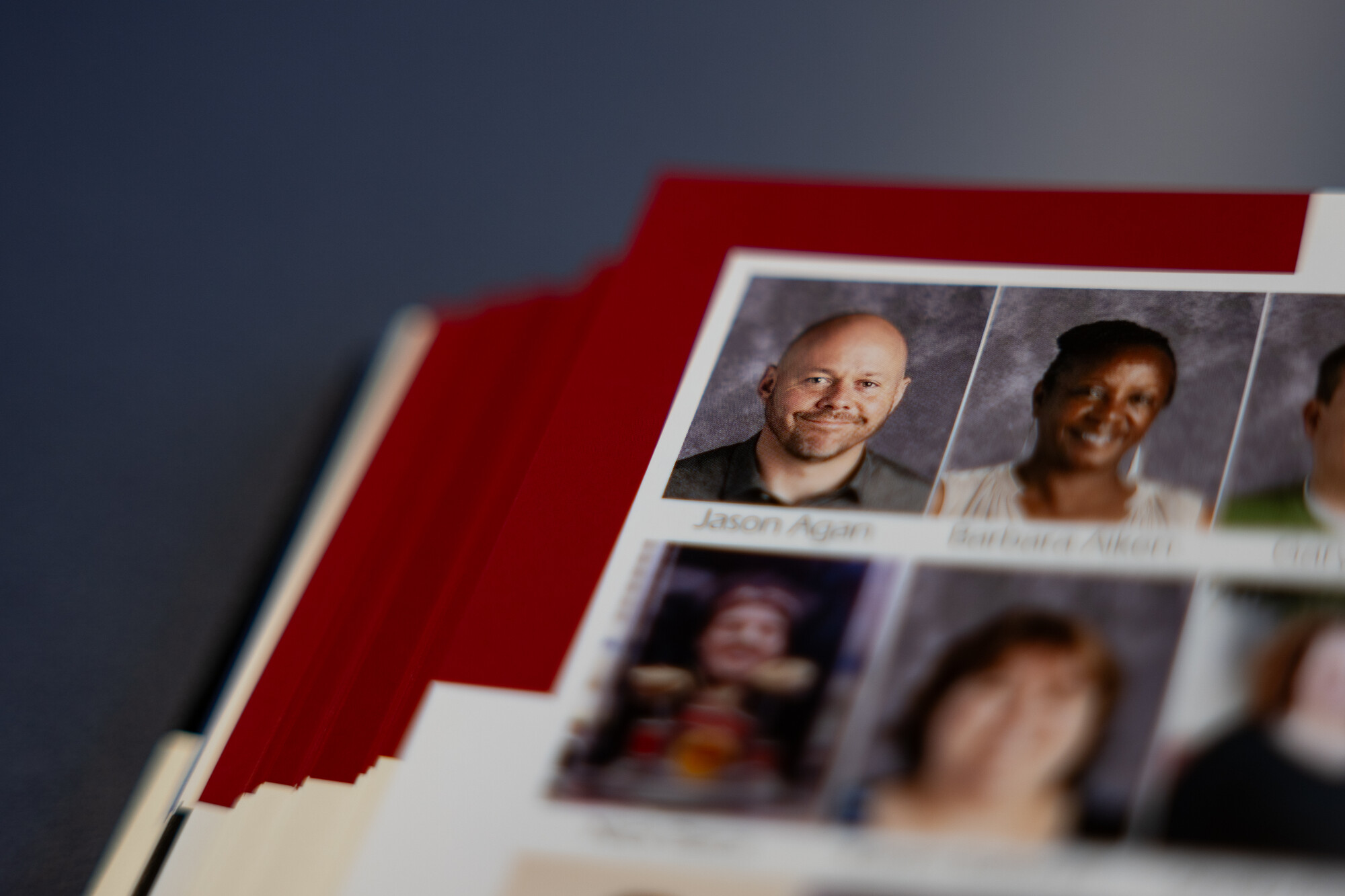
"caption": "Math teacher Jason Agan, in the 2017-2018 Rodriguez High School\nyearbook, said his goal is to “make RHS a place where all students can\nfeel comfortable and safe.” The school district fired him in 2019 for\nsexually harassing students.",
"credit": "Beth LaBerge/KQED",
"altTag": "A page in a yearbook that includes a photo of a man looking through a doorway and a feature on Jason Agan under the title, “Equations & Headaches.”",
"description": null,
"imgSizes": {
"thumbnail": {
"file": "https://cdn.kqed.org/wp-content/uploads/sites/10/2026/05/260324-ProPublica-CATeacherDiscipline-12-160x107.jpg",
"width": 160,
"height": 107,
"mimeType": "image/jpeg"
},
"1536x1536": {
"file": "https://cdn.kqed.org/wp-content/uploads/sites/10/2026/05/260324-ProPublica-CATeacherDiscipline-12-1536x1024.jpg",
"width": 1536,
"height": 1024,
"mimeType": "image/jpeg"
},
"post-thumbnail": {
"file": "https://cdn.kqed.org/wp-content/uploads/sites/10/2026/05/260324-ProPublica-CATeacherDiscipline-12-672x372.jpg",
"width": 672,
"height": 372,
"mimeType": "image/jpeg"
},
"twentyfourteen-full-width": {
"file": "https://cdn.kqed.org/wp-content/uploads/sites/10/2026/05/260324-ProPublica-CATeacherDiscipline-12-1038x576.jpg",
"width": 1038,
"height": 576,
"mimeType": "image/jpeg"
},
"npr-cds-wide": {
"file": "https://cdn.kqed.org/wp-content/uploads/sites/10/2026/05/260324-ProPublica-CATeacherDiscipline-12-1200x675.jpg",
"width": 1200,
"height": 675,
"mimeType": "image/jpeg"
},
"npr-cds-square": {
"file": "https://cdn.kqed.org/wp-content/uploads/sites/10/2026/05/260324-ProPublica-CATeacherDiscipline-12-600x600.jpg",
"width": 600,
"height": 600,
"mimeType": "image/jpeg"
},
"kqedFullSize": {
"file": "https://cdn.kqed.org/wp-content/uploads/sites/10/2026/05/260324-ProPublica-CATeacherDiscipline-12.jpg",
"width": 2000,
"height": 1333
}
},
"isLoading": false,
"fetchFailed": false
},
"news_12085747": {
"type": "attachments",
"id": "news_12085747",
"meta": {
"index": "attachments_1716263798",
"site": "news",
"id": "12085747",
"found": true
},
"title": "060126FAIRFIELD HIGH CLAIM_GH_003-KQED",
"publishDate": 1780347623,
"status": "inherit",
"parent": 0,
"modified": 1780347829,
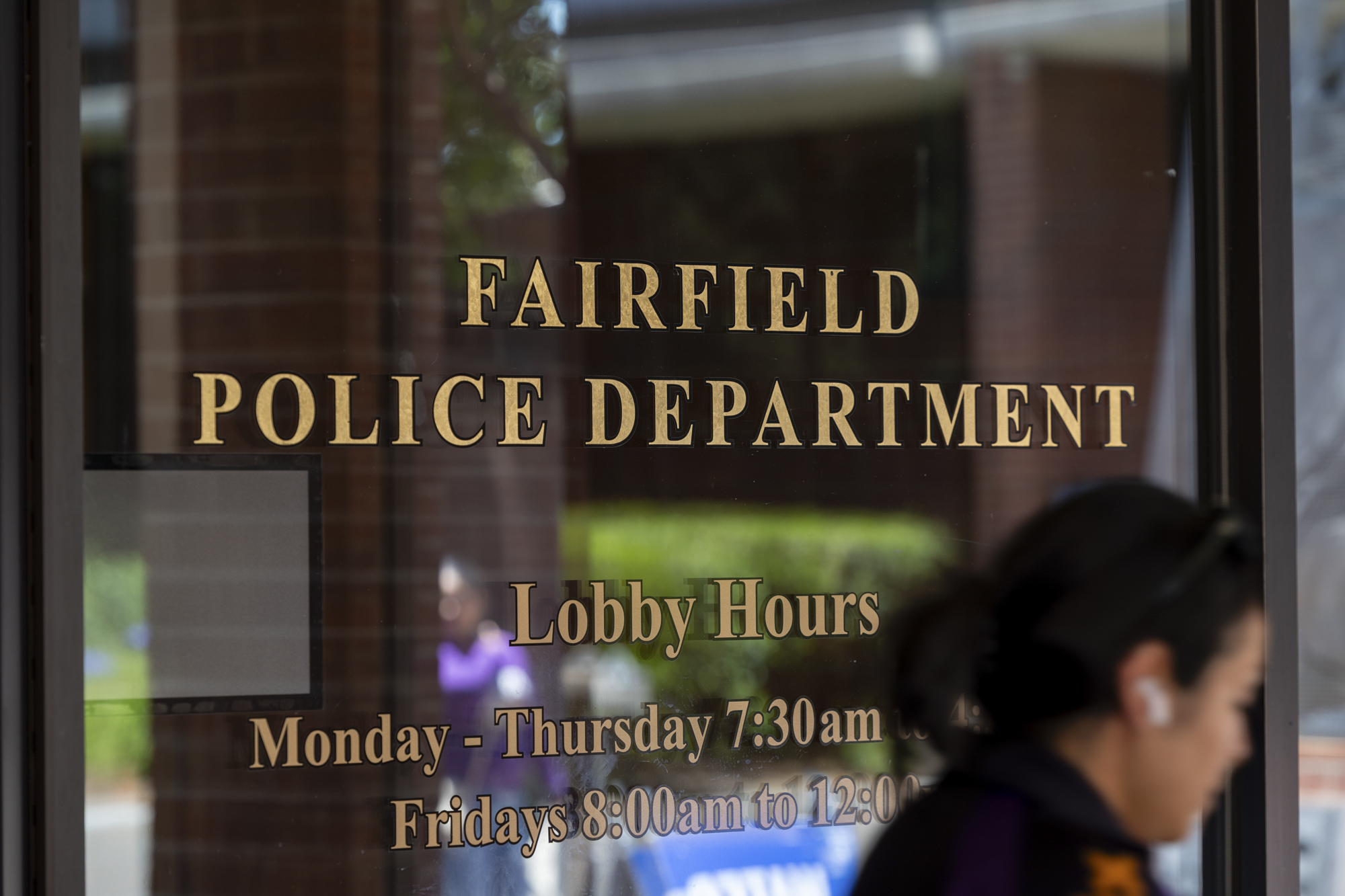
"caption": "A person walks past the entrance to the Fairfield Police Department on June 1, 2026, in Fairfield.",
"credit": "Gustavo Hernandez/KQED",
"altTag": null,
"description": null,
"imgSizes": {
"thumbnail": {
"file": "https://cdn.kqed.org/wp-content/uploads/sites/10/2026/06/060126FAIRFIELD-HIGH-CLAIM_GH_003-KQED-160x107.jpg",
"width": 160,
"height": 107,
"mimeType": "image/jpeg"
},
"1536x1536": {
"file": "https://cdn.kqed.org/wp-content/uploads/sites/10/2026/06/060126FAIRFIELD-HIGH-CLAIM_GH_003-KQED-1536x1024.jpg",
"width": 1536,
"height": 1024,
"mimeType": "image/jpeg"
},
"post-thumbnail": {
"file": "https://cdn.kqed.org/wp-content/uploads/sites/10/2026/06/060126FAIRFIELD-HIGH-CLAIM_GH_003-KQED-672x372.jpg",
"width": 672,
"height": 372,
"mimeType": "image/jpeg"
},
"twentyfourteen-full-width": {
"file": "https://cdn.kqed.org/wp-content/uploads/sites/10/2026/06/060126FAIRFIELD-HIGH-CLAIM_GH_003-KQED-1038x576.jpg",
"width": 1038,
"height": 576,
"mimeType": "image/jpeg"
},
"npr-cds-wide": {
"file": "https://cdn.kqed.org/wp-content/uploads/sites/10/2026/06/060126FAIRFIELD-HIGH-CLAIM_GH_003-KQED-1200x675.jpg",
"width": 1200,
"height": 675,
"mimeType": "image/jpeg"
},
"npr-cds-square": {
"file": "https://cdn.kqed.org/wp-content/uploads/sites/10/2026/06/060126FAIRFIELD-HIGH-CLAIM_GH_003-KQED-600x600.jpg",
"width": 600,
"height": 600,
"mimeType": "image/jpeg"
},
"kqedFullSize": {
"file": "https://cdn.kqed.org/wp-content/uploads/sites/10/2026/06/060126FAIRFIELD-HIGH-CLAIM_GH_003-KQED.jpg",
"width": 2000,
"height": 1333
}
},
"isLoading": false,
"fetchFailed": false
},
"news_11988489": {
"type": "attachments",
"id": "news_11988489",
"meta": {
"index": "attachments_1716263798",
"site": "news",
"id": "11988489",
"found": true
},
"title": "457072739 (1)",
"publishDate": 1717191544,
"status": "inherit",
"parent": 11988452,
"modified": 1717191579,
"caption": "College Graduation commencement speech assembly",
"credit": "Getty Images",
"altTag": null,
"description": null,
"imgSizes": {
"medium": {
"file": "https://cdn.kqed.org/wp-content/uploads/sites/10/2024/06/457072739-1-800x533.jpg",
"width": 800,
"height": 533,
"mimeType": "image/jpeg"
},
"large": {
"file": "https://cdn.kqed.org/wp-content/uploads/sites/10/2024/06/457072739-1-1020x680.jpg",
"width": 1020,
"height": 680,
"mimeType": "image/jpeg"
},
"thumbnail": {
"file": "https://cdn.kqed.org/wp-content/uploads/sites/10/2024/06/457072739-1-160x107.jpg",
"width": 160,
"height": 107,
"mimeType": "image/jpeg"
},
"1536x1536": {
"file": "https://cdn.kqed.org/wp-content/uploads/sites/10/2024/06/457072739-1-1536x1024.jpg",
"width": 1536,
"height": 1024,
"mimeType": "image/jpeg"
},
"post-thumbnail": {
"file": "https://cdn.kqed.org/wp-content/uploads/sites/10/2024/06/457072739-1-672x372.jpg",
"width": 672,
"height": 372,
"mimeType": "image/jpeg"
},
"twentyfourteen-full-width": {
"file": "https://cdn.kqed.org/wp-content/uploads/sites/10/2024/06/457072739-1-1038x576.jpg",
"width": 1038,
"height": 576,
"mimeType": "image/jpeg"
},
"kqedFullSize": {
"file": "https://cdn.kqed.org/wp-content/uploads/sites/10/2024/06/457072739-1.jpg",
"width": 1920,
"height": 1280
}
},
"isLoading": false,
"fetchFailed": false
},
"news_12065389": {
"type": "attachments",
"id": "news_12065389",
"meta": {
"index": "attachments_1716263798",
"site": "news",
"id": "12065389",
"found": true
},
"title": "251124-SJHUDCUTS-JG-07-KQED",
"publishDate": 1764111372,
"status": "inherit",
"parent": 12065271,
"modified": 1764112049,
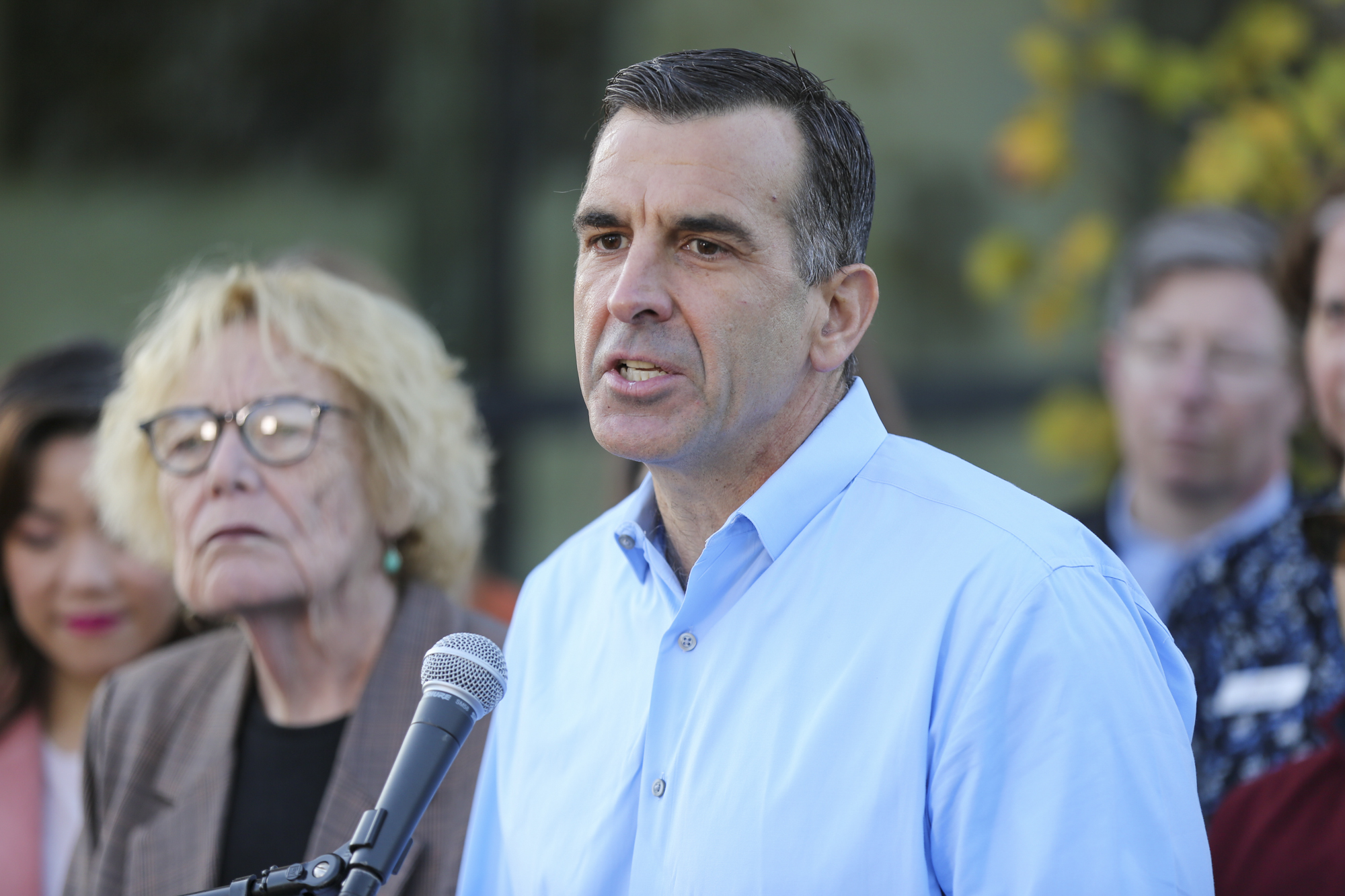
"caption": "Rep. Sam Liccardo speaks during a press conference in San José about changes to a federal housing program’s funding by the Trump administration on Nov. 24, 2025.",
"credit": "Joseph Geha/KQED",
"altTag": null,
"description": null,
"imgSizes": {
"thumbnail": {
"file": "https://cdn.kqed.org/wp-content/uploads/sites/10/2025/11/251124-SJHUDCUTS-JG-07-KQED-160x107.jpg",
"width": 160,
"height": 107,
"mimeType": "image/jpeg"
},
"1536x1536": {
"file": "https://cdn.kqed.org/wp-content/uploads/sites/10/2025/11/251124-SJHUDCUTS-JG-07-KQED-1536x1024.jpg",
"width": 1536,
"height": 1024,
"mimeType": "image/jpeg"
},
"post-thumbnail": {
"file": "https://cdn.kqed.org/wp-content/uploads/sites/10/2025/11/251124-SJHUDCUTS-JG-07-KQED-672x372.jpg",
"width": 672,
"height": 372,
"mimeType": "image/jpeg"
},
"twentyfourteen-full-width": {
"file": "https://cdn.kqed.org/wp-content/uploads/sites/10/2025/11/251124-SJHUDCUTS-JG-07-KQED-1038x576.jpg",
"width": 1038,
"height": 576,
"mimeType": "image/jpeg"
},
"npr-cds-wide": {
"file": "https://cdn.kqed.org/wp-content/uploads/sites/10/2025/11/251124-SJHUDCUTS-JG-07-KQED-1200x675.jpg",
"width": 1200,
"height": 675,
"mimeType": "image/jpeg"
},
"kqedFullSize": {
"file": "https://cdn.kqed.org/wp-content/uploads/sites/10/2025/11/251124-SJHUDCUTS-JG-07-KQED.jpg",
"width": 2000,
"height": 1333
}
},
"isLoading": false,
"fetchFailed": false
},
"news_12046126": {
"type": "attachments",
"id": "news_12046126",
"meta": {
"index": "attachments_1716263798",
"site": "news",
"id": "12046126",
"found": true
},
"title": "250418-SFUSD-01-BL_qed",
"publishDate": 1750965407,
"status": "inherit",
"parent": 12046122,
"modified": 1750965414,
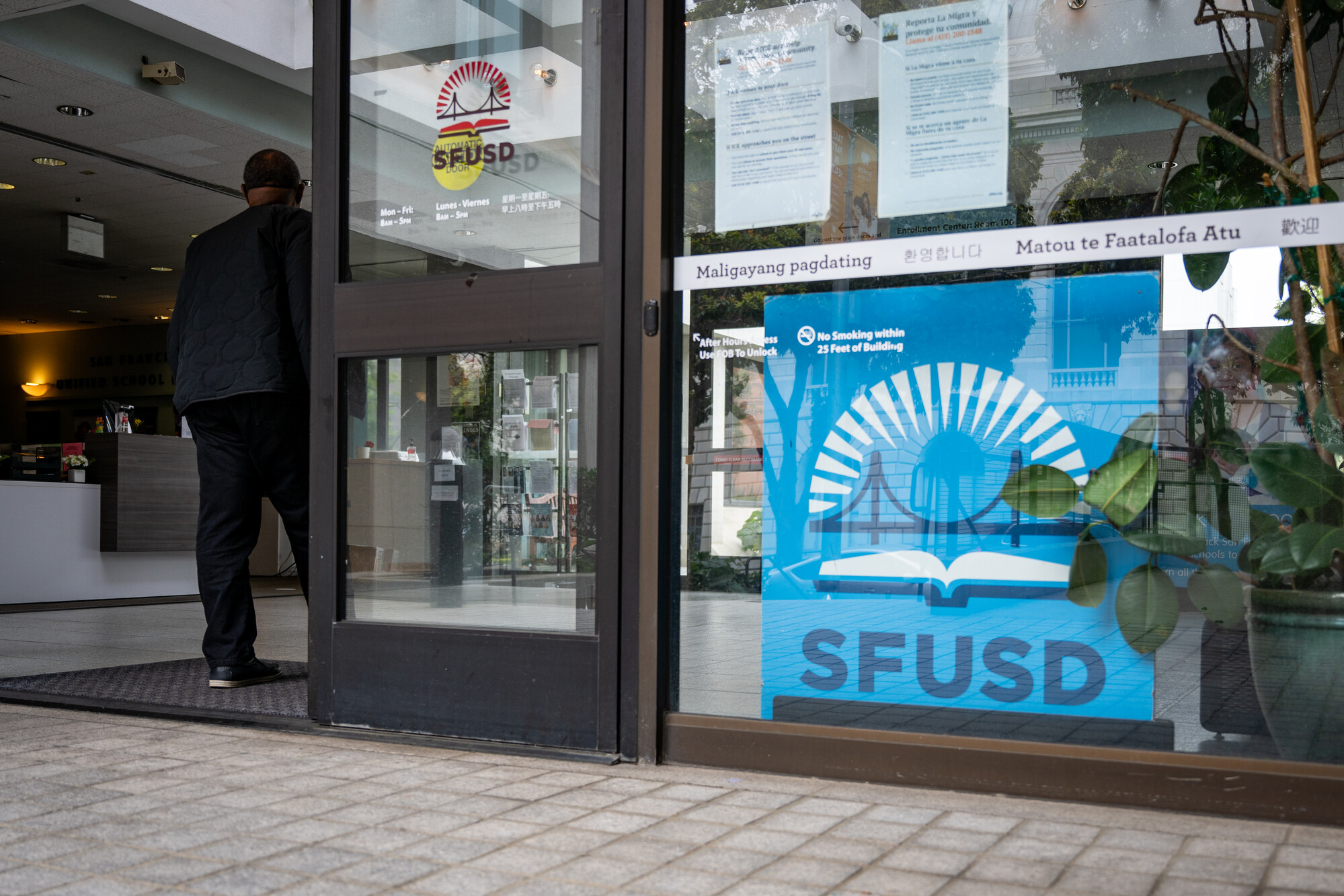
"caption": "The San Francisco Unified School District Administrative Offices in San Francisco on April 18, 2025.",
"credit": "Beth LaBerge/KQED",
"altTag": null,
"description": null,
"imgSizes": {
"thumbnail": {
"file": "https://cdn.kqed.org/wp-content/uploads/sites/10/2025/06/250418-SFUSD-01-BL_qed-160x107.jpg",
"width": 160,
"height": 107,
"mimeType": "image/jpeg"
},
"1536x1536": {
"file": "https://cdn.kqed.org/wp-content/uploads/sites/10/2025/06/250418-SFUSD-01-BL_qed-1536x1024.jpg",
"width": 1536,
"height": 1024,
"mimeType": "image/jpeg"
},
"post-thumbnail": {
"file": "https://cdn.kqed.org/wp-content/uploads/sites/10/2025/06/250418-SFUSD-01-BL_qed-672x372.jpg",
"width": 672,
"height": 372,
"mimeType": "image/jpeg"
},
"twentyfourteen-full-width": {
"file": "https://cdn.kqed.org/wp-content/uploads/sites/10/2025/06/250418-SFUSD-01-BL_qed-1038x576.jpg",
"width": 1038,
"height": 576,
"mimeType": "image/jpeg"
},
"kqedFullSize": {
"file": "https://cdn.kqed.org/wp-content/uploads/sites/10/2025/06/250418-SFUSD-01-BL_qed.jpg",
"width": 1999,
"height": 1333
}
},
"isLoading": false,
"fetchFailed": false
},
"news_12084648": {
"type": "attachments",
"id": "news_12084648",
"meta": {
"index": "attachments_1716263798",
"site": "news",
"id": "12084648",
"found": true
},
"title": "Screenshot 2026-05-21 at 10.21.25 AM",
"publishDate": 1779384240,
"status": "inherit",
"parent": 12084624,
"modified": 1779384267,
"caption": "The Foundations and Futures platforms allows users to engage with AAPI history in a multimedia way.\n\n",
"credit": "Courtesy of Foundations and Futures",
"altTag": null,
"description": null,
"imgSizes": {
"thumbnail": {
"file": "https://cdn.kqed.org/wp-content/uploads/sites/10/2026/05/Screenshot-2026-05-21-at-10.21.25 AM-160x104.jpeg",
"width": 160,
"height": 104,
"mimeType": "image/jpeg"
},
"1536x1536": {
"file": "https://cdn.kqed.org/wp-content/uploads/sites/10/2026/05/Screenshot-2026-05-21-at-10.21.25 AM-1536x996.jpeg",
"width": 1536,
"height": 996,
"mimeType": "image/jpeg"
},
"post-thumbnail": {
"file": "https://cdn.kqed.org/wp-content/uploads/sites/10/2026/05/Screenshot-2026-05-21-at-10.21.25 AM-672x372.jpeg",
"width": 672,
"height": 372,
"mimeType": "image/jpeg"
},
"twentyfourteen-full-width": {
"file": "https://cdn.kqed.org/wp-content/uploads/sites/10/2026/05/Screenshot-2026-05-21-at-10.21.25 AM-1038x576.jpeg",
"width": 1038,
"height": 576,
"mimeType": "image/jpeg"
},
"npr-cds-wide": {
"file": "https://cdn.kqed.org/wp-content/uploads/sites/10/2026/05/Screenshot-2026-05-21-at-10.21.25 AM-1200x675.jpeg",
"width": 1200,
"height": 675,
"mimeType": "image/jpeg"
},
"npr-cds-square": {
"file": "https://cdn.kqed.org/wp-content/uploads/sites/10/2026/05/Screenshot-2026-05-21-at-10.21.25 AM-600x600.jpeg",
"width": 600,
"height": 600,
"mimeType": "image/jpeg"
},
"kqedFullSize": {
"file": "https://cdn.kqed.org/wp-content/uploads/sites/10/2026/05/Screenshot-2026-05-21-at-10.21.25 AM.jpeg",
"width": 1958,
"height": 1270
}
},
"isLoading": false,
"fetchFailed": false
},
"news_12084719": {
"type": "attachments",
"id": "news_12084719",
"meta": {
"index": "attachments_1716263798",
"site": "news",
"id": "12084719",
"found": true
},
"title": "050726-Native-Students-JAH-CM-19 (1)",
"publishDate": 1779393567,
"status": "inherit",
"parent": 12084712,
"modified": 1779393613,
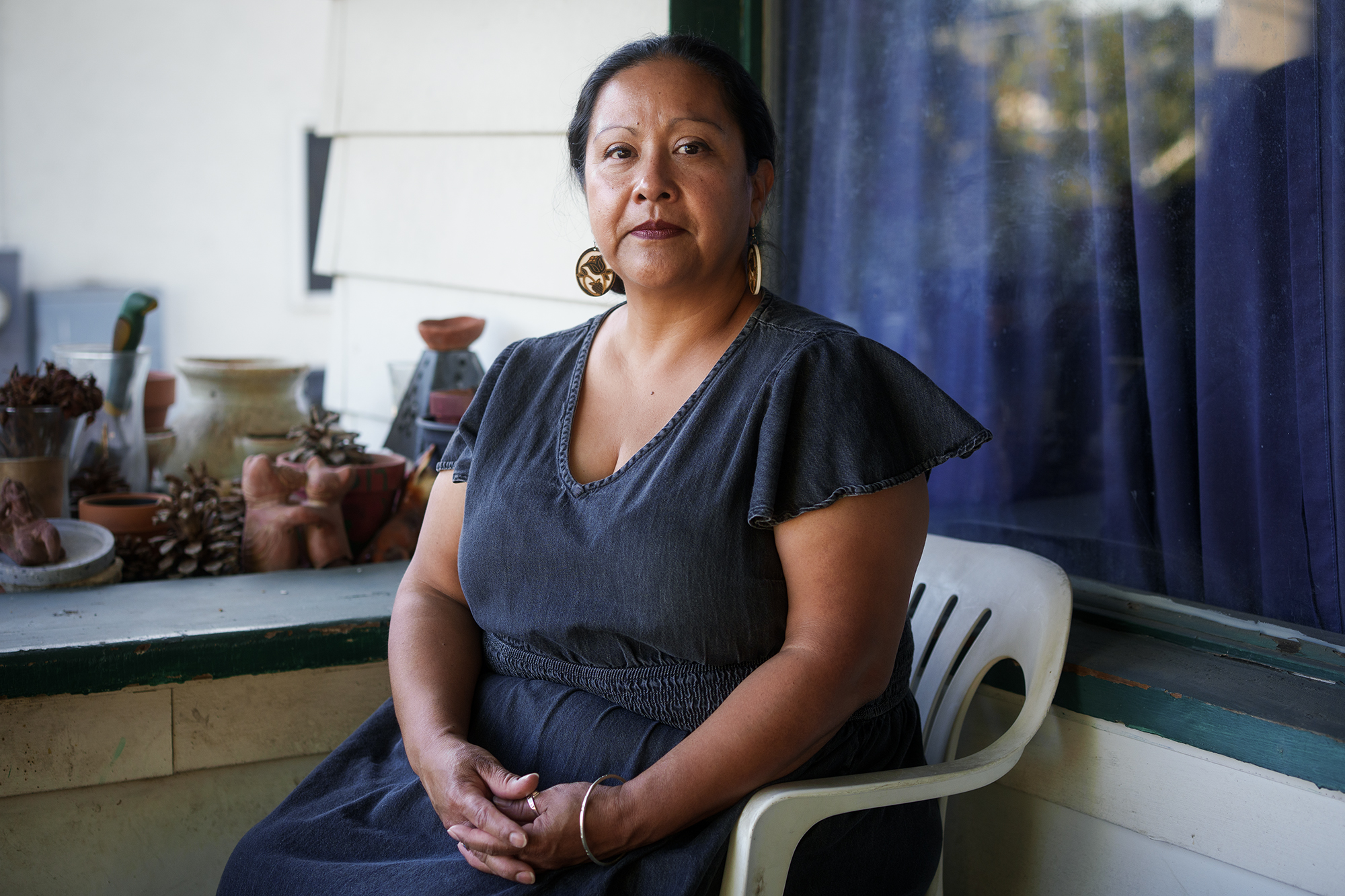
"caption": "Celestina Castillo sits on the porch of her home in Los Angeles on May 7, 2026.",
"credit": "Jules Hotz/CalMatters",
"altTag": null,
"description": null,
"imgSizes": {
"thumbnail": {
"file": "https://cdn.kqed.org/wp-content/uploads/sites/10/2026/05/050726-Native-Students-JAH-CM-19-1-160x107.jpg",
"width": 160,
"height": 107,
"mimeType": "image/jpeg"
},
"1536x1536": {
"file": "https://cdn.kqed.org/wp-content/uploads/sites/10/2026/05/050726-Native-Students-JAH-CM-19-1-1536x1024.jpg",
"width": 1536,
"height": 1024,
"mimeType": "image/jpeg"
},
"post-thumbnail": {
"file": "https://cdn.kqed.org/wp-content/uploads/sites/10/2026/05/050726-Native-Students-JAH-CM-19-1-672x372.jpg",
"width": 672,
"height": 372,
"mimeType": "image/jpeg"
},
"twentyfourteen-full-width": {
"file": "https://cdn.kqed.org/wp-content/uploads/sites/10/2026/05/050726-Native-Students-JAH-CM-19-1-1038x576.jpg",
"width": 1038,
"height": 576,
"mimeType": "image/jpeg"
},
"npr-cds-wide": {
"file": "https://cdn.kqed.org/wp-content/uploads/sites/10/2026/05/050726-Native-Students-JAH-CM-19-1-1200x675.jpg",
"width": 1200,
"height": 675,
"mimeType": "image/jpeg"
},
"npr-cds-square": {
"file": "https://cdn.kqed.org/wp-content/uploads/sites/10/2026/05/050726-Native-Students-JAH-CM-19-1-600x600.jpg",
"width": 600,
"height": 600,
"mimeType": "image/jpeg"
},
"kqedFullSize": {
"file": "https://cdn.kqed.org/wp-content/uploads/sites/10/2026/05/050726-Native-Students-JAH-CM-19-1.jpg",
"width": 2000,
"height": 1333
}
},
"isLoading": false,
"fetchFailed": false
},
"news_12084890": {
"type": "attachments",
"id": "news_12084890",
"meta": {
"index": "attachments_1716263798",
"site": "news",
"id": "12084890",
"found": true
},
"title": "260324-ProPublica-CATeacherDiscipline-19-BL_qed",
"publishDate": 1779461080,
"status": "inherit",
"parent": 12084681,
"modified": 1779470739,
"caption": "A photo of teacher Jason Agan in the Rodriguez High School yearbook from 2017 at the Fairfield Civic Center Library in Fairfield, California, on March 24, 2026. Only for use in the ProPublica KQED collaboration California Teacher Discipline.",
"credit": null,
"altTag": null,
"description": null,
"imgSizes": {
"thumbnail": {
"file": "https://cdn.kqed.org/wp-content/uploads/sites/10/2026/05/260324-ProPublica-CATeacherDiscipline-19-BL_qed-160x107.jpg",
"width": 160,
"height": 107,
"mimeType": "image/jpeg"
},
"1536x1536": {
"file": "https://cdn.kqed.org/wp-content/uploads/sites/10/2026/05/260324-ProPublica-CATeacherDiscipline-19-BL_qed-1536x1024.jpg",
"width": 1536,
"height": 1024,
"mimeType": "image/jpeg"
},
"post-thumbnail": {
"file": "https://cdn.kqed.org/wp-content/uploads/sites/10/2026/05/260324-ProPublica-CATeacherDiscipline-19-BL_qed-672x372.jpg",
"width": 672,
"height": 372,
"mimeType": "image/jpeg"
},
"twentyfourteen-full-width": {
"file": "https://cdn.kqed.org/wp-content/uploads/sites/10/2026/05/260324-ProPublica-CATeacherDiscipline-19-BL_qed-1038x576.jpg",
"width": 1038,
"height": 576,
"mimeType": "image/jpeg"
},
"npr-cds-wide": {
"file": "https://cdn.kqed.org/wp-content/uploads/sites/10/2026/05/260324-ProPublica-CATeacherDiscipline-19-BL_qed-1200x675.jpg",
"width": 1200,
"height": 675,
"mimeType": "image/jpeg"
},
"npr-cds-square": {
"file": "https://cdn.kqed.org/wp-content/uploads/sites/10/2026/05/260324-ProPublica-CATeacherDiscipline-19-BL_qed-600x600.jpg",
"width": 600,
"height": 600,
"mimeType": "image/jpeg"
},
"kqedFullSize": {
"file": "https://cdn.kqed.org/wp-content/uploads/sites/10/2026/05/260324-ProPublica-CATeacherDiscipline-19-BL_qed.jpg",
"width": 2000,
"height": 1333
}
},
"isLoading": false,
"fetchFailed": false
},
"news_12084180": {
"type": "attachments",
"id": "news_12084180",
"meta": {
"index": "attachments_1716263798",
"site": "news",
"id": "12084180",
"found": true
},
"title": "260518-SCU_Sutter med school-02-KQED",
"publishDate": 1779147394,
"status": "inherit",
"parent": 0,
"modified": 1779147881,
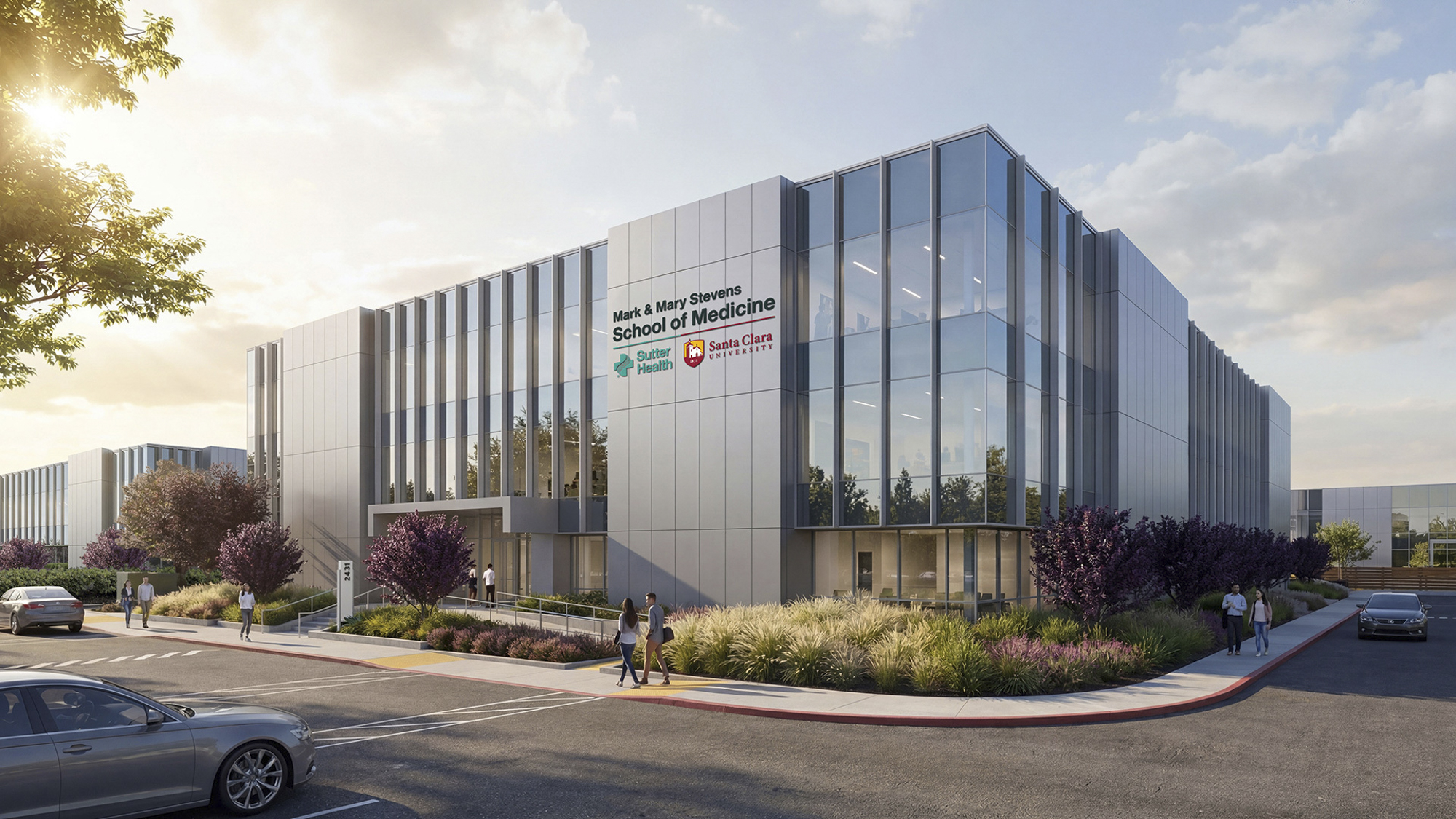
"caption": "Sutter Health and Santa Clara University plan to open the Mark & Mary Stevens School of Medicine, shown here in a digital rendering, around 2030 in northern Santa Clara.",
"credit": "Courtesy Sutter Health and Santa Clara University",
"altTag": null,
"description": null,
"imgSizes": {
"thumbnail": {
"file": "https://cdn.kqed.org/wp-content/uploads/sites/10/2026/05/260518-SCU_Sutter-med-school-02-KQED-160x90.jpg",
"width": 160,
"height": 90,
"mimeType": "image/jpeg"
},
"1536x1536": {
"file": "https://cdn.kqed.org/wp-content/uploads/sites/10/2026/05/260518-SCU_Sutter-med-school-02-KQED-1536x864.jpg",
"width": 1536,
"height": 864,
"mimeType": "image/jpeg"
},
"post-thumbnail": {
"file": "https://cdn.kqed.org/wp-content/uploads/sites/10/2026/05/260518-SCU_Sutter-med-school-02-KQED-672x372.jpg",
"width": 672,
"height": 372,
"mimeType": "image/jpeg"
},
"twentyfourteen-full-width": {
"file": "https://cdn.kqed.org/wp-content/uploads/sites/10/2026/05/260518-SCU_Sutter-med-school-02-KQED-1038x576.jpg",
"width": 1038,
"height": 576,
"mimeType": "image/jpeg"
},
"npr-cds-wide": {
"file": "https://cdn.kqed.org/wp-content/uploads/sites/10/2026/05/260518-SCU_Sutter-med-school-02-KQED-1200x675.jpg",
"width": 1200,
"height": 675,
"mimeType": "image/jpeg"
},
"npr-cds-square": {
"file": "https://cdn.kqed.org/wp-content/uploads/sites/10/2026/05/260518-SCU_Sutter-med-school-02-KQED-600x600.jpg",
"width": 600,
"height": 600,
"mimeType": "image/jpeg"
},
"kqedFullSize": {
"file": "https://cdn.kqed.org/wp-content/uploads/sites/10/2026/05/260518-SCU_Sutter-med-school-02-KQED.jpg",
"width": 2000,
"height": 1125
}
},
"isLoading": false,
"fetchFailed": false
},
"news_11890060": {
"type": "attachments",
"id": "news_11890060",
"meta": {
"index": "attachments_1716263798",
"site": "news",
"id": "11890060",
"found": true
},
"title": "US-POLITICS-IMMIGRATION-COURT",
"publishDate": 1632779004,
"status": "inherit",
"parent": 11890039,
"modified": 1779125894,
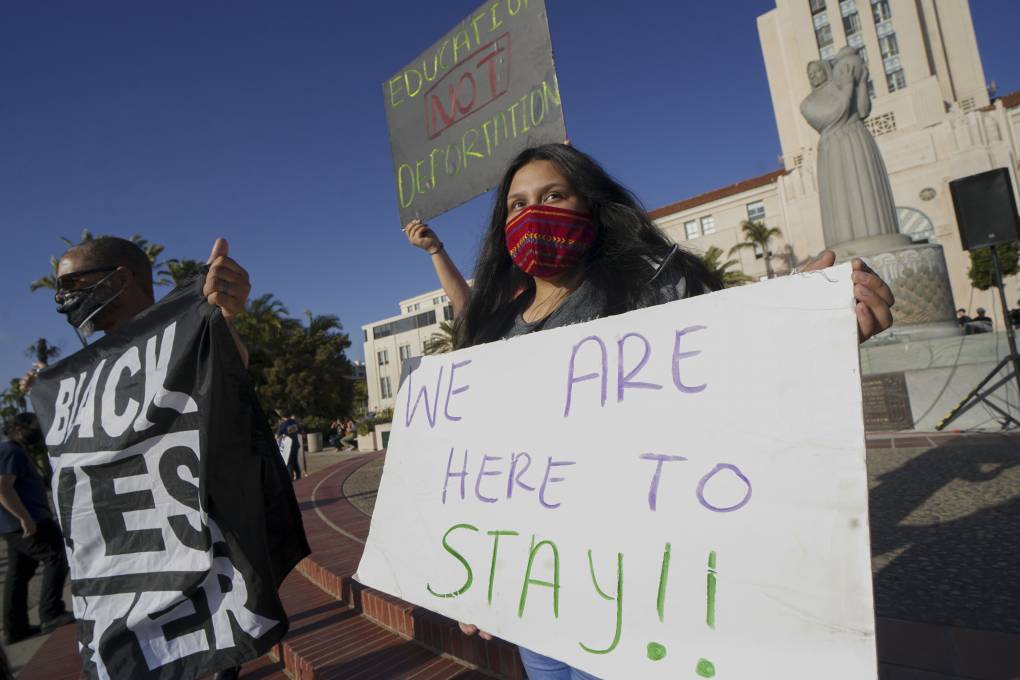
"caption": "People hold signs during a rally in support of the Supreme Court's ruling in favor of the Deferred Action for Childhood Arrivals (DACA) program in San Diego, California, June 18, 2020.",
"credit": "Sandy Huffaker/AFP via Getty Images",
"altTag": "Protesters hold signs saying, \"We are here to stay!\" \"Black Lives Matter\" and \"Education, Not Deportation.\"",
"description": "People hold signs during a rally in support of the Supreme Court's ruling in favor of the Deferred Action for Childhood Arrivals (DACA) program, in San Diego, California June 18, 2020.",
"imgSizes": {
"medium": {
"file": "https://cdn.kqed.org/wp-content/uploads/sites/10/2021/09/GettyImages-1221069312-800x534.jpg",
"width": 800,
"height": 534,
"mimeType": "image/jpeg"
},
"large": {
"file": "https://cdn.kqed.org/wp-content/uploads/sites/10/2021/09/GettyImages-1221069312-1020x680.jpg",
"width": 1020,
"height": 680,
"mimeType": "image/jpeg"
},
"thumbnail": {
"file": "https://cdn.kqed.org/wp-content/uploads/sites/10/2021/09/GettyImages-1221069312-160x107.jpg",
"width": 160,
"height": 107,
"mimeType": "image/jpeg"
},
"1536x1536": {
"file": "https://cdn.kqed.org/wp-content/uploads/sites/10/2021/09/GettyImages-1221069312-1536x1025.jpg",
"width": 1536,
"height": 1025,
"mimeType": "image/jpeg"
},
"2048x2048": {
"file": "https://cdn.kqed.org/wp-content/uploads/sites/10/2021/09/GettyImages-1221069312-2048x1366.jpg",
"width": 2048,
"height": 1366,
"mimeType": "image/jpeg"
},
"post-thumbnail": {
"file": "https://cdn.kqed.org/wp-content/uploads/sites/10/2021/09/GettyImages-1221069312-672x372.jpg",
"width": 672,
"height": 372,
"mimeType": "image/jpeg"
},
"twentyfourteen-full-width": {
"file": "https://cdn.kqed.org/wp-content/uploads/sites/10/2021/09/GettyImages-1221069312-1038x576.jpg",
"width": 1038,
"height": 576,
"mimeType": "image/jpeg"
},
"full-width": {
"file": "https://cdn.kqed.org/wp-content/uploads/sites/10/2021/09/GettyImages-1221069312-1920x1281.jpg",
"width": 1920,
"height": 1281,
"mimeType": "image/jpeg"
},
"kqedFullSize": {
"file": "https://cdn.kqed.org/wp-content/uploads/sites/10/2021/09/GettyImages-1221069312-scaled-e1740595603543.jpg",
"width": 2000,
"height": 1334
}
},
"isLoading": false,
"fetchFailed": false
},
"news_12048319": {
"type": "attachments",
"id": "news_12048319",
"meta": {
"index": "attachments_1716263798",
"site": "news",
"id": "12048319",
"found": true
},
"title": "Inside the hallways of Buena Vista Horace Mann K-8 school in San Francisco, Calif. This San Francisco public school is considering opening a family homeless shelter in one of the gyms to house students and their families who are homeless or need emergenc",
"publishDate": 1752686412,
"status": "inherit",
"parent": 12048313,
"modified": 1777501948,
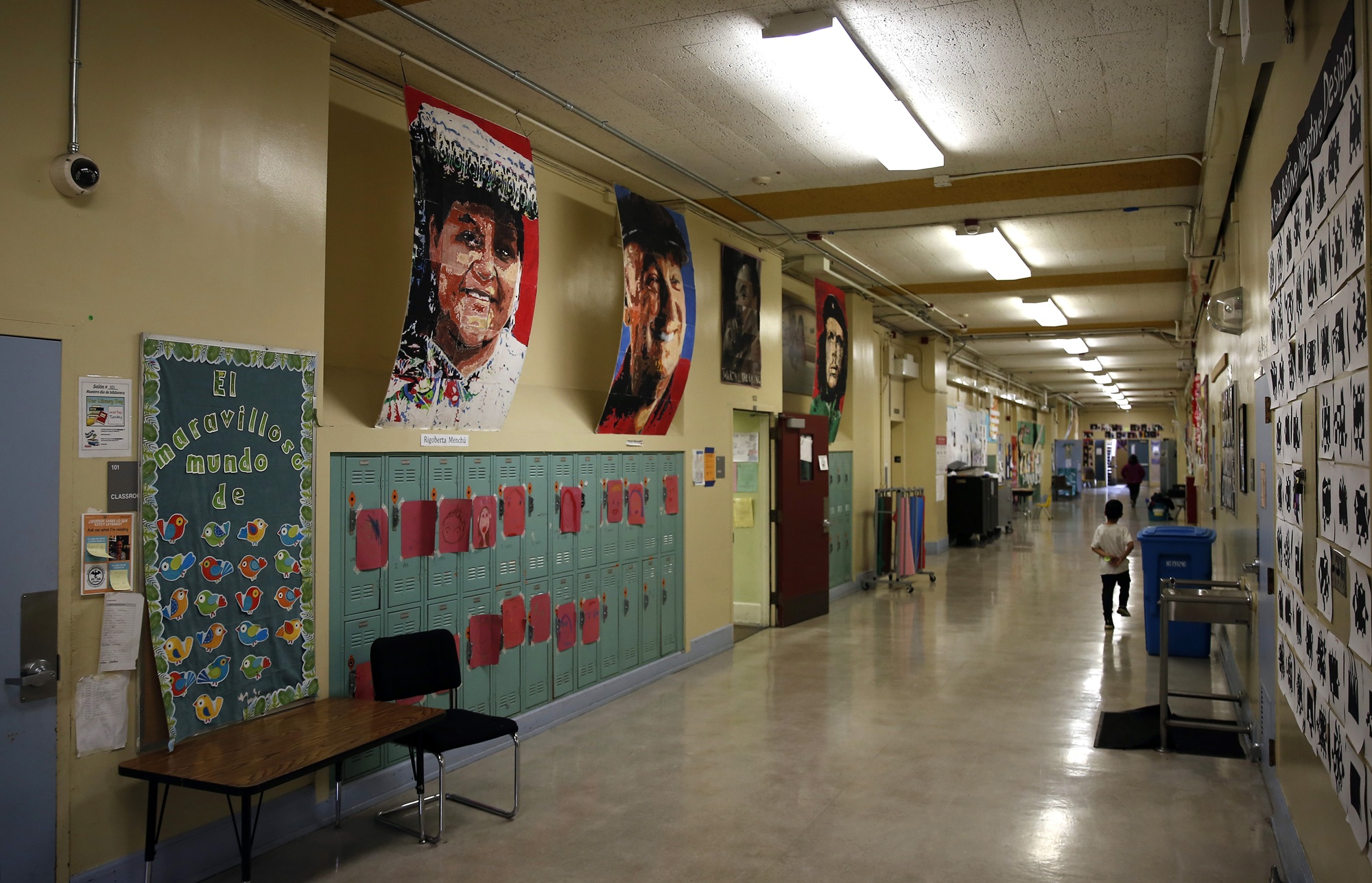
"caption": "Inside the hallways of Buena Vista Horace Mann K-8 school in San Francisco, California. ",
"credit": "Michael Macor/The San Francisco Chronicle via Getty Images",
"altTag": null,
"description": null,
"imgSizes": {
"thumbnail": {
"file": "https://cdn.kqed.org/wp-content/uploads/sites/10/2025/07/SanFranciscoK8SchoolGetty-160x103.jpg",
"width": 160,
"height": 103,
"mimeType": "image/jpeg"
},
"1536x1536": {
"file": "https://cdn.kqed.org/wp-content/uploads/sites/10/2025/07/SanFranciscoK8SchoolGetty-1536x988.jpg",
"width": 1536,
"height": 988,
"mimeType": "image/jpeg"
},
"post-thumbnail": {
"file": "https://cdn.kqed.org/wp-content/uploads/sites/10/2025/07/SanFranciscoK8SchoolGetty-672x372.jpg",
"width": 672,
"height": 372,
"mimeType": "image/jpeg"
},
"twentyfourteen-full-width": {
"file": "https://cdn.kqed.org/wp-content/uploads/sites/10/2025/07/SanFranciscoK8SchoolGetty-1038x576.jpg",
"width": 1038,
"height": 576,
"mimeType": "image/jpeg"
},
"kqedFullSize": {
"file": "https://cdn.kqed.org/wp-content/uploads/sites/10/2025/07/SanFranciscoK8SchoolGetty.jpg",
"width": 2000,
"height": 1287
}
},
"isLoading": false,
"fetchFailed": false
},
"news_12043210": {
"type": "attachments",
"id": "news_12043210",
"meta": {
"index": "attachments_1716263798",
"site": "news",
"id": "12043210",
"found": true
},
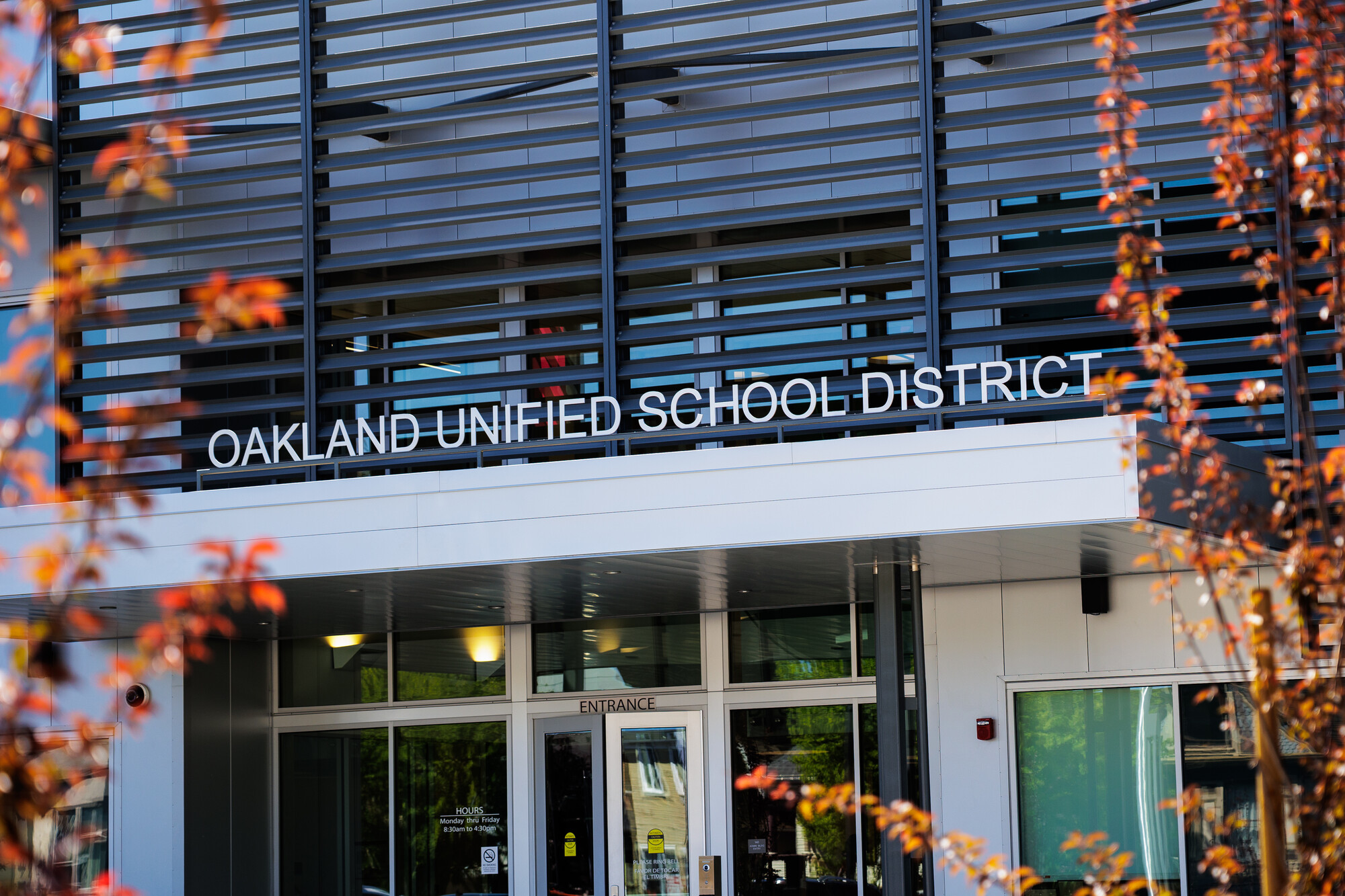
"title": "The Oakland Unified School District Offices in Oakland on April 28, 2025.",
"publishDate": 1749254496,
"status": "inherit",
"parent": 12043062,
"modified": 1749254510,
"caption": "The Oakland Unified School District Offices in Oakland on April 28, 2025.",
"credit": "Martin do Nascimento/KQED",
"altTag": null,
"description": null,
"imgSizes": {
"thumbnail": {
"file": "https://cdn.kqed.org/wp-content/uploads/sites/10/2025/06/250428-OUSD-OFFICE-FILE-MD-04_qed-160x107.jpg",
"width": 160,
"height": 107,
"mimeType": "image/jpeg"
},
"1536x1536": {
"file": "https://cdn.kqed.org/wp-content/uploads/sites/10/2025/06/250428-OUSD-OFFICE-FILE-MD-04_qed-1536x1024.jpg",
"width": 1536,
"height": 1024,
"mimeType": "image/jpeg"
},
"post-thumbnail": {
"file": "https://cdn.kqed.org/wp-content/uploads/sites/10/2025/06/250428-OUSD-OFFICE-FILE-MD-04_qed-672x372.jpg",
"width": 672,
"height": 372,
"mimeType": "image/jpeg"
},
"twentyfourteen-full-width": {
"file": "https://cdn.kqed.org/wp-content/uploads/sites/10/2025/06/250428-OUSD-OFFICE-FILE-MD-04_qed-1038x576.jpg",
"width": 1038,
"height": 576,
"mimeType": "image/jpeg"
},
"kqedFullSize": {
"file": "https://cdn.kqed.org/wp-content/uploads/sites/10/2025/06/250428-OUSD-OFFICE-FILE-MD-04_qed.jpg",
"width": 2000,
"height": 1333
}
},
"isLoading": false,
"fetchFailed": false
}
},
"audioPlayerReducer": {
"postId": "stream_live",
"isPaused": true,
"isPlaying": false,
"pfsActive": false,
"pledgeModalIsOpen": true,
"playerDrawerIsOpen": false,
"liveAudioPlayStartedAt": 0,
"liveAudioPlayContext": ""
},
"authorsReducer": {
"byline_news_12084624": {
"type": "authors",
"id": "byline_news_12084624",
"meta": {
"override": true
},
"slug": "byline_news_12084624",
"name": "Josie Huang, LAist",
"isLoading": false
},
"byline_news_12084712": {
"type": "authors",
"id": "byline_news_12084712",
"meta": {
"override": true
},
"slug": "byline_news_12084712",
"name": "Carolyn Jones, CalMatters",
"isLoading": false
},
"ecruzguevarra": {
"type": "authors",
"id": "8654",
"meta": {
"index": "authors_1716337520",
"id": "8654",
"found": true
},
"name": "Ericka Cruz Guevarra",
"firstName": "Ericka",
"lastName": "Cruz Guevarra",
"slug": "ecruzguevarra",
"email": "ecruzguevarra@kqed.org",
"display_author_email": true,
"staff_mastheads": [
"news"
],
"title": "Producer, The Bay Podcast",
"bio": "Ericka Cruz Guevarra is host of \u003ca href=\"https://www.kqed.org/podcasts/thebay\">\u003cem>The Bay\u003c/em>\u003c/a> podcast at KQED. Before host, she was the show’s producer. Her work in that capacity includes a three-part reported series on policing in Vallejo, which won a 2020 excellence in journalism award from the Society of Professional Journalists. Ericka has worked as a breaking news reporter at Oregon Public Broadcasting, helped produce the Code Switch podcast, and was KQED’s inaugural Raul Ramirez Diversity Fund intern. She’s also an alumna of NPR’s Next Generation Radio program. Send her an email if you have strong feelings about whether Fairfield and Suisun City are the Bay. Ericka is represented by SAG-AFTRA.",
"avatar": "https://secure.gravatar.com/avatar/accefc1de4bafc7e234b69bcb9b6f6536c130fd84709bc3069ef11a78787e1bb?s=600&d=blank&r=g",
"twitter": "NotoriousECG",
"bluesky": null,
"facebook": null,
"instagram": null,
"linkedin": null,
"sites": [
{
"site": "arts",
"roles": [
"subscriber"
]
},
{
"site": "news",
"roles": [
"editor",
"manage_categories"
]
},
{
"site": "futureofyou",
"roles": [
"subscriber"
]
},
{
"site": "stateofhealth",
"roles": [
"subscriber"
]
},
{
"site": "science",
"roles": [
"editor"
]
},
{
"site": "forum",
"roles": [
"subscriber"
]
}
],
"headData": {
"title": "Ericka Cruz Guevarra | KQED",
"description": "Producer, The Bay Podcast",
"ogImgSrc": "https://secure.gravatar.com/avatar/accefc1de4bafc7e234b69bcb9b6f6536c130fd84709bc3069ef11a78787e1bb?s=600&d=blank&r=g",
"twImgSrc": "https://secure.gravatar.com/avatar/accefc1de4bafc7e234b69bcb9b6f6536c130fd84709bc3069ef11a78787e1bb?s=600&d=blank&r=g"
},
"isLoading": false,
"link": "/author/ecruzguevarra"
},
"hmcdede": {
"type": "authors",
"id": "11635",
"meta": {
"index": "authors_1716337520",
"id": "11635",
"found": true
},
"name": "Holly McDede",
"firstName": "Holly",
"lastName": "McDede",
"slug": "hmcdede",
"email": "hmcdede@KQED.org",
"display_author_email": false,
"staff_mastheads": [],
"title": "KQED Contributor",
"bio": null,
"avatar": "https://secure.gravatar.com/avatar/35d1a1f5422c9d266f7ace9348d170f2136671a65fffc90a592e4d7fbf8dc3f6?s=600&d=blank&r=g",
"twitter": null,
"bluesky": null,
"facebook": null,
"instagram": null,
"linkedin": null,
"sites": [
{
"site": "arts",
"roles": [
"editor"
]
},
{
"site": "news",
"roles": [
"edit_others_posts",
"editor"
]
},
{
"site": "science",
"roles": [
"editor"
]
},
{
"site": "forum",
"roles": [
"editor"
]
},
{
"site": "perspectives",
"roles": [
"administrator"
]
}
],
"headData": {
"title": "Holly McDede | KQED",
"description": "KQED Contributor",
"ogImgSrc": "https://secure.gravatar.com/avatar/35d1a1f5422c9d266f7ace9348d170f2136671a65fffc90a592e4d7fbf8dc3f6?s=600&d=blank&r=g",
"twImgSrc": "https://secure.gravatar.com/avatar/35d1a1f5422c9d266f7ace9348d170f2136671a65fffc90a592e4d7fbf8dc3f6?s=600&d=blank&r=g"
},
"isLoading": false,
"link": "/author/hmcdede"
},
"amontecillo": {
"type": "authors",
"id": "11649",
"meta": {
"index": "authors_1716337520",
"id": "11649",
"found": true
},
"name": "Alan Montecillo",
"firstName": "Alan",
"lastName": "Montecillo",
"slug": "amontecillo",
"email": "amontecillo@kqed.org",
"display_author_email": false,
"staff_mastheads": [
"news"
],
"title": "KQED Contributor",
"bio": "Alan Montecillo is the senior editor of \u003cem>\u003ca href=\"http://kqed.org/thebay\">The Bay\u003c/a>, \u003c/em> KQED's local news podcast. Before moving to the Bay Area, he worked as a senior talk show producer for WILL in Champaign-Urbana, Illinois and at Oregon Public Broadcasting in Portland, Oregon. He has won journalism awards from the Society of Professional Journalists Northern California, the Public Media Journalists Association, The Signal Awards, and has also received a regional Edward R. Murrow award. Alan is a Filipino American from Hong Kong and a graduate of Reed College.",
"avatar": "https://secure.gravatar.com/avatar/268f53a2066899ea9efdd8a5900218b17c822d9862cbc9326cccec53ef41d349?s=600&d=blank&r=g",
"twitter": "alanmontecillo",
"bluesky": null,
"facebook": null,
"instagram": null,
"linkedin": null,
"sites": [
{
"site": "",
"roles": [
"editor"
]
},
{
"site": "news",
"roles": [
"editor",
"manage_categories"
]
}
],
"headData": {
"title": "Alan Montecillo | KQED",
"description": "KQED Contributor",
"ogImgSrc": "https://secure.gravatar.com/avatar/268f53a2066899ea9efdd8a5900218b17c822d9862cbc9326cccec53ef41d349?s=600&d=blank&r=g",
"twImgSrc": "https://secure.gravatar.com/avatar/268f53a2066899ea9efdd8a5900218b17c822d9862cbc9326cccec53ef41d349?s=600&d=blank&r=g"
},
"isLoading": false,
"link": "/author/amontecillo"
},
"ccabreralomeli": {
"type": "authors",
"id": "11708",
"meta": {
"index": "authors_1716337520",
"id": "11708",
"found": true
},
"name": "Carlos Cabrera-Lomelí",
"firstName": "Carlos",
"lastName": "Cabrera-Lomelí",
"slug": "ccabreralomeli",
"email": "ccabreralomeli@KQED.org",
"display_author_email": true,
"staff_mastheads": [
"news"
],
"title": "Community Reporter",
"bio": "Carlos Cabrera-Lomelí is a community reporter with KQED's digital engagement team. He also reports and co-produces for KQED's bilingual news hub KQED en Español. He grew up in San Francisco's Mission District and has previously worked with Univision, 48 Hills and REFORMA in Mexico City.",
"avatar": "https://secure.gravatar.com/avatar/c309be9665e484f887b818c89e273ecc673004f426f36b24d00a4d813a2e0518?s=600&d=blank&r=g",
"twitter": "@LomeliCabrera",
"bluesky": null,
"facebook": null,
"instagram": null,
"linkedin": null,
"sites": [
{
"site": "arts",
"roles": [
"editor"
]
},
{
"site": "news",
"roles": [
"editor"
]
},
{
"site": "about",
"roles": [
"editor"
]
},
{
"site": "science",
"roles": [
"editor"
]
},
{
"site": "perspectives",
"roles": [
"editor"
]
},
{
"site": "elections",
"roles": [
"editor"
]
},
{
"site": "liveblog",
"roles": [
"contributor"
]
}
],
"headData": {
"title": "Carlos Cabrera-Lomelí | KQED",
"description": "Community Reporter",
"ogImgSrc": "https://secure.gravatar.com/avatar/c309be9665e484f887b818c89e273ecc673004f426f36b24d00a4d813a2e0518?s=600&d=blank&r=g",
"twImgSrc": "https://secure.gravatar.com/avatar/c309be9665e484f887b818c89e273ecc673004f426f36b24d00a4d813a2e0518?s=600&d=blank&r=g"
},
"isLoading": false,
"link": "/author/ccabreralomeli"
},
"jessicakariisa": {
"type": "authors",
"id": "11831",
"meta": {
"index": "authors_1716337520",
"id": "11831",
"found": true
},
"name": "Jessica Kariisa",
"firstName": "Jessica",
"lastName": "Kariisa",
"slug": "jessicakariisa",
"email": "jkariisa@kqed.org",
"display_author_email": false,
"staff_mastheads": [],
"title": "Producer, The Bay",
"bio": "Jessica Kariisa is the producer of The Bay. She first joined KQED as an intern for The California Report Magazine, after which she became an on-call producer. She reported a Bay Curious episode on the use of rap lyrics in criminal trials which won a Society of Professional Journalists award in 2023 for Excellence in Features Journalism and the 2023 Signal Award for Best Conversation Starter. She’s worked on podcasts for Snap Judgment and American Public Media. Before embarking on her audio career, she was a music journalist.\r\n\r\nJessica Kariisa is represented by SAG-AFTRA.",
"avatar": "https://secure.gravatar.com/avatar/522e97b28ac0b3d411621c0fde8f3419c7b71ea2c5c262c57c4bb600963f328c?s=600&d=blank&r=g",
"twitter": null,
"bluesky": null,
"facebook": null,
"instagram": null,
"linkedin": null,
"sites": [
{
"site": "arts",
"roles": [
"author"
]
},
{
"site": "news",
"roles": [
"editor",
"manage_categories"
]
}
],
"headData": {
"title": "Jessica Kariisa | KQED",
"description": "Producer, The Bay",
"ogImgSrc": "https://secure.gravatar.com/avatar/522e97b28ac0b3d411621c0fde8f3419c7b71ea2c5c262c57c4bb600963f328c?s=600&d=blank&r=g",
"twImgSrc": "https://secure.gravatar.com/avatar/522e97b28ac0b3d411621c0fde8f3419c7b71ea2c5c262c57c4bb600963f328c?s=600&d=blank&r=g"
},
"isLoading": false,
"link": "/author/jessicakariisa"
},
"nkhan": {
"type": "authors",
"id": "11867",
"meta": {
"index": "authors_1716337520",
"id": "11867",
"found": true
},
"name": "Nisa Khan",
"firstName": "Nisa",
"lastName": "Khan",
"slug": "nkhan",
"email": "nkhan@kqed.org",
"display_author_email": false,
"staff_mastheads": [],
"title": "KQED Contributor",
"bio": "Nisa Khan is a reporter for KQED's Audience News Desk. She was formerly a data reporter at Michigan Radio. She earned a Bachelor of Science in Information from the University of Michigan and a Master of Arts in Communication from Stanford University.",
"avatar": "https://secure.gravatar.com/avatar/8720459eef081ff64582b3506b124d58523e80e120704a0cbd9892533c914991?s=600&d=blank&r=g",
"twitter": "mnisakhan",
"bluesky": null,
"facebook": null,
"instagram": null,
"linkedin": null,
"sites": [
{
"site": "arts",
"roles": [
"editor"
]
},
{
"site": "news",
"roles": [
"editor"
]
},
{
"site": "science",
"roles": [
"editor",
"author"
]
},
{
"site": "forum",
"roles": [
"editor"
]
},
{
"site": "liveblog",
"roles": [
"contributor"
]
}
],
"headData": {
"title": "Nisa Khan | KQED",
"description": "KQED Contributor",
"ogImgSrc": "https://secure.gravatar.com/avatar/8720459eef081ff64582b3506b124d58523e80e120704a0cbd9892533c914991?s=600&d=blank&r=g",
"twImgSrc": "https://secure.gravatar.com/avatar/8720459eef081ff64582b3506b124d58523e80e120704a0cbd9892533c914991?s=600&d=blank&r=g"
},
"isLoading": false,
"link": "/author/nkhan"
},
"jgeha": {
"type": "authors",
"id": "11906",
"meta": {
"index": "authors_1716337520",
"id": "11906",
"found": true
},
"name": "Joseph Geha",
"firstName": "Joseph",
"lastName": "Geha",
"slug": "jgeha",
"email": "jgeha@kqed.org",
"display_author_email": false,
"staff_mastheads": [
"news",
"science"
],
"title": "KQED Contributor",
"bio": null,
"avatar": "https://secure.gravatar.com/avatar/ea84d2b6dd93d6369d453edf19dd583f117cd1759d2d9c9c92f9de77017354fe?s=600&d=blank&r=g",
"twitter": null,
"bluesky": null,
"facebook": null,
"instagram": null,
"linkedin": null,
"sites": [
{
"site": "news",
"roles": [
"editor"
]
},
{
"site": "liveblog",
"roles": [
"author"
]
}
],
"headData": {
"title": "Joseph Geha | KQED",
"description": "KQED Contributor",
"ogImgSrc": "https://secure.gravatar.com/avatar/ea84d2b6dd93d6369d453edf19dd583f117cd1759d2d9c9c92f9de77017354fe?s=600&d=blank&r=g",
"twImgSrc": "https://secure.gravatar.com/avatar/ea84d2b6dd93d6369d453edf19dd583f117cd1759d2d9c9c92f9de77017354fe?s=600&d=blank&r=g"
},
"isLoading": false,
"link": "/author/jgeha"
},
"kdebenedetti": {
"type": "authors",
"id": "11913",
"meta": {
"index": "authors_1716337520",
"id": "11913",
"found": true
},
"name": "Katie DeBenedetti",
"firstName": "Katie",
"lastName": "DeBenedetti",
"slug": "kdebenedetti",
"email": "kdebenedetti@kqed.org",
"display_author_email": false,
"staff_mastheads": [
"news",
"science"
],
"title": "KQED Contributor",
"bio": "Katie DeBenedetti is a digital reporter covering daily news for the Express Desk. Prior to joining KQED as a culture reporting intern in January 2024, she covered education and city government for the Napa Valley Register.",
"avatar": "https://secure.gravatar.com/avatar/6e31073cb8f7e4214ab03f42771d0f45?s=600&d=blank&r=g",
"twitter": null,
"facebook": null,
"instagram": null,
"linkedin": null,
"sites": [
{
"site": "news",
"roles": [
"author"
]
},
{
"site": "science",
"roles": [
"author"
]
},
{
"site": "liveblog",
"roles": [
"author"
]
}
],
"headData": {
"title": "Katie DeBenedetti | KQED",
"description": "KQED Contributor",
"ogImgSrc": "https://secure.gravatar.com/avatar/6e31073cb8f7e4214ab03f42771d0f45?s=600&d=blank&r=g",
"twImgSrc": "https://secure.gravatar.com/avatar/6e31073cb8f7e4214ab03f42771d0f45?s=600&d=blank&r=g"
},
"isLoading": false,
"link": "/author/kdebenedetti"
},
"aaliahmad": {
"type": "authors",
"id": "11986",
"meta": {
"index": "authors_1716337520",
"id": "11986",
"found": true
},
"name": "Ayah Ali-Ahmad",
"firstName": "Ayah",
"lastName": "Ali-Ahmad",
"slug": "aaliahmad",
"email": "aaliahmad@KQED.org",
"display_author_email": false,
"staff_mastheads": [],
"title": "KQED Contributor",
"bio": null,
"avatar": "https://secure.gravatar.com/avatar/1cf54f187a5e1064b2cfef3f3d2f1e4f93e453395d56912aca6382a6071ec3ed?s=600&d=blank&r=g",
"twitter": "ayahaliahmad",
"bluesky": null,
"facebook": null,
"instagram": null,
"linkedin": null,
"sites": [
{
"site": "news",
"roles": [
"subscriber"
]
}
],
"headData": {
"title": "Ayah Ali-Ahmad | KQED",
"description": "KQED Contributor",
"ogImgSrc": "https://secure.gravatar.com/avatar/1cf54f187a5e1064b2cfef3f3d2f1e4f93e453395d56912aca6382a6071ec3ed?s=600&d=blank&r=g",
"twImgSrc": "https://secure.gravatar.com/avatar/1cf54f187a5e1064b2cfef3f3d2f1e4f93e453395d56912aca6382a6071ec3ed?s=600&d=blank&r=g"
},
"isLoading": false,
"link": "/author/aaliahmad"
}
},
"pagesReducer": {
"news_category_education": {
"type": "terms",
"id": "news_18540",
"meta": {
"index": "terms_1716263798",
"site": "news",
"id": "18540",
"score": 10.972926
},
"featImg": null,
"name": "Education",
"description": null,
"taxonomy": "category",
"headData": {
"twImgId": null,
"twTitle": null,
"ogTitle": null,
"ogImgId": null,
"twDescription": null,
"description": null,
"title": "Education Archives | KQED News",
"ogDescription": null
},
"ttid": 2595,
"slug": "education",
"isLoading": false,
"title": "Education",
"pageMeta": {
"site": "news",
"WpPageTemplate": "page-topic-editorial",
"currentPage": 7
},
"blocks": [
{
"blockName": "kqed/post-list",
"attrs": {
"layout": "cardArticle2",
"query": "posts/news?category=education",
"seeMore": false,
"paginated": true,
"page": 7
}
},
{
"blockName": "kqed/ad"
}
]
}
},
"pfsSessionReducer": {},
"postsReducer": {
"stream_live": {
"type": "live",
"id": "stream_live",
"audioUrl": "https://streams.kqed.org/kqedradio",
"title": "Live Stream",
"excerpt": "Live Stream information currently unavailable.",
"link": "/radio",
"featImg": "",
"label": {
"name": "KQED Live",
"link": "/"
}
},
"stream_kqedNewscast": {
"type": "posts",
"id": "stream_kqedNewscast",
"audioUrl": "https://www.kqed.org/.stream/anon/radio/RDnews/newscast.mp3?_=1",
"title": "KQED Newscast",
"featImg": "",
"label": {
"name": "88.5 FM",
"link": "/"
}
},
"news_12085808": {
"type": "posts",
"id": "news_12085808",
"meta": {
"index": "posts_1716263798",
"site": "news",
"id": "12085808",
"score": null,
"sort": [
1780480852000
]
},
"guestAuthors": [],
"slug": "a-teacher-was-fired-for-sexually-harassing-students-why-did-california-let-him-continue-teaching",
"title": "A Teacher Was Fired for Sexually Harassing Students. Why Did California Let Him Continue Teaching?",
"publishDate": 1780480852,
"format": "audio",
"headTitle": "A Teacher Was Fired for Sexually Harassing Students. Why Did California Let Him Continue Teaching? | KQED",
"labelTerm": {},
"content": "\u003cp>\u003cspan style=\"font-weight: 400\">Jason Agan was a popular teacher at Angelo Rodriguez High School in Fairfield. But for years, students whispered about his behavior. He touched some of them in public in ways that made them uncomfortable, they said, including hugging students and massaging their shoulders. \u003c/span>\u003c/p>\n\u003cp>\u003cspan style=\"font-weight: 400\">In late 2019, after multiple written complaints and an administrative hearing, the school district fired Agan. But he never lost his teaching license, and went on to teach at two more schools in California.\u003c/span>\u003c/p>\n\u003cp>\u003cspan style=\"font-weight: 400\">Holly McDede, who reported this story for KQED and ProPublica’s Local Reporting Network, explains how a pattern of delays and a lack of transparency has allowed educators to continue teaching after school districts reported them to the state.\u003c/span>\u003c/p>\n\u003cp>\u003c!-- iframe plugin v.4.3 wordpress.org/plugins/iframe/ -->\u003cbr>\n\u003ciframe loading=\"lazy\" frameborder=\"0\" height=\"200\" scrolling=\"no\" src=\"https://playlist.megaphone.fm?e=KQINC1025625890\" width=\"100%\" class=\"iframe-class\">\u003c/iframe>\u003c/p>\n\u003cp>\u003cstrong>Links:\u003c/strong>\u003c/p>\n\u003cul>\n\u003cli style=\"font-weight: 400\">\u003ca href=\"https://www.kqed.org/news/12082980/california-fired-teacher-sexual-harassment\">\u003cspan style=\"font-weight: 400\">He Was Fired for Sexually Harassing Students. California Allowed Him to Keep Teaching Anyway | KQED\u003c/span>\u003c/a>\u003c/li>\n\u003cli style=\"font-weight: 400\">\u003ca href=\"https://www.kqed.org/news/12084681/california-teacher-previously-fired-for-sexual-harassment-is-no-longer-in-the-classroom-after-new-complaints\">\u003cspan style=\"font-weight: 400\">California Teacher Previously Fired for Sexual Harassment Is No Longer in the Classroom After New Complaints | KQED\u003c/span>\u003c/a>\u003c/li>\n\u003c/ul>\n\u003ch3>\u003cstrong>Episode Transcript\u003c/strong>\u003c/h3>\n\u003cp>\u003cem>This is a computer-generated transcript. While our team has reviewed it, there may be errors.\u003c/em>\u003c/p>\n\u003cp>[ad fullwidth]\u003c/p>\n\u003cp>\u003cb>Ericka Cruz Guevarra: \u003c/b>\u003cem>[00:00:00] \u003c/em>I’m Ericka Cruz Guevarra and welcome to The Bay, local news to keep you rooted.\u003c/p>\n\u003cp>When Kylie Tatom was a sophomore at Rodriguez High School in Fairfield, she started getting involved in student leadership. She helped organize things like pep rallies and prom, and through that, she worked with a popular teacher named Jason Agan.\u003c/p>\n\u003cp>\u003cb>Kylie Tatom: \u003c/b>\u003cem>[00:00:28] \u003c/em>Everybody knew him. As a teacher, he was good. People would want to get on his good side. He was a very charismatic, like the cool teacher.\u003c/p>\n\u003cp>\u003cb>Ericka Cruz Guevarra: \u003c/b>\u003cem>[00:00:41] \u003c/em>Agan had been on campus for years. He taught AP Calculus and ran student government. Some considered him a mentor, even a second father. But behind the scenes, some students also talked about how they felt uncomfortable around him. They say that Agan touched them in public in ways that felt inappropriate, including hugging students and massaging their shoulders unprompted.\u003c/p>\n\u003cp>\u003cb>Kylie Tatom: \u003c/b>\u003cem>[00:01:12] \u003c/em>As a kid, you don’t realize it’s bad, because it’s like, oh, this is a teacher, this is somebody that’s like supposed to be older than you that knows everything. Like that’s, like, you’re supposed to look up to\u003c/p>\n\u003cp>\u003cb>Ericka Cruz Guevarra: \u003c/b>\u003cem>[00:01:26] \u003c/em>Tatom graduated in 2017. The following year, on the heels of the Me Too movement, at least 11 other students and one parent submitted written complaints to school administrators about Agan’s behavior. And in 2019, Agan was fired by the Fairfield-Suisun Unified School District. But even though Agan was fired for sexually harassing students, he kept his license to teach in California, and he would go on to teach at two other schools. Kris Corey was the Fairfield-Suisun superintendent at the time.\u003c/p>\n\u003cp>\u003cb>Kris Corey: \u003c/b>\u003cem>[00:02:11] \u003c/em>I was just so angry about it. What a disservice it was to those girls. I was flabbergasted. I was like, how does this happen?\u003c/p>\n\u003cp>\u003cb>Ericka Cruz Guevarra: \u003c/b>\u003cem>[00:02:23] \u003c/em>According to reporting by KQED and ProPublica, Agan’s case is one of dozens where the state has not revoked the professional licenses of educators, even after school districts determined that they had sexually harassed students or committed other misconduct of a sexual nature. Today, how a Bay Area teacher was fired for sexually harassing students. And how California allowed him to keep teaching anyway.\u003c/p>\n\u003cp>\u003cb>Ericka Cruz Guevarra: \u003c/b>\u003cem>[00:02:59] \u003c/em>Your story starts with this teacher at my old high school, actually, Rodriguez High School in Fairfield. Mr. Jason Agan, and I remember him for being the teacher who led the student government. He was also the only teacher who taught AP calculus on campus, as I remember. But why did he become the focus of your reporting?\u003c/p>\n\u003cp>\u003cb>Holly McDede: \u003c/b>\u003cem>[00:03:26] \u003c/em>What happened was I had requested records from 300 of the largest school districts in California.\u003c/p>\n\u003cp>\u003cb>Ericka Cruz Guevarra: \u003c/b>\u003cem>[00:03:32] \u003c/em>Holly McDede is a reporter for KQED and ProPublica’s local reporting network.\u003c/p>\n\u003cp>\u003cb>Holly McDede: \u003c/b>\u003cem>[00:03:38] \u003c/em>I got these records from Fairfield-Suisun, which got my interest immediately because the records described how the school had taken steps to fire this teacher named Jason Agan who ultimately was fired.\u003c/p>\n\u003cp>So that got my attention immediately because it is very rare in California to fire teachers because it’s expensive, it’s also risky. So schools will often offer teachers settlements to allow them to resign instead. That way it’s a guarantee that the teacher won’t be back at your school. Whereas if you lose these dismissal cases, the teacher could end up back in the classroom all over again.\u003c/p>\n\u003cp>So Jason Agan had worked at Rodriguez High since 2001. He was there for almost the entirety of his teaching career. He called himself an “original Mustang” after the school’s mascot. And he was kind of this mathematician figure who you mentioned was in charge of leadership and student government. And so he describes himself as the man behind the curtain who organized things like pep rallies and prom. There were students who saw him as a mentor and a second father, and he was popular. But students had also talked for years about his behavior, making them uncomfortable.\u003c/p>\n\u003cp>\u003cb>Ericka Cruz Guevarra: \u003c/b>\u003cem>[00:05:04] \u003c/em>So, you spent time digging into these records on Jason Agan at Rodriguez High School. What exactly was he accused of?\u003c/p>\n\u003cp>\u003cb>Holly McDede: \u003c/b>\u003cem>[00:05:14] \u003c/em>The first documented complaint was by a student, a sophomore, who said that he took her cell phone out of her back pocket while she was sitting down. So she reported this to administration at the school, and she also told the school that Agan would massage students’ shoulders during class. So Agan is warned by an administrator at the school to stop touching students, that he’s making students uncomfortable by touching them when he walks around during class. That was the first complaint.\u003c/p>\n\u003cp>Then a father complained to the school when he wears a t-shirt with a pi sign that spells out “pimp”. And so he’s warned by another administrator to be mindful about how he talks to students and jokes. And again, that administrator warns him to also not touch students during class, Agan has said that he would touch students during class but only to support them while they’re doing their math work. The next school year, more students end up filing complaints related to his behavior. There’s one student in particular who says that he had massaged her neck underneath her hair during class, so she complains about that. She asks to transfer out of his class. She ends up having a panic attack soon after that. Ultimately, the school puts him on leave without pay and starts the long process to fire him.\u003c/p>\n\u003cp>\u003cb>Ericka Cruz Guevarra: \u003c/b>\u003cem>[00:06:47] \u003c/em>And this is happening in and around 2018, sort of the height of the MeToo movement, right? And many of these complaints coming from young women at the high school, is that right?\u003c/p>\n\u003cp>\u003cb>Holly McDede: \u003c/b>\u003cem>[00:07:02] \u003c/em>Yeah, this is soon after Me Too with the Harvey Weinstein allegations.\u003c/p>\n\u003cp>\u003cb>Julia Steed: \u003c/b>\u003cem>[00:07:10] \u003c/em>He was my math teacher for my sophomore year.\u003c/p>\n\u003cp>\u003cb>Holly McDede: \u003c/b>\u003cem>[00:07:16] \u003c/em>So I talked to Julia Steed and she was a sophomore, a 15 year old sophomore at the time. Now she’s 23.\u003c/p>\n\u003cp>\u003cb>Julia Steed: \u003c/b>\u003cem>[00:07:23] \u003c/em>I, to be honest, had already got in like, kind of like word of mouth, like, things from other students.\u003c/p>\n\u003cp>\u003cb>Holly McDede: \u003c/b>\u003cem>[00:07:32] \u003c/em>She had complained about Jason Egan. She said he had touched her head multiple times, and that she also saw him massage students’ shoulders during class.\u003c/p>\n\u003cp>\u003cb>Julia Steed: \u003c/b>\u003cem>[00:07:40] \u003c/em>I immediately was like, oh no, this is not feel good coming from a teacher that I was not close with whatsoever. I was like okay, this was very odd to me.\u003c/p>\n\u003cp>\u003cb>Holly McDede: \u003c/b>\u003cem>[00:07:55] \u003c/em>She and her classmates were definitely talking about MeToo and just boundaries and consent and were less afraid to enforce those boundaries and speak up about behavior that was making them uncomfortable. And Julia was one of the students who also filed a written complaint\u003c/p>\n\u003cp>\u003cb>Julia Steed: \u003c/b>\u003cem>[00:08:14] \u003c/em>I would have no desire whatsoever to do any of the actions that he did. Like, I don’t know, it’s like the older I get, the more messed up I realize it is.\u003c/p>\n\u003cp>\u003cb>Ericka Cruz Guevarra: \u003c/b>\u003cem>[00:08:28] \u003c/em>What happens with these formal complaints that these students are filing, Holly? Like, what is the process from there?\u003c/p>\n\u003cp>\u003cb>Holly McDede: \u003c/b>\u003cem>[00:08:36] \u003c/em>The school gathers all these complaints and moves to fire Agan, so they put him on leave without pay. Then that summer, so this is the summer of 2019, there is essentially a hearing. The superintendent of the school has recommended he be fired, but he objects to that. And in California, you can have a dismissal hearing, which means that Agan appoints a teacher, the school district appoints someone, and then there’s an administrative law judge. And so these three people here testimony from students, teachers, administrators, and then they have to make a decision whether to support the district’s effort to terminate him.\u003c/p>\n\u003cp>\u003cb>Ericka Cruz Guevarra: \u003c/b>\u003cem>[00:09:18] \u003c/em>And to be clear, this isn’t like a criminal trial. He’s not accused of a crime. And this is like a hearing, not a formal courtroom.\u003c/p>\n\u003cp>\u003cb>Holly McDede: \u003c/b>\u003cem>[00:09:27] \u003c/em>Yeah, that’s correct. So Agan has not been accused of a crime. This is an administrative process to decide whether he can keep his job or not.\u003c/p>\n\u003cp>\u003cb>Ericka Cruz Guevarra: \u003c/b>\u003cem>[00:09:36] \u003c/em>But there are people on both testifying on behalf of Agan, presumably positively and also students testifying against him. What are people saying in this hearing?\u003c/p>\n\u003cp>\u003cb>Holly McDede: \u003c/b>\u003cem>[00:09:49] \u003c/em>Yeah, so there were former students who testified on Agan’s behalf, and they all said that Agan would also squeeze, rub, or massage their shoulders, but they said that that behavior did not make them uncomfortable. I did speak to one student who testified on his behalf at the time, and she said that as an adult, she came to see that his behavior at the times was not appropriate, and tells me that now she would have switched to the other side. And then there were students who testified against him. They said that they would avoid raising their hand or speaking up in class, because they didn’t want to get his attention. There was a student who said she would try to sit against the wall, that way he could not massage her shoulders. And students who ultimately said that it was impacting their education and making them not want to take advanced math classes, because as you mentioned, she was the school’s AP calculus teacher.\u003c/p>\n\u003cp>\u003cb>Ericka Cruz Guevarra: \u003c/b>\u003cem>[00:10:57] \u003c/em>What did this panel find and what ultimately were the consequences?\u003c/p>\n\u003cp>\u003cb>Holly McDede: \u003c/b>\u003cem>[00:11:02] \u003c/em>So the panel found that he had sexually harassed female students. They found he had massaged student shoulders during class. And they also found that he continued this behavior despite warnings to stop. In their judgment, their determination in the records, they ultimately say that he is unfit to teach and that he should be fired.\u003c/p>\n\u003cp>\u003cb>Kris Corey: \u003c/b>\u003cem>[00:11:24] \u003c/em>The district did their case, the teacher was there. The students were remarkably brave. They testified with the teacher sitting there. They testified against the teacher.\u003c/p>\n\u003cp>\u003cb>Holly McDede: \u003c/b>\u003cem>[00:11:41] \u003c/em>Kris Corey was the superintendent of the Fairfield-Suisun School District at the time, and she talked to how rare it is to fire teachers and just how it was surprising really to have this panel of three people come to this unanimous decision.\u003c/p>\n\u003cp>\u003cb>Kris Corey: \u003c/b>\u003cem>[00:11:58] \u003c/em>Couldn’t believe it. I mean, we just, like, celebrated. And everyone was like, ‘What? How’d you do that?’ Because it just didn’t happen.\u003c/p>\n\u003cp>\u003cb>Ericka Cruz Guevarra: \u003c/b>\u003cem>[00:12:12] \u003c/em>Well, I want to zoom out from this one example, Holly, because I guess until you published this story, he was actually still teaching at another school district here in the Bay Area and, in fact, went on to teach at two more schools after Rodriguez, right?\u003c/p>\n\u003cp>\u003cb>Holly McDede: \u003c/b>\u003cem>[00:12:30] \u003c/em>Yeah, that’s correct. He’s fired December 2019 and by the next school year he already has a job teaching math at a middle school that’s about an hour away in Sacramento called Ephraim Williams College Prep. Even though he was fired he was able to keep his credential which allowed him to continue teaching.\u003c/p>\n\u003cp>\u003cb>Ericka Cruz Guevarra: \u003c/b>\u003cem>[00:12:55] \u003c/em>Coming up, how Jason Agan kept on teaching. If you appreciate these deep dives into local Bay Area news, consider becoming a KQED member. We can’t do this work without your support. So join your Bay Area neighbors and become a KQED member today at kqed.org slash donate. We’ll be right back.\u003c/p>\n\u003cp>\u003cem>[00:13:25] \u003c/em>Welcome back to The Bay. I’m Ericka Cruz Guevarra. In the first part of this episode, we learned about Jason Agan, a former teacher at Rodriguez High School in Fairfield. In late 2019, he was fired for sexually harassing students, but he still went on to teach at two more California schools. As reporter Holly McDede explains, despite Agan’s firing from Fairfield-Suisun, the state allowed him to keep his teaching credential.\u003c/p>\n\u003cp>\u003cb>Holly McDede: \u003c/b>\u003cem>[00:13:57] \u003c/em>One of the systems that is in place is this agency called the Commission on Teacher Credentialing, which is where any public school teacher who resigns or is fired due to misconduct is reported to this agency. And then that agency decides what to do with their license. So it’s the agency that can take away licenses from teachers. So Fairfield-Suisun, they report Agan to the Commission of Teacher Credentialing. They’re investigating, but they don’t make a determination on what to do with Agan’s case for nearly 500 days later. During that time, when Agan applies for this other job in Sacramento, that school and schools in general, they can’t learn from the state that it’s investigating. I mean, schools can ask the school that the teacher has left and in this case, Agan did put in his job application that he had been fired. He put that he has been accused of inappropriately touching students on the shoulders during class and he wrote that while he disagreed with the dismissal, he did not mean to make anyone feel unsafe and he was offering student support and encouragement.\u003c/p>\n\u003cp>\u003cb>Ericka Cruz Guevarra: \u003c/b>\u003cem>[00:15:16] \u003c/em>Administrators at Ephraim Williams did not respond to questions about how the school vetted Jason Agan. The former principal at Rodriguez High, the school Jason Agan was fired from, did not respond to questions about a reference check. We do know that Agan received stellar letters of recommendation from former colleagues. Meanwhile, in April, 2021, 500 days after the Fairfield-Suisun District sent their investigation to the state, California’s teacher licensing board finally made a decision. Jason Agan’s license would be suspended for just seven days. The reason for his suspension was not made public and ultimately Agan would continue teaching in Sacramento. But the complaints about his behavior didn’t go away.\u003c/p>\n\u003cp>Just so that I’m understanding, even if a teacher is fired for sexual harassment at a school, it doesn’t necessarily mean that they lose their credential in California.\u003c/p>\n\u003cp>\u003cb>Holly McDede: \u003c/b>\u003cem>[00:16:28] \u003c/em>Yeah, that’s correct. So there’s no guarantee that teachers who are fired for sexual harassment will lose their teaching licenses. Instead, cases like that, that are not necessarily criminal conduct, they go before a committee within the state that reviews cases case by case and makes a determination. They make a recommendation, and this is a committee of about seven volunteers and so. They meet in Sacramento three days once a month, they review cases and they decide what to do.\u003c/p>\n\u003cp>\u003cb>Ericka Cruz Guevarra: \u003c/b>\u003cem>[00:17:03] \u003c/em>So in this case, Agan goes on to get hired at another middle school in Sacramento. He has his credentials suspended for seven days, and presumably he’s still allowed to teach. What was his experience like teaching at this middle school?\u003c/p>\n\u003cp>\u003cb>Holly McDede: \u003c/b>\u003cem>[00:17:20] \u003c/em>Pretty early into the next school year, which is when students are going back to school for in-person learning, because this is all during the pandemic. So that fall, he ends up having another complaint from an eighth grader at his new school. That student had told her doctor during a routine physical that Agan had touched her lower back. She says she asked him to to stop, he went to the front of the classroom, and then he touched her shoulder. And she says in the records that it felt like asking him to stop didn’t matter. So he gets a written warning, is told that he should not be touching students.\u003c/p>\n\u003cp>And Agan, in his response to that in the record, he does deny touching her lower back and says that he would have remembered doing so based on his previous experience. Agan continues teaching at that school. The student, she told me that the rest of the school year was so difficult, she ends up leaving middle school before the school-year ends.\u003c/p>\n\u003cp>But Agan, he resigns by August, 2022. He ends up teaching at Clifford School in Redwood City. When Agan is hired at Redwood city, he does not put in his application that he had been fired. He said he left Rodriguez High because he was seeking new challenges and opportunities. Um, and I talked to the deputy superintendent at Redwood city, um, school district, Wendy Kelly, and she, she wouldn’t answer any questions related to his hiring, but she told me that the school district, they conduct reference checks and they also check credentialing statuses with the state’s teacher licensing agency. And she told me that schools rely on that agency to determine who’s fit to be in a classroom.\u003c/p>\n\u003cp>And by the time Redwood City had hired Agan, he has a teaching license. He’s deemed by the state fit to work in any school in California.\u003c/p>\n\u003cp>\u003cb>Ericka Cruz Guevarra: \u003c/b>\u003cem>[00:19:29] \u003c/em>How many examples like Jason Agan are there, do we know?\u003c/p>\n\u003cp>\u003cb>Holly McDede: \u003c/b>\u003cem>[00:19:33] \u003c/em>It is hard to quantify, but in putting in all these record requests from schools I did find at least 67 examples, including Agan’s case, of educators where the state has not revoked their licenses after a school district determined they had sexually harassed students or committed other types of sexual misconduct.\u003c/p>\n\u003cp>\u003cb>Ericka Cruz Guevarra: \u003c/b>\u003cem>[00:20:02] \u003c/em>It seems like for students and school communities in the meantime, that means we’re sort of left with this less than transparent system. I guess, how would you sum up the problems with this system and your takeaways from your reporting about how this system works?\u003cem> \u003c/em>\u003c/p>\n\u003cp>\u003cb>Holly McDede: \u003c/b>\u003cem>[00:20:21] \u003c/em>I think there are a few issues that I found through my reporting. I mean, there is this issue of delay. I mean in this case, it took nearly 500 days for the agency to make a determination. And once there was the seven-day suspension, you can’t see the reason behind it. Whereas in at least 12 other states around the country, when teachers, educators are disciplined, you can see the reason for the discipline. And then, I mean, then there is the question of why a seven-day suspension after a school found sexual harassment. So I think that it’s just hard to understand how the agency makes these decisions.\u003c/p>\n\u003cp>\u003cb>Alicia DeRollo: \u003c/b>\u003cem>[00:21:03] \u003c/em>There should be a higher level of transparency. We should have expectations, we should have guidelines, we should have rules by which we lead our profession.\u003c/p>\n\u003cp>\u003cb>Holly McDede: \u003c/b>\u003cem>[00:21:12] \u003c/em>So I talked to a former commissioner who had left by the time the Agan decision came down, but her name is Alicia DeRollo. For her, the big problem or shortcoming she sees is that she feels like teachers are treated differently than other professions.\u003c/p>\n\u003cp>\u003cb>Alicia DeRollo: \u003c/b>\u003cem>[00:21:29] \u003c/em>We cannot be given a license to have responsibility over children that we could potentially harm. We can’t.\u003c/p>\n\u003cp>\u003cb>Holly McDede: \u003c/b>\u003cem>[00:21:40] \u003c/em>For her, it doesn’t make sense and is not good that there isn’t this higher level of transparency. I mean, she thinks that if there’s this level of transparency where you can find out of why a dentist is disciplined, then the people who work in classrooms, you should be able access this basic information.\u003c/p>\n\u003cp>\u003cb>Alicia DeRollo: \u003c/b>\u003cem>[00:22:02] \u003c/em>Transparency would make it clear to teachers what they can’t get away with, would make clear to hiring agencies of what the person has done, and would set some higher standards for what we allow in the teaching profession.\u003c/p>\n\u003cp>\u003cb>Ericka Cruz Guevarra: \u003c/b>\u003cem>[00:22:26] \u003c/em>Has Jason Agan commented on this story or for this story at all?\u003c/p>\n\u003cp>\u003cb>Holly McDede: \u003c/b>\u003cem>[00:22:31] \u003c/em>No. So I sent Jason Agan a certified letter with a list of questions. I went outside his apartment and a person at his apartment answered when I rang the buzzer and then hung up. So, I haven’t been able to get in touch with Jason Agan, but in previous statements in the records, he has denied massaging students’ shoulders. He has said that he had no sexual motivation in touching students.\u003c/p>\n\u003cp>\u003cb>Ericka Cruz Guevarra: \u003c/b>\u003cem>[00:23:01] \u003c/em>What about anyone from the state credentialing agency? Did anyone comment on how someone like Agan has continued to be able to teach at other schools after what happened at Rodriguez?\u003c/p>\n\u003cp>\u003cb>Holly McDede: \u003c/b>\u003cem>[00:23:16] \u003c/em>A spokesperson said that the state’s credentialing agency is not in charge of deciding what type of offenses lead to mandatory revocation. So it would need to be lawmakers who would decide, say, for example, that sexual harassment of students should lead to revoking licenses. But the teacher licensing agency isn’t responsible for that. And they have said that they stand ready to implement any changes that the legislature wants to put forward.\u003c/p>\n\u003cp>\u003cb>Ericka Cruz Guevarra: \u003c/b>\u003cem>[00:23:53] \u003c/em>And as I understand it, Holly, there’s been some additional fallout since your story was published. What has been the impact since you published your story?\u003c/p>\n\u003cp>\u003cb>Holly McDede: \u003c/b>\u003cem>[00:24:04] \u003c/em>The impact was pretty immediate, which I think shows what information and public knowledge can do. So in the hours after the story published, some parents went to Clifford School and pulled their kids out of the school during the day.\u003c/p>\n\u003cp>\u003cb>Ericka Cruz Guevarra: \u003c/b>\u003cem>[00:24:21] \u003c/em>That’s the school that Agan was teaching at in Redwood City, right?\u003c/p>\n\u003cp>\u003cb>Holly McDede: \u003c/b>\u003cem>[00:24:24] \u003c/em>Yes. Parents went to the board meeting the next day. A parent there said he had filed a Title IX complaint against Agan, but he declined to talk to me about the specifics. Title IX is the federal law that prohibits sex-based discrimination and harassment in schools. I talked to another parent who also filed a complaint against Agan. He said his child reported seeing Agan touch students’ shoulders and yell during class. Agan has been replaced by a substitute and he’s no longer teaching at Clifford the rest of the school year. He didn’t respond to requests for comment about the new complaints.\u003c/p>\n\u003cp>\u003cb>Ericka Cruz Guevarra: \u003c/b>\u003cem>[00:25:01] \u003c/em>What are your takeaways from your reporting on this system and on this specific case?\u003c/p>\n\u003cp>\u003cb>Holly McDede: \u003c/b>\u003cem>[00:25:08] \u003c/em>This was an example worth reporting on because this teacher is not criminally accused of misconduct, but it was pretty clear in talking to students that he had made them uncomfortable over the years and it was impacting their education. There were students I talked to who at the time they tried to ignore it or looked away or didn’t say anything and regretted it.\u003c/p>\n\u003cp>And so they rely on. I mean, adults, administrators to do the right thing to protect them, but this case shows that a school can fire a teacher, but that doesn’t necessarily mean that they won’t go and teach somewhere else.\u003c/p>\n\u003cp>Students had talked among themselves about his behavior, making them uncomfortable, and some of the students I talked to didn’t necessarily think anything of it at the time, but then when they had left that experience, when they’d gone to college and when they were talking to other people, they started to see that that behavior at the time was not normal. And there were students I talked to who said that’s why they wanted to talk to me now, because they regretted not saying something sooner.\u003c/p>\n\u003cp>Schools have these policies in place that you should not touch students and things like that, but there were students I talked to who wish they had called it out.\u003c/p>\n\u003cp>\u003cb>Ericka Cruz Guevarra: \u003c/b>\u003cem>[00:26:36] \u003c/em>Well Holly, thank you so much for your reporting and for sharing it with us on the show. Appreciate it.\u003c/p>\n\u003cp>\u003cb>Holly McDede: \u003c/b>\u003cem>[00:26:41] \u003c/em>Thank you.\u003c/p>\n\u003cp>\u003ci>\u003cspan style=\"font-weight: 400\">KQED and ProPublica will continue reporting on how California handles cases of alleged teacher misconduct. We need your help to get the full picture, and we want to hear from you. You can share your experience with the state’s disciplinary process online at\u003c/span>\u003c/i>\u003ca href=\"http://propublica.org/kqed\"> \u003ci>\u003cspan style=\"font-weight: 400\">propublica.org/kqed\u003c/span>\u003c/i>\u003c/a>\u003ci>\u003cspan style=\"font-weight: 400\">.\u003c/span>\u003c/i>\u003cb>\u003ci> \u003c/i>\u003c/b>\u003c/p>\n\u003cp>[ad floatright]\u003c/p>\n\u003cp>\u003ci>\u003cspan style=\"font-weight: 400\">Some members of the KQED podcast team are represented by The Screen Actors Guild, American Federation of Television and Radio Artists, San Francisco-Northern California Local.\u003c/span>\u003c/i>\u003c/p>\n\n",
"blocks": [],
"excerpt": "Holly McDede explains how a pattern of delays and a lack of transparency has allowed educators to continue teaching after school districts reported them to the state.",
"status": "publish",
"parent": 0,
"modified": 1780601551,
"stats": {
"hasAudio": true,
"hasVideo": false,
"hasChartOrMap": false,
"iframeSrcs": [],
"hasGoogleForm": false,
"hasGallery": false,
"hasHearkenModule": false,
"hasPolis": false,
"paragraphCount": 84,
"wordCount": 4449
},
"headData": {
"title": "A Teacher Was Fired for Sexually Harassing Students. Why Did California Let Him Continue Teaching? | KQED",
"description": "Holly McDede explains how a pattern of delays and a lack of transparency has allowed educators to continue teaching after school districts reported them to the state.",
"ogTitle": "",
"ogDescription": "",
"ogImgId": "",
"twTitle": "",
"twDescription": "",
"twImgId": "",
"schema": {
"@context": "https://schema.org",
"@type": "NewsArticle",
"headline": "A Teacher Was Fired for Sexually Harassing Students. Why Did California Let Him Continue Teaching?",
"datePublished": "2026-06-03T03:00:52-07:00",
"dateModified": "2026-06-04T12:32:31-07:00",
"image": "https://cdn.kqed.org/wp-content/uploads/2020/02/KQED-OG-Image@1x.png",
"isAccessibleForFree": "True",
"publisher": {
"@type": "NewsMediaOrganization",
"@id": "https://www.kqed.org/#organization",
"name": "KQED",
"logo": "https://cdn.kqed.org/wp-content/uploads/2020/02/KQED-OG-Image@1x.png",
"url": "https://www.kqed.org",
"sameAs": [
"https://www.facebook.com/KQED",
"https://twitter.com/KQED",
"https://www.instagram.com/kqed/",
"https://www.tiktok.com/@kqedofficial",
"https://www.linkedin.com/company/kqed",
"https://www.youtube.com/channel/UCeC0IOo7i1P_61zVUWbJ4nw"
]
}
}
},
"primaryCategory": {
"termId": 33520,
"slug": "podcast",
"name": "Podcast"
},
"source": "The Bay",
"sourceUrl": "https://www.kqed.org/podcasts/thebay",
"audioUrl": "https://www.podtrac.com/pts/redirect.mp3/traffic.megaphone.fm/KQINC1025625890.mp3",
"sticky": false,
"nprStoryId": "kqed-12085808",
"templateType": "standard",
"featuredImageType": "standard",
"excludeFromSiteSearch": "Include",
"articleAge": "0",
"path": "/news/12085808/a-teacher-was-fired-for-sexually-harassing-students-why-did-california-let-him-continue-teaching",
"audioTrackLength": null,
"parsedContent": [
{
"type": "contentString",
"content": "\u003cdiv class=\"post-body\">\u003cp>\u003cp>\u003cspan style=\"font-weight: 400\">Jason Agan was a popular teacher at Angelo Rodriguez High School in Fairfield. But for years, students whispered about his behavior. He touched some of them in public in ways that made them uncomfortable, they said, including hugging students and massaging their shoulders. \u003c/span>\u003c/p>\n\u003cp>\u003cspan style=\"font-weight: 400\">In late 2019, after multiple written complaints and an administrative hearing, the school district fired Agan. But he never lost his teaching license, and went on to teach at two more schools in California.\u003c/span>\u003c/p>\n\u003cp>\u003cspan style=\"font-weight: 400\">Holly McDede, who reported this story for KQED and ProPublica’s Local Reporting Network, explains how a pattern of delays and a lack of transparency has allowed educators to continue teaching after school districts reported them to the state.\u003c/span>\u003c/p>\n\u003cp>\u003c!-- iframe plugin v.4.3 wordpress.org/plugins/iframe/ -->\u003cbr>\n\u003ciframe loading=\"lazy\" frameborder=\"0\" height=\"200\" scrolling=\"no\" src=\"https://playlist.megaphone.fm?e=KQINC1025625890\" width=\"100%\" class=\"iframe-class\">\u003c/iframe>\u003c/p>\n\u003cp>\u003cstrong>Links:\u003c/strong>\u003c/p>\n\u003cul>\n\u003cli style=\"font-weight: 400\">\u003ca href=\"https://www.kqed.org/news/12082980/california-fired-teacher-sexual-harassment\">\u003cspan style=\"font-weight: 400\">He Was Fired for Sexually Harassing Students. California Allowed Him to Keep Teaching Anyway | KQED\u003c/span>\u003c/a>\u003c/li>\n\u003cli style=\"font-weight: 400\">\u003ca href=\"https://www.kqed.org/news/12084681/california-teacher-previously-fired-for-sexual-harassment-is-no-longer-in-the-classroom-after-new-complaints\">\u003cspan style=\"font-weight: 400\">California Teacher Previously Fired for Sexual Harassment Is No Longer in the Classroom After New Complaints | KQED\u003c/span>\u003c/a>\u003c/li>\n\u003c/ul>\n\u003ch3>\u003cstrong>Episode Transcript\u003c/strong>\u003c/h3>\n\u003cp>\u003cem>This is a computer-generated transcript. While our team has reviewed it, there may be errors.\u003c/em>\u003c/p>\n\u003cp>\u003c/p>\u003c/div>",
"attributes": {
"named": {},
"numeric": []
}
},
{
"type": "component",
"content": "",
"name": "ad",
"attributes": {
"named": {
"label": "fullwidth"
},
"numeric": [
"fullwidth"
]
}
},
{
"type": "contentString",
"content": "\u003cdiv class=\"post-body\">\u003cp>\u003c/p>\n\u003cp>\u003cb>Ericka Cruz Guevarra: \u003c/b>\u003cem>[00:00:00] \u003c/em>I’m Ericka Cruz Guevarra and welcome to The Bay, local news to keep you rooted.\u003c/p>\n\u003cp>When Kylie Tatom was a sophomore at Rodriguez High School in Fairfield, she started getting involved in student leadership. She helped organize things like pep rallies and prom, and through that, she worked with a popular teacher named Jason Agan.\u003c/p>\n\u003cp>\u003cb>Kylie Tatom: \u003c/b>\u003cem>[00:00:28] \u003c/em>Everybody knew him. As a teacher, he was good. People would want to get on his good side. He was a very charismatic, like the cool teacher.\u003c/p>\n\u003cp>\u003cb>Ericka Cruz Guevarra: \u003c/b>\u003cem>[00:00:41] \u003c/em>Agan had been on campus for years. He taught AP Calculus and ran student government. Some considered him a mentor, even a second father. But behind the scenes, some students also talked about how they felt uncomfortable around him. They say that Agan touched them in public in ways that felt inappropriate, including hugging students and massaging their shoulders unprompted.\u003c/p>\n\u003cp>\u003cb>Kylie Tatom: \u003c/b>\u003cem>[00:01:12] \u003c/em>As a kid, you don’t realize it’s bad, because it’s like, oh, this is a teacher, this is somebody that’s like supposed to be older than you that knows everything. Like that’s, like, you’re supposed to look up to\u003c/p>\n\u003cp>\u003cb>Ericka Cruz Guevarra: \u003c/b>\u003cem>[00:01:26] \u003c/em>Tatom graduated in 2017. The following year, on the heels of the Me Too movement, at least 11 other students and one parent submitted written complaints to school administrators about Agan’s behavior. And in 2019, Agan was fired by the Fairfield-Suisun Unified School District. But even though Agan was fired for sexually harassing students, he kept his license to teach in California, and he would go on to teach at two other schools. Kris Corey was the Fairfield-Suisun superintendent at the time.\u003c/p>\n\u003cp>\u003cb>Kris Corey: \u003c/b>\u003cem>[00:02:11] \u003c/em>I was just so angry about it. What a disservice it was to those girls. I was flabbergasted. I was like, how does this happen?\u003c/p>\n\u003cp>\u003cb>Ericka Cruz Guevarra: \u003c/b>\u003cem>[00:02:23] \u003c/em>According to reporting by KQED and ProPublica, Agan’s case is one of dozens where the state has not revoked the professional licenses of educators, even after school districts determined that they had sexually harassed students or committed other misconduct of a sexual nature. Today, how a Bay Area teacher was fired for sexually harassing students. And how California allowed him to keep teaching anyway.\u003c/p>\n\u003cp>\u003cb>Ericka Cruz Guevarra: \u003c/b>\u003cem>[00:02:59] \u003c/em>Your story starts with this teacher at my old high school, actually, Rodriguez High School in Fairfield. Mr. Jason Agan, and I remember him for being the teacher who led the student government. He was also the only teacher who taught AP calculus on campus, as I remember. But why did he become the focus of your reporting?\u003c/p>\n\u003cp>\u003cb>Holly McDede: \u003c/b>\u003cem>[00:03:26] \u003c/em>What happened was I had requested records from 300 of the largest school districts in California.\u003c/p>\n\u003cp>\u003cb>Ericka Cruz Guevarra: \u003c/b>\u003cem>[00:03:32] \u003c/em>Holly McDede is a reporter for KQED and ProPublica’s local reporting network.\u003c/p>\n\u003cp>\u003cb>Holly McDede: \u003c/b>\u003cem>[00:03:38] \u003c/em>I got these records from Fairfield-Suisun, which got my interest immediately because the records described how the school had taken steps to fire this teacher named Jason Agan who ultimately was fired.\u003c/p>\n\u003cp>So that got my attention immediately because it is very rare in California to fire teachers because it’s expensive, it’s also risky. So schools will often offer teachers settlements to allow them to resign instead. That way it’s a guarantee that the teacher won’t be back at your school. Whereas if you lose these dismissal cases, the teacher could end up back in the classroom all over again.\u003c/p>\n\u003cp>So Jason Agan had worked at Rodriguez High since 2001. He was there for almost the entirety of his teaching career. He called himself an “original Mustang” after the school’s mascot. And he was kind of this mathematician figure who you mentioned was in charge of leadership and student government. And so he describes himself as the man behind the curtain who organized things like pep rallies and prom. There were students who saw him as a mentor and a second father, and he was popular. But students had also talked for years about his behavior, making them uncomfortable.\u003c/p>\n\u003cp>\u003cb>Ericka Cruz Guevarra: \u003c/b>\u003cem>[00:05:04] \u003c/em>So, you spent time digging into these records on Jason Agan at Rodriguez High School. What exactly was he accused of?\u003c/p>\n\u003cp>\u003cb>Holly McDede: \u003c/b>\u003cem>[00:05:14] \u003c/em>The first documented complaint was by a student, a sophomore, who said that he took her cell phone out of her back pocket while she was sitting down. So she reported this to administration at the school, and she also told the school that Agan would massage students’ shoulders during class. So Agan is warned by an administrator at the school to stop touching students, that he’s making students uncomfortable by touching them when he walks around during class. That was the first complaint.\u003c/p>\n\u003cp>Then a father complained to the school when he wears a t-shirt with a pi sign that spells out “pimp”. And so he’s warned by another administrator to be mindful about how he talks to students and jokes. And again, that administrator warns him to also not touch students during class, Agan has said that he would touch students during class but only to support them while they’re doing their math work. The next school year, more students end up filing complaints related to his behavior. There’s one student in particular who says that he had massaged her neck underneath her hair during class, so she complains about that. She asks to transfer out of his class. She ends up having a panic attack soon after that. Ultimately, the school puts him on leave without pay and starts the long process to fire him.\u003c/p>\n\u003cp>\u003cb>Ericka Cruz Guevarra: \u003c/b>\u003cem>[00:06:47] \u003c/em>And this is happening in and around 2018, sort of the height of the MeToo movement, right? And many of these complaints coming from young women at the high school, is that right?\u003c/p>\n\u003cp>\u003cb>Holly McDede: \u003c/b>\u003cem>[00:07:02] \u003c/em>Yeah, this is soon after Me Too with the Harvey Weinstein allegations.\u003c/p>\n\u003cp>\u003cb>Julia Steed: \u003c/b>\u003cem>[00:07:10] \u003c/em>He was my math teacher for my sophomore year.\u003c/p>\n\u003cp>\u003cb>Holly McDede: \u003c/b>\u003cem>[00:07:16] \u003c/em>So I talked to Julia Steed and she was a sophomore, a 15 year old sophomore at the time. Now she’s 23.\u003c/p>\n\u003cp>\u003cb>Julia Steed: \u003c/b>\u003cem>[00:07:23] \u003c/em>I, to be honest, had already got in like, kind of like word of mouth, like, things from other students.\u003c/p>\n\u003cp>\u003cb>Holly McDede: \u003c/b>\u003cem>[00:07:32] \u003c/em>She had complained about Jason Egan. She said he had touched her head multiple times, and that she also saw him massage students’ shoulders during class.\u003c/p>\n\u003cp>\u003cb>Julia Steed: \u003c/b>\u003cem>[00:07:40] \u003c/em>I immediately was like, oh no, this is not feel good coming from a teacher that I was not close with whatsoever. I was like okay, this was very odd to me.\u003c/p>\n\u003cp>\u003cb>Holly McDede: \u003c/b>\u003cem>[00:07:55] \u003c/em>She and her classmates were definitely talking about MeToo and just boundaries and consent and were less afraid to enforce those boundaries and speak up about behavior that was making them uncomfortable. And Julia was one of the students who also filed a written complaint\u003c/p>\n\u003cp>\u003cb>Julia Steed: \u003c/b>\u003cem>[00:08:14] \u003c/em>I would have no desire whatsoever to do any of the actions that he did. Like, I don’t know, it’s like the older I get, the more messed up I realize it is.\u003c/p>\n\u003cp>\u003cb>Ericka Cruz Guevarra: \u003c/b>\u003cem>[00:08:28] \u003c/em>What happens with these formal complaints that these students are filing, Holly? Like, what is the process from there?\u003c/p>\n\u003cp>\u003cb>Holly McDede: \u003c/b>\u003cem>[00:08:36] \u003c/em>The school gathers all these complaints and moves to fire Agan, so they put him on leave without pay. Then that summer, so this is the summer of 2019, there is essentially a hearing. The superintendent of the school has recommended he be fired, but he objects to that. And in California, you can have a dismissal hearing, which means that Agan appoints a teacher, the school district appoints someone, and then there’s an administrative law judge. And so these three people here testimony from students, teachers, administrators, and then they have to make a decision whether to support the district’s effort to terminate him.\u003c/p>\n\u003cp>\u003cb>Ericka Cruz Guevarra: \u003c/b>\u003cem>[00:09:18] \u003c/em>And to be clear, this isn’t like a criminal trial. He’s not accused of a crime. And this is like a hearing, not a formal courtroom.\u003c/p>\n\u003cp>\u003cb>Holly McDede: \u003c/b>\u003cem>[00:09:27] \u003c/em>Yeah, that’s correct. So Agan has not been accused of a crime. This is an administrative process to decide whether he can keep his job or not.\u003c/p>\n\u003cp>\u003cb>Ericka Cruz Guevarra: \u003c/b>\u003cem>[00:09:36] \u003c/em>But there are people on both testifying on behalf of Agan, presumably positively and also students testifying against him. What are people saying in this hearing?\u003c/p>\n\u003cp>\u003cb>Holly McDede: \u003c/b>\u003cem>[00:09:49] \u003c/em>Yeah, so there were former students who testified on Agan’s behalf, and they all said that Agan would also squeeze, rub, or massage their shoulders, but they said that that behavior did not make them uncomfortable. I did speak to one student who testified on his behalf at the time, and she said that as an adult, she came to see that his behavior at the times was not appropriate, and tells me that now she would have switched to the other side. And then there were students who testified against him. They said that they would avoid raising their hand or speaking up in class, because they didn’t want to get his attention. There was a student who said she would try to sit against the wall, that way he could not massage her shoulders. And students who ultimately said that it was impacting their education and making them not want to take advanced math classes, because as you mentioned, she was the school’s AP calculus teacher.\u003c/p>\n\u003cp>\u003cb>Ericka Cruz Guevarra: \u003c/b>\u003cem>[00:10:57] \u003c/em>What did this panel find and what ultimately were the consequences?\u003c/p>\n\u003cp>\u003cb>Holly McDede: \u003c/b>\u003cem>[00:11:02] \u003c/em>So the panel found that he had sexually harassed female students. They found he had massaged student shoulders during class. And they also found that he continued this behavior despite warnings to stop. In their judgment, their determination in the records, they ultimately say that he is unfit to teach and that he should be fired.\u003c/p>\n\u003cp>\u003cb>Kris Corey: \u003c/b>\u003cem>[00:11:24] \u003c/em>The district did their case, the teacher was there. The students were remarkably brave. They testified with the teacher sitting there. They testified against the teacher.\u003c/p>\n\u003cp>\u003cb>Holly McDede: \u003c/b>\u003cem>[00:11:41] \u003c/em>Kris Corey was the superintendent of the Fairfield-Suisun School District at the time, and she talked to how rare it is to fire teachers and just how it was surprising really to have this panel of three people come to this unanimous decision.\u003c/p>\n\u003cp>\u003cb>Kris Corey: \u003c/b>\u003cem>[00:11:58] \u003c/em>Couldn’t believe it. I mean, we just, like, celebrated. And everyone was like, ‘What? How’d you do that?’ Because it just didn’t happen.\u003c/p>\n\u003cp>\u003cb>Ericka Cruz Guevarra: \u003c/b>\u003cem>[00:12:12] \u003c/em>Well, I want to zoom out from this one example, Holly, because I guess until you published this story, he was actually still teaching at another school district here in the Bay Area and, in fact, went on to teach at two more schools after Rodriguez, right?\u003c/p>\n\u003cp>\u003cb>Holly McDede: \u003c/b>\u003cem>[00:12:30] \u003c/em>Yeah, that’s correct. He’s fired December 2019 and by the next school year he already has a job teaching math at a middle school that’s about an hour away in Sacramento called Ephraim Williams College Prep. Even though he was fired he was able to keep his credential which allowed him to continue teaching.\u003c/p>\n\u003cp>\u003cb>Ericka Cruz Guevarra: \u003c/b>\u003cem>[00:12:55] \u003c/em>Coming up, how Jason Agan kept on teaching. If you appreciate these deep dives into local Bay Area news, consider becoming a KQED member. We can’t do this work without your support. So join your Bay Area neighbors and become a KQED member today at kqed.org slash donate. We’ll be right back.\u003c/p>\n\u003cp>\u003cem>[00:13:25] \u003c/em>Welcome back to The Bay. I’m Ericka Cruz Guevarra. In the first part of this episode, we learned about Jason Agan, a former teacher at Rodriguez High School in Fairfield. In late 2019, he was fired for sexually harassing students, but he still went on to teach at two more California schools. As reporter Holly McDede explains, despite Agan’s firing from Fairfield-Suisun, the state allowed him to keep his teaching credential.\u003c/p>\n\u003cp>\u003cb>Holly McDede: \u003c/b>\u003cem>[00:13:57] \u003c/em>One of the systems that is in place is this agency called the Commission on Teacher Credentialing, which is where any public school teacher who resigns or is fired due to misconduct is reported to this agency. And then that agency decides what to do with their license. So it’s the agency that can take away licenses from teachers. So Fairfield-Suisun, they report Agan to the Commission of Teacher Credentialing. They’re investigating, but they don’t make a determination on what to do with Agan’s case for nearly 500 days later. During that time, when Agan applies for this other job in Sacramento, that school and schools in general, they can’t learn from the state that it’s investigating. I mean, schools can ask the school that the teacher has left and in this case, Agan did put in his job application that he had been fired. He put that he has been accused of inappropriately touching students on the shoulders during class and he wrote that while he disagreed with the dismissal, he did not mean to make anyone feel unsafe and he was offering student support and encouragement.\u003c/p>\n\u003cp>\u003cb>Ericka Cruz Guevarra: \u003c/b>\u003cem>[00:15:16] \u003c/em>Administrators at Ephraim Williams did not respond to questions about how the school vetted Jason Agan. The former principal at Rodriguez High, the school Jason Agan was fired from, did not respond to questions about a reference check. We do know that Agan received stellar letters of recommendation from former colleagues. Meanwhile, in April, 2021, 500 days after the Fairfield-Suisun District sent their investigation to the state, California’s teacher licensing board finally made a decision. Jason Agan’s license would be suspended for just seven days. The reason for his suspension was not made public and ultimately Agan would continue teaching in Sacramento. But the complaints about his behavior didn’t go away.\u003c/p>\n\u003cp>Just so that I’m understanding, even if a teacher is fired for sexual harassment at a school, it doesn’t necessarily mean that they lose their credential in California.\u003c/p>\n\u003cp>\u003cb>Holly McDede: \u003c/b>\u003cem>[00:16:28] \u003c/em>Yeah, that’s correct. So there’s no guarantee that teachers who are fired for sexual harassment will lose their teaching licenses. Instead, cases like that, that are not necessarily criminal conduct, they go before a committee within the state that reviews cases case by case and makes a determination. They make a recommendation, and this is a committee of about seven volunteers and so. They meet in Sacramento three days once a month, they review cases and they decide what to do.\u003c/p>\n\u003cp>\u003cb>Ericka Cruz Guevarra: \u003c/b>\u003cem>[00:17:03] \u003c/em>So in this case, Agan goes on to get hired at another middle school in Sacramento. He has his credentials suspended for seven days, and presumably he’s still allowed to teach. What was his experience like teaching at this middle school?\u003c/p>\n\u003cp>\u003cb>Holly McDede: \u003c/b>\u003cem>[00:17:20] \u003c/em>Pretty early into the next school year, which is when students are going back to school for in-person learning, because this is all during the pandemic. So that fall, he ends up having another complaint from an eighth grader at his new school. That student had told her doctor during a routine physical that Agan had touched her lower back. She says she asked him to to stop, he went to the front of the classroom, and then he touched her shoulder. And she says in the records that it felt like asking him to stop didn’t matter. So he gets a written warning, is told that he should not be touching students.\u003c/p>\n\u003cp>And Agan, in his response to that in the record, he does deny touching her lower back and says that he would have remembered doing so based on his previous experience. Agan continues teaching at that school. The student, she told me that the rest of the school year was so difficult, she ends up leaving middle school before the school-year ends.\u003c/p>\n\u003cp>But Agan, he resigns by August, 2022. He ends up teaching at Clifford School in Redwood City. When Agan is hired at Redwood city, he does not put in his application that he had been fired. He said he left Rodriguez High because he was seeking new challenges and opportunities. Um, and I talked to the deputy superintendent at Redwood city, um, school district, Wendy Kelly, and she, she wouldn’t answer any questions related to his hiring, but she told me that the school district, they conduct reference checks and they also check credentialing statuses with the state’s teacher licensing agency. And she told me that schools rely on that agency to determine who’s fit to be in a classroom.\u003c/p>\n\u003cp>And by the time Redwood City had hired Agan, he has a teaching license. He’s deemed by the state fit to work in any school in California.\u003c/p>\n\u003cp>\u003cb>Ericka Cruz Guevarra: \u003c/b>\u003cem>[00:19:29] \u003c/em>How many examples like Jason Agan are there, do we know?\u003c/p>\n\u003cp>\u003cb>Holly McDede: \u003c/b>\u003cem>[00:19:33] \u003c/em>It is hard to quantify, but in putting in all these record requests from schools I did find at least 67 examples, including Agan’s case, of educators where the state has not revoked their licenses after a school district determined they had sexually harassed students or committed other types of sexual misconduct.\u003c/p>\n\u003cp>\u003cb>Ericka Cruz Guevarra: \u003c/b>\u003cem>[00:20:02] \u003c/em>It seems like for students and school communities in the meantime, that means we’re sort of left with this less than transparent system. I guess, how would you sum up the problems with this system and your takeaways from your reporting about how this system works?\u003cem> \u003c/em>\u003c/p>\n\u003cp>\u003cb>Holly McDede: \u003c/b>\u003cem>[00:20:21] \u003c/em>I think there are a few issues that I found through my reporting. I mean, there is this issue of delay. I mean in this case, it took nearly 500 days for the agency to make a determination. And once there was the seven-day suspension, you can’t see the reason behind it. Whereas in at least 12 other states around the country, when teachers, educators are disciplined, you can see the reason for the discipline. And then, I mean, then there is the question of why a seven-day suspension after a school found sexual harassment. So I think that it’s just hard to understand how the agency makes these decisions.\u003c/p>\n\u003cp>\u003cb>Alicia DeRollo: \u003c/b>\u003cem>[00:21:03] \u003c/em>There should be a higher level of transparency. We should have expectations, we should have guidelines, we should have rules by which we lead our profession.\u003c/p>\n\u003cp>\u003cb>Holly McDede: \u003c/b>\u003cem>[00:21:12] \u003c/em>So I talked to a former commissioner who had left by the time the Agan decision came down, but her name is Alicia DeRollo. For her, the big problem or shortcoming she sees is that she feels like teachers are treated differently than other professions.\u003c/p>\n\u003cp>\u003cb>Alicia DeRollo: \u003c/b>\u003cem>[00:21:29] \u003c/em>We cannot be given a license to have responsibility over children that we could potentially harm. We can’t.\u003c/p>\n\u003cp>\u003cb>Holly McDede: \u003c/b>\u003cem>[00:21:40] \u003c/em>For her, it doesn’t make sense and is not good that there isn’t this higher level of transparency. I mean, she thinks that if there’s this level of transparency where you can find out of why a dentist is disciplined, then the people who work in classrooms, you should be able access this basic information.\u003c/p>\n\u003cp>\u003cb>Alicia DeRollo: \u003c/b>\u003cem>[00:22:02] \u003c/em>Transparency would make it clear to teachers what they can’t get away with, would make clear to hiring agencies of what the person has done, and would set some higher standards for what we allow in the teaching profession.\u003c/p>\n\u003cp>\u003cb>Ericka Cruz Guevarra: \u003c/b>\u003cem>[00:22:26] \u003c/em>Has Jason Agan commented on this story or for this story at all?\u003c/p>\n\u003cp>\u003cb>Holly McDede: \u003c/b>\u003cem>[00:22:31] \u003c/em>No. So I sent Jason Agan a certified letter with a list of questions. I went outside his apartment and a person at his apartment answered when I rang the buzzer and then hung up. So, I haven’t been able to get in touch with Jason Agan, but in previous statements in the records, he has denied massaging students’ shoulders. He has said that he had no sexual motivation in touching students.\u003c/p>\n\u003cp>\u003cb>Ericka Cruz Guevarra: \u003c/b>\u003cem>[00:23:01] \u003c/em>What about anyone from the state credentialing agency? Did anyone comment on how someone like Agan has continued to be able to teach at other schools after what happened at Rodriguez?\u003c/p>\n\u003cp>\u003cb>Holly McDede: \u003c/b>\u003cem>[00:23:16] \u003c/em>A spokesperson said that the state’s credentialing agency is not in charge of deciding what type of offenses lead to mandatory revocation. So it would need to be lawmakers who would decide, say, for example, that sexual harassment of students should lead to revoking licenses. But the teacher licensing agency isn’t responsible for that. And they have said that they stand ready to implement any changes that the legislature wants to put forward.\u003c/p>\n\u003cp>\u003cb>Ericka Cruz Guevarra: \u003c/b>\u003cem>[00:23:53] \u003c/em>And as I understand it, Holly, there’s been some additional fallout since your story was published. What has been the impact since you published your story?\u003c/p>\n\u003cp>\u003cb>Holly McDede: \u003c/b>\u003cem>[00:24:04] \u003c/em>The impact was pretty immediate, which I think shows what information and public knowledge can do. So in the hours after the story published, some parents went to Clifford School and pulled their kids out of the school during the day.\u003c/p>\n\u003cp>\u003cb>Ericka Cruz Guevarra: \u003c/b>\u003cem>[00:24:21] \u003c/em>That’s the school that Agan was teaching at in Redwood City, right?\u003c/p>\n\u003cp>\u003cb>Holly McDede: \u003c/b>\u003cem>[00:24:24] \u003c/em>Yes. Parents went to the board meeting the next day. A parent there said he had filed a Title IX complaint against Agan, but he declined to talk to me about the specifics. Title IX is the federal law that prohibits sex-based discrimination and harassment in schools. I talked to another parent who also filed a complaint against Agan. He said his child reported seeing Agan touch students’ shoulders and yell during class. Agan has been replaced by a substitute and he’s no longer teaching at Clifford the rest of the school year. He didn’t respond to requests for comment about the new complaints.\u003c/p>\n\u003cp>\u003cb>Ericka Cruz Guevarra: \u003c/b>\u003cem>[00:25:01] \u003c/em>What are your takeaways from your reporting on this system and on this specific case?\u003c/p>\n\u003cp>\u003cb>Holly McDede: \u003c/b>\u003cem>[00:25:08] \u003c/em>This was an example worth reporting on because this teacher is not criminally accused of misconduct, but it was pretty clear in talking to students that he had made them uncomfortable over the years and it was impacting their education. There were students I talked to who at the time they tried to ignore it or looked away or didn’t say anything and regretted it.\u003c/p>\n\u003cp>And so they rely on. I mean, adults, administrators to do the right thing to protect them, but this case shows that a school can fire a teacher, but that doesn’t necessarily mean that they won’t go and teach somewhere else.\u003c/p>\n\u003cp>Students had talked among themselves about his behavior, making them uncomfortable, and some of the students I talked to didn’t necessarily think anything of it at the time, but then when they had left that experience, when they’d gone to college and when they were talking to other people, they started to see that that behavior at the time was not normal. And there were students I talked to who said that’s why they wanted to talk to me now, because they regretted not saying something sooner.\u003c/p>\n\u003cp>Schools have these policies in place that you should not touch students and things like that, but there were students I talked to who wish they had called it out.\u003c/p>\n\u003cp>\u003cb>Ericka Cruz Guevarra: \u003c/b>\u003cem>[00:26:36] \u003c/em>Well Holly, thank you so much for your reporting and for sharing it with us on the show. Appreciate it.\u003c/p>\n\u003cp>\u003cb>Holly McDede: \u003c/b>\u003cem>[00:26:41] \u003c/em>Thank you.\u003c/p>\n\u003cp>\u003ci>\u003cspan style=\"font-weight: 400\">KQED and ProPublica will continue reporting on how California handles cases of alleged teacher misconduct. We need your help to get the full picture, and we want to hear from you. You can share your experience with the state’s disciplinary process online at\u003c/span>\u003c/i>\u003ca href=\"http://propublica.org/kqed\"> \u003ci>\u003cspan style=\"font-weight: 400\">propublica.org/kqed\u003c/span>\u003c/i>\u003c/a>\u003ci>\u003cspan style=\"font-weight: 400\">.\u003c/span>\u003c/i>\u003cb>\u003ci> \u003c/i>\u003c/b>\u003c/p>\n\u003cp>\u003c/p>\u003c/div>",
"attributes": {
"named": {},
"numeric": []
}
},
{
"type": "component",
"content": "",
"name": "ad",
"attributes": {
"named": {
"label": "floatright"
},
"numeric": [
"floatright"
]
}
},
{
"type": "contentString",
"content": "\u003cdiv class=\"post-body\">\u003cp>\u003c/p>\n\u003cp>\u003ci>\u003cspan style=\"font-weight: 400\">Some members of the KQED podcast team are represented by The Screen Actors Guild, American Federation of Television and Radio Artists, San Francisco-Northern California Local.\u003c/span>\u003c/i>\u003c/p>\n\n\u003c/div>\u003c/p>",
"attributes": {
"named": {},
"numeric": []
}
}
],
"link": "/news/12085808/a-teacher-was-fired-for-sexually-harassing-students-why-did-california-let-him-continue-teaching",
"authors": [
"8654",
"11635",
"11649",
"11831"
],
"categories": [
"news_34167",
"news_18540",
"news_8",
"news_33520"
],
"tags": [
"news_33597",
"news_17725",
"news_20013",
"news_36914",
"news_4922",
"news_33812",
"news_36915",
"news_2838",
"news_36916",
"news_36863",
"news_22598"
],
"featImg": "news_12082860",
"label": "source_news_12085808"
},
"news_12085704": {
"type": "posts",
"id": "news_12085704",
"meta": {
"index": "posts_1716263798",
"site": "news",
"id": "12085704",
"score": null,
"sort": [
1780355963000
]
},
"guestAuthors": [],
"slug": "family-of-teen-punched-by-fairfield-officer-files-claim-with-bay-area-civil-rights-attorneys",
"title": "Family of Teen Punched by Fairfield Officer Files Claim With Bay Area Civil Rights Attorneys",
"publishDate": 1780355963,
"format": "standard",
"headTitle": "Family of Teen Punched by Fairfield Officer Files Claim With Bay Area Civil Rights Attorneys | KQED",
"labelTerm": {
"site": "news"
},
"content": "\u003cp>Attorneys from a prominent \u003ca href=\"https://www.kqed.org/news/12077656/how-a-bay-area-attorney-aims-to-hold-us-agents-accountable-for-violence-in-minneapolis\">Bay Area civil rights law firm\u003c/a> said they plan to file a lawsuit on behalf of the 16-year-old who was repeatedly punched in the head by a police officer after an altercation at Fairfield High School last month.\u003c/p>\n\u003cp>Long-time \u003ca href=\"https://www.kqed.org/news/11658788/attorney-john-burris-on-how-to-turn-police-shootings-into-reforms\">police watchdog \u003c/a>John Burris said Monday his firm had filed a government claim against the city of Fairfield, the first step in initiating a lawsuit.\u003c/p>\n\u003cp>The legal action comes after viral video footage showed Fairfield Police Officer Bianca Camacho, who also goes by the name Bianca Brown, repeatedly striking 16-year-old Maurice Williams in the head after he’s been brought to the ground and is covering his face with his hands.\u003c/p>\n\u003cp>[ad fullwidth]\u003c/p>\n\u003cp>“This is an officer who should be terminated,” Ben Nisenbaum, another of the attorneys representing Williams, said at the firm’s Oakland headquarters. “If there is a criminal investigation, it should be into her and that she should be charged.”\u003c/p>\n\u003cp>Williams was arrested amidst a physical altercation involving multiple students on May 20, according to Fairfield Police. Williams’ attorneys said he had been in a verbal argument with another student, and that it “never escalated into a physical altercation.”\u003c/p>\n\u003cp>In video footage captured by Williams’ stepmother, Camacho tells Williams’ family that he was arrested for resisting and injuring a staff member at the school.\u003c/p>\n\u003cfigure id=\"attachment_12085749\" class=\"wp-caption aligncenter\" style=\"max-width: 2000px\">\u003cimg loading=\"lazy\" decoding=\"async\" class=\"size-full wp-image-12085749\" src=\"https://cdn.kqed.org/wp-content/uploads/sites/10/2026/06/060126FAIRFIELD-HIGH-CLAIM_GH_008-KQED.jpg\" alt=\"\" width=\"2000\" height=\"1333\" srcset=\"https://cdn.kqed.org/wp-content/uploads/sites/10/2026/06/060126FAIRFIELD-HIGH-CLAIM_GH_008-KQED.jpg 2000w, https://cdn.kqed.org/wp-content/uploads/sites/10/2026/06/060126FAIRFIELD-HIGH-CLAIM_GH_008-KQED-160x107.jpg 160w, https://cdn.kqed.org/wp-content/uploads/sites/10/2026/06/060126FAIRFIELD-HIGH-CLAIM_GH_008-KQED-1536x1024.jpg 1536w\" sizes=\"auto, (max-width: 2000px) 100vw, 2000px\">\u003cfigcaption class=\"wp-caption-text\">The Fairfield High School entrance sign is seen through foreground vegetation on June 1, 2026, in Fairfield. \u003ccite>(Gustavo Hernandez/KQED)\u003c/cite>\u003c/figcaption>\u003c/figure>\n\u003cp>She tells the family: “I punched him in the face. Yes, I did.”\u003c/p>\n\u003cp>“I used the necessary force to overcome his resistance to affect my arrest,” Camacho continued.\u003c/p>\n\u003cp>Fairfield Police released body-worn camera footage last month that shows Williams evading officers’ attempts to restrain him, at one point running into a crowd of other students in an outdoor hallway of the high school.\u003c/p>\n\u003cp>Williams was restrained by a school resource officer, James Lewis, before Camacho approached.[aside postID=news_12084968 hero='https://cdn.kqed.org/wp-content/uploads/sites/10/2026/05/260522-JAILSEARCHSUIT-18-BL-KQED.jpg']In video footage, she appears to throw the boy to the ground before punching him repeatedly in the side of the head, pulling his hair and handcuffing him.\u003c/p>\n\u003cp>“Give me your f— hands,” she yells multiple times.\u003c/p>\n\u003cp>The Fairfield Police Department said the hits were “distraction strikes.”\u003c/p>\n\u003cp>“You can call a punch a distraction strike. I guess you can call a gunshot fire a warning shot, but this distraction strike struck [Williams] in the head,” Nisenbaum said. “This use of force is the kind of thing that causes people to lose faith in the police that they see around them, and that is a damage especially to the person on whom it’s inflicted, a young man who doesn’t have a criminal history.”\u003c/p>\n\u003cp>Williams, who is a football player, said since the incident, he’s been worried about being recognized or harassed by police.\u003c/p>\n\u003cp>“I’m barely even able to go outside the house now,” he said at the press conference on Monday.\u003c/p>\n\u003cp>He has not been back to school, his family said.\u003c/p>\n\u003cfigure id=\"attachment_12085746\" class=\"wp-caption aligncenter\" style=\"max-width: 2000px\">\u003cimg loading=\"lazy\" decoding=\"async\" class=\"size-full wp-image-12085746\" src=\"https://cdn.kqed.org/wp-content/uploads/sites/10/2026/06/060126FAIRFIELD-HIGH-CLAIM_GH_001-KQED.jpg\" alt=\"\" width=\"2000\" height=\"1333\" srcset=\"https://cdn.kqed.org/wp-content/uploads/sites/10/2026/06/060126FAIRFIELD-HIGH-CLAIM_GH_001-KQED.jpg 2000w, https://cdn.kqed.org/wp-content/uploads/sites/10/2026/06/060126FAIRFIELD-HIGH-CLAIM_GH_001-KQED-160x107.jpg 160w, https://cdn.kqed.org/wp-content/uploads/sites/10/2026/06/060126FAIRFIELD-HIGH-CLAIM_GH_001-KQED-1536x1024.jpg 1536w\" sizes=\"auto, (max-width: 2000px) 100vw, 2000px\">\u003cfigcaption class=\"wp-caption-text\">The Fairfield Police Department lobby entrance is seen on June 1, 2026, in Fairfield. \u003ccite>(Gustavo Hernandez/KQED)\u003c/cite>\u003c/figcaption>\u003c/figure>\n\u003cp>“There’s a lot of concern about his mental health. There’s a lot of concern about his growth. There’s a lot of concern about his future,” Williams’ uncle, Rhamell Stevenson, said.\u003c/p>\n\u003cp>Williams’ attorneys said he sustained a concussion and had been suffering from headaches and dizzy spells since the incident.\u003c/p>\n\u003cp>Last week, a video showing Camacho pulling a teenager from a car in July 2025 compounded excessive force allegations against the officer.\u003c/p>\n\u003cp>In the video, posted by Bay City News, Myah Hamilton, then 18, is dragged from the vehicle by her hair after a traffic stop.\u003c/p>\n\u003cp>“Please don’t rip me out. Can you stop, please?” Hamilton said in the video, filmed by someone sitting in the passenger seat.\u003c/p>\n\u003cp>She was charged with reckless driving and resisting arrest. It’s not clear why Hamilton was asked to get out of her vehicle, or how many times Camacho asked her to get out of the vehicle prior to using force.\u003c/p>\n\u003cp>Fairfield Police said that Camacho was administratively reassigned following the May 20 incident. The department declined to comment on Monday.\u003c/p>\n\u003cfigure id=\"attachment_12085748\" class=\"wp-caption aligncenter\" style=\"max-width: 2000px\">\u003cimg loading=\"lazy\" decoding=\"async\" class=\"size-full wp-image-12085748\" src=\"https://cdn.kqed.org/wp-content/uploads/sites/10/2026/06/060126FAIRFIELD-HIGH-CLAIM_GH_004-KQED.jpg\" alt=\"\" width=\"2000\" height=\"1333\" srcset=\"https://cdn.kqed.org/wp-content/uploads/sites/10/2026/06/060126FAIRFIELD-HIGH-CLAIM_GH_004-KQED.jpg 2000w, https://cdn.kqed.org/wp-content/uploads/sites/10/2026/06/060126FAIRFIELD-HIGH-CLAIM_GH_004-KQED-160x107.jpg 160w, https://cdn.kqed.org/wp-content/uploads/sites/10/2026/06/060126FAIRFIELD-HIGH-CLAIM_GH_004-KQED-1536x1024.jpg 1536w\" sizes=\"auto, (max-width: 2000px) 100vw, 2000px\">\u003cfigcaption class=\"wp-caption-text\">The entrance sign for Fairfield High School is seen on June 1, 2026, in Fairfield. \u003ccite>(Gustavo Hernandez/KQED)\u003c/cite>\u003c/figcaption>\u003c/figure>\n\u003cp>Ilana Israel Samuels, Fairfield-Suisun Unified School District’s executive director of communications, said the district does not comment on active legal matters, but “recognizes the concerns and emotions being shared regarding the recent arrest of a student” on campus.\u003c/p>\n\u003cp>Williams’ family said they hope the officer is fired and faces criminal charges.\u003c/p>\n\u003cp>“I hope that at the least, that officer is gone, fired, but also that it prompts a conversation, a restorative conversation between Fairfield School District, the police department and the community to attempt to restore some type of cohesion, because our kids deserve that,” Stevenson said.\u003c/p>\n\u003cp>\u003cem>KQED’s \u003c/em>\u003ca href=\"https://www.kqed.org/author/shossaini\">\u003cem>Sara Hossaini\u003c/em>\u003c/a>\u003cem> contributed to this report.\u003c/em>\u003c/p>\n\u003cp>\u003c/p>\n",
"blocks": [],
"excerpt": "The family of 16-year-old high school student Maurice Williams filed a legal claim against the Solano County city after a viral video showed an officer repeatedly striking him in the head.",
"status": "publish",
"parent": 0,
"modified": 1780360267,
"stats": {
"hasAudio": false,
"hasVideo": false,
"hasChartOrMap": false,
"iframeSrcs": [],
"hasGoogleForm": false,
"hasGallery": false,
"hasHearkenModule": false,
"hasPolis": false,
"paragraphCount": 29,
"wordCount": 889
},
"headData": {
"title": "Family of Teen Punched by Fairfield Officer Files Claim With Bay Area Civil Rights Attorneys | KQED",
"description": "The family of 16-year-old high school student Maurice Williams filed a legal claim against the Solano County city after a viral video showed an officer repeatedly striking him in the head.",
"ogTitle": "",
"ogDescription": "",
"ogImgId": "",
"twTitle": "",
"twDescription": "",
"twImgId": "",
"schema": {
"@context": "https://schema.org",
"@type": "NewsArticle",
"headline": "Family of Teen Punched by Fairfield Officer Files Claim With Bay Area Civil Rights Attorneys",
"datePublished": "2026-06-01T16:19:23-07:00",
"dateModified": "2026-06-01T17:31:07-07:00",
"image": "https://cdn.kqed.org/wp-content/uploads/2020/02/KQED-OG-Image@1x.png",
"isAccessibleForFree": "True",
"publisher": {
"@type": "NewsMediaOrganization",
"@id": "https://www.kqed.org/#organization",
"name": "KQED",
"logo": "https://cdn.kqed.org/wp-content/uploads/2020/02/KQED-OG-Image@1x.png",
"url": "https://www.kqed.org",
"sameAs": [
"https://www.facebook.com/KQED",
"https://twitter.com/KQED",
"https://www.instagram.com/kqed/",
"https://www.tiktok.com/@kqedofficial",
"https://www.linkedin.com/company/kqed",
"https://www.youtube.com/channel/UCeC0IOo7i1P_61zVUWbJ4nw"
]
}
}
},
"primaryCategory": {
"termId": 34167,
"slug": "criminal-justice",
"name": "Criminal Justice"
},
"sticky": false,
"nprStoryId": "kqed-12085704",
"templateType": "standard",
"featuredImageType": "standard",
"excludeFromSiteSearch": "Include",
"articleAge": "0",
"path": "/news/12085704/family-of-teen-punched-by-fairfield-officer-files-claim-with-bay-area-civil-rights-attorneys",
"audioTrackLength": null,
"parsedContent": [
{
"type": "contentString",
"content": "\u003cdiv class=\"post-body\">\u003cp>\u003cp>Attorneys from a prominent \u003ca href=\"https://www.kqed.org/news/12077656/how-a-bay-area-attorney-aims-to-hold-us-agents-accountable-for-violence-in-minneapolis\">Bay Area civil rights law firm\u003c/a> said they plan to file a lawsuit on behalf of the 16-year-old who was repeatedly punched in the head by a police officer after an altercation at Fairfield High School last month.\u003c/p>\n\u003cp>Long-time \u003ca href=\"https://www.kqed.org/news/11658788/attorney-john-burris-on-how-to-turn-police-shootings-into-reforms\">police watchdog \u003c/a>John Burris said Monday his firm had filed a government claim against the city of Fairfield, the first step in initiating a lawsuit.\u003c/p>\n\u003cp>The legal action comes after viral video footage showed Fairfield Police Officer Bianca Camacho, who also goes by the name Bianca Brown, repeatedly striking 16-year-old Maurice Williams in the head after he’s been brought to the ground and is covering his face with his hands.\u003c/p>\n\u003cp>\u003c/p>\u003c/div>",
"attributes": {
"named": {},
"numeric": []
}
},
{
"type": "component",
"content": "",
"name": "ad",
"attributes": {
"named": {
"label": "fullwidth"
},
"numeric": [
"fullwidth"
]
}
},
{
"type": "contentString",
"content": "\u003cdiv class=\"post-body\">\u003cp>\u003c/p>\n\u003cp>“This is an officer who should be terminated,” Ben Nisenbaum, another of the attorneys representing Williams, said at the firm’s Oakland headquarters. “If there is a criminal investigation, it should be into her and that she should be charged.”\u003c/p>\n\u003cp>Williams was arrested amidst a physical altercation involving multiple students on May 20, according to Fairfield Police. Williams’ attorneys said he had been in a verbal argument with another student, and that it “never escalated into a physical altercation.”\u003c/p>\n\u003cp>In video footage captured by Williams’ stepmother, Camacho tells Williams’ family that he was arrested for resisting and injuring a staff member at the school.\u003c/p>\n\u003cfigure id=\"attachment_12085749\" class=\"wp-caption aligncenter\" style=\"max-width: 2000px\">\u003cimg loading=\"lazy\" decoding=\"async\" class=\"size-full wp-image-12085749\" src=\"https://cdn.kqed.org/wp-content/uploads/sites/10/2026/06/060126FAIRFIELD-HIGH-CLAIM_GH_008-KQED.jpg\" alt=\"\" width=\"2000\" height=\"1333\" srcset=\"https://cdn.kqed.org/wp-content/uploads/sites/10/2026/06/060126FAIRFIELD-HIGH-CLAIM_GH_008-KQED.jpg 2000w, https://cdn.kqed.org/wp-content/uploads/sites/10/2026/06/060126FAIRFIELD-HIGH-CLAIM_GH_008-KQED-160x107.jpg 160w, https://cdn.kqed.org/wp-content/uploads/sites/10/2026/06/060126FAIRFIELD-HIGH-CLAIM_GH_008-KQED-1536x1024.jpg 1536w\" sizes=\"auto, (max-width: 2000px) 100vw, 2000px\">\u003cfigcaption class=\"wp-caption-text\">The Fairfield High School entrance sign is seen through foreground vegetation on June 1, 2026, in Fairfield. \u003ccite>(Gustavo Hernandez/KQED)\u003c/cite>\u003c/figcaption>\u003c/figure>\n\u003cp>She tells the family: “I punched him in the face. Yes, I did.”\u003c/p>\n\u003cp>“I used the necessary force to overcome his resistance to affect my arrest,” Camacho continued.\u003c/p>\n\u003cp>Fairfield Police released body-worn camera footage last month that shows Williams evading officers’ attempts to restrain him, at one point running into a crowd of other students in an outdoor hallway of the high school.\u003c/p>\n\u003cp>Williams was restrained by a school resource officer, James Lewis, before Camacho approached.\u003c/p>\u003c/div>",
"attributes": {
"named": {},
"numeric": []
}
},
{
"type": "component",
"content": "",
"name": "aside",
"attributes": {
"named": {
"postid": "news_12084968",
"hero": "https://cdn.kqed.org/wp-content/uploads/sites/10/2026/05/260522-JAILSEARCHSUIT-18-BL-KQED.jpg",
"label": ""
},
"numeric": []
}
},
{
"type": "contentString",
"content": "\u003cdiv class=\"post-body\">\u003cp>In video footage, she appears to throw the boy to the ground before punching him repeatedly in the side of the head, pulling his hair and handcuffing him.\u003c/p>\n\u003cp>“Give me your f— hands,” she yells multiple times.\u003c/p>\n\u003cp>The Fairfield Police Department said the hits were “distraction strikes.”\u003c/p>\n\u003cp>“You can call a punch a distraction strike. I guess you can call a gunshot fire a warning shot, but this distraction strike struck [Williams] in the head,” Nisenbaum said. “This use of force is the kind of thing that causes people to lose faith in the police that they see around them, and that is a damage especially to the person on whom it’s inflicted, a young man who doesn’t have a criminal history.”\u003c/p>\n\u003cp>Williams, who is a football player, said since the incident, he’s been worried about being recognized or harassed by police.\u003c/p>\n\u003cp>“I’m barely even able to go outside the house now,” he said at the press conference on Monday.\u003c/p>\n\u003cp>He has not been back to school, his family said.\u003c/p>\n\u003cfigure id=\"attachment_12085746\" class=\"wp-caption aligncenter\" style=\"max-width: 2000px\">\u003cimg loading=\"lazy\" decoding=\"async\" class=\"size-full wp-image-12085746\" src=\"https://cdn.kqed.org/wp-content/uploads/sites/10/2026/06/060126FAIRFIELD-HIGH-CLAIM_GH_001-KQED.jpg\" alt=\"\" width=\"2000\" height=\"1333\" srcset=\"https://cdn.kqed.org/wp-content/uploads/sites/10/2026/06/060126FAIRFIELD-HIGH-CLAIM_GH_001-KQED.jpg 2000w, https://cdn.kqed.org/wp-content/uploads/sites/10/2026/06/060126FAIRFIELD-HIGH-CLAIM_GH_001-KQED-160x107.jpg 160w, https://cdn.kqed.org/wp-content/uploads/sites/10/2026/06/060126FAIRFIELD-HIGH-CLAIM_GH_001-KQED-1536x1024.jpg 1536w\" sizes=\"auto, (max-width: 2000px) 100vw, 2000px\">\u003cfigcaption class=\"wp-caption-text\">The Fairfield Police Department lobby entrance is seen on June 1, 2026, in Fairfield. \u003ccite>(Gustavo Hernandez/KQED)\u003c/cite>\u003c/figcaption>\u003c/figure>\n\u003cp>“There’s a lot of concern about his mental health. There’s a lot of concern about his growth. There’s a lot of concern about his future,” Williams’ uncle, Rhamell Stevenson, said.\u003c/p>\n\u003cp>Williams’ attorneys said he sustained a concussion and had been suffering from headaches and dizzy spells since the incident.\u003c/p>\n\u003cp>Last week, a video showing Camacho pulling a teenager from a car in July 2025 compounded excessive force allegations against the officer.\u003c/p>\n\u003cp>In the video, posted by Bay City News, Myah Hamilton, then 18, is dragged from the vehicle by her hair after a traffic stop.\u003c/p>\n\u003cp>“Please don’t rip me out. Can you stop, please?” Hamilton said in the video, filmed by someone sitting in the passenger seat.\u003c/p>\n\u003cp>She was charged with reckless driving and resisting arrest. It’s not clear why Hamilton was asked to get out of her vehicle, or how many times Camacho asked her to get out of the vehicle prior to using force.\u003c/p>\n\u003cp>Fairfield Police said that Camacho was administratively reassigned following the May 20 incident. The department declined to comment on Monday.\u003c/p>\n\u003cfigure id=\"attachment_12085748\" class=\"wp-caption aligncenter\" style=\"max-width: 2000px\">\u003cimg loading=\"lazy\" decoding=\"async\" class=\"size-full wp-image-12085748\" src=\"https://cdn.kqed.org/wp-content/uploads/sites/10/2026/06/060126FAIRFIELD-HIGH-CLAIM_GH_004-KQED.jpg\" alt=\"\" width=\"2000\" height=\"1333\" srcset=\"https://cdn.kqed.org/wp-content/uploads/sites/10/2026/06/060126FAIRFIELD-HIGH-CLAIM_GH_004-KQED.jpg 2000w, https://cdn.kqed.org/wp-content/uploads/sites/10/2026/06/060126FAIRFIELD-HIGH-CLAIM_GH_004-KQED-160x107.jpg 160w, https://cdn.kqed.org/wp-content/uploads/sites/10/2026/06/060126FAIRFIELD-HIGH-CLAIM_GH_004-KQED-1536x1024.jpg 1536w\" sizes=\"auto, (max-width: 2000px) 100vw, 2000px\">\u003cfigcaption class=\"wp-caption-text\">The entrance sign for Fairfield High School is seen on June 1, 2026, in Fairfield. \u003ccite>(Gustavo Hernandez/KQED)\u003c/cite>\u003c/figcaption>\u003c/figure>\n\u003cp>Ilana Israel Samuels, Fairfield-Suisun Unified School District’s executive director of communications, said the district does not comment on active legal matters, but “recognizes the concerns and emotions being shared regarding the recent arrest of a student” on campus.\u003c/p>\n\u003cp>Williams’ family said they hope the officer is fired and faces criminal charges.\u003c/p>\n\u003cp>“I hope that at the least, that officer is gone, fired, but also that it prompts a conversation, a restorative conversation between Fairfield School District, the police department and the community to attempt to restore some type of cohesion, because our kids deserve that,” Stevenson said.\u003c/p>\n\u003cp>\u003cem>KQED’s \u003c/em>\u003ca href=\"https://www.kqed.org/author/shossaini\">\u003cem>Sara Hossaini\u003c/em>\u003c/a>\u003cem> contributed to this report.\u003c/em>\u003c/p>\n\u003cp>\u003c/p>\n\u003c/div>\u003c/p>",
"attributes": {
"named": {},
"numeric": []
}
}
],
"link": "/news/12085704/family-of-teen-punched-by-fairfield-officer-files-claim-with-bay-area-civil-rights-attorneys",
"authors": [
"11913"
],
"categories": [
"news_34167",
"news_18540",
"news_8"
],
"tags": [
"news_1386",
"news_17725",
"news_20013",
"news_116",
"news_28780",
"news_22050"
],
"featImg": "news_12085747",
"label": "news"
},
"news_12085502": {
"type": "posts",
"id": "news_12085502",
"meta": {
"index": "posts_1716263798",
"site": "news",
"id": "12085502",
"score": null,
"sort": [
1780308044000
]
},
"guestAuthors": [],
"slug": "three-recent-graduates-share-their-thoughts-on-ai",
"title": "3 Recent Graduates Share Their Thoughts on AI",
"publishDate": 1780308044,
"format": "audio",
"headTitle": "3 Recent Graduates Share Their Thoughts on AI | KQED",
"labelTerm": {},
"content": "\u003cp>This graduation season has felt different. Commencement speakers across the country are getting booed for promoting AI in their speeches – and the videos \u003ca href=\"https://www.npr.org/2026/05/20/nx-s1-5822419/ai-colleges-commencement-booing\">have gone viral\u003c/a>. Recent college graduates were in school when ChatGPT first launched in late 2022, and \u003ca href=\"https://poll.qu.edu/poll-release?releaseid=3955\">many are worried\u003c/a> about how AI will affect their future job prospects and society at large.\u003c/p>\n\u003cp>Today, we hear from three recent graduates in the Bay Area about their thoughts on AI, how it affected their education, and how they feel about their futures.\u003c/p>\n\u003cp>\u003cspan class=\"\" title=\"\">\u003ci>Some members of the KQED podcast team are represented by The Screen Actors Guild, American Federation of Television and Radio Artists, San Francisco-Northern California Local.\u003c/i>\u003c/span>\u003c/p>\n\u003cp>\u003c!-- iframe plugin v.4.3 wordpress.org/plugins/iframe/ -->\u003cbr>\n\u003ciframe loading=\"lazy\" frameborder=\"0\" height=\"200\" scrolling=\"no\" src=\"https://playlist.megaphone.fm?e=KQINC5359166520&light=true\" width=\"100%\" class=\"iframe-class\">\u003c/iframe>\u003c/p>\n\u003ch3>Episode transcript\u003c/h3>\n\u003cp>\u003cem>This transcript is computer-generated. While our team has reviewed it, there may be errors.\u003c/em>\u003c/p>\n\u003cp>[ad fullwidth]\u003c/p>\n\u003cp>\u003cstrong>Alan Montecillo \u003c/strong>[00:00:00] I’m Alan Montecillo, in for Erika Cruz Guevara, and welcome to The Bay. Local news to keep you rooted. I graduated from college 13 years ago, and I gotta be honest, no disrespect, but I don’t remember who the commencement speaker was or what they talked about. Most graduation speeches have the same themes. Some message about hope. Thanking your friends and family, the importance of following your passion, and perhaps a call to change the world for the better. But this graduation season has felt a little different.\u003c/p>\n\u003cp>\u003cstrong>Gloria Caulfield \u003c/strong>[00:00:38] The rise of artificial intelligence is the next industrial revolution.\u003c/p>\n\u003cp>\u003cstrong>Alan Montecillo \u003c/strong>[00:00:52] There have been several videos of students booing commencement speakers when they mention AI. These videos have gone viral.\u003c/p>\n\u003cp>\u003cstrong>Eric Schmidt \u003c/strong>[00:01:00] Time magazine selected its person of the year for 2025. And it was this time, it was the architects of artificial intelligence. Interesting.\u003c/p>\n\u003cp>\u003cstrong>Scott Borschetta \u003c/strong>[00:01:12] AI is rewriting production as we sit here. I know it, deal with it. Like I said, it’s a tool. Hey, like I said. You can hear me now or you can pay me later.\u003c/p>\n\u003cp>\u003cstrong>Alan Montecillo \u003c/strong>[00:01:28] Today’s college graduates were in school when ChatGPT was first released in late 2022. They’ve seen it change their classrooms. Today, three recent graduates in the Bay Area tell us how they really feel about AI and about their futures.\u003c/p>\n\u003cp>\u003cstrong>Ellena Simentel \u003c/strong>[00:01:55] My name is Ellena Simentel. I graduated with my master’s in kinesiology from San Francisco State.\u003c/p>\n\u003cp>[00:02:04] Kinesiology is the study of muscle movement. It’s very interdisciplinary, so there’s kind of a lot of different aspects in the field. So we do like sports psychology. You can go into physical therapy, athletic training, occupational therapy. I wanted to be a physical therapist. I’ve been to a little bit more recently. So I did focus mostly on like muscle physiology classes and that types of things. But now I think I wanna go more into a little bit more of the psychological motivational side, either doing some kind of city planning that has to do with getting people moving, or maybe even working for some type of nonprofit like Girls on the Run or things that get people active.\u003c/p>\n\u003cp>[00:02:55] So even in undergrad we take our core class which is like one of the classes that teaches you like how to read and write in the field of kinesiology and that type of thing and midway through the semester I want to say this was like 2023. Our professor had actually changed the entire course of the class to focus on AI because it had like kind of just come out and she was like you And all of us at that point were kind of like, oh, you know, like, it’ll come and go, it is what it is. But what’s funny sitting back and looking at it now, it’s like, I feel like she really changed the class for a reason. I think it helped a lot of us just kind of get a grasp on what is AI, how to use it, the advantages maybe and some of the disadvantages. And so I obviously only took that class once, but I hope that they continue to do that for that class.\u003c/p>\n\u003cp>[00:04:00] It’s good to have immediate feedback, right? That’s, I think, one of the biggest advantages as a student. You don’t have to wait for your professor. It’s very individualized and you can really use it to fix specific things in your writing, for example, like writing essays. I think it’s a great tool to make you sound professional, help fix your grammar, maybe help you with the formatting. Um, the problem and the drawback is just sometimes it takes over your thinking. You it’s, it’s very easy to just put something in and be like, okay, now write me an essay, but there’s no thought that goes into that. There’s no critical thinking that goes in to that. Um, and at the end of the day, like it’s kind of taking away from the learning itself.\u003c/p>\n\u003cp>[00:04:54] I’m definitely less worried than other fields. I think there’s some careers in kinesiology, like if you wanted to be an athletic trainer or maybe like a personal trainer, there’s definitely a chance that AI could swoop in and take some of your clients. You can ask for a workout routine on ChatGPT so easily. However, The motivational aspect that comes with kinesiology and sports psychology that we learn with our degree I think is more helpful than talking to something online and just kind of having that like one-on-one human support is a lot more personalized. For example, like I worked in the athletic training department for a little bit and you can feel the difference in muscle when like a muscle is tense and you can kind with tell. What it needs, AI is not gonna be hands-on like that. And so having that human interaction in this field specifically is really helpful.\u003c/p>\n\u003cp>[00:06:00] I will say though that there’s just so much negativity around it and it’s kind of hard to take yourself out of the online discourse. My friend works out in this athletic studio with some of these tech guys and they talk the pros and the cons and like how people are being let go and and you know But at the same time, maybe there’s some jobs that AI should take over. Do people really need to be coding all day every day sitting on a computer? Maybe there’s things that humans shouldn’t be doing, like computer work all day. Maybe we need to go back outside.\u003c/p>\n\u003cp>[00:06:43] I’m looking forward to seeing what’s out there, right? I live in San Francisco currently and I can’t really see myself. Moving away anytime soon. I think there’s just so much to experience and so many people to meet. Global pandemic, like I was in college, I was taking like 20 units a semester. Every semester I was summer classes, winter classes, and I really chased the academic route. I just turned 24 and I have my master’s and I don’t think a lot of people can say that. And so I think now kind of like finding what it is exactly that I want to do with it and kind of just getting more experience in the field is really exciting to me.\u003c/p>\n\u003cp>\u003cstrong>Ada He \u003c/strong>[00:07:40] My name is Ada He, and I’m currently a fourth year student at UC San Diego set to graduate on June 14th. My hometown is San Jose in the Bay Area, and I’m currently studying cognitive science with a specialization in machine learning and neural computation.\u003c/p>\n\u003cp>[00:07:59] So just to boil down to simple terms, it’s basically the study of intelligence, and it’s super duper relevant for machine learning, understanding these computational models of intelligence. The reason that I chose it and specifically the machine learning and neural computation track was because I think in high school I knew that I was curious about technology but I was also curious about more so the neuroscience and psychology side of things. And so I think I was kind of struck by this idea of like what is intelligence, how can we model it computationally and I think at the time even then there were starting to be like these buzzwords around ML and like AI and how this is going to be the next big thing of the future.\u003c/p>\n\u003cp>[00:08:36] And so… Very practical future-oriented parents were like, you, our child, should definitely study something related to technology. And I was like, well, I’m not quite sure, so let me pick this broader major that has to do with technology, but also kind of has to do more with like the philosophy and the psychology and like the ethics of what these systems are.\u003c/p>\n\u003cp>[00:09:01] I think when I first started in college, basically the only place that I was hearing about machine learning, artificial intelligence as a whole was through theory in my coursework. But I think all of it was very much creative and like human driven. I think where I really started hearing about these AI tools that were in mass production was during my second year of college. So I think in that time, that was when ChatGPT was sort of like released to Apollo can never start using it and it became like the big thing. And suddenly it felt like everyone was talking about chatgbc like, oh hey, it’s pretty smart, it can do all these things. In my third year of college then, like after the summer when we came back to school, then it was taking off and everyone was using it in their classes, everyone’s like asking it questions, and they were using it to code in my programming classes, they were asking it for essay advice, and then I think that was when I started to think like wait, isn’t that an academic integrity violation and then so is AI just being used to like help us cheat now? Started out in this very humanistic direction, right?\u003c/p>\n\u003cp>[00:10:12] I was using AI as a tool to investigate these hypotheses and to see if I could get it to predict the patterns that I could predict. They were supposed to be these helpful tools that would help us diagnose bigger problems that were facing people. I’ve heard of applications of AI to chart patterns of climate change. So in my head, I just thought AI and ML had so much potential to be used for good. With ChatGPT, I know it’s like- There’s so much progress now going on in the area of large language models that I wonder if the other areas of AI and other use cases are being neglected. This seems like all research is funneling into how these large language models can help us replace white collar jobs. And I’m like, when did that become the focus of artificial intelligence and machine learning?\u003c/p>\n\u003cp>[00:10:59] I think I’ve been searching for a full-time job since January. As a student who is looking for a white collar job, it’s been very very very distressing to hear all the discourse that AI is meant to replace the work that I’ve spent four years studying. I think I honestly lost track by half to have applied for more than 300 jobs at this point. Just knowing that like the odds of getting a job are so slim even if you do get a callback and then seeing the number of callbacks I’m getting compared to the number applications I put out, that is kind of insane to me.\u003c/p>\n\u003cp>I do have summer jobs lined up. I’m currently like a student employee at the UC San Diego library. And I think like I’ve been really fortunate to have that environment because working for the web team there feels very meaningful since the work we do is like all done by hand. We have a very intentional design approach and the goal of all the work that I put out there is to serve the student body.\u003c/p>\n\u003cp>So I think everything that I’ve made there has made me like feel good and I don’t like feel as much like moral confusion when I think about continuing that work this summer. But that rule runs until September, so I know that I have wiggle rooms trying to figure things out somewhat.\u003c/p>\n\u003cp>[00:12:19] Every generation has faced its demons and maybe the world of AI slop these like powerfully generative tools are kind of one of the demons that my generation has to face in the sense that we have to figure out where it fits into our lives and where it fits into workflows without compromising our morals because they might be here to stay. And then we also have to figure out how to deal with them in our daily, day-to-day work, because that’s probably gonna be an inseparable part of it, whether we like it or not.\u003c/p>\n\u003cp>\u003cstrong>Aaron Kim \u003c/strong>[00:12:57] My name is Aaron Kim. I graduated from UC Berkeley with a major in political science. I came in through the community college route and I started community college in 2019. So I had a couple of years to see like at least in community college, like what higher education was like before AI, then it dropped. And then I saw everyone kind of like scrambling to react to it. It was really interesting watching the different ways professors would try to handle it. Some of them just had like a no AI policy. Others had like a, you have to use AI policy. My gosh, yeah. I remember really early on, there was a professor that told me that like, or that told the class that don’t use AI. I can tell if you use AI because it’ll take your essay, put it in ChatGPT and ask it if it wrote it.\u003c/p>\n\u003cp>There’s been a bit of a consensus that’s settled around AI, where professors just kind of understood that it’s here. So they got more specific on how we’re supposed to use it. So they’re like, oh, you can use it as a writing assistant. You can use as to help start your research, but don’t use it a source and don’t make it do all your writing.\u003c/p>\n\u003cp>[00:14:06] But I know some people that are really hardline against it, I kind of agree with them for the most part. Like I think that AI especially, it’s not very sustainable. I feel like it’s sometimes people over-rely on it, which I’ve seen a lot. But I’ve also seen it level the playing field, especially for like ESL speakers. Sometimes I’ll see people who are like in higher education and they’re like not speaking English as a first language I I remember before AI they were excuse my language, but they were basically just shit out of luck. They were gonna be judged the same as like a native English speaker and like sometimes like it just like people were not nice about it.\u003c/p>\n\u003cp>[00:14:48] Yeah, I’m like a first-gen college student, so I I just kind of went to college because I don’t know, I didn’t really know why I was going. I just did it. I’m not one of those people that was like, oh yeah, I’m gonna be a doctor or a lawyer or a dentist. I ended up doing a lot of stuff in the union world and the labor world and like the community organizing world, which is why I think AI has affected me a little less personally, like a little less directly because none of the jobs that I was really looking for are really AI exposed as much.\u003c/p>\n\u003cp>Luckily I’m one of these people, but I do think the implementation of AI in the economy has like, I’ve received a lot of the downwind effects. I think a lot tasks are having AI implemented into it. And because of that, I think there’s just less need for a lot of entry level positions that existed in the past. My friends and I joke about it being a “nepo economy” right now, because there’s just like, nobody’s getting jobs through applications, at least not a lot. It’s just all like, you have to know somebody and that’s how you’re getting jobs. I’m still trying to really figure out what direction I want to go for that. But right now I’m just like trying to find something in social impact, you know, nonprofits or unions, um, which is just because that’s like, you know, where my heart was at during college. And that’s where a lot of my experience was at. But yeah, at this point, I think I just kind of have to try to keep an open mind.\u003c/p>\n\u003cp>[ad floatright]\u003c/p>\n\u003cp>I just don’t really think this sort of like innovation is really helping most people in a way that’s really substantial. Like I feel like, yeah, it’s like making things more convenient for a lot of us in like really minor ways, but I just feel like, like, was this all necessary? But it’s like here and we can’t like press, there’s no undo button for things like this, so I guess I just kind of have to adapt. Luckily, in terms of my personal career trajectory, it still feels pretty peripheral. Because a lot of the organizations I’m interested in working for are concerned with working people-centered kind of policies, I think mass, uncritical, enthusiastic adoption of AI is just something that hopefully a lot them just wouldn’t do. Like how would you feel if you’re like working and your union rep is like a chat GPT, like an iPad on the like a little thing that rolls around and tries to get you to sign union cards, right? Like that’s kind of something that AI can never take away. It’s like, because of so much of organizing job or so much organizing is based on building trust human to human, you know? And that’s just something AI can ever do…I hope!\u003c/p>\n\n",
"blocks": [],
"excerpt": "We hear from three recent graduates in the Bay Area about their thoughts on AI, how it affected their education, and how they feel about their futures.",
"status": "publish",
"parent": 0,
"modified": 1780332584,
"stats": {
"hasAudio": true,
"hasVideo": false,
"hasChartOrMap": false,
"iframeSrcs": [],
"hasGoogleForm": false,
"hasGallery": false,
"hasHearkenModule": false,
"hasPolis": false,
"paragraphCount": 35,
"wordCount": 3273
},
"headData": {
"title": "3 Recent Graduates Share Their Thoughts on AI | KQED",
"description": "We hear from three recent graduates in the Bay Area about their thoughts on AI, how it affected their education, and how they feel about their futures.",
"ogTitle": "",
"ogDescription": "",
"ogImgId": "",
"twTitle": "",
"twDescription": "",
"twImgId": "",
"schema": {
"@context": "https://schema.org",
"@type": "NewsArticle",
"headline": "3 Recent Graduates Share Their Thoughts on AI",
"datePublished": "2026-06-01T03:00:44-07:00",
"dateModified": "2026-06-01T09:49:44-07:00",
"image": "https://cdn.kqed.org/wp-content/uploads/2020/02/KQED-OG-Image@1x.png",
"isAccessibleForFree": "True",
"publisher": {
"@type": "NewsMediaOrganization",
"@id": "https://www.kqed.org/#organization",
"name": "KQED",
"logo": "https://cdn.kqed.org/wp-content/uploads/2020/02/KQED-OG-Image@1x.png",
"url": "https://www.kqed.org",
"sameAs": [
"https://www.facebook.com/KQED",
"https://twitter.com/KQED",
"https://www.instagram.com/kqed/",
"https://www.tiktok.com/@kqedofficial",
"https://www.linkedin.com/company/kqed",
"https://www.youtube.com/channel/UCeC0IOo7i1P_61zVUWbJ4nw"
]
}
}
},
"primaryCategory": {
"termId": 33520,
"slug": "podcast",
"name": "Podcast"
},
"source": "The Bay",
"sourceUrl": "https://www.kqed.org/podcasts/thebay",
"audioUrl": "https://www.podtrac.com/pts/redirect.mp3/traffic.megaphone.fm/KQINC5359166520.mp3",
"sticky": false,
"nprStoryId": "kqed-12085502",
"templateType": "standard",
"featuredImageType": "standard",
"excludeFromSiteSearch": "Include",
"articleAge": "0",
"path": "/news/12085502/three-recent-graduates-share-their-thoughts-on-ai",
"audioTrackLength": null,
"parsedContent": [
{
"type": "contentString",
"content": "\u003cdiv class=\"post-body\">\u003cp>\u003cp>This graduation season has felt different. Commencement speakers across the country are getting booed for promoting AI in their speeches – and the videos \u003ca href=\"https://www.npr.org/2026/05/20/nx-s1-5822419/ai-colleges-commencement-booing\">have gone viral\u003c/a>. Recent college graduates were in school when ChatGPT first launched in late 2022, and \u003ca href=\"https://poll.qu.edu/poll-release?releaseid=3955\">many are worried\u003c/a> about how AI will affect their future job prospects and society at large.\u003c/p>\n\u003cp>Today, we hear from three recent graduates in the Bay Area about their thoughts on AI, how it affected their education, and how they feel about their futures.\u003c/p>\n\u003cp>\u003cspan class=\"\" title=\"\">\u003ci>Some members of the KQED podcast team are represented by The Screen Actors Guild, American Federation of Television and Radio Artists, San Francisco-Northern California Local.\u003c/i>\u003c/span>\u003c/p>\n\u003cp>\u003c!-- iframe plugin v.4.3 wordpress.org/plugins/iframe/ -->\u003cbr>\n\u003ciframe loading=\"lazy\" frameborder=\"0\" height=\"200\" scrolling=\"no\" src=\"https://playlist.megaphone.fm?e=KQINC5359166520&light=true\" width=\"100%\" class=\"iframe-class\">\u003c/iframe>\u003c/p>\n\u003ch3>Episode transcript\u003c/h3>\n\u003cp>\u003cem>This transcript is computer-generated. While our team has reviewed it, there may be errors.\u003c/em>\u003c/p>\n\u003cp>\u003c/p>\u003c/div>",
"attributes": {
"named": {},
"numeric": []
}
},
{
"type": "component",
"content": "",
"name": "ad",
"attributes": {
"named": {
"label": "fullwidth"
},
"numeric": [
"fullwidth"
]
}
},
{
"type": "contentString",
"content": "\u003cdiv class=\"post-body\">\u003cp>\u003c/p>\n\u003cp>\u003cstrong>Alan Montecillo \u003c/strong>[00:00:00] I’m Alan Montecillo, in for Erika Cruz Guevara, and welcome to The Bay. Local news to keep you rooted. I graduated from college 13 years ago, and I gotta be honest, no disrespect, but I don’t remember who the commencement speaker was or what they talked about. Most graduation speeches have the same themes. Some message about hope. Thanking your friends and family, the importance of following your passion, and perhaps a call to change the world for the better. But this graduation season has felt a little different.\u003c/p>\n\u003cp>\u003cstrong>Gloria Caulfield \u003c/strong>[00:00:38] The rise of artificial intelligence is the next industrial revolution.\u003c/p>\n\u003cp>\u003cstrong>Alan Montecillo \u003c/strong>[00:00:52] There have been several videos of students booing commencement speakers when they mention AI. These videos have gone viral.\u003c/p>\n\u003cp>\u003cstrong>Eric Schmidt \u003c/strong>[00:01:00] Time magazine selected its person of the year for 2025. And it was this time, it was the architects of artificial intelligence. Interesting.\u003c/p>\n\u003cp>\u003cstrong>Scott Borschetta \u003c/strong>[00:01:12] AI is rewriting production as we sit here. I know it, deal with it. Like I said, it’s a tool. Hey, like I said. You can hear me now or you can pay me later.\u003c/p>\n\u003cp>\u003cstrong>Alan Montecillo \u003c/strong>[00:01:28] Today’s college graduates were in school when ChatGPT was first released in late 2022. They’ve seen it change their classrooms. Today, three recent graduates in the Bay Area tell us how they really feel about AI and about their futures.\u003c/p>\n\u003cp>\u003cstrong>Ellena Simentel \u003c/strong>[00:01:55] My name is Ellena Simentel. I graduated with my master’s in kinesiology from San Francisco State.\u003c/p>\n\u003cp>[00:02:04] Kinesiology is the study of muscle movement. It’s very interdisciplinary, so there’s kind of a lot of different aspects in the field. So we do like sports psychology. You can go into physical therapy, athletic training, occupational therapy. I wanted to be a physical therapist. I’ve been to a little bit more recently. So I did focus mostly on like muscle physiology classes and that types of things. But now I think I wanna go more into a little bit more of the psychological motivational side, either doing some kind of city planning that has to do with getting people moving, or maybe even working for some type of nonprofit like Girls on the Run or things that get people active.\u003c/p>\n\u003cp>[00:02:55] So even in undergrad we take our core class which is like one of the classes that teaches you like how to read and write in the field of kinesiology and that type of thing and midway through the semester I want to say this was like 2023. Our professor had actually changed the entire course of the class to focus on AI because it had like kind of just come out and she was like you And all of us at that point were kind of like, oh, you know, like, it’ll come and go, it is what it is. But what’s funny sitting back and looking at it now, it’s like, I feel like she really changed the class for a reason. I think it helped a lot of us just kind of get a grasp on what is AI, how to use it, the advantages maybe and some of the disadvantages. And so I obviously only took that class once, but I hope that they continue to do that for that class.\u003c/p>\n\u003cp>[00:04:00] It’s good to have immediate feedback, right? That’s, I think, one of the biggest advantages as a student. You don’t have to wait for your professor. It’s very individualized and you can really use it to fix specific things in your writing, for example, like writing essays. I think it’s a great tool to make you sound professional, help fix your grammar, maybe help you with the formatting. Um, the problem and the drawback is just sometimes it takes over your thinking. You it’s, it’s very easy to just put something in and be like, okay, now write me an essay, but there’s no thought that goes into that. There’s no critical thinking that goes in to that. Um, and at the end of the day, like it’s kind of taking away from the learning itself.\u003c/p>\n\u003cp>[00:04:54] I’m definitely less worried than other fields. I think there’s some careers in kinesiology, like if you wanted to be an athletic trainer or maybe like a personal trainer, there’s definitely a chance that AI could swoop in and take some of your clients. You can ask for a workout routine on ChatGPT so easily. However, The motivational aspect that comes with kinesiology and sports psychology that we learn with our degree I think is more helpful than talking to something online and just kind of having that like one-on-one human support is a lot more personalized. For example, like I worked in the athletic training department for a little bit and you can feel the difference in muscle when like a muscle is tense and you can kind with tell. What it needs, AI is not gonna be hands-on like that. And so having that human interaction in this field specifically is really helpful.\u003c/p>\n\u003cp>[00:06:00] I will say though that there’s just so much negativity around it and it’s kind of hard to take yourself out of the online discourse. My friend works out in this athletic studio with some of these tech guys and they talk the pros and the cons and like how people are being let go and and you know But at the same time, maybe there’s some jobs that AI should take over. Do people really need to be coding all day every day sitting on a computer? Maybe there’s things that humans shouldn’t be doing, like computer work all day. Maybe we need to go back outside.\u003c/p>\n\u003cp>[00:06:43] I’m looking forward to seeing what’s out there, right? I live in San Francisco currently and I can’t really see myself. Moving away anytime soon. I think there’s just so much to experience and so many people to meet. Global pandemic, like I was in college, I was taking like 20 units a semester. Every semester I was summer classes, winter classes, and I really chased the academic route. I just turned 24 and I have my master’s and I don’t think a lot of people can say that. And so I think now kind of like finding what it is exactly that I want to do with it and kind of just getting more experience in the field is really exciting to me.\u003c/p>\n\u003cp>\u003cstrong>Ada He \u003c/strong>[00:07:40] My name is Ada He, and I’m currently a fourth year student at UC San Diego set to graduate on June 14th. My hometown is San Jose in the Bay Area, and I’m currently studying cognitive science with a specialization in machine learning and neural computation.\u003c/p>\n\u003cp>[00:07:59] So just to boil down to simple terms, it’s basically the study of intelligence, and it’s super duper relevant for machine learning, understanding these computational models of intelligence. The reason that I chose it and specifically the machine learning and neural computation track was because I think in high school I knew that I was curious about technology but I was also curious about more so the neuroscience and psychology side of things. And so I think I was kind of struck by this idea of like what is intelligence, how can we model it computationally and I think at the time even then there were starting to be like these buzzwords around ML and like AI and how this is going to be the next big thing of the future.\u003c/p>\n\u003cp>[00:08:36] And so… Very practical future-oriented parents were like, you, our child, should definitely study something related to technology. And I was like, well, I’m not quite sure, so let me pick this broader major that has to do with technology, but also kind of has to do more with like the philosophy and the psychology and like the ethics of what these systems are.\u003c/p>\n\u003cp>[00:09:01] I think when I first started in college, basically the only place that I was hearing about machine learning, artificial intelligence as a whole was through theory in my coursework. But I think all of it was very much creative and like human driven. I think where I really started hearing about these AI tools that were in mass production was during my second year of college. So I think in that time, that was when ChatGPT was sort of like released to Apollo can never start using it and it became like the big thing. And suddenly it felt like everyone was talking about chatgbc like, oh hey, it’s pretty smart, it can do all these things. In my third year of college then, like after the summer when we came back to school, then it was taking off and everyone was using it in their classes, everyone’s like asking it questions, and they were using it to code in my programming classes, they were asking it for essay advice, and then I think that was when I started to think like wait, isn’t that an academic integrity violation and then so is AI just being used to like help us cheat now? Started out in this very humanistic direction, right?\u003c/p>\n\u003cp>[00:10:12] I was using AI as a tool to investigate these hypotheses and to see if I could get it to predict the patterns that I could predict. They were supposed to be these helpful tools that would help us diagnose bigger problems that were facing people. I’ve heard of applications of AI to chart patterns of climate change. So in my head, I just thought AI and ML had so much potential to be used for good. With ChatGPT, I know it’s like- There’s so much progress now going on in the area of large language models that I wonder if the other areas of AI and other use cases are being neglected. This seems like all research is funneling into how these large language models can help us replace white collar jobs. And I’m like, when did that become the focus of artificial intelligence and machine learning?\u003c/p>\n\u003cp>[00:10:59] I think I’ve been searching for a full-time job since January. As a student who is looking for a white collar job, it’s been very very very distressing to hear all the discourse that AI is meant to replace the work that I’ve spent four years studying. I think I honestly lost track by half to have applied for more than 300 jobs at this point. Just knowing that like the odds of getting a job are so slim even if you do get a callback and then seeing the number of callbacks I’m getting compared to the number applications I put out, that is kind of insane to me.\u003c/p>\n\u003cp>I do have summer jobs lined up. I’m currently like a student employee at the UC San Diego library. And I think like I’ve been really fortunate to have that environment because working for the web team there feels very meaningful since the work we do is like all done by hand. We have a very intentional design approach and the goal of all the work that I put out there is to serve the student body.\u003c/p>\n\u003cp>So I think everything that I’ve made there has made me like feel good and I don’t like feel as much like moral confusion when I think about continuing that work this summer. But that rule runs until September, so I know that I have wiggle rooms trying to figure things out somewhat.\u003c/p>\n\u003cp>[00:12:19] Every generation has faced its demons and maybe the world of AI slop these like powerfully generative tools are kind of one of the demons that my generation has to face in the sense that we have to figure out where it fits into our lives and where it fits into workflows without compromising our morals because they might be here to stay. And then we also have to figure out how to deal with them in our daily, day-to-day work, because that’s probably gonna be an inseparable part of it, whether we like it or not.\u003c/p>\n\u003cp>\u003cstrong>Aaron Kim \u003c/strong>[00:12:57] My name is Aaron Kim. I graduated from UC Berkeley with a major in political science. I came in through the community college route and I started community college in 2019. So I had a couple of years to see like at least in community college, like what higher education was like before AI, then it dropped. And then I saw everyone kind of like scrambling to react to it. It was really interesting watching the different ways professors would try to handle it. Some of them just had like a no AI policy. Others had like a, you have to use AI policy. My gosh, yeah. I remember really early on, there was a professor that told me that like, or that told the class that don’t use AI. I can tell if you use AI because it’ll take your essay, put it in ChatGPT and ask it if it wrote it.\u003c/p>\n\u003cp>There’s been a bit of a consensus that’s settled around AI, where professors just kind of understood that it’s here. So they got more specific on how we’re supposed to use it. So they’re like, oh, you can use it as a writing assistant. You can use as to help start your research, but don’t use it a source and don’t make it do all your writing.\u003c/p>\n\u003cp>[00:14:06] But I know some people that are really hardline against it, I kind of agree with them for the most part. Like I think that AI especially, it’s not very sustainable. I feel like it’s sometimes people over-rely on it, which I’ve seen a lot. But I’ve also seen it level the playing field, especially for like ESL speakers. Sometimes I’ll see people who are like in higher education and they’re like not speaking English as a first language I I remember before AI they were excuse my language, but they were basically just shit out of luck. They were gonna be judged the same as like a native English speaker and like sometimes like it just like people were not nice about it.\u003c/p>\n\u003cp>[00:14:48] Yeah, I’m like a first-gen college student, so I I just kind of went to college because I don’t know, I didn’t really know why I was going. I just did it. I’m not one of those people that was like, oh yeah, I’m gonna be a doctor or a lawyer or a dentist. I ended up doing a lot of stuff in the union world and the labor world and like the community organizing world, which is why I think AI has affected me a little less personally, like a little less directly because none of the jobs that I was really looking for are really AI exposed as much.\u003c/p>\n\u003cp>Luckily I’m one of these people, but I do think the implementation of AI in the economy has like, I’ve received a lot of the downwind effects. I think a lot tasks are having AI implemented into it. And because of that, I think there’s just less need for a lot of entry level positions that existed in the past. My friends and I joke about it being a “nepo economy” right now, because there’s just like, nobody’s getting jobs through applications, at least not a lot. It’s just all like, you have to know somebody and that’s how you’re getting jobs. I’m still trying to really figure out what direction I want to go for that. But right now I’m just like trying to find something in social impact, you know, nonprofits or unions, um, which is just because that’s like, you know, where my heart was at during college. And that’s where a lot of my experience was at. But yeah, at this point, I think I just kind of have to try to keep an open mind.\u003c/p>\n\u003cp>\u003c/p>\u003c/div>",
"attributes": {
"named": {},
"numeric": []
}
},
{
"type": "component",
"content": "",
"name": "ad",
"attributes": {
"named": {
"label": "floatright"
},
"numeric": [
"floatright"
]
}
},
{
"type": "contentString",
"content": "\u003cdiv class=\"post-body\">\u003cp>\u003c/p>\n\u003cp>I just don’t really think this sort of like innovation is really helping most people in a way that’s really substantial. Like I feel like, yeah, it’s like making things more convenient for a lot of us in like really minor ways, but I just feel like, like, was this all necessary? But it’s like here and we can’t like press, there’s no undo button for things like this, so I guess I just kind of have to adapt. Luckily, in terms of my personal career trajectory, it still feels pretty peripheral. Because a lot of the organizations I’m interested in working for are concerned with working people-centered kind of policies, I think mass, uncritical, enthusiastic adoption of AI is just something that hopefully a lot them just wouldn’t do. Like how would you feel if you’re like working and your union rep is like a chat GPT, like an iPad on the like a little thing that rolls around and tries to get you to sign union cards, right? Like that’s kind of something that AI can never take away. It’s like, because of so much of organizing job or so much organizing is based on building trust human to human, you know? And that’s just something AI can ever do…I hope!\u003c/p>\n\n\u003c/div>\u003c/p>",
"attributes": {
"named": {},
"numeric": []
}
}
],
"link": "/news/12085502/three-recent-graduates-share-their-thoughts-on-ai",
"authors": [
"11649",
"11831",
"8654"
],
"categories": [
"news_18540",
"news_8",
"news_33520",
"news_248"
],
"tags": [
"news_25184",
"news_20013",
"news_4843",
"news_33812",
"news_1631",
"news_22598"
],
"featImg": "news_11988489",
"label": "source_news_12085502"
},
"news_12085305": {
"type": "posts",
"id": "news_12085305",
"meta": {
"index": "posts_1716263798",
"site": "news",
"id": "12085305",
"score": null,
"sort": [
1779973230000
]
},
"guestAuthors": [],
"slug": "bay-area-leaders-say-visa-daca-delays-threaten-tech-workforce",
"title": "Bay Area Leaders Say Visa, DACA Delays Threaten Tech Workforce",
"publishDate": 1779973230,
"format": "standard",
"headTitle": "Bay Area Leaders Say Visa, DACA Delays Threaten Tech Workforce | KQED",
"labelTerm": {
"site": "news"
},
"content": "\u003cp>South Bay \u003ca href=\"https://www.kqed.org/news/tag/sam-liccardo\">Rep. Sam Liccardo\u003c/a> gathered education leaders, business executives, international students and DACA recipients at Foothill College on Wednesday to push back against a wave of Trump administration immigration policies he said are dismantling Silicon Valley’s competitive edge.\u003c/p>\n\u003cp>Rep. Sam Liccardo, D-San José, called out three specific Trump administration policies: a proposed \u003ca href=\"https://www.federalregister.gov/documents/2025/08/28/2025-16554/establishing-a-fixed-time-period-of-admission-and-an-extension-of-stay-procedure-for-nonimmigrant\">four-year cap\u003c/a> on the duration of status for international students on F-1 and J-1 visas, \u003ca href=\"https://www.uscis.gov/sites/default/files/document/memos/PM-602-0199-AdjustmentOfStatusAndDiscretion-20260521.pdf\">new requirements\u003c/a> potentially forcing some green card applicants to leave the United States during processing and \u003ca href=\"https://www.kqed.org/news/12084545/bay-area-democrats-demand-answers-on-daca-processing-backlog\">growing delays\u003c/a> in DACA renewal applications that are already costing Bay Area workers their jobs.\u003c/p>\n\u003cp>“Donald Trump is pouring liquid Drano over the world’s greatest magnet for human genius,” Liccardo said. “And we’re going to pay the price for generations.”\u003c/p>\n\u003cp>[ad fullwidth]\u003c/p>\n\u003cp>The congressman said his office is seeing delays of more than five months in DACA renewals. He noted that in a nine-month period last year, more than 270 DACA recipients were arrested and 174 deported. In response, he has introduced the \u003ca href=\"https://www.congress.gov/bill/119th-congress/house-bill/8013/text\">Keep Innovators in America Act\u003c/a>, a bipartisan bill to protect Optional Practical Training, a program that allows foreign graduates to work in the United States after completing their degrees.\u003c/p>\n\u003cp>The effort has drawn support from Republican members of Congress, including Rep. María Salazar and Rep. Jay Obernolte.\u003c/p>\n\u003cp>The proposed four-year cap on student visa duration is particularly damaging for STEM fields, Liccardo said, where engineering and graduate programs routinely require more than four years to complete. Rightful Fong, a first-year international student from Kuala Lumpur, Malaysia, studying business economics at the junior college, said the stakes are personal.\u003c/p>\n\u003cfigure id=\"attachment_12083228\" class=\"wp-caption aligncenter\" style=\"max-width: 2000px\">\u003cimg loading=\"lazy\" decoding=\"async\" class=\"size-full wp-image-12083228\" src=\"https://cdn.kqed.org/wp-content/uploads/sites/10/2026/05/260511-KAISERDACA00192_TV-KQED.jpg\" alt=\"\" width=\"2000\" height=\"1333\" srcset=\"https://cdn.kqed.org/wp-content/uploads/sites/10/2026/05/260511-KAISERDACA00192_TV-KQED.jpg 2000w, https://cdn.kqed.org/wp-content/uploads/sites/10/2026/05/260511-KAISERDACA00192_TV-KQED-160x107.jpg 160w, https://cdn.kqed.org/wp-content/uploads/sites/10/2026/05/260511-KAISERDACA00192_TV-KQED-1536x1024.jpg 1536w\" sizes=\"auto, (max-width: 2000px) 100vw, 2000px\">\u003cfigcaption class=\"wp-caption-text\">Kevin Mann (center) rallies against Kaiser’s plans to terminate a DACA recipient registered nurse outside of Kaiser Permanente on Geary Street in San Francisco on May 11, 2026. \u003ccite>(Tâm Vũ/KQED)\u003c/cite>\u003c/figcaption>\u003c/figure>\n\u003cp>“I literally flew across the world just to be in the U.S.,” he said. “Giving international students more flexibility to learn and study here would allow us to make a better impact to the world and to the U.S. itself, and also result in economic growth.”\u003c/p>\n\u003cp>Foothill College President Kristina Whalen said the proposed rule would immediately disrupt 200 students in her district and affect 2,000 more over time. International students contribute about 9 percent of the college’s annual budget and generate an estimated $600 million for the local economy, she said.\u003c/p>\n\u003cp>“If we shorten students’ duration of status, you limit Americans’ duration of innovation,” Whalen said.[aside postID=news_12085145 hero='https://cdn.kqed.org/wp-content/uploads/sites/10/2026/05/GettyImages-2277513413-scaled.jpg']“If we make it harder for students like Rightful to come here, to stay here, to complete their education, we weaken the very institutions that drive American competitiveness.”\u003c/p>\n\u003cp>Libby Schaaf, former Oakland mayor and current CEO of the Bay Area Council, said the numbers make the business case plain. About 35% of Bay Area residents are immigrants, she said, and immigrants founded more than 40% of all tech startups in the region.\u003c/p>\n\u003cp>“Sensible immigration policies are not just a political or moral issue,” Schaaf said. “They are a business and economic issue. It makes good business sense, good economic sense.”\u003c/p>\n\u003cp>Research presented by entrepreneur Vivek Wadhwa showed that immigrant-founded startups in Silicon Valley peaked at 52 percent a decade ago before declining to 43 percent as visa access tightened.\u003c/p>\n\u003cp>Wadhwa said he has lived the consequences firsthand. Three years ago, he tried to build a medical diagnostics startup in Silicon Valley and could not find the biomedical engineers, plasma physicists or electrical engineers he needed because of visa barriers. He eventually moved the company to India, where he now employs 45 people — a number he expects to grow to several hundred by next year.\u003c/p>\n\u003cp>“Those jobs could have been here in Silicon Valley,” Wadhwa said. “This is the result of U.S. immigration policies, and this is the future unless we do something about it.”\u003c/p>\n\u003cfigure id=\"attachment_12044055\" class=\"wp-caption aligncenter\" style=\"max-width: 2000px\">\u003cimg loading=\"lazy\" decoding=\"async\" class=\"size-full wp-image-12044055\" src=\"https://cdn.kqed.org/wp-content/uploads/sites/10/2025/06/20250129_UCBerkeleyRally_GC-44_qed.jpg\" alt=\"\" width=\"2000\" height=\"1333\" srcset=\"https://cdn.kqed.org/wp-content/uploads/sites/10/2025/06/20250129_UCBerkeleyRally_GC-44_qed.jpg 2000w, https://cdn.kqed.org/wp-content/uploads/sites/10/2025/06/20250129_UCBerkeleyRally_GC-44_qed-160x107.jpg 160w, https://cdn.kqed.org/wp-content/uploads/sites/10/2025/06/20250129_UCBerkeleyRally_GC-44_qed-1536x1024.jpg 1536w\" sizes=\"auto, (max-width: 2000px) 100vw, 2000px\">\u003cfigcaption class=\"wp-caption-text\">A UC Berkeley student gets emotional and hugs a DACA recipient during a rally against the Trump administration’s promises to carry out mass deportations, in Berkeley, California, on Jan. 29, 2025. \u003ccite>(Beth LaBerge/KQED)\u003c/cite>\u003c/figcaption>\u003c/figure>\n\u003cp>Yadira Aldana, a licensed nursing home administrator at Channing House, a nonprofit retirement community in Palo Alto, is a DACA recipient. Aldana, who was brought to the United States from Mexico at age three, oversees care for nearly 300 older adults and 190 employees. Her employer has already lost seven staff members because their DACA permits expired before renewals came through, and 12 more are now at risk.\u003c/p>\n\u003cp>“We have exhausted every effort to support and retain our staff,” Aldana said. “But due to unavoidable USCIS delays, seven valued employees have had to leave us. This represents 10 percent of our workforce. This is not just a personal issue; it is a community issue.”\u003c/p>\n\u003cp>Aldana said she renewed her own permit seven months early and still does not know if it will arrive on time.\u003c/p>\n\u003cp>“My whole life that I’ve been on DACA, I’ve been living in two-year increments,” she said. “But it seems like now it’s becoming shorter, more like a 10- or 12-month increment. It is a very uncertain time for my family.”\u003c/p>\n\u003cp>The delays Aldana describes are consistent with what immigrant rights advocates have been tracking across the Bay Area. \u003ca href=\"https://www.kqed.org/news/12083142/san-francisco-nurses-fight-for-kaiser-employee-terminated-over-daca-status\">As KQED previously reported\u003c/a>, the East Bay Sanctuary Covenant, which serves more than 1,000 active DACA clients, said over half of renewal requests filed since November 2025 remain pending. Vanessa Rivas-Bernardy, a staff attorney at Justice Action Center, told KQED that the delays reflect a program under sustained administrative pressure.\u003c/p>\n\u003cfigure id=\"attachment_12065491\" class=\"wp-caption aligncenter\" style=\"max-width: 2000px\">\u003cimg loading=\"lazy\" decoding=\"async\" class=\"size-full wp-image-12065491\" src=\"https://cdn.kqed.org/wp-content/uploads/sites/10/2025/11/112823_DACA-Students_AE_CM_20.jpeg\" alt=\"\" width=\"2000\" height=\"1333\" srcset=\"https://cdn.kqed.org/wp-content/uploads/sites/10/2025/11/112823_DACA-Students_AE_CM_20.jpeg 2000w, https://cdn.kqed.org/wp-content/uploads/sites/10/2025/11/112823_DACA-Students_AE_CM_20-160x107.jpeg 160w, https://cdn.kqed.org/wp-content/uploads/sites/10/2025/11/112823_DACA-Students_AE_CM_20-1536x1024.jpeg 1536w\" sizes=\"auto, (max-width: 2000px) 100vw, 2000px\">\u003cfigcaption class=\"wp-caption-text\">Stickers and flyers on a table in the Undocumented Community Center at the College of San Mateo in San Mateo, on Nov. 28, 2023. At this center, students without legal status can access financial and legal aid as well as guidance in navigating grant applications. \u003ccite>(Photo by Amaya Edwards for CalMatters)\u003c/cite>\u003c/figcaption>\u003c/figure>\n\u003cp>“DACA recipients have been living in two-year increments — all their decisions, their whole lives are in these two-year chunks,” Rivas-Bernardy said. “This is just an exacerbation of that uncertainty and risk, but it’s been completely ramping up in recent months in a way we really haven’t seen before.”\u003c/p>\n\u003cp>Liccardo said international students contribute $43 billion to the U.S. economy annually, and that cutting even a third of foreign STEM graduates would result in a loss of a quarter of a trillion dollars in GDP each year. He called on the Bay Area to take immigration back from what he called “the pundits and the haters.”\u003c/p>\n\u003cp>“These students, researchers, achievers and perhaps most importantly, neighbors and friends have become essential threads in our distinctively American tapestry,” he said. “We denigrate our flag by pulling this tapestry apart.”\u003c/p>\n\u003cp>[ad floatright]\u003c/p>\n",
"blocks": [],
"excerpt": "Rep. Sam Liccardo joined Bay Area education and business leaders at Foothill College to criticize Trump administration immigration policies, warning that student visa restrictions and DACA renewal delays are hurting Silicon Valley’s workforce, economy and global competitiveness.",
"status": "publish",
"parent": 0,
"modified": 1779982397,
"stats": {
"hasAudio": false,
"hasVideo": false,
"hasChartOrMap": false,
"iframeSrcs": [],
"hasGoogleForm": false,
"hasGallery": false,
"hasHearkenModule": false,
"hasPolis": false,
"paragraphCount": 24,
"wordCount": 1202
},
"headData": {
"title": "Bay Area Leaders Say Visa, DACA Delays Threaten Tech Workforce | KQED",
"description": "Rep. Sam Liccardo joined Bay Area education and business leaders at Foothill College to criticize Trump administration immigration policies, warning that student visa restrictions and DACA renewal delays are hurting Silicon Valley’s workforce, economy and global competitiveness.",
"ogTitle": "",
"ogDescription": "",
"ogImgId": "",
"twTitle": "",
"twDescription": "",
"twImgId": "",
"schema": {
"@context": "https://schema.org",
"@type": "NewsArticle",
"headline": "Bay Area Leaders Say Visa, DACA Delays Threaten Tech Workforce",
"datePublished": "2026-05-28T06:00:30-07:00",
"dateModified": "2026-05-28T08:33:17-07:00",
"image": "https://cdn.kqed.org/wp-content/uploads/2020/02/KQED-OG-Image@1x.png",
"isAccessibleForFree": "True",
"publisher": {
"@type": "NewsMediaOrganization",
"@id": "https://www.kqed.org/#organization",
"name": "KQED",
"logo": "https://cdn.kqed.org/wp-content/uploads/2020/02/KQED-OG-Image@1x.png",
"url": "https://www.kqed.org",
"sameAs": [
"https://www.facebook.com/KQED",
"https://twitter.com/KQED",
"https://www.instagram.com/kqed/",
"https://www.tiktok.com/@kqedofficial",
"https://www.linkedin.com/company/kqed",
"https://www.youtube.com/channel/UCeC0IOo7i1P_61zVUWbJ4nw"
]
}
}
},
"primaryCategory": {
"termId": 1169,
"slug": "immigration",
"name": "Immigration"
},
"sticky": false,
"nprStoryId": "kqed-12085305",
"templateType": "standard",
"featuredImageType": "standard",
"excludeFromSiteSearch": "Include",
"articleAge": "0",
"path": "/news/12085305/bay-area-leaders-say-visa-daca-delays-threaten-tech-workforce",
"audioTrackLength": null,
"parsedContent": [
{
"type": "contentString",
"content": "\u003cdiv class=\"post-body\">\u003cp>\u003cp>South Bay \u003ca href=\"https://www.kqed.org/news/tag/sam-liccardo\">Rep. Sam Liccardo\u003c/a> gathered education leaders, business executives, international students and DACA recipients at Foothill College on Wednesday to push back against a wave of Trump administration immigration policies he said are dismantling Silicon Valley’s competitive edge.\u003c/p>\n\u003cp>Rep. Sam Liccardo, D-San José, called out three specific Trump administration policies: a proposed \u003ca href=\"https://www.federalregister.gov/documents/2025/08/28/2025-16554/establishing-a-fixed-time-period-of-admission-and-an-extension-of-stay-procedure-for-nonimmigrant\">four-year cap\u003c/a> on the duration of status for international students on F-1 and J-1 visas, \u003ca href=\"https://www.uscis.gov/sites/default/files/document/memos/PM-602-0199-AdjustmentOfStatusAndDiscretion-20260521.pdf\">new requirements\u003c/a> potentially forcing some green card applicants to leave the United States during processing and \u003ca href=\"https://www.kqed.org/news/12084545/bay-area-democrats-demand-answers-on-daca-processing-backlog\">growing delays\u003c/a> in DACA renewal applications that are already costing Bay Area workers their jobs.\u003c/p>\n\u003cp>“Donald Trump is pouring liquid Drano over the world’s greatest magnet for human genius,” Liccardo said. “And we’re going to pay the price for generations.”\u003c/p>\n\u003cp>\u003c/p>\u003c/div>",
"attributes": {
"named": {},
"numeric": []
}
},
{
"type": "component",
"content": "",
"name": "ad",
"attributes": {
"named": {
"label": "fullwidth"
},
"numeric": [
"fullwidth"
]
}
},
{
"type": "contentString",
"content": "\u003cdiv class=\"post-body\">\u003cp>\u003c/p>\n\u003cp>The congressman said his office is seeing delays of more than five months in DACA renewals. He noted that in a nine-month period last year, more than 270 DACA recipients were arrested and 174 deported. In response, he has introduced the \u003ca href=\"https://www.congress.gov/bill/119th-congress/house-bill/8013/text\">Keep Innovators in America Act\u003c/a>, a bipartisan bill to protect Optional Practical Training, a program that allows foreign graduates to work in the United States after completing their degrees.\u003c/p>\n\u003cp>The effort has drawn support from Republican members of Congress, including Rep. María Salazar and Rep. Jay Obernolte.\u003c/p>\n\u003cp>The proposed four-year cap on student visa duration is particularly damaging for STEM fields, Liccardo said, where engineering and graduate programs routinely require more than four years to complete. Rightful Fong, a first-year international student from Kuala Lumpur, Malaysia, studying business economics at the junior college, said the stakes are personal.\u003c/p>\n\u003cfigure id=\"attachment_12083228\" class=\"wp-caption aligncenter\" style=\"max-width: 2000px\">\u003cimg loading=\"lazy\" decoding=\"async\" class=\"size-full wp-image-12083228\" src=\"https://cdn.kqed.org/wp-content/uploads/sites/10/2026/05/260511-KAISERDACA00192_TV-KQED.jpg\" alt=\"\" width=\"2000\" height=\"1333\" srcset=\"https://cdn.kqed.org/wp-content/uploads/sites/10/2026/05/260511-KAISERDACA00192_TV-KQED.jpg 2000w, https://cdn.kqed.org/wp-content/uploads/sites/10/2026/05/260511-KAISERDACA00192_TV-KQED-160x107.jpg 160w, https://cdn.kqed.org/wp-content/uploads/sites/10/2026/05/260511-KAISERDACA00192_TV-KQED-1536x1024.jpg 1536w\" sizes=\"auto, (max-width: 2000px) 100vw, 2000px\">\u003cfigcaption class=\"wp-caption-text\">Kevin Mann (center) rallies against Kaiser’s plans to terminate a DACA recipient registered nurse outside of Kaiser Permanente on Geary Street in San Francisco on May 11, 2026. \u003ccite>(Tâm Vũ/KQED)\u003c/cite>\u003c/figcaption>\u003c/figure>\n\u003cp>“I literally flew across the world just to be in the U.S.,” he said. “Giving international students more flexibility to learn and study here would allow us to make a better impact to the world and to the U.S. itself, and also result in economic growth.”\u003c/p>\n\u003cp>Foothill College President Kristina Whalen said the proposed rule would immediately disrupt 200 students in her district and affect 2,000 more over time. International students contribute about 9 percent of the college’s annual budget and generate an estimated $600 million for the local economy, she said.\u003c/p>\n\u003cp>“If we shorten students’ duration of status, you limit Americans’ duration of innovation,” Whalen said.\u003c/p>\u003c/div>",
"attributes": {
"named": {},
"numeric": []
}
},
{
"type": "component",
"content": "",
"name": "aside",
"attributes": {
"named": {
"postid": "news_12085145",
"hero": "https://cdn.kqed.org/wp-content/uploads/sites/10/2026/05/GettyImages-2277513413-scaled.jpg",
"label": ""
},
"numeric": []
}
},
{
"type": "contentString",
"content": "\u003cdiv class=\"post-body\">\u003cp>“If we make it harder for students like Rightful to come here, to stay here, to complete their education, we weaken the very institutions that drive American competitiveness.”\u003c/p>\n\u003cp>Libby Schaaf, former Oakland mayor and current CEO of the Bay Area Council, said the numbers make the business case plain. About 35% of Bay Area residents are immigrants, she said, and immigrants founded more than 40% of all tech startups in the region.\u003c/p>\n\u003cp>“Sensible immigration policies are not just a political or moral issue,” Schaaf said. “They are a business and economic issue. It makes good business sense, good economic sense.”\u003c/p>\n\u003cp>Research presented by entrepreneur Vivek Wadhwa showed that immigrant-founded startups in Silicon Valley peaked at 52 percent a decade ago before declining to 43 percent as visa access tightened.\u003c/p>\n\u003cp>Wadhwa said he has lived the consequences firsthand. Three years ago, he tried to build a medical diagnostics startup in Silicon Valley and could not find the biomedical engineers, plasma physicists or electrical engineers he needed because of visa barriers. He eventually moved the company to India, where he now employs 45 people — a number he expects to grow to several hundred by next year.\u003c/p>\n\u003cp>“Those jobs could have been here in Silicon Valley,” Wadhwa said. “This is the result of U.S. immigration policies, and this is the future unless we do something about it.”\u003c/p>\n\u003cfigure id=\"attachment_12044055\" class=\"wp-caption aligncenter\" style=\"max-width: 2000px\">\u003cimg loading=\"lazy\" decoding=\"async\" class=\"size-full wp-image-12044055\" src=\"https://cdn.kqed.org/wp-content/uploads/sites/10/2025/06/20250129_UCBerkeleyRally_GC-44_qed.jpg\" alt=\"\" width=\"2000\" height=\"1333\" srcset=\"https://cdn.kqed.org/wp-content/uploads/sites/10/2025/06/20250129_UCBerkeleyRally_GC-44_qed.jpg 2000w, https://cdn.kqed.org/wp-content/uploads/sites/10/2025/06/20250129_UCBerkeleyRally_GC-44_qed-160x107.jpg 160w, https://cdn.kqed.org/wp-content/uploads/sites/10/2025/06/20250129_UCBerkeleyRally_GC-44_qed-1536x1024.jpg 1536w\" sizes=\"auto, (max-width: 2000px) 100vw, 2000px\">\u003cfigcaption class=\"wp-caption-text\">A UC Berkeley student gets emotional and hugs a DACA recipient during a rally against the Trump administration’s promises to carry out mass deportations, in Berkeley, California, on Jan. 29, 2025. \u003ccite>(Beth LaBerge/KQED)\u003c/cite>\u003c/figcaption>\u003c/figure>\n\u003cp>Yadira Aldana, a licensed nursing home administrator at Channing House, a nonprofit retirement community in Palo Alto, is a DACA recipient. Aldana, who was brought to the United States from Mexico at age three, oversees care for nearly 300 older adults and 190 employees. Her employer has already lost seven staff members because their DACA permits expired before renewals came through, and 12 more are now at risk.\u003c/p>\n\u003cp>“We have exhausted every effort to support and retain our staff,” Aldana said. “But due to unavoidable USCIS delays, seven valued employees have had to leave us. This represents 10 percent of our workforce. This is not just a personal issue; it is a community issue.”\u003c/p>\n\u003cp>Aldana said she renewed her own permit seven months early and still does not know if it will arrive on time.\u003c/p>\n\u003cp>“My whole life that I’ve been on DACA, I’ve been living in two-year increments,” she said. “But it seems like now it’s becoming shorter, more like a 10- or 12-month increment. It is a very uncertain time for my family.”\u003c/p>\n\u003cp>The delays Aldana describes are consistent with what immigrant rights advocates have been tracking across the Bay Area. \u003ca href=\"https://www.kqed.org/news/12083142/san-francisco-nurses-fight-for-kaiser-employee-terminated-over-daca-status\">As KQED previously reported\u003c/a>, the East Bay Sanctuary Covenant, which serves more than 1,000 active DACA clients, said over half of renewal requests filed since November 2025 remain pending. Vanessa Rivas-Bernardy, a staff attorney at Justice Action Center, told KQED that the delays reflect a program under sustained administrative pressure.\u003c/p>\n\u003cfigure id=\"attachment_12065491\" class=\"wp-caption aligncenter\" style=\"max-width: 2000px\">\u003cimg loading=\"lazy\" decoding=\"async\" class=\"size-full wp-image-12065491\" src=\"https://cdn.kqed.org/wp-content/uploads/sites/10/2025/11/112823_DACA-Students_AE_CM_20.jpeg\" alt=\"\" width=\"2000\" height=\"1333\" srcset=\"https://cdn.kqed.org/wp-content/uploads/sites/10/2025/11/112823_DACA-Students_AE_CM_20.jpeg 2000w, https://cdn.kqed.org/wp-content/uploads/sites/10/2025/11/112823_DACA-Students_AE_CM_20-160x107.jpeg 160w, https://cdn.kqed.org/wp-content/uploads/sites/10/2025/11/112823_DACA-Students_AE_CM_20-1536x1024.jpeg 1536w\" sizes=\"auto, (max-width: 2000px) 100vw, 2000px\">\u003cfigcaption class=\"wp-caption-text\">Stickers and flyers on a table in the Undocumented Community Center at the College of San Mateo in San Mateo, on Nov. 28, 2023. At this center, students without legal status can access financial and legal aid as well as guidance in navigating grant applications. \u003ccite>(Photo by Amaya Edwards for CalMatters)\u003c/cite>\u003c/figcaption>\u003c/figure>\n\u003cp>“DACA recipients have been living in two-year increments — all their decisions, their whole lives are in these two-year chunks,” Rivas-Bernardy said. “This is just an exacerbation of that uncertainty and risk, but it’s been completely ramping up in recent months in a way we really haven’t seen before.”\u003c/p>\n\u003cp>Liccardo said international students contribute $43 billion to the U.S. economy annually, and that cutting even a third of foreign STEM graduates would result in a loss of a quarter of a trillion dollars in GDP each year. He called on the Bay Area to take immigration back from what he called “the pundits and the haters.”\u003c/p>\n\u003cp>“These students, researchers, achievers and perhaps most importantly, neighbors and friends have become essential threads in our distinctively American tapestry,” he said. “We denigrate our flag by pulling this tapestry apart.”\u003c/p>\n\u003cp>\u003c/p>\u003c/div>",
"attributes": {
"named": {},
"numeric": []
}
},
{
"type": "component",
"content": "",
"name": "ad",
"attributes": {
"named": {
"label": "floatright"
},
"numeric": [
"floatright"
]
}
},
{
"type": "contentString",
"content": "\u003cdiv class=\"post-body\">\u003cp>\u003c/p>\n\u003c/div>\u003c/p>",
"attributes": {
"named": {},
"numeric": []
}
}
],
"link": "/news/12085305/bay-area-leaders-say-visa-daca-delays-threaten-tech-workforce",
"authors": [
"11986"
],
"categories": [
"news_18540",
"news_1169",
"news_8",
"news_13"
],
"tags": [
"news_20226",
"news_1323",
"news_20202",
"news_6413",
"news_34586"
],
"featImg": "news_12065389",
"label": "news"
},
"news_12085270": {
"type": "posts",
"id": "news_12085270",
"meta": {
"index": "posts_1716263798",
"site": "news",
"id": "12085270",
"score": null,
"sort": [
1779916486000
]
},
"guestAuthors": [],
"slug": "sfusd-to-open-new-special-education-program-for-students-with-extensive-needs",
"title": "SFUSD to Open New Special Education Program for Students With Extensive Needs",
"publishDate": 1779916486,
"format": "standard",
"headTitle": "SFUSD to Open New Special Education Program for Students With Extensive Needs | KQED",
"labelTerm": {
"site": "news"
},
"content": "\u003cp>San Francisco’s county office of education will open a new special education program for students with extensive needs, hoping to cut down on the school district’s reliance on \u003ca href=\"https://www.kqed.org/news/12044978/sfusd-pays-millions-for-special-ed-this-change-could-save-money-and-help-families\">expensive and inconvenient non-public school partners\u003c/a>.\u003c/p>\n\u003cp>The \u003ca href=\"https://www.kqed.org/news/tag/san-francisco-unified-school-district\">San Francisco Unified School District\u003c/a> said Wednesday that the school will serve students with autism and intellectual disabilities who require “complex” academic, behavioral and social-emotional support.\u003c/p>\n\u003cp>“This new program will help us better serve students with extensive support needs here in San Francisco while strengthening partnerships with families and reducing the need for students to travel long distances for services,” Superintendent Maria Su said in a statement.\u003c/p>\n\u003cp>[ad fullwidth]\u003c/p>\n\u003cp>The new program through San Francisco’s County Office of Education will be the first option within city limits for the student population, and aims to address a longstanding complaint from families, the teachers’ union and board commissioners that SFUSD spends millions to contract out services it could provide itself.\u003c/p>\n\u003cp>The county will open two classrooms to serve 16 students between fifth and 12th grades with extensive needs in October, and double its size the following year, according to Jennifer Jimenez-Payne, SFUSD’s head of special education.\u003c/p>\n\u003cp>The program will have an assistant principal, two extensive support needs teachers and a number of specialized staff, including five paraeducators, a speech pathologist and an occupational therapist. Jimenez-Payne said the district began hiring this month and has selected two qualified teachers internally.\u003c/p>\n\u003cfigure id=\"attachment_12052404\" class=\"wp-caption aligncenter\" style=\"max-width: 2000px\">\u003cimg loading=\"lazy\" decoding=\"async\" class=\"size-full wp-image-12052404\" src=\"https://cdn.kqed.org/wp-content/uploads/sites/10/2025/08/241023-SFUSDSuperintendent-37-BL_qed.jpg\" alt=\"\" width=\"2000\" height=\"1333\" srcset=\"https://cdn.kqed.org/wp-content/uploads/sites/10/2025/08/241023-SFUSDSuperintendent-37-BL_qed.jpg 2000w, https://cdn.kqed.org/wp-content/uploads/sites/10/2025/08/241023-SFUSDSuperintendent-37-BL_qed-160x107.jpg 160w, https://cdn.kqed.org/wp-content/uploads/sites/10/2025/08/241023-SFUSDSuperintendent-37-BL_qed-1536x1024.jpg 1536w\" sizes=\"auto, (max-width: 2000px) 100vw, 2000px\">\u003cfigcaption class=\"wp-caption-text\">SFUSD Superintendent Maria Su speaks with students at Yick Wo Alternative Elementary School in San Francisco on Oct. 23, 2024. \u003ccite>(Beth LaBerge/KQED)\u003c/cite>\u003c/figcaption>\u003c/figure>\n\u003cp>According to Su, the new program will reduce the district’s reliance on non-public schools and cut down on how far students have to travel to get educational services.\u003c/p>\n\u003cp>\u003cspan style=\"font-weight: 400\">SFUSD is federally mandated to be responsible for all students’ special education within its geographical region, or SELPA, but the district alone cannot provide all services. Currently, SFUSD pays to send about 160 students with individualized learning plans, or IEPs, that it cannot meet internally to non-public schools.\u003c/span>\u003c/p>\n\u003cp>School board member Jaime Huling said the district pays upwards of $200,000 a year per student enrolled in an NPS program. The district estimated in 2025 that it would spend a total of $42 million on those services and other independent agencies and consultants that provide special education support.[aside postID=news_12082156 hero='https://cdn.kqed.org/wp-content/uploads/sites/10/2025/02/241023-SFUSDSuperintendent-05-BL_qed.jpg']A large portion of that cost goes toward transportation, since many of the programs require students to travel three to four hours round-trip. Parents say long travel times affect their kids’ attendance and increase isolation.\u003c/p>\n\u003cp>Jimenez-Payne said about 80 students fit the qualifications of the new extensive needs program, and 26 are in the pipeline for the 16 spots opening next fall. The county will use a rolling enrollment model, and more students will become eligible as the program expands.\u003c/p>\n\u003cp>Huling asked if the district will have the capacity to meet all of its eligible students’ needs, and potentially expand to offer seats to students in other local school districts who also travel hours away for services.\u003c/p>\n\u003cp>She said the program, which will be located at the former site of the Edwin and Anita Lee Newcomer School in Chinatown, has space for up to 11 classrooms, which could serve about 88 students.\u003c/p>\n\u003cp>Su said that there could be opportunities to repurpose classrooms or wings of other school sites for more special education classrooms in the future.\u003c/p>\n\u003cp>“We have to go slow to go far,” she said during Tuesday night’s board meeting. “This is the first time we’re doing this, so we want to do it right.”\u003c/p>\n\u003cp>\u003c/p>\n",
"blocks": [],
"excerpt": "The San Francisco County Office of Education will open a new special education program for students with autism and intellectual disabilities, aiming to reduce costly non-public school placements and long transportation times for families.",
"status": "publish",
"parent": 0,
"modified": 1780010695,
"stats": {
"hasAudio": false,
"hasVideo": false,
"hasChartOrMap": false,
"iframeSrcs": [],
"hasGoogleForm": false,
"hasGallery": false,
"hasHearkenModule": false,
"hasPolis": false,
"paragraphCount": 16,
"wordCount": 641
},
"headData": {
"title": "SFUSD to Open New Special Education Program for Students With Extensive Needs | KQED",
"description": "The San Francisco County Office of Education will open a new special education program for students with autism and intellectual disabilities, aiming to reduce costly non-public school placements and long transportation times for families.",
"ogTitle": "",
"ogDescription": "",
"ogImgId": "",
"twTitle": "",
"twDescription": "",
"twImgId": "",
"schema": {
"@context": "https://schema.org",
"@type": "NewsArticle",
"headline": "SFUSD to Open New Special Education Program for Students With Extensive Needs",
"datePublished": "2026-05-27T14:14:46-07:00",
"dateModified": "2026-05-28T16:24:55-07:00",
"image": "https://cdn.kqed.org/wp-content/uploads/2020/02/KQED-OG-Image@1x.png",
"isAccessibleForFree": "True",
"publisher": {
"@type": "NewsMediaOrganization",
"@id": "https://www.kqed.org/#organization",
"name": "KQED",
"logo": "https://cdn.kqed.org/wp-content/uploads/2020/02/KQED-OG-Image@1x.png",
"url": "https://www.kqed.org",
"sameAs": [
"https://www.facebook.com/KQED",
"https://twitter.com/KQED",
"https://www.instagram.com/kqed/",
"https://www.tiktok.com/@kqedofficial",
"https://www.linkedin.com/company/kqed",
"https://www.youtube.com/channel/UCeC0IOo7i1P_61zVUWbJ4nw"
]
}
}
},
"primaryCategory": {
"termId": 18540,
"slug": "education",
"name": "Education"
},
"sticky": false,
"nprStoryId": "kqed-12085270",
"templateType": "standard",
"featuredImageType": "standard",
"excludeFromSiteSearch": "Include",
"articleAge": "0",
"path": "/news/12085270/sfusd-to-open-new-special-education-program-for-students-with-extensive-needs",
"audioTrackLength": null,
"parsedContent": [
{
"type": "contentString",
"content": "\u003cdiv class=\"post-body\">\u003cp>\u003cp>San Francisco’s county office of education will open a new special education program for students with extensive needs, hoping to cut down on the school district’s reliance on \u003ca href=\"https://www.kqed.org/news/12044978/sfusd-pays-millions-for-special-ed-this-change-could-save-money-and-help-families\">expensive and inconvenient non-public school partners\u003c/a>.\u003c/p>\n\u003cp>The \u003ca href=\"https://www.kqed.org/news/tag/san-francisco-unified-school-district\">San Francisco Unified School District\u003c/a> said Wednesday that the school will serve students with autism and intellectual disabilities who require “complex” academic, behavioral and social-emotional support.\u003c/p>\n\u003cp>“This new program will help us better serve students with extensive support needs here in San Francisco while strengthening partnerships with families and reducing the need for students to travel long distances for services,” Superintendent Maria Su said in a statement.\u003c/p>\n\u003cp>\u003c/p>\u003c/div>",
"attributes": {
"named": {},
"numeric": []
}
},
{
"type": "component",
"content": "",
"name": "ad",
"attributes": {
"named": {
"label": "fullwidth"
},
"numeric": [
"fullwidth"
]
}
},
{
"type": "contentString",
"content": "\u003cdiv class=\"post-body\">\u003cp>\u003c/p>\n\u003cp>The new program through San Francisco’s County Office of Education will be the first option within city limits for the student population, and aims to address a longstanding complaint from families, the teachers’ union and board commissioners that SFUSD spends millions to contract out services it could provide itself.\u003c/p>\n\u003cp>The county will open two classrooms to serve 16 students between fifth and 12th grades with extensive needs in October, and double its size the following year, according to Jennifer Jimenez-Payne, SFUSD’s head of special education.\u003c/p>\n\u003cp>The program will have an assistant principal, two extensive support needs teachers and a number of specialized staff, including five paraeducators, a speech pathologist and an occupational therapist. Jimenez-Payne said the district began hiring this month and has selected two qualified teachers internally.\u003c/p>\n\u003cfigure id=\"attachment_12052404\" class=\"wp-caption aligncenter\" style=\"max-width: 2000px\">\u003cimg loading=\"lazy\" decoding=\"async\" class=\"size-full wp-image-12052404\" src=\"https://cdn.kqed.org/wp-content/uploads/sites/10/2025/08/241023-SFUSDSuperintendent-37-BL_qed.jpg\" alt=\"\" width=\"2000\" height=\"1333\" srcset=\"https://cdn.kqed.org/wp-content/uploads/sites/10/2025/08/241023-SFUSDSuperintendent-37-BL_qed.jpg 2000w, https://cdn.kqed.org/wp-content/uploads/sites/10/2025/08/241023-SFUSDSuperintendent-37-BL_qed-160x107.jpg 160w, https://cdn.kqed.org/wp-content/uploads/sites/10/2025/08/241023-SFUSDSuperintendent-37-BL_qed-1536x1024.jpg 1536w\" sizes=\"auto, (max-width: 2000px) 100vw, 2000px\">\u003cfigcaption class=\"wp-caption-text\">SFUSD Superintendent Maria Su speaks with students at Yick Wo Alternative Elementary School in San Francisco on Oct. 23, 2024. \u003ccite>(Beth LaBerge/KQED)\u003c/cite>\u003c/figcaption>\u003c/figure>\n\u003cp>According to Su, the new program will reduce the district’s reliance on non-public schools and cut down on how far students have to travel to get educational services.\u003c/p>\n\u003cp>\u003cspan style=\"font-weight: 400\">SFUSD is federally mandated to be responsible for all students’ special education within its geographical region, or SELPA, but the district alone cannot provide all services. Currently, SFUSD pays to send about 160 students with individualized learning plans, or IEPs, that it cannot meet internally to non-public schools.\u003c/span>\u003c/p>\n\u003cp>School board member Jaime Huling said the district pays upwards of $200,000 a year per student enrolled in an NPS program. The district estimated in 2025 that it would spend a total of $42 million on those services and other independent agencies and consultants that provide special education support.\u003c/p>\u003c/div>",
"attributes": {
"named": {},
"numeric": []
}
},
{
"type": "component",
"content": "",
"name": "aside",
"attributes": {
"named": {
"postid": "news_12082156",
"hero": "https://cdn.kqed.org/wp-content/uploads/sites/10/2025/02/241023-SFUSDSuperintendent-05-BL_qed.jpg",
"label": ""
},
"numeric": []
}
},
{
"type": "contentString",
"content": "\u003cdiv class=\"post-body\">\u003cp>A large portion of that cost goes toward transportation, since many of the programs require students to travel three to four hours round-trip. Parents say long travel times affect their kids’ attendance and increase isolation.\u003c/p>\n\u003cp>Jimenez-Payne said about 80 students fit the qualifications of the new extensive needs program, and 26 are in the pipeline for the 16 spots opening next fall. The county will use a rolling enrollment model, and more students will become eligible as the program expands.\u003c/p>\n\u003cp>Huling asked if the district will have the capacity to meet all of its eligible students’ needs, and potentially expand to offer seats to students in other local school districts who also travel hours away for services.\u003c/p>\n\u003cp>She said the program, which will be located at the former site of the Edwin and Anita Lee Newcomer School in Chinatown, has space for up to 11 classrooms, which could serve about 88 students.\u003c/p>\n\u003cp>Su said that there could be opportunities to repurpose classrooms or wings of other school sites for more special education classrooms in the future.\u003c/p>\n\u003cp>“We have to go slow to go far,” she said during Tuesday night’s board meeting. “This is the first time we’re doing this, so we want to do it right.”\u003c/p>\n\u003cp>\u003c/p>\n\u003c/div>\u003c/p>",
"attributes": {
"named": {},
"numeric": []
}
}
],
"link": "/news/12085270/sfusd-to-open-new-special-education-program-for-students-with-extensive-needs",
"authors": [
"11913"
],
"categories": [
"news_18540",
"news_28250",
"news_8"
],
"tags": [
"news_35038",
"news_20013",
"news_1290",
"news_4449"
],
"featImg": "news_12046126",
"label": "news"
},
"news_12084624": {
"type": "posts",
"id": "news_12084624",
"meta": {
"index": "posts_1716263798",
"site": "news",
"id": "12084624",
"score": null,
"sort": [
1779645602000
]
},
"guestAuthors": [],
"slug": "ucla-just-launched-a-massive-aapi-textbook-for-the-tiktok-generation-and-its-free",
"title": "UCLA Just Launched a Massive AAPI Textbook for the TikTok Generation. And It's Free",
"publishDate": 1779645602,
"format": "standard",
"headTitle": "UCLA Just Launched a Massive AAPI Textbook for the TikTok Generation. And It’s Free | KQED",
"labelTerm": {},
"content": "\u003cp>\u003cem>This story was originally published by \u003ca href=\"https://laist.com/\">LAist.\u003c/a>\u003c/em>\u003c/p>\n\u003cp>A rich trove of \u003ca href=\"https://www.kqed.org/news/tag/aapi\">Asian American and Pacific Islander\u003c/a> history lives in academic journals and university library stacks that many students don’t know how to tap into.\u003c/p>\n\u003cp>A new multimedia textbook developed out of UCLA’s Asian American Studies Center is trying to change that.\u003c/p>\n\u003cp>[ad fullwidth]\u003c/p>\n\u003cp>Called \u003ca href=\"https://www.foundationsandfutures.org/\" data-cms-ai=\"0\">\u003cem>Foundations and Futures\u003c/em>\u003c/a>, the online platform combines written chapters, archival documents and artwork with videos and podcast clips, geared at students in high school and up, along with their teachers.\u003c/p>\n\u003cp>“It’s the largest collection of Asian American and Pacific Islander histories in one location — free and open access for anyone with an Internet connection,” said Karen Umemoto, director of the UCLA center and one of the project’s co-editors.\u003c/p>\n\u003cfigure id=\"attachment_12051530\" class=\"wp-caption aligncenter\" style=\"max-width: 2000px\">\u003cimg loading=\"lazy\" decoding=\"async\" class=\"size-full wp-image-12051530\" src=\"https://cdn.kqed.org/wp-content/uploads/sites/10/2025/08/UCLAAP.jpg\" alt=\"\" width=\"2000\" height=\"1337\" srcset=\"https://cdn.kqed.org/wp-content/uploads/sites/10/2025/08/UCLAAP.jpg 2000w, https://cdn.kqed.org/wp-content/uploads/sites/10/2025/08/UCLAAP-160x107.jpg 160w, https://cdn.kqed.org/wp-content/uploads/sites/10/2025/08/UCLAAP-1536x1027.jpg 1536w\" sizes=\"auto, (max-width: 2000px) 100vw, 2000px\">\u003cfigcaption class=\"wp-caption-text\">Students walk past Royce Hall at the University of California, Los Angeles, campus in Los Angeles, on Aug. 15, 2024. \u003ccite>(Damian Dovarganes/AP Photo)\u003c/cite>\u003c/figcaption>\u003c/figure>\n\u003cp>The textbook officially launched this month — Asian American and Pacific Islander Heritage Month — after some six years of development with contributions from more than 100 authors and curriculum developers from across the country.\u003c/p>\n\u003cp>Designed with the TikTok generation in mind, the platform is optimized for phones and tablets for easy scrolling.\u003c/p>\n\u003cp>“A lot of young people, of course, are really into TikTok videos and Instagram posts,” Umemoto said. “So we thought, ‘Let’s leverage that.’”\u003c/p>\n\u003ch2>Responding to invisibility\u003c/h2>\n\u003cp>The project was seeded in 2020 when Umemoto and co-editor and fellow UCLA professor Kelly Fong began drafting proposals chapter by chapter.\u003c/p>\n\u003cp>At the time, California was moving toward implementing an \u003ca href=\"https://apnews.com/article/gavin-newsom-san-francisco-california-graduation-bills-f80ea6c0efc1a37c88b83c9fef63109c\">ethnic studies graduation requirement\u003c/a>. The professors worried AAPI histories could still be sidelined without dedicated resources.\u003c/p>\n\u003cfigure id=\"attachment_12084634\" class=\"wp-caption aligncenter\" style=\"max-width: 1974px\">\u003cimg loading=\"lazy\" decoding=\"async\" class=\"size-full wp-image-12084634\" src=\"https://cdn.kqed.org/wp-content/uploads/sites/10/2026/05/36.03.IMG_.017_MNK.PlanningExplorationOfKahoolawe.1979.FrancoSalmoiraghi.jpg\" alt=\"\" width=\"1974\" height=\"1313\" srcset=\"https://cdn.kqed.org/wp-content/uploads/sites/10/2026/05/36.03.IMG_.017_MNK.PlanningExplorationOfKahoolawe.1979.FrancoSalmoiraghi.jpg 1974w, https://cdn.kqed.org/wp-content/uploads/sites/10/2026/05/36.03.IMG_.017_MNK.PlanningExplorationOfKahoolawe.1979.FrancoSalmoiraghi-160x106.jpg 160w, https://cdn.kqed.org/wp-content/uploads/sites/10/2026/05/36.03.IMG_.017_MNK.PlanningExplorationOfKahoolawe.1979.FrancoSalmoiraghi-1536x1022.jpg 1536w\" sizes=\"auto, (max-width: 1974px) 100vw, 1974px\">\u003cfigcaption class=\"wp-caption-text\">Grassroots activists prepare to survey Kahoʻolawe in 1976. Thanks in part to Mink’s advocacy, Congress finally voted to return the sacred land back to Hawaiʻi and end military testing there in 1993 after decades of sustained resistance. \u003ccite>(Courtesy of Hawaiʻi Public Radio/Foundations and Futures)\u003c/cite>\u003c/figcaption>\u003c/figure>\n\u003cp>Then came the COVID-19 pandemic and a surge in anti-Asian hate incidents.\u003c/p>\n\u003cp>“There’s so many people who have no idea who we are, where we come from, how we got here,” Umemoto said.\u003c/p>\n\u003cp>The textbook grew into a $12 million project, supported through a mix of state funding, grants and private donations.[aside postID=news_12083091 hero='https://cdn.kqed.org/wp-content/uploads/sites/10/2026/05/20260511-YICKWOCOMMEMORATION-JY-08-KQED.jpg']A major boost came in 2022, when the California Asian Pacific Islander Legislative Caucus \u003ca href=\"https://aapilegcaucus.legislature.ca.gov/products/california-aapi-legislative-caucus-committed-teaching-aapi-history\">helped secure a $10 million state allocation.\u003c/a>\u003c/p>\n\u003cp>Much of the textbook does focus on AAPI history in California, like the Filipino farmworker movement and Vietnamese refugee communities in Orange County.\u003c/p>\n\u003cp>But other modules cover Chinese immigrant garment workers in New York and Asian American communities in the South.\u003c/p>\n\u003ch2>Getting into schools\u003c/h2>\n\u003cp>Umemoto said the textbook is for anyone to use as needed, but a major goal is helping educators incorporate AAPI perspectives into existing courses.\u003c/p>\n\u003cp>“We’re so woefully invisible and underrepresented in educational curricula,” she said, noting that there are few teachers to instruct from lived experience.\u003c/p>\n\u003cp>Just \u003ca href=\"https://nces.ed.gov/programs/coe/indicator/clr/public-school-teachers?utm_source=chatgpt.com\">2% of public school teachers \u003c/a>in the U.S. are AAPI.\u003c/p>\n\u003cp>The plan is to offer everything from two-day in-person teacher workshops to national webinars in partnership with teachers unions.\u003c/p>\n\u003cfigure id=\"attachment_12083333\" class=\"wp-caption aligncenter\" style=\"max-width: 2000px\">\u003cimg loading=\"lazy\" decoding=\"async\" class=\"size-full wp-image-12083333\" src=\"https://cdn.kqed.org/wp-content/uploads/sites/10/2026/05/20260511-YICKWOCOMMEMORATION-JY-07-KQED.jpg\" alt=\"\" width=\"2000\" height=\"1333\" srcset=\"https://cdn.kqed.org/wp-content/uploads/sites/10/2026/05/20260511-YICKWOCOMMEMORATION-JY-07-KQED.jpg 2000w, https://cdn.kqed.org/wp-content/uploads/sites/10/2026/05/20260511-YICKWOCOMMEMORATION-JY-07-KQED-160x107.jpg 160w, https://cdn.kqed.org/wp-content/uploads/sites/10/2026/05/20260511-YICKWOCOMMEMORATION-JY-07-KQED-1536x1024.jpg 1536w\" sizes=\"auto, (max-width: 2000px) 100vw, 2000px\">\u003cfigcaption class=\"wp-caption-text\">Michael Christman of San Francisco Heritage holds a print of landmark Supreme Court case Yick Wo v. Hopkins during a press conference at the parking lot on 3rd and Harrison streets to commemorate the case’s 140th anniversary in San Francisco on Monday, May 11, 2026. \u003ccite>(Juliana Yamada for KQED)\u003c/cite>\u003c/figcaption>\u003c/figure>\n\u003cp>Even with the project’s launch, organizers say their work continues with raising funds for teacher training, as well as outreach and operations.\u003c/p>\n\u003cp>The team is seeking another $5 million for the next three years.\u003c/p>\n\u003cp>“I’m a professor not trained in doing startups or ed tech projects, and so I didn’t realize how much it would take just to keep the lights on,” Umemoto said.\u003c/p>\n\u003cp>All the while, the team is building the textbook to 50 chapters. It’s currently at 42.\u003c/p>\n\u003ch2>Learning amid polarization\u003c/h2>\n\u003cp>The project arrives amid charged political debates over how race and identity are taught in schools.\u003c/p>\n\u003cp>Umemoto acknowledged that some critics view ethnic studies as divisive, but she said the goal of the textbook is the opposite.\u003c/p>\n\u003cp>“We need to learn about each other’s history so that we can build an inclusive society,” she said.\u003c/p>\n\u003cp>For Umemoto, the work is deeply personal.\u003c/p>\n\u003cfigure id=\"attachment_12084641\" class=\"wp-caption aligncenter\" style=\"max-width: 1980px\">\u003cimg loading=\"lazy\" decoding=\"async\" class=\"size-full wp-image-12084641\" src=\"https://cdn.kqed.org/wp-content/uploads/sites/10/2026/05/GettyImages-2188531316.jpg\" alt=\"\" width=\"1980\" height=\"1332\" srcset=\"https://cdn.kqed.org/wp-content/uploads/sites/10/2026/05/GettyImages-2188531316.jpg 1980w, https://cdn.kqed.org/wp-content/uploads/sites/10/2026/05/GettyImages-2188531316-160x108.jpg 160w, https://cdn.kqed.org/wp-content/uploads/sites/10/2026/05/GettyImages-2188531316-1536x1033.jpg 1536w\" sizes=\"auto, (max-width: 1980px) 100vw, 1980px\">\u003cfigcaption class=\"wp-caption-text\">U.S. President Lyndon B. Johnson signing the Immigration and Nationality Act of 1965 as U.S. Vice President Hubert Humphrey, Lady Bird Johnson, Muriel Humphrey, Senator Edward Kennedy Senator Robert Kennedy, and others look on, Liberty Island, New York City, New York. \u003ccite>(Yoichi Okamoto/Getty Images)\u003c/cite>\u003c/figcaption>\u003c/figure>\n\u003cp>She said she grew up knowing her parents and grandparents had been forced into camps during World War II, but did not fully understand the broader history behind the incarceration of Japanese Americans until later in life.\u003c/p>\n\u003cp>“I grew up thinking everybody was in camp,” she said.\u003c/p>\n\u003cp>Ultimately, she hopes the textbook helps students better understand both themselves and one another.\u003c/p>\n\u003cp>“In all my years of teaching, there has not been a student who has left the classroom unchanged,” Umemoto said.\u003c/p>\n\u003cp>“If we want to deal with the problems of polarization, we need to start in the classroom.”\u003c/p>\n\u003cp>\u003c/p>\n",
"blocks": [],
"excerpt": "The digital project aims to bring overlooked histories to a TikTok generation.",
"status": "publish",
"parent": 0,
"modified": 1779387047,
"stats": {
"hasAudio": false,
"hasVideo": false,
"hasChartOrMap": false,
"iframeSrcs": [],
"hasGoogleForm": false,
"hasGallery": false,
"hasHearkenModule": false,
"hasPolis": false,
"paragraphCount": 34,
"wordCount": 939
},
"headData": {
"title": "UCLA Just Launched a Massive AAPI Textbook for the TikTok Generation. And It's Free | KQED",
"description": "The digital project aims to bring overlooked histories to a TikTok generation.",
"ogTitle": "",
"ogDescription": "",
"ogImgId": "",
"twTitle": "",
"twDescription": "",
"twImgId": "",
"schema": {
"@context": "https://schema.org",
"@type": "NewsArticle",
"headline": "UCLA Just Launched a Massive AAPI Textbook for the TikTok Generation. And It's Free",
"datePublished": "2026-05-24T11:00:02-07:00",
"dateModified": "2026-05-21T11:10:47-07:00",
"image": "https://cdn.kqed.org/wp-content/uploads/2020/02/KQED-OG-Image@1x.png",
"isAccessibleForFree": "True",
"publisher": {
"@type": "NewsMediaOrganization",
"@id": "https://www.kqed.org/#organization",
"name": "KQED",
"logo": "https://cdn.kqed.org/wp-content/uploads/2020/02/KQED-OG-Image@1x.png",
"url": "https://www.kqed.org",
"sameAs": [
"https://www.facebook.com/KQED",
"https://twitter.com/KQED",
"https://www.instagram.com/kqed/",
"https://www.tiktok.com/@kqedofficial",
"https://www.linkedin.com/company/kqed",
"https://www.youtube.com/channel/UCeC0IOo7i1P_61zVUWbJ4nw"
]
}
}
},
"primaryCategory": {
"termId": 18540,
"slug": "education",
"name": "Education"
},
"source": "LAist",
"sourceUrl": "https://laist.com/",
"sticky": false,
"nprByline": "Josie Huang, LAist",
"templateType": "standard",
"featuredImageType": "standard",
"excludeFromSiteSearch": "Include",
"showOnAuthorArchivePages": "No",
"articleAge": "0",
"path": "/news/12084624/ucla-just-launched-a-massive-aapi-textbook-for-the-tiktok-generation-and-its-free",
"audioTrackLength": null,
"parsedContent": [
{
"type": "contentString",
"content": "\u003cdiv class=\"post-body\">\u003cp>\u003cp>\u003cem>This story was originally published by \u003ca href=\"https://laist.com/\">LAist.\u003c/a>\u003c/em>\u003c/p>\n\u003cp>A rich trove of \u003ca href=\"https://www.kqed.org/news/tag/aapi\">Asian American and Pacific Islander\u003c/a> history lives in academic journals and university library stacks that many students don’t know how to tap into.\u003c/p>\n\u003cp>A new multimedia textbook developed out of UCLA’s Asian American Studies Center is trying to change that.\u003c/p>\n\u003cp>\u003c/p>\u003c/div>",
"attributes": {
"named": {},
"numeric": []
}
},
{
"type": "component",
"content": "",
"name": "ad",
"attributes": {
"named": {
"label": "fullwidth"
},
"numeric": [
"fullwidth"
]
}
},
{
"type": "contentString",
"content": "\u003cdiv class=\"post-body\">\u003cp>\u003c/p>\n\u003cp>Called \u003ca href=\"https://www.foundationsandfutures.org/\" data-cms-ai=\"0\">\u003cem>Foundations and Futures\u003c/em>\u003c/a>, the online platform combines written chapters, archival documents and artwork with videos and podcast clips, geared at students in high school and up, along with their teachers.\u003c/p>\n\u003cp>“It’s the largest collection of Asian American and Pacific Islander histories in one location — free and open access for anyone with an Internet connection,” said Karen Umemoto, director of the UCLA center and one of the project’s co-editors.\u003c/p>\n\u003cfigure id=\"attachment_12051530\" class=\"wp-caption aligncenter\" style=\"max-width: 2000px\">\u003cimg loading=\"lazy\" decoding=\"async\" class=\"size-full wp-image-12051530\" src=\"https://cdn.kqed.org/wp-content/uploads/sites/10/2025/08/UCLAAP.jpg\" alt=\"\" width=\"2000\" height=\"1337\" srcset=\"https://cdn.kqed.org/wp-content/uploads/sites/10/2025/08/UCLAAP.jpg 2000w, https://cdn.kqed.org/wp-content/uploads/sites/10/2025/08/UCLAAP-160x107.jpg 160w, https://cdn.kqed.org/wp-content/uploads/sites/10/2025/08/UCLAAP-1536x1027.jpg 1536w\" sizes=\"auto, (max-width: 2000px) 100vw, 2000px\">\u003cfigcaption class=\"wp-caption-text\">Students walk past Royce Hall at the University of California, Los Angeles, campus in Los Angeles, on Aug. 15, 2024. \u003ccite>(Damian Dovarganes/AP Photo)\u003c/cite>\u003c/figcaption>\u003c/figure>\n\u003cp>The textbook officially launched this month — Asian American and Pacific Islander Heritage Month — after some six years of development with contributions from more than 100 authors and curriculum developers from across the country.\u003c/p>\n\u003cp>Designed with the TikTok generation in mind, the platform is optimized for phones and tablets for easy scrolling.\u003c/p>\n\u003cp>“A lot of young people, of course, are really into TikTok videos and Instagram posts,” Umemoto said. “So we thought, ‘Let’s leverage that.’”\u003c/p>\n\u003ch2>Responding to invisibility\u003c/h2>\n\u003cp>The project was seeded in 2020 when Umemoto and co-editor and fellow UCLA professor Kelly Fong began drafting proposals chapter by chapter.\u003c/p>\n\u003cp>At the time, California was moving toward implementing an \u003ca href=\"https://apnews.com/article/gavin-newsom-san-francisco-california-graduation-bills-f80ea6c0efc1a37c88b83c9fef63109c\">ethnic studies graduation requirement\u003c/a>. The professors worried AAPI histories could still be sidelined without dedicated resources.\u003c/p>\n\u003cfigure id=\"attachment_12084634\" class=\"wp-caption aligncenter\" style=\"max-width: 1974px\">\u003cimg loading=\"lazy\" decoding=\"async\" class=\"size-full wp-image-12084634\" src=\"https://cdn.kqed.org/wp-content/uploads/sites/10/2026/05/36.03.IMG_.017_MNK.PlanningExplorationOfKahoolawe.1979.FrancoSalmoiraghi.jpg\" alt=\"\" width=\"1974\" height=\"1313\" srcset=\"https://cdn.kqed.org/wp-content/uploads/sites/10/2026/05/36.03.IMG_.017_MNK.PlanningExplorationOfKahoolawe.1979.FrancoSalmoiraghi.jpg 1974w, https://cdn.kqed.org/wp-content/uploads/sites/10/2026/05/36.03.IMG_.017_MNK.PlanningExplorationOfKahoolawe.1979.FrancoSalmoiraghi-160x106.jpg 160w, https://cdn.kqed.org/wp-content/uploads/sites/10/2026/05/36.03.IMG_.017_MNK.PlanningExplorationOfKahoolawe.1979.FrancoSalmoiraghi-1536x1022.jpg 1536w\" sizes=\"auto, (max-width: 1974px) 100vw, 1974px\">\u003cfigcaption class=\"wp-caption-text\">Grassroots activists prepare to survey Kahoʻolawe in 1976. Thanks in part to Mink’s advocacy, Congress finally voted to return the sacred land back to Hawaiʻi and end military testing there in 1993 after decades of sustained resistance. \u003ccite>(Courtesy of Hawaiʻi Public Radio/Foundations and Futures)\u003c/cite>\u003c/figcaption>\u003c/figure>\n\u003cp>Then came the COVID-19 pandemic and a surge in anti-Asian hate incidents.\u003c/p>\n\u003cp>“There’s so many people who have no idea who we are, where we come from, how we got here,” Umemoto said.\u003c/p>\n\u003cp>The textbook grew into a $12 million project, supported through a mix of state funding, grants and private donations.\u003c/p>\u003c/div>",
"attributes": {
"named": {},
"numeric": []
}
},
{
"type": "component",
"content": "",
"name": "aside",
"attributes": {
"named": {
"postid": "news_12083091",
"hero": "https://cdn.kqed.org/wp-content/uploads/sites/10/2026/05/20260511-YICKWOCOMMEMORATION-JY-08-KQED.jpg",
"label": ""
},
"numeric": []
}
},
{
"type": "contentString",
"content": "\u003cdiv class=\"post-body\">\u003cp>A major boost came in 2022, when the California Asian Pacific Islander Legislative Caucus \u003ca href=\"https://aapilegcaucus.legislature.ca.gov/products/california-aapi-legislative-caucus-committed-teaching-aapi-history\">helped secure a $10 million state allocation.\u003c/a>\u003c/p>\n\u003cp>Much of the textbook does focus on AAPI history in California, like the Filipino farmworker movement and Vietnamese refugee communities in Orange County.\u003c/p>\n\u003cp>But other modules cover Chinese immigrant garment workers in New York and Asian American communities in the South.\u003c/p>\n\u003ch2>Getting into schools\u003c/h2>\n\u003cp>Umemoto said the textbook is for anyone to use as needed, but a major goal is helping educators incorporate AAPI perspectives into existing courses.\u003c/p>\n\u003cp>“We’re so woefully invisible and underrepresented in educational curricula,” she said, noting that there are few teachers to instruct from lived experience.\u003c/p>\n\u003cp>Just \u003ca href=\"https://nces.ed.gov/programs/coe/indicator/clr/public-school-teachers?utm_source=chatgpt.com\">2% of public school teachers \u003c/a>in the U.S. are AAPI.\u003c/p>\n\u003cp>The plan is to offer everything from two-day in-person teacher workshops to national webinars in partnership with teachers unions.\u003c/p>\n\u003cfigure id=\"attachment_12083333\" class=\"wp-caption aligncenter\" style=\"max-width: 2000px\">\u003cimg loading=\"lazy\" decoding=\"async\" class=\"size-full wp-image-12083333\" src=\"https://cdn.kqed.org/wp-content/uploads/sites/10/2026/05/20260511-YICKWOCOMMEMORATION-JY-07-KQED.jpg\" alt=\"\" width=\"2000\" height=\"1333\" srcset=\"https://cdn.kqed.org/wp-content/uploads/sites/10/2026/05/20260511-YICKWOCOMMEMORATION-JY-07-KQED.jpg 2000w, https://cdn.kqed.org/wp-content/uploads/sites/10/2026/05/20260511-YICKWOCOMMEMORATION-JY-07-KQED-160x107.jpg 160w, https://cdn.kqed.org/wp-content/uploads/sites/10/2026/05/20260511-YICKWOCOMMEMORATION-JY-07-KQED-1536x1024.jpg 1536w\" sizes=\"auto, (max-width: 2000px) 100vw, 2000px\">\u003cfigcaption class=\"wp-caption-text\">Michael Christman of San Francisco Heritage holds a print of landmark Supreme Court case Yick Wo v. Hopkins during a press conference at the parking lot on 3rd and Harrison streets to commemorate the case’s 140th anniversary in San Francisco on Monday, May 11, 2026. \u003ccite>(Juliana Yamada for KQED)\u003c/cite>\u003c/figcaption>\u003c/figure>\n\u003cp>Even with the project’s launch, organizers say their work continues with raising funds for teacher training, as well as outreach and operations.\u003c/p>\n\u003cp>The team is seeking another $5 million for the next three years.\u003c/p>\n\u003cp>“I’m a professor not trained in doing startups or ed tech projects, and so I didn’t realize how much it would take just to keep the lights on,” Umemoto said.\u003c/p>\n\u003cp>All the while, the team is building the textbook to 50 chapters. It’s currently at 42.\u003c/p>\n\u003ch2>Learning amid polarization\u003c/h2>\n\u003cp>The project arrives amid charged political debates over how race and identity are taught in schools.\u003c/p>\n\u003cp>Umemoto acknowledged that some critics view ethnic studies as divisive, but she said the goal of the textbook is the opposite.\u003c/p>\n\u003cp>“We need to learn about each other’s history so that we can build an inclusive society,” she said.\u003c/p>\n\u003cp>For Umemoto, the work is deeply personal.\u003c/p>\n\u003cfigure id=\"attachment_12084641\" class=\"wp-caption aligncenter\" style=\"max-width: 1980px\">\u003cimg loading=\"lazy\" decoding=\"async\" class=\"size-full wp-image-12084641\" src=\"https://cdn.kqed.org/wp-content/uploads/sites/10/2026/05/GettyImages-2188531316.jpg\" alt=\"\" width=\"1980\" height=\"1332\" srcset=\"https://cdn.kqed.org/wp-content/uploads/sites/10/2026/05/GettyImages-2188531316.jpg 1980w, https://cdn.kqed.org/wp-content/uploads/sites/10/2026/05/GettyImages-2188531316-160x108.jpg 160w, https://cdn.kqed.org/wp-content/uploads/sites/10/2026/05/GettyImages-2188531316-1536x1033.jpg 1536w\" sizes=\"auto, (max-width: 1980px) 100vw, 1980px\">\u003cfigcaption class=\"wp-caption-text\">U.S. President Lyndon B. Johnson signing the Immigration and Nationality Act of 1965 as U.S. Vice President Hubert Humphrey, Lady Bird Johnson, Muriel Humphrey, Senator Edward Kennedy Senator Robert Kennedy, and others look on, Liberty Island, New York City, New York. \u003ccite>(Yoichi Okamoto/Getty Images)\u003c/cite>\u003c/figcaption>\u003c/figure>\n\u003cp>She said she grew up knowing her parents and grandparents had been forced into camps during World War II, but did not fully understand the broader history behind the incarceration of Japanese Americans until later in life.\u003c/p>\n\u003cp>“I grew up thinking everybody was in camp,” she said.\u003c/p>\n\u003cp>Ultimately, she hopes the textbook helps students better understand both themselves and one another.\u003c/p>\n\u003cp>“In all my years of teaching, there has not been a student who has left the classroom unchanged,” Umemoto said.\u003c/p>\n\u003cp>“If we want to deal with the problems of polarization, we need to start in the classroom.”\u003c/p>\n\u003cp>\u003c/p>\n\u003c/div>\u003c/p>",
"attributes": {
"named": {},
"numeric": []
}
}
],
"link": "/news/12084624/ucla-just-launched-a-massive-aapi-textbook-for-the-tiktok-generation-and-its-free",
"authors": [
"byline_news_12084624"
],
"categories": [
"news_34169",
"news_18540",
"news_8"
],
"tags": [
"news_29182",
"news_20013",
"news_27626",
"news_160",
"news_17708",
"news_19006",
"news_2792"
],
"affiliates": [
"news_24117"
],
"featImg": "news_12084648",
"label": "source_news_12084624"
},
"news_12084712": {
"type": "posts",
"id": "news_12084712",
"meta": {
"index": "posts_1716263798",
"site": "news",
"id": "12084712",
"score": null,
"sort": [
1779562835000
]
},
"guestAuthors": [],
"slug": "feels-like-erasure-why-native-american-students-may-be-undercounted-by-90-in-california-schools",
"title": "‘Feels Like Erasure’: Why Native American Students May Be Undercounted by 90% in California Schools",
"publishDate": 1779562835,
"format": "standard",
"headTitle": "‘Feels Like Erasure’: Why Native American Students May Be Undercounted by 90% in California Schools | KQED",
"labelTerm": {},
"content": "\u003cp>\u003cem>This story was originally published by \u003ca href=\"https://calmatters.org/\">CalMatters\u003c/a>. \u003ca href=\"https://calmatters.org/subscribe-to-calmatters/\">Sign up\u003c/a> for their newsletters.\u003c/em>\u003c/p>\n\u003cp>When Celestina Castillo filled out the ethnicity forms at her children’s school, she’d always check \u003ca href=\"https://www.kqed.org/news/tag/latino\">Latino\u003c/a> and \u003ca href=\"https://www.kqed.org/news/tag/native-american\">Native American\u003c/a>. After all, the family is proud of both its heritages.\u003c/p>\n\u003cp>But because of a loophole in the state’s data collection system, checking Latino or Hispanic meant that her children’s Native American identity was not counted at all, and they would not receive the extra services they’re entitled to. When Castillo learned of this, she stopped checking the Latino box altogether.\u003c/p>\n\u003cp>According to the arcane way California counts its 5.8 million students, students who say they are Hispanic and Native American get counted as solely Hispanic. Native American students who also identify as another race, such as Black, white or Asian, are counted as “two or more races,” not Native American.\u003c/p>\n\u003cp>[ad fullwidth]\u003c/p>\n\u003cp>The problem affects all multiracial students, but it’s especially pronounced among Native Americans because the majority are multiracial. It’s resulted in an undercount of Native American students by as much as 90%, advocates said.\u003c/p>\n\u003cp>“If someone is Black, or Asian, or white, they’re counted that way,” said Castillo, a director of a college learning center who lives in Los Angeles. “Why does it not count if someone is Native American? That’s not OK. It feels like erasure.”\u003c/p>\n\u003ch2>More services, fewer stereotypes\u003c/h2>\n\u003cp>Last year, California schools said they had 24,822 Native American students, but the actual number may be as high as 156,000, according to an Assembly report on a new measure, \u003ca href=\"https://calmatters.digitaldemocracy.org/bills/ca_202520260ab1581\">Assembly Bill 1581\u003c/a>, that seeks to fix the problem. If those students were identified, they’d be entitled to cultural services and other programs that could help them succeed in school.\u003c/p>\n\u003cp>A more accurate count could also change the public perception of Native Americans generally, according to Assemblymember James Ramos, the San Bernardino Democrat who authored the bill. Instead of being thought of as rare or even extinct, the public could see that Native Americans are everywhere, Ramos said.\u003c/p>\n\u003cp>“We’ll start to see the true picture of Native Americans in California,” said Ramos, a member of the Serrano/Cahuilla tribe. “Native American students should be able to stand up in the classroom and say who they are and be proud of it.”\u003c/p>\n\u003ch2>Changes in the U.S. Census\u003c/h2>\n\u003cp>There’s a long history of the government marginalizing Native Americans in California, particularly in schools. In the late 19th and 20th centuries, not long after \u003ca href=\"https://nahc.ca.gov/native-americans/california-indian-history/\">90% of California’s Native American population was murdered or killed by disease\u003c/a>, the federal government forced thousands of Native American children in California into \u003ca href=\"https://docs.house.gov/meetings/II/II24/20220512/114732/HHRG-117-II24-20220512-SD054.pdf?fbclid=IwZXh0bgNhZW0CMTEAAR0Rk4M_Oha8vdrx8seDjhPKAEDkJN1t4sIXtVHBvjqQz3uc3CFsKdO3aRE_aem_QNCcqOg4MiwccxyrqjJlfQ\">boarding schools\u003c/a>, where they were forced to speak English and abandon their cultures.\u003c/p>\n\u003cp>Things started to change in 1970 when the U.S. Census Bureau started improving the way it counted Native Americans. Now, Native Americans can write in their tribal affiliation or list themselves as multiracial, and still be counted as Native American. Although Native Americans are \u003ca href=\"https://census.ca.gov/resource/tribal_gov/\">still undercounted\u003c/a> more than any other ethnic group, the census changes resulted in a tenfold increase in the official number of Native Americans in the U.S. In 1960, Native Americans only made up .3% of the population. In 2020, they were almost 3%.\u003c/p>\n\u003cfigure id=\"attachment_12084724\" class=\"wp-caption aligncenter\" style=\"max-width: 2000px\">\u003cimg loading=\"lazy\" decoding=\"async\" class=\"wp-image-12084724 size-full\" src=\"https://cdn.kqed.org/wp-content/uploads/sites/10/2026/05/092223-Native-American-Day-MG-CM-17.jpg\" alt=\"\" width=\"2000\" height=\"1333\" srcset=\"https://cdn.kqed.org/wp-content/uploads/sites/10/2026/05/092223-Native-American-Day-MG-CM-17.jpg 2000w, https://cdn.kqed.org/wp-content/uploads/sites/10/2026/05/092223-Native-American-Day-MG-CM-17-160x107.jpg 160w, https://cdn.kqed.org/wp-content/uploads/sites/10/2026/05/092223-Native-American-Day-MG-CM-17-1536x1024.jpg 1536w\" sizes=\"auto, (max-width: 2000px) 100vw, 2000px\">\u003cfigcaption class=\"wp-caption-text\">Indigenous studies materials at a booth for California State University during the California Native American Day celebration at the state Capitol in Sacramento on Sept. 22, 2023. \u003ccite>(Miguel Gutierrez Jr./CalMatters)\u003c/cite>\u003c/figcaption>\u003c/figure>\n\u003cp>The improved census data also revealed that California has more Native Americans than any other state. More than 760,000 people in California identify as Native American, with most living in urban areas like Los Angeles.\u003c/p>\n\u003cp>Ramos’ bill would allow Native American students to write in the name of their tribe on school forms and identify as Native American plus another race, if applicable. The hope is to give a more comprehensive, more nuanced view of California’s Native American student population, allowing them to get extra services regardless of their biracial identity. So far, the bill has no opposition.\u003c/p>\n\u003ch2>‘We’re in the modern world, too’\u003c/h2>\n\u003cp>Shannon Rivers, who works on education issues for the Los Angeles-based California Native Vote Project, said an accurate count of Native Americans is essential to dispel stereotypes and bring public awareness to issues affecting Native American communities.\u003c/p>\n\u003cp>“In the eyes of many Americans, there’s still this image of Native American people from the past, from the 1800s,” said Rivers, who is a member of the Akimel Oʼodham tribe in Arizona. “That history is important, but we’re in the modern world, too. We’re doctors, lawyers, scientists, artists, educators.”\u003c/p>\n\u003cfigure id=\"attachment_12040725\" class=\"wp-caption aligncenter\" style=\"max-width: 2000px\">\u003cimg loading=\"lazy\" decoding=\"async\" class=\"size-full wp-image-12040725\" src=\"https://cdn.kqed.org/wp-content/uploads/sites/10/2025/05/041822-James-Ramos-RL-CM-01.jpg\" alt=\"A closeup side image of a man wearing glasses and a suit.\" width=\"2000\" height=\"1333\" srcset=\"https://cdn.kqed.org/wp-content/uploads/sites/10/2025/05/041822-James-Ramos-RL-CM-01.jpg 2000w, https://cdn.kqed.org/wp-content/uploads/sites/10/2025/05/041822-James-Ramos-RL-CM-01-800x533.jpg 800w, https://cdn.kqed.org/wp-content/uploads/sites/10/2025/05/041822-James-Ramos-RL-CM-01-1020x680.jpg 1020w, https://cdn.kqed.org/wp-content/uploads/sites/10/2025/05/041822-James-Ramos-RL-CM-01-160x107.jpg 160w, https://cdn.kqed.org/wp-content/uploads/sites/10/2025/05/041822-James-Ramos-RL-CM-01-1536x1024.jpg 1536w, https://cdn.kqed.org/wp-content/uploads/sites/10/2025/05/041822-James-Ramos-RL-CM-01-1920x1280.jpg 1920w\" sizes=\"auto, (max-width: 2000px) 100vw, 2000px\">\u003cfigcaption class=\"wp-caption-text\">Assemblymember James Ramos, a Democrat from Rancho Cucamonga, speaks during an assembly floor meeting at the state Capitol in Sacramento, on April 18, 2022. \u003ccite>(Rahul Lal/CalMatters)\u003c/cite>\u003c/figcaption>\u003c/figure>\n\u003cp>He’s hopeful that Ramos’ bill will improve conditions generally for Native American students in California schools. With more accurate student counts, schools could get more \u003ca href=\"https://www.ed.gov/grants-and-programs/formula-grants/formula-grants-special-populations/indian-education-formula-grants-formula\">federal and state funding\u003c/a> to provide extra services, such as tutoring, to Native American children. More schools could host events and curriculum centered on Native American history and culture.\u003c/p>\n\u003cp>When Ramos was growing up in San Bernardino, he remembers staring at the ethnicity form at school and not knowing what bubble to fill. His mother was Native American, but she was labeled “white” on her birth certificate. His father, also Native American, was labeled “Hispanic.”\u003c/p>\n\u003cp>“Were we white or Latino? I didn’t know. We had to accept whatever the school told us we were,” Ramos said. “I’d go home and ask, ‘Are we Caucasian?’ That started a whole other conversation. It was confusing.”[aside postID=news_12083595 hero='https://cdn.kqed.org/wp-content/uploads/sites/10/2026/02/02122026_LBR3_3SISGDN-86-KQED.jpg']Castillo, a descendant of the Tohono O’odham tribe in Arizona and Sonora, Mexico, said that as a child, she thought everyone was Native American. But when she started school, she realized that very few people identified as she did, and worse, it was stigmatized.\u003c/p>\n\u003cp>Years later, she saw her own children singled out as oddities. One day, her son, who had long hair, was dressed for a Native American dance, and another child pointed and said, “Look, Mom, it’s an Indian!”\u003c/p>\n\u003cp>“My son felt like a dinosaur or a unicorn, like we didn’t exist,” Castillo said.\u003c/p>\n\u003cp>By leaving the ethnicity question blank on school forms, Castillo knew it meant her children would not receive extra services they’re entitled to, either at the charter school they attend or through Los Angeles Unified.\u003c/p>\n\u003cp>“That angered me,” Castillo said. “I’m hoping that this bill will help make Native students visible to local and state education policy makers.”\u003c/p>\n\u003cp>\u003cem>This article was \u003ca href=\"https://calmatters.org/education/k-12-education/2026/05/native-american-students-california-2/\">originally published on CalMatters\u003c/a> and was republished under the \u003ca href=\"https://creativecommons.org/licenses/by-nc-nd/4.0/\">Creative Commons Attribution-NonCommercial-NoDerivatives\u003c/a> license.\u003c/em>\u003c/p>\n\u003cp>[ad floatright]\u003c/p>\n",
"blocks": [],
"excerpt": "Native American students who also identify as another race, such as Black, white or Asian, are counted as “two or more races,” not Native American.",
"status": "publish",
"parent": 0,
"modified": 1779812167,
"stats": {
"hasAudio": false,
"hasVideo": false,
"hasChartOrMap": false,
"iframeSrcs": [],
"hasGoogleForm": false,
"hasGallery": false,
"hasHearkenModule": false,
"hasPolis": false,
"paragraphCount": 25,
"wordCount": 1207
},
"headData": {
"title": "‘Feels Like Erasure’: Why Native American Students May Be Undercounted by 90% in California Schools | KQED",
"description": "Native American students who also identify as another race, such as Black, white or Asian, are counted as “two or more races,” not Native American.",
"ogTitle": "",
"ogDescription": "",
"ogImgId": "",
"twTitle": "",
"twDescription": "",
"twImgId": "",
"schema": {
"@context": "https://schema.org",
"@type": "NewsArticle",
"headline": "‘Feels Like Erasure’: Why Native American Students May Be Undercounted by 90% in California Schools",
"datePublished": "2026-05-23T12:00:35-07:00",
"dateModified": "2026-05-26T09:16:07-07:00",
"image": "https://cdn.kqed.org/wp-content/uploads/2020/02/KQED-OG-Image@1x.png",
"isAccessibleForFree": "True",
"publisher": {
"@type": "NewsMediaOrganization",
"@id": "https://www.kqed.org/#organization",
"name": "KQED",
"logo": "https://cdn.kqed.org/wp-content/uploads/2020/02/KQED-OG-Image@1x.png",
"url": "https://www.kqed.org",
"sameAs": [
"https://www.facebook.com/KQED",
"https://twitter.com/KQED",
"https://www.instagram.com/kqed/",
"https://www.tiktok.com/@kqedofficial",
"https://www.linkedin.com/company/kqed",
"https://www.youtube.com/channel/UCeC0IOo7i1P_61zVUWbJ4nw"
]
}
}
},
"primaryCategory": {
"termId": 18540,
"slug": "education",
"name": "Education"
},
"source": "CalMatters",
"sourceUrl": "https://calmatters.org/",
"sticky": false,
"nprByline": "Carolyn Jones, CalMatters",
"nprStoryId": "kqed-12084712",
"templateType": "standard",
"featuredImageType": "standard",
"excludeFromSiteSearch": "Include",
"showOnAuthorArchivePages": "No",
"articleAge": "0",
"path": "/news/12084712/feels-like-erasure-why-native-american-students-may-be-undercounted-by-90-in-california-schools",
"audioTrackLength": null,
"parsedContent": [
{
"type": "contentString",
"content": "\u003cdiv class=\"post-body\">\u003cp>\u003cp>\u003cem>This story was originally published by \u003ca href=\"https://calmatters.org/\">CalMatters\u003c/a>. \u003ca href=\"https://calmatters.org/subscribe-to-calmatters/\">Sign up\u003c/a> for their newsletters.\u003c/em>\u003c/p>\n\u003cp>When Celestina Castillo filled out the ethnicity forms at her children’s school, she’d always check \u003ca href=\"https://www.kqed.org/news/tag/latino\">Latino\u003c/a> and \u003ca href=\"https://www.kqed.org/news/tag/native-american\">Native American\u003c/a>. After all, the family is proud of both its heritages.\u003c/p>\n\u003cp>But because of a loophole in the state’s data collection system, checking Latino or Hispanic meant that her children’s Native American identity was not counted at all, and they would not receive the extra services they’re entitled to. When Castillo learned of this, she stopped checking the Latino box altogether.\u003c/p>\n\u003cp>According to the arcane way California counts its 5.8 million students, students who say they are Hispanic and Native American get counted as solely Hispanic. Native American students who also identify as another race, such as Black, white or Asian, are counted as “two or more races,” not Native American.\u003c/p>\n\u003cp>\u003c/p>\u003c/div>",
"attributes": {
"named": {},
"numeric": []
}
},
{
"type": "component",
"content": "",
"name": "ad",
"attributes": {
"named": {
"label": "fullwidth"
},
"numeric": [
"fullwidth"
]
}
},
{
"type": "contentString",
"content": "\u003cdiv class=\"post-body\">\u003cp>\u003c/p>\n\u003cp>The problem affects all multiracial students, but it’s especially pronounced among Native Americans because the majority are multiracial. It’s resulted in an undercount of Native American students by as much as 90%, advocates said.\u003c/p>\n\u003cp>“If someone is Black, or Asian, or white, they’re counted that way,” said Castillo, a director of a college learning center who lives in Los Angeles. “Why does it not count if someone is Native American? That’s not OK. It feels like erasure.”\u003c/p>\n\u003ch2>More services, fewer stereotypes\u003c/h2>\n\u003cp>Last year, California schools said they had 24,822 Native American students, but the actual number may be as high as 156,000, according to an Assembly report on a new measure, \u003ca href=\"https://calmatters.digitaldemocracy.org/bills/ca_202520260ab1581\">Assembly Bill 1581\u003c/a>, that seeks to fix the problem. If those students were identified, they’d be entitled to cultural services and other programs that could help them succeed in school.\u003c/p>\n\u003cp>A more accurate count could also change the public perception of Native Americans generally, according to Assemblymember James Ramos, the San Bernardino Democrat who authored the bill. Instead of being thought of as rare or even extinct, the public could see that Native Americans are everywhere, Ramos said.\u003c/p>\n\u003cp>“We’ll start to see the true picture of Native Americans in California,” said Ramos, a member of the Serrano/Cahuilla tribe. “Native American students should be able to stand up in the classroom and say who they are and be proud of it.”\u003c/p>\n\u003ch2>Changes in the U.S. Census\u003c/h2>\n\u003cp>There’s a long history of the government marginalizing Native Americans in California, particularly in schools. In the late 19th and 20th centuries, not long after \u003ca href=\"https://nahc.ca.gov/native-americans/california-indian-history/\">90% of California’s Native American population was murdered or killed by disease\u003c/a>, the federal government forced thousands of Native American children in California into \u003ca href=\"https://docs.house.gov/meetings/II/II24/20220512/114732/HHRG-117-II24-20220512-SD054.pdf?fbclid=IwZXh0bgNhZW0CMTEAAR0Rk4M_Oha8vdrx8seDjhPKAEDkJN1t4sIXtVHBvjqQz3uc3CFsKdO3aRE_aem_QNCcqOg4MiwccxyrqjJlfQ\">boarding schools\u003c/a>, where they were forced to speak English and abandon their cultures.\u003c/p>\n\u003cp>Things started to change in 1970 when the U.S. Census Bureau started improving the way it counted Native Americans. Now, Native Americans can write in their tribal affiliation or list themselves as multiracial, and still be counted as Native American. Although Native Americans are \u003ca href=\"https://census.ca.gov/resource/tribal_gov/\">still undercounted\u003c/a> more than any other ethnic group, the census changes resulted in a tenfold increase in the official number of Native Americans in the U.S. In 1960, Native Americans only made up .3% of the population. In 2020, they were almost 3%.\u003c/p>\n\u003cfigure id=\"attachment_12084724\" class=\"wp-caption aligncenter\" style=\"max-width: 2000px\">\u003cimg loading=\"lazy\" decoding=\"async\" class=\"wp-image-12084724 size-full\" src=\"https://cdn.kqed.org/wp-content/uploads/sites/10/2026/05/092223-Native-American-Day-MG-CM-17.jpg\" alt=\"\" width=\"2000\" height=\"1333\" srcset=\"https://cdn.kqed.org/wp-content/uploads/sites/10/2026/05/092223-Native-American-Day-MG-CM-17.jpg 2000w, https://cdn.kqed.org/wp-content/uploads/sites/10/2026/05/092223-Native-American-Day-MG-CM-17-160x107.jpg 160w, https://cdn.kqed.org/wp-content/uploads/sites/10/2026/05/092223-Native-American-Day-MG-CM-17-1536x1024.jpg 1536w\" sizes=\"auto, (max-width: 2000px) 100vw, 2000px\">\u003cfigcaption class=\"wp-caption-text\">Indigenous studies materials at a booth for California State University during the California Native American Day celebration at the state Capitol in Sacramento on Sept. 22, 2023. \u003ccite>(Miguel Gutierrez Jr./CalMatters)\u003c/cite>\u003c/figcaption>\u003c/figure>\n\u003cp>The improved census data also revealed that California has more Native Americans than any other state. More than 760,000 people in California identify as Native American, with most living in urban areas like Los Angeles.\u003c/p>\n\u003cp>Ramos’ bill would allow Native American students to write in the name of their tribe on school forms and identify as Native American plus another race, if applicable. The hope is to give a more comprehensive, more nuanced view of California’s Native American student population, allowing them to get extra services regardless of their biracial identity. So far, the bill has no opposition.\u003c/p>\n\u003ch2>‘We’re in the modern world, too’\u003c/h2>\n\u003cp>Shannon Rivers, who works on education issues for the Los Angeles-based California Native Vote Project, said an accurate count of Native Americans is essential to dispel stereotypes and bring public awareness to issues affecting Native American communities.\u003c/p>\n\u003cp>“In the eyes of many Americans, there’s still this image of Native American people from the past, from the 1800s,” said Rivers, who is a member of the Akimel Oʼodham tribe in Arizona. “That history is important, but we’re in the modern world, too. We’re doctors, lawyers, scientists, artists, educators.”\u003c/p>\n\u003cfigure id=\"attachment_12040725\" class=\"wp-caption aligncenter\" style=\"max-width: 2000px\">\u003cimg loading=\"lazy\" decoding=\"async\" class=\"size-full wp-image-12040725\" src=\"https://cdn.kqed.org/wp-content/uploads/sites/10/2025/05/041822-James-Ramos-RL-CM-01.jpg\" alt=\"A closeup side image of a man wearing glasses and a suit.\" width=\"2000\" height=\"1333\" srcset=\"https://cdn.kqed.org/wp-content/uploads/sites/10/2025/05/041822-James-Ramos-RL-CM-01.jpg 2000w, https://cdn.kqed.org/wp-content/uploads/sites/10/2025/05/041822-James-Ramos-RL-CM-01-800x533.jpg 800w, https://cdn.kqed.org/wp-content/uploads/sites/10/2025/05/041822-James-Ramos-RL-CM-01-1020x680.jpg 1020w, https://cdn.kqed.org/wp-content/uploads/sites/10/2025/05/041822-James-Ramos-RL-CM-01-160x107.jpg 160w, https://cdn.kqed.org/wp-content/uploads/sites/10/2025/05/041822-James-Ramos-RL-CM-01-1536x1024.jpg 1536w, https://cdn.kqed.org/wp-content/uploads/sites/10/2025/05/041822-James-Ramos-RL-CM-01-1920x1280.jpg 1920w\" sizes=\"auto, (max-width: 2000px) 100vw, 2000px\">\u003cfigcaption class=\"wp-caption-text\">Assemblymember James Ramos, a Democrat from Rancho Cucamonga, speaks during an assembly floor meeting at the state Capitol in Sacramento, on April 18, 2022. \u003ccite>(Rahul Lal/CalMatters)\u003c/cite>\u003c/figcaption>\u003c/figure>\n\u003cp>He’s hopeful that Ramos’ bill will improve conditions generally for Native American students in California schools. With more accurate student counts, schools could get more \u003ca href=\"https://www.ed.gov/grants-and-programs/formula-grants/formula-grants-special-populations/indian-education-formula-grants-formula\">federal and state funding\u003c/a> to provide extra services, such as tutoring, to Native American children. More schools could host events and curriculum centered on Native American history and culture.\u003c/p>\n\u003cp>When Ramos was growing up in San Bernardino, he remembers staring at the ethnicity form at school and not knowing what bubble to fill. His mother was Native American, but she was labeled “white” on her birth certificate. His father, also Native American, was labeled “Hispanic.”\u003c/p>\n\u003cp>“Were we white or Latino? I didn’t know. We had to accept whatever the school told us we were,” Ramos said. “I’d go home and ask, ‘Are we Caucasian?’ That started a whole other conversation. It was confusing.”\u003c/p>\u003c/div>",
"attributes": {
"named": {},
"numeric": []
}
},
{
"type": "component",
"content": "",
"name": "aside",
"attributes": {
"named": {
"postid": "news_12083595",
"hero": "https://cdn.kqed.org/wp-content/uploads/sites/10/2026/02/02122026_LBR3_3SISGDN-86-KQED.jpg",
"label": ""
},
"numeric": []
}
},
{
"type": "contentString",
"content": "\u003cdiv class=\"post-body\">\u003cp>Castillo, a descendant of the Tohono O’odham tribe in Arizona and Sonora, Mexico, said that as a child, she thought everyone was Native American. But when she started school, she realized that very few people identified as she did, and worse, it was stigmatized.\u003c/p>\n\u003cp>Years later, she saw her own children singled out as oddities. One day, her son, who had long hair, was dressed for a Native American dance, and another child pointed and said, “Look, Mom, it’s an Indian!”\u003c/p>\n\u003cp>“My son felt like a dinosaur or a unicorn, like we didn’t exist,” Castillo said.\u003c/p>\n\u003cp>By leaving the ethnicity question blank on school forms, Castillo knew it meant her children would not receive extra services they’re entitled to, either at the charter school they attend or through Los Angeles Unified.\u003c/p>\n\u003cp>“That angered me,” Castillo said. “I’m hoping that this bill will help make Native students visible to local and state education policy makers.”\u003c/p>\n\u003cp>\u003cem>This article was \u003ca href=\"https://calmatters.org/education/k-12-education/2026/05/native-american-students-california-2/\">originally published on CalMatters\u003c/a> and was republished under the \u003ca href=\"https://creativecommons.org/licenses/by-nc-nd/4.0/\">Creative Commons Attribution-NonCommercial-NoDerivatives\u003c/a> license.\u003c/em>\u003c/p>\n\u003cp>\u003c/p>\u003c/div>",
"attributes": {
"named": {},
"numeric": []
}
},
{
"type": "component",
"content": "",
"name": "ad",
"attributes": {
"named": {
"label": "floatright"
},
"numeric": [
"floatright"
]
}
},
{
"type": "contentString",
"content": "\u003cdiv class=\"post-body\">\u003cp>\u003c/p>\n\u003c/div>\u003c/p>",
"attributes": {
"named": {},
"numeric": []
}
}
],
"link": "/news/12084712/feels-like-erasure-why-native-american-students-may-be-undercounted-by-90-in-california-schools",
"authors": [
"byline_news_12084712"
],
"categories": [
"news_31795",
"news_18540",
"news_8"
],
"tags": [
"news_18538",
"news_20013",
"news_27966",
"news_21512"
],
"affiliates": [
"news_18481"
],
"featImg": "news_12084719",
"label": "source_news_12084712"
},
"news_12084681": {
"type": "posts",
"id": "news_12084681",
"meta": {
"index": "posts_1716263798",
"site": "news",
"id": "12084681",
"score": null,
"sort": [
1779461809000
]
},
"guestAuthors": [],
"slug": "california-teacher-previously-fired-for-sexual-harassment-is-no-longer-in-the-classroom-after-new-complaints",
"title": "California Teacher Previously Fired for Sexual Harassment Is No Longer in the Classroom After New Complaints",
"publishDate": 1779461809,
"format": "standard",
"headTitle": "California Teacher Previously Fired for Sexual Harassment Is No Longer in the Classroom After New Complaints | KQED",
"labelTerm": {},
"content": "\u003cp>\u003cem>This article was produced for \u003ca href=\"https://www.propublica.org/local-reporting-network\">ProPublica’s Local Reporting Network\u003c/a> in partnership with KQED. \u003ca href=\"https://www.propublica.org/newsletters/dispatches\">Sign up for Dispatches\u003c/a> to get stories like this one as soon as they are published. \u003c/em>\u003c/p>\n\u003cp>A San Francisco Bay Area school district has replaced a middle school math teacher for the remainder of the academic year following an \u003ca href=\"https://www.kqed.org/news/12082980/california-fired-teacher-sexual-harassment\">investigation by KQED and \u003cem>ProPublica\u003c/em>\u003c/a> that showed he had been accused of inappropriately touching students at two previous jobs.\u003c/p>\n\u003cp>The Redwood City School District has received at least two new complaints against Jason Agan, according to the parents who filed the complaints, as well as emails from the district to the parents saying it is investigating both.\u003c/p>\n\u003cp>The news outlets found that the state teacher licensing agency allowed Agan to keep his credentials following his 2019 firing from a high school in the Fairfield-Suisun Unified School District for what district officials characterized as sexual harassment of female students. At least 11 students and one parent at Angelo Rodriguez High School submitted written complaints about Agan’s behavior to school administrators, drawing at least two warnings to stop, KQED and \u003cem>ProPublica’s\u003c/em> investigation found.\u003c/p>\n\u003cp>Students in that district testified during Agan’s dismissal hearing that he made them uncomfortable by massaging their necks or shoulders as well as commenting on female students’ clothing, prompting an independent panel to deem him “unfit to teach,” according to records obtained by the news outlets.\u003c/p>\n\u003cp>The Commission on Teacher Credentialing, the agency responsible for educators’ licenses, suspended Agan’s teaching license for seven days in 2021, after he had already gotten another job teaching math at Ephraim Williams College Prep Middle School in the Fortune network of charter schools in Sacramento, an hour away from his first school.\u003c/p>\n\u003cp>The discipline — along with a red flag icon — is noted in the state’s public database of credentialed educators, but no specific reason is given for the sanction. Anyone searching his name in the database would see he still held credentials indicating he was legally fit to teach.\u003c/p>\n\u003cp>[ad fullwidth]\u003c/p>\n\u003cp>At Ephraim Williams, Agan’s second school, he drew another complaint of unwanted touching, prompting a written warning from Fortune’s human resources consultant. He left the school in June 2022 and started teaching math at Clifford School, a prekindergarten through eighth grade school in Redwood City, that August. That is where he was teaching when the investigation was published.\u003c/p>\n\u003cp>David Weekly, president of the school board in Redwood City, told KQED and ProPublica on Saturday that the board plans to review the district’s hiring process after Clifford parents, in a \u003ca href=\"https://docs.google.com/forms/d/e/1FAIpQLSdEQ0ENCKoPfmKBvr096qhLho3DF2DWW02P2DWu_jnr_InRmQ/viewform\">public letter\u003c/a>, called for such a review and for a third-party investigation into whether district officials were aware of prior complaints against Agan.\u003c/p>\n\u003cp>“Parents deserve to know their kids are safe and to know that the district is doing a good job carefully vetting those who will be working closely with their children,” Weekly said in a written statement to the news outlets.[aside postID=news_12082980 hero='https://cdn.kqed.org/wp-content/uploads/sites/10/2026/05/CA-Teacher-Discipline-Agan-final.jpg']Redwood City School District Superintendent John Baker told the Clifford School community on Thursday that the district has enlisted a third-party investigator to review its hiring practices and procedures, according to a letter that the district spokesperson shared with the news outlets.\u003c/p>\n\u003cp>Deputy superintendent Wendy Kelly previously told KQED and \u003cem>ProPublica\u003c/em> that the district, when hiring, typically calls candidates’ immediate supervisors and checks the database of licensed educators. She declined to answer questions about Agan’s hiring or say whether the school district was aware he had been accused of misconduct at two previous schools.\u003c/p>\n\u003cp>Clifford principal Kristy Jackson emailed parents in the hours after the story was published to outline the district’s hiring policies and said that while she could not discuss confidential personnel matters, “To date, I have not had any concerns about this employee related to student safety.”\u003c/p>\n\u003cp>Agan, who has not been accused of a crime, did not respond to requests for comment about the new complaints after he was removed from the school. Nor did he previously respond to questions sent via email and certified mail to his home about students’ accusations and his job history. He has denied any sexual motivation in touching students, stating during his dismissal hearing from the Fairfield-Suisun Unified School District that he touched students’ shoulders to offer them support and encouragement, but that he did not massage them.\u003c/p>\n\u003cp>More than a dozen parents showed up at Clifford the morning after the story published last week to express concern about Agan’s employment to the principal, according to two parents who were there. Just before noon that same day, Jackson and Baker emailed the Clifford School community saying that the district would “soon be welcoming a substitute teacher to support students in Mr. Agan’s classroom.”\u003c/p>\n\u003cp>A Redwood City school district spokesperson said a substitute was brought in to teach Agan’s classes starting May 13, but declined to comment on his employment status. The spokesperson did not answer a question about the new complaints.\u003c/p>\n\u003cp>Parents expressed “profound alarm and outrage” and also demanded Agan’s immediate resignation or removal from any position involving contact with students, according to their letter to the Clifford principal, school board, state lawmakers, California State Superintendent Tony Thurmond and the teacher licensing agency. More than 170 people signed the letter, according to a parent involved in organizing the petition.\u003c/p>\n\u003cfigure id=\"attachment_12082861\" class=\"wp-caption aligncenter\" style=\"max-width: 2000px\">\u003cimg loading=\"lazy\" decoding=\"async\" class=\"size-full wp-image-12082861\" src=\"https://cdn.kqed.org/wp-content/uploads/sites/10/2026/05/260417-ProPublica-CATeacherDiscipline-02.jpg\" alt=\"A school building with a sign in front of it that reads, “Clifford School”\" width=\"2000\" height=\"1333\" srcset=\"https://cdn.kqed.org/wp-content/uploads/sites/10/2026/05/260417-ProPublica-CATeacherDiscipline-02.jpg 2000w, https://cdn.kqed.org/wp-content/uploads/sites/10/2026/05/260417-ProPublica-CATeacherDiscipline-02-160x107.jpg 160w, https://cdn.kqed.org/wp-content/uploads/sites/10/2026/05/260417-ProPublica-CATeacherDiscipline-02-1536x1024.jpg 1536w\" sizes=\"auto, (max-width: 2000px) 100vw, 2000px\">\u003cfigcaption class=\"wp-caption-text\">Agan started teaching at Clifford School in 2022. \u003ccite>(Beth LaBerge/KQED)\u003c/cite>\u003c/figcaption>\u003c/figure>\n\u003cp>“We recognize the seriousness of these matters and believe that transparency, accountability, and student safety must take precedence over institutional reputation or liability concerns,” the parents wrote. “Children deserve learning environments where they are safe, respected, and protected. Parents and guardians deserve honesty and accountability from the institutions entrusted with their children’s care.”\u003c/p>\n\u003cp>Brie Hanni, a parent who signed the letter, said she broke down after learning about Agan’s disciplinary history and pulled her seventh grade daughter, who was in Agan’s class, out of school the day KQED and \u003cem>ProPublica\u003c/em> published the story.\u003c/p>\n\u003cp>Hanni said Agan’s case illustrates a systemic gap in transparency, and the state should specify the reasons educators are disciplined.\u003c/p>\n\u003cp>The licensing bodies governing dozens of other professions in California, including doctors, nurses, police officers and lawyers, make the reasons that disciplinary actions were imposed easily accessible on their websites. And at least 12 states, including Oregon, Washington and Florida, do the same for teachers.\u003c/p>\n\u003cp>“I think a statewide, if not nationwide, question is: What do you do with these teachers who are ‘unfit to teach’?” Hanni said.\u003c/p>\n\u003cp>Thurmond, who is running for governor, told KQED and \u003cem>ProPublica\u003c/em> that any teacher who “abuses or harasses students should never teach again.” Thurmond said that as governor, he would propose legislation to automatically revoke licenses for educators found by schools or independent panels to have committed sexual harassment. A spokesperson for his campaign said the legislation would be retroactive.\u003c/p>\n\u003cp>Xavier Becerra, the former U.S. health and human services secretary, former state attorney general and a leading candidate for California governor, “believes California should have a system that acts swiftly, prioritizes the protection of students, and gives parents and schools confidence that serious misconduct is being handled appropriately and transparently,” said Jonathan Underland, Becerra’s campaign spokesperson, in a statement.\u003c/p>\n\u003cp>“Student safety has to come first,” Underland said. “The allegations described in this reporting are deeply disturbing, and no student or family should ever feel unsafe at school.”\u003c/p>\n\u003cp>Gov. Gavin Newsom’s spokespeople did not respond to requests for comment on Agan’s case and the state’s disciplinary process for educators. Neither did six other gubernatorial candidates seeking to replace him.\u003c/p>\n\u003cp>State Sen. Josh Becker, who represents Redwood City, shared \u003cem>ProPublica\u003c/em> and KQED’s investigation on social media and \u003ca href=\"https://www.threads.com/@josh.becker.ca/post/DYSD6aJFGDL\">wrote\u003c/a>: “Completely unacceptable. What is going on here? The legislature needs to dig into this which includes me.”\u003c/p>\n\u003cp>A spokesperson for Becker said he was not available for comment this week.\u003c/p>\n\u003cp>During a Redwood City school board meeting last week, Clifford parent Josh Levinson said he had submitted a Title IX complaint against Agan to the district after reading the article and speaking with his seventh grade son. Title IX is the federal law that prohibits sex-based discrimination and harassment in schools.\u003c/p>\n\u003cp>“What I’ve heard from my son is that this pattern hasn’t changed,” Levinson said at the board meeting, referencing Agan’s history of misconduct claims. “When someone’s deemed unfit to teach, that should be a massive red flag, not something brushed aside because the database says they’re technically employable.”\u003c/p>\n\u003cp>Levinson declined to speak about the specifics of his complaint.\u003c/p>\n\u003cp>Another Clifford parent, who spoke on the condition of anonymity to protect his child’s identity, told the news outlets that he also filed a complaint against Agan after reading the article and speaking with his child. The parent said his child reported seeing Agan touch students’ shoulders and yell during class.\u003c/p>\n\u003cp>In his job application to Redwood City that the district shared with KQED and \u003cem>ProPublica\u003c/em>, Agan did not disclose that he had been fired from Rodriguez High; instead, he wrote that he left because he “wanted to explore new challenges and opportunities.” He also checked a “Please don’t contact” box under Rodriguez High.\u003c/p>\n\u003cp>Kelly, the Redwood City deputy superintendent, said in a previous interview that the district contacts prior employers even when candidates instruct them not to. She also said that school districts trust the Commission on Teacher Credentialing to vet teachers, and those whose credentials are valid are considered employable.\u003c/p>\n\u003cp>In his earlier application to teach at Ephraim Williams, Agan did acknowledge that he had been fired from Rodriguez High after being “accused of inappropriately touching students on the shoulders during class.” He wrote that he disagreed with the dismissal and explained that he would often place his hands on students’ shoulders while helping them.\u003c/p>\n\u003cp>A spokesperson for the state’s teacher licensing agency, Anita Fitzhugh, has emphasized that state law limits what information the agency can share. Only after the agency recommends that educators be disciplined can it release its findings, which include a summary of the case, to prospective employers. But that information is released only if a school requests it within five years of when the discipline was recommended. In Agan’s case, that window passed earlier this year.\u003c/p>\n\u003cp>Redwood City did not ask for such findings before hiring Agan in 2022, according to logs of requests made during that time that the teacher licensing agency provided to KQED and \u003cem>ProPublica\u003c/em>.\u003c/p>\n\u003cp>Kelly previously confirmed that the school had not requested the findings, saying that she discovered only last year that it could do so.\u003c/p>\n\u003cp>Agan is one of at least 67 educators for whom the state has not revoked professional licenses after school districts determined they had sexually harassed students or committed other types of misconduct of a sexual nature, according to a review of available records from 2019 through 2025 obtained by the news outlets.\u003c/p>\n\u003ch2>Help us report on teacher misconduct in California\u003c/h2>\n\u003cp>If you have experience with the state’s opaque teacher disciplinary process, KQED and \u003cem>ProPublica\u003c/em> want to hear from you.\u003c/p>\n\u003cp>You can fill out a brief form or contact KQED reporter Holly McDede on Signal at hollymcdede.68 or via email at \u003ca href=\"mailto:hmcdede@kqed.org\">hmcdede@kqed.org\u003c/a>.\u003cbr>\n\u003ca href=\"https://airtable.com/app0AkyDo9b8r1mFR/pagLr7CSAR8lvPhQz/form\">Share Your Experience\u003c/a>\u003c/p>\n\u003cp>***\u003c/p>\n\u003cp>\u003cem>\u003ca href=\"https://www.propublica.org/people/mollie-simon\">ProPublica’s Mollie Simon\u003c/a> contributed research.\u003c/em>\u003c/p>\n\u003cp>\u003cem>\u003ca href=\"https://california-newsroom.beehiiv.com/\">The California Newsroom\u003c/a> is a statewide public media collaboration that includes NPR, CalMatters, KQED in San Francisco, LAist and KCRW in Los Angeles, KPBS in San Diego and other partner stations across California.\u003c/em>\u003c/p>\n\u003cp>[ad floatright]\u003c/p>\n",
"blocks": [],
"excerpt": "A KQED-ProPublica report revealed how Redwood City teacher Jason Agan was allowed to keep his credentials despite being deemed “unfit to teach.” Now he’s been replaced by a substitute for the remainder of the school year. ",
"status": "publish",
"parent": 0,
"modified": 1779471479,
"stats": {
"hasAudio": false,
"hasVideo": false,
"hasChartOrMap": false,
"iframeSrcs": [],
"hasGoogleForm": false,
"hasGallery": false,
"hasHearkenModule": false,
"hasPolis": false,
"paragraphCount": 45,
"wordCount": 2026
},
"headData": {
"title": "California Teacher Previously Fired for Sexual Harassment Is No Longer in the Classroom After New Complaints | KQED",
"description": "A KQED-ProPublica report revealed how Redwood City teacher Jason Agan was allowed to keep his credentials despite being deemed “unfit to teach.” Now he’s been replaced by a substitute for the remainder of the school year. ",
"ogTitle": "",
"ogDescription": "",
"ogImgId": "",
"twTitle": "",
"twDescription": "",
"twImgId": "",
"schema": {
"@context": "https://schema.org",
"@type": "NewsArticle",
"headline": "California Teacher Previously Fired for Sexual Harassment Is No Longer in the Classroom After New Complaints",
"datePublished": "2026-05-22T07:56:49-07:00",
"dateModified": "2026-05-22T10:37:59-07:00",
"image": "https://cdn.kqed.org/wp-content/uploads/2020/02/KQED-OG-Image@1x.png",
"isAccessibleForFree": "True",
"publisher": {
"@type": "NewsMediaOrganization",
"@id": "https://www.kqed.org/#organization",
"name": "KQED",
"logo": "https://cdn.kqed.org/wp-content/uploads/2020/02/KQED-OG-Image@1x.png",
"url": "https://www.kqed.org",
"sameAs": [
"https://www.facebook.com/KQED",
"https://twitter.com/KQED",
"https://www.instagram.com/kqed/",
"https://www.tiktok.com/@kqedofficial",
"https://www.linkedin.com/company/kqed",
"https://www.youtube.com/channel/UCeC0IOo7i1P_61zVUWbJ4nw"
]
}
}
},
"primaryCategory": {
"termId": 18540,
"slug": "education",
"name": "Education"
},
"source": "The California Newsroom",
"sourceUrl": "https://california-newsroom.beehiiv.com/",
"sticky": false,
"nprStoryId": "kqed-12084681",
"templateType": "standard",
"featuredImageType": "standard",
"excludeFromSiteSearch": "Include",
"articleAge": "0",
"path": "/news/12084681/california-teacher-previously-fired-for-sexual-harassment-is-no-longer-in-the-classroom-after-new-complaints",
"audioTrackLength": null,
"parsedContent": [
{
"type": "contentString",
"content": "\u003cdiv class=\"post-body\">\u003cp>\u003cp>\u003cem>This article was produced for \u003ca href=\"https://www.propublica.org/local-reporting-network\">ProPublica’s Local Reporting Network\u003c/a> in partnership with KQED. \u003ca href=\"https://www.propublica.org/newsletters/dispatches\">Sign up for Dispatches\u003c/a> to get stories like this one as soon as they are published. \u003c/em>\u003c/p>\n\u003cp>A San Francisco Bay Area school district has replaced a middle school math teacher for the remainder of the academic year following an \u003ca href=\"https://www.kqed.org/news/12082980/california-fired-teacher-sexual-harassment\">investigation by KQED and \u003cem>ProPublica\u003c/em>\u003c/a> that showed he had been accused of inappropriately touching students at two previous jobs.\u003c/p>\n\u003cp>The Redwood City School District has received at least two new complaints against Jason Agan, according to the parents who filed the complaints, as well as emails from the district to the parents saying it is investigating both.\u003c/p>\n\u003cp>The news outlets found that the state teacher licensing agency allowed Agan to keep his credentials following his 2019 firing from a high school in the Fairfield-Suisun Unified School District for what district officials characterized as sexual harassment of female students. At least 11 students and one parent at Angelo Rodriguez High School submitted written complaints about Agan’s behavior to school administrators, drawing at least two warnings to stop, KQED and \u003cem>ProPublica’s\u003c/em> investigation found.\u003c/p>\n\u003cp>Students in that district testified during Agan’s dismissal hearing that he made them uncomfortable by massaging their necks or shoulders as well as commenting on female students’ clothing, prompting an independent panel to deem him “unfit to teach,” according to records obtained by the news outlets.\u003c/p>\n\u003cp>The Commission on Teacher Credentialing, the agency responsible for educators’ licenses, suspended Agan’s teaching license for seven days in 2021, after he had already gotten another job teaching math at Ephraim Williams College Prep Middle School in the Fortune network of charter schools in Sacramento, an hour away from his first school.\u003c/p>\n\u003cp>The discipline — along with a red flag icon — is noted in the state’s public database of credentialed educators, but no specific reason is given for the sanction. Anyone searching his name in the database would see he still held credentials indicating he was legally fit to teach.\u003c/p>\n\u003cp>\u003c/p>\u003c/div>",
"attributes": {
"named": {},
"numeric": []
}
},
{
"type": "component",
"content": "",
"name": "ad",
"attributes": {
"named": {
"label": "fullwidth"
},
"numeric": [
"fullwidth"
]
}
},
{
"type": "contentString",
"content": "\u003cdiv class=\"post-body\">\u003cp>\u003c/p>\n\u003cp>At Ephraim Williams, Agan’s second school, he drew another complaint of unwanted touching, prompting a written warning from Fortune’s human resources consultant. He left the school in June 2022 and started teaching math at Clifford School, a prekindergarten through eighth grade school in Redwood City, that August. That is where he was teaching when the investigation was published.\u003c/p>\n\u003cp>David Weekly, president of the school board in Redwood City, told KQED and ProPublica on Saturday that the board plans to review the district’s hiring process after Clifford parents, in a \u003ca href=\"https://docs.google.com/forms/d/e/1FAIpQLSdEQ0ENCKoPfmKBvr096qhLho3DF2DWW02P2DWu_jnr_InRmQ/viewform\">public letter\u003c/a>, called for such a review and for a third-party investigation into whether district officials were aware of prior complaints against Agan.\u003c/p>\n\u003cp>“Parents deserve to know their kids are safe and to know that the district is doing a good job carefully vetting those who will be working closely with their children,” Weekly said in a written statement to the news outlets.\u003c/p>\u003c/div>",
"attributes": {
"named": {},
"numeric": []
}
},
{
"type": "component",
"content": "",
"name": "aside",
"attributes": {
"named": {
"postid": "news_12082980",
"hero": "https://cdn.kqed.org/wp-content/uploads/sites/10/2026/05/CA-Teacher-Discipline-Agan-final.jpg",
"label": ""
},
"numeric": []
}
},
{
"type": "contentString",
"content": "\u003cdiv class=\"post-body\">\u003cp>Redwood City School District Superintendent John Baker told the Clifford School community on Thursday that the district has enlisted a third-party investigator to review its hiring practices and procedures, according to a letter that the district spokesperson shared with the news outlets.\u003c/p>\n\u003cp>Deputy superintendent Wendy Kelly previously told KQED and \u003cem>ProPublica\u003c/em> that the district, when hiring, typically calls candidates’ immediate supervisors and checks the database of licensed educators. She declined to answer questions about Agan’s hiring or say whether the school district was aware he had been accused of misconduct at two previous schools.\u003c/p>\n\u003cp>Clifford principal Kristy Jackson emailed parents in the hours after the story was published to outline the district’s hiring policies and said that while she could not discuss confidential personnel matters, “To date, I have not had any concerns about this employee related to student safety.”\u003c/p>\n\u003cp>Agan, who has not been accused of a crime, did not respond to requests for comment about the new complaints after he was removed from the school. Nor did he previously respond to questions sent via email and certified mail to his home about students’ accusations and his job history. He has denied any sexual motivation in touching students, stating during his dismissal hearing from the Fairfield-Suisun Unified School District that he touched students’ shoulders to offer them support and encouragement, but that he did not massage them.\u003c/p>\n\u003cp>More than a dozen parents showed up at Clifford the morning after the story published last week to express concern about Agan’s employment to the principal, according to two parents who were there. Just before noon that same day, Jackson and Baker emailed the Clifford School community saying that the district would “soon be welcoming a substitute teacher to support students in Mr. Agan’s classroom.”\u003c/p>\n\u003cp>A Redwood City school district spokesperson said a substitute was brought in to teach Agan’s classes starting May 13, but declined to comment on his employment status. The spokesperson did not answer a question about the new complaints.\u003c/p>\n\u003cp>Parents expressed “profound alarm and outrage” and also demanded Agan’s immediate resignation or removal from any position involving contact with students, according to their letter to the Clifford principal, school board, state lawmakers, California State Superintendent Tony Thurmond and the teacher licensing agency. More than 170 people signed the letter, according to a parent involved in organizing the petition.\u003c/p>\n\u003cfigure id=\"attachment_12082861\" class=\"wp-caption aligncenter\" style=\"max-width: 2000px\">\u003cimg loading=\"lazy\" decoding=\"async\" class=\"size-full wp-image-12082861\" src=\"https://cdn.kqed.org/wp-content/uploads/sites/10/2026/05/260417-ProPublica-CATeacherDiscipline-02.jpg\" alt=\"A school building with a sign in front of it that reads, “Clifford School”\" width=\"2000\" height=\"1333\" srcset=\"https://cdn.kqed.org/wp-content/uploads/sites/10/2026/05/260417-ProPublica-CATeacherDiscipline-02.jpg 2000w, https://cdn.kqed.org/wp-content/uploads/sites/10/2026/05/260417-ProPublica-CATeacherDiscipline-02-160x107.jpg 160w, https://cdn.kqed.org/wp-content/uploads/sites/10/2026/05/260417-ProPublica-CATeacherDiscipline-02-1536x1024.jpg 1536w\" sizes=\"auto, (max-width: 2000px) 100vw, 2000px\">\u003cfigcaption class=\"wp-caption-text\">Agan started teaching at Clifford School in 2022. \u003ccite>(Beth LaBerge/KQED)\u003c/cite>\u003c/figcaption>\u003c/figure>\n\u003cp>“We recognize the seriousness of these matters and believe that transparency, accountability, and student safety must take precedence over institutional reputation or liability concerns,” the parents wrote. “Children deserve learning environments where they are safe, respected, and protected. Parents and guardians deserve honesty and accountability from the institutions entrusted with their children’s care.”\u003c/p>\n\u003cp>Brie Hanni, a parent who signed the letter, said she broke down after learning about Agan’s disciplinary history and pulled her seventh grade daughter, who was in Agan’s class, out of school the day KQED and \u003cem>ProPublica\u003c/em> published the story.\u003c/p>\n\u003cp>Hanni said Agan’s case illustrates a systemic gap in transparency, and the state should specify the reasons educators are disciplined.\u003c/p>\n\u003cp>The licensing bodies governing dozens of other professions in California, including doctors, nurses, police officers and lawyers, make the reasons that disciplinary actions were imposed easily accessible on their websites. And at least 12 states, including Oregon, Washington and Florida, do the same for teachers.\u003c/p>\n\u003cp>“I think a statewide, if not nationwide, question is: What do you do with these teachers who are ‘unfit to teach’?” Hanni said.\u003c/p>\n\u003cp>Thurmond, who is running for governor, told KQED and \u003cem>ProPublica\u003c/em> that any teacher who “abuses or harasses students should never teach again.” Thurmond said that as governor, he would propose legislation to automatically revoke licenses for educators found by schools or independent panels to have committed sexual harassment. A spokesperson for his campaign said the legislation would be retroactive.\u003c/p>\n\u003cp>Xavier Becerra, the former U.S. health and human services secretary, former state attorney general and a leading candidate for California governor, “believes California should have a system that acts swiftly, prioritizes the protection of students, and gives parents and schools confidence that serious misconduct is being handled appropriately and transparently,” said Jonathan Underland, Becerra’s campaign spokesperson, in a statement.\u003c/p>\n\u003cp>“Student safety has to come first,” Underland said. “The allegations described in this reporting are deeply disturbing, and no student or family should ever feel unsafe at school.”\u003c/p>\n\u003cp>Gov. Gavin Newsom’s spokespeople did not respond to requests for comment on Agan’s case and the state’s disciplinary process for educators. Neither did six other gubernatorial candidates seeking to replace him.\u003c/p>\n\u003cp>State Sen. Josh Becker, who represents Redwood City, shared \u003cem>ProPublica\u003c/em> and KQED’s investigation on social media and \u003ca href=\"https://www.threads.com/@josh.becker.ca/post/DYSD6aJFGDL\">wrote\u003c/a>: “Completely unacceptable. What is going on here? The legislature needs to dig into this which includes me.”\u003c/p>\n\u003cp>A spokesperson for Becker said he was not available for comment this week.\u003c/p>\n\u003cp>During a Redwood City school board meeting last week, Clifford parent Josh Levinson said he had submitted a Title IX complaint against Agan to the district after reading the article and speaking with his seventh grade son. Title IX is the federal law that prohibits sex-based discrimination and harassment in schools.\u003c/p>\n\u003cp>“What I’ve heard from my son is that this pattern hasn’t changed,” Levinson said at the board meeting, referencing Agan’s history of misconduct claims. “When someone’s deemed unfit to teach, that should be a massive red flag, not something brushed aside because the database says they’re technically employable.”\u003c/p>\n\u003cp>Levinson declined to speak about the specifics of his complaint.\u003c/p>\n\u003cp>Another Clifford parent, who spoke on the condition of anonymity to protect his child’s identity, told the news outlets that he also filed a complaint against Agan after reading the article and speaking with his child. The parent said his child reported seeing Agan touch students’ shoulders and yell during class.\u003c/p>\n\u003cp>In his job application to Redwood City that the district shared with KQED and \u003cem>ProPublica\u003c/em>, Agan did not disclose that he had been fired from Rodriguez High; instead, he wrote that he left because he “wanted to explore new challenges and opportunities.” He also checked a “Please don’t contact” box under Rodriguez High.\u003c/p>\n\u003cp>Kelly, the Redwood City deputy superintendent, said in a previous interview that the district contacts prior employers even when candidates instruct them not to. She also said that school districts trust the Commission on Teacher Credentialing to vet teachers, and those whose credentials are valid are considered employable.\u003c/p>\n\u003cp>In his earlier application to teach at Ephraim Williams, Agan did acknowledge that he had been fired from Rodriguez High after being “accused of inappropriately touching students on the shoulders during class.” He wrote that he disagreed with the dismissal and explained that he would often place his hands on students’ shoulders while helping them.\u003c/p>\n\u003cp>A spokesperson for the state’s teacher licensing agency, Anita Fitzhugh, has emphasized that state law limits what information the agency can share. Only after the agency recommends that educators be disciplined can it release its findings, which include a summary of the case, to prospective employers. But that information is released only if a school requests it within five years of when the discipline was recommended. In Agan’s case, that window passed earlier this year.\u003c/p>\n\u003cp>Redwood City did not ask for such findings before hiring Agan in 2022, according to logs of requests made during that time that the teacher licensing agency provided to KQED and \u003cem>ProPublica\u003c/em>.\u003c/p>\n\u003cp>Kelly previously confirmed that the school had not requested the findings, saying that she discovered only last year that it could do so.\u003c/p>\n\u003cp>Agan is one of at least 67 educators for whom the state has not revoked professional licenses after school districts determined they had sexually harassed students or committed other types of misconduct of a sexual nature, according to a review of available records from 2019 through 2025 obtained by the news outlets.\u003c/p>\n\u003ch2>Help us report on teacher misconduct in California\u003c/h2>\n\u003cp>If you have experience with the state’s opaque teacher disciplinary process, KQED and \u003cem>ProPublica\u003c/em> want to hear from you.\u003c/p>\n\u003cp>You can fill out a brief form or contact KQED reporter Holly McDede on Signal at hollymcdede.68 or via email at \u003ca href=\"mailto:hmcdede@kqed.org\">hmcdede@kqed.org\u003c/a>.\u003cbr>\n\u003ca href=\"https://airtable.com/app0AkyDo9b8r1mFR/pagLr7CSAR8lvPhQz/form\">Share Your Experience\u003c/a>\u003c/p>\n\u003cp>***\u003c/p>\n\u003cp>\u003cem>\u003ca href=\"https://www.propublica.org/people/mollie-simon\">ProPublica’s Mollie Simon\u003c/a> contributed research.\u003c/em>\u003c/p>\n\u003cp>\u003cem>\u003ca href=\"https://california-newsroom.beehiiv.com/\">The California Newsroom\u003c/a> is a statewide public media collaboration that includes NPR, CalMatters, KQED in San Francisco, LAist and KCRW in Los Angeles, KPBS in San Diego and other partner stations across California.\u003c/em>\u003c/p>\n\u003cp>\u003c/p>\u003c/div>",
"attributes": {
"named": {},
"numeric": []
}
},
{
"type": "component",
"content": "",
"name": "ad",
"attributes": {
"named": {
"label": "floatright"
},
"numeric": [
"floatright"
]
}
},
{
"type": "contentString",
"content": "\u003cdiv class=\"post-body\">\u003cp>\u003c/p>\n\u003c/div>\u003c/p>",
"attributes": {
"named": {},
"numeric": []
}
}
],
"link": "/news/12084681/california-teacher-previously-fired-for-sexual-harassment-is-no-longer-in-the-classroom-after-new-complaints",
"authors": [
"11635"
],
"categories": [
"news_34167",
"news_18540",
"news_8"
],
"tags": [
"news_18538",
"news_17725",
"news_20013",
"news_17867",
"news_2700",
"news_2838",
"news_20618"
],
"featImg": "news_12084890",
"label": "source_news_12084681"
},
"news_12084071": {
"type": "posts",
"id": "news_12084071",
"meta": {
"index": "posts_1716263798",
"site": "news",
"id": "12084071",
"score": null,
"sort": [
1779211109000
]
},
"guestAuthors": [],
"slug": "bay-areas-first-medical-school-in-over-100-years-could-open-in-2030",
"title": "Bay Area’s First Medical School in Over 100 Years Could Open in 2030",
"publishDate": 1779211109,
"format": "standard",
"headTitle": "Bay Area’s First Medical School in Over 100 Years Could Open in 2030 | KQED",
"labelTerm": {
"site": "news"
},
"content": "\u003cp>The Bay Area is slated to get its first new medical school \u003cspan style=\"font-weight: 400\">offering Doctor of Medicine degrees \u003c/span>in more than 100 years, thanks to a partnership between two longstanding institutions and the largesse of a \u003ca href=\"https://www.kqed.org/siliconvalley\">Silicon Valley\u003c/a> couple.\u003c/p>\n\u003cp>Santa Clara University and Sutter Health plan to jointly open the Mark and Mary Stevens School of Medicine around 2030 in Santa Clara, creating a new line of study at the historic private college and bolstering the potential future workforce of the not-for-profit healthcare system.\u003c/p>\n\u003cp>Sutter and university officials said they hope the medical school will be a hub for collaborative, innovative clinical training and boost the number of doctors flowing into the health ecosystem in California and the nation, which is far short of patient need amid an aging population.\u003c/p>\n\u003cp>[ad fullwidth]\u003c/p>\n\u003cp>Julie Sullivan, president of the university, said she’s joyful about the potential of the medical school.\u003c/p>\n\u003cp>“It has potential to really have an impact on the quality of healthcare for the future of our country and on the really innovative and humanistic training of future physicians,” Sullivan said in an interview.\u003c/p>\n\u003cp>The school will be named in recognition of Mark and Mary Stevens, who donated $175 million to support it, which is the “largest-ever cash gift to Catholic higher education, and the largest gift ever to either Santa Clara or Sutter Health,” the university said in a statement.\u003c/p>\n\u003cfigure id=\"attachment_12084179\" class=\"wp-caption aligncenter\" style=\"max-width: 2000px\">\u003cimg loading=\"lazy\" decoding=\"async\" class=\"size-full wp-image-12084179\" src=\"https://cdn.kqed.org/wp-content/uploads/sites/10/2026/05/260518-SCU_Sutter-med-school-01-KQED.jpg\" alt=\"\" width=\"2000\" height=\"1333\" srcset=\"https://cdn.kqed.org/wp-content/uploads/sites/10/2026/05/260518-SCU_Sutter-med-school-01-KQED.jpg 2000w, https://cdn.kqed.org/wp-content/uploads/sites/10/2026/05/260518-SCU_Sutter-med-school-01-KQED-160x107.jpg 160w, https://cdn.kqed.org/wp-content/uploads/sites/10/2026/05/260518-SCU_Sutter-med-school-01-KQED-1536x1024.jpg 1536w\" sizes=\"auto, (max-width: 2000px) 100vw, 2000px\">\u003cfigcaption class=\"wp-caption-text\">Dr. Lindsay Mazotti, the chief medical officer of medical education and science at Sutter Health and planning dean of the organization’s new School of Medicine, speaks during a press conference about the school in Santa Clara on May 15, 2026. \u003ccite>(Courtesy Sutter Health and Santa Clara University)\u003c/cite>\u003c/figcaption>\u003c/figure>\n\u003cp>Mark Stevens is a venture capitalist who runs S-Cubed Capital and was previously a managing partner at legendary Menlo Park venture firm Sequoia Capital. He sits on the board of technology giant Nvidia, which is based in Santa Clara and makes specialized computer chips powering a significant portion of the AI industry. Mary Stevens is a member of the board of trustees of the university and a 1984 graduate.\u003c/p>\n\u003cp>The new medical school’s future 82,000-square-foot facility is currently under construction in the northern portion of the city, next to the Sutter East Santa Clara Campus at 2441 Mission College Blvd., where the system already operates a surgical care center, as well as an urgent care and outpatient clinic.\u003c/p>\n\u003cp>The location is about a five-minute drive from the Sutter West Santa Clara Campus, where the Sacramento-based system is planning to open a new 272-bed, eight-story hospital and medical center by 2031. That cluster is about four miles north of the university’s main campus.[aside postID=news_12083600 hero='https://cdn.kqed.org/wp-content/uploads/sites/10/2026/05/260514-GILROY-ICE-ADE-02-KQED.jpg']Dr. Lindsay Mazotti, the chief medical officer of medical education and science at Sutter Health and planning dean of the new school of medicine, anticipates the school starting with about 60 students graduating in its first class and hopes to ramp up quickly to graduate roughly 120 physicians a year.\u003c/p>\n\u003cp>“In addition, Sutter Health is going from about 200 residency and fellowship slots annually…to nearly a thousand slots,” Mazotti said. “So year over year and generationally, this is a significant number for Northern California.”\u003c/p>\n\u003cp>Stanford School of Medicine graduated 76 doctors in its 2024 class, while UCSF School of Medicine graduated 173, according to a 2025 \u003ca href=\"https://www.ucop.edu/uc-health/_files/prop-56/2025-annual-report-update-on-california-physician-workforce.pdf\">UCSF report\u003c/a>. Across California, 16 medical schools graduated a total of 1,833 doctors in 2024, of which 1,433 received Doctor of Medicine degrees, known as MDs, and 400 received a Doctor of Osteopathic Medicine degrees, known as DOs.\u003c/p>\n\u003cp>\u003cspan style=\"font-weight: 400\">Touro University, based in Vallejo, opened in 1997 and offers DO degrees, but does not directly offer MD degrees. The school graduated 116 doctors in 2024.\u003c/span>\u003c/p>\n\u003cp>The American Association of Medical Colleges \u003ca href=\"https://www.aamc.org/news/press-releases/new-aamc-report-shows-continuing-projected-physician-shortage\">estimated\u003c/a> that the U.S. will face a shortage of up to 86,000 physicians by 2036.\u003c/p>\n\u003cp>Mazotti said the shortage is not just of general physicians, but also those who specialize in areas such as cardiology, pulmonary, endocrinology and gastroenterology, as well as surgeons.\u003c/p>\n\u003cp>“Across California, we anticipate that access to care, that ability to be seen in a timely way, will worsen over time. And so we’re stepping forward to meet that challenge and to try to create more doctors for our patients in our communities,” she said.\u003c/p>\n\u003cfigure id=\"attachment_12063650\" class=\"wp-caption aligncenter\" style=\"max-width: 2000px\">\u003cimg loading=\"lazy\" decoding=\"async\" class=\"size-full wp-image-12063650\" src=\"https://cdn.kqed.org/wp-content/uploads/sites/10/2025/11/251110-COLLEGE-STUDENTS-CALFRESH-MD-06-KQED.jpg\" alt=\"\" width=\"2000\" height=\"1334\" srcset=\"https://cdn.kqed.org/wp-content/uploads/sites/10/2025/11/251110-COLLEGE-STUDENTS-CALFRESH-MD-06-KQED.jpg 2000w, https://cdn.kqed.org/wp-content/uploads/sites/10/2025/11/251110-COLLEGE-STUDENTS-CALFRESH-MD-06-KQED-160x107.jpg 160w, https://cdn.kqed.org/wp-content/uploads/sites/10/2025/11/251110-COLLEGE-STUDENTS-CALFRESH-MD-06-KQED-1536x1025.jpg 1536w\" sizes=\"auto, (max-width: 2000px) 100vw, 2000px\">\u003cfigcaption class=\"wp-caption-text\">Students on campus at Santa Clara University on Nov. 10, 2025. \u003ccite>(Martin do Nascimento/KQED)\u003c/cite>\u003c/figcaption>\u003c/figure>\n\u003cp>The medical school also represents another expansion for the university, which just earlier this year announced the Cunningham Shoquist Center for Applied AI and Human Potential, which was funded by an estimated $25 million gift from Debora Shoquist, a 1976 graduate of the university and the executive vice president of operations at Nvidia.\u003c/p>\n\u003cp>Sullivan, the university president, said the decision to found a medical school with Sutter, which serves more than 3.5 million patients in California, was driven by Santa Clara University’s 2024 strategic plan, called Impact: 2030, in which one of four pillars is “solutions for the universal good.”\u003c/p>\n\u003cp>“How is our community, through its education, its scholarship, really making this a better world for all?” Sullivan said, noting that over 10% of the university’s undergraduate students are interested in graduate healthcare programs.\u003c/p>\n\u003cp>“And healthcare is about 20% of our country’s GDP, and it’s one of the fastest-growing sectors. I don’t see that changing with our aging population. And so it just seemed like such an opportunity for Santa Clara to really build on the programs that we have,” she said.\u003c/p>\n\u003cp>She also envisioned medical students pursuing MDs being able to take advantage of the university’s overlapping disciplines by integrating multiple degree programs, such as a potential “specialized MBA” that would include study of “the business of healthcare and the systems of healthcare.”\u003c/p>\n\u003cp>The school is currently expected to open around 2030, but a firm opening date will depend largely on when the school becomes accredited, officials said.\u003c/p>\n\u003cp>The university said the school of medicine will be “leading-edge” and will integrate AI innovations and encourage collaboration with the university’s new AI center.\u003c/p>\n\u003cfigure id=\"attachment_12030056\" class=\"wp-caption aligncenter\" style=\"max-width: 2000px\">\u003cimg loading=\"lazy\" decoding=\"async\" class=\"size-full wp-image-12030056\" src=\"https://cdn.kqed.org/wp-content/uploads/sites/10/2025/03/240208-HospitalViolence-11-BL_qed.jpg\" alt=\"\" width=\"2000\" height=\"1333\" srcset=\"https://cdn.kqed.org/wp-content/uploads/sites/10/2025/03/240208-HospitalViolence-11-BL_qed.jpg 2000w, https://cdn.kqed.org/wp-content/uploads/sites/10/2025/03/240208-HospitalViolence-11-BL_qed-800x533.jpg 800w, https://cdn.kqed.org/wp-content/uploads/sites/10/2025/03/240208-HospitalViolence-11-BL_qed-1020x680.jpg 1020w, https://cdn.kqed.org/wp-content/uploads/sites/10/2025/03/240208-HospitalViolence-11-BL_qed-160x107.jpg 160w, https://cdn.kqed.org/wp-content/uploads/sites/10/2025/03/240208-HospitalViolence-11-BL_qed-1536x1024.jpg 1536w, https://cdn.kqed.org/wp-content/uploads/sites/10/2025/03/240208-HospitalViolence-11-BL_qed-1920x1280.jpg 1920w\" sizes=\"auto, (max-width: 2000px) 100vw, 2000px\">\u003cfigcaption class=\"wp-caption-text\">The Sutter Health CPMC Davies Campus in San Francisco on Feb. 8, 2024. \u003ccite>(Beth LaBerge/KQED)\u003c/cite>\u003c/figcaption>\u003c/figure>\n\u003cp>Mazotti said AI has dramatically shifted much of how care is delivered, and the school will aim to “create not only technologically fluent learners for today, but actually adaptable learners” who will use changing tools in the future.\u003c/p>\n\u003cp>She also said the school’s approach to learning will look very different from a traditional medical school setting, including augmented reality and the potential use of AI coaches who can help students study and review skills.\u003c/p>\n\u003cp>“And so the opportunity for us, especially in our unique location of Silicon Valley, to position our students to be able to navigate that rapidly advancing technology, that’s going to be really important,” Mazotti said. “It’s exciting to try to design the school of the future, not the school for today.”\u003c/p>\n\u003cp>[ad floatright]\u003c/p>\n",
"blocks": [],
"excerpt": "Santa Clara University and Sutter Health plan to open the Mark and Mary Stevens School of Medicine around 2030 in Santa Clara. ",
"status": "publish",
"parent": 0,
"modified": 1779392113,
"stats": {
"hasAudio": false,
"hasVideo": false,
"hasChartOrMap": false,
"iframeSrcs": [],
"hasGoogleForm": false,
"hasGallery": false,
"hasHearkenModule": false,
"hasPolis": false,
"paragraphCount": 27,
"wordCount": 1233
},
"headData": {
"title": "Bay Area’s First Medical School in Over 100 Years Could Open in 2030 | KQED",
"description": "Santa Clara University and Sutter Health plan to open the Mark and Mary Stevens School of Medicine around 2030 in Santa Clara. ",
"ogTitle": "",
"ogDescription": "",
"ogImgId": "",
"twTitle": "",
"twDescription": "",
"twImgId": "",
"schema": {
"@context": "https://schema.org",
"@type": "NewsArticle",
"headline": "Bay Area’s First Medical School in Over 100 Years Could Open in 2030",
"datePublished": "2026-05-19T10:18:29-07:00",
"dateModified": "2026-05-21T12:35:13-07:00",
"image": "https://cdn.kqed.org/wp-content/uploads/2020/02/KQED-OG-Image@1x.png",
"isAccessibleForFree": "True",
"publisher": {
"@type": "NewsMediaOrganization",
"@id": "https://www.kqed.org/#organization",
"name": "KQED",
"logo": "https://cdn.kqed.org/wp-content/uploads/2020/02/KQED-OG-Image@1x.png",
"url": "https://www.kqed.org",
"sameAs": [
"https://www.facebook.com/KQED",
"https://twitter.com/KQED",
"https://www.instagram.com/kqed/",
"https://www.tiktok.com/@kqedofficial",
"https://www.linkedin.com/company/kqed",
"https://www.youtube.com/channel/UCeC0IOo7i1P_61zVUWbJ4nw"
]
}
}
},
"primaryCategory": {
"termId": 18540,
"slug": "education",
"name": "Education"
},
"sticky": false,
"nprStoryId": "kqed-12084071",
"templateType": "standard",
"featuredImageType": "standard",
"excludeFromSiteSearch": "Include",
"articleAge": "0",
"path": "/news/12084071/bay-areas-first-medical-school-in-over-100-years-could-open-in-2030",
"audioTrackLength": null,
"parsedContent": [
{
"type": "contentString",
"content": "\u003cdiv class=\"post-body\">\u003cp>\u003cp>The Bay Area is slated to get its first new medical school \u003cspan style=\"font-weight: 400\">offering Doctor of Medicine degrees \u003c/span>in more than 100 years, thanks to a partnership between two longstanding institutions and the largesse of a \u003ca href=\"https://www.kqed.org/siliconvalley\">Silicon Valley\u003c/a> couple.\u003c/p>\n\u003cp>Santa Clara University and Sutter Health plan to jointly open the Mark and Mary Stevens School of Medicine around 2030 in Santa Clara, creating a new line of study at the historic private college and bolstering the potential future workforce of the not-for-profit healthcare system.\u003c/p>\n\u003cp>Sutter and university officials said they hope the medical school will be a hub for collaborative, innovative clinical training and boost the number of doctors flowing into the health ecosystem in California and the nation, which is far short of patient need amid an aging population.\u003c/p>\n\u003cp>\u003c/p>\u003c/div>",
"attributes": {
"named": {},
"numeric": []
}
},
{
"type": "component",
"content": "",
"name": "ad",
"attributes": {
"named": {
"label": "fullwidth"
},
"numeric": [
"fullwidth"
]
}
},
{
"type": "contentString",
"content": "\u003cdiv class=\"post-body\">\u003cp>\u003c/p>\n\u003cp>Julie Sullivan, president of the university, said she’s joyful about the potential of the medical school.\u003c/p>\n\u003cp>“It has potential to really have an impact on the quality of healthcare for the future of our country and on the really innovative and humanistic training of future physicians,” Sullivan said in an interview.\u003c/p>\n\u003cp>The school will be named in recognition of Mark and Mary Stevens, who donated $175 million to support it, which is the “largest-ever cash gift to Catholic higher education, and the largest gift ever to either Santa Clara or Sutter Health,” the university said in a statement.\u003c/p>\n\u003cfigure id=\"attachment_12084179\" class=\"wp-caption aligncenter\" style=\"max-width: 2000px\">\u003cimg loading=\"lazy\" decoding=\"async\" class=\"size-full wp-image-12084179\" src=\"https://cdn.kqed.org/wp-content/uploads/sites/10/2026/05/260518-SCU_Sutter-med-school-01-KQED.jpg\" alt=\"\" width=\"2000\" height=\"1333\" srcset=\"https://cdn.kqed.org/wp-content/uploads/sites/10/2026/05/260518-SCU_Sutter-med-school-01-KQED.jpg 2000w, https://cdn.kqed.org/wp-content/uploads/sites/10/2026/05/260518-SCU_Sutter-med-school-01-KQED-160x107.jpg 160w, https://cdn.kqed.org/wp-content/uploads/sites/10/2026/05/260518-SCU_Sutter-med-school-01-KQED-1536x1024.jpg 1536w\" sizes=\"auto, (max-width: 2000px) 100vw, 2000px\">\u003cfigcaption class=\"wp-caption-text\">Dr. Lindsay Mazotti, the chief medical officer of medical education and science at Sutter Health and planning dean of the organization’s new School of Medicine, speaks during a press conference about the school in Santa Clara on May 15, 2026. \u003ccite>(Courtesy Sutter Health and Santa Clara University)\u003c/cite>\u003c/figcaption>\u003c/figure>\n\u003cp>Mark Stevens is a venture capitalist who runs S-Cubed Capital and was previously a managing partner at legendary Menlo Park venture firm Sequoia Capital. He sits on the board of technology giant Nvidia, which is based in Santa Clara and makes specialized computer chips powering a significant portion of the AI industry. Mary Stevens is a member of the board of trustees of the university and a 1984 graduate.\u003c/p>\n\u003cp>The new medical school’s future 82,000-square-foot facility is currently under construction in the northern portion of the city, next to the Sutter East Santa Clara Campus at 2441 Mission College Blvd., where the system already operates a surgical care center, as well as an urgent care and outpatient clinic.\u003c/p>\n\u003cp>The location is about a five-minute drive from the Sutter West Santa Clara Campus, where the Sacramento-based system is planning to open a new 272-bed, eight-story hospital and medical center by 2031. That cluster is about four miles north of the university’s main campus.\u003c/p>\u003c/div>",
"attributes": {
"named": {},
"numeric": []
}
},
{
"type": "component",
"content": "",
"name": "aside",
"attributes": {
"named": {
"postid": "news_12083600",
"hero": "https://cdn.kqed.org/wp-content/uploads/sites/10/2026/05/260514-GILROY-ICE-ADE-02-KQED.jpg",
"label": ""
},
"numeric": []
}
},
{
"type": "contentString",
"content": "\u003cdiv class=\"post-body\">\u003cp>Dr. Lindsay Mazotti, the chief medical officer of medical education and science at Sutter Health and planning dean of the new school of medicine, anticipates the school starting with about 60 students graduating in its first class and hopes to ramp up quickly to graduate roughly 120 physicians a year.\u003c/p>\n\u003cp>“In addition, Sutter Health is going from about 200 residency and fellowship slots annually…to nearly a thousand slots,” Mazotti said. “So year over year and generationally, this is a significant number for Northern California.”\u003c/p>\n\u003cp>Stanford School of Medicine graduated 76 doctors in its 2024 class, while UCSF School of Medicine graduated 173, according to a 2025 \u003ca href=\"https://www.ucop.edu/uc-health/_files/prop-56/2025-annual-report-update-on-california-physician-workforce.pdf\">UCSF report\u003c/a>. Across California, 16 medical schools graduated a total of 1,833 doctors in 2024, of which 1,433 received Doctor of Medicine degrees, known as MDs, and 400 received a Doctor of Osteopathic Medicine degrees, known as DOs.\u003c/p>\n\u003cp>\u003cspan style=\"font-weight: 400\">Touro University, based in Vallejo, opened in 1997 and offers DO degrees, but does not directly offer MD degrees. The school graduated 116 doctors in 2024.\u003c/span>\u003c/p>\n\u003cp>The American Association of Medical Colleges \u003ca href=\"https://www.aamc.org/news/press-releases/new-aamc-report-shows-continuing-projected-physician-shortage\">estimated\u003c/a> that the U.S. will face a shortage of up to 86,000 physicians by 2036.\u003c/p>\n\u003cp>Mazotti said the shortage is not just of general physicians, but also those who specialize in areas such as cardiology, pulmonary, endocrinology and gastroenterology, as well as surgeons.\u003c/p>\n\u003cp>“Across California, we anticipate that access to care, that ability to be seen in a timely way, will worsen over time. And so we’re stepping forward to meet that challenge and to try to create more doctors for our patients in our communities,” she said.\u003c/p>\n\u003cfigure id=\"attachment_12063650\" class=\"wp-caption aligncenter\" style=\"max-width: 2000px\">\u003cimg loading=\"lazy\" decoding=\"async\" class=\"size-full wp-image-12063650\" src=\"https://cdn.kqed.org/wp-content/uploads/sites/10/2025/11/251110-COLLEGE-STUDENTS-CALFRESH-MD-06-KQED.jpg\" alt=\"\" width=\"2000\" height=\"1334\" srcset=\"https://cdn.kqed.org/wp-content/uploads/sites/10/2025/11/251110-COLLEGE-STUDENTS-CALFRESH-MD-06-KQED.jpg 2000w, https://cdn.kqed.org/wp-content/uploads/sites/10/2025/11/251110-COLLEGE-STUDENTS-CALFRESH-MD-06-KQED-160x107.jpg 160w, https://cdn.kqed.org/wp-content/uploads/sites/10/2025/11/251110-COLLEGE-STUDENTS-CALFRESH-MD-06-KQED-1536x1025.jpg 1536w\" sizes=\"auto, (max-width: 2000px) 100vw, 2000px\">\u003cfigcaption class=\"wp-caption-text\">Students on campus at Santa Clara University on Nov. 10, 2025. \u003ccite>(Martin do Nascimento/KQED)\u003c/cite>\u003c/figcaption>\u003c/figure>\n\u003cp>The medical school also represents another expansion for the university, which just earlier this year announced the Cunningham Shoquist Center for Applied AI and Human Potential, which was funded by an estimated $25 million gift from Debora Shoquist, a 1976 graduate of the university and the executive vice president of operations at Nvidia.\u003c/p>\n\u003cp>Sullivan, the university president, said the decision to found a medical school with Sutter, which serves more than 3.5 million patients in California, was driven by Santa Clara University’s 2024 strategic plan, called Impact: 2030, in which one of four pillars is “solutions for the universal good.”\u003c/p>\n\u003cp>“How is our community, through its education, its scholarship, really making this a better world for all?” Sullivan said, noting that over 10% of the university’s undergraduate students are interested in graduate healthcare programs.\u003c/p>\n\u003cp>“And healthcare is about 20% of our country’s GDP, and it’s one of the fastest-growing sectors. I don’t see that changing with our aging population. And so it just seemed like such an opportunity for Santa Clara to really build on the programs that we have,” she said.\u003c/p>\n\u003cp>She also envisioned medical students pursuing MDs being able to take advantage of the university’s overlapping disciplines by integrating multiple degree programs, such as a potential “specialized MBA” that would include study of “the business of healthcare and the systems of healthcare.”\u003c/p>\n\u003cp>The school is currently expected to open around 2030, but a firm opening date will depend largely on when the school becomes accredited, officials said.\u003c/p>\n\u003cp>The university said the school of medicine will be “leading-edge” and will integrate AI innovations and encourage collaboration with the university’s new AI center.\u003c/p>\n\u003cfigure id=\"attachment_12030056\" class=\"wp-caption aligncenter\" style=\"max-width: 2000px\">\u003cimg loading=\"lazy\" decoding=\"async\" class=\"size-full wp-image-12030056\" src=\"https://cdn.kqed.org/wp-content/uploads/sites/10/2025/03/240208-HospitalViolence-11-BL_qed.jpg\" alt=\"\" width=\"2000\" height=\"1333\" srcset=\"https://cdn.kqed.org/wp-content/uploads/sites/10/2025/03/240208-HospitalViolence-11-BL_qed.jpg 2000w, https://cdn.kqed.org/wp-content/uploads/sites/10/2025/03/240208-HospitalViolence-11-BL_qed-800x533.jpg 800w, https://cdn.kqed.org/wp-content/uploads/sites/10/2025/03/240208-HospitalViolence-11-BL_qed-1020x680.jpg 1020w, https://cdn.kqed.org/wp-content/uploads/sites/10/2025/03/240208-HospitalViolence-11-BL_qed-160x107.jpg 160w, https://cdn.kqed.org/wp-content/uploads/sites/10/2025/03/240208-HospitalViolence-11-BL_qed-1536x1024.jpg 1536w, https://cdn.kqed.org/wp-content/uploads/sites/10/2025/03/240208-HospitalViolence-11-BL_qed-1920x1280.jpg 1920w\" sizes=\"auto, (max-width: 2000px) 100vw, 2000px\">\u003cfigcaption class=\"wp-caption-text\">The Sutter Health CPMC Davies Campus in San Francisco on Feb. 8, 2024. \u003ccite>(Beth LaBerge/KQED)\u003c/cite>\u003c/figcaption>\u003c/figure>\n\u003cp>Mazotti said AI has dramatically shifted much of how care is delivered, and the school will aim to “create not only technologically fluent learners for today, but actually adaptable learners” who will use changing tools in the future.\u003c/p>\n\u003cp>She also said the school’s approach to learning will look very different from a traditional medical school setting, including augmented reality and the potential use of AI coaches who can help students study and review skills.\u003c/p>\n\u003cp>“And so the opportunity for us, especially in our unique location of Silicon Valley, to position our students to be able to navigate that rapidly advancing technology, that’s going to be really important,” Mazotti said. “It’s exciting to try to design the school of the future, not the school for today.”\u003c/p>\n\u003cp>\u003c/p>\u003c/div>",
"attributes": {
"named": {},
"numeric": []
}
},
{
"type": "component",
"content": "",
"name": "ad",
"attributes": {
"named": {
"label": "floatright"
},
"numeric": [
"floatright"
]
}
},
{
"type": "contentString",
"content": "\u003cdiv class=\"post-body\">\u003cp>\u003c/p>\n\u003c/div>\u003c/p>",
"attributes": {
"named": {},
"numeric": []
}
}
],
"link": "/news/12084071/bay-areas-first-medical-school-in-over-100-years-could-open-in-2030",
"authors": [
"11906"
],
"categories": [
"news_31795",
"news_18540",
"news_8"
],
"tags": [
"news_25184",
"news_20013",
"news_35619",
"news_1749",
"news_34586",
"news_18093"
],
"featImg": "news_12084180",
"label": "news"
},
"news_12083915": {
"type": "posts",
"id": "news_12083915",
"meta": {
"index": "posts_1716263798",
"site": "news",
"id": "12083915",
"score": null,
"sort": [
1779188456000
]
},
"guestAuthors": [],
"slug": "amid-immigration-crackdown-officials-worry-about-decline-in-california-dream-act-applications",
"title": "Amid Immigration Crackdown, Officials Worry About Decline in California Dream Act Applications",
"publishDate": 1779188456,
"format": "standard",
"headTitle": "Amid Immigration Crackdown, Officials Worry About Decline in California Dream Act Applications | KQED",
"labelTerm": {
"site": "news"
},
"content": "\u003cp>California’s higher education officials say they are seeing a “troubling and sustained decline” in completion rates of the \u003ca href=\"https://www.kqed.org/news/12066920/what-should-mixed-status-students-know-about-fafsa-this-year\">California Dream Act Application\u003c/a> (CADAA), a state-based program that provides financial assistance to immigrant students without permanent legal status and students from mixed-status families.\u003c/p>\n\u003cp>The trend, said Niki Kangas, spokesperson for the California Student Aid Commission (CSAC), suggests “that undocumented students and mixed-status families are weighing if it’s safe to apply for financial aid and go to college.”\u003c/p>\n\u003cp>“When students have to weigh their financial and educational futures against the safety of their families, we’re facing a college access crisis that further deepens inequities for immigrant-origin families,” she said during a May 7 news briefing.\u003c/p>\n\u003cp>[ad fullwidth]\u003c/p>\n\u003cp>CADAA is different from the federal financial aid application, also known as FAFSA. Students without legal status cannot apply for FAFSA, but students from mixed-status families can as long as they themselves have documentation.\u003c/p>\n\u003cp>However, concerns that filling out the FAFSA can put family members at risk of deportation have been \u003ca href=\"https://calmatters.org/education/2025/07/financial-aid-immigration-deportation-fears/\">plaguing students\u003c/a> during President Donald Trump’s \u003ca href=\"https://www.kqed.org/immigration\">immigration crackdown\u003c/a> — which includes a \u003ca href=\"https://www.courthousenews.com/dc-circuit-signals-irs-data-deal-with-ice-likely-unlawful/\">contentious agreement between the Internal Revenue Service and U.S. Immigration and Customs Enforcement\u003c/a> to share information and the \u003ca href=\"https://www.kqed.org/news/12081737/a-betrayal-california-to-share-data-on-immigrant-drivers-nationally\">recent release of driver’s license data\u003c/a>.\u003c/p>\n\u003cfigure id=\"attachment_12049112\" class=\"wp-caption aligncenter\" style=\"max-width: 2000px\">\u003cimg loading=\"lazy\" decoding=\"async\" class=\"size-full wp-image-12049112\" src=\"https://cdn.kqed.org/wp-content/uploads/sites/10/2025/07/101423_Collge-Info-Berkeley_JY-CM-20-copy.jpg\" alt=\"\" width=\"2000\" height=\"1333\" srcset=\"https://cdn.kqed.org/wp-content/uploads/sites/10/2025/07/101423_Collge-Info-Berkeley_JY-CM-20-copy.jpg 2000w, https://cdn.kqed.org/wp-content/uploads/sites/10/2025/07/101423_Collge-Info-Berkeley_JY-CM-20-copy-160x107.jpg 160w, https://cdn.kqed.org/wp-content/uploads/sites/10/2025/07/101423_Collge-Info-Berkeley_JY-CM-20-copy-1536x1024.jpg 1536w\" sizes=\"auto, (max-width: 2000px) 100vw, 2000px\">\u003cfigcaption class=\"wp-caption-text\">FAFSA fact sheets at College Information Day at UC Berkeley in Berkeley on Oct. 14, 2023. \u003ccite>(Juliana Yamada for CalMatters)\u003c/cite>\u003c/figcaption>\u003c/figure>\n\u003cp>“There are really talented students here in the state of California that want the opportunity to go to college,” said Esther Mejia, a first-generation student working on her master’s degree at the University of California, Riverside. “But right now, given everything that’s happening in our political climate, they have to really struggle and bargain with the idea of going to college versus protecting their families.”\u003c/p>\n\u003cp>However, Kangas insisted that “CADAA is safe. College is still possible. And California is not walking away from immigrant students.”\u003c/p>\n\u003cp>Keep reading to see what CSAC has learned about application rates and the guidance higher education officials are providing to students. Please note that this article is not legal advice, and it is best to consult with an expert before making any decisions.\u003c/p>\n\u003ch2>What do the numbers say?\u003c/h2>\n\u003cp>According to data from CSAC, the state is home to 3.3 million students from mixed-status families, which Kangas said is “not a marginal population.”\u003c/p>\n\u003cp>“This is a core part of California’s student population and workforce future,” she said.\u003c/p>\n\u003cp>During the last FAFSA cycle, 36,816 high school first-time applicants from mixed-status families completed the FAFSA.\u003c/p>\n\u003cfigure id=\"attachment_11987761\" class=\"wp-caption aligncenter\" style=\"max-width: 1920px\">\u003cimg loading=\"lazy\" decoding=\"async\" class=\"size-full wp-image-11987761\" src=\"https://cdn.kqed.org/wp-content/uploads/sites/10/2024/05/image-6.png\" alt=\"\" width=\"1920\" height=\"1241\" srcset=\"https://cdn.kqed.org/wp-content/uploads/sites/10/2024/05/image-6.png 1920w, https://cdn.kqed.org/wp-content/uploads/sites/10/2024/05/image-6-800x517.png 800w, https://cdn.kqed.org/wp-content/uploads/sites/10/2024/05/image-6-1020x659.png 1020w, https://cdn.kqed.org/wp-content/uploads/sites/10/2024/05/image-6-160x103.png 160w, https://cdn.kqed.org/wp-content/uploads/sites/10/2024/05/image-6-1536x993.png 1536w\" sizes=\"auto, (max-width: 1920px) 100vw, 1920px\">\u003cfigcaption class=\"wp-caption-text\">Less than half of California high school seniors completed the Free Application for Federal Student Aid — or FAFSA — form in 2024. \u003ccite>(Anna Vignet/KQED)\u003c/cite>\u003c/figcaption>\u003c/figure>\n\u003cp>That number declined by 3,000 students, or around 8%, this cycle as of early April.\u003c/p>\n\u003cp>Last year, 1,557 high school first-time applicants from mixed-status families completed the CADAA application.\u003c/p>\n\u003cp>As of early April, only 910 students completed the application — almost a 42% decrease.\u003c/p>\n\u003cp>“That is not a small fluctuation,” Kangas said.[aside postID=news_12083600 hero='https://cdn.kqed.org/wp-content/uploads/sites/10/2026/05/260514-GILROY-ICE-ADE-02-KQED.jpg']“Each one of these numbers represents a student who is a U.S. Citizen and is eligible for federal aid as well as state aid.”\u003c/p>\n\u003cp>Kangas worries there is a risk of losing “an entire generation of students, not because they lack talent,” but because of concerns that providing information could expose loved ones to immigration enforcement.\u003c/p>\n\u003cp>“California has spent years telling students that college is the pathway to opportunity,” Kangas said.\u003c/p>\n\u003cp>“That message now collides with another reality: fear. Fear that applying for aid could expose a loved one to harm, and fear that the systems designed to support them may not be able to protect them.”\u003c/p>\n\u003ch2>What are the protections around the California Dream Act Application?\u003c/h2>\n\u003cp>According to \u003ca href=\"https://dream.csac.ca.gov/landing\">the CADAA website\u003c/a>, the California Student Aid Commission “has not now, or in the past, shared any information which would indicate a student’s immigration status, either documented or undocumented.”\u003c/p>\n\u003cp>CSAC also references the \u003ca href=\"https://www.cde.ca.gov/ds/ed/dataprivacyferpa.asp\">Family Educational Rights and Privacy Act\u003c/a>, a federal law that aims to protect the privacy of student education records.\u003c/p>\n\u003cp>\u003ca href=\"https://leginfo.legislature.ca.gov/faces/billNavClient.xhtml?bill_id=201720180SB54\">SB 54\u003c/a> and \u003ca href=\"https://calmatters.digitaldemocracy.org/bills/ca_201720180ab21\">AB 21\u003c/a> are laws that require CSAC to “refrain from disclosing any personal information or discussing legal status,” Kangas said. She added that CSAC anonymizes student data.\u003c/p>\n\u003cfigure id=\"attachment_11653430\" class=\"wp-caption aligncenter\" style=\"max-width: 1920px\">\u003cimg loading=\"lazy\" decoding=\"async\" class=\"size-full wp-image-11653430\" src=\"https://cdn.kqed.org/wp-content/uploads/sites/10/2018/03/RS8759_ucberkeley20140213-e1520025988253.jpg\" alt=\"Undocumented students can’t get federal financial aid, but the California Dream Act opened the door to state financial aid starting in 2012–13. Since then, application numbers have increased yearly — until this one.\" width=\"1920\" height=\"1279\">\u003cfigcaption class=\"wp-caption-text\">Students walk through Sather Gate on the UC Berkeley campus. \u003ccite>(Justin Sullivan/Getty Images)\u003c/cite>\u003c/figcaption>\u003c/figure>\n\u003cp>Nikki Majidi, vice president of legislative affairs for the Cal State Student Association, also showed support for \u003ca href=\"https://leginfo.legislature.ca.gov/faces/billTextClient.xhtml?bill_id=202520260SB323\">SB 323\u003c/a>, a bill that would require \u003ca href=\"https://leginfo.legislature.ca.gov/faces/billTextClient.xhtml?bill_id=202520260SB323\">“California’s public and private colleges and universities to promote the California Dream Act application.”\u003c/a>\u003c/p>\n\u003cp>“It’s not just about making the application process more efficient. It’s about promoting equity,” Majidi said.\u003c/p>\n\u003cp>CSAC’s executive director, Dr. Daisy Gonzales, also supports providing funds to protect student data, an issue that recently surfaced after \u003ca href=\"https://www.kqed.org/news/12083265/canvas-hack-instructure-agrees-to-ransom-deal-in-exchange-for-stolen-data\">a Canvas hack impacted students across the country\u003c/a>.\u003c/p>\n\u003cp>She said in a statement on Thursday that “the necessary technology infrastructure, including a backup server that supports data recovery in the event of a cyberattack, is not sustainably funded in the current version of the 2026-27 May Revise budget.”\u003c/p>\n\u003ch2>What advice do advocates have for mixed-status families around federal financial aid?\u003c/h2>\n\u003cp>Ultimately, there isn’t one simple answer for a student and their family, said Catherine Marroquín, senior director at \u003ca href=\"https://www.missiongraduates.org/\">Mission Graduates\u003c/a>, a San Francisco-based organization that helps immigrant and low-income students go to college.\u003c/p>\n\u003cp>“It really just comes down to individually talking to families and figuring out what they feel the most secure doing,” she said \u003ca href=\"https://www.kqed.org/news/12066920/what-should-mixed-status-students-know-about-fafsa-this-year\">in 2025\u003c/a>. She recommends families decide how much of their own information they are willing to share with state and federal agencies — and identify what they have already shared in the past.\u003c/p>\n\u003cp>“If a student was born here, their parents are undocumented, but the parents have done taxes before or have an ITIN number, then the IRS already has their information,” Marroquín said.\u003c/p>\n\u003cfigure id=\"attachment_12077669\" class=\"wp-caption aligncenter\" style=\"max-width: 2000px\">\u003cimg loading=\"lazy\" decoding=\"async\" class=\"size-full wp-image-12077669\" src=\"https://cdn.kqed.org/wp-content/uploads/sites/10/2026/03/IRSGetty.jpg\" alt=\"\" width=\"2000\" height=\"1335\" srcset=\"https://cdn.kqed.org/wp-content/uploads/sites/10/2026/03/IRSGetty.jpg 2000w, https://cdn.kqed.org/wp-content/uploads/sites/10/2026/03/IRSGetty-160x107.jpg 160w, https://cdn.kqed.org/wp-content/uploads/sites/10/2026/03/IRSGetty-1536x1025.jpg 1536w\" sizes=\"auto, (max-width: 2000px) 100vw, 2000px\">\u003cfigcaption class=\"wp-caption-text\">Outside of the IRS office building in Holtsville, New York, on Oct. 7, 2025. \u003ccite>(James Carbone/Newsday RM via Getty Images)\u003c/cite>\u003c/figcaption>\u003c/figure>\n\u003cp>If families have never filed taxes or requested an \u003ca href=\"https://www.irs.gov/tin/itin/individual-taxpayer-identification-number-itin\">Individual Taxpayer Identification Number\u003c/a>, they may choose to skip FAFSA and avoid any interaction with the federal system for now.\u003c/p>\n\u003cp>It’s still possible to receive financial aid for college by only completing CADAA and not FAFSA, but students may need to put in extra work and look for private scholarships to make up for the loss in federal financial aid. In fact, Mission Graduates is even “encouraging students to also apply for private schools, just because their funding can be more generous,” she said.\u003c/p>\n\u003cp>Some students could also go to institutions that offer free tuition to eligible students — like \u003ca href=\"https://www.ccsf.edu/free-city\">City College of San Francisco\u003c/a> — and transfer in the future if federal policy changes. In all this uncertainty, Marroquín said that programs like hers want to emphasize “power, not panic.”\u003c/p>\n\u003cp>“How do we prepare our families?” she said. “For them to feel safe [with] their kids going to college and the college choices they’re making … this is all part of the universe of concerns that the families are having right now with this administration.”\u003c/p>\n\u003ch2>Where can mixed-status families find more information or support?\u003c/h2>\n\u003cp>Marroquín recommended consulting a spreadsheet of aid available to\u003ca href=\"https://docs.google.com/spreadsheets/d/1EDEaggHiMvXk1Vdg-34T_Njwgfw9GzXzaklS_mgP0LE/edit?gid=0#gid=0\"> mixed-status and families\u003c/a> without legal status created by the Northern California College Promise Coalition.\u003c/p>\n\u003cp>The group Immigration Rising also has \u003ca href=\"https://immigrantsrising.org/resource/list-of-scholarships-and-fellowships/\">a list of scholarships and fellowships\u003c/a> that don’t require proof of U.S. citizenship.\u003c/p>\n\u003cp>Other places you can find support include:\u003c/p>\n\u003cul>\n\u003cli>\u003ca href=\"https://firstgenempower.org/advising-students-ca\">First Gen Empower\u003c/a>\u003c/li>\n\u003cli>\u003ca href=\"https://www.ncan.org/news/713255/Updated-FAFSA-Guidance-for-Mixed-Status-Families.htm\">National College Attainment Network\u003c/a>\u003c/li>\n\u003cli>\u003ca href=\"https://www.csac.ca.gov/cadaa-msf\">California Student Aid Commission’s guidance\u003c/a> for mixed-status families\u003c/li>\n\u003cli>\u003ca href=\"https://contigoed.org/blog/supportingmixedstatusfamilies\">ContingoEd\u003c/a>\u003c/li>\n\u003cli>\u003ca href=\"https://immigrantsrising.org/resources?_sft_topics=higher-education\">Immigrants Rising\u003c/a>\u003c/li>\n\u003cli>\u003ca href=\"https://www.missiongraduates.org/\">Mission Graduates\u003c/a>\u003c/li>\n\u003c/ul>\n\u003cp>[ad floatright]\u003c/p>\n",
"blocks": [],
"excerpt": "Fewer high school students from mixed-immigration status families are completing financial aid applications.",
"status": "publish",
"parent": 0,
"modified": 1779217979,
"stats": {
"hasAudio": false,
"hasVideo": false,
"hasChartOrMap": false,
"iframeSrcs": [],
"hasGoogleForm": false,
"hasGallery": false,
"hasHearkenModule": false,
"hasPolis": false,
"paragraphCount": 37,
"wordCount": 1380
},
"headData": {
"title": "Amid Immigration Crackdown, Officials Worry About Decline in California Dream Act Applications | KQED",
"description": "Fewer high school students from mixed-immigration status families are completing financial aid applications.",
"ogTitle": "",
"ogDescription": "",
"ogImgId": "",
"twTitle": "",
"twDescription": "",
"twImgId": "",
"schema": {
"@context": "https://schema.org",
"@type": "NewsArticle",
"headline": "Amid Immigration Crackdown, Officials Worry About Decline in California Dream Act Applications",
"datePublished": "2026-05-19T04:00:56-07:00",
"dateModified": "2026-05-19T12:12:59-07:00",
"image": "https://cdn.kqed.org/wp-content/uploads/2020/02/KQED-OG-Image@1x.png",
"isAccessibleForFree": "True",
"publisher": {
"@type": "NewsMediaOrganization",
"@id": "https://www.kqed.org/#organization",
"name": "KQED",
"logo": "https://cdn.kqed.org/wp-content/uploads/2020/02/KQED-OG-Image@1x.png",
"url": "https://www.kqed.org",
"sameAs": [
"https://www.facebook.com/KQED",
"https://twitter.com/KQED",
"https://www.instagram.com/kqed/",
"https://www.tiktok.com/@kqedofficial",
"https://www.linkedin.com/company/kqed",
"https://www.youtube.com/channel/UCeC0IOo7i1P_61zVUWbJ4nw"
]
}
}
},
"primaryCategory": {
"termId": 34168,
"slug": "guides-and-explainers",
"name": "Guides and Explainers"
},
"sticky": false,
"nprStoryId": "kqed-12083915",
"templateType": "standard",
"featuredImageType": "standard",
"excludeFromSiteSearch": "Include",
"articleAge": "0",
"path": "/news/12083915/amid-immigration-crackdown-officials-worry-about-decline-in-california-dream-act-applications",
"audioTrackLength": null,
"parsedContent": [
{
"type": "contentString",
"content": "\u003cdiv class=\"post-body\">\u003cp>\u003cp>California’s higher education officials say they are seeing a “troubling and sustained decline” in completion rates of the \u003ca href=\"https://www.kqed.org/news/12066920/what-should-mixed-status-students-know-about-fafsa-this-year\">California Dream Act Application\u003c/a> (CADAA), a state-based program that provides financial assistance to immigrant students without permanent legal status and students from mixed-status families.\u003c/p>\n\u003cp>The trend, said Niki Kangas, spokesperson for the California Student Aid Commission (CSAC), suggests “that undocumented students and mixed-status families are weighing if it’s safe to apply for financial aid and go to college.”\u003c/p>\n\u003cp>“When students have to weigh their financial and educational futures against the safety of their families, we’re facing a college access crisis that further deepens inequities for immigrant-origin families,” she said during a May 7 news briefing.\u003c/p>\n\u003cp>\u003c/p>\u003c/div>",
"attributes": {
"named": {},
"numeric": []
}
},
{
"type": "component",
"content": "",
"name": "ad",
"attributes": {
"named": {
"label": "fullwidth"
},
"numeric": [
"fullwidth"
]
}
},
{
"type": "contentString",
"content": "\u003cdiv class=\"post-body\">\u003cp>\u003c/p>\n\u003cp>CADAA is different from the federal financial aid application, also known as FAFSA. Students without legal status cannot apply for FAFSA, but students from mixed-status families can as long as they themselves have documentation.\u003c/p>\n\u003cp>However, concerns that filling out the FAFSA can put family members at risk of deportation have been \u003ca href=\"https://calmatters.org/education/2025/07/financial-aid-immigration-deportation-fears/\">plaguing students\u003c/a> during President Donald Trump’s \u003ca href=\"https://www.kqed.org/immigration\">immigration crackdown\u003c/a> — which includes a \u003ca href=\"https://www.courthousenews.com/dc-circuit-signals-irs-data-deal-with-ice-likely-unlawful/\">contentious agreement between the Internal Revenue Service and U.S. Immigration and Customs Enforcement\u003c/a> to share information and the \u003ca href=\"https://www.kqed.org/news/12081737/a-betrayal-california-to-share-data-on-immigrant-drivers-nationally\">recent release of driver’s license data\u003c/a>.\u003c/p>\n\u003cfigure id=\"attachment_12049112\" class=\"wp-caption aligncenter\" style=\"max-width: 2000px\">\u003cimg loading=\"lazy\" decoding=\"async\" class=\"size-full wp-image-12049112\" src=\"https://cdn.kqed.org/wp-content/uploads/sites/10/2025/07/101423_Collge-Info-Berkeley_JY-CM-20-copy.jpg\" alt=\"\" width=\"2000\" height=\"1333\" srcset=\"https://cdn.kqed.org/wp-content/uploads/sites/10/2025/07/101423_Collge-Info-Berkeley_JY-CM-20-copy.jpg 2000w, https://cdn.kqed.org/wp-content/uploads/sites/10/2025/07/101423_Collge-Info-Berkeley_JY-CM-20-copy-160x107.jpg 160w, https://cdn.kqed.org/wp-content/uploads/sites/10/2025/07/101423_Collge-Info-Berkeley_JY-CM-20-copy-1536x1024.jpg 1536w\" sizes=\"auto, (max-width: 2000px) 100vw, 2000px\">\u003cfigcaption class=\"wp-caption-text\">FAFSA fact sheets at College Information Day at UC Berkeley in Berkeley on Oct. 14, 2023. \u003ccite>(Juliana Yamada for CalMatters)\u003c/cite>\u003c/figcaption>\u003c/figure>\n\u003cp>“There are really talented students here in the state of California that want the opportunity to go to college,” said Esther Mejia, a first-generation student working on her master’s degree at the University of California, Riverside. “But right now, given everything that’s happening in our political climate, they have to really struggle and bargain with the idea of going to college versus protecting their families.”\u003c/p>\n\u003cp>However, Kangas insisted that “CADAA is safe. College is still possible. And California is not walking away from immigrant students.”\u003c/p>\n\u003cp>Keep reading to see what CSAC has learned about application rates and the guidance higher education officials are providing to students. Please note that this article is not legal advice, and it is best to consult with an expert before making any decisions.\u003c/p>\n\u003ch2>What do the numbers say?\u003c/h2>\n\u003cp>According to data from CSAC, the state is home to 3.3 million students from mixed-status families, which Kangas said is “not a marginal population.”\u003c/p>\n\u003cp>“This is a core part of California’s student population and workforce future,” she said.\u003c/p>\n\u003cp>During the last FAFSA cycle, 36,816 high school first-time applicants from mixed-status families completed the FAFSA.\u003c/p>\n\u003cfigure id=\"attachment_11987761\" class=\"wp-caption aligncenter\" style=\"max-width: 1920px\">\u003cimg loading=\"lazy\" decoding=\"async\" class=\"size-full wp-image-11987761\" src=\"https://cdn.kqed.org/wp-content/uploads/sites/10/2024/05/image-6.png\" alt=\"\" width=\"1920\" height=\"1241\" srcset=\"https://cdn.kqed.org/wp-content/uploads/sites/10/2024/05/image-6.png 1920w, https://cdn.kqed.org/wp-content/uploads/sites/10/2024/05/image-6-800x517.png 800w, https://cdn.kqed.org/wp-content/uploads/sites/10/2024/05/image-6-1020x659.png 1020w, https://cdn.kqed.org/wp-content/uploads/sites/10/2024/05/image-6-160x103.png 160w, https://cdn.kqed.org/wp-content/uploads/sites/10/2024/05/image-6-1536x993.png 1536w\" sizes=\"auto, (max-width: 1920px) 100vw, 1920px\">\u003cfigcaption class=\"wp-caption-text\">Less than half of California high school seniors completed the Free Application for Federal Student Aid — or FAFSA — form in 2024. \u003ccite>(Anna Vignet/KQED)\u003c/cite>\u003c/figcaption>\u003c/figure>\n\u003cp>That number declined by 3,000 students, or around 8%, this cycle as of early April.\u003c/p>\n\u003cp>Last year, 1,557 high school first-time applicants from mixed-status families completed the CADAA application.\u003c/p>\n\u003cp>As of early April, only 910 students completed the application — almost a 42% decrease.\u003c/p>\n\u003cp>“That is not a small fluctuation,” Kangas said.\u003c/p>\u003c/div>",
"attributes": {
"named": {},
"numeric": []
}
},
{
"type": "component",
"content": "",
"name": "aside",
"attributes": {
"named": {
"postid": "news_12083600",
"hero": "https://cdn.kqed.org/wp-content/uploads/sites/10/2026/05/260514-GILROY-ICE-ADE-02-KQED.jpg",
"label": ""
},
"numeric": []
}
},
{
"type": "contentString",
"content": "\u003cdiv class=\"post-body\">\u003cp>“Each one of these numbers represents a student who is a U.S. Citizen and is eligible for federal aid as well as state aid.”\u003c/p>\n\u003cp>Kangas worries there is a risk of losing “an entire generation of students, not because they lack talent,” but because of concerns that providing information could expose loved ones to immigration enforcement.\u003c/p>\n\u003cp>“California has spent years telling students that college is the pathway to opportunity,” Kangas said.\u003c/p>\n\u003cp>“That message now collides with another reality: fear. Fear that applying for aid could expose a loved one to harm, and fear that the systems designed to support them may not be able to protect them.”\u003c/p>\n\u003ch2>What are the protections around the California Dream Act Application?\u003c/h2>\n\u003cp>According to \u003ca href=\"https://dream.csac.ca.gov/landing\">the CADAA website\u003c/a>, the California Student Aid Commission “has not now, or in the past, shared any information which would indicate a student’s immigration status, either documented or undocumented.”\u003c/p>\n\u003cp>CSAC also references the \u003ca href=\"https://www.cde.ca.gov/ds/ed/dataprivacyferpa.asp\">Family Educational Rights and Privacy Act\u003c/a>, a federal law that aims to protect the privacy of student education records.\u003c/p>\n\u003cp>\u003ca href=\"https://leginfo.legislature.ca.gov/faces/billNavClient.xhtml?bill_id=201720180SB54\">SB 54\u003c/a> and \u003ca href=\"https://calmatters.digitaldemocracy.org/bills/ca_201720180ab21\">AB 21\u003c/a> are laws that require CSAC to “refrain from disclosing any personal information or discussing legal status,” Kangas said. She added that CSAC anonymizes student data.\u003c/p>\n\u003cfigure id=\"attachment_11653430\" class=\"wp-caption aligncenter\" style=\"max-width: 1920px\">\u003cimg loading=\"lazy\" decoding=\"async\" class=\"size-full wp-image-11653430\" src=\"https://cdn.kqed.org/wp-content/uploads/sites/10/2018/03/RS8759_ucberkeley20140213-e1520025988253.jpg\" alt=\"Undocumented students can’t get federal financial aid, but the California Dream Act opened the door to state financial aid starting in 2012–13. Since then, application numbers have increased yearly — until this one.\" width=\"1920\" height=\"1279\">\u003cfigcaption class=\"wp-caption-text\">Students walk through Sather Gate on the UC Berkeley campus. \u003ccite>(Justin Sullivan/Getty Images)\u003c/cite>\u003c/figcaption>\u003c/figure>\n\u003cp>Nikki Majidi, vice president of legislative affairs for the Cal State Student Association, also showed support for \u003ca href=\"https://leginfo.legislature.ca.gov/faces/billTextClient.xhtml?bill_id=202520260SB323\">SB 323\u003c/a>, a bill that would require \u003ca href=\"https://leginfo.legislature.ca.gov/faces/billTextClient.xhtml?bill_id=202520260SB323\">“California’s public and private colleges and universities to promote the California Dream Act application.”\u003c/a>\u003c/p>\n\u003cp>“It’s not just about making the application process more efficient. It’s about promoting equity,” Majidi said.\u003c/p>\n\u003cp>CSAC’s executive director, Dr. Daisy Gonzales, also supports providing funds to protect student data, an issue that recently surfaced after \u003ca href=\"https://www.kqed.org/news/12083265/canvas-hack-instructure-agrees-to-ransom-deal-in-exchange-for-stolen-data\">a Canvas hack impacted students across the country\u003c/a>.\u003c/p>\n\u003cp>She said in a statement on Thursday that “the necessary technology infrastructure, including a backup server that supports data recovery in the event of a cyberattack, is not sustainably funded in the current version of the 2026-27 May Revise budget.”\u003c/p>\n\u003ch2>What advice do advocates have for mixed-status families around federal financial aid?\u003c/h2>\n\u003cp>Ultimately, there isn’t one simple answer for a student and their family, said Catherine Marroquín, senior director at \u003ca href=\"https://www.missiongraduates.org/\">Mission Graduates\u003c/a>, a San Francisco-based organization that helps immigrant and low-income students go to college.\u003c/p>\n\u003cp>“It really just comes down to individually talking to families and figuring out what they feel the most secure doing,” she said \u003ca href=\"https://www.kqed.org/news/12066920/what-should-mixed-status-students-know-about-fafsa-this-year\">in 2025\u003c/a>. She recommends families decide how much of their own information they are willing to share with state and federal agencies — and identify what they have already shared in the past.\u003c/p>\n\u003cp>“If a student was born here, their parents are undocumented, but the parents have done taxes before or have an ITIN number, then the IRS already has their information,” Marroquín said.\u003c/p>\n\u003cfigure id=\"attachment_12077669\" class=\"wp-caption aligncenter\" style=\"max-width: 2000px\">\u003cimg loading=\"lazy\" decoding=\"async\" class=\"size-full wp-image-12077669\" src=\"https://cdn.kqed.org/wp-content/uploads/sites/10/2026/03/IRSGetty.jpg\" alt=\"\" width=\"2000\" height=\"1335\" srcset=\"https://cdn.kqed.org/wp-content/uploads/sites/10/2026/03/IRSGetty.jpg 2000w, https://cdn.kqed.org/wp-content/uploads/sites/10/2026/03/IRSGetty-160x107.jpg 160w, https://cdn.kqed.org/wp-content/uploads/sites/10/2026/03/IRSGetty-1536x1025.jpg 1536w\" sizes=\"auto, (max-width: 2000px) 100vw, 2000px\">\u003cfigcaption class=\"wp-caption-text\">Outside of the IRS office building in Holtsville, New York, on Oct. 7, 2025. \u003ccite>(James Carbone/Newsday RM via Getty Images)\u003c/cite>\u003c/figcaption>\u003c/figure>\n\u003cp>If families have never filed taxes or requested an \u003ca href=\"https://www.irs.gov/tin/itin/individual-taxpayer-identification-number-itin\">Individual Taxpayer Identification Number\u003c/a>, they may choose to skip FAFSA and avoid any interaction with the federal system for now.\u003c/p>\n\u003cp>It’s still possible to receive financial aid for college by only completing CADAA and not FAFSA, but students may need to put in extra work and look for private scholarships to make up for the loss in federal financial aid. In fact, Mission Graduates is even “encouraging students to also apply for private schools, just because their funding can be more generous,” she said.\u003c/p>\n\u003cp>Some students could also go to institutions that offer free tuition to eligible students — like \u003ca href=\"https://www.ccsf.edu/free-city\">City College of San Francisco\u003c/a> — and transfer in the future if federal policy changes. In all this uncertainty, Marroquín said that programs like hers want to emphasize “power, not panic.”\u003c/p>\n\u003cp>“How do we prepare our families?” she said. “For them to feel safe [with] their kids going to college and the college choices they’re making … this is all part of the universe of concerns that the families are having right now with this administration.”\u003c/p>\n\u003ch2>Where can mixed-status families find more information or support?\u003c/h2>\n\u003cp>Marroquín recommended consulting a spreadsheet of aid available to\u003ca href=\"https://docs.google.com/spreadsheets/d/1EDEaggHiMvXk1Vdg-34T_Njwgfw9GzXzaklS_mgP0LE/edit?gid=0#gid=0\"> mixed-status and families\u003c/a> without legal status created by the Northern California College Promise Coalition.\u003c/p>\n\u003cp>The group Immigration Rising also has \u003ca href=\"https://immigrantsrising.org/resource/list-of-scholarships-and-fellowships/\">a list of scholarships and fellowships\u003c/a> that don’t require proof of U.S. citizenship.\u003c/p>\n\u003cp>Other places you can find support include:\u003c/p>\n\u003cul>\n\u003cli>\u003ca href=\"https://firstgenempower.org/advising-students-ca\">First Gen Empower\u003c/a>\u003c/li>\n\u003cli>\u003ca href=\"https://www.ncan.org/news/713255/Updated-FAFSA-Guidance-for-Mixed-Status-Families.htm\">National College Attainment Network\u003c/a>\u003c/li>\n\u003cli>\u003ca href=\"https://www.csac.ca.gov/cadaa-msf\">California Student Aid Commission’s guidance\u003c/a> for mixed-status families\u003c/li>\n\u003cli>\u003ca href=\"https://contigoed.org/blog/supportingmixedstatusfamilies\">ContingoEd\u003c/a>\u003c/li>\n\u003cli>\u003ca href=\"https://immigrantsrising.org/resources?_sft_topics=higher-education\">Immigrants Rising\u003c/a>\u003c/li>\n\u003cli>\u003ca href=\"https://www.missiongraduates.org/\">Mission Graduates\u003c/a>\u003c/li>\n\u003c/ul>\n\u003cp>\u003c/p>\u003c/div>",
"attributes": {
"named": {},
"numeric": []
}
},
{
"type": "component",
"content": "",
"name": "ad",
"attributes": {
"named": {
"label": "floatright"
},
"numeric": [
"floatright"
]
}
},
{
"type": "contentString",
"content": "\u003cdiv class=\"post-body\">\u003cp>\u003c/p>\n\u003c/div>\u003c/p>",
"attributes": {
"named": {},
"numeric": []
}
}
],
"link": "/news/12083915/amid-immigration-crackdown-officials-worry-about-decline-in-california-dream-act-applications",
"authors": [
"11867",
"11708"
],
"categories": [
"news_18540",
"news_34168",
"news_1169",
"news_8"
],
"tags": [
"news_32707",
"news_1350",
"news_20013",
"news_35888",
"news_22697",
"news_25305"
],
"featImg": "news_11890060",
"label": "news"
},
"news_12083881": {
"type": "posts",
"id": "news_12083881",
"meta": {
"index": "posts_1716263798",
"site": "news",
"id": "12083881",
"score": null,
"sort": [
1778885053000
]
},
"guestAuthors": [],
"slug": "heres-what-newsoms-revised-budget-means-for-education-in-california",
"title": "Here’s What Newsom’s Revised Budget Means for Education in California",
"publishDate": 1778885053,
"format": "standard",
"headTitle": "Here’s What Newsom’s Revised Budget Means for Education in California | KQED",
"labelTerm": {
"site": "news"
},
"content": "\u003cp>Gov. Gavin Newsom’s proposed\u003ca href=\"https://www.kqed.org/news/12083617/newsom-touts-dominance-of-california-in-final-budget-proposal\"> spending plan\u003c/a> this week includes $2.4 billion in new ongoing investments for special education and paid pregnancy leave for teachers — issues teachers have brought front and center in the face of high living costs and staff retention struggles.\u003c/p>\n\u003cp>While education advocates said the plan released Thursday and known as \u003ca href=\"https://www.kqed.org/news/12083623/newsom-unveils-final-state-budget-proposal-amid-deep-federal-spending-cuts\">the “May Revise” \u003c/a>is a significant improvement from Newsom’s January proposal, they say the governor still owes schools money from the state’s general fund.\u003c/p>\n\u003cp>“Gov. Gavin Newsom’s May Budget Revise contains welcome provisions that will benefit public schools,” California School Board Association President Debra Schade said in a statement. But, she continued, “the administration’s generosity in some areas is undercut by its inclusion of funding for one-time projects and one-size-fits-all mandates instead of investing those resources in base funding.”\u003c/p>\n\u003cp>[ad fullwidth]\u003c/p>\n\u003cp>Newsom’s spending plan includes a $6.4 billion boost to districts’ discretionary funding from January, driven by higher-than-expected income tax revenue related to the AI boom. The increase also comes after months of pressure from school districts across the state, many of which face record budget shortfalls due to the rising costs for competitive teacher salaries and benefits, insurance and energy, as well as enrollment declines that drive down total per-pupil funding.\u003c/p>\n\u003cp>“It’s clear the governor heard educators’ voices on several of our priorities in our fight to Fully Fund Schools,” California Teachers Association President David Goldberg said in a statement. “Aside from the proposed withholding of Prop. 98 funds, today’s newly announced May budget revision includes critical investments and huge victories for California schools and communities.”\u003c/p>\n\u003cfigure id=\"attachment_12051437\" class=\"wp-caption aligncenter\" style=\"max-width: 2000px\">\u003cimg loading=\"lazy\" decoding=\"async\" class=\"size-full wp-image-12051437\" src=\"https://cdn.kqed.org/wp-content/uploads/sites/10/2025/08/GavinNewsomAISF1.jpg\" alt=\"\" width=\"2000\" height=\"1333\" srcset=\"https://cdn.kqed.org/wp-content/uploads/sites/10/2025/08/GavinNewsomAISF1.jpg 2000w, https://cdn.kqed.org/wp-content/uploads/sites/10/2025/08/GavinNewsomAISF1-160x107.jpg 160w, https://cdn.kqed.org/wp-content/uploads/sites/10/2025/08/GavinNewsomAISF1-1536x1024.jpg 1536w\" sizes=\"auto, (max-width: 2000px) 100vw, 2000px\">\u003cfigcaption class=\"wp-caption-text\">On the rooftop of Google’s San Francisco offices on Aug. 7, 2025, Gov. Gavin Newsom announced a major statewide partnership with Google, Microsoft, IBM and Adobe to expand generative AI education — including training programs, certifications and internships — across California’s high schools, community colleges and Cal State universities. \u003ccite>(Courtesy of the Office of the Governor)\u003c/cite>\u003c/figcaption>\u003c/figure>\n\u003cp>The budget plan notes that the number of students in California public schools with disabilities is increasing, along with the costs for providing special education services. Newsom, who has been open about his \u003ca href=\"https://www.kqed.org/news/12074892/newsom-promotes-new-memoir-as-he-ramps-up-national-spotlight\">experience with dyslexia\u003c/a>, increased funding for students with disabilities by 43% more than the 2025 budget.\u003c/p>\n\u003cp>This year, \u003ca href=\"https://www.kqed.org/news/12073306/sfusd-teachers-strike-no-end-in-sight-health-care-battle\">striking San Francisco \u003c/a>and \u003ca href=\"https://www.kqed.org/news/12066588/west-contra-costa-teachers-agree-to-end-strike-and-return-to-class-after-a-week\">West Contra Costa educators\u003c/a> bargained for better special education working conditions and wage boosts for specialized employees, positions that are notoriously hard to staff.\u003c/p>\n\u003cp>They also raised concerns about general teacher recruitment and retention, which Newsom aimed to address with additional investments into programs that ease credentialing, and another long-fought CTA request: paid pregnancy leave.[aside postID=news_12083494 hero='https://cdn.kqed.org/wp-content/uploads/sites/10/2025/06/250428-OUSD-OFFICE-FILE-MD-04_qed.jpg']In California, educators who take leave while pregnant or after giving birth must use their sick time to cover missed work days. If they’ve used up that time off, teachers then receive “differential pay” — their wage minus the cost of a substitute teacher.\u003c/p>\n\u003cp>Newsom vetoed a past attempt to address pregnancy leave in 2019, and another bill that would have granted 14 weeks of paid leave, introduced by Assemblymember Cecilia Aguiar-Curry, D-Winters, in 2024, which died on the state Senate floor.\u003c/p>\n\u003cp>“Thousands of CTA members shared their story, signed petitions, showed up to the Capitol to fight for pregnancy leave — and now our sponsored legislation alongside Assemblymember Aguiar Curry is now in the May Revise,” said Erika Jones, CTA’s secretary-treasurer. “Fourteen weeks of paid pregnancy leave will be transformational for California educators and families.”\u003c/p>\n\u003cp>In addition to the targeted investments, May’s revision also includes billions in new discretionary dollars for districts.\u003c/p>\n\u003cp>Schools will benefit from an increased cost-of-living adjustment, up to 2.87% from 2.41% in Newsom’s January budget plan. They’ll also get a special boost thanks to what’s called a “super” cost-of-living adjustment, applied specifically to the local control funding formula, the system for how much of California’s education funding is allocated.\u003c/p>\n\u003cp>Barrett Snider, a partner with education lobbying firm Capitol Advisors, said the governor deserves credit for trying to keep pace with rising costs.\u003c/p>\n\u003cfigure id=\"attachment_12077729\" class=\"wp-caption aligncenter\" style=\"max-width: 2000px\">\u003cimg loading=\"lazy\" decoding=\"async\" class=\"size-full wp-image-12077729\" src=\"https://cdn.kqed.org/wp-content/uploads/sites/10/2026/03/260326-SJSchoolClosures-23-BL.jpg\" alt=\"\" width=\"2000\" height=\"1333\" srcset=\"https://cdn.kqed.org/wp-content/uploads/sites/10/2026/03/260326-SJSchoolClosures-23-BL.jpg 2000w, https://cdn.kqed.org/wp-content/uploads/sites/10/2026/03/260326-SJSchoolClosures-23-BL-160x107.jpg 160w, https://cdn.kqed.org/wp-content/uploads/sites/10/2026/03/260326-SJSchoolClosures-23-BL-1536x1024.jpg 1536w\" sizes=\"auto, (max-width: 2000px) 100vw, 2000px\">\u003cfigcaption class=\"wp-caption-text\">Empire Gardens Elementary School in San José on March 26, 2026. The school is among those proposed for closure as part of the San José Unified School District’s “Schools of Tomorrow” plan. \u003ccite>(Beth LaBerge/KQED)\u003c/cite>\u003c/figcaption>\u003c/figure>\n\u003cp>“It’s all going up, and it’s going up more than 2.87%,” Snider said. “The ed[ucation] community for years has been saying we ought to find a new index to track for actual costs because what we see in the field doesn’t track.”\u003c/p>\n\u003cp>Snider said Newsom might get pushback, though, for earmarking a portion of that adjustment to pay for the new paid pregnancy leave mandate.\u003c/p>\n\u003cp>“It’d be like your boss saying, ‘We’re giving you a raise,’ but then telling you that a portion of that raise has to be spent on a company-mandated expense,” he said.\u003c/p>\n\u003cp>Some advocates bemoaned a lack of funding for \u003ca href=\"https://www.kqed.org/news/12083461/california-advocates-want-newsom-to-fulfill-promise-to-fund-child-care-spaces\">subsidized child care spaces\u003c/a>, calling the cuts an “unfulfilled promise” from a governor who has long touted his expansion of transitional kindergarten.\u003c/p>\n\u003cp>Educators are also gearing up to fight a plan to defer paying $3.9 billion from the largest pool of education money, Proposition 98 funding, which Newsom could shift to other sectors of the budget. The state’s constitution requires an annual minimum guarantee equivalent to about 40% of the state’s general fund to be directed to K-12 schools and community colleges that can be spent however districts see fit.\u003c/p>\n\u003cp>Last year, Newsom withheld $1.9 billion of these funds, which will be repaid this year.\u003c/p>\n\u003cp>Though less than the $5.6 billion deferral proposed in the January draft budget, school boards, district officials and unions across the state have said delaying any funding violates the state constitution and perpetuates a dangerous precedent.\u003c/p>\n\u003cp>“If they continue to sort of cleverly manipulate the Prop. 98 guarantee and underfund it, it ceases to have its intended effect that voters expected when they passed it in 1988,” Snider said. He said many school districts have already factored the proposed withholding into their budget planning, since they began months ago.\u003c/p>\n\u003cfigure id=\"attachment_11958565\" class=\"wp-caption aligncenter\" style=\"max-width: 2000px\">\u003cimg loading=\"lazy\" decoding=\"async\" class=\"size-full wp-image-11958565\" src=\"https://cdn.kqed.org/wp-content/uploads/sites/10/2023/08/081822_NewsomFresno_LV_CM_006-copy.jpg\" alt='A white middle-aged man in a blue suit and blue tie speaks behind a dais that says \"Healthy Minds For California Kids\" surrounded by people.' width=\"2000\" height=\"1333\" srcset=\"https://cdn.kqed.org/wp-content/uploads/sites/10/2023/08/081822_NewsomFresno_LV_CM_006-copy.jpg 2000w, https://cdn.kqed.org/wp-content/uploads/sites/10/2023/08/081822_NewsomFresno_LV_CM_006-copy-800x533.jpg 800w, https://cdn.kqed.org/wp-content/uploads/sites/10/2023/08/081822_NewsomFresno_LV_CM_006-copy-1020x680.jpg 1020w, https://cdn.kqed.org/wp-content/uploads/sites/10/2023/08/081822_NewsomFresno_LV_CM_006-copy-160x107.jpg 160w, https://cdn.kqed.org/wp-content/uploads/sites/10/2023/08/081822_NewsomFresno_LV_CM_006-copy-1536x1024.jpg 1536w, https://cdn.kqed.org/wp-content/uploads/sites/10/2023/08/081822_NewsomFresno_LV_CM_006-copy-1920x1280.jpg 1920w\" sizes=\"auto, (max-width: 2000px) 100vw, 2000px\">\u003cfigcaption class=\"wp-caption-text\">Gov. Gavin Newsom outlined new efforts to support the mental health of students at McLane High School in Fresno on Aug. 18, 2022. \u003ccite>(Larry Valenzuela, CalMatters/CatchLight Local)\u003c/cite>\u003c/figcaption>\u003c/figure>\n\u003cp>“You end up manipulating the school budgeting process because the January proposal is what schools use to build their budgets for the year,” Snider said.\u003c/p>\n\u003cp>Goldberg said this week that more than 2,000 educators across the state who received preliminary layoff notices in March will find out if those are permanent. State law requires public school districts to issue pink slips for the coming year by May 15.\u003c/p>\n\u003cp>“These are public school educators who have devoted their entire career to educating California students, and their future is in jeopardy with threats to withhold vital funds from our local school districts,” Goldberg said.\u003c/p>\n\u003cp>[ad floatright]\u003c/p>\n",
"blocks": [],
"excerpt": "Education advocates celebrate massive investments in special education and a plan for paid pregnancy leave, while closely watching where dollars for schools land.",
"status": "publish",
"parent": 0,
"modified": 1778886645,
"stats": {
"hasAudio": false,
"hasVideo": false,
"hasChartOrMap": false,
"iframeSrcs": [],
"hasGoogleForm": false,
"hasGallery": false,
"hasHearkenModule": false,
"hasPolis": false,
"paragraphCount": 26,
"wordCount": 1258
},
"headData": {
"title": "Here’s What Newsom’s Revised Budget Means for Education in California | KQED",
"description": "Education advocates celebrate massive investments in special education and a plan for paid pregnancy leave, while closely watching where dollars for schools land.",
"ogTitle": "",
"ogDescription": "",
"ogImgId": "",
"twTitle": "",
"twDescription": "",
"twImgId": "",
"schema": {
"@context": "https://schema.org",
"@type": "NewsArticle",
"headline": "Here’s What Newsom’s Revised Budget Means for Education in California",
"datePublished": "2026-05-15T15:44:13-07:00",
"dateModified": "2026-05-15T16:10:45-07:00",
"image": "https://cdn.kqed.org/wp-content/uploads/2020/02/KQED-OG-Image@1x.png",
"isAccessibleForFree": "True",
"publisher": {
"@type": "NewsMediaOrganization",
"@id": "https://www.kqed.org/#organization",
"name": "KQED",
"logo": "https://cdn.kqed.org/wp-content/uploads/2020/02/KQED-OG-Image@1x.png",
"url": "https://www.kqed.org",
"sameAs": [
"https://www.facebook.com/KQED",
"https://twitter.com/KQED",
"https://www.instagram.com/kqed/",
"https://www.tiktok.com/@kqedofficial",
"https://www.linkedin.com/company/kqed",
"https://www.youtube.com/channel/UCeC0IOo7i1P_61zVUWbJ4nw"
]
}
}
},
"primaryCategory": {
"termId": 18540,
"slug": "education",
"name": "Education"
},
"sticky": false,
"nprStoryId": "kqed-12083881",
"templateType": "standard",
"featuredImageType": "standard",
"excludeFromSiteSearch": "Include",
"articleAge": "0",
"path": "/news/12083881/heres-what-newsoms-revised-budget-means-for-education-in-california",
"audioTrackLength": null,
"parsedContent": [
{
"type": "contentString",
"content": "\u003cdiv class=\"post-body\">\u003cp>\u003cp>Gov. Gavin Newsom’s proposed\u003ca href=\"https://www.kqed.org/news/12083617/newsom-touts-dominance-of-california-in-final-budget-proposal\"> spending plan\u003c/a> this week includes $2.4 billion in new ongoing investments for special education and paid pregnancy leave for teachers — issues teachers have brought front and center in the face of high living costs and staff retention struggles.\u003c/p>\n\u003cp>While education advocates said the plan released Thursday and known as \u003ca href=\"https://www.kqed.org/news/12083623/newsom-unveils-final-state-budget-proposal-amid-deep-federal-spending-cuts\">the “May Revise” \u003c/a>is a significant improvement from Newsom’s January proposal, they say the governor still owes schools money from the state’s general fund.\u003c/p>\n\u003cp>“Gov. Gavin Newsom’s May Budget Revise contains welcome provisions that will benefit public schools,” California School Board Association President Debra Schade said in a statement. But, she continued, “the administration’s generosity in some areas is undercut by its inclusion of funding for one-time projects and one-size-fits-all mandates instead of investing those resources in base funding.”\u003c/p>\n\u003cp>\u003c/p>\u003c/div>",
"attributes": {
"named": {},
"numeric": []
}
},
{
"type": "component",
"content": "",
"name": "ad",
"attributes": {
"named": {
"label": "fullwidth"
},
"numeric": [
"fullwidth"
]
}
},
{
"type": "contentString",
"content": "\u003cdiv class=\"post-body\">\u003cp>\u003c/p>\n\u003cp>Newsom’s spending plan includes a $6.4 billion boost to districts’ discretionary funding from January, driven by higher-than-expected income tax revenue related to the AI boom. The increase also comes after months of pressure from school districts across the state, many of which face record budget shortfalls due to the rising costs for competitive teacher salaries and benefits, insurance and energy, as well as enrollment declines that drive down total per-pupil funding.\u003c/p>\n\u003cp>“It’s clear the governor heard educators’ voices on several of our priorities in our fight to Fully Fund Schools,” California Teachers Association President David Goldberg said in a statement. “Aside from the proposed withholding of Prop. 98 funds, today’s newly announced May budget revision includes critical investments and huge victories for California schools and communities.”\u003c/p>\n\u003cfigure id=\"attachment_12051437\" class=\"wp-caption aligncenter\" style=\"max-width: 2000px\">\u003cimg loading=\"lazy\" decoding=\"async\" class=\"size-full wp-image-12051437\" src=\"https://cdn.kqed.org/wp-content/uploads/sites/10/2025/08/GavinNewsomAISF1.jpg\" alt=\"\" width=\"2000\" height=\"1333\" srcset=\"https://cdn.kqed.org/wp-content/uploads/sites/10/2025/08/GavinNewsomAISF1.jpg 2000w, https://cdn.kqed.org/wp-content/uploads/sites/10/2025/08/GavinNewsomAISF1-160x107.jpg 160w, https://cdn.kqed.org/wp-content/uploads/sites/10/2025/08/GavinNewsomAISF1-1536x1024.jpg 1536w\" sizes=\"auto, (max-width: 2000px) 100vw, 2000px\">\u003cfigcaption class=\"wp-caption-text\">On the rooftop of Google’s San Francisco offices on Aug. 7, 2025, Gov. Gavin Newsom announced a major statewide partnership with Google, Microsoft, IBM and Adobe to expand generative AI education — including training programs, certifications and internships — across California’s high schools, community colleges and Cal State universities. \u003ccite>(Courtesy of the Office of the Governor)\u003c/cite>\u003c/figcaption>\u003c/figure>\n\u003cp>The budget plan notes that the number of students in California public schools with disabilities is increasing, along with the costs for providing special education services. Newsom, who has been open about his \u003ca href=\"https://www.kqed.org/news/12074892/newsom-promotes-new-memoir-as-he-ramps-up-national-spotlight\">experience with dyslexia\u003c/a>, increased funding for students with disabilities by 43% more than the 2025 budget.\u003c/p>\n\u003cp>This year, \u003ca href=\"https://www.kqed.org/news/12073306/sfusd-teachers-strike-no-end-in-sight-health-care-battle\">striking San Francisco \u003c/a>and \u003ca href=\"https://www.kqed.org/news/12066588/west-contra-costa-teachers-agree-to-end-strike-and-return-to-class-after-a-week\">West Contra Costa educators\u003c/a> bargained for better special education working conditions and wage boosts for specialized employees, positions that are notoriously hard to staff.\u003c/p>\n\u003cp>They also raised concerns about general teacher recruitment and retention, which Newsom aimed to address with additional investments into programs that ease credentialing, and another long-fought CTA request: paid pregnancy leave.\u003c/p>\u003c/div>",
"attributes": {
"named": {},
"numeric": []
}
},
{
"type": "component",
"content": "",
"name": "aside",
"attributes": {
"named": {
"postid": "news_12083494",
"hero": "https://cdn.kqed.org/wp-content/uploads/sites/10/2025/06/250428-OUSD-OFFICE-FILE-MD-04_qed.jpg",
"label": ""
},
"numeric": []
}
},
{
"type": "contentString",
"content": "\u003cdiv class=\"post-body\">\u003cp>In California, educators who take leave while pregnant or after giving birth must use their sick time to cover missed work days. If they’ve used up that time off, teachers then receive “differential pay” — their wage minus the cost of a substitute teacher.\u003c/p>\n\u003cp>Newsom vetoed a past attempt to address pregnancy leave in 2019, and another bill that would have granted 14 weeks of paid leave, introduced by Assemblymember Cecilia Aguiar-Curry, D-Winters, in 2024, which died on the state Senate floor.\u003c/p>\n\u003cp>“Thousands of CTA members shared their story, signed petitions, showed up to the Capitol to fight for pregnancy leave — and now our sponsored legislation alongside Assemblymember Aguiar Curry is now in the May Revise,” said Erika Jones, CTA’s secretary-treasurer. “Fourteen weeks of paid pregnancy leave will be transformational for California educators and families.”\u003c/p>\n\u003cp>In addition to the targeted investments, May’s revision also includes billions in new discretionary dollars for districts.\u003c/p>\n\u003cp>Schools will benefit from an increased cost-of-living adjustment, up to 2.87% from 2.41% in Newsom’s January budget plan. They’ll also get a special boost thanks to what’s called a “super” cost-of-living adjustment, applied specifically to the local control funding formula, the system for how much of California’s education funding is allocated.\u003c/p>\n\u003cp>Barrett Snider, a partner with education lobbying firm Capitol Advisors, said the governor deserves credit for trying to keep pace with rising costs.\u003c/p>\n\u003cfigure id=\"attachment_12077729\" class=\"wp-caption aligncenter\" style=\"max-width: 2000px\">\u003cimg loading=\"lazy\" decoding=\"async\" class=\"size-full wp-image-12077729\" src=\"https://cdn.kqed.org/wp-content/uploads/sites/10/2026/03/260326-SJSchoolClosures-23-BL.jpg\" alt=\"\" width=\"2000\" height=\"1333\" srcset=\"https://cdn.kqed.org/wp-content/uploads/sites/10/2026/03/260326-SJSchoolClosures-23-BL.jpg 2000w, https://cdn.kqed.org/wp-content/uploads/sites/10/2026/03/260326-SJSchoolClosures-23-BL-160x107.jpg 160w, https://cdn.kqed.org/wp-content/uploads/sites/10/2026/03/260326-SJSchoolClosures-23-BL-1536x1024.jpg 1536w\" sizes=\"auto, (max-width: 2000px) 100vw, 2000px\">\u003cfigcaption class=\"wp-caption-text\">Empire Gardens Elementary School in San José on March 26, 2026. The school is among those proposed for closure as part of the San José Unified School District’s “Schools of Tomorrow” plan. \u003ccite>(Beth LaBerge/KQED)\u003c/cite>\u003c/figcaption>\u003c/figure>\n\u003cp>“It’s all going up, and it’s going up more than 2.87%,” Snider said. “The ed[ucation] community for years has been saying we ought to find a new index to track for actual costs because what we see in the field doesn’t track.”\u003c/p>\n\u003cp>Snider said Newsom might get pushback, though, for earmarking a portion of that adjustment to pay for the new paid pregnancy leave mandate.\u003c/p>\n\u003cp>“It’d be like your boss saying, ‘We’re giving you a raise,’ but then telling you that a portion of that raise has to be spent on a company-mandated expense,” he said.\u003c/p>\n\u003cp>Some advocates bemoaned a lack of funding for \u003ca href=\"https://www.kqed.org/news/12083461/california-advocates-want-newsom-to-fulfill-promise-to-fund-child-care-spaces\">subsidized child care spaces\u003c/a>, calling the cuts an “unfulfilled promise” from a governor who has long touted his expansion of transitional kindergarten.\u003c/p>\n\u003cp>Educators are also gearing up to fight a plan to defer paying $3.9 billion from the largest pool of education money, Proposition 98 funding, which Newsom could shift to other sectors of the budget. The state’s constitution requires an annual minimum guarantee equivalent to about 40% of the state’s general fund to be directed to K-12 schools and community colleges that can be spent however districts see fit.\u003c/p>\n\u003cp>Last year, Newsom withheld $1.9 billion of these funds, which will be repaid this year.\u003c/p>\n\u003cp>Though less than the $5.6 billion deferral proposed in the January draft budget, school boards, district officials and unions across the state have said delaying any funding violates the state constitution and perpetuates a dangerous precedent.\u003c/p>\n\u003cp>“If they continue to sort of cleverly manipulate the Prop. 98 guarantee and underfund it, it ceases to have its intended effect that voters expected when they passed it in 1988,” Snider said. He said many school districts have already factored the proposed withholding into their budget planning, since they began months ago.\u003c/p>\n\u003cfigure id=\"attachment_11958565\" class=\"wp-caption aligncenter\" style=\"max-width: 2000px\">\u003cimg loading=\"lazy\" decoding=\"async\" class=\"size-full wp-image-11958565\" src=\"https://cdn.kqed.org/wp-content/uploads/sites/10/2023/08/081822_NewsomFresno_LV_CM_006-copy.jpg\" alt='A white middle-aged man in a blue suit and blue tie speaks behind a dais that says \"Healthy Minds For California Kids\" surrounded by people.' width=\"2000\" height=\"1333\" srcset=\"https://cdn.kqed.org/wp-content/uploads/sites/10/2023/08/081822_NewsomFresno_LV_CM_006-copy.jpg 2000w, https://cdn.kqed.org/wp-content/uploads/sites/10/2023/08/081822_NewsomFresno_LV_CM_006-copy-800x533.jpg 800w, https://cdn.kqed.org/wp-content/uploads/sites/10/2023/08/081822_NewsomFresno_LV_CM_006-copy-1020x680.jpg 1020w, https://cdn.kqed.org/wp-content/uploads/sites/10/2023/08/081822_NewsomFresno_LV_CM_006-copy-160x107.jpg 160w, https://cdn.kqed.org/wp-content/uploads/sites/10/2023/08/081822_NewsomFresno_LV_CM_006-copy-1536x1024.jpg 1536w, https://cdn.kqed.org/wp-content/uploads/sites/10/2023/08/081822_NewsomFresno_LV_CM_006-copy-1920x1280.jpg 1920w\" sizes=\"auto, (max-width: 2000px) 100vw, 2000px\">\u003cfigcaption class=\"wp-caption-text\">Gov. Gavin Newsom outlined new efforts to support the mental health of students at McLane High School in Fresno on Aug. 18, 2022. \u003ccite>(Larry Valenzuela, CalMatters/CatchLight Local)\u003c/cite>\u003c/figcaption>\u003c/figure>\n\u003cp>“You end up manipulating the school budgeting process because the January proposal is what schools use to build their budgets for the year,” Snider said.\u003c/p>\n\u003cp>Goldberg said this week that more than 2,000 educators across the state who received preliminary layoff notices in March will find out if those are permanent. State law requires public school districts to issue pink slips for the coming year by May 15.\u003c/p>\n\u003cp>“These are public school educators who have devoted their entire career to educating California students, and their future is in jeopardy with threats to withhold vital funds from our local school districts,” Goldberg said.\u003c/p>\n\u003cp>\u003c/p>\u003c/div>",
"attributes": {
"named": {},
"numeric": []
}
},
{
"type": "component",
"content": "",
"name": "ad",
"attributes": {
"named": {
"label": "floatright"
},
"numeric": [
"floatright"
]
}
},
{
"type": "contentString",
"content": "\u003cdiv class=\"post-body\">\u003cp>\u003c/p>\n\u003c/div>\u003c/p>",
"attributes": {
"named": {},
"numeric": []
}
}
],
"link": "/news/12083881/heres-what-newsoms-revised-budget-means-for-education-in-california",
"authors": [
"11913"
],
"categories": [
"news_18540",
"news_8",
"news_13"
],
"tags": [
"news_1759",
"news_18286",
"news_20754",
"news_20013",
"news_16"
],
"featImg": "news_12048319",
"label": "news"
},
"news_12083494": {
"type": "posts",
"id": "news_12083494",
"meta": {
"index": "posts_1716263798",
"site": "news",
"id": "12083494",
"score": null,
"sort": [
1778714359000
]
},
"guestAuthors": [],
"slug": "oakland-school-board-set-to-extend-denise-saddlers-superintendent-contract",
"title": "Oakland School Board Set to Extend Denise Saddler’s Superintendent Contract",
"publishDate": 1778714359,
"format": "standard",
"headTitle": "Oakland School Board Set to Extend Denise Saddler’s Superintendent Contract | KQED",
"labelTerm": {
"site": "news"
},
"content": "\u003cp>Oakland’s school board plans to vote Wednesday to extend its \u003ca href=\"https://www.kqed.org/news/12042255/oaklands-school-board-picks-crisis-tested-leader-as-interim-superintendent\">interim chief’s term\u003c/a> and make her the official superintendent, despite \u003ca href=\"https://www.kqed.org/news/12080861/oakland-unified-has-no-plan-for-fiscal-solvency-top-alameda-county-schools-chief-warns\">mounting calls\u003c/a> from district administrators and county officials to hire a long-term leader.\u003c/p>\n\u003cp>Interim Superintendent Denise Saddler will have her contract with Oakland Unified School District extended through the 2026-27 academic year, with a salary of $367,765.45 per year, according to an employment agreement expected to be approved on Wednesday.\u003c/p>\n\u003cp>Oakland’s school board previously initiated plans to select a permanent superintendent by the fall, but quietly delayed the search earlier this year.\u003c/p>\n\u003cp>[ad fullwidth]\u003c/p>\n\u003cp>“The proposed agreement reflects the [board of education’s] determination that continuity in executive leadership is in the best interests of the district as Oakland Unified continues implementation of its fiscal stabilization strategies, academic priorities, labor relations initiatives, and operational improvements,” Saddler’s employment agreement reads.\u003c/p>\n\u003cp>Saddler took the helm of the district to serve as a transitional leader after longtime superintendent \u003ca href=\"https://www.kqed.org/news/12037315/oakland-school-board-votes-remove-superintendent-sparking-worries-instability\">Kyla Johnson-Trammell departed unexpectedly\u003c/a> amid disagreements with the school board last spring.\u003c/p>\n\u003cp>Saddler’s initial contract last June set out a yearlong term, which the district wrote would “allow for a robust search for a permanent superintendent,” expected to take over in July 2026.\u003c/p>\n\u003cfigure id=\"attachment_12041367\" class=\"wp-caption aligncenter\" style=\"max-width: 2000px\">\u003cimg loading=\"lazy\" decoding=\"async\" class=\"size-full wp-image-12041367\" src=\"https://cdn.kqed.org/wp-content/uploads/sites/10/2025/05/20250423_OUSDSupe_GC-18_qed.jpg\" alt=\"\" width=\"2000\" height=\"1316\" srcset=\"https://cdn.kqed.org/wp-content/uploads/sites/10/2025/05/20250423_OUSDSupe_GC-18_qed.jpg 2000w, https://cdn.kqed.org/wp-content/uploads/sites/10/2025/05/20250423_OUSDSupe_GC-18_qed-800x526.jpg 800w, https://cdn.kqed.org/wp-content/uploads/sites/10/2025/05/20250423_OUSDSupe_GC-18_qed-1020x671.jpg 1020w, https://cdn.kqed.org/wp-content/uploads/sites/10/2025/05/20250423_OUSDSupe_GC-18_qed-160x105.jpg 160w, https://cdn.kqed.org/wp-content/uploads/sites/10/2025/05/20250423_OUSDSupe_GC-18_qed-1536x1011.jpg 1536w, https://cdn.kqed.org/wp-content/uploads/sites/10/2025/05/20250423_OUSDSupe_GC-18_qed-1920x1263.jpg 1920w\" sizes=\"auto, (max-width: 2000px) 100vw, 2000px\">\u003cfigcaption class=\"wp-caption-text\">Oakland Unified School District board president, Jennifer Brouhard, speaks during a meeting at Metwest High School in Oakland on April 23, 2025. \u003ccite>(Gina Castro/KQED)\u003c/cite>\u003c/figcaption>\u003c/figure>\n\u003cp>In November, the board approved a $150,000 contract with a consulting firm to carry out that search, but Board President Jennifer Brouhard told KQED last month that the process never truly got off the ground.\u003c/p>\n\u003cp>In January, when the board began to discuss hiring, she said, most members felt that they needed to focus on stabilizing a major financial crisis first. OUSD must cut \u003ca href=\"https://www.kqed.org/news/12064579/oaklands-school-district-must-cut-100-million-its-proposed-plan-doesnt-get-close\">more than $100 million in ongoing expenses\u003c/a> this year to balance its budget, and has received repeated warnings from Alameda County’s Office of Education that it could risk falling back into insolvency without significant spending adjustments.\u003c/p>\n\u003cp>“No work was done, no money has been paid for the work [to] the search firm for the superintendent search,” Brouhard said. “Hopefully, we’ll be resuming that in the early part of the fall.”[aside postID=news_12080861 hero='https://cdn.kqed.org/wp-content/uploads/sites/10/2026/04/027_KQED_GrassValleyElementarySchoolOakland_04282022_qed.jpg']The board has gotten some pushback for delaying the search, including from principals, who said last month that they’re concerned about transparency in the process.\u003c/p>\n\u003cp>“When Dr. Johnson-Tramell was removed from her position as superintendent, the community was told that the Board would engage in an extensive, nationwide search for our next leader,” reads an April letter to Saddler and the school board signed by more than 60 of the roughly 80 OUSD principals. “We have not been updated as to the state of the permanent superintendent search.”\u003c/p>\n\u003cp>The administrators said they were told there would be an engagement process, and that the firm selected to lead the search would present candidates in January and February of this year, before a finalist was selected by April.\u003c/p>\n\u003cp>“Where were the opportunities for stakeholder input? In what ways were school leaders consulted … and, if the search has been suspended, where is the transparent communication regarding this?” the letter continued.\u003c/p>\n\u003cp>Alameda County Superintendent Alysse Castro also warned the district last month that without permanent employees in multiple key roles, it was “increasing risk given the urgency and complexity of current fiscal decisions.”\u003c/p>\n\u003cfigure id=\"attachment_12029338\" class=\"wp-caption aligncenter\" style=\"max-width: 2000px\">\u003cimg loading=\"lazy\" decoding=\"async\" class=\"size-full wp-image-12029338\" src=\"https://cdn.kqed.org/wp-content/uploads/sites/10/2025/02/20241211-OUSDMergerVote-JY-026_qed.jpg\" alt=\"\" width=\"2000\" height=\"1333\" srcset=\"https://cdn.kqed.org/wp-content/uploads/sites/10/2025/02/20241211-OUSDMergerVote-JY-026_qed.jpg 2000w, https://cdn.kqed.org/wp-content/uploads/sites/10/2025/02/20241211-OUSDMergerVote-JY-026_qed-800x533.jpg 800w, https://cdn.kqed.org/wp-content/uploads/sites/10/2025/02/20241211-OUSDMergerVote-JY-026_qed-1020x680.jpg 1020w, https://cdn.kqed.org/wp-content/uploads/sites/10/2025/02/20241211-OUSDMergerVote-JY-026_qed-160x107.jpg 160w, https://cdn.kqed.org/wp-content/uploads/sites/10/2025/02/20241211-OUSDMergerVote-JY-026_qed-1536x1024.jpg 1536w, https://cdn.kqed.org/wp-content/uploads/sites/10/2025/02/20241211-OUSDMergerVote-JY-026_qed-1920x1280.jpg 1920w\" sizes=\"auto, (max-width: 2000px) 100vw, 2000px\">\u003cfigcaption class=\"wp-caption-text\">The Oakland Unified School District Board listens to public comment during a meeting at La Escuelita Elementary School in Oakland, California, on Dec. 11, 2024. \u003ccite>(Juliana Yamada/KQED)\u003c/cite>\u003c/figcaption>\u003c/figure>\n\u003cp>In the fall, OUSD’s top financial officer, Lisa Grant-Dawson, \u003ca href=\"https://www.kqed.org/news/12067547/oakland-schools-in-turmoil-after-two-key-officials-depart-over-budget-crisis\">abruptly resigned \u003c/a>after Saddler apparently undermined her team’s budget planning. OUSD’s chief of staff was also terminated.\u003c/p>\n\u003cp>Saddler has since brought on consultants from the same firm hired to conduct the superintendent search to help develop the 2026-27 budget. Initially, the district hired Hazard, Young, Attea and Associates through May, for a price of $415,000, but last month extended their contract through the end of the year, adding another $450,000 to its total price tag.\u003c/p>\n\u003cp>Brouhard told KQED in April that the district never planned to hire a new chief business officer to replace Grant-Dawson, but will instead transition those responsibilities to a chief financial officer.\u003c/p>\n\u003cp>Saddler, a veteran Bay Area educator, has \u003ca href=\"https://www.kqed.org/news/12042255/oaklands-school-board-picks-crisis-tested-leader-as-interim-superintendent\">worn many hats\u003c/a> during her decades at Oakland Unified School District — from teaching to leading as a principal to working as an area superintendent in the district’s central office. She also served as the president of the Oakland Education Association, the district’s teachers union, for six years.\u003c/p>\n\u003cp>\u003c/p>\n",
"blocks": [],
"excerpt": "Saddler took the reins as a transitional leader last spring. Her appointment comes amid turmoil and a massive financial shortfall facing the Oakland Unified School District. ",
"status": "publish",
"parent": 0,
"modified": 1778716180,
"stats": {
"hasAudio": false,
"hasVideo": false,
"hasChartOrMap": false,
"iframeSrcs": [],
"hasGoogleForm": false,
"hasGallery": false,
"hasHearkenModule": false,
"hasPolis": false,
"paragraphCount": 19,
"wordCount": 817
},
"headData": {
"title": "Oakland School Board Set to Extend Denise Saddler’s Superintendent Contract | KQED",
"description": "Saddler took the reins as a transitional leader last spring. Her appointment comes amid turmoil and a massive financial shortfall facing the Oakland Unified School District. ",
"ogTitle": "",
"ogDescription": "",
"ogImgId": "",
"twTitle": "",
"twDescription": "",
"twImgId": "",
"schema": {
"@context": "https://schema.org",
"@type": "NewsArticle",
"headline": "Oakland School Board Set to Extend Denise Saddler’s Superintendent Contract",
"datePublished": "2026-05-13T16:19:19-07:00",
"dateModified": "2026-05-13T16:49:40-07:00",
"image": "https://cdn.kqed.org/wp-content/uploads/2020/02/KQED-OG-Image@1x.png",
"isAccessibleForFree": "True",
"publisher": {
"@type": "NewsMediaOrganization",
"@id": "https://www.kqed.org/#organization",
"name": "KQED",
"logo": "https://cdn.kqed.org/wp-content/uploads/2020/02/KQED-OG-Image@1x.png",
"url": "https://www.kqed.org",
"sameAs": [
"https://www.facebook.com/KQED",
"https://twitter.com/KQED",
"https://www.instagram.com/kqed/",
"https://www.tiktok.com/@kqedofficial",
"https://www.linkedin.com/company/kqed",
"https://www.youtube.com/channel/UCeC0IOo7i1P_61zVUWbJ4nw"
]
}
}
},
"primaryCategory": {
"termId": 18540,
"slug": "education",
"name": "Education"
},
"sticky": false,
"nprStoryId": "kqed-12083494",
"templateType": "standard",
"featuredImageType": "standard",
"excludeFromSiteSearch": "Include",
"articleAge": "0",
"path": "/news/12083494/oakland-school-board-set-to-extend-denise-saddlers-superintendent-contract",
"audioTrackLength": null,
"parsedContent": [
{
"type": "contentString",
"content": "\u003cdiv class=\"post-body\">\u003cp>\u003cp>Oakland’s school board plans to vote Wednesday to extend its \u003ca href=\"https://www.kqed.org/news/12042255/oaklands-school-board-picks-crisis-tested-leader-as-interim-superintendent\">interim chief’s term\u003c/a> and make her the official superintendent, despite \u003ca href=\"https://www.kqed.org/news/12080861/oakland-unified-has-no-plan-for-fiscal-solvency-top-alameda-county-schools-chief-warns\">mounting calls\u003c/a> from district administrators and county officials to hire a long-term leader.\u003c/p>\n\u003cp>Interim Superintendent Denise Saddler will have her contract with Oakland Unified School District extended through the 2026-27 academic year, with a salary of $367,765.45 per year, according to an employment agreement expected to be approved on Wednesday.\u003c/p>\n\u003cp>Oakland’s school board previously initiated plans to select a permanent superintendent by the fall, but quietly delayed the search earlier this year.\u003c/p>\n\u003cp>\u003c/p>\u003c/div>",
"attributes": {
"named": {},
"numeric": []
}
},
{
"type": "component",
"content": "",
"name": "ad",
"attributes": {
"named": {
"label": "fullwidth"
},
"numeric": [
"fullwidth"
]
}
},
{
"type": "contentString",
"content": "\u003cdiv class=\"post-body\">\u003cp>\u003c/p>\n\u003cp>“The proposed agreement reflects the [board of education’s] determination that continuity in executive leadership is in the best interests of the district as Oakland Unified continues implementation of its fiscal stabilization strategies, academic priorities, labor relations initiatives, and operational improvements,” Saddler’s employment agreement reads.\u003c/p>\n\u003cp>Saddler took the helm of the district to serve as a transitional leader after longtime superintendent \u003ca href=\"https://www.kqed.org/news/12037315/oakland-school-board-votes-remove-superintendent-sparking-worries-instability\">Kyla Johnson-Trammell departed unexpectedly\u003c/a> amid disagreements with the school board last spring.\u003c/p>\n\u003cp>Saddler’s initial contract last June set out a yearlong term, which the district wrote would “allow for a robust search for a permanent superintendent,” expected to take over in July 2026.\u003c/p>\n\u003cfigure id=\"attachment_12041367\" class=\"wp-caption aligncenter\" style=\"max-width: 2000px\">\u003cimg loading=\"lazy\" decoding=\"async\" class=\"size-full wp-image-12041367\" src=\"https://cdn.kqed.org/wp-content/uploads/sites/10/2025/05/20250423_OUSDSupe_GC-18_qed.jpg\" alt=\"\" width=\"2000\" height=\"1316\" srcset=\"https://cdn.kqed.org/wp-content/uploads/sites/10/2025/05/20250423_OUSDSupe_GC-18_qed.jpg 2000w, https://cdn.kqed.org/wp-content/uploads/sites/10/2025/05/20250423_OUSDSupe_GC-18_qed-800x526.jpg 800w, https://cdn.kqed.org/wp-content/uploads/sites/10/2025/05/20250423_OUSDSupe_GC-18_qed-1020x671.jpg 1020w, https://cdn.kqed.org/wp-content/uploads/sites/10/2025/05/20250423_OUSDSupe_GC-18_qed-160x105.jpg 160w, https://cdn.kqed.org/wp-content/uploads/sites/10/2025/05/20250423_OUSDSupe_GC-18_qed-1536x1011.jpg 1536w, https://cdn.kqed.org/wp-content/uploads/sites/10/2025/05/20250423_OUSDSupe_GC-18_qed-1920x1263.jpg 1920w\" sizes=\"auto, (max-width: 2000px) 100vw, 2000px\">\u003cfigcaption class=\"wp-caption-text\">Oakland Unified School District board president, Jennifer Brouhard, speaks during a meeting at Metwest High School in Oakland on April 23, 2025. \u003ccite>(Gina Castro/KQED)\u003c/cite>\u003c/figcaption>\u003c/figure>\n\u003cp>In November, the board approved a $150,000 contract with a consulting firm to carry out that search, but Board President Jennifer Brouhard told KQED last month that the process never truly got off the ground.\u003c/p>\n\u003cp>In January, when the board began to discuss hiring, she said, most members felt that they needed to focus on stabilizing a major financial crisis first. OUSD must cut \u003ca href=\"https://www.kqed.org/news/12064579/oaklands-school-district-must-cut-100-million-its-proposed-plan-doesnt-get-close\">more than $100 million in ongoing expenses\u003c/a> this year to balance its budget, and has received repeated warnings from Alameda County’s Office of Education that it could risk falling back into insolvency without significant spending adjustments.\u003c/p>\n\u003cp>“No work was done, no money has been paid for the work [to] the search firm for the superintendent search,” Brouhard said. “Hopefully, we’ll be resuming that in the early part of the fall.”\u003c/p>\u003c/div>",
"attributes": {
"named": {},
"numeric": []
}
},
{
"type": "component",
"content": "",
"name": "aside",
"attributes": {
"named": {
"postid": "news_12080861",
"hero": "https://cdn.kqed.org/wp-content/uploads/sites/10/2026/04/027_KQED_GrassValleyElementarySchoolOakland_04282022_qed.jpg",
"label": ""
},
"numeric": []
}
},
{
"type": "contentString",
"content": "\u003cdiv class=\"post-body\">\u003cp>The board has gotten some pushback for delaying the search, including from principals, who said last month that they’re concerned about transparency in the process.\u003c/p>\n\u003cp>“When Dr. Johnson-Tramell was removed from her position as superintendent, the community was told that the Board would engage in an extensive, nationwide search for our next leader,” reads an April letter to Saddler and the school board signed by more than 60 of the roughly 80 OUSD principals. “We have not been updated as to the state of the permanent superintendent search.”\u003c/p>\n\u003cp>The administrators said they were told there would be an engagement process, and that the firm selected to lead the search would present candidates in January and February of this year, before a finalist was selected by April.\u003c/p>\n\u003cp>“Where were the opportunities for stakeholder input? In what ways were school leaders consulted … and, if the search has been suspended, where is the transparent communication regarding this?” the letter continued.\u003c/p>\n\u003cp>Alameda County Superintendent Alysse Castro also warned the district last month that without permanent employees in multiple key roles, it was “increasing risk given the urgency and complexity of current fiscal decisions.”\u003c/p>\n\u003cfigure id=\"attachment_12029338\" class=\"wp-caption aligncenter\" style=\"max-width: 2000px\">\u003cimg loading=\"lazy\" decoding=\"async\" class=\"size-full wp-image-12029338\" src=\"https://cdn.kqed.org/wp-content/uploads/sites/10/2025/02/20241211-OUSDMergerVote-JY-026_qed.jpg\" alt=\"\" width=\"2000\" height=\"1333\" srcset=\"https://cdn.kqed.org/wp-content/uploads/sites/10/2025/02/20241211-OUSDMergerVote-JY-026_qed.jpg 2000w, https://cdn.kqed.org/wp-content/uploads/sites/10/2025/02/20241211-OUSDMergerVote-JY-026_qed-800x533.jpg 800w, https://cdn.kqed.org/wp-content/uploads/sites/10/2025/02/20241211-OUSDMergerVote-JY-026_qed-1020x680.jpg 1020w, https://cdn.kqed.org/wp-content/uploads/sites/10/2025/02/20241211-OUSDMergerVote-JY-026_qed-160x107.jpg 160w, https://cdn.kqed.org/wp-content/uploads/sites/10/2025/02/20241211-OUSDMergerVote-JY-026_qed-1536x1024.jpg 1536w, https://cdn.kqed.org/wp-content/uploads/sites/10/2025/02/20241211-OUSDMergerVote-JY-026_qed-1920x1280.jpg 1920w\" sizes=\"auto, (max-width: 2000px) 100vw, 2000px\">\u003cfigcaption class=\"wp-caption-text\">The Oakland Unified School District Board listens to public comment during a meeting at La Escuelita Elementary School in Oakland, California, on Dec. 11, 2024. \u003ccite>(Juliana Yamada/KQED)\u003c/cite>\u003c/figcaption>\u003c/figure>\n\u003cp>In the fall, OUSD’s top financial officer, Lisa Grant-Dawson, \u003ca href=\"https://www.kqed.org/news/12067547/oakland-schools-in-turmoil-after-two-key-officials-depart-over-budget-crisis\">abruptly resigned \u003c/a>after Saddler apparently undermined her team’s budget planning. OUSD’s chief of staff was also terminated.\u003c/p>\n\u003cp>Saddler has since brought on consultants from the same firm hired to conduct the superintendent search to help develop the 2026-27 budget. Initially, the district hired Hazard, Young, Attea and Associates through May, for a price of $415,000, but last month extended their contract through the end of the year, adding another $450,000 to its total price tag.\u003c/p>\n\u003cp>Brouhard told KQED in April that the district never planned to hire a new chief business officer to replace Grant-Dawson, but will instead transition those responsibilities to a chief financial officer.\u003c/p>\n\u003cp>Saddler, a veteran Bay Area educator, has \u003ca href=\"https://www.kqed.org/news/12042255/oaklands-school-board-picks-crisis-tested-leader-as-interim-superintendent\">worn many hats\u003c/a> during her decades at Oakland Unified School District — from teaching to leading as a principal to working as an area superintendent in the district’s central office. She also served as the president of the Oakland Education Association, the district’s teachers union, for six years.\u003c/p>\n\u003cp>\u003c/p>\n\u003c/div>\u003c/p>",
"attributes": {
"named": {},
"numeric": []
}
}
],
"link": "/news/12083494/oakland-school-board-set-to-extend-denise-saddlers-superintendent-contract",
"authors": [
"11913"
],
"categories": [
"news_18540",
"news_28250",
"news_8"
],
"tags": [
"news_20013",
"news_27626",
"news_34054",
"news_1826",
"news_3366"
],
"featImg": "news_12043210",
"label": "news"
}
},
"podcastsReducer": {
"isFetching": false,
"fetchFailed": false,
"hasFetched": false,
"podcasts": {}
},
"radioProgramsReducer": {
"isFetching": false,
"fetchFailed": false,
"hasFetched": false,
"radioPrograms": {}
},
"radioSearchSegmentsReducer": {},
"programsReducer": {
"all-things-considered": {
"id": "all-things-considered",
"title": "All Things Considered",
"info": "Every weekday, \u003cem>All Things Considered\u003c/em> hosts Robert Siegel, Audie Cornish, Ari Shapiro, and Kelly McEvers present the program's trademark mix of news, interviews, commentaries, reviews, and offbeat features. Michel Martin hosts on the weekends.",
"airtime": "MON-FRI 1pm-2pm, 4:30pm-6:30pm\u003cbr />SAT-SUN 5pm-6pm",
"imageSrc": "https://cdn.kqed.org/wp-content/uploads/2024/04/All-Things-Considered-Podcast-Tile-360x360-1.jpg",
"officialWebsiteLink": "https://www.npr.org/programs/all-things-considered/",
"meta": {
"site": "news",
"source": "npr"
},
"link": "/radio/program/all-things-considered"
},
"american-suburb-podcast": {
"id": "american-suburb-podcast",
"title": "American Suburb: The Podcast",
"tagline": "The flip side of gentrification, told through one town",
"info": "Gentrification is changing cities across America, forcing people from neighborhoods they have long called home. Call them the displaced. Now those priced out of the Bay Area are looking for a better life in an unlikely place. American Suburb follows this migration to one California town along the Delta, 45 miles from San Francisco. But is this once sleepy suburb ready for them?",
"imageSrc": "https://cdn.kqed.org/wp-content/uploads/2024/04/American-Suburb-Podcast-Tile-703x703-1.jpg",
"officialWebsiteLink": "/news/series/american-suburb-podcast",
"meta": {
"site": "news",
"source": "kqed",
"order": 19
},
"link": "/news/series/american-suburb-podcast/",
"subscribe": {
"npr": "https://rpb3r.app.goo.gl/RBrW",
"apple": "https://itunes.apple.com/WebObjects/MZStore.woa/wa/viewPodcast?mt=2&id=1287748328",
"tuneIn": "https://tunein.com/radio/American-Suburb-p1086805/",
"rss": "https://ww2.kqed.org/news/series/american-suburb-podcast/feed/podcast",
"google": "https://podcasts.google.com/feed/aHR0cHM6Ly9mZWVkcy5tZWdhcGhvbmUuZm0vS1FJTkMzMDExODgxNjA5"
}
},
"baycurious": {
"id": "baycurious",
"title": "Bay Curious",
"tagline": "Exploring the Bay Area, one question at a time",
"info": "KQED’s new podcast, Bay Curious, gets to the bottom of the mysteries — both profound and peculiar — that give the Bay Area its unique identity. And we’ll do it with your help! You ask the questions. You decide what Bay Curious investigates. And you join us on the journey to find the answers.",
"imageSrc": "https://cdn.kqed.org/wp-content/uploads/2024/04/Bay-Curious-Podcast-Tile-703x703-1.jpg",
"imageAlt": "KQED Bay Curious",
"officialWebsiteLink": "/news/series/baycurious",
"meta": {
"site": "news",
"source": "kqed",
"order": 3
},
"link": "/podcasts/baycurious",
"subscribe": {
"apple": "https://podcasts.apple.com/us/podcast/bay-curious/id1172473406",
"npr": "https://www.npr.org/podcasts/500557090/bay-curious",
"rss": "https://ww2.kqed.org/news/category/bay-curious-podcast/feed/podcast",
"amazon": "https://music.amazon.com/podcasts/9a90d476-aa04-455d-9a4c-0871ed6216d4/bay-curious",
"stitcher": "https://www.stitcher.com/podcast/kqed/bay-curious",
"spotify": "https://open.spotify.com/show/6O76IdmhixfijmhTZLIJ8k"
}
},
"bbc-world-service": {
"id": "bbc-world-service",
"title": "BBC World Service",
"info": "The day's top stories from BBC News compiled twice daily in the week, once at weekends.",
"airtime": "MON-FRI 9pm-10pm, TUE-FRI 1am-2am",
"imageSrc": "https://cdn.kqed.org/wp-content/uploads/2024/04/BBC-World-Service-Podcast-Tile-360x360-1.jpg",
"officialWebsiteLink": "https://www.bbc.co.uk/sounds/play/live:bbc_world_service",
"meta": {
"site": "news",
"source": "BBC World Service"
},
"link": "/radio/program/bbc-world-service",
"subscribe": {
"apple": "https://itunes.apple.com/us/podcast/global-news-podcast/id135067274?mt=2",
"tuneIn": "https://tunein.com/radio/BBC-World-Service-p455581/",
"rss": "https://podcasts.files.bbci.co.uk/p02nq0gn.rss"
}
},
"californiareport": {
"id": "californiareport",
"title": "The California Report",
"tagline": "California, day by day",
"info": "KQED’s statewide radio news program providing daily coverage of issues, trends and public policy decisions.",
"imageSrc": "https://cdn.kqed.org/wp-content/uploads/2024/04/The-California-Report-Podcast-Tile-703x703-1.jpg",
"imageAlt": "KQED The California Report",
"officialWebsiteLink": "/californiareport",
"meta": {
"site": "news",
"source": "kqed",
"order": 8
},
"link": "/californiareport",
"subscribe": {
"apple": "https://podcasts.apple.com/us/podcast/kqeds-the-california-report/id79681292",
"amazon": "https://music.amazon.com/podcasts/26099305-72af-4542-9dde-ac1807fe36d5/kqed-s-the-california-report",
"npr": "https://www.npr.org/podcasts/432285393/the-california-report",
"stitcher": "https://www.stitcher.com/podcast/kqedfm-kqeds-the-california-report-podcast-8838",
"rss": "https://ww2.kqed.org/news/tag/tcram/feed/podcast"
}
},
"californiareportmagazine": {
"id": "californiareportmagazine",
"title": "The California Report Magazine",
"tagline": "Your state, your stories",
"info": "Every week, The California Report Magazine takes you on a road trip for the ears: to visit the places and meet the people who make California unique. The in-depth storytelling podcast from the California Report.",
"airtime": "FRI 4:30pm-5pm, 6:30pm-7pm, 11pm-11:30pm",
"imageSrc": "https://cdn.kqed.org/wp-content/uploads/2024/04/The-California-Report-Magazine-Podcast-Tile-703x703-1.jpg",
"imageAlt": "KQED The California Report Magazine",
"officialWebsiteLink": "/californiareportmagazine",
"meta": {
"site": "news",
"source": "kqed",
"order": 10
},
"link": "/californiareportmagazine",
"subscribe": {
"apple": "https://podcasts.apple.com/us/podcast/the-california-report-magazine/id1314750545",
"google": "https://podcasts.google.com/feed/aHR0cHM6Ly9mZWVkcy5tZWdhcGhvbmUuZm0vS1FJTkM3NjkwNjk1OTAz",
"npr": "https://www.npr.org/podcasts/564733126/the-california-report-magazine",
"stitcher": "https://www.stitcher.com/podcast/kqed/the-california-report-magazine",
"rss": "https://ww2.kqed.org/news/tag/tcrmag/feed/podcast"
}
},
"city-arts": {
"id": "city-arts",
"title": "City Arts & Lectures",
"info": "A one-hour radio program to hear celebrated writers, artists and thinkers address contemporary ideas and values, often discussing the creative process. Please note: tapes or transcripts are not available",
"imageSrc": "https://ww2.kqed.org/radio/wp-content/uploads/sites/50/2018/05/cityartsandlecture-300x300.jpg",
"officialWebsiteLink": "https://www.cityarts.net/",
"airtime": "SUN 1pm-2pm, TUE 10pm, WED 1am",
"meta": {
"site": "news",
"source": "City Arts & Lectures"
},
"link": "https://www.cityarts.net",
"subscribe": {
"tuneIn": "https://tunein.com/radio/City-Arts-and-Lectures-p692/",
"rss": "https://www.cityarts.net/feed/"
}
},
"closealltabs": {
"id": "closealltabs",
"title": "Close All Tabs",
"tagline": "Your irreverent guide to the trends redefining our world",
"info": "Close All Tabs breaks down how digital culture shapes our world through thoughtful insights and irreverent humor.",
"imageSrc": "https://cdn.kqed.org/wp-content/uploads/2025/02/CAT_2_Tile-scaled.jpg",
"imageAlt": "KQED Close All Tabs",
"officialWebsiteLink": "/podcasts/closealltabs",
"meta": {
"site": "news",
"source": "kqed",
"order": 1
},
"link": "/podcasts/closealltabs",
"subscribe": {
"apple": "https://podcasts.apple.com/us/podcast/close-all-tabs/id214663465",
"rss": "https://feeds.megaphone.fm/KQINC6993880386",
"amazon": "https://music.amazon.com/podcasts/92d9d4ac-67a3-4eed-b10a-fb45d45b1ef2/close-all-tabs",
"spotify": "https://open.spotify.com/show/6LAJFHnGK1pYXYzv6SIol6?si=deb0cae19813417c"
}
},
"code-switch-life-kit": {
"id": "code-switch-life-kit",
"title": "Code Switch / Life Kit",
"info": "\u003cem>Code Switch\u003c/em>, which listeners will hear in the first part of the hour, has fearless and much-needed conversations about race. Hosted by journalists of color, the show tackles the subject of race head-on, exploring how it impacts every part of society — from politics and pop culture to history, sports and more.\u003cbr />\u003cbr />\u003cem>Life Kit\u003c/em>, which will be in the second part of the hour, guides you through spaces and feelings no one prepares you for — from finances to mental health, from workplace microaggressions to imposter syndrome, from relationships to parenting. The show features experts with real world experience and shares their knowledge. Because everyone needs a little help being human.\u003cbr />\u003cbr />\u003ca href=\"https://www.npr.org/podcasts/510312/codeswitch\">\u003cem>Code Switch\u003c/em> offical site and podcast\u003c/a>\u003cbr />\u003ca href=\"https://www.npr.org/lifekit\">\u003cem>Life Kit\u003c/em> offical site and podcast\u003c/a>\u003cbr />",
"airtime": "SUN 9pm-10pm",
"imageSrc": "https://cdn.kqed.org/wp-content/uploads/2024/04/Code-Switch-Life-Kit-Podcast-Tile-360x360-1.jpg",
"meta": {
"site": "radio",
"source": "npr"
},
"link": "/radio/program/code-switch-life-kit",
"subscribe": {
"apple": "https://podcasts.apple.com/podcast/1112190608?mt=2&at=11l79Y&ct=nprdirectory",
"google": "https://podcasts.google.com/feed/aHR0cHM6Ly93d3cubnByLm9yZy9yc3MvcG9kY2FzdC5waHA_aWQ9NTEwMzEy",
"spotify": "https://open.spotify.com/show/3bExJ9JQpkwNhoHvaIIuyV",
"rss": "https://feeds.npr.org/510312/podcast.xml"
}
},
"commonwealth-club": {
"id": "commonwealth-club",
"title": "Commonwealth Club of California Podcast",
"info": "The Commonwealth Club of California is the nation's oldest and largest public affairs forum. As a non-partisan forum, The Club brings to the public airwaves diverse viewpoints on important topics. The Club's weekly radio broadcast - the oldest in the U.S., dating back to 1924 - is carried across the nation on public radio stations and is now podcasting. Our website archive features audio of our recent programs, as well as selected speeches from our long and distinguished history. This podcast feed is usually updated twice a week and is always un-edited.",
"airtime": "THU 10pm, FRI 1am",
"imageSrc": "https://cdn.kqed.org/wp-content/uploads/2024/04/Commonwealth-Club-Podcast-Tile-360x360-1.jpg",
"officialWebsiteLink": "https://www.commonwealthclub.org/podcasts",
"meta": {
"site": "news",
"source": "Commonwealth Club of California"
},
"link": "/radio/program/commonwealth-club",
"subscribe": {
"apple": "https://itunes.apple.com/us/podcast/commonwealth-club-of-california-podcast/id976334034?mt=2",
"google": "https://podcasts.google.com/feed/aHR0cDovL3d3dy5jb21tb253ZWFsdGhjbHViLm9yZy9hdWRpby9wb2RjYXN0L3dlZWtseS54bWw",
"tuneIn": "https://tunein.com/radio/Commonwealth-Club-of-California-p1060/"
}
},
"forum": {
"id": "forum",
"title": "Forum",
"tagline": "The conversation starts here",
"info": "KQED’s live call-in program discussing local, state, national and international issues, as well as in-depth interviews.",
"airtime": "MON-FRI 9am-11am, 10pm-11pm",
"imageSrc": "https://cdn.kqed.org/wp-content/uploads/2024/04/Forum-Podcast-Tile-703x703-1.jpg",
"imageAlt": "KQED Forum with Mina Kim and Alexis Madrigal",
"officialWebsiteLink": "/forum",
"meta": {
"site": "news",
"source": "kqed",
"order": 9
},
"link": "/forum",
"subscribe": {
"apple": "https://podcasts.apple.com/us/podcast/kqeds-forum/id73329719",
"google": "https://podcasts.google.com/feed/aHR0cHM6Ly9mZWVkcy5tZWdhcGhvbmUuZm0vS1FJTkM5NTU3MzgxNjMz",
"npr": "https://www.npr.org/podcasts/432307980/forum",
"stitcher": "https://www.stitcher.com/podcast/kqedfm-kqeds-forum-podcast",
"rss": "https://feeds.megaphone.fm/KQINC9557381633"
}
},
"freakonomics-radio": {
"id": "freakonomics-radio",
"title": "Freakonomics Radio",
"info": "Freakonomics Radio is a one-hour award-winning podcast and public-radio project hosted by Stephen Dubner, with co-author Steve Levitt as a regular guest. It is produced in partnership with WNYC.",
"imageSrc": "https://ww2.kqed.org/news/wp-content/uploads/sites/10/2018/05/freakonomicsRadio.png",
"officialWebsiteLink": "http://freakonomics.com/",
"airtime": "SUN 1am-2am, SAT 3pm-4pm",
"meta": {
"site": "radio",
"source": "WNYC"
},
"link": "/radio/program/freakonomics-radio",
"subscribe": {
"npr": "https://rpb3r.app.goo.gl/4s8b",
"apple": "https://itunes.apple.com/us/podcast/freakonomics-radio/id354668519",
"tuneIn": "https://tunein.com/podcasts/WNYC-Podcasts/Freakonomics-Radio-p272293/",
"rss": "https://feeds.feedburner.com/freakonomicsradio"
}
},
"fresh-air": {
"id": "fresh-air",
"title": "Fresh Air",
"info": "Hosted by Terry Gross, \u003cem>Fresh Air from WHYY\u003c/em> is the Peabody Award-winning weekday magazine of contemporary arts and issues. One of public radio's most popular programs, Fresh Air features intimate conversations with today's biggest luminaries.",
"airtime": "MON-FRI 7pm-8pm",
"imageSrc": "https://cdn.kqed.org/wp-content/uploads/2024/04/Fresh-Air-Podcast-Tile-360x360-1.jpg",
"officialWebsiteLink": "https://www.npr.org/programs/fresh-air/",
"meta": {
"site": "radio",
"source": "npr"
},
"link": "/radio/program/fresh-air",
"subscribe": {
"npr": "https://rpb3r.app.goo.gl/4s8b",
"apple": "https://itunes.apple.com/WebObjects/MZStore.woa/wa/viewPodcast?s=143441&mt=2&id=214089682&at=11l79Y&ct=nprdirectory",
"tuneIn": "https://tunein.com/radio/Fresh-Air-p17/",
"rss": "https://feeds.npr.org/381444908/podcast.xml"
}
},
"here-and-now": {
"id": "here-and-now",
"title": "Here & Now",
"info": "A live production of NPR and WBUR Boston, in collaboration with stations across the country, Here & Now reflects the fluid world of news as it's happening in the middle of the day, with timely, in-depth news, interviews and conversation. Hosted by Robin Young, Jeremy Hobson and Tonya Mosley.",
"airtime": "MON-THU 11am-12pm",
"imageSrc": "https://cdn.kqed.org/wp-content/uploads/2024/04/Here-And-Now-Podcast-Tile-360x360-1.jpg",
"officialWebsiteLink": "http://www.wbur.org/hereandnow",
"meta": {
"site": "news",
"source": "npr"
},
"link": "/radio/program/here-and-now",
"subsdcribe": {
"apple": "https://itunes.apple.com/WebObjects/MZStore.woa/wa/viewPodcast?mt=2&id=426698661",
"tuneIn": "https://tunein.com/radio/Here--Now-p211/",
"rss": "https://feeds.npr.org/510051/podcast.xml"
}
},
"hidden-brain": {
"id": "hidden-brain",
"title": "Hidden Brain",
"info": "Shankar Vedantam uses science and storytelling to reveal the unconscious patterns that drive human behavior, shape our choices and direct our relationships.",
"imageSrc": "https://ww2.kqed.org/radio/wp-content/uploads/sites/50/2018/05/hiddenbrain.jpg",
"officialWebsiteLink": "https://www.npr.org/series/423302056/hidden-brain",
"airtime": "SUN 7pm-8pm",
"meta": {
"site": "news",
"source": "NPR"
},
"link": "/radio/program/hidden-brain",
"subscribe": {
"apple": "https://itunes.apple.com/us/podcast/hidden-brain/id1028908750?mt=2",
"tuneIn": "https://tunein.com/podcasts/Science-Podcasts/Hidden-Brain-p787503/",
"rss": "https://feeds.npr.org/510308/podcast.xml"
}
},
"how-i-built-this": {
"id": "how-i-built-this",
"title": "How I Built This with Guy Raz",
"info": "Guy Raz dives into the stories behind some of the world's best known companies. How I Built This weaves a narrative journey about innovators, entrepreneurs and idealists—and the movements they built.",
"imageSrc": "https://ww2.kqed.org/news/wp-content/uploads/sites/10/2018/05/howIBuiltThis.png",
"officialWebsiteLink": "https://www.npr.org/podcasts/510313/how-i-built-this",
"airtime": "SUN 7:30pm-8pm",
"meta": {
"site": "news",
"source": "npr"
},
"link": "/radio/program/how-i-built-this",
"subscribe": {
"npr": "https://rpb3r.app.goo.gl/3zxy",
"apple": "https://itunes.apple.com/us/podcast/how-i-built-this-with-guy-raz/id1150510297?mt=2",
"tuneIn": "https://tunein.com/podcasts/Arts--Culture-Podcasts/How-I-Built-This-p910896/",
"rss": "https://feeds.npr.org/510313/podcast.xml"
}
},
"hyphenacion": {
"id": "hyphenacion",
"title": "Hyphenación",
"tagline": "Where conversation and cultura meet",
"info": "What kind of no sabo word is Hyphenación? For us, it’s about living within a hyphenation. Like being a third-gen Mexican-American from the Texas border now living that Bay Area Chicano life. Like Xorje! Each week we bring together a couple of hyphenated Latinos to talk all about personal life choices: family, careers, relationships, belonging … everything is on the table. ",
"imageSrc": "https://cdn.kqed.org/wp-content/uploads/2025/03/Hyphenacion_FinalAssets_PodcastTile.png",
"imageAlt": "KQED Hyphenación",
"officialWebsiteLink": "/podcasts/hyphenacion",
"meta": {
"site": "news",
"source": "kqed",
"order": 15
},
"link": "/podcasts/hyphenacion",
"subscribe": {
"apple": "https://podcasts.apple.com/us/podcast/hyphenaci%C3%B3n/id1191591838",
"spotify": "https://open.spotify.com/show/2p3Fifq96nw9BPcmFdIq0o?si=39209f7b25774f38",
"youtube": "https://www.youtube.com/c/kqedarts",
"amazon": "https://music.amazon.com/podcasts/6c3dd23c-93fb-4aab-97ba-1725fa6315f1/hyphenaci%C3%B3n",
"rss": "https://feeds.megaphone.fm/KQINC2275451163"
}
},
"jerrybrown": {
"id": "jerrybrown",
"title": "The Political Mind of Jerry Brown",
"tagline": "Lessons from a lifetime in politics",
"info": "The Political Mind of Jerry Brown brings listeners the wisdom of the former Governor, Mayor, and presidential candidate. Scott Shafer interviewed Brown for more than 40 hours, covering the former governor's life and half-century in the political game – and Brown has some lessons he'd like to share. ",
"imageSrc": "https://cdn.kqed.org/wp-content/uploads/2024/04/The-Political-Mind-of-Jerry-Brown-Podcast-Tile-703x703-1.jpg",
"imageAlt": "KQED The Political Mind of Jerry Brown",
"officialWebsiteLink": "/podcasts/jerrybrown",
"meta": {
"site": "news",
"source": "kqed",
"order": 18
},
"link": "/podcasts/jerrybrown",
"subscribe": {
"npr": "https://www.npr.org/podcasts/790253322/the-political-mind-of-jerry-brown",
"apple": "https://itunes.apple.com/us/podcast/id1492194549",
"rss": "https://ww2.kqed.org/news/series/jerrybrown/feed/podcast/",
"tuneIn": "http://tun.in/pjGcK",
"stitcher": "https://www.stitcher.com/podcast/kqed/the-political-mind-of-jerry-brown",
"spotify": "https://open.spotify.com/show/54C1dmuyFyKMFttY6X2j6r?si=K8SgRCoISNK6ZbjpXrX5-w",
"amazon": "https://music.amazon.com/podcasts/44420f75-3b0e-4301-ab3b-16da6b09e543/the-political-mind-of-jerry-brown"
}
},
"latino-usa": {
"id": "latino-usa",
"title": "Latino USA",
"airtime": "MON 1am-2am, SUN 6pm-7pm",
"info": "Latino USA, the radio journal of news and culture, is the only national, English-language radio program produced from a Latino perspective.",
"imageSrc": "https://ww2.kqed.org/radio/wp-content/uploads/sites/50/2018/04/latinoUsa.jpg",
"officialWebsiteLink": "http://latinousa.org/",
"meta": {
"site": "news",
"source": "npr"
},
"link": "/radio/program/latino-usa",
"subscribe": {
"npr": "https://rpb3r.app.goo.gl/xtTd",
"apple": "https://itunes.apple.com/WebObjects/MZStore.woa/wa/viewPodcast?s=143441&mt=2&id=79681317&at=11l79Y&ct=nprdirectory",
"tuneIn": "https://tunein.com/radio/Latino-USA-p621/",
"rss": "https://feeds.npr.org/510016/podcast.xml"
}
},
"marketplace": {
"id": "marketplace",
"title": "Marketplace",
"info": "Our flagship program, helmed by Kai Ryssdal, examines what the day in money delivered, through stories, conversations, newsworthy numbers and more. Updated Monday through Friday at about 3:30 p.m. PT.",
"airtime": "MON-FRI 4pm-4:30pm, MON-WED 6:30pm-7pm",
"imageSrc": "https://cdn.kqed.org/wp-content/uploads/2024/04/Marketplace-Podcast-Tile-360x360-1.jpg",
"officialWebsiteLink": "https://www.marketplace.org/",
"meta": {
"site": "news",
"source": "American Public Media"
},
"link": "/radio/program/marketplace",
"subscribe": {
"apple": "https://itunes.apple.com/WebObjects/MZStore.woa/wa/viewPodcast?s=143441&mt=2&id=201853034&at=11l79Y&ct=nprdirectory",
"tuneIn": "https://tunein.com/radio/APM-Marketplace-p88/",
"rss": "https://feeds.publicradio.org/public_feeds/marketplace-pm/rss/rss"
}
},
"masters-of-scale": {
"id": "masters-of-scale",
"title": "Masters of Scale",
"info": "Masters of Scale is an original podcast in which LinkedIn co-founder and Greylock Partner Reid Hoffman sets out to describe and prove theories that explain how great entrepreneurs take their companies from zero to a gazillion in ingenious fashion.",
"airtime": "Every other Wednesday June 12 through October 16 at 8pm (repeats Thursdays at 2am)",
"imageSrc": "https://cdn.kqed.org/wp-content/uploads/2024/04/Masters-of-Scale-Podcast-Tile-360x360-1.jpg",
"officialWebsiteLink": "https://mastersofscale.com/",
"meta": {
"site": "radio",
"source": "WaitWhat"
},
"link": "/radio/program/masters-of-scale",
"subscribe": {
"apple": "http://mastersofscale.app.link/",
"rss": "https://rss.art19.com/masters-of-scale"
}
},
"mindshift": {
"id": "mindshift",
"title": "MindShift",
"tagline": "A podcast about the future of learning and how we raise our kids",
"info": "The MindShift podcast explores the innovations in education that are shaping how kids learn. Hosts Ki Sung and Katrina Schwartz introduce listeners to educators, researchers, parents and students who are developing effective ways to improve how kids learn. We cover topics like how fed-up administrators are developing surprising tactics to deal with classroom disruptions; how listening to podcasts are helping kids develop reading skills; the consequences of overparenting; and why interdisciplinary learning can engage students on all ends of the traditional achievement spectrum. This podcast is part of the MindShift education site, a division of KQED News. KQED is an NPR/PBS member station based in San Francisco. You can also visit the MindShift website for episodes and supplemental blog posts or tweet us \u003ca href=\"https://twitter.com/MindShiftKQED\">@MindShiftKQED\u003c/a> or visit us at \u003ca href=\"/mindshift\">MindShift.KQED.org\u003c/a>",
"imageSrc": "https://cdn.kqed.org/wp-content/uploads/2024/04/Mindshift-Podcast-Tile-703x703-1.jpg",
"imageAlt": "KQED MindShift: How We Will Learn",
"officialWebsiteLink": "/mindshift/",
"meta": {
"site": "news",
"source": "kqed",
"order": 12
},
"link": "/podcasts/mindshift",
"subscribe": {
"apple": "https://podcasts.apple.com/us/podcast/mindshift-podcast/id1078765985",
"google": "https://podcasts.google.com/feed/aHR0cHM6Ly9mZWVkcy5tZWdhcGhvbmUuZm0vS1FJTkM1NzY0NjAwNDI5",
"npr": "https://www.npr.org/podcasts/464615685/mind-shift-podcast",
"stitcher": "https://www.stitcher.com/podcast/kqed/stories-teachers-share",
"spotify": "https://open.spotify.com/show/0MxSpNYZKNprFLCl7eEtyx"
}
},
"morning-edition": {
"id": "morning-edition",
"title": "Morning Edition",
"info": "\u003cem>Morning Edition\u003c/em> takes listeners around the country and the world with multi-faceted stories and commentaries every weekday. Hosts Steve Inskeep, David Greene and Rachel Martin bring you the latest breaking news and features to prepare you for the day.",
"airtime": "MON-FRI 3am-9am",
"imageSrc": "https://cdn.kqed.org/wp-content/uploads/2024/04/Morning-Edition-Podcast-Tile-360x360-1.jpg",
"officialWebsiteLink": "https://www.npr.org/programs/morning-edition/",
"meta": {
"site": "news",
"source": "npr"
},
"link": "/radio/program/morning-edition"
},
"onourwatch": {
"id": "onourwatch",
"title": "On Our Watch",
"tagline": "Deeply-reported investigative journalism",
"info": "For decades, the process for how police police themselves has been inconsistent – if not opaque. In some states, like California, these proceedings were completely hidden. After a new police transparency law unsealed scores of internal affairs files, our reporters set out to examine these cases and the shadow world of police discipline. On Our Watch brings listeners into the rooms where officers are questioned and witnesses are interrogated to find out who this system is really protecting. Is it the officers, or the public they've sworn to serve?",
"imageSrc": "https://cdn.kqed.org/wp-content/uploads/2024/04/On-Our-Watch-Podcast-Tile-703x703-1.jpg",
"imageAlt": "On Our Watch from NPR and KQED",
"officialWebsiteLink": "/podcasts/onourwatch",
"meta": {
"site": "news",
"source": "kqed",
"order": 11
},
"link": "/podcasts/onourwatch",
"subscribe": {
"apple": "https://podcasts.apple.com/podcast/id1567098962",
"google": "https://podcasts.google.com/feed/aHR0cHM6Ly9mZWVkcy5ucHIub3JnLzUxMDM2MC9wb2RjYXN0LnhtbD9zYz1nb29nbGVwb2RjYXN0cw",
"npr": "https://rpb3r.app.goo.gl/onourwatch",
"spotify": "https://open.spotify.com/show/0OLWoyizopu6tY1XiuX70x",
"tuneIn": "https://tunein.com/radio/On-Our-Watch-p1436229/",
"stitcher": "https://www.stitcher.com/show/on-our-watch",
"rss": "https://feeds.npr.org/510360/podcast.xml"
}
},
"on-the-media": {
"id": "on-the-media",
"title": "On The Media",
"info": "Our weekly podcast explores how the media 'sausage' is made, casts an incisive eye on fluctuations in the marketplace of ideas, and examines threats to the freedom of information and expression in America and abroad. For one hour a week, the show tries to lift the veil from the process of \"making media,\" especially news media, because it's through that lens that we see the world and the world sees us",
"airtime": "SUN 2pm-3pm, MON 12am-1am",
"imageSrc": "https://ww2.kqed.org/radio/wp-content/uploads/sites/50/2018/04/onTheMedia.png",
"officialWebsiteLink": "https://www.wnycstudios.org/shows/otm",
"meta": {
"site": "news",
"source": "wnyc"
},
"link": "/radio/program/on-the-media",
"subscribe": {
"apple": "https://itunes.apple.com/us/podcast/on-the-media/id73330715?mt=2",
"tuneIn": "https://tunein.com/radio/On-the-Media-p69/",
"rss": "http://feeds.wnyc.org/onthemedia"
}
},
"pbs-newshour": {
"id": "pbs-newshour",
"title": "PBS NewsHour",
"info": "Analysis, background reports and updates from the PBS NewsHour putting today's news in context.",
"airtime": "MON-FRI 3pm-4pm",
"imageSrc": "https://cdn.kqed.org/wp-content/uploads/2024/04/PBS-News-Hour-Podcast-Tile-360x360-1.jpg",
"officialWebsiteLink": "https://www.pbs.org/newshour/",
"meta": {
"site": "news",
"source": "pbs"
},
"link": "/radio/program/pbs-newshour",
"subscribe": {
"apple": "https://itunes.apple.com/us/podcast/pbs-newshour-full-show/id394432287?mt=2",
"tuneIn": "https://tunein.com/radio/PBS-NewsHour---Full-Show-p425698/",
"rss": "https://www.pbs.org/newshour/feeds/rss/podcasts/show"
}
},
"perspectives": {
"id": "perspectives",
"title": "Perspectives",
"tagline": "KQED's series of daily listener commentaries since 1991",
"info": "KQED's series of daily listener commentaries since 1991.",
"imageSrc": "https://cdn.kqed.org/wp-content/uploads/2025/01/Perspectives_Tile_Final.jpg",
"imageAlt": "KQED Perspectives",
"officialWebsiteLink": "/perspectives/",
"meta": {
"site": "radio",
"source": "kqed",
"order": 14
},
"link": "/perspectives",
"subscribe": {
"apple": "https://podcasts.apple.com/us/podcast/id73801135",
"npr": "https://www.npr.org/podcasts/432309616/perspectives",
"rss": "https://ww2.kqed.org/perspectives/category/perspectives/feed/",
"google": "https://podcasts.google.com/feed/aHR0cHM6Ly93dzIua3FlZC5vcmcvcGVyc3BlY3RpdmVzL2NhdGVnb3J5L3BlcnNwZWN0aXZlcy9mZWVkLw"
}
},
"planet-money": {
"id": "planet-money",
"title": "Planet Money",
"info": "The economy explained. Imagine you could call up a friend and say, Meet me at the bar and tell me what's going on with the economy. Now imagine that's actually a fun evening.",
"airtime": "SUN 3pm-4pm",
"imageSrc": "https://ww2.kqed.org/radio/wp-content/uploads/sites/50/2018/04/planetmoney.jpg",
"officialWebsiteLink": "https://www.npr.org/sections/money/",
"meta": {
"site": "news",
"source": "npr"
},
"link": "/radio/program/planet-money",
"subscribe": {
"npr": "https://rpb3r.app.goo.gl/M4f5",
"apple": "https://itunes.apple.com/us/podcast/planet-money/id290783428?mt=2",
"tuneIn": "https://tunein.com/podcasts/Business--Economics-Podcasts/Planet-Money-p164680/",
"rss": "https://feeds.npr.org/510289/podcast.xml"
}
},
"politicalbreakdown": {
"id": "politicalbreakdown",
"title": "Political Breakdown",
"tagline": "Politics from a personal perspective",
"info": "Political Breakdown is a new series that explores the political intersection of California and the nation. Each week hosts Scott Shafer and Marisa Lagos are joined with a new special guest to unpack politics -- with personality — and offer an insider’s glimpse at how politics happens.",
"airtime": "THU 6:30pm-7pm",
"imageSrc": "https://cdn.kqed.org/wp-content/uploads/2024/04/Political-Breakdown-2024-Podcast-Tile-703x703-1.jpg",
"imageAlt": "KQED Political Breakdown",
"officialWebsiteLink": "/podcasts/politicalbreakdown",
"meta": {
"site": "radio",
"source": "kqed",
"order": 5
},
"link": "/podcasts/politicalbreakdown",
"subscribe": {
"apple": "https://podcasts.apple.com/us/podcast/political-breakdown/id1327641087",
"amazon": "https://music.amazon.com/podcasts/e0c2d153-ad36-4c8d-901d-f1da6a724824/political-breakdown",
"npr": "https://www.npr.org/podcasts/572155894/political-breakdown",
"stitcher": "https://www.stitcher.com/podcast/kqed/political-breakdown",
"spotify": "https://open.spotify.com/show/07RVyIjIdk2WDuVehvBMoN",
"rss": "https://ww2.kqed.org/news/tag/political-breakdown/feed/podcast"
}
},
"possible": {
"id": "possible",
"title": "Possible",
"info": "Possible is hosted by entrepreneur Reid Hoffman and writer Aria Finger. Together in Possible, Hoffman and Finger lead enlightening discussions about building a brighter collective future. The show features interviews with visionary guests like Trevor Noah, Sam Altman and Janette Sadik-Khan. Possible paints an optimistic portrait of the world we can create through science, policy, business, art and our shared humanity. It asks: What if everything goes right for once? How can we get there? Each episode also includes a short fiction story generated by advanced AI GPT-4, serving as a thought-provoking springboard to speculate how humanity could leverage technology for good.",
"airtime": "SUN 2pm",
"imageSrc": "https://cdn.kqed.org/wp-content/uploads/2024/04/Possible-Podcast-Tile-360x360-1.jpg",
"officialWebsiteLink": "https://www.possible.fm/",
"meta": {
"site": "news",
"source": "Possible"
},
"link": "/radio/program/possible",
"subscribe": {
"apple": "https://podcasts.apple.com/us/podcast/possible/id1677184070",
"spotify": "https://open.spotify.com/show/730YpdUSNlMyPQwNnyjp4k"
}
},
"pri-the-world": {
"id": "pri-the-world",
"title": "PRI's The World: Latest Edition",
"info": "Each weekday, host Marco Werman and his team of producers bring you the world's most interesting stories in an hour of radio that reminds us just how small our planet really is.",
"airtime": "MON-FRI 2pm-3pm",
"imageSrc": "https://cdn.kqed.org/wp-content/uploads/2024/04/The-World-Podcast-Tile-360x360-1.jpg",
"officialWebsiteLink": "https://www.pri.org/programs/the-world",
"meta": {
"site": "news",
"source": "PRI"
},
"link": "/radio/program/pri-the-world",
"subscribe": {
"apple": "https://itunes.apple.com/us/podcast/pris-the-world-latest-edition/id278196007?mt=2",
"tuneIn": "https://tunein.com/podcasts/News--Politics-Podcasts/PRIs-The-World-p24/",
"rss": "http://feeds.feedburner.com/pri/theworld"
}
},
"radiolab": {
"id": "radiolab",
"title": "Radiolab",
"info": "A two-time Peabody Award-winner, Radiolab is an investigation told through sounds and stories, and centered around one big idea. In the Radiolab world, information sounds like music and science and culture collide. Hosted by Jad Abumrad and Robert Krulwich, the show is designed for listeners who demand skepticism, but appreciate wonder. WNYC Studios is the producer of other leading podcasts including Freakonomics Radio, Death, Sex & Money, On the Media and many more.",
"airtime": "SUN 12am-1am, SAT 2pm-3pm",
"imageSrc": "https://ww2.kqed.org/radio/wp-content/uploads/sites/50/2018/04/radiolab1400.png",
"officialWebsiteLink": "https://www.wnycstudios.org/shows/radiolab/",
"meta": {
"site": "science",
"source": "WNYC"
},
"link": "/radio/program/radiolab",
"subscribe": {
"apple": "https://itunes.apple.com/us/podcast/radiolab/id152249110?mt=2",
"tuneIn": "https://tunein.com/radio/RadioLab-p68032/",
"rss": "https://feeds.wnyc.org/radiolab"
}
},
"reveal": {
"id": "reveal",
"title": "Reveal",
"info": "Created by The Center for Investigative Reporting and PRX, Reveal is public radios first one-hour weekly radio show and podcast dedicated to investigative reporting. Credible, fact based and without a partisan agenda, Reveal combines the power and artistry of driveway moment storytelling with data-rich reporting on critically important issues. The result is stories that inform and inspire, arming our listeners with information to right injustices, hold the powerful accountable and improve lives.Reveal is hosted by Al Letson and showcases the award-winning work of CIR and newsrooms large and small across the nation. In a radio and podcast market crowded with choices, Reveal focuses on important and often surprising stories that illuminate the world for our listeners.",
"airtime": "SAT 4pm-5pm",
"imageSrc": "https://ww2.kqed.org/radio/wp-content/uploads/sites/50/2018/04/reveal300px.png",
"officialWebsiteLink": "https://www.revealnews.org/episodes/",
"meta": {
"site": "news",
"source": "npr"
},
"link": "/radio/program/reveal",
"subscribe": {
"apple": "https://itunes.apple.com/us/podcast/reveal/id886009669",
"tuneIn": "https://tunein.com/radio/Reveal-p679597/",
"rss": "http://feeds.revealradio.org/revealpodcast"
}
},
"rightnowish": {
"id": "rightnowish",
"title": "Rightnowish",
"tagline": "Art is where you find it",
"info": "Rightnowish digs into life in the Bay Area right now… ish. Journalist Pendarvis Harshaw takes us to galleries painted on the sides of liquor stores in West Oakland. We'll dance in warehouses in the Bayview, make smoothies with kids in South Berkeley, and listen to classical music in a 1984 Cutlass Supreme in Richmond. Every week, Pen talks to movers and shakers about how the Bay Area shapes what they create, and how they shape the place we call home.",
"imageSrc": "https://cdn.kqed.org/wp-content/uploads/2024/04/Rightnowish-Podcast-Tile-500x500-1.jpg",
"imageAlt": "KQED Rightnowish with Pendarvis Harshaw",
"officialWebsiteLink": "/podcasts/rightnowish",
"meta": {
"site": "arts",
"source": "kqed",
"order": 16
},
"link": "/podcasts/rightnowish",
"subscribe": {
"npr": "https://www.npr.org/podcasts/721590300/rightnowish",
"rss": "https://ww2.kqed.org/arts/programs/rightnowish/feed/podcast",
"apple": "https://podcasts.apple.com/us/podcast/rightnowish/id1482187648",
"stitcher": "https://www.stitcher.com/podcast/kqed/rightnowish",
"google": "https://podcasts.google.com/feed/aHR0cHM6Ly9mZWVkcy5tZWdhcGhvbmUuZm0vS1FJTkMxMjU5MTY3NDc4",
"spotify": "https://open.spotify.com/show/7kEJuafTzTVan7B78ttz1I"
}
},
"science-friday": {
"id": "science-friday",
"title": "Science Friday",
"info": "Science Friday is a weekly science talk show, broadcast live over public radio stations nationwide. Each week, the show focuses on science topics that are in the news and tries to bring an educated, balanced discussion to bear on the scientific issues at hand. Panels of expert guests join host Ira Flatow, a veteran science journalist, to discuss science and to take questions from listeners during the call-in portion of the program.",
"airtime": "FRI 11am-1pm",
"imageSrc": "https://cdn.kqed.org/wp-content/uploads/2024/04/Science-Friday-Podcast-Tile-360x360-1.jpg",
"officialWebsiteLink": "https://www.wnycstudios.org/shows/science-friday",
"meta": {
"site": "news",
"source": "npr"
},
"link": "/radio/program/science-friday",
"subscribe": {
"apple": "https://itunes.apple.com/WebObjects/MZStore.woa/wa/viewPodcast?s=143441&mt=2&id=73329284&at=11l79Y&ct=nprdirectory",
"tuneIn": "https://tunein.com/radio/Science-Friday-p394/",
"rss": "http://feeds.wnyc.org/science-friday"
}
},
"snap-judgment": {
"id": "snap-judgment",
"title": "Snap Judgment",
"tagline": "Real stories with killer beats",
"info": "The Snap Judgment radio show and podcast mixes real stories with killer beats to produce cinematic, dramatic radio. Snap's musical brand of storytelling dares listeners to see the world through the eyes of another. This is storytelling... with a BEAT!! Snap first aired on public radio stations nationwide in July 2010. Today, Snap Judgment airs on over 450 public radio stations and is brought to the airwaves by KQED & PRX.",
"airtime": "SAT 1pm-2pm, 9pm-10pm",
"imageSrc": "https://cdn.kqed.org/wp-content/uploads/2024/05/Snap-Judgment-Podcast-Tile-703x703-1.jpg",
"imageAlt": "KQED Snap Judgment",
"officialWebsiteLink": "https://snapjudgment.org",
"meta": {
"site": "arts",
"source": "kqed",
"order": 4
},
"link": "https://snapjudgment.org",
"subscribe": {
"apple": "https://podcasts.apple.com/us/podcast/snap-judgment/id283657561",
"npr": "https://www.npr.org/podcasts/449018144/snap-judgment",
"stitcher": "https://www.pandora.com/podcast/snap-judgment/PC:241?source=stitcher-sunset",
"spotify": "https://open.spotify.com/show/3Cct7ZWmxHNAtLgBTqjC5v",
"rss": "https://snap.feed.snapjudgment.org/"
}
},
"soldout": {
"id": "soldout",
"title": "SOLD OUT: Rethinking Housing in America",
"tagline": "A new future for housing",
"info": "Sold Out: Rethinking Housing in America",
"imageSrc": "https://cdn.kqed.org/wp-content/uploads/2024/04/Sold-Out-Podcast-Tile-703x703-1.jpg",
"imageAlt": "KQED Sold Out: Rethinking Housing in America",
"officialWebsiteLink": "/podcasts/soldout",
"meta": {
"site": "news",
"source": "kqed",
"order": 13
},
"link": "/podcasts/soldout",
"subscribe": {
"npr": "https://www.npr.org/podcasts/911586047/s-o-l-d-o-u-t-a-new-future-for-housing",
"apple": "https://podcasts.apple.com/us/podcast/introducing-sold-out-rethinking-housing-in-america/id1531354937",
"rss": "https://feeds.megaphone.fm/soldout",
"spotify": "https://open.spotify.com/show/38dTBSk2ISFoPiyYNoKn1X",
"stitcher": "https://www.stitcher.com/podcast/kqed/sold-out-rethinking-housing-in-america",
"tunein": "https://tunein.com/radio/SOLD-OUT-Rethinking-Housing-in-America-p1365871/"
}
},
"spooked": {
"id": "spooked",
"title": "Spooked",
"tagline": "True-life supernatural stories",
"info": "",
"imageSrc": "https://cdn.kqed.org/wp-content/uploads/2024/10/Spooked-Podcast-Tile-703x703-1.jpg",
"imageAlt": "KQED Spooked",
"officialWebsiteLink": "https://spookedpodcast.org/",
"meta": {
"site": "news",
"source": "kqed",
"order": 7
},
"link": "https://spookedpodcast.org/",
"subscribe": {
"apple": "https://podcasts.apple.com/us/podcast/spooked/id1279361017",
"npr": "https://www.npr.org/podcasts/549547848/snap-judgment-presents-spooked",
"spotify": "https://open.spotify.com/show/76571Rfl3m7PLJQZKQIGCT",
"rss": "https://feeds.simplecast.com/TBotaapn"
}
},
"tech-nation": {
"id": "tech-nation",
"title": "Tech Nation Radio Podcast",
"info": "Tech Nation is a weekly public radio program, hosted by Dr. Moira Gunn. Founded in 1993, it has grown from a simple interview show to a multi-faceted production, featuring conversations with noted technology and science leaders, and a weekly science and technology-related commentary.",
"airtime": "FRI 10pm",
"imageSrc": "https://cdn.kqed.org/wp-content/uploads/2024/04/Tech-Nation-Radio-Podcast-Tile-360x360-1.jpg",
"officialWebsiteLink": "http://technation.podomatic.com/",
"meta": {
"site": "science",
"source": "Tech Nation Media"
},
"link": "/radio/program/tech-nation",
"subscribe": {
"rss": "https://technation.podomatic.com/rss2.xml"
}
},
"ted-radio-hour": {
"id": "ted-radio-hour",
"title": "TED Radio Hour",
"info": "The TED Radio Hour is a journey through fascinating ideas, astonishing inventions, fresh approaches to old problems, and new ways to think and create.",
"airtime": "SUN 3pm-4pm, SAT 10pm-11pm",
"imageSrc": "https://ww2.kqed.org/radio/wp-content/uploads/sites/50/2018/04/tedRadioHour.jpg",
"officialWebsiteLink": "https://www.npr.org/programs/ted-radio-hour/?showDate=2018-06-22",
"meta": {
"site": "news",
"source": "npr"
},
"link": "/radio/program/ted-radio-hour",
"subscribe": {
"npr": "https://rpb3r.app.goo.gl/8vsS",
"apple": "https://itunes.apple.com/WebObjects/MZStore.woa/wa/viewPodcast?s=143441&mt=2&id=523121474&at=11l79Y&ct=nprdirectory",
"tuneIn": "https://tunein.com/radio/TED-Radio-Hour-p418021/",
"rss": "https://feeds.npr.org/510298/podcast.xml"
}
},
"thebay": {
"id": "thebay",
"title": "The Bay",
"tagline": "Local news to keep you rooted",
"info": "Host Devin Katayama walks you through the biggest story of the day with reporters and newsmakers.",
"imageSrc": "https://cdn.kqed.org/wp-content/uploads/2024/04/The-Bay-Podcast-Tile-703x703-1.jpg",
"imageAlt": "KQED The Bay",
"officialWebsiteLink": "/podcasts/thebay",
"meta": {
"site": "radio",
"source": "kqed",
"order": 2
},
"link": "/podcasts/thebay",
"subscribe": {
"apple": "https://podcasts.apple.com/us/podcast/the-bay/id1350043452",
"amazon": "https://music.amazon.com/podcasts/d800ea4c-7a2c-42f2-b861-edaf78a5db0b/the-bay",
"npr": "https://www.npr.org/podcasts/586725995/the-bay",
"stitcher": "https://www.stitcher.com/podcast/kqed/the-bay",
"spotify": "https://open.spotify.com/show/4BIKBKIujizLHlIlBNaAqQ",
"rss": "https://feeds.megaphone.fm/KQINC8259786327"
}
},
"thelatest": {
"id": "thelatest",
"title": "The Latest",
"tagline": "Trusted local news in real time",
"info": "",
"imageSrc": "https://cdn.kqed.org/wp-content/uploads/2025/05/The-Latest-2025-Podcast-Tile-703x703-1.jpg",
"imageAlt": "KQED The Latest",
"officialWebsiteLink": "/thelatest",
"meta": {
"site": "news",
"source": "kqed",
"order": 6
},
"link": "/thelatest",
"subscribe": {
"apple": "https://podcasts.apple.com/us/podcast/the-latest-from-kqed/id1197721799",
"npr": "https://www.npr.org/podcasts/1257949365/the-latest-from-k-q-e-d",
"spotify": "https://open.spotify.com/show/5KIIXMgM9GTi5AepwOYvIZ?si=bd3053fec7244dba",
"rss": "https://feeds.megaphone.fm/KQINC9137121918"
}
},
"theleap": {
"id": "theleap",
"title": "The Leap",
"tagline": "What if you closed your eyes, and jumped?",
"info": "Stories about people making dramatic, risky changes, told by award-winning public radio reporter Judy Campbell.",
"imageSrc": "https://cdn.kqed.org/wp-content/uploads/2024/04/The-Leap-Podcast-Tile-703x703-1.jpg",
"imageAlt": "KQED The Leap",
"officialWebsiteLink": "/podcasts/theleap",
"meta": {
"site": "news",
"source": "kqed",
"order": 17
},
"link": "/podcasts/theleap",
"subscribe": {
"apple": "https://podcasts.apple.com/us/podcast/the-leap/id1046668171",
"npr": "https://www.npr.org/podcasts/447248267/the-leap",
"stitcher": "https://www.stitcher.com/podcast/kqed/the-leap",
"spotify": "https://open.spotify.com/show/3sSlVHHzU0ytLwuGs1SD1U",
"rss": "https://ww2.kqed.org/news/programs/the-leap/feed/podcast"
}
},
"the-moth-radio-hour": {
"id": "the-moth-radio-hour",
"title": "The Moth Radio Hour",
"info": "Since its launch in 1997, The Moth has presented thousands of true stories, told live and without notes, to standing-room-only crowds worldwide. Moth storytellers stand alone, under a spotlight, with only a microphone and a roomful of strangers. The storyteller and the audience embark on a high-wire act of shared experience which is both terrifying and exhilarating. Since 2008, The Moth podcast has featured many of our favorite stories told live on Moth stages around the country. For information on all of our programs and live events, visit themoth.org.",
"airtime": "SAT 8pm-9pm and SUN 11am-12pm",
"imageSrc": "https://ww2.kqed.org/radio/wp-content/uploads/sites/50/2018/04/theMoth.jpg",
"officialWebsiteLink": "https://themoth.org/",
"meta": {
"site": "arts",
"source": "prx"
},
"link": "/radio/program/the-moth-radio-hour",
"subscribe": {
"apple": "https://itunes.apple.com/us/podcast/the-moth-podcast/id275699983?mt=2",
"tuneIn": "https://tunein.com/radio/The-Moth-p273888/",
"rss": "http://feeds.themoth.org/themothpodcast"
}
},
"the-new-yorker-radio-hour": {
"id": "the-new-yorker-radio-hour",
"title": "The New Yorker Radio Hour",
"info": "The New Yorker Radio Hour is a weekly program presented by the magazine's editor, David Remnick, and produced by WNYC Studios and The New Yorker. Each episode features a diverse mix of interviews, profiles, storytelling, and an occasional burst of humor inspired by the magazine, and shaped by its writers, artists, and editors. This isn't a radio version of a magazine, but something all its own, reflecting the rich possibilities of audio storytelling and conversation. Theme music for the show was composed and performed by Merrill Garbus of tUnE-YArDs.",
"airtime": "SAT 10am-11am",
"imageSrc": "https://cdn.kqed.org/wp-content/uploads/2024/04/The-New-Yorker-Podcast-Tile-360x360-1.jpg",
"officialWebsiteLink": "https://www.wnycstudios.org/shows/tnyradiohour",
"meta": {
"site": "arts",
"source": "WNYC"
},
"link": "/radio/program/the-new-yorker-radio-hour",
"subscribe": {
"apple": "https://itunes.apple.com/us/podcast/id1050430296",
"tuneIn": "https://tunein.com/podcasts/WNYC-Podcasts/New-Yorker-Radio-Hour-p803804/",
"rss": "https://feeds.feedburner.com/newyorkerradiohour"
}
},
"the-sam-sanders-show": {
"id": "the-sam-sanders-show",
"title": "The Sam Sanders Show",
"info": "One of public radio's most dynamic voices, Sam Sanders helped launch The NPR Politics Podcast and hosted NPR's hit show It's Been A Minute. Now, the award-winning host returns with something brand new, The Sam Sanders Show. Every week, Sam Sanders and friends dig into the culture that shapes our lives: what's driving the biggest trends, how artists really think, and even the memes you can't stop scrolling past. Sam is beloved for his way of unpacking the world and bringing you up close to fresh currents and engaging conversations. The Sam Sanders Show is smart, funny and always a good time.",
"airtime": "FRI 12-1pm AND SAT 11am-12pm",
"imageSrc": "https://cdn.kqed.org/wp-content/uploads/2025/11/The-Sam-Sanders-Show-Podcast-Tile-400x400-1.jpg",
"officialWebsiteLink": "https://www.kcrw.com/shows/the-sam-sanders-show/latest",
"meta": {
"site": "arts",
"source": "KCRW"
},
"link": "https://www.kcrw.com/shows/the-sam-sanders-show/latest",
"subscribe": {
"rss": "https://feed.cdnstream1.com/zjb/feed/download/ac/28/59/ac28594c-e1d0-4231-8728-61865cdc80e8.xml"
}
},
"the-splendid-table": {
"id": "the-splendid-table",
"title": "The Splendid Table",
"info": "\u003cem>The Splendid Table\u003c/em> hosts our nation's conversations about cooking, sustainability and food culture.",
"imageSrc": "https://cdn.kqed.org/wp-content/uploads/2024/04/The-Splendid-Table-Podcast-Tile-360x360-1.jpg",
"officialWebsiteLink": "https://www.splendidtable.org/",
"airtime": "SUN 10-11 pm",
"meta": {
"site": "radio",
"source": "npr"
},
"link": "/radio/program/the-splendid-table"
},
"this-american-life": {
"id": "this-american-life",
"title": "This American Life",
"info": "This American Life is a weekly public radio show, heard by 2.2 million people on more than 500 stations. Another 2.5 million people download the weekly podcast. It is hosted by Ira Glass, produced in collaboration with Chicago Public Media, delivered to stations by PRX The Public Radio Exchange, and has won all of the major broadcasting awards.",
"airtime": "SAT 12pm-1pm, 7pm-8pm",
"imageSrc": "https://ww2.kqed.org/radio/wp-content/uploads/sites/50/2018/04/thisAmericanLife.png",
"officialWebsiteLink": "https://www.thisamericanlife.org/",
"meta": {
"site": "news",
"source": "wbez"
},
"link": "/radio/program/this-american-life",
"subscribe": {
"apple": "https://itunes.apple.com/WebObjects/MZStore.woa/wa/viewPodcast?s=143441&mt=2&id=201671138&at=11l79Y&ct=nprdirectory",
"rss": "https://www.thisamericanlife.org/podcast/rss.xml"
}
},
"tinydeskradio": {
"id": "tinydeskradio",
"title": "Tiny Desk Radio",
"info": "We're bringing the best of Tiny Desk to the airwaves, only on public radio.",
"airtime": "SUN 8pm and SAT 9pm",
"imageSrc": "https://cdn.kqed.org/wp-content/uploads/2025/04/300x300-For-Member-Station-Logo-Tiny-Desk-Radio-@2x.png",
"officialWebsiteLink": "https://www.npr.org/series/g-s1-52030/tiny-desk-radio",
"meta": {
"site": "news",
"source": "npr"
},
"link": "/radio/program/tinydeskradio",
"subscribe": {
"rss": "https://feeds.npr.org/g-s1-52030/rss.xml"
}
},
"wait-wait-dont-tell-me": {
"id": "wait-wait-dont-tell-me",
"title": "Wait Wait... Don't Tell Me!",
"info": "Peter Sagal and Bill Kurtis host the weekly NPR News quiz show alongside some of the best and brightest news and entertainment personalities.",
"airtime": "SUN 10am-11am, SAT 11am-12pm, SAT 6pm-7pm",
"imageSrc": "https://cdn.kqed.org/wp-content/uploads/2024/04/Wait-Wait-Podcast-Tile-300x300-1.jpg",
"officialWebsiteLink": "https://www.npr.org/programs/wait-wait-dont-tell-me/",
"meta": {
"site": "news",
"source": "npr"
},
"link": "/radio/program/wait-wait-dont-tell-me",
"subscribe": {
"npr": "https://rpb3r.app.goo.gl/Xogv",
"apple": "https://itunes.apple.com/WebObjects/MZStore.woa/wa/viewPodcast?s=143441&mt=2&id=121493804&at=11l79Y&ct=nprdirectory",
"tuneIn": "https://tunein.com/radio/Wait-Wait-Dont-Tell-Me-p46/",
"rss": "https://feeds.npr.org/344098539/podcast.xml"
}
},
"weekend-edition-saturday": {
"id": "weekend-edition-saturday",
"title": "Weekend Edition Saturday",
"info": "Weekend Edition Saturday wraps up the week's news and offers a mix of analysis and features on a wide range of topics, including arts, sports, entertainment, and human interest stories. The two-hour program is hosted by NPR's Peabody Award-winning Scott Simon.",
"airtime": "SAT 5am-10am",
"imageSrc": "https://cdn.kqed.org/wp-content/uploads/2024/04/Weekend-Edition-Podcast-Tile-360x360-1.jpg",
"officialWebsiteLink": "https://www.npr.org/programs/weekend-edition-saturday/",
"meta": {
"site": "news",
"source": "npr"
},
"link": "/radio/program/weekend-edition-saturday"
},
"weekend-edition-sunday": {
"id": "weekend-edition-sunday",
"title": "Weekend Edition Sunday",
"info": "Weekend Edition Sunday features interviews with newsmakers, artists, scientists, politicians, musicians, writers, theologians and historians. The program has covered news events from Nelson Mandela's 1990 release from a South African prison to the capture of Saddam Hussein.",
"airtime": "SUN 5am-10am",
"imageSrc": "https://cdn.kqed.org/wp-content/uploads/2024/04/Weekend-Edition-Podcast-Tile-360x360-1.jpg",
"officialWebsiteLink": "https://www.npr.org/programs/weekend-edition-sunday/",
"meta": {
"site": "news",
"source": "npr"
},
"link": "/radio/program/weekend-edition-sunday"
}
},
"racesReducer": {},
"racesGenElectionReducer": {},
"racesGenElection2026Reducer": {},
"racesGenElection2026PresidentialReducer": {},
"radioSchedulesReducer": {},
"listsReducer": {
"posts/news?category=education": {
"isFetching": false,
"latestQuery": {
"from": 72,
"size": 12
},
"vitalsOnly": false,
"totalRequested": 12,
"isLoading": false,
"isLoadingMore": true,
"total": {
"value": 2621,
"relation": "eq"
},
"items": [
"news_12085808",
"news_12085704",
"news_12085502",
"news_12085305",
"news_12085270",
"news_12084624",
"news_12084712",
"news_12084681",
"news_12084071",
"news_12083915",
"news_12083881",
"news_12083494"
],
"complete": true
}
},
"recallGuideReducer": {
"intros": {},
"policy": {},
"candidates": {}
},
"savedArticleReducer": {
"articles": [],
"status": {}
},
"newslettersReducer": {
"isFetching": false,
"fetchFailed": false,
"hasFetched": false,
"newsletters": {},
"isSubscribing": false,
"isUnsubscribing": false,
"subscribedNewsletters": {}
},
"termsReducer": {
"about": {
"name": "About",
"type": "terms",
"id": "about",
"slug": "about",
"link": "/about",
"taxonomy": "site"
},
"arts": {
"name": "Arts & Culture",
"grouping": [
"arts",
"pop",
"trulyca"
],
"description": "KQED Arts provides daily in-depth coverage of the Bay Area's music, art, film, performing arts, literature and arts news, as well as cultural commentary and criticism.",
"type": "terms",
"id": "arts",
"slug": "arts",
"link": "/arts",
"taxonomy": "site"
},
"artschool": {
"name": "Art School",
"parent": "arts",
"type": "terms",
"id": "artschool",
"slug": "artschool",
"link": "/artschool",
"taxonomy": "site"
},
"bayareabites": {
"name": "KQED food",
"grouping": [
"food",
"bayareabites",
"checkplease"
],
"parent": "food",
"type": "terms",
"id": "bayareabites",
"slug": "bayareabites",
"link": "/food",
"taxonomy": "site"
},
"bayareahiphop": {
"name": "Bay Area Hiphop",
"type": "terms",
"id": "bayareahiphop",
"slug": "bayareahiphop",
"link": "/bayareahiphop",
"taxonomy": "site"
},
"campaign21": {
"name": "Campaign 21",
"type": "terms",
"id": "campaign21",
"slug": "campaign21",
"link": "/campaign21",
"taxonomy": "site"
},
"careers": {
"name": "Careers",
"type": "terms",
"id": "careers",
"slug": "careers",
"link": "/careers",
"taxonomy": "site"
},
"checkplease": {
"name": "KQED food",
"grouping": [
"food",
"bayareabites",
"checkplease"
],
"parent": "food",
"type": "terms",
"id": "checkplease",
"slug": "checkplease",
"link": "/food",
"taxonomy": "site"
},
"education": {
"name": "Education",
"grouping": [
"education"
],
"type": "terms",
"id": "education",
"slug": "education",
"link": "/education",
"taxonomy": "site"
},
"elections": {
"name": "Elections",
"type": "terms",
"id": "elections",
"slug": "elections",
"link": "/elections",
"taxonomy": "site"
},
"events": {
"name": "Events",
"type": "terms",
"id": "events",
"slug": "events",
"link": "/events",
"taxonomy": "site"
},
"event": {
"name": "Event",
"alias": "events",
"type": "terms",
"id": "event",
"slug": "event",
"link": "/event",
"taxonomy": "site"
},
"filmschoolshorts": {
"name": "Film School Shorts",
"type": "terms",
"id": "filmschoolshorts",
"slug": "filmschoolshorts",
"link": "/filmschoolshorts",
"taxonomy": "site"
},
"food": {
"name": "KQED food",
"grouping": [
"food",
"bayareabites",
"checkplease"
],
"type": "terms",
"id": "food",
"slug": "food",
"link": "/food",
"taxonomy": "site"
},
"forum": {
"name": "Forum",
"relatedContentQuery": "posts/forum?",
"parent": "news",
"type": "terms",
"id": "forum",
"slug": "forum",
"link": "/forum",
"taxonomy": "site"
},
"futureofyou": {
"name": "Future of You",
"grouping": [
"science",
"futureofyou"
],
"parent": "science",
"type": "terms",
"id": "futureofyou",
"slug": "futureofyou",
"link": "/futureofyou",
"taxonomy": "site"
},
"jpepinheart": {
"name": "KQED food",
"relatedContentQuery": "posts/food,bayareabites,checkplease",
"parent": "food",
"type": "terms",
"id": "jpepinheart",
"slug": "jpepinheart",
"link": "/food",
"taxonomy": "site"
},
"liveblog": {
"name": "Live Blog",
"type": "terms",
"id": "liveblog",
"slug": "liveblog",
"link": "/liveblog",
"taxonomy": "site"
},
"livetv": {
"name": "Live TV",
"parent": "tv",
"type": "terms",
"id": "livetv",
"slug": "livetv",
"link": "/livetv",
"taxonomy": "site"
},
"lowdown": {
"name": "The Lowdown",
"relatedContentQuery": "posts/lowdown?",
"parent": "news",
"type": "terms",
"id": "lowdown",
"slug": "lowdown",
"link": "/lowdown",
"taxonomy": "site"
},
"mindshift": {
"name": "Mindshift",
"parent": "news",
"description": "MindShift explores the future of education by highlighting the innovative – and sometimes counterintuitive – ways educators and parents are helping all children succeed.",
"type": "terms",
"id": "mindshift",
"slug": "mindshift",
"link": "/mindshift",
"taxonomy": "site"
},
"news": {
"name": "News",
"grouping": [
"news",
"forum"
],
"type": "terms",
"id": "news",
"slug": "news",
"link": "/news",
"taxonomy": "site"
},
"newsletters": {
"name": "newsletters",
"type": "terms",
"id": "newsletters",
"slug": "newsletters",
"link": "/newsletters",
"taxonomy": "site"
},
"perspectives": {
"name": "Perspectives",
"parent": "radio",
"type": "terms",
"id": "perspectives",
"slug": "perspectives",
"link": "/perspectives",
"taxonomy": "site"
},
"podcasts": {
"name": "Podcasts",
"type": "terms",
"id": "podcasts",
"slug": "podcasts",
"link": "/podcasts",
"taxonomy": "site"
},
"pop": {
"name": "Pop",
"parent": "arts",
"type": "terms",
"id": "pop",
"slug": "pop",
"link": "/pop",
"taxonomy": "site"
},
"pressroom": {
"name": "Pressroom",
"type": "terms",
"id": "pressroom",
"slug": "pressroom",
"link": "/pressroom",
"taxonomy": "site"
},
"quest": {
"name": "Quest",
"parent": "science",
"type": "terms",
"id": "quest",
"slug": "quest",
"link": "/quest",
"taxonomy": "site"
},
"radio": {
"name": "Radio",
"grouping": [
"forum",
"perspectives"
],
"description": "Listen to KQED Public Radio – home of Forum and The California Report – on 88.5 FM in San Francisco, 89.3 FM in Sacramento, 88.3 FM in Santa Rosa and 88.1 FM in Martinez.",
"type": "terms",
"id": "radio",
"slug": "radio",
"link": "/radio",
"taxonomy": "site"
},
"root": {
"name": "KQED",
"image": "https://ww2.kqed.org/app/uploads/2020/02/KQED-OG-Image@1x.png",
"imageWidth": 1200,
"imageHeight": 630,
"headData": {
"title": "KQED | News, Radio, Podcasts, TV | Public Media for Northern California",
"description": "KQED provides public radio, television, and independent reporting on issues that matter to the Bay Area. We’re the NPR and PBS member station for Northern California."
},
"type": "terms",
"id": "root",
"slug": "root",
"link": "/root",
"taxonomy": "site"
},
"science": {
"name": "Science",
"grouping": [
"science",
"futureofyou"
],
"description": "KQED Science brings you award-winning science and environment coverage from the Bay Area and beyond.",
"type": "terms",
"id": "science",
"slug": "science",
"link": "/science",
"taxonomy": "site"
},
"stateofhealth": {
"name": "State of Health",
"parent": "science",
"type": "terms",
"id": "stateofhealth",
"slug": "stateofhealth",
"link": "/stateofhealth",
"taxonomy": "site"
},
"support": {
"name": "Support",
"type": "terms",
"id": "support",
"slug": "support",
"link": "/support",
"taxonomy": "site"
},
"thedolist": {
"name": "The Do List",
"parent": "arts",
"type": "terms",
"id": "thedolist",
"slug": "thedolist",
"link": "/thedolist",
"taxonomy": "site"
},
"trulyca": {
"name": "Truly CA",
"grouping": [
"arts",
"pop",
"trulyca"
],
"parent": "arts",
"type": "terms",
"id": "trulyca",
"slug": "trulyca",
"link": "/trulyca",
"taxonomy": "site"
},
"tv": {
"name": "TV",
"type": "terms",
"id": "tv",
"slug": "tv",
"link": "/tv",
"taxonomy": "site"
},
"voterguide": {
"name": "Voter Guide",
"parent": "elections",
"alias": "elections",
"type": "terms",
"id": "voterguide",
"slug": "voterguide",
"link": "/voterguide",
"taxonomy": "site"
},
"guiaelectoral": {
"name": "Guia Electoral",
"parent": "elections",
"alias": "elections",
"type": "terms",
"id": "guiaelectoral",
"slug": "guiaelectoral",
"link": "/guiaelectoral",
"taxonomy": "site"
},
"news_category_education": {
"isLoading": true
},
"news_18540": {
"type": "terms",
"id": "news_18540",
"meta": {
"index": "terms_1716263798",
"site": "news",
"id": "18540",
"found": true
},
"relationships": {},
"featImg": null,
"name": "Education",
"description": null,
"taxonomy": "category",
"headData": {
"twImgId": null,
"twTitle": null,
"ogTitle": null,
"ogImgId": null,
"twDescription": null,
"description": null,
"title": "Education Archives | KQED News",
"ogDescription": null
},
"ttid": 2595,
"slug": "education",
"isLoading": false,
"link": "/news/category/education"
},
"source_news_12085808": {
"type": "terms",
"id": "source_news_12085808",
"meta": {
"override": true
},
"name": "The Bay",
"link": "https://www.kqed.org/podcasts/thebay",
"isLoading": false
},
"source_news_12085502": {
"type": "terms",
"id": "source_news_12085502",
"meta": {
"override": true
},
"name": "The Bay",
"link": "https://www.kqed.org/podcasts/thebay",
"isLoading": false
},
"source_news_12084624": {
"type": "terms",
"id": "source_news_12084624",
"meta": {
"override": true
},
"name": "LAist",
"link": "https://laist.com/",
"isLoading": false
},
"source_news_12084712": {
"type": "terms",
"id": "source_news_12084712",
"meta": {
"override": true
},
"name": "CalMatters",
"link": "https://calmatters.org/",
"isLoading": false
},
"source_news_12084681": {
"type": "terms",
"id": "source_news_12084681",
"meta": {
"override": true
},
"name": "The California Newsroom",
"link": "https://california-newsroom.beehiiv.com/",
"isLoading": false
},
"news_34167": {
"type": "terms",
"id": "news_34167",
"meta": {
"index": "terms_1716263798",
"site": "news",
"id": "34167",
"found": true
},
"relationships": {},
"name": "Criminal Justice",
"slug": "criminal-justice",
"taxonomy": "category",
"description": null,
"featImg": null,
"headData": {
"title": "Criminal Justice Archives | KQED News",
"description": null,
"ogTitle": null,
"ogDescription": null,
"ogImgId": null,
"twTitle": null,
"twDescription": null,
"twImgId": null
},
"ttid": 34184,
"isLoading": false,
"link": "/news/category/criminal-justice"
},
"news_8": {
"type": "terms",
"id": "news_8",
"meta": {
"index": "terms_1716263798",
"site": "news",
"id": "8",
"found": true
},
"relationships": {},
"featImg": null,
"name": "News",
"description": null,
"taxonomy": "category",
"headData": {
"twImgId": null,
"twTitle": null,
"ogTitle": null,
"ogImgId": null,
"twDescription": null,
"description": null,
"title": "News Archives | KQED News",
"ogDescription": null
},
"ttid": 8,
"slug": "news",
"isLoading": false,
"link": "/news/category/news"
},
"news_33520": {
"type": "terms",
"id": "news_33520",
"meta": {
"index": "terms_1716263798",
"site": "news",
"id": "33520",
"found": true
},
"relationships": {},
"featImg": null,
"name": "Podcast",
"description": null,
"taxonomy": "category",
"headData": {
"twImgId": null,
"twTitle": null,
"ogTitle": null,
"ogImgId": null,
"twDescription": null,
"description": null,
"title": "Podcast Archives | KQED News",
"ogDescription": null
},
"ttid": 33537,
"slug": "podcast",
"isLoading": false,
"link": "/news/category/podcast"
},
"news_33597": {
"type": "terms",
"id": "news_33597",
"meta": {
"index": "terms_1716263798",
"site": "news",
"id": "33597",
"found": true
},
"relationships": {},
"name": "california school district",
"slug": "california-school-district",
"taxonomy": "tag",
"description": null,
"featImg": null,
"headData": {
"title": "california school district | KQED News",
"description": null,
"ogTitle": null,
"ogDescription": null,
"ogImgId": null,
"twTitle": null,
"twDescription": null,
"twImgId": null,
"metaRobotsNoIndex": "noindex"
},
"ttid": 33614,
"isLoading": false,
"link": "/news/tag/california-school-district"
},
"news_17725": {
"type": "terms",
"id": "news_17725",
"meta": {
"index": "terms_1716263798",
"site": "news",
"id": "17725",
"found": true
},
"relationships": {},
"featImg": null,
"name": "criminal justice",
"description": null,
"taxonomy": "tag",
"headData": {
"twImgId": null,
"twTitle": null,
"ogTitle": null,
"ogImgId": null,
"twDescription": null,
"description": null,
"title": "criminal justice Archives | KQED News",
"ogDescription": null
},
"ttid": 17759,
"slug": "criminal-justice",
"isLoading": false,
"link": "/news/tag/criminal-justice"
},
"news_20013": {
"type": "terms",
"id": "news_20013",
"meta": {
"index": "terms_1716263798",
"site": "news",
"id": "20013",
"found": true
},
"relationships": {},
"featImg": null,
"name": "education",
"description": null,
"taxonomy": "tag",
"headData": {
"twImgId": null,
"twTitle": null,
"ogTitle": null,
"ogImgId": null,
"twDescription": null,
"description": null,
"title": "education Archives | KQED News",
"ogDescription": null
},
"ttid": 20030,
"slug": "education",
"isLoading": false,
"link": "/news/tag/education"
},
"news_36914": {
"type": "terms",
"id": "news_36914",
"meta": {
"index": "terms_1716263798",
"site": "news",
"id": "36914",
"found": true
},
"relationships": {},
"name": "fairfield",
"slug": "fairfield",
"taxonomy": "tag",
"description": null,
"featImg": null,
"headData": {
"title": "fairfield | KQED News",
"description": null,
"ogTitle": null,
"ogDescription": null,
"ogImgId": null,
"twTitle": null,
"twDescription": null,
"twImgId": null
},
"ttid": 36931,
"isLoading": false,
"link": "/news/tag/fairfield"
},
"news_4922": {
"type": "terms",
"id": "news_4922",
"meta": {
"index": "terms_1716263798",
"site": "news",
"id": "4922",
"found": true
},
"relationships": {},
"featImg": null,
"name": "high school",
"description": null,
"taxonomy": "tag",
"headData": {
"twImgId": null,
"twTitle": null,
"ogTitle": null,
"ogImgId": null,
"twDescription": null,
"description": null,
"title": "high school Archives | KQED News",
"ogDescription": null
},
"ttid": 4941,
"slug": "high-school",
"isLoading": false,
"link": "/news/tag/high-school"
},
"news_33812": {
"type": "terms",
"id": "news_33812",
"meta": {
"index": "terms_1716263798",
"site": "news",
"id": "33812",
"found": true
},
"relationships": {},
"featImg": null,
"name": "Interests",
"description": null,
"taxonomy": "tag",
"headData": {
"twImgId": null,
"twTitle": null,
"ogTitle": null,
"ogImgId": null,
"twDescription": null,
"description": null,
"title": "Interests Archives | KQED News",
"ogDescription": null
},
"ttid": 33829,
"slug": "interests",
"isLoading": false,
"link": "/news/tag/interests"
},
"news_36915": {
"type": "terms",
"id": "news_36915",
"meta": {
"index": "terms_1716263798",
"site": "news",
"id": "36915",
"found": true
},
"relationships": {},
"name": "Rodriguez High School",
"slug": "rodriguez-high-school",
"taxonomy": "tag",
"description": null,
"featImg": null,
"headData": {
"title": "Rodriguez High School | KQED News",
"description": null,
"ogTitle": null,
"ogDescription": null,
"ogImgId": null,
"twTitle": null,
"twDescription": null,
"twImgId": null
},
"ttid": 36932,
"isLoading": false,
"link": "/news/tag/rodriguez-high-school"
},
"news_2838": {
"type": "terms",
"id": "news_2838",
"meta": {
"index": "terms_1716263798",
"site": "news",
"id": "2838",
"found": true
},
"relationships": {},
"featImg": null,
"name": "sexual harassment",
"description": null,
"taxonomy": "tag",
"headData": {
"twImgId": null,
"twTitle": null,
"ogTitle": null,
"ogImgId": null,
"twDescription": null,
"description": null,
"title": "sexual harassment Archives | KQED News",
"ogDescription": null
},
"ttid": 2856,
"slug": "sexual-harassment",
"isLoading": false,
"link": "/news/tag/sexual-harassment"
},
"news_36916": {
"type": "terms",
"id": "news_36916",
"meta": {
"index": "terms_1716263798",
"site": "news",
"id": "36916",
"found": true
},
"relationships": {},
"name": "suisun",
"slug": "suisun",
"taxonomy": "tag",
"description": null,
"featImg": null,
"headData": {
"title": "suisun | KQED News",
"description": null,
"ogTitle": null,
"ogDescription": null,
"ogImgId": null,
"twTitle": null,
"twDescription": null,
"twImgId": null
},
"ttid": 36933,
"isLoading": false,
"link": "/news/tag/suisun"
},
"news_36863": {
"type": "terms",
"id": "news_36863",
"meta": {
"index": "terms_1716263798",
"site": "news",
"id": "36863",
"found": true
},
"relationships": {},
"name": "teacher misconduct",
"slug": "teacher-misconduct",
"taxonomy": "tag",
"description": null,
"featImg": null,
"headData": {
"title": "teacher misconduct | KQED News",
"description": null,
"ogTitle": null,
"ogDescription": null,
"ogImgId": null,
"twTitle": null,
"twDescription": null,
"twImgId": null
},
"ttid": 36880,
"isLoading": false,
"link": "/news/tag/teacher-misconduct"
},
"news_22598": {
"type": "terms",
"id": "news_22598",
"meta": {
"index": "terms_1716263798",
"site": "news",
"id": "22598",
"found": true
},
"relationships": {},
"featImg": null,
"name": "The Bay",
"description": "\u003cimg class=\"alignnone size-medium wp-image-11638190\" src=\"https://ww2.kqed.org/news/wp-content/uploads/sites/10/2018/02/TheBay_1200x6301.png\" alt=\"\" />\r\n\u003cbr/>\r\n\r\nEvery good story starts local. So that’s where we start. \u003ci>The Bay\u003c/i> is storytelling for daily news. KQED host Devin Katayama talks with reporters to help us make sense of what’s happening in the Bay Area. One story. One conversation. One idea.\r\n\r\n\u003cstrong>Subscribe to The Bay:\u003c/strong>\r\n\r\n\u003ca href=\"https://itunes.apple.com/us/podcast/the-bay/id1350043452?mt=2\">\u003cimg src=\"https://ww2.kqed.org/news/wp-content/uploads/sites/10/2018/01/Listen_on_Apple_Podcasts_sRGB_US-e1515635079510.png\" />\u003c/a>",
"taxonomy": "tag",
"headData": {
"twImgId": null,
"twTitle": null,
"ogTitle": null,
"ogImgId": null,
"twDescription": null,
"description": "Every good story starts local. So that’s where we start. The Bay is storytelling for daily news. KQED host Devin Katayama talks with reporters to help us make sense of what’s happening in the Bay Area. One story. One conversation. One idea. Subscribe to The Bay:",
"title": "The Bay Archives | KQED News",
"ogDescription": null
},
"ttid": 22615,
"slug": "the-bay",
"isLoading": false,
"link": "/news/tag/the-bay"
},
"news_33745": {
"type": "terms",
"id": "news_33745",
"meta": {
"index": "terms_1716263798",
"site": "news",
"id": "33745",
"found": true
},
"relationships": {},
"featImg": null,
"name": "Criminal Justice",
"description": null,
"taxonomy": "interest",
"headData": {
"twImgId": null,
"twTitle": null,
"ogTitle": null,
"ogImgId": null,
"twDescription": null,
"description": null,
"title": "Criminal Justice Archives | KQED News",
"ogDescription": null
},
"ttid": 33762,
"slug": "criminal-justice",
"isLoading": false,
"link": "/news/interest/criminal-justice"
},
"news_33746": {
"type": "terms",
"id": "news_33746",
"meta": {
"index": "terms_1716263798",
"site": "news",
"id": "33746",
"found": true
},
"relationships": {},
"featImg": null,
"name": "Education",
"description": null,
"taxonomy": "interest",
"headData": {
"twImgId": null,
"twTitle": null,
"ogTitle": null,
"ogImgId": null,
"twDescription": null,
"description": null,
"title": "Education Archives | KQED News",
"ogDescription": null
},
"ttid": 33763,
"slug": "education",
"isLoading": false,
"link": "/news/interest/education"
},
"news_33733": {
"type": "terms",
"id": "news_33733",
"meta": {
"index": "terms_1716263798",
"site": "news",
"id": "33733",
"found": true
},
"relationships": {},
"featImg": null,
"name": "News",
"description": null,
"taxonomy": "interest",
"headData": {
"twImgId": null,
"twTitle": null,
"ogTitle": null,
"ogImgId": null,
"twDescription": null,
"description": null,
"title": "News Archives | KQED News",
"ogDescription": null
},
"ttid": 33750,
"slug": "news",
"isLoading": false,
"link": "/news/interest/news"
},
"news_1386": {
"type": "terms",
"id": "news_1386",
"meta": {
"index": "terms_1716263798",
"site": "news",
"id": "1386",
"found": true
},
"relationships": {},
"featImg": null,
"name": "Bay Area",
"description": null,
"taxonomy": "tag",
"headData": {
"twImgId": null,
"twTitle": null,
"ogTitle": null,
"ogImgId": null,
"twDescription": null,
"description": null,
"title": "Bay Area Archives | KQED News",
"ogDescription": null
},
"ttid": 1398,
"slug": "bay-area",
"isLoading": false,
"link": "/news/tag/bay-area"
},
"news_116": {
"type": "terms",
"id": "news_116",
"meta": {
"index": "terms_1716263798",
"site": "news",
"id": "116",
"found": true
},
"relationships": {},
"featImg": null,
"name": "police",
"description": null,
"taxonomy": "tag",
"headData": {
"twImgId": null,
"twTitle": null,
"ogTitle": null,
"ogImgId": null,
"twDescription": null,
"description": null,
"title": "police Archives | KQED News",
"ogDescription": null
},
"ttid": 120,
"slug": "police",
"isLoading": false,
"link": "/news/tag/police"
},
"news_28780": {
"type": "terms",
"id": "news_28780",
"meta": {
"index": "terms_1716263798",
"site": "news",
"id": "28780",
"found": true
},
"relationships": {},
"featImg": null,
"name": "police accountability",
"description": null,
"taxonomy": "tag",
"headData": {
"twImgId": null,
"twTitle": null,
"ogTitle": null,
"ogImgId": null,
"twDescription": null,
"description": null,
"title": "police accountability Archives | KQED News",
"ogDescription": null
},
"ttid": 28797,
"slug": "police-accountability",
"isLoading": false,
"link": "/news/tag/police-accountability"
},
"news_22050": {
"type": "terms",
"id": "news_22050",
"meta": {
"index": "terms_1716263798",
"site": "news",
"id": "22050",
"found": true
},
"relationships": {},
"featImg": null,
"name": "police brutality",
"description": null,
"taxonomy": "tag",
"headData": {
"twImgId": null,
"twTitle": null,
"ogTitle": null,
"ogImgId": null,
"twDescription": null,
"description": null,
"title": "police brutality Archives | KQED News",
"ogDescription": null
},
"ttid": 22067,
"slug": "police-brutality",
"isLoading": false,
"link": "/news/tag/police-brutality"
},
"news_248": {
"type": "terms",
"id": "news_248",
"meta": {
"index": "terms_1716263798",
"site": "news",
"id": "248",
"found": true
},
"relationships": {},
"featImg": null,
"name": "Technology",
"description": null,
"taxonomy": "category",
"headData": {
"twImgId": null,
"twTitle": null,
"ogTitle": null,
"ogImgId": null,
"twDescription": null,
"description": null,
"title": "Technology Archives | KQED News",
"ogDescription": null
},
"ttid": 256,
"slug": "technology",
"isLoading": false,
"link": "/news/category/technology"
},
"news_25184": {
"type": "terms",
"id": "news_25184",
"meta": {
"index": "terms_1716263798",
"site": "news",
"id": "25184",
"found": true
},
"relationships": {},
"featImg": null,
"name": "AI",
"description": null,
"taxonomy": "tag",
"headData": {
"twImgId": null,
"twTitle": null,
"ogTitle": null,
"ogImgId": null,
"twDescription": null,
"description": null,
"title": "AI Archives | KQED News",
"ogDescription": null
},
"ttid": 25201,
"slug": "ai",
"isLoading": false,
"link": "/news/tag/ai"
},
"news_4843": {
"type": "terms",
"id": "news_4843",
"meta": {
"index": "terms_1716263798",
"site": "news",
"id": "4843",
"found": true
},
"relationships": {},
"featImg": null,
"name": "higher education",
"description": null,
"taxonomy": "tag",
"headData": {
"twImgId": null,
"twTitle": null,
"ogTitle": null,
"ogImgId": null,
"twDescription": null,
"description": null,
"title": "higher education Archives | KQED News",
"ogDescription": null
},
"ttid": 4862,
"slug": "higher-education",
"isLoading": false,
"link": "/news/tag/higher-education"
},
"news_1631": {
"type": "terms",
"id": "news_1631",
"meta": {
"index": "terms_1716263798",
"site": "news",
"id": "1631",
"found": true
},
"relationships": {},
"name": "Technology",
"slug": "technology",
"taxonomy": "tag",
"description": null,
"featImg": null,
"headData": {
"title": "Technology | KQED News",
"description": null,
"ogTitle": null,
"ogDescription": null,
"ogImgId": null,
"twTitle": null,
"twDescription": null,
"twImgId": null
},
"ttid": 1643,
"isLoading": false,
"link": "/news/tag/technology"
},
"news_33732": {
"type": "terms",
"id": "news_33732",
"meta": {
"index": "terms_1716263798",
"site": "news",
"id": "33732",
"found": true
},
"relationships": {},
"featImg": null,
"name": "Technology",
"description": null,
"taxonomy": "interest",
"headData": {
"twImgId": null,
"twTitle": null,
"ogTitle": null,
"ogImgId": null,
"twDescription": null,
"description": null,
"title": "Technology Archives | KQED News",
"ogDescription": null
},
"ttid": 33749,
"slug": "technology",
"isLoading": false,
"link": "/news/interest/technology"
},
"news_1169": {
"type": "terms",
"id": "news_1169",
"meta": {
"index": "terms_1716263798",
"site": "news",
"id": "1169",
"found": true
},
"relationships": {},
"featImg": null,
"name": "Immigration",
"description": null,
"taxonomy": "category",
"headData": {
"twImgId": null,
"twTitle": null,
"ogTitle": null,
"ogImgId": null,
"twDescription": null,
"description": null,
"title": "Immigration Archives | KQED News",
"ogDescription": null
},
"ttid": 1180,
"slug": "immigration",
"isLoading": false,
"link": "/news/category/immigration"
},
"news_13": {
"type": "terms",
"id": "news_13",
"meta": {
"index": "terms_1716263798",
"site": "news",
"id": "13",
"found": true
},
"relationships": {},
"name": "Politics",
"slug": "politics",
"taxonomy": "category",
"description": null,
"featImg": null,
"headData": {
"title": "Politics | KQED News",
"description": null,
"ogTitle": null,
"ogDescription": null,
"ogImgId": null,
"twTitle": null,
"twDescription": null,
"twImgId": null
},
"ttid": 13,
"isLoading": false,
"link": "/news/category/politics"
},
"news_20226": {
"type": "terms",
"id": "news_20226",
"meta": {
"index": "terms_1716263798",
"site": "news",
"id": "20226",
"found": true
},
"relationships": {},
"featImg": null,
"name": "DACA",
"description": null,
"taxonomy": "tag",
"headData": {
"twImgId": null,
"twTitle": null,
"ogTitle": null,
"ogImgId": null,
"twDescription": null,
"description": null,
"title": "DACA Archives | KQED News",
"ogDescription": null
},
"ttid": 20243,
"slug": "daca",
"isLoading": false,
"link": "/news/tag/daca"
},
"news_1323": {
"type": "terms",
"id": "news_1323",
"meta": {
"index": "terms_1716263798",
"site": "news",
"id": "1323",
"found": true
},
"relationships": {},
"featImg": null,
"name": "Donald Trump",
"description": null,
"taxonomy": "tag",
"headData": {
"twImgId": null,
"twTitle": null,
"ogTitle": null,
"ogImgId": null,
"twDescription": null,
"description": null,
"title": "Donald Trump Archives | KQED News",
"ogDescription": null
},
"ttid": 1335,
"slug": "donald-trump",
"isLoading": false,
"link": "/news/tag/donald-trump"
},
"news_20202": {
"type": "terms",
"id": "news_20202",
"meta": {
"index": "terms_1716263798",
"site": "news",
"id": "20202",
"found": true
},
"relationships": {},
"featImg": null,
"name": "immigration",
"description": null,
"taxonomy": "tag",
"headData": {
"twImgId": null,
"twTitle": null,
"ogTitle": null,
"ogImgId": null,
"twDescription": null,
"description": null,
"title": "immigration Archives | KQED News",
"ogDescription": null
},
"ttid": 20219,
"slug": "immigration",
"isLoading": false,
"link": "/news/tag/immigration"
},
"news_6413": {
"type": "terms",
"id": "news_6413",
"meta": {
"index": "terms_1716263798",
"site": "news",
"id": "6413",
"found": true
},
"relationships": {},
"featImg": null,
"name": "Sam Liccardo",
"description": null,
"taxonomy": "tag",
"headData": {
"twImgId": null,
"twTitle": null,
"ogTitle": null,
"ogImgId": null,
"twDescription": null,
"description": null,
"title": "Sam Liccardo Archives | KQED News",
"ogDescription": null
},
"ttid": 6437,
"slug": "sam-liccardo",
"isLoading": false,
"link": "/news/tag/sam-liccardo"
},
"news_34586": {
"type": "terms",
"id": "news_34586",
"meta": {
"index": "terms_1716263798",
"site": "news",
"id": "34586",
"found": true
},
"relationships": {},
"name": "Silicon Valley",
"slug": "silicon-valley",
"taxonomy": "tag",
"description": null,
"featImg": null,
"headData": {
"title": "Silicon Valley | KQED News",
"description": null,
"ogTitle": null,
"ogDescription": null,
"ogImgId": null,
"twTitle": null,
"twDescription": null,
"twImgId": null
},
"ttid": 34603,
"isLoading": false,
"link": "/news/tag/silicon-valley"
},
"news_33738": {
"type": "terms",
"id": "news_33738",
"meta": {
"index": "terms_1716263798",
"site": "news",
"id": "33738",
"found": true
},
"relationships": {},
"featImg": null,
"name": "California",
"description": null,
"taxonomy": "interest",
"headData": {
"twImgId": null,
"twTitle": null,
"ogTitle": null,
"ogImgId": null,
"twDescription": null,
"description": null,
"title": "California Archives | KQED News",
"ogDescription": null
},
"ttid": 33755,
"slug": "california",
"isLoading": false,
"link": "/news/interest/california"
},
"news_33748": {
"type": "terms",
"id": "news_33748",
"meta": {
"index": "terms_1716263798",
"site": "news",
"id": "33748",
"found": true
},
"relationships": {},
"featImg": null,
"name": "Immigration",
"description": null,
"taxonomy": "interest",
"headData": {
"twImgId": null,
"twTitle": null,
"ogTitle": null,
"ogImgId": null,
"twDescription": null,
"description": null,
"title": "Immigration Archives | KQED News",
"ogDescription": null
},
"ttid": 33765,
"slug": "immigration",
"isLoading": false,
"link": "/news/interest/immigration"
},
"news_28250": {
"type": "terms",
"id": "news_28250",
"meta": {
"index": "terms_1716263798",
"site": "news",
"id": "28250",
"found": true
},
"relationships": {},
"featImg": null,
"name": "Local",
"description": null,
"taxonomy": "category",
"headData": {
"twImgId": null,
"twTitle": null,
"ogTitle": null,
"ogImgId": null,
"twDescription": null,
"description": null,
"title": "Local Archives | KQED News",
"ogDescription": null
},
"ttid": 28267,
"slug": "local",
"isLoading": false,
"link": "/news/category/local"
},
"news_35038": {
"type": "terms",
"id": "news_35038",
"meta": {
"index": "terms_1716263798",
"site": "news",
"id": "35038",
"found": true
},
"relationships": {},
"name": "budgets",
"slug": "budgets",
"taxonomy": "tag",
"description": null,
"featImg": null,
"headData": {
"title": "budgets | KQED News",
"description": null,
"ogTitle": null,
"ogDescription": null,
"ogImgId": null,
"twTitle": null,
"twDescription": null,
"twImgId": null
},
"ttid": 35055,
"isLoading": false,
"link": "/news/tag/budgets"
},
"news_1290": {
"type": "terms",
"id": "news_1290",
"meta": {
"index": "terms_1716263798",
"site": "news",
"id": "1290",
"found": true
},
"relationships": {},
"featImg": null,
"name": "SFUSD",
"description": null,
"taxonomy": "tag",
"headData": {
"twImgId": null,
"twTitle": null,
"ogTitle": null,
"ogImgId": null,
"twDescription": null,
"description": null,
"title": "SFUSD Archives | KQED News",
"ogDescription": null
},
"ttid": 1302,
"slug": "sfusd",
"isLoading": false,
"link": "/news/tag/sfusd"
},
"news_4449": {
"type": "terms",
"id": "news_4449",
"meta": {
"index": "terms_1716263798",
"site": "news",
"id": "4449",
"found": true
},
"relationships": {},
"featImg": null,
"name": "special education",
"description": null,
"taxonomy": "tag",
"headData": {
"twImgId": null,
"twTitle": null,
"ogTitle": null,
"ogImgId": null,
"twDescription": null,
"description": null,
"title": "special education Archives | KQED News",
"ogDescription": null
},
"ttid": 4468,
"slug": "special-education",
"isLoading": false,
"link": "/news/tag/special-education"
},
"news_33729": {
"type": "terms",
"id": "news_33729",
"meta": {
"index": "terms_1716263798",
"site": "news",
"id": "33729",
"found": true
},
"relationships": {},
"featImg": null,
"name": "San Francisco",
"description": null,
"taxonomy": "interest",
"headData": {
"twImgId": null,
"twTitle": null,
"ogTitle": null,
"ogImgId": null,
"twDescription": null,
"description": null,
"title": "San Francisco Archives | KQED News",
"ogDescription": null
},
"ttid": 33746,
"slug": "san-francisco",
"isLoading": false,
"link": "/news/interest/san-francisco"
},
"news_34169": {
"type": "terms",
"id": "news_34169",
"meta": {
"index": "terms_1716263798",
"site": "news",
"id": "34169",
"found": true
},
"relationships": {},
"name": "Cultural Commentary",
"slug": "cultural-commentary",
"taxonomy": "category",
"description": null,
"featImg": null,
"headData": {
"title": "Cultural Commentary Archives | KQED News",
"description": null,
"ogTitle": null,
"ogDescription": null,
"ogImgId": null,
"twTitle": null,
"twDescription": null,
"twImgId": null
},
"ttid": 34186,
"isLoading": false,
"link": "/news/category/cultural-commentary"
},
"news_29182": {
"type": "terms",
"id": "news_29182",
"meta": {
"index": "terms_1716263798",
"site": "news",
"id": "29182",
"found": true
},
"relationships": {},
"featImg": null,
"name": "AAPI",
"description": null,
"taxonomy": "tag",
"headData": {
"twImgId": null,
"twTitle": null,
"ogTitle": null,
"ogImgId": null,
"twDescription": null,
"description": null,
"title": "AAPI Archives | KQED News",
"ogDescription": null
},
"ttid": 29199,
"slug": "aapi",
"isLoading": false,
"link": "/news/tag/aapi"
},
"news_27626": {
"type": "terms",
"id": "news_27626",
"meta": {
"index": "terms_1716263798",
"site": "news",
"id": "27626",
"found": true
},
"relationships": {},
"featImg": null,
"name": "featured-news",
"description": null,
"taxonomy": "tag",
"headData": {
"twImgId": null,
"twTitle": null,
"ogTitle": null,
"ogImgId": null,
"twDescription": null,
"description": null,
"title": "featured-news Archives | KQED News",
"ogDescription": null
},
"ttid": 27643,
"slug": "featured-news",
"isLoading": false,
"link": "/news/tag/featured-news"
},
"news_160": {
"type": "terms",
"id": "news_160",
"meta": {
"index": "terms_1716263798",
"site": "news",
"id": "160",
"found": true
},
"relationships": {},
"featImg": null,
"name": "history",
"description": null,
"taxonomy": "tag",
"headData": {
"twImgId": null,
"twTitle": null,
"ogTitle": null,
"ogImgId": null,
"twDescription": null,
"description": null,
"title": "history Archives | KQED News",
"ogDescription": null
},
"ttid": 167,
"slug": "history",
"isLoading": false,
"link": "/news/tag/history"
},
"news_17708": {
"type": "terms",
"id": "news_17708",
"meta": {
"index": "terms_1716263798",
"site": "news",
"id": "17708",
"found": true
},
"relationships": {},
"featImg": null,
"name": "immigrants",
"description": null,
"taxonomy": "tag",
"headData": {
"twImgId": null,
"twTitle": null,
"ogTitle": null,
"ogImgId": null,
"twDescription": null,
"description": null,
"title": "immigrants Archives | KQED News",
"ogDescription": null
},
"ttid": 17742,
"slug": "immigrants",
"isLoading": false,
"link": "/news/tag/immigrants"
},
"news_19006": {
"type": "terms",
"id": "news_19006",
"meta": {
"index": "terms_1716263798",
"site": "news",
"id": "19006",
"found": true
},
"relationships": {},
"featImg": null,
"name": "refugees",
"description": null,
"taxonomy": "tag",
"headData": {
"twImgId": null,
"twTitle": null,
"ogTitle": null,
"ogImgId": null,
"twDescription": null,
"description": null,
"title": "refugees Archives | KQED News",
"ogDescription": null
},
"ttid": 19023,
"slug": "refugees",
"isLoading": false,
"link": "/news/tag/refugees"
},
"news_2792": {
"type": "terms",
"id": "news_2792",
"meta": {
"index": "terms_1716263798",
"site": "news",
"id": "2792",
"found": true
},
"relationships": {},
"featImg": null,
"name": "UCLA",
"description": null,
"taxonomy": "tag",
"headData": {
"twImgId": null,
"twTitle": null,
"ogTitle": null,
"ogImgId": null,
"twDescription": null,
"description": null,
"title": "UCLA Archives | KQED News",
"ogDescription": null
},
"ttid": 2810,
"slug": "ucla",
"isLoading": false,
"link": "/news/tag/ucla"
},
"news_24117": {
"type": "terms",
"id": "news_24117",
"meta": {
"index": "terms_1716263798",
"site": "news",
"id": "24117",
"found": true
},
"relationships": {},
"featImg": null,
"name": "LAist",
"description": null,
"taxonomy": "affiliate",
"headData": {
"twImgId": null,
"twTitle": null,
"ogTitle": null,
"ogImgId": null,
"twDescription": null,
"description": null,
"title": "LAist Archives | KQED Arts",
"ogDescription": null
},
"ttid": 24134,
"slug": "laist",
"isLoading": false,
"link": "/news/affiliate/laist"
},
"news_31795": {
"type": "terms",
"id": "news_31795",
"meta": {
"index": "terms_1716263798",
"site": "news",
"id": "31795",
"found": true
},
"relationships": {},
"featImg": null,
"name": "California",
"description": null,
"taxonomy": "category",
"headData": {
"twImgId": null,
"twTitle": null,
"ogTitle": null,
"ogImgId": null,
"twDescription": null,
"description": null,
"title": "California Archives | KQED News",
"ogDescription": null
},
"ttid": 31812,
"slug": "california",
"isLoading": false,
"link": "/news/category/california"
},
"news_18538": {
"type": "terms",
"id": "news_18538",
"meta": {
"index": "terms_1716263798",
"site": "news",
"id": "18538",
"found": true
},
"relationships": {},
"featImg": null,
"name": "California",
"description": null,
"taxonomy": "tag",
"headData": {
"twImgId": null,
"twTitle": null,
"ogTitle": null,
"ogImgId": null,
"twDescription": null,
"description": null,
"title": "California Archives | KQED News",
"ogDescription": null
},
"ttid": 31,
"slug": "california",
"isLoading": false,
"link": "/news/tag/california"
},
"news_27966": {
"type": "terms",
"id": "news_27966",
"meta": {
"index": "terms_1716263798",
"site": "news",
"id": "27966",
"found": true
},
"relationships": {},
"featImg": null,
"name": "indigenous",
"description": null,
"taxonomy": "tag",
"headData": {
"twImgId": null,
"twTitle": null,
"ogTitle": null,
"ogImgId": null,
"twDescription": null,
"description": null,
"title": "indigenous Archives | KQED News",
"ogDescription": null
},
"ttid": 27983,
"slug": "indigenous",
"isLoading": false,
"link": "/news/tag/indigenous"
},
"news_21512": {
"type": "terms",
"id": "news_21512",
"meta": {
"index": "terms_1716263798",
"site": "news",
"id": "21512",
"found": true
},
"relationships": {},
"featImg": null,
"name": "Native American",
"description": null,
"taxonomy": "tag",
"headData": {
"twImgId": null,
"twTitle": null,
"ogTitle": null,
"ogImgId": null,
"twDescription": null,
"description": null,
"title": "Native American Archives | KQED News",
"ogDescription": null
},
"ttid": 21529,
"slug": "native-american",
"isLoading": false,
"link": "/news/tag/native-american"
},
"news_18481": {
"type": "terms",
"id": "news_18481",
"meta": {
"index": "terms_1716263798",
"site": "news",
"id": "18481",
"found": true
},
"relationships": {},
"featImg": null,
"name": "CALmatters",
"description": null,
"taxonomy": "affiliate",
"headData": {
"twImgId": null,
"twTitle": null,
"ogTitle": null,
"ogImgId": null,
"twDescription": null,
"description": null,
"title": "CALmatters Archives | KQED Arts",
"ogDescription": null
},
"ttid": 18515,
"slug": "calmatters",
"isLoading": false,
"link": "/news/affiliate/calmatters"
},
"news_17867": {
"type": "terms",
"id": "news_17867",
"meta": {
"index": "terms_1716263798",
"site": "news",
"id": "17867",
"found": true
},
"relationships": {},
"featImg": null,
"name": "Redwood City",
"description": null,
"taxonomy": "tag",
"headData": {
"twImgId": null,
"twTitle": null,
"ogTitle": null,
"ogImgId": null,
"twDescription": null,
"description": null,
"title": "Redwood City Archives | KQED News",
"ogDescription": null
},
"ttid": 17901,
"slug": "redwood-city",
"isLoading": false,
"link": "/news/tag/redwood-city"
},
"news_2700": {
"type": "terms",
"id": "news_2700",
"meta": {
"index": "terms_1716263798",
"site": "news",
"id": "2700",
"found": true
},
"relationships": {},
"featImg": null,
"name": "sexual abuse",
"description": null,
"taxonomy": "tag",
"headData": {
"twImgId": null,
"twTitle": null,
"ogTitle": null,
"ogImgId": null,
"twDescription": null,
"description": null,
"title": "sexual abuse Archives | KQED News",
"ogDescription": null
},
"ttid": 2718,
"slug": "sexual-abuse",
"isLoading": false,
"link": "/news/tag/sexual-abuse"
},
"news_20618": {
"type": "terms",
"id": "news_20618",
"meta": {
"index": "terms_1716263798",
"site": "news",
"id": "20618",
"found": true
},
"relationships": {},
"featImg": null,
"name": "sexual misconduct",
"description": null,
"taxonomy": "tag",
"headData": {
"twImgId": null,
"twTitle": null,
"ogTitle": null,
"ogImgId": null,
"twDescription": null,
"description": null,
"title": "sexual misconduct Archives | KQED News",
"ogDescription": null
},
"ttid": 20635,
"slug": "sexual-misconduct",
"isLoading": false,
"link": "/news/tag/sexual-misconduct"
},
"news_35619": {
"type": "terms",
"id": "news_35619",
"meta": {
"index": "terms_1716263798",
"site": "news",
"id": "35619",
"found": true
},
"relationships": {},
"name": "medical",
"slug": "medical",
"taxonomy": "tag",
"description": null,
"featImg": null,
"headData": {
"title": "medical | KQED News",
"description": null,
"ogTitle": null,
"ogDescription": null,
"ogImgId": null,
"twTitle": null,
"twDescription": null,
"twImgId": null
},
"ttid": 35636,
"isLoading": false,
"link": "/news/tag/medical"
},
"news_1749": {
"type": "terms",
"id": "news_1749",
"meta": {
"index": "terms_1716263798",
"site": "news",
"id": "1749",
"found": true
},
"relationships": {},
"featImg": null,
"name": "Santa Clara",
"description": null,
"taxonomy": "tag",
"headData": {
"twImgId": null,
"twTitle": null,
"ogTitle": null,
"ogImgId": null,
"twDescription": null,
"description": null,
"title": "Santa Clara Archives | KQED News",
"ogDescription": null
},
"ttid": 1761,
"slug": "santa-clara",
"isLoading": false,
"link": "/news/tag/santa-clara"
},
"news_18093": {
"type": "terms",
"id": "news_18093",
"meta": {
"index": "terms_1716263798",
"site": "news",
"id": "18093",
"found": true
},
"relationships": {},
"featImg": null,
"name": "Sutter Health",
"description": null,
"taxonomy": "tag",
"headData": {
"twImgId": null,
"twTitle": null,
"ogTitle": null,
"ogImgId": null,
"twDescription": null,
"description": null,
"title": "Sutter Health Archives | KQED News",
"ogDescription": null
},
"ttid": 18127,
"slug": "sutter-health",
"isLoading": false,
"link": "/news/tag/sutter-health"
},
"news_33747": {
"type": "terms",
"id": "news_33747",
"meta": {
"index": "terms_1716263798",
"site": "news",
"id": "33747",
"found": true
},
"relationships": {},
"featImg": null,
"name": "Health",
"description": null,
"taxonomy": "interest",
"headData": {
"twImgId": null,
"twTitle": null,
"ogTitle": null,
"ogImgId": null,
"twDescription": null,
"description": null,
"title": "Health Archives | KQED News",
"ogDescription": null
},
"ttid": 33764,
"slug": "health",
"isLoading": false,
"link": "/news/interest/health"
},
"news_33731": {
"type": "terms",
"id": "news_33731",
"meta": {
"index": "terms_1716263798",
"site": "news",
"id": "33731",
"found": true
},
"relationships": {},
"featImg": null,
"name": "South Bay",
"description": null,
"taxonomy": "interest",
"headData": {
"twImgId": null,
"twTitle": null,
"ogTitle": null,
"ogImgId": null,
"twDescription": null,
"description": null,
"title": "South Bay Archives | KQED News",
"ogDescription": null
},
"ttid": 33748,
"slug": "south-bay",
"isLoading": false,
"link": "/news/interest/south-bay"
},
"news_34168": {
"type": "terms",
"id": "news_34168",
"meta": {
"index": "terms_1716263798",
"site": "news",
"id": "34168",
"found": true
},
"relationships": {},
"name": "Guides and Explainers",
"slug": "guides-and-explainers",
"taxonomy": "category",
"description": null,
"featImg": null,
"headData": {
"title": "Guides and Explainers Archives | KQED News",
"description": null,
"ogTitle": null,
"ogDescription": null,
"ogImgId": null,
"twTitle": null,
"twDescription": null,
"twImgId": null
},
"ttid": 34185,
"isLoading": false,
"link": "/news/category/guides-and-explainers"
},
"news_32707": {
"type": "terms",
"id": "news_32707",
"meta": {
"index": "terms_1716263798",
"site": "news",
"id": "32707",
"found": true
},
"relationships": {},
"featImg": null,
"name": "audience-news",
"description": null,
"taxonomy": "tag",
"headData": {
"twImgId": null,
"twTitle": null,
"ogTitle": null,
"ogImgId": null,
"twDescription": null,
"description": null,
"title": "audience-news Archives | KQED News",
"ogDescription": null
},
"ttid": 32724,
"slug": "audience-news",
"isLoading": false,
"link": "/news/tag/audience-news"
},
"news_1350": {
"type": "terms",
"id": "news_1350",
"meta": {
"index": "terms_1716263798",
"site": "news",
"id": "1350",
"found": true
},
"relationships": {},
"featImg": null,
"name": "California Dream Act",
"description": null,
"taxonomy": "tag",
"headData": {
"twImgId": null,
"twTitle": null,
"ogTitle": null,
"ogImgId": null,
"twDescription": null,
"description": null,
"title": "California Dream Act Archives | KQED News",
"ogDescription": null
},
"ttid": 1362,
"slug": "california-dream-act",
"isLoading": false,
"link": "/news/tag/california-dream-act"
},
"news_35888": {
"type": "terms",
"id": "news_35888",
"meta": {
"index": "terms_1716263798",
"site": "news",
"id": "35888",
"found": true
},
"relationships": {},
"name": "featured-audience-news",
"slug": "featured-audience-news",
"taxonomy": "tag",
"description": null,
"featImg": null,
"headData": {
"title": "featured-audience-news | KQED News",
"description": null,
"ogTitle": null,
"ogDescription": null,
"ogImgId": null,
"twTitle": null,
"twDescription": null,
"twImgId": null
},
"ttid": 35905,
"isLoading": false,
"link": "/news/tag/featured-audience-news"
},
"news_22697": {
"type": "terms",
"id": "news_22697",
"meta": {
"index": "terms_1716263798",
"site": "news",
"id": "22697",
"found": true
},
"relationships": {},
"featImg": null,
"name": "financial aid",
"description": null,
"taxonomy": "tag",
"headData": {
"twImgId": null,
"twTitle": null,
"ogTitle": null,
"ogImgId": null,
"twDescription": null,
"description": null,
"title": "financial aid Archives | KQED News",
"ogDescription": null
},
"ttid": 22714,
"slug": "financial-aid",
"isLoading": false,
"link": "/news/tag/financial-aid"
},
"news_25305": {
"type": "terms",
"id": "news_25305",
"meta": {
"index": "terms_1716263798",
"site": "news",
"id": "25305",
"found": true
},
"relationships": {},
"featImg": null,
"name": "undocumented immigrant",
"description": null,
"taxonomy": "tag",
"headData": {
"twImgId": null,
"twTitle": null,
"ogTitle": null,
"ogImgId": null,
"twDescription": null,
"description": null,
"title": "undocumented immigrant Archives | KQED News",
"ogDescription": null
},
"ttid": 25322,
"slug": "undocumented-immigrant",
"isLoading": false,
"link": "/news/tag/undocumented-immigrant"
},
"news_1759": {
"type": "terms",
"id": "news_1759",
"meta": {
"index": "terms_1716263798",
"site": "news",
"id": "1759",
"found": true
},
"relationships": {},
"featImg": null,
"name": "budget",
"description": null,
"taxonomy": "tag",
"headData": {
"twImgId": null,
"twTitle": null,
"ogTitle": null,
"ogImgId": null,
"twDescription": null,
"description": null,
"title": "budget Archives | KQED News",
"ogDescription": null
},
"ttid": 1772,
"slug": "budget",
"isLoading": false,
"link": "/news/tag/budget"
},
"news_18286": {
"type": "terms",
"id": "news_18286",
"meta": {
"index": "terms_1716263798",
"site": "news",
"id": "18286",
"found": true
},
"relationships": {},
"featImg": null,
"name": "California Teachers Association",
"description": null,
"taxonomy": "tag",
"headData": {
"twImgId": null,
"twTitle": null,
"ogTitle": null,
"ogImgId": null,
"twDescription": null,
"description": null,
"title": "California Teachers Association Archives | KQED News",
"ogDescription": null
},
"ttid": 18320,
"slug": "california-teachers-association",
"isLoading": false,
"link": "/news/tag/california-teachers-association"
},
"news_20754": {
"type": "terms",
"id": "news_20754",
"meta": {
"index": "terms_1716263798",
"site": "news",
"id": "20754",
"found": true
},
"relationships": {},
"featImg": null,
"name": "child care",
"description": null,
"taxonomy": "tag",
"headData": {
"twImgId": null,
"twTitle": null,
"ogTitle": null,
"ogImgId": null,
"twDescription": null,
"description": null,
"title": "child care Archives | KQED News",
"ogDescription": null
},
"ttid": 20771,
"slug": "child-care",
"isLoading": false,
"link": "/news/tag/child-care"
},
"news_16": {
"type": "terms",
"id": "news_16",
"meta": {
"index": "terms_1716263798",
"site": "news",
"id": "16",
"found": true
},
"relationships": {},
"featImg": null,
"name": "Gavin Newsom",
"description": null,
"taxonomy": "tag",
"headData": {
"twImgId": null,
"twTitle": null,
"ogTitle": null,
"ogImgId": null,
"twDescription": null,
"description": null,
"title": "Gavin Newsom Archives | KQED News",
"ogDescription": null
},
"ttid": 16,
"slug": "gavin-newsom",
"isLoading": false,
"link": "/news/tag/gavin-newsom"
},
"news_34054": {
"type": "terms",
"id": "news_34054",
"meta": {
"index": "terms_1716263798",
"site": "news",
"id": "34054",
"found": true
},
"relationships": {},
"featImg": null,
"name": "oakland",
"description": null,
"taxonomy": "tag",
"headData": {
"twImgId": null,
"twTitle": null,
"ogTitle": null,
"ogImgId": null,
"twDescription": null,
"description": null,
"title": "oakland Archives | KQED News",
"ogDescription": null
},
"ttid": 34071,
"slug": "oakland",
"isLoading": false,
"link": "/news/tag/oakland"
},
"news_1826": {
"type": "terms",
"id": "news_1826",
"meta": {
"index": "terms_1716263798",
"site": "news",
"id": "1826",
"found": true
},
"relationships": {},
"featImg": null,
"name": "Oakland Unified School District",
"description": null,
"taxonomy": "tag",
"headData": {
"twImgId": null,
"twTitle": null,
"ogTitle": null,
"ogImgId": null,
"twDescription": null,
"description": null,
"title": "Oakland Unified School District Archives | KQED News",
"ogDescription": null
},
"ttid": 1841,
"slug": "oakland-unified-school-district",
"isLoading": false,
"link": "/news/tag/oakland-unified-school-district"
},
"news_3366": {
"type": "terms",
"id": "news_3366",
"meta": {
"index": "terms_1716263798",
"site": "news",
"id": "3366",
"found": true
},
"relationships": {},
"featImg": null,
"name": "OUSD",
"description": null,
"taxonomy": "tag",
"headData": {
"twImgId": null,
"twTitle": null,
"ogTitle": null,
"ogImgId": null,
"twDescription": null,
"description": null,
"title": "OUSD Archives | KQED News",
"ogDescription": null
},
"ttid": 3384,
"slug": "ousd",
"isLoading": false,
"link": "/news/tag/ousd"
},
"news_33730": {
"type": "terms",
"id": "news_33730",
"meta": {
"index": "terms_1716263798",
"site": "news",
"id": "33730",
"found": true
},
"relationships": {},
"featImg": null,
"name": "Oakland",
"description": null,
"taxonomy": "interest",
"headData": {
"twImgId": null,
"twTitle": null,
"ogTitle": null,
"ogImgId": null,
"twDescription": null,
"description": null,
"title": "Oakland Archives | KQED News",
"ogDescription": null
},
"ttid": 33747,
"slug": "oakland",
"isLoading": false,
"link": "/news/interest/oakland"
}
},
"userPermissionsReducer": {
"wpLoggedIn": false
},
"eventsReducer": {},
"fssReducer": {},
"tvDailyScheduleReducer": {},
"tvWeeklyScheduleReducer": {},
"tvPrimetimeScheduleReducer": {},
"tvMonthlyScheduleReducer": {},
"userAccountReducer": {
"user": {
"email": null,
"emailStatus": "EMAIL_UNVALIDATED",
"loggedStatus": "LOGGED_OUT",
"loggingChecked": false,
"articles": [],
"firstName": null,
"lastName": null,
"phoneNumber": null,
"fetchingMembership": false,
"membershipError": false,
"memberships": [
{
"id": null,
"startDate": null,
"firstName": null,
"lastName": null,
"familyNumber": null,
"memberNumber": null,
"memberSince": null,
"expirationDate": null,
"pfsEligible": false,
"isSustaining": false,
"membershipLevel": "Prospect",
"membershipStatus": "Non Member",
"lastGiftDate": null,
"renewalDate": null,
"lastDonationAmount": null
}
]
},
"authModal": {
"isOpen": false,
"view": "LANDING_VIEW"
},
"error": null
},
"youthMediaReducer": {},
"checkPleaseReducer": {
"filterData": {
"region": {
"key": "Restaurant Region",
"filters": [
"Any Region"
]
},
"cuisine": {
"key": "Restaurant Cuisine",
"filters": [
"Any Cuisine"
]
}
},
"restaurantDataById": {},
"restaurantIdsSorted": [],
"error": null
},
"userAgentReducer": {
"userAgent": "Mozilla/5.0 AppleWebKit/537.36 (KHTML, like Gecko; compatible; ClaudeBot/1.0; +claudebot@anthropic.com)",
"isBot": true
},
"requestOutcomesReducer": {
"notFound": []
}
}