window.__IS_SSR__=true
window.__INITIAL_STATE__={
"attachmentsReducer": {
"audio_0": {
"type": "attachments",
"id": "audio_0",
"imgSizes": {
"kqedFullSize": {
"file": "https://ww2.kqed.org/news/wp-content/themes/KQED-unified/img/audio_bgs/background0.jpg"
}
}
},
"audio_1": {
"type": "attachments",
"id": "audio_1",
"imgSizes": {
"kqedFullSize": {
"file": "https://ww2.kqed.org/news/wp-content/themes/KQED-unified/img/audio_bgs/background1.jpg"
}
}
},
"audio_2": {
"type": "attachments",
"id": "audio_2",
"imgSizes": {
"kqedFullSize": {
"file": "https://ww2.kqed.org/news/wp-content/themes/KQED-unified/img/audio_bgs/background2.jpg"
}
}
},
"audio_3": {
"type": "attachments",
"id": "audio_3",
"imgSizes": {
"kqedFullSize": {
"file": "https://ww2.kqed.org/news/wp-content/themes/KQED-unified/img/audio_bgs/background3.jpg"
}
}
},
"audio_4": {
"type": "attachments",
"id": "audio_4",
"imgSizes": {
"kqedFullSize": {
"file": "https://ww2.kqed.org/news/wp-content/themes/KQED-unified/img/audio_bgs/background4.jpg"
}
}
},
"placeholder": {
"type": "attachments",
"id": "placeholder",
"imgSizes": {
"thumbnail": {
"file": "https://cdn.kqed.org/wp-content/uploads/2024/12/KQED-Default-Image-816638274-2000x1333-1-160x107.jpg",
"width": 160,
"height": 107,
"mimeType": "image/jpeg"
},
"medium": {
"file": "https://cdn.kqed.org/wp-content/uploads/2024/12/KQED-Default-Image-816638274-2000x1333-1-800x533.jpg",
"width": 800,
"height": 533,
"mimeType": "image/jpeg"
},
"medium_large": {
"file": "https://cdn.kqed.org/wp-content/uploads/2024/12/KQED-Default-Image-816638274-2000x1333-1-768x512.jpg",
"width": 768,
"height": 512,
"mimeType": "image/jpeg"
},
"large": {
"file": "https://cdn.kqed.org/wp-content/uploads/2024/12/KQED-Default-Image-816638274-2000x1333-1-1020x680.jpg",
"width": 1020,
"height": 680,
"mimeType": "image/jpeg"
},
"1536x1536": {
"file": "https://cdn.kqed.org/wp-content/uploads/2024/12/KQED-Default-Image-816638274-2000x1333-1-1536x1024.jpg",
"width": 1536,
"height": 1024,
"mimeType": "image/jpeg"
},
"fd-lrg": {
"file": "https://cdn.kqed.org/wp-content/uploads/2024/12/KQED-Default-Image-816638274-2000x1333-1-1536x1024.jpg",
"width": 1536,
"height": 1024,
"mimeType": "image/jpeg"
},
"fd-med": {
"file": "https://cdn.kqed.org/wp-content/uploads/2024/12/KQED-Default-Image-816638274-2000x1333-1-1020x680.jpg",
"width": 1020,
"height": 680,
"mimeType": "image/jpeg"
},
"fd-sm": {
"file": "https://cdn.kqed.org/wp-content/uploads/2024/12/KQED-Default-Image-816638274-2000x1333-1-800x533.jpg",
"width": 800,
"height": 533,
"mimeType": "image/jpeg"
},
"post-thumbnail": {
"file": "https://cdn.kqed.org/wp-content/uploads/2024/12/KQED-Default-Image-816638274-2000x1333-1-672x372.jpg",
"width": 672,
"height": 372,
"mimeType": "image/jpeg"
},
"twentyfourteen-full-width": {
"file": "https://cdn.kqed.org/wp-content/uploads/2024/12/KQED-Default-Image-816638274-2000x1333-1-1038x576.jpg",
"width": 1038,
"height": 576,
"mimeType": "image/jpeg"
},
"xxsmall": {
"file": "https://cdn.kqed.org/wp-content/uploads/2024/12/KQED-Default-Image-816638274-2000x1333-1-160x107.jpg",
"width": 160,
"height": 107,
"mimeType": "image/jpeg"
},
"xsmall": {
"file": "https://cdn.kqed.org/wp-content/uploads/2024/12/KQED-Default-Image-816638274-2000x1333-1-672x372.jpg",
"width": 672,
"height": 372,
"mimeType": "image/jpeg"
},
"small": {
"file": "https://cdn.kqed.org/wp-content/uploads/2024/12/KQED-Default-Image-816638274-2000x1333-1-672x372.jpg",
"width": 672,
"height": 372,
"mimeType": "image/jpeg"
},
"xlarge": {
"file": "https://cdn.kqed.org/wp-content/uploads/2024/12/KQED-Default-Image-816638274-2000x1333-1-1020x680.jpg",
"width": 1020,
"height": 680,
"mimeType": "image/jpeg"
},
"full-width": {
"file": "https://cdn.kqed.org/wp-content/uploads/2024/12/KQED-Default-Image-816638274-2000x1333-1-1920x1280.jpg",
"width": 1920,
"height": 1280,
"mimeType": "image/jpeg"
},
"guest-author-32": {
"file": "https://cdn.kqed.org/wp-content/uploads/2025/01/KQED-Default-Image-816638274-1333x1333-1-160x160.jpg",
"width": 32,
"height": 32,
"mimeType": "image/jpeg"
},
"guest-author-50": {
"file": "https://cdn.kqed.org/wp-content/uploads/2025/01/KQED-Default-Image-816638274-1333x1333-1-160x160.jpg",
"width": 50,
"height": 50,
"mimeType": "image/jpeg"
},
"guest-author-64": {
"file": "https://cdn.kqed.org/wp-content/uploads/2025/01/KQED-Default-Image-816638274-1333x1333-1-160x160.jpg",
"width": 64,
"height": 64,
"mimeType": "image/jpeg"
},
"guest-author-96": {
"file": "https://cdn.kqed.org/wp-content/uploads/2025/01/KQED-Default-Image-816638274-1333x1333-1-160x160.jpg",
"width": 96,
"height": 96,
"mimeType": "image/jpeg"
},
"guest-author-128": {
"file": "https://cdn.kqed.org/wp-content/uploads/2025/01/KQED-Default-Image-816638274-1333x1333-1-160x160.jpg",
"width": 128,
"height": 128,
"mimeType": "image/jpeg"
},
"detail": {
"file": "https://cdn.kqed.org/wp-content/uploads/2025/01/KQED-Default-Image-816638274-1333x1333-1-160x160.jpg",
"width": 160,
"height": 160,
"mimeType": "image/jpeg"
},
"kqedFullSize": {
"file": "https://cdn.kqed.org/wp-content/uploads/2024/12/KQED-Default-Image-816638274-2000x1333-1.jpg",
"width": 2000,
"height": 1333
}
}
},
"news_11988163": {
"type": "attachments",
"id": "news_11988163",
"meta": {
"index": "attachments_1716263798",
"site": "news",
"id": "11988163",
"found": true
},
"title": "240125-SFSUStrike-08-BL_qut",
"publishDate": 1717023045,
"status": "inherit",
"parent": 11988162,
"modified": 1782173886,
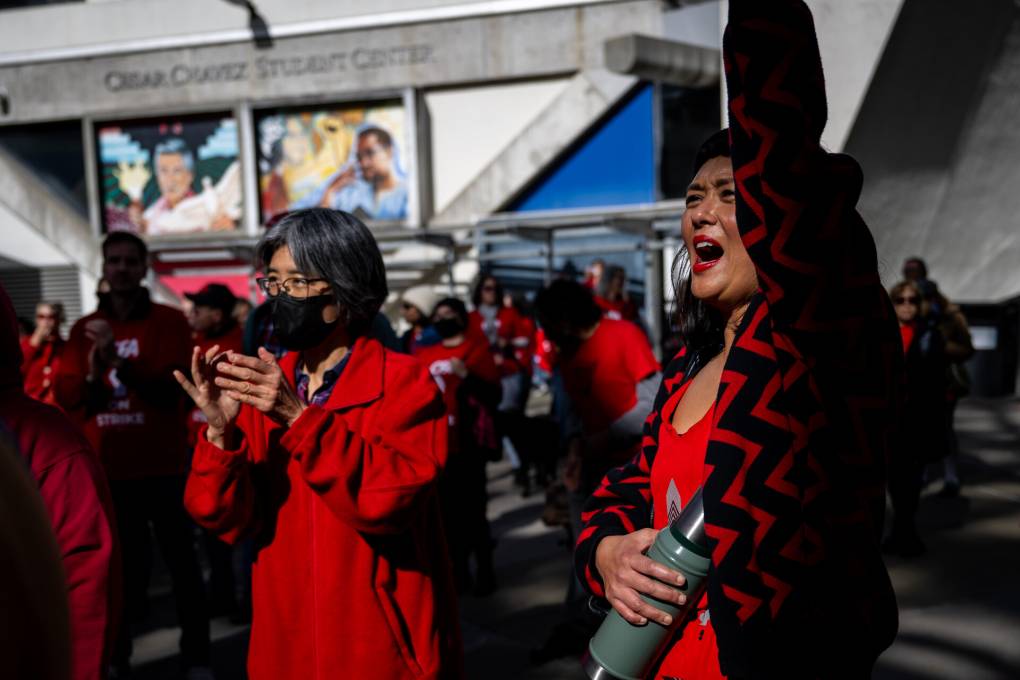
"caption": "Sang Hea Kil, San Jose State University professor and co-chair of the California Faculty Association's Palestine, Arab and Muslim Caucus, cheers during a rally at SFSU in San Francisco on Jan. 25, 2024, urging a no vote on the tentative deal that ended the California State University faculty strike. Professor Sang Hea Kil will be reinstated to her post with full back pay after an arbitrator ruled her firing over her role in campus pro-Palestinian protests was excessive.",
"credit": "Beth LaBerge/KQED",
"altTag": null,
"description": null,
"imgSizes": {
"medium": {
"file": "https://cdn.kqed.org/wp-content/uploads/sites/10/2024/05/240125-SFSUStrike-08-BL_qut-800x533.jpg",
"width": 800,
"height": 533,
"mimeType": "image/jpeg"
},
"large": {
"file": "https://cdn.kqed.org/wp-content/uploads/sites/10/2024/05/240125-SFSUStrike-08-BL_qut-1020x680.jpg",
"width": 1020,
"height": 680,
"mimeType": "image/jpeg"
},
"thumbnail": {
"file": "https://cdn.kqed.org/wp-content/uploads/sites/10/2024/05/240125-SFSUStrike-08-BL_qut-160x107.jpg",
"width": 160,
"height": 107,
"mimeType": "image/jpeg"
},
"1536x1536": {
"file": "https://cdn.kqed.org/wp-content/uploads/sites/10/2024/05/240125-SFSUStrike-08-BL_qut-1536x1024.jpg",
"width": 1536,
"height": 1024,
"mimeType": "image/jpeg"
},
"post-thumbnail": {
"file": "https://cdn.kqed.org/wp-content/uploads/sites/10/2024/05/240125-SFSUStrike-08-BL_qut-672x372.jpg",
"width": 672,
"height": 372,
"mimeType": "image/jpeg"
},
"twentyfourteen-full-width": {
"file": "https://cdn.kqed.org/wp-content/uploads/sites/10/2024/05/240125-SFSUStrike-08-BL_qut-1038x576.jpg",
"width": 1038,
"height": 576,
"mimeType": "image/jpeg"
},
"kqedFullSize": {
"file": "https://cdn.kqed.org/wp-content/uploads/sites/10/2024/05/240125-SFSUStrike-08-BL_qut.jpg",
"width": 1920,
"height": 1280
}
},
"isLoading": false,
"fetchFailed": false
},
"news_12088389": {
"type": "attachments",
"id": "news_12088389",
"meta": {
"index": "attachments_1716263798",
"site": "news",
"id": "12088389",
"found": true
},
"title": "052626_Project-Rebound_JAH_03_CM",
"publishDate": 1782161120,
"status": "inherit",
"parent": 12088386,
"modified": 1782161136,
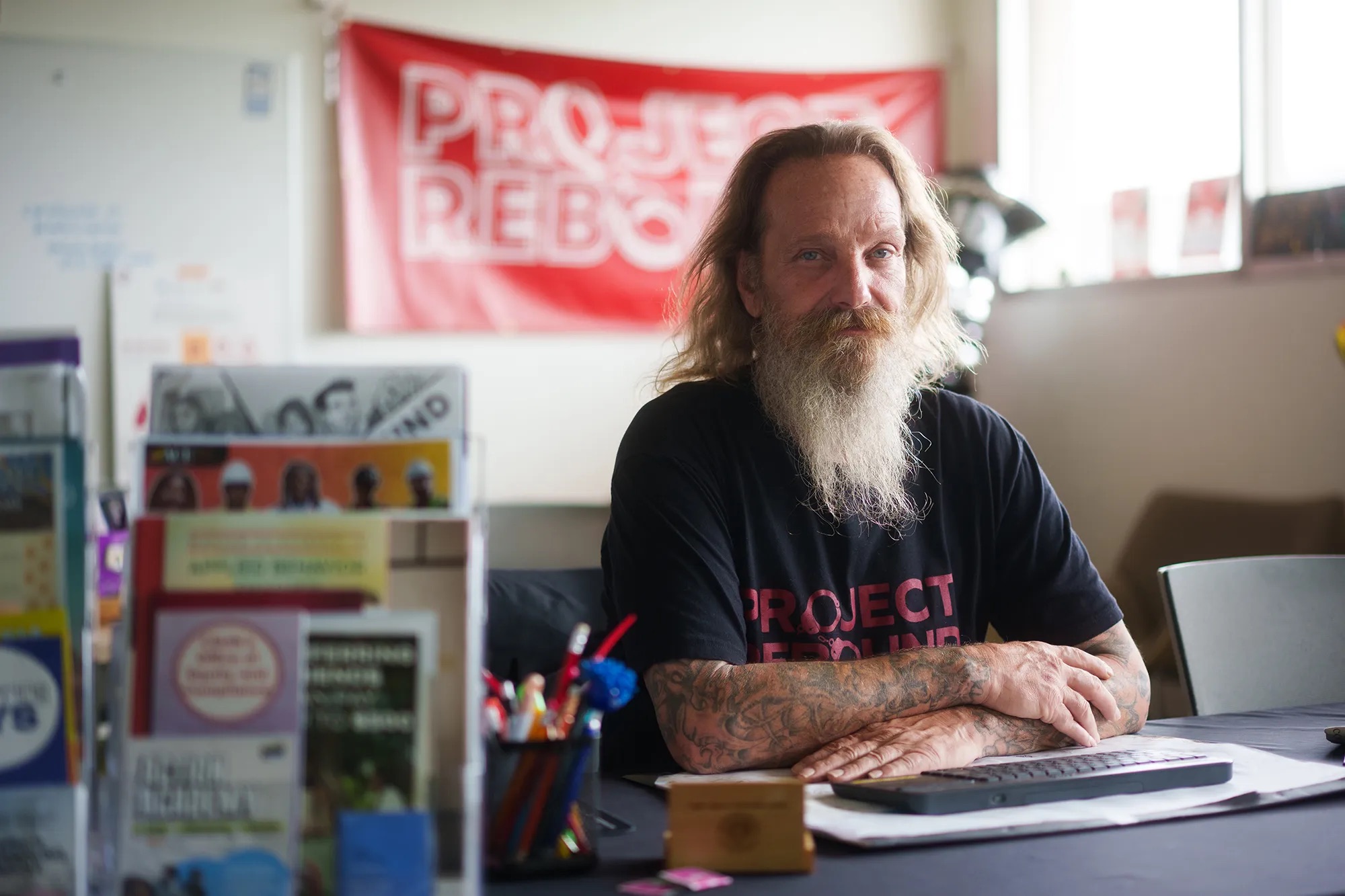
"caption": "Garret Eiferman, a graduate student, inside the Project Rebound study room at Cal State Northridge on May 26, 2026. ",
"credit": "Jules Hotz for CalMatters",
"altTag": null,
"description": null,
"imgSizes": {
"thumbnail": {
"file": "https://cdn.kqed.org/wp-content/uploads/sites/10/2026/06/052626_Project-Rebound_JAH_03_CM-160x107.jpeg",
"width": 160,
"height": 107,
"mimeType": "image/jpeg"
},
"1536x1536": {
"file": "https://cdn.kqed.org/wp-content/uploads/sites/10/2026/06/052626_Project-Rebound_JAH_03_CM-1536x1024.jpeg",
"width": 1536,
"height": 1024,
"mimeType": "image/jpeg"
},
"post-thumbnail": {
"file": "https://cdn.kqed.org/wp-content/uploads/sites/10/2026/06/052626_Project-Rebound_JAH_03_CM-672x372.jpeg",
"width": 672,
"height": 372,
"mimeType": "image/jpeg"
},
"twentyfourteen-full-width": {
"file": "https://cdn.kqed.org/wp-content/uploads/sites/10/2026/06/052626_Project-Rebound_JAH_03_CM-1038x576.jpeg",
"width": 1038,
"height": 576,
"mimeType": "image/jpeg"
},
"npr-cds-wide": {
"file": "https://cdn.kqed.org/wp-content/uploads/sites/10/2026/06/052626_Project-Rebound_JAH_03_CM-1200x675.jpeg",
"width": 1200,
"height": 675,
"mimeType": "image/jpeg"
},
"npr-cds-square": {
"file": "https://cdn.kqed.org/wp-content/uploads/sites/10/2026/06/052626_Project-Rebound_JAH_03_CM-600x600.jpeg",
"width": 600,
"height": 600,
"mimeType": "image/jpeg"
},
"kqedFullSize": {
"file": "https://cdn.kqed.org/wp-content/uploads/sites/10/2026/06/052626_Project-Rebound_JAH_03_CM.jpeg",
"width": 2000,
"height": 1333
}
},
"isLoading": false,
"fetchFailed": false
},
"news_12087829": {
"type": "attachments",
"id": "news_12087829",
"meta": {
"index": "attachments_1716263798",
"site": "news",
"id": "12087829",
"found": true
},
"title": "061626CSU Labor_GH_003-KQED",
"publishDate": 1781642130,
"status": "inherit",
"parent": 12090647,
"modified": 1783815872,
"caption": "Members of the California State University Employees Union march across the San Francisco State University campus during a rally on June 16, 2026.",
"credit": "Gustavo Hernandez/KQED",
"altTag": null,
"description": null,
"imgSizes": {
"thumbnail": {
"file": "https://cdn.kqed.org/wp-content/uploads/sites/10/2026/06/061626CSU-Labor_GH_003-KQED-160x107.jpg",
"width": 160,
"height": 107,
"mimeType": "image/jpeg"
},
"1536x1536": {
"file": "https://cdn.kqed.org/wp-content/uploads/sites/10/2026/06/061626CSU-Labor_GH_003-KQED-1536x1024.jpg",
"width": 1536,
"height": 1024,
"mimeType": "image/jpeg"
},
"post-thumbnail": {
"file": "https://cdn.kqed.org/wp-content/uploads/sites/10/2026/06/061626CSU-Labor_GH_003-KQED-672x372.jpg",
"width": 672,
"height": 372,
"mimeType": "image/jpeg"
},
"twentyfourteen-full-width": {
"file": "https://cdn.kqed.org/wp-content/uploads/sites/10/2026/06/061626CSU-Labor_GH_003-KQED-1038x576.jpg",
"width": 1038,
"height": 576,
"mimeType": "image/jpeg"
},
"npr-cds-wide": {
"file": "https://cdn.kqed.org/wp-content/uploads/sites/10/2026/06/061626CSU-Labor_GH_003-KQED-1200x675.jpg",
"width": 1200,
"height": 675,
"mimeType": "image/jpeg"
},
"npr-cds-square": {
"file": "https://cdn.kqed.org/wp-content/uploads/sites/10/2026/06/061626CSU-Labor_GH_003-KQED-600x600.jpg",
"width": 600,
"height": 600,
"mimeType": "image/jpeg"
},
"kqedFullSize": {
"file": "https://cdn.kqed.org/wp-content/uploads/sites/10/2026/06/061626CSU-Labor_GH_003-KQED.jpg",
"width": 2000,
"height": 1333
}
},
"isLoading": false,
"fetchFailed": false
},
"news_12087243": {
"type": "attachments",
"id": "news_12087243",
"meta": {
"index": "attachments_1716263798",
"site": "news",
"id": "12087243",
"found": true
},
"title": "USC's 143rd commencement ceremony at the Los Angeles Memorial Coliseum.",
"publishDate": 1781217676,
"status": "inherit",
"parent": 12087201,
"modified": 1781217748,
"caption": "A student takes a quiet moment prior to USC's 143rd commencement ceremony at the Los Angeles Memorial Coliseum on Thursday, May 14, 2026. ",
"credit": "Keith Birmingham/MediaNews Group/Pasadena Star-News via Getty Images",
"altTag": null,
"description": null,
"imgSizes": {
"thumbnail": {
"file": "https://cdn.kqed.org/wp-content/uploads/sites/10/2026/06/CollegeGraduationGetty-160x111.jpg",
"width": 160,
"height": 111,
"mimeType": "image/jpeg"
},
"1536x1536": {
"file": "https://cdn.kqed.org/wp-content/uploads/sites/10/2026/06/CollegeGraduationGetty-1536x1068.jpg",
"width": 1536,
"height": 1068,
"mimeType": "image/jpeg"
},
"post-thumbnail": {
"file": "https://cdn.kqed.org/wp-content/uploads/sites/10/2026/06/CollegeGraduationGetty-672x372.jpg",
"width": 672,
"height": 372,
"mimeType": "image/jpeg"
},
"twentyfourteen-full-width": {
"file": "https://cdn.kqed.org/wp-content/uploads/sites/10/2026/06/CollegeGraduationGetty-1038x576.jpg",
"width": 1038,
"height": 576,
"mimeType": "image/jpeg"
},
"npr-cds-wide": {
"file": "https://cdn.kqed.org/wp-content/uploads/sites/10/2026/06/CollegeGraduationGetty-1200x675.jpg",
"width": 1200,
"height": 675,
"mimeType": "image/jpeg"
},
"npr-cds-square": {
"file": "https://cdn.kqed.org/wp-content/uploads/sites/10/2026/06/CollegeGraduationGetty-600x600.jpg",
"width": 600,
"height": 600,
"mimeType": "image/jpeg"
},
"kqedFullSize": {
"file": "https://cdn.kqed.org/wp-content/uploads/sites/10/2026/06/CollegeGraduationGetty.jpg",
"width": 2000,
"height": 1391
}
},
"isLoading": false,
"fetchFailed": false
},
"news_12086921": {
"type": "attachments",
"id": "news_12086921",
"meta": {
"index": "attachments_1716263798",
"site": "news",
"id": "12086921",
"found": true
},
"title": "House Education",
"publishDate": 1781115362,
"status": "inherit",
"parent": 12086884,
"modified": 1781116144,
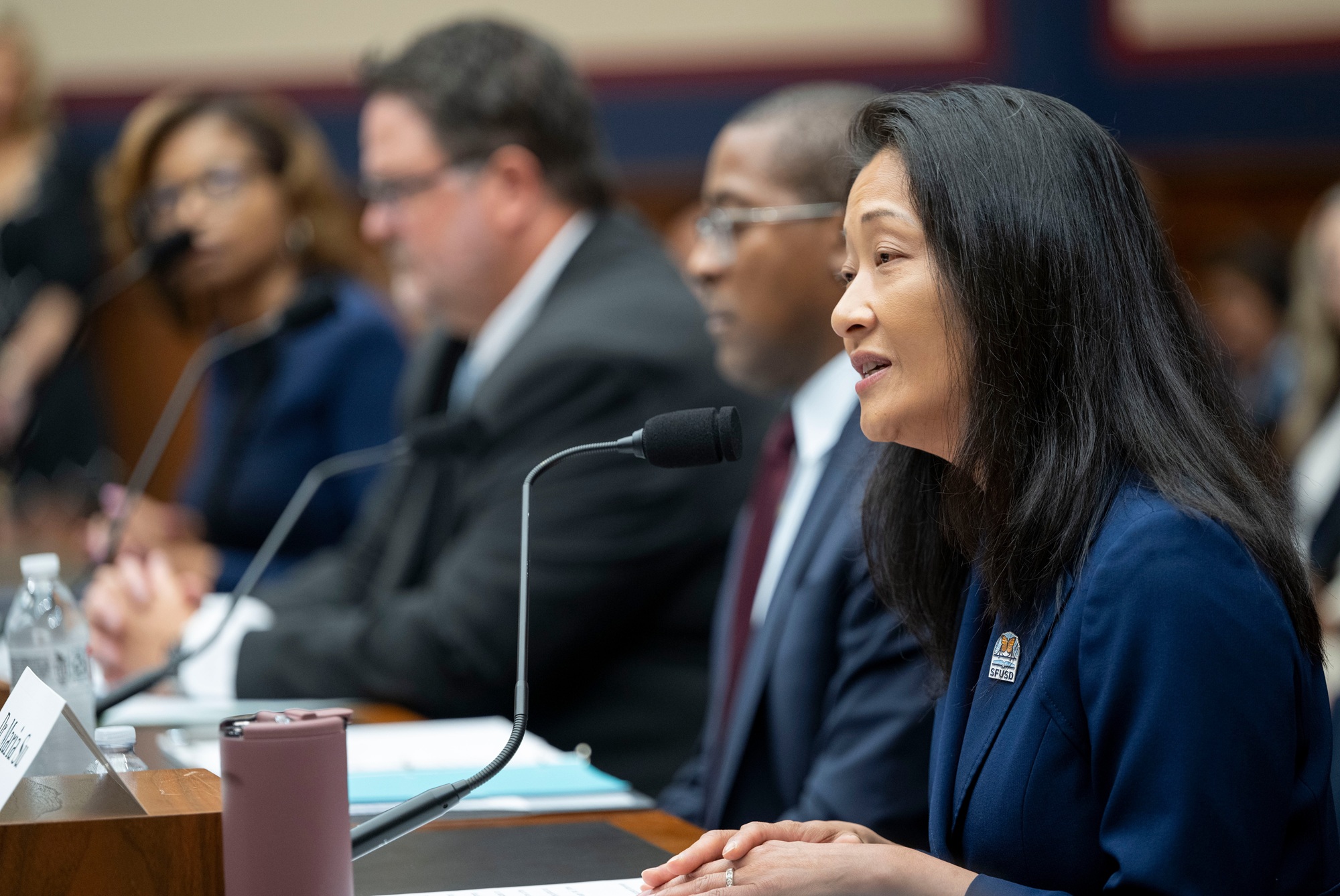
"caption": "San Francisco Unified School District Superintendent Dr. Maria Su, right, testifies during a House Education and Workforce Committee hearing on parental rights and school content policies, on Wednesday, June 10, 2026, in Washington. ",
"credit": "Kevin Wolf/AP Photo",
"altTag": null,
"description": null,
"imgSizes": {
"thumbnail": {
"file": "https://cdn.kqed.org/wp-content/uploads/sites/10/2026/06/MariaSuAP1-160x107.jpg",
"width": 160,
"height": 107,
"mimeType": "image/jpeg"
},
"1536x1536": {
"file": "https://cdn.kqed.org/wp-content/uploads/sites/10/2026/06/MariaSuAP1-1536x1028.jpg",
"width": 1536,
"height": 1028,
"mimeType": "image/jpeg"
},
"post-thumbnail": {
"file": "https://cdn.kqed.org/wp-content/uploads/sites/10/2026/06/MariaSuAP1-672x372.jpg",
"width": 672,
"height": 372,
"mimeType": "image/jpeg"
},
"twentyfourteen-full-width": {
"file": "https://cdn.kqed.org/wp-content/uploads/sites/10/2026/06/MariaSuAP1-1038x576.jpg",
"width": 1038,
"height": 576,
"mimeType": "image/jpeg"
},
"npr-cds-wide": {
"file": "https://cdn.kqed.org/wp-content/uploads/sites/10/2026/06/MariaSuAP1-1200x675.jpg",
"width": 1200,
"height": 675,
"mimeType": "image/jpeg"
},
"npr-cds-square": {
"file": "https://cdn.kqed.org/wp-content/uploads/sites/10/2026/06/MariaSuAP1-600x600.jpg",
"width": 600,
"height": 600,
"mimeType": "image/jpeg"
},
"kqedFullSize": {
"file": "https://cdn.kqed.org/wp-content/uploads/sites/10/2026/06/MariaSuAP1.jpg",
"width": 2000,
"height": 1338
}
},
"isLoading": false,
"fetchFailed": false
},
"news_12086641": {
"type": "attachments",
"id": "news_12086641",
"meta": {
"index": "attachments_1716263798",
"site": "news",
"id": "12086641",
"found": true
},
"title": "Takoma Park Middle school students eating cafeteria lunch.",
"publishDate": 1780960751,
"status": "inherit",
"parent": 12086417,
"modified": 1780964693,
"caption": "Takoma Park Middle School students have the option of eating a regular hot lunch or buying chips or other snacks on the side. Students eating cafeteria lunch at Takoma Park Middle School in Takoma Park, Maryland, on Jan. 31, 2013. Schools in Montgomery County still serve snack foods to students during lunch.",
"credit": "Juana Arias for the Washington Post via Getty Images",
"altTag": null,
"description": null,
"imgSizes": {
"thumbnail": {
"file": "https://cdn.kqed.org/wp-content/uploads/sites/10/2026/06/SummerMealsGetty-160x112.jpg",
"width": 160,
"height": 112,
"mimeType": "image/jpeg"
},
"1536x1536": {
"file": "https://cdn.kqed.org/wp-content/uploads/sites/10/2026/06/SummerMealsGetty-1536x1075.jpg",
"width": 1536,
"height": 1075,
"mimeType": "image/jpeg"
},
"post-thumbnail": {
"file": "https://cdn.kqed.org/wp-content/uploads/sites/10/2026/06/SummerMealsGetty-672x372.jpg",
"width": 672,
"height": 372,
"mimeType": "image/jpeg"
},
"twentyfourteen-full-width": {
"file": "https://cdn.kqed.org/wp-content/uploads/sites/10/2026/06/SummerMealsGetty-1038x576.jpg",
"width": 1038,
"height": 576,
"mimeType": "image/jpeg"
},
"npr-cds-wide": {
"file": "https://cdn.kqed.org/wp-content/uploads/sites/10/2026/06/SummerMealsGetty-1200x675.jpg",
"width": 1200,
"height": 675,
"mimeType": "image/jpeg"
},
"npr-cds-square": {
"file": "https://cdn.kqed.org/wp-content/uploads/sites/10/2026/06/SummerMealsGetty-600x600.jpg",
"width": 600,
"height": 600,
"mimeType": "image/jpeg"
},
"kqedFullSize": {
"file": "https://cdn.kqed.org/wp-content/uploads/sites/10/2026/06/SummerMealsGetty.jpg",
"width": 2000,
"height": 1400
}
},
"isLoading": false,
"fetchFailed": false
},
"news_12046127": {
"type": "attachments",
"id": "news_12046127",
"meta": {
"index": "attachments_1716263798",
"site": "news",
"id": "12046127",
"found": true
},
"title": "250421-SFUSDCentralCuts-09-BL_qed",
"publishDate": 1750965461,
"status": "inherit",
"parent": 12051862,
"modified": 1755024878,
"caption": "San Francisco Unified School District Superintendent Dr. Maria Su speaks during a press conference at the school district offices in San Francisco on April 21, 2025.",
"credit": "Beth LaBerge/KQED",
"altTag": null,
"description": null,
"imgSizes": {
"thumbnail": {
"file": "https://cdn.kqed.org/wp-content/uploads/sites/10/2025/06/250421-SFUSDCentralCuts-09-BL_qed-160x107.jpg",
"width": 160,
"height": 107,
"mimeType": "image/jpeg"
},
"1536x1536": {
"file": "https://cdn.kqed.org/wp-content/uploads/sites/10/2025/06/250421-SFUSDCentralCuts-09-BL_qed-1536x1024.jpg",
"width": 1536,
"height": 1024,
"mimeType": "image/jpeg"
},
"post-thumbnail": {
"file": "https://cdn.kqed.org/wp-content/uploads/sites/10/2025/06/250421-SFUSDCentralCuts-09-BL_qed-672x372.jpg",
"width": 672,
"height": 372,
"mimeType": "image/jpeg"
},
"twentyfourteen-full-width": {
"file": "https://cdn.kqed.org/wp-content/uploads/sites/10/2025/06/250421-SFUSDCentralCuts-09-BL_qed-1038x576.jpg",
"width": 1038,
"height": 576,
"mimeType": "image/jpeg"
},
"kqedFullSize": {
"file": "https://cdn.kqed.org/wp-content/uploads/sites/10/2025/06/250421-SFUSDCentralCuts-09-BL_qed.jpg",
"width": 2000,
"height": 1333
}
},
"isLoading": false,
"fetchFailed": false
},
"news_12046126": {
"type": "attachments",
"id": "news_12046126",
"meta": {
"index": "attachments_1716263798",
"site": "news",
"id": "12046126",
"found": true
},
"title": "250418-SFUSD-01-BL_qed",
"publishDate": 1750965407,
"status": "inherit",
"parent": 12046122,
"modified": 1750965414,
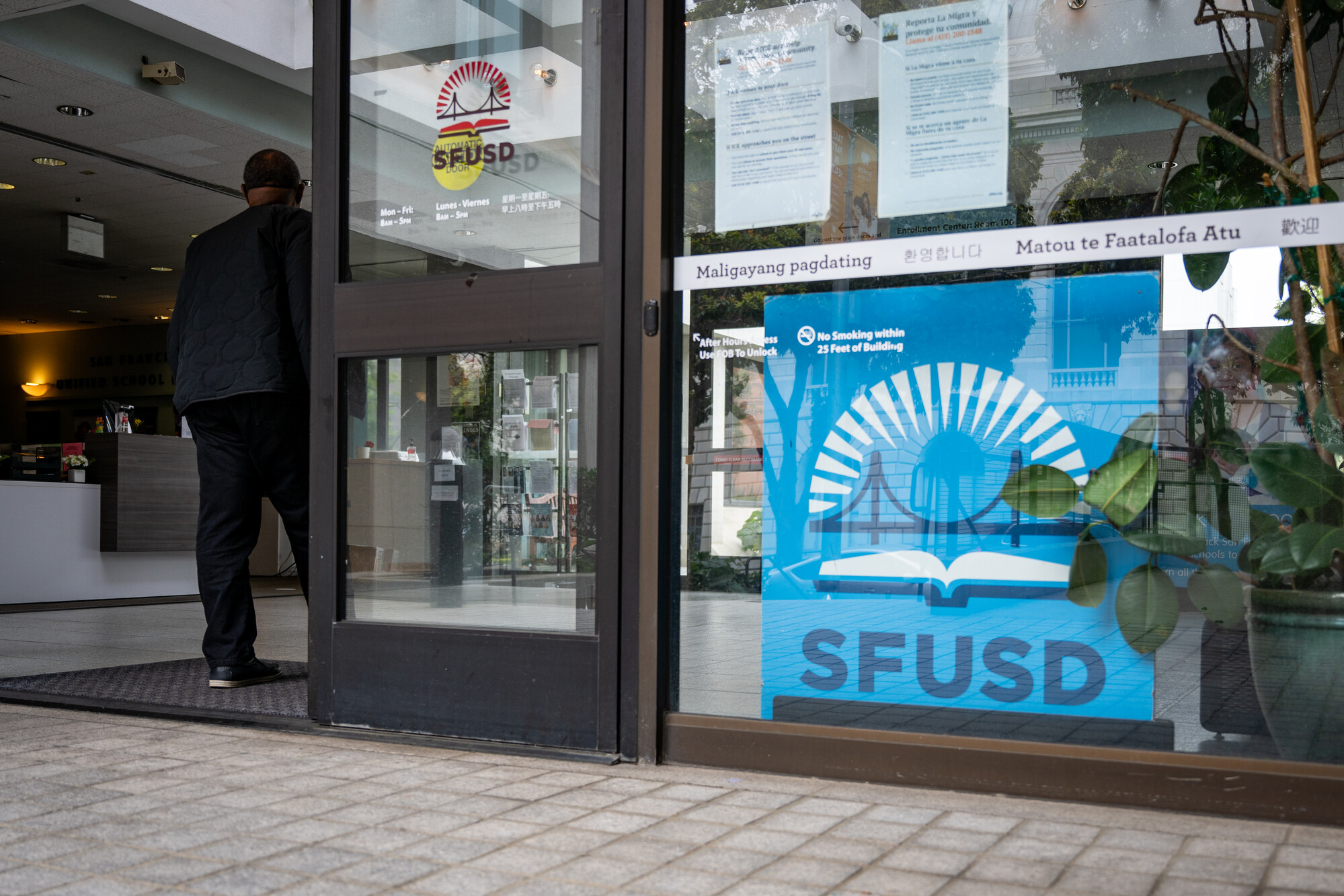
"caption": "The San Francisco Unified School District Administrative Offices in San Francisco on April 18, 2025.",
"credit": "Beth LaBerge/KQED",
"altTag": null,
"description": null,
"imgSizes": {
"thumbnail": {
"file": "https://cdn.kqed.org/wp-content/uploads/sites/10/2025/06/250418-SFUSD-01-BL_qed-160x107.jpg",
"width": 160,
"height": 107,
"mimeType": "image/jpeg"
},
"1536x1536": {
"file": "https://cdn.kqed.org/wp-content/uploads/sites/10/2025/06/250418-SFUSD-01-BL_qed-1536x1024.jpg",
"width": 1536,
"height": 1024,
"mimeType": "image/jpeg"
},
"post-thumbnail": {
"file": "https://cdn.kqed.org/wp-content/uploads/sites/10/2025/06/250418-SFUSD-01-BL_qed-672x372.jpg",
"width": 672,
"height": 372,
"mimeType": "image/jpeg"
},
"twentyfourteen-full-width": {
"file": "https://cdn.kqed.org/wp-content/uploads/sites/10/2025/06/250418-SFUSD-01-BL_qed-1038x576.jpg",
"width": 1038,
"height": 576,
"mimeType": "image/jpeg"
},
"kqedFullSize": {
"file": "https://cdn.kqed.org/wp-content/uploads/sites/10/2025/06/250418-SFUSD-01-BL_qed.jpg",
"width": 1999,
"height": 1333
}
},
"isLoading": false,
"fetchFailed": false
},
"news_12057402": {
"type": "attachments",
"id": "news_12057402",
"meta": {
"index": "attachments_1716263798",
"site": "news",
"id": "12057402",
"found": true
},
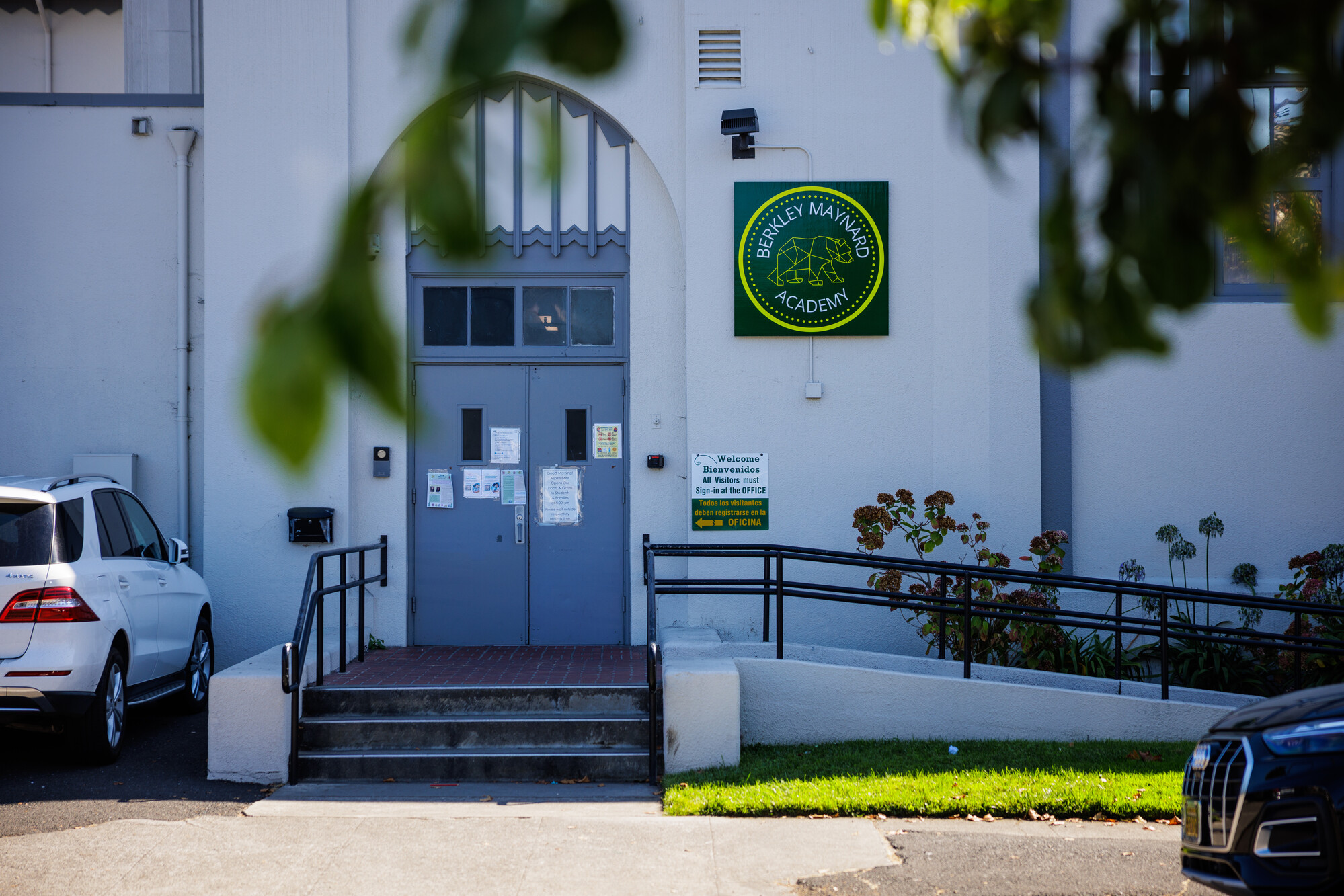
"title": "Aspire Berkeley Maynard Academy in Oakland on Sept. 23, 2025.",
"publishDate": 1758736173,
"status": "inherit",
"parent": 12057191,
"modified": 1780614326,
"caption": "Aspire Berkley Maynard Academy in Oakland on Sept. 23, 2025.",
"credit": "Martin do Nascimento/KQED",
"altTag": null,
"description": null,
"imgSizes": {
"thumbnail": {
"file": "https://cdn.kqed.org/wp-content/uploads/sites/10/2025/09/250923-ASPIRE-SAFETY-CONDITIONS-MD-01_qed-160x107.jpg",
"width": 160,
"height": 107,
"mimeType": "image/jpeg"
},
"1536x1536": {
"file": "https://cdn.kqed.org/wp-content/uploads/sites/10/2025/09/250923-ASPIRE-SAFETY-CONDITIONS-MD-01_qed-1536x1024.jpg",
"width": 1536,
"height": 1024,
"mimeType": "image/jpeg"
},
"post-thumbnail": {
"file": "https://cdn.kqed.org/wp-content/uploads/sites/10/2025/09/250923-ASPIRE-SAFETY-CONDITIONS-MD-01_qed-672x372.jpg",
"width": 672,
"height": 372,
"mimeType": "image/jpeg"
},
"twentyfourteen-full-width": {
"file": "https://cdn.kqed.org/wp-content/uploads/sites/10/2025/09/250923-ASPIRE-SAFETY-CONDITIONS-MD-01_qed-1038x576.jpg",
"width": 1038,
"height": 576,
"mimeType": "image/jpeg"
},
"kqedFullSize": {
"file": "https://cdn.kqed.org/wp-content/uploads/sites/10/2025/09/250923-ASPIRE-SAFETY-CONDITIONS-MD-01_qed.jpg",
"width": 1999,
"height": 1333
}
},
"isLoading": false,
"fetchFailed": false
},
"news_12086169": {
"type": "attachments",
"id": "news_12086169",
"meta": {
"index": "attachments_1716263798",
"site": "news",
"id": "12086169",
"found": true
},
"title": "260531-CALIFORNIABUDGETCHILDCARE00510_TV-KQED",
"publishDate": 1780521737,
"status": "inherit",
"parent": 0,
"modified": 1780521762,
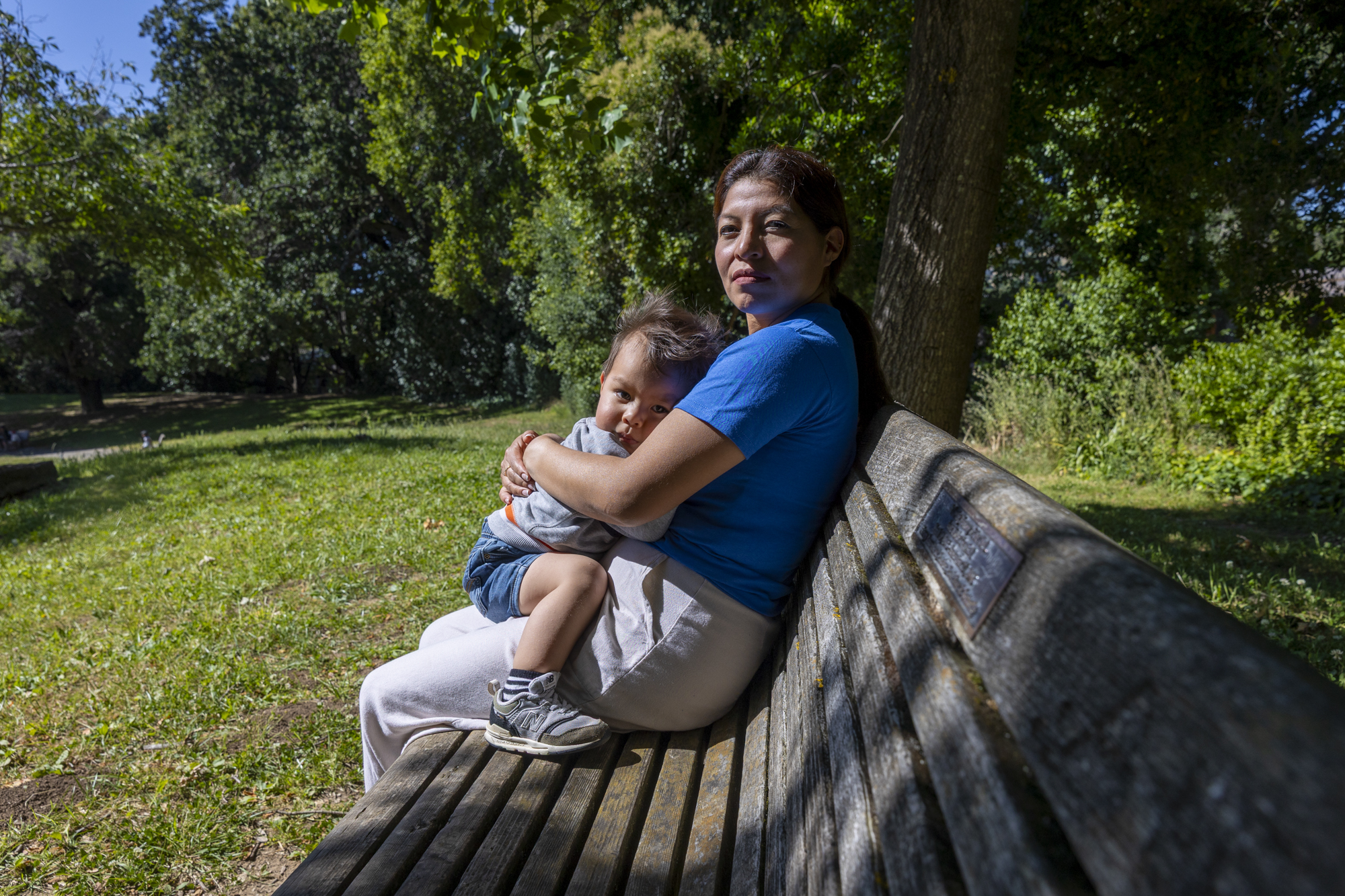
"caption": "Carmen Perez, a mother of four who has been waiting for more than year for an open subsidized child care slot for her 18-month-old son, poses for a portrait with her son at Pioneer Park in Novato on May 31, 2026.",
"credit": "Tâm Vũ/KQED",
"altTag": null,
"description": null,
"imgSizes": {
"thumbnail": {
"file": "https://cdn.kqed.org/wp-content/uploads/sites/10/2026/06/260531-CALIFORNIABUDGETCHILDCARE00510_TV-KQED-160x107.jpg",
"width": 160,
"height": 107,
"mimeType": "image/jpeg"
},
"1536x1536": {
"file": "https://cdn.kqed.org/wp-content/uploads/sites/10/2026/06/260531-CALIFORNIABUDGETCHILDCARE00510_TV-KQED-1536x1024.jpg",
"width": 1536,
"height": 1024,
"mimeType": "image/jpeg"
},
"post-thumbnail": {
"file": "https://cdn.kqed.org/wp-content/uploads/sites/10/2026/06/260531-CALIFORNIABUDGETCHILDCARE00510_TV-KQED-672x372.jpg",
"width": 672,
"height": 372,
"mimeType": "image/jpeg"
},
"twentyfourteen-full-width": {
"file": "https://cdn.kqed.org/wp-content/uploads/sites/10/2026/06/260531-CALIFORNIABUDGETCHILDCARE00510_TV-KQED-1038x576.jpg",
"width": 1038,
"height": 576,
"mimeType": "image/jpeg"
},
"npr-cds-wide": {
"file": "https://cdn.kqed.org/wp-content/uploads/sites/10/2026/06/260531-CALIFORNIABUDGETCHILDCARE00510_TV-KQED-1200x675.jpg",
"width": 1200,
"height": 675,
"mimeType": "image/jpeg"
},
"npr-cds-square": {
"file": "https://cdn.kqed.org/wp-content/uploads/sites/10/2026/06/260531-CALIFORNIABUDGETCHILDCARE00510_TV-KQED-600x600.jpg",
"width": 600,
"height": 600,
"mimeType": "image/jpeg"
},
"kqedFullSize": {
"file": "https://cdn.kqed.org/wp-content/uploads/sites/10/2026/06/260531-CALIFORNIABUDGETCHILDCARE00510_TV-KQED.jpg",
"width": 2000,
"height": 1333
}
},
"isLoading": false,
"fetchFailed": false
},
"news_12086133": {
"type": "attachments",
"id": "news_12086133",
"meta": {
"index": "attachments_1716263798",
"site": "news",
"id": "12086133",
"found": true
},
"title": "CA Teacher Discipline Holly",
"publishDate": 1780513696,
"status": "inherit",
"parent": 0,
"modified": 1780530009,
"caption": null,
"credit": "Anna Vignet/KQED",
"altTag": null,
"description": null,
"imgSizes": {
"medium": {
"file": "https://cdn.kqed.org/wp-content/uploads/sites/10/2026/06/CA-Teacher-Discipline-Holly-2000x1500.jpg",
"width": 2000,
"height": 1500,
"mimeType": "image/jpeg"
},
"large": {
"file": "https://cdn.kqed.org/wp-content/uploads/sites/10/2026/06/CA-Teacher-Discipline-Holly-2000x1500.jpg",
"width": 2000,
"height": 1500,
"mimeType": "image/jpeg"
},
"thumbnail": {
"file": "https://cdn.kqed.org/wp-content/uploads/sites/10/2026/06/CA-Teacher-Discipline-Holly-160x120.jpg",
"width": 160,
"height": 120,
"mimeType": "image/jpeg"
},
"1536x1536": {
"file": "https://cdn.kqed.org/wp-content/uploads/sites/10/2026/06/CA-Teacher-Discipline-Holly-1536x1152.jpg",
"width": 1536,
"height": 1152,
"mimeType": "image/jpeg"
},
"2048x2048": {
"file": "https://cdn.kqed.org/wp-content/uploads/sites/10/2026/06/CA-Teacher-Discipline-Holly-2048x1536.jpg",
"width": 2048,
"height": 1536,
"mimeType": "image/jpeg"
},
"post-thumbnail": {
"file": "https://cdn.kqed.org/wp-content/uploads/sites/10/2026/06/CA-Teacher-Discipline-Holly-672x372.jpg",
"width": 672,
"height": 372,
"mimeType": "image/jpeg"
},
"twentyfourteen-full-width": {
"file": "https://cdn.kqed.org/wp-content/uploads/sites/10/2026/06/CA-Teacher-Discipline-Holly-1038x576.jpg",
"width": 1038,
"height": 576,
"mimeType": "image/jpeg"
},
"full-width": {
"file": "https://cdn.kqed.org/wp-content/uploads/sites/10/2026/06/CA-Teacher-Discipline-Holly-2000x1500.jpg",
"width": 2000,
"height": 1500,
"mimeType": "image/jpeg"
},
"npr-cds-wide": {
"file": "https://cdn.kqed.org/wp-content/uploads/sites/10/2026/06/CA-Teacher-Discipline-Holly-1200x675.jpg",
"width": 1200,
"height": 675,
"mimeType": "image/jpeg"
},
"npr-cds-square": {
"file": "https://cdn.kqed.org/wp-content/uploads/sites/10/2026/06/CA-Teacher-Discipline-Holly-600x600.jpg",
"width": 600,
"height": 600,
"mimeType": "image/jpeg"
},
"kqedFullSize": {
"file": "https://cdn.kqed.org/wp-content/uploads/sites/10/2026/06/CA-Teacher-Discipline-Holly.jpg",
"width": 2560,
"height": 1920
}
},
"isLoading": false,
"fetchFailed": false
},
"news_12086196": {
"type": "attachments",
"id": "news_12086196",
"meta": {
"index": "attachments_1716263798",
"site": "news",
"id": "12086196",
"found": true
},
"title": "Parental Rights Rally",
"publishDate": 1780527262,
"status": "inherit",
"parent": 12086044,
"modified": 1780528161,
"caption": "Sonja Shaw, Chino Valley Unified School District Board President, speaks at the California Policy Center and PERK (Protection of the Educational Rights of Kids) event, \"A Line in the Sand A Rally for Parental Rights,\" at Rancho Madera Community Park in Simi Valley, California, on Sept. 26, 2023. ",
"credit": "Myung J. Chun/Los Angeles Times via Getty Images",
"altTag": null,
"description": null,
"imgSizes": {
"thumbnail": {
"file": "https://cdn.kqed.org/wp-content/uploads/sites/10/2026/06/Sonja-Shaw-Getty-1-160x110.jpg",
"width": 160,
"height": 110,
"mimeType": "image/jpeg"
},
"1536x1536": {
"file": "https://cdn.kqed.org/wp-content/uploads/sites/10/2026/06/Sonja-Shaw-Getty-1-1536x1054.jpg",
"width": 1536,
"height": 1054,
"mimeType": "image/jpeg"
},
"post-thumbnail": {
"file": "https://cdn.kqed.org/wp-content/uploads/sites/10/2026/06/Sonja-Shaw-Getty-1-672x372.jpg",
"width": 672,
"height": 372,
"mimeType": "image/jpeg"
},
"twentyfourteen-full-width": {
"file": "https://cdn.kqed.org/wp-content/uploads/sites/10/2026/06/Sonja-Shaw-Getty-1-1038x576.jpg",
"width": 1038,
"height": 576,
"mimeType": "image/jpeg"
},
"npr-cds-wide": {
"file": "https://cdn.kqed.org/wp-content/uploads/sites/10/2026/06/Sonja-Shaw-Getty-1-1200x675.jpg",
"width": 1200,
"height": 675,
"mimeType": "image/jpeg"
},
"npr-cds-square": {
"file": "https://cdn.kqed.org/wp-content/uploads/sites/10/2026/06/Sonja-Shaw-Getty-1-600x600.jpg",
"width": 600,
"height": 600,
"mimeType": "image/jpeg"
},
"kqedFullSize": {
"file": "https://cdn.kqed.org/wp-content/uploads/sites/10/2026/06/Sonja-Shaw-Getty-1.jpg",
"width": 2000,
"height": 1372
}
},
"isLoading": false,
"fetchFailed": false
}
},
"audioPlayerReducer": {
"postId": "stream_live",
"isPaused": true,
"isPlaying": false,
"pfsActive": false,
"pledgeModalIsOpen": true,
"playerDrawerIsOpen": false,
"liveAudioPlayStartedAt": 0,
"liveAudioPlayContext": ""
},
"authorsReducer": {
"byline_news_12088386": {
"type": "authors",
"id": "byline_news_12088386",
"meta": {
"override": true
},
"slug": "byline_news_12088386",
"name": "Ella Carter-Klauschie, CalMatters",
"isLoading": false
},
"shossaini": {
"type": "authors",
"id": "3214",
"meta": {
"index": "authors_1716337520",
"id": "3214",
"found": true
},
"name": "Sara Hossaini",
"firstName": "Sara",
"lastName": "Hossaini",
"slug": "shossaini",
"email": "shossaini@kqed.org",
"display_author_email": true,
"staff_mastheads": [
"news"
],
"title": "KQED Reporter",
"bio": "Sara Hossaini came to general assignment reporting at KQED in 2013 after two winters reporting at Wyoming Public Radio. She holds a bachelor's degree in broadcast journalism from the University of Nebraska-Lincoln. Her radio romance began after a bitter breakup with documentary film (Ok, maybe it's still complicated). Her first simultaneous jobs in San Francisco were as Associate Producer on a PBS film series through the Center for Asian American Media and as a butler. She likes to trot, plot and make things with her hands.",
"avatar": "https://secure.gravatar.com/avatar/060e9f56b9554e17942e89f413242774?s=600&d=blank&r=g",
"twitter": "mshossaini",
"facebook": null,
"instagram": null,
"linkedin": null,
"sites": [
{
"site": "news",
"roles": [
"author"
]
},
{
"site": "stateofhealth",
"roles": [
"author"
]
}
],
"headData": {
"title": "Sara Hossaini | KQED",
"description": "KQED Reporter",
"ogImgSrc": "https://secure.gravatar.com/avatar/060e9f56b9554e17942e89f413242774?s=600&d=blank&r=g",
"twImgSrc": "https://secure.gravatar.com/avatar/060e9f56b9554e17942e89f413242774?s=600&d=blank&r=g"
},
"isLoading": false,
"link": "/author/shossaini"
},
"hmcdede": {
"type": "authors",
"id": "11635",
"meta": {
"index": "authors_1716337520",
"id": "11635",
"found": true
},
"name": "Holly McDede",
"firstName": "Holly",
"lastName": "McDede",
"slug": "hmcdede",
"email": "hmcdede@KQED.org",
"display_author_email": false,
"staff_mastheads": [],
"title": "KQED Contributor",
"bio": null,
"avatar": "https://secure.gravatar.com/avatar/35d1a1f5422c9d266f7ace9348d170f2136671a65fffc90a592e4d7fbf8dc3f6?s=600&d=blank&r=g",
"twitter": null,
"bluesky": null,
"facebook": null,
"instagram": null,
"linkedin": null,
"sites": [
{
"site": "arts",
"roles": [
"editor"
]
},
{
"site": "news",
"roles": [
"edit_others_posts",
"editor"
]
},
{
"site": "science",
"roles": [
"editor"
]
},
{
"site": "forum",
"roles": [
"editor"
]
},
{
"site": "perspectives",
"roles": [
"administrator"
]
}
],
"headData": {
"title": "Holly McDede | KQED",
"description": "KQED Contributor",
"ogImgSrc": "https://secure.gravatar.com/avatar/35d1a1f5422c9d266f7ace9348d170f2136671a65fffc90a592e4d7fbf8dc3f6?s=600&d=blank&r=g",
"twImgSrc": "https://secure.gravatar.com/avatar/35d1a1f5422c9d266f7ace9348d170f2136671a65fffc90a592e4d7fbf8dc3f6?s=600&d=blank&r=g"
},
"isLoading": false,
"link": "/author/hmcdede"
},
"daisynguyen": {
"type": "authors",
"id": "11829",
"meta": {
"index": "authors_1716337520",
"id": "11829",
"found": true
},
"name": "Daisy Nguyen",
"firstName": "Daisy",
"lastName": "Nguyen",
"slug": "daisynguyen",
"email": "daisynguyen@kqed.org",
"display_author_email": true,
"staff_mastheads": [
"news"
],
"title": "KQED Contributor",
"bio": "I have covered early childhood education and child care for KQED since 2022. I focus on policies aimed at increasing access to early care and education and how they shape individual lives. I've been a journalist for more than two decades, with most of that time devoted to covering breaking news throughout California for The Associated Press. I grew up in San Francisco and studied at UC Davis and Columbia University's Graduate School of Journalism. I live in Oakland with my husband and two kids.",
"avatar": "https://secure.gravatar.com/avatar/2da2127c27f7143b53ebd419800fd55f?s=600&d=blank&r=g",
"twitter": null,
"facebook": null,
"instagram": null,
"linkedin": "https://www.linkedin.com/in/daisynguyen/",
"sites": [
{
"site": "news",
"roles": [
"author"
]
},
{
"site": "liveblog",
"roles": [
"author"
]
}
],
"headData": {
"title": "Daisy Nguyen | KQED",
"description": "KQED Contributor",
"ogImgSrc": "https://secure.gravatar.com/avatar/2da2127c27f7143b53ebd419800fd55f?s=600&d=blank&r=g",
"twImgSrc": "https://secure.gravatar.com/avatar/2da2127c27f7143b53ebd419800fd55f?s=600&d=blank&r=g"
},
"isLoading": false,
"link": "/author/daisynguyen"
},
"nkhan": {
"type": "authors",
"id": "11867",
"meta": {
"index": "authors_1716337520",
"id": "11867",
"found": true
},
"name": "Nisa Khan",
"firstName": "Nisa",
"lastName": "Khan",
"slug": "nkhan",
"email": "nkhan@kqed.org",
"display_author_email": false,
"staff_mastheads": [],
"title": "KQED Contributor",
"bio": "Nisa Khan is a reporter for KQED's Audience News Desk. She was formerly a data reporter at Michigan Radio. She earned a Bachelor of Science in Information from the University of Michigan and a Master of Arts in Communication from Stanford University.",
"avatar": "https://secure.gravatar.com/avatar/8720459eef081ff64582b3506b124d58523e80e120704a0cbd9892533c914991?s=600&d=blank&r=g",
"twitter": "mnisakhan",
"bluesky": null,
"facebook": null,
"instagram": null,
"linkedin": null,
"sites": [
{
"site": "arts",
"roles": [
"editor"
]
},
{
"site": "news",
"roles": [
"editor"
]
},
{
"site": "science",
"roles": [
"editor",
"author"
]
},
{
"site": "forum",
"roles": [
"editor"
]
},
{
"site": "liveblog",
"roles": [
"contributor"
]
}
],
"headData": {
"title": "Nisa Khan | KQED",
"description": "KQED Contributor",
"ogImgSrc": "https://secure.gravatar.com/avatar/8720459eef081ff64582b3506b124d58523e80e120704a0cbd9892533c914991?s=600&d=blank&r=g",
"twImgSrc": "https://secure.gravatar.com/avatar/8720459eef081ff64582b3506b124d58523e80e120704a0cbd9892533c914991?s=600&d=blank&r=g"
},
"isLoading": false,
"link": "/author/nkhan"
},
"pbartolone": {
"type": "authors",
"id": "11879",
"meta": {
"index": "authors_1716337520",
"id": "11879",
"found": true
},
"name": "Pauline Bartolone",
"firstName": "Pauline",
"lastName": "Bartolone",
"slug": "pbartolone",
"email": "pbartolone@kqed.org",
"display_author_email": false,
"staff_mastheads": [],
"title": "KQED Contributor",
"bio": "Pauline Bartolone has been a journalist for two decades, specializing in longform audio storytelling. Before editing and producing for podcasts like Bay Curious, she was a health care journalist for public radio and print outlets such as CalMatters and Kaiser Health News. Her reporting has won several regional Edward R. Murrow awards, national recognition from the Society of Professional Journalists and a first-place prize from the Association of Health Care Journalists.\r\n\r\nPauline’s work has aired frequently on National Public Radio, and bylines have appeared in The Los Angeles Times, CNN.com, Washingtonpost.com, USA Today and Scientific American.\r\n\r\nPauline has lived in Northern California for 20 years. Her other passions are crafts (now done in collaboration with her daughter) and the Brazilian martial art of capoeira.",
"avatar": "https://secure.gravatar.com/avatar/95001c30374b0d3878007af9cf1e120a?s=600&d=blank&r=g",
"twitter": "pbartolone",
"facebook": null,
"instagram": null,
"linkedin": null,
"sites": [
{
"site": "news",
"roles": [
"editor"
]
},
{
"site": "podcasts",
"roles": [
"subscriber"
]
}
],
"headData": {
"title": "Pauline Bartolone | KQED",
"description": "KQED Contributor",
"ogImgSrc": "https://secure.gravatar.com/avatar/95001c30374b0d3878007af9cf1e120a?s=600&d=blank&r=g",
"twImgSrc": "https://secure.gravatar.com/avatar/95001c30374b0d3878007af9cf1e120a?s=600&d=blank&r=g"
},
"isLoading": false,
"link": "/author/pbartolone"
},
"kdebenedetti": {
"type": "authors",
"id": "11913",
"meta": {
"index": "authors_1716337520",
"id": "11913",
"found": true
},
"name": "Katie DeBenedetti",
"firstName": "Katie",
"lastName": "DeBenedetti",
"slug": "kdebenedetti",
"email": "kdebenedetti@kqed.org",
"display_author_email": false,
"staff_mastheads": [
"news",
"science"
],
"title": "KQED Contributor",
"bio": "Katie DeBenedetti is a digital reporter covering daily news for the Express Desk. Prior to joining KQED as a culture reporting intern in January 2024, she covered education and city government for the Napa Valley Register.",
"avatar": "https://secure.gravatar.com/avatar/6e31073cb8f7e4214ab03f42771d0f45?s=600&d=blank&r=g",
"twitter": null,
"facebook": null,
"instagram": null,
"linkedin": null,
"sites": [
{
"site": "news",
"roles": [
"author"
]
},
{
"site": "science",
"roles": [
"author"
]
},
{
"site": "liveblog",
"roles": [
"author"
]
}
],
"headData": {
"title": "Katie DeBenedetti | KQED",
"description": "KQED Contributor",
"ogImgSrc": "https://secure.gravatar.com/avatar/6e31073cb8f7e4214ab03f42771d0f45?s=600&d=blank&r=g",
"twImgSrc": "https://secure.gravatar.com/avatar/6e31073cb8f7e4214ab03f42771d0f45?s=600&d=blank&r=g"
},
"isLoading": false,
"link": "/author/kdebenedetti"
},
"emanoukian": {
"type": "authors",
"id": "11925",
"meta": {
"index": "authors_1716337520",
"id": "11925",
"found": true
},
"name": "Elize Manoukian",
"firstName": "Elize",
"lastName": "Manoukian",
"slug": "emanoukian",
"email": "emanoukian@KQED.org",
"display_author_email": false,
"staff_mastheads": [
"news"
],
"title": "Digital News Editor",
"bio": "Elize Manoukian is an award-winning audio producer and Senior Editor on the Express Desk, KQED's digital news platform. Her work has appeared on KPFA, Interlochen Public Radio, Oregon Public Broadcast, the New York Daily News, LA Times and the San Diego Union-Tribune.",
"avatar": "https://secure.gravatar.com/avatar/4525f1a8e46ccb30933b32653d9772064cfefe3fa655eb45b3b3a80341f6bdad?s=600&d=blank&r=g",
"twitter": null,
"bluesky": null,
"facebook": null,
"instagram": null,
"linkedin": null,
"sites": [
{
"site": "arts",
"roles": [
"editor"
]
},
{
"site": "news",
"roles": [
"editor"
]
},
{
"site": "science",
"roles": [
"editor"
]
}
],
"headData": {
"title": "Elize Manoukian | KQED",
"description": "Digital News Editor",
"ogImgSrc": "https://secure.gravatar.com/avatar/4525f1a8e46ccb30933b32653d9772064cfefe3fa655eb45b3b3a80341f6bdad?s=600&d=blank&r=g",
"twImgSrc": "https://secure.gravatar.com/avatar/4525f1a8e46ccb30933b32653d9772064cfefe3fa655eb45b3b3a80341f6bdad?s=600&d=blank&r=g"
},
"isLoading": false,
"link": "/author/emanoukian"
},
"aaliahmad": {
"type": "authors",
"id": "11986",
"meta": {
"index": "authors_1716337520",
"id": "11986",
"found": true
},
"name": "Ayah Ali-Ahmad",
"firstName": "Ayah",
"lastName": "Ali-Ahmad",
"slug": "aaliahmad",
"email": "aaliahmad@KQED.org",
"display_author_email": false,
"staff_mastheads": [],
"title": "KQED Contributor",
"bio": null,
"avatar": "https://secure.gravatar.com/avatar/1cf54f187a5e1064b2cfef3f3d2f1e4f93e453395d56912aca6382a6071ec3ed?s=600&d=blank&r=g",
"twitter": "ayahaliahmad",
"bluesky": null,
"facebook": null,
"instagram": null,
"linkedin": null,
"sites": [
{
"site": "news",
"roles": [
"subscriber"
]
}
],
"headData": {
"title": "Ayah Ali-Ahmad | KQED",
"description": "KQED Contributor",
"ogImgSrc": "https://secure.gravatar.com/avatar/1cf54f187a5e1064b2cfef3f3d2f1e4f93e453395d56912aca6382a6071ec3ed?s=600&d=blank&r=g",
"twImgSrc": "https://secure.gravatar.com/avatar/1cf54f187a5e1064b2cfef3f3d2f1e4f93e453395d56912aca6382a6071ec3ed?s=600&d=blank&r=g"
},
"isLoading": false,
"link": "/author/aaliahmad"
}
},
"pagesReducer": {
"news_category_education": {
"type": "terms",
"id": "news_18540",
"meta": {
"index": "terms_1716263798",
"site": "news",
"id": "18540",
"score": 10.972926
},
"featImg": null,
"name": "Education",
"description": null,
"taxonomy": "category",
"headData": {
"twImgId": null,
"twTitle": null,
"ogTitle": null,
"ogImgId": null,
"twDescription": null,
"description": null,
"title": "Education Archives | KQED News",
"ogDescription": null
},
"ttid": 2595,
"slug": "education",
"isLoading": false,
"title": "Education",
"pageMeta": {
"site": "news",
"WpPageTemplate": "page-topic-editorial",
"currentPage": 6
},
"blocks": [
{
"blockName": "kqed/post-list",
"attrs": {
"layout": "cardArticle2",
"query": "posts/news?category=education",
"seeMore": false,
"paginated": true,
"page": 6
}
},
{
"blockName": "kqed/ad"
}
]
}
},
"pfsSessionReducer": {},
"postsReducer": {
"stream_live": {
"type": "live",
"id": "stream_live",
"audioUrl": "https://streams.kqed.org/kqedradio",
"title": "Live Stream",
"excerpt": "Live Stream information currently unavailable.",
"link": "/radio",
"featImg": "",
"label": {
"name": "KQED Live",
"link": "/"
}
},
"stream_kqedNewscast": {
"type": "posts",
"id": "stream_kqedNewscast",
"audioUrl": "https://www.kqed.org/.stream/anon/radio/RDnews/newscast.mp3?_=1",
"title": "KQED Newscast",
"featImg": "",
"label": {
"name": "88.5 FM",
"link": "/"
}
},
"news_12088425": {
"type": "posts",
"id": "news_12088425",
"meta": {
"index": "posts_1716263798",
"site": "news",
"id": "12088425",
"score": null,
"sort": [
1782212405000
]
},
"guestAuthors": [],
"slug": "san-jose-state-professor-fired-over-campus-gaza-protests-to-win-back-job-2",
"title": "San José State Professor Fired Over Campus Gaza Protests to Win Back Job",
"publishDate": 1782212405,
"format": "standard",
"headTitle": "San José State Professor Fired Over Campus Gaza Protests to Win Back Job | KQED",
"labelTerm": {
"site": "news"
},
"content": "\u003cp>San José State University must reinstate \u003ca href=\"https://www.kqed.org/news/11988162/sjsu-professor-who-was-suspended-over-pro-palestinian-protests-speaks-out\">Sang Hea Kil\u003c/a>, a professor fired for actions related to pro-Palestinian activism, with full back pay after an arbitrator on Monday decided the school went too far with its sanctions.\u003c/p>\n\u003cp>The move ends a two-year institutional standoff and represents a significant win for Kil and her advocates.\u003c/p>\n\u003cp>Contrary to the recommendation of a faculty panel, SJSU fired Kil late last year, citing her involvement in three on-campus demonstrations spanning the spring of 2024, when \u003ca href=\"https://www.kqed.org/news/12007970/1-year-later-the-impact-of-oct-7-siege-of-gaza-on-life-in-the-bay-area\">student activism over the war in Gaza\u003c/a> gripped university campuses nationwide.\u003c/p>\n\u003cp>[ad fullwidth]\u003c/p>\n\u003cp>Kil, the former faculty adviser for Students for Justice in Palestine, is one of the first tenured professors \u003ca href=\"https://www.theguardian.com/us-news/2025/dec/05/tenured-professor-fired-pro-palestinian-protests\">fired\u003c/a> from a public U.S. university over on-campus demonstrations in connection with the recent protests.\u003c/p>\n\u003cp>“I feel what happened to me was to silence any pro-Palestinian solidarity in academia and also in this nation,” Kil told KQED on Monday. “I fought as hard as I possibly can with the support and solidarity of my colleagues and social justice groups. We won, and it’s a victory for academic freedom on campus and pro-Palestine speech.”\u003c/p>\n\u003cp>The university declined to comment, citing “ongoing personnel matters.”\u003c/p>\n\u003cfigure id=\"attachment_12088416\" class=\"wp-caption alignright\" style=\"max-width: 1170px\">\u003cimg loading=\"lazy\" decoding=\"async\" class=\"size-full wp-image-12088416\" src=\"https://cdn.kqed.org/wp-content/uploads/sites/10/2026/06/260622-SJSU-Gaza-02-KQED.jpg\" alt=\"\" width=\"1170\" height=\"1551\" srcset=\"https://cdn.kqed.org/wp-content/uploads/sites/10/2026/06/260622-SJSU-Gaza-02-KQED.jpg 1170w, https://cdn.kqed.org/wp-content/uploads/sites/10/2026/06/260622-SJSU-Gaza-02-KQED-160x212.jpg 160w, https://cdn.kqed.org/wp-content/uploads/sites/10/2026/06/260622-SJSU-Gaza-02-KQED-1159x1536.jpg 1159w\" sizes=\"auto, (max-width: 1170px) 100vw, 1170px\">\u003cfigcaption class=\"wp-caption-text\">Sang Hea Kil at a protest at SJSU in February 2024. \u003ccite>(Courtesy of Sang Hea Kil)\u003c/cite>\u003c/figcaption>\u003c/figure>\n\u003cp>Ultimately, the arbitrator stated that while the California State University system was able to meet the burden of proving that Kil engaged in unprofessional conduct, it could not prove a failure or refusal to perform her job duties as a professor.\u003c/p>\n\u003cp>Moreover, the third-party review concluded that dismissal was an “excessive and disproportionate” sanction.\u003c/p>\n\u003cp>“To determine a proportionate sanction for such misconduct, the surrounding circumstances, the harm that resulted, and the likelihood of recurrence must be considered,” arbitrator Howard Pearlman wrote.\u003c/p>\n\u003cp>According to faculty review documents and arbitration hearing records obtained by KQED, the case against Kil began in February 2024, when she planned to attend a public guest lecture by Jeffrey Blutinger, director of the Jewish Studies program at Cal State University Long Beach, on a two-state solution for Israelis and Palestinians.\u003c/p>\n\u003cp>Aware that some pro-Palestinian students were organizing to protest the event, university administrators, faculty organizers and campus police testified that they had moved the talk to a private classroom less than an hour before the event.\u003c/p>\n\u003cp>Kil testified that she and several dozen demonstrators who showed up at the library eventually learned of the new location and made their way to the classroom hallway, still unaware that the lecture was no longer public. She said when they were denied entry at the door, the group sat, chanted and stomped.\u003c/p>\n\u003cp>In April, school officials notified Kil that she was under investigation for allegedly violating school rules around professional responsibility and time, place and manner — policies that govern where and how sanctioned campus protests can take place.[aside postID=news_12087836 hero='https://cdn.kqed.org/wp-content/uploads/sites/10/2026/06/061626CSU-Labor_GH_003-KQED.jpg']The following month, the university expanded its probe and placed Kil on paid administrative leave for “directing and encouraging” students to join encampments and violate university policies — which Kil and her representation disputed.\u003c/p>\n\u003cp>After more than a year of suspension, SJSU fired Kil, who then opted for her right to appeal via a panel of her peers to publicly review the university’s case against her — a rarely invoked step. The faculty panel recommended no further sanction beyond the yearlong suspension Kil had already completed.\u003c/p>\n\u003cp>In late 2025, the university upheld her termination anyway.\u003c/p>\n\u003cp>According to SJSU’s agreement with its faculty’s union, a five-day arbitration hearing would be Kil’s final chance to appeal her firing. During those March 2026 proceedings, CSU lawyers justified the dismissal by emphasizing the “totality” of her alleged unprofessional conduct and refusal to perform her duties as a professor during the spring events.\u003c/p>\n\u003cp>Top administrators argued that Kil’s “lack of remorse” indicated a lack of “rehabilitative potential” — something Pearlman told lawyers he “had a hard time believing” given her 17-year employment and clean record. In 2018, the Justice Studies professor \u003ca href=\"https://blogs.sjsu.edu/chhs/2018/10/25/2018-chhs-service-awards-recipients/#:~:text=This%20past%20year%2C%20Sang%20served,outreach%20to%20students%20and%20retention.\">earned\u003c/a> the College of Health and Human Sciences Department’s lifetime achievement award.\u003c/p>\n\u003cp>Kil, a self-described “scholar-activist,” and her union representatives alleged that university administrators bypassed standard disciplinary procedure and terminated her.\u003c/p>\n\u003cfigure id=\"attachment_12037915\" class=\"wp-caption aligncenter\" style=\"max-width: 2000px\">\u003cimg loading=\"lazy\" decoding=\"async\" class=\"size-full wp-image-12037915\" src=\"https://cdn.kqed.org/wp-content/uploads/sites/10/2025/04/20240403_SJSUFILE_GC-11-KQED.jpg\" alt=\"\" width=\"2000\" height=\"1333\" srcset=\"https://cdn.kqed.org/wp-content/uploads/sites/10/2025/04/20240403_SJSUFILE_GC-11-KQED.jpg 2000w, https://cdn.kqed.org/wp-content/uploads/sites/10/2025/04/20240403_SJSUFILE_GC-11-KQED-800x533.jpg 800w, https://cdn.kqed.org/wp-content/uploads/sites/10/2025/04/20240403_SJSUFILE_GC-11-KQED-1020x680.jpg 1020w, https://cdn.kqed.org/wp-content/uploads/sites/10/2025/04/20240403_SJSUFILE_GC-11-KQED-160x107.jpg 160w, https://cdn.kqed.org/wp-content/uploads/sites/10/2025/04/20240403_SJSUFILE_GC-11-KQED-1536x1024.jpg 1536w, https://cdn.kqed.org/wp-content/uploads/sites/10/2025/04/20240403_SJSUFILE_GC-11-KQED-1920x1280.jpg 1920w\" sizes=\"auto, (max-width: 2000px) 100vw, 2000px\">\u003cfigcaption class=\"wp-caption-text\">Tower Hall at San José State University on April 3, 2025. \u003ccite>(Gina Castro/KQED)\u003c/cite>\u003c/figcaption>\u003c/figure>\n\u003cp>Her team also argued her punishment was unfair, given examples of other professors who’d received \u003ca href=\"https://calcoastnews.com/2025/06/cal-poly-san-luis-obispo-pro-palestinian-professor-suspended/\">lighter\u003c/a> discipline for more serious \u003ca href=\"https://apnews.com/d951a6c5af1d449f9244cecb68562b13\">conduct\u003c/a>.\u003c/p>\n\u003cp>\u003ca href=\"https://www.ucop.edu/systemwide-academic-congress/speakers/henry-reichman.html\">Henry Reichman\u003c/a>, California State University, East Bay professor emeritus and academic freedom expert, testified that the “worst thing [Kil] did was engage in noisemaking that was already happening.” He went on to offer a blistering rebuke of the school’s disregard for progressive discipline and tenure, which he said would have a chilling effect on academic freedom and free speech throughout the CSU system.\u003c/p>\n\u003cp>Though Kil said she’s excited to return to the classroom after two years away, she’s worried for her safety. She said she’s faced backlash, describing hateful graffiti threatening violence against Asians, Jews and Muslims scrawled on her office building.\u003c/p>\n\u003cp>“People who have been targeted for anti-genocide or pro-Palestine speech, once they’ve been fired, they’re blacklisted,” she said. “If they had won, I would never have gotten an academic job in the U.S.A. ever again.”\u003c/p>\n\u003cp>\u003c/p>\n",
"blocks": [],
"excerpt": "Sang Hea Kil is one of the first full-time, tenured professors to be fired from a public U.S. university in connection with the protests.",
"status": "publish",
"parent": 0,
"modified": 1782334316,
"stats": {
"hasAudio": false,
"hasVideo": false,
"hasChartOrMap": false,
"iframeSrcs": [],
"hasGoogleForm": false,
"hasGallery": false,
"hasHearkenModule": false,
"hasPolis": false,
"paragraphCount": 24,
"wordCount": 952
},
"headData": {
"title": "San José State Professor Fired Over Campus Gaza Protests to Win Back Job | KQED",
"description": "Sang Hea Kil is one of the first full-time, tenured professors to be fired from a public U.S. university in connection with the protests.",
"ogTitle": "",
"ogDescription": "",
"ogImgId": "",
"twTitle": "",
"twDescription": "",
"twImgId": "",
"schema": {
"@context": "https://schema.org",
"@type": "NewsArticle",
"headline": "San José State Professor Fired Over Campus Gaza Protests to Win Back Job",
"datePublished": "2026-06-23T04:00:05-07:00",
"dateModified": "2026-06-24T13:51:56-07:00",
"image": "https://cdn.kqed.org/wp-content/uploads/2020/02/KQED-OG-Image@1x.png",
"isAccessibleForFree": "True",
"publisher": {
"@type": "NewsMediaOrganization",
"@id": "https://www.kqed.org/#organization",
"name": "KQED",
"logo": "https://cdn.kqed.org/wp-content/uploads/2020/02/KQED-OG-Image@1x.png",
"url": "https://www.kqed.org",
"sameAs": [
"https://www.facebook.com/KQED",
"https://twitter.com/KQED",
"https://www.instagram.com/kqed/",
"https://www.tiktok.com/@kqedofficial",
"https://www.linkedin.com/company/kqed",
"https://www.youtube.com/channel/UCeC0IOo7i1P_61zVUWbJ4nw"
]
}
}
},
"primaryCategory": {
"termId": 18540,
"slug": "education",
"name": "Education"
},
"audioUrl": "https://traffic.omny.fm/d/clips/0af137ef-751e-4b19-a055-aaef00d2d578/ffca7e9f-6831-41c5-bcaf-aaef00f5a073/7d0eef0c-cd55-4190-ba06-b472015be3d7/audio.mp3",
"sticky": false,
"nprStoryId": "kqed-12088425",
"templateType": "standard",
"featuredImageType": "standard",
"excludeFromSiteSearch": "Include",
"articleAge": "0",
"path": "/news/12088425/san-jose-state-professor-fired-over-campus-gaza-protests-to-win-back-job-2",
"audioTrackLength": null,
"parsedContent": [
{
"type": "contentString",
"content": "\u003cdiv class=\"post-body\">\u003cp>\u003cp>San José State University must reinstate \u003ca href=\"https://www.kqed.org/news/11988162/sjsu-professor-who-was-suspended-over-pro-palestinian-protests-speaks-out\">Sang Hea Kil\u003c/a>, a professor fired for actions related to pro-Palestinian activism, with full back pay after an arbitrator on Monday decided the school went too far with its sanctions.\u003c/p>\n\u003cp>The move ends a two-year institutional standoff and represents a significant win for Kil and her advocates.\u003c/p>\n\u003cp>Contrary to the recommendation of a faculty panel, SJSU fired Kil late last year, citing her involvement in three on-campus demonstrations spanning the spring of 2024, when \u003ca href=\"https://www.kqed.org/news/12007970/1-year-later-the-impact-of-oct-7-siege-of-gaza-on-life-in-the-bay-area\">student activism over the war in Gaza\u003c/a> gripped university campuses nationwide.\u003c/p>\n\u003cp>\u003c/p>\u003c/div>",
"attributes": {
"named": {},
"numeric": []
}
},
{
"type": "component",
"content": "",
"name": "ad",
"attributes": {
"named": {
"label": "fullwidth"
},
"numeric": [
"fullwidth"
]
}
},
{
"type": "contentString",
"content": "\u003cdiv class=\"post-body\">\u003cp>\u003c/p>\n\u003cp>Kil, the former faculty adviser for Students for Justice in Palestine, is one of the first tenured professors \u003ca href=\"https://www.theguardian.com/us-news/2025/dec/05/tenured-professor-fired-pro-palestinian-protests\">fired\u003c/a> from a public U.S. university over on-campus demonstrations in connection with the recent protests.\u003c/p>\n\u003cp>“I feel what happened to me was to silence any pro-Palestinian solidarity in academia and also in this nation,” Kil told KQED on Monday. “I fought as hard as I possibly can with the support and solidarity of my colleagues and social justice groups. We won, and it’s a victory for academic freedom on campus and pro-Palestine speech.”\u003c/p>\n\u003cp>The university declined to comment, citing “ongoing personnel matters.”\u003c/p>\n\u003cfigure id=\"attachment_12088416\" class=\"wp-caption alignright\" style=\"max-width: 1170px\">\u003cimg loading=\"lazy\" decoding=\"async\" class=\"size-full wp-image-12088416\" src=\"https://cdn.kqed.org/wp-content/uploads/sites/10/2026/06/260622-SJSU-Gaza-02-KQED.jpg\" alt=\"\" width=\"1170\" height=\"1551\" srcset=\"https://cdn.kqed.org/wp-content/uploads/sites/10/2026/06/260622-SJSU-Gaza-02-KQED.jpg 1170w, https://cdn.kqed.org/wp-content/uploads/sites/10/2026/06/260622-SJSU-Gaza-02-KQED-160x212.jpg 160w, https://cdn.kqed.org/wp-content/uploads/sites/10/2026/06/260622-SJSU-Gaza-02-KQED-1159x1536.jpg 1159w\" sizes=\"auto, (max-width: 1170px) 100vw, 1170px\">\u003cfigcaption class=\"wp-caption-text\">Sang Hea Kil at a protest at SJSU in February 2024. \u003ccite>(Courtesy of Sang Hea Kil)\u003c/cite>\u003c/figcaption>\u003c/figure>\n\u003cp>Ultimately, the arbitrator stated that while the California State University system was able to meet the burden of proving that Kil engaged in unprofessional conduct, it could not prove a failure or refusal to perform her job duties as a professor.\u003c/p>\n\u003cp>Moreover, the third-party review concluded that dismissal was an “excessive and disproportionate” sanction.\u003c/p>\n\u003cp>“To determine a proportionate sanction for such misconduct, the surrounding circumstances, the harm that resulted, and the likelihood of recurrence must be considered,” arbitrator Howard Pearlman wrote.\u003c/p>\n\u003cp>According to faculty review documents and arbitration hearing records obtained by KQED, the case against Kil began in February 2024, when she planned to attend a public guest lecture by Jeffrey Blutinger, director of the Jewish Studies program at Cal State University Long Beach, on a two-state solution for Israelis and Palestinians.\u003c/p>\n\u003cp>Aware that some pro-Palestinian students were organizing to protest the event, university administrators, faculty organizers and campus police testified that they had moved the talk to a private classroom less than an hour before the event.\u003c/p>\n\u003cp>Kil testified that she and several dozen demonstrators who showed up at the library eventually learned of the new location and made their way to the classroom hallway, still unaware that the lecture was no longer public. She said when they were denied entry at the door, the group sat, chanted and stomped.\u003c/p>\n\u003cp>In April, school officials notified Kil that she was under investigation for allegedly violating school rules around professional responsibility and time, place and manner — policies that govern where and how sanctioned campus protests can take place.\u003c/p>\u003c/div>",
"attributes": {
"named": {},
"numeric": []
}
},
{
"type": "component",
"content": "",
"name": "aside",
"attributes": {
"named": {
"postid": "news_12087836",
"hero": "https://cdn.kqed.org/wp-content/uploads/sites/10/2026/06/061626CSU-Labor_GH_003-KQED.jpg",
"label": ""
},
"numeric": []
}
},
{
"type": "contentString",
"content": "\u003cdiv class=\"post-body\">\u003cp>The following month, the university expanded its probe and placed Kil on paid administrative leave for “directing and encouraging” students to join encampments and violate university policies — which Kil and her representation disputed.\u003c/p>\n\u003cp>After more than a year of suspension, SJSU fired Kil, who then opted for her right to appeal via a panel of her peers to publicly review the university’s case against her — a rarely invoked step. The faculty panel recommended no further sanction beyond the yearlong suspension Kil had already completed.\u003c/p>\n\u003cp>In late 2025, the university upheld her termination anyway.\u003c/p>\n\u003cp>According to SJSU’s agreement with its faculty’s union, a five-day arbitration hearing would be Kil’s final chance to appeal her firing. During those March 2026 proceedings, CSU lawyers justified the dismissal by emphasizing the “totality” of her alleged unprofessional conduct and refusal to perform her duties as a professor during the spring events.\u003c/p>\n\u003cp>Top administrators argued that Kil’s “lack of remorse” indicated a lack of “rehabilitative potential” — something Pearlman told lawyers he “had a hard time believing” given her 17-year employment and clean record. In 2018, the Justice Studies professor \u003ca href=\"https://blogs.sjsu.edu/chhs/2018/10/25/2018-chhs-service-awards-recipients/#:~:text=This%20past%20year%2C%20Sang%20served,outreach%20to%20students%20and%20retention.\">earned\u003c/a> the College of Health and Human Sciences Department’s lifetime achievement award.\u003c/p>\n\u003cp>Kil, a self-described “scholar-activist,” and her union representatives alleged that university administrators bypassed standard disciplinary procedure and terminated her.\u003c/p>\n\u003cfigure id=\"attachment_12037915\" class=\"wp-caption aligncenter\" style=\"max-width: 2000px\">\u003cimg loading=\"lazy\" decoding=\"async\" class=\"size-full wp-image-12037915\" src=\"https://cdn.kqed.org/wp-content/uploads/sites/10/2025/04/20240403_SJSUFILE_GC-11-KQED.jpg\" alt=\"\" width=\"2000\" height=\"1333\" srcset=\"https://cdn.kqed.org/wp-content/uploads/sites/10/2025/04/20240403_SJSUFILE_GC-11-KQED.jpg 2000w, https://cdn.kqed.org/wp-content/uploads/sites/10/2025/04/20240403_SJSUFILE_GC-11-KQED-800x533.jpg 800w, https://cdn.kqed.org/wp-content/uploads/sites/10/2025/04/20240403_SJSUFILE_GC-11-KQED-1020x680.jpg 1020w, https://cdn.kqed.org/wp-content/uploads/sites/10/2025/04/20240403_SJSUFILE_GC-11-KQED-160x107.jpg 160w, https://cdn.kqed.org/wp-content/uploads/sites/10/2025/04/20240403_SJSUFILE_GC-11-KQED-1536x1024.jpg 1536w, https://cdn.kqed.org/wp-content/uploads/sites/10/2025/04/20240403_SJSUFILE_GC-11-KQED-1920x1280.jpg 1920w\" sizes=\"auto, (max-width: 2000px) 100vw, 2000px\">\u003cfigcaption class=\"wp-caption-text\">Tower Hall at San José State University on April 3, 2025. \u003ccite>(Gina Castro/KQED)\u003c/cite>\u003c/figcaption>\u003c/figure>\n\u003cp>Her team also argued her punishment was unfair, given examples of other professors who’d received \u003ca href=\"https://calcoastnews.com/2025/06/cal-poly-san-luis-obispo-pro-palestinian-professor-suspended/\">lighter\u003c/a> discipline for more serious \u003ca href=\"https://apnews.com/d951a6c5af1d449f9244cecb68562b13\">conduct\u003c/a>.\u003c/p>\n\u003cp>\u003ca href=\"https://www.ucop.edu/systemwide-academic-congress/speakers/henry-reichman.html\">Henry Reichman\u003c/a>, California State University, East Bay professor emeritus and academic freedom expert, testified that the “worst thing [Kil] did was engage in noisemaking that was already happening.” He went on to offer a blistering rebuke of the school’s disregard for progressive discipline and tenure, which he said would have a chilling effect on academic freedom and free speech throughout the CSU system.\u003c/p>\n\u003cp>Though Kil said she’s excited to return to the classroom after two years away, she’s worried for her safety. She said she’s faced backlash, describing hateful graffiti threatening violence against Asians, Jews and Muslims scrawled on her office building.\u003c/p>\n\u003cp>“People who have been targeted for anti-genocide or pro-Palestine speech, once they’ve been fired, they’re blacklisted,” she said. “If they had won, I would never have gotten an academic job in the U.S.A. ever again.”\u003c/p>\n\u003cp>\u003c/p>\n\u003c/div>\u003c/p>",
"attributes": {
"named": {},
"numeric": []
}
}
],
"link": "/news/12088425/san-jose-state-professor-fired-over-campus-gaza-protests-to-win-back-job-2",
"authors": [
"3214",
"11925"
],
"categories": [
"news_18540",
"news_28250",
"news_8"
],
"tags": [
"news_21077",
"news_20013",
"news_27626",
"news_29475",
"news_1394"
],
"featImg": "news_11988163",
"label": "news"
},
"news_12088386": {
"type": "posts",
"id": "news_12088386",
"meta": {
"index": "posts_1716263798",
"site": "news",
"id": "12088386",
"score": null,
"sort": [
1782163851000
]
},
"guestAuthors": [],
"slug": "california-gave-every-student-in-prison-a-laptop-how-community-colleges-are-using-them",
"title": "California Gave Every Student in Prison a Laptop. How Community Colleges Are Using Them",
"publishDate": 1782163851,
"format": "standard",
"headTitle": "California Gave Every Student in Prison a Laptop. How Community Colleges Are Using Them | KQED",
"labelTerm": {},
"content": "\u003cp>\u003c!-- Creative Commons Attribution-NonCommercial-NoDerivatives https://creativecommons.org/licenses/by-nc-nd/4.0/ -->\u003c/p>\n\u003cfigure>\u003c/figure>\n\u003cp>\u003cem>This story was originally published by \u003ca href=\"https://calmatters.org/\">CalMatters\u003c/a>. \u003ca href=\"https://calmatters.org/subscribe-to-calmatters/\">Sign up\u003c/a> for their newsletters.\u003c/em>\u003c/p>\n\u003cp>Across \u003ca href=\"https://www.kqed.org/news/tag/california\">California\u003c/a>, every incarcerated individual taking a college course now has a tool those of us on the outside take for granted: a laptop.\u003c/p>\n\u003cp>In the past three years, the prison system spent $23.2 million to distribute 30,000 laptops to all incarcerated students.\u003c/p>\n\u003cp>Almost half of those went to the 13,000 inmates enrolled in community college, who are increasingly doing their coursework online.\u003c/p>\n\u003cp>[ad fullwidth]\u003c/p>\n\u003cp>The growth of online learning marks a shift away from correspondence courses, where inmates receive assignments in physical packets, fill them out, and mail them back to colleges, with limited feedback.\u003c/p>\n\u003cp>While some community colleges still offer those types of courses, the laptops are starting to replace the packets.\u003c/p>\n\u003cp>Meanwhile, students and faculty alike debate whether online courses are as effective as in-person courses. Some teachers say online options reduce disruptions when students have to miss class due to court hearings or prison lockdowns.\u003c/p>\n\u003cfigure id=\"attachment_12088391\" class=\"wp-caption aligncenter\" style=\"max-width: 2000px\">\u003cimg loading=\"lazy\" decoding=\"async\" class=\"size-full wp-image-12088391\" src=\"https://cdn.kqed.org/wp-content/uploads/sites/10/2026/06/052626_Project-Rebound_JAH_13_CM.jpeg\" alt=\"\" width=\"2000\" height=\"1333\" srcset=\"https://cdn.kqed.org/wp-content/uploads/sites/10/2026/06/052626_Project-Rebound_JAH_13_CM.jpeg 2000w, https://cdn.kqed.org/wp-content/uploads/sites/10/2026/06/052626_Project-Rebound_JAH_13_CM-160x107.jpeg 160w, https://cdn.kqed.org/wp-content/uploads/sites/10/2026/06/052626_Project-Rebound_JAH_13_CM-1536x1024.jpeg 1536w\" sizes=\"auto, (max-width: 2000px) 100vw, 2000px\">\u003cfigcaption class=\"wp-caption-text\">The Project Rebound study room at Cal State Northridge on May 26, 2026. \u003ccite>(Jules Hotz for CalMatters)\u003c/cite>\u003c/figcaption>\u003c/figure>\n\u003cp>Some students say they prefer in-person courses because they can build invaluable connections. In either mode of learning, inmates say using laptops helps them prepare for life on the outside.\u003c/p>\n\u003cp>“The more we understand about today’s world, the better we’ll be equipped to get out into the workforce as things continue to change,” incarcerated student Richard Moye said in an interview. “We don’t want to get left behind. … Tech literacy is of the utmost importance behind prison walls.”\u003c/p>\n\u003ch2>Online courses could increase enrollment\u003c/h2>\n\u003cp>In 2024, the state Legislative Analyst’s Office \u003ca href=\"https://lao.ca.gov/reports/2024/4913/CC-Programs-State-Prisons-070124.pdf\">recommended\u003c/a> improving the California Community Colleges’ prison education program, called Rising Scholars.\u003c/p>\n\u003cp>The Legislature’s spending and policy adviser recommended addressing limited classroom space by offering more online courses. The office also suggested Rising Scholars prioritize enrollment for students still pursuing their first degrees, to allow for greater student access.\u003c/p>\n\u003cp>Today, 104 of the 116 community colleges in the state partner with prisons to provide courses and degree programs. According to data tracked by the community colleges, over 21,000 courses took place in prisons during fall 2025.\u003c/p>\n\u003cfigure id=\"attachment_12088394\" class=\"wp-caption aligncenter\" style=\"max-width: 2000px\">\u003cimg loading=\"lazy\" decoding=\"async\" class=\"size-full wp-image-12088394\" src=\"https://cdn.kqed.org/wp-content/uploads/sites/10/2026/06/052626_Project-Rebound_JAH_18_CM.jpeg\" alt=\"\" width=\"2000\" height=\"1333\" srcset=\"https://cdn.kqed.org/wp-content/uploads/sites/10/2026/06/052626_Project-Rebound_JAH_18_CM.jpeg 2000w, https://cdn.kqed.org/wp-content/uploads/sites/10/2026/06/052626_Project-Rebound_JAH_18_CM-160x107.jpeg 160w, https://cdn.kqed.org/wp-content/uploads/sites/10/2026/06/052626_Project-Rebound_JAH_18_CM-1536x1024.jpeg 1536w\" sizes=\"auto, (max-width: 2000px) 100vw, 2000px\">\u003cfigcaption class=\"wp-caption-text\">Garret Eiferman, a graduate student, uses one of the computers inside the Project Rebound study room at Cal State Northridge on May 26, 2026. \u003ccite>(Jules Hotz for CalMatters)\u003c/cite>\u003c/figcaption>\u003c/figure>\n\u003cp>Twenty colleges offer courses in person, with a faculty member commuting to the prison to teach the course. The rest teach courses either online or, with diminishing frequency, via mail correspondence, according to the California Community Colleges Chancellor’s Office.\u003c/p>\n\u003cp>The true number of online versus mail correspondence courses taken by incarcerated community college students is unknown. While community colleges have the option to track courses using the data labels “correspondence” or “text one-way,” there is no consistency as far as which ones they use, according to the Chancellor’s Office.\u003c/p>\n\u003cp>In-person classes can be difficult to get into because of enrollment caps and limited classroom space. The average in-person course generally ranges from 18 to 40 students.[aside postID=news_12087201 hero='https://cdn.kqed.org/wp-content/uploads/sites/10/2026/06/CollegeGraduationGetty.jpg']Many colleges enroll students on a first-come, first-served basis, enabling people on their second or third degree to “crowd out” those on their first degree, according to Orlando Sanchez Zavala, a policy analyst for the Legislative Analyst’s Office.\u003c/p>\n\u003cp>Sanchez Zavala said prioritizing enrollment for people pursuing their first degree would have the most impact on lowering recidivism rates.\u003c/p>\n\u003cp>Leaving prison with a degree can make parolees eligible for a wider range of jobs, and more prepared to enter the workforce, reducing their likelihood of reoffending.\u003c/p>\n\u003cp>According to the prison system’s recidivism report, during the 2018-2019 fiscal year, those who earned an associate’s degree while incarcerated had a 8.5% conviction rate in the three years after getting out, compared to a 41.9% conviction rate for all individuals released that same year.\u003c/p>\n\u003cp>Sanchez Zavala also suggested utilizing correspondence and online classes to open more courses with lower enrollment caps, allowing more incarcerated people to access community college.\u003c/p>\n\u003ch2>Incarcerated students face multiple barriers\u003c/h2>\n\u003cp>For in-person courses, a major challenge is finding classroom space in prisons. Though prisons have classrooms, they are also used for other programming and group meetings. Sometimes, classes take place in gyms or dining areas.\u003c/p>\n\u003cp>Joseph Bruno Martinez, 40, said he struggled to get into classes when he was incarcerated at high-security facilities, where institution-wide lockdowns sometimes interrupted learning.\u003c/p>\n\u003cp>Formerly incarcerated student Garret Eiferman, 56, said he found that prison correctional officers were not always amenable to helping incarcerated students complete degrees.\u003c/p>\n\u003cfigure id=\"attachment_12054782\" class=\"wp-caption aligncenter\" style=\"max-width: 2000px\">\u003cimg loading=\"lazy\" decoding=\"async\" class=\"size-full wp-image-12054782\" src=\"https://cdn.kqed.org/wp-content/uploads/sites/10/2025/09/PrisonHeatCM1.jpg\" alt=\"\" width=\"2000\" height=\"1333\" srcset=\"https://cdn.kqed.org/wp-content/uploads/sites/10/2025/09/PrisonHeatCM1.jpg 2000w, https://cdn.kqed.org/wp-content/uploads/sites/10/2025/09/PrisonHeatCM1-160x107.jpg 160w, https://cdn.kqed.org/wp-content/uploads/sites/10/2025/09/PrisonHeatCM1-1536x1024.jpg 1536w\" sizes=\"auto, (max-width: 2000px) 100vw, 2000px\">\u003cfigcaption class=\"wp-caption-text\">Guard towers outside Kern Valley State Prison on Nov. 15, 2022. \u003ccite>(Larry Valenzuela/CalMatters via CatchLight Local)\u003c/cite>\u003c/figcaption>\u003c/figure>\n\u003cp>He had to build relationships with officers so he could use the classrooms past 7 p.m., and, at times, even convince officers to allow his classmates to leave their buildings to attend class.\u003c/p>\n\u003cp>He cited other obstacles to his instruction as well, including out-of-date textbooks with the hard covers ripped off for safety reasons, little to no feedback on his correspondence coursework, and challenges balancing work and other prison programs with classes.\u003c/p>\n\u003cp>Though he didn’t take any online-only courses when he was in prison, Eiferman said he can see the benefits for students as they grapple with the obstacles he went through trying to take in-person courses.\u003c/p>\n\u003ch2>Online courses improve tech literacy\u003c/h2>\n\u003cp>The new laptops offer much to the inmates: education, enrichment, and — for those who will go free one day — future employment.\u003c/p>\n\u003cp>For Moye, online education is important for technology literacy. Moye, 44, has been incarcerated for 16 years and takes courses online and in-person through Solano Community College at California Medical Facility in Vacaville.\u003c/p>\n\u003cp>Moye said a lack of emphasis on tech literacy in prisons is a “disservice to this community” as jobs on the outside require applicants to be skilled at using computers and other tech. Online learning is closing this gap for incarcerated people.\u003c/p>\n\u003cfigure id=\"attachment_12088395\" class=\"wp-caption aligncenter\" style=\"max-width: 2000px\">\u003cimg loading=\"lazy\" decoding=\"async\" class=\"size-full wp-image-12088395\" src=\"https://cdn.kqed.org/wp-content/uploads/sites/10/2026/06/052626_Project-Rebound_JAH_23_CM.jpeg\" alt=\"\" width=\"2000\" height=\"1333\" srcset=\"https://cdn.kqed.org/wp-content/uploads/sites/10/2026/06/052626_Project-Rebound_JAH_23_CM.jpeg 2000w, https://cdn.kqed.org/wp-content/uploads/sites/10/2026/06/052626_Project-Rebound_JAH_23_CM-160x107.jpeg 160w, https://cdn.kqed.org/wp-content/uploads/sites/10/2026/06/052626_Project-Rebound_JAH_23_CM-1536x1024.jpeg 1536w\" sizes=\"auto, (max-width: 2000px) 100vw, 2000px\">\u003cfigcaption class=\"wp-caption-text\">Graduate student Garret Eiferman at Cal State Northridge campus on May 26, 2026. \u003ccite>(Jules Hotz for CalMatters)\u003c/cite>\u003c/figcaption>\u003c/figure>\n\u003cp>Students and teachers told CalMatters they now complete much of their coursework and grading through the online learning site Canvas, which is used across the state’s higher education systems for assigning and submitting work, as well as messaging between students and instructors.\u003c/p>\n\u003cp>Isela Ocegueda is the vice president of instruction at Coastline College and teaches an online English course to incarcerated students. She says using Canvas streamlines an incarcerated student’s transition from school on the inside to school on the outside. At her college, 80% of instruction is online.\u003c/p>\n\u003cp>Until 2023, Coastline College provided courses in prisons through mail-in correspondence. The college calls its new online format “Canvas-supported correspondence.” Ocegueda says the online format allows instructors to offer more creative assignments and thorough feedback. Her first assignment to her English class last semester was a journal entry, in which she asked students to introduce themselves and tell her how she can help them throughout the class.\u003c/p>\n\u003cp>The class final is a research paper, on which Ocegueda can give instant feedback and edits to students who can turn in multiple drafts, which was nearly impossible through snail-mail correspondence.\u003c/p>\n\u003cp>“Imagine just trying to receive essays in the mail and then make your corrections and then send them back,” Ocegueda said. “That was really hard to do in the mail version of correspondence. … Canvas-supported correspondence allows more for that writing process to actually happen.”\u003c/p>\n\u003ch2>Obstacles to online instruction\u003c/h2>\n\u003cp>While major improvements to Wi-Fi connectivity and research materials for inmate coursework have been made, there are still obstacles.\u003c/p>\n\u003cp>Wi-Fi access varies from prison to prison, and it can often take up to a week for students to get reading materials approved by prison librarians for them to access.\u003c/p>\n\u003cp>Students at Pelican Bay State Prison in Del Norte County and California Institution for Women in San Bernardino County say they can’t access Canvas in their cells due to a lack of Wi-Fi, while students at Folsom State Prison and San Quentin Rehabilitation Center say they are able to complete coursework from their cells, where the Wi-Fi is strong.\u003c/p>\n\u003cfigure id=\"attachment_11992341\" class=\"wp-caption aligncenter\" style=\"max-width: 2000px\">\u003cimg loading=\"lazy\" decoding=\"async\" class=\"size-full wp-image-11992341\" src=\"https://cdn.kqed.org/wp-content/uploads/sites/10/2024/06/006_KQED_NEWFOLSOMPRISONSACRAMENTO_04132023-KQED.jpg\" alt=\"A watchtower at a prison, with prison walls and barbed wire in the foreground.\" width=\"2000\" height=\"1333\" srcset=\"https://cdn.kqed.org/wp-content/uploads/sites/10/2024/06/006_KQED_NEWFOLSOMPRISONSACRAMENTO_04132023-KQED.jpg 2000w, https://cdn.kqed.org/wp-content/uploads/sites/10/2024/06/006_KQED_NEWFOLSOMPRISONSACRAMENTO_04132023-KQED-800x533.jpg 800w, https://cdn.kqed.org/wp-content/uploads/sites/10/2024/06/006_KQED_NEWFOLSOMPRISONSACRAMENTO_04132023-KQED-1020x680.jpg 1020w, https://cdn.kqed.org/wp-content/uploads/sites/10/2024/06/006_KQED_NEWFOLSOMPRISONSACRAMENTO_04132023-KQED-160x107.jpg 160w, https://cdn.kqed.org/wp-content/uploads/sites/10/2024/06/006_KQED_NEWFOLSOMPRISONSACRAMENTO_04132023-KQED-1536x1024.jpg 1536w, https://cdn.kqed.org/wp-content/uploads/sites/10/2024/06/006_KQED_NEWFOLSOMPRISONSACRAMENTO_04132023-KQED-1920x1280.jpg 1920w\" sizes=\"auto, (max-width: 2000px) 100vw, 2000px\">\u003cfigcaption class=\"wp-caption-text\">A watch tower at California State Prison, Sacramento, on April 13, 2023. \u003ccite>(Beth LaBerge/KQED)\u003c/cite>\u003c/figcaption>\u003c/figure>\n\u003cp>According to a state prison system spokesperson, inmates have Wi-Fi access in the housing units at all but four state prisons. All prisons have Wi-Fi in education areas and classrooms, though signal strength may vary, according to the spokesperson.\u003c/p>\n\u003cp>Some students pursuing bachelor’s degrees in prisons \u003ca href=\"https://calmatters.org/education/higher-education/2025/08/prison-education/\">reported\u003c/a> to CalMatters last year ongoing challenges with Wi-Fi and limited access to research materials, with some wishing they could do a simple Google search for information.\u003c/p>\n\u003cp>Solano College English professor Ben Brookeshire’s main teaching challenge is delay in students accessing what he calls the “information space.” Some documents his students might need to explore on digital research libraries require approval from prison librarians.\u003c/p>\n\u003ch2>In-person courses boost engagement\u003c/h2>\n\u003cp>Eiferman, now a Cal State Northridge graduate student, did most of his in-prison coursework via correspondence courses from Palo Verde and Coastline colleges from 2009 to 2019.\u003c/p>\n\u003cp>Eiferman holds an associate in arts, an associate in science and a business certificate from his time incarcerated. He was also pursuing a U.S. history degree when he paroled in 2020.\u003c/p>\n\u003cp>“The bulk of my interaction with professors during the degree completion was very minimal. It’s distance learning, so that means it’s all done with an envelope and a stamp, and feedback was never a thing,” Eiferman said. “It was extremely challenging to transfer out here to the university, thinking that I knew stuff that I didn’t or stuff that I knew that needed to be retaught and relearned correctly.”\u003c/p>\n\u003cfigure id=\"attachment_12088396\" class=\"wp-caption aligncenter\" style=\"max-width: 1980px\">\u003cimg loading=\"lazy\" decoding=\"async\" class=\"size-full wp-image-12088396\" src=\"https://cdn.kqed.org/wp-content/uploads/sites/10/2026/06/GettyImages-2230923952.jpg\" alt=\"\" width=\"1980\" height=\"1320\" srcset=\"https://cdn.kqed.org/wp-content/uploads/sites/10/2026/06/GettyImages-2230923952.jpg 1980w, https://cdn.kqed.org/wp-content/uploads/sites/10/2026/06/GettyImages-2230923952-160x107.jpg 160w, https://cdn.kqed.org/wp-content/uploads/sites/10/2026/06/GettyImages-2230923952-1536x1024.jpg 1536w\" sizes=\"auto, (max-width: 1980px) 100vw, 1980px\">\u003cfigcaption class=\"wp-caption-text\">California State University, Northridge on Friday, Aug. 22, 2025. \u003ccite>(Myung J. Chun/Los Angeles Times via Getty Images)\u003c/cite>\u003c/figcaption>\u003c/figure>\n\u003cp>Eiferman took his first in-person course through Bakersfield College at Golden State Community Correctional Facility, a medium-security prison in the southern San Joaquin Valley.\u003c/p>\n\u003cp>It was a math class, a subject he had always struggled with, but Eiferman said he had “aha moments” and was even able to help teach his fellow students. He said he took people “under his wings” to conduct “spirit building” and encourage them to stay in class.\u003c/p>\n\u003cp>Moye said in-person classes allow students to more clearly understand teachers’ expectations. They also offer group interaction, peer support, tutoring and collaboration on class assignments.\u003c/p>\n\u003cp>Data tracked by the community college system indicates a 77% success rate for internet-based and correspondence instruction, and an 85% success rate for in-person instruction, for incarcerated students in spring 2025.[aside postID=news_12086323 hero='https://cdn.kqed.org/wp-content/uploads/sites/10/2025/09/250923-ASPIRE-SAFETY-CONDITIONS-MD-02-KQED-1.jpg']“Success” means the student earned a C or higher, or a “pass” in non-letter graded courses. Incarcerated students have a success rate 10% higher than community college students overall in in-person courses.\u003c/p>\n\u003cp>“I’m a fan of in-person learning,” Moye said. “That’s my favorite style of learning, because to me, it resembles most what’s going on in society. If we’re trying to prepare incarcerated men and women for society, we have to have it look as much like society as possible.”\u003c/p>\n\u003cp>Brookeshire said he has seen his peers debate the merits of online versus in-person courses in the prisons. He said he knows online courses are inevitable, but he strictly teaches in person because it’s the best way for him to connect with students.\u003c/p>\n\u003cp>“I’m very passionate,” Brookshire said. “I really believe there’s magic in a classroom, and I really believe that face-to-face instruction is irreplaceable.”\u003c/p>\n\u003cp>\u003cem>Joe Garcia contributed to this story.\u003c/em>\u003c/p>\n\u003cp>\u003cem>Ella Carter-Klauschie is a contributor with the College Journalism Network, a collaboration between CalMatters and student journalists from across California. CalMatters higher education coverage is supported by a grant from the College Futures Foundation.\u003c/em>\u003c/p>\n\u003cp>\u003cem>This article was \u003ca href=\"https://calmatters.org/education/2026/06/california-community-college-prisons-laptops-online-classes/\">originally published on CalMatters\u003c/a> and was republished under the \u003ca href=\"https://creativecommons.org/licenses/by-nc-nd/4.0/\">Creative Commons Attribution-NonCommercial-NoDerivatives\u003c/a> license.\u003c/em>\u003c/p>\n\u003cp>[ad floatright]\u003c/p>\n",
"blocks": [],
"excerpt": "California prisons have given 30,000 laptops to incarcerated students. Inmates say using technology prepares them to enter the workforce.",
"status": "publish",
"parent": 0,
"modified": 1782164208,
"stats": {
"hasAudio": false,
"hasVideo": false,
"hasChartOrMap": false,
"iframeSrcs": [],
"hasGoogleForm": false,
"hasGallery": false,
"hasHearkenModule": false,
"hasPolis": false,
"paragraphCount": 55,
"wordCount": 2124
},
"headData": {
"title": "California Gave Every Student in Prison a Laptop. How Community Colleges Are Using Them | KQED",
"description": "California prisons have given 30,000 laptops to incarcerated students. Inmates say using technology prepares them to enter the workforce.",
"ogTitle": "",
"ogDescription": "",
"ogImgId": "",
"twTitle": "",
"twDescription": "",
"twImgId": "",
"schema": {
"@context": "https://schema.org",
"@type": "NewsArticle",
"headline": "California Gave Every Student in Prison a Laptop. How Community Colleges Are Using Them",
"datePublished": "2026-06-22T14:30:51-07:00",
"dateModified": "2026-06-22T14:36:48-07:00",
"image": "https://cdn.kqed.org/wp-content/uploads/2020/02/KQED-OG-Image@1x.png",
"isAccessibleForFree": "True",
"publisher": {
"@type": "NewsMediaOrganization",
"@id": "https://www.kqed.org/#organization",
"name": "KQED",
"logo": "https://cdn.kqed.org/wp-content/uploads/2020/02/KQED-OG-Image@1x.png",
"url": "https://www.kqed.org",
"sameAs": [
"https://www.facebook.com/KQED",
"https://twitter.com/KQED",
"https://www.instagram.com/kqed/",
"https://www.tiktok.com/@kqedofficial",
"https://www.linkedin.com/company/kqed",
"https://www.youtube.com/channel/UCeC0IOo7i1P_61zVUWbJ4nw"
]
}
}
},
"primaryCategory": {
"termId": 18540,
"slug": "education",
"name": "Education"
},
"source": "CalMatters",
"sourceUrl": "https://calmatters.org/",
"sticky": false,
"nprByline": "Ella Carter-Klauschie, CalMatters",
"nprStoryId": "kqed-12088386",
"templateType": "standard",
"featuredImageType": "standard",
"excludeFromSiteSearch": "Include",
"showOnAuthorArchivePages": "No",
"articleAge": "0",
"path": "/news/12088386/california-gave-every-student-in-prison-a-laptop-how-community-colleges-are-using-them",
"audioTrackLength": null,
"parsedContent": [
{
"type": "contentString",
"content": "\u003cdiv class=\"post-body\">\u003cp>\u003cp>\u003c!-- Creative Commons Attribution-NonCommercial-NoDerivatives https://creativecommons.org/licenses/by-nc-nd/4.0/ -->\u003c/p>\n\u003cfigure>\u003c/figure>\n\u003cp>\u003cem>This story was originally published by \u003ca href=\"https://calmatters.org/\">CalMatters\u003c/a>. \u003ca href=\"https://calmatters.org/subscribe-to-calmatters/\">Sign up\u003c/a> for their newsletters.\u003c/em>\u003c/p>\n\u003cp>Across \u003ca href=\"https://www.kqed.org/news/tag/california\">California\u003c/a>, every incarcerated individual taking a college course now has a tool those of us on the outside take for granted: a laptop.\u003c/p>\n\u003cp>In the past three years, the prison system spent $23.2 million to distribute 30,000 laptops to all incarcerated students.\u003c/p>\n\u003cp>Almost half of those went to the 13,000 inmates enrolled in community college, who are increasingly doing their coursework online.\u003c/p>\n\u003cp>\u003c/p>\u003c/div>",
"attributes": {
"named": {},
"numeric": []
}
},
{
"type": "component",
"content": "",
"name": "ad",
"attributes": {
"named": {
"label": "fullwidth"
},
"numeric": [
"fullwidth"
]
}
},
{
"type": "contentString",
"content": "\u003cdiv class=\"post-body\">\u003cp>\u003c/p>\n\u003cp>The growth of online learning marks a shift away from correspondence courses, where inmates receive assignments in physical packets, fill them out, and mail them back to colleges, with limited feedback.\u003c/p>\n\u003cp>While some community colleges still offer those types of courses, the laptops are starting to replace the packets.\u003c/p>\n\u003cp>Meanwhile, students and faculty alike debate whether online courses are as effective as in-person courses. Some teachers say online options reduce disruptions when students have to miss class due to court hearings or prison lockdowns.\u003c/p>\n\u003cfigure id=\"attachment_12088391\" class=\"wp-caption aligncenter\" style=\"max-width: 2000px\">\u003cimg loading=\"lazy\" decoding=\"async\" class=\"size-full wp-image-12088391\" src=\"https://cdn.kqed.org/wp-content/uploads/sites/10/2026/06/052626_Project-Rebound_JAH_13_CM.jpeg\" alt=\"\" width=\"2000\" height=\"1333\" srcset=\"https://cdn.kqed.org/wp-content/uploads/sites/10/2026/06/052626_Project-Rebound_JAH_13_CM.jpeg 2000w, https://cdn.kqed.org/wp-content/uploads/sites/10/2026/06/052626_Project-Rebound_JAH_13_CM-160x107.jpeg 160w, https://cdn.kqed.org/wp-content/uploads/sites/10/2026/06/052626_Project-Rebound_JAH_13_CM-1536x1024.jpeg 1536w\" sizes=\"auto, (max-width: 2000px) 100vw, 2000px\">\u003cfigcaption class=\"wp-caption-text\">The Project Rebound study room at Cal State Northridge on May 26, 2026. \u003ccite>(Jules Hotz for CalMatters)\u003c/cite>\u003c/figcaption>\u003c/figure>\n\u003cp>Some students say they prefer in-person courses because they can build invaluable connections. In either mode of learning, inmates say using laptops helps them prepare for life on the outside.\u003c/p>\n\u003cp>“The more we understand about today’s world, the better we’ll be equipped to get out into the workforce as things continue to change,” incarcerated student Richard Moye said in an interview. “We don’t want to get left behind. … Tech literacy is of the utmost importance behind prison walls.”\u003c/p>\n\u003ch2>Online courses could increase enrollment\u003c/h2>\n\u003cp>In 2024, the state Legislative Analyst’s Office \u003ca href=\"https://lao.ca.gov/reports/2024/4913/CC-Programs-State-Prisons-070124.pdf\">recommended\u003c/a> improving the California Community Colleges’ prison education program, called Rising Scholars.\u003c/p>\n\u003cp>The Legislature’s spending and policy adviser recommended addressing limited classroom space by offering more online courses. The office also suggested Rising Scholars prioritize enrollment for students still pursuing their first degrees, to allow for greater student access.\u003c/p>\n\u003cp>Today, 104 of the 116 community colleges in the state partner with prisons to provide courses and degree programs. According to data tracked by the community colleges, over 21,000 courses took place in prisons during fall 2025.\u003c/p>\n\u003cfigure id=\"attachment_12088394\" class=\"wp-caption aligncenter\" style=\"max-width: 2000px\">\u003cimg loading=\"lazy\" decoding=\"async\" class=\"size-full wp-image-12088394\" src=\"https://cdn.kqed.org/wp-content/uploads/sites/10/2026/06/052626_Project-Rebound_JAH_18_CM.jpeg\" alt=\"\" width=\"2000\" height=\"1333\" srcset=\"https://cdn.kqed.org/wp-content/uploads/sites/10/2026/06/052626_Project-Rebound_JAH_18_CM.jpeg 2000w, https://cdn.kqed.org/wp-content/uploads/sites/10/2026/06/052626_Project-Rebound_JAH_18_CM-160x107.jpeg 160w, https://cdn.kqed.org/wp-content/uploads/sites/10/2026/06/052626_Project-Rebound_JAH_18_CM-1536x1024.jpeg 1536w\" sizes=\"auto, (max-width: 2000px) 100vw, 2000px\">\u003cfigcaption class=\"wp-caption-text\">Garret Eiferman, a graduate student, uses one of the computers inside the Project Rebound study room at Cal State Northridge on May 26, 2026. \u003ccite>(Jules Hotz for CalMatters)\u003c/cite>\u003c/figcaption>\u003c/figure>\n\u003cp>Twenty colleges offer courses in person, with a faculty member commuting to the prison to teach the course. The rest teach courses either online or, with diminishing frequency, via mail correspondence, according to the California Community Colleges Chancellor’s Office.\u003c/p>\n\u003cp>The true number of online versus mail correspondence courses taken by incarcerated community college students is unknown. While community colleges have the option to track courses using the data labels “correspondence” or “text one-way,” there is no consistency as far as which ones they use, according to the Chancellor’s Office.\u003c/p>\n\u003cp>In-person classes can be difficult to get into because of enrollment caps and limited classroom space. The average in-person course generally ranges from 18 to 40 students.\u003c/p>\u003c/div>",
"attributes": {
"named": {},
"numeric": []
}
},
{
"type": "component",
"content": "",
"name": "aside",
"attributes": {
"named": {
"postid": "news_12087201",
"hero": "https://cdn.kqed.org/wp-content/uploads/sites/10/2026/06/CollegeGraduationGetty.jpg",
"label": ""
},
"numeric": []
}
},
{
"type": "contentString",
"content": "\u003cdiv class=\"post-body\">\u003cp>Many colleges enroll students on a first-come, first-served basis, enabling people on their second or third degree to “crowd out” those on their first degree, according to Orlando Sanchez Zavala, a policy analyst for the Legislative Analyst’s Office.\u003c/p>\n\u003cp>Sanchez Zavala said prioritizing enrollment for people pursuing their first degree would have the most impact on lowering recidivism rates.\u003c/p>\n\u003cp>Leaving prison with a degree can make parolees eligible for a wider range of jobs, and more prepared to enter the workforce, reducing their likelihood of reoffending.\u003c/p>\n\u003cp>According to the prison system’s recidivism report, during the 2018-2019 fiscal year, those who earned an associate’s degree while incarcerated had a 8.5% conviction rate in the three years after getting out, compared to a 41.9% conviction rate for all individuals released that same year.\u003c/p>\n\u003cp>Sanchez Zavala also suggested utilizing correspondence and online classes to open more courses with lower enrollment caps, allowing more incarcerated people to access community college.\u003c/p>\n\u003ch2>Incarcerated students face multiple barriers\u003c/h2>\n\u003cp>For in-person courses, a major challenge is finding classroom space in prisons. Though prisons have classrooms, they are also used for other programming and group meetings. Sometimes, classes take place in gyms or dining areas.\u003c/p>\n\u003cp>Joseph Bruno Martinez, 40, said he struggled to get into classes when he was incarcerated at high-security facilities, where institution-wide lockdowns sometimes interrupted learning.\u003c/p>\n\u003cp>Formerly incarcerated student Garret Eiferman, 56, said he found that prison correctional officers were not always amenable to helping incarcerated students complete degrees.\u003c/p>\n\u003cfigure id=\"attachment_12054782\" class=\"wp-caption aligncenter\" style=\"max-width: 2000px\">\u003cimg loading=\"lazy\" decoding=\"async\" class=\"size-full wp-image-12054782\" src=\"https://cdn.kqed.org/wp-content/uploads/sites/10/2025/09/PrisonHeatCM1.jpg\" alt=\"\" width=\"2000\" height=\"1333\" srcset=\"https://cdn.kqed.org/wp-content/uploads/sites/10/2025/09/PrisonHeatCM1.jpg 2000w, https://cdn.kqed.org/wp-content/uploads/sites/10/2025/09/PrisonHeatCM1-160x107.jpg 160w, https://cdn.kqed.org/wp-content/uploads/sites/10/2025/09/PrisonHeatCM1-1536x1024.jpg 1536w\" sizes=\"auto, (max-width: 2000px) 100vw, 2000px\">\u003cfigcaption class=\"wp-caption-text\">Guard towers outside Kern Valley State Prison on Nov. 15, 2022. \u003ccite>(Larry Valenzuela/CalMatters via CatchLight Local)\u003c/cite>\u003c/figcaption>\u003c/figure>\n\u003cp>He had to build relationships with officers so he could use the classrooms past 7 p.m., and, at times, even convince officers to allow his classmates to leave their buildings to attend class.\u003c/p>\n\u003cp>He cited other obstacles to his instruction as well, including out-of-date textbooks with the hard covers ripped off for safety reasons, little to no feedback on his correspondence coursework, and challenges balancing work and other prison programs with classes.\u003c/p>\n\u003cp>Though he didn’t take any online-only courses when he was in prison, Eiferman said he can see the benefits for students as they grapple with the obstacles he went through trying to take in-person courses.\u003c/p>\n\u003ch2>Online courses improve tech literacy\u003c/h2>\n\u003cp>The new laptops offer much to the inmates: education, enrichment, and — for those who will go free one day — future employment.\u003c/p>\n\u003cp>For Moye, online education is important for technology literacy. Moye, 44, has been incarcerated for 16 years and takes courses online and in-person through Solano Community College at California Medical Facility in Vacaville.\u003c/p>\n\u003cp>Moye said a lack of emphasis on tech literacy in prisons is a “disservice to this community” as jobs on the outside require applicants to be skilled at using computers and other tech. Online learning is closing this gap for incarcerated people.\u003c/p>\n\u003cfigure id=\"attachment_12088395\" class=\"wp-caption aligncenter\" style=\"max-width: 2000px\">\u003cimg loading=\"lazy\" decoding=\"async\" class=\"size-full wp-image-12088395\" src=\"https://cdn.kqed.org/wp-content/uploads/sites/10/2026/06/052626_Project-Rebound_JAH_23_CM.jpeg\" alt=\"\" width=\"2000\" height=\"1333\" srcset=\"https://cdn.kqed.org/wp-content/uploads/sites/10/2026/06/052626_Project-Rebound_JAH_23_CM.jpeg 2000w, https://cdn.kqed.org/wp-content/uploads/sites/10/2026/06/052626_Project-Rebound_JAH_23_CM-160x107.jpeg 160w, https://cdn.kqed.org/wp-content/uploads/sites/10/2026/06/052626_Project-Rebound_JAH_23_CM-1536x1024.jpeg 1536w\" sizes=\"auto, (max-width: 2000px) 100vw, 2000px\">\u003cfigcaption class=\"wp-caption-text\">Graduate student Garret Eiferman at Cal State Northridge campus on May 26, 2026. \u003ccite>(Jules Hotz for CalMatters)\u003c/cite>\u003c/figcaption>\u003c/figure>\n\u003cp>Students and teachers told CalMatters they now complete much of their coursework and grading through the online learning site Canvas, which is used across the state’s higher education systems for assigning and submitting work, as well as messaging between students and instructors.\u003c/p>\n\u003cp>Isela Ocegueda is the vice president of instruction at Coastline College and teaches an online English course to incarcerated students. She says using Canvas streamlines an incarcerated student’s transition from school on the inside to school on the outside. At her college, 80% of instruction is online.\u003c/p>\n\u003cp>Until 2023, Coastline College provided courses in prisons through mail-in correspondence. The college calls its new online format “Canvas-supported correspondence.” Ocegueda says the online format allows instructors to offer more creative assignments and thorough feedback. Her first assignment to her English class last semester was a journal entry, in which she asked students to introduce themselves and tell her how she can help them throughout the class.\u003c/p>\n\u003cp>The class final is a research paper, on which Ocegueda can give instant feedback and edits to students who can turn in multiple drafts, which was nearly impossible through snail-mail correspondence.\u003c/p>\n\u003cp>“Imagine just trying to receive essays in the mail and then make your corrections and then send them back,” Ocegueda said. “That was really hard to do in the mail version of correspondence. … Canvas-supported correspondence allows more for that writing process to actually happen.”\u003c/p>\n\u003ch2>Obstacles to online instruction\u003c/h2>\n\u003cp>While major improvements to Wi-Fi connectivity and research materials for inmate coursework have been made, there are still obstacles.\u003c/p>\n\u003cp>Wi-Fi access varies from prison to prison, and it can often take up to a week for students to get reading materials approved by prison librarians for them to access.\u003c/p>\n\u003cp>Students at Pelican Bay State Prison in Del Norte County and California Institution for Women in San Bernardino County say they can’t access Canvas in their cells due to a lack of Wi-Fi, while students at Folsom State Prison and San Quentin Rehabilitation Center say they are able to complete coursework from their cells, where the Wi-Fi is strong.\u003c/p>\n\u003cfigure id=\"attachment_11992341\" class=\"wp-caption aligncenter\" style=\"max-width: 2000px\">\u003cimg loading=\"lazy\" decoding=\"async\" class=\"size-full wp-image-11992341\" src=\"https://cdn.kqed.org/wp-content/uploads/sites/10/2024/06/006_KQED_NEWFOLSOMPRISONSACRAMENTO_04132023-KQED.jpg\" alt=\"A watchtower at a prison, with prison walls and barbed wire in the foreground.\" width=\"2000\" height=\"1333\" srcset=\"https://cdn.kqed.org/wp-content/uploads/sites/10/2024/06/006_KQED_NEWFOLSOMPRISONSACRAMENTO_04132023-KQED.jpg 2000w, https://cdn.kqed.org/wp-content/uploads/sites/10/2024/06/006_KQED_NEWFOLSOMPRISONSACRAMENTO_04132023-KQED-800x533.jpg 800w, https://cdn.kqed.org/wp-content/uploads/sites/10/2024/06/006_KQED_NEWFOLSOMPRISONSACRAMENTO_04132023-KQED-1020x680.jpg 1020w, https://cdn.kqed.org/wp-content/uploads/sites/10/2024/06/006_KQED_NEWFOLSOMPRISONSACRAMENTO_04132023-KQED-160x107.jpg 160w, https://cdn.kqed.org/wp-content/uploads/sites/10/2024/06/006_KQED_NEWFOLSOMPRISONSACRAMENTO_04132023-KQED-1536x1024.jpg 1536w, https://cdn.kqed.org/wp-content/uploads/sites/10/2024/06/006_KQED_NEWFOLSOMPRISONSACRAMENTO_04132023-KQED-1920x1280.jpg 1920w\" sizes=\"auto, (max-width: 2000px) 100vw, 2000px\">\u003cfigcaption class=\"wp-caption-text\">A watch tower at California State Prison, Sacramento, on April 13, 2023. \u003ccite>(Beth LaBerge/KQED)\u003c/cite>\u003c/figcaption>\u003c/figure>\n\u003cp>According to a state prison system spokesperson, inmates have Wi-Fi access in the housing units at all but four state prisons. All prisons have Wi-Fi in education areas and classrooms, though signal strength may vary, according to the spokesperson.\u003c/p>\n\u003cp>Some students pursuing bachelor’s degrees in prisons \u003ca href=\"https://calmatters.org/education/higher-education/2025/08/prison-education/\">reported\u003c/a> to CalMatters last year ongoing challenges with Wi-Fi and limited access to research materials, with some wishing they could do a simple Google search for information.\u003c/p>\n\u003cp>Solano College English professor Ben Brookeshire’s main teaching challenge is delay in students accessing what he calls the “information space.” Some documents his students might need to explore on digital research libraries require approval from prison librarians.\u003c/p>\n\u003ch2>In-person courses boost engagement\u003c/h2>\n\u003cp>Eiferman, now a Cal State Northridge graduate student, did most of his in-prison coursework via correspondence courses from Palo Verde and Coastline colleges from 2009 to 2019.\u003c/p>\n\u003cp>Eiferman holds an associate in arts, an associate in science and a business certificate from his time incarcerated. He was also pursuing a U.S. history degree when he paroled in 2020.\u003c/p>\n\u003cp>“The bulk of my interaction with professors during the degree completion was very minimal. It’s distance learning, so that means it’s all done with an envelope and a stamp, and feedback was never a thing,” Eiferman said. “It was extremely challenging to transfer out here to the university, thinking that I knew stuff that I didn’t or stuff that I knew that needed to be retaught and relearned correctly.”\u003c/p>\n\u003cfigure id=\"attachment_12088396\" class=\"wp-caption aligncenter\" style=\"max-width: 1980px\">\u003cimg loading=\"lazy\" decoding=\"async\" class=\"size-full wp-image-12088396\" src=\"https://cdn.kqed.org/wp-content/uploads/sites/10/2026/06/GettyImages-2230923952.jpg\" alt=\"\" width=\"1980\" height=\"1320\" srcset=\"https://cdn.kqed.org/wp-content/uploads/sites/10/2026/06/GettyImages-2230923952.jpg 1980w, https://cdn.kqed.org/wp-content/uploads/sites/10/2026/06/GettyImages-2230923952-160x107.jpg 160w, https://cdn.kqed.org/wp-content/uploads/sites/10/2026/06/GettyImages-2230923952-1536x1024.jpg 1536w\" sizes=\"auto, (max-width: 1980px) 100vw, 1980px\">\u003cfigcaption class=\"wp-caption-text\">California State University, Northridge on Friday, Aug. 22, 2025. \u003ccite>(Myung J. Chun/Los Angeles Times via Getty Images)\u003c/cite>\u003c/figcaption>\u003c/figure>\n\u003cp>Eiferman took his first in-person course through Bakersfield College at Golden State Community Correctional Facility, a medium-security prison in the southern San Joaquin Valley.\u003c/p>\n\u003cp>It was a math class, a subject he had always struggled with, but Eiferman said he had “aha moments” and was even able to help teach his fellow students. He said he took people “under his wings” to conduct “spirit building” and encourage them to stay in class.\u003c/p>\n\u003cp>Moye said in-person classes allow students to more clearly understand teachers’ expectations. They also offer group interaction, peer support, tutoring and collaboration on class assignments.\u003c/p>\n\u003cp>Data tracked by the community college system indicates a 77% success rate for internet-based and correspondence instruction, and an 85% success rate for in-person instruction, for incarcerated students in spring 2025.\u003c/p>\u003c/div>",
"attributes": {
"named": {},
"numeric": []
}
},
{
"type": "component",
"content": "",
"name": "aside",
"attributes": {
"named": {
"postid": "news_12086323",
"hero": "https://cdn.kqed.org/wp-content/uploads/sites/10/2025/09/250923-ASPIRE-SAFETY-CONDITIONS-MD-02-KQED-1.jpg",
"label": ""
},
"numeric": []
}
},
{
"type": "contentString",
"content": "\u003cdiv class=\"post-body\">\u003cp>“Success” means the student earned a C or higher, or a “pass” in non-letter graded courses. Incarcerated students have a success rate 10% higher than community college students overall in in-person courses.\u003c/p>\n\u003cp>“I’m a fan of in-person learning,” Moye said. “That’s my favorite style of learning, because to me, it resembles most what’s going on in society. If we’re trying to prepare incarcerated men and women for society, we have to have it look as much like society as possible.”\u003c/p>\n\u003cp>Brookeshire said he has seen his peers debate the merits of online versus in-person courses in the prisons. He said he knows online courses are inevitable, but he strictly teaches in person because it’s the best way for him to connect with students.\u003c/p>\n\u003cp>“I’m very passionate,” Brookshire said. “I really believe there’s magic in a classroom, and I really believe that face-to-face instruction is irreplaceable.”\u003c/p>\n\u003cp>\u003cem>Joe Garcia contributed to this story.\u003c/em>\u003c/p>\n\u003cp>\u003cem>Ella Carter-Klauschie is a contributor with the College Journalism Network, a collaboration between CalMatters and student journalists from across California. CalMatters higher education coverage is supported by a grant from the College Futures Foundation.\u003c/em>\u003c/p>\n\u003cp>\u003cem>This article was \u003ca href=\"https://calmatters.org/education/2026/06/california-community-college-prisons-laptops-online-classes/\">originally published on CalMatters\u003c/a> and was republished under the \u003ca href=\"https://creativecommons.org/licenses/by-nc-nd/4.0/\">Creative Commons Attribution-NonCommercial-NoDerivatives\u003c/a> license.\u003c/em>\u003c/p>\n\u003cp>\u003c/p>\u003c/div>",
"attributes": {
"named": {},
"numeric": []
}
},
{
"type": "component",
"content": "",
"name": "ad",
"attributes": {
"named": {
"label": "floatright"
},
"numeric": [
"floatright"
]
}
},
{
"type": "contentString",
"content": "\u003cdiv class=\"post-body\">\u003cp>\u003c/p>\n\u003c/div>\u003c/p>",
"attributes": {
"named": {},
"numeric": []
}
}
],
"link": "/news/12088386/california-gave-every-student-in-prison-a-laptop-how-community-colleges-are-using-them",
"authors": [
"byline_news_12088386"
],
"categories": [
"news_34167",
"news_18540",
"news_8"
],
"tags": [
"news_616",
"news_221",
"news_20013",
"news_30805",
"news_24020"
],
"affiliates": [
"news_18481"
],
"featImg": "news_12088389",
"label": "source_news_12088386"
},
"news_12087836": {
"type": "posts",
"id": "news_12087836",
"meta": {
"index": "posts_1716263798",
"site": "news",
"id": "12087836",
"score": null,
"sort": [
1781650559000
]
},
"guestAuthors": [],
"slug": "csu-workers-disrupt-bargaining-at-san-francisco-state-as-contract-deadline-looms",
"title": "CSU Workers Disrupt Bargaining at San Francisco State as Contract Deadline Looms",
"publishDate": 1781650559,
"format": "standard",
"headTitle": "CSU Workers Disrupt Bargaining at San Francisco State as Contract Deadline Looms | KQED",
"labelTerm": {
"site": "news"
},
"content": "\u003cp>More than 100 members of the CSU Employees Union rallied at \u003ca href=\"https://www.kqed.org/news/tag/san-francisco-state-university\">San Francisco State University\u003c/a> on Tuesday, during an active bargaining session — demanding higher wages and job security on the heels of a newly delivered state budget.\u003c/p>\n\u003cp>The workers face a rare convergence: a sweeping set of labor negotiations playing out across the nation’s largest public university system, including a long-standing staff contract about to expire and a first-ever contract for student workers still unwritten.\u003c/p>\n\u003cp>During Tuesday’s rally, that fight spilled directly into the room where it’s being decided.\u003c/p>\n\u003cp>[ad fullwidth]\u003c/p>\n\u003cp>The workers marched upstairs at the J. Paul Leonard Library to chant outside the bargaining session, briefly disrupting the talks. They left behind whiteboards listing their demands for administrators to read on the way out, before marching around the library.\u003c/p>\n\u003cp>The standoff comes after years of financial whiplash across the CSU system, which has spent recent years closing budget deficits and bracing for steep cuts.\u003c/p>\n\u003cp>In 2024, it grappled with a $218 million operating deficit and warned of a projected $\u003ca href=\"https://www.kqed.org/news/11998761/california-state-university-stares-down-a-1-billion-budget-gap-as-campuses-cut-costs\">1 billion shortfall\u003c/a>, and in 2025, Gov. Gavin Newsom moved to cut \u003ca href=\"https://calmatters.org/education/higher-education/2025/02/cal-state-budget-3/\">hundreds of millions\u003c/a> from its ongoing funding.\u003c/p>\n\u003cfigure id=\"attachment_12087830\" class=\"wp-caption aligncenter\" style=\"max-width: 2000px\">\u003cimg loading=\"lazy\" decoding=\"async\" class=\"size-full wp-image-12087830\" src=\"https://cdn.kqed.org/wp-content/uploads/sites/10/2026/06/061626CSU-Labor_GH_016-KQED.jpg\" alt=\"\" width=\"2000\" height=\"1333\" srcset=\"https://cdn.kqed.org/wp-content/uploads/sites/10/2026/06/061626CSU-Labor_GH_016-KQED.jpg 2000w, https://cdn.kqed.org/wp-content/uploads/sites/10/2026/06/061626CSU-Labor_GH_016-KQED-160x107.jpg 160w, https://cdn.kqed.org/wp-content/uploads/sites/10/2026/06/061626CSU-Labor_GH_016-KQED-1536x1024.jpg 1536w\" sizes=\"auto, (max-width: 2000px) 100vw, 2000px\">\u003cfigcaption class=\"wp-caption-text\">A California State University Employees Union organizer speaks through a megaphone near the entrance to San Francisco State University during a rally on June 16, 2026. \u003ccite>(Gustavo Hernandez/KQED)\u003c/cite>\u003c/figcaption>\u003c/figure>\n\u003cp>Campuses responded by freezing hiring, leaving vacancies unfilled, consolidating classes and laying off workers. This year, the union said, the state budget finally delivered a record $264.8 million in new ongoing funding to the CSU, and workers argue that they have yet to see it reflected in their paychecks.\u003c/p>\n\u003cp>The union represents 36,000 staff and student workers across the CSU’s 22 campuses, and juggles several contracts at once. The central one covers staff in bargaining units that include healthcare, facilities, custodial, technical and administrative workers — and it expires June 30.\u003c/p>\n\u003cp>At the same time, student assistants who unionized in 2024 are bargaining for their first-ever contract, and roughly 1,000 workers employed by private service contractors on campus are also in first-contract talks.[aside postID=news_12086884 hero='https://cdn.kqed.org/wp-content/uploads/sites/10/2026/06/MariaSuAP1.jpg']“I’m out here today because, like a lot of Americans, going to the grocery store feels like a luxury extravagance,” said Katie Murphy, chief steward for the union’s San Francisco State chapter and an academic office coordinator in the School of Social Work. “The pay structure we have currently does not support us having a living wage within this city and within the state of California.”\u003c/p>\n\u003cp>Murphy, a Daly City commuter, said some of her colleagues drive in from as far as Sacramento because they can’t afford to live near campus.\u003c/p>\n\u003cp>She framed Tuesday’s action as part of a deliberate strategy that the union called “getting strike ready” — escalating demonstrations meant to show management that the workers are serious, in hopes of preventing an actual walkout.\u003c/p>\n\u003cp>She said that the union has already forced CSU to change its bargaining plans on several occasions. “It’s great to know that we are having an effect and that the CSU knows our power.”\u003c/p>\n\u003cp>This strike would be the first for CSUEU, the CSU’s largest labor group. Murphy said that if no fair contract is reached, the union is prepared to walk out — and to stay out. “We are in it for the long haul,” she said.\u003c/p>\n\u003cp>“The State of California puts a premium on educating our next college graduates,” CSUEU President Catherine Hutchinson said in a statement. “Supporting the essential frontline staff who help students succeed must be a priority for CSU leadership.”\u003c/p>\n\u003cfigure id=\"attachment_12087831\" class=\"wp-caption aligncenter\" style=\"max-width: 2000px\">\u003cimg loading=\"lazy\" decoding=\"async\" class=\"size-full wp-image-12087831\" src=\"https://cdn.kqed.org/wp-content/uploads/sites/10/2026/06/061626CSU-Labor_GH_018-KQED.jpg\" alt=\"\" width=\"2000\" height=\"1333\" srcset=\"https://cdn.kqed.org/wp-content/uploads/sites/10/2026/06/061626CSU-Labor_GH_018-KQED.jpg 2000w, https://cdn.kqed.org/wp-content/uploads/sites/10/2026/06/061626CSU-Labor_GH_018-KQED-160x107.jpg 160w, https://cdn.kqed.org/wp-content/uploads/sites/10/2026/06/061626CSU-Labor_GH_018-KQED-1536x1024.jpg 1536w\" sizes=\"auto, (max-width: 2000px) 100vw, 2000px\">\u003cfigcaption class=\"wp-caption-text\">A union button reading “One Union, One Voice” is displayed on a California State University Employees Union shirt during a rally at San Francisco State University on June 16, 2026. \u003ccite>(Gustavo Hernandez/KQED)\u003c/cite>\u003c/figcaption>\u003c/figure>\n\u003cp>Murphy said the workers’ frustration stems from the CSU walking back a promise on a salary step structure — a system designed to reward years of service and make pay market-competitive — that the union had fought decades to win. She also pointed to raises for campus presidents and executives.\u003c/p>\n\u003cp>“They somehow have money to put into the pockets of people who are at the very top, but not put money in the pockets of people at the bottom for whom it would have the most impact,” she said.\u003c/p>\n\u003cp>For student assistants, the stakes are different, as they’re starting from scratch. Chloe Murray, a peer mentor at the library who earns minimum wage, said she had to take a second job just to afford living in San Francisco.\u003c/p>\n\u003cp>“We don’t have a contract right now, so it means that we don’t have any benefits,” Murray said, noting that while other units were given paid time off to attend the rally, she had to call out of work to be there. The students are pushing for $21 an hour, holiday pay and reduced parking fees.\u003c/p>\n\u003cp>“We help make this campus run, and we have to juggle our class work and working on the campus,” Murray said. “It makes it really difficult when we’re not getting paid very much, and they’re not giving us very many hours.”\u003c/p>\n\u003cp>Murray also pointed to rising tuition — a 6% increase each year under a plan adopted two years ago — despite department cuts and faculty layoffs. “We’re just getting a worse education for a higher cost,” she said.\u003c/p>\n\u003cp>In a statement, the CSU said it is bargaining in good faith “toward achieving an agreement that recognizes and supports the work of our staff in fulfilling CSU’s mission.” The university said that it respects the right to peaceful protest.\u003c/p>\n\u003cfigure id=\"attachment_12087828\" class=\"wp-caption aligncenter\" style=\"max-width: 2000px\">\u003cimg loading=\"lazy\" decoding=\"async\" class=\"size-full wp-image-12087828\" src=\"https://cdn.kqed.org/wp-content/uploads/sites/10/2026/06/061626CSU-Labor_GH_002-KQED.jpg\" alt=\"\" width=\"2000\" height=\"1333\" srcset=\"https://cdn.kqed.org/wp-content/uploads/sites/10/2026/06/061626CSU-Labor_GH_002-KQED.jpg 2000w, https://cdn.kqed.org/wp-content/uploads/sites/10/2026/06/061626CSU-Labor_GH_002-KQED-160x107.jpg 160w, https://cdn.kqed.org/wp-content/uploads/sites/10/2026/06/061626CSU-Labor_GH_002-KQED-1536x1024.jpg 1536w\" sizes=\"auto, (max-width: 2000px) 100vw, 2000px\">\u003cfigcaption class=\"wp-caption-text\">Members of the California State University Employees Union march through the J. Paul Leonard Library during a rally at San Francisco State University on June 16, 2026. \u003ccite>(https://cdn.kqed.org/wp-content/uploads/sites/10/2026/06/061626CSU-Labor_GH_003-KQED.jpg)\u003c/cite>\u003c/figcaption>\u003c/figure>\n\u003cp>Tuesday’s rally at San Francisco State at San Francisco State was the second action of its kind in the past month, and it follows a wave of labor unrest across California’s public education sector.\u003c/p>\n\u003cp>In late 2023, \u003ca href=\"https://www.kqed.org/news/11969109/hundreds-of-sf-state-faculty-ditch-class-in-1-day-strike-for-better-wages-working-conditions\">SF State faculty\u003c/a> staged a one-day strike, and earlier this year, \u003ca href=\"https://www.calstate.edu/csu-system/news/Pages/CSU-February-17-Statement-on-Teamsters-Local-2010-Strike.aspx\">Teamsters struck\u003c/a> within the CSU. This past spring, both \u003ca href=\"https://www.kqed.org/news/12066588/west-contra-costa-teachers-agree-to-end-strike-and-return-to-class-after-a-week\">West Contra Costa Unified School Distric\u003c/a>t and \u003ca href=\"https://www.kqed.org/news/12073306/sfusd-teachers-strike-no-end-in-sight-health-care-battle\">San Francisco Unified School District\u003c/a> reached tentative agreements with unions after strikes.\u003c/p>\n\u003cp>Murphy said those fights are a source of motivation.\u003c/p>\n\u003cp>“We’re always inspired and rallied by our union siblings, our union cousins across various sectors,” she said. “We are united, we’re coming together, and we’ve had enough.”\u003c/p>\n\u003cp>[ad floatright]\u003c/p>\n",
"blocks": [],
"excerpt": "As California State University workers juggle negotiations over multiple contracts statewide, unionized employees at San Francisco State disrupted bargaining, demanding fair pay and job security.",
"status": "publish",
"parent": 0,
"modified": 1781652455,
"stats": {
"hasAudio": false,
"hasVideo": false,
"hasChartOrMap": false,
"iframeSrcs": [],
"hasGoogleForm": false,
"hasGallery": false,
"hasHearkenModule": false,
"hasPolis": false,
"paragraphCount": 27,
"wordCount": 1180
},
"headData": {
"title": "CSU Workers Disrupt Bargaining at San Francisco State as Contract Deadline Looms | KQED",
"description": "As California State University workers juggle negotiations over multiple contracts statewide, unionized employees at San Francisco State disrupted bargaining, demanding fair pay and job security.",
"ogTitle": "",
"ogDescription": "",
"ogImgId": "",
"twTitle": "",
"twDescription": "",
"twImgId": "",
"schema": {
"@context": "https://schema.org",
"@type": "NewsArticle",
"headline": "CSU Workers Disrupt Bargaining at San Francisco State as Contract Deadline Looms",
"datePublished": "2026-06-16T15:55:59-07:00",
"dateModified": "2026-06-16T16:27:35-07:00",
"image": "https://cdn.kqed.org/wp-content/uploads/2020/02/KQED-OG-Image@1x.png",
"isAccessibleForFree": "True",
"publisher": {
"@type": "NewsMediaOrganization",
"@id": "https://www.kqed.org/#organization",
"name": "KQED",
"logo": "https://cdn.kqed.org/wp-content/uploads/2020/02/KQED-OG-Image@1x.png",
"url": "https://www.kqed.org",
"sameAs": [
"https://www.facebook.com/KQED",
"https://twitter.com/KQED",
"https://www.instagram.com/kqed/",
"https://www.tiktok.com/@kqedofficial",
"https://www.linkedin.com/company/kqed",
"https://www.youtube.com/channel/UCeC0IOo7i1P_61zVUWbJ4nw"
]
}
}
},
"primaryCategory": {
"termId": 34551,
"slug": "labor",
"name": "Labor"
},
"sticky": false,
"nprStoryId": "kqed-12087836",
"templateType": "standard",
"featuredImageType": "standard",
"excludeFromSiteSearch": "Include",
"articleAge": "0",
"path": "/news/12087836/csu-workers-disrupt-bargaining-at-san-francisco-state-as-contract-deadline-looms",
"audioTrackLength": null,
"parsedContent": [
{
"type": "contentString",
"content": "\u003cdiv class=\"post-body\">\u003cp>\u003cp>More than 100 members of the CSU Employees Union rallied at \u003ca href=\"https://www.kqed.org/news/tag/san-francisco-state-university\">San Francisco State University\u003c/a> on Tuesday, during an active bargaining session — demanding higher wages and job security on the heels of a newly delivered state budget.\u003c/p>\n\u003cp>The workers face a rare convergence: a sweeping set of labor negotiations playing out across the nation’s largest public university system, including a long-standing staff contract about to expire and a first-ever contract for student workers still unwritten.\u003c/p>\n\u003cp>During Tuesday’s rally, that fight spilled directly into the room where it’s being decided.\u003c/p>\n\u003cp>\u003c/p>\u003c/div>",
"attributes": {
"named": {},
"numeric": []
}
},
{
"type": "component",
"content": "",
"name": "ad",
"attributes": {
"named": {
"label": "fullwidth"
},
"numeric": [
"fullwidth"
]
}
},
{
"type": "contentString",
"content": "\u003cdiv class=\"post-body\">\u003cp>\u003c/p>\n\u003cp>The workers marched upstairs at the J. Paul Leonard Library to chant outside the bargaining session, briefly disrupting the talks. They left behind whiteboards listing their demands for administrators to read on the way out, before marching around the library.\u003c/p>\n\u003cp>The standoff comes after years of financial whiplash across the CSU system, which has spent recent years closing budget deficits and bracing for steep cuts.\u003c/p>\n\u003cp>In 2024, it grappled with a $218 million operating deficit and warned of a projected $\u003ca href=\"https://www.kqed.org/news/11998761/california-state-university-stares-down-a-1-billion-budget-gap-as-campuses-cut-costs\">1 billion shortfall\u003c/a>, and in 2025, Gov. Gavin Newsom moved to cut \u003ca href=\"https://calmatters.org/education/higher-education/2025/02/cal-state-budget-3/\">hundreds of millions\u003c/a> from its ongoing funding.\u003c/p>\n\u003cfigure id=\"attachment_12087830\" class=\"wp-caption aligncenter\" style=\"max-width: 2000px\">\u003cimg loading=\"lazy\" decoding=\"async\" class=\"size-full wp-image-12087830\" src=\"https://cdn.kqed.org/wp-content/uploads/sites/10/2026/06/061626CSU-Labor_GH_016-KQED.jpg\" alt=\"\" width=\"2000\" height=\"1333\" srcset=\"https://cdn.kqed.org/wp-content/uploads/sites/10/2026/06/061626CSU-Labor_GH_016-KQED.jpg 2000w, https://cdn.kqed.org/wp-content/uploads/sites/10/2026/06/061626CSU-Labor_GH_016-KQED-160x107.jpg 160w, https://cdn.kqed.org/wp-content/uploads/sites/10/2026/06/061626CSU-Labor_GH_016-KQED-1536x1024.jpg 1536w\" sizes=\"auto, (max-width: 2000px) 100vw, 2000px\">\u003cfigcaption class=\"wp-caption-text\">A California State University Employees Union organizer speaks through a megaphone near the entrance to San Francisco State University during a rally on June 16, 2026. \u003ccite>(Gustavo Hernandez/KQED)\u003c/cite>\u003c/figcaption>\u003c/figure>\n\u003cp>Campuses responded by freezing hiring, leaving vacancies unfilled, consolidating classes and laying off workers. This year, the union said, the state budget finally delivered a record $264.8 million in new ongoing funding to the CSU, and workers argue that they have yet to see it reflected in their paychecks.\u003c/p>\n\u003cp>The union represents 36,000 staff and student workers across the CSU’s 22 campuses, and juggles several contracts at once. The central one covers staff in bargaining units that include healthcare, facilities, custodial, technical and administrative workers — and it expires June 30.\u003c/p>\n\u003cp>At the same time, student assistants who unionized in 2024 are bargaining for their first-ever contract, and roughly 1,000 workers employed by private service contractors on campus are also in first-contract talks.\u003c/p>\u003c/div>",
"attributes": {
"named": {},
"numeric": []
}
},
{
"type": "component",
"content": "",
"name": "aside",
"attributes": {
"named": {
"postid": "news_12086884",
"hero": "https://cdn.kqed.org/wp-content/uploads/sites/10/2026/06/MariaSuAP1.jpg",
"label": ""
},
"numeric": []
}
},
{
"type": "contentString",
"content": "\u003cdiv class=\"post-body\">\u003cp>“I’m out here today because, like a lot of Americans, going to the grocery store feels like a luxury extravagance,” said Katie Murphy, chief steward for the union’s San Francisco State chapter and an academic office coordinator in the School of Social Work. “The pay structure we have currently does not support us having a living wage within this city and within the state of California.”\u003c/p>\n\u003cp>Murphy, a Daly City commuter, said some of her colleagues drive in from as far as Sacramento because they can’t afford to live near campus.\u003c/p>\n\u003cp>She framed Tuesday’s action as part of a deliberate strategy that the union called “getting strike ready” — escalating demonstrations meant to show management that the workers are serious, in hopes of preventing an actual walkout.\u003c/p>\n\u003cp>She said that the union has already forced CSU to change its bargaining plans on several occasions. “It’s great to know that we are having an effect and that the CSU knows our power.”\u003c/p>\n\u003cp>This strike would be the first for CSUEU, the CSU’s largest labor group. Murphy said that if no fair contract is reached, the union is prepared to walk out — and to stay out. “We are in it for the long haul,” she said.\u003c/p>\n\u003cp>“The State of California puts a premium on educating our next college graduates,” CSUEU President Catherine Hutchinson said in a statement. “Supporting the essential frontline staff who help students succeed must be a priority for CSU leadership.”\u003c/p>\n\u003cfigure id=\"attachment_12087831\" class=\"wp-caption aligncenter\" style=\"max-width: 2000px\">\u003cimg loading=\"lazy\" decoding=\"async\" class=\"size-full wp-image-12087831\" src=\"https://cdn.kqed.org/wp-content/uploads/sites/10/2026/06/061626CSU-Labor_GH_018-KQED.jpg\" alt=\"\" width=\"2000\" height=\"1333\" srcset=\"https://cdn.kqed.org/wp-content/uploads/sites/10/2026/06/061626CSU-Labor_GH_018-KQED.jpg 2000w, https://cdn.kqed.org/wp-content/uploads/sites/10/2026/06/061626CSU-Labor_GH_018-KQED-160x107.jpg 160w, https://cdn.kqed.org/wp-content/uploads/sites/10/2026/06/061626CSU-Labor_GH_018-KQED-1536x1024.jpg 1536w\" sizes=\"auto, (max-width: 2000px) 100vw, 2000px\">\u003cfigcaption class=\"wp-caption-text\">A union button reading “One Union, One Voice” is displayed on a California State University Employees Union shirt during a rally at San Francisco State University on June 16, 2026. \u003ccite>(Gustavo Hernandez/KQED)\u003c/cite>\u003c/figcaption>\u003c/figure>\n\u003cp>Murphy said the workers’ frustration stems from the CSU walking back a promise on a salary step structure — a system designed to reward years of service and make pay market-competitive — that the union had fought decades to win. She also pointed to raises for campus presidents and executives.\u003c/p>\n\u003cp>“They somehow have money to put into the pockets of people who are at the very top, but not put money in the pockets of people at the bottom for whom it would have the most impact,” she said.\u003c/p>\n\u003cp>For student assistants, the stakes are different, as they’re starting from scratch. Chloe Murray, a peer mentor at the library who earns minimum wage, said she had to take a second job just to afford living in San Francisco.\u003c/p>\n\u003cp>“We don’t have a contract right now, so it means that we don’t have any benefits,” Murray said, noting that while other units were given paid time off to attend the rally, she had to call out of work to be there. The students are pushing for $21 an hour, holiday pay and reduced parking fees.\u003c/p>\n\u003cp>“We help make this campus run, and we have to juggle our class work and working on the campus,” Murray said. “It makes it really difficult when we’re not getting paid very much, and they’re not giving us very many hours.”\u003c/p>\n\u003cp>Murray also pointed to rising tuition — a 6% increase each year under a plan adopted two years ago — despite department cuts and faculty layoffs. “We’re just getting a worse education for a higher cost,” she said.\u003c/p>\n\u003cp>In a statement, the CSU said it is bargaining in good faith “toward achieving an agreement that recognizes and supports the work of our staff in fulfilling CSU’s mission.” The university said that it respects the right to peaceful protest.\u003c/p>\n\u003cfigure id=\"attachment_12087828\" class=\"wp-caption aligncenter\" style=\"max-width: 2000px\">\u003cimg loading=\"lazy\" decoding=\"async\" class=\"size-full wp-image-12087828\" src=\"https://cdn.kqed.org/wp-content/uploads/sites/10/2026/06/061626CSU-Labor_GH_002-KQED.jpg\" alt=\"\" width=\"2000\" height=\"1333\" srcset=\"https://cdn.kqed.org/wp-content/uploads/sites/10/2026/06/061626CSU-Labor_GH_002-KQED.jpg 2000w, https://cdn.kqed.org/wp-content/uploads/sites/10/2026/06/061626CSU-Labor_GH_002-KQED-160x107.jpg 160w, https://cdn.kqed.org/wp-content/uploads/sites/10/2026/06/061626CSU-Labor_GH_002-KQED-1536x1024.jpg 1536w\" sizes=\"auto, (max-width: 2000px) 100vw, 2000px\">\u003cfigcaption class=\"wp-caption-text\">Members of the California State University Employees Union march through the J. Paul Leonard Library during a rally at San Francisco State University on June 16, 2026. \u003ccite>(https://cdn.kqed.org/wp-content/uploads/sites/10/2026/06/061626CSU-Labor_GH_003-KQED.jpg)\u003c/cite>\u003c/figcaption>\u003c/figure>\n\u003cp>Tuesday’s rally at San Francisco State at San Francisco State was the second action of its kind in the past month, and it follows a wave of labor unrest across California’s public education sector.\u003c/p>\n\u003cp>In late 2023, \u003ca href=\"https://www.kqed.org/news/11969109/hundreds-of-sf-state-faculty-ditch-class-in-1-day-strike-for-better-wages-working-conditions\">SF State faculty\u003c/a> staged a one-day strike, and earlier this year, \u003ca href=\"https://www.calstate.edu/csu-system/news/Pages/CSU-February-17-Statement-on-Teamsters-Local-2010-Strike.aspx\">Teamsters struck\u003c/a> within the CSU. This past spring, both \u003ca href=\"https://www.kqed.org/news/12066588/west-contra-costa-teachers-agree-to-end-strike-and-return-to-class-after-a-week\">West Contra Costa Unified School Distric\u003c/a>t and \u003ca href=\"https://www.kqed.org/news/12073306/sfusd-teachers-strike-no-end-in-sight-health-care-battle\">San Francisco Unified School District\u003c/a> reached tentative agreements with unions after strikes.\u003c/p>\n\u003cp>Murphy said those fights are a source of motivation.\u003c/p>\n\u003cp>“We’re always inspired and rallied by our union siblings, our union cousins across various sectors,” she said. “We are united, we’re coming together, and we’ve had enough.”\u003c/p>\n\u003cp>\u003c/p>\u003c/div>",
"attributes": {
"named": {},
"numeric": []
}
},
{
"type": "component",
"content": "",
"name": "ad",
"attributes": {
"named": {
"label": "floatright"
},
"numeric": [
"floatright"
]
}
},
{
"type": "contentString",
"content": "\u003cdiv class=\"post-body\">\u003cp>\u003c/p>\n\u003c/div>\u003c/p>",
"attributes": {
"named": {},
"numeric": []
}
}
],
"link": "/news/12087836/csu-workers-disrupt-bargaining-at-san-francisco-state-as-contract-deadline-looms",
"authors": [
"11986"
],
"categories": [
"news_18540",
"news_34551",
"news_28250",
"news_8"
],
"tags": [
"news_20013",
"news_19904",
"news_20482",
"news_38",
"news_1260",
"news_2200",
"news_31988"
],
"featImg": "news_12087829",
"label": "news"
},
"news_12087201": {
"type": "posts",
"id": "news_12087201",
"meta": {
"index": "posts_1716263798",
"site": "news",
"id": "12087201",
"score": null,
"sort": [
1781272825000
]
},
"guestAuthors": [],
"slug": "what-do-californias-recent-college-grads-think-about-ai",
"title": "What Do California’s Recent College Grads Think About AI?",
"publishDate": 1781272825,
"format": "standard",
"headTitle": "What Do California’s Recent College Grads Think About AI? | KQED",
"labelTerm": {},
"content": "\u003cp>As college graduates throw off their caps and move on to their next life chapter, one topic is surely on their minds: Has \u003ca href=\"https://www.kqed.org/news/tag/artificial-intelligence\">artificial intelligence\u003c/a> made their skills irrelevant? And what does an entry-level job even look like anymore?\u003c/p>\n\u003cp>Over the past month, graduates across the country have\u003ca href=\"https://www.npr.org/2026/05/20/nx-s1-5822419/ai-colleges-commencement-booing\"> booed and jeered\u003c/a> college commencement speakers at the very mention of AI.\u003c/p>\n\u003cp>[ad fullwidth]\u003c/p>\n\u003cp>That’s no surprise. Recent polling suggests the technology weighs heavily on the minds of \u003ca href=\"https://www.kqed.org/news/12079472/stanford-study-ai-experts-are-optimistic-about-ai-the-rest-of-us-not-so-much\">those already in the job market\u003c/a> and those who seek to \u003ca href=\"https://news.gallup.com/poll/704087/college-students-weigh-impact-majors-careers.aspx\">join it\u003c/a>.\u003c/p>\n\u003cp>Several college graduates from around the state spoke with \u003ca href=\"https://www.kqed.org/californiareportmagazine\">\u003cem>The California Report Magazine\u003c/em>\u003c/a> about how they’re navigating the unpredictable economy, and how AI factors into their job search. The testimonies below have been edited for brevity and clarity.\u003c/p>\n\u003cfigure id=\"attachment_12087236\" class=\"wp-caption alignleft\" style=\"max-width: 1920px\">\u003cimg loading=\"lazy\" decoding=\"async\" class=\"size-full wp-image-12087236\" src=\"https://cdn.kqed.org/wp-content/uploads/sites/10/2026/06/GisselleUlloa-scaled.jpg\" alt=\"\" width=\"1920\" height=\"2560\" srcset=\"https://cdn.kqed.org/wp-content/uploads/sites/10/2026/06/GisselleUlloa-scaled.jpg 1920w, https://cdn.kqed.org/wp-content/uploads/sites/10/2026/06/GisselleUlloa-160x213.jpg 160w, https://cdn.kqed.org/wp-content/uploads/sites/10/2026/06/GisselleUlloa-1152x1536.jpg 1152w, https://cdn.kqed.org/wp-content/uploads/sites/10/2026/06/GisselleUlloa-1536x2048.jpg 1536w\" sizes=\"auto, (max-width: 1920px) 100vw, 1920px\">\u003cfigcaption class=\"wp-caption-text\">Gisselle Ulloa poses with her diploma from California State Polytechnic University, Pomona. Ulloa, who plans to be a teacher, said she witnessed the impact of AI on her middle-schoolers in the classroom. \u003ccite>(Courtesy of Gisselle Ulloa)\u003c/cite>\u003c/figcaption>\u003c/figure>\n\u003ch2>Gisselle Ulloa\u003c/h2>\n\u003cp>\u003cstrong>School:\u003c/strong> California State Polytechnic University, Pomona\u003c/p>\n\u003cp>\u003cstrong>Major:\u003c/strong> Liberal Studies\u003c/p>\n\u003cp>\u003cstrong>What are your plans after graduation? \u003c/strong>\u003c/p>\n\u003cp>I plan to be a teacher in the near future.\u003c/p>\n\u003cp>\u003cstrong>How does AI affect you? \u003c/strong>\u003c/p>\n\u003cp>As a recent graduate, it is intimidating to apply to jobs and fail to meet the criteria of artificial intelligence. There’ve been occasions where I feel … the employer is not even going to gaze at my resume. Of course, jobs don’t come easily, and you have to earn your position. But it’s really difficult to learn to satisfy an algorithm instead of a person.\u003c/p>\n\u003cp>With my experience tutoring, I saw the effects of AI, social media and electronics in the classroom.\u003c/p>\n\u003cp>I worked with middle schoolers last year. Seeing my students struggle to write paragraphs with a pencil or solve math problems [with] ChatGPT was discouraging. It put into perspective the amount of work needed from teachers and staff to get students to where they need to be.\u003c/p>\n\u003cp>Teachers can only do so much. As an aspiring educator, [AI] is a really pivotal tool, and I’m sure it works for bigger things, [like] social media and technology. But I fear it’s going to impact classrooms negatively in the years to come.\u003c/p>\n\u003ch2>Camalah Saleh\u003c/h2>\n\u003cp>\u003cstrong>School:\u003c/strong> California State University, Fresno\u003c/p>\n\u003cp>\u003cstrong>Major:\u003c/strong> Political Science and Communication\u003c/p>\n\u003cp>\u003cstrong>What are your plans after graduation?\u003c/strong>\u003c/p>\n\u003cp>I go to China at the end of August to earn a master’s in Global Affairs as a Schwarzman Scholar at Tsinghua University. My goal is to connect international affairs and global affairs to immigration because I want to be an immigration attorney and work on refugee and asylum cases.\u003c/p>\n\u003cfigure id=\"attachment_12087227\" class=\"wp-caption aligncenter\" style=\"max-width: 2000px\">\u003cimg loading=\"lazy\" decoding=\"async\" class=\"size-full wp-image-12087227\" src=\"https://cdn.kqed.org/wp-content/uploads/sites/10/2026/06/CamalahSaleh.jpg\" alt=\"\" width=\"2000\" height=\"1333\" srcset=\"https://cdn.kqed.org/wp-content/uploads/sites/10/2026/06/CamalahSaleh.jpg 2000w, https://cdn.kqed.org/wp-content/uploads/sites/10/2026/06/CamalahSaleh-160x107.jpg 160w, https://cdn.kqed.org/wp-content/uploads/sites/10/2026/06/CamalahSaleh-1536x1024.jpg 1536w\" sizes=\"auto, (max-width: 2000px) 100vw, 2000px\">\u003cfigcaption class=\"wp-caption-text\">Camalah Saleh smiles after graduating from California State University, Fresno. She said she initially tried to ignore ChatGPT but realized AI is not going anywhere. \u003ccite>(Courtesy of Camalah Saleh)\u003c/cite>\u003c/figcaption>\u003c/figure>\n\u003cp>\u003cstrong>How does AI affect you?\u003c/strong>\u003c/p>\n\u003cp>When ChatGPT first came out, everyone was talking about it, and I didn’t know what it was. I ignored it. I’m in a field where you need to critically write and be a critical thinker, and it can’t just do your work for you. Then, I realized [AI] is not going away.\u003c/p>\n\u003cp>I’ve looked at the way it’s going to impact my career. To see lawyers using it is really worrisome because … there’s a lot of ethical concerns.\u003c/p>\n\u003cp>But I need to pay attention to how it’s going to advance. And people need to be literate in AI so that they can analyze what is and is not made by AI.\u003c/p>\n\u003cfigure id=\"attachment_12087237\" class=\"wp-caption alignleft\" style=\"max-width: 1920px\">\u003cimg loading=\"lazy\" decoding=\"async\" class=\"size-full wp-image-12087237\" src=\"https://cdn.kqed.org/wp-content/uploads/sites/10/2026/06/MichelleYang-scaled.jpg\" alt=\"\" width=\"1920\" height=\"2560\" srcset=\"https://cdn.kqed.org/wp-content/uploads/sites/10/2026/06/MichelleYang-scaled.jpg 1920w, https://cdn.kqed.org/wp-content/uploads/sites/10/2026/06/MichelleYang-160x213.jpg 160w, https://cdn.kqed.org/wp-content/uploads/sites/10/2026/06/MichelleYang-1152x1536.jpg 1152w, https://cdn.kqed.org/wp-content/uploads/sites/10/2026/06/MichelleYang-1536x2048.jpg 1536w\" sizes=\"auto, (max-width: 1920px) 100vw, 1920px\">\u003cfigcaption class=\"wp-caption-text\">Michelle Yang poses with her diploma at Oracle Park in San Francisco. She said the threat of AI taking over peoples’ jobs is “pretty scary.” \u003ccite>(Courtesy of Michelle Yang)\u003c/cite>\u003c/figcaption>\u003c/figure>\n\u003ch2>Michelle Yang\u003c/h2>\n\u003cp>\u003cstrong>School:\u003c/strong> San Francisco State University\u003c/p>\n\u003cp>\u003cstrong>Major:\u003c/strong> Marketing\u003c/p>\n\u003cp>\u003cstrong>What are your plans after graduation? \u003c/strong>\u003c/p>\n\u003cp>I want to go into event [planning]. Hopefully, within the music industry.\u003c/p>\n\u003cp>\u003cstrong>How does AI affect you?\u003c/strong>\u003c/p>\n\u003cp>With most jobs that include administration and planning, AI definitely has or could have the potential to take over certain skills.\u003c/p>\n\u003cp>But with events, it’s a very in-person, human interaction type of industry. So, that’s not something I’m worried about.\u003c/p>\n\u003cp>Graduating college right now, it’s pretty scary with this threat of AI taking over. We spent so much time in school figuring out what we want to do after college.\u003c/p>\n\u003cp>I can decide not to use AI within my life. But as society progresses, especially in San Francisco, AI [will] become more incorporated into society, [and] there might not be a choice.\u003c/p>\n\u003cp>\u003cem>Michelle Yang is a Live Events intern at KQED. \u003c/em>\u003c/p>\n\u003ch2>Amelia Zai\u003c/h2>\n\u003cp>\u003cstrong>School:\u003c/strong> UCLA (incoming senior)\u003c/p>\n\u003cp>\u003cstrong>Major:\u003c/strong> Mechanical Engineering\u003c/p>\n\u003cp>\u003cstrong>What are your plans after graduation?\u003c/strong>\u003c/p>\n\u003cp>I’ll probably start applying [for entry-level jobs] in the fall. I already know that even without AI, the job market is really difficult.\u003c/p>\n\u003cfigure id=\"attachment_12087221\" class=\"wp-caption alignleft\" style=\"max-width: 1280px\">\u003cimg loading=\"lazy\" decoding=\"async\" class=\"size-full wp-image-12087221\" src=\"https://cdn.kqed.org/wp-content/uploads/sites/10/2026/06/Amelia_Zai.jpeg\" alt=\"\" width=\"1280\" height=\"853\" srcset=\"https://cdn.kqed.org/wp-content/uploads/sites/10/2026/06/Amelia_Zai.jpeg 1280w, https://cdn.kqed.org/wp-content/uploads/sites/10/2026/06/Amelia_Zai-160x107.jpeg 160w\" sizes=\"auto, (max-width: 1280px) 100vw, 1280px\">\u003cfigcaption class=\"wp-caption-text\">Amelia Zai \u003ccite>(Courtesy of Amelia Zai)\u003c/cite>\u003c/figcaption>\u003c/figure>\n\u003cp>\u003cstrong>How do you feel about AI?\u003c/strong>\u003c/p>\n\u003cp>I’m the president of the AI Robotics and Ethics Society at the University of California, Los Angeles. A lot of students here are aware of how AI is reshaping the world. They see it in the news; they’re seeing it in their classes; they use AI to help them understand assignments. I do that too.\u003c/p>\n\u003cp>During every discussion, it’s inevitable that the question of whether AI will replace roles in some field comes up. I think it’s less of a competition between AI and people, and more of a competition between people who use AI and people who don’t know how to use AI.\u003c/p>\n\u003cp>Because I know that AI is such a powerful tool, I’m trying to use that to my advantage and integrate it into my workflow to make myself a more efficient thinker. It’s the responsibility of universities to ensure that their graduates are competitive. And one way to achieve that goal is to integrate AI.\u003c/p>\n\u003ch2>Aaron Kim\u003c/h2>\n\u003cp>\u003cstrong>School:\u003c/strong> UC Berkeley\u003c/p>\n\u003cp>\u003cstrong>Major:\u003c/strong> Political Science\u003c/p>\n\u003cp>\u003cstrong>Career path: \u003c/strong>\u003c/p>\n\u003cp>Labor/Union Organizing\u003c/p>\n\u003cp>\u003cstrong>How does AI affect you? \u003c/strong>\u003c/p>\n\u003cp>Luckily, in terms of my personal career trajectory, it still feels pretty peripheral. I ended up doing a lot of stuff in the union/labor world, so AI affects me less. None of the jobs that I was looking for are AI-exposed as much.\u003c/p>\n\u003cp>A lot of the organizations I’m interested in are concerned with progressive issues and working people. How would you feel if your union rep is ChatGPT and tries to get you to sign union cards? That’s something AI can never take away. Because so much of organizing is based on building trust, human to human.\u003c/p>\n\u003cp>[ad floatright]\u003c/p>\n",
"blocks": [],
"excerpt": "Some students view large language models as a threat to the job market and to creativity. Others see them as the future. ",
"status": "publish",
"parent": 0,
"modified": 1781221931,
"stats": {
"hasAudio": false,
"hasVideo": false,
"hasChartOrMap": false,
"iframeSrcs": [],
"hasGoogleForm": false,
"hasGallery": false,
"hasHearkenModule": false,
"hasPolis": false,
"paragraphCount": 48,
"wordCount": 1152
},
"headData": {
"title": "What Do California’s Recent College Grads Think About AI? | KQED",
"description": "Some students view large language models as a threat to the job market and to creativity. Others see them as the future. ",
"ogTitle": "",
"ogDescription": "",
"ogImgId": "",
"twTitle": "",
"twDescription": "",
"twImgId": "",
"schema": {
"@context": "https://schema.org",
"@type": "NewsArticle",
"headline": "What Do California’s Recent College Grads Think About AI?",
"datePublished": "2026-06-12T07:00:25-07:00",
"dateModified": "2026-06-11T16:52:11-07:00",
"image": "https://cdn.kqed.org/wp-content/uploads/2020/02/KQED-OG-Image@1x.png",
"isAccessibleForFree": "True",
"publisher": {
"@type": "NewsMediaOrganization",
"@id": "https://www.kqed.org/#organization",
"name": "KQED",
"logo": "https://cdn.kqed.org/wp-content/uploads/2020/02/KQED-OG-Image@1x.png",
"url": "https://www.kqed.org",
"sameAs": [
"https://www.facebook.com/KQED",
"https://twitter.com/KQED",
"https://www.instagram.com/kqed/",
"https://www.tiktok.com/@kqedofficial",
"https://www.linkedin.com/company/kqed",
"https://www.youtube.com/channel/UCeC0IOo7i1P_61zVUWbJ4nw"
]
}
}
},
"primaryCategory": {
"termId": 18540,
"slug": "education",
"name": "Education"
},
"source": "The California Report Magazine",
"sourceUrl": "https://www.kqed.org/californiareportmagazine",
"audioUrl": "https://traffic.omny.fm/d/clips/0af137ef-751e-4b19-a055-aaef00d2d578/ffca7e9f-6831-41c5-bcaf-aaef00f5a073/c87960b7-6f36-4c52-8641-b466013d0d5e/audio.mp3",
"sticky": false,
"templateType": "standard",
"featuredImageType": "standard",
"excludeFromSiteSearch": "Include",
"articleAge": "0",
"path": "/news/12087201/what-do-californias-recent-college-grads-think-about-ai",
"audioTrackLength": null,
"parsedContent": [
{
"type": "contentString",
"content": "\u003cdiv class=\"post-body\">\u003cp>\u003cp>As college graduates throw off their caps and move on to their next life chapter, one topic is surely on their minds: Has \u003ca href=\"https://www.kqed.org/news/tag/artificial-intelligence\">artificial intelligence\u003c/a> made their skills irrelevant? And what does an entry-level job even look like anymore?\u003c/p>\n\u003cp>Over the past month, graduates across the country have\u003ca href=\"https://www.npr.org/2026/05/20/nx-s1-5822419/ai-colleges-commencement-booing\"> booed and jeered\u003c/a> college commencement speakers at the very mention of AI.\u003c/p>\n\u003cp>\u003c/p>\u003c/div>",
"attributes": {
"named": {},
"numeric": []
}
},
{
"type": "component",
"content": "",
"name": "ad",
"attributes": {
"named": {
"label": "fullwidth"
},
"numeric": [
"fullwidth"
]
}
},
{
"type": "contentString",
"content": "\u003cdiv class=\"post-body\">\u003cp>\u003c/p>\n\u003cp>That’s no surprise. Recent polling suggests the technology weighs heavily on the minds of \u003ca href=\"https://www.kqed.org/news/12079472/stanford-study-ai-experts-are-optimistic-about-ai-the-rest-of-us-not-so-much\">those already in the job market\u003c/a> and those who seek to \u003ca href=\"https://news.gallup.com/poll/704087/college-students-weigh-impact-majors-careers.aspx\">join it\u003c/a>.\u003c/p>\n\u003cp>Several college graduates from around the state spoke with \u003ca href=\"https://www.kqed.org/californiareportmagazine\">\u003cem>The California Report Magazine\u003c/em>\u003c/a> about how they’re navigating the unpredictable economy, and how AI factors into their job search. The testimonies below have been edited for brevity and clarity.\u003c/p>\n\u003cfigure id=\"attachment_12087236\" class=\"wp-caption alignleft\" style=\"max-width: 1920px\">\u003cimg loading=\"lazy\" decoding=\"async\" class=\"size-full wp-image-12087236\" src=\"https://cdn.kqed.org/wp-content/uploads/sites/10/2026/06/GisselleUlloa-scaled.jpg\" alt=\"\" width=\"1920\" height=\"2560\" srcset=\"https://cdn.kqed.org/wp-content/uploads/sites/10/2026/06/GisselleUlloa-scaled.jpg 1920w, https://cdn.kqed.org/wp-content/uploads/sites/10/2026/06/GisselleUlloa-160x213.jpg 160w, https://cdn.kqed.org/wp-content/uploads/sites/10/2026/06/GisselleUlloa-1152x1536.jpg 1152w, https://cdn.kqed.org/wp-content/uploads/sites/10/2026/06/GisselleUlloa-1536x2048.jpg 1536w\" sizes=\"auto, (max-width: 1920px) 100vw, 1920px\">\u003cfigcaption class=\"wp-caption-text\">Gisselle Ulloa poses with her diploma from California State Polytechnic University, Pomona. Ulloa, who plans to be a teacher, said she witnessed the impact of AI on her middle-schoolers in the classroom. \u003ccite>(Courtesy of Gisselle Ulloa)\u003c/cite>\u003c/figcaption>\u003c/figure>\n\u003ch2>Gisselle Ulloa\u003c/h2>\n\u003cp>\u003cstrong>School:\u003c/strong> California State Polytechnic University, Pomona\u003c/p>\n\u003cp>\u003cstrong>Major:\u003c/strong> Liberal Studies\u003c/p>\n\u003cp>\u003cstrong>What are your plans after graduation? \u003c/strong>\u003c/p>\n\u003cp>I plan to be a teacher in the near future.\u003c/p>\n\u003cp>\u003cstrong>How does AI affect you? \u003c/strong>\u003c/p>\n\u003cp>As a recent graduate, it is intimidating to apply to jobs and fail to meet the criteria of artificial intelligence. There’ve been occasions where I feel … the employer is not even going to gaze at my resume. Of course, jobs don’t come easily, and you have to earn your position. But it’s really difficult to learn to satisfy an algorithm instead of a person.\u003c/p>\n\u003cp>With my experience tutoring, I saw the effects of AI, social media and electronics in the classroom.\u003c/p>\n\u003cp>I worked with middle schoolers last year. Seeing my students struggle to write paragraphs with a pencil or solve math problems [with] ChatGPT was discouraging. It put into perspective the amount of work needed from teachers and staff to get students to where they need to be.\u003c/p>\n\u003cp>Teachers can only do so much. As an aspiring educator, [AI] is a really pivotal tool, and I’m sure it works for bigger things, [like] social media and technology. But I fear it’s going to impact classrooms negatively in the years to come.\u003c/p>\n\u003ch2>Camalah Saleh\u003c/h2>\n\u003cp>\u003cstrong>School:\u003c/strong> California State University, Fresno\u003c/p>\n\u003cp>\u003cstrong>Major:\u003c/strong> Political Science and Communication\u003c/p>\n\u003cp>\u003cstrong>What are your plans after graduation?\u003c/strong>\u003c/p>\n\u003cp>I go to China at the end of August to earn a master’s in Global Affairs as a Schwarzman Scholar at Tsinghua University. My goal is to connect international affairs and global affairs to immigration because I want to be an immigration attorney and work on refugee and asylum cases.\u003c/p>\n\u003cfigure id=\"attachment_12087227\" class=\"wp-caption aligncenter\" style=\"max-width: 2000px\">\u003cimg loading=\"lazy\" decoding=\"async\" class=\"size-full wp-image-12087227\" src=\"https://cdn.kqed.org/wp-content/uploads/sites/10/2026/06/CamalahSaleh.jpg\" alt=\"\" width=\"2000\" height=\"1333\" srcset=\"https://cdn.kqed.org/wp-content/uploads/sites/10/2026/06/CamalahSaleh.jpg 2000w, https://cdn.kqed.org/wp-content/uploads/sites/10/2026/06/CamalahSaleh-160x107.jpg 160w, https://cdn.kqed.org/wp-content/uploads/sites/10/2026/06/CamalahSaleh-1536x1024.jpg 1536w\" sizes=\"auto, (max-width: 2000px) 100vw, 2000px\">\u003cfigcaption class=\"wp-caption-text\">Camalah Saleh smiles after graduating from California State University, Fresno. She said she initially tried to ignore ChatGPT but realized AI is not going anywhere. \u003ccite>(Courtesy of Camalah Saleh)\u003c/cite>\u003c/figcaption>\u003c/figure>\n\u003cp>\u003cstrong>How does AI affect you?\u003c/strong>\u003c/p>\n\u003cp>When ChatGPT first came out, everyone was talking about it, and I didn’t know what it was. I ignored it. I’m in a field where you need to critically write and be a critical thinker, and it can’t just do your work for you. Then, I realized [AI] is not going away.\u003c/p>\n\u003cp>I’ve looked at the way it’s going to impact my career. To see lawyers using it is really worrisome because … there’s a lot of ethical concerns.\u003c/p>\n\u003cp>But I need to pay attention to how it’s going to advance. And people need to be literate in AI so that they can analyze what is and is not made by AI.\u003c/p>\n\u003cfigure id=\"attachment_12087237\" class=\"wp-caption alignleft\" style=\"max-width: 1920px\">\u003cimg loading=\"lazy\" decoding=\"async\" class=\"size-full wp-image-12087237\" src=\"https://cdn.kqed.org/wp-content/uploads/sites/10/2026/06/MichelleYang-scaled.jpg\" alt=\"\" width=\"1920\" height=\"2560\" srcset=\"https://cdn.kqed.org/wp-content/uploads/sites/10/2026/06/MichelleYang-scaled.jpg 1920w, https://cdn.kqed.org/wp-content/uploads/sites/10/2026/06/MichelleYang-160x213.jpg 160w, https://cdn.kqed.org/wp-content/uploads/sites/10/2026/06/MichelleYang-1152x1536.jpg 1152w, https://cdn.kqed.org/wp-content/uploads/sites/10/2026/06/MichelleYang-1536x2048.jpg 1536w\" sizes=\"auto, (max-width: 1920px) 100vw, 1920px\">\u003cfigcaption class=\"wp-caption-text\">Michelle Yang poses with her diploma at Oracle Park in San Francisco. She said the threat of AI taking over peoples’ jobs is “pretty scary.” \u003ccite>(Courtesy of Michelle Yang)\u003c/cite>\u003c/figcaption>\u003c/figure>\n\u003ch2>Michelle Yang\u003c/h2>\n\u003cp>\u003cstrong>School:\u003c/strong> San Francisco State University\u003c/p>\n\u003cp>\u003cstrong>Major:\u003c/strong> Marketing\u003c/p>\n\u003cp>\u003cstrong>What are your plans after graduation? \u003c/strong>\u003c/p>\n\u003cp>I want to go into event [planning]. Hopefully, within the music industry.\u003c/p>\n\u003cp>\u003cstrong>How does AI affect you?\u003c/strong>\u003c/p>\n\u003cp>With most jobs that include administration and planning, AI definitely has or could have the potential to take over certain skills.\u003c/p>\n\u003cp>But with events, it’s a very in-person, human interaction type of industry. So, that’s not something I’m worried about.\u003c/p>\n\u003cp>Graduating college right now, it’s pretty scary with this threat of AI taking over. We spent so much time in school figuring out what we want to do after college.\u003c/p>\n\u003cp>I can decide not to use AI within my life. But as society progresses, especially in San Francisco, AI [will] become more incorporated into society, [and] there might not be a choice.\u003c/p>\n\u003cp>\u003cem>Michelle Yang is a Live Events intern at KQED. \u003c/em>\u003c/p>\n\u003ch2>Amelia Zai\u003c/h2>\n\u003cp>\u003cstrong>School:\u003c/strong> UCLA (incoming senior)\u003c/p>\n\u003cp>\u003cstrong>Major:\u003c/strong> Mechanical Engineering\u003c/p>\n\u003cp>\u003cstrong>What are your plans after graduation?\u003c/strong>\u003c/p>\n\u003cp>I’ll probably start applying [for entry-level jobs] in the fall. I already know that even without AI, the job market is really difficult.\u003c/p>\n\u003cfigure id=\"attachment_12087221\" class=\"wp-caption alignleft\" style=\"max-width: 1280px\">\u003cimg loading=\"lazy\" decoding=\"async\" class=\"size-full wp-image-12087221\" src=\"https://cdn.kqed.org/wp-content/uploads/sites/10/2026/06/Amelia_Zai.jpeg\" alt=\"\" width=\"1280\" height=\"853\" srcset=\"https://cdn.kqed.org/wp-content/uploads/sites/10/2026/06/Amelia_Zai.jpeg 1280w, https://cdn.kqed.org/wp-content/uploads/sites/10/2026/06/Amelia_Zai-160x107.jpeg 160w\" sizes=\"auto, (max-width: 1280px) 100vw, 1280px\">\u003cfigcaption class=\"wp-caption-text\">Amelia Zai \u003ccite>(Courtesy of Amelia Zai)\u003c/cite>\u003c/figcaption>\u003c/figure>\n\u003cp>\u003cstrong>How do you feel about AI?\u003c/strong>\u003c/p>\n\u003cp>I’m the president of the AI Robotics and Ethics Society at the University of California, Los Angeles. A lot of students here are aware of how AI is reshaping the world. They see it in the news; they’re seeing it in their classes; they use AI to help them understand assignments. I do that too.\u003c/p>\n\u003cp>During every discussion, it’s inevitable that the question of whether AI will replace roles in some field comes up. I think it’s less of a competition between AI and people, and more of a competition between people who use AI and people who don’t know how to use AI.\u003c/p>\n\u003cp>Because I know that AI is such a powerful tool, I’m trying to use that to my advantage and integrate it into my workflow to make myself a more efficient thinker. It’s the responsibility of universities to ensure that their graduates are competitive. And one way to achieve that goal is to integrate AI.\u003c/p>\n\u003ch2>Aaron Kim\u003c/h2>\n\u003cp>\u003cstrong>School:\u003c/strong> UC Berkeley\u003c/p>\n\u003cp>\u003cstrong>Major:\u003c/strong> Political Science\u003c/p>\n\u003cp>\u003cstrong>Career path: \u003c/strong>\u003c/p>\n\u003cp>Labor/Union Organizing\u003c/p>\n\u003cp>\u003cstrong>How does AI affect you? \u003c/strong>\u003c/p>\n\u003cp>Luckily, in terms of my personal career trajectory, it still feels pretty peripheral. I ended up doing a lot of stuff in the union/labor world, so AI affects me less. None of the jobs that I was looking for are AI-exposed as much.\u003c/p>\n\u003cp>A lot of the organizations I’m interested in are concerned with progressive issues and working people. How would you feel if your union rep is ChatGPT and tries to get you to sign union cards? That’s something AI can never take away. Because so much of organizing is based on building trust, human to human.\u003c/p>\n\u003cp>\u003c/p>\u003c/div>",
"attributes": {
"named": {},
"numeric": []
}
},
{
"type": "component",
"content": "",
"name": "ad",
"attributes": {
"named": {
"label": "floatright"
},
"numeric": [
"floatright"
]
}
},
{
"type": "contentString",
"content": "\u003cdiv class=\"post-body\">\u003cp>\u003c/p>\n\u003c/div>\u003c/p>",
"attributes": {
"named": {},
"numeric": []
}
}
],
"link": "/news/12087201/what-do-californias-recent-college-grads-think-about-ai",
"authors": [
"11879"
],
"programs": [
"news_72",
"news_26731"
],
"categories": [
"news_31795",
"news_1758",
"news_18540",
"news_34551",
"news_8",
"news_33520",
"news_248"
],
"tags": [
"news_25184",
"news_34755",
"news_18538",
"news_3651",
"news_28519",
"news_18545",
"news_20013",
"news_27626",
"news_1760",
"news_19904",
"news_34560",
"news_22018",
"news_1631",
"news_30162"
],
"featImg": "news_12087243",
"label": "source_news_12087201"
},
"news_12086884": {
"type": "posts",
"id": "news_12086884",
"meta": {
"index": "posts_1716263798",
"site": "news",
"id": "12086884",
"score": null,
"sort": [
1781124812000
]
},
"guestAuthors": [],
"slug": "sfusd-chief-maria-su-defends-trans-student-policies-ethnic-studies-at-heated-house-hearing",
"title": "SFUSD Chief Maria Su Defends Trans Student Policies, Ethnic Studies at Heated House Hearing",
"publishDate": 1781124812,
"format": "standard",
"headTitle": "SFUSD Chief Maria Su Defends Trans Student Policies, Ethnic Studies at Heated House Hearing | KQED",
"labelTerm": {
"site": "news"
},
"content": "\u003cp>San Francisco’s public schools chief faced pointed questioning from House Republicans about \u003ca href=\"https://www.kqed.org/arts/13984850/drag-story-hour-celebrates-10-years-at-san-francisco-public-library\">drag story hour\u003c/a>, \u003ca href=\"https://www.kqed.org/news/12046122/sfusd-was-a-pioneer-in-ethnic-studies-now-the-program-could-be-put-on-pause\">ethnic studies\u003c/a> and policies affecting LGBTQ+ students during a heated Congressional hearing on Wednesday.\u003c/p>\n\u003cp>Superintendent Maria Su maintained that the San Francisco Unified School District follows state and federal law, largely dodging questions about culture war issues, including transgender student protections, parent communication policies and specific course content.\u003c/p>\n\u003cp>The first question posed to Su, seated behind the witness table alongside heads of Chicago and Loudoun County, Virginia schools, Macquline King and Aaron Spence, was from the Committee on Education and the Workforce Committee Chairman Rep. Tim Walberg, R-Michigan, who asked: “At what age do you think students should be exposed to drag queen story hour?”\u003c/p>\n\u003cp>[ad fullwidth]\u003c/p>\n\u003cp>Su did not provide a specific age and said parents can choose to opt out of activities for religious reasons.\u003c/p>\n\u003cp>In a short opening testimony, she said the district was “proud of its history,” and that San Francisco is known as a “pioneer” in LGBTQ+ rights.\u003c/p>\n\u003cp>“We have a long tradition of embracing diversity and welcoming everyone, including those who feel marginalized or overlooked,” Su told the committee. “We are focused on positive student outcomes. Students must learn to read clearly, write effectively and graduate prepared for college, career and life.”\u003c/p>\n\u003cfigure id=\"attachment_12033890\" class=\"wp-caption aligncenter\" style=\"max-width: 2000px\">\u003cimg loading=\"lazy\" decoding=\"async\" class=\"size-full wp-image-12033890\" src=\"https://cdn.kqed.org/wp-content/uploads/sites/10/2025/03/250331-Trans-Newsom-Rally-AC-10-KQED.jpg\" alt=\"\" width=\"2000\" height=\"1334\" srcset=\"https://cdn.kqed.org/wp-content/uploads/sites/10/2025/03/250331-Trans-Newsom-Rally-AC-10-KQED.jpg 2000w, https://cdn.kqed.org/wp-content/uploads/sites/10/2025/03/250331-Trans-Newsom-Rally-AC-10-KQED-800x534.jpg 800w, https://cdn.kqed.org/wp-content/uploads/sites/10/2025/03/250331-Trans-Newsom-Rally-AC-10-KQED-1020x680.jpg 1020w, https://cdn.kqed.org/wp-content/uploads/sites/10/2025/03/250331-Trans-Newsom-Rally-AC-10-KQED-160x107.jpg 160w, https://cdn.kqed.org/wp-content/uploads/sites/10/2025/03/250331-Trans-Newsom-Rally-AC-10-KQED-1536x1025.jpg 1536w, https://cdn.kqed.org/wp-content/uploads/sites/10/2025/03/250331-Trans-Newsom-Rally-AC-10-KQED-1920x1281.jpg 1920w\" sizes=\"auto, (max-width: 2000px) 100vw, 2000px\">\u003cfigcaption class=\"wp-caption-text\">A demonstrator waves an LGBTQ+ flag during a march for trans youth in Kentfield on March 31, 2025. \u003ccite>(Aryk Copley for KQED)\u003c/cite>\u003c/figcaption>\u003c/figure>\n\u003cp>During the three-hourlong hearing, Su and the other superintendents were asked a range of questions loosely related to their districts’ policies protecting LGBTQ+ students and diversity, equity and inclusion, including whether biological men should be allowed in locker rooms with biological women, and if declining to use a student’s preferred pronouns is “morally equivalent to assault.”\u003c/p>\n\u003cp>Su, who told the committee she was suffering from laryngitis, mostly avoided the morning’s sharpest questioning, in part due to her short tenure at the helm of San Francisco’s schools.\u003c/p>\n\u003cp>Multiple committee members appeared frustrated by Su’s refusal to provide yes or no responses to questions, as she instead calmly and repeatedly harkened back to the district’s focus on “welcom[ing] all 49,000 students as they are.”\u003c/p>\n\u003cp>Democratic lawmakers on the committee said the hearing was designed to generate controversy and scare schools into compliance with the Trump administration’s views on hot-button topics. Several argued the hearing ignored real issues school districts face, from funding shortages to youth mental health struggles, racial or sexual discrimination and gun violence.[aside postID=news_12086522 hero='https://cdn.kqed.org/wp-content/uploads/sites/10/2025/06/250421-SFUSDCentralCuts-09-BL_qed.jpg']“This is part and parcel of the Trump administration and Congressional Republicans’ track record of putting political games before proper governance and using divisive, hateful rhetoric to distract from their attacks on public education,” Rep. Bobby Scott of Virginia, the ranking Democrat on the committee, said.\u003c/p>\n\u003cp>They likened Republican members’ questions and assertions about the school leaders to “harassment” — including from Rep. Burgess Owens, R-Utah, who told the three school heads, all of whom hold doctorates: “This is not your thing. You need to find something else to do because you are not helping out kids. You’re failing our kids.”\u003c/p>\n\u003cp>Spence faced repeated questioning over an \u003ca href=\"https://www.ed.gov/about/news/press-release/us-department-of-education-probes-loudoun-county-public-schools-over-alleged-bathroom-filming-incidents\">incident at one high school\u003c/a>, where a transgender student was accused of filming other boys in a bathroom, and King was asked a particularly graphic question from Rep. Joe Wilson, R-South Carolina, about whether she preferred abortion via suction or removing body parts individually.\u003c/p>\n\u003cp>“I’m very disturbed by that question,” King said, adding that Chicago schools’ sexual education curriculum is in compliance with state law.\u003c/p>\n\u003cp>SFUSD received a positive nod from Walberg during closing statements, after Rep. Kevin Kiley, who recently changed his party affiliation from Republican to independent after \u003ca href=\"https://www.kqed.org/news/12085346/californias-3rd-congressional-district-race-pits-longtime-politician-against-progressive-newcomer\">California redrew lines\u003c/a> around his district in favor of Democrats last year, praised changes SFUSD has made.\u003c/p>\n\u003cp>“We’ve seen big improvements in recent years, so I think that’s something to celebrate,” Kiley said.\u003c/p>\n\u003cfigure id=\"attachment_12086920\" class=\"wp-caption aligncenter\" style=\"max-width: 2000px\">\u003cimg loading=\"lazy\" decoding=\"async\" class=\"size-full wp-image-12086920\" src=\"https://cdn.kqed.org/wp-content/uploads/sites/10/2026/06/MariaSuAP2.jpg\" alt=\"\" width=\"2000\" height=\"1333\" srcset=\"https://cdn.kqed.org/wp-content/uploads/sites/10/2026/06/MariaSuAP2.jpg 2000w, https://cdn.kqed.org/wp-content/uploads/sites/10/2026/06/MariaSuAP2-160x107.jpg 160w, https://cdn.kqed.org/wp-content/uploads/sites/10/2026/06/MariaSuAP2-1536x1024.jpg 1536w\" sizes=\"auto, (max-width: 2000px) 100vw, 2000px\">\u003cfigcaption class=\"wp-caption-text\">San Francisco Unified School District Superintendent Dr. Maria Su testifies during a House Education and Workforce Committee hearing on parental rights and school content policies, on Wednesday, June 10, 2026, in Washington, D.C. \u003ccite>(Kevin Wolf/AP Photo)\u003c/cite>\u003c/figcaption>\u003c/figure>\n\u003cp>He contrasted the state of the district today with 2022, when three board of education members were recalled over COVID-19-related school closures and a movement to rename some campuses. He noted the district’s restoration of algebra for eighth graders, \u003ca href=\"https://www.kqed.org/news/12081794/sfusd-new-ethnic-studies-curriculum-adopted-over-controversy-and-some-parents-complaints\">ethnic studies curriculum reform\u003c/a> and improved budget conditions.\u003c/p>\n\u003cp>“I listened to parents, listened to families and our educators and moved quickly to remove the previous ethnic studies curriculum,” Su said, in response to Kiley’s comments.\u003c/p>\n\u003cp>But SFUSD still faces a \u003ca href=\"https://www.kqed.org/news/12086522/congress-to-grill-san-francisco-schools-chief-maria-su-about-gender-ethnic-studies\">probe by the Department of Justice\u003c/a> into its instruction on gender ideology and sexual orientation, and policies that allow students to use bathrooms, locker rooms and participate on athletic teams that align with their gender identity.\u003c/p>\n\u003cp>The Trump administration has also threatened to withhold federal funding from schools that have protections for transgender students or programs promoting DEI, and recent Supreme Court decisions in favor of parents’ rights could require policy changes with regard to parents’ rights.\u003c/p>\n\u003cp>\u003c/p>\n",
"blocks": [],
"excerpt": "Superintendent Maria Su faced scrutiny from Republican lawmakers over drag story hour and parental rights, though she largely sidestepped questions about culture war issues.",
"status": "publish",
"parent": 0,
"modified": 1781126327,
"stats": {
"hasAudio": false,
"hasVideo": false,
"hasChartOrMap": false,
"iframeSrcs": [],
"hasGoogleForm": false,
"hasGallery": false,
"hasHearkenModule": false,
"hasPolis": false,
"paragraphCount": 21,
"wordCount": 919
},
"headData": {
"title": "SFUSD Chief Maria Su Defends Trans Student Policies, Ethnic Studies at Heated House Hearing | KQED",
"description": "Superintendent Maria Su faced scrutiny from Republican lawmakers over drag story hour and parental rights, though she largely sidestepped questions about culture war issues.",
"ogTitle": "",
"ogDescription": "",
"ogImgId": "",
"twTitle": "",
"twDescription": "",
"twImgId": "",
"schema": {
"@context": "https://schema.org",
"@type": "NewsArticle",
"headline": "SFUSD Chief Maria Su Defends Trans Student Policies, Ethnic Studies at Heated House Hearing",
"datePublished": "2026-06-10T13:53:32-07:00",
"dateModified": "2026-06-10T14:18:47-07:00",
"image": "https://cdn.kqed.org/wp-content/uploads/2020/02/KQED-OG-Image@1x.png",
"isAccessibleForFree": "True",
"publisher": {
"@type": "NewsMediaOrganization",
"@id": "https://www.kqed.org/#organization",
"name": "KQED",
"logo": "https://cdn.kqed.org/wp-content/uploads/2020/02/KQED-OG-Image@1x.png",
"url": "https://www.kqed.org",
"sameAs": [
"https://www.facebook.com/KQED",
"https://twitter.com/KQED",
"https://www.instagram.com/kqed/",
"https://www.tiktok.com/@kqedofficial",
"https://www.linkedin.com/company/kqed",
"https://www.youtube.com/channel/UCeC0IOo7i1P_61zVUWbJ4nw"
]
}
}
},
"primaryCategory": {
"termId": 18540,
"slug": "education",
"name": "Education"
},
"sticky": false,
"nprStoryId": "kqed-12086884",
"templateType": "standard",
"featuredImageType": "standard",
"excludeFromSiteSearch": "Include",
"articleAge": "0",
"path": "/news/12086884/sfusd-chief-maria-su-defends-trans-student-policies-ethnic-studies-at-heated-house-hearing",
"audioTrackLength": null,
"parsedContent": [
{
"type": "contentString",
"content": "\u003cdiv class=\"post-body\">\u003cp>\u003cp>San Francisco’s public schools chief faced pointed questioning from House Republicans about \u003ca href=\"https://www.kqed.org/arts/13984850/drag-story-hour-celebrates-10-years-at-san-francisco-public-library\">drag story hour\u003c/a>, \u003ca href=\"https://www.kqed.org/news/12046122/sfusd-was-a-pioneer-in-ethnic-studies-now-the-program-could-be-put-on-pause\">ethnic studies\u003c/a> and policies affecting LGBTQ+ students during a heated Congressional hearing on Wednesday.\u003c/p>\n\u003cp>Superintendent Maria Su maintained that the San Francisco Unified School District follows state and federal law, largely dodging questions about culture war issues, including transgender student protections, parent communication policies and specific course content.\u003c/p>\n\u003cp>The first question posed to Su, seated behind the witness table alongside heads of Chicago and Loudoun County, Virginia schools, Macquline King and Aaron Spence, was from the Committee on Education and the Workforce Committee Chairman Rep. Tim Walberg, R-Michigan, who asked: “At what age do you think students should be exposed to drag queen story hour?”\u003c/p>\n\u003cp>\u003c/p>\u003c/div>",
"attributes": {
"named": {},
"numeric": []
}
},
{
"type": "component",
"content": "",
"name": "ad",
"attributes": {
"named": {
"label": "fullwidth"
},
"numeric": [
"fullwidth"
]
}
},
{
"type": "contentString",
"content": "\u003cdiv class=\"post-body\">\u003cp>\u003c/p>\n\u003cp>Su did not provide a specific age and said parents can choose to opt out of activities for religious reasons.\u003c/p>\n\u003cp>In a short opening testimony, she said the district was “proud of its history,” and that San Francisco is known as a “pioneer” in LGBTQ+ rights.\u003c/p>\n\u003cp>“We have a long tradition of embracing diversity and welcoming everyone, including those who feel marginalized or overlooked,” Su told the committee. “We are focused on positive student outcomes. Students must learn to read clearly, write effectively and graduate prepared for college, career and life.”\u003c/p>\n\u003cfigure id=\"attachment_12033890\" class=\"wp-caption aligncenter\" style=\"max-width: 2000px\">\u003cimg loading=\"lazy\" decoding=\"async\" class=\"size-full wp-image-12033890\" src=\"https://cdn.kqed.org/wp-content/uploads/sites/10/2025/03/250331-Trans-Newsom-Rally-AC-10-KQED.jpg\" alt=\"\" width=\"2000\" height=\"1334\" srcset=\"https://cdn.kqed.org/wp-content/uploads/sites/10/2025/03/250331-Trans-Newsom-Rally-AC-10-KQED.jpg 2000w, https://cdn.kqed.org/wp-content/uploads/sites/10/2025/03/250331-Trans-Newsom-Rally-AC-10-KQED-800x534.jpg 800w, https://cdn.kqed.org/wp-content/uploads/sites/10/2025/03/250331-Trans-Newsom-Rally-AC-10-KQED-1020x680.jpg 1020w, https://cdn.kqed.org/wp-content/uploads/sites/10/2025/03/250331-Trans-Newsom-Rally-AC-10-KQED-160x107.jpg 160w, https://cdn.kqed.org/wp-content/uploads/sites/10/2025/03/250331-Trans-Newsom-Rally-AC-10-KQED-1536x1025.jpg 1536w, https://cdn.kqed.org/wp-content/uploads/sites/10/2025/03/250331-Trans-Newsom-Rally-AC-10-KQED-1920x1281.jpg 1920w\" sizes=\"auto, (max-width: 2000px) 100vw, 2000px\">\u003cfigcaption class=\"wp-caption-text\">A demonstrator waves an LGBTQ+ flag during a march for trans youth in Kentfield on March 31, 2025. \u003ccite>(Aryk Copley for KQED)\u003c/cite>\u003c/figcaption>\u003c/figure>\n\u003cp>During the three-hourlong hearing, Su and the other superintendents were asked a range of questions loosely related to their districts’ policies protecting LGBTQ+ students and diversity, equity and inclusion, including whether biological men should be allowed in locker rooms with biological women, and if declining to use a student’s preferred pronouns is “morally equivalent to assault.”\u003c/p>\n\u003cp>Su, who told the committee she was suffering from laryngitis, mostly avoided the morning’s sharpest questioning, in part due to her short tenure at the helm of San Francisco’s schools.\u003c/p>\n\u003cp>Multiple committee members appeared frustrated by Su’s refusal to provide yes or no responses to questions, as she instead calmly and repeatedly harkened back to the district’s focus on “welcom[ing] all 49,000 students as they are.”\u003c/p>\n\u003cp>Democratic lawmakers on the committee said the hearing was designed to generate controversy and scare schools into compliance with the Trump administration’s views on hot-button topics. Several argued the hearing ignored real issues school districts face, from funding shortages to youth mental health struggles, racial or sexual discrimination and gun violence.\u003c/p>\u003c/div>",
"attributes": {
"named": {},
"numeric": []
}
},
{
"type": "component",
"content": "",
"name": "aside",
"attributes": {
"named": {
"postid": "news_12086522",
"hero": "https://cdn.kqed.org/wp-content/uploads/sites/10/2025/06/250421-SFUSDCentralCuts-09-BL_qed.jpg",
"label": ""
},
"numeric": []
}
},
{
"type": "contentString",
"content": "\u003cdiv class=\"post-body\">\u003cp>“This is part and parcel of the Trump administration and Congressional Republicans’ track record of putting political games before proper governance and using divisive, hateful rhetoric to distract from their attacks on public education,” Rep. Bobby Scott of Virginia, the ranking Democrat on the committee, said.\u003c/p>\n\u003cp>They likened Republican members’ questions and assertions about the school leaders to “harassment” — including from Rep. Burgess Owens, R-Utah, who told the three school heads, all of whom hold doctorates: “This is not your thing. You need to find something else to do because you are not helping out kids. You’re failing our kids.”\u003c/p>\n\u003cp>Spence faced repeated questioning over an \u003ca href=\"https://www.ed.gov/about/news/press-release/us-department-of-education-probes-loudoun-county-public-schools-over-alleged-bathroom-filming-incidents\">incident at one high school\u003c/a>, where a transgender student was accused of filming other boys in a bathroom, and King was asked a particularly graphic question from Rep. Joe Wilson, R-South Carolina, about whether she preferred abortion via suction or removing body parts individually.\u003c/p>\n\u003cp>“I’m very disturbed by that question,” King said, adding that Chicago schools’ sexual education curriculum is in compliance with state law.\u003c/p>\n\u003cp>SFUSD received a positive nod from Walberg during closing statements, after Rep. Kevin Kiley, who recently changed his party affiliation from Republican to independent after \u003ca href=\"https://www.kqed.org/news/12085346/californias-3rd-congressional-district-race-pits-longtime-politician-against-progressive-newcomer\">California redrew lines\u003c/a> around his district in favor of Democrats last year, praised changes SFUSD has made.\u003c/p>\n\u003cp>“We’ve seen big improvements in recent years, so I think that’s something to celebrate,” Kiley said.\u003c/p>\n\u003cfigure id=\"attachment_12086920\" class=\"wp-caption aligncenter\" style=\"max-width: 2000px\">\u003cimg loading=\"lazy\" decoding=\"async\" class=\"size-full wp-image-12086920\" src=\"https://cdn.kqed.org/wp-content/uploads/sites/10/2026/06/MariaSuAP2.jpg\" alt=\"\" width=\"2000\" height=\"1333\" srcset=\"https://cdn.kqed.org/wp-content/uploads/sites/10/2026/06/MariaSuAP2.jpg 2000w, https://cdn.kqed.org/wp-content/uploads/sites/10/2026/06/MariaSuAP2-160x107.jpg 160w, https://cdn.kqed.org/wp-content/uploads/sites/10/2026/06/MariaSuAP2-1536x1024.jpg 1536w\" sizes=\"auto, (max-width: 2000px) 100vw, 2000px\">\u003cfigcaption class=\"wp-caption-text\">San Francisco Unified School District Superintendent Dr. Maria Su testifies during a House Education and Workforce Committee hearing on parental rights and school content policies, on Wednesday, June 10, 2026, in Washington, D.C. \u003ccite>(Kevin Wolf/AP Photo)\u003c/cite>\u003c/figcaption>\u003c/figure>\n\u003cp>He contrasted the state of the district today with 2022, when three board of education members were recalled over COVID-19-related school closures and a movement to rename some campuses. He noted the district’s restoration of algebra for eighth graders, \u003ca href=\"https://www.kqed.org/news/12081794/sfusd-new-ethnic-studies-curriculum-adopted-over-controversy-and-some-parents-complaints\">ethnic studies curriculum reform\u003c/a> and improved budget conditions.\u003c/p>\n\u003cp>“I listened to parents, listened to families and our educators and moved quickly to remove the previous ethnic studies curriculum,” Su said, in response to Kiley’s comments.\u003c/p>\n\u003cp>But SFUSD still faces a \u003ca href=\"https://www.kqed.org/news/12086522/congress-to-grill-san-francisco-schools-chief-maria-su-about-gender-ethnic-studies\">probe by the Department of Justice\u003c/a> into its instruction on gender ideology and sexual orientation, and policies that allow students to use bathrooms, locker rooms and participate on athletic teams that align with their gender identity.\u003c/p>\n\u003cp>The Trump administration has also threatened to withhold federal funding from schools that have protections for transgender students or programs promoting DEI, and recent Supreme Court decisions in favor of parents’ rights could require policy changes with regard to parents’ rights.\u003c/p>\n\u003cp>\u003c/p>\n\u003c/div>\u003c/p>",
"attributes": {
"named": {},
"numeric": []
}
}
],
"link": "/news/12086884/sfusd-chief-maria-su-defends-trans-student-policies-ethnic-studies-at-heated-house-hearing",
"authors": [
"11913"
],
"categories": [
"news_18540",
"news_28250",
"news_8",
"news_13"
],
"tags": [
"news_20013",
"news_27626",
"news_34905",
"news_17968",
"news_38",
"news_3946",
"news_1290",
"news_35628",
"news_36591"
],
"featImg": "news_12086921",
"label": "news"
},
"news_12086417": {
"type": "posts",
"id": "news_12086417",
"meta": {
"index": "posts_1716263798",
"site": "news",
"id": "12086417",
"score": null,
"sort": [
1781031600000
]
},
"guestAuthors": [],
"slug": "as-calfresh-guidelines-expand-where-can-students-who-rely-on-school-meals-go",
"title": "As CalFresh Guidelines Expand, Where Can Students Who Rely on School Meals Go?",
"publishDate": 1781031600,
"format": "standard",
"headTitle": "As CalFresh Guidelines Expand, Where Can Students Who Rely on School Meals Go? | KQED",
"labelTerm": {
"site": "news"
},
"content": "\u003cp>This June, California started enforcing\u003ca href=\"https://www.kqed.org/news/12083922/calfresh-snap-new-work-requirements-rules-2026-hr1-eligibility-who-is-exempt-food-stamps\"> new and expanded federal guidelines\u003c/a> that will now impact the CalFresh eligibility of households with a child 14 and older, right as the school year ends.\u003c/p>\n\u003cp>The timing has prompted food advocates to remind parents and caregivers that there \u003cem>are \u003c/em>meal options for students throughout summer break.\u003c/p>\n\u003cp>Since the pandemic, California has been under a statewide waiver that exempted residents from completing a certain number of work hours to be eligible for the Supplemental Nutrition Assistance Program — known as SNAP nationwide and CalFresh in the state.\u003c/p>\n\u003cp>[ad fullwidth]\u003c/p>\n\u003cp>Now — because of H.R. 1, \u003ca href=\"https://www.kqed.org/news/12083922/calfresh-snap-new-work-requirements-rules-2026-hr1-eligibility-who-is-exempt-food-stamps\">President Donald Trump’s so-called “One Big Beautiful Bill”\u003c/a> — the state must bring back the requirement that some CalFresh recipients must work \u003cem>and \u003c/em>show proof that they are working 20 hours a week, or an average of 80 hours a month. For those who don’t fulfill the requirements, a stark reduction in food benefits will ensue.\u003c/p>\n\u003cp>“Not only does it add in the onerous work requirement — a lot of people who are already receiving CalFresh are working — but now they have this bureaucratic paperwork to provide,” said Kathy Saile, the state director of California’s branch of the national nonprofit No Kid Hungry. “There’s some real concern that people could lose benefits just because they couldn’t figure out the paperwork.”\u003c/p>\n\u003cul>\n\u003cli>\u003cstrong>Jump to: \u003ca href=\"#WherecanteenagersandyoungpeoplefindmealsintheBayAreathissummer\">Where can teenagers and young people find meals in the Bay Area this summer?\u003c/a>\u003c/strong>\u003c/li>\n\u003c/ul>\n\u003cp>H.R.1’s impact, which also takes away food benefits for \u003ca href=\"https://www.kqed.org/news/12078168/april-1-snap-food-stamps-cal-fresh-eligibility-change-2026-immigrants-refugees-asylum-seekers-recertify-where-to-find-food-bank\">some humanitarian immigrants\u003c/a>, is apparent, according to \u003ca href=\"https://www.cbpp.org/research/food-assistance/snap-tracker-people-are-losing-food-assistance-as-the-republican-megabill\">federal data analyzed\u003c/a> by the nonpartisan research group Center on Budget and Policy Priorities.\u003c/p>\n\u003cp>The center estimated that nationwide, SNAP participation fell by almost 9% — more than 3.5 million people — between H.R.1’s start in July 2025 and February 2026.\u003c/p>\n\u003cp>Along with being stricter about implementing the work hours, the bill expands the age range. Now, barring exemptions, CalFresh recipients between the ages of 18 and 64 who do not live with a child under the age of 14 are required to fulfill the hours.\u003c/p>\n\u003cfigure id=\"attachment_12039841\" class=\"wp-caption aligncenter\" style=\"max-width: 2000px\">\u003cimg loading=\"lazy\" decoding=\"async\" class=\"size-full wp-image-12039841\" src=\"https://cdn.kqed.org/wp-content/uploads/sites/10/2025/05/OaklandSchoolChildren.jpg\" alt=\"\" width=\"2000\" height=\"1364\" srcset=\"https://cdn.kqed.org/wp-content/uploads/sites/10/2025/05/OaklandSchoolChildren.jpg 2000w, https://cdn.kqed.org/wp-content/uploads/sites/10/2025/05/OaklandSchoolChildren-800x546.jpg 800w, https://cdn.kqed.org/wp-content/uploads/sites/10/2025/05/OaklandSchoolChildren-1020x696.jpg 1020w, https://cdn.kqed.org/wp-content/uploads/sites/10/2025/05/OaklandSchoolChildren-160x109.jpg 160w, https://cdn.kqed.org/wp-content/uploads/sites/10/2025/05/OaklandSchoolChildren-1536x1048.jpg 1536w, https://cdn.kqed.org/wp-content/uploads/sites/10/2025/05/OaklandSchoolChildren-1920x1309.jpg 1920w\" sizes=\"auto, (max-width: 2000px) 100vw, 2000px\">\u003cfigcaption class=\"wp-caption-text\">First-grade students grab lunch in the cafeteria at Franklin Elementary School on Sept. 7, 2018, in Oakland, California. \u003ccite>(Liz Hafalia/The San Francisco Chronicle via Getty Images)\u003c/cite>\u003c/figcaption>\u003c/figure>\n\u003cp>Previously, the age range was between 18 and \u003cem>55\u003c/em>. Also notable is that, in the past, parents or caregivers with a child aged 17 or younger were also exempt.\u003c/p>\n\u003cp>The new guidelines do not kick in right away for all 5.5 million CalFresh recipients; they apply to new applicants and people who need to recertify their eligibility.\u003c/p>\n\u003cp>The rule changes \u003cem>also \u003c/em>do not mean that if a parent loses their benefits, their children will too.\u003c/p>\n\u003cfigure id=\"attachment_12078496\" class=\"wp-caption aligncenter\" style=\"max-width: 2000px\">\u003cimg loading=\"lazy\" decoding=\"async\" class=\"size-full wp-image-12078496\" src=\"https://cdn.kqed.org/wp-content/uploads/sites/10/2026/04/GroceriesAP.jpg\" alt=\"\" width=\"2000\" height=\"1333\" srcset=\"https://cdn.kqed.org/wp-content/uploads/sites/10/2026/04/GroceriesAP.jpg 2000w, https://cdn.kqed.org/wp-content/uploads/sites/10/2026/04/GroceriesAP-160x107.jpg 160w, https://cdn.kqed.org/wp-content/uploads/sites/10/2026/04/GroceriesAP-1536x1024.jpg 1536w\" sizes=\"auto, (max-width: 2000px) 100vw, 2000px\">\u003cfigcaption class=\"wp-caption-text\">A California’s SNAP benefits shopper pushes a cart through a supermarket in Bellflower, California, on Feb. 13, 2023. \u003ccite>(Allison Dinner/AP Photo)\u003c/cite>\u003c/figcaption>\u003c/figure>\n\u003cp>However, “what we’re concerned about is that the parent or caregiver may not understand that the whole household is not losing benefits, or may not be able to get the paperwork and the continued recertification for their children,” Saile said.\u003c/p>\n\u003cp>This potential loss for the child may come during the summer, which she said “can be the hungriest time of the year, because they don’t have access to school meals.”\u003c/p>\n\u003cp>Read more for summertime food options for kids and teens in the Bay Area. Keep in mind that this guide focuses on students 18 and under; there is \u003ca href=\"https://www.sfhsa.org/services/jobs/keep-benefits\">a work hour exemption for eligible college students\u003c/a> who are enrolled at least half-time.\u003c/p>\n\u003ch2>\u003ca id=\"WherecanteenagersandyoungpeoplefindmealsintheBayAreathissummer\">\u003c/a>Where can teenagers and young people go for meals?\u003c/h2>\n\u003cp>\u003cstrong>Make sure your kid is still on CalFresh\u003c/strong>\u003c/p>\n\u003cp>If someone is a parent who has been impacted by the new work hour guidelines, Saile recommended that they “make sure that they’re staying in close contact with their caseworker.”[aside postID=news_12083922 hero='https://cdn.kqed.org/wp-content/uploads/sites/10/2025/12/CalFreshGetty.jpg']“Going online and making sure they’re not missing any deadlines or recertification appointments, and just paying attention to those details,” she added.\u003c/p>\n\u003cp>Saile pointed to recent research from the Center on Budget and Policy Priorities, which found that among 12 states with available data, \u003ca href=\"https://www.cbpp.org/blog/sharp-drop-in-number-of-children-receiving-snap-food-assistance-under-new-federal-law\">“the number of children receiving SNAP food assistance has fallen by more than 700,000”\u003c/a> since H.R.1 in July 2025. The states include Texas, Ohio, Michigan and Massachusetts.\u003c/p>\n\u003cp>“Even though kids weren’t the stated target of H R.1, it’s certainly resulting in loss of food assistance for children,” she said.\u003c/p>\n\u003cp>There is “also the chilling effect,” she said. “There are a lot of families who are afraid to participate in programs right now.”\u003c/p>\n\u003cp>\u003cstrong>Receive your SUN Bucks card\u003c/strong>\u003c/p>\n\u003cp>Saile said children on CalFresh are automatically enrolled in other programs like \u003ca href=\"https://cdss.ca.gov/sun-bucks\">SUN Bucks\u003c/a>, where a child can get $120 to buy food during the summer.\u003c/p>\n\u003cp>The card can be used at places like \u003ca href=\"https://www.cdss.ca.gov/sun-bucks/faq\">grocery stores, farmers’ markets, Walmart and Amazon\u003c/a>. According to an FAQ from the state, people can use the card to buy food like fruits, vegetables, dairy and meat. However, the card — \u003ca href=\"https://www.fns.usda.gov/snap/eligible-food-items\">like most EBT cards\u003c/a> — cannot be used to buy things like \u003ca href=\"https://www.cdss.ca.gov/sun-bucks/faq\">“hot foods, pet foods, cleaning or household supplies, personal hygiene items, or medicine.”\u003c/a>\u003c/p>\n\u003cp>If the child is on CalFresh, the card “will just come automatically in the mail,” Saile said. “The parent or caregiver just creates a PIN for the card and then can use the card throughout the summer.”\u003c/p>\n\u003cfigure id=\"attachment_12086650\" class=\"wp-caption alignleft\" style=\"max-width: 1209px\">\u003cimg loading=\"lazy\" decoding=\"async\" class=\"size-full wp-image-12086650\" src=\"https://cdn.kqed.org/wp-content/uploads/sites/10/2026/06/SUN-BUCKS.jpg\" alt=\"\" width=\"1209\" height=\"385\" srcset=\"https://cdn.kqed.org/wp-content/uploads/sites/10/2026/06/SUN-BUCKS.jpg 1209w, https://cdn.kqed.org/wp-content/uploads/sites/10/2026/06/SUN-BUCKS-160x51.jpg 160w\" sizes=\"auto, (max-width: 1209px) 100vw, 1209px\">\u003cfigcaption class=\"wp-caption-text\">A Sun Bucks card.\u003c/figcaption>\u003c/figure>\n\u003cp>If a child is not enrolled in CalFresh but is income-eligible (\u003ca href=\"https://www.summerebt.org/faq\">in households at or under 185% of federal poverty guidelines\u003c/a>; \u003ca href=\"https://www.cde.ca.gov/ls/nu/rs/scales2526.asp\">see California’s breakdown on its website\u003c/a>), Saile said the parent or caregiver should contact their school and ask for \u003ca href=\"https://www.cde.ca.gov/ls/nu/sunbucks.asp#:~:text=What%20is%20the%20Universal%20Benefits,for%202025%20SUN%20Bucks%20eligibility.\">a universal benefit application form\u003c/a>. The form must be \u003ca href=\"https://www.cdss.ca.gov/sun-bucks/faq\">submitted back to the school\u003c/a>.\u003c/p>\n\u003cp>Parents can do that anytime during the summer before Aug. 31, Saile said.\u003c/p>\n\u003cp>When the card arrives, it may show up in a plain white envelope “for security reasons,” she said. “And people don’t know what it is. They think it might be a scam.”\u003c/p>\n\u003cp>To recognize it, look for the card’s logo: blocky capitalized letters in orange, yellow and teal that say SUN Bucks. There is a little image of a sun with a knife and fork in the corner.\u003c/p>\n\u003cp>For more information, people can call the SUN Bucks hotline at (877) 328-9677, which also has assistance in different languages.\u003c/p>\n\u003cp>\u003cstrong>Find nearby Summer Meals programs (also known as SUN Meals)\u003c/strong>\u003c/p>\n\u003cp>\u003ca href=\"https://state.nokidhungry.org/california/ca-summer-food-resources/\">SUN Meals\u003c/a> are \u003cem>free \u003c/em>meals available to kids 18 and under at places like schools, libraries and parks throughout the summer.\u003c/p>\n\u003cp>Depending on the location, kids are \u003ca href=\"https://state.nokidhungry.org/program-toolkit/#5\">required\u003c/a> to either eat on-site or take a meal home with them. Some locations will not allow kids to take the meals home with them or have a parent pick up their meal.\u003c/p>\n\u003cp>According to \u003ca href=\"https://state.nokidhungry.org/program-toolkit/#5\">the No Kid Hungry campaign\u003c/a>, no application is required, and no proof of income, residency or citizenship will be requested.\u003c/p>\n\u003cp>\u003c!-- iframe plugin v.4.3 wordpress.org/plugins/iframe/ -->\u003cbr>\n\u003ciframe loading=\"lazy\" width=\"900\" height=\"600\" frameborder=\"0\" src=\"https://arcg.is/1Han113\" scrolling=\"yes\" class=\"iframe-class\">\u003c/iframe>\u003c/p>\n\u003cp>The United States Department of Agriculture has \u003ca href=\"https://experience.arcgis.com/experience/bded45358b994a8fa009e1f88133eb03?org=USDA-FNS\">a comprehensive and regularly updated map of locations\u003c/a> that young people can visit for SUN Meals.\u003c/p>\n\u003cp>According to the USDA website, \u003ca href=\"https://www.fns.usda.gov/sfsp/faqs\">“at most sites, children receive either one or two reimbursable meals each day.”\u003c/a> Meals tend to follow USDA nutrition guidelines, including milk, vegetables, fruit and grain. An example of a meal could be a \u003ca href=\"https://state.nokidhungry.org/program-toolkit/#5\">turkey sandwich on wheat bread with an apple and salad\u003c/a>.\u003c/p>\n\u003cp>The No Kid Hungry California campaign suggests \u003ca href=\"https://state.nokidhungry.org/california/ca-summer-food-resources/\">on its website\u003c/a> that families double-check the hours of the meal site before heading out to make sure the information is up to date. Families can also call \u003ca href=\"https://www.fns.usda.gov/national-hunger-hotline\">the National Hunger Hotline at 1-866-348-6479\u003c/a> to find a location closest to them.\u003c/p>\n\u003cp>You can also download the state’s mobile app, \u003ca href=\"https://www.cde.ca.gov/re/mo/cameals.asp\">CA Meals for Kids\u003c/a>.\u003c/p>\n\u003cp>\u003cstrong>Get familiar with Bay Area food banks \u003c/strong>\u003c/p>\n\u003cp>KQED has a thorough guide on using food banks or food pantries near you in both \u003ca href=\"https://www.kqed.org/news/12061440/calfresh-snap-ebt-shutdown-find-food-banks-near-me-san-francisco-bay-area-alameda-oakland-contra-costa-newsom-national-guard\">English\u003c/a> and \u003ca href=\"https://www.kqed.org/news/12062427/como-encontrar-un-banco-de-alimentos-o-despensa-cerca-de-usted-en-el-area-de-la-bahia\">Spanish\u003c/a>. The big takeaways:\u003c/p>\n\u003cp>Major food banks, like the \u003ca href=\"https://www.sfmfoodbank.org/workplace-giving/?ea.tracking.id=DigAd2526-PMG&utm_source=google&utm_medium=pmax&utm_campaign=evergreen&utm_content=workplacegiving&ea.tracking.id=DigAd2526-PMG&utm_source=google&utm_medium=pmax&utm_campaign=evergreen&gad_source=1&gad_campaignid=22903428179&gbraid=0AAAAACKCveNd07Igg9N0gD73ISiw1-uWD&gclid=CjwKCAjwpOfHBhAxEiwAm1SwErwV4xaFN_FEK7A9GBHjFfCEezDoE97Ft7G8ZkERCFXMNDrJVQO7YhoCKBsQAvD_BwE\">SF-Marin Food Bank\u003c/a>, the \u003ca href=\"https://www.cafoodbanks.org/our-members/\">California Association of Food Banks\u003c/a> or the \u003ca href=\"https://www.foodbankccs.org/find-food/foodbycity/?_gl=1*3ajdlo*_up*MQ..*_ga*MjA5ODkyMDQ5NS4xNzYxMjQ2NjU0*_ga_8BLR9BK6YN*czE3NjEyNDY2NTMkbzEkZzAkdDE3NjEyNDY2NTMkajYwJGwwJGgw\">Alameda County Community Food Bank\u003c/a>, will likely have \u003ca href=\"https://foodlocator.sfmfoodbank.org/?_gl=1*1lbew87*_gcl_au*MTkzNzUwMDUyLjE3NjEyNDUwMzE.&_ga=2.54192875.2143041145.1761245031-1508876033.1761245031\">a tool online that can help you locate food resources\u003c/a> near you. These maps or search engines can list locations ranging from large operations to small community fridges.\u003c/p>\n\u003cp>You can also call \u003ca href=\"https://211ca.org/\">the 211 state hotline \u003c/a>for more information.\u003c/p>\n\u003cfigure id=\"attachment_12064446\" class=\"wp-caption aligncenter\" style=\"max-width: 2000px\">\u003cimg loading=\"lazy\" decoding=\"async\" class=\"size-full wp-image-12064446\" src=\"https://cdn.kqed.org/wp-content/uploads/sites/10/2025/11/251113-SNAPDELAYSFEATURE00936_TV-KQED.jpg\" alt=\"\" width=\"2000\" height=\"1333\" srcset=\"https://cdn.kqed.org/wp-content/uploads/sites/10/2025/11/251113-SNAPDELAYSFEATURE00936_TV-KQED.jpg 2000w, https://cdn.kqed.org/wp-content/uploads/sites/10/2025/11/251113-SNAPDELAYSFEATURE00936_TV-KQED-160x107.jpg 160w, https://cdn.kqed.org/wp-content/uploads/sites/10/2025/11/251113-SNAPDELAYSFEATURE00936_TV-KQED-1536x1024.jpg 1536w\" sizes=\"auto, (max-width: 2000px) 100vw, 2000px\">\u003cfigcaption class=\"wp-caption-text\">Shopping carts are parked around the Alameda Food Bank on Nov. 14, 2025. \u003ccite>(Tâm Vũ/KQED)\u003c/cite>\u003c/figcaption>\u003c/figure>\n\u003cp>Once you find a spot, be sure to check out the food bank or pantry online before heading out. Note what hours they are open, and for how long. Some locations are open to anyone and to walk-ins, but some may require people to register for a spot beforehand or live in a specific zip code.\u003c/p>\n\u003cp>Many food banks serve people regardless of immigration status. For example, the \u003ca href=\"https://www.sfmfoodbank.org/find-food/\">SF-Marin Food Bank states on its website\u003c/a> that it “is committed to serving residents regardless of their immigration status or identity” and, as a non-government agency, does “not collect the immigration status of participants.”\u003c/p>\n\u003cp>But food advocates suggest double-checking by calling the food bank and seeing if it has reporting requirements.\u003c/p>\n\u003cp>[ad floatright]\u003c/p>\n",
"blocks": [],
"excerpt": "With summer break on the way and CalFresh’s new, expanded federal guidelines in place, advocates say there are resources available to support students during what some call “the hungriest time of the year.”",
"status": "publish",
"parent": 0,
"modified": 1781029745,
"stats": {
"hasAudio": false,
"hasVideo": false,
"hasChartOrMap": true,
"iframeSrcs": [
"https://arcg.is/1Han113"
],
"hasGoogleForm": false,
"hasGallery": false,
"hasHearkenModule": false,
"hasPolis": false,
"paragraphCount": 46,
"wordCount": 1605
},
"headData": {
"title": "As CalFresh Guidelines Expand, Where Can Students Who Rely on School Meals Go? | KQED",
"description": "With summer break on the way and CalFresh’s new, expanded federal guidelines in place, advocates say there are resources available to support students during what some call “the hungriest time of the year.”",
"ogTitle": "",
"ogDescription": "",
"ogImgId": "",
"twTitle": "",
"twDescription": "",
"twImgId": "",
"schema": {
"@context": "https://schema.org",
"@type": "NewsArticle",
"headline": "As CalFresh Guidelines Expand, Where Can Students Who Rely on School Meals Go?",
"datePublished": "2026-06-09T12:00:00-07:00",
"dateModified": "2026-06-09T11:29:05-07:00",
"image": "https://cdn.kqed.org/wp-content/uploads/2020/02/KQED-OG-Image@1x.png",
"isAccessibleForFree": "True",
"publisher": {
"@type": "NewsMediaOrganization",
"@id": "https://www.kqed.org/#organization",
"name": "KQED",
"logo": "https://cdn.kqed.org/wp-content/uploads/2020/02/KQED-OG-Image@1x.png",
"url": "https://www.kqed.org",
"sameAs": [
"https://www.facebook.com/KQED",
"https://twitter.com/KQED",
"https://www.instagram.com/kqed/",
"https://www.tiktok.com/@kqedofficial",
"https://www.linkedin.com/company/kqed",
"https://www.youtube.com/channel/UCeC0IOo7i1P_61zVUWbJ4nw"
]
}
}
},
"primaryCategory": {
"termId": 34168,
"slug": "guides-and-explainers",
"name": "Guides and Explainers"
},
"sticky": false,
"templateType": "standard",
"featuredImageType": "standard",
"excludeFromSiteSearch": "Include",
"articleAge": "0",
"path": "/news/12086417/as-calfresh-guidelines-expand-where-can-students-who-rely-on-school-meals-go",
"audioTrackLength": null,
"parsedContent": [
{
"type": "contentString",
"content": "\u003cdiv class=\"post-body\">\u003cp>\u003cp>This June, California started enforcing\u003ca href=\"https://www.kqed.org/news/12083922/calfresh-snap-new-work-requirements-rules-2026-hr1-eligibility-who-is-exempt-food-stamps\"> new and expanded federal guidelines\u003c/a> that will now impact the CalFresh eligibility of households with a child 14 and older, right as the school year ends.\u003c/p>\n\u003cp>The timing has prompted food advocates to remind parents and caregivers that there \u003cem>are \u003c/em>meal options for students throughout summer break.\u003c/p>\n\u003cp>Since the pandemic, California has been under a statewide waiver that exempted residents from completing a certain number of work hours to be eligible for the Supplemental Nutrition Assistance Program — known as SNAP nationwide and CalFresh in the state.\u003c/p>\n\u003cp>\u003c/p>\u003c/div>",
"attributes": {
"named": {},
"numeric": []
}
},
{
"type": "component",
"content": "",
"name": "ad",
"attributes": {
"named": {
"label": "fullwidth"
},
"numeric": [
"fullwidth"
]
}
},
{
"type": "contentString",
"content": "\u003cdiv class=\"post-body\">\u003cp>\u003c/p>\n\u003cp>Now — because of H.R. 1, \u003ca href=\"https://www.kqed.org/news/12083922/calfresh-snap-new-work-requirements-rules-2026-hr1-eligibility-who-is-exempt-food-stamps\">President Donald Trump’s so-called “One Big Beautiful Bill”\u003c/a> — the state must bring back the requirement that some CalFresh recipients must work \u003cem>and \u003c/em>show proof that they are working 20 hours a week, or an average of 80 hours a month. For those who don’t fulfill the requirements, a stark reduction in food benefits will ensue.\u003c/p>\n\u003cp>“Not only does it add in the onerous work requirement — a lot of people who are already receiving CalFresh are working — but now they have this bureaucratic paperwork to provide,” said Kathy Saile, the state director of California’s branch of the national nonprofit No Kid Hungry. “There’s some real concern that people could lose benefits just because they couldn’t figure out the paperwork.”\u003c/p>\n\u003cul>\n\u003cli>\u003cstrong>Jump to: \u003ca href=\"#WherecanteenagersandyoungpeoplefindmealsintheBayAreathissummer\">Where can teenagers and young people find meals in the Bay Area this summer?\u003c/a>\u003c/strong>\u003c/li>\n\u003c/ul>\n\u003cp>H.R.1’s impact, which also takes away food benefits for \u003ca href=\"https://www.kqed.org/news/12078168/april-1-snap-food-stamps-cal-fresh-eligibility-change-2026-immigrants-refugees-asylum-seekers-recertify-where-to-find-food-bank\">some humanitarian immigrants\u003c/a>, is apparent, according to \u003ca href=\"https://www.cbpp.org/research/food-assistance/snap-tracker-people-are-losing-food-assistance-as-the-republican-megabill\">federal data analyzed\u003c/a> by the nonpartisan research group Center on Budget and Policy Priorities.\u003c/p>\n\u003cp>The center estimated that nationwide, SNAP participation fell by almost 9% — more than 3.5 million people — between H.R.1’s start in July 2025 and February 2026.\u003c/p>\n\u003cp>Along with being stricter about implementing the work hours, the bill expands the age range. Now, barring exemptions, CalFresh recipients between the ages of 18 and 64 who do not live with a child under the age of 14 are required to fulfill the hours.\u003c/p>\n\u003cfigure id=\"attachment_12039841\" class=\"wp-caption aligncenter\" style=\"max-width: 2000px\">\u003cimg loading=\"lazy\" decoding=\"async\" class=\"size-full wp-image-12039841\" src=\"https://cdn.kqed.org/wp-content/uploads/sites/10/2025/05/OaklandSchoolChildren.jpg\" alt=\"\" width=\"2000\" height=\"1364\" srcset=\"https://cdn.kqed.org/wp-content/uploads/sites/10/2025/05/OaklandSchoolChildren.jpg 2000w, https://cdn.kqed.org/wp-content/uploads/sites/10/2025/05/OaklandSchoolChildren-800x546.jpg 800w, https://cdn.kqed.org/wp-content/uploads/sites/10/2025/05/OaklandSchoolChildren-1020x696.jpg 1020w, https://cdn.kqed.org/wp-content/uploads/sites/10/2025/05/OaklandSchoolChildren-160x109.jpg 160w, https://cdn.kqed.org/wp-content/uploads/sites/10/2025/05/OaklandSchoolChildren-1536x1048.jpg 1536w, https://cdn.kqed.org/wp-content/uploads/sites/10/2025/05/OaklandSchoolChildren-1920x1309.jpg 1920w\" sizes=\"auto, (max-width: 2000px) 100vw, 2000px\">\u003cfigcaption class=\"wp-caption-text\">First-grade students grab lunch in the cafeteria at Franklin Elementary School on Sept. 7, 2018, in Oakland, California. \u003ccite>(Liz Hafalia/The San Francisco Chronicle via Getty Images)\u003c/cite>\u003c/figcaption>\u003c/figure>\n\u003cp>Previously, the age range was between 18 and \u003cem>55\u003c/em>. Also notable is that, in the past, parents or caregivers with a child aged 17 or younger were also exempt.\u003c/p>\n\u003cp>The new guidelines do not kick in right away for all 5.5 million CalFresh recipients; they apply to new applicants and people who need to recertify their eligibility.\u003c/p>\n\u003cp>The rule changes \u003cem>also \u003c/em>do not mean that if a parent loses their benefits, their children will too.\u003c/p>\n\u003cfigure id=\"attachment_12078496\" class=\"wp-caption aligncenter\" style=\"max-width: 2000px\">\u003cimg loading=\"lazy\" decoding=\"async\" class=\"size-full wp-image-12078496\" src=\"https://cdn.kqed.org/wp-content/uploads/sites/10/2026/04/GroceriesAP.jpg\" alt=\"\" width=\"2000\" height=\"1333\" srcset=\"https://cdn.kqed.org/wp-content/uploads/sites/10/2026/04/GroceriesAP.jpg 2000w, https://cdn.kqed.org/wp-content/uploads/sites/10/2026/04/GroceriesAP-160x107.jpg 160w, https://cdn.kqed.org/wp-content/uploads/sites/10/2026/04/GroceriesAP-1536x1024.jpg 1536w\" sizes=\"auto, (max-width: 2000px) 100vw, 2000px\">\u003cfigcaption class=\"wp-caption-text\">A California’s SNAP benefits shopper pushes a cart through a supermarket in Bellflower, California, on Feb. 13, 2023. \u003ccite>(Allison Dinner/AP Photo)\u003c/cite>\u003c/figcaption>\u003c/figure>\n\u003cp>However, “what we’re concerned about is that the parent or caregiver may not understand that the whole household is not losing benefits, or may not be able to get the paperwork and the continued recertification for their children,” Saile said.\u003c/p>\n\u003cp>This potential loss for the child may come during the summer, which she said “can be the hungriest time of the year, because they don’t have access to school meals.”\u003c/p>\n\u003cp>Read more for summertime food options for kids and teens in the Bay Area. Keep in mind that this guide focuses on students 18 and under; there is \u003ca href=\"https://www.sfhsa.org/services/jobs/keep-benefits\">a work hour exemption for eligible college students\u003c/a> who are enrolled at least half-time.\u003c/p>\n\u003ch2>\u003ca id=\"WherecanteenagersandyoungpeoplefindmealsintheBayAreathissummer\">\u003c/a>Where can teenagers and young people go for meals?\u003c/h2>\n\u003cp>\u003cstrong>Make sure your kid is still on CalFresh\u003c/strong>\u003c/p>\n\u003cp>If someone is a parent who has been impacted by the new work hour guidelines, Saile recommended that they “make sure that they’re staying in close contact with their caseworker.”\u003c/p>\u003c/div>",
"attributes": {
"named": {},
"numeric": []
}
},
{
"type": "component",
"content": "",
"name": "aside",
"attributes": {
"named": {
"postid": "news_12083922",
"hero": "https://cdn.kqed.org/wp-content/uploads/sites/10/2025/12/CalFreshGetty.jpg",
"label": ""
},
"numeric": []
}
},
{
"type": "contentString",
"content": "\u003cdiv class=\"post-body\">\u003cp>“Going online and making sure they’re not missing any deadlines or recertification appointments, and just paying attention to those details,” she added.\u003c/p>\n\u003cp>Saile pointed to recent research from the Center on Budget and Policy Priorities, which found that among 12 states with available data, \u003ca href=\"https://www.cbpp.org/blog/sharp-drop-in-number-of-children-receiving-snap-food-assistance-under-new-federal-law\">“the number of children receiving SNAP food assistance has fallen by more than 700,000”\u003c/a> since H.R.1 in July 2025. The states include Texas, Ohio, Michigan and Massachusetts.\u003c/p>\n\u003cp>“Even though kids weren’t the stated target of H R.1, it’s certainly resulting in loss of food assistance for children,” she said.\u003c/p>\n\u003cp>There is “also the chilling effect,” she said. “There are a lot of families who are afraid to participate in programs right now.”\u003c/p>\n\u003cp>\u003cstrong>Receive your SUN Bucks card\u003c/strong>\u003c/p>\n\u003cp>Saile said children on CalFresh are automatically enrolled in other programs like \u003ca href=\"https://cdss.ca.gov/sun-bucks\">SUN Bucks\u003c/a>, where a child can get $120 to buy food during the summer.\u003c/p>\n\u003cp>The card can be used at places like \u003ca href=\"https://www.cdss.ca.gov/sun-bucks/faq\">grocery stores, farmers’ markets, Walmart and Amazon\u003c/a>. According to an FAQ from the state, people can use the card to buy food like fruits, vegetables, dairy and meat. However, the card — \u003ca href=\"https://www.fns.usda.gov/snap/eligible-food-items\">like most EBT cards\u003c/a> — cannot be used to buy things like \u003ca href=\"https://www.cdss.ca.gov/sun-bucks/faq\">“hot foods, pet foods, cleaning or household supplies, personal hygiene items, or medicine.”\u003c/a>\u003c/p>\n\u003cp>If the child is on CalFresh, the card “will just come automatically in the mail,” Saile said. “The parent or caregiver just creates a PIN for the card and then can use the card throughout the summer.”\u003c/p>\n\u003cfigure id=\"attachment_12086650\" class=\"wp-caption alignleft\" style=\"max-width: 1209px\">\u003cimg loading=\"lazy\" decoding=\"async\" class=\"size-full wp-image-12086650\" src=\"https://cdn.kqed.org/wp-content/uploads/sites/10/2026/06/SUN-BUCKS.jpg\" alt=\"\" width=\"1209\" height=\"385\" srcset=\"https://cdn.kqed.org/wp-content/uploads/sites/10/2026/06/SUN-BUCKS.jpg 1209w, https://cdn.kqed.org/wp-content/uploads/sites/10/2026/06/SUN-BUCKS-160x51.jpg 160w\" sizes=\"auto, (max-width: 1209px) 100vw, 1209px\">\u003cfigcaption class=\"wp-caption-text\">A Sun Bucks card.\u003c/figcaption>\u003c/figure>\n\u003cp>If a child is not enrolled in CalFresh but is income-eligible (\u003ca href=\"https://www.summerebt.org/faq\">in households at or under 185% of federal poverty guidelines\u003c/a>; \u003ca href=\"https://www.cde.ca.gov/ls/nu/rs/scales2526.asp\">see California’s breakdown on its website\u003c/a>), Saile said the parent or caregiver should contact their school and ask for \u003ca href=\"https://www.cde.ca.gov/ls/nu/sunbucks.asp#:~:text=What%20is%20the%20Universal%20Benefits,for%202025%20SUN%20Bucks%20eligibility.\">a universal benefit application form\u003c/a>. The form must be \u003ca href=\"https://www.cdss.ca.gov/sun-bucks/faq\">submitted back to the school\u003c/a>.\u003c/p>\n\u003cp>Parents can do that anytime during the summer before Aug. 31, Saile said.\u003c/p>\n\u003cp>When the card arrives, it may show up in a plain white envelope “for security reasons,” she said. “And people don’t know what it is. They think it might be a scam.”\u003c/p>\n\u003cp>To recognize it, look for the card’s logo: blocky capitalized letters in orange, yellow and teal that say SUN Bucks. There is a little image of a sun with a knife and fork in the corner.\u003c/p>\n\u003cp>For more information, people can call the SUN Bucks hotline at (877) 328-9677, which also has assistance in different languages.\u003c/p>\n\u003cp>\u003cstrong>Find nearby Summer Meals programs (also known as SUN Meals)\u003c/strong>\u003c/p>\n\u003cp>\u003ca href=\"https://state.nokidhungry.org/california/ca-summer-food-resources/\">SUN Meals\u003c/a> are \u003cem>free \u003c/em>meals available to kids 18 and under at places like schools, libraries and parks throughout the summer.\u003c/p>\n\u003cp>Depending on the location, kids are \u003ca href=\"https://state.nokidhungry.org/program-toolkit/#5\">required\u003c/a> to either eat on-site or take a meal home with them. Some locations will not allow kids to take the meals home with them or have a parent pick up their meal.\u003c/p>\n\u003cp>According to \u003ca href=\"https://state.nokidhungry.org/program-toolkit/#5\">the No Kid Hungry campaign\u003c/a>, no application is required, and no proof of income, residency or citizenship will be requested.\u003c/p>\n\u003cp>\u003c!-- iframe plugin v.4.3 wordpress.org/plugins/iframe/ -->\u003cbr>\n\u003ciframe loading=\"lazy\" width=\"900\" height=\"600\" frameborder=\"0\" src=\"https://arcg.is/1Han113\" scrolling=\"yes\" class=\"iframe-class\">\u003c/iframe>\u003c/p>\n\u003cp>The United States Department of Agriculture has \u003ca href=\"https://experience.arcgis.com/experience/bded45358b994a8fa009e1f88133eb03?org=USDA-FNS\">a comprehensive and regularly updated map of locations\u003c/a> that young people can visit for SUN Meals.\u003c/p>\n\u003cp>According to the USDA website, \u003ca href=\"https://www.fns.usda.gov/sfsp/faqs\">“at most sites, children receive either one or two reimbursable meals each day.”\u003c/a> Meals tend to follow USDA nutrition guidelines, including milk, vegetables, fruit and grain. An example of a meal could be a \u003ca href=\"https://state.nokidhungry.org/program-toolkit/#5\">turkey sandwich on wheat bread with an apple and salad\u003c/a>.\u003c/p>\n\u003cp>The No Kid Hungry California campaign suggests \u003ca href=\"https://state.nokidhungry.org/california/ca-summer-food-resources/\">on its website\u003c/a> that families double-check the hours of the meal site before heading out to make sure the information is up to date. Families can also call \u003ca href=\"https://www.fns.usda.gov/national-hunger-hotline\">the National Hunger Hotline at 1-866-348-6479\u003c/a> to find a location closest to them.\u003c/p>\n\u003cp>You can also download the state’s mobile app, \u003ca href=\"https://www.cde.ca.gov/re/mo/cameals.asp\">CA Meals for Kids\u003c/a>.\u003c/p>\n\u003cp>\u003cstrong>Get familiar with Bay Area food banks \u003c/strong>\u003c/p>\n\u003cp>KQED has a thorough guide on using food banks or food pantries near you in both \u003ca href=\"https://www.kqed.org/news/12061440/calfresh-snap-ebt-shutdown-find-food-banks-near-me-san-francisco-bay-area-alameda-oakland-contra-costa-newsom-national-guard\">English\u003c/a> and \u003ca href=\"https://www.kqed.org/news/12062427/como-encontrar-un-banco-de-alimentos-o-despensa-cerca-de-usted-en-el-area-de-la-bahia\">Spanish\u003c/a>. The big takeaways:\u003c/p>\n\u003cp>Major food banks, like the \u003ca href=\"https://www.sfmfoodbank.org/workplace-giving/?ea.tracking.id=DigAd2526-PMG&utm_source=google&utm_medium=pmax&utm_campaign=evergreen&utm_content=workplacegiving&ea.tracking.id=DigAd2526-PMG&utm_source=google&utm_medium=pmax&utm_campaign=evergreen&gad_source=1&gad_campaignid=22903428179&gbraid=0AAAAACKCveNd07Igg9N0gD73ISiw1-uWD&gclid=CjwKCAjwpOfHBhAxEiwAm1SwErwV4xaFN_FEK7A9GBHjFfCEezDoE97Ft7G8ZkERCFXMNDrJVQO7YhoCKBsQAvD_BwE\">SF-Marin Food Bank\u003c/a>, the \u003ca href=\"https://www.cafoodbanks.org/our-members/\">California Association of Food Banks\u003c/a> or the \u003ca href=\"https://www.foodbankccs.org/find-food/foodbycity/?_gl=1*3ajdlo*_up*MQ..*_ga*MjA5ODkyMDQ5NS4xNzYxMjQ2NjU0*_ga_8BLR9BK6YN*czE3NjEyNDY2NTMkbzEkZzAkdDE3NjEyNDY2NTMkajYwJGwwJGgw\">Alameda County Community Food Bank\u003c/a>, will likely have \u003ca href=\"https://foodlocator.sfmfoodbank.org/?_gl=1*1lbew87*_gcl_au*MTkzNzUwMDUyLjE3NjEyNDUwMzE.&_ga=2.54192875.2143041145.1761245031-1508876033.1761245031\">a tool online that can help you locate food resources\u003c/a> near you. These maps or search engines can list locations ranging from large operations to small community fridges.\u003c/p>\n\u003cp>You can also call \u003ca href=\"https://211ca.org/\">the 211 state hotline \u003c/a>for more information.\u003c/p>\n\u003cfigure id=\"attachment_12064446\" class=\"wp-caption aligncenter\" style=\"max-width: 2000px\">\u003cimg loading=\"lazy\" decoding=\"async\" class=\"size-full wp-image-12064446\" src=\"https://cdn.kqed.org/wp-content/uploads/sites/10/2025/11/251113-SNAPDELAYSFEATURE00936_TV-KQED.jpg\" alt=\"\" width=\"2000\" height=\"1333\" srcset=\"https://cdn.kqed.org/wp-content/uploads/sites/10/2025/11/251113-SNAPDELAYSFEATURE00936_TV-KQED.jpg 2000w, https://cdn.kqed.org/wp-content/uploads/sites/10/2025/11/251113-SNAPDELAYSFEATURE00936_TV-KQED-160x107.jpg 160w, https://cdn.kqed.org/wp-content/uploads/sites/10/2025/11/251113-SNAPDELAYSFEATURE00936_TV-KQED-1536x1024.jpg 1536w\" sizes=\"auto, (max-width: 2000px) 100vw, 2000px\">\u003cfigcaption class=\"wp-caption-text\">Shopping carts are parked around the Alameda Food Bank on Nov. 14, 2025. \u003ccite>(Tâm Vũ/KQED)\u003c/cite>\u003c/figcaption>\u003c/figure>\n\u003cp>Once you find a spot, be sure to check out the food bank or pantry online before heading out. Note what hours they are open, and for how long. Some locations are open to anyone and to walk-ins, but some may require people to register for a spot beforehand or live in a specific zip code.\u003c/p>\n\u003cp>Many food banks serve people regardless of immigration status. For example, the \u003ca href=\"https://www.sfmfoodbank.org/find-food/\">SF-Marin Food Bank states on its website\u003c/a> that it “is committed to serving residents regardless of their immigration status or identity” and, as a non-government agency, does “not collect the immigration status of participants.”\u003c/p>\n\u003cp>But food advocates suggest double-checking by calling the food bank and seeing if it has reporting requirements.\u003c/p>\n\u003cp>\u003c/p>\u003c/div>",
"attributes": {
"named": {},
"numeric": []
}
},
{
"type": "component",
"content": "",
"name": "ad",
"attributes": {
"named": {
"label": "floatright"
},
"numeric": [
"floatright"
]
}
},
{
"type": "contentString",
"content": "\u003cdiv class=\"post-body\">\u003cp>\u003c/p>\n\u003c/div>\u003c/p>",
"attributes": {
"named": {},
"numeric": []
}
}
],
"link": "/news/12086417/as-calfresh-guidelines-expand-where-can-students-who-rely-on-school-meals-go",
"authors": [
"11867"
],
"categories": [
"news_18540",
"news_24114",
"news_34168",
"news_28250",
"news_8"
],
"tags": [
"news_32707",
"news_1386",
"news_22578",
"news_29886",
"news_20013",
"news_35888",
"news_27626",
"news_333",
"news_20337",
"news_21602",
"news_3365",
"news_22992"
],
"featImg": "news_12086641",
"label": "news"
},
"news_12086522": {
"type": "posts",
"id": "news_12086522",
"meta": {
"index": "posts_1716263798",
"site": "news",
"id": "12086522",
"score": null,
"sort": [
1781030821000
]
},
"guestAuthors": [],
"slug": "congress-to-grill-san-francisco-schools-chief-maria-su-about-gender-ethnic-studies",
"title": "Congress to Grill San Francisco Schools Chief Maria Su About Gender, Ethnic Studies",
"publishDate": 1781030821,
"format": "standard",
"headTitle": "Congress to Grill San Francisco Schools Chief Maria Su About Gender, Ethnic Studies | KQED",
"labelTerm": {
"site": "news"
},
"content": "\u003cp>San Francisco has been thrust into the culture wars over K-12 education, as its \u003ca href=\"https://www.kqed.org/news/tag/sfusd\">public schools chief\u003c/a> prepares to testify before Congress on Wednesday about parental rights and “inappropriate” course curriculum.\u003c/p>\n\u003cp>Superintendent Maria Su has been summoned to appear before the House of Representatives’ Committee on Education and the Workforce for a hearing “to help ensure that children are protected and federal funds are spent responsibly,” committee chairman Tim Walberg, R-Michigan, wrote in an April letter.\u003c/p>\n\u003cp>Su and the heads of Chicago and Loudoun County, Virginia schools, Macquline King and Aaron Spence, are likely to face questions about policies relating to gender identity and parental disclosure and course content on topics like race and sexuality, as the Trump administration moves to increase oversight on these topics by threatening federal funding.\u003c/p>\n\u003cp>[ad fullwidth]\u003c/p>\n\u003cp>The hearing, \u003ca href=\"https://www.youtube.com/live/2EcqVktFkNg\">streamed live on YouTube\u003c/a>, begins at 7:15 a.m. PDT. Su agreed to attend the hearing voluntarily, though Walberg warned that she could be required to appear. Chicago Public Schools chief King was subpoenaed after she initially declined the invitation.\u003c/p>\n\u003cp>Thomas Dee, a professor at Stanford University’s Graduate School of Education, said he expects Su to face questions about the district’s ethnic studies curriculum, which was \u003ca href=\"https://www.kqed.org/news/12046122/sfusd-was-a-pioneer-in-ethnic-studies-now-the-program-could-be-put-on-pause\">lauded as a national model\u003c/a> for more than a decade before it came under scrutiny last year.\u003c/p>\n\u003cp>She could also have to answer for the district’s practices around notifying parents that they can opt students out of instruction related to sexual orientation and gender ideology, and policies that allow students to use bathrooms, locker rooms and participate on sports teams based on gender identity.\u003c/p>\n\u003cfigure id=\"attachment_12036911\" class=\"wp-caption aligncenter\" style=\"max-width: 2000px\">\u003cimg loading=\"lazy\" decoding=\"async\" class=\"size-full wp-image-12036911\" src=\"https://cdn.kqed.org/wp-content/uploads/sites/10/2025/04/250418-SFUSD-06-BL-KQED.jpg\" alt=\"\" width=\"2000\" height=\"1333\" srcset=\"https://cdn.kqed.org/wp-content/uploads/sites/10/2025/04/250418-SFUSD-06-BL-KQED.jpg 2000w, https://cdn.kqed.org/wp-content/uploads/sites/10/2025/04/250418-SFUSD-06-BL-KQED-800x533.jpg 800w, https://cdn.kqed.org/wp-content/uploads/sites/10/2025/04/250418-SFUSD-06-BL-KQED-1020x680.jpg 1020w, https://cdn.kqed.org/wp-content/uploads/sites/10/2025/04/250418-SFUSD-06-BL-KQED-160x107.jpg 160w, https://cdn.kqed.org/wp-content/uploads/sites/10/2025/04/250418-SFUSD-06-BL-KQED-1536x1024.jpg 1536w, https://cdn.kqed.org/wp-content/uploads/sites/10/2025/04/250418-SFUSD-06-BL-KQED-1920x1280.jpg 1920w\" sizes=\"auto, (max-width: 2000px) 100vw, 2000px\">\u003cfigcaption class=\"wp-caption-text\">The San Francisco Unified School District Administrative Offices in San Francisco on April 18, 2025. \u003ccite>(Beth LaBerge/KQED)\u003c/cite>\u003c/figcaption>\u003c/figure>\n\u003cp>Those policies are at the center of a \u003ca href=\"https://www.kqed.org/news/12086634/white-house-opens-probe-into-san-francisco-schools-over-gender-ideology\">compliance review\u003c/a> that the U.S. Department of Justice launched into the San Francisco Unified School District and three smaller Northern California school districts on Monday.\u003c/p>\n\u003cp>“SFUSD … has previously advised its teachers that neither parental permission nor notification are required to teach or discuss [sexual orientation and gender ideology] topics,” the DOJ wrote in a press release announcing the SFUSD probe. “Further, [sexual orientation and gender ideology] topics appear to be embedded in California’s social studies and history classes.”\u003c/p>\n\u003cp>The district did not comment on the DOJ’s review, but in written testimony Su submitted ahead of Wednesday’s hearing, she said she’s focused on core academic responsibilities, including reading, writing and math skills, and preparing students for college and their future careers.\u003c/p>\n\u003cp>“That work requires us to create the conditions in which learning can happen. Students need safe schools. Families need clear communication. Teachers need support,” Su wrote.[aside postID=news_12081794 hero='https://cdn.kqed.org/wp-content/uploads/sites/10/2025/07/SanFranciscoK8SchoolGetty.jpg']“Creating a sense of belonging for every student so that they feel welcomed and supported in their learning environment is how we do our core job: teaching,” Su continued.\u003c/p>\n\u003cp>Dee said it’s hard to predict what, if any, consequences the hearing could have, but he noted that recent similar hearings featuring the heads of Ivy League universities and other K-12 education leaders, including \u003ca href=\"https://www.kqed.org/news/11985335/berkeley-schools-chief-rejects-allegations-of-pervasive-antisemitism-in-capitol-hill-testimony\">Berkeley’s superintendent\u003c/a>, over antisemitism in schools, led to three university presidents’ \u003ca href=\"https://www.nytimes.com/2024/08/14/us/columbia-president-nemat-shafik-resigns.html\">resignations\u003c/a>.\u003c/p>\n\u003cp>“It may be an antecedent to some other norm-breaking behavior, maybe withholding appropriated funds for schools,” he said.\u003c/p>\n\u003cp>Since taking office, the Trump administration has repeatedly \u003ca href=\"https://www.whitehouse.gov/presidential-actions/2025/01/ending-radical-indoctrination-in-k-12-schooling/\">threatened to withhold federal funding\u003c/a> from schools that have protections for transgender students or programs promoting diversity, equity and inclusion. Congress is also considering multiple bills that would prohibit instruction on gender ideology and strengthen parental rights related to their children’s gender expression at federally funded schools.\u003c/p>\n\u003cp>\u003ca href=\"https://go.boarddocs.com/ca/sfusd/Board.nsf/files/DUUU8L7AD439/%24file/SFUSD%202026-27%20Recommended%20Budget%201st%20Reading.pdf\">SFUSD’s draft budget\u003c/a> for next year currently includes just over $48 million in federal funding. It already accounts for a more than $12 million revenue reduction as the Department of Education restructures and cuts funding for programs that serve low-income, migrant and multilingual student groups.\u003c/p>\n\u003cp>While threats to pull funding or increase oversight are real, Dee also suspects that the true intent of Wednesday’s hearing is more theatrical.\u003c/p>\n\u003cp>“Some members of Congress, especially in an election year, would rather talk about anything other than their unrelenting support for an unpopular president and an unpopular war and economic precarity,” Dee told KQED. “It’s common in situations like this for people to turn to education and other venues where they can spin out conversations about cultural war issues.\u003c/p>\n\u003cp>“I suspect this is mostly an effort to generate useful and distracting soundbites in an election cycle,” he said.\u003c/p>\n\u003cp>\u003c/p>\n",
"blocks": [],
"excerpt": "Republican lawmakers are likely to ask about rules related to parents’ rights, race and sexuality in the city’s K-12 public schools. ",
"status": "publish",
"parent": 0,
"modified": 1781039475,
"stats": {
"hasAudio": false,
"hasVideo": false,
"hasChartOrMap": false,
"iframeSrcs": [],
"hasGoogleForm": false,
"hasGallery": false,
"hasHearkenModule": false,
"hasPolis": false,
"paragraphCount": 19,
"wordCount": 802
},
"headData": {
"title": "Congress to Grill San Francisco Schools Chief Maria Su About Gender, Ethnic Studies | KQED",
"description": "Republican lawmakers are likely to ask about rules related to parents’ rights, race and sexuality in the city’s K-12 public schools. ",
"ogTitle": "",
"ogDescription": "",
"ogImgId": "",
"twTitle": "",
"twDescription": "",
"twImgId": "",
"schema": {
"@context": "https://schema.org",
"@type": "NewsArticle",
"headline": "Congress to Grill San Francisco Schools Chief Maria Su About Gender, Ethnic Studies",
"datePublished": "2026-06-09T11:47:01-07:00",
"dateModified": "2026-06-09T14:11:15-07:00",
"image": "https://cdn.kqed.org/wp-content/uploads/2020/02/KQED-OG-Image@1x.png",
"isAccessibleForFree": "True",
"publisher": {
"@type": "NewsMediaOrganization",
"@id": "https://www.kqed.org/#organization",
"name": "KQED",
"logo": "https://cdn.kqed.org/wp-content/uploads/2020/02/KQED-OG-Image@1x.png",
"url": "https://www.kqed.org",
"sameAs": [
"https://www.facebook.com/KQED",
"https://twitter.com/KQED",
"https://www.instagram.com/kqed/",
"https://www.tiktok.com/@kqedofficial",
"https://www.linkedin.com/company/kqed",
"https://www.youtube.com/channel/UCeC0IOo7i1P_61zVUWbJ4nw"
]
}
}
},
"primaryCategory": {
"termId": 18540,
"slug": "education",
"name": "Education"
},
"sticky": false,
"nprStoryId": "kqed-12086522",
"templateType": "standard",
"featuredImageType": "standard",
"excludeFromSiteSearch": "Include",
"articleAge": "0",
"path": "/news/12086522/congress-to-grill-san-francisco-schools-chief-maria-su-about-gender-ethnic-studies",
"audioTrackLength": null,
"parsedContent": [
{
"type": "contentString",
"content": "\u003cdiv class=\"post-body\">\u003cp>\u003cp>San Francisco has been thrust into the culture wars over K-12 education, as its \u003ca href=\"https://www.kqed.org/news/tag/sfusd\">public schools chief\u003c/a> prepares to testify before Congress on Wednesday about parental rights and “inappropriate” course curriculum.\u003c/p>\n\u003cp>Superintendent Maria Su has been summoned to appear before the House of Representatives’ Committee on Education and the Workforce for a hearing “to help ensure that children are protected and federal funds are spent responsibly,” committee chairman Tim Walberg, R-Michigan, wrote in an April letter.\u003c/p>\n\u003cp>Su and the heads of Chicago and Loudoun County, Virginia schools, Macquline King and Aaron Spence, are likely to face questions about policies relating to gender identity and parental disclosure and course content on topics like race and sexuality, as the Trump administration moves to increase oversight on these topics by threatening federal funding.\u003c/p>\n\u003cp>\u003c/p>\u003c/div>",
"attributes": {
"named": {},
"numeric": []
}
},
{
"type": "component",
"content": "",
"name": "ad",
"attributes": {
"named": {
"label": "fullwidth"
},
"numeric": [
"fullwidth"
]
}
},
{
"type": "contentString",
"content": "\u003cdiv class=\"post-body\">\u003cp>\u003c/p>\n\u003cp>The hearing, \u003ca href=\"https://www.youtube.com/live/2EcqVktFkNg\">streamed live on YouTube\u003c/a>, begins at 7:15 a.m. PDT. Su agreed to attend the hearing voluntarily, though Walberg warned that she could be required to appear. Chicago Public Schools chief King was subpoenaed after she initially declined the invitation.\u003c/p>\n\u003cp>Thomas Dee, a professor at Stanford University’s Graduate School of Education, said he expects Su to face questions about the district’s ethnic studies curriculum, which was \u003ca href=\"https://www.kqed.org/news/12046122/sfusd-was-a-pioneer-in-ethnic-studies-now-the-program-could-be-put-on-pause\">lauded as a national model\u003c/a> for more than a decade before it came under scrutiny last year.\u003c/p>\n\u003cp>She could also have to answer for the district’s practices around notifying parents that they can opt students out of instruction related to sexual orientation and gender ideology, and policies that allow students to use bathrooms, locker rooms and participate on sports teams based on gender identity.\u003c/p>\n\u003cfigure id=\"attachment_12036911\" class=\"wp-caption aligncenter\" style=\"max-width: 2000px\">\u003cimg loading=\"lazy\" decoding=\"async\" class=\"size-full wp-image-12036911\" src=\"https://cdn.kqed.org/wp-content/uploads/sites/10/2025/04/250418-SFUSD-06-BL-KQED.jpg\" alt=\"\" width=\"2000\" height=\"1333\" srcset=\"https://cdn.kqed.org/wp-content/uploads/sites/10/2025/04/250418-SFUSD-06-BL-KQED.jpg 2000w, https://cdn.kqed.org/wp-content/uploads/sites/10/2025/04/250418-SFUSD-06-BL-KQED-800x533.jpg 800w, https://cdn.kqed.org/wp-content/uploads/sites/10/2025/04/250418-SFUSD-06-BL-KQED-1020x680.jpg 1020w, https://cdn.kqed.org/wp-content/uploads/sites/10/2025/04/250418-SFUSD-06-BL-KQED-160x107.jpg 160w, https://cdn.kqed.org/wp-content/uploads/sites/10/2025/04/250418-SFUSD-06-BL-KQED-1536x1024.jpg 1536w, https://cdn.kqed.org/wp-content/uploads/sites/10/2025/04/250418-SFUSD-06-BL-KQED-1920x1280.jpg 1920w\" sizes=\"auto, (max-width: 2000px) 100vw, 2000px\">\u003cfigcaption class=\"wp-caption-text\">The San Francisco Unified School District Administrative Offices in San Francisco on April 18, 2025. \u003ccite>(Beth LaBerge/KQED)\u003c/cite>\u003c/figcaption>\u003c/figure>\n\u003cp>Those policies are at the center of a \u003ca href=\"https://www.kqed.org/news/12086634/white-house-opens-probe-into-san-francisco-schools-over-gender-ideology\">compliance review\u003c/a> that the U.S. Department of Justice launched into the San Francisco Unified School District and three smaller Northern California school districts on Monday.\u003c/p>\n\u003cp>“SFUSD … has previously advised its teachers that neither parental permission nor notification are required to teach or discuss [sexual orientation and gender ideology] topics,” the DOJ wrote in a press release announcing the SFUSD probe. “Further, [sexual orientation and gender ideology] topics appear to be embedded in California’s social studies and history classes.”\u003c/p>\n\u003cp>The district did not comment on the DOJ’s review, but in written testimony Su submitted ahead of Wednesday’s hearing, she said she’s focused on core academic responsibilities, including reading, writing and math skills, and preparing students for college and their future careers.\u003c/p>\n\u003cp>“That work requires us to create the conditions in which learning can happen. Students need safe schools. Families need clear communication. Teachers need support,” Su wrote.\u003c/p>\u003c/div>",
"attributes": {
"named": {},
"numeric": []
}
},
{
"type": "component",
"content": "",
"name": "aside",
"attributes": {
"named": {
"postid": "news_12081794",
"hero": "https://cdn.kqed.org/wp-content/uploads/sites/10/2025/07/SanFranciscoK8SchoolGetty.jpg",
"label": ""
},
"numeric": []
}
},
{
"type": "contentString",
"content": "\u003cdiv class=\"post-body\">\u003cp>“Creating a sense of belonging for every student so that they feel welcomed and supported in their learning environment is how we do our core job: teaching,” Su continued.\u003c/p>\n\u003cp>Dee said it’s hard to predict what, if any, consequences the hearing could have, but he noted that recent similar hearings featuring the heads of Ivy League universities and other K-12 education leaders, including \u003ca href=\"https://www.kqed.org/news/11985335/berkeley-schools-chief-rejects-allegations-of-pervasive-antisemitism-in-capitol-hill-testimony\">Berkeley’s superintendent\u003c/a>, over antisemitism in schools, led to three university presidents’ \u003ca href=\"https://www.nytimes.com/2024/08/14/us/columbia-president-nemat-shafik-resigns.html\">resignations\u003c/a>.\u003c/p>\n\u003cp>“It may be an antecedent to some other norm-breaking behavior, maybe withholding appropriated funds for schools,” he said.\u003c/p>\n\u003cp>Since taking office, the Trump administration has repeatedly \u003ca href=\"https://www.whitehouse.gov/presidential-actions/2025/01/ending-radical-indoctrination-in-k-12-schooling/\">threatened to withhold federal funding\u003c/a> from schools that have protections for transgender students or programs promoting diversity, equity and inclusion. Congress is also considering multiple bills that would prohibit instruction on gender ideology and strengthen parental rights related to their children’s gender expression at federally funded schools.\u003c/p>\n\u003cp>\u003ca href=\"https://go.boarddocs.com/ca/sfusd/Board.nsf/files/DUUU8L7AD439/%24file/SFUSD%202026-27%20Recommended%20Budget%201st%20Reading.pdf\">SFUSD’s draft budget\u003c/a> for next year currently includes just over $48 million in federal funding. It already accounts for a more than $12 million revenue reduction as the Department of Education restructures and cuts funding for programs that serve low-income, migrant and multilingual student groups.\u003c/p>\n\u003cp>While threats to pull funding or increase oversight are real, Dee also suspects that the true intent of Wednesday’s hearing is more theatrical.\u003c/p>\n\u003cp>“Some members of Congress, especially in an election year, would rather talk about anything other than their unrelenting support for an unpopular president and an unpopular war and economic precarity,” Dee told KQED. “It’s common in situations like this for people to turn to education and other venues where they can spin out conversations about cultural war issues.\u003c/p>\n\u003cp>“I suspect this is mostly an effort to generate useful and distracting soundbites in an election cycle,” he said.\u003c/p>\n\u003cp>\u003c/p>\n\u003c/div>\u003c/p>",
"attributes": {
"named": {},
"numeric": []
}
}
],
"link": "/news/12086522/congress-to-grill-san-francisco-schools-chief-maria-su-about-gender-ethnic-studies",
"authors": [
"11913"
],
"categories": [
"news_18540",
"news_28250",
"news_8",
"news_13"
],
"tags": [
"news_20013",
"news_17968",
"news_38",
"news_3946",
"news_1290"
],
"featImg": "news_12046127",
"label": "news"
},
"news_12086634": {
"type": "posts",
"id": "news_12086634",
"meta": {
"index": "posts_1716263798",
"site": "news",
"id": "12086634",
"score": null,
"sort": [
1780961555000
]
},
"guestAuthors": [],
"slug": "white-house-opens-probe-into-san-francisco-schools-over-gender-ideology",
"title": "White House Opens Probe Into San Francisco Schools Over Gender Ideology",
"publishDate": 1780961555,
"format": "standard",
"headTitle": "White House Opens Probe Into San Francisco Schools Over Gender Ideology | KQED",
"labelTerm": {
"site": "news"
},
"content": "\u003cp>The Trump administration has launched a probe into \u003ca href=\"https://www.kqed.org/news/tag/sfusd\">San Francisco’s public school district\u003c/a> over instruction on gender ideology and sexual orientation, as Superintendent Maria Su prepares to testify before Congress this week.\u003c/p>\n\u003cp>The Justice Department announced Monday that it has begun a compliance review into four California districts, including San Francisco Unified School District, to determine whether schools have notified parents of their right to opt children out of instruction on the topics.\u003c/p>\n\u003cp>“The Supreme Court’s recent decisions in \u003cem>Mahmoud \u003c/em>and \u003cem>Mirabelli \u003c/em>have put all school districts on notice: policies that keep parents in the dark about sexuality and gender ideology in the classroom must end now,” Harmeet Dhillon, who heads the Justice Department’s Civil Rights Division, said in a statement.\u003c/p>\n\u003cp>[ad fullwidth]\u003c/p>\n\u003cp>The review will also assess policies that allow students to use bathrooms, locker rooms and participate on athletic teams that align with their gender identity.\u003c/p>\n\u003cp>SFUSD did not comment on the announcement. Graves Elementary School District, Santa Rita Union School District and Soledad Unified School District, smaller school districts in Monterey County, were also targeted in the review.\u003c/p>\n\u003cp>The probe comes as Su is set to testify before the House of Representatives’ Committee on Education and the Workforce on Wednesday. She and other urban school leaders are expected to field questions about parental rights and course content during the hearing, titled “Breaking Trust: Attacks on Parental Rights, Inappropriate Content, and Legal Abuses in America’s Schools.”\u003c/p>\n\u003cfigure id=\"attachment_12053747\" class=\"wp-caption aligncenter\" style=\"max-width: 1999px\">\u003cimg loading=\"lazy\" decoding=\"async\" class=\"size-full wp-image-12053747\" src=\"https://cdn.kqed.org/wp-content/uploads/sites/10/2025/08/250818-SFUSDFirstDay-20_qed.jpg\" alt=\"\" width=\"1999\" height=\"1333\" srcset=\"https://cdn.kqed.org/wp-content/uploads/sites/10/2025/08/250818-SFUSDFirstDay-20_qed.jpg 1999w, https://cdn.kqed.org/wp-content/uploads/sites/10/2025/08/250818-SFUSDFirstDay-20_qed-160x107.jpg 160w, https://cdn.kqed.org/wp-content/uploads/sites/10/2025/08/250818-SFUSDFirstDay-20_qed-1536x1024.jpg 1536w\" sizes=\"auto, (max-width: 1999px) 100vw, 1999px\">\u003cfigcaption class=\"wp-caption-text\">Superintendent Maria Su speaks to students at Sanchez Elementary School on the first day of classes for the new school year in San Francisco on Aug. 18, 2025. \u003ccite>(Beth LaBerge/KQED)\u003c/cite>\u003c/figcaption>\u003c/figure>\n\u003cp>She will appear alongside the superintendents of Chicago Public Schools and Loudoun County, Virginia, which the Department of Justice \u003ca href=\"https://www.justice.gov/opa/pr/justice-department-sues-loudoun-county-violating-equal-protection-christian-students\">sued last year\u003c/a> over its gender discrimination policies.\u003c/p>\n\u003cp>“The Committee is reviewing the district’s compliance with civil rights and education records privacy laws, and whether any further changes in law may be needed to help ensure that children are protected and federal funds are spent responsibly,” Chairman Tim Walberg, R-Michigan, said in an April letter inviting Su to testify.\u003c/p>\n\u003cp>Walberg said the committee has recently recommended multiple bills that would prohibit instruction related to gender ideology and “sexually oriented materials,” and require parental consent before changing a minor’s pronouns, in school districts that receive federal funding.[aside postID=news_12081794 hero='https://cdn.kqed.org/wp-content/uploads/sites/10/2025/07/SanFranciscoK8SchoolGetty.jpg']“The committee is reviewing the district’s compliance with civil rights and education records privacy laws, and whether any further changes in law may be needed to help ensure that children are protected and federal funds are spent responsibly,” the letter to Su said.\u003c/p>\n\u003cp>The separate review of SFUSD policy announced Monday will determine whether it is adhering to Title IX, and whether it has taken action in response to recent Supreme Court rulings in favor of parents’ rights, according to the DOJ.\u003c/p>\n\u003cp>In March, the \u003ca href=\"https://www.kqed.org/news/12075180/advocates-worry-supreme-court-is-going-after-the-transgender-community-deliberately\">Supreme Court temporarily blocked a California law \u003c/a>that would ban requiring districts to notify parents if their child elects to change their gender identity or pronouns at school.\u003c/p>\n\u003cp>Last year, the court also ruled that a Maryland school district violated the First Amendment by not allowing parents to opt their elementary school-aged children out of reading books with LGBTQ+ characters.\u003c/p>\n\u003cp>“My core academic responsibility as Superintendent is clear: to ensure that SFUSD students become strong readers, effective writers, and confident mathematical thinkers, and that they graduate prepared for college, career, and life, and able to contribute to their communities,” Su said in written testimony ahead of Wednesday’s hearing. “We at SFUSD take seriously our obligations to follow the law, serve every child, and remain focused on academic excellence.”\u003c/p>\n\u003cp>\u003c/p>\n",
"blocks": [],
"excerpt": "The U.S. Department of Justice announced a review of “sexual orientation and gender ideology” instruction in four California school districts, days before SFUSD Superintendent Maria Su is set to testify before Congress.",
"status": "publish",
"parent": 0,
"modified": 1780962394,
"stats": {
"hasAudio": false,
"hasVideo": false,
"hasChartOrMap": false,
"iframeSrcs": [],
"hasGoogleForm": false,
"hasGallery": false,
"hasHearkenModule": false,
"hasPolis": false,
"paragraphCount": 15,
"wordCount": 648
},
"headData": {
"title": "White House Opens Probe Into San Francisco Schools Over Gender Ideology | KQED",
"description": "The U.S. Department of Justice announced a review of “sexual orientation and gender ideology” instruction in four California school districts, days before SFUSD Superintendent Maria Su is set to testify before Congress.",
"ogTitle": "",
"ogDescription": "",
"ogImgId": "",
"twTitle": "",
"twDescription": "",
"twImgId": "",
"schema": {
"@context": "https://schema.org",
"@type": "NewsArticle",
"headline": "White House Opens Probe Into San Francisco Schools Over Gender Ideology",
"datePublished": "2026-06-08T16:32:35-07:00",
"dateModified": "2026-06-08T16:46:34-07:00",
"image": "https://cdn.kqed.org/wp-content/uploads/2020/02/KQED-OG-Image@1x.png",
"isAccessibleForFree": "True",
"publisher": {
"@type": "NewsMediaOrganization",
"@id": "https://www.kqed.org/#organization",
"name": "KQED",
"logo": "https://cdn.kqed.org/wp-content/uploads/2020/02/KQED-OG-Image@1x.png",
"url": "https://www.kqed.org",
"sameAs": [
"https://www.facebook.com/KQED",
"https://twitter.com/KQED",
"https://www.instagram.com/kqed/",
"https://www.tiktok.com/@kqedofficial",
"https://www.linkedin.com/company/kqed",
"https://www.youtube.com/channel/UCeC0IOo7i1P_61zVUWbJ4nw"
]
}
}
},
"primaryCategory": {
"termId": 18540,
"slug": "education",
"name": "Education"
},
"sticky": false,
"nprStoryId": "kqed-12086634",
"templateType": "standard",
"featuredImageType": "standard",
"excludeFromSiteSearch": "Include",
"articleAge": "0",
"path": "/news/12086634/white-house-opens-probe-into-san-francisco-schools-over-gender-ideology",
"audioTrackLength": null,
"parsedContent": [
{
"type": "contentString",
"content": "\u003cdiv class=\"post-body\">\u003cp>\u003cp>The Trump administration has launched a probe into \u003ca href=\"https://www.kqed.org/news/tag/sfusd\">San Francisco’s public school district\u003c/a> over instruction on gender ideology and sexual orientation, as Superintendent Maria Su prepares to testify before Congress this week.\u003c/p>\n\u003cp>The Justice Department announced Monday that it has begun a compliance review into four California districts, including San Francisco Unified School District, to determine whether schools have notified parents of their right to opt children out of instruction on the topics.\u003c/p>\n\u003cp>“The Supreme Court’s recent decisions in \u003cem>Mahmoud \u003c/em>and \u003cem>Mirabelli \u003c/em>have put all school districts on notice: policies that keep parents in the dark about sexuality and gender ideology in the classroom must end now,” Harmeet Dhillon, who heads the Justice Department’s Civil Rights Division, said in a statement.\u003c/p>\n\u003cp>\u003c/p>\u003c/div>",
"attributes": {
"named": {},
"numeric": []
}
},
{
"type": "component",
"content": "",
"name": "ad",
"attributes": {
"named": {
"label": "fullwidth"
},
"numeric": [
"fullwidth"
]
}
},
{
"type": "contentString",
"content": "\u003cdiv class=\"post-body\">\u003cp>\u003c/p>\n\u003cp>The review will also assess policies that allow students to use bathrooms, locker rooms and participate on athletic teams that align with their gender identity.\u003c/p>\n\u003cp>SFUSD did not comment on the announcement. Graves Elementary School District, Santa Rita Union School District and Soledad Unified School District, smaller school districts in Monterey County, were also targeted in the review.\u003c/p>\n\u003cp>The probe comes as Su is set to testify before the House of Representatives’ Committee on Education and the Workforce on Wednesday. She and other urban school leaders are expected to field questions about parental rights and course content during the hearing, titled “Breaking Trust: Attacks on Parental Rights, Inappropriate Content, and Legal Abuses in America’s Schools.”\u003c/p>\n\u003cfigure id=\"attachment_12053747\" class=\"wp-caption aligncenter\" style=\"max-width: 1999px\">\u003cimg loading=\"lazy\" decoding=\"async\" class=\"size-full wp-image-12053747\" src=\"https://cdn.kqed.org/wp-content/uploads/sites/10/2025/08/250818-SFUSDFirstDay-20_qed.jpg\" alt=\"\" width=\"1999\" height=\"1333\" srcset=\"https://cdn.kqed.org/wp-content/uploads/sites/10/2025/08/250818-SFUSDFirstDay-20_qed.jpg 1999w, https://cdn.kqed.org/wp-content/uploads/sites/10/2025/08/250818-SFUSDFirstDay-20_qed-160x107.jpg 160w, https://cdn.kqed.org/wp-content/uploads/sites/10/2025/08/250818-SFUSDFirstDay-20_qed-1536x1024.jpg 1536w\" sizes=\"auto, (max-width: 1999px) 100vw, 1999px\">\u003cfigcaption class=\"wp-caption-text\">Superintendent Maria Su speaks to students at Sanchez Elementary School on the first day of classes for the new school year in San Francisco on Aug. 18, 2025. \u003ccite>(Beth LaBerge/KQED)\u003c/cite>\u003c/figcaption>\u003c/figure>\n\u003cp>She will appear alongside the superintendents of Chicago Public Schools and Loudoun County, Virginia, which the Department of Justice \u003ca href=\"https://www.justice.gov/opa/pr/justice-department-sues-loudoun-county-violating-equal-protection-christian-students\">sued last year\u003c/a> over its gender discrimination policies.\u003c/p>\n\u003cp>“The Committee is reviewing the district’s compliance with civil rights and education records privacy laws, and whether any further changes in law may be needed to help ensure that children are protected and federal funds are spent responsibly,” Chairman Tim Walberg, R-Michigan, said in an April letter inviting Su to testify.\u003c/p>\n\u003cp>Walberg said the committee has recently recommended multiple bills that would prohibit instruction related to gender ideology and “sexually oriented materials,” and require parental consent before changing a minor’s pronouns, in school districts that receive federal funding.\u003c/p>\u003c/div>",
"attributes": {
"named": {},
"numeric": []
}
},
{
"type": "component",
"content": "",
"name": "aside",
"attributes": {
"named": {
"postid": "news_12081794",
"hero": "https://cdn.kqed.org/wp-content/uploads/sites/10/2025/07/SanFranciscoK8SchoolGetty.jpg",
"label": ""
},
"numeric": []
}
},
{
"type": "contentString",
"content": "\u003cdiv class=\"post-body\">\u003cp>“The committee is reviewing the district’s compliance with civil rights and education records privacy laws, and whether any further changes in law may be needed to help ensure that children are protected and federal funds are spent responsibly,” the letter to Su said.\u003c/p>\n\u003cp>The separate review of SFUSD policy announced Monday will determine whether it is adhering to Title IX, and whether it has taken action in response to recent Supreme Court rulings in favor of parents’ rights, according to the DOJ.\u003c/p>\n\u003cp>In March, the \u003ca href=\"https://www.kqed.org/news/12075180/advocates-worry-supreme-court-is-going-after-the-transgender-community-deliberately\">Supreme Court temporarily blocked a California law \u003c/a>that would ban requiring districts to notify parents if their child elects to change their gender identity or pronouns at school.\u003c/p>\n\u003cp>Last year, the court also ruled that a Maryland school district violated the First Amendment by not allowing parents to opt their elementary school-aged children out of reading books with LGBTQ+ characters.\u003c/p>\n\u003cp>“My core academic responsibility as Superintendent is clear: to ensure that SFUSD students become strong readers, effective writers, and confident mathematical thinkers, and that they graduate prepared for college, career, and life, and able to contribute to their communities,” Su said in written testimony ahead of Wednesday’s hearing. “We at SFUSD take seriously our obligations to follow the law, serve every child, and remain focused on academic excellence.”\u003c/p>\n\u003cp>\u003c/p>\n\u003c/div>\u003c/p>",
"attributes": {
"named": {},
"numeric": []
}
}
],
"link": "/news/12086634/white-house-opens-probe-into-san-francisco-schools-over-gender-ideology",
"authors": [
"11913"
],
"categories": [
"news_18540",
"news_28250",
"news_8",
"news_13"
],
"tags": [
"news_18538",
"news_30911",
"news_4750",
"news_4016",
"news_20013",
"news_27626",
"news_34905",
"news_38",
"news_3946",
"news_1290",
"news_35628",
"news_36591",
"news_20058"
],
"featImg": "news_12046126",
"label": "news"
},
"news_12086323": {
"type": "posts",
"id": "news_12086323",
"meta": {
"index": "posts_1716263798",
"site": "news",
"id": "12086323",
"score": null,
"sort": [
1780923631000
]
},
"guestAuthors": [],
"slug": "inside-the-rapid-decline-of-berkley-maynard-academy-in-north-oakland",
"title": "Inside the Rapid Decline of Berkley Maynard Academy in North Oakland",
"publishDate": 1780923631,
"format": "standard",
"headTitle": "Inside the Rapid Decline of Berkley Maynard Academy in North Oakland | KQED",
"labelTerm": {
"site": "news"
},
"content": "\u003cp>\u003ca href=\"https://www.kqed.org/news/12057191/whistleblower-suits-allege-unsafe-unstable-conditions-at-oaklands-berkley-maynard-academy\">Berkley Maynard Academy\u003c/a>, a charter school in North Oakland serving predominantly Black students, is shutting down.\u003c/p>\n\u003cp>Students’ final class on Tuesday marks a dramatic downfall for a school that teachers, until recently, considered a “crown jewel” of Aspire charter schools.\u003c/p>\n\u003cp>Since opening more than two decades ago, generations of children have attended the school, which serves students from transitional kindergarten through eighth grade, with parents commuting from cities like Antioch and Vallejo to drop off their kids on the way to work.\u003c/p>\n\u003cp>[ad fullwidth]\u003c/p>\n\u003cp>Nearly 60% of Berkley Maynard students are Black, the largest percentage of any Bay Area Aspire school.\u003c/p>\n\u003cp>In just two years, Aspire leadership made a series of staffing decisions that fractured that entrenched school community, leading to high teacher turnover and unsafe conditions on campus, according to interviews with nearly two dozen former school staff members, current employees and family members of students.\u003c/p>\n\u003cp>Teachers said they feared retaliation for raising concerns about insufficient student services. Many quit, and substitutes filled classrooms, former staff said.\u003c/p>\n\u003cp>And then families started leaving.\u003c/p>\n\u003cfigure id=\"attachment_12057571\" class=\"wp-caption aligncenter\" style=\"max-width: 2000px\">\u003cimg loading=\"lazy\" decoding=\"async\" class=\"size-full wp-image-12057571\" src=\"https://cdn.kqed.org/wp-content/uploads/sites/10/2025/09/250923-ASPIRE-SAFETY-CONDITIONS-MD-02-KQED-1.jpg\" alt=\"\" width=\"2000\" height=\"1334\" srcset=\"https://cdn.kqed.org/wp-content/uploads/sites/10/2025/09/250923-ASPIRE-SAFETY-CONDITIONS-MD-02-KQED-1.jpg 2000w, https://cdn.kqed.org/wp-content/uploads/sites/10/2025/09/250923-ASPIRE-SAFETY-CONDITIONS-MD-02-KQED-1-160x107.jpg 160w, https://cdn.kqed.org/wp-content/uploads/sites/10/2025/09/250923-ASPIRE-SAFETY-CONDITIONS-MD-02-KQED-1-1536x1025.jpg 1536w\" sizes=\"auto, (max-width: 2000px) 100vw, 2000px\">\u003cfigcaption class=\"wp-caption-text\">Aspire Berkley Maynard Academy in Oakland on Sept. 23, 2025. \u003ccite>(Martin do Nascimento/KQED)\u003c/cite>\u003c/figcaption>\u003c/figure>\n\u003cp>“They’re wondering why, because they’re not listening to the community,” said C’erah King-Polk, a Berkley Maynard alum whose siblings attend the school. She’s never gone a year without a sibling at the school. “They’re literally playing with a child’s future. Now you displaced so many kids.”\u003c/p>\n\u003cp>Only an estimated 225 students, or about half of those who enrolled this school year, planned to return, said Jenna Ogier-Marangella, acting Aspire Bay Area executive director, during a recent board of directors meeting.\u003c/p>\n\u003cp>Ogier-Marangella spent the past few months at Berkley Maynard’s campus, and said that staff and families told her they were “incredibly displeased with the quality of programming that we have been delivering the past two years.”\u003c/p>\n\u003cp>After announcing the closure in early May, school officials hosted an enrollment fair, but few participated, Ogier-Marangella said, suggesting those families had already found other schools and the number planning to return was even lower.\u003c/p>\n\u003cp>There was no “fiscally responsible” way forward, Ogier-Marangella said. She did not respond to requests for comment.\u003c/p>\n\u003cp>An Aspire spokesperson said in a written statement that, like schools across California, its enrollment and financial challenges are driven by changing student demographics and broader shifts in K-12 education.\u003c/p>\n\u003ch2>Why staff and families left the school\u003c/h2>\n\u003cp>Oakland charter schools are \u003ca href=\"https://resources.finalsite.net/images/v1773093367/ousdorg/f4cdl90laoyc2nsxr2od/FastFacts2025-26_final.pdf\">seeing enrollment drops\u003c/a>, but families, teachers and staff who spoke with KQED blame Berkley Maynard’s exodus on choices by school leadership.\u003c/p>\n\u003cp>“How can a school that was thriving all of a sudden get to where it is now in two years?” said Melinee Stewart, a former teacher at Berkley Maynard. “That’s not a school issue, that’s not a parent issue, that’s an administrative issue.”\u003c/p>\n\u003cp>Stewart and others interviewed by KQED said 2024 marked the start of Berkley Maynard’s unraveling. That fall, Javier Cabra Walteros, then-executive director of Aspire’s nine Bay Area schools, served as the school’s interim principal.\u003c/p>\n\u003cfigure id=\"attachment_12057550\" class=\"wp-caption aligncenter\" style=\"max-width: 1998px\">\u003cimg loading=\"lazy\" decoding=\"async\" class=\"size-full wp-image-12057550\" src=\"https://cdn.kqed.org/wp-content/uploads/sites/10/2025/09/250924-ASPIRE-SAFETY-CONDITIONS-MD-03_qed.jpg\" alt=\"\" width=\"1998\" height=\"1333\" srcset=\"https://cdn.kqed.org/wp-content/uploads/sites/10/2025/09/250924-ASPIRE-SAFETY-CONDITIONS-MD-03_qed.jpg 1998w, https://cdn.kqed.org/wp-content/uploads/sites/10/2025/09/250924-ASPIRE-SAFETY-CONDITIONS-MD-03_qed-160x107.jpg 160w, https://cdn.kqed.org/wp-content/uploads/sites/10/2025/09/250924-ASPIRE-SAFETY-CONDITIONS-MD-03_qed-1536x1025.jpg 1536w\" sizes=\"auto, (max-width: 1998px) 100vw, 1998px\">\u003cfigcaption class=\"wp-caption-text\">Iris Velasco at her home in Oakland on Sept. 24, 2025. \u003ccite>(Martin do Nascimento/KQED)\u003c/cite>\u003c/figcaption>\u003c/figure>\n\u003cp>Months into the school year, Assistant Principal Iris Velasco was abruptly fired. Teachers wore black the next day in protest. Velasco later filed a whistleblower lawsuit, alleging she was retaliated against for raising the alarm that the school was failing to provide legally mandated services for students with disabilities. A teacher, Maryann Doudna, filed a similar complaint, alleging she had no choice but to leave when administrators ignored her pleas for help.\u003c/p>\n\u003cp>In a previous statement, an Aspire spokesperson said the organization “vehemently denies the egregious allegations made by these former employees.” Aspire hired a permanent principal. By the fall of 2025, Aspire had brought on yet another principal, who previously worked at an Aspire school that is closing as part of a merger with another campus.\u003c/p>\n\u003cp>“We were like, ‘What?’ We didn’t even interview this person. Where did this person come from?’” said Deana Lundy, a parent of a fifth grader. Lundy said that experience reflected a pattern of school officials not communicating with families or making decisions based on what they needed.[aside postID=news_12086091 hero='https://cdn.kqed.org/wp-content/uploads/sites/10/2026/06/CA-Teacher-Discipline-Holly.jpg']“The community is just as important as teachers, as test scores. If you don’t have families, you don’t have a school,” Lundy said. “There were teachers who were well-qualified to be principals, who were down to support the community. But they let those teachers go.”\u003c/p>\n\u003cp>Lundy said this school year was a “whole entire mess” where some classes lacked permanent teachers, and students faced no repercussions for fighting or bullying. Students stopped learning, she said.\u003c/p>\n\u003cp>Before the closure was announced, Lundy had already decided her son would leave Berkley Maynard. Having attended school on the same campus as a child, she chose Berkley Maynard for her son when he started kindergarten during the pandemic.\u003c/p>\n\u003cp>“No one will get to experience the BMA that I experienced,” Lundy said. “The community of students and families will be forever lost.”\u003c/p>\n\u003cp>In a statement, an Aspire spokesperson said the organization’s established processes for hiring school leadership include participation from regional leaders, staff, students and families. The spokesperson said Aspire communicated the decision to close as soon as leadership “became aware of the enrollment data and financial realities.”\u003c/p>\n\u003cp>“For nearly three decades, we have partnered with families to provide high-quality public school options, and we will continue making thoughtful, responsible decisions that put scholars first,” the spokesperson wrote.\u003c/p>\n\u003cp>Teachers and parents had little time to prepare for the news. Aspire informed teachers of plans to close on May 1, months after \u003ca href=\"https://www.ousd.org/enroll\">open enrollment for students had ended.\u003c/a>\u003c/p>\n\u003cp>“I’m still angry,” said Monica Franco, the Berkley Maynard business manager. “If you have to close, you have to close. Got it. I understand. However, you let people know this is happening so people can figure out what they’re going to do with their lives.”\u003c/p>\n\u003cfigure id=\"attachment_12086449\" class=\"wp-caption aligncenter\" style=\"max-width: 1980px\">\u003cimg loading=\"lazy\" decoding=\"async\" class=\"size-full wp-image-12086449\" src=\"https://cdn.kqed.org/wp-content/uploads/sites/10/2026/06/GettyImages-1408498187.jpg\" alt=\"\" width=\"1980\" height=\"1391\" srcset=\"https://cdn.kqed.org/wp-content/uploads/sites/10/2026/06/GettyImages-1408498187.jpg 1980w, https://cdn.kqed.org/wp-content/uploads/sites/10/2026/06/GettyImages-1408498187-160x112.jpg 160w, https://cdn.kqed.org/wp-content/uploads/sites/10/2026/06/GettyImages-1408498187-1536x1079.jpg 1536w\" sizes=\"auto, (max-width: 1980px) 100vw, 1980px\">\u003cfigcaption class=\"wp-caption-text\">Chalk art decorates pavement outside of an old bus operating as a preschool at the Aspire Monarch Academy school in Oakland, California, on Wednesday, Nov. 18, 2015. \u003ccite>(Paul Chinn/The San Francisco Chronicle via Getty Images)\u003c/cite>\u003c/figcaption>\u003c/figure>\n\u003cp>Franco helped start the school, and said when Berkley Maynard opened, founding staff went to churches, knocked on doors and stopped by daycares to spread the word. They asked the families of \u003ca href=\"https://www.kut.org/life-arts/2025-02-18/the-life-and-legacy-of-robert-c-maynard\">Robert C. Maynard\u003c/a> and \u003ca href=\"https://www.latimes.com/archives/la-xpm-2001-dec-31-me-19319-story.html\">Thomas L. Berkley\u003c/a>, two Black newspaper publishers in Oakland, for permission to name the school after them both.\u003c/p>\n\u003cp>Franco said she never thought of leaving, even when conditions got tough. The school is her home.\u003c/p>\n\u003cp>“There’s a saying that rats are the first to get out of a boat when it’s sinking,” Franco said. “I wanted to make sure my kids were gonna be okay.”\u003c/p>\n\u003cp>She said school officials asked administrators to stay on longer, but she plans to leave on her own terms — when the students and teachers do.\u003c/p>\n\u003cp>“They are my family. They are my people,” Franco said. “I’m leaving with them.”\u003c/p>\n\u003ch2>As Berkley Maynard closes, Aspire turns to its surviving schools\u003c/h2>\n\u003cp>Berkley Maynard is not the only Aspire school in trouble. Last year, the Oakland Unified school board voted against renewing the charter for Golden State College Preparatory Academy. An Aspire spokesperson said the organization is currently appealing that decision.\u003c/p>\n\u003cp>In an effort to address a $1.1 million deficit, nine positions with Aspire’s Bay Area regional office were eliminated, according to a May email sent by Ogier-Marangella to staff.\u003c/p>\n\u003cfigure id=\"attachment_12037997\" class=\"wp-caption aligncenter\" style=\"max-width: 2000px\">\u003cimg loading=\"lazy\" decoding=\"async\" class=\"size-full wp-image-12037997\" src=\"https://cdn.kqed.org/wp-content/uploads/sites/10/2025/04/250428-OUSD-OFFICE-FILE-MD-01-KQED.jpg\" alt=\"\" width=\"2000\" height=\"1333\" srcset=\"https://cdn.kqed.org/wp-content/uploads/sites/10/2025/04/250428-OUSD-OFFICE-FILE-MD-01-KQED.jpg 2000w, https://cdn.kqed.org/wp-content/uploads/sites/10/2025/04/250428-OUSD-OFFICE-FILE-MD-01-KQED-800x533.jpg 800w, https://cdn.kqed.org/wp-content/uploads/sites/10/2025/04/250428-OUSD-OFFICE-FILE-MD-01-KQED-1020x680.jpg 1020w, https://cdn.kqed.org/wp-content/uploads/sites/10/2025/04/250428-OUSD-OFFICE-FILE-MD-01-KQED-160x107.jpg 160w, https://cdn.kqed.org/wp-content/uploads/sites/10/2025/04/250428-OUSD-OFFICE-FILE-MD-01-KQED-1536x1024.jpg 1536w, https://cdn.kqed.org/wp-content/uploads/sites/10/2025/04/250428-OUSD-OFFICE-FILE-MD-01-KQED-1920x1280.jpg 1920w\" sizes=\"auto, (max-width: 2000px) 100vw, 2000px\">\u003cfigcaption class=\"wp-caption-text\">The Oakland Unified School District Offices in Oakland on April 28, 2025. \u003ccite>(Martin do Nascimento/KQED)\u003c/cite>\u003c/figcaption>\u003c/figure>\n\u003cp>An Aspire spokesperson said the organization also created five new roles and encouraged impacted employees to apply based on their qualifications, adding that the staffing changes were made to align resources with organizational needs while continuing to support students, schools and staff.\u003c/p>\n\u003cp>The eliminated positions include those in student services, academics, external affairs and hiring, said Aspire employees who spoke to KQED on the condition of anonymity due to fear of retaliation.\u003c/p>\n\u003cp>The employees said that five out of nine people being laid off are Black and also lead the region’s pro-Black and anti-racist school programming initiative.\u003c/p>\n\u003cp>“All nine people are people that are vocal and speak up for families and for students,” one employee said. “A growing number of us would like for leaders to either figure out how to better serve students, families and teachers — or go.”\u003c/p>\n\u003cp>Now Berkley Maynard educators are preparing to say goodbye to their students. Families and alums are organizing a block party this evening to celebrate the school’s legacy.\u003c/p>\n\u003cp>One longtime Berkley Maynard teacher said the end of the school year is always hard, but this year the emotion is “turned up to a thousand.”\u003c/p>\n\u003cfigure id=\"attachment_12039588\" class=\"wp-caption aligncenter\" style=\"max-width: 2000px\">\u003cimg loading=\"lazy\" decoding=\"async\" class=\"size-full wp-image-12039588\" src=\"https://cdn.kqed.org/wp-content/uploads/sites/10/2025/05/101023_AI-College-Toby-Reed_LA_CM_05-copy.jpg\" alt=\"\" width=\"2000\" height=\"1333\" srcset=\"https://cdn.kqed.org/wp-content/uploads/sites/10/2025/05/101023_AI-College-Toby-Reed_LA_CM_05-copy.jpg 2000w, https://cdn.kqed.org/wp-content/uploads/sites/10/2025/05/101023_AI-College-Toby-Reed_LA_CM_05-copy-800x533.jpg 800w, https://cdn.kqed.org/wp-content/uploads/sites/10/2025/05/101023_AI-College-Toby-Reed_LA_CM_05-copy-1020x680.jpg 1020w, https://cdn.kqed.org/wp-content/uploads/sites/10/2025/05/101023_AI-College-Toby-Reed_LA_CM_05-copy-160x107.jpg 160w, https://cdn.kqed.org/wp-content/uploads/sites/10/2025/05/101023_AI-College-Toby-Reed_LA_CM_05-copy-1536x1024.jpg 1536w, https://cdn.kqed.org/wp-content/uploads/sites/10/2025/05/101023_AI-College-Toby-Reed_LA_CM_05-copy-1920x1280.jpg 1920w\" sizes=\"auto, (max-width: 2000px) 100vw, 2000px\">\u003cfigcaption class=\"wp-caption-text\">A student walks down a hallway at Fremont High School in Oakland on Oct. 10, 2023. \u003ccite>(Laure Andrillon for Cal Matters)\u003c/cite>\u003c/figcaption>\u003c/figure>\n\u003cp>As her students will disperse to schools across the Bay Area, she won’t get to see them grow up and reach their potential in the same way, but she said her students will thrive anywhere.\u003c/p>\n\u003cp>Students told her they’re sad they won’t get the chance to stop by her classroom and wave, as the older kids do. Some asked why the school was closing.\u003c/p>\n\u003cp>“‘It’s not any kids’ fault,’” the teacher said she explained to her students. “‘Grown-ups didn’t do a good job, and we had to close the school.’”\u003c/p>\n\u003cp>[ad floatright]\u003c/p>\n",
"blocks": [],
"excerpt": "Teachers, parents and staff say leadership turnover, staffing decisions and declining enrollment fueled the collapse of the North Oakland charter school.",
"status": "publish",
"parent": 0,
"modified": 1780938092,
"stats": {
"hasAudio": false,
"hasVideo": false,
"hasChartOrMap": false,
"iframeSrcs": [],
"hasGoogleForm": false,
"hasGallery": false,
"hasHearkenModule": false,
"hasPolis": false,
"paragraphCount": 44,
"wordCount": 1706
},
"headData": {
"title": "Inside the Rapid Decline of Berkley Maynard Academy in North Oakland | KQED",
"description": "Teachers, parents and staff say leadership turnover, staffing decisions and declining enrollment fueled the collapse of the North Oakland charter school.",
"ogTitle": "",
"ogDescription": "",
"ogImgId": "",
"twTitle": "",
"twDescription": "",
"twImgId": "",
"schema": {
"@context": "https://schema.org",
"@type": "NewsArticle",
"headline": "Inside the Rapid Decline of Berkley Maynard Academy in North Oakland",
"datePublished": "2026-06-08T06:00:31-07:00",
"dateModified": "2026-06-08T10:01:32-07:00",
"image": "https://cdn.kqed.org/wp-content/uploads/2020/02/KQED-OG-Image@1x.png",
"isAccessibleForFree": "True",
"publisher": {
"@type": "NewsMediaOrganization",
"@id": "https://www.kqed.org/#organization",
"name": "KQED",
"logo": "https://cdn.kqed.org/wp-content/uploads/2020/02/KQED-OG-Image@1x.png",
"url": "https://www.kqed.org",
"sameAs": [
"https://www.facebook.com/KQED",
"https://twitter.com/KQED",
"https://www.instagram.com/kqed/",
"https://www.tiktok.com/@kqedofficial",
"https://www.linkedin.com/company/kqed",
"https://www.youtube.com/channel/UCeC0IOo7i1P_61zVUWbJ4nw"
]
}
}
},
"primaryCategory": {
"termId": 18540,
"slug": "education",
"name": "Education"
},
"sticky": false,
"nprStoryId": "kqed-12086323",
"templateType": "standard",
"featuredImageType": "standard",
"excludeFromSiteSearch": "Include",
"articleAge": "0",
"path": "/news/12086323/inside-the-rapid-decline-of-berkley-maynard-academy-in-north-oakland",
"audioTrackLength": null,
"parsedContent": [
{
"type": "contentString",
"content": "\u003cdiv class=\"post-body\">\u003cp>\u003cp>\u003ca href=\"https://www.kqed.org/news/12057191/whistleblower-suits-allege-unsafe-unstable-conditions-at-oaklands-berkley-maynard-academy\">Berkley Maynard Academy\u003c/a>, a charter school in North Oakland serving predominantly Black students, is shutting down.\u003c/p>\n\u003cp>Students’ final class on Tuesday marks a dramatic downfall for a school that teachers, until recently, considered a “crown jewel” of Aspire charter schools.\u003c/p>\n\u003cp>Since opening more than two decades ago, generations of children have attended the school, which serves students from transitional kindergarten through eighth grade, with parents commuting from cities like Antioch and Vallejo to drop off their kids on the way to work.\u003c/p>\n\u003cp>\u003c/p>\u003c/div>",
"attributes": {
"named": {},
"numeric": []
}
},
{
"type": "component",
"content": "",
"name": "ad",
"attributes": {
"named": {
"label": "fullwidth"
},
"numeric": [
"fullwidth"
]
}
},
{
"type": "contentString",
"content": "\u003cdiv class=\"post-body\">\u003cp>\u003c/p>\n\u003cp>Nearly 60% of Berkley Maynard students are Black, the largest percentage of any Bay Area Aspire school.\u003c/p>\n\u003cp>In just two years, Aspire leadership made a series of staffing decisions that fractured that entrenched school community, leading to high teacher turnover and unsafe conditions on campus, according to interviews with nearly two dozen former school staff members, current employees and family members of students.\u003c/p>\n\u003cp>Teachers said they feared retaliation for raising concerns about insufficient student services. Many quit, and substitutes filled classrooms, former staff said.\u003c/p>\n\u003cp>And then families started leaving.\u003c/p>\n\u003cfigure id=\"attachment_12057571\" class=\"wp-caption aligncenter\" style=\"max-width: 2000px\">\u003cimg loading=\"lazy\" decoding=\"async\" class=\"size-full wp-image-12057571\" src=\"https://cdn.kqed.org/wp-content/uploads/sites/10/2025/09/250923-ASPIRE-SAFETY-CONDITIONS-MD-02-KQED-1.jpg\" alt=\"\" width=\"2000\" height=\"1334\" srcset=\"https://cdn.kqed.org/wp-content/uploads/sites/10/2025/09/250923-ASPIRE-SAFETY-CONDITIONS-MD-02-KQED-1.jpg 2000w, https://cdn.kqed.org/wp-content/uploads/sites/10/2025/09/250923-ASPIRE-SAFETY-CONDITIONS-MD-02-KQED-1-160x107.jpg 160w, https://cdn.kqed.org/wp-content/uploads/sites/10/2025/09/250923-ASPIRE-SAFETY-CONDITIONS-MD-02-KQED-1-1536x1025.jpg 1536w\" sizes=\"auto, (max-width: 2000px) 100vw, 2000px\">\u003cfigcaption class=\"wp-caption-text\">Aspire Berkley Maynard Academy in Oakland on Sept. 23, 2025. \u003ccite>(Martin do Nascimento/KQED)\u003c/cite>\u003c/figcaption>\u003c/figure>\n\u003cp>“They’re wondering why, because they’re not listening to the community,” said C’erah King-Polk, a Berkley Maynard alum whose siblings attend the school. She’s never gone a year without a sibling at the school. “They’re literally playing with a child’s future. Now you displaced so many kids.”\u003c/p>\n\u003cp>Only an estimated 225 students, or about half of those who enrolled this school year, planned to return, said Jenna Ogier-Marangella, acting Aspire Bay Area executive director, during a recent board of directors meeting.\u003c/p>\n\u003cp>Ogier-Marangella spent the past few months at Berkley Maynard’s campus, and said that staff and families told her they were “incredibly displeased with the quality of programming that we have been delivering the past two years.”\u003c/p>\n\u003cp>After announcing the closure in early May, school officials hosted an enrollment fair, but few participated, Ogier-Marangella said, suggesting those families had already found other schools and the number planning to return was even lower.\u003c/p>\n\u003cp>There was no “fiscally responsible” way forward, Ogier-Marangella said. She did not respond to requests for comment.\u003c/p>\n\u003cp>An Aspire spokesperson said in a written statement that, like schools across California, its enrollment and financial challenges are driven by changing student demographics and broader shifts in K-12 education.\u003c/p>\n\u003ch2>Why staff and families left the school\u003c/h2>\n\u003cp>Oakland charter schools are \u003ca href=\"https://resources.finalsite.net/images/v1773093367/ousdorg/f4cdl90laoyc2nsxr2od/FastFacts2025-26_final.pdf\">seeing enrollment drops\u003c/a>, but families, teachers and staff who spoke with KQED blame Berkley Maynard’s exodus on choices by school leadership.\u003c/p>\n\u003cp>“How can a school that was thriving all of a sudden get to where it is now in two years?” said Melinee Stewart, a former teacher at Berkley Maynard. “That’s not a school issue, that’s not a parent issue, that’s an administrative issue.”\u003c/p>\n\u003cp>Stewart and others interviewed by KQED said 2024 marked the start of Berkley Maynard’s unraveling. That fall, Javier Cabra Walteros, then-executive director of Aspire’s nine Bay Area schools, served as the school’s interim principal.\u003c/p>\n\u003cfigure id=\"attachment_12057550\" class=\"wp-caption aligncenter\" style=\"max-width: 1998px\">\u003cimg loading=\"lazy\" decoding=\"async\" class=\"size-full wp-image-12057550\" src=\"https://cdn.kqed.org/wp-content/uploads/sites/10/2025/09/250924-ASPIRE-SAFETY-CONDITIONS-MD-03_qed.jpg\" alt=\"\" width=\"1998\" height=\"1333\" srcset=\"https://cdn.kqed.org/wp-content/uploads/sites/10/2025/09/250924-ASPIRE-SAFETY-CONDITIONS-MD-03_qed.jpg 1998w, https://cdn.kqed.org/wp-content/uploads/sites/10/2025/09/250924-ASPIRE-SAFETY-CONDITIONS-MD-03_qed-160x107.jpg 160w, https://cdn.kqed.org/wp-content/uploads/sites/10/2025/09/250924-ASPIRE-SAFETY-CONDITIONS-MD-03_qed-1536x1025.jpg 1536w\" sizes=\"auto, (max-width: 1998px) 100vw, 1998px\">\u003cfigcaption class=\"wp-caption-text\">Iris Velasco at her home in Oakland on Sept. 24, 2025. \u003ccite>(Martin do Nascimento/KQED)\u003c/cite>\u003c/figcaption>\u003c/figure>\n\u003cp>Months into the school year, Assistant Principal Iris Velasco was abruptly fired. Teachers wore black the next day in protest. Velasco later filed a whistleblower lawsuit, alleging she was retaliated against for raising the alarm that the school was failing to provide legally mandated services for students with disabilities. A teacher, Maryann Doudna, filed a similar complaint, alleging she had no choice but to leave when administrators ignored her pleas for help.\u003c/p>\n\u003cp>In a previous statement, an Aspire spokesperson said the organization “vehemently denies the egregious allegations made by these former employees.” Aspire hired a permanent principal. By the fall of 2025, Aspire had brought on yet another principal, who previously worked at an Aspire school that is closing as part of a merger with another campus.\u003c/p>\n\u003cp>“We were like, ‘What?’ We didn’t even interview this person. Where did this person come from?’” said Deana Lundy, a parent of a fifth grader. Lundy said that experience reflected a pattern of school officials not communicating with families or making decisions based on what they needed.\u003c/p>\u003c/div>",
"attributes": {
"named": {},
"numeric": []
}
},
{
"type": "component",
"content": "",
"name": "aside",
"attributes": {
"named": {
"postid": "news_12086091",
"hero": "https://cdn.kqed.org/wp-content/uploads/sites/10/2026/06/CA-Teacher-Discipline-Holly.jpg",
"label": ""
},
"numeric": []
}
},
{
"type": "contentString",
"content": "\u003cdiv class=\"post-body\">\u003cp>“The community is just as important as teachers, as test scores. If you don’t have families, you don’t have a school,” Lundy said. “There were teachers who were well-qualified to be principals, who were down to support the community. But they let those teachers go.”\u003c/p>\n\u003cp>Lundy said this school year was a “whole entire mess” where some classes lacked permanent teachers, and students faced no repercussions for fighting or bullying. Students stopped learning, she said.\u003c/p>\n\u003cp>Before the closure was announced, Lundy had already decided her son would leave Berkley Maynard. Having attended school on the same campus as a child, she chose Berkley Maynard for her son when he started kindergarten during the pandemic.\u003c/p>\n\u003cp>“No one will get to experience the BMA that I experienced,” Lundy said. “The community of students and families will be forever lost.”\u003c/p>\n\u003cp>In a statement, an Aspire spokesperson said the organization’s established processes for hiring school leadership include participation from regional leaders, staff, students and families. The spokesperson said Aspire communicated the decision to close as soon as leadership “became aware of the enrollment data and financial realities.”\u003c/p>\n\u003cp>“For nearly three decades, we have partnered with families to provide high-quality public school options, and we will continue making thoughtful, responsible decisions that put scholars first,” the spokesperson wrote.\u003c/p>\n\u003cp>Teachers and parents had little time to prepare for the news. Aspire informed teachers of plans to close on May 1, months after \u003ca href=\"https://www.ousd.org/enroll\">open enrollment for students had ended.\u003c/a>\u003c/p>\n\u003cp>“I’m still angry,” said Monica Franco, the Berkley Maynard business manager. “If you have to close, you have to close. Got it. I understand. However, you let people know this is happening so people can figure out what they’re going to do with their lives.”\u003c/p>\n\u003cfigure id=\"attachment_12086449\" class=\"wp-caption aligncenter\" style=\"max-width: 1980px\">\u003cimg loading=\"lazy\" decoding=\"async\" class=\"size-full wp-image-12086449\" src=\"https://cdn.kqed.org/wp-content/uploads/sites/10/2026/06/GettyImages-1408498187.jpg\" alt=\"\" width=\"1980\" height=\"1391\" srcset=\"https://cdn.kqed.org/wp-content/uploads/sites/10/2026/06/GettyImages-1408498187.jpg 1980w, https://cdn.kqed.org/wp-content/uploads/sites/10/2026/06/GettyImages-1408498187-160x112.jpg 160w, https://cdn.kqed.org/wp-content/uploads/sites/10/2026/06/GettyImages-1408498187-1536x1079.jpg 1536w\" sizes=\"auto, (max-width: 1980px) 100vw, 1980px\">\u003cfigcaption class=\"wp-caption-text\">Chalk art decorates pavement outside of an old bus operating as a preschool at the Aspire Monarch Academy school in Oakland, California, on Wednesday, Nov. 18, 2015. \u003ccite>(Paul Chinn/The San Francisco Chronicle via Getty Images)\u003c/cite>\u003c/figcaption>\u003c/figure>\n\u003cp>Franco helped start the school, and said when Berkley Maynard opened, founding staff went to churches, knocked on doors and stopped by daycares to spread the word. They asked the families of \u003ca href=\"https://www.kut.org/life-arts/2025-02-18/the-life-and-legacy-of-robert-c-maynard\">Robert C. Maynard\u003c/a> and \u003ca href=\"https://www.latimes.com/archives/la-xpm-2001-dec-31-me-19319-story.html\">Thomas L. Berkley\u003c/a>, two Black newspaper publishers in Oakland, for permission to name the school after them both.\u003c/p>\n\u003cp>Franco said she never thought of leaving, even when conditions got tough. The school is her home.\u003c/p>\n\u003cp>“There’s a saying that rats are the first to get out of a boat when it’s sinking,” Franco said. “I wanted to make sure my kids were gonna be okay.”\u003c/p>\n\u003cp>She said school officials asked administrators to stay on longer, but she plans to leave on her own terms — when the students and teachers do.\u003c/p>\n\u003cp>“They are my family. They are my people,” Franco said. “I’m leaving with them.”\u003c/p>\n\u003ch2>As Berkley Maynard closes, Aspire turns to its surviving schools\u003c/h2>\n\u003cp>Berkley Maynard is not the only Aspire school in trouble. Last year, the Oakland Unified school board voted against renewing the charter for Golden State College Preparatory Academy. An Aspire spokesperson said the organization is currently appealing that decision.\u003c/p>\n\u003cp>In an effort to address a $1.1 million deficit, nine positions with Aspire’s Bay Area regional office were eliminated, according to a May email sent by Ogier-Marangella to staff.\u003c/p>\n\u003cfigure id=\"attachment_12037997\" class=\"wp-caption aligncenter\" style=\"max-width: 2000px\">\u003cimg loading=\"lazy\" decoding=\"async\" class=\"size-full wp-image-12037997\" src=\"https://cdn.kqed.org/wp-content/uploads/sites/10/2025/04/250428-OUSD-OFFICE-FILE-MD-01-KQED.jpg\" alt=\"\" width=\"2000\" height=\"1333\" srcset=\"https://cdn.kqed.org/wp-content/uploads/sites/10/2025/04/250428-OUSD-OFFICE-FILE-MD-01-KQED.jpg 2000w, https://cdn.kqed.org/wp-content/uploads/sites/10/2025/04/250428-OUSD-OFFICE-FILE-MD-01-KQED-800x533.jpg 800w, https://cdn.kqed.org/wp-content/uploads/sites/10/2025/04/250428-OUSD-OFFICE-FILE-MD-01-KQED-1020x680.jpg 1020w, https://cdn.kqed.org/wp-content/uploads/sites/10/2025/04/250428-OUSD-OFFICE-FILE-MD-01-KQED-160x107.jpg 160w, https://cdn.kqed.org/wp-content/uploads/sites/10/2025/04/250428-OUSD-OFFICE-FILE-MD-01-KQED-1536x1024.jpg 1536w, https://cdn.kqed.org/wp-content/uploads/sites/10/2025/04/250428-OUSD-OFFICE-FILE-MD-01-KQED-1920x1280.jpg 1920w\" sizes=\"auto, (max-width: 2000px) 100vw, 2000px\">\u003cfigcaption class=\"wp-caption-text\">The Oakland Unified School District Offices in Oakland on April 28, 2025. \u003ccite>(Martin do Nascimento/KQED)\u003c/cite>\u003c/figcaption>\u003c/figure>\n\u003cp>An Aspire spokesperson said the organization also created five new roles and encouraged impacted employees to apply based on their qualifications, adding that the staffing changes were made to align resources with organizational needs while continuing to support students, schools and staff.\u003c/p>\n\u003cp>The eliminated positions include those in student services, academics, external affairs and hiring, said Aspire employees who spoke to KQED on the condition of anonymity due to fear of retaliation.\u003c/p>\n\u003cp>The employees said that five out of nine people being laid off are Black and also lead the region’s pro-Black and anti-racist school programming initiative.\u003c/p>\n\u003cp>“All nine people are people that are vocal and speak up for families and for students,” one employee said. “A growing number of us would like for leaders to either figure out how to better serve students, families and teachers — or go.”\u003c/p>\n\u003cp>Now Berkley Maynard educators are preparing to say goodbye to their students. Families and alums are organizing a block party this evening to celebrate the school’s legacy.\u003c/p>\n\u003cp>One longtime Berkley Maynard teacher said the end of the school year is always hard, but this year the emotion is “turned up to a thousand.”\u003c/p>\n\u003cfigure id=\"attachment_12039588\" class=\"wp-caption aligncenter\" style=\"max-width: 2000px\">\u003cimg loading=\"lazy\" decoding=\"async\" class=\"size-full wp-image-12039588\" src=\"https://cdn.kqed.org/wp-content/uploads/sites/10/2025/05/101023_AI-College-Toby-Reed_LA_CM_05-copy.jpg\" alt=\"\" width=\"2000\" height=\"1333\" srcset=\"https://cdn.kqed.org/wp-content/uploads/sites/10/2025/05/101023_AI-College-Toby-Reed_LA_CM_05-copy.jpg 2000w, https://cdn.kqed.org/wp-content/uploads/sites/10/2025/05/101023_AI-College-Toby-Reed_LA_CM_05-copy-800x533.jpg 800w, https://cdn.kqed.org/wp-content/uploads/sites/10/2025/05/101023_AI-College-Toby-Reed_LA_CM_05-copy-1020x680.jpg 1020w, https://cdn.kqed.org/wp-content/uploads/sites/10/2025/05/101023_AI-College-Toby-Reed_LA_CM_05-copy-160x107.jpg 160w, https://cdn.kqed.org/wp-content/uploads/sites/10/2025/05/101023_AI-College-Toby-Reed_LA_CM_05-copy-1536x1024.jpg 1536w, https://cdn.kqed.org/wp-content/uploads/sites/10/2025/05/101023_AI-College-Toby-Reed_LA_CM_05-copy-1920x1280.jpg 1920w\" sizes=\"auto, (max-width: 2000px) 100vw, 2000px\">\u003cfigcaption class=\"wp-caption-text\">A student walks down a hallway at Fremont High School in Oakland on Oct. 10, 2023. \u003ccite>(Laure Andrillon for Cal Matters)\u003c/cite>\u003c/figcaption>\u003c/figure>\n\u003cp>As her students will disperse to schools across the Bay Area, she won’t get to see them grow up and reach their potential in the same way, but she said her students will thrive anywhere.\u003c/p>\n\u003cp>Students told her they’re sad they won’t get the chance to stop by her classroom and wave, as the older kids do. Some asked why the school was closing.\u003c/p>\n\u003cp>“‘It’s not any kids’ fault,’” the teacher said she explained to her students. “‘Grown-ups didn’t do a good job, and we had to close the school.’”\u003c/p>\n\u003cp>\u003c/p>\u003c/div>",
"attributes": {
"named": {},
"numeric": []
}
},
{
"type": "component",
"content": "",
"name": "ad",
"attributes": {
"named": {
"label": "floatright"
},
"numeric": [
"floatright"
]
}
},
{
"type": "contentString",
"content": "\u003cdiv class=\"post-body\">\u003cp>\u003c/p>\n\u003c/div>\u003c/p>",
"attributes": {
"named": {},
"numeric": []
}
}
],
"link": "/news/12086323/inside-the-rapid-decline-of-berkley-maynard-academy-in-north-oakland",
"authors": [
"11635"
],
"categories": [
"news_18540",
"news_28250",
"news_8"
],
"tags": [
"news_19655",
"news_20013",
"news_27626",
"news_34054",
"news_24524",
"news_3457"
],
"featImg": "news_12057402",
"label": "news"
},
"news_12086244": {
"type": "posts",
"id": "news_12086244",
"meta": {
"index": "posts_1716263798",
"site": "news",
"id": "12086244",
"score": null,
"sort": [
1780606810000
]
},
"guestAuthors": [],
"slug": "california-parents-on-waitlist-for-subsidized-childcare-anxious-over-proposed-budget-cuts",
"title": "California Parents on Waitlist for Subsidized Childcare Anxious Over Proposed Budget Cuts",
"publishDate": 1780606810,
"format": "standard",
"headTitle": "California Parents on Waitlist for Subsidized Childcare Anxious Over Proposed Budget Cuts | KQED",
"labelTerm": {
"site": "news"
},
"content": "\u003cp>Ever since her 1 ½-year-old son was born, Carmen Perez has been waiting for a subsidy to help with childcare.\u003c/p>\n\u003cp>The Novato mom said she didn’t have to wait this long a couple of years ago when she needed to enroll her daughters in preschool.\u003c/p>\n\u003cp>In 2021, California \u003ca href=\"https://www.gov.ca.gov/2021/07/23/governor-newsom-signs-legislation-supporting-working-families-and-child-care-providers/\">increased funding for subsidized childcare\u003c/a> with the goal of paying for more than 200,000 new slots to support low-income families. Perez got subsidies for her girls, now 7 and 5 years old, which enabled her to work and take classes at College of Marin.\u003c/p>\n\u003cp>“It was awesome,” she said. “I didn’t apply for [public assistance] because I was working and providing along with my husband.”\u003c/p>\n\u003cp>[ad fullwidth]\u003c/p>\n\u003cp>But after adding almost 130,000 slots, the state paused the expansion for three years with \u003ca href=\"https://leginfo.legislature.ca.gov/faces/codes_displaySection.xhtml?sectionNum=10212.6&lawCode=WIC\">a commitment to resume the roll-out \u003c/a>in the 2026-27 fiscal year. But instead of sticking to the plan, Gov. Gavin Newsom is proposing to cut funding for slots as part of a push to eliminate the state deficit even after his term ends.\u003c/p>\n\u003cp>The state Assembly opposes the cuts, and the Senate wants to add 44,000 new slots. As state leaders negotiate a budget deal by June 30, parents like Perez are pushing for more childcare support, especially as President Donald Trump’s domestic policy bill, H.R. 1, threatens their access to basic needs.\u003c/p>\n\u003cp>“As the federal government forces work requirements on CalFresh and Medi-Cal, this is when we are supposed to be doubling down on childcare, so that families can not only work, but have their food security, have their health security,” said Mary Ignatius, executive director of the advocacy group Parent Voices California.\u003c/p>\n\u003cfigure id=\"attachment_12086168\" class=\"wp-caption aligncenter\" style=\"max-width: 2000px\">\u003cimg loading=\"lazy\" decoding=\"async\" class=\"size-full wp-image-12086168\" src=\"https://cdn.kqed.org/wp-content/uploads/sites/10/2026/06/260531-CALIFORNIABUDGETCHILDCARE00251_TV-KQED.jpg\" alt=\"\" width=\"2000\" height=\"1333\" srcset=\"https://cdn.kqed.org/wp-content/uploads/sites/10/2026/06/260531-CALIFORNIABUDGETCHILDCARE00251_TV-KQED.jpg 2000w, https://cdn.kqed.org/wp-content/uploads/sites/10/2026/06/260531-CALIFORNIABUDGETCHILDCARE00251_TV-KQED-160x107.jpg 160w, https://cdn.kqed.org/wp-content/uploads/sites/10/2026/06/260531-CALIFORNIABUDGETCHILDCARE00251_TV-KQED-1536x1024.jpg 1536w\" sizes=\"auto, (max-width: 2000px) 100vw, 2000px\">\u003cfigcaption class=\"wp-caption-text\">Carmen Perez (center left) and her husband Dyson Sanchez (center right) pose for a portrait with their children at Pioneer Park in Novato on May 31, 2026. \u003ccite>(Tâm Vũ/KQED)\u003c/cite>\u003c/figcaption>\u003c/figure>\n\u003cp>Julia Forte Frudden, a policy analyst at Child Care Law Center in Berkeley, called Newsom’s proposals, which also include reducing a cost-of-living adjustment for childcare providers, a major setback.\u003c/p>\n\u003cp>“What we see is the governor not recognizing that childcare has a high return on investment,” she said. “So this could actually help the state’s financial strains that it’s dealing with right now, not add to it.”\u003c/p>\n\u003cp>The Newsom administration initially proposed in January to \u003ca href=\"https://www.kqed.org/news/12083461/california-advocates-want-newsom-to-fulfill-promise-to-fund-child-care-spaces\">cut funding for 4,200 “general childcare” slots\u003c/a> in licensed centers and homes when it projected a $2.9 billion shortfall. But in a \u003ca href=\"https://www.kqed.org/news/12083617/newsom-touts-dominance-of-california-in-final-budget-proposal\">revised budget released last month\u003c/a>, it proposed cutting 6,800 slots —mostly vouchers for home-based childcare arrangements and some childcare center slots. Newsom said, despite a recent surge in tax revenue from the booming A.I. industry, he proposed further cuts to balance the budget for two years.\u003c/p>\n\u003cp>Administration officials say the cuts are necessary to offset more than $86 million in reductions from the federal Child Care and Development Fund (CCDF) and Proposition 64, which sets aside a portion of the state’s cannabis tax revenues for early childhood programs. They say the cuts wouldn’t affect families currently receiving subsidies for childcare. Instead, they’re taking back funds that were not spent by community-based agencies responsible for enrolling eligible families and reimbursing providers.[aside postID=news_12083461 hero='https://cdn.kqed.org/wp-content/uploads/sites/10/2026/05/260428-VallejoChildCare-37-BL_qed.jpg']The justification doesn’t make sense to Cristina Alvarado, executive director of Child Care Alliance Los Angeles, which represents 10 agencies that altogether have more than 22,000 kids on waitlists for childcare vouchers.\u003c/p>\n\u003cp>She said sometimes agencies that don’t fully spend their funds by the end of the fiscal year can transfer the money to others to enroll as many families as possible.\u003c/p>\n\u003cp>“No L.A. agency has offered any additional funding,” she said, because of the high demand for slots.\u003c/p>\n\u003cp>An analysis of state spending over the last five years shows California dedicates \u003ca href=\"https://www.datawrapper.de/_/rGm2r/?v=5\">only about 2% of its total budget to childcare\u003c/a>. While the additional slots initiated by Newsom have helped tens of thousands of families afford childcare, the California Budget & Policy Center estimates that only 16% of eligible children are enrolled in subsidized childcare programs.\u003c/p>\n\u003cp>In Marin County, Perez’s son, Dyson, is among nearly 680 children eligible for subsidies who are on a waitlist because there’s no more funding for new slots, according to Aideen Gaidmore, CEO of Marin Child Care Council.\u003c/p>\n\u003cp>The promise of additional funding gave Perez hope that she could go back to work and catch up financially.\u003c/p>\n\u003cp>“If you are in the water and somebody is trying to take you out, but then they push you into the water again, that’s a game. That’s not fun. It’s playing with their feelings, playing with their mental health,” she said.\u003c/p>\n\u003cp>Desperate for relief, she joined Parent Voices to advocate for more funding in Sacramento. At a state Assembly budget hearing in April, she held her babbling boy in her arms while testifying about her mounting credit card debt.\u003c/p>\n\u003cfigure id=\"attachment_12086166\" class=\"wp-caption aligncenter\" style=\"max-width: 1280px\">\u003cimg loading=\"lazy\" decoding=\"async\" class=\"size-full wp-image-12086166\" src=\"https://cdn.kqed.org/wp-content/uploads/sites/10/2026/06/260603-California-Budget-Child-Care-01-KQED.jpg\" alt=\"\" width=\"1280\" height=\"720\" srcset=\"https://cdn.kqed.org/wp-content/uploads/sites/10/2026/06/260603-California-Budget-Child-Care-01-KQED.jpg 1280w, https://cdn.kqed.org/wp-content/uploads/sites/10/2026/06/260603-California-Budget-Child-Care-01-KQED-160x90.jpg 160w, https://cdn.kqed.org/wp-content/uploads/sites/10/2026/06/260603-California-Budget-Child-Care-01-KQED-1200x675.jpg 1200w\" sizes=\"auto, (max-width: 1280px) 100vw, 1280px\">\u003cfigcaption class=\"wp-caption-text\">Carmen Perez holds her son, Dyson, while testifying about the impact of waiting for a childcare subsidy at a California Assembly Budget Subcommittee hearing on human services on April 8, 2026. \u003ccite>(Courtesy of the California State Assembly)\u003c/cite>\u003c/figcaption>\u003c/figure>\n\u003cp>“My husband makes $800 a week, and we live in Marin. Everything is expensive. We barely make … afford the rent,” she said.\u003c/p>\n\u003cp>Perez’s voice began to crack as she wondered how she could “work more to take some pressure off of my husband” and afford extracurricular activities, maybe a trip to Disneyland, for her kids.\u003c/p>\n\u003cp>When we met at a park near her home recently, Perez said she tried to hire a nanny so she could provide in-home care to an elderly person. But she couldn’t keep up with the nanny’s $35 per hour rate.\u003c/p>\n\u003cp>She said she resorted to taking Dyson to her gig job and strapping him to her back, but when he cried out of frustration, her employer told her not to come back until she finds childcare.\u003c/p>\n\u003cp>She dreams of obtaining a Certified Nursing Assistant license so she could find a good job providing eldercare. Marin County has the \u003ca href=\"https://www.sfchronicle.com/projects/2023/california-population-age-projections/\">largest elderly population in the Bay Area\u003c/a>, and there’s a future in that career.\u003c/p>\n\u003cfigure id=\"attachment_12086167\" class=\"wp-caption aligncenter\" style=\"max-width: 2000px\">\u003cimg loading=\"lazy\" decoding=\"async\" class=\"size-full wp-image-12086167\" src=\"https://cdn.kqed.org/wp-content/uploads/sites/10/2026/06/260531-CALIFORNIABUDGETCHILDCARE00101_TV-KQED.jpg\" alt=\"\" width=\"2000\" height=\"1333\" srcset=\"https://cdn.kqed.org/wp-content/uploads/sites/10/2026/06/260531-CALIFORNIABUDGETCHILDCARE00101_TV-KQED.jpg 2000w, https://cdn.kqed.org/wp-content/uploads/sites/10/2026/06/260531-CALIFORNIABUDGETCHILDCARE00101_TV-KQED-160x107.jpg 160w, https://cdn.kqed.org/wp-content/uploads/sites/10/2026/06/260531-CALIFORNIABUDGETCHILDCARE00101_TV-KQED-1536x1024.jpg 1536w\" sizes=\"auto, (max-width: 2000px) 100vw, 2000px\">\u003cfigcaption class=\"wp-caption-text\">Carmen Perez, a mother of four who has been waiting for more than a year for an open subsidized childcare slot for her 18-month-old son, poses for a portrait with her son at Pioneer Park in Novato on May 31, 2026. \u003ccite>(Tâm Vũ/KQED)\u003c/cite>\u003c/figcaption>\u003c/figure>\n\u003cp>Perez said waiting for an open childcare slot brings back bad memories of when her eldest son, who is 14, waited for a slot for 10 years until he was too old to qualify for a subsidy. She said she paid neighbors to care for him and enrolled him in preschool part-time. But that arrangement became too expensive, and she eventually pulled him out.\u003c/p>\n\u003cp>“He went straight to kindergarten, and it was so hard,” she said. “He struggled with reading and math, and I can still see the hard work he has to do by himself.”\u003c/p>\n\u003cp>Her daughters, on the other hand, are doing well in school, Perez said, because preschool helped them prepare for kindergarten.\u003c/p>\n\u003cp>She fears Dyson may have the same struggle as his older brother if he doesn’t get off the waitlist.\u003c/p>\n\u003cp>“I think it’s very important to invest in the children and provide childcare for all, because a lot of families are on the waiting list,” she said.\u003c/p>\n\u003cp>[ad floatright]\u003c/p>\n",
"blocks": [],
"excerpt": "The Newsom administration proposes cutting childcare slots to help balance the budget. But parents and advocates are pushing for more childcare support to bring down their costs of living.",
"status": "publish",
"parent": 0,
"modified": 1781027382,
"stats": {
"hasAudio": false,
"hasVideo": false,
"hasChartOrMap": false,
"iframeSrcs": [],
"hasGoogleForm": false,
"hasGallery": false,
"hasHearkenModule": false,
"hasPolis": false,
"paragraphCount": 30,
"wordCount": 1325
},
"headData": {
"title": "California Parents on Waitlist for Subsidized Childcare Anxious Over Proposed Budget Cuts | KQED",
"description": "The Newsom administration proposes cutting childcare slots to help balance the budget. But parents and advocates are pushing for more childcare support to bring down their costs of living.",
"ogTitle": "",
"ogDescription": "",
"ogImgId": "",
"twTitle": "",
"twDescription": "",
"twImgId": "",
"schema": {
"@context": "https://schema.org",
"@type": "NewsArticle",
"headline": "California Parents on Waitlist for Subsidized Childcare Anxious Over Proposed Budget Cuts",
"datePublished": "2026-06-04T14:00:10-07:00",
"dateModified": "2026-06-09T10:49:42-07:00",
"image": "https://cdn.kqed.org/wp-content/uploads/2020/02/KQED-OG-Image@1x.png",
"isAccessibleForFree": "True",
"publisher": {
"@type": "NewsMediaOrganization",
"@id": "https://www.kqed.org/#organization",
"name": "KQED",
"logo": "https://cdn.kqed.org/wp-content/uploads/2020/02/KQED-OG-Image@1x.png",
"url": "https://www.kqed.org",
"sameAs": [
"https://www.facebook.com/KQED",
"https://twitter.com/KQED",
"https://www.instagram.com/kqed/",
"https://www.tiktok.com/@kqedofficial",
"https://www.linkedin.com/company/kqed",
"https://www.youtube.com/channel/UCeC0IOo7i1P_61zVUWbJ4nw"
]
}
}
},
"primaryCategory": {
"termId": 18540,
"slug": "education",
"name": "Education"
},
"audioUrl": "https://traffic.omny.fm/d/clips/0af137ef-751e-4b19-a055-aaef00d2d578/ffca7e9f-6831-41c5-bcaf-aaef00f5a073/79ba45ed-0c26-4960-bec6-b464010facf2/audio.mp3",
"sticky": false,
"nprStoryId": "kqed-12086244",
"templateType": "standard",
"featuredImageType": "standard",
"excludeFromSiteSearch": "Include",
"articleAge": "0",
"path": "/news/12086244/california-parents-on-waitlist-for-subsidized-childcare-anxious-over-proposed-budget-cuts",
"audioTrackLength": null,
"parsedContent": [
{
"type": "contentString",
"content": "\u003cdiv class=\"post-body\">\u003cp>\u003cp>Ever since her 1 ½-year-old son was born, Carmen Perez has been waiting for a subsidy to help with childcare.\u003c/p>\n\u003cp>The Novato mom said she didn’t have to wait this long a couple of years ago when she needed to enroll her daughters in preschool.\u003c/p>\n\u003cp>In 2021, California \u003ca href=\"https://www.gov.ca.gov/2021/07/23/governor-newsom-signs-legislation-supporting-working-families-and-child-care-providers/\">increased funding for subsidized childcare\u003c/a> with the goal of paying for more than 200,000 new slots to support low-income families. Perez got subsidies for her girls, now 7 and 5 years old, which enabled her to work and take classes at College of Marin.\u003c/p>\n\u003cp>“It was awesome,” she said. “I didn’t apply for [public assistance] because I was working and providing along with my husband.”\u003c/p>\n\u003cp>\u003c/p>\u003c/div>",
"attributes": {
"named": {},
"numeric": []
}
},
{
"type": "component",
"content": "",
"name": "ad",
"attributes": {
"named": {
"label": "fullwidth"
},
"numeric": [
"fullwidth"
]
}
},
{
"type": "contentString",
"content": "\u003cdiv class=\"post-body\">\u003cp>\u003c/p>\n\u003cp>But after adding almost 130,000 slots, the state paused the expansion for three years with \u003ca href=\"https://leginfo.legislature.ca.gov/faces/codes_displaySection.xhtml?sectionNum=10212.6&lawCode=WIC\">a commitment to resume the roll-out \u003c/a>in the 2026-27 fiscal year. But instead of sticking to the plan, Gov. Gavin Newsom is proposing to cut funding for slots as part of a push to eliminate the state deficit even after his term ends.\u003c/p>\n\u003cp>The state Assembly opposes the cuts, and the Senate wants to add 44,000 new slots. As state leaders negotiate a budget deal by June 30, parents like Perez are pushing for more childcare support, especially as President Donald Trump’s domestic policy bill, H.R. 1, threatens their access to basic needs.\u003c/p>\n\u003cp>“As the federal government forces work requirements on CalFresh and Medi-Cal, this is when we are supposed to be doubling down on childcare, so that families can not only work, but have their food security, have their health security,” said Mary Ignatius, executive director of the advocacy group Parent Voices California.\u003c/p>\n\u003cfigure id=\"attachment_12086168\" class=\"wp-caption aligncenter\" style=\"max-width: 2000px\">\u003cimg loading=\"lazy\" decoding=\"async\" class=\"size-full wp-image-12086168\" src=\"https://cdn.kqed.org/wp-content/uploads/sites/10/2026/06/260531-CALIFORNIABUDGETCHILDCARE00251_TV-KQED.jpg\" alt=\"\" width=\"2000\" height=\"1333\" srcset=\"https://cdn.kqed.org/wp-content/uploads/sites/10/2026/06/260531-CALIFORNIABUDGETCHILDCARE00251_TV-KQED.jpg 2000w, https://cdn.kqed.org/wp-content/uploads/sites/10/2026/06/260531-CALIFORNIABUDGETCHILDCARE00251_TV-KQED-160x107.jpg 160w, https://cdn.kqed.org/wp-content/uploads/sites/10/2026/06/260531-CALIFORNIABUDGETCHILDCARE00251_TV-KQED-1536x1024.jpg 1536w\" sizes=\"auto, (max-width: 2000px) 100vw, 2000px\">\u003cfigcaption class=\"wp-caption-text\">Carmen Perez (center left) and her husband Dyson Sanchez (center right) pose for a portrait with their children at Pioneer Park in Novato on May 31, 2026. \u003ccite>(Tâm Vũ/KQED)\u003c/cite>\u003c/figcaption>\u003c/figure>\n\u003cp>Julia Forte Frudden, a policy analyst at Child Care Law Center in Berkeley, called Newsom’s proposals, which also include reducing a cost-of-living adjustment for childcare providers, a major setback.\u003c/p>\n\u003cp>“What we see is the governor not recognizing that childcare has a high return on investment,” she said. “So this could actually help the state’s financial strains that it’s dealing with right now, not add to it.”\u003c/p>\n\u003cp>The Newsom administration initially proposed in January to \u003ca href=\"https://www.kqed.org/news/12083461/california-advocates-want-newsom-to-fulfill-promise-to-fund-child-care-spaces\">cut funding for 4,200 “general childcare” slots\u003c/a> in licensed centers and homes when it projected a $2.9 billion shortfall. But in a \u003ca href=\"https://www.kqed.org/news/12083617/newsom-touts-dominance-of-california-in-final-budget-proposal\">revised budget released last month\u003c/a>, it proposed cutting 6,800 slots —mostly vouchers for home-based childcare arrangements and some childcare center slots. Newsom said, despite a recent surge in tax revenue from the booming A.I. industry, he proposed further cuts to balance the budget for two years.\u003c/p>\n\u003cp>Administration officials say the cuts are necessary to offset more than $86 million in reductions from the federal Child Care and Development Fund (CCDF) and Proposition 64, which sets aside a portion of the state’s cannabis tax revenues for early childhood programs. They say the cuts wouldn’t affect families currently receiving subsidies for childcare. Instead, they’re taking back funds that were not spent by community-based agencies responsible for enrolling eligible families and reimbursing providers.\u003c/p>\u003c/div>",
"attributes": {
"named": {},
"numeric": []
}
},
{
"type": "component",
"content": "",
"name": "aside",
"attributes": {
"named": {
"postid": "news_12083461",
"hero": "https://cdn.kqed.org/wp-content/uploads/sites/10/2026/05/260428-VallejoChildCare-37-BL_qed.jpg",
"label": ""
},
"numeric": []
}
},
{
"type": "contentString",
"content": "\u003cdiv class=\"post-body\">\u003cp>The justification doesn’t make sense to Cristina Alvarado, executive director of Child Care Alliance Los Angeles, which represents 10 agencies that altogether have more than 22,000 kids on waitlists for childcare vouchers.\u003c/p>\n\u003cp>She said sometimes agencies that don’t fully spend their funds by the end of the fiscal year can transfer the money to others to enroll as many families as possible.\u003c/p>\n\u003cp>“No L.A. agency has offered any additional funding,” she said, because of the high demand for slots.\u003c/p>\n\u003cp>An analysis of state spending over the last five years shows California dedicates \u003ca href=\"https://www.datawrapper.de/_/rGm2r/?v=5\">only about 2% of its total budget to childcare\u003c/a>. While the additional slots initiated by Newsom have helped tens of thousands of families afford childcare, the California Budget & Policy Center estimates that only 16% of eligible children are enrolled in subsidized childcare programs.\u003c/p>\n\u003cp>In Marin County, Perez’s son, Dyson, is among nearly 680 children eligible for subsidies who are on a waitlist because there’s no more funding for new slots, according to Aideen Gaidmore, CEO of Marin Child Care Council.\u003c/p>\n\u003cp>The promise of additional funding gave Perez hope that she could go back to work and catch up financially.\u003c/p>\n\u003cp>“If you are in the water and somebody is trying to take you out, but then they push you into the water again, that’s a game. That’s not fun. It’s playing with their feelings, playing with their mental health,” she said.\u003c/p>\n\u003cp>Desperate for relief, she joined Parent Voices to advocate for more funding in Sacramento. At a state Assembly budget hearing in April, she held her babbling boy in her arms while testifying about her mounting credit card debt.\u003c/p>\n\u003cfigure id=\"attachment_12086166\" class=\"wp-caption aligncenter\" style=\"max-width: 1280px\">\u003cimg loading=\"lazy\" decoding=\"async\" class=\"size-full wp-image-12086166\" src=\"https://cdn.kqed.org/wp-content/uploads/sites/10/2026/06/260603-California-Budget-Child-Care-01-KQED.jpg\" alt=\"\" width=\"1280\" height=\"720\" srcset=\"https://cdn.kqed.org/wp-content/uploads/sites/10/2026/06/260603-California-Budget-Child-Care-01-KQED.jpg 1280w, https://cdn.kqed.org/wp-content/uploads/sites/10/2026/06/260603-California-Budget-Child-Care-01-KQED-160x90.jpg 160w, https://cdn.kqed.org/wp-content/uploads/sites/10/2026/06/260603-California-Budget-Child-Care-01-KQED-1200x675.jpg 1200w\" sizes=\"auto, (max-width: 1280px) 100vw, 1280px\">\u003cfigcaption class=\"wp-caption-text\">Carmen Perez holds her son, Dyson, while testifying about the impact of waiting for a childcare subsidy at a California Assembly Budget Subcommittee hearing on human services on April 8, 2026. \u003ccite>(Courtesy of the California State Assembly)\u003c/cite>\u003c/figcaption>\u003c/figure>\n\u003cp>“My husband makes $800 a week, and we live in Marin. Everything is expensive. We barely make … afford the rent,” she said.\u003c/p>\n\u003cp>Perez’s voice began to crack as she wondered how she could “work more to take some pressure off of my husband” and afford extracurricular activities, maybe a trip to Disneyland, for her kids.\u003c/p>\n\u003cp>When we met at a park near her home recently, Perez said she tried to hire a nanny so she could provide in-home care to an elderly person. But she couldn’t keep up with the nanny’s $35 per hour rate.\u003c/p>\n\u003cp>She said she resorted to taking Dyson to her gig job and strapping him to her back, but when he cried out of frustration, her employer told her not to come back until she finds childcare.\u003c/p>\n\u003cp>She dreams of obtaining a Certified Nursing Assistant license so she could find a good job providing eldercare. Marin County has the \u003ca href=\"https://www.sfchronicle.com/projects/2023/california-population-age-projections/\">largest elderly population in the Bay Area\u003c/a>, and there’s a future in that career.\u003c/p>\n\u003cfigure id=\"attachment_12086167\" class=\"wp-caption aligncenter\" style=\"max-width: 2000px\">\u003cimg loading=\"lazy\" decoding=\"async\" class=\"size-full wp-image-12086167\" src=\"https://cdn.kqed.org/wp-content/uploads/sites/10/2026/06/260531-CALIFORNIABUDGETCHILDCARE00101_TV-KQED.jpg\" alt=\"\" width=\"2000\" height=\"1333\" srcset=\"https://cdn.kqed.org/wp-content/uploads/sites/10/2026/06/260531-CALIFORNIABUDGETCHILDCARE00101_TV-KQED.jpg 2000w, https://cdn.kqed.org/wp-content/uploads/sites/10/2026/06/260531-CALIFORNIABUDGETCHILDCARE00101_TV-KQED-160x107.jpg 160w, https://cdn.kqed.org/wp-content/uploads/sites/10/2026/06/260531-CALIFORNIABUDGETCHILDCARE00101_TV-KQED-1536x1024.jpg 1536w\" sizes=\"auto, (max-width: 2000px) 100vw, 2000px\">\u003cfigcaption class=\"wp-caption-text\">Carmen Perez, a mother of four who has been waiting for more than a year for an open subsidized childcare slot for her 18-month-old son, poses for a portrait with her son at Pioneer Park in Novato on May 31, 2026. \u003ccite>(Tâm Vũ/KQED)\u003c/cite>\u003c/figcaption>\u003c/figure>\n\u003cp>Perez said waiting for an open childcare slot brings back bad memories of when her eldest son, who is 14, waited for a slot for 10 years until he was too old to qualify for a subsidy. She said she paid neighbors to care for him and enrolled him in preschool part-time. But that arrangement became too expensive, and she eventually pulled him out.\u003c/p>\n\u003cp>“He went straight to kindergarten, and it was so hard,” she said. “He struggled with reading and math, and I can still see the hard work he has to do by himself.”\u003c/p>\n\u003cp>Her daughters, on the other hand, are doing well in school, Perez said, because preschool helped them prepare for kindergarten.\u003c/p>\n\u003cp>She fears Dyson may have the same struggle as his older brother if he doesn’t get off the waitlist.\u003c/p>\n\u003cp>“I think it’s very important to invest in the children and provide childcare for all, because a lot of families are on the waiting list,” she said.\u003c/p>\n\u003cp>\u003c/p>\u003c/div>",
"attributes": {
"named": {},
"numeric": []
}
},
{
"type": "component",
"content": "",
"name": "ad",
"attributes": {
"named": {
"label": "floatright"
},
"numeric": [
"floatright"
]
}
},
{
"type": "contentString",
"content": "\u003cdiv class=\"post-body\">\u003cp>\u003c/p>\n\u003c/div>\u003c/p>",
"attributes": {
"named": {},
"numeric": []
}
}
],
"link": "/news/12086244/california-parents-on-waitlist-for-subsidized-childcare-anxious-over-proposed-budget-cuts",
"authors": [
"11829"
],
"categories": [
"news_18540",
"news_28250",
"news_8"
],
"tags": [
"news_25647",
"news_1386",
"news_18538",
"news_32768",
"news_32102",
"news_32928",
"news_29460",
"news_20013",
"news_27626",
"news_19904"
],
"featImg": "news_12086169",
"label": "news"
},
"news_12086091": {
"type": "posts",
"id": "news_12086091",
"meta": {
"index": "posts_1716263798",
"site": "news",
"id": "12086091",
"score": null,
"sort": [
1780578010000
]
},
"guestAuthors": [],
"slug": "i-got-access-to-hundreds-of-teacher-misconduct-complaints-in-california-and-you-can-too",
"title": "I Got Access to Hundreds of Teacher Misconduct Complaints in California — and You Can Too",
"publishDate": 1780578010,
"format": "standard",
"headTitle": "I Got Access to Hundreds of Teacher Misconduct Complaints in California — and You Can Too | KQED",
"labelTerm": {},
"content": "\u003cp>\u003cem>This article was produced for \u003ca href=\"https://www.propublica.org/local-reporting-network\">ProPublica’s Local Reporting Network\u003c/a> in partnership with KQED. \u003ca href=\"https://www.propublica.org/newsletters/dispatches\">Sign up for Dispatches\u003c/a> to get stories like this one as soon as they are published. \u003c/em>\u003c/p>\n\u003cp>I was a new reporter at KQED in 2021 when former elementary teacher Joseph Brian Houg was sentenced to more than three decades in prison for sexually abusing 10 students. He’d taught at the same San Francisco Bay Area school for more than two decades. Were there warning signs?\u003c/p>\n\u003cp>I soon discovered parents on social media saying they had complained to school administrators for years about Houg. I also knew that schools could release such complaints if they were substantiated or if teachers were disciplined. So I filed public records requests with Houg’s school — something anyone can do.\u003c/p>\n\u003cp>I received 43 pages of records within a few months showing that \u003ca href=\"https://www.kqed.org/news/11928350/they-knew-legal-battle-over-a-los-gatos-elementary-schools-failure-to-prevent-sexual-abuse-could-go-to-trial\">parents had reported Houg\u003c/a> to the principal at least four times since 2009. They complained about him for asking students to strip down to their underwear in his classroom in order to try on costumes for a play he was directing, and for coming into their changing room. They also complained about his touching boys’ chests or stomachs and tapping one boy on the butt. I learned that the principal had twice warned Houg to stop touching students. But he was allowed to keep teaching. (The principal said in a deposition that while Houg’s actions crossed professional boundaries, they were not reported to her as sexual.)\u003c/p>\n\u003cp>[ad fullwidth]\u003c/p>\n\u003cp>Over the next two years, I reported on similar cases of teachers remaining in the classroom after complaints of unwanted touching. Another Bay Area elementary school, in Benicia, reported a teacher to the state’s licensing body after he \u003ca href=\"https://www.vallejosun.com/benicia-unified-sued-over-alleged-sexual-abuse-by-former-teacher-with-previous-arrest/\">resigned due to accusations of misconduct\u003c/a>. Another school hired him, and his educator license remained in good standing until he was criminally charged. (He is currently fighting those charges.)\u003c/p>\n\u003cp>This raised a whole different set of questions for me: Should these teachers have been allowed to keep teaching in new schools? How much about a teacher’s disciplinary history did potential employers know? And what was the state’s responsibility for acting on, and sharing, the information it had about these teachers?[aside postID=news_12085808 hero='https://cdn.kqed.org/wp-content/uploads/sites/10/2026/05/260324-ProPublica-CATeacherDiscipline-12.jpg']After I entered journalism school at UC Berkeley in 2023, I wanted to investigate how common it was for teachers to continue working with kids after schools found that they had committed misconduct. California law bars the teacher licensing agency from releasing disciplinary records to the public, so my classmate and I requested records from the 300 largest school districts in California. We asked for complaints of teacher sexual misconduct made to schools in the five previous years. We also asked for any reports sent by schools to the state’s teacher licensing agency, which are required to be filed when public school educators are fired or resign due to alleged misconduct.\u003c/p>\n\u003cp>Dozens of districts responded within two months. We began building a spreadsheet of teachers against whom complaints were raised. Getting the records was slow: California requires public agencies to determine whether they have records to disclose within 10 days, and to release them promptly, but most dragged their feet. Whenever schools stopped responding, I copied school board members and attorneys on my emails, citing the law. By the time I graduated more than a year after filing the records requests, I had received more than 350 complaints, which I used in my \u003ca href=\"https://www.kqed.org/news/12082980/california-fired-teacher-sexual-harassment\">recent investigation\u003c/a> with KQED and \u003cem>ProPublica\u003c/em>.\u003c/p>\n\u003cp>To this day, Los Angeles Unified, the largest school district in California, still has not released any records pertaining to teacher misconduct cases that it reported to the state. Instead, the district said it would charge me $8,000 ($100 an hour for 80 hours of work) for it to “investigate approximately 2,500 potentially responsive personnel files.” The First Amendment Coalition, a California nonprofit that advocates for free speech and government transparency, is \u003ca href=\"https://firstamendmentcoalition.org/news/post/fac-sues-l-a-schools-for-concealing-teacher-misconduct-records/\">representing me in a lawsuit\u003c/a> filed in May. We argue that the Los Angeles school district is violating public records laws with its failure to release documents pertaining to alleged educator misconduct. A Los Angeles Unified spokesperson told me in a written statement this week that its policies balance the public’s right to access records with “responsible stewardship of public resources” and the law.\u003c/p>\n\u003cp>Districts slow-walking their responses isn’t the only obstacle to getting records from schools. Districts typically notify teachers before releasing complaints to give them the opportunity to block the documents’ release. The former Benicia teacher who was criminally charged with sexually abusing students in 2024 sued to block the release of complaints made against him at two school districts. The First Amendment Coalition represented me in that case, too, and we won. It took nine months to get the records. In another case in which I had requested records, the court granted an injunction preventing release of the teacher’s records, but the legal filings contained the details of the allegations against him, so the nature of the complaint became public anyway.\u003c/p>\n\u003cp>At least four teachers have called or emailed me directly to ask why I’m requesting their disciplinary records. They wanted to share their side of the story, which I was more than happy to hear, and some argued that their cases were not worth my time. One asked me to retract my request. (I did not.) Another sent a 1,700-word email saying that the allegations were only partially true and lamented that he did not have the money to defend himself.[aside postID=news_12084681 hero='https://cdn.kqed.org/wp-content/uploads/sites/10/2026/05/260324-ProPublica-CATeacherDiscipline-19-BL_qed.jpg']While I appreciated the complexity of individual cases, I believed that those misconduct complaints might contain important truths. Undeterred by school districts’ recalcitrance, I followed the public record-seekers’ mantra: If you can’t get records from one agency, the answers you’re looking for may exist somewhere else.\u003c/p>\n\u003cp>Records of state disciplinary hearings are presumed public when teachers object to their dismissals by school districts or appeal the suspension or revocation of their licenses. And those records reside in the Department of General Services, a state agency that houses another agency responsible for convening administrative hearings of public employees.\u003c/p>\n\u003cp>This agency proved helpful with the \u003ca href=\"https://www.kqed.org/news/12082980/california-fired-teacher-sexual-harassment\">case of Jason Agan\u003c/a>, a San Francisco Bay Area math teacher who KQED and \u003cem>ProPublica\u003c/em> reported on last month. Agan had been fired for sexually harassing high school students but went on to teach at two more schools, even after an independent panel convened by the Office of Administrative Hearings deemed him “unfit to teach.” Because he had asked for an outside hearing after the district moved to fire him, I requested those records.\u003c/p>\n\u003cp>I got them the next day. The documents contained summaries of testimony from students, administrators and Agan himself at his dismissal hearing. Agan, who has not been accused of a crime, admitted to touching students’ shoulders but denied any sexual motivation, stating during his dismissal hearing that he did so to offer them support and encouragement. He maintained his teaching license.\u003c/p>\n\u003cp>Getting a response from the Department of General Services was like discovering a secret portal to obtaining records quickly and easily.\u003c/p>\n\u003cp>So I requested five years’ worth of decisions about other teachers by independent panels from this agency, in search of further insights into how the state’s teacher disciplinary system works and where it falls short. I obtained a gold mine of documents in less than a week.\u003c/p>\n\u003cp>I had learned some important lessons: What seems to be secret isn’t always so. Sometimes you just need to know who to ask, and for what.\u003c/p>\n\u003ch2>Help us report on teacher misconduct in California\u003c/h2>\n\u003cp>If you have experience with the state’s opaque teacher disciplinary process, KQED and \u003cem>ProPublica\u003c/em> want to hear from you.\u003c/p>\n\u003cp>You can fill out a brief form or contact KQED reporter Holly McDede on Signal at hollymcdede.68 or via email at \u003ca href=\"mailto:hmcdede@kqed.org\">hmcdede@kqed.org\u003c/a>.\u003cbr>\n\u003ca href=\"https://airtable.com/app0AkyDo9b8r1mFR/pagLr7CSAR8lvPhQz/form\">Share Your Experience\u003c/a>\u003c/p>\n\u003cp>***\u003c/p>\n\u003cp>\u003cem>\u003ca href=\"https://www.propublica.org/people/mollie-simon\">ProPublica’s Mollie Simon\u003c/a> contributed research.\u003c/em>\u003c/p>\n\u003cp>\u003cem>\u003ca href=\"https://california-newsroom.beehiiv.com/\">The California Newsroom\u003c/a> is a statewide public media collaboration that includes NPR, CalMatters, KQED in San Francisco, LAist and KCRW in Los Angeles, KPBS in San Diego and other partner stations across California.\u003c/em>\u003c/p>\n\u003cp>[ad floatright]\u003c/p>\n",
"blocks": [],
"excerpt": "In her five years of investigating teacher misconduct in California schools, reporter Holly McDede learned an important lesson: What seems to be secret isn't always so — sometimes you just need to know who to ask, and for what.",
"status": "publish",
"parent": 0,
"modified": 1780588567,
"stats": {
"hasAudio": false,
"hasVideo": false,
"hasChartOrMap": false,
"iframeSrcs": [],
"hasGoogleForm": false,
"hasGallery": false,
"hasHearkenModule": false,
"hasPolis": false,
"paragraphCount": 23,
"wordCount": 1434
},
"headData": {
"title": "I Got Access to Hundreds of Teacher Misconduct Complaints in California — and You Can Too | KQED",
"description": "In her five years of investigating teacher misconduct in California schools, reporter Holly McDede learned an important lesson: What seems to be secret isn't always so — sometimes you just need to know who to ask, and for what.",
"ogTitle": "",
"ogDescription": "",
"ogImgId": "",
"twTitle": "",
"twDescription": "",
"twImgId": "",
"schema": {
"@context": "https://schema.org",
"@type": "NewsArticle",
"headline": "I Got Access to Hundreds of Teacher Misconduct Complaints in California — and You Can Too",
"datePublished": "2026-06-04T06:00:10-07:00",
"dateModified": "2026-06-04T08:56:07-07:00",
"image": "https://cdn.kqed.org/wp-content/uploads/2020/02/KQED-OG-Image@1x.png",
"isAccessibleForFree": "True",
"publisher": {
"@type": "NewsMediaOrganization",
"@id": "https://www.kqed.org/#organization",
"name": "KQED",
"logo": "https://cdn.kqed.org/wp-content/uploads/2020/02/KQED-OG-Image@1x.png",
"url": "https://www.kqed.org",
"sameAs": [
"https://www.facebook.com/KQED",
"https://twitter.com/KQED",
"https://www.instagram.com/kqed/",
"https://www.tiktok.com/@kqedofficial",
"https://www.linkedin.com/company/kqed",
"https://www.youtube.com/channel/UCeC0IOo7i1P_61zVUWbJ4nw"
]
}
}
},
"primaryCategory": {
"termId": 18540,
"slug": "education",
"name": "Education"
},
"source": "The California Newsroom",
"sourceUrl": "https://california-newsroom.beehiiv.com/",
"sticky": false,
"nprStoryId": "kqed-12086091",
"templateType": "standard",
"featuredImageType": "standard",
"excludeFromSiteSearch": "Include",
"articleAge": "0",
"path": "/news/12086091/i-got-access-to-hundreds-of-teacher-misconduct-complaints-in-california-and-you-can-too",
"audioTrackLength": null,
"parsedContent": [
{
"type": "contentString",
"content": "\u003cdiv class=\"post-body\">\u003cp>\u003cp>\u003cem>This article was produced for \u003ca href=\"https://www.propublica.org/local-reporting-network\">ProPublica’s Local Reporting Network\u003c/a> in partnership with KQED. \u003ca href=\"https://www.propublica.org/newsletters/dispatches\">Sign up for Dispatches\u003c/a> to get stories like this one as soon as they are published. \u003c/em>\u003c/p>\n\u003cp>I was a new reporter at KQED in 2021 when former elementary teacher Joseph Brian Houg was sentenced to more than three decades in prison for sexually abusing 10 students. He’d taught at the same San Francisco Bay Area school for more than two decades. Were there warning signs?\u003c/p>\n\u003cp>I soon discovered parents on social media saying they had complained to school administrators for years about Houg. I also knew that schools could release such complaints if they were substantiated or if teachers were disciplined. So I filed public records requests with Houg’s school — something anyone can do.\u003c/p>\n\u003cp>I received 43 pages of records within a few months showing that \u003ca href=\"https://www.kqed.org/news/11928350/they-knew-legal-battle-over-a-los-gatos-elementary-schools-failure-to-prevent-sexual-abuse-could-go-to-trial\">parents had reported Houg\u003c/a> to the principal at least four times since 2009. They complained about him for asking students to strip down to their underwear in his classroom in order to try on costumes for a play he was directing, and for coming into their changing room. They also complained about his touching boys’ chests or stomachs and tapping one boy on the butt. I learned that the principal had twice warned Houg to stop touching students. But he was allowed to keep teaching. (The principal said in a deposition that while Houg’s actions crossed professional boundaries, they were not reported to her as sexual.)\u003c/p>\n\u003cp>\u003c/p>\u003c/div>",
"attributes": {
"named": {},
"numeric": []
}
},
{
"type": "component",
"content": "",
"name": "ad",
"attributes": {
"named": {
"label": "fullwidth"
},
"numeric": [
"fullwidth"
]
}
},
{
"type": "contentString",
"content": "\u003cdiv class=\"post-body\">\u003cp>\u003c/p>\n\u003cp>Over the next two years, I reported on similar cases of teachers remaining in the classroom after complaints of unwanted touching. Another Bay Area elementary school, in Benicia, reported a teacher to the state’s licensing body after he \u003ca href=\"https://www.vallejosun.com/benicia-unified-sued-over-alleged-sexual-abuse-by-former-teacher-with-previous-arrest/\">resigned due to accusations of misconduct\u003c/a>. Another school hired him, and his educator license remained in good standing until he was criminally charged. (He is currently fighting those charges.)\u003c/p>\n\u003cp>This raised a whole different set of questions for me: Should these teachers have been allowed to keep teaching in new schools? How much about a teacher’s disciplinary history did potential employers know? And what was the state’s responsibility for acting on, and sharing, the information it had about these teachers?\u003c/p>\u003c/div>",
"attributes": {
"named": {},
"numeric": []
}
},
{
"type": "component",
"content": "",
"name": "aside",
"attributes": {
"named": {
"postid": "news_12085808",
"hero": "https://cdn.kqed.org/wp-content/uploads/sites/10/2026/05/260324-ProPublica-CATeacherDiscipline-12.jpg",
"label": ""
},
"numeric": []
}
},
{
"type": "contentString",
"content": "\u003cdiv class=\"post-body\">\u003cp>After I entered journalism school at UC Berkeley in 2023, I wanted to investigate how common it was for teachers to continue working with kids after schools found that they had committed misconduct. California law bars the teacher licensing agency from releasing disciplinary records to the public, so my classmate and I requested records from the 300 largest school districts in California. We asked for complaints of teacher sexual misconduct made to schools in the five previous years. We also asked for any reports sent by schools to the state’s teacher licensing agency, which are required to be filed when public school educators are fired or resign due to alleged misconduct.\u003c/p>\n\u003cp>Dozens of districts responded within two months. We began building a spreadsheet of teachers against whom complaints were raised. Getting the records was slow: California requires public agencies to determine whether they have records to disclose within 10 days, and to release them promptly, but most dragged their feet. Whenever schools stopped responding, I copied school board members and attorneys on my emails, citing the law. By the time I graduated more than a year after filing the records requests, I had received more than 350 complaints, which I used in my \u003ca href=\"https://www.kqed.org/news/12082980/california-fired-teacher-sexual-harassment\">recent investigation\u003c/a> with KQED and \u003cem>ProPublica\u003c/em>.\u003c/p>\n\u003cp>To this day, Los Angeles Unified, the largest school district in California, still has not released any records pertaining to teacher misconduct cases that it reported to the state. Instead, the district said it would charge me $8,000 ($100 an hour for 80 hours of work) for it to “investigate approximately 2,500 potentially responsive personnel files.” The First Amendment Coalition, a California nonprofit that advocates for free speech and government transparency, is \u003ca href=\"https://firstamendmentcoalition.org/news/post/fac-sues-l-a-schools-for-concealing-teacher-misconduct-records/\">representing me in a lawsuit\u003c/a> filed in May. We argue that the Los Angeles school district is violating public records laws with its failure to release documents pertaining to alleged educator misconduct. A Los Angeles Unified spokesperson told me in a written statement this week that its policies balance the public’s right to access records with “responsible stewardship of public resources” and the law.\u003c/p>\n\u003cp>Districts slow-walking their responses isn’t the only obstacle to getting records from schools. Districts typically notify teachers before releasing complaints to give them the opportunity to block the documents’ release. The former Benicia teacher who was criminally charged with sexually abusing students in 2024 sued to block the release of complaints made against him at two school districts. The First Amendment Coalition represented me in that case, too, and we won. It took nine months to get the records. In another case in which I had requested records, the court granted an injunction preventing release of the teacher’s records, but the legal filings contained the details of the allegations against him, so the nature of the complaint became public anyway.\u003c/p>\n\u003cp>At least four teachers have called or emailed me directly to ask why I’m requesting their disciplinary records. They wanted to share their side of the story, which I was more than happy to hear, and some argued that their cases were not worth my time. One asked me to retract my request. (I did not.) Another sent a 1,700-word email saying that the allegations were only partially true and lamented that he did not have the money to defend himself.\u003c/p>\u003c/div>",
"attributes": {
"named": {},
"numeric": []
}
},
{
"type": "component",
"content": "",
"name": "aside",
"attributes": {
"named": {
"postid": "news_12084681",
"hero": "https://cdn.kqed.org/wp-content/uploads/sites/10/2026/05/260324-ProPublica-CATeacherDiscipline-19-BL_qed.jpg",
"label": ""
},
"numeric": []
}
},
{
"type": "contentString",
"content": "\u003cdiv class=\"post-body\">\u003cp>While I appreciated the complexity of individual cases, I believed that those misconduct complaints might contain important truths. Undeterred by school districts’ recalcitrance, I followed the public record-seekers’ mantra: If you can’t get records from one agency, the answers you’re looking for may exist somewhere else.\u003c/p>\n\u003cp>Records of state disciplinary hearings are presumed public when teachers object to their dismissals by school districts or appeal the suspension or revocation of their licenses. And those records reside in the Department of General Services, a state agency that houses another agency responsible for convening administrative hearings of public employees.\u003c/p>\n\u003cp>This agency proved helpful with the \u003ca href=\"https://www.kqed.org/news/12082980/california-fired-teacher-sexual-harassment\">case of Jason Agan\u003c/a>, a San Francisco Bay Area math teacher who KQED and \u003cem>ProPublica\u003c/em> reported on last month. Agan had been fired for sexually harassing high school students but went on to teach at two more schools, even after an independent panel convened by the Office of Administrative Hearings deemed him “unfit to teach.” Because he had asked for an outside hearing after the district moved to fire him, I requested those records.\u003c/p>\n\u003cp>I got them the next day. The documents contained summaries of testimony from students, administrators and Agan himself at his dismissal hearing. Agan, who has not been accused of a crime, admitted to touching students’ shoulders but denied any sexual motivation, stating during his dismissal hearing that he did so to offer them support and encouragement. He maintained his teaching license.\u003c/p>\n\u003cp>Getting a response from the Department of General Services was like discovering a secret portal to obtaining records quickly and easily.\u003c/p>\n\u003cp>So I requested five years’ worth of decisions about other teachers by independent panels from this agency, in search of further insights into how the state’s teacher disciplinary system works and where it falls short. I obtained a gold mine of documents in less than a week.\u003c/p>\n\u003cp>I had learned some important lessons: What seems to be secret isn’t always so. Sometimes you just need to know who to ask, and for what.\u003c/p>\n\u003ch2>Help us report on teacher misconduct in California\u003c/h2>\n\u003cp>If you have experience with the state’s opaque teacher disciplinary process, KQED and \u003cem>ProPublica\u003c/em> want to hear from you.\u003c/p>\n\u003cp>You can fill out a brief form or contact KQED reporter Holly McDede on Signal at hollymcdede.68 or via email at \u003ca href=\"mailto:hmcdede@kqed.org\">hmcdede@kqed.org\u003c/a>.\u003cbr>\n\u003ca href=\"https://airtable.com/app0AkyDo9b8r1mFR/pagLr7CSAR8lvPhQz/form\">Share Your Experience\u003c/a>\u003c/p>\n\u003cp>***\u003c/p>\n\u003cp>\u003cem>\u003ca href=\"https://www.propublica.org/people/mollie-simon\">ProPublica’s Mollie Simon\u003c/a> contributed research.\u003c/em>\u003c/p>\n\u003cp>\u003cem>\u003ca href=\"https://california-newsroom.beehiiv.com/\">The California Newsroom\u003c/a> is a statewide public media collaboration that includes NPR, CalMatters, KQED in San Francisco, LAist and KCRW in Los Angeles, KPBS in San Diego and other partner stations across California.\u003c/em>\u003c/p>\n\u003cp>\u003c/p>\u003c/div>",
"attributes": {
"named": {},
"numeric": []
}
},
{
"type": "component",
"content": "",
"name": "ad",
"attributes": {
"named": {
"label": "floatright"
},
"numeric": [
"floatright"
]
}
},
{
"type": "contentString",
"content": "\u003cdiv class=\"post-body\">\u003cp>\u003c/p>\n\u003c/div>\u003c/p>",
"attributes": {
"named": {},
"numeric": []
}
}
],
"link": "/news/12086091/i-got-access-to-hundreds-of-teacher-misconduct-complaints-in-california-and-you-can-too",
"authors": [
"11635"
],
"categories": [
"news_31795",
"news_34167",
"news_18540",
"news_6188",
"news_8"
],
"tags": [
"news_18538",
"news_17725",
"news_20013",
"news_27626",
"news_19954",
"news_2044"
],
"featImg": "news_12086133",
"label": "source_news_12086091"
},
"news_12086044": {
"type": "posts",
"id": "news_12086044",
"meta": {
"index": "posts_1716263798",
"site": "news",
"id": "12086044",
"score": null,
"sort": [
1780527810000
]
},
"guestAuthors": [],
"slug": "conservative-activist-sonja-shaw-advances-in-state-superintendent-race",
"title": "Conservative Activist Sonja Shaw Advances in State Superintendent Race",
"publishDate": 1780527810,
"format": "standard",
"headTitle": "Conservative Activist Sonja Shaw Advances in State Superintendent Race | KQED",
"labelTerm": {
"site": "news"
},
"content": "\u003cp>Conservative school board president Sonja Shaw, a Trump-aligned Republican known for her role in the high-profile battle over \u003ca href=\"https://www.kqed.org/news/12069570/california-advocates-fearful-as-supreme-court-weighs-bans-of-trans-student-athletes\">transgender athletes in school sports\u003c/a>, has advanced to the November runoff to serve as California’s next \u003ca href=\"https://www.kqed.org/educationnews\">state superintendent\u003c/a> of public instruction.\u003c/p>\n\u003cp>Shaw, president of the Chino Valley Unified School Board, will likely face Richard Barrera, the San Diego school board president, who garnered the largest portion of a splintered Democratic vote.\u003c/p>\n\u003cp>“I feel honored and inspired,” Barrera told KQED on Wednesday. “I’m energized, and I think we’re going to carry this coalition that has a positive unifying vision for what public schools can be in our state … to victory in November.”\u003c/p>\n\u003cp>[ad fullwidth]\u003c/p>\n\u003cp>Shaw, who has \u003ca href=\"https://www.kqed.org/elections/results/california\">amassed 24.8% of votes\u003c/a> in early reporting on Wednesday, rose to notoriety in 2023 after she ousted the current superintendent, Tony Thurmond, from a school board meeting in the Inland Empire. Thurmond said \u003ca href=\"https://x.com/TonyThurmond/status/1682240216491520000\">on social media\u003c/a> that students had invited him to speak in opposition to a proposed policy that would force schools to inform parents if their child identified as transgender, mirroring failed statewide legislation, before the Chino Valley School Board heckled and forcibly removed him.\u003c/p>\n\u003cp>Shaw and Barrera were among 10 candidates in the race for the job of overseeing the state’s 10,000 public schools as they grapple with funding cuts, higher costs and the challenges of AI.\u003c/p>\n\u003cp>Shaw has built her campaign around the culture war issue of transgender rights in schools — particularly opposing transgender girls’ participation on athletic teams that match their gender identity.\u003c/p>\n\u003cfigure id=\"attachment_12086065\" class=\"wp-caption aligncenter\" style=\"max-width: 2000px\">\u003cimg loading=\"lazy\" decoding=\"async\" class=\"wp-image-12086065 size-full\" src=\"https://cdn.kqed.org/wp-content/uploads/sites/10/2026/06/Sonja-Shaw-Getty.jpg\" alt=\"\" width=\"2000\" height=\"1334\" srcset=\"https://cdn.kqed.org/wp-content/uploads/sites/10/2026/06/Sonja-Shaw-Getty.jpg 2000w, https://cdn.kqed.org/wp-content/uploads/sites/10/2026/06/Sonja-Shaw-Getty-160x107.jpg 160w, https://cdn.kqed.org/wp-content/uploads/sites/10/2026/06/Sonja-Shaw-Getty-1536x1025.jpg 1536w\" sizes=\"auto, (max-width: 2000px) 100vw, 2000px\">\u003cfigcaption class=\"wp-caption-text\">California gubernatorial candidate Steve Hilton, left, and California state superintendent candidate Sonja Shaw are seen during a news conference and protest against the participation of a transgender athlete in the 106th California Interscholastic Federation (CIF) State Track & Field Championships outside Veterans Memorial Stadium in Clovis, California, on May 29, 2026. \u003ccite>(Stephen Lam/San Francisco Chronicle via Getty Images)\u003c/cite>\u003c/figcaption>\u003c/figure>\n\u003cp>“Your daughters are in locker rooms with boys all across California,” she \u003ca href=\"https://x.com/realSonjaShaw/status/2060535081199174039\">said\u003c/a> at a press conference days before the election at the California Interscholastic Federation’s Track and Field championships, where \u003ca href=\"https://www.kqed.org/news/12084083/california-quietly-brings-back-controversial-scoring-policy-for-trans-student-athletes\">transgender athlete AB Hernandez\u003c/a> won two state titles. CIF reinstituted a pilot policy launched ahead of the competition that allows an additional girl to compete and medal in any event that includes a transgender athlete.\u003c/p>\n\u003cp>“When are you going to stand up and say no? … Fix it at the ballot box,” Shaw continued, standing alongside Trump-endorsed gubernatorial candidate Steve Hilton.\u003c/p>\n\u003cp>Shaw told KQED on Wednesday that her victory sends a clear message: “Parents and people all throughout California have had enough.”\u003c/p>\n\u003cp>But Barrera, who’s been endorsed by the California Teachers Association and Thurmond, is likely to pick up most of the votes from a slew of Democratic opponents. He currently sits comfortably ahead of the pack with 18.9% of the votes.[aside label=\"Live 2026 Election Results\" link1='https://www.kqed.org/elections/results/california/governor,Learn about the results of the California Governor Election' hero=https://cdn.kqed.org/wp-content/uploads/sites/80/2026/04/Aside-California-Governor-2026-Primary-Election-1200x1200@2x.png]Barrera has been a school board member in San Diego since 2008 and served as board president during San Diego Unified’s rise as one of the\u003ca href=\"https://www.sandiegounified.org/about/newscenter/all_news/2024NAEP\"> top-performing urban districts\u003c/a> in the country.\u003c/p>\n\u003cp>Barrett Snider, an education lobbyist with Capitol Advisors, said he expects the school board president to pick up supporters from educator Wendy Castaneda Leal, Los Angeles Community College District board member Nichelle Henderson and multiple statewide lawmakers, who garnered between 8% and 10% of the vote.\u003c/p>\n\u003cp>“[Shaw] got the most because she was really the only prominent conservative running in that race. And then you had just a large bench of sort of blue candidates,” he told KQED.\u003c/p>\n\u003cp>Snider said that CTA has a long track record of successfully ushering candidates into the state superintendent’s seat. He expects that now that Barrera is presumed to advance to the general election, the union will ramp up opposition to Gov. Gavin Newsom’s proposal to move the Department of Education under his control — changing the nature of the superintendent role.\u003c/p>\n\u003cp>In Newsom’s 2026-27 budget, which suggested overhauling California’s education governance system, the state superintendent would mostly serve as an independent advocate for the state’s public education system.\u003c/p>\n\u003cp>Barrera called the plan to move the Department of Education under the governor’s office “undemocratic.” The state Senate rejected Newsom’s proposal in their version of the budget, and the Assembly has proposed handling the potential restructuring through different legislation. Newsom terms out this year.\u003c/p>\n\u003cfigure id=\"attachment_12086202\" class=\"wp-caption aligncenter\" style=\"max-width: 2000px\">\u003cimg loading=\"lazy\" decoding=\"async\" class=\"wp-image-12086202 size-full\" src=\"https://cdn.kqed.org/wp-content/uploads/sites/10/2026/06/Richard-Barerra-Getty.jpg\" alt=\"\" width=\"2000\" height=\"1333\" srcset=\"https://cdn.kqed.org/wp-content/uploads/sites/10/2026/06/Richard-Barerra-Getty.jpg 2000w, https://cdn.kqed.org/wp-content/uploads/sites/10/2026/06/Richard-Barerra-Getty-160x107.jpg 160w, https://cdn.kqed.org/wp-content/uploads/sites/10/2026/06/Richard-Barerra-Getty-1536x1024.jpg 1536w\" sizes=\"auto, (max-width: 2000px) 100vw, 2000px\">\u003cfigcaption class=\"wp-caption-text\">San Diego Unified Board Member Richard Barrera speaks during a press conference to announce a bill that adds COVID-19 vaccines to California’s list of required inoculations for attending K-12 schools at Arleta High School on Jan. 24, 2022, in Los Angeles, California. \u003ccite>(Dania Maxwell/Los Angeles Times via Getty Images)\u003c/cite>\u003c/figcaption>\u003c/figure>\n\u003cp>Arne Johnson, an advocate with the Bay Area-based transgender rights group Rainbow Family Action, said he wasn’t surprised to see Shaw advance to the general election, but worries that she’ll continue to have a platform for “stunts” and “politically motivated heat” toward transgender children.\u003c/p>\n\u003cp>“She’ll get trounced in the general election,” he said. “It’s just more funding and more time for her to cause damage.”\u003c/p>\n\u003cp>Barrera said he respects that Shaw — as a school board president — brings a local perspective to the race.\u003c/p>\n\u003cp>“What I don’t respect is that she chooses to use her platform and influence to divide her community, and to single out groups of students,” he said. “It’s two very different visions of what California public schools can be. And I’m confident that in the general election, Californians are going to side with a positive unifying vision.”\u003c/p>\n\u003cp>\u003c/p>\n",
"blocks": [],
"excerpt": "A school board president in the Inland Empire, Shaw built her campaign around opposing transgender girls’ participation in school sports.",
"status": "publish",
"parent": 0,
"modified": 1780529025,
"stats": {
"hasAudio": false,
"hasVideo": false,
"hasChartOrMap": false,
"iframeSrcs": [],
"hasGoogleForm": false,
"hasGallery": false,
"hasHearkenModule": false,
"hasPolis": false,
"paragraphCount": 21,
"wordCount": 1026
},
"headData": {
"title": "Conservative Activist Sonja Shaw Advances in State Superintendent Race | KQED",
"description": "A school board president in the Inland Empire, Shaw built her campaign around opposing transgender girls’ participation in school sports.",
"ogTitle": "",
"ogDescription": "",
"ogImgId": "",
"twTitle": "",
"twDescription": "",
"twImgId": "",
"schema": {
"@context": "https://schema.org",
"@type": "NewsArticle",
"headline": "Conservative Activist Sonja Shaw Advances in State Superintendent Race",
"datePublished": "2026-06-03T16:03:30-07:00",
"dateModified": "2026-06-03T16:23:45-07:00",
"image": "https://cdn.kqed.org/wp-content/uploads/2020/02/KQED-OG-Image@1x.png",
"isAccessibleForFree": "True",
"publisher": {
"@type": "NewsMediaOrganization",
"@id": "https://www.kqed.org/#organization",
"name": "KQED",
"logo": "https://cdn.kqed.org/wp-content/uploads/2020/02/KQED-OG-Image@1x.png",
"url": "https://www.kqed.org",
"sameAs": [
"https://www.facebook.com/KQED",
"https://twitter.com/KQED",
"https://www.instagram.com/kqed/",
"https://www.tiktok.com/@kqedofficial",
"https://www.linkedin.com/company/kqed",
"https://www.youtube.com/channel/UCeC0IOo7i1P_61zVUWbJ4nw"
]
}
}
},
"primaryCategory": {
"termId": 13,
"slug": "politics",
"name": "Politics"
},
"sticky": false,
"nprStoryId": "kqed-12086044",
"templateType": "standard",
"featuredImageType": "standard",
"excludeFromSiteSearch": "Include",
"articleAge": "0",
"path": "/news/12086044/conservative-activist-sonja-shaw-advances-in-state-superintendent-race",
"audioTrackLength": null,
"parsedContent": [
{
"type": "contentString",
"content": "\u003cdiv class=\"post-body\">\u003cp>\u003cp>Conservative school board president Sonja Shaw, a Trump-aligned Republican known for her role in the high-profile battle over \u003ca href=\"https://www.kqed.org/news/12069570/california-advocates-fearful-as-supreme-court-weighs-bans-of-trans-student-athletes\">transgender athletes in school sports\u003c/a>, has advanced to the November runoff to serve as California’s next \u003ca href=\"https://www.kqed.org/educationnews\">state superintendent\u003c/a> of public instruction.\u003c/p>\n\u003cp>Shaw, president of the Chino Valley Unified School Board, will likely face Richard Barrera, the San Diego school board president, who garnered the largest portion of a splintered Democratic vote.\u003c/p>\n\u003cp>“I feel honored and inspired,” Barrera told KQED on Wednesday. “I’m energized, and I think we’re going to carry this coalition that has a positive unifying vision for what public schools can be in our state … to victory in November.”\u003c/p>\n\u003cp>\u003c/p>\u003c/div>",
"attributes": {
"named": {},
"numeric": []
}
},
{
"type": "component",
"content": "",
"name": "ad",
"attributes": {
"named": {
"label": "fullwidth"
},
"numeric": [
"fullwidth"
]
}
},
{
"type": "contentString",
"content": "\u003cdiv class=\"post-body\">\u003cp>\u003c/p>\n\u003cp>Shaw, who has \u003ca href=\"https://www.kqed.org/elections/results/california\">amassed 24.8% of votes\u003c/a> in early reporting on Wednesday, rose to notoriety in 2023 after she ousted the current superintendent, Tony Thurmond, from a school board meeting in the Inland Empire. Thurmond said \u003ca href=\"https://x.com/TonyThurmond/status/1682240216491520000\">on social media\u003c/a> that students had invited him to speak in opposition to a proposed policy that would force schools to inform parents if their child identified as transgender, mirroring failed statewide legislation, before the Chino Valley School Board heckled and forcibly removed him.\u003c/p>\n\u003cp>Shaw and Barrera were among 10 candidates in the race for the job of overseeing the state’s 10,000 public schools as they grapple with funding cuts, higher costs and the challenges of AI.\u003c/p>\n\u003cp>Shaw has built her campaign around the culture war issue of transgender rights in schools — particularly opposing transgender girls’ participation on athletic teams that match their gender identity.\u003c/p>\n\u003cfigure id=\"attachment_12086065\" class=\"wp-caption aligncenter\" style=\"max-width: 2000px\">\u003cimg loading=\"lazy\" decoding=\"async\" class=\"wp-image-12086065 size-full\" src=\"https://cdn.kqed.org/wp-content/uploads/sites/10/2026/06/Sonja-Shaw-Getty.jpg\" alt=\"\" width=\"2000\" height=\"1334\" srcset=\"https://cdn.kqed.org/wp-content/uploads/sites/10/2026/06/Sonja-Shaw-Getty.jpg 2000w, https://cdn.kqed.org/wp-content/uploads/sites/10/2026/06/Sonja-Shaw-Getty-160x107.jpg 160w, https://cdn.kqed.org/wp-content/uploads/sites/10/2026/06/Sonja-Shaw-Getty-1536x1025.jpg 1536w\" sizes=\"auto, (max-width: 2000px) 100vw, 2000px\">\u003cfigcaption class=\"wp-caption-text\">California gubernatorial candidate Steve Hilton, left, and California state superintendent candidate Sonja Shaw are seen during a news conference and protest against the participation of a transgender athlete in the 106th California Interscholastic Federation (CIF) State Track & Field Championships outside Veterans Memorial Stadium in Clovis, California, on May 29, 2026. \u003ccite>(Stephen Lam/San Francisco Chronicle via Getty Images)\u003c/cite>\u003c/figcaption>\u003c/figure>\n\u003cp>“Your daughters are in locker rooms with boys all across California,” she \u003ca href=\"https://x.com/realSonjaShaw/status/2060535081199174039\">said\u003c/a> at a press conference days before the election at the California Interscholastic Federation’s Track and Field championships, where \u003ca href=\"https://www.kqed.org/news/12084083/california-quietly-brings-back-controversial-scoring-policy-for-trans-student-athletes\">transgender athlete AB Hernandez\u003c/a> won two state titles. CIF reinstituted a pilot policy launched ahead of the competition that allows an additional girl to compete and medal in any event that includes a transgender athlete.\u003c/p>\n\u003cp>“When are you going to stand up and say no? … Fix it at the ballot box,” Shaw continued, standing alongside Trump-endorsed gubernatorial candidate Steve Hilton.\u003c/p>\n\u003cp>Shaw told KQED on Wednesday that her victory sends a clear message: “Parents and people all throughout California have had enough.”\u003c/p>\n\u003cp>But Barrera, who’s been endorsed by the California Teachers Association and Thurmond, is likely to pick up most of the votes from a slew of Democratic opponents. He currently sits comfortably ahead of the pack with 18.9% of the votes.\u003c/p>\u003c/div>",
"attributes": {
"named": {},
"numeric": []
}
},
{
"type": "component",
"content": "",
"name": "aside",
"attributes": {
"named": {
"label": "Live 2026 Election Results ",
"link1": "https://www.kqed.org/elections/results/california/governor,Learn about the results of the California Governor Election",
"hero": "https://cdn.kqed.org/wp-content/uploads/sites/80/2026/04/Aside-California-Governor-2026-Primary-Election-1200x1200@2x.png"
},
"numeric": []
}
},
{
"type": "contentString",
"content": "\u003cdiv class=\"post-body\">\u003cp>Barrera has been a school board member in San Diego since 2008 and served as board president during San Diego Unified’s rise as one of the\u003ca href=\"https://www.sandiegounified.org/about/newscenter/all_news/2024NAEP\"> top-performing urban districts\u003c/a> in the country.\u003c/p>\n\u003cp>Barrett Snider, an education lobbyist with Capitol Advisors, said he expects the school board president to pick up supporters from educator Wendy Castaneda Leal, Los Angeles Community College District board member Nichelle Henderson and multiple statewide lawmakers, who garnered between 8% and 10% of the vote.\u003c/p>\n\u003cp>“[Shaw] got the most because she was really the only prominent conservative running in that race. And then you had just a large bench of sort of blue candidates,” he told KQED.\u003c/p>\n\u003cp>Snider said that CTA has a long track record of successfully ushering candidates into the state superintendent’s seat. He expects that now that Barrera is presumed to advance to the general election, the union will ramp up opposition to Gov. Gavin Newsom’s proposal to move the Department of Education under his control — changing the nature of the superintendent role.\u003c/p>\n\u003cp>In Newsom’s 2026-27 budget, which suggested overhauling California’s education governance system, the state superintendent would mostly serve as an independent advocate for the state’s public education system.\u003c/p>\n\u003cp>Barrera called the plan to move the Department of Education under the governor’s office “undemocratic.” The state Senate rejected Newsom’s proposal in their version of the budget, and the Assembly has proposed handling the potential restructuring through different legislation. Newsom terms out this year.\u003c/p>\n\u003cfigure id=\"attachment_12086202\" class=\"wp-caption aligncenter\" style=\"max-width: 2000px\">\u003cimg loading=\"lazy\" decoding=\"async\" class=\"wp-image-12086202 size-full\" src=\"https://cdn.kqed.org/wp-content/uploads/sites/10/2026/06/Richard-Barerra-Getty.jpg\" alt=\"\" width=\"2000\" height=\"1333\" srcset=\"https://cdn.kqed.org/wp-content/uploads/sites/10/2026/06/Richard-Barerra-Getty.jpg 2000w, https://cdn.kqed.org/wp-content/uploads/sites/10/2026/06/Richard-Barerra-Getty-160x107.jpg 160w, https://cdn.kqed.org/wp-content/uploads/sites/10/2026/06/Richard-Barerra-Getty-1536x1024.jpg 1536w\" sizes=\"auto, (max-width: 2000px) 100vw, 2000px\">\u003cfigcaption class=\"wp-caption-text\">San Diego Unified Board Member Richard Barrera speaks during a press conference to announce a bill that adds COVID-19 vaccines to California’s list of required inoculations for attending K-12 schools at Arleta High School on Jan. 24, 2022, in Los Angeles, California. \u003ccite>(Dania Maxwell/Los Angeles Times via Getty Images)\u003c/cite>\u003c/figcaption>\u003c/figure>\n\u003cp>Arne Johnson, an advocate with the Bay Area-based transgender rights group Rainbow Family Action, said he wasn’t surprised to see Shaw advance to the general election, but worries that she’ll continue to have a platform for “stunts” and “politically motivated heat” toward transgender children.\u003c/p>\n\u003cp>“She’ll get trounced in the general election,” he said. “It’s just more funding and more time for her to cause damage.”\u003c/p>\n\u003cp>Barrera said he respects that Shaw — as a school board president — brings a local perspective to the race.\u003c/p>\n\u003cp>“What I don’t respect is that she chooses to use her platform and influence to divide her community, and to single out groups of students,” he said. “It’s two very different visions of what California public schools can be. And I’m confident that in the general election, Californians are going to side with a positive unifying vision.”\u003c/p>\n\u003cp>\u003c/p>\n\u003c/div>\u003c/p>",
"attributes": {
"named": {},
"numeric": []
}
}
],
"link": "/news/12086044/conservative-activist-sonja-shaw-advances-in-state-superintendent-race",
"authors": [
"11913"
],
"categories": [
"news_31795",
"news_18540",
"news_8",
"news_13"
],
"tags": [
"news_18538",
"news_3976",
"news_35415",
"news_20013",
"news_27626",
"news_20004",
"news_17968",
"news_386",
"news_4486",
"news_35821",
"news_35628",
"news_36591"
],
"featImg": "news_12086196",
"label": "news"
}
},
"podcastsReducer": {
"isFetching": false,
"fetchFailed": false,
"hasFetched": false,
"podcasts": {}
},
"radioProgramsReducer": {
"isFetching": false,
"fetchFailed": false,
"hasFetched": false,
"radioPrograms": {}
},
"radioSearchSegmentsReducer": {},
"programsReducer": {
"all-things-considered": {
"id": "all-things-considered",
"title": "All Things Considered",
"info": "Every weekday, \u003cem>All Things Considered\u003c/em> hosts Robert Siegel, Audie Cornish, Ari Shapiro, and Kelly McEvers present the program's trademark mix of news, interviews, commentaries, reviews, and offbeat features. Michel Martin hosts on the weekends.",
"airtime": "MON-FRI 1pm-2pm, 4:30pm-6:30pm\u003cbr />SAT-SUN 5pm-6pm",
"imageSrc": "https://cdn.kqed.org/wp-content/uploads/2024/04/All-Things-Considered-Podcast-Tile-360x360-1.jpg",
"officialWebsiteLink": "https://www.npr.org/programs/all-things-considered/",
"meta": {
"site": "news",
"source": "npr"
},
"link": "/radio/program/all-things-considered"
},
"american-suburb-podcast": {
"id": "american-suburb-podcast",
"title": "American Suburb: The Podcast",
"tagline": "The flip side of gentrification, told through one town",
"info": "Gentrification is changing cities across America, forcing people from neighborhoods they have long called home. Call them the displaced. Now those priced out of the Bay Area are looking for a better life in an unlikely place. American Suburb follows this migration to one California town along the Delta, 45 miles from San Francisco. But is this once sleepy suburb ready for them?",
"imageSrc": "https://cdn.kqed.org/wp-content/uploads/2024/04/American-Suburb-Podcast-Tile-703x703-1.jpg",
"officialWebsiteLink": "/news/series/american-suburb-podcast",
"meta": {
"site": "news",
"source": "kqed",
"order": 19
},
"link": "/news/series/american-suburb-podcast/",
"subscribe": {
"npr": "https://rpb3r.app.goo.gl/RBrW",
"apple": "https://itunes.apple.com/WebObjects/MZStore.woa/wa/viewPodcast?mt=2&id=1287748328",
"tuneIn": "https://tunein.com/radio/American-Suburb-p1086805/",
"rss": "https://ww2.kqed.org/news/series/american-suburb-podcast/feed/podcast",
"google": "https://podcasts.google.com/feed/aHR0cHM6Ly9mZWVkcy5tZWdhcGhvbmUuZm0vS1FJTkMzMDExODgxNjA5"
}
},
"baycurious": {
"id": "baycurious",
"title": "Bay Curious",
"tagline": "Exploring the Bay Area, one question at a time",
"info": "KQED’s new podcast, Bay Curious, gets to the bottom of the mysteries — both profound and peculiar — that give the Bay Area its unique identity. And we’ll do it with your help! You ask the questions. You decide what Bay Curious investigates. And you join us on the journey to find the answers.",
"imageSrc": "https://cdn.kqed.org/wp-content/uploads/2024/04/Bay-Curious-Podcast-Tile-703x703-1.jpg",
"imageAlt": "KQED Bay Curious",
"officialWebsiteLink": "/news/series/baycurious",
"meta": {
"site": "news",
"source": "kqed",
"order": 3
},
"link": "/podcasts/baycurious",
"subscribe": {
"apple": "https://podcasts.apple.com/us/podcast/bay-curious/id1172473406",
"npr": "https://www.npr.org/podcasts/500557090/bay-curious",
"rss": "https://ww2.kqed.org/news/category/bay-curious-podcast/feed/podcast",
"amazon": "https://music.amazon.com/podcasts/9a90d476-aa04-455d-9a4c-0871ed6216d4/bay-curious",
"stitcher": "https://www.stitcher.com/podcast/kqed/bay-curious",
"spotify": "https://open.spotify.com/show/6O76IdmhixfijmhTZLIJ8k"
}
},
"bbc-world-service": {
"id": "bbc-world-service",
"title": "BBC World Service",
"info": "The day's top stories from BBC News compiled twice daily in the week, once at weekends.",
"airtime": "MON-FRI 9pm-10pm, TUE-FRI 1am-2am",
"imageSrc": "https://cdn.kqed.org/wp-content/uploads/2024/04/BBC-World-Service-Podcast-Tile-360x360-1.jpg",
"officialWebsiteLink": "https://www.bbc.co.uk/sounds/play/live:bbc_world_service",
"meta": {
"site": "news",
"source": "BBC World Service"
},
"link": "/radio/program/bbc-world-service",
"subscribe": {
"apple": "https://itunes.apple.com/us/podcast/global-news-podcast/id135067274?mt=2",
"tuneIn": "https://tunein.com/radio/BBC-World-Service-p455581/",
"rss": "https://podcasts.files.bbci.co.uk/p02nq0gn.rss"
}
},
"californiareport": {
"id": "californiareport",
"title": "The California Report",
"tagline": "California, day by day",
"info": "KQED’s statewide radio news program providing daily coverage of issues, trends and public policy decisions.",
"imageSrc": "https://cdn.kqed.org/wp-content/uploads/2024/04/The-California-Report-Podcast-Tile-703x703-1.jpg",
"imageAlt": "KQED The California Report",
"officialWebsiteLink": "/californiareport",
"meta": {
"site": "news",
"source": "kqed",
"order": 8
},
"link": "/californiareport",
"subscribe": {
"apple": "https://podcasts.apple.com/us/podcast/kqeds-the-california-report/id79681292",
"amazon": "https://music.amazon.com/podcasts/26099305-72af-4542-9dde-ac1807fe36d5/kqed-s-the-california-report",
"npr": "https://www.npr.org/podcasts/432285393/the-california-report",
"stitcher": "https://www.stitcher.com/podcast/kqedfm-kqeds-the-california-report-podcast-8838",
"rss": "https://ww2.kqed.org/news/tag/tcram/feed/podcast"
}
},
"californiareportmagazine": {
"id": "californiareportmagazine",
"title": "The California Report Magazine",
"tagline": "Your state, your stories",
"info": "Every week, The California Report Magazine takes you on a road trip for the ears: to visit the places and meet the people who make California unique. The in-depth storytelling podcast from the California Report.",
"airtime": "FRI 4:30pm-5pm, 6:30pm-7pm, 11pm-11:30pm",
"imageSrc": "https://cdn.kqed.org/wp-content/uploads/2024/04/The-California-Report-Magazine-Podcast-Tile-703x703-1.jpg",
"imageAlt": "KQED The California Report Magazine",
"officialWebsiteLink": "/californiareportmagazine",
"meta": {
"site": "news",
"source": "kqed",
"order": 10
},
"link": "/californiareportmagazine",
"subscribe": {
"apple": "https://podcasts.apple.com/us/podcast/the-california-report-magazine/id1314750545",
"google": "https://podcasts.google.com/feed/aHR0cHM6Ly9mZWVkcy5tZWdhcGhvbmUuZm0vS1FJTkM3NjkwNjk1OTAz",
"npr": "https://www.npr.org/podcasts/564733126/the-california-report-magazine",
"stitcher": "https://www.stitcher.com/podcast/kqed/the-california-report-magazine",
"rss": "https://ww2.kqed.org/news/tag/tcrmag/feed/podcast"
}
},
"city-arts": {
"id": "city-arts",
"title": "City Arts & Lectures",
"info": "A one-hour radio program to hear celebrated writers, artists and thinkers address contemporary ideas and values, often discussing the creative process. Please note: tapes or transcripts are not available",
"imageSrc": "https://ww2.kqed.org/radio/wp-content/uploads/sites/50/2018/05/cityartsandlecture-300x300.jpg",
"officialWebsiteLink": "https://www.cityarts.net/",
"airtime": "SUN 1pm-2pm, TUE 10pm, WED 1am",
"meta": {
"site": "news",
"source": "City Arts & Lectures"
},
"link": "https://www.cityarts.net",
"subscribe": {
"tuneIn": "https://tunein.com/radio/City-Arts-and-Lectures-p692/",
"rss": "https://www.cityarts.net/feed/"
}
},
"closealltabs": {
"id": "closealltabs",
"title": "Close All Tabs",
"tagline": "Your irreverent guide to the trends redefining our world",
"info": "Close All Tabs breaks down how digital culture shapes our world through thoughtful insights and irreverent humor.",
"imageSrc": "https://cdn.kqed.org/wp-content/uploads/2025/02/CAT_2_Tile-scaled.jpg",
"imageAlt": "KQED Close All Tabs",
"officialWebsiteLink": "/podcasts/closealltabs",
"meta": {
"site": "news",
"source": "kqed",
"order": 1
},
"link": "/podcasts/closealltabs",
"subscribe": {
"apple": "https://podcasts.apple.com/us/podcast/close-all-tabs/id214663465",
"rss": "https://feeds.megaphone.fm/KQINC6993880386",
"amazon": "https://music.amazon.com/podcasts/92d9d4ac-67a3-4eed-b10a-fb45d45b1ef2/close-all-tabs",
"spotify": "https://open.spotify.com/show/6LAJFHnGK1pYXYzv6SIol6?si=deb0cae19813417c"
}
},
"code-switch-life-kit": {
"id": "code-switch-life-kit",
"title": "Code Switch / Life Kit",
"info": "\u003cem>Code Switch\u003c/em>, which listeners will hear in the first part of the hour, has fearless and much-needed conversations about race. Hosted by journalists of color, the show tackles the subject of race head-on, exploring how it impacts every part of society — from politics and pop culture to history, sports and more.\u003cbr />\u003cbr />\u003cem>Life Kit\u003c/em>, which will be in the second part of the hour, guides you through spaces and feelings no one prepares you for — from finances to mental health, from workplace microaggressions to imposter syndrome, from relationships to parenting. The show features experts with real world experience and shares their knowledge. Because everyone needs a little help being human.\u003cbr />\u003cbr />\u003ca href=\"https://www.npr.org/podcasts/510312/codeswitch\">\u003cem>Code Switch\u003c/em> offical site and podcast\u003c/a>\u003cbr />\u003ca href=\"https://www.npr.org/lifekit\">\u003cem>Life Kit\u003c/em> offical site and podcast\u003c/a>\u003cbr />",
"airtime": "SUN 9pm-10pm",
"imageSrc": "https://cdn.kqed.org/wp-content/uploads/2024/04/Code-Switch-Life-Kit-Podcast-Tile-360x360-1.jpg",
"meta": {
"site": "radio",
"source": "npr"
},
"link": "/radio/program/code-switch-life-kit",
"subscribe": {
"apple": "https://podcasts.apple.com/podcast/1112190608?mt=2&at=11l79Y&ct=nprdirectory",
"google": "https://podcasts.google.com/feed/aHR0cHM6Ly93d3cubnByLm9yZy9yc3MvcG9kY2FzdC5waHA_aWQ9NTEwMzEy",
"spotify": "https://open.spotify.com/show/3bExJ9JQpkwNhoHvaIIuyV",
"rss": "https://feeds.npr.org/510312/podcast.xml"
}
},
"commonwealth-club": {
"id": "commonwealth-club",
"title": "Commonwealth Club of California Podcast",
"info": "The Commonwealth Club of California is the nation's oldest and largest public affairs forum. As a non-partisan forum, The Club brings to the public airwaves diverse viewpoints on important topics. The Club's weekly radio broadcast - the oldest in the U.S., dating back to 1924 - is carried across the nation on public radio stations and is now podcasting. Our website archive features audio of our recent programs, as well as selected speeches from our long and distinguished history. This podcast feed is usually updated twice a week and is always un-edited.",
"airtime": "THU 10pm, FRI 1am",
"imageSrc": "https://cdn.kqed.org/wp-content/uploads/2024/04/Commonwealth-Club-Podcast-Tile-360x360-1.jpg",
"officialWebsiteLink": "https://www.commonwealthclub.org/podcasts",
"meta": {
"site": "news",
"source": "Commonwealth Club of California"
},
"link": "/radio/program/commonwealth-club",
"subscribe": {
"apple": "https://itunes.apple.com/us/podcast/commonwealth-club-of-california-podcast/id976334034?mt=2",
"google": "https://podcasts.google.com/feed/aHR0cDovL3d3dy5jb21tb253ZWFsdGhjbHViLm9yZy9hdWRpby9wb2RjYXN0L3dlZWtseS54bWw",
"tuneIn": "https://tunein.com/radio/Commonwealth-Club-of-California-p1060/"
}
},
"forum": {
"id": "forum",
"title": "Forum",
"tagline": "The conversation starts here",
"info": "KQED’s live call-in program discussing local, state, national and international issues, as well as in-depth interviews.",
"airtime": "MON-FRI 9am-11am, 10pm-11pm",
"imageSrc": "https://cdn.kqed.org/wp-content/uploads/2024/04/Forum-Podcast-Tile-703x703-1.jpg",
"imageAlt": "KQED Forum with Mina Kim and Alexis Madrigal",
"officialWebsiteLink": "/forum",
"meta": {
"site": "news",
"source": "kqed",
"order": 9
},
"link": "/forum",
"subscribe": {
"apple": "https://podcasts.apple.com/us/podcast/kqeds-forum/id73329719",
"google": "https://podcasts.google.com/feed/aHR0cHM6Ly9mZWVkcy5tZWdhcGhvbmUuZm0vS1FJTkM5NTU3MzgxNjMz",
"npr": "https://www.npr.org/podcasts/432307980/forum",
"stitcher": "https://www.stitcher.com/podcast/kqedfm-kqeds-forum-podcast",
"rss": "https://feeds.megaphone.fm/KQINC9557381633"
}
},
"freakonomics-radio": {
"id": "freakonomics-radio",
"title": "Freakonomics Radio",
"info": "Freakonomics Radio is a one-hour award-winning podcast and public-radio project hosted by Stephen Dubner, with co-author Steve Levitt as a regular guest. It is produced in partnership with WNYC.",
"imageSrc": "https://ww2.kqed.org/news/wp-content/uploads/sites/10/2018/05/freakonomicsRadio.png",
"officialWebsiteLink": "http://freakonomics.com/",
"airtime": "SUN 1am-2am, SAT 3pm-4pm",
"meta": {
"site": "radio",
"source": "WNYC"
},
"link": "/radio/program/freakonomics-radio",
"subscribe": {
"npr": "https://rpb3r.app.goo.gl/4s8b",
"apple": "https://itunes.apple.com/us/podcast/freakonomics-radio/id354668519",
"tuneIn": "https://tunein.com/podcasts/WNYC-Podcasts/Freakonomics-Radio-p272293/",
"rss": "https://feeds.feedburner.com/freakonomicsradio"
}
},
"fresh-air": {
"id": "fresh-air",
"title": "Fresh Air",
"info": "Hosted by Terry Gross, \u003cem>Fresh Air from WHYY\u003c/em> is the Peabody Award-winning weekday magazine of contemporary arts and issues. One of public radio's most popular programs, Fresh Air features intimate conversations with today's biggest luminaries.",
"airtime": "MON-FRI 7pm-8pm",
"imageSrc": "https://cdn.kqed.org/wp-content/uploads/2024/04/Fresh-Air-Podcast-Tile-360x360-1.jpg",
"officialWebsiteLink": "https://www.npr.org/programs/fresh-air/",
"meta": {
"site": "radio",
"source": "npr"
},
"link": "/radio/program/fresh-air",
"subscribe": {
"npr": "https://rpb3r.app.goo.gl/4s8b",
"apple": "https://itunes.apple.com/WebObjects/MZStore.woa/wa/viewPodcast?s=143441&mt=2&id=214089682&at=11l79Y&ct=nprdirectory",
"tuneIn": "https://tunein.com/radio/Fresh-Air-p17/",
"rss": "https://feeds.npr.org/381444908/podcast.xml"
}
},
"here-and-now": {
"id": "here-and-now",
"title": "Here & Now",
"info": "A live production of NPR and WBUR Boston, in collaboration with stations across the country, Here & Now reflects the fluid world of news as it's happening in the middle of the day, with timely, in-depth news, interviews and conversation. Hosted by Robin Young, Jeremy Hobson and Tonya Mosley.",
"airtime": "MON-THU 11am-12pm",
"imageSrc": "https://cdn.kqed.org/wp-content/uploads/2024/04/Here-And-Now-Podcast-Tile-360x360-1.jpg",
"officialWebsiteLink": "http://www.wbur.org/hereandnow",
"meta": {
"site": "news",
"source": "npr"
},
"link": "/radio/program/here-and-now",
"subsdcribe": {
"apple": "https://itunes.apple.com/WebObjects/MZStore.woa/wa/viewPodcast?mt=2&id=426698661",
"tuneIn": "https://tunein.com/radio/Here--Now-p211/",
"rss": "https://feeds.npr.org/510051/podcast.xml"
}
},
"hidden-brain": {
"id": "hidden-brain",
"title": "Hidden Brain",
"info": "Shankar Vedantam uses science and storytelling to reveal the unconscious patterns that drive human behavior, shape our choices and direct our relationships.",
"imageSrc": "https://ww2.kqed.org/radio/wp-content/uploads/sites/50/2018/05/hiddenbrain.jpg",
"officialWebsiteLink": "https://www.npr.org/series/423302056/hidden-brain",
"airtime": "SUN 7pm-8pm",
"meta": {
"site": "news",
"source": "NPR"
},
"link": "/radio/program/hidden-brain",
"subscribe": {
"apple": "https://itunes.apple.com/us/podcast/hidden-brain/id1028908750?mt=2",
"tuneIn": "https://tunein.com/podcasts/Science-Podcasts/Hidden-Brain-p787503/",
"rss": "https://feeds.npr.org/510308/podcast.xml"
}
},
"how-i-built-this": {
"id": "how-i-built-this",
"title": "How I Built This with Guy Raz",
"info": "Guy Raz dives into the stories behind some of the world's best known companies. How I Built This weaves a narrative journey about innovators, entrepreneurs and idealists—and the movements they built.",
"imageSrc": "https://ww2.kqed.org/news/wp-content/uploads/sites/10/2018/05/howIBuiltThis.png",
"officialWebsiteLink": "https://www.npr.org/podcasts/510313/how-i-built-this",
"airtime": "SUN 7:30pm-8pm",
"meta": {
"site": "news",
"source": "npr"
},
"link": "/radio/program/how-i-built-this",
"subscribe": {
"npr": "https://rpb3r.app.goo.gl/3zxy",
"apple": "https://itunes.apple.com/us/podcast/how-i-built-this-with-guy-raz/id1150510297?mt=2",
"tuneIn": "https://tunein.com/podcasts/Arts--Culture-Podcasts/How-I-Built-This-p910896/",
"rss": "https://feeds.npr.org/510313/podcast.xml"
}
},
"hyphenacion": {
"id": "hyphenacion",
"title": "Hyphenación",
"tagline": "Where conversation and cultura meet",
"info": "What kind of no sabo word is Hyphenación? For us, it’s about living within a hyphenation. Like being a third-gen Mexican-American from the Texas border now living that Bay Area Chicano life. Like Xorje! Each week we bring together a couple of hyphenated Latinos to talk all about personal life choices: family, careers, relationships, belonging … everything is on the table. ",
"imageSrc": "https://cdn.kqed.org/wp-content/uploads/2025/03/Hyphenacion_FinalAssets_PodcastTile.png",
"imageAlt": "KQED Hyphenación",
"officialWebsiteLink": "/podcasts/hyphenacion",
"meta": {
"site": "news",
"source": "kqed",
"order": 15
},
"link": "/podcasts/hyphenacion",
"subscribe": {
"apple": "https://podcasts.apple.com/us/podcast/hyphenaci%C3%B3n/id1191591838",
"spotify": "https://open.spotify.com/show/2p3Fifq96nw9BPcmFdIq0o?si=39209f7b25774f38",
"youtube": "https://www.youtube.com/c/kqedarts",
"amazon": "https://music.amazon.com/podcasts/6c3dd23c-93fb-4aab-97ba-1725fa6315f1/hyphenaci%C3%B3n",
"rss": "https://feeds.megaphone.fm/KQINC2275451163"
}
},
"jerrybrown": {
"id": "jerrybrown",
"title": "The Political Mind of Jerry Brown",
"tagline": "Lessons from a lifetime in politics",
"info": "The Political Mind of Jerry Brown brings listeners the wisdom of the former Governor, Mayor, and presidential candidate. Scott Shafer interviewed Brown for more than 40 hours, covering the former governor's life and half-century in the political game – and Brown has some lessons he'd like to share. ",
"imageSrc": "https://cdn.kqed.org/wp-content/uploads/2024/04/The-Political-Mind-of-Jerry-Brown-Podcast-Tile-703x703-1.jpg",
"imageAlt": "KQED The Political Mind of Jerry Brown",
"officialWebsiteLink": "/podcasts/jerrybrown",
"meta": {
"site": "news",
"source": "kqed",
"order": 18
},
"link": "/podcasts/jerrybrown",
"subscribe": {
"npr": "https://www.npr.org/podcasts/790253322/the-political-mind-of-jerry-brown",
"apple": "https://itunes.apple.com/us/podcast/id1492194549",
"rss": "https://ww2.kqed.org/news/series/jerrybrown/feed/podcast/",
"tuneIn": "http://tun.in/pjGcK",
"stitcher": "https://www.stitcher.com/podcast/kqed/the-political-mind-of-jerry-brown",
"spotify": "https://open.spotify.com/show/54C1dmuyFyKMFttY6X2j6r?si=K8SgRCoISNK6ZbjpXrX5-w",
"amazon": "https://music.amazon.com/podcasts/44420f75-3b0e-4301-ab3b-16da6b09e543/the-political-mind-of-jerry-brown"
}
},
"latino-usa": {
"id": "latino-usa",
"title": "Latino USA",
"airtime": "MON 1am-2am, SUN 6pm-7pm",
"info": "Latino USA, the radio journal of news and culture, is the only national, English-language radio program produced from a Latino perspective.",
"imageSrc": "https://ww2.kqed.org/radio/wp-content/uploads/sites/50/2018/04/latinoUsa.jpg",
"officialWebsiteLink": "http://latinousa.org/",
"meta": {
"site": "news",
"source": "npr"
},
"link": "/radio/program/latino-usa",
"subscribe": {
"npr": "https://rpb3r.app.goo.gl/xtTd",
"apple": "https://itunes.apple.com/WebObjects/MZStore.woa/wa/viewPodcast?s=143441&mt=2&id=79681317&at=11l79Y&ct=nprdirectory",
"tuneIn": "https://tunein.com/radio/Latino-USA-p621/",
"rss": "https://feeds.npr.org/510016/podcast.xml"
}
},
"marketplace": {
"id": "marketplace",
"title": "Marketplace",
"info": "Our flagship program, helmed by Kai Ryssdal, examines what the day in money delivered, through stories, conversations, newsworthy numbers and more. Updated Monday through Friday at about 3:30 p.m. PT.",
"airtime": "MON-FRI 4pm-4:30pm, MON-WED 6:30pm-7pm",
"imageSrc": "https://cdn.kqed.org/wp-content/uploads/2024/04/Marketplace-Podcast-Tile-360x360-1.jpg",
"officialWebsiteLink": "https://www.marketplace.org/",
"meta": {
"site": "news",
"source": "American Public Media"
},
"link": "/radio/program/marketplace",
"subscribe": {
"apple": "https://itunes.apple.com/WebObjects/MZStore.woa/wa/viewPodcast?s=143441&mt=2&id=201853034&at=11l79Y&ct=nprdirectory",
"tuneIn": "https://tunein.com/radio/APM-Marketplace-p88/",
"rss": "https://feeds.publicradio.org/public_feeds/marketplace-pm/rss/rss"
}
},
"masters-of-scale": {
"id": "masters-of-scale",
"title": "Masters of Scale",
"info": "Masters of Scale is an original podcast in which LinkedIn co-founder and Greylock Partner Reid Hoffman sets out to describe and prove theories that explain how great entrepreneurs take their companies from zero to a gazillion in ingenious fashion.",
"airtime": "Every other Wednesday June 12 through October 16 at 8pm (repeats Thursdays at 2am)",
"imageSrc": "https://cdn.kqed.org/wp-content/uploads/2024/04/Masters-of-Scale-Podcast-Tile-360x360-1.jpg",
"officialWebsiteLink": "https://mastersofscale.com/",
"meta": {
"site": "radio",
"source": "WaitWhat"
},
"link": "/radio/program/masters-of-scale",
"subscribe": {
"apple": "http://mastersofscale.app.link/",
"rss": "https://rss.art19.com/masters-of-scale"
}
},
"mindshift": {
"id": "mindshift",
"title": "MindShift",
"tagline": "A podcast about the future of learning and how we raise our kids",
"info": "The MindShift podcast explores the innovations in education that are shaping how kids learn. Hosts Ki Sung and Katrina Schwartz introduce listeners to educators, researchers, parents and students who are developing effective ways to improve how kids learn. We cover topics like how fed-up administrators are developing surprising tactics to deal with classroom disruptions; how listening to podcasts are helping kids develop reading skills; the consequences of overparenting; and why interdisciplinary learning can engage students on all ends of the traditional achievement spectrum. This podcast is part of the MindShift education site, a division of KQED News. KQED is an NPR/PBS member station based in San Francisco. You can also visit the MindShift website for episodes and supplemental blog posts or tweet us \u003ca href=\"https://twitter.com/MindShiftKQED\">@MindShiftKQED\u003c/a> or visit us at \u003ca href=\"/mindshift\">MindShift.KQED.org\u003c/a>",
"imageSrc": "https://cdn.kqed.org/wp-content/uploads/2024/04/Mindshift-Podcast-Tile-703x703-1.jpg",
"imageAlt": "KQED MindShift: How We Will Learn",
"officialWebsiteLink": "/mindshift/",
"meta": {
"site": "news",
"source": "kqed",
"order": 12
},
"link": "/podcasts/mindshift",
"subscribe": {
"apple": "https://podcasts.apple.com/us/podcast/mindshift-podcast/id1078765985",
"google": "https://podcasts.google.com/feed/aHR0cHM6Ly9mZWVkcy5tZWdhcGhvbmUuZm0vS1FJTkM1NzY0NjAwNDI5",
"npr": "https://www.npr.org/podcasts/464615685/mind-shift-podcast",
"stitcher": "https://www.stitcher.com/podcast/kqed/stories-teachers-share",
"spotify": "https://open.spotify.com/show/0MxSpNYZKNprFLCl7eEtyx"
}
},
"morning-edition": {
"id": "morning-edition",
"title": "Morning Edition",
"info": "\u003cem>Morning Edition\u003c/em> takes listeners around the country and the world with multi-faceted stories and commentaries every weekday. Hosts Steve Inskeep, David Greene and Rachel Martin bring you the latest breaking news and features to prepare you for the day.",
"airtime": "MON-FRI 3am-9am",
"imageSrc": "https://cdn.kqed.org/wp-content/uploads/2024/04/Morning-Edition-Podcast-Tile-360x360-1.jpg",
"officialWebsiteLink": "https://www.npr.org/programs/morning-edition/",
"meta": {
"site": "news",
"source": "npr"
},
"link": "/radio/program/morning-edition"
},
"onourwatch": {
"id": "onourwatch",
"title": "On Our Watch",
"tagline": "Deeply-reported investigative journalism",
"info": "For decades, the process for how police police themselves has been inconsistent – if not opaque. In some states, like California, these proceedings were completely hidden. After a new police transparency law unsealed scores of internal affairs files, our reporters set out to examine these cases and the shadow world of police discipline. On Our Watch brings listeners into the rooms where officers are questioned and witnesses are interrogated to find out who this system is really protecting. Is it the officers, or the public they've sworn to serve?",
"imageSrc": "https://cdn.kqed.org/wp-content/uploads/2024/04/On-Our-Watch-Podcast-Tile-703x703-1.jpg",
"imageAlt": "On Our Watch from NPR and KQED",
"officialWebsiteLink": "/podcasts/onourwatch",
"meta": {
"site": "news",
"source": "kqed",
"order": 11
},
"link": "/podcasts/onourwatch",
"subscribe": {
"apple": "https://podcasts.apple.com/podcast/id1567098962",
"google": "https://podcasts.google.com/feed/aHR0cHM6Ly9mZWVkcy5ucHIub3JnLzUxMDM2MC9wb2RjYXN0LnhtbD9zYz1nb29nbGVwb2RjYXN0cw",
"npr": "https://rpb3r.app.goo.gl/onourwatch",
"spotify": "https://open.spotify.com/show/0OLWoyizopu6tY1XiuX70x",
"tuneIn": "https://tunein.com/radio/On-Our-Watch-p1436229/",
"stitcher": "https://www.stitcher.com/show/on-our-watch",
"rss": "https://feeds.npr.org/510360/podcast.xml"
}
},
"on-the-media": {
"id": "on-the-media",
"title": "On The Media",
"info": "Our weekly podcast explores how the media 'sausage' is made, casts an incisive eye on fluctuations in the marketplace of ideas, and examines threats to the freedom of information and expression in America and abroad. For one hour a week, the show tries to lift the veil from the process of \"making media,\" especially news media, because it's through that lens that we see the world and the world sees us",
"airtime": "SUN 2pm-3pm, MON 12am-1am",
"imageSrc": "https://ww2.kqed.org/radio/wp-content/uploads/sites/50/2018/04/onTheMedia.png",
"officialWebsiteLink": "https://www.wnycstudios.org/shows/otm",
"meta": {
"site": "news",
"source": "wnyc"
},
"link": "/radio/program/on-the-media",
"subscribe": {
"apple": "https://itunes.apple.com/us/podcast/on-the-media/id73330715?mt=2",
"tuneIn": "https://tunein.com/radio/On-the-Media-p69/",
"rss": "http://feeds.wnyc.org/onthemedia"
}
},
"pbs-newshour": {
"id": "pbs-newshour",
"title": "PBS NewsHour",
"info": "Analysis, background reports and updates from the PBS NewsHour putting today's news in context.",
"airtime": "MON-FRI 3pm-4pm",
"imageSrc": "https://cdn.kqed.org/wp-content/uploads/2024/04/PBS-News-Hour-Podcast-Tile-360x360-1.jpg",
"officialWebsiteLink": "https://www.pbs.org/newshour/",
"meta": {
"site": "news",
"source": "pbs"
},
"link": "/radio/program/pbs-newshour",
"subscribe": {
"apple": "https://itunes.apple.com/us/podcast/pbs-newshour-full-show/id394432287?mt=2",
"tuneIn": "https://tunein.com/radio/PBS-NewsHour---Full-Show-p425698/",
"rss": "https://www.pbs.org/newshour/feeds/rss/podcasts/show"
}
},
"perspectives": {
"id": "perspectives",
"title": "Perspectives",
"tagline": "KQED's series of daily listener commentaries since 1991",
"info": "KQED's series of daily listener commentaries since 1991.",
"imageSrc": "https://cdn.kqed.org/wp-content/uploads/2025/01/Perspectives_Tile_Final.jpg",
"imageAlt": "KQED Perspectives",
"officialWebsiteLink": "/perspectives/",
"meta": {
"site": "radio",
"source": "kqed",
"order": 14
},
"link": "/perspectives",
"subscribe": {
"apple": "https://podcasts.apple.com/us/podcast/id73801135",
"npr": "https://www.npr.org/podcasts/432309616/perspectives",
"rss": "https://ww2.kqed.org/perspectives/category/perspectives/feed/",
"google": "https://podcasts.google.com/feed/aHR0cHM6Ly93dzIua3FlZC5vcmcvcGVyc3BlY3RpdmVzL2NhdGVnb3J5L3BlcnNwZWN0aXZlcy9mZWVkLw"
}
},
"planet-money": {
"id": "planet-money",
"title": "Planet Money",
"info": "The economy explained. Imagine you could call up a friend and say, Meet me at the bar and tell me what's going on with the economy. Now imagine that's actually a fun evening.",
"airtime": "SUN 3pm-4pm",
"imageSrc": "https://ww2.kqed.org/radio/wp-content/uploads/sites/50/2018/04/planetmoney.jpg",
"officialWebsiteLink": "https://www.npr.org/sections/money/",
"meta": {
"site": "news",
"source": "npr"
},
"link": "/radio/program/planet-money",
"subscribe": {
"npr": "https://rpb3r.app.goo.gl/M4f5",
"apple": "https://itunes.apple.com/us/podcast/planet-money/id290783428?mt=2",
"tuneIn": "https://tunein.com/podcasts/Business--Economics-Podcasts/Planet-Money-p164680/",
"rss": "https://feeds.npr.org/510289/podcast.xml"
}
},
"politicalbreakdown": {
"id": "politicalbreakdown",
"title": "Political Breakdown",
"tagline": "Politics from a personal perspective",
"info": "Political Breakdown is a new series that explores the political intersection of California and the nation. Each week hosts Scott Shafer and Marisa Lagos are joined with a new special guest to unpack politics -- with personality — and offer an insider’s glimpse at how politics happens.",
"airtime": "THU 6:30pm-7pm",
"imageSrc": "https://cdn.kqed.org/wp-content/uploads/2024/04/Political-Breakdown-2024-Podcast-Tile-703x703-1.jpg",
"imageAlt": "KQED Political Breakdown",
"officialWebsiteLink": "/podcasts/politicalbreakdown",
"meta": {
"site": "radio",
"source": "kqed",
"order": 5
},
"link": "/podcasts/politicalbreakdown",
"subscribe": {
"apple": "https://podcasts.apple.com/us/podcast/political-breakdown/id1327641087",
"amazon": "https://music.amazon.com/podcasts/e0c2d153-ad36-4c8d-901d-f1da6a724824/political-breakdown",
"npr": "https://www.npr.org/podcasts/572155894/political-breakdown",
"stitcher": "https://www.stitcher.com/podcast/kqed/political-breakdown",
"spotify": "https://open.spotify.com/show/07RVyIjIdk2WDuVehvBMoN",
"rss": "https://ww2.kqed.org/news/tag/political-breakdown/feed/podcast"
}
},
"possible": {
"id": "possible",
"title": "Possible",
"info": "Possible is hosted by entrepreneur Reid Hoffman and writer Aria Finger. Together in Possible, Hoffman and Finger lead enlightening discussions about building a brighter collective future. The show features interviews with visionary guests like Trevor Noah, Sam Altman and Janette Sadik-Khan. Possible paints an optimistic portrait of the world we can create through science, policy, business, art and our shared humanity. It asks: What if everything goes right for once? How can we get there? Each episode also includes a short fiction story generated by advanced AI GPT-4, serving as a thought-provoking springboard to speculate how humanity could leverage technology for good.",
"airtime": "SUN 2pm",
"imageSrc": "https://cdn.kqed.org/wp-content/uploads/2024/04/Possible-Podcast-Tile-360x360-1.jpg",
"officialWebsiteLink": "https://www.possible.fm/",
"meta": {
"site": "news",
"source": "Possible"
},
"link": "/radio/program/possible",
"subscribe": {
"apple": "https://podcasts.apple.com/us/podcast/possible/id1677184070",
"spotify": "https://open.spotify.com/show/730YpdUSNlMyPQwNnyjp4k"
}
},
"pri-the-world": {
"id": "pri-the-world",
"title": "PRI's The World: Latest Edition",
"info": "Each weekday, host Marco Werman and his team of producers bring you the world's most interesting stories in an hour of radio that reminds us just how small our planet really is.",
"airtime": "MON-FRI 2pm-3pm",
"imageSrc": "https://cdn.kqed.org/wp-content/uploads/2024/04/The-World-Podcast-Tile-360x360-1.jpg",
"officialWebsiteLink": "https://www.pri.org/programs/the-world",
"meta": {
"site": "news",
"source": "PRI"
},
"link": "/radio/program/pri-the-world",
"subscribe": {
"apple": "https://itunes.apple.com/us/podcast/pris-the-world-latest-edition/id278196007?mt=2",
"tuneIn": "https://tunein.com/podcasts/News--Politics-Podcasts/PRIs-The-World-p24/",
"rss": "http://feeds.feedburner.com/pri/theworld"
}
},
"radiolab": {
"id": "radiolab",
"title": "Radiolab",
"info": "A two-time Peabody Award-winner, Radiolab is an investigation told through sounds and stories, and centered around one big idea. In the Radiolab world, information sounds like music and science and culture collide. Hosted by Jad Abumrad and Robert Krulwich, the show is designed for listeners who demand skepticism, but appreciate wonder. WNYC Studios is the producer of other leading podcasts including Freakonomics Radio, Death, Sex & Money, On the Media and many more.",
"airtime": "SUN 12am-1am, SAT 2pm-3pm",
"imageSrc": "https://ww2.kqed.org/radio/wp-content/uploads/sites/50/2018/04/radiolab1400.png",
"officialWebsiteLink": "https://www.wnycstudios.org/shows/radiolab/",
"meta": {
"site": "science",
"source": "WNYC"
},
"link": "/radio/program/radiolab",
"subscribe": {
"apple": "https://itunes.apple.com/us/podcast/radiolab/id152249110?mt=2",
"tuneIn": "https://tunein.com/radio/RadioLab-p68032/",
"rss": "https://feeds.wnyc.org/radiolab"
}
},
"reveal": {
"id": "reveal",
"title": "Reveal",
"info": "Created by The Center for Investigative Reporting and PRX, Reveal is public radios first one-hour weekly radio show and podcast dedicated to investigative reporting. Credible, fact based and without a partisan agenda, Reveal combines the power and artistry of driveway moment storytelling with data-rich reporting on critically important issues. The result is stories that inform and inspire, arming our listeners with information to right injustices, hold the powerful accountable and improve lives.Reveal is hosted by Al Letson and showcases the award-winning work of CIR and newsrooms large and small across the nation. In a radio and podcast market crowded with choices, Reveal focuses on important and often surprising stories that illuminate the world for our listeners.",
"airtime": "SAT 4pm-5pm",
"imageSrc": "https://ww2.kqed.org/radio/wp-content/uploads/sites/50/2018/04/reveal300px.png",
"officialWebsiteLink": "https://www.revealnews.org/episodes/",
"meta": {
"site": "news",
"source": "npr"
},
"link": "/radio/program/reveal",
"subscribe": {
"apple": "https://itunes.apple.com/us/podcast/reveal/id886009669",
"tuneIn": "https://tunein.com/radio/Reveal-p679597/",
"rss": "http://feeds.revealradio.org/revealpodcast"
}
},
"rightnowish": {
"id": "rightnowish",
"title": "Rightnowish",
"tagline": "Art is where you find it",
"info": "Rightnowish digs into life in the Bay Area right now… ish. Journalist Pendarvis Harshaw takes us to galleries painted on the sides of liquor stores in West Oakland. We'll dance in warehouses in the Bayview, make smoothies with kids in South Berkeley, and listen to classical music in a 1984 Cutlass Supreme in Richmond. Every week, Pen talks to movers and shakers about how the Bay Area shapes what they create, and how they shape the place we call home.",
"imageSrc": "https://cdn.kqed.org/wp-content/uploads/2024/04/Rightnowish-Podcast-Tile-500x500-1.jpg",
"imageAlt": "KQED Rightnowish with Pendarvis Harshaw",
"officialWebsiteLink": "/podcasts/rightnowish",
"meta": {
"site": "arts",
"source": "kqed",
"order": 16
},
"link": "/podcasts/rightnowish",
"subscribe": {
"npr": "https://www.npr.org/podcasts/721590300/rightnowish",
"rss": "https://ww2.kqed.org/arts/programs/rightnowish/feed/podcast",
"apple": "https://podcasts.apple.com/us/podcast/rightnowish/id1482187648",
"stitcher": "https://www.stitcher.com/podcast/kqed/rightnowish",
"google": "https://podcasts.google.com/feed/aHR0cHM6Ly9mZWVkcy5tZWdhcGhvbmUuZm0vS1FJTkMxMjU5MTY3NDc4",
"spotify": "https://open.spotify.com/show/7kEJuafTzTVan7B78ttz1I"
}
},
"science-friday": {
"id": "science-friday",
"title": "Science Friday",
"info": "Science Friday is a weekly science talk show, broadcast live over public radio stations nationwide. Each week, the show focuses on science topics that are in the news and tries to bring an educated, balanced discussion to bear on the scientific issues at hand. Panels of expert guests join host Ira Flatow, a veteran science journalist, to discuss science and to take questions from listeners during the call-in portion of the program.",
"airtime": "FRI 11am-1pm",
"imageSrc": "https://cdn.kqed.org/wp-content/uploads/2024/04/Science-Friday-Podcast-Tile-360x360-1.jpg",
"officialWebsiteLink": "https://www.wnycstudios.org/shows/science-friday",
"meta": {
"site": "news",
"source": "npr"
},
"link": "/radio/program/science-friday",
"subscribe": {
"apple": "https://itunes.apple.com/WebObjects/MZStore.woa/wa/viewPodcast?s=143441&mt=2&id=73329284&at=11l79Y&ct=nprdirectory",
"tuneIn": "https://tunein.com/radio/Science-Friday-p394/",
"rss": "http://feeds.wnyc.org/science-friday"
}
},
"snap-judgment": {
"id": "snap-judgment",
"title": "Snap Judgment",
"tagline": "Real stories with killer beats",
"info": "The Snap Judgment radio show and podcast mixes real stories with killer beats to produce cinematic, dramatic radio. Snap's musical brand of storytelling dares listeners to see the world through the eyes of another. This is storytelling... with a BEAT!! Snap first aired on public radio stations nationwide in July 2010. Today, Snap Judgment airs on over 450 public radio stations and is brought to the airwaves by KQED & PRX.",
"airtime": "SAT 1pm-2pm, 9pm-10pm",
"imageSrc": "https://cdn.kqed.org/wp-content/uploads/2024/05/Snap-Judgment-Podcast-Tile-703x703-1.jpg",
"imageAlt": "KQED Snap Judgment",
"officialWebsiteLink": "https://snapjudgment.org",
"meta": {
"site": "arts",
"source": "kqed",
"order": 4
},
"link": "https://snapjudgment.org",
"subscribe": {
"apple": "https://podcasts.apple.com/us/podcast/snap-judgment/id283657561",
"npr": "https://www.npr.org/podcasts/449018144/snap-judgment",
"stitcher": "https://www.pandora.com/podcast/snap-judgment/PC:241?source=stitcher-sunset",
"spotify": "https://open.spotify.com/show/3Cct7ZWmxHNAtLgBTqjC5v",
"rss": "https://snap.feed.snapjudgment.org/"
}
},
"soldout": {
"id": "soldout",
"title": "SOLD OUT: Rethinking Housing in America",
"tagline": "A new future for housing",
"info": "Sold Out: Rethinking Housing in America",
"imageSrc": "https://cdn.kqed.org/wp-content/uploads/2024/04/Sold-Out-Podcast-Tile-703x703-1.jpg",
"imageAlt": "KQED Sold Out: Rethinking Housing in America",
"officialWebsiteLink": "/podcasts/soldout",
"meta": {
"site": "news",
"source": "kqed",
"order": 13
},
"link": "/podcasts/soldout",
"subscribe": {
"npr": "https://www.npr.org/podcasts/911586047/s-o-l-d-o-u-t-a-new-future-for-housing",
"apple": "https://podcasts.apple.com/us/podcast/introducing-sold-out-rethinking-housing-in-america/id1531354937",
"rss": "https://feeds.megaphone.fm/soldout",
"spotify": "https://open.spotify.com/show/38dTBSk2ISFoPiyYNoKn1X",
"stitcher": "https://www.stitcher.com/podcast/kqed/sold-out-rethinking-housing-in-america",
"tunein": "https://tunein.com/radio/SOLD-OUT-Rethinking-Housing-in-America-p1365871/"
}
},
"spooked": {
"id": "spooked",
"title": "Spooked",
"tagline": "True-life supernatural stories",
"info": "",
"imageSrc": "https://cdn.kqed.org/wp-content/uploads/2024/10/Spooked-Podcast-Tile-703x703-1.jpg",
"imageAlt": "KQED Spooked",
"officialWebsiteLink": "https://spookedpodcast.org/",
"meta": {
"site": "news",
"source": "kqed",
"order": 7
},
"link": "https://spookedpodcast.org/",
"subscribe": {
"apple": "https://podcasts.apple.com/us/podcast/spooked/id1279361017",
"npr": "https://www.npr.org/podcasts/549547848/snap-judgment-presents-spooked",
"spotify": "https://open.spotify.com/show/76571Rfl3m7PLJQZKQIGCT",
"rss": "https://feeds.simplecast.com/TBotaapn"
}
},
"tech-nation": {
"id": "tech-nation",
"title": "Tech Nation Radio Podcast",
"info": "Tech Nation is a weekly public radio program, hosted by Dr. Moira Gunn. Founded in 1993, it has grown from a simple interview show to a multi-faceted production, featuring conversations with noted technology and science leaders, and a weekly science and technology-related commentary.",
"airtime": "FRI 10pm",
"imageSrc": "https://cdn.kqed.org/wp-content/uploads/2024/04/Tech-Nation-Radio-Podcast-Tile-360x360-1.jpg",
"officialWebsiteLink": "http://technation.podomatic.com/",
"meta": {
"site": "science",
"source": "Tech Nation Media"
},
"link": "/radio/program/tech-nation",
"subscribe": {
"rss": "https://technation.podomatic.com/rss2.xml"
}
},
"ted-radio-hour": {
"id": "ted-radio-hour",
"title": "TED Radio Hour",
"info": "The TED Radio Hour is a journey through fascinating ideas, astonishing inventions, fresh approaches to old problems, and new ways to think and create.",
"airtime": "SUN 3pm-4pm, SAT 10pm-11pm",
"imageSrc": "https://ww2.kqed.org/radio/wp-content/uploads/sites/50/2018/04/tedRadioHour.jpg",
"officialWebsiteLink": "https://www.npr.org/programs/ted-radio-hour/?showDate=2018-06-22",
"meta": {
"site": "news",
"source": "npr"
},
"link": "/radio/program/ted-radio-hour",
"subscribe": {
"npr": "https://rpb3r.app.goo.gl/8vsS",
"apple": "https://itunes.apple.com/WebObjects/MZStore.woa/wa/viewPodcast?s=143441&mt=2&id=523121474&at=11l79Y&ct=nprdirectory",
"tuneIn": "https://tunein.com/radio/TED-Radio-Hour-p418021/",
"rss": "https://feeds.npr.org/510298/podcast.xml"
}
},
"thebay": {
"id": "thebay",
"title": "The Bay",
"tagline": "Local news to keep you rooted",
"info": "Host Devin Katayama walks you through the biggest story of the day with reporters and newsmakers.",
"imageSrc": "https://cdn.kqed.org/wp-content/uploads/2024/04/The-Bay-Podcast-Tile-703x703-1.jpg",
"imageAlt": "KQED The Bay",
"officialWebsiteLink": "/podcasts/thebay",
"meta": {
"site": "radio",
"source": "kqed",
"order": 2
},
"link": "/podcasts/thebay",
"subscribe": {
"apple": "https://podcasts.apple.com/us/podcast/the-bay/id1350043452",
"amazon": "https://music.amazon.com/podcasts/d800ea4c-7a2c-42f2-b861-edaf78a5db0b/the-bay",
"npr": "https://www.npr.org/podcasts/586725995/the-bay",
"stitcher": "https://www.stitcher.com/podcast/kqed/the-bay",
"spotify": "https://open.spotify.com/show/4BIKBKIujizLHlIlBNaAqQ",
"rss": "https://feeds.megaphone.fm/KQINC8259786327"
}
},
"thelatest": {
"id": "thelatest",
"title": "The Latest",
"tagline": "Trusted local news in real time",
"info": "",
"imageSrc": "https://cdn.kqed.org/wp-content/uploads/2025/05/The-Latest-2025-Podcast-Tile-703x703-1.jpg",
"imageAlt": "KQED The Latest",
"officialWebsiteLink": "/thelatest",
"meta": {
"site": "news",
"source": "kqed",
"order": 6
},
"link": "/thelatest",
"subscribe": {
"apple": "https://podcasts.apple.com/us/podcast/the-latest-from-kqed/id1197721799",
"npr": "https://www.npr.org/podcasts/1257949365/the-latest-from-k-q-e-d",
"spotify": "https://open.spotify.com/show/5KIIXMgM9GTi5AepwOYvIZ?si=bd3053fec7244dba",
"rss": "https://feeds.megaphone.fm/KQINC9137121918"
}
},
"theleap": {
"id": "theleap",
"title": "The Leap",
"tagline": "What if you closed your eyes, and jumped?",
"info": "Stories about people making dramatic, risky changes, told by award-winning public radio reporter Judy Campbell.",
"imageSrc": "https://cdn.kqed.org/wp-content/uploads/2024/04/The-Leap-Podcast-Tile-703x703-1.jpg",
"imageAlt": "KQED The Leap",
"officialWebsiteLink": "/podcasts/theleap",
"meta": {
"site": "news",
"source": "kqed",
"order": 17
},
"link": "/podcasts/theleap",
"subscribe": {
"apple": "https://podcasts.apple.com/us/podcast/the-leap/id1046668171",
"npr": "https://www.npr.org/podcasts/447248267/the-leap",
"stitcher": "https://www.stitcher.com/podcast/kqed/the-leap",
"spotify": "https://open.spotify.com/show/3sSlVHHzU0ytLwuGs1SD1U",
"rss": "https://ww2.kqed.org/news/programs/the-leap/feed/podcast"
}
},
"the-moth-radio-hour": {
"id": "the-moth-radio-hour",
"title": "The Moth Radio Hour",
"info": "Since its launch in 1997, The Moth has presented thousands of true stories, told live and without notes, to standing-room-only crowds worldwide. Moth storytellers stand alone, under a spotlight, with only a microphone and a roomful of strangers. The storyteller and the audience embark on a high-wire act of shared experience which is both terrifying and exhilarating. Since 2008, The Moth podcast has featured many of our favorite stories told live on Moth stages around the country. For information on all of our programs and live events, visit themoth.org.",
"airtime": "SAT 8pm-9pm and SUN 11am-12pm",
"imageSrc": "https://ww2.kqed.org/radio/wp-content/uploads/sites/50/2018/04/theMoth.jpg",
"officialWebsiteLink": "https://themoth.org/",
"meta": {
"site": "arts",
"source": "prx"
},
"link": "/radio/program/the-moth-radio-hour",
"subscribe": {
"apple": "https://itunes.apple.com/us/podcast/the-moth-podcast/id275699983?mt=2",
"tuneIn": "https://tunein.com/radio/The-Moth-p273888/",
"rss": "http://feeds.themoth.org/themothpodcast"
}
},
"the-new-yorker-radio-hour": {
"id": "the-new-yorker-radio-hour",
"title": "The New Yorker Radio Hour",
"info": "The New Yorker Radio Hour is a weekly program presented by the magazine's editor, David Remnick, and produced by WNYC Studios and The New Yorker. Each episode features a diverse mix of interviews, profiles, storytelling, and an occasional burst of humor inspired by the magazine, and shaped by its writers, artists, and editors. This isn't a radio version of a magazine, but something all its own, reflecting the rich possibilities of audio storytelling and conversation. Theme music for the show was composed and performed by Merrill Garbus of tUnE-YArDs.",
"airtime": "SAT 10am-11am",
"imageSrc": "https://cdn.kqed.org/wp-content/uploads/2024/04/The-New-Yorker-Podcast-Tile-360x360-1.jpg",
"officialWebsiteLink": "https://www.wnycstudios.org/shows/tnyradiohour",
"meta": {
"site": "arts",
"source": "WNYC"
},
"link": "/radio/program/the-new-yorker-radio-hour",
"subscribe": {
"apple": "https://itunes.apple.com/us/podcast/id1050430296",
"tuneIn": "https://tunein.com/podcasts/WNYC-Podcasts/New-Yorker-Radio-Hour-p803804/",
"rss": "https://feeds.feedburner.com/newyorkerradiohour"
}
},
"the-sam-sanders-show": {
"id": "the-sam-sanders-show",
"title": "The Sam Sanders Show",
"info": "One of public radio's most dynamic voices, Sam Sanders helped launch The NPR Politics Podcast and hosted NPR's hit show It's Been A Minute. Now, the award-winning host returns with something brand new, The Sam Sanders Show. Every week, Sam Sanders and friends dig into the culture that shapes our lives: what's driving the biggest trends, how artists really think, and even the memes you can't stop scrolling past. Sam is beloved for his way of unpacking the world and bringing you up close to fresh currents and engaging conversations. The Sam Sanders Show is smart, funny and always a good time.",
"airtime": "FRI 12-1pm AND SAT 11am-12pm",
"imageSrc": "https://cdn.kqed.org/wp-content/uploads/2025/11/The-Sam-Sanders-Show-Podcast-Tile-400x400-1.jpg",
"officialWebsiteLink": "https://www.kcrw.com/shows/the-sam-sanders-show/latest",
"meta": {
"site": "arts",
"source": "KCRW"
},
"link": "https://www.kcrw.com/shows/the-sam-sanders-show/latest",
"subscribe": {
"rss": "https://feed.cdnstream1.com/zjb/feed/download/ac/28/59/ac28594c-e1d0-4231-8728-61865cdc80e8.xml"
}
},
"the-splendid-table": {
"id": "the-splendid-table",
"title": "The Splendid Table",
"info": "\u003cem>The Splendid Table\u003c/em> hosts our nation's conversations about cooking, sustainability and food culture.",
"imageSrc": "https://cdn.kqed.org/wp-content/uploads/2024/04/The-Splendid-Table-Podcast-Tile-360x360-1.jpg",
"officialWebsiteLink": "https://www.splendidtable.org/",
"airtime": "SUN 10-11 pm",
"meta": {
"site": "radio",
"source": "npr"
},
"link": "/radio/program/the-splendid-table"
},
"this-american-life": {
"id": "this-american-life",
"title": "This American Life",
"info": "This American Life is a weekly public radio show, heard by 2.2 million people on more than 500 stations. Another 2.5 million people download the weekly podcast. It is hosted by Ira Glass, produced in collaboration with Chicago Public Media, delivered to stations by PRX The Public Radio Exchange, and has won all of the major broadcasting awards.",
"airtime": "SAT 12pm-1pm, 7pm-8pm",
"imageSrc": "https://ww2.kqed.org/radio/wp-content/uploads/sites/50/2018/04/thisAmericanLife.png",
"officialWebsiteLink": "https://www.thisamericanlife.org/",
"meta": {
"site": "news",
"source": "wbez"
},
"link": "/radio/program/this-american-life",
"subscribe": {
"apple": "https://itunes.apple.com/WebObjects/MZStore.woa/wa/viewPodcast?s=143441&mt=2&id=201671138&at=11l79Y&ct=nprdirectory",
"rss": "https://www.thisamericanlife.org/podcast/rss.xml"
}
},
"tinydeskradio": {
"id": "tinydeskradio",
"title": "Tiny Desk Radio",
"info": "We're bringing the best of Tiny Desk to the airwaves, only on public radio.",
"airtime": "SUN 8pm and SAT 9pm",
"imageSrc": "https://cdn.kqed.org/wp-content/uploads/2025/04/300x300-For-Member-Station-Logo-Tiny-Desk-Radio-@2x.png",
"officialWebsiteLink": "https://www.npr.org/series/g-s1-52030/tiny-desk-radio",
"meta": {
"site": "news",
"source": "npr"
},
"link": "/radio/program/tinydeskradio",
"subscribe": {
"rss": "https://feeds.npr.org/g-s1-52030/rss.xml"
}
},
"wait-wait-dont-tell-me": {
"id": "wait-wait-dont-tell-me",
"title": "Wait Wait... Don't Tell Me!",
"info": "Peter Sagal and Bill Kurtis host the weekly NPR News quiz show alongside some of the best and brightest news and entertainment personalities.",
"airtime": "SUN 10am-11am, SAT 11am-12pm, SAT 6pm-7pm",
"imageSrc": "https://cdn.kqed.org/wp-content/uploads/2024/04/Wait-Wait-Podcast-Tile-300x300-1.jpg",
"officialWebsiteLink": "https://www.npr.org/programs/wait-wait-dont-tell-me/",
"meta": {
"site": "news",
"source": "npr"
},
"link": "/radio/program/wait-wait-dont-tell-me",
"subscribe": {
"npr": "https://rpb3r.app.goo.gl/Xogv",
"apple": "https://itunes.apple.com/WebObjects/MZStore.woa/wa/viewPodcast?s=143441&mt=2&id=121493804&at=11l79Y&ct=nprdirectory",
"tuneIn": "https://tunein.com/radio/Wait-Wait-Dont-Tell-Me-p46/",
"rss": "https://feeds.npr.org/344098539/podcast.xml"
}
},
"weekend-edition-saturday": {
"id": "weekend-edition-saturday",
"title": "Weekend Edition Saturday",
"info": "Weekend Edition Saturday wraps up the week's news and offers a mix of analysis and features on a wide range of topics, including arts, sports, entertainment, and human interest stories. The two-hour program is hosted by NPR's Peabody Award-winning Scott Simon.",
"airtime": "SAT 5am-10am",
"imageSrc": "https://cdn.kqed.org/wp-content/uploads/2024/04/Weekend-Edition-Podcast-Tile-360x360-1.jpg",
"officialWebsiteLink": "https://www.npr.org/programs/weekend-edition-saturday/",
"meta": {
"site": "news",
"source": "npr"
},
"link": "/radio/program/weekend-edition-saturday"
},
"weekend-edition-sunday": {
"id": "weekend-edition-sunday",
"title": "Weekend Edition Sunday",
"info": "Weekend Edition Sunday features interviews with newsmakers, artists, scientists, politicians, musicians, writers, theologians and historians. The program has covered news events from Nelson Mandela's 1990 release from a South African prison to the capture of Saddam Hussein.",
"airtime": "SUN 5am-10am",
"imageSrc": "https://cdn.kqed.org/wp-content/uploads/2024/04/Weekend-Edition-Podcast-Tile-360x360-1.jpg",
"officialWebsiteLink": "https://www.npr.org/programs/weekend-edition-sunday/",
"meta": {
"site": "news",
"source": "npr"
},
"link": "/radio/program/weekend-edition-sunday"
}
},
"racesReducer": {},
"racesGenElectionReducer": {},
"racesGenElection2026Reducer": {},
"racesGenElection2026PresidentialReducer": {},
"radioSchedulesReducer": {},
"listsReducer": {
"posts/news?category=education": {
"isFetching": false,
"latestQuery": {
"from": 60,
"size": 12
},
"vitalsOnly": false,
"totalRequested": 12,
"isLoading": false,
"isLoadingMore": true,
"total": {
"value": 2621,
"relation": "eq"
},
"items": [
"news_12088425",
"news_12088386",
"news_12087836",
"news_12087201",
"news_12086884",
"news_12086417",
"news_12086522",
"news_12086634",
"news_12086323",
"news_12086244",
"news_12086091",
"news_12086044"
],
"complete": true
}
},
"recallGuideReducer": {
"intros": {},
"policy": {},
"candidates": {}
},
"savedArticleReducer": {
"articles": [],
"status": {}
},
"newslettersReducer": {
"isFetching": false,
"fetchFailed": false,
"hasFetched": false,
"newsletters": {},
"isSubscribing": false,
"isUnsubscribing": false,
"subscribedNewsletters": {}
},
"termsReducer": {
"about": {
"name": "About",
"type": "terms",
"id": "about",
"slug": "about",
"link": "/about",
"taxonomy": "site"
},
"arts": {
"name": "Arts & Culture",
"grouping": [
"arts",
"pop",
"trulyca"
],
"description": "KQED Arts provides daily in-depth coverage of the Bay Area's music, art, film, performing arts, literature and arts news, as well as cultural commentary and criticism.",
"type": "terms",
"id": "arts",
"slug": "arts",
"link": "/arts",
"taxonomy": "site"
},
"artschool": {
"name": "Art School",
"parent": "arts",
"type": "terms",
"id": "artschool",
"slug": "artschool",
"link": "/artschool",
"taxonomy": "site"
},
"bayareabites": {
"name": "KQED food",
"grouping": [
"food",
"bayareabites",
"checkplease"
],
"parent": "food",
"type": "terms",
"id": "bayareabites",
"slug": "bayareabites",
"link": "/food",
"taxonomy": "site"
},
"bayareahiphop": {
"name": "Bay Area Hiphop",
"type": "terms",
"id": "bayareahiphop",
"slug": "bayareahiphop",
"link": "/bayareahiphop",
"taxonomy": "site"
},
"campaign21": {
"name": "Campaign 21",
"type": "terms",
"id": "campaign21",
"slug": "campaign21",
"link": "/campaign21",
"taxonomy": "site"
},
"careers": {
"name": "Careers",
"type": "terms",
"id": "careers",
"slug": "careers",
"link": "/careers",
"taxonomy": "site"
},
"checkplease": {
"name": "KQED food",
"grouping": [
"food",
"bayareabites",
"checkplease"
],
"parent": "food",
"type": "terms",
"id": "checkplease",
"slug": "checkplease",
"link": "/food",
"taxonomy": "site"
},
"education": {
"name": "Education",
"grouping": [
"education"
],
"type": "terms",
"id": "education",
"slug": "education",
"link": "/education",
"taxonomy": "site"
},
"elections": {
"name": "Elections",
"type": "terms",
"id": "elections",
"slug": "elections",
"link": "/elections",
"taxonomy": "site"
},
"events": {
"name": "Events",
"type": "terms",
"id": "events",
"slug": "events",
"link": "/events",
"taxonomy": "site"
},
"event": {
"name": "Event",
"alias": "events",
"type": "terms",
"id": "event",
"slug": "event",
"link": "/event",
"taxonomy": "site"
},
"filmschoolshorts": {
"name": "Film School Shorts",
"type": "terms",
"id": "filmschoolshorts",
"slug": "filmschoolshorts",
"link": "/filmschoolshorts",
"taxonomy": "site"
},
"food": {
"name": "KQED food",
"grouping": [
"food",
"bayareabites",
"checkplease"
],
"type": "terms",
"id": "food",
"slug": "food",
"link": "/food",
"taxonomy": "site"
},
"forum": {
"name": "Forum",
"relatedContentQuery": "posts/forum?",
"parent": "news",
"type": "terms",
"id": "forum",
"slug": "forum",
"link": "/forum",
"taxonomy": "site"
},
"futureofyou": {
"name": "Future of You",
"grouping": [
"science",
"futureofyou"
],
"parent": "science",
"type": "terms",
"id": "futureofyou",
"slug": "futureofyou",
"link": "/futureofyou",
"taxonomy": "site"
},
"jpepinheart": {
"name": "KQED food",
"relatedContentQuery": "posts/food,bayareabites,checkplease",
"parent": "food",
"type": "terms",
"id": "jpepinheart",
"slug": "jpepinheart",
"link": "/food",
"taxonomy": "site"
},
"liveblog": {
"name": "Live Blog",
"type": "terms",
"id": "liveblog",
"slug": "liveblog",
"link": "/liveblog",
"taxonomy": "site"
},
"livetv": {
"name": "Live TV",
"parent": "tv",
"type": "terms",
"id": "livetv",
"slug": "livetv",
"link": "/livetv",
"taxonomy": "site"
},
"lowdown": {
"name": "The Lowdown",
"relatedContentQuery": "posts/lowdown?",
"parent": "news",
"type": "terms",
"id": "lowdown",
"slug": "lowdown",
"link": "/lowdown",
"taxonomy": "site"
},
"mindshift": {
"name": "Mindshift",
"parent": "news",
"description": "MindShift explores the future of education by highlighting the innovative – and sometimes counterintuitive – ways educators and parents are helping all children succeed.",
"type": "terms",
"id": "mindshift",
"slug": "mindshift",
"link": "/mindshift",
"taxonomy": "site"
},
"news": {
"name": "News",
"grouping": [
"news",
"forum"
],
"type": "terms",
"id": "news",
"slug": "news",
"link": "/news",
"taxonomy": "site"
},
"newsletters": {
"name": "newsletters",
"type": "terms",
"id": "newsletters",
"slug": "newsletters",
"link": "/newsletters",
"taxonomy": "site"
},
"perspectives": {
"name": "Perspectives",
"parent": "radio",
"type": "terms",
"id": "perspectives",
"slug": "perspectives",
"link": "/perspectives",
"taxonomy": "site"
},
"podcasts": {
"name": "Podcasts",
"type": "terms",
"id": "podcasts",
"slug": "podcasts",
"link": "/podcasts",
"taxonomy": "site"
},
"pop": {
"name": "Pop",
"parent": "arts",
"type": "terms",
"id": "pop",
"slug": "pop",
"link": "/pop",
"taxonomy": "site"
},
"pressroom": {
"name": "Pressroom",
"type": "terms",
"id": "pressroom",
"slug": "pressroom",
"link": "/pressroom",
"taxonomy": "site"
},
"quest": {
"name": "Quest",
"parent": "science",
"type": "terms",
"id": "quest",
"slug": "quest",
"link": "/quest",
"taxonomy": "site"
},
"radio": {
"name": "Radio",
"grouping": [
"forum",
"perspectives"
],
"description": "Listen to KQED Public Radio – home of Forum and The California Report – on 88.5 FM in San Francisco, 89.3 FM in Sacramento, 88.3 FM in Santa Rosa and 88.1 FM in Martinez.",
"type": "terms",
"id": "radio",
"slug": "radio",
"link": "/radio",
"taxonomy": "site"
},
"root": {
"name": "KQED",
"image": "https://ww2.kqed.org/app/uploads/2020/02/KQED-OG-Image@1x.png",
"imageWidth": 1200,
"imageHeight": 630,
"headData": {
"title": "KQED | News, Radio, Podcasts, TV | Public Media for Northern California",
"description": "KQED provides public radio, television, and independent reporting on issues that matter to the Bay Area. We’re the NPR and PBS member station for Northern California."
},
"type": "terms",
"id": "root",
"slug": "root",
"link": "/root",
"taxonomy": "site"
},
"science": {
"name": "Science",
"grouping": [
"science",
"futureofyou"
],
"description": "KQED Science brings you award-winning science and environment coverage from the Bay Area and beyond.",
"type": "terms",
"id": "science",
"slug": "science",
"link": "/science",
"taxonomy": "site"
},
"stateofhealth": {
"name": "State of Health",
"parent": "science",
"type": "terms",
"id": "stateofhealth",
"slug": "stateofhealth",
"link": "/stateofhealth",
"taxonomy": "site"
},
"support": {
"name": "Support",
"type": "terms",
"id": "support",
"slug": "support",
"link": "/support",
"taxonomy": "site"
},
"thedolist": {
"name": "The Do List",
"parent": "arts",
"type": "terms",
"id": "thedolist",
"slug": "thedolist",
"link": "/thedolist",
"taxonomy": "site"
},
"trulyca": {
"name": "Truly CA",
"grouping": [
"arts",
"pop",
"trulyca"
],
"parent": "arts",
"type": "terms",
"id": "trulyca",
"slug": "trulyca",
"link": "/trulyca",
"taxonomy": "site"
},
"tv": {
"name": "TV",
"type": "terms",
"id": "tv",
"slug": "tv",
"link": "/tv",
"taxonomy": "site"
},
"voterguide": {
"name": "Voter Guide",
"parent": "elections",
"alias": "elections",
"type": "terms",
"id": "voterguide",
"slug": "voterguide",
"link": "/voterguide",
"taxonomy": "site"
},
"guiaelectoral": {
"name": "Guia Electoral",
"parent": "elections",
"alias": "elections",
"type": "terms",
"id": "guiaelectoral",
"slug": "guiaelectoral",
"link": "/guiaelectoral",
"taxonomy": "site"
},
"news_category_education": {
"isLoading": true
},
"news_18540": {
"type": "terms",
"id": "news_18540",
"meta": {
"index": "terms_1716263798",
"site": "news",
"id": "18540",
"found": true
},
"relationships": {},
"featImg": null,
"name": "Education",
"description": null,
"taxonomy": "category",
"headData": {
"twImgId": null,
"twTitle": null,
"ogTitle": null,
"ogImgId": null,
"twDescription": null,
"description": null,
"title": "Education Archives | KQED News",
"ogDescription": null
},
"ttid": 2595,
"slug": "education",
"isLoading": false,
"link": "/news/category/education"
},
"source_news_12088386": {
"type": "terms",
"id": "source_news_12088386",
"meta": {
"override": true
},
"name": "CalMatters",
"link": "https://calmatters.org/",
"isLoading": false
},
"source_news_12087201": {
"type": "terms",
"id": "source_news_12087201",
"meta": {
"override": true
},
"name": "The California Report Magazine",
"link": "https://www.kqed.org/californiareportmagazine",
"isLoading": false
},
"source_news_12086091": {
"type": "terms",
"id": "source_news_12086091",
"meta": {
"override": true
},
"name": "The California Newsroom",
"link": "https://california-newsroom.beehiiv.com/",
"isLoading": false
},
"news_28250": {
"type": "terms",
"id": "news_28250",
"meta": {
"index": "terms_1716263798",
"site": "news",
"id": "28250",
"found": true
},
"relationships": {},
"featImg": null,
"name": "Local",
"description": null,
"taxonomy": "category",
"headData": {
"twImgId": null,
"twTitle": null,
"ogTitle": null,
"ogImgId": null,
"twDescription": null,
"description": null,
"title": "Local Archives | KQED News",
"ogDescription": null
},
"ttid": 28267,
"slug": "local",
"isLoading": false,
"link": "/news/category/local"
},
"news_8": {
"type": "terms",
"id": "news_8",
"meta": {
"index": "terms_1716263798",
"site": "news",
"id": "8",
"found": true
},
"relationships": {},
"featImg": null,
"name": "News",
"description": null,
"taxonomy": "category",
"headData": {
"twImgId": null,
"twTitle": null,
"ogTitle": null,
"ogImgId": null,
"twDescription": null,
"description": null,
"title": "News Archives | KQED News",
"ogDescription": null
},
"ttid": 8,
"slug": "news",
"isLoading": false,
"link": "/news/category/news"
},
"news_21077": {
"type": "terms",
"id": "news_21077",
"meta": {
"index": "terms_1716263798",
"site": "news",
"id": "21077",
"found": true
},
"relationships": {},
"featImg": null,
"name": "activism",
"description": null,
"taxonomy": "tag",
"headData": {
"twImgId": null,
"twTitle": null,
"ogTitle": null,
"ogImgId": null,
"twDescription": null,
"description": null,
"title": "activism Archives | KQED News",
"ogDescription": null
},
"ttid": 21094,
"slug": "activism",
"isLoading": false,
"link": "/news/tag/activism"
},
"news_20013": {
"type": "terms",
"id": "news_20013",
"meta": {
"index": "terms_1716263798",
"site": "news",
"id": "20013",
"found": true
},
"relationships": {},
"featImg": null,
"name": "education",
"description": null,
"taxonomy": "tag",
"headData": {
"twImgId": null,
"twTitle": null,
"ogTitle": null,
"ogImgId": null,
"twDescription": null,
"description": null,
"title": "education Archives | KQED News",
"ogDescription": null
},
"ttid": 20030,
"slug": "education",
"isLoading": false,
"link": "/news/tag/education"
},
"news_27626": {
"type": "terms",
"id": "news_27626",
"meta": {
"index": "terms_1716263798",
"site": "news",
"id": "27626",
"found": true
},
"relationships": {},
"featImg": null,
"name": "featured-news",
"description": null,
"taxonomy": "tag",
"headData": {
"twImgId": null,
"twTitle": null,
"ogTitle": null,
"ogImgId": null,
"twDescription": null,
"description": null,
"title": "featured-news Archives | KQED News",
"ogDescription": null
},
"ttid": 27643,
"slug": "featured-news",
"isLoading": false,
"link": "/news/tag/featured-news"
},
"news_29475": {
"type": "terms",
"id": "news_29475",
"meta": {
"index": "terms_1716263798",
"site": "news",
"id": "29475",
"found": true
},
"relationships": {},
"featImg": null,
"name": "palestine",
"description": null,
"taxonomy": "tag",
"headData": {
"twImgId": null,
"twTitle": null,
"ogTitle": null,
"ogImgId": null,
"twDescription": null,
"description": null,
"title": "palestine Archives | KQED News",
"ogDescription": null
},
"ttid": 29492,
"slug": "palestine",
"isLoading": false,
"link": "/news/tag/palestine"
},
"news_1394": {
"type": "terms",
"id": "news_1394",
"meta": {
"index": "terms_1716263798",
"site": "news",
"id": "1394",
"found": true
},
"relationships": {},
"featImg": null,
"name": "SJSU",
"description": null,
"taxonomy": "tag",
"headData": {
"twImgId": null,
"twTitle": null,
"ogTitle": null,
"ogImgId": null,
"twDescription": null,
"description": null,
"title": "SJSU Archives | KQED News",
"ogDescription": null
},
"ttid": 1406,
"slug": "sjsu",
"isLoading": false,
"link": "/news/tag/sjsu"
},
"news_33738": {
"type": "terms",
"id": "news_33738",
"meta": {
"index": "terms_1716263798",
"site": "news",
"id": "33738",
"found": true
},
"relationships": {},
"featImg": null,
"name": "California",
"description": null,
"taxonomy": "interest",
"headData": {
"twImgId": null,
"twTitle": null,
"ogTitle": null,
"ogImgId": null,
"twDescription": null,
"description": null,
"title": "California Archives | KQED News",
"ogDescription": null
},
"ttid": 33755,
"slug": "california",
"isLoading": false,
"link": "/news/interest/california"
},
"news_33731": {
"type": "terms",
"id": "news_33731",
"meta": {
"index": "terms_1716263798",
"site": "news",
"id": "33731",
"found": true
},
"relationships": {},
"featImg": null,
"name": "South Bay",
"description": null,
"taxonomy": "interest",
"headData": {
"twImgId": null,
"twTitle": null,
"ogTitle": null,
"ogImgId": null,
"twDescription": null,
"description": null,
"title": "South Bay Archives | KQED News",
"ogDescription": null
},
"ttid": 33748,
"slug": "south-bay",
"isLoading": false,
"link": "/news/interest/south-bay"
},
"news_34167": {
"type": "terms",
"id": "news_34167",
"meta": {
"index": "terms_1716263798",
"site": "news",
"id": "34167",
"found": true
},
"relationships": {},
"name": "Criminal Justice",
"slug": "criminal-justice",
"taxonomy": "category",
"description": null,
"featImg": null,
"headData": {
"title": "Criminal Justice Archives | KQED News",
"description": null,
"ogTitle": null,
"ogDescription": null,
"ogImgId": null,
"twTitle": null,
"twDescription": null,
"twImgId": null
},
"ttid": 34184,
"isLoading": false,
"link": "/news/category/criminal-justice"
},
"news_616": {
"type": "terms",
"id": "news_616",
"meta": {
"index": "terms_1716263798",
"site": "news",
"id": "616",
"found": true
},
"relationships": {},
"featImg": null,
"name": "California prisons",
"description": null,
"taxonomy": "tag",
"headData": {
"twImgId": null,
"twTitle": null,
"ogTitle": null,
"ogImgId": null,
"twDescription": null,
"description": null,
"title": "California prisons Archives | KQED News",
"ogDescription": null
},
"ttid": 625,
"slug": "california-prisons",
"isLoading": false,
"link": "/news/tag/california-prisons"
},
"news_221": {
"type": "terms",
"id": "news_221",
"meta": {
"index": "terms_1716263798",
"site": "news",
"id": "221",
"found": true
},
"relationships": {},
"featImg": null,
"name": "California State University",
"description": null,
"taxonomy": "tag",
"headData": {
"twImgId": null,
"twTitle": null,
"ogTitle": null,
"ogImgId": null,
"twDescription": null,
"description": null,
"title": "California State University Archives | KQED News",
"ogDescription": null
},
"ttid": 229,
"slug": "california-state-university",
"isLoading": false,
"link": "/news/tag/california-state-university"
},
"news_30805": {
"type": "terms",
"id": "news_30805",
"meta": {
"index": "terms_1716263798",
"site": "news",
"id": "30805",
"found": true
},
"relationships": {},
"name": "Folsom State Prison",
"slug": "folsom-state-prison",
"taxonomy": "tag",
"description": null,
"featImg": null,
"headData": {
"title": "Folsom State Prison | KQED News",
"description": null,
"ogTitle": null,
"ogDescription": null,
"ogImgId": null,
"twTitle": null,
"twDescription": null,
"twImgId": null,
"metaRobotsNoIndex": "noindex"
},
"ttid": 30822,
"isLoading": false,
"link": "/news/tag/folsom-state-prison"
},
"news_24020": {
"type": "terms",
"id": "news_24020",
"meta": {
"index": "terms_1716263798",
"site": "news",
"id": "24020",
"found": true
},
"relationships": {},
"featImg": null,
"name": "prison reform",
"description": null,
"taxonomy": "tag",
"headData": {
"twImgId": null,
"twTitle": null,
"ogTitle": null,
"ogImgId": null,
"twDescription": null,
"description": null,
"title": "prison reform Archives | KQED News",
"ogDescription": null
},
"ttid": 24037,
"slug": "prison-reform",
"isLoading": false,
"link": "/news/tag/prison-reform"
},
"news_18481": {
"type": "terms",
"id": "news_18481",
"meta": {
"index": "terms_1716263798",
"site": "news",
"id": "18481",
"found": true
},
"relationships": {},
"featImg": null,
"name": "CALmatters",
"description": null,
"taxonomy": "affiliate",
"headData": {
"twImgId": null,
"twTitle": null,
"ogTitle": null,
"ogImgId": null,
"twDescription": null,
"description": null,
"title": "CALmatters Archives | KQED Arts",
"ogDescription": null
},
"ttid": 18515,
"slug": "calmatters",
"isLoading": false,
"link": "/news/affiliate/calmatters"
},
"news_33746": {
"type": "terms",
"id": "news_33746",
"meta": {
"index": "terms_1716263798",
"site": "news",
"id": "33746",
"found": true
},
"relationships": {},
"featImg": null,
"name": "Education",
"description": null,
"taxonomy": "interest",
"headData": {
"twImgId": null,
"twTitle": null,
"ogTitle": null,
"ogImgId": null,
"twDescription": null,
"description": null,
"title": "Education Archives | KQED News",
"ogDescription": null
},
"ttid": 33763,
"slug": "education",
"isLoading": false,
"link": "/news/interest/education"
},
"news_34551": {
"type": "terms",
"id": "news_34551",
"meta": {
"index": "terms_1716263798",
"site": "news",
"id": "34551",
"found": true
},
"relationships": {},
"name": "Labor",
"slug": "labor",
"taxonomy": "category",
"description": "We examine worker safety, workplace regulation, employment trends and union organizing.",
"featImg": null,
"headData": {
"title": "Labor | KQED News",
"description": "We examine worker safety, workplace regulation, employment trends and union organizing.",
"ogTitle": null,
"ogDescription": null,
"ogImgId": null,
"twTitle": null,
"twDescription": null,
"twImgId": null
},
"ttid": 34568,
"isLoading": false,
"link": "/news/category/labor"
},
"news_19904": {
"type": "terms",
"id": "news_19904",
"meta": {
"index": "terms_1716263798",
"site": "news",
"id": "19904",
"found": true
},
"relationships": {},
"name": "Labor",
"slug": "labor",
"taxonomy": "tag",
"description": null,
"featImg": null,
"headData": {
"title": "Labor | KQED News",
"description": null,
"ogTitle": null,
"ogDescription": null,
"ogImgId": null,
"twTitle": null,
"twDescription": null,
"twImgId": null
},
"ttid": 19921,
"isLoading": false,
"link": "/news/tag/labor"
},
"news_20482": {
"type": "terms",
"id": "news_20482",
"meta": {
"index": "terms_1716263798",
"site": "news",
"id": "20482",
"found": true
},
"relationships": {},
"featImg": null,
"name": "labor unions",
"description": null,
"taxonomy": "tag",
"headData": {
"twImgId": null,
"twTitle": null,
"ogTitle": null,
"ogImgId": null,
"twDescription": null,
"description": null,
"title": "labor unions Archives | KQED News",
"ogDescription": null
},
"ttid": 20499,
"slug": "labor-unions",
"isLoading": false,
"link": "/news/tag/labor-unions"
},
"news_38": {
"type": "terms",
"id": "news_38",
"meta": {
"index": "terms_1716263798",
"site": "news",
"id": "38",
"found": true
},
"relationships": {},
"featImg": null,
"name": "San Francisco",
"description": null,
"taxonomy": "tag",
"headData": {
"twImgId": null,
"twTitle": null,
"ogTitle": null,
"ogImgId": null,
"twDescription": null,
"description": null,
"title": "San Francisco Archives | KQED News",
"ogDescription": null
},
"ttid": 58,
"slug": "san-francisco",
"isLoading": false,
"link": "/news/tag/san-francisco"
},
"news_1260": {
"type": "terms",
"id": "news_1260",
"meta": {
"index": "terms_1716263798",
"site": "news",
"id": "1260",
"found": true
},
"relationships": {},
"featImg": null,
"name": "San Francisco State",
"description": null,
"taxonomy": "tag",
"headData": {
"twImgId": null,
"twTitle": null,
"ogTitle": null,
"ogImgId": null,
"twDescription": null,
"description": null,
"title": "San Francisco State Archives | KQED News",
"ogDescription": null
},
"ttid": 1272,
"slug": "san-francisco-state",
"isLoading": false,
"link": "/news/tag/san-francisco-state"
},
"news_2200": {
"type": "terms",
"id": "news_2200",
"meta": {
"index": "terms_1716263798",
"site": "news",
"id": "2200",
"found": true
},
"relationships": {},
"featImg": null,
"name": "San Francisco State University",
"description": null,
"taxonomy": "tag",
"headData": {
"twImgId": null,
"twTitle": null,
"ogTitle": null,
"ogImgId": null,
"twDescription": null,
"description": null,
"title": "San Francisco State University Archives | KQED News",
"ogDescription": null
},
"ttid": 2215,
"slug": "san-francisco-state-university",
"isLoading": false,
"link": "/news/tag/san-francisco-state-university"
},
"news_31988": {
"type": "terms",
"id": "news_31988",
"meta": {
"index": "terms_1716263798",
"site": "news",
"id": "31988",
"found": true
},
"relationships": {},
"featImg": null,
"name": "teachers union",
"description": null,
"taxonomy": "tag",
"headData": {
"twImgId": null,
"twTitle": null,
"ogTitle": null,
"ogImgId": null,
"twDescription": null,
"description": null,
"title": "teachers union Archives | KQED News",
"ogDescription": null
},
"ttid": 32005,
"slug": "teachers-union",
"isLoading": false,
"link": "/news/tag/teachers-union"
},
"news_33733": {
"type": "terms",
"id": "news_33733",
"meta": {
"index": "terms_1716263798",
"site": "news",
"id": "33733",
"found": true
},
"relationships": {},
"featImg": null,
"name": "News",
"description": null,
"taxonomy": "interest",
"headData": {
"twImgId": null,
"twTitle": null,
"ogTitle": null,
"ogImgId": null,
"twDescription": null,
"description": null,
"title": "News Archives | KQED News",
"ogDescription": null
},
"ttid": 33750,
"slug": "news",
"isLoading": false,
"link": "/news/interest/news"
},
"news_33729": {
"type": "terms",
"id": "news_33729",
"meta": {
"index": "terms_1716263798",
"site": "news",
"id": "33729",
"found": true
},
"relationships": {},
"featImg": null,
"name": "San Francisco",
"description": null,
"taxonomy": "interest",
"headData": {
"twImgId": null,
"twTitle": null,
"ogTitle": null,
"ogImgId": null,
"twDescription": null,
"description": null,
"title": "San Francisco Archives | KQED News",
"ogDescription": null
},
"ttid": 33746,
"slug": "san-francisco",
"isLoading": false,
"link": "/news/interest/san-francisco"
},
"news_72": {
"type": "terms",
"id": "news_72",
"meta": {
"index": "terms_1716263798",
"site": "news",
"id": "72",
"found": true
},
"relationships": {},
"featImg": "https://ww2.kqed.org/app/uploads/sites/10/2014/10/TCR-2-Logo-Web-Banners-03.png",
"name": "The California Report",
"description": null,
"taxonomy": "program",
"headData": {
"twImgId": null,
"twTitle": null,
"ogTitle": null,
"ogImgId": null,
"twDescription": null,
"description": null,
"title": "The California Report Archives | KQED News",
"ogDescription": null
},
"ttid": 6969,
"slug": "the-california-report",
"isLoading": false,
"link": "/news/program/the-california-report"
},
"news_26731": {
"type": "terms",
"id": "news_26731",
"meta": {
"index": "terms_1716263798",
"site": "news",
"id": "26731",
"found": true
},
"relationships": {},
"featImg": null,
"name": "The California Report Magazine",
"description": null,
"taxonomy": "program",
"headData": {
"twImgId": null,
"twTitle": null,
"ogTitle": null,
"ogImgId": null,
"twDescription": null,
"description": null,
"title": "The California Report Magazine Archives | KQED News",
"ogDescription": null
},
"ttid": 26748,
"slug": "the-california-report-magazine",
"isLoading": false,
"link": "/news/program/the-california-report-magazine"
},
"news_31795": {
"type": "terms",
"id": "news_31795",
"meta": {
"index": "terms_1716263798",
"site": "news",
"id": "31795",
"found": true
},
"relationships": {},
"featImg": null,
"name": "California",
"description": null,
"taxonomy": "category",
"headData": {
"twImgId": null,
"twTitle": null,
"ogTitle": null,
"ogImgId": null,
"twDescription": null,
"description": null,
"title": "California Archives | KQED News",
"ogDescription": null
},
"ttid": 31812,
"slug": "california",
"isLoading": false,
"link": "/news/category/california"
},
"news_1758": {
"type": "terms",
"id": "news_1758",
"meta": {
"index": "terms_1716263798",
"site": "news",
"id": "1758",
"found": true
},
"relationships": {},
"featImg": null,
"name": "Economy",
"description": null,
"taxonomy": "category",
"headData": {
"twImgId": null,
"twTitle": null,
"ogTitle": null,
"ogImgId": null,
"twDescription": null,
"description": "Full coverage of the economy",
"title": "Economy Archives | KQED News",
"ogDescription": null
},
"ttid": 2648,
"slug": "economy",
"isLoading": false,
"link": "/news/category/economy"
},
"news_33520": {
"type": "terms",
"id": "news_33520",
"meta": {
"index": "terms_1716263798",
"site": "news",
"id": "33520",
"found": true
},
"relationships": {},
"featImg": null,
"name": "Podcast",
"description": null,
"taxonomy": "category",
"headData": {
"twImgId": null,
"twTitle": null,
"ogTitle": null,
"ogImgId": null,
"twDescription": null,
"description": null,
"title": "Podcast Archives | KQED News",
"ogDescription": null
},
"ttid": 33537,
"slug": "podcast",
"isLoading": false,
"link": "/news/category/podcast"
},
"news_248": {
"type": "terms",
"id": "news_248",
"meta": {
"index": "terms_1716263798",
"site": "news",
"id": "248",
"found": true
},
"relationships": {},
"featImg": null,
"name": "Technology",
"description": null,
"taxonomy": "category",
"headData": {
"twImgId": null,
"twTitle": null,
"ogTitle": null,
"ogImgId": null,
"twDescription": null,
"description": null,
"title": "Technology Archives | KQED News",
"ogDescription": null
},
"ttid": 256,
"slug": "technology",
"isLoading": false,
"link": "/news/category/technology"
},
"news_25184": {
"type": "terms",
"id": "news_25184",
"meta": {
"index": "terms_1716263798",
"site": "news",
"id": "25184",
"found": true
},
"relationships": {},
"featImg": null,
"name": "AI",
"description": null,
"taxonomy": "tag",
"headData": {
"twImgId": null,
"twTitle": null,
"ogTitle": null,
"ogImgId": null,
"twDescription": null,
"description": null,
"title": "AI Archives | KQED News",
"ogDescription": null
},
"ttid": 25201,
"slug": "ai",
"isLoading": false,
"link": "/news/tag/ai"
},
"news_34755": {
"type": "terms",
"id": "news_34755",
"meta": {
"index": "terms_1716263798",
"site": "news",
"id": "34755",
"found": true
},
"relationships": {},
"name": "artificial intelligence",
"slug": "artificial-intelligence",
"taxonomy": "tag",
"description": null,
"featImg": null,
"headData": {
"title": "artificial intelligence | KQED News",
"description": null,
"ogTitle": null,
"ogDescription": null,
"ogImgId": null,
"twTitle": null,
"twDescription": null,
"twImgId": null
},
"ttid": 34772,
"isLoading": false,
"link": "/news/tag/artificial-intelligence"
},
"news_18538": {
"type": "terms",
"id": "news_18538",
"meta": {
"index": "terms_1716263798",
"site": "news",
"id": "18538",
"found": true
},
"relationships": {},
"featImg": null,
"name": "California",
"description": null,
"taxonomy": "tag",
"headData": {
"twImgId": null,
"twTitle": null,
"ogTitle": null,
"ogImgId": null,
"twDescription": null,
"description": null,
"title": "California Archives | KQED News",
"ogDescription": null
},
"ttid": 31,
"slug": "california",
"isLoading": false,
"link": "/news/tag/california"
},
"news_3651": {
"type": "terms",
"id": "news_3651",
"meta": {
"index": "terms_1716263798",
"site": "news",
"id": "3651",
"found": true
},
"relationships": {},
"featImg": null,
"name": "California economy",
"description": null,
"taxonomy": "tag",
"headData": {
"twImgId": null,
"twTitle": null,
"ogTitle": null,
"ogImgId": null,
"twDescription": null,
"description": null,
"title": "California economy Archives | KQED News",
"ogDescription": null
},
"ttid": 3669,
"slug": "california-economy",
"isLoading": false,
"link": "/news/tag/california-economy"
},
"news_28519": {
"type": "terms",
"id": "news_28519",
"meta": {
"index": "terms_1716263798",
"site": "news",
"id": "28519",
"found": true
},
"relationships": {},
"featImg": null,
"name": "California Report Magazine",
"description": null,
"taxonomy": "tag",
"headData": {
"twImgId": null,
"twTitle": null,
"ogTitle": null,
"ogImgId": null,
"twDescription": null,
"description": null,
"title": "California Report Magazine Archives | KQED News",
"ogDescription": null
},
"ttid": 28536,
"slug": "california-report-magazine",
"isLoading": false,
"link": "/news/tag/california-report-magazine"
},
"news_18545": {
"type": "terms",
"id": "news_18545",
"meta": {
"index": "terms_1716263798",
"site": "news",
"id": "18545",
"found": true
},
"relationships": {},
"featImg": null,
"name": "Economy",
"description": null,
"taxonomy": "tag",
"headData": {
"twImgId": null,
"twTitle": null,
"ogTitle": null,
"ogImgId": null,
"twDescription": null,
"description": null,
"title": "Economy Archives | KQED News",
"ogDescription": null
},
"ttid": 1771,
"slug": "economy",
"isLoading": false,
"link": "/news/tag/economy"
},
"news_1760": {
"type": "terms",
"id": "news_1760",
"meta": {
"index": "terms_1716263798",
"site": "news",
"id": "1760",
"found": true
},
"relationships": {},
"featImg": null,
"name": "Jobs",
"description": null,
"taxonomy": "tag",
"headData": {
"twImgId": null,
"twTitle": null,
"ogTitle": null,
"ogImgId": null,
"twDescription": null,
"description": null,
"title": "Jobs Archives | KQED News",
"ogDescription": null
},
"ttid": 1773,
"slug": "jobs",
"isLoading": false,
"link": "/news/tag/jobs"
},
"news_34560": {
"type": "terms",
"id": "news_34560",
"meta": {
"index": "terms_1716263798",
"site": "news",
"id": "34560",
"found": true
},
"relationships": {},
"name": "podcasts",
"slug": "podcasts",
"taxonomy": "tag",
"description": null,
"featImg": null,
"headData": {
"title": "podcasts | KQED News",
"description": null,
"ogTitle": null,
"ogDescription": null,
"ogImgId": null,
"twTitle": null,
"twDescription": null,
"twImgId": null
},
"ttid": 34577,
"isLoading": false,
"link": "/news/tag/podcasts"
},
"news_22018": {
"type": "terms",
"id": "news_22018",
"meta": {
"index": "terms_1716263798",
"site": "news",
"id": "22018",
"found": true
},
"relationships": {},
"featImg": null,
"name": "TCRMag",
"description": null,
"taxonomy": "tag",
"headData": {
"twImgId": null,
"twTitle": null,
"ogTitle": null,
"ogImgId": null,
"twDescription": null,
"description": null,
"title": "TCRMag Archives | KQED News",
"ogDescription": null
},
"ttid": 22035,
"slug": "tcrmag",
"isLoading": false,
"link": "/news/tag/tcrmag"
},
"news_1631": {
"type": "terms",
"id": "news_1631",
"meta": {
"index": "terms_1716263798",
"site": "news",
"id": "1631",
"found": true
},
"relationships": {},
"name": "Technology",
"slug": "technology",
"taxonomy": "tag",
"description": null,
"featImg": null,
"headData": {
"title": "Technology | KQED News",
"description": null,
"ogTitle": null,
"ogDescription": null,
"ogImgId": null,
"twTitle": null,
"twDescription": null,
"twImgId": null
},
"ttid": 1643,
"isLoading": false,
"link": "/news/tag/technology"
},
"news_30162": {
"type": "terms",
"id": "news_30162",
"meta": {
"index": "terms_1716263798",
"site": "news",
"id": "30162",
"found": true
},
"relationships": {},
"featImg": null,
"name": "The California Report Magazine",
"description": null,
"taxonomy": "tag",
"headData": {
"twImgId": null,
"twTitle": null,
"ogTitle": null,
"ogImgId": null,
"twDescription": null,
"description": null,
"title": "The California Report Magazine Archives | KQED News",
"ogDescription": null
},
"ttid": 30179,
"slug": "the-california-report-magazine",
"isLoading": false,
"link": "/news/tag/the-california-report-magazine"
},
"news_13": {
"type": "terms",
"id": "news_13",
"meta": {
"index": "terms_1716263798",
"site": "news",
"id": "13",
"found": true
},
"relationships": {},
"name": "Politics",
"slug": "politics",
"taxonomy": "category",
"description": null,
"featImg": null,
"headData": {
"title": "Politics | KQED News",
"description": null,
"ogTitle": null,
"ogDescription": null,
"ogImgId": null,
"twTitle": null,
"twDescription": null,
"twImgId": null
},
"ttid": 13,
"isLoading": false,
"link": "/news/category/politics"
},
"news_34905": {
"type": "terms",
"id": "news_34905",
"meta": {
"index": "terms_1716263798",
"site": "news",
"id": "34905",
"found": true
},
"relationships": {},
"name": "gender identity",
"slug": "gender-identity",
"taxonomy": "tag",
"description": null,
"featImg": null,
"headData": {
"title": "gender identity | KQED News",
"description": null,
"ogTitle": null,
"ogDescription": null,
"ogImgId": null,
"twTitle": null,
"twDescription": null,
"twImgId": null
},
"ttid": 34922,
"isLoading": false,
"link": "/news/tag/gender-identity"
},
"news_17968": {
"type": "terms",
"id": "news_17968",
"meta": {
"index": "terms_1716263798",
"site": "news",
"id": "17968",
"found": true
},
"relationships": {},
"name": "Politics",
"slug": "politics",
"taxonomy": "tag",
"description": null,
"featImg": null,
"headData": {
"title": "Politics | KQED News",
"description": null,
"ogTitle": null,
"ogDescription": null,
"ogImgId": null,
"twTitle": null,
"twDescription": null,
"twImgId": null
},
"ttid": 18002,
"isLoading": false,
"link": "/news/tag/politics"
},
"news_3946": {
"type": "terms",
"id": "news_3946",
"meta": {
"index": "terms_1716263798",
"site": "news",
"id": "3946",
"found": true
},
"relationships": {},
"featImg": null,
"name": "San Francisco Unified School District",
"description": null,
"taxonomy": "tag",
"headData": {
"twImgId": null,
"twTitle": null,
"ogTitle": null,
"ogImgId": null,
"twDescription": null,
"description": null,
"title": "San Francisco Unified School District Archives | KQED News",
"ogDescription": null
},
"ttid": 3965,
"slug": "san-francisco-unified-school-district",
"isLoading": false,
"link": "/news/tag/san-francisco-unified-school-district"
},
"news_1290": {
"type": "terms",
"id": "news_1290",
"meta": {
"index": "terms_1716263798",
"site": "news",
"id": "1290",
"found": true
},
"relationships": {},
"featImg": null,
"name": "SFUSD",
"description": null,
"taxonomy": "tag",
"headData": {
"twImgId": null,
"twTitle": null,
"ogTitle": null,
"ogImgId": null,
"twDescription": null,
"description": null,
"title": "SFUSD Archives | KQED News",
"ogDescription": null
},
"ttid": 1302,
"slug": "sfusd",
"isLoading": false,
"link": "/news/tag/sfusd"
},
"news_35628": {
"type": "terms",
"id": "news_35628",
"meta": {
"index": "terms_1716263798",
"site": "news",
"id": "35628",
"found": true
},
"relationships": {},
"name": "transgender rights",
"slug": "transgender-rights",
"taxonomy": "tag",
"description": null,
"featImg": null,
"headData": {
"title": "transgender rights | KQED News",
"description": null,
"ogTitle": null,
"ogDescription": null,
"ogImgId": null,
"twTitle": null,
"twDescription": null,
"twImgId": null
},
"ttid": 35645,
"isLoading": false,
"link": "/news/tag/transgender-rights"
},
"news_36591": {
"type": "terms",
"id": "news_36591",
"meta": {
"index": "terms_1716263798",
"site": "news",
"id": "36591",
"found": true
},
"relationships": {},
"name": "transgender students",
"slug": "transgender-students",
"taxonomy": "tag",
"description": null,
"featImg": null,
"headData": {
"title": "transgender students | KQED News",
"description": null,
"ogTitle": null,
"ogDescription": null,
"ogImgId": null,
"twTitle": null,
"twDescription": null,
"twImgId": null
},
"ttid": 36608,
"isLoading": false,
"link": "/news/tag/transgender-students"
},
"news_24114": {
"type": "terms",
"id": "news_24114",
"meta": {
"index": "terms_1716263798",
"site": "news",
"id": "24114",
"found": true
},
"relationships": {},
"featImg": null,
"name": "Food",
"description": null,
"taxonomy": "category",
"headData": {
"twImgId": null,
"twTitle": null,
"ogTitle": null,
"ogImgId": null,
"twDescription": null,
"description": null,
"title": "Food Archives | KQED News",
"ogDescription": null
},
"ttid": 24131,
"slug": "food",
"isLoading": false,
"link": "/news/category/food"
},
"news_34168": {
"type": "terms",
"id": "news_34168",
"meta": {
"index": "terms_1716263798",
"site": "news",
"id": "34168",
"found": true
},
"relationships": {},
"name": "Guides and Explainers",
"slug": "guides-and-explainers",
"taxonomy": "category",
"description": null,
"featImg": null,
"headData": {
"title": "Guides and Explainers Archives | KQED News",
"description": null,
"ogTitle": null,
"ogDescription": null,
"ogImgId": null,
"twTitle": null,
"twDescription": null,
"twImgId": null
},
"ttid": 34185,
"isLoading": false,
"link": "/news/category/guides-and-explainers"
},
"news_32707": {
"type": "terms",
"id": "news_32707",
"meta": {
"index": "terms_1716263798",
"site": "news",
"id": "32707",
"found": true
},
"relationships": {},
"featImg": null,
"name": "audience-news",
"description": null,
"taxonomy": "tag",
"headData": {
"twImgId": null,
"twTitle": null,
"ogTitle": null,
"ogImgId": null,
"twDescription": null,
"description": null,
"title": "audience-news Archives | KQED News",
"ogDescription": null
},
"ttid": 32724,
"slug": "audience-news",
"isLoading": false,
"link": "/news/tag/audience-news"
},
"news_1386": {
"type": "terms",
"id": "news_1386",
"meta": {
"index": "terms_1716263798",
"site": "news",
"id": "1386",
"found": true
},
"relationships": {},
"featImg": null,
"name": "Bay Area",
"description": null,
"taxonomy": "tag",
"headData": {
"twImgId": null,
"twTitle": null,
"ogTitle": null,
"ogImgId": null,
"twDescription": null,
"description": null,
"title": "Bay Area Archives | KQED News",
"ogDescription": null
},
"ttid": 1398,
"slug": "bay-area",
"isLoading": false,
"link": "/news/tag/bay-area"
},
"news_22578": {
"type": "terms",
"id": "news_22578",
"meta": {
"index": "terms_1716263798",
"site": "news",
"id": "22578",
"found": true
},
"relationships": {},
"featImg": null,
"name": "CalFresh",
"description": null,
"taxonomy": "tag",
"headData": {
"twImgId": null,
"twTitle": null,
"ogTitle": null,
"ogImgId": null,
"twDescription": null,
"description": null,
"title": "CalFresh Archives | KQED News",
"ogDescription": null
},
"ttid": 22595,
"slug": "calfresh",
"isLoading": false,
"link": "/news/tag/calfresh"
},
"news_29886": {
"type": "terms",
"id": "news_29886",
"meta": {
"index": "terms_1716263798",
"site": "news",
"id": "29886",
"found": true
},
"relationships": {},
"featImg": null,
"name": "children's health",
"description": null,
"taxonomy": "tag",
"headData": {
"twImgId": null,
"twTitle": null,
"ogTitle": null,
"ogImgId": null,
"twDescription": null,
"description": null,
"title": "children's health Archives | KQED News",
"ogDescription": null
},
"ttid": 29903,
"slug": "childrens-health",
"isLoading": false,
"link": "/news/tag/childrens-health"
},
"news_35888": {
"type": "terms",
"id": "news_35888",
"meta": {
"index": "terms_1716263798",
"site": "news",
"id": "35888",
"found": true
},
"relationships": {},
"name": "featured-audience-news",
"slug": "featured-audience-news",
"taxonomy": "tag",
"description": null,
"featImg": null,
"headData": {
"title": "featured-audience-news | KQED News",
"description": null,
"ogTitle": null,
"ogDescription": null,
"ogImgId": null,
"twTitle": null,
"twDescription": null,
"twImgId": null
},
"ttid": 35905,
"isLoading": false,
"link": "/news/tag/featured-audience-news"
},
"news_333": {
"type": "terms",
"id": "news_333",
"meta": {
"index": "terms_1716263798",
"site": "news",
"id": "333",
"found": true
},
"relationships": {},
"featImg": null,
"name": "Food",
"description": null,
"taxonomy": "tag",
"headData": {
"twImgId": null,
"twTitle": null,
"ogTitle": null,
"ogImgId": null,
"twDescription": null,
"description": null,
"title": "Food Archives | KQED News",
"ogDescription": null
},
"ttid": 341,
"slug": "food",
"isLoading": false,
"link": "/news/tag/food"
},
"news_20337": {
"type": "terms",
"id": "news_20337",
"meta": {
"index": "terms_1716263798",
"site": "news",
"id": "20337",
"found": true
},
"relationships": {},
"featImg": null,
"name": "food banks",
"description": null,
"taxonomy": "tag",
"headData": {
"twImgId": null,
"twTitle": null,
"ogTitle": null,
"ogImgId": null,
"twDescription": null,
"description": null,
"title": "food banks Archives | KQED News",
"ogDescription": null
},
"ttid": 20354,
"slug": "food-banks",
"isLoading": false,
"link": "/news/tag/food-banks"
},
"news_21602": {
"type": "terms",
"id": "news_21602",
"meta": {
"index": "terms_1716263798",
"site": "news",
"id": "21602",
"found": true
},
"relationships": {},
"featImg": null,
"name": "food insecurity",
"description": null,
"taxonomy": "tag",
"headData": {
"twImgId": null,
"twTitle": null,
"ogTitle": null,
"ogImgId": null,
"twDescription": null,
"description": null,
"title": "food insecurity Archives | KQED News",
"ogDescription": null
},
"ttid": 21619,
"slug": "food-insecurity",
"isLoading": false,
"link": "/news/tag/food-insecurity"
},
"news_3365": {
"type": "terms",
"id": "news_3365",
"meta": {
"index": "terms_1716263798",
"site": "news",
"id": "3365",
"found": true
},
"relationships": {},
"featImg": null,
"name": "school lunch",
"description": null,
"taxonomy": "tag",
"headData": {
"twImgId": null,
"twTitle": null,
"ogTitle": null,
"ogImgId": null,
"twDescription": null,
"description": null,
"title": "school lunch Archives | KQED News",
"ogDescription": null
},
"ttid": 3383,
"slug": "school-lunch",
"isLoading": false,
"link": "/news/tag/school-lunch"
},
"news_22992": {
"type": "terms",
"id": "news_22992",
"meta": {
"index": "terms_1716263798",
"site": "news",
"id": "22992",
"found": true
},
"relationships": {},
"featImg": null,
"name": "snap",
"description": null,
"taxonomy": "tag",
"headData": {
"twImgId": null,
"twTitle": null,
"ogTitle": null,
"ogImgId": null,
"twDescription": null,
"description": null,
"title": "snap Archives | KQED News",
"ogDescription": null
},
"ttid": 23009,
"slug": "snap",
"isLoading": false,
"link": "/news/tag/snap"
},
"news_33747": {
"type": "terms",
"id": "news_33747",
"meta": {
"index": "terms_1716263798",
"site": "news",
"id": "33747",
"found": true
},
"relationships": {},
"featImg": null,
"name": "Health",
"description": null,
"taxonomy": "interest",
"headData": {
"twImgId": null,
"twTitle": null,
"ogTitle": null,
"ogImgId": null,
"twDescription": null,
"description": null,
"title": "Health Archives | KQED News",
"ogDescription": null
},
"ttid": 33764,
"slug": "health",
"isLoading": false,
"link": "/news/interest/health"
},
"news_30911": {
"type": "terms",
"id": "news_30911",
"meta": {
"index": "terms_1716263798",
"site": "news",
"id": "30911",
"found": true
},
"relationships": {},
"featImg": null,
"name": "california schools",
"description": null,
"taxonomy": "tag",
"headData": {
"twImgId": null,
"twTitle": null,
"ogTitle": null,
"ogImgId": null,
"twDescription": null,
"description": null,
"title": "california schools Archives | KQED News",
"ogDescription": null
},
"ttid": 30928,
"slug": "california-schools",
"isLoading": false,
"link": "/news/tag/california-schools"
},
"news_4750": {
"type": "terms",
"id": "news_4750",
"meta": {
"index": "terms_1716263798",
"site": "news",
"id": "4750",
"found": true
},
"relationships": {},
"featImg": null,
"name": "civil rights",
"description": null,
"taxonomy": "tag",
"headData": {
"twImgId": null,
"twTitle": null,
"ogTitle": null,
"ogImgId": null,
"twDescription": null,
"description": null,
"title": "civil rights Archives | KQED News",
"ogDescription": null
},
"ttid": 4769,
"slug": "civil-rights",
"isLoading": false,
"link": "/news/tag/civil-rights"
},
"news_4016": {
"type": "terms",
"id": "news_4016",
"meta": {
"index": "terms_1716263798",
"site": "news",
"id": "4016",
"found": true
},
"relationships": {},
"featImg": null,
"name": "Department of Justice",
"description": null,
"taxonomy": "tag",
"headData": {
"twImgId": null,
"twTitle": null,
"ogTitle": null,
"ogImgId": null,
"twDescription": null,
"description": null,
"title": "Department of Justice Archives | KQED News",
"ogDescription": null
},
"ttid": 4035,
"slug": "department-of-justice",
"isLoading": false,
"link": "/news/tag/department-of-justice"
},
"news_20058": {
"type": "terms",
"id": "news_20058",
"meta": {
"index": "terms_1716263798",
"site": "news",
"id": "20058",
"found": true
},
"relationships": {},
"featImg": null,
"name": "U.S. Department of Justice",
"description": null,
"taxonomy": "tag",
"headData": {
"twImgId": null,
"twTitle": null,
"ogTitle": null,
"ogImgId": null,
"twDescription": null,
"description": null,
"title": "U.S. Department of Justice Archives | KQED News",
"ogDescription": null
},
"ttid": 20075,
"slug": "u-s-department-of-justice",
"isLoading": false,
"link": "/news/tag/u-s-department-of-justice"
},
"news_19655": {
"type": "terms",
"id": "news_19655",
"meta": {
"index": "terms_1716263798",
"site": "news",
"id": "19655",
"found": true
},
"relationships": {},
"featImg": null,
"name": "charter schools",
"description": null,
"taxonomy": "tag",
"headData": {
"twImgId": null,
"twTitle": null,
"ogTitle": null,
"ogImgId": null,
"twDescription": null,
"description": null,
"title": "charter schools Archives | KQED News",
"ogDescription": null
},
"ttid": 19672,
"slug": "charter-schools",
"isLoading": false,
"link": "/news/tag/charter-schools"
},
"news_34054": {
"type": "terms",
"id": "news_34054",
"meta": {
"index": "terms_1716263798",
"site": "news",
"id": "34054",
"found": true
},
"relationships": {},
"featImg": null,
"name": "oakland",
"description": null,
"taxonomy": "tag",
"headData": {
"twImgId": null,
"twTitle": null,
"ogTitle": null,
"ogImgId": null,
"twDescription": null,
"description": null,
"title": "oakland Archives | KQED News",
"ogDescription": null
},
"ttid": 34071,
"slug": "oakland",
"isLoading": false,
"link": "/news/tag/oakland"
},
"news_24524": {
"type": "terms",
"id": "news_24524",
"meta": {
"index": "terms_1716263798",
"site": "news",
"id": "24524",
"found": true
},
"relationships": {},
"featImg": null,
"name": "school closures",
"description": null,
"taxonomy": "tag",
"headData": {
"twImgId": null,
"twTitle": null,
"ogTitle": null,
"ogImgId": null,
"twDescription": null,
"description": null,
"title": "school closures Archives | KQED News",
"ogDescription": null
},
"ttid": 24541,
"slug": "school-closures",
"isLoading": false,
"link": "/news/tag/school-closures"
},
"news_3457": {
"type": "terms",
"id": "news_3457",
"meta": {
"index": "terms_1716263798",
"site": "news",
"id": "3457",
"found": true
},
"relationships": {},
"name": "Students",
"slug": "students",
"taxonomy": "tag",
"description": null,
"featImg": null,
"headData": {
"title": "Students | KQED News",
"description": null,
"ogTitle": null,
"ogDescription": null,
"ogImgId": null,
"twTitle": null,
"twDescription": null,
"twImgId": null
},
"ttid": 3475,
"isLoading": false,
"link": "/news/tag/students"
},
"news_33730": {
"type": "terms",
"id": "news_33730",
"meta": {
"index": "terms_1716263798",
"site": "news",
"id": "33730",
"found": true
},
"relationships": {},
"featImg": null,
"name": "Oakland",
"description": null,
"taxonomy": "interest",
"headData": {
"twImgId": null,
"twTitle": null,
"ogTitle": null,
"ogImgId": null,
"twDescription": null,
"description": null,
"title": "Oakland Archives | KQED News",
"ogDescription": null
},
"ttid": 33747,
"slug": "oakland",
"isLoading": false,
"link": "/news/interest/oakland"
},
"news_25647": {
"type": "terms",
"id": "news_25647",
"meta": {
"index": "terms_1716263798",
"site": "news",
"id": "25647",
"found": true
},
"relationships": {},
"name": "affordable child care",
"slug": "affordable-child-care",
"taxonomy": "tag",
"description": null,
"featImg": null,
"headData": {
"title": "affordable child care | KQED News",
"description": null,
"ogTitle": null,
"ogDescription": null,
"ogImgId": null,
"twTitle": null,
"twDescription": null,
"twImgId": null,
"metaRobotsNoIndex": "noindex"
},
"ttid": 25664,
"isLoading": false,
"link": "/news/tag/affordable-child-care"
},
"news_32768": {
"type": "terms",
"id": "news_32768",
"meta": {
"index": "terms_1716263798",
"site": "news",
"id": "32768",
"found": true
},
"relationships": {},
"featImg": null,
"name": "child care centers",
"description": null,
"taxonomy": "tag",
"headData": {
"twImgId": null,
"twTitle": null,
"ogTitle": null,
"ogImgId": null,
"twDescription": null,
"description": null,
"title": "child care centers Archives | KQED News",
"ogDescription": null
},
"ttid": 32785,
"slug": "child-care-centers",
"isLoading": false,
"link": "/news/tag/child-care-centers"
},
"news_32102": {
"type": "terms",
"id": "news_32102",
"meta": {
"index": "terms_1716263798",
"site": "news",
"id": "32102",
"found": true
},
"relationships": {},
"featImg": null,
"name": "early childhood education and care",
"description": null,
"taxonomy": "tag",
"headData": {
"twImgId": null,
"twTitle": null,
"ogTitle": null,
"ogImgId": null,
"twDescription": null,
"description": null,
"title": "early childhood education and care Archives | KQED News",
"ogDescription": null
},
"ttid": 32119,
"slug": "early-childhood-education-and-care",
"isLoading": false,
"link": "/news/tag/early-childhood-education-and-care"
},
"news_32928": {
"type": "terms",
"id": "news_32928",
"meta": {
"index": "terms_1716263798",
"site": "news",
"id": "32928",
"found": true
},
"relationships": {},
"featImg": null,
"name": "early childhood services",
"description": null,
"taxonomy": "tag",
"headData": {
"twImgId": null,
"twTitle": null,
"ogTitle": null,
"ogImgId": null,
"twDescription": null,
"description": null,
"title": "early childhood services Archives | KQED News",
"ogDescription": null
},
"ttid": 32945,
"slug": "early-childhood-services",
"isLoading": false,
"link": "/news/tag/early-childhood-services"
},
"news_29460": {
"type": "terms",
"id": "news_29460",
"meta": {
"index": "terms_1716263798",
"site": "news",
"id": "29460",
"found": true
},
"relationships": {},
"featImg": null,
"name": "early education",
"description": null,
"taxonomy": "tag",
"headData": {
"twImgId": null,
"twTitle": null,
"ogTitle": null,
"ogImgId": null,
"twDescription": null,
"description": null,
"title": "early education Archives | KQED News",
"ogDescription": null
},
"ttid": 29477,
"slug": "early-education",
"isLoading": false,
"link": "/news/tag/early-education"
},
"news_6188": {
"type": "terms",
"id": "news_6188",
"meta": {
"index": "terms_1716263798",
"site": "news",
"id": "6188",
"found": true
},
"relationships": {},
"featImg": null,
"name": "Law and Justice",
"description": null,
"taxonomy": "category",
"headData": {
"twImgId": null,
"twTitle": null,
"ogTitle": null,
"ogImgId": null,
"twDescription": null,
"description": null,
"title": "Law and Justice Archives | KQED News",
"ogDescription": null
},
"ttid": 6212,
"slug": "law-and-justice",
"isLoading": false,
"link": "/news/category/law-and-justice"
},
"news_17725": {
"type": "terms",
"id": "news_17725",
"meta": {
"index": "terms_1716263798",
"site": "news",
"id": "17725",
"found": true
},
"relationships": {},
"featImg": null,
"name": "criminal justice",
"description": null,
"taxonomy": "tag",
"headData": {
"twImgId": null,
"twTitle": null,
"ogTitle": null,
"ogImgId": null,
"twDescription": null,
"description": null,
"title": "criminal justice Archives | KQED News",
"ogDescription": null
},
"ttid": 17759,
"slug": "criminal-justice",
"isLoading": false,
"link": "/news/tag/criminal-justice"
},
"news_19954": {
"type": "terms",
"id": "news_19954",
"meta": {
"index": "terms_1716263798",
"site": "news",
"id": "19954",
"found": true
},
"relationships": {},
"featImg": null,
"name": "Law and Justice",
"description": null,
"taxonomy": "tag",
"headData": {
"twImgId": null,
"twTitle": null,
"ogTitle": null,
"ogImgId": null,
"twDescription": null,
"description": null,
"title": "Law and Justice Archives | KQED News",
"ogDescription": null
},
"ttid": 19971,
"slug": "law-and-justice",
"isLoading": false,
"link": "/news/tag/law-and-justice"
},
"news_2044": {
"type": "terms",
"id": "news_2044",
"meta": {
"index": "terms_1716263798",
"site": "news",
"id": "2044",
"found": true
},
"relationships": {},
"featImg": null,
"name": "teachers",
"description": null,
"taxonomy": "tag",
"headData": {
"twImgId": null,
"twTitle": null,
"ogTitle": null,
"ogImgId": null,
"twDescription": null,
"description": null,
"title": "teachers Archives | KQED News",
"ogDescription": null
},
"ttid": 2059,
"slug": "teachers",
"isLoading": false,
"link": "/news/tag/teachers"
},
"news_33745": {
"type": "terms",
"id": "news_33745",
"meta": {
"index": "terms_1716263798",
"site": "news",
"id": "33745",
"found": true
},
"relationships": {},
"featImg": null,
"name": "Criminal Justice",
"description": null,
"taxonomy": "interest",
"headData": {
"twImgId": null,
"twTitle": null,
"ogTitle": null,
"ogImgId": null,
"twDescription": null,
"description": null,
"title": "Criminal Justice Archives | KQED News",
"ogDescription": null
},
"ttid": 33762,
"slug": "criminal-justice",
"isLoading": false,
"link": "/news/interest/criminal-justice"
},
"news_3976": {
"type": "terms",
"id": "news_3976",
"meta": {
"index": "terms_1716263798",
"site": "news",
"id": "3976",
"found": true
},
"relationships": {},
"featImg": null,
"name": "California Republicans",
"description": null,
"taxonomy": "tag",
"headData": {
"twImgId": null,
"twTitle": null,
"ogTitle": null,
"ogImgId": null,
"twDescription": null,
"description": null,
"title": "California Republicans Archives | KQED News",
"ogDescription": null
},
"ttid": 3995,
"slug": "california-republicans",
"isLoading": false,
"link": "/news/tag/california-republicans"
},
"news_35415": {
"type": "terms",
"id": "news_35415",
"meta": {
"index": "terms_1716263798",
"site": "news",
"id": "35415",
"found": true
},
"relationships": {},
"name": "Conservative",
"slug": "conservative",
"taxonomy": "tag",
"description": null,
"featImg": null,
"headData": {
"title": "Conservative | KQED News",
"description": null,
"ogTitle": null,
"ogDescription": null,
"ogImgId": null,
"twTitle": null,
"twDescription": null,
"twImgId": null
},
"ttid": 35432,
"isLoading": false,
"link": "/news/tag/conservative"
},
"news_20004": {
"type": "terms",
"id": "news_20004",
"meta": {
"index": "terms_1716263798",
"site": "news",
"id": "20004",
"found": true
},
"relationships": {},
"featImg": null,
"name": "LGBTQ",
"description": null,
"taxonomy": "tag",
"headData": {
"twImgId": null,
"twTitle": null,
"ogTitle": null,
"ogImgId": null,
"twDescription": null,
"description": null,
"title": "LGBTQ Archives | KQED News",
"ogDescription": null
},
"ttid": 20021,
"slug": "lgbtq",
"isLoading": false,
"link": "/news/tag/lgbtq"
},
"news_386": {
"type": "terms",
"id": "news_386",
"meta": {
"index": "terms_1716263798",
"site": "news",
"id": "386",
"found": true
},
"relationships": {},
"featImg": null,
"name": "Republicans",
"description": null,
"taxonomy": "tag",
"headData": {
"twImgId": null,
"twTitle": null,
"ogTitle": null,
"ogImgId": null,
"twDescription": null,
"description": null,
"title": "Republicans Archives | KQED News",
"ogDescription": null
},
"ttid": 394,
"slug": "republicans",
"isLoading": false,
"link": "/news/tag/republicans"
},
"news_4486": {
"type": "terms",
"id": "news_4486",
"meta": {
"index": "terms_1716263798",
"site": "news",
"id": "4486",
"found": true
},
"relationships": {},
"featImg": null,
"name": "San Diego",
"description": null,
"taxonomy": "tag",
"headData": {
"twImgId": null,
"twTitle": null,
"ogTitle": null,
"ogImgId": null,
"twDescription": null,
"description": null,
"title": "San Diego Archives | KQED News",
"ogDescription": null
},
"ttid": 4505,
"slug": "san-diego",
"isLoading": false,
"link": "/news/tag/san-diego"
},
"news_35821": {
"type": "terms",
"id": "news_35821",
"meta": {
"index": "terms_1716263798",
"site": "news",
"id": "35821",
"found": true
},
"relationships": {},
"name": "Steve Hilton",
"slug": "steve-hilton",
"taxonomy": "tag",
"description": null,
"featImg": null,
"headData": {
"title": "Steve Hilton | KQED News",
"description": null,
"ogTitle": null,
"ogDescription": null,
"ogImgId": null,
"twTitle": null,
"twDescription": null,
"twImgId": null
},
"ttid": 35838,
"isLoading": false,
"link": "/news/tag/steve-hilton"
},
"news_33734": {
"type": "terms",
"id": "news_33734",
"meta": {
"index": "terms_1716263798",
"site": "news",
"id": "33734",
"found": true
},
"relationships": {},
"featImg": null,
"name": "Local Politics",
"description": null,
"taxonomy": "interest",
"headData": {
"twImgId": null,
"twTitle": null,
"ogTitle": null,
"ogImgId": null,
"twDescription": null,
"description": null,
"title": "Local Politics Archives | KQED News",
"ogDescription": null
},
"ttid": 33751,
"slug": "local-politics",
"isLoading": false,
"link": "/news/interest/local-politics"
}
},
"userPermissionsReducer": {
"wpLoggedIn": false
},
"eventsReducer": {},
"fssReducer": {},
"tvDailyScheduleReducer": {},
"tvWeeklyScheduleReducer": {},
"tvPrimetimeScheduleReducer": {},
"tvMonthlyScheduleReducer": {},
"userAccountReducer": {
"user": {
"email": null,
"emailStatus": "EMAIL_UNVALIDATED",
"loggedStatus": "LOGGED_OUT",
"loggingChecked": false,
"articles": [],
"firstName": null,
"lastName": null,
"phoneNumber": null,
"fetchingMembership": false,
"membershipError": false,
"memberships": [
{
"id": null,
"startDate": null,
"firstName": null,
"lastName": null,
"familyNumber": null,
"memberNumber": null,
"memberSince": null,
"expirationDate": null,
"pfsEligible": false,
"isSustaining": false,
"membershipLevel": "Prospect",
"membershipStatus": "Non Member",
"lastGiftDate": null,
"renewalDate": null,
"lastDonationAmount": null
}
]
},
"authModal": {
"isOpen": false,
"view": "LANDING_VIEW"
},
"error": null
},
"youthMediaReducer": {},
"checkPleaseReducer": {
"filterData": {
"region": {
"key": "Restaurant Region",
"filters": [
"Any Region"
]
},
"cuisine": {
"key": "Restaurant Cuisine",
"filters": [
"Any Cuisine"
]
}
},
"restaurantDataById": {},
"restaurantIdsSorted": [],
"error": null
},
"userAgentReducer": {
"userAgent": "Mozilla/5.0 AppleWebKit/537.36 (KHTML, like Gecko; compatible; ClaudeBot/1.0; +claudebot@anthropic.com)",
"isBot": true
},
"requestOutcomesReducer": {
"notFound": []
}
}