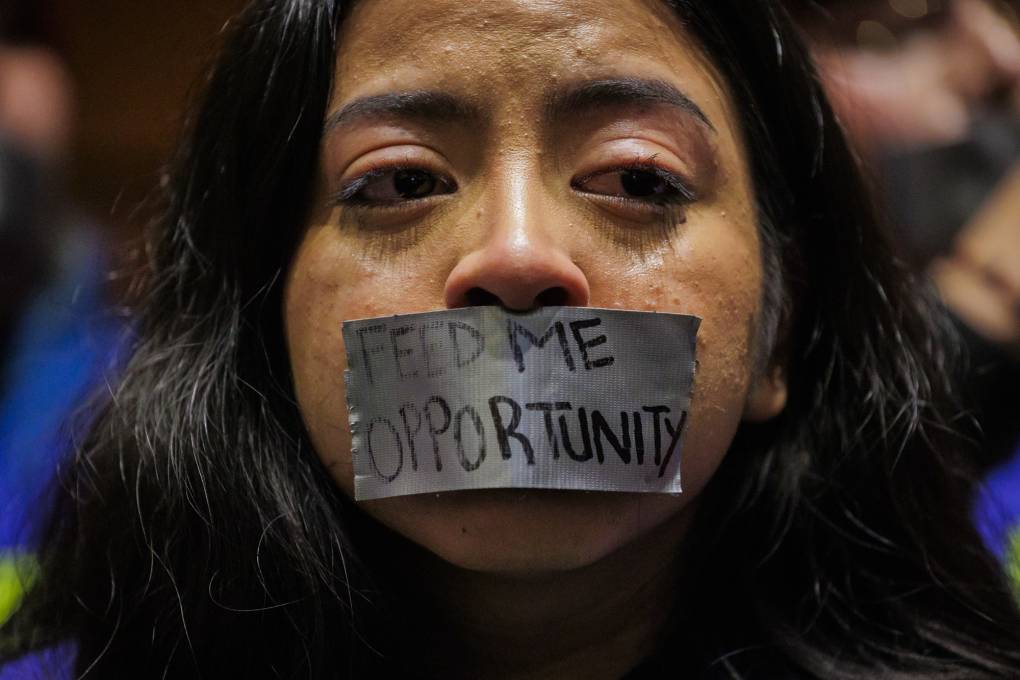
window.__IS_SSR__=true
window.__INITIAL_STATE__={
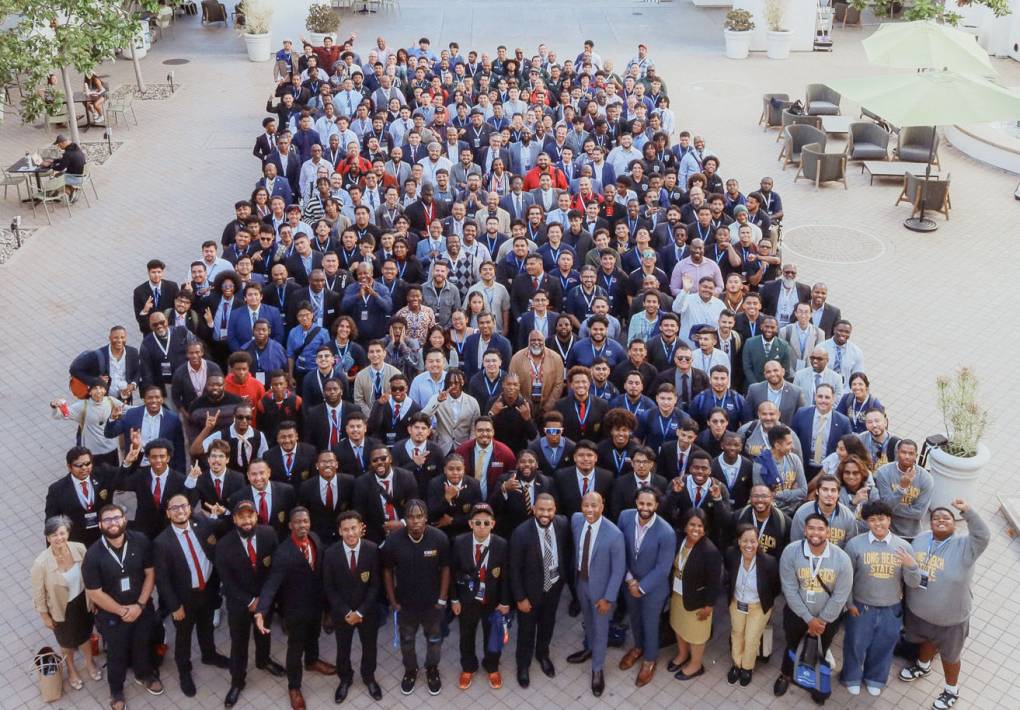
"attachmentsReducer": {
"audio_0": {
"type": "attachments",
"id": "audio_0",
"imgSizes": {
"kqedFullSize": {
"file": "https://ww2.kqed.org/news/wp-content/themes/KQED-unified/img/audio_bgs/background0.jpg"
}
}
},
"audio_1": {
"type": "attachments",
"id": "audio_1",
"imgSizes": {
"kqedFullSize": {
"file": "https://ww2.kqed.org/news/wp-content/themes/KQED-unified/img/audio_bgs/background1.jpg"
}
}
},
"audio_2": {
"type": "attachments",
"id": "audio_2",
"imgSizes": {
"kqedFullSize": {
"file": "https://ww2.kqed.org/news/wp-content/themes/KQED-unified/img/audio_bgs/background2.jpg"
}
}
},
"audio_3": {
"type": "attachments",
"id": "audio_3",
"imgSizes": {
"kqedFullSize": {
"file": "https://ww2.kqed.org/news/wp-content/themes/KQED-unified/img/audio_bgs/background3.jpg"
}
}
},
"audio_4": {
"type": "attachments",
"id": "audio_4",
"imgSizes": {
"kqedFullSize": {
"file": "https://ww2.kqed.org/news/wp-content/themes/KQED-unified/img/audio_bgs/background4.jpg"
}
}
},
"placeholder": {
"type": "attachments",
"id": "placeholder",
"imgSizes": {
"thumbnail": {
"file": "https://cdn.kqed.org/wp-content/uploads/2024/12/KQED-Default-Image-816638274-2000x1333-1-160x107.jpg",
"width": 160,
"height": 107,
"mimeType": "image/jpeg"
},
"medium": {
"file": "https://cdn.kqed.org/wp-content/uploads/2024/12/KQED-Default-Image-816638274-2000x1333-1-800x533.jpg",
"width": 800,
"height": 533,
"mimeType": "image/jpeg"
},
"medium_large": {
"file": "https://cdn.kqed.org/wp-content/uploads/2024/12/KQED-Default-Image-816638274-2000x1333-1-768x512.jpg",
"width": 768,
"height": 512,
"mimeType": "image/jpeg"
},
"large": {
"file": "https://cdn.kqed.org/wp-content/uploads/2024/12/KQED-Default-Image-816638274-2000x1333-1-1020x680.jpg",
"width": 1020,
"height": 680,
"mimeType": "image/jpeg"
},
"1536x1536": {
"file": "https://cdn.kqed.org/wp-content/uploads/2024/12/KQED-Default-Image-816638274-2000x1333-1-1536x1024.jpg",
"width": 1536,
"height": 1024,
"mimeType": "image/jpeg"
},
"fd-lrg": {
"file": "https://cdn.kqed.org/wp-content/uploads/2024/12/KQED-Default-Image-816638274-2000x1333-1-1536x1024.jpg",
"width": 1536,
"height": 1024,
"mimeType": "image/jpeg"
},
"fd-med": {
"file": "https://cdn.kqed.org/wp-content/uploads/2024/12/KQED-Default-Image-816638274-2000x1333-1-1020x680.jpg",
"width": 1020,
"height": 680,
"mimeType": "image/jpeg"
},
"fd-sm": {
"file": "https://cdn.kqed.org/wp-content/uploads/2024/12/KQED-Default-Image-816638274-2000x1333-1-800x533.jpg",
"width": 800,
"height": 533,
"mimeType": "image/jpeg"
},
"post-thumbnail": {
"file": "https://cdn.kqed.org/wp-content/uploads/2024/12/KQED-Default-Image-816638274-2000x1333-1-672x372.jpg",
"width": 672,
"height": 372,
"mimeType": "image/jpeg"
},
"twentyfourteen-full-width": {
"file": "https://cdn.kqed.org/wp-content/uploads/2024/12/KQED-Default-Image-816638274-2000x1333-1-1038x576.jpg",
"width": 1038,
"height": 576,
"mimeType": "image/jpeg"
},
"xxsmall": {
"file": "https://cdn.kqed.org/wp-content/uploads/2024/12/KQED-Default-Image-816638274-2000x1333-1-160x107.jpg",
"width": 160,
"height": 107,
"mimeType": "image/jpeg"
},
"xsmall": {
"file": "https://cdn.kqed.org/wp-content/uploads/2024/12/KQED-Default-Image-816638274-2000x1333-1-672x372.jpg",
"width": 672,
"height": 372,
"mimeType": "image/jpeg"
},
"small": {
"file": "https://cdn.kqed.org/wp-content/uploads/2024/12/KQED-Default-Image-816638274-2000x1333-1-672x372.jpg",
"width": 672,
"height": 372,
"mimeType": "image/jpeg"
},
"xlarge": {
"file": "https://cdn.kqed.org/wp-content/uploads/2024/12/KQED-Default-Image-816638274-2000x1333-1-1020x680.jpg",
"width": 1020,
"height": 680,
"mimeType": "image/jpeg"
},
"full-width": {
"file": "https://cdn.kqed.org/wp-content/uploads/2024/12/KQED-Default-Image-816638274-2000x1333-1-1920x1280.jpg",
"width": 1920,
"height": 1280,
"mimeType": "image/jpeg"
},
"guest-author-32": {
"file": "https://cdn.kqed.org/wp-content/uploads/2025/01/KQED-Default-Image-816638274-1333x1333-1-160x160.jpg",
"width": 32,
"height": 32,
"mimeType": "image/jpeg"
},
"guest-author-50": {
"file": "https://cdn.kqed.org/wp-content/uploads/2025/01/KQED-Default-Image-816638274-1333x1333-1-160x160.jpg",
"width": 50,
"height": 50,
"mimeType": "image/jpeg"
},
"guest-author-64": {
"file": "https://cdn.kqed.org/wp-content/uploads/2025/01/KQED-Default-Image-816638274-1333x1333-1-160x160.jpg",
"width": 64,
"height": 64,
"mimeType": "image/jpeg"
},
"guest-author-96": {
"file": "https://cdn.kqed.org/wp-content/uploads/2025/01/KQED-Default-Image-816638274-1333x1333-1-160x160.jpg",
"width": 96,
"height": 96,
"mimeType": "image/jpeg"
},
"guest-author-128": {
"file": "https://cdn.kqed.org/wp-content/uploads/2025/01/KQED-Default-Image-816638274-1333x1333-1-160x160.jpg",
"width": 128,
"height": 128,
"mimeType": "image/jpeg"
},
"detail": {
"file": "https://cdn.kqed.org/wp-content/uploads/2025/01/KQED-Default-Image-816638274-1333x1333-1-160x160.jpg",
"width": 160,
"height": 160,
"mimeType": "image/jpeg"
},
"kqedFullSize": {
"file": "https://cdn.kqed.org/wp-content/uploads/2024/12/KQED-Default-Image-816638274-2000x1333-1.jpg",
"width": 2000,
"height": 1333
}
}
},
"news_11978598": {
"type": "attachments",
"id": "news_11978598",
"meta": {
"index": "attachments_1716263798",
"site": "news",
"id": "11978598",
"found": true
},
"parent": 11978593,
"imgSizes": {
"twentyfourteen-full-width": {
"file": "https://cdn.kqed.org/wp-content/uploads/sites/10/2024/03/IMG_9319-2-1038x576.jpg",
"width": 1038,
"mimeType": "image/jpeg",
"height": 576
},
"thumbnail": {
"file": "https://cdn.kqed.org/wp-content/uploads/sites/10/2024/03/IMG_9319-2-160x111.jpg",
"width": 160,
"mimeType": "image/jpeg",
"height": 111
},
"post-thumbnail": {
"file": "https://cdn.kqed.org/wp-content/uploads/sites/10/2024/03/IMG_9319-2-672x372.jpg",
"width": 672,
"mimeType": "image/jpeg",
"height": 372
},
"kqedFullSize": {
"file": "https://cdn.kqed.org/wp-content/uploads/sites/10/2024/03/IMG_9319-2.jpg",
"width": 1313,
"height": 914
},
"large": {
"file": "https://cdn.kqed.org/wp-content/uploads/sites/10/2024/03/IMG_9319-2-1020x710.jpg",
"width": 1020,
"mimeType": "image/jpeg",
"height": 710
},
"medium": {
"file": "https://cdn.kqed.org/wp-content/uploads/sites/10/2024/03/IMG_9319-2-800x557.jpg",
"width": 800,
"mimeType": "image/jpeg",
"height": 557
}
},
"publishDate": 1709853672,
"modified": 1709854049,
"caption": "CSU's Young Males of Color conference in October 2023.",
"description": null,
"title": "IMG_9319-2",
"credit": "Courtesy of CSU Dominguez Hills",
"status": "inherit",
"altTag": "An aerial view of a large group of people.",
"isLoading": false,
"fetchFailed": false
},
"news_11908253": {
"type": "attachments",
"id": "news_11908253",
"meta": {
"index": "attachments_1716263798",
"site": "news",
"id": "11908253",
"found": true
},
"parent": 11908196,
"imgSizes": {
"twentyfourteen-full-width": {
"file": "https://ww2.kqed.org/app/uploads/sites/10/2022/03/014_KQED_SFUSDProtest_03142022-1038x576.jpg",
"width": 1038,
"mimeType": "image/jpeg",
"height": 576
},
"thumbnail": {
"file": "https://ww2.kqed.org/app/uploads/sites/10/2022/03/014_KQED_SFUSDProtest_03142022-160x107.jpg",
"width": 160,
"mimeType": "image/jpeg",
"height": 107
},
"post-thumbnail": {
"file": "https://ww2.kqed.org/app/uploads/sites/10/2022/03/014_KQED_SFUSDProtest_03142022-672x372.jpg",
"width": 672,
"mimeType": "image/jpeg",
"height": 372
},
"kqedFullSize": {
"file": "https://ww2.kqed.org/app/uploads/sites/10/2022/03/014_KQED_SFUSDProtest_03142022.jpg",
"width": 1920,
"height": 1280
},
"large": {
"file": "https://ww2.kqed.org/app/uploads/sites/10/2022/03/014_KQED_SFUSDProtest_03142022-1020x680.jpg",
"width": 1020,
"mimeType": "image/jpeg",
"height": 680
},
"1536x1536": {
"file": "https://ww2.kqed.org/app/uploads/sites/10/2022/03/014_KQED_SFUSDProtest_03142022-1536x1024.jpg",
"width": 1536,
"mimeType": "image/jpeg",
"height": 1024
},
"medium": {
"file": "https://ww2.kqed.org/app/uploads/sites/10/2022/03/014_KQED_SFUSDProtest_03142022-800x533.jpg",
"width": 800,
"mimeType": "image/jpeg",
"height": 533
}
},
"publishDate": 1647372151,
"modified": 1647373012,
"caption": "United Educators of San Francisco President Cassondra Curiel leads a protest in front of San Francisco Unified School District headquarters on March 14, 2022, demanding officials immediately compensate hundreds of teachers who have been shortchanged because of payroll glitches. San Francisco District Attorney Chesa Boudin (third from left) is among the group's supporters.",
"description": null,
"title": "014_KQED_SFUSDProtest_03142022",
"credit": "Beth LaBerge/KQED",
"status": "inherit",
"altTag": "A group of people, some holding signs, stand in front of a microphone, with an entrance to a building behind them.",
"isLoading": false,
"fetchFailed": false
},
"news_11976918": {
"type": "attachments",
"id": "news_11976918",
"meta": {
"index": "attachments_1716263798",
"site": "news",
"id": "11976918",
"found": true
},
"parent": 11976913,
"imgSizes": {
"twentyfourteen-full-width": {
"file": "https://cdn.kqed.org/wp-content/uploads/sites/10/2024/02/IMG_2732-2048x1536-1-1038x576.jpg",
"width": 1038,
"mimeType": "image/jpeg",
"height": 576
},
"thumbnail": {
"file": "https://cdn.kqed.org/wp-content/uploads/sites/10/2024/02/IMG_2732-2048x1536-1-160x120.jpg",
"width": 160,
"mimeType": "image/jpeg",
"height": 120
},
"post-thumbnail": {
"file": "https://cdn.kqed.org/wp-content/uploads/sites/10/2024/02/IMG_2732-2048x1536-1-672x372.jpg",
"width": 672,
"mimeType": "image/jpeg",
"height": 372
},
"kqedFullSize": {
"file": "https://cdn.kqed.org/wp-content/uploads/sites/10/2024/02/IMG_2732-2048x1536-1.jpg",
"width": 2048,
"height": 1536
},
"large": {
"file": "https://cdn.kqed.org/wp-content/uploads/sites/10/2024/02/IMG_2732-2048x1536-1-1020x765.jpg",
"width": 1020,
"mimeType": "image/jpeg",
"height": 765
},
"1536x1536": {
"file": "https://cdn.kqed.org/wp-content/uploads/sites/10/2024/02/IMG_2732-2048x1536-1-1536x1152.jpg",
"width": 1536,
"mimeType": "image/jpeg",
"height": 1152
},
"full-width": {
"file": "https://cdn.kqed.org/wp-content/uploads/sites/10/2024/02/IMG_2732-2048x1536-1-1920x1440.jpg",
"width": 1920,
"mimeType": "image/jpeg",
"height": 1440
},
"medium": {
"file": "https://cdn.kqed.org/wp-content/uploads/sites/10/2024/02/IMG_2732-2048x1536-1-800x600.jpg",
"width": 800,
"mimeType": "image/jpeg",
"height": 600
}
},
"publishDate": 1708715702,
"modified": 1708715793,
"caption": "Chelsi Allen, a mother with children in a Fresno private school, buys farm-grown produce at a Fresno Unified farmers market. Allen saw the market while picking up her daughter from a basketball game at Fort Miller Middle School on Feb. 5, 2024.",
"description": null,
"title": "IMG_2732-2048x1536",
"credit": "Lasherica Thornton/EdSource",
"status": "inherit",
"altTag": "Two people under awning in a stall with farm produce on a table and school in background.",
"isLoading": false,
"fetchFailed": false
},
"news_11976350": {
"type": "attachments",
"id": "news_11976350",
"meta": {
"index": "attachments_1716263798",
"site": "news",
"id": "11976350",
"found": true
},
"parent": 11976347,
"imgSizes": {
"twentyfourteen-full-width": {
"file": "https://cdn.kqed.org/wp-content/uploads/sites/10/2024/02/033_KQED_SanFrancisco_SFSU_03112020_6923_qut-1038x576.jpg",
"width": 1038,
"mimeType": "image/jpeg",
"height": 576
},
"thumbnail": {
"file": "https://cdn.kqed.org/wp-content/uploads/sites/10/2024/02/033_KQED_SanFrancisco_SFSU_03112020_6923_qut-160x107.jpg",
"width": 160,
"mimeType": "image/jpeg",
"height": 107
},
"post-thumbnail": {
"file": "https://cdn.kqed.org/wp-content/uploads/sites/10/2024/02/033_KQED_SanFrancisco_SFSU_03112020_6923_qut-672x372.jpg",
"width": 672,
"mimeType": "image/jpeg",
"height": 372
},
"kqedFullSize": {
"file": "https://cdn.kqed.org/wp-content/uploads/sites/10/2024/02/033_KQED_SanFrancisco_SFSU_03112020_6923_qut.jpg",
"width": 1920,
"height": 1280
},
"large": {
"file": "https://cdn.kqed.org/wp-content/uploads/sites/10/2024/02/033_KQED_SanFrancisco_SFSU_03112020_6923_qut-1020x680.jpg",
"width": 1020,
"mimeType": "image/jpeg",
"height": 680
},
"1536x1536": {
"file": "https://cdn.kqed.org/wp-content/uploads/sites/10/2024/02/033_KQED_SanFrancisco_SFSU_03112020_6923_qut-1536x1024.jpg",
"width": 1536,
"mimeType": "image/jpeg",
"height": 1024
},
"medium": {
"file": "https://cdn.kqed.org/wp-content/uploads/sites/10/2024/02/033_KQED_SanFrancisco_SFSU_03112020_6923_qut-800x533.jpg",
"width": 800,
"mimeType": "image/jpeg",
"height": 533
}
},
"publishDate": 1708389773,
"modified": 1708389871,
"caption": "The Cal State faculty union voted this week to approve a tentative contract agreement, but SF State union leaders remain vocal about their opposition to the deal.",
"description": null,
"title": "033_KQED_SanFrancisco_SFSU_03112020_6923_qut",
"credit": "Beth LaBerge/KQED",
"status": "inherit",
"altTag": "a student walks in front of a San Francisco State University sign on campus",
"isLoading": false,
"fetchFailed": false
},
"news_11976191": {
"type": "attachments",
"id": "news_11976191",
"meta": {
"index": "attachments_1716263798",
"site": "news",
"id": "11976191",
"found": true
},
"parent": 11976186,
"imgSizes": {
"twentyfourteen-full-width": {
"file": "https://cdn.kqed.org/wp-content/uploads/sites/10/2024/02/CMEducation01-1038x576.jpg",
"width": 1038,
"mimeType": "image/jpeg",
"height": 576
},
"thumbnail": {
"file": "https://cdn.kqed.org/wp-content/uploads/sites/10/2024/02/CMEducation01-160x107.jpg",
"width": 160,
"mimeType": "image/jpeg",
"height": 107
},
"post-thumbnail": {
"file": "https://cdn.kqed.org/wp-content/uploads/sites/10/2024/02/CMEducation01-672x372.jpg",
"width": 672,
"mimeType": "image/jpeg",
"height": 372
},
"kqedFullSize": {
"file": "https://cdn.kqed.org/wp-content/uploads/sites/10/2024/02/CMEducation01.jpg",
"width": 2000,
"height": 1333
},
"large": {
"file": "https://cdn.kqed.org/wp-content/uploads/sites/10/2024/02/CMEducation01-1020x680.jpg",
"width": 1020,
"mimeType": "image/jpeg",
"height": 680
},
"1536x1536": {
"file": "https://cdn.kqed.org/wp-content/uploads/sites/10/2024/02/CMEducation01-1536x1024.jpg",
"width": 1536,
"mimeType": "image/jpeg",
"height": 1024
},
"full-width": {
"file": "https://cdn.kqed.org/wp-content/uploads/sites/10/2024/02/CMEducation01-1920x1280.jpg",
"width": 1920,
"mimeType": "image/jpeg",
"height": 1280
},
"medium": {
"file": "https://cdn.kqed.org/wp-content/uploads/sites/10/2024/02/CMEducation01-800x533.jpg",
"width": 800,
"mimeType": "image/jpeg",
"height": 533
}
},
"publishDate": 1708111194,
"modified": 1708127943,
"caption": "Mario Ramirez Garcia, 10, attends an online class in the bedroom he shares with his sister on April 23, 2021. “It’s funner in real school,” Mario said of distance learning.",
"description": null,
"title": "CMEducation01",
"credit": "Anne Wernikoff/CalMatters",
"status": "inherit",
"altTag": "A boy staring at a computer screen during a remote learning session in his room.",
"isLoading": false,
"fetchFailed": false
},
"news_11976294": {
"type": "attachments",
"id": "news_11976294",
"meta": {
"index": "attachments_1716263798",
"site": "news",
"id": "11976294",
"found": true
},
"parent": 11976293,
"imgSizes": {
"twentyfourteen-full-width": {
"file": "https://cdn.kqed.org/wp-content/uploads/sites/10/2024/02/37171854475_48cedb447b_k-1038x576.jpg",
"width": 1038,
"mimeType": "image/jpeg",
"height": 576
},
"thumbnail": {
"file": "https://cdn.kqed.org/wp-content/uploads/sites/10/2024/02/37171854475_48cedb447b_k-160x107.jpg",
"width": 160,
"mimeType": "image/jpeg",
"height": 107
},
"post-thumbnail": {
"file": "https://cdn.kqed.org/wp-content/uploads/sites/10/2024/02/37171854475_48cedb447b_k-672x372.jpg",
"width": 672,
"mimeType": "image/jpeg",
"height": 372
},
"kqedFullSize": {
"file": "https://cdn.kqed.org/wp-content/uploads/sites/10/2024/02/37171854475_48cedb447b_k.jpg",
"width": 2048,
"height": 1365
},
"large": {
"file": "https://cdn.kqed.org/wp-content/uploads/sites/10/2024/02/37171854475_48cedb447b_k-1020x680.jpg",
"width": 1020,
"mimeType": "image/jpeg",
"height": 680
},
"1536x1536": {
"file": "https://cdn.kqed.org/wp-content/uploads/sites/10/2024/02/37171854475_48cedb447b_k-1536x1024.jpg",
"width": 1536,
"mimeType": "image/jpeg",
"height": 1024
},
"full-width": {
"file": "https://cdn.kqed.org/wp-content/uploads/sites/10/2024/02/37171854475_48cedb447b_k-1920x1280.jpg",
"width": 1920,
"mimeType": "image/jpeg",
"height": 1280
},
"medium": {
"file": "https://cdn.kqed.org/wp-content/uploads/sites/10/2024/02/37171854475_48cedb447b_k-800x533.jpg",
"width": 800,
"mimeType": "image/jpeg",
"height": 533
}
},
"publishDate": 1708198135,
"modified": 1708198247,
"caption": "March for immigrant rights in Los Angeles in September 2017.",
"description": null,
"title": "37171854475_48cedb447b_k",
"credit": "Molly Adams/Flickr",
"status": "inherit",
"altTag": "People protesting, including adults and children, with a young girl holding a sign that says \"We're not done dreaming.\"",
"isLoading": false,
"fetchFailed": false
},
"news_11975577": {
"type": "attachments",
"id": "news_11975577",
"meta": {
"index": "attachments_1716263798",
"site": "news",
"id": "11975577",
"found": true
},
"parent": 11975553,
"imgSizes": {
"twentyfourteen-full-width": {
"file": "https://cdn.kqed.org/wp-content/uploads/sites/10/2024/02/Edsource_IMG_0002-1-1024x768-2-1024x576.jpeg",
"width": 1024,
"mimeType": "image/jpeg",
"height": 576
},
"thumbnail": {
"file": "https://cdn.kqed.org/wp-content/uploads/sites/10/2024/02/Edsource_IMG_0002-1-1024x768-2-160x120.jpeg",
"width": 160,
"mimeType": "image/jpeg",
"height": 120
},
"post-thumbnail": {
"file": "https://cdn.kqed.org/wp-content/uploads/sites/10/2024/02/Edsource_IMG_0002-1-1024x768-2-672x372.jpeg",
"width": 672,
"mimeType": "image/jpeg",
"height": 372
},
"kqedFullSize": {
"file": "https://cdn.kqed.org/wp-content/uploads/sites/10/2024/02/Edsource_IMG_0002-1-1024x768-2.jpeg",
"width": 1024,
"height": 768
},
"large": {
"file": "https://cdn.kqed.org/wp-content/uploads/sites/10/2024/02/Edsource_IMG_0002-1-1024x768-2-1020x765.jpeg",
"width": 1020,
"mimeType": "image/jpeg",
"height": 765
},
"medium": {
"file": "https://cdn.kqed.org/wp-content/uploads/sites/10/2024/02/Edsource_IMG_0002-1-1024x768-2-800x600.jpeg",
"width": 800,
"mimeType": "image/jpeg",
"height": 600
}
},
"publishDate": 1707765729,
"modified": 1707765962,
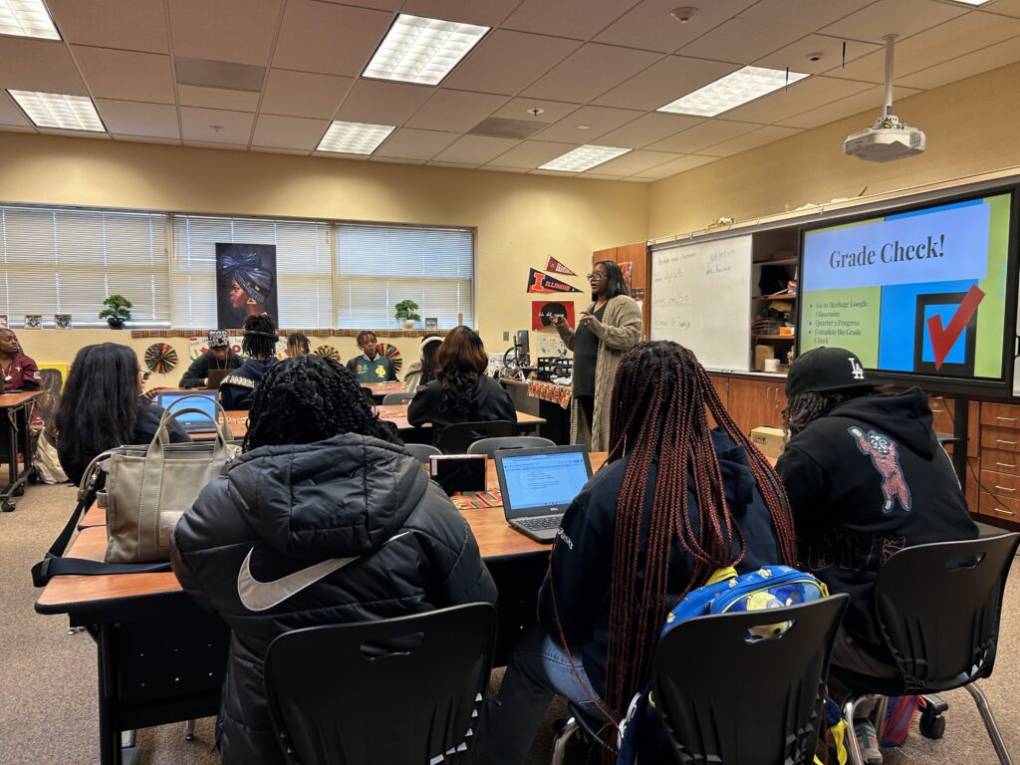
"caption": "Aleka Jackson-Jarrell is the coordinator of the Heritage Program at Adelanto High in California's High Desert. She regularly meets with Black students at the school to make sure they stay on track to graduate and meet A-G requirements that enable them to apply to a public university.",
"description": null,
"title": "Edsource_IMG_0002-1-1024x768",
"credit": "Emma Gallegos/EdSource",
"status": "inherit",
"altTag": "A classroom of students.",
"isLoading": false,
"fetchFailed": false
},
"news_11975536": {
"type": "attachments",
"id": "news_11975536",
"meta": {
"index": "attachments_1716263798",
"site": "news",
"id": "11975536",
"found": true
},
"parent": 11975534,
"imgSizes": {
"twentyfourteen-full-width": {
"file": "https://cdn.kqed.org/wp-content/uploads/sites/10/2024/02/CMFinancialAid01-1038x576.jpg",
"width": 1038,
"mimeType": "image/jpeg",
"height": 576
},
"thumbnail": {
"file": "https://cdn.kqed.org/wp-content/uploads/sites/10/2024/02/CMFinancialAid01-160x107.jpg",
"width": 160,
"mimeType": "image/jpeg",
"height": 107
},
"post-thumbnail": {
"file": "https://cdn.kqed.org/wp-content/uploads/sites/10/2024/02/CMFinancialAid01-672x372.jpg",
"width": 672,
"mimeType": "image/jpeg",
"height": 372
},
"kqedFullSize": {
"file": "https://cdn.kqed.org/wp-content/uploads/sites/10/2024/02/CMFinancialAid01.jpg",
"width": 2000,
"height": 1333
},
"large": {
"file": "https://cdn.kqed.org/wp-content/uploads/sites/10/2024/02/CMFinancialAid01-1020x680.jpg",
"width": 1020,
"mimeType": "image/jpeg",
"height": 680
},
"1536x1536": {
"file": "https://cdn.kqed.org/wp-content/uploads/sites/10/2024/02/CMFinancialAid01-1536x1024.jpg",
"width": 1536,
"mimeType": "image/jpeg",
"height": 1024
},
"full-width": {
"file": "https://cdn.kqed.org/wp-content/uploads/sites/10/2024/02/CMFinancialAid01-1920x1280.jpg",
"width": 1920,
"mimeType": "image/jpeg",
"height": 1280
},
"medium": {
"file": "https://cdn.kqed.org/wp-content/uploads/sites/10/2024/02/CMFinancialAid01-800x533.jpg",
"width": 800,
"mimeType": "image/jpeg",
"height": 533
}
},
"publishDate": 1707758498,
"modified": 1707758548,
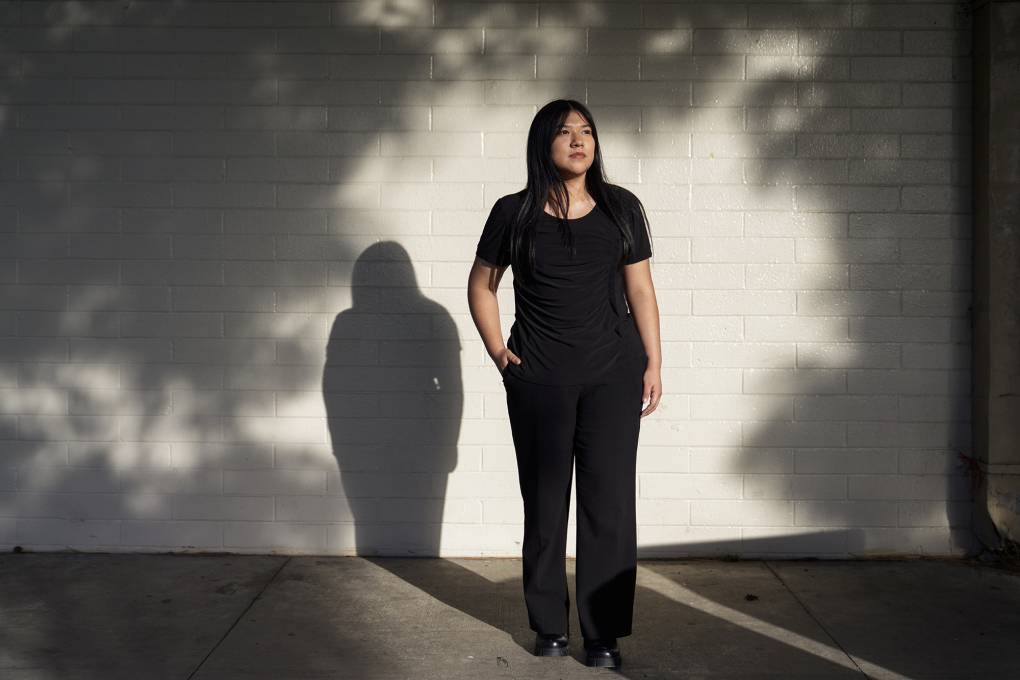
"caption": "Ashley Estrada, 18, will graduate from Diego Rivera High School in South LA in 2024. A technical error is currently blocking students whose parents don’t have a social security number from completing their FAFSA forms, and Estrada is one of the students affected. Feb. 9, 2024. ",
"description": null,
"title": "CMFinancialAid01",
"credit": "Lauren Justice/CalMatters",
"status": "inherit",
"altTag": "A woman stands by a wall.",
"isLoading": false,
"fetchFailed": false
},
"news_11974807": {
"type": "attachments",
"id": "news_11974807",
"meta": {
"index": "attachments_1716263798",
"site": "news",
"id": "11974807",
"found": true
},
"parent": 11974782,
"imgSizes": {
"twentyfourteen-full-width": {
"file": "https://cdn.kqed.org/wp-content/uploads/sites/10/2024/02/UCSF-Strike-1038x576.jpg",
"width": 1038,
"mimeType": "image/jpeg",
"height": 576
},
"thumbnail": {
"file": "https://cdn.kqed.org/wp-content/uploads/sites/10/2024/02/UCSF-Strike-160x107.jpg",
"width": 160,
"mimeType": "image/jpeg",
"height": 107
},
"post-thumbnail": {
"file": "https://cdn.kqed.org/wp-content/uploads/sites/10/2024/02/UCSF-Strike-672x372.jpg",
"width": 672,
"mimeType": "image/jpeg",
"height": 372
},
"kqedFullSize": {
"file": "https://cdn.kqed.org/wp-content/uploads/sites/10/2024/02/UCSF-Strike.jpg",
"width": 1920,
"height": 1280
},
"large": {
"file": "https://cdn.kqed.org/wp-content/uploads/sites/10/2024/02/UCSF-Strike-1020x680.jpg",
"width": 1020,
"mimeType": "image/jpeg",
"height": 680
},
"1536x1536": {
"file": "https://cdn.kqed.org/wp-content/uploads/sites/10/2024/02/UCSF-Strike-1536x1024.jpg",
"width": 1536,
"mimeType": "image/jpeg",
"height": 1024
},
"medium": {
"file": "https://cdn.kqed.org/wp-content/uploads/sites/10/2024/02/UCSF-Strike-800x533.jpg",
"width": 800,
"mimeType": "image/jpeg",
"height": 533
}
},
"publishDate": 1707239255,
"modified": 1707243826,
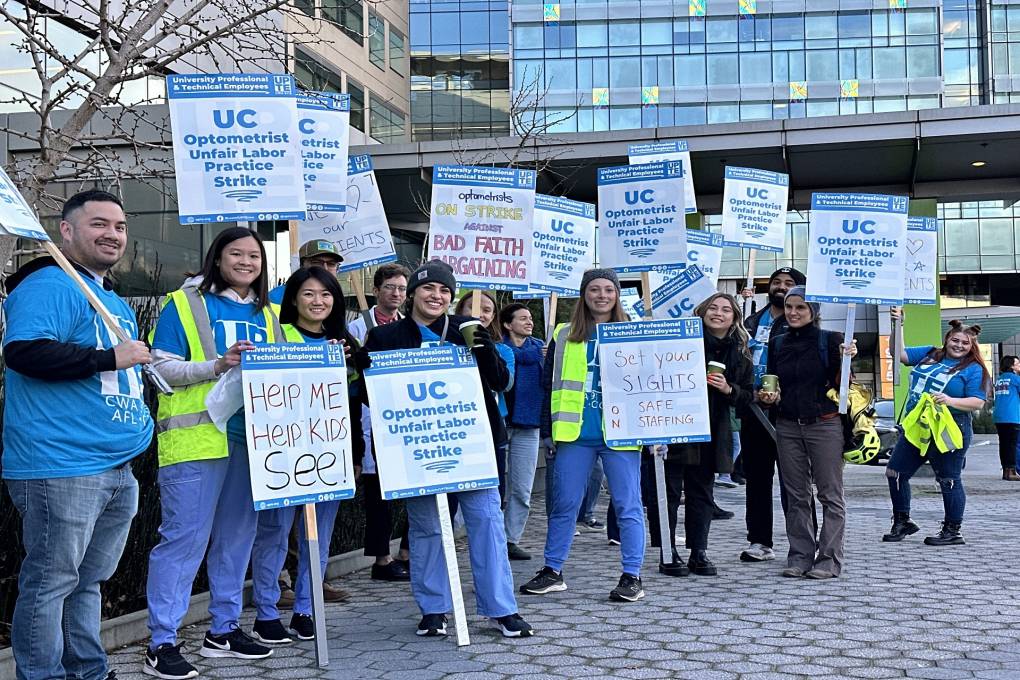
"caption": "UCSF optometrists, who see about 12 to 14 patients daily and are striking for two days, manage a variety of ocular diseases and eye infections in patients often referred to the hospital from as far away as Eureka, Modesto and Stockton.",
"description": null,
"title": "UCSF Strike",
"credit": "Courtesy of University Professional and Technical Employees, Communication Workers of America Local 9119",
"status": "inherit",
"altTag": "UC optometrists are seen holding signs as they strike for better wages and working conditions.",
"isLoading": false,
"fetchFailed": false
},
"news_11974333": {
"type": "attachments",
"id": "news_11974333",
"meta": {
"index": "attachments_1716263798",
"site": "news",
"id": "11974333",
"found": true
},
"parent": 11974321,
"imgSizes": {
"twentyfourteen-full-width": {
"file": "https://cdn.kqed.org/wp-content/uploads/sites/10/2024/01/Graduation-1038x576.jpg",
"width": 1038,
"mimeType": "image/jpeg",
"height": 576
},
"thumbnail": {
"file": "https://cdn.kqed.org/wp-content/uploads/sites/10/2024/01/Graduation-160x107.jpg",
"width": 160,
"mimeType": "image/jpeg",
"height": 107
},
"post-thumbnail": {
"file": "https://cdn.kqed.org/wp-content/uploads/sites/10/2024/01/Graduation-672x372.jpg",
"width": 672,
"mimeType": "image/jpeg",
"height": 372
},
"kqedFullSize": {
"file": "https://cdn.kqed.org/wp-content/uploads/sites/10/2024/01/Graduation.jpg",
"width": 1920,
"height": 1280
},
"large": {
"file": "https://cdn.kqed.org/wp-content/uploads/sites/10/2024/01/Graduation-1020x680.jpg",
"width": 1020,
"mimeType": "image/jpeg",
"height": 680
},
"1536x1536": {
"file": "https://cdn.kqed.org/wp-content/uploads/sites/10/2024/01/Graduation-1536x1024.jpg",
"width": 1536,
"mimeType": "image/jpeg",
"height": 1024
},
"medium": {
"file": "https://cdn.kqed.org/wp-content/uploads/sites/10/2024/01/Graduation-800x533.jpg",
"width": 800,
"mimeType": "image/jpeg",
"height": 533
}
},
"publishDate": 1706727550,
"modified": 1706727740,
"caption": "Since 2015, California's human resources department has changed the degree requirements for nearly 170 types of jobs, which represent about 27,000 people. ",
"description": null,
"title": "Graduation",
"credit": "Vanessa Rancano/KQED",
"status": "inherit",
"altTag": "A tight shot captured from behind of hundreds of students in blue and yellow graduation caps sitting down.",
"isLoading": false,
"fetchFailed": false
},
"news_11974092": {
"type": "attachments",
"id": "news_11974092",
"meta": {
"index": "attachments_1716263798",
"site": "news",
"id": "11974092",
"found": true
},
"parent": 11974086,
"imgSizes": {
"twentyfourteen-full-width": {
"file": "https://cdn.kqed.org/wp-content/uploads/sites/10/2024/01/AMERICANED_MC2_040-2048x1365-1-1038x576.jpg",
"width": 1038,
"mimeType": "image/jpeg",
"height": 576
},
"thumbnail": {
"file": "https://cdn.kqed.org/wp-content/uploads/sites/10/2024/01/AMERICANED_MC2_040-2048x1365-1-160x107.jpg",
"width": 160,
"mimeType": "image/jpeg",
"height": 107
},
"post-thumbnail": {
"file": "https://cdn.kqed.org/wp-content/uploads/sites/10/2024/01/AMERICANED_MC2_040-2048x1365-1-672x372.jpg",
"width": 672,
"mimeType": "image/jpeg",
"height": 372
},
"kqedFullSize": {
"file": "https://cdn.kqed.org/wp-content/uploads/sites/10/2024/01/AMERICANED_MC2_040-2048x1365-1.jpg",
"width": 2048,
"height": 1365
},
"large": {
"file": "https://cdn.kqed.org/wp-content/uploads/sites/10/2024/01/AMERICANED_MC2_040-2048x1365-1-1020x680.jpg",
"width": 1020,
"mimeType": "image/jpeg",
"height": 680
},
"1536x1536": {
"file": "https://cdn.kqed.org/wp-content/uploads/sites/10/2024/01/AMERICANED_MC2_040-2048x1365-1-1536x1024.jpg",
"width": 1536,
"mimeType": "image/jpeg",
"height": 1024
},
"full-width": {
"file": "https://cdn.kqed.org/wp-content/uploads/sites/10/2024/01/AMERICANED_MC2_040-2048x1365-1-1920x1280.jpg",
"width": 1920,
"mimeType": "image/jpeg",
"height": 1280
},
"medium": {
"file": "https://cdn.kqed.org/wp-content/uploads/sites/10/2024/01/AMERICANED_MC2_040-2048x1365-1-800x533.jpg",
"width": 800,
"mimeType": "image/jpeg",
"height": 533
}
},
"publishDate": 1706554310,
"modified": 1706562490,
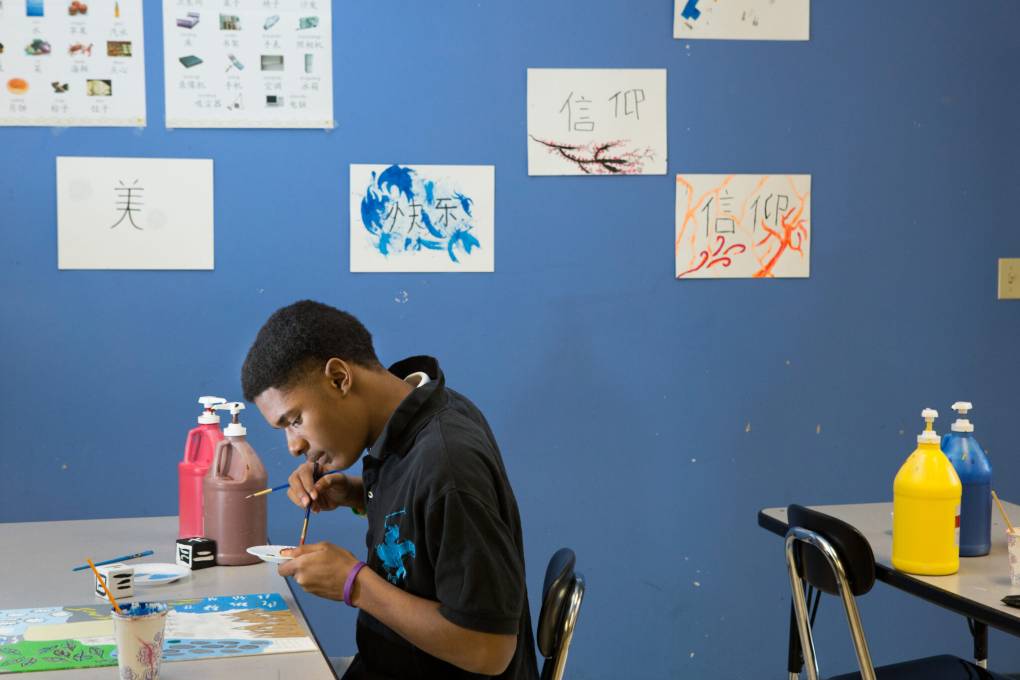
"caption": "A 10th-grade student works on a painting inspired by his study of the Harlem Renaissance.",
"description": null,
"title": "Tenth-grade boy painting",
"credit": "Allison Shelley for American Education",
"status": "inherit",
"altTag": "A person in an art classroom looks down at his artwork.",
"isLoading": false,
"fetchFailed": false
},
"news_11973839": {
"type": "attachments",
"id": "news_11973839",
"meta": {
"index": "attachments_1716263798",
"site": "news",
"id": "11973839",
"found": true
},
"parent": 0,
"imgSizes": {
"twentyfourteen-full-width": {
"file": "https://cdn.kqed.org/wp-content/uploads/sites/10/2024/01/240125-UC-REGENTS-UNDOCUMENTED-WORK-MD-10-KQED-1-1038x576.jpg",
"width": 1038,
"mimeType": "image/jpeg",
"height": 576
},
"thumbnail": {
"file": "https://cdn.kqed.org/wp-content/uploads/sites/10/2024/01/240125-UC-REGENTS-UNDOCUMENTED-WORK-MD-10-KQED-1-160x107.jpg",
"width": 160,
"mimeType": "image/jpeg",
"height": 107
},
"post-thumbnail": {
"file": "https://cdn.kqed.org/wp-content/uploads/sites/10/2024/01/240125-UC-REGENTS-UNDOCUMENTED-WORK-MD-10-KQED-1-672x372.jpg",
"width": 672,
"mimeType": "image/jpeg",
"height": 372
},
"kqedFullSize": {
"file": "https://cdn.kqed.org/wp-content/uploads/sites/10/2024/01/240125-UC-REGENTS-UNDOCUMENTED-WORK-MD-10-KQED-1.jpg",
"width": 2000,
"height": 1333
},
"large": {
"file": "https://cdn.kqed.org/wp-content/uploads/sites/10/2024/01/240125-UC-REGENTS-UNDOCUMENTED-WORK-MD-10-KQED-1-1020x680.jpg",
"width": 1020,
"mimeType": "image/jpeg",
"height": 680
},
"1536x1536": {
"file": "https://cdn.kqed.org/wp-content/uploads/sites/10/2024/01/240125-UC-REGENTS-UNDOCUMENTED-WORK-MD-10-KQED-1-1536x1024.jpg",
"width": 1536,
"mimeType": "image/jpeg",
"height": 1024
},
"full-width": {
"file": "https://cdn.kqed.org/wp-content/uploads/sites/10/2024/01/240125-UC-REGENTS-UNDOCUMENTED-WORK-MD-10-KQED-1-1920x1280.jpg",
"width": 1920,
"mimeType": "image/jpeg",
"height": 1280
},
"medium": {
"file": "https://cdn.kqed.org/wp-content/uploads/sites/10/2024/01/240125-UC-REGENTS-UNDOCUMENTED-WORK-MD-10-KQED-1-800x533.jpg",
"width": 800,
"mimeType": "image/jpeg",
"height": 533
}
},
"publishDate": 1706277114,
"modified": 1706278142,
"caption": "Betzaida, an undocumented student with the Opportunity for All campaign, cries in reaction to the University of California Regents' vote to suspend consideration of a proposal to allow the university to hire undocumented students at the UCSF Mission Bay Conference Center on Jan. 25, 2024. Prior to the vote, Betzaida and other UC students participated in a 3-day hunger strike to urge the Board of Regents to move forward with the proposal. ",
"description": null,
"title": "240125-UC REGENTS UNDOCUMENTED WORK-MD-10-KQED-1",
"credit": "Martin do Nascimento/KQED",
"status": "inherit",
"altTag": "A young woman with gray tape covering her mouth, crying.",
"isLoading": false,
"fetchFailed": false
}
},
"audioPlayerReducer": {
"postId": "stream_live",
"isPaused": true,
"isPlaying": false,
"pfsActive": false,
"pledgeModalIsOpen": true,
"playerDrawerIsOpen": false,
"liveAudioPlayStartedAt": 0,
"liveAudioPlayContext": ""
},
"authorsReducer": {
"byline_news_11978593": {
"type": "authors",
"id": "byline_news_11978593",
"meta": {
"override": true
},
"slug": "byline_news_11978593",
"name": "\u003ca href=\"https://edsource.org/author/asmith\">Ashley A. Smith\u003c/a>",
"isLoading": false
},
"byline_news_11976913": {
"type": "authors",
"id": "byline_news_11976913",
"meta": {
"override": true
},
"slug": "byline_news_11976913",
"name": "\u003ca href=\"https://edsource.org/author/lthornton\">Lasherica Thornton\u003c/a>",
"isLoading": false
},
"byline_news_11976186": {
"type": "authors",
"id": "byline_news_11976186",
"meta": {
"override": true
},
"slug": "byline_news_11976186",
"name": "\u003ca href=\"https://calmatters.org/author/carolyn-jones/\">Carolyn Jones\u003c/a>",
"isLoading": false
},
"byline_news_11976293": {
"type": "authors",
"id": "byline_news_11976293",
"meta": {
"override": true
},
"slug": "byline_news_11976293",
"name": "\u003ca href=\"https://edsource.org/author/mseshadri\">Mallika Seshadri\u003c/a>",
"isLoading": false
},
"byline_news_11975553": {
"type": "authors",
"id": "byline_news_11975553",
"meta": {
"override": true
},
"slug": "byline_news_11975553",
"name": "\u003ca href=\"https://edsource.org/author/egallegos\">Emma Gallegos \u003c/a> and \u003ca href=\"https://edsource.org/author/dwillis\">Daniel J. Willis \u003c/a>",
"isLoading": false
},
"byline_news_11975534": {
"type": "authors",
"id": "byline_news_11975534",
"meta": {
"override": true
},
"slug": "byline_news_11975534",
"name": "\u003ca href=\"https://calmatters.org/author/mikhailzinshteyn/\">Mikhail Zinshteyn\u003c/a>",
"isLoading": false
},
"byline_news_11974321": {
"type": "authors",
"id": "byline_news_11974321",
"meta": {
"override": true
},
"slug": "byline_news_11974321",
"name": "\u003ca href=\"https://calmatters.org/author/adam-echelman/\">Adam Echelman\u003c/a>",
"isLoading": false
},
"byline_news_11974086": {
"type": "authors",
"id": "byline_news_11974086",
"meta": {
"override": true
},
"slug": "byline_news_11974086",
"name": "\u003ca href=\"https://edsource.org/author/kdsouza\">Karen D'Souza\u003c/a>",
"isLoading": false
},
"fjhabvala": {
"type": "authors",
"id": "8659",
"meta": {
"index": "authors_1716337520",
"id": "8659",
"found": true
},
"name": "Farida Jhabvala Romero",
"firstName": "Farida",
"lastName": "Jhabvala Romero",
"slug": "fjhabvala",
"email": "fjhabvala@kqed.org",
"display_author_email": true,
"staff_mastheads": [
"news"
],
"title": "KQED Contributor",
"bio": "Farida Jhabvala Romero is a Labor Correspondent for KQED. She previously covered immigration. Farida was \u003ca href=\"https://www.ccnma.org/2022-most-influential-latina-journalists\">named\u003c/a> one of the 10 Most Influential Latina Journalists in California in 2022 by the California Chicano News Media Association. Her work has won awards from the Society of Professional Journalists (Northern California), as well as a national and regional Edward M. Murrow Award for the collaborative reporting projects “Dangerous Air” and “Graying California.” Before joining KQED, Farida worked as a producer at Radio Bilingüe, a national public radio network. Farida earned her master’s degree in journalism from Stanford University.",
"avatar": "https://secure.gravatar.com/avatar/f9f022d4e2609741874222a1e9d41f48fea74011aa7c615eef91d9a50c944ebe?s=600&d=blank&r=g",
"twitter": "FaridaJhabvala",
"bluesky": null,
"facebook": null,
"instagram": null,
"linkedin": "https://www.linkedin.com/in/faridajhabvala/",
"sites": [
{
"site": "news",
"roles": [
"editor"
]
},
{
"site": "stateofhealth",
"roles": [
"author"
]
},
{
"site": "liveblog",
"roles": [
"author"
]
}
],
"headData": {
"title": "Farida Jhabvala Romero | KQED",
"description": "KQED Contributor",
"ogImgSrc": "https://secure.gravatar.com/avatar/f9f022d4e2609741874222a1e9d41f48fea74011aa7c615eef91d9a50c944ebe?s=600&d=blank&r=g",
"twImgSrc": "https://secure.gravatar.com/avatar/f9f022d4e2609741874222a1e9d41f48fea74011aa7c615eef91d9a50c944ebe?s=600&d=blank&r=g"
},
"isLoading": false,
"link": "/author/fjhabvala"
},
"jlara": {
"type": "authors",
"id": "11761",
"meta": {
"index": "authors_1716337520",
"id": "11761",
"found": true
},
"name": "Juan Carlos Lara",
"firstName": "Juan Carlos",
"lastName": "Lara",
"slug": "jlara",
"email": "jlara@kqed.org",
"display_author_email": false,
"staff_mastheads": [],
"title": "KQED Contributor",
"bio": null,
"avatar": "https://secure.gravatar.com/avatar/19e2052b9b05657c5ff2af2121846e9c?s=600&d=blank&r=g",
"twitter": null,
"facebook": null,
"instagram": null,
"linkedin": null,
"sites": [
{
"site": "arts",
"roles": [
"editor"
]
},
{
"site": "news",
"roles": [
"editor"
]
},
{
"site": "forum",
"roles": [
"editor"
]
},
{
"site": "liveblog",
"roles": [
"contributor"
]
}
],
"headData": {
"title": "Juan Carlos Lara | KQED",
"description": "KQED Contributor",
"ogImgSrc": "https://secure.gravatar.com/avatar/19e2052b9b05657c5ff2af2121846e9c?s=600&d=blank&r=g",
"twImgSrc": "https://secure.gravatar.com/avatar/19e2052b9b05657c5ff2af2121846e9c?s=600&d=blank&r=g"
},
"isLoading": false,
"link": "/author/jlara"
},
"sjohnson": {
"type": "authors",
"id": "11840",
"meta": {
"index": "authors_1716337520",
"id": "11840",
"found": true
},
"name": "Sydney Johnson",
"firstName": "Sydney",
"lastName": "Johnson",
"slug": "sjohnson",
"email": "sjohnson@kqed.org",
"display_author_email": false,
"staff_mastheads": [
"news"
],
"title": "KQED Reporter",
"bio": "Sydney Johnson is a general assignment reporter at KQED. She previously reported on public health and city government at the San Francisco Examiner, and before that, she covered statewide education policy for EdSource. Her reporting has won multiple local, state and national awards. Sydney is a graduate of the University of California, Berkeley and lives in San Francisco.",
"avatar": "https://secure.gravatar.com/avatar/97855f2719b72ad6190b7c535fe642c8?s=600&d=blank&r=g",
"twitter": "sydneyfjohnson",
"facebook": null,
"instagram": null,
"linkedin": null,
"sites": [
{
"site": "news",
"roles": [
"editor"
]
}
],
"headData": {
"title": "Sydney Johnson | KQED",
"description": "KQED Reporter",
"ogImgSrc": "https://secure.gravatar.com/avatar/97855f2719b72ad6190b7c535fe642c8?s=600&d=blank&r=g",
"twImgSrc": "https://secure.gravatar.com/avatar/97855f2719b72ad6190b7c535fe642c8?s=600&d=blank&r=g"
},
"isLoading": false,
"link": "/author/sjohnson"
},
"mbolanos": {
"type": "authors",
"id": "11895",
"meta": {
"index": "authors_1716337520",
"id": "11895",
"found": true
},
"name": "Madi Bolaños",
"firstName": "Madi",
"lastName": "Bolaños",
"slug": "mbolanos",
"email": "mbolanos@kqed.org",
"display_author_email": false,
"staff_mastheads": [],
"title": "KQED Contributor",
"bio": null,
"avatar": "https://secure.gravatar.com/avatar/e6df5601c1f2d951e46a3fb42764330f?s=600&d=blank&r=g",
"twitter": null,
"bluesky": null,
"facebook": null,
"instagram": null,
"linkedin": null,
"sites": [
{
"site": "news",
"roles": [
"author"
]
}
],
"headData": {
"title": "Madi Bolaños | KQED",
"description": "KQED Contributor",
"ogImgSrc": "https://secure.gravatar.com/avatar/e6df5601c1f2d951e46a3fb42764330f?s=600&d=blank&r=g",
"twImgSrc": "https://secure.gravatar.com/avatar/e6df5601c1f2d951e46a3fb42764330f?s=600&d=blank&r=g"
},
"isLoading": false,
"link": "/author/mbolanos"
}
},
"pagesReducer": {
"news_category_education": {
"type": "terms",
"id": "news_18540",
"meta": {
"index": "terms_1716263798",
"site": "news",
"id": "18540",
"score": 10.973221
},
"featImg": null,
"name": "Education",
"description": null,
"taxonomy": "category",
"headData": {
"twImgId": null,
"twTitle": null,
"ogTitle": null,
"ogImgId": null,
"twDescription": null,
"description": null,
"title": "Education Archives | KQED News",
"ogDescription": null
},
"ttid": 2595,
"slug": "education",
"isLoading": false,
"title": "Education",
"pageMeta": {
"site": "news",
"WpPageTemplate": "page-topic-editorial",
"currentPage": 54
},
"blocks": [
{
"blockName": "kqed/post-list",
"attrs": {
"layout": "cardArticle2",
"query": "posts/news?category=education",
"seeMore": false,
"paginated": true,
"page": 54
}
},
{
"blockName": "kqed/ad"
}
]
}
},
"pfsSessionReducer": {},
"postsReducer": {
"stream_live": {
"type": "live",
"id": "stream_live",
"audioUrl": "https://streams.kqed.org/kqedradio",
"title": "Live Stream",
"excerpt": "Live Stream information currently unavailable.",
"link": "/radio",
"featImg": "",
"label": {
"name": "KQED Live",
"link": "/"
}
},
"stream_kqedNewscast": {
"type": "posts",
"id": "stream_kqedNewscast",
"audioUrl": "https://www.kqed.org/.stream/anon/radio/RDnews/newscast.mp3?_=1",
"title": "KQED Newscast",
"featImg": "",
"label": {
"name": "88.5 FM",
"link": "/"
}
},
"news_11978593": {
"type": "posts",
"id": "news_11978593",
"meta": {
"index": "posts_1716263798",
"site": "news",
"id": "11978593",
"score": null,
"sort": [
1709911819000
]
},
"guestAuthors": [],
"slug": "csu-campuses-implement-new-strategies-to-empower-men-of-color",
"title": "CSU Campuses Implement New Strategies to Empower Men of Color",
"publishDate": 1709911819,
"format": "standard",
"headTitle": "CSU Campuses Implement New Strategies to Empower Men of Color | KQED",
"labelTerm": {},
"content": "\u003cp>Last year, Cal State campuses received some sobering details about the growing gaps in graduation rates between students of color and their white counterparts. Instead of decreasing, the graduation equity gaps between Black, Latino and Native or Indigenous students have been increasing.\u003c/p>\n\u003cp>However, some campuses are targeting new funding and strategies to specifically target students of color that will help increase graduation, persistence and retention.\u003c/p>\n\u003cp>CSU’s Young Males of Color Consortium, which is housed at Cal State Dominguez Hills, received $3.2 million from a group of organizations, including Ballmer Group, College Futures Foundation, ECMC Foundation and Ichigo Foundation, to create new programs that support men of color on Cal State campuses. Sixteen CSU campuses and their neighboring community colleges will deploy those programs to improve transfer, retention and graduation rates for up to 800 students. The partnered universities and colleges will start working with up to 40 young men each to pilot the new strategies.\u003c/p>\n\u003cp>The consortium, which started in 2017, has the goal of working across campuses to share information and data and find solutions to help CSU’s Black and brown men.\u003c/p>\n\u003cp>The main challenge the consortium realized it needed to tackle was “institutional complacency” because many campuses failed to have the right data on students of color or limited their investment in improving their academic performance, said William Franklin, vice president of student affairs for the Dominguez Hills campus.\u003c/p>\n\u003cp>Last year, during CSU’s Graduation Initiative 2025 event, new data revealed that the graduation gap between Black, Latino and Native American students and their peers increased by 1 point to a 13% difference. The 2023 six-year graduation rate for Black students, for example, is at 47% but 62% for all students.\u003c/p>\n\u003cp>The rates on the Dominguez Hills campus, for example, are lower for Black and Latino men. The six-year rate for Black men is 36.4% and 38.9% for Latino men on the campus. Data for Native American and Native Hawaiian or Pacific Islander students was unavailable.[aside postID=\"news_11973267,news_11973199,news_11976347\" label=\"Related Stories\"]“We need to hire full-time folks, and we need to really give them training,” Franklin said. “We need to begin to connect with our institutional research office and understand our data better. It doesn’t necessarily mean we need more money, but we do need to spend the money that we have differently in order to ensure that those male-of-color programs get the kind of support they need.”\u003c/p>\n\u003cp>With the new funding, the campuses will work together to assess and evaluate instructors and staff while also providing professional development opportunities. The campuses would also work with their community college partners to better assist them in transferring more Black and brown students to the universities.\u003c/p>\n\u003cp>Members of the consortium have already visited other universities outside of California that have seen success in improving graduation rates for Black and Latino students, such as Georgia State University, Urban Prep Academies in Chicago and the University of Texas at Austin, Franklin said.\u003c/p>\n\u003cp>And while they’re unsure which strategies will work best for Cal State students, figuring it out is part of the funding.\u003c/p>\n\u003cp>“Our funders have also given us an opportunity to take the funding they’ve given us to provide it as seed money for campuses to put some innovative programs and strategies in place,” Franklin said. “Fail fast or succeed fast, and learn what they need to do in order to scale those things that work.”\u003c/p>\n\u003ch2>Black Honors College\u003c/h2>\n\u003cp>Sacramento State is also trying something new to help not only the Black students on its campuses but across the system.\u003c/p>\n\u003cp>This fall, the university will debut the country’s first Black Honors College. Sac State has one of the CSU’s largest populations of Black students and low graduation rates. The six-year rate for all Black students is about 45%.\u003c/p>\n\u003cp>“We’re the No. 1 institution serving Black students, and we’re in the bottom third when it comes to graduation rates,” Sac State President Luke Wood said. “Our 75-year history has shown that what we’re doing is not working. I don’t just speak about that from the perspective of being president here, but I was a student here at Sac State. I got my bachelor’s degree here. I got my master’s degree here, and many of the people who are my contemporaries never graduated because the institution is not designed to support Black students.”\u003c/p>\n\u003cp>Sac State officials also looked outside of California for solutions, particularly at historically Black colleges and universities where graduation rates are much higher.\u003c/p>\n\u003cp>“We’re creating an institution within the institution so students have a standalone experience with their own curriculum, their own faculty, their staff, their space,” Wood said.\u003c/p>\n\u003cp>[ad fullwidth]\u003c/p>\n\u003cp>The college would be open to students of all majors, but the first two years of the curriculum would have an African-American focus. For example, political science or statistics classes would uniquely focus on Black politics, issues and community.\u003c/p>\n\u003cp>Wood said the idea is based on research showing that creating a “family-like environment” and offering a curriculum relevant to students’ lives and experiences improves their academic success.\u003c/p>\n\u003cp>The new college will have 6,000 square feet of dedicated space with its own faculty, dean, counselors, academic advisers, support staff and outreach. However, the ultimate goal is to see more Black Honors Colleges appear statewide and nationally, despite the conservative attacks on diversity, equity and inclusion happening in other states.\u003c/p>\n\u003cp>But Wood anticipates more Black Honors Colleges appearing on community college campuses, some of which have already contacted Sac State for guidance or information, with the potential to establish a transfer relationship with the university.\u003c/p>\n\u003cp>“We’re going to grow this Honors College pretty extensively,” he said. “Our goal right now is 500 or 600, but when we can get more resources, our goal is to get to a thousand students.”\u003c/p>\n\u003cp>\u003cem>NOTE: EdSource receives funding from several foundations, including the College Futures Foundation and ECMC Foundation. EdSource maintains sole editorial control over the content of its coverage.\u003c/em>\u003c/p>\n\u003cp>\u003ca href=\"https://edsource.org/2024/csu-campuses-focus-on-new-strategies-to-help-students-of-color/707174\">\u003cem>This story originally appeared in EdSource.\u003c/em>\u003c/a>\u003c/p>\n\u003cp>\u003c/p>\n",
"blocks": [],
"excerpt": "CSU’s Males of Color Consortium received $3.2 million to help Black and Latino men statewide while Sacramento State is debuting the first Black Honors College.",
"status": "publish",
"parent": 0,
"modified": 1740612969,
"stats": {
"hasAudio": false,
"hasVideo": false,
"hasChartOrMap": false,
"iframeSrcs": [],
"hasGoogleForm": false,
"hasGallery": false,
"hasHearkenModule": false,
"hasPolis": false,
"paragraphCount": 25,
"wordCount": 1061
},
"headData": {
"title": "CSU Campuses Implement New Strategies to Empower Men of Color | KQED",
"description": "CSU’s Males of Color Consortium received $3.2 million to help Black and Latino men statewide while Sacramento State is debuting the first Black Honors College.",
"ogTitle": "",
"ogDescription": "",
"ogImgId": "",
"twTitle": "",
"twDescription": "",
"twImgId": "",
"schema": {
"@context": "https://schema.org",
"@type": "NewsArticle",
"headline": "CSU Campuses Implement New Strategies to Empower Men of Color",
"datePublished": "2024-03-08T07:30:19-08:00",
"dateModified": "2025-02-26T15:36:09-08:00",
"image": "https://cdn.kqed.org/wp-content/uploads/2020/02/KQED-OG-Image@1x.png",
"isAccessibleForFree": "True",
"publisher": {
"@type": "NewsMediaOrganization",
"@id": "https://www.kqed.org/#organization",
"name": "KQED",
"logo": "https://cdn.kqed.org/wp-content/uploads/2020/02/KQED-OG-Image@1x.png",
"url": "https://www.kqed.org",
"sameAs": [
"https://www.facebook.com/KQED",
"https://twitter.com/KQED",
"https://www.instagram.com/kqed/",
"https://www.tiktok.com/@kqedofficial",
"https://www.linkedin.com/company/kqed",
"https://www.youtube.com/channel/UCeC0IOo7i1P_61zVUWbJ4nw"
]
}
}
},
"source": "EdSource",
"sourceUrl": "https://edsource.org",
"sticky": false,
"nprByline": "\u003ca href=\"https://edsource.org/author/asmith\">Ashley A. Smith\u003c/a>",
"excludeFromSiteSearch": "Include",
"showOnAuthorArchivePages": "No",
"articleAge": "0",
"path": "/news/11978593/csu-campuses-implement-new-strategies-to-empower-men-of-color",
"audioTrackLength": null,
"parsedContent": [
{
"type": "contentString",
"content": "\u003cdiv class=\"post-body\">\u003cp>\u003cp>Last year, Cal State campuses received some sobering details about the growing gaps in graduation rates between students of color and their white counterparts. Instead of decreasing, the graduation equity gaps between Black, Latino and Native or Indigenous students have been increasing.\u003c/p>\n\u003cp>However, some campuses are targeting new funding and strategies to specifically target students of color that will help increase graduation, persistence and retention.\u003c/p>\n\u003cp>CSU’s Young Males of Color Consortium, which is housed at Cal State Dominguez Hills, received $3.2 million from a group of organizations, including Ballmer Group, College Futures Foundation, ECMC Foundation and Ichigo Foundation, to create new programs that support men of color on Cal State campuses. Sixteen CSU campuses and their neighboring community colleges will deploy those programs to improve transfer, retention and graduation rates for up to 800 students. The partnered universities and colleges will start working with up to 40 young men each to pilot the new strategies.\u003c/p>\n\u003cp>The consortium, which started in 2017, has the goal of working across campuses to share information and data and find solutions to help CSU’s Black and brown men.\u003c/p>\n\u003cp>The main challenge the consortium realized it needed to tackle was “institutional complacency” because many campuses failed to have the right data on students of color or limited their investment in improving their academic performance, said William Franklin, vice president of student affairs for the Dominguez Hills campus.\u003c/p>\n\u003cp>Last year, during CSU’s Graduation Initiative 2025 event, new data revealed that the graduation gap between Black, Latino and Native American students and their peers increased by 1 point to a 13% difference. The 2023 six-year graduation rate for Black students, for example, is at 47% but 62% for all students.\u003c/p>\n\u003cp>The rates on the Dominguez Hills campus, for example, are lower for Black and Latino men. The six-year rate for Black men is 36.4% and 38.9% for Latino men on the campus. Data for Native American and Native Hawaiian or Pacific Islander students was unavailable.\u003c/p>\u003c/div>",
"attributes": {
"named": {},
"numeric": []
}
},
{
"type": "component",
"content": "",
"name": "aside",
"attributes": {
"named": {
"postid": "news_11973267,news_11973199,news_11976347",
"label": "Related Stories "
},
"numeric": []
}
},
{
"type": "contentString",
"content": "\u003cdiv class=\"post-body\">\u003cp>“We need to hire full-time folks, and we need to really give them training,” Franklin said. “We need to begin to connect with our institutional research office and understand our data better. It doesn’t necessarily mean we need more money, but we do need to spend the money that we have differently in order to ensure that those male-of-color programs get the kind of support they need.”\u003c/p>\n\u003cp>With the new funding, the campuses will work together to assess and evaluate instructors and staff while also providing professional development opportunities. The campuses would also work with their community college partners to better assist them in transferring more Black and brown students to the universities.\u003c/p>\n\u003cp>Members of the consortium have already visited other universities outside of California that have seen success in improving graduation rates for Black and Latino students, such as Georgia State University, Urban Prep Academies in Chicago and the University of Texas at Austin, Franklin said.\u003c/p>\n\u003cp>And while they’re unsure which strategies will work best for Cal State students, figuring it out is part of the funding.\u003c/p>\n\u003cp>“Our funders have also given us an opportunity to take the funding they’ve given us to provide it as seed money for campuses to put some innovative programs and strategies in place,” Franklin said. “Fail fast or succeed fast, and learn what they need to do in order to scale those things that work.”\u003c/p>\n\u003ch2>Black Honors College\u003c/h2>\n\u003cp>Sacramento State is also trying something new to help not only the Black students on its campuses but across the system.\u003c/p>\n\u003cp>This fall, the university will debut the country’s first Black Honors College. Sac State has one of the CSU’s largest populations of Black students and low graduation rates. The six-year rate for all Black students is about 45%.\u003c/p>\n\u003cp>“We’re the No. 1 institution serving Black students, and we’re in the bottom third when it comes to graduation rates,” Sac State President Luke Wood said. “Our 75-year history has shown that what we’re doing is not working. I don’t just speak about that from the perspective of being president here, but I was a student here at Sac State. I got my bachelor’s degree here. I got my master’s degree here, and many of the people who are my contemporaries never graduated because the institution is not designed to support Black students.”\u003c/p>\n\u003cp>Sac State officials also looked outside of California for solutions, particularly at historically Black colleges and universities where graduation rates are much higher.\u003c/p>\n\u003cp>“We’re creating an institution within the institution so students have a standalone experience with their own curriculum, their own faculty, their staff, their space,” Wood said.\u003c/p>\n\u003cp>\u003c/p>\u003c/div>",
"attributes": {
"named": {},
"numeric": []
}
},
{
"type": "component",
"content": "",
"name": "ad",
"attributes": {
"named": {
"label": "fullwidth"
},
"numeric": [
"fullwidth"
]
}
},
{
"type": "contentString",
"content": "\u003cdiv class=\"post-body\">\u003cp>\u003c/p>\n\u003cp>The college would be open to students of all majors, but the first two years of the curriculum would have an African-American focus. For example, political science or statistics classes would uniquely focus on Black politics, issues and community.\u003c/p>\n\u003cp>Wood said the idea is based on research showing that creating a “family-like environment” and offering a curriculum relevant to students’ lives and experiences improves their academic success.\u003c/p>\n\u003cp>The new college will have 6,000 square feet of dedicated space with its own faculty, dean, counselors, academic advisers, support staff and outreach. However, the ultimate goal is to see more Black Honors Colleges appear statewide and nationally, despite the conservative attacks on diversity, equity and inclusion happening in other states.\u003c/p>\n\u003cp>But Wood anticipates more Black Honors Colleges appearing on community college campuses, some of which have already contacted Sac State for guidance or information, with the potential to establish a transfer relationship with the university.\u003c/p>\n\u003cp>“We’re going to grow this Honors College pretty extensively,” he said. “Our goal right now is 500 or 600, but when we can get more resources, our goal is to get to a thousand students.”\u003c/p>\n\u003cp>\u003cem>NOTE: EdSource receives funding from several foundations, including the College Futures Foundation and ECMC Foundation. EdSource maintains sole editorial control over the content of its coverage.\u003c/em>\u003c/p>\n\u003cp>\u003ca href=\"https://edsource.org/2024/csu-campuses-focus-on-new-strategies-to-help-students-of-color/707174\">\u003cem>This story originally appeared in EdSource.\u003c/em>\u003c/a>\u003c/p>\n\u003cp>\u003c/p>\n\u003c/div>\u003c/p>",
"attributes": {
"named": {},
"numeric": []
}
}
],
"link": "/news/11978593/csu-campuses-implement-new-strategies-to-empower-men-of-color",
"authors": [
"byline_news_11978593"
],
"categories": [
"news_18540",
"news_8"
],
"tags": [
"news_20652",
"news_18738",
"news_20013",
"news_3457"
],
"featImg": "news_11978598",
"label": "source_news_11978593"
},
"news_11978035": {
"type": "posts",
"id": "news_11978035",
"meta": {
"index": "posts_1716263798",
"site": "news",
"id": "11978035",
"score": null,
"sort": [
1709598843000
]
},
"parent": 0,
"labelTerm": {
"site": "news"
},
"blocks": [],
"publishDate": 1709598843,
"format": "standard",
"title": "San Francisco Teachers Union Pushes to Keep All Schools Open, Despite Major Budget Deficit and Enrollment Drop",
"headTitle": "San Francisco Teachers Union Pushes to Keep All Schools Open, Despite Major Budget Deficit and Enrollment Drop | KQED",
"content": "\u003cp>The union representing thousands of teachers in San Francisco Unified is urging the district to keep all of its schools open even as it looks to address a looming budget deficit.\u003c/p>\n\u003cp>Last week, SFUSD announced plans to consider closing several school sites as the district faces a massive budget shortfall and declining enrollment. But union leaders say that the district should look to other means to balance its budget, like consolidating managerial and administrative positions.\u003c/p>\n\u003cp>As enrollment has dipped, “SFUSD has increased central office administration,” United Educators of San Francisco President Cassondra Curiel said. “How can a district have fewer students but more managers in a right-sizing effort?”[pullquote size=\"medium\" align=\"right\" citation=\"San Francisco Superintendent Matt Wayne\"]‘Rather than figuring out how to use our resources to just try to maintain the status quo, we want to imagine a new future for the San Francisco Unified School District.’[/pullquote]Large urban school districts across the state are grappling with shifting trends in enrollment and community frustration when schools face threats of closure. In Oakland, school closures in 2022 prompted a historic teacher sit-in and hunger strike.\u003c/p>\n\u003cp>In San Francisco, roughly 4,000 fewer students are enrolled in the current school year compared with the 2012–13 school year, according to \u003ca href=\"https://www.sfusd.edu/about-sfusd/budget-and-lcap/district-resource-alignment-initiative/resource-alignment-initiative-frequently-asked-questions-faqs\">district data\u003c/a>. The district projects it will lose an additional 4,600 students by 2032 based on declining birth rate trends and other demographic shifts.\u003c/p>\n\u003cp>California allocates funding for most schools based on the number of students in their seats, so drops in enrollment reduce funding for the district. SFUSD is also proposing additional cuts to reign in next year’s $100 million budget shortfall for the district.\u003c/p>\n\u003cp>[ad fullwidth]\u003c/p>\n\u003cp>“The reality is that while our circumstances have been changing for years, our district has not. In the past, we have resisted closing schools as our enrollment declined. As a result, our schools have gotten emptier,” the district wrote on its website. “By having fewer schools, we can concentrate our resources on enhancing educational programs, teacher support, and student services.”\u003c/p>\n\u003cp>SFUSD has not yet determined how many or which of its 121 schools will be considered for closure or to merge, but a list is expected by September or October 2024, according to the district’s website.\u003c/p>\n\u003cp>The Board of Education still needs to approve a resolution for the district to move ahead with closing or merging schools.\u003c/p>\n\u003cp>In the meantime, union leaders representing nearly 6,000 of the district’s educators say closing schools will disrupt learning and other crucial support systems for communities.\u003c/p>\n\u003cp>They are pushing for the district to keep schools open and restructure the budget by consolidating managerial roles in the district, which have increased even as student enrollment has declined, according to a recent \u003ca href=\"https://drive.google.com/file/d/13yqmg3Qwrxchh8ggeMEcHpLEqb6aIoIO/view\">report\u003c/a> by UESF. Since the 2009–10 school year, the district has added more than 160 managerial-level administrative positions, the report shows.[aside postID=\"news_11965114,news_11944773\" label=\"Related Stories\"]“SFUSD has spent millions on new upper management positions, even as enrollment declined,” the report reads. “Now, upper management, which has mismanaged SFUSD’s finances for decades, is claiming SFUSD needs to make cuts to critical services at high-needs school sites and even threatening school closures.”\u003c/p>\n\u003cp>Curiel also pointed out financial mismanagement around the district’s botched computer payroll system, which blocked teachers from receiving pay for months.\u003c/p>\n\u003cp>“They wasted $30 million on a software program that failed to even pay the educators that they employ. So they’re wasting funds there,” Curiel said.\u003c/p>\n\u003cp>San Francisco Superintendent Matt Wayne told KQED that “the status quo is not working for the district.”\u003c/p>\n\u003cp>“Rather than figuring out how to use our resources to just try to maintain the status quo, we want to imagine a new future for the San Francisco Unified School District,” Wayne added.\u003c/p>\n\u003cp>The district plans to provide feedback opportunities and consult with the community throughout an eight-month research process. That will include doing an “equity audit” to review how school closures might disproportionately affect different communities.\u003c/p>\n\u003cp>Many teachers and families are nonetheless worried about what school closures could mean for them.\u003c/p>\n\u003cp>Erin Mapes, a teacher at Buena Vista Horace Mann elementary in the Mission District, said she’s worried that families with fewer resources will bear the brunt of school closures and the impacts that follow.\u003c/p>\n\u003cp>\u003c/p>\n\u003cp>“There’s a lot of distrust between the staff, teachers and the central office right now,” Mapes told KQED.\u003c/p>\n\n",
"stats": {
"hasVideo": false,
"hasChartOrMap": false,
"hasAudio": false,
"hasPolis": false,
"wordCount": 776,
"hasGoogleForm": false,
"hasGallery": false,
"hasHearkenModule": false,
"iframeSrcs": [],
"paragraphCount": 20
},
"modified": 1709684893,
"excerpt": "Union leaders argue the district, which is considering closing or merging some schools, should look to other means to balance its budget, like cutting certain managerial positions.",
"headData": {
"twImgId": "",
"twTitle": "",
"ogTitle": "",
"ogImgId": "",
"twDescription": "",
"description": "Union leaders argue the district, which is considering closing or merging some schools, should look to other means to balance its budget, like cutting certain managerial positions.",
"title": "San Francisco Teachers Union Pushes to Keep All Schools Open, Despite Major Budget Deficit and Enrollment Drop | KQED",
"ogDescription": "",
"schema": {
"@context": "https://schema.org",
"@type": "NewsArticle",
"headline": "San Francisco Teachers Union Pushes to Keep All Schools Open, Despite Major Budget Deficit and Enrollment Drop",
"datePublished": "2024-03-04T16:34:03-08:00",
"dateModified": "2024-03-05T16:28:13-08:00",
"image": "https://cdn.kqed.org/wp-content/uploads/2020/02/KQED-OG-Image@1x.png",
"isAccessibleForFree": "True",
"publisher": {
"@type": "NewsMediaOrganization",
"@id": "https://www.kqed.org/#organization",
"name": "KQED",
"logo": "https://cdn.kqed.org/wp-content/uploads/2020/02/KQED-OG-Image@1x.png",
"url": "https://www.kqed.org",
"sameAs": [
"https://www.facebook.com/KQED",
"https://twitter.com/KQED",
"https://www.instagram.com/kqed/",
"https://www.tiktok.com/@kqedofficial",
"https://www.linkedin.com/company/kqed",
"https://www.youtube.com/channel/UCeC0IOo7i1P_61zVUWbJ4nw"
]
}
}
},
"guestAuthors": [],
"slug": "sfusd-considers-school-closures-and-mergers-amid-declining-enrollment",
"status": "publish",
"excludeFromSiteSearch": "Include",
"sticky": false,
"articleAge": "0",
"path": "/news/11978035/sfusd-considers-school-closures-and-mergers-amid-declining-enrollment",
"audioTrackLength": null,
"parsedContent": [
{
"type": "contentString",
"content": "\u003cdiv class=\"post-body\">\u003cp>\u003cp>The union representing thousands of teachers in San Francisco Unified is urging the district to keep all of its schools open even as it looks to address a looming budget deficit.\u003c/p>\n\u003cp>Last week, SFUSD announced plans to consider closing several school sites as the district faces a massive budget shortfall and declining enrollment. But union leaders say that the district should look to other means to balance its budget, like consolidating managerial and administrative positions.\u003c/p>\n\u003cp>As enrollment has dipped, “SFUSD has increased central office administration,” United Educators of San Francisco President Cassondra Curiel said. “How can a district have fewer students but more managers in a right-sizing effort?”\u003c/p>\u003c/div>",
"attributes": {
"named": {},
"numeric": []
}
},
{
"type": "component",
"content": "‘Rather than figuring out how to use our resources to just try to maintain the status quo, we want to imagine a new future for the San Francisco Unified School District.’",
"name": "pullquote",
"attributes": {
"named": {
"size": "medium",
"align": "right",
"citation": "San Francisco Superintendent Matt Wayne",
"label": ""
},
"numeric": []
}
},
{
"type": "contentString",
"content": "\u003cdiv class=\"post-body\">\u003cp>Large urban school districts across the state are grappling with shifting trends in enrollment and community frustration when schools face threats of closure. In Oakland, school closures in 2022 prompted a historic teacher sit-in and hunger strike.\u003c/p>\n\u003cp>In San Francisco, roughly 4,000 fewer students are enrolled in the current school year compared with the 2012–13 school year, according to \u003ca href=\"https://www.sfusd.edu/about-sfusd/budget-and-lcap/district-resource-alignment-initiative/resource-alignment-initiative-frequently-asked-questions-faqs\">district data\u003c/a>. The district projects it will lose an additional 4,600 students by 2032 based on declining birth rate trends and other demographic shifts.\u003c/p>\n\u003cp>California allocates funding for most schools based on the number of students in their seats, so drops in enrollment reduce funding for the district. SFUSD is also proposing additional cuts to reign in next year’s $100 million budget shortfall for the district.\u003c/p>\n\u003cp>\u003c/p>\u003c/div>",
"attributes": {
"named": {},
"numeric": []
}
},
{
"type": "component",
"content": "",
"name": "ad",
"attributes": {
"named": {
"label": "fullwidth"
},
"numeric": [
"fullwidth"
]
}
},
{
"type": "contentString",
"content": "\u003cdiv class=\"post-body\">\u003cp>\u003c/p>\n\u003cp>“The reality is that while our circumstances have been changing for years, our district has not. In the past, we have resisted closing schools as our enrollment declined. As a result, our schools have gotten emptier,” the district wrote on its website. “By having fewer schools, we can concentrate our resources on enhancing educational programs, teacher support, and student services.”\u003c/p>\n\u003cp>SFUSD has not yet determined how many or which of its 121 schools will be considered for closure or to merge, but a list is expected by September or October 2024, according to the district’s website.\u003c/p>\n\u003cp>The Board of Education still needs to approve a resolution for the district to move ahead with closing or merging schools.\u003c/p>\n\u003cp>In the meantime, union leaders representing nearly 6,000 of the district’s educators say closing schools will disrupt learning and other crucial support systems for communities.\u003c/p>\n\u003cp>They are pushing for the district to keep schools open and restructure the budget by consolidating managerial roles in the district, which have increased even as student enrollment has declined, according to a recent \u003ca href=\"https://drive.google.com/file/d/13yqmg3Qwrxchh8ggeMEcHpLEqb6aIoIO/view\">report\u003c/a> by UESF. Since the 2009–10 school year, the district has added more than 160 managerial-level administrative positions, the report shows.\u003c/p>\u003c/div>",
"attributes": {
"named": {},
"numeric": []
}
},
{
"type": "component",
"content": "",
"name": "aside",
"attributes": {
"named": {
"postid": "news_11965114,news_11944773",
"label": "Related Stories "
},
"numeric": []
}
},
{
"type": "contentString",
"content": "\u003cdiv class=\"post-body\">\u003cp>“SFUSD has spent millions on new upper management positions, even as enrollment declined,” the report reads. “Now, upper management, which has mismanaged SFUSD’s finances for decades, is claiming SFUSD needs to make cuts to critical services at high-needs school sites and even threatening school closures.”\u003c/p>\n\u003cp>Curiel also pointed out financial mismanagement around the district’s botched computer payroll system, which blocked teachers from receiving pay for months.\u003c/p>\n\u003cp>“They wasted $30 million on a software program that failed to even pay the educators that they employ. So they’re wasting funds there,” Curiel said.\u003c/p>\n\u003cp>San Francisco Superintendent Matt Wayne told KQED that “the status quo is not working for the district.”\u003c/p>\n\u003cp>“Rather than figuring out how to use our resources to just try to maintain the status quo, we want to imagine a new future for the San Francisco Unified School District,” Wayne added.\u003c/p>\n\u003cp>The district plans to provide feedback opportunities and consult with the community throughout an eight-month research process. That will include doing an “equity audit” to review how school closures might disproportionately affect different communities.\u003c/p>\n\u003cp>Many teachers and families are nonetheless worried about what school closures could mean for them.\u003c/p>\n\u003cp>Erin Mapes, a teacher at Buena Vista Horace Mann elementary in the Mission District, said she’s worried that families with fewer resources will bear the brunt of school closures and the impacts that follow.\u003c/p>\n\u003cp>\u003c/p>\n\u003cp>“There’s a lot of distrust between the staff, teachers and the central office right now,” Mapes told KQED.\u003c/p>\n\n\u003c/div>\u003c/p>",
"attributes": {
"named": {},
"numeric": []
}
}
],
"link": "/news/11978035/sfusd-considers-school-closures-and-mergers-amid-declining-enrollment",
"authors": [
"11840"
],
"categories": [
"news_18540",
"news_8"
],
"tags": [
"news_27626",
"news_33375",
"news_24524",
"news_1290"
],
"featImg": "news_11908253",
"label": "news"
},
"news_11976913": {
"type": "posts",
"id": "news_11976913",
"meta": {
"index": "posts_1716263798",
"site": "news",
"id": "11976913",
"score": null,
"sort": [
1708725609000
]
},
"guestAuthors": [],
"slug": "farm-to-desk-how-this-school-district-is-getting-fresh-produce-to-students",
"title": "Farm-to-Desk? How This School District Is Getting Fresh Produce to Students",
"publishDate": 1708725609,
"format": "standard",
"headTitle": "Farm-to-Desk? How This School District Is Getting Fresh Produce to Students | KQED",
"labelTerm": {},
"content": "\u003cp>When the end-of-school bell rang, groups of students, parents and community members headed for the on-campus farmers market displaying plump green vegetables, potted seedlings and even boxes of free food.\u003c/p>\n\u003cp>Reflecting the community’s diversity, signs in the booths advertised crops not often seen in mainstream grocery stores, such as chijimisai (a hybrid Asian green that’s packed with nutrients) and other items popular with Asian or Latino families, alongside the standard fare.\u003c/p>\n\u003cp>As adults bagged and paid for the produce or helped themselves to any free items, young children questioned the farmers about how much water or sunshine a plant needs.\u003c/p>\n\u003cp>Later, when after-school activities ended, more parents and their student-athletes, many still wearing their game uniforms, joined the crowd in the schoolyard at Fort Miller Middle School in Fresno on Feb. 5 — one of a number of farmers markets being held on Fresno Unified campuses this year.\u003c/p>\n\u003cp>[ad fullwidth]\u003c/p>\n\u003cp>Fresno Unified contracted with Fresno Metro Ministry, a nonprofit organization, to bring farmers markets to schools and increase access to fresh, healthy and affordable food in neighborhoods where it’s not easy to come by.\u003c/p>\n\u003cp>Fresno Unified and Fresno Metro Ministry leaders say the partnership is important for students, families and the community. Here’s how:\u003c/p>\n\u003ch2>Why start the program?\u003c/h2>\n\u003cp>Much of Fresno is a \u003ca class=\"external\" href=\"https://foodispower.org/access-health/food-deserts/#:~:text=Food%20deserts%20can%20be%20described,stores%20within%20convenient%20traveling%20distance.\">food desert\u003c/a>, lacking access to affordable, healthy food due to an absence of nearby grocery stores or a\u003ca class=\"external\" href=\"https://www.healthline.com/nutrition/food-swamps\"> food swamp\u003c/a> with better access to junk food than nutritious food options, said Amanda Harvey, director of nutrition services with Fresno Unified.\u003c/p>\n\u003cp>Bringing farmers markets to schools within a food desert or swamp — which mostly exist in predominantly Black and brown neighborhoods — provides access to nutritious food.\u003c/p>\n\u003ch2>Is this the first time Fresno Unified has put farmers markets on its campuses?\u003c/h2>\n\u003cp>In the past, the district has hosted farmers markets sponsored and run through community partnerships, Harvey said, but the partnership with Fresno Metro Ministry is run with the school district.\u003c/p>\n\u003cp>The big difference is that through the new partnership, Fresno Unified students and staff will learn how to operate the markets, said Chris De León, the farm and gardens program manager with Fresno Metro Ministry.\u003c/p>\n\u003ch2>Why partner with Fresno Metro Ministry?\u003c/h2>\n\u003cp>Fresno Metro Ministry creates school and community gardens at locations throughout Fresno to educate the community about gardening and \u003ca class=\"external\" href=\"https://www.fresnometmin.org/Farm-and-gardens\">provides land access\u003c/a> and other resources for beginning farmers and community members to grow fresh, local produce in food-insecure neighborhoods. De León said it was a “no-brainer” for the organization to partner with the school district to engage students and bring farmers to school campuses.\u003c/p>\n\u003ch2>What’s sold at the markets?\u003c/h2>\n\u003cp>The Fresno Unified partnership is funded, in part, through a grant from the California Department of Food and Agriculture that requires the farmers market to sell \u003ca class=\"external\" href=\"https://www.ams.usda.gov/services/grants/scbgp/specialty-crop\">specialty crops\u003c/a>, such as apricots, avocados, asparagus, beans, blueberries, broccoli, cabbage, carrots and other fruits and vegetables, as well as tree nuts, herbs and other plants.\u003c/p>\n\u003cfigure id=\"attachment_11976920\" class=\"wp-caption alignnone\" style=\"max-width: 2048px\">\u003cimg loading=\"lazy\" decoding=\"async\" class=\"size-full wp-image-11976920\" src=\"https://cdn.kqed.org/wp-content/uploads/sites/10/2024/02/IMG_2735-2048x1536-1.jpg\" alt=\"A closeup of farm produce, mostly broccoli and cauliflower.\" width=\"2048\" height=\"1536\" srcset=\"https://cdn.kqed.org/wp-content/uploads/sites/10/2024/02/IMG_2735-2048x1536-1.jpg 2048w, https://cdn.kqed.org/wp-content/uploads/sites/10/2024/02/IMG_2735-2048x1536-1-800x600.jpg 800w, https://cdn.kqed.org/wp-content/uploads/sites/10/2024/02/IMG_2735-2048x1536-1-1020x765.jpg 1020w, https://cdn.kqed.org/wp-content/uploads/sites/10/2024/02/IMG_2735-2048x1536-1-160x120.jpg 160w, https://cdn.kqed.org/wp-content/uploads/sites/10/2024/02/IMG_2735-2048x1536-1-1536x1152.jpg 1536w, https://cdn.kqed.org/wp-content/uploads/sites/10/2024/02/IMG_2735-2048x1536-1-1920x1440.jpg 1920w\" sizes=\"(max-width: 2048px) 100vw, 2048px\">\u003cfigcaption class=\"wp-caption-text\">Xiong Farm Produce, one of the vendors at the Fort Miller Middle School farmers market, sells Romanesco broccoli. Fresno Unified has been placing farmers markets on its campuses to provide affordable, nutritious food options for families. \u003ccite>(Lasherica Thornton/EdSource)\u003c/cite>\u003c/figcaption>\u003c/figure>\n\u003cp>Crops from different cultural groups, such as Latino and Southeast Asian farmers, can be offered, too. For instance, Casillas Farms and Siembra y Cosecha Farms, managed by Spanish-speaking farmers, and Xiong Farm Produce, which sold Chinese cauliflower, were at the Fort Miller market.\u003c/p>\n\u003ch2>How does the program impact students?\u003c/h2>\n\u003cp>The farmers markets are meant to be student-led.\u003c/p>\n\u003cp>Students learn how to seek out farmers, work with market vendors, organize, then promote the upcoming event and set up the market, Harvey said.\u003c/p>\n\u003cp>Students can even earn food safety and handling certifications, an experience Harvey called a “resume-builder.”\u003c/p>\n\u003cp>The farmers market itself highlights and promotes student clubs and district programs, especially activities related to agriculture.\u003c/p>\n\u003cp>Harvey said schools give students the autonomy to come up with ideas for the markets: “What do they want to see in their event?”\u003c/p>\n\u003cfigure id=\"attachment_11976921\" class=\"wp-caption alignnone\" style=\"max-width: 2048px\">\u003cimg loading=\"lazy\" decoding=\"async\" class=\"size-full wp-image-11976921\" src=\"https://cdn.kqed.org/wp-content/uploads/sites/10/2024/02/IMG_2724-2048x1481-1.jpg\" alt=\"People at a farmers market stall under a blue awning.\" width=\"2048\" height=\"1481\" srcset=\"https://cdn.kqed.org/wp-content/uploads/sites/10/2024/02/IMG_2724-2048x1481-1.jpg 2048w, https://cdn.kqed.org/wp-content/uploads/sites/10/2024/02/IMG_2724-2048x1481-1-800x579.jpg 800w, https://cdn.kqed.org/wp-content/uploads/sites/10/2024/02/IMG_2724-2048x1481-1-1020x738.jpg 1020w, https://cdn.kqed.org/wp-content/uploads/sites/10/2024/02/IMG_2724-2048x1481-1-160x116.jpg 160w, https://cdn.kqed.org/wp-content/uploads/sites/10/2024/02/IMG_2724-2048x1481-1-1536x1111.jpg 1536w, https://cdn.kqed.org/wp-content/uploads/sites/10/2024/02/IMG_2724-2048x1481-1-1920x1388.jpg 1920w\" sizes=\"(max-width: 2048px) 100vw, 2048px\">\u003cfigcaption class=\"wp-caption-text\">A community member and a student visit a booth run by a middle school ethnic studies class selling herbal plants. \u003ccite>(Lasherica Thornton/EdSource)\u003c/cite>\u003c/figcaption>\u003c/figure>\n\u003cp>Eighth graders Lilly Blanco and Andrea Morgan (who managed a booth selling herbal plants) pointed out to shoppers how enslaved Africans used herbs, a topic they’re exploring in their ethnic studies class. Aloe vera was used to treat burns and inflammation, and mullein could treat whooping cough, chronic bronchitis and congestion, Morgan said about the research she and her classmates conducted and published in pamphlets for the market.\u003c/p>\n\u003cp>The farmers market allows students to sell, feature or display products, such as the ethnic studies class selling herbal plants.\u003c/p>\n\u003cp>“They’ve been really excited planting their own herbs,” Morgan said.\u003c/p>\n\u003cp>Having students lead, plan and facilitate the events puts them at the forefront, gives them a voice and teaches them responsibility, said Yang Soua Fang, a farm and gardens project manager with Fresno Metro Ministry.\u003c/p>\n\u003ch2>How is it beneficial for families?\u003c/h2>\n\u003cp>While picking up her daughter from a basketball game at Fort Miller, Chelsi Allen expressed how convenient it was for her, a mother of five, to be able to shop while on campus.\u003c/p>\n\u003cp>[pullquote align=\"right\" size=\"medium\" citation=\"Chelsi Allen, mother of a student\"]‘Being at the school setting, I never thought about it. It just feels right to get some healthy foods and go home and cook.’[/pullquote]“Being at the school setting,” Allen said, “I never thought about it. It just feels right to get some healthy foods and go home and cook.”\u003c/p>\n\u003cp>Allen, whose children attend Holy Cross Junior High, a private school in Fresno, said that what Fresno Unified is doing gives families affordable access to items needed for a balanced meal.\u003c/p>\n\u003cp>She pointed out the stark difference between the convenience of the school farmers market and a grocery store, where most people shop for specifics and may not seek out healthy food options that aren’t “in your face” like those at the farmers market.\u003c/p>\n\u003cp>“We get to serve our students every day,” said Harvey, the district’s nutrition services director, “but to be able to also bring nutritious meals to our adults in our community is huge.”\u003c/p>\n\u003ch2>Will the school district do anything differently?\u003c/h2>\n\u003cp>During the markets, the Fresno Metro Ministry can offer food demonstrations to show families ways to serve the farm-grown produce. The food demos weren’t available at the Fort Miller market on Feb. 5, but Fresno Unified plans to do its part to promote nutritious food options to families.\u003c/p>\n\u003cp>[pullquote align=\"right\" size=\"medium\" citation=\"Amanda Harvey, director of nutrition services, Fresno Unified\"]‘The more familiar students are with them, the more likely they are to ask for them at home. ‘I had this item at lunch; it was delicious. Let’s buy it.”[/pullquote]Harvey said the district’s nutrition team can obtain participants’ input on introducing products into the food students eat in school.\u003c/p>\n\u003cp>“Is this something you’d be interested in seeing on school menus?” a survey asked farmers market attendants about kale.\u003c/p>\n\u003cp>“The more familiar students are with them, the more likely they are to ask for them at home,” she said. “‘I had this item at lunch; it was delicious. Let’s buy it.’”\u003c/p>\n\u003ch2>What else do markets mean for families, school and community?\u003c/h2>\n\u003cp>The farmers market also “puts a face to produce,” De León said.\u003c/p>\n\u003cp>“There’s so much: ‘What is this? How did you grow it? How do you cook it?’” he said.\u003c/p>\n\u003cp>He said he believes those conversations will build relationships between farmers and families, leading to more awareness and a better understanding of the importance of local farming.\u003c/p>\n\u003cp>[aside label=\"Related Stories\" postID=\"forum_2010101904432,forum_2010101894562,forum_2010101895266\"]Patricia Hubbard is a farmer who grows produce at Fresno Metro Ministry’s \u003ca class=\"external\" href=\"https://www.facebook.com/permaculturefresno/\">Yo’Ville Community Garden & Farm\u003c/a> behind the Yosemite Village housing complex.\u003c/p>\n\u003cp>At the Fort Miller market, Hubbard sold starter plants of sweet peas and kale, including Ethiopian and Portuguese kale. The products are easy-to-grow plants that can hold kids’ interest in growing their own vegetables, Hubbard said.\u003c/p>\n\u003cp>“We need young people farming,” she said.\u003c/p>\n\u003cp>The farmers market can pique that interest while changing the narrative about farmworkers, Soua Fang said.\u003c/p>\n\u003cp>“There’s such a negative stereotype to being a farmworker or laborer, but yet their contribution to our society is so important for us: That’s how we can sustain ourselves,” he said. “But … it’s like we put them at the bottom of the pedestal.”\u003c/p>\n\u003cp>Connecting and engaging with farmers places value and respect in their craft, especially when they share how they overcome barriers to becoming farmers.\u003c/p>\n\u003ch2>Are there more markets?\u003c/h2>\n\u003cp>With plans for different schools to host markets on a monthly or quarterly basis, Fresno Unified and Fresno Metro Ministry hope to set up about 15 farmers markets on campuses this school year. In addition to the Fort Miller market, Phoenix Secondary Academy held a farmers market in the fall to launch the partnership, and a couple of markets have been held in collaboration with the Fresno High School Flea Market. For the rest of the school year, markets will be at:\u003c/p>\n\u003cul>\n\u003cli>Fort Miller Middle School on the first Monday of each month. The March 4 market has been rescheduled for March 18.\u003c/li>\n\u003cli>Fresno High School on the second Saturday of each month.\u003c/li>\n\u003cli>McLane High School, which is still planning dates but has confirmed April 6 for its first market.\u003c/li>\n\u003c/ul>\n\u003cp>[pullquote align=\"right\" size=\"medium\" citation=\"Soua Fang\"]‘There’s such a negative stereotype to being a farmworker or laborer, but yet their contribution to our society is so important for us: That’s how we can sustain ourselves.’[/pullquote]Some of the designated schools are located in the middle of food deserts or serve high numbers of students experiencing food insecurity, Soua Fang said.\u003c/p>\n\u003cp>At other Fresno Unified schools where there may be agricultural programs offering gardening and farming, Fresno Metro Ministry hopes to “fill the last little gap” by creating a culture around farmers markets. At the Fresno High Flea Market, De León said the organization adds healthy food access to an already thriving market “to connect that bridge from community to school, so it’s not so separate.”\u003c/p>\n\u003cp>Schools interested in hosting a farmers market should reach out to Fresno Metro Ministry.\u003c/p>\n\u003cp>To host a farmers market, schools can contact De León at \u003ca href=\"mailto:chris@fresnometmin.org\">chris@fresnometmin.org\u003c/a> or Soua Fang at \u003ca href=\"mailto:yang@fresnometmin.org\">yang@fresnometmin.org\u003c/a>.\u003c/p>\n\u003cp>Allen, the mother who attended the Fort Miller market in early February, said, “More schools should do this.”\u003c/p>\n\u003cp>\u003ca href=\"https://edsource.org/2024/farmers-markets-in-this-school-district-provide-access-to-healthy-food-options/706070\">\u003cem>This story originally appeared in EdSource.\u003c/em>\u003c/a>\u003c/p>\n\u003cp>[ad floatright]\u003c/p>\n",
"blocks": [],
"excerpt": "Fresno Unified contracted with Fresno Metro Ministry, a nonprofit organization, to bring farmers markets to schools and increase access to fresh, healthy and affordable food.",
"status": "publish",
"parent": 0,
"modified": 1721113238,
"stats": {
"hasAudio": false,
"hasVideo": false,
"hasChartOrMap": false,
"iframeSrcs": [],
"hasGoogleForm": false,
"hasGallery": false,
"hasHearkenModule": false,
"hasPolis": false,
"paragraphCount": 49,
"wordCount": 1878
},
"headData": {
"title": "Farm-to-Desk? How This School District Is Getting Fresh Produce to Students | KQED",
"description": "Fresno Unified contracted with Fresno Metro Ministry, a nonprofit organization, to bring farmers markets to schools and increase access to fresh, healthy and affordable food.",
"ogTitle": "",
"ogDescription": "",
"ogImgId": "",
"twTitle": "",
"twDescription": "",
"twImgId": "",
"schema": {
"@context": "https://schema.org",
"@type": "NewsArticle",
"headline": "Farm-to-Desk? How This School District Is Getting Fresh Produce to Students",
"datePublished": "2024-02-23T14:00:09-08:00",
"dateModified": "2024-07-16T00:00:38-07:00",
"image": "https://cdn.kqed.org/wp-content/uploads/2020/02/KQED-OG-Image@1x.png",
"isAccessibleForFree": "True",
"publisher": {
"@type": "NewsMediaOrganization",
"@id": "https://www.kqed.org/#organization",
"name": "KQED",
"logo": "https://cdn.kqed.org/wp-content/uploads/2020/02/KQED-OG-Image@1x.png",
"url": "https://www.kqed.org",
"sameAs": [
"https://www.facebook.com/KQED",
"https://twitter.com/KQED",
"https://www.instagram.com/kqed/",
"https://www.tiktok.com/@kqedofficial",
"https://www.linkedin.com/company/kqed",
"https://www.youtube.com/channel/UCeC0IOo7i1P_61zVUWbJ4nw"
]
}
}
},
"source": "edsource",
"sourceUrl": "https://edsource.org/",
"sticky": false,
"nprByline": "\u003ca href=\"https://edsource.org/author/lthornton\">Lasherica Thornton\u003c/a>",
"excludeFromSiteSearch": "Include",
"showOnAuthorArchivePages": "No",
"articleAge": "0",
"path": "/news/11976913/farm-to-desk-how-this-school-district-is-getting-fresh-produce-to-students",
"audioTrackLength": null,
"parsedContent": [
{
"type": "contentString",
"content": "\u003cdiv class=\"post-body\">\u003cp>\u003cp>When the end-of-school bell rang, groups of students, parents and community members headed for the on-campus farmers market displaying plump green vegetables, potted seedlings and even boxes of free food.\u003c/p>\n\u003cp>Reflecting the community’s diversity, signs in the booths advertised crops not often seen in mainstream grocery stores, such as chijimisai (a hybrid Asian green that’s packed with nutrients) and other items popular with Asian or Latino families, alongside the standard fare.\u003c/p>\n\u003cp>As adults bagged and paid for the produce or helped themselves to any free items, young children questioned the farmers about how much water or sunshine a plant needs.\u003c/p>\n\u003cp>Later, when after-school activities ended, more parents and their student-athletes, many still wearing their game uniforms, joined the crowd in the schoolyard at Fort Miller Middle School in Fresno on Feb. 5 — one of a number of farmers markets being held on Fresno Unified campuses this year.\u003c/p>\n\u003cp>\u003c/p>\u003c/div>",
"attributes": {
"named": {},
"numeric": []
}
},
{
"type": "component",
"content": "",
"name": "ad",
"attributes": {
"named": {
"label": "fullwidth"
},
"numeric": [
"fullwidth"
]
}
},
{
"type": "contentString",
"content": "\u003cdiv class=\"post-body\">\u003cp>\u003c/p>\n\u003cp>Fresno Unified contracted with Fresno Metro Ministry, a nonprofit organization, to bring farmers markets to schools and increase access to fresh, healthy and affordable food in neighborhoods where it’s not easy to come by.\u003c/p>\n\u003cp>Fresno Unified and Fresno Metro Ministry leaders say the partnership is important for students, families and the community. Here’s how:\u003c/p>\n\u003ch2>Why start the program?\u003c/h2>\n\u003cp>Much of Fresno is a \u003ca class=\"external\" href=\"https://foodispower.org/access-health/food-deserts/#:~:text=Food%20deserts%20can%20be%20described,stores%20within%20convenient%20traveling%20distance.\">food desert\u003c/a>, lacking access to affordable, healthy food due to an absence of nearby grocery stores or a\u003ca class=\"external\" href=\"https://www.healthline.com/nutrition/food-swamps\"> food swamp\u003c/a> with better access to junk food than nutritious food options, said Amanda Harvey, director of nutrition services with Fresno Unified.\u003c/p>\n\u003cp>Bringing farmers markets to schools within a food desert or swamp — which mostly exist in predominantly Black and brown neighborhoods — provides access to nutritious food.\u003c/p>\n\u003ch2>Is this the first time Fresno Unified has put farmers markets on its campuses?\u003c/h2>\n\u003cp>In the past, the district has hosted farmers markets sponsored and run through community partnerships, Harvey said, but the partnership with Fresno Metro Ministry is run with the school district.\u003c/p>\n\u003cp>The big difference is that through the new partnership, Fresno Unified students and staff will learn how to operate the markets, said Chris De León, the farm and gardens program manager with Fresno Metro Ministry.\u003c/p>\n\u003ch2>Why partner with Fresno Metro Ministry?\u003c/h2>\n\u003cp>Fresno Metro Ministry creates school and community gardens at locations throughout Fresno to educate the community about gardening and \u003ca class=\"external\" href=\"https://www.fresnometmin.org/Farm-and-gardens\">provides land access\u003c/a> and other resources for beginning farmers and community members to grow fresh, local produce in food-insecure neighborhoods. De León said it was a “no-brainer” for the organization to partner with the school district to engage students and bring farmers to school campuses.\u003c/p>\n\u003ch2>What’s sold at the markets?\u003c/h2>\n\u003cp>The Fresno Unified partnership is funded, in part, through a grant from the California Department of Food and Agriculture that requires the farmers market to sell \u003ca class=\"external\" href=\"https://www.ams.usda.gov/services/grants/scbgp/specialty-crop\">specialty crops\u003c/a>, such as apricots, avocados, asparagus, beans, blueberries, broccoli, cabbage, carrots and other fruits and vegetables, as well as tree nuts, herbs and other plants.\u003c/p>\n\u003cfigure id=\"attachment_11976920\" class=\"wp-caption alignnone\" style=\"max-width: 2048px\">\u003cimg loading=\"lazy\" decoding=\"async\" class=\"size-full wp-image-11976920\" src=\"https://cdn.kqed.org/wp-content/uploads/sites/10/2024/02/IMG_2735-2048x1536-1.jpg\" alt=\"A closeup of farm produce, mostly broccoli and cauliflower.\" width=\"2048\" height=\"1536\" srcset=\"https://cdn.kqed.org/wp-content/uploads/sites/10/2024/02/IMG_2735-2048x1536-1.jpg 2048w, https://cdn.kqed.org/wp-content/uploads/sites/10/2024/02/IMG_2735-2048x1536-1-800x600.jpg 800w, https://cdn.kqed.org/wp-content/uploads/sites/10/2024/02/IMG_2735-2048x1536-1-1020x765.jpg 1020w, https://cdn.kqed.org/wp-content/uploads/sites/10/2024/02/IMG_2735-2048x1536-1-160x120.jpg 160w, https://cdn.kqed.org/wp-content/uploads/sites/10/2024/02/IMG_2735-2048x1536-1-1536x1152.jpg 1536w, https://cdn.kqed.org/wp-content/uploads/sites/10/2024/02/IMG_2735-2048x1536-1-1920x1440.jpg 1920w\" sizes=\"(max-width: 2048px) 100vw, 2048px\">\u003cfigcaption class=\"wp-caption-text\">Xiong Farm Produce, one of the vendors at the Fort Miller Middle School farmers market, sells Romanesco broccoli. Fresno Unified has been placing farmers markets on its campuses to provide affordable, nutritious food options for families. \u003ccite>(Lasherica Thornton/EdSource)\u003c/cite>\u003c/figcaption>\u003c/figure>\n\u003cp>Crops from different cultural groups, such as Latino and Southeast Asian farmers, can be offered, too. For instance, Casillas Farms and Siembra y Cosecha Farms, managed by Spanish-speaking farmers, and Xiong Farm Produce, which sold Chinese cauliflower, were at the Fort Miller market.\u003c/p>\n\u003ch2>How does the program impact students?\u003c/h2>\n\u003cp>The farmers markets are meant to be student-led.\u003c/p>\n\u003cp>Students learn how to seek out farmers, work with market vendors, organize, then promote the upcoming event and set up the market, Harvey said.\u003c/p>\n\u003cp>Students can even earn food safety and handling certifications, an experience Harvey called a “resume-builder.”\u003c/p>\n\u003cp>The farmers market itself highlights and promotes student clubs and district programs, especially activities related to agriculture.\u003c/p>\n\u003cp>Harvey said schools give students the autonomy to come up with ideas for the markets: “What do they want to see in their event?”\u003c/p>\n\u003cfigure id=\"attachment_11976921\" class=\"wp-caption alignnone\" style=\"max-width: 2048px\">\u003cimg loading=\"lazy\" decoding=\"async\" class=\"size-full wp-image-11976921\" src=\"https://cdn.kqed.org/wp-content/uploads/sites/10/2024/02/IMG_2724-2048x1481-1.jpg\" alt=\"People at a farmers market stall under a blue awning.\" width=\"2048\" height=\"1481\" srcset=\"https://cdn.kqed.org/wp-content/uploads/sites/10/2024/02/IMG_2724-2048x1481-1.jpg 2048w, https://cdn.kqed.org/wp-content/uploads/sites/10/2024/02/IMG_2724-2048x1481-1-800x579.jpg 800w, https://cdn.kqed.org/wp-content/uploads/sites/10/2024/02/IMG_2724-2048x1481-1-1020x738.jpg 1020w, https://cdn.kqed.org/wp-content/uploads/sites/10/2024/02/IMG_2724-2048x1481-1-160x116.jpg 160w, https://cdn.kqed.org/wp-content/uploads/sites/10/2024/02/IMG_2724-2048x1481-1-1536x1111.jpg 1536w, https://cdn.kqed.org/wp-content/uploads/sites/10/2024/02/IMG_2724-2048x1481-1-1920x1388.jpg 1920w\" sizes=\"(max-width: 2048px) 100vw, 2048px\">\u003cfigcaption class=\"wp-caption-text\">A community member and a student visit a booth run by a middle school ethnic studies class selling herbal plants. \u003ccite>(Lasherica Thornton/EdSource)\u003c/cite>\u003c/figcaption>\u003c/figure>\n\u003cp>Eighth graders Lilly Blanco and Andrea Morgan (who managed a booth selling herbal plants) pointed out to shoppers how enslaved Africans used herbs, a topic they’re exploring in their ethnic studies class. Aloe vera was used to treat burns and inflammation, and mullein could treat whooping cough, chronic bronchitis and congestion, Morgan said about the research she and her classmates conducted and published in pamphlets for the market.\u003c/p>\n\u003cp>The farmers market allows students to sell, feature or display products, such as the ethnic studies class selling herbal plants.\u003c/p>\n\u003cp>“They’ve been really excited planting their own herbs,” Morgan said.\u003c/p>\n\u003cp>Having students lead, plan and facilitate the events puts them at the forefront, gives them a voice and teaches them responsibility, said Yang Soua Fang, a farm and gardens project manager with Fresno Metro Ministry.\u003c/p>\n\u003ch2>How is it beneficial for families?\u003c/h2>\n\u003cp>While picking up her daughter from a basketball game at Fort Miller, Chelsi Allen expressed how convenient it was for her, a mother of five, to be able to shop while on campus.\u003c/p>\n\u003cp>\u003c/p>\u003c/div>",
"attributes": {
"named": {},
"numeric": []
}
},
{
"type": "component",
"content": "‘Being at the school setting, I never thought about it. It just feels right to get some healthy foods and go home and cook.’",
"name": "pullquote",
"attributes": {
"named": {
"align": "right",
"size": "medium",
"citation": "Chelsi Allen, mother of a student",
"label": ""
},
"numeric": []
}
},
{
"type": "contentString",
"content": "\u003cdiv class=\"post-body\">\u003cp>“Being at the school setting,” Allen said, “I never thought about it. It just feels right to get some healthy foods and go home and cook.”\u003c/p>\n\u003cp>Allen, whose children attend Holy Cross Junior High, a private school in Fresno, said that what Fresno Unified is doing gives families affordable access to items needed for a balanced meal.\u003c/p>\n\u003cp>She pointed out the stark difference between the convenience of the school farmers market and a grocery store, where most people shop for specifics and may not seek out healthy food options that aren’t “in your face” like those at the farmers market.\u003c/p>\n\u003cp>“We get to serve our students every day,” said Harvey, the district’s nutrition services director, “but to be able to also bring nutritious meals to our adults in our community is huge.”\u003c/p>\n\u003ch2>Will the school district do anything differently?\u003c/h2>\n\u003cp>During the markets, the Fresno Metro Ministry can offer food demonstrations to show families ways to serve the farm-grown produce. The food demos weren’t available at the Fort Miller market on Feb. 5, but Fresno Unified plans to do its part to promote nutritious food options to families.\u003c/p>\n\u003cp>\u003c/p>\u003c/div>",
"attributes": {
"named": {},
"numeric": []
}
},
{
"type": "component",
"content": "‘The more familiar students are with them, the more likely they are to ask for them at home. ‘I had this item at lunch; it was delicious. Let’s buy it.”",
"name": "pullquote",
"attributes": {
"named": {
"align": "right",
"size": "medium",
"citation": "Amanda Harvey, director of nutrition services, Fresno Unified",
"label": ""
},
"numeric": []
}
},
{
"type": "contentString",
"content": "\u003cdiv class=\"post-body\">\u003cp>Harvey said the district’s nutrition team can obtain participants’ input on introducing products into the food students eat in school.\u003c/p>\n\u003cp>“Is this something you’d be interested in seeing on school menus?” a survey asked farmers market attendants about kale.\u003c/p>\n\u003cp>“The more familiar students are with them, the more likely they are to ask for them at home,” she said. “‘I had this item at lunch; it was delicious. Let’s buy it.’”\u003c/p>\n\u003ch2>What else do markets mean for families, school and community?\u003c/h2>\n\u003cp>The farmers market also “puts a face to produce,” De León said.\u003c/p>\n\u003cp>“There’s so much: ‘What is this? How did you grow it? How do you cook it?’” he said.\u003c/p>\n\u003cp>He said he believes those conversations will build relationships between farmers and families, leading to more awareness and a better understanding of the importance of local farming.\u003c/p>\n\u003cp>\u003c/p>\u003c/div>",
"attributes": {
"named": {},
"numeric": []
}
},
{
"type": "component",
"content": "",
"name": "aside",
"attributes": {
"named": {
"label": "Related Stories ",
"postid": "forum_2010101904432,forum_2010101894562,forum_2010101895266"
},
"numeric": []
}
},
{
"type": "contentString",
"content": "\u003cdiv class=\"post-body\">\u003cp>Patricia Hubbard is a farmer who grows produce at Fresno Metro Ministry’s \u003ca class=\"external\" href=\"https://www.facebook.com/permaculturefresno/\">Yo’Ville Community Garden & Farm\u003c/a> behind the Yosemite Village housing complex.\u003c/p>\n\u003cp>At the Fort Miller market, Hubbard sold starter plants of sweet peas and kale, including Ethiopian and Portuguese kale. The products are easy-to-grow plants that can hold kids’ interest in growing their own vegetables, Hubbard said.\u003c/p>\n\u003cp>“We need young people farming,” she said.\u003c/p>\n\u003cp>The farmers market can pique that interest while changing the narrative about farmworkers, Soua Fang said.\u003c/p>\n\u003cp>“There’s such a negative stereotype to being a farmworker or laborer, but yet their contribution to our society is so important for us: That’s how we can sustain ourselves,” he said. “But … it’s like we put them at the bottom of the pedestal.”\u003c/p>\n\u003cp>Connecting and engaging with farmers places value and respect in their craft, especially when they share how they overcome barriers to becoming farmers.\u003c/p>\n\u003ch2>Are there more markets?\u003c/h2>\n\u003cp>With plans for different schools to host markets on a monthly or quarterly basis, Fresno Unified and Fresno Metro Ministry hope to set up about 15 farmers markets on campuses this school year. In addition to the Fort Miller market, Phoenix Secondary Academy held a farmers market in the fall to launch the partnership, and a couple of markets have been held in collaboration with the Fresno High School Flea Market. For the rest of the school year, markets will be at:\u003c/p>\n\u003cul>\n\u003cli>Fort Miller Middle School on the first Monday of each month. The March 4 market has been rescheduled for March 18.\u003c/li>\n\u003cli>Fresno High School on the second Saturday of each month.\u003c/li>\n\u003cli>McLane High School, which is still planning dates but has confirmed April 6 for its first market.\u003c/li>\n\u003c/ul>\n\u003cp>\u003c/p>\u003c/div>",
"attributes": {
"named": {},
"numeric": []
}
},
{
"type": "component",
"content": "‘There’s such a negative stereotype to being a farmworker or laborer, but yet their contribution to our society is so important for us: That’s how we can sustain ourselves.’",
"name": "pullquote",
"attributes": {
"named": {
"align": "right",
"size": "medium",
"citation": "Soua Fang",
"label": ""
},
"numeric": []
}
},
{
"type": "contentString",
"content": "\u003cdiv class=\"post-body\">\u003cp>Some of the designated schools are located in the middle of food deserts or serve high numbers of students experiencing food insecurity, Soua Fang said.\u003c/p>\n\u003cp>At other Fresno Unified schools where there may be agricultural programs offering gardening and farming, Fresno Metro Ministry hopes to “fill the last little gap” by creating a culture around farmers markets. At the Fresno High Flea Market, De León said the organization adds healthy food access to an already thriving market “to connect that bridge from community to school, so it’s not so separate.”\u003c/p>\n\u003cp>Schools interested in hosting a farmers market should reach out to Fresno Metro Ministry.\u003c/p>\n\u003cp>To host a farmers market, schools can contact De León at \u003ca href=\"mailto:chris@fresnometmin.org\">chris@fresnometmin.org\u003c/a> or Soua Fang at \u003ca href=\"mailto:yang@fresnometmin.org\">yang@fresnometmin.org\u003c/a>.\u003c/p>\n\u003cp>Allen, the mother who attended the Fort Miller market in early February, said, “More schools should do this.”\u003c/p>\n\u003cp>\u003ca href=\"https://edsource.org/2024/farmers-markets-in-this-school-district-provide-access-to-healthy-food-options/706070\">\u003cem>This story originally appeared in EdSource.\u003c/em>\u003c/a>\u003c/p>\n\u003cp>\u003c/p>\u003c/div>",
"attributes": {
"named": {},
"numeric": []
}
},
{
"type": "component",
"content": "",
"name": "ad",
"attributes": {
"named": {
"label": "floatright"
},
"numeric": [
"floatright"
]
}
},
{
"type": "contentString",
"content": "\u003cdiv class=\"post-body\">\u003cp>\u003c/p>\n\u003c/div>\u003c/p>",
"attributes": {
"named": {},
"numeric": []
}
}
],
"link": "/news/11976913/farm-to-desk-how-this-school-district-is-getting-fresh-produce-to-students",
"authors": [
"byline_news_11976913"
],
"categories": [
"news_18540",
"news_8"
],
"tags": [
"news_20013",
"news_27626",
"news_333"
],
"affiliates": [
"news_33681"
],
"featImg": "news_11976918",
"label": "source_news_11976913"
},
"news_11976347": {
"type": "posts",
"id": "news_11976347",
"meta": {
"index": "posts_1716263798",
"site": "news",
"id": "11976347",
"score": null,
"sort": [
1708389928000
]
},
"guestAuthors": [],
"slug": "cal-state-faculty-union-votes-to-approve-proposed-contract",
"title": "Cal State Faculty Union Votes to Approve Proposed Contract",
"publishDate": 1708389928,
"format": "standard",
"headTitle": "Cal State Faculty Union Votes to Approve Proposed Contract | KQED",
"labelTerm": {
"site": "news"
},
"content": "\u003cp>The faculty union for the California State University system has voted to approve \u003ca href=\"https://www.calstate.edu/csu-system/faculty-staff/labor-and-employee-relations/Documents/unit3-cfa/CSU-CFA-Compilation-of-TAs-01-26-2024.pdf\">a proposed contract (PDF)\u003c/a>, ending months of intense negotiations that led to the first statewide strike in the union’s history.\u003c/p>\n\u003cp>\u003ca href=\"https://www.calfac.org/tentative-agreement/\">The tentative agreement\u003c/a> awards the California Faculty Association’s members a 5% raise retroactive to last July and another equal raise in the upcoming school year, on the condition that the state’s funding doesn’t decrease. An additional 2.65% salary increase for certain eligible faculty would also take effect next year.\u003c/p>\n\u003cp>[aside postID=news_11973654,news_11969109,news_11967471 label='More on the Negotiations']Union members will also see an increase in the amount of paid parental leave and in the minimum salary for faculty.\u003c/p>\n\u003cp>Seventy-six percent of voting members chose to approve the deal, according to union officials.\u003c/p>\n\u003cp>“We’ve been told that it was the largest turnout rate that we’ve had on a tentative agreement. So that tells us that our faculty were very much engaged in this process,” said CFA Secretary Diane Blaire, though she did not have specific figures to share.\u003c/p>\n\u003cp>The vote marks the end of a months-long contentious negotiating period, in which the union accused the university of not taking their demands seriously and of walking out of one of the final bargaining sessions. University officials, for their part, suggested the union’s demands were unrealistic and would force massive budget cuts across the statewide system.\u003c/p>\n\u003cp>Even after a months-long mediation, the union still called for a five-day strike in January meant to shut down all 23 campuses, and the university announced it would not bargain again unless the union made further concessions.\u003c/p>\n\u003cp>Yet, after the first day of the planned five-day strike, the two sides announced they had reached a tentative agreement and faculty members could return to work.\u003c/p>\n\u003cp>But some members were dissatisfied by the strike’s unceremonious end after just one day. Dissenting faculty pointed out that the agreed-upon salary increases are notably lower than the single year 12% raise they had been demanding.\u003c/p>\n\u003cp>“The fact is, despite there being some benefits and positive aspects of this tentative agreement, it still maintains the status quo of disinvestment in higher education,” said Brad Erickson, a union chapter president at San Francisco State University, where faculty leaders urged a no vote on the deal. “It still is a pay cut relative to inflation, which is why we were fighting for 12%.”\u003c/p>\n\u003cfigure id=\"attachment_11973744\" class=\"wp-caption aligncenter\" style=\"max-width: 2560px\">\u003ca href=\"https://ww2.kqed.org/news/240125-sfsunovote-60-bl/\">\u003cimg loading=\"lazy\" decoding=\"async\" class=\"size-full wp-image-11973744\" src=\"https://cdn.kqed.org/wp-content/uploads/sites/10/2024/01/240125-SFSUNoVote-60-BL-scaled.jpg\" alt=\"People form a human chain spelling the word 'No' on a green lawn.\" width=\"2560\" height=\"1707\" srcset=\"https://cdn.kqed.org/wp-content/uploads/sites/10/2024/01/240125-SFSUNoVote-60-BL-scaled.jpg 2560w, https://cdn.kqed.org/wp-content/uploads/sites/10/2024/01/240125-SFSUNoVote-60-BL-800x533.jpg 800w, https://cdn.kqed.org/wp-content/uploads/sites/10/2024/01/240125-SFSUNoVote-60-BL-1020x680.jpg 1020w, https://cdn.kqed.org/wp-content/uploads/sites/10/2024/01/240125-SFSUNoVote-60-BL-160x107.jpg 160w, https://cdn.kqed.org/wp-content/uploads/sites/10/2024/01/240125-SFSUNoVote-60-BL-1536x1024.jpg 1536w, https://cdn.kqed.org/wp-content/uploads/sites/10/2024/01/240125-SFSUNoVote-60-BL-2048x1365.jpg 2048w, https://cdn.kqed.org/wp-content/uploads/sites/10/2024/01/240125-SFSUNoVote-60-BL-1920x1280.jpg 1920w\" sizes=\"(max-width: 2560px) 100vw, 2560px\">\u003c/a>\u003cfigcaption class=\"wp-caption-text\">Faculty, students and CFA union members form a ‘No’ in The Quad at San Francisco State University on Jan. 25, 2024, to urge a ‘no’ vote on the tentative deal that ended the week’s CSU strike. \u003ccite>(Beth LaBerge/KQED)\u003c/cite>\u003c/figcaption>\u003c/figure>\n\u003cp>Critics were also troubled by language tying next year’s raise to state funding as California faces a massive budget deficit and the governor looks for places to make cuts.\u003c/p>\n\u003cp>“It’s unfortunate, because I feel like we really had the momentum going for a [week-long] strike,” said Robin Dodds, an associate professor of special education at CSULA. “They took the deal and canceled [the strike] without consulting everyone after a day of screaming in the rain and talking about ‘5% won’t pay rent.’ And then they accepted a 5% offer.”\u003c/p>\n\u003cp>Two members of a union committee dedicated to working on bargaining strategies even resigned from the committee within days of the deal being reached, including the committee chair.\u003c/p>\n\u003cp>\u003ca href=\"https://docs.google.com/document/d/1QRtstnxuYuuLEdC5cLNiK_KebrJDuBfEVqJNkgNNLS8/edit\">In a letter advocating for a rejection of the deal\u003c/a>, leaders of the San Francisco State University union chapter wrote, “We believe that the [tentative agreement] fails to address the economic and social-justice demands that we went on strike for in December and January. It provides paltry salary gains that amount to a cut, not a raise, relative to inflation; includes only aspirational language regarding counselor-to-student ratio, gender-inclusive restrooms and equipped lactation spaces.”\u003c/p>\n\u003cp>Since SFSU released its statement at least three other union chapters at \u003ca href=\"https://theacademicworker.substack.com/p/vote-no-on-the-tentative-agreement\">CSU Los Angeles\u003c/a>, \u003ca href=\"https://drive.google.com/file/d/1EkMml8fk_DUaZicDhAjek_cqC_CErN6V/view?pli=1\">CSU San Bernardino (PDF)\u003c/a> and \u003ca href=\"https://ugc.production.linktr.ee/fed551cb-7ba2-46b3-bd37-ba98f5c6ae03_CFA-LB-EB-Statement-on-the-TA.pdf\">CSU Long Beach (PDF)\u003c/a> have issued similar statements.\u003c/p>\n\u003cp>While the union initially pushed for language that said the university system would make every effort to maintain a ratio of one full-time counselor equivalent for every 1,000 to 1,500 students, the final agreement said campuses should “endeavor to reach this goal,” with plans to discuss those efforts in 2026.\u003c/p>\n\u003cp>Dodds said counseling resources are particularly important to her as a mother of two college-aged sons who have experienced mental health crises before.\u003c/p>\n\u003cp>“They want to go to Cal State L.A., they’re going to community college right now. But Cal State L.A. only has one counselor for every about 4,000 students. And this deal does nothing to ensure that that counselor ratio gets improved. All it has is some aspirational language that they’ll talk about it again in 2026. And it’s a crisis on our campus,” Dodds said.\u003c/p>\n\u003cp>Kevin Wehr, a professor of sociology at Sacramento State University and chair of the union’s bargaining team, said he still considers the new counseling ratio goal to be a victory.\u003c/p>\n\u003cp>“There’s no doubt that that language reflects a compromise, and compromises are always difficult to wrap your arms around,” Wehr said. “This language is brand new in the contract. We have never had management agree in any way, shape or form to put these ratios into the contract, we have tried. This is, I think, our third time bargaining around this issue.”\u003c/p>\n\u003cp>Wehr emphasized that bargaining is meant to be, “an iterative process. You don’t get everything you want the first time through. You get something in, and then you build upon it.”\u003c/p>\n\u003cp>But Wehr also conceded that he could not recall seeing such strong opposition to a tentative agreement in his more than 20 years with the union.\u003c/p>\n\u003cp>[ad fullwidth]\u003c/p>\n\u003cp>Although negotiations are over for now, some faculty members have begun spreading a\u003ca href=\"https://actionnetwork.org/petitions/initiative-to-elect-our-bargaining-team-and-open-bargaining/\"> petition to change the union’s bylaws\u003c/a> so that bargaining team members are directly elected by the union’s members, rather than appointed by the union’s president. The petition had more than 1,000 signatures at time of publication.\u003c/p>\n\u003cp>“There’s been a plan from the start that, win or lose, up or down on the tentative agreement, that the ‘vote no’ campaign is already becoming the ‘democratize the CFA’ campaign,” said Erickson, the chapter president SF State. “I really see this as a positive opportunity for members to become more engaged and to look at the way that some of the procedures that are more opaque or less participatory, that we democratize them rather than try to destroy our own union.”\u003c/p>\n\u003cp>“We’re completely devoted to increasing member participation, increasing transparency in the process, so I think it is something that we are interested in looking into and considering,” said Blaire, the union secretary.\u003c/p>\n\u003cp>The last remaining step is for the university officials to vote on the deal, which will likely occur during a multi-day Board of Trustees meeting in late March, according to CSU officials.\u003c/p>\n\u003cp>However, the relative peace is unlikely to last long. The contract expires next summer, meaning the union will likely begin internal conversations about bargaining priorities for the next contract as soon as this fall.\u003c/p>\n\u003cp>[ad floatright]\u003c/p>\n",
"blocks": [],
"excerpt": "The agreement would end months of negotiations and a threatened strike across the statewide system — but disagreements remain among union leaders.",
"status": "publish",
"parent": 0,
"modified": 1721127557,
"stats": {
"hasAudio": false,
"hasVideo": false,
"hasChartOrMap": false,
"iframeSrcs": [],
"hasGoogleForm": false,
"hasGallery": false,
"hasHearkenModule": false,
"hasPolis": false,
"paragraphCount": 29,
"wordCount": 1275
},
"headData": {
"title": "Cal State Faculty Union Votes to Approve Proposed Contract | KQED",
"description": "The agreement would end months of negotiations and a threatened strike across the statewide system — but disagreements remain among union leaders.",
"ogTitle": "",
"ogDescription": "",
"ogImgId": "",
"twTitle": "",
"twDescription": "",
"twImgId": "",
"schema": {
"@context": "https://schema.org",
"@type": "NewsArticle",
"headline": "Cal State Faculty Union Votes to Approve Proposed Contract",
"datePublished": "2024-02-19T16:45:28-08:00",
"dateModified": "2024-07-16T03:59:17-07:00",
"image": "https://cdn.kqed.org/wp-content/uploads/2020/02/KQED-OG-Image@1x.png",
"isAccessibleForFree": "True",
"publisher": {
"@type": "NewsMediaOrganization",
"@id": "https://www.kqed.org/#organization",
"name": "KQED",
"logo": "https://cdn.kqed.org/wp-content/uploads/2020/02/KQED-OG-Image@1x.png",
"url": "https://www.kqed.org",
"sameAs": [
"https://www.facebook.com/KQED",
"https://twitter.com/KQED",
"https://www.instagram.com/kqed/",
"https://www.tiktok.com/@kqedofficial",
"https://www.linkedin.com/company/kqed",
"https://www.youtube.com/channel/UCeC0IOo7i1P_61zVUWbJ4nw"
]
}
}
},
"sticky": false,
"excludeFromSiteSearch": "Include",
"articleAge": "0",
"path": "/news/11976347/cal-state-faculty-union-votes-to-approve-proposed-contract",
"audioTrackLength": null,
"parsedContent": [
{
"type": "contentString",
"content": "\u003cdiv class=\"post-body\">\u003cp>\u003cp>The faculty union for the California State University system has voted to approve \u003ca href=\"https://www.calstate.edu/csu-system/faculty-staff/labor-and-employee-relations/Documents/unit3-cfa/CSU-CFA-Compilation-of-TAs-01-26-2024.pdf\">a proposed contract (PDF)\u003c/a>, ending months of intense negotiations that led to the first statewide strike in the union’s history.\u003c/p>\n\u003cp>\u003ca href=\"https://www.calfac.org/tentative-agreement/\">The tentative agreement\u003c/a> awards the California Faculty Association’s members a 5% raise retroactive to last July and another equal raise in the upcoming school year, on the condition that the state’s funding doesn’t decrease. An additional 2.65% salary increase for certain eligible faculty would also take effect next year.\u003c/p>\n\u003cp>\u003c/p>\u003c/div>",
"attributes": {
"named": {},
"numeric": []
}
},
{
"type": "component",
"content": "",
"name": "aside",
"attributes": {
"named": {
"postid": "news_11973654,news_11969109,news_11967471",
"label": "More on the Negotiations "
},
"numeric": []
}
},
{
"type": "contentString",
"content": "\u003cdiv class=\"post-body\">\u003cp>Union members will also see an increase in the amount of paid parental leave and in the minimum salary for faculty.\u003c/p>\n\u003cp>Seventy-six percent of voting members chose to approve the deal, according to union officials.\u003c/p>\n\u003cp>“We’ve been told that it was the largest turnout rate that we’ve had on a tentative agreement. So that tells us that our faculty were very much engaged in this process,” said CFA Secretary Diane Blaire, though she did not have specific figures to share.\u003c/p>\n\u003cp>The vote marks the end of a months-long contentious negotiating period, in which the union accused the university of not taking their demands seriously and of walking out of one of the final bargaining sessions. University officials, for their part, suggested the union’s demands were unrealistic and would force massive budget cuts across the statewide system.\u003c/p>\n\u003cp>Even after a months-long mediation, the union still called for a five-day strike in January meant to shut down all 23 campuses, and the university announced it would not bargain again unless the union made further concessions.\u003c/p>\n\u003cp>Yet, after the first day of the planned five-day strike, the two sides announced they had reached a tentative agreement and faculty members could return to work.\u003c/p>\n\u003cp>But some members were dissatisfied by the strike’s unceremonious end after just one day. Dissenting faculty pointed out that the agreed-upon salary increases are notably lower than the single year 12% raise they had been demanding.\u003c/p>\n\u003cp>“The fact is, despite there being some benefits and positive aspects of this tentative agreement, it still maintains the status quo of disinvestment in higher education,” said Brad Erickson, a union chapter president at San Francisco State University, where faculty leaders urged a no vote on the deal. “It still is a pay cut relative to inflation, which is why we were fighting for 12%.”\u003c/p>\n\u003cfigure id=\"attachment_11973744\" class=\"wp-caption aligncenter\" style=\"max-width: 2560px\">\u003ca href=\"https://ww2.kqed.org/news/240125-sfsunovote-60-bl/\">\u003cimg loading=\"lazy\" decoding=\"async\" class=\"size-full wp-image-11973744\" src=\"https://cdn.kqed.org/wp-content/uploads/sites/10/2024/01/240125-SFSUNoVote-60-BL-scaled.jpg\" alt=\"People form a human chain spelling the word 'No' on a green lawn.\" width=\"2560\" height=\"1707\" srcset=\"https://cdn.kqed.org/wp-content/uploads/sites/10/2024/01/240125-SFSUNoVote-60-BL-scaled.jpg 2560w, https://cdn.kqed.org/wp-content/uploads/sites/10/2024/01/240125-SFSUNoVote-60-BL-800x533.jpg 800w, https://cdn.kqed.org/wp-content/uploads/sites/10/2024/01/240125-SFSUNoVote-60-BL-1020x680.jpg 1020w, https://cdn.kqed.org/wp-content/uploads/sites/10/2024/01/240125-SFSUNoVote-60-BL-160x107.jpg 160w, https://cdn.kqed.org/wp-content/uploads/sites/10/2024/01/240125-SFSUNoVote-60-BL-1536x1024.jpg 1536w, https://cdn.kqed.org/wp-content/uploads/sites/10/2024/01/240125-SFSUNoVote-60-BL-2048x1365.jpg 2048w, https://cdn.kqed.org/wp-content/uploads/sites/10/2024/01/240125-SFSUNoVote-60-BL-1920x1280.jpg 1920w\" sizes=\"(max-width: 2560px) 100vw, 2560px\">\u003c/a>\u003cfigcaption class=\"wp-caption-text\">Faculty, students and CFA union members form a ‘No’ in The Quad at San Francisco State University on Jan. 25, 2024, to urge a ‘no’ vote on the tentative deal that ended the week’s CSU strike. \u003ccite>(Beth LaBerge/KQED)\u003c/cite>\u003c/figcaption>\u003c/figure>\n\u003cp>Critics were also troubled by language tying next year’s raise to state funding as California faces a massive budget deficit and the governor looks for places to make cuts.\u003c/p>\n\u003cp>“It’s unfortunate, because I feel like we really had the momentum going for a [week-long] strike,” said Robin Dodds, an associate professor of special education at CSULA. “They took the deal and canceled [the strike] without consulting everyone after a day of screaming in the rain and talking about ‘5% won’t pay rent.’ And then they accepted a 5% offer.”\u003c/p>\n\u003cp>Two members of a union committee dedicated to working on bargaining strategies even resigned from the committee within days of the deal being reached, including the committee chair.\u003c/p>\n\u003cp>\u003ca href=\"https://docs.google.com/document/d/1QRtstnxuYuuLEdC5cLNiK_KebrJDuBfEVqJNkgNNLS8/edit\">In a letter advocating for a rejection of the deal\u003c/a>, leaders of the San Francisco State University union chapter wrote, “We believe that the [tentative agreement] fails to address the economic and social-justice demands that we went on strike for in December and January. It provides paltry salary gains that amount to a cut, not a raise, relative to inflation; includes only aspirational language regarding counselor-to-student ratio, gender-inclusive restrooms and equipped lactation spaces.”\u003c/p>\n\u003cp>Since SFSU released its statement at least three other union chapters at \u003ca href=\"https://theacademicworker.substack.com/p/vote-no-on-the-tentative-agreement\">CSU Los Angeles\u003c/a>, \u003ca href=\"https://drive.google.com/file/d/1EkMml8fk_DUaZicDhAjek_cqC_CErN6V/view?pli=1\">CSU San Bernardino (PDF)\u003c/a> and \u003ca href=\"https://ugc.production.linktr.ee/fed551cb-7ba2-46b3-bd37-ba98f5c6ae03_CFA-LB-EB-Statement-on-the-TA.pdf\">CSU Long Beach (PDF)\u003c/a> have issued similar statements.\u003c/p>\n\u003cp>While the union initially pushed for language that said the university system would make every effort to maintain a ratio of one full-time counselor equivalent for every 1,000 to 1,500 students, the final agreement said campuses should “endeavor to reach this goal,” with plans to discuss those efforts in 2026.\u003c/p>\n\u003cp>Dodds said counseling resources are particularly important to her as a mother of two college-aged sons who have experienced mental health crises before.\u003c/p>\n\u003cp>“They want to go to Cal State L.A., they’re going to community college right now. But Cal State L.A. only has one counselor for every about 4,000 students. And this deal does nothing to ensure that that counselor ratio gets improved. All it has is some aspirational language that they’ll talk about it again in 2026. And it’s a crisis on our campus,” Dodds said.\u003c/p>\n\u003cp>Kevin Wehr, a professor of sociology at Sacramento State University and chair of the union’s bargaining team, said he still considers the new counseling ratio goal to be a victory.\u003c/p>\n\u003cp>“There’s no doubt that that language reflects a compromise, and compromises are always difficult to wrap your arms around,” Wehr said. “This language is brand new in the contract. We have never had management agree in any way, shape or form to put these ratios into the contract, we have tried. This is, I think, our third time bargaining around this issue.”\u003c/p>\n\u003cp>Wehr emphasized that bargaining is meant to be, “an iterative process. You don’t get everything you want the first time through. You get something in, and then you build upon it.”\u003c/p>\n\u003cp>But Wehr also conceded that he could not recall seeing such strong opposition to a tentative agreement in his more than 20 years with the union.\u003c/p>\n\u003cp>\u003c/p>\u003c/div>",
"attributes": {
"named": {},
"numeric": []
}
},
{
"type": "component",
"content": "",
"name": "ad",
"attributes": {
"named": {
"label": "fullwidth"
},
"numeric": [
"fullwidth"
]
}
},
{
"type": "contentString",
"content": "\u003cdiv class=\"post-body\">\u003cp>\u003c/p>\n\u003cp>Although negotiations are over for now, some faculty members have begun spreading a\u003ca href=\"https://actionnetwork.org/petitions/initiative-to-elect-our-bargaining-team-and-open-bargaining/\"> petition to change the union’s bylaws\u003c/a> so that bargaining team members are directly elected by the union’s members, rather than appointed by the union’s president. The petition had more than 1,000 signatures at time of publication.\u003c/p>\n\u003cp>“There’s been a plan from the start that, win or lose, up or down on the tentative agreement, that the ‘vote no’ campaign is already becoming the ‘democratize the CFA’ campaign,” said Erickson, the chapter president SF State. “I really see this as a positive opportunity for members to become more engaged and to look at the way that some of the procedures that are more opaque or less participatory, that we democratize them rather than try to destroy our own union.”\u003c/p>\n\u003cp>“We’re completely devoted to increasing member participation, increasing transparency in the process, so I think it is something that we are interested in looking into and considering,” said Blaire, the union secretary.\u003c/p>\n\u003cp>The last remaining step is for the university officials to vote on the deal, which will likely occur during a multi-day Board of Trustees meeting in late March, according to CSU officials.\u003c/p>\n\u003cp>However, the relative peace is unlikely to last long. The contract expires next summer, meaning the union will likely begin internal conversations about bargaining priorities for the next contract as soon as this fall.\u003c/p>\n\u003cp>\u003c/p>\u003c/div>",
"attributes": {
"named": {},
"numeric": []
}
},
{
"type": "component",
"content": "",
"name": "ad",
"attributes": {
"named": {
"label": "floatright"
},
"numeric": [
"floatright"
]
}
},
{
"type": "contentString",
"content": "\u003cdiv class=\"post-body\">\u003cp>\u003c/p>\n\u003c/div>\u003c/p>",
"attributes": {
"named": {},
"numeric": []
}
}
],
"link": "/news/11976347/cal-state-faculty-union-votes-to-approve-proposed-contract",
"authors": [
"11761"
],
"categories": [
"news_18540",
"news_8"
],
"tags": [
"news_20013",
"news_27626",
"news_2200"
],
"featImg": "news_11976350",
"label": "news"
},
"news_11976186": {
"type": "posts",
"id": "news_11976186",
"meta": {
"index": "posts_1716263798",
"site": "news",
"id": "11976186",
"score": null,
"sort": [
1708372831000
]
},
"guestAuthors": [],
"slug": "california-schools-must-spend-2-billion-covid-funds-to-help-remote-learning-loss",
"title": "California Schools Must Spend $2 Billion COVID Funds to Help Remote Learning Loss",
"publishDate": 1708372831,
"format": "standard",
"headTitle": "California Schools Must Spend $2 Billion COVID Funds to Help Remote Learning Loss | KQED",
"labelTerm": {},
"content": "\u003cp>At the height of the pandemic, in the spring of 2020, Maria O., her husband and four children were quarantined in their one-bedroom apartment in South Los Angeles, each vying for privacy, quiet and adequate technology to work and attend school remotely.\u003c/p>\n\u003cp>There weren’t enough tablets or laptops, and Wi-Fi was glitchy. Her children ended up logging into online classes using their parents’ phones. While the children once loved school, they started falling behind academically. Everyone grew frustrated. [pullquote size=\"medium\" align=\"right\" citation=\"Maria O., parent, Los Angeles\"]‘People on the outside don’t know the impact that remote learning had on families like us. It was hard, and it was stressful. We stayed afloat, but it wasn’t easy.’[/pullquote]“People on the outside don’t know the impact that remote learning had on families like us,” Maria O. said. “It was hard and it was stressful. We stayed afloat, but it wasn’t easy.”\u003c/p>\n\u003cp>Maria O.’s family is among a dozen Californians who \u003ca href=\"https://publiccounsel.org/our-cases/cayla-j-v-california/\">joined a lawsuit\u003c/a> against the state, claiming that in many schools, remote learning was so inconsistent and ineffective that thousands of students — especially low-income, Black and Latino students — were denied their right to an education. She and other plaintiffs in the case were not identified by their full names in court documents and asked to remain anonymous when interviewed to protect their children’s privacy.\u003c/p>\n\u003cp>The \u003ca href=\"https://publiccounsel.org/wp-content/uploads/2023/08/2023-12-18.Cayla-J-Settlement.FINAL_.pdf\">case was settled\u003c/a> this month in Alameda County Superior Court, which issued an order that the state introduce legislation requiring schools to spend the remaining $2 billion in COVID-19 relief funds to help students most impacted by remote learning recover academically and emotionally from the pandemic. That could include tutoring, counseling, after-school activities and other steps.\u003c/p>\n\u003cp>[ad fullwidth]\u003c/p>\n\u003ch2>The impact of school shutdowns\u003c/h2>\n\u003cp>But beyond the settlement details, the case has drawn attention to the magnitude of learning loss during the pandemic. Despite herculean efforts by school staff to keep students engaged during remote classes, learning loss — especially among students who were struggling before the pandemic — is a crisis that could harm a generation of students, researchers said.\u003c/p>\n\u003cp>“We can measure the impact of lost quality instruction, but the implications of a traumatic few academic years are much bigger for student health, mental health and well-being,” said Joe Bishop, co-founder of UCLA’s Center for the Transformation of Schools. “In the same way we rush to support families after a wildfire or school shooting, we have to deploy assistance to help students, especially youth of color, with the same sense of urgency.”\u003c/p>\n\u003cp>Bishop and his team at UCLA \u003ca href=\"https://transformschools.ucla.edu/research/the-impact-of-covid-19-on-schools-in-california/\">published a pair of reports \u003c/a>on learning loss on behalf of the plaintiffs in the lawsuit. They interviewed teachers, administrators, counselors and school staff at all levels. They found that remote learning exacerbated pre-existing inequities and that most educators believe the state offered insufficient guidance on navigating the pandemic. [pullquote size=\"medium\" align=\"right\" citation=\"Joe Bishop, co-founder, UCLA’s Center for the Transformation of Schools\"]‘We can measure the impact of lost quality instruction, but the implications of a traumatic few academic years are much bigger for student health, mental health and well-being.’[/pullquote]But with California’s decentralized education system, the state’s authority was limited, said Elizabeth Sanders, a spokesperson for the California Department of Education. Still, the department provided ample assistance for schools under difficult circumstances, she said.\u003c/p>\n\u003cp>“Certainly, there were clear needs for support that students and families had during the pandemic. [The Department of Education] and Superintendent [Tony] Thurmond acted immediately to try to meet those needs,” Sanders said. “And when new needs arose, we stepped in to provide help every step of the way.”\u003c/p>\n\u003cp>For example, when some districts struggled to get laptops or tablets for every student, the state leveraged its connections to manufacturers to deliver enough devices to districts, even amid a global shortage, she said. In addition, the state provided a host of online resources for schools, addressing \u003ca href=\"https://schools.covid19.ca.gov/\">health\u003c/a>, \u003ca href=\"https://www.cde.ca.gov/ci/cr/dl/\">distance learning\u003c/a>, \u003ca href=\"https://www.cde.ca.gov/ls/he/hn/coronavirus.asp\">reopening\u003c/a> campuses, \u003ca href=\"https://www.cde.ca.gov/ls/he/hn/coronavirus.asp\">parents’ concerns\u003c/a> and other topics.\u003c/p>\n\u003cp>Nonetheless, too many districts were “flying in dangerous conditions without a control tower or central place of support,” Bishop said. “They were largely left alone to weather the COVID storm.”\u003c/p>\n\u003cp>While some districts fared relatively well during remote learning, others struggled to meet students’ basic needs. That included everything from providing enough devices and Wi-Fi hotspots to addressing students’ mental health needs to offering adequate academic instruction.\u003c/p>\n\u003cp>“Schools and districts felt isolated and on their own dealing with this extraordinary moment in our history,” Bishop said. “They had to be public health experts, help parents find jobs and housing, provide IT support.”\u003c/p>\n\u003cp>The UCLA researchers also looked at solutions to a problem they say stretches far beyond the realm of schools. They said the Department of Education needs support from the Legislature and other agencies to create a long-term roadmap for recovery. It should include a comprehensive plan to address staffing shortages, expand mental health services and target services to students who need them the most, among other steps.\u003c/p>\n\u003cp>“Right now, there’s not a clear compass for where we’re headed and what we’re doing about it,” Bishop said. “Learning has been stagnant, but as a state, what are we doing about it? This is a question we need to answer.”\u003c/p>\n\u003ch2>Parents’ frustrations\u003c/h2>\n\u003cp>Kelly R., another plaintiff in the lawsuit, said she’s hopeful the settlement funds will help students across California regain lost ground.\u003c/p>\n\u003cp>During remote learning, her three daughters, who were enrolled in Los Angeles Unified, experienced shortened school days and large amounts of independent work they struggled to complete. Kelly R., a case manager, was working from home, and because the family lived in an airplane path, Wi-Fi was unreliable.\u003c/p>\n\u003cp>Her children were falling behind academically, lost their self-confidence and started disliking school, she said. This was especially frustrating, she said because just a few miles away in more affluent neighborhoods, students were attending in-person learning pods paid for by their parents and staying on top of their academics.\u003c/p>\n\u003cp>“It was stressful, discouraging. I had a sense of helplessness. I kept asking myself, what could I have done better?” she said. “Maybe if we had been in a different tax bracket, things would have gone differently.”\u003c/p>\n\u003ch2>Compton Unified rebounds\u003c/h2>\n\u003cp>Compton Unified, in Los Angeles County, has rebounded almost entirely from the pandemic, according to the \u003ca href=\"https://www.caschooldashboard.org/reports/19734370000000/2023\">most recent California Schools Dashboard data\u003c/a>. Last year, English language arts scores surpassed the 2019 results, while math scores jumped 5.8% to nearly meet the pre-pandemic score. The graduation rate was 89% last year, two percentage points higher than in 2019. Chronic absenteeism was still high last year but lower than the state average of 24%.\u003c/p>\n\u003cp>Superintendent Darin Brawley credits a heavy investment in tutoring and mental health services, some of which pre-date the pandemic. The district used its COVID-19 relief funds to contract with four tutoring agencies and expand the mental health curriculum at all schools for families as well as students. It also operates 30 on-campus wellness centers that offer services such as mental health counseling, yoga and mindfulness and crisis intervention. [aside label='More on Education' tag='education']Brawley also credits an early reopening plan. Some students, including English learners and those in special education, began returning to in-person school in October 2020, months before most other schools reopened.\u003c/p>\n\u003cp>“Because of that, our students have done a little better. The drops were not as significant,” Brawley said. “Although we’re not where I want us to be.”\u003c/p>\n\u003cp>Brawley said the settlement heartens him, but its success will depend on whether the money actually benefits students who were most affected by remote learning. Accountability and follow-up will be key, he said.\u003c/p>\n\u003cp>“This case is extremely important. You cannot deny that Black and brown and low-income students were significantly impacted by the pandemic,” Brawley said. “But the devil will be in the details.”\u003c/p>\n\u003ch2>California’s education landscape\u003c/h2>\n\u003cp>California’s learning loss was not the worst in the country by a long shot. California is actually in the middle of the pack nationwide, \u003ca href=\"https://ed.stanford.edu/news/new-report-shows-historic-gains-pandemic-recovery-many-us-school-districts\">according to a report\u003c/a> from the Stanford Graduate School of Education released last month. California schools have seen less dramatic recovery than other states, but the initial loss wasn’t as great.\u003c/p>\n\u003cp>Nationwide, the recovery for some districts has been remarkable, said Sean Reardon, co-author of the study and a Stanford University education professor. While some districts, especially those in low-income areas, are still behind, some have made significant strides to catch up. Overall, students have rebounded by 25% in reading and 33% in math, far exceeding students’ typical progress in a year, according to the report. [pullquote size=\"medium\" align=\"right\" citation=\"Maria O., parent, Los Angeles\"]‘I didn’t take part in this lawsuit for my kids, though. I did it for the kids who don’t have the support that my kids do. I want to give them a voice.’[/pullquote]He said teachers deserve credit for those improvements, helping students stay on track academically while addressing a host of other demands.\u003c/p>\n\u003cp>“The question is, will the recovery be sustained as [COVID relief] funds run out this year,” Reardon said. “We also need to look at the strategy going forward.”\u003c/p>\n\u003cp>For Maria O., who works as a case manager, the effects of the pandemic still linger. Her children managed to stay afloat, thanks in part to tutoring and other support from Community Coalition, a South Los Angeles nonprofit focusing on social justice. But they’re not as enthusiastic about school as they once were.\u003c/p>\n\u003cp>Her son, who’s in high school, is especially disengaged, she said. Although he’s doing OK academically, he often wants to skip class, she said, and she worries about him.\u003c/p>\n\u003cp>“I didn’t take part in this lawsuit for my kids, though. I did it for the kids who don’t have the support that my kids do,” she said. “I want to give them a voice.”\u003c/p>\n\u003cp>[ad floatright]\u003c/p>\n",
"blocks": [],
"excerpt": "The recent legal settlement directs $2 billion to California schools to help students recover from learning loss. The lawsuit claimed remote learning was so ineffective that thousands of students were denied their right to an education.",
"status": "publish",
"parent": 0,
"modified": 1721136050,
"stats": {
"hasAudio": false,
"hasVideo": false,
"hasChartOrMap": false,
"iframeSrcs": [],
"hasGoogleForm": false,
"hasGallery": false,
"hasHearkenModule": false,
"hasPolis": false,
"paragraphCount": 31,
"wordCount": 1783
},
"headData": {
"title": "California Schools Must Spend $2 Billion COVID Funds to Help Remote Learning Loss | KQED",
"description": "The recent legal settlement directs $2 billion to California schools to help students recover from learning loss. The lawsuit claimed remote learning was so ineffective that thousands of students were denied their right to an education.",
"ogTitle": "",
"ogDescription": "",
"ogImgId": "",
"twTitle": "",
"twDescription": "",
"twImgId": "",
"schema": {
"@context": "https://schema.org",
"@type": "NewsArticle",
"headline": "California Schools Must Spend $2 Billion COVID Funds to Help Remote Learning Loss",
"datePublished": "2024-02-19T12:00:31-08:00",
"dateModified": "2024-07-16T06:20:50-07:00",
"image": "https://cdn.kqed.org/wp-content/uploads/2020/02/KQED-OG-Image@1x.png",
"isAccessibleForFree": "True",
"publisher": {
"@type": "NewsMediaOrganization",
"@id": "https://www.kqed.org/#organization",
"name": "KQED",
"logo": "https://cdn.kqed.org/wp-content/uploads/2020/02/KQED-OG-Image@1x.png",
"url": "https://www.kqed.org",
"sameAs": [
"https://www.facebook.com/KQED",
"https://twitter.com/KQED",
"https://www.instagram.com/kqed/",
"https://www.tiktok.com/@kqedofficial",
"https://www.linkedin.com/company/kqed",
"https://www.youtube.com/channel/UCeC0IOo7i1P_61zVUWbJ4nw"
]
}
}
},
"source": "CalMatters",
"sourceUrl": "https://calmatters.org/",
"sticky": false,
"nprByline": "\u003ca href=\"https://calmatters.org/author/carolyn-jones/\">Carolyn Jones\u003c/a>",
"excludeFromSiteSearch": "Include",
"showOnAuthorArchivePages": "No",
"articleAge": "0",
"path": "/news/11976186/california-schools-must-spend-2-billion-covid-funds-to-help-remote-learning-loss",
"audioTrackLength": null,
"parsedContent": [
{
"type": "contentString",
"content": "\u003cdiv class=\"post-body\">\u003cp>\u003cp>At the height of the pandemic, in the spring of 2020, Maria O., her husband and four children were quarantined in their one-bedroom apartment in South Los Angeles, each vying for privacy, quiet and adequate technology to work and attend school remotely.\u003c/p>\n\u003cp>There weren’t enough tablets or laptops, and Wi-Fi was glitchy. Her children ended up logging into online classes using their parents’ phones. While the children once loved school, they started falling behind academically. Everyone grew frustrated. \u003c/p>\u003c/div>",
"attributes": {
"named": {},
"numeric": []
}
},
{
"type": "component",
"content": "‘People on the outside don’t know the impact that remote learning had on families like us. It was hard, and it was stressful. We stayed afloat, but it wasn’t easy.’",
"name": "pullquote",
"attributes": {
"named": {
"size": "medium",
"align": "right",
"citation": "Maria O., parent, Los Angeles",
"label": ""
},
"numeric": []
}
},
{
"type": "contentString",
"content": "\u003cdiv class=\"post-body\">\u003cp>“People on the outside don’t know the impact that remote learning had on families like us,” Maria O. said. “It was hard and it was stressful. We stayed afloat, but it wasn’t easy.”\u003c/p>\n\u003cp>Maria O.’s family is among a dozen Californians who \u003ca href=\"https://publiccounsel.org/our-cases/cayla-j-v-california/\">joined a lawsuit\u003c/a> against the state, claiming that in many schools, remote learning was so inconsistent and ineffective that thousands of students — especially low-income, Black and Latino students — were denied their right to an education. She and other plaintiffs in the case were not identified by their full names in court documents and asked to remain anonymous when interviewed to protect their children’s privacy.\u003c/p>\n\u003cp>The \u003ca href=\"https://publiccounsel.org/wp-content/uploads/2023/08/2023-12-18.Cayla-J-Settlement.FINAL_.pdf\">case was settled\u003c/a> this month in Alameda County Superior Court, which issued an order that the state introduce legislation requiring schools to spend the remaining $2 billion in COVID-19 relief funds to help students most impacted by remote learning recover academically and emotionally from the pandemic. That could include tutoring, counseling, after-school activities and other steps.\u003c/p>\n\u003cp>\u003c/p>\u003c/div>",
"attributes": {
"named": {},
"numeric": []
}
},
{
"type": "component",
"content": "",
"name": "ad",
"attributes": {
"named": {
"label": "fullwidth"
},
"numeric": [
"fullwidth"
]
}
},
{
"type": "contentString",
"content": "\u003cdiv class=\"post-body\">\u003cp>\u003c/p>\n\u003ch2>The impact of school shutdowns\u003c/h2>\n\u003cp>But beyond the settlement details, the case has drawn attention to the magnitude of learning loss during the pandemic. Despite herculean efforts by school staff to keep students engaged during remote classes, learning loss — especially among students who were struggling before the pandemic — is a crisis that could harm a generation of students, researchers said.\u003c/p>\n\u003cp>“We can measure the impact of lost quality instruction, but the implications of a traumatic few academic years are much bigger for student health, mental health and well-being,” said Joe Bishop, co-founder of UCLA’s Center for the Transformation of Schools. “In the same way we rush to support families after a wildfire or school shooting, we have to deploy assistance to help students, especially youth of color, with the same sense of urgency.”\u003c/p>\n\u003cp>Bishop and his team at UCLA \u003ca href=\"https://transformschools.ucla.edu/research/the-impact-of-covid-19-on-schools-in-california/\">published a pair of reports \u003c/a>on learning loss on behalf of the plaintiffs in the lawsuit. They interviewed teachers, administrators, counselors and school staff at all levels. They found that remote learning exacerbated pre-existing inequities and that most educators believe the state offered insufficient guidance on navigating the pandemic. \u003c/p>\u003c/div>",
"attributes": {
"named": {},
"numeric": []
}
},
{
"type": "component",
"content": "‘We can measure the impact of lost quality instruction, but the implications of a traumatic few academic years are much bigger for student health, mental health and well-being.’",
"name": "pullquote",
"attributes": {
"named": {
"size": "medium",
"align": "right",
"citation": "Joe Bishop, co-founder, UCLA’s Center for the Transformation of Schools",
"label": ""
},
"numeric": []
}
},
{
"type": "contentString",
"content": "\u003cdiv class=\"post-body\">\u003cp>But with California’s decentralized education system, the state’s authority was limited, said Elizabeth Sanders, a spokesperson for the California Department of Education. Still, the department provided ample assistance for schools under difficult circumstances, she said.\u003c/p>\n\u003cp>“Certainly, there were clear needs for support that students and families had during the pandemic. [The Department of Education] and Superintendent [Tony] Thurmond acted immediately to try to meet those needs,” Sanders said. “And when new needs arose, we stepped in to provide help every step of the way.”\u003c/p>\n\u003cp>For example, when some districts struggled to get laptops or tablets for every student, the state leveraged its connections to manufacturers to deliver enough devices to districts, even amid a global shortage, she said. In addition, the state provided a host of online resources for schools, addressing \u003ca href=\"https://schools.covid19.ca.gov/\">health\u003c/a>, \u003ca href=\"https://www.cde.ca.gov/ci/cr/dl/\">distance learning\u003c/a>, \u003ca href=\"https://www.cde.ca.gov/ls/he/hn/coronavirus.asp\">reopening\u003c/a> campuses, \u003ca href=\"https://www.cde.ca.gov/ls/he/hn/coronavirus.asp\">parents’ concerns\u003c/a> and other topics.\u003c/p>\n\u003cp>Nonetheless, too many districts were “flying in dangerous conditions without a control tower or central place of support,” Bishop said. “They were largely left alone to weather the COVID storm.”\u003c/p>\n\u003cp>While some districts fared relatively well during remote learning, others struggled to meet students’ basic needs. That included everything from providing enough devices and Wi-Fi hotspots to addressing students’ mental health needs to offering adequate academic instruction.\u003c/p>\n\u003cp>“Schools and districts felt isolated and on their own dealing with this extraordinary moment in our history,” Bishop said. “They had to be public health experts, help parents find jobs and housing, provide IT support.”\u003c/p>\n\u003cp>The UCLA researchers also looked at solutions to a problem they say stretches far beyond the realm of schools. They said the Department of Education needs support from the Legislature and other agencies to create a long-term roadmap for recovery. It should include a comprehensive plan to address staffing shortages, expand mental health services and target services to students who need them the most, among other steps.\u003c/p>\n\u003cp>“Right now, there’s not a clear compass for where we’re headed and what we’re doing about it,” Bishop said. “Learning has been stagnant, but as a state, what are we doing about it? This is a question we need to answer.”\u003c/p>\n\u003ch2>Parents’ frustrations\u003c/h2>\n\u003cp>Kelly R., another plaintiff in the lawsuit, said she’s hopeful the settlement funds will help students across California regain lost ground.\u003c/p>\n\u003cp>During remote learning, her three daughters, who were enrolled in Los Angeles Unified, experienced shortened school days and large amounts of independent work they struggled to complete. Kelly R., a case manager, was working from home, and because the family lived in an airplane path, Wi-Fi was unreliable.\u003c/p>\n\u003cp>Her children were falling behind academically, lost their self-confidence and started disliking school, she said. This was especially frustrating, she said because just a few miles away in more affluent neighborhoods, students were attending in-person learning pods paid for by their parents and staying on top of their academics.\u003c/p>\n\u003cp>“It was stressful, discouraging. I had a sense of helplessness. I kept asking myself, what could I have done better?” she said. “Maybe if we had been in a different tax bracket, things would have gone differently.”\u003c/p>\n\u003ch2>Compton Unified rebounds\u003c/h2>\n\u003cp>Compton Unified, in Los Angeles County, has rebounded almost entirely from the pandemic, according to the \u003ca href=\"https://www.caschooldashboard.org/reports/19734370000000/2023\">most recent California Schools Dashboard data\u003c/a>. Last year, English language arts scores surpassed the 2019 results, while math scores jumped 5.8% to nearly meet the pre-pandemic score. The graduation rate was 89% last year, two percentage points higher than in 2019. Chronic absenteeism was still high last year but lower than the state average of 24%.\u003c/p>\n\u003cp>Superintendent Darin Brawley credits a heavy investment in tutoring and mental health services, some of which pre-date the pandemic. The district used its COVID-19 relief funds to contract with four tutoring agencies and expand the mental health curriculum at all schools for families as well as students. It also operates 30 on-campus wellness centers that offer services such as mental health counseling, yoga and mindfulness and crisis intervention. \u003c/p>\u003c/div>",
"attributes": {
"named": {},
"numeric": []
}
},
{
"type": "component",
"content": "",
"name": "aside",
"attributes": {
"named": {
"label": "More on Education ",
"tag": "education"
},
"numeric": []
}
},
{
"type": "contentString",
"content": "\u003cdiv class=\"post-body\">\u003cp>Brawley also credits an early reopening plan. Some students, including English learners and those in special education, began returning to in-person school in October 2020, months before most other schools reopened.\u003c/p>\n\u003cp>“Because of that, our students have done a little better. The drops were not as significant,” Brawley said. “Although we’re not where I want us to be.”\u003c/p>\n\u003cp>Brawley said the settlement heartens him, but its success will depend on whether the money actually benefits students who were most affected by remote learning. Accountability and follow-up will be key, he said.\u003c/p>\n\u003cp>“This case is extremely important. You cannot deny that Black and brown and low-income students were significantly impacted by the pandemic,” Brawley said. “But the devil will be in the details.”\u003c/p>\n\u003ch2>California’s education landscape\u003c/h2>\n\u003cp>California’s learning loss was not the worst in the country by a long shot. California is actually in the middle of the pack nationwide, \u003ca href=\"https://ed.stanford.edu/news/new-report-shows-historic-gains-pandemic-recovery-many-us-school-districts\">according to a report\u003c/a> from the Stanford Graduate School of Education released last month. California schools have seen less dramatic recovery than other states, but the initial loss wasn’t as great.\u003c/p>\n\u003cp>Nationwide, the recovery for some districts has been remarkable, said Sean Reardon, co-author of the study and a Stanford University education professor. While some districts, especially those in low-income areas, are still behind, some have made significant strides to catch up. Overall, students have rebounded by 25% in reading and 33% in math, far exceeding students’ typical progress in a year, according to the report. \u003c/p>\u003c/div>",
"attributes": {
"named": {},
"numeric": []
}
},
{
"type": "component",
"content": "‘I didn’t take part in this lawsuit for my kids, though. I did it for the kids who don’t have the support that my kids do. I want to give them a voice.’",
"name": "pullquote",
"attributes": {
"named": {
"size": "medium",
"align": "right",
"citation": "Maria O., parent, Los Angeles",
"label": ""
},
"numeric": []
}
},
{
"type": "contentString",
"content": "\u003cdiv class=\"post-body\">\u003cp>He said teachers deserve credit for those improvements, helping students stay on track academically while addressing a host of other demands.\u003c/p>\n\u003cp>“The question is, will the recovery be sustained as [COVID relief] funds run out this year,” Reardon said. “We also need to look at the strategy going forward.”\u003c/p>\n\u003cp>For Maria O., who works as a case manager, the effects of the pandemic still linger. Her children managed to stay afloat, thanks in part to tutoring and other support from Community Coalition, a South Los Angeles nonprofit focusing on social justice. But they’re not as enthusiastic about school as they once were.\u003c/p>\n\u003cp>Her son, who’s in high school, is especially disengaged, she said. Although he’s doing OK academically, he often wants to skip class, she said, and she worries about him.\u003c/p>\n\u003cp>“I didn’t take part in this lawsuit for my kids, though. I did it for the kids who don’t have the support that my kids do,” she said. “I want to give them a voice.”\u003c/p>\n\u003cp>\u003c/p>\u003c/div>",
"attributes": {
"named": {},
"numeric": []
}
},
{
"type": "component",
"content": "",
"name": "ad",
"attributes": {
"named": {
"label": "floatright"
},
"numeric": [
"floatright"
]
}
},
{
"type": "contentString",
"content": "\u003cdiv class=\"post-body\">\u003cp>\u003c/p>\n\u003c/div>\u003c/p>",
"attributes": {
"named": {},
"numeric": []
}
}
],
"link": "/news/11976186/california-schools-must-spend-2-billion-covid-funds-to-help-remote-learning-loss",
"authors": [
"byline_news_11976186"
],
"categories": [
"news_18540",
"news_8"
],
"tags": [
"news_27504",
"news_20013",
"news_27626",
"news_27660",
"news_28373",
"news_28515",
"news_33398"
],
"affiliates": [
"news_18481"
],
"featImg": "news_11976191",
"label": "source_news_11976186"
},
"news_11976293": {
"type": "posts",
"id": "news_11976293",
"meta": {
"index": "posts_1716263798",
"site": "news",
"id": "11976293",
"score": null,
"sort": [
1708207230000
]
},
"parent": 0,
"labelTerm": {},
"blocks": [],
"publishDate": 1708207230,
"format": "standard",
"title": "Research Finds Immigration Enforcement Hurts Students and Hinders Schoolwork — but Schools Offer Support",
"headTitle": "Research Finds Immigration Enforcement Hurts Students and Hinders Schoolwork — but Schools Offer Support | KQED",
"content": "\u003cp>Immigrant students’ schoolwork and experience in the classroom often suffer in the presence of immigration enforcement — with 60% of teachers and school staff reporting poorer academic performance, and nearly half noting increased rates of bullying against these students, UCLA-based researchers found.\u003c/p>\n\u003cp>“Instead of focusing on their education, these students struggle with this uncertainty and, as a result, are often absent from school or inattentive. Their teachers also struggle to motivate them and sometimes to protect them,” reads a recent \u003ca class=\"external\" href=\"https://transformschools.ucla.edu/research/the-impact-of-a-broken-immigration-system-on-us-students-and-schools/\" target=\"_blank\" rel=\"noopener\">policy brief\u003c/a> by \u003ca class=\"external\" href=\"https://www.google.com/url?q=https://transformschools.ucla.edu&sa=D&source=docs&ust=1708046037332511&usg=AOvVaw2dVTCzF8pcegM5zmQ92H96\" target=\"_blank\" rel=\"noopener\">UCLA’s Center for the Transformation of Schools\u003c/a>, \u003ca class=\"external\" href=\"https://latino.ucla.edu/\" target=\"_blank\" rel=\"noopener\">Latino Policy and Politics Institute\u003c/a>, and \u003ca class=\"external\" href=\"https://www.civilrightsproject.ucla.edu/#:~:text=The%20mission%20of%20the%20Civil,resolved%20to%20achieve%20racial%20and\" target=\"_blank\" rel=\"noopener\">Civil Rights Project/Proyecto Derechos Civiles\u003c/a>.\u003c/p>\n\u003cp>“The broken immigration system hurts schools and creates victims across the spectrum of race and ethnicity in the United States, but it is especially acute for these students.”\u003c/p>\n\u003cp>\u003c!-- iframe plugin v.4.3 wordpress.org/plugins/iframe/ -->\u003cbr>\n\u003ciframe loading=\"lazy\" src=\"https://flo.uri.sh/visualisation/16782222/embed\" width=\"800\" height=\"600\" scrolling=\"yes\" class=\"iframe-class\" frameborder=\"0\">\u003c/iframe>\u003c/p>\n\u003cp>According to UCLA’s policy brief, children of “unauthorized immigrants” between the ages of 6 and 16 are 14% more likely to repeat a grade, while those aged 14 to 17 are 18% more likely to drop out of school altogether.\u003c/p>\n\u003cp>One of the most common reasons for students to miss class or drop out is the pressure to work full time to support family members financially, said Yesenia Arroyo, the principal of LAUSD’s RFK School for the Visual Arts and Humanities, where roughly 80% of students are immigrants.\u003c/p>\n\u003cp>She added that she works closely with her school’s counseling staff to connect regularly with students about their academic progress. They also try to find \u003ca class=\"external\" href=\"https://www.linkedlearning.org/\" target=\"_blank\" rel=\"noopener\">Linked Learning\u003c/a> opportunities, where students develop real-world experience, and paid internships — which can help students earn while remaining in school or pursuing their interests.\u003c/p>\n\u003cp>[pullquote align=\"right\" size=\"medium\" citation=\"UCLA and Civil Rights Project policy brief\"]‘The broken immigration system hurts schools and creates victims across the spectrum of race and ethnicity in the United States, but it is especially acute for these students.’[/pullquote]“A part of it is really understanding the community that we serve,” Arroyo said, “understanding the students that we serve, understanding what are the challenges and ensuring that we are matching resources, that we’re listening first — that we’re really listening.”\u003c/p>\n\u003cp>Schools and community organizations throughout Los Angeles have taken various approaches to support students who are undocumented or have family members who are — including running a one-of-a-kind high school in Korea Town with an onsite immigration clinic and engaging the services of community organizers to help connect families with resources.\u003c/p>\n\u003cp>“What’s happening in one school, unfortunately, is not something that’s always happening in other schools. And I’m sure that there’s other great leaders that are doing great things. It would be nice to learn from what others are doing,” Arroyo said.\u003c/p>\n\u003cp>“There’s so many different tasks, so much work that we need to do. I wish we had more time to collaborate with other leaders to ensure that we are sharing resources and ideas, so that we are not working in isolation.”\u003c/p>\n\u003ch2 class=\"wp-block-heading\">‘Wraparound’ support\u003c/h2>\n\u003cp>While it is impossible for teachers, administrators and the district as a whole to always know which students are undocumented and in need of support, schools and community organizations have taken various approaches to provide basic assistance.\u003c/p>\n\u003cp>A spokesperson for the Los Angeles Unified School District said that while the district follows the law and does not “collect information or inquire about immigration status,” it supports all students, irrespective of their immigration status.\u003c/p>\n\u003cp>“Schools assist families with affidavits, for example, to ensure students are enrolled, and families are connected to appropriate services and support, even if enrollment documents aren’t available,” the spokesperson said.\u003c/p>\n\u003cp>[pullquote align=\"right\" size=\"medium\" citation=\"Rosie Arroyo, senior program officer of immigration, California Community Foundation\"]‘It’s about survival. And right now, there’s a lot of multilayered challenges communities are facing, from being able to make it on a day-by-day basis and having access to resources around just food.’[/pullquote]Meanwhile, 34 of LAUSD’s schools are also community schools, which provide “wraparound” services — from meals to medical assistance — that advocates say are critical for students who are undocumented.\u003c/p>\n\u003cp>Rosie Arroyo (not related to Yesenia), a senior program officer of immigration at the \u003ca class=\"external\" href=\"https://www.calfund.org/\" target=\"_blank\" rel=\"noopener\">California Community Foundation\u003c/a>, a nonprofit organization based in Los Angeles that aims to address systemic challenges facing various communities throughout the region, said housing and mental health resources are in especially high demand for these students and their families.\u003c/p>\n\u003cp>“It’s about survival,” Arroyo said. “And right now, there’s a lot of multilayered challenges communities are facing, from being able to make it on a day-by-day basis and having access to resources around just food.”\u003c/p>\n\u003cp>As a community school, the School for the Visual Arts and Humanities holds workshops for families every Wednesday, covering a range of topics, from housing to special education and how to access community resources.\u003c/p>\n\u003cp>At least a fifth of the school’s parents attend, which principal Arroyo said is particularly difficult to achieve with parents who often work multiple jobs, and because parental involvement usually decreases as students get older.\u003c/p>\n\u003cp>Mental health support has also been a big concern at the school — especially as a lot of the students are grappling with serious trauma and lack confidence. Roughly 65% of the behavioral incidents reported to the district by the schools are related to students’ struggles with mental health issues, the principal said, adding that the COVID-19 pandemic only exacerbated those challenges.\u003c/p>\n\u003cp>[ad fullwidth]\u003c/p>\n\u003cp>The school now has a QR system posted throughout campus that students can scan to schedule a visit with the school counselor. About a fifth of the students request to see a counselor on a weekly basis, Arroyo added.\u003c/p>\n\u003cp>“A lot of them have been through a lot of trauma on their way into the country. They’ve been abused; they’ve seen death,” she said. “It would be great if we had a system in place to address all these issues that our students come with and provide them with resources.”\u003c/p>\n\u003ch2 class=\"wp-block-heading\">Legal backing\u003c/h2>\n\u003cp>Beyond receiving assistance with basic needs, access to legal services and some understanding of individual rights is critical for students, advocates say.\u003c/p>\n\u003cp>In addition to the support it provides its students as a community school, the School for the Visual Arts and Humanities partnered with \u003ca class=\"external\" href=\"https://law.ucla.edu/academics/experiential-program/law-clinic-courses/immigrant-family-legal-clinic/immigrant-family-legal-clinic-resources\" target=\"_blank\" rel=\"noopener\">UCLA\u003c/a> in 2019 to launch a permanent one-of-a-kind legal clinic. The clinic space is specifically designed to support students whose families need legal guidance or backing.\u003c/p>\n\u003cp>The RFK Immigrant Family Legal Clinic “is a blessing for our families and for our students, because they have resources that they, perhaps, would not go out on their own to get,” Arroyo said, adding that more than 80% of the students at her school were not born in the U.S., and about 20% immigrated within the past two years.\u003c/p>\n\u003cp>Most of the recent arrivals are from southern Mexico, Central America and South America, though there are students from other parts of the world, including Korea, Russia and Bangladesh.\u003c/p>\n\u003cp>[pullquote align=\"right\" size=\"medium\" citation=\"Nina Rabin, director, RFK Immigrant Family Legal Clinic\"]‘The kids are just kind of incredible — what they take on and how much they’re just survivors and resilient. They have so much potential and … there’s so much that’s so, so difficult and unfair about their situation in this country.’[/pullquote]The legal clinic’s team — comprised of a director, manager, two staff attorneys and up to a dozen law students — provides students and families with one-time consultations and, in some cases, legal representation. They are also present in classrooms, during “coffee with the principal” events and during weekly workshops for families — allowing the clinic to become “a trusting face” which Arroyo said is “key to ensuring that our families are actually taking advantage of those resources.”\u003c/p>\n\u003cp>“The clinic has allowed us to relieve stress and anxiety, but there’s just so many kids who don’t have that,” said Nina Rabin, the clinic’s director who also teaches at UCLA.\u003c/p>\n\u003cp>“I just love the school. It’s such a special place.”\u003c/p>\n\u003cp>As more students arrive from around the world and the clinic earns more trust from the communities it serves, the demand grows. The clinic recently expanded to a second location on the same campus.\u003c/p>\n\u003cp>Currently, the team has more than 120 cases\u003cstrong> \u003c/strong>on its docket, many of them already prepared and sitting in a long, backlogged process that can take years, Rabin said.\u003c/p>\n\u003cp>In any given week, the clinic has roughly a dozen “really active cases” — and they prioritize families that are seeking asylum and students who are eligible for certain visas that only people under the age of 21 can apply for.\u003c/p>\n\u003cp>While “there’s definitely a need beyond what we can currently fill,” Rabin said, the clinic also tries to give more immediate attention to high-need families, unaccompanied minors and those with imminent hearings.\u003c/p>\n\u003cp>“The kids are just kind of incredible — what they take on and how much they’re just survivors and resilient,” Rabin said.\u003c/p>\n\u003cp>“They have so much potential and … there’s so much that’s so, so difficult and unfair about their situation in this country. And so, being able to intervene with this possibility of getting full status at this really prime time in their life, I think is really rewarding when it works, and it has been working. We’ve been getting a lot of kids on that pathway.”\u003c/p>\n\u003cp>[aside label=\"Related Stories\" postID=\"news_11973789,news_11969685,news_11970802,news_11957693\"]Through her Facebook group \u003ca class=\"external\" href=\"https://www.facebook.com/groups/1176163479411915\" target=\"_blank\" rel=\"noopener\">Our Voice/Nuestra Voz\u003c/a>, Evelyn Aleman organizes live-streams\u003cstrong> \u003c/strong>and virtual workshops every Friday. Most of the group’s LAUSD parents, she said, are either in fully undocumented or mixed-status families and are looking to find ways to support and advocate for their children in school.\u003c/p>\n\u003cp>Usually, she said, 20 to 30 parents attend the Zoom sessions, while up to 400 might opt to stream them later.\u003c/p>\n\u003cp>“We continuously ask our parents ‘OK, what information would you like us to bring to Our Voice?’” Aleman said. “Consistently, they’ll say, in addition to education, but primarily, they’ll say, immigrant rights.”\u003c/p>\n\u003cp>This year, Aleman is partnering with the \u003ca class=\"external\" href=\"https://www.chirla.org/\" target=\"_blank\" rel=\"noopener\">Coalition for Humane Immigrant Rights of Los Angeles\u003c/a> to host a 10-workshop series — each week discussing a different topic.\u003c/p>\n\u003cp>The topics related to immigration status will include: “know your rights,” “public charge,” “DACA,” “resources for undocumented students,” “citizenship” and “notario fraud prevention + referrals for non-profit immigration legal services.”\u003c/p>\n\u003cp>Building trust with undocumented and mixed-status families is critical, she said, because many remain wary of fraudulent attorneys and notaries because of their prior experiences or the experiences of people they know.\u003c/p>\n\u003cp>“They take their money, and they run,” Aleman said. “The families lose hundreds, if not thousands, of dollars investing with the hope … that they’ll help them.”\u003c/p>\n\u003ch2 class=\"wp-block-heading\">Moving forward\u003c/h2>\n\u003cp>To support students who are undocumented or from mixed-status families, the UCLA brief emphasizes the importance of investing in community schools, participating in partnerships with community-based organizations and providing “Know Your Rights” guidance from the California Department of Education.\u003c/p>\n\u003cp>The brief also urges school districts to hire more counselors and school support staff, improve diversity in the ranks of teachers and offer more professional development opportunities.\u003c/p>\n\u003cp>[pullquote align=\"right\" size=\"medium\" citation=\"Lucrecia Santibañez, faculty co-director, Center for the Transformation of Schools\"]‘It is everybody’s problem because kids in schools, even when they themselves are not undocumented, they’re feeling the fear, they’re feeling the uncertainty.’[/pullquote]Lucrecia Santibañez, the faculty co-director of the Center for the Transformation of Schools, co-author of the brief, said expanding support for teachers is key because some may not know how to handle a situation where an undocumented student comes forward.\u003c/p>\n\u003cp>“Teachers themselves have to be really careful about having these conversations. They obviously want to support the kids, they want to support their families,” Santibañez said. These situations add to teachers’ stress and create more work for them. Being better prepared to handle them would be a big help, she said.\u003c/p>\n\u003cp>Santibañez also emphasized the negative psychological impacts of anti-immigrant rhetoric — not only for students who might be undocumented or come from mixed-status families, but for all students.\u003c/p>\n\u003cp>“If I’m here legally, I may get comfortable in saying, ‘Well, that’s somebody else’s problem, right? I’m not going to get deported. My kids aren’t going to come home and not see me because I got sent back,’” Santibañez said.\u003c/p>\n\u003cp>“It is actually our problem. It is everybody’s problem because kids in schools, even when they themselves are not undocumented, they’re feeling the fear, they’re feeling the uncertainty.”\u003c/p>\n\u003cp>\u003ca href=\"https://edsource.org/2024/immigration-enforcement-hinders-performance-in-school-heres-how-communities-are-helping/705983\">\u003cem>This story originally appeared in EdSource.\u003c/em>\u003c/a>\u003c/p>\n\u003cp>[ad floatright]\u003c/p>\n",
"stats": {
"hasVideo": false,
"hasChartOrMap": true,
"hasAudio": false,
"hasPolis": false,
"wordCount": 2313,
"hasGoogleForm": false,
"hasGallery": false,
"hasHearkenModule": false,
"iframeSrcs": [
"https://flo.uri.sh/visualisation/16782222/embed"
],
"paragraphCount": 52
},
"modified": 1708203546,
"excerpt": "According to UCLA's policy brief, children of 'unauthorized immigrants' between the ages of 6 and 16 are 14% more likely to repeat a grade, while those aged 14 to 17 are 18% more likely to drop out of school altogether.",
"headData": {
"twImgId": "",
"twTitle": "",
"ogTitle": "",
"ogImgId": "",
"twDescription": "",
"description": "According to UCLA's policy brief, children of 'unauthorized immigrants' between the ages of 6 and 16 are 14% more likely to repeat a grade, while those aged 14 to 17 are 18% more likely to drop out of school altogether.",
"title": "Research Finds Immigration Enforcement Hurts Students and Hinders Schoolwork — but Schools Offer Support | KQED",
"ogDescription": "",
"schema": {
"@context": "https://schema.org",
"@type": "NewsArticle",
"headline": "Research Finds Immigration Enforcement Hurts Students and Hinders Schoolwork — but Schools Offer Support",
"datePublished": "2024-02-17T14:00:30-08:00",
"dateModified": "2024-02-17T12:59:06-08:00",
"image": "https://cdn.kqed.org/wp-content/uploads/2020/02/KQED-OG-Image@1x.png",
"isAccessibleForFree": "True",
"publisher": {
"@type": "NewsMediaOrganization",
"@id": "https://www.kqed.org/#organization",
"name": "KQED",
"logo": "https://cdn.kqed.org/wp-content/uploads/2020/02/KQED-OG-Image@1x.png",
"url": "https://www.kqed.org",
"sameAs": [
"https://www.facebook.com/KQED",
"https://twitter.com/KQED",
"https://www.instagram.com/kqed/",
"https://www.tiktok.com/@kqedofficial",
"https://www.linkedin.com/company/kqed",
"https://www.youtube.com/channel/UCeC0IOo7i1P_61zVUWbJ4nw"
]
}
}
},
"guestAuthors": [],
"slug": "research-finds-immigration-enforcement-hurts-students-and-hinders-schoolwork-but-schools-offer-support",
"status": "publish",
"sourceUrl": "https://edsource.org/",
"nprByline": "\u003ca href=\"https://edsource.org/author/mseshadri\">Mallika Seshadri\u003c/a>",
"excludeFromSiteSearch": "Include",
"sticky": false,
"source": "edsource",
"showOnAuthorArchivePages": "No",
"articleAge": "0",
"path": "/news/11976293/research-finds-immigration-enforcement-hurts-students-and-hinders-schoolwork-but-schools-offer-support",
"audioTrackLength": null,
"parsedContent": [
{
"type": "contentString",
"content": "\u003cdiv class=\"post-body\">\u003cp>\u003cp>Immigrant students’ schoolwork and experience in the classroom often suffer in the presence of immigration enforcement — with 60% of teachers and school staff reporting poorer academic performance, and nearly half noting increased rates of bullying against these students, UCLA-based researchers found.\u003c/p>\n\u003cp>“Instead of focusing on their education, these students struggle with this uncertainty and, as a result, are often absent from school or inattentive. Their teachers also struggle to motivate them and sometimes to protect them,” reads a recent \u003ca class=\"external\" href=\"https://transformschools.ucla.edu/research/the-impact-of-a-broken-immigration-system-on-us-students-and-schools/\" target=\"_blank\" rel=\"noopener\">policy brief\u003c/a> by \u003ca class=\"external\" href=\"https://www.google.com/url?q=https://transformschools.ucla.edu&sa=D&source=docs&ust=1708046037332511&usg=AOvVaw2dVTCzF8pcegM5zmQ92H96\" target=\"_blank\" rel=\"noopener\">UCLA’s Center for the Transformation of Schools\u003c/a>, \u003ca class=\"external\" href=\"https://latino.ucla.edu/\" target=\"_blank\" rel=\"noopener\">Latino Policy and Politics Institute\u003c/a>, and \u003ca class=\"external\" href=\"https://www.civilrightsproject.ucla.edu/#:~:text=The%20mission%20of%20the%20Civil,resolved%20to%20achieve%20racial%20and\" target=\"_blank\" rel=\"noopener\">Civil Rights Project/Proyecto Derechos Civiles\u003c/a>.\u003c/p>\n\u003cp>“The broken immigration system hurts schools and creates victims across the spectrum of race and ethnicity in the United States, but it is especially acute for these students.”\u003c/p>\n\u003cp>\u003c!-- iframe plugin v.4.3 wordpress.org/plugins/iframe/ -->\u003cbr>\n\u003ciframe loading=\"lazy\" src=\"https://flo.uri.sh/visualisation/16782222/embed\" width=\"800\" height=\"600\" scrolling=\"yes\" class=\"iframe-class\" frameborder=\"0\">\u003c/iframe>\u003c/p>\n\u003cp>According to UCLA’s policy brief, children of “unauthorized immigrants” between the ages of 6 and 16 are 14% more likely to repeat a grade, while those aged 14 to 17 are 18% more likely to drop out of school altogether.\u003c/p>\n\u003cp>One of the most common reasons for students to miss class or drop out is the pressure to work full time to support family members financially, said Yesenia Arroyo, the principal of LAUSD’s RFK School for the Visual Arts and Humanities, where roughly 80% of students are immigrants.\u003c/p>\n\u003cp>She added that she works closely with her school’s counseling staff to connect regularly with students about their academic progress. They also try to find \u003ca class=\"external\" href=\"https://www.linkedlearning.org/\" target=\"_blank\" rel=\"noopener\">Linked Learning\u003c/a> opportunities, where students develop real-world experience, and paid internships — which can help students earn while remaining in school or pursuing their interests.\u003c/p>\n\u003cp>\u003c/p>\u003c/div>",
"attributes": {
"named": {},
"numeric": []
}
},
{
"type": "component",
"content": "‘The broken immigration system hurts schools and creates victims across the spectrum of race and ethnicity in the United States, but it is especially acute for these students.’",
"name": "pullquote",
"attributes": {
"named": {
"align": "right",
"size": "medium",
"citation": "UCLA and Civil Rights Project policy brief",
"label": ""
},
"numeric": []
}
},
{
"type": "contentString",
"content": "\u003cdiv class=\"post-body\">\u003cp>“A part of it is really understanding the community that we serve,” Arroyo said, “understanding the students that we serve, understanding what are the challenges and ensuring that we are matching resources, that we’re listening first — that we’re really listening.”\u003c/p>\n\u003cp>Schools and community organizations throughout Los Angeles have taken various approaches to support students who are undocumented or have family members who are — including running a one-of-a-kind high school in Korea Town with an onsite immigration clinic and engaging the services of community organizers to help connect families with resources.\u003c/p>\n\u003cp>“What’s happening in one school, unfortunately, is not something that’s always happening in other schools. And I’m sure that there’s other great leaders that are doing great things. It would be nice to learn from what others are doing,” Arroyo said.\u003c/p>\n\u003cp>“There’s so many different tasks, so much work that we need to do. I wish we had more time to collaborate with other leaders to ensure that we are sharing resources and ideas, so that we are not working in isolation.”\u003c/p>\n\u003ch2 class=\"wp-block-heading\">‘Wraparound’ support\u003c/h2>\n\u003cp>While it is impossible for teachers, administrators and the district as a whole to always know which students are undocumented and in need of support, schools and community organizations have taken various approaches to provide basic assistance.\u003c/p>\n\u003cp>A spokesperson for the Los Angeles Unified School District said that while the district follows the law and does not “collect information or inquire about immigration status,” it supports all students, irrespective of their immigration status.\u003c/p>\n\u003cp>“Schools assist families with affidavits, for example, to ensure students are enrolled, and families are connected to appropriate services and support, even if enrollment documents aren’t available,” the spokesperson said.\u003c/p>\n\u003cp>\u003c/p>\u003c/div>",
"attributes": {
"named": {},
"numeric": []
}
},
{
"type": "component",
"content": "‘It’s about survival. And right now, there’s a lot of multilayered challenges communities are facing, from being able to make it on a day-by-day basis and having access to resources around just food.’",
"name": "pullquote",
"attributes": {
"named": {
"align": "right",
"size": "medium",
"citation": "Rosie Arroyo, senior program officer of immigration, California Community Foundation",
"label": ""
},
"numeric": []
}
},
{
"type": "contentString",
"content": "\u003cdiv class=\"post-body\">\u003cp>Meanwhile, 34 of LAUSD’s schools are also community schools, which provide “wraparound” services — from meals to medical assistance — that advocates say are critical for students who are undocumented.\u003c/p>\n\u003cp>Rosie Arroyo (not related to Yesenia), a senior program officer of immigration at the \u003ca class=\"external\" href=\"https://www.calfund.org/\" target=\"_blank\" rel=\"noopener\">California Community Foundation\u003c/a>, a nonprofit organization based in Los Angeles that aims to address systemic challenges facing various communities throughout the region, said housing and mental health resources are in especially high demand for these students and their families.\u003c/p>\n\u003cp>“It’s about survival,” Arroyo said. “And right now, there’s a lot of multilayered challenges communities are facing, from being able to make it on a day-by-day basis and having access to resources around just food.”\u003c/p>\n\u003cp>As a community school, the School for the Visual Arts and Humanities holds workshops for families every Wednesday, covering a range of topics, from housing to special education and how to access community resources.\u003c/p>\n\u003cp>At least a fifth of the school’s parents attend, which principal Arroyo said is particularly difficult to achieve with parents who often work multiple jobs, and because parental involvement usually decreases as students get older.\u003c/p>\n\u003cp>Mental health support has also been a big concern at the school — especially as a lot of the students are grappling with serious trauma and lack confidence. Roughly 65% of the behavioral incidents reported to the district by the schools are related to students’ struggles with mental health issues, the principal said, adding that the COVID-19 pandemic only exacerbated those challenges.\u003c/p>\n\u003cp>\u003c/p>\u003c/div>",
"attributes": {
"named": {},
"numeric": []
}
},
{
"type": "component",
"content": "",
"name": "ad",
"attributes": {
"named": {
"label": "fullwidth"
},
"numeric": [
"fullwidth"
]
}
},
{
"type": "contentString",
"content": "\u003cdiv class=\"post-body\">\u003cp>\u003c/p>\n\u003cp>The school now has a QR system posted throughout campus that students can scan to schedule a visit with the school counselor. About a fifth of the students request to see a counselor on a weekly basis, Arroyo added.\u003c/p>\n\u003cp>“A lot of them have been through a lot of trauma on their way into the country. They’ve been abused; they’ve seen death,” she said. “It would be great if we had a system in place to address all these issues that our students come with and provide them with resources.”\u003c/p>\n\u003ch2 class=\"wp-block-heading\">Legal backing\u003c/h2>\n\u003cp>Beyond receiving assistance with basic needs, access to legal services and some understanding of individual rights is critical for students, advocates say.\u003c/p>\n\u003cp>In addition to the support it provides its students as a community school, the School for the Visual Arts and Humanities partnered with \u003ca class=\"external\" href=\"https://law.ucla.edu/academics/experiential-program/law-clinic-courses/immigrant-family-legal-clinic/immigrant-family-legal-clinic-resources\" target=\"_blank\" rel=\"noopener\">UCLA\u003c/a> in 2019 to launch a permanent one-of-a-kind legal clinic. The clinic space is specifically designed to support students whose families need legal guidance or backing.\u003c/p>\n\u003cp>The RFK Immigrant Family Legal Clinic “is a blessing for our families and for our students, because they have resources that they, perhaps, would not go out on their own to get,” Arroyo said, adding that more than 80% of the students at her school were not born in the U.S., and about 20% immigrated within the past two years.\u003c/p>\n\u003cp>Most of the recent arrivals are from southern Mexico, Central America and South America, though there are students from other parts of the world, including Korea, Russia and Bangladesh.\u003c/p>\n\u003cp>\u003c/p>\u003c/div>",
"attributes": {
"named": {},
"numeric": []
}
},
{
"type": "component",
"content": "‘The kids are just kind of incredible — what they take on and how much they’re just survivors and resilient. They have so much potential and … there’s so much that’s so, so difficult and unfair about their situation in this country.’",
"name": "pullquote",
"attributes": {
"named": {
"align": "right",
"size": "medium",
"citation": "Nina Rabin, director, RFK Immigrant Family Legal Clinic",
"label": ""
},
"numeric": []
}
},
{
"type": "contentString",
"content": "\u003cdiv class=\"post-body\">\u003cp>The legal clinic’s team — comprised of a director, manager, two staff attorneys and up to a dozen law students — provides students and families with one-time consultations and, in some cases, legal representation. They are also present in classrooms, during “coffee with the principal” events and during weekly workshops for families — allowing the clinic to become “a trusting face” which Arroyo said is “key to ensuring that our families are actually taking advantage of those resources.”\u003c/p>\n\u003cp>“The clinic has allowed us to relieve stress and anxiety, but there’s just so many kids who don’t have that,” said Nina Rabin, the clinic’s director who also teaches at UCLA.\u003c/p>\n\u003cp>“I just love the school. It’s such a special place.”\u003c/p>\n\u003cp>As more students arrive from around the world and the clinic earns more trust from the communities it serves, the demand grows. The clinic recently expanded to a second location on the same campus.\u003c/p>\n\u003cp>Currently, the team has more than 120 cases\u003cstrong> \u003c/strong>on its docket, many of them already prepared and sitting in a long, backlogged process that can take years, Rabin said.\u003c/p>\n\u003cp>In any given week, the clinic has roughly a dozen “really active cases” — and they prioritize families that are seeking asylum and students who are eligible for certain visas that only people under the age of 21 can apply for.\u003c/p>\n\u003cp>While “there’s definitely a need beyond what we can currently fill,” Rabin said, the clinic also tries to give more immediate attention to high-need families, unaccompanied minors and those with imminent hearings.\u003c/p>\n\u003cp>“The kids are just kind of incredible — what they take on and how much they’re just survivors and resilient,” Rabin said.\u003c/p>\n\u003cp>“They have so much potential and … there’s so much that’s so, so difficult and unfair about their situation in this country. And so, being able to intervene with this possibility of getting full status at this really prime time in their life, I think is really rewarding when it works, and it has been working. We’ve been getting a lot of kids on that pathway.”\u003c/p>\n\u003cp>\u003c/p>\u003c/div>",
"attributes": {
"named": {},
"numeric": []
}
},
{
"type": "component",
"content": "",
"name": "aside",
"attributes": {
"named": {
"label": "Related Stories ",
"postid": "news_11973789,news_11969685,news_11970802,news_11957693"
},
"numeric": []
}
},
{
"type": "contentString",
"content": "\u003cdiv class=\"post-body\">\u003cp>Through her Facebook group \u003ca class=\"external\" href=\"https://www.facebook.com/groups/1176163479411915\" target=\"_blank\" rel=\"noopener\">Our Voice/Nuestra Voz\u003c/a>, Evelyn Aleman organizes live-streams\u003cstrong> \u003c/strong>and virtual workshops every Friday. Most of the group’s LAUSD parents, she said, are either in fully undocumented or mixed-status families and are looking to find ways to support and advocate for their children in school.\u003c/p>\n\u003cp>Usually, she said, 20 to 30 parents attend the Zoom sessions, while up to 400 might opt to stream them later.\u003c/p>\n\u003cp>“We continuously ask our parents ‘OK, what information would you like us to bring to Our Voice?’” Aleman said. “Consistently, they’ll say, in addition to education, but primarily, they’ll say, immigrant rights.”\u003c/p>\n\u003cp>This year, Aleman is partnering with the \u003ca class=\"external\" href=\"https://www.chirla.org/\" target=\"_blank\" rel=\"noopener\">Coalition for Humane Immigrant Rights of Los Angeles\u003c/a> to host a 10-workshop series — each week discussing a different topic.\u003c/p>\n\u003cp>The topics related to immigration status will include: “know your rights,” “public charge,” “DACA,” “resources for undocumented students,” “citizenship” and “notario fraud prevention + referrals for non-profit immigration legal services.”\u003c/p>\n\u003cp>Building trust with undocumented and mixed-status families is critical, she said, because many remain wary of fraudulent attorneys and notaries because of their prior experiences or the experiences of people they know.\u003c/p>\n\u003cp>“They take their money, and they run,” Aleman said. “The families lose hundreds, if not thousands, of dollars investing with the hope … that they’ll help them.”\u003c/p>\n\u003ch2 class=\"wp-block-heading\">Moving forward\u003c/h2>\n\u003cp>To support students who are undocumented or from mixed-status families, the UCLA brief emphasizes the importance of investing in community schools, participating in partnerships with community-based organizations and providing “Know Your Rights” guidance from the California Department of Education.\u003c/p>\n\u003cp>The brief also urges school districts to hire more counselors and school support staff, improve diversity in the ranks of teachers and offer more professional development opportunities.\u003c/p>\n\u003cp>\u003c/p>\u003c/div>",
"attributes": {
"named": {},
"numeric": []
}
},
{
"type": "component",
"content": "‘It is everybody’s problem because kids in schools, even when they themselves are not undocumented, they’re feeling the fear, they’re feeling the uncertainty.’",
"name": "pullquote",
"attributes": {
"named": {
"align": "right",
"size": "medium",
"citation": "Lucrecia Santibañez, faculty co-director, Center for the Transformation of Schools",
"label": ""
},
"numeric": []
}
},
{
"type": "contentString",
"content": "\u003cdiv class=\"post-body\">\u003cp>Lucrecia Santibañez, the faculty co-director of the Center for the Transformation of Schools, co-author of the brief, said expanding support for teachers is key because some may not know how to handle a situation where an undocumented student comes forward.\u003c/p>\n\u003cp>“Teachers themselves have to be really careful about having these conversations. They obviously want to support the kids, they want to support their families,” Santibañez said. These situations add to teachers’ stress and create more work for them. Being better prepared to handle them would be a big help, she said.\u003c/p>\n\u003cp>Santibañez also emphasized the negative psychological impacts of anti-immigrant rhetoric — not only for students who might be undocumented or come from mixed-status families, but for all students.\u003c/p>\n\u003cp>“If I’m here legally, I may get comfortable in saying, ‘Well, that’s somebody else’s problem, right? I’m not going to get deported. My kids aren’t going to come home and not see me because I got sent back,’” Santibañez said.\u003c/p>\n\u003cp>“It is actually our problem. It is everybody’s problem because kids in schools, even when they themselves are not undocumented, they’re feeling the fear, they’re feeling the uncertainty.”\u003c/p>\n\u003cp>\u003ca href=\"https://edsource.org/2024/immigration-enforcement-hinders-performance-in-school-heres-how-communities-are-helping/705983\">\u003cem>This story originally appeared in EdSource.\u003c/em>\u003c/a>\u003c/p>\n\u003cp>\u003c/p>\u003c/div>",
"attributes": {
"named": {},
"numeric": []
}
},
{
"type": "component",
"content": "",
"name": "ad",
"attributes": {
"named": {
"label": "floatright"
},
"numeric": [
"floatright"
]
}
},
{
"type": "contentString",
"content": "\u003cdiv class=\"post-body\">\u003cp>\u003c/p>\n\u003c/div>\u003c/p>",
"attributes": {
"named": {},
"numeric": []
}
}
],
"link": "/news/11976293/research-finds-immigration-enforcement-hurts-students-and-hinders-schoolwork-but-schools-offer-support",
"authors": [
"byline_news_11976293"
],
"categories": [
"news_18540",
"news_1169",
"news_8"
],
"tags": [
"news_18538",
"news_20013",
"news_27626",
"news_27924",
"news_20202",
"news_2998"
],
"featImg": "news_11976294",
"label": "source_news_11976293"
},
"news_11975553": {
"type": "posts",
"id": "news_11975553",
"meta": {
"index": "posts_1716263798",
"site": "news",
"id": "11975553",
"score": null,
"sort": [
1707775244000
]
},
"parent": 0,
"labelTerm": {},
"blocks": [],
"publishDate": 1707775244,
"format": "standard",
"title": "Half of California High School Seniors Are Unprepared for State University Requirements",
"headTitle": "Half of California High School Seniors Are Unprepared for State University Requirements | KQED",
"content": "\u003cp>Christian Robinson always planned to go to college, but when she graduated from Adelanto High School in California’s High Desert, she felt aimless. Without a plan or preparation for higher education, she decided to go to work instead.\u003c/p>\n\u003cp>She regrets that now.\u003c/p>\n\u003cp>“I wish I would have gone straight into college because I would have had everything done, finished and over with,” said Robinson, who, at 20, is now enrolling at Victor Valley College.\u003c/p>\n\u003cp>[pullquote size=\"medium\" align=\"right\" citation=\"Melissa Valenzuela-Stookey, director of P-16 research for Ed Trust-West\"]‘These kinds of numbers should be treated as a five-alarm fire.’[/pullquote]Currently, Robinson juggles two jobs, working for a security company and serving fast food. She wishes she had received more guidance about attending college from her school.\u003c/p>\n\u003cp>Robinson’s story was typical for Black students at Adelanto High School, where over 8 out of 10 Black students graduated in 2020 without the college prep courses — known as A-G — required for admission to California’s public universities.\u003c/p>\n\u003cp>The path has been different for her younger brother, MarQuan Thornton, currently a high school senior at Adelanto. Months away from graduation, Thornton is one of a small group of students deciding not whether he will go to college but which one.\u003c/p>\n\u003cfigure id=\"attachment_11975561\" class=\"wp-caption alignright\" style=\"max-width: 768px\">\u003cimg loading=\"lazy\" decoding=\"async\" class=\"wp-image-11975561 size-full\" src=\"https://cdn.kqed.org/wp-content/uploads/sites/10/2024/02/Edsource_2_IMG_0022-768x576-1.jpeg\" alt=\"\" width=\"768\" height=\"576\" srcset=\"https://cdn.kqed.org/wp-content/uploads/sites/10/2024/02/Edsource_2_IMG_0022-768x576-1.jpeg 768w, https://cdn.kqed.org/wp-content/uploads/sites/10/2024/02/Edsource_2_IMG_0022-768x576-1-160x120.jpeg 160w\" sizes=\"(max-width: 768px) 100vw, 768px\">\u003cfigcaption class=\"wp-caption-text\">MarQuan Thornton is a senior at Adelanto High in California’s High Desert. He credits the Heritage Program at his school, aimed at Black students, for helping to keep him on track for attending college. \u003ccite>(Emma Gallegos/EdSource)\u003c/cite>\u003c/figcaption>\u003c/figure>\n\u003cp>Thornton has worked hard but recognizes that the key difference between his trajectory and his sister’s is the support he’s getting from school that did not exist during his sister’s time there.\u003c/p>\n\u003cp>Three years after his sister graduated, his high school began the Heritage Program to ensure that Black students like him are on track to complete their A-G requirements.\u003c/p>\n\u003cp>Thornton knows he’s on track to meet the requirements that will make him eligible to attend a state university.\u003c/p>\n\u003cp>“If she (Christian Robinson) had this type of chance when she was in high school, she probably would have been where I am at,” Thornton said. “I can see the difference.”\u003c/p>\n\u003cp>While the vast majority of students in California — 86% of seniors in 2023 — graduate from high school, most — 56% in 2023 — do not complete their A-G requirements, according to an EdSource analysis of data from the California Department of Education. EdSource’s analysis found that Black and Latino students are the hardest hit.\u003c/p>\n\u003cp>In 2023, 68% of Black students and 64% of Latino students did not meet A-G requirements, compared with 26% of Asian students and 48% of white students, according to EdSource’s analysis.\u003c/p>\n\u003cp>\u003c!-- iframe plugin v.4.3 wordpress.org/plugins/iframe/ -->\u003cbr>\n\u003ciframe loading=\"lazy\" src=\"https://flo.uri.sh/visualisation/16412611/embed\" title=\"Interactive or visual content\" class=\"flourish-embed-iframe\" width=\"800\" height=\"800\" scrolling=\"yes\" frameborder=\"0\">\u003c/iframe>\u003c/p>\n\u003cp>The highest non-completion group is foster students at 88%, followed by disabled students at 85% and English learners at 82%.\u003c/p>\n\u003cp>“These kinds of numbers should be treated as a five-alarm fire,” said Melissa Valenzuela-Stookey, director of P-16 research for Ed Trust-West, a nonprofit that advocates for justice in education.\u003c/p>\n\u003cp>Valenzuela-Stookey said high school graduates are being shut out of affordable four-year public college options because they are not getting the support they need to complete the A-G coursework.\u003c/p>\n\u003cp>“Our education systems urgently need to invest more in our students of color,” Valenzuela-Stookey said.\u003c/p>\n\u003cp>As Robinson neared graduation in the early days of the pandemic, she said everyone, even teachers, seemed to lose track of how to prepare students for college and life after high school.\u003c/p>\n\u003cp>But long before the pandemic, the district was not preparing its Black students to meet their A-G requirements and be ready for higher education, according to Ratmony Yee, assistant superintendent of educational services for Victor Valley Union High.\u003c/p>\n\u003cp>Robinson’s mother, Crystal Francisco, said she is proud of how hard her daughter works to earn her own money. But she concurs that if Heritage had been around, Robinson might have gone straight to college.\u003c/p>\n\u003cp>“She probably would have gone a different way,” Francisco said.\u003c/p>\n\u003cp>\u003c!-- iframe plugin v.4.3 wordpress.org/plugins/iframe/ -->\u003cbr>\n\u003ciframe loading=\"lazy\" src=\"https://flo.uri.sh/visualisation/16412809/embed\" title=\"Interactive or visual content\" class=\"flourish-embed-iframe\" width=\"800\" height=\"800\" scrolling=\"yes\" frameborder=\"0\">\u003c/iframe>\u003c/p>\n\u003ch2>Snapshot of California\u003c/h2>\n\u003cp>Of 1,766 high schools in California, about half graduated more than 56% of students lacking the required college preparatory courses.\u003c/p>\n\u003cp>Fewer than 2 out of 10 students met A-G rates in 2023 in many northern counties, such as Lake, Del Norte, Plumas, Lassen, Nevada, Tehama, Trinity. Just 3 out of 10 students in Kern, Merced, Tulare and Kings counties met the requirements. That compares to the Bay Area in San Mateo, Santa Clara, Alameda and Marin counties, where more than 5 out of 10 students met A-G requirements.\u003c/p>\n\u003cp>\u003cimg loading=\"lazy\" decoding=\"async\" class=\"alignnone size-medium wp-image-11975572\" src=\"https://cdn.kqed.org/wp-content/uploads/sites/10/2024/02/EdSource_graphic-800x528.png\" alt=\"Graphic showing that to attend a UC or CSU requires that a student takes 15 courses in seven areas: history, English, math, science, foreign language, arts and an elective. Each category has its own letter, A-G, which is where the requirements get their name.\" width=\"800\" height=\"528\" srcset=\"https://cdn.kqed.org/wp-content/uploads/sites/10/2024/02/EdSource_graphic-800x528.png 800w, https://cdn.kqed.org/wp-content/uploads/sites/10/2024/02/EdSource_graphic-1020x673.png 1020w, https://cdn.kqed.org/wp-content/uploads/sites/10/2024/02/EdSource_graphic-160x106.png 160w, https://cdn.kqed.org/wp-content/uploads/sites/10/2024/02/EdSource_graphic.png 1118w\" sizes=\"(max-width: 800px) 100vw, 800px\">\u003c/p>\n\u003cp>Improving low A-G completion rates has been a longtime goal of both educators and state policymakers. Still, it’s a problem that resists easy answers or quick fixes, said Sherrie Reed, executive director of the California Education Lab at UC Davis and a researcher with Policy Analysis for California Education (PACE), an independent research nonprofit affiliated with several California universities.\u003c/p>\n\u003cp>The idea of simply aligning the state’s minimum high school requirements with A-G requirements hasn’t gained steam because of the concern that it would result in fewer students graduating, said Mayra Lara, the director of Southern California partnerships and engagement with Ed Trust-West.\u003c/p>\n\u003ch3 style=\"padding-left: 40px\">What are A-G requirements?\u003c/h3>\n\u003cp style=\"padding-left: 40px\">\u003cem>The details of A-G requirements can be arcane, especially for students and parents who are not familiar with the college admissions process. The state requires students to complete a minimum of 13 courses to receive a high school diploma.\u003c/em>\u003c/p>\n\u003cp style=\"padding-left: 40px\">\u003cem>But to attend a UC or CSU requires that a student takes 15 courses in seven areas: history, English, math, science, foreign language, arts and an elective. Each category has its own letter, A-G, which is where the requirements get their name.\u003c/em>\u003c/p>\n\u003cp style=\"padding-left: 40px\">\u003cem>These courses overlap with high school requirements, but they are also more rigorous. For instance, three years of English are required to graduate from high school, while A-G eligibility requires four years. Only one of those years can include English as a Second Language or English Language Development — courses that English learners are often enrolled in.\u003c/em>\u003c/p>\n\u003cp style=\"padding-left: 40px\">\u003cem>Low grades are a common way students fall off the A-G track. A “D” is considered a passing grade for a high school diploma, but A-G classes require at least a “C” to count as eligible.\u003c/em>\u003c/p>\n\u003cp>The state, instead, has offered carrots for districts working on improving poor A-G rates, especially those that have a large marginalized student population, such as those who are low-income, English learners, homeless or have a disability. In 2021–22, the state set aside over $547 million for the \u003ca href=\"https://www.cde.ca.gov/fg/fo/profile.asp?id=5785&recID=5785\">A-G Completion Improvement Grant Program\u003c/a>. The state has also pushed dual enrollment and career technical education to the high school curriculum, both of which can help students meet their A-G requirements.\u003c/p>\n\u003cp>Progress has been slow. The number of students who have met A-G requirements statewide has ticked up just shy of four points over the last six years.\u003c/p>\n\u003cp>Understanding why any given student may or may not meet A-G requirements requires examining what is happening in a particular region or district, as well as disparities within schools.\u003c/p>\n\u003cp>“The answer is that it is all of that,” Reed said. “No one factor accounts for it.”\u003c/p>\n\u003cp>Some students said that graduating without meeting A-G requirements sent them the message that they were not college material.\u003c/p>\n\u003cp>Brock Wooster-Mills, 20, said he felt “doomed to fail” as a student with a disability attending Liberty High School in Bakersfield, where 49% of students do not meet A-G requirements.\u003c/p>\n\u003cp>Partial hearing loss had affected Wooster-Mills’ ability to speak and follow lessons in elementary school. But even when his hearing improved, his counselors in the Kern High School District wouldn’t allow him to transfer into required A-G courses such as French and geometry.\u003c/p>\n\u003cp>[aside tag=\"education\" label=\"More Education Stories\"]He remembers one special education teacher telling his class they likely wouldn’t even attend a community college, but Wooster-Mills said he always knew he was capable of more. He enrolled in Bakersfield College in 2021, the fall after he graduated.\u003c/p>\n\u003cp>He’s now in his sixth semester, but his lack of academic confidence and inadequate preparation continue to dog him. In high school, he had never been taught how to write an essay. He had never studied a foreign language, which made Spanish daunting. He failed the first time he took it.\u003c/p>\n\u003cp>“I feel like I’m still behind,” he said. “I wasn’t taught what I was supposed to be taught.”\u003c/p>\n\u003ch2>College increasingly important for economy\u003c/h2>\n\u003cp>Researchers said preparing students for college is increasingly important for the American economy. By 2031, 72% of jobs will require a college degree or post-secondary education, such as an associate degree, \u003ca href=\"https://cew.georgetown.edu/cew-reports/projections2031/\">according to the Georgetown University Center on Education and the Workforce\u003c/a>.\u003c/p>\n\u003cp>Most high schools in the state — 91.4% of traditional district schools, according to PACE — do offer a full slate of A-G coursework that puts them on track for college. But the degree of access students get to those courses or support, once they have enrolled, varies greatly, resulting in wide disparities between groups of students.\u003c/p>\n\u003cp>[aside label=\"Interactive Map\" link1=\"https://edsource.org/2024/interactive-map-most-california-high-school-students-dont-take-courses-needed-to-apply-to-csu-or-uc/705550, Most California high school students don't take courses needed to apply to CSU or UC\"]PACE released a \u003ca href=\"http://blog.csba.org/ag-completion/\">series of briefs and reports\u003c/a> on the A-G completion rates in summer 2023, noting that access to rigorous coursework — whether dual enrollment, Advanced Placement or other college preparatory courses — can profoundly change the trajectory of a student’s life. These courses not only set students up for college admission but make it more likely that a student will pursue college in the first place.\u003c/p>\n\u003cp>Researchers found that some high schools do not offer the full range of A-G courses. In 2018–19, 2.5% of schools offered no A-G courses, and another 6% only offered some A-G courses. The list also includes small and rural schools that struggle to hire teachers who are qualified to teach A-G required classes in fields such as math, science or foreign language.\u003c/p>\n\u003cp>However, 84% of schools that do not offer a full range of A-G courses are charter schools focused primarily on credit recovery for students at risk of not graduating from high school. Charter schools tend to be outliers in both directions; schools with the highest and lowest A-G rates — where fewer than 40% or greater than 80% of students meet A-G requirement — tend to be charters.\u003c/p>\n\u003ch2>Changes in high school can help\u003c/h2>\n\u003cp>Adelanto High is a part of Victor Valley Union High School District, which serves communities in the High Desert, including Victorville. Cheap, abundant land attracts residents priced out of the Southern California housing market, but there is little economic opportunity. Unemployment is high, and so is the poverty rate.\u003c/p>\n\u003cp>“The kids get stuck here because there’s a cycle of poverty,” said Aleka Jackson-Jarrell, the coordinator of the Heritage program at Adelanto High.\u003c/p>\n\u003cp>Educators in Victor Valley Union High said that beyond ensuring that students have all of their options open to them upon graduation, it is not their role to choose a path for students. Military or trade school are options celebrated at the school, but educators tell students that a bachelor’s degree will be key for most students who aim to earn better wages and escape the cycle of poverty.\u003c/p>\n\u003cp>“Money talks,” said Yee, assistant superintendent of instructional services for Victor Valley Union High.\u003c/p>\n\u003cp>District leaders said ensuring that students meet their A-G requirements opens up two key options for students: being eligible to apply for a CSU or UC school and having the preparation to succeed at a community college.\u003c/p>\n\u003cp>Like much of inland California, the rate of students completing their A-G is low in Victor Valley Union High. In 2016–17, 13% of students in the district completed their A-G coursework, but it has been improving: that number rose to 29% last year.\u003c/p>\n\u003cp>Victor Valley Union High has been making districtwide changes that administrators said are key to putting more students on track for A-G completion.\u003c/p>\n\u003cp>Scheduling is important, Yee said. Creating a master schedule that prioritizes disabled students or English learners ensures these students aren’t missing A-G coursework because of a scheduling conflict. Some schools also build tutoring into daily schedules for struggling students.\u003c/p>\n\u003cp>The district studied students’ transcripts to figure out how to improve their chances of meeting A-G requirements. For instance, they found that students who took foreign language classes as freshmen or sophomores were more likely to fulfill this requirement because they had time to retake classes to make up for any poor grades. Students are now required to begin their foreign language courses by sophomore year.\u003c/p>\n\u003cp>Victor Valley Union High also rolled out two programs aimed specifically at groups of students that were struggling the most: Black students and long-term English learners.\u003c/p>\n\u003ch2>Homing in on groups who need the most help\u003c/h2>\n\u003cp>The Heritage program, aimed at Black students like MarQuan Thornton, was piloted in 2022–23 at Adelanto High. Beginning sophomore year, every Black student in this High Desert school is automatically enrolled in this program that ensures students are prepared for graduation as well as college and a career.\u003c/p>\n\u003cp>Thornton said the program had helped him, even ensuring he made up classes he struggled with during his sophomore year. He now boasts a 3.7 GPA.\u003c/p>\n\u003cp>A-G completion rates for Black students at his high school improved. In 2021–22, 6% of Black students met their A-G. The following year, when Heritage began, that number jumped to 26%.\u003c/p>\n\u003cp>Because of its early success, the program is not only being rolled out at other campuses in the district but is also being used as a model for Legacy, a program aimed at long-term English learners.\u003c/p>\n\u003cp>Students in both Heritage and Legacy are sorted into four groups. Level 1 students are on track to graduate from high school with A-G requirements, while Level 4 students may be in danger of not graduating from high school at all. The coordinators hold monthly sessions with each group on topics ranging from filling out the FAFSA form or making up failed classes to basic life skills students need when approaching adulthood. Students also visit college campuses.\u003c/p>\n\u003cp>Parents are invited for workshops at school to understand the importance of A-G classes and learn how to support — and perhaps badger — their children into staying on track.\u003c/p>\n\u003cp>Heritage coordinator Jackson-Jarrell said that having a background similar to her students’ helps her connect with them. She dropped out of high school when she was younger. She tells students that earning degrees — starting with an associate degree and ultimately obtaining a doctorate — helped her go from making $4.25 an hour to making six figures.\u003c/p>\n\u003cp>Her counterpart at Silverado High, Jose Velasco, teaches Spanish and runs the Legacy program. Like many of his students, Velasco is a child of immigrants whose first language was Spanish. He checks in to make sure students have access to bilingual aides so that they can understand the content in their college preparatory classes, such as geometry or history.\u003c/p>\n\u003cp>When Heritage first began, Jackson-Jarrell experienced pushback from non-Black teachers, parents and students questioning the need for a program focused solely on one group of students and pointing to other programs, such as AVID, that focused on college and career readiness.\u003c/p>\n\u003cp>“We were hit with questions like, ‘Why is this program just for Black students? It’s not fair,’” she said.\u003c/p>\n\u003cp>Jackson-Jarrell would tell them that the data was showing that overwhelmingly, Black students need the most support meeting A-G requirements and that they have unique needs and challenges that Heritage addresses. When students visit college campuses, they try to imagine themselves fitting in. Not seeing Black students on campus can reinforce the idea that they don’t belong on a college campus.\u003c/p>\n\u003cp>“They’re looking for themselves,” Jackson-Jarrell said. “They feel like they don’t belong.”\u003c/p>\n\u003cp>So, Heritage will often ensure that when they visit campuses, they can meet directly with students from the Black student resource centers. This upcoming spring, Heritage students are invited on a tour through the American South, visiting historically Black colleges and universities. Legacy makes a point of visiting with Latino student groups on campus for similar purposes.\u003c/p>\n\u003cp>Jackson-Jarrell said that programs like Heritage and Legacy are important for the community’s economic development and hopes to see more programs like them in other districts in the High Desert.\u003c/p>\n\u003cp>Superintendent Carl Coles concurs. Increasing the rigor of students’ coursework and preparing them for higher education doesn’t just set students up for success; it improves the prospects of their families and the larger community. The district’s renewed focus on A-G requirements, he said, goes right to the core of why education is so important.\u003c/p>\n\u003cp>Coles said, “It really is so that every kid can live a life of purpose.”\u003c/p>\n\u003cp>\u003ca href=\"https://edsource.org/2024/most-california-high-school-seniors-shut-out-of-even-applying-to-the-states-universities/705635\">\u003cem>This story originally appeared on EdSource.\u003c/em>\u003c/a>\u003c/p>\n\u003cp>[ad fullwidth]\u003c/p>\n\u003cp>[ad floatright]\u003c/p>\n",
"stats": {
"hasVideo": false,
"hasChartOrMap": true,
"hasAudio": false,
"hasPolis": false,
"wordCount": 2986,
"hasGoogleForm": false,
"hasGallery": false,
"hasHearkenModule": false,
"iframeSrcs": [
"https://flo.uri.sh/visualisation/16412611/embed",
"https://flo.uri.sh/visualisation/16412809/embed"
],
"paragraphCount": 71
},
"modified": 1707937164,
"excerpt": "Of 1,766 high schools in California, about half graduated more than 56% of students lacking the required college preparatory courses. ",
"headData": {
"twImgId": "",
"twTitle": "",
"ogTitle": "",
"ogImgId": "",
"twDescription": "",
"description": "Of 1,766 high schools in California, about half graduated more than 56% of students lacking the required college preparatory courses. ",
"title": "Half of California High School Seniors Are Unprepared for State University Requirements | KQED",
"ogDescription": "",
"schema": {
"@context": "https://schema.org",
"@type": "NewsArticle",
"headline": "Half of California High School Seniors Are Unprepared for State University Requirements",
"datePublished": "2024-02-12T14:00:44-08:00",
"dateModified": "2024-02-14T10:59:24-08:00",
"image": "https://cdn.kqed.org/wp-content/uploads/2020/02/KQED-OG-Image@1x.png",
"isAccessibleForFree": "True",
"publisher": {
"@type": "NewsMediaOrganization",
"@id": "https://www.kqed.org/#organization",
"name": "KQED",
"logo": "https://cdn.kqed.org/wp-content/uploads/2020/02/KQED-OG-Image@1x.png",
"url": "https://www.kqed.org",
"sameAs": [
"https://www.facebook.com/KQED",
"https://twitter.com/KQED",
"https://www.instagram.com/kqed/",
"https://www.tiktok.com/@kqedofficial",
"https://www.linkedin.com/company/kqed",
"https://www.youtube.com/channel/UCeC0IOo7i1P_61zVUWbJ4nw"
]
}
}
},
"guestAuthors": [],
"slug": "half-of-california-high-school-seniors-are-unprepared-for-state-university-requirements",
"status": "publish",
"sourceUrl": "https://edsource.org/",
"nprByline": "\u003ca href=\"https://edsource.org/author/egallegos\">Emma Gallegos \u003c/a> and \u003ca href=\"https://edsource.org/author/dwillis\">Daniel J. Willis \u003c/a>",
"excludeFromSiteSearch": "Include",
"sticky": false,
"source": "Edsource",
"showOnAuthorArchivePages": "No",
"articleAge": "0",
"path": "/news/11975553/half-of-california-high-school-seniors-are-unprepared-for-state-university-requirements",
"audioTrackLength": null,
"parsedContent": [
{
"type": "contentString",
"content": "\u003cdiv class=\"post-body\">\u003cp>\u003cp>Christian Robinson always planned to go to college, but when she graduated from Adelanto High School in California’s High Desert, she felt aimless. Without a plan or preparation for higher education, she decided to go to work instead.\u003c/p>\n\u003cp>She regrets that now.\u003c/p>\n\u003cp>“I wish I would have gone straight into college because I would have had everything done, finished and over with,” said Robinson, who, at 20, is now enrolling at Victor Valley College.\u003c/p>\n\u003cp>\u003c/p>\u003c/div>",
"attributes": {
"named": {},
"numeric": []
}
},
{
"type": "component",
"content": "‘These kinds of numbers should be treated as a five-alarm fire.’",
"name": "pullquote",
"attributes": {
"named": {
"size": "medium",
"align": "right",
"citation": "Melissa Valenzuela-Stookey, director of P-16 research for Ed Trust-West",
"label": ""
},
"numeric": []
}
},
{
"type": "contentString",
"content": "\u003cdiv class=\"post-body\">\u003cp>Currently, Robinson juggles two jobs, working for a security company and serving fast food. She wishes she had received more guidance about attending college from her school.\u003c/p>\n\u003cp>Robinson’s story was typical for Black students at Adelanto High School, where over 8 out of 10 Black students graduated in 2020 without the college prep courses — known as A-G — required for admission to California’s public universities.\u003c/p>\n\u003cp>The path has been different for her younger brother, MarQuan Thornton, currently a high school senior at Adelanto. Months away from graduation, Thornton is one of a small group of students deciding not whether he will go to college but which one.\u003c/p>\n\u003cfigure id=\"attachment_11975561\" class=\"wp-caption alignright\" style=\"max-width: 768px\">\u003cimg loading=\"lazy\" decoding=\"async\" class=\"wp-image-11975561 size-full\" src=\"https://cdn.kqed.org/wp-content/uploads/sites/10/2024/02/Edsource_2_IMG_0022-768x576-1.jpeg\" alt=\"\" width=\"768\" height=\"576\" srcset=\"https://cdn.kqed.org/wp-content/uploads/sites/10/2024/02/Edsource_2_IMG_0022-768x576-1.jpeg 768w, https://cdn.kqed.org/wp-content/uploads/sites/10/2024/02/Edsource_2_IMG_0022-768x576-1-160x120.jpeg 160w\" sizes=\"(max-width: 768px) 100vw, 768px\">\u003cfigcaption class=\"wp-caption-text\">MarQuan Thornton is a senior at Adelanto High in California’s High Desert. He credits the Heritage Program at his school, aimed at Black students, for helping to keep him on track for attending college. \u003ccite>(Emma Gallegos/EdSource)\u003c/cite>\u003c/figcaption>\u003c/figure>\n\u003cp>Thornton has worked hard but recognizes that the key difference between his trajectory and his sister’s is the support he’s getting from school that did not exist during his sister’s time there.\u003c/p>\n\u003cp>Three years after his sister graduated, his high school began the Heritage Program to ensure that Black students like him are on track to complete their A-G requirements.\u003c/p>\n\u003cp>Thornton knows he’s on track to meet the requirements that will make him eligible to attend a state university.\u003c/p>\n\u003cp>“If she (Christian Robinson) had this type of chance when she was in high school, she probably would have been where I am at,” Thornton said. “I can see the difference.”\u003c/p>\n\u003cp>While the vast majority of students in California — 86% of seniors in 2023 — graduate from high school, most — 56% in 2023 — do not complete their A-G requirements, according to an EdSource analysis of data from the California Department of Education. EdSource’s analysis found that Black and Latino students are the hardest hit.\u003c/p>\n\u003cp>In 2023, 68% of Black students and 64% of Latino students did not meet A-G requirements, compared with 26% of Asian students and 48% of white students, according to EdSource’s analysis.\u003c/p>\n\u003cp>\u003c!-- iframe plugin v.4.3 wordpress.org/plugins/iframe/ -->\u003cbr>\n\u003ciframe loading=\"lazy\" src=\"https://flo.uri.sh/visualisation/16412611/embed\" title=\"Interactive or visual content\" class=\"flourish-embed-iframe\" width=\"800\" height=\"800\" scrolling=\"yes\" frameborder=\"0\">\u003c/iframe>\u003c/p>\n\u003cp>The highest non-completion group is foster students at 88%, followed by disabled students at 85% and English learners at 82%.\u003c/p>\n\u003cp>“These kinds of numbers should be treated as a five-alarm fire,” said Melissa Valenzuela-Stookey, director of P-16 research for Ed Trust-West, a nonprofit that advocates for justice in education.\u003c/p>\n\u003cp>Valenzuela-Stookey said high school graduates are being shut out of affordable four-year public college options because they are not getting the support they need to complete the A-G coursework.\u003c/p>\n\u003cp>“Our education systems urgently need to invest more in our students of color,” Valenzuela-Stookey said.\u003c/p>\n\u003cp>As Robinson neared graduation in the early days of the pandemic, she said everyone, even teachers, seemed to lose track of how to prepare students for college and life after high school.\u003c/p>\n\u003cp>But long before the pandemic, the district was not preparing its Black students to meet their A-G requirements and be ready for higher education, according to Ratmony Yee, assistant superintendent of educational services for Victor Valley Union High.\u003c/p>\n\u003cp>Robinson’s mother, Crystal Francisco, said she is proud of how hard her daughter works to earn her own money. But she concurs that if Heritage had been around, Robinson might have gone straight to college.\u003c/p>\n\u003cp>“She probably would have gone a different way,” Francisco said.\u003c/p>\n\u003cp>\u003c!-- iframe plugin v.4.3 wordpress.org/plugins/iframe/ -->\u003cbr>\n\u003ciframe loading=\"lazy\" src=\"https://flo.uri.sh/visualisation/16412809/embed\" title=\"Interactive or visual content\" class=\"flourish-embed-iframe\" width=\"800\" height=\"800\" scrolling=\"yes\" frameborder=\"0\">\u003c/iframe>\u003c/p>\n\u003ch2>Snapshot of California\u003c/h2>\n\u003cp>Of 1,766 high schools in California, about half graduated more than 56% of students lacking the required college preparatory courses.\u003c/p>\n\u003cp>Fewer than 2 out of 10 students met A-G rates in 2023 in many northern counties, such as Lake, Del Norte, Plumas, Lassen, Nevada, Tehama, Trinity. Just 3 out of 10 students in Kern, Merced, Tulare and Kings counties met the requirements. That compares to the Bay Area in San Mateo, Santa Clara, Alameda and Marin counties, where more than 5 out of 10 students met A-G requirements.\u003c/p>\n\u003cp>\u003cimg loading=\"lazy\" decoding=\"async\" class=\"alignnone size-medium wp-image-11975572\" src=\"https://cdn.kqed.org/wp-content/uploads/sites/10/2024/02/EdSource_graphic-800x528.png\" alt=\"Graphic showing that to attend a UC or CSU requires that a student takes 15 courses in seven areas: history, English, math, science, foreign language, arts and an elective. Each category has its own letter, A-G, which is where the requirements get their name.\" width=\"800\" height=\"528\" srcset=\"https://cdn.kqed.org/wp-content/uploads/sites/10/2024/02/EdSource_graphic-800x528.png 800w, https://cdn.kqed.org/wp-content/uploads/sites/10/2024/02/EdSource_graphic-1020x673.png 1020w, https://cdn.kqed.org/wp-content/uploads/sites/10/2024/02/EdSource_graphic-160x106.png 160w, https://cdn.kqed.org/wp-content/uploads/sites/10/2024/02/EdSource_graphic.png 1118w\" sizes=\"(max-width: 800px) 100vw, 800px\">\u003c/p>\n\u003cp>Improving low A-G completion rates has been a longtime goal of both educators and state policymakers. Still, it’s a problem that resists easy answers or quick fixes, said Sherrie Reed, executive director of the California Education Lab at UC Davis and a researcher with Policy Analysis for California Education (PACE), an independent research nonprofit affiliated with several California universities.\u003c/p>\n\u003cp>The idea of simply aligning the state’s minimum high school requirements with A-G requirements hasn’t gained steam because of the concern that it would result in fewer students graduating, said Mayra Lara, the director of Southern California partnerships and engagement with Ed Trust-West.\u003c/p>\n\u003ch3 style=\"padding-left: 40px\">What are A-G requirements?\u003c/h3>\n\u003cp style=\"padding-left: 40px\">\u003cem>The details of A-G requirements can be arcane, especially for students and parents who are not familiar with the college admissions process. The state requires students to complete a minimum of 13 courses to receive a high school diploma.\u003c/em>\u003c/p>\n\u003cp style=\"padding-left: 40px\">\u003cem>But to attend a UC or CSU requires that a student takes 15 courses in seven areas: history, English, math, science, foreign language, arts and an elective. Each category has its own letter, A-G, which is where the requirements get their name.\u003c/em>\u003c/p>\n\u003cp style=\"padding-left: 40px\">\u003cem>These courses overlap with high school requirements, but they are also more rigorous. For instance, three years of English are required to graduate from high school, while A-G eligibility requires four years. Only one of those years can include English as a Second Language or English Language Development — courses that English learners are often enrolled in.\u003c/em>\u003c/p>\n\u003cp style=\"padding-left: 40px\">\u003cem>Low grades are a common way students fall off the A-G track. A “D” is considered a passing grade for a high school diploma, but A-G classes require at least a “C” to count as eligible.\u003c/em>\u003c/p>\n\u003cp>The state, instead, has offered carrots for districts working on improving poor A-G rates, especially those that have a large marginalized student population, such as those who are low-income, English learners, homeless or have a disability. In 2021–22, the state set aside over $547 million for the \u003ca href=\"https://www.cde.ca.gov/fg/fo/profile.asp?id=5785&recID=5785\">A-G Completion Improvement Grant Program\u003c/a>. The state has also pushed dual enrollment and career technical education to the high school curriculum, both of which can help students meet their A-G requirements.\u003c/p>\n\u003cp>Progress has been slow. The number of students who have met A-G requirements statewide has ticked up just shy of four points over the last six years.\u003c/p>\n\u003cp>Understanding why any given student may or may not meet A-G requirements requires examining what is happening in a particular region or district, as well as disparities within schools.\u003c/p>\n\u003cp>“The answer is that it is all of that,” Reed said. “No one factor accounts for it.”\u003c/p>\n\u003cp>Some students said that graduating without meeting A-G requirements sent them the message that they were not college material.\u003c/p>\n\u003cp>Brock Wooster-Mills, 20, said he felt “doomed to fail” as a student with a disability attending Liberty High School in Bakersfield, where 49% of students do not meet A-G requirements.\u003c/p>\n\u003cp>Partial hearing loss had affected Wooster-Mills’ ability to speak and follow lessons in elementary school. But even when his hearing improved, his counselors in the Kern High School District wouldn’t allow him to transfer into required A-G courses such as French and geometry.\u003c/p>\n\u003cp>\u003c/p>\u003c/div>",
"attributes": {
"named": {},
"numeric": []
}
},
{
"type": "component",
"content": "",
"name": "aside",
"attributes": {
"named": {
"tag": "education",
"label": "More Education Stories "
},
"numeric": []
}
},
{
"type": "contentString",
"content": "\u003cdiv class=\"post-body\">\u003cp>He remembers one special education teacher telling his class they likely wouldn’t even attend a community college, but Wooster-Mills said he always knew he was capable of more. He enrolled in Bakersfield College in 2021, the fall after he graduated.\u003c/p>\n\u003cp>He’s now in his sixth semester, but his lack of academic confidence and inadequate preparation continue to dog him. In high school, he had never been taught how to write an essay. He had never studied a foreign language, which made Spanish daunting. He failed the first time he took it.\u003c/p>\n\u003cp>“I feel like I’m still behind,” he said. “I wasn’t taught what I was supposed to be taught.”\u003c/p>\n\u003ch2>College increasingly important for economy\u003c/h2>\n\u003cp>Researchers said preparing students for college is increasingly important for the American economy. By 2031, 72% of jobs will require a college degree or post-secondary education, such as an associate degree, \u003ca href=\"https://cew.georgetown.edu/cew-reports/projections2031/\">according to the Georgetown University Center on Education and the Workforce\u003c/a>.\u003c/p>\n\u003cp>Most high schools in the state — 91.4% of traditional district schools, according to PACE — do offer a full slate of A-G coursework that puts them on track for college. But the degree of access students get to those courses or support, once they have enrolled, varies greatly, resulting in wide disparities between groups of students.\u003c/p>\n\u003cp>\u003c/p>\u003c/div>",
"attributes": {
"named": {},
"numeric": []
}
},
{
"type": "component",
"content": "",
"name": "aside",
"attributes": {
"named": {
"label": "Interactive Map ",
"link1": "https://edsource.org/2024/interactive-map-most-california-high-school-students-dont-take-courses-needed-to-apply-to-csu-or-uc/705550, Most California high school students don't take courses needed to apply to CSU or UC"
},
"numeric": []
}
},
{
"type": "contentString",
"content": "\u003cdiv class=\"post-body\">\u003cp>PACE released a \u003ca href=\"http://blog.csba.org/ag-completion/\">series of briefs and reports\u003c/a> on the A-G completion rates in summer 2023, noting that access to rigorous coursework — whether dual enrollment, Advanced Placement or other college preparatory courses — can profoundly change the trajectory of a student’s life. These courses not only set students up for college admission but make it more likely that a student will pursue college in the first place.\u003c/p>\n\u003cp>Researchers found that some high schools do not offer the full range of A-G courses. In 2018–19, 2.5% of schools offered no A-G courses, and another 6% only offered some A-G courses. The list also includes small and rural schools that struggle to hire teachers who are qualified to teach A-G required classes in fields such as math, science or foreign language.\u003c/p>\n\u003cp>However, 84% of schools that do not offer a full range of A-G courses are charter schools focused primarily on credit recovery for students at risk of not graduating from high school. Charter schools tend to be outliers in both directions; schools with the highest and lowest A-G rates — where fewer than 40% or greater than 80% of students meet A-G requirement — tend to be charters.\u003c/p>\n\u003ch2>Changes in high school can help\u003c/h2>\n\u003cp>Adelanto High is a part of Victor Valley Union High School District, which serves communities in the High Desert, including Victorville. Cheap, abundant land attracts residents priced out of the Southern California housing market, but there is little economic opportunity. Unemployment is high, and so is the poverty rate.\u003c/p>\n\u003cp>“The kids get stuck here because there’s a cycle of poverty,” said Aleka Jackson-Jarrell, the coordinator of the Heritage program at Adelanto High.\u003c/p>\n\u003cp>Educators in Victor Valley Union High said that beyond ensuring that students have all of their options open to them upon graduation, it is not their role to choose a path for students. Military or trade school are options celebrated at the school, but educators tell students that a bachelor’s degree will be key for most students who aim to earn better wages and escape the cycle of poverty.\u003c/p>\n\u003cp>“Money talks,” said Yee, assistant superintendent of instructional services for Victor Valley Union High.\u003c/p>\n\u003cp>District leaders said ensuring that students meet their A-G requirements opens up two key options for students: being eligible to apply for a CSU or UC school and having the preparation to succeed at a community college.\u003c/p>\n\u003cp>Like much of inland California, the rate of students completing their A-G is low in Victor Valley Union High. In 2016–17, 13% of students in the district completed their A-G coursework, but it has been improving: that number rose to 29% last year.\u003c/p>\n\u003cp>Victor Valley Union High has been making districtwide changes that administrators said are key to putting more students on track for A-G completion.\u003c/p>\n\u003cp>Scheduling is important, Yee said. Creating a master schedule that prioritizes disabled students or English learners ensures these students aren’t missing A-G coursework because of a scheduling conflict. Some schools also build tutoring into daily schedules for struggling students.\u003c/p>\n\u003cp>The district studied students’ transcripts to figure out how to improve their chances of meeting A-G requirements. For instance, they found that students who took foreign language classes as freshmen or sophomores were more likely to fulfill this requirement because they had time to retake classes to make up for any poor grades. Students are now required to begin their foreign language courses by sophomore year.\u003c/p>\n\u003cp>Victor Valley Union High also rolled out two programs aimed specifically at groups of students that were struggling the most: Black students and long-term English learners.\u003c/p>\n\u003ch2>Homing in on groups who need the most help\u003c/h2>\n\u003cp>The Heritage program, aimed at Black students like MarQuan Thornton, was piloted in 2022–23 at Adelanto High. Beginning sophomore year, every Black student in this High Desert school is automatically enrolled in this program that ensures students are prepared for graduation as well as college and a career.\u003c/p>\n\u003cp>Thornton said the program had helped him, even ensuring he made up classes he struggled with during his sophomore year. He now boasts a 3.7 GPA.\u003c/p>\n\u003cp>A-G completion rates for Black students at his high school improved. In 2021–22, 6% of Black students met their A-G. The following year, when Heritage began, that number jumped to 26%.\u003c/p>\n\u003cp>Because of its early success, the program is not only being rolled out at other campuses in the district but is also being used as a model for Legacy, a program aimed at long-term English learners.\u003c/p>\n\u003cp>Students in both Heritage and Legacy are sorted into four groups. Level 1 students are on track to graduate from high school with A-G requirements, while Level 4 students may be in danger of not graduating from high school at all. The coordinators hold monthly sessions with each group on topics ranging from filling out the FAFSA form or making up failed classes to basic life skills students need when approaching adulthood. Students also visit college campuses.\u003c/p>\n\u003cp>Parents are invited for workshops at school to understand the importance of A-G classes and learn how to support — and perhaps badger — their children into staying on track.\u003c/p>\n\u003cp>Heritage coordinator Jackson-Jarrell said that having a background similar to her students’ helps her connect with them. She dropped out of high school when she was younger. She tells students that earning degrees — starting with an associate degree and ultimately obtaining a doctorate — helped her go from making $4.25 an hour to making six figures.\u003c/p>\n\u003cp>Her counterpart at Silverado High, Jose Velasco, teaches Spanish and runs the Legacy program. Like many of his students, Velasco is a child of immigrants whose first language was Spanish. He checks in to make sure students have access to bilingual aides so that they can understand the content in their college preparatory classes, such as geometry or history.\u003c/p>\n\u003cp>When Heritage first began, Jackson-Jarrell experienced pushback from non-Black teachers, parents and students questioning the need for a program focused solely on one group of students and pointing to other programs, such as AVID, that focused on college and career readiness.\u003c/p>\n\u003cp>“We were hit with questions like, ‘Why is this program just for Black students? It’s not fair,’” she said.\u003c/p>\n\u003cp>Jackson-Jarrell would tell them that the data was showing that overwhelmingly, Black students need the most support meeting A-G requirements and that they have unique needs and challenges that Heritage addresses. When students visit college campuses, they try to imagine themselves fitting in. Not seeing Black students on campus can reinforce the idea that they don’t belong on a college campus.\u003c/p>\n\u003cp>“They’re looking for themselves,” Jackson-Jarrell said. “They feel like they don’t belong.”\u003c/p>\n\u003cp>So, Heritage will often ensure that when they visit campuses, they can meet directly with students from the Black student resource centers. This upcoming spring, Heritage students are invited on a tour through the American South, visiting historically Black colleges and universities. Legacy makes a point of visiting with Latino student groups on campus for similar purposes.\u003c/p>\n\u003cp>Jackson-Jarrell said that programs like Heritage and Legacy are important for the community’s economic development and hopes to see more programs like them in other districts in the High Desert.\u003c/p>\n\u003cp>Superintendent Carl Coles concurs. Increasing the rigor of students’ coursework and preparing them for higher education doesn’t just set students up for success; it improves the prospects of their families and the larger community. The district’s renewed focus on A-G requirements, he said, goes right to the core of why education is so important.\u003c/p>\n\u003cp>Coles said, “It really is so that every kid can live a life of purpose.”\u003c/p>\n\u003cp>\u003ca href=\"https://edsource.org/2024/most-california-high-school-seniors-shut-out-of-even-applying-to-the-states-universities/705635\">\u003cem>This story originally appeared on EdSource.\u003c/em>\u003c/a>\u003c/p>\n\u003cp>\u003c/p>\u003c/div>",
"attributes": {
"named": {},
"numeric": []
}
},
{
"type": "component",
"content": "",
"name": "ad",
"attributes": {
"named": {
"label": "fullwidth"
},
"numeric": [
"fullwidth"
]
}
},
{
"type": "contentString",
"content": "\u003cdiv class=\"post-body\">\u003cp>\u003c/p>\n\u003cp>\u003c/p>\u003c/div>",
"attributes": {
"named": {},
"numeric": []
}
},
{
"type": "component",
"content": "",
"name": "ad",
"attributes": {
"named": {
"label": "floatright"
},
"numeric": [
"floatright"
]
}
},
{
"type": "contentString",
"content": "\u003cdiv class=\"post-body\">\u003cp>\u003c/p>\n\u003c/div>\u003c/p>",
"attributes": {
"named": {},
"numeric": []
}
}
],
"link": "/news/11975553/half-of-california-high-school-seniors-are-unprepared-for-state-university-requirements",
"authors": [
"byline_news_11975553"
],
"categories": [
"news_31795",
"news_18540",
"news_8"
],
"tags": [
"news_18538",
"news_29912",
"news_20013",
"news_27626"
],
"featImg": "news_11975577",
"label": "source_news_11975553"
},
"news_11975534": {
"type": "posts",
"id": "news_11975534",
"meta": {
"index": "posts_1716263798",
"site": "news",
"id": "11975534",
"score": null,
"sort": [
1707768023000
]
},
"guestAuthors": [],
"slug": "california-students-panic-after-new-financial-aid-application-blocks-them",
"title": "California Students Panic After New Financial Aid Application Blocks Them",
"publishDate": 1707768023,
"format": "standard",
"headTitle": "California Students Panic After New Financial Aid Application Blocks Them | KQED",
"labelTerm": {},
"content": "\u003cp>A technical glitch is blocking students who are U.S. citizens — but whose parents aren’t — from completing their federal financial aid applications, and the problem is causing panic in California.\u003c/p>\n\u003cp>For many of these college applicants, it’s a crisis not only preventing them from applying for federal grants and loans but also from applying for free tuition at the University of California and California State University or partial tuition waivers at private colleges in the state. [pullquote size=\"medium\" align=\"right\" citation=\"Ashley Estrada, high school senior, Diego Rivera Learning Complex in south Los Angeles\"]‘I don’t know who to call. Because I already talked to all the adults around me and everyone’s just telling me to wait, and they don’t have an answer for me.’[/pullquote]The deadline for that state aid is April 2 for new students, a date set by \u003ca href=\"https://leginfo.legislature.ca.gov/faces/billNavClient.xhtml?bill_id=202320240SB117#:~:text=SEC.%2022.,financial%20aid%20programs\">California law\u003c/a> that only the Legislature and Gov. Gavin Newsom can change.\u003c/p>\n\u003cp>“It makes me feel worried,” said Ashley Estrada, a high school senior at Diego Rivera Learning Complex in south Los Angeles. Estrada is a citizen, while both her parents are undocumented. She has a high GPA and aspires to attend UC Berkeley, UCLA, Dartmouth or another elite campus.\u003c/p>\n\u003cp>“I don’t know who to call,” said Estrada, whose parents earn little money. “Because I already talked to all the adults around me and everyone’s just telling me to wait, and they don’t have an answer for me.”\u003c/p>\n\u003cp>She has attended financial aid workshops but cannot complete the Free Application for Federal Student Aid, better known as FAFSA. She called the customer support line listed on the application, but the call disconnected, she said.\u003c/p>\n\u003cp>When parents without Social Security numbers try to fill out the application on behalf of their children, they get \u003ca href=\"https://fsapartners.ed.gov/knowledge-center/topics/fafsa-simplification-information/2024-25-fafsa-issue-alerts#:~:text=PARENT%20WITH%20NO%20SSN%20UNABLE%20TO%20START%20FAFSA%20FORM%20FOR%20STUDENT%20OR%20CONTRIBUTE%20TO%20AN%20EXISTING%20FORM\">an error message\u003c/a> that blocks them from continuing. Without the parental information, students cannot complete the FAFSA. California State University’s director of financial aid, Noelia Gonzalez, wrote in an email that U.S. Department of Education officials told the university that they “expect to have a fix prior to April 2.”\u003c/p>\n\u003cp>[ad fullwidth]\u003c/p>\n\u003cp>An Education Department spokesperson wouldn’t comment on the record about the matter.\u003cstrong> \u003c/strong>\u003c/p>\n\u003cp>The problem is new and emerged this year. Federal law only requires that the student applying for federal aid be a citizen or have \u003ca href=\"https://studentaid.gov/understand-aid/eligibility/requirements/non-us-citizens\">permanent status\u003c/a>, but in most cases, that aid is calculated based on parents’ or a \u003ca href=\"https://fsapartners.ed.gov/knowledge-center/topics/fafsa-simplification-information/2024-25-fafsa-issue-alerts#:~:text=UNABLE%20TO%20ADD%20SPOUSE%20OR%20OTHER%20PARENT%20AS%20NON%2DREQUIRED%20CONTRIBUTOR%20IF%20SPOUSE%20OR%20OTHER%20PARENT%20DOES%20NOT%20HAVE%20SSN%20(Added%20Feb.%202%2C%202024)\">spouse’s\u003c/a> income information.\u003c/p>\n\u003ch2>The scale of the financial aid application fiasco\u003c/h2>\n\u003cp>Likely tens of thousands of California students are unable to complete the FAFSA because their parents aren’t citizens. Still, a firm number is impossible to calculate, said Jake Brymner, a deputy director with the California Student Aid Commission, the agency that oversees the state’s $3.4 billion financial aid program. He noted that last year, 108,000 students in California didn’t include their parents’ Social Security numbers in their FAFSA applications. That could be because the parents lacked one or they didn’t want to provide their numbers. [pullquote size=\"medium\" align=\"right\" citation=\"Jose Aguilar, financial aid director, UC Riverside\"]‘This is a major concern for the financial aid community across the country.’[/pullquote]“I am from a low-income area, and most of our parents are undocumented,” Estrada said. “I’m upset that we’re going through this.”\u003c/p>\n\u003cp>The typical low-income student caught in the federal technology imbroglio stands to lose as much as $14,000 in-state tuition waivers known as the \u003ca href=\"https://calmatters.org/education/higher-education/2023/10/cal-grant-2/\">Cal Grant\u003c/a> and $7,400 through the federal Pell Grant, plus the ability to borrow subsidized loans and other tools to afford college. Also on the line is a \u003ca href=\"https://calmatters.org/education/higher-education/2023/07/middle-class-scholarship-california/\">state scholarship worth up to several thousand dollars\u003c/a> that also has an April 2 deadline.\u003c/p>\n\u003cp>“This is a major concern for the financial aid community across the country,” said Jose Aguilar, the financial aid director for UC Riverside.\u003c/p>\n\u003ch2>Possible state grant fix\u003c/h2>\n\u003cp>While state policymakers cannot do anything about students locked out of federal aid, the state’s Student Aid Commission is considering a workaround for accessing state grants and scholarships. The idea is to permit affected students to complete the state financial aid application reserved for undocumented students and other noncitizens who aren’t eligible for federal support. That form is called the \u003ca href=\"https://calmatters.org/education/higher-education/2023/12/undocumented-students-california/\">California Dream Act Application\u003c/a>, one that tens of thousands of undocumented students already use. The commission \u003ca href=\"https://www.csac.ca.gov/sites/main/files/file-attachments/california_dream_act_application_1.pdf?1698767919\">does not share information\u003c/a> in the Dream Act application with the federal government or with immigration authorities.\u003c/p>\n\u003cp>The aid commission is conferring with state universities about this proposal. But that fix will “create a lot of confusion for these students,” said Aguilar. He worries that if the students whose parents don’t have Social Security numbers complete the Dream Act application, they won’t realize they’ll also have to submit the FAFSA when the Biden administration fixes the problem. [aside label='More on Education' tag='education'] “In many cases, these students might end up not receiving the full aid they are eligible for,” he said.\u003c/p>\n\u003cp>Both he and Cal State’s systemwide director of financial aid, Gonzalez, said the state should extend the deadline for the Cal Grant. Aguilar added that the Student Aid Commission could also identify students who missed the Cal Grant deadline because their parents aren’t citizens and allow them to submit an appeal.\u003c/p>\n\u003cp>Gonzales didn’t weigh in on whether it’s a good idea to open the Dream Act application to citizens whose parents aren’t. But if that happens, she would want the Student Aid Commission to contact those students to “submit a FAFSA as soon as the process is available.”\u003c/p>\n\u003ch2>Enrollment worries\u003c/h2>\n\u003cp>While some wealthy private colleges can probably provide students with financial aid packages to make up for any loss in federal or state support, most students rely on public dollars to afford their education.\u003c/p>\n\u003cp>Students who start school this fall will have until June 30, 2025, to submit their FAFSA applications for the 2024–25 academic year. By then, the federal government is likely to find a solution, said Cal State’s Gonzalez. Some in the California financial aid community fear that if these mixed-status students don’t get their federal aid processed by the time school starts, they won’t enroll.\u003c/p>\n\u003cp>“That is a concern,” said Aguilar of UC Riverside. “Our staff will be trained to be sensitive to this student population, encouraging them to complete the FAFSA.” [pullquote size=\"medium\" align=\"right\" citation=\"Erica Rosales, director, College Match\"]‘I don’t believe there is enough information out there to help the thousands of students who need that support in the class of 2024.’[/pullquote]If no fix emerges before students enroll this fall, Aguilar plans to temporarily cover the loss of the Pell Grant with UC’s internal aid. The university will give students deadlines to complete the FAFSA once the problems with it are fixed. If students don’t complete the FAFSA, they will be stuck with a bill equal to the amount of Pell money UC Riverside provided.\u003c/p>\n\u003cp>To him, a larger issue “is that these students will lose out on federal work-study and federal student subsidized loans” for 2024–25 if they cannot complete their FAFSA by the start of the fall term, he said. While his office can backfill a Pell Grant temporarily, he cannot do that with loans, which students with slightly higher parental incomes rely on to pay for housing and other expenses.\u003c/p>\n\u003cp>“I don’t believe there is enough information out there to help the thousands of students who need that support in the class of 2024,” said Erica Rosales, who runs College Match, a program that identifies low-income high school students with high GPAs in the Los Angeles area and prepares them to apply for the nation’s top colleges. Estrada, the Los Angeles student, is a College Match member.\u003c/p>\n\u003cp>Marcos Montes is a policy director for the Southern California College Attainment Network, an umbrella group of nonprofits. He was helping a student and her undocumented mother apply for FAFSA, to no avail. The student grew frustrated that she may not qualify for any financial aid.\u003c/p>\n\u003cp>Montes tried to instill hope. “I just had to relay my message that this is a temporary problem,” he said. His message to that family was, “Don’t give up on those thousands of dollars of financial aid that you’re eligible for.”\u003c/p>\n\u003ch2>Other FAFSA problems\u003c/h2>\n\u003cp>The current problem is the result of changes that the U.S. Department of Education made to FAFSA late last year to simplify it for parents and students. But the overhauled form, a response to \u003ca href=\"https://studentaid.gov/help-center/answers/article/fafsa-simplification-act\">recent\u003c/a> federal \u003ca href=\"https://studentaid.gov/sites/default/files/future-act-fact-sheet.pdf\">laws\u003c/a>, has wreaked havoc on a wider scale for different reasons, causing headaches for the Biden administration and colleges.\u003c/p>\n\u003cp>The new FAFSA debuted months later than the application start date in past years. Colleges will only start receiving students’ financial aid information from the Education Department in March, also months later than normal. That’ll create a huge bottleneck for colleges that have to analyze the financial information of thousands of admitted students and then send them individualized financial aid packages by late spring. The department is \u003ca href=\"https://www.insidehighered.com/news/government/student-aid-policy/2024/02/06/after-fafsa-backlash-ed-has-plan-help-colleges\">spending tens of millions of dollars\u003c/a> to assist colleges in processing the applications.\u003c/p>\n\u003cfigure id=\"attachment_11975540\" class=\"wp-caption aligncenter\" style=\"max-width: 2000px\">\u003cimg loading=\"lazy\" decoding=\"async\" class=\"size-full wp-image-11975540\" src=\"https://cdn.kqed.org/wp-content/uploads/sites/10/2024/02/CMFinancialAid02.jpg\" alt=\"A closeup shot of a financial aid flyer.\" width=\"2000\" height=\"1333\" srcset=\"https://cdn.kqed.org/wp-content/uploads/sites/10/2024/02/CMFinancialAid02.jpg 2000w, https://cdn.kqed.org/wp-content/uploads/sites/10/2024/02/CMFinancialAid02-800x533.jpg 800w, https://cdn.kqed.org/wp-content/uploads/sites/10/2024/02/CMFinancialAid02-1020x680.jpg 1020w, https://cdn.kqed.org/wp-content/uploads/sites/10/2024/02/CMFinancialAid02-160x107.jpg 160w, https://cdn.kqed.org/wp-content/uploads/sites/10/2024/02/CMFinancialAid02-1536x1024.jpg 1536w, https://cdn.kqed.org/wp-content/uploads/sites/10/2024/02/CMFinancialAid02-1920x1280.jpg 1920w\" sizes=\"auto, (max-width: 2000px) 100vw, 2000px\">\u003cfigcaption class=\"wp-caption-text\">FAFSA fact sheets are displayed at College Information Day at UC Berkeley in Berkeley on Oct. 14, 2023. \u003ccite>(Juliana Yamada/CalMatters)\u003c/cite>\u003c/figcaption>\u003c/figure>\n\u003cp>Typically, students must commit to enrolling at a school by May 1, but the delay in getting students’ financial aid information to colleges is forcing many campuses to push back that deadline. Students, too, will be in a rush to compare financial aid award letters under a compressed schedule, a time typically reserved for calling campuses and seeking clarification before they pick the school they’ll attend.\u003c/p>\n\u003cp>The \u003ca href=\"https://www.universityofcalifornia.edu/press-room/university-california-extends-commitment-deadline-first-year-students\">UC\u003c/a> and \u003ca href=\"https://www.calstate.edu/csu-system/news/Pages/CSU-Extends-Intent-to-Register-Deadline-Due-to-Federal-Aid-Processing-Delays.aspx\">Cal States\u003c/a> will now allow students to confirm their enrollment by May 15, and some Cal States may push back the deadline even more. By then, students like Estrada hope to know what their financial aid packages will be.\u003c/p>\n\u003cp>“I want students that are going through the same experience as me to know that if we speak up, maybe we’ll get an answer,” Estrada said. The answer she seeks? “We’re gonna get the aid, you know, we’re gonna go to college.”\u003c/p>\n\u003cp>[ad floatright]\u003c/p>\n",
"blocks": [],
"excerpt": "When parents without Social Security numbers try to fill out the aid application on behalf of their children, they are blocked from continuing. Federal officials are offering no information about when the problem will be fixed.",
"status": "publish",
"parent": 0,
"modified": 1740612837,
"stats": {
"hasAudio": false,
"hasVideo": false,
"hasChartOrMap": false,
"iframeSrcs": [],
"hasGoogleForm": false,
"hasGallery": false,
"hasHearkenModule": false,
"hasPolis": false,
"paragraphCount": 29,
"wordCount": 1844
},
"headData": {
"title": "California Students Panic After New Financial Aid Application Blocks Them | KQED",
"description": "When parents without Social Security numbers try to fill out the aid application on behalf of their children, they are blocked from continuing. Federal officials are offering no information about when the problem will be fixed.",
"ogTitle": "",
"ogDescription": "",
"ogImgId": "",
"twTitle": "",
"twDescription": "",
"twImgId": "",
"schema": {
"@context": "https://schema.org",
"@type": "NewsArticle",
"headline": "California Students Panic After New Financial Aid Application Blocks Them",
"datePublished": "2024-02-12T12:00:23-08:00",
"dateModified": "2025-02-26T15:33:57-08:00",
"image": "https://cdn.kqed.org/wp-content/uploads/2020/02/KQED-OG-Image@1x.png",
"isAccessibleForFree": "True",
"publisher": {
"@type": "NewsMediaOrganization",
"@id": "https://www.kqed.org/#organization",
"name": "KQED",
"logo": "https://cdn.kqed.org/wp-content/uploads/2020/02/KQED-OG-Image@1x.png",
"url": "https://www.kqed.org",
"sameAs": [
"https://www.facebook.com/KQED",
"https://twitter.com/KQED",
"https://www.instagram.com/kqed/",
"https://www.tiktok.com/@kqedofficial",
"https://www.linkedin.com/company/kqed",
"https://www.youtube.com/channel/UCeC0IOo7i1P_61zVUWbJ4nw"
]
}
}
},
"source": "CalMatters",
"sourceUrl": "https://calmatters.org/",
"sticky": false,
"nprByline": "\u003ca href=\"https://calmatters.org/author/mikhailzinshteyn/\">Mikhail Zinshteyn\u003c/a>",
"excludeFromSiteSearch": "Include",
"showOnAuthorArchivePages": "No",
"articleAge": "0",
"path": "/news/11975534/california-students-panic-after-new-financial-aid-application-blocks-them",
"audioTrackLength": null,
"parsedContent": [
{
"type": "contentString",
"content": "\u003cdiv class=\"post-body\">\u003cp>\u003cp>A technical glitch is blocking students who are U.S. citizens — but whose parents aren’t — from completing their federal financial aid applications, and the problem is causing panic in California.\u003c/p>\n\u003cp>For many of these college applicants, it’s a crisis not only preventing them from applying for federal grants and loans but also from applying for free tuition at the University of California and California State University or partial tuition waivers at private colleges in the state. \u003c/p>\u003c/div>",
"attributes": {
"named": {},
"numeric": []
}
},
{
"type": "component",
"content": "‘I don’t know who to call. Because I already talked to all the adults around me and everyone’s just telling me to wait, and they don’t have an answer for me.’",
"name": "pullquote",
"attributes": {
"named": {
"size": "medium",
"align": "right",
"citation": "Ashley Estrada, high school senior, Diego Rivera Learning Complex in south Los Angeles",
"label": ""
},
"numeric": []
}
},
{
"type": "contentString",
"content": "\u003cdiv class=\"post-body\">\u003cp>The deadline for that state aid is April 2 for new students, a date set by \u003ca href=\"https://leginfo.legislature.ca.gov/faces/billNavClient.xhtml?bill_id=202320240SB117#:~:text=SEC.%2022.,financial%20aid%20programs\">California law\u003c/a> that only the Legislature and Gov. Gavin Newsom can change.\u003c/p>\n\u003cp>“It makes me feel worried,” said Ashley Estrada, a high school senior at Diego Rivera Learning Complex in south Los Angeles. Estrada is a citizen, while both her parents are undocumented. She has a high GPA and aspires to attend UC Berkeley, UCLA, Dartmouth or another elite campus.\u003c/p>\n\u003cp>“I don’t know who to call,” said Estrada, whose parents earn little money. “Because I already talked to all the adults around me and everyone’s just telling me to wait, and they don’t have an answer for me.”\u003c/p>\n\u003cp>She has attended financial aid workshops but cannot complete the Free Application for Federal Student Aid, better known as FAFSA. She called the customer support line listed on the application, but the call disconnected, she said.\u003c/p>\n\u003cp>When parents without Social Security numbers try to fill out the application on behalf of their children, they get \u003ca href=\"https://fsapartners.ed.gov/knowledge-center/topics/fafsa-simplification-information/2024-25-fafsa-issue-alerts#:~:text=PARENT%20WITH%20NO%20SSN%20UNABLE%20TO%20START%20FAFSA%20FORM%20FOR%20STUDENT%20OR%20CONTRIBUTE%20TO%20AN%20EXISTING%20FORM\">an error message\u003c/a> that blocks them from continuing. Without the parental information, students cannot complete the FAFSA. California State University’s director of financial aid, Noelia Gonzalez, wrote in an email that U.S. Department of Education officials told the university that they “expect to have a fix prior to April 2.”\u003c/p>\n\u003cp>\u003c/p>\u003c/div>",
"attributes": {
"named": {},
"numeric": []
}
},
{
"type": "component",
"content": "",
"name": "ad",
"attributes": {
"named": {
"label": "fullwidth"
},
"numeric": [
"fullwidth"
]
}
},
{
"type": "contentString",
"content": "\u003cdiv class=\"post-body\">\u003cp>\u003c/p>\n\u003cp>An Education Department spokesperson wouldn’t comment on the record about the matter.\u003cstrong> \u003c/strong>\u003c/p>\n\u003cp>The problem is new and emerged this year. Federal law only requires that the student applying for federal aid be a citizen or have \u003ca href=\"https://studentaid.gov/understand-aid/eligibility/requirements/non-us-citizens\">permanent status\u003c/a>, but in most cases, that aid is calculated based on parents’ or a \u003ca href=\"https://fsapartners.ed.gov/knowledge-center/topics/fafsa-simplification-information/2024-25-fafsa-issue-alerts#:~:text=UNABLE%20TO%20ADD%20SPOUSE%20OR%20OTHER%20PARENT%20AS%20NON%2DREQUIRED%20CONTRIBUTOR%20IF%20SPOUSE%20OR%20OTHER%20PARENT%20DOES%20NOT%20HAVE%20SSN%20(Added%20Feb.%202%2C%202024)\">spouse’s\u003c/a> income information.\u003c/p>\n\u003ch2>The scale of the financial aid application fiasco\u003c/h2>\n\u003cp>Likely tens of thousands of California students are unable to complete the FAFSA because their parents aren’t citizens. Still, a firm number is impossible to calculate, said Jake Brymner, a deputy director with the California Student Aid Commission, the agency that oversees the state’s $3.4 billion financial aid program. He noted that last year, 108,000 students in California didn’t include their parents’ Social Security numbers in their FAFSA applications. That could be because the parents lacked one or they didn’t want to provide their numbers. \u003c/p>\u003c/div>",
"attributes": {
"named": {},
"numeric": []
}
},
{
"type": "component",
"content": "‘This is a major concern for the financial aid community across the country.’",
"name": "pullquote",
"attributes": {
"named": {
"size": "medium",
"align": "right",
"citation": "Jose Aguilar, financial aid director, UC Riverside",
"label": ""
},
"numeric": []
}
},
{
"type": "contentString",
"content": "\u003cdiv class=\"post-body\">\u003cp>“I am from a low-income area, and most of our parents are undocumented,” Estrada said. “I’m upset that we’re going through this.”\u003c/p>\n\u003cp>The typical low-income student caught in the federal technology imbroglio stands to lose as much as $14,000 in-state tuition waivers known as the \u003ca href=\"https://calmatters.org/education/higher-education/2023/10/cal-grant-2/\">Cal Grant\u003c/a> and $7,400 through the federal Pell Grant, plus the ability to borrow subsidized loans and other tools to afford college. Also on the line is a \u003ca href=\"https://calmatters.org/education/higher-education/2023/07/middle-class-scholarship-california/\">state scholarship worth up to several thousand dollars\u003c/a> that also has an April 2 deadline.\u003c/p>\n\u003cp>“This is a major concern for the financial aid community across the country,” said Jose Aguilar, the financial aid director for UC Riverside.\u003c/p>\n\u003ch2>Possible state grant fix\u003c/h2>\n\u003cp>While state policymakers cannot do anything about students locked out of federal aid, the state’s Student Aid Commission is considering a workaround for accessing state grants and scholarships. The idea is to permit affected students to complete the state financial aid application reserved for undocumented students and other noncitizens who aren’t eligible for federal support. That form is called the \u003ca href=\"https://calmatters.org/education/higher-education/2023/12/undocumented-students-california/\">California Dream Act Application\u003c/a>, one that tens of thousands of undocumented students already use. The commission \u003ca href=\"https://www.csac.ca.gov/sites/main/files/file-attachments/california_dream_act_application_1.pdf?1698767919\">does not share information\u003c/a> in the Dream Act application with the federal government or with immigration authorities.\u003c/p>\n\u003cp>The aid commission is conferring with state universities about this proposal. But that fix will “create a lot of confusion for these students,” said Aguilar. He worries that if the students whose parents don’t have Social Security numbers complete the Dream Act application, they won’t realize they’ll also have to submit the FAFSA when the Biden administration fixes the problem. \u003c/p>\u003c/div>",
"attributes": {
"named": {},
"numeric": []
}
},
{
"type": "component",
"content": "",
"name": "aside",
"attributes": {
"named": {
"label": "More on Education ",
"tag": "education"
},
"numeric": []
}
},
{
"type": "contentString",
"content": "\u003cdiv class=\"post-body\">\u003cp> “In many cases, these students might end up not receiving the full aid they are eligible for,” he said.\u003c/p>\n\u003cp>Both he and Cal State’s systemwide director of financial aid, Gonzalez, said the state should extend the deadline for the Cal Grant. Aguilar added that the Student Aid Commission could also identify students who missed the Cal Grant deadline because their parents aren’t citizens and allow them to submit an appeal.\u003c/p>\n\u003cp>Gonzales didn’t weigh in on whether it’s a good idea to open the Dream Act application to citizens whose parents aren’t. But if that happens, she would want the Student Aid Commission to contact those students to “submit a FAFSA as soon as the process is available.”\u003c/p>\n\u003ch2>Enrollment worries\u003c/h2>\n\u003cp>While some wealthy private colleges can probably provide students with financial aid packages to make up for any loss in federal or state support, most students rely on public dollars to afford their education.\u003c/p>\n\u003cp>Students who start school this fall will have until June 30, 2025, to submit their FAFSA applications for the 2024–25 academic year. By then, the federal government is likely to find a solution, said Cal State’s Gonzalez. Some in the California financial aid community fear that if these mixed-status students don’t get their federal aid processed by the time school starts, they won’t enroll.\u003c/p>\n\u003cp>“That is a concern,” said Aguilar of UC Riverside. “Our staff will be trained to be sensitive to this student population, encouraging them to complete the FAFSA.” \u003c/p>\u003c/div>",
"attributes": {
"named": {},
"numeric": []
}
},
{
"type": "component",
"content": "‘I don’t believe there is enough information out there to help the thousands of students who need that support in the class of 2024.’",
"name": "pullquote",
"attributes": {
"named": {
"size": "medium",
"align": "right",
"citation": "Erica Rosales, director, College Match",
"label": ""
},
"numeric": []
}
},
{
"type": "contentString",
"content": "\u003cdiv class=\"post-body\">\u003cp>If no fix emerges before students enroll this fall, Aguilar plans to temporarily cover the loss of the Pell Grant with UC’s internal aid. The university will give students deadlines to complete the FAFSA once the problems with it are fixed. If students don’t complete the FAFSA, they will be stuck with a bill equal to the amount of Pell money UC Riverside provided.\u003c/p>\n\u003cp>To him, a larger issue “is that these students will lose out on federal work-study and federal student subsidized loans” for 2024–25 if they cannot complete their FAFSA by the start of the fall term, he said. While his office can backfill a Pell Grant temporarily, he cannot do that with loans, which students with slightly higher parental incomes rely on to pay for housing and other expenses.\u003c/p>\n\u003cp>“I don’t believe there is enough information out there to help the thousands of students who need that support in the class of 2024,” said Erica Rosales, who runs College Match, a program that identifies low-income high school students with high GPAs in the Los Angeles area and prepares them to apply for the nation’s top colleges. Estrada, the Los Angeles student, is a College Match member.\u003c/p>\n\u003cp>Marcos Montes is a policy director for the Southern California College Attainment Network, an umbrella group of nonprofits. He was helping a student and her undocumented mother apply for FAFSA, to no avail. The student grew frustrated that she may not qualify for any financial aid.\u003c/p>\n\u003cp>Montes tried to instill hope. “I just had to relay my message that this is a temporary problem,” he said. His message to that family was, “Don’t give up on those thousands of dollars of financial aid that you’re eligible for.”\u003c/p>\n\u003ch2>Other FAFSA problems\u003c/h2>\n\u003cp>The current problem is the result of changes that the U.S. Department of Education made to FAFSA late last year to simplify it for parents and students. But the overhauled form, a response to \u003ca href=\"https://studentaid.gov/help-center/answers/article/fafsa-simplification-act\">recent\u003c/a> federal \u003ca href=\"https://studentaid.gov/sites/default/files/future-act-fact-sheet.pdf\">laws\u003c/a>, has wreaked havoc on a wider scale for different reasons, causing headaches for the Biden administration and colleges.\u003c/p>\n\u003cp>The new FAFSA debuted months later than the application start date in past years. Colleges will only start receiving students’ financial aid information from the Education Department in March, also months later than normal. That’ll create a huge bottleneck for colleges that have to analyze the financial information of thousands of admitted students and then send them individualized financial aid packages by late spring. The department is \u003ca href=\"https://www.insidehighered.com/news/government/student-aid-policy/2024/02/06/after-fafsa-backlash-ed-has-plan-help-colleges\">spending tens of millions of dollars\u003c/a> to assist colleges in processing the applications.\u003c/p>\n\u003cfigure id=\"attachment_11975540\" class=\"wp-caption aligncenter\" style=\"max-width: 2000px\">\u003cimg loading=\"lazy\" decoding=\"async\" class=\"size-full wp-image-11975540\" src=\"https://cdn.kqed.org/wp-content/uploads/sites/10/2024/02/CMFinancialAid02.jpg\" alt=\"A closeup shot of a financial aid flyer.\" width=\"2000\" height=\"1333\" srcset=\"https://cdn.kqed.org/wp-content/uploads/sites/10/2024/02/CMFinancialAid02.jpg 2000w, https://cdn.kqed.org/wp-content/uploads/sites/10/2024/02/CMFinancialAid02-800x533.jpg 800w, https://cdn.kqed.org/wp-content/uploads/sites/10/2024/02/CMFinancialAid02-1020x680.jpg 1020w, https://cdn.kqed.org/wp-content/uploads/sites/10/2024/02/CMFinancialAid02-160x107.jpg 160w, https://cdn.kqed.org/wp-content/uploads/sites/10/2024/02/CMFinancialAid02-1536x1024.jpg 1536w, https://cdn.kqed.org/wp-content/uploads/sites/10/2024/02/CMFinancialAid02-1920x1280.jpg 1920w\" sizes=\"auto, (max-width: 2000px) 100vw, 2000px\">\u003cfigcaption class=\"wp-caption-text\">FAFSA fact sheets are displayed at College Information Day at UC Berkeley in Berkeley on Oct. 14, 2023. \u003ccite>(Juliana Yamada/CalMatters)\u003c/cite>\u003c/figcaption>\u003c/figure>\n\u003cp>Typically, students must commit to enrolling at a school by May 1, but the delay in getting students’ financial aid information to colleges is forcing many campuses to push back that deadline. Students, too, will be in a rush to compare financial aid award letters under a compressed schedule, a time typically reserved for calling campuses and seeking clarification before they pick the school they’ll attend.\u003c/p>\n\u003cp>The \u003ca href=\"https://www.universityofcalifornia.edu/press-room/university-california-extends-commitment-deadline-first-year-students\">UC\u003c/a> and \u003ca href=\"https://www.calstate.edu/csu-system/news/Pages/CSU-Extends-Intent-to-Register-Deadline-Due-to-Federal-Aid-Processing-Delays.aspx\">Cal States\u003c/a> will now allow students to confirm their enrollment by May 15, and some Cal States may push back the deadline even more. By then, students like Estrada hope to know what their financial aid packages will be.\u003c/p>\n\u003cp>“I want students that are going through the same experience as me to know that if we speak up, maybe we’ll get an answer,” Estrada said. The answer she seeks? “We’re gonna get the aid, you know, we’re gonna go to college.”\u003c/p>\n\u003cp>\u003c/p>\u003c/div>",
"attributes": {
"named": {},
"numeric": []
}
},
{
"type": "component",
"content": "",
"name": "ad",
"attributes": {
"named": {
"label": "floatright"
},
"numeric": [
"floatright"
]
}
},
{
"type": "contentString",
"content": "\u003cdiv class=\"post-body\">\u003cp>\u003c/p>\n\u003c/div>\u003c/p>",
"attributes": {
"named": {},
"numeric": []
}
}
],
"link": "/news/11975534/california-students-panic-after-new-financial-aid-application-blocks-them",
"authors": [
"byline_news_11975534"
],
"categories": [
"news_18540",
"news_8"
],
"tags": [
"news_20013",
"news_27626",
"news_22697",
"news_3457"
],
"affiliates": [
"news_18481"
],
"featImg": "news_11975536",
"label": "source_news_11975534"
},
"news_11974782": {
"type": "posts",
"id": "news_11974782",
"meta": {
"index": "posts_1716263798",
"site": "news",
"id": "11974782",
"score": null,
"sort": [
1707237111000
]
},
"guestAuthors": [],
"slug": "uc-optometrists-2-day-strike-could-delay-hundreds-of-patient-appointments",
"title": "UC Optometrists' 2-Day Strike Could Delay Hundreds of Patient Appointments",
"publishDate": 1707237111,
"format": "standard",
"headTitle": "UC Optometrists’ 2-Day Strike Could Delay Hundreds of Patient Appointments | KQED",
"labelTerm": {
"term": 72,
"site": "news"
},
"content": "\u003cp>Optometrists at University of California campuses started a two-day strike on Tuesday over what they call labor law violations by their employer during negotiations for salaries and benefits. Hundreds of patients with appointments this week may have to reschedule.\u003c/p>\n\u003cp>The \u003ca href=\"https://drive.google.com/file/d/1HhlJjh9pipFhzWpXzBHW3VEY4vUUporQ/view\">work stoppage\u003c/a> comes as UC and the University Professional and Technical Employees, Communication Workers of America Local 9119, have failed over a year to agree on the terms of employment for more than 80 optometrists who joined the union in 2022. Both parties have recently filed unfair labor practice charges against each other with state regulators.[pullquote size=\"medium\" align=\"right\" citation=\"Dr. Nicole Mercho, optometrist, UCSF Health\"]‘We love our patients. But it just feels like this strike is the only option that we have left.’[/pullquote]\u003c/p>\n\u003cp>Union representatives said noncompetitive compensation and lack of career growth opportunities contribute to the recruitment of new talent and retention problems.\u003c/p>\n\u003cp>As a result, at UCSF Health, one of the nation’s top-ranked ophthalmology hospitals, some patients wait six to eight months for an appointment, said Dr. Nicole Mercho, 29, who works at the hospital’s Glaucoma Clinic.\u003c/p>\n\u003cp>UCSF optometrists, who see about 12 to 14 patients daily on a regular schedule, manage a variety of ocular diseases and eye infections in patients often referred to the hospital from as far away as Eureka, Modesto and Stockton.\u003c/p>\n\u003cp>“We love our patients. But it just feels like this strike is the only option that we have left,” Mercho said. “It’s very frustrating that UC has not really bargained in good faith. They’re kind of dragging their feet. They are not taking it seriously.”\u003c/p>\n\u003cp>[ad fullwidth]\u003c/p>\n\u003cp>A spokesperson for UC told KQED that each location would handle notifications for impacted patients by the work stoppage.\u003c/p>\n\u003cp>Since January 2023, the union and UC representatives have met nearly a dozen times to work through issues to integrate the newly represented optometrists into an existing contract agreement that covers 6,500 \u003ca href=\"https://ucnet.universityofcalifornia.edu/labor/bargaining-units/hx/index.html\">health care professional unit members\u003c/a>. But that process has come to a standstill, according to union representatives.\u003c/p>\n\u003cp>Last month, the union took its case to the California Public Employment Relations Board, \u003ca href=\"https://drive.google.com/file/d/1L11KqGzxt-O3EyMGns9lsuOCYjhqiPB5/view\">accusing\u003c/a> the university of violations that include refusing to disclose “essential” data for bargaining on wages and withholding contact information for new unit members for months.\u003c/p>\n\u003cfigure id=\"attachment_11974804\" class=\"wp-caption aligncenter\" style=\"max-width: 1920px\">\u003cimg loading=\"lazy\" decoding=\"async\" class=\"size-full wp-image-11974804\" src=\"https://cdn.kqed.org/wp-content/uploads/sites/10/2024/02/UCSFHealth.jpg\" alt=\"The exterior shot of the UCSF Health building in San Francisco.\" width=\"1920\" height=\"1280\" srcset=\"https://cdn.kqed.org/wp-content/uploads/sites/10/2024/02/UCSFHealth.jpg 1920w, https://cdn.kqed.org/wp-content/uploads/sites/10/2024/02/UCSFHealth-800x533.jpg 800w, https://cdn.kqed.org/wp-content/uploads/sites/10/2024/02/UCSFHealth-1020x680.jpg 1020w, https://cdn.kqed.org/wp-content/uploads/sites/10/2024/02/UCSFHealth-160x107.jpg 160w, https://cdn.kqed.org/wp-content/uploads/sites/10/2024/02/UCSFHealth-1536x1024.jpg 1536w\" sizes=\"auto, (max-width: 1920px) 100vw, 1920px\">\u003cfigcaption class=\"wp-caption-text\">The outside of UCSF Health, one of the nation’s top-ranked ophthalmology hospitals. \u003ccite>(Smith Collection/Gado/Getty Images)\u003c/cite>\u003c/figcaption>\u003c/figure>\n\u003cp>Matias Campos, executive vice president at UPTE CWA Local 9119, said UC’s conduct undermines collective bargaining.\u003c/p>\n\u003cp>“We all have an interest in making sure that large public employers like the University of California are conducting themselves in an appropriate manner under labor law,” Campos told KQED. “And if a public institution like the university, that is subject to oversight, [and a] recipient of a tremendous amount of public resources, thinks that they can get away with committing unfair labor practices at the bargaining table, that should be alarming to every worker in California and every taxpayer in California.”[aside tag=\"uc-strike,union\" label=\"More Related Coverage\"]\u003c/p>\n\u003cp>UC responded by filing its own unfair labor practice \u003ca href=\"https://s3.documentcloud.org/documents/24409156/2024-02-02-uc-v-upte-perb.pdf\">charges\u003c/a> against UPTE CWA Local 9119 last week, rejecting the union’s accusations.\u003c/p>\n\u003cp>The university argued that it is simply insisting that the terms of a collective bargaining agreement that already applies to healthcare professionals in the unit also apply to optometrists and that this week’s work stoppage represented an “unlawful pre-impasse strike.”\u003c/p>\n\u003cp>“The University of California respects the rights of employees to organize and is committed to good-faith bargaining across our system with unions, including the University Professional and Technical Employees Union (UPTE),” said a UC spokesperson in a statement. “The University believes the planned UPTE action related to this limited group of employees is an unlawful exercise by the union.”\u003c/p>\n\u003cp>The spokesperson added that the two parties had reached tentative agreements on incentive compensation and other issues during the bargaining process.\u003c/p>\n\u003cp>The San Francisco Board of Supervisors is scheduled to vote Tuesday on \u003ca href=\"https://sfgov.legistar.com/LegislationDetail.aspx?ID=6503388&GUID=DC407C91-30E9-4BAA-A937-277B932BD49A\">a resolution\u003c/a>, sponsored by six members, supporting UPTE-CWA Local 9119 optometrists and urging UC’s administration to swiftly reach an agreement that recognizes the issues raised by the employees.\u003c/p>\n\u003cp>Optometrists plan to hold a picket line outside UC medical centers in San Francisco, Los Angeles, San Diego and Davis. San Francisco Supervisors Dean Preston and Hillary Ronen are expected to speak at a strike rally on Wednesday at UCSF.\u003c/p>\n\u003cp>\u003c/p>\n",
"blocks": [],
"excerpt": "Optometrists at University of California campuses are striking for two days this week over what they call unfair labor practices by their employer during negotiations for salaries and benefits. ",
"status": "publish",
"parent": 0,
"modified": 1740699813,
"stats": {
"hasAudio": false,
"hasVideo": false,
"hasChartOrMap": false,
"iframeSrcs": [],
"hasGoogleForm": false,
"hasGallery": false,
"hasHearkenModule": false,
"hasPolis": false,
"paragraphCount": 19,
"wordCount": 766
},
"headData": {
"title": "UC Optometrists' 2-Day Strike Could Delay Hundreds of Patient Appointments | KQED",
"description": "Optometrists at University of California campuses are striking for two days this week over what they call unfair labor practices by their employer during negotiations for salaries and benefits. ",
"ogTitle": "",
"ogDescription": "",
"ogImgId": "",
"twTitle": "",
"twDescription": "",
"twImgId": "",
"schema": {
"@context": "https://schema.org",
"@type": "NewsArticle",
"headline": "UC Optometrists' 2-Day Strike Could Delay Hundreds of Patient Appointments",
"datePublished": "2024-02-06T08:31:51-08:00",
"dateModified": "2025-02-27T15:43:33-08:00",
"image": "https://cdn.kqed.org/wp-content/uploads/2020/02/KQED-OG-Image@1x.png",
"isAccessibleForFree": "True",
"publisher": {
"@type": "NewsMediaOrganization",
"@id": "https://www.kqed.org/#organization",
"name": "KQED",
"logo": "https://cdn.kqed.org/wp-content/uploads/2020/02/KQED-OG-Image@1x.png",
"url": "https://www.kqed.org",
"sameAs": [
"https://www.facebook.com/KQED",
"https://twitter.com/KQED",
"https://www.instagram.com/kqed/",
"https://www.tiktok.com/@kqedofficial",
"https://www.linkedin.com/company/kqed",
"https://www.youtube.com/channel/UCeC0IOo7i1P_61zVUWbJ4nw"
]
}
}
},
"audioUrl": "https://traffic.omny.fm/d/clips/0af137ef-751e-4b19-a055-aaef00d2d578/ffca7e9f-6831-4[…]f-aaef00f5a073/d5903250-7112-4675-9a57-b10e012b361d/audio.mp3",
"sticky": false,
"excludeFromSiteSearch": "Include",
"articleAge": "0",
"path": "/news/11974782/uc-optometrists-2-day-strike-could-delay-hundreds-of-patient-appointments",
"audioTrackLength": null,
"parsedContent": [
{
"type": "contentString",
"content": "\u003cdiv class=\"post-body\">\u003cp>\u003cp>Optometrists at University of California campuses started a two-day strike on Tuesday over what they call labor law violations by their employer during negotiations for salaries and benefits. Hundreds of patients with appointments this week may have to reschedule.\u003c/p>\n\u003cp>The \u003ca href=\"https://drive.google.com/file/d/1HhlJjh9pipFhzWpXzBHW3VEY4vUUporQ/view\">work stoppage\u003c/a> comes as UC and the University Professional and Technical Employees, Communication Workers of America Local 9119, have failed over a year to agree on the terms of employment for more than 80 optometrists who joined the union in 2022. Both parties have recently filed unfair labor practice charges against each other with state regulators.\u003c/p>\u003c/div>",
"attributes": {
"named": {},
"numeric": []
}
},
{
"type": "component",
"content": "‘We love our patients. But it just feels like this strike is the only option that we have left.’",
"name": "pullquote",
"attributes": {
"named": {
"size": "medium",
"align": "right",
"citation": "Dr. Nicole Mercho, optometrist, UCSF Health",
"label": ""
},
"numeric": []
}
},
{
"type": "contentString",
"content": "\u003cdiv class=\"post-body\">\u003cp>\u003c/p>\n\u003cp>Union representatives said noncompetitive compensation and lack of career growth opportunities contribute to the recruitment of new talent and retention problems.\u003c/p>\n\u003cp>As a result, at UCSF Health, one of the nation’s top-ranked ophthalmology hospitals, some patients wait six to eight months for an appointment, said Dr. Nicole Mercho, 29, who works at the hospital’s Glaucoma Clinic.\u003c/p>\n\u003cp>UCSF optometrists, who see about 12 to 14 patients daily on a regular schedule, manage a variety of ocular diseases and eye infections in patients often referred to the hospital from as far away as Eureka, Modesto and Stockton.\u003c/p>\n\u003cp>“We love our patients. But it just feels like this strike is the only option that we have left,” Mercho said. “It’s very frustrating that UC has not really bargained in good faith. They’re kind of dragging their feet. They are not taking it seriously.”\u003c/p>\n\u003cp>\u003c/p>\u003c/div>",
"attributes": {
"named": {},
"numeric": []
}
},
{
"type": "component",
"content": "",
"name": "ad",
"attributes": {
"named": {
"label": "fullwidth"
},
"numeric": [
"fullwidth"
]
}
},
{
"type": "contentString",
"content": "\u003cdiv class=\"post-body\">\u003cp>\u003c/p>\n\u003cp>A spokesperson for UC told KQED that each location would handle notifications for impacted patients by the work stoppage.\u003c/p>\n\u003cp>Since January 2023, the union and UC representatives have met nearly a dozen times to work through issues to integrate the newly represented optometrists into an existing contract agreement that covers 6,500 \u003ca href=\"https://ucnet.universityofcalifornia.edu/labor/bargaining-units/hx/index.html\">health care professional unit members\u003c/a>. But that process has come to a standstill, according to union representatives.\u003c/p>\n\u003cp>Last month, the union took its case to the California Public Employment Relations Board, \u003ca href=\"https://drive.google.com/file/d/1L11KqGzxt-O3EyMGns9lsuOCYjhqiPB5/view\">accusing\u003c/a> the university of violations that include refusing to disclose “essential” data for bargaining on wages and withholding contact information for new unit members for months.\u003c/p>\n\u003cfigure id=\"attachment_11974804\" class=\"wp-caption aligncenter\" style=\"max-width: 1920px\">\u003cimg loading=\"lazy\" decoding=\"async\" class=\"size-full wp-image-11974804\" src=\"https://cdn.kqed.org/wp-content/uploads/sites/10/2024/02/UCSFHealth.jpg\" alt=\"The exterior shot of the UCSF Health building in San Francisco.\" width=\"1920\" height=\"1280\" srcset=\"https://cdn.kqed.org/wp-content/uploads/sites/10/2024/02/UCSFHealth.jpg 1920w, https://cdn.kqed.org/wp-content/uploads/sites/10/2024/02/UCSFHealth-800x533.jpg 800w, https://cdn.kqed.org/wp-content/uploads/sites/10/2024/02/UCSFHealth-1020x680.jpg 1020w, https://cdn.kqed.org/wp-content/uploads/sites/10/2024/02/UCSFHealth-160x107.jpg 160w, https://cdn.kqed.org/wp-content/uploads/sites/10/2024/02/UCSFHealth-1536x1024.jpg 1536w\" sizes=\"auto, (max-width: 1920px) 100vw, 1920px\">\u003cfigcaption class=\"wp-caption-text\">The outside of UCSF Health, one of the nation’s top-ranked ophthalmology hospitals. \u003ccite>(Smith Collection/Gado/Getty Images)\u003c/cite>\u003c/figcaption>\u003c/figure>\n\u003cp>Matias Campos, executive vice president at UPTE CWA Local 9119, said UC’s conduct undermines collective bargaining.\u003c/p>\n\u003cp>“We all have an interest in making sure that large public employers like the University of California are conducting themselves in an appropriate manner under labor law,” Campos told KQED. “And if a public institution like the university, that is subject to oversight, [and a] recipient of a tremendous amount of public resources, thinks that they can get away with committing unfair labor practices at the bargaining table, that should be alarming to every worker in California and every taxpayer in California.”\u003c/p>\u003c/div>",
"attributes": {
"named": {},
"numeric": []
}
},
{
"type": "component",
"content": "",
"name": "aside",
"attributes": {
"named": {
"tag": "uc-strike,union",
"label": "More Related Coverage "
},
"numeric": []
}
},
{
"type": "contentString",
"content": "\u003cdiv class=\"post-body\">\u003cp>\u003c/p>\n\u003cp>UC responded by filing its own unfair labor practice \u003ca href=\"https://s3.documentcloud.org/documents/24409156/2024-02-02-uc-v-upte-perb.pdf\">charges\u003c/a> against UPTE CWA Local 9119 last week, rejecting the union’s accusations.\u003c/p>\n\u003cp>The university argued that it is simply insisting that the terms of a collective bargaining agreement that already applies to healthcare professionals in the unit also apply to optometrists and that this week’s work stoppage represented an “unlawful pre-impasse strike.”\u003c/p>\n\u003cp>“The University of California respects the rights of employees to organize and is committed to good-faith bargaining across our system with unions, including the University Professional and Technical Employees Union (UPTE),” said a UC spokesperson in a statement. “The University believes the planned UPTE action related to this limited group of employees is an unlawful exercise by the union.”\u003c/p>\n\u003cp>The spokesperson added that the two parties had reached tentative agreements on incentive compensation and other issues during the bargaining process.\u003c/p>\n\u003cp>The San Francisco Board of Supervisors is scheduled to vote Tuesday on \u003ca href=\"https://sfgov.legistar.com/LegislationDetail.aspx?ID=6503388&GUID=DC407C91-30E9-4BAA-A937-277B932BD49A\">a resolution\u003c/a>, sponsored by six members, supporting UPTE-CWA Local 9119 optometrists and urging UC’s administration to swiftly reach an agreement that recognizes the issues raised by the employees.\u003c/p>\n\u003cp>Optometrists plan to hold a picket line outside UC medical centers in San Francisco, Los Angeles, San Diego and Davis. San Francisco Supervisors Dean Preston and Hillary Ronen are expected to speak at a strike rally on Wednesday at UCSF.\u003c/p>\n\u003cp>\u003c/p>\n\u003c/div>\u003c/p>",
"attributes": {
"named": {},
"numeric": []
}
}
],
"link": "/news/11974782/uc-optometrists-2-day-strike-could-delay-hundreds-of-patient-appointments",
"authors": [
"8659"
],
"programs": [
"news_72"
],
"categories": [
"news_18540",
"news_457",
"news_34551",
"news_8",
"news_33520"
],
"tags": [
"news_18545",
"news_20013",
"news_27626",
"news_18543",
"news_19904",
"news_19960",
"news_23180",
"news_794",
"news_3733"
],
"featImg": "news_11974807",
"label": "news_72"
},
"news_11974321": {
"type": "posts",
"id": "news_11974321",
"meta": {
"index": "posts_1716263798",
"site": "news",
"id": "11974321",
"score": null,
"sort": [
1706731209000
]
},
"parent": 0,
"labelTerm": {},
"blocks": [],
"publishDate": 1706731209,
"format": "standard",
"title": "California Revisits College Degree Requirements for Some Government Jobs",
"headTitle": "California Revisits College Degree Requirements for Some Government Jobs | KQED",
"content": "\u003cp>Many California government jobs don’t require a college degree. That list may grow longer as agencies face a rise in job vacancies.\u003c/p>\n\u003cp>Over the past decade, California cities, counties and the state government have been changing the job descriptions for thousands of employees — either by removing the requirement for a high school, college or graduate-level degree or by detailing alternative ways that candidates can gain the same skills. Studies show these changes can benefit workers and employers.\u003c/p>\n\u003cp>For instance, janitors no longer need a high school degree to work for the state and staff services analysts, who help administer many of the state’s programs, no longer need a bachelor’s degree.\u003c/p>\n\u003cp>But while state leaders and scholars agree about the need for more of these changes, they disagree about the best or fastest way to do it.\u003c/p>\n\u003cp>[ad fullwidth]\u003c/p>\n\u003cp>“Further action is possible,” wrote Gov. Gavin Newsom last year in an \u003ca href=\"https://www.gov.ca.gov/wp-content/uploads/2023/08/8.31.23-Career-Education-Executive-Order.pdf\">executive order\u003c/a> about career education. In it, he explicitly asked the California Department of Human Resources to make re-evaluating education requirements a higher priority.\u003c/p>\n\u003cp>The governor’s order came after at least 15 states had already enacted similar or more aggressive changes to their hiring practices.\u003c/p>\n\u003cp>Last year, Assemblymember \u003ca href=\"https://calmatters.org/legislator-tracker/rebecca-bauer-kahan-1978/\">Rebecca Bauer-Kahan\u003c/a>, a Democrat from Orinda, proposed \u003ca href=\"https://leginfo.legislature.ca.gov/faces/billTextClient.xhtml?bill_id=202320240AB1693\">Assembly Bill 1693\u003c/a>, which would have put California on par with many other states by making education requirements the exception, rather than the norm, for state employees. “There is no reason for California to have an arbitrary barrier to access these good-paying jobs that benefit our state,” she said. [pullquote size=\"medium\" align=\"right\" citation=\"Assemblymember Rebecca Bauer-Kahan\"]‘There is no reason for California to have an arbitrary barrier to access these good-paying jobs that benefit our state.’[/pullquote]But earlier this month, that bill died in the Assembly Appropriations Committee. Another, more limited bill by state Sen. \u003ca href=\"https://calmatters.org/legislator-tracker/rosilicie-ochoa-bogh-1972/\">Rosilicie Ochoa Bogh\u003c/a>, a Republican from Redlands, was introduced on the same day. \u003ca href=\"https://leginfo.legislature.ca.gov/faces/billTextClient.xhtml?bill_id=202320240SB943\">Senate Bill 943\u003c/a> would \u003ca href=\"https://leginfo.legislature.ca.gov/faces/billTextClient.xhtml?bill_id=202320240SB943\">waive bachelor’s degree requirements for certain veterans\u003c/a>.\u003c/p>\n\u003cp>Since 2015, the state’s human resources department has changed the requirements for \u003ca href=\"https://twitter.com/CAgovernor/status/1752009933191835968?s=20\">nearly 170 kinds of jobs,\u003c/a> which represent about 27,000 people. Bauer-Kahan’s bill would have forced the state to reevaluate the remaining 2,600 other kinds of state jobs over the next year, which represent roughly 200,000 more people, said Camille Travis, a spokesperson for the state’s human resources department. She said the state does not know the number of jobs that currently require a degree because most jobs offer multiple ways for candidates to qualify.\u003c/p>\n\u003cp>“We’re not going to do it overnight,” said Monica Erickson, the department’s chief deputy director. She said that changing the job descriptions can be “extremely complex,” requiring input or approval from other state agencies, the State Personnel Board and unions, if applicable. A legislative committee analysis of the bill said it would cost more than $1 million to hire the human resources staff to process all the job changes.\u003c/p>\n\u003ch2>Solving a ‘hiring crisis’\u003c/h2>\n\u003cp>Often, degrees are used as a proxy for certain skills, such as communication, teamwork and computer literacy, according to a 2022 \u003ca href=\"https://static1.squarespace.com/static/6197797102be715f55c0e0a1/t/6202bda7f1ceee7b0e9b7e2f/1644346798760/The+Emerging+Degree+Reset+%2822.02%29Final.pdf\">report\u003c/a> by the Burning Glass Institute, a nonprofit research organization. Removing degree requirements widens the pool of potential applicants, making it easier to recruit more diverse talent, the report said.\u003c/p>\n\u003cp>At the online job site ZipRecruiter, the benefits are already evident, said Julia Pollak, the company’s chief economist. A 2023 ZipRecruiter \u003ca href=\"https://www.ziprecruiter-research.org/annual-employer-survey/beyond-degrees-rethinking-qualifications-in-the-skills-first-era\">survey\u003c/a> of more than 2,000 employers found that 72% were prioritizing skills over degrees and 45% had gotten rid of degree requirements in some roles in the previous year. [aside label='More on Education' tag='education']Large companies, especially those in the tech sector, have been vocal about the need for skill-based hiring. IBM said it cut bachelor’s degree requirements from \u003ca href=\"https://www.ibm.com/policy/education-skills/#:~:text=This%20focus%20on,over%20specific%20degrees.\">more than half \u003c/a>of its U.S. job openings in 2021.\u003c/p>\n\u003cp>For many companies, these changes accelerated during the COVID-19 pandemic, when staffing shortages pushed employers to rethink their requirements.\u003c/p>\n\u003cp>“You don’t need any legislation to push the private sector to do it, but you do need legislation to allow the public sector to do it,” Pollak said.\u003c/p>\n\u003cp>Before the pandemic, the state’s job vacancy rate was just under 15%. Now it’s at 20%, Erickson said. The growing vacancy rate was the chief concern behind the bill, Bauer-Kahan said.\u003c/p>\n\u003cp>One reason for the high vacancy rate is that the number of state employees is growing. Since 2019, the state has added roughly 20,000 positions, an increase of more than 8%, according to Travis, a spokesperson for the state’s human resources department. The same challenges exist in county and city governments, which tend to face even higher vacancy rates, according to a \u003ca href=\"https://laborcenter.berkeley.edu/civil-service-vacancies-in-california-2022-2023/\">report\u003c/a> by the UC Berkeley Labor Center.\u003c/p>\n\u003cp>More than three-quarters of jobs in the county of San Diego don’t require a degree, a significant increase since the county started reassessing its jobs in 2022. Riverside County approved a motion to consider alternatives to degrees, although the county was unable to provide data before publication about what changes had been made.\u003c/p>\n\u003cp>As San Francisco faces an \u003ca href=\"https://civilgrandjury.sfgov.org/2022_2023/2023%20CGJ%20Report_Time%20to%20Get%20to%20Work%20-%20San%20Francisco's%20Hiring%20Crisis_062123.pdf\">“unprecedented hiring crisis,”\u003c/a> a spokesperson for the human resources department, Jack Hebb, said the city has changed the requirements for 267 out of 915 job classifications over the past 10 years. Roughly a quarter of those changes happened after the start of the pandemic, he said.\u003c/p>\n\u003ch2>Filling state government jobs in other ways\u003c/h2>\n\u003cp>Erickson said she believes that changing education requirements can promote equity by removing barriers and can “absolutely” help fill vacancies, but that it’s not a panacea. “People look at pay first,” she said. While the state offers better-than-average pay for many jobs, such as custodial work, other positions, such as police officers, pay below the average wage compared to\u003ca href=\"https://www.calhr.ca.gov/state-hr-professionals/Pages/2021-California-State-Employee-Total-Compensation-Dashboard.aspx\"> other workers across the state\u003c/a>.\u003c/p>\n\u003cp>The Service Employees International Union, SEIU, is concerned that some employers may change education requirements to lower wages, said Sandra Barreiro, a governmental relations advocate for SEIU. While Barreiro didn’t endorse Bauer-Kahan’s bill, the local service workers union representing public sector employees, SEIU Local 1000, did. [pullquote size=\"medium\" align=\"right\" citation=\"Sara Hinkley, policy research specialist and professor, UC Berkeley Labor Center\"]‘It may not meaningfully change who applies, and it may not meaningfully change who gets hired, but it’s worth doing if it’s changing the conversation about what these jobs require.’[/pullquote]Sara Hinkley, a professor at UC Berkeley and an author of the report on vacancies, said that changing degree requirements is “one small part” of the solution. “It may not meaningfully change who applies and it may not meaningfully change who gets hired, but it’s worth doing if it’s changing the conversation about what these jobs require,” she said.\u003c/p>\n\u003cp>Last year, a senior researcher at The Burning Glass Institute \u003ca href=\"https://www.linkedin.com/posts/gad-levanon-3b9b933_hiring-education-collegedegree-activity-7010971318510604289-y65Z?utm_source=share&utm_medium=member_ios\">posted\u003c/a> a new finding on LinkedIn regarding the institute’s earlier report. He found that, in reality, employers are hiring more people with college degrees, not fewer, even as they remove education requirements from job posts.\u003c/p>\n\u003cp>“Just changing the language of job postings doesn’t guarantee that you’re going to change who you hire,” said institute president Matt Sigelman.\u003c/p>\n\u003cp>Instead, he said the focus should be on analyzing what’s needed and cited IBM, which aggressively removed degree requirements for most positions, later re-introducing those requirements in a few jobs.\u003c/p>\n\u003cp>[ad floatright]\u003c/p>\n",
"stats": {
"hasVideo": false,
"hasChartOrMap": false,
"hasAudio": false,
"hasPolis": false,
"wordCount": 1329,
"hasGoogleForm": false,
"hasGallery": false,
"hasHearkenModule": false,
"iframeSrcs": [],
"paragraphCount": 24
},
"modified": 1706735935,
"excerpt": "Should state government jobs require a college degree? Why California is rethinking its rules",
"headData": {
"twImgId": "",
"twTitle": "",
"ogTitle": "",
"ogImgId": "",
"twDescription": "",
"description": "Should state government jobs require a college degree? Why California is rethinking its rules",
"title": "California Revisits College Degree Requirements for Some Government Jobs | KQED",
"ogDescription": "",
"schema": {
"@context": "https://schema.org",
"@type": "NewsArticle",
"headline": "California Revisits College Degree Requirements for Some Government Jobs",
"datePublished": "2024-01-31T12:00:09-08:00",
"dateModified": "2024-01-31T13:18:55-08:00",
"image": "https://cdn.kqed.org/wp-content/uploads/2020/02/KQED-OG-Image@1x.png",
"isAccessibleForFree": "True",
"publisher": {
"@type": "NewsMediaOrganization",
"@id": "https://www.kqed.org/#organization",
"name": "KQED",
"logo": "https://cdn.kqed.org/wp-content/uploads/2020/02/KQED-OG-Image@1x.png",
"url": "https://www.kqed.org",
"sameAs": [
"https://www.facebook.com/KQED",
"https://twitter.com/KQED",
"https://www.instagram.com/kqed/",
"https://www.tiktok.com/@kqedofficial",
"https://www.linkedin.com/company/kqed",
"https://www.youtube.com/channel/UCeC0IOo7i1P_61zVUWbJ4nw"
]
}
}
},
"guestAuthors": [],
"slug": "california-revisits-college-degree-requirements-for-some-government-jobs",
"status": "publish",
"sourceUrl": "https://calmatters.org/",
"nprByline": "\u003ca href=\"https://calmatters.org/author/adam-echelman/\">Adam Echelman\u003c/a>",
"excludeFromSiteSearch": "Include",
"sticky": false,
"source": "CalMatters",
"showOnAuthorArchivePages": "No",
"articleAge": "0",
"path": "/news/11974321/california-revisits-college-degree-requirements-for-some-government-jobs",
"audioTrackLength": null,
"parsedContent": [
{
"type": "contentString",
"content": "\u003cdiv class=\"post-body\">\u003cp>\u003cp>Many California government jobs don’t require a college degree. That list may grow longer as agencies face a rise in job vacancies.\u003c/p>\n\u003cp>Over the past decade, California cities, counties and the state government have been changing the job descriptions for thousands of employees — either by removing the requirement for a high school, college or graduate-level degree or by detailing alternative ways that candidates can gain the same skills. Studies show these changes can benefit workers and employers.\u003c/p>\n\u003cp>For instance, janitors no longer need a high school degree to work for the state and staff services analysts, who help administer many of the state’s programs, no longer need a bachelor’s degree.\u003c/p>\n\u003cp>But while state leaders and scholars agree about the need for more of these changes, they disagree about the best or fastest way to do it.\u003c/p>\n\u003cp>\u003c/p>\u003c/div>",
"attributes": {
"named": {},
"numeric": []
}
},
{
"type": "component",
"content": "",
"name": "ad",
"attributes": {
"named": {
"label": "fullwidth"
},
"numeric": [
"fullwidth"
]
}
},
{
"type": "contentString",
"content": "\u003cdiv class=\"post-body\">\u003cp>\u003c/p>\n\u003cp>“Further action is possible,” wrote Gov. Gavin Newsom last year in an \u003ca href=\"https://www.gov.ca.gov/wp-content/uploads/2023/08/8.31.23-Career-Education-Executive-Order.pdf\">executive order\u003c/a> about career education. In it, he explicitly asked the California Department of Human Resources to make re-evaluating education requirements a higher priority.\u003c/p>\n\u003cp>The governor’s order came after at least 15 states had already enacted similar or more aggressive changes to their hiring practices.\u003c/p>\n\u003cp>Last year, Assemblymember \u003ca href=\"https://calmatters.org/legislator-tracker/rebecca-bauer-kahan-1978/\">Rebecca Bauer-Kahan\u003c/a>, a Democrat from Orinda, proposed \u003ca href=\"https://leginfo.legislature.ca.gov/faces/billTextClient.xhtml?bill_id=202320240AB1693\">Assembly Bill 1693\u003c/a>, which would have put California on par with many other states by making education requirements the exception, rather than the norm, for state employees. “There is no reason for California to have an arbitrary barrier to access these good-paying jobs that benefit our state,” she said. \u003c/p>\u003c/div>",
"attributes": {
"named": {},
"numeric": []
}
},
{
"type": "component",
"content": "‘There is no reason for California to have an arbitrary barrier to access these good-paying jobs that benefit our state.’",
"name": "pullquote",
"attributes": {
"named": {
"size": "medium",
"align": "right",
"citation": "Assemblymember Rebecca Bauer-Kahan",
"label": ""
},
"numeric": []
}
},
{
"type": "contentString",
"content": "\u003cdiv class=\"post-body\">\u003cp>But earlier this month, that bill died in the Assembly Appropriations Committee. Another, more limited bill by state Sen. \u003ca href=\"https://calmatters.org/legislator-tracker/rosilicie-ochoa-bogh-1972/\">Rosilicie Ochoa Bogh\u003c/a>, a Republican from Redlands, was introduced on the same day. \u003ca href=\"https://leginfo.legislature.ca.gov/faces/billTextClient.xhtml?bill_id=202320240SB943\">Senate Bill 943\u003c/a> would \u003ca href=\"https://leginfo.legislature.ca.gov/faces/billTextClient.xhtml?bill_id=202320240SB943\">waive bachelor’s degree requirements for certain veterans\u003c/a>.\u003c/p>\n\u003cp>Since 2015, the state’s human resources department has changed the requirements for \u003ca href=\"https://twitter.com/CAgovernor/status/1752009933191835968?s=20\">nearly 170 kinds of jobs,\u003c/a> which represent about 27,000 people. Bauer-Kahan’s bill would have forced the state to reevaluate the remaining 2,600 other kinds of state jobs over the next year, which represent roughly 200,000 more people, said Camille Travis, a spokesperson for the state’s human resources department. She said the state does not know the number of jobs that currently require a degree because most jobs offer multiple ways for candidates to qualify.\u003c/p>\n\u003cp>“We’re not going to do it overnight,” said Monica Erickson, the department’s chief deputy director. She said that changing the job descriptions can be “extremely complex,” requiring input or approval from other state agencies, the State Personnel Board and unions, if applicable. A legislative committee analysis of the bill said it would cost more than $1 million to hire the human resources staff to process all the job changes.\u003c/p>\n\u003ch2>Solving a ‘hiring crisis’\u003c/h2>\n\u003cp>Often, degrees are used as a proxy for certain skills, such as communication, teamwork and computer literacy, according to a 2022 \u003ca href=\"https://static1.squarespace.com/static/6197797102be715f55c0e0a1/t/6202bda7f1ceee7b0e9b7e2f/1644346798760/The+Emerging+Degree+Reset+%2822.02%29Final.pdf\">report\u003c/a> by the Burning Glass Institute, a nonprofit research organization. Removing degree requirements widens the pool of potential applicants, making it easier to recruit more diverse talent, the report said.\u003c/p>\n\u003cp>At the online job site ZipRecruiter, the benefits are already evident, said Julia Pollak, the company’s chief economist. A 2023 ZipRecruiter \u003ca href=\"https://www.ziprecruiter-research.org/annual-employer-survey/beyond-degrees-rethinking-qualifications-in-the-skills-first-era\">survey\u003c/a> of more than 2,000 employers found that 72% were prioritizing skills over degrees and 45% had gotten rid of degree requirements in some roles in the previous year. \u003c/p>\u003c/div>",
"attributes": {
"named": {},
"numeric": []
}
},
{
"type": "component",
"content": "",
"name": "aside",
"attributes": {
"named": {
"label": "More on Education ",
"tag": "education"
},
"numeric": []
}
},
{
"type": "contentString",
"content": "\u003cdiv class=\"post-body\">\u003cp>Large companies, especially those in the tech sector, have been vocal about the need for skill-based hiring. IBM said it cut bachelor’s degree requirements from \u003ca href=\"https://www.ibm.com/policy/education-skills/#:~:text=This%20focus%20on,over%20specific%20degrees.\">more than half \u003c/a>of its U.S. job openings in 2021.\u003c/p>\n\u003cp>For many companies, these changes accelerated during the COVID-19 pandemic, when staffing shortages pushed employers to rethink their requirements.\u003c/p>\n\u003cp>“You don’t need any legislation to push the private sector to do it, but you do need legislation to allow the public sector to do it,” Pollak said.\u003c/p>\n\u003cp>Before the pandemic, the state’s job vacancy rate was just under 15%. Now it’s at 20%, Erickson said. The growing vacancy rate was the chief concern behind the bill, Bauer-Kahan said.\u003c/p>\n\u003cp>One reason for the high vacancy rate is that the number of state employees is growing. Since 2019, the state has added roughly 20,000 positions, an increase of more than 8%, according to Travis, a spokesperson for the state’s human resources department. The same challenges exist in county and city governments, which tend to face even higher vacancy rates, according to a \u003ca href=\"https://laborcenter.berkeley.edu/civil-service-vacancies-in-california-2022-2023/\">report\u003c/a> by the UC Berkeley Labor Center.\u003c/p>\n\u003cp>More than three-quarters of jobs in the county of San Diego don’t require a degree, a significant increase since the county started reassessing its jobs in 2022. Riverside County approved a motion to consider alternatives to degrees, although the county was unable to provide data before publication about what changes had been made.\u003c/p>\n\u003cp>As San Francisco faces an \u003ca href=\"https://civilgrandjury.sfgov.org/2022_2023/2023%20CGJ%20Report_Time%20to%20Get%20to%20Work%20-%20San%20Francisco's%20Hiring%20Crisis_062123.pdf\">“unprecedented hiring crisis,”\u003c/a> a spokesperson for the human resources department, Jack Hebb, said the city has changed the requirements for 267 out of 915 job classifications over the past 10 years. Roughly a quarter of those changes happened after the start of the pandemic, he said.\u003c/p>\n\u003ch2>Filling state government jobs in other ways\u003c/h2>\n\u003cp>Erickson said she believes that changing education requirements can promote equity by removing barriers and can “absolutely” help fill vacancies, but that it’s not a panacea. “People look at pay first,” she said. While the state offers better-than-average pay for many jobs, such as custodial work, other positions, such as police officers, pay below the average wage compared to\u003ca href=\"https://www.calhr.ca.gov/state-hr-professionals/Pages/2021-California-State-Employee-Total-Compensation-Dashboard.aspx\"> other workers across the state\u003c/a>.\u003c/p>\n\u003cp>The Service Employees International Union, SEIU, is concerned that some employers may change education requirements to lower wages, said Sandra Barreiro, a governmental relations advocate for SEIU. While Barreiro didn’t endorse Bauer-Kahan’s bill, the local service workers union representing public sector employees, SEIU Local 1000, did. \u003c/p>\u003c/div>",
"attributes": {
"named": {},
"numeric": []
}
},
{
"type": "component",
"content": "‘It may not meaningfully change who applies, and it may not meaningfully change who gets hired, but it’s worth doing if it’s changing the conversation about what these jobs require.’",
"name": "pullquote",
"attributes": {
"named": {
"size": "medium",
"align": "right",
"citation": "Sara Hinkley, policy research specialist and professor, UC Berkeley Labor Center",
"label": ""
},
"numeric": []
}
},
{
"type": "contentString",
"content": "\u003cdiv class=\"post-body\">\u003cp>Sara Hinkley, a professor at UC Berkeley and an author of the report on vacancies, said that changing degree requirements is “one small part” of the solution. “It may not meaningfully change who applies and it may not meaningfully change who gets hired, but it’s worth doing if it’s changing the conversation about what these jobs require,” she said.\u003c/p>\n\u003cp>Last year, a senior researcher at The Burning Glass Institute \u003ca href=\"https://www.linkedin.com/posts/gad-levanon-3b9b933_hiring-education-collegedegree-activity-7010971318510604289-y65Z?utm_source=share&utm_medium=member_ios\">posted\u003c/a> a new finding on LinkedIn regarding the institute’s earlier report. He found that, in reality, employers are hiring more people with college degrees, not fewer, even as they remove education requirements from job posts.\u003c/p>\n\u003cp>“Just changing the language of job postings doesn’t guarantee that you’re going to change who you hire,” said institute president Matt Sigelman.\u003c/p>\n\u003cp>Instead, he said the focus should be on analyzing what’s needed and cited IBM, which aggressively removed degree requirements for most positions, later re-introducing those requirements in a few jobs.\u003c/p>\n\u003cp>\u003c/p>\u003c/div>",
"attributes": {
"named": {},
"numeric": []
}
},
{
"type": "component",
"content": "",
"name": "ad",
"attributes": {
"named": {
"label": "floatright"
},
"numeric": [
"floatright"
]
}
},
{
"type": "contentString",
"content": "\u003cdiv class=\"post-body\">\u003cp>\u003c/p>\n\u003c/div>\u003c/p>",
"attributes": {
"named": {},
"numeric": []
}
}
],
"link": "/news/11974321/california-revisits-college-degree-requirements-for-some-government-jobs",
"authors": [
"byline_news_11974321"
],
"categories": [
"news_18540",
"news_8"
],
"tags": [
"news_18538",
"news_20013",
"news_16",
"news_153",
"news_2669"
],
"affiliates": [
"news_18481"
],
"featImg": "news_11974333",
"label": "source_news_11974321"
},
"news_11974086": {
"type": "posts",
"id": "news_11974086",
"meta": {
"index": "posts_1716263798",
"site": "news",
"id": "11974086",
"score": null,
"sort": [
1706565782000
]
},
"parent": 0,
"labelTerm": {},
"blocks": [],
"publishDate": 1706565782,
"format": "standard",
"title": "Newsom's Budget Proposal Could Provide New Pathway for Arts Education Teachers",
"headTitle": "Newsom’s Budget Proposal Could Provide New Pathway for Arts Education Teachers | KQED",
"content": "\u003cp>Faced with an ongoing teacher shortage, many California arts education advocates have been \u003ca href=\"https://edsource.org/2024/career-technical-education-a-pathway-for-arts-educators/702962\">championing the use of career technical education (CTE)\u003c/a> to attract new arts teachers to help fulfill the \u003ca href=\"https://edsource.org/2023/behind-the-scenes-californias-new-arts-education-plans/694383\">state’s historic arts mandate\u003c/a>. The sticking point has been that the credential has only been applied to secondary classrooms, leaving elementary students out. [pullquote size=\"medium\" align=\"right\" citation=\"Abe Flores, deputy director of policy and programs at Create CA\"]‘I am concerned about having CTE teachers teaching a core subject like arts, math and science — mastering a subject doesn’t mean you can teach it.’[/pullquote]\u003c/p>\n\u003cp>That may change if Gov. Gavin Newsom’s initial \u003ca href=\"https://edsource.org/2024/gov-newsom-proposes-to-shield-schools-community-colleges-from-drop-in-state-revenue/703711\">2024–25 state budget\u003c/a> becomes law. This proposal, subject to change in May, when the numbers are revised in response to shifting economic conditions and policy issues, calls for the Commission on Teacher Credentialing to create a new Elementary Arts and Music Education pathway for \u003ca href=\"https://www.cde.ca.gov/ci/ct/gi/ameindustrysector.asp\">career technical education teachers\u003c/a>. This expansion would allow more working artists to share their expertise with California students, a move many arts advocates praise.\u003c/p>\n\u003cp>“Newsom is paving the way for a more vibrant and well-rounded educational experience, fostering creativity and skill development at every stage,” said Allison Gamlen, visual and performing arts coordinator for the San Mateo County Office of Education. “Empowering CTE teachers with the ability to bring their expertise to elementary classrooms is a positive step that will enrich the artistic learning experience for young students.”\u003c/p>\n\u003cp>Expanding this credential into elementary schools might help recruit working artists, from musicians to animators, who are passionate about their craft into the school system, which is struggling to find staff in the wake of the pandemic.\u003c/p>\n\u003cp>“It’s really exciting,” said Austin Beutner, the former superintendent of Los Angeles Unified School District, who authored Proposition 28. He said the governor’s direction to the Commission on Teacher Credentialing about expanding the career technical education pathways for arts educators to include elementary schools “will help all 6 million children in public schools across California benefit from the additional funding Prop. 28 provides for arts education.”\u003c/p>\n\u003cp>While many arts advocates are excited, some also caution patience, given the exhaustive nature of the bureaucratic process. The budget may well undergo significant changes during the May revision, for example.\u003c/p>\n\u003cp>“Teaching artists will now have another pathway into employment at schools to meet the needs of Prop. 28,” said Eric Engdahl, professor emeritus at CSU East Bay and past president of the California Council on Teacher Education. But “knowing how state bureaucracies work and the laws that govern their actions, I don’t think this will produce any new teachers for at least two years, quite possibly more.”\u003c/p>\n\u003cp>One key concern has been whether artists have sufficient knowledge of best practices for younger children. Some are concerned that teaching third graders requires a different skill set than eighth graders, for instance.\u003c/p>\n\u003cp>“Elementary has different foundational considerations, including meeting young students’ developmental and reading needs,” said Letty Kraus, director of the California county superintendents’ statewide arts initiative. “The developmental piece is an important one.”\u003c/p>\n\u003cp>Kraus believes the state should solve the staffing problem by widening the existing arts educator pipeline.\u003c/p>\n\u003cp>“Rather than push CTE down into elementary, I think it is important to look at our existing credentialing system and consider how to increase statewide access to credentialing pathways, including virtual,” she said, “and also how to remove financial barriers and support credential candidates while they complete their student teaching.”\u003c/p>\n\u003cp>Some arts education experts warn that teaching a subject is not the same as practicing it.\u003c/p>\n\u003cp>“I am concerned about having CTE teachers teaching a core subject like arts, math and science — mastering a subject doesn’t mean you can teach it,” said Abe Flores, deputy director of policy and programs at Create CA, an advocacy group. “I know how to read, but it doesn’t mean I can adequately teach a student to read.”\u003c/p>\n\u003cp>Others say that the new credential should require adequate training in child development as well as pedagogical concerns.\u003c/p>\n\u003cp>“Since it is now in the CTC’s court, they will have to create a pathway that ensures preparedness,” Engdahl said. “A CTE credential requires classes in addition to industry experience, and the CTC should be looking at those classes closely.”\u003c/p>\n\u003cp>Engdahl has confidence that aspiring arts educators will apply due diligence to their professional development.\u003c/p>\n\u003cp>[aside tag=\"education, arts\" label=\"More Related Stories\"]“As for teacher preparedness, I am not really too concerned. When I was a teaching artist, and having worked with teaching artists for many years, I have noticed that their classroom preparedness is generally excellent.”\u003c/p>\n\u003cp>However, classrooms today are not what they were before the pandemic, and many children are coping with mental health issues as well as learning loss. That raises the stakes for all new teachers, Engdahl notes, not just arts educators.\u003c/p>\n\u003cp>“If there is an area of concern, it is in the changes in schools after COVID,” Engdahl said. “Students and schools are different now, and it is more challenging helping students to heal and learn.”\u003c/p>\n\u003cp>This urgency to adapt to shifting school needs is one reason Beutner believes change is called for.\u003c/p>\n\u003cp>“You have to meet the students where they are,” Beutner said. “You also have to meet the aspiring teachers where they are.”\u003c/p>\n\u003cp>\u003ca href=\"https://edsource.org/2024/gov-newsoms-budget-proposal-calls-for-expanding-arts-ed-pathway/704819\">\u003cem>This story originally appeared in EdSource.\u003c/em>\u003c/a>\u003c/p>\n\u003cp>[ad fullwidth]\u003c/p>\n\u003cp>\u003c/p>\n",
"stats": {
"hasVideo": false,
"hasChartOrMap": false,
"hasAudio": false,
"hasPolis": false,
"wordCount": 943,
"hasGoogleForm": false,
"hasGallery": false,
"hasHearkenModule": false,
"iframeSrcs": [],
"paragraphCount": 24
},
"modified": 1706638120,
"excerpt": "Many California arts education advocates have been championing the use of career technical education (CTE) to attract new arts teachers to help fulfill the state’s historic arts mandate, but elementary schools are being left out.",
"headData": {
"twImgId": "",
"twTitle": "",
"ogTitle": "",
"ogImgId": "",
"twDescription": "",
"description": "Many California arts education advocates have been championing the use of career technical education (CTE) to attract new arts teachers to help fulfill the state’s historic arts mandate, but elementary schools are being left out.",
"title": "Newsom's Budget Proposal Could Provide New Pathway for Arts Education Teachers | KQED",
"ogDescription": "",
"schema": {
"@context": "https://schema.org",
"@type": "NewsArticle",
"headline": "Newsom's Budget Proposal Could Provide New Pathway for Arts Education Teachers",
"datePublished": "2024-01-29T14:03:02-08:00",
"dateModified": "2024-01-30T10:08:40-08:00",
"image": "https://cdn.kqed.org/wp-content/uploads/2020/02/KQED-OG-Image@1x.png",
"isAccessibleForFree": "True",
"publisher": {
"@type": "NewsMediaOrganization",
"@id": "https://www.kqed.org/#organization",
"name": "KQED",
"logo": "https://cdn.kqed.org/wp-content/uploads/2020/02/KQED-OG-Image@1x.png",
"url": "https://www.kqed.org",
"sameAs": [
"https://www.facebook.com/KQED",
"https://twitter.com/KQED",
"https://www.instagram.com/kqed/",
"https://www.tiktok.com/@kqedofficial",
"https://www.linkedin.com/company/kqed",
"https://www.youtube.com/channel/UCeC0IOo7i1P_61zVUWbJ4nw"
]
}
}
},
"guestAuthors": [],
"slug": "newsoms-budget-proposal-could-provide-new-pathway-for-arts-education-teachers",
"status": "publish",
"nprByline": "\u003ca href=\"https://edsource.org/author/kdsouza\">Karen D'Souza\u003c/a>",
"excludeFromSiteSearch": "Include",
"sticky": false,
"source": "Edsource",
"showOnAuthorArchivePages": "No",
"articleAge": "0",
"path": "/news/11974086/newsoms-budget-proposal-could-provide-new-pathway-for-arts-education-teachers",
"audioTrackLength": null,
"parsedContent": [
{
"type": "contentString",
"content": "\u003cdiv class=\"post-body\">\u003cp>\u003cp>Faced with an ongoing teacher shortage, many California arts education advocates have been \u003ca href=\"https://edsource.org/2024/career-technical-education-a-pathway-for-arts-educators/702962\">championing the use of career technical education (CTE)\u003c/a> to attract new arts teachers to help fulfill the \u003ca href=\"https://edsource.org/2023/behind-the-scenes-californias-new-arts-education-plans/694383\">state’s historic arts mandate\u003c/a>. The sticking point has been that the credential has only been applied to secondary classrooms, leaving elementary students out. \u003c/p>\u003c/div>",
"attributes": {
"named": {},
"numeric": []
}
},
{
"type": "component",
"content": "‘I am concerned about having CTE teachers teaching a core subject like arts, math and science — mastering a subject doesn’t mean you can teach it.’",
"name": "pullquote",
"attributes": {
"named": {
"size": "medium",
"align": "right",
"citation": "Abe Flores, deputy director of policy and programs at Create CA",
"label": ""
},
"numeric": []
}
},
{
"type": "contentString",
"content": "\u003cdiv class=\"post-body\">\u003cp>\u003c/p>\n\u003cp>That may change if Gov. Gavin Newsom’s initial \u003ca href=\"https://edsource.org/2024/gov-newsom-proposes-to-shield-schools-community-colleges-from-drop-in-state-revenue/703711\">2024–25 state budget\u003c/a> becomes law. This proposal, subject to change in May, when the numbers are revised in response to shifting economic conditions and policy issues, calls for the Commission on Teacher Credentialing to create a new Elementary Arts and Music Education pathway for \u003ca href=\"https://www.cde.ca.gov/ci/ct/gi/ameindustrysector.asp\">career technical education teachers\u003c/a>. This expansion would allow more working artists to share their expertise with California students, a move many arts advocates praise.\u003c/p>\n\u003cp>“Newsom is paving the way for a more vibrant and well-rounded educational experience, fostering creativity and skill development at every stage,” said Allison Gamlen, visual and performing arts coordinator for the San Mateo County Office of Education. “Empowering CTE teachers with the ability to bring their expertise to elementary classrooms is a positive step that will enrich the artistic learning experience for young students.”\u003c/p>\n\u003cp>Expanding this credential into elementary schools might help recruit working artists, from musicians to animators, who are passionate about their craft into the school system, which is struggling to find staff in the wake of the pandemic.\u003c/p>\n\u003cp>“It’s really exciting,” said Austin Beutner, the former superintendent of Los Angeles Unified School District, who authored Proposition 28. He said the governor’s direction to the Commission on Teacher Credentialing about expanding the career technical education pathways for arts educators to include elementary schools “will help all 6 million children in public schools across California benefit from the additional funding Prop. 28 provides for arts education.”\u003c/p>\n\u003cp>While many arts advocates are excited, some also caution patience, given the exhaustive nature of the bureaucratic process. The budget may well undergo significant changes during the May revision, for example.\u003c/p>\n\u003cp>“Teaching artists will now have another pathway into employment at schools to meet the needs of Prop. 28,” said Eric Engdahl, professor emeritus at CSU East Bay and past president of the California Council on Teacher Education. But “knowing how state bureaucracies work and the laws that govern their actions, I don’t think this will produce any new teachers for at least two years, quite possibly more.”\u003c/p>\n\u003cp>One key concern has been whether artists have sufficient knowledge of best practices for younger children. Some are concerned that teaching third graders requires a different skill set than eighth graders, for instance.\u003c/p>\n\u003cp>“Elementary has different foundational considerations, including meeting young students’ developmental and reading needs,” said Letty Kraus, director of the California county superintendents’ statewide arts initiative. “The developmental piece is an important one.”\u003c/p>\n\u003cp>Kraus believes the state should solve the staffing problem by widening the existing arts educator pipeline.\u003c/p>\n\u003cp>“Rather than push CTE down into elementary, I think it is important to look at our existing credentialing system and consider how to increase statewide access to credentialing pathways, including virtual,” she said, “and also how to remove financial barriers and support credential candidates while they complete their student teaching.”\u003c/p>\n\u003cp>Some arts education experts warn that teaching a subject is not the same as practicing it.\u003c/p>\n\u003cp>“I am concerned about having CTE teachers teaching a core subject like arts, math and science — mastering a subject doesn’t mean you can teach it,” said Abe Flores, deputy director of policy and programs at Create CA, an advocacy group. “I know how to read, but it doesn’t mean I can adequately teach a student to read.”\u003c/p>\n\u003cp>Others say that the new credential should require adequate training in child development as well as pedagogical concerns.\u003c/p>\n\u003cp>“Since it is now in the CTC’s court, they will have to create a pathway that ensures preparedness,” Engdahl said. “A CTE credential requires classes in addition to industry experience, and the CTC should be looking at those classes closely.”\u003c/p>\n\u003cp>Engdahl has confidence that aspiring arts educators will apply due diligence to their professional development.\u003c/p>\n\u003cp>\u003c/p>\u003c/div>",
"attributes": {
"named": {},
"numeric": []
}
},
{
"type": "component",
"content": "",
"name": "aside",
"attributes": {
"named": {
"tag": "education, arts",
"label": "More Related Stories "
},
"numeric": []
}
},
{
"type": "contentString",
"content": "\u003cdiv class=\"post-body\">\u003cp>“As for teacher preparedness, I am not really too concerned. When I was a teaching artist, and having worked with teaching artists for many years, I have noticed that their classroom preparedness is generally excellent.”\u003c/p>\n\u003cp>However, classrooms today are not what they were before the pandemic, and many children are coping with mental health issues as well as learning loss. That raises the stakes for all new teachers, Engdahl notes, not just arts educators.\u003c/p>\n\u003cp>“If there is an area of concern, it is in the changes in schools after COVID,” Engdahl said. “Students and schools are different now, and it is more challenging helping students to heal and learn.”\u003c/p>\n\u003cp>This urgency to adapt to shifting school needs is one reason Beutner believes change is called for.\u003c/p>\n\u003cp>“You have to meet the students where they are,” Beutner said. “You also have to meet the aspiring teachers where they are.”\u003c/p>\n\u003cp>\u003ca href=\"https://edsource.org/2024/gov-newsoms-budget-proposal-calls-for-expanding-arts-ed-pathway/704819\">\u003cem>This story originally appeared in EdSource.\u003c/em>\u003c/a>\u003c/p>\n\u003cp>\u003c/p>\u003c/div>",
"attributes": {
"named": {},
"numeric": []
}
},
{
"type": "component",
"content": "",
"name": "ad",
"attributes": {
"named": {
"label": "fullwidth"
},
"numeric": [
"fullwidth"
]
}
},
{
"type": "contentString",
"content": "\u003cdiv class=\"post-body\">\u003cp>\u003c/p>\n\u003cp>\u003c/p>\n\u003c/div>\u003c/p>",
"attributes": {
"named": {},
"numeric": []
}
}
],
"link": "/news/11974086/newsoms-budget-proposal-could-provide-new-pathway-for-arts-education-teachers",
"authors": [
"byline_news_11974086"
],
"categories": [
"news_29992",
"news_18540",
"news_8",
"news_13"
],
"tags": [
"news_19133",
"news_20013"
],
"featImg": "news_11974092",
"label": "source_news_11974086"
},
"news_11973789": {
"type": "posts",
"id": "news_11973789",
"meta": {
"index": "posts_1716263798",
"site": "news",
"id": "11973789",
"score": null,
"sort": [
1706235530000
]
},
"guestAuthors": [],
"slug": "uc-regents-abandon-plan-to-open-campus-jobs-to-undocumented-students",
"title": "UC Regents Abandon Plan to Open Campus Jobs to Undocumented Students",
"publishDate": 1706235530,
"format": "standard",
"headTitle": "UC Regents Abandon Plan to Open Campus Jobs to Undocumented Students | KQED",
"labelTerm": {
"site": "news"
},
"content": "\u003cp>The University of California regents voted Thursday to suspend consideration of a proposal that would have authorized the university to hire undocumented immigrant students who do not qualify for federal work authorization.\u003c/p>\n\u003cp>Instead, the regents offered an alternative plan that would expand educational opportunities modeled after the \u003ca href=\"https://www.californiavolunteers.ca.gov/californiansforall-college-corps/\">California College CORPS\u003c/a> program. The program exchanges tuition remission for volunteer work.\u003c/p>\n\u003cp>“We have concluded that the proposed legal pathway is not viable at this time and, in fact, carries significant risk for the institution and for those we serve,” UC President Michael Drake announced at the regents meeting.\u003c/p>\n\u003cfigure id=\"attachment_11973813\" class=\"wp-caption alignnone\" style=\"max-width: 2000px\">\u003cimg loading=\"lazy\" decoding=\"async\" class=\"wp-image-11973813 size-full\" src=\"https://cdn.kqed.org/wp-content/uploads/sites/10/2024/01/240125-UC-REGENTS-UNDOCUMENTED-WORK-MD-11-KQED.jpg\" alt=\"A bald person with glasses speaks into a microphone at a long table.\" width=\"2000\" height=\"1333\" srcset=\"https://cdn.kqed.org/wp-content/uploads/sites/10/2024/01/240125-UC-REGENTS-UNDOCUMENTED-WORK-MD-11-KQED.jpg 2000w, https://cdn.kqed.org/wp-content/uploads/sites/10/2024/01/240125-UC-REGENTS-UNDOCUMENTED-WORK-MD-11-KQED-800x533.jpg 800w, https://cdn.kqed.org/wp-content/uploads/sites/10/2024/01/240125-UC-REGENTS-UNDOCUMENTED-WORK-MD-11-KQED-1020x680.jpg 1020w, https://cdn.kqed.org/wp-content/uploads/sites/10/2024/01/240125-UC-REGENTS-UNDOCUMENTED-WORK-MD-11-KQED-160x107.jpg 160w, https://cdn.kqed.org/wp-content/uploads/sites/10/2024/01/240125-UC-REGENTS-UNDOCUMENTED-WORK-MD-11-KQED-1536x1024.jpg 1536w, https://cdn.kqed.org/wp-content/uploads/sites/10/2024/01/240125-UC-REGENTS-UNDOCUMENTED-WORK-MD-11-KQED-1920x1280.jpg 1920w\" sizes=\"(max-width: 2000px) 100vw, 2000px\">\u003cfigcaption class=\"wp-caption-text\">UC President Michael Drake (center) announces the Board of Regents’ decision to suspend consideration of a proposal to allow the university to hire undocumented students at a UC Board of Regents meeting at the UCSF Mission Bay Conference Center on Jan. 25, 2024. \u003ccite>(Martin do Nascimento/KQED)\u003c/cite>\u003c/figcaption>\u003c/figure>\n\u003cp>If it were approved and found in violation of federal law, Drake said the university could be subject to civil fines, criminal penalties or debarment from federal contracting. The board voted to table consideration of the proposal until next year.\u003c/p>\n\u003cp>[pullquote align=\"right\" size=\"medium\" citation=\"Karely Amaya Rios, UCLA graduate student and Opportunity for All lead organizer\"]‘Why do we have the system of separate-but-equal when we have undocumented students struggling and we have in our hands ways to help them?’[/pullquote]Organizers of the campaign for undocumented student employment expressed outrage and sadness at the announcement.\u003c/p>\n\u003cp>“Why do we have the system of separate-but-equal when we have undocumented students struggling, and we have in our hands, ways to help them?” said Karely Amaya Rios, a graduate student of public policy at UCLA and lead organizer for the Opportunity for All campaign, which lobbied the regents to consider the hiring proposal.\u003c/p>\n\u003cp>The proposal relied on a legal\u003ca href=\"https://law.ucla.edu/sites/default/files/PDFs/Center_for_Immigration_Law_and_Policy/Opportunity_for_All_Campaign_Law_Scholar_Sign-On_Letter.pdf\"> theory (PDF) \u003c/a>developed by the UCLA Center for Immigration Law and Policy and backed by 29 prominent legal scholars at other universities across the nation. It suggests that the 1986\u003ca href=\"https://crsreports.congress.gov/product/pdf/LSB/LSB10550\"> Immigration Reform and Control Act,\u003c/a> a federal law that bars employers from hiring undocumented people without legal work authorization, does not apply to employment by state governments. That’s because the U.S. Supreme Court has ruled that “if a federal law does not mention the states explicitly, that federal law does not bind state government entities,” according to UCLA scholars.\u003c/p>\n\u003cfigure id=\"attachment_11973796\" class=\"wp-caption alignnone\" style=\"max-width: 2000px\">\u003cimg loading=\"lazy\" decoding=\"async\" class=\"size-full wp-image-11973796\" src=\"https://ww2.kqed.org/app/uploads/sites/10/2024/01/240125-UC-REGENTS-UNDOCUMENTED-WORK-MD-04-KQED.jpg\" alt=\"\" width=\"2000\" height=\"1333\" srcset=\"https://cdn.kqed.org/wp-content/uploads/sites/10/2024/01/240125-UC-REGENTS-UNDOCUMENTED-WORK-MD-04-KQED.jpg 2000w, https://cdn.kqed.org/wp-content/uploads/sites/10/2024/01/240125-UC-REGENTS-UNDOCUMENTED-WORK-MD-04-KQED-800x533.jpg 800w, https://cdn.kqed.org/wp-content/uploads/sites/10/2024/01/240125-UC-REGENTS-UNDOCUMENTED-WORK-MD-04-KQED-1020x680.jpg 1020w, https://cdn.kqed.org/wp-content/uploads/sites/10/2024/01/240125-UC-REGENTS-UNDOCUMENTED-WORK-MD-04-KQED-160x107.jpg 160w, https://cdn.kqed.org/wp-content/uploads/sites/10/2024/01/240125-UC-REGENTS-UNDOCUMENTED-WORK-MD-04-KQED-1536x1024.jpg 1536w, https://cdn.kqed.org/wp-content/uploads/sites/10/2024/01/240125-UC-REGENTS-UNDOCUMENTED-WORK-MD-04-KQED-1920x1280.jpg 1920w\" sizes=\"(max-width: 2000px) 100vw, 2000px\">\u003cfigcaption class=\"wp-caption-text\">UCLA student Karely Amaya Rios (left) confronts UC Regent Member Ana Matosantos (right) on her vote at the UCSF Mission Bay Conference Center on Jan. 25, 2024. \u003ccite>(Martin do Nascimento/KQED)\u003c/cite>\u003c/figcaption>\u003c/figure>\n\u003cp>Under this legal theory, the University of California could hire undocumented immigrant students for campus jobs, such as graduate researchers and teaching assistants.\u003c/p>\n\u003cp>“The only real [legal] risk the university has is the federal government can sue in court to try to stop the program from running,” said Ahilan Arulanantham, a UCLA Law professor who helped advance the legal theory. “Nobody is going to jail or getting fined.”\u003c/p>\n\u003cp>[ad fullwidth]\u003c/p>\n\u003cp>He argued that the regents have a moral obligation to expand work and education opportunities to all of the students.\u003c/p>\n\u003cp>There are 44,000 undocumented college students in California, including nearly 4,000 enrolled in the UC system.\u003c/p>\n\u003cp>Each year, an additional 14,000 undocumented students graduate high school in the state, but none can apply for the Deferred Action for Childhood Arrivals program, an Obama-era work authorization program for unauthorized immigrants who came to the United States with their parents as children.\u003c/p>\n\u003cfigure id=\"attachment_11973795\" class=\"wp-caption alignnone\" style=\"max-width: 2000px\">\u003cimg loading=\"lazy\" decoding=\"async\" class=\"wp-image-11973795 size-full\" src=\"https://cdn.kqed.org/wp-content/uploads/sites/10/2024/01/240125-UC-REGENTS-UNDOCUMENTED-WORK-MD-06-KQED.jpg\" alt=\"Several young people crying and hugging in an indoor setting.\" width=\"2000\" height=\"1333\" srcset=\"https://cdn.kqed.org/wp-content/uploads/sites/10/2024/01/240125-UC-REGENTS-UNDOCUMENTED-WORK-MD-06-KQED.jpg 2000w, https://cdn.kqed.org/wp-content/uploads/sites/10/2024/01/240125-UC-REGENTS-UNDOCUMENTED-WORK-MD-06-KQED-800x533.jpg 800w, https://cdn.kqed.org/wp-content/uploads/sites/10/2024/01/240125-UC-REGENTS-UNDOCUMENTED-WORK-MD-06-KQED-1020x680.jpg 1020w, https://cdn.kqed.org/wp-content/uploads/sites/10/2024/01/240125-UC-REGENTS-UNDOCUMENTED-WORK-MD-06-KQED-160x107.jpg 160w, https://cdn.kqed.org/wp-content/uploads/sites/10/2024/01/240125-UC-REGENTS-UNDOCUMENTED-WORK-MD-06-KQED-1536x1024.jpg 1536w, https://cdn.kqed.org/wp-content/uploads/sites/10/2024/01/240125-UC-REGENTS-UNDOCUMENTED-WORK-MD-06-KQED-1920x1280.jpg 1920w\" sizes=\"(max-width: 2000px) 100vw, 2000px\">\u003cfigcaption class=\"wp-caption-text\">Students with the Opportunity for All campaign react to the University of California Regents’ vote to suspend consideration of a proposal to allow the university to hire undocumented students on Jan. 25, 2024. \u003ccite>(Martin do Nascimento/KQED)\u003c/cite>\u003c/figcaption>\u003c/figure>\n\u003cp>Though there are currently \u003ca href=\"https://www.migrationpolicy.org/programs/data-hub/deferred-action-childhood-arrivals-daca-profiles\">545,000 people covered by DACA\u003c/a>, in 2021, a federal judge in Texas ruled the program was unlawful and ordered the Biden Administration to stop accepting new applicants. The administration has appealed.\u003c/p>\n\u003cp>The state of California and the UC system have taken\u003ca href=\"https://www.universityofcalifornia.edu/student-success/undocumented-students#:~:text=Students%20on%20every%20campus%20are,applicable%20state%20and%20federal%20programs.\"> numerous steps\u003c/a> over the years to support undocumented students, offering them in-state tuition, access to financial aid and free legal support. In 2017, the University of California sued the Trump Administration to prevent it from terminating DACA, a case that went all the way to the U.S. Supreme Court.\u003c/p>\n\u003cp>\u003cspan style=\"font-weight: 400\">The student-led Opportunity for All campaign launched in the fall of 2022. It gained widespread support from both students and faculty. \u003c/span>\u003c/p>\n\u003cp>\u003cspan style=\"font-weight: 400\">In a \u003c/span>\u003ca href=\"https://law.ucla.edu/sites/default/files/PDFs/Center_for_Immigration_Law_and_Policy/Opportunity_for_All_Faculty_Support_Letter.pdf\">\u003cspan style=\"font-weight: 400\">letter to the regents\u003c/span>\u003c/a>\u003cspan style=\"font-weight: 400\">, faculty members urged the campus leaders to make good on their 2023 promise to implement a plan that would expand educational opportunities to all UC students regardless of immigration status. Nearly 500 faculty members vowed “to hire undocumented students into educational employment positions for which they are qualified for once given authority to do so by the UC.”\u003c/span>\u003c/p>\n\u003cp>\u003cspan style=\"font-weight: 400\">Last May, the UC Regents\u003c/span>\u003ca href=\"https://regents.universityofcalifornia.edu/regmeet/may23/b2.pdf\">\u003cspan style=\"font-weight: 400\"> created\u003c/span>\u003c/a>\u003cspan style=\"font-weight: 400\"> a working group\u003c/span>\u003cspan style=\"font-weight: 400\"> to consider the proposal and provide a path for implementation to University President Michael Drake. But after months of meetings, including with the leaders and legal scholars of the Opportunity for All campaign, the regents missed their self-imposed November deadline, with Drake citing legal concerns. \u003c/span>\u003c/p>\n\u003cfigure id=\"attachment_11973799\" class=\"wp-caption alignnone\" style=\"max-width: 2000px\">\u003cimg loading=\"lazy\" decoding=\"async\" class=\"size-full wp-image-11973799\" src=\"https://ww2.kqed.org/app/uploads/sites/10/2024/01/240125-UC-REGENTS-UNDOCUMENTED-WORK-MD-05-KQED.jpg\" alt=\"\" width=\"2000\" height=\"1333\" srcset=\"https://cdn.kqed.org/wp-content/uploads/sites/10/2024/01/240125-UC-REGENTS-UNDOCUMENTED-WORK-MD-05-KQED.jpg 2000w, https://cdn.kqed.org/wp-content/uploads/sites/10/2024/01/240125-UC-REGENTS-UNDOCUMENTED-WORK-MD-05-KQED-800x533.jpg 800w, https://cdn.kqed.org/wp-content/uploads/sites/10/2024/01/240125-UC-REGENTS-UNDOCUMENTED-WORK-MD-05-KQED-1020x680.jpg 1020w, https://cdn.kqed.org/wp-content/uploads/sites/10/2024/01/240125-UC-REGENTS-UNDOCUMENTED-WORK-MD-05-KQED-160x107.jpg 160w, https://cdn.kqed.org/wp-content/uploads/sites/10/2024/01/240125-UC-REGENTS-UNDOCUMENTED-WORK-MD-05-KQED-1536x1024.jpg 1536w, https://cdn.kqed.org/wp-content/uploads/sites/10/2024/01/240125-UC-REGENTS-UNDOCUMENTED-WORK-MD-05-KQED-1920x1280.jpg 1920w\" sizes=\"(max-width: 2000px) 100vw, 2000px\">\u003cfigcaption class=\"wp-caption-text\">UC Regent Designate Josiah Beharry (right) consoles a student with the Opportunity for All campaign at a UC Board of Regents meeting at the UCSF Mission Bay Conference Center on Jan. 25, 2024. \u003ccite>(Martin do Nascimento/KQED)\u003c/cite>\u003c/figcaption>\u003c/figure>\n\u003cp>\u003cspan style=\"font-weight: 400\">“The legal considerations are numerous, and after several discussions with the stakeholders involved, we’ve concluded that it is in everyone’s best interest to continue to study the matter further,” Drake said during the November 17th regent meeting. \u003c/span>\u003c/p>\n\u003cp>\u003cspan style=\"font-weight: 400\">Those legal concerns included pressure from the Biden Administration to reject the proposal, according to reports from \u003c/span>\u003ca href=\"https://www.politico.com/news/2024/01/24/biden-undocumented-immigrants-university-of-california-00137449\">\u003cspan style=\"font-weight: 400\">POLITICO.\u003c/span>\u003c/a>\u003cspan style=\"font-weight: 400\"> \u003c/span>\u003c/p>\n\u003cp>\u003cspan style=\"font-weight: 400\">Additional pushback came from \u003c/span>\u003ca href=\"https://cis.org/Oped/Sorry-UC-Federal-Law-Says-You-Cant-Hire-Undocumented-Students\">\u003cspan style=\"font-weight: 400\">Conservative legal scholars\u003c/span>\u003c/a>\u003cspan style=\"font-weight: 400\"> and one \u003c/span>\u003ca href=\"https://www.scribd.com/document/646217319/Issa-letter-on-University-of-California-vote#\">\u003cspan style=\"font-weight: 400\">Republican lawmaker\u003c/span>\u003cspan style=\"font-weight: 400\">, who\u003c/span>\u003c/a>\u003cspan style=\"font-weight: 400\"> argued the university could risk losing federal funding. \u003c/span>\u003c/p>\n\u003cp>\u003cspan style=\"font-weight: 400\">[aside label=\"Related Stories\" postID=\"news_11969685,news_11971102,news_11970802\"]In a statement, UC officials said the university “engages with local, state, and federal partners on numerous issues concerning public education and for maintaining compliance with existing federal law.” \u003c/span>\u003c/p>\n\u003cp>\u003cspan style=\"font-weight: 400\">Student advocates say they believe the university is afraid of being sued by Donald Trump if he were to be reelected president. \u003c/span>\u003c/p>\n\u003cp>\u003cspan style=\"font-weight: 400\">“The UC is hiding behind an election year and is hiding behind the threat of right wing extremism,” said Jeffry\u003c/span> \u003cspan style=\"font-weight: 400\">Umaña Muñoz an undergraduate student at UCLA and lead organizer of the Opportunity for All campaign. “When they have the power and the authority to stand up against it and sends a strong message, not just here in California, but across the country, that right wing extremism, that xenophobia can be defeated.”\u003c/span>\u003c/p>\n\u003cp>\u003cspan style=\"font-weight: 400\">Umaña Muñoz said he already participates in the California College CORPS. He says it’s not an equitable alternative to employment.\u003c/span>\u003c/p>\n\u003cp>\u003cspan style=\"font-weight: 400\">“It forces students to have to negotiate with financial aid on how much resources they’re eligible for,” said Umaña Muñoz.\u003c/span>\u003c/p>\n\u003cp>\u003cspan style=\"font-weight: 400\">He says the Opportunity for All campaign will continue pushing for employment for all undocumented university students. \u003c/span>\u003cspan style=\"font-weight: 400\"> \u003c/span>\u003c/p>\n\u003cp>[ad floatright]\u003c/p>\n",
"blocks": [],
"excerpt": "Student advocates say they’ll continue pushing for a path for undocumented students without work authorizations to work at the university. ",
"status": "publish",
"parent": 0,
"modified": 1721135243,
"stats": {
"hasAudio": false,
"hasVideo": false,
"hasChartOrMap": false,
"iframeSrcs": [],
"hasGoogleForm": false,
"hasGallery": false,
"hasHearkenModule": false,
"hasPolis": false,
"paragraphCount": 28,
"wordCount": 1214
},
"headData": {
"title": "UC Regents Abandon Plan to Open Campus Jobs to Undocumented Students | KQED",
"description": "Student advocates say they’ll continue pushing for a path for undocumented students without work authorizations to work at the university. ",
"ogTitle": "",
"ogDescription": "",
"ogImgId": "",
"twTitle": "",
"twDescription": "",
"twImgId": "",
"schema": {
"@context": "https://schema.org",
"@type": "NewsArticle",
"headline": "UC Regents Abandon Plan to Open Campus Jobs to Undocumented Students",
"datePublished": "2024-01-25T18:18:50-08:00",
"dateModified": "2024-07-16T06:07:23-07:00",
"image": "https://cdn.kqed.org/wp-content/uploads/2020/02/KQED-OG-Image@1x.png",
"isAccessibleForFree": "True",
"publisher": {
"@type": "NewsMediaOrganization",
"@id": "https://www.kqed.org/#organization",
"name": "KQED",
"logo": "https://cdn.kqed.org/wp-content/uploads/2020/02/KQED-OG-Image@1x.png",
"url": "https://www.kqed.org",
"sameAs": [
"https://www.facebook.com/KQED",
"https://twitter.com/KQED",
"https://www.instagram.com/kqed/",
"https://www.tiktok.com/@kqedofficial",
"https://www.linkedin.com/company/kqed",
"https://www.youtube.com/channel/UCeC0IOo7i1P_61zVUWbJ4nw"
]
}
}
},
"audioUrl": "https://traffic.omny.fm/d/clips/0af137ef-751e-4b19-a055-aaef00d2d578/ffca7e9f-6831-41c5-bcaf-aaef00f5a073/a0d562bc-9d54-431b-be63-b107011814b6/audio.mp3",
"sticky": false,
"nprStoryId": "kqed-11973789",
"excludeFromSiteSearch": "Include",
"showOnAuthorArchivePages": "No",
"articleAge": "0",
"path": "/news/11973789/uc-regents-abandon-plan-to-open-campus-jobs-to-undocumented-students",
"audioTrackLength": null,
"parsedContent": [
{
"type": "contentString",
"content": "\u003cdiv class=\"post-body\">\u003cp>\u003cp>The University of California regents voted Thursday to suspend consideration of a proposal that would have authorized the university to hire undocumented immigrant students who do not qualify for federal work authorization.\u003c/p>\n\u003cp>Instead, the regents offered an alternative plan that would expand educational opportunities modeled after the \u003ca href=\"https://www.californiavolunteers.ca.gov/californiansforall-college-corps/\">California College CORPS\u003c/a> program. The program exchanges tuition remission for volunteer work.\u003c/p>\n\u003cp>“We have concluded that the proposed legal pathway is not viable at this time and, in fact, carries significant risk for the institution and for those we serve,” UC President Michael Drake announced at the regents meeting.\u003c/p>\n\u003cfigure id=\"attachment_11973813\" class=\"wp-caption alignnone\" style=\"max-width: 2000px\">\u003cimg loading=\"lazy\" decoding=\"async\" class=\"wp-image-11973813 size-full\" src=\"https://cdn.kqed.org/wp-content/uploads/sites/10/2024/01/240125-UC-REGENTS-UNDOCUMENTED-WORK-MD-11-KQED.jpg\" alt=\"A bald person with glasses speaks into a microphone at a long table.\" width=\"2000\" height=\"1333\" srcset=\"https://cdn.kqed.org/wp-content/uploads/sites/10/2024/01/240125-UC-REGENTS-UNDOCUMENTED-WORK-MD-11-KQED.jpg 2000w, https://cdn.kqed.org/wp-content/uploads/sites/10/2024/01/240125-UC-REGENTS-UNDOCUMENTED-WORK-MD-11-KQED-800x533.jpg 800w, https://cdn.kqed.org/wp-content/uploads/sites/10/2024/01/240125-UC-REGENTS-UNDOCUMENTED-WORK-MD-11-KQED-1020x680.jpg 1020w, https://cdn.kqed.org/wp-content/uploads/sites/10/2024/01/240125-UC-REGENTS-UNDOCUMENTED-WORK-MD-11-KQED-160x107.jpg 160w, https://cdn.kqed.org/wp-content/uploads/sites/10/2024/01/240125-UC-REGENTS-UNDOCUMENTED-WORK-MD-11-KQED-1536x1024.jpg 1536w, https://cdn.kqed.org/wp-content/uploads/sites/10/2024/01/240125-UC-REGENTS-UNDOCUMENTED-WORK-MD-11-KQED-1920x1280.jpg 1920w\" sizes=\"(max-width: 2000px) 100vw, 2000px\">\u003cfigcaption class=\"wp-caption-text\">UC President Michael Drake (center) announces the Board of Regents’ decision to suspend consideration of a proposal to allow the university to hire undocumented students at a UC Board of Regents meeting at the UCSF Mission Bay Conference Center on Jan. 25, 2024. \u003ccite>(Martin do Nascimento/KQED)\u003c/cite>\u003c/figcaption>\u003c/figure>\n\u003cp>If it were approved and found in violation of federal law, Drake said the university could be subject to civil fines, criminal penalties or debarment from federal contracting. The board voted to table consideration of the proposal until next year.\u003c/p>\n\u003cp>\u003c/p>\u003c/div>",
"attributes": {
"named": {},
"numeric": []
}
},
{
"type": "component",
"content": "‘Why do we have the system of separate-but-equal when we have undocumented students struggling and we have in our hands ways to help them?’",
"name": "pullquote",
"attributes": {
"named": {
"align": "right",
"size": "medium",
"citation": "Karely Amaya Rios, UCLA graduate student and Opportunity for All lead organizer",
"label": ""
},
"numeric": []
}
},
{
"type": "contentString",
"content": "\u003cdiv class=\"post-body\">\u003cp>Organizers of the campaign for undocumented student employment expressed outrage and sadness at the announcement.\u003c/p>\n\u003cp>“Why do we have the system of separate-but-equal when we have undocumented students struggling, and we have in our hands, ways to help them?” said Karely Amaya Rios, a graduate student of public policy at UCLA and lead organizer for the Opportunity for All campaign, which lobbied the regents to consider the hiring proposal.\u003c/p>\n\u003cp>The proposal relied on a legal\u003ca href=\"https://law.ucla.edu/sites/default/files/PDFs/Center_for_Immigration_Law_and_Policy/Opportunity_for_All_Campaign_Law_Scholar_Sign-On_Letter.pdf\"> theory (PDF) \u003c/a>developed by the UCLA Center for Immigration Law and Policy and backed by 29 prominent legal scholars at other universities across the nation. It suggests that the 1986\u003ca href=\"https://crsreports.congress.gov/product/pdf/LSB/LSB10550\"> Immigration Reform and Control Act,\u003c/a> a federal law that bars employers from hiring undocumented people without legal work authorization, does not apply to employment by state governments. That’s because the U.S. Supreme Court has ruled that “if a federal law does not mention the states explicitly, that federal law does not bind state government entities,” according to UCLA scholars.\u003c/p>\n\u003cfigure id=\"attachment_11973796\" class=\"wp-caption alignnone\" style=\"max-width: 2000px\">\u003cimg loading=\"lazy\" decoding=\"async\" class=\"size-full wp-image-11973796\" src=\"https://ww2.kqed.org/app/uploads/sites/10/2024/01/240125-UC-REGENTS-UNDOCUMENTED-WORK-MD-04-KQED.jpg\" alt=\"\" width=\"2000\" height=\"1333\" srcset=\"https://cdn.kqed.org/wp-content/uploads/sites/10/2024/01/240125-UC-REGENTS-UNDOCUMENTED-WORK-MD-04-KQED.jpg 2000w, https://cdn.kqed.org/wp-content/uploads/sites/10/2024/01/240125-UC-REGENTS-UNDOCUMENTED-WORK-MD-04-KQED-800x533.jpg 800w, https://cdn.kqed.org/wp-content/uploads/sites/10/2024/01/240125-UC-REGENTS-UNDOCUMENTED-WORK-MD-04-KQED-1020x680.jpg 1020w, https://cdn.kqed.org/wp-content/uploads/sites/10/2024/01/240125-UC-REGENTS-UNDOCUMENTED-WORK-MD-04-KQED-160x107.jpg 160w, https://cdn.kqed.org/wp-content/uploads/sites/10/2024/01/240125-UC-REGENTS-UNDOCUMENTED-WORK-MD-04-KQED-1536x1024.jpg 1536w, https://cdn.kqed.org/wp-content/uploads/sites/10/2024/01/240125-UC-REGENTS-UNDOCUMENTED-WORK-MD-04-KQED-1920x1280.jpg 1920w\" sizes=\"(max-width: 2000px) 100vw, 2000px\">\u003cfigcaption class=\"wp-caption-text\">UCLA student Karely Amaya Rios (left) confronts UC Regent Member Ana Matosantos (right) on her vote at the UCSF Mission Bay Conference Center on Jan. 25, 2024. \u003ccite>(Martin do Nascimento/KQED)\u003c/cite>\u003c/figcaption>\u003c/figure>\n\u003cp>Under this legal theory, the University of California could hire undocumented immigrant students for campus jobs, such as graduate researchers and teaching assistants.\u003c/p>\n\u003cp>“The only real [legal] risk the university has is the federal government can sue in court to try to stop the program from running,” said Ahilan Arulanantham, a UCLA Law professor who helped advance the legal theory. “Nobody is going to jail or getting fined.”\u003c/p>\n\u003cp>\u003c/p>\u003c/div>",
"attributes": {
"named": {},
"numeric": []
}
},
{
"type": "component",
"content": "",
"name": "ad",
"attributes": {
"named": {
"label": "fullwidth"
},
"numeric": [
"fullwidth"
]
}
},
{
"type": "contentString",
"content": "\u003cdiv class=\"post-body\">\u003cp>\u003c/p>\n\u003cp>He argued that the regents have a moral obligation to expand work and education opportunities to all of the students.\u003c/p>\n\u003cp>There are 44,000 undocumented college students in California, including nearly 4,000 enrolled in the UC system.\u003c/p>\n\u003cp>Each year, an additional 14,000 undocumented students graduate high school in the state, but none can apply for the Deferred Action for Childhood Arrivals program, an Obama-era work authorization program for unauthorized immigrants who came to the United States with their parents as children.\u003c/p>\n\u003cfigure id=\"attachment_11973795\" class=\"wp-caption alignnone\" style=\"max-width: 2000px\">\u003cimg loading=\"lazy\" decoding=\"async\" class=\"wp-image-11973795 size-full\" src=\"https://cdn.kqed.org/wp-content/uploads/sites/10/2024/01/240125-UC-REGENTS-UNDOCUMENTED-WORK-MD-06-KQED.jpg\" alt=\"Several young people crying and hugging in an indoor setting.\" width=\"2000\" height=\"1333\" srcset=\"https://cdn.kqed.org/wp-content/uploads/sites/10/2024/01/240125-UC-REGENTS-UNDOCUMENTED-WORK-MD-06-KQED.jpg 2000w, https://cdn.kqed.org/wp-content/uploads/sites/10/2024/01/240125-UC-REGENTS-UNDOCUMENTED-WORK-MD-06-KQED-800x533.jpg 800w, https://cdn.kqed.org/wp-content/uploads/sites/10/2024/01/240125-UC-REGENTS-UNDOCUMENTED-WORK-MD-06-KQED-1020x680.jpg 1020w, https://cdn.kqed.org/wp-content/uploads/sites/10/2024/01/240125-UC-REGENTS-UNDOCUMENTED-WORK-MD-06-KQED-160x107.jpg 160w, https://cdn.kqed.org/wp-content/uploads/sites/10/2024/01/240125-UC-REGENTS-UNDOCUMENTED-WORK-MD-06-KQED-1536x1024.jpg 1536w, https://cdn.kqed.org/wp-content/uploads/sites/10/2024/01/240125-UC-REGENTS-UNDOCUMENTED-WORK-MD-06-KQED-1920x1280.jpg 1920w\" sizes=\"(max-width: 2000px) 100vw, 2000px\">\u003cfigcaption class=\"wp-caption-text\">Students with the Opportunity for All campaign react to the University of California Regents’ vote to suspend consideration of a proposal to allow the university to hire undocumented students on Jan. 25, 2024. \u003ccite>(Martin do Nascimento/KQED)\u003c/cite>\u003c/figcaption>\u003c/figure>\n\u003cp>Though there are currently \u003ca href=\"https://www.migrationpolicy.org/programs/data-hub/deferred-action-childhood-arrivals-daca-profiles\">545,000 people covered by DACA\u003c/a>, in 2021, a federal judge in Texas ruled the program was unlawful and ordered the Biden Administration to stop accepting new applicants. The administration has appealed.\u003c/p>\n\u003cp>The state of California and the UC system have taken\u003ca href=\"https://www.universityofcalifornia.edu/student-success/undocumented-students#:~:text=Students%20on%20every%20campus%20are,applicable%20state%20and%20federal%20programs.\"> numerous steps\u003c/a> over the years to support undocumented students, offering them in-state tuition, access to financial aid and free legal support. In 2017, the University of California sued the Trump Administration to prevent it from terminating DACA, a case that went all the way to the U.S. Supreme Court.\u003c/p>\n\u003cp>\u003cspan style=\"font-weight: 400\">The student-led Opportunity for All campaign launched in the fall of 2022. It gained widespread support from both students and faculty. \u003c/span>\u003c/p>\n\u003cp>\u003cspan style=\"font-weight: 400\">In a \u003c/span>\u003ca href=\"https://law.ucla.edu/sites/default/files/PDFs/Center_for_Immigration_Law_and_Policy/Opportunity_for_All_Faculty_Support_Letter.pdf\">\u003cspan style=\"font-weight: 400\">letter to the regents\u003c/span>\u003c/a>\u003cspan style=\"font-weight: 400\">, faculty members urged the campus leaders to make good on their 2023 promise to implement a plan that would expand educational opportunities to all UC students regardless of immigration status. Nearly 500 faculty members vowed “to hire undocumented students into educational employment positions for which they are qualified for once given authority to do so by the UC.”\u003c/span>\u003c/p>\n\u003cp>\u003cspan style=\"font-weight: 400\">Last May, the UC Regents\u003c/span>\u003ca href=\"https://regents.universityofcalifornia.edu/regmeet/may23/b2.pdf\">\u003cspan style=\"font-weight: 400\"> created\u003c/span>\u003c/a>\u003cspan style=\"font-weight: 400\"> a working group\u003c/span>\u003cspan style=\"font-weight: 400\"> to consider the proposal and provide a path for implementation to University President Michael Drake. But after months of meetings, including with the leaders and legal scholars of the Opportunity for All campaign, the regents missed their self-imposed November deadline, with Drake citing legal concerns. \u003c/span>\u003c/p>\n\u003cfigure id=\"attachment_11973799\" class=\"wp-caption alignnone\" style=\"max-width: 2000px\">\u003cimg loading=\"lazy\" decoding=\"async\" class=\"size-full wp-image-11973799\" src=\"https://ww2.kqed.org/app/uploads/sites/10/2024/01/240125-UC-REGENTS-UNDOCUMENTED-WORK-MD-05-KQED.jpg\" alt=\"\" width=\"2000\" height=\"1333\" srcset=\"https://cdn.kqed.org/wp-content/uploads/sites/10/2024/01/240125-UC-REGENTS-UNDOCUMENTED-WORK-MD-05-KQED.jpg 2000w, https://cdn.kqed.org/wp-content/uploads/sites/10/2024/01/240125-UC-REGENTS-UNDOCUMENTED-WORK-MD-05-KQED-800x533.jpg 800w, https://cdn.kqed.org/wp-content/uploads/sites/10/2024/01/240125-UC-REGENTS-UNDOCUMENTED-WORK-MD-05-KQED-1020x680.jpg 1020w, https://cdn.kqed.org/wp-content/uploads/sites/10/2024/01/240125-UC-REGENTS-UNDOCUMENTED-WORK-MD-05-KQED-160x107.jpg 160w, https://cdn.kqed.org/wp-content/uploads/sites/10/2024/01/240125-UC-REGENTS-UNDOCUMENTED-WORK-MD-05-KQED-1536x1024.jpg 1536w, https://cdn.kqed.org/wp-content/uploads/sites/10/2024/01/240125-UC-REGENTS-UNDOCUMENTED-WORK-MD-05-KQED-1920x1280.jpg 1920w\" sizes=\"(max-width: 2000px) 100vw, 2000px\">\u003cfigcaption class=\"wp-caption-text\">UC Regent Designate Josiah Beharry (right) consoles a student with the Opportunity for All campaign at a UC Board of Regents meeting at the UCSF Mission Bay Conference Center on Jan. 25, 2024. \u003ccite>(Martin do Nascimento/KQED)\u003c/cite>\u003c/figcaption>\u003c/figure>\n\u003cp>\u003cspan style=\"font-weight: 400\">“The legal considerations are numerous, and after several discussions with the stakeholders involved, we’ve concluded that it is in everyone’s best interest to continue to study the matter further,” Drake said during the November 17th regent meeting. \u003c/span>\u003c/p>\n\u003cp>\u003cspan style=\"font-weight: 400\">Those legal concerns included pressure from the Biden Administration to reject the proposal, according to reports from \u003c/span>\u003ca href=\"https://www.politico.com/news/2024/01/24/biden-undocumented-immigrants-university-of-california-00137449\">\u003cspan style=\"font-weight: 400\">POLITICO.\u003c/span>\u003c/a>\u003cspan style=\"font-weight: 400\"> \u003c/span>\u003c/p>\n\u003cp>\u003cspan style=\"font-weight: 400\">Additional pushback came from \u003c/span>\u003ca href=\"https://cis.org/Oped/Sorry-UC-Federal-Law-Says-You-Cant-Hire-Undocumented-Students\">\u003cspan style=\"font-weight: 400\">Conservative legal scholars\u003c/span>\u003c/a>\u003cspan style=\"font-weight: 400\"> and one \u003c/span>\u003ca href=\"https://www.scribd.com/document/646217319/Issa-letter-on-University-of-California-vote#\">\u003cspan style=\"font-weight: 400\">Republican lawmaker\u003c/span>\u003cspan style=\"font-weight: 400\">, who\u003c/span>\u003c/a>\u003cspan style=\"font-weight: 400\"> argued the university could risk losing federal funding. \u003c/span>\u003c/p>\n\u003cp>\u003cspan style=\"font-weight: 400\">\u003c/p>\u003c/div>",
"attributes": {
"named": {},
"numeric": []
}
},
{
"type": "component",
"content": "",
"name": "aside",
"attributes": {
"named": {
"label": "Related Stories ",
"postid": "news_11969685,news_11971102,news_11970802"
},
"numeric": []
}
},
{
"type": "contentString",
"content": "\u003cdiv class=\"post-body\">\u003cp>In a statement, UC officials said the university “engages with local, state, and federal partners on numerous issues concerning public education and for maintaining compliance with existing federal law.” \u003c/span>\u003c/p>\n\u003cp>\u003cspan style=\"font-weight: 400\">Student advocates say they believe the university is afraid of being sued by Donald Trump if he were to be reelected president. \u003c/span>\u003c/p>\n\u003cp>\u003cspan style=\"font-weight: 400\">“The UC is hiding behind an election year and is hiding behind the threat of right wing extremism,” said Jeffry\u003c/span> \u003cspan style=\"font-weight: 400\">Umaña Muñoz an undergraduate student at UCLA and lead organizer of the Opportunity for All campaign. “When they have the power and the authority to stand up against it and sends a strong message, not just here in California, but across the country, that right wing extremism, that xenophobia can be defeated.”\u003c/span>\u003c/p>\n\u003cp>\u003cspan style=\"font-weight: 400\">Umaña Muñoz said he already participates in the California College CORPS. He says it’s not an equitable alternative to employment.\u003c/span>\u003c/p>\n\u003cp>\u003cspan style=\"font-weight: 400\">“It forces students to have to negotiate with financial aid on how much resources they’re eligible for,” said Umaña Muñoz.\u003c/span>\u003c/p>\n\u003cp>\u003cspan style=\"font-weight: 400\">He says the Opportunity for All campaign will continue pushing for employment for all undocumented university students. \u003c/span>\u003cspan style=\"font-weight: 400\"> \u003c/span>\u003c/p>\n\u003cp>\u003c/p>\u003c/div>",
"attributes": {
"named": {},
"numeric": []
}
},
{
"type": "component",
"content": "",
"name": "ad",
"attributes": {
"named": {
"label": "floatright"
},
"numeric": [
"floatright"
]
}
},
{
"type": "contentString",
"content": "\u003cdiv class=\"post-body\">\u003cp>\u003c/p>\n\u003c/div>\u003c/p>",
"attributes": {
"named": {},
"numeric": []
}
}
],
"link": "/news/11973789/uc-regents-abandon-plan-to-open-campus-jobs-to-undocumented-students",
"authors": [
"11895"
],
"categories": [
"news_18540",
"news_1169",
"news_8"
],
"tags": [
"news_20013",
"news_27626",
"news_20202",
"news_2672",
"news_244",
"news_33765",
"news_206"
],
"featImg": "news_11973839",
"label": "news"
}
},
"podcastsReducer": {
"isFetching": false,
"fetchFailed": false,
"hasFetched": false,
"podcasts": {}
},
"radioProgramsReducer": {
"isFetching": false,
"fetchFailed": false,
"hasFetched": false,
"radioPrograms": {}
},
"radioSearchSegmentsReducer": {},
"programsReducer": {
"all-things-considered": {
"id": "all-things-considered",
"title": "All Things Considered",
"info": "Every weekday, \u003cem>All Things Considered\u003c/em> hosts Robert Siegel, Audie Cornish, Ari Shapiro, and Kelly McEvers present the program's trademark mix of news, interviews, commentaries, reviews, and offbeat features. Michel Martin hosts on the weekends.",
"airtime": "MON-FRI 1pm-2pm, 4:30pm-6:30pm\u003cbr />SAT-SUN 5pm-6pm",
"imageSrc": "https://cdn.kqed.org/wp-content/uploads/2024/04/All-Things-Considered-Podcast-Tile-360x360-1.jpg",
"officialWebsiteLink": "https://www.npr.org/programs/all-things-considered/",
"meta": {
"site": "news",
"source": "npr"
},
"link": "/radio/program/all-things-considered"
},
"american-suburb-podcast": {
"id": "american-suburb-podcast",
"title": "American Suburb: The Podcast",
"tagline": "The flip side of gentrification, told through one town",
"info": "Gentrification is changing cities across America, forcing people from neighborhoods they have long called home. Call them the displaced. Now those priced out of the Bay Area are looking for a better life in an unlikely place. American Suburb follows this migration to one California town along the Delta, 45 miles from San Francisco. But is this once sleepy suburb ready for them?",
"imageSrc": "https://cdn.kqed.org/wp-content/uploads/2024/04/American-Suburb-Podcast-Tile-703x703-1.jpg",
"officialWebsiteLink": "/news/series/american-suburb-podcast",
"meta": {
"site": "news",
"source": "kqed",
"order": 19
},
"link": "/news/series/american-suburb-podcast/",
"subscribe": {
"npr": "https://rpb3r.app.goo.gl/RBrW",
"apple": "https://itunes.apple.com/WebObjects/MZStore.woa/wa/viewPodcast?mt=2&id=1287748328",
"tuneIn": "https://tunein.com/radio/American-Suburb-p1086805/",
"rss": "https://ww2.kqed.org/news/series/american-suburb-podcast/feed/podcast",
"google": "https://podcasts.google.com/feed/aHR0cHM6Ly9mZWVkcy5tZWdhcGhvbmUuZm0vS1FJTkMzMDExODgxNjA5"
}
},
"baycurious": {
"id": "baycurious",
"title": "Bay Curious",
"tagline": "Exploring the Bay Area, one question at a time",
"info": "KQED’s new podcast, Bay Curious, gets to the bottom of the mysteries — both profound and peculiar — that give the Bay Area its unique identity. And we’ll do it with your help! You ask the questions. You decide what Bay Curious investigates. And you join us on the journey to find the answers.",
"imageSrc": "https://cdn.kqed.org/wp-content/uploads/2024/04/Bay-Curious-Podcast-Tile-703x703-1.jpg",
"imageAlt": "KQED Bay Curious",
"officialWebsiteLink": "/news/series/baycurious",
"meta": {
"site": "news",
"source": "kqed",
"order": 3
},
"link": "/podcasts/baycurious",
"subscribe": {
"apple": "https://podcasts.apple.com/us/podcast/bay-curious/id1172473406",
"npr": "https://www.npr.org/podcasts/500557090/bay-curious",
"rss": "https://ww2.kqed.org/news/category/bay-curious-podcast/feed/podcast",
"amazon": "https://music.amazon.com/podcasts/9a90d476-aa04-455d-9a4c-0871ed6216d4/bay-curious",
"stitcher": "https://www.stitcher.com/podcast/kqed/bay-curious",
"spotify": "https://open.spotify.com/show/6O76IdmhixfijmhTZLIJ8k"
}
},
"bbc-world-service": {
"id": "bbc-world-service",
"title": "BBC World Service",
"info": "The day's top stories from BBC News compiled twice daily in the week, once at weekends.",
"airtime": "MON-FRI 9pm-10pm, TUE-FRI 1am-2am",
"imageSrc": "https://cdn.kqed.org/wp-content/uploads/2024/04/BBC-World-Service-Podcast-Tile-360x360-1.jpg",
"officialWebsiteLink": "https://www.bbc.co.uk/sounds/play/live:bbc_world_service",
"meta": {
"site": "news",
"source": "BBC World Service"
},
"link": "/radio/program/bbc-world-service",
"subscribe": {
"apple": "https://itunes.apple.com/us/podcast/global-news-podcast/id135067274?mt=2",
"tuneIn": "https://tunein.com/radio/BBC-World-Service-p455581/",
"rss": "https://podcasts.files.bbci.co.uk/p02nq0gn.rss"
}
},
"californiareport": {
"id": "californiareport",
"title": "The California Report",
"tagline": "California, day by day",
"info": "KQED’s statewide radio news program providing daily coverage of issues, trends and public policy decisions.",
"imageSrc": "https://cdn.kqed.org/wp-content/uploads/2024/04/The-California-Report-Podcast-Tile-703x703-1.jpg",
"imageAlt": "KQED The California Report",
"officialWebsiteLink": "/californiareport",
"meta": {
"site": "news",
"source": "kqed",
"order": 8
},
"link": "/californiareport",
"subscribe": {
"apple": "https://podcasts.apple.com/us/podcast/kqeds-the-california-report/id79681292",
"amazon": "https://music.amazon.com/podcasts/26099305-72af-4542-9dde-ac1807fe36d5/kqed-s-the-california-report",
"npr": "https://www.npr.org/podcasts/432285393/the-california-report",
"stitcher": "https://www.stitcher.com/podcast/kqedfm-kqeds-the-california-report-podcast-8838",
"rss": "https://ww2.kqed.org/news/tag/tcram/feed/podcast"
}
},
"californiareportmagazine": {
"id": "californiareportmagazine",
"title": "The California Report Magazine",
"tagline": "Your state, your stories",
"info": "Every week, The California Report Magazine takes you on a road trip for the ears: to visit the places and meet the people who make California unique. The in-depth storytelling podcast from the California Report.",
"airtime": "FRI 4:30pm-5pm, 6:30pm-7pm, 11pm-11:30pm",
"imageSrc": "https://cdn.kqed.org/wp-content/uploads/2024/04/The-California-Report-Magazine-Podcast-Tile-703x703-1.jpg",
"imageAlt": "KQED The California Report Magazine",
"officialWebsiteLink": "/californiareportmagazine",
"meta": {
"site": "news",
"source": "kqed",
"order": 10
},
"link": "/californiareportmagazine",
"subscribe": {
"apple": "https://podcasts.apple.com/us/podcast/the-california-report-magazine/id1314750545",
"google": "https://podcasts.google.com/feed/aHR0cHM6Ly9mZWVkcy5tZWdhcGhvbmUuZm0vS1FJTkM3NjkwNjk1OTAz",
"npr": "https://www.npr.org/podcasts/564733126/the-california-report-magazine",
"stitcher": "https://www.stitcher.com/podcast/kqed/the-california-report-magazine",
"rss": "https://ww2.kqed.org/news/tag/tcrmag/feed/podcast"
}
},
"city-arts": {
"id": "city-arts",
"title": "City Arts & Lectures",
"info": "A one-hour radio program to hear celebrated writers, artists and thinkers address contemporary ideas and values, often discussing the creative process. Please note: tapes or transcripts are not available",
"imageSrc": "https://ww2.kqed.org/radio/wp-content/uploads/sites/50/2018/05/cityartsandlecture-300x300.jpg",
"officialWebsiteLink": "https://www.cityarts.net/",
"airtime": "SUN 1pm-2pm, TUE 10pm, WED 1am",
"meta": {
"site": "news",
"source": "City Arts & Lectures"
},
"link": "https://www.cityarts.net",
"subscribe": {
"tuneIn": "https://tunein.com/radio/City-Arts-and-Lectures-p692/",
"rss": "https://www.cityarts.net/feed/"
}
},
"closealltabs": {
"id": "closealltabs",
"title": "Close All Tabs",
"tagline": "Your irreverent guide to the trends redefining our world",
"info": "Close All Tabs breaks down how digital culture shapes our world through thoughtful insights and irreverent humor.",
"imageSrc": "https://cdn.kqed.org/wp-content/uploads/2025/02/CAT_2_Tile-scaled.jpg",
"imageAlt": "KQED Close All Tabs",
"officialWebsiteLink": "/podcasts/closealltabs",
"meta": {
"site": "news",
"source": "kqed",
"order": 1
},
"link": "/podcasts/closealltabs",
"subscribe": {
"apple": "https://podcasts.apple.com/us/podcast/close-all-tabs/id214663465",
"rss": "https://feeds.megaphone.fm/KQINC6993880386",
"amazon": "https://music.amazon.com/podcasts/92d9d4ac-67a3-4eed-b10a-fb45d45b1ef2/close-all-tabs",
"spotify": "https://open.spotify.com/show/6LAJFHnGK1pYXYzv6SIol6?si=deb0cae19813417c"
}
},
"code-switch-life-kit": {
"id": "code-switch-life-kit",
"title": "Code Switch / Life Kit",
"info": "\u003cem>Code Switch\u003c/em>, which listeners will hear in the first part of the hour, has fearless and much-needed conversations about race. Hosted by journalists of color, the show tackles the subject of race head-on, exploring how it impacts every part of society — from politics and pop culture to history, sports and more.\u003cbr />\u003cbr />\u003cem>Life Kit\u003c/em>, which will be in the second part of the hour, guides you through spaces and feelings no one prepares you for — from finances to mental health, from workplace microaggressions to imposter syndrome, from relationships to parenting. The show features experts with real world experience and shares their knowledge. Because everyone needs a little help being human.\u003cbr />\u003cbr />\u003ca href=\"https://www.npr.org/podcasts/510312/codeswitch\">\u003cem>Code Switch\u003c/em> offical site and podcast\u003c/a>\u003cbr />\u003ca href=\"https://www.npr.org/lifekit\">\u003cem>Life Kit\u003c/em> offical site and podcast\u003c/a>\u003cbr />",
"airtime": "SUN 9pm-10pm",
"imageSrc": "https://cdn.kqed.org/wp-content/uploads/2024/04/Code-Switch-Life-Kit-Podcast-Tile-360x360-1.jpg",
"meta": {
"site": "radio",
"source": "npr"
},
"link": "/radio/program/code-switch-life-kit",
"subscribe": {
"apple": "https://podcasts.apple.com/podcast/1112190608?mt=2&at=11l79Y&ct=nprdirectory",
"google": "https://podcasts.google.com/feed/aHR0cHM6Ly93d3cubnByLm9yZy9yc3MvcG9kY2FzdC5waHA_aWQ9NTEwMzEy",
"spotify": "https://open.spotify.com/show/3bExJ9JQpkwNhoHvaIIuyV",
"rss": "https://feeds.npr.org/510312/podcast.xml"
}
},
"commonwealth-club": {
"id": "commonwealth-club",
"title": "Commonwealth Club of California Podcast",
"info": "The Commonwealth Club of California is the nation's oldest and largest public affairs forum. As a non-partisan forum, The Club brings to the public airwaves diverse viewpoints on important topics. The Club's weekly radio broadcast - the oldest in the U.S., dating back to 1924 - is carried across the nation on public radio stations and is now podcasting. Our website archive features audio of our recent programs, as well as selected speeches from our long and distinguished history. This podcast feed is usually updated twice a week and is always un-edited.",
"airtime": "THU 10pm, FRI 1am",
"imageSrc": "https://cdn.kqed.org/wp-content/uploads/2024/04/Commonwealth-Club-Podcast-Tile-360x360-1.jpg",
"officialWebsiteLink": "https://www.commonwealthclub.org/podcasts",
"meta": {
"site": "news",
"source": "Commonwealth Club of California"
},
"link": "/radio/program/commonwealth-club",
"subscribe": {
"apple": "https://itunes.apple.com/us/podcast/commonwealth-club-of-california-podcast/id976334034?mt=2",
"google": "https://podcasts.google.com/feed/aHR0cDovL3d3dy5jb21tb253ZWFsdGhjbHViLm9yZy9hdWRpby9wb2RjYXN0L3dlZWtseS54bWw",
"tuneIn": "https://tunein.com/radio/Commonwealth-Club-of-California-p1060/"
}
},
"forum": {
"id": "forum",
"title": "Forum",
"tagline": "The conversation starts here",
"info": "KQED’s live call-in program discussing local, state, national and international issues, as well as in-depth interviews.",
"airtime": "MON-FRI 9am-11am, 10pm-11pm",
"imageSrc": "https://cdn.kqed.org/wp-content/uploads/2024/04/Forum-Podcast-Tile-703x703-1.jpg",
"imageAlt": "KQED Forum with Mina Kim and Alexis Madrigal",
"officialWebsiteLink": "/forum",
"meta": {
"site": "news",
"source": "kqed",
"order": 9
},
"link": "/forum",
"subscribe": {
"apple": "https://podcasts.apple.com/us/podcast/kqeds-forum/id73329719",
"google": "https://podcasts.google.com/feed/aHR0cHM6Ly9mZWVkcy5tZWdhcGhvbmUuZm0vS1FJTkM5NTU3MzgxNjMz",
"npr": "https://www.npr.org/podcasts/432307980/forum",
"stitcher": "https://www.stitcher.com/podcast/kqedfm-kqeds-forum-podcast",
"rss": "https://feeds.megaphone.fm/KQINC9557381633"
}
},
"freakonomics-radio": {
"id": "freakonomics-radio",
"title": "Freakonomics Radio",
"info": "Freakonomics Radio is a one-hour award-winning podcast and public-radio project hosted by Stephen Dubner, with co-author Steve Levitt as a regular guest. It is produced in partnership with WNYC.",
"imageSrc": "https://ww2.kqed.org/news/wp-content/uploads/sites/10/2018/05/freakonomicsRadio.png",
"officialWebsiteLink": "http://freakonomics.com/",
"airtime": "SUN 1am-2am, SAT 3pm-4pm",
"meta": {
"site": "radio",
"source": "WNYC"
},
"link": "/radio/program/freakonomics-radio",
"subscribe": {
"npr": "https://rpb3r.app.goo.gl/4s8b",
"apple": "https://itunes.apple.com/us/podcast/freakonomics-radio/id354668519",
"tuneIn": "https://tunein.com/podcasts/WNYC-Podcasts/Freakonomics-Radio-p272293/",
"rss": "https://feeds.feedburner.com/freakonomicsradio"
}
},
"fresh-air": {
"id": "fresh-air",
"title": "Fresh Air",
"info": "Hosted by Terry Gross, \u003cem>Fresh Air from WHYY\u003c/em> is the Peabody Award-winning weekday magazine of contemporary arts and issues. One of public radio's most popular programs, Fresh Air features intimate conversations with today's biggest luminaries.",
"airtime": "MON-FRI 7pm-8pm",
"imageSrc": "https://cdn.kqed.org/wp-content/uploads/2024/04/Fresh-Air-Podcast-Tile-360x360-1.jpg",
"officialWebsiteLink": "https://www.npr.org/programs/fresh-air/",
"meta": {
"site": "radio",
"source": "npr"
},
"link": "/radio/program/fresh-air",
"subscribe": {
"npr": "https://rpb3r.app.goo.gl/4s8b",
"apple": "https://itunes.apple.com/WebObjects/MZStore.woa/wa/viewPodcast?s=143441&mt=2&id=214089682&at=11l79Y&ct=nprdirectory",
"tuneIn": "https://tunein.com/radio/Fresh-Air-p17/",
"rss": "https://feeds.npr.org/381444908/podcast.xml"
}
},
"here-and-now": {
"id": "here-and-now",
"title": "Here & Now",
"info": "A live production of NPR and WBUR Boston, in collaboration with stations across the country, Here & Now reflects the fluid world of news as it's happening in the middle of the day, with timely, in-depth news, interviews and conversation. Hosted by Robin Young, Jeremy Hobson and Tonya Mosley.",
"airtime": "MON-THU 11am-12pm",
"imageSrc": "https://cdn.kqed.org/wp-content/uploads/2024/04/Here-And-Now-Podcast-Tile-360x360-1.jpg",
"officialWebsiteLink": "http://www.wbur.org/hereandnow",
"meta": {
"site": "news",
"source": "npr"
},
"link": "/radio/program/here-and-now",
"subsdcribe": {
"apple": "https://itunes.apple.com/WebObjects/MZStore.woa/wa/viewPodcast?mt=2&id=426698661",
"tuneIn": "https://tunein.com/radio/Here--Now-p211/",
"rss": "https://feeds.npr.org/510051/podcast.xml"
}
},
"hidden-brain": {
"id": "hidden-brain",
"title": "Hidden Brain",
"info": "Shankar Vedantam uses science and storytelling to reveal the unconscious patterns that drive human behavior, shape our choices and direct our relationships.",
"imageSrc": "https://ww2.kqed.org/radio/wp-content/uploads/sites/50/2018/05/hiddenbrain.jpg",
"officialWebsiteLink": "https://www.npr.org/series/423302056/hidden-brain",
"airtime": "SUN 7pm-8pm",
"meta": {
"site": "news",
"source": "NPR"
},
"link": "/radio/program/hidden-brain",
"subscribe": {
"apple": "https://itunes.apple.com/us/podcast/hidden-brain/id1028908750?mt=2",
"tuneIn": "https://tunein.com/podcasts/Science-Podcasts/Hidden-Brain-p787503/",
"rss": "https://feeds.npr.org/510308/podcast.xml"
}
},
"how-i-built-this": {
"id": "how-i-built-this",
"title": "How I Built This with Guy Raz",
"info": "Guy Raz dives into the stories behind some of the world's best known companies. How I Built This weaves a narrative journey about innovators, entrepreneurs and idealists—and the movements they built.",
"imageSrc": "https://ww2.kqed.org/news/wp-content/uploads/sites/10/2018/05/howIBuiltThis.png",
"officialWebsiteLink": "https://www.npr.org/podcasts/510313/how-i-built-this",
"airtime": "SUN 7:30pm-8pm",
"meta": {
"site": "news",
"source": "npr"
},
"link": "/radio/program/how-i-built-this",
"subscribe": {
"npr": "https://rpb3r.app.goo.gl/3zxy",
"apple": "https://itunes.apple.com/us/podcast/how-i-built-this-with-guy-raz/id1150510297?mt=2",
"tuneIn": "https://tunein.com/podcasts/Arts--Culture-Podcasts/How-I-Built-This-p910896/",
"rss": "https://feeds.npr.org/510313/podcast.xml"
}
},
"hyphenacion": {
"id": "hyphenacion",
"title": "Hyphenación",
"tagline": "Where conversation and cultura meet",
"info": "What kind of no sabo word is Hyphenación? For us, it’s about living within a hyphenation. Like being a third-gen Mexican-American from the Texas border now living that Bay Area Chicano life. Like Xorje! Each week we bring together a couple of hyphenated Latinos to talk all about personal life choices: family, careers, relationships, belonging … everything is on the table. ",
"imageSrc": "https://cdn.kqed.org/wp-content/uploads/2025/03/Hyphenacion_FinalAssets_PodcastTile.png",
"imageAlt": "KQED Hyphenación",
"officialWebsiteLink": "/podcasts/hyphenacion",
"meta": {
"site": "news",
"source": "kqed",
"order": 15
},
"link": "/podcasts/hyphenacion",
"subscribe": {
"apple": "https://podcasts.apple.com/us/podcast/hyphenaci%C3%B3n/id1191591838",
"spotify": "https://open.spotify.com/show/2p3Fifq96nw9BPcmFdIq0o?si=39209f7b25774f38",
"youtube": "https://www.youtube.com/c/kqedarts",
"amazon": "https://music.amazon.com/podcasts/6c3dd23c-93fb-4aab-97ba-1725fa6315f1/hyphenaci%C3%B3n",
"rss": "https://feeds.megaphone.fm/KQINC2275451163"
}
},
"jerrybrown": {
"id": "jerrybrown",
"title": "The Political Mind of Jerry Brown",
"tagline": "Lessons from a lifetime in politics",
"info": "The Political Mind of Jerry Brown brings listeners the wisdom of the former Governor, Mayor, and presidential candidate. Scott Shafer interviewed Brown for more than 40 hours, covering the former governor's life and half-century in the political game – and Brown has some lessons he'd like to share. ",
"imageSrc": "https://cdn.kqed.org/wp-content/uploads/2024/04/The-Political-Mind-of-Jerry-Brown-Podcast-Tile-703x703-1.jpg",
"imageAlt": "KQED The Political Mind of Jerry Brown",
"officialWebsiteLink": "/podcasts/jerrybrown",
"meta": {
"site": "news",
"source": "kqed",
"order": 18
},
"link": "/podcasts/jerrybrown",
"subscribe": {
"npr": "https://www.npr.org/podcasts/790253322/the-political-mind-of-jerry-brown",
"apple": "https://itunes.apple.com/us/podcast/id1492194549",
"rss": "https://ww2.kqed.org/news/series/jerrybrown/feed/podcast/",
"tuneIn": "http://tun.in/pjGcK",
"stitcher": "https://www.stitcher.com/podcast/kqed/the-political-mind-of-jerry-brown",
"spotify": "https://open.spotify.com/show/54C1dmuyFyKMFttY6X2j6r?si=K8SgRCoISNK6ZbjpXrX5-w",
"amazon": "https://music.amazon.com/podcasts/44420f75-3b0e-4301-ab3b-16da6b09e543/the-political-mind-of-jerry-brown"
}
},
"latino-usa": {
"id": "latino-usa",
"title": "Latino USA",
"airtime": "MON 1am-2am, SUN 6pm-7pm",
"info": "Latino USA, the radio journal of news and culture, is the only national, English-language radio program produced from a Latino perspective.",
"imageSrc": "https://ww2.kqed.org/radio/wp-content/uploads/sites/50/2018/04/latinoUsa.jpg",
"officialWebsiteLink": "http://latinousa.org/",
"meta": {
"site": "news",
"source": "npr"
},
"link": "/radio/program/latino-usa",
"subscribe": {
"npr": "https://rpb3r.app.goo.gl/xtTd",
"apple": "https://itunes.apple.com/WebObjects/MZStore.woa/wa/viewPodcast?s=143441&mt=2&id=79681317&at=11l79Y&ct=nprdirectory",
"tuneIn": "https://tunein.com/radio/Latino-USA-p621/",
"rss": "https://feeds.npr.org/510016/podcast.xml"
}
},
"marketplace": {
"id": "marketplace",
"title": "Marketplace",
"info": "Our flagship program, helmed by Kai Ryssdal, examines what the day in money delivered, through stories, conversations, newsworthy numbers and more. Updated Monday through Friday at about 3:30 p.m. PT.",
"airtime": "MON-FRI 4pm-4:30pm, MON-WED 6:30pm-7pm",
"imageSrc": "https://cdn.kqed.org/wp-content/uploads/2024/04/Marketplace-Podcast-Tile-360x360-1.jpg",
"officialWebsiteLink": "https://www.marketplace.org/",
"meta": {
"site": "news",
"source": "American Public Media"
},
"link": "/radio/program/marketplace",
"subscribe": {
"apple": "https://itunes.apple.com/WebObjects/MZStore.woa/wa/viewPodcast?s=143441&mt=2&id=201853034&at=11l79Y&ct=nprdirectory",
"tuneIn": "https://tunein.com/radio/APM-Marketplace-p88/",
"rss": "https://feeds.publicradio.org/public_feeds/marketplace-pm/rss/rss"
}
},
"masters-of-scale": {
"id": "masters-of-scale",
"title": "Masters of Scale",
"info": "Masters of Scale is an original podcast in which LinkedIn co-founder and Greylock Partner Reid Hoffman sets out to describe and prove theories that explain how great entrepreneurs take their companies from zero to a gazillion in ingenious fashion.",
"airtime": "Every other Wednesday June 12 through October 16 at 8pm (repeats Thursdays at 2am)",
"imageSrc": "https://cdn.kqed.org/wp-content/uploads/2024/04/Masters-of-Scale-Podcast-Tile-360x360-1.jpg",
"officialWebsiteLink": "https://mastersofscale.com/",
"meta": {
"site": "radio",
"source": "WaitWhat"
},
"link": "/radio/program/masters-of-scale",
"subscribe": {
"apple": "http://mastersofscale.app.link/",
"rss": "https://rss.art19.com/masters-of-scale"
}
},
"mindshift": {
"id": "mindshift",
"title": "MindShift",
"tagline": "A podcast about the future of learning and how we raise our kids",
"info": "The MindShift podcast explores the innovations in education that are shaping how kids learn. Hosts Ki Sung and Katrina Schwartz introduce listeners to educators, researchers, parents and students who are developing effective ways to improve how kids learn. We cover topics like how fed-up administrators are developing surprising tactics to deal with classroom disruptions; how listening to podcasts are helping kids develop reading skills; the consequences of overparenting; and why interdisciplinary learning can engage students on all ends of the traditional achievement spectrum. This podcast is part of the MindShift education site, a division of KQED News. KQED is an NPR/PBS member station based in San Francisco. You can also visit the MindShift website for episodes and supplemental blog posts or tweet us \u003ca href=\"https://twitter.com/MindShiftKQED\">@MindShiftKQED\u003c/a> or visit us at \u003ca href=\"/mindshift\">MindShift.KQED.org\u003c/a>",
"imageSrc": "https://cdn.kqed.org/wp-content/uploads/2024/04/Mindshift-Podcast-Tile-703x703-1.jpg",
"imageAlt": "KQED MindShift: How We Will Learn",
"officialWebsiteLink": "/mindshift/",
"meta": {
"site": "news",
"source": "kqed",
"order": 12
},
"link": "/podcasts/mindshift",
"subscribe": {
"apple": "https://podcasts.apple.com/us/podcast/mindshift-podcast/id1078765985",
"google": "https://podcasts.google.com/feed/aHR0cHM6Ly9mZWVkcy5tZWdhcGhvbmUuZm0vS1FJTkM1NzY0NjAwNDI5",
"npr": "https://www.npr.org/podcasts/464615685/mind-shift-podcast",
"stitcher": "https://www.stitcher.com/podcast/kqed/stories-teachers-share",
"spotify": "https://open.spotify.com/show/0MxSpNYZKNprFLCl7eEtyx"
}
},
"morning-edition": {
"id": "morning-edition",
"title": "Morning Edition",
"info": "\u003cem>Morning Edition\u003c/em> takes listeners around the country and the world with multi-faceted stories and commentaries every weekday. Hosts Steve Inskeep, David Greene and Rachel Martin bring you the latest breaking news and features to prepare you for the day.",
"airtime": "MON-FRI 3am-9am",
"imageSrc": "https://cdn.kqed.org/wp-content/uploads/2024/04/Morning-Edition-Podcast-Tile-360x360-1.jpg",
"officialWebsiteLink": "https://www.npr.org/programs/morning-edition/",
"meta": {
"site": "news",
"source": "npr"
},
"link": "/radio/program/morning-edition"
},
"onourwatch": {
"id": "onourwatch",
"title": "On Our Watch",
"tagline": "Deeply-reported investigative journalism",
"info": "For decades, the process for how police police themselves has been inconsistent – if not opaque. In some states, like California, these proceedings were completely hidden. After a new police transparency law unsealed scores of internal affairs files, our reporters set out to examine these cases and the shadow world of police discipline. On Our Watch brings listeners into the rooms where officers are questioned and witnesses are interrogated to find out who this system is really protecting. Is it the officers, or the public they've sworn to serve?",
"imageSrc": "https://cdn.kqed.org/wp-content/uploads/2024/04/On-Our-Watch-Podcast-Tile-703x703-1.jpg",
"imageAlt": "On Our Watch from NPR and KQED",
"officialWebsiteLink": "/podcasts/onourwatch",
"meta": {
"site": "news",
"source": "kqed",
"order": 11
},
"link": "/podcasts/onourwatch",
"subscribe": {
"apple": "https://podcasts.apple.com/podcast/id1567098962",
"google": "https://podcasts.google.com/feed/aHR0cHM6Ly9mZWVkcy5ucHIub3JnLzUxMDM2MC9wb2RjYXN0LnhtbD9zYz1nb29nbGVwb2RjYXN0cw",
"npr": "https://rpb3r.app.goo.gl/onourwatch",
"spotify": "https://open.spotify.com/show/0OLWoyizopu6tY1XiuX70x",
"tuneIn": "https://tunein.com/radio/On-Our-Watch-p1436229/",
"stitcher": "https://www.stitcher.com/show/on-our-watch",
"rss": "https://feeds.npr.org/510360/podcast.xml"
}
},
"on-the-media": {
"id": "on-the-media",
"title": "On The Media",
"info": "Our weekly podcast explores how the media 'sausage' is made, casts an incisive eye on fluctuations in the marketplace of ideas, and examines threats to the freedom of information and expression in America and abroad. For one hour a week, the show tries to lift the veil from the process of \"making media,\" especially news media, because it's through that lens that we see the world and the world sees us",
"airtime": "SUN 2pm-3pm, MON 12am-1am",
"imageSrc": "https://ww2.kqed.org/radio/wp-content/uploads/sites/50/2018/04/onTheMedia.png",
"officialWebsiteLink": "https://www.wnycstudios.org/shows/otm",
"meta": {
"site": "news",
"source": "wnyc"
},
"link": "/radio/program/on-the-media",
"subscribe": {
"apple": "https://itunes.apple.com/us/podcast/on-the-media/id73330715?mt=2",
"tuneIn": "https://tunein.com/radio/On-the-Media-p69/",
"rss": "http://feeds.wnyc.org/onthemedia"
}
},
"pbs-newshour": {
"id": "pbs-newshour",
"title": "PBS NewsHour",
"info": "Analysis, background reports and updates from the PBS NewsHour putting today's news in context.",
"airtime": "MON-FRI 3pm-4pm",
"imageSrc": "https://cdn.kqed.org/wp-content/uploads/2024/04/PBS-News-Hour-Podcast-Tile-360x360-1.jpg",
"officialWebsiteLink": "https://www.pbs.org/newshour/",
"meta": {
"site": "news",
"source": "pbs"
},
"link": "/radio/program/pbs-newshour",
"subscribe": {
"apple": "https://itunes.apple.com/us/podcast/pbs-newshour-full-show/id394432287?mt=2",
"tuneIn": "https://tunein.com/radio/PBS-NewsHour---Full-Show-p425698/",
"rss": "https://www.pbs.org/newshour/feeds/rss/podcasts/show"
}
},
"perspectives": {
"id": "perspectives",
"title": "Perspectives",
"tagline": "KQED's series of daily listener commentaries since 1991",
"info": "KQED's series of daily listener commentaries since 1991.",
"imageSrc": "https://cdn.kqed.org/wp-content/uploads/2025/01/Perspectives_Tile_Final.jpg",
"imageAlt": "KQED Perspectives",
"officialWebsiteLink": "/perspectives/",
"meta": {
"site": "radio",
"source": "kqed",
"order": 14
},
"link": "/perspectives",
"subscribe": {
"apple": "https://podcasts.apple.com/us/podcast/id73801135",
"npr": "https://www.npr.org/podcasts/432309616/perspectives",
"rss": "https://ww2.kqed.org/perspectives/category/perspectives/feed/",
"google": "https://podcasts.google.com/feed/aHR0cHM6Ly93dzIua3FlZC5vcmcvcGVyc3BlY3RpdmVzL2NhdGVnb3J5L3BlcnNwZWN0aXZlcy9mZWVkLw"
}
},
"planet-money": {
"id": "planet-money",
"title": "Planet Money",
"info": "The economy explained. Imagine you could call up a friend and say, Meet me at the bar and tell me what's going on with the economy. Now imagine that's actually a fun evening.",
"airtime": "SUN 3pm-4pm",
"imageSrc": "https://ww2.kqed.org/radio/wp-content/uploads/sites/50/2018/04/planetmoney.jpg",
"officialWebsiteLink": "https://www.npr.org/sections/money/",
"meta": {
"site": "news",
"source": "npr"
},
"link": "/radio/program/planet-money",
"subscribe": {
"npr": "https://rpb3r.app.goo.gl/M4f5",
"apple": "https://itunes.apple.com/us/podcast/planet-money/id290783428?mt=2",
"tuneIn": "https://tunein.com/podcasts/Business--Economics-Podcasts/Planet-Money-p164680/",
"rss": "https://feeds.npr.org/510289/podcast.xml"
}
},
"politicalbreakdown": {
"id": "politicalbreakdown",
"title": "Political Breakdown",
"tagline": "Politics from a personal perspective",
"info": "Political Breakdown is a new series that explores the political intersection of California and the nation. Each week hosts Scott Shafer and Marisa Lagos are joined with a new special guest to unpack politics -- with personality — and offer an insider’s glimpse at how politics happens.",
"airtime": "THU 6:30pm-7pm",
"imageSrc": "https://cdn.kqed.org/wp-content/uploads/2024/04/Political-Breakdown-2024-Podcast-Tile-703x703-1.jpg",
"imageAlt": "KQED Political Breakdown",
"officialWebsiteLink": "/podcasts/politicalbreakdown",
"meta": {
"site": "radio",
"source": "kqed",
"order": 5
},
"link": "/podcasts/politicalbreakdown",
"subscribe": {
"apple": "https://podcasts.apple.com/us/podcast/political-breakdown/id1327641087",
"amazon": "https://music.amazon.com/podcasts/e0c2d153-ad36-4c8d-901d-f1da6a724824/political-breakdown",
"npr": "https://www.npr.org/podcasts/572155894/political-breakdown",
"stitcher": "https://www.stitcher.com/podcast/kqed/political-breakdown",
"spotify": "https://open.spotify.com/show/07RVyIjIdk2WDuVehvBMoN",
"rss": "https://ww2.kqed.org/news/tag/political-breakdown/feed/podcast"
}
},
"possible": {
"id": "possible",
"title": "Possible",
"info": "Possible is hosted by entrepreneur Reid Hoffman and writer Aria Finger. Together in Possible, Hoffman and Finger lead enlightening discussions about building a brighter collective future. The show features interviews with visionary guests like Trevor Noah, Sam Altman and Janette Sadik-Khan. Possible paints an optimistic portrait of the world we can create through science, policy, business, art and our shared humanity. It asks: What if everything goes right for once? How can we get there? Each episode also includes a short fiction story generated by advanced AI GPT-4, serving as a thought-provoking springboard to speculate how humanity could leverage technology for good.",
"airtime": "SUN 2pm",
"imageSrc": "https://cdn.kqed.org/wp-content/uploads/2024/04/Possible-Podcast-Tile-360x360-1.jpg",
"officialWebsiteLink": "https://www.possible.fm/",
"meta": {
"site": "news",
"source": "Possible"
},
"link": "/radio/program/possible",
"subscribe": {
"apple": "https://podcasts.apple.com/us/podcast/possible/id1677184070",
"spotify": "https://open.spotify.com/show/730YpdUSNlMyPQwNnyjp4k"
}
},
"pri-the-world": {
"id": "pri-the-world",
"title": "PRI's The World: Latest Edition",
"info": "Each weekday, host Marco Werman and his team of producers bring you the world's most interesting stories in an hour of radio that reminds us just how small our planet really is.",
"airtime": "MON-FRI 2pm-3pm",
"imageSrc": "https://cdn.kqed.org/wp-content/uploads/2024/04/The-World-Podcast-Tile-360x360-1.jpg",
"officialWebsiteLink": "https://www.pri.org/programs/the-world",
"meta": {
"site": "news",
"source": "PRI"
},
"link": "/radio/program/pri-the-world",
"subscribe": {
"apple": "https://itunes.apple.com/us/podcast/pris-the-world-latest-edition/id278196007?mt=2",
"tuneIn": "https://tunein.com/podcasts/News--Politics-Podcasts/PRIs-The-World-p24/",
"rss": "http://feeds.feedburner.com/pri/theworld"
}
},
"radiolab": {
"id": "radiolab",
"title": "Radiolab",
"info": "A two-time Peabody Award-winner, Radiolab is an investigation told through sounds and stories, and centered around one big idea. In the Radiolab world, information sounds like music and science and culture collide. Hosted by Jad Abumrad and Robert Krulwich, the show is designed for listeners who demand skepticism, but appreciate wonder. WNYC Studios is the producer of other leading podcasts including Freakonomics Radio, Death, Sex & Money, On the Media and many more.",
"airtime": "SUN 12am-1am, SAT 2pm-3pm",
"imageSrc": "https://ww2.kqed.org/radio/wp-content/uploads/sites/50/2018/04/radiolab1400.png",
"officialWebsiteLink": "https://www.wnycstudios.org/shows/radiolab/",
"meta": {
"site": "science",
"source": "WNYC"
},
"link": "/radio/program/radiolab",
"subscribe": {
"apple": "https://itunes.apple.com/us/podcast/radiolab/id152249110?mt=2",
"tuneIn": "https://tunein.com/radio/RadioLab-p68032/",
"rss": "https://feeds.wnyc.org/radiolab"
}
},
"reveal": {
"id": "reveal",
"title": "Reveal",
"info": "Created by The Center for Investigative Reporting and PRX, Reveal is public radios first one-hour weekly radio show and podcast dedicated to investigative reporting. Credible, fact based and without a partisan agenda, Reveal combines the power and artistry of driveway moment storytelling with data-rich reporting on critically important issues. The result is stories that inform and inspire, arming our listeners with information to right injustices, hold the powerful accountable and improve lives.Reveal is hosted by Al Letson and showcases the award-winning work of CIR and newsrooms large and small across the nation. In a radio and podcast market crowded with choices, Reveal focuses on important and often surprising stories that illuminate the world for our listeners.",
"airtime": "SAT 4pm-5pm",
"imageSrc": "https://ww2.kqed.org/radio/wp-content/uploads/sites/50/2018/04/reveal300px.png",
"officialWebsiteLink": "https://www.revealnews.org/episodes/",
"meta": {
"site": "news",
"source": "npr"
},
"link": "/radio/program/reveal",
"subscribe": {
"apple": "https://itunes.apple.com/us/podcast/reveal/id886009669",
"tuneIn": "https://tunein.com/radio/Reveal-p679597/",
"rss": "http://feeds.revealradio.org/revealpodcast"
}
},
"rightnowish": {
"id": "rightnowish",
"title": "Rightnowish",
"tagline": "Art is where you find it",
"info": "Rightnowish digs into life in the Bay Area right now… ish. Journalist Pendarvis Harshaw takes us to galleries painted on the sides of liquor stores in West Oakland. We'll dance in warehouses in the Bayview, make smoothies with kids in South Berkeley, and listen to classical music in a 1984 Cutlass Supreme in Richmond. Every week, Pen talks to movers and shakers about how the Bay Area shapes what they create, and how they shape the place we call home.",
"imageSrc": "https://cdn.kqed.org/wp-content/uploads/2024/04/Rightnowish-Podcast-Tile-500x500-1.jpg",
"imageAlt": "KQED Rightnowish with Pendarvis Harshaw",
"officialWebsiteLink": "/podcasts/rightnowish",
"meta": {
"site": "arts",
"source": "kqed",
"order": 16
},
"link": "/podcasts/rightnowish",
"subscribe": {
"npr": "https://www.npr.org/podcasts/721590300/rightnowish",
"rss": "https://ww2.kqed.org/arts/programs/rightnowish/feed/podcast",
"apple": "https://podcasts.apple.com/us/podcast/rightnowish/id1482187648",
"stitcher": "https://www.stitcher.com/podcast/kqed/rightnowish",
"google": "https://podcasts.google.com/feed/aHR0cHM6Ly9mZWVkcy5tZWdhcGhvbmUuZm0vS1FJTkMxMjU5MTY3NDc4",
"spotify": "https://open.spotify.com/show/7kEJuafTzTVan7B78ttz1I"
}
},
"science-friday": {
"id": "science-friday",
"title": "Science Friday",
"info": "Science Friday is a weekly science talk show, broadcast live over public radio stations nationwide. Each week, the show focuses on science topics that are in the news and tries to bring an educated, balanced discussion to bear on the scientific issues at hand. Panels of expert guests join host Ira Flatow, a veteran science journalist, to discuss science and to take questions from listeners during the call-in portion of the program.",
"airtime": "FRI 11am-1pm",
"imageSrc": "https://cdn.kqed.org/wp-content/uploads/2024/04/Science-Friday-Podcast-Tile-360x360-1.jpg",
"officialWebsiteLink": "https://www.wnycstudios.org/shows/science-friday",
"meta": {
"site": "news",
"source": "npr"
},
"link": "/radio/program/science-friday",
"subscribe": {
"apple": "https://itunes.apple.com/WebObjects/MZStore.woa/wa/viewPodcast?s=143441&mt=2&id=73329284&at=11l79Y&ct=nprdirectory",
"tuneIn": "https://tunein.com/radio/Science-Friday-p394/",
"rss": "http://feeds.wnyc.org/science-friday"
}
},
"snap-judgment": {
"id": "snap-judgment",
"title": "Snap Judgment",
"tagline": "Real stories with killer beats",
"info": "The Snap Judgment radio show and podcast mixes real stories with killer beats to produce cinematic, dramatic radio. Snap's musical brand of storytelling dares listeners to see the world through the eyes of another. This is storytelling... with a BEAT!! Snap first aired on public radio stations nationwide in July 2010. Today, Snap Judgment airs on over 450 public radio stations and is brought to the airwaves by KQED & PRX.",
"airtime": "SAT 1pm-2pm, 9pm-10pm",
"imageSrc": "https://cdn.kqed.org/wp-content/uploads/2024/05/Snap-Judgment-Podcast-Tile-703x703-1.jpg",
"imageAlt": "KQED Snap Judgment",
"officialWebsiteLink": "https://snapjudgment.org",
"meta": {
"site": "arts",
"source": "kqed",
"order": 4
},
"link": "https://snapjudgment.org",
"subscribe": {
"apple": "https://podcasts.apple.com/us/podcast/snap-judgment/id283657561",
"npr": "https://www.npr.org/podcasts/449018144/snap-judgment",
"stitcher": "https://www.pandora.com/podcast/snap-judgment/PC:241?source=stitcher-sunset",
"spotify": "https://open.spotify.com/show/3Cct7ZWmxHNAtLgBTqjC5v",
"rss": "https://snap.feed.snapjudgment.org/"
}
},
"soldout": {
"id": "soldout",
"title": "SOLD OUT: Rethinking Housing in America",
"tagline": "A new future for housing",
"info": "Sold Out: Rethinking Housing in America",
"imageSrc": "https://cdn.kqed.org/wp-content/uploads/2024/04/Sold-Out-Podcast-Tile-703x703-1.jpg",
"imageAlt": "KQED Sold Out: Rethinking Housing in America",
"officialWebsiteLink": "/podcasts/soldout",
"meta": {
"site": "news",
"source": "kqed",
"order": 13
},
"link": "/podcasts/soldout",
"subscribe": {
"npr": "https://www.npr.org/podcasts/911586047/s-o-l-d-o-u-t-a-new-future-for-housing",
"apple": "https://podcasts.apple.com/us/podcast/introducing-sold-out-rethinking-housing-in-america/id1531354937",
"rss": "https://feeds.megaphone.fm/soldout",
"spotify": "https://open.spotify.com/show/38dTBSk2ISFoPiyYNoKn1X",
"stitcher": "https://www.stitcher.com/podcast/kqed/sold-out-rethinking-housing-in-america",
"tunein": "https://tunein.com/radio/SOLD-OUT-Rethinking-Housing-in-America-p1365871/"
}
},
"spooked": {
"id": "spooked",
"title": "Spooked",
"tagline": "True-life supernatural stories",
"info": "",
"imageSrc": "https://cdn.kqed.org/wp-content/uploads/2024/10/Spooked-Podcast-Tile-703x703-1.jpg",
"imageAlt": "KQED Spooked",
"officialWebsiteLink": "https://spookedpodcast.org/",
"meta": {
"site": "news",
"source": "kqed",
"order": 7
},
"link": "https://spookedpodcast.org/",
"subscribe": {
"apple": "https://podcasts.apple.com/us/podcast/spooked/id1279361017",
"npr": "https://www.npr.org/podcasts/549547848/snap-judgment-presents-spooked",
"spotify": "https://open.spotify.com/show/76571Rfl3m7PLJQZKQIGCT",
"rss": "https://feeds.simplecast.com/TBotaapn"
}
},
"tech-nation": {
"id": "tech-nation",
"title": "Tech Nation Radio Podcast",
"info": "Tech Nation is a weekly public radio program, hosted by Dr. Moira Gunn. Founded in 1993, it has grown from a simple interview show to a multi-faceted production, featuring conversations with noted technology and science leaders, and a weekly science and technology-related commentary.",
"airtime": "FRI 10pm",
"imageSrc": "https://cdn.kqed.org/wp-content/uploads/2024/04/Tech-Nation-Radio-Podcast-Tile-360x360-1.jpg",
"officialWebsiteLink": "http://technation.podomatic.com/",
"meta": {
"site": "science",
"source": "Tech Nation Media"
},
"link": "/radio/program/tech-nation",
"subscribe": {
"rss": "https://technation.podomatic.com/rss2.xml"
}
},
"ted-radio-hour": {
"id": "ted-radio-hour",
"title": "TED Radio Hour",
"info": "The TED Radio Hour is a journey through fascinating ideas, astonishing inventions, fresh approaches to old problems, and new ways to think and create.",
"airtime": "SUN 3pm-4pm, SAT 10pm-11pm",
"imageSrc": "https://ww2.kqed.org/radio/wp-content/uploads/sites/50/2018/04/tedRadioHour.jpg",
"officialWebsiteLink": "https://www.npr.org/programs/ted-radio-hour/?showDate=2018-06-22",
"meta": {
"site": "news",
"source": "npr"
},
"link": "/radio/program/ted-radio-hour",
"subscribe": {
"npr": "https://rpb3r.app.goo.gl/8vsS",
"apple": "https://itunes.apple.com/WebObjects/MZStore.woa/wa/viewPodcast?s=143441&mt=2&id=523121474&at=11l79Y&ct=nprdirectory",
"tuneIn": "https://tunein.com/radio/TED-Radio-Hour-p418021/",
"rss": "https://feeds.npr.org/510298/podcast.xml"
}
},
"thebay": {
"id": "thebay",
"title": "The Bay",
"tagline": "Local news to keep you rooted",
"info": "Host Devin Katayama walks you through the biggest story of the day with reporters and newsmakers.",
"imageSrc": "https://cdn.kqed.org/wp-content/uploads/2024/04/The-Bay-Podcast-Tile-703x703-1.jpg",
"imageAlt": "KQED The Bay",
"officialWebsiteLink": "/podcasts/thebay",
"meta": {
"site": "radio",
"source": "kqed",
"order": 2
},
"link": "/podcasts/thebay",
"subscribe": {
"apple": "https://podcasts.apple.com/us/podcast/the-bay/id1350043452",
"amazon": "https://music.amazon.com/podcasts/d800ea4c-7a2c-42f2-b861-edaf78a5db0b/the-bay",
"npr": "https://www.npr.org/podcasts/586725995/the-bay",
"stitcher": "https://www.stitcher.com/podcast/kqed/the-bay",
"spotify": "https://open.spotify.com/show/4BIKBKIujizLHlIlBNaAqQ",
"rss": "https://feeds.megaphone.fm/KQINC8259786327"
}
},
"thelatest": {
"id": "thelatest",
"title": "The Latest",
"tagline": "Trusted local news in real time",
"info": "",
"imageSrc": "https://cdn.kqed.org/wp-content/uploads/2025/05/The-Latest-2025-Podcast-Tile-703x703-1.jpg",
"imageAlt": "KQED The Latest",
"officialWebsiteLink": "/thelatest",
"meta": {
"site": "news",
"source": "kqed",
"order": 6
},
"link": "/thelatest",
"subscribe": {
"apple": "https://podcasts.apple.com/us/podcast/the-latest-from-kqed/id1197721799",
"npr": "https://www.npr.org/podcasts/1257949365/the-latest-from-k-q-e-d",
"spotify": "https://open.spotify.com/show/5KIIXMgM9GTi5AepwOYvIZ?si=bd3053fec7244dba",
"rss": "https://feeds.megaphone.fm/KQINC9137121918"
}
},
"theleap": {
"id": "theleap",
"title": "The Leap",
"tagline": "What if you closed your eyes, and jumped?",
"info": "Stories about people making dramatic, risky changes, told by award-winning public radio reporter Judy Campbell.",
"imageSrc": "https://cdn.kqed.org/wp-content/uploads/2024/04/The-Leap-Podcast-Tile-703x703-1.jpg",
"imageAlt": "KQED The Leap",
"officialWebsiteLink": "/podcasts/theleap",
"meta": {
"site": "news",
"source": "kqed",
"order": 17
},
"link": "/podcasts/theleap",
"subscribe": {
"apple": "https://podcasts.apple.com/us/podcast/the-leap/id1046668171",
"npr": "https://www.npr.org/podcasts/447248267/the-leap",
"stitcher": "https://www.stitcher.com/podcast/kqed/the-leap",
"spotify": "https://open.spotify.com/show/3sSlVHHzU0ytLwuGs1SD1U",
"rss": "https://ww2.kqed.org/news/programs/the-leap/feed/podcast"
}
},
"the-moth-radio-hour": {
"id": "the-moth-radio-hour",
"title": "The Moth Radio Hour",
"info": "Since its launch in 1997, The Moth has presented thousands of true stories, told live and without notes, to standing-room-only crowds worldwide. Moth storytellers stand alone, under a spotlight, with only a microphone and a roomful of strangers. The storyteller and the audience embark on a high-wire act of shared experience which is both terrifying and exhilarating. Since 2008, The Moth podcast has featured many of our favorite stories told live on Moth stages around the country. For information on all of our programs and live events, visit themoth.org.",
"airtime": "SAT 8pm-9pm and SUN 11am-12pm",
"imageSrc": "https://ww2.kqed.org/radio/wp-content/uploads/sites/50/2018/04/theMoth.jpg",
"officialWebsiteLink": "https://themoth.org/",
"meta": {
"site": "arts",
"source": "prx"
},
"link": "/radio/program/the-moth-radio-hour",
"subscribe": {
"apple": "https://itunes.apple.com/us/podcast/the-moth-podcast/id275699983?mt=2",
"tuneIn": "https://tunein.com/radio/The-Moth-p273888/",
"rss": "http://feeds.themoth.org/themothpodcast"
}
},
"the-new-yorker-radio-hour": {
"id": "the-new-yorker-radio-hour",
"title": "The New Yorker Radio Hour",
"info": "The New Yorker Radio Hour is a weekly program presented by the magazine's editor, David Remnick, and produced by WNYC Studios and The New Yorker. Each episode features a diverse mix of interviews, profiles, storytelling, and an occasional burst of humor inspired by the magazine, and shaped by its writers, artists, and editors. This isn't a radio version of a magazine, but something all its own, reflecting the rich possibilities of audio storytelling and conversation. Theme music for the show was composed and performed by Merrill Garbus of tUnE-YArDs.",
"airtime": "SAT 10am-11am",
"imageSrc": "https://cdn.kqed.org/wp-content/uploads/2024/04/The-New-Yorker-Podcast-Tile-360x360-1.jpg",
"officialWebsiteLink": "https://www.wnycstudios.org/shows/tnyradiohour",
"meta": {
"site": "arts",
"source": "WNYC"
},
"link": "/radio/program/the-new-yorker-radio-hour",
"subscribe": {
"apple": "https://itunes.apple.com/us/podcast/id1050430296",
"tuneIn": "https://tunein.com/podcasts/WNYC-Podcasts/New-Yorker-Radio-Hour-p803804/",
"rss": "https://feeds.feedburner.com/newyorkerradiohour"
}
},
"the-sam-sanders-show": {
"id": "the-sam-sanders-show",
"title": "The Sam Sanders Show",
"info": "One of public radio's most dynamic voices, Sam Sanders helped launch The NPR Politics Podcast and hosted NPR's hit show It's Been A Minute. Now, the award-winning host returns with something brand new, The Sam Sanders Show. Every week, Sam Sanders and friends dig into the culture that shapes our lives: what's driving the biggest trends, how artists really think, and even the memes you can't stop scrolling past. Sam is beloved for his way of unpacking the world and bringing you up close to fresh currents and engaging conversations. The Sam Sanders Show is smart, funny and always a good time.",
"airtime": "FRI 12-1pm AND SAT 11am-12pm",
"imageSrc": "https://cdn.kqed.org/wp-content/uploads/2025/11/The-Sam-Sanders-Show-Podcast-Tile-400x400-1.jpg",
"officialWebsiteLink": "https://www.kcrw.com/shows/the-sam-sanders-show/latest",
"meta": {
"site": "arts",
"source": "KCRW"
},
"link": "https://www.kcrw.com/shows/the-sam-sanders-show/latest",
"subscribe": {
"rss": "https://feed.cdnstream1.com/zjb/feed/download/ac/28/59/ac28594c-e1d0-4231-8728-61865cdc80e8.xml"
}
},
"the-splendid-table": {
"id": "the-splendid-table",
"title": "The Splendid Table",
"info": "\u003cem>The Splendid Table\u003c/em> hosts our nation's conversations about cooking, sustainability and food culture.",
"imageSrc": "https://cdn.kqed.org/wp-content/uploads/2024/04/The-Splendid-Table-Podcast-Tile-360x360-1.jpg",
"officialWebsiteLink": "https://www.splendidtable.org/",
"airtime": "SUN 10-11 pm",
"meta": {
"site": "radio",
"source": "npr"
},
"link": "/radio/program/the-splendid-table"
},
"this-american-life": {
"id": "this-american-life",
"title": "This American Life",
"info": "This American Life is a weekly public radio show, heard by 2.2 million people on more than 500 stations. Another 2.5 million people download the weekly podcast. It is hosted by Ira Glass, produced in collaboration with Chicago Public Media, delivered to stations by PRX The Public Radio Exchange, and has won all of the major broadcasting awards.",
"airtime": "SAT 12pm-1pm, 7pm-8pm",
"imageSrc": "https://ww2.kqed.org/radio/wp-content/uploads/sites/50/2018/04/thisAmericanLife.png",
"officialWebsiteLink": "https://www.thisamericanlife.org/",
"meta": {
"site": "news",
"source": "wbez"
},
"link": "/radio/program/this-american-life",
"subscribe": {
"apple": "https://itunes.apple.com/WebObjects/MZStore.woa/wa/viewPodcast?s=143441&mt=2&id=201671138&at=11l79Y&ct=nprdirectory",
"rss": "https://www.thisamericanlife.org/podcast/rss.xml"
}
},
"tinydeskradio": {
"id": "tinydeskradio",
"title": "Tiny Desk Radio",
"info": "We're bringing the best of Tiny Desk to the airwaves, only on public radio.",
"airtime": "SUN 8pm and SAT 9pm",
"imageSrc": "https://cdn.kqed.org/wp-content/uploads/2025/04/300x300-For-Member-Station-Logo-Tiny-Desk-Radio-@2x.png",
"officialWebsiteLink": "https://www.npr.org/series/g-s1-52030/tiny-desk-radio",
"meta": {
"site": "news",
"source": "npr"
},
"link": "/radio/program/tinydeskradio",
"subscribe": {
"rss": "https://feeds.npr.org/g-s1-52030/rss.xml"
}
},
"wait-wait-dont-tell-me": {
"id": "wait-wait-dont-tell-me",
"title": "Wait Wait... Don't Tell Me!",
"info": "Peter Sagal and Bill Kurtis host the weekly NPR News quiz show alongside some of the best and brightest news and entertainment personalities.",
"airtime": "SUN 10am-11am, SAT 11am-12pm, SAT 6pm-7pm",
"imageSrc": "https://cdn.kqed.org/wp-content/uploads/2024/04/Wait-Wait-Podcast-Tile-300x300-1.jpg",
"officialWebsiteLink": "https://www.npr.org/programs/wait-wait-dont-tell-me/",
"meta": {
"site": "news",
"source": "npr"
},
"link": "/radio/program/wait-wait-dont-tell-me",
"subscribe": {
"npr": "https://rpb3r.app.goo.gl/Xogv",
"apple": "https://itunes.apple.com/WebObjects/MZStore.woa/wa/viewPodcast?s=143441&mt=2&id=121493804&at=11l79Y&ct=nprdirectory",
"tuneIn": "https://tunein.com/radio/Wait-Wait-Dont-Tell-Me-p46/",
"rss": "https://feeds.npr.org/344098539/podcast.xml"
}
},
"weekend-edition-saturday": {
"id": "weekend-edition-saturday",
"title": "Weekend Edition Saturday",
"info": "Weekend Edition Saturday wraps up the week's news and offers a mix of analysis and features on a wide range of topics, including arts, sports, entertainment, and human interest stories. The two-hour program is hosted by NPR's Peabody Award-winning Scott Simon.",
"airtime": "SAT 5am-10am",
"imageSrc": "https://cdn.kqed.org/wp-content/uploads/2024/04/Weekend-Edition-Podcast-Tile-360x360-1.jpg",
"officialWebsiteLink": "https://www.npr.org/programs/weekend-edition-saturday/",
"meta": {
"site": "news",
"source": "npr"
},
"link": "/radio/program/weekend-edition-saturday"
},
"weekend-edition-sunday": {
"id": "weekend-edition-sunday",
"title": "Weekend Edition Sunday",
"info": "Weekend Edition Sunday features interviews with newsmakers, artists, scientists, politicians, musicians, writers, theologians and historians. The program has covered news events from Nelson Mandela's 1990 release from a South African prison to the capture of Saddam Hussein.",
"airtime": "SUN 5am-10am",
"imageSrc": "https://cdn.kqed.org/wp-content/uploads/2024/04/Weekend-Edition-Podcast-Tile-360x360-1.jpg",
"officialWebsiteLink": "https://www.npr.org/programs/weekend-edition-sunday/",
"meta": {
"site": "news",
"source": "npr"
},
"link": "/radio/program/weekend-edition-sunday"
}
},
"racesReducer": {},
"racesGenElectionReducer": {},
"racesGenElection2026Reducer": {},
"racesGenElection2026PresidentialReducer": {},
"radioSchedulesReducer": {},
"listsReducer": {
"posts/news?category=education": {
"isFetching": false,
"latestQuery": {
"from": 636,
"size": 12
},
"vitalsOnly": false,
"totalRequested": 12,
"isLoading": false,
"isLoadingMore": true,
"total": {
"value": 2621,
"relation": "eq"
},
"items": [
"news_11978593",
"news_11978035",
"news_11976913",
"news_11976347",
"news_11976186",
"news_11976293",
"news_11975553",
"news_11975534",
"news_11974782",
"news_11974321",
"news_11974086",
"news_11973789"
],
"complete": true
}
},
"recallGuideReducer": {
"intros": {},
"policy": {},
"candidates": {}
},
"savedArticleReducer": {
"articles": [],
"status": {}
},
"newslettersReducer": {
"isFetching": false,
"fetchFailed": false,
"hasFetched": false,
"newsletters": {},
"isSubscribing": false,
"isUnsubscribing": false,
"subscribedNewsletters": {}
},
"termsReducer": {
"about": {
"name": "About",
"type": "terms",
"id": "about",
"slug": "about",
"link": "/about",
"taxonomy": "site"
},
"arts": {
"name": "Arts & Culture",
"grouping": [
"arts",
"pop",
"trulyca"
],
"description": "KQED Arts provides daily in-depth coverage of the Bay Area's music, art, film, performing arts, literature and arts news, as well as cultural commentary and criticism.",
"type": "terms",
"id": "arts",
"slug": "arts",
"link": "/arts",
"taxonomy": "site"
},
"artschool": {
"name": "Art School",
"parent": "arts",
"type": "terms",
"id": "artschool",
"slug": "artschool",
"link": "/artschool",
"taxonomy": "site"
},
"bayareabites": {
"name": "KQED food",
"grouping": [
"food",
"bayareabites",
"checkplease"
],
"parent": "food",
"type": "terms",
"id": "bayareabites",
"slug": "bayareabites",
"link": "/food",
"taxonomy": "site"
},
"bayareahiphop": {
"name": "Bay Area Hiphop",
"type": "terms",
"id": "bayareahiphop",
"slug": "bayareahiphop",
"link": "/bayareahiphop",
"taxonomy": "site"
},
"campaign21": {
"name": "Campaign 21",
"type": "terms",
"id": "campaign21",
"slug": "campaign21",
"link": "/campaign21",
"taxonomy": "site"
},
"careers": {
"name": "Careers",
"type": "terms",
"id": "careers",
"slug": "careers",
"link": "/careers",
"taxonomy": "site"
},
"checkplease": {
"name": "KQED food",
"grouping": [
"food",
"bayareabites",
"checkplease"
],
"parent": "food",
"type": "terms",
"id": "checkplease",
"slug": "checkplease",
"link": "/food",
"taxonomy": "site"
},
"education": {
"name": "Education",
"grouping": [
"education"
],
"type": "terms",
"id": "education",
"slug": "education",
"link": "/education",
"taxonomy": "site"
},
"elections": {
"name": "Elections",
"type": "terms",
"id": "elections",
"slug": "elections",
"link": "/elections",
"taxonomy": "site"
},
"events": {
"name": "Events",
"type": "terms",
"id": "events",
"slug": "events",
"link": "/events",
"taxonomy": "site"
},
"event": {
"name": "Event",
"alias": "events",
"type": "terms",
"id": "event",
"slug": "event",
"link": "/event",
"taxonomy": "site"
},
"filmschoolshorts": {
"name": "Film School Shorts",
"type": "terms",
"id": "filmschoolshorts",
"slug": "filmschoolshorts",
"link": "/filmschoolshorts",
"taxonomy": "site"
},
"food": {
"name": "KQED food",
"grouping": [
"food",
"bayareabites",
"checkplease"
],
"type": "terms",
"id": "food",
"slug": "food",
"link": "/food",
"taxonomy": "site"
},
"forum": {
"name": "Forum",
"relatedContentQuery": "posts/forum?",
"parent": "news",
"type": "terms",
"id": "forum",
"slug": "forum",
"link": "/forum",
"taxonomy": "site"
},
"futureofyou": {
"name": "Future of You",
"grouping": [
"science",
"futureofyou"
],
"parent": "science",
"type": "terms",
"id": "futureofyou",
"slug": "futureofyou",
"link": "/futureofyou",
"taxonomy": "site"
},
"jpepinheart": {
"name": "KQED food",
"relatedContentQuery": "posts/food,bayareabites,checkplease",
"parent": "food",
"type": "terms",
"id": "jpepinheart",
"slug": "jpepinheart",
"link": "/food",
"taxonomy": "site"
},
"liveblog": {
"name": "Live Blog",
"type": "terms",
"id": "liveblog",
"slug": "liveblog",
"link": "/liveblog",
"taxonomy": "site"
},
"livetv": {
"name": "Live TV",
"parent": "tv",
"type": "terms",
"id": "livetv",
"slug": "livetv",
"link": "/livetv",
"taxonomy": "site"
},
"lowdown": {
"name": "The Lowdown",
"relatedContentQuery": "posts/lowdown?",
"parent": "news",
"type": "terms",
"id": "lowdown",
"slug": "lowdown",
"link": "/lowdown",
"taxonomy": "site"
},
"mindshift": {
"name": "Mindshift",
"parent": "news",
"description": "MindShift explores the future of education by highlighting the innovative – and sometimes counterintuitive – ways educators and parents are helping all children succeed.",
"type": "terms",
"id": "mindshift",
"slug": "mindshift",
"link": "/mindshift",
"taxonomy": "site"
},
"news": {
"name": "News",
"grouping": [
"news",
"forum"
],
"type": "terms",
"id": "news",
"slug": "news",
"link": "/news",
"taxonomy": "site"
},
"newsletters": {
"name": "newsletters",
"type": "terms",
"id": "newsletters",
"slug": "newsletters",
"link": "/newsletters",
"taxonomy": "site"
},
"perspectives": {
"name": "Perspectives",
"parent": "radio",
"type": "terms",
"id": "perspectives",
"slug": "perspectives",
"link": "/perspectives",
"taxonomy": "site"
},
"podcasts": {
"name": "Podcasts",
"type": "terms",
"id": "podcasts",
"slug": "podcasts",
"link": "/podcasts",
"taxonomy": "site"
},
"pop": {
"name": "Pop",
"parent": "arts",
"type": "terms",
"id": "pop",
"slug": "pop",
"link": "/pop",
"taxonomy": "site"
},
"pressroom": {
"name": "Pressroom",
"type": "terms",
"id": "pressroom",
"slug": "pressroom",
"link": "/pressroom",
"taxonomy": "site"
},
"quest": {
"name": "Quest",
"parent": "science",
"type": "terms",
"id": "quest",
"slug": "quest",
"link": "/quest",
"taxonomy": "site"
},
"radio": {
"name": "Radio",
"grouping": [
"forum",
"perspectives"
],
"description": "Listen to KQED Public Radio – home of Forum and The California Report – on 88.5 FM in San Francisco, 89.3 FM in Sacramento, 88.3 FM in Santa Rosa and 88.1 FM in Martinez.",
"type": "terms",
"id": "radio",
"slug": "radio",
"link": "/radio",
"taxonomy": "site"
},
"root": {
"name": "KQED",
"image": "https://ww2.kqed.org/app/uploads/2020/02/KQED-OG-Image@1x.png",
"imageWidth": 1200,
"imageHeight": 630,
"headData": {
"title": "KQED | News, Radio, Podcasts, TV | Public Media for Northern California",
"description": "KQED provides public radio, television, and independent reporting on issues that matter to the Bay Area. We’re the NPR and PBS member station for Northern California."
},
"type": "terms",
"id": "root",
"slug": "root",
"link": "/root",
"taxonomy": "site"
},
"science": {
"name": "Science",
"grouping": [
"science",
"futureofyou"
],
"description": "KQED Science brings you award-winning science and environment coverage from the Bay Area and beyond.",
"type": "terms",
"id": "science",
"slug": "science",
"link": "/science",
"taxonomy": "site"
},
"stateofhealth": {
"name": "State of Health",
"parent": "science",
"type": "terms",
"id": "stateofhealth",
"slug": "stateofhealth",
"link": "/stateofhealth",
"taxonomy": "site"
},
"support": {
"name": "Support",
"type": "terms",
"id": "support",
"slug": "support",
"link": "/support",
"taxonomy": "site"
},
"thedolist": {
"name": "The Do List",
"parent": "arts",
"type": "terms",
"id": "thedolist",
"slug": "thedolist",
"link": "/thedolist",
"taxonomy": "site"
},
"trulyca": {
"name": "Truly CA",
"grouping": [
"arts",
"pop",
"trulyca"
],
"parent": "arts",
"type": "terms",
"id": "trulyca",
"slug": "trulyca",
"link": "/trulyca",
"taxonomy": "site"
},
"tv": {
"name": "TV",
"type": "terms",
"id": "tv",
"slug": "tv",
"link": "/tv",
"taxonomy": "site"
},
"voterguide": {
"name": "Voter Guide",
"parent": "elections",
"alias": "elections",
"type": "terms",
"id": "voterguide",
"slug": "voterguide",
"link": "/voterguide",
"taxonomy": "site"
},
"guiaelectoral": {
"name": "Guia Electoral",
"parent": "elections",
"alias": "elections",
"type": "terms",
"id": "guiaelectoral",
"slug": "guiaelectoral",
"link": "/guiaelectoral",
"taxonomy": "site"
},
"news_category_education": {
"isLoading": true
},
"news_18540": {
"type": "terms",
"id": "news_18540",
"meta": {
"index": "terms_1716263798",
"site": "news",
"id": "18540",
"found": true
},
"relationships": {},
"featImg": null,
"name": "Education",
"description": null,
"taxonomy": "category",
"headData": {
"twImgId": null,
"twTitle": null,
"ogTitle": null,
"ogImgId": null,
"twDescription": null,
"description": null,
"title": "Education Archives | KQED News",
"ogDescription": null
},
"ttid": 2595,
"slug": "education",
"isLoading": false,
"link": "/news/category/education"
},
"source_news_11978593": {
"type": "terms",
"id": "source_news_11978593",
"meta": {
"override": true
},
"name": "EdSource",
"link": "https://edsource.org",
"isLoading": false
},
"source_news_11976913": {
"type": "terms",
"id": "source_news_11976913",
"meta": {
"override": true
},
"name": "edsource",
"link": "https://edsource.org/",
"isLoading": false
},
"source_news_11976186": {
"type": "terms",
"id": "source_news_11976186",
"meta": {
"override": true
},
"name": "CalMatters",
"link": "https://calmatters.org/",
"isLoading": false
},
"source_news_11976293": {
"type": "terms",
"id": "source_news_11976293",
"meta": {
"override": true
},
"name": "edsource",
"link": "https://edsource.org/",
"isLoading": false
},
"source_news_11975553": {
"type": "terms",
"id": "source_news_11975553",
"meta": {
"override": true
},
"name": "Edsource",
"link": "https://edsource.org/",
"isLoading": false
},
"source_news_11975534": {
"type": "terms",
"id": "source_news_11975534",
"meta": {
"override": true
},
"name": "CalMatters",
"link": "https://calmatters.org/",
"isLoading": false
},
"source_news_11974321": {
"type": "terms",
"id": "source_news_11974321",
"meta": {
"override": true
},
"name": "CalMatters",
"link": "https://calmatters.org/",
"isLoading": false
},
"source_news_11974086": {
"type": "terms",
"id": "source_news_11974086",
"meta": {
"override": true
},
"name": "Edsource",
"isLoading": false
},
"news_8": {
"type": "terms",
"id": "news_8",
"meta": {
"index": "terms_1716263798",
"site": "news",
"id": "8",
"found": true
},
"relationships": {},
"featImg": null,
"name": "News",
"description": null,
"taxonomy": "category",
"headData": {
"twImgId": null,
"twTitle": null,
"ogTitle": null,
"ogImgId": null,
"twDescription": null,
"description": null,
"title": "News Archives | KQED News",
"ogDescription": null
},
"ttid": 8,
"slug": "news",
"isLoading": false,
"link": "/news/category/news"
},
"news_20652": {
"type": "terms",
"id": "news_20652",
"meta": {
"index": "terms_1716263798",
"site": "news",
"id": "20652",
"found": true
},
"relationships": {},
"featImg": null,
"name": "community college",
"description": null,
"taxonomy": "tag",
"headData": {
"twImgId": null,
"twTitle": null,
"ogTitle": null,
"ogImgId": null,
"twDescription": null,
"description": null,
"title": "community college Archives | KQED News",
"ogDescription": null
},
"ttid": 20669,
"slug": "community-college",
"isLoading": false,
"link": "/news/tag/community-college"
},
"news_18738": {
"type": "terms",
"id": "news_18738",
"meta": {
"index": "terms_1716263798",
"site": "news",
"id": "18738",
"found": true
},
"relationships": {},
"featImg": null,
"name": "CSU",
"description": null,
"taxonomy": "tag",
"headData": {
"twImgId": null,
"twTitle": null,
"ogTitle": null,
"ogImgId": null,
"twDescription": null,
"description": null,
"title": "CSU Archives | KQED News",
"ogDescription": null
},
"ttid": 18755,
"slug": "csu",
"isLoading": false,
"link": "/news/tag/csu"
},
"news_20013": {
"type": "terms",
"id": "news_20013",
"meta": {
"index": "terms_1716263798",
"site": "news",
"id": "20013",
"found": true
},
"relationships": {},
"featImg": null,
"name": "education",
"description": null,
"taxonomy": "tag",
"headData": {
"twImgId": null,
"twTitle": null,
"ogTitle": null,
"ogImgId": null,
"twDescription": null,
"description": null,
"title": "education Archives | KQED News",
"ogDescription": null
},
"ttid": 20030,
"slug": "education",
"isLoading": false,
"link": "/news/tag/education"
},
"news_3457": {
"type": "terms",
"id": "news_3457",
"meta": {
"index": "terms_1716263798",
"site": "news",
"id": "3457",
"found": true
},
"relationships": {},
"name": "Students",
"slug": "students",
"taxonomy": "tag",
"description": null,
"featImg": null,
"headData": {
"title": "Students | KQED News",
"description": null,
"ogTitle": null,
"ogDescription": null,
"ogImgId": null,
"twTitle": null,
"twDescription": null,
"twImgId": null
},
"ttid": 3475,
"isLoading": false,
"link": "/news/tag/students"
},
"news_33746": {
"type": "terms",
"id": "news_33746",
"meta": {
"index": "terms_1716263798",
"site": "news",
"id": "33746",
"found": true
},
"relationships": {},
"featImg": null,
"name": "Education",
"description": null,
"taxonomy": "interest",
"headData": {
"twImgId": null,
"twTitle": null,
"ogTitle": null,
"ogImgId": null,
"twDescription": null,
"description": null,
"title": "Education Archives | KQED News",
"ogDescription": null
},
"ttid": 33763,
"slug": "education",
"isLoading": false,
"link": "/news/interest/education"
},
"news_27626": {
"type": "terms",
"id": "news_27626",
"meta": {
"index": "terms_1716263798",
"site": "news",
"id": "27626",
"found": true
},
"relationships": {},
"featImg": null,
"name": "featured-news",
"description": null,
"taxonomy": "tag",
"headData": {
"twImgId": null,
"twTitle": null,
"ogTitle": null,
"ogImgId": null,
"twDescription": null,
"description": null,
"title": "featured-news Archives | KQED News",
"ogDescription": null
},
"ttid": 27643,
"slug": "featured-news",
"isLoading": false,
"link": "/news/tag/featured-news"
},
"news_33375": {
"type": "terms",
"id": "news_33375",
"meta": {
"index": "terms_1716263798",
"site": "news",
"id": "33375",
"found": true
},
"relationships": {},
"featImg": null,
"name": "san francisco teachers' union",
"description": null,
"taxonomy": "tag",
"headData": {
"twImgId": null,
"twTitle": null,
"ogTitle": null,
"ogImgId": null,
"twDescription": null,
"description": null,
"title": "san francisco teachers' union Archives | KQED News",
"ogDescription": null
},
"ttid": 33392,
"slug": "san-francisco-teachers-union",
"isLoading": false,
"link": "/news/tag/san-francisco-teachers-union"
},
"news_24524": {
"type": "terms",
"id": "news_24524",
"meta": {
"index": "terms_1716263798",
"site": "news",
"id": "24524",
"found": true
},
"relationships": {},
"featImg": null,
"name": "school closures",
"description": null,
"taxonomy": "tag",
"headData": {
"twImgId": null,
"twTitle": null,
"ogTitle": null,
"ogImgId": null,
"twDescription": null,
"description": null,
"title": "school closures Archives | KQED News",
"ogDescription": null
},
"ttid": 24541,
"slug": "school-closures",
"isLoading": false,
"link": "/news/tag/school-closures"
},
"news_1290": {
"type": "terms",
"id": "news_1290",
"meta": {
"index": "terms_1716263798",
"site": "news",
"id": "1290",
"found": true
},
"relationships": {},
"featImg": null,
"name": "SFUSD",
"description": null,
"taxonomy": "tag",
"headData": {
"twImgId": null,
"twTitle": null,
"ogTitle": null,
"ogImgId": null,
"twDescription": null,
"description": null,
"title": "SFUSD Archives | KQED News",
"ogDescription": null
},
"ttid": 1302,
"slug": "sfusd",
"isLoading": false,
"link": "/news/tag/sfusd"
},
"news_333": {
"type": "terms",
"id": "news_333",
"meta": {
"index": "terms_1716263798",
"site": "news",
"id": "333",
"found": true
},
"relationships": {},
"featImg": null,
"name": "Food",
"description": null,
"taxonomy": "tag",
"headData": {
"twImgId": null,
"twTitle": null,
"ogTitle": null,
"ogImgId": null,
"twDescription": null,
"description": null,
"title": "Food Archives | KQED News",
"ogDescription": null
},
"ttid": 341,
"slug": "food",
"isLoading": false,
"link": "/news/tag/food"
},
"news_33681": {
"type": "terms",
"id": "news_33681",
"meta": {
"index": "terms_1716263798",
"site": "news",
"id": "33681",
"found": true
},
"relationships": {},
"featImg": null,
"name": "EdSource",
"description": null,
"taxonomy": "affiliate",
"headData": {
"twImgId": null,
"twTitle": null,
"ogTitle": null,
"ogImgId": null,
"twDescription": null,
"description": null,
"title": "EdSource Archives | KQED News",
"ogDescription": null
},
"ttid": 33698,
"slug": "edsource",
"isLoading": false,
"link": "/news/affiliate/edsource"
},
"news_2200": {
"type": "terms",
"id": "news_2200",
"meta": {
"index": "terms_1716263798",
"site": "news",
"id": "2200",
"found": true
},
"relationships": {},
"featImg": null,
"name": "San Francisco State University",
"description": null,
"taxonomy": "tag",
"headData": {
"twImgId": null,
"twTitle": null,
"ogTitle": null,
"ogImgId": null,
"twDescription": null,
"description": null,
"title": "San Francisco State University Archives | KQED News",
"ogDescription": null
},
"ttid": 2215,
"slug": "san-francisco-state-university",
"isLoading": false,
"link": "/news/tag/san-francisco-state-university"
},
"news_27504": {
"type": "terms",
"id": "news_27504",
"meta": {
"index": "terms_1716263798",
"site": "news",
"id": "27504",
"found": true
},
"relationships": {},
"featImg": null,
"name": "covid-19",
"description": null,
"taxonomy": "tag",
"headData": {
"twImgId": null,
"twTitle": null,
"ogTitle": null,
"ogImgId": null,
"twDescription": null,
"description": null,
"title": "covid-19 Archives | KQED News",
"ogDescription": null
},
"ttid": 27521,
"slug": "covid-19",
"isLoading": false,
"link": "/news/tag/covid-19"
},
"news_27660": {
"type": "terms",
"id": "news_27660",
"meta": {
"index": "terms_1716263798",
"site": "news",
"id": "27660",
"found": true
},
"relationships": {},
"featImg": null,
"name": "pandemic",
"description": null,
"taxonomy": "tag",
"headData": {
"twImgId": null,
"twTitle": null,
"ogTitle": null,
"ogImgId": null,
"twDescription": null,
"description": null,
"title": "pandemic Archives | KQED News",
"ogDescription": null
},
"ttid": 27677,
"slug": "pandemic",
"isLoading": false,
"link": "/news/tag/pandemic"
},
"news_28373": {
"type": "terms",
"id": "news_28373",
"meta": {
"index": "terms_1716263798",
"site": "news",
"id": "28373",
"found": true
},
"relationships": {},
"featImg": null,
"name": "parents",
"description": null,
"taxonomy": "tag",
"headData": {
"twImgId": null,
"twTitle": null,
"ogTitle": null,
"ogImgId": null,
"twDescription": null,
"description": null,
"title": "parents Archives | KQED News",
"ogDescription": null
},
"ttid": 28390,
"slug": "parents",
"isLoading": false,
"link": "/news/tag/parents"
},
"news_28515": {
"type": "terms",
"id": "news_28515",
"meta": {
"index": "terms_1716263798",
"site": "news",
"id": "28515",
"found": true
},
"relationships": {},
"featImg": null,
"name": "remote learning",
"description": null,
"taxonomy": "tag",
"headData": {
"twImgId": null,
"twTitle": null,
"ogTitle": null,
"ogImgId": null,
"twDescription": null,
"description": null,
"title": "remote learning Archives | KQED News",
"ogDescription": null
},
"ttid": 28532,
"slug": "remote-learning",
"isLoading": false,
"link": "/news/tag/remote-learning"
},
"news_33398": {
"type": "terms",
"id": "news_33398",
"meta": {
"index": "terms_1716263798",
"site": "news",
"id": "33398",
"found": true
},
"relationships": {},
"name": "student parents",
"slug": "student-parents",
"taxonomy": "tag",
"description": null,
"featImg": null,
"headData": {
"title": "student parents | KQED News",
"description": null,
"ogTitle": null,
"ogDescription": null,
"ogImgId": null,
"twTitle": null,
"twDescription": null,
"twImgId": null,
"metaRobotsNoIndex": "noindex"
},
"ttid": 33415,
"isLoading": false,
"link": "/news/tag/student-parents"
},
"news_18481": {
"type": "terms",
"id": "news_18481",
"meta": {
"index": "terms_1716263798",
"site": "news",
"id": "18481",
"found": true
},
"relationships": {},
"featImg": null,
"name": "CALmatters",
"description": null,
"taxonomy": "affiliate",
"headData": {
"twImgId": null,
"twTitle": null,
"ogTitle": null,
"ogImgId": null,
"twDescription": null,
"description": null,
"title": "CALmatters Archives | KQED Arts",
"ogDescription": null
},
"ttid": 18515,
"slug": "calmatters",
"isLoading": false,
"link": "/news/affiliate/calmatters"
},
"news_1169": {
"type": "terms",
"id": "news_1169",
"meta": {
"index": "terms_1716263798",
"site": "news",
"id": "1169",
"found": true
},
"relationships": {},
"featImg": null,
"name": "Immigration",
"description": null,
"taxonomy": "category",
"headData": {
"twImgId": null,
"twTitle": null,
"ogTitle": null,
"ogImgId": null,
"twDescription": null,
"description": null,
"title": "Immigration Archives | KQED News",
"ogDescription": null
},
"ttid": 1180,
"slug": "immigration",
"isLoading": false,
"link": "/news/category/immigration"
},
"news_18538": {
"type": "terms",
"id": "news_18538",
"meta": {
"index": "terms_1716263798",
"site": "news",
"id": "18538",
"found": true
},
"relationships": {},
"featImg": null,
"name": "California",
"description": null,
"taxonomy": "tag",
"headData": {
"twImgId": null,
"twTitle": null,
"ogTitle": null,
"ogImgId": null,
"twDescription": null,
"description": null,
"title": "California Archives | KQED News",
"ogDescription": null
},
"ttid": 31,
"slug": "california",
"isLoading": false,
"link": "/news/tag/california"
},
"news_27924": {
"type": "terms",
"id": "news_27924",
"meta": {
"index": "terms_1716263798",
"site": "news",
"id": "27924",
"found": true
},
"relationships": {},
"featImg": null,
"name": "immigrant students",
"description": null,
"taxonomy": "tag",
"headData": {
"twImgId": null,
"twTitle": null,
"ogTitle": null,
"ogImgId": null,
"twDescription": null,
"description": null,
"title": "immigrant students Archives | KQED News",
"ogDescription": null
},
"ttid": 27941,
"slug": "immigrant-students",
"isLoading": false,
"link": "/news/tag/immigrant-students"
},
"news_20202": {
"type": "terms",
"id": "news_20202",
"meta": {
"index": "terms_1716263798",
"site": "news",
"id": "20202",
"found": true
},
"relationships": {},
"featImg": null,
"name": "immigration",
"description": null,
"taxonomy": "tag",
"headData": {
"twImgId": null,
"twTitle": null,
"ogTitle": null,
"ogImgId": null,
"twDescription": null,
"description": null,
"title": "immigration Archives | KQED News",
"ogDescription": null
},
"ttid": 20219,
"slug": "immigration",
"isLoading": false,
"link": "/news/tag/immigration"
},
"news_2998": {
"type": "terms",
"id": "news_2998",
"meta": {
"index": "terms_1716263798",
"site": "news",
"id": "2998",
"found": true
},
"relationships": {},
"featImg": null,
"name": "schools",
"description": null,
"taxonomy": "tag",
"headData": {
"twImgId": null,
"twTitle": null,
"ogTitle": null,
"ogImgId": null,
"twDescription": null,
"description": null,
"title": "schools Archives | KQED News",
"ogDescription": null
},
"ttid": 3016,
"slug": "schools",
"isLoading": false,
"link": "/news/tag/schools"
},
"news_31795": {
"type": "terms",
"id": "news_31795",
"meta": {
"index": "terms_1716263798",
"site": "news",
"id": "31795",
"found": true
},
"relationships": {},
"featImg": null,
"name": "California",
"description": null,
"taxonomy": "category",
"headData": {
"twImgId": null,
"twTitle": null,
"ogTitle": null,
"ogImgId": null,
"twDescription": null,
"description": null,
"title": "California Archives | KQED News",
"ogDescription": null
},
"ttid": 31812,
"slug": "california",
"isLoading": false,
"link": "/news/category/california"
},
"news_29912": {
"type": "terms",
"id": "news_29912",
"meta": {
"index": "terms_1716263798",
"site": "news",
"id": "29912",
"found": true
},
"relationships": {},
"featImg": null,
"name": "EdSource",
"description": null,
"taxonomy": "tag",
"headData": {
"twImgId": null,
"twTitle": null,
"ogTitle": null,
"ogImgId": null,
"twDescription": null,
"description": null,
"title": "EdSource Archives | KQED News",
"ogDescription": null
},
"ttid": 29929,
"slug": "edsource",
"isLoading": false,
"link": "/news/tag/edsource"
},
"news_33738": {
"type": "terms",
"id": "news_33738",
"meta": {
"index": "terms_1716263798",
"site": "news",
"id": "33738",
"found": true
},
"relationships": {},
"featImg": null,
"name": "California",
"description": null,
"taxonomy": "interest",
"headData": {
"twImgId": null,
"twTitle": null,
"ogTitle": null,
"ogImgId": null,
"twDescription": null,
"description": null,
"title": "California Archives | KQED News",
"ogDescription": null
},
"ttid": 33755,
"slug": "california",
"isLoading": false,
"link": "/news/interest/california"
},
"news_22697": {
"type": "terms",
"id": "news_22697",
"meta": {
"index": "terms_1716263798",
"site": "news",
"id": "22697",
"found": true
},
"relationships": {},
"featImg": null,
"name": "financial aid",
"description": null,
"taxonomy": "tag",
"headData": {
"twImgId": null,
"twTitle": null,
"ogTitle": null,
"ogImgId": null,
"twDescription": null,
"description": null,
"title": "financial aid Archives | KQED News",
"ogDescription": null
},
"ttid": 22714,
"slug": "financial-aid",
"isLoading": false,
"link": "/news/tag/financial-aid"
},
"news_72": {
"type": "terms",
"id": "news_72",
"meta": {
"index": "terms_1716263798",
"site": "news",
"id": "72",
"found": true
},
"relationships": {},
"featImg": "https://ww2.kqed.org/app/uploads/sites/10/2014/10/TCR-2-Logo-Web-Banners-03.png",
"name": "The California Report",
"description": null,
"taxonomy": "program",
"headData": {
"twImgId": null,
"twTitle": null,
"ogTitle": null,
"ogImgId": null,
"twDescription": null,
"description": null,
"title": "The California Report Archives | KQED News",
"ogDescription": null
},
"ttid": 6969,
"slug": "the-california-report",
"isLoading": false,
"link": "/news/program/the-california-report"
},
"news_457": {
"type": "terms",
"id": "news_457",
"meta": {
"index": "terms_1716263798",
"site": "news",
"id": "457",
"found": true
},
"relationships": {},
"featImg": null,
"name": "Health",
"description": null,
"taxonomy": "category",
"headData": {
"twImgId": null,
"twTitle": null,
"ogTitle": null,
"ogImgId": null,
"twDescription": null,
"description": null,
"title": "Health Archives | KQED News",
"ogDescription": null
},
"ttid": 16998,
"slug": "health",
"isLoading": false,
"link": "/news/category/health"
},
"news_34551": {
"type": "terms",
"id": "news_34551",
"meta": {
"index": "terms_1716263798",
"site": "news",
"id": "34551",
"found": true
},
"relationships": {},
"name": "Labor",
"slug": "labor",
"taxonomy": "category",
"description": "We examine worker safety, workplace regulation, employment trends and union organizing.",
"featImg": null,
"headData": {
"title": "Labor | KQED News",
"description": "We examine worker safety, workplace regulation, employment trends and union organizing.",
"ogTitle": null,
"ogDescription": null,
"ogImgId": null,
"twTitle": null,
"twDescription": null,
"twImgId": null
},
"ttid": 34568,
"isLoading": false,
"link": "/news/category/labor"
},
"news_33520": {
"type": "terms",
"id": "news_33520",
"meta": {
"index": "terms_1716263798",
"site": "news",
"id": "33520",
"found": true
},
"relationships": {},
"featImg": null,
"name": "Podcast",
"description": null,
"taxonomy": "category",
"headData": {
"twImgId": null,
"twTitle": null,
"ogTitle": null,
"ogImgId": null,
"twDescription": null,
"description": null,
"title": "Podcast Archives | KQED News",
"ogDescription": null
},
"ttid": 33537,
"slug": "podcast",
"isLoading": false,
"link": "/news/category/podcast"
},
"news_18545": {
"type": "terms",
"id": "news_18545",
"meta": {
"index": "terms_1716263798",
"site": "news",
"id": "18545",
"found": true
},
"relationships": {},
"featImg": null,
"name": "Economy",
"description": null,
"taxonomy": "tag",
"headData": {
"twImgId": null,
"twTitle": null,
"ogTitle": null,
"ogImgId": null,
"twDescription": null,
"description": null,
"title": "Economy Archives | KQED News",
"ogDescription": null
},
"ttid": 1771,
"slug": "economy",
"isLoading": false,
"link": "/news/tag/economy"
},
"news_18543": {
"type": "terms",
"id": "news_18543",
"meta": {
"index": "terms_1716263798",
"site": "news",
"id": "18543",
"found": true
},
"relationships": {},
"featImg": null,
"name": "Health",
"description": null,
"taxonomy": "tag",
"headData": {
"twImgId": null,
"twTitle": null,
"ogTitle": null,
"ogImgId": null,
"twDescription": null,
"description": null,
"title": "Health Archives | KQED News",
"ogDescription": null
},
"ttid": 466,
"slug": "health",
"isLoading": false,
"link": "/news/tag/health"
},
"news_19904": {
"type": "terms",
"id": "news_19904",
"meta": {
"index": "terms_1716263798",
"site": "news",
"id": "19904",
"found": true
},
"relationships": {},
"name": "Labor",
"slug": "labor",
"taxonomy": "tag",
"description": null,
"featImg": null,
"headData": {
"title": "Labor | KQED News",
"description": null,
"ogTitle": null,
"ogDescription": null,
"ogImgId": null,
"twTitle": null,
"twDescription": null,
"twImgId": null
},
"ttid": 19921,
"isLoading": false,
"link": "/news/tag/labor"
},
"news_19960": {
"type": "terms",
"id": "news_19960",
"meta": {
"index": "terms_1716263798",
"site": "news",
"id": "19960",
"found": true
},
"relationships": {},
"featImg": null,
"name": "public health",
"description": null,
"taxonomy": "tag",
"headData": {
"twImgId": null,
"twTitle": null,
"ogTitle": null,
"ogImgId": null,
"twDescription": null,
"description": null,
"title": "public health Archives | KQED News",
"ogDescription": null
},
"ttid": 19977,
"slug": "public-health",
"isLoading": false,
"link": "/news/tag/public-health"
},
"news_23180": {
"type": "terms",
"id": "news_23180",
"meta": {
"index": "terms_1716263798",
"site": "news",
"id": "23180",
"found": true
},
"relationships": {},
"featImg": null,
"name": "UC strike",
"description": null,
"taxonomy": "tag",
"headData": {
"twImgId": null,
"twTitle": null,
"ogTitle": null,
"ogImgId": null,
"twDescription": null,
"description": null,
"title": "UC strike Archives | KQED News",
"ogDescription": null
},
"ttid": 23197,
"slug": "uc-strike",
"isLoading": false,
"link": "/news/tag/uc-strike"
},
"news_794": {
"type": "terms",
"id": "news_794",
"meta": {
"index": "terms_1716263798",
"site": "news",
"id": "794",
"found": true
},
"relationships": {},
"name": "Unions",
"slug": "unions",
"taxonomy": "tag",
"description": null,
"featImg": null,
"headData": {
"title": "Unions | KQED News",
"description": null,
"ogTitle": null,
"ogDescription": null,
"ogImgId": null,
"twTitle": null,
"twDescription": null,
"twImgId": null
},
"ttid": 804,
"isLoading": false,
"link": "/news/tag/unions"
},
"news_3733": {
"type": "terms",
"id": "news_3733",
"meta": {
"index": "terms_1716263798",
"site": "news",
"id": "3733",
"found": true
},
"relationships": {},
"featImg": null,
"name": "wages",
"description": null,
"taxonomy": "tag",
"headData": {
"twImgId": null,
"twTitle": null,
"ogTitle": null,
"ogImgId": null,
"twDescription": null,
"description": null,
"title": "wages Archives | KQED News",
"ogDescription": null
},
"ttid": 3751,
"slug": "wages",
"isLoading": false,
"link": "/news/tag/wages"
},
"news_16": {
"type": "terms",
"id": "news_16",
"meta": {
"index": "terms_1716263798",
"site": "news",
"id": "16",
"found": true
},
"relationships": {},
"featImg": null,
"name": "Gavin Newsom",
"description": null,
"taxonomy": "tag",
"headData": {
"twImgId": null,
"twTitle": null,
"ogTitle": null,
"ogImgId": null,
"twDescription": null,
"description": null,
"title": "Gavin Newsom Archives | KQED News",
"ogDescription": null
},
"ttid": 16,
"slug": "gavin-newsom",
"isLoading": false,
"link": "/news/tag/gavin-newsom"
},
"news_153": {
"type": "terms",
"id": "news_153",
"meta": {
"index": "terms_1716263798",
"site": "news",
"id": "153",
"found": true
},
"relationships": {},
"featImg": null,
"name": "government workers",
"description": null,
"taxonomy": "tag",
"headData": {
"twImgId": null,
"twTitle": null,
"ogTitle": null,
"ogImgId": null,
"twDescription": null,
"description": null,
"title": "government workers Archives | KQED News",
"ogDescription": null
},
"ttid": 160,
"slug": "government-workers",
"isLoading": false,
"link": "/news/tag/government-workers"
},
"news_2669": {
"type": "terms",
"id": "news_2669",
"meta": {
"index": "terms_1716263798",
"site": "news",
"id": "2669",
"found": true
},
"relationships": {},
"featImg": null,
"name": "state workers",
"description": null,
"taxonomy": "tag",
"headData": {
"twImgId": null,
"twTitle": null,
"ogTitle": null,
"ogImgId": null,
"twDescription": null,
"description": null,
"title": "state workers Archives | KQED News",
"ogDescription": null
},
"ttid": 2686,
"slug": "state-workers",
"isLoading": false,
"link": "/news/tag/state-workers"
},
"news_29992": {
"type": "terms",
"id": "news_29992",
"meta": {
"index": "terms_1716263798",
"site": "news",
"id": "29992",
"found": true
},
"relationships": {},
"featImg": null,
"name": "Arts",
"description": null,
"taxonomy": "category",
"headData": {
"twImgId": null,
"twTitle": null,
"ogTitle": null,
"ogImgId": null,
"twDescription": null,
"description": null,
"title": "Arts Archives | KQED News",
"ogDescription": null
},
"ttid": 30009,
"slug": "arts",
"isLoading": false,
"link": "/news/category/arts"
},
"news_13": {
"type": "terms",
"id": "news_13",
"meta": {
"index": "terms_1716263798",
"site": "news",
"id": "13",
"found": true
},
"relationships": {},
"name": "Politics",
"slug": "politics",
"taxonomy": "category",
"description": null,
"featImg": null,
"headData": {
"title": "Politics | KQED News",
"description": null,
"ogTitle": null,
"ogDescription": null,
"ogImgId": null,
"twTitle": null,
"twDescription": null,
"twImgId": null
},
"ttid": 13,
"isLoading": false,
"link": "/news/category/politics"
},
"news_19133": {
"type": "terms",
"id": "news_19133",
"meta": {
"index": "terms_1716263798",
"site": "news",
"id": "19133",
"found": true
},
"relationships": {},
"featImg": null,
"name": "Arts",
"description": null,
"taxonomy": "tag",
"headData": {
"twImgId": null,
"twTitle": null,
"ogTitle": null,
"ogImgId": null,
"twDescription": null,
"description": null,
"title": "Arts Archives | KQED News",
"ogDescription": null
},
"ttid": 19150,
"slug": "arts",
"isLoading": false,
"link": "/news/tag/arts"
},
"news_2672": {
"type": "terms",
"id": "news_2672",
"meta": {
"index": "terms_1716263798",
"site": "news",
"id": "2672",
"found": true
},
"relationships": {},
"featImg": null,
"name": "Photography",
"description": "Witness the Bay Area through captivating images and compelling narratives. Explore the latest visually-driven storytelling by KQED and immerse yourself in the heart of our community.",
"taxonomy": "tag",
"headData": {
"twImgId": null,
"twTitle": null,
"ogTitle": null,
"ogImgId": null,
"twDescription": null,
"description": "Witness the Bay Area through captivating images and compelling narratives. Explore the latest visually-driven storytelling by KQED and immerse yourself in the heart of our community.",
"title": "Photography Archives | KQED News",
"ogDescription": null
},
"ttid": 2689,
"slug": "photography",
"isLoading": false,
"link": "/news/tag/photography"
},
"news_244": {
"type": "terms",
"id": "news_244",
"meta": {
"index": "terms_1716263798",
"site": "news",
"id": "244",
"found": true
},
"relationships": {},
"featImg": null,
"name": "undocumented immigrants",
"description": null,
"taxonomy": "tag",
"headData": {
"twImgId": null,
"twTitle": null,
"ogTitle": null,
"ogImgId": null,
"twDescription": null,
"description": null,
"title": "undocumented immigrants Archives | KQED News",
"ogDescription": null
},
"ttid": 252,
"slug": "undocumented-immigrants",
"isLoading": false,
"link": "/news/tag/undocumented-immigrants"
},
"news_33765": {
"type": "terms",
"id": "news_33765",
"meta": {
"index": "terms_1716263798",
"site": "news",
"id": "33765",
"found": true
},
"relationships": {},
"featImg": null,
"name": "universities",
"description": null,
"taxonomy": "tag",
"headData": {
"twImgId": null,
"twTitle": null,
"ogTitle": null,
"ogImgId": null,
"twDescription": null,
"description": null,
"title": "universities Archives | KQED News",
"ogDescription": null
},
"ttid": 33782,
"slug": "universities",
"isLoading": false,
"link": "/news/tag/universities"
},
"news_206": {
"type": "terms",
"id": "news_206",
"meta": {
"index": "terms_1716263798",
"site": "news",
"id": "206",
"found": true
},
"relationships": {},
"featImg": null,
"name": "University of California",
"description": null,
"taxonomy": "tag",
"headData": {
"twImgId": null,
"twTitle": null,
"ogTitle": null,
"ogImgId": null,
"twDescription": null,
"description": null,
"title": "University of California Archives | KQED News",
"ogDescription": null
},
"ttid": 214,
"slug": "university-of-california",
"isLoading": false,
"link": "/news/tag/university-of-california"
}
},
"userPermissionsReducer": {
"wpLoggedIn": false
},
"eventsReducer": {},
"fssReducer": {},
"tvDailyScheduleReducer": {},
"tvWeeklyScheduleReducer": {},
"tvPrimetimeScheduleReducer": {},
"tvMonthlyScheduleReducer": {},
"userAccountReducer": {
"user": {
"email": null,
"emailStatus": "EMAIL_UNVALIDATED",
"loggedStatus": "LOGGED_OUT",
"loggingChecked": false,
"articles": [],
"firstName": null,
"lastName": null,
"phoneNumber": null,
"fetchingMembership": false,
"membershipError": false,
"memberships": [
{
"id": null,
"startDate": null,
"firstName": null,
"lastName": null,
"familyNumber": null,
"memberNumber": null,
"memberSince": null,
"expirationDate": null,
"pfsEligible": false,
"isSustaining": false,
"membershipLevel": "Prospect",
"membershipStatus": "Non Member",
"lastGiftDate": null,
"renewalDate": null,
"lastDonationAmount": null
}
]
},
"authModal": {
"isOpen": false,
"view": "LANDING_VIEW"
},
"error": null
},
"youthMediaReducer": {},
"checkPleaseReducer": {
"filterData": {
"region": {
"key": "Restaurant Region",
"filters": [
"Any Region"
]
},
"cuisine": {
"key": "Restaurant Cuisine",
"filters": [
"Any Cuisine"
]
}
},
"restaurantDataById": {},
"restaurantIdsSorted": [],
"error": null
},
"userAgentReducer": {
"userAgent": "Mozilla/5.0 AppleWebKit/537.36 (KHTML, like Gecko; compatible; ClaudeBot/1.0; +claudebot@anthropic.com)",
"isBot": true
},
"requestOutcomesReducer": {
"notFound": []
}
}