window.__IS_SSR__=true
window.__INITIAL_STATE__={
"attachmentsReducer": {
"audio_0": {
"type": "attachments",
"id": "audio_0",
"imgSizes": {
"kqedFullSize": {
"file": "https://ww2.kqed.org/news/wp-content/themes/KQED-unified/img/audio_bgs/background0.jpg"
}
}
},
"audio_1": {
"type": "attachments",
"id": "audio_1",
"imgSizes": {
"kqedFullSize": {
"file": "https://ww2.kqed.org/news/wp-content/themes/KQED-unified/img/audio_bgs/background1.jpg"
}
}
},
"audio_2": {
"type": "attachments",
"id": "audio_2",
"imgSizes": {
"kqedFullSize": {
"file": "https://ww2.kqed.org/news/wp-content/themes/KQED-unified/img/audio_bgs/background2.jpg"
}
}
},
"audio_3": {
"type": "attachments",
"id": "audio_3",
"imgSizes": {
"kqedFullSize": {
"file": "https://ww2.kqed.org/news/wp-content/themes/KQED-unified/img/audio_bgs/background3.jpg"
}
}
},
"audio_4": {
"type": "attachments",
"id": "audio_4",
"imgSizes": {
"kqedFullSize": {
"file": "https://ww2.kqed.org/news/wp-content/themes/KQED-unified/img/audio_bgs/background4.jpg"
}
}
},
"placeholder": {
"type": "attachments",
"id": "placeholder",
"imgSizes": {
"thumbnail": {
"file": "https://cdn.kqed.org/wp-content/uploads/2024/12/KQED-Default-Image-816638274-2000x1333-1-160x107.jpg",
"width": 160,
"height": 107,
"mimeType": "image/jpeg"
},
"medium": {
"file": "https://cdn.kqed.org/wp-content/uploads/2024/12/KQED-Default-Image-816638274-2000x1333-1-800x533.jpg",
"width": 800,
"height": 533,
"mimeType": "image/jpeg"
},
"medium_large": {
"file": "https://cdn.kqed.org/wp-content/uploads/2024/12/KQED-Default-Image-816638274-2000x1333-1-768x512.jpg",
"width": 768,
"height": 512,
"mimeType": "image/jpeg"
},
"large": {
"file": "https://cdn.kqed.org/wp-content/uploads/2024/12/KQED-Default-Image-816638274-2000x1333-1-1020x680.jpg",
"width": 1020,
"height": 680,
"mimeType": "image/jpeg"
},
"1536x1536": {
"file": "https://cdn.kqed.org/wp-content/uploads/2024/12/KQED-Default-Image-816638274-2000x1333-1-1536x1024.jpg",
"width": 1536,
"height": 1024,
"mimeType": "image/jpeg"
},
"fd-lrg": {
"file": "https://cdn.kqed.org/wp-content/uploads/2024/12/KQED-Default-Image-816638274-2000x1333-1-1536x1024.jpg",
"width": 1536,
"height": 1024,
"mimeType": "image/jpeg"
},
"fd-med": {
"file": "https://cdn.kqed.org/wp-content/uploads/2024/12/KQED-Default-Image-816638274-2000x1333-1-1020x680.jpg",
"width": 1020,
"height": 680,
"mimeType": "image/jpeg"
},
"fd-sm": {
"file": "https://cdn.kqed.org/wp-content/uploads/2024/12/KQED-Default-Image-816638274-2000x1333-1-800x533.jpg",
"width": 800,
"height": 533,
"mimeType": "image/jpeg"
},
"post-thumbnail": {
"file": "https://cdn.kqed.org/wp-content/uploads/2024/12/KQED-Default-Image-816638274-2000x1333-1-672x372.jpg",
"width": 672,
"height": 372,
"mimeType": "image/jpeg"
},
"twentyfourteen-full-width": {
"file": "https://cdn.kqed.org/wp-content/uploads/2024/12/KQED-Default-Image-816638274-2000x1333-1-1038x576.jpg",
"width": 1038,
"height": 576,
"mimeType": "image/jpeg"
},
"xxsmall": {
"file": "https://cdn.kqed.org/wp-content/uploads/2024/12/KQED-Default-Image-816638274-2000x1333-1-160x107.jpg",
"width": 160,
"height": 107,
"mimeType": "image/jpeg"
},
"xsmall": {
"file": "https://cdn.kqed.org/wp-content/uploads/2024/12/KQED-Default-Image-816638274-2000x1333-1-672x372.jpg",
"width": 672,
"height": 372,
"mimeType": "image/jpeg"
},
"small": {
"file": "https://cdn.kqed.org/wp-content/uploads/2024/12/KQED-Default-Image-816638274-2000x1333-1-672x372.jpg",
"width": 672,
"height": 372,
"mimeType": "image/jpeg"
},
"xlarge": {
"file": "https://cdn.kqed.org/wp-content/uploads/2024/12/KQED-Default-Image-816638274-2000x1333-1-1020x680.jpg",
"width": 1020,
"height": 680,
"mimeType": "image/jpeg"
},
"full-width": {
"file": "https://cdn.kqed.org/wp-content/uploads/2024/12/KQED-Default-Image-816638274-2000x1333-1-1920x1280.jpg",
"width": 1920,
"height": 1280,
"mimeType": "image/jpeg"
},
"guest-author-32": {
"file": "https://cdn.kqed.org/wp-content/uploads/2025/01/KQED-Default-Image-816638274-1333x1333-1-160x160.jpg",
"width": 32,
"height": 32,
"mimeType": "image/jpeg"
},
"guest-author-50": {
"file": "https://cdn.kqed.org/wp-content/uploads/2025/01/KQED-Default-Image-816638274-1333x1333-1-160x160.jpg",
"width": 50,
"height": 50,
"mimeType": "image/jpeg"
},
"guest-author-64": {
"file": "https://cdn.kqed.org/wp-content/uploads/2025/01/KQED-Default-Image-816638274-1333x1333-1-160x160.jpg",
"width": 64,
"height": 64,
"mimeType": "image/jpeg"
},
"guest-author-96": {
"file": "https://cdn.kqed.org/wp-content/uploads/2025/01/KQED-Default-Image-816638274-1333x1333-1-160x160.jpg",
"width": 96,
"height": 96,
"mimeType": "image/jpeg"
},
"guest-author-128": {
"file": "https://cdn.kqed.org/wp-content/uploads/2025/01/KQED-Default-Image-816638274-1333x1333-1-160x160.jpg",
"width": 128,
"height": 128,
"mimeType": "image/jpeg"
},
"detail": {
"file": "https://cdn.kqed.org/wp-content/uploads/2025/01/KQED-Default-Image-816638274-1333x1333-1-160x160.jpg",
"width": 160,
"height": 160,
"mimeType": "image/jpeg"
},
"kqedFullSize": {
"file": "https://cdn.kqed.org/wp-content/uploads/2024/12/KQED-Default-Image-816638274-2000x1333-1.jpg",
"width": 2000,
"height": 1333
}
}
},
"news_11958413": {
"type": "attachments",
"id": "news_11958413",
"meta": {
"index": "attachments_1716263798",
"site": "news",
"id": "11958413",
"found": true
},
"parent": 11958412,
"imgSizes": {
"twentyfourteen-full-width": {
"file": "https://ww2.kqed.org/app/uploads/sites/10/2023/08/ap23228683282099-c9dd334946fd52c7c570f31016119b63675453fd-1038x576.jpg",
"width": 1038,
"mimeType": "image/jpeg",
"height": 576
},
"thumbnail": {
"file": "https://ww2.kqed.org/app/uploads/sites/10/2023/08/ap23228683282099-c9dd334946fd52c7c570f31016119b63675453fd-160x120.jpg",
"width": 160,
"mimeType": "image/jpeg",
"height": 120
},
"post-thumbnail": {
"file": "https://ww2.kqed.org/app/uploads/sites/10/2023/08/ap23228683282099-c9dd334946fd52c7c570f31016119b63675453fd-672x372.jpg",
"width": 672,
"mimeType": "image/jpeg",
"height": 372
},
"kqedFullSize": {
"file": "https://ww2.kqed.org/app/uploads/sites/10/2023/08/ap23228683282099-c9dd334946fd52c7c570f31016119b63675453fd.jpg",
"width": 2153,
"height": 1615
},
"2048x2048": {
"file": "https://ww2.kqed.org/app/uploads/sites/10/2023/08/ap23228683282099-c9dd334946fd52c7c570f31016119b63675453fd-2048x1536.jpg",
"width": 2048,
"mimeType": "image/jpeg",
"height": 1536
},
"large": {
"file": "https://ww2.kqed.org/app/uploads/sites/10/2023/08/ap23228683282099-c9dd334946fd52c7c570f31016119b63675453fd-1020x765.jpg",
"width": 1020,
"mimeType": "image/jpeg",
"height": 765
},
"1536x1536": {
"file": "https://ww2.kqed.org/app/uploads/sites/10/2023/08/ap23228683282099-c9dd334946fd52c7c570f31016119b63675453fd-1536x1152.jpg",
"width": 1536,
"mimeType": "image/jpeg",
"height": 1152
},
"full-width": {
"file": "https://ww2.kqed.org/app/uploads/sites/10/2023/08/ap23228683282099-c9dd334946fd52c7c570f31016119b63675453fd-1920x1440.jpg",
"width": 1920,
"mimeType": "image/jpeg",
"height": 1440
},
"medium": {
"file": "https://ww2.kqed.org/app/uploads/sites/10/2023/08/ap23228683282099-c9dd334946fd52c7c570f31016119b63675453fd-800x600.jpg",
"width": 800,
"mimeType": "image/jpeg",
"height": 600
}
},
"publishDate": 1692224961,
"modified": 1692232383,
"caption": "A patient prepares to take the first of 2 combination pills, mifepristone, for a medication abortion during a visit to a clinic in Kansas City, Kan., on, Oct. 12, 2022. New restrictions on access to the drug used in the most common form of abortion would be imposed under a federal appeals court ruling issued Wednesday, Aug. 16, 2023, but the Supreme Court will have the final say. ",
"description": "FILE - A patient prepares to take the first of two combination pills, mifepristone, for a medication abortion during a visit to a clinic in Kansas City, Kan., on, Oct. 12, 2022. New restrictions on access to the drug used in the most common form of abortion would be imposed under a federal appeals court ruling issued Wednesday, Aug. 16, 2023, but the Supreme Court will have the final say. ",
"title": "A patient prepares to take mifepristone, for a medication abortion. A federal appeals court ruled to impose new restrictions on the drug Wednesday but the ruling will not take effect until the Supreme Court weighs in.",
"credit": "Charlie Riedel/The Associated Press",
"status": "inherit",
"altTag": "A person's hand drops a white pill into their other hand.",
"isLoading": false,
"fetchFailed": false
},
"news_11981615": {
"type": "attachments",
"id": "news_11981615",
"meta": {
"index": "attachments_1716263798",
"site": "news",
"id": "11981615",
"found": true
},
"parent": 11981607,
"imgSizes": {
"twentyfourteen-full-width": {
"file": "https://cdn.kqed.org/wp-content/uploads/sites/10/2024/04/52747322836_ae3b28dbd1_o-2048x1363-1-1038x576.jpg",
"width": 1038,
"mimeType": "image/jpeg",
"height": 576
},
"thumbnail": {
"file": "https://cdn.kqed.org/wp-content/uploads/sites/10/2024/04/52747322836_ae3b28dbd1_o-2048x1363-1-160x106.jpg",
"width": 160,
"mimeType": "image/jpeg",
"height": 106
},
"post-thumbnail": {
"file": "https://cdn.kqed.org/wp-content/uploads/sites/10/2024/04/52747322836_ae3b28dbd1_o-2048x1363-1-672x372.jpg",
"width": 672,
"mimeType": "image/jpeg",
"height": 372
},
"kqedFullSize": {
"file": "https://cdn.kqed.org/wp-content/uploads/sites/10/2024/04/52747322836_ae3b28dbd1_o-2048x1363-1.jpg",
"width": 2048,
"height": 1363
},
"large": {
"file": "https://cdn.kqed.org/wp-content/uploads/sites/10/2024/04/52747322836_ae3b28dbd1_o-2048x1363-1-1020x679.jpg",
"width": 1020,
"mimeType": "image/jpeg",
"height": 679
},
"1536x1536": {
"file": "https://cdn.kqed.org/wp-content/uploads/sites/10/2024/04/52747322836_ae3b28dbd1_o-2048x1363-1-1536x1022.jpg",
"width": 1536,
"mimeType": "image/jpeg",
"height": 1022
},
"full-width": {
"file": "https://cdn.kqed.org/wp-content/uploads/sites/10/2024/04/52747322836_ae3b28dbd1_o-2048x1363-1-1920x1278.jpg",
"width": 1920,
"mimeType": "image/jpeg",
"height": 1278
},
"medium": {
"file": "https://cdn.kqed.org/wp-content/uploads/sites/10/2024/04/52747322836_ae3b28dbd1_o-2048x1363-1-800x532.jpg",
"width": 800,
"mimeType": "image/jpeg",
"height": 532
}
},
"publishDate": 1712085168,
"modified": 1712090497,
"caption": "Students walk from Laxson Auditorium on Thursday, March 2, 2023, in Chico.",
"description": null,
"title": "CampusViews",
"credit": "Jason Halley/University Photographer/Chico State",
"status": "inherit",
"altTag": "A group of people walk out of a building on a college campus.",
"isLoading": false,
"fetchFailed": false
},
"news_11981430": {
"type": "attachments",
"id": "news_11981430",
"meta": {
"index": "attachments_1716263798",
"site": "news",
"id": "11981430",
"found": true
},
"parent": 11981429,
"imgSizes": {
"twentyfourteen-full-width": {
"file": "https://cdn.kqed.org/wp-content/uploads/sites/10/2024/03/210216-fsk-01-43rd-ave_orig-1038x576.jpg",
"width": 1038,
"mimeType": "image/jpeg",
"height": 576
},
"thumbnail": {
"file": "https://cdn.kqed.org/wp-content/uploads/sites/10/2024/03/210216-fsk-01-43rd-ave_orig-160x90.jpg",
"width": 160,
"mimeType": "image/jpeg",
"height": 90
},
"post-thumbnail": {
"file": "https://cdn.kqed.org/wp-content/uploads/sites/10/2024/03/210216-fsk-01-43rd-ave_orig-672x372.jpg",
"width": 672,
"mimeType": "image/jpeg",
"height": 372
},
"kqedFullSize": {
"file": "https://cdn.kqed.org/wp-content/uploads/sites/10/2024/03/210216-fsk-01-43rd-ave_orig.jpg",
"width": 1100,
"height": 619
},
"large": {
"file": "https://cdn.kqed.org/wp-content/uploads/sites/10/2024/03/210216-fsk-01-43rd-ave_orig-1020x574.jpg",
"width": 1020,
"mimeType": "image/jpeg",
"height": 574
},
"medium": {
"file": "https://cdn.kqed.org/wp-content/uploads/sites/10/2024/03/210216-fsk-01-43rd-ave_orig-800x450.jpg",
"width": 800,
"mimeType": "image/jpeg",
"height": 450
}
},
"publishDate": 1711839439,
"modified": 1711843108,
"caption": "A mockup photo of Shirley Chisholm Village.",
"description": null,
"title": "210216-fsk-01-43rd-ave_orig",
"credit": "MidPen Housing website",
"status": "inherit",
"altTag": null,
"isLoading": false,
"fetchFailed": false
},
"news_11981264": {
"type": "attachments",
"id": "news_11981264",
"meta": {
"index": "attachments_1716263798",
"site": "news",
"id": "11981264",
"found": true
},
"parent": 11981263,
"imgSizes": {
"twentyfourteen-full-width": {
"file": "https://cdn.kqed.org/wp-content/uploads/sites/10/2024/03/GettyImages-1687376338-1038x576.jpg",
"width": 1038,
"mimeType": "image/jpeg",
"height": 576
},
"thumbnail": {
"file": "https://cdn.kqed.org/wp-content/uploads/sites/10/2024/03/GettyImages-1687376338-160x94.jpg",
"width": 160,
"mimeType": "image/jpeg",
"height": 94
},
"post-thumbnail": {
"file": "https://cdn.kqed.org/wp-content/uploads/sites/10/2024/03/GettyImages-1687376338-672x372.jpg",
"width": 672,
"mimeType": "image/jpeg",
"height": 372
},
"kqedFullSize": {
"file": "https://cdn.kqed.org/wp-content/uploads/sites/10/2024/03/GettyImages-1687376338-scaled.jpg",
"width": 2560,
"height": 1510
},
"2048x2048": {
"file": "https://cdn.kqed.org/wp-content/uploads/sites/10/2024/03/GettyImages-1687376338-2048x1208.jpg",
"width": 2048,
"mimeType": "image/jpeg",
"height": 1208
},
"large": {
"file": "https://cdn.kqed.org/wp-content/uploads/sites/10/2024/03/GettyImages-1687376338-1020x602.jpg",
"width": 1020,
"mimeType": "image/jpeg",
"height": 602
},
"1536x1536": {
"file": "https://cdn.kqed.org/wp-content/uploads/sites/10/2024/03/GettyImages-1687376338-1536x906.jpg",
"width": 1536,
"mimeType": "image/jpeg",
"height": 906
},
"full-width": {
"file": "https://cdn.kqed.org/wp-content/uploads/sites/10/2024/03/GettyImages-1687376338-1920x1132.jpg",
"width": 1920,
"mimeType": "image/jpeg",
"height": 1132
},
"medium": {
"file": "https://cdn.kqed.org/wp-content/uploads/sites/10/2024/03/GettyImages-1687376338-800x472.jpg",
"width": 800,
"mimeType": "image/jpeg",
"height": 472
}
},
"publishDate": 1711742650,
"modified": 1711774385,
"caption": "Almost 500 high-tech surveillance cameras will be installed on the streets and freeways around Oakland.",
"description": null,
"title": "MacArthur Freeway Maze",
"credit": "Jane Tyska/East Bay Times via Getty Images",
"status": "inherit",
"altTag": "Crisscrossing freeways are seen from above, with the city of Oakland in the background.",
"isLoading": false,
"fetchFailed": false
},
"news_11980722": {
"type": "attachments",
"id": "news_11980722",
"meta": {
"index": "attachments_1716263798",
"site": "news",
"id": "11980722",
"found": true
},
"parent": 11980715,
"imgSizes": {
"twentyfourteen-full-width": {
"file": "https://cdn.kqed.org/wp-content/uploads/sites/10/2024/03/SFUSDSchoolBus-1038x576.jpg",
"width": 1038,
"mimeType": "image/jpeg",
"height": 576
},
"thumbnail": {
"file": "https://cdn.kqed.org/wp-content/uploads/sites/10/2024/03/SFUSDSchoolBus-160x107.jpg",
"width": 160,
"mimeType": "image/jpeg",
"height": 107
},
"post-thumbnail": {
"file": "https://cdn.kqed.org/wp-content/uploads/sites/10/2024/03/SFUSDSchoolBus-672x372.jpg",
"width": 672,
"mimeType": "image/jpeg",
"height": 372
},
"kqedFullSize": {
"file": "https://cdn.kqed.org/wp-content/uploads/sites/10/2024/03/SFUSDSchoolBus.jpg",
"width": 1920,
"height": 1280
},
"large": {
"file": "https://cdn.kqed.org/wp-content/uploads/sites/10/2024/03/SFUSDSchoolBus-1020x680.jpg",
"width": 1020,
"mimeType": "image/jpeg",
"height": 680
},
"1536x1536": {
"file": "https://cdn.kqed.org/wp-content/uploads/sites/10/2024/03/SFUSDSchoolBus-1536x1024.jpg",
"width": 1536,
"mimeType": "image/jpeg",
"height": 1024
},
"medium": {
"file": "https://cdn.kqed.org/wp-content/uploads/sites/10/2024/03/SFUSDSchoolBus-800x533.jpg",
"width": 800,
"mimeType": "image/jpeg",
"height": 533
}
},
"publishDate": 1711407845,
"modified": 1711407906,
"caption": "A school bus is parked outside of Buena Vista Horace Mann K-8, part of the San Francisco Unified School District, in San Francisco on March 2, 2023.",
"description": null,
"title": "SFUSDSchoolBus",
"credit": "Beth LaBerge/KQED",
"status": "inherit",
"altTag": "The back of a yellow school bus is visible next to a street sign reading \"bus stop.\"",
"isLoading": false,
"fetchFailed": false
},
"news_11977975": {
"type": "attachments",
"id": "news_11977975",
"meta": {
"index": "attachments_1716263798",
"site": "news",
"id": "11977975",
"found": true
},
"parent": 0,
"imgSizes": {
"twentyfourteen-full-width": {
"file": "https://cdn.kqed.org/wp-content/uploads/sites/10/2024/03/240301-EARLY-START-DEVELOPMENTAL-DELAYS-KSM-08-KQED-1038x576.jpg",
"width": 1038,
"mimeType": "image/jpeg",
"height": 576
},
"thumbnail": {
"file": "https://cdn.kqed.org/wp-content/uploads/sites/10/2024/03/240301-EARLY-START-DEVELOPMENTAL-DELAYS-KSM-08-KQED-160x107.jpg",
"width": 160,
"mimeType": "image/jpeg",
"height": 107
},
"post-thumbnail": {
"file": "https://cdn.kqed.org/wp-content/uploads/sites/10/2024/03/240301-EARLY-START-DEVELOPMENTAL-DELAYS-KSM-08-KQED-672x372.jpg",
"width": 672,
"mimeType": "image/jpeg",
"height": 372
},
"kqedFullSize": {
"file": "https://cdn.kqed.org/wp-content/uploads/sites/10/2024/03/240301-EARLY-START-DEVELOPMENTAL-DELAYS-KSM-08-KQED.jpg",
"width": 2000,
"height": 1333
},
"large": {
"file": "https://cdn.kqed.org/wp-content/uploads/sites/10/2024/03/240301-EARLY-START-DEVELOPMENTAL-DELAYS-KSM-08-KQED-1020x680.jpg",
"width": 1020,
"mimeType": "image/jpeg",
"height": 680
},
"1536x1536": {
"file": "https://cdn.kqed.org/wp-content/uploads/sites/10/2024/03/240301-EARLY-START-DEVELOPMENTAL-DELAYS-KSM-08-KQED-1536x1024.jpg",
"width": 1536,
"mimeType": "image/jpeg",
"height": 1024
},
"full-width": {
"file": "https://cdn.kqed.org/wp-content/uploads/sites/10/2024/03/240301-EARLY-START-DEVELOPMENTAL-DELAYS-KSM-08-KQED-1920x1280.jpg",
"width": 1920,
"mimeType": "image/jpeg",
"height": 1280
},
"medium": {
"file": "https://cdn.kqed.org/wp-content/uploads/sites/10/2024/03/240301-EARLY-START-DEVELOPMENTAL-DELAYS-KSM-08-KQED-800x533.jpg",
"width": 800,
"mimeType": "image/jpeg",
"height": 533
}
},
"publishDate": 1709582146,
"modified": 1710282134,
"caption": "A small table and chair with children's toys in Reyna Balladares' home in San Francisco on Feb. 26, 2024.",
"description": null,
"title": "240301-EARLY-START-DEVELOPMENTAL-DELAYS-KSM-08-KQED",
"credit": "Kathryn Styer-Martínez/KQED",
"status": "inherit",
"altTag": "A collection of kids' toys sits on a beige and blue table beside a white wall.",
"isLoading": false,
"fetchFailed": false
},
"news_11979834": {
"type": "attachments",
"id": "news_11979834",
"meta": {
"index": "attachments_1716263798",
"site": "news",
"id": "11979834",
"found": true
},
"parent": 11979829,
"imgSizes": {
"twentyfourteen-full-width": {
"file": "https://cdn.kqed.org/wp-content/uploads/sites/10/2024/03/022624_Mia-Cooper-ESSER_EF_CM_03-1038x576.jpg",
"width": 1038,
"mimeType": "image/jpeg",
"height": 576
},
"thumbnail": {
"file": "https://cdn.kqed.org/wp-content/uploads/sites/10/2024/03/022624_Mia-Cooper-ESSER_EF_CM_03-160x107.jpg",
"width": 160,
"mimeType": "image/jpeg",
"height": 107
},
"post-thumbnail": {
"file": "https://cdn.kqed.org/wp-content/uploads/sites/10/2024/03/022624_Mia-Cooper-ESSER_EF_CM_03-672x372.jpg",
"width": 672,
"mimeType": "image/jpeg",
"height": 372
},
"kqedFullSize": {
"file": "https://cdn.kqed.org/wp-content/uploads/sites/10/2024/03/022624_Mia-Cooper-ESSER_EF_CM_03.jpg",
"width": 2000,
"height": 1333
},
"large": {
"file": "https://cdn.kqed.org/wp-content/uploads/sites/10/2024/03/022624_Mia-Cooper-ESSER_EF_CM_03-1020x680.jpg",
"width": 1020,
"mimeType": "image/jpeg",
"height": 680
},
"1536x1536": {
"file": "https://cdn.kqed.org/wp-content/uploads/sites/10/2024/03/022624_Mia-Cooper-ESSER_EF_CM_03-1536x1024.jpg",
"width": 1536,
"mimeType": "image/jpeg",
"height": 1024
},
"full-width": {
"file": "https://cdn.kqed.org/wp-content/uploads/sites/10/2024/03/022624_Mia-Cooper-ESSER_EF_CM_03-1920x1280.jpg",
"width": 1920,
"mimeType": "image/jpeg",
"height": 1280
},
"medium": {
"file": "https://cdn.kqed.org/wp-content/uploads/sites/10/2024/03/022624_Mia-Cooper-ESSER_EF_CM_03-800x533.jpg",
"width": 800,
"mimeType": "image/jpeg",
"height": 533
}
},
"publishDate": 1710791436,
"modified": 1710791578,
"caption": "Mia Cooper, center, with her children Alec, far left, Honey, second from right, and Samantha Cooper, far right, near their home in Highland on Feb. 26, 2024. ",
"description": null,
"title": "022624_Mia-Cooper-ESSER_EF_CM_03",
"credit": "Elisa Ferrari/CalMatters",
"status": "inherit",
"altTag": "A young Black man, an adult Black woman and two young Black girls walk down a path.",
"isLoading": false,
"fetchFailed": false
},
"news_11979743": {
"type": "attachments",
"id": "news_11979743",
"meta": {
"index": "attachments_1716263798",
"site": "news",
"id": "11979743",
"found": true
},
"parent": 11979736,
"imgSizes": {
"twentyfourteen-full-width": {
"file": "https://cdn.kqed.org/wp-content/uploads/sites/10/2024/03/AP24074611449443-1038x576.jpg",
"width": 1038,
"mimeType": "image/jpeg",
"height": 576
},
"thumbnail": {
"file": "https://cdn.kqed.org/wp-content/uploads/sites/10/2024/03/AP24074611449443-160x107.jpg",
"width": 160,
"mimeType": "image/jpeg",
"height": 107
},
"post-thumbnail": {
"file": "https://cdn.kqed.org/wp-content/uploads/sites/10/2024/03/AP24074611449443-672x372.jpg",
"width": 672,
"mimeType": "image/jpeg",
"height": 372
},
"kqedFullSize": {
"file": "https://cdn.kqed.org/wp-content/uploads/sites/10/2024/03/AP24074611449443-scaled.jpg",
"width": 2560,
"height": 1706
},
"2048x2048": {
"file": "https://cdn.kqed.org/wp-content/uploads/sites/10/2024/03/AP24074611449443-2048x1365.jpg",
"width": 2048,
"mimeType": "image/jpeg",
"height": 1365
},
"large": {
"file": "https://cdn.kqed.org/wp-content/uploads/sites/10/2024/03/AP24074611449443-1020x680.jpg",
"width": 1020,
"mimeType": "image/jpeg",
"height": 680
},
"1536x1536": {
"file": "https://cdn.kqed.org/wp-content/uploads/sites/10/2024/03/AP24074611449443-1536x1023.jpg",
"width": 1536,
"mimeType": "image/jpeg",
"height": 1023
},
"full-width": {
"file": "https://cdn.kqed.org/wp-content/uploads/sites/10/2024/03/AP24074611449443-1920x1279.jpg",
"width": 1920,
"mimeType": "image/jpeg",
"height": 1279
},
"medium": {
"file": "https://cdn.kqed.org/wp-content/uploads/sites/10/2024/03/AP24074611449443-800x533.jpg",
"width": 800,
"mimeType": "image/jpeg",
"height": 533
}
},
"publishDate": 1710617762,
"modified": 1710618920,
"caption": "Adam Alcodray stands outside Dearborn High School on Wednesday, March 13, 2024 in Dearborn, Michigan. Alcodray, 14, is a 9th grader at the school which makes certain allowances for students observing Ramadan. Alcodray says Ramadan carries more significance this year given the plight of people in Gaza. 'When you look at what the children are eating in Gaza, you appreciate what your mom makes,' he said. 'When you’re having a bad day, realize what they are going through.'",
"description": null,
"title": "Ramadan-Public Schools",
"credit": "AP Photo",
"status": "inherit",
"altTag": "A 9th grade student, male, wearing gray shirt, smiles at the camera with a school building and lawn with trees behind him.",
"isLoading": false,
"fetchFailed": false
},
"news_11979422": {
"type": "attachments",
"id": "news_11979422",
"meta": {
"index": "attachments_1716263798",
"site": "news",
"id": "11979422",
"found": true
},
"parent": 11979412,
"imgSizes": {
"twentyfourteen-full-width": {
"file": "https://cdn.kqed.org/wp-content/uploads/sites/10/2024/03/UCLA_2023_Leopo-5552-1038x576.jpg",
"width": 1038,
"mimeType": "image/jpeg",
"height": 576
},
"thumbnail": {
"file": "https://cdn.kqed.org/wp-content/uploads/sites/10/2024/03/UCLA_2023_Leopo-5552-160x107.jpg",
"width": 160,
"mimeType": "image/jpeg",
"height": 107
},
"post-thumbnail": {
"file": "https://cdn.kqed.org/wp-content/uploads/sites/10/2024/03/UCLA_2023_Leopo-5552-672x372.jpg",
"width": 672,
"mimeType": "image/jpeg",
"height": 372
},
"kqedFullSize": {
"file": "https://cdn.kqed.org/wp-content/uploads/sites/10/2024/03/UCLA_2023_Leopo-5552.jpg",
"width": 1266,
"height": 844
},
"large": {
"file": "https://cdn.kqed.org/wp-content/uploads/sites/10/2024/03/UCLA_2023_Leopo-5552-1020x680.jpg",
"width": 1020,
"mimeType": "image/jpeg",
"height": 680
},
"medium": {
"file": "https://cdn.kqed.org/wp-content/uploads/sites/10/2024/03/UCLA_2023_Leopo-5552-800x533.jpg",
"width": 800,
"mimeType": "image/jpeg",
"height": 533
}
},
"publishDate": 1710435089,
"modified": 1710439204,
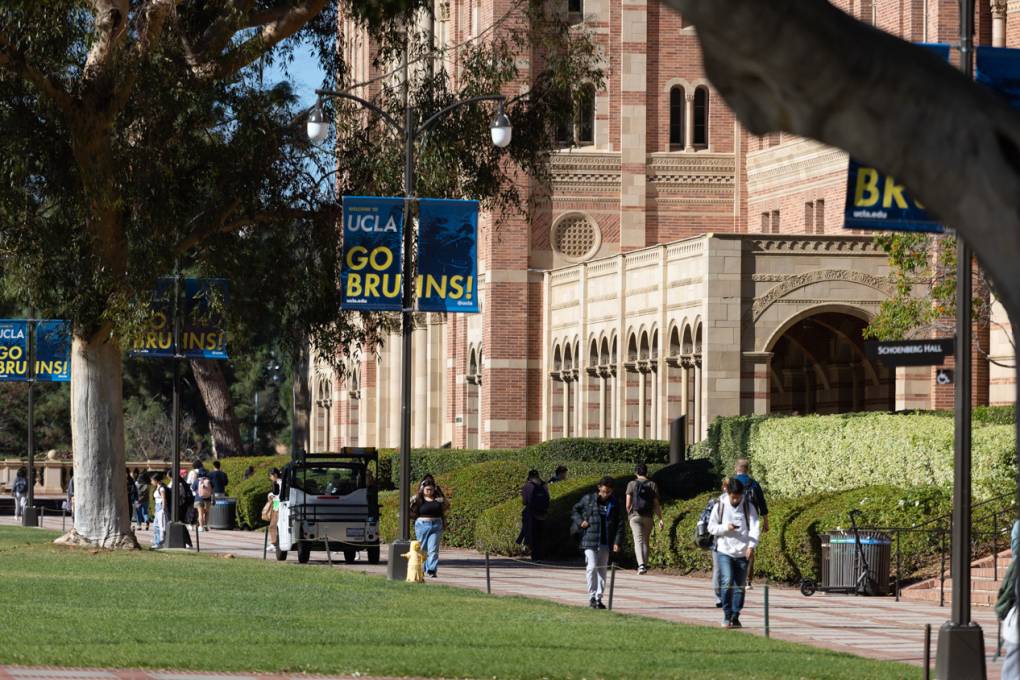
"caption": "UCLA campus in Westwood on Nov. 18, 2023. ",
"description": null,
"title": "UCLA campus in westwood on Nov. 18, 2023. Credit: Julie Leopo",
"credit": "Julie Leopo/EdSource",
"status": "inherit",
"altTag": "A view of a campus with people walking around.",
"isLoading": false,
"fetchFailed": false
},
"news_11979076": {
"type": "attachments",
"id": "news_11979076",
"meta": {
"index": "attachments_1716263798",
"site": "news",
"id": "11979076",
"found": true
},
"parent": 11979072,
"imgSizes": {
"twentyfourteen-full-width": {
"file": "https://cdn.kqed.org/wp-content/uploads/sites/10/2024/03/AP24071688455086-1038x576.jpg",
"width": 1038,
"mimeType": "image/jpeg",
"height": 576
},
"thumbnail": {
"file": "https://cdn.kqed.org/wp-content/uploads/sites/10/2024/03/AP24071688455086-160x107.jpg",
"width": 160,
"mimeType": "image/jpeg",
"height": 107
},
"post-thumbnail": {
"file": "https://cdn.kqed.org/wp-content/uploads/sites/10/2024/03/AP24071688455086-672x372.jpg",
"width": 672,
"mimeType": "image/jpeg",
"height": 372
},
"kqedFullSize": {
"file": "https://cdn.kqed.org/wp-content/uploads/sites/10/2024/03/AP24071688455086-scaled.jpg",
"width": 2560,
"height": 1707
},
"2048x2048": {
"file": "https://cdn.kqed.org/wp-content/uploads/sites/10/2024/03/AP24071688455086-2048x1365.jpg",
"width": 2048,
"mimeType": "image/jpeg",
"height": 1365
},
"large": {
"file": "https://cdn.kqed.org/wp-content/uploads/sites/10/2024/03/AP24071688455086-1020x680.jpg",
"width": 1020,
"mimeType": "image/jpeg",
"height": 680
},
"1536x1536": {
"file": "https://cdn.kqed.org/wp-content/uploads/sites/10/2024/03/AP24071688455086-1536x1024.jpg",
"width": 1536,
"mimeType": "image/jpeg",
"height": 1024
},
"full-width": {
"file": "https://cdn.kqed.org/wp-content/uploads/sites/10/2024/03/AP24071688455086-1920x1280.jpg",
"width": 1920,
"mimeType": "image/jpeg",
"height": 1280
},
"medium": {
"file": "https://cdn.kqed.org/wp-content/uploads/sites/10/2024/03/AP24071688455086-800x533.jpg",
"width": 800,
"mimeType": "image/jpeg",
"height": 533
}
},
"publishDate": 1710264096,
"modified": 1710269575,
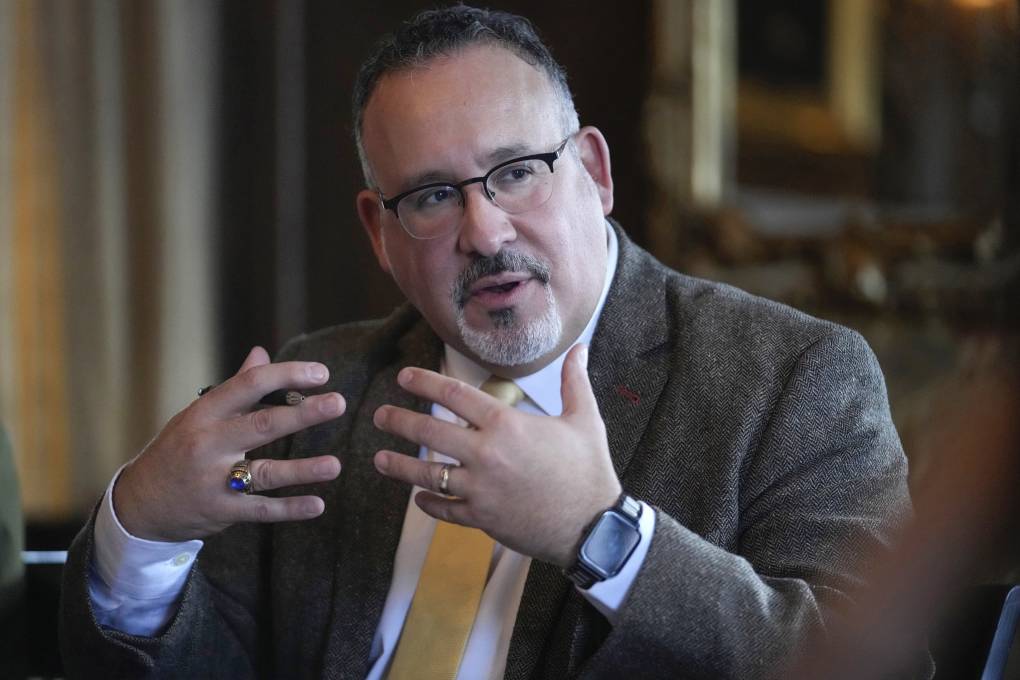
"caption": "Education Secretary Miguel Cardona participates in a roundtable discussion with students from Dartmouth College on Jan. 10, 2024. After months of delays and technical hiccups, some colleges and universities have started to receive federal data they need to put together financial aid offers for incoming students. ",
"description": null,
"title": "Miguel Cardona",
"credit": "Steven Senne/The Associated Press",
"status": "inherit",
"altTag": "A white man wearing glasses and a business suit has his hands raised by his chest.",
"isLoading": false,
"fetchFailed": false
},
"news_11978968": {
"type": "attachments",
"id": "news_11978968",
"meta": {
"index": "attachments_1716263798",
"site": "news",
"id": "11978968",
"found": true
},
"parent": 0,
"imgSizes": {
"twentyfourteen-full-width": {
"file": "https://cdn.kqed.org/wp-content/uploads/sites/10/2024/03/240311-JEWISHPROTEST-JY-31-KQED-1038x576.jpg",
"width": 1038,
"mimeType": "image/jpeg",
"height": 576
},
"thumbnail": {
"file": "https://cdn.kqed.org/wp-content/uploads/sites/10/2024/03/240311-JEWISHPROTEST-JY-31-KQED-160x107.jpg",
"width": 160,
"mimeType": "image/jpeg",
"height": 107
},
"post-thumbnail": {
"file": "https://cdn.kqed.org/wp-content/uploads/sites/10/2024/03/240311-JEWISHPROTEST-JY-31-KQED-672x372.jpg",
"width": 672,
"mimeType": "image/jpeg",
"height": 372
},
"kqedFullSize": {
"file": "https://cdn.kqed.org/wp-content/uploads/sites/10/2024/03/240311-JEWISHPROTEST-JY-31-KQED.jpg",
"width": 2000,
"height": 1333
},
"large": {
"file": "https://cdn.kqed.org/wp-content/uploads/sites/10/2024/03/240311-JEWISHPROTEST-JY-31-KQED-1020x680.jpg",
"width": 1020,
"mimeType": "image/jpeg",
"height": 680
},
"1536x1536": {
"file": "https://cdn.kqed.org/wp-content/uploads/sites/10/2024/03/240311-JEWISHPROTEST-JY-31-KQED-1536x1024.jpg",
"width": 1536,
"mimeType": "image/jpeg",
"height": 1024
},
"full-width": {
"file": "https://cdn.kqed.org/wp-content/uploads/sites/10/2024/03/240311-JEWISHPROTEST-JY-31-KQED-1920x1280.jpg",
"width": 1920,
"mimeType": "image/jpeg",
"height": 1280
},
"medium": {
"file": "https://cdn.kqed.org/wp-content/uploads/sites/10/2024/03/240311-JEWISHPROTEST-JY-31-KQED-800x533.jpg",
"width": 800,
"mimeType": "image/jpeg",
"height": 533
}
},
"publishDate": 1710194572,
"modified": 1710204689,
"caption": "UC Berkeley staff member Karen Shuker, center, rallies with other Jewish staff, students, faculty and community members in front of California Hall on March 11, 2024.",
"description": null,
"title": "240311-JEWISHPROTEST-JY-31-KQED",
"credit": "Juliana Yamada/KQED",
"status": "inherit",
"altTag": "A large group of people stands together, holding signs.",
"isLoading": false,
"fetchFailed": false
},
"news_11978872": {
"type": "attachments",
"id": "news_11978872",
"meta": {
"index": "attachments_1716263798",
"site": "news",
"id": "11978872",
"found": true
},
"parent": 11978863,
"imgSizes": {
"twentyfourteen-full-width": {
"file": "https://cdn.kqed.org/wp-content/uploads/sites/10/2024/03/022824_Self-Governed-City_FG_10-1038x576.jpg",
"width": 1038,
"mimeType": "image/jpeg",
"height": 576
},
"thumbnail": {
"file": "https://cdn.kqed.org/wp-content/uploads/sites/10/2024/03/022824_Self-Governed-City_FG_10-160x107.jpg",
"width": 160,
"mimeType": "image/jpeg",
"height": 107
},
"post-thumbnail": {
"file": "https://cdn.kqed.org/wp-content/uploads/sites/10/2024/03/022824_Self-Governed-City_FG_10-672x372.jpg",
"width": 672,
"mimeType": "image/jpeg",
"height": 372
},
"kqedFullSize": {
"file": "https://cdn.kqed.org/wp-content/uploads/sites/10/2024/03/022824_Self-Governed-City_FG_10.jpg",
"width": 2000,
"height": 1333
},
"large": {
"file": "https://cdn.kqed.org/wp-content/uploads/sites/10/2024/03/022824_Self-Governed-City_FG_10-1020x680.jpg",
"width": 1020,
"mimeType": "image/jpeg",
"height": 680
},
"1536x1536": {
"file": "https://cdn.kqed.org/wp-content/uploads/sites/10/2024/03/022824_Self-Governed-City_FG_10-1536x1024.jpg",
"width": 1536,
"mimeType": "image/jpeg",
"height": 1024
},
"full-width": {
"file": "https://cdn.kqed.org/wp-content/uploads/sites/10/2024/03/022824_Self-Governed-City_FG_10-1920x1280.jpg",
"width": 1920,
"mimeType": "image/jpeg",
"height": 1280
},
"medium": {
"file": "https://cdn.kqed.org/wp-content/uploads/sites/10/2024/03/022824_Self-Governed-City_FG_10-800x533.jpg",
"width": 800,
"mimeType": "image/jpeg",
"height": 533
}
},
"publishDate": 1710178308,
"modified": 1710179570,
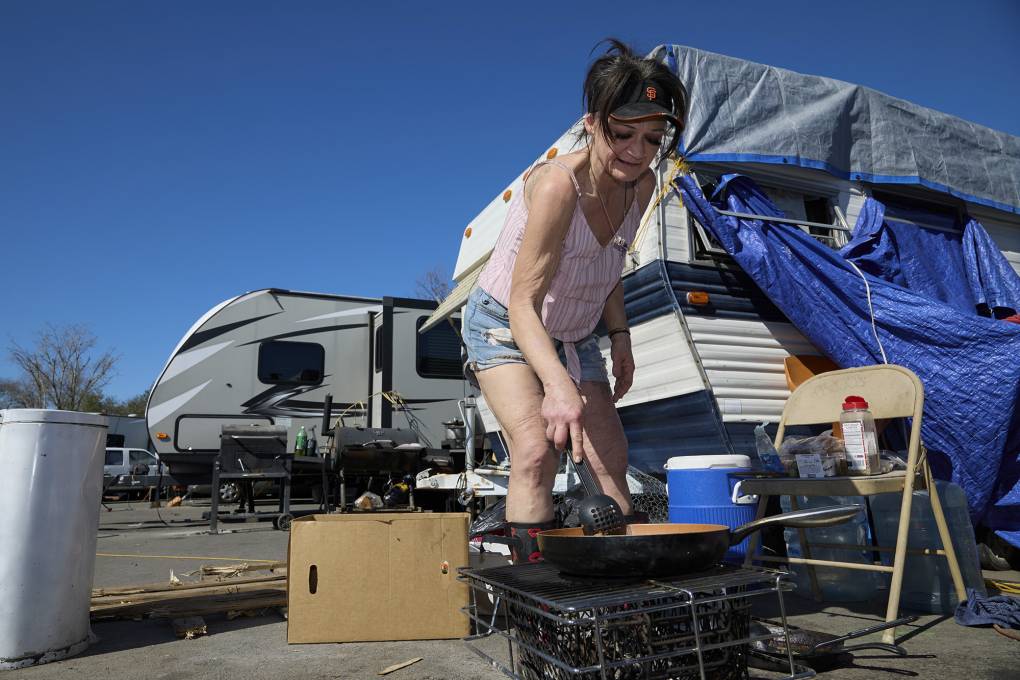
"caption": "Jeanne Gillis cooks ground turkey over a wood fire next to her trailer at Camp Resolution, a “self governed” homeless camp on city-owned land in Sacramento, Feb. 28, 2024. Residents have to rely on bottled water, generators and wood fires because no utilities are provided at the camp.",
"description": null,
"title": "022824_Self-Governed-City_FG_10",
"credit": "Fred Greaves/CalMatters",
"status": "inherit",
"altTag": "A woman wearing a visor, light sleeveless top and jean shorts holds a utensil to cook food on a grill outside.",
"isLoading": false,
"fetchFailed": false
}
},
"audioPlayerReducer": {
"postId": "stream_live",
"isPaused": true,
"isPlaying": false,
"pfsActive": false,
"pledgeModalIsOpen": true,
"playerDrawerIsOpen": false,
"liveAudioPlayStartedAt": 0,
"liveAudioPlayContext": ""
},
"authorsReducer": {
"byline_news_11981688": {
"type": "authors",
"id": "byline_news_11981688",
"meta": {
"override": true
},
"slug": "byline_news_11981688",
"name": "\u003ca href=\"https://kffhealthnews.org/news/author/jackie-fortier-kpcc/\">Jackie Fortiér\u003c/a>, LAist and \u003ca href=\"https://kffhealthnews.org/news/author/adolfo-guzman-lopez-laist/\">Adolfo Guzman-Lopez\u003c/a>, LAist",
"isLoading": false
},
"byline_news_11981607": {
"type": "authors",
"id": "byline_news_11981607",
"meta": {
"override": true
},
"slug": "byline_news_11981607",
"name": "Ashley A. Smith",
"isLoading": false
},
"byline_news_11979829": {
"type": "authors",
"id": "byline_news_11979829",
"meta": {
"override": true
},
"slug": "byline_news_11979829",
"name": "Carolyn Jones",
"isLoading": false
},
"byline_news_11979736": {
"type": "authors",
"id": "byline_news_11979736",
"meta": {
"override": true
},
"slug": "byline_news_11979736",
"name": "Corey Williams, Giovanna Dell'Orto, Marian Fam, Darren Sands\u003cbr>Associated Press",
"isLoading": false
},
"byline_news_11979412": {
"type": "authors",
"id": "byline_news_11979412",
"meta": {
"override": true
},
"slug": "byline_news_11979412",
"name": "Michael Burke",
"isLoading": false
},
"byline_news_11979072": {
"type": "authors",
"id": "byline_news_11979072",
"meta": {
"override": true
},
"slug": "byline_news_11979072",
"name": "Annie Ma and Collin Binkley\u003cbr>Associated Press\u003c/br>",
"isLoading": false
},
"byline_news_11978863": {
"type": "authors",
"id": "byline_news_11978863",
"meta": {
"override": true
},
"slug": "byline_news_11978863",
"name": "Marisa Kendall",
"isLoading": false
},
"katrinaschwartz": {
"type": "authors",
"id": "234",
"meta": {
"index": "authors_1716337520",
"id": "234",
"found": true
},
"name": "Katrina Schwartz",
"firstName": "Katrina",
"lastName": "Schwartz",
"slug": "katrinaschwartz",
"email": "kschwartz@kqed.org",
"display_author_email": false,
"staff_mastheads": [
"news"
],
"title": "Producer",
"bio": "Katrina Schwartz is a journalist based in San Francisco. She's worked at KPCC public radio in LA and has reported on air and online for KQED since 2010. She covered how teaching and learning is changing for MindShift between 2012 and 2020. She is the co-host of the MindShift podcast and now produces KQED's Bay Curious podcast.",
"avatar": "https://secure.gravatar.com/avatar/edb4ee79070447a018538c9aae6eeecf28786515b8a0c30e43b6b7dce5aa44c8?s=600&d=blank&r=g",
"twitter": "kschwart",
"bluesky": null,
"facebook": null,
"instagram": null,
"linkedin": null,
"sites": [
{
"site": "",
"roles": [
"editor"
]
},
{
"site": "news",
"roles": [
"editor"
]
},
{
"site": "mindshift",
"roles": [
"administrator"
]
},
{
"site": "stateofhealth",
"roles": [
"author"
]
},
{
"site": "science",
"roles": [
"editor"
]
}
],
"headData": {
"title": "Katrina Schwartz | KQED",
"description": "Producer",
"ogImgSrc": "https://secure.gravatar.com/avatar/edb4ee79070447a018538c9aae6eeecf28786515b8a0c30e43b6b7dce5aa44c8?s=600&d=blank&r=g",
"twImgSrc": "https://secure.gravatar.com/avatar/edb4ee79070447a018538c9aae6eeecf28786515b8a0c30e43b6b7dce5aa44c8?s=600&d=blank&r=g"
},
"isLoading": false,
"link": "/author/katrinaschwartz"
},
"kqed": {
"type": "authors",
"id": "236",
"meta": {
"index": "authors_1716337520",
"id": "236",
"found": true
},
"name": "KQED News Staff",
"firstName": "KQED News Staff",
"lastName": null,
"slug": "kqed",
"email": "faq@kqed.org",
"display_author_email": false,
"staff_mastheads": [],
"title": null,
"bio": null,
"avatar": "https://secure.gravatar.com/avatar/ef0e801a68c4c54afa9180db14084167?s=600&d=blank&r=g",
"twitter": null,
"facebook": null,
"instagram": null,
"linkedin": null,
"sites": [
{
"site": "arts",
"roles": [
"contributor"
]
},
{
"site": "news",
"roles": [
"editor"
]
},
{
"site": "futureofyou",
"roles": [
"author"
]
}
],
"headData": {
"title": "KQED News Staff | KQED",
"description": null,
"ogImgSrc": "https://secure.gravatar.com/avatar/ef0e801a68c4c54afa9180db14084167?s=600&d=blank&r=g",
"twImgSrc": "https://secure.gravatar.com/avatar/ef0e801a68c4c54afa9180db14084167?s=600&d=blank&r=g"
},
"isLoading": false,
"link": "/author/kqed"
},
"kdomara": {
"type": "authors",
"id": "1459",
"meta": {
"index": "authors_1716337520",
"id": "1459",
"found": true
},
"name": "Kelly O'Mara",
"firstName": "Kelly",
"lastName": "O'Mara",
"slug": "kdomara",
"email": "komara@kqed.org",
"display_author_email": false,
"staff_mastheads": [
"news"
],
"title": "KQED Contributor",
"bio": "Kelly O'Mara is a writer and reporter in the San Francisco Bay Area. She writes about food, health, sports, travel, business and California news. Her work has appeared on KQED, online for Outside Magazine, epsnW, VICE and in Competitor Magazine, among others. Follow Kelly on Twitter \u003ca href=\"https://twitter.com/kellydomara\">@kellydomara\u003c/a>.",
"avatar": "https://secure.gravatar.com/avatar/768fec7412028b72f13bdd0f5f9d8186?s=600&d=blank&r=g",
"twitter": null,
"facebook": null,
"instagram": null,
"linkedin": null,
"sites": [
{
"site": "arts",
"roles": []
},
{
"site": "news",
"roles": []
},
{
"site": "bayareabites",
"roles": []
},
{
"site": "stateofhealth",
"roles": []
},
{
"site": "science",
"roles": []
},
{
"site": "checkplease",
"roles": [
"editor"
]
},
{
"site": "food",
"roles": []
},
{
"site": "forum",
"roles": [
"editor"
]
},
{
"site": "liveblog",
"roles": [
"editor"
]
}
],
"headData": {
"title": "Kelly O'Mara | KQED",
"description": "KQED Contributor",
"ogImgSrc": "https://secure.gravatar.com/avatar/768fec7412028b72f13bdd0f5f9d8186?s=600&d=blank&r=g",
"twImgSrc": "https://secure.gravatar.com/avatar/768fec7412028b72f13bdd0f5f9d8186?s=600&d=blank&r=g"
},
"isLoading": false,
"link": "/author/kdomara"
},
"daisynguyen": {
"type": "authors",
"id": "11829",
"meta": {
"index": "authors_1716337520",
"id": "11829",
"found": true
},
"name": "Daisy Nguyen",
"firstName": "Daisy",
"lastName": "Nguyen",
"slug": "daisynguyen",
"email": "daisynguyen@kqed.org",
"display_author_email": true,
"staff_mastheads": [
"news"
],
"title": "KQED Contributor",
"bio": "I have covered early childhood education and child care for KQED since 2022. I focus on policies aimed at increasing access to early care and education and how they shape individual lives. I've been a journalist for more than two decades, with most of that time devoted to covering breaking news throughout California for The Associated Press. I grew up in San Francisco and studied at UC Davis and Columbia University's Graduate School of Journalism. I live in Oakland with my husband and two kids.",
"avatar": "https://secure.gravatar.com/avatar/2da2127c27f7143b53ebd419800fd55f?s=600&d=blank&r=g",
"twitter": null,
"facebook": null,
"instagram": null,
"linkedin": "https://www.linkedin.com/in/daisynguyen/",
"sites": [
{
"site": "news",
"roles": [
"author"
]
},
{
"site": "liveblog",
"roles": [
"author"
]
}
],
"headData": {
"title": "Daisy Nguyen | KQED",
"description": "KQED Contributor",
"ogImgSrc": "https://secure.gravatar.com/avatar/2da2127c27f7143b53ebd419800fd55f?s=600&d=blank&r=g",
"twImgSrc": "https://secure.gravatar.com/avatar/2da2127c27f7143b53ebd419800fd55f?s=600&d=blank&r=g"
},
"isLoading": false,
"link": "/author/daisynguyen"
},
"sjohnson": {
"type": "authors",
"id": "11840",
"meta": {
"index": "authors_1716337520",
"id": "11840",
"found": true
},
"name": "Sydney Johnson",
"firstName": "Sydney",
"lastName": "Johnson",
"slug": "sjohnson",
"email": "sjohnson@kqed.org",
"display_author_email": false,
"staff_mastheads": [
"news"
],
"title": "KQED Reporter",
"bio": "Sydney Johnson is a general assignment reporter at KQED. She previously reported on public health and city government at the San Francisco Examiner, and before that, she covered statewide education policy for EdSource. Her reporting has won multiple local, state and national awards. Sydney is a graduate of the University of California, Berkeley and lives in San Francisco.",
"avatar": "https://secure.gravatar.com/avatar/97855f2719b72ad6190b7c535fe642c8?s=600&d=blank&r=g",
"twitter": "sydneyfjohnson",
"facebook": null,
"instagram": null,
"linkedin": null,
"sites": [
{
"site": "news",
"roles": [
"editor"
]
}
],
"headData": {
"title": "Sydney Johnson | KQED",
"description": "KQED Reporter",
"ogImgSrc": "https://secure.gravatar.com/avatar/97855f2719b72ad6190b7c535fe642c8?s=600&d=blank&r=g",
"twImgSrc": "https://secure.gravatar.com/avatar/97855f2719b72ad6190b7c535fe642c8?s=600&d=blank&r=g"
},
"isLoading": false,
"link": "/author/sjohnson"
}
},
"pagesReducer": {
"news_category_education": {
"type": "terms",
"id": "news_18540",
"meta": {
"index": "terms_1716263798",
"site": "news",
"id": "18540",
"score": 10.973221
},
"featImg": null,
"name": "Education",
"description": null,
"taxonomy": "category",
"headData": {
"twImgId": null,
"twTitle": null,
"ogTitle": null,
"ogImgId": null,
"twDescription": null,
"description": null,
"title": "Education Archives | KQED News",
"ogDescription": null
},
"ttid": 2595,
"slug": "education",
"isLoading": false,
"title": "Education",
"pageMeta": {
"site": "news",
"WpPageTemplate": "page-topic-editorial",
"currentPage": 53
},
"blocks": [
{
"blockName": "kqed/post-list",
"attrs": {
"layout": "cardArticle2",
"query": "posts/news?category=education",
"seeMore": false,
"paginated": true,
"page": 53
}
},
{
"blockName": "kqed/ad"
}
]
}
},
"pfsSessionReducer": {},
"postsReducer": {
"stream_live": {
"type": "live",
"id": "stream_live",
"audioUrl": "https://streams.kqed.org/kqedradio",
"title": "Live Stream",
"excerpt": "Live Stream information currently unavailable.",
"link": "/radio",
"featImg": "",
"label": {
"name": "KQED Live",
"link": "/"
}
},
"stream_kqedNewscast": {
"type": "posts",
"id": "stream_kqedNewscast",
"audioUrl": "https://www.kqed.org/.stream/anon/radio/RDnews/newscast.mp3?_=1",
"title": "KQED Newscast",
"featImg": "",
"label": {
"name": "88.5 FM",
"link": "/"
}
},
"news_11981688": {
"type": "posts",
"id": "news_11981688",
"meta": {
"index": "posts_1716263798",
"site": "news",
"id": "11981688",
"score": null,
"sort": [
1712171349000
]
},
"parent": 0,
"labelTerm": {},
"blocks": [],
"publishDate": 1712171349,
"format": "standard",
"title": "California Universities Are Required to Offer Abortion Pills. Many Just Don't Mention It",
"headTitle": "California Universities Are Required to Offer Abortion Pills. Many Just Don’t Mention It | KQED",
"content": "\u003cp>When Deanna Gomez found out she was pregnant in September 2023, she felt the timing couldn’t have been worse.\u003c/p>\n\u003cp>The college senior at California State University-San Bernardino worked 60 hours a week at two jobs. She used birth control. Motherhood was not in the plan. Not yet. “I grew up poor. And I don’t want that for my children, like, ever,” she said.\u003c/p>\n\u003cp>She wanted a medication abortion. It’s a two-step process: one drug taken at a doctor’s office, and another a day later to induce cramping and bleeding and empty the uterus. Gomez didn’t bother going to the university health clinic, thinking it was only for basic health needs.\u003c/p>\n\u003cp>She ended up driving more than 300 miles and paying hundreds of dollars in medical and travel expenses to obtain a medication abortion. She missed a month of classes, which put her graduation date in jeopardy. She had no idea she was entitled to a free medication abortion right on campus.\u003c/p>\n\u003cfigure id=\"attachment_11981691\" class=\"wp-caption alignnone\" style=\"max-width: 2048px\">\u003cimg loading=\"lazy\" decoding=\"async\" class=\"size-full wp-image-11981691\" src=\"https://cdn.kqed.org/wp-content/uploads/sites/10/2024/04/CSU-04-copy.jpg\" alt=\"A young woman seen walking along a path surrounded by lawns on a campus.\" width=\"2048\" height=\"1365\">\u003cfigcaption class=\"wp-caption-text\">Deanna Gomez became pregnant during her senior year at California State University-San Bernardino and had no idea she was entitled to a free medication abortion on campus.\u003c/figcaption>\u003c/figure>\n\u003cp>An LAist investigation has found that one year after California became the first state to require its public universities to provide abortion pills to students, basic information on where or how students can obtain the medication is lacking and, often, nonexistent.\u003c/p>\n\u003cp>“I was really upset when I found out,” Gomez told LAist. “I had to really push myself to make that money happen.”\u003c/p>\n\u003cp>LAist initially found that 11 of 23 CSU campus clinics did not have any information about medication abortion on their clinic websites, nor did they list it as a service offered. Of the University of California’s 10 campuses, eight mentioned medication abortion on their clinic websites. (Five CSU campuses and one UC campus added information after \u003ca href=\"https://laist.com/news/education/abortion-pill-california-universities-students-unaware-sb-24\">LAist published a version of this article\u003c/a>.)\u003c/p>\n\u003cp>Through conversations with students and faculty at multiple campuses, LAist found there was little information for students to obtain the pills.\u003c/p>\n\u003cp>[pullquote align=\"right\" size=\"medium\" citation=\"Deanna Gomez, student, CSU-San Bernardino\"]‘You want to market the football games, you want to market the volleyball games. Why is that important, and abortions are not?’[/pullquote]“If I had known that, I would have taken advantage of it,” Gomez said. “I spent a lot of time driving around after work, switching schedules, putting my homework on the back burner.”\u003c/p>\n\u003cp>California legislators in 2019 passed the law that requires all the state’s 33 public university campuses to provide abortion pills. It took effect in January 2023.\u003c/p>\n\u003cp>“We wanted to make sure that students, female students, had access to this right,” said Connie Leyva, the former Pomona-area state senator who authored the bill.\u003c/p>\n\u003cp>The legislature created a $10.3 million fund of privately raised money to help universities implement the new law. Each campus received $200,000 in one-time funding to pay for the medication and cover costs such as facility upgrades, equipment, training, telehealth services, and security upgrades.\u003c/p>\n\u003cp>The funding did not include any requirement that campus clinics inform students the medication was available to them.\u003c/p>\n\u003cp>Leyva said she doesn’t recall any conversations about “including something on advertising that you could get a medicated abortion on campus.” She said she’s disappointed in the law’s implementation, but not surprised.\u003c/p>\n\u003cp>[ad fullwidth]\u003c/p>\n\u003cp>“Everything starts at the top. And if the president or chancellor of the university knows they have to offer it, but if they don’t agree that women should have access to abortion services, then they might just think, ‘We’ll leave it off, we don’t have to worry about it,’” Leyva said.\u003c/p>\n\u003cp>Spokesperson Ryan King said UC President Michael Drake was not available to comment.\u003c/p>\n\u003cp>“The student communities at each UC campus are unique,” Heather Harper, a spokesperson for UC Health in Drake’s office, wrote in an email. “As a result, communication to students at each location takes different forms and may include website content, flyers, emails, person-to-person conversations or other methods.”\u003c/p>\n\u003cp>The office of CSU Chancellor Mildred García did not reply to a request for comment.\u003c/p>\n\u003cfigure id=\"attachment_11981692\" class=\"wp-caption alignnone\" style=\"max-width: 2048px\">\u003cimg loading=\"lazy\" decoding=\"async\" class=\"size-full wp-image-11981692\" src=\"https://cdn.kqed.org/wp-content/uploads/sites/10/2024/04/CSU-02-copy.jpg\" alt=\"A view of a pharmacy with nobody behind the counter.\" width=\"2048\" height=\"1365\">\u003cfigcaption class=\"wp-caption-text\">California State University-San Bernardino’s Student Health Center. California legislators in 2019 passed the law that requires all the state’s 33 public university campuses to provide abortion pills. It took effect in January 2023, but LAist found that basic information for students to obtain the medication is often nonexistent.\u003c/figcaption>\u003c/figure>\n\u003cp>At Gomez’s San Bernardino campus, abortion as an option was mentioned only in one place: in small letters on a poster inside exam rooms at the health center.\u003c/p>\n\u003cp>A student wouldn’t see that until they were already waiting for a doctor or nurse.\u003c/p>\n\u003cp>[aside label=\"Related Stories\" postID=\"news_11980822,news_11981607,news_11976304\"]“We need to work harder if there is a student who needed the service and wasn’t aware that they could access it through us and not have to pay for it,” said Beth Jaworski, executive director of health, counseling, and wellness at CSU-San Bernardino. “But it’s one student. We haven’t been providing the service very long. It’s been just about a year now.”\u003c/p>\n\u003cp>Medication abortion has since been added to the list of services on the clinic’s website.\u003c/p>\n\u003cp>Ray Murillo, California State University’s interim assistant vice chancellor of student affairs, said he and other administrative staffers are developing guidance so campuses share the same information “to help in our training efforts for the frontline staff and providers when they’re being asked questions about the service and what we provide.”\u003c/p>\n\u003cp>Gomez wants more done, including flyers, emails, and social media posts directed at both faculty and students.\u003c/p>\n\u003cp>“You want to market the football games, you want to market the volleyball games. Why is that important, and abortions are not?” she said.\u003c/p>\n\u003cp>Gomez did graduate in December 2023, becoming the first person in her family to earn a bachelor’s degree. But she’s angry at her alma mater for keeping the abortion pills a secret.\u003c/p>\n\u003cp>\u003cem>This article is from a partnership that includes \u003ca href=\"https://laist.com/\">LAist\u003c/a>, \u003ca href=\"https://www.npr.org/\">NPR\u003c/a> and \u003ca href=\"https://kffhealthnews.org/\">KFF Health News\u003c/a>.\u003c/em>\u003c/p>\n\u003cp>[ad floatright]\u003c/p>\n",
"stats": {
"hasVideo": false,
"hasChartOrMap": false,
"hasAudio": false,
"hasPolis": false,
"wordCount": 1098,
"hasGoogleForm": false,
"hasGallery": false,
"hasHearkenModule": false,
"iframeSrcs": [],
"paragraphCount": 29
},
"modified": 1712171349,
"excerpt": "California is the first state to require public universities to provide abortion pills to students, but 1 year on, information on where or how students can obtain the medication is lacking or nonexistent.",
"headData": {
"twImgId": "",
"twTitle": "",
"ogTitle": "",
"ogImgId": "",
"twDescription": "",
"description": "When Deanna Gomez found out she was pregnant in September 2023, she felt the timing couldn’t have been worse. The college senior at California State University-San Bernardino worked 60 hours a week at two jobs. She used birth control. Motherhood was not in the plan. Not yet. “I grew up poor. And I don’t want that for my children, like, ever,” she said. She wanted a medication abortion. It’s a two-step process: one drug taken at a doctor’s office, and another a day later to induce cramping and bleeding and empty the uterus. Gomez didn’t bother going to the university",
"title": "California Universities Are Required to Offer Abortion Pills. Many Just Don't Mention It | KQED",
"ogDescription": "",
"schema": {
"@context": "https://schema.org",
"@type": "NewsArticle",
"headline": "California Universities Are Required to Offer Abortion Pills. Many Just Don't Mention It",
"datePublished": "2024-04-03T12:09:09-07:00",
"dateModified": "2024-04-03T12:09:09-07:00",
"image": "https://cdn.kqed.org/wp-content/uploads/2020/02/KQED-OG-Image@1x.png",
"isAccessibleForFree": "True",
"publisher": {
"@type": "NewsMediaOrganization",
"@id": "https://www.kqed.org/#organization",
"name": "KQED",
"logo": "https://cdn.kqed.org/wp-content/uploads/2020/02/KQED-OG-Image@1x.png",
"url": "https://www.kqed.org",
"sameAs": [
"https://www.facebook.com/KQED",
"https://twitter.com/KQED",
"https://www.instagram.com/kqed/",
"https://www.tiktok.com/@kqedofficial",
"https://www.linkedin.com/company/kqed",
"https://www.youtube.com/channel/UCeC0IOo7i1P_61zVUWbJ4nw"
]
}
}
},
"guestAuthors": [],
"slug": "california-universities-are-required-to-offer-abortion-pills-many-just-dont-mention-it",
"status": "publish",
"sourceUrl": "https://kffhealthnews.org/",
"templateType": "standard",
"nprByline": "\u003ca href=\"https://kffhealthnews.org/news/author/jackie-fortier-kpcc/\">Jackie Fortiér\u003c/a>, LAist and \u003ca href=\"https://kffhealthnews.org/news/author/adolfo-guzman-lopez-laist/\">Adolfo Guzman-Lopez\u003c/a>, LAist",
"excludeFromSiteSearch": "Include",
"featuredImageType": "standard",
"sticky": false,
"source": "KFF Health News",
"showOnAuthorArchivePages": "No",
"articleAge": "0",
"nprStoryId": "kqed-11976070",
"path": "/news/11981688/california-universities-are-required-to-offer-abortion-pills-many-just-dont-mention-it",
"audioTrackLength": null,
"parsedContent": [
{
"type": "contentString",
"content": "\u003cdiv class=\"post-body\">\u003cp>\u003cp>When Deanna Gomez found out she was pregnant in September 2023, she felt the timing couldn’t have been worse.\u003c/p>\n\u003cp>The college senior at California State University-San Bernardino worked 60 hours a week at two jobs. She used birth control. Motherhood was not in the plan. Not yet. “I grew up poor. And I don’t want that for my children, like, ever,” she said.\u003c/p>\n\u003cp>She wanted a medication abortion. It’s a two-step process: one drug taken at a doctor’s office, and another a day later to induce cramping and bleeding and empty the uterus. Gomez didn’t bother going to the university health clinic, thinking it was only for basic health needs.\u003c/p>\n\u003cp>She ended up driving more than 300 miles and paying hundreds of dollars in medical and travel expenses to obtain a medication abortion. She missed a month of classes, which put her graduation date in jeopardy. She had no idea she was entitled to a free medication abortion right on campus.\u003c/p>\n\u003cfigure id=\"attachment_11981691\" class=\"wp-caption alignnone\" style=\"max-width: 2048px\">\u003cimg loading=\"lazy\" decoding=\"async\" class=\"size-full wp-image-11981691\" src=\"https://cdn.kqed.org/wp-content/uploads/sites/10/2024/04/CSU-04-copy.jpg\" alt=\"A young woman seen walking along a path surrounded by lawns on a campus.\" width=\"2048\" height=\"1365\">\u003cfigcaption class=\"wp-caption-text\">Deanna Gomez became pregnant during her senior year at California State University-San Bernardino and had no idea she was entitled to a free medication abortion on campus.\u003c/figcaption>\u003c/figure>\n\u003cp>An LAist investigation has found that one year after California became the first state to require its public universities to provide abortion pills to students, basic information on where or how students can obtain the medication is lacking and, often, nonexistent.\u003c/p>\n\u003cp>“I was really upset when I found out,” Gomez told LAist. “I had to really push myself to make that money happen.”\u003c/p>\n\u003cp>LAist initially found that 11 of 23 CSU campus clinics did not have any information about medication abortion on their clinic websites, nor did they list it as a service offered. Of the University of California’s 10 campuses, eight mentioned medication abortion on their clinic websites. (Five CSU campuses and one UC campus added information after \u003ca href=\"https://laist.com/news/education/abortion-pill-california-universities-students-unaware-sb-24\">LAist published a version of this article\u003c/a>.)\u003c/p>\n\u003cp>Through conversations with students and faculty at multiple campuses, LAist found there was little information for students to obtain the pills.\u003c/p>\n\u003cp>\u003c/p>\u003c/div>",
"attributes": {
"named": {},
"numeric": []
}
},
{
"type": "component",
"content": "‘You want to market the football games, you want to market the volleyball games. Why is that important, and abortions are not?’",
"name": "pullquote",
"attributes": {
"named": {
"align": "right",
"size": "medium",
"citation": "Deanna Gomez, student, CSU-San Bernardino",
"label": ""
},
"numeric": []
}
},
{
"type": "contentString",
"content": "\u003cdiv class=\"post-body\">\u003cp>“If I had known that, I would have taken advantage of it,” Gomez said. “I spent a lot of time driving around after work, switching schedules, putting my homework on the back burner.”\u003c/p>\n\u003cp>California legislators in 2019 passed the law that requires all the state’s 33 public university campuses to provide abortion pills. It took effect in January 2023.\u003c/p>\n\u003cp>“We wanted to make sure that students, female students, had access to this right,” said Connie Leyva, the former Pomona-area state senator who authored the bill.\u003c/p>\n\u003cp>The legislature created a $10.3 million fund of privately raised money to help universities implement the new law. Each campus received $200,000 in one-time funding to pay for the medication and cover costs such as facility upgrades, equipment, training, telehealth services, and security upgrades.\u003c/p>\n\u003cp>The funding did not include any requirement that campus clinics inform students the medication was available to them.\u003c/p>\n\u003cp>Leyva said she doesn’t recall any conversations about “including something on advertising that you could get a medicated abortion on campus.” She said she’s disappointed in the law’s implementation, but not surprised.\u003c/p>\n\u003cp>\u003c/p>\u003c/div>",
"attributes": {
"named": {},
"numeric": []
}
},
{
"type": "component",
"content": "",
"name": "ad",
"attributes": {
"named": {
"label": "fullwidth"
},
"numeric": [
"fullwidth"
]
}
},
{
"type": "contentString",
"content": "\u003cdiv class=\"post-body\">\u003cp>\u003c/p>\n\u003cp>“Everything starts at the top. And if the president or chancellor of the university knows they have to offer it, but if they don’t agree that women should have access to abortion services, then they might just think, ‘We’ll leave it off, we don’t have to worry about it,’” Leyva said.\u003c/p>\n\u003cp>Spokesperson Ryan King said UC President Michael Drake was not available to comment.\u003c/p>\n\u003cp>“The student communities at each UC campus are unique,” Heather Harper, a spokesperson for UC Health in Drake’s office, wrote in an email. “As a result, communication to students at each location takes different forms and may include website content, flyers, emails, person-to-person conversations or other methods.”\u003c/p>\n\u003cp>The office of CSU Chancellor Mildred García did not reply to a request for comment.\u003c/p>\n\u003cfigure id=\"attachment_11981692\" class=\"wp-caption alignnone\" style=\"max-width: 2048px\">\u003cimg loading=\"lazy\" decoding=\"async\" class=\"size-full wp-image-11981692\" src=\"https://cdn.kqed.org/wp-content/uploads/sites/10/2024/04/CSU-02-copy.jpg\" alt=\"A view of a pharmacy with nobody behind the counter.\" width=\"2048\" height=\"1365\">\u003cfigcaption class=\"wp-caption-text\">California State University-San Bernardino’s Student Health Center. California legislators in 2019 passed the law that requires all the state’s 33 public university campuses to provide abortion pills. It took effect in January 2023, but LAist found that basic information for students to obtain the medication is often nonexistent.\u003c/figcaption>\u003c/figure>\n\u003cp>At Gomez’s San Bernardino campus, abortion as an option was mentioned only in one place: in small letters on a poster inside exam rooms at the health center.\u003c/p>\n\u003cp>A student wouldn’t see that until they were already waiting for a doctor or nurse.\u003c/p>\n\u003cp>\u003c/p>\u003c/div>",
"attributes": {
"named": {},
"numeric": []
}
},
{
"type": "component",
"content": "",
"name": "aside",
"attributes": {
"named": {
"label": "Related Stories ",
"postid": "news_11980822,news_11981607,news_11976304"
},
"numeric": []
}
},
{
"type": "contentString",
"content": "\u003cdiv class=\"post-body\">\u003cp>“We need to work harder if there is a student who needed the service and wasn’t aware that they could access it through us and not have to pay for it,” said Beth Jaworski, executive director of health, counseling, and wellness at CSU-San Bernardino. “But it’s one student. We haven’t been providing the service very long. It’s been just about a year now.”\u003c/p>\n\u003cp>Medication abortion has since been added to the list of services on the clinic’s website.\u003c/p>\n\u003cp>Ray Murillo, California State University’s interim assistant vice chancellor of student affairs, said he and other administrative staffers are developing guidance so campuses share the same information “to help in our training efforts for the frontline staff and providers when they’re being asked questions about the service and what we provide.”\u003c/p>\n\u003cp>Gomez wants more done, including flyers, emails, and social media posts directed at both faculty and students.\u003c/p>\n\u003cp>“You want to market the football games, you want to market the volleyball games. Why is that important, and abortions are not?” she said.\u003c/p>\n\u003cp>Gomez did graduate in December 2023, becoming the first person in her family to earn a bachelor’s degree. But she’s angry at her alma mater for keeping the abortion pills a secret.\u003c/p>\n\u003cp>\u003cem>This article is from a partnership that includes \u003ca href=\"https://laist.com/\">LAist\u003c/a>, \u003ca href=\"https://www.npr.org/\">NPR\u003c/a> and \u003ca href=\"https://kffhealthnews.org/\">KFF Health News\u003c/a>.\u003c/em>\u003c/p>\n\u003cp>\u003c/p>\u003c/div>",
"attributes": {
"named": {},
"numeric": []
}
},
{
"type": "component",
"content": "",
"name": "ad",
"attributes": {
"named": {
"label": "floatright"
},
"numeric": [
"floatright"
]
}
},
{
"type": "contentString",
"content": "\u003cdiv class=\"post-body\">\u003cp>\u003c/p>\n\u003c/div>\u003c/p>",
"attributes": {
"named": {},
"numeric": []
}
}
],
"link": "/news/11981688/california-universities-are-required-to-offer-abortion-pills-many-just-dont-mention-it",
"authors": [
"byline_news_11981688"
],
"categories": [
"news_31795",
"news_18540",
"news_457",
"news_8"
],
"affiliates": [
"news_253"
],
"featImg": "news_11958413",
"label": "source_news_11981688"
},
"news_11981607": {
"type": "posts",
"id": "news_11981607",
"meta": {
"index": "posts_1716263798",
"site": "news",
"id": "11981607",
"score": null,
"sort": [
1712091625000
]
},
"parent": 0,
"labelTerm": {
"site": "news",
"term": 33681
},
"blocks": [],
"publishDate": 1712091625,
"format": "standard",
"title": "California Lawmakers Propose New Measures to Combat Sexual Harassment in Higher Education",
"headTitle": "California Lawmakers Propose New Measures to Combat Sexual Harassment in Higher Education | KQED",
"content": "\u003cp>California lawmakers introduced a series of bills on Monday to prevent and address sexual discrimination and harassment in the state’s colleges and universities.\u003c/p>\n\u003cp>The 12-bill package led by Assemblymember Mike Fong, who chairs the Assembly Higher Education Committee, follows a \u003ca href=\"https://edsource.org/2024/students-and-faculty-distrust-state-college-systems-handling-of-title-ix-cases/705360\" target=\"_blank\" rel=\"noreferrer noopener\" data-type=\"URL\" data-id=\"https://edsource.org/2024/students-and-faculty-distrust-state-college-systems-handling-of-title-ix-cases/705360\">report released in February\u003c/a> that detailed significant deficiencies in how the University of California, California State University and California Community Colleges handle Title IX. That federal law prohibits schools from sex-based discrimination.\u003c/p>\n\u003cp>“This package is a crucial step in creating a system of compliance and oversight that will increase transparency and accountability to address and prevent sex discrimination and harassment on college campuses,” said Fong (D-Monterey Park). “While there is still much work ahead, I am confident in the impact this legislative package will have for campus communities, especially students and staff. I look forward to continual collaboration between the Legislature and all California’s higher education institutions to address this issue of safety and equity on campus.”[aside postID=\"news_11955960\" label=\"Related Story\"]\u003c/p>\n\u003cp>The 12 bills include:\u003c/p>\n\u003cul>\n\u003cli>\u003ca class=\"external\" href=\"https://legiscan.com/CA/text/AB810/id/2766210\" target=\"_blank\" rel=\"noreferrer noopener\">AB 810\u003c/a>, from Assemblymember Laura Friedman (D-Burbank) would require all public colleges and universities to use UC Davis’ policy to conduct employment verification checks to determine if a job applicant for any athletic, academic or administrative position had any substantial misconduct allegations from their previous employer.\u003c/li>\n\u003c/ul>\n\u003cul>\n\u003cli>\u003ca class=\"external\" href=\"https://legiscan.com/CA/text/AB1790/id/2869964\" target=\"_blank\" rel=\"noreferrer noopener\" data-type=\"URL\" data-id=\"https://legiscan.com/CA/text/AB1790/id/2869964\">AB 1790\u003c/a>, from Assemblymember Damon Connolly (D-San Rafael) would require CSU to implement recommendations made in a Title IX report conducted last year by the California State Auditor by Jan. 1, 2026. That report found the 23-campus system lacked resources and failed to carry out its Title IX responsibilities.\u003c/li>\n\u003c/ul>\n\u003cul>\n\u003cli>\u003ca class=\"external\" href=\"https://legiscan.com/CA/text/AB1905/id/2900190\" target=\"_blank\" rel=\"noreferrer noopener\">AB 1905\u003c/a>, from Assemblymember Dawn Addis (D-San Luis Obispo) would create parameters around employee retreat rights, letters of recommendations and settlements for administrators who have a substantiated sexual harassment complaint against them.\u003c/li>\n\u003cli>\u003ca class=\"external\" href=\"https://legiscan.com/CA/text/AB2047/id/2912487\" target=\"_blank\" rel=\"noreferrer noopener\">AB 2047\u003c/a>, from Fong, would create an independent, statewide Title IX office to assist the community colleges, CSU and UC systems with Title IX monitoring and compliance, and create a statewide Title IX coordinator.\u003c/li>\n\u003cli>\u003ca class=\"external\" href=\"https://legiscan.com/CA/text/AB2048/id/2912488\" target=\"_blank\" rel=\"noreferrer noopener\">AB 2048\u003c/a>, from Fong, would require each community college district and each CSU and UC campus to have an independent Title IX office.\u003c/li>\n\u003cli>\u003ca class=\"external\" href=\"https://legiscan.com/CA/text/AB2326/id/2925395\" target=\"_blank\" rel=\"noreferrer noopener\">AB 2326\u003c/a>, from Assemblymember David Alvarez (D-Chula Vista) would create entities responsible for ensuring campus programs are free from discrimination and would require the community colleges, CSU and UC to annually present to the Legislature how their systems are actively preventing discrimination.\u003c/li>\n\u003cli>\u003ca class=\"external\" href=\"https://legiscan.com/CA/text/AB2407/id/2925478\" target=\"_blank\" rel=\"noreferrer noopener\">AB 2407\u003c/a>, from Assemblymember Gregg Hart (D-Santa Barbara) would require the California State Auditor to audit the community colleges, CSU and UC systems every three years on their ability to address and prevent sexual harassment on the campuses.\u003c/li>\n\u003cli>\u003ca class=\"external\" href=\"https://legiscan.com/CA/text/AB2492/id/2927222\" target=\"_blank\" rel=\"noreferrer noopener\">AB 2492\u003c/a>, from Assemblymember Jacqui Irwin (D-Thousand Oaks) would create additional positions on college campuses to assist students, faculty and staff during the adjudication of sexual harassment complaints.\u003c/li>\n\u003cli>\u003ca class=\"external\" href=\"https://legiscan.com/CA/text/AB2608/id/2928943\" target=\"_blank\" rel=\"noreferrer noopener\">AB 2608\u003c/a>, from Assemblymember Jesse Gabriel (D-Encino)would require campuses to offer drug-facilitated sexual assault prevention training.\u003c/li>\n\u003cli>\u003ca class=\"external\" href=\"https://legiscan.com/CA/text/AB2987/id/2932297\" target=\"_blank\" rel=\"noreferrer noopener\" data-type=\"URL\" data-id=\"https://legiscan.com/CA/text/AB2987/id/2932297\">AB 2987\u003c/a>, from Assemblymember Liz Ortega (D-Hayward) would mandate that the community colleges and CSU provide timely updates on the outcomes of sexual discrimination and harassment cases to the people involved. The bill would request the same of UC.\u003c/li>\n\u003cli>\u003ca class=\"external\" href=\"https://legiscan.com/CA/text/SB1166/id/2929096\" target=\"_blank\" rel=\"noreferrer noopener\" data-type=\"URL\" data-id=\"https://legiscan.com/CA/text/SB1166/id/2929096\">Senate Bill 1166\u003c/a>, from Sen. Bill Dodd, would establish annual reporting requirements for the community colleges and CSU to conduct a report on sexual harassment complaint outcomes and a summary of how each campus worked to prevent sex discrimination. The bill would request the same of UC.\u003c/li>\n\u003cli>\u003ca class=\"external\" href=\"https://legiscan.com/CA/text/SB1491/id/2932771\" target=\"_blank\" rel=\"noreferrer noopener\" data-type=\"URL\" data-id=\"https://legiscan.com/CA/text/SB1491/id/2932771\">SB 1491\u003c/a>, from Sen. Susan Talamantes Eggman (D-Hayward) would create a notification process for students who attend private institutions to disclose discriminatory events to the U.S. Department of Education, even if their college or university is exempt from Title IX.\u003c/li>\n\u003c/ul>\n\u003cp>The slate of bills follows a series of news nationally and statewide about\u003ca href=\"https://edsource.org/terms/title-ix\" target=\"_blank\" rel=\"noreferrer noopener\" data-type=\"URL\" data-id=\"https://edsource.org/terms/title-ix\"> mishandled Title IX cases\u003c/a>. Last year, the CSU system was found to have mishandled a variety of cases, based on reports from an independent law firm and the \u003ca href=\"https://edsource.org/2023/california-state-auditor-also-finds-cal-state-failed-to-address-some-sexual-harassment-on-campuses/694251\" target=\"_blank\" rel=\"noreferrer noopener\" data-type=\"URL\" data-id=\"https://edsource.org/2023/california-state-auditor-also-finds-cal-state-failed-to-address-some-sexual-harassment-on-campuses/694251\">state auditor\u003c/a>. CSU is currently implementing the changes and reforms called for in both reports, and it has already \u003ca href=\"https://edsource.org/2022/faculty-perk-at-center-of-issues-that-led-to-castro-resignation-in-use-on-other-csu-campuses/675356\" target=\"_blank\" rel=\"noreferrer noopener\" data-type=\"URL\" data-id=\"https://edsource.org/2022/faculty-perk-at-center-of-issues-that-led-to-castro-resignation-in-use-on-other-csu-campuses/675356\">changed its policy\u003c/a> allowing administrators who have committed misconduct to “retreat” to faculty positions.\u003c/p>\n\u003cp>[ad fullwidth]\u003c/p>\n\u003cp>\u003c/p>\n\u003cp>“Whether it’s sexual harassment, gender-based discrimination or any other form of misconduct, no student should feel unsafe or unwelcome in their learning environment,” said Lisa Baker, a representative from the student senate for California Community Colleges. “Unfortunately, harassment remains prevalent on college campuses, potentially affecting students’ mental health and academic performance. We students and future students, are relying on Title IX and this package of bills for our success.”\u003c/p>\n\n",
"stats": {
"hasVideo": false,
"hasChartOrMap": false,
"hasAudio": false,
"hasPolis": false,
"wordCount": 781,
"hasGoogleForm": false,
"hasGallery": false,
"hasHearkenModule": false,
"iframeSrcs": [],
"paragraphCount": 8
},
"modified": 1712091135,
"excerpt": "California lawmakers introduced a series of bills on Monday to prevent and address sexual discrimination and harassment in the state’s colleges and universities.",
"headData": {
"twImgId": "",
"twTitle": "",
"ogTitle": "",
"ogImgId": "",
"twDescription": "",
"description": "California lawmakers introduced a series of bills on Monday to prevent and address sexual discrimination and harassment in the state’s colleges and universities.",
"title": "California Lawmakers Propose New Measures to Combat Sexual Harassment in Higher Education | KQED",
"ogDescription": "",
"schema": {
"@context": "https://schema.org",
"@type": "NewsArticle",
"headline": "California Lawmakers Propose New Measures to Combat Sexual Harassment in Higher Education",
"datePublished": "2024-04-02T14:00:25-07:00",
"dateModified": "2024-04-02T13:52:15-07:00",
"image": "https://cdn.kqed.org/wp-content/uploads/2020/02/KQED-OG-Image@1x.png",
"isAccessibleForFree": "True",
"publisher": {
"@type": "NewsMediaOrganization",
"@id": "https://www.kqed.org/#organization",
"name": "KQED",
"logo": "https://cdn.kqed.org/wp-content/uploads/2020/02/KQED-OG-Image@1x.png",
"url": "https://www.kqed.org",
"sameAs": [
"https://www.facebook.com/KQED",
"https://twitter.com/KQED",
"https://www.instagram.com/kqed/",
"https://www.tiktok.com/@kqedofficial",
"https://www.linkedin.com/company/kqed",
"https://www.youtube.com/channel/UCeC0IOo7i1P_61zVUWbJ4nw"
]
}
}
},
"guestAuthors": [],
"slug": "california-lawmakers-propose-new-measures-to-combat-sexual-harassment-in-higher-education",
"status": "publish",
"nprByline": "Ashley A. Smith",
"excludeFromSiteSearch": "Include",
"sticky": false,
"showOnAuthorArchivePages": "No",
"articleAge": "0",
"path": "/news/11981607/california-lawmakers-propose-new-measures-to-combat-sexual-harassment-in-higher-education",
"audioTrackLength": null,
"parsedContent": [
{
"type": "contentString",
"content": "\u003cdiv class=\"post-body\">\u003cp>\u003cp>California lawmakers introduced a series of bills on Monday to prevent and address sexual discrimination and harassment in the state’s colleges and universities.\u003c/p>\n\u003cp>The 12-bill package led by Assemblymember Mike Fong, who chairs the Assembly Higher Education Committee, follows a \u003ca href=\"https://edsource.org/2024/students-and-faculty-distrust-state-college-systems-handling-of-title-ix-cases/705360\" target=\"_blank\" rel=\"noreferrer noopener\" data-type=\"URL\" data-id=\"https://edsource.org/2024/students-and-faculty-distrust-state-college-systems-handling-of-title-ix-cases/705360\">report released in February\u003c/a> that detailed significant deficiencies in how the University of California, California State University and California Community Colleges handle Title IX. That federal law prohibits schools from sex-based discrimination.\u003c/p>\n\u003cp>“This package is a crucial step in creating a system of compliance and oversight that will increase transparency and accountability to address and prevent sex discrimination and harassment on college campuses,” said Fong (D-Monterey Park). “While there is still much work ahead, I am confident in the impact this legislative package will have for campus communities, especially students and staff. I look forward to continual collaboration between the Legislature and all California’s higher education institutions to address this issue of safety and equity on campus.”\u003c/p>\u003c/div>",
"attributes": {
"named": {},
"numeric": []
}
},
{
"type": "component",
"content": "",
"name": "aside",
"attributes": {
"named": {
"postid": "news_11955960",
"label": "Related Story "
},
"numeric": []
}
},
{
"type": "contentString",
"content": "\u003cdiv class=\"post-body\">\u003cp>\u003c/p>\n\u003cp>The 12 bills include:\u003c/p>\n\u003cul>\n\u003cli>\u003ca class=\"external\" href=\"https://legiscan.com/CA/text/AB810/id/2766210\" target=\"_blank\" rel=\"noreferrer noopener\">AB 810\u003c/a>, from Assemblymember Laura Friedman (D-Burbank) would require all public colleges and universities to use UC Davis’ policy to conduct employment verification checks to determine if a job applicant for any athletic, academic or administrative position had any substantial misconduct allegations from their previous employer.\u003c/li>\n\u003c/ul>\n\u003cul>\n\u003cli>\u003ca class=\"external\" href=\"https://legiscan.com/CA/text/AB1790/id/2869964\" target=\"_blank\" rel=\"noreferrer noopener\" data-type=\"URL\" data-id=\"https://legiscan.com/CA/text/AB1790/id/2869964\">AB 1790\u003c/a>, from Assemblymember Damon Connolly (D-San Rafael) would require CSU to implement recommendations made in a Title IX report conducted last year by the California State Auditor by Jan. 1, 2026. That report found the 23-campus system lacked resources and failed to carry out its Title IX responsibilities.\u003c/li>\n\u003c/ul>\n\u003cul>\n\u003cli>\u003ca class=\"external\" href=\"https://legiscan.com/CA/text/AB1905/id/2900190\" target=\"_blank\" rel=\"noreferrer noopener\">AB 1905\u003c/a>, from Assemblymember Dawn Addis (D-San Luis Obispo) would create parameters around employee retreat rights, letters of recommendations and settlements for administrators who have a substantiated sexual harassment complaint against them.\u003c/li>\n\u003cli>\u003ca class=\"external\" href=\"https://legiscan.com/CA/text/AB2047/id/2912487\" target=\"_blank\" rel=\"noreferrer noopener\">AB 2047\u003c/a>, from Fong, would create an independent, statewide Title IX office to assist the community colleges, CSU and UC systems with Title IX monitoring and compliance, and create a statewide Title IX coordinator.\u003c/li>\n\u003cli>\u003ca class=\"external\" href=\"https://legiscan.com/CA/text/AB2048/id/2912488\" target=\"_blank\" rel=\"noreferrer noopener\">AB 2048\u003c/a>, from Fong, would require each community college district and each CSU and UC campus to have an independent Title IX office.\u003c/li>\n\u003cli>\u003ca class=\"external\" href=\"https://legiscan.com/CA/text/AB2326/id/2925395\" target=\"_blank\" rel=\"noreferrer noopener\">AB 2326\u003c/a>, from Assemblymember David Alvarez (D-Chula Vista) would create entities responsible for ensuring campus programs are free from discrimination and would require the community colleges, CSU and UC to annually present to the Legislature how their systems are actively preventing discrimination.\u003c/li>\n\u003cli>\u003ca class=\"external\" href=\"https://legiscan.com/CA/text/AB2407/id/2925478\" target=\"_blank\" rel=\"noreferrer noopener\">AB 2407\u003c/a>, from Assemblymember Gregg Hart (D-Santa Barbara) would require the California State Auditor to audit the community colleges, CSU and UC systems every three years on their ability to address and prevent sexual harassment on the campuses.\u003c/li>\n\u003cli>\u003ca class=\"external\" href=\"https://legiscan.com/CA/text/AB2492/id/2927222\" target=\"_blank\" rel=\"noreferrer noopener\">AB 2492\u003c/a>, from Assemblymember Jacqui Irwin (D-Thousand Oaks) would create additional positions on college campuses to assist students, faculty and staff during the adjudication of sexual harassment complaints.\u003c/li>\n\u003cli>\u003ca class=\"external\" href=\"https://legiscan.com/CA/text/AB2608/id/2928943\" target=\"_blank\" rel=\"noreferrer noopener\">AB 2608\u003c/a>, from Assemblymember Jesse Gabriel (D-Encino)would require campuses to offer drug-facilitated sexual assault prevention training.\u003c/li>\n\u003cli>\u003ca class=\"external\" href=\"https://legiscan.com/CA/text/AB2987/id/2932297\" target=\"_blank\" rel=\"noreferrer noopener\" data-type=\"URL\" data-id=\"https://legiscan.com/CA/text/AB2987/id/2932297\">AB 2987\u003c/a>, from Assemblymember Liz Ortega (D-Hayward) would mandate that the community colleges and CSU provide timely updates on the outcomes of sexual discrimination and harassment cases to the people involved. The bill would request the same of UC.\u003c/li>\n\u003cli>\u003ca class=\"external\" href=\"https://legiscan.com/CA/text/SB1166/id/2929096\" target=\"_blank\" rel=\"noreferrer noopener\" data-type=\"URL\" data-id=\"https://legiscan.com/CA/text/SB1166/id/2929096\">Senate Bill 1166\u003c/a>, from Sen. Bill Dodd, would establish annual reporting requirements for the community colleges and CSU to conduct a report on sexual harassment complaint outcomes and a summary of how each campus worked to prevent sex discrimination. The bill would request the same of UC.\u003c/li>\n\u003cli>\u003ca class=\"external\" href=\"https://legiscan.com/CA/text/SB1491/id/2932771\" target=\"_blank\" rel=\"noreferrer noopener\" data-type=\"URL\" data-id=\"https://legiscan.com/CA/text/SB1491/id/2932771\">SB 1491\u003c/a>, from Sen. Susan Talamantes Eggman (D-Hayward) would create a notification process for students who attend private institutions to disclose discriminatory events to the U.S. Department of Education, even if their college or university is exempt from Title IX.\u003c/li>\n\u003c/ul>\n\u003cp>The slate of bills follows a series of news nationally and statewide about\u003ca href=\"https://edsource.org/terms/title-ix\" target=\"_blank\" rel=\"noreferrer noopener\" data-type=\"URL\" data-id=\"https://edsource.org/terms/title-ix\"> mishandled Title IX cases\u003c/a>. Last year, the CSU system was found to have mishandled a variety of cases, based on reports from an independent law firm and the \u003ca href=\"https://edsource.org/2023/california-state-auditor-also-finds-cal-state-failed-to-address-some-sexual-harassment-on-campuses/694251\" target=\"_blank\" rel=\"noreferrer noopener\" data-type=\"URL\" data-id=\"https://edsource.org/2023/california-state-auditor-also-finds-cal-state-failed-to-address-some-sexual-harassment-on-campuses/694251\">state auditor\u003c/a>. CSU is currently implementing the changes and reforms called for in both reports, and it has already \u003ca href=\"https://edsource.org/2022/faculty-perk-at-center-of-issues-that-led-to-castro-resignation-in-use-on-other-csu-campuses/675356\" target=\"_blank\" rel=\"noreferrer noopener\" data-type=\"URL\" data-id=\"https://edsource.org/2022/faculty-perk-at-center-of-issues-that-led-to-castro-resignation-in-use-on-other-csu-campuses/675356\">changed its policy\u003c/a> allowing administrators who have committed misconduct to “retreat” to faculty positions.\u003c/p>\n\u003cp>\u003c/p>\u003c/div>",
"attributes": {
"named": {},
"numeric": []
}
},
{
"type": "component",
"content": "",
"name": "ad",
"attributes": {
"named": {
"label": "fullwidth"
},
"numeric": [
"fullwidth"
]
}
},
{
"type": "contentString",
"content": "\u003cdiv class=\"post-body\">\u003cp>\u003c/p>\n\u003cp>\u003c/p>\n\u003cp>“Whether it’s sexual harassment, gender-based discrimination or any other form of misconduct, no student should feel unsafe or unwelcome in their learning environment,” said Lisa Baker, a representative from the student senate for California Community Colleges. “Unfortunately, harassment remains prevalent on college campuses, potentially affecting students’ mental health and academic performance. We students and future students, are relying on Title IX and this package of bills for our success.”\u003c/p>\n\n\u003c/div>\u003c/p>",
"attributes": {
"named": {},
"numeric": []
}
}
],
"link": "/news/11981607/california-lawmakers-propose-new-measures-to-combat-sexual-harassment-in-higher-education",
"authors": [
"byline_news_11981607"
],
"categories": [
"news_18540",
"news_8"
],
"tags": [
"news_18085",
"news_18738",
"news_20228",
"news_2838",
"news_6699"
],
"affiliates": [
"news_33681"
],
"featImg": "news_11981615",
"label": "news_33681"
},
"news_11981429": {
"type": "posts",
"id": "news_11981429",
"meta": {
"index": "posts_1716263798",
"site": "news",
"id": "11981429",
"score": null,
"sort": [
1711987256000
]
},
"guestAuthors": [],
"slug": "applications-to-open-for-san-franciscos-first-affordable-housing-project-for-educators",
"title": "Applications to Open for San Francisco’s 1st Affordable Housing Project for Educators",
"publishDate": 1711987256,
"format": "standard",
"headTitle": "Applications to Open for San Francisco’s 1st Affordable Housing Project for Educators | KQED",
"labelTerm": {
"site": "news"
},
"content": "\u003cp>Applications open tomorrow for San Francisco’s first affordable housing project prioritizing the city’s public school educators and employees.\u003c/p>\n\u003cp>Located in San Francisco’s Sunset District, Shirley Chisholm Village is a 135-unit 100% affordable housing project slated to open in the fall of 2024.[pullquote size=\"medium\" align=\"right\" citation=\"Anne Stanley, communications manager, San Francisco Mayor's Office of Housing and Community Development\"]‘It’s really an opportunity for educators to have an opportunity to afford and to live and contribute to the neighborhoods and the communities where they teach and they work.’[/pullquote]\u003c/p>\n\u003cp>“People who work in San Francisco should be able to afford to live here, especially our teachers who are critical to our community,” said Mayor London Breed in a statement Monday morning. “Shirley Chisholm Village is an example of our work in action to address that issue.”\u003c/p>\n\u003cp>Applications to rent or buy a unit can be made through San Francisco’s housing portal, \u003ca href=\"https://housing.sfgov.org/\">DAHLIA\u003c/a>, and will remain open through Tuesday, April 23. While the initial applications in April are for San Francisco Unified School District educators and employees only, a second application round open to the general public is expected this summer, according to the \u003ca href=\"https://www.midpen-housing.org/shirley-chisholm-village-2024/\">housing project’s website\u003c/a>.\u003c/p>\n\u003cp>The mayor’s office said eligible applicants will need to provide employment verification, including their SFUSD job code, as part of the initial application on DAHLIA and that applicants \u003ca href=\"https://www.sf.gov/get-priority-housing-lottery\">will be further prioritized\u003c/a> if they are eligible for other local housing preference programs.\u003c/p>\n\u003cp>“This is a family housing building,” said Anne Stanley, communications manager for the Mayor’s Office of Housing and Community Development. “It’s really an opportunity for educators to have an opportunity to afford and to live and contribute to the neighborhoods and the communities where they teach and they work.”[aside postID=\"news_11976959,news_11975156,news_11970993\" label=\"Related Stories\"]\u003c/p>\n\u003cp>Built on the site of a beloved \u003ca href=\"https://www.sfexaminer.com/archives/beloved-sunset-district-park-to-make-way-for-teacher-housing/article_64dbdc6f-aef0-56a0-9fcb-7570669a851d.html\">Sunset park called Playland\u003c/a>, the development is named after the first Black woman elected to the U.S. Congress. Shirley Chisholm was a staunch advocate for public education.\u003c/p>\n\u003cp>“This is the first, 100% affordable educator housing project for the city and county of San Francisco,” Stanley said. “But last year, we did award two new projects to nonprofit developers. So, there are two additional educator housing projects on the horizon.”\u003c/p>\n\u003cp>The announcement Monday marks nearly a decade since the Board of Supervisors and the Board of Education passed resolutions supporting the development of educator housing in San Francisco in June 2015. Construction on the site didn’t begin until August 2022, after the project received $24 million in federal low-income housing tax credits as well as funding from banks, a voter-approved general obligation affordable housing bond, and the San Francisco Mayor’s Office of Housing and Community Development.\u003c/p>\n\u003cp>\u003cem>KQED’s Attila Pelit, Spencer Whitney, Sara Hossaini and Azul Dahlstrom Eckman contributed to this story.\u003c/em>\u003c/p>\n\u003cp>[ad fullwidth]\u003c/p>\n\u003cp>\u003c/p>\n",
"blocks": [],
"excerpt": "Lottery applications for Shirley Chisholm Village, the first affordable housing project for San Francisco Unified School District teachers and staff, will begin April 2 and continue through April 23.",
"status": "publish",
"parent": 0,
"modified": 1722986782,
"stats": {
"hasAudio": false,
"hasVideo": false,
"hasChartOrMap": false,
"iframeSrcs": [],
"hasGoogleForm": false,
"hasGallery": false,
"hasHearkenModule": false,
"hasPolis": false,
"paragraphCount": 12,
"wordCount": 509
},
"headData": {
"title": "Applications to Open for San Francisco’s 1st Affordable Housing Project for Educators | KQED",
"description": "Lottery applications for Shirley Chisholm Village, the first affordable housing project for San Francisco Unified School District teachers and staff, will begin April 2 and continue through April 23.",
"ogTitle": "",
"ogDescription": "",
"ogImgId": "",
"twTitle": "",
"twDescription": "",
"twImgId": "",
"schema": {
"@context": "https://schema.org",
"@type": "NewsArticle",
"headline": "Applications to Open for San Francisco’s 1st Affordable Housing Project for Educators",
"datePublished": "2024-04-01T09:00:56-07:00",
"dateModified": "2024-08-06T16:26:22-07:00",
"image": "https://cdn.kqed.org/wp-content/uploads/2020/02/KQED-OG-Image@1x.png",
"isAccessibleForFree": "True",
"publisher": {
"@type": "NewsMediaOrganization",
"@id": "https://www.kqed.org/#organization",
"name": "KQED",
"logo": "https://cdn.kqed.org/wp-content/uploads/2020/02/KQED-OG-Image@1x.png",
"url": "https://www.kqed.org",
"sameAs": [
"https://www.facebook.com/KQED",
"https://twitter.com/KQED",
"https://www.instagram.com/kqed/",
"https://www.tiktok.com/@kqedofficial",
"https://www.linkedin.com/company/kqed",
"https://www.youtube.com/channel/UCeC0IOo7i1P_61zVUWbJ4nw"
]
}
}
},
"sticky": false,
"excludeFromSiteSearch": "Include",
"articleAge": "0",
"path": "/news/11981429/applications-to-open-for-san-franciscos-first-affordable-housing-project-for-educators",
"audioTrackLength": null,
"parsedContent": [
{
"type": "contentString",
"content": "\u003cdiv class=\"post-body\">\u003cp>\u003cp>Applications open tomorrow for San Francisco’s first affordable housing project prioritizing the city’s public school educators and employees.\u003c/p>\n\u003cp>Located in San Francisco’s Sunset District, Shirley Chisholm Village is a 135-unit 100% affordable housing project slated to open in the fall of 2024.\u003c/p>\u003c/div>",
"attributes": {
"named": {},
"numeric": []
}
},
{
"type": "component",
"content": "‘It’s really an opportunity for educators to have an opportunity to afford and to live and contribute to the neighborhoods and the communities where they teach and they work.’",
"name": "pullquote",
"attributes": {
"named": {
"size": "medium",
"align": "right",
"citation": "Anne Stanley, communications manager, San Francisco Mayor's Office of Housing and Community Development",
"label": ""
},
"numeric": []
}
},
{
"type": "contentString",
"content": "\u003cdiv class=\"post-body\">\u003cp>\u003c/p>\n\u003cp>“People who work in San Francisco should be able to afford to live here, especially our teachers who are critical to our community,” said Mayor London Breed in a statement Monday morning. “Shirley Chisholm Village is an example of our work in action to address that issue.”\u003c/p>\n\u003cp>Applications to rent or buy a unit can be made through San Francisco’s housing portal, \u003ca href=\"https://housing.sfgov.org/\">DAHLIA\u003c/a>, and will remain open through Tuesday, April 23. While the initial applications in April are for San Francisco Unified School District educators and employees only, a second application round open to the general public is expected this summer, according to the \u003ca href=\"https://www.midpen-housing.org/shirley-chisholm-village-2024/\">housing project’s website\u003c/a>.\u003c/p>\n\u003cp>The mayor’s office said eligible applicants will need to provide employment verification, including their SFUSD job code, as part of the initial application on DAHLIA and that applicants \u003ca href=\"https://www.sf.gov/get-priority-housing-lottery\">will be further prioritized\u003c/a> if they are eligible for other local housing preference programs.\u003c/p>\n\u003cp>“This is a family housing building,” said Anne Stanley, communications manager for the Mayor’s Office of Housing and Community Development. “It’s really an opportunity for educators to have an opportunity to afford and to live and contribute to the neighborhoods and the communities where they teach and they work.”\u003c/p>\u003c/div>",
"attributes": {
"named": {},
"numeric": []
}
},
{
"type": "component",
"content": "",
"name": "aside",
"attributes": {
"named": {
"postid": "news_11976959,news_11975156,news_11970993",
"label": "Related Stories "
},
"numeric": []
}
},
{
"type": "contentString",
"content": "\u003cdiv class=\"post-body\">\u003cp>\u003c/p>\n\u003cp>Built on the site of a beloved \u003ca href=\"https://www.sfexaminer.com/archives/beloved-sunset-district-park-to-make-way-for-teacher-housing/article_64dbdc6f-aef0-56a0-9fcb-7570669a851d.html\">Sunset park called Playland\u003c/a>, the development is named after the first Black woman elected to the U.S. Congress. Shirley Chisholm was a staunch advocate for public education.\u003c/p>\n\u003cp>“This is the first, 100% affordable educator housing project for the city and county of San Francisco,” Stanley said. “But last year, we did award two new projects to nonprofit developers. So, there are two additional educator housing projects on the horizon.”\u003c/p>\n\u003cp>The announcement Monday marks nearly a decade since the Board of Supervisors and the Board of Education passed resolutions supporting the development of educator housing in San Francisco in June 2015. Construction on the site didn’t begin until August 2022, after the project received $24 million in federal low-income housing tax credits as well as funding from banks, a voter-approved general obligation affordable housing bond, and the San Francisco Mayor’s Office of Housing and Community Development.\u003c/p>\n\u003cp>\u003cem>KQED’s Attila Pelit, Spencer Whitney, Sara Hossaini and Azul Dahlstrom Eckman contributed to this story.\u003c/em>\u003c/p>\n\u003cp>\u003c/p>\u003c/div>",
"attributes": {
"named": {},
"numeric": []
}
},
{
"type": "component",
"content": "",
"name": "ad",
"attributes": {
"named": {
"label": "fullwidth"
},
"numeric": [
"fullwidth"
]
}
},
{
"type": "contentString",
"content": "\u003cdiv class=\"post-body\">\u003cp>\u003c/p>\n\u003cp>\u003c/p>\n\u003c/div>\u003c/p>",
"attributes": {
"named": {},
"numeric": []
}
}
],
"link": "/news/11981429/applications-to-open-for-san-franciscos-first-affordable-housing-project-for-educators",
"authors": [
"236"
],
"categories": [
"news_18540",
"news_6266",
"news_8"
],
"tags": [
"news_3921",
"news_20013",
"news_1775",
"news_6931",
"news_1290"
],
"featImg": "news_11981430",
"label": "news"
},
"news_11981263": {
"type": "posts",
"id": "news_11981263",
"meta": {
"index": "posts_1716263798",
"site": "news",
"id": "11981263",
"score": null,
"sort": [
1711743075000
]
},
"guestAuthors": [],
"slug": "newsom-announces-contract-to-install-nearly-500-high-tech-surveillance-cameras-in-and-around-oakland",
"title": "Newsom Announces Contract to Install Nearly 500 High-Tech Surveillance Cameras in and Around Oakland",
"publishDate": 1711743075,
"format": "standard",
"headTitle": "Newsom Announces Contract to Install Nearly 500 High-Tech Surveillance Cameras in and Around Oakland | KQED",
"labelTerm": {
"site": "news"
},
"content": "\u003cp>Gov. Gavin Newsom \u003ca href=\"https://www.gov.ca.gov/2024/03/29/flock-cameras-oakland/\">announced\u003c/a> on Friday that the California Highway Patrol had signed a contract with a private company to install 480 high-tech cameras around Oakland in an effort to help crack down on crime in the city.\u003c/p>\n\u003cp>According to the announcement, 290 of the cameras will be installed on the streets of Oakland and 190 along freeways that cut through the city and surrounding areas. The cameras will reportedly not just identify car license plates but also catalog vehicles by make, model, color and unique features.\u003c/p>\n\u003cp>“This investment marks another step forward in our commitment to bolstering public safety and tackling organized crime and roadway violence in Oakland and across California,” Newsom said in a statement.\u003c/p>\n\u003cp>“This is proven technology where privacy is foundational,” Newsom added in a video message accompanying the announcement.\u003c/p>\n\u003cp>[aside postID=news_11974920,news_11975161,news_11979891,news_11981018 label='More on Oakland Law Enforcement']The governor underscored that footage from the cameras would be deleted after 28 days and would not be shared with third parties, and that CHP would continue complying with \u003ca href=\"https://oag.ca.gov/news/press-releases/attorney-general-bonta-advises-california-law-enforcement-legal-uses-and\">a state order\u003c/a> prohibiting automated license plate reader data from being shared with other states that could use the information to track people seeking or providing abortions.\u003c/p>\n\u003cp>The cameras will come from \u003ca href=\"https://www.flocksafety.com/\">Flock Safety\u003c/a>, a company based in Atlanta, that makes and sells security systems and surveillance cameras to public agencies and private neighborhood watch groups.\u003c/p>\n\u003cp>The company was awarded the contract through a non-competitive bid in the amount of just over $1.6 million for the first year and nearly $1.5 million for each of the two optional one-year extensions, according to CHP spokesperson Jaime Coffee. The funding comes from the governor’s approved 2022-2023 budget, she said.\u003c/p>\n\u003cp>Officials did not disclose the exact locations of where the cameras will be installed.\u003c/p>\n\u003cp>“The CHP has been working in partnership with the city of Oakland throughout the process, to purchase, place, and install cameras,” Coffee said in an email.\u003c/p>\n\u003cp>While concern about crime has risen in and around Oakland, the announcement was also criticized by groups and residents about how the surveillance data would be used.\u003c/p>\n\u003cp>“For every dollar we spend on surveillance cameras, that’s a dollar not spent on proven public safety strategies,” said Cat Brooks, executive director of the Anti Police-Terror Project, in a statement about the new cameras. She also noted that the cameras will most likely be installed in low-income neighborhoods, where residents of color will be disproportionately impacted.\u003c/p>\n\u003cp>The announcement comes as Oakland struggles to stem a surge in violent crime and follows several previous safety interventions initiated by Newsom’s office. \u003ca href=\"https://cityofoakland2.app.box.com/s/sjiq7usfy27gy9dfe51hp8arz5l1ixad/file/1404598604813\">According to the police department’s end-of-year data (PDF)\u003c/a>, violent crime increased by 21% in 2023, compared to the previous year — with the number of homicides plateauing at 120 — while robberies climbed 38% and vehicle theft went up 45%.\u003c/p>\n\u003cp>“This is building on efforts we made just a few weeks ago,” Newsom said, referring to \u003ca href=\"https://www.kqed.org/news/11974920/newsom-to-deploy-120-chp-officers-to-fight-crime-surge-in-oakland\">his announcement last month\u003c/a> to deploy 120 CHP officers in a short-term “surge” operation to crack down on theft and violent crime. His office \u003ca href=\"https://www.kqed.org/news/11975161/newsom-to-send-state-prosecutors-to-oakland-to-help-crack-down-on-rising-crime\">also sent a handful of state prosecutors\u003c/a> to assist the Alameda County District Attorney’s Office in prosecuting the mounting number of cases resulting from the uptick in arrests.\u003c/p>\n\u003cp>Newsom said the surge had already led to 200 arrests and 400 recovered vehicles.\u003c/p>\n\u003cp>Oakland Mayor Sheng Thao earlier this month also \u003ca href=\"https://www.kqed.org/news/11979891/oakland-mayor-says-crime-reduction-efforts-on-airports-hegenberger-corridor-are-working\">announced\u003c/a> that an increased law enforcement presence along the beleaguered Hegenberger corridor leading to Oakland International Airport had already resulted in a noticeable drop in crime in that area.\u003c/p>\n\u003cp>Notably, Newsom chose to make his Friday video announcement from that same street.\u003c/p>\n\u003cp>https://twitter.com/cagovernor/status/1773698779020996676\u003c/p>\n\u003cp>The cameras, he said, are “part of a broad strategy” that would include more than just law enforcement, though he did not specify what he meant by that.\u003c/p>\n\u003cp>Newsom’s camera announcement also comes a week after Thao \u003ca href=\"https://www.kqed.org/news/11981018/new-police-chief-floyd-mitchell-pledges-to-work-with-the-citizens-of-oakland-to-address-citys-challenges\">announced\u003c/a> the hire of a new police chief following a more than year-long search process. Floyd Mitchell, the former police chief of Lubbock, Texas, is expected to begin his role leading the Oakland Police Department in late April or early May. Earlier this week, in his first Oakland press conference, Mitchell echoed Newsom’s sentiments that he will work with community groups to address the city’s crime surge, among a spate of other public safety issues.\u003c/p>\n\u003cp>[ad fullwidth]\u003c/p>\n\u003cp>\u003c/p>\n",
"blocks": [],
"excerpt": "The plan comes as part of a push to fight a rise in crime in the city — but critics worry the cameras violate residents’ civil rights. ",
"status": "publish",
"parent": 0,
"modified": 1730492343,
"stats": {
"hasAudio": false,
"hasVideo": false,
"hasChartOrMap": false,
"iframeSrcs": [],
"hasGoogleForm": false,
"hasGallery": false,
"hasHearkenModule": false,
"hasPolis": false,
"paragraphCount": 20,
"wordCount": 765
},
"headData": {
"title": "Newsom Announces Contract to Install Nearly 500 High-Tech Surveillance Cameras in and Around Oakland | KQED",
"description": "The plan comes as part of a push to fight a rise in crime in the city — but critics worry the cameras violate residents’ civil rights. ",
"ogTitle": "",
"ogDescription": "",
"ogImgId": "",
"twTitle": "",
"twDescription": "",
"twImgId": "",
"schema": {
"@context": "https://schema.org",
"@type": "NewsArticle",
"headline": "Newsom Announces Contract to Install Nearly 500 High-Tech Surveillance Cameras in and Around Oakland",
"datePublished": "2024-03-29T13:11:15-07:00",
"dateModified": "2024-11-01T13:19:03-07:00",
"image": "https://cdn.kqed.org/wp-content/uploads/2020/02/KQED-OG-Image@1x.png",
"isAccessibleForFree": "True",
"publisher": {
"@type": "NewsMediaOrganization",
"@id": "https://www.kqed.org/#organization",
"name": "KQED",
"logo": "https://cdn.kqed.org/wp-content/uploads/2020/02/KQED-OG-Image@1x.png",
"url": "https://www.kqed.org",
"sameAs": [
"https://www.facebook.com/KQED",
"https://twitter.com/KQED",
"https://www.instagram.com/kqed/",
"https://www.tiktok.com/@kqedofficial",
"https://www.linkedin.com/company/kqed",
"https://www.youtube.com/channel/UCeC0IOo7i1P_61zVUWbJ4nw"
]
}
}
},
"sticky": false,
"excludeFromSiteSearch": "Include",
"articleAge": "0",
"path": "/news/11981263/newsom-announces-contract-to-install-nearly-500-high-tech-surveillance-cameras-in-and-around-oakland",
"audioTrackLength": null,
"parsedContent": [
{
"type": "contentString",
"content": "\u003cdiv class=\"post-body\">\u003cp>\u003cp>Gov. Gavin Newsom \u003ca href=\"https://www.gov.ca.gov/2024/03/29/flock-cameras-oakland/\">announced\u003c/a> on Friday that the California Highway Patrol had signed a contract with a private company to install 480 high-tech cameras around Oakland in an effort to help crack down on crime in the city.\u003c/p>\n\u003cp>According to the announcement, 290 of the cameras will be installed on the streets of Oakland and 190 along freeways that cut through the city and surrounding areas. The cameras will reportedly not just identify car license plates but also catalog vehicles by make, model, color and unique features.\u003c/p>\n\u003cp>“This investment marks another step forward in our commitment to bolstering public safety and tackling organized crime and roadway violence in Oakland and across California,” Newsom said in a statement.\u003c/p>\n\u003cp>“This is proven technology where privacy is foundational,” Newsom added in a video message accompanying the announcement.\u003c/p>\n\u003cp>\u003c/p>\u003c/div>",
"attributes": {
"named": {},
"numeric": []
}
},
{
"type": "component",
"content": "",
"name": "aside",
"attributes": {
"named": {
"postid": "news_11974920,news_11975161,news_11979891,news_11981018",
"label": "More on Oakland Law Enforcement "
},
"numeric": []
}
},
{
"type": "contentString",
"content": "\u003cdiv class=\"post-body\">\u003cp>The governor underscored that footage from the cameras would be deleted after 28 days and would not be shared with third parties, and that CHP would continue complying with \u003ca href=\"https://oag.ca.gov/news/press-releases/attorney-general-bonta-advises-california-law-enforcement-legal-uses-and\">a state order\u003c/a> prohibiting automated license plate reader data from being shared with other states that could use the information to track people seeking or providing abortions.\u003c/p>\n\u003cp>The cameras will come from \u003ca href=\"https://www.flocksafety.com/\">Flock Safety\u003c/a>, a company based in Atlanta, that makes and sells security systems and surveillance cameras to public agencies and private neighborhood watch groups.\u003c/p>\n\u003cp>The company was awarded the contract through a non-competitive bid in the amount of just over $1.6 million for the first year and nearly $1.5 million for each of the two optional one-year extensions, according to CHP spokesperson Jaime Coffee. The funding comes from the governor’s approved 2022-2023 budget, she said.\u003c/p>\n\u003cp>Officials did not disclose the exact locations of where the cameras will be installed.\u003c/p>\n\u003cp>“The CHP has been working in partnership with the city of Oakland throughout the process, to purchase, place, and install cameras,” Coffee said in an email.\u003c/p>\n\u003cp>While concern about crime has risen in and around Oakland, the announcement was also criticized by groups and residents about how the surveillance data would be used.\u003c/p>\n\u003cp>“For every dollar we spend on surveillance cameras, that’s a dollar not spent on proven public safety strategies,” said Cat Brooks, executive director of the Anti Police-Terror Project, in a statement about the new cameras. She also noted that the cameras will most likely be installed in low-income neighborhoods, where residents of color will be disproportionately impacted.\u003c/p>\n\u003cp>The announcement comes as Oakland struggles to stem a surge in violent crime and follows several previous safety interventions initiated by Newsom’s office. \u003ca href=\"https://cityofoakland2.app.box.com/s/sjiq7usfy27gy9dfe51hp8arz5l1ixad/file/1404598604813\">According to the police department’s end-of-year data (PDF)\u003c/a>, violent crime increased by 21% in 2023, compared to the previous year — with the number of homicides plateauing at 120 — while robberies climbed 38% and vehicle theft went up 45%.\u003c/p>\n\u003cp>“This is building on efforts we made just a few weeks ago,” Newsom said, referring to \u003ca href=\"https://www.kqed.org/news/11974920/newsom-to-deploy-120-chp-officers-to-fight-crime-surge-in-oakland\">his announcement last month\u003c/a> to deploy 120 CHP officers in a short-term “surge” operation to crack down on theft and violent crime. His office \u003ca href=\"https://www.kqed.org/news/11975161/newsom-to-send-state-prosecutors-to-oakland-to-help-crack-down-on-rising-crime\">also sent a handful of state prosecutors\u003c/a> to assist the Alameda County District Attorney’s Office in prosecuting the mounting number of cases resulting from the uptick in arrests.\u003c/p>\n\u003cp>Newsom said the surge had already led to 200 arrests and 400 recovered vehicles.\u003c/p>\n\u003cp>Oakland Mayor Sheng Thao earlier this month also \u003ca href=\"https://www.kqed.org/news/11979891/oakland-mayor-says-crime-reduction-efforts-on-airports-hegenberger-corridor-are-working\">announced\u003c/a> that an increased law enforcement presence along the beleaguered Hegenberger corridor leading to Oakland International Airport had already resulted in a noticeable drop in crime in that area.\u003c/p>\n\u003cp>Notably, Newsom chose to make his Friday video announcement from that same street.\u003c/p>\u003c/p>\u003c/div>",
"attributes": {
"named": {},
"numeric": []
}
},
{
"type": "component",
"content": "",
"name": "singleTwitterStatus",
"attributes": {
"named": {
"id": "1773698779020996676"
},
"numeric": []
}
},
{
"type": "contentString",
"content": "\u003cdiv class=\"post-body\">\u003cp>\n\u003cp>The cameras, he said, are “part of a broad strategy” that would include more than just law enforcement, though he did not specify what he meant by that.\u003c/p>\n\u003cp>Newsom’s camera announcement also comes a week after Thao \u003ca href=\"https://www.kqed.org/news/11981018/new-police-chief-floyd-mitchell-pledges-to-work-with-the-citizens-of-oakland-to-address-citys-challenges\">announced\u003c/a> the hire of a new police chief following a more than year-long search process. Floyd Mitchell, the former police chief of Lubbock, Texas, is expected to begin his role leading the Oakland Police Department in late April or early May. Earlier this week, in his first Oakland press conference, Mitchell echoed Newsom’s sentiments that he will work with community groups to address the city’s crime surge, among a spate of other public safety issues.\u003c/p>\n\u003cp>\u003c/p>\u003c/div>",
"attributes": {
"named": {},
"numeric": []
}
},
{
"type": "component",
"content": "",
"name": "ad",
"attributes": {
"named": {
"label": "fullwidth"
},
"numeric": [
"fullwidth"
]
}
},
{
"type": "contentString",
"content": "\u003cdiv class=\"post-body\">\u003cp>\u003c/p>\n\u003cp>\u003c/p>\n\u003c/div>\u003c/p>",
"attributes": {
"named": {},
"numeric": []
}
}
],
"link": "/news/11981263/newsom-announces-contract-to-install-nearly-500-high-tech-surveillance-cameras-in-and-around-oakland",
"authors": [
"1459"
],
"categories": [
"news_18540",
"news_8"
],
"tags": [
"news_4100",
"news_17725",
"news_20013",
"news_16",
"news_20517"
],
"featImg": "news_11981264",
"label": "news"
},
"news_11980715": {
"type": "posts",
"id": "news_11980715",
"meta": {
"index": "posts_1716263798",
"site": "news",
"id": "11980715",
"score": null,
"sort": [
1711620004000
]
},
"guestAuthors": [],
"slug": "why-dont-more-bay-area-kids-ride-school-buses",
"title": "Why Doesn't California Have More School Buses?",
"publishDate": 1711620004,
"format": "standard",
"headTitle": "Why Doesn’t California Have More School Buses? | KQED",
"labelTerm": {},
"content": "\u003cp>\u003ca href=\"#episode-transcript\">View the full episode transcript.\u003c/a>\u003c/p>\n\u003cp>Weekday mornings are unquestionably hectic for many of us. We’re up early and out the door, headed towards some kind of commute to work. However, adding the responsibility of getting children through that morning routine and to school on time can feel like the day’s biggest accomplishment.\u003c/p>\n\u003cp>When Jules Winters first moved to the San Francisco Bay Area from the East Coast, she worried that in that morning rush, she’d get stuck behind a school bus stopping every couple of blocks to pick up kids. She knew from experience that it could make her late to work. But, soon, that concern turned to puzzlement because it never happened. Instead, she noticed a lot of traffic jams around schools at drop-off and pick-up times.\u003c/p>\n\u003cp>[baycuriouspodcastinfo]\u003c/p>\n\u003cp>“Now, I’m not going anywhere near [a] school because of all the parents dropping off their kids,” she says. “Why aren’t there buses taking students to and from school?” she wondered. “Why is that now the obligation of the family? And how do different families accommodate that? Is that equitable?”\u003c/p>\n\u003ch3>It goes back to Proposition 13\u003c/h3>\n\u003cp>Winters isn’t wrong. California has fewer school buses than in other parts of the country. A survey conducted by the Federal Highway Administration found that nationally, almost 40% of school-aged kids ride a school bus. In California, that number is only 8%.\u003c/p>\n\u003cp>[ad fullwidth]\u003c/p>\n\u003cp>Like so many questions related to school funding and services, the answer to Winters’ question has roots in the passage of Proposition 13, a constitutional amendment that limited how much a homeowner’s property taxes could increase each year. Property taxes were the primary way school districts funded themselves back then.\u003c/p>\n\u003cp>“The restriction of those sources of revenue in 1978 caused more or less a budget crisis,” says Sam Speroni, a doctoral researcher at the UCLA Institute of Transportation Studies and a researcher at San Jose State’s Mineta Transportation Institute. “So in 1982, the state froze its home-to-school transportation budget with only cost of living adjustments, and that stayed in place until 2022.”\u003c/p>\n\u003cfigure id=\"attachment_11980731\" class=\"wp-caption aligncenter\" style=\"max-width: 1920px\">\u003cimg loading=\"lazy\" decoding=\"async\" class=\"size-full wp-image-11980731\" src=\"https://cdn.kqed.org/wp-content/uploads/sites/10/2024/03/kids-ride-school-bus.jpg\" alt=\"A line of kids boards a yellow school bus.\" width=\"1920\" height=\"1080\" srcset=\"https://cdn.kqed.org/wp-content/uploads/sites/10/2024/03/kids-ride-school-bus.jpg 1920w, https://cdn.kqed.org/wp-content/uploads/sites/10/2024/03/kids-ride-school-bus-800x450.jpg 800w, https://cdn.kqed.org/wp-content/uploads/sites/10/2024/03/kids-ride-school-bus-1020x574.jpg 1020w, https://cdn.kqed.org/wp-content/uploads/sites/10/2024/03/kids-ride-school-bus-160x90.jpg 160w, https://cdn.kqed.org/wp-content/uploads/sites/10/2024/03/kids-ride-school-bus-1536x864.jpg 1536w\" sizes=\"(max-width: 1920px) 100vw, 1920px\">\u003cfigcaption class=\"wp-caption-text\">Across the country, about 40% of school-aged kids ride a school bus. In California, that number is closer to 8%. \u003ccite>( Ben Hasty/MediaNews Group/Reading Eagle via Getty Images)\u003c/cite>\u003c/figcaption>\u003c/figure>\n\u003cp>In the intervening years, California’s population has grown, including school-aged children, but the transportation budget has largely stayed the same. That has forced districts to shoulder more of the costs associated with providing school buses.\u003c/p>\n\u003cp>“That leads local districts into really difficult decisions about, ‘do we continue providing buses or do we eliminate in-school-house services that are also super important?’” Speroni says.\u003c/p>\n\u003cp>Districts are federally mandated to provide buses to certain groups of students, like those who have transportation, as part of their Individualized Education Program (IEP). However, California does not require school districts to offer school transportation to general education students. As the demands on the school budgets have grown, many districts have chosen not to prioritize school bus funding, which is costly.\u003c/p>\n\u003ch2>Buses to serve equity goals\u003c/h2>\n\u003cp>Low-income families and families of color often travel the furthest to get to school and have the least resources at their disposal. In recognition of that, some Bay Area districts fund a small number of buses to help meet their equity goals.\u003c/p>\n\u003cp>Berkeley Unified School District assigns elementary students to zones and then places them in schools with an eye toward socioeconomic diversity. The district uses census data on family income and parental education to help it do this. If the student lives further than 1 1/2 miles from their assigned school, the district offers school buses to help them get there.\u003c/p>\n\u003cp>Over 1,600 students ride the bus in Berkeley, about 18% of the school community.\u003c/p>\n\u003cp>\u003ciframe loading=\"lazy\" frameborder=\"0\" height=\"200\" scrolling=\"no\" src=\"https://playlist.megaphone.fm/?e=KQINC4087301904&light=true\" width=\"100%\">\u003c/iframe>\u003c/p>\n\u003cp>Berkeley’s commitment to school buses stems from a legacy of bussing for integration that goes back to 1968. Berkeley was the first sizable city with a large minority population to voluntarily start a two-way bussing program to both bring white students down from the hills and to take Black students up to the hill schools as a way to racially integrate the population of all its schools.\u003c/p>\n\u003cp>San Francisco also offers some school buses to general education students. It runs 35 buses for K–8 students each day, with routes that largely start on the southeast side of the city and bring kids to schools further north and west. The district says these routes help provide crucial access to language programs and offer more choices to families living in the southeast. The routes serve 46 schools and about 2,000 kids. Families sign up for the school bus when they enroll their children in elementary school. The routes and applications for spots on the bus are assigned at the educational placement center.\u003c/p>\n\u003ch2>Partnering with public transit agencies\u003c/h2>\n\u003cp>While many school districts in the San Francisco Bay Area do not provide dedicated school buses for general education students, they often partner with public transportation systems to help families get kids to school. In San Francisco, school-aged kids ride for free on Muni. SamTrans, serving schools in San Mateo County, offers free rides to low-income students.\u003c/p>\n\u003cp>Some school districts and public transportation agencies even work together to align schedules. For example, AC Transit, in the East Bay, offers Supplementary Service to School routes designed to align with school bell schedules and to cover the attendance boundaries of certain schools. AC Transit also discounts fares based on income requirements, as does Clipper.\u003c/p>\n\u003cp>Despite these efforts, according to the Federal Highway Administration survey, only about 2% of California students take public buses to school. In contrast, 68% get a ride in a private vehicle.\u003c/p>\n\u003ch3>Calls for school transportation reform\u003c/h3>\n\u003cp>Recently, there have been calls to reform California’s school transportation system. A 2014 Legislative Analyst’s Office report highlighted how underfunded the program had become and suggested several ways to reform it. In 2022, Newsom pledged state money to fund 60% of the cost of funding school transportation, the largest increase in years. The governor also allocated $1.5 billion in one-time funds to help districts transition to electric school buses.\u003c/p>\n\u003cp>State Sen. Nancy Skinner proposed a bill in 2022 that would provide universal access to school transportation for TK–12 public school students in the state. She argued that reliable transportation to school could reduce chronic absenteeism and improve school performance, especially for low-income students whose families more often don’t have cars. An analysis of the Skinner bill found it would cost the state $1.4 billion, which may be why, despite support in the Senate, it didn’t advance.\u003c/p>\n\u003cp>The high cost of providing school buses, paired with the many demands on a school district’s budget, make changes to school transportation policy a tricky proposition going forward.\u003c/p>\n\u003cp>[baycuriousquestion]\u003c/p>\n\u003ch2 id=\"episode-transcript\">Episode Transcript\u003c/h2>\n\u003cp>\u003cb>Olivia Allen-Price: \u003c/b>Whenever Bay Curious listener Jules Winters thinks about her childhood growing up in the suburbs of Philadelphia, she thinks of her school bus driver.\u003c/p>\n\u003cp>\u003cb>Jules Winters: \u003c/b>My bus driver was Ted for like, most of my life. This one time, there was a snowstorm that just hit, like out of nowhere, and it was like full-on blizzard. And I remember, like, we had been at school maybe only into like 9:00, and they were like, we got to get you out of here, like, now. And so they called all the buses. And we got on the bus with Ted, and we got stuck in a huge snowdrift on the way home.\u003c/p>\n\u003cp>\u003cb>Olivia Allen-Price: \u003c/b>Jules doesn’t remember being scared in that moment, even though it was probably really stressful for Ted. She felt safe. She knew Ted would get her home, he always did.\u003c/p>\n\u003cp>\u003cb>Jules Winters: \u003c/b>I have really good memories of taking the bus. Like, I met my best friend on the bus. She had moved into town over the summer and was just starting in a new school, and it’s kind of like I was the first person that she met.\u003c/p>\n\u003cp>\u003cb>Olivia Allen-Price: \u003c/b>So when she moved to California as an adult, Jules quickly noticed there weren’t many school buses moving kids around.\u003c/p>\n\u003cp>\u003cb>Jules Winters: \u003c/b>I think it’s ironic that initially, I was concerned about traffic, with like being stuck behind a bus, because that was what I was used to on the East Coast. Now, it’s like, I’m not going anywhere near that school because of all the parents dropping off their kids.\u003c/p>\n\u003cp>\u003cb>Olivia Allen-Price: \u003c/b>I live a half block from a school, and trust me, some of the worst traffic jams happen around school start and end times. Since Jules has such positive memories of riding the bus as a student, it got her wondering.\u003c/p>\n\u003cp>\u003cb>Jules Winters: \u003c/b>Why aren’t there buses taking students to and from school?\u003c/p>\n\u003cp>\u003cb>Olivia Allen-Price: \u003c/b>And that led to a whole bunch more questions.\u003c/p>\n\u003cp>\u003cb>Jules Winters: \u003c/b>Why is that now the obligation of the family and how do different families accommodate that? Is that equitable?\u003c/p>\n\u003cp>\u003cb>Olivia Allen-Price: \u003c/b>Today on Bay Curious, we’re taking a closer look at how kids get to school, why it matters, and if it’s true that there aren’t as many school buses in California as there are in other places. I’m Olivia Alan Price. Stay with us.\u003c/p>\n\u003cp>\u003ci>[Sponsor message]\u003c/i>\u003c/p>\n\u003cp>\u003cb>Olivia Allen-Price: \u003c/b>Today, we’re digging into why you don’t see as many school buses around the Bay area as you might in other parts of the country. And to help answer some of Jules’ questions, we have Bay curious producer and longtime education reporter Katrina Schwartz. Welcome, Katrina.\u003c/p>\n\u003cp>\u003cb>Katrina Schwartz: \u003c/b>Hi, Olivia. I was actually quite excited that we got an education question.\u003c/p>\n\u003cp>\u003cb>Olivia Allen-Price: \u003c/b>Yeah, let’s get right into it. Is Jules right? Are there actually fewer school buses here?\u003c/p>\n\u003cp>\u003cb>Katrina Schwartz: \u003c/b>Yes, Jules is correct. She’s actually put her finger on a real discrepancy. So there’s this survey that the Federal Highway Administration does across the country. And when you look nationwide, almost 40% of school-age kids ride a school bus. And that number has been fairly consistent across many decades. But here in California, only 8% of kids ride a school bus to school, which is the lowest in the country.\u003c/p>\n\u003cp>\u003cb>Olivia Allen-Price: \u003c/b>Wow. 8%. You know, I wouldn’t have thought it was that low. Although I guess if I think about it, I don’t tend to see school buses very often when I’m out on the roads.\u003c/p>\n\u003cp>\u003cb>Katrina Schwartz: \u003c/b>Right, because they really aren’t that common. In fact, I had a fair amount of trouble finding any kid that rode a school bus until I started asking around in Berkeley, where it is a little bit more common. So, I met Liz Christiano at her house in Berkeley. She actually volunteered to let me come over at this very stressful time in the morning.\u003c/p>\n\u003cp>\u003cb>Liz Christiano:\u003c/b> Good morning. Welcome, Katrina\u003c/p>\n\u003cp>\u003cb>Katrina Schwartz: \u003c/b>Getting ready time in order to meet up with her son James and his friend Eli, as they were having breakfast and getting ready to go to the school bus. They are both fourth graders at John Muir Elementary, and they remember the first time that they rode the school bus.\u003c/p>\n\u003cp>\u003cb>Eli: \u003c/b>It was kind of strange because, like, I didn’t know anybody, but then, like, I got used to it really quickly.\u003c/p>\n\u003cp>\u003cb>James: \u003c/b>It wasn’t really scary. I guess it felt weird.\u003c/p>\n\u003cp>\u003cb>Katrina Schwartz: \u003c/b>And they were not entirely positive about the experience but kind of resigned to it. I would say.\u003c/p>\n\u003cp>\u003cb>Eli: \u003c/b>It was pretty loud. There’s like so many people talking at once. And then the bus driver, like, frequently stops or has to use the radio to tell people to be quiet or to stop using foul language on the bus.\u003c/p>\n\u003cp>\u003cb>Olivia Allen-Price: \u003c/b>OK. That tracks. I remember not loving the bus all the time as a student, but I know that my mom appreciated that it meant she didn’t have to drive me to school.\u003c/p>\n\u003cp>\u003cb>Katrina Schwartz: \u003c/b>Yes, I think buses are really more for parents than they are for kids.\u003c/p>\n\u003cp>\u003cb>Liz Christiano: \u003c/b>My morning would be ridiculously stressful if I had to take him, even though we’re not that far away.\u003c/p>\n\u003cp>\u003cb>Katrina Schwartz: \u003c/b>Liz Christiano says she’s not even sure how she’d manage her morning without the bus.\u003c/p>\n\u003cp>\u003cb>Liz Christiano: \u003c/b>The getting up and going. Having to manage all of the logistics of getting everywhere and everything on time is just… it’s a lot.\u003c/p>\n\u003cp>\u003cb>Katrina Schwartz: \u003c/b>She has another child who’s younger, who goes to a preschool in Oakland. That school starts at the same time as James’ school. So if she was having to take them both to school, it would be this real logistical hurdle to juggle it all. And so she was just very thankful for the bus.\u003c/p>\n\u003cp>\u003cb>Liz Christiano: \u003c/b>Having your kid picked up and taken somewhere and then delivered home the amount of life and cognitive space that you get back, I love it. I really love it. The mornings are so much better because of the bus.\u003c/p>\n\u003cp>\u003cb>Katrina Schwartz: \u003c/b>James and Eli normally walk to the school bus together without their parents. It’s about a two-block walk. But this morning, because I was there, a bunch of kids met up and we all walked to the school bus together.\u003c/p>\n\u003cp>\u003cb>James: \u003c/b>We’re about to have to go to the bus. Do you want to interview Mia or Micah? they’re also on the bus.\u003c/p>\n\u003cp>\u003cb>Katrina Schwartz in scene: \u003c/b>So, Micah, how do you feel about the bus?\u003c/p>\n\u003cp>\u003cb>Micah: \u003c/b>I like that parents still get to work as much as they want. And it’s just fun to ride in the bus with friends.\u003c/p>\n\u003cp>\u003cb>Katrina Schwartz in scene: \u003c/b>What about you, Mia? How do you feel about it?\u003c/p>\n\u003cp>\u003cb>Mia: \u003c/b>I really like it. Because even if you’re late to the bus, all you have to do is run, and he’ll wait for you.\u003c/p>\n\u003cp>\u003cb>Katrina Schwartz in scene: \u003c/b>He waits for you!\u003c/p>\n\u003cp>\u003cb>Mia: \u003c/b>Yeah, and he laughs.\u003ci> (giggles)\u003c/i> This is my first year. So I was very nervous on the first day. I wasn’t expecting that my stop would be the first stop on the whole thing and that it would take like 20 minutes to get to school.\u003c/p>\n\u003cp>\u003cb>Katrina Schwartz in scene: \u003c/b>Are you annoyed that it takes so long or is it OK?\u003c/p>\n\u003cp>\u003cb>Mia: \u003c/b>It’s OK because then I get to talk to my friends when they get on the bus.\u003c/p>\n\u003cp>\u003cb>Katrina Schwartz in scene: \u003c/b>So, is this the bus stop?\u003c/p>\n\u003cp>\u003cb>Eli: \u003c/b>It’s a very sad bus stop because it has no sign.\u003c/p>\n\u003cp>\u003cb>Katrina Schwartz: \u003c/b>And, pretty soon the bus pulled up. The kids all kind of gave their moms hugs and then got on.\u003c/p>\n\u003cp>\u003cb>Mia: \u003c/b>What we’re trying to say, is the bus is amazing!\u003c/p>\n\u003cp>\u003cb>James: \u003c/b>No, we are not.\u003c/p>\n\u003cp>\u003cb>Katrina Schwartz: \u003c/b>Off they went.\u003c/p>\n\u003cp>\u003cb>Olivia Allen-Price: \u003c/b>I mean, it sounds like it’s working out really well for them. Why aren’t there more buses around California if it’s helping out this family so much?\u003c/p>\n\u003cp>\u003cb>Katrina Schwartz: \u003c/b>Yeah. So this all goes back to Proposition 13, which is a constitutional amendment that passed in 1978. And it really limits how much property taxes can increase for homeowners, which is a big deal for school districts because, before Prop. 13, property taxes were the main way that school districts funded themselves. Since then, that burden has shifted more to the state because of Prop. 13.\u003c/p>\n\u003cp>\u003cb>Sam Speroni: \u003c/b>The restriction of those sources of revenue in 1978 caused more or less a budget crisis.\u003c/p>\n\u003cp>\u003cb>Katrina Schwartz: \u003c/b>I talked with Sam Speroni, who is a doctoral student at UCLA studying school transportation.\u003c/p>\n\u003cp>\u003cb>Sam Speroni: \u003c/b>So, in 1982, the state froze its home-to-school transportation budget with only cost-of-living adjustments, and that stayed in place until 2022.\u003c/p>\n\u003cp>\u003cb>Katrina Schwartz: \u003c/b>So over the past 40-plus years, California’s population has grown, though. So there’s just this one pot of money that really hasn’t changed that much, and more kids and more need. So, if districts want to offer school buses, they have to kind of shoulder more of the burden to pay for that. And that means tradeoffs. You know, you can’t pay for everything.\u003c/p>\n\u003cp>\u003cb>Sam Speroni: \u003c/b>That leads local districts into really difficult decisions about, do we continue providing busses or do we eliminate in school house services that are also super important?\u003c/p>\n\u003cp>\u003cb>Katrina Schwartz: \u003c/b>Reading support specialist for example, or an extra social worker?\u003c/p>\n\u003cp>\u003cb>Sam Speroni: \u003c/b>And politically, it’s difficult to justify the elimination of teaching staff if school buses can be reduced first.\u003c/p>\n\u003cp>\u003cb>Olivia Allen-Price: \u003c/b>Obviously, you said it’s an expensive prospect for school districts to think about doing this, but Berkeley is making a bigger investment than others to keep buses going. Why?\u003c/p>\n\u003cp>\u003cb>Katrina Schwartz: \u003c/b>So it goes back to the history of bussing.\u003c/p>\n\u003cp>\u003cb>Archival tape: \u003c/b>The method is bussing, in itself one of the most controversial issues before boards of education throughout this country. But Berkeley is out to prove that it works.\u003c/p>\n\u003cp>\u003cb>Katrina Schwartz: \u003c/b>You know, in the 1960s and 70s, school buses were one of the primary ways that districts tried to integrate their schools racially. There was a lot of segregation before that, and school bussing was a way of basically moving kids around, mixing them up, taking them to different neighborhoods.\u003c/p>\n\u003cp>\u003cb>Archival tape: \u003c/b>And with the use of 25 buses, 3,500 elementary children began to commute to and from White and Negro neighborhoods.\u003c/p>\n\u003cp>\u003cb>Katrina Schwartz: \u003c/b>Trish McDermott is the senior communications director for Berkeley Unified, and she told me this history is fundamental to how Berkeley operates today.\u003c/p>\n\u003cp>\u003cb>Trish McDermott: \u003c/b>In 1968, we integrated our elementary schools, and that really made Berkeley the first larger city in the country with a large minority enrollment to voluntarily desegregate schools. And we did that with our buses.\u003c/p>\n\u003cp>\u003cb>Katrina Schwartz: \u003c/b>And Trish says even in progressive Berkeley, bussing for integration wasn’t always popular.\u003c/p>\n\u003cp>\u003cb>Trish McDermott: \u003c/b>Big, crowded school board meetings, a lot of pushback.\u003c/p>\n\u003cp>\u003cb>Katrina Schwartz: \u003c/b>They eventually got it done.\u003c/p>\n\u003cp>\u003cb>Trish McDermott: \u003c/b>It’s change that we’re very proud of, and it really is the legacy of our transportation department as it exists today.\u003c/p>\n\u003cp>\u003cb>Archival tape: \u003c/b>Oxford is typical of a school in Berkeley’s white middle-class neighborhood. Last year, Oxford student body had one Negro member. Today, 40% of the 325 students are black.\u003c/p>\n\u003cp>\u003cb>Katrina Schwartz: \u003c/b>It’s a progressive district, and they care about creating schools that are diverse and integrated. So, what they do is assign elementary school students to a zone, and then they look at the census for income data and parental education data to assign students to different schools. And then they use school buses to help kids and families get to the school that they were assigned to.\u003c/p>\n\u003cp>\u003cb>Olivia Allen-Price: \u003c/b>Berkeley is doing this, but how does that stack up against all the other hundreds of school districts in California?\u003c/p>\n\u003cp>\u003cb>Katrina Schwartz: \u003c/b>Well, it’s important to know that there’s no law in California that requires school districts to provide buses to general education students. So every district kind of looks at its budget and their student population and decides, you know, can we afford to do this or not? Is this where we want to spend our limited resources? You always have to make tradeoffs. So in a rural district, for example, they often prioritize school transportation because the distances are longer. There maybe aren’t any public transportation options for students, and the schools are more spread out. So bussing is sort of essential to getting kids to school.\u003c/p>\n\u003cp>I will say that every district does need to provide some school busses, because they are federally mandated to transport certain groups of students to school. So if a student has transportation as part of their Individualized Education program, for example, maybe they have a disability or something like that, then they get transportation to school, and that is federally mandated.\u003c/p>\n\u003cp>One district that actually does provide school buses for general education kids is San Francisco, which might actually surprise some families in San Francisco because a lot of families have to drive their kids to school or walk them to school or find some other way to get there. But there are a few school buses, 35 buses that the district runs. And again, it is also for equity reasons, largely the routes start on the south side of the city where there’s often more kids. It tends to be like lower-income neighborhoods, and the routes take kids to the west side of the city, and that’s to provide access to language programs, other schools, and basically makes sure that they have access to the rest of the city.\u003c/p>\n\u003cp>\u003cb>Olivia Allen-Price: \u003c/b>There must be families who would use bussing if it came to them, and it just doesn’t. What do those people do?\u003c/p>\n\u003cp>\u003cb>Katrina Schwartz: \u003c/b>Well, you know, some kids walk to school if they’re close enough, some kids bike to school. But about two-thirds of California students get a ride to school in a private vehicle. So obviously that’s not great for the environment. And it’s a big ask of families. I mean, plenty of people don’t have cars, so some districts try to help out by partnering with public transportation systems. So in San Francisco, for example, school kids can ride Muni for free. And the district says that every school is served by at least one Muni bus line or train line. In the East Bay. It’s AC transit, and they actually reach out to the school districts around them and try to align their bus schedules to the school. Will start and end times to make it easier for kids to ride.\u003c/p>\n\u003cp>\u003cb>Katrina Schwartz in scene:\u003c/b> I’m here at De Anza High School in Richmond. And it’s interesting because, like, all the AC transit buses are waiting here, like school buses. They’re pulled up off the street in this little pick-up zone. And there’s a bunch of kids who came out of school who are waiting around for the buses to leave.\u003c/p>\n\u003cp>\u003ci>[Sound of fare machine beeping]\u003c/i>\u003c/p>\n\u003cp>About 20 minutes after school let out…\u003c/p>\n\u003cp>\u003cb>Katrina Schwartz in scene:\u003c/b> So all the kids are, like, crowded around the door waiting to get on the bus.\u003c/p>\n\u003cp>\u003ci>[Sounds of bus honking and accelerating]\u003c/i>\u003c/p>\n\u003cp>\u003cb>Katrina Schwartz: \u003c/b>The bus takes off. And it takes a route through the school boundary zone so that all these kids can get back home. But if there was another patron on the street who wanted to ride, they could easily get on the bus anywhere along the route.\u003c/p>\n\u003cp>\u003cb>Olivia Allen-Price: \u003c/b>I mean, I imagine this, you know, really boils down to sort of a problem on the equity front, right? Because, OK, even if parents are able to take their kids to school because of their schedule, that still is going to mean they’re going to have to have a car that’s operational. That requires a certain amount of money. Be up to date on insurance. Or I mean, the other thing to consider is like, that’s going to limit the shift work that perhaps parents could do if they’re going to have to know that they need to be available to take their kid to school at a certain time. That’s a constraint that, especially if you’re living, you know, on a low-income salary, that’s just one more thing that you’re sort of juggling in an already pretty complicated life.\u003c/p>\n\u003cp>\u003cb>Katrina Schwartz: \u003c/b>Yeah, I think it is an equity issue, although it’s a little bit unclear how big of one it is. I mean, obviously any family that has more flexibility and more mobility is going to have more choices. And all the things that you laid out are true. But there are a lot of other factors that make schools unequal in California. So it’s hard to say how much of a difference a school bus would really make to the whole big picture. One thing that Sam Speroni says, though, is that if California as a state wants to even the playing field for families by offering choices about what schools a family might send their kid to, transportation really needs to be part of that conversation.\u003c/p>\n\u003cp>\u003cb>Sam Speroni: \u003c/b>Ultimately, you don’t have school choice if you don’t have transportation to those choices.\u003c/p>\n\u003cp>\u003cb>Katrina Schwartz: \u003c/b>And then the other problem that Sam Speroni brought up — this is a national problem — there’s a huge school bus driver shortage.\u003c/p>\n\u003cp>\u003cb>Sam Speroni: \u003c/b>With the buses we already have. We’re struggling to staff them.\u003c/p>\n\u003cp>\u003cb>Katrina Schwartz: \u003c/b>The school bus drivers have to have a special commercial driver’s license, which is also what you use for trucking or other types of delivery jobs. And often those jobs pay more. So in this current economy, it’s very hard to retain your school bus drivers. And we’re seeing that even in places that have much more robust bussing, they’re having a lot of trouble staffing their buses.\u003c/p>\n\u003cp>\u003cb>Olivia Allen-Price: \u003c/b>Now, given everything you’ve learned, are there likely to be any changes to how many school buses California schools offer?\u003c/p>\n\u003cp>\u003cb>Katrina Schwartz: \u003c/b>I mean, a number of people have flagged this as a problem. It’s an equity issue, as we already talked about. So, State Sen. Nancy Skinner actually introduced a bill in 2022 that would have provided universal school transportation for California public school students. And she did that because she argued that providing dedicated funds for school transportation would actually improve attendance. It would help with chronic absenteeism, and especially for low income students, it could also improve outcomes at school, too. But this bill was estimated to cost the state $1.4 billion. And so it had some support in the state Senate, but ultimately it didn’t advance.\u003c/p>\n\u003cp>\u003cb>Olivia Allen-Price: \u003c/b>$1.4 billion is a lot of money. But still, you know, as someone who rode a school bus, I do have a little bit of nostalgia for those big yellow buses. And I find it a little sad that, you know, I have a 3-year-old, and he isn’t likely to ride a bus in California and have that special relationship with his bus driver.\u003c/p>\n\u003cp>\u003cb>Katrina Schwartz: \u003c/b>Yeah, I mean, I definitely got the sense from our question-asker, Jules, that she finds it a bit sad. I mean, she really had a positive experience on the bus and felt like it really created community. And not having them around here in the Bay area seems like just another way that the social fabric is fraying a little bit.\u003c/p>\n\u003cp>\u003cb>Jules Winters: \u003c/b>I guess I’ve always imagined that buses are like a library or a firefighter station or a police station like it’s this community service that is part of the inlaid structure of what makes it a community or what makes it a school for that community. So it just boggles my mind that it’s not part of any of these communities here.\u003c/p>\n\u003cp>\u003cb>Olivia Allen-Price: \u003c/b>Well, Katrina Schwartz, thank you so much for bringing the story to us.\u003c/p>\n\u003cp>\u003cb>Katrina Schwartz: \u003c/b>You’re welcome. I’m sorry I couldn’t get more cute kids on buses. Apparently, there’s a lot of liability issues with getting on school buses.\u003c/p>\n\u003cp>\u003cb>Olivia Allen-Price: \u003c/b>The woes of education reporting.\u003c/p>\n\u003cp>\u003cb>Katrina Schwartz: \u003c/b>Yes. It’s hard.\u003c/p>\n\u003cp>\u003cb>Olivia Allen-Price \u003c/b>Big thanks to Jules Winters for asking this week’s question. If you’ve got a question you’d like Bay Curious to take on, head to baycurious.org and fill out our form at the top of the page. While you’re there, vote in our March voting round. Here are the options under consideration.\u003c/p>\n\u003cp>\u003cb>Voice 1 \u003c/b>Have you noticed all the motels along Lombard Street? I have. Ever since I was a kid, I’ve always wondered why. Can you find out?\u003c/p>\n\u003cp>\u003cb>Voice 2 \u003c/b>At the San Francisco Opera House, there’s a chandelier high above the orchestra level. How do they change the light bulbs when they burn out?\u003c/p>\n\u003cp>\u003cb>Voice 3 \u003c/b>San Mateo County has an official shared housing program, which helps people find housing in someone else’s home. How well is it working?\u003c/p>\n\u003cp>[ad floatright]\u003c/p>\n\u003cp>\u003cb>Olivia Allen-Price \u003c/b>Again, that’s \u003ca href=\"http://www.baycurious.org\">baycurious.org\u003c/a>.\u003c/p>\n\n",
"blocks": [],
"excerpt": "Only about 8% of California public school students ride a school bus, as compared to almost 40% nationwide. The reason goes back to Proposition 13 and school funding reform.",
"status": "publish",
"parent": 0,
"modified": 1721103906,
"stats": {
"hasAudio": true,
"hasVideo": false,
"hasChartOrMap": false,
"iframeSrcs": [],
"hasGoogleForm": false,
"hasGallery": false,
"hasHearkenModule": true,
"hasPolis": false,
"paragraphCount": 127,
"wordCount": 4963
},
"headData": {
"title": "Why Doesn't California Have More School Buses? | KQED",
"description": "Only about 8% of California public school students ride a school bus, as compared to almost 40% nationwide. The reason goes back to Proposition 13 and school funding reform.",
"ogTitle": "",
"ogDescription": "",
"ogImgId": "",
"twTitle": "",
"twDescription": "",
"twImgId": "",
"schema": {
"@context": "https://schema.org",
"@type": "NewsArticle",
"headline": "Why Doesn't California Have More School Buses?",
"datePublished": "2024-03-28T03:00:04-07:00",
"dateModified": "2024-07-15T21:25:06-07:00",
"image": "https://cdn.kqed.org/wp-content/uploads/2020/02/KQED-OG-Image@1x.png",
"isAccessibleForFree": "True",
"publisher": {
"@type": "NewsMediaOrganization",
"@id": "https://www.kqed.org/#organization",
"name": "KQED",
"logo": "https://cdn.kqed.org/wp-content/uploads/2020/02/KQED-OG-Image@1x.png",
"url": "https://www.kqed.org",
"sameAs": [
"https://www.facebook.com/KQED",
"https://twitter.com/KQED",
"https://www.instagram.com/kqed/",
"https://www.tiktok.com/@kqedofficial",
"https://www.linkedin.com/company/kqed",
"https://www.youtube.com/channel/UCeC0IOo7i1P_61zVUWbJ4nw"
]
}
}
},
"source": "Bay Curious",
"sourceUrl": "https://www.kqed.org/podcasts/baycurious/",
"audioUrl": "https://dcs.megaphone.fm/KQINC4087301904.mp3?key=a940237bee111ba8b944e9e9f85dc9c3&request_event_id=88eeff47-2301-4bb4-8781-4a2db771ad5e",
"sticky": false,
"excludeFromSiteSearch": "Include",
"articleAge": "0",
"path": "/news/11980715/why-dont-more-bay-area-kids-ride-school-buses",
"audioTrackLength": null,
"parsedContent": [
{
"type": "contentString",
"content": "\u003cdiv class=\"post-body\">\u003cp>\u003cp>\u003ca href=\"#episode-transcript\">View the full episode transcript.\u003c/a>\u003c/p>\n\u003cp>Weekday mornings are unquestionably hectic for many of us. We’re up early and out the door, headed towards some kind of commute to work. However, adding the responsibility of getting children through that morning routine and to school on time can feel like the day’s biggest accomplishment.\u003c/p>\n\u003cp>When Jules Winters first moved to the San Francisco Bay Area from the East Coast, she worried that in that morning rush, she’d get stuck behind a school bus stopping every couple of blocks to pick up kids. She knew from experience that it could make her late to work. But, soon, that concern turned to puzzlement because it never happened. Instead, she noticed a lot of traffic jams around schools at drop-off and pick-up times.\u003c/p>\n\u003cp>\u003c/p>\u003cp>\u003caside class=\"alignleft utils-parseShortcode-shortcodes-__bayCuriousPodcastShortcode__bayCurious\">\u003cimg src=https://cdn.kqed.org/wp-content/uploads/2023/02/bayCuriousLogo.png alt=\"Bay Curious Podcast\" loading=\"lazy\" />\n \u003ca href=\"/news/series/baycurious\">Bay Curious\u003c/a> is a podcast that answers your questions about the Bay Area.\n Subscribe on \u003ca href=\"https://itunes.apple.com/us/podcast/bay-curious/id1172473406\" target=\"_blank\" rel=\"noopener noreferrer\">Apple Podcasts\u003c/a>,\n \u003ca href=\"http://www.npr.org/podcasts/500557090/bay-curious\" target=\"_blank\" rel=\"noopener noreferrer\">NPR One\u003c/a> or your favorite podcast platform.\u003c/aside>\u003c/p>\u003cp>\u003c/p>\n\u003cp>“Now, I’m not going anywhere near [a] school because of all the parents dropping off their kids,” she says. “Why aren’t there buses taking students to and from school?” she wondered. “Why is that now the obligation of the family? And how do different families accommodate that? Is that equitable?”\u003c/p>\n\u003ch3>It goes back to Proposition 13\u003c/h3>\n\u003cp>Winters isn’t wrong. California has fewer school buses than in other parts of the country. A survey conducted by the Federal Highway Administration found that nationally, almost 40% of school-aged kids ride a school bus. In California, that number is only 8%.\u003c/p>\n\u003cp>\u003c/p>\u003c/div>",
"attributes": {
"named": {},
"numeric": []
}
},
{
"type": "component",
"content": "",
"name": "ad",
"attributes": {
"named": {
"label": "fullwidth"
},
"numeric": [
"fullwidth"
]
}
},
{
"type": "contentString",
"content": "\u003cdiv class=\"post-body\">\u003cp>\u003c/p>\n\u003cp>Like so many questions related to school funding and services, the answer to Winters’ question has roots in the passage of Proposition 13, a constitutional amendment that limited how much a homeowner’s property taxes could increase each year. Property taxes were the primary way school districts funded themselves back then.\u003c/p>\n\u003cp>“The restriction of those sources of revenue in 1978 caused more or less a budget crisis,” says Sam Speroni, a doctoral researcher at the UCLA Institute of Transportation Studies and a researcher at San Jose State’s Mineta Transportation Institute. “So in 1982, the state froze its home-to-school transportation budget with only cost of living adjustments, and that stayed in place until 2022.”\u003c/p>\n\u003cfigure id=\"attachment_11980731\" class=\"wp-caption aligncenter\" style=\"max-width: 1920px\">\u003cimg loading=\"lazy\" decoding=\"async\" class=\"size-full wp-image-11980731\" src=\"https://cdn.kqed.org/wp-content/uploads/sites/10/2024/03/kids-ride-school-bus.jpg\" alt=\"A line of kids boards a yellow school bus.\" width=\"1920\" height=\"1080\" srcset=\"https://cdn.kqed.org/wp-content/uploads/sites/10/2024/03/kids-ride-school-bus.jpg 1920w, https://cdn.kqed.org/wp-content/uploads/sites/10/2024/03/kids-ride-school-bus-800x450.jpg 800w, https://cdn.kqed.org/wp-content/uploads/sites/10/2024/03/kids-ride-school-bus-1020x574.jpg 1020w, https://cdn.kqed.org/wp-content/uploads/sites/10/2024/03/kids-ride-school-bus-160x90.jpg 160w, https://cdn.kqed.org/wp-content/uploads/sites/10/2024/03/kids-ride-school-bus-1536x864.jpg 1536w\" sizes=\"(max-width: 1920px) 100vw, 1920px\">\u003cfigcaption class=\"wp-caption-text\">Across the country, about 40% of school-aged kids ride a school bus. In California, that number is closer to 8%. \u003ccite>( Ben Hasty/MediaNews Group/Reading Eagle via Getty Images)\u003c/cite>\u003c/figcaption>\u003c/figure>\n\u003cp>In the intervening years, California’s population has grown, including school-aged children, but the transportation budget has largely stayed the same. That has forced districts to shoulder more of the costs associated with providing school buses.\u003c/p>\n\u003cp>“That leads local districts into really difficult decisions about, ‘do we continue providing buses or do we eliminate in-school-house services that are also super important?’” Speroni says.\u003c/p>\n\u003cp>Districts are federally mandated to provide buses to certain groups of students, like those who have transportation, as part of their Individualized Education Program (IEP). However, California does not require school districts to offer school transportation to general education students. As the demands on the school budgets have grown, many districts have chosen not to prioritize school bus funding, which is costly.\u003c/p>\n\u003ch2>Buses to serve equity goals\u003c/h2>\n\u003cp>Low-income families and families of color often travel the furthest to get to school and have the least resources at their disposal. In recognition of that, some Bay Area districts fund a small number of buses to help meet their equity goals.\u003c/p>\n\u003cp>Berkeley Unified School District assigns elementary students to zones and then places them in schools with an eye toward socioeconomic diversity. The district uses census data on family income and parental education to help it do this. If the student lives further than 1 1/2 miles from their assigned school, the district offers school buses to help them get there.\u003c/p>\n\u003cp>Over 1,600 students ride the bus in Berkeley, about 18% of the school community.\u003c/p>\n\u003cp>\u003ciframe loading=\"lazy\" frameborder=\"0\" height=\"200\" scrolling=\"no\" src=\"https://playlist.megaphone.fm/?e=KQINC4087301904&light=true\" width=\"100%\">\u003c/iframe>\u003c/p>\n\u003cp>Berkeley’s commitment to school buses stems from a legacy of bussing for integration that goes back to 1968. Berkeley was the first sizable city with a large minority population to voluntarily start a two-way bussing program to both bring white students down from the hills and to take Black students up to the hill schools as a way to racially integrate the population of all its schools.\u003c/p>\n\u003cp>San Francisco also offers some school buses to general education students. It runs 35 buses for K–8 students each day, with routes that largely start on the southeast side of the city and bring kids to schools further north and west. The district says these routes help provide crucial access to language programs and offer more choices to families living in the southeast. The routes serve 46 schools and about 2,000 kids. Families sign up for the school bus when they enroll their children in elementary school. The routes and applications for spots on the bus are assigned at the educational placement center.\u003c/p>\n\u003ch2>Partnering with public transit agencies\u003c/h2>\n\u003cp>While many school districts in the San Francisco Bay Area do not provide dedicated school buses for general education students, they often partner with public transportation systems to help families get kids to school. In San Francisco, school-aged kids ride for free on Muni. SamTrans, serving schools in San Mateo County, offers free rides to low-income students.\u003c/p>\n\u003cp>Some school districts and public transportation agencies even work together to align schedules. For example, AC Transit, in the East Bay, offers Supplementary Service to School routes designed to align with school bell schedules and to cover the attendance boundaries of certain schools. AC Transit also discounts fares based on income requirements, as does Clipper.\u003c/p>\n\u003cp>Despite these efforts, according to the Federal Highway Administration survey, only about 2% of California students take public buses to school. In contrast, 68% get a ride in a private vehicle.\u003c/p>\n\u003ch3>Calls for school transportation reform\u003c/h3>\n\u003cp>Recently, there have been calls to reform California’s school transportation system. A 2014 Legislative Analyst’s Office report highlighted how underfunded the program had become and suggested several ways to reform it. In 2022, Newsom pledged state money to fund 60% of the cost of funding school transportation, the largest increase in years. The governor also allocated $1.5 billion in one-time funds to help districts transition to electric school buses.\u003c/p>\n\u003cp>State Sen. Nancy Skinner proposed a bill in 2022 that would provide universal access to school transportation for TK–12 public school students in the state. She argued that reliable transportation to school could reduce chronic absenteeism and improve school performance, especially for low-income students whose families more often don’t have cars. An analysis of the Skinner bill found it would cost the state $1.4 billion, which may be why, despite support in the Senate, it didn’t advance.\u003c/p>\n\u003cp>The high cost of providing school buses, paired with the many demands on a school district’s budget, make changes to school transportation policy a tricky proposition going forward.\u003c/p>\n\u003cp>\u003c/p>\u003c/div>",
"attributes": {
"named": {},
"numeric": []
}
},
{
"type": "component",
"content": "",
"name": "baycuriousquestion",
"attributes": {
"named": {
"label": ""
},
"numeric": []
}
},
{
"type": "contentString",
"content": "\u003cdiv class=\"post-body\">\u003c/div>",
"attributes": {
"named": {},
"numeric": []
}
},
{
"type": "contentString",
"content": "\u003cdiv class=\"post-content post-body\">\u003ch2 id=\"episode-transcript\">Episode Transcript\u003c/h2>\n\u003cp>\u003cb>Olivia Allen-Price: \u003c/b>Whenever Bay Curious listener Jules Winters thinks about her childhood growing up in the suburbs of Philadelphia, she thinks of her school bus driver.\u003c/p>\n\u003cp>\u003cb>Jules Winters: \u003c/b>My bus driver was Ted for like, most of my life. This one time, there was a snowstorm that just hit, like out of nowhere, and it was like full-on blizzard. And I remember, like, we had been at school maybe only into like 9:00, and they were like, we got to get you out of here, like, now. And so they called all the buses. And we got on the bus with Ted, and we got stuck in a huge snowdrift on the way home.\u003c/p>\n\u003cp>\u003cb>Olivia Allen-Price: \u003c/b>Jules doesn’t remember being scared in that moment, even though it was probably really stressful for Ted. She felt safe. She knew Ted would get her home, he always did.\u003c/p>\n\u003cp>\u003cb>Jules Winters: \u003c/b>I have really good memories of taking the bus. Like, I met my best friend on the bus. She had moved into town over the summer and was just starting in a new school, and it’s kind of like I was the first person that she met.\u003c/p>\n\u003cp>\u003cb>Olivia Allen-Price: \u003c/b>So when she moved to California as an adult, Jules quickly noticed there weren’t many school buses moving kids around.\u003c/p>\n\u003cp>\u003cb>Jules Winters: \u003c/b>I think it’s ironic that initially, I was concerned about traffic, with like being stuck behind a bus, because that was what I was used to on the East Coast. Now, it’s like, I’m not going anywhere near that school because of all the parents dropping off their kids.\u003c/p>\n\u003cp>\u003cb>Olivia Allen-Price: \u003c/b>I live a half block from a school, and trust me, some of the worst traffic jams happen around school start and end times. Since Jules has such positive memories of riding the bus as a student, it got her wondering.\u003c/p>\n\u003cp>\u003cb>Jules Winters: \u003c/b>Why aren’t there buses taking students to and from school?\u003c/p>\n\u003cp>\u003cb>Olivia Allen-Price: \u003c/b>And that led to a whole bunch more questions.\u003c/p>\n\u003cp>\u003cb>Jules Winters: \u003c/b>Why is that now the obligation of the family and how do different families accommodate that? Is that equitable?\u003c/p>\n\u003cp>\u003cb>Olivia Allen-Price: \u003c/b>Today on Bay Curious, we’re taking a closer look at how kids get to school, why it matters, and if it’s true that there aren’t as many school buses in California as there are in other places. I’m Olivia Alan Price. Stay with us.\u003c/p>\n\u003cp>\u003ci>[Sponsor message]\u003c/i>\u003c/p>\n\u003cp>\u003cb>Olivia Allen-Price: \u003c/b>Today, we’re digging into why you don’t see as many school buses around the Bay area as you might in other parts of the country. And to help answer some of Jules’ questions, we have Bay curious producer and longtime education reporter Katrina Schwartz. Welcome, Katrina.\u003c/p>\n\u003cp>\u003cb>Katrina Schwartz: \u003c/b>Hi, Olivia. I was actually quite excited that we got an education question.\u003c/p>\n\u003cp>\u003cb>Olivia Allen-Price: \u003c/b>Yeah, let’s get right into it. Is Jules right? Are there actually fewer school buses here?\u003c/p>\n\u003cp>\u003cb>Katrina Schwartz: \u003c/b>Yes, Jules is correct. She’s actually put her finger on a real discrepancy. So there’s this survey that the Federal Highway Administration does across the country. And when you look nationwide, almost 40% of school-age kids ride a school bus. And that number has been fairly consistent across many decades. But here in California, only 8% of kids ride a school bus to school, which is the lowest in the country.\u003c/p>\n\u003cp>\u003cb>Olivia Allen-Price: \u003c/b>Wow. 8%. You know, I wouldn’t have thought it was that low. Although I guess if I think about it, I don’t tend to see school buses very often when I’m out on the roads.\u003c/p>\n\u003cp>\u003cb>Katrina Schwartz: \u003c/b>Right, because they really aren’t that common. In fact, I had a fair amount of trouble finding any kid that rode a school bus until I started asking around in Berkeley, where it is a little bit more common. So, I met Liz Christiano at her house in Berkeley. She actually volunteered to let me come over at this very stressful time in the morning.\u003c/p>\n\u003cp>\u003cb>Liz Christiano:\u003c/b> Good morning. Welcome, Katrina\u003c/p>\n\u003cp>\u003cb>Katrina Schwartz: \u003c/b>Getting ready time in order to meet up with her son James and his friend Eli, as they were having breakfast and getting ready to go to the school bus. They are both fourth graders at John Muir Elementary, and they remember the first time that they rode the school bus.\u003c/p>\n\u003cp>\u003cb>Eli: \u003c/b>It was kind of strange because, like, I didn’t know anybody, but then, like, I got used to it really quickly.\u003c/p>\n\u003cp>\u003cb>James: \u003c/b>It wasn’t really scary. I guess it felt weird.\u003c/p>\n\u003cp>\u003cb>Katrina Schwartz: \u003c/b>And they were not entirely positive about the experience but kind of resigned to it. I would say.\u003c/p>\n\u003cp>\u003cb>Eli: \u003c/b>It was pretty loud. There’s like so many people talking at once. And then the bus driver, like, frequently stops or has to use the radio to tell people to be quiet or to stop using foul language on the bus.\u003c/p>\n\u003cp>\u003cb>Olivia Allen-Price: \u003c/b>OK. That tracks. I remember not loving the bus all the time as a student, but I know that my mom appreciated that it meant she didn’t have to drive me to school.\u003c/p>\n\u003cp>\u003cb>Katrina Schwartz: \u003c/b>Yes, I think buses are really more for parents than they are for kids.\u003c/p>\n\u003cp>\u003cb>Liz Christiano: \u003c/b>My morning would be ridiculously stressful if I had to take him, even though we’re not that far away.\u003c/p>\n\u003cp>\u003cb>Katrina Schwartz: \u003c/b>Liz Christiano says she’s not even sure how she’d manage her morning without the bus.\u003c/p>\n\u003cp>\u003cb>Liz Christiano: \u003c/b>The getting up and going. Having to manage all of the logistics of getting everywhere and everything on time is just… it’s a lot.\u003c/p>\n\u003cp>\u003cb>Katrina Schwartz: \u003c/b>She has another child who’s younger, who goes to a preschool in Oakland. That school starts at the same time as James’ school. So if she was having to take them both to school, it would be this real logistical hurdle to juggle it all. And so she was just very thankful for the bus.\u003c/p>\n\u003cp>\u003cb>Liz Christiano: \u003c/b>Having your kid picked up and taken somewhere and then delivered home the amount of life and cognitive space that you get back, I love it. I really love it. The mornings are so much better because of the bus.\u003c/p>\n\u003cp>\u003cb>Katrina Schwartz: \u003c/b>James and Eli normally walk to the school bus together without their parents. It’s about a two-block walk. But this morning, because I was there, a bunch of kids met up and we all walked to the school bus together.\u003c/p>\n\u003cp>\u003cb>James: \u003c/b>We’re about to have to go to the bus. Do you want to interview Mia or Micah? they’re also on the bus.\u003c/p>\n\u003cp>\u003cb>Katrina Schwartz in scene: \u003c/b>So, Micah, how do you feel about the bus?\u003c/p>\n\u003cp>\u003cb>Micah: \u003c/b>I like that parents still get to work as much as they want. And it’s just fun to ride in the bus with friends.\u003c/p>\n\u003cp>\u003cb>Katrina Schwartz in scene: \u003c/b>What about you, Mia? How do you feel about it?\u003c/p>\n\u003cp>\u003cb>Mia: \u003c/b>I really like it. Because even if you’re late to the bus, all you have to do is run, and he’ll wait for you.\u003c/p>\n\u003cp>\u003cb>Katrina Schwartz in scene: \u003c/b>He waits for you!\u003c/p>\n\u003cp>\u003cb>Mia: \u003c/b>Yeah, and he laughs.\u003ci> (giggles)\u003c/i> This is my first year. So I was very nervous on the first day. I wasn’t expecting that my stop would be the first stop on the whole thing and that it would take like 20 minutes to get to school.\u003c/p>\n\u003cp>\u003cb>Katrina Schwartz in scene: \u003c/b>Are you annoyed that it takes so long or is it OK?\u003c/p>\n\u003cp>\u003cb>Mia: \u003c/b>It’s OK because then I get to talk to my friends when they get on the bus.\u003c/p>\n\u003cp>\u003cb>Katrina Schwartz in scene: \u003c/b>So, is this the bus stop?\u003c/p>\n\u003cp>\u003cb>Eli: \u003c/b>It’s a very sad bus stop because it has no sign.\u003c/p>\n\u003cp>\u003cb>Katrina Schwartz: \u003c/b>And, pretty soon the bus pulled up. The kids all kind of gave their moms hugs and then got on.\u003c/p>\n\u003cp>\u003cb>Mia: \u003c/b>What we’re trying to say, is the bus is amazing!\u003c/p>\n\u003cp>\u003cb>James: \u003c/b>No, we are not.\u003c/p>\n\u003cp>\u003cb>Katrina Schwartz: \u003c/b>Off they went.\u003c/p>\n\u003cp>\u003cb>Olivia Allen-Price: \u003c/b>I mean, it sounds like it’s working out really well for them. Why aren’t there more buses around California if it’s helping out this family so much?\u003c/p>\n\u003cp>\u003cb>Katrina Schwartz: \u003c/b>Yeah. So this all goes back to Proposition 13, which is a constitutional amendment that passed in 1978. And it really limits how much property taxes can increase for homeowners, which is a big deal for school districts because, before Prop. 13, property taxes were the main way that school districts funded themselves. Since then, that burden has shifted more to the state because of Prop. 13.\u003c/p>\n\u003cp>\u003cb>Sam Speroni: \u003c/b>The restriction of those sources of revenue in 1978 caused more or less a budget crisis.\u003c/p>\n\u003cp>\u003cb>Katrina Schwartz: \u003c/b>I talked with Sam Speroni, who is a doctoral student at UCLA studying school transportation.\u003c/p>\n\u003cp>\u003cb>Sam Speroni: \u003c/b>So, in 1982, the state froze its home-to-school transportation budget with only cost-of-living adjustments, and that stayed in place until 2022.\u003c/p>\n\u003cp>\u003cb>Katrina Schwartz: \u003c/b>So over the past 40-plus years, California’s population has grown, though. So there’s just this one pot of money that really hasn’t changed that much, and more kids and more need. So, if districts want to offer school buses, they have to kind of shoulder more of the burden to pay for that. And that means tradeoffs. You know, you can’t pay for everything.\u003c/p>\n\u003cp>\u003cb>Sam Speroni: \u003c/b>That leads local districts into really difficult decisions about, do we continue providing busses or do we eliminate in school house services that are also super important?\u003c/p>\n\u003cp>\u003cb>Katrina Schwartz: \u003c/b>Reading support specialist for example, or an extra social worker?\u003c/p>\n\u003cp>\u003cb>Sam Speroni: \u003c/b>And politically, it’s difficult to justify the elimination of teaching staff if school buses can be reduced first.\u003c/p>\n\u003cp>\u003cb>Olivia Allen-Price: \u003c/b>Obviously, you said it’s an expensive prospect for school districts to think about doing this, but Berkeley is making a bigger investment than others to keep buses going. Why?\u003c/p>\n\u003cp>\u003cb>Katrina Schwartz: \u003c/b>So it goes back to the history of bussing.\u003c/p>\n\u003cp>\u003cb>Archival tape: \u003c/b>The method is bussing, in itself one of the most controversial issues before boards of education throughout this country. But Berkeley is out to prove that it works.\u003c/p>\n\u003cp>\u003cb>Katrina Schwartz: \u003c/b>You know, in the 1960s and 70s, school buses were one of the primary ways that districts tried to integrate their schools racially. There was a lot of segregation before that, and school bussing was a way of basically moving kids around, mixing them up, taking them to different neighborhoods.\u003c/p>\n\u003cp>\u003cb>Archival tape: \u003c/b>And with the use of 25 buses, 3,500 elementary children began to commute to and from White and Negro neighborhoods.\u003c/p>\n\u003cp>\u003cb>Katrina Schwartz: \u003c/b>Trish McDermott is the senior communications director for Berkeley Unified, and she told me this history is fundamental to how Berkeley operates today.\u003c/p>\n\u003cp>\u003cb>Trish McDermott: \u003c/b>In 1968, we integrated our elementary schools, and that really made Berkeley the first larger city in the country with a large minority enrollment to voluntarily desegregate schools. And we did that with our buses.\u003c/p>\n\u003cp>\u003cb>Katrina Schwartz: \u003c/b>And Trish says even in progressive Berkeley, bussing for integration wasn’t always popular.\u003c/p>\n\u003cp>\u003cb>Trish McDermott: \u003c/b>Big, crowded school board meetings, a lot of pushback.\u003c/p>\n\u003cp>\u003cb>Katrina Schwartz: \u003c/b>They eventually got it done.\u003c/p>\n\u003cp>\u003cb>Trish McDermott: \u003c/b>It’s change that we’re very proud of, and it really is the legacy of our transportation department as it exists today.\u003c/p>\n\u003cp>\u003cb>Archival tape: \u003c/b>Oxford is typical of a school in Berkeley’s white middle-class neighborhood. Last year, Oxford student body had one Negro member. Today, 40% of the 325 students are black.\u003c/p>\n\u003cp>\u003cb>Katrina Schwartz: \u003c/b>It’s a progressive district, and they care about creating schools that are diverse and integrated. So, what they do is assign elementary school students to a zone, and then they look at the census for income data and parental education data to assign students to different schools. And then they use school buses to help kids and families get to the school that they were assigned to.\u003c/p>\n\u003cp>\u003cb>Olivia Allen-Price: \u003c/b>Berkeley is doing this, but how does that stack up against all the other hundreds of school districts in California?\u003c/p>\n\u003cp>\u003cb>Katrina Schwartz: \u003c/b>Well, it’s important to know that there’s no law in California that requires school districts to provide buses to general education students. So every district kind of looks at its budget and their student population and decides, you know, can we afford to do this or not? Is this where we want to spend our limited resources? You always have to make tradeoffs. So in a rural district, for example, they often prioritize school transportation because the distances are longer. There maybe aren’t any public transportation options for students, and the schools are more spread out. So bussing is sort of essential to getting kids to school.\u003c/p>\n\u003cp>I will say that every district does need to provide some school busses, because they are federally mandated to transport certain groups of students to school. So if a student has transportation as part of their Individualized Education program, for example, maybe they have a disability or something like that, then they get transportation to school, and that is federally mandated.\u003c/p>\n\u003cp>One district that actually does provide school buses for general education kids is San Francisco, which might actually surprise some families in San Francisco because a lot of families have to drive their kids to school or walk them to school or find some other way to get there. But there are a few school buses, 35 buses that the district runs. And again, it is also for equity reasons, largely the routes start on the south side of the city where there’s often more kids. It tends to be like lower-income neighborhoods, and the routes take kids to the west side of the city, and that’s to provide access to language programs, other schools, and basically makes sure that they have access to the rest of the city.\u003c/p>\n\u003cp>\u003cb>Olivia Allen-Price: \u003c/b>There must be families who would use bussing if it came to them, and it just doesn’t. What do those people do?\u003c/p>\n\u003cp>\u003cb>Katrina Schwartz: \u003c/b>Well, you know, some kids walk to school if they’re close enough, some kids bike to school. But about two-thirds of California students get a ride to school in a private vehicle. So obviously that’s not great for the environment. And it’s a big ask of families. I mean, plenty of people don’t have cars, so some districts try to help out by partnering with public transportation systems. So in San Francisco, for example, school kids can ride Muni for free. And the district says that every school is served by at least one Muni bus line or train line. In the East Bay. It’s AC transit, and they actually reach out to the school districts around them and try to align their bus schedules to the school. Will start and end times to make it easier for kids to ride.\u003c/p>\n\u003cp>\u003cb>Katrina Schwartz in scene:\u003c/b> I’m here at De Anza High School in Richmond. And it’s interesting because, like, all the AC transit buses are waiting here, like school buses. They’re pulled up off the street in this little pick-up zone. And there’s a bunch of kids who came out of school who are waiting around for the buses to leave.\u003c/p>\n\u003cp>\u003ci>[Sound of fare machine beeping]\u003c/i>\u003c/p>\n\u003cp>About 20 minutes after school let out…\u003c/p>\n\u003cp>\u003cb>Katrina Schwartz in scene:\u003c/b> So all the kids are, like, crowded around the door waiting to get on the bus.\u003c/p>\n\u003cp>\u003ci>[Sounds of bus honking and accelerating]\u003c/i>\u003c/p>\n\u003cp>\u003cb>Katrina Schwartz: \u003c/b>The bus takes off. And it takes a route through the school boundary zone so that all these kids can get back home. But if there was another patron on the street who wanted to ride, they could easily get on the bus anywhere along the route.\u003c/p>\n\u003cp>\u003cb>Olivia Allen-Price: \u003c/b>I mean, I imagine this, you know, really boils down to sort of a problem on the equity front, right? Because, OK, even if parents are able to take their kids to school because of their schedule, that still is going to mean they’re going to have to have a car that’s operational. That requires a certain amount of money. Be up to date on insurance. Or I mean, the other thing to consider is like, that’s going to limit the shift work that perhaps parents could do if they’re going to have to know that they need to be available to take their kid to school at a certain time. That’s a constraint that, especially if you’re living, you know, on a low-income salary, that’s just one more thing that you’re sort of juggling in an already pretty complicated life.\u003c/p>\n\u003cp>\u003cb>Katrina Schwartz: \u003c/b>Yeah, I think it is an equity issue, although it’s a little bit unclear how big of one it is. I mean, obviously any family that has more flexibility and more mobility is going to have more choices. And all the things that you laid out are true. But there are a lot of other factors that make schools unequal in California. So it’s hard to say how much of a difference a school bus would really make to the whole big picture. One thing that Sam Speroni says, though, is that if California as a state wants to even the playing field for families by offering choices about what schools a family might send their kid to, transportation really needs to be part of that conversation.\u003c/p>\n\u003cp>\u003cb>Sam Speroni: \u003c/b>Ultimately, you don’t have school choice if you don’t have transportation to those choices.\u003c/p>\n\u003cp>\u003cb>Katrina Schwartz: \u003c/b>And then the other problem that Sam Speroni brought up — this is a national problem — there’s a huge school bus driver shortage.\u003c/p>\n\u003cp>\u003cb>Sam Speroni: \u003c/b>With the buses we already have. We’re struggling to staff them.\u003c/p>\n\u003cp>\u003cb>Katrina Schwartz: \u003c/b>The school bus drivers have to have a special commercial driver’s license, which is also what you use for trucking or other types of delivery jobs. And often those jobs pay more. So in this current economy, it’s very hard to retain your school bus drivers. And we’re seeing that even in places that have much more robust bussing, they’re having a lot of trouble staffing their buses.\u003c/p>\n\u003cp>\u003cb>Olivia Allen-Price: \u003c/b>Now, given everything you’ve learned, are there likely to be any changes to how many school buses California schools offer?\u003c/p>\n\u003cp>\u003cb>Katrina Schwartz: \u003c/b>I mean, a number of people have flagged this as a problem. It’s an equity issue, as we already talked about. So, State Sen. Nancy Skinner actually introduced a bill in 2022 that would have provided universal school transportation for California public school students. And she did that because she argued that providing dedicated funds for school transportation would actually improve attendance. It would help with chronic absenteeism, and especially for low income students, it could also improve outcomes at school, too. But this bill was estimated to cost the state $1.4 billion. And so it had some support in the state Senate, but ultimately it didn’t advance.\u003c/p>\n\u003cp>\u003cb>Olivia Allen-Price: \u003c/b>$1.4 billion is a lot of money. But still, you know, as someone who rode a school bus, I do have a little bit of nostalgia for those big yellow buses. And I find it a little sad that, you know, I have a 3-year-old, and he isn’t likely to ride a bus in California and have that special relationship with his bus driver.\u003c/p>\n\u003cp>\u003cb>Katrina Schwartz: \u003c/b>Yeah, I mean, I definitely got the sense from our question-asker, Jules, that she finds it a bit sad. I mean, she really had a positive experience on the bus and felt like it really created community. And not having them around here in the Bay area seems like just another way that the social fabric is fraying a little bit.\u003c/p>\n\u003cp>\u003cb>Jules Winters: \u003c/b>I guess I’ve always imagined that buses are like a library or a firefighter station or a police station like it’s this community service that is part of the inlaid structure of what makes it a community or what makes it a school for that community. So it just boggles my mind that it’s not part of any of these communities here.\u003c/p>\n\u003cp>\u003cb>Olivia Allen-Price: \u003c/b>Well, Katrina Schwartz, thank you so much for bringing the story to us.\u003c/p>\n\u003cp>\u003cb>Katrina Schwartz: \u003c/b>You’re welcome. I’m sorry I couldn’t get more cute kids on buses. Apparently, there’s a lot of liability issues with getting on school buses.\u003c/p>\n\u003cp>\u003cb>Olivia Allen-Price: \u003c/b>The woes of education reporting.\u003c/p>\n\u003cp>\u003cb>Katrina Schwartz: \u003c/b>Yes. It’s hard.\u003c/p>\n\u003cp>\u003cb>Olivia Allen-Price \u003c/b>Big thanks to Jules Winters for asking this week’s question. If you’ve got a question you’d like Bay Curious to take on, head to baycurious.org and fill out our form at the top of the page. While you’re there, vote in our March voting round. Here are the options under consideration.\u003c/p>\n\u003cp>\u003cb>Voice 1 \u003c/b>Have you noticed all the motels along Lombard Street? I have. Ever since I was a kid, I’ve always wondered why. Can you find out?\u003c/p>\n\u003cp>\u003cb>Voice 2 \u003c/b>At the San Francisco Opera House, there’s a chandelier high above the orchestra level. How do they change the light bulbs when they burn out?\u003c/p>\n\u003cp>\u003cb>Voice 3 \u003c/b>San Mateo County has an official shared housing program, which helps people find housing in someone else’s home. How well is it working?\u003c/p>\n\u003cp>\u003c/p>\n\u003cp>\u003cb>Olivia Allen-Price \u003c/b>Again, that’s \u003ca href=\"http://www.baycurious.org\">baycurious.org\u003c/a>.\u003c/p>\n\n\u003c/div>"
}
],
"link": "/news/11980715/why-dont-more-bay-area-kids-ride-school-buses",
"authors": [
"234"
],
"programs": [
"news_33523"
],
"series": [
"news_17986"
],
"categories": [
"news_31795",
"news_18540",
"news_28250",
"news_8",
"news_1397"
],
"tags": [
"news_20013",
"news_27626",
"news_23484"
],
"featImg": "news_11980722",
"label": "source_news_11980715"
},
"news_11980312": {
"type": "posts",
"id": "news_11980312",
"meta": {
"index": "posts_1716263798",
"site": "news",
"id": "11980312",
"score": null,
"sort": [
1711117838000
]
},
"guestAuthors": [],
"slug": "a-caregivers-guide-to-navigating-early-intervention-services",
"title": "'Early Start' 101: Here's How Families Can Access Early Intervention Services for Younger Kids",
"publishDate": 1711117838,
"format": "standard",
"headTitle": "‘Early Start’ 101: Here’s How Families Can Access Early Intervention Services for Younger Kids | KQED",
"labelTerm": {
"site": "news"
},
"content": "\u003cp>\u003ca href=\"https://www.kqed.org/news/11981473/atencion-temprana-infantil-california\">\u003cem>Leer en español\u003c/em>\u003c/a>\u003c/p>\n\u003cp>In California, \u003ca href=\"https://my.clevelandclinic.org/health/diseases/14814-developmental-delay-in-children\">babies and toddlers with developmental delays\u003c/a> are entitled to receive a host of early intervention services to enhance their ability to sit, walk, talk or feed themselves. The services include physical therapy, speech therapy, occupational therapy or even equipment that helps young children maintain or improve certain skills. Parents and caregivers can also receive counseling and training to support their child’s needs.\u003c/p>\n\u003cp>\u003ca href=\"https://sites.ed.gov/idea/early-learning-early-childhood/#:~:text=The%20Individuals%20With%20Disabilities%20Education,and%20related%20services%20when%20children\">State and federal law guarantee early intervention services\u003c/a> through a program called Early Start because they help young children reach their potential and reduce the need for special education services when they enter school.\u003c/p>\n\u003cp>[aside postID=news_11979071 hero='https://cdn.kqed.org/wp-content/uploads/sites/10/2024/03/240309-EARLY-START-DEVELOPMENTAL-DELAYS-MD-02-KQED-1-1020x680.jpg']\u003ca href=\"https://www.cdc.gov/ncbddd/actearly/whyActEarly.html\">Getting the services as early as possible is crucial\u003c/a> for these children, experts say because their brains are the most adaptable during the first three years of life. The services should ideally be provided in the child’s home, daycare or other “natural environments” because \u003ca href=\"https://www.pacer.org/ec/early-intervention/natural-environments.asp\">young children learn best when they’re in familiar surroundings.\u003c/a>\u003c/p>\n\u003cp>But advocates tell KQED they’re seeing\u003ca href=\"https://www.kqed.org/news/11979071/californias-low-income-families-face-barriers-to-in-home-therapy-for-infants-with-developmental-delays\"> growing geographic and economic disparities\u003c/a> in who gets early intervention services in their natural environment — that is, these services aren’t being made equally available to all kids.\u003c/p>\n\u003cp>So, if you’re worried your child may have a developmental delay or have already encountered issues while trying to access these kinds of services for your family, here’s what you need to know about navigating the state’s Early Start system.\u003c/p>\n\u003ch2>\u003cstrong>How do I get started with securing Early Start services for my kid?\u003c/strong>\u003c/h2>\n\u003cp>A pediatrician, parent or even daycare provider can \u003ca href=\"https://arcanet.org/your-regional-center/\">contact their local regional center\u003c/a> to ask for early intervention services through Early Start.\u003c/p>\n\u003cp>Regional centers are nonprofit agencies that contract with the California Department of Developmental Services (DDS) to:\u003c/p>\n\u003cul>\n\u003cli>Evaluate a child for a developmental delay or disability.\u003c/li>\n\u003cli>Determine if the child is eligible for early intervention services.\u003c/li>\n\u003cli>Arrange for those services.\u003c/li>\n\u003c/ul>\n\u003cp>\u003ca href=\"https://www.dhcs.ca.gov/provgovpart/Prop-56/Pages/Prop56-Screenings-Developmental.aspx\">Medi-Cal, the state’s Medicare program, covers developmental screenings\u003c/a> during wellness checks for children at 9 months, 18 months and 30 months of age. The screening uses a standardized set of questions to see if a child’s motor, cognitive, social and emotional development are on track for their age. However, \u003ca href=\"https://first5center.org/blog/department-of-health-care-services-releases-2021-preventive-services-report\">data shows that the developmental screening rates for young children in Medi-Cal are very low\u003c/a>.\u003c/p>\n\u003cp>[ad fullwidth]\u003c/p>\n\u003cp>If you suspect your child isn’t meeting his or her developmental milestones, don’t be afraid to ask about any concerns you have. Reyna Balladares, a foster parent profiled in our story about early intervention, says that when she noticed her foster child was slow to begin walking and talking, doctors told her that what was happening with the girl was normal. A specialist eventually evaluated the toddler and determined that she, in fact, needed physical therapy, speech-language therapy, occupational therapy and feeding therapy.\u003c/p>\n\u003cp>“You have to be very conscious if something different is going on with the child,” Balladares says, “and we have to advocate for [them].”\u003c/p>\n\u003ch2>\u003cstrong>Who’s eligible for Early Start?\u003c/strong>\u003c/h2>\n\u003cp>\u003ca href=\"https://www.dds.ca.gov/wp-content/uploads/2023/04/SIP_Early-Start_English.pdf\">A child under 3 years old is qualified for early intervention services through Early Start (PDF) \u003c/a>if they’re diagnosed as being at risk for developmental delays or if they have a developmental delay “of at least 25%” that affects their:\u003c/p>\n\u003cul>\n\u003cli>Cognitive development (thinking and learning).\u003c/li>\n\u003cli>Speech development.\u003c/li>\n\u003cli>Physical and motor development, including their vision and hearing.\u003c/li>\n\u003cli>Social and emotional development.\u003c/li>\n\u003cli>Adaptive development (everyday living skills like eating or dressing).\u003c/li>\n\u003c/ul>\n\u003ch2>\u003cstrong>How much does Early Start cost?\u003c/strong>\u003c/h2>\n\u003cp>There is no charge for regional centers to evaluate for a developmental delay, determine a child’s eligibility and arrange for early intervention services.\u003c/p>\n\u003cp>However, they are “technically funders of last resort,” according to \u003ca href=\"https://calbudgetcenter.org/resources/understanding-how-infants-and-toddlers-with-disabilities-or-developmental-delays-receive-support/\">a report by the California Budget and Policy Center\u003c/a>. This means regional centers will only pay for services that are not covered by Medi-Cal or private insurance plans or while families wait for their insurance plan or Medi-Cal to approve the service.\u003c/p>\n\u003ch2>\u003cstrong>What are the rights of parents and caregivers for accessing Early Start services for a child?\u003c/strong>\u003c/h2>\n\u003cp>After being referred, regional centers have up to 45 days to evaluate the child, determine if they’re eligible for early intervention services, and propose an Individualized Family Service Plan (IFSP) that lays out the services that the child needs.\u003c/p>\n\u003cp>[pullquote align=\"right\" size=\"medium\" citation=\"Mariah Martinez, care coordinator manager, Support for Families of Children With Disabilities\"]‘Keep pushing to move the process along.’[/pullquote]Mariah Martinez, a care coordinator manager with the San Francisco-based nonprofit Support for Families of Children With Disabilities, suggests filling out the referral form (which you can find on each regional center’s website) and emailing it to the regional center, so you can begin documenting the process from the start.\u003c/p>\n\u003cp>“Once the regional center emails you back with the confirmation that they received it, then that’s when the timeline begins,” she says.\u003c/p>\n\u003cp>If the process then goes beyond 45 days, caregivers can contact their caseload manager or the officer of the day at the regional center to get an update on the status of their case, Martinez says.\u003c/p>\n\u003ch2>\u003cstrong>What if I’m not getting timely services?\u003c/strong>\u003c/h2>\n\u003cp>As frustrating as it sounds, parents and caregivers often have to call their regional center coordinator repeatedly. “Keep pushing to move the process along,” Martinez says. She also suggests reaching out to their child’s pediatrician or medical social worker, a family resource center (\u003ca href=\"https://sfdec.org/family-resource-centers/\">there are more than two dozen of these\u003c/a> located throughout neighborhoods in San Francisco, for example) or advocacy groups like Support for Families of Children With Disabilities to assist in communicating with their service coordinator.\u003c/p>\n\u003cp>“We try our best to get families connected to them,” she says. “And for the majority of time, I believe we’re pretty successful at getting them some sort of update regarding their case or if there’s anything else that the regional center needs from them. That way, the process goes a little bit smoother for them.”\u003c/p>\n\u003cp>Also, the First 5 Association of California offers a “Help Me Grow” program in each of the state’s 58 counties to help identify a family’s child development needs.\u003c/p>\n\u003ch2>\u003cstrong>What if I disagree with the service plan? Or if my child was denied Early Start services?\u003c/strong>\u003c/h2>\n\u003cp>The DDS suggests first talking with your service coordinator or asking the leadership of the regional center to review and reconsider their decision.\u003c/p>\n\u003cp>The next step after this could be seeking mediation or a due process hearing with the\u003ca href=\"https://www.dgs.ca.gov/OAH\"> Office of Administrative Hearings\u003c/a>. Martinez recommends “getting everything written down” so families will have documentation of their attempts to get services.\u003c/p>\n\u003cp>Martinez says it’s a good idea to seek legal advice from the \u003ca href=\"https://www.disabilityrightsca.org/what-we-do/programs/office-of-clients-rights-advocacy-ocra\">Office of Clients’ Rights Advocacy\u003c/a> before filing an appeal or complaint with the state. The OCRA has an attorney or advocate assigned to each regional center and is run by Disability Rights California.\u003c/p>\n\u003cp>[ad floatright]\u003c/p>\n",
"blocks": [],
"excerpt": "In California, babies and toddlers with developmental delays are entitled to a host of early intervention services that experts say are crucial during the first three years of life when their brains are the most adaptable.",
"status": "publish",
"parent": 0,
"modified": 1726598171,
"stats": {
"hasAudio": false,
"hasVideo": false,
"hasChartOrMap": false,
"iframeSrcs": [],
"hasGoogleForm": false,
"hasGallery": false,
"hasHearkenModule": false,
"hasPolis": false,
"paragraphCount": 26,
"wordCount": 1221
},
"headData": {
"title": "'Early Start' 101: Here's How Families Can Access Early Intervention Services for Younger Kids | KQED",
"description": "In California, babies and toddlers with developmental delays are entitled to a host of early intervention services that experts say are crucial during the first three years of life when their brains are the most adaptable.",
"ogTitle": "",
"ogDescription": "",
"ogImgId": "",
"twTitle": "",
"twDescription": "",
"twImgId": "",
"schema": {
"@context": "https://schema.org",
"@type": "NewsArticle",
"headline": "'Early Start' 101: Here's How Families Can Access Early Intervention Services for Younger Kids",
"datePublished": "2024-03-22T07:30:38-07:00",
"dateModified": "2024-09-17T11:36:11-07:00",
"image": "https://cdn.kqed.org/wp-content/uploads/2020/02/KQED-OG-Image@1x.png",
"isAccessibleForFree": "True",
"publisher": {
"@type": "NewsMediaOrganization",
"@id": "https://www.kqed.org/#organization",
"name": "KQED",
"logo": "https://cdn.kqed.org/wp-content/uploads/2020/02/KQED-OG-Image@1x.png",
"url": "https://www.kqed.org",
"sameAs": [
"https://www.facebook.com/KQED",
"https://twitter.com/KQED",
"https://www.instagram.com/kqed/",
"https://www.tiktok.com/@kqedofficial",
"https://www.linkedin.com/company/kqed",
"https://www.youtube.com/channel/UCeC0IOo7i1P_61zVUWbJ4nw"
]
}
}
},
"sticky": false,
"excludeFromSiteSearch": "Include",
"articleAge": "0",
"path": "/news/11980312/a-caregivers-guide-to-navigating-early-intervention-services",
"audioTrackLength": null,
"parsedContent": [
{
"type": "contentString",
"content": "\u003cdiv class=\"post-body\">\u003cp>\u003cp>\u003ca href=\"https://www.kqed.org/news/11981473/atencion-temprana-infantil-california\">\u003cem>Leer en español\u003c/em>\u003c/a>\u003c/p>\n\u003cp>In California, \u003ca href=\"https://my.clevelandclinic.org/health/diseases/14814-developmental-delay-in-children\">babies and toddlers with developmental delays\u003c/a> are entitled to receive a host of early intervention services to enhance their ability to sit, walk, talk or feed themselves. The services include physical therapy, speech therapy, occupational therapy or even equipment that helps young children maintain or improve certain skills. Parents and caregivers can also receive counseling and training to support their child’s needs.\u003c/p>\n\u003cp>\u003ca href=\"https://sites.ed.gov/idea/early-learning-early-childhood/#:~:text=The%20Individuals%20With%20Disabilities%20Education,and%20related%20services%20when%20children\">State and federal law guarantee early intervention services\u003c/a> through a program called Early Start because they help young children reach their potential and reduce the need for special education services when they enter school.\u003c/p>\n\u003cp>\u003c/p>\u003c/div>",
"attributes": {
"named": {},
"numeric": []
}
},
{
"type": "component",
"content": "",
"name": "aside",
"attributes": {
"named": {
"postid": "news_11979071",
"hero": "https://cdn.kqed.org/wp-content/uploads/sites/10/2024/03/240309-EARLY-START-DEVELOPMENTAL-DELAYS-MD-02-KQED-1-1020x680.jpg",
"label": ""
},
"numeric": []
}
},
{
"type": "contentString",
"content": "\u003cdiv class=\"post-body\">\u003cp>\u003ca href=\"https://www.cdc.gov/ncbddd/actearly/whyActEarly.html\">Getting the services as early as possible is crucial\u003c/a> for these children, experts say because their brains are the most adaptable during the first three years of life. The services should ideally be provided in the child’s home, daycare or other “natural environments” because \u003ca href=\"https://www.pacer.org/ec/early-intervention/natural-environments.asp\">young children learn best when they’re in familiar surroundings.\u003c/a>\u003c/p>\n\u003cp>But advocates tell KQED they’re seeing\u003ca href=\"https://www.kqed.org/news/11979071/californias-low-income-families-face-barriers-to-in-home-therapy-for-infants-with-developmental-delays\"> growing geographic and economic disparities\u003c/a> in who gets early intervention services in their natural environment — that is, these services aren’t being made equally available to all kids.\u003c/p>\n\u003cp>So, if you’re worried your child may have a developmental delay or have already encountered issues while trying to access these kinds of services for your family, here’s what you need to know about navigating the state’s Early Start system.\u003c/p>\n\u003ch2>\u003cstrong>How do I get started with securing Early Start services for my kid?\u003c/strong>\u003c/h2>\n\u003cp>A pediatrician, parent or even daycare provider can \u003ca href=\"https://arcanet.org/your-regional-center/\">contact their local regional center\u003c/a> to ask for early intervention services through Early Start.\u003c/p>\n\u003cp>Regional centers are nonprofit agencies that contract with the California Department of Developmental Services (DDS) to:\u003c/p>\n\u003cul>\n\u003cli>Evaluate a child for a developmental delay or disability.\u003c/li>\n\u003cli>Determine if the child is eligible for early intervention services.\u003c/li>\n\u003cli>Arrange for those services.\u003c/li>\n\u003c/ul>\n\u003cp>\u003ca href=\"https://www.dhcs.ca.gov/provgovpart/Prop-56/Pages/Prop56-Screenings-Developmental.aspx\">Medi-Cal, the state’s Medicare program, covers developmental screenings\u003c/a> during wellness checks for children at 9 months, 18 months and 30 months of age. The screening uses a standardized set of questions to see if a child’s motor, cognitive, social and emotional development are on track for their age. However, \u003ca href=\"https://first5center.org/blog/department-of-health-care-services-releases-2021-preventive-services-report\">data shows that the developmental screening rates for young children in Medi-Cal are very low\u003c/a>.\u003c/p>\n\u003cp>\u003c/p>\u003c/div>",
"attributes": {
"named": {},
"numeric": []
}
},
{
"type": "component",
"content": "",
"name": "ad",
"attributes": {
"named": {
"label": "fullwidth"
},
"numeric": [
"fullwidth"
]
}
},
{
"type": "contentString",
"content": "\u003cdiv class=\"post-body\">\u003cp>\u003c/p>\n\u003cp>If you suspect your child isn’t meeting his or her developmental milestones, don’t be afraid to ask about any concerns you have. Reyna Balladares, a foster parent profiled in our story about early intervention, says that when she noticed her foster child was slow to begin walking and talking, doctors told her that what was happening with the girl was normal. A specialist eventually evaluated the toddler and determined that she, in fact, needed physical therapy, speech-language therapy, occupational therapy and feeding therapy.\u003c/p>\n\u003cp>“You have to be very conscious if something different is going on with the child,” Balladares says, “and we have to advocate for [them].”\u003c/p>\n\u003ch2>\u003cstrong>Who’s eligible for Early Start?\u003c/strong>\u003c/h2>\n\u003cp>\u003ca href=\"https://www.dds.ca.gov/wp-content/uploads/2023/04/SIP_Early-Start_English.pdf\">A child under 3 years old is qualified for early intervention services through Early Start (PDF) \u003c/a>if they’re diagnosed as being at risk for developmental delays or if they have a developmental delay “of at least 25%” that affects their:\u003c/p>\n\u003cul>\n\u003cli>Cognitive development (thinking and learning).\u003c/li>\n\u003cli>Speech development.\u003c/li>\n\u003cli>Physical and motor development, including their vision and hearing.\u003c/li>\n\u003cli>Social and emotional development.\u003c/li>\n\u003cli>Adaptive development (everyday living skills like eating or dressing).\u003c/li>\n\u003c/ul>\n\u003ch2>\u003cstrong>How much does Early Start cost?\u003c/strong>\u003c/h2>\n\u003cp>There is no charge for regional centers to evaluate for a developmental delay, determine a child’s eligibility and arrange for early intervention services.\u003c/p>\n\u003cp>However, they are “technically funders of last resort,” according to \u003ca href=\"https://calbudgetcenter.org/resources/understanding-how-infants-and-toddlers-with-disabilities-or-developmental-delays-receive-support/\">a report by the California Budget and Policy Center\u003c/a>. This means regional centers will only pay for services that are not covered by Medi-Cal or private insurance plans or while families wait for their insurance plan or Medi-Cal to approve the service.\u003c/p>\n\u003ch2>\u003cstrong>What are the rights of parents and caregivers for accessing Early Start services for a child?\u003c/strong>\u003c/h2>\n\u003cp>After being referred, regional centers have up to 45 days to evaluate the child, determine if they’re eligible for early intervention services, and propose an Individualized Family Service Plan (IFSP) that lays out the services that the child needs.\u003c/p>\n\u003cp>\u003c/p>\u003c/div>",
"attributes": {
"named": {},
"numeric": []
}
},
{
"type": "component",
"content": "‘Keep pushing to move the process along.’",
"name": "pullquote",
"attributes": {
"named": {
"align": "right",
"size": "medium",
"citation": "Mariah Martinez, care coordinator manager, Support for Families of Children With Disabilities",
"label": ""
},
"numeric": []
}
},
{
"type": "contentString",
"content": "\u003cdiv class=\"post-body\">\u003cp>Mariah Martinez, a care coordinator manager with the San Francisco-based nonprofit Support for Families of Children With Disabilities, suggests filling out the referral form (which you can find on each regional center’s website) and emailing it to the regional center, so you can begin documenting the process from the start.\u003c/p>\n\u003cp>“Once the regional center emails you back with the confirmation that they received it, then that’s when the timeline begins,” she says.\u003c/p>\n\u003cp>If the process then goes beyond 45 days, caregivers can contact their caseload manager or the officer of the day at the regional center to get an update on the status of their case, Martinez says.\u003c/p>\n\u003ch2>\u003cstrong>What if I’m not getting timely services?\u003c/strong>\u003c/h2>\n\u003cp>As frustrating as it sounds, parents and caregivers often have to call their regional center coordinator repeatedly. “Keep pushing to move the process along,” Martinez says. She also suggests reaching out to their child’s pediatrician or medical social worker, a family resource center (\u003ca href=\"https://sfdec.org/family-resource-centers/\">there are more than two dozen of these\u003c/a> located throughout neighborhoods in San Francisco, for example) or advocacy groups like Support for Families of Children With Disabilities to assist in communicating with their service coordinator.\u003c/p>\n\u003cp>“We try our best to get families connected to them,” she says. “And for the majority of time, I believe we’re pretty successful at getting them some sort of update regarding their case or if there’s anything else that the regional center needs from them. That way, the process goes a little bit smoother for them.”\u003c/p>\n\u003cp>Also, the First 5 Association of California offers a “Help Me Grow” program in each of the state’s 58 counties to help identify a family’s child development needs.\u003c/p>\n\u003ch2>\u003cstrong>What if I disagree with the service plan? Or if my child was denied Early Start services?\u003c/strong>\u003c/h2>\n\u003cp>The DDS suggests first talking with your service coordinator or asking the leadership of the regional center to review and reconsider their decision.\u003c/p>\n\u003cp>The next step after this could be seeking mediation or a due process hearing with the\u003ca href=\"https://www.dgs.ca.gov/OAH\"> Office of Administrative Hearings\u003c/a>. Martinez recommends “getting everything written down” so families will have documentation of their attempts to get services.\u003c/p>\n\u003cp>Martinez says it’s a good idea to seek legal advice from the \u003ca href=\"https://www.disabilityrightsca.org/what-we-do/programs/office-of-clients-rights-advocacy-ocra\">Office of Clients’ Rights Advocacy\u003c/a> before filing an appeal or complaint with the state. The OCRA has an attorney or advocate assigned to each regional center and is run by Disability Rights California.\u003c/p>\n\u003cp>\u003c/p>\u003c/div>",
"attributes": {
"named": {},
"numeric": []
}
},
{
"type": "component",
"content": "",
"name": "ad",
"attributes": {
"named": {
"label": "floatright"
},
"numeric": [
"floatright"
]
}
},
{
"type": "contentString",
"content": "\u003cdiv class=\"post-body\">\u003cp>\u003c/p>\n\u003c/div>\u003c/p>",
"attributes": {
"named": {},
"numeric": []
}
}
],
"link": "/news/11980312/a-caregivers-guide-to-navigating-early-intervention-services",
"authors": [
"11829"
],
"categories": [
"news_18540",
"news_8"
],
"tags": [
"news_32707",
"news_32102",
"news_33920",
"news_20013",
"news_17996"
],
"featImg": "news_11977975",
"label": "news"
},
"news_11979829": {
"type": "posts",
"id": "news_11979829",
"meta": {
"index": "posts_1716263798",
"site": "news",
"id": "11979829",
"score": null,
"sort": [
1710795653000
]
},
"guestAuthors": [],
"slug": "california-schools-face-funding-uncertainty-as-covid-19-relief-expires",
"title": "California Schools Face Funding Uncertainty as COVID-19 Relief Expires",
"publishDate": 1710795653,
"format": "standard",
"headTitle": "California Schools Face Funding Uncertainty as COVID-19 Relief Expires | KQED",
"labelTerm": {
"term": 18481,
"site": "news"
},
"content": "\u003cp>After years of cash windfalls, California schools are bracing for a stretch of austerity that could jeopardize students’ already precarious recovery from the pandemic.\u003c/p>\n\u003cp>An end to billions of dollars in federal COVID-19 relief funds, declining enrollment, staff raises, hiring binges and stagnant state funding should combine over the next few months to create steep budget shortfalls, with low-income districts affected the most.\u003c/p>\n\u003cp>“The fiscal cliff is going to vary,” said Marguerite Roza, director of the Edunomics Lab at Georgetown University. “The districts that got the most COVID-19 relief dollars, those that have the most low-income students, are going to face the biggest losses.”\u003c/p>\n\u003cp>[pullquote size=\"medium\" align=\"right\" citation=\"Marguerite Roza, director of the Edunomics Lab, Georgetown University\"]‘The districts that got the most COVID-19 relief dollars, those that have the most low-income students, are going to face the biggest losses.’[/pullquote]In his \u003ca href=\"https://ebudget.ca.gov/2024-25/pdf/BudgetSummary/K-12Education.pdf\">budget proposal released in January\u003c/a>, Gov. Gavin Newsom largely spared schools, keeping intact popular initiatives like transitional kindergarten, universal school meals, community schools and after-school programs. He proposed dipping into reserves and delaying some expenses to make up a projected \u003ca href=\"https://calmatters.org/politics/capitol/2024/02/california-budget-deficit-balloons/\">multi-billion-dollar\u003c/a> shortfall.\u003c/p>\n\u003cp>But the exact numbers are shifting. The Legislative Analyst’s Office predicted that the \u003ca href=\"https://calmatters.org/politics/capitol/2024/02/california-budget-deficit-balloons/\">shortfall may be much higher\u003c/a> than Newsom calculated and cuts will be unavoidable. Newsom will release a revised budget in May, and the Legislature has until June 15 to pass a final budget.\u003c/p>\n\u003cp>[ad fullwidth]\u003c/p>\n\u003cp>[aside postID=\"mindshift_62921,news_11976186,news_11979071\" label=\"Related Stories\"]Meanwhile, federal COVID-19 relief funding for schools will end in September. In a series of grants known as Elementary and Secondary School Emergency Relief, the federal government gave California schools $23.4 billion to pay for everything from air purifiers to after-school tutoring.\u003c/p>\n\u003cp>That funding was distributed based on the number of low-income students districts have. Districts with lots of low-income students got more money, which means they’ll lose the most when the funding ends.\u003c/p>\n\u003cp>At the beginning of the pandemic, schools tended to spend the money on one-time expenses, like tablets and Wi-Fi hotspots for students attending school remotely. But as schools reopened, they started spending money on ongoing programs intended to help students catch up academically and recover from the mental health hardships of remote learning. That could include tutors, longer school days or summer and after-school programs.\u003c/p>\n\u003cp>San Bernardino City Unified used $8 million of its $230 million in COVID-19 relief funds to beef up its after-school program. Thanks to the extra funding, the district has been able to offer free after-school activities, tutoring, transportation and mental health support at every school.\u003c/p>\n\u003ch2>Keeping the ‘sparkle in kids’ eyes\u003c/h2>\n\u003cfigure id=\"attachment_11979835\" class=\"wp-caption aligncenter\" style=\"max-width: 2000px\">\u003ca href=\"https://cdn.kqed.org/wp-content/uploads/sites/10/2024/03/022624_Mia-Cooper-ESSER_EF_CM_06.jpg\">\u003cimg loading=\"lazy\" decoding=\"async\" class=\"size-full wp-image-11979835\" src=\"https://cdn.kqed.org/wp-content/uploads/sites/10/2024/03/022624_Mia-Cooper-ESSER_EF_CM_06.jpg\" alt=\"A Black woman wearing a black top and jeans sits outside.\" width=\"2000\" height=\"1333\" srcset=\"https://cdn.kqed.org/wp-content/uploads/sites/10/2024/03/022624_Mia-Cooper-ESSER_EF_CM_06.jpg 2000w, https://cdn.kqed.org/wp-content/uploads/sites/10/2024/03/022624_Mia-Cooper-ESSER_EF_CM_06-800x533.jpg 800w, https://cdn.kqed.org/wp-content/uploads/sites/10/2024/03/022624_Mia-Cooper-ESSER_EF_CM_06-1020x680.jpg 1020w, https://cdn.kqed.org/wp-content/uploads/sites/10/2024/03/022624_Mia-Cooper-ESSER_EF_CM_06-160x107.jpg 160w, https://cdn.kqed.org/wp-content/uploads/sites/10/2024/03/022624_Mia-Cooper-ESSER_EF_CM_06-1536x1024.jpg 1536w, https://cdn.kqed.org/wp-content/uploads/sites/10/2024/03/022624_Mia-Cooper-ESSER_EF_CM_06-1920x1280.jpg 1920w\" sizes=\"(max-width: 2000px) 100vw, 2000px\">\u003c/a>\u003cfigcaption class=\"wp-caption-text\">Mia Cooper near her home in Highland on Feb. 26, 2024. \u003ccite>(Elisa Ferrari/CalMatters)\u003c/cite>\u003c/figcaption>\u003c/figure>\n\u003cp>Mia Cooper, a parent with three children in San Bernardino City Unified, said her childrens’ after-school program has been a lifesaver. In fact, it’s the main reason they want to go to school, she said.\u003c/p>\n\u003cp>They not only benefit from tutoring, but they get to enjoy ballet and acting lessons, field trips to science museums and Disneyland, robotics classes, performances by folklórico dance troupes and other fun activities.\u003c/p>\n\u003cp>During the pandemic, one of Cooper’s daughters was withdrawn and depressed, but the after-school program helped her reconnect with friends and fall in love with school again. Keeping the program intact should be a priority, Cooper said.\u003c/p>\n\u003cp>“The kids were exposed to so many different activities and cultural things,” she said. “If a program is working for kids and we’re seeing good outcomes, I think it’s something we need to keep. … We shouldn’t lose that sparkle in kids’ eyes.”\u003c/p>\n\u003ch2>A budget reckoning for some districts\u003c/h2>\n\u003cp>But Roza said some districts’ use of COVID-19 relief funds could worsen their budget prospects. Districts that invested one-time funds in ongoing expenses, such as new staff, raises and bonuses, might be headed for a reckoning. Nationwide, school staff increased by 2% since the pandemic while enrollment decreased by 2%, according to Georgetown’s Edunomics Lab.\u003c/p>\n\u003cp>Salaries for existing teachers have risen, too. Districts in \u003ca href=\"https://www.sfusd.edu/about-sfusd/sfusd-news/press-releases/2023-12-08-sfusd-commits-fulfilling-historic-raises-educators#:~:text=In%20October%202023%2C%20SFUSD%20and,full%20effect%20by%20January%202025.\">San Francisco\u003c/a>, \u003ca href=\"https://drive.google.com/file/d/1ZeEW5EjyR33Y0JgUC_LBq9MPIIzm901K/view\">Oakland\u003c/a>, \u003ca href=\"https://www.sandiegounified.org/about/newscenter/all_news/tentative_agreements_reached_with_sdea_and_para\">San Diego \u003c/a>and \u003ca href=\"https://www.lausd.org/site/Default.aspx?PageType=3&DomainID=4&PageID=1&ViewID=6446ee88-d30c-497e-9316-3f8874b3e108&FlexDataID=132163\">Los Angeles\u003c/a> — all of which have declining enrollment — agreed to hefty teacher raises and bonuses in the past year.\u003c/p>\n\u003cp>Still, the fiscal outlook is not as dire as during the 2008 recession, said Julien Lafortune, a research fellow at the Public Policy Institute of California. \u003ca href=\"https://www.ppic.org/publication/financing-californias-public-schools/\">School funding generally in California\u003c/a> has risen dramatically since then, lifting California from the bottom half of states in school funding to \u003ca href=\"https://www.ppic.org/publication/financing-californias-public-schools/\">above the national average\u003c/a>. In addition, the state’s shift to \u003ca href=\"https://calmatters.org/commentary/2023/05/achievement-gap-defies-extra-billions/\">the Local Control Funding Formula\u003c/a> a decade ago has provided more money for students with higher needs, although inequities persist.\u003c/p>\n\u003cp>But that doesn’t mean these cuts won’t hurt, Lafortune said, especially for students most affected by the pandemic. Low-income, Black and Latino students disproportionately bore the brunt of school closures, \u003ca href=\"https://edpolicyinca.org/newsroom/california-test-scores-show-devastating-impact-pandemic-student-learning\">research has shown,\u003c/a> because they were more likely to suffer economically from the pandemic, less likely to have adequate technology at home, and less likely to have a parent available to help them with distance learning.\u003c/p>\n\u003cp>“It’s not like the Great Recession, but I think the challenges are greater now,” Lafortune said. “A lot of the academic progress we made was erased by the pandemic.”\u003c/p>\n\u003cp>Roza worries that arguments over potential cuts in the next year will eclipse concern over learning loss. Potential school closures and teacher layoffs will inevitably elicit loud protests, but school boards should stay focused on services that directly help students, such as math tutoring and literacy, she said.\u003c/p>\n\u003cp>“Some districts will be focusing on staff retention instead of kids’ needs,” Roza said.\u003c/p>\n\u003cp>These decisions may be so divisive that Roza predicts a high turnover rate among school administrators and board members unwilling to make unpopular decisions. She also expects to see some districts refuse to make sufficient cuts and risk insolvency or state takeover.\u003c/p>\n\u003ch2>Planning pays off in Fresno\u003c/h2>\n\u003cp>Fresno Unified is among the districts facing a double whammy of declining enrollment and a large loss of relief funds. The 70,000-student district received more than $787 million in state and federal relief money, one of the largest allotments in California.\u003c/p>\n\u003cp>However, the district was careful to build reserves, rely on state grants when possible and not overly invest in ongoing staff salaries. Instead, it used most of its money to train teachers in math and literacy, extend the school day and provide a high-quality summer program. It also brought in social workers, restorative justice counselors, attendance specialists and other staff to boost students’ mental health.\u003c/p>\n\u003cp>The investments have apparently paid off. The number of students meeting California’s math benchmark rose almost 3 percentage points last year, even as the state average remained unchanged. And chronic absenteeism fell significantly, from 51% in 2022 to 35% last year.\u003c/p>\n\u003cfigure id=\"attachment_11979836\" class=\"wp-caption aligncenter\" style=\"max-width: 2000px\">\u003ca href=\"https://cdn.kqed.org/wp-content/uploads/sites/10/2024/03/022624_Mia-Cooper-ESSER_EF_CM_12.jpg\">\u003cimg loading=\"lazy\" decoding=\"async\" class=\"size-full wp-image-11979836\" src=\"https://cdn.kqed.org/wp-content/uploads/sites/10/2024/03/022624_Mia-Cooper-ESSER_EF_CM_12.jpg\" alt=\"A young Black man and two young Black girls wearing black t-shirts sit on a rock outside.\" width=\"2000\" height=\"1333\" srcset=\"https://cdn.kqed.org/wp-content/uploads/sites/10/2024/03/022624_Mia-Cooper-ESSER_EF_CM_12.jpg 2000w, https://cdn.kqed.org/wp-content/uploads/sites/10/2024/03/022624_Mia-Cooper-ESSER_EF_CM_12-800x533.jpg 800w, https://cdn.kqed.org/wp-content/uploads/sites/10/2024/03/022624_Mia-Cooper-ESSER_EF_CM_12-1020x680.jpg 1020w, https://cdn.kqed.org/wp-content/uploads/sites/10/2024/03/022624_Mia-Cooper-ESSER_EF_CM_12-160x107.jpg 160w, https://cdn.kqed.org/wp-content/uploads/sites/10/2024/03/022624_Mia-Cooper-ESSER_EF_CM_12-1536x1024.jpg 1536w, https://cdn.kqed.org/wp-content/uploads/sites/10/2024/03/022624_Mia-Cooper-ESSER_EF_CM_12-1920x1280.jpg 1920w\" sizes=\"(max-width: 2000px) 100vw, 2000px\">\u003c/a>\u003cfigcaption class=\"wp-caption-text\">Siblings Alec, Samantha and Honey Cooper near their home in Highland on Feb. 26, 2024. \u003ccite>(Elisa Ferrari/CalMatters)\u003c/cite>\u003c/figcaption>\u003c/figure>\n\u003cp>Still, the district expects to make some cuts, probably affecting the district office but not schools directly — at least at first, said the district’s chief financial officer, Patrick Jensen.\u003c/p>\n\u003cp>“It’s like we’re in a boat, and we can see a storm coming,” Jensen said. “We’re not going to be dashed against the rocks, but we still need to find a safe harbor.”.\u003c/p>\n\u003cp>San Bernardino City Unified, among California’s lowest-income districts, also received a high-relief funding payout: $230 million for 46,000 students. But the district isn’t anticipating a financial disaster once the funding expires. It plans to shift some of its state block grant money to pay for programs funded with relief money, where necessary and has been conservative with planning. It’s also closely monitoring the state budget and economic outlook, said Associate Superintendent Terry Comnick.\u003c/p>\n\u003cp>But there’s still likely to be some cuts, and the district will have to look closely at what programs have been effective and which didn’t live up to expectations. In addition to the after-school program, a “resident guest teacher” program had positive results, Comnick said. The district hired substitute teachers to work one-on-one or in small groups with students who were the furthest behind. The $4.5 million program, which was at every school, resulted in higher test scores among the highest-needs students.\u003c/p>\n\u003cp>So far, it looks like the district will be able to keep both programs, at least for the next few years, Comnick said.\u003c/p>\n\u003cp>[ad floatright]\u003c/p>\n\u003cp>“People call it a (Elementary and Secondary School Emergency Relief) cliff because the money just ends,” Comnick said. “But for us, it will hopefully be a gentle slope.”\u003c/p>\n\n",
"blocks": [],
"excerpt": "California schools got $23.4 billion in federal pandemic relief money. Low-income schools that got the most may be hardest hit when the funds expire this year.",
"status": "publish",
"parent": 0,
"modified": 1721109836,
"stats": {
"hasAudio": false,
"hasVideo": false,
"hasChartOrMap": false,
"iframeSrcs": [],
"hasGoogleForm": false,
"hasGallery": false,
"hasHearkenModule": false,
"hasPolis": false,
"paragraphCount": 32,
"wordCount": 1526
},
"headData": {
"title": "California Schools Face Funding Uncertainty as COVID-19 Relief Expires | KQED",
"description": "California schools got $23.4 billion in federal pandemic relief money. Low-income schools that got the most may be hardest hit when the funds expire this year.",
"ogTitle": "",
"ogDescription": "",
"ogImgId": "",
"twTitle": "",
"twDescription": "",
"twImgId": "",
"schema": {
"@context": "https://schema.org",
"@type": "NewsArticle",
"headline": "California Schools Face Funding Uncertainty as COVID-19 Relief Expires",
"datePublished": "2024-03-18T14:00:53-07:00",
"dateModified": "2024-07-15T23:03:56-07:00",
"image": "https://cdn.kqed.org/wp-content/uploads/2020/02/KQED-OG-Image@1x.png",
"isAccessibleForFree": "True",
"publisher": {
"@type": "NewsMediaOrganization",
"@id": "https://www.kqed.org/#organization",
"name": "KQED",
"logo": "https://cdn.kqed.org/wp-content/uploads/2020/02/KQED-OG-Image@1x.png",
"url": "https://www.kqed.org",
"sameAs": [
"https://www.facebook.com/KQED",
"https://twitter.com/KQED",
"https://www.instagram.com/kqed/",
"https://www.tiktok.com/@kqedofficial",
"https://www.linkedin.com/company/kqed",
"https://www.youtube.com/channel/UCeC0IOo7i1P_61zVUWbJ4nw"
]
}
}
},
"sticky": false,
"WpOldSlug": "california-schools-face-funding-crisis-as-covid-19-relief-expires",
"nprByline": "Carolyn Jones",
"excludeFromSiteSearch": "Include",
"showOnAuthorArchivePages": "No",
"articleAge": "0",
"path": "/news/11979829/california-schools-face-funding-uncertainty-as-covid-19-relief-expires",
"audioTrackLength": null,
"parsedContent": [
{
"type": "contentString",
"content": "\u003cdiv class=\"post-body\">\u003cp>\u003cp>After years of cash windfalls, California schools are bracing for a stretch of austerity that could jeopardize students’ already precarious recovery from the pandemic.\u003c/p>\n\u003cp>An end to billions of dollars in federal COVID-19 relief funds, declining enrollment, staff raises, hiring binges and stagnant state funding should combine over the next few months to create steep budget shortfalls, with low-income districts affected the most.\u003c/p>\n\u003cp>“The fiscal cliff is going to vary,” said Marguerite Roza, director of the Edunomics Lab at Georgetown University. “The districts that got the most COVID-19 relief dollars, those that have the most low-income students, are going to face the biggest losses.”\u003c/p>\n\u003cp>\u003c/p>\u003c/div>",
"attributes": {
"named": {},
"numeric": []
}
},
{
"type": "component",
"content": "‘The districts that got the most COVID-19 relief dollars, those that have the most low-income students, are going to face the biggest losses.’",
"name": "pullquote",
"attributes": {
"named": {
"size": "medium",
"align": "right",
"citation": "Marguerite Roza, director of the Edunomics Lab, Georgetown University",
"label": ""
},
"numeric": []
}
},
{
"type": "contentString",
"content": "\u003cdiv class=\"post-body\">\u003cp>In his \u003ca href=\"https://ebudget.ca.gov/2024-25/pdf/BudgetSummary/K-12Education.pdf\">budget proposal released in January\u003c/a>, Gov. Gavin Newsom largely spared schools, keeping intact popular initiatives like transitional kindergarten, universal school meals, community schools and after-school programs. He proposed dipping into reserves and delaying some expenses to make up a projected \u003ca href=\"https://calmatters.org/politics/capitol/2024/02/california-budget-deficit-balloons/\">multi-billion-dollar\u003c/a> shortfall.\u003c/p>\n\u003cp>But the exact numbers are shifting. The Legislative Analyst’s Office predicted that the \u003ca href=\"https://calmatters.org/politics/capitol/2024/02/california-budget-deficit-balloons/\">shortfall may be much higher\u003c/a> than Newsom calculated and cuts will be unavoidable. Newsom will release a revised budget in May, and the Legislature has until June 15 to pass a final budget.\u003c/p>\n\u003cp>\u003c/p>\u003c/div>",
"attributes": {
"named": {},
"numeric": []
}
},
{
"type": "component",
"content": "",
"name": "ad",
"attributes": {
"named": {
"label": "fullwidth"
},
"numeric": [
"fullwidth"
]
}
},
{
"type": "contentString",
"content": "\u003cdiv class=\"post-body\">\u003cp>\u003c/p>\n\u003cp>\u003c/p>\u003c/div>",
"attributes": {
"named": {},
"numeric": []
}
},
{
"type": "component",
"content": "",
"name": "aside",
"attributes": {
"named": {
"postid": "mindshift_62921,news_11976186,news_11979071",
"label": "Related Stories "
},
"numeric": []
}
},
{
"type": "contentString",
"content": "\u003cdiv class=\"post-body\">\u003cp>Meanwhile, federal COVID-19 relief funding for schools will end in September. In a series of grants known as Elementary and Secondary School Emergency Relief, the federal government gave California schools $23.4 billion to pay for everything from air purifiers to after-school tutoring.\u003c/p>\n\u003cp>That funding was distributed based on the number of low-income students districts have. Districts with lots of low-income students got more money, which means they’ll lose the most when the funding ends.\u003c/p>\n\u003cp>At the beginning of the pandemic, schools tended to spend the money on one-time expenses, like tablets and Wi-Fi hotspots for students attending school remotely. But as schools reopened, they started spending money on ongoing programs intended to help students catch up academically and recover from the mental health hardships of remote learning. That could include tutors, longer school days or summer and after-school programs.\u003c/p>\n\u003cp>San Bernardino City Unified used $8 million of its $230 million in COVID-19 relief funds to beef up its after-school program. Thanks to the extra funding, the district has been able to offer free after-school activities, tutoring, transportation and mental health support at every school.\u003c/p>\n\u003ch2>Keeping the ‘sparkle in kids’ eyes\u003c/h2>\n\u003cfigure id=\"attachment_11979835\" class=\"wp-caption aligncenter\" style=\"max-width: 2000px\">\u003ca href=\"https://cdn.kqed.org/wp-content/uploads/sites/10/2024/03/022624_Mia-Cooper-ESSER_EF_CM_06.jpg\">\u003cimg loading=\"lazy\" decoding=\"async\" class=\"size-full wp-image-11979835\" src=\"https://cdn.kqed.org/wp-content/uploads/sites/10/2024/03/022624_Mia-Cooper-ESSER_EF_CM_06.jpg\" alt=\"A Black woman wearing a black top and jeans sits outside.\" width=\"2000\" height=\"1333\" srcset=\"https://cdn.kqed.org/wp-content/uploads/sites/10/2024/03/022624_Mia-Cooper-ESSER_EF_CM_06.jpg 2000w, https://cdn.kqed.org/wp-content/uploads/sites/10/2024/03/022624_Mia-Cooper-ESSER_EF_CM_06-800x533.jpg 800w, https://cdn.kqed.org/wp-content/uploads/sites/10/2024/03/022624_Mia-Cooper-ESSER_EF_CM_06-1020x680.jpg 1020w, https://cdn.kqed.org/wp-content/uploads/sites/10/2024/03/022624_Mia-Cooper-ESSER_EF_CM_06-160x107.jpg 160w, https://cdn.kqed.org/wp-content/uploads/sites/10/2024/03/022624_Mia-Cooper-ESSER_EF_CM_06-1536x1024.jpg 1536w, https://cdn.kqed.org/wp-content/uploads/sites/10/2024/03/022624_Mia-Cooper-ESSER_EF_CM_06-1920x1280.jpg 1920w\" sizes=\"(max-width: 2000px) 100vw, 2000px\">\u003c/a>\u003cfigcaption class=\"wp-caption-text\">Mia Cooper near her home in Highland on Feb. 26, 2024. \u003ccite>(Elisa Ferrari/CalMatters)\u003c/cite>\u003c/figcaption>\u003c/figure>\n\u003cp>Mia Cooper, a parent with three children in San Bernardino City Unified, said her childrens’ after-school program has been a lifesaver. In fact, it’s the main reason they want to go to school, she said.\u003c/p>\n\u003cp>They not only benefit from tutoring, but they get to enjoy ballet and acting lessons, field trips to science museums and Disneyland, robotics classes, performances by folklórico dance troupes and other fun activities.\u003c/p>\n\u003cp>During the pandemic, one of Cooper’s daughters was withdrawn and depressed, but the after-school program helped her reconnect with friends and fall in love with school again. Keeping the program intact should be a priority, Cooper said.\u003c/p>\n\u003cp>“The kids were exposed to so many different activities and cultural things,” she said. “If a program is working for kids and we’re seeing good outcomes, I think it’s something we need to keep. … We shouldn’t lose that sparkle in kids’ eyes.”\u003c/p>\n\u003ch2>A budget reckoning for some districts\u003c/h2>\n\u003cp>But Roza said some districts’ use of COVID-19 relief funds could worsen their budget prospects. Districts that invested one-time funds in ongoing expenses, such as new staff, raises and bonuses, might be headed for a reckoning. Nationwide, school staff increased by 2% since the pandemic while enrollment decreased by 2%, according to Georgetown’s Edunomics Lab.\u003c/p>\n\u003cp>Salaries for existing teachers have risen, too. Districts in \u003ca href=\"https://www.sfusd.edu/about-sfusd/sfusd-news/press-releases/2023-12-08-sfusd-commits-fulfilling-historic-raises-educators#:~:text=In%20October%202023%2C%20SFUSD%20and,full%20effect%20by%20January%202025.\">San Francisco\u003c/a>, \u003ca href=\"https://drive.google.com/file/d/1ZeEW5EjyR33Y0JgUC_LBq9MPIIzm901K/view\">Oakland\u003c/a>, \u003ca href=\"https://www.sandiegounified.org/about/newscenter/all_news/tentative_agreements_reached_with_sdea_and_para\">San Diego \u003c/a>and \u003ca href=\"https://www.lausd.org/site/Default.aspx?PageType=3&DomainID=4&PageID=1&ViewID=6446ee88-d30c-497e-9316-3f8874b3e108&FlexDataID=132163\">Los Angeles\u003c/a> — all of which have declining enrollment — agreed to hefty teacher raises and bonuses in the past year.\u003c/p>\n\u003cp>Still, the fiscal outlook is not as dire as during the 2008 recession, said Julien Lafortune, a research fellow at the Public Policy Institute of California. \u003ca href=\"https://www.ppic.org/publication/financing-californias-public-schools/\">School funding generally in California\u003c/a> has risen dramatically since then, lifting California from the bottom half of states in school funding to \u003ca href=\"https://www.ppic.org/publication/financing-californias-public-schools/\">above the national average\u003c/a>. In addition, the state’s shift to \u003ca href=\"https://calmatters.org/commentary/2023/05/achievement-gap-defies-extra-billions/\">the Local Control Funding Formula\u003c/a> a decade ago has provided more money for students with higher needs, although inequities persist.\u003c/p>\n\u003cp>But that doesn’t mean these cuts won’t hurt, Lafortune said, especially for students most affected by the pandemic. Low-income, Black and Latino students disproportionately bore the brunt of school closures, \u003ca href=\"https://edpolicyinca.org/newsroom/california-test-scores-show-devastating-impact-pandemic-student-learning\">research has shown,\u003c/a> because they were more likely to suffer economically from the pandemic, less likely to have adequate technology at home, and less likely to have a parent available to help them with distance learning.\u003c/p>\n\u003cp>“It’s not like the Great Recession, but I think the challenges are greater now,” Lafortune said. “A lot of the academic progress we made was erased by the pandemic.”\u003c/p>\n\u003cp>Roza worries that arguments over potential cuts in the next year will eclipse concern over learning loss. Potential school closures and teacher layoffs will inevitably elicit loud protests, but school boards should stay focused on services that directly help students, such as math tutoring and literacy, she said.\u003c/p>\n\u003cp>“Some districts will be focusing on staff retention instead of kids’ needs,” Roza said.\u003c/p>\n\u003cp>These decisions may be so divisive that Roza predicts a high turnover rate among school administrators and board members unwilling to make unpopular decisions. She also expects to see some districts refuse to make sufficient cuts and risk insolvency or state takeover.\u003c/p>\n\u003ch2>Planning pays off in Fresno\u003c/h2>\n\u003cp>Fresno Unified is among the districts facing a double whammy of declining enrollment and a large loss of relief funds. The 70,000-student district received more than $787 million in state and federal relief money, one of the largest allotments in California.\u003c/p>\n\u003cp>However, the district was careful to build reserves, rely on state grants when possible and not overly invest in ongoing staff salaries. Instead, it used most of its money to train teachers in math and literacy, extend the school day and provide a high-quality summer program. It also brought in social workers, restorative justice counselors, attendance specialists and other staff to boost students’ mental health.\u003c/p>\n\u003cp>The investments have apparently paid off. The number of students meeting California’s math benchmark rose almost 3 percentage points last year, even as the state average remained unchanged. And chronic absenteeism fell significantly, from 51% in 2022 to 35% last year.\u003c/p>\n\u003cfigure id=\"attachment_11979836\" class=\"wp-caption aligncenter\" style=\"max-width: 2000px\">\u003ca href=\"https://cdn.kqed.org/wp-content/uploads/sites/10/2024/03/022624_Mia-Cooper-ESSER_EF_CM_12.jpg\">\u003cimg loading=\"lazy\" decoding=\"async\" class=\"size-full wp-image-11979836\" src=\"https://cdn.kqed.org/wp-content/uploads/sites/10/2024/03/022624_Mia-Cooper-ESSER_EF_CM_12.jpg\" alt=\"A young Black man and two young Black girls wearing black t-shirts sit on a rock outside.\" width=\"2000\" height=\"1333\" srcset=\"https://cdn.kqed.org/wp-content/uploads/sites/10/2024/03/022624_Mia-Cooper-ESSER_EF_CM_12.jpg 2000w, https://cdn.kqed.org/wp-content/uploads/sites/10/2024/03/022624_Mia-Cooper-ESSER_EF_CM_12-800x533.jpg 800w, https://cdn.kqed.org/wp-content/uploads/sites/10/2024/03/022624_Mia-Cooper-ESSER_EF_CM_12-1020x680.jpg 1020w, https://cdn.kqed.org/wp-content/uploads/sites/10/2024/03/022624_Mia-Cooper-ESSER_EF_CM_12-160x107.jpg 160w, https://cdn.kqed.org/wp-content/uploads/sites/10/2024/03/022624_Mia-Cooper-ESSER_EF_CM_12-1536x1024.jpg 1536w, https://cdn.kqed.org/wp-content/uploads/sites/10/2024/03/022624_Mia-Cooper-ESSER_EF_CM_12-1920x1280.jpg 1920w\" sizes=\"(max-width: 2000px) 100vw, 2000px\">\u003c/a>\u003cfigcaption class=\"wp-caption-text\">Siblings Alec, Samantha and Honey Cooper near their home in Highland on Feb. 26, 2024. \u003ccite>(Elisa Ferrari/CalMatters)\u003c/cite>\u003c/figcaption>\u003c/figure>\n\u003cp>Still, the district expects to make some cuts, probably affecting the district office but not schools directly — at least at first, said the district’s chief financial officer, Patrick Jensen.\u003c/p>\n\u003cp>“It’s like we’re in a boat, and we can see a storm coming,” Jensen said. “We’re not going to be dashed against the rocks, but we still need to find a safe harbor.”.\u003c/p>\n\u003cp>San Bernardino City Unified, among California’s lowest-income districts, also received a high-relief funding payout: $230 million for 46,000 students. But the district isn’t anticipating a financial disaster once the funding expires. It plans to shift some of its state block grant money to pay for programs funded with relief money, where necessary and has been conservative with planning. It’s also closely monitoring the state budget and economic outlook, said Associate Superintendent Terry Comnick.\u003c/p>\n\u003cp>But there’s still likely to be some cuts, and the district will have to look closely at what programs have been effective and which didn’t live up to expectations. In addition to the after-school program, a “resident guest teacher” program had positive results, Comnick said. The district hired substitute teachers to work one-on-one or in small groups with students who were the furthest behind. The $4.5 million program, which was at every school, resulted in higher test scores among the highest-needs students.\u003c/p>\n\u003cp>So far, it looks like the district will be able to keep both programs, at least for the next few years, Comnick said.\u003c/p>\n\u003cp>\u003c/p>\u003c/div>",
"attributes": {
"named": {},
"numeric": []
}
},
{
"type": "component",
"content": "",
"name": "ad",
"attributes": {
"named": {
"label": "floatright"
},
"numeric": [
"floatright"
]
}
},
{
"type": "contentString",
"content": "\u003cdiv class=\"post-body\">\u003cp>\u003c/p>\n\u003cp>“People call it a (Elementary and Secondary School Emergency Relief) cliff because the money just ends,” Comnick said. “But for us, it will hopefully be a gentle slope.”\u003c/p>\n\n\u003c/div>\u003c/p>",
"attributes": {
"named": {},
"numeric": []
}
}
],
"link": "/news/11979829/california-schools-face-funding-uncertainty-as-covid-19-relief-expires",
"authors": [
"byline_news_11979829"
],
"categories": [
"news_18540",
"news_8"
],
"tags": [
"news_30911",
"news_20013",
"news_31555"
],
"affiliates": [
"news_18481"
],
"featImg": "news_11979834",
"label": "news_18481"
},
"news_11979736": {
"type": "posts",
"id": "news_11979736",
"meta": {
"index": "posts_1716263798",
"site": "news",
"id": "11979736",
"score": null,
"sort": [
1710680401000
]
},
"parent": 0,
"labelTerm": {
"site": "news"
},
"blocks": [],
"publishDate": 1710680401,
"format": "standard",
"title": "More Muslim Students Are Getting Support at School During Ramadan Fasting",
"headTitle": "More Muslim Students Are Getting Support at School During Ramadan Fasting | KQED",
"content": "\u003cp>While Muslim students remain a rarity in many U.S. school districts, they are a major presence in some communities, prompting public schools to be more attentive to their needs during the holy month of \u003ca href=\"https://apnews.com/article/ramadan-islam-fasting-islamic-holy-month-d8c9e002e4904c5d8e0ccee2b77f9ad4\">Ramadan\u003c/a> when dawn-to-sundown fasting is a duty of Islam.\u003c/p>\n\u003cp>For example, in \u003ca href=\"https://apnews.com/article/michigan-primary-uncommitted-dearborn-arab-muslim-05f6a1099c00fe75823f77aaadbacf25\">Dearborn, Michigan\u003c/a> — where nearly half the 110,000 residents are of Arab descent — public school teachers and staff strive to make things easier for students observing Ramadan.\u003c/p>\n\u003cp>“We allow students on their own to practice their faith as long as it’s not a disruption to the school day,” said Dearborn Schools spokesperson David Mustonen. “We also try to find other spaces or activities in the school during lunch for those students who may be fasting.”\u003c/p>\n\u003cp>[pullquote align=\"right\" size=\"medium\" citation=\"David Mustonen, spokesperson, Dearborn Schools in Michigan\"]‘We allow students on their own to practice their faith as long as it’s not a disruption to the school day. We also try to find other spaces or activities in the school during lunch for those students who may be fasting.’[/pullquote]But he stressed that these students are still required to complete all assignments.\u003c/p>\n\u003cp>In St. Paul, Minnesota, East African Elementary Magnet School has set aside space in the library where students who are fasting and don’t want to be in the cafeteria can spend the break doing other supervised activities like reading, said principal Abdisalam Adam.\u003c/p>\n\u003cp>The 220-student school opened last fall as part of St. Paul’s public schools system, and shares that curriculum, but it also aims to reinforce cultural and linguistic connections with Somalia and other East African countries. Adam said about 90% of the students are Somali Muslims.\u003c/p>\n\u003cp>Adam, who has worked with the district for nearly 30 years, said he tells his staff that accommodating observance of Ramadan fits in with an overall goal of caring for students.\u003c/p>\n\u003cp>“All needs are connected,” he said.\u003c/p>\n\u003cp>For school districts less familiar with Muslim traditions, resources are available. For example, Islamic Networks Group, a California-based nonprofit, provides, among other things, online information for educators about Ramadan and its significance to Muslims.\u003c/p>\n\u003cp>Many districts “don’t know very much about Islam or any of our holidays,” said Maha Elgenaidi, the group’s executive director. “If they don’t know very much about it, there’s not much they can provide to students in terms of accommodation” until they learn more and the parents are actively involved in asking for accommodations.\u003c/p>\n\u003cp>She says fasting students may need to be excused from strenuous activities in gym class, and should be allowed to make up for tests missed due to absence to celebrate the Eid al-Fitr holiday that follows Ramadan.\u003c/p>\n\u003cp>[ad fullwidth]\u003c/p>\n\u003cp>“If they’re not accommodated at school or the school doesn’t know anything about this, they’re kind of living dual lives there.”\u003c/p>\n\u003cp>Fasting is not required of young children, but many Muslim children like to fast to share in the month’s rituals and emulate parents and older siblings, according to ING. Educators also need to know of the typical changes to Muslim families’ routines during Ramadan, such as waking up for the pre-dawn “suhoor” meal and staying up late to possibly attend prayers in the mosque, Elgenaidi said.\u003c/p>\n\u003cp>When Dr. Aifra Ahmed’s children were younger, the Pakistani American physician and her husband would share insight about Ramadan with their classmates, reading to them a Ramadan story and distributing goodie bags with such things as dates.\u003c/p>\n\u003cp>“I realized that the Muslim families in school have to do a lot of education,” said Ahmed, who lives in Los Altos, California.\u003c/p>\n\u003cp>Ahmed’s husband, Moazzam Chaudry, said goodwill gestures, such as when educators offer a Ramadan greeting, send a message of inclusivity.\u003c/p>\n\u003cp>[pullquote align=\"right\" size=\"medium\" citation=\"Moazzam Chaudry, Los Altos resident\"]‘[T]hat’s the first thing that … naturally comes to your mind, ‘Are we integrated into this society? Does this society even accept us?’ These little, little things make such a huge impact.’[/pullquote]For immigrant families, “that’s the first thing that … naturally comes to your mind, ‘Are we integrated into this society? Does this society even accept us?’” he said. “These little, little things make such a huge impact.”\u003c/p>\n\u003cp>Punhal, the couple’s daughter who attends a charter middle school, said she takes part in physical education during Ramadan but skips running when fasting because she would need water afterward.\u003c/p>\n\u003cp>She said a few non-Muslim friends told her they would like to fast with her in companionship.\u003c/p>\n\u003cp>Naiel, her brother who’s in a public high school, said he was pleased when a teacher talked to the class about Ramadan and told him that, if he needed, he could take a nap.\u003c/p>\n\u003cp>He wants others to better understand why he fasts.\u003c/p>\n\u003cp>“A lot of kids and teachers think … I’m torturing myself or like it’s a diet,” he said. “When I’m fasting, I just feel a lot more gratitude towards everyone around me and towards people who don’t have as much.”\u003c/p>\n\u003cp>In Dearborn, 14-year-old Adam Alcodray praised the faculty at Dearborn High for their understanding during Ramadan.\u003c/p>\n\u003cp>“A lot of the teachers are just like more lenient, allowing us to do less,” said Alcodray, a 9th grader. “They don’t get mad because they realize we are hungry.”\u003c/p>\n\u003cp>[aside label=\"Related Stories\" postID=\"news_11978744,news_11979258,news_11911947,mindshift_62718\"]Alcodray says he fasts from 6:20 a.m. until around 8 p.m.\u003c/p>\n\u003cp>“It’s not that bad to be honest,” he said. “When you know you can’t eat, something in your brain clicks.”\u003c/p>\n\u003cp>Hussein Mortada, a 17-year-old senior at Dearborn High, said family solidarity is invaluable during Ramadan.\u003c/p>\n\u003cp>“In my family, everybody’s fasting,” Mortada said. “Everybody’s going through the same thing. The whole month is meant for you to get closer to God and make your religion stronger.”\u003c/p>\n\u003cp>This year, Ramadan carries extra significance due to the hardships being suffered by people in Gaza amid the \u003ca href=\"https://apnews.com/hub/israel-hamas-war\">Israel-Hamas war\u003c/a>, Mortada said.\u003c/p>\n\u003cp>“I feel helpless just sitting here on my phone, looking at everything that’s happening,” he said. “All you can do is feel for them and pray for them.”\u003c/p>\n\u003cp>Alcodray shared similar sentiments.\u003c/p>\n\u003cp>“When you look at what the children are eating in Gaza, you appreciate what your mom makes,” he said. “When you’re having a bad day, realize what they are going through.”\u003c/p>\n\u003cp>At the East African magnet school in St. Paul, Marian Aden — who trains other teachers there — makes it a priority to encourage Ramadan-related accommodations for fasting students.\u003c/p>\n\u003cp>Aden said her youngest daughter, 4-year-old Nora, woke up excited about Ramadan’s start on March 11 — but her teachers in the suburb where they live weren’t familiar with the occasion. Aden said she’ll be relieved when Nora starts attending the magnet school next year.\u003c/p>\n\u003cp>“She’ll be celebrated for who she is,” Aden said.\u003c/p>\n\u003cp>[pullquote align=\"right\" size=\"medium\" citation=\"Adam Alcodray, student, Dearborn High School in Michigan\"]‘When you look at what the children are eating in Gaza, you appreciate what your mom makes. When you’re having a bad day, realize what they are going through.’[/pullquote]Minnesota has been home to growing numbers of \u003ca href=\"https://apnews.com/article/politics-religion-minneapolis-united-states-ded19bdda3065dea259a8c25842956d4\">refugees from war-torn Somalia\u003c/a> since the late 1990s. Several school districts have recently made Eid a holiday.\u003c/p>\n\u003cp>In Washington, D.C., Abdul Fouzi has two daughters, ages 8 and 12, who have gradually learned the meaning and rituals of Ramadan.\u003c/p>\n\u003cp>Growing up in Sierra Leone in the 1980s, Fouzi said he was fasting for a full day as early as age 11. But he has not pushed his elder daughter to do likewise.\u003c/p>\n\u003cp>“They’re still pretty young so they’re not ready to go the whole day without food or water,” he said. “They’re not built like that.”\u003c/p>\n\u003cp>Still, he wants them to get used to the idea; this year he’d like them to experiment with fasting for a half day.\u003c/p>\n\u003cp>To Fouzi, more important than strict adherence to the rules at their age is their understanding of Ramadan’s meaning and the importance of praying for peace.\u003c/p>\n\u003cp>“They make up their own little rules and find loopholes figuring out how they want to participate in and practice Ramadan in different ways, and I’m okay with that,” he said.\u003c/p>\n\u003cp>\u003cem>Dell’Orto reported from Miami, Fam from Cairo and Sands from Washington.\u003c/em>\u003c/p>\n\u003cp>\u003cem>Associated Press religion coverage receives support through the AP’s \u003ca href=\"https://bit.ly/ap-twir\">collaboration\u003c/a> with The Conversation US, with funding from Lilly Endowment Inc. The AP is solely responsible for this content.\u003c/em>\u003c/p>\n\u003cp>[ad floatright]\u003c/p>\n",
"stats": {
"hasVideo": false,
"hasChartOrMap": false,
"hasAudio": false,
"hasPolis": false,
"wordCount": 1567,
"hasGoogleForm": false,
"hasGallery": false,
"hasHearkenModule": false,
"iframeSrcs": [],
"paragraphCount": 46
},
"modified": 1710619351,
"excerpt": "Muslim students are a major presence in some communities, prompting some public schools to be more attentive to their needs during the holy month of Ramadan when dawn-to-sundown fasting is a duty of Islam. ",
"headData": {
"twImgId": "",
"twTitle": "",
"ogTitle": "",
"ogImgId": "",
"twDescription": "",
"description": "Muslim students are a major presence in some communities, prompting some public schools to be more attentive to their needs during the holy month of Ramadan when dawn-to-sundown fasting is a duty of Islam. ",
"title": "More Muslim Students Are Getting Support at School During Ramadan Fasting | KQED",
"ogDescription": "",
"schema": {
"@context": "https://schema.org",
"@type": "NewsArticle",
"headline": "More Muslim Students Are Getting Support at School During Ramadan Fasting",
"datePublished": "2024-03-17T06:00:01-07:00",
"dateModified": "2024-03-16T13:02:31-07:00",
"image": "https://cdn.kqed.org/wp-content/uploads/2020/02/KQED-OG-Image@1x.png",
"isAccessibleForFree": "True",
"publisher": {
"@type": "NewsMediaOrganization",
"@id": "https://www.kqed.org/#organization",
"name": "KQED",
"logo": "https://cdn.kqed.org/wp-content/uploads/2020/02/KQED-OG-Image@1x.png",
"url": "https://www.kqed.org",
"sameAs": [
"https://www.facebook.com/KQED",
"https://twitter.com/KQED",
"https://www.instagram.com/kqed/",
"https://www.tiktok.com/@kqedofficial",
"https://www.linkedin.com/company/kqed",
"https://www.youtube.com/channel/UCeC0IOo7i1P_61zVUWbJ4nw"
]
}
}
},
"guestAuthors": [],
"slug": "more-muslim-students-are-getting-support-in-public-schools-during-ramadan-fasting",
"status": "publish",
"nprByline": "Corey Williams, Giovanna Dell'Orto, Marian Fam, Darren Sands\u003cbr>Associated Press",
"excludeFromSiteSearch": "Include",
"sticky": false,
"showOnAuthorArchivePages": "No",
"articleAge": "0",
"path": "/news/11979736/more-muslim-students-are-getting-support-in-public-schools-during-ramadan-fasting",
"audioTrackLength": null,
"parsedContent": [
{
"type": "contentString",
"content": "\u003cdiv class=\"post-body\">\u003cp>\u003cp>While Muslim students remain a rarity in many U.S. school districts, they are a major presence in some communities, prompting public schools to be more attentive to their needs during the holy month of \u003ca href=\"https://apnews.com/article/ramadan-islam-fasting-islamic-holy-month-d8c9e002e4904c5d8e0ccee2b77f9ad4\">Ramadan\u003c/a> when dawn-to-sundown fasting is a duty of Islam.\u003c/p>\n\u003cp>For example, in \u003ca href=\"https://apnews.com/article/michigan-primary-uncommitted-dearborn-arab-muslim-05f6a1099c00fe75823f77aaadbacf25\">Dearborn, Michigan\u003c/a> — where nearly half the 110,000 residents are of Arab descent — public school teachers and staff strive to make things easier for students observing Ramadan.\u003c/p>\n\u003cp>“We allow students on their own to practice their faith as long as it’s not a disruption to the school day,” said Dearborn Schools spokesperson David Mustonen. “We also try to find other spaces or activities in the school during lunch for those students who may be fasting.”\u003c/p>\n\u003cp>\u003c/p>\u003c/div>",
"attributes": {
"named": {},
"numeric": []
}
},
{
"type": "component",
"content": "‘We allow students on their own to practice their faith as long as it’s not a disruption to the school day. We also try to find other spaces or activities in the school during lunch for those students who may be fasting.’",
"name": "pullquote",
"attributes": {
"named": {
"align": "right",
"size": "medium",
"citation": "David Mustonen, spokesperson, Dearborn Schools in Michigan",
"label": ""
},
"numeric": []
}
},
{
"type": "contentString",
"content": "\u003cdiv class=\"post-body\">\u003cp>But he stressed that these students are still required to complete all assignments.\u003c/p>\n\u003cp>In St. Paul, Minnesota, East African Elementary Magnet School has set aside space in the library where students who are fasting and don’t want to be in the cafeteria can spend the break doing other supervised activities like reading, said principal Abdisalam Adam.\u003c/p>\n\u003cp>The 220-student school opened last fall as part of St. Paul’s public schools system, and shares that curriculum, but it also aims to reinforce cultural and linguistic connections with Somalia and other East African countries. Adam said about 90% of the students are Somali Muslims.\u003c/p>\n\u003cp>Adam, who has worked with the district for nearly 30 years, said he tells his staff that accommodating observance of Ramadan fits in with an overall goal of caring for students.\u003c/p>\n\u003cp>“All needs are connected,” he said.\u003c/p>\n\u003cp>For school districts less familiar with Muslim traditions, resources are available. For example, Islamic Networks Group, a California-based nonprofit, provides, among other things, online information for educators about Ramadan and its significance to Muslims.\u003c/p>\n\u003cp>Many districts “don’t know very much about Islam or any of our holidays,” said Maha Elgenaidi, the group’s executive director. “If they don’t know very much about it, there’s not much they can provide to students in terms of accommodation” until they learn more and the parents are actively involved in asking for accommodations.\u003c/p>\n\u003cp>She says fasting students may need to be excused from strenuous activities in gym class, and should be allowed to make up for tests missed due to absence to celebrate the Eid al-Fitr holiday that follows Ramadan.\u003c/p>\n\u003cp>\u003c/p>\u003c/div>",
"attributes": {
"named": {},
"numeric": []
}
},
{
"type": "component",
"content": "",
"name": "ad",
"attributes": {
"named": {
"label": "fullwidth"
},
"numeric": [
"fullwidth"
]
}
},
{
"type": "contentString",
"content": "\u003cdiv class=\"post-body\">\u003cp>\u003c/p>\n\u003cp>“If they’re not accommodated at school or the school doesn’t know anything about this, they’re kind of living dual lives there.”\u003c/p>\n\u003cp>Fasting is not required of young children, but many Muslim children like to fast to share in the month’s rituals and emulate parents and older siblings, according to ING. Educators also need to know of the typical changes to Muslim families’ routines during Ramadan, such as waking up for the pre-dawn “suhoor” meal and staying up late to possibly attend prayers in the mosque, Elgenaidi said.\u003c/p>\n\u003cp>When Dr. Aifra Ahmed’s children were younger, the Pakistani American physician and her husband would share insight about Ramadan with their classmates, reading to them a Ramadan story and distributing goodie bags with such things as dates.\u003c/p>\n\u003cp>“I realized that the Muslim families in school have to do a lot of education,” said Ahmed, who lives in Los Altos, California.\u003c/p>\n\u003cp>Ahmed’s husband, Moazzam Chaudry, said goodwill gestures, such as when educators offer a Ramadan greeting, send a message of inclusivity.\u003c/p>\n\u003cp>\u003c/p>\u003c/div>",
"attributes": {
"named": {},
"numeric": []
}
},
{
"type": "component",
"content": "‘[T]hat’s the first thing that … naturally comes to your mind, ‘Are we integrated into this society? Does this society even accept us?’ These little, little things make such a huge impact.’",
"name": "pullquote",
"attributes": {
"named": {
"align": "right",
"size": "medium",
"citation": "Moazzam Chaudry, Los Altos resident",
"label": ""
},
"numeric": []
}
},
{
"type": "contentString",
"content": "\u003cdiv class=\"post-body\">\u003cp>For immigrant families, “that’s the first thing that … naturally comes to your mind, ‘Are we integrated into this society? Does this society even accept us?’” he said. “These little, little things make such a huge impact.”\u003c/p>\n\u003cp>Punhal, the couple’s daughter who attends a charter middle school, said she takes part in physical education during Ramadan but skips running when fasting because she would need water afterward.\u003c/p>\n\u003cp>She said a few non-Muslim friends told her they would like to fast with her in companionship.\u003c/p>\n\u003cp>Naiel, her brother who’s in a public high school, said he was pleased when a teacher talked to the class about Ramadan and told him that, if he needed, he could take a nap.\u003c/p>\n\u003cp>He wants others to better understand why he fasts.\u003c/p>\n\u003cp>“A lot of kids and teachers think … I’m torturing myself or like it’s a diet,” he said. “When I’m fasting, I just feel a lot more gratitude towards everyone around me and towards people who don’t have as much.”\u003c/p>\n\u003cp>In Dearborn, 14-year-old Adam Alcodray praised the faculty at Dearborn High for their understanding during Ramadan.\u003c/p>\n\u003cp>“A lot of the teachers are just like more lenient, allowing us to do less,” said Alcodray, a 9th grader. “They don’t get mad because they realize we are hungry.”\u003c/p>\n\u003cp>\u003c/p>\u003c/div>",
"attributes": {
"named": {},
"numeric": []
}
},
{
"type": "component",
"content": "",
"name": "aside",
"attributes": {
"named": {
"label": "Related Stories ",
"postid": "news_11978744,news_11979258,news_11911947,mindshift_62718"
},
"numeric": []
}
},
{
"type": "contentString",
"content": "\u003cdiv class=\"post-body\">\u003cp>Alcodray says he fasts from 6:20 a.m. until around 8 p.m.\u003c/p>\n\u003cp>“It’s not that bad to be honest,” he said. “When you know you can’t eat, something in your brain clicks.”\u003c/p>\n\u003cp>Hussein Mortada, a 17-year-old senior at Dearborn High, said family solidarity is invaluable during Ramadan.\u003c/p>\n\u003cp>“In my family, everybody’s fasting,” Mortada said. “Everybody’s going through the same thing. The whole month is meant for you to get closer to God and make your religion stronger.”\u003c/p>\n\u003cp>This year, Ramadan carries extra significance due to the hardships being suffered by people in Gaza amid the \u003ca href=\"https://apnews.com/hub/israel-hamas-war\">Israel-Hamas war\u003c/a>, Mortada said.\u003c/p>\n\u003cp>“I feel helpless just sitting here on my phone, looking at everything that’s happening,” he said. “All you can do is feel for them and pray for them.”\u003c/p>\n\u003cp>Alcodray shared similar sentiments.\u003c/p>\n\u003cp>“When you look at what the children are eating in Gaza, you appreciate what your mom makes,” he said. “When you’re having a bad day, realize what they are going through.”\u003c/p>\n\u003cp>At the East African magnet school in St. Paul, Marian Aden — who trains other teachers there — makes it a priority to encourage Ramadan-related accommodations for fasting students.\u003c/p>\n\u003cp>Aden said her youngest daughter, 4-year-old Nora, woke up excited about Ramadan’s start on March 11 — but her teachers in the suburb where they live weren’t familiar with the occasion. Aden said she’ll be relieved when Nora starts attending the magnet school next year.\u003c/p>\n\u003cp>“She’ll be celebrated for who she is,” Aden said.\u003c/p>\n\u003cp>\u003c/p>\u003c/div>",
"attributes": {
"named": {},
"numeric": []
}
},
{
"type": "component",
"content": "‘When you look at what the children are eating in Gaza, you appreciate what your mom makes. When you’re having a bad day, realize what they are going through.’",
"name": "pullquote",
"attributes": {
"named": {
"align": "right",
"size": "medium",
"citation": "Adam Alcodray, student, Dearborn High School in Michigan",
"label": ""
},
"numeric": []
}
},
{
"type": "contentString",
"content": "\u003cdiv class=\"post-body\">\u003cp>Minnesota has been home to growing numbers of \u003ca href=\"https://apnews.com/article/politics-religion-minneapolis-united-states-ded19bdda3065dea259a8c25842956d4\">refugees from war-torn Somalia\u003c/a> since the late 1990s. Several school districts have recently made Eid a holiday.\u003c/p>\n\u003cp>In Washington, D.C., Abdul Fouzi has two daughters, ages 8 and 12, who have gradually learned the meaning and rituals of Ramadan.\u003c/p>\n\u003cp>Growing up in Sierra Leone in the 1980s, Fouzi said he was fasting for a full day as early as age 11. But he has not pushed his elder daughter to do likewise.\u003c/p>\n\u003cp>“They’re still pretty young so they’re not ready to go the whole day without food or water,” he said. “They’re not built like that.”\u003c/p>\n\u003cp>Still, he wants them to get used to the idea; this year he’d like them to experiment with fasting for a half day.\u003c/p>\n\u003cp>To Fouzi, more important than strict adherence to the rules at their age is their understanding of Ramadan’s meaning and the importance of praying for peace.\u003c/p>\n\u003cp>“They make up their own little rules and find loopholes figuring out how they want to participate in and practice Ramadan in different ways, and I’m okay with that,” he said.\u003c/p>\n\u003cp>\u003cem>Dell’Orto reported from Miami, Fam from Cairo and Sands from Washington.\u003c/em>\u003c/p>\n\u003cp>\u003cem>Associated Press religion coverage receives support through the AP’s \u003ca href=\"https://bit.ly/ap-twir\">collaboration\u003c/a> with The Conversation US, with funding from Lilly Endowment Inc. The AP is solely responsible for this content.\u003c/em>\u003c/p>\n\u003cp>\u003c/p>\u003c/div>",
"attributes": {
"named": {},
"numeric": []
}
},
{
"type": "component",
"content": "",
"name": "ad",
"attributes": {
"named": {
"label": "floatright"
},
"numeric": [
"floatright"
]
}
},
{
"type": "contentString",
"content": "\u003cdiv class=\"post-body\">\u003cp>\u003c/p>\n\u003c/div>\u003c/p>",
"attributes": {
"named": {},
"numeric": []
}
}
],
"link": "/news/11979736/more-muslim-students-are-getting-support-in-public-schools-during-ramadan-fasting",
"authors": [
"byline_news_11979736"
],
"categories": [
"news_223",
"news_18540",
"news_8"
],
"tags": [
"news_1006",
"news_20013",
"news_1767",
"news_2998"
],
"featImg": "news_11979743",
"label": "news"
},
"news_11979412": {
"type": "posts",
"id": "news_11979412",
"meta": {
"index": "posts_1716263798",
"site": "news",
"id": "11979412",
"score": null,
"sort": [
1710435640000
]
},
"guestAuthors": [],
"slug": "uc-weighs-policy-to-curb-faculty-opinions-on-university-websites",
"title": "UC Weighs Policy to Curb Faculty Opinions on University Websites",
"publishDate": 1710435640,
"format": "standard",
"headTitle": "UC Weighs Policy to Curb Faculty Opinions on University Websites | KQED",
"labelTerm": {
"term": 33681,
"site": "news"
},
"content": "\u003cp>In a move faculty say infringes on their academic freedom, the University of California will soon consider a policy restricting them from using university websites to make opinionated statements. Such statements have come under scrutiny since last fall, when some faculty publicly criticized Israel over its war in Gaza.\u003c/p>\n\u003cp>[pullquote size=\"medium\" align=\"right\" citation=\"James Vernon, professor, UC Berkeley\"]‘At a moment when across the country, academic freedom is being challenged, we’re worried that the regents have lost their way on this issue.’[/pullquote]The proposed policy, which goes to the system’s board of regents for a vote next week, would prevent faculty and staff from sharing their “personal or collective opinions” via the “main landing page” or homepages of department websites, according to a new draft of the policy. Faculty would be free to share opinions elsewhere on the university’s websites, so long as there is a disclaimer that their viewpoint doesn’t represent the university or their department.\u003c/p>\n\u003cp>The final version of the policy may not be complete until next week. Regents are accepting feedback from the university’s Academic Senate through Friday.\u003c/p>\n\u003cp>Whatever the final version says, the fact that regents are considering the issue at all is alarming to some UC faculty. They argue that issues of academic freedom are outside the purview of the regents and question how the university would enforce the policy. And although the policy doesn’t explicitly mention a specific issue, faculty see it as an attempt to prevent them from discussing Israel’s war in Gaza.\u003c/p>\n\u003cp>“At a moment when across the country, \u003ca class=\"external\" href=\"https://www.aaup.org/news/aaup-condemns-escalating-assault-academic-freedom-penn\" target=\"_blank\" rel=\"noopener\">academic freedom is being challenged\u003c/a>, we’re worried that the regents have lost their way on this issue,” said James Vernon, a professor of history at UC Berkeley and chair of the Berkeley Faculty Association. “I think it’s out of their purview, and I think they’re doing it for very obvious reasons. It’s about Palestine and the political positions of some regents.”\u003c/p>\n\u003cp>[ad fullwidth]\u003c/p>\n\u003cp>UC officials have said action is needed to ensure that faculty opinions are not interpreted as representing the views of the university as a whole. \u003ca href=\"https://edsource.org/2024/uc-moves-to-ban-political-statements-from-its-websites-by-faculty-and-others/704664\">The regents previously discussed a similar policy in January but delayed a vote until March.\u003c/a> At the time, one regent said the board was considering the policy because “some people were making political statements related to Hamas and Palestinians,” seemingly referring to the statements made by some faculty last fall in support of Palestine.\u003c/p>\n\u003cp>By only disallowing statements on “main landing pages,” the latest version is less restrictive than the policy initially proposed in January, which would have banned statements made on any “official channel of communication.”\u003c/p>\n\u003cp>To some faculty, the issue was already settled in 2022, \u003ca class=\"external\" href=\"https://senate.universityofcalifornia.edu/_files/reports/rh-senate-divs-recs-for-dept-statements.pdf\" target=\"_blank\" rel=\"noopener\">when the Academic Senate determined\u003c/a> that UC faculty departments have the right to “make statements on University-owned websites,” so long as the statements don’t take positions on elections.\u003c/p>\n\u003cp>“The Academic Senate came out with very clear recommendations,” said Christine Hong, a professor of ethnic studies at UC Santa Cruz. “We have a group of regents who are running roughshod over what you would think would be the core commitments of the university to academic freedom and to the principle of shared governance.”\u003c/p>\n\u003cp>Some faculty members, including Brian Soucek, professor of law at UC Davis and previous chair of the UC Academic Senate’s university committee on academic freedom, find the revised version of the policy to be an improvement. While he remains concerned with the regents “micromanaging” what faculty departments can say, Soucek said the revised policy “is not a major threat to academic freedom,” given that it only limits what can be said on the main landing pages of websites.\u003c/p>\n\u003cp>UC officials declined to comment on this story, saying only that regents would consider the policy at next week’s meeting.\u003c/p>\n\u003ch2>Traced to Oct. 7 attack\u003c/h2>\n\u003cp>The new push to limit faculty statements can be traced to the Oct. 7 attack by Hamas on Israel and Israel’s subsequent bombardment of Gaza. The Hamas attack killed about 1,200 people, mostly civilians, with about another 240 taken hostage. Since Israel launched its military response, more than 30,000 people have been killed in Gaza, most of them women and children.\u003c/p>\n\u003cp>On Oct. 9, UC system leaders \u003ca class=\"external\" href=\"https://www.universityofcalifornia.edu/press-room/university-california-statement-mideast-violence\" target=\"_blank\" rel=\"noopener\">issued a statement\u003c/a> condemning the Hamas attack as an act of terrorism resulting in violence that was “sickening and incomprehensible.” Several of UC’s campus chancellors also issued their own statements condemning the attack.\u003c/p>\n\u003cp>\u003ca class=\"external\" href=\"https://static1.squarespace.com/static/653821343640f73d00465584/t/65a9acdfcd414d62815a0438/1705618655382/Statement+on+bias+in+UC+statements+%281%29.pdf\" target=\"_blank\" rel=\"noopener\">In a letter the following week\u003c/a>, the UC Ethnic Studies Council criticized UC’s statements, saying they lacked context by not acknowledging Israeli violence against Palestinians, including “75 years of settler colonialism and globally acknowledged apartheid.” The ethnic studies faculty also said UC’s statements “irresponsibly wield charges of terrorism” and called on UC to revoke those charges. UC later said it stood by those assertions.\u003c/p>\n\u003cp>UC ethnic studies faculty then engaged in a back-and-forth with regent Jay Sures. Sures wrote a letter responding to the Ethnic Studies Council letter, saying it was “rife with falsehoods about Israel and seeks to legitimize and defend the horrific savagery of the Hamas massacre.” The ethnic studies faculty subsequently criticized Sures for not condemning Israeli violence and called on him to resign.\u003c/p>\n\u003cp>Sures also wrote in his letter that he would do “everything in my power” to protect “everyone in our extended community from your inflammatory and out-of-touch rhetoric.” Now, Sures is the regent most fervently pushing the proposal to limit what faculty can say on UC websites.\u003c/p>\n\u003cp>Since last fall, some faculty departments have displayed statements on their websites condemning Israel. \u003ca class=\"external\" href=\"https://cres.ucsc.edu/\" target=\"_blank\" rel=\"noopener\">The website for UC Santa Cruz’s critical race and ethnic studies department\u003c/a>, for example, includes a statement calling on “scholars, researchers, organizers, and administrators worldwide” to take action “to end Israel’s genocidal attack on Gaza.”\u003c/p>\n\u003ch2>Involving faculty\u003c/h2>\n\u003cp>UC isn’t the only university that has moved to restrict faculty from making political statements on department websites.\u003c/p>\n\u003cp>At Barnard College, a private women’s liberal arts college in New York, the department of women’s, gender and sexuality studies published a statement last fall expressing solidarity with the people of Palestine. The college removed the statement and then rewrote \u003ca class=\"external\" href=\"https://docs.google.com/document/d/1MhaP7a_fTHVhFPJNkL-maX60TGFWKKxmYBsgJfECSOM/edit\" target=\"_blank\" rel=\"noopener\">its policy on political activity\u003c/a> to prohibit faculty departments from posting political statements on college-owned websites. The quick response \u003ca class=\"external\" href=\"https://pen.org/press-release/quiet-rewrite-of-barnard-college-policy-appears-to-be-an-effort-to-suppress-speech/\" target=\"_blank\" rel=\"noopener\">prompted an outcry from some free speech advocates\u003c/a> who criticized the college for making the policy change without consulting faculty.\u003c/p>\n\u003cp>The American Association of University Professors, an organization that advocates for academic freedom, doesn’t have guidance regarding whether departments should take political positions, spokesperson Kelly Benjamin said. However, if universities are to create such policies, they should “be formulated through shared governance channels, with substantial faculty input,” Benjamin said.\u003c/p>\n\u003cp>In that regard, UC officials have made progress since January, Soucek said.\u003c/p>\n\u003cp>Prior to the January meeting, Soucek \u003ca class=\"external\" href=\"https://twitter.com/BRSoucek/status/1749192107376734488\" target=\"_blank\" rel=\"noopener\">co-authored a letter to the regents urging them to reject the policy\u003c/a> being considered at that time. Among other criticisms, Soucek wrote that the development of the policy was “sudden, opaque, and seemingly devoid of any collaboration at all” with the staff and faculty it would impact.\u003c/p>\n\u003cp>Following the January meeting, regents shared a revised version of the policy with Academic Senate leaders, requesting their thoughts and giving them until this Friday 15 to share that feedback.\u003c/p>\n\u003cp>In an interview, Soucek commended the regents for “taking a breath” and accepting feedback on the revised policy. “That’s a great thing, and that’s what they should have done from the beginning,” he said.\u003c/p>\n\u003cp>Even with the changes to the policy, some faculty still see it as a major threat. Hong, the UC Santa Cruz professor, is concerned with the intention behind the policy, even if the latest version is less restrictive than the original.\u003c/p>\n\u003cp>Hong pointed out that UC’s general counsel, Charles Robinson, said during the January meeting that the policy’s intent was to “make sure that landing pages wouldn’t be associated with types of speech that the university would feel uncomfortable with.”\u003c/p>\n\u003cp>Hong called that a “really striking disclosure,” saying that it violates the principle of academic freedom.\u003c/p>\n\u003cp>“Whatever revisions they make, we have to address what the intention behind this policy is,” Hong said. “This is a joke of an exercise. Why are we being forced to go through this?”\u003c/p>\n\u003cp>Faculty also say it’s unclear how UC would enforce the policy. The revised version doesn’t define what constitutes an opinionated statement and states that the “administrator responsible for maintaining the website” will be responsible for “assuring compliance with this policy.”\u003c/p>\n\u003cp>To Soucek, that suggests that UC’s IT staff will manage the policy.\u003c/p>\n\u003cp>“That’s how it sounds,” he said. “Our IT staff has enormous expertise. For most of them, it doesn’t extend to issues of academic freedom.”\u003c/p>\n\u003cp>Whoever is ultimately in charge of scanning the many departmental websites across UC’s 10 campuses will have a “gigantic task,” said Vernon, the UC Berkeley professor.\u003c/p>\n\u003cp>[ad floatright]\u003c/p>\n\u003cp>“And then the next question is, who’s going to enforce it once they’ve actually found someone who’s violated this policy? That is really important to have clarified,” he said.\u003c/p>\n\n",
"blocks": [],
"excerpt": "In a move faculty say infringes on their academic freedom, the University of California will consider a policy restricting them from using university websites to make opinionated statements.",
"status": "publish",
"parent": 0,
"modified": 1721148252,
"stats": {
"hasAudio": false,
"hasVideo": false,
"hasChartOrMap": false,
"iframeSrcs": [],
"hasGoogleForm": false,
"hasGallery": false,
"hasHearkenModule": false,
"hasPolis": false,
"paragraphCount": 35,
"wordCount": 1647
},
"headData": {
"title": "UC Weighs Policy to Curb Faculty Opinions on University Websites | KQED",
"description": "In a move faculty say infringes on their academic freedom, the University of California will consider a policy restricting them from using university websites to make opinionated statements.",
"ogTitle": "",
"ogDescription": "",
"ogImgId": "",
"twTitle": "",
"twDescription": "",
"twImgId": "",
"schema": {
"@context": "https://schema.org",
"@type": "NewsArticle",
"headline": "UC Weighs Policy to Curb Faculty Opinions on University Websites",
"datePublished": "2024-03-14T10:00:40-07:00",
"dateModified": "2024-07-16T09:44:12-07:00",
"image": "https://cdn.kqed.org/wp-content/uploads/2020/02/KQED-OG-Image@1x.png",
"isAccessibleForFree": "True",
"publisher": {
"@type": "NewsMediaOrganization",
"@id": "https://www.kqed.org/#organization",
"name": "KQED",
"logo": "https://cdn.kqed.org/wp-content/uploads/2020/02/KQED-OG-Image@1x.png",
"url": "https://www.kqed.org",
"sameAs": [
"https://www.facebook.com/KQED",
"https://twitter.com/KQED",
"https://www.instagram.com/kqed/",
"https://www.tiktok.com/@kqedofficial",
"https://www.linkedin.com/company/kqed",
"https://www.youtube.com/channel/UCeC0IOo7i1P_61zVUWbJ4nw"
]
}
}
},
"sticky": false,
"nprByline": "Michael Burke",
"excludeFromSiteSearch": "Include",
"showOnAuthorArchivePages": "No",
"articleAge": "0",
"path": "/news/11979412/uc-weighs-policy-to-curb-faculty-opinions-on-university-websites",
"audioTrackLength": null,
"parsedContent": [
{
"type": "contentString",
"content": "\u003cdiv class=\"post-body\">\u003cp>\u003cp>In a move faculty say infringes on their academic freedom, the University of California will soon consider a policy restricting them from using university websites to make opinionated statements. Such statements have come under scrutiny since last fall, when some faculty publicly criticized Israel over its war in Gaza.\u003c/p>\n\u003cp>\u003c/p>\u003c/div>",
"attributes": {
"named": {},
"numeric": []
}
},
{
"type": "component",
"content": "‘At a moment when across the country, academic freedom is being challenged, we’re worried that the regents have lost their way on this issue.’",
"name": "pullquote",
"attributes": {
"named": {
"size": "medium",
"align": "right",
"citation": "James Vernon, professor, UC Berkeley",
"label": ""
},
"numeric": []
}
},
{
"type": "contentString",
"content": "\u003cdiv class=\"post-body\">\u003cp>The proposed policy, which goes to the system’s board of regents for a vote next week, would prevent faculty and staff from sharing their “personal or collective opinions” via the “main landing page” or homepages of department websites, according to a new draft of the policy. Faculty would be free to share opinions elsewhere on the university’s websites, so long as there is a disclaimer that their viewpoint doesn’t represent the university or their department.\u003c/p>\n\u003cp>The final version of the policy may not be complete until next week. Regents are accepting feedback from the university’s Academic Senate through Friday.\u003c/p>\n\u003cp>Whatever the final version says, the fact that regents are considering the issue at all is alarming to some UC faculty. They argue that issues of academic freedom are outside the purview of the regents and question how the university would enforce the policy. And although the policy doesn’t explicitly mention a specific issue, faculty see it as an attempt to prevent them from discussing Israel’s war in Gaza.\u003c/p>\n\u003cp>“At a moment when across the country, \u003ca class=\"external\" href=\"https://www.aaup.org/news/aaup-condemns-escalating-assault-academic-freedom-penn\" target=\"_blank\" rel=\"noopener\">academic freedom is being challenged\u003c/a>, we’re worried that the regents have lost their way on this issue,” said James Vernon, a professor of history at UC Berkeley and chair of the Berkeley Faculty Association. “I think it’s out of their purview, and I think they’re doing it for very obvious reasons. It’s about Palestine and the political positions of some regents.”\u003c/p>\n\u003cp>\u003c/p>\u003c/div>",
"attributes": {
"named": {},
"numeric": []
}
},
{
"type": "component",
"content": "",
"name": "ad",
"attributes": {
"named": {
"label": "fullwidth"
},
"numeric": [
"fullwidth"
]
}
},
{
"type": "contentString",
"content": "\u003cdiv class=\"post-body\">\u003cp>\u003c/p>\n\u003cp>UC officials have said action is needed to ensure that faculty opinions are not interpreted as representing the views of the university as a whole. \u003ca href=\"https://edsource.org/2024/uc-moves-to-ban-political-statements-from-its-websites-by-faculty-and-others/704664\">The regents previously discussed a similar policy in January but delayed a vote until March.\u003c/a> At the time, one regent said the board was considering the policy because “some people were making political statements related to Hamas and Palestinians,” seemingly referring to the statements made by some faculty last fall in support of Palestine.\u003c/p>\n\u003cp>By only disallowing statements on “main landing pages,” the latest version is less restrictive than the policy initially proposed in January, which would have banned statements made on any “official channel of communication.”\u003c/p>\n\u003cp>To some faculty, the issue was already settled in 2022, \u003ca class=\"external\" href=\"https://senate.universityofcalifornia.edu/_files/reports/rh-senate-divs-recs-for-dept-statements.pdf\" target=\"_blank\" rel=\"noopener\">when the Academic Senate determined\u003c/a> that UC faculty departments have the right to “make statements on University-owned websites,” so long as the statements don’t take positions on elections.\u003c/p>\n\u003cp>“The Academic Senate came out with very clear recommendations,” said Christine Hong, a professor of ethnic studies at UC Santa Cruz. “We have a group of regents who are running roughshod over what you would think would be the core commitments of the university to academic freedom and to the principle of shared governance.”\u003c/p>\n\u003cp>Some faculty members, including Brian Soucek, professor of law at UC Davis and previous chair of the UC Academic Senate’s university committee on academic freedom, find the revised version of the policy to be an improvement. While he remains concerned with the regents “micromanaging” what faculty departments can say, Soucek said the revised policy “is not a major threat to academic freedom,” given that it only limits what can be said on the main landing pages of websites.\u003c/p>\n\u003cp>UC officials declined to comment on this story, saying only that regents would consider the policy at next week’s meeting.\u003c/p>\n\u003ch2>Traced to Oct. 7 attack\u003c/h2>\n\u003cp>The new push to limit faculty statements can be traced to the Oct. 7 attack by Hamas on Israel and Israel’s subsequent bombardment of Gaza. The Hamas attack killed about 1,200 people, mostly civilians, with about another 240 taken hostage. Since Israel launched its military response, more than 30,000 people have been killed in Gaza, most of them women and children.\u003c/p>\n\u003cp>On Oct. 9, UC system leaders \u003ca class=\"external\" href=\"https://www.universityofcalifornia.edu/press-room/university-california-statement-mideast-violence\" target=\"_blank\" rel=\"noopener\">issued a statement\u003c/a> condemning the Hamas attack as an act of terrorism resulting in violence that was “sickening and incomprehensible.” Several of UC’s campus chancellors also issued their own statements condemning the attack.\u003c/p>\n\u003cp>\u003ca class=\"external\" href=\"https://static1.squarespace.com/static/653821343640f73d00465584/t/65a9acdfcd414d62815a0438/1705618655382/Statement+on+bias+in+UC+statements+%281%29.pdf\" target=\"_blank\" rel=\"noopener\">In a letter the following week\u003c/a>, the UC Ethnic Studies Council criticized UC’s statements, saying they lacked context by not acknowledging Israeli violence against Palestinians, including “75 years of settler colonialism and globally acknowledged apartheid.” The ethnic studies faculty also said UC’s statements “irresponsibly wield charges of terrorism” and called on UC to revoke those charges. UC later said it stood by those assertions.\u003c/p>\n\u003cp>UC ethnic studies faculty then engaged in a back-and-forth with regent Jay Sures. Sures wrote a letter responding to the Ethnic Studies Council letter, saying it was “rife with falsehoods about Israel and seeks to legitimize and defend the horrific savagery of the Hamas massacre.” The ethnic studies faculty subsequently criticized Sures for not condemning Israeli violence and called on him to resign.\u003c/p>\n\u003cp>Sures also wrote in his letter that he would do “everything in my power” to protect “everyone in our extended community from your inflammatory and out-of-touch rhetoric.” Now, Sures is the regent most fervently pushing the proposal to limit what faculty can say on UC websites.\u003c/p>\n\u003cp>Since last fall, some faculty departments have displayed statements on their websites condemning Israel. \u003ca class=\"external\" href=\"https://cres.ucsc.edu/\" target=\"_blank\" rel=\"noopener\">The website for UC Santa Cruz’s critical race and ethnic studies department\u003c/a>, for example, includes a statement calling on “scholars, researchers, organizers, and administrators worldwide” to take action “to end Israel’s genocidal attack on Gaza.”\u003c/p>\n\u003ch2>Involving faculty\u003c/h2>\n\u003cp>UC isn’t the only university that has moved to restrict faculty from making political statements on department websites.\u003c/p>\n\u003cp>At Barnard College, a private women’s liberal arts college in New York, the department of women’s, gender and sexuality studies published a statement last fall expressing solidarity with the people of Palestine. The college removed the statement and then rewrote \u003ca class=\"external\" href=\"https://docs.google.com/document/d/1MhaP7a_fTHVhFPJNkL-maX60TGFWKKxmYBsgJfECSOM/edit\" target=\"_blank\" rel=\"noopener\">its policy on political activity\u003c/a> to prohibit faculty departments from posting political statements on college-owned websites. The quick response \u003ca class=\"external\" href=\"https://pen.org/press-release/quiet-rewrite-of-barnard-college-policy-appears-to-be-an-effort-to-suppress-speech/\" target=\"_blank\" rel=\"noopener\">prompted an outcry from some free speech advocates\u003c/a> who criticized the college for making the policy change without consulting faculty.\u003c/p>\n\u003cp>The American Association of University Professors, an organization that advocates for academic freedom, doesn’t have guidance regarding whether departments should take political positions, spokesperson Kelly Benjamin said. However, if universities are to create such policies, they should “be formulated through shared governance channels, with substantial faculty input,” Benjamin said.\u003c/p>\n\u003cp>In that regard, UC officials have made progress since January, Soucek said.\u003c/p>\n\u003cp>Prior to the January meeting, Soucek \u003ca class=\"external\" href=\"https://twitter.com/BRSoucek/status/1749192107376734488\" target=\"_blank\" rel=\"noopener\">co-authored a letter to the regents urging them to reject the policy\u003c/a> being considered at that time. Among other criticisms, Soucek wrote that the development of the policy was “sudden, opaque, and seemingly devoid of any collaboration at all” with the staff and faculty it would impact.\u003c/p>\n\u003cp>Following the January meeting, regents shared a revised version of the policy with Academic Senate leaders, requesting their thoughts and giving them until this Friday 15 to share that feedback.\u003c/p>\n\u003cp>In an interview, Soucek commended the regents for “taking a breath” and accepting feedback on the revised policy. “That’s a great thing, and that’s what they should have done from the beginning,” he said.\u003c/p>\n\u003cp>Even with the changes to the policy, some faculty still see it as a major threat. Hong, the UC Santa Cruz professor, is concerned with the intention behind the policy, even if the latest version is less restrictive than the original.\u003c/p>\n\u003cp>Hong pointed out that UC’s general counsel, Charles Robinson, said during the January meeting that the policy’s intent was to “make sure that landing pages wouldn’t be associated with types of speech that the university would feel uncomfortable with.”\u003c/p>\n\u003cp>Hong called that a “really striking disclosure,” saying that it violates the principle of academic freedom.\u003c/p>\n\u003cp>“Whatever revisions they make, we have to address what the intention behind this policy is,” Hong said. “This is a joke of an exercise. Why are we being forced to go through this?”\u003c/p>\n\u003cp>Faculty also say it’s unclear how UC would enforce the policy. The revised version doesn’t define what constitutes an opinionated statement and states that the “administrator responsible for maintaining the website” will be responsible for “assuring compliance with this policy.”\u003c/p>\n\u003cp>To Soucek, that suggests that UC’s IT staff will manage the policy.\u003c/p>\n\u003cp>“That’s how it sounds,” he said. “Our IT staff has enormous expertise. For most of them, it doesn’t extend to issues of academic freedom.”\u003c/p>\n\u003cp>Whoever is ultimately in charge of scanning the many departmental websites across UC’s 10 campuses will have a “gigantic task,” said Vernon, the UC Berkeley professor.\u003c/p>\n\u003cp>\u003c/p>\u003c/div>",
"attributes": {
"named": {},
"numeric": []
}
},
{
"type": "component",
"content": "",
"name": "ad",
"attributes": {
"named": {
"label": "floatright"
},
"numeric": [
"floatright"
]
}
},
{
"type": "contentString",
"content": "\u003cdiv class=\"post-body\">\u003cp>\u003c/p>\n\u003cp>“And then the next question is, who’s going to enforce it once they’ve actually found someone who’s violated this policy? That is really important to have clarified,” he said.\u003c/p>\n\n\u003c/div>\u003c/p>",
"attributes": {
"named": {},
"numeric": []
}
}
],
"link": "/news/11979412/uc-weighs-policy-to-curb-faculty-opinions-on-university-websites",
"authors": [
"byline_news_11979412"
],
"categories": [
"news_18540",
"news_8"
],
"tags": [
"news_29795",
"news_4606"
],
"affiliates": [
"news_33681"
],
"featImg": "news_11979422",
"label": "news_33681"
},
"news_11979072": {
"type": "posts",
"id": "news_11979072",
"meta": {
"index": "posts_1716263798",
"site": "news",
"id": "11979072",
"score": null,
"sort": [
1710270025000
]
},
"parent": 0,
"labelTerm": {
"site": "news"
},
"blocks": [],
"publishDate": 1710270025,
"format": "standard",
"title": "Months Into Botched FAFSA Revamp, Some Colleges Finally Receiving Students' Financial Aid Info",
"headTitle": "Months Into Botched FAFSA Revamp, Some Colleges Finally Receiving Students’ Financial Aid Info | KQED",
"content": "\u003cp>After months of delays and technical hiccups, some colleges and universities have started to receive federal data they need to put together \u003ca href=\"https://apnews.com/article/fafsa-financial-aid-college-education-faf16cf14fb69a20e373d3ada1b63dca\">financial aid offers for incoming students\u003c/a>, the Biden administration said Monday.\u003c/p>\n\u003cp>The Education Department said it sent a first batch of student records to a few dozen universities on Sunday and is making final updates before expanding to more universities.[aside postID=\"news_11957693,news_11968584,news_11975534\" label=\"Related Stories\"]\u003c/p>\n\u003cp>The delay has cut into the time schools usually have to assemble financial aid packages before the typical May 1 deadline for students to commit to a university. Many colleges have extended enrollment deadlines as they wait on the federal government, leaving families across the nation wondering how much financial help they will get with college tuition.\u003c/p>\n\u003cp>The \u003ca href=\"https://apnews.com/article/fafsa-financial-aid-college-b8ee034d2198bf287c1bd909fc318477?utm_campaign=TrueAnthem&utm_medium=AP&utm_source=Twitter\">Free Application for Federal Student Aid overhaul\u003c/a> delayed the form’s usual rollout from October to late December. The department then soft-launched the new version to address lingering bugs in the system, but many families reported difficulties accessing the form.\u003c/p>\n\u003cp>Congress ordered the update in 2020 to simplify the notoriously complex form and expand federal student aid to more low-income students. The new application reduces the number of questions from 108 to fewer than 50, using a new and more generous formula to determine eligibility for federal student aid.\u003c/p>\n\u003cp>[ad fullwidth]\u003c/p>\n\u003cp>The delays have had cascading impacts across higher education. FAFSA information is used to award state and federal education grants, and schools use it to assemble financial aid packages for prospective students. In the meantime, families often have only a murky idea of how much they would need to pay, which can be a dealbreaker when choosing colleges.\u003c/p>\n\u003cp>Advocates fear the holdup will deter some students, especially those who were already on the fence, from pursuing higher education.\u003c/p>\n\u003cp>Repeated delays have become a blemish for the Biden administration, which has blamed Congress for rejecting requests for more money to overhaul information systems and update the decades-old application process.\u003c/p>\n\u003cp>Republicans in Congress said the Government Accountability Office has launched an investigation into the administration’s handling of the overhaul.\u003c/p>\n\u003cp>Every year, about 17 million students submit the FAFSA as part of their applications for financial aid. So far, 5.5 million students have been able to fill out the new FAFSA form, according to the department.\u003c/p>\n\u003cp>The department updated its formula to account for inflation, increasing the amount of aid students are eligible to receive. However, the initial release didn’t include the updated inflation tool.\u003c/p>\n\u003cp>In a letter to the department in February, over 100 Democratic lawmakers pressed for answers on how the department planned to minimize the impact the delays have had on families.\u003c/p>\n\u003cp>\u003c/p>\n\u003cp>“Any delays in financial aid processing will most impact the students that need aid most, including many students of color, students from mixed-status families, students from rural backgrounds, students experiencing homelessness or in foster care, first-generation students, and students from underserved communities,” they wrote. “For institutions to support students’ ability to make informed decisions about their future, they need clear guidance and resources from the Department immediately on any and all next steps.”\u003c/p>\n\n",
"stats": {
"hasVideo": false,
"hasChartOrMap": false,
"hasAudio": false,
"hasPolis": false,
"wordCount": 530,
"hasGoogleForm": false,
"hasGallery": false,
"hasHearkenModule": false,
"iframeSrcs": [],
"paragraphCount": 15
},
"modified": 1710270009,
"excerpt": "The delay has cut into the time schools usually have to assemble financial aid packages before the typical May 1 deadline for students to commit to a university.",
"headData": {
"twImgId": "",
"twTitle": "",
"ogTitle": "",
"ogImgId": "",
"twDescription": "",
"description": "The delay has cut into the time schools usually have to assemble financial aid packages before the typical May 1 deadline for students to commit to a university.",
"title": "Months Into Botched FAFSA Revamp, Some Colleges Finally Receiving Students' Financial Aid Info | KQED",
"ogDescription": "",
"schema": {
"@context": "https://schema.org",
"@type": "NewsArticle",
"headline": "Months Into Botched FAFSA Revamp, Some Colleges Finally Receiving Students' Financial Aid Info",
"datePublished": "2024-03-12T12:00:25-07:00",
"dateModified": "2024-03-12T12:00:09-07:00",
"image": "https://cdn.kqed.org/wp-content/uploads/2020/02/KQED-OG-Image@1x.png",
"isAccessibleForFree": "True",
"publisher": {
"@type": "NewsMediaOrganization",
"@id": "https://www.kqed.org/#organization",
"name": "KQED",
"logo": "https://cdn.kqed.org/wp-content/uploads/2020/02/KQED-OG-Image@1x.png",
"url": "https://www.kqed.org",
"sameAs": [
"https://www.facebook.com/KQED",
"https://twitter.com/KQED",
"https://www.instagram.com/kqed/",
"https://www.tiktok.com/@kqedofficial",
"https://www.linkedin.com/company/kqed",
"https://www.youtube.com/channel/UCeC0IOo7i1P_61zVUWbJ4nw"
]
}
}
},
"guestAuthors": [],
"slug": "months-into-botched-fafsa-revamp-some-colleges-finally-receiving-students-financial-aid-info",
"status": "publish",
"nprByline": "Annie Ma and Collin Binkley\u003cbr>Associated Press\u003c/br>",
"excludeFromSiteSearch": "Include",
"sticky": false,
"showOnAuthorArchivePages": "No",
"articleAge": "0",
"path": "/news/11979072/months-into-botched-fafsa-revamp-some-colleges-finally-receiving-students-financial-aid-info",
"audioTrackLength": null,
"parsedContent": [
{
"type": "contentString",
"content": "\u003cdiv class=\"post-body\">\u003cp>\u003cp>After months of delays and technical hiccups, some colleges and universities have started to receive federal data they need to put together \u003ca href=\"https://apnews.com/article/fafsa-financial-aid-college-education-faf16cf14fb69a20e373d3ada1b63dca\">financial aid offers for incoming students\u003c/a>, the Biden administration said Monday.\u003c/p>\n\u003cp>The Education Department said it sent a first batch of student records to a few dozen universities on Sunday and is making final updates before expanding to more universities.\u003c/p>\u003c/div>",
"attributes": {
"named": {},
"numeric": []
}
},
{
"type": "component",
"content": "",
"name": "aside",
"attributes": {
"named": {
"postid": "news_11957693,news_11968584,news_11975534",
"label": "Related Stories "
},
"numeric": []
}
},
{
"type": "contentString",
"content": "\u003cdiv class=\"post-body\">\u003cp>\u003c/p>\n\u003cp>The delay has cut into the time schools usually have to assemble financial aid packages before the typical May 1 deadline for students to commit to a university. Many colleges have extended enrollment deadlines as they wait on the federal government, leaving families across the nation wondering how much financial help they will get with college tuition.\u003c/p>\n\u003cp>The \u003ca href=\"https://apnews.com/article/fafsa-financial-aid-college-b8ee034d2198bf287c1bd909fc318477?utm_campaign=TrueAnthem&utm_medium=AP&utm_source=Twitter\">Free Application for Federal Student Aid overhaul\u003c/a> delayed the form’s usual rollout from October to late December. The department then soft-launched the new version to address lingering bugs in the system, but many families reported difficulties accessing the form.\u003c/p>\n\u003cp>Congress ordered the update in 2020 to simplify the notoriously complex form and expand federal student aid to more low-income students. The new application reduces the number of questions from 108 to fewer than 50, using a new and more generous formula to determine eligibility for federal student aid.\u003c/p>\n\u003cp>\u003c/p>\u003c/div>",
"attributes": {
"named": {},
"numeric": []
}
},
{
"type": "component",
"content": "",
"name": "ad",
"attributes": {
"named": {
"label": "fullwidth"
},
"numeric": [
"fullwidth"
]
}
},
{
"type": "contentString",
"content": "\u003cdiv class=\"post-body\">\u003cp>\u003c/p>\n\u003cp>The delays have had cascading impacts across higher education. FAFSA information is used to award state and federal education grants, and schools use it to assemble financial aid packages for prospective students. In the meantime, families often have only a murky idea of how much they would need to pay, which can be a dealbreaker when choosing colleges.\u003c/p>\n\u003cp>Advocates fear the holdup will deter some students, especially those who were already on the fence, from pursuing higher education.\u003c/p>\n\u003cp>Repeated delays have become a blemish for the Biden administration, which has blamed Congress for rejecting requests for more money to overhaul information systems and update the decades-old application process.\u003c/p>\n\u003cp>Republicans in Congress said the Government Accountability Office has launched an investigation into the administration’s handling of the overhaul.\u003c/p>\n\u003cp>Every year, about 17 million students submit the FAFSA as part of their applications for financial aid. So far, 5.5 million students have been able to fill out the new FAFSA form, according to the department.\u003c/p>\n\u003cp>The department updated its formula to account for inflation, increasing the amount of aid students are eligible to receive. However, the initial release didn’t include the updated inflation tool.\u003c/p>\n\u003cp>In a letter to the department in February, over 100 Democratic lawmakers pressed for answers on how the department planned to minimize the impact the delays have had on families.\u003c/p>\n\u003cp>\u003c/p>\n\u003cp>“Any delays in financial aid processing will most impact the students that need aid most, including many students of color, students from mixed-status families, students from rural backgrounds, students experiencing homelessness or in foster care, first-generation students, and students from underserved communities,” they wrote. “For institutions to support students’ ability to make informed decisions about their future, they need clear guidance and resources from the Department immediately on any and all next steps.”\u003c/p>\n\n\u003c/div>\u003c/p>",
"attributes": {
"named": {},
"numeric": []
}
}
],
"link": "/news/11979072/months-into-botched-fafsa-revamp-some-colleges-finally-receiving-students-financial-aid-info",
"authors": [
"byline_news_11979072"
],
"categories": [
"news_18540",
"news_8"
],
"tags": [
"news_32239",
"news_31715",
"news_22697"
],
"featImg": "news_11979076",
"label": "news"
},
"news_11978998": {
"type": "posts",
"id": "news_11978998",
"meta": {
"index": "posts_1716263798",
"site": "news",
"id": "11978998",
"score": null,
"sort": [
1710202029000
]
},
"parent": 0,
"labelTerm": {
"site": "news"
},
"blocks": [],
"publishDate": 1710202029,
"format": "standard",
"title": "UC Berkeley Jewish Community Members March on Campus Amid Rising Tensions",
"headTitle": "UC Berkeley Jewish Community Members March on Campus Amid Rising Tensions | KQED",
"content": "\u003cp>Approximately 180 Jewish community members and students at UC Berkeley gathered on campus Monday to protest what they said were university failures to adhere to its campus access policies as well as the handling of recent claims of discrimination and harassment on campus.\u003c/p>\n\u003cp>The mostly mellow march follows months of high tensions between students following Hamas’ Oct. 7 attack on Israel and Israel’s ongoing assault on Gaza. It also comes on top of “dozens” of claims of discrimination from people identifying as Jewish or Muslim in the campus community made since Oct. 7, according to campus officials.\u003c/p>\n\u003cp>“Jewish students have had to avoid harassment, have had to walk in a creek, avoid classes out of fear of going through [Sather] Gate,” said Noah Cohen, a third-year law student at UC Berkeley who helped lead the march on Monday. He and other students are seeking for the university to enforce policies around blocking the gate, a landmark on the university’s south side that spans Strawberry Creek and connects Sproul Plaza to the rest of campus.\u003c/p>\n\u003cp>[ad fullwidth]\u003c/p>\n\u003cp>For nearly four weeks, members of Graduate Students for Justice in Palestine have placed caution tape and erected a sign at the gate calling attention to the more than 29,000 Palestinians who have been killed by Israeli air strikes and other violence since Oct. 7, according to the Gaza Health Ministry.\u003c/p>\n\u003cp>The sign covers the central opening of the gate, but two side walkways remain open. University officials confirmed to KQED that the group never fully blocked the thoroughfare.\u003c/p>\n\u003cp>“In no way are we against free speech or protests, but we are against the university permitting violating those policies when it comes at the expense of Jewish students,” Cohen said, arguing that the group violated policies against blocking the gate and playing loud noise.\u003c/p>\n\u003cp>The demonstration did previously violate university protest rules against affixing a sign directly to the gate and amplifying sound, according to UC Berkeley spokesman Dan Mogulof. But by Monday, the sign was no longer affixed to the gate, and the noise issue had been resolved, he said.\u003c/p>\n\u003cp>At the same time, the university also maintains a policy to prioritize avoiding conflict in the course of nonviolent civil disobedience rather than emphasizing enforcement of campus rules, which arose following student protests in 2008.\u003c/p>\n\u003cp>“That is the policy and practice that we follow with every group that engages with nonviolent protest,” Mogulof said. “We have been making efforts to end those aspects of the nonviolent protest at Sather Gate that violate those restrictions.”\u003c/p>\n\u003cfigure id=\"attachment_11978963\" class=\"wp-caption aligncenter\" style=\"max-width: 2000px\">\u003cimg loading=\"lazy\" decoding=\"async\" class=\"size-full wp-image-11978963\" src=\"https://cdn.kqed.org/wp-content/uploads/sites/10/2024/03/240311-JEWISHPROTEST-JY-13-KQED.jpg\" alt=\"A group of people stand near each other in front of an ornate gateway.\" width=\"2000\" height=\"1333\" srcset=\"https://cdn.kqed.org/wp-content/uploads/sites/10/2024/03/240311-JEWISHPROTEST-JY-13-KQED.jpg 2000w, https://cdn.kqed.org/wp-content/uploads/sites/10/2024/03/240311-JEWISHPROTEST-JY-13-KQED-800x533.jpg 800w, https://cdn.kqed.org/wp-content/uploads/sites/10/2024/03/240311-JEWISHPROTEST-JY-13-KQED-1020x680.jpg 1020w, https://cdn.kqed.org/wp-content/uploads/sites/10/2024/03/240311-JEWISHPROTEST-JY-13-KQED-160x107.jpg 160w, https://cdn.kqed.org/wp-content/uploads/sites/10/2024/03/240311-JEWISHPROTEST-JY-13-KQED-1536x1024.jpg 1536w, https://cdn.kqed.org/wp-content/uploads/sites/10/2024/03/240311-JEWISHPROTEST-JY-13-KQED-1920x1280.jpg 1920w\" sizes=\"(max-width: 2000px) 100vw, 2000px\">\u003cfigcaption class=\"wp-caption-text\">Jewish UC Berkeley students, faculty and community members stand in lines in front of Sather Gate on Monday. The group attempted to block foot traffic to protest what they said were ongoing blockages by pro-Palestinian protesters, stating that the university had not been enforcing its policy of keeping the path clear. \u003ccite>(Juliana Yamada/KQED)\u003c/cite>\u003c/figcaption>\u003c/figure>\n\u003cp>On Monday, Ethan Katz, director of the UC-Berkeley Center for Jewish Studies, addressed the crowd after a bagel brunch in front of Zellerbach Playhouse before protesters started the silent march at noon.\u003c/p>\n\u003cp>“UC-Berkeley Jewish students and our allies insist that this campus be a safe and harassment-free environment for all of us,” Hannah Schlachter, a student at the Haas School of Business who organized the march, said in an email after the event ended.\u003c/p>\n\u003cp>Over at Sather Gate, pro-Palestinian students held a banner that read, “Today is the first day of Ramadan. Israel and the U.S. are starving 2.2. million. Gazans have nothing to break their fast with.”\u003c/p>\n\u003cp>Banan Abdelrahman, a graduate student at UC Berkeley, was holding the sign with fellow supporters on Monday. She said the group’s goal is to draw attention to ongoing violence against Palestinians and to put pressure on campus officials to divest from companies like BlackRock, which invests in weapons producers like Lockheed Martin and Boeing.\u003c/p>\n\u003cp>“Both sides of the gate are freely open. A full blockade is what’s in Gaza, where you don’t let anything in. This is not a blockade,” Abdelrahman told KQED. “We make sure the sides are open to make sure our community is able to pass through and walk freely and is ADA compliant.”\u003c/p>\n\u003cfigure id=\"attachment_11978960\" class=\"wp-caption aligncenter\" style=\"max-width: 2000px\">\u003cimg loading=\"lazy\" decoding=\"async\" class=\"size-full wp-image-11978960\" src=\"https://cdn.kqed.org/wp-content/uploads/sites/10/2024/03/240311-JEWISHPROTEST-JY-05-KQED.jpg\" alt=\"A sign blocks passage through an ornate gateway.\" width=\"2000\" height=\"1333\" srcset=\"https://cdn.kqed.org/wp-content/uploads/sites/10/2024/03/240311-JEWISHPROTEST-JY-05-KQED.jpg 2000w, https://cdn.kqed.org/wp-content/uploads/sites/10/2024/03/240311-JEWISHPROTEST-JY-05-KQED-800x533.jpg 800w, https://cdn.kqed.org/wp-content/uploads/sites/10/2024/03/240311-JEWISHPROTEST-JY-05-KQED-1020x680.jpg 1020w, https://cdn.kqed.org/wp-content/uploads/sites/10/2024/03/240311-JEWISHPROTEST-JY-05-KQED-160x107.jpg 160w, https://cdn.kqed.org/wp-content/uploads/sites/10/2024/03/240311-JEWISHPROTEST-JY-05-KQED-1536x1024.jpg 1536w, https://cdn.kqed.org/wp-content/uploads/sites/10/2024/03/240311-JEWISHPROTEST-JY-05-KQED-1920x1280.jpg 1920w\" sizes=\"(max-width: 2000px) 100vw, 2000px\">\u003cfigcaption class=\"wp-caption-text\">A large pro-Palestine banner held by students blocks the central entrance to Sather Gate on the Berkeley campus on Monday. The banner reads, ‘Today is the first day of Ramadan. Israel and the U.S. are starving 2.2. million. Gazans have nothing to break their fast with.’ Walkways through the gate on either side of the banner remain open. \u003ccite>(Juliana Yamada/KQED)\u003c/cite>\u003c/figcaption>\u003c/figure>\n\u003cp>Things escalated on Feb. 26 when a group of pro-Palestinian students protested a talk by Israeli attorney and former Israeli Defense Forces member Ran Bar-Yoshafat. Students opposing the speaking event criticized Bar-Yoshafat for promoting violence against Palestinians and for spreading “propaganda,” the student newspaper \u003cem>The Daily Californian\u003c/em> reported.\u003c/p>\n\u003cp>[aside label='Related Coverage' tag='gaza']But the event was shut down before Bar-Yoshafat spoke. Nearly 200 protesters crowded the entrances of Zellerbach Playhouse, where the talk was set to take place after being moved at the last minute from Wheeler Hall. The university sent out a WarnMe notification to the entire campus community about the protest activity. It has subsequently opened up a criminal investigation into the protest.\u003c/p>\n\u003cp>“This university has a long history of commitment to and support for nonviolent political protest that respects the First Amendment rights of others,” UC Berkeley Chancellor Carol Christ wrote to the campus community on March 4. “That is not what occurred on Feb. 26. It was not peaceful civil disobedience. We condemn it in the strongest possible terms.”\u003c/p>\n\u003cp>The message didn’t appease some students, regardless of whether they were protesting or supporting the event on Feb. 26.\u003c/p>\n\u003cp>“Repeatedly, she said she was concerned and dismayed, but nothing has happened,” Cohen said.\u003c/p>\n\u003cp>Mogulof said the campus administration is “aware and is concerned about rising tensions on campus.”\u003c/p>\n\u003cfigure id=\"attachment_11978967\" class=\"wp-caption aligncenter\" style=\"max-width: 2000px\">\u003cimg loading=\"lazy\" decoding=\"async\" class=\"size-full wp-image-11978967\" src=\"https://cdn.kqed.org/wp-content/uploads/sites/10/2024/03/240311-JEWISHPROTEST-JY-22-KQED.jpg\" alt='A person stands in an outdoor setting in front of a large group of people holding a sign that reads \"Jews Against Genocide in Palestine\".' width=\"2000\" height=\"1333\" srcset=\"https://cdn.kqed.org/wp-content/uploads/sites/10/2024/03/240311-JEWISHPROTEST-JY-22-KQED.jpg 2000w, https://cdn.kqed.org/wp-content/uploads/sites/10/2024/03/240311-JEWISHPROTEST-JY-22-KQED-800x533.jpg 800w, https://cdn.kqed.org/wp-content/uploads/sites/10/2024/03/240311-JEWISHPROTEST-JY-22-KQED-1020x680.jpg 1020w, https://cdn.kqed.org/wp-content/uploads/sites/10/2024/03/240311-JEWISHPROTEST-JY-22-KQED-160x107.jpg 160w, https://cdn.kqed.org/wp-content/uploads/sites/10/2024/03/240311-JEWISHPROTEST-JY-22-KQED-1536x1024.jpg 1536w, https://cdn.kqed.org/wp-content/uploads/sites/10/2024/03/240311-JEWISHPROTEST-JY-22-KQED-1920x1280.jpg 1920w\" sizes=\"(max-width: 2000px) 100vw, 2000px\">\u003cfigcaption class=\"wp-caption-text\">Berkeley resident Laurie Winestock holds a sign stating her support for Palestine as Jewish UC Berkeley students, faculty and community members rally on campus on Monday. \u003ccite>(Juliana Yamada/KQED)\u003c/cite>\u003c/figcaption>\u003c/figure>\n\u003cp>Pro-Palestinian student groups were invited to speak with Chancellor Christ on Monday. Students declined the opportunity because they said they are seeking a commitment around divestment, which the Chancellor has yet to signal any openness to. In 2018, all 10 UC chancellors signed on to a letter opposing an academic boycott of Israel.\u003c/p>\n\u003cp>“Unless she is willing to take tangible steps toward divestment, there is nothing we can tell her that she hasn’t heard before,” Abdelrahman said.\u003c/p>\n\u003cp>Meanwhile, the U.S. Department of Education has opened up a separate inquiry into possible discrimination based on ancestry on UC Berkeley’s campus.\u003c/p>\n\u003cp>“We recognize and are responding to the unavoidable challenges that arise when groups with strongly held and conflicting views exercise their First Amendment rights,” Mogulof said, “rights that we are compelled to uphold.”\u003c/p>\n\u003cp>\u003cem>KQED’s Sara Hossaini contributed to this story.\u003c/em>\u003c/p>\n\u003cp>[ad floatright]\u003c/p>\n",
"stats": {
"hasVideo": false,
"hasChartOrMap": false,
"hasAudio": false,
"hasPolis": false,
"wordCount": 1217,
"hasGoogleForm": false,
"hasGallery": false,
"hasHearkenModule": false,
"iframeSrcs": [],
"paragraphCount": 27
},
"modified": 1710204998,
"excerpt": "About 180 Jewish community members and students at UC Berkeley marched on Monday to protest what they said were university failures to adhere to campus policies as well as the handling of recent claims of discrimination and harassment on campus.",
"headData": {
"twImgId": "",
"twTitle": "",
"ogTitle": "",
"ogImgId": "",
"twDescription": "",
"description": "About 180 Jewish community members and students at UC Berkeley marched on Monday to protest what they said were university failures to adhere to campus policies as well as the handling of recent claims of discrimination and harassment on campus.",
"title": "UC Berkeley Jewish Community Members March on Campus Amid Rising Tensions | KQED",
"ogDescription": "",
"schema": {
"@context": "https://schema.org",
"@type": "NewsArticle",
"headline": "UC Berkeley Jewish Community Members March on Campus Amid Rising Tensions",
"datePublished": "2024-03-11T17:07:09-07:00",
"dateModified": "2024-03-11T17:56:38-07:00",
"image": "https://cdn.kqed.org/wp-content/uploads/2020/02/KQED-OG-Image@1x.png",
"isAccessibleForFree": "True",
"publisher": {
"@type": "NewsMediaOrganization",
"@id": "https://www.kqed.org/#organization",
"name": "KQED",
"logo": "https://cdn.kqed.org/wp-content/uploads/2020/02/KQED-OG-Image@1x.png",
"url": "https://www.kqed.org",
"sameAs": [
"https://www.facebook.com/KQED",
"https://twitter.com/KQED",
"https://www.instagram.com/kqed/",
"https://www.tiktok.com/@kqedofficial",
"https://www.linkedin.com/company/kqed",
"https://www.youtube.com/channel/UCeC0IOo7i1P_61zVUWbJ4nw"
]
}
}
},
"guestAuthors": [],
"slug": "uc-berkeley-jewish-community-members-march-on-campus-amid-rising-tensions",
"status": "publish",
"excludeFromSiteSearch": "Include",
"sticky": false,
"articleAge": "0",
"path": "/news/11978998/uc-berkeley-jewish-community-members-march-on-campus-amid-rising-tensions",
"audioTrackLength": null,
"parsedContent": [
{
"type": "contentString",
"content": "\u003cdiv class=\"post-body\">\u003cp>\u003cp>Approximately 180 Jewish community members and students at UC Berkeley gathered on campus Monday to protest what they said were university failures to adhere to its campus access policies as well as the handling of recent claims of discrimination and harassment on campus.\u003c/p>\n\u003cp>The mostly mellow march follows months of high tensions between students following Hamas’ Oct. 7 attack on Israel and Israel’s ongoing assault on Gaza. It also comes on top of “dozens” of claims of discrimination from people identifying as Jewish or Muslim in the campus community made since Oct. 7, according to campus officials.\u003c/p>\n\u003cp>“Jewish students have had to avoid harassment, have had to walk in a creek, avoid classes out of fear of going through [Sather] Gate,” said Noah Cohen, a third-year law student at UC Berkeley who helped lead the march on Monday. He and other students are seeking for the university to enforce policies around blocking the gate, a landmark on the university’s south side that spans Strawberry Creek and connects Sproul Plaza to the rest of campus.\u003c/p>\n\u003cp>\u003c/p>\u003c/div>",
"attributes": {
"named": {},
"numeric": []
}
},
{
"type": "component",
"content": "",
"name": "ad",
"attributes": {
"named": {
"label": "fullwidth"
},
"numeric": [
"fullwidth"
]
}
},
{
"type": "contentString",
"content": "\u003cdiv class=\"post-body\">\u003cp>\u003c/p>\n\u003cp>For nearly four weeks, members of Graduate Students for Justice in Palestine have placed caution tape and erected a sign at the gate calling attention to the more than 29,000 Palestinians who have been killed by Israeli air strikes and other violence since Oct. 7, according to the Gaza Health Ministry.\u003c/p>\n\u003cp>The sign covers the central opening of the gate, but two side walkways remain open. University officials confirmed to KQED that the group never fully blocked the thoroughfare.\u003c/p>\n\u003cp>“In no way are we against free speech or protests, but we are against the university permitting violating those policies when it comes at the expense of Jewish students,” Cohen said, arguing that the group violated policies against blocking the gate and playing loud noise.\u003c/p>\n\u003cp>The demonstration did previously violate university protest rules against affixing a sign directly to the gate and amplifying sound, according to UC Berkeley spokesman Dan Mogulof. But by Monday, the sign was no longer affixed to the gate, and the noise issue had been resolved, he said.\u003c/p>\n\u003cp>At the same time, the university also maintains a policy to prioritize avoiding conflict in the course of nonviolent civil disobedience rather than emphasizing enforcement of campus rules, which arose following student protests in 2008.\u003c/p>\n\u003cp>“That is the policy and practice that we follow with every group that engages with nonviolent protest,” Mogulof said. “We have been making efforts to end those aspects of the nonviolent protest at Sather Gate that violate those restrictions.”\u003c/p>\n\u003cfigure id=\"attachment_11978963\" class=\"wp-caption aligncenter\" style=\"max-width: 2000px\">\u003cimg loading=\"lazy\" decoding=\"async\" class=\"size-full wp-image-11978963\" src=\"https://cdn.kqed.org/wp-content/uploads/sites/10/2024/03/240311-JEWISHPROTEST-JY-13-KQED.jpg\" alt=\"A group of people stand near each other in front of an ornate gateway.\" width=\"2000\" height=\"1333\" srcset=\"https://cdn.kqed.org/wp-content/uploads/sites/10/2024/03/240311-JEWISHPROTEST-JY-13-KQED.jpg 2000w, https://cdn.kqed.org/wp-content/uploads/sites/10/2024/03/240311-JEWISHPROTEST-JY-13-KQED-800x533.jpg 800w, https://cdn.kqed.org/wp-content/uploads/sites/10/2024/03/240311-JEWISHPROTEST-JY-13-KQED-1020x680.jpg 1020w, https://cdn.kqed.org/wp-content/uploads/sites/10/2024/03/240311-JEWISHPROTEST-JY-13-KQED-160x107.jpg 160w, https://cdn.kqed.org/wp-content/uploads/sites/10/2024/03/240311-JEWISHPROTEST-JY-13-KQED-1536x1024.jpg 1536w, https://cdn.kqed.org/wp-content/uploads/sites/10/2024/03/240311-JEWISHPROTEST-JY-13-KQED-1920x1280.jpg 1920w\" sizes=\"(max-width: 2000px) 100vw, 2000px\">\u003cfigcaption class=\"wp-caption-text\">Jewish UC Berkeley students, faculty and community members stand in lines in front of Sather Gate on Monday. The group attempted to block foot traffic to protest what they said were ongoing blockages by pro-Palestinian protesters, stating that the university had not been enforcing its policy of keeping the path clear. \u003ccite>(Juliana Yamada/KQED)\u003c/cite>\u003c/figcaption>\u003c/figure>\n\u003cp>On Monday, Ethan Katz, director of the UC-Berkeley Center for Jewish Studies, addressed the crowd after a bagel brunch in front of Zellerbach Playhouse before protesters started the silent march at noon.\u003c/p>\n\u003cp>“UC-Berkeley Jewish students and our allies insist that this campus be a safe and harassment-free environment for all of us,” Hannah Schlachter, a student at the Haas School of Business who organized the march, said in an email after the event ended.\u003c/p>\n\u003cp>Over at Sather Gate, pro-Palestinian students held a banner that read, “Today is the first day of Ramadan. Israel and the U.S. are starving 2.2. million. Gazans have nothing to break their fast with.”\u003c/p>\n\u003cp>Banan Abdelrahman, a graduate student at UC Berkeley, was holding the sign with fellow supporters on Monday. She said the group’s goal is to draw attention to ongoing violence against Palestinians and to put pressure on campus officials to divest from companies like BlackRock, which invests in weapons producers like Lockheed Martin and Boeing.\u003c/p>\n\u003cp>“Both sides of the gate are freely open. A full blockade is what’s in Gaza, where you don’t let anything in. This is not a blockade,” Abdelrahman told KQED. “We make sure the sides are open to make sure our community is able to pass through and walk freely and is ADA compliant.”\u003c/p>\n\u003cfigure id=\"attachment_11978960\" class=\"wp-caption aligncenter\" style=\"max-width: 2000px\">\u003cimg loading=\"lazy\" decoding=\"async\" class=\"size-full wp-image-11978960\" src=\"https://cdn.kqed.org/wp-content/uploads/sites/10/2024/03/240311-JEWISHPROTEST-JY-05-KQED.jpg\" alt=\"A sign blocks passage through an ornate gateway.\" width=\"2000\" height=\"1333\" srcset=\"https://cdn.kqed.org/wp-content/uploads/sites/10/2024/03/240311-JEWISHPROTEST-JY-05-KQED.jpg 2000w, https://cdn.kqed.org/wp-content/uploads/sites/10/2024/03/240311-JEWISHPROTEST-JY-05-KQED-800x533.jpg 800w, https://cdn.kqed.org/wp-content/uploads/sites/10/2024/03/240311-JEWISHPROTEST-JY-05-KQED-1020x680.jpg 1020w, https://cdn.kqed.org/wp-content/uploads/sites/10/2024/03/240311-JEWISHPROTEST-JY-05-KQED-160x107.jpg 160w, https://cdn.kqed.org/wp-content/uploads/sites/10/2024/03/240311-JEWISHPROTEST-JY-05-KQED-1536x1024.jpg 1536w, https://cdn.kqed.org/wp-content/uploads/sites/10/2024/03/240311-JEWISHPROTEST-JY-05-KQED-1920x1280.jpg 1920w\" sizes=\"(max-width: 2000px) 100vw, 2000px\">\u003cfigcaption class=\"wp-caption-text\">A large pro-Palestine banner held by students blocks the central entrance to Sather Gate on the Berkeley campus on Monday. The banner reads, ‘Today is the first day of Ramadan. Israel and the U.S. are starving 2.2. million. Gazans have nothing to break their fast with.’ Walkways through the gate on either side of the banner remain open. \u003ccite>(Juliana Yamada/KQED)\u003c/cite>\u003c/figcaption>\u003c/figure>\n\u003cp>Things escalated on Feb. 26 when a group of pro-Palestinian students protested a talk by Israeli attorney and former Israeli Defense Forces member Ran Bar-Yoshafat. Students opposing the speaking event criticized Bar-Yoshafat for promoting violence against Palestinians and for spreading “propaganda,” the student newspaper \u003cem>The Daily Californian\u003c/em> reported.\u003c/p>\n\u003cp>\u003c/p>\u003c/div>",
"attributes": {
"named": {},
"numeric": []
}
},
{
"type": "component",
"content": "",
"name": "aside",
"attributes": {
"named": {
"label": "Related Coverage ",
"tag": "gaza"
},
"numeric": []
}
},
{
"type": "contentString",
"content": "\u003cdiv class=\"post-body\">\u003cp>But the event was shut down before Bar-Yoshafat spoke. Nearly 200 protesters crowded the entrances of Zellerbach Playhouse, where the talk was set to take place after being moved at the last minute from Wheeler Hall. The university sent out a WarnMe notification to the entire campus community about the protest activity. It has subsequently opened up a criminal investigation into the protest.\u003c/p>\n\u003cp>“This university has a long history of commitment to and support for nonviolent political protest that respects the First Amendment rights of others,” UC Berkeley Chancellor Carol Christ wrote to the campus community on March 4. “That is not what occurred on Feb. 26. It was not peaceful civil disobedience. We condemn it in the strongest possible terms.”\u003c/p>\n\u003cp>The message didn’t appease some students, regardless of whether they were protesting or supporting the event on Feb. 26.\u003c/p>\n\u003cp>“Repeatedly, she said she was concerned and dismayed, but nothing has happened,” Cohen said.\u003c/p>\n\u003cp>Mogulof said the campus administration is “aware and is concerned about rising tensions on campus.”\u003c/p>\n\u003cfigure id=\"attachment_11978967\" class=\"wp-caption aligncenter\" style=\"max-width: 2000px\">\u003cimg loading=\"lazy\" decoding=\"async\" class=\"size-full wp-image-11978967\" src=\"https://cdn.kqed.org/wp-content/uploads/sites/10/2024/03/240311-JEWISHPROTEST-JY-22-KQED.jpg\" alt='A person stands in an outdoor setting in front of a large group of people holding a sign that reads \"Jews Against Genocide in Palestine\".' width=\"2000\" height=\"1333\" srcset=\"https://cdn.kqed.org/wp-content/uploads/sites/10/2024/03/240311-JEWISHPROTEST-JY-22-KQED.jpg 2000w, https://cdn.kqed.org/wp-content/uploads/sites/10/2024/03/240311-JEWISHPROTEST-JY-22-KQED-800x533.jpg 800w, https://cdn.kqed.org/wp-content/uploads/sites/10/2024/03/240311-JEWISHPROTEST-JY-22-KQED-1020x680.jpg 1020w, https://cdn.kqed.org/wp-content/uploads/sites/10/2024/03/240311-JEWISHPROTEST-JY-22-KQED-160x107.jpg 160w, https://cdn.kqed.org/wp-content/uploads/sites/10/2024/03/240311-JEWISHPROTEST-JY-22-KQED-1536x1024.jpg 1536w, https://cdn.kqed.org/wp-content/uploads/sites/10/2024/03/240311-JEWISHPROTEST-JY-22-KQED-1920x1280.jpg 1920w\" sizes=\"(max-width: 2000px) 100vw, 2000px\">\u003cfigcaption class=\"wp-caption-text\">Berkeley resident Laurie Winestock holds a sign stating her support for Palestine as Jewish UC Berkeley students, faculty and community members rally on campus on Monday. \u003ccite>(Juliana Yamada/KQED)\u003c/cite>\u003c/figcaption>\u003c/figure>\n\u003cp>Pro-Palestinian student groups were invited to speak with Chancellor Christ on Monday. Students declined the opportunity because they said they are seeking a commitment around divestment, which the Chancellor has yet to signal any openness to. In 2018, all 10 UC chancellors signed on to a letter opposing an academic boycott of Israel.\u003c/p>\n\u003cp>“Unless she is willing to take tangible steps toward divestment, there is nothing we can tell her that she hasn’t heard before,” Abdelrahman said.\u003c/p>\n\u003cp>Meanwhile, the U.S. Department of Education has opened up a separate inquiry into possible discrimination based on ancestry on UC Berkeley’s campus.\u003c/p>\n\u003cp>“We recognize and are responding to the unavoidable challenges that arise when groups with strongly held and conflicting views exercise their First Amendment rights,” Mogulof said, “rights that we are compelled to uphold.”\u003c/p>\n\u003cp>\u003cem>KQED’s Sara Hossaini contributed to this story.\u003c/em>\u003c/p>\n\u003cp>\u003c/p>\u003c/div>",
"attributes": {
"named": {},
"numeric": []
}
},
{
"type": "component",
"content": "",
"name": "ad",
"attributes": {
"named": {
"label": "floatright"
},
"numeric": [
"floatright"
]
}
},
{
"type": "contentString",
"content": "\u003cdiv class=\"post-body\">\u003cp>\u003c/p>\n\u003c/div>\u003c/p>",
"attributes": {
"named": {},
"numeric": []
}
}
],
"link": "/news/11978998/uc-berkeley-jewish-community-members-march-on-campus-amid-rising-tensions",
"authors": [
"11840"
],
"categories": [
"news_18540",
"news_8",
"news_13"
],
"tags": [
"news_20013",
"news_27626",
"news_6631",
"news_17597"
],
"featImg": "news_11978968",
"label": "news"
},
"news_11978863": {
"type": "posts",
"id": "news_11978863",
"meta": {
"index": "posts_1716263798",
"site": "news",
"id": "11978863",
"score": null,
"sort": [
1710183656000
]
},
"guestAuthors": [],
"slug": "sacramento-gave-a-homeless-camp-a-lease-as-an-experiment-heres-what-happened",
"title": "City-Sanctioned Homeless Camp in Sacramento Now Under Threat of Prosecution. What Went Wrong",
"publishDate": 1710183656,
"format": "standard",
"headTitle": "City-Sanctioned Homeless Camp in Sacramento Now Under Threat of Prosecution. What Went Wrong | KQED",
"labelTerm": {
"term": 18481,
"site": "news"
},
"content": "\u003cp>When Sacramento changed its plan to demolish a homeless encampment on a vacant lot on Colfax Street, instead offering the unhoused occupants a lease, activists and camp residents celebrated it as a win.\u003c/p>\n\u003cp>The first-of-its-kind deal, which allows the camp to remain in place and govern itself without city interference, was held up as a model Sacramento could replicate at future sites. Other cities, including San Jose, have said they’re considering similar models, putting the success or failure of this encampment under the microscope.\u003c/p>\n\u003cp>A year later, Sacramento has not managed to reproduce the concept and has no plans to. Residents of the camp, who lack electricity or running water, complain they feel forgotten. And the county district attorney, claiming the site threatens public safety, has demanded the city clear the camp or risk prosecution.[pullquote size=\"medium\" align=\"right\" citation=\"Eric Tars, senior policy director, National Homelessness Law Center\"]‘When individuals in these encampments have a sense of ownership, then it can really lead to the camp being a place that they take pride in and that they are trying to keep in as good condition as possible.’[/pullquote]\u003c/p>\n\u003cp>Those troubles highlight the logistical and ethical dilemmas that come with setting aside outdoor spaces for unhoused residents to go when there \u003ca href=\"https://calmatters.org/housing/homelessness/2023/09/california-homeless-camps/\">aren’t enough beds indoors\u003c/a>. And it comes at a time when officials across the state increasingly are turning to this last-ditch solution as they face \u003ca href=\"https://calmatters.org/housing/2023/04/california-homeless-city-laws/\">mounting pressure to clear encampments\u003c/a> away from sidewalks, parks, schools and other high-traffic public areas.\u003c/p>\n\u003cp>“The fact that people have a place where they can legally exist and not be threatened with arrest, not be run off and have to lose their belongings, where they can go to the bathroom with dignity, where there’s trash pickup so they don’t have to live in a place where there’s trash all over, where service providers can find them regularly and they aren’t going to lose contact with people as they work their way to housing — those are all good things,” said Eric Tars, senior policy director of the National Homelessness Law Center. “But it would be even better if they were doing them indoors.”\u003c/p>\n\u003ch2>They got a lease, and they make their own rules\u003c/h2>\n\u003cp>Camp Resolution, as the Sacramento camp is known, was started in 2022 by Sharon and Joyce Jones — a married couple in their 50s who found themselves unhoused for the first time late in life. More than four-dozen people now live there, some in new-looking Bullet trailers provided by the city, and others in cars, tents and more dilapidated trailers and RVs.\u003c/p>\n\u003cfigure id=\"attachment_11978871\" class=\"wp-caption aligncenter\" style=\"max-width: 2000px\">\u003ca href=\"https://cdn.kqed.org/wp-content/uploads/sites/10/2024/03/022824_Self-Governed-City_FG_01.jpg\">\u003cimg loading=\"lazy\" decoding=\"async\" class=\"size-full wp-image-11978871\" src=\"https://cdn.kqed.org/wp-content/uploads/sites/10/2024/03/022824_Self-Governed-City_FG_01.jpg\" alt=\"Two women wearing hats and jeans uses a water bottle to water plants in a garden outside.\" width=\"2000\" height=\"1333\" srcset=\"https://cdn.kqed.org/wp-content/uploads/sites/10/2024/03/022824_Self-Governed-City_FG_01.jpg 2000w, https://cdn.kqed.org/wp-content/uploads/sites/10/2024/03/022824_Self-Governed-City_FG_01-800x533.jpg 800w, https://cdn.kqed.org/wp-content/uploads/sites/10/2024/03/022824_Self-Governed-City_FG_01-1020x680.jpg 1020w, https://cdn.kqed.org/wp-content/uploads/sites/10/2024/03/022824_Self-Governed-City_FG_01-160x107.jpg 160w, https://cdn.kqed.org/wp-content/uploads/sites/10/2024/03/022824_Self-Governed-City_FG_01-1536x1024.jpg 1536w, https://cdn.kqed.org/wp-content/uploads/sites/10/2024/03/022824_Self-Governed-City_FG_01-1920x1280.jpg 1920w\" sizes=\"auto, (max-width: 2000px) 100vw, 2000px\">\u003c/a>\u003cfigcaption class=\"wp-caption-text\">Joyce (l) and Sharon Jones poke holes in a water bottle to water their garden next to their trailer at Camp Resolution, a “self-governed” homeless camp on city-owned land in Sacramento, February 28, 2024. The camp has no running water so residents have to rely on bottled water for all of their needs. \u003ccite>(Fred Greaves/CalMatters)\u003c/cite>\u003c/figcaption>\u003c/figure>\n\u003cp>Some residents have taken pains to make it more homey: Two potted plants hang from the hitch of one trailer, chickens roam the lot, and Sharon and Joyce are putting in a garden, using pallets to make raised planter beds.\u003c/p>\n\u003cp>[ad fullwidth]\u003c/p>\n\u003cp>“We try to make it as comfortable as possible, but sometimes it’s impossible,” Joyce said.\u003c/p>\n\u003cp>[aside postID=\"news_11972519,news_11977464,news_11947567\" label=\"Related Stories\"]Shortly after Joyce and her community occupied the city-owned, formerly vacant lot in 2022, city workers determined the camp was unsafe and needed to be demolished — as often happens in Sacramento and throughout California. But that’s where the story takes an unusual turn. Residents of the camp and their supporters showed up in force to a city council meeting and persuaded council members to delay the sweep. About six months later, the city signed a \u003ca href=\"https://calmatters.org/wp-content/uploads/2024/03/camp_resolution_lease.pdf\">lease allowing the camp to remain\u003c/a> in place.\u003c/p>\n\u003cp>The lease, which advocacy group Safe Ground Sacramento signed on behalf of the Camp Resolution residents, was an experiment. Generally, similar programs are run by nonprofits contracted by a city. They often impose curfews, no-guest policies, sobriety requirements and other rules on residents. In exchange, they offer social services such as counseling or help finding permanent housing, and amenities such as showers and bathrooms.\u003c/p>\n\u003cp>“They don’t think people experiencing homelessness are capable of governing themselves,” Tars said.\u003c/p>\n\u003cp>Camp Resolution is different. Safe Ground Sacramento, which leases the property from the city for free, takes a hands-off approach that lets residents run the camp and write their own rules. The city gave the residents a handful of residential trailers, set up portable toilets and a hand-washing station, and provided dumpsters and ongoing trash pickup. But that’s it.\u003c/p>\n\u003cp>Many activist groups laud that model as a best practice, saying it’s important to let the residents run or at least help run their own camp.\u003c/p>\n\u003cp>“When individuals in these encampments have a sense of ownership, then it can really lead to the camp being a place that they take pride in and that they are trying to keep in as good condition as possible,” Tars said. “It gives a sense of responsibility to others in that community.”\u003c/p>\n\u003cp>It also means minimal overhead for the city: The trailers provided to Camp Resolution residents came from the Federal Emergency Management Agency at no cost to the city of Sacramento, and adding the camp to the city’s existing contract for trash pickup didn’t add any additional expense.\u003c/p>\n\u003cp>But in the case of Camp Resolution, it also means residents are left to fend for themselves. The city doesn’t provide electricity or running water. Community members donate food, some residents have generators, and a nonprofit used to bring a trailer with showers every other Sunday — but they recently stopped.\u003c/p>\n\u003cp>“It’s not going very well,” Joyce said. “I think that (the city) should do a little bit more.”\u003c/p>\n\u003cfigure id=\"attachment_11978874\" class=\"wp-caption aligncenter\" style=\"max-width: 2000px\">\u003ca href=\"https://cdn.kqed.org/wp-content/uploads/sites/10/2024/03/022824_Self-Governed-City_FG_14.jpg\">\u003cimg loading=\"lazy\" decoding=\"async\" class=\"size-full wp-image-11978874\" src=\"https://cdn.kqed.org/wp-content/uploads/sites/10/2024/03/022824_Self-Governed-City_FG_14.jpg\" alt=\"A woman wearing a visor, a light sleeveless top, and jean shorts crouches down to wash dishes outside by a row of RVs and debris.\" width=\"2000\" height=\"1333\" srcset=\"https://cdn.kqed.org/wp-content/uploads/sites/10/2024/03/022824_Self-Governed-City_FG_14.jpg 2000w, https://cdn.kqed.org/wp-content/uploads/sites/10/2024/03/022824_Self-Governed-City_FG_14-800x533.jpg 800w, https://cdn.kqed.org/wp-content/uploads/sites/10/2024/03/022824_Self-Governed-City_FG_14-1020x680.jpg 1020w, https://cdn.kqed.org/wp-content/uploads/sites/10/2024/03/022824_Self-Governed-City_FG_14-160x107.jpg 160w, https://cdn.kqed.org/wp-content/uploads/sites/10/2024/03/022824_Self-Governed-City_FG_14-1536x1024.jpg 1536w, https://cdn.kqed.org/wp-content/uploads/sites/10/2024/03/022824_Self-Governed-City_FG_14-1920x1280.jpg 1920w\" sizes=\"auto, (max-width: 2000px) 100vw, 2000px\">\u003c/a>\u003cfigcaption class=\"wp-caption-text\">Jeanne Gillis uses tubs to wash dishes next to her trailer at Camp Resolution, a “self-governed” homeless camp on city-owned land in Sacramento, on Feb. 28, 2024. \u003ccite>(Fred Greaves/CalMatters)\u003c/cite>\u003c/figcaption>\u003c/figure>\n\u003cp>The Camp Resolution lease says the city would provide up to 33 trailers. Residents ended up receiving just 16. But 51 people live at the camp, meaning some people sleep in tents, in their cars, or in dilapidated trailers and RVs that leak in the rain and have sprouted mold.\u003c/p>\n\u003cp>The city wouldn’t comment on the trailers — or anything else — citing a pending threat of prosecution from the county District Attorney’s Office. City officials recently sent 40 trailers to a \u003ca href=\"https://sacramentocityexpress.com/2024/01/05/city-to-open-new-shelter-and-service-campus-for-people-experiencing-homelessness/\">new safe sleeping site they opened on Roseville Road\u003c/a>, which also has plumbed toilets and showers.\u003c/p>\n\u003cp>Several of the Camp Resolution residents are elderly, and some have serious medical issues that make living without reliable power and water difficult. One woman, who recently turned 60, is on dialysis and gets around on an electric mobility scooter that she leaves parked outside her trailer.\u003c/p>\n\u003cp>Most of the residents are women, some of whom wouldn’t feel safe on the streets by themselves. Jeanne Gillis, 53, was cooking ground turkey over an open flame outside her trailer on a recent Wednesday. Gillis, who used to work as a medical patients’ advocate, lost her housing two years ago when she got sick with lupus and could no longer work. She’d never been unhoused before and didn’t know what to do — so Sharon and Joyce took her under their wing. Now she’s part of their tight-knit community.\u003c/p>\n\u003cfigure id=\"attachment_11978873\" class=\"wp-caption aligncenter\" style=\"max-width: 2000px\">\u003ca href=\"https://cdn.kqed.org/wp-content/uploads/sites/10/2024/03/022824_Self-Governed-City_FG_11.jpg\">\u003cimg loading=\"lazy\" decoding=\"async\" class=\"size-full wp-image-11978873\" src=\"https://cdn.kqed.org/wp-content/uploads/sites/10/2024/03/022824_Self-Governed-City_FG_11.jpg\" alt=\"A woman wearing a visor, a light sleeveless top, and jean shorts holds a utensil to cook food on a grill outside with an RV and water bottles around.\" width=\"2000\" height=\"1333\" srcset=\"https://cdn.kqed.org/wp-content/uploads/sites/10/2024/03/022824_Self-Governed-City_FG_11.jpg 2000w, https://cdn.kqed.org/wp-content/uploads/sites/10/2024/03/022824_Self-Governed-City_FG_11-800x533.jpg 800w, https://cdn.kqed.org/wp-content/uploads/sites/10/2024/03/022824_Self-Governed-City_FG_11-1020x680.jpg 1020w, https://cdn.kqed.org/wp-content/uploads/sites/10/2024/03/022824_Self-Governed-City_FG_11-160x107.jpg 160w, https://cdn.kqed.org/wp-content/uploads/sites/10/2024/03/022824_Self-Governed-City_FG_11-1536x1024.jpg 1536w, https://cdn.kqed.org/wp-content/uploads/sites/10/2024/03/022824_Self-Governed-City_FG_11-1920x1280.jpg 1920w\" sizes=\"auto, (max-width: 2000px) 100vw, 2000px\">\u003c/a>\u003cfigcaption class=\"wp-caption-text\">Jeanne Gillis cooks ground turkey over a wood fire next to her trailer at Camp Resolution, a “self-governed” homeless camp on city-owned land in Sacramento, on Feb. 28, 2024. Residents have to rely on bottled water, generators and wood fires because no utilities are provided at the camp. \u003ccite>(Fred Greaves/CalMatters)\u003c/cite>\u003c/figcaption>\u003c/figure>\n\u003cp>“Thank God for everybody. Because it’s hard,” she said, tearing up. “I don’t think I’d be here if it wasn’t for everybody.”\u003c/p>\n\u003ch2>Camp Resolution faces legal threat\u003c/h2>\n\u003cp>Camp Resolution also faces an outside threat — \u003ca href=\"https://www.kcra.com/article/sacramento-county-da-letter-threatens-criminal-charges-over-camp-resolution-site/45853185\">Sacramento County District Attorney Thien Ho has demanded\u003c/a> that the city close the camp. His office \u003ca href=\"https://calmatters.org/wp-content/uploads/2024/03/sacramento_county_district_attorney_s_office_letter.pdf\">sent a letter\u003c/a> to the city and Safe Ground Sacramento in November, labeling the site a public health hazard. The site is contaminated by toxic chemicals left over from when it was used as a vehicle maintenance yard and held underground storage tanks for diesel and gasoline, he said. It’s not safe to camp on the contaminated soil, according to his letter. But only half of the site is paved, while the other half is bare dirt — and people live on both sides.\u003c/p>\n\u003cp>Ho’s office did not set a specific deadline for the city to clear the encampment, leaving it unclear exactly what, if anything, would come of his threat.\u003c/p>\n\u003cp>When asked about Ho’s next steps, Sonia Martinez Satchell, a spokesperson for the District Attorney’s Office, indicated prosecution is still on the table.\u003c/p>\n\u003cp>“To date, the City has failed to move the unhoused off this toxic waste site,” she said in an emailed statement. “We will not waiver from our commitment to protect public safety for all. As outlined in our letter, all available actions and recourse remain available.”\u003c/p>\n\u003cp>But camp residents and the advocates working with them say they’ve heard nothing but silence from the District Attorney’s Office since the November letter. That means the fate of those living at Camp Resolution is still up in the air.\u003c/p>\n\u003cp>Tim Swanson, spokesman for the City Manager’s Office, said the city can’t comment on any aspect of Camp Resolution because of the pending threat of prosecution.\u003c/p>\n\u003cp>Sharon and Joyce aren’t concerned — they claim the camp isn’t on the portion of the site that’s contaminated. Ho’s letter is just an excuse to try to kick them off the property, they said.\u003c/p>\n\u003ch2>Sanctioned homeless encampments in California\u003c/h2>\n\u003cp>Faced with a massive shortage of affordable homes, desperate city officials across California are considering opening places where unhoused people can legally set up tents. The move could give them more power to clear encampments from around parks, schools, downtown zones and other high-profile areas. That’s because unless cities have somewhere for displaced unhoused residents to go, the 2018 appellate case \u003ca href=\"https://law.justia.com/cases/federal/appellate-courts/ca9/15-35845/15-35845-2018-09-04.html\">Martin v. Boise\u003c/a> limits the extent to which they can clear encampments. That could change soon, as the \u003ca href=\"https://calmatters.org/housing/homelessness/2024/01/homeless-camp-scotus/\">Supreme Court has agreed\u003c/a> to take up the case and will hear arguments next month. But for now, cities’ hands remain largely tied if they lack enough shelter beds.\u003c/p>\n\u003cp>\u003ca href=\"https://www.kpbs.org/news/local/2023/07/31/san-diegos-unsafe-camping-ordinance-enforcement-begins\">San Diego recently passed an ordinance\u003c/a> banning encampments in much of the city. As the city ramped up enforcement, it \u003ca href=\"https://www.sandiego.gov/homelessness-strategies-and-solutions/services/safe-sleeping-program\">opened two sanctioned campsites\u003c/a> that together can hold more than 500 tents.\u003c/p>\n\u003cp>After the city \u003ca href=\"https://www.mercurynews.com/2021/05/19/why-san-jose-leaders-say-sanctioned-tent-sites-for-unhoused-residents-wont-work-here/\">rejected the idea\u003c/a> three years ago, \u003ca href=\"https://www.mercurynews.com/2023/12/12/san-jose-considering-sanctioned-encampments-as-interim-options-face-long-wait-lines-timelines/\">San Jose Mayor Matt Mahan recently said \u003c/a>he’s considering opening similar sites.\u003c/p>\n\u003cp>Safe sleeping sites take many different forms — and have a range of price tags. In August, after the city stalled in its attempts to open safe sleeping sites, Sacramento City Manager Howard Chan single-handedly tried to identify locations for the projects. He initially said Camp Resolution could be a model for future sites — because it cost the city so little to run, it would allow the city to open more sites than if they used more expensive models.\u003c/p>\n\u003cp>Instead, the city in January launched \u003ca href=\"https://sacramentocityexpress.com/2024/01/05/city-to-open-new-shelter-and-service-campus-for-people-experiencing-homelessness/\">its next safe sleeping site, on Roseville Road\u003c/a>, with more services, more oversight and a greater cost — $3.2 million per year. The site has 60 rudimentary tiny homes and 40 trailers and is governed by a nonprofit contracted through the city.\u003c/p>\n\u003cp>But, due to an anticipated budget shortfall for the coming fiscal year, the city has no plans to launch additional safe sleeping sites, Swanson said. At a committee meeting last month, city staff predicted that by next year, \u003ca href=\"https://sacramento.granicus.com/MetaViewer.php?view_id=38&clip_id=5832&meta_id=767774\">the city’s budget for homeless services would be short $11 million\u003c/a>. By the 2025-26 fiscal year, they expected to be short nearly $39 million.\u003c/p>\n\u003ch3 id=\"h-life-at-camp-resolution\" class=\"wp-block-heading\">Life at Camp Resolution\u003c/h3>\n\u003cp>There are about 800 people on the waitlist to get into Camp Resolution, according to Sharon and Joyce. Only six people from the camp have moved out and into permanent housing, they said. Just on the other side of the gate that separates Camp Resolution from the rest of the world, a group of people live in a cluster of cars parked haphazardly on the side of the road. Across the street, someone has erected a makeshift shack. RVs that serve as stand-in homes line the road.\u003c/p>\n\u003cp>Inside the gate, Sharon and Joyce tend to have the ultimate say in what goes, though there’s also a council that meets on Thursday evenings to discuss camp issues. Things don’t always go smoothly.\u003c/p>\n\u003cfigure id=\"attachment_11978875\" class=\"wp-caption aligncenter\" style=\"max-width: 2000px\">\u003ca href=\"https://cdn.kqed.org/wp-content/uploads/sites/10/2024/03/022824_Self-Governed-City_FG_27.jpg\">\u003cimg loading=\"lazy\" decoding=\"async\" class=\"size-full wp-image-11978875\" src=\"https://cdn.kqed.org/wp-content/uploads/sites/10/2024/03/022824_Self-Governed-City_FG_27.jpg\" alt=\"An aerial view of several RVs.\" width=\"2000\" height=\"1333\" srcset=\"https://cdn.kqed.org/wp-content/uploads/sites/10/2024/03/022824_Self-Governed-City_FG_27.jpg 2000w, https://cdn.kqed.org/wp-content/uploads/sites/10/2024/03/022824_Self-Governed-City_FG_27-800x533.jpg 800w, https://cdn.kqed.org/wp-content/uploads/sites/10/2024/03/022824_Self-Governed-City_FG_27-1020x680.jpg 1020w, https://cdn.kqed.org/wp-content/uploads/sites/10/2024/03/022824_Self-Governed-City_FG_27-160x107.jpg 160w, https://cdn.kqed.org/wp-content/uploads/sites/10/2024/03/022824_Self-Governed-City_FG_27-1536x1024.jpg 1536w, https://cdn.kqed.org/wp-content/uploads/sites/10/2024/03/022824_Self-Governed-City_FG_27-1920x1280.jpg 1920w\" sizes=\"auto, (max-width: 2000px) 100vw, 2000px\">\u003c/a>\u003cfigcaption class=\"wp-caption-text\">An aerial view looking west of Camp Resolution, a “self-governed” homeless camp on city-owned land in Sacramento, on Feb. 28, 2024. To the left of the camp is Arden Way and at the bottom of the frame is Colfax St. \u003ccite>(Fred Greaves/CalMatters)\u003c/cite>\u003c/figcaption>\u003c/figure>\n\u003cp>Last year a neighbor’s dogs attacked Sharon and sent her to the hospital with multiple bite injuries. That led to new rules at the camp about pets. But Sharon and Joyce say it’s hard to actually enforce the rules they impose.\u003c/p>\n\u003cp>“We need more structure,” Sharon said.\u003c/p>\n\u003cp>As they showed off the different parts of their community, Sharon and Joyce expressed disapproval of a trash pile in the middle of the camp.\u003c/p>\n\u003cp>“That can go in the trash can,” Joyce said. It didn’t take long. A few minutes later, residents could be seen picking up the garbage and carrying it to a nearby dumpster.\u003c/p>\n\u003cp>[ad floatright]\u003c/p>\n\u003cp>\u003cem>CalMatters Capitol reporter \u003ca href=\"https://calmatters.org/author/jeanne-kuang/\">Jeanne Kuang\u003c/a> contributed to this story.\u003c/em>\u003c/p>\n\n",
"blocks": [],
"excerpt": "Camp Resolution, a completely self-governed, city-sanctioned homeless encampment, was supposed to be a model Sacramento could copy for future sites. That didn’t happen, and now it’s under threat of prosecution.",
"status": "publish",
"parent": 0,
"modified": 1740516501,
"stats": {
"hasAudio": false,
"hasVideo": false,
"hasChartOrMap": false,
"iframeSrcs": [],
"hasGoogleForm": false,
"hasGallery": false,
"hasHearkenModule": false,
"hasPolis": false,
"paragraphCount": 44,
"wordCount": 2409
},
"headData": {
"title": "City-Sanctioned Homeless Camp in Sacramento Now Under Threat of Prosecution. What Went Wrong | KQED",
"description": "Camp Resolution, a completely self-governed, city-sanctioned homeless encampment, was supposed to be a model Sacramento could copy for future sites. That didn’t happen, and now it’s under threat of prosecution.",
"ogTitle": "",
"ogDescription": "",
"ogImgId": "",
"twTitle": "",
"twDescription": "",
"twImgId": "",
"schema": {
"@context": "https://schema.org",
"@type": "NewsArticle",
"headline": "City-Sanctioned Homeless Camp in Sacramento Now Under Threat of Prosecution. What Went Wrong",
"datePublished": "2024-03-11T12:00:56-07:00",
"dateModified": "2025-02-25T12:48:21-08:00",
"image": "https://cdn.kqed.org/wp-content/uploads/2020/02/KQED-OG-Image@1x.png",
"isAccessibleForFree": "True",
"publisher": {
"@type": "NewsMediaOrganization",
"@id": "https://www.kqed.org/#organization",
"name": "KQED",
"logo": "https://cdn.kqed.org/wp-content/uploads/2020/02/KQED-OG-Image@1x.png",
"url": "https://www.kqed.org",
"sameAs": [
"https://www.facebook.com/KQED",
"https://twitter.com/KQED",
"https://www.instagram.com/kqed/",
"https://www.tiktok.com/@kqedofficial",
"https://www.linkedin.com/company/kqed",
"https://www.youtube.com/channel/UCeC0IOo7i1P_61zVUWbJ4nw"
]
}
}
},
"sticky": false,
"nprByline": "Marisa Kendall",
"excludeFromSiteSearch": "Include",
"showOnAuthorArchivePages": "No",
"articleAge": "0",
"path": "/news/11978863/sacramento-gave-a-homeless-camp-a-lease-as-an-experiment-heres-what-happened",
"audioTrackLength": null,
"parsedContent": [
{
"type": "contentString",
"content": "\u003cdiv class=\"post-body\">\u003cp>\u003cp>When Sacramento changed its plan to demolish a homeless encampment on a vacant lot on Colfax Street, instead offering the unhoused occupants a lease, activists and camp residents celebrated it as a win.\u003c/p>\n\u003cp>The first-of-its-kind deal, which allows the camp to remain in place and govern itself without city interference, was held up as a model Sacramento could replicate at future sites. Other cities, including San Jose, have said they’re considering similar models, putting the success or failure of this encampment under the microscope.\u003c/p>\n\u003cp>A year later, Sacramento has not managed to reproduce the concept and has no plans to. Residents of the camp, who lack electricity or running water, complain they feel forgotten. And the county district attorney, claiming the site threatens public safety, has demanded the city clear the camp or risk prosecution.\u003c/p>\u003c/div>",
"attributes": {
"named": {},
"numeric": []
}
},
{
"type": "component",
"content": "‘When individuals in these encampments have a sense of ownership, then it can really lead to the camp being a place that they take pride in and that they are trying to keep in as good condition as possible.’",
"name": "pullquote",
"attributes": {
"named": {
"size": "medium",
"align": "right",
"citation": "Eric Tars, senior policy director, National Homelessness Law Center",
"label": ""
},
"numeric": []
}
},
{
"type": "contentString",
"content": "\u003cdiv class=\"post-body\">\u003cp>\u003c/p>\n\u003cp>Those troubles highlight the logistical and ethical dilemmas that come with setting aside outdoor spaces for unhoused residents to go when there \u003ca href=\"https://calmatters.org/housing/homelessness/2023/09/california-homeless-camps/\">aren’t enough beds indoors\u003c/a>. And it comes at a time when officials across the state increasingly are turning to this last-ditch solution as they face \u003ca href=\"https://calmatters.org/housing/2023/04/california-homeless-city-laws/\">mounting pressure to clear encampments\u003c/a> away from sidewalks, parks, schools and other high-traffic public areas.\u003c/p>\n\u003cp>“The fact that people have a place where they can legally exist and not be threatened with arrest, not be run off and have to lose their belongings, where they can go to the bathroom with dignity, where there’s trash pickup so they don’t have to live in a place where there’s trash all over, where service providers can find them regularly and they aren’t going to lose contact with people as they work their way to housing — those are all good things,” said Eric Tars, senior policy director of the National Homelessness Law Center. “But it would be even better if they were doing them indoors.”\u003c/p>\n\u003ch2>They got a lease, and they make their own rules\u003c/h2>\n\u003cp>Camp Resolution, as the Sacramento camp is known, was started in 2022 by Sharon and Joyce Jones — a married couple in their 50s who found themselves unhoused for the first time late in life. More than four-dozen people now live there, some in new-looking Bullet trailers provided by the city, and others in cars, tents and more dilapidated trailers and RVs.\u003c/p>\n\u003cfigure id=\"attachment_11978871\" class=\"wp-caption aligncenter\" style=\"max-width: 2000px\">\u003ca href=\"https://cdn.kqed.org/wp-content/uploads/sites/10/2024/03/022824_Self-Governed-City_FG_01.jpg\">\u003cimg loading=\"lazy\" decoding=\"async\" class=\"size-full wp-image-11978871\" src=\"https://cdn.kqed.org/wp-content/uploads/sites/10/2024/03/022824_Self-Governed-City_FG_01.jpg\" alt=\"Two women wearing hats and jeans uses a water bottle to water plants in a garden outside.\" width=\"2000\" height=\"1333\" srcset=\"https://cdn.kqed.org/wp-content/uploads/sites/10/2024/03/022824_Self-Governed-City_FG_01.jpg 2000w, https://cdn.kqed.org/wp-content/uploads/sites/10/2024/03/022824_Self-Governed-City_FG_01-800x533.jpg 800w, https://cdn.kqed.org/wp-content/uploads/sites/10/2024/03/022824_Self-Governed-City_FG_01-1020x680.jpg 1020w, https://cdn.kqed.org/wp-content/uploads/sites/10/2024/03/022824_Self-Governed-City_FG_01-160x107.jpg 160w, https://cdn.kqed.org/wp-content/uploads/sites/10/2024/03/022824_Self-Governed-City_FG_01-1536x1024.jpg 1536w, https://cdn.kqed.org/wp-content/uploads/sites/10/2024/03/022824_Self-Governed-City_FG_01-1920x1280.jpg 1920w\" sizes=\"auto, (max-width: 2000px) 100vw, 2000px\">\u003c/a>\u003cfigcaption class=\"wp-caption-text\">Joyce (l) and Sharon Jones poke holes in a water bottle to water their garden next to their trailer at Camp Resolution, a “self-governed” homeless camp on city-owned land in Sacramento, February 28, 2024. The camp has no running water so residents have to rely on bottled water for all of their needs. \u003ccite>(Fred Greaves/CalMatters)\u003c/cite>\u003c/figcaption>\u003c/figure>\n\u003cp>Some residents have taken pains to make it more homey: Two potted plants hang from the hitch of one trailer, chickens roam the lot, and Sharon and Joyce are putting in a garden, using pallets to make raised planter beds.\u003c/p>\n\u003cp>\u003c/p>\u003c/div>",
"attributes": {
"named": {},
"numeric": []
}
},
{
"type": "component",
"content": "",
"name": "ad",
"attributes": {
"named": {
"label": "fullwidth"
},
"numeric": [
"fullwidth"
]
}
},
{
"type": "contentString",
"content": "\u003cdiv class=\"post-body\">\u003cp>\u003c/p>\n\u003cp>“We try to make it as comfortable as possible, but sometimes it’s impossible,” Joyce said.\u003c/p>\n\u003cp>\u003c/p>\u003c/div>",
"attributes": {
"named": {},
"numeric": []
}
},
{
"type": "component",
"content": "",
"name": "aside",
"attributes": {
"named": {
"postid": "news_11972519,news_11977464,news_11947567",
"label": "Related Stories "
},
"numeric": []
}
},
{
"type": "contentString",
"content": "\u003cdiv class=\"post-body\">\u003cp>Shortly after Joyce and her community occupied the city-owned, formerly vacant lot in 2022, city workers determined the camp was unsafe and needed to be demolished — as often happens in Sacramento and throughout California. But that’s where the story takes an unusual turn. Residents of the camp and their supporters showed up in force to a city council meeting and persuaded council members to delay the sweep. About six months later, the city signed a \u003ca href=\"https://calmatters.org/wp-content/uploads/2024/03/camp_resolution_lease.pdf\">lease allowing the camp to remain\u003c/a> in place.\u003c/p>\n\u003cp>The lease, which advocacy group Safe Ground Sacramento signed on behalf of the Camp Resolution residents, was an experiment. Generally, similar programs are run by nonprofits contracted by a city. They often impose curfews, no-guest policies, sobriety requirements and other rules on residents. In exchange, they offer social services such as counseling or help finding permanent housing, and amenities such as showers and bathrooms.\u003c/p>\n\u003cp>“They don’t think people experiencing homelessness are capable of governing themselves,” Tars said.\u003c/p>\n\u003cp>Camp Resolution is different. Safe Ground Sacramento, which leases the property from the city for free, takes a hands-off approach that lets residents run the camp and write their own rules. The city gave the residents a handful of residential trailers, set up portable toilets and a hand-washing station, and provided dumpsters and ongoing trash pickup. But that’s it.\u003c/p>\n\u003cp>Many activist groups laud that model as a best practice, saying it’s important to let the residents run or at least help run their own camp.\u003c/p>\n\u003cp>“When individuals in these encampments have a sense of ownership, then it can really lead to the camp being a place that they take pride in and that they are trying to keep in as good condition as possible,” Tars said. “It gives a sense of responsibility to others in that community.”\u003c/p>\n\u003cp>It also means minimal overhead for the city: The trailers provided to Camp Resolution residents came from the Federal Emergency Management Agency at no cost to the city of Sacramento, and adding the camp to the city’s existing contract for trash pickup didn’t add any additional expense.\u003c/p>\n\u003cp>But in the case of Camp Resolution, it also means residents are left to fend for themselves. The city doesn’t provide electricity or running water. Community members donate food, some residents have generators, and a nonprofit used to bring a trailer with showers every other Sunday — but they recently stopped.\u003c/p>\n\u003cp>“It’s not going very well,” Joyce said. “I think that (the city) should do a little bit more.”\u003c/p>\n\u003cfigure id=\"attachment_11978874\" class=\"wp-caption aligncenter\" style=\"max-width: 2000px\">\u003ca href=\"https://cdn.kqed.org/wp-content/uploads/sites/10/2024/03/022824_Self-Governed-City_FG_14.jpg\">\u003cimg loading=\"lazy\" decoding=\"async\" class=\"size-full wp-image-11978874\" src=\"https://cdn.kqed.org/wp-content/uploads/sites/10/2024/03/022824_Self-Governed-City_FG_14.jpg\" alt=\"A woman wearing a visor, a light sleeveless top, and jean shorts crouches down to wash dishes outside by a row of RVs and debris.\" width=\"2000\" height=\"1333\" srcset=\"https://cdn.kqed.org/wp-content/uploads/sites/10/2024/03/022824_Self-Governed-City_FG_14.jpg 2000w, https://cdn.kqed.org/wp-content/uploads/sites/10/2024/03/022824_Self-Governed-City_FG_14-800x533.jpg 800w, https://cdn.kqed.org/wp-content/uploads/sites/10/2024/03/022824_Self-Governed-City_FG_14-1020x680.jpg 1020w, https://cdn.kqed.org/wp-content/uploads/sites/10/2024/03/022824_Self-Governed-City_FG_14-160x107.jpg 160w, https://cdn.kqed.org/wp-content/uploads/sites/10/2024/03/022824_Self-Governed-City_FG_14-1536x1024.jpg 1536w, https://cdn.kqed.org/wp-content/uploads/sites/10/2024/03/022824_Self-Governed-City_FG_14-1920x1280.jpg 1920w\" sizes=\"auto, (max-width: 2000px) 100vw, 2000px\">\u003c/a>\u003cfigcaption class=\"wp-caption-text\">Jeanne Gillis uses tubs to wash dishes next to her trailer at Camp Resolution, a “self-governed” homeless camp on city-owned land in Sacramento, on Feb. 28, 2024. \u003ccite>(Fred Greaves/CalMatters)\u003c/cite>\u003c/figcaption>\u003c/figure>\n\u003cp>The Camp Resolution lease says the city would provide up to 33 trailers. Residents ended up receiving just 16. But 51 people live at the camp, meaning some people sleep in tents, in their cars, or in dilapidated trailers and RVs that leak in the rain and have sprouted mold.\u003c/p>\n\u003cp>The city wouldn’t comment on the trailers — or anything else — citing a pending threat of prosecution from the county District Attorney’s Office. City officials recently sent 40 trailers to a \u003ca href=\"https://sacramentocityexpress.com/2024/01/05/city-to-open-new-shelter-and-service-campus-for-people-experiencing-homelessness/\">new safe sleeping site they opened on Roseville Road\u003c/a>, which also has plumbed toilets and showers.\u003c/p>\n\u003cp>Several of the Camp Resolution residents are elderly, and some have serious medical issues that make living without reliable power and water difficult. One woman, who recently turned 60, is on dialysis and gets around on an electric mobility scooter that she leaves parked outside her trailer.\u003c/p>\n\u003cp>Most of the residents are women, some of whom wouldn’t feel safe on the streets by themselves. Jeanne Gillis, 53, was cooking ground turkey over an open flame outside her trailer on a recent Wednesday. Gillis, who used to work as a medical patients’ advocate, lost her housing two years ago when she got sick with lupus and could no longer work. She’d never been unhoused before and didn’t know what to do — so Sharon and Joyce took her under their wing. Now she’s part of their tight-knit community.\u003c/p>\n\u003cfigure id=\"attachment_11978873\" class=\"wp-caption aligncenter\" style=\"max-width: 2000px\">\u003ca href=\"https://cdn.kqed.org/wp-content/uploads/sites/10/2024/03/022824_Self-Governed-City_FG_11.jpg\">\u003cimg loading=\"lazy\" decoding=\"async\" class=\"size-full wp-image-11978873\" src=\"https://cdn.kqed.org/wp-content/uploads/sites/10/2024/03/022824_Self-Governed-City_FG_11.jpg\" alt=\"A woman wearing a visor, a light sleeveless top, and jean shorts holds a utensil to cook food on a grill outside with an RV and water bottles around.\" width=\"2000\" height=\"1333\" srcset=\"https://cdn.kqed.org/wp-content/uploads/sites/10/2024/03/022824_Self-Governed-City_FG_11.jpg 2000w, https://cdn.kqed.org/wp-content/uploads/sites/10/2024/03/022824_Self-Governed-City_FG_11-800x533.jpg 800w, https://cdn.kqed.org/wp-content/uploads/sites/10/2024/03/022824_Self-Governed-City_FG_11-1020x680.jpg 1020w, https://cdn.kqed.org/wp-content/uploads/sites/10/2024/03/022824_Self-Governed-City_FG_11-160x107.jpg 160w, https://cdn.kqed.org/wp-content/uploads/sites/10/2024/03/022824_Self-Governed-City_FG_11-1536x1024.jpg 1536w, https://cdn.kqed.org/wp-content/uploads/sites/10/2024/03/022824_Self-Governed-City_FG_11-1920x1280.jpg 1920w\" sizes=\"auto, (max-width: 2000px) 100vw, 2000px\">\u003c/a>\u003cfigcaption class=\"wp-caption-text\">Jeanne Gillis cooks ground turkey over a wood fire next to her trailer at Camp Resolution, a “self-governed” homeless camp on city-owned land in Sacramento, on Feb. 28, 2024. Residents have to rely on bottled water, generators and wood fires because no utilities are provided at the camp. \u003ccite>(Fred Greaves/CalMatters)\u003c/cite>\u003c/figcaption>\u003c/figure>\n\u003cp>“Thank God for everybody. Because it’s hard,” she said, tearing up. “I don’t think I’d be here if it wasn’t for everybody.”\u003c/p>\n\u003ch2>Camp Resolution faces legal threat\u003c/h2>\n\u003cp>Camp Resolution also faces an outside threat — \u003ca href=\"https://www.kcra.com/article/sacramento-county-da-letter-threatens-criminal-charges-over-camp-resolution-site/45853185\">Sacramento County District Attorney Thien Ho has demanded\u003c/a> that the city close the camp. His office \u003ca href=\"https://calmatters.org/wp-content/uploads/2024/03/sacramento_county_district_attorney_s_office_letter.pdf\">sent a letter\u003c/a> to the city and Safe Ground Sacramento in November, labeling the site a public health hazard. The site is contaminated by toxic chemicals left over from when it was used as a vehicle maintenance yard and held underground storage tanks for diesel and gasoline, he said. It’s not safe to camp on the contaminated soil, according to his letter. But only half of the site is paved, while the other half is bare dirt — and people live on both sides.\u003c/p>\n\u003cp>Ho’s office did not set a specific deadline for the city to clear the encampment, leaving it unclear exactly what, if anything, would come of his threat.\u003c/p>\n\u003cp>When asked about Ho’s next steps, Sonia Martinez Satchell, a spokesperson for the District Attorney’s Office, indicated prosecution is still on the table.\u003c/p>\n\u003cp>“To date, the City has failed to move the unhoused off this toxic waste site,” she said in an emailed statement. “We will not waiver from our commitment to protect public safety for all. As outlined in our letter, all available actions and recourse remain available.”\u003c/p>\n\u003cp>But camp residents and the advocates working with them say they’ve heard nothing but silence from the District Attorney’s Office since the November letter. That means the fate of those living at Camp Resolution is still up in the air.\u003c/p>\n\u003cp>Tim Swanson, spokesman for the City Manager’s Office, said the city can’t comment on any aspect of Camp Resolution because of the pending threat of prosecution.\u003c/p>\n\u003cp>Sharon and Joyce aren’t concerned — they claim the camp isn’t on the portion of the site that’s contaminated. Ho’s letter is just an excuse to try to kick them off the property, they said.\u003c/p>\n\u003ch2>Sanctioned homeless encampments in California\u003c/h2>\n\u003cp>Faced with a massive shortage of affordable homes, desperate city officials across California are considering opening places where unhoused people can legally set up tents. The move could give them more power to clear encampments from around parks, schools, downtown zones and other high-profile areas. That’s because unless cities have somewhere for displaced unhoused residents to go, the 2018 appellate case \u003ca href=\"https://law.justia.com/cases/federal/appellate-courts/ca9/15-35845/15-35845-2018-09-04.html\">Martin v. Boise\u003c/a> limits the extent to which they can clear encampments. That could change soon, as the \u003ca href=\"https://calmatters.org/housing/homelessness/2024/01/homeless-camp-scotus/\">Supreme Court has agreed\u003c/a> to take up the case and will hear arguments next month. But for now, cities’ hands remain largely tied if they lack enough shelter beds.\u003c/p>\n\u003cp>\u003ca href=\"https://www.kpbs.org/news/local/2023/07/31/san-diegos-unsafe-camping-ordinance-enforcement-begins\">San Diego recently passed an ordinance\u003c/a> banning encampments in much of the city. As the city ramped up enforcement, it \u003ca href=\"https://www.sandiego.gov/homelessness-strategies-and-solutions/services/safe-sleeping-program\">opened two sanctioned campsites\u003c/a> that together can hold more than 500 tents.\u003c/p>\n\u003cp>After the city \u003ca href=\"https://www.mercurynews.com/2021/05/19/why-san-jose-leaders-say-sanctioned-tent-sites-for-unhoused-residents-wont-work-here/\">rejected the idea\u003c/a> three years ago, \u003ca href=\"https://www.mercurynews.com/2023/12/12/san-jose-considering-sanctioned-encampments-as-interim-options-face-long-wait-lines-timelines/\">San Jose Mayor Matt Mahan recently said \u003c/a>he’s considering opening similar sites.\u003c/p>\n\u003cp>Safe sleeping sites take many different forms — and have a range of price tags. In August, after the city stalled in its attempts to open safe sleeping sites, Sacramento City Manager Howard Chan single-handedly tried to identify locations for the projects. He initially said Camp Resolution could be a model for future sites — because it cost the city so little to run, it would allow the city to open more sites than if they used more expensive models.\u003c/p>\n\u003cp>Instead, the city in January launched \u003ca href=\"https://sacramentocityexpress.com/2024/01/05/city-to-open-new-shelter-and-service-campus-for-people-experiencing-homelessness/\">its next safe sleeping site, on Roseville Road\u003c/a>, with more services, more oversight and a greater cost — $3.2 million per year. The site has 60 rudimentary tiny homes and 40 trailers and is governed by a nonprofit contracted through the city.\u003c/p>\n\u003cp>But, due to an anticipated budget shortfall for the coming fiscal year, the city has no plans to launch additional safe sleeping sites, Swanson said. At a committee meeting last month, city staff predicted that by next year, \u003ca href=\"https://sacramento.granicus.com/MetaViewer.php?view_id=38&clip_id=5832&meta_id=767774\">the city’s budget for homeless services would be short $11 million\u003c/a>. By the 2025-26 fiscal year, they expected to be short nearly $39 million.\u003c/p>\n\u003ch3 id=\"h-life-at-camp-resolution\" class=\"wp-block-heading\">Life at Camp Resolution\u003c/h3>\n\u003cp>There are about 800 people on the waitlist to get into Camp Resolution, according to Sharon and Joyce. Only six people from the camp have moved out and into permanent housing, they said. Just on the other side of the gate that separates Camp Resolution from the rest of the world, a group of people live in a cluster of cars parked haphazardly on the side of the road. Across the street, someone has erected a makeshift shack. RVs that serve as stand-in homes line the road.\u003c/p>\n\u003cp>Inside the gate, Sharon and Joyce tend to have the ultimate say in what goes, though there’s also a council that meets on Thursday evenings to discuss camp issues. Things don’t always go smoothly.\u003c/p>\n\u003cfigure id=\"attachment_11978875\" class=\"wp-caption aligncenter\" style=\"max-width: 2000px\">\u003ca href=\"https://cdn.kqed.org/wp-content/uploads/sites/10/2024/03/022824_Self-Governed-City_FG_27.jpg\">\u003cimg loading=\"lazy\" decoding=\"async\" class=\"size-full wp-image-11978875\" src=\"https://cdn.kqed.org/wp-content/uploads/sites/10/2024/03/022824_Self-Governed-City_FG_27.jpg\" alt=\"An aerial view of several RVs.\" width=\"2000\" height=\"1333\" srcset=\"https://cdn.kqed.org/wp-content/uploads/sites/10/2024/03/022824_Self-Governed-City_FG_27.jpg 2000w, https://cdn.kqed.org/wp-content/uploads/sites/10/2024/03/022824_Self-Governed-City_FG_27-800x533.jpg 800w, https://cdn.kqed.org/wp-content/uploads/sites/10/2024/03/022824_Self-Governed-City_FG_27-1020x680.jpg 1020w, https://cdn.kqed.org/wp-content/uploads/sites/10/2024/03/022824_Self-Governed-City_FG_27-160x107.jpg 160w, https://cdn.kqed.org/wp-content/uploads/sites/10/2024/03/022824_Self-Governed-City_FG_27-1536x1024.jpg 1536w, https://cdn.kqed.org/wp-content/uploads/sites/10/2024/03/022824_Self-Governed-City_FG_27-1920x1280.jpg 1920w\" sizes=\"auto, (max-width: 2000px) 100vw, 2000px\">\u003c/a>\u003cfigcaption class=\"wp-caption-text\">An aerial view looking west of Camp Resolution, a “self-governed” homeless camp on city-owned land in Sacramento, on Feb. 28, 2024. To the left of the camp is Arden Way and at the bottom of the frame is Colfax St. \u003ccite>(Fred Greaves/CalMatters)\u003c/cite>\u003c/figcaption>\u003c/figure>\n\u003cp>Last year a neighbor’s dogs attacked Sharon and sent her to the hospital with multiple bite injuries. That led to new rules at the camp about pets. But Sharon and Joyce say it’s hard to actually enforce the rules they impose.\u003c/p>\n\u003cp>“We need more structure,” Sharon said.\u003c/p>\n\u003cp>As they showed off the different parts of their community, Sharon and Joyce expressed disapproval of a trash pile in the middle of the camp.\u003c/p>\n\u003cp>“That can go in the trash can,” Joyce said. It didn’t take long. A few minutes later, residents could be seen picking up the garbage and carrying it to a nearby dumpster.\u003c/p>\n\u003cp>\u003c/p>\u003c/div>",
"attributes": {
"named": {},
"numeric": []
}
},
{
"type": "component",
"content": "",
"name": "ad",
"attributes": {
"named": {
"label": "floatright"
},
"numeric": [
"floatright"
]
}
},
{
"type": "contentString",
"content": "\u003cdiv class=\"post-body\">\u003cp>\u003c/p>\n\u003cp>\u003cem>CalMatters Capitol reporter \u003ca href=\"https://calmatters.org/author/jeanne-kuang/\">Jeanne Kuang\u003c/a> contributed to this story.\u003c/em>\u003c/p>\n\n\u003c/div>\u003c/p>",
"attributes": {
"named": {},
"numeric": []
}
}
],
"link": "/news/11978863/sacramento-gave-a-homeless-camp-a-lease-as-an-experiment-heres-what-happened",
"authors": [
"byline_news_11978863"
],
"categories": [
"news_18540",
"news_6266",
"news_8"
],
"tags": [
"news_4020",
"news_24635",
"news_29607"
],
"affiliates": [
"news_18481"
],
"featImg": "news_11978872",
"label": "news_18481"
}
},
"podcastsReducer": {
"isFetching": false,
"fetchFailed": false,
"hasFetched": false,
"podcasts": {}
},
"radioProgramsReducer": {
"isFetching": false,
"fetchFailed": false,
"hasFetched": false,
"radioPrograms": {}
},
"radioSearchSegmentsReducer": {},
"programsReducer": {
"all-things-considered": {
"id": "all-things-considered",
"title": "All Things Considered",
"info": "Every weekday, \u003cem>All Things Considered\u003c/em> hosts Robert Siegel, Audie Cornish, Ari Shapiro, and Kelly McEvers present the program's trademark mix of news, interviews, commentaries, reviews, and offbeat features. Michel Martin hosts on the weekends.",
"airtime": "MON-FRI 1pm-2pm, 4:30pm-6:30pm\u003cbr />SAT-SUN 5pm-6pm",
"imageSrc": "https://cdn.kqed.org/wp-content/uploads/2024/04/All-Things-Considered-Podcast-Tile-360x360-1.jpg",
"officialWebsiteLink": "https://www.npr.org/programs/all-things-considered/",
"meta": {
"site": "news",
"source": "npr"
},
"link": "/radio/program/all-things-considered"
},
"american-suburb-podcast": {
"id": "american-suburb-podcast",
"title": "American Suburb: The Podcast",
"tagline": "The flip side of gentrification, told through one town",
"info": "Gentrification is changing cities across America, forcing people from neighborhoods they have long called home. Call them the displaced. Now those priced out of the Bay Area are looking for a better life in an unlikely place. American Suburb follows this migration to one California town along the Delta, 45 miles from San Francisco. But is this once sleepy suburb ready for them?",
"imageSrc": "https://cdn.kqed.org/wp-content/uploads/2024/04/American-Suburb-Podcast-Tile-703x703-1.jpg",
"officialWebsiteLink": "/news/series/american-suburb-podcast",
"meta": {
"site": "news",
"source": "kqed",
"order": 19
},
"link": "/news/series/american-suburb-podcast/",
"subscribe": {
"npr": "https://rpb3r.app.goo.gl/RBrW",
"apple": "https://itunes.apple.com/WebObjects/MZStore.woa/wa/viewPodcast?mt=2&id=1287748328",
"tuneIn": "https://tunein.com/radio/American-Suburb-p1086805/",
"rss": "https://ww2.kqed.org/news/series/american-suburb-podcast/feed/podcast",
"google": "https://podcasts.google.com/feed/aHR0cHM6Ly9mZWVkcy5tZWdhcGhvbmUuZm0vS1FJTkMzMDExODgxNjA5"
}
},
"baycurious": {
"id": "baycurious",
"title": "Bay Curious",
"tagline": "Exploring the Bay Area, one question at a time",
"info": "KQED’s new podcast, Bay Curious, gets to the bottom of the mysteries — both profound and peculiar — that give the Bay Area its unique identity. And we’ll do it with your help! You ask the questions. You decide what Bay Curious investigates. And you join us on the journey to find the answers.",
"imageSrc": "https://cdn.kqed.org/wp-content/uploads/2024/04/Bay-Curious-Podcast-Tile-703x703-1.jpg",
"imageAlt": "KQED Bay Curious",
"officialWebsiteLink": "/news/series/baycurious",
"meta": {
"site": "news",
"source": "kqed",
"order": 3
},
"link": "/podcasts/baycurious",
"subscribe": {
"apple": "https://podcasts.apple.com/us/podcast/bay-curious/id1172473406",
"npr": "https://www.npr.org/podcasts/500557090/bay-curious",
"rss": "https://ww2.kqed.org/news/category/bay-curious-podcast/feed/podcast",
"amazon": "https://music.amazon.com/podcasts/9a90d476-aa04-455d-9a4c-0871ed6216d4/bay-curious",
"stitcher": "https://www.stitcher.com/podcast/kqed/bay-curious",
"spotify": "https://open.spotify.com/show/6O76IdmhixfijmhTZLIJ8k"
}
},
"bbc-world-service": {
"id": "bbc-world-service",
"title": "BBC World Service",
"info": "The day's top stories from BBC News compiled twice daily in the week, once at weekends.",
"airtime": "MON-FRI 9pm-10pm, TUE-FRI 1am-2am",
"imageSrc": "https://cdn.kqed.org/wp-content/uploads/2024/04/BBC-World-Service-Podcast-Tile-360x360-1.jpg",
"officialWebsiteLink": "https://www.bbc.co.uk/sounds/play/live:bbc_world_service",
"meta": {
"site": "news",
"source": "BBC World Service"
},
"link": "/radio/program/bbc-world-service",
"subscribe": {
"apple": "https://itunes.apple.com/us/podcast/global-news-podcast/id135067274?mt=2",
"tuneIn": "https://tunein.com/radio/BBC-World-Service-p455581/",
"rss": "https://podcasts.files.bbci.co.uk/p02nq0gn.rss"
}
},
"californiareport": {
"id": "californiareport",
"title": "The California Report",
"tagline": "California, day by day",
"info": "KQED’s statewide radio news program providing daily coverage of issues, trends and public policy decisions.",
"imageSrc": "https://cdn.kqed.org/wp-content/uploads/2024/04/The-California-Report-Podcast-Tile-703x703-1.jpg",
"imageAlt": "KQED The California Report",
"officialWebsiteLink": "/californiareport",
"meta": {
"site": "news",
"source": "kqed",
"order": 8
},
"link": "/californiareport",
"subscribe": {
"apple": "https://podcasts.apple.com/us/podcast/kqeds-the-california-report/id79681292",
"amazon": "https://music.amazon.com/podcasts/26099305-72af-4542-9dde-ac1807fe36d5/kqed-s-the-california-report",
"npr": "https://www.npr.org/podcasts/432285393/the-california-report",
"stitcher": "https://www.stitcher.com/podcast/kqedfm-kqeds-the-california-report-podcast-8838",
"rss": "https://ww2.kqed.org/news/tag/tcram/feed/podcast"
}
},
"californiareportmagazine": {
"id": "californiareportmagazine",
"title": "The California Report Magazine",
"tagline": "Your state, your stories",
"info": "Every week, The California Report Magazine takes you on a road trip for the ears: to visit the places and meet the people who make California unique. The in-depth storytelling podcast from the California Report.",
"airtime": "FRI 4:30pm-5pm, 6:30pm-7pm, 11pm-11:30pm",
"imageSrc": "https://cdn.kqed.org/wp-content/uploads/2024/04/The-California-Report-Magazine-Podcast-Tile-703x703-1.jpg",
"imageAlt": "KQED The California Report Magazine",
"officialWebsiteLink": "/californiareportmagazine",
"meta": {
"site": "news",
"source": "kqed",
"order": 10
},
"link": "/californiareportmagazine",
"subscribe": {
"apple": "https://podcasts.apple.com/us/podcast/the-california-report-magazine/id1314750545",
"google": "https://podcasts.google.com/feed/aHR0cHM6Ly9mZWVkcy5tZWdhcGhvbmUuZm0vS1FJTkM3NjkwNjk1OTAz",
"npr": "https://www.npr.org/podcasts/564733126/the-california-report-magazine",
"stitcher": "https://www.stitcher.com/podcast/kqed/the-california-report-magazine",
"rss": "https://ww2.kqed.org/news/tag/tcrmag/feed/podcast"
}
},
"city-arts": {
"id": "city-arts",
"title": "City Arts & Lectures",
"info": "A one-hour radio program to hear celebrated writers, artists and thinkers address contemporary ideas and values, often discussing the creative process. Please note: tapes or transcripts are not available",
"imageSrc": "https://ww2.kqed.org/radio/wp-content/uploads/sites/50/2018/05/cityartsandlecture-300x300.jpg",
"officialWebsiteLink": "https://www.cityarts.net/",
"airtime": "SUN 1pm-2pm, TUE 10pm, WED 1am",
"meta": {
"site": "news",
"source": "City Arts & Lectures"
},
"link": "https://www.cityarts.net",
"subscribe": {
"tuneIn": "https://tunein.com/radio/City-Arts-and-Lectures-p692/",
"rss": "https://www.cityarts.net/feed/"
}
},
"closealltabs": {
"id": "closealltabs",
"title": "Close All Tabs",
"tagline": "Your irreverent guide to the trends redefining our world",
"info": "Close All Tabs breaks down how digital culture shapes our world through thoughtful insights and irreverent humor.",
"imageSrc": "https://cdn.kqed.org/wp-content/uploads/2025/02/CAT_2_Tile-scaled.jpg",
"imageAlt": "KQED Close All Tabs",
"officialWebsiteLink": "/podcasts/closealltabs",
"meta": {
"site": "news",
"source": "kqed",
"order": 1
},
"link": "/podcasts/closealltabs",
"subscribe": {
"apple": "https://podcasts.apple.com/us/podcast/close-all-tabs/id214663465",
"rss": "https://feeds.megaphone.fm/KQINC6993880386",
"amazon": "https://music.amazon.com/podcasts/92d9d4ac-67a3-4eed-b10a-fb45d45b1ef2/close-all-tabs",
"spotify": "https://open.spotify.com/show/6LAJFHnGK1pYXYzv6SIol6?si=deb0cae19813417c"
}
},
"code-switch-life-kit": {
"id": "code-switch-life-kit",
"title": "Code Switch / Life Kit",
"info": "\u003cem>Code Switch\u003c/em>, which listeners will hear in the first part of the hour, has fearless and much-needed conversations about race. Hosted by journalists of color, the show tackles the subject of race head-on, exploring how it impacts every part of society — from politics and pop culture to history, sports and more.\u003cbr />\u003cbr />\u003cem>Life Kit\u003c/em>, which will be in the second part of the hour, guides you through spaces and feelings no one prepares you for — from finances to mental health, from workplace microaggressions to imposter syndrome, from relationships to parenting. The show features experts with real world experience and shares their knowledge. Because everyone needs a little help being human.\u003cbr />\u003cbr />\u003ca href=\"https://www.npr.org/podcasts/510312/codeswitch\">\u003cem>Code Switch\u003c/em> offical site and podcast\u003c/a>\u003cbr />\u003ca href=\"https://www.npr.org/lifekit\">\u003cem>Life Kit\u003c/em> offical site and podcast\u003c/a>\u003cbr />",
"airtime": "SUN 9pm-10pm",
"imageSrc": "https://cdn.kqed.org/wp-content/uploads/2024/04/Code-Switch-Life-Kit-Podcast-Tile-360x360-1.jpg",
"meta": {
"site": "radio",
"source": "npr"
},
"link": "/radio/program/code-switch-life-kit",
"subscribe": {
"apple": "https://podcasts.apple.com/podcast/1112190608?mt=2&at=11l79Y&ct=nprdirectory",
"google": "https://podcasts.google.com/feed/aHR0cHM6Ly93d3cubnByLm9yZy9yc3MvcG9kY2FzdC5waHA_aWQ9NTEwMzEy",
"spotify": "https://open.spotify.com/show/3bExJ9JQpkwNhoHvaIIuyV",
"rss": "https://feeds.npr.org/510312/podcast.xml"
}
},
"commonwealth-club": {
"id": "commonwealth-club",
"title": "Commonwealth Club of California Podcast",
"info": "The Commonwealth Club of California is the nation's oldest and largest public affairs forum. As a non-partisan forum, The Club brings to the public airwaves diverse viewpoints on important topics. The Club's weekly radio broadcast - the oldest in the U.S., dating back to 1924 - is carried across the nation on public radio stations and is now podcasting. Our website archive features audio of our recent programs, as well as selected speeches from our long and distinguished history. This podcast feed is usually updated twice a week and is always un-edited.",
"airtime": "THU 10pm, FRI 1am",
"imageSrc": "https://cdn.kqed.org/wp-content/uploads/2024/04/Commonwealth-Club-Podcast-Tile-360x360-1.jpg",
"officialWebsiteLink": "https://www.commonwealthclub.org/podcasts",
"meta": {
"site": "news",
"source": "Commonwealth Club of California"
},
"link": "/radio/program/commonwealth-club",
"subscribe": {
"apple": "https://itunes.apple.com/us/podcast/commonwealth-club-of-california-podcast/id976334034?mt=2",
"google": "https://podcasts.google.com/feed/aHR0cDovL3d3dy5jb21tb253ZWFsdGhjbHViLm9yZy9hdWRpby9wb2RjYXN0L3dlZWtseS54bWw",
"tuneIn": "https://tunein.com/radio/Commonwealth-Club-of-California-p1060/"
}
},
"forum": {
"id": "forum",
"title": "Forum",
"tagline": "The conversation starts here",
"info": "KQED’s live call-in program discussing local, state, national and international issues, as well as in-depth interviews.",
"airtime": "MON-FRI 9am-11am, 10pm-11pm",
"imageSrc": "https://cdn.kqed.org/wp-content/uploads/2024/04/Forum-Podcast-Tile-703x703-1.jpg",
"imageAlt": "KQED Forum with Mina Kim and Alexis Madrigal",
"officialWebsiteLink": "/forum",
"meta": {
"site": "news",
"source": "kqed",
"order": 9
},
"link": "/forum",
"subscribe": {
"apple": "https://podcasts.apple.com/us/podcast/kqeds-forum/id73329719",
"google": "https://podcasts.google.com/feed/aHR0cHM6Ly9mZWVkcy5tZWdhcGhvbmUuZm0vS1FJTkM5NTU3MzgxNjMz",
"npr": "https://www.npr.org/podcasts/432307980/forum",
"stitcher": "https://www.stitcher.com/podcast/kqedfm-kqeds-forum-podcast",
"rss": "https://feeds.megaphone.fm/KQINC9557381633"
}
},
"freakonomics-radio": {
"id": "freakonomics-radio",
"title": "Freakonomics Radio",
"info": "Freakonomics Radio is a one-hour award-winning podcast and public-radio project hosted by Stephen Dubner, with co-author Steve Levitt as a regular guest. It is produced in partnership with WNYC.",
"imageSrc": "https://ww2.kqed.org/news/wp-content/uploads/sites/10/2018/05/freakonomicsRadio.png",
"officialWebsiteLink": "http://freakonomics.com/",
"airtime": "SUN 1am-2am, SAT 3pm-4pm",
"meta": {
"site": "radio",
"source": "WNYC"
},
"link": "/radio/program/freakonomics-radio",
"subscribe": {
"npr": "https://rpb3r.app.goo.gl/4s8b",
"apple": "https://itunes.apple.com/us/podcast/freakonomics-radio/id354668519",
"tuneIn": "https://tunein.com/podcasts/WNYC-Podcasts/Freakonomics-Radio-p272293/",
"rss": "https://feeds.feedburner.com/freakonomicsradio"
}
},
"fresh-air": {
"id": "fresh-air",
"title": "Fresh Air",
"info": "Hosted by Terry Gross, \u003cem>Fresh Air from WHYY\u003c/em> is the Peabody Award-winning weekday magazine of contemporary arts and issues. One of public radio's most popular programs, Fresh Air features intimate conversations with today's biggest luminaries.",
"airtime": "MON-FRI 7pm-8pm",
"imageSrc": "https://cdn.kqed.org/wp-content/uploads/2024/04/Fresh-Air-Podcast-Tile-360x360-1.jpg",
"officialWebsiteLink": "https://www.npr.org/programs/fresh-air/",
"meta": {
"site": "radio",
"source": "npr"
},
"link": "/radio/program/fresh-air",
"subscribe": {
"npr": "https://rpb3r.app.goo.gl/4s8b",
"apple": "https://itunes.apple.com/WebObjects/MZStore.woa/wa/viewPodcast?s=143441&mt=2&id=214089682&at=11l79Y&ct=nprdirectory",
"tuneIn": "https://tunein.com/radio/Fresh-Air-p17/",
"rss": "https://feeds.npr.org/381444908/podcast.xml"
}
},
"here-and-now": {
"id": "here-and-now",
"title": "Here & Now",
"info": "A live production of NPR and WBUR Boston, in collaboration with stations across the country, Here & Now reflects the fluid world of news as it's happening in the middle of the day, with timely, in-depth news, interviews and conversation. Hosted by Robin Young, Jeremy Hobson and Tonya Mosley.",
"airtime": "MON-THU 11am-12pm",
"imageSrc": "https://cdn.kqed.org/wp-content/uploads/2024/04/Here-And-Now-Podcast-Tile-360x360-1.jpg",
"officialWebsiteLink": "http://www.wbur.org/hereandnow",
"meta": {
"site": "news",
"source": "npr"
},
"link": "/radio/program/here-and-now",
"subsdcribe": {
"apple": "https://itunes.apple.com/WebObjects/MZStore.woa/wa/viewPodcast?mt=2&id=426698661",
"tuneIn": "https://tunein.com/radio/Here--Now-p211/",
"rss": "https://feeds.npr.org/510051/podcast.xml"
}
},
"hidden-brain": {
"id": "hidden-brain",
"title": "Hidden Brain",
"info": "Shankar Vedantam uses science and storytelling to reveal the unconscious patterns that drive human behavior, shape our choices and direct our relationships.",
"imageSrc": "https://ww2.kqed.org/radio/wp-content/uploads/sites/50/2018/05/hiddenbrain.jpg",
"officialWebsiteLink": "https://www.npr.org/series/423302056/hidden-brain",
"airtime": "SUN 7pm-8pm",
"meta": {
"site": "news",
"source": "NPR"
},
"link": "/radio/program/hidden-brain",
"subscribe": {
"apple": "https://itunes.apple.com/us/podcast/hidden-brain/id1028908750?mt=2",
"tuneIn": "https://tunein.com/podcasts/Science-Podcasts/Hidden-Brain-p787503/",
"rss": "https://feeds.npr.org/510308/podcast.xml"
}
},
"how-i-built-this": {
"id": "how-i-built-this",
"title": "How I Built This with Guy Raz",
"info": "Guy Raz dives into the stories behind some of the world's best known companies. How I Built This weaves a narrative journey about innovators, entrepreneurs and idealists—and the movements they built.",
"imageSrc": "https://ww2.kqed.org/news/wp-content/uploads/sites/10/2018/05/howIBuiltThis.png",
"officialWebsiteLink": "https://www.npr.org/podcasts/510313/how-i-built-this",
"airtime": "SUN 7:30pm-8pm",
"meta": {
"site": "news",
"source": "npr"
},
"link": "/radio/program/how-i-built-this",
"subscribe": {
"npr": "https://rpb3r.app.goo.gl/3zxy",
"apple": "https://itunes.apple.com/us/podcast/how-i-built-this-with-guy-raz/id1150510297?mt=2",
"tuneIn": "https://tunein.com/podcasts/Arts--Culture-Podcasts/How-I-Built-This-p910896/",
"rss": "https://feeds.npr.org/510313/podcast.xml"
}
},
"hyphenacion": {
"id": "hyphenacion",
"title": "Hyphenación",
"tagline": "Where conversation and cultura meet",
"info": "What kind of no sabo word is Hyphenación? For us, it’s about living within a hyphenation. Like being a third-gen Mexican-American from the Texas border now living that Bay Area Chicano life. Like Xorje! Each week we bring together a couple of hyphenated Latinos to talk all about personal life choices: family, careers, relationships, belonging … everything is on the table. ",
"imageSrc": "https://cdn.kqed.org/wp-content/uploads/2025/03/Hyphenacion_FinalAssets_PodcastTile.png",
"imageAlt": "KQED Hyphenación",
"officialWebsiteLink": "/podcasts/hyphenacion",
"meta": {
"site": "news",
"source": "kqed",
"order": 15
},
"link": "/podcasts/hyphenacion",
"subscribe": {
"apple": "https://podcasts.apple.com/us/podcast/hyphenaci%C3%B3n/id1191591838",
"spotify": "https://open.spotify.com/show/2p3Fifq96nw9BPcmFdIq0o?si=39209f7b25774f38",
"youtube": "https://www.youtube.com/c/kqedarts",
"amazon": "https://music.amazon.com/podcasts/6c3dd23c-93fb-4aab-97ba-1725fa6315f1/hyphenaci%C3%B3n",
"rss": "https://feeds.megaphone.fm/KQINC2275451163"
}
},
"jerrybrown": {
"id": "jerrybrown",
"title": "The Political Mind of Jerry Brown",
"tagline": "Lessons from a lifetime in politics",
"info": "The Political Mind of Jerry Brown brings listeners the wisdom of the former Governor, Mayor, and presidential candidate. Scott Shafer interviewed Brown for more than 40 hours, covering the former governor's life and half-century in the political game – and Brown has some lessons he'd like to share. ",
"imageSrc": "https://cdn.kqed.org/wp-content/uploads/2024/04/The-Political-Mind-of-Jerry-Brown-Podcast-Tile-703x703-1.jpg",
"imageAlt": "KQED The Political Mind of Jerry Brown",
"officialWebsiteLink": "/podcasts/jerrybrown",
"meta": {
"site": "news",
"source": "kqed",
"order": 18
},
"link": "/podcasts/jerrybrown",
"subscribe": {
"npr": "https://www.npr.org/podcasts/790253322/the-political-mind-of-jerry-brown",
"apple": "https://itunes.apple.com/us/podcast/id1492194549",
"rss": "https://ww2.kqed.org/news/series/jerrybrown/feed/podcast/",
"tuneIn": "http://tun.in/pjGcK",
"stitcher": "https://www.stitcher.com/podcast/kqed/the-political-mind-of-jerry-brown",
"spotify": "https://open.spotify.com/show/54C1dmuyFyKMFttY6X2j6r?si=K8SgRCoISNK6ZbjpXrX5-w",
"amazon": "https://music.amazon.com/podcasts/44420f75-3b0e-4301-ab3b-16da6b09e543/the-political-mind-of-jerry-brown"
}
},
"latino-usa": {
"id": "latino-usa",
"title": "Latino USA",
"airtime": "MON 1am-2am, SUN 6pm-7pm",
"info": "Latino USA, the radio journal of news and culture, is the only national, English-language radio program produced from a Latino perspective.",
"imageSrc": "https://ww2.kqed.org/radio/wp-content/uploads/sites/50/2018/04/latinoUsa.jpg",
"officialWebsiteLink": "http://latinousa.org/",
"meta": {
"site": "news",
"source": "npr"
},
"link": "/radio/program/latino-usa",
"subscribe": {
"npr": "https://rpb3r.app.goo.gl/xtTd",
"apple": "https://itunes.apple.com/WebObjects/MZStore.woa/wa/viewPodcast?s=143441&mt=2&id=79681317&at=11l79Y&ct=nprdirectory",
"tuneIn": "https://tunein.com/radio/Latino-USA-p621/",
"rss": "https://feeds.npr.org/510016/podcast.xml"
}
},
"marketplace": {
"id": "marketplace",
"title": "Marketplace",
"info": "Our flagship program, helmed by Kai Ryssdal, examines what the day in money delivered, through stories, conversations, newsworthy numbers and more. Updated Monday through Friday at about 3:30 p.m. PT.",
"airtime": "MON-FRI 4pm-4:30pm, MON-WED 6:30pm-7pm",
"imageSrc": "https://cdn.kqed.org/wp-content/uploads/2024/04/Marketplace-Podcast-Tile-360x360-1.jpg",
"officialWebsiteLink": "https://www.marketplace.org/",
"meta": {
"site": "news",
"source": "American Public Media"
},
"link": "/radio/program/marketplace",
"subscribe": {
"apple": "https://itunes.apple.com/WebObjects/MZStore.woa/wa/viewPodcast?s=143441&mt=2&id=201853034&at=11l79Y&ct=nprdirectory",
"tuneIn": "https://tunein.com/radio/APM-Marketplace-p88/",
"rss": "https://feeds.publicradio.org/public_feeds/marketplace-pm/rss/rss"
}
},
"masters-of-scale": {
"id": "masters-of-scale",
"title": "Masters of Scale",
"info": "Masters of Scale is an original podcast in which LinkedIn co-founder and Greylock Partner Reid Hoffman sets out to describe and prove theories that explain how great entrepreneurs take their companies from zero to a gazillion in ingenious fashion.",
"airtime": "Every other Wednesday June 12 through October 16 at 8pm (repeats Thursdays at 2am)",
"imageSrc": "https://cdn.kqed.org/wp-content/uploads/2024/04/Masters-of-Scale-Podcast-Tile-360x360-1.jpg",
"officialWebsiteLink": "https://mastersofscale.com/",
"meta": {
"site": "radio",
"source": "WaitWhat"
},
"link": "/radio/program/masters-of-scale",
"subscribe": {
"apple": "http://mastersofscale.app.link/",
"rss": "https://rss.art19.com/masters-of-scale"
}
},
"mindshift": {
"id": "mindshift",
"title": "MindShift",
"tagline": "A podcast about the future of learning and how we raise our kids",
"info": "The MindShift podcast explores the innovations in education that are shaping how kids learn. Hosts Ki Sung and Katrina Schwartz introduce listeners to educators, researchers, parents and students who are developing effective ways to improve how kids learn. We cover topics like how fed-up administrators are developing surprising tactics to deal with classroom disruptions; how listening to podcasts are helping kids develop reading skills; the consequences of overparenting; and why interdisciplinary learning can engage students on all ends of the traditional achievement spectrum. This podcast is part of the MindShift education site, a division of KQED News. KQED is an NPR/PBS member station based in San Francisco. You can also visit the MindShift website for episodes and supplemental blog posts or tweet us \u003ca href=\"https://twitter.com/MindShiftKQED\">@MindShiftKQED\u003c/a> or visit us at \u003ca href=\"/mindshift\">MindShift.KQED.org\u003c/a>",
"imageSrc": "https://cdn.kqed.org/wp-content/uploads/2024/04/Mindshift-Podcast-Tile-703x703-1.jpg",
"imageAlt": "KQED MindShift: How We Will Learn",
"officialWebsiteLink": "/mindshift/",
"meta": {
"site": "news",
"source": "kqed",
"order": 12
},
"link": "/podcasts/mindshift",
"subscribe": {
"apple": "https://podcasts.apple.com/us/podcast/mindshift-podcast/id1078765985",
"google": "https://podcasts.google.com/feed/aHR0cHM6Ly9mZWVkcy5tZWdhcGhvbmUuZm0vS1FJTkM1NzY0NjAwNDI5",
"npr": "https://www.npr.org/podcasts/464615685/mind-shift-podcast",
"stitcher": "https://www.stitcher.com/podcast/kqed/stories-teachers-share",
"spotify": "https://open.spotify.com/show/0MxSpNYZKNprFLCl7eEtyx"
}
},
"morning-edition": {
"id": "morning-edition",
"title": "Morning Edition",
"info": "\u003cem>Morning Edition\u003c/em> takes listeners around the country and the world with multi-faceted stories and commentaries every weekday. Hosts Steve Inskeep, David Greene and Rachel Martin bring you the latest breaking news and features to prepare you for the day.",
"airtime": "MON-FRI 3am-9am",
"imageSrc": "https://cdn.kqed.org/wp-content/uploads/2024/04/Morning-Edition-Podcast-Tile-360x360-1.jpg",
"officialWebsiteLink": "https://www.npr.org/programs/morning-edition/",
"meta": {
"site": "news",
"source": "npr"
},
"link": "/radio/program/morning-edition"
},
"onourwatch": {
"id": "onourwatch",
"title": "On Our Watch",
"tagline": "Deeply-reported investigative journalism",
"info": "For decades, the process for how police police themselves has been inconsistent – if not opaque. In some states, like California, these proceedings were completely hidden. After a new police transparency law unsealed scores of internal affairs files, our reporters set out to examine these cases and the shadow world of police discipline. On Our Watch brings listeners into the rooms where officers are questioned and witnesses are interrogated to find out who this system is really protecting. Is it the officers, or the public they've sworn to serve?",
"imageSrc": "https://cdn.kqed.org/wp-content/uploads/2024/04/On-Our-Watch-Podcast-Tile-703x703-1.jpg",
"imageAlt": "On Our Watch from NPR and KQED",
"officialWebsiteLink": "/podcasts/onourwatch",
"meta": {
"site": "news",
"source": "kqed",
"order": 11
},
"link": "/podcasts/onourwatch",
"subscribe": {
"apple": "https://podcasts.apple.com/podcast/id1567098962",
"google": "https://podcasts.google.com/feed/aHR0cHM6Ly9mZWVkcy5ucHIub3JnLzUxMDM2MC9wb2RjYXN0LnhtbD9zYz1nb29nbGVwb2RjYXN0cw",
"npr": "https://rpb3r.app.goo.gl/onourwatch",
"spotify": "https://open.spotify.com/show/0OLWoyizopu6tY1XiuX70x",
"tuneIn": "https://tunein.com/radio/On-Our-Watch-p1436229/",
"stitcher": "https://www.stitcher.com/show/on-our-watch",
"rss": "https://feeds.npr.org/510360/podcast.xml"
}
},
"on-the-media": {
"id": "on-the-media",
"title": "On The Media",
"info": "Our weekly podcast explores how the media 'sausage' is made, casts an incisive eye on fluctuations in the marketplace of ideas, and examines threats to the freedom of information and expression in America and abroad. For one hour a week, the show tries to lift the veil from the process of \"making media,\" especially news media, because it's through that lens that we see the world and the world sees us",
"airtime": "SUN 2pm-3pm, MON 12am-1am",
"imageSrc": "https://ww2.kqed.org/radio/wp-content/uploads/sites/50/2018/04/onTheMedia.png",
"officialWebsiteLink": "https://www.wnycstudios.org/shows/otm",
"meta": {
"site": "news",
"source": "wnyc"
},
"link": "/radio/program/on-the-media",
"subscribe": {
"apple": "https://itunes.apple.com/us/podcast/on-the-media/id73330715?mt=2",
"tuneIn": "https://tunein.com/radio/On-the-Media-p69/",
"rss": "http://feeds.wnyc.org/onthemedia"
}
},
"pbs-newshour": {
"id": "pbs-newshour",
"title": "PBS NewsHour",
"info": "Analysis, background reports and updates from the PBS NewsHour putting today's news in context.",
"airtime": "MON-FRI 3pm-4pm",
"imageSrc": "https://cdn.kqed.org/wp-content/uploads/2024/04/PBS-News-Hour-Podcast-Tile-360x360-1.jpg",
"officialWebsiteLink": "https://www.pbs.org/newshour/",
"meta": {
"site": "news",
"source": "pbs"
},
"link": "/radio/program/pbs-newshour",
"subscribe": {
"apple": "https://itunes.apple.com/us/podcast/pbs-newshour-full-show/id394432287?mt=2",
"tuneIn": "https://tunein.com/radio/PBS-NewsHour---Full-Show-p425698/",
"rss": "https://www.pbs.org/newshour/feeds/rss/podcasts/show"
}
},
"perspectives": {
"id": "perspectives",
"title": "Perspectives",
"tagline": "KQED's series of daily listener commentaries since 1991",
"info": "KQED's series of daily listener commentaries since 1991.",
"imageSrc": "https://cdn.kqed.org/wp-content/uploads/2025/01/Perspectives_Tile_Final.jpg",
"imageAlt": "KQED Perspectives",
"officialWebsiteLink": "/perspectives/",
"meta": {
"site": "radio",
"source": "kqed",
"order": 14
},
"link": "/perspectives",
"subscribe": {
"apple": "https://podcasts.apple.com/us/podcast/id73801135",
"npr": "https://www.npr.org/podcasts/432309616/perspectives",
"rss": "https://ww2.kqed.org/perspectives/category/perspectives/feed/",
"google": "https://podcasts.google.com/feed/aHR0cHM6Ly93dzIua3FlZC5vcmcvcGVyc3BlY3RpdmVzL2NhdGVnb3J5L3BlcnNwZWN0aXZlcy9mZWVkLw"
}
},
"planet-money": {
"id": "planet-money",
"title": "Planet Money",
"info": "The economy explained. Imagine you could call up a friend and say, Meet me at the bar and tell me what's going on with the economy. Now imagine that's actually a fun evening.",
"airtime": "SUN 3pm-4pm",
"imageSrc": "https://ww2.kqed.org/radio/wp-content/uploads/sites/50/2018/04/planetmoney.jpg",
"officialWebsiteLink": "https://www.npr.org/sections/money/",
"meta": {
"site": "news",
"source": "npr"
},
"link": "/radio/program/planet-money",
"subscribe": {
"npr": "https://rpb3r.app.goo.gl/M4f5",
"apple": "https://itunes.apple.com/us/podcast/planet-money/id290783428?mt=2",
"tuneIn": "https://tunein.com/podcasts/Business--Economics-Podcasts/Planet-Money-p164680/",
"rss": "https://feeds.npr.org/510289/podcast.xml"
}
},
"politicalbreakdown": {
"id": "politicalbreakdown",
"title": "Political Breakdown",
"tagline": "Politics from a personal perspective",
"info": "Political Breakdown is a new series that explores the political intersection of California and the nation. Each week hosts Scott Shafer and Marisa Lagos are joined with a new special guest to unpack politics -- with personality — and offer an insider’s glimpse at how politics happens.",
"airtime": "THU 6:30pm-7pm",
"imageSrc": "https://cdn.kqed.org/wp-content/uploads/2024/04/Political-Breakdown-2024-Podcast-Tile-703x703-1.jpg",
"imageAlt": "KQED Political Breakdown",
"officialWebsiteLink": "/podcasts/politicalbreakdown",
"meta": {
"site": "radio",
"source": "kqed",
"order": 5
},
"link": "/podcasts/politicalbreakdown",
"subscribe": {
"apple": "https://podcasts.apple.com/us/podcast/political-breakdown/id1327641087",
"amazon": "https://music.amazon.com/podcasts/e0c2d153-ad36-4c8d-901d-f1da6a724824/political-breakdown",
"npr": "https://www.npr.org/podcasts/572155894/political-breakdown",
"stitcher": "https://www.stitcher.com/podcast/kqed/political-breakdown",
"spotify": "https://open.spotify.com/show/07RVyIjIdk2WDuVehvBMoN",
"rss": "https://ww2.kqed.org/news/tag/political-breakdown/feed/podcast"
}
},
"possible": {
"id": "possible",
"title": "Possible",
"info": "Possible is hosted by entrepreneur Reid Hoffman and writer Aria Finger. Together in Possible, Hoffman and Finger lead enlightening discussions about building a brighter collective future. The show features interviews with visionary guests like Trevor Noah, Sam Altman and Janette Sadik-Khan. Possible paints an optimistic portrait of the world we can create through science, policy, business, art and our shared humanity. It asks: What if everything goes right for once? How can we get there? Each episode also includes a short fiction story generated by advanced AI GPT-4, serving as a thought-provoking springboard to speculate how humanity could leverage technology for good.",
"airtime": "SUN 2pm",
"imageSrc": "https://cdn.kqed.org/wp-content/uploads/2024/04/Possible-Podcast-Tile-360x360-1.jpg",
"officialWebsiteLink": "https://www.possible.fm/",
"meta": {
"site": "news",
"source": "Possible"
},
"link": "/radio/program/possible",
"subscribe": {
"apple": "https://podcasts.apple.com/us/podcast/possible/id1677184070",
"spotify": "https://open.spotify.com/show/730YpdUSNlMyPQwNnyjp4k"
}
},
"pri-the-world": {
"id": "pri-the-world",
"title": "PRI's The World: Latest Edition",
"info": "Each weekday, host Marco Werman and his team of producers bring you the world's most interesting stories in an hour of radio that reminds us just how small our planet really is.",
"airtime": "MON-FRI 2pm-3pm",
"imageSrc": "https://cdn.kqed.org/wp-content/uploads/2024/04/The-World-Podcast-Tile-360x360-1.jpg",
"officialWebsiteLink": "https://www.pri.org/programs/the-world",
"meta": {
"site": "news",
"source": "PRI"
},
"link": "/radio/program/pri-the-world",
"subscribe": {
"apple": "https://itunes.apple.com/us/podcast/pris-the-world-latest-edition/id278196007?mt=2",
"tuneIn": "https://tunein.com/podcasts/News--Politics-Podcasts/PRIs-The-World-p24/",
"rss": "http://feeds.feedburner.com/pri/theworld"
}
},
"radiolab": {
"id": "radiolab",
"title": "Radiolab",
"info": "A two-time Peabody Award-winner, Radiolab is an investigation told through sounds and stories, and centered around one big idea. In the Radiolab world, information sounds like music and science and culture collide. Hosted by Jad Abumrad and Robert Krulwich, the show is designed for listeners who demand skepticism, but appreciate wonder. WNYC Studios is the producer of other leading podcasts including Freakonomics Radio, Death, Sex & Money, On the Media and many more.",
"airtime": "SUN 12am-1am, SAT 2pm-3pm",
"imageSrc": "https://ww2.kqed.org/radio/wp-content/uploads/sites/50/2018/04/radiolab1400.png",
"officialWebsiteLink": "https://www.wnycstudios.org/shows/radiolab/",
"meta": {
"site": "science",
"source": "WNYC"
},
"link": "/radio/program/radiolab",
"subscribe": {
"apple": "https://itunes.apple.com/us/podcast/radiolab/id152249110?mt=2",
"tuneIn": "https://tunein.com/radio/RadioLab-p68032/",
"rss": "https://feeds.wnyc.org/radiolab"
}
},
"reveal": {
"id": "reveal",
"title": "Reveal",
"info": "Created by The Center for Investigative Reporting and PRX, Reveal is public radios first one-hour weekly radio show and podcast dedicated to investigative reporting. Credible, fact based and without a partisan agenda, Reveal combines the power and artistry of driveway moment storytelling with data-rich reporting on critically important issues. The result is stories that inform and inspire, arming our listeners with information to right injustices, hold the powerful accountable and improve lives.Reveal is hosted by Al Letson and showcases the award-winning work of CIR and newsrooms large and small across the nation. In a radio and podcast market crowded with choices, Reveal focuses on important and often surprising stories that illuminate the world for our listeners.",
"airtime": "SAT 4pm-5pm",
"imageSrc": "https://ww2.kqed.org/radio/wp-content/uploads/sites/50/2018/04/reveal300px.png",
"officialWebsiteLink": "https://www.revealnews.org/episodes/",
"meta": {
"site": "news",
"source": "npr"
},
"link": "/radio/program/reveal",
"subscribe": {
"apple": "https://itunes.apple.com/us/podcast/reveal/id886009669",
"tuneIn": "https://tunein.com/radio/Reveal-p679597/",
"rss": "http://feeds.revealradio.org/revealpodcast"
}
},
"rightnowish": {
"id": "rightnowish",
"title": "Rightnowish",
"tagline": "Art is where you find it",
"info": "Rightnowish digs into life in the Bay Area right now… ish. Journalist Pendarvis Harshaw takes us to galleries painted on the sides of liquor stores in West Oakland. We'll dance in warehouses in the Bayview, make smoothies with kids in South Berkeley, and listen to classical music in a 1984 Cutlass Supreme in Richmond. Every week, Pen talks to movers and shakers about how the Bay Area shapes what they create, and how they shape the place we call home.",
"imageSrc": "https://cdn.kqed.org/wp-content/uploads/2024/04/Rightnowish-Podcast-Tile-500x500-1.jpg",
"imageAlt": "KQED Rightnowish with Pendarvis Harshaw",
"officialWebsiteLink": "/podcasts/rightnowish",
"meta": {
"site": "arts",
"source": "kqed",
"order": 16
},
"link": "/podcasts/rightnowish",
"subscribe": {
"npr": "https://www.npr.org/podcasts/721590300/rightnowish",
"rss": "https://ww2.kqed.org/arts/programs/rightnowish/feed/podcast",
"apple": "https://podcasts.apple.com/us/podcast/rightnowish/id1482187648",
"stitcher": "https://www.stitcher.com/podcast/kqed/rightnowish",
"google": "https://podcasts.google.com/feed/aHR0cHM6Ly9mZWVkcy5tZWdhcGhvbmUuZm0vS1FJTkMxMjU5MTY3NDc4",
"spotify": "https://open.spotify.com/show/7kEJuafTzTVan7B78ttz1I"
}
},
"science-friday": {
"id": "science-friday",
"title": "Science Friday",
"info": "Science Friday is a weekly science talk show, broadcast live over public radio stations nationwide. Each week, the show focuses on science topics that are in the news and tries to bring an educated, balanced discussion to bear on the scientific issues at hand. Panels of expert guests join host Ira Flatow, a veteran science journalist, to discuss science and to take questions from listeners during the call-in portion of the program.",
"airtime": "FRI 11am-1pm",
"imageSrc": "https://cdn.kqed.org/wp-content/uploads/2024/04/Science-Friday-Podcast-Tile-360x360-1.jpg",
"officialWebsiteLink": "https://www.wnycstudios.org/shows/science-friday",
"meta": {
"site": "news",
"source": "npr"
},
"link": "/radio/program/science-friday",
"subscribe": {
"apple": "https://itunes.apple.com/WebObjects/MZStore.woa/wa/viewPodcast?s=143441&mt=2&id=73329284&at=11l79Y&ct=nprdirectory",
"tuneIn": "https://tunein.com/radio/Science-Friday-p394/",
"rss": "http://feeds.wnyc.org/science-friday"
}
},
"snap-judgment": {
"id": "snap-judgment",
"title": "Snap Judgment",
"tagline": "Real stories with killer beats",
"info": "The Snap Judgment radio show and podcast mixes real stories with killer beats to produce cinematic, dramatic radio. Snap's musical brand of storytelling dares listeners to see the world through the eyes of another. This is storytelling... with a BEAT!! Snap first aired on public radio stations nationwide in July 2010. Today, Snap Judgment airs on over 450 public radio stations and is brought to the airwaves by KQED & PRX.",
"airtime": "SAT 1pm-2pm, 9pm-10pm",
"imageSrc": "https://cdn.kqed.org/wp-content/uploads/2024/05/Snap-Judgment-Podcast-Tile-703x703-1.jpg",
"imageAlt": "KQED Snap Judgment",
"officialWebsiteLink": "https://snapjudgment.org",
"meta": {
"site": "arts",
"source": "kqed",
"order": 4
},
"link": "https://snapjudgment.org",
"subscribe": {
"apple": "https://podcasts.apple.com/us/podcast/snap-judgment/id283657561",
"npr": "https://www.npr.org/podcasts/449018144/snap-judgment",
"stitcher": "https://www.pandora.com/podcast/snap-judgment/PC:241?source=stitcher-sunset",
"spotify": "https://open.spotify.com/show/3Cct7ZWmxHNAtLgBTqjC5v",
"rss": "https://snap.feed.snapjudgment.org/"
}
},
"soldout": {
"id": "soldout",
"title": "SOLD OUT: Rethinking Housing in America",
"tagline": "A new future for housing",
"info": "Sold Out: Rethinking Housing in America",
"imageSrc": "https://cdn.kqed.org/wp-content/uploads/2024/04/Sold-Out-Podcast-Tile-703x703-1.jpg",
"imageAlt": "KQED Sold Out: Rethinking Housing in America",
"officialWebsiteLink": "/podcasts/soldout",
"meta": {
"site": "news",
"source": "kqed",
"order": 13
},
"link": "/podcasts/soldout",
"subscribe": {
"npr": "https://www.npr.org/podcasts/911586047/s-o-l-d-o-u-t-a-new-future-for-housing",
"apple": "https://podcasts.apple.com/us/podcast/introducing-sold-out-rethinking-housing-in-america/id1531354937",
"rss": "https://feeds.megaphone.fm/soldout",
"spotify": "https://open.spotify.com/show/38dTBSk2ISFoPiyYNoKn1X",
"stitcher": "https://www.stitcher.com/podcast/kqed/sold-out-rethinking-housing-in-america",
"tunein": "https://tunein.com/radio/SOLD-OUT-Rethinking-Housing-in-America-p1365871/"
}
},
"spooked": {
"id": "spooked",
"title": "Spooked",
"tagline": "True-life supernatural stories",
"info": "",
"imageSrc": "https://cdn.kqed.org/wp-content/uploads/2024/10/Spooked-Podcast-Tile-703x703-1.jpg",
"imageAlt": "KQED Spooked",
"officialWebsiteLink": "https://spookedpodcast.org/",
"meta": {
"site": "news",
"source": "kqed",
"order": 7
},
"link": "https://spookedpodcast.org/",
"subscribe": {
"apple": "https://podcasts.apple.com/us/podcast/spooked/id1279361017",
"npr": "https://www.npr.org/podcasts/549547848/snap-judgment-presents-spooked",
"spotify": "https://open.spotify.com/show/76571Rfl3m7PLJQZKQIGCT",
"rss": "https://feeds.simplecast.com/TBotaapn"
}
},
"tech-nation": {
"id": "tech-nation",
"title": "Tech Nation Radio Podcast",
"info": "Tech Nation is a weekly public radio program, hosted by Dr. Moira Gunn. Founded in 1993, it has grown from a simple interview show to a multi-faceted production, featuring conversations with noted technology and science leaders, and a weekly science and technology-related commentary.",
"airtime": "FRI 10pm",
"imageSrc": "https://cdn.kqed.org/wp-content/uploads/2024/04/Tech-Nation-Radio-Podcast-Tile-360x360-1.jpg",
"officialWebsiteLink": "http://technation.podomatic.com/",
"meta": {
"site": "science",
"source": "Tech Nation Media"
},
"link": "/radio/program/tech-nation",
"subscribe": {
"rss": "https://technation.podomatic.com/rss2.xml"
}
},
"ted-radio-hour": {
"id": "ted-radio-hour",
"title": "TED Radio Hour",
"info": "The TED Radio Hour is a journey through fascinating ideas, astonishing inventions, fresh approaches to old problems, and new ways to think and create.",
"airtime": "SUN 3pm-4pm, SAT 10pm-11pm",
"imageSrc": "https://ww2.kqed.org/radio/wp-content/uploads/sites/50/2018/04/tedRadioHour.jpg",
"officialWebsiteLink": "https://www.npr.org/programs/ted-radio-hour/?showDate=2018-06-22",
"meta": {
"site": "news",
"source": "npr"
},
"link": "/radio/program/ted-radio-hour",
"subscribe": {
"npr": "https://rpb3r.app.goo.gl/8vsS",
"apple": "https://itunes.apple.com/WebObjects/MZStore.woa/wa/viewPodcast?s=143441&mt=2&id=523121474&at=11l79Y&ct=nprdirectory",
"tuneIn": "https://tunein.com/radio/TED-Radio-Hour-p418021/",
"rss": "https://feeds.npr.org/510298/podcast.xml"
}
},
"thebay": {
"id": "thebay",
"title": "The Bay",
"tagline": "Local news to keep you rooted",
"info": "Host Devin Katayama walks you through the biggest story of the day with reporters and newsmakers.",
"imageSrc": "https://cdn.kqed.org/wp-content/uploads/2024/04/The-Bay-Podcast-Tile-703x703-1.jpg",
"imageAlt": "KQED The Bay",
"officialWebsiteLink": "/podcasts/thebay",
"meta": {
"site": "radio",
"source": "kqed",
"order": 2
},
"link": "/podcasts/thebay",
"subscribe": {
"apple": "https://podcasts.apple.com/us/podcast/the-bay/id1350043452",
"amazon": "https://music.amazon.com/podcasts/d800ea4c-7a2c-42f2-b861-edaf78a5db0b/the-bay",
"npr": "https://www.npr.org/podcasts/586725995/the-bay",
"stitcher": "https://www.stitcher.com/podcast/kqed/the-bay",
"spotify": "https://open.spotify.com/show/4BIKBKIujizLHlIlBNaAqQ",
"rss": "https://feeds.megaphone.fm/KQINC8259786327"
}
},
"thelatest": {
"id": "thelatest",
"title": "The Latest",
"tagline": "Trusted local news in real time",
"info": "",
"imageSrc": "https://cdn.kqed.org/wp-content/uploads/2025/05/The-Latest-2025-Podcast-Tile-703x703-1.jpg",
"imageAlt": "KQED The Latest",
"officialWebsiteLink": "/thelatest",
"meta": {
"site": "news",
"source": "kqed",
"order": 6
},
"link": "/thelatest",
"subscribe": {
"apple": "https://podcasts.apple.com/us/podcast/the-latest-from-kqed/id1197721799",
"npr": "https://www.npr.org/podcasts/1257949365/the-latest-from-k-q-e-d",
"spotify": "https://open.spotify.com/show/5KIIXMgM9GTi5AepwOYvIZ?si=bd3053fec7244dba",
"rss": "https://feeds.megaphone.fm/KQINC9137121918"
}
},
"theleap": {
"id": "theleap",
"title": "The Leap",
"tagline": "What if you closed your eyes, and jumped?",
"info": "Stories about people making dramatic, risky changes, told by award-winning public radio reporter Judy Campbell.",
"imageSrc": "https://cdn.kqed.org/wp-content/uploads/2024/04/The-Leap-Podcast-Tile-703x703-1.jpg",
"imageAlt": "KQED The Leap",
"officialWebsiteLink": "/podcasts/theleap",
"meta": {
"site": "news",
"source": "kqed",
"order": 17
},
"link": "/podcasts/theleap",
"subscribe": {
"apple": "https://podcasts.apple.com/us/podcast/the-leap/id1046668171",
"npr": "https://www.npr.org/podcasts/447248267/the-leap",
"stitcher": "https://www.stitcher.com/podcast/kqed/the-leap",
"spotify": "https://open.spotify.com/show/3sSlVHHzU0ytLwuGs1SD1U",
"rss": "https://ww2.kqed.org/news/programs/the-leap/feed/podcast"
}
},
"the-moth-radio-hour": {
"id": "the-moth-radio-hour",
"title": "The Moth Radio Hour",
"info": "Since its launch in 1997, The Moth has presented thousands of true stories, told live and without notes, to standing-room-only crowds worldwide. Moth storytellers stand alone, under a spotlight, with only a microphone and a roomful of strangers. The storyteller and the audience embark on a high-wire act of shared experience which is both terrifying and exhilarating. Since 2008, The Moth podcast has featured many of our favorite stories told live on Moth stages around the country. For information on all of our programs and live events, visit themoth.org.",
"airtime": "SAT 8pm-9pm and SUN 11am-12pm",
"imageSrc": "https://ww2.kqed.org/radio/wp-content/uploads/sites/50/2018/04/theMoth.jpg",
"officialWebsiteLink": "https://themoth.org/",
"meta": {
"site": "arts",
"source": "prx"
},
"link": "/radio/program/the-moth-radio-hour",
"subscribe": {
"apple": "https://itunes.apple.com/us/podcast/the-moth-podcast/id275699983?mt=2",
"tuneIn": "https://tunein.com/radio/The-Moth-p273888/",
"rss": "http://feeds.themoth.org/themothpodcast"
}
},
"the-new-yorker-radio-hour": {
"id": "the-new-yorker-radio-hour",
"title": "The New Yorker Radio Hour",
"info": "The New Yorker Radio Hour is a weekly program presented by the magazine's editor, David Remnick, and produced by WNYC Studios and The New Yorker. Each episode features a diverse mix of interviews, profiles, storytelling, and an occasional burst of humor inspired by the magazine, and shaped by its writers, artists, and editors. This isn't a radio version of a magazine, but something all its own, reflecting the rich possibilities of audio storytelling and conversation. Theme music for the show was composed and performed by Merrill Garbus of tUnE-YArDs.",
"airtime": "SAT 10am-11am",
"imageSrc": "https://cdn.kqed.org/wp-content/uploads/2024/04/The-New-Yorker-Podcast-Tile-360x360-1.jpg",
"officialWebsiteLink": "https://www.wnycstudios.org/shows/tnyradiohour",
"meta": {
"site": "arts",
"source": "WNYC"
},
"link": "/radio/program/the-new-yorker-radio-hour",
"subscribe": {
"apple": "https://itunes.apple.com/us/podcast/id1050430296",
"tuneIn": "https://tunein.com/podcasts/WNYC-Podcasts/New-Yorker-Radio-Hour-p803804/",
"rss": "https://feeds.feedburner.com/newyorkerradiohour"
}
},
"the-sam-sanders-show": {
"id": "the-sam-sanders-show",
"title": "The Sam Sanders Show",
"info": "One of public radio's most dynamic voices, Sam Sanders helped launch The NPR Politics Podcast and hosted NPR's hit show It's Been A Minute. Now, the award-winning host returns with something brand new, The Sam Sanders Show. Every week, Sam Sanders and friends dig into the culture that shapes our lives: what's driving the biggest trends, how artists really think, and even the memes you can't stop scrolling past. Sam is beloved for his way of unpacking the world and bringing you up close to fresh currents and engaging conversations. The Sam Sanders Show is smart, funny and always a good time.",
"airtime": "FRI 12-1pm AND SAT 11am-12pm",
"imageSrc": "https://cdn.kqed.org/wp-content/uploads/2025/11/The-Sam-Sanders-Show-Podcast-Tile-400x400-1.jpg",
"officialWebsiteLink": "https://www.kcrw.com/shows/the-sam-sanders-show/latest",
"meta": {
"site": "arts",
"source": "KCRW"
},
"link": "https://www.kcrw.com/shows/the-sam-sanders-show/latest",
"subscribe": {
"rss": "https://feed.cdnstream1.com/zjb/feed/download/ac/28/59/ac28594c-e1d0-4231-8728-61865cdc80e8.xml"
}
},
"the-splendid-table": {
"id": "the-splendid-table",
"title": "The Splendid Table",
"info": "\u003cem>The Splendid Table\u003c/em> hosts our nation's conversations about cooking, sustainability and food culture.",
"imageSrc": "https://cdn.kqed.org/wp-content/uploads/2024/04/The-Splendid-Table-Podcast-Tile-360x360-1.jpg",
"officialWebsiteLink": "https://www.splendidtable.org/",
"airtime": "SUN 10-11 pm",
"meta": {
"site": "radio",
"source": "npr"
},
"link": "/radio/program/the-splendid-table"
},
"this-american-life": {
"id": "this-american-life",
"title": "This American Life",
"info": "This American Life is a weekly public radio show, heard by 2.2 million people on more than 500 stations. Another 2.5 million people download the weekly podcast. It is hosted by Ira Glass, produced in collaboration with Chicago Public Media, delivered to stations by PRX The Public Radio Exchange, and has won all of the major broadcasting awards.",
"airtime": "SAT 12pm-1pm, 7pm-8pm",
"imageSrc": "https://ww2.kqed.org/radio/wp-content/uploads/sites/50/2018/04/thisAmericanLife.png",
"officialWebsiteLink": "https://www.thisamericanlife.org/",
"meta": {
"site": "news",
"source": "wbez"
},
"link": "/radio/program/this-american-life",
"subscribe": {
"apple": "https://itunes.apple.com/WebObjects/MZStore.woa/wa/viewPodcast?s=143441&mt=2&id=201671138&at=11l79Y&ct=nprdirectory",
"rss": "https://www.thisamericanlife.org/podcast/rss.xml"
}
},
"tinydeskradio": {
"id": "tinydeskradio",
"title": "Tiny Desk Radio",
"info": "We're bringing the best of Tiny Desk to the airwaves, only on public radio.",
"airtime": "SUN 8pm and SAT 9pm",
"imageSrc": "https://cdn.kqed.org/wp-content/uploads/2025/04/300x300-For-Member-Station-Logo-Tiny-Desk-Radio-@2x.png",
"officialWebsiteLink": "https://www.npr.org/series/g-s1-52030/tiny-desk-radio",
"meta": {
"site": "news",
"source": "npr"
},
"link": "/radio/program/tinydeskradio",
"subscribe": {
"rss": "https://feeds.npr.org/g-s1-52030/rss.xml"
}
},
"wait-wait-dont-tell-me": {
"id": "wait-wait-dont-tell-me",
"title": "Wait Wait... Don't Tell Me!",
"info": "Peter Sagal and Bill Kurtis host the weekly NPR News quiz show alongside some of the best and brightest news and entertainment personalities.",
"airtime": "SUN 10am-11am, SAT 11am-12pm, SAT 6pm-7pm",
"imageSrc": "https://cdn.kqed.org/wp-content/uploads/2024/04/Wait-Wait-Podcast-Tile-300x300-1.jpg",
"officialWebsiteLink": "https://www.npr.org/programs/wait-wait-dont-tell-me/",
"meta": {
"site": "news",
"source": "npr"
},
"link": "/radio/program/wait-wait-dont-tell-me",
"subscribe": {
"npr": "https://rpb3r.app.goo.gl/Xogv",
"apple": "https://itunes.apple.com/WebObjects/MZStore.woa/wa/viewPodcast?s=143441&mt=2&id=121493804&at=11l79Y&ct=nprdirectory",
"tuneIn": "https://tunein.com/radio/Wait-Wait-Dont-Tell-Me-p46/",
"rss": "https://feeds.npr.org/344098539/podcast.xml"
}
},
"weekend-edition-saturday": {
"id": "weekend-edition-saturday",
"title": "Weekend Edition Saturday",
"info": "Weekend Edition Saturday wraps up the week's news and offers a mix of analysis and features on a wide range of topics, including arts, sports, entertainment, and human interest stories. The two-hour program is hosted by NPR's Peabody Award-winning Scott Simon.",
"airtime": "SAT 5am-10am",
"imageSrc": "https://cdn.kqed.org/wp-content/uploads/2024/04/Weekend-Edition-Podcast-Tile-360x360-1.jpg",
"officialWebsiteLink": "https://www.npr.org/programs/weekend-edition-saturday/",
"meta": {
"site": "news",
"source": "npr"
},
"link": "/radio/program/weekend-edition-saturday"
},
"weekend-edition-sunday": {
"id": "weekend-edition-sunday",
"title": "Weekend Edition Sunday",
"info": "Weekend Edition Sunday features interviews with newsmakers, artists, scientists, politicians, musicians, writers, theologians and historians. The program has covered news events from Nelson Mandela's 1990 release from a South African prison to the capture of Saddam Hussein.",
"airtime": "SUN 5am-10am",
"imageSrc": "https://cdn.kqed.org/wp-content/uploads/2024/04/Weekend-Edition-Podcast-Tile-360x360-1.jpg",
"officialWebsiteLink": "https://www.npr.org/programs/weekend-edition-sunday/",
"meta": {
"site": "news",
"source": "npr"
},
"link": "/radio/program/weekend-edition-sunday"
}
},
"racesReducer": {},
"racesGenElectionReducer": {},
"racesGenElection2026Reducer": {},
"racesGenElection2026PresidentialReducer": {},
"radioSchedulesReducer": {},
"listsReducer": {
"posts/news?category=education": {
"isFetching": false,
"latestQuery": {
"from": 624,
"size": 12
},
"vitalsOnly": false,
"totalRequested": 12,
"isLoading": false,
"isLoadingMore": true,
"total": {
"value": 2621,
"relation": "eq"
},
"items": [
"news_11981688",
"news_11981607",
"news_11981429",
"news_11981263",
"news_11980715",
"news_11980312",
"news_11979829",
"news_11979736",
"news_11979412",
"news_11979072",
"news_11978998",
"news_11978863"
],
"complete": true
}
},
"recallGuideReducer": {
"intros": {},
"policy": {},
"candidates": {}
},
"savedArticleReducer": {
"articles": [],
"status": {}
},
"newslettersReducer": {
"isFetching": false,
"fetchFailed": false,
"hasFetched": false,
"newsletters": {},
"isSubscribing": false,
"isUnsubscribing": false,
"subscribedNewsletters": {}
},
"termsReducer": {
"about": {
"name": "About",
"type": "terms",
"id": "about",
"slug": "about",
"link": "/about",
"taxonomy": "site"
},
"arts": {
"name": "Arts & Culture",
"grouping": [
"arts",
"pop",
"trulyca"
],
"description": "KQED Arts provides daily in-depth coverage of the Bay Area's music, art, film, performing arts, literature and arts news, as well as cultural commentary and criticism.",
"type": "terms",
"id": "arts",
"slug": "arts",
"link": "/arts",
"taxonomy": "site"
},
"artschool": {
"name": "Art School",
"parent": "arts",
"type": "terms",
"id": "artschool",
"slug": "artschool",
"link": "/artschool",
"taxonomy": "site"
},
"bayareabites": {
"name": "KQED food",
"grouping": [
"food",
"bayareabites",
"checkplease"
],
"parent": "food",
"type": "terms",
"id": "bayareabites",
"slug": "bayareabites",
"link": "/food",
"taxonomy": "site"
},
"bayareahiphop": {
"name": "Bay Area Hiphop",
"type": "terms",
"id": "bayareahiphop",
"slug": "bayareahiphop",
"link": "/bayareahiphop",
"taxonomy": "site"
},
"campaign21": {
"name": "Campaign 21",
"type": "terms",
"id": "campaign21",
"slug": "campaign21",
"link": "/campaign21",
"taxonomy": "site"
},
"careers": {
"name": "Careers",
"type": "terms",
"id": "careers",
"slug": "careers",
"link": "/careers",
"taxonomy": "site"
},
"checkplease": {
"name": "KQED food",
"grouping": [
"food",
"bayareabites",
"checkplease"
],
"parent": "food",
"type": "terms",
"id": "checkplease",
"slug": "checkplease",
"link": "/food",
"taxonomy": "site"
},
"education": {
"name": "Education",
"grouping": [
"education"
],
"type": "terms",
"id": "education",
"slug": "education",
"link": "/education",
"taxonomy": "site"
},
"elections": {
"name": "Elections",
"type": "terms",
"id": "elections",
"slug": "elections",
"link": "/elections",
"taxonomy": "site"
},
"events": {
"name": "Events",
"type": "terms",
"id": "events",
"slug": "events",
"link": "/events",
"taxonomy": "site"
},
"event": {
"name": "Event",
"alias": "events",
"type": "terms",
"id": "event",
"slug": "event",
"link": "/event",
"taxonomy": "site"
},
"filmschoolshorts": {
"name": "Film School Shorts",
"type": "terms",
"id": "filmschoolshorts",
"slug": "filmschoolshorts",
"link": "/filmschoolshorts",
"taxonomy": "site"
},
"food": {
"name": "KQED food",
"grouping": [
"food",
"bayareabites",
"checkplease"
],
"type": "terms",
"id": "food",
"slug": "food",
"link": "/food",
"taxonomy": "site"
},
"forum": {
"name": "Forum",
"relatedContentQuery": "posts/forum?",
"parent": "news",
"type": "terms",
"id": "forum",
"slug": "forum",
"link": "/forum",
"taxonomy": "site"
},
"futureofyou": {
"name": "Future of You",
"grouping": [
"science",
"futureofyou"
],
"parent": "science",
"type": "terms",
"id": "futureofyou",
"slug": "futureofyou",
"link": "/futureofyou",
"taxonomy": "site"
},
"jpepinheart": {
"name": "KQED food",
"relatedContentQuery": "posts/food,bayareabites,checkplease",
"parent": "food",
"type": "terms",
"id": "jpepinheart",
"slug": "jpepinheart",
"link": "/food",
"taxonomy": "site"
},
"liveblog": {
"name": "Live Blog",
"type": "terms",
"id": "liveblog",
"slug": "liveblog",
"link": "/liveblog",
"taxonomy": "site"
},
"livetv": {
"name": "Live TV",
"parent": "tv",
"type": "terms",
"id": "livetv",
"slug": "livetv",
"link": "/livetv",
"taxonomy": "site"
},
"lowdown": {
"name": "The Lowdown",
"relatedContentQuery": "posts/lowdown?",
"parent": "news",
"type": "terms",
"id": "lowdown",
"slug": "lowdown",
"link": "/lowdown",
"taxonomy": "site"
},
"mindshift": {
"name": "Mindshift",
"parent": "news",
"description": "MindShift explores the future of education by highlighting the innovative – and sometimes counterintuitive – ways educators and parents are helping all children succeed.",
"type": "terms",
"id": "mindshift",
"slug": "mindshift",
"link": "/mindshift",
"taxonomy": "site"
},
"news": {
"name": "News",
"grouping": [
"news",
"forum"
],
"type": "terms",
"id": "news",
"slug": "news",
"link": "/news",
"taxonomy": "site"
},
"newsletters": {
"name": "newsletters",
"type": "terms",
"id": "newsletters",
"slug": "newsletters",
"link": "/newsletters",
"taxonomy": "site"
},
"perspectives": {
"name": "Perspectives",
"parent": "radio",
"type": "terms",
"id": "perspectives",
"slug": "perspectives",
"link": "/perspectives",
"taxonomy": "site"
},
"podcasts": {
"name": "Podcasts",
"type": "terms",
"id": "podcasts",
"slug": "podcasts",
"link": "/podcasts",
"taxonomy": "site"
},
"pop": {
"name": "Pop",
"parent": "arts",
"type": "terms",
"id": "pop",
"slug": "pop",
"link": "/pop",
"taxonomy": "site"
},
"pressroom": {
"name": "Pressroom",
"type": "terms",
"id": "pressroom",
"slug": "pressroom",
"link": "/pressroom",
"taxonomy": "site"
},
"quest": {
"name": "Quest",
"parent": "science",
"type": "terms",
"id": "quest",
"slug": "quest",
"link": "/quest",
"taxonomy": "site"
},
"radio": {
"name": "Radio",
"grouping": [
"forum",
"perspectives"
],
"description": "Listen to KQED Public Radio – home of Forum and The California Report – on 88.5 FM in San Francisco, 89.3 FM in Sacramento, 88.3 FM in Santa Rosa and 88.1 FM in Martinez.",
"type": "terms",
"id": "radio",
"slug": "radio",
"link": "/radio",
"taxonomy": "site"
},
"root": {
"name": "KQED",
"image": "https://ww2.kqed.org/app/uploads/2020/02/KQED-OG-Image@1x.png",
"imageWidth": 1200,
"imageHeight": 630,
"headData": {
"title": "KQED | News, Radio, Podcasts, TV | Public Media for Northern California",
"description": "KQED provides public radio, television, and independent reporting on issues that matter to the Bay Area. We’re the NPR and PBS member station for Northern California."
},
"type": "terms",
"id": "root",
"slug": "root",
"link": "/root",
"taxonomy": "site"
},
"science": {
"name": "Science",
"grouping": [
"science",
"futureofyou"
],
"description": "KQED Science brings you award-winning science and environment coverage from the Bay Area and beyond.",
"type": "terms",
"id": "science",
"slug": "science",
"link": "/science",
"taxonomy": "site"
},
"stateofhealth": {
"name": "State of Health",
"parent": "science",
"type": "terms",
"id": "stateofhealth",
"slug": "stateofhealth",
"link": "/stateofhealth",
"taxonomy": "site"
},
"support": {
"name": "Support",
"type": "terms",
"id": "support",
"slug": "support",
"link": "/support",
"taxonomy": "site"
},
"thedolist": {
"name": "The Do List",
"parent": "arts",
"type": "terms",
"id": "thedolist",
"slug": "thedolist",
"link": "/thedolist",
"taxonomy": "site"
},
"trulyca": {
"name": "Truly CA",
"grouping": [
"arts",
"pop",
"trulyca"
],
"parent": "arts",
"type": "terms",
"id": "trulyca",
"slug": "trulyca",
"link": "/trulyca",
"taxonomy": "site"
},
"tv": {
"name": "TV",
"type": "terms",
"id": "tv",
"slug": "tv",
"link": "/tv",
"taxonomy": "site"
},
"voterguide": {
"name": "Voter Guide",
"parent": "elections",
"alias": "elections",
"type": "terms",
"id": "voterguide",
"slug": "voterguide",
"link": "/voterguide",
"taxonomy": "site"
},
"guiaelectoral": {
"name": "Guia Electoral",
"parent": "elections",
"alias": "elections",
"type": "terms",
"id": "guiaelectoral",
"slug": "guiaelectoral",
"link": "/guiaelectoral",
"taxonomy": "site"
},
"news_category_education": {
"isLoading": true
},
"news_18540": {
"type": "terms",
"id": "news_18540",
"meta": {
"index": "terms_1716263798",
"site": "news",
"id": "18540",
"found": true
},
"relationships": {},
"featImg": null,
"name": "Education",
"description": null,
"taxonomy": "category",
"headData": {
"twImgId": null,
"twTitle": null,
"ogTitle": null,
"ogImgId": null,
"twDescription": null,
"description": null,
"title": "Education Archives | KQED News",
"ogDescription": null
},
"ttid": 2595,
"slug": "education",
"isLoading": false,
"link": "/news/category/education"
},
"source_news_11981688": {
"type": "terms",
"id": "source_news_11981688",
"meta": {
"override": true
},
"name": "KFF Health News",
"link": "https://kffhealthnews.org/",
"isLoading": false
},
"source_news_11980715": {
"type": "terms",
"id": "source_news_11980715",
"meta": {
"override": true
},
"name": "Bay Curious",
"link": "https://www.kqed.org/podcasts/baycurious/",
"isLoading": false
},
"news_31795": {
"type": "terms",
"id": "news_31795",
"meta": {
"index": "terms_1716263798",
"site": "news",
"id": "31795",
"found": true
},
"relationships": {},
"featImg": null,
"name": "California",
"description": null,
"taxonomy": "category",
"headData": {
"twImgId": null,
"twTitle": null,
"ogTitle": null,
"ogImgId": null,
"twDescription": null,
"description": null,
"title": "California Archives | KQED News",
"ogDescription": null
},
"ttid": 31812,
"slug": "california",
"isLoading": false,
"link": "/news/category/california"
},
"news_457": {
"type": "terms",
"id": "news_457",
"meta": {
"index": "terms_1716263798",
"site": "news",
"id": "457",
"found": true
},
"relationships": {},
"featImg": null,
"name": "Health",
"description": null,
"taxonomy": "category",
"headData": {
"twImgId": null,
"twTitle": null,
"ogTitle": null,
"ogImgId": null,
"twDescription": null,
"description": null,
"title": "Health Archives | KQED News",
"ogDescription": null
},
"ttid": 16998,
"slug": "health",
"isLoading": false,
"link": "/news/category/health"
},
"news_8": {
"type": "terms",
"id": "news_8",
"meta": {
"index": "terms_1716263798",
"site": "news",
"id": "8",
"found": true
},
"relationships": {},
"featImg": null,
"name": "News",
"description": null,
"taxonomy": "category",
"headData": {
"twImgId": null,
"twTitle": null,
"ogTitle": null,
"ogImgId": null,
"twDescription": null,
"description": null,
"title": "News Archives | KQED News",
"ogDescription": null
},
"ttid": 8,
"slug": "news",
"isLoading": false,
"link": "/news/category/news"
},
"news_253": {
"type": "terms",
"id": "news_253",
"meta": {
"index": "terms_1716263798",
"site": "news",
"id": "253",
"found": true
},
"relationships": {},
"featImg": null,
"name": "NPR",
"description": null,
"taxonomy": "affiliate",
"headData": {
"twImgId": null,
"twTitle": null,
"ogTitle": null,
"ogImgId": null,
"twDescription": null,
"description": "KQED is the NPR station for the Bay Area, providing award-winning news, programming, and community engagement.",
"title": "NPR Archives - Get the Latest News and Reports from California | KQED",
"ogDescription": null
},
"ttid": 7083,
"slug": "npr",
"isLoading": false,
"link": "/news/affiliate/npr"
},
"news_18085": {
"type": "terms",
"id": "news_18085",
"meta": {
"index": "terms_1716263798",
"site": "news",
"id": "18085",
"found": true
},
"relationships": {},
"name": "College",
"slug": "college",
"taxonomy": "tag",
"description": null,
"featImg": null,
"headData": {
"title": "College | KQED News",
"description": null,
"ogTitle": null,
"ogDescription": null,
"ogImgId": null,
"twTitle": null,
"twDescription": null,
"twImgId": null
},
"ttid": 18119,
"isLoading": false,
"link": "/news/tag/college"
},
"news_18738": {
"type": "terms",
"id": "news_18738",
"meta": {
"index": "terms_1716263798",
"site": "news",
"id": "18738",
"found": true
},
"relationships": {},
"featImg": null,
"name": "CSU",
"description": null,
"taxonomy": "tag",
"headData": {
"twImgId": null,
"twTitle": null,
"ogTitle": null,
"ogImgId": null,
"twDescription": null,
"description": null,
"title": "CSU Archives | KQED News",
"ogDescription": null
},
"ttid": 18755,
"slug": "csu",
"isLoading": false,
"link": "/news/tag/csu"
},
"news_20228": {
"type": "terms",
"id": "news_20228",
"meta": {
"index": "terms_1716263798",
"site": "news",
"id": "20228",
"found": true
},
"relationships": {},
"featImg": null,
"name": "discrimination",
"description": null,
"taxonomy": "tag",
"headData": {
"twImgId": null,
"twTitle": null,
"ogTitle": null,
"ogImgId": null,
"twDescription": null,
"description": null,
"title": "discrimination Archives | KQED News",
"ogDescription": null
},
"ttid": 20245,
"slug": "discrimination",
"isLoading": false,
"link": "/news/tag/discrimination"
},
"news_2838": {
"type": "terms",
"id": "news_2838",
"meta": {
"index": "terms_1716263798",
"site": "news",
"id": "2838",
"found": true
},
"relationships": {},
"featImg": null,
"name": "sexual harassment",
"description": null,
"taxonomy": "tag",
"headData": {
"twImgId": null,
"twTitle": null,
"ogTitle": null,
"ogImgId": null,
"twDescription": null,
"description": null,
"title": "sexual harassment Archives | KQED News",
"ogDescription": null
},
"ttid": 2856,
"slug": "sexual-harassment",
"isLoading": false,
"link": "/news/tag/sexual-harassment"
},
"news_6699": {
"type": "terms",
"id": "news_6699",
"meta": {
"index": "terms_1716263798",
"site": "news",
"id": "6699",
"found": true
},
"relationships": {},
"featImg": null,
"name": "University",
"description": null,
"taxonomy": "tag",
"headData": {
"twImgId": null,
"twTitle": null,
"ogTitle": null,
"ogImgId": null,
"twDescription": null,
"description": null,
"title": "University Archives | KQED News",
"ogDescription": null
},
"ttid": 6723,
"slug": "university",
"isLoading": false,
"link": "/news/tag/university"
},
"news_33681": {
"type": "terms",
"id": "news_33681",
"meta": {
"index": "terms_1716263798",
"site": "news",
"id": "33681",
"found": true
},
"relationships": {},
"featImg": null,
"name": "EdSource",
"description": null,
"taxonomy": "affiliate",
"headData": {
"twImgId": null,
"twTitle": null,
"ogTitle": null,
"ogImgId": null,
"twDescription": null,
"description": null,
"title": "EdSource Archives | KQED News",
"ogDescription": null
},
"ttid": 33698,
"slug": "edsource",
"isLoading": false,
"link": "/news/affiliate/edsource"
},
"news_33745": {
"type": "terms",
"id": "news_33745",
"meta": {
"index": "terms_1716263798",
"site": "news",
"id": "33745",
"found": true
},
"relationships": {},
"featImg": null,
"name": "Criminal Justice",
"description": null,
"taxonomy": "interest",
"headData": {
"twImgId": null,
"twTitle": null,
"ogTitle": null,
"ogImgId": null,
"twDescription": null,
"description": null,
"title": "Criminal Justice Archives | KQED News",
"ogDescription": null
},
"ttid": 33762,
"slug": "criminal-justice",
"isLoading": false,
"link": "/news/interest/criminal-justice"
},
"news_33746": {
"type": "terms",
"id": "news_33746",
"meta": {
"index": "terms_1716263798",
"site": "news",
"id": "33746",
"found": true
},
"relationships": {},
"featImg": null,
"name": "Education",
"description": null,
"taxonomy": "interest",
"headData": {
"twImgId": null,
"twTitle": null,
"ogTitle": null,
"ogImgId": null,
"twDescription": null,
"description": null,
"title": "Education Archives | KQED News",
"ogDescription": null
},
"ttid": 33763,
"slug": "education",
"isLoading": false,
"link": "/news/interest/education"
},
"news_6266": {
"type": "terms",
"id": "news_6266",
"meta": {
"index": "terms_1716263798",
"site": "news",
"id": "6266",
"found": true
},
"relationships": {},
"featImg": null,
"name": "Housing",
"description": null,
"taxonomy": "category",
"headData": {
"twImgId": null,
"twTitle": null,
"ogTitle": null,
"ogImgId": null,
"twDescription": null,
"description": null,
"title": "Housing Archives | KQED News",
"ogDescription": null
},
"ttid": 6290,
"slug": "housing",
"isLoading": false,
"link": "/news/category/housing"
},
"news_3921": {
"type": "terms",
"id": "news_3921",
"meta": {
"index": "terms_1716263798",
"site": "news",
"id": "3921",
"found": true
},
"relationships": {},
"featImg": null,
"name": "affordable housing",
"description": null,
"taxonomy": "tag",
"headData": {
"twImgId": null,
"twTitle": null,
"ogTitle": null,
"ogImgId": null,
"twDescription": null,
"description": null,
"title": "affordable housing Archives | KQED News",
"ogDescription": null
},
"ttid": 3940,
"slug": "affordable-housing",
"isLoading": false,
"link": "/news/tag/affordable-housing"
},
"news_20013": {
"type": "terms",
"id": "news_20013",
"meta": {
"index": "terms_1716263798",
"site": "news",
"id": "20013",
"found": true
},
"relationships": {},
"featImg": null,
"name": "education",
"description": null,
"taxonomy": "tag",
"headData": {
"twImgId": null,
"twTitle": null,
"ogTitle": null,
"ogImgId": null,
"twDescription": null,
"description": null,
"title": "education Archives | KQED News",
"ogDescription": null
},
"ttid": 20030,
"slug": "education",
"isLoading": false,
"link": "/news/tag/education"
},
"news_1775": {
"type": "terms",
"id": "news_1775",
"meta": {
"index": "terms_1716263798",
"site": "news",
"id": "1775",
"found": true
},
"relationships": {},
"featImg": null,
"name": "housing",
"description": null,
"taxonomy": "tag",
"headData": {
"twImgId": null,
"twTitle": null,
"ogTitle": null,
"ogImgId": null,
"twDescription": null,
"description": null,
"title": "housing Archives | KQED News",
"ogDescription": null
},
"ttid": 1790,
"slug": "housing",
"isLoading": false,
"link": "/news/tag/housing"
},
"news_6931": {
"type": "terms",
"id": "news_6931",
"meta": {
"index": "terms_1716263798",
"site": "news",
"id": "6931",
"found": true
},
"relationships": {},
"featImg": null,
"name": "London Breed",
"description": null,
"taxonomy": "tag",
"headData": {
"twImgId": null,
"twTitle": null,
"ogTitle": null,
"ogImgId": null,
"twDescription": null,
"description": null,
"title": "London Breed Archives | KQED News",
"ogDescription": null
},
"ttid": 6955,
"slug": "london-breed",
"isLoading": false,
"link": "/news/tag/london-breed"
},
"news_1290": {
"type": "terms",
"id": "news_1290",
"meta": {
"index": "terms_1716263798",
"site": "news",
"id": "1290",
"found": true
},
"relationships": {},
"featImg": null,
"name": "SFUSD",
"description": null,
"taxonomy": "tag",
"headData": {
"twImgId": null,
"twTitle": null,
"ogTitle": null,
"ogImgId": null,
"twDescription": null,
"description": null,
"title": "SFUSD Archives | KQED News",
"ogDescription": null
},
"ttid": 1302,
"slug": "sfusd",
"isLoading": false,
"link": "/news/tag/sfusd"
},
"news_33739": {
"type": "terms",
"id": "news_33739",
"meta": {
"index": "terms_1716263798",
"site": "news",
"id": "33739",
"found": true
},
"relationships": {},
"featImg": null,
"name": "Housing",
"description": null,
"taxonomy": "interest",
"headData": {
"twImgId": null,
"twTitle": null,
"ogTitle": null,
"ogImgId": null,
"twDescription": null,
"description": null,
"title": "Housing Archives | KQED News",
"ogDescription": null
},
"ttid": 33756,
"slug": "housing",
"isLoading": false,
"link": "/news/interest/housing"
},
"news_33733": {
"type": "terms",
"id": "news_33733",
"meta": {
"index": "terms_1716263798",
"site": "news",
"id": "33733",
"found": true
},
"relationships": {},
"featImg": null,
"name": "News",
"description": null,
"taxonomy": "interest",
"headData": {
"twImgId": null,
"twTitle": null,
"ogTitle": null,
"ogImgId": null,
"twDescription": null,
"description": null,
"title": "News Archives | KQED News",
"ogDescription": null
},
"ttid": 33750,
"slug": "news",
"isLoading": false,
"link": "/news/interest/news"
},
"news_33729": {
"type": "terms",
"id": "news_33729",
"meta": {
"index": "terms_1716263798",
"site": "news",
"id": "33729",
"found": true
},
"relationships": {},
"featImg": null,
"name": "San Francisco",
"description": null,
"taxonomy": "interest",
"headData": {
"twImgId": null,
"twTitle": null,
"ogTitle": null,
"ogImgId": null,
"twDescription": null,
"description": null,
"title": "San Francisco Archives | KQED News",
"ogDescription": null
},
"ttid": 33746,
"slug": "san-francisco",
"isLoading": false,
"link": "/news/interest/san-francisco"
},
"news_4100": {
"type": "terms",
"id": "news_4100",
"meta": {
"index": "terms_1716263798",
"site": "news",
"id": "4100",
"found": true
},
"relationships": {},
"featImg": null,
"name": "CHP",
"description": null,
"taxonomy": "tag",
"headData": {
"twImgId": null,
"twTitle": null,
"ogTitle": null,
"ogImgId": null,
"twDescription": null,
"description": null,
"title": "CHP Archives | KQED News",
"ogDescription": null
},
"ttid": 4119,
"slug": "chp",
"isLoading": false,
"link": "/news/tag/chp"
},
"news_17725": {
"type": "terms",
"id": "news_17725",
"meta": {
"index": "terms_1716263798",
"site": "news",
"id": "17725",
"found": true
},
"relationships": {},
"featImg": null,
"name": "criminal justice",
"description": null,
"taxonomy": "tag",
"headData": {
"twImgId": null,
"twTitle": null,
"ogTitle": null,
"ogImgId": null,
"twDescription": null,
"description": null,
"title": "criminal justice Archives | KQED News",
"ogDescription": null
},
"ttid": 17759,
"slug": "criminal-justice",
"isLoading": false,
"link": "/news/tag/criminal-justice"
},
"news_16": {
"type": "terms",
"id": "news_16",
"meta": {
"index": "terms_1716263798",
"site": "news",
"id": "16",
"found": true
},
"relationships": {},
"featImg": null,
"name": "Gavin Newsom",
"description": null,
"taxonomy": "tag",
"headData": {
"twImgId": null,
"twTitle": null,
"ogTitle": null,
"ogImgId": null,
"twDescription": null,
"description": null,
"title": "Gavin Newsom Archives | KQED News",
"ogDescription": null
},
"ttid": 16,
"slug": "gavin-newsom",
"isLoading": false,
"link": "/news/tag/gavin-newsom"
},
"news_20517": {
"type": "terms",
"id": "news_20517",
"meta": {
"index": "terms_1716263798",
"site": "news",
"id": "20517",
"found": true
},
"relationships": {},
"featImg": null,
"name": "transportation",
"description": null,
"taxonomy": "tag",
"headData": {
"twImgId": null,
"twTitle": null,
"ogTitle": null,
"ogImgId": null,
"twDescription": null,
"description": null,
"title": "transportation Archives | KQED News",
"ogDescription": null
},
"ttid": 20534,
"slug": "transportation",
"isLoading": false,
"link": "/news/tag/transportation"
},
"news_33523": {
"type": "terms",
"id": "news_33523",
"meta": {
"index": "terms_1716263798",
"site": "news",
"id": "33523",
"found": true
},
"relationships": {},
"featImg": null,
"name": "Bay Curious",
"description": null,
"taxonomy": "program",
"headData": {
"twImgId": null,
"twTitle": null,
"ogTitle": null,
"ogImgId": null,
"twDescription": null,
"description": null,
"title": "Bay Curious Archives | KQED News",
"ogDescription": null
},
"ttid": 33540,
"slug": "bay-curious",
"isLoading": false,
"link": "/news/program/bay-curious"
},
"news_17986": {
"type": "terms",
"id": "news_17986",
"meta": {
"index": "terms_1716263798",
"site": "news",
"id": "17986",
"found": true
},
"relationships": {},
"featImg": "https://ww2.kqed.org/app/uploads/sites/10/2016/11/BayCuriousLogoFinal01-e1493662037229.png",
"name": "Bay Curious",
"description": "\u003ch2>A podcast exploring the Bay Area one question at a time\u003c/h2>\r\n\r\n\u003caside>\r\n\u003cdiv style=\"width: 100%; padding-right: 20px;\">\r\n\r\nKQED’s \u003cstrong>Bay Curious\u003c/strong> gets to the bottom of the mysteries — both profound and peculiar — that give the Bay Area its unique identity. And we’ll do it with your help! You ask the questions. You decide what Bay Curious investigates. And you join us on the journey to find the answers.\r\n\u003cbr />\r\n\u003cspan class=\"alignleft\">\u003ca href=\"https://itunes.apple.com/us/podcast/id1172473406\">\u003cimg width=\"75px\" src=\"https://ww2.kqed.org/news/wp-content/uploads/sites/10/2016/11/DownloadOniTunes_100x100.png\">\u003c/a> \u003ca href=\"https://goo.gl/app/playmusic?ibi=com.google.PlayMusic&isi=691797987&ius=googleplaymusic&link=https://play.google.com/music/m/Ipi2mc5aqfen4nr2daayiziiyuy?t%3DBay_Curious\">\u003cimg width=\"75px\" src=\"https://ww2.kqed.org/news/wp-content/uploads/sites/10/2016/11/Google_Play_100x100.png\">\u003c/a>\u003c/span>\u003c/div>\r\n\u003c/aside> \r\n\u003ch2>What's your question?\u003c/h2>\r\n\u003cdiv id=\"huxq6\" class=\"curiosity-module\" data-pym-src=\"//modules.wearehearken.com/kqed/curiosity_modules/133\">\u003c/div>\r\n\u003cscript src=\"//assets.wearehearken.com/production/thirdparty/p.m.js\">\u003c/script>\r\n\u003ch2>Bay Curious monthly newsletter\u003c/h2>\r\nWe're launching it soon! \u003ca href=\"https://docs.google.com/forms/d/e/1FAIpQLSdEtzbyNbSQkRHCCAkKhoGiAl3Bd0zWxhk0ZseJ1KH_o_ZDjQ/viewform\" target=\"_blank\">Sign up\u003c/a> so you don't miss it when it drops.\r\n",
"taxonomy": "series",
"headData": {
"twImgId": null,
"twTitle": null,
"ogTitle": null,
"ogImgId": null,
"twDescription": null,
"description": "A podcast exploring the Bay Area one question at a time KQED’s Bay Curious gets to the bottom of the mysteries — both profound and peculiar — that give the Bay Area its unique identity. And we’ll do it with your help! You ask the questions. You decide what Bay Curious investigates. And you join us on the journey to find the answers. What's your question? Bay Curious monthly newsletter We're launching it soon! Sign up so you don't miss it when it drops.",
"title": "Bay Curious Archives | KQED News",
"ogDescription": null
},
"ttid": 18020,
"slug": "baycurious",
"isLoading": false,
"link": "/news/series/baycurious"
},
"news_28250": {
"type": "terms",
"id": "news_28250",
"meta": {
"index": "terms_1716263798",
"site": "news",
"id": "28250",
"found": true
},
"relationships": {},
"featImg": null,
"name": "Local",
"description": null,
"taxonomy": "category",
"headData": {
"twImgId": null,
"twTitle": null,
"ogTitle": null,
"ogImgId": null,
"twDescription": null,
"description": null,
"title": "Local Archives | KQED News",
"ogDescription": null
},
"ttid": 28267,
"slug": "local",
"isLoading": false,
"link": "/news/category/local"
},
"news_1397": {
"type": "terms",
"id": "news_1397",
"meta": {
"index": "terms_1716263798",
"site": "news",
"id": "1397",
"found": true
},
"relationships": {},
"featImg": null,
"name": "Transportation",
"description": null,
"taxonomy": "category",
"headData": {
"twImgId": null,
"twTitle": null,
"ogTitle": null,
"ogImgId": null,
"twDescription": null,
"description": null,
"title": "Transportation Archives | KQED News",
"ogDescription": null
},
"ttid": 1409,
"slug": "transportation",
"isLoading": false,
"link": "/news/category/transportation"
},
"news_27626": {
"type": "terms",
"id": "news_27626",
"meta": {
"index": "terms_1716263798",
"site": "news",
"id": "27626",
"found": true
},
"relationships": {},
"featImg": null,
"name": "featured-news",
"description": null,
"taxonomy": "tag",
"headData": {
"twImgId": null,
"twTitle": null,
"ogTitle": null,
"ogImgId": null,
"twDescription": null,
"description": null,
"title": "featured-news Archives | KQED News",
"ogDescription": null
},
"ttid": 27643,
"slug": "featured-news",
"isLoading": false,
"link": "/news/tag/featured-news"
},
"news_23484": {
"type": "terms",
"id": "news_23484",
"meta": {
"index": "terms_1716263798",
"site": "news",
"id": "23484",
"found": true
},
"relationships": {},
"featImg": null,
"name": "Prop 13",
"description": null,
"taxonomy": "tag",
"headData": {
"twImgId": null,
"twTitle": null,
"ogTitle": null,
"ogImgId": null,
"twDescription": null,
"description": null,
"title": "Prop 13 Archives | KQED News",
"ogDescription": null
},
"ttid": 23501,
"slug": "prop-13",
"isLoading": false,
"link": "/news/tag/prop-13"
},
"news_33742": {
"type": "terms",
"id": "news_33742",
"meta": {
"index": "terms_1716263798",
"site": "news",
"id": "33742",
"found": true
},
"relationships": {},
"featImg": null,
"name": "Berkeley",
"description": null,
"taxonomy": "interest",
"headData": {
"twImgId": null,
"twTitle": null,
"ogTitle": null,
"ogImgId": null,
"twDescription": null,
"description": null,
"title": "Berkeley Archives | KQED News",
"ogDescription": null
},
"ttid": 33759,
"slug": "berkeley",
"isLoading": false,
"link": "/news/interest/berkeley"
},
"news_33738": {
"type": "terms",
"id": "news_33738",
"meta": {
"index": "terms_1716263798",
"site": "news",
"id": "33738",
"found": true
},
"relationships": {},
"featImg": null,
"name": "California",
"description": null,
"taxonomy": "interest",
"headData": {
"twImgId": null,
"twTitle": null,
"ogTitle": null,
"ogImgId": null,
"twDescription": null,
"description": null,
"title": "California Archives | KQED News",
"ogDescription": null
},
"ttid": 33755,
"slug": "california",
"isLoading": false,
"link": "/news/interest/california"
},
"news_32707": {
"type": "terms",
"id": "news_32707",
"meta": {
"index": "terms_1716263798",
"site": "news",
"id": "32707",
"found": true
},
"relationships": {},
"featImg": null,
"name": "audience-news",
"description": null,
"taxonomy": "tag",
"headData": {
"twImgId": null,
"twTitle": null,
"ogTitle": null,
"ogImgId": null,
"twDescription": null,
"description": null,
"title": "audience-news Archives | KQED News",
"ogDescription": null
},
"ttid": 32724,
"slug": "audience-news",
"isLoading": false,
"link": "/news/tag/audience-news"
},
"news_32102": {
"type": "terms",
"id": "news_32102",
"meta": {
"index": "terms_1716263798",
"site": "news",
"id": "32102",
"found": true
},
"relationships": {},
"featImg": null,
"name": "early childhood education and care",
"description": null,
"taxonomy": "tag",
"headData": {
"twImgId": null,
"twTitle": null,
"ogTitle": null,
"ogImgId": null,
"twDescription": null,
"description": null,
"title": "early childhood education and care Archives | KQED News",
"ogDescription": null
},
"ttid": 32119,
"slug": "early-childhood-education-and-care",
"isLoading": false,
"link": "/news/tag/early-childhood-education-and-care"
},
"news_33920": {
"type": "terms",
"id": "news_33920",
"meta": {
"index": "terms_1716263798",
"site": "news",
"id": "33920",
"found": true
},
"relationships": {},
"name": "early start",
"slug": "early-start",
"taxonomy": "tag",
"description": null,
"featImg": null,
"headData": {
"title": "early start | KQED News",
"description": null,
"ogTitle": null,
"ogDescription": null,
"ogImgId": null,
"twTitle": null,
"twDescription": null,
"twImgId": null,
"metaRobotsNoIndex": "noindex"
},
"ttid": 33937,
"isLoading": false,
"link": "/news/tag/early-start"
},
"news_17996": {
"type": "terms",
"id": "news_17996",
"meta": {
"index": "terms_1716263798",
"site": "news",
"id": "17996",
"found": true
},
"relationships": {},
"featImg": null,
"name": "News",
"description": null,
"taxonomy": "tag",
"headData": {
"twImgId": null,
"twTitle": null,
"ogTitle": null,
"ogImgId": null,
"twDescription": null,
"description": null,
"title": "News Archives | KQED News",
"ogDescription": null
},
"ttid": 18030,
"slug": "news",
"isLoading": false,
"link": "/news/tag/news"
},
"news_30911": {
"type": "terms",
"id": "news_30911",
"meta": {
"index": "terms_1716263798",
"site": "news",
"id": "30911",
"found": true
},
"relationships": {},
"featImg": null,
"name": "california schools",
"description": null,
"taxonomy": "tag",
"headData": {
"twImgId": null,
"twTitle": null,
"ogTitle": null,
"ogImgId": null,
"twDescription": null,
"description": null,
"title": "california schools Archives | KQED News",
"ogDescription": null
},
"ttid": 30928,
"slug": "california-schools",
"isLoading": false,
"link": "/news/tag/california-schools"
},
"news_31555": {
"type": "terms",
"id": "news_31555",
"meta": {
"index": "terms_1716263798",
"site": "news",
"id": "31555",
"found": true
},
"relationships": {},
"featImg": null,
"name": "pandemic relief funds",
"description": null,
"taxonomy": "tag",
"headData": {
"twImgId": null,
"twTitle": null,
"ogTitle": null,
"ogImgId": null,
"twDescription": null,
"description": null,
"title": "pandemic relief funds Archives | KQED News",
"ogDescription": null
},
"ttid": 31572,
"slug": "pandemic-relief-funds",
"isLoading": false,
"link": "/news/tag/pandemic-relief-funds"
},
"news_18481": {
"type": "terms",
"id": "news_18481",
"meta": {
"index": "terms_1716263798",
"site": "news",
"id": "18481",
"found": true
},
"relationships": {},
"featImg": null,
"name": "CALmatters",
"description": null,
"taxonomy": "affiliate",
"headData": {
"twImgId": null,
"twTitle": null,
"ogTitle": null,
"ogImgId": null,
"twDescription": null,
"description": null,
"title": "CALmatters Archives | KQED Arts",
"ogDescription": null
},
"ttid": 18515,
"slug": "calmatters",
"isLoading": false,
"link": "/news/affiliate/calmatters"
},
"news_223": {
"type": "terms",
"id": "news_223",
"meta": {
"index": "terms_1716263798",
"site": "news",
"id": "223",
"found": true
},
"relationships": {},
"featImg": null,
"name": "Arts and Culture",
"description": null,
"taxonomy": "category",
"headData": {
"twImgId": null,
"twTitle": null,
"ogTitle": null,
"ogImgId": null,
"twDescription": null,
"description": null,
"title": "Arts and Culture Archives | KQED News",
"ogDescription": null
},
"ttid": 231,
"slug": "arts-and-culture",
"isLoading": false,
"link": "/news/category/arts-and-culture"
},
"news_1006": {
"type": "terms",
"id": "news_1006",
"meta": {
"index": "terms_1716263798",
"site": "news",
"id": "1006",
"found": true
},
"relationships": {},
"featImg": null,
"name": "American Muslims",
"description": null,
"taxonomy": "tag",
"headData": {
"twImgId": null,
"twTitle": null,
"ogTitle": null,
"ogImgId": null,
"twDescription": null,
"description": null,
"title": "American Muslims Archives | KQED News",
"ogDescription": null
},
"ttid": 1016,
"slug": "american-muslims",
"isLoading": false,
"link": "/news/tag/american-muslims"
},
"news_1767": {
"type": "terms",
"id": "news_1767",
"meta": {
"index": "terms_1716263798",
"site": "news",
"id": "1767",
"found": true
},
"relationships": {},
"featImg": null,
"name": "Ramadan",
"description": null,
"taxonomy": "tag",
"headData": {
"twImgId": null,
"twTitle": null,
"ogTitle": null,
"ogImgId": null,
"twDescription": null,
"description": null,
"title": "Ramadan Archives | KQED News",
"ogDescription": null
},
"ttid": 1781,
"slug": "ramadan",
"isLoading": false,
"link": "/news/tag/ramadan"
},
"news_2998": {
"type": "terms",
"id": "news_2998",
"meta": {
"index": "terms_1716263798",
"site": "news",
"id": "2998",
"found": true
},
"relationships": {},
"featImg": null,
"name": "schools",
"description": null,
"taxonomy": "tag",
"headData": {
"twImgId": null,
"twTitle": null,
"ogTitle": null,
"ogImgId": null,
"twDescription": null,
"description": null,
"title": "schools Archives | KQED News",
"ogDescription": null
},
"ttid": 3016,
"slug": "schools",
"isLoading": false,
"link": "/news/tag/schools"
},
"news_33736": {
"type": "terms",
"id": "news_33736",
"meta": {
"index": "terms_1716263798",
"site": "news",
"id": "33736",
"found": true
},
"relationships": {},
"featImg": null,
"name": "Arts and Culture",
"description": null,
"taxonomy": "interest",
"headData": {
"twImgId": null,
"twTitle": null,
"ogTitle": null,
"ogImgId": null,
"twDescription": null,
"description": null,
"title": "Arts and Culture Archives | KQED News",
"ogDescription": null
},
"ttid": 33753,
"slug": "arts-and-culture",
"isLoading": false,
"link": "/news/interest/arts-and-culture"
},
"news_33735": {
"type": "terms",
"id": "news_33735",
"meta": {
"index": "terms_1716263798",
"site": "news",
"id": "33735",
"found": true
},
"relationships": {},
"featImg": null,
"name": "Food and Drink",
"description": null,
"taxonomy": "interest",
"headData": {
"twImgId": null,
"twTitle": null,
"ogTitle": null,
"ogImgId": null,
"twDescription": null,
"description": null,
"title": "Food and Drink Archives | KQED News",
"ogDescription": null
},
"ttid": 33752,
"slug": "food-and-drink",
"isLoading": false,
"link": "/news/interest/food-and-drink"
},
"news_33748": {
"type": "terms",
"id": "news_33748",
"meta": {
"index": "terms_1716263798",
"site": "news",
"id": "33748",
"found": true
},
"relationships": {},
"featImg": null,
"name": "Immigration",
"description": null,
"taxonomy": "interest",
"headData": {
"twImgId": null,
"twTitle": null,
"ogTitle": null,
"ogImgId": null,
"twDescription": null,
"description": null,
"title": "Immigration Archives | KQED News",
"ogDescription": null
},
"ttid": 33765,
"slug": "immigration",
"isLoading": false,
"link": "/news/interest/immigration"
},
"news_29795": {
"type": "terms",
"id": "news_29795",
"meta": {
"index": "terms_1716263798",
"site": "news",
"id": "29795",
"found": true
},
"relationships": {},
"name": "policy",
"slug": "policy",
"taxonomy": "tag",
"description": null,
"featImg": null,
"headData": {
"title": "policy | KQED News",
"description": null,
"ogTitle": null,
"ogDescription": null,
"ogImgId": null,
"twTitle": null,
"twDescription": null,
"twImgId": null,
"metaRobotsNoIndex": "noindex"
},
"ttid": 29812,
"isLoading": false,
"link": "/news/tag/policy"
},
"news_4606": {
"type": "terms",
"id": "news_4606",
"meta": {
"index": "terms_1716263798",
"site": "news",
"id": "4606",
"found": true
},
"relationships": {},
"featImg": null,
"name": "UC system",
"description": null,
"taxonomy": "tag",
"headData": {
"twImgId": null,
"twTitle": null,
"ogTitle": null,
"ogImgId": null,
"twDescription": null,
"description": null,
"title": "UC system Archives | KQED News",
"ogDescription": null
},
"ttid": 4625,
"slug": "uc-system",
"isLoading": false,
"link": "/news/tag/uc-system"
},
"news_32239": {
"type": "terms",
"id": "news_32239",
"meta": {
"index": "terms_1716263798",
"site": "news",
"id": "32239",
"found": true
},
"relationships": {},
"featImg": null,
"name": "colleges",
"description": null,
"taxonomy": "tag",
"headData": {
"twImgId": null,
"twTitle": null,
"ogTitle": null,
"ogImgId": null,
"twDescription": null,
"description": null,
"title": "colleges Archives | KQED News",
"ogDescription": null
},
"ttid": 32256,
"slug": "colleges",
"isLoading": false,
"link": "/news/tag/colleges"
},
"news_31715": {
"type": "terms",
"id": "news_31715",
"meta": {
"index": "terms_1716263798",
"site": "news",
"id": "31715",
"found": true
},
"relationships": {},
"featImg": null,
"name": "FAFSA",
"description": null,
"taxonomy": "tag",
"headData": {
"twImgId": null,
"twTitle": null,
"ogTitle": null,
"ogImgId": null,
"twDescription": null,
"description": null,
"title": "FAFSA Archives | KQED News",
"ogDescription": null
},
"ttid": 31732,
"slug": "fafsa",
"isLoading": false,
"link": "/news/tag/fafsa"
},
"news_22697": {
"type": "terms",
"id": "news_22697",
"meta": {
"index": "terms_1716263798",
"site": "news",
"id": "22697",
"found": true
},
"relationships": {},
"featImg": null,
"name": "financial aid",
"description": null,
"taxonomy": "tag",
"headData": {
"twImgId": null,
"twTitle": null,
"ogTitle": null,
"ogImgId": null,
"twDescription": null,
"description": null,
"title": "financial aid Archives | KQED News",
"ogDescription": null
},
"ttid": 22714,
"slug": "financial-aid",
"isLoading": false,
"link": "/news/tag/financial-aid"
},
"news_13": {
"type": "terms",
"id": "news_13",
"meta": {
"index": "terms_1716263798",
"site": "news",
"id": "13",
"found": true
},
"relationships": {},
"name": "Politics",
"slug": "politics",
"taxonomy": "category",
"description": null,
"featImg": null,
"headData": {
"title": "Politics | KQED News",
"description": null,
"ogTitle": null,
"ogDescription": null,
"ogImgId": null,
"twTitle": null,
"twDescription": null,
"twImgId": null
},
"ttid": 13,
"isLoading": false,
"link": "/news/category/politics"
},
"news_6631": {
"type": "terms",
"id": "news_6631",
"meta": {
"index": "terms_1716263798",
"site": "news",
"id": "6631",
"found": true
},
"relationships": {},
"featImg": null,
"name": "Gaza",
"description": null,
"taxonomy": "tag",
"headData": {
"twImgId": null,
"twTitle": null,
"ogTitle": null,
"ogImgId": null,
"twDescription": null,
"description": null,
"title": "Gaza Archives | KQED News",
"ogDescription": null
},
"ttid": 6655,
"slug": "gaza",
"isLoading": false,
"link": "/news/tag/gaza"
},
"news_17597": {
"type": "terms",
"id": "news_17597",
"meta": {
"index": "terms_1716263798",
"site": "news",
"id": "17597",
"found": true
},
"relationships": {},
"featImg": null,
"name": "UC Berkeley",
"description": null,
"taxonomy": "tag",
"headData": {
"twImgId": null,
"twTitle": null,
"ogTitle": null,
"ogImgId": null,
"twDescription": null,
"description": null,
"title": "UC Berkeley Archives | KQED News",
"ogDescription": null
},
"ttid": 17631,
"slug": "uc-berkeley",
"isLoading": false,
"link": "/news/tag/uc-berkeley"
},
"news_4020": {
"type": "terms",
"id": "news_4020",
"meta": {
"index": "terms_1716263798",
"site": "news",
"id": "4020",
"found": true
},
"relationships": {},
"name": "Homelessness",
"slug": "homelessness",
"taxonomy": "tag",
"description": null,
"featImg": null,
"headData": {
"title": "Homelessness | KQED News",
"description": null,
"ogTitle": null,
"ogDescription": null,
"ogImgId": null,
"twTitle": null,
"twDescription": null,
"twImgId": null,
"metaRobotsNoIndex": "index"
},
"ttid": 4039,
"isLoading": false,
"link": "/news/tag/homelessness"
},
"news_24635": {
"type": "terms",
"id": "news_24635",
"meta": {
"index": "terms_1716263798",
"site": "news",
"id": "24635",
"found": true
},
"relationships": {},
"featImg": null,
"name": "RVs",
"description": null,
"taxonomy": "tag",
"headData": {
"twImgId": null,
"twTitle": null,
"ogTitle": null,
"ogImgId": null,
"twDescription": null,
"description": null,
"title": "RVs Archives | KQED News",
"ogDescription": null
},
"ttid": 24652,
"slug": "rvs",
"isLoading": false,
"link": "/news/tag/rvs"
},
"news_29607": {
"type": "terms",
"id": "news_29607",
"meta": {
"index": "terms_1716263798",
"site": "news",
"id": "29607",
"found": true
},
"relationships": {},
"featImg": null,
"name": "unhoused",
"description": null,
"taxonomy": "tag",
"headData": {
"twImgId": null,
"twTitle": null,
"ogTitle": null,
"ogImgId": null,
"twDescription": null,
"description": null,
"title": "unhoused Archives | KQED News",
"ogDescription": null
},
"ttid": 29624,
"slug": "unhoused",
"isLoading": false,
"link": "/news/tag/unhoused"
}
},
"userPermissionsReducer": {
"wpLoggedIn": false
},
"eventsReducer": {},
"fssReducer": {},
"tvDailyScheduleReducer": {},
"tvWeeklyScheduleReducer": {},
"tvPrimetimeScheduleReducer": {},
"tvMonthlyScheduleReducer": {},
"userAccountReducer": {
"user": {
"email": null,
"emailStatus": "EMAIL_UNVALIDATED",
"loggedStatus": "LOGGED_OUT",
"loggingChecked": false,
"articles": [],
"firstName": null,
"lastName": null,
"phoneNumber": null,
"fetchingMembership": false,
"membershipError": false,
"memberships": [
{
"id": null,
"startDate": null,
"firstName": null,
"lastName": null,
"familyNumber": null,
"memberNumber": null,
"memberSince": null,
"expirationDate": null,
"pfsEligible": false,
"isSustaining": false,
"membershipLevel": "Prospect",
"membershipStatus": "Non Member",
"lastGiftDate": null,
"renewalDate": null,
"lastDonationAmount": null
}
]
},
"authModal": {
"isOpen": false,
"view": "LANDING_VIEW"
},
"error": null
},
"youthMediaReducer": {},
"checkPleaseReducer": {
"filterData": {
"region": {
"key": "Restaurant Region",
"filters": [
"Any Region"
]
},
"cuisine": {
"key": "Restaurant Cuisine",
"filters": [
"Any Cuisine"
]
}
},
"restaurantDataById": {},
"restaurantIdsSorted": [],
"error": null
},
"userAgentReducer": {
"userAgent": "Mozilla/5.0 AppleWebKit/537.36 (KHTML, like Gecko; compatible; ClaudeBot/1.0; +claudebot@anthropic.com)",
"isBot": true
},
"requestOutcomesReducer": {
"notFound": []
}
}