window.__IS_SSR__=true
window.__INITIAL_STATE__={
"attachmentsReducer": {
"audio_0": {
"type": "attachments",
"id": "audio_0",
"imgSizes": {
"kqedFullSize": {
"file": "https://ww2.kqed.org/news/wp-content/themes/KQED-unified/img/audio_bgs/background0.jpg"
}
}
},
"audio_1": {
"type": "attachments",
"id": "audio_1",
"imgSizes": {
"kqedFullSize": {
"file": "https://ww2.kqed.org/news/wp-content/themes/KQED-unified/img/audio_bgs/background1.jpg"
}
}
},
"audio_2": {
"type": "attachments",
"id": "audio_2",
"imgSizes": {
"kqedFullSize": {
"file": "https://ww2.kqed.org/news/wp-content/themes/KQED-unified/img/audio_bgs/background2.jpg"
}
}
},
"audio_3": {
"type": "attachments",
"id": "audio_3",
"imgSizes": {
"kqedFullSize": {
"file": "https://ww2.kqed.org/news/wp-content/themes/KQED-unified/img/audio_bgs/background3.jpg"
}
}
},
"audio_4": {
"type": "attachments",
"id": "audio_4",
"imgSizes": {
"kqedFullSize": {
"file": "https://ww2.kqed.org/news/wp-content/themes/KQED-unified/img/audio_bgs/background4.jpg"
}
}
},
"placeholder": {
"type": "attachments",
"id": "placeholder",
"imgSizes": {
"thumbnail": {
"file": "https://cdn.kqed.org/wp-content/uploads/2024/12/KQED-Default-Image-816638274-2000x1333-1-160x107.jpg",
"width": 160,
"height": 107,
"mimeType": "image/jpeg"
},
"medium": {
"file": "https://cdn.kqed.org/wp-content/uploads/2024/12/KQED-Default-Image-816638274-2000x1333-1-800x533.jpg",
"width": 800,
"height": 533,
"mimeType": "image/jpeg"
},
"medium_large": {
"file": "https://cdn.kqed.org/wp-content/uploads/2024/12/KQED-Default-Image-816638274-2000x1333-1-768x512.jpg",
"width": 768,
"height": 512,
"mimeType": "image/jpeg"
},
"large": {
"file": "https://cdn.kqed.org/wp-content/uploads/2024/12/KQED-Default-Image-816638274-2000x1333-1-1020x680.jpg",
"width": 1020,
"height": 680,
"mimeType": "image/jpeg"
},
"1536x1536": {
"file": "https://cdn.kqed.org/wp-content/uploads/2024/12/KQED-Default-Image-816638274-2000x1333-1-1536x1024.jpg",
"width": 1536,
"height": 1024,
"mimeType": "image/jpeg"
},
"fd-lrg": {
"file": "https://cdn.kqed.org/wp-content/uploads/2024/12/KQED-Default-Image-816638274-2000x1333-1-1536x1024.jpg",
"width": 1536,
"height": 1024,
"mimeType": "image/jpeg"
},
"fd-med": {
"file": "https://cdn.kqed.org/wp-content/uploads/2024/12/KQED-Default-Image-816638274-2000x1333-1-1020x680.jpg",
"width": 1020,
"height": 680,
"mimeType": "image/jpeg"
},
"fd-sm": {
"file": "https://cdn.kqed.org/wp-content/uploads/2024/12/KQED-Default-Image-816638274-2000x1333-1-800x533.jpg",
"width": 800,
"height": 533,
"mimeType": "image/jpeg"
},
"post-thumbnail": {
"file": "https://cdn.kqed.org/wp-content/uploads/2024/12/KQED-Default-Image-816638274-2000x1333-1-672x372.jpg",
"width": 672,
"height": 372,
"mimeType": "image/jpeg"
},
"twentyfourteen-full-width": {
"file": "https://cdn.kqed.org/wp-content/uploads/2024/12/KQED-Default-Image-816638274-2000x1333-1-1038x576.jpg",
"width": 1038,
"height": 576,
"mimeType": "image/jpeg"
},
"xxsmall": {
"file": "https://cdn.kqed.org/wp-content/uploads/2024/12/KQED-Default-Image-816638274-2000x1333-1-160x107.jpg",
"width": 160,
"height": 107,
"mimeType": "image/jpeg"
},
"xsmall": {
"file": "https://cdn.kqed.org/wp-content/uploads/2024/12/KQED-Default-Image-816638274-2000x1333-1-672x372.jpg",
"width": 672,
"height": 372,
"mimeType": "image/jpeg"
},
"small": {
"file": "https://cdn.kqed.org/wp-content/uploads/2024/12/KQED-Default-Image-816638274-2000x1333-1-672x372.jpg",
"width": 672,
"height": 372,
"mimeType": "image/jpeg"
},
"xlarge": {
"file": "https://cdn.kqed.org/wp-content/uploads/2024/12/KQED-Default-Image-816638274-2000x1333-1-1020x680.jpg",
"width": 1020,
"height": 680,
"mimeType": "image/jpeg"
},
"full-width": {
"file": "https://cdn.kqed.org/wp-content/uploads/2024/12/KQED-Default-Image-816638274-2000x1333-1-1920x1280.jpg",
"width": 1920,
"height": 1280,
"mimeType": "image/jpeg"
},
"guest-author-32": {
"file": "https://cdn.kqed.org/wp-content/uploads/2025/01/KQED-Default-Image-816638274-1333x1333-1-160x160.jpg",
"width": 32,
"height": 32,
"mimeType": "image/jpeg"
},
"guest-author-50": {
"file": "https://cdn.kqed.org/wp-content/uploads/2025/01/KQED-Default-Image-816638274-1333x1333-1-160x160.jpg",
"width": 50,
"height": 50,
"mimeType": "image/jpeg"
},
"guest-author-64": {
"file": "https://cdn.kqed.org/wp-content/uploads/2025/01/KQED-Default-Image-816638274-1333x1333-1-160x160.jpg",
"width": 64,
"height": 64,
"mimeType": "image/jpeg"
},
"guest-author-96": {
"file": "https://cdn.kqed.org/wp-content/uploads/2025/01/KQED-Default-Image-816638274-1333x1333-1-160x160.jpg",
"width": 96,
"height": 96,
"mimeType": "image/jpeg"
},
"guest-author-128": {
"file": "https://cdn.kqed.org/wp-content/uploads/2025/01/KQED-Default-Image-816638274-1333x1333-1-160x160.jpg",
"width": 128,
"height": 128,
"mimeType": "image/jpeg"
},
"detail": {
"file": "https://cdn.kqed.org/wp-content/uploads/2025/01/KQED-Default-Image-816638274-1333x1333-1-160x160.jpg",
"width": 160,
"height": 160,
"mimeType": "image/jpeg"
},
"kqedFullSize": {
"file": "https://cdn.kqed.org/wp-content/uploads/2024/12/KQED-Default-Image-816638274-2000x1333-1.jpg",
"width": 2000,
"height": 1333
}
}
},
"news_11983657": {
"type": "attachments",
"id": "news_11983657",
"meta": {
"index": "attachments_1716263798",
"site": "news",
"id": "11983657",
"found": true
},
"parent": 11983654,
"imgSizes": {
"twentyfourteen-full-width": {
"file": "https://cdn.kqed.org/wp-content/uploads/sites/10/2024/04/EdSource01-1038x576.jpg",
"width": 1038,
"mimeType": "image/jpeg",
"height": 576
},
"thumbnail": {
"file": "https://cdn.kqed.org/wp-content/uploads/sites/10/2024/04/EdSource01-160x107.jpg",
"width": 160,
"mimeType": "image/jpeg",
"height": 107
},
"post-thumbnail": {
"file": "https://cdn.kqed.org/wp-content/uploads/sites/10/2024/04/EdSource01-672x372.jpg",
"width": 672,
"mimeType": "image/jpeg",
"height": 372
},
"kqedFullSize": {
"file": "https://cdn.kqed.org/wp-content/uploads/sites/10/2024/04/EdSource01.jpg",
"width": 1920,
"height": 1280
},
"large": {
"file": "https://cdn.kqed.org/wp-content/uploads/sites/10/2024/04/EdSource01-1020x680.jpg",
"width": 1020,
"mimeType": "image/jpeg",
"height": 680
},
"1536x1536": {
"file": "https://cdn.kqed.org/wp-content/uploads/sites/10/2024/04/EdSource01-1536x1024.jpg",
"width": 1536,
"mimeType": "image/jpeg",
"height": 1024
},
"medium": {
"file": "https://cdn.kqed.org/wp-content/uploads/sites/10/2024/04/EdSource01-800x533.jpg",
"width": 800,
"mimeType": "image/jpeg",
"height": 533
}
},
"publishDate": 1713804806,
"modified": 1713813439,
"caption": "First graders at Redwood Heights Elementary School in Oakland, California, Wednesday, June 4, 2014.",
"description": null,
"title": "Redwood Heights Elementary School",
"credit": "Alison Yin/EdSource",
"status": "inherit",
"altTag": null,
"isLoading": false,
"fetchFailed": false
},
"news_11983582": {
"type": "attachments",
"id": "news_11983582",
"meta": {
"index": "attachments_1716263798",
"site": "news",
"id": "11983582",
"found": true
},
"parent": 0,
"imgSizes": {
"twentyfourteen-full-width": {
"file": "https://cdn.kqed.org/wp-content/uploads/sites/10/2024/04/240419-AngelaDavisAlamedaHS-11-BL-1038x576.jpg",
"width": 1038,
"mimeType": "image/jpeg",
"height": 576
},
"thumbnail": {
"file": "https://cdn.kqed.org/wp-content/uploads/sites/10/2024/04/240419-AngelaDavisAlamedaHS-11-BL-160x107.jpg",
"width": 160,
"mimeType": "image/jpeg",
"height": 107
},
"post-thumbnail": {
"file": "https://cdn.kqed.org/wp-content/uploads/sites/10/2024/04/240419-AngelaDavisAlamedaHS-11-BL-672x372.jpg",
"width": 672,
"mimeType": "image/jpeg",
"height": 372
},
"kqedFullSize": {
"file": "https://cdn.kqed.org/wp-content/uploads/sites/10/2024/04/240419-AngelaDavisAlamedaHS-11-BL-scaled.jpg",
"width": 2560,
"height": 1707
},
"2048x2048": {
"file": "https://cdn.kqed.org/wp-content/uploads/sites/10/2024/04/240419-AngelaDavisAlamedaHS-11-BL-2048x1366.jpg",
"width": 2048,
"mimeType": "image/jpeg",
"height": 1366
},
"large": {
"file": "https://cdn.kqed.org/wp-content/uploads/sites/10/2024/04/240419-AngelaDavisAlamedaHS-11-BL-1020x680.jpg",
"width": 1020,
"mimeType": "image/jpeg",
"height": 680
},
"1536x1536": {
"file": "https://cdn.kqed.org/wp-content/uploads/sites/10/2024/04/240419-AngelaDavisAlamedaHS-11-BL-1536x1024.jpg",
"width": 1536,
"mimeType": "image/jpeg",
"height": 1024
},
"full-width": {
"file": "https://cdn.kqed.org/wp-content/uploads/sites/10/2024/04/240419-AngelaDavisAlamedaHS-11-BL-1920x1280.jpg",
"width": 1920,
"mimeType": "image/jpeg",
"height": 1280
},
"medium": {
"file": "https://cdn.kqed.org/wp-content/uploads/sites/10/2024/04/240419-AngelaDavisAlamedaHS-11-BL-800x533.jpg",
"width": 800,
"mimeType": "image/jpeg",
"height": 533
}
},
"publishDate": 1713638410,
"modified": 1713644411,
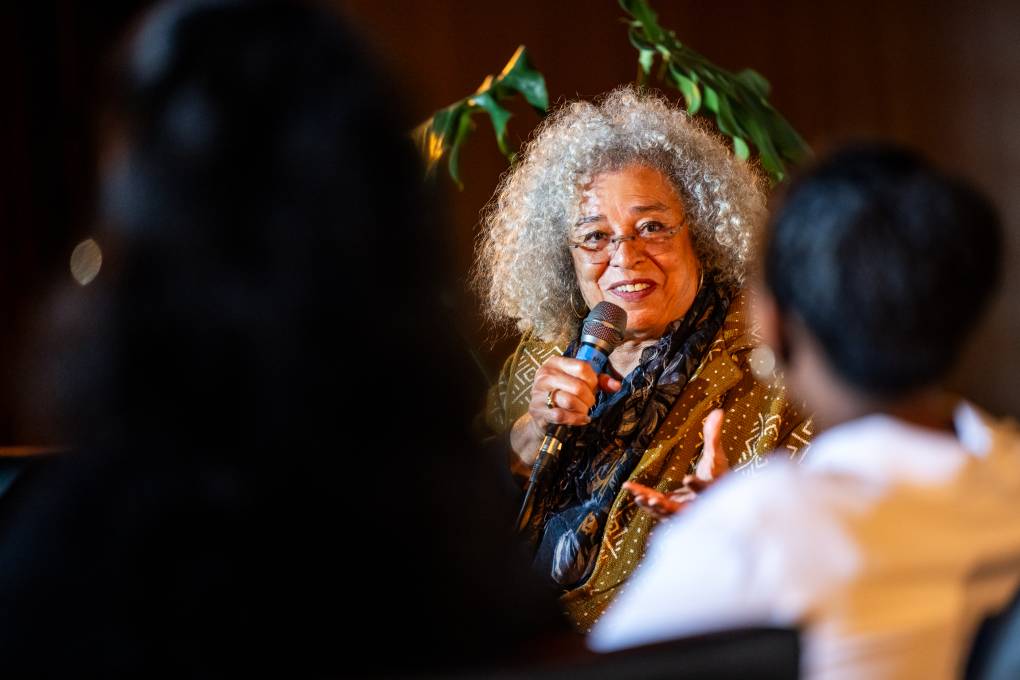
"caption": "Political activist Angela Davis speaks at Alameda High School on April 19, 2024, during an event organized by students from Alameda High School and Castro Valley High School.",
"description": null,
"title": "240419-AngelaDavisAlamedaHS-11-BL",
"credit": "Beth LaBerge/KQED",
"status": "inherit",
"altTag": null,
"isLoading": false,
"fetchFailed": false
},
"news_11981474": {
"type": "attachments",
"id": "news_11981474",
"meta": {
"index": "attachments_1716263798",
"site": "news",
"id": "11981474",
"found": true
},
"parent": 11981473,
"imgSizes": {
"twentyfourteen-full-width": {
"file": "https://cdn.kqed.org/wp-content/uploads/sites/10/2024/03/childrens-small-table-in-a-preschool-room-1020x576.jpg",
"width": 1020,
"mimeType": "image/jpeg",
"height": 576
},
"thumbnail": {
"file": "https://cdn.kqed.org/wp-content/uploads/sites/10/2024/03/childrens-small-table-in-a-preschool-room-160x107.jpg",
"width": 160,
"mimeType": "image/jpeg",
"height": 107
},
"post-thumbnail": {
"file": "https://cdn.kqed.org/wp-content/uploads/sites/10/2024/03/childrens-small-table-in-a-preschool-room-672x372.jpg",
"width": 672,
"mimeType": "image/jpeg",
"height": 372
},
"kqedFullSize": {
"file": "https://cdn.kqed.org/wp-content/uploads/sites/10/2024/03/childrens-small-table-in-a-preschool-room.jpg",
"width": 1020,
"height": 680
},
"medium": {
"file": "https://cdn.kqed.org/wp-content/uploads/sites/10/2024/03/childrens-small-table-in-a-preschool-room-800x533.jpg",
"width": 800,
"mimeType": "image/jpeg",
"height": 533
}
},
"publishDate": 1711951640,
"modified": 1713146081,
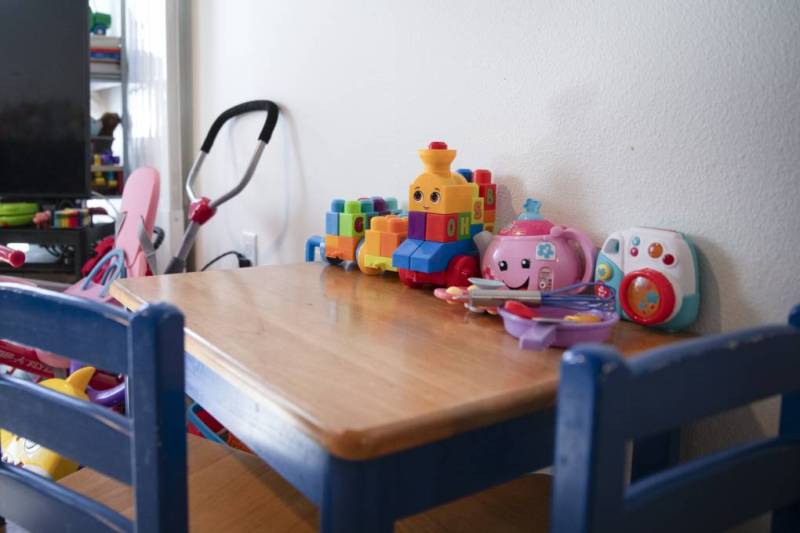
"caption": "Una mesita y una silla con juguetes infantiles en la casa de Reyna Balladares en San Francisco el 26 de febrero de 2024.",
"description": null,
"title": "childrens small table in a preschool room",
"credit": "Kathryn Styer-Martínez/KQED",
"status": "inherit",
"altTag": "Una mesa y silla en el interior de un hogar.",
"isLoading": false,
"fetchFailed": false
},
"news_11982923": {
"type": "attachments",
"id": "news_11982923",
"meta": {
"index": "attachments_1716263798",
"site": "news",
"id": "11982923",
"found": true
},
"parent": 11982920,
"imgSizes": {
"twentyfourteen-full-width": {
"file": "https://cdn.kqed.org/wp-content/uploads/sites/10/2024/04/Reading-book-2048x1468-1-1038x576.jpg",
"width": 1038,
"mimeType": "image/jpeg",
"height": 576
},
"thumbnail": {
"file": "https://cdn.kqed.org/wp-content/uploads/sites/10/2024/04/Reading-book-2048x1468-1-160x115.jpg",
"width": 160,
"mimeType": "image/jpeg",
"height": 115
},
"post-thumbnail": {
"file": "https://cdn.kqed.org/wp-content/uploads/sites/10/2024/04/Reading-book-2048x1468-1-672x372.jpg",
"width": 672,
"mimeType": "image/jpeg",
"height": 372
},
"kqedFullSize": {
"file": "https://cdn.kqed.org/wp-content/uploads/sites/10/2024/04/Reading-book-2048x1468-1.jpg",
"width": 2048,
"height": 1468
},
"large": {
"file": "https://cdn.kqed.org/wp-content/uploads/sites/10/2024/04/Reading-book-2048x1468-1-1020x731.jpg",
"width": 1020,
"mimeType": "image/jpeg",
"height": 731
},
"1536x1536": {
"file": "https://cdn.kqed.org/wp-content/uploads/sites/10/2024/04/Reading-book-2048x1468-1-1536x1101.jpg",
"width": 1536,
"mimeType": "image/jpeg",
"height": 1101
},
"full-width": {
"file": "https://cdn.kqed.org/wp-content/uploads/sites/10/2024/04/Reading-book-2048x1468-1-1920x1376.jpg",
"width": 1920,
"mimeType": "image/jpeg",
"height": 1376
},
"medium": {
"file": "https://cdn.kqed.org/wp-content/uploads/sites/10/2024/04/Reading-book-2048x1468-1-800x573.jpg",
"width": 800,
"mimeType": "image/jpeg",
"height": 573
}
},
"publishDate": 1713126369,
"modified": 1713126575,
"caption": "An elementary student reads on his own in class.",
"description": null,
"title": "Elementary boy reads alone next to window",
"credit": "Allison Shelley/American Education",
"status": "inherit",
"altTag": "A young boy wearing a white hoodie and black pants reads a book while sitting down.",
"isLoading": false,
"fetchFailed": false
},
"news_11979390": {
"type": "attachments",
"id": "news_11979390",
"meta": {
"index": "attachments_1716263798",
"site": "news",
"id": "11979390",
"found": true
},
"title": "hispanic college student doing some home works from home with laptop",
"publishDate": 1710374837,
"status": "inherit",
"parent": 11979367,
"modified": 1759874426,
"caption": "A glitch blocking mixed-status families has caused stress for many, but some steps can be taken in the meantime when it comes to the FAFSA application.",
"credit": "Carol Yepes/Getty Images",
"altTag": "A young woman with dark brown hair stares intently at her computer screen.",
"description": null,
"imgSizes": {
"medium": {
"file": "https://cdn.kqed.org/wp-content/uploads/sites/10/2024/03/GettyImages-1403066184-800x533.jpg",
"width": 800,
"height": 533,
"mimeType": "image/jpeg"
},
"large": {
"file": "https://cdn.kqed.org/wp-content/uploads/sites/10/2024/03/GettyImages-1403066184-1020x680.jpg",
"width": 1020,
"height": 680,
"mimeType": "image/jpeg"
},
"thumbnail": {
"file": "https://cdn.kqed.org/wp-content/uploads/sites/10/2024/03/GettyImages-1403066184-160x107.jpg",
"width": 160,
"height": 107,
"mimeType": "image/jpeg"
},
"1536x1536": {
"file": "https://cdn.kqed.org/wp-content/uploads/sites/10/2024/03/GettyImages-1403066184-1536x1024.jpg",
"width": 1536,
"height": 1024,
"mimeType": "image/jpeg"
},
"2048x2048": {
"file": "https://cdn.kqed.org/wp-content/uploads/sites/10/2024/03/GettyImages-1403066184-2048x1365.jpg",
"width": 2048,
"height": 1365,
"mimeType": "image/jpeg"
},
"post-thumbnail": {
"file": "https://cdn.kqed.org/wp-content/uploads/sites/10/2024/03/GettyImages-1403066184-672x372.jpg",
"width": 672,
"height": 372,
"mimeType": "image/jpeg"
},
"twentyfourteen-full-width": {
"file": "https://cdn.kqed.org/wp-content/uploads/sites/10/2024/03/GettyImages-1403066184-1038x576.jpg",
"width": 1038,
"height": 576,
"mimeType": "image/jpeg"
},
"full-width": {
"file": "https://cdn.kqed.org/wp-content/uploads/sites/10/2024/03/GettyImages-1403066184-1920x1280.jpg",
"width": 1920,
"height": 1280,
"mimeType": "image/jpeg"
},
"kqedFullSize": {
"file": "https://cdn.kqed.org/wp-content/uploads/sites/10/2024/03/GettyImages-1403066184.jpg",
"width": 2121,
"height": 1414
}
},
"isLoading": false,
"fetchFailed": false
},
"news_11982736": {
"type": "attachments",
"id": "news_11982736",
"meta": {
"index": "attachments_1716263798",
"site": "news",
"id": "11982736",
"found": true
},
"parent": 11982697,
"imgSizes": {
"twentyfourteen-full-width": {
"file": "https://cdn.kqed.org/wp-content/uploads/sites/10/2024/04/240411-BERKELEY-LAW-MD-04_1-KQED-2-1038x576.jpg",
"width": 1038,
"mimeType": "image/jpeg",
"height": 576
},
"thumbnail": {
"file": "https://cdn.kqed.org/wp-content/uploads/sites/10/2024/04/240411-BERKELEY-LAW-MD-04_1-KQED-2-160x107.jpg",
"width": 160,
"mimeType": "image/jpeg",
"height": 107
},
"post-thumbnail": {
"file": "https://cdn.kqed.org/wp-content/uploads/sites/10/2024/04/240411-BERKELEY-LAW-MD-04_1-KQED-2-672x372.jpg",
"width": 672,
"mimeType": "image/jpeg",
"height": 372
},
"kqedFullSize": {
"file": "https://cdn.kqed.org/wp-content/uploads/sites/10/2024/04/240411-BERKELEY-LAW-MD-04_1-KQED-2.jpg",
"width": 2000,
"height": 1333
},
"large": {
"file": "https://cdn.kqed.org/wp-content/uploads/sites/10/2024/04/240411-BERKELEY-LAW-MD-04_1-KQED-2-1020x680.jpg",
"width": 1020,
"mimeType": "image/jpeg",
"height": 680
},
"1536x1536": {
"file": "https://cdn.kqed.org/wp-content/uploads/sites/10/2024/04/240411-BERKELEY-LAW-MD-04_1-KQED-2-1536x1024.jpg",
"width": 1536,
"mimeType": "image/jpeg",
"height": 1024
},
"full-width": {
"file": "https://cdn.kqed.org/wp-content/uploads/sites/10/2024/04/240411-BERKELEY-LAW-MD-04_1-KQED-2-1920x1280.jpg",
"width": 1920,
"mimeType": "image/jpeg",
"height": 1280
},
"medium": {
"file": "https://cdn.kqed.org/wp-content/uploads/sites/10/2024/04/240411-BERKELEY-LAW-MD-04_1-KQED-2-800x533.jpg",
"width": 800,
"mimeType": "image/jpeg",
"height": 533
}
},
"publishDate": 1712878036,
"modified": 1712878058,
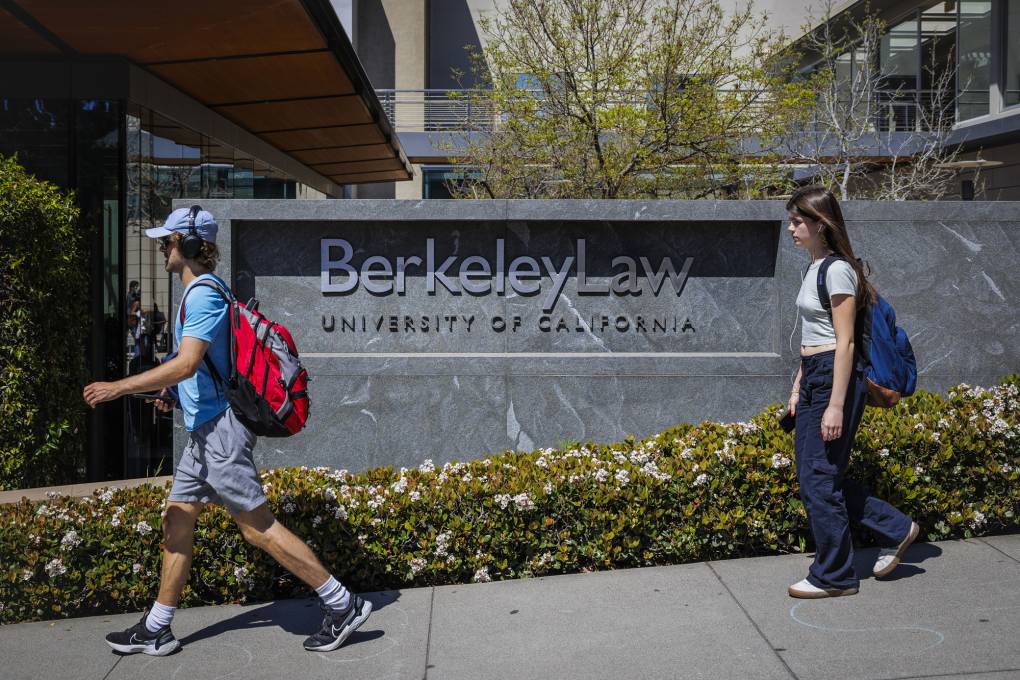
"caption": "Berkeley Law in Berkeley on April 11, 2024.",
"description": null,
"title": "Berkeley Law in Berkeley on Apr. 11, 2024.",
"credit": "Martin do Nascimento/KQED",
"status": "inherit",
"altTag": null,
"isLoading": false,
"fetchFailed": false
},
"news_11982654": {
"type": "attachments",
"id": "news_11982654",
"meta": {
"index": "attachments_1716263798",
"site": "news",
"id": "11982654",
"found": true
},
"parent": 11982653,
"imgSizes": {
"twentyfourteen-full-width": {
"file": "https://cdn.kqed.org/wp-content/uploads/sites/10/2024/04/Walnut-Valley-1-1038x576.jpg",
"width": 1038,
"mimeType": "image/jpeg",
"height": 576
},
"thumbnail": {
"file": "https://cdn.kqed.org/wp-content/uploads/sites/10/2024/04/Walnut-Valley-1-160x108.jpg",
"width": 160,
"mimeType": "image/jpeg",
"height": 108
},
"post-thumbnail": {
"file": "https://cdn.kqed.org/wp-content/uploads/sites/10/2024/04/Walnut-Valley-1-672x372.jpg",
"width": 672,
"mimeType": "image/jpeg",
"height": 372
},
"kqedFullSize": {
"file": "https://cdn.kqed.org/wp-content/uploads/sites/10/2024/04/Walnut-Valley-1.jpg",
"width": 1742,
"height": 1171
},
"large": {
"file": "https://cdn.kqed.org/wp-content/uploads/sites/10/2024/04/Walnut-Valley-1-1020x686.jpg",
"width": 1020,
"mimeType": "image/jpeg",
"height": 686
},
"1536x1536": {
"file": "https://cdn.kqed.org/wp-content/uploads/sites/10/2024/04/Walnut-Valley-1-1536x1033.jpg",
"width": 1536,
"mimeType": "image/jpeg",
"height": 1033
},
"medium": {
"file": "https://cdn.kqed.org/wp-content/uploads/sites/10/2024/04/Walnut-Valley-1-800x538.jpg",
"width": 800,
"mimeType": "image/jpeg",
"height": 538
}
},
"publishDate": 1712859588,
"modified": 1712859623,
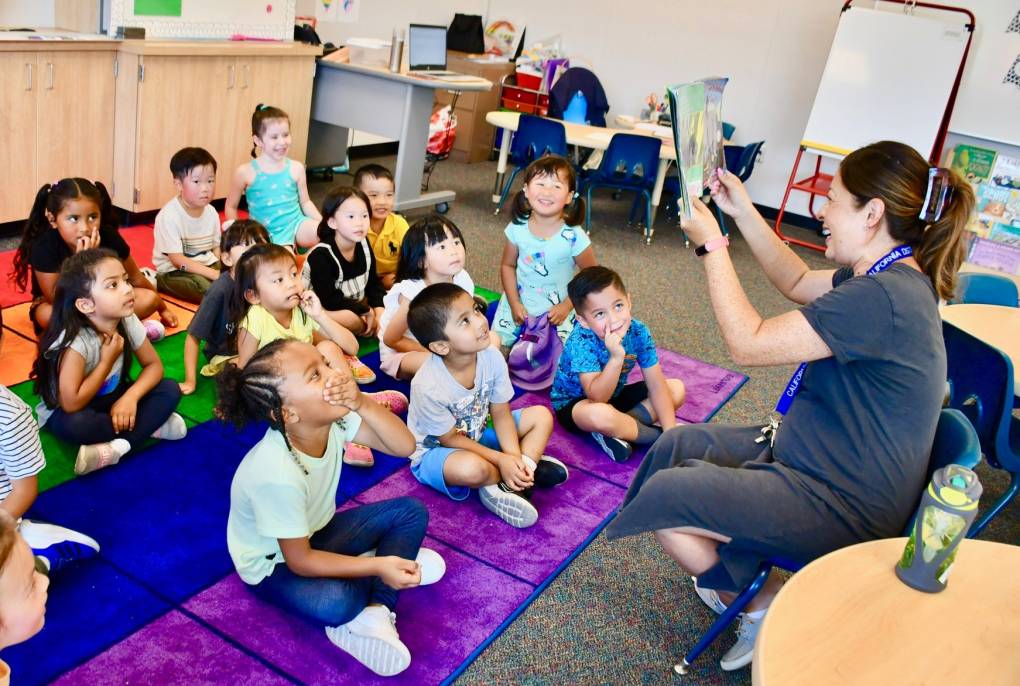
"caption": "A Walnut Valley Unified teacher holds up a book during a kindergarten class.",
"description": null,
"title": "Walnut-Valley-1",
"credit": "Walnut Valley Unified/Facebook",
"status": "inherit",
"altTag": null,
"isLoading": false,
"fetchFailed": false
},
"news_11887623": {
"type": "attachments",
"id": "news_11887623",
"meta": {
"index": "attachments_1716263798",
"site": "news",
"id": "11887623",
"found": true
},
"parent": 11887506,
"imgSizes": {
"twentyfourteen-full-width": {
"file": "https://cdn.kqed.org/wp-content/uploads/sites/10/2021/09/RS50120_010_Oakland_MiaBonta_06232021-qut-1038x576.jpeg",
"width": 1038,
"mimeType": "image/jpeg",
"height": 576
},
"thumbnail": {
"file": "https://cdn.kqed.org/wp-content/uploads/sites/10/2021/09/RS50120_010_Oakland_MiaBonta_06232021-qut-160x107.jpeg",
"width": 160,
"mimeType": "image/jpeg",
"height": 107
},
"post-thumbnail": {
"file": "https://cdn.kqed.org/wp-content/uploads/sites/10/2021/09/RS50120_010_Oakland_MiaBonta_06232021-qut-672x372.jpeg",
"width": 672,
"mimeType": "image/jpeg",
"height": 372
},
"kqedFullSize": {
"file": "https://cdn.kqed.org/wp-content/uploads/sites/10/2021/09/RS50120_010_Oakland_MiaBonta_06232021-qut.jpeg",
"width": 1920,
"height": 1280
},
"large": {
"file": "https://cdn.kqed.org/wp-content/uploads/sites/10/2021/09/RS50120_010_Oakland_MiaBonta_06232021-qut-1020x680.jpeg",
"width": 1020,
"mimeType": "image/jpeg",
"height": 680
},
"1536x1536": {
"file": "https://cdn.kqed.org/wp-content/uploads/sites/10/2021/09/RS50120_010_Oakland_MiaBonta_06232021-qut-1536x1024.jpeg",
"width": 1536,
"mimeType": "image/jpeg",
"height": 1024
},
"medium": {
"file": "https://cdn.kqed.org/wp-content/uploads/sites/10/2021/09/RS50120_010_Oakland_MiaBonta_06232021-qut-800x533.jpeg",
"width": 800,
"mimeType": "image/jpeg",
"height": 533
}
},
"publishDate": 1630767621,
"modified": 1712851242,
"caption": "Assemblymember Mia Bonta, who authored Assembly Bill 2239, said it would make California the first state in the nation to codify the Federal Communication Commission’s newly adopted definition of digital discrimination into state law.",
"description": null,
"title": "RS50120_010_Oakland_MiaBonta_06232021-qut",
"credit": "Beth LaBerge/KQED",
"status": "inherit",
"altTag": "A woman in a blue and white short-sleeved shirt is smiling and looking to the camera's left.",
"isLoading": false,
"fetchFailed": false
},
"news_11982310": {
"type": "attachments",
"id": "news_11982310",
"meta": {
"index": "attachments_1716263798",
"site": "news",
"id": "11982310",
"found": true
},
"parent": 0,
"imgSizes": {
"twentyfourteen-full-width": {
"file": "https://cdn.kqed.org/wp-content/uploads/sites/10/2024/04/240408-UCLAWSF-014-BL-KQED-1038x576.jpg",
"width": 1038,
"mimeType": "image/jpeg",
"height": 576
},
"thumbnail": {
"file": "https://cdn.kqed.org/wp-content/uploads/sites/10/2024/04/240408-UCLAWSF-014-BL-KQED-160x107.jpg",
"width": 160,
"mimeType": "image/jpeg",
"height": 107
},
"post-thumbnail": {
"file": "https://cdn.kqed.org/wp-content/uploads/sites/10/2024/04/240408-UCLAWSF-014-BL-KQED-672x372.jpg",
"width": 672,
"mimeType": "image/jpeg",
"height": 372
},
"kqedFullSize": {
"file": "https://cdn.kqed.org/wp-content/uploads/sites/10/2024/04/240408-UCLAWSF-014-BL-KQED.jpg",
"width": 2000,
"height": 1333
},
"large": {
"file": "https://cdn.kqed.org/wp-content/uploads/sites/10/2024/04/240408-UCLAWSF-014-BL-KQED-1020x680.jpg",
"width": 1020,
"mimeType": "image/jpeg",
"height": 680
},
"1536x1536": {
"file": "https://cdn.kqed.org/wp-content/uploads/sites/10/2024/04/240408-UCLAWSF-014-BL-KQED-1536x1024.jpg",
"width": 1536,
"mimeType": "image/jpeg",
"height": 1024
},
"full-width": {
"file": "https://cdn.kqed.org/wp-content/uploads/sites/10/2024/04/240408-UCLAWSF-014-BL-KQED-1920x1280.jpg",
"width": 1920,
"mimeType": "image/jpeg",
"height": 1280
},
"medium": {
"file": "https://cdn.kqed.org/wp-content/uploads/sites/10/2024/04/240408-UCLAWSF-014-BL-KQED-800x533.jpg",
"width": 800,
"mimeType": "image/jpeg",
"height": 533
}
},
"publishDate": 1712621442,
"modified": 1712688347,
"caption": "Students walk into UC Law San Francisco, formerly known as UC Hastings, on April 8, 2024.",
"description": null,
"title": "240408-UCLAWSF-014-BL-KQED",
"credit": "Beth LaBerge/KQED",
"status": "inherit",
"altTag": null,
"isLoading": false,
"fetchFailed": false
},
"news_11982200": {
"type": "attachments",
"id": "news_11982200",
"meta": {
"index": "attachments_1716263798",
"site": "news",
"id": "11982200",
"found": true
},
"parent": 11982196,
"imgSizes": {
"twentyfourteen-full-width": {
"file": "https://cdn.kqed.org/wp-content/uploads/sites/10/2024/04/RB-Reading-Program_05-1536x1024-1-1038x576.jpg",
"width": 1038,
"mimeType": "image/jpeg",
"height": 576
},
"thumbnail": {
"file": "https://cdn.kqed.org/wp-content/uploads/sites/10/2024/04/RB-Reading-Program_05-1536x1024-1-160x107.jpg",
"width": 160,
"mimeType": "image/jpeg",
"height": 107
},
"post-thumbnail": {
"file": "https://cdn.kqed.org/wp-content/uploads/sites/10/2024/04/RB-Reading-Program_05-1536x1024-1-672x372.jpg",
"width": 672,
"mimeType": "image/jpeg",
"height": 372
},
"kqedFullSize": {
"file": "https://cdn.kqed.org/wp-content/uploads/sites/10/2024/04/RB-Reading-Program_05-1536x1024-1.jpg",
"width": 1536,
"height": 1024
},
"large": {
"file": "https://cdn.kqed.org/wp-content/uploads/sites/10/2024/04/RB-Reading-Program_05-1536x1024-1-1020x680.jpg",
"width": 1020,
"mimeType": "image/jpeg",
"height": 680
},
"medium": {
"file": "https://cdn.kqed.org/wp-content/uploads/sites/10/2024/04/RB-Reading-Program_05-1536x1024-1-800x533.jpg",
"width": 800,
"mimeType": "image/jpeg",
"height": 533
}
},
"publishDate": 1712533270,
"modified": 1712596418,
"caption": "Teacher Jennifer Dare Sparks conducts a reading lesson in her 3rd/4th grade class at Ethel I. Baker Elementary School in Sacramento on Thursday, June 2, 2022.",
"description": null,
"title": "RB Reading Program",
"credit": "Randall Benton/EdSource",
"status": "inherit",
"altTag": "A white woman wearing glasses and a dark dress points at a whiteboard in front several students.",
"isLoading": false,
"fetchFailed": false
},
"news_11982062": {
"type": "attachments",
"id": "news_11982062",
"meta": {
"index": "attachments_1716263798",
"site": "news",
"id": "11982062",
"found": true
},
"parent": 11982060,
"imgSizes": {
"twentyfourteen-full-width": {
"file": "https://cdn.kqed.org/wp-content/uploads/sites/10/2024/04/CMNativeStudents01-1038x576.jpg",
"width": 1038,
"mimeType": "image/jpeg",
"height": 576
},
"thumbnail": {
"file": "https://cdn.kqed.org/wp-content/uploads/sites/10/2024/04/CMNativeStudents01-160x107.jpg",
"width": 160,
"mimeType": "image/jpeg",
"height": 107
},
"post-thumbnail": {
"file": "https://cdn.kqed.org/wp-content/uploads/sites/10/2024/04/CMNativeStudents01-672x372.jpg",
"width": 672,
"mimeType": "image/jpeg",
"height": 372
},
"kqedFullSize": {
"file": "https://cdn.kqed.org/wp-content/uploads/sites/10/2024/04/CMNativeStudents01.jpg",
"width": 2000,
"height": 1336
},
"large": {
"file": "https://cdn.kqed.org/wp-content/uploads/sites/10/2024/04/CMNativeStudents01-1020x681.jpg",
"width": 1020,
"mimeType": "image/jpeg",
"height": 681
},
"1536x1536": {
"file": "https://cdn.kqed.org/wp-content/uploads/sites/10/2024/04/CMNativeStudents01-1536x1026.jpg",
"width": 1536,
"mimeType": "image/jpeg",
"height": 1026
},
"full-width": {
"file": "https://cdn.kqed.org/wp-content/uploads/sites/10/2024/04/CMNativeStudents01-1920x1283.jpg",
"width": 1920,
"mimeType": "image/jpeg",
"height": 1283
},
"medium": {
"file": "https://cdn.kqed.org/wp-content/uploads/sites/10/2024/04/CMNativeStudents01-800x534.jpg",
"width": 800,
"mimeType": "image/jpeg",
"height": 534
}
},
"publishDate": 1712354910,
"modified": 1712363198,
"caption": "Carlos Morales and Michelle Villegas-Frazier participate in a sage-burning ritual outside of the Native American Academic Student Success Center at UC Davis on April 1, 2024.",
"description": null,
"title": "CMNativeStudents01",
"credit": "José Luis Villegas/CalMatters",
"status": "inherit",
"altTag": "A native American woman in a white dress and a Native American man in a blue shirt and two people in the background during a ceremony.",
"isLoading": false,
"fetchFailed": false
},
"news_11981922": {
"type": "attachments",
"id": "news_11981922",
"meta": {
"index": "attachments_1716263798",
"site": "news",
"id": "11981922",
"found": true
},
"parent": 11981919,
"imgSizes": {
"twentyfourteen-full-width": {
"file": "https://cdn.kqed.org/wp-content/uploads/sites/10/2024/04/AMERICANED_SUTTON_037-2048x1365-1-1038x576.jpeg",
"width": 1038,
"mimeType": "image/jpeg",
"height": 576
},
"thumbnail": {
"file": "https://cdn.kqed.org/wp-content/uploads/sites/10/2024/04/AMERICANED_SUTTON_037-2048x1365-1-160x107.jpeg",
"width": 160,
"mimeType": "image/jpeg",
"height": 107
},
"post-thumbnail": {
"file": "https://cdn.kqed.org/wp-content/uploads/sites/10/2024/04/AMERICANED_SUTTON_037-2048x1365-1-672x372.jpeg",
"width": 672,
"mimeType": "image/jpeg",
"height": 372
},
"kqedFullSize": {
"file": "https://cdn.kqed.org/wp-content/uploads/sites/10/2024/04/AMERICANED_SUTTON_037-2048x1365-1.jpeg",
"width": 2048,
"height": 1365
},
"large": {
"file": "https://cdn.kqed.org/wp-content/uploads/sites/10/2024/04/AMERICANED_SUTTON_037-2048x1365-1-1020x680.jpeg",
"width": 1020,
"mimeType": "image/jpeg",
"height": 680
},
"1536x1536": {
"file": "https://cdn.kqed.org/wp-content/uploads/sites/10/2024/04/AMERICANED_SUTTON_037-2048x1365-1-1536x1024.jpeg",
"width": 1536,
"mimeType": "image/jpeg",
"height": 1024
},
"full-width": {
"file": "https://cdn.kqed.org/wp-content/uploads/sites/10/2024/04/AMERICANED_SUTTON_037-2048x1365-1-1920x1280.jpeg",
"width": 1920,
"mimeType": "image/jpeg",
"height": 1280
},
"medium": {
"file": "https://cdn.kqed.org/wp-content/uploads/sites/10/2024/04/AMERICANED_SUTTON_037-2048x1365-1-800x533.jpeg",
"width": 800,
"mimeType": "image/jpeg",
"height": 533
}
},
"publishDate": 1712254516,
"modified": 1712254605,
"caption": "A middle school science teacher explains a lesson on climate change. ",
"description": null,
"title": "Middle school teacher at SMART board",
"credit": "Allison Shelley for American Education",
"status": "inherit",
"altTag": "a Black woman stands in front of a screen and presents",
"isLoading": false,
"fetchFailed": false
}
},
"audioPlayerReducer": {
"postId": "stream_live",
"isPaused": true,
"isPlaying": false,
"pfsActive": false,
"pledgeModalIsOpen": true,
"playerDrawerIsOpen": false,
"liveAudioPlayStartedAt": 0,
"liveAudioPlayContext": ""
},
"authorsReducer": {
"byline_news_11983654": {
"type": "authors",
"id": "byline_news_11983654",
"meta": {
"override": true
},
"slug": "byline_news_11983654",
"name": "John Fensterwald, EdSource",
"isLoading": false
},
"byline_news_11982920": {
"type": "authors",
"id": "byline_news_11982920",
"meta": {
"override": true
},
"slug": "byline_news_11982920",
"name": "\u003ca href=\"https://edsource.org/author/dlambert\">Diana Lambert\u003c/a>, \u003ca href=\"https://edsource.org/author/jfensterwald\">John Fensterwald\u003c/a> and \u003ca href=\"https://edsource.org/author/zstavely\">Zaidee Stavely\u003c/a>",
"isLoading": false
},
"byline_news_11982653": {
"type": "authors",
"id": "byline_news_11982653",
"meta": {
"override": true
},
"slug": "byline_news_11982653",
"name": "\u003ca href=\"https://edsource.org/author/jfensterwald\">John Fensterwald\u003c/a>",
"isLoading": false
},
"byline_news_11982196": {
"type": "authors",
"id": "byline_news_11982196",
"meta": {
"override": true
},
"slug": "byline_news_11982196",
"name": "\u003ca href=\"https://edsource.org/author/dlambert\">Diana Lambert\u003c/a>, \u003ca href=\"https://edsource.org/author/jfensterwald\">John Fensterwald\u003c/a> and \u003ca href=\"https://edsource.org/author/zstavely\">Zaidee Stavely\u003c/a>",
"isLoading": false
},
"byline_news_11982060": {
"type": "authors",
"id": "byline_news_11982060",
"meta": {
"override": true
},
"slug": "byline_news_11982060",
"name": "\u003ca href=\"https://calmatters.org/author/christopher-buchanan/\">Christopher Buchanan\u003c/a>",
"isLoading": false
},
"byline_news_11981919": {
"type": "authors",
"id": "byline_news_11981919",
"meta": {
"override": true
},
"slug": "byline_news_11981919",
"name": "\u003ca href=\"https://edsource.org/author/dlambert\">Diana Lambert\u003c/a>",
"isLoading": false
},
"rachael-myrow": {
"type": "authors",
"id": "251",
"meta": {
"index": "authors_1716337520",
"id": "251",
"found": true
},
"name": "Rachael Myrow",
"firstName": "Rachael",
"lastName": "Myrow",
"slug": "rachael-myrow",
"email": "rmyrow@kqed.org",
"display_author_email": true,
"staff_mastheads": [
"news"
],
"title": "Senior Editor of KQED's Silicon Valley News Desk",
"bio": "• I write and edit stories about how Silicon Valley power and policies shape everyday life in California. I’m also passionate about making Bay Area history and culture more accessible to a broad public. • I’ve been a journalist for most of my life, starting in high school with The Franklin Press in Los Angeles, where I grew up. While earning my first degree in English at UC Berkeley, I got my start in public radio at KALX-FM. After completing a second degree in journalism at Cal, I landed my first professional job at Marketplace, then moved on to KPCC (now LAist), and then KQED, where I hosted The California Report for more than seven years. • My reporting has appeared on NPR, The World, WBUR’s \u003ci>Here & Now\u003c/i>, and the BBC. I also guest host for KQED’s \u003ci>Forum\u003c/i>, as well as the Commonwealth Club in San Francisco. • I speak periodically on media, democracy and technology issues, and do voiceover work for documentaries and educational video projects. • Outside of the studio, you'll find me hiking Bay Area trails and whipping up Insta-ready meals in my kitchen. • I do not accept gifts, money, or favors from anyone connected to my reporting, I don't pay people for information, and I do not support or donate to political causes. • I strive to treat the people I report on with fairness, honesty, and respect. I also recognize there are often multiple sides to a story and work to verify information through multiple sources and documentation. If I get something wrong, I correct it.",
"avatar": "https://secure.gravatar.com/avatar/3ed8a3c5f26025e4a805ba634cda8cd764906b97438a6d9ce216b044e340da4e?s=600&d=blank&r=g",
"twitter": "rachaelmyrow",
"bluesky": null,
"facebook": null,
"instagram": null,
"linkedin": "https://www.linkedin.com/in/rachaelmyrow/",
"sites": [
{
"site": "arts",
"roles": [
"administrator"
]
},
{
"site": "news",
"roles": [
"edit_others_posts",
"editor"
]
},
{
"site": "futureofyou",
"roles": [
"editor"
]
},
{
"site": "bayareabites",
"roles": [
"editor"
]
},
{
"site": "stateofhealth",
"roles": [
"editor"
]
},
{
"site": "science",
"roles": [
"editor"
]
},
{
"site": "food",
"roles": [
"editor"
]
},
{
"site": "forum",
"roles": [
"editor"
]
},
{
"site": "liveblog",
"roles": [
"author"
]
}
],
"headData": {
"title": "Rachael Myrow | KQED",
"description": "Senior Editor of KQED's Silicon Valley News Desk",
"ogImgSrc": "https://secure.gravatar.com/avatar/3ed8a3c5f26025e4a805ba634cda8cd764906b97438a6d9ce216b044e340da4e?s=600&d=blank&r=g",
"twImgSrc": "https://secure.gravatar.com/avatar/3ed8a3c5f26025e4a805ba634cda8cd764906b97438a6d9ce216b044e340da4e?s=600&d=blank&r=g"
},
"isLoading": false,
"link": "/author/rachael-myrow"
},
"matthewgreen": {
"type": "authors",
"id": "1263",
"meta": {
"index": "authors_1716337520",
"id": "1263",
"found": true
},
"name": "Matthew Green",
"firstName": "Matthew",
"lastName": "Green",
"slug": "matthewgreen",
"email": "mgreen@kqed.org",
"display_author_email": false,
"staff_mastheads": [],
"title": "KQED Editor/Reporter",
"bio": "Matthew Green is a digital media producer for KQED News. He previously produced \u003ca href=\"http://www.kqed.org/lowdown\">The Lowdown\u003c/a>, KQED’s multimedia news education blog. Matthew's written for numerous Bay Area publications, including the Oakland Tribune and San Francisco Chronicle. He also taught journalism classes at Fremont High School in East Oakland.\r\n\r\nEmail: mgreen@kqed.org; Twitter: @MGreenKQED",
"avatar": "https://secure.gravatar.com/avatar/3bf498d1267ca02c8494f33d8cfc575e?s=600&d=blank&r=g",
"twitter": "MGreenKQED",
"facebook": null,
"instagram": null,
"linkedin": null,
"sites": [
{
"site": "news",
"roles": []
},
{
"site": "lowdown",
"roles": []
},
{
"site": "science",
"roles": []
},
{
"site": "education",
"roles": []
},
{
"site": "quest",
"roles": []
},
{
"site": "liveblog",
"roles": []
}
],
"headData": {
"title": "Matthew Green | KQED",
"description": "KQED Editor/Reporter",
"ogImgSrc": "https://secure.gravatar.com/avatar/3bf498d1267ca02c8494f33d8cfc575e?s=600&d=blank&r=g",
"twImgSrc": "https://secure.gravatar.com/avatar/3bf498d1267ca02c8494f33d8cfc575e?s=600&d=blank&r=g"
},
"isLoading": false,
"link": "/author/matthewgreen"
},
"aproehl": {
"type": "authors",
"id": "11296",
"meta": {
"index": "authors_1716337520",
"id": "11296",
"found": true
},
"name": "Ariana Proehl",
"firstName": "Ariana",
"lastName": "Proehl",
"slug": "aproehl",
"email": "aproehl@KQED.org",
"display_author_email": true,
"staff_mastheads": [
"news"
],
"title": "Culture Reporter, KQED",
"bio": "Ariana Proehl is a Culture Reporter and Host.",
"avatar": "https://secure.gravatar.com/avatar/c96b24567eb5bb3a4f8bb295ed53e232?s=600&d=blank&r=g",
"twitter": "ArianaProehl",
"facebook": null,
"instagram": null,
"linkedin": null,
"sites": [
{
"site": "arts",
"roles": []
},
{
"site": "news",
"roles": []
},
{
"site": "education",
"roles": []
},
{
"site": "forum",
"roles": []
}
],
"headData": {
"title": "Ariana Proehl | KQED",
"description": "Culture Reporter, KQED",
"ogImgSrc": "https://secure.gravatar.com/avatar/c96b24567eb5bb3a4f8bb295ed53e232?s=600&d=blank&r=g",
"twImgSrc": "https://secure.gravatar.com/avatar/c96b24567eb5bb3a4f8bb295ed53e232?s=600&d=blank&r=g"
},
"isLoading": false,
"link": "/author/aproehl"
},
"ccabreralomeli": {
"type": "authors",
"id": "11708",
"meta": {
"index": "authors_1716337520",
"id": "11708",
"found": true
},
"name": "Carlos Cabrera-Lomelí",
"firstName": "Carlos",
"lastName": "Cabrera-Lomelí",
"slug": "ccabreralomeli",
"email": "ccabreralomeli@KQED.org",
"display_author_email": true,
"staff_mastheads": [
"news"
],
"title": "Community Reporter",
"bio": "Carlos Cabrera-Lomelí is a community reporter with KQED's digital engagement team. He also reports and co-produces for KQED's bilingual news hub KQED en Español. He grew up in San Francisco's Mission District and has previously worked with Univision, 48 Hills and REFORMA in Mexico City.",
"avatar": "https://secure.gravatar.com/avatar/c309be9665e484f887b818c89e273ecc673004f426f36b24d00a4d813a2e0518?s=600&d=blank&r=g",
"twitter": "@LomeliCabrera",
"bluesky": null,
"facebook": null,
"instagram": null,
"linkedin": null,
"sites": [
{
"site": "arts",
"roles": [
"editor"
]
},
{
"site": "news",
"roles": [
"editor"
]
},
{
"site": "about",
"roles": [
"editor"
]
},
{
"site": "science",
"roles": [
"editor"
]
},
{
"site": "perspectives",
"roles": [
"editor"
]
},
{
"site": "elections",
"roles": [
"editor"
]
},
{
"site": "liveblog",
"roles": [
"contributor"
]
}
],
"headData": {
"title": "Carlos Cabrera-Lomelí | KQED",
"description": "Community Reporter",
"ogImgSrc": "https://secure.gravatar.com/avatar/c309be9665e484f887b818c89e273ecc673004f426f36b24d00a4d813a2e0518?s=600&d=blank&r=g",
"twImgSrc": "https://secure.gravatar.com/avatar/c309be9665e484f887b818c89e273ecc673004f426f36b24d00a4d813a2e0518?s=600&d=blank&r=g"
},
"isLoading": false,
"link": "/author/ccabreralomeli"
},
"daisynguyen": {
"type": "authors",
"id": "11829",
"meta": {
"index": "authors_1716337520",
"id": "11829",
"found": true
},
"name": "Daisy Nguyen",
"firstName": "Daisy",
"lastName": "Nguyen",
"slug": "daisynguyen",
"email": "daisynguyen@kqed.org",
"display_author_email": true,
"staff_mastheads": [
"news"
],
"title": "KQED Contributor",
"bio": "I have covered early childhood education and child care for KQED since 2022. I focus on policies aimed at increasing access to early care and education and how they shape individual lives. I've been a journalist for more than two decades, with most of that time devoted to covering breaking news throughout California for The Associated Press. I grew up in San Francisco and studied at UC Davis and Columbia University's Graduate School of Journalism. I live in Oakland with my husband and two kids.",
"avatar": "https://secure.gravatar.com/avatar/2da2127c27f7143b53ebd419800fd55f?s=600&d=blank&r=g",
"twitter": null,
"facebook": null,
"instagram": null,
"linkedin": "https://www.linkedin.com/in/daisynguyen/",
"sites": [
{
"site": "news",
"roles": [
"author"
]
},
{
"site": "liveblog",
"roles": [
"author"
]
}
],
"headData": {
"title": "Daisy Nguyen | KQED",
"description": "KQED Contributor",
"ogImgSrc": "https://secure.gravatar.com/avatar/2da2127c27f7143b53ebd419800fd55f?s=600&d=blank&r=g",
"twImgSrc": "https://secure.gravatar.com/avatar/2da2127c27f7143b53ebd419800fd55f?s=600&d=blank&r=g"
},
"isLoading": false,
"link": "/author/daisynguyen"
},
"sjohnson": {
"type": "authors",
"id": "11840",
"meta": {
"index": "authors_1716337520",
"id": "11840",
"found": true
},
"name": "Sydney Johnson",
"firstName": "Sydney",
"lastName": "Johnson",
"slug": "sjohnson",
"email": "sjohnson@kqed.org",
"display_author_email": false,
"staff_mastheads": [
"news"
],
"title": "KQED Reporter",
"bio": "Sydney Johnson is a general assignment reporter at KQED. She previously reported on public health and city government at the San Francisco Examiner, and before that, she covered statewide education policy for EdSource. Her reporting has won multiple local, state and national awards. Sydney is a graduate of the University of California, Berkeley and lives in San Francisco.",
"avatar": "https://secure.gravatar.com/avatar/97855f2719b72ad6190b7c535fe642c8?s=600&d=blank&r=g",
"twitter": "sydneyfjohnson",
"facebook": null,
"instagram": null,
"linkedin": null,
"sites": [
{
"site": "news",
"roles": [
"editor"
]
}
],
"headData": {
"title": "Sydney Johnson | KQED",
"description": "KQED Reporter",
"ogImgSrc": "https://secure.gravatar.com/avatar/97855f2719b72ad6190b7c535fe642c8?s=600&d=blank&r=g",
"twImgSrc": "https://secure.gravatar.com/avatar/97855f2719b72ad6190b7c535fe642c8?s=600&d=blank&r=g"
},
"isLoading": false,
"link": "/author/sjohnson"
}
},
"pagesReducer": {
"news_category_education": {
"type": "terms",
"id": "news_18540",
"meta": {
"index": "terms_1716263798",
"site": "news",
"id": "18540",
"score": 10.973221
},
"featImg": null,
"name": "Education",
"description": null,
"taxonomy": "category",
"headData": {
"twImgId": null,
"twTitle": null,
"ogTitle": null,
"ogImgId": null,
"twDescription": null,
"description": null,
"title": "Education Archives | KQED News",
"ogDescription": null
},
"ttid": 2595,
"slug": "education",
"isLoading": false,
"title": "Education",
"pageMeta": {
"site": "news",
"WpPageTemplate": "page-topic-editorial",
"currentPage": 52
},
"blocks": [
{
"blockName": "kqed/post-list",
"attrs": {
"layout": "cardArticle2",
"query": "posts/news?category=education",
"seeMore": false,
"paginated": true,
"page": 52
}
},
{
"blockName": "kqed/ad"
}
]
}
},
"pfsSessionReducer": {},
"postsReducer": {
"stream_live": {
"type": "live",
"id": "stream_live",
"audioUrl": "https://streams.kqed.org/kqedradio",
"title": "Live Stream",
"excerpt": "Live Stream information currently unavailable.",
"link": "/radio",
"featImg": "",
"label": {
"name": "KQED Live",
"link": "/"
}
},
"stream_kqedNewscast": {
"type": "posts",
"id": "stream_kqedNewscast",
"audioUrl": "https://www.kqed.org/.stream/anon/radio/RDnews/newscast.mp3?_=1",
"title": "KQED Newscast",
"featImg": "",
"label": {
"name": "88.5 FM",
"link": "/"
}
},
"news_11983654": {
"type": "posts",
"id": "news_11983654",
"meta": {
"index": "posts_1716263798",
"site": "news",
"id": "11983654",
"score": null,
"sort": [
1713812452000
]
},
"guestAuthors": [],
"slug": "californias-future-educators-divided-on-how-to-teach-reading",
"title": "California’s Future Educators Divided on How to Teach Reading",
"publishDate": 1713812452,
"format": "standard",
"headTitle": "California’s Future Educators Divided on How to Teach Reading | KQED",
"labelTerm": {
"term": 33681,
"site": "news"
},
"content": "\u003cp>Supporters of bolstering how teacher candidates in California are taught to teach reading cheered in 2021 when the Legislature \u003ca href=\"https://leginfo.legislature.ca.gov/faces/billTextClient.xhtml?bill_id=202120220SB488\">agreed and mandated change\u003c/a>.\u003c/p>\n\u003cp>They remained enthusiastic a year later when \u003ca href=\"https://edsource.org/2023/californias-plan-to-change-literacy-instruction-advances/692569\">the state Commission on Teacher Credentialing adopted new standards \u003c/a>emphasizing explicit instruction of fundamental skills, including phonics.\u003c/p>\n\u003cp>Now, advocates are charging that the Commission on Teacher Credentialing and its oversight body, the Committee on Accreditation, have failed their first test to stand behind those new standards. Instead, after a one-hour hearing Friday, the commission confirmed full accreditation to Mills College at Northeastern, which critics argue is ignoring critical new standards.\u003c/p>\n\u003cp>This approval will set a bad example for other programs facing a fall deadline to overhaul their literacy instruction and begin teaching the revised standards, critics said.\u003c/p>\n\u003cp>“Clearly, the commission is unwilling to uphold the state’s own curriculum framework and its guidance for new teacher prep programs, as outlined” in state law, said Yolie Flores, president and CEO of Families in Schools, a Los Angeles-based nonprofit that advocates for parents. “Given that, what chance is there that literacy instruction will ever change, and what chance is there that our children will be successful in learning to read?”\u003c/p>\n\u003cp>\u003cspan style=\"font-weight: 400\">[ad fullwidth] \u003c/span>\u003c/p>\n\u003cp>The answer may become clearer as other programs come up for review. However, the credential commission’s unanimous vote to reaffirm Mills College at Northeastern’s accreditation found support not only among the peer reviewers for the Committee on Accreditation but also from leaders of other teacher prep programs who submitted comments and testimony.\u003c/p>\n\u003cp>The hearing and the commission’s decision revealed ongoing disagreements over how California’s new literacy standards should be interpreted and implemented and raised the question of whether the Legislature’s intent in ordering a different approach to literacy instruction will be followed with fidelity.\u003c/p>\n\u003cp>The credentialing commission’s decision was in response to a complaint filed by Families in Schools and the nonprofits Decoding Dyslexia and California Reading Coalition. The organizations hoped that the commission would investigate the accreditation approval for Mills College at Northeastern or order that the program get technical help to bring it into compliance with the new standards.\u003c/p>\n\u003cp>“Commissioners, it is up to you to make sure the letter and intent of the law is followed. If you don’t do it, it won’t be done, and these terrible results won’t change,” testified Todd Collins of the California Reading Coalition, referring to the low reading proficiency rate of California third graders: 43% overall and less than a third for Black and Latino children.\u003c/p>\n\u003cp>Credentialing commissioners instead took a third option — referring the complaint to the Committee on Accreditation without comment.\u003c/p>\n\u003cp>Commissioners made clear they trusted the accreditation committee’s judgment and peer-review process, which relies on an evaluation by professors of teacher prep programs. Credentialing Commission Chair Marquita Grenot-Scheyer and others said they found no merit to the complaint.\u003c/p>\n\u003cp>“We have an established, coherent and effective process for program review and accreditation in the state of California,” said Grenot-Scheyer, a professor emeritus in the College of Education at California State University, Long Beach.[aside postID=news_11945189 hero='https://ww2.kqed.org/app/uploads/sites/10/2023/03/CMTeachers01-1020x680.jpg']Commissioner Ira Lit, a professor at the Stanford University Graduate School of Education, agreed, adding that he sees “no indication that attention to those frameworks, guidelines and standards of review were amiss in this particular case.”\u003c/p>\n\u003cp>The Legislature’s mandate in \u003ca href=\"https://leginfo.legislature.ca.gov/faces/billTextClient.xhtml?bill_id=202120220SB488\">Senate Bill 488\u003c/a> directed the commission to incorporate evidence-based methods of teaching foundational reading skills in its programs for multiple-subject credentials and reading specialists.\u003c/p>\n\u003cp>The literacy skills that teacher candidates would learn to teach include not only phonics, which correlates sounds with letters in the alphabet but also vocabulary, oral language, fluency, reading comprehension and writing. The commission appointed two dozen reading experts to recommend research-based literacy practices aligned to the state’s existing curriculum frameworks that all teacher preparation programs would adopt.\u003c/p>\n\u003cp>Collins, Flores and others praised the final package of teacher performance expectations, known as Standard 7 in the program requirements. They said it would meet the needs of all students, including English learners and students with dyslexia.\u003c/p>\n\u003cp>So did two members of the work group of experts who were skeptical of Mills College at Northeastern’s literacy instruction: Maryanne Wolf, a cognitive neuroscientist who directs the UCLA Center for Dyslexia, Diverse Learners, and Social Justice, and Sue Sears, a professor of special education at CSU Northridge.\u003c/p>\n\u003cp>They called Standard 7 “a rigorous and comprehensive set of requirements which reflect current reading research and practice.” After examining Mills College at Northeastern’s course syllabi, reading lists, and materials for literacy instruction, they said the program fell far short of the requirements.\u003c/p>\n\u003cp>In testimony and written comments, they said the school paid “lip service” to foundational skills and failed to document how prospective teachers would teach phonics explicitly and effectively. Among other flaws, the program didn’t mention the importance of screening for dyslexia and how to provide additional help for struggling and multilingual students, Wolf and Sears wrote.\u003c/p>\n\u003cp>Mills at Northeastern was formed from the merger of Mills College, a 170-year-old former women’s college in Oakland that closed in 2022, with Northeastern University in Boston.\u003c/p>\n\u003ch2>Structured versus balanced literacy\u003c/h2>\n\u003cp>In expressing confidence in a thorough accreditation review process while not commenting on the substance of the complaint, the credentialing commission dodged the underlying issue. The state had taken a stand in the debate over “structured literacy” versus “balanced literacy.” Standard 7 incorporates structured literacy. Taught under the banner of “science of reading,” it stresses evidence-proven reading strategies using, in the early grades, direct and sequential instruction of phonics and decodable texts.\u003c/p>\n\u003cp>Balanced literacy, an outgrowth of the once-popular “whole language” approach, downplays phonics, which it views as just one of several strategies in teaching reading. Other methods include “three-cueing,” the technique in which readers use pictures in a book, the first letter of a word and other contextual clues to determine words. It’s grounded in the belief that reading more books tied to the skill level of a child’s fluency and comprehension will make them better, more engaged readers.\u003c/p>\n\u003cp>Mills College at Northeastern stresses balanced literacy and three-cueing. Its reading assignments include multiple chapters by Fountas and Pinnell, the publisher most identified with balanced literacy.\u003c/p>\n\u003cp>Approving credential programs like Mills “to provide contradictory instructional practices, some of which are supported by research and others that have been debunked by cognitive scientists years ago, will only serve to create confusion for teaching credential candidates,” Decoding Dyslexia CA co-directors Lori DePole and Megan Potente wrote.\u003c/p>\n\u003cp>Matthew Burns, a University of Florida reading researcher who said he had studied the effectiveness of Fountas and Pinnell instructional programs and intervention strategies, was blunt. “The three-cueing system should have no place in public education and should not be part of any preservice training,” he wrote.\u003c/p>\n\u003ch2>In defense of Mills College\u003c/h2>\n\u003cp>Other leaders of teacher preparation programs and advocacy groups in California urged the credentialing commission to uphold the approval.\u003c/p>\n\u003cp>Stating that a comprehensive literacy curriculum includes background knowledge, multilingualism motivation and diverse text and assessments — not just phonics, Nancy Walker, a professor of literacy education at the University of La Verne, said, “By limiting our focus to the claims made by the popular press and media, we have underrepresented other pieces of reading pedagogy. The Mills College program represents the broad range of literacy as represented in the California literacy frameworks and standards.”[aside postID=news_11914203 hero='https://ww2.kqed.org/app/uploads/sites/10/2022/05/MillsCommencement-1020x608.jpg']Karen Escalante, an assistant professor of teacher education and foundations at CSU San Bernardino and president of the California Council on Teacher Education, warned that “efforts to pick and choose select elements of teacher preparation syllabi undermine the teaching profession and aim to deprofessionalize a professional workforce.”\u003c/p>\n\u003cp>Mimi Miller, a professor and literacy teacher educator at CSU Chico, said, “The complaint against Mills privileges one line of research over another. It has inaccurately cited research to confirm a set of beliefs about reading instruction.”\u003c/p>\n\u003cp>“The science of reading is not settled and will never be settled,” she added.\u003c/p>\n\u003cp>The California Teachers Association and Californians Together, which advocates for English and expanding multilingual education, also urged commissioners to uphold the accreditation approval.\u003c/p>\n\u003cp>“I call on the commission to not make any decisions that would restrict reading instruction in California,” said Manuel Buenrostro, director of policy at Californians Together.\u003c/p>\n\u003cp>Wolf used her two-minute comment to refute what opponents said regarding the state of research. “Of course, there is the unsettled, but there is far more of the settled neuroscience of reading,” she said.\u003c/p>\n\u003cp>Mills College at Northeastern “fails to meet the standards that you asked us to bring to every teacher so that every teacher could be prepared to teach every child,” she said.\u003c/p>\n\u003cp>“I am worrisomely seeing in California that there is becoming more loyalty to past methods that have been shown to be ineffective for our most struggling readers. We can never put loyalty to past methods over loyalty to our children.”\u003c/p>\n\u003ch2>SB 488 under attack\u003c/h2>\n\u003cp>Several commissioners indicated they, too, support a “balanced” approach to reading instruction tied to research. Others said the key to improved instruction is understanding socioeconomic and cultural differences among children.\u003c/p>\n\u003cp>“Culturally responsive teaching practices are what’s going to work to teach those children how to read,” said Commissioner Christopher Davis, pointing to his own experience as a Black child in Los Angeles who did not read an entire book until he was a high school junior. Davis, a middle school language arts teacher in the Berryessa Union School District in San Jose, said, “I want to encourage the public to stop using Black and brown children to prop up their misguided views of what’s happening in schools because I am one of those people.”\u003c/p>\n\u003cp>SB 488 requires all teacher candidates, starting in the spring of 2025, to take a performance assessment demonstrating they can effectively teach the new literacy instruction standards. The law also requires the Committee on Accreditation to visit all teacher prep programs in 2024–25 to verify they employ the new literacy strategies.[aside label='Related Coverage' tag='education']But a bill that would remove those provisions before they take effect is moving forward in the Legislature.\u003ca href=\"https://leginfo.legislature.ca.gov/faces/billTextClient.xhtml?bill_id=202320240SB1263\"> Senate Bill 1263\u003c/a>, sponsored by the California Teachers Association, would eliminate the California \u003ca href=\"https://www.ctcexams.nesinc.com/TestView.aspx?f=HTML_FRAG/CalTPA_TestPage.html\">Teaching Performance Assessment\u003c/a>, known as the CalTPA. And that would include the performance assessment in teaching reading now being developed. The bill, authored by Sen. Josh Newman (D-Fullerton), would also drop the on-site visits to verify that teacher prep programs are adhering to the literacy standards. The periodic general accreditation and re-accreditation process, like the one that Mills College passed, would be the sole accountability check that California’s new teachers know how to teach structured literacy and the science of reading.\u003c/p>\n\u003cp>Another bill, which would have extended the same training in structured literacy for new teachers to all elementary school teachers, also would have strengthened the credentialing commission’s literacy expertise. \u003ca href=\"https://leginfo.legislature.ca.gov/faces/billTextClient.xhtml?bill_id=202320240AB2222\">Assembly Bill 2222\u003c/a> would have required that at least one member of the Committee on Accreditation be an expert in the science of reading. And it would have funded several literacy experts for the commission staff.\u003c/p>\n\u003cp>The same adversaries that fought over Mills College at Northeastern battled over AB 2222. Decoding Dyslexia CA, Families in Schools and California Reading Coalition sponsored the bill. Opposition by CTA, Californians Together and the California Association of Bilingual Educators led Assembly Speaker Robert Rivas to pull the bill without a hearing.\u003c/p>\n\u003cp>Collins of the California Reading Coalition said he wasn’t surprised by the credentialing commission’s decision. The view of those involved in teacher preparation programs, which is not unique to California, is: “‘Let us professionals do our job. We are the ones who can arbitrate whether we’re doing a good job or not. No one else can do that,'” he said.\u003c/p>\n\u003cp>“To the extent that the credentialing commission defers to the process and defers to the people in the higher ed institutions, then change is going to come very, very slowly, if at all,” he said.\u003c/p>\n\u003cp>[ad floatright]\u003c/p>\n",
"blocks": [],
"excerpt": "Critics question accreditation of a program they say won't adhere to new standards on structured literacy.",
"status": "publish",
"parent": 0,
"modified": 1721146431,
"stats": {
"hasAudio": false,
"hasVideo": false,
"hasChartOrMap": false,
"iframeSrcs": [],
"hasGoogleForm": false,
"hasGallery": false,
"hasHearkenModule": false,
"hasPolis": false,
"paragraphCount": 42,
"wordCount": 2152
},
"headData": {
"title": "California’s Future Educators Divided on How to Teach Reading | KQED",
"description": "Critics question accreditation of a program they say won't adhere to new standards on structured literacy.",
"ogTitle": "",
"ogDescription": "",
"ogImgId": "",
"twTitle": "",
"twDescription": "",
"twImgId": "",
"schema": {
"@context": "https://schema.org",
"@type": "NewsArticle",
"headline": "California’s Future Educators Divided on How to Teach Reading",
"datePublished": "2024-04-22T12:00:52-07:00",
"dateModified": "2024-07-16T09:13:51-07:00",
"image": "https://cdn.kqed.org/wp-content/uploads/2020/02/KQED-OG-Image@1x.png",
"isAccessibleForFree": "True",
"publisher": {
"@type": "NewsMediaOrganization",
"@id": "https://www.kqed.org/#organization",
"name": "KQED",
"logo": "https://cdn.kqed.org/wp-content/uploads/2020/02/KQED-OG-Image@1x.png",
"url": "https://www.kqed.org",
"sameAs": [
"https://www.facebook.com/KQED",
"https://twitter.com/KQED",
"https://www.instagram.com/kqed/",
"https://www.tiktok.com/@kqedofficial",
"https://www.linkedin.com/company/kqed",
"https://www.youtube.com/channel/UCeC0IOo7i1P_61zVUWbJ4nw"
]
}
}
},
"sticky": false,
"nprByline": "John Fensterwald, EdSource",
"excludeFromSiteSearch": "Include",
"showOnAuthorArchivePages": "No",
"articleAge": "0",
"path": "/news/11983654/californias-future-educators-divided-on-how-to-teach-reading",
"audioTrackLength": null,
"parsedContent": [
{
"type": "contentString",
"content": "\u003cdiv class=\"post-body\">\u003cp>\u003cp>Supporters of bolstering how teacher candidates in California are taught to teach reading cheered in 2021 when the Legislature \u003ca href=\"https://leginfo.legislature.ca.gov/faces/billTextClient.xhtml?bill_id=202120220SB488\">agreed and mandated change\u003c/a>.\u003c/p>\n\u003cp>They remained enthusiastic a year later when \u003ca href=\"https://edsource.org/2023/californias-plan-to-change-literacy-instruction-advances/692569\">the state Commission on Teacher Credentialing adopted new standards \u003c/a>emphasizing explicit instruction of fundamental skills, including phonics.\u003c/p>\n\u003cp>Now, advocates are charging that the Commission on Teacher Credentialing and its oversight body, the Committee on Accreditation, have failed their first test to stand behind those new standards. Instead, after a one-hour hearing Friday, the commission confirmed full accreditation to Mills College at Northeastern, which critics argue is ignoring critical new standards.\u003c/p>\n\u003cp>This approval will set a bad example for other programs facing a fall deadline to overhaul their literacy instruction and begin teaching the revised standards, critics said.\u003c/p>\n\u003cp>“Clearly, the commission is unwilling to uphold the state’s own curriculum framework and its guidance for new teacher prep programs, as outlined” in state law, said Yolie Flores, president and CEO of Families in Schools, a Los Angeles-based nonprofit that advocates for parents. “Given that, what chance is there that literacy instruction will ever change, and what chance is there that our children will be successful in learning to read?”\u003c/p>\n\u003cp>\u003cspan style=\"font-weight: 400\">\u003c/p>\u003c/div>",
"attributes": {
"named": {},
"numeric": []
}
},
{
"type": "component",
"content": "",
"name": "ad",
"attributes": {
"named": {
"label": "fullwidth"
},
"numeric": [
"fullwidth"
]
}
},
{
"type": "contentString",
"content": "\u003cdiv class=\"post-body\">\u003cp> \u003c/span>\u003c/p>\n\u003cp>The answer may become clearer as other programs come up for review. However, the credential commission’s unanimous vote to reaffirm Mills College at Northeastern’s accreditation found support not only among the peer reviewers for the Committee on Accreditation but also from leaders of other teacher prep programs who submitted comments and testimony.\u003c/p>\n\u003cp>The hearing and the commission’s decision revealed ongoing disagreements over how California’s new literacy standards should be interpreted and implemented and raised the question of whether the Legislature’s intent in ordering a different approach to literacy instruction will be followed with fidelity.\u003c/p>\n\u003cp>The credentialing commission’s decision was in response to a complaint filed by Families in Schools and the nonprofits Decoding Dyslexia and California Reading Coalition. The organizations hoped that the commission would investigate the accreditation approval for Mills College at Northeastern or order that the program get technical help to bring it into compliance with the new standards.\u003c/p>\n\u003cp>“Commissioners, it is up to you to make sure the letter and intent of the law is followed. If you don’t do it, it won’t be done, and these terrible results won’t change,” testified Todd Collins of the California Reading Coalition, referring to the low reading proficiency rate of California third graders: 43% overall and less than a third for Black and Latino children.\u003c/p>\n\u003cp>Credentialing commissioners instead took a third option — referring the complaint to the Committee on Accreditation without comment.\u003c/p>\n\u003cp>Commissioners made clear they trusted the accreditation committee’s judgment and peer-review process, which relies on an evaluation by professors of teacher prep programs. Credentialing Commission Chair Marquita Grenot-Scheyer and others said they found no merit to the complaint.\u003c/p>\n\u003cp>“We have an established, coherent and effective process for program review and accreditation in the state of California,” said Grenot-Scheyer, a professor emeritus in the College of Education at California State University, Long Beach.\u003c/p>\u003c/div>",
"attributes": {
"named": {},
"numeric": []
}
},
{
"type": "component",
"content": "",
"name": "aside",
"attributes": {
"named": {
"postid": "news_11945189",
"hero": "https://ww2.kqed.org/app/uploads/sites/10/2023/03/CMTeachers01-1020x680.jpg",
"label": ""
},
"numeric": []
}
},
{
"type": "contentString",
"content": "\u003cdiv class=\"post-body\">\u003cp>Commissioner Ira Lit, a professor at the Stanford University Graduate School of Education, agreed, adding that he sees “no indication that attention to those frameworks, guidelines and standards of review were amiss in this particular case.”\u003c/p>\n\u003cp>The Legislature’s mandate in \u003ca href=\"https://leginfo.legislature.ca.gov/faces/billTextClient.xhtml?bill_id=202120220SB488\">Senate Bill 488\u003c/a> directed the commission to incorporate evidence-based methods of teaching foundational reading skills in its programs for multiple-subject credentials and reading specialists.\u003c/p>\n\u003cp>The literacy skills that teacher candidates would learn to teach include not only phonics, which correlates sounds with letters in the alphabet but also vocabulary, oral language, fluency, reading comprehension and writing. The commission appointed two dozen reading experts to recommend research-based literacy practices aligned to the state’s existing curriculum frameworks that all teacher preparation programs would adopt.\u003c/p>\n\u003cp>Collins, Flores and others praised the final package of teacher performance expectations, known as Standard 7 in the program requirements. They said it would meet the needs of all students, including English learners and students with dyslexia.\u003c/p>\n\u003cp>So did two members of the work group of experts who were skeptical of Mills College at Northeastern’s literacy instruction: Maryanne Wolf, a cognitive neuroscientist who directs the UCLA Center for Dyslexia, Diverse Learners, and Social Justice, and Sue Sears, a professor of special education at CSU Northridge.\u003c/p>\n\u003cp>They called Standard 7 “a rigorous and comprehensive set of requirements which reflect current reading research and practice.” After examining Mills College at Northeastern’s course syllabi, reading lists, and materials for literacy instruction, they said the program fell far short of the requirements.\u003c/p>\n\u003cp>In testimony and written comments, they said the school paid “lip service” to foundational skills and failed to document how prospective teachers would teach phonics explicitly and effectively. Among other flaws, the program didn’t mention the importance of screening for dyslexia and how to provide additional help for struggling and multilingual students, Wolf and Sears wrote.\u003c/p>\n\u003cp>Mills at Northeastern was formed from the merger of Mills College, a 170-year-old former women’s college in Oakland that closed in 2022, with Northeastern University in Boston.\u003c/p>\n\u003ch2>Structured versus balanced literacy\u003c/h2>\n\u003cp>In expressing confidence in a thorough accreditation review process while not commenting on the substance of the complaint, the credentialing commission dodged the underlying issue. The state had taken a stand in the debate over “structured literacy” versus “balanced literacy.” Standard 7 incorporates structured literacy. Taught under the banner of “science of reading,” it stresses evidence-proven reading strategies using, in the early grades, direct and sequential instruction of phonics and decodable texts.\u003c/p>\n\u003cp>Balanced literacy, an outgrowth of the once-popular “whole language” approach, downplays phonics, which it views as just one of several strategies in teaching reading. Other methods include “three-cueing,” the technique in which readers use pictures in a book, the first letter of a word and other contextual clues to determine words. It’s grounded in the belief that reading more books tied to the skill level of a child’s fluency and comprehension will make them better, more engaged readers.\u003c/p>\n\u003cp>Mills College at Northeastern stresses balanced literacy and three-cueing. Its reading assignments include multiple chapters by Fountas and Pinnell, the publisher most identified with balanced literacy.\u003c/p>\n\u003cp>Approving credential programs like Mills “to provide contradictory instructional practices, some of which are supported by research and others that have been debunked by cognitive scientists years ago, will only serve to create confusion for teaching credential candidates,” Decoding Dyslexia CA co-directors Lori DePole and Megan Potente wrote.\u003c/p>\n\u003cp>Matthew Burns, a University of Florida reading researcher who said he had studied the effectiveness of Fountas and Pinnell instructional programs and intervention strategies, was blunt. “The three-cueing system should have no place in public education and should not be part of any preservice training,” he wrote.\u003c/p>\n\u003ch2>In defense of Mills College\u003c/h2>\n\u003cp>Other leaders of teacher preparation programs and advocacy groups in California urged the credentialing commission to uphold the approval.\u003c/p>\n\u003cp>Stating that a comprehensive literacy curriculum includes background knowledge, multilingualism motivation and diverse text and assessments — not just phonics, Nancy Walker, a professor of literacy education at the University of La Verne, said, “By limiting our focus to the claims made by the popular press and media, we have underrepresented other pieces of reading pedagogy. The Mills College program represents the broad range of literacy as represented in the California literacy frameworks and standards.”\u003c/p>\u003c/div>",
"attributes": {
"named": {},
"numeric": []
}
},
{
"type": "component",
"content": "",
"name": "aside",
"attributes": {
"named": {
"postid": "news_11914203",
"hero": "https://ww2.kqed.org/app/uploads/sites/10/2022/05/MillsCommencement-1020x608.jpg",
"label": ""
},
"numeric": []
}
},
{
"type": "contentString",
"content": "\u003cdiv class=\"post-body\">\u003cp>Karen Escalante, an assistant professor of teacher education and foundations at CSU San Bernardino and president of the California Council on Teacher Education, warned that “efforts to pick and choose select elements of teacher preparation syllabi undermine the teaching profession and aim to deprofessionalize a professional workforce.”\u003c/p>\n\u003cp>Mimi Miller, a professor and literacy teacher educator at CSU Chico, said, “The complaint against Mills privileges one line of research over another. It has inaccurately cited research to confirm a set of beliefs about reading instruction.”\u003c/p>\n\u003cp>“The science of reading is not settled and will never be settled,” she added.\u003c/p>\n\u003cp>The California Teachers Association and Californians Together, which advocates for English and expanding multilingual education, also urged commissioners to uphold the accreditation approval.\u003c/p>\n\u003cp>“I call on the commission to not make any decisions that would restrict reading instruction in California,” said Manuel Buenrostro, director of policy at Californians Together.\u003c/p>\n\u003cp>Wolf used her two-minute comment to refute what opponents said regarding the state of research. “Of course, there is the unsettled, but there is far more of the settled neuroscience of reading,” she said.\u003c/p>\n\u003cp>Mills College at Northeastern “fails to meet the standards that you asked us to bring to every teacher so that every teacher could be prepared to teach every child,” she said.\u003c/p>\n\u003cp>“I am worrisomely seeing in California that there is becoming more loyalty to past methods that have been shown to be ineffective for our most struggling readers. We can never put loyalty to past methods over loyalty to our children.”\u003c/p>\n\u003ch2>SB 488 under attack\u003c/h2>\n\u003cp>Several commissioners indicated they, too, support a “balanced” approach to reading instruction tied to research. Others said the key to improved instruction is understanding socioeconomic and cultural differences among children.\u003c/p>\n\u003cp>“Culturally responsive teaching practices are what’s going to work to teach those children how to read,” said Commissioner Christopher Davis, pointing to his own experience as a Black child in Los Angeles who did not read an entire book until he was a high school junior. Davis, a middle school language arts teacher in the Berryessa Union School District in San Jose, said, “I want to encourage the public to stop using Black and brown children to prop up their misguided views of what’s happening in schools because I am one of those people.”\u003c/p>\n\u003cp>SB 488 requires all teacher candidates, starting in the spring of 2025, to take a performance assessment demonstrating they can effectively teach the new literacy instruction standards. The law also requires the Committee on Accreditation to visit all teacher prep programs in 2024–25 to verify they employ the new literacy strategies.\u003c/p>\u003c/div>",
"attributes": {
"named": {},
"numeric": []
}
},
{
"type": "component",
"content": "",
"name": "aside",
"attributes": {
"named": {
"label": "Related Coverage ",
"tag": "education"
},
"numeric": []
}
},
{
"type": "contentString",
"content": "\u003cdiv class=\"post-body\">\u003cp>But a bill that would remove those provisions before they take effect is moving forward in the Legislature.\u003ca href=\"https://leginfo.legislature.ca.gov/faces/billTextClient.xhtml?bill_id=202320240SB1263\"> Senate Bill 1263\u003c/a>, sponsored by the California Teachers Association, would eliminate the California \u003ca href=\"https://www.ctcexams.nesinc.com/TestView.aspx?f=HTML_FRAG/CalTPA_TestPage.html\">Teaching Performance Assessment\u003c/a>, known as the CalTPA. And that would include the performance assessment in teaching reading now being developed. The bill, authored by Sen. Josh Newman (D-Fullerton), would also drop the on-site visits to verify that teacher prep programs are adhering to the literacy standards. The periodic general accreditation and re-accreditation process, like the one that Mills College passed, would be the sole accountability check that California’s new teachers know how to teach structured literacy and the science of reading.\u003c/p>\n\u003cp>Another bill, which would have extended the same training in structured literacy for new teachers to all elementary school teachers, also would have strengthened the credentialing commission’s literacy expertise. \u003ca href=\"https://leginfo.legislature.ca.gov/faces/billTextClient.xhtml?bill_id=202320240AB2222\">Assembly Bill 2222\u003c/a> would have required that at least one member of the Committee on Accreditation be an expert in the science of reading. And it would have funded several literacy experts for the commission staff.\u003c/p>\n\u003cp>The same adversaries that fought over Mills College at Northeastern battled over AB 2222. Decoding Dyslexia CA, Families in Schools and California Reading Coalition sponsored the bill. Opposition by CTA, Californians Together and the California Association of Bilingual Educators led Assembly Speaker Robert Rivas to pull the bill without a hearing.\u003c/p>\n\u003cp>Collins of the California Reading Coalition said he wasn’t surprised by the credentialing commission’s decision. The view of those involved in teacher preparation programs, which is not unique to California, is: “‘Let us professionals do our job. We are the ones who can arbitrate whether we’re doing a good job or not. No one else can do that,'” he said.\u003c/p>\n\u003cp>“To the extent that the credentialing commission defers to the process and defers to the people in the higher ed institutions, then change is going to come very, very slowly, if at all,” he said.\u003c/p>\n\u003cp>\u003c/p>\u003c/div>",
"attributes": {
"named": {},
"numeric": []
}
},
{
"type": "component",
"content": "",
"name": "ad",
"attributes": {
"named": {
"label": "floatright"
},
"numeric": [
"floatright"
]
}
},
{
"type": "contentString",
"content": "\u003cdiv class=\"post-body\">\u003cp>\u003c/p>\n\u003c/div>\u003c/p>",
"attributes": {
"named": {},
"numeric": []
}
}
],
"link": "/news/11983654/californias-future-educators-divided-on-how-to-teach-reading",
"authors": [
"byline_news_11983654"
],
"categories": [
"news_18540",
"news_8"
],
"tags": [
"news_18538",
"news_20013",
"news_27626",
"news_18500"
],
"affiliates": [
"news_33681"
],
"featImg": "news_11983657",
"label": "news_33681"
},
"news_11983572": {
"type": "posts",
"id": "news_11983572",
"meta": {
"index": "posts_1716263798",
"site": "news",
"id": "11983572",
"score": null,
"sort": [
1713642698000
]
},
"guestAuthors": [],
"slug": "angela-davis-and-black-student-leaders-talk-social-justice-at-alameda-high-school-event",
"title": "Angela Davis and Black Student Leaders Talk Social Justice at Alameda High School Event",
"publishDate": 1713642698,
"format": "standard",
"headTitle": "Angela Davis and Black Student Leaders Talk Social Justice at Alameda High School Event | KQED",
"labelTerm": {
"site": "news"
},
"content": "\u003cp>Black student leaders and social justice icon Angela Y. Davis took the stage of a mostly full 1,800-seat auditorium at Alameda High School Friday night for a conversation on everything from joy in social movements and hair to reparations and racism. The Black Student Unions at Alameda High School and Castro Valley High School hosted the author and former UC Santa Cruz professor for a free, two-hour event.\u003c/p>\n\u003cp>“I’m so happy to be here,” Davis told the multigenerational crowd. Davis recalled how she used to ride past Alameda High School often when she was part of the \u003ca href=\"https://oaklandyellowjackets.wildapricot.org/\">Oakland Yellow Jackets Bicycle Club\u003c/a>, but it was her first time being inside the building. “Thank you so much for inviting me,” she added.\u003c/p>\n\u003cfigure id=\"attachment_11983593\" class=\"wp-caption aligncenter\" style=\"max-width: 800px\">\u003cimg loading=\"lazy\" decoding=\"async\" class=\"size-medium wp-image-11983593\" src=\"https://cdn.kqed.org/wp-content/uploads/sites/10/2024/04/240419-AngelaDavisAlamedaHS-09-BL-800x533.jpg\" alt=\"\" width=\"800\" height=\"533\" srcset=\"https://cdn.kqed.org/wp-content/uploads/sites/10/2024/04/240419-AngelaDavisAlamedaHS-09-BL-800x533.jpg 800w, https://cdn.kqed.org/wp-content/uploads/sites/10/2024/04/240419-AngelaDavisAlamedaHS-09-BL-1020x680.jpg 1020w, https://cdn.kqed.org/wp-content/uploads/sites/10/2024/04/240419-AngelaDavisAlamedaHS-09-BL-160x107.jpg 160w, https://cdn.kqed.org/wp-content/uploads/sites/10/2024/04/240419-AngelaDavisAlamedaHS-09-BL-1536x1024.jpg 1536w, https://cdn.kqed.org/wp-content/uploads/sites/10/2024/04/240419-AngelaDavisAlamedaHS-09-BL-2048x1366.jpg 2048w, https://cdn.kqed.org/wp-content/uploads/sites/10/2024/04/240419-AngelaDavisAlamedaHS-09-BL-1920x1280.jpg 1920w\" sizes=\"(max-width: 800px) 100vw, 800px\">\u003cfigcaption class=\"wp-caption-text\">A packed theater listens to Angela Davis speak at Alameda High School on April 19, 2024, during an event organized by students from Alameda High School and Castro Valley High School. \u003ccite>(Beth LaBerge/KQED)\u003c/cite>\u003c/figcaption>\u003c/figure>\n\u003cp>Davis was invited to speak after Naomi Melak, a junior at Castro Valley High School and vice president of the school’s BSU, was inspired by seeing Davis’ appearance in the documentary \u003ca href=\"https://www.youtube.com/watch?v=tfCupHW8W44\">\u003cem>13th\u003c/em>\u003c/a>. She thought: “What if the BSU could put on an event with Davis?” Encouraged by her English teacher to pursue the idea seriously, Melak and her classmate, Diego De La Rosa Laday, president of the BSU, started a GoFundMe in November to raise $10,000 for Davis’ speaking fee through an agency.\u003c/p>\n\u003cp>They sent it around to other East Bay high school BSUs, and students at Alameda High School’s BSU joined the effort to organize an event. The fundraising effort moved slowly, though. When the request eventually made its way to Davis in January, her scheduler relayed that she would do the event for free, and they could invest any funds they’d raised so far back into their BSUs.\u003c/p>\n\u003cfigure id=\"attachment_11983579\" class=\"wp-caption alignnone\" style=\"max-width: 800px\">\u003cimg loading=\"lazy\" decoding=\"async\" class=\"size-medium wp-image-11983579\" src=\"https://cdn.kqed.org/wp-content/uploads/sites/10/2024/04/240419-AngelaDavisAlamedaHS-13-BL-800x533.jpg\" alt=\"\" width=\"800\" height=\"533\" srcset=\"https://cdn.kqed.org/wp-content/uploads/sites/10/2024/04/240419-AngelaDavisAlamedaHS-13-BL-800x533.jpg 800w, https://cdn.kqed.org/wp-content/uploads/sites/10/2024/04/240419-AngelaDavisAlamedaHS-13-BL-1020x680.jpg 1020w, https://cdn.kqed.org/wp-content/uploads/sites/10/2024/04/240419-AngelaDavisAlamedaHS-13-BL-160x107.jpg 160w, https://cdn.kqed.org/wp-content/uploads/sites/10/2024/04/240419-AngelaDavisAlamedaHS-13-BL-1536x1024.jpg 1536w, https://cdn.kqed.org/wp-content/uploads/sites/10/2024/04/240419-AngelaDavisAlamedaHS-13-BL-2048x1366.jpg 2048w, https://cdn.kqed.org/wp-content/uploads/sites/10/2024/04/240419-AngelaDavisAlamedaHS-13-BL-1920x1280.jpg 1920w\" sizes=\"(max-width: 800px) 100vw, 800px\">\u003cfigcaption class=\"wp-caption-text\">Naomi Melak (left) and Diego De La Rosa Laday, both students at Castro Valley High School, ask a question to Angela Davis. \u003ccite>(Beth LaBerge/KQED)\u003c/cite>\u003c/figcaption>\u003c/figure>\n\u003cp>Speaking to KQED prior to the event, student organizers said that they wanted to host Davis to help inspire change in their school communities, where hate speech and racist microaggressions towards Black students are an ongoing issue.\u003c/p>\n\u003cp>“It affects people mentally. It’s a continuous problem and a lack of response from teachers, as well,” said De La Rosa Laday. “We want someone [like Davis] who can inspire the community and who people can look up to, to build that courage to overcome these challenges and make change.”\u003c/p>\n\u003cp>For Naomi Abraham, a senior at Alameda High School and co-president of the BSU there, the event was a way to say that Black students on campus have a voice despite \u003ca href=\"https://www.ktvu.com/news/whites-only-and-blacks-only-tagged-in-alameda-high-restroom-principal-reacts\">the racist incidents they’ve faced\u003c/a>. “I want to leave a legacy at our school and show that it’s a place where Black students are just as much a part of the community as any other student,” Abraham said.\u003c/p>\n\u003cp>When the event got underway, Davis was introduced by Abraham and Melak. The two-part program with intermission saw a panel of four students, including Melak and De La Rosa Laday, take turns asking Davis questions on a range of topics.\u003c/p>\n\u003cfigure id=\"attachment_11983581\" class=\"wp-caption aligncenter\" style=\"max-width: 800px\">\u003cimg loading=\"lazy\" decoding=\"async\" class=\"size-medium wp-image-11983581\" src=\"https://cdn.kqed.org/wp-content/uploads/sites/10/2024/04/240419-AngelaDavisAlamedaHS-10-BL-800x533.jpg\" alt=\"\" width=\"800\" height=\"533\" srcset=\"https://cdn.kqed.org/wp-content/uploads/sites/10/2024/04/240419-AngelaDavisAlamedaHS-10-BL-800x533.jpg 800w, https://cdn.kqed.org/wp-content/uploads/sites/10/2024/04/240419-AngelaDavisAlamedaHS-10-BL-1020x680.jpg 1020w, https://cdn.kqed.org/wp-content/uploads/sites/10/2024/04/240419-AngelaDavisAlamedaHS-10-BL-160x107.jpg 160w, https://cdn.kqed.org/wp-content/uploads/sites/10/2024/04/240419-AngelaDavisAlamedaHS-10-BL-1536x1024.jpg 1536w, https://cdn.kqed.org/wp-content/uploads/sites/10/2024/04/240419-AngelaDavisAlamedaHS-10-BL-2048x1366.jpg 2048w, https://cdn.kqed.org/wp-content/uploads/sites/10/2024/04/240419-AngelaDavisAlamedaHS-10-BL-1920x1280.jpg 1920w\" sizes=\"(max-width: 800px) 100vw, 800px\">\u003cfigcaption class=\"wp-caption-text\">Political activist Angela Davis speaks at Alameda High School. \u003ccite>(Beth LaBerge/KQED)\u003c/cite>\u003c/figcaption>\u003c/figure>\n\u003cp>Among the topics were Davis’ thoughts on her prison abolition activism, reparations, “I can’t think about reparations for Black people without thinking about reparations for Indigenous people” and reparations “should involve the transformation of the entire society”; the relationship between racism and capitalism; and education, “there is no liberation without education.”\u003c/p>\n\u003cp>Students also asked a pre-submitted audience question inquiring about her thoughts on the war in Gaza. “Don’t let anyone tell you that to be for the freedom of people in Palestine is equivalent to anti-Semitism. It is not,” Davis said.\u003c/p>\n\u003cp>The students mixed in some lighter points of conversation, as well — like when Alameda High School senior Heran Girma, who has curly hair, asked about Davis’ hair care routine. After an answer lasting a few minutes (that focused mainly on discussing the social mission behind her product of choice), Davis said, “This is the longest hair conversation I’ve had in public,” to laughter from the crowd.\u003c/p>\n\u003cfigure id=\"attachment_11983583\" class=\"wp-caption aligncenter\" style=\"max-width: 800px\">\u003cimg loading=\"lazy\" decoding=\"async\" class=\"size-medium wp-image-11983583\" src=\"https://cdn.kqed.org/wp-content/uploads/sites/10/2024/04/240419-AngelaDavisAlamedaHS-18-BL-800x533.jpg\" alt=\"\" width=\"800\" height=\"533\" srcset=\"https://cdn.kqed.org/wp-content/uploads/sites/10/2024/04/240419-AngelaDavisAlamedaHS-18-BL-800x533.jpg 800w, https://cdn.kqed.org/wp-content/uploads/sites/10/2024/04/240419-AngelaDavisAlamedaHS-18-BL-1020x680.jpg 1020w, https://cdn.kqed.org/wp-content/uploads/sites/10/2024/04/240419-AngelaDavisAlamedaHS-18-BL-160x107.jpg 160w, https://cdn.kqed.org/wp-content/uploads/sites/10/2024/04/240419-AngelaDavisAlamedaHS-18-BL-1536x1024.jpg 1536w, https://cdn.kqed.org/wp-content/uploads/sites/10/2024/04/240419-AngelaDavisAlamedaHS-18-BL-2048x1366.jpg 2048w, https://cdn.kqed.org/wp-content/uploads/sites/10/2024/04/240419-AngelaDavisAlamedaHS-18-BL-1920x1280.jpg 1920w\" sizes=\"(max-width: 800px) 100vw, 800px\">\u003cfigcaption class=\"wp-caption-text\">Jeannette Brantley (center) listens to her granddaughter Bronwyn Brantley ask a question to Angela Davis. \u003ccite>(Beth LaBerge/KQED)\u003c/cite>\u003c/figcaption>\u003c/figure>\n\u003cp>One of the most rousing and poignant parts of the evening came when Alameda High School sophomore Bronwyn Brantley asked Davis about a pivotal moment in her early life that influenced her commitment to fighting for equality. Davis told the story of growing up in Birmingham, Alabama, living on the street that divided the Black neighborhood from the white neighborhood, which Black people were not allowed to cross unless they were going to work.\u003c/p>\n\u003cp>Davis recounted how she and other kids developed a game daring each other to run across the street and sometimes even ringing the doorbell of the house of a Ku Klux Klan leader who lived on the block and running away.\u003c/p>\n\u003cp>[aside tag=\"education\" label=\"More Education Stories\"]“Now our parents did not know we were doing this,” Davis emphasized. “But that was so much fun. That was our favorite game. And it taught me something that I’ve carried with me all of these years: that resistance and engaging in struggle can be fun.” She added that it’s because she finds joy in the struggle — through art and music and play — that she’s still so involved at 80 years old.\u003c/p>\n\u003cfigure id=\"attachment_11983608\" class=\"wp-caption alignnone\" style=\"max-width: 1920px\">\u003cimg loading=\"lazy\" decoding=\"async\" class=\"size-full wp-image-11983608\" src=\"https://cdn.kqed.org/wp-content/uploads/sites/10/2024/04/240419-AngelaDavisAlamedaHS-19-BL_qut.jpg\" alt=\"\" width=\"1920\" height=\"1280\" srcset=\"https://cdn.kqed.org/wp-content/uploads/sites/10/2024/04/240419-AngelaDavisAlamedaHS-19-BL_qut.jpg 1920w, https://cdn.kqed.org/wp-content/uploads/sites/10/2024/04/240419-AngelaDavisAlamedaHS-19-BL_qut-800x533.jpg 800w, https://cdn.kqed.org/wp-content/uploads/sites/10/2024/04/240419-AngelaDavisAlamedaHS-19-BL_qut-1020x680.jpg 1020w, https://cdn.kqed.org/wp-content/uploads/sites/10/2024/04/240419-AngelaDavisAlamedaHS-19-BL_qut-160x107.jpg 160w, https://cdn.kqed.org/wp-content/uploads/sites/10/2024/04/240419-AngelaDavisAlamedaHS-19-BL_qut-1536x1024.jpg 1536w\" sizes=\"(max-width: 1920px) 100vw, 1920px\">\u003cfigcaption class=\"wp-caption-text\">Angela Davis speaks with high school students after the event. \u003ccite>(Beth LaBerge/KQED)\u003c/cite>\u003c/figcaption>\u003c/figure>\n\u003cp>At intermission, attendee Sheila SatheWarner, who brought her two sons to the event, commented that she was proud of the BSU students. “It’s super well-run, it’s super-organized, and there’s a lot of folks out here,” she said. SatheWarner is the principal of Lincoln Middle School in Alameda and says they also have a lot of Black students who are organizing. “I’m happy for our future kids coming up from Lincoln. To know they’re coming into this BSU with these leaders is really exciting.”\u003c/p>\n\u003cp>During the second half of the program, the panel sought Davis’ advice for themselves and other young activists who hope to make a difference in society. Davis advised them to focus on building community. “Remember that we accomplish nothing alone,” Davis said.\u003c/p>\n\u003cfigure id=\"attachment_11983600\" class=\"wp-caption aligncenter\" style=\"max-width: 800px\">\u003cimg loading=\"lazy\" decoding=\"async\" class=\"size-medium wp-image-11983600\" src=\"https://cdn.kqed.org/wp-content/uploads/sites/10/2024/04/240419-AngelaDavisAlamedaHS-03-BL_qut-800x533.jpg\" alt=\"\" width=\"800\" height=\"533\" srcset=\"https://cdn.kqed.org/wp-content/uploads/sites/10/2024/04/240419-AngelaDavisAlamedaHS-03-BL_qut-800x533.jpg 800w, https://cdn.kqed.org/wp-content/uploads/sites/10/2024/04/240419-AngelaDavisAlamedaHS-03-BL_qut-1020x680.jpg 1020w, https://cdn.kqed.org/wp-content/uploads/sites/10/2024/04/240419-AngelaDavisAlamedaHS-03-BL_qut-160x107.jpg 160w, https://cdn.kqed.org/wp-content/uploads/sites/10/2024/04/240419-AngelaDavisAlamedaHS-03-BL_qut-1536x1024.jpg 1536w, https://cdn.kqed.org/wp-content/uploads/sites/10/2024/04/240419-AngelaDavisAlamedaHS-03-BL_qut.jpg 1920w\" sizes=\"(max-width: 800px) 100vw, 800px\">\u003cfigcaption class=\"wp-caption-text\">A t-shirt is for sale at a speaking event with Angela Davis at Alameda High School. \u003ccite>(Beth LaBerge/KQED)\u003c/cite>\u003c/figcaption>\u003c/figure>\n\u003cp>To close, Melak gave a speech about Davis’ impact on her and her fellow students. “Her words have not only resonated deeply but have also sparked a flame within each of us, igniting a passion for change and a commitment to justice,” Melak said.\u003c/p>\n\u003cp>She also acknowledged what the two BSUs achieved with the event. “To think that a group of high schoolers can plan, organize and execute an event this big shows you that virtually anything is possible as long as you stay dedicated,” Melak said to roaring applause — and a big smile from Davis.\u003c/p>\n\u003cfigure id=\"attachment_11983584\" class=\"wp-caption alignnone\" style=\"max-width: 800px\">\u003cimg loading=\"lazy\" decoding=\"async\" class=\"size-medium wp-image-11983584\" src=\"https://cdn.kqed.org/wp-content/uploads/sites/10/2024/04/240419-AngelaDavisAlamedaHS-17-BL-800x533.jpg\" alt=\"\" width=\"800\" height=\"533\" srcset=\"https://cdn.kqed.org/wp-content/uploads/sites/10/2024/04/240419-AngelaDavisAlamedaHS-17-BL-800x533.jpg 800w, https://cdn.kqed.org/wp-content/uploads/sites/10/2024/04/240419-AngelaDavisAlamedaHS-17-BL-1020x680.jpg 1020w, https://cdn.kqed.org/wp-content/uploads/sites/10/2024/04/240419-AngelaDavisAlamedaHS-17-BL-160x107.jpg 160w, https://cdn.kqed.org/wp-content/uploads/sites/10/2024/04/240419-AngelaDavisAlamedaHS-17-BL-1536x1024.jpg 1536w, https://cdn.kqed.org/wp-content/uploads/sites/10/2024/04/240419-AngelaDavisAlamedaHS-17-BL-2048x1366.jpg 2048w, https://cdn.kqed.org/wp-content/uploads/sites/10/2024/04/240419-AngelaDavisAlamedaHS-17-BL-1920x1280.jpg 1920w\" sizes=\"(max-width: 800px) 100vw, 800px\">\u003cfigcaption class=\"wp-caption-text\">BJ Victor puts his arm around his son Jaiden, 5 while listening to Angela Davis speak. \u003ccite>(Beth LaBerge/KQED)\u003c/cite>\u003c/figcaption>\u003c/figure>\n\u003cp>[ad fullwidth]\u003c/p>\n\u003cp>[ad floatright]\u003c/p>\n",
"blocks": [],
"excerpt": "Black student leaders from Castro Valley and Alameda high schools hosted the local activist and icon to learn from her legacy as they seek to combat hate speech on their campuses.",
"status": "publish",
"parent": 0,
"modified": 1721145766,
"stats": {
"hasAudio": false,
"hasVideo": false,
"hasChartOrMap": false,
"iframeSrcs": [],
"hasGoogleForm": false,
"hasGallery": false,
"hasHearkenModule": false,
"hasPolis": false,
"paragraphCount": 20,
"wordCount": 1276
},
"headData": {
"title": "Angela Davis and Black Student Leaders Talk Social Justice at Alameda High School Event | KQED",
"description": "Black student leaders from Castro Valley and Alameda high schools hosted the local activist and icon to learn from her legacy as they seek to combat hate speech on their campuses.",
"ogTitle": "",
"ogDescription": "",
"ogImgId": "",
"twTitle": "",
"twDescription": "",
"twImgId": "",
"schema": {
"@context": "https://schema.org",
"@type": "NewsArticle",
"headline": "Angela Davis and Black Student Leaders Talk Social Justice at Alameda High School Event",
"datePublished": "2024-04-20T12:51:38-07:00",
"dateModified": "2024-07-16T09:02:46-07:00",
"image": "https://cdn.kqed.org/wp-content/uploads/2020/02/KQED-OG-Image@1x.png",
"isAccessibleForFree": "True",
"publisher": {
"@type": "NewsMediaOrganization",
"@id": "https://www.kqed.org/#organization",
"name": "KQED",
"logo": "https://cdn.kqed.org/wp-content/uploads/2020/02/KQED-OG-Image@1x.png",
"url": "https://www.kqed.org",
"sameAs": [
"https://www.facebook.com/KQED",
"https://twitter.com/KQED",
"https://www.instagram.com/kqed/",
"https://www.tiktok.com/@kqedofficial",
"https://www.linkedin.com/company/kqed",
"https://www.youtube.com/channel/UCeC0IOo7i1P_61zVUWbJ4nw"
]
}
}
},
"sticky": false,
"excludeFromSiteSearch": "Include",
"articleAge": "0",
"path": "/news/11983572/angela-davis-and-black-student-leaders-talk-social-justice-at-alameda-high-school-event",
"audioTrackLength": null,
"parsedContent": [
{
"type": "contentString",
"content": "\u003cdiv class=\"post-body\">\u003cp>\u003cp>Black student leaders and social justice icon Angela Y. Davis took the stage of a mostly full 1,800-seat auditorium at Alameda High School Friday night for a conversation on everything from joy in social movements and hair to reparations and racism. The Black Student Unions at Alameda High School and Castro Valley High School hosted the author and former UC Santa Cruz professor for a free, two-hour event.\u003c/p>\n\u003cp>“I’m so happy to be here,” Davis told the multigenerational crowd. Davis recalled how she used to ride past Alameda High School often when she was part of the \u003ca href=\"https://oaklandyellowjackets.wildapricot.org/\">Oakland Yellow Jackets Bicycle Club\u003c/a>, but it was her first time being inside the building. “Thank you so much for inviting me,” she added.\u003c/p>\n\u003cfigure id=\"attachment_11983593\" class=\"wp-caption aligncenter\" style=\"max-width: 800px\">\u003cimg loading=\"lazy\" decoding=\"async\" class=\"size-medium wp-image-11983593\" src=\"https://cdn.kqed.org/wp-content/uploads/sites/10/2024/04/240419-AngelaDavisAlamedaHS-09-BL-800x533.jpg\" alt=\"\" width=\"800\" height=\"533\" srcset=\"https://cdn.kqed.org/wp-content/uploads/sites/10/2024/04/240419-AngelaDavisAlamedaHS-09-BL-800x533.jpg 800w, https://cdn.kqed.org/wp-content/uploads/sites/10/2024/04/240419-AngelaDavisAlamedaHS-09-BL-1020x680.jpg 1020w, https://cdn.kqed.org/wp-content/uploads/sites/10/2024/04/240419-AngelaDavisAlamedaHS-09-BL-160x107.jpg 160w, https://cdn.kqed.org/wp-content/uploads/sites/10/2024/04/240419-AngelaDavisAlamedaHS-09-BL-1536x1024.jpg 1536w, https://cdn.kqed.org/wp-content/uploads/sites/10/2024/04/240419-AngelaDavisAlamedaHS-09-BL-2048x1366.jpg 2048w, https://cdn.kqed.org/wp-content/uploads/sites/10/2024/04/240419-AngelaDavisAlamedaHS-09-BL-1920x1280.jpg 1920w\" sizes=\"(max-width: 800px) 100vw, 800px\">\u003cfigcaption class=\"wp-caption-text\">A packed theater listens to Angela Davis speak at Alameda High School on April 19, 2024, during an event organized by students from Alameda High School and Castro Valley High School. \u003ccite>(Beth LaBerge/KQED)\u003c/cite>\u003c/figcaption>\u003c/figure>\n\u003cp>Davis was invited to speak after Naomi Melak, a junior at Castro Valley High School and vice president of the school’s BSU, was inspired by seeing Davis’ appearance in the documentary \u003ca href=\"https://www.youtube.com/watch?v=tfCupHW8W44\">\u003cem>13th\u003c/em>\u003c/a>. She thought: “What if the BSU could put on an event with Davis?” Encouraged by her English teacher to pursue the idea seriously, Melak and her classmate, Diego De La Rosa Laday, president of the BSU, started a GoFundMe in November to raise $10,000 for Davis’ speaking fee through an agency.\u003c/p>\n\u003cp>They sent it around to other East Bay high school BSUs, and students at Alameda High School’s BSU joined the effort to organize an event. The fundraising effort moved slowly, though. When the request eventually made its way to Davis in January, her scheduler relayed that she would do the event for free, and they could invest any funds they’d raised so far back into their BSUs.\u003c/p>\n\u003cfigure id=\"attachment_11983579\" class=\"wp-caption alignnone\" style=\"max-width: 800px\">\u003cimg loading=\"lazy\" decoding=\"async\" class=\"size-medium wp-image-11983579\" src=\"https://cdn.kqed.org/wp-content/uploads/sites/10/2024/04/240419-AngelaDavisAlamedaHS-13-BL-800x533.jpg\" alt=\"\" width=\"800\" height=\"533\" srcset=\"https://cdn.kqed.org/wp-content/uploads/sites/10/2024/04/240419-AngelaDavisAlamedaHS-13-BL-800x533.jpg 800w, https://cdn.kqed.org/wp-content/uploads/sites/10/2024/04/240419-AngelaDavisAlamedaHS-13-BL-1020x680.jpg 1020w, https://cdn.kqed.org/wp-content/uploads/sites/10/2024/04/240419-AngelaDavisAlamedaHS-13-BL-160x107.jpg 160w, https://cdn.kqed.org/wp-content/uploads/sites/10/2024/04/240419-AngelaDavisAlamedaHS-13-BL-1536x1024.jpg 1536w, https://cdn.kqed.org/wp-content/uploads/sites/10/2024/04/240419-AngelaDavisAlamedaHS-13-BL-2048x1366.jpg 2048w, https://cdn.kqed.org/wp-content/uploads/sites/10/2024/04/240419-AngelaDavisAlamedaHS-13-BL-1920x1280.jpg 1920w\" sizes=\"(max-width: 800px) 100vw, 800px\">\u003cfigcaption class=\"wp-caption-text\">Naomi Melak (left) and Diego De La Rosa Laday, both students at Castro Valley High School, ask a question to Angela Davis. \u003ccite>(Beth LaBerge/KQED)\u003c/cite>\u003c/figcaption>\u003c/figure>\n\u003cp>Speaking to KQED prior to the event, student organizers said that they wanted to host Davis to help inspire change in their school communities, where hate speech and racist microaggressions towards Black students are an ongoing issue.\u003c/p>\n\u003cp>“It affects people mentally. It’s a continuous problem and a lack of response from teachers, as well,” said De La Rosa Laday. “We want someone [like Davis] who can inspire the community and who people can look up to, to build that courage to overcome these challenges and make change.”\u003c/p>\n\u003cp>For Naomi Abraham, a senior at Alameda High School and co-president of the BSU there, the event was a way to say that Black students on campus have a voice despite \u003ca href=\"https://www.ktvu.com/news/whites-only-and-blacks-only-tagged-in-alameda-high-restroom-principal-reacts\">the racist incidents they’ve faced\u003c/a>. “I want to leave a legacy at our school and show that it’s a place where Black students are just as much a part of the community as any other student,” Abraham said.\u003c/p>\n\u003cp>When the event got underway, Davis was introduced by Abraham and Melak. The two-part program with intermission saw a panel of four students, including Melak and De La Rosa Laday, take turns asking Davis questions on a range of topics.\u003c/p>\n\u003cfigure id=\"attachment_11983581\" class=\"wp-caption aligncenter\" style=\"max-width: 800px\">\u003cimg loading=\"lazy\" decoding=\"async\" class=\"size-medium wp-image-11983581\" src=\"https://cdn.kqed.org/wp-content/uploads/sites/10/2024/04/240419-AngelaDavisAlamedaHS-10-BL-800x533.jpg\" alt=\"\" width=\"800\" height=\"533\" srcset=\"https://cdn.kqed.org/wp-content/uploads/sites/10/2024/04/240419-AngelaDavisAlamedaHS-10-BL-800x533.jpg 800w, https://cdn.kqed.org/wp-content/uploads/sites/10/2024/04/240419-AngelaDavisAlamedaHS-10-BL-1020x680.jpg 1020w, https://cdn.kqed.org/wp-content/uploads/sites/10/2024/04/240419-AngelaDavisAlamedaHS-10-BL-160x107.jpg 160w, https://cdn.kqed.org/wp-content/uploads/sites/10/2024/04/240419-AngelaDavisAlamedaHS-10-BL-1536x1024.jpg 1536w, https://cdn.kqed.org/wp-content/uploads/sites/10/2024/04/240419-AngelaDavisAlamedaHS-10-BL-2048x1366.jpg 2048w, https://cdn.kqed.org/wp-content/uploads/sites/10/2024/04/240419-AngelaDavisAlamedaHS-10-BL-1920x1280.jpg 1920w\" sizes=\"(max-width: 800px) 100vw, 800px\">\u003cfigcaption class=\"wp-caption-text\">Political activist Angela Davis speaks at Alameda High School. \u003ccite>(Beth LaBerge/KQED)\u003c/cite>\u003c/figcaption>\u003c/figure>\n\u003cp>Among the topics were Davis’ thoughts on her prison abolition activism, reparations, “I can’t think about reparations for Black people without thinking about reparations for Indigenous people” and reparations “should involve the transformation of the entire society”; the relationship between racism and capitalism; and education, “there is no liberation without education.”\u003c/p>\n\u003cp>Students also asked a pre-submitted audience question inquiring about her thoughts on the war in Gaza. “Don’t let anyone tell you that to be for the freedom of people in Palestine is equivalent to anti-Semitism. It is not,” Davis said.\u003c/p>\n\u003cp>The students mixed in some lighter points of conversation, as well — like when Alameda High School senior Heran Girma, who has curly hair, asked about Davis’ hair care routine. After an answer lasting a few minutes (that focused mainly on discussing the social mission behind her product of choice), Davis said, “This is the longest hair conversation I’ve had in public,” to laughter from the crowd.\u003c/p>\n\u003cfigure id=\"attachment_11983583\" class=\"wp-caption aligncenter\" style=\"max-width: 800px\">\u003cimg loading=\"lazy\" decoding=\"async\" class=\"size-medium wp-image-11983583\" src=\"https://cdn.kqed.org/wp-content/uploads/sites/10/2024/04/240419-AngelaDavisAlamedaHS-18-BL-800x533.jpg\" alt=\"\" width=\"800\" height=\"533\" srcset=\"https://cdn.kqed.org/wp-content/uploads/sites/10/2024/04/240419-AngelaDavisAlamedaHS-18-BL-800x533.jpg 800w, https://cdn.kqed.org/wp-content/uploads/sites/10/2024/04/240419-AngelaDavisAlamedaHS-18-BL-1020x680.jpg 1020w, https://cdn.kqed.org/wp-content/uploads/sites/10/2024/04/240419-AngelaDavisAlamedaHS-18-BL-160x107.jpg 160w, https://cdn.kqed.org/wp-content/uploads/sites/10/2024/04/240419-AngelaDavisAlamedaHS-18-BL-1536x1024.jpg 1536w, https://cdn.kqed.org/wp-content/uploads/sites/10/2024/04/240419-AngelaDavisAlamedaHS-18-BL-2048x1366.jpg 2048w, https://cdn.kqed.org/wp-content/uploads/sites/10/2024/04/240419-AngelaDavisAlamedaHS-18-BL-1920x1280.jpg 1920w\" sizes=\"(max-width: 800px) 100vw, 800px\">\u003cfigcaption class=\"wp-caption-text\">Jeannette Brantley (center) listens to her granddaughter Bronwyn Brantley ask a question to Angela Davis. \u003ccite>(Beth LaBerge/KQED)\u003c/cite>\u003c/figcaption>\u003c/figure>\n\u003cp>One of the most rousing and poignant parts of the evening came when Alameda High School sophomore Bronwyn Brantley asked Davis about a pivotal moment in her early life that influenced her commitment to fighting for equality. Davis told the story of growing up in Birmingham, Alabama, living on the street that divided the Black neighborhood from the white neighborhood, which Black people were not allowed to cross unless they were going to work.\u003c/p>\n\u003cp>Davis recounted how she and other kids developed a game daring each other to run across the street and sometimes even ringing the doorbell of the house of a Ku Klux Klan leader who lived on the block and running away.\u003c/p>\n\u003cp>\u003c/p>\u003c/div>",
"attributes": {
"named": {},
"numeric": []
}
},
{
"type": "component",
"content": "",
"name": "aside",
"attributes": {
"named": {
"tag": "education",
"label": "More Education Stories "
},
"numeric": []
}
},
{
"type": "contentString",
"content": "\u003cdiv class=\"post-body\">\u003cp>“Now our parents did not know we were doing this,” Davis emphasized. “But that was so much fun. That was our favorite game. And it taught me something that I’ve carried with me all of these years: that resistance and engaging in struggle can be fun.” She added that it’s because she finds joy in the struggle — through art and music and play — that she’s still so involved at 80 years old.\u003c/p>\n\u003cfigure id=\"attachment_11983608\" class=\"wp-caption alignnone\" style=\"max-width: 1920px\">\u003cimg loading=\"lazy\" decoding=\"async\" class=\"size-full wp-image-11983608\" src=\"https://cdn.kqed.org/wp-content/uploads/sites/10/2024/04/240419-AngelaDavisAlamedaHS-19-BL_qut.jpg\" alt=\"\" width=\"1920\" height=\"1280\" srcset=\"https://cdn.kqed.org/wp-content/uploads/sites/10/2024/04/240419-AngelaDavisAlamedaHS-19-BL_qut.jpg 1920w, https://cdn.kqed.org/wp-content/uploads/sites/10/2024/04/240419-AngelaDavisAlamedaHS-19-BL_qut-800x533.jpg 800w, https://cdn.kqed.org/wp-content/uploads/sites/10/2024/04/240419-AngelaDavisAlamedaHS-19-BL_qut-1020x680.jpg 1020w, https://cdn.kqed.org/wp-content/uploads/sites/10/2024/04/240419-AngelaDavisAlamedaHS-19-BL_qut-160x107.jpg 160w, https://cdn.kqed.org/wp-content/uploads/sites/10/2024/04/240419-AngelaDavisAlamedaHS-19-BL_qut-1536x1024.jpg 1536w\" sizes=\"(max-width: 1920px) 100vw, 1920px\">\u003cfigcaption class=\"wp-caption-text\">Angela Davis speaks with high school students after the event. \u003ccite>(Beth LaBerge/KQED)\u003c/cite>\u003c/figcaption>\u003c/figure>\n\u003cp>At intermission, attendee Sheila SatheWarner, who brought her two sons to the event, commented that she was proud of the BSU students. “It’s super well-run, it’s super-organized, and there’s a lot of folks out here,” she said. SatheWarner is the principal of Lincoln Middle School in Alameda and says they also have a lot of Black students who are organizing. “I’m happy for our future kids coming up from Lincoln. To know they’re coming into this BSU with these leaders is really exciting.”\u003c/p>\n\u003cp>During the second half of the program, the panel sought Davis’ advice for themselves and other young activists who hope to make a difference in society. Davis advised them to focus on building community. “Remember that we accomplish nothing alone,” Davis said.\u003c/p>\n\u003cfigure id=\"attachment_11983600\" class=\"wp-caption aligncenter\" style=\"max-width: 800px\">\u003cimg loading=\"lazy\" decoding=\"async\" class=\"size-medium wp-image-11983600\" src=\"https://cdn.kqed.org/wp-content/uploads/sites/10/2024/04/240419-AngelaDavisAlamedaHS-03-BL_qut-800x533.jpg\" alt=\"\" width=\"800\" height=\"533\" srcset=\"https://cdn.kqed.org/wp-content/uploads/sites/10/2024/04/240419-AngelaDavisAlamedaHS-03-BL_qut-800x533.jpg 800w, https://cdn.kqed.org/wp-content/uploads/sites/10/2024/04/240419-AngelaDavisAlamedaHS-03-BL_qut-1020x680.jpg 1020w, https://cdn.kqed.org/wp-content/uploads/sites/10/2024/04/240419-AngelaDavisAlamedaHS-03-BL_qut-160x107.jpg 160w, https://cdn.kqed.org/wp-content/uploads/sites/10/2024/04/240419-AngelaDavisAlamedaHS-03-BL_qut-1536x1024.jpg 1536w, https://cdn.kqed.org/wp-content/uploads/sites/10/2024/04/240419-AngelaDavisAlamedaHS-03-BL_qut.jpg 1920w\" sizes=\"(max-width: 800px) 100vw, 800px\">\u003cfigcaption class=\"wp-caption-text\">A t-shirt is for sale at a speaking event with Angela Davis at Alameda High School. \u003ccite>(Beth LaBerge/KQED)\u003c/cite>\u003c/figcaption>\u003c/figure>\n\u003cp>To close, Melak gave a speech about Davis’ impact on her and her fellow students. “Her words have not only resonated deeply but have also sparked a flame within each of us, igniting a passion for change and a commitment to justice,” Melak said.\u003c/p>\n\u003cp>She also acknowledged what the two BSUs achieved with the event. “To think that a group of high schoolers can plan, organize and execute an event this big shows you that virtually anything is possible as long as you stay dedicated,” Melak said to roaring applause — and a big smile from Davis.\u003c/p>\n\u003cfigure id=\"attachment_11983584\" class=\"wp-caption alignnone\" style=\"max-width: 800px\">\u003cimg loading=\"lazy\" decoding=\"async\" class=\"size-medium wp-image-11983584\" src=\"https://cdn.kqed.org/wp-content/uploads/sites/10/2024/04/240419-AngelaDavisAlamedaHS-17-BL-800x533.jpg\" alt=\"\" width=\"800\" height=\"533\" srcset=\"https://cdn.kqed.org/wp-content/uploads/sites/10/2024/04/240419-AngelaDavisAlamedaHS-17-BL-800x533.jpg 800w, https://cdn.kqed.org/wp-content/uploads/sites/10/2024/04/240419-AngelaDavisAlamedaHS-17-BL-1020x680.jpg 1020w, https://cdn.kqed.org/wp-content/uploads/sites/10/2024/04/240419-AngelaDavisAlamedaHS-17-BL-160x107.jpg 160w, https://cdn.kqed.org/wp-content/uploads/sites/10/2024/04/240419-AngelaDavisAlamedaHS-17-BL-1536x1024.jpg 1536w, https://cdn.kqed.org/wp-content/uploads/sites/10/2024/04/240419-AngelaDavisAlamedaHS-17-BL-2048x1366.jpg 2048w, https://cdn.kqed.org/wp-content/uploads/sites/10/2024/04/240419-AngelaDavisAlamedaHS-17-BL-1920x1280.jpg 1920w\" sizes=\"(max-width: 800px) 100vw, 800px\">\u003cfigcaption class=\"wp-caption-text\">BJ Victor puts his arm around his son Jaiden, 5 while listening to Angela Davis speak. \u003ccite>(Beth LaBerge/KQED)\u003c/cite>\u003c/figcaption>\u003c/figure>\n\u003cp>\u003c/p>\u003c/div>",
"attributes": {
"named": {},
"numeric": []
}
},
{
"type": "component",
"content": "",
"name": "ad",
"attributes": {
"named": {
"label": "fullwidth"
},
"numeric": [
"fullwidth"
]
}
},
{
"type": "contentString",
"content": "\u003cdiv class=\"post-body\">\u003cp>\u003c/p>\n\u003cp>\u003c/p>\u003c/div>",
"attributes": {
"named": {},
"numeric": []
}
},
{
"type": "component",
"content": "",
"name": "ad",
"attributes": {
"named": {
"label": "floatright"
},
"numeric": [
"floatright"
]
}
},
{
"type": "contentString",
"content": "\u003cdiv class=\"post-body\">\u003cp>\u003c/p>\n\u003c/div>\u003c/p>",
"attributes": {
"named": {},
"numeric": []
}
}
],
"link": "/news/11983572/angela-davis-and-black-student-leaders-talk-social-justice-at-alameda-high-school-event",
"authors": [
"11296"
],
"categories": [
"news_223",
"news_31795",
"news_18540",
"news_28250",
"news_8"
],
"tags": [
"news_20013",
"news_27626",
"news_21319",
"news_160",
"news_2997"
],
"featImg": "news_11983582",
"label": "news"
},
"news_11981473": {
"type": "posts",
"id": "news_11981473",
"meta": {
"index": "posts_1716263798",
"site": "news",
"id": "11981473",
"score": null,
"sort": [
1713380410000
]
},
"parent": 0,
"labelTerm": {},
"blocks": [],
"publishDate": 1713380410,
"format": "standard",
"title": "¿Qué es la atención temprana infantil? Los servicios que California ofrece a niños con discapacidades del desarrollo",
"headTitle": "¿Qué es la atención temprana infantil? Los servicios que California ofrece a niños con discapacidades del desarrollo | KQED",
"content": "\u003cp>\u003cem>\u003ca href=\"https://www.kqed.org/news/11980312/a-caregivers-guide-to-navigating-early-intervention-services\">Leer en inglés\u003c/a>\u003c/em>\u003c/p>\n\u003cp>En California, \u003ca href=\"https://www.cdc.gov/ncbddd/spanish/actearly/Por-que-debe-reaccionar-pronto.html\">los bebés y niños pequeños con discapacidades del desarrollo\u003c/a> tienen derecho a recibir \u003ca href=\"https://www.cdc.gov/ncbddd/spanish/actearly/Por-que-debe-reaccionar-pronto.html\">servicios de intervención temprana\u003c/a> para mejorar su capacidad de sentarse, andar, hablar o alimentarse por sí mismos.\u003c/p>\n\u003cp>Estos servicios incluyen fisioterapia, terapia del habla, terapia ocupacional o incluso equipos que ayudan a los niños pequeños a mantener o mejorar sus habilidades. Los padres y cuidadores también pueden recibir asesoramiento y formación para apoyar las necesidades de sus hijos.\u003c/p>\n\u003cp>Las leyes estatales y federales garantizan los servicios de intervención temprana a través de un programa llamado \u003ca href=\"https://www.dds.ca.gov/services/early-start/\">Early Start\u003c/a>, ya que todo esto ayuda a los niños pequeños a alcanzar su potencial y reducen la necesidad de servicios especiales cuando vayan a la escuela.\u003c/p>\n\u003cp>Según los expertos, es crucial que estos niños reciban los servicios lo más antes posible, porque su cerebro es más adaptable durante los tres primeros años de vida. Lo ideal es que los servicios se presten en el hogar del niño, en la guardería o en otros “entornos naturales”, porque \u003ca href=\"https://www.pacer.org/es/\">los niños pequeños aprenden mejor cuando están en entornos familiares\u003c/a>.\u003c/p>\n\u003cp>Sin embargo, expertos afirman a KQED que cada vez hay \u003ca href=\"https://www.kqed.org/news/11979071/californias-low-income-families-face-barriers-to-in-home-therapy-for-infants-with-developmental-delays\">más disparidades geográficas y económicas\u003c/a> en cuanto a quién recibe los servicios de intervención temprana en su entorno natural, es decir, que estos servicios no están disponibles por igual para todos los niños.\u003c/p>\n\u003cp>Por lo tanto, si usted está preocupado de que su hijo pueda tener un retraso o discapacidad en el desarrollo, o ya ha tenido problemas al acceder a este tipo de servicios para su familia, aquí tenemos lo que necesita saber del sistema estatal de Early Start.\u003c/p>\n\u003ch3>¿Cómo puedo empezar a conseguir servicios de Early Start para mi hijo?\u003c/h3>\n\u003cp>Un pediatra, un padre o incluso un proveedor de servicios de guardería pueden ponerse en contacto con su centro regional local (\u003ca href=\"https://arcanet.org/your-regional-center/\">acceda un mapa con detalles de cada centro aquí\u003c/a>) para solicitar servicios de intervención temprana a través de Early Start.\u003c/p>\n\u003cp>¿Qué son los centros regionales? Estos son agencias sin fines de lucro que tienen contrato con el Departamento de Servicios de Desarrollo de California (o DDS por sus siglas en inglés) para:\u003c/p>\n\u003cul>\n\u003cli>Evaluar a un niño para detectar un retraso en el desarrollo o una discapacidad.\u003c/li>\n\u003cli>Determinar si el niño reúne los requisitos para recibir servicios de intervención temprana.\u003c/li>\n\u003cli>Organizar dichos servicios.\u003c/li>\n\u003c/ul>\n\u003cp>\u003ca href=\"https://www.dhcs.ca.gov/provgovpart/Prop-56/Pages/Prop56-Screenings-Developmental.aspx\">Medi-Cal, el programa estatal de Medicare, paga por los exámenes\u003c/a> durante las revisiones de bienestar de los niños a los 9, 18 y 30 meses de edad. El examen utiliza una serie de preguntas estandarizadas para comprobar si el desarrollo motor, cognitivo, social y emocional del niño se ajusta a su edad. Sin embargo, \u003ca href=\"https://first5center.org/blog/department-of-health-care-services-releases-2021-preventive-services-report\">los datos muestran que las tasas de detección del desarrollo de los niños pequeños en Medi-Cal son muy bajas\u003c/a>.\u003c/p>\n\u003cp>[ad fullwidth]\u003c/p>\n\u003cp>\u003cspan style=\"font-weight: 400\">Si sospecha que su hijo no alcanza los hitos de su desarrollo, no tenga miedo de preguntar lo que le preocupa.\u003c/span> Reyna Balladares, una madre de San Francisco, comenta que cuando \u003ca href=\"https://www.kqed.org/news/11979071/californias-low-income-families-face-barriers-to-in-home-therapy-for-infants-with-developmental-delays\">se dio cuenta de que su hija tardaba en empezar a caminar y a hablar\u003c/a>, los médicos le dijeron que lo que le ocurría a la niña era normal. Finalmente, un especialista evaluó a la niña y determinó que, de hecho, necesitaba fisioterapia, logopedia, terapia ocupacional y terapia de alimentación.\u003c/p>\n\u003cp>“Hay que darnos cuenta si algo diferente le pasa al niño. Y tenemos que abogar por ellos”, dice Balladares.\u003c/p>\n\u003ch3>¿Quién puede usar los servicios de Early Start?\u003c/h3>\n\u003cp>\u003ca href=\"https://www.dds.ca.gov/wp-content/uploads/2023/04/SIP_Early-Start_English.pdf\">Un niño menor de 3 años de edad cumple con los requisitos para recibir servicios de intervención temprana a través de Early Start\u003c/a> si se le diagnostica riesgo de retraso del desarrollo o si ya presenta un retraso del desarrollo “de al menos el 25%” que afecte a su:\u003c/p>\n\u003cul>\n\u003cli>Desarrollo cognitivo (aprendizaje y pensamiento)\u003c/li>\n\u003cli>Desarrollo del habla\u003c/li>\n\u003cli>Desarrollo físico y motor, incluida la audición y visión\u003c/li>\n\u003cli>Desarrollo emocional y social\u003c/li>\n\u003cli>Desarrollo adaptativo (habilidades de la vida diaria, como comer o vestirse)\u003c/li>\n\u003c/ul>\n\u003ch3>¿Cuánto cuesta Early Start?\u003c/h3>\n\u003cp>La evaluación y la los servicios de intervención temprana son gratuitos cuando los solicita a través de un centro regional.\u003c/p>\n\u003cp>Sin embargo, los centros regionales sólo pagarán por estos servicios en dos situaciones:\u003c/p>\n\u003cul>\n\u003cli>Durante el tiempo que las familias esperan a que su plan de seguros o Medi-Cal apruebe el servicio\u003c/li>\n\u003cli>Si Medi-Cal o el seguro médico de una familia no cubran los costos de los servicios\u003c/li>\n\u003c/ul>\n\u003ch3>¿Cuáles son los derechos de los padres y cuidadores para acceder a los servicios de Early Start?\u003c/h3>\n\u003cp>Después de recibir una solicitud, los centros regionales tienen hasta 45 días para evaluar al niño y proponer un Plan Individualizado de Servicios Familiares (o IFSP por sus siglas en inglés) que establezca los servicios que necesita el niño.[aside label='Más en español' tag='kqed-en-espanol']Mariah Martínez, coordinadora de cuidados de la organización sin fines de lucro \u003ca href=\"https://supportforfamilies.org/es/\">Support for Families of Children With Disabilities\u003c/a>, con sede en San Francisco, sugiere completar el formulario del centro regional que esté más cerca de usted y enviarlo por correo electrónico para poder empezar a documentar el proceso desde el principio. \u003ca href=\"https://arcanet.org/your-regional-center/\">Puede encontrar el formulario que necesita en la página web de cada centro.\u003c/a>\u003c/p>\n\u003cp>“En cuanto el centro regional le responda con un correo electrónico confirmando que lo ha recibido, inicia la línea de tiempo “, dice.\u003c/p>\n\u003cp>Si el proceso se prolonga más de 45 días, los cuidadores pueden ponerse en contacto con el gestor de su caso o con el funcionario de turno del centro regional para obtener información actualizada sobre el estado de su caso, explica Martínez.\u003c/p>\n\u003ch3>¿Qué pasa si no recibo los servicios a tiempo?\u003c/h3>\n\u003cp>Por frustrante que parezca, los padres y cuidadores a menudo tienen que llamar repetidamente al coordinador de su centro regional.\u003c/p>\n\u003cp>“Siga insistiendo para que el proceso avance”, dice Martínez. También sugiere que se pongan en contacto con el pediatra o el asistente social médico de su hijo, con un centro de recursos familiares o con grupos de defensa como \u003ca href=\"https://supportforfamilies.org/es/\">Support for Families of Children With Disabilities\u003c/a> para que les ayuden a comunicarse con su coordinador de servicios.[aside postID=\"news_11979071\" hero=\"https://ww2.kqed.org/app/uploads/sites/10/2024/03/240309-EARLY-START-DEVELOPMENTAL-DELAYS-MD-02-KQED-1-1020x680.jpg\"]“Hacemos todo lo posible para que las familias se pongan en contacto con ellos”, dice Martínez. “Y la mayoría de las veces, creo que tenemos bastante éxito a la hora de ponerles al día sobre su caso o si hay algo más que el centro regional necesite de ellos. De ese modo, el proceso les resulta un poco más fácil”.\u003c/p>\n\u003cp>Además, la \u003ca href=\"https://first5association.org/\">First 5 Association of California\u003c/a> ofrece el programa “Ayúdame a crecer” en cada uno de los 58 condados del estado para ayudar a identificar las necesidades de desarrollo infantil de las familias.\u003c/p>\n\u003ch3>¿Qué pasa si no estoy de acuerdo con el plan de servicios que ofrecen a mi hijo? ¿O si a mi hijo le han denegado los servicios de Early Start?\u003c/h3>\n\u003cp>La dependencia estatal DDS sugiere que primero hable con el coordinador que esté manejando su caso o pida a la adminsitración del centro regional que revise y reconsidere su decisión.\u003c/p>\n\u003cp>El siguiente paso podría ser solicitar una mediación con la \u003ca href=\"https://www.dgs.ca.gov/OAH\">Oficina estatal de audiencias administrativas\u003c/a>. Martínez recomienda “tener todo por escrito” para que las familias tengan documentación de sus intentos de obtener servicios.\u003c/p>\n\u003cp>Martínez dice que es una buena idea buscar asesoramiento legal de la \u003ca href=\"https://www.disabilityrightsca.org/what-we-do/programs/office-of-clients-rights-advocacy-ocra\">Oficina de defensa de los derechos de los clientes\u003c/a> (u OCRA por sus siglas en inglés) antes de presentar una apelación o queja ante el estado. La OCRA tiene un abogado o defensor asignado a cada centro regional y está dirigida por la organización \u003ca href=\"https://www.disabilityrightsca.org/\">Disability Rights California\u003c/a>.\u003c/p>\n\u003chr>\n\u003cp>\u003cem>Este artículo fue traducido por la periodista \u003ca href=\"https://www.kqed.org/author/mpena/\">María Peña\u003c/a> y editado por el periodista \u003ca href=\"https://www.kqed.org/author/ccabreralomeli\">Carlos Cabrera-Lomelí\u003c/a>.\u003c/em>\u003c/p>\n\u003cp>[ad fullwidth]\u003c/p>\n\u003cp>[ad floatright]\u003c/p>\n",
"stats": {
"hasVideo": false,
"hasChartOrMap": false,
"hasAudio": false,
"hasPolis": false,
"wordCount": 1557,
"hasGoogleForm": false,
"hasGallery": false,
"hasHearkenModule": false,
"iframeSrcs": [],
"paragraphCount": 28
},
"modified": 1713474498,
"excerpt": "¿Cree que su hijo o hija tiene una discapacidad o retraso del desarrollo? Las familias en California tienen acceso a varios programas para apoyar al desarrollo de los niños. Le explicamos cómo accederlos.",
"headData": {
"twImgId": "",
"twTitle": "",
"ogTitle": "",
"ogImgId": "",
"twDescription": "",
"description": "¿Cree que su hijo o hija tiene una discapacidad o retraso del desarrollo? Las familias en California tienen acceso a varios programas para apoyar al desarrollo de los niños. Le explicamos cómo accederlos.",
"title": "¿Qué es la atención temprana infantil? Los servicios que California ofrece a niños con discapacidades del desarrollo | KQED",
"ogDescription": "",
"schema": {
"@context": "https://schema.org",
"@type": "NewsArticle",
"headline": "¿Qué es la atención temprana infantil? Los servicios que California ofrece a niños con discapacidades del desarrollo",
"datePublished": "2024-04-17T12:00:10-07:00",
"dateModified": "2024-04-18T14:08:18-07:00",
"image": "https://cdn.kqed.org/wp-content/uploads/2020/02/KQED-OG-Image@1x.png",
"isAccessibleForFree": "True",
"publisher": {
"@type": "NewsMediaOrganization",
"@id": "https://www.kqed.org/#organization",
"name": "KQED",
"logo": "https://cdn.kqed.org/wp-content/uploads/2020/02/KQED-OG-Image@1x.png",
"url": "https://www.kqed.org",
"sameAs": [
"https://www.facebook.com/KQED",
"https://twitter.com/KQED",
"https://www.instagram.com/kqed/",
"https://www.tiktok.com/@kqedofficial",
"https://www.linkedin.com/company/kqed",
"https://www.youtube.com/channel/UCeC0IOo7i1P_61zVUWbJ4nw"
]
}
}
},
"guestAuthors": [],
"slug": "atencion-temprana-infantil-california",
"status": "publish",
"sourceUrl": "https://www.kqed.org/kqedenespanol",
"excludeFromSiteSearch": "Include",
"sticky": false,
"source": "KQED en Español",
"articleAge": "0",
"path": "/news/11981473/atencion-temprana-infantil-california",
"audioTrackLength": null,
"parsedContent": [
{
"type": "contentString",
"content": "\u003cdiv class=\"post-body\">\u003cp>\u003cp>\u003cem>\u003ca href=\"https://www.kqed.org/news/11980312/a-caregivers-guide-to-navigating-early-intervention-services\">Leer en inglés\u003c/a>\u003c/em>\u003c/p>\n\u003cp>En California, \u003ca href=\"https://www.cdc.gov/ncbddd/spanish/actearly/Por-que-debe-reaccionar-pronto.html\">los bebés y niños pequeños con discapacidades del desarrollo\u003c/a> tienen derecho a recibir \u003ca href=\"https://www.cdc.gov/ncbddd/spanish/actearly/Por-que-debe-reaccionar-pronto.html\">servicios de intervención temprana\u003c/a> para mejorar su capacidad de sentarse, andar, hablar o alimentarse por sí mismos.\u003c/p>\n\u003cp>Estos servicios incluyen fisioterapia, terapia del habla, terapia ocupacional o incluso equipos que ayudan a los niños pequeños a mantener o mejorar sus habilidades. Los padres y cuidadores también pueden recibir asesoramiento y formación para apoyar las necesidades de sus hijos.\u003c/p>\n\u003cp>Las leyes estatales y federales garantizan los servicios de intervención temprana a través de un programa llamado \u003ca href=\"https://www.dds.ca.gov/services/early-start/\">Early Start\u003c/a>, ya que todo esto ayuda a los niños pequeños a alcanzar su potencial y reducen la necesidad de servicios especiales cuando vayan a la escuela.\u003c/p>\n\u003cp>Según los expertos, es crucial que estos niños reciban los servicios lo más antes posible, porque su cerebro es más adaptable durante los tres primeros años de vida. Lo ideal es que los servicios se presten en el hogar del niño, en la guardería o en otros “entornos naturales”, porque \u003ca href=\"https://www.pacer.org/es/\">los niños pequeños aprenden mejor cuando están en entornos familiares\u003c/a>.\u003c/p>\n\u003cp>Sin embargo, expertos afirman a KQED que cada vez hay \u003ca href=\"https://www.kqed.org/news/11979071/californias-low-income-families-face-barriers-to-in-home-therapy-for-infants-with-developmental-delays\">más disparidades geográficas y económicas\u003c/a> en cuanto a quién recibe los servicios de intervención temprana en su entorno natural, es decir, que estos servicios no están disponibles por igual para todos los niños.\u003c/p>\n\u003cp>Por lo tanto, si usted está preocupado de que su hijo pueda tener un retraso o discapacidad en el desarrollo, o ya ha tenido problemas al acceder a este tipo de servicios para su familia, aquí tenemos lo que necesita saber del sistema estatal de Early Start.\u003c/p>\n\u003ch3>¿Cómo puedo empezar a conseguir servicios de Early Start para mi hijo?\u003c/h3>\n\u003cp>Un pediatra, un padre o incluso un proveedor de servicios de guardería pueden ponerse en contacto con su centro regional local (\u003ca href=\"https://arcanet.org/your-regional-center/\">acceda un mapa con detalles de cada centro aquí\u003c/a>) para solicitar servicios de intervención temprana a través de Early Start.\u003c/p>\n\u003cp>¿Qué son los centros regionales? Estos son agencias sin fines de lucro que tienen contrato con el Departamento de Servicios de Desarrollo de California (o DDS por sus siglas en inglés) para:\u003c/p>\n\u003cul>\n\u003cli>Evaluar a un niño para detectar un retraso en el desarrollo o una discapacidad.\u003c/li>\n\u003cli>Determinar si el niño reúne los requisitos para recibir servicios de intervención temprana.\u003c/li>\n\u003cli>Organizar dichos servicios.\u003c/li>\n\u003c/ul>\n\u003cp>\u003ca href=\"https://www.dhcs.ca.gov/provgovpart/Prop-56/Pages/Prop56-Screenings-Developmental.aspx\">Medi-Cal, el programa estatal de Medicare, paga por los exámenes\u003c/a> durante las revisiones de bienestar de los niños a los 9, 18 y 30 meses de edad. El examen utiliza una serie de preguntas estandarizadas para comprobar si el desarrollo motor, cognitivo, social y emocional del niño se ajusta a su edad. Sin embargo, \u003ca href=\"https://first5center.org/blog/department-of-health-care-services-releases-2021-preventive-services-report\">los datos muestran que las tasas de detección del desarrollo de los niños pequeños en Medi-Cal son muy bajas\u003c/a>.\u003c/p>\n\u003cp>\u003c/p>\u003c/div>",
"attributes": {
"named": {},
"numeric": []
}
},
{
"type": "component",
"content": "",
"name": "ad",
"attributes": {
"named": {
"label": "fullwidth"
},
"numeric": [
"fullwidth"
]
}
},
{
"type": "contentString",
"content": "\u003cdiv class=\"post-body\">\u003cp>\u003c/p>\n\u003cp>\u003cspan style=\"font-weight: 400\">Si sospecha que su hijo no alcanza los hitos de su desarrollo, no tenga miedo de preguntar lo que le preocupa.\u003c/span> Reyna Balladares, una madre de San Francisco, comenta que cuando \u003ca href=\"https://www.kqed.org/news/11979071/californias-low-income-families-face-barriers-to-in-home-therapy-for-infants-with-developmental-delays\">se dio cuenta de que su hija tardaba en empezar a caminar y a hablar\u003c/a>, los médicos le dijeron que lo que le ocurría a la niña era normal. Finalmente, un especialista evaluó a la niña y determinó que, de hecho, necesitaba fisioterapia, logopedia, terapia ocupacional y terapia de alimentación.\u003c/p>\n\u003cp>“Hay que darnos cuenta si algo diferente le pasa al niño. Y tenemos que abogar por ellos”, dice Balladares.\u003c/p>\n\u003ch3>¿Quién puede usar los servicios de Early Start?\u003c/h3>\n\u003cp>\u003ca href=\"https://www.dds.ca.gov/wp-content/uploads/2023/04/SIP_Early-Start_English.pdf\">Un niño menor de 3 años de edad cumple con los requisitos para recibir servicios de intervención temprana a través de Early Start\u003c/a> si se le diagnostica riesgo de retraso del desarrollo o si ya presenta un retraso del desarrollo “de al menos el 25%” que afecte a su:\u003c/p>\n\u003cul>\n\u003cli>Desarrollo cognitivo (aprendizaje y pensamiento)\u003c/li>\n\u003cli>Desarrollo del habla\u003c/li>\n\u003cli>Desarrollo físico y motor, incluida la audición y visión\u003c/li>\n\u003cli>Desarrollo emocional y social\u003c/li>\n\u003cli>Desarrollo adaptativo (habilidades de la vida diaria, como comer o vestirse)\u003c/li>\n\u003c/ul>\n\u003ch3>¿Cuánto cuesta Early Start?\u003c/h3>\n\u003cp>La evaluación y la los servicios de intervención temprana son gratuitos cuando los solicita a través de un centro regional.\u003c/p>\n\u003cp>Sin embargo, los centros regionales sólo pagarán por estos servicios en dos situaciones:\u003c/p>\n\u003cul>\n\u003cli>Durante el tiempo que las familias esperan a que su plan de seguros o Medi-Cal apruebe el servicio\u003c/li>\n\u003cli>Si Medi-Cal o el seguro médico de una familia no cubran los costos de los servicios\u003c/li>\n\u003c/ul>\n\u003ch3>¿Cuáles son los derechos de los padres y cuidadores para acceder a los servicios de Early Start?\u003c/h3>\n\u003cp>Después de recibir una solicitud, los centros regionales tienen hasta 45 días para evaluar al niño y proponer un Plan Individualizado de Servicios Familiares (o IFSP por sus siglas en inglés) que establezca los servicios que necesita el niño.\u003c/p>\u003c/div>",
"attributes": {
"named": {},
"numeric": []
}
},
{
"type": "component",
"content": "",
"name": "aside",
"attributes": {
"named": {
"label": "Más en español ",
"tag": "kqed-en-espanol"
},
"numeric": []
}
},
{
"type": "contentString",
"content": "\u003cdiv class=\"post-body\">\u003cp>Mariah Martínez, coordinadora de cuidados de la organización sin fines de lucro \u003ca href=\"https://supportforfamilies.org/es/\">Support for Families of Children With Disabilities\u003c/a>, con sede en San Francisco, sugiere completar el formulario del centro regional que esté más cerca de usted y enviarlo por correo electrónico para poder empezar a documentar el proceso desde el principio. \u003ca href=\"https://arcanet.org/your-regional-center/\">Puede encontrar el formulario que necesita en la página web de cada centro.\u003c/a>\u003c/p>\n\u003cp>“En cuanto el centro regional le responda con un correo electrónico confirmando que lo ha recibido, inicia la línea de tiempo “, dice.\u003c/p>\n\u003cp>Si el proceso se prolonga más de 45 días, los cuidadores pueden ponerse en contacto con el gestor de su caso o con el funcionario de turno del centro regional para obtener información actualizada sobre el estado de su caso, explica Martínez.\u003c/p>\n\u003ch3>¿Qué pasa si no recibo los servicios a tiempo?\u003c/h3>\n\u003cp>Por frustrante que parezca, los padres y cuidadores a menudo tienen que llamar repetidamente al coordinador de su centro regional.\u003c/p>\n\u003cp>“Siga insistiendo para que el proceso avance”, dice Martínez. También sugiere que se pongan en contacto con el pediatra o el asistente social médico de su hijo, con un centro de recursos familiares o con grupos de defensa como \u003ca href=\"https://supportforfamilies.org/es/\">Support for Families of Children With Disabilities\u003c/a> para que les ayuden a comunicarse con su coordinador de servicios.\u003c/p>\u003c/div>",
"attributes": {
"named": {},
"numeric": []
}
},
{
"type": "component",
"content": "",
"name": "aside",
"attributes": {
"named": {
"postid": "news_11979071",
"hero": "https://ww2.kqed.org/app/uploads/sites/10/2024/03/240309-EARLY-START-DEVELOPMENTAL-DELAYS-MD-02-KQED-1-1020x680.jpg",
"label": ""
},
"numeric": []
}
},
{
"type": "contentString",
"content": "\u003cdiv class=\"post-body\">\u003cp>“Hacemos todo lo posible para que las familias se pongan en contacto con ellos”, dice Martínez. “Y la mayoría de las veces, creo que tenemos bastante éxito a la hora de ponerles al día sobre su caso o si hay algo más que el centro regional necesite de ellos. De ese modo, el proceso les resulta un poco más fácil”.\u003c/p>\n\u003cp>Además, la \u003ca href=\"https://first5association.org/\">First 5 Association of California\u003c/a> ofrece el programa “Ayúdame a crecer” en cada uno de los 58 condados del estado para ayudar a identificar las necesidades de desarrollo infantil de las familias.\u003c/p>\n\u003ch3>¿Qué pasa si no estoy de acuerdo con el plan de servicios que ofrecen a mi hijo? ¿O si a mi hijo le han denegado los servicios de Early Start?\u003c/h3>\n\u003cp>La dependencia estatal DDS sugiere que primero hable con el coordinador que esté manejando su caso o pida a la adminsitración del centro regional que revise y reconsidere su decisión.\u003c/p>\n\u003cp>El siguiente paso podría ser solicitar una mediación con la \u003ca href=\"https://www.dgs.ca.gov/OAH\">Oficina estatal de audiencias administrativas\u003c/a>. Martínez recomienda “tener todo por escrito” para que las familias tengan documentación de sus intentos de obtener servicios.\u003c/p>\n\u003cp>Martínez dice que es una buena idea buscar asesoramiento legal de la \u003ca href=\"https://www.disabilityrightsca.org/what-we-do/programs/office-of-clients-rights-advocacy-ocra\">Oficina de defensa de los derechos de los clientes\u003c/a> (u OCRA por sus siglas en inglés) antes de presentar una apelación o queja ante el estado. La OCRA tiene un abogado o defensor asignado a cada centro regional y está dirigida por la organización \u003ca href=\"https://www.disabilityrightsca.org/\">Disability Rights California\u003c/a>.\u003c/p>\n\u003chr>\n\u003cp>\u003cem>Este artículo fue traducido por la periodista \u003ca href=\"https://www.kqed.org/author/mpena/\">María Peña\u003c/a> y editado por el periodista \u003ca href=\"https://www.kqed.org/author/ccabreralomeli\">Carlos Cabrera-Lomelí\u003c/a>.\u003c/em>\u003c/p>\n\u003cp>\u003c/p>\u003c/div>",
"attributes": {
"named": {},
"numeric": []
}
},
{
"type": "component",
"content": "",
"name": "ad",
"attributes": {
"named": {
"label": "fullwidth"
},
"numeric": [
"fullwidth"
]
}
},
{
"type": "contentString",
"content": "\u003cdiv class=\"post-body\">\u003cp>\u003c/p>\n\u003cp>\u003c/p>\u003c/div>",
"attributes": {
"named": {},
"numeric": []
}
},
{
"type": "component",
"content": "",
"name": "ad",
"attributes": {
"named": {
"label": "floatright"
},
"numeric": [
"floatright"
]
}
},
{
"type": "contentString",
"content": "\u003cdiv class=\"post-body\">\u003cp>\u003c/p>\n\u003c/div>\u003c/p>",
"attributes": {
"named": {},
"numeric": []
}
}
],
"link": "/news/11981473/atencion-temprana-infantil-california",
"authors": [
"11829"
],
"categories": [
"news_31795",
"news_18540",
"news_457",
"news_28523"
],
"tags": [
"news_32707",
"news_33920",
"news_20013",
"news_27775",
"news_28444"
],
"featImg": "news_11981474",
"label": "source_news_11981473"
},
"news_11982920": {
"type": "posts",
"id": "news_11982920",
"meta": {
"index": "posts_1716263798",
"site": "news",
"id": "11982920",
"score": null,
"sort": [
1713126849000
]
},
"parent": 0,
"labelTerm": {},
"blocks": [],
"publishDate": 1713126849,
"format": "standard",
"title": "California Legislature Halts 'Science of Reading' Mandate, Prompting Calls for Thorough Review",
"headTitle": "California Legislature Halts ‘Science of Reading’ Mandate, Prompting Calls for Thorough Review | KQED",
"content": "\u003cp>A bill that would have required California teachers to use the “science of reading,” which spotlights phonics, to teach children to read has died without a hearing.\u003c/p>\n\u003cp>\u003ca class=\"external\" href=\"https://legiscan.com/CA/bill/AB2222/2023\" target=\"_blank\" rel=\"noopener\">Assembly Bill 2222\u003c/a>, authored by Assemblymember Blanca Rubio (D-Baldwin Park) will not advance in the Legislature this year, according to Assembly Speaker Robert Rivas, who described the state’s student reading and literacy rates as “a serious problem,” adding that the bill should receive a “methodical” review by all key groups before there is a “costly overhaul” of how reading is taught in California.[pullquote size=\"medium\" align=\"right\" citation=\"Martha Hernandez, executive director, Californians Together\"]‘We know that addressing equity and literacy outcomes is a high priority for California and that our state is not yet where it needs to be with literacy outcomes for all students.’[/pullquote]\u003c/p>\n\u003cp>“I want the Legislature to study this problem closely, so we can be sure stakeholders are engaged and, most importantly, that all students benefit, especially our diverse learners,” Rivas said in a statement to EdSource, referring to English learners.\u003c/p>\n\u003cp>The bill, which had the support of the California State PTA, state NAACP and more than 50 other organizations, hit a snag two weeks ago when the California Teachers Association — the state’s largest teachers union — sent a letter stating its opposition to the bill to Assembly Education Committee Chairman Al Muratsuchi.\u003c/p>\n\u003cp>The\u003ca class=\"external\" href=\"https://edsource.org/wp-content/uploads/2024/04/EarllyLit-AB2222-CTA-no-032824.pdf\" target=\"_blank\" rel=\"noopener\"> union claimed\u003c/a> that the proposed legislation would duplicate and potentially undermine current literacy initiatives, would not meet the needs of English learner students and would cut teachers out of decisions, especially on curriculum.\u003c/p>\n\u003cp>[ad fullwidth]\u003c/p>\n\u003cp>Rubio, who could not be reached late Thursday\u003cstrong>,\u003c/strong> told EdSource last week that Muratsuchi asked her to work with the teachers union on a compromise.\u003c/p>\n\u003cp>Marshall Tuck, CEO of EdVoice, an advocacy nonprofit co-sponsoring the bill, said he was surprised the bill didn’t get a hearing considering the importance of the issue.[aside postID=\"news_11982196,news_11969236,news_11972684\" label=\"Related Stories\"]\u003c/p>\n\u003cp>“We understand it’s a tough budget year, but we also believe that the most important priority for the education budget is helping our kids learn how to read,” he said.\u003c/p>\n\u003cp>But he called the move to table the bill a “bump in the road.”\u003c/p>\n\u003cp>“When we launched with Assemblymember Rubio and the sponsors behind this, we knew it might be a multi-year effort,” he said. “So you get up tomorrow and keep it moving forward.”\u003c/p>\n\u003cp>Advocates say that it is imperative that California mandates this change in reading instruction. In 2023, just 43% of California third-graders met the academic standards on the state’s standardized test in 2023. Only 27.2% of Black students, 32% of Latino students and 35% of low-income children were reading at grade level, compared with 57.5% of white, 69% of Asian and 66% of non-low-income students.\u003c/p>\n\u003cp>“The California NAACP was right; this is a civil rights issue,” said Kareem Weaver, a member of the Oakland NAACP Education Committee and co-founder of the literacy advocacy group FULCRUM. “And you don’t play politics with civil rights. The misinformation and ideological posturing on AB 2222 effectively leveraged the politics of fear. We have to do better, for kids’ sake, and can’t give up.”\u003c/p>\n\u003ch2>What is the science of reading?\u003c/h2>\n\u003cp>The science of reading refers to research-based teaching strategies that reflect how the brain learns to read. While it includes phonics-based instruction, which teaches children to decode words by sounding them out, it also includes four other pillars of literacy instruction: phonemic awareness, identifying distinct units of sounds, vocabulary, comprehension and fluency. It is based on research on how the \u003ca href=\"https://edsource.org/2023/why-theres-more-to-the-science-of-reading-than-phonics/695976\">brain connects \u003c/a>letters with sounds when learning to read.\u003c/p>\n\u003cp>The legislation would have gone against the state policy of local control that gives school districts authority to select curriculum and teaching methods as long as they meet state academic standards. Currently, the state encourages, but does not mandate, districts to incorporate instruction in the science of reading in the early grades.\u003c/p>\n\u003cp>Along with mandating the science of reading approach to instruction, AB 2222 would have required that all TK to fifth-grade teachers, literacy coaches and specialists take a 30-hour-minimum course in reading instruction by 2028. School districts and charter schools would purchase textbooks from an approved list endorsed by the State Board of Education.\u003c/p>\n\u003ch2>English learner advocates opposed bill\u003c/h2>\n\u003cp>It appears lawmakers heard the pleas of advocates for English learners who opposed the bill.\u003c/p>\n\u003cp>“We know that addressing equity and literacy outcomes is a high priority for California and that our state is not yet where it needs to be with literacy outcomes for all students,” said Martha Hernandez, executive director of Californians Together, one of the organizations that opposed the bill. “AB 2222 is not the prescription that is needed for our multilingual, diverse state.”\u003c/p>\n\u003cp>She said she is willing to work with lawmakers for a literacy plan based on reading research but that “centrally addresses” the needs of English learners.\u003c/p>\n\u003cp>California’s proposed legislation to adopt the science of reading approach to early literacy would have been in sync with other states that have passed similar legislation. States nationwide are rejecting balanced literacy as failing to effectively teach children how to read since it de-emphasizes explicit instruction in phonics and instead trains children to use pictures to identify words on sight, also known as three-cueing.\u003c/p>\n\u003cp>Muratsuchi had until the end of the day Thursday to put the bill on the calendar for the April 17 meeting of the Assembly Education Committee. It would then have had to be heard by the Assembly Higher Education Committee before the April 26 deadline for legislators to get bills with notable fiscal impacts to the Appropriations Committee. Now, the bill will have to be reintroduced next year to get a hearing.\u003c/p>\n\u003cp>“It’s really too bad. Lots of kids are not being well-served now. But on the other hand, I hope this will be an opportunity to regroup and present a more robust version of the bill,” said Claude Goldenberg, a Stanford University professor emeritus of education who supported the bill.\u003c/p>\n\u003cp>Goldenberg said a future version of the bill should include a “more comprehensive definition” of the “science of reading” and should make clear that this includes research on teaching reading to all students, including English learners.\u003c/p>\n\u003cp>“English learners, for example, would benefit if teachers knew and used research that is part of the science of reading and applies whether they’re learning in their home language or in English. Same for children with limited literacy opportunities outside of school and children having difficulty learning to read,” Goldenberg said.\u003c/p>\n\u003ch2>‘Backroom politics’\u003c/h2>\n\u003cp>Lori DePole, co-state director of Decoding Dyslexia CA, one of the supporters of the bill, expressed frustration Thursday evening over the decision to table it.\u003c/p>\n\u003cp>“It is shameful that when more than half of CA kids aren’t reading at grade level that our legislators are okay with the status quo, and they have killed this literacy legislation without even allowing it to be heard,” she said in a statement.\u003c/p>\n\u003cp>“… CA kids’ futures are too important to allow backroom politics to silence this issue. We will no longer accept lip service in addressing our literacy crisis. It is time for action, and we aren’t going away.”\u003c/p>\n\u003cp>Advocates for students with dyslexia support the phonics-based teaching methods as especially effective for children with a learning disability.\u003c/p>\n\u003cp>Muratsuchi said he supports the science of reading. “However, we need to make sure that we do this right by serving the needs of all California students, including our English learners,” he said in a statement to EdSource. “California is the most language-diverse state in the country, and we need to develop a literacy instruction strategy that works for all of our students.\u003c/p>\n\u003cp>“I thank Speaker Robert Rivas for his decision to pursue a more deliberative process involving all education stakeholders before enacting a costly overhaul of how reading is taught statewide,” he said.\u003c/p>\n\u003cp>[ad floatright]\u003c/p>\n\u003cp>\u003cem>EdSource reporter Karen D’Souza contributed to this report.\u003c/em>\u003c/p>\n\n",
"stats": {
"hasVideo": false,
"hasChartOrMap": false,
"hasAudio": false,
"hasPolis": false,
"wordCount": 1415,
"hasGoogleForm": false,
"hasGallery": false,
"hasHearkenModule": false,
"iframeSrcs": [],
"paragraphCount": 32
},
"modified": 1713209199,
"excerpt": "A bill that would have required California teachers to teach children to read using the 'science of reading,' which spotlights phonics, has died without a hearing.",
"headData": {
"twImgId": "",
"twTitle": "",
"ogTitle": "",
"ogImgId": "",
"twDescription": "",
"description": "A bill that would have required California teachers to teach children to read using the 'science of reading,' which spotlights phonics, has died without a hearing.",
"title": "California Legislature Halts 'Science of Reading' Mandate, Prompting Calls for Thorough Review | KQED",
"ogDescription": "",
"schema": {
"@context": "https://schema.org",
"@type": "NewsArticle",
"headline": "California Legislature Halts 'Science of Reading' Mandate, Prompting Calls for Thorough Review",
"datePublished": "2024-04-14T13:34:09-07:00",
"dateModified": "2024-04-15T12:26:39-07:00",
"image": "https://cdn.kqed.org/wp-content/uploads/2020/02/KQED-OG-Image@1x.png",
"isAccessibleForFree": "True",
"publisher": {
"@type": "NewsMediaOrganization",
"@id": "https://www.kqed.org/#organization",
"name": "KQED",
"logo": "https://cdn.kqed.org/wp-content/uploads/2020/02/KQED-OG-Image@1x.png",
"url": "https://www.kqed.org",
"sameAs": [
"https://www.facebook.com/KQED",
"https://twitter.com/KQED",
"https://www.instagram.com/kqed/",
"https://www.tiktok.com/@kqedofficial",
"https://www.linkedin.com/company/kqed",
"https://www.youtube.com/channel/UCeC0IOo7i1P_61zVUWbJ4nw"
]
}
}
},
"guestAuthors": [],
"slug": "california-legislature-halts-science-of-reading-mandate-prompting-calls-for-thorough-review",
"status": "publish",
"sourceUrl": "https://edsource.org/",
"nprByline": "\u003ca href=\"https://edsource.org/author/dlambert\">Diana Lambert\u003c/a>, \u003ca href=\"https://edsource.org/author/jfensterwald\">John Fensterwald\u003c/a> and \u003ca href=\"https://edsource.org/author/zstavely\">Zaidee Stavely\u003c/a>",
"excludeFromSiteSearch": "Include",
"sticky": false,
"source": "EdSource",
"showOnAuthorArchivePages": "No",
"articleAge": "0",
"path": "/news/11982920/california-legislature-halts-science-of-reading-mandate-prompting-calls-for-thorough-review",
"audioTrackLength": null,
"parsedContent": [
{
"type": "contentString",
"content": "\u003cdiv class=\"post-body\">\u003cp>\u003cp>A bill that would have required California teachers to use the “science of reading,” which spotlights phonics, to teach children to read has died without a hearing.\u003c/p>\n\u003cp>\u003ca class=\"external\" href=\"https://legiscan.com/CA/bill/AB2222/2023\" target=\"_blank\" rel=\"noopener\">Assembly Bill 2222\u003c/a>, authored by Assemblymember Blanca Rubio (D-Baldwin Park) will not advance in the Legislature this year, according to Assembly Speaker Robert Rivas, who described the state’s student reading and literacy rates as “a serious problem,” adding that the bill should receive a “methodical” review by all key groups before there is a “costly overhaul” of how reading is taught in California.\u003c/p>\u003c/div>",
"attributes": {
"named": {},
"numeric": []
}
},
{
"type": "component",
"content": "‘We know that addressing equity and literacy outcomes is a high priority for California and that our state is not yet where it needs to be with literacy outcomes for all students.’",
"name": "pullquote",
"attributes": {
"named": {
"size": "medium",
"align": "right",
"citation": "Martha Hernandez, executive director, Californians Together",
"label": ""
},
"numeric": []
}
},
{
"type": "contentString",
"content": "\u003cdiv class=\"post-body\">\u003cp>\u003c/p>\n\u003cp>“I want the Legislature to study this problem closely, so we can be sure stakeholders are engaged and, most importantly, that all students benefit, especially our diverse learners,” Rivas said in a statement to EdSource, referring to English learners.\u003c/p>\n\u003cp>The bill, which had the support of the California State PTA, state NAACP and more than 50 other organizations, hit a snag two weeks ago when the California Teachers Association — the state’s largest teachers union — sent a letter stating its opposition to the bill to Assembly Education Committee Chairman Al Muratsuchi.\u003c/p>\n\u003cp>The\u003ca class=\"external\" href=\"https://edsource.org/wp-content/uploads/2024/04/EarllyLit-AB2222-CTA-no-032824.pdf\" target=\"_blank\" rel=\"noopener\"> union claimed\u003c/a> that the proposed legislation would duplicate and potentially undermine current literacy initiatives, would not meet the needs of English learner students and would cut teachers out of decisions, especially on curriculum.\u003c/p>\n\u003cp>\u003c/p>\u003c/div>",
"attributes": {
"named": {},
"numeric": []
}
},
{
"type": "component",
"content": "",
"name": "ad",
"attributes": {
"named": {
"label": "fullwidth"
},
"numeric": [
"fullwidth"
]
}
},
{
"type": "contentString",
"content": "\u003cdiv class=\"post-body\">\u003cp>\u003c/p>\n\u003cp>Rubio, who could not be reached late Thursday\u003cstrong>,\u003c/strong> told EdSource last week that Muratsuchi asked her to work with the teachers union on a compromise.\u003c/p>\n\u003cp>Marshall Tuck, CEO of EdVoice, an advocacy nonprofit co-sponsoring the bill, said he was surprised the bill didn’t get a hearing considering the importance of the issue.\u003c/p>\u003c/div>",
"attributes": {
"named": {},
"numeric": []
}
},
{
"type": "component",
"content": "",
"name": "aside",
"attributes": {
"named": {
"postid": "news_11982196,news_11969236,news_11972684",
"label": "Related Stories "
},
"numeric": []
}
},
{
"type": "contentString",
"content": "\u003cdiv class=\"post-body\">\u003cp>\u003c/p>\n\u003cp>“We understand it’s a tough budget year, but we also believe that the most important priority for the education budget is helping our kids learn how to read,” he said.\u003c/p>\n\u003cp>But he called the move to table the bill a “bump in the road.”\u003c/p>\n\u003cp>“When we launched with Assemblymember Rubio and the sponsors behind this, we knew it might be a multi-year effort,” he said. “So you get up tomorrow and keep it moving forward.”\u003c/p>\n\u003cp>Advocates say that it is imperative that California mandates this change in reading instruction. In 2023, just 43% of California third-graders met the academic standards on the state’s standardized test in 2023. Only 27.2% of Black students, 32% of Latino students and 35% of low-income children were reading at grade level, compared with 57.5% of white, 69% of Asian and 66% of non-low-income students.\u003c/p>\n\u003cp>“The California NAACP was right; this is a civil rights issue,” said Kareem Weaver, a member of the Oakland NAACP Education Committee and co-founder of the literacy advocacy group FULCRUM. “And you don’t play politics with civil rights. The misinformation and ideological posturing on AB 2222 effectively leveraged the politics of fear. We have to do better, for kids’ sake, and can’t give up.”\u003c/p>\n\u003ch2>What is the science of reading?\u003c/h2>\n\u003cp>The science of reading refers to research-based teaching strategies that reflect how the brain learns to read. While it includes phonics-based instruction, which teaches children to decode words by sounding them out, it also includes four other pillars of literacy instruction: phonemic awareness, identifying distinct units of sounds, vocabulary, comprehension and fluency. It is based on research on how the \u003ca href=\"https://edsource.org/2023/why-theres-more-to-the-science-of-reading-than-phonics/695976\">brain connects \u003c/a>letters with sounds when learning to read.\u003c/p>\n\u003cp>The legislation would have gone against the state policy of local control that gives school districts authority to select curriculum and teaching methods as long as they meet state academic standards. Currently, the state encourages, but does not mandate, districts to incorporate instruction in the science of reading in the early grades.\u003c/p>\n\u003cp>Along with mandating the science of reading approach to instruction, AB 2222 would have required that all TK to fifth-grade teachers, literacy coaches and specialists take a 30-hour-minimum course in reading instruction by 2028. School districts and charter schools would purchase textbooks from an approved list endorsed by the State Board of Education.\u003c/p>\n\u003ch2>English learner advocates opposed bill\u003c/h2>\n\u003cp>It appears lawmakers heard the pleas of advocates for English learners who opposed the bill.\u003c/p>\n\u003cp>“We know that addressing equity and literacy outcomes is a high priority for California and that our state is not yet where it needs to be with literacy outcomes for all students,” said Martha Hernandez, executive director of Californians Together, one of the organizations that opposed the bill. “AB 2222 is not the prescription that is needed for our multilingual, diverse state.”\u003c/p>\n\u003cp>She said she is willing to work with lawmakers for a literacy plan based on reading research but that “centrally addresses” the needs of English learners.\u003c/p>\n\u003cp>California’s proposed legislation to adopt the science of reading approach to early literacy would have been in sync with other states that have passed similar legislation. States nationwide are rejecting balanced literacy as failing to effectively teach children how to read since it de-emphasizes explicit instruction in phonics and instead trains children to use pictures to identify words on sight, also known as three-cueing.\u003c/p>\n\u003cp>Muratsuchi had until the end of the day Thursday to put the bill on the calendar for the April 17 meeting of the Assembly Education Committee. It would then have had to be heard by the Assembly Higher Education Committee before the April 26 deadline for legislators to get bills with notable fiscal impacts to the Appropriations Committee. Now, the bill will have to be reintroduced next year to get a hearing.\u003c/p>\n\u003cp>“It’s really too bad. Lots of kids are not being well-served now. But on the other hand, I hope this will be an opportunity to regroup and present a more robust version of the bill,” said Claude Goldenberg, a Stanford University professor emeritus of education who supported the bill.\u003c/p>\n\u003cp>Goldenberg said a future version of the bill should include a “more comprehensive definition” of the “science of reading” and should make clear that this includes research on teaching reading to all students, including English learners.\u003c/p>\n\u003cp>“English learners, for example, would benefit if teachers knew and used research that is part of the science of reading and applies whether they’re learning in their home language or in English. Same for children with limited literacy opportunities outside of school and children having difficulty learning to read,” Goldenberg said.\u003c/p>\n\u003ch2>‘Backroom politics’\u003c/h2>\n\u003cp>Lori DePole, co-state director of Decoding Dyslexia CA, one of the supporters of the bill, expressed frustration Thursday evening over the decision to table it.\u003c/p>\n\u003cp>“It is shameful that when more than half of CA kids aren’t reading at grade level that our legislators are okay with the status quo, and they have killed this literacy legislation without even allowing it to be heard,” she said in a statement.\u003c/p>\n\u003cp>“… CA kids’ futures are too important to allow backroom politics to silence this issue. We will no longer accept lip service in addressing our literacy crisis. It is time for action, and we aren’t going away.”\u003c/p>\n\u003cp>Advocates for students with dyslexia support the phonics-based teaching methods as especially effective for children with a learning disability.\u003c/p>\n\u003cp>Muratsuchi said he supports the science of reading. “However, we need to make sure that we do this right by serving the needs of all California students, including our English learners,” he said in a statement to EdSource. “California is the most language-diverse state in the country, and we need to develop a literacy instruction strategy that works for all of our students.\u003c/p>\n\u003cp>“I thank Speaker Robert Rivas for his decision to pursue a more deliberative process involving all education stakeholders before enacting a costly overhaul of how reading is taught statewide,” he said.\u003c/p>\n\u003cp>\u003c/p>\u003c/div>",
"attributes": {
"named": {},
"numeric": []
}
},
{
"type": "component",
"content": "",
"name": "ad",
"attributes": {
"named": {
"label": "floatright"
},
"numeric": [
"floatright"
]
}
},
{
"type": "contentString",
"content": "\u003cdiv class=\"post-body\">\u003cp>\u003c/p>\n\u003cp>\u003cem>EdSource reporter Karen D’Souza contributed to this report.\u003c/em>\u003c/p>\n\n\u003c/div>\u003c/p>",
"attributes": {
"named": {},
"numeric": []
}
}
],
"link": "/news/11982920/california-legislature-halts-science-of-reading-mandate-prompting-calls-for-thorough-review",
"authors": [
"byline_news_11982920"
],
"categories": [
"news_18540",
"news_8"
],
"tags": [
"news_32584",
"news_2960",
"news_33603"
],
"affiliates": [
"news_33681"
],
"featImg": "news_11982923",
"label": "source_news_11982920"
},
"news_11979367": {
"type": "posts",
"id": "news_11979367",
"meta": {
"index": "posts_1716263798",
"site": "news",
"id": "11979367",
"score": null,
"sort": [
1712958644000
]
},
"guestAuthors": [],
"slug": "fafsa-2024-the-big-error-affecting-mixed-status-families-and-what-to-do-if-youre-an-affected-student",
"title": "If You're a Mixed-Status Student Still Struggling With FAFSA, You Have Options",
"publishDate": 1712958644,
"format": "standard",
"headTitle": "If You’re a Mixed-Status Student Still Struggling With FAFSA, You Have Options | KQED",
"labelTerm": {
"site": "news"
},
"content": "\u003cp>\u003cem>\u003cstrong>Note:\u003c/strong> This article includes outdated information from the 2024 FAFSA process. If you are a student from a mixed status families and are seeking up-to-date information on completing FAFSA in 2026, \u003ca href=\"https://www.kqed.org/news/12066920/what-should-mixed-status-students-know-about-fafsa-this-year\">you can read our most recent guide\u003c/a>.\u003c/em>\u003c/p>\n\u003cp>Completing the Free Application for Federal Student Aid or FAFSA this year has been \u003cem>complicated\u003c/em>, to say the least. Especially if your family is considered “mixed status” — when a student has a Social Security number but one parent does not, due to their immigration status.\u003c/p>\n\u003cp>When the Department of Education began its process of revamping FAFSA several years ago, one of the stated goals was to make the application more easily accessible for mixed-status families. Federal officials told KQED last year that \u003ca href=\"https://www.kqed.org/news/11957693/applying-for-fafsa-in-2023-will-be-different-what-to-know-including-deadlines#undocumented\">the updated FAFSA would allow undocumented parents to complete the form\u003c/a> without needing a Social Security number.\u003c/p>\n\u003cp>But that was not the case. For months, students from mixed-status families were blocked from completing the 2024–25 FAFSA form. Without a parent’s Social Security number, the form showed error messages and blocked students from submitting it. “I repeat and repeat the same thing, and it sends me back with the same error message,” Josue Hernández, high school senior in San Francisco, told KQED in February. “I’ve been trying every day for the past month, nonstop. And it still doesn’t work.”\u003c/p>\n\u003cp>[ad fullwidth]\u003c/p>\n\u003cp>And finally, on March 12, after months of delays and countless calls from students and counselors, the Department of Education announced it had successfully resolved the glitches that prevented students from mixed-status families from completing their FAFSA form. Students with “contributors without an SSN [Social Security Number] can now successfully submit the form,” said the statement.\u003c/p>\n\u003cp>Despite the glitch being fixed, mixed-status families lost months of time to complete FAFSA. And on their end, colleges also had less time to calculate students’ financial aid packages. The aftermath of the FAFSA glitches has left many mixed-status families in complicated and confusing situations, but colleges and California state officials are taking action to give students more time to seek out financial aid and make a decision about college.\u003c/p>\n\u003cp>Keep reading to learn what advice for mixed-status families KQED heard from college access advisors and financial aid offices.\u003c/p>\n\u003ch2>Keep track of deadlines — all the deadlines\u003c/h2>\n\u003cp>If you applied to colleges in California, you need to complete the FAFSA to qualify for the \u003ca href=\"https://www.csac.ca.gov/cal-grants\">Cal Grant\u003c/a>, a state financial aid program. The Cal Grant can help with tuition for schools in the UC and CSU system, along with many private universities in California.\u003c/p>\n\u003cp>Good news: You now have till May 2, 2024 to submit the 2024–25 FAFSA form and be eligible for California state financial aid, including the CalGrant. State officials extended the deadline for California students earlier this year in response to the multiple FAFSA glitches.\u003c/p>\n\u003cp>Keep in mind, however, May 2 is the new deadline \u003cem>just\u003c/em> for state aid. Each school can decide its own deadline for when students need to submit FAFSA. Some colleges have pushed back their regular deadline to give students more time to complete the form, while others have granted case-by-case extensions.\u003c/p>\n\u003cp>At this point, make sure to have an up-to-date list of the FAFSA deadline for every school you’ve completed an application for. If one of these deadlines is coming up soon — or has already passed — contact the college’s financial aid office if you haven’t done so already. Even if you haven’t spoken to the financial aid team there before, the best thing you can do is make sure they know about your situation and that you need more time.[pullquote align=\"right\" size=\"medium\" citation=\"Jill Marinelli, program director, Mission Graduates\"]‘It’s scary to ask questions and raise your hand. But it’s part of growing into an adult, something we all do throughout life.’[/pullquote]\u003c/p>\n\u003cp>If the idea of reaching out makes you feel a little nervous, remember: Not reaching out could actually make things a lot more complicated later, as schools may not consider you for certain grants or scholarships. “It’s scary to ask questions and raise your hand,” said Jill Marinelli, program director at Mission Graduates, a San Francisco-based organization that helps many immigrant and lower-income students get to college. “But it’s part of growing into an adult, something we all do throughout life.”\u003c/p>\n\u003ch2>Make sure \u003cem>you’ll\u003c/em> receive the information you need to choose your college\u003c/h2>\n\u003cp>Another set of deadlines to keep in mind later down the road — those related to Decision Day. Traditionally, most colleges ask accepted students to let them know by May 1 if they will enroll or not. However, the FAFSA delays have caused several schools to push back this deadline, too. All nine schools in the University of California system, for example, now require accepted students to make their decisions by May 15.\u003c/p>\n\u003cp>If you already submitted FAFSA, keep in mind that colleges may send a letter with a breakdown of the financial aid you qualify for much later than your peers. If you don’t know when they will send that information to you, ask them as soon as possible.\u003c/p>\n\u003cp>It’s critical you know when that information is coming in so you have it before deciding where to go to college.\u003c/p>\n\u003ch2>\u003cstrong>Is the FAFSA form still glitching for you? There are back-up options \u003c/strong>\u003c/h2>\n\u003cp>If the FAFSA form is still blocking you from submitting your information because one of your parents doesn’t have a Social Security number, depending on your circumstances you may have two back-up options open to you as a California student:\u003c/p>\n\u003cp>\u003cstrong>Use the California Dream Act Application instead\u003c/strong>\u003c/p>\n\u003cp>On April 9, the state’s Student Aid Commission announced that the California Dream Act Application (CADAA) — which has usually been reserved only for California students who don’t have a Social Security number themselves — \u003ca href=\"https://www.csac.ca.gov/cadaa-msf\">will be now available to students from mixed-status families who are still facing issues completing FAFSA.\u003c/a>\u003c/p>\n\u003cp>This does not mean that mixed-status families seeking state aid are now required to complete CADAA \u003cem>on top of\u003c/em> FAFSA. Rather, CADAA is a back-up option for students who — despite the recent fixes from the Department of Education — are still finding themselves blocked from completing FAFSA because one of their parents or guardians does not have a Social Security number.\u003c/p>\n\u003cp>“We encourage [first-time students of mixed-status families] to first attempt to complete the Free Application for Federal Student Aid (FAFSA),” said California State University Chancellor Mildred García in a statement.\u003c/p>\n\u003cp>“If they are unable to do so, students should then complete the California Dream Act Application (CADAA) well before the May 2 deadline and later complete the FAFSA as soon as that becomes feasible,” García said.\u003c/p>\n\u003cp>Something else to keep in mind: Not all colleges take CADAA. If you still haven’t been able to complete FAFSA, contact the financial aid offices of the colleges you applied to and ask if they accept CADAA so you can share your family’s financial information.\u003c/p>\n\u003cp>\u003cstrong>Submit an incomplete FAFSA\u003c/strong>\u003c/p>\n\u003cp>The second back-up option: A Department of Education spokesperson shared with KQED in February that the agency has put in place a process that allows students from mixed-status families “to submit an incomplete FAFSA.”\u003c/p>\n\u003cp>What this means is that a student, using their own FSA ID, can manually enter their parent’s information, submit their FAFSA and later come back to submit a correction when the form has been fixed later this month.[aside label=\"Related Stories\" postID=\"mindshift_63208,news_11979072\"]\u003c/p>\n\u003cp>So, can any student from a mixed-status family use this second workaround? Unfortunately not. The Department of Education clarifies that this process “should only be used in the rare cases where students face an imminent deadline” that requires a FAFSA submission.\u003c/p>\n\u003cp>If this is your case, here’s how you can access the workaround: Contact the FSAIC at 1-800-433-3243, mention your family is mixed-status and that you need to submit an incomplete FAFSA — and be ready to share detailed information on the university or scholarship you need to file FAFSA for immediately. And if you have previously requested an extension from that specific university or scholarship and were denied, make sure to mention that as well.\u003c/p>\n\u003ch2>\u003cstrong>Don’t be hesitant to call the Department of Education\u003c/strong>\u003c/h2>\n\u003cp>Marinelli from Mission Graduates in San Francisco has worked with dozens of students and families through FAFSA troubles this year. One strategy, she says, that has brought results: Calling up the Federal Student Aid Information Center (FSAIC).\u003c/p>\n\u003cp>“The more people that call and say ‘this is an issue,’ the more likely they are to fix it,” she said. “It’s teaching students self-advocacy and reminding them that it’s worth it; they are worth it.”\u003c/p>\n\u003cp>However, Marinelli added that wait times when calling FSAIC are quite long — and students should set aside 40–60 minutes when calling. You can reach the FSAIC at 1-800-433-3243.\u003c/p>\n\u003ch2>\u003cstrong>Applied to private schools? Don’t forget about the CSS Profile\u003c/strong>\u003c/h2>\n\u003cp>If you applied to private universities, you most likely also had to complete the \u003ca href=\"https://cssprofile.collegeboard.org/\">CSS Profile\u003c/a>, a separate application operated by the College Board and used by private schools to determine how much from their own funds they give out to students in financial aid.\u003c/p>\n\u003cp>The CSS Profile is a much more complex form than the FAFSA and asks very specific questions about a family’s income and assets. There have not been any delays or glitches with the CSS Profile this year, which has helped private schools determine financial aid awards while the Department of Education fixes its FAFSA errors.\u003c/p>\n\u003cp>Stanford University is just one of those private schools that’s already ahead in calculating the aid prospective students could receive because of the CSS Profile.\u003c/p>\n\u003cp>“What we’re going to be doing is telling [families], ‘Look, this is what you qualify for, the total amount based on the Profile,’” said Karen Cooper, Stanford’s director of financial aid — who also confirmed that once the FAFSA data comes in, there may not be that much that changes. “There may be some Pell Grants that may come in to help with some of that total.”\u003c/p>\n\u003cp>Stanford is a unique case, however, because it has incredibly large financial resources that allow the school to provide very generous financial aid packages to accepted students from lower-income backgrounds. Not all private schools have the same resources — and some may actually depend \u003cem>more \u003c/em>on federal and state grants to build a student’s financial aid package.\u003c/p>\n\u003cp>With that in mind, it’s best to contact each school you have applied to and ask them what information about you they are missing. If you’ve already submitted FAFSA, request a timeline for when you can expect a complete estimate of the financial aid package you qualify for. And if you need that information quickly — so you can make a decision on where to go to college — let colleges know that as well.\u003c/p>\n\u003ch2>\u003cstrong>And remember, you aren’t alone in this\u003c/strong>\u003c/h2>\n\u003cp>It’s OK to feel frustrated with the financial aid process at the best of times. And it’s \u003cem>definitely \u003c/em>OK to feel frustrated with FAFSA in 2024.\u003c/p>\n\u003cp>The problems with this year’s FAFSA can take an emotional toll — especially on seniors who’ve given their best these past four years, stayed up late working on college applications and hustled to get everything in on time. But all the glitches and delays we’ve seen with FAFSA this admissions cycle have nothing to do with you as an individual, especially if you come from a mixed-status family.\u003c/p>\n\u003cp>This problem has become so serious that even Congress is taking action. Dozens of senators, led by Sens. Alex Padilla of California and Bernie Sanders of Vermont, sent a letter to Secretary of Education Miguel Cardona urging his team to fix the error that’s preventing mixed-status families from completing the form. Earlier this week, \u003ca href=\"https://omny.fm/shows/kqed-segmented-audio/kqed-newscast-5e573249-5500-4ec2-a2a7-78383ae57787\">Padilla told KQED\u003c/a> that having a parent or guardian without a Social Security number “should not be an inhibitor to be able to access financial aid a student is otherwise eligible for.”\u003c/p>\n\u003cp>“It’s the first time that a lot of students are filling out a government form or paperwork like this,” said Marinelli of Mission Graduates. “Just doing it alone is overwhelming — and when it’s glitching and having problems, it just makes them want to give up and say, ‘what’s even the point?’”[pullquote align=\"left\" size=\"medium\" citation=\"Charles Bailey-Gates, associate director of financial aid, San Francisco State University\"]‘We are not going to let any student fall through the cracks … We see you. We know that it’s a struggle.’[/pullquote]But there \u003cem>is \u003c/em>a point to all of this, she reminds you. Students who are working towards a college education, Marinelli says, belong in school. “They deserve this money. It’s there for them,” she said. “We have to keep reminding them to advocate for themselves and not give up.”\u003c/p>\n\u003cp>\u003cem>This story was originally published on March 14.\u003c/em>\u003c/p>\n\u003ch2>\u003ca id=\"tellus\">\u003c/a>Tell us: What else do you need information about?\u003c/h2>\n\u003cp>At KQED News, we know that it can sometimes be hard to track down the answers to navigate life in the Bay Area in 2024. We’ve published \u003ca href=\"https://www.kqed.org/news/tag/coronavirus-resources-and-explainers\">clear, practical explainers and guides about COVID\u003c/a>, \u003ca href=\"https://www.kqed.org/news/11936674/how-to-prepare-for-this-weeks-atmospheric-river-storm-sandbags-emergency-kits-and-more\">how to cope with intense winter weather\u003c/a> and \u003ca href=\"https://www.kqed.org/news/11821950/how-to-safely-attend-a-protest-in-the-bay-area\">how to exercise your right to protest safely\u003c/a>.\u003c/p>\n\u003cp>So tell us: What do you need to know more about? Tell us, and you could see your question answered online or on social media. What you submit will make our reporting stronger, and help us decide what to cover here on our site, and on KQED Public Radio, too.\u003c/p>\n\u003cp>[hearken id=\"10483\" src=\"https://modules.wearehearken.com/kqed/embed/10483.js\"]\u003c/p>\n\u003cp>[ad fullwidth]\u003c/p>\n\u003cp>[ad floatright]\u003c/p>\n",
"blocks": [],
"excerpt": "Why are students with undocumented parents particularly affected by the errors plaguing the 2024–25 Free Application for Federal Student Aid or FAFSA — and what you can do if you’re among them.",
"status": "publish",
"parent": 0,
"modified": 1766520150,
"stats": {
"hasAudio": false,
"hasVideo": false,
"hasChartOrMap": false,
"iframeSrcs": [],
"hasGoogleForm": false,
"hasGallery": false,
"hasHearkenModule": true,
"hasPolis": false,
"paragraphCount": 47,
"wordCount": 2447
},
"headData": {
"title": "If You're a Mixed-Status Student Still Struggling With FAFSA, You Have Options | KQED",
"description": "Why are students with undocumented parents particularly affected by the errors plaguing the 2024–25 Free Application for Federal Student Aid or FAFSA — and what you can do if you’re among them.",
"ogTitle": "",
"ogDescription": "",
"ogImgId": "",
"twTitle": "",
"twDescription": "",
"twImgId": "",
"schema": {
"@context": "https://schema.org",
"@type": "NewsArticle",
"headline": "If You're a Mixed-Status Student Still Struggling With FAFSA, You Have Options",
"datePublished": "2024-04-12T14:50:44-07:00",
"dateModified": "2025-12-23T12:02:30-08:00",
"image": "https://cdn.kqed.org/wp-content/uploads/2020/02/KQED-OG-Image@1x.png",
"isAccessibleForFree": "True",
"publisher": {
"@type": "NewsMediaOrganization",
"@id": "https://www.kqed.org/#organization",
"name": "KQED",
"logo": "https://cdn.kqed.org/wp-content/uploads/2020/02/KQED-OG-Image@1x.png",
"url": "https://www.kqed.org",
"sameAs": [
"https://www.facebook.com/KQED",
"https://twitter.com/KQED",
"https://www.instagram.com/kqed/",
"https://www.tiktok.com/@kqedofficial",
"https://www.linkedin.com/company/kqed",
"https://www.youtube.com/channel/UCeC0IOo7i1P_61zVUWbJ4nw"
]
}
}
},
"primaryCategory": {
"termId": 8,
"slug": "news",
"name": "News"
},
"sticky": false,
"templateType": "standard",
"featuredImageType": "standard",
"excludeFromSiteSearch": "Include",
"articleAge": "0",
"path": "/news/11979367/fafsa-2024-the-big-error-affecting-mixed-status-families-and-what-to-do-if-youre-an-affected-student",
"audioTrackLength": null,
"parsedContent": [
{
"type": "contentString",
"content": "\u003cdiv class=\"post-body\">\u003cp>\u003cp>\u003cem>\u003cstrong>Note:\u003c/strong> This article includes outdated information from the 2024 FAFSA process. If you are a student from a mixed status families and are seeking up-to-date information on completing FAFSA in 2026, \u003ca href=\"https://www.kqed.org/news/12066920/what-should-mixed-status-students-know-about-fafsa-this-year\">you can read our most recent guide\u003c/a>.\u003c/em>\u003c/p>\n\u003cp>Completing the Free Application for Federal Student Aid or FAFSA this year has been \u003cem>complicated\u003c/em>, to say the least. Especially if your family is considered “mixed status” — when a student has a Social Security number but one parent does not, due to their immigration status.\u003c/p>\n\u003cp>When the Department of Education began its process of revamping FAFSA several years ago, one of the stated goals was to make the application more easily accessible for mixed-status families. Federal officials told KQED last year that \u003ca href=\"https://www.kqed.org/news/11957693/applying-for-fafsa-in-2023-will-be-different-what-to-know-including-deadlines#undocumented\">the updated FAFSA would allow undocumented parents to complete the form\u003c/a> without needing a Social Security number.\u003c/p>\n\u003cp>But that was not the case. For months, students from mixed-status families were blocked from completing the 2024–25 FAFSA form. Without a parent’s Social Security number, the form showed error messages and blocked students from submitting it. “I repeat and repeat the same thing, and it sends me back with the same error message,” Josue Hernández, high school senior in San Francisco, told KQED in February. “I’ve been trying every day for the past month, nonstop. And it still doesn’t work.”\u003c/p>\n\u003cp>\u003c/p>\u003c/div>",
"attributes": {
"named": {},
"numeric": []
}
},
{
"type": "component",
"content": "",
"name": "ad",
"attributes": {
"named": {
"label": "fullwidth"
},
"numeric": [
"fullwidth"
]
}
},
{
"type": "contentString",
"content": "\u003cdiv class=\"post-body\">\u003cp>\u003c/p>\n\u003cp>And finally, on March 12, after months of delays and countless calls from students and counselors, the Department of Education announced it had successfully resolved the glitches that prevented students from mixed-status families from completing their FAFSA form. Students with “contributors without an SSN [Social Security Number] can now successfully submit the form,” said the statement.\u003c/p>\n\u003cp>Despite the glitch being fixed, mixed-status families lost months of time to complete FAFSA. And on their end, colleges also had less time to calculate students’ financial aid packages. The aftermath of the FAFSA glitches has left many mixed-status families in complicated and confusing situations, but colleges and California state officials are taking action to give students more time to seek out financial aid and make a decision about college.\u003c/p>\n\u003cp>Keep reading to learn what advice for mixed-status families KQED heard from college access advisors and financial aid offices.\u003c/p>\n\u003ch2>Keep track of deadlines — all the deadlines\u003c/h2>\n\u003cp>If you applied to colleges in California, you need to complete the FAFSA to qualify for the \u003ca href=\"https://www.csac.ca.gov/cal-grants\">Cal Grant\u003c/a>, a state financial aid program. The Cal Grant can help with tuition for schools in the UC and CSU system, along with many private universities in California.\u003c/p>\n\u003cp>Good news: You now have till May 2, 2024 to submit the 2024–25 FAFSA form and be eligible for California state financial aid, including the CalGrant. State officials extended the deadline for California students earlier this year in response to the multiple FAFSA glitches.\u003c/p>\n\u003cp>Keep in mind, however, May 2 is the new deadline \u003cem>just\u003c/em> for state aid. Each school can decide its own deadline for when students need to submit FAFSA. Some colleges have pushed back their regular deadline to give students more time to complete the form, while others have granted case-by-case extensions.\u003c/p>\n\u003cp>At this point, make sure to have an up-to-date list of the FAFSA deadline for every school you’ve completed an application for. If one of these deadlines is coming up soon — or has already passed — contact the college’s financial aid office if you haven’t done so already. Even if you haven’t spoken to the financial aid team there before, the best thing you can do is make sure they know about your situation and that you need more time.\u003c/p>\u003c/div>",
"attributes": {
"named": {},
"numeric": []
}
},
{
"type": "component",
"content": "‘It’s scary to ask questions and raise your hand. But it’s part of growing into an adult, something we all do throughout life.’",
"name": "pullquote",
"attributes": {
"named": {
"align": "right",
"size": "medium",
"citation": "Jill Marinelli, program director, Mission Graduates",
"label": ""
},
"numeric": []
}
},
{
"type": "contentString",
"content": "\u003cdiv class=\"post-body\">\u003cp>\u003c/p>\n\u003cp>If the idea of reaching out makes you feel a little nervous, remember: Not reaching out could actually make things a lot more complicated later, as schools may not consider you for certain grants or scholarships. “It’s scary to ask questions and raise your hand,” said Jill Marinelli, program director at Mission Graduates, a San Francisco-based organization that helps many immigrant and lower-income students get to college. “But it’s part of growing into an adult, something we all do throughout life.”\u003c/p>\n\u003ch2>Make sure \u003cem>you’ll\u003c/em> receive the information you need to choose your college\u003c/h2>\n\u003cp>Another set of deadlines to keep in mind later down the road — those related to Decision Day. Traditionally, most colleges ask accepted students to let them know by May 1 if they will enroll or not. However, the FAFSA delays have caused several schools to push back this deadline, too. All nine schools in the University of California system, for example, now require accepted students to make their decisions by May 15.\u003c/p>\n\u003cp>If you already submitted FAFSA, keep in mind that colleges may send a letter with a breakdown of the financial aid you qualify for much later than your peers. If you don’t know when they will send that information to you, ask them as soon as possible.\u003c/p>\n\u003cp>It’s critical you know when that information is coming in so you have it before deciding where to go to college.\u003c/p>\n\u003ch2>\u003cstrong>Is the FAFSA form still glitching for you? There are back-up options \u003c/strong>\u003c/h2>\n\u003cp>If the FAFSA form is still blocking you from submitting your information because one of your parents doesn’t have a Social Security number, depending on your circumstances you may have two back-up options open to you as a California student:\u003c/p>\n\u003cp>\u003cstrong>Use the California Dream Act Application instead\u003c/strong>\u003c/p>\n\u003cp>On April 9, the state’s Student Aid Commission announced that the California Dream Act Application (CADAA) — which has usually been reserved only for California students who don’t have a Social Security number themselves — \u003ca href=\"https://www.csac.ca.gov/cadaa-msf\">will be now available to students from mixed-status families who are still facing issues completing FAFSA.\u003c/a>\u003c/p>\n\u003cp>This does not mean that mixed-status families seeking state aid are now required to complete CADAA \u003cem>on top of\u003c/em> FAFSA. Rather, CADAA is a back-up option for students who — despite the recent fixes from the Department of Education — are still finding themselves blocked from completing FAFSA because one of their parents or guardians does not have a Social Security number.\u003c/p>\n\u003cp>“We encourage [first-time students of mixed-status families] to first attempt to complete the Free Application for Federal Student Aid (FAFSA),” said California State University Chancellor Mildred García in a statement.\u003c/p>\n\u003cp>“If they are unable to do so, students should then complete the California Dream Act Application (CADAA) well before the May 2 deadline and later complete the FAFSA as soon as that becomes feasible,” García said.\u003c/p>\n\u003cp>Something else to keep in mind: Not all colleges take CADAA. If you still haven’t been able to complete FAFSA, contact the financial aid offices of the colleges you applied to and ask if they accept CADAA so you can share your family’s financial information.\u003c/p>\n\u003cp>\u003cstrong>Submit an incomplete FAFSA\u003c/strong>\u003c/p>\n\u003cp>The second back-up option: A Department of Education spokesperson shared with KQED in February that the agency has put in place a process that allows students from mixed-status families “to submit an incomplete FAFSA.”\u003c/p>\n\u003cp>What this means is that a student, using their own FSA ID, can manually enter their parent’s information, submit their FAFSA and later come back to submit a correction when the form has been fixed later this month.\u003c/p>\u003c/div>",
"attributes": {
"named": {},
"numeric": []
}
},
{
"type": "component",
"content": "",
"name": "aside",
"attributes": {
"named": {
"label": "Related Stories ",
"postid": "mindshift_63208,news_11979072"
},
"numeric": []
}
},
{
"type": "contentString",
"content": "\u003cdiv class=\"post-body\">\u003cp>\u003c/p>\n\u003cp>So, can any student from a mixed-status family use this second workaround? Unfortunately not. The Department of Education clarifies that this process “should only be used in the rare cases where students face an imminent deadline” that requires a FAFSA submission.\u003c/p>\n\u003cp>If this is your case, here’s how you can access the workaround: Contact the FSAIC at 1-800-433-3243, mention your family is mixed-status and that you need to submit an incomplete FAFSA — and be ready to share detailed information on the university or scholarship you need to file FAFSA for immediately. And if you have previously requested an extension from that specific university or scholarship and were denied, make sure to mention that as well.\u003c/p>\n\u003ch2>\u003cstrong>Don’t be hesitant to call the Department of Education\u003c/strong>\u003c/h2>\n\u003cp>Marinelli from Mission Graduates in San Francisco has worked with dozens of students and families through FAFSA troubles this year. One strategy, she says, that has brought results: Calling up the Federal Student Aid Information Center (FSAIC).\u003c/p>\n\u003cp>“The more people that call and say ‘this is an issue,’ the more likely they are to fix it,” she said. “It’s teaching students self-advocacy and reminding them that it’s worth it; they are worth it.”\u003c/p>\n\u003cp>However, Marinelli added that wait times when calling FSAIC are quite long — and students should set aside 40–60 minutes when calling. You can reach the FSAIC at 1-800-433-3243.\u003c/p>\n\u003ch2>\u003cstrong>Applied to private schools? Don’t forget about the CSS Profile\u003c/strong>\u003c/h2>\n\u003cp>If you applied to private universities, you most likely also had to complete the \u003ca href=\"https://cssprofile.collegeboard.org/\">CSS Profile\u003c/a>, a separate application operated by the College Board and used by private schools to determine how much from their own funds they give out to students in financial aid.\u003c/p>\n\u003cp>The CSS Profile is a much more complex form than the FAFSA and asks very specific questions about a family’s income and assets. There have not been any delays or glitches with the CSS Profile this year, which has helped private schools determine financial aid awards while the Department of Education fixes its FAFSA errors.\u003c/p>\n\u003cp>Stanford University is just one of those private schools that’s already ahead in calculating the aid prospective students could receive because of the CSS Profile.\u003c/p>\n\u003cp>“What we’re going to be doing is telling [families], ‘Look, this is what you qualify for, the total amount based on the Profile,’” said Karen Cooper, Stanford’s director of financial aid — who also confirmed that once the FAFSA data comes in, there may not be that much that changes. “There may be some Pell Grants that may come in to help with some of that total.”\u003c/p>\n\u003cp>Stanford is a unique case, however, because it has incredibly large financial resources that allow the school to provide very generous financial aid packages to accepted students from lower-income backgrounds. Not all private schools have the same resources — and some may actually depend \u003cem>more \u003c/em>on federal and state grants to build a student’s financial aid package.\u003c/p>\n\u003cp>With that in mind, it’s best to contact each school you have applied to and ask them what information about you they are missing. If you’ve already submitted FAFSA, request a timeline for when you can expect a complete estimate of the financial aid package you qualify for. And if you need that information quickly — so you can make a decision on where to go to college — let colleges know that as well.\u003c/p>\n\u003ch2>\u003cstrong>And remember, you aren’t alone in this\u003c/strong>\u003c/h2>\n\u003cp>It’s OK to feel frustrated with the financial aid process at the best of times. And it’s \u003cem>definitely \u003c/em>OK to feel frustrated with FAFSA in 2024.\u003c/p>\n\u003cp>The problems with this year’s FAFSA can take an emotional toll — especially on seniors who’ve given their best these past four years, stayed up late working on college applications and hustled to get everything in on time. But all the glitches and delays we’ve seen with FAFSA this admissions cycle have nothing to do with you as an individual, especially if you come from a mixed-status family.\u003c/p>\n\u003cp>This problem has become so serious that even Congress is taking action. Dozens of senators, led by Sens. Alex Padilla of California and Bernie Sanders of Vermont, sent a letter to Secretary of Education Miguel Cardona urging his team to fix the error that’s preventing mixed-status families from completing the form. Earlier this week, \u003ca href=\"https://omny.fm/shows/kqed-segmented-audio/kqed-newscast-5e573249-5500-4ec2-a2a7-78383ae57787\">Padilla told KQED\u003c/a> that having a parent or guardian without a Social Security number “should not be an inhibitor to be able to access financial aid a student is otherwise eligible for.”\u003c/p>\n\u003cp>“It’s the first time that a lot of students are filling out a government form or paperwork like this,” said Marinelli of Mission Graduates. “Just doing it alone is overwhelming — and when it’s glitching and having problems, it just makes them want to give up and say, ‘what’s even the point?’”\u003c/p>\u003c/div>",
"attributes": {
"named": {},
"numeric": []
}
},
{
"type": "component",
"content": "‘We are not going to let any student fall through the cracks … We see you. We know that it’s a struggle.’",
"name": "pullquote",
"attributes": {
"named": {
"align": "left",
"size": "medium",
"citation": "Charles Bailey-Gates, associate director of financial aid, San Francisco State University",
"label": ""
},
"numeric": []
}
},
{
"type": "contentString",
"content": "\u003cdiv class=\"post-body\">\u003cp>But there \u003cem>is \u003c/em>a point to all of this, she reminds you. Students who are working towards a college education, Marinelli says, belong in school. “They deserve this money. It’s there for them,” she said. “We have to keep reminding them to advocate for themselves and not give up.”\u003c/p>\n\u003cp>\u003cem>This story was originally published on March 14.\u003c/em>\u003c/p>\n\u003ch2>\u003ca id=\"tellus\">\u003c/a>Tell us: What else do you need information about?\u003c/h2>\n\u003cp>At KQED News, we know that it can sometimes be hard to track down the answers to navigate life in the Bay Area in 2024. We’ve published \u003ca href=\"https://www.kqed.org/news/tag/coronavirus-resources-and-explainers\">clear, practical explainers and guides about COVID\u003c/a>, \u003ca href=\"https://www.kqed.org/news/11936674/how-to-prepare-for-this-weeks-atmospheric-river-storm-sandbags-emergency-kits-and-more\">how to cope with intense winter weather\u003c/a> and \u003ca href=\"https://www.kqed.org/news/11821950/how-to-safely-attend-a-protest-in-the-bay-area\">how to exercise your right to protest safely\u003c/a>.\u003c/p>\n\u003cp>So tell us: What do you need to know more about? Tell us, and you could see your question answered online or on social media. What you submit will make our reporting stronger, and help us decide what to cover here on our site, and on KQED Public Radio, too.\u003c/p>\n\u003cp>\u003c/p>\u003c/div>",
"attributes": {
"named": {},
"numeric": []
}
},
{
"type": "component",
"content": "",
"name": "hearken",
"attributes": {
"named": {
"id": "10483",
"src": "https://modules.wearehearken.com/kqed/embed/10483.js",
"label": ""
},
"numeric": []
}
},
{
"type": "contentString",
"content": "\u003cdiv class=\"post-body\">\u003cp>\u003c/p>\n\u003cp>\u003c/p>\u003c/div>",
"attributes": {
"named": {},
"numeric": []
}
},
{
"type": "component",
"content": "",
"name": "ad",
"attributes": {
"named": {
"label": "fullwidth"
},
"numeric": [
"fullwidth"
]
}
},
{
"type": "contentString",
"content": "\u003cdiv class=\"post-body\">\u003cp>\u003c/p>\n\u003cp>\u003c/p>\u003c/div>",
"attributes": {
"named": {},
"numeric": []
}
},
{
"type": "component",
"content": "",
"name": "ad",
"attributes": {
"named": {
"label": "floatright"
},
"numeric": [
"floatright"
]
}
},
{
"type": "contentString",
"content": "\u003cdiv class=\"post-body\">\u003cp>\u003c/p>\n\u003c/div>\u003c/p>",
"attributes": {
"named": {},
"numeric": []
}
}
],
"link": "/news/11979367/fafsa-2024-the-big-error-affecting-mixed-status-families-and-what-to-do-if-youre-an-affected-student",
"authors": [
"11708"
],
"categories": [
"news_18540",
"news_1169",
"news_8"
],
"tags": [
"news_32707",
"news_20013",
"news_31715",
"news_20202"
],
"featImg": "news_11979390",
"label": "news"
},
"news_11982697": {
"type": "posts",
"id": "news_11982697",
"meta": {
"index": "posts_1716263798",
"site": "news",
"id": "11982697",
"score": null,
"sort": [
1712874629000
]
},
"parent": 0,
"labelTerm": {
"site": "news"
},
"blocks": [],
"publishDate": 1712874629,
"format": "standard",
"title": "Confrontation at UC Berkeley Law School Dean's Home Highlights Campus Tensions",
"headTitle": "Confrontation at UC Berkeley Law School Dean’s Home Highlights Campus Tensions | KQED",
"content": "\u003cp>A UC Berkeley Muslim law student plans to file a discrimination complaint against the university after accusing a law professor of physically assaulting her as she attempted to protest a dinner event held for graduating students at the home of the law school’s dean.\u003c/p>\n\u003cp>On Tuesday evening, several dozen law students attended the first of three dinners hosted by Dean Erwin Chemerinsky and his wife, law professor Catherine Fisk, in the backyard garden of the couple’s Oakland home in what was intended to be a celebration of the students’ final weeks of law school.\u003c/p>\n\u003cp>As captured in a \u003ca href=\"https://www.instagram.com/p/C5lAhZ0r-kF/\">now-viral video of the incident\u003c/a>, third-year law student Malak Afaneh, who is Palestinian American, stands before her classmates on the garden steps, wearing a red hijab and black and white keffiyeh around her shoulders. Speaking into a microphone, she begins with a traditional Muslim greeting of peace to mark the final night of the Islamic holy month of Ramadan.\u003c/p>\n\u003cp>[pullquote align=\"right\" size=\"medium\" citation=\"Malak Afaneh, third-year law student\"]‘No one thought that this woman would put her hands on me. … I was attacked because I was simply a Muslim woman wearing a hijab and a keffiyeh in her home.’[/pullquote]As she proceeds, Chemerinsky angrily approaches her, repeatedly demanding she leave his home. Fisk then comes from behind her, grabs the microphone with one hand, puts her other arm around Afaneh’s shoulders, touching her hijab.\u003c/p>\n\u003cp>Fisk shouts, “This is not your house. It is my house. And I want you to leave.” After Afaneh calmly argues that she has the First Amendment right to speak, Fisk threatens to call the police but then says, “I don’t prefer to,” and tries again to pull the microphone away from Afaneh, briefly pulling her up several steps.\u003c/p>\n\u003cp>The nearly three-minute confrontation ends after Afaneh threatens legal action, and she and nine other students file out of the yard.\u003c/p>\n\u003cp>One of the students, who asked to remain anonymous for fear of reprisal, told KQED that as the group walked out, Chemerinsky said they had violated the student code of conduct and threatened to report them all to the state bar association.\u003c/p>\n\u003cp>The incident is the latest flare-up in a long succession of heated protests and confrontations on UC Berkeley’s campus, which has been a hotbed of student activism and protests since the Israel-Hamas war erupted more than six months ago.\u003c/p>\n\u003cp>[ad fullwidth]\u003c/p>\n\u003cp>Afaneh said the incident had shaken her.\u003c/p>\n\u003cp>“No one thought that this woman would put her hands on me,” she told KQED. “I didn’t expect this reaction, of course. [And] I didn’t expect it when it happened. I didn’t even get the chance to talk about Palestine or UC complicity.”\u003c/p>\n\u003cp>Afaneh’s group, Law Students for Justice in Palestine (LSJP), has long demanded that UC Berkeley divest from manufacturing companies that supply weapons to Israel and accuses the school of being complicit in the \u003ca href=\"https://www.aljazeera.com/gallery/2024/4/7/6-months-of-devastation-in-gaza-war-with-no-sign-of-an-end\">widespread destruction of Gaza\u003c/a>, where more than 33,000 Palestinians have been killed by Israeli attacks since October, according to Gaza officials.\u003c/p>\n\u003cp>The group called on their peers to boycott the dinners at the couple’s house, accusing Chemerinsky of aligning with Zionist causes and repeatedly trying to silence pro-Palestinian student activism.\u003c/p>\n\u003cp>“He’s provided no support for Palestinian voices, no support for Muslims, but is very staunchly Zionist,” Afaneh said.\u003c/p>\n\u003cp>But she argues that Fisk’s aggressive response to her on Tuesday had little to do with her activism but was instead rooted in Islamophobia.\u003c/p>\n\u003cp>“I was not attacked because I was speaking about Palestine,” she said. “Quite to the contrary, I was attacked because I was simply a Muslim woman wearing a hijab and a keffiyeh in her home.”\u003c/p>\n\u003cp>Following the altercation, LSJP \u003ca href=\"https://www.instagram.com/p/C5m4-4gro1_/?igsh=MTc4MmM1YmI2Ng%3D%3D\">released a statement\u003c/a> demanding that Chemerinsky and Fisk resign and that UC Berkeley divest from the arms manufacturers and create a Palestine Studies program.\u003c/p>\n\u003cp>UC Berkeley, however, said it is standing behind the dean.\u003c/p>\n\u003cp>[pullquote align=\"right\" size=\"medium\" citation=\"Erwin Chemerinsky, dean, UC Berkeley School of Law\"]‘My house is not government property. It’s not on public property. … And the one thing that’s clear is there is no First Amendment right to use somebody else’s house for free speech messages.’[/pullquote]“I am appalled and deeply disturbed by what occurred at Dean Chemerinsky’s home last night,” Chancellor Carol Christ said in a statement on Wednesday. “I have been in touch with him to offer my support and sympathy. While our support for free speech is unwavering, we cannot condone using a social occasion at a person’s private residence as a platform for protest.”\u003c/p>\n\u003cp>In his own statement released the morning after the incident, Chemerinsky said he was “enormously sad that we have students who are so rude as to come into my home, in my backyard, and use this social occasion for their political agenda.”\u003c/p>\n\u003cp>But he said he and Fisk would not be intimidated and still planned to host the additional scheduled student dinners at their home, albeit with security measures in place. (An attendee of Wednesday’s dinner said the event transpired without incident.)\u003c/p>\n\u003cp>Chemerinsky, who is Jewish, said a poster that Afaneh’s group distributed before the event, with a caricature of him holding a bloody knife and fork and the words “No dinner with Zionist Chem while Gaza starves,” was blatantly antisemitic.\u003c/p>\n\u003cp>A First Amendment legal expert, Chemerinsky argued that free speech rights do not extend to a person’s home, insisting that he and Fisk were completely justified in preventing Afaneh from speaking out.\u003c/p>\n\u003cp>[aside label=\"Related Stories\" postID=\"news_11978998,news_11979412,news_11969165\"]“My house is not government property. It’s not on public property. It’s not paid for by the University of California,” he told KQED on Wednesday. “And the one thing that’s clear is there is no First Amendment right to use somebody else’s house for free speech messages.”\u003c/p>\n\u003cp>Chemerinsky \u003ca href=\"https://www.latimes.com/california/story/2023-11-03/a-divide-over-the-israel-hamas-war-flares-at-uc-berkeley-law\">drew sharp criticism\u003c/a> from many students and alumni in November after he defended a law school professor who published an opinion piece in \u003cem>The\u003c/em> \u003cem>Wall Street Journal\u003c/em> titled, “Don’t Hire My Anti-Semitic Law Students.” The professor, he argued, was entitled to exercise his free speech, even if people found it “deeply offensive.”\u003c/p>\n\u003cp>And while he knew some students were calling to boycott his dinner, Chemerinsky said he never expected a confrontation like this in his home.\u003c/p>\n\u003cp>“I never imagined my wife and I opening our home for dinners to students would turn into something divisive,” he said. “I never imagined the students would post such an antisemitic image of me on bulletin boards throughout the law school. And I was shocked that they would come into my house and into the backyard and then engage in disruption.”\u003c/p>\n\u003cp>“Most of all,” he added, “I’m just tremendously saddened by this.”\u003c/p>\n\u003cp>[ad floatright]\u003c/p>\n",
"stats": {
"hasVideo": false,
"hasChartOrMap": false,
"hasAudio": false,
"hasPolis": false,
"wordCount": 1221,
"hasGoogleForm": false,
"hasGallery": false,
"hasHearkenModule": false,
"iframeSrcs": [],
"paragraphCount": 29
},
"modified": 1712936404,
"excerpt": "The incident is the latest flare-up in a long succession of heated protests and confrontations on UC Berkeley’s campus, which has been a hotbed of student activism and protests since the Israel-Hamas war erupted more than six months ago.",
"headData": {
"twImgId": "",
"twTitle": "",
"ogTitle": "",
"ogImgId": "",
"twDescription": "",
"description": "The incident is the latest flare-up in a long succession of heated protests and confrontations on UC Berkeley’s campus, which has been a hotbed of student activism and protests since the Israel-Hamas war erupted more than six months ago.",
"title": "Confrontation at UC Berkeley Law School Dean's Home Highlights Campus Tensions | KQED",
"ogDescription": "",
"schema": {
"@context": "https://schema.org",
"@type": "NewsArticle",
"headline": "Confrontation at UC Berkeley Law School Dean's Home Highlights Campus Tensions",
"datePublished": "2024-04-11T15:30:29-07:00",
"dateModified": "2024-04-12T08:40:04-07:00",
"image": "https://cdn.kqed.org/wp-content/uploads/2020/02/KQED-OG-Image@1x.png",
"isAccessibleForFree": "True",
"publisher": {
"@type": "NewsMediaOrganization",
"@id": "https://www.kqed.org/#organization",
"name": "KQED",
"logo": "https://cdn.kqed.org/wp-content/uploads/2020/02/KQED-OG-Image@1x.png",
"url": "https://www.kqed.org",
"sameAs": [
"https://www.facebook.com/KQED",
"https://twitter.com/KQED",
"https://www.instagram.com/kqed/",
"https://www.tiktok.com/@kqedofficial",
"https://www.linkedin.com/company/kqed",
"https://www.youtube.com/channel/UCeC0IOo7i1P_61zVUWbJ4nw"
]
}
}
},
"guestAuthors": [],
"slug": "confrontation-at-uc-berkeley-law-school-deans-home-highlights-campus-tensions",
"status": "publish",
"excludeFromSiteSearch": "Include",
"sticky": false,
"articleAge": "0",
"path": "/news/11982697/confrontation-at-uc-berkeley-law-school-deans-home-highlights-campus-tensions",
"audioTrackLength": null,
"parsedContent": [
{
"type": "contentString",
"content": "\u003cdiv class=\"post-body\">\u003cp>\u003cp>A UC Berkeley Muslim law student plans to file a discrimination complaint against the university after accusing a law professor of physically assaulting her as she attempted to protest a dinner event held for graduating students at the home of the law school’s dean.\u003c/p>\n\u003cp>On Tuesday evening, several dozen law students attended the first of three dinners hosted by Dean Erwin Chemerinsky and his wife, law professor Catherine Fisk, in the backyard garden of the couple’s Oakland home in what was intended to be a celebration of the students’ final weeks of law school.\u003c/p>\n\u003cp>As captured in a \u003ca href=\"https://www.instagram.com/p/C5lAhZ0r-kF/\">now-viral video of the incident\u003c/a>, third-year law student Malak Afaneh, who is Palestinian American, stands before her classmates on the garden steps, wearing a red hijab and black and white keffiyeh around her shoulders. Speaking into a microphone, she begins with a traditional Muslim greeting of peace to mark the final night of the Islamic holy month of Ramadan.\u003c/p>\n\u003cp>\u003c/p>\u003c/div>",
"attributes": {
"named": {},
"numeric": []
}
},
{
"type": "component",
"content": "‘No one thought that this woman would put her hands on me. … I was attacked because I was simply a Muslim woman wearing a hijab and a keffiyeh in her home.’",
"name": "pullquote",
"attributes": {
"named": {
"align": "right",
"size": "medium",
"citation": "Malak Afaneh, third-year law student",
"label": ""
},
"numeric": []
}
},
{
"type": "contentString",
"content": "\u003cdiv class=\"post-body\">\u003cp>As she proceeds, Chemerinsky angrily approaches her, repeatedly demanding she leave his home. Fisk then comes from behind her, grabs the microphone with one hand, puts her other arm around Afaneh’s shoulders, touching her hijab.\u003c/p>\n\u003cp>Fisk shouts, “This is not your house. It is my house. And I want you to leave.” After Afaneh calmly argues that she has the First Amendment right to speak, Fisk threatens to call the police but then says, “I don’t prefer to,” and tries again to pull the microphone away from Afaneh, briefly pulling her up several steps.\u003c/p>\n\u003cp>The nearly three-minute confrontation ends after Afaneh threatens legal action, and she and nine other students file out of the yard.\u003c/p>\n\u003cp>One of the students, who asked to remain anonymous for fear of reprisal, told KQED that as the group walked out, Chemerinsky said they had violated the student code of conduct and threatened to report them all to the state bar association.\u003c/p>\n\u003cp>The incident is the latest flare-up in a long succession of heated protests and confrontations on UC Berkeley’s campus, which has been a hotbed of student activism and protests since the Israel-Hamas war erupted more than six months ago.\u003c/p>\n\u003cp>\u003c/p>\u003c/div>",
"attributes": {
"named": {},
"numeric": []
}
},
{
"type": "component",
"content": "",
"name": "ad",
"attributes": {
"named": {
"label": "fullwidth"
},
"numeric": [
"fullwidth"
]
}
},
{
"type": "contentString",
"content": "\u003cdiv class=\"post-body\">\u003cp>\u003c/p>\n\u003cp>Afaneh said the incident had shaken her.\u003c/p>\n\u003cp>“No one thought that this woman would put her hands on me,” she told KQED. “I didn’t expect this reaction, of course. [And] I didn’t expect it when it happened. I didn’t even get the chance to talk about Palestine or UC complicity.”\u003c/p>\n\u003cp>Afaneh’s group, Law Students for Justice in Palestine (LSJP), has long demanded that UC Berkeley divest from manufacturing companies that supply weapons to Israel and accuses the school of being complicit in the \u003ca href=\"https://www.aljazeera.com/gallery/2024/4/7/6-months-of-devastation-in-gaza-war-with-no-sign-of-an-end\">widespread destruction of Gaza\u003c/a>, where more than 33,000 Palestinians have been killed by Israeli attacks since October, according to Gaza officials.\u003c/p>\n\u003cp>The group called on their peers to boycott the dinners at the couple’s house, accusing Chemerinsky of aligning with Zionist causes and repeatedly trying to silence pro-Palestinian student activism.\u003c/p>\n\u003cp>“He’s provided no support for Palestinian voices, no support for Muslims, but is very staunchly Zionist,” Afaneh said.\u003c/p>\n\u003cp>But she argues that Fisk’s aggressive response to her on Tuesday had little to do with her activism but was instead rooted in Islamophobia.\u003c/p>\n\u003cp>“I was not attacked because I was speaking about Palestine,” she said. “Quite to the contrary, I was attacked because I was simply a Muslim woman wearing a hijab and a keffiyeh in her home.”\u003c/p>\n\u003cp>Following the altercation, LSJP \u003ca href=\"https://www.instagram.com/p/C5m4-4gro1_/?igsh=MTc4MmM1YmI2Ng%3D%3D\">released a statement\u003c/a> demanding that Chemerinsky and Fisk resign and that UC Berkeley divest from the arms manufacturers and create a Palestine Studies program.\u003c/p>\n\u003cp>UC Berkeley, however, said it is standing behind the dean.\u003c/p>\n\u003cp>\u003c/p>\u003c/div>",
"attributes": {
"named": {},
"numeric": []
}
},
{
"type": "component",
"content": "‘My house is not government property. It’s not on public property. … And the one thing that’s clear is there is no First Amendment right to use somebody else’s house for free speech messages.’",
"name": "pullquote",
"attributes": {
"named": {
"align": "right",
"size": "medium",
"citation": "Erwin Chemerinsky, dean, UC Berkeley School of Law",
"label": ""
},
"numeric": []
}
},
{
"type": "contentString",
"content": "\u003cdiv class=\"post-body\">\u003cp>“I am appalled and deeply disturbed by what occurred at Dean Chemerinsky’s home last night,” Chancellor Carol Christ said in a statement on Wednesday. “I have been in touch with him to offer my support and sympathy. While our support for free speech is unwavering, we cannot condone using a social occasion at a person’s private residence as a platform for protest.”\u003c/p>\n\u003cp>In his own statement released the morning after the incident, Chemerinsky said he was “enormously sad that we have students who are so rude as to come into my home, in my backyard, and use this social occasion for their political agenda.”\u003c/p>\n\u003cp>But he said he and Fisk would not be intimidated and still planned to host the additional scheduled student dinners at their home, albeit with security measures in place. (An attendee of Wednesday’s dinner said the event transpired without incident.)\u003c/p>\n\u003cp>Chemerinsky, who is Jewish, said a poster that Afaneh’s group distributed before the event, with a caricature of him holding a bloody knife and fork and the words “No dinner with Zionist Chem while Gaza starves,” was blatantly antisemitic.\u003c/p>\n\u003cp>A First Amendment legal expert, Chemerinsky argued that free speech rights do not extend to a person’s home, insisting that he and Fisk were completely justified in preventing Afaneh from speaking out.\u003c/p>\n\u003cp>\u003c/p>\u003c/div>",
"attributes": {
"named": {},
"numeric": []
}
},
{
"type": "component",
"content": "",
"name": "aside",
"attributes": {
"named": {
"label": "Related Stories ",
"postid": "news_11978998,news_11979412,news_11969165"
},
"numeric": []
}
},
{
"type": "contentString",
"content": "\u003cdiv class=\"post-body\">\u003cp>“My house is not government property. It’s not on public property. It’s not paid for by the University of California,” he told KQED on Wednesday. “And the one thing that’s clear is there is no First Amendment right to use somebody else’s house for free speech messages.”\u003c/p>\n\u003cp>Chemerinsky \u003ca href=\"https://www.latimes.com/california/story/2023-11-03/a-divide-over-the-israel-hamas-war-flares-at-uc-berkeley-law\">drew sharp criticism\u003c/a> from many students and alumni in November after he defended a law school professor who published an opinion piece in \u003cem>The\u003c/em> \u003cem>Wall Street Journal\u003c/em> titled, “Don’t Hire My Anti-Semitic Law Students.” The professor, he argued, was entitled to exercise his free speech, even if people found it “deeply offensive.”\u003c/p>\n\u003cp>And while he knew some students were calling to boycott his dinner, Chemerinsky said he never expected a confrontation like this in his home.\u003c/p>\n\u003cp>“I never imagined my wife and I opening our home for dinners to students would turn into something divisive,” he said. “I never imagined the students would post such an antisemitic image of me on bulletin boards throughout the law school. And I was shocked that they would come into my house and into the backyard and then engage in disruption.”\u003c/p>\n\u003cp>“Most of all,” he added, “I’m just tremendously saddened by this.”\u003c/p>\n\u003cp>\u003c/p>\u003c/div>",
"attributes": {
"named": {},
"numeric": []
}
},
{
"type": "component",
"content": "",
"name": "ad",
"attributes": {
"named": {
"label": "floatright"
},
"numeric": [
"floatright"
]
}
},
{
"type": "contentString",
"content": "\u003cdiv class=\"post-body\">\u003cp>\u003c/p>\n\u003c/div>\u003c/p>",
"attributes": {
"named": {},
"numeric": []
}
}
],
"link": "/news/11982697/confrontation-at-uc-berkeley-law-school-deans-home-highlights-campus-tensions",
"authors": [
"1263"
],
"categories": [
"news_18540",
"news_8"
],
"tags": [
"news_27626",
"news_33333",
"news_17597"
],
"featImg": "news_11982736",
"label": "news"
},
"news_11982653": {
"type": "posts",
"id": "news_11982653",
"meta": {
"index": "posts_1716263798",
"site": "news",
"id": "11982653",
"score": null,
"sort": [
1712869233000
]
},
"parent": 0,
"labelTerm": {},
"blocks": [],
"publishDate": 1712869233,
"format": "standard",
"title": "Public School Choice Is Possible by Law, but Not Many Districts Offer It",
"headTitle": "Public School Choice Is Possible by Law, but Not Many Districts Offer It | KQED",
"content": "\u003cp>An underused, little-known public school choice program allowing students to enroll in other districts that open their borders has been reauthorized six times in the past 30 years. Under a bill winding its way through the Legislature, it would become permanent with revised rules.\u003c/p>\n\u003cp>Under the\u003ca class=\"external\" href=\"https://www.cde.ca.gov/sp/eo/dc/\" target=\"_blank\" rel=\"noopener\"> District of Choice\u003c/a> program, districts announce how many seats they make available to nonresident students by the fall of the preceding year, and parents must apply by Jan. 1. By statute, enrollment is open to any family that applies, without restrictions — and with a lottery if applications are oversubscribed. The program bans considering academic or athletic ability or, if an applicant is a student with special needs, the cost of educating a student.\u003c/p>\n\u003cp>“This bill is a crucial step towards creating a more inclusive and equitable public education system — one where all students have the opportunity to grow and thrive,” said Sen. Josh Newman (D-Fullerton), the author of\u003ca class=\"external\" href=\"https://leginfo.legislature.ca.gov/faces/billNavClient.xhtml?bill_id=202320240SB897\" target=\"_blank\" rel=\"noopener\"> Senate Bill 897\u003c/a>.\u003c/p>\n\u003cp>With enrollments dropping statewide — and projected to continue — districts could view District of Choice as a strategy to stem the decline and bolster revenue that new students would bring. But few districts have seized the option. At most, 50 districts out of nearly 1,000, mostly rural or suburban and small, have signed on.\u003c/p>\n\u003cp>That number, in turn, has restricted the openings for families; fewer than 10,000 students annually have transferred through the program — about 0.2% of California’s students, according to\u003ca class=\"external\" href=\"https://lao.ca.gov/Publications/Report/4329\" target=\"_blank\" rel=\"noopener\"> an evaluation of the program\u003c/a> by the Legislative Analyst’s Office in 2021.\u003c/p>\n\u003cp>The \u003ca class=\"external\" href=\"https://www.documentcloud.org/documents/24539445-district-of-choice-list-2024-24\" target=\"_blank\" rel=\"noopener\">list of districts for 2024–25 (DOC) \u003c/a>will be 44, the same as this year. That is down from \u003ca class=\"external\" href=\"https://www.documentcloud.org/documents/24539448-dsitricts-of-choice-2021-22-breakdown\" target=\"_blank\" rel=\"noopener\">47 districts in 2021–22 (DOC),\u003c/a> when a total of 8,398 students transferred, according to the latest data available from the California Department of Education.\u003c/p>\n\u003cp>\u003cimg loading=\"lazy\" decoding=\"async\" class=\"alignnone size-full wp-image-11982656\" src=\"https://cdn.kqed.org/wp-content/uploads/sites/10/2024/04/sixdistrictofchoice.jpg\" alt=\"A map with school districts.\" width=\"824\" height=\"472\" srcset=\"https://cdn.kqed.org/wp-content/uploads/sites/10/2024/04/sixdistrictofchoice.jpg 824w, https://cdn.kqed.org/wp-content/uploads/sites/10/2024/04/sixdistrictofchoice-800x458.jpg 800w, https://cdn.kqed.org/wp-content/uploads/sites/10/2024/04/sixdistrictofchoice-160x92.jpg 160w\" sizes=\"(max-width: 824px) 100vw, 824px\">\u003c/p>\n\u003cp>Of those, 2,574 students — 31% of the total — transferred to a single district, \u003ca class=\"external\" href=\"https://www.wvusd.org/\" target=\"_blank\" rel=\"noopener\">Walnut Valley Unified\u003c/a>, a 14,000-student district in the San Gabriel Valley. The district includes the cities of Walnut and Diamond Bar and abuts Pomona Unified. Newman, who chairs the Senate Education Committee, represents Walnut Valley; his predecessor, Bob Huff (R-Diamond Bar), also championed the District of Choice and shepherded a previous five-year reauthorization.\u003c/p>\n\u003cp>Together with five other districts receiving the most students — Oak Park Unified, Glendora Unified, West Covina Unified, Valley Lindo Elementary School District, and Riverside Unified — the five received 82% of the students in the program statewide. Riverside, with 1,100 of its 42,000 students enrolled through District of Choice, is the only large district using the program.\u003c/p>\n\u003cp>Robert Taylor, Walnut Valley Unified’s superintendent, said the district had participated in the program for decades, believing that the district “should provide any child an opportunity regardless of special needs, socioeconomic status or street address. And that’s still today. We take every kid who wants to come.”\u003c/p>\n\u003cp>[ad fullwidth]\u003c/p>\n\u003cp>Taylor cited the “diversity of well-rounded opportunities” that draw outsiders: arts offerings in elementary schools, starting in kindergarten, include dance, theater and music and are taught by professionals in the arts, he said. There is a counselor in every elementary school, and counselors stay with the same students throughout high school and meet one-on-one with them during the summer. The graduation rate is 100%, he said.\u003c/p>\n\u003cp>Responding to an allegation he hears, Taylor said, “No, we don’t cherry-pick students. We don’t want to, and it’s been against the law to.” The 2017 reauthorization of the law requires that districts prioritize transfers to lower-income students, and SB 897 would add homeless and foster children as well. The 23% of lower-income students from other districts enrolled at Walnut Unified are slightly less than the 25% overall in the district.\u003c/p>\n\u003cp>Students from 30 districts have enrolled through District of Choice, Taylor said, and some parents drive from more than an hour away. One district that has not been sending additional students is its larger, less affluent neighbor, Pomona Unified, where 85% of its 22,000 students are from lower-income families.\u003c/p>\n\u003cp>\u003c!-- iframe plugin v.4.3 wordpress.org/plugins/iframe/ -->\u003cbr>\n\u003ciframe loading=\"lazy\" src=\"https://flo.uri.sh/visualisation/17473558/embed\" width=\"800\" height=\"600\" scrolling=\"yes\" class=\"iframe-class\" frameborder=\"0\">\u003c/iframe>\u003c/p>\n\u003cp>Under an arcane rule, a district can cap the number of students it permits to leave for districts of choice at a cumulative 10% of its average daily attendance since it first joined the program — even if many students have long since graduated from high school. Pomona reached that limit a half-dozen years ago after going to court to prove that Walnut Valley had already exceeded the target, Superintendent Brett Knowles said.\u003c/p>\n\u003cp>\u003ca class=\"external\" href=\"https://leginfo.legislature.ca.gov/faces/billTextClient.xhtml?bill_id=202320240SB897\" target=\"_blank\" rel=\"noopener\">Senate Bill 897\u003c/a> would delete that clause and replace it with a new annual cap: 10% of a district’s current average daily attendance for districts with fewer than 50,000 students and 1% for districts with more than 50,000 students. Sending districts would also be exempt if county offices of education verified that losing students to the program would jeopardize their financial stability.\u003c/p>\n\u003cp>Pomona Unified was the only opponent listed at a hearing last month in the Senate Education Committee, where the bill passed unanimously. Rowland Unified, a 13,000-student district to the west of Walnut Valley, has also complained about the financial impact of the transfer program.\u003c/p>\n\u003cp>[pullquote align=\"right\" size=\"medium\" citation=\"Sen. Josh Newman (D-Fullerton), SB 897 author\"]‘This bill is a crucial step towards creating a more inclusive and equitable public education system — one where all students have the opportunity to grow and thrive.’[/pullquote]Knowles said he doesn’t oppose the concept of school choice if the distribution is equitable. But before reaching the cap, Walnut Valley drew disproportionately high proportions of white and Asian families from the wealthier neighborhoods in Diamond Bar that lie within Pomona Unified. The latter may be attracted to the two dual Chinese language immersion programs in Walnut Valley.\u003c/p>\n\u003cp>Wealthier families are able to drive their kids to Walnut Valley; Latino families with lower incomes and with both parents working more than likely can’t, Knowles said.\u003c/p>\n\u003cp>“The District of Choice does not create a good distribution for Pomona Unified,” Knowles said. “We need kids excelling as well as those struggling. Taking out the smartest kids in any district is not a good situation.”\u003c/p>\n\u003cp>Pomona Unified already has closed six elementary schools due to declining enrollment, Knowles said. The new cap could “decimate us within five years,” Knowles said. “Give us time to recover, a reprieve.”\u003c/p>\n\u003cp>Newman said he is open to further accommodations for an adverse financial impact. “We don’t want well-intended legislation to have unintended consequences,” he told EdSource.\u003c/p>\n\u003ch2 class=\"wp-block-heading\">Who chooses?\u003c/h2>\n\u003cp>In its 2021 evaluation, the LAO found that District of Choice “allows students to access educational options that are not offered in their home districts,” including college prep courses, arts and music, and foreign languages. Nearly all of the students transferred to districts with higher test scores.\u003c/p>\n\u003cp>[aside label=\"Related Stories\" postID=\"news_11978725,news_11979555,news_11978035\"]Newly required oversight measures found no districts discriminating against interested students, and that the program appeared to increase racial balance for some districts and reduce it for others, the LAO said, “although the changes for most districts are small.” It found that statewide, fewer students with lower incomes used the program compared with other students in their home districts; however, the proportion of those students had risen over four years from 27% to 32%. Participation of Latino students, though also on the rise, was smaller than the Latino enrollment in their home districts — similar to Pomona and Walnut Valley.\u003c/p>\n\u003cp>Among the last children to transfer from Pomona to Walnut Valley six years ago, right before the limit was reached, is Ethan Fermin. Then entering kindergarten, he is now in sixth grade at Suzanne Middle School. His sister, now in second grade, was admitted through an interdistrict transfer, a more restrictive permit process that requires both districts to approve the move. A family must make the case for the transfer or cite a hardship — in this case, the transportation challenges of having kids in two different districts. Parents whose children are denied a transfer can appeal to the county board of education, which often reverses a decision.\u003c/p>\n\u003cp>Ethan’s father, Billy, graduated from Pomona Unified schools; he was high school class president and active in many school activities, Fermin said. From his home, he can see the elementary school his kids would have attended — a two-minute walk from their house. Friends from high school are Pomona teachers. His kids would have attended his high school, Diamond Ranch High.\u003c/p>\n\u003cp>Leaving the district wasn’t easy, he said, adding, “But it’s a different world from when I went to school.” What caught his eye in Walnut Valley, he said, was a program in two elementary schools that leads to the International Baccalaureate, a rigorous high school program that stresses inquiry-based learning. He liked the early years’ focus on developing well-rounded, creative, and open-minded learners and risk-takers. “Given the choice, it was night and day,” he said.\u003c/p>\n\u003cp>Taylor said Walnut Valley doesn’t market its programs as District of Choice, and he doesn’t speak negatively about other districts. Fermin said the district is smart to use social media heavily to show off what’s happening in its schools, and banners go up at the start of the sign-up period.\u003c/p>\n\u003ch2 class=\"wp-block-heading\">Possible reasons for so little participation\u003c/h2>\n\u003cp>Charter schools are by far the largest public school choice program in California. The more than 1,200 charter schools served 685,553 students in 2022–23 — 11.7% of statewide enrollment, compared with about 2% through interdistrict transfers and 0.02% through District of Choice.\u003c/p>\n\u003cp>The Legislature passed laws permitting charter schools in 1992 and the District of Choice a year later; both were viewed as strategies to counter a school voucher initiative that would have provided public funding for private school tuition, according to the LAO’s analysis. Voters trounced the voucher initiative, which drew only 30% support in the 1993 vote.\u003c/p>\n\u003cp>Why so few districts have participated in the program is a matter of conjecture. The five-year reauthorization periods raised the risk for districts and parents that their participation might be cut short. Ken Kapphahn, principal fiscal and policy analyst for the LAO who did the evaluation, said some districts are able to receive as many interested transfer students as they want through the interdistrict permit process, under which they can set academic and behavior conditions.\u003c/p>\n\u003cp>Some districts would involve long drives to get to, while others assume they don’t have special offerings to lure lots of students, he said. And it’s his impression, he said, that many districts still don’t know the program exists; the California Department of Education does not promote it.\u003c/p>\n\u003cp>Newman said the program has entrepreneurial potential that many superintendents have yet to recognize. The ability to draw students from nearby districts could inspire “a high level of innovation” that best serves students’ interests, he said.\u003c/p>\n\u003cp>Former President of the State Board of Education Mike Kirst, who said he supports making the program permanent, suggested another reason: It could be that district superintendents consider District of Choice a violation of an unwritten education commandment, Thou shall not covet thy neighbor’s enrollment.\u003c/p>\n\u003cp>“It’s a professional norm that you don’t try to ‘poach’ students from other districts,” he said.\u003c/p>\n\u003cp>\u003ca href=\"https://edsource.org/2024/public-school-choice-exists-in-california-but-few-districts-offer-it/709533\">\u003cem>This story originally appeared in EdSource.\u003c/em>\u003c/a>\u003c/p>\n\u003cp>[ad floatright]\u003c/p>\n",
"stats": {
"hasVideo": false,
"hasChartOrMap": true,
"hasAudio": false,
"hasPolis": false,
"wordCount": 1977,
"hasGoogleForm": false,
"hasGallery": false,
"hasHearkenModule": false,
"iframeSrcs": [
"https://flo.uri.sh/visualisation/17473558/embed"
],
"paragraphCount": 38
},
"modified": 1712868695,
"excerpt": "District of Choice, a little-known public school choice program, allows students to enroll in other districts. But less than 50 mostly rural, suburban and small districts out of 1,000 have signed on, raising concerns over equity and inclusivity. ",
"headData": {
"twImgId": "",
"twTitle": "",
"ogTitle": "",
"ogImgId": "",
"twDescription": "",
"description": "District of Choice, a little-known public school choice program, allows students to enroll in other districts. But less than 50 mostly rural, suburban and small districts out of 1,000 have signed on, raising concerns over equity and inclusivity. ",
"title": "Public School Choice Is Possible by Law, but Not Many Districts Offer It | KQED",
"ogDescription": "",
"schema": {
"@context": "https://schema.org",
"@type": "NewsArticle",
"headline": "Public School Choice Is Possible by Law, but Not Many Districts Offer It",
"datePublished": "2024-04-11T14:00:33-07:00",
"dateModified": "2024-04-11T13:51:35-07:00",
"image": "https://cdn.kqed.org/wp-content/uploads/2020/02/KQED-OG-Image@1x.png",
"isAccessibleForFree": "True",
"publisher": {
"@type": "NewsMediaOrganization",
"@id": "https://www.kqed.org/#organization",
"name": "KQED",
"logo": "https://cdn.kqed.org/wp-content/uploads/2020/02/KQED-OG-Image@1x.png",
"url": "https://www.kqed.org",
"sameAs": [
"https://www.facebook.com/KQED",
"https://twitter.com/KQED",
"https://www.instagram.com/kqed/",
"https://www.tiktok.com/@kqedofficial",
"https://www.linkedin.com/company/kqed",
"https://www.youtube.com/channel/UCeC0IOo7i1P_61zVUWbJ4nw"
]
}
}
},
"guestAuthors": [],
"slug": "public-school-choice-exists-in-california-but-few-districts-offer-it",
"status": "publish",
"sourceUrl": "https://edsource.org/",
"nprByline": "\u003ca href=\"https://edsource.org/author/jfensterwald\">John Fensterwald\u003c/a>",
"excludeFromSiteSearch": "Include",
"sticky": false,
"source": "edsource",
"showOnAuthorArchivePages": "No",
"articleAge": "0",
"path": "/news/11982653/public-school-choice-exists-in-california-but-few-districts-offer-it",
"audioTrackLength": null,
"parsedContent": [
{
"type": "contentString",
"content": "\u003cdiv class=\"post-body\">\u003cp>\u003cp>An underused, little-known public school choice program allowing students to enroll in other districts that open their borders has been reauthorized six times in the past 30 years. Under a bill winding its way through the Legislature, it would become permanent with revised rules.\u003c/p>\n\u003cp>Under the\u003ca class=\"external\" href=\"https://www.cde.ca.gov/sp/eo/dc/\" target=\"_blank\" rel=\"noopener\"> District of Choice\u003c/a> program, districts announce how many seats they make available to nonresident students by the fall of the preceding year, and parents must apply by Jan. 1. By statute, enrollment is open to any family that applies, without restrictions — and with a lottery if applications are oversubscribed. The program bans considering academic or athletic ability or, if an applicant is a student with special needs, the cost of educating a student.\u003c/p>\n\u003cp>“This bill is a crucial step towards creating a more inclusive and equitable public education system — one where all students have the opportunity to grow and thrive,” said Sen. Josh Newman (D-Fullerton), the author of\u003ca class=\"external\" href=\"https://leginfo.legislature.ca.gov/faces/billNavClient.xhtml?bill_id=202320240SB897\" target=\"_blank\" rel=\"noopener\"> Senate Bill 897\u003c/a>.\u003c/p>\n\u003cp>With enrollments dropping statewide — and projected to continue — districts could view District of Choice as a strategy to stem the decline and bolster revenue that new students would bring. But few districts have seized the option. At most, 50 districts out of nearly 1,000, mostly rural or suburban and small, have signed on.\u003c/p>\n\u003cp>That number, in turn, has restricted the openings for families; fewer than 10,000 students annually have transferred through the program — about 0.2% of California’s students, according to\u003ca class=\"external\" href=\"https://lao.ca.gov/Publications/Report/4329\" target=\"_blank\" rel=\"noopener\"> an evaluation of the program\u003c/a> by the Legislative Analyst’s Office in 2021.\u003c/p>\n\u003cp>The \u003ca class=\"external\" href=\"https://www.documentcloud.org/documents/24539445-district-of-choice-list-2024-24\" target=\"_blank\" rel=\"noopener\">list of districts for 2024–25 (DOC) \u003c/a>will be 44, the same as this year. That is down from \u003ca class=\"external\" href=\"https://www.documentcloud.org/documents/24539448-dsitricts-of-choice-2021-22-breakdown\" target=\"_blank\" rel=\"noopener\">47 districts in 2021–22 (DOC),\u003c/a> when a total of 8,398 students transferred, according to the latest data available from the California Department of Education.\u003c/p>\n\u003cp>\u003cimg loading=\"lazy\" decoding=\"async\" class=\"alignnone size-full wp-image-11982656\" src=\"https://cdn.kqed.org/wp-content/uploads/sites/10/2024/04/sixdistrictofchoice.jpg\" alt=\"A map with school districts.\" width=\"824\" height=\"472\" srcset=\"https://cdn.kqed.org/wp-content/uploads/sites/10/2024/04/sixdistrictofchoice.jpg 824w, https://cdn.kqed.org/wp-content/uploads/sites/10/2024/04/sixdistrictofchoice-800x458.jpg 800w, https://cdn.kqed.org/wp-content/uploads/sites/10/2024/04/sixdistrictofchoice-160x92.jpg 160w\" sizes=\"(max-width: 824px) 100vw, 824px\">\u003c/p>\n\u003cp>Of those, 2,574 students — 31% of the total — transferred to a single district, \u003ca class=\"external\" href=\"https://www.wvusd.org/\" target=\"_blank\" rel=\"noopener\">Walnut Valley Unified\u003c/a>, a 14,000-student district in the San Gabriel Valley. The district includes the cities of Walnut and Diamond Bar and abuts Pomona Unified. Newman, who chairs the Senate Education Committee, represents Walnut Valley; his predecessor, Bob Huff (R-Diamond Bar), also championed the District of Choice and shepherded a previous five-year reauthorization.\u003c/p>\n\u003cp>Together with five other districts receiving the most students — Oak Park Unified, Glendora Unified, West Covina Unified, Valley Lindo Elementary School District, and Riverside Unified — the five received 82% of the students in the program statewide. Riverside, with 1,100 of its 42,000 students enrolled through District of Choice, is the only large district using the program.\u003c/p>\n\u003cp>Robert Taylor, Walnut Valley Unified’s superintendent, said the district had participated in the program for decades, believing that the district “should provide any child an opportunity regardless of special needs, socioeconomic status or street address. And that’s still today. We take every kid who wants to come.”\u003c/p>\n\u003cp>\u003c/p>\u003c/div>",
"attributes": {
"named": {},
"numeric": []
}
},
{
"type": "component",
"content": "",
"name": "ad",
"attributes": {
"named": {
"label": "fullwidth"
},
"numeric": [
"fullwidth"
]
}
},
{
"type": "contentString",
"content": "\u003cdiv class=\"post-body\">\u003cp>\u003c/p>\n\u003cp>Taylor cited the “diversity of well-rounded opportunities” that draw outsiders: arts offerings in elementary schools, starting in kindergarten, include dance, theater and music and are taught by professionals in the arts, he said. There is a counselor in every elementary school, and counselors stay with the same students throughout high school and meet one-on-one with them during the summer. The graduation rate is 100%, he said.\u003c/p>\n\u003cp>Responding to an allegation he hears, Taylor said, “No, we don’t cherry-pick students. We don’t want to, and it’s been against the law to.” The 2017 reauthorization of the law requires that districts prioritize transfers to lower-income students, and SB 897 would add homeless and foster children as well. The 23% of lower-income students from other districts enrolled at Walnut Unified are slightly less than the 25% overall in the district.\u003c/p>\n\u003cp>Students from 30 districts have enrolled through District of Choice, Taylor said, and some parents drive from more than an hour away. One district that has not been sending additional students is its larger, less affluent neighbor, Pomona Unified, where 85% of its 22,000 students are from lower-income families.\u003c/p>\n\u003cp>\u003c!-- iframe plugin v.4.3 wordpress.org/plugins/iframe/ -->\u003cbr>\n\u003ciframe loading=\"lazy\" src=\"https://flo.uri.sh/visualisation/17473558/embed\" width=\"800\" height=\"600\" scrolling=\"yes\" class=\"iframe-class\" frameborder=\"0\">\u003c/iframe>\u003c/p>\n\u003cp>Under an arcane rule, a district can cap the number of students it permits to leave for districts of choice at a cumulative 10% of its average daily attendance since it first joined the program — even if many students have long since graduated from high school. Pomona reached that limit a half-dozen years ago after going to court to prove that Walnut Valley had already exceeded the target, Superintendent Brett Knowles said.\u003c/p>\n\u003cp>\u003ca class=\"external\" href=\"https://leginfo.legislature.ca.gov/faces/billTextClient.xhtml?bill_id=202320240SB897\" target=\"_blank\" rel=\"noopener\">Senate Bill 897\u003c/a> would delete that clause and replace it with a new annual cap: 10% of a district’s current average daily attendance for districts with fewer than 50,000 students and 1% for districts with more than 50,000 students. Sending districts would also be exempt if county offices of education verified that losing students to the program would jeopardize their financial stability.\u003c/p>\n\u003cp>Pomona Unified was the only opponent listed at a hearing last month in the Senate Education Committee, where the bill passed unanimously. Rowland Unified, a 13,000-student district to the west of Walnut Valley, has also complained about the financial impact of the transfer program.\u003c/p>\n\u003cp>\u003c/p>\u003c/div>",
"attributes": {
"named": {},
"numeric": []
}
},
{
"type": "component",
"content": "‘This bill is a crucial step towards creating a more inclusive and equitable public education system — one where all students have the opportunity to grow and thrive.’",
"name": "pullquote",
"attributes": {
"named": {
"align": "right",
"size": "medium",
"citation": "Sen. Josh Newman (D-Fullerton), SB 897 author",
"label": ""
},
"numeric": []
}
},
{
"type": "contentString",
"content": "\u003cdiv class=\"post-body\">\u003cp>Knowles said he doesn’t oppose the concept of school choice if the distribution is equitable. But before reaching the cap, Walnut Valley drew disproportionately high proportions of white and Asian families from the wealthier neighborhoods in Diamond Bar that lie within Pomona Unified. The latter may be attracted to the two dual Chinese language immersion programs in Walnut Valley.\u003c/p>\n\u003cp>Wealthier families are able to drive their kids to Walnut Valley; Latino families with lower incomes and with both parents working more than likely can’t, Knowles said.\u003c/p>\n\u003cp>“The District of Choice does not create a good distribution for Pomona Unified,” Knowles said. “We need kids excelling as well as those struggling. Taking out the smartest kids in any district is not a good situation.”\u003c/p>\n\u003cp>Pomona Unified already has closed six elementary schools due to declining enrollment, Knowles said. The new cap could “decimate us within five years,” Knowles said. “Give us time to recover, a reprieve.”\u003c/p>\n\u003cp>Newman said he is open to further accommodations for an adverse financial impact. “We don’t want well-intended legislation to have unintended consequences,” he told EdSource.\u003c/p>\n\u003ch2 class=\"wp-block-heading\">Who chooses?\u003c/h2>\n\u003cp>In its 2021 evaluation, the LAO found that District of Choice “allows students to access educational options that are not offered in their home districts,” including college prep courses, arts and music, and foreign languages. Nearly all of the students transferred to districts with higher test scores.\u003c/p>\n\u003cp>\u003c/p>\u003c/div>",
"attributes": {
"named": {},
"numeric": []
}
},
{
"type": "component",
"content": "",
"name": "aside",
"attributes": {
"named": {
"label": "Related Stories ",
"postid": "news_11978725,news_11979555,news_11978035"
},
"numeric": []
}
},
{
"type": "contentString",
"content": "\u003cdiv class=\"post-body\">\u003cp>Newly required oversight measures found no districts discriminating against interested students, and that the program appeared to increase racial balance for some districts and reduce it for others, the LAO said, “although the changes for most districts are small.” It found that statewide, fewer students with lower incomes used the program compared with other students in their home districts; however, the proportion of those students had risen over four years from 27% to 32%. Participation of Latino students, though also on the rise, was smaller than the Latino enrollment in their home districts — similar to Pomona and Walnut Valley.\u003c/p>\n\u003cp>Among the last children to transfer from Pomona to Walnut Valley six years ago, right before the limit was reached, is Ethan Fermin. Then entering kindergarten, he is now in sixth grade at Suzanne Middle School. His sister, now in second grade, was admitted through an interdistrict transfer, a more restrictive permit process that requires both districts to approve the move. A family must make the case for the transfer or cite a hardship — in this case, the transportation challenges of having kids in two different districts. Parents whose children are denied a transfer can appeal to the county board of education, which often reverses a decision.\u003c/p>\n\u003cp>Ethan’s father, Billy, graduated from Pomona Unified schools; he was high school class president and active in many school activities, Fermin said. From his home, he can see the elementary school his kids would have attended — a two-minute walk from their house. Friends from high school are Pomona teachers. His kids would have attended his high school, Diamond Ranch High.\u003c/p>\n\u003cp>Leaving the district wasn’t easy, he said, adding, “But it’s a different world from when I went to school.” What caught his eye in Walnut Valley, he said, was a program in two elementary schools that leads to the International Baccalaureate, a rigorous high school program that stresses inquiry-based learning. He liked the early years’ focus on developing well-rounded, creative, and open-minded learners and risk-takers. “Given the choice, it was night and day,” he said.\u003c/p>\n\u003cp>Taylor said Walnut Valley doesn’t market its programs as District of Choice, and he doesn’t speak negatively about other districts. Fermin said the district is smart to use social media heavily to show off what’s happening in its schools, and banners go up at the start of the sign-up period.\u003c/p>\n\u003ch2 class=\"wp-block-heading\">Possible reasons for so little participation\u003c/h2>\n\u003cp>Charter schools are by far the largest public school choice program in California. The more than 1,200 charter schools served 685,553 students in 2022–23 — 11.7% of statewide enrollment, compared with about 2% through interdistrict transfers and 0.02% through District of Choice.\u003c/p>\n\u003cp>The Legislature passed laws permitting charter schools in 1992 and the District of Choice a year later; both were viewed as strategies to counter a school voucher initiative that would have provided public funding for private school tuition, according to the LAO’s analysis. Voters trounced the voucher initiative, which drew only 30% support in the 1993 vote.\u003c/p>\n\u003cp>Why so few districts have participated in the program is a matter of conjecture. The five-year reauthorization periods raised the risk for districts and parents that their participation might be cut short. Ken Kapphahn, principal fiscal and policy analyst for the LAO who did the evaluation, said some districts are able to receive as many interested transfer students as they want through the interdistrict permit process, under which they can set academic and behavior conditions.\u003c/p>\n\u003cp>Some districts would involve long drives to get to, while others assume they don’t have special offerings to lure lots of students, he said. And it’s his impression, he said, that many districts still don’t know the program exists; the California Department of Education does not promote it.\u003c/p>\n\u003cp>Newman said the program has entrepreneurial potential that many superintendents have yet to recognize. The ability to draw students from nearby districts could inspire “a high level of innovation” that best serves students’ interests, he said.\u003c/p>\n\u003cp>Former President of the State Board of Education Mike Kirst, who said he supports making the program permanent, suggested another reason: It could be that district superintendents consider District of Choice a violation of an unwritten education commandment, Thou shall not covet thy neighbor’s enrollment.\u003c/p>\n\u003cp>“It’s a professional norm that you don’t try to ‘poach’ students from other districts,” he said.\u003c/p>\n\u003cp>\u003ca href=\"https://edsource.org/2024/public-school-choice-exists-in-california-but-few-districts-offer-it/709533\">\u003cem>This story originally appeared in EdSource.\u003c/em>\u003c/a>\u003c/p>\n\u003cp>\u003c/p>\u003c/div>",
"attributes": {
"named": {},
"numeric": []
}
},
{
"type": "component",
"content": "",
"name": "ad",
"attributes": {
"named": {
"label": "floatright"
},
"numeric": [
"floatright"
]
}
},
{
"type": "contentString",
"content": "\u003cdiv class=\"post-body\">\u003cp>\u003c/p>\n\u003c/div>\u003c/p>",
"attributes": {
"named": {},
"numeric": []
}
}
],
"link": "/news/11982653/public-school-choice-exists-in-california-but-few-districts-offer-it",
"authors": [
"byline_news_11982653"
],
"categories": [
"news_18540",
"news_8"
],
"tags": [
"news_33597",
"news_20013"
],
"featImg": "news_11982654",
"label": "source_news_11982653"
},
"news_11982394": {
"type": "posts",
"id": "news_11982394",
"meta": {
"index": "posts_1716263798",
"site": "news",
"id": "11982394",
"score": null,
"sort": [
1712759456000
]
},
"guestAuthors": [],
"slug": "new-bill-pushes-california-to-confront-digital-discrimination",
"title": "New Bill Pushes California to Confront Digital Discrimination",
"publishDate": 1712759456,
"format": "standard",
"headTitle": "New Bill Pushes California to Confront Digital Discrimination | KQED",
"labelTerm": {
"site": "news"
},
"content": "\u003cp>Even now, in an age when most of us use the Internet,\u003ca href=\"https://www.gov.ca.gov/2023/06/26/california-gets-nearly-2-billion-in-federal-funding-to-boost-high-speed-internet-access/\"> one in five Californians\u003c/a> lack reliable and affordable service. Most are lower-income people of color and rural residents.\u003c/p>\n\u003cp>This afternoon in Sacramento, the Assembly Communications & Conveyance Committee\u003ca href=\"https://acom.assembly.ca.gov/system/files/2024-04/agenda-4.10.24.pdf\"> takes up the latest salvo in this struggle, a bill\u003c/a> designed to chip away at this form of digital discrimination.\u003c/p>\n\u003cp>“We are living in an unjust and inequitable moment of technology, where some have and some don’t,” said Assemblymember Mia Bonta (D-Oakland).[pullquote size=\"medium\" align=\"right\" citation=\"Assemblymember Mia Bonta, D-Oakland, who authored AB 2239\"]‘We are living in an unjust and inequitable moment of technology, where some have and some don’t.’[/pullquote]The author of\u003ca href=\"https://leginfo.legislature.ca.gov/faces/billTextClient.xhtml?bill_id=202320240AB2239\"> AB 2239\u003c/a> said it would make California the first state in the nation to codify the Federal Communication Commission’s newly adopted definition of digital discrimination into state law.\u003c/p>\n\u003cp>“We know that equitable access to fast, reliable and affordable Internet is a non-negotiable part of everyday life,” she said.\u003c/p>\n\u003cp>The FCC’s new rules adopt a “disparate impact” standard for identifying digital discrimination, meaning broadband providers could be in violation, even if they are not intentionally withholding adequate Internet from a protected group.\u003c/p>\n\u003cp>“The disparate impact standard has long been applied in education, in housing and health care, and more. And what this bill is doing is essentially saying it also needs to be applied to broadband access,” Bonta said. “Regardless of the inputs that you have around broadband intent and the different programs that we set up if there is a disparate impact — and we know that there is — then that’s considered discrimination.”\u003c/p>\n\u003cp>[ad fullwidth]\u003c/p>\n\u003ch2>Catch up fast:\u003c/h2>\n\u003cp>“It’s not acceptable to have a California where such an essential infrastructure is not equally accessible to all Californians,” said Miguel Santana, president and CEO of the California Community Foundation.\u003c/p>\n\u003cp>“The most common criticism I’ve heard is that [AB 2239] is not necessary because there is no intention to discriminate. And that the industry has implemented a number of programs to help create access to low-income, marginalized communities,” Santana said.\u003c/p>\n\u003cp>“The\u003ca href=\"https://www.kqed.org/news/11969906/digital-advocates-say-californias-broadband-for-all-initiative-fails-to-center-equity\"> outcomes\u003c/a> speak for themselves,” he added, referencing the fact that researchers and activists say low-income Californians pay more for worse service than those in wealthy neighborhoods because there’s often no competition in poor neighborhoods to compel Internet providers to compete on service and price.\u003c/p>\n\u003cfigure id=\"attachment_11982428\" class=\"wp-caption aligncenter\" style=\"max-width: 1920px\">\u003cimg loading=\"lazy\" decoding=\"async\" class=\"size-full wp-image-11982428\" src=\"https://cdn.kqed.org/wp-content/uploads/sites/10/2024/04/OaklandInternetMap.jpg\" alt=\"\" width=\"1920\" height=\"1201\" srcset=\"https://cdn.kqed.org/wp-content/uploads/sites/10/2024/04/OaklandInternetMap.jpg 1920w, https://cdn.kqed.org/wp-content/uploads/sites/10/2024/04/OaklandInternetMap-800x500.jpg 800w, https://cdn.kqed.org/wp-content/uploads/sites/10/2024/04/OaklandInternetMap-1020x638.jpg 1020w, https://cdn.kqed.org/wp-content/uploads/sites/10/2024/04/OaklandInternetMap-160x100.jpg 160w, https://cdn.kqed.org/wp-content/uploads/sites/10/2024/04/OaklandInternetMap-1536x961.jpg 1536w\" sizes=\"(max-width: 1920px) 100vw, 1920px\">\u003cfigcaption class=\"wp-caption-text\">Remote technology performance management company Hubble IQ partnered with Oakland Undivided to run nearly half a million speed tests across Oakland. ‘Over 75% of the Internet connections we tested never reach the speed threshold to be considered served,’ Oakland Undivided director Patrick Messac said. \u003ccite>(Courtesy of Hubble IQ)\u003c/cite>\u003c/figcaption>\u003c/figure>\n\u003ch2>The context:\u003c/h2>\n\u003cp>The advocacy group \u003ca href=\"https://www.oaklandundivided.org/fixthemaps\">Oakland Undivided\u003c/a> recently partnered with remote technology performance management company, \u003ca href=\"https://www.hubbleiq.com/broadbandequity\">Hubble IQ,\u003c/a> to run nearly half a million speed tests across Oakland.[pullquote size=\"medium\" align=\"right\" citation=\"Patrick Messac, director, Oakland Undivided\"]‘The facts of the digital divide in California are stark. Race and income are the best predictors of whether you have access to the Internet in your neighborhood, how reliable it is and what you pay for it.’[/pullquote]“Over 75% of the Internet connections we tested never reach the speed threshold to be considered served,” said Oakland Undivided director Patrick Messac. “The facts of the digital divide in California are stark. Race and income are the best predictors of whether you have access to the Internet in your neighborhood, how reliable it is and what you pay for it.”\u003c/p>\n\u003ch2>The big picture:\u003c/h2>\n\u003cp>“In many cases, I would say that discrimination is often not per se the intent. Maximizing profit and delivering value to shareholders is the intent,” Tracy Rosenberg of \u003ca href=\"https://media-alliance.org/2024/03/protecting-digital-discrimination-rules-in-the-8th-circuit/\">Media Alliance wrote\u003c/a>. The advocacy group is a party to the 8th Circuit proceeding where the FCC’s rules, which AB 2239 aims to align with at the state level, are being challenged.\u003c/p>\n\u003cp>“Because of history, market conditions and existing societal divides, the intent of maximizing shareholder value leads inexorably to actions that exacerbate digital inequity,” Rosenberg added.\u003c/p>\n\u003ch2>The opposing view:\u003c/h2>\n\u003cp>Contacted for comment, a spokeswoman for Charter Communications’ company, \u003ca href=\"https://policy.charter.com/charter-california-fact-sheet.pdf\">Spectrum\u003c/a>, responded that it is still reviewing the legislation but that “Spectrum Internet plans, download speeds and regular prices are not only exactly the same in \u003cem>every\u003c/em> ZIP code we serve in California but also across our entire 41-state service area.”[aside postID=news_11954197 hero='https://ww2.kqed.org/app/uploads/sites/10/2023/06/230629-WiFi-Illo-AV-KQED-1020x765.jpg']AT&T, another major player in the state, referred KQED to Cal Chamber, which lobbies on behalf of the broadband industry. In a \u003ca href=\"https://ct3.blob.core.windows.net/23blobs/a72cc815-68b6-4ff2-9a4c-2922f3666233\">letter\u003c/a> to the Assembly Communications & Conveyance Committee, which is hearing AB 2239 on Tuesday, Cal Chamber argued, “We do not want to repeat the FCC’s mistakes in California, which would risk provoking costly litigation and delaying the deployment,” of ongoing universal connectivity programs.\u003c/p>\n\u003ch2>The bottom line:\u003c/h2>\n\u003cp>This early in the legislative session, it’s hard to anticipate whether the bill will survive or how its language might be changed in the coming months to mollify industry-backed critics or forestall lawsuits.\u003c/p>\n\u003cp>But Bonta said that if her bill becomes law, California will send a clear signal to the rest of the country to consider Internet connectivity as a social justice issue.\u003c/p>\n\u003cp>\u003c/p>\n",
"blocks": [],
"excerpt": "Over decades, the California Legislature has struggled to combat digital discrimination. AB 2239, introduced by Assemblymember Mia Bonta of Oakland, aims to compel state regulators to address Internet connectivity as a matter of social justice.",
"status": "publish",
"parent": 0,
"modified": 1729027255,
"stats": {
"hasAudio": false,
"hasVideo": false,
"hasChartOrMap": false,
"iframeSrcs": [],
"hasGoogleForm": false,
"hasGallery": false,
"hasHearkenModule": false,
"hasPolis": false,
"paragraphCount": 17,
"wordCount": 938
},
"headData": {
"title": "New Bill Pushes California to Confront Digital Discrimination | KQED",
"description": "Over decades, the California Legislature has struggled to combat digital discrimination. AB 2239, introduced by Assemblymember Mia Bonta of Oakland, aims to compel state regulators to address Internet connectivity as a matter of social justice.",
"ogTitle": "",
"ogDescription": "",
"ogImgId": "",
"twTitle": "",
"twDescription": "",
"twImgId": "",
"schema": {
"@context": "https://schema.org",
"@type": "NewsArticle",
"headline": "New Bill Pushes California to Confront Digital Discrimination",
"datePublished": "2024-04-10T07:30:56-07:00",
"dateModified": "2024-10-15T14:20:55-07:00",
"image": "https://cdn.kqed.org/wp-content/uploads/2020/02/KQED-OG-Image@1x.png",
"isAccessibleForFree": "True",
"publisher": {
"@type": "NewsMediaOrganization",
"@id": "https://www.kqed.org/#organization",
"name": "KQED",
"logo": "https://cdn.kqed.org/wp-content/uploads/2020/02/KQED-OG-Image@1x.png",
"url": "https://www.kqed.org",
"sameAs": [
"https://www.facebook.com/KQED",
"https://twitter.com/KQED",
"https://www.instagram.com/kqed/",
"https://www.tiktok.com/@kqedofficial",
"https://www.linkedin.com/company/kqed",
"https://www.youtube.com/channel/UCeC0IOo7i1P_61zVUWbJ4nw"
]
}
}
},
"audioUrl": "https://traffic.omny.fm/d/clips/0af137ef-751e-4b19-a055-aaef00d2d578/ffca7e9f-6831-41c5-bcaf-aaef00f5a073/db16a9ca-e251-4093-8d9c-b14e01006dfc/audio.mp3",
"sticky": false,
"excludeFromSiteSearch": "Include",
"articleAge": "0",
"path": "/news/11982394/new-bill-pushes-california-to-confront-digital-discrimination",
"audioTrackLength": null,
"parsedContent": [
{
"type": "contentString",
"content": "\u003cdiv class=\"post-body\">\u003cp>\u003cp>Even now, in an age when most of us use the Internet,\u003ca href=\"https://www.gov.ca.gov/2023/06/26/california-gets-nearly-2-billion-in-federal-funding-to-boost-high-speed-internet-access/\"> one in five Californians\u003c/a> lack reliable and affordable service. Most are lower-income people of color and rural residents.\u003c/p>\n\u003cp>This afternoon in Sacramento, the Assembly Communications & Conveyance Committee\u003ca href=\"https://acom.assembly.ca.gov/system/files/2024-04/agenda-4.10.24.pdf\"> takes up the latest salvo in this struggle, a bill\u003c/a> designed to chip away at this form of digital discrimination.\u003c/p>\n\u003cp>“We are living in an unjust and inequitable moment of technology, where some have and some don’t,” said Assemblymember Mia Bonta (D-Oakland).\u003c/p>\u003c/div>",
"attributes": {
"named": {},
"numeric": []
}
},
{
"type": "component",
"content": "‘We are living in an unjust and inequitable moment of technology, where some have and some don’t.’",
"name": "pullquote",
"attributes": {
"named": {
"size": "medium",
"align": "right",
"citation": "Assemblymember Mia Bonta, D-Oakland, who authored AB 2239",
"label": ""
},
"numeric": []
}
},
{
"type": "contentString",
"content": "\u003cdiv class=\"post-body\">\u003cp>The author of\u003ca href=\"https://leginfo.legislature.ca.gov/faces/billTextClient.xhtml?bill_id=202320240AB2239\"> AB 2239\u003c/a> said it would make California the first state in the nation to codify the Federal Communication Commission’s newly adopted definition of digital discrimination into state law.\u003c/p>\n\u003cp>“We know that equitable access to fast, reliable and affordable Internet is a non-negotiable part of everyday life,” she said.\u003c/p>\n\u003cp>The FCC’s new rules adopt a “disparate impact” standard for identifying digital discrimination, meaning broadband providers could be in violation, even if they are not intentionally withholding adequate Internet from a protected group.\u003c/p>\n\u003cp>“The disparate impact standard has long been applied in education, in housing and health care, and more. And what this bill is doing is essentially saying it also needs to be applied to broadband access,” Bonta said. “Regardless of the inputs that you have around broadband intent and the different programs that we set up if there is a disparate impact — and we know that there is — then that’s considered discrimination.”\u003c/p>\n\u003cp>\u003c/p>\u003c/div>",
"attributes": {
"named": {},
"numeric": []
}
},
{
"type": "component",
"content": "",
"name": "ad",
"attributes": {
"named": {
"label": "fullwidth"
},
"numeric": [
"fullwidth"
]
}
},
{
"type": "contentString",
"content": "\u003cdiv class=\"post-body\">\u003cp>\u003c/p>\n\u003ch2>Catch up fast:\u003c/h2>\n\u003cp>“It’s not acceptable to have a California where such an essential infrastructure is not equally accessible to all Californians,” said Miguel Santana, president and CEO of the California Community Foundation.\u003c/p>\n\u003cp>“The most common criticism I’ve heard is that [AB 2239] is not necessary because there is no intention to discriminate. And that the industry has implemented a number of programs to help create access to low-income, marginalized communities,” Santana said.\u003c/p>\n\u003cp>“The\u003ca href=\"https://www.kqed.org/news/11969906/digital-advocates-say-californias-broadband-for-all-initiative-fails-to-center-equity\"> outcomes\u003c/a> speak for themselves,” he added, referencing the fact that researchers and activists say low-income Californians pay more for worse service than those in wealthy neighborhoods because there’s often no competition in poor neighborhoods to compel Internet providers to compete on service and price.\u003c/p>\n\u003cfigure id=\"attachment_11982428\" class=\"wp-caption aligncenter\" style=\"max-width: 1920px\">\u003cimg loading=\"lazy\" decoding=\"async\" class=\"size-full wp-image-11982428\" src=\"https://cdn.kqed.org/wp-content/uploads/sites/10/2024/04/OaklandInternetMap.jpg\" alt=\"\" width=\"1920\" height=\"1201\" srcset=\"https://cdn.kqed.org/wp-content/uploads/sites/10/2024/04/OaklandInternetMap.jpg 1920w, https://cdn.kqed.org/wp-content/uploads/sites/10/2024/04/OaklandInternetMap-800x500.jpg 800w, https://cdn.kqed.org/wp-content/uploads/sites/10/2024/04/OaklandInternetMap-1020x638.jpg 1020w, https://cdn.kqed.org/wp-content/uploads/sites/10/2024/04/OaklandInternetMap-160x100.jpg 160w, https://cdn.kqed.org/wp-content/uploads/sites/10/2024/04/OaklandInternetMap-1536x961.jpg 1536w\" sizes=\"(max-width: 1920px) 100vw, 1920px\">\u003cfigcaption class=\"wp-caption-text\">Remote technology performance management company Hubble IQ partnered with Oakland Undivided to run nearly half a million speed tests across Oakland. ‘Over 75% of the Internet connections we tested never reach the speed threshold to be considered served,’ Oakland Undivided director Patrick Messac said. \u003ccite>(Courtesy of Hubble IQ)\u003c/cite>\u003c/figcaption>\u003c/figure>\n\u003ch2>The context:\u003c/h2>\n\u003cp>The advocacy group \u003ca href=\"https://www.oaklandundivided.org/fixthemaps\">Oakland Undivided\u003c/a> recently partnered with remote technology performance management company, \u003ca href=\"https://www.hubbleiq.com/broadbandequity\">Hubble IQ,\u003c/a> to run nearly half a million speed tests across Oakland.\u003c/p>\u003c/div>",
"attributes": {
"named": {},
"numeric": []
}
},
{
"type": "component",
"content": "‘The facts of the digital divide in California are stark. Race and income are the best predictors of whether you have access to the Internet in your neighborhood, how reliable it is and what you pay for it.’",
"name": "pullquote",
"attributes": {
"named": {
"size": "medium",
"align": "right",
"citation": "Patrick Messac, director, Oakland Undivided",
"label": ""
},
"numeric": []
}
},
{
"type": "contentString",
"content": "\u003cdiv class=\"post-body\">\u003cp>“Over 75% of the Internet connections we tested never reach the speed threshold to be considered served,” said Oakland Undivided director Patrick Messac. “The facts of the digital divide in California are stark. Race and income are the best predictors of whether you have access to the Internet in your neighborhood, how reliable it is and what you pay for it.”\u003c/p>\n\u003ch2>The big picture:\u003c/h2>\n\u003cp>“In many cases, I would say that discrimination is often not per se the intent. Maximizing profit and delivering value to shareholders is the intent,” Tracy Rosenberg of \u003ca href=\"https://media-alliance.org/2024/03/protecting-digital-discrimination-rules-in-the-8th-circuit/\">Media Alliance wrote\u003c/a>. The advocacy group is a party to the 8th Circuit proceeding where the FCC’s rules, which AB 2239 aims to align with at the state level, are being challenged.\u003c/p>\n\u003cp>“Because of history, market conditions and existing societal divides, the intent of maximizing shareholder value leads inexorably to actions that exacerbate digital inequity,” Rosenberg added.\u003c/p>\n\u003ch2>The opposing view:\u003c/h2>\n\u003cp>Contacted for comment, a spokeswoman for Charter Communications’ company, \u003ca href=\"https://policy.charter.com/charter-california-fact-sheet.pdf\">Spectrum\u003c/a>, responded that it is still reviewing the legislation but that “Spectrum Internet plans, download speeds and regular prices are not only exactly the same in \u003cem>every\u003c/em> ZIP code we serve in California but also across our entire 41-state service area.”\u003c/p>\u003c/div>",
"attributes": {
"named": {},
"numeric": []
}
},
{
"type": "component",
"content": "",
"name": "aside",
"attributes": {
"named": {
"postid": "news_11954197",
"hero": "https://ww2.kqed.org/app/uploads/sites/10/2023/06/230629-WiFi-Illo-AV-KQED-1020x765.jpg",
"label": ""
},
"numeric": []
}
},
{
"type": "contentString",
"content": "\u003cdiv class=\"post-body\">\u003cp>AT&T, another major player in the state, referred KQED to Cal Chamber, which lobbies on behalf of the broadband industry. In a \u003ca href=\"https://ct3.blob.core.windows.net/23blobs/a72cc815-68b6-4ff2-9a4c-2922f3666233\">letter\u003c/a> to the Assembly Communications & Conveyance Committee, which is hearing AB 2239 on Tuesday, Cal Chamber argued, “We do not want to repeat the FCC’s mistakes in California, which would risk provoking costly litigation and delaying the deployment,” of ongoing universal connectivity programs.\u003c/p>\n\u003ch2>The bottom line:\u003c/h2>\n\u003cp>This early in the legislative session, it’s hard to anticipate whether the bill will survive or how its language might be changed in the coming months to mollify industry-backed critics or forestall lawsuits.\u003c/p>\n\u003cp>But Bonta said that if her bill becomes law, California will send a clear signal to the rest of the country to consider Internet connectivity as a social justice issue.\u003c/p>\n\u003cp>\u003c/p>\n\u003c/div>\u003c/p>",
"attributes": {
"named": {},
"numeric": []
}
}
],
"link": "/news/11982394/new-bill-pushes-california-to-confront-digital-discrimination",
"authors": [
"251"
],
"categories": [
"news_18540",
"news_8",
"news_248"
],
"tags": [
"news_18538",
"news_22447",
"news_33653",
"news_20013",
"news_21405",
"news_27626",
"news_31079",
"news_29347",
"news_1631"
],
"featImg": "news_11887623",
"label": "news"
},
"news_11982354": {
"type": "posts",
"id": "news_11982354",
"meta": {
"index": "posts_1716263798",
"site": "news",
"id": "11982354",
"score": null,
"sort": [
1712689226000
]
},
"parent": 0,
"labelTerm": {
"site": "news"
},
"blocks": [],
"publishDate": 1712689226,
"format": "standard",
"title": "Student Workers File to Unionize at UC Law San Francisco",
"headTitle": "Student Workers File to Unionize at UC Law San Francisco | KQED",
"content": "\u003cp>A group of approximately 200 graduate student workers at UC Law San Francisco on Tuesday filed to form a union, according to organizers.\u003c/p>\n\u003cp>The new collective bargaining unit, called \u003ca href=\"https://uaw2865.org/uclsf/\">United Legal Educators\u003c/a>, comes as undergraduate and graduate workers have won collective bargaining rights across the state and country in recent years.\u003c/p>\n\u003cp>“It’s been hard for an isolated law school to come together for student workers and get a unified voice. But, luckily, there’s been a lot of effort in this unionization space,” said Stephen Cosenza, a legal research and writing teaching assistant at UC Law San Francisco. “We saw what was happening at other UCs and felt that momentum on our own campus and ran with it.”\u003c/p>\n\u003cp>[ad fullwidth]\u003c/p>\n\u003cp>Organizers with United Legal Educators submitted paperwork with the California Public Employment Relations Board on Tuesday asking the state agency to officially recognize the union, which will represent library workers, admissions workers, teaching assistants, researchers and other student employees at the law school formerly called UC Hastings. Next, state and school officials must verify and recognize the union.\u003c/p>\n\u003cp>Graduate students organizing for better bargaining power at the law school said the two big issues they hope a union will help them address are resolving pay discrepancies and better responding to \u003ca href=\"https://www.kqed.org/news/11949802/uc-law-sf-students-say-complaints-of-racism-and-discrimination-on-campus-were-dismissed\">reports of discrimination\u003c/a>.\u003c/p>\n\u003cp>[aside postID=news_11949802]Organizers like Cosenza cite higher pay at UC Berkeley’s graduate law school, where graduate student workers are represented by UAW 4811.\u003c/p>\n\u003cp>“I’m getting paid like $4 an hour. And we provide such an essential function,” Cosenza said. “We’re just trying to get something that is more equitable, you know, ideally at least on par with minimum wage.”\u003c/p>\n\u003cp>UC Law SF student workers are seeking to be recognized as a new bargaining unit with United Auto Workers, which currently represents more than 36,000 teaching assistants, as well as graduate student instructors, researchers and readers across the University of California system.\u003c/p>\n\u003cp>They will join tens of thousands of student workers across the country. In 2023 alone, 30 new student-worker collective bargaining units formed across the country, more than any year in the last decade, according to a \u003ca href=\"https://slu.cuny.edu/wp-content/uploads/2023/08/Union-Density-2023.pdf\">2023 study\u003c/a> from the CUNY School of Labor and Urban Studies.\u003c/p>\n\u003cp>“It’s thrilling to see over 70% of student workers come together to raise the standards at UC Law SF,” said Mike Miller, director of UAW Region 6, in a press statement. “As these workers join 15,000 other UAW academic workers in the Bay Area and thousands more across the country, they are more than ready to negotiate a strong first contract.”\u003c/p>\n\u003cp>The largest strike in the history of U.S. higher education took place in 2022, when around \u003ca href=\"https://www.insidehighered.com/news/2022/11/15/48000-u-california-student-workers-researchers-strike\">48,000 student workers, researchers, postdoctoral scholars and more walked out of the University of California’s 10 campuses\u003c/a>.\u003c/p>\n\u003cp>“We’re excited to be joining a movement of academic workers forming unions across the country,” said Mikaela Gareeb, a legal research and writing teaching assistant at UC Law SF. “Many of us like our jobs because they give us an opportunity to help our peers build their skills; however, we deserve to be fairly compensated for the work that we put in.”\u003c/p>\n\u003cp>In a statement emailed to KQED, a spokesperson for UC Law SF said the institution supports student workers’ rights to unionize under the law.\u003c/p>\n\u003cp>“UC Law SF supports employees’ rights to decide whether or not they think union representation would be beneficial for them,” said John Kepley Chief Communications Officer for UC Law SF. “We have nothing further to add at this time and will engage with the process set forth by [the Higher Education Employer-Employee Relations Act].”\u003c/p>\n\u003cp>\u003cem>This story has been updated.\u003c/em>\u003c/p>\n\u003cp>\u003c/p>\n",
"stats": {
"hasVideo": false,
"hasChartOrMap": false,
"hasAudio": false,
"hasPolis": false,
"wordCount": 644,
"hasGoogleForm": false,
"hasGallery": false,
"hasHearkenModule": false,
"iframeSrcs": [],
"paragraphCount": 17
},
"modified": 1712698963,
"excerpt": "The move comes as undergraduate and graduate workers have won collective bargaining rights across the country in recent years.",
"headData": {
"twImgId": "",
"twTitle": "",
"ogTitle": "",
"ogImgId": "",
"twDescription": "",
"description": "The move comes as undergraduate and graduate workers have won collective bargaining rights across the country in recent years.",
"title": "Student Workers File to Unionize at UC Law San Francisco | KQED",
"ogDescription": "",
"schema": {
"@context": "https://schema.org",
"@type": "NewsArticle",
"headline": "Student Workers File to Unionize at UC Law San Francisco",
"datePublished": "2024-04-09T12:00:26-07:00",
"dateModified": "2024-04-09T14:42:43-07:00",
"image": "https://cdn.kqed.org/wp-content/uploads/2020/02/KQED-OG-Image@1x.png",
"isAccessibleForFree": "True",
"publisher": {
"@type": "NewsMediaOrganization",
"@id": "https://www.kqed.org/#organization",
"name": "KQED",
"logo": "https://cdn.kqed.org/wp-content/uploads/2020/02/KQED-OG-Image@1x.png",
"url": "https://www.kqed.org",
"sameAs": [
"https://www.facebook.com/KQED",
"https://twitter.com/KQED",
"https://www.instagram.com/kqed/",
"https://www.tiktok.com/@kqedofficial",
"https://www.linkedin.com/company/kqed",
"https://www.youtube.com/channel/UCeC0IOo7i1P_61zVUWbJ4nw"
]
}
}
},
"guestAuthors": [],
"slug": "student-workers-file-to-unionize-at-uc-law-san-francisco",
"status": "publish",
"excludeFromSiteSearch": "Include",
"sticky": false,
"articleAge": "0",
"path": "/news/11982354/student-workers-file-to-unionize-at-uc-law-san-francisco",
"audioTrackLength": null,
"parsedContent": [
{
"type": "contentString",
"content": "\u003cdiv class=\"post-body\">\u003cp>\u003cp>A group of approximately 200 graduate student workers at UC Law San Francisco on Tuesday filed to form a union, according to organizers.\u003c/p>\n\u003cp>The new collective bargaining unit, called \u003ca href=\"https://uaw2865.org/uclsf/\">United Legal Educators\u003c/a>, comes as undergraduate and graduate workers have won collective bargaining rights across the state and country in recent years.\u003c/p>\n\u003cp>“It’s been hard for an isolated law school to come together for student workers and get a unified voice. But, luckily, there’s been a lot of effort in this unionization space,” said Stephen Cosenza, a legal research and writing teaching assistant at UC Law San Francisco. “We saw what was happening at other UCs and felt that momentum on our own campus and ran with it.”\u003c/p>\n\u003cp>\u003c/p>\u003c/div>",
"attributes": {
"named": {},
"numeric": []
}
},
{
"type": "component",
"content": "",
"name": "ad",
"attributes": {
"named": {
"label": "fullwidth"
},
"numeric": [
"fullwidth"
]
}
},
{
"type": "contentString",
"content": "\u003cdiv class=\"post-body\">\u003cp>\u003c/p>\n\u003cp>Organizers with United Legal Educators submitted paperwork with the California Public Employment Relations Board on Tuesday asking the state agency to officially recognize the union, which will represent library workers, admissions workers, teaching assistants, researchers and other student employees at the law school formerly called UC Hastings. Next, state and school officials must verify and recognize the union.\u003c/p>\n\u003cp>Graduate students organizing for better bargaining power at the law school said the two big issues they hope a union will help them address are resolving pay discrepancies and better responding to \u003ca href=\"https://www.kqed.org/news/11949802/uc-law-sf-students-say-complaints-of-racism-and-discrimination-on-campus-were-dismissed\">reports of discrimination\u003c/a>.\u003c/p>\n\u003cp>\u003c/p>\u003c/div>",
"attributes": {
"named": {},
"numeric": []
}
},
{
"type": "component",
"content": "",
"name": "aside",
"attributes": {
"named": {
"postid": "news_11949802",
"label": ""
},
"numeric": []
}
},
{
"type": "contentString",
"content": "\u003cdiv class=\"post-body\">\u003cp>Organizers like Cosenza cite higher pay at UC Berkeley’s graduate law school, where graduate student workers are represented by UAW 4811.\u003c/p>\n\u003cp>“I’m getting paid like $4 an hour. And we provide such an essential function,” Cosenza said. “We’re just trying to get something that is more equitable, you know, ideally at least on par with minimum wage.”\u003c/p>\n\u003cp>UC Law SF student workers are seeking to be recognized as a new bargaining unit with United Auto Workers, which currently represents more than 36,000 teaching assistants, as well as graduate student instructors, researchers and readers across the University of California system.\u003c/p>\n\u003cp>They will join tens of thousands of student workers across the country. In 2023 alone, 30 new student-worker collective bargaining units formed across the country, more than any year in the last decade, according to a \u003ca href=\"https://slu.cuny.edu/wp-content/uploads/2023/08/Union-Density-2023.pdf\">2023 study\u003c/a> from the CUNY School of Labor and Urban Studies.\u003c/p>\n\u003cp>“It’s thrilling to see over 70% of student workers come together to raise the standards at UC Law SF,” said Mike Miller, director of UAW Region 6, in a press statement. “As these workers join 15,000 other UAW academic workers in the Bay Area and thousands more across the country, they are more than ready to negotiate a strong first contract.”\u003c/p>\n\u003cp>The largest strike in the history of U.S. higher education took place in 2022, when around \u003ca href=\"https://www.insidehighered.com/news/2022/11/15/48000-u-california-student-workers-researchers-strike\">48,000 student workers, researchers, postdoctoral scholars and more walked out of the University of California’s 10 campuses\u003c/a>.\u003c/p>\n\u003cp>“We’re excited to be joining a movement of academic workers forming unions across the country,” said Mikaela Gareeb, a legal research and writing teaching assistant at UC Law SF. “Many of us like our jobs because they give us an opportunity to help our peers build their skills; however, we deserve to be fairly compensated for the work that we put in.”\u003c/p>\n\u003cp>In a statement emailed to KQED, a spokesperson for UC Law SF said the institution supports student workers’ rights to unionize under the law.\u003c/p>\n\u003cp>“UC Law SF supports employees’ rights to decide whether or not they think union representation would be beneficial for them,” said John Kepley Chief Communications Officer for UC Law SF. “We have nothing further to add at this time and will engage with the process set forth by [the Higher Education Employer-Employee Relations Act].”\u003c/p>\n\u003cp>\u003cem>This story has been updated.\u003c/em>\u003c/p>\n\u003cp>\u003c/p>\n\u003c/div>\u003c/p>",
"attributes": {
"named": {},
"numeric": []
}
}
],
"link": "/news/11982354/student-workers-file-to-unionize-at-uc-law-san-francisco",
"authors": [
"11840"
],
"categories": [
"news_18540",
"news_8"
],
"tags": [
"news_20013",
"news_19904",
"news_38",
"news_32743",
"news_794"
],
"featImg": "news_11982310",
"label": "news"
},
"news_11982196": {
"type": "posts",
"id": "news_11982196",
"meta": {
"index": "posts_1716263798",
"site": "news",
"id": "11982196",
"score": null,
"sort": [
1712536252000
]
},
"guestAuthors": [],
"slug": "california-teachers-union-opposes-bill-mandating-science-of-reading-in-schools",
"title": "California Teachers Union Opposes Bill Mandating 'Science of Reading' in Schools",
"publishDate": 1712536252,
"format": "standard",
"headTitle": "California Teachers Union Opposes Bill Mandating ‘Science of Reading’ in Schools | KQED",
"labelTerm": {},
"content": "\u003cp>California’s largest teachers union has moved to put the brakes on legislation that mandates instruction, known as the “science of reading,” that spotlights phonics to teach children to read.\u003c/p>\n\u003cp>The move by the politically powerful California Teachers Association (CTA) puts the fate of Assembly Bill 2222 in question as supporters insist that there is room to negotiate changes that will bring opponents together.\u003c/p>\n\u003cp>CTA’s complaints include some recently voiced by some advocacy organizations for English learners and bilingual education that \u003ca href=\"https://edsource.org/2024/english-learner-advocates-oppose-science-of-reading-bill/707178\">oppose the bill\u003c/a> and have refused to negotiate any changes to make the bill more acceptable.\u003c/p>\n\u003cp>[pullquote size=\"medium\" align=\"right\" citation=\"Yolie Flores, president, Families in Schools\"]‘It’s not the only thing that teachers will need to do and to adhere to, but it’s sort of the basic foundational knowledge of how children’s brains work in order to learn to read.’[/pullquote]The teachers union put its opposition to \u003ca class=\"external\" href=\"https://leginfo.legislature.ca.gov/faces/billTextClient.xhtml?bill_id=202320240AB2222\" target=\"_blank\" rel=\"noopener\">AB 2222\u003c/a> in writing in a lengthy letter to Assembly Education Committee Chairman Al Muratsuchi last week. The committee is expected to hear the bill, introduced in February, later this month.\u003c/p>\n\u003cp>\u003ca class=\"external\" href=\"https://edsource.org/wp-content/uploads/2024/04/EarllyLit-AB2222-CTA-no-032824.pdf\" target=\"_blank\" rel=\"noopener\">The letter \u003c/a>includes a checklist of complaints including that the proposed legislation would duplicate and potentially undermine current literacy initiatives, would not meet the needs of English learner students and cuts teachers out of the decision-making process, especially when it comes to curriculum.\u003c/p>\n\u003cp>“Educators are best equipped to make school and classroom decisions to ensure student success,” the letter said. “Limiting instructional approaches undermines teachers’ professional autonomy and may impede their effectiveness in the classroom.”\u003c/p>\n\u003cp>Marshall Tuck, CEO of EdVoice, an advocacy nonprofit co-sponsoring the bill, said he was surprised that CTA would oppose legislation that would ensure all teachers are trained to use the latest brain research to teach children how to read.\u003c/p>\n\u003cp>[ad fullwidth]\u003c/p>\n\u003cp>“Unfortunately, a lot of folks in the field haven’t actually been trained on that, and a lot of the instruction materials in classrooms today don’t align with that,” Tuck said.\u003c/p>\n\u003cp>Tuck said CTA appears to misunderstand the body of evidence-based research known as the science of reading. It “is not a curriculum and is not a program or a one-size-fits-all approach,” he said. “It will give teachers a foundational understanding of how children learn to read. Teachers will still have a lot of room locally to decide which instructional moves to make on any given day for any given children. So, you’ll still have significant differentiation.”\u003c/p>\n\u003ch2>A nationwide push\u003c/h2>\n\u003cp>California’s push to adopt the science of reading approach to early literacy is in sync with \u003ca class=\"external\" href=\"https://www.edweek.org/teaching-learning/the-science-of-reading-in-2024-5-state-initiatives-to-watch/2024/01#:~:text=These%20actions%20join%20a%20mounting,to%20evidence%2Dbased%20reading%20instruction.\" target=\"_blank\" rel=\"noopener\">37 states \u003c/a>and some cities, such as New York City, that have passed similar legislation.\u003c/p>\n\u003cp>[aside postID=\"news_11972684,mindshift_63241,news_11969236\" label=\"Related Stories\"]States nationwide are rejecting balanced literacy as failing to effectively teach children how to read, since it trains children to use pictures to recognize words on sight, also known as three-cueing. The new method would teach children to decode words by sounding them out, a process known as phonics.\u003c/p>\n\u003cp>Although phonics, the ability to connect letters to sounds, has drawn the most attention, the science of reading focuses on four other pillars of literacy instruction: phonemic awareness, identifying distinct units of sounds; vocabulary; comprehension; and fluency. It is based on research on how the \u003ca href=\"https://edsource.org/2023/why-theres-more-to-the-science-of-reading-than-phonics/695976\">brain connects \u003c/a>letters with sounds when learning to read.\u003c/p>\n\u003cp>Along with mandating the science of reading approach to instruction, AB 2222 would require that all TK to fifth-grade teachers, literacy coaches and specialists take a 30-hour-minimum course in reading instruction by 2028. School districts and charter schools would purchase textbooks from an approved list endorsed by the State Board of Education.\u003c/p>\n\u003cp>The legislation goes against the state policy of local control that gives school districts authority to select curriculum and teaching methods as long as they meet state academic standards. Currently, the state encourages, but does not mandate, districts to incorporate instruction in the science of reading in the early grades.\u003c/p>\n\u003cp>“It’s a big bill,” said Yolie Flores, president of Families in Schools, a co-sponsor. “We’re very proud that it’s a big bill because that means it is truly consequential in the best way possible for children. It’s not a sort of tweak around the edges kind though, it’s the kind of bill that really brings transformation. So we are hoping that the Legislature sees beyond the sort of typical pushback and resistance, and in the end, I think, teachers will see that this was a huge benefit for them.”\u003c/p>\n\u003ch2>Seeking compromise\u003c/h2>\n\u003cp>The bill’s author, Blanca Rubio (D-Baldwin Park) said she took CTA’s seven-page letter not as an outright rejection but as an opportunity for negotiations.\u003c/p>\n\u003cp>“I’m glad they sent this letter,” she said. “They outline their objections and the reasons why, and that’s something I can work with. It’s not a flat, ‘No, we don’t want you to do it.’ They gave me specific items that I can look at and have a conversation about.”\u003c/p>\n\u003cp>She said that Assemblymember Muratsuchi asked her to work with the CTA on a compromise. She is also meeting with consultants for Assembly Speaker Robert Rivas (D-Salinas) “to look at the big picture,” she said.\u003c/p>\n\u003cp>But Flores says the state’s \u003ca href=\"https://edsource.org/2024/legislative-analyst-update-projects-bigger-funding-drop-for-schools-community-colleges/706457\">budget problems\u003c/a>, with predictions of no money for new programs, may be a bigger hurdle to getting the bill passed than the CTA opposition. The cost of paying for the required professional development for teachers would total $200 million to $300 million, she said. Because it is a mandate, the state would be required to repay districts for the cost.\u003c/p>\n\u003cp>“That is a drop in the bucket for something so transformational, so consequential,” Flores said. “I hope that the Legislature really comes to that realization. We’re in a budget deficit, but our budget is a statement of priorities.”\u003c/p>\n\u003cp>Advocates say that it is imperative that California mandate instruction in the science of reading. In 2023, just 43% of California third graders met the academic standards on the state’s standardized test in 2023. Only 27.2% of Black students, 32% of Latino students and 35% of lower-income children were reading at grade level, compared with 57.5% of white, 69% of Asian and 66% of non-low-income students.\u003c/p>\n\u003cp>“It’s foundational,” Flores said. “It’s not the only thing teachers need to know. It’s not the only thing that teachers will need to do and to adhere to, but it’s sort of the basic foundational knowledge of how children’s brains work in order to learn to read.”\u003c/p>\n\u003cp>The bill would sunset in 2028 when all teachers are required to have completed training. Beginning in July, all teacher preparation programs would be required to teach future educators to base literacy instruction on the science of reading.\u003c/p>\n\u003ch2>Needs of English learners\u003c/h2>\n\u003cp>The CTA and other critics of AB 2222 charge that it ignores the need of English learners for oral language skills, vocabulary and comparison between their home languages and English, which they need in order to learn how to read.\u003ca href=\"https://edsource.org/2023/california-lags-behind-other-states-in-bilingual-education-for-english-learners/701270\"> Four out of 10 students\u003c/a> in California start school as English learners.\u003c/p>\n\u003cp>Tuck disputes this. “We actually emphasize oral language development,” he said. “This would be the first statute that would say when instructional materials are adopted, and when teachers are trained in the science of reading, they must include a focus on English learners and oral language development.”\u003c/p>\n\u003cp>Representatives from Californians Together, an advocacy organization for English learners and bilingual education, applauded the CTA’s opposition to the bill. They oppose the bill, rather than suggest amendments, because they disagree with its overall approach.\u003c/p>\n\u003cp>“We just don’t think this is the right bill to address literacy needs,” said Executive Director Martha Hernandez. “It’s very restrictive. We know that mandates don’t work. It lacks a robust, comprehensive approach for multilingual learners.”\u003c/p>\n\u003cp>Instead, Californians Together and the California Association for Bilingual Education have both said they would prefer California fund the training of teachers and full implementation of the \u003ca class=\"external\" href=\"https://www.cde.ca.gov/ci/rl/cf/documents/elaeldfwintro.pdf\" target=\"_blank\" rel=\"noopener\">English Language Arts/English Language Development Framework (PDF)\u003c/a>.\u003c/p>\n\u003cp>The framework was adopted in 2014 and encourages, but does not mandate, explicit instruction in foundational skills and oral language development for English learners.\u003c/p>\n\u003cp>The California Language Teachers Association has requested the bill be amended to include information about teaching literacy in languages not based on the English alphabet, such as Japanese, Chinese or Arabic, according to Executive Director Liz Matchett. However, the organization has not yet taken a position on the bill.\u003c/p>\n\u003cp>“I agree that we want to support all children to be able to read. If they can’t read, they can’t participate in education, which is the one way that is proven to change people’s circumstances,” said Matchett, who teaches Spanish at Gunn High School in Palo Alto. “There’s nothing to oppose about that. I’m still a classroom teacher, and all the time, you get kids in high school who can’t read.”\u003c/p>\n\u003cp>\u003ca class=\"external\" href=\"https://west.edtrust.org/press-release/statement-on-ab-2222-rubio-early-literacy-science-of-reading/\" target=\"_blank\" rel=\"noopener\">Education Trust-West\u003c/a> urges changes in the bill to center the needs of “multilingual learners” — children who speak languages other than English at home — and to include more oversight and fewer mandates, such as those that may discourage new teachers from entering the profession.\u003c/p>\n\u003cp>“If our recommended amendments were to be accepted, EdTrust-West would support it as a much-needed solution to California’s acute literacy crisis.”\u003c/p>\n\u003cp>Claude Goldenberg, professor emeritus of education at Stanford University, said “it was disappointing” to see CTA’s opposition, particularly because the union did not suggest amendments. He said he had met with representatives from CTA and urged them to identify what could be changed in the bill.\u003c/p>\n\u003cp>In a recent\u003ca href=\"https://edsource.org/2024/english-learners-too-would-benefit-from-fixing-how-we-teach-reading-in-california-this-bill-is-a-good-start/708799\"> EdSource commentary\u003c/a>, Goldenberg urged opponents to “do the right thing for all students. AB 2222’s introduction is an important step forward on the road to universal literacy in California. We must get it on the right track and take it across the finish line.”\u003c/p>\n\u003cp>Referring to the CTA’s opposition, Goldenberg said, “Obviously my urgings fell flat. They identified why they’re opposing, but there’s no indication of any possible re-evaluation.”\u003c/p>\n\u003cp>\u003ca href=\"https://edsource.org/2024/english-learners-too-would-benefit-from-fixing-how-we-teach-reading-in-california-this-bill-is-a-good-start/708799\">Goldenberg\u003c/a>, who served on the National Literacy Panel, which synthesized research on literacy development among children who speak languages other than English, has called on the bill’s authors to amend it to include a more comprehensive definition of the “science of reading” and include more information about teaching students to read in English as a second language and in their home languages.\u003c/p>\n\u003cp>The CTA has \u003ca href=\"https://edsource.org/2024/cta-sponsored-legislation-would-remove-one-of-states-last-required-tests-for-teachers/706391\">changed its position\u003c/a> on bills related to literacy instruction in the last two years. It had originally supported \u003ca href=\"https://edsource.org/2024/cta-sponsored-legislation-would-remove-one-of-states-last-required-tests-for-teachers/706391\">Senate Bill 488\u003c/a>, which passed in 2022. The legislation requires a literacy performance assessment for teachers and oversight of literacy instruction in teacher preparation. The union is now in support of a bill that would do away with both.\u003c/p>\n\u003cp>The change of course was attributed to a survey of 1,300 CTA members, who said the assessment caused stress, took away time that could have been used to collaborate with mentors and for teaching, and did not prepare them to meet the needs of students, according to Leslie Littman, vice president of the union, in a prior interview.\u003c/p>\n\u003cp>Veteran political observer Dan Schnur said he’s not surprised CTA would oppose the bill since some of its political allies are against it; the question is how important CTA considers the bill.\u003c/p>\n\u003cp>“If it becomes a pitched battle, CTA will have to decide whether it is one of its highest priorities in this session,” he said.\u003c/p>\n\u003cp>Gov. Gavin Newsom hasn’t indicated his position yet, but Schnur, the press secretary for former Gov. Pete Wilson, who teaches political communications at UC Berkeley and USC, said, “This is not the type of fight Newsom needs or wants right now. If he has strong feelings, it’s hard to see him going to war for or against.”\u003c/p>\n\u003cp>\u003ca href=\"https://edsource.org/2024/bill-to-mandate-science-of-reading-in-california-schools-faces-teachers-union-opposition/709193\">\u003cem>This story was originally published in EdSource.\u003c/em>\u003c/a>\u003c/p>\n\u003cp>[ad floatright]\u003c/p>\n",
"blocks": [],
"excerpt": "California’s largest teachers union has moved to put the brakes on legislation that mandates instruction, known as the 'science of reading,' that spotlights phonics to teach children to read.",
"status": "publish",
"parent": 0,
"modified": 1721130631,
"stats": {
"hasAudio": false,
"hasVideo": false,
"hasChartOrMap": false,
"iframeSrcs": [],
"hasGoogleForm": false,
"hasGallery": false,
"hasHearkenModule": false,
"hasPolis": false,
"paragraphCount": 45,
"wordCount": 2128
},
"headData": {
"title": "California Teachers Union Opposes Bill Mandating 'Science of Reading' in Schools | KQED",
"description": "California’s largest teachers union has moved to put the brakes on legislation that mandates instruction, known as the 'science of reading,' that spotlights phonics to teach children to read.",
"ogTitle": "",
"ogDescription": "",
"ogImgId": "",
"twTitle": "",
"twDescription": "",
"twImgId": "",
"schema": {
"@context": "https://schema.org",
"@type": "NewsArticle",
"headline": "California Teachers Union Opposes Bill Mandating 'Science of Reading' in Schools",
"datePublished": "2024-04-07T17:30:52-07:00",
"dateModified": "2024-07-16T04:50:31-07:00",
"image": "https://cdn.kqed.org/wp-content/uploads/2020/02/KQED-OG-Image@1x.png",
"isAccessibleForFree": "True",
"publisher": {
"@type": "NewsMediaOrganization",
"@id": "https://www.kqed.org/#organization",
"name": "KQED",
"logo": "https://cdn.kqed.org/wp-content/uploads/2020/02/KQED-OG-Image@1x.png",
"url": "https://www.kqed.org",
"sameAs": [
"https://www.facebook.com/KQED",
"https://twitter.com/KQED",
"https://www.instagram.com/kqed/",
"https://www.tiktok.com/@kqedofficial",
"https://www.linkedin.com/company/kqed",
"https://www.youtube.com/channel/UCeC0IOo7i1P_61zVUWbJ4nw"
]
}
}
},
"source": "EdSource",
"sourceUrl": "https://edsource.org/",
"sticky": false,
"nprByline": "\u003ca href=\"https://edsource.org/author/dlambert\">Diana Lambert\u003c/a>, \u003ca href=\"https://edsource.org/author/jfensterwald\">John Fensterwald\u003c/a> and \u003ca href=\"https://edsource.org/author/zstavely\">Zaidee Stavely\u003c/a>",
"excludeFromSiteSearch": "Include",
"showOnAuthorArchivePages": "No",
"articleAge": "0",
"path": "/news/11982196/california-teachers-union-opposes-bill-mandating-science-of-reading-in-schools",
"audioTrackLength": null,
"parsedContent": [
{
"type": "contentString",
"content": "\u003cdiv class=\"post-body\">\u003cp>\u003cp>California’s largest teachers union has moved to put the brakes on legislation that mandates instruction, known as the “science of reading,” that spotlights phonics to teach children to read.\u003c/p>\n\u003cp>The move by the politically powerful California Teachers Association (CTA) puts the fate of Assembly Bill 2222 in question as supporters insist that there is room to negotiate changes that will bring opponents together.\u003c/p>\n\u003cp>CTA’s complaints include some recently voiced by some advocacy organizations for English learners and bilingual education that \u003ca href=\"https://edsource.org/2024/english-learner-advocates-oppose-science-of-reading-bill/707178\">oppose the bill\u003c/a> and have refused to negotiate any changes to make the bill more acceptable.\u003c/p>\n\u003cp>\u003c/p>\u003c/div>",
"attributes": {
"named": {},
"numeric": []
}
},
{
"type": "component",
"content": "‘It’s not the only thing that teachers will need to do and to adhere to, but it’s sort of the basic foundational knowledge of how children’s brains work in order to learn to read.’",
"name": "pullquote",
"attributes": {
"named": {
"size": "medium",
"align": "right",
"citation": "Yolie Flores, president, Families in Schools",
"label": ""
},
"numeric": []
}
},
{
"type": "contentString",
"content": "\u003cdiv class=\"post-body\">\u003cp>The teachers union put its opposition to \u003ca class=\"external\" href=\"https://leginfo.legislature.ca.gov/faces/billTextClient.xhtml?bill_id=202320240AB2222\" target=\"_blank\" rel=\"noopener\">AB 2222\u003c/a> in writing in a lengthy letter to Assembly Education Committee Chairman Al Muratsuchi last week. The committee is expected to hear the bill, introduced in February, later this month.\u003c/p>\n\u003cp>\u003ca class=\"external\" href=\"https://edsource.org/wp-content/uploads/2024/04/EarllyLit-AB2222-CTA-no-032824.pdf\" target=\"_blank\" rel=\"noopener\">The letter \u003c/a>includes a checklist of complaints including that the proposed legislation would duplicate and potentially undermine current literacy initiatives, would not meet the needs of English learner students and cuts teachers out of the decision-making process, especially when it comes to curriculum.\u003c/p>\n\u003cp>“Educators are best equipped to make school and classroom decisions to ensure student success,” the letter said. “Limiting instructional approaches undermines teachers’ professional autonomy and may impede their effectiveness in the classroom.”\u003c/p>\n\u003cp>Marshall Tuck, CEO of EdVoice, an advocacy nonprofit co-sponsoring the bill, said he was surprised that CTA would oppose legislation that would ensure all teachers are trained to use the latest brain research to teach children how to read.\u003c/p>\n\u003cp>\u003c/p>\u003c/div>",
"attributes": {
"named": {},
"numeric": []
}
},
{
"type": "component",
"content": "",
"name": "ad",
"attributes": {
"named": {
"label": "fullwidth"
},
"numeric": [
"fullwidth"
]
}
},
{
"type": "contentString",
"content": "\u003cdiv class=\"post-body\">\u003cp>\u003c/p>\n\u003cp>“Unfortunately, a lot of folks in the field haven’t actually been trained on that, and a lot of the instruction materials in classrooms today don’t align with that,” Tuck said.\u003c/p>\n\u003cp>Tuck said CTA appears to misunderstand the body of evidence-based research known as the science of reading. It “is not a curriculum and is not a program or a one-size-fits-all approach,” he said. “It will give teachers a foundational understanding of how children learn to read. Teachers will still have a lot of room locally to decide which instructional moves to make on any given day for any given children. So, you’ll still have significant differentiation.”\u003c/p>\n\u003ch2>A nationwide push\u003c/h2>\n\u003cp>California’s push to adopt the science of reading approach to early literacy is in sync with \u003ca class=\"external\" href=\"https://www.edweek.org/teaching-learning/the-science-of-reading-in-2024-5-state-initiatives-to-watch/2024/01#:~:text=These%20actions%20join%20a%20mounting,to%20evidence%2Dbased%20reading%20instruction.\" target=\"_blank\" rel=\"noopener\">37 states \u003c/a>and some cities, such as New York City, that have passed similar legislation.\u003c/p>\n\u003cp>\u003c/p>\u003c/div>",
"attributes": {
"named": {},
"numeric": []
}
},
{
"type": "component",
"content": "",
"name": "aside",
"attributes": {
"named": {
"postid": "news_11972684,mindshift_63241,news_11969236",
"label": "Related Stories "
},
"numeric": []
}
},
{
"type": "contentString",
"content": "\u003cdiv class=\"post-body\">\u003cp>States nationwide are rejecting balanced literacy as failing to effectively teach children how to read, since it trains children to use pictures to recognize words on sight, also known as three-cueing. The new method would teach children to decode words by sounding them out, a process known as phonics.\u003c/p>\n\u003cp>Although phonics, the ability to connect letters to sounds, has drawn the most attention, the science of reading focuses on four other pillars of literacy instruction: phonemic awareness, identifying distinct units of sounds; vocabulary; comprehension; and fluency. It is based on research on how the \u003ca href=\"https://edsource.org/2023/why-theres-more-to-the-science-of-reading-than-phonics/695976\">brain connects \u003c/a>letters with sounds when learning to read.\u003c/p>\n\u003cp>Along with mandating the science of reading approach to instruction, AB 2222 would require that all TK to fifth-grade teachers, literacy coaches and specialists take a 30-hour-minimum course in reading instruction by 2028. School districts and charter schools would purchase textbooks from an approved list endorsed by the State Board of Education.\u003c/p>\n\u003cp>The legislation goes against the state policy of local control that gives school districts authority to select curriculum and teaching methods as long as they meet state academic standards. Currently, the state encourages, but does not mandate, districts to incorporate instruction in the science of reading in the early grades.\u003c/p>\n\u003cp>“It’s a big bill,” said Yolie Flores, president of Families in Schools, a co-sponsor. “We’re very proud that it’s a big bill because that means it is truly consequential in the best way possible for children. It’s not a sort of tweak around the edges kind though, it’s the kind of bill that really brings transformation. So we are hoping that the Legislature sees beyond the sort of typical pushback and resistance, and in the end, I think, teachers will see that this was a huge benefit for them.”\u003c/p>\n\u003ch2>Seeking compromise\u003c/h2>\n\u003cp>The bill’s author, Blanca Rubio (D-Baldwin Park) said she took CTA’s seven-page letter not as an outright rejection but as an opportunity for negotiations.\u003c/p>\n\u003cp>“I’m glad they sent this letter,” she said. “They outline their objections and the reasons why, and that’s something I can work with. It’s not a flat, ‘No, we don’t want you to do it.’ They gave me specific items that I can look at and have a conversation about.”\u003c/p>\n\u003cp>She said that Assemblymember Muratsuchi asked her to work with the CTA on a compromise. She is also meeting with consultants for Assembly Speaker Robert Rivas (D-Salinas) “to look at the big picture,” she said.\u003c/p>\n\u003cp>But Flores says the state’s \u003ca href=\"https://edsource.org/2024/legislative-analyst-update-projects-bigger-funding-drop-for-schools-community-colleges/706457\">budget problems\u003c/a>, with predictions of no money for new programs, may be a bigger hurdle to getting the bill passed than the CTA opposition. The cost of paying for the required professional development for teachers would total $200 million to $300 million, she said. Because it is a mandate, the state would be required to repay districts for the cost.\u003c/p>\n\u003cp>“That is a drop in the bucket for something so transformational, so consequential,” Flores said. “I hope that the Legislature really comes to that realization. We’re in a budget deficit, but our budget is a statement of priorities.”\u003c/p>\n\u003cp>Advocates say that it is imperative that California mandate instruction in the science of reading. In 2023, just 43% of California third graders met the academic standards on the state’s standardized test in 2023. Only 27.2% of Black students, 32% of Latino students and 35% of lower-income children were reading at grade level, compared with 57.5% of white, 69% of Asian and 66% of non-low-income students.\u003c/p>\n\u003cp>“It’s foundational,” Flores said. “It’s not the only thing teachers need to know. It’s not the only thing that teachers will need to do and to adhere to, but it’s sort of the basic foundational knowledge of how children’s brains work in order to learn to read.”\u003c/p>\n\u003cp>The bill would sunset in 2028 when all teachers are required to have completed training. Beginning in July, all teacher preparation programs would be required to teach future educators to base literacy instruction on the science of reading.\u003c/p>\n\u003ch2>Needs of English learners\u003c/h2>\n\u003cp>The CTA and other critics of AB 2222 charge that it ignores the need of English learners for oral language skills, vocabulary and comparison between their home languages and English, which they need in order to learn how to read.\u003ca href=\"https://edsource.org/2023/california-lags-behind-other-states-in-bilingual-education-for-english-learners/701270\"> Four out of 10 students\u003c/a> in California start school as English learners.\u003c/p>\n\u003cp>Tuck disputes this. “We actually emphasize oral language development,” he said. “This would be the first statute that would say when instructional materials are adopted, and when teachers are trained in the science of reading, they must include a focus on English learners and oral language development.”\u003c/p>\n\u003cp>Representatives from Californians Together, an advocacy organization for English learners and bilingual education, applauded the CTA’s opposition to the bill. They oppose the bill, rather than suggest amendments, because they disagree with its overall approach.\u003c/p>\n\u003cp>“We just don’t think this is the right bill to address literacy needs,” said Executive Director Martha Hernandez. “It’s very restrictive. We know that mandates don’t work. It lacks a robust, comprehensive approach for multilingual learners.”\u003c/p>\n\u003cp>Instead, Californians Together and the California Association for Bilingual Education have both said they would prefer California fund the training of teachers and full implementation of the \u003ca class=\"external\" href=\"https://www.cde.ca.gov/ci/rl/cf/documents/elaeldfwintro.pdf\" target=\"_blank\" rel=\"noopener\">English Language Arts/English Language Development Framework (PDF)\u003c/a>.\u003c/p>\n\u003cp>The framework was adopted in 2014 and encourages, but does not mandate, explicit instruction in foundational skills and oral language development for English learners.\u003c/p>\n\u003cp>The California Language Teachers Association has requested the bill be amended to include information about teaching literacy in languages not based on the English alphabet, such as Japanese, Chinese or Arabic, according to Executive Director Liz Matchett. However, the organization has not yet taken a position on the bill.\u003c/p>\n\u003cp>“I agree that we want to support all children to be able to read. If they can’t read, they can’t participate in education, which is the one way that is proven to change people’s circumstances,” said Matchett, who teaches Spanish at Gunn High School in Palo Alto. “There’s nothing to oppose about that. I’m still a classroom teacher, and all the time, you get kids in high school who can’t read.”\u003c/p>\n\u003cp>\u003ca class=\"external\" href=\"https://west.edtrust.org/press-release/statement-on-ab-2222-rubio-early-literacy-science-of-reading/\" target=\"_blank\" rel=\"noopener\">Education Trust-West\u003c/a> urges changes in the bill to center the needs of “multilingual learners” — children who speak languages other than English at home — and to include more oversight and fewer mandates, such as those that may discourage new teachers from entering the profession.\u003c/p>\n\u003cp>“If our recommended amendments were to be accepted, EdTrust-West would support it as a much-needed solution to California’s acute literacy crisis.”\u003c/p>\n\u003cp>Claude Goldenberg, professor emeritus of education at Stanford University, said “it was disappointing” to see CTA’s opposition, particularly because the union did not suggest amendments. He said he had met with representatives from CTA and urged them to identify what could be changed in the bill.\u003c/p>\n\u003cp>In a recent\u003ca href=\"https://edsource.org/2024/english-learners-too-would-benefit-from-fixing-how-we-teach-reading-in-california-this-bill-is-a-good-start/708799\"> EdSource commentary\u003c/a>, Goldenberg urged opponents to “do the right thing for all students. AB 2222’s introduction is an important step forward on the road to universal literacy in California. We must get it on the right track and take it across the finish line.”\u003c/p>\n\u003cp>Referring to the CTA’s opposition, Goldenberg said, “Obviously my urgings fell flat. They identified why they’re opposing, but there’s no indication of any possible re-evaluation.”\u003c/p>\n\u003cp>\u003ca href=\"https://edsource.org/2024/english-learners-too-would-benefit-from-fixing-how-we-teach-reading-in-california-this-bill-is-a-good-start/708799\">Goldenberg\u003c/a>, who served on the National Literacy Panel, which synthesized research on literacy development among children who speak languages other than English, has called on the bill’s authors to amend it to include a more comprehensive definition of the “science of reading” and include more information about teaching students to read in English as a second language and in their home languages.\u003c/p>\n\u003cp>The CTA has \u003ca href=\"https://edsource.org/2024/cta-sponsored-legislation-would-remove-one-of-states-last-required-tests-for-teachers/706391\">changed its position\u003c/a> on bills related to literacy instruction in the last two years. It had originally supported \u003ca href=\"https://edsource.org/2024/cta-sponsored-legislation-would-remove-one-of-states-last-required-tests-for-teachers/706391\">Senate Bill 488\u003c/a>, which passed in 2022. The legislation requires a literacy performance assessment for teachers and oversight of literacy instruction in teacher preparation. The union is now in support of a bill that would do away with both.\u003c/p>\n\u003cp>The change of course was attributed to a survey of 1,300 CTA members, who said the assessment caused stress, took away time that could have been used to collaborate with mentors and for teaching, and did not prepare them to meet the needs of students, according to Leslie Littman, vice president of the union, in a prior interview.\u003c/p>\n\u003cp>Veteran political observer Dan Schnur said he’s not surprised CTA would oppose the bill since some of its political allies are against it; the question is how important CTA considers the bill.\u003c/p>\n\u003cp>“If it becomes a pitched battle, CTA will have to decide whether it is one of its highest priorities in this session,” he said.\u003c/p>\n\u003cp>Gov. Gavin Newsom hasn’t indicated his position yet, but Schnur, the press secretary for former Gov. Pete Wilson, who teaches political communications at UC Berkeley and USC, said, “This is not the type of fight Newsom needs or wants right now. If he has strong feelings, it’s hard to see him going to war for or against.”\u003c/p>\n\u003cp>\u003ca href=\"https://edsource.org/2024/bill-to-mandate-science-of-reading-in-california-schools-faces-teachers-union-opposition/709193\">\u003cem>This story was originally published in EdSource.\u003c/em>\u003c/a>\u003c/p>\n\u003cp>\u003c/p>\u003c/div>",
"attributes": {
"named": {},
"numeric": []
}
},
{
"type": "component",
"content": "",
"name": "ad",
"attributes": {
"named": {
"label": "floatright"
},
"numeric": [
"floatright"
]
}
},
{
"type": "contentString",
"content": "\u003cdiv class=\"post-body\">\u003cp>\u003c/p>\n\u003c/div>\u003c/p>",
"attributes": {
"named": {},
"numeric": []
}
}
],
"link": "/news/11982196/california-teachers-union-opposes-bill-mandating-science-of-reading-in-schools",
"authors": [
"byline_news_11982196"
],
"categories": [
"news_18540",
"news_8"
],
"tags": [
"news_18286",
"news_20013",
"news_1928"
],
"affiliates": [
"news_33681"
],
"featImg": "news_11982200",
"label": "source_news_11982196"
},
"news_11982060": {
"type": "posts",
"id": "news_11982060",
"meta": {
"index": "posts_1716263798",
"site": "news",
"id": "11982060",
"score": null,
"sort": [
1712401234000
]
},
"guestAuthors": [],
"slug": "native-american-students-at-ucs-get-free-tuition-heres-why-it-isnt-enough",
"title": "Native American Students at UCs Get Free Tuition. Here's Why It Isn't Enough",
"publishDate": 1712401234,
"format": "standard",
"headTitle": "Native American Students at UCs Get Free Tuition. Here’s Why It Isn’t Enough | KQED",
"labelTerm": {
"term": 18481,
"site": "news"
},
"content": "\u003cp>For high school senior Robert McConnell, an acceptance to UC Santa Cruz would all but guarantee his attendance. That’s because, as a member of a federally recognized tribe, McConnell would not have to pay tuition to pursue his dreams of studying marine biology under the \u003ca href=\"https://admission.universityofcalifornia.edu/tuition-financial-aid/types-of-aid/native-american-opportunity-plan.html\">UC Native American Opportunity Plan\u003c/a>.\u003c/p>\n\u003cp>Launched in 2021, the University of California plan offers free tuition to any member of a federal or state-recognized Native American tribe who can provide proof of membership. McConnell, a member of the Hoopa Valley Tribe in rural Northern California, said an acceptance will grant him opportunities that aren’t available in his unincorporated tribal community.\u003c/p>\n\u003cp>Over 85% of the residents in \u003ca href=\"https://data.census.gov/profile/Hoopa_CDP,_California?g=160XX00US0634540#race-and-ethnicity:~:text=Race%20and%20Ethnicity-,American%20Indian%20and%20Alaska%20Native,-2%2C678\">Hoopa\u003c/a> identify as Native American or Alaskan Native. Leaving behind \u003ca href=\"https://calmatters.org/education/k-12-education/2024/03/native-american-students-california/\">cultural and family support\u003c/a> to attend far-away institutions can be extremely difficult for Native students. The nearest UC campus to Hoopa is Davis, 200 miles away.\u003c/p>\n\u003cp>For the low-to-middle-income Native students of Hoopa, an opportunity to attend UC is invaluable. The reported monthly income for families in the small territory is just over $55,000 a year — qualifying many for federal and state tuition assistance.\u003c/p>\n\u003cp>[ad fullwidth]\u003c/p>\n\u003cp>“It’s really easy to get stuck here in Hoopa Valley, in this little community,” McConnell said. Out of the nearly 3,000 residents of Hoopa, only about \u003ca href=\"https://data.census.gov/all?q=Hoopa%20CDP,%20California&t=Educational%20Attainment\">16%\u003c/a> have a bachelor’s degree.\u003c/p>\n\u003cp>But there is a caveat in the system’s opportunity plan — funds can only go toward paying tuition, not the non-tuition-related expenses like housing and transportation that constitute \u003ca href=\"https://www.csac.ca.gov/sites/main/files/file-attachments/2023-24_student_expense_budget.pdf\">the bulk of expenses (PDF)\u003c/a> for California students. Paying out of pocket for rent in expensive areas is especially daunting for prospective students like McConnell, who must relocate to pursue his education.\u003c/p>\n\u003cp>Californians who identify as Native account for 1.7% of the population statewide, or around 660,000 people, according to 2022 \u003ca href=\"https://www.census.gov/quickfacts/fact/table/CA/RHI325222#:~:text=6.5%25-,American,-Indian%20and%20Alaska\">census data\u003c/a>. Across the UC system, 1,788 \u003ca href=\"https://www.universityofcalifornia.edu/about-us/information-center/fall-enrollment-glance#:~:text=us%20Information%20center-,Fall%20enrollment%20at%20a%20glance,-Fall%20enrollment%20at\">Native students\u003c/a> constitute 0.6% of the total student body.\u003c/p>\n\u003cp>The California State University system enrolls \u003ca href=\"https://www.calstate.edu/csu-system/about-the-csu/facts-about-the-csu/Documents/facts2024.pdf\">around half (PDF)\u003c/a> the Native students UC does, with 833 students comprising 0.2% of enrollment in Fall 2023. The California Community Colleges enrolled 6,580 Native students in 2022–2023, around 0.3% of its total student population. None of these counts include Native Hawaiian students.\u003c/p>\n\u003cp>Native students and campus administrators report that the UC is still a long way from being a place where Native students can thrive. Native high schoolers who spoke to CalMatters reported feeling hopeful about their admission, but currently enrolled Native students report that strains on their student budgets along with insufficient resources and a lack of Native faculty mentors have made their educational experience at the UC less enriching than they expected.\u003c/p>\n\u003ch2>Native American Opportunity Plan only covers tuition\u003c/h2>\n\u003cp>Cedar Schaeffer, a third-year public health major at UC Irvine and member of the Round Valley Tribe, said the plan’s limits have had a large impact on his student budget.\u003c/p>\n\u003cp>“It doesn’t cover housing. It doesn’t even cover the tech fee waiver at UC Irvine,” said Schaeffer, who grew up about 70 miles from Irvine on the Pala Band of Indians Reservation. “So there’s more than about $3,000 that I usually pay every year.”\u003c/p>\n\u003cfigure id=\"attachment_11982063\" class=\"wp-caption aligncenter\" style=\"max-width: 2000px\">\u003cimg loading=\"lazy\" decoding=\"async\" class=\"size-full wp-image-11982063\" src=\"https://cdn.kqed.org/wp-content/uploads/sites/10/2024/04/CMNativeStudents02.jpg\" alt=\"\" width=\"2000\" height=\"1335\" srcset=\"https://cdn.kqed.org/wp-content/uploads/sites/10/2024/04/CMNativeStudents02.jpg 2000w, https://cdn.kqed.org/wp-content/uploads/sites/10/2024/04/CMNativeStudents02-800x534.jpg 800w, https://cdn.kqed.org/wp-content/uploads/sites/10/2024/04/CMNativeStudents02-1020x681.jpg 1020w, https://cdn.kqed.org/wp-content/uploads/sites/10/2024/04/CMNativeStudents02-160x107.jpg 160w, https://cdn.kqed.org/wp-content/uploads/sites/10/2024/04/CMNativeStudents02-1536x1025.jpg 1536w, https://cdn.kqed.org/wp-content/uploads/sites/10/2024/04/CMNativeStudents02-1920x1282.jpg 1920w\" sizes=\"auto, (max-width: 2000px) 100vw, 2000px\">\u003cfigcaption class=\"wp-caption-text\">Cedar Schaeffer, president of the American Indian Student Association, at UC Irvine on March 28, 2024. \u003ccite>(Zaydee Sanchez/CalMatters)\u003c/cite>\u003c/figcaption>\u003c/figure>\n\u003cp>Like many other forms of financial aid, related college expenses such as housing and books are not covered by the plan. According to the California Student Aid Commission’s 2023–24 \u003ca href=\"https://www.csac.ca.gov/sites/main/files/file-attachments/2023-24_student_expense_budget.pdf\">student expense budgets (PDF)\u003c/a>, non-tuition-related costs can amount to an additional $5,000 a year for students in on-campus housing, on top of the dorm rent rates set by the campus. Non-tuition-related costs can balloon up to $27,000 for off-campus students.\u003c/p>\n\u003cp>[pullquote size=\"medium\" align=\"right\" citation=\"Cedar Schaeffer, third-year public health major, UC Irvine\"]‘It doesn’t cover housing. It doesn’t even cover the tech fee waiver at UC Irvine.’[/pullquote]The system estimated it would grant \u003ca href=\"https://admission.universityofcalifornia.edu/tuition-financial-aid/types-of-aid/native-american-opportunity-plan.html\">$2.4 million\u003c/a> in tuition assistance to Native students in the 2022–23 term funded by state and federal grants. The Public Policy Institute of California estimated the funds assisted 500 undergraduates and 160 graduate students during \u003ca href=\"https://www.ppic.org/blog/native-american-students-may-gain-better-access-to-uc-with-new-aid-program/#:~:text=The%20UC%20Native%20American%20Opportunity%20Plan%20aims%20to%20better%20support,or%20about%2044%25%20of%20the\">the first term\u003c/a>.\u003c/p>\n\u003cp>In Hoopa Valley, McConnell said the financial aid he expects to receive would already cover tuition costs, meaning he could not use the plan’s tuition waiver. To afford the cost of living 400 miles away in pricey Santa Cruz, McConnell said outside scholarship assistance will be vital.\u003c/p>\n\u003cp>Amanda Putnam, a Native American Recruitment & Outreach Specialist at UC Merced, said she doesn’t believe the current plan fully accomplishes the UC’s goal of making its campuses more accessible and affordable for Native students. She said non-tuition costs alone could dissuade many students from considering the UC.\u003c/p>\n\u003cp>“It’s daunting to have $10,000 to $15,000 to even $20,000 of housing facing them,” Putnam said. “I would say that that’s probably the biggest portion, about half the [current] students.”\u003c/p>\n\u003ch2>UCs lack Native resources and representation\u003c/h2>\n\u003cp>Even accounting for the rise in admissions, Indigenous students composed 1% of total \u003ca href=\"https://www.ucop.edu/institutional-research-academic-planning/_files/factsheets/2023/admission-table-2-1.pdf\">UC student admissions (PDF)\u003c/a> in 2022–23. Systemwide, Native-identifying \u003ca href=\"https://www.universityofcalifornia.edu/about-us/information-center/uc-workforce-diversity\">faculty and teaching assistants\u003c/a> represent about 219 of the 73,024 total at the UC, just over 0.3% as of October 2023.\u003c/p>\n\u003cp>Schaeffer himself was informed by a family member that applying to the UC could save him thousands, and UC Irvine was a more affordable option compared to his alternatives on the East Coast. But Schaeffer said that once he arrived at UC Irvine, he was appalled at the lack of Native representation on campus. Schaeffer said he was surprised at the amount of work Native student groups are expected to put in to organize events and garner additional community resources.\u003c/p>\n\u003cp>[pullquote size=\"medium\" align=\"right\" citation=\"Cedar Schaeffer, third-year public health major, UC Irvine\"]‘Representation really is a huge factor. When you don’t have your community on campus, you’re less motivated to continue on.’[/pullquote]“Representation really is a huge factor,” he said. “When you don’t have your community on campus, you’re less motivated to continue on. I know a lot of people feel unsupported on campus, and I’ve even thought about transferring to another institution.”\u003c/p>\n\u003cp>The rise in Native enrollment has shifted the focus of administrators and faculty onto providing more support for potential and current Native students, according to Pheonecia Bauerle, chair of the UC-wide Native American Advisory Council and director of Native student development at UC Berkeley.\u003c/p>\n\u003cp>“It shows the [plan] encourages more people to apply,” she said. “As we’re getting more students, I’m trying to ramp up on creating frameworks for how to understand, how to serve the students. When you have small numbers, it’s usually how it starts.”\u003c/p>\n\u003cp>Eight UCs have created spaces to foster a closer Native student community. UC Irvine and UC Merced are the only two campuses that have yet to establish a physical, on-campus resource center for Native students that is run by faculty or staff.\u003c/p>\n\u003cfigure id=\"attachment_11982082\" class=\"wp-caption aligncenter\" style=\"max-width: 2000px\">\u003cimg loading=\"lazy\" decoding=\"async\" class=\"size-full wp-image-11982082\" src=\"https://cdn.kqed.org/wp-content/uploads/sites/10/2024/04/CMNativeStudents04.jpg\" alt=\"\" width=\"2000\" height=\"1333\" srcset=\"https://cdn.kqed.org/wp-content/uploads/sites/10/2024/04/CMNativeStudents04.jpg 2000w, https://cdn.kqed.org/wp-content/uploads/sites/10/2024/04/CMNativeStudents04-800x533.jpg 800w, https://cdn.kqed.org/wp-content/uploads/sites/10/2024/04/CMNativeStudents04-1020x680.jpg 1020w, https://cdn.kqed.org/wp-content/uploads/sites/10/2024/04/CMNativeStudents04-160x107.jpg 160w, https://cdn.kqed.org/wp-content/uploads/sites/10/2024/04/CMNativeStudents04-1536x1024.jpg 1536w, https://cdn.kqed.org/wp-content/uploads/sites/10/2024/04/CMNativeStudents04-1920x1280.jpg 1920w\" sizes=\"auto, (max-width: 2000px) 100vw, 2000px\">\u003cfigcaption class=\"wp-caption-text\">Sofia (center), Carlos Morales (left) and Stormi Alejandre (right) take part in an after-Easter gathering at the Native American Academic Student Success Center at UC Davis on April 1, 2024. \u003ccite>(José Luis Villegas/CalMatters)\u003c/cite>\u003c/figcaption>\u003c/figure>\n\u003cp>Putnam, at UC Merced, said a lack of funding compared to other, more established UCs has limited the resources she’s able to offer her Native students. According to Bauerle, even the oldest UC in the system, UC Berkeley, only expanded the multicultural center to add a Native student wing when she was hired 10 years ago.\u003c/p>\n\u003cp>“We’re not at the place yet of establishing any programs or things like that,” Putnam said. “The funding just isn’t there yet. Me being able to be that one-on-one support for students has been huge.”\u003c/p>\n\u003ch2>Native students are filling gaps in programming\u003c/h2>\n\u003cp>Some students have taken action themselves to fill the void in resources and programming. On UCLA’s campus, Native student groups coordinate on-campus events with the Native American Studies department and the campus administration, but organize most of their cultural events, recruitment efforts and informational tables.\u003c/p>\n\u003cp>Maya Araujo — a fourth-year American Indian Studies major and vice president of the Native American Indigenous Student Association at UCLA — said resources are primarily offered by students.\u003c/p>\n\u003cp>“We are in contact with [administrators], but it’s kind of like nagging them,” Araujo said. “It’s kind of difficult to get resources, even from our American Indian Studies Center. … It’s mostly like us advocating for ourselves.”\u003c/p>\n\u003cp>Without student intervention, the resources for Native students on campus wouldn’t be enough, Araujo added. Even at UCLA, where the Native student population is the largest by number at the UC at \u003ca href=\"https://www.universityofcalifornia.edu/about-us/information-center/fall-enrollment-glance\">321 students\u003c/a> in Fall 2023, Araujo said there is little representation among faculty. UCLA employed 15 \u003ca href=\"https://equity.ucla.edu/workforce_diversity/\">Native faculty members\u003c/a> in Fall 2022.\u003c/p>\n\u003cp>Students at other UCs have even less communication with the administration. Christine Frazier, a fourth-year student studying ecology, behavior and evolution at UC San Diego and a member of the Cheyenne River Sioux Tribe, said students arrange most of their own events and cultural celebrations.\u003c/p>\n\u003cp>“Any Native events, whether that be Native American and/or the Intertribal Resource Center, it’s mostly Natives who go or work there,” Frazier said.\u003c/p>\n\u003ch2>Difficulties in recruiting Native students\u003c/h2>\n\u003cp>One of the reasons Frazier decided to attend UC San Diego was because of a connection she made with a member of the Intertribal Resource Center on campus during her UC application process. Upon arriving, Frazier — who now co-chairs the Native American and Indigenous Student Alliance — was shocked to find virtually no representation outside of meetings with Native student groups.\u003c/p>\n\u003cp>“We’re definitely a small number there, especially with my club,” she said. “Most of the time, I’m one of the only Indigenous or Native students in really any setting, except when I’m at these Intertribal Resource Center or Native American and Indigenous Student Association events.”\u003c/p>\n\u003cp>[pullquote size=\"medium\" align=\"right\" citation=\"Christine Frazier, fourth-year ecology, behavior and evolution major, UC San Diego\"]‘Most of the time, I’m one of the only Indigenous or Native students in really any setting …’[/pullquote]It would be difficult to attract more Native students to the UC without established student, faculty or administrative representation, Frazier said. In her four years at UC San Diego, she has only had one Native professor and rarely communicates with administrators. Currently, 0.2% of faculty members at \u003ca href=\"https://diversity.ucsd.edu/accountability/academic-personnel.html\">UC San Diego\u003c/a> are Native.\u003c/p>\n\u003cp>Each UC attracts a unique student and faculty base, which means individual campuses have to emphasize distinct recruitment efforts, Bauerle said. At UC Berkeley, Bauerle focuses her recruitment through the many Native organizations in the Bay Area, such as the \u003ca href=\"https://www.ifhurbanrez.org/\">Intertribal Friendship House in Oakland\u003c/a> — one of the first Native community centers in the state.\u003c/p>\n\u003cp>“Fewer Native students come from reservations and more are growing up in urban, suburban or rural areas,” Bauerle said. “Their experience with communities is going to look a lot different and so it means to adjust how we offer programs and meet students where they’re at.”\u003c/p>\n\u003cp>At UC Merced, Puntam said recruitment is more concentrated on reservations; she attends powwows and interacts directly with tribes like the Yokuts and Miwuk in the areas surrounding Merced to attract Native students.\u003c/p>\n\u003ch2>The UC’s plans for the future\u003c/h2>\n\u003cp>Some faculty and students point to UC Davis as a model for serving Native students. The campus has two dedicated programs: the Native American Academic Student Success Center and the Native American Retention Initiative Program.\u003c/p>\n\u003cp>Student resource centers, scholarship opportunities and community-driven events can make the difference for prospective Native students.\u003c/p>\n\u003cp>For example, McConnell said UC Davis’ \u003ca href=\"https://housing.ucdavis.edu/academics/living-learning-communities/2023-24/\">shared interest communities\u003c/a> are a primary reason for his application. Shared interest communities are living and learning spaces for certain student groups, like Native students, to congregate and explore their cultures and history. Around 390 students, most but not all Native, live together in the Yosemite dormitory at UC Davis as part of the Native shared interest community.\u003c/p>\n\u003cp>The rest of the UC campuses would like to take a more aggressive approach to Native student recruitment and tribal partnerships, though no official timelines have been set, Bauerle said. She added that each UC campus will likely be taking a unique approach that benefits its student base.\u003c/p>\n\u003cp>“Davis, a little bit at Berkeley, UCLA, San Diego, they’re partnering with tribes in different capacities, and allowing graduate students to see opportunities to do work with Indigenous communities,” Bauerle said.\u003c/p>\n\u003cfigure id=\"attachment_11982064\" class=\"wp-caption aligncenter\" style=\"max-width: 2000px\">\u003cimg loading=\"lazy\" decoding=\"async\" class=\"size-full wp-image-11982064\" src=\"https://cdn.kqed.org/wp-content/uploads/sites/10/2024/04/CMNativeStudents03.jpg\" alt=\"\" width=\"2000\" height=\"1334\" srcset=\"https://cdn.kqed.org/wp-content/uploads/sites/10/2024/04/CMNativeStudents03.jpg 2000w, https://cdn.kqed.org/wp-content/uploads/sites/10/2024/04/CMNativeStudents03-800x534.jpg 800w, https://cdn.kqed.org/wp-content/uploads/sites/10/2024/04/CMNativeStudents03-1020x680.jpg 1020w, https://cdn.kqed.org/wp-content/uploads/sites/10/2024/04/CMNativeStudents03-160x107.jpg 160w, https://cdn.kqed.org/wp-content/uploads/sites/10/2024/04/CMNativeStudents03-1536x1025.jpg 1536w, https://cdn.kqed.org/wp-content/uploads/sites/10/2024/04/CMNativeStudents03-1920x1281.jpg 1920w\" sizes=\"auto, (max-width: 2000px) 100vw, 2000px\">\u003cfigcaption class=\"wp-caption-text\">Posters of past Native American cultural events hang in the communal space at Yosemite Hall at UC Davis on April 1, 2024. \u003ccite>(José Luis Villegas/CalMatters)\u003c/cite>\u003c/figcaption>\u003c/figure>\n\u003cp>Additionally, the UC has work to do reconciling relationships with Native tribes by cataloging and returning Native ancestral remains and artifacts that campuses have in their possession. Multiple state audit reports found the UC system lacked the policies, urgency and staffing to comply with \u003ca href=\"https://calmatters.org/education/higher-education/college-beat/2023/12/california-universities-repatriation-native-artifacts/\">Native repatriation laws\u003c/a>.\u003c/p>\n\u003cp>Some progress is being made, including new policies governing repatriation the UC issued in 2021. Last October, UC Berkeley also took the first step to return 4,400 Native remains and 25,000 Native cultural artifacts to California tribes in what would be\u003ca href=\"https://www.federalregister.gov/documents/2023/10/31/2023-23975/notice-of-inventory-completion-university-of-california-berkeley-berkeley-ca\"> the largest repatriation\u003c/a> for the campus to date.\u003c/p>\n\u003cp>[aside label='More on Education' tag='education']Bauerle is advocating for universal recruitment and retention standards across the UC that cater to all Native students, regardless of their campus. “Not all campuses look the same or have the same resources that they’re able to provide,” she said.\u003c/p>\n\u003cp>Schaeffer said what he’d like to see most is for UC administrators to play a larger role in assuring that Native students have proper resources and directories for those resources on campuses.\u003c/p>\n\u003cp>“I think for the future, we really want to be able to look towards leadership on campus — the chancellor, the deans, those administration positions,” Schaeffer said. “We really want to be able to ask them for help, not have those barriers of, ‘Oh, we’re out of office,’ or, ‘I’m gonna refer you to someone else.’”\u003c/p>\n\u003cp>\u003cem>Buchanan is a fellow with the \u003c/em>\u003ca href=\"https://calmatters.org/category/education/higher-education/college-beat/\">\u003cem>College Journalism Network\u003c/em>\u003c/a>\u003cem>, a collaboration between CalMatters and student journalists from across California. CalMatters higher education coverage is supported by a grant from the College Futures Foundation.\u003c/em>\u003c/p>\n\u003cp>[ad floatright]\u003c/p>\n",
"blocks": [],
"excerpt": "UC's Native American Opportunity Plan offers free tuition to Native students in California. Still, they face challenges like budget strains, inadequate resources and faculty representation, hindering academic success.",
"status": "publish",
"parent": 0,
"modified": 1740612829,
"stats": {
"hasAudio": false,
"hasVideo": false,
"hasChartOrMap": false,
"iframeSrcs": [],
"hasGoogleForm": false,
"hasGallery": false,
"hasHearkenModule": false,
"hasPolis": false,
"paragraphCount": 49,
"wordCount": 2556
},
"headData": {
"title": "Native American Students at UCs Get Free Tuition. Here's Why It Isn't Enough | KQED",
"description": "UC's Native American Opportunity Plan offers free tuition to Native students in California. Still, they face challenges like budget strains, inadequate resources and faculty representation, hindering academic success.",
"ogTitle": "",
"ogDescription": "",
"ogImgId": "",
"twTitle": "",
"twDescription": "",
"twImgId": "",
"schema": {
"@context": "https://schema.org",
"@type": "NewsArticle",
"headline": "Native American Students at UCs Get Free Tuition. Here's Why It Isn't Enough",
"datePublished": "2024-04-06T04:00:34-07:00",
"dateModified": "2025-02-26T15:33:49-08:00",
"image": "https://cdn.kqed.org/wp-content/uploads/2020/02/KQED-OG-Image@1x.png",
"isAccessibleForFree": "True",
"publisher": {
"@type": "NewsMediaOrganization",
"@id": "https://www.kqed.org/#organization",
"name": "KQED",
"logo": "https://cdn.kqed.org/wp-content/uploads/2020/02/KQED-OG-Image@1x.png",
"url": "https://www.kqed.org",
"sameAs": [
"https://www.facebook.com/KQED",
"https://twitter.com/KQED",
"https://www.instagram.com/kqed/",
"https://www.tiktok.com/@kqedofficial",
"https://www.linkedin.com/company/kqed",
"https://www.youtube.com/channel/UCeC0IOo7i1P_61zVUWbJ4nw"
]
}
}
},
"sticky": false,
"nprByline": "\u003ca href=\"https://calmatters.org/author/christopher-buchanan/\">Christopher Buchanan\u003c/a>",
"excludeFromSiteSearch": "Include",
"showOnAuthorArchivePages": "No",
"articleAge": "0",
"path": "/news/11982060/native-american-students-at-ucs-get-free-tuition-heres-why-it-isnt-enough",
"audioTrackLength": null,
"parsedContent": [
{
"type": "contentString",
"content": "\u003cdiv class=\"post-body\">\u003cp>\u003cp>For high school senior Robert McConnell, an acceptance to UC Santa Cruz would all but guarantee his attendance. That’s because, as a member of a federally recognized tribe, McConnell would not have to pay tuition to pursue his dreams of studying marine biology under the \u003ca href=\"https://admission.universityofcalifornia.edu/tuition-financial-aid/types-of-aid/native-american-opportunity-plan.html\">UC Native American Opportunity Plan\u003c/a>.\u003c/p>\n\u003cp>Launched in 2021, the University of California plan offers free tuition to any member of a federal or state-recognized Native American tribe who can provide proof of membership. McConnell, a member of the Hoopa Valley Tribe in rural Northern California, said an acceptance will grant him opportunities that aren’t available in his unincorporated tribal community.\u003c/p>\n\u003cp>Over 85% of the residents in \u003ca href=\"https://data.census.gov/profile/Hoopa_CDP,_California?g=160XX00US0634540#race-and-ethnicity:~:text=Race%20and%20Ethnicity-,American%20Indian%20and%20Alaska%20Native,-2%2C678\">Hoopa\u003c/a> identify as Native American or Alaskan Native. Leaving behind \u003ca href=\"https://calmatters.org/education/k-12-education/2024/03/native-american-students-california/\">cultural and family support\u003c/a> to attend far-away institutions can be extremely difficult for Native students. The nearest UC campus to Hoopa is Davis, 200 miles away.\u003c/p>\n\u003cp>For the low-to-middle-income Native students of Hoopa, an opportunity to attend UC is invaluable. The reported monthly income for families in the small territory is just over $55,000 a year — qualifying many for federal and state tuition assistance.\u003c/p>\n\u003cp>\u003c/p>\u003c/div>",
"attributes": {
"named": {},
"numeric": []
}
},
{
"type": "component",
"content": "",
"name": "ad",
"attributes": {
"named": {
"label": "fullwidth"
},
"numeric": [
"fullwidth"
]
}
},
{
"type": "contentString",
"content": "\u003cdiv class=\"post-body\">\u003cp>\u003c/p>\n\u003cp>“It’s really easy to get stuck here in Hoopa Valley, in this little community,” McConnell said. Out of the nearly 3,000 residents of Hoopa, only about \u003ca href=\"https://data.census.gov/all?q=Hoopa%20CDP,%20California&t=Educational%20Attainment\">16%\u003c/a> have a bachelor’s degree.\u003c/p>\n\u003cp>But there is a caveat in the system’s opportunity plan — funds can only go toward paying tuition, not the non-tuition-related expenses like housing and transportation that constitute \u003ca href=\"https://www.csac.ca.gov/sites/main/files/file-attachments/2023-24_student_expense_budget.pdf\">the bulk of expenses (PDF)\u003c/a> for California students. Paying out of pocket for rent in expensive areas is especially daunting for prospective students like McConnell, who must relocate to pursue his education.\u003c/p>\n\u003cp>Californians who identify as Native account for 1.7% of the population statewide, or around 660,000 people, according to 2022 \u003ca href=\"https://www.census.gov/quickfacts/fact/table/CA/RHI325222#:~:text=6.5%25-,American,-Indian%20and%20Alaska\">census data\u003c/a>. Across the UC system, 1,788 \u003ca href=\"https://www.universityofcalifornia.edu/about-us/information-center/fall-enrollment-glance#:~:text=us%20Information%20center-,Fall%20enrollment%20at%20a%20glance,-Fall%20enrollment%20at\">Native students\u003c/a> constitute 0.6% of the total student body.\u003c/p>\n\u003cp>The California State University system enrolls \u003ca href=\"https://www.calstate.edu/csu-system/about-the-csu/facts-about-the-csu/Documents/facts2024.pdf\">around half (PDF)\u003c/a> the Native students UC does, with 833 students comprising 0.2% of enrollment in Fall 2023. The California Community Colleges enrolled 6,580 Native students in 2022–2023, around 0.3% of its total student population. None of these counts include Native Hawaiian students.\u003c/p>\n\u003cp>Native students and campus administrators report that the UC is still a long way from being a place where Native students can thrive. Native high schoolers who spoke to CalMatters reported feeling hopeful about their admission, but currently enrolled Native students report that strains on their student budgets along with insufficient resources and a lack of Native faculty mentors have made their educational experience at the UC less enriching than they expected.\u003c/p>\n\u003ch2>Native American Opportunity Plan only covers tuition\u003c/h2>\n\u003cp>Cedar Schaeffer, a third-year public health major at UC Irvine and member of the Round Valley Tribe, said the plan’s limits have had a large impact on his student budget.\u003c/p>\n\u003cp>“It doesn’t cover housing. It doesn’t even cover the tech fee waiver at UC Irvine,” said Schaeffer, who grew up about 70 miles from Irvine on the Pala Band of Indians Reservation. “So there’s more than about $3,000 that I usually pay every year.”\u003c/p>\n\u003cfigure id=\"attachment_11982063\" class=\"wp-caption aligncenter\" style=\"max-width: 2000px\">\u003cimg loading=\"lazy\" decoding=\"async\" class=\"size-full wp-image-11982063\" src=\"https://cdn.kqed.org/wp-content/uploads/sites/10/2024/04/CMNativeStudents02.jpg\" alt=\"\" width=\"2000\" height=\"1335\" srcset=\"https://cdn.kqed.org/wp-content/uploads/sites/10/2024/04/CMNativeStudents02.jpg 2000w, https://cdn.kqed.org/wp-content/uploads/sites/10/2024/04/CMNativeStudents02-800x534.jpg 800w, https://cdn.kqed.org/wp-content/uploads/sites/10/2024/04/CMNativeStudents02-1020x681.jpg 1020w, https://cdn.kqed.org/wp-content/uploads/sites/10/2024/04/CMNativeStudents02-160x107.jpg 160w, https://cdn.kqed.org/wp-content/uploads/sites/10/2024/04/CMNativeStudents02-1536x1025.jpg 1536w, https://cdn.kqed.org/wp-content/uploads/sites/10/2024/04/CMNativeStudents02-1920x1282.jpg 1920w\" sizes=\"auto, (max-width: 2000px) 100vw, 2000px\">\u003cfigcaption class=\"wp-caption-text\">Cedar Schaeffer, president of the American Indian Student Association, at UC Irvine on March 28, 2024. \u003ccite>(Zaydee Sanchez/CalMatters)\u003c/cite>\u003c/figcaption>\u003c/figure>\n\u003cp>Like many other forms of financial aid, related college expenses such as housing and books are not covered by the plan. According to the California Student Aid Commission’s 2023–24 \u003ca href=\"https://www.csac.ca.gov/sites/main/files/file-attachments/2023-24_student_expense_budget.pdf\">student expense budgets (PDF)\u003c/a>, non-tuition-related costs can amount to an additional $5,000 a year for students in on-campus housing, on top of the dorm rent rates set by the campus. Non-tuition-related costs can balloon up to $27,000 for off-campus students.\u003c/p>\n\u003cp>\u003c/p>\u003c/div>",
"attributes": {
"named": {},
"numeric": []
}
},
{
"type": "component",
"content": "‘It doesn’t cover housing. It doesn’t even cover the tech fee waiver at UC Irvine.’",
"name": "pullquote",
"attributes": {
"named": {
"size": "medium",
"align": "right",
"citation": "Cedar Schaeffer, third-year public health major, UC Irvine",
"label": ""
},
"numeric": []
}
},
{
"type": "contentString",
"content": "\u003cdiv class=\"post-body\">\u003cp>The system estimated it would grant \u003ca href=\"https://admission.universityofcalifornia.edu/tuition-financial-aid/types-of-aid/native-american-opportunity-plan.html\">$2.4 million\u003c/a> in tuition assistance to Native students in the 2022–23 term funded by state and federal grants. The Public Policy Institute of California estimated the funds assisted 500 undergraduates and 160 graduate students during \u003ca href=\"https://www.ppic.org/blog/native-american-students-may-gain-better-access-to-uc-with-new-aid-program/#:~:text=The%20UC%20Native%20American%20Opportunity%20Plan%20aims%20to%20better%20support,or%20about%2044%25%20of%20the\">the first term\u003c/a>.\u003c/p>\n\u003cp>In Hoopa Valley, McConnell said the financial aid he expects to receive would already cover tuition costs, meaning he could not use the plan’s tuition waiver. To afford the cost of living 400 miles away in pricey Santa Cruz, McConnell said outside scholarship assistance will be vital.\u003c/p>\n\u003cp>Amanda Putnam, a Native American Recruitment & Outreach Specialist at UC Merced, said she doesn’t believe the current plan fully accomplishes the UC’s goal of making its campuses more accessible and affordable for Native students. She said non-tuition costs alone could dissuade many students from considering the UC.\u003c/p>\n\u003cp>“It’s daunting to have $10,000 to $15,000 to even $20,000 of housing facing them,” Putnam said. “I would say that that’s probably the biggest portion, about half the [current] students.”\u003c/p>\n\u003ch2>UCs lack Native resources and representation\u003c/h2>\n\u003cp>Even accounting for the rise in admissions, Indigenous students composed 1% of total \u003ca href=\"https://www.ucop.edu/institutional-research-academic-planning/_files/factsheets/2023/admission-table-2-1.pdf\">UC student admissions (PDF)\u003c/a> in 2022–23. Systemwide, Native-identifying \u003ca href=\"https://www.universityofcalifornia.edu/about-us/information-center/uc-workforce-diversity\">faculty and teaching assistants\u003c/a> represent about 219 of the 73,024 total at the UC, just over 0.3% as of October 2023.\u003c/p>\n\u003cp>Schaeffer himself was informed by a family member that applying to the UC could save him thousands, and UC Irvine was a more affordable option compared to his alternatives on the East Coast. But Schaeffer said that once he arrived at UC Irvine, he was appalled at the lack of Native representation on campus. Schaeffer said he was surprised at the amount of work Native student groups are expected to put in to organize events and garner additional community resources.\u003c/p>\n\u003cp>\u003c/p>\u003c/div>",
"attributes": {
"named": {},
"numeric": []
}
},
{
"type": "component",
"content": "‘Representation really is a huge factor. When you don’t have your community on campus, you’re less motivated to continue on.’",
"name": "pullquote",
"attributes": {
"named": {
"size": "medium",
"align": "right",
"citation": "Cedar Schaeffer, third-year public health major, UC Irvine",
"label": ""
},
"numeric": []
}
},
{
"type": "contentString",
"content": "\u003cdiv class=\"post-body\">\u003cp>“Representation really is a huge factor,” he said. “When you don’t have your community on campus, you’re less motivated to continue on. I know a lot of people feel unsupported on campus, and I’ve even thought about transferring to another institution.”\u003c/p>\n\u003cp>The rise in Native enrollment has shifted the focus of administrators and faculty onto providing more support for potential and current Native students, according to Pheonecia Bauerle, chair of the UC-wide Native American Advisory Council and director of Native student development at UC Berkeley.\u003c/p>\n\u003cp>“It shows the [plan] encourages more people to apply,” she said. “As we’re getting more students, I’m trying to ramp up on creating frameworks for how to understand, how to serve the students. When you have small numbers, it’s usually how it starts.”\u003c/p>\n\u003cp>Eight UCs have created spaces to foster a closer Native student community. UC Irvine and UC Merced are the only two campuses that have yet to establish a physical, on-campus resource center for Native students that is run by faculty or staff.\u003c/p>\n\u003cfigure id=\"attachment_11982082\" class=\"wp-caption aligncenter\" style=\"max-width: 2000px\">\u003cimg loading=\"lazy\" decoding=\"async\" class=\"size-full wp-image-11982082\" src=\"https://cdn.kqed.org/wp-content/uploads/sites/10/2024/04/CMNativeStudents04.jpg\" alt=\"\" width=\"2000\" height=\"1333\" srcset=\"https://cdn.kqed.org/wp-content/uploads/sites/10/2024/04/CMNativeStudents04.jpg 2000w, https://cdn.kqed.org/wp-content/uploads/sites/10/2024/04/CMNativeStudents04-800x533.jpg 800w, https://cdn.kqed.org/wp-content/uploads/sites/10/2024/04/CMNativeStudents04-1020x680.jpg 1020w, https://cdn.kqed.org/wp-content/uploads/sites/10/2024/04/CMNativeStudents04-160x107.jpg 160w, https://cdn.kqed.org/wp-content/uploads/sites/10/2024/04/CMNativeStudents04-1536x1024.jpg 1536w, https://cdn.kqed.org/wp-content/uploads/sites/10/2024/04/CMNativeStudents04-1920x1280.jpg 1920w\" sizes=\"auto, (max-width: 2000px) 100vw, 2000px\">\u003cfigcaption class=\"wp-caption-text\">Sofia (center), Carlos Morales (left) and Stormi Alejandre (right) take part in an after-Easter gathering at the Native American Academic Student Success Center at UC Davis on April 1, 2024. \u003ccite>(José Luis Villegas/CalMatters)\u003c/cite>\u003c/figcaption>\u003c/figure>\n\u003cp>Putnam, at UC Merced, said a lack of funding compared to other, more established UCs has limited the resources she’s able to offer her Native students. According to Bauerle, even the oldest UC in the system, UC Berkeley, only expanded the multicultural center to add a Native student wing when she was hired 10 years ago.\u003c/p>\n\u003cp>“We’re not at the place yet of establishing any programs or things like that,” Putnam said. “The funding just isn’t there yet. Me being able to be that one-on-one support for students has been huge.”\u003c/p>\n\u003ch2>Native students are filling gaps in programming\u003c/h2>\n\u003cp>Some students have taken action themselves to fill the void in resources and programming. On UCLA’s campus, Native student groups coordinate on-campus events with the Native American Studies department and the campus administration, but organize most of their cultural events, recruitment efforts and informational tables.\u003c/p>\n\u003cp>Maya Araujo — a fourth-year American Indian Studies major and vice president of the Native American Indigenous Student Association at UCLA — said resources are primarily offered by students.\u003c/p>\n\u003cp>“We are in contact with [administrators], but it’s kind of like nagging them,” Araujo said. “It’s kind of difficult to get resources, even from our American Indian Studies Center. … It’s mostly like us advocating for ourselves.”\u003c/p>\n\u003cp>Without student intervention, the resources for Native students on campus wouldn’t be enough, Araujo added. Even at UCLA, where the Native student population is the largest by number at the UC at \u003ca href=\"https://www.universityofcalifornia.edu/about-us/information-center/fall-enrollment-glance\">321 students\u003c/a> in Fall 2023, Araujo said there is little representation among faculty. UCLA employed 15 \u003ca href=\"https://equity.ucla.edu/workforce_diversity/\">Native faculty members\u003c/a> in Fall 2022.\u003c/p>\n\u003cp>Students at other UCs have even less communication with the administration. Christine Frazier, a fourth-year student studying ecology, behavior and evolution at UC San Diego and a member of the Cheyenne River Sioux Tribe, said students arrange most of their own events and cultural celebrations.\u003c/p>\n\u003cp>“Any Native events, whether that be Native American and/or the Intertribal Resource Center, it’s mostly Natives who go or work there,” Frazier said.\u003c/p>\n\u003ch2>Difficulties in recruiting Native students\u003c/h2>\n\u003cp>One of the reasons Frazier decided to attend UC San Diego was because of a connection she made with a member of the Intertribal Resource Center on campus during her UC application process. Upon arriving, Frazier — who now co-chairs the Native American and Indigenous Student Alliance — was shocked to find virtually no representation outside of meetings with Native student groups.\u003c/p>\n\u003cp>“We’re definitely a small number there, especially with my club,” she said. “Most of the time, I’m one of the only Indigenous or Native students in really any setting, except when I’m at these Intertribal Resource Center or Native American and Indigenous Student Association events.”\u003c/p>\n\u003cp>\u003c/p>\u003c/div>",
"attributes": {
"named": {},
"numeric": []
}
},
{
"type": "component",
"content": "‘Most of the time, I’m one of the only Indigenous or Native students in really any setting …’",
"name": "pullquote",
"attributes": {
"named": {
"size": "medium",
"align": "right",
"citation": "Christine Frazier, fourth-year ecology, behavior and evolution major, UC San Diego",
"label": ""
},
"numeric": []
}
},
{
"type": "contentString",
"content": "\u003cdiv class=\"post-body\">\u003cp>It would be difficult to attract more Native students to the UC without established student, faculty or administrative representation, Frazier said. In her four years at UC San Diego, she has only had one Native professor and rarely communicates with administrators. Currently, 0.2% of faculty members at \u003ca href=\"https://diversity.ucsd.edu/accountability/academic-personnel.html\">UC San Diego\u003c/a> are Native.\u003c/p>\n\u003cp>Each UC attracts a unique student and faculty base, which means individual campuses have to emphasize distinct recruitment efforts, Bauerle said. At UC Berkeley, Bauerle focuses her recruitment through the many Native organizations in the Bay Area, such as the \u003ca href=\"https://www.ifhurbanrez.org/\">Intertribal Friendship House in Oakland\u003c/a> — one of the first Native community centers in the state.\u003c/p>\n\u003cp>“Fewer Native students come from reservations and more are growing up in urban, suburban or rural areas,” Bauerle said. “Their experience with communities is going to look a lot different and so it means to adjust how we offer programs and meet students where they’re at.”\u003c/p>\n\u003cp>At UC Merced, Puntam said recruitment is more concentrated on reservations; she attends powwows and interacts directly with tribes like the Yokuts and Miwuk in the areas surrounding Merced to attract Native students.\u003c/p>\n\u003ch2>The UC’s plans for the future\u003c/h2>\n\u003cp>Some faculty and students point to UC Davis as a model for serving Native students. The campus has two dedicated programs: the Native American Academic Student Success Center and the Native American Retention Initiative Program.\u003c/p>\n\u003cp>Student resource centers, scholarship opportunities and community-driven events can make the difference for prospective Native students.\u003c/p>\n\u003cp>For example, McConnell said UC Davis’ \u003ca href=\"https://housing.ucdavis.edu/academics/living-learning-communities/2023-24/\">shared interest communities\u003c/a> are a primary reason for his application. Shared interest communities are living and learning spaces for certain student groups, like Native students, to congregate and explore their cultures and history. Around 390 students, most but not all Native, live together in the Yosemite dormitory at UC Davis as part of the Native shared interest community.\u003c/p>\n\u003cp>The rest of the UC campuses would like to take a more aggressive approach to Native student recruitment and tribal partnerships, though no official timelines have been set, Bauerle said. She added that each UC campus will likely be taking a unique approach that benefits its student base.\u003c/p>\n\u003cp>“Davis, a little bit at Berkeley, UCLA, San Diego, they’re partnering with tribes in different capacities, and allowing graduate students to see opportunities to do work with Indigenous communities,” Bauerle said.\u003c/p>\n\u003cfigure id=\"attachment_11982064\" class=\"wp-caption aligncenter\" style=\"max-width: 2000px\">\u003cimg loading=\"lazy\" decoding=\"async\" class=\"size-full wp-image-11982064\" src=\"https://cdn.kqed.org/wp-content/uploads/sites/10/2024/04/CMNativeStudents03.jpg\" alt=\"\" width=\"2000\" height=\"1334\" srcset=\"https://cdn.kqed.org/wp-content/uploads/sites/10/2024/04/CMNativeStudents03.jpg 2000w, https://cdn.kqed.org/wp-content/uploads/sites/10/2024/04/CMNativeStudents03-800x534.jpg 800w, https://cdn.kqed.org/wp-content/uploads/sites/10/2024/04/CMNativeStudents03-1020x680.jpg 1020w, https://cdn.kqed.org/wp-content/uploads/sites/10/2024/04/CMNativeStudents03-160x107.jpg 160w, https://cdn.kqed.org/wp-content/uploads/sites/10/2024/04/CMNativeStudents03-1536x1025.jpg 1536w, https://cdn.kqed.org/wp-content/uploads/sites/10/2024/04/CMNativeStudents03-1920x1281.jpg 1920w\" sizes=\"auto, (max-width: 2000px) 100vw, 2000px\">\u003cfigcaption class=\"wp-caption-text\">Posters of past Native American cultural events hang in the communal space at Yosemite Hall at UC Davis on April 1, 2024. \u003ccite>(José Luis Villegas/CalMatters)\u003c/cite>\u003c/figcaption>\u003c/figure>\n\u003cp>Additionally, the UC has work to do reconciling relationships with Native tribes by cataloging and returning Native ancestral remains and artifacts that campuses have in their possession. Multiple state audit reports found the UC system lacked the policies, urgency and staffing to comply with \u003ca href=\"https://calmatters.org/education/higher-education/college-beat/2023/12/california-universities-repatriation-native-artifacts/\">Native repatriation laws\u003c/a>.\u003c/p>\n\u003cp>Some progress is being made, including new policies governing repatriation the UC issued in 2021. Last October, UC Berkeley also took the first step to return 4,400 Native remains and 25,000 Native cultural artifacts to California tribes in what would be\u003ca href=\"https://www.federalregister.gov/documents/2023/10/31/2023-23975/notice-of-inventory-completion-university-of-california-berkeley-berkeley-ca\"> the largest repatriation\u003c/a> for the campus to date.\u003c/p>\n\u003cp>\u003c/p>\u003c/div>",
"attributes": {
"named": {},
"numeric": []
}
},
{
"type": "component",
"content": "",
"name": "aside",
"attributes": {
"named": {
"label": "More on Education ",
"tag": "education"
},
"numeric": []
}
},
{
"type": "contentString",
"content": "\u003cdiv class=\"post-body\">\u003cp>Bauerle is advocating for universal recruitment and retention standards across the UC that cater to all Native students, regardless of their campus. “Not all campuses look the same or have the same resources that they’re able to provide,” she said.\u003c/p>\n\u003cp>Schaeffer said what he’d like to see most is for UC administrators to play a larger role in assuring that Native students have proper resources and directories for those resources on campuses.\u003c/p>\n\u003cp>“I think for the future, we really want to be able to look towards leadership on campus — the chancellor, the deans, those administration positions,” Schaeffer said. “We really want to be able to ask them for help, not have those barriers of, ‘Oh, we’re out of office,’ or, ‘I’m gonna refer you to someone else.’”\u003c/p>\n\u003cp>\u003cem>Buchanan is a fellow with the \u003c/em>\u003ca href=\"https://calmatters.org/category/education/higher-education/college-beat/\">\u003cem>College Journalism Network\u003c/em>\u003c/a>\u003cem>, a collaboration between CalMatters and student journalists from across California. CalMatters higher education coverage is supported by a grant from the College Futures Foundation.\u003c/em>\u003c/p>\n\u003cp>\u003c/p>\u003c/div>",
"attributes": {
"named": {},
"numeric": []
}
},
{
"type": "component",
"content": "",
"name": "ad",
"attributes": {
"named": {
"label": "floatright"
},
"numeric": [
"floatright"
]
}
},
{
"type": "contentString",
"content": "\u003cdiv class=\"post-body\">\u003cp>\u003c/p>\n\u003c/div>\u003c/p>",
"attributes": {
"named": {},
"numeric": []
}
}
],
"link": "/news/11982060/native-american-students-at-ucs-get-free-tuition-heres-why-it-isnt-enough",
"authors": [
"byline_news_11982060"
],
"categories": [
"news_18540",
"news_8"
],
"tags": [
"news_20013",
"news_27626",
"news_21512",
"news_1262",
"news_3457"
],
"affiliates": [
"news_18481"
],
"featImg": "news_11982062",
"label": "news_18481"
},
"news_11981919": {
"type": "posts",
"id": "news_11981919",
"meta": {
"index": "posts_1716263798",
"site": "news",
"id": "11981919",
"score": null,
"sort": [
1712264430000
]
},
"guestAuthors": [],
"slug": "california-local-districts-try-to-recruit-and-retain-more-black-teachers-is-it-working",
"title": "Why Can't California, Districts Recruit and Retain More Black Teachers?",
"publishDate": 1712264430,
"format": "standard",
"headTitle": "Why Can’t California, Districts Recruit and Retain More Black Teachers? | KQED",
"labelTerm": {},
"content": "\u003cp>Recruiting and retaining Black teachers has taken on new urgency in recent years as California lawmakers try to ease the state’s teacher shortage. The state and individual school districts have launched initiatives to recruit teachers of color, but educators and advocates say more needs to be done.\u003c/p>\n\u003cp>Hiring a diverse group of teachers helps all students, but the impact is particularly significant for students of color, who then \u003ca href=\"https://www.kqed.org/news/11971463/how-this-east-bay-school-district-improved-its-black-students-scores\">score higher on tests\u003c/a> and are more likely to graduate from college, \u003ca href=\"https://learningpolicyinstitute.org/product/diversifying-teaching-profession-report\">according to the Learning Policy Institute\u003c/a>. A recently released \u003ca href=\"https://www.aera.net/Newsroom/Study-Black-Boys-Are-Less-Likely-to-Be-Identified-for-Special-Education-When-Matched-with-Black-Teachers\">report\u003c/a> also found that Black boys are less likely to be identified for special education when they have a Black teacher.\u003c/p>\n\u003cp>In the last five years, state lawmakers have made earning a credential easier and more affordable, and have offered incentives for school staff to become teachers — all moves meant to ease the teacher shortage and help to diversify the educator workforce.\u003c/p>\n\u003cp>Despite efforts by the state and school districts, the number of Black teachers doesn’t seem to be increasing. Black teachers say that to keep them in the classroom, teacher preparation must be more affordable, pay and benefits increased, and more done to ensure they are treated with respect, supported and given opportunities to lead.\u003c/p>\n\u003cp>“Black educators specifically said that they felt like they were being pushed out of the state of California,” said Jalisa Evans, chief executive director of the Black Educator Advocates Network of a recent survey of Black teachers. “When we look at the future of Black educators for the state, it can go either way, because what Black educators are feeling right now is that they’re not welcome.”\u003c/p>\n\u003cp>[ad fullwidth]\u003c/p>\n\u003ch2>Task force offers recommendations\u003c/h2>\n\u003cp>State Superintendent of Public Instruction Tony Thurmond called diversifying the teacher workforce \u003ca href=\"https://edsource.org/2019/effort-to-increase-the-number-of-teachers-of-color-in-california-classrooms-gains-momentum/618412\">a priority\u003c/a> and established the California Department of Education Educator Diversity Advisory Group in 2021.\u003c/p>\n\u003cp>The advisory group has made several \u003ca href=\"https://www.cde.ca.gov/pd/ee/documents/dtwcouncilreportapril22.pdf\">recommendations (PDF)\u003c/a>, including beginning a public relations campaign and offering sustained funding to recruit and retain teachers of color, and providing guidance and accountability to school districts on the matter. The group also wants universities, community groups and school districts to enter into partnerships to build pathways for teachers of color.\u003c/p>\n\u003cp>[aside label=\"Related Stories\" postID=mindshift_61973,news_11958048,mindshift_58898]Since then, California has created a set of \u003ca href=\"https://www.dropbox.com/sh/twsl602cpvewo7c/AACOY6RtvFwAcHyskC25k7_ya?dl=0\">public service announcements\u003c/a> and \u003ca href=\"https://drive.google.com/file/d/1CIRWxU0o6JR6UmNbU6k4lUlAstFouDqj/view\">a video\u003c/a> to help recruit teachers and has \u003ca href=\"https://www.cde.ca.gov/fg/fr/eb/ba2023-24.asp\">invested $10 million\u003c/a> to help people of color to become school administrators, said Travis Bristol, chairman of the advisory group and an associate professor of education at UC Berkeley. Staff from county offices of education also have been meeting to share ideas on how they can support districts’ efforts to recruit and retain teachers of color, he said.\u003c/p>\n\u003cp>The state also has invested more than $350 million over the past six years to fund \u003ca href=\"https://edsource.org/2023/california-sunk-millions-into-teacher-residency-program-but-many-cant-afford-to-enroll/685984\">teacher residency programs\u003c/a>, and recently passed legislation to ensure residents are paid a minimum salary. Residents work alongside an experienced teacher-mentor for a year of clinical training while completing coursework in a university preparation program — a time commitment that often precludes them from taking a job.\u003c/p>\n\u003cp>Legislators have also proposed \u003ca href=\"https://leginfo.legislature.ca.gov/faces/billTextClient.xhtml?bill_id=202320240SB1391\">a bill\u003c/a> that would require that student teachers be paid. Completing the 600 hours of unpaid student teaching required by the state, while paying for tuition, books, supplies and living expenses, is a challenge for many Black teacher candidates.\u003c/p>\n\u003cp>Black teacher candidates typically take on much more student debt than their white counterparts, in part, because of the large racial wealth gap in the United States. \u003ca href=\"https://files.epi.org/uploads/228660.pdf\">A 2019 study (PDF)\u003c/a> by the Economic Policy Institute showed that the median white family had $184,000 in family wealth (property and cash), while the median Latino family had $38,000 and the median Black family had $23,000.\u003c/p>\n\u003ch2>Lack of data makes it difficult to know what is working\u003c/h2>\n\u003cp>It’s difficult to know if state efforts are working. California hasn’t released any data on teacher demographics since the 2018–19 school year, although the data is submitted annually by school districts. The California Department of Education (CDE) did not provide updated data or interviews requested by EdSource for this story.\u003c/p>\n\u003cp>The \u003ca href=\"https://www.ed-data.org/state/CA?_gl=1*1jpjs0a*_ga*MTgzMjkyMjEyNC4xNzEyMjUxMDEy*_ga_475QR6J62K*MTcxMjI1MzEzNC4yLjEuMTcxMjI1Mzc4OS41NS4wLjA.\">most recent data\u003c/a> from CDE shows the number of Black teachers in California declined from 4.2% in 2009 to 3.9% during the 2018–19 school year. The National Center for Education Statistics data from the 2020–21 show that Black teachers made up 3.8% of the state educator workforce.\u003c/p>\n\u003cp>Having current data is a critical first step to understanding the problem and addressing it, said Mayra Lara, director of Southern California partnerships and engagement at The Education Trust-West, an education research and advocacy organization.\u003c/p>\n\u003cp>“Let’s be clear: The California Department of Education needs to annually publish educator demographic and experience data,” Lara said. “It has failed to do so for the past four years. … Without this data, families, communities and decision-makers really are in the dark when it comes to the diversity of the educator workforce.”\u003c/p>\n\u003ch2>LA Unified losing Black teachers despite efforts\u003c/h2>\n\u003cp>While most state programs focus on recruiting and retaining all teachers of color, some California school districts have initiatives focused solely on recruiting Black teachers.\u003c/p>\n\u003cp>The state’s largest school district, Los Angeles Unified, passed \u003ca href=\"https://drive.google.com/file/d/1Ki8U010oqK0bRw0dX6z94Dgy53T0Hgda/view\">the Black Student Excellence through Educator Diversity, Preparation and Retention resolution (PDF)\u003c/a> two years ago. It required district staff to develop a strategic plan to ensure schools have Black teachers, administrators and mental health workers, and to advocate for programs that offer pathways for Black people to become teachers.\u003c/p>\n\u003cp>When the resolution was passed, in February 2022, Los Angeles Unified had 1,889 Black teachers — \u003ca href=\"https://www.lausd.org/site/handlers/filedownload.ashx?moduleinstanceid=73819&dataid=122974&FileName=IAU%20Report%202022%200506%20-%20Black%20Educators%20in%20L.A.%20Unified.pdf\">9% of its teacher workforce (PDF)\u003c/a>. The following school year, that number declined to \u003ca href=\"https://www.lausd.org/cms/lib/CA01000043/Centricity/Domain/468/2022-2023%20TDemo.pdf\">1,823 or 7.9% of district teachers (PDF)\u003c/a>. The number of Black teachers in the district has gone down each year since 2016. The district did not provide data for the current school year.\u003c/p>\n\u003cp>Robert Whitman, director of the Educational Transformation Office at Los Angeles Unified, attributed the decrease, in part, to the difficulty of attracting teachers to the district, primarily because of the area’s high cost of living.\u003c/p>\n\u003cp>“Those who are coming out of colleges now, in some cases, we find that they can make more money doing other things,” Whitman said. “And so, they may not necessarily see education as the most viable option.”\u003c/p>\n\u003cp>The underrepresentation of people of color prompted the district to create its own \u003ca href=\"https://www.lausd.org/districtinternprogram\">in-house credentialing program\u003c/a>, approved by the California Commission on Teacher Credentialing, Whitman said. The program allows classified staff, such as substitute teachers, paraprofessionals, administrative assistants and bus drivers, to become credentialed teachers while earning a salary and benefits at their original jobs.\u003c/p>\n\u003cp>Grow-your-own programs such as this, and the state’s \u003ca href=\"https://edsource.org/2020/californias-effort-to-turn-school-staff-into-teachers-starts-to-pay-off/621726\">Classified School Employee Credentialing program\u003c/a>, and a soon-to-be launched \u003ca href=\"https://edsource.org/2024/california-adding-apprenticeships-to-teacher-recruitment-toolbox/705245\">apprenticeship program\u003c/a>, are meant to diversify the educator workforce because school staff recruited from the community more closely match the demographics of the student body than traditionally trained and recruited teachers, according to research.\u003c/p>\n\u003cp>Los Angeles Unified has other initiatives to increase the number of Black educators in the district, Whitman said, including working with universities and colleges to bring Black teachers, counselors and psychiatric social workers to their campuses. The district also has programs that help school workers earn a credential for free, and channels employees completing a bachelor’s degree toward the district’s teacher-preparation program where they can begin teaching while earning their credential.\u003c/p>\n\u003cp>All new teachers at Los Angeles Unified are supported by mentors and affinity groups, which have been well received by Black teachers, who credit them with inspiring and helping them to see themselves as leaders in the district, Whitman said.\u003c/p>\n\u003ch2>Oakland has more Black teachers than students\u003c/h2>\n\u003cp>Recruiting and retaining Black teachers is an important part of the Oakland Unified three-year strategic plan, said Sarah Glasband, director of recruitment and retention for the district. To achieve its goals, the district has launched several partnerships that make an apprenticeship program, and a residency program that includes a housing subsidy, possible. A partnership with the Black Teacher Project, a nonprofit advocacy organization, offers affinity groups, workshops and seminars to support the district’s Black teachers.\u003c/p>\n\u003cp>The district also has a Classified School Employee Program funded by the state and a new high school program to train future teachers. District pathway programs have an average attrition rate of less than 10%, Glasband said.\u003c/p>\n\u003cp>This year, 21.3% of the district’s K–12 teachers are Black, compared with 20.3% of their student population, according to district data. Oakland Unified had a retention rate of about 85% for Black teachers between 2019 and 2023.\u003c/p>\n\u003ch2>Better pay, a path to leadership will help teachers stay\u003c/h2>\n\u003cp>Black teachers interviewed by EdSource and researchers say that to keep them in the classroom, more needs to be done to make teacher preparation affordable, improve pay and benefits, and ensure they are treated with respect, supported and given opportunities to lead.\u003c/p>\n\u003cp>\u003ca href=\"https://blackeducatorsadvocate.org/reports\">The Black Educator Advocates Network\u003c/a> came up with five recommendations after surveying 128 former and current Black teachers in California about what it would take to keep them in the classroom:\u003c/p>\n\u003cul>\n\u003cli>Hire more Black educators and staff.\u003c/li>\n\u003cli>Build an anti-racist, culturally responsive and inclusive school environment.\u003c/li>\n\u003cli>Create safe spaces for Black educators and students to come together.\u003c/li>\n\u003cli>Provide and require culturally responsive training for all staff.\u003c/li>\n\u003cli>Recognize, provide leadership opportunities and include Black educators in decision making.\u003c/li>\n\u003c/ul>\n\u003cp>Teachers interviewed by EdSource said paying teachers more also would make it easier for them to stay.\u003c/p>\n\u003cp>“I don’t want to say that it’s the pay that’s going to get more Black teachers,” Brooke Sims, a Stockton teacher, told EdSource. “But you get better pay, you get better health care.”\u003c/p>\n\u003cp>The average teacher salary in the state is $88,508, with the average starting pay at $51,600, according to the 2023 National Education Association report, “\u003ca href=\"https://www.nea.org/resource-library/educator-pay-and-student-spending-how-does-your-state-rank\">State of Educator Pay in America\u003c/a>.” California’s minimum living wage was $54,070 last year, according to the report.\u003c/p>\n\u003cp>State efforts, such as an \u003ca href=\"https://www.cde.ca.gov/pd/ps/nbptsprogramfaq.asp\">initiative\u003c/a> that pays teachers $5,000 annually for five years after they earn National Board Certification, will help with pay parity across school districts, Bristol said. Teachers prove through assessments and a portfolio that they meet the National Board for Professional Teaching Standards. To be eligible for the grant, teachers must work at least half of their time in a high-needs school. Teachers who qualify are also given $2,500 to cover the cost of certification.\u003c/p>\n\u003cp>This incentive will help teachers continue their education and improve their practice, said Los Angeles teacher Petrina Miller. “It’s awesome,” she said.\u003c/p>\n\u003ch2>Teacher candidates must be actively recruited\u003c/h2>\n\u003cp>Many Black college students have not considered a teaching career because they have never had a Black teacher, said Preston Jackson, who teaches physical education at California Middle School in Sacramento. Those who consider a teaching career are often deterred by the cost of teacher preparation, taking required tests and unpaid student teaching.\u003c/p>\n\u003cp>“In order to increase the number of Black teachers in schools, it has to become deliberate,” Jackson said. “You have to actively recruit and actively seek them out to bring them into the profession.”\u003c/p>\n\u003cp>Since starting in 2005, Jackson has been one of only a handful of Black teachers at his school.\u003c/p>\n\u003cp>“And for almost every single one of my kids, I’m the first Black teacher they’ve ever had,” said Jackson. “… And for some of them, I’m the first one they’ve ever seen.”\u003c/p>\n\u003ch2>Mentors are needed to help retain new teachers\u003c/h2>\n\u003cp>Mentor teachers are the key ingredient to helping new Black educators transition successfully into teaching, according to teachers interviewed by EdSource. Alicia Simba says she could have taken a job for $25,000 more annually in a Bay Area district with few Black teachers or students, but opted to take a lower salary to work in Oakland Unified.\u003c/p>\n\u003cp>[aside postID=mindshift_61254 hero='https://cdn.kqed.org/wp-content/uploads/sites/23/2023/03/mg_5379_slide-e0fcdc0a61cb5bc22b69be662b738acd7609a685-1020x680.jpg']But like many young teachers, Simba knew she wanted mentors to help her navigate her first years in the classroom. She works alongside Black teachers in Oakland Unified who have more than 20 years of teaching experience. One of her mentor teachers shared her experience of teaching on the day that Martin Luther King Jr. was shot. Other teachers told her about teaching in the 1980s during the crack cocaine epidemic.\u003c/p>\n\u003cp>“It really helps dispel some of the sort of narratives that I hear, which is that being a teacher is completely unsustainable,” Simba said. “Like, there’s no way that anyone could ever be a teacher long term, which are things that, you know, I’ve heard my friends say, and I’ve thought it myself.”\u003c/p>\n\u003cp>The most obvious way to retain Black teachers would be to make sure they are treated the same as non-Black teachers, said Brenda Walker, a Black teacher and president of the Associated Chino Teachers.\u003c/p>\n\u003cp>“If you are a district administrator, site administrator, site or colleague, parent or student, my bachelor’s degree, master’s degree, and my special education credential are just as valuable and carry as much weight, and are as respected as any other educator,” she said.\u003c/p>\n\u003cp>“However, it’s just as critical for all those groups to acknowledge and respect the unique cultural experience I bring to the table and acknowledge and respect that I’m a proud product of my ancestral history.”\u003c/p>\n\u003cp>\u003cem>\u003ca href=\"https://edsource.org/2024/state-school-districts-try-to-recruit-and-retain-black-teachers-heres-whats-keeping-them-away/708715\">This story originally appeared in EdSource\u003c/a>.\u003c/em>\u003c/p>\n\u003cp>[ad floatright]\u003c/p>\n",
"blocks": [],
"excerpt": "In the last 5 years, lawmakers have made it easier to earn a credential and more affordable in an effort to attract a more diverse teacher workforce.",
"status": "publish",
"parent": 0,
"modified": 1740612962,
"stats": {
"hasAudio": false,
"hasVideo": false,
"hasChartOrMap": false,
"iframeSrcs": [],
"hasGoogleForm": false,
"hasGallery": false,
"hasHearkenModule": false,
"hasPolis": false,
"paragraphCount": 47,
"wordCount": 2340
},
"headData": {
"title": "Why Can't California, Districts Recruit and Retain More Black Teachers? | KQED",
"description": "In the last 5 years, lawmakers have made it easier to earn a credential and more affordable in an effort to attract a more diverse teacher workforce.",
"ogTitle": "",
"ogDescription": "",
"ogImgId": "",
"twTitle": "",
"twDescription": "",
"twImgId": "",
"schema": {
"@context": "https://schema.org",
"@type": "NewsArticle",
"headline": "Why Can't California, Districts Recruit and Retain More Black Teachers?",
"datePublished": "2024-04-04T14:00:30-07:00",
"dateModified": "2025-02-26T15:36:02-08:00",
"image": "https://cdn.kqed.org/wp-content/uploads/2020/02/KQED-OG-Image@1x.png",
"isAccessibleForFree": "True",
"publisher": {
"@type": "NewsMediaOrganization",
"@id": "https://www.kqed.org/#organization",
"name": "KQED",
"logo": "https://cdn.kqed.org/wp-content/uploads/2020/02/KQED-OG-Image@1x.png",
"url": "https://www.kqed.org",
"sameAs": [
"https://www.facebook.com/KQED",
"https://twitter.com/KQED",
"https://www.instagram.com/kqed/",
"https://www.tiktok.com/@kqedofficial",
"https://www.linkedin.com/company/kqed",
"https://www.youtube.com/channel/UCeC0IOo7i1P_61zVUWbJ4nw"
]
}
}
},
"source": "EdSource",
"sourceUrl": "https://edsource.org/",
"sticky": false,
"nprByline": "\u003ca href=\"https://edsource.org/author/dlambert\">Diana Lambert\u003c/a>",
"excludeFromSiteSearch": "Include",
"showOnAuthorArchivePages": "No",
"articleAge": "0",
"path": "/news/11981919/california-local-districts-try-to-recruit-and-retain-more-black-teachers-is-it-working",
"audioTrackLength": null,
"parsedContent": [
{
"type": "contentString",
"content": "\u003cdiv class=\"post-body\">\u003cp>\u003cp>Recruiting and retaining Black teachers has taken on new urgency in recent years as California lawmakers try to ease the state’s teacher shortage. The state and individual school districts have launched initiatives to recruit teachers of color, but educators and advocates say more needs to be done.\u003c/p>\n\u003cp>Hiring a diverse group of teachers helps all students, but the impact is particularly significant for students of color, who then \u003ca href=\"https://www.kqed.org/news/11971463/how-this-east-bay-school-district-improved-its-black-students-scores\">score higher on tests\u003c/a> and are more likely to graduate from college, \u003ca href=\"https://learningpolicyinstitute.org/product/diversifying-teaching-profession-report\">according to the Learning Policy Institute\u003c/a>. A recently released \u003ca href=\"https://www.aera.net/Newsroom/Study-Black-Boys-Are-Less-Likely-to-Be-Identified-for-Special-Education-When-Matched-with-Black-Teachers\">report\u003c/a> also found that Black boys are less likely to be identified for special education when they have a Black teacher.\u003c/p>\n\u003cp>In the last five years, state lawmakers have made earning a credential easier and more affordable, and have offered incentives for school staff to become teachers — all moves meant to ease the teacher shortage and help to diversify the educator workforce.\u003c/p>\n\u003cp>Despite efforts by the state and school districts, the number of Black teachers doesn’t seem to be increasing. Black teachers say that to keep them in the classroom, teacher preparation must be more affordable, pay and benefits increased, and more done to ensure they are treated with respect, supported and given opportunities to lead.\u003c/p>\n\u003cp>“Black educators specifically said that they felt like they were being pushed out of the state of California,” said Jalisa Evans, chief executive director of the Black Educator Advocates Network of a recent survey of Black teachers. “When we look at the future of Black educators for the state, it can go either way, because what Black educators are feeling right now is that they’re not welcome.”\u003c/p>\n\u003cp>\u003c/p>\u003c/div>",
"attributes": {
"named": {},
"numeric": []
}
},
{
"type": "component",
"content": "",
"name": "ad",
"attributes": {
"named": {
"label": "fullwidth"
},
"numeric": [
"fullwidth"
]
}
},
{
"type": "contentString",
"content": "\u003cdiv class=\"post-body\">\u003cp>\u003c/p>\n\u003ch2>Task force offers recommendations\u003c/h2>\n\u003cp>State Superintendent of Public Instruction Tony Thurmond called diversifying the teacher workforce \u003ca href=\"https://edsource.org/2019/effort-to-increase-the-number-of-teachers-of-color-in-california-classrooms-gains-momentum/618412\">a priority\u003c/a> and established the California Department of Education Educator Diversity Advisory Group in 2021.\u003c/p>\n\u003cp>The advisory group has made several \u003ca href=\"https://www.cde.ca.gov/pd/ee/documents/dtwcouncilreportapril22.pdf\">recommendations (PDF)\u003c/a>, including beginning a public relations campaign and offering sustained funding to recruit and retain teachers of color, and providing guidance and accountability to school districts on the matter. The group also wants universities, community groups and school districts to enter into partnerships to build pathways for teachers of color.\u003c/p>\n\u003cp>\u003c/p>\u003c/div>",
"attributes": {
"named": {},
"numeric": []
}
},
{
"type": "component",
"content": "",
"name": "aside",
"attributes": {
"named": {
"label": "Related Stories ",
"postid": "mindshift_61973,news_11958048,mindshift_58898"
},
"numeric": []
}
},
{
"type": "contentString",
"content": "\u003cdiv class=\"post-body\">\u003cp>Since then, California has created a set of \u003ca href=\"https://www.dropbox.com/sh/twsl602cpvewo7c/AACOY6RtvFwAcHyskC25k7_ya?dl=0\">public service announcements\u003c/a> and \u003ca href=\"https://drive.google.com/file/d/1CIRWxU0o6JR6UmNbU6k4lUlAstFouDqj/view\">a video\u003c/a> to help recruit teachers and has \u003ca href=\"https://www.cde.ca.gov/fg/fr/eb/ba2023-24.asp\">invested $10 million\u003c/a> to help people of color to become school administrators, said Travis Bristol, chairman of the advisory group and an associate professor of education at UC Berkeley. Staff from county offices of education also have been meeting to share ideas on how they can support districts’ efforts to recruit and retain teachers of color, he said.\u003c/p>\n\u003cp>The state also has invested more than $350 million over the past six years to fund \u003ca href=\"https://edsource.org/2023/california-sunk-millions-into-teacher-residency-program-but-many-cant-afford-to-enroll/685984\">teacher residency programs\u003c/a>, and recently passed legislation to ensure residents are paid a minimum salary. Residents work alongside an experienced teacher-mentor for a year of clinical training while completing coursework in a university preparation program — a time commitment that often precludes them from taking a job.\u003c/p>\n\u003cp>Legislators have also proposed \u003ca href=\"https://leginfo.legislature.ca.gov/faces/billTextClient.xhtml?bill_id=202320240SB1391\">a bill\u003c/a> that would require that student teachers be paid. Completing the 600 hours of unpaid student teaching required by the state, while paying for tuition, books, supplies and living expenses, is a challenge for many Black teacher candidates.\u003c/p>\n\u003cp>Black teacher candidates typically take on much more student debt than their white counterparts, in part, because of the large racial wealth gap in the United States. \u003ca href=\"https://files.epi.org/uploads/228660.pdf\">A 2019 study (PDF)\u003c/a> by the Economic Policy Institute showed that the median white family had $184,000 in family wealth (property and cash), while the median Latino family had $38,000 and the median Black family had $23,000.\u003c/p>\n\u003ch2>Lack of data makes it difficult to know what is working\u003c/h2>\n\u003cp>It’s difficult to know if state efforts are working. California hasn’t released any data on teacher demographics since the 2018–19 school year, although the data is submitted annually by school districts. The California Department of Education (CDE) did not provide updated data or interviews requested by EdSource for this story.\u003c/p>\n\u003cp>The \u003ca href=\"https://www.ed-data.org/state/CA?_gl=1*1jpjs0a*_ga*MTgzMjkyMjEyNC4xNzEyMjUxMDEy*_ga_475QR6J62K*MTcxMjI1MzEzNC4yLjEuMTcxMjI1Mzc4OS41NS4wLjA.\">most recent data\u003c/a> from CDE shows the number of Black teachers in California declined from 4.2% in 2009 to 3.9% during the 2018–19 school year. The National Center for Education Statistics data from the 2020–21 show that Black teachers made up 3.8% of the state educator workforce.\u003c/p>\n\u003cp>Having current data is a critical first step to understanding the problem and addressing it, said Mayra Lara, director of Southern California partnerships and engagement at The Education Trust-West, an education research and advocacy organization.\u003c/p>\n\u003cp>“Let’s be clear: The California Department of Education needs to annually publish educator demographic and experience data,” Lara said. “It has failed to do so for the past four years. … Without this data, families, communities and decision-makers really are in the dark when it comes to the diversity of the educator workforce.”\u003c/p>\n\u003ch2>LA Unified losing Black teachers despite efforts\u003c/h2>\n\u003cp>While most state programs focus on recruiting and retaining all teachers of color, some California school districts have initiatives focused solely on recruiting Black teachers.\u003c/p>\n\u003cp>The state’s largest school district, Los Angeles Unified, passed \u003ca href=\"https://drive.google.com/file/d/1Ki8U010oqK0bRw0dX6z94Dgy53T0Hgda/view\">the Black Student Excellence through Educator Diversity, Preparation and Retention resolution (PDF)\u003c/a> two years ago. It required district staff to develop a strategic plan to ensure schools have Black teachers, administrators and mental health workers, and to advocate for programs that offer pathways for Black people to become teachers.\u003c/p>\n\u003cp>When the resolution was passed, in February 2022, Los Angeles Unified had 1,889 Black teachers — \u003ca href=\"https://www.lausd.org/site/handlers/filedownload.ashx?moduleinstanceid=73819&dataid=122974&FileName=IAU%20Report%202022%200506%20-%20Black%20Educators%20in%20L.A.%20Unified.pdf\">9% of its teacher workforce (PDF)\u003c/a>. The following school year, that number declined to \u003ca href=\"https://www.lausd.org/cms/lib/CA01000043/Centricity/Domain/468/2022-2023%20TDemo.pdf\">1,823 or 7.9% of district teachers (PDF)\u003c/a>. The number of Black teachers in the district has gone down each year since 2016. The district did not provide data for the current school year.\u003c/p>\n\u003cp>Robert Whitman, director of the Educational Transformation Office at Los Angeles Unified, attributed the decrease, in part, to the difficulty of attracting teachers to the district, primarily because of the area’s high cost of living.\u003c/p>\n\u003cp>“Those who are coming out of colleges now, in some cases, we find that they can make more money doing other things,” Whitman said. “And so, they may not necessarily see education as the most viable option.”\u003c/p>\n\u003cp>The underrepresentation of people of color prompted the district to create its own \u003ca href=\"https://www.lausd.org/districtinternprogram\">in-house credentialing program\u003c/a>, approved by the California Commission on Teacher Credentialing, Whitman said. The program allows classified staff, such as substitute teachers, paraprofessionals, administrative assistants and bus drivers, to become credentialed teachers while earning a salary and benefits at their original jobs.\u003c/p>\n\u003cp>Grow-your-own programs such as this, and the state’s \u003ca href=\"https://edsource.org/2020/californias-effort-to-turn-school-staff-into-teachers-starts-to-pay-off/621726\">Classified School Employee Credentialing program\u003c/a>, and a soon-to-be launched \u003ca href=\"https://edsource.org/2024/california-adding-apprenticeships-to-teacher-recruitment-toolbox/705245\">apprenticeship program\u003c/a>, are meant to diversify the educator workforce because school staff recruited from the community more closely match the demographics of the student body than traditionally trained and recruited teachers, according to research.\u003c/p>\n\u003cp>Los Angeles Unified has other initiatives to increase the number of Black educators in the district, Whitman said, including working with universities and colleges to bring Black teachers, counselors and psychiatric social workers to their campuses. The district also has programs that help school workers earn a credential for free, and channels employees completing a bachelor’s degree toward the district’s teacher-preparation program where they can begin teaching while earning their credential.\u003c/p>\n\u003cp>All new teachers at Los Angeles Unified are supported by mentors and affinity groups, which have been well received by Black teachers, who credit them with inspiring and helping them to see themselves as leaders in the district, Whitman said.\u003c/p>\n\u003ch2>Oakland has more Black teachers than students\u003c/h2>\n\u003cp>Recruiting and retaining Black teachers is an important part of the Oakland Unified three-year strategic plan, said Sarah Glasband, director of recruitment and retention for the district. To achieve its goals, the district has launched several partnerships that make an apprenticeship program, and a residency program that includes a housing subsidy, possible. A partnership with the Black Teacher Project, a nonprofit advocacy organization, offers affinity groups, workshops and seminars to support the district’s Black teachers.\u003c/p>\n\u003cp>The district also has a Classified School Employee Program funded by the state and a new high school program to train future teachers. District pathway programs have an average attrition rate of less than 10%, Glasband said.\u003c/p>\n\u003cp>This year, 21.3% of the district’s K–12 teachers are Black, compared with 20.3% of their student population, according to district data. Oakland Unified had a retention rate of about 85% for Black teachers between 2019 and 2023.\u003c/p>\n\u003ch2>Better pay, a path to leadership will help teachers stay\u003c/h2>\n\u003cp>Black teachers interviewed by EdSource and researchers say that to keep them in the classroom, more needs to be done to make teacher preparation affordable, improve pay and benefits, and ensure they are treated with respect, supported and given opportunities to lead.\u003c/p>\n\u003cp>\u003ca href=\"https://blackeducatorsadvocate.org/reports\">The Black Educator Advocates Network\u003c/a> came up with five recommendations after surveying 128 former and current Black teachers in California about what it would take to keep them in the classroom:\u003c/p>\n\u003cul>\n\u003cli>Hire more Black educators and staff.\u003c/li>\n\u003cli>Build an anti-racist, culturally responsive and inclusive school environment.\u003c/li>\n\u003cli>Create safe spaces for Black educators and students to come together.\u003c/li>\n\u003cli>Provide and require culturally responsive training for all staff.\u003c/li>\n\u003cli>Recognize, provide leadership opportunities and include Black educators in decision making.\u003c/li>\n\u003c/ul>\n\u003cp>Teachers interviewed by EdSource said paying teachers more also would make it easier for them to stay.\u003c/p>\n\u003cp>“I don’t want to say that it’s the pay that’s going to get more Black teachers,” Brooke Sims, a Stockton teacher, told EdSource. “But you get better pay, you get better health care.”\u003c/p>\n\u003cp>The average teacher salary in the state is $88,508, with the average starting pay at $51,600, according to the 2023 National Education Association report, “\u003ca href=\"https://www.nea.org/resource-library/educator-pay-and-student-spending-how-does-your-state-rank\">State of Educator Pay in America\u003c/a>.” California’s minimum living wage was $54,070 last year, according to the report.\u003c/p>\n\u003cp>State efforts, such as an \u003ca href=\"https://www.cde.ca.gov/pd/ps/nbptsprogramfaq.asp\">initiative\u003c/a> that pays teachers $5,000 annually for five years after they earn National Board Certification, will help with pay parity across school districts, Bristol said. Teachers prove through assessments and a portfolio that they meet the National Board for Professional Teaching Standards. To be eligible for the grant, teachers must work at least half of their time in a high-needs school. Teachers who qualify are also given $2,500 to cover the cost of certification.\u003c/p>\n\u003cp>This incentive will help teachers continue their education and improve their practice, said Los Angeles teacher Petrina Miller. “It’s awesome,” she said.\u003c/p>\n\u003ch2>Teacher candidates must be actively recruited\u003c/h2>\n\u003cp>Many Black college students have not considered a teaching career because they have never had a Black teacher, said Preston Jackson, who teaches physical education at California Middle School in Sacramento. Those who consider a teaching career are often deterred by the cost of teacher preparation, taking required tests and unpaid student teaching.\u003c/p>\n\u003cp>“In order to increase the number of Black teachers in schools, it has to become deliberate,” Jackson said. “You have to actively recruit and actively seek them out to bring them into the profession.”\u003c/p>\n\u003cp>Since starting in 2005, Jackson has been one of only a handful of Black teachers at his school.\u003c/p>\n\u003cp>“And for almost every single one of my kids, I’m the first Black teacher they’ve ever had,” said Jackson. “… And for some of them, I’m the first one they’ve ever seen.”\u003c/p>\n\u003ch2>Mentors are needed to help retain new teachers\u003c/h2>\n\u003cp>Mentor teachers are the key ingredient to helping new Black educators transition successfully into teaching, according to teachers interviewed by EdSource. Alicia Simba says she could have taken a job for $25,000 more annually in a Bay Area district with few Black teachers or students, but opted to take a lower salary to work in Oakland Unified.\u003c/p>\n\u003cp>\u003c/p>\u003c/div>",
"attributes": {
"named": {},
"numeric": []
}
},
{
"type": "component",
"content": "",
"name": "aside",
"attributes": {
"named": {
"postid": "mindshift_61254",
"hero": "https://cdn.kqed.org/wp-content/uploads/sites/23/2023/03/mg_5379_slide-e0fcdc0a61cb5bc22b69be662b738acd7609a685-1020x680.jpg",
"label": ""
},
"numeric": []
}
},
{
"type": "contentString",
"content": "\u003cdiv class=\"post-body\">\u003cp>But like many young teachers, Simba knew she wanted mentors to help her navigate her first years in the classroom. She works alongside Black teachers in Oakland Unified who have more than 20 years of teaching experience. One of her mentor teachers shared her experience of teaching on the day that Martin Luther King Jr. was shot. Other teachers told her about teaching in the 1980s during the crack cocaine epidemic.\u003c/p>\n\u003cp>“It really helps dispel some of the sort of narratives that I hear, which is that being a teacher is completely unsustainable,” Simba said. “Like, there’s no way that anyone could ever be a teacher long term, which are things that, you know, I’ve heard my friends say, and I’ve thought it myself.”\u003c/p>\n\u003cp>The most obvious way to retain Black teachers would be to make sure they are treated the same as non-Black teachers, said Brenda Walker, a Black teacher and president of the Associated Chino Teachers.\u003c/p>\n\u003cp>“If you are a district administrator, site administrator, site or colleague, parent or student, my bachelor’s degree, master’s degree, and my special education credential are just as valuable and carry as much weight, and are as respected as any other educator,” she said.\u003c/p>\n\u003cp>“However, it’s just as critical for all those groups to acknowledge and respect the unique cultural experience I bring to the table and acknowledge and respect that I’m a proud product of my ancestral history.”\u003c/p>\n\u003cp>\u003cem>\u003ca href=\"https://edsource.org/2024/state-school-districts-try-to-recruit-and-retain-black-teachers-heres-whats-keeping-them-away/708715\">This story originally appeared in EdSource\u003c/a>.\u003c/em>\u003c/p>\n\u003cp>\u003c/p>\u003c/div>",
"attributes": {
"named": {},
"numeric": []
}
},
{
"type": "component",
"content": "",
"name": "ad",
"attributes": {
"named": {
"label": "floatright"
},
"numeric": [
"floatright"
]
}
},
{
"type": "contentString",
"content": "\u003cdiv class=\"post-body\">\u003cp>\u003c/p>\n\u003c/div>\u003c/p>",
"attributes": {
"named": {},
"numeric": []
}
}
],
"link": "/news/11981919/california-local-districts-try-to-recruit-and-retain-more-black-teachers-is-it-working",
"authors": [
"byline_news_11981919"
],
"categories": [
"news_18540",
"news_8"
],
"tags": [
"news_20013",
"news_3457",
"news_18434",
"news_23313"
],
"affiliates": [
"news_33681"
],
"featImg": "news_11981922",
"label": "source_news_11981919"
}
},
"podcastsReducer": {
"isFetching": false,
"fetchFailed": false,
"hasFetched": false,
"podcasts": {}
},
"radioProgramsReducer": {
"isFetching": false,
"fetchFailed": false,
"hasFetched": false,
"radioPrograms": {}
},
"radioSearchSegmentsReducer": {},
"programsReducer": {
"all-things-considered": {
"id": "all-things-considered",
"title": "All Things Considered",
"info": "Every weekday, \u003cem>All Things Considered\u003c/em> hosts Robert Siegel, Audie Cornish, Ari Shapiro, and Kelly McEvers present the program's trademark mix of news, interviews, commentaries, reviews, and offbeat features. Michel Martin hosts on the weekends.",
"airtime": "MON-FRI 1pm-2pm, 4:30pm-6:30pm\u003cbr />SAT-SUN 5pm-6pm",
"imageSrc": "https://cdn.kqed.org/wp-content/uploads/2024/04/All-Things-Considered-Podcast-Tile-360x360-1.jpg",
"officialWebsiteLink": "https://www.npr.org/programs/all-things-considered/",
"meta": {
"site": "news",
"source": "npr"
},
"link": "/radio/program/all-things-considered"
},
"american-suburb-podcast": {
"id": "american-suburb-podcast",
"title": "American Suburb: The Podcast",
"tagline": "The flip side of gentrification, told through one town",
"info": "Gentrification is changing cities across America, forcing people from neighborhoods they have long called home. Call them the displaced. Now those priced out of the Bay Area are looking for a better life in an unlikely place. American Suburb follows this migration to one California town along the Delta, 45 miles from San Francisco. But is this once sleepy suburb ready for them?",
"imageSrc": "https://cdn.kqed.org/wp-content/uploads/2024/04/American-Suburb-Podcast-Tile-703x703-1.jpg",
"officialWebsiteLink": "/news/series/american-suburb-podcast",
"meta": {
"site": "news",
"source": "kqed",
"order": 19
},
"link": "/news/series/american-suburb-podcast/",
"subscribe": {
"npr": "https://rpb3r.app.goo.gl/RBrW",
"apple": "https://itunes.apple.com/WebObjects/MZStore.woa/wa/viewPodcast?mt=2&id=1287748328",
"tuneIn": "https://tunein.com/radio/American-Suburb-p1086805/",
"rss": "https://ww2.kqed.org/news/series/american-suburb-podcast/feed/podcast",
"google": "https://podcasts.google.com/feed/aHR0cHM6Ly9mZWVkcy5tZWdhcGhvbmUuZm0vS1FJTkMzMDExODgxNjA5"
}
},
"baycurious": {
"id": "baycurious",
"title": "Bay Curious",
"tagline": "Exploring the Bay Area, one question at a time",
"info": "KQED’s new podcast, Bay Curious, gets to the bottom of the mysteries — both profound and peculiar — that give the Bay Area its unique identity. And we’ll do it with your help! You ask the questions. You decide what Bay Curious investigates. And you join us on the journey to find the answers.",
"imageSrc": "https://cdn.kqed.org/wp-content/uploads/2024/04/Bay-Curious-Podcast-Tile-703x703-1.jpg",
"imageAlt": "KQED Bay Curious",
"officialWebsiteLink": "/news/series/baycurious",
"meta": {
"site": "news",
"source": "kqed",
"order": 3
},
"link": "/podcasts/baycurious",
"subscribe": {
"apple": "https://podcasts.apple.com/us/podcast/bay-curious/id1172473406",
"npr": "https://www.npr.org/podcasts/500557090/bay-curious",
"rss": "https://ww2.kqed.org/news/category/bay-curious-podcast/feed/podcast",
"amazon": "https://music.amazon.com/podcasts/9a90d476-aa04-455d-9a4c-0871ed6216d4/bay-curious",
"stitcher": "https://www.stitcher.com/podcast/kqed/bay-curious",
"spotify": "https://open.spotify.com/show/6O76IdmhixfijmhTZLIJ8k"
}
},
"bbc-world-service": {
"id": "bbc-world-service",
"title": "BBC World Service",
"info": "The day's top stories from BBC News compiled twice daily in the week, once at weekends.",
"airtime": "MON-FRI 9pm-10pm, TUE-FRI 1am-2am",
"imageSrc": "https://cdn.kqed.org/wp-content/uploads/2024/04/BBC-World-Service-Podcast-Tile-360x360-1.jpg",
"officialWebsiteLink": "https://www.bbc.co.uk/sounds/play/live:bbc_world_service",
"meta": {
"site": "news",
"source": "BBC World Service"
},
"link": "/radio/program/bbc-world-service",
"subscribe": {
"apple": "https://itunes.apple.com/us/podcast/global-news-podcast/id135067274?mt=2",
"tuneIn": "https://tunein.com/radio/BBC-World-Service-p455581/",
"rss": "https://podcasts.files.bbci.co.uk/p02nq0gn.rss"
}
},
"californiareport": {
"id": "californiareport",
"title": "The California Report",
"tagline": "California, day by day",
"info": "KQED’s statewide radio news program providing daily coverage of issues, trends and public policy decisions.",
"imageSrc": "https://cdn.kqed.org/wp-content/uploads/2024/04/The-California-Report-Podcast-Tile-703x703-1.jpg",
"imageAlt": "KQED The California Report",
"officialWebsiteLink": "/californiareport",
"meta": {
"site": "news",
"source": "kqed",
"order": 8
},
"link": "/californiareport",
"subscribe": {
"apple": "https://podcasts.apple.com/us/podcast/kqeds-the-california-report/id79681292",
"amazon": "https://music.amazon.com/podcasts/26099305-72af-4542-9dde-ac1807fe36d5/kqed-s-the-california-report",
"npr": "https://www.npr.org/podcasts/432285393/the-california-report",
"stitcher": "https://www.stitcher.com/podcast/kqedfm-kqeds-the-california-report-podcast-8838",
"rss": "https://ww2.kqed.org/news/tag/tcram/feed/podcast"
}
},
"californiareportmagazine": {
"id": "californiareportmagazine",
"title": "The California Report Magazine",
"tagline": "Your state, your stories",
"info": "Every week, The California Report Magazine takes you on a road trip for the ears: to visit the places and meet the people who make California unique. The in-depth storytelling podcast from the California Report.",
"airtime": "FRI 4:30pm-5pm, 6:30pm-7pm, 11pm-11:30pm",
"imageSrc": "https://cdn.kqed.org/wp-content/uploads/2024/04/The-California-Report-Magazine-Podcast-Tile-703x703-1.jpg",
"imageAlt": "KQED The California Report Magazine",
"officialWebsiteLink": "/californiareportmagazine",
"meta": {
"site": "news",
"source": "kqed",
"order": 10
},
"link": "/californiareportmagazine",
"subscribe": {
"apple": "https://podcasts.apple.com/us/podcast/the-california-report-magazine/id1314750545",
"google": "https://podcasts.google.com/feed/aHR0cHM6Ly9mZWVkcy5tZWdhcGhvbmUuZm0vS1FJTkM3NjkwNjk1OTAz",
"npr": "https://www.npr.org/podcasts/564733126/the-california-report-magazine",
"stitcher": "https://www.stitcher.com/podcast/kqed/the-california-report-magazine",
"rss": "https://ww2.kqed.org/news/tag/tcrmag/feed/podcast"
}
},
"city-arts": {
"id": "city-arts",
"title": "City Arts & Lectures",
"info": "A one-hour radio program to hear celebrated writers, artists and thinkers address contemporary ideas and values, often discussing the creative process. Please note: tapes or transcripts are not available",
"imageSrc": "https://ww2.kqed.org/radio/wp-content/uploads/sites/50/2018/05/cityartsandlecture-300x300.jpg",
"officialWebsiteLink": "https://www.cityarts.net/",
"airtime": "SUN 1pm-2pm, TUE 10pm, WED 1am",
"meta": {
"site": "news",
"source": "City Arts & Lectures"
},
"link": "https://www.cityarts.net",
"subscribe": {
"tuneIn": "https://tunein.com/radio/City-Arts-and-Lectures-p692/",
"rss": "https://www.cityarts.net/feed/"
}
},
"closealltabs": {
"id": "closealltabs",
"title": "Close All Tabs",
"tagline": "Your irreverent guide to the trends redefining our world",
"info": "Close All Tabs breaks down how digital culture shapes our world through thoughtful insights and irreverent humor.",
"imageSrc": "https://cdn.kqed.org/wp-content/uploads/2025/02/CAT_2_Tile-scaled.jpg",
"imageAlt": "KQED Close All Tabs",
"officialWebsiteLink": "/podcasts/closealltabs",
"meta": {
"site": "news",
"source": "kqed",
"order": 1
},
"link": "/podcasts/closealltabs",
"subscribe": {
"apple": "https://podcasts.apple.com/us/podcast/close-all-tabs/id214663465",
"rss": "https://feeds.megaphone.fm/KQINC6993880386",
"amazon": "https://music.amazon.com/podcasts/92d9d4ac-67a3-4eed-b10a-fb45d45b1ef2/close-all-tabs",
"spotify": "https://open.spotify.com/show/6LAJFHnGK1pYXYzv6SIol6?si=deb0cae19813417c"
}
},
"code-switch-life-kit": {
"id": "code-switch-life-kit",
"title": "Code Switch / Life Kit",
"info": "\u003cem>Code Switch\u003c/em>, which listeners will hear in the first part of the hour, has fearless and much-needed conversations about race. Hosted by journalists of color, the show tackles the subject of race head-on, exploring how it impacts every part of society — from politics and pop culture to history, sports and more.\u003cbr />\u003cbr />\u003cem>Life Kit\u003c/em>, which will be in the second part of the hour, guides you through spaces and feelings no one prepares you for — from finances to mental health, from workplace microaggressions to imposter syndrome, from relationships to parenting. The show features experts with real world experience and shares their knowledge. Because everyone needs a little help being human.\u003cbr />\u003cbr />\u003ca href=\"https://www.npr.org/podcasts/510312/codeswitch\">\u003cem>Code Switch\u003c/em> offical site and podcast\u003c/a>\u003cbr />\u003ca href=\"https://www.npr.org/lifekit\">\u003cem>Life Kit\u003c/em> offical site and podcast\u003c/a>\u003cbr />",
"airtime": "SUN 9pm-10pm",
"imageSrc": "https://cdn.kqed.org/wp-content/uploads/2024/04/Code-Switch-Life-Kit-Podcast-Tile-360x360-1.jpg",
"meta": {
"site": "radio",
"source": "npr"
},
"link": "/radio/program/code-switch-life-kit",
"subscribe": {
"apple": "https://podcasts.apple.com/podcast/1112190608?mt=2&at=11l79Y&ct=nprdirectory",
"google": "https://podcasts.google.com/feed/aHR0cHM6Ly93d3cubnByLm9yZy9yc3MvcG9kY2FzdC5waHA_aWQ9NTEwMzEy",
"spotify": "https://open.spotify.com/show/3bExJ9JQpkwNhoHvaIIuyV",
"rss": "https://feeds.npr.org/510312/podcast.xml"
}
},
"commonwealth-club": {
"id": "commonwealth-club",
"title": "Commonwealth Club of California Podcast",
"info": "The Commonwealth Club of California is the nation's oldest and largest public affairs forum. As a non-partisan forum, The Club brings to the public airwaves diverse viewpoints on important topics. The Club's weekly radio broadcast - the oldest in the U.S., dating back to 1924 - is carried across the nation on public radio stations and is now podcasting. Our website archive features audio of our recent programs, as well as selected speeches from our long and distinguished history. This podcast feed is usually updated twice a week and is always un-edited.",
"airtime": "THU 10pm, FRI 1am",
"imageSrc": "https://cdn.kqed.org/wp-content/uploads/2024/04/Commonwealth-Club-Podcast-Tile-360x360-1.jpg",
"officialWebsiteLink": "https://www.commonwealthclub.org/podcasts",
"meta": {
"site": "news",
"source": "Commonwealth Club of California"
},
"link": "/radio/program/commonwealth-club",
"subscribe": {
"apple": "https://itunes.apple.com/us/podcast/commonwealth-club-of-california-podcast/id976334034?mt=2",
"google": "https://podcasts.google.com/feed/aHR0cDovL3d3dy5jb21tb253ZWFsdGhjbHViLm9yZy9hdWRpby9wb2RjYXN0L3dlZWtseS54bWw",
"tuneIn": "https://tunein.com/radio/Commonwealth-Club-of-California-p1060/"
}
},
"forum": {
"id": "forum",
"title": "Forum",
"tagline": "The conversation starts here",
"info": "KQED’s live call-in program discussing local, state, national and international issues, as well as in-depth interviews.",
"airtime": "MON-FRI 9am-11am, 10pm-11pm",
"imageSrc": "https://cdn.kqed.org/wp-content/uploads/2024/04/Forum-Podcast-Tile-703x703-1.jpg",
"imageAlt": "KQED Forum with Mina Kim and Alexis Madrigal",
"officialWebsiteLink": "/forum",
"meta": {
"site": "news",
"source": "kqed",
"order": 9
},
"link": "/forum",
"subscribe": {
"apple": "https://podcasts.apple.com/us/podcast/kqeds-forum/id73329719",
"google": "https://podcasts.google.com/feed/aHR0cHM6Ly9mZWVkcy5tZWdhcGhvbmUuZm0vS1FJTkM5NTU3MzgxNjMz",
"npr": "https://www.npr.org/podcasts/432307980/forum",
"stitcher": "https://www.stitcher.com/podcast/kqedfm-kqeds-forum-podcast",
"rss": "https://feeds.megaphone.fm/KQINC9557381633"
}
},
"freakonomics-radio": {
"id": "freakonomics-radio",
"title": "Freakonomics Radio",
"info": "Freakonomics Radio is a one-hour award-winning podcast and public-radio project hosted by Stephen Dubner, with co-author Steve Levitt as a regular guest. It is produced in partnership with WNYC.",
"imageSrc": "https://ww2.kqed.org/news/wp-content/uploads/sites/10/2018/05/freakonomicsRadio.png",
"officialWebsiteLink": "http://freakonomics.com/",
"airtime": "SUN 1am-2am, SAT 3pm-4pm",
"meta": {
"site": "radio",
"source": "WNYC"
},
"link": "/radio/program/freakonomics-radio",
"subscribe": {
"npr": "https://rpb3r.app.goo.gl/4s8b",
"apple": "https://itunes.apple.com/us/podcast/freakonomics-radio/id354668519",
"tuneIn": "https://tunein.com/podcasts/WNYC-Podcasts/Freakonomics-Radio-p272293/",
"rss": "https://feeds.feedburner.com/freakonomicsradio"
}
},
"fresh-air": {
"id": "fresh-air",
"title": "Fresh Air",
"info": "Hosted by Terry Gross, \u003cem>Fresh Air from WHYY\u003c/em> is the Peabody Award-winning weekday magazine of contemporary arts and issues. One of public radio's most popular programs, Fresh Air features intimate conversations with today's biggest luminaries.",
"airtime": "MON-FRI 7pm-8pm",
"imageSrc": "https://cdn.kqed.org/wp-content/uploads/2024/04/Fresh-Air-Podcast-Tile-360x360-1.jpg",
"officialWebsiteLink": "https://www.npr.org/programs/fresh-air/",
"meta": {
"site": "radio",
"source": "npr"
},
"link": "/radio/program/fresh-air",
"subscribe": {
"npr": "https://rpb3r.app.goo.gl/4s8b",
"apple": "https://itunes.apple.com/WebObjects/MZStore.woa/wa/viewPodcast?s=143441&mt=2&id=214089682&at=11l79Y&ct=nprdirectory",
"tuneIn": "https://tunein.com/radio/Fresh-Air-p17/",
"rss": "https://feeds.npr.org/381444908/podcast.xml"
}
},
"here-and-now": {
"id": "here-and-now",
"title": "Here & Now",
"info": "A live production of NPR and WBUR Boston, in collaboration with stations across the country, Here & Now reflects the fluid world of news as it's happening in the middle of the day, with timely, in-depth news, interviews and conversation. Hosted by Robin Young, Jeremy Hobson and Tonya Mosley.",
"airtime": "MON-THU 11am-12pm",
"imageSrc": "https://cdn.kqed.org/wp-content/uploads/2024/04/Here-And-Now-Podcast-Tile-360x360-1.jpg",
"officialWebsiteLink": "http://www.wbur.org/hereandnow",
"meta": {
"site": "news",
"source": "npr"
},
"link": "/radio/program/here-and-now",
"subsdcribe": {
"apple": "https://itunes.apple.com/WebObjects/MZStore.woa/wa/viewPodcast?mt=2&id=426698661",
"tuneIn": "https://tunein.com/radio/Here--Now-p211/",
"rss": "https://feeds.npr.org/510051/podcast.xml"
}
},
"hidden-brain": {
"id": "hidden-brain",
"title": "Hidden Brain",
"info": "Shankar Vedantam uses science and storytelling to reveal the unconscious patterns that drive human behavior, shape our choices and direct our relationships.",
"imageSrc": "https://ww2.kqed.org/radio/wp-content/uploads/sites/50/2018/05/hiddenbrain.jpg",
"officialWebsiteLink": "https://www.npr.org/series/423302056/hidden-brain",
"airtime": "SUN 7pm-8pm",
"meta": {
"site": "news",
"source": "NPR"
},
"link": "/radio/program/hidden-brain",
"subscribe": {
"apple": "https://itunes.apple.com/us/podcast/hidden-brain/id1028908750?mt=2",
"tuneIn": "https://tunein.com/podcasts/Science-Podcasts/Hidden-Brain-p787503/",
"rss": "https://feeds.npr.org/510308/podcast.xml"
}
},
"how-i-built-this": {
"id": "how-i-built-this",
"title": "How I Built This with Guy Raz",
"info": "Guy Raz dives into the stories behind some of the world's best known companies. How I Built This weaves a narrative journey about innovators, entrepreneurs and idealists—and the movements they built.",
"imageSrc": "https://ww2.kqed.org/news/wp-content/uploads/sites/10/2018/05/howIBuiltThis.png",
"officialWebsiteLink": "https://www.npr.org/podcasts/510313/how-i-built-this",
"airtime": "SUN 7:30pm-8pm",
"meta": {
"site": "news",
"source": "npr"
},
"link": "/radio/program/how-i-built-this",
"subscribe": {
"npr": "https://rpb3r.app.goo.gl/3zxy",
"apple": "https://itunes.apple.com/us/podcast/how-i-built-this-with-guy-raz/id1150510297?mt=2",
"tuneIn": "https://tunein.com/podcasts/Arts--Culture-Podcasts/How-I-Built-This-p910896/",
"rss": "https://feeds.npr.org/510313/podcast.xml"
}
},
"hyphenacion": {
"id": "hyphenacion",
"title": "Hyphenación",
"tagline": "Where conversation and cultura meet",
"info": "What kind of no sabo word is Hyphenación? For us, it’s about living within a hyphenation. Like being a third-gen Mexican-American from the Texas border now living that Bay Area Chicano life. Like Xorje! Each week we bring together a couple of hyphenated Latinos to talk all about personal life choices: family, careers, relationships, belonging … everything is on the table. ",
"imageSrc": "https://cdn.kqed.org/wp-content/uploads/2025/03/Hyphenacion_FinalAssets_PodcastTile.png",
"imageAlt": "KQED Hyphenación",
"officialWebsiteLink": "/podcasts/hyphenacion",
"meta": {
"site": "news",
"source": "kqed",
"order": 15
},
"link": "/podcasts/hyphenacion",
"subscribe": {
"apple": "https://podcasts.apple.com/us/podcast/hyphenaci%C3%B3n/id1191591838",
"spotify": "https://open.spotify.com/show/2p3Fifq96nw9BPcmFdIq0o?si=39209f7b25774f38",
"youtube": "https://www.youtube.com/c/kqedarts",
"amazon": "https://music.amazon.com/podcasts/6c3dd23c-93fb-4aab-97ba-1725fa6315f1/hyphenaci%C3%B3n",
"rss": "https://feeds.megaphone.fm/KQINC2275451163"
}
},
"jerrybrown": {
"id": "jerrybrown",
"title": "The Political Mind of Jerry Brown",
"tagline": "Lessons from a lifetime in politics",
"info": "The Political Mind of Jerry Brown brings listeners the wisdom of the former Governor, Mayor, and presidential candidate. Scott Shafer interviewed Brown for more than 40 hours, covering the former governor's life and half-century in the political game – and Brown has some lessons he'd like to share. ",
"imageSrc": "https://cdn.kqed.org/wp-content/uploads/2024/04/The-Political-Mind-of-Jerry-Brown-Podcast-Tile-703x703-1.jpg",
"imageAlt": "KQED The Political Mind of Jerry Brown",
"officialWebsiteLink": "/podcasts/jerrybrown",
"meta": {
"site": "news",
"source": "kqed",
"order": 18
},
"link": "/podcasts/jerrybrown",
"subscribe": {
"npr": "https://www.npr.org/podcasts/790253322/the-political-mind-of-jerry-brown",
"apple": "https://itunes.apple.com/us/podcast/id1492194549",
"rss": "https://ww2.kqed.org/news/series/jerrybrown/feed/podcast/",
"tuneIn": "http://tun.in/pjGcK",
"stitcher": "https://www.stitcher.com/podcast/kqed/the-political-mind-of-jerry-brown",
"spotify": "https://open.spotify.com/show/54C1dmuyFyKMFttY6X2j6r?si=K8SgRCoISNK6ZbjpXrX5-w",
"amazon": "https://music.amazon.com/podcasts/44420f75-3b0e-4301-ab3b-16da6b09e543/the-political-mind-of-jerry-brown"
}
},
"latino-usa": {
"id": "latino-usa",
"title": "Latino USA",
"airtime": "MON 1am-2am, SUN 6pm-7pm",
"info": "Latino USA, the radio journal of news and culture, is the only national, English-language radio program produced from a Latino perspective.",
"imageSrc": "https://ww2.kqed.org/radio/wp-content/uploads/sites/50/2018/04/latinoUsa.jpg",
"officialWebsiteLink": "http://latinousa.org/",
"meta": {
"site": "news",
"source": "npr"
},
"link": "/radio/program/latino-usa",
"subscribe": {
"npr": "https://rpb3r.app.goo.gl/xtTd",
"apple": "https://itunes.apple.com/WebObjects/MZStore.woa/wa/viewPodcast?s=143441&mt=2&id=79681317&at=11l79Y&ct=nprdirectory",
"tuneIn": "https://tunein.com/radio/Latino-USA-p621/",
"rss": "https://feeds.npr.org/510016/podcast.xml"
}
},
"marketplace": {
"id": "marketplace",
"title": "Marketplace",
"info": "Our flagship program, helmed by Kai Ryssdal, examines what the day in money delivered, through stories, conversations, newsworthy numbers and more. Updated Monday through Friday at about 3:30 p.m. PT.",
"airtime": "MON-FRI 4pm-4:30pm, MON-WED 6:30pm-7pm",
"imageSrc": "https://cdn.kqed.org/wp-content/uploads/2024/04/Marketplace-Podcast-Tile-360x360-1.jpg",
"officialWebsiteLink": "https://www.marketplace.org/",
"meta": {
"site": "news",
"source": "American Public Media"
},
"link": "/radio/program/marketplace",
"subscribe": {
"apple": "https://itunes.apple.com/WebObjects/MZStore.woa/wa/viewPodcast?s=143441&mt=2&id=201853034&at=11l79Y&ct=nprdirectory",
"tuneIn": "https://tunein.com/radio/APM-Marketplace-p88/",
"rss": "https://feeds.publicradio.org/public_feeds/marketplace-pm/rss/rss"
}
},
"masters-of-scale": {
"id": "masters-of-scale",
"title": "Masters of Scale",
"info": "Masters of Scale is an original podcast in which LinkedIn co-founder and Greylock Partner Reid Hoffman sets out to describe and prove theories that explain how great entrepreneurs take their companies from zero to a gazillion in ingenious fashion.",
"airtime": "Every other Wednesday June 12 through October 16 at 8pm (repeats Thursdays at 2am)",
"imageSrc": "https://cdn.kqed.org/wp-content/uploads/2024/04/Masters-of-Scale-Podcast-Tile-360x360-1.jpg",
"officialWebsiteLink": "https://mastersofscale.com/",
"meta": {
"site": "radio",
"source": "WaitWhat"
},
"link": "/radio/program/masters-of-scale",
"subscribe": {
"apple": "http://mastersofscale.app.link/",
"rss": "https://rss.art19.com/masters-of-scale"
}
},
"mindshift": {
"id": "mindshift",
"title": "MindShift",
"tagline": "A podcast about the future of learning and how we raise our kids",
"info": "The MindShift podcast explores the innovations in education that are shaping how kids learn. Hosts Ki Sung and Katrina Schwartz introduce listeners to educators, researchers, parents and students who are developing effective ways to improve how kids learn. We cover topics like how fed-up administrators are developing surprising tactics to deal with classroom disruptions; how listening to podcasts are helping kids develop reading skills; the consequences of overparenting; and why interdisciplinary learning can engage students on all ends of the traditional achievement spectrum. This podcast is part of the MindShift education site, a division of KQED News. KQED is an NPR/PBS member station based in San Francisco. You can also visit the MindShift website for episodes and supplemental blog posts or tweet us \u003ca href=\"https://twitter.com/MindShiftKQED\">@MindShiftKQED\u003c/a> or visit us at \u003ca href=\"/mindshift\">MindShift.KQED.org\u003c/a>",
"imageSrc": "https://cdn.kqed.org/wp-content/uploads/2024/04/Mindshift-Podcast-Tile-703x703-1.jpg",
"imageAlt": "KQED MindShift: How We Will Learn",
"officialWebsiteLink": "/mindshift/",
"meta": {
"site": "news",
"source": "kqed",
"order": 12
},
"link": "/podcasts/mindshift",
"subscribe": {
"apple": "https://podcasts.apple.com/us/podcast/mindshift-podcast/id1078765985",
"google": "https://podcasts.google.com/feed/aHR0cHM6Ly9mZWVkcy5tZWdhcGhvbmUuZm0vS1FJTkM1NzY0NjAwNDI5",
"npr": "https://www.npr.org/podcasts/464615685/mind-shift-podcast",
"stitcher": "https://www.stitcher.com/podcast/kqed/stories-teachers-share",
"spotify": "https://open.spotify.com/show/0MxSpNYZKNprFLCl7eEtyx"
}
},
"morning-edition": {
"id": "morning-edition",
"title": "Morning Edition",
"info": "\u003cem>Morning Edition\u003c/em> takes listeners around the country and the world with multi-faceted stories and commentaries every weekday. Hosts Steve Inskeep, David Greene and Rachel Martin bring you the latest breaking news and features to prepare you for the day.",
"airtime": "MON-FRI 3am-9am",
"imageSrc": "https://cdn.kqed.org/wp-content/uploads/2024/04/Morning-Edition-Podcast-Tile-360x360-1.jpg",
"officialWebsiteLink": "https://www.npr.org/programs/morning-edition/",
"meta": {
"site": "news",
"source": "npr"
},
"link": "/radio/program/morning-edition"
},
"onourwatch": {
"id": "onourwatch",
"title": "On Our Watch",
"tagline": "Deeply-reported investigative journalism",
"info": "For decades, the process for how police police themselves has been inconsistent – if not opaque. In some states, like California, these proceedings were completely hidden. After a new police transparency law unsealed scores of internal affairs files, our reporters set out to examine these cases and the shadow world of police discipline. On Our Watch brings listeners into the rooms where officers are questioned and witnesses are interrogated to find out who this system is really protecting. Is it the officers, or the public they've sworn to serve?",
"imageSrc": "https://cdn.kqed.org/wp-content/uploads/2024/04/On-Our-Watch-Podcast-Tile-703x703-1.jpg",
"imageAlt": "On Our Watch from NPR and KQED",
"officialWebsiteLink": "/podcasts/onourwatch",
"meta": {
"site": "news",
"source": "kqed",
"order": 11
},
"link": "/podcasts/onourwatch",
"subscribe": {
"apple": "https://podcasts.apple.com/podcast/id1567098962",
"google": "https://podcasts.google.com/feed/aHR0cHM6Ly9mZWVkcy5ucHIub3JnLzUxMDM2MC9wb2RjYXN0LnhtbD9zYz1nb29nbGVwb2RjYXN0cw",
"npr": "https://rpb3r.app.goo.gl/onourwatch",
"spotify": "https://open.spotify.com/show/0OLWoyizopu6tY1XiuX70x",
"tuneIn": "https://tunein.com/radio/On-Our-Watch-p1436229/",
"stitcher": "https://www.stitcher.com/show/on-our-watch",
"rss": "https://feeds.npr.org/510360/podcast.xml"
}
},
"on-the-media": {
"id": "on-the-media",
"title": "On The Media",
"info": "Our weekly podcast explores how the media 'sausage' is made, casts an incisive eye on fluctuations in the marketplace of ideas, and examines threats to the freedom of information and expression in America and abroad. For one hour a week, the show tries to lift the veil from the process of \"making media,\" especially news media, because it's through that lens that we see the world and the world sees us",
"airtime": "SUN 2pm-3pm, MON 12am-1am",
"imageSrc": "https://ww2.kqed.org/radio/wp-content/uploads/sites/50/2018/04/onTheMedia.png",
"officialWebsiteLink": "https://www.wnycstudios.org/shows/otm",
"meta": {
"site": "news",
"source": "wnyc"
},
"link": "/radio/program/on-the-media",
"subscribe": {
"apple": "https://itunes.apple.com/us/podcast/on-the-media/id73330715?mt=2",
"tuneIn": "https://tunein.com/radio/On-the-Media-p69/",
"rss": "http://feeds.wnyc.org/onthemedia"
}
},
"pbs-newshour": {
"id": "pbs-newshour",
"title": "PBS NewsHour",
"info": "Analysis, background reports and updates from the PBS NewsHour putting today's news in context.",
"airtime": "MON-FRI 3pm-4pm",
"imageSrc": "https://cdn.kqed.org/wp-content/uploads/2024/04/PBS-News-Hour-Podcast-Tile-360x360-1.jpg",
"officialWebsiteLink": "https://www.pbs.org/newshour/",
"meta": {
"site": "news",
"source": "pbs"
},
"link": "/radio/program/pbs-newshour",
"subscribe": {
"apple": "https://itunes.apple.com/us/podcast/pbs-newshour-full-show/id394432287?mt=2",
"tuneIn": "https://tunein.com/radio/PBS-NewsHour---Full-Show-p425698/",
"rss": "https://www.pbs.org/newshour/feeds/rss/podcasts/show"
}
},
"perspectives": {
"id": "perspectives",
"title": "Perspectives",
"tagline": "KQED's series of daily listener commentaries since 1991",
"info": "KQED's series of daily listener commentaries since 1991.",
"imageSrc": "https://cdn.kqed.org/wp-content/uploads/2025/01/Perspectives_Tile_Final.jpg",
"imageAlt": "KQED Perspectives",
"officialWebsiteLink": "/perspectives/",
"meta": {
"site": "radio",
"source": "kqed",
"order": 14
},
"link": "/perspectives",
"subscribe": {
"apple": "https://podcasts.apple.com/us/podcast/id73801135",
"npr": "https://www.npr.org/podcasts/432309616/perspectives",
"rss": "https://ww2.kqed.org/perspectives/category/perspectives/feed/",
"google": "https://podcasts.google.com/feed/aHR0cHM6Ly93dzIua3FlZC5vcmcvcGVyc3BlY3RpdmVzL2NhdGVnb3J5L3BlcnNwZWN0aXZlcy9mZWVkLw"
}
},
"planet-money": {
"id": "planet-money",
"title": "Planet Money",
"info": "The economy explained. Imagine you could call up a friend and say, Meet me at the bar and tell me what's going on with the economy. Now imagine that's actually a fun evening.",
"airtime": "SUN 3pm-4pm",
"imageSrc": "https://ww2.kqed.org/radio/wp-content/uploads/sites/50/2018/04/planetmoney.jpg",
"officialWebsiteLink": "https://www.npr.org/sections/money/",
"meta": {
"site": "news",
"source": "npr"
},
"link": "/radio/program/planet-money",
"subscribe": {
"npr": "https://rpb3r.app.goo.gl/M4f5",
"apple": "https://itunes.apple.com/us/podcast/planet-money/id290783428?mt=2",
"tuneIn": "https://tunein.com/podcasts/Business--Economics-Podcasts/Planet-Money-p164680/",
"rss": "https://feeds.npr.org/510289/podcast.xml"
}
},
"politicalbreakdown": {
"id": "politicalbreakdown",
"title": "Political Breakdown",
"tagline": "Politics from a personal perspective",
"info": "Political Breakdown is a new series that explores the political intersection of California and the nation. Each week hosts Scott Shafer and Marisa Lagos are joined with a new special guest to unpack politics -- with personality — and offer an insider’s glimpse at how politics happens.",
"airtime": "THU 6:30pm-7pm",
"imageSrc": "https://cdn.kqed.org/wp-content/uploads/2024/04/Political-Breakdown-2024-Podcast-Tile-703x703-1.jpg",
"imageAlt": "KQED Political Breakdown",
"officialWebsiteLink": "/podcasts/politicalbreakdown",
"meta": {
"site": "radio",
"source": "kqed",
"order": 5
},
"link": "/podcasts/politicalbreakdown",
"subscribe": {
"apple": "https://podcasts.apple.com/us/podcast/political-breakdown/id1327641087",
"amazon": "https://music.amazon.com/podcasts/e0c2d153-ad36-4c8d-901d-f1da6a724824/political-breakdown",
"npr": "https://www.npr.org/podcasts/572155894/political-breakdown",
"stitcher": "https://www.stitcher.com/podcast/kqed/political-breakdown",
"spotify": "https://open.spotify.com/show/07RVyIjIdk2WDuVehvBMoN",
"rss": "https://ww2.kqed.org/news/tag/political-breakdown/feed/podcast"
}
},
"possible": {
"id": "possible",
"title": "Possible",
"info": "Possible is hosted by entrepreneur Reid Hoffman and writer Aria Finger. Together in Possible, Hoffman and Finger lead enlightening discussions about building a brighter collective future. The show features interviews with visionary guests like Trevor Noah, Sam Altman and Janette Sadik-Khan. Possible paints an optimistic portrait of the world we can create through science, policy, business, art and our shared humanity. It asks: What if everything goes right for once? How can we get there? Each episode also includes a short fiction story generated by advanced AI GPT-4, serving as a thought-provoking springboard to speculate how humanity could leverage technology for good.",
"airtime": "SUN 2pm",
"imageSrc": "https://cdn.kqed.org/wp-content/uploads/2024/04/Possible-Podcast-Tile-360x360-1.jpg",
"officialWebsiteLink": "https://www.possible.fm/",
"meta": {
"site": "news",
"source": "Possible"
},
"link": "/radio/program/possible",
"subscribe": {
"apple": "https://podcasts.apple.com/us/podcast/possible/id1677184070",
"spotify": "https://open.spotify.com/show/730YpdUSNlMyPQwNnyjp4k"
}
},
"pri-the-world": {
"id": "pri-the-world",
"title": "PRI's The World: Latest Edition",
"info": "Each weekday, host Marco Werman and his team of producers bring you the world's most interesting stories in an hour of radio that reminds us just how small our planet really is.",
"airtime": "MON-FRI 2pm-3pm",
"imageSrc": "https://cdn.kqed.org/wp-content/uploads/2024/04/The-World-Podcast-Tile-360x360-1.jpg",
"officialWebsiteLink": "https://www.pri.org/programs/the-world",
"meta": {
"site": "news",
"source": "PRI"
},
"link": "/radio/program/pri-the-world",
"subscribe": {
"apple": "https://itunes.apple.com/us/podcast/pris-the-world-latest-edition/id278196007?mt=2",
"tuneIn": "https://tunein.com/podcasts/News--Politics-Podcasts/PRIs-The-World-p24/",
"rss": "http://feeds.feedburner.com/pri/theworld"
}
},
"radiolab": {
"id": "radiolab",
"title": "Radiolab",
"info": "A two-time Peabody Award-winner, Radiolab is an investigation told through sounds and stories, and centered around one big idea. In the Radiolab world, information sounds like music and science and culture collide. Hosted by Jad Abumrad and Robert Krulwich, the show is designed for listeners who demand skepticism, but appreciate wonder. WNYC Studios is the producer of other leading podcasts including Freakonomics Radio, Death, Sex & Money, On the Media and many more.",
"airtime": "SUN 12am-1am, SAT 2pm-3pm",
"imageSrc": "https://ww2.kqed.org/radio/wp-content/uploads/sites/50/2018/04/radiolab1400.png",
"officialWebsiteLink": "https://www.wnycstudios.org/shows/radiolab/",
"meta": {
"site": "science",
"source": "WNYC"
},
"link": "/radio/program/radiolab",
"subscribe": {
"apple": "https://itunes.apple.com/us/podcast/radiolab/id152249110?mt=2",
"tuneIn": "https://tunein.com/radio/RadioLab-p68032/",
"rss": "https://feeds.wnyc.org/radiolab"
}
},
"reveal": {
"id": "reveal",
"title": "Reveal",
"info": "Created by The Center for Investigative Reporting and PRX, Reveal is public radios first one-hour weekly radio show and podcast dedicated to investigative reporting. Credible, fact based and without a partisan agenda, Reveal combines the power and artistry of driveway moment storytelling with data-rich reporting on critically important issues. The result is stories that inform and inspire, arming our listeners with information to right injustices, hold the powerful accountable and improve lives.Reveal is hosted by Al Letson and showcases the award-winning work of CIR and newsrooms large and small across the nation. In a radio and podcast market crowded with choices, Reveal focuses on important and often surprising stories that illuminate the world for our listeners.",
"airtime": "SAT 4pm-5pm",
"imageSrc": "https://ww2.kqed.org/radio/wp-content/uploads/sites/50/2018/04/reveal300px.png",
"officialWebsiteLink": "https://www.revealnews.org/episodes/",
"meta": {
"site": "news",
"source": "npr"
},
"link": "/radio/program/reveal",
"subscribe": {
"apple": "https://itunes.apple.com/us/podcast/reveal/id886009669",
"tuneIn": "https://tunein.com/radio/Reveal-p679597/",
"rss": "http://feeds.revealradio.org/revealpodcast"
}
},
"rightnowish": {
"id": "rightnowish",
"title": "Rightnowish",
"tagline": "Art is where you find it",
"info": "Rightnowish digs into life in the Bay Area right now… ish. Journalist Pendarvis Harshaw takes us to galleries painted on the sides of liquor stores in West Oakland. We'll dance in warehouses in the Bayview, make smoothies with kids in South Berkeley, and listen to classical music in a 1984 Cutlass Supreme in Richmond. Every week, Pen talks to movers and shakers about how the Bay Area shapes what they create, and how they shape the place we call home.",
"imageSrc": "https://cdn.kqed.org/wp-content/uploads/2024/04/Rightnowish-Podcast-Tile-500x500-1.jpg",
"imageAlt": "KQED Rightnowish with Pendarvis Harshaw",
"officialWebsiteLink": "/podcasts/rightnowish",
"meta": {
"site": "arts",
"source": "kqed",
"order": 16
},
"link": "/podcasts/rightnowish",
"subscribe": {
"npr": "https://www.npr.org/podcasts/721590300/rightnowish",
"rss": "https://ww2.kqed.org/arts/programs/rightnowish/feed/podcast",
"apple": "https://podcasts.apple.com/us/podcast/rightnowish/id1482187648",
"stitcher": "https://www.stitcher.com/podcast/kqed/rightnowish",
"google": "https://podcasts.google.com/feed/aHR0cHM6Ly9mZWVkcy5tZWdhcGhvbmUuZm0vS1FJTkMxMjU5MTY3NDc4",
"spotify": "https://open.spotify.com/show/7kEJuafTzTVan7B78ttz1I"
}
},
"science-friday": {
"id": "science-friday",
"title": "Science Friday",
"info": "Science Friday is a weekly science talk show, broadcast live over public radio stations nationwide. Each week, the show focuses on science topics that are in the news and tries to bring an educated, balanced discussion to bear on the scientific issues at hand. Panels of expert guests join host Ira Flatow, a veteran science journalist, to discuss science and to take questions from listeners during the call-in portion of the program.",
"airtime": "FRI 11am-1pm",
"imageSrc": "https://cdn.kqed.org/wp-content/uploads/2024/04/Science-Friday-Podcast-Tile-360x360-1.jpg",
"officialWebsiteLink": "https://www.wnycstudios.org/shows/science-friday",
"meta": {
"site": "news",
"source": "npr"
},
"link": "/radio/program/science-friday",
"subscribe": {
"apple": "https://itunes.apple.com/WebObjects/MZStore.woa/wa/viewPodcast?s=143441&mt=2&id=73329284&at=11l79Y&ct=nprdirectory",
"tuneIn": "https://tunein.com/radio/Science-Friday-p394/",
"rss": "http://feeds.wnyc.org/science-friday"
}
},
"snap-judgment": {
"id": "snap-judgment",
"title": "Snap Judgment",
"tagline": "Real stories with killer beats",
"info": "The Snap Judgment radio show and podcast mixes real stories with killer beats to produce cinematic, dramatic radio. Snap's musical brand of storytelling dares listeners to see the world through the eyes of another. This is storytelling... with a BEAT!! Snap first aired on public radio stations nationwide in July 2010. Today, Snap Judgment airs on over 450 public radio stations and is brought to the airwaves by KQED & PRX.",
"airtime": "SAT 1pm-2pm, 9pm-10pm",
"imageSrc": "https://cdn.kqed.org/wp-content/uploads/2024/05/Snap-Judgment-Podcast-Tile-703x703-1.jpg",
"imageAlt": "KQED Snap Judgment",
"officialWebsiteLink": "https://snapjudgment.org",
"meta": {
"site": "arts",
"source": "kqed",
"order": 4
},
"link": "https://snapjudgment.org",
"subscribe": {
"apple": "https://podcasts.apple.com/us/podcast/snap-judgment/id283657561",
"npr": "https://www.npr.org/podcasts/449018144/snap-judgment",
"stitcher": "https://www.pandora.com/podcast/snap-judgment/PC:241?source=stitcher-sunset",
"spotify": "https://open.spotify.com/show/3Cct7ZWmxHNAtLgBTqjC5v",
"rss": "https://snap.feed.snapjudgment.org/"
}
},
"soldout": {
"id": "soldout",
"title": "SOLD OUT: Rethinking Housing in America",
"tagline": "A new future for housing",
"info": "Sold Out: Rethinking Housing in America",
"imageSrc": "https://cdn.kqed.org/wp-content/uploads/2024/04/Sold-Out-Podcast-Tile-703x703-1.jpg",
"imageAlt": "KQED Sold Out: Rethinking Housing in America",
"officialWebsiteLink": "/podcasts/soldout",
"meta": {
"site": "news",
"source": "kqed",
"order": 13
},
"link": "/podcasts/soldout",
"subscribe": {
"npr": "https://www.npr.org/podcasts/911586047/s-o-l-d-o-u-t-a-new-future-for-housing",
"apple": "https://podcasts.apple.com/us/podcast/introducing-sold-out-rethinking-housing-in-america/id1531354937",
"rss": "https://feeds.megaphone.fm/soldout",
"spotify": "https://open.spotify.com/show/38dTBSk2ISFoPiyYNoKn1X",
"stitcher": "https://www.stitcher.com/podcast/kqed/sold-out-rethinking-housing-in-america",
"tunein": "https://tunein.com/radio/SOLD-OUT-Rethinking-Housing-in-America-p1365871/"
}
},
"spooked": {
"id": "spooked",
"title": "Spooked",
"tagline": "True-life supernatural stories",
"info": "",
"imageSrc": "https://cdn.kqed.org/wp-content/uploads/2024/10/Spooked-Podcast-Tile-703x703-1.jpg",
"imageAlt": "KQED Spooked",
"officialWebsiteLink": "https://spookedpodcast.org/",
"meta": {
"site": "news",
"source": "kqed",
"order": 7
},
"link": "https://spookedpodcast.org/",
"subscribe": {
"apple": "https://podcasts.apple.com/us/podcast/spooked/id1279361017",
"npr": "https://www.npr.org/podcasts/549547848/snap-judgment-presents-spooked",
"spotify": "https://open.spotify.com/show/76571Rfl3m7PLJQZKQIGCT",
"rss": "https://feeds.simplecast.com/TBotaapn"
}
},
"tech-nation": {
"id": "tech-nation",
"title": "Tech Nation Radio Podcast",
"info": "Tech Nation is a weekly public radio program, hosted by Dr. Moira Gunn. Founded in 1993, it has grown from a simple interview show to a multi-faceted production, featuring conversations with noted technology and science leaders, and a weekly science and technology-related commentary.",
"airtime": "FRI 10pm",
"imageSrc": "https://cdn.kqed.org/wp-content/uploads/2024/04/Tech-Nation-Radio-Podcast-Tile-360x360-1.jpg",
"officialWebsiteLink": "http://technation.podomatic.com/",
"meta": {
"site": "science",
"source": "Tech Nation Media"
},
"link": "/radio/program/tech-nation",
"subscribe": {
"rss": "https://technation.podomatic.com/rss2.xml"
}
},
"ted-radio-hour": {
"id": "ted-radio-hour",
"title": "TED Radio Hour",
"info": "The TED Radio Hour is a journey through fascinating ideas, astonishing inventions, fresh approaches to old problems, and new ways to think and create.",
"airtime": "SUN 3pm-4pm, SAT 10pm-11pm",
"imageSrc": "https://ww2.kqed.org/radio/wp-content/uploads/sites/50/2018/04/tedRadioHour.jpg",
"officialWebsiteLink": "https://www.npr.org/programs/ted-radio-hour/?showDate=2018-06-22",
"meta": {
"site": "news",
"source": "npr"
},
"link": "/radio/program/ted-radio-hour",
"subscribe": {
"npr": "https://rpb3r.app.goo.gl/8vsS",
"apple": "https://itunes.apple.com/WebObjects/MZStore.woa/wa/viewPodcast?s=143441&mt=2&id=523121474&at=11l79Y&ct=nprdirectory",
"tuneIn": "https://tunein.com/radio/TED-Radio-Hour-p418021/",
"rss": "https://feeds.npr.org/510298/podcast.xml"
}
},
"thebay": {
"id": "thebay",
"title": "The Bay",
"tagline": "Local news to keep you rooted",
"info": "Host Devin Katayama walks you through the biggest story of the day with reporters and newsmakers.",
"imageSrc": "https://cdn.kqed.org/wp-content/uploads/2024/04/The-Bay-Podcast-Tile-703x703-1.jpg",
"imageAlt": "KQED The Bay",
"officialWebsiteLink": "/podcasts/thebay",
"meta": {
"site": "radio",
"source": "kqed",
"order": 2
},
"link": "/podcasts/thebay",
"subscribe": {
"apple": "https://podcasts.apple.com/us/podcast/the-bay/id1350043452",
"amazon": "https://music.amazon.com/podcasts/d800ea4c-7a2c-42f2-b861-edaf78a5db0b/the-bay",
"npr": "https://www.npr.org/podcasts/586725995/the-bay",
"stitcher": "https://www.stitcher.com/podcast/kqed/the-bay",
"spotify": "https://open.spotify.com/show/4BIKBKIujizLHlIlBNaAqQ",
"rss": "https://feeds.megaphone.fm/KQINC8259786327"
}
},
"thelatest": {
"id": "thelatest",
"title": "The Latest",
"tagline": "Trusted local news in real time",
"info": "",
"imageSrc": "https://cdn.kqed.org/wp-content/uploads/2025/05/The-Latest-2025-Podcast-Tile-703x703-1.jpg",
"imageAlt": "KQED The Latest",
"officialWebsiteLink": "/thelatest",
"meta": {
"site": "news",
"source": "kqed",
"order": 6
},
"link": "/thelatest",
"subscribe": {
"apple": "https://podcasts.apple.com/us/podcast/the-latest-from-kqed/id1197721799",
"npr": "https://www.npr.org/podcasts/1257949365/the-latest-from-k-q-e-d",
"spotify": "https://open.spotify.com/show/5KIIXMgM9GTi5AepwOYvIZ?si=bd3053fec7244dba",
"rss": "https://feeds.megaphone.fm/KQINC9137121918"
}
},
"theleap": {
"id": "theleap",
"title": "The Leap",
"tagline": "What if you closed your eyes, and jumped?",
"info": "Stories about people making dramatic, risky changes, told by award-winning public radio reporter Judy Campbell.",
"imageSrc": "https://cdn.kqed.org/wp-content/uploads/2024/04/The-Leap-Podcast-Tile-703x703-1.jpg",
"imageAlt": "KQED The Leap",
"officialWebsiteLink": "/podcasts/theleap",
"meta": {
"site": "news",
"source": "kqed",
"order": 17
},
"link": "/podcasts/theleap",
"subscribe": {
"apple": "https://podcasts.apple.com/us/podcast/the-leap/id1046668171",
"npr": "https://www.npr.org/podcasts/447248267/the-leap",
"stitcher": "https://www.stitcher.com/podcast/kqed/the-leap",
"spotify": "https://open.spotify.com/show/3sSlVHHzU0ytLwuGs1SD1U",
"rss": "https://ww2.kqed.org/news/programs/the-leap/feed/podcast"
}
},
"the-moth-radio-hour": {
"id": "the-moth-radio-hour",
"title": "The Moth Radio Hour",
"info": "Since its launch in 1997, The Moth has presented thousands of true stories, told live and without notes, to standing-room-only crowds worldwide. Moth storytellers stand alone, under a spotlight, with only a microphone and a roomful of strangers. The storyteller and the audience embark on a high-wire act of shared experience which is both terrifying and exhilarating. Since 2008, The Moth podcast has featured many of our favorite stories told live on Moth stages around the country. For information on all of our programs and live events, visit themoth.org.",
"airtime": "SAT 8pm-9pm and SUN 11am-12pm",
"imageSrc": "https://ww2.kqed.org/radio/wp-content/uploads/sites/50/2018/04/theMoth.jpg",
"officialWebsiteLink": "https://themoth.org/",
"meta": {
"site": "arts",
"source": "prx"
},
"link": "/radio/program/the-moth-radio-hour",
"subscribe": {
"apple": "https://itunes.apple.com/us/podcast/the-moth-podcast/id275699983?mt=2",
"tuneIn": "https://tunein.com/radio/The-Moth-p273888/",
"rss": "http://feeds.themoth.org/themothpodcast"
}
},
"the-new-yorker-radio-hour": {
"id": "the-new-yorker-radio-hour",
"title": "The New Yorker Radio Hour",
"info": "The New Yorker Radio Hour is a weekly program presented by the magazine's editor, David Remnick, and produced by WNYC Studios and The New Yorker. Each episode features a diverse mix of interviews, profiles, storytelling, and an occasional burst of humor inspired by the magazine, and shaped by its writers, artists, and editors. This isn't a radio version of a magazine, but something all its own, reflecting the rich possibilities of audio storytelling and conversation. Theme music for the show was composed and performed by Merrill Garbus of tUnE-YArDs.",
"airtime": "SAT 10am-11am",
"imageSrc": "https://cdn.kqed.org/wp-content/uploads/2024/04/The-New-Yorker-Podcast-Tile-360x360-1.jpg",
"officialWebsiteLink": "https://www.wnycstudios.org/shows/tnyradiohour",
"meta": {
"site": "arts",
"source": "WNYC"
},
"link": "/radio/program/the-new-yorker-radio-hour",
"subscribe": {
"apple": "https://itunes.apple.com/us/podcast/id1050430296",
"tuneIn": "https://tunein.com/podcasts/WNYC-Podcasts/New-Yorker-Radio-Hour-p803804/",
"rss": "https://feeds.feedburner.com/newyorkerradiohour"
}
},
"the-sam-sanders-show": {
"id": "the-sam-sanders-show",
"title": "The Sam Sanders Show",
"info": "One of public radio's most dynamic voices, Sam Sanders helped launch The NPR Politics Podcast and hosted NPR's hit show It's Been A Minute. Now, the award-winning host returns with something brand new, The Sam Sanders Show. Every week, Sam Sanders and friends dig into the culture that shapes our lives: what's driving the biggest trends, how artists really think, and even the memes you can't stop scrolling past. Sam is beloved for his way of unpacking the world and bringing you up close to fresh currents and engaging conversations. The Sam Sanders Show is smart, funny and always a good time.",
"airtime": "FRI 12-1pm AND SAT 11am-12pm",
"imageSrc": "https://cdn.kqed.org/wp-content/uploads/2025/11/The-Sam-Sanders-Show-Podcast-Tile-400x400-1.jpg",
"officialWebsiteLink": "https://www.kcrw.com/shows/the-sam-sanders-show/latest",
"meta": {
"site": "arts",
"source": "KCRW"
},
"link": "https://www.kcrw.com/shows/the-sam-sanders-show/latest",
"subscribe": {
"rss": "https://feed.cdnstream1.com/zjb/feed/download/ac/28/59/ac28594c-e1d0-4231-8728-61865cdc80e8.xml"
}
},
"the-splendid-table": {
"id": "the-splendid-table",
"title": "The Splendid Table",
"info": "\u003cem>The Splendid Table\u003c/em> hosts our nation's conversations about cooking, sustainability and food culture.",
"imageSrc": "https://cdn.kqed.org/wp-content/uploads/2024/04/The-Splendid-Table-Podcast-Tile-360x360-1.jpg",
"officialWebsiteLink": "https://www.splendidtable.org/",
"airtime": "SUN 10-11 pm",
"meta": {
"site": "radio",
"source": "npr"
},
"link": "/radio/program/the-splendid-table"
},
"this-american-life": {
"id": "this-american-life",
"title": "This American Life",
"info": "This American Life is a weekly public radio show, heard by 2.2 million people on more than 500 stations. Another 2.5 million people download the weekly podcast. It is hosted by Ira Glass, produced in collaboration with Chicago Public Media, delivered to stations by PRX The Public Radio Exchange, and has won all of the major broadcasting awards.",
"airtime": "SAT 12pm-1pm, 7pm-8pm",
"imageSrc": "https://ww2.kqed.org/radio/wp-content/uploads/sites/50/2018/04/thisAmericanLife.png",
"officialWebsiteLink": "https://www.thisamericanlife.org/",
"meta": {
"site": "news",
"source": "wbez"
},
"link": "/radio/program/this-american-life",
"subscribe": {
"apple": "https://itunes.apple.com/WebObjects/MZStore.woa/wa/viewPodcast?s=143441&mt=2&id=201671138&at=11l79Y&ct=nprdirectory",
"rss": "https://www.thisamericanlife.org/podcast/rss.xml"
}
},
"tinydeskradio": {
"id": "tinydeskradio",
"title": "Tiny Desk Radio",
"info": "We're bringing the best of Tiny Desk to the airwaves, only on public radio.",
"airtime": "SUN 8pm and SAT 9pm",
"imageSrc": "https://cdn.kqed.org/wp-content/uploads/2025/04/300x300-For-Member-Station-Logo-Tiny-Desk-Radio-@2x.png",
"officialWebsiteLink": "https://www.npr.org/series/g-s1-52030/tiny-desk-radio",
"meta": {
"site": "news",
"source": "npr"
},
"link": "/radio/program/tinydeskradio",
"subscribe": {
"rss": "https://feeds.npr.org/g-s1-52030/rss.xml"
}
},
"wait-wait-dont-tell-me": {
"id": "wait-wait-dont-tell-me",
"title": "Wait Wait... Don't Tell Me!",
"info": "Peter Sagal and Bill Kurtis host the weekly NPR News quiz show alongside some of the best and brightest news and entertainment personalities.",
"airtime": "SUN 10am-11am, SAT 11am-12pm, SAT 6pm-7pm",
"imageSrc": "https://cdn.kqed.org/wp-content/uploads/2024/04/Wait-Wait-Podcast-Tile-300x300-1.jpg",
"officialWebsiteLink": "https://www.npr.org/programs/wait-wait-dont-tell-me/",
"meta": {
"site": "news",
"source": "npr"
},
"link": "/radio/program/wait-wait-dont-tell-me",
"subscribe": {
"npr": "https://rpb3r.app.goo.gl/Xogv",
"apple": "https://itunes.apple.com/WebObjects/MZStore.woa/wa/viewPodcast?s=143441&mt=2&id=121493804&at=11l79Y&ct=nprdirectory",
"tuneIn": "https://tunein.com/radio/Wait-Wait-Dont-Tell-Me-p46/",
"rss": "https://feeds.npr.org/344098539/podcast.xml"
}
},
"weekend-edition-saturday": {
"id": "weekend-edition-saturday",
"title": "Weekend Edition Saturday",
"info": "Weekend Edition Saturday wraps up the week's news and offers a mix of analysis and features on a wide range of topics, including arts, sports, entertainment, and human interest stories. The two-hour program is hosted by NPR's Peabody Award-winning Scott Simon.",
"airtime": "SAT 5am-10am",
"imageSrc": "https://cdn.kqed.org/wp-content/uploads/2024/04/Weekend-Edition-Podcast-Tile-360x360-1.jpg",
"officialWebsiteLink": "https://www.npr.org/programs/weekend-edition-saturday/",
"meta": {
"site": "news",
"source": "npr"
},
"link": "/radio/program/weekend-edition-saturday"
},
"weekend-edition-sunday": {
"id": "weekend-edition-sunday",
"title": "Weekend Edition Sunday",
"info": "Weekend Edition Sunday features interviews with newsmakers, artists, scientists, politicians, musicians, writers, theologians and historians. The program has covered news events from Nelson Mandela's 1990 release from a South African prison to the capture of Saddam Hussein.",
"airtime": "SUN 5am-10am",
"imageSrc": "https://cdn.kqed.org/wp-content/uploads/2024/04/Weekend-Edition-Podcast-Tile-360x360-1.jpg",
"officialWebsiteLink": "https://www.npr.org/programs/weekend-edition-sunday/",
"meta": {
"site": "news",
"source": "npr"
},
"link": "/radio/program/weekend-edition-sunday"
}
},
"racesReducer": {},
"racesGenElectionReducer": {},
"racesGenElection2026Reducer": {},
"racesGenElection2026PresidentialReducer": {},
"radioSchedulesReducer": {},
"listsReducer": {
"posts/news?category=education": {
"isFetching": false,
"latestQuery": {
"from": 612,
"size": 12
},
"vitalsOnly": false,
"totalRequested": 12,
"isLoading": false,
"isLoadingMore": true,
"total": {
"value": 2621,
"relation": "eq"
},
"items": [
"news_11983654",
"news_11983572",
"news_11981473",
"news_11982920",
"news_11979367",
"news_11982697",
"news_11982653",
"news_11982394",
"news_11982354",
"news_11982196",
"news_11982060",
"news_11981919"
],
"complete": true
}
},
"recallGuideReducer": {
"intros": {},
"policy": {},
"candidates": {}
},
"savedArticleReducer": {
"articles": [],
"status": {}
},
"newslettersReducer": {
"isFetching": false,
"fetchFailed": false,
"hasFetched": false,
"newsletters": {},
"isSubscribing": false,
"isUnsubscribing": false,
"subscribedNewsletters": {}
},
"termsReducer": {
"about": {
"name": "About",
"type": "terms",
"id": "about",
"slug": "about",
"link": "/about",
"taxonomy": "site"
},
"arts": {
"name": "Arts & Culture",
"grouping": [
"arts",
"pop",
"trulyca"
],
"description": "KQED Arts provides daily in-depth coverage of the Bay Area's music, art, film, performing arts, literature and arts news, as well as cultural commentary and criticism.",
"type": "terms",
"id": "arts",
"slug": "arts",
"link": "/arts",
"taxonomy": "site"
},
"artschool": {
"name": "Art School",
"parent": "arts",
"type": "terms",
"id": "artschool",
"slug": "artschool",
"link": "/artschool",
"taxonomy": "site"
},
"bayareabites": {
"name": "KQED food",
"grouping": [
"food",
"bayareabites",
"checkplease"
],
"parent": "food",
"type": "terms",
"id": "bayareabites",
"slug": "bayareabites",
"link": "/food",
"taxonomy": "site"
},
"bayareahiphop": {
"name": "Bay Area Hiphop",
"type": "terms",
"id": "bayareahiphop",
"slug": "bayareahiphop",
"link": "/bayareahiphop",
"taxonomy": "site"
},
"campaign21": {
"name": "Campaign 21",
"type": "terms",
"id": "campaign21",
"slug": "campaign21",
"link": "/campaign21",
"taxonomy": "site"
},
"careers": {
"name": "Careers",
"type": "terms",
"id": "careers",
"slug": "careers",
"link": "/careers",
"taxonomy": "site"
},
"checkplease": {
"name": "KQED food",
"grouping": [
"food",
"bayareabites",
"checkplease"
],
"parent": "food",
"type": "terms",
"id": "checkplease",
"slug": "checkplease",
"link": "/food",
"taxonomy": "site"
},
"education": {
"name": "Education",
"grouping": [
"education"
],
"type": "terms",
"id": "education",
"slug": "education",
"link": "/education",
"taxonomy": "site"
},
"elections": {
"name": "Elections",
"type": "terms",
"id": "elections",
"slug": "elections",
"link": "/elections",
"taxonomy": "site"
},
"events": {
"name": "Events",
"type": "terms",
"id": "events",
"slug": "events",
"link": "/events",
"taxonomy": "site"
},
"event": {
"name": "Event",
"alias": "events",
"type": "terms",
"id": "event",
"slug": "event",
"link": "/event",
"taxonomy": "site"
},
"filmschoolshorts": {
"name": "Film School Shorts",
"type": "terms",
"id": "filmschoolshorts",
"slug": "filmschoolshorts",
"link": "/filmschoolshorts",
"taxonomy": "site"
},
"food": {
"name": "KQED food",
"grouping": [
"food",
"bayareabites",
"checkplease"
],
"type": "terms",
"id": "food",
"slug": "food",
"link": "/food",
"taxonomy": "site"
},
"forum": {
"name": "Forum",
"relatedContentQuery": "posts/forum?",
"parent": "news",
"type": "terms",
"id": "forum",
"slug": "forum",
"link": "/forum",
"taxonomy": "site"
},
"futureofyou": {
"name": "Future of You",
"grouping": [
"science",
"futureofyou"
],
"parent": "science",
"type": "terms",
"id": "futureofyou",
"slug": "futureofyou",
"link": "/futureofyou",
"taxonomy": "site"
},
"jpepinheart": {
"name": "KQED food",
"relatedContentQuery": "posts/food,bayareabites,checkplease",
"parent": "food",
"type": "terms",
"id": "jpepinheart",
"slug": "jpepinheart",
"link": "/food",
"taxonomy": "site"
},
"liveblog": {
"name": "Live Blog",
"type": "terms",
"id": "liveblog",
"slug": "liveblog",
"link": "/liveblog",
"taxonomy": "site"
},
"livetv": {
"name": "Live TV",
"parent": "tv",
"type": "terms",
"id": "livetv",
"slug": "livetv",
"link": "/livetv",
"taxonomy": "site"
},
"lowdown": {
"name": "The Lowdown",
"relatedContentQuery": "posts/lowdown?",
"parent": "news",
"type": "terms",
"id": "lowdown",
"slug": "lowdown",
"link": "/lowdown",
"taxonomy": "site"
},
"mindshift": {
"name": "Mindshift",
"parent": "news",
"description": "MindShift explores the future of education by highlighting the innovative – and sometimes counterintuitive – ways educators and parents are helping all children succeed.",
"type": "terms",
"id": "mindshift",
"slug": "mindshift",
"link": "/mindshift",
"taxonomy": "site"
},
"news": {
"name": "News",
"grouping": [
"news",
"forum"
],
"type": "terms",
"id": "news",
"slug": "news",
"link": "/news",
"taxonomy": "site"
},
"newsletters": {
"name": "newsletters",
"type": "terms",
"id": "newsletters",
"slug": "newsletters",
"link": "/newsletters",
"taxonomy": "site"
},
"perspectives": {
"name": "Perspectives",
"parent": "radio",
"type": "terms",
"id": "perspectives",
"slug": "perspectives",
"link": "/perspectives",
"taxonomy": "site"
},
"podcasts": {
"name": "Podcasts",
"type": "terms",
"id": "podcasts",
"slug": "podcasts",
"link": "/podcasts",
"taxonomy": "site"
},
"pop": {
"name": "Pop",
"parent": "arts",
"type": "terms",
"id": "pop",
"slug": "pop",
"link": "/pop",
"taxonomy": "site"
},
"pressroom": {
"name": "Pressroom",
"type": "terms",
"id": "pressroom",
"slug": "pressroom",
"link": "/pressroom",
"taxonomy": "site"
},
"quest": {
"name": "Quest",
"parent": "science",
"type": "terms",
"id": "quest",
"slug": "quest",
"link": "/quest",
"taxonomy": "site"
},
"radio": {
"name": "Radio",
"grouping": [
"forum",
"perspectives"
],
"description": "Listen to KQED Public Radio – home of Forum and The California Report – on 88.5 FM in San Francisco, 89.3 FM in Sacramento, 88.3 FM in Santa Rosa and 88.1 FM in Martinez.",
"type": "terms",
"id": "radio",
"slug": "radio",
"link": "/radio",
"taxonomy": "site"
},
"root": {
"name": "KQED",
"image": "https://ww2.kqed.org/app/uploads/2020/02/KQED-OG-Image@1x.png",
"imageWidth": 1200,
"imageHeight": 630,
"headData": {
"title": "KQED | News, Radio, Podcasts, TV | Public Media for Northern California",
"description": "KQED provides public radio, television, and independent reporting on issues that matter to the Bay Area. We’re the NPR and PBS member station for Northern California."
},
"type": "terms",
"id": "root",
"slug": "root",
"link": "/root",
"taxonomy": "site"
},
"science": {
"name": "Science",
"grouping": [
"science",
"futureofyou"
],
"description": "KQED Science brings you award-winning science and environment coverage from the Bay Area and beyond.",
"type": "terms",
"id": "science",
"slug": "science",
"link": "/science",
"taxonomy": "site"
},
"stateofhealth": {
"name": "State of Health",
"parent": "science",
"type": "terms",
"id": "stateofhealth",
"slug": "stateofhealth",
"link": "/stateofhealth",
"taxonomy": "site"
},
"support": {
"name": "Support",
"type": "terms",
"id": "support",
"slug": "support",
"link": "/support",
"taxonomy": "site"
},
"thedolist": {
"name": "The Do List",
"parent": "arts",
"type": "terms",
"id": "thedolist",
"slug": "thedolist",
"link": "/thedolist",
"taxonomy": "site"
},
"trulyca": {
"name": "Truly CA",
"grouping": [
"arts",
"pop",
"trulyca"
],
"parent": "arts",
"type": "terms",
"id": "trulyca",
"slug": "trulyca",
"link": "/trulyca",
"taxonomy": "site"
},
"tv": {
"name": "TV",
"type": "terms",
"id": "tv",
"slug": "tv",
"link": "/tv",
"taxonomy": "site"
},
"voterguide": {
"name": "Voter Guide",
"parent": "elections",
"alias": "elections",
"type": "terms",
"id": "voterguide",
"slug": "voterguide",
"link": "/voterguide",
"taxonomy": "site"
},
"guiaelectoral": {
"name": "Guia Electoral",
"parent": "elections",
"alias": "elections",
"type": "terms",
"id": "guiaelectoral",
"slug": "guiaelectoral",
"link": "/guiaelectoral",
"taxonomy": "site"
},
"news_category_education": {
"isLoading": true
},
"news_18540": {
"type": "terms",
"id": "news_18540",
"meta": {
"index": "terms_1716263798",
"site": "news",
"id": "18540",
"found": true
},
"relationships": {},
"featImg": null,
"name": "Education",
"description": null,
"taxonomy": "category",
"headData": {
"twImgId": null,
"twTitle": null,
"ogTitle": null,
"ogImgId": null,
"twDescription": null,
"description": null,
"title": "Education Archives | KQED News",
"ogDescription": null
},
"ttid": 2595,
"slug": "education",
"isLoading": false,
"link": "/news/category/education"
},
"source_news_11981473": {
"type": "terms",
"id": "source_news_11981473",
"meta": {
"override": true
},
"name": "KQED en Español",
"link": "https://www.kqed.org/kqedenespanol",
"isLoading": false
},
"source_news_11982920": {
"type": "terms",
"id": "source_news_11982920",
"meta": {
"override": true
},
"name": "EdSource",
"link": "https://edsource.org/",
"isLoading": false
},
"source_news_11982653": {
"type": "terms",
"id": "source_news_11982653",
"meta": {
"override": true
},
"name": "edsource",
"link": "https://edsource.org/",
"isLoading": false
},
"source_news_11982196": {
"type": "terms",
"id": "source_news_11982196",
"meta": {
"override": true
},
"name": "EdSource",
"link": "https://edsource.org/",
"isLoading": false
},
"source_news_11981919": {
"type": "terms",
"id": "source_news_11981919",
"meta": {
"override": true
},
"name": "EdSource",
"link": "https://edsource.org/",
"isLoading": false
},
"news_8": {
"type": "terms",
"id": "news_8",
"meta": {
"index": "terms_1716263798",
"site": "news",
"id": "8",
"found": true
},
"relationships": {},
"featImg": null,
"name": "News",
"description": null,
"taxonomy": "category",
"headData": {
"twImgId": null,
"twTitle": null,
"ogTitle": null,
"ogImgId": null,
"twDescription": null,
"description": null,
"title": "News Archives | KQED News",
"ogDescription": null
},
"ttid": 8,
"slug": "news",
"isLoading": false,
"link": "/news/category/news"
},
"news_18538": {
"type": "terms",
"id": "news_18538",
"meta": {
"index": "terms_1716263798",
"site": "news",
"id": "18538",
"found": true
},
"relationships": {},
"featImg": null,
"name": "California",
"description": null,
"taxonomy": "tag",
"headData": {
"twImgId": null,
"twTitle": null,
"ogTitle": null,
"ogImgId": null,
"twDescription": null,
"description": null,
"title": "California Archives | KQED News",
"ogDescription": null
},
"ttid": 31,
"slug": "california",
"isLoading": false,
"link": "/news/tag/california"
},
"news_20013": {
"type": "terms",
"id": "news_20013",
"meta": {
"index": "terms_1716263798",
"site": "news",
"id": "20013",
"found": true
},
"relationships": {},
"featImg": null,
"name": "education",
"description": null,
"taxonomy": "tag",
"headData": {
"twImgId": null,
"twTitle": null,
"ogTitle": null,
"ogImgId": null,
"twDescription": null,
"description": null,
"title": "education Archives | KQED News",
"ogDescription": null
},
"ttid": 20030,
"slug": "education",
"isLoading": false,
"link": "/news/tag/education"
},
"news_27626": {
"type": "terms",
"id": "news_27626",
"meta": {
"index": "terms_1716263798",
"site": "news",
"id": "27626",
"found": true
},
"relationships": {},
"featImg": null,
"name": "featured-news",
"description": null,
"taxonomy": "tag",
"headData": {
"twImgId": null,
"twTitle": null,
"ogTitle": null,
"ogImgId": null,
"twDescription": null,
"description": null,
"title": "featured-news Archives | KQED News",
"ogDescription": null
},
"ttid": 27643,
"slug": "featured-news",
"isLoading": false,
"link": "/news/tag/featured-news"
},
"news_18500": {
"type": "terms",
"id": "news_18500",
"meta": {
"index": "terms_1716263798",
"site": "news",
"id": "18500",
"found": true
},
"relationships": {},
"featImg": null,
"name": "reading",
"description": null,
"taxonomy": "tag",
"headData": {
"twImgId": null,
"twTitle": null,
"ogTitle": null,
"ogImgId": null,
"twDescription": null,
"description": null,
"title": "reading Archives | KQED News",
"ogDescription": null
},
"ttid": 18534,
"slug": "reading",
"isLoading": false,
"link": "/news/tag/reading"
},
"news_33681": {
"type": "terms",
"id": "news_33681",
"meta": {
"index": "terms_1716263798",
"site": "news",
"id": "33681",
"found": true
},
"relationships": {},
"featImg": null,
"name": "EdSource",
"description": null,
"taxonomy": "affiliate",
"headData": {
"twImgId": null,
"twTitle": null,
"ogTitle": null,
"ogImgId": null,
"twDescription": null,
"description": null,
"title": "EdSource Archives | KQED News",
"ogDescription": null
},
"ttid": 33698,
"slug": "edsource",
"isLoading": false,
"link": "/news/affiliate/edsource"
},
"news_33746": {
"type": "terms",
"id": "news_33746",
"meta": {
"index": "terms_1716263798",
"site": "news",
"id": "33746",
"found": true
},
"relationships": {},
"featImg": null,
"name": "Education",
"description": null,
"taxonomy": "interest",
"headData": {
"twImgId": null,
"twTitle": null,
"ogTitle": null,
"ogImgId": null,
"twDescription": null,
"description": null,
"title": "Education Archives | KQED News",
"ogDescription": null
},
"ttid": 33763,
"slug": "education",
"isLoading": false,
"link": "/news/interest/education"
},
"news_33733": {
"type": "terms",
"id": "news_33733",
"meta": {
"index": "terms_1716263798",
"site": "news",
"id": "33733",
"found": true
},
"relationships": {},
"featImg": null,
"name": "News",
"description": null,
"taxonomy": "interest",
"headData": {
"twImgId": null,
"twTitle": null,
"ogTitle": null,
"ogImgId": null,
"twDescription": null,
"description": null,
"title": "News Archives | KQED News",
"ogDescription": null
},
"ttid": 33750,
"slug": "news",
"isLoading": false,
"link": "/news/interest/news"
},
"news_223": {
"type": "terms",
"id": "news_223",
"meta": {
"index": "terms_1716263798",
"site": "news",
"id": "223",
"found": true
},
"relationships": {},
"featImg": null,
"name": "Arts and Culture",
"description": null,
"taxonomy": "category",
"headData": {
"twImgId": null,
"twTitle": null,
"ogTitle": null,
"ogImgId": null,
"twDescription": null,
"description": null,
"title": "Arts and Culture Archives | KQED News",
"ogDescription": null
},
"ttid": 231,
"slug": "arts-and-culture",
"isLoading": false,
"link": "/news/category/arts-and-culture"
},
"news_31795": {
"type": "terms",
"id": "news_31795",
"meta": {
"index": "terms_1716263798",
"site": "news",
"id": "31795",
"found": true
},
"relationships": {},
"featImg": null,
"name": "California",
"description": null,
"taxonomy": "category",
"headData": {
"twImgId": null,
"twTitle": null,
"ogTitle": null,
"ogImgId": null,
"twDescription": null,
"description": null,
"title": "California Archives | KQED News",
"ogDescription": null
},
"ttid": 31812,
"slug": "california",
"isLoading": false,
"link": "/news/category/california"
},
"news_28250": {
"type": "terms",
"id": "news_28250",
"meta": {
"index": "terms_1716263798",
"site": "news",
"id": "28250",
"found": true
},
"relationships": {},
"featImg": null,
"name": "Local",
"description": null,
"taxonomy": "category",
"headData": {
"twImgId": null,
"twTitle": null,
"ogTitle": null,
"ogImgId": null,
"twDescription": null,
"description": null,
"title": "Local Archives | KQED News",
"ogDescription": null
},
"ttid": 28267,
"slug": "local",
"isLoading": false,
"link": "/news/category/local"
},
"news_21319": {
"type": "terms",
"id": "news_21319",
"meta": {
"index": "terms_1716263798",
"site": "news",
"id": "21319",
"found": true
},
"relationships": {},
"featImg": null,
"name": "hate speech",
"description": null,
"taxonomy": "tag",
"headData": {
"twImgId": null,
"twTitle": null,
"ogTitle": null,
"ogImgId": null,
"twDescription": null,
"description": null,
"title": "hate speech Archives | KQED News",
"ogDescription": null
},
"ttid": 21336,
"slug": "hate-speech",
"isLoading": false,
"link": "/news/tag/hate-speech"
},
"news_160": {
"type": "terms",
"id": "news_160",
"meta": {
"index": "terms_1716263798",
"site": "news",
"id": "160",
"found": true
},
"relationships": {},
"featImg": null,
"name": "history",
"description": null,
"taxonomy": "tag",
"headData": {
"twImgId": null,
"twTitle": null,
"ogTitle": null,
"ogImgId": null,
"twDescription": null,
"description": null,
"title": "history Archives | KQED News",
"ogDescription": null
},
"ttid": 167,
"slug": "history",
"isLoading": false,
"link": "/news/tag/history"
},
"news_2997": {
"type": "terms",
"id": "news_2997",
"meta": {
"index": "terms_1716263798",
"site": "news",
"id": "2997",
"found": true
},
"relationships": {},
"featImg": null,
"name": "justice",
"description": null,
"taxonomy": "tag",
"headData": {
"twImgId": null,
"twTitle": null,
"ogTitle": null,
"ogImgId": null,
"twDescription": null,
"description": null,
"title": "justice Archives | KQED News",
"ogDescription": null
},
"ttid": 3015,
"slug": "justice",
"isLoading": false,
"link": "/news/tag/justice"
},
"news_33738": {
"type": "terms",
"id": "news_33738",
"meta": {
"index": "terms_1716263798",
"site": "news",
"id": "33738",
"found": true
},
"relationships": {},
"featImg": null,
"name": "California",
"description": null,
"taxonomy": "interest",
"headData": {
"twImgId": null,
"twTitle": null,
"ogTitle": null,
"ogImgId": null,
"twDescription": null,
"description": null,
"title": "California Archives | KQED News",
"ogDescription": null
},
"ttid": 33755,
"slug": "california",
"isLoading": false,
"link": "/news/interest/california"
},
"news_457": {
"type": "terms",
"id": "news_457",
"meta": {
"index": "terms_1716263798",
"site": "news",
"id": "457",
"found": true
},
"relationships": {},
"featImg": null,
"name": "Health",
"description": null,
"taxonomy": "category",
"headData": {
"twImgId": null,
"twTitle": null,
"ogTitle": null,
"ogImgId": null,
"twDescription": null,
"description": null,
"title": "Health Archives | KQED News",
"ogDescription": null
},
"ttid": 16998,
"slug": "health",
"isLoading": false,
"link": "/news/category/health"
},
"news_28523": {
"type": "terms",
"id": "news_28523",
"meta": {
"index": "terms_1716263798",
"site": "news",
"id": "28523",
"found": true
},
"relationships": {},
"featImg": null,
"name": "KQED en Español",
"description": null,
"taxonomy": "category",
"headData": {
"twImgId": null,
"twTitle": null,
"ogTitle": null,
"ogImgId": null,
"twDescription": null,
"description": null,
"title": "KQED en Español Archives | KQED News",
"ogDescription": null
},
"ttid": 28540,
"slug": "kqed-en-espanol",
"isLoading": false,
"link": "/news/category/kqed-en-espanol"
},
"news_32707": {
"type": "terms",
"id": "news_32707",
"meta": {
"index": "terms_1716263798",
"site": "news",
"id": "32707",
"found": true
},
"relationships": {},
"featImg": null,
"name": "audience-news",
"description": null,
"taxonomy": "tag",
"headData": {
"twImgId": null,
"twTitle": null,
"ogTitle": null,
"ogImgId": null,
"twDescription": null,
"description": null,
"title": "audience-news Archives | KQED News",
"ogDescription": null
},
"ttid": 32724,
"slug": "audience-news",
"isLoading": false,
"link": "/news/tag/audience-news"
},
"news_33920": {
"type": "terms",
"id": "news_33920",
"meta": {
"index": "terms_1716263798",
"site": "news",
"id": "33920",
"found": true
},
"relationships": {},
"name": "early start",
"slug": "early-start",
"taxonomy": "tag",
"description": null,
"featImg": null,
"headData": {
"title": "early start | KQED News",
"description": null,
"ogTitle": null,
"ogDescription": null,
"ogImgId": null,
"twTitle": null,
"twDescription": null,
"twImgId": null,
"metaRobotsNoIndex": "noindex"
},
"ttid": 33937,
"isLoading": false,
"link": "/news/tag/early-start"
},
"news_27775": {
"type": "terms",
"id": "news_27775",
"meta": {
"index": "terms_1716263798",
"site": "news",
"id": "27775",
"found": true
},
"relationships": {},
"featImg": null,
"name": "kqed en español",
"description": null,
"taxonomy": "tag",
"headData": {
"twImgId": null,
"twTitle": null,
"ogTitle": null,
"ogImgId": null,
"twDescription": null,
"description": null,
"title": "kqed en español Archives | KQED News",
"ogDescription": null
},
"ttid": 27792,
"slug": "kqed-en-espanol",
"isLoading": false,
"link": "/news/tag/kqed-en-espanol"
},
"news_28444": {
"type": "terms",
"id": "news_28444",
"meta": {
"index": "terms_1716263798",
"site": "news",
"id": "28444",
"found": true
},
"relationships": {},
"featImg": null,
"name": "kqedenespanol",
"description": null,
"taxonomy": "tag",
"headData": {
"twImgId": null,
"twTitle": null,
"ogTitle": null,
"ogImgId": null,
"twDescription": null,
"description": null,
"title": "kqedenespanol Archives | KQED News",
"ogDescription": null
},
"ttid": 28461,
"slug": "kqedenespanol",
"isLoading": false,
"link": "/news/tag/kqedenespanol"
},
"news_33747": {
"type": "terms",
"id": "news_33747",
"meta": {
"index": "terms_1716263798",
"site": "news",
"id": "33747",
"found": true
},
"relationships": {},
"featImg": null,
"name": "Health",
"description": null,
"taxonomy": "interest",
"headData": {
"twImgId": null,
"twTitle": null,
"ogTitle": null,
"ogImgId": null,
"twDescription": null,
"description": null,
"title": "Health Archives | KQED News",
"ogDescription": null
},
"ttid": 33764,
"slug": "health",
"isLoading": false,
"link": "/news/interest/health"
},
"news_32584": {
"type": "terms",
"id": "news_32584",
"meta": {
"index": "terms_1716263798",
"site": "news",
"id": "32584",
"found": true
},
"relationships": {},
"featImg": null,
"name": "California literacy",
"description": null,
"taxonomy": "tag",
"headData": {
"twImgId": null,
"twTitle": null,
"ogTitle": null,
"ogImgId": null,
"twDescription": null,
"description": null,
"title": "California literacy Archives | KQED News",
"ogDescription": null
},
"ttid": 32601,
"slug": "california-literacy",
"isLoading": false,
"link": "/news/tag/california-literacy"
},
"news_2960": {
"type": "terms",
"id": "news_2960",
"meta": {
"index": "terms_1716263798",
"site": "news",
"id": "2960",
"found": true
},
"relationships": {},
"featImg": null,
"name": "legislation",
"description": null,
"taxonomy": "tag",
"headData": {
"twImgId": null,
"twTitle": null,
"ogTitle": null,
"ogImgId": null,
"twDescription": null,
"description": null,
"title": "legislation Archives | KQED News",
"ogDescription": null
},
"ttid": 2978,
"slug": "legislation",
"isLoading": false,
"link": "/news/tag/legislation"
},
"news_33603": {
"type": "terms",
"id": "news_33603",
"meta": {
"index": "terms_1716263798",
"site": "news",
"id": "33603",
"found": true
},
"relationships": {},
"featImg": null,
"name": "reading comprehension",
"description": null,
"taxonomy": "tag",
"headData": {
"twImgId": null,
"twTitle": null,
"ogTitle": null,
"ogImgId": null,
"twDescription": null,
"description": null,
"title": "reading comprehension Archives | KQED News",
"ogDescription": null
},
"ttid": 33620,
"slug": "reading-comprehension",
"isLoading": false,
"link": "/news/tag/reading-comprehension"
},
"news_1169": {
"type": "terms",
"id": "news_1169",
"meta": {
"index": "terms_1716263798",
"site": "news",
"id": "1169",
"found": true
},
"relationships": {},
"featImg": null,
"name": "Immigration",
"description": null,
"taxonomy": "category",
"headData": {
"twImgId": null,
"twTitle": null,
"ogTitle": null,
"ogImgId": null,
"twDescription": null,
"description": null,
"title": "Immigration Archives | KQED News",
"ogDescription": null
},
"ttid": 1180,
"slug": "immigration",
"isLoading": false,
"link": "/news/category/immigration"
},
"news_31715": {
"type": "terms",
"id": "news_31715",
"meta": {
"index": "terms_1716263798",
"site": "news",
"id": "31715",
"found": true
},
"relationships": {},
"featImg": null,
"name": "FAFSA",
"description": null,
"taxonomy": "tag",
"headData": {
"twImgId": null,
"twTitle": null,
"ogTitle": null,
"ogImgId": null,
"twDescription": null,
"description": null,
"title": "FAFSA Archives | KQED News",
"ogDescription": null
},
"ttid": 31732,
"slug": "fafsa",
"isLoading": false,
"link": "/news/tag/fafsa"
},
"news_20202": {
"type": "terms",
"id": "news_20202",
"meta": {
"index": "terms_1716263798",
"site": "news",
"id": "20202",
"found": true
},
"relationships": {},
"featImg": null,
"name": "immigration",
"description": null,
"taxonomy": "tag",
"headData": {
"twImgId": null,
"twTitle": null,
"ogTitle": null,
"ogImgId": null,
"twDescription": null,
"description": null,
"title": "immigration Archives | KQED News",
"ogDescription": null
},
"ttid": 20219,
"slug": "immigration",
"isLoading": false,
"link": "/news/tag/immigration"
},
"news_33748": {
"type": "terms",
"id": "news_33748",
"meta": {
"index": "terms_1716263798",
"site": "news",
"id": "33748",
"found": true
},
"relationships": {},
"featImg": null,
"name": "Immigration",
"description": null,
"taxonomy": "interest",
"headData": {
"twImgId": null,
"twTitle": null,
"ogTitle": null,
"ogImgId": null,
"twDescription": null,
"description": null,
"title": "Immigration Archives | KQED News",
"ogDescription": null
},
"ttid": 33765,
"slug": "immigration",
"isLoading": false,
"link": "/news/interest/immigration"
},
"news_33333": {
"type": "terms",
"id": "news_33333",
"meta": {
"index": "terms_1716263798",
"site": "news",
"id": "33333",
"found": true
},
"relationships": {},
"featImg": null,
"name": "Israel-Hamas War",
"description": null,
"taxonomy": "tag",
"headData": {
"twImgId": null,
"twTitle": null,
"ogTitle": null,
"ogImgId": null,
"twDescription": null,
"description": null,
"title": "Israel-Hamas War Archives | KQED News",
"ogDescription": null
},
"ttid": 33350,
"slug": "israel-hamas-war",
"isLoading": false,
"link": "/news/tag/israel-hamas-war"
},
"news_17597": {
"type": "terms",
"id": "news_17597",
"meta": {
"index": "terms_1716263798",
"site": "news",
"id": "17597",
"found": true
},
"relationships": {},
"featImg": null,
"name": "UC Berkeley",
"description": null,
"taxonomy": "tag",
"headData": {
"twImgId": null,
"twTitle": null,
"ogTitle": null,
"ogImgId": null,
"twDescription": null,
"description": null,
"title": "UC Berkeley Archives | KQED News",
"ogDescription": null
},
"ttid": 17631,
"slug": "uc-berkeley",
"isLoading": false,
"link": "/news/tag/uc-berkeley"
},
"news_33597": {
"type": "terms",
"id": "news_33597",
"meta": {
"index": "terms_1716263798",
"site": "news",
"id": "33597",
"found": true
},
"relationships": {},
"name": "california school district",
"slug": "california-school-district",
"taxonomy": "tag",
"description": null,
"featImg": null,
"headData": {
"title": "california school district | KQED News",
"description": null,
"ogTitle": null,
"ogDescription": null,
"ogImgId": null,
"twTitle": null,
"twDescription": null,
"twImgId": null,
"metaRobotsNoIndex": "noindex"
},
"ttid": 33614,
"isLoading": false,
"link": "/news/tag/california-school-district"
},
"news_248": {
"type": "terms",
"id": "news_248",
"meta": {
"index": "terms_1716263798",
"site": "news",
"id": "248",
"found": true
},
"relationships": {},
"featImg": null,
"name": "Technology",
"description": null,
"taxonomy": "category",
"headData": {
"twImgId": null,
"twTitle": null,
"ogTitle": null,
"ogImgId": null,
"twDescription": null,
"description": null,
"title": "Technology Archives | KQED News",
"ogDescription": null
},
"ttid": 256,
"slug": "technology",
"isLoading": false,
"link": "/news/category/technology"
},
"news_22447": {
"type": "terms",
"id": "news_22447",
"meta": {
"index": "terms_1716263798",
"site": "news",
"id": "22447",
"found": true
},
"relationships": {},
"featImg": null,
"name": "digital divide",
"description": null,
"taxonomy": "tag",
"headData": {
"twImgId": null,
"twTitle": null,
"ogTitle": null,
"ogImgId": null,
"twDescription": null,
"description": null,
"title": "digital divide Archives | KQED News",
"ogDescription": null
},
"ttid": 22464,
"slug": "digital-divide",
"isLoading": false,
"link": "/news/tag/digital-divide"
},
"news_33653": {
"type": "terms",
"id": "news_33653",
"meta": {
"index": "terms_1716263798",
"site": "news",
"id": "33653",
"found": true
},
"relationships": {},
"featImg": null,
"name": "digital equity plan",
"description": null,
"taxonomy": "tag",
"headData": {
"twImgId": null,
"twTitle": null,
"ogTitle": null,
"ogImgId": null,
"twDescription": null,
"description": null,
"title": "digital equity plan Archives | KQED News",
"ogDescription": null
},
"ttid": 33670,
"slug": "digital-equity-plan",
"isLoading": false,
"link": "/news/tag/digital-equity-plan"
},
"news_21405": {
"type": "terms",
"id": "news_21405",
"meta": {
"index": "terms_1716263798",
"site": "news",
"id": "21405",
"found": true
},
"relationships": {},
"featImg": null,
"name": "equity",
"description": null,
"taxonomy": "tag",
"headData": {
"twImgId": null,
"twTitle": null,
"ogTitle": null,
"ogImgId": null,
"twDescription": null,
"description": null,
"title": "equity Archives | KQED News",
"ogDescription": null
},
"ttid": 21422,
"slug": "equity",
"isLoading": false,
"link": "/news/tag/equity"
},
"news_31079": {
"type": "terms",
"id": "news_31079",
"meta": {
"index": "terms_1716263798",
"site": "news",
"id": "31079",
"found": true
},
"relationships": {},
"featImg": null,
"name": "internet access",
"description": null,
"taxonomy": "tag",
"headData": {
"twImgId": null,
"twTitle": null,
"ogTitle": null,
"ogImgId": null,
"twDescription": null,
"description": null,
"title": "internet access Archives | KQED News",
"ogDescription": null
},
"ttid": 31096,
"slug": "internet-access",
"isLoading": false,
"link": "/news/tag/internet-access"
},
"news_29347": {
"type": "terms",
"id": "news_29347",
"meta": {
"index": "terms_1716263798",
"site": "news",
"id": "29347",
"found": true
},
"relationships": {},
"featImg": null,
"name": "Mia Bonta",
"description": null,
"taxonomy": "tag",
"headData": {
"twImgId": null,
"twTitle": null,
"ogTitle": null,
"ogImgId": null,
"twDescription": null,
"description": null,
"title": "Mia Bonta Archives | KQED News",
"ogDescription": null
},
"ttid": 29364,
"slug": "mia-bonta",
"isLoading": false,
"link": "/news/tag/mia-bonta"
},
"news_1631": {
"type": "terms",
"id": "news_1631",
"meta": {
"index": "terms_1716263798",
"site": "news",
"id": "1631",
"found": true
},
"relationships": {},
"name": "Technology",
"slug": "technology",
"taxonomy": "tag",
"description": null,
"featImg": null,
"headData": {
"title": "Technology | KQED News",
"description": null,
"ogTitle": null,
"ogDescription": null,
"ogImgId": null,
"twTitle": null,
"twDescription": null,
"twImgId": null
},
"ttid": 1643,
"isLoading": false,
"link": "/news/tag/technology"
},
"news_19904": {
"type": "terms",
"id": "news_19904",
"meta": {
"index": "terms_1716263798",
"site": "news",
"id": "19904",
"found": true
},
"relationships": {},
"name": "Labor",
"slug": "labor",
"taxonomy": "tag",
"description": null,
"featImg": null,
"headData": {
"title": "Labor | KQED News",
"description": null,
"ogTitle": null,
"ogDescription": null,
"ogImgId": null,
"twTitle": null,
"twDescription": null,
"twImgId": null
},
"ttid": 19921,
"isLoading": false,
"link": "/news/tag/labor"
},
"news_38": {
"type": "terms",
"id": "news_38",
"meta": {
"index": "terms_1716263798",
"site": "news",
"id": "38",
"found": true
},
"relationships": {},
"featImg": null,
"name": "San Francisco",
"description": null,
"taxonomy": "tag",
"headData": {
"twImgId": null,
"twTitle": null,
"ogTitle": null,
"ogImgId": null,
"twDescription": null,
"description": null,
"title": "San Francisco Archives | KQED News",
"ogDescription": null
},
"ttid": 58,
"slug": "san-francisco",
"isLoading": false,
"link": "/news/tag/san-francisco"
},
"news_32743": {
"type": "terms",
"id": "news_32743",
"meta": {
"index": "terms_1716263798",
"site": "news",
"id": "32743",
"found": true
},
"relationships": {},
"featImg": null,
"name": "UC Law SF",
"description": null,
"taxonomy": "tag",
"headData": {
"twImgId": null,
"twTitle": null,
"ogTitle": null,
"ogImgId": null,
"twDescription": null,
"description": null,
"title": "UC Law SF Archives | KQED News",
"ogDescription": null
},
"ttid": 32760,
"slug": "uc-law-sf",
"isLoading": false,
"link": "/news/tag/uc-law-sf"
},
"news_794": {
"type": "terms",
"id": "news_794",
"meta": {
"index": "terms_1716263798",
"site": "news",
"id": "794",
"found": true
},
"relationships": {},
"name": "Unions",
"slug": "unions",
"taxonomy": "tag",
"description": null,
"featImg": null,
"headData": {
"title": "Unions | KQED News",
"description": null,
"ogTitle": null,
"ogDescription": null,
"ogImgId": null,
"twTitle": null,
"twDescription": null,
"twImgId": null
},
"ttid": 804,
"isLoading": false,
"link": "/news/tag/unions"
},
"news_18286": {
"type": "terms",
"id": "news_18286",
"meta": {
"index": "terms_1716263798",
"site": "news",
"id": "18286",
"found": true
},
"relationships": {},
"featImg": null,
"name": "California Teachers Association",
"description": null,
"taxonomy": "tag",
"headData": {
"twImgId": null,
"twTitle": null,
"ogTitle": null,
"ogImgId": null,
"twDescription": null,
"description": null,
"title": "California Teachers Association Archives | KQED News",
"ogDescription": null
},
"ttid": 18320,
"slug": "california-teachers-association",
"isLoading": false,
"link": "/news/tag/california-teachers-association"
},
"news_1928": {
"type": "terms",
"id": "news_1928",
"meta": {
"index": "terms_1716263798",
"site": "news",
"id": "1928",
"found": true
},
"relationships": {},
"featImg": null,
"name": "Stanford University",
"description": null,
"taxonomy": "tag",
"headData": {
"twImgId": null,
"twTitle": null,
"ogTitle": null,
"ogImgId": null,
"twDescription": null,
"description": null,
"title": "Stanford University Archives | KQED News",
"ogDescription": null
},
"ttid": 1943,
"slug": "stanford-university",
"isLoading": false,
"link": "/news/tag/stanford-university"
},
"news_21512": {
"type": "terms",
"id": "news_21512",
"meta": {
"index": "terms_1716263798",
"site": "news",
"id": "21512",
"found": true
},
"relationships": {},
"featImg": null,
"name": "Native American",
"description": null,
"taxonomy": "tag",
"headData": {
"twImgId": null,
"twTitle": null,
"ogTitle": null,
"ogImgId": null,
"twDescription": null,
"description": null,
"title": "Native American Archives | KQED News",
"ogDescription": null
},
"ttid": 21529,
"slug": "native-american",
"isLoading": false,
"link": "/news/tag/native-american"
},
"news_1262": {
"type": "terms",
"id": "news_1262",
"meta": {
"index": "terms_1716263798",
"site": "news",
"id": "1262",
"found": true
},
"relationships": {},
"featImg": null,
"name": "native americans",
"description": null,
"taxonomy": "tag",
"headData": {
"twImgId": null,
"twTitle": null,
"ogTitle": null,
"ogImgId": null,
"twDescription": null,
"description": null,
"title": "native americans Archives | KQED News",
"ogDescription": null
},
"ttid": 1274,
"slug": "native-americans",
"isLoading": false,
"link": "/news/tag/native-americans"
},
"news_3457": {
"type": "terms",
"id": "news_3457",
"meta": {
"index": "terms_1716263798",
"site": "news",
"id": "3457",
"found": true
},
"relationships": {},
"name": "Students",
"slug": "students",
"taxonomy": "tag",
"description": null,
"featImg": null,
"headData": {
"title": "Students | KQED News",
"description": null,
"ogTitle": null,
"ogDescription": null,
"ogImgId": null,
"twTitle": null,
"twDescription": null,
"twImgId": null
},
"ttid": 3475,
"isLoading": false,
"link": "/news/tag/students"
},
"news_18481": {
"type": "terms",
"id": "news_18481",
"meta": {
"index": "terms_1716263798",
"site": "news",
"id": "18481",
"found": true
},
"relationships": {},
"featImg": null,
"name": "CALmatters",
"description": null,
"taxonomy": "affiliate",
"headData": {
"twImgId": null,
"twTitle": null,
"ogTitle": null,
"ogImgId": null,
"twDescription": null,
"description": null,
"title": "CALmatters Archives | KQED Arts",
"ogDescription": null
},
"ttid": 18515,
"slug": "calmatters",
"isLoading": false,
"link": "/news/affiliate/calmatters"
},
"news_18434": {
"type": "terms",
"id": "news_18434",
"meta": {
"index": "terms_1716263798",
"site": "news",
"id": "18434",
"found": true
},
"relationships": {},
"featImg": null,
"name": "teacher shortage",
"description": null,
"taxonomy": "tag",
"headData": {
"twImgId": null,
"twTitle": null,
"ogTitle": null,
"ogImgId": null,
"twDescription": null,
"description": null,
"title": "teacher shortage Archives | KQED News",
"ogDescription": null
},
"ttid": 18468,
"slug": "teacher-shortage",
"isLoading": false,
"link": "/news/tag/teacher-shortage"
},
"news_23313": {
"type": "terms",
"id": "news_23313",
"meta": {
"index": "terms_1716263798",
"site": "news",
"id": "23313",
"found": true
},
"relationships": {},
"featImg": null,
"name": "Tony Thurmond",
"description": null,
"taxonomy": "tag",
"headData": {
"twImgId": null,
"twTitle": null,
"ogTitle": null,
"ogImgId": null,
"twDescription": null,
"description": null,
"title": "Tony Thurmond Archives | KQED News",
"ogDescription": null
},
"ttid": 23330,
"slug": "tony-thurmond",
"isLoading": false,
"link": "/news/tag/tony-thurmond"
}
},
"userPermissionsReducer": {
"wpLoggedIn": false
},
"eventsReducer": {},
"fssReducer": {},
"tvDailyScheduleReducer": {},
"tvWeeklyScheduleReducer": {},
"tvPrimetimeScheduleReducer": {},
"tvMonthlyScheduleReducer": {},
"userAccountReducer": {
"user": {
"email": null,
"emailStatus": "EMAIL_UNVALIDATED",
"loggedStatus": "LOGGED_OUT",
"loggingChecked": false,
"articles": [],
"firstName": null,
"lastName": null,
"phoneNumber": null,
"fetchingMembership": false,
"membershipError": false,
"memberships": [
{
"id": null,
"startDate": null,
"firstName": null,
"lastName": null,
"familyNumber": null,
"memberNumber": null,
"memberSince": null,
"expirationDate": null,
"pfsEligible": false,
"isSustaining": false,
"membershipLevel": "Prospect",
"membershipStatus": "Non Member",
"lastGiftDate": null,
"renewalDate": null,
"lastDonationAmount": null
}
]
},
"authModal": {
"isOpen": false,
"view": "LANDING_VIEW"
},
"error": null
},
"youthMediaReducer": {},
"checkPleaseReducer": {
"filterData": {
"region": {
"key": "Restaurant Region",
"filters": [
"Any Region"
]
},
"cuisine": {
"key": "Restaurant Cuisine",
"filters": [
"Any Cuisine"
]
}
},
"restaurantDataById": {},
"restaurantIdsSorted": [],
"error": null
},
"userAgentReducer": {
"userAgent": "Mozilla/5.0 AppleWebKit/537.36 (KHTML, like Gecko; compatible; ClaudeBot/1.0; +claudebot@anthropic.com)",
"isBot": true
},
"requestOutcomesReducer": {
"notFound": []
}
}