window.__IS_SSR__=true
window.__INITIAL_STATE__={
"attachmentsReducer": {
"audio_0": {
"type": "attachments",
"id": "audio_0",
"imgSizes": {
"kqedFullSize": {
"file": "https://ww2.kqed.org/news/wp-content/themes/KQED-unified/img/audio_bgs/background0.jpg"
}
}
},
"audio_1": {
"type": "attachments",
"id": "audio_1",
"imgSizes": {
"kqedFullSize": {
"file": "https://ww2.kqed.org/news/wp-content/themes/KQED-unified/img/audio_bgs/background1.jpg"
}
}
},
"audio_2": {
"type": "attachments",
"id": "audio_2",
"imgSizes": {
"kqedFullSize": {
"file": "https://ww2.kqed.org/news/wp-content/themes/KQED-unified/img/audio_bgs/background2.jpg"
}
}
},
"audio_3": {
"type": "attachments",
"id": "audio_3",
"imgSizes": {
"kqedFullSize": {
"file": "https://ww2.kqed.org/news/wp-content/themes/KQED-unified/img/audio_bgs/background3.jpg"
}
}
},
"audio_4": {
"type": "attachments",
"id": "audio_4",
"imgSizes": {
"kqedFullSize": {
"file": "https://ww2.kqed.org/news/wp-content/themes/KQED-unified/img/audio_bgs/background4.jpg"
}
}
},
"placeholder": {
"type": "attachments",
"id": "placeholder",
"imgSizes": {
"thumbnail": {
"file": "https://cdn.kqed.org/wp-content/uploads/2024/12/KQED-Default-Image-816638274-2000x1333-1-160x107.jpg",
"width": 160,
"height": 107,
"mimeType": "image/jpeg"
},
"medium": {
"file": "https://cdn.kqed.org/wp-content/uploads/2024/12/KQED-Default-Image-816638274-2000x1333-1-800x533.jpg",
"width": 800,
"height": 533,
"mimeType": "image/jpeg"
},
"medium_large": {
"file": "https://cdn.kqed.org/wp-content/uploads/2024/12/KQED-Default-Image-816638274-2000x1333-1-768x512.jpg",
"width": 768,
"height": 512,
"mimeType": "image/jpeg"
},
"large": {
"file": "https://cdn.kqed.org/wp-content/uploads/2024/12/KQED-Default-Image-816638274-2000x1333-1-1020x680.jpg",
"width": 1020,
"height": 680,
"mimeType": "image/jpeg"
},
"1536x1536": {
"file": "https://cdn.kqed.org/wp-content/uploads/2024/12/KQED-Default-Image-816638274-2000x1333-1-1536x1024.jpg",
"width": 1536,
"height": 1024,
"mimeType": "image/jpeg"
},
"fd-lrg": {
"file": "https://cdn.kqed.org/wp-content/uploads/2024/12/KQED-Default-Image-816638274-2000x1333-1-1536x1024.jpg",
"width": 1536,
"height": 1024,
"mimeType": "image/jpeg"
},
"fd-med": {
"file": "https://cdn.kqed.org/wp-content/uploads/2024/12/KQED-Default-Image-816638274-2000x1333-1-1020x680.jpg",
"width": 1020,
"height": 680,
"mimeType": "image/jpeg"
},
"fd-sm": {
"file": "https://cdn.kqed.org/wp-content/uploads/2024/12/KQED-Default-Image-816638274-2000x1333-1-800x533.jpg",
"width": 800,
"height": 533,
"mimeType": "image/jpeg"
},
"post-thumbnail": {
"file": "https://cdn.kqed.org/wp-content/uploads/2024/12/KQED-Default-Image-816638274-2000x1333-1-672x372.jpg",
"width": 672,
"height": 372,
"mimeType": "image/jpeg"
},
"twentyfourteen-full-width": {
"file": "https://cdn.kqed.org/wp-content/uploads/2024/12/KQED-Default-Image-816638274-2000x1333-1-1038x576.jpg",
"width": 1038,
"height": 576,
"mimeType": "image/jpeg"
},
"xxsmall": {
"file": "https://cdn.kqed.org/wp-content/uploads/2024/12/KQED-Default-Image-816638274-2000x1333-1-160x107.jpg",
"width": 160,
"height": 107,
"mimeType": "image/jpeg"
},
"xsmall": {
"file": "https://cdn.kqed.org/wp-content/uploads/2024/12/KQED-Default-Image-816638274-2000x1333-1-672x372.jpg",
"width": 672,
"height": 372,
"mimeType": "image/jpeg"
},
"small": {
"file": "https://cdn.kqed.org/wp-content/uploads/2024/12/KQED-Default-Image-816638274-2000x1333-1-672x372.jpg",
"width": 672,
"height": 372,
"mimeType": "image/jpeg"
},
"xlarge": {
"file": "https://cdn.kqed.org/wp-content/uploads/2024/12/KQED-Default-Image-816638274-2000x1333-1-1020x680.jpg",
"width": 1020,
"height": 680,
"mimeType": "image/jpeg"
},
"full-width": {
"file": "https://cdn.kqed.org/wp-content/uploads/2024/12/KQED-Default-Image-816638274-2000x1333-1-1920x1280.jpg",
"width": 1920,
"height": 1280,
"mimeType": "image/jpeg"
},
"guest-author-32": {
"file": "https://cdn.kqed.org/wp-content/uploads/2025/01/KQED-Default-Image-816638274-1333x1333-1-160x160.jpg",
"width": 32,
"height": 32,
"mimeType": "image/jpeg"
},
"guest-author-50": {
"file": "https://cdn.kqed.org/wp-content/uploads/2025/01/KQED-Default-Image-816638274-1333x1333-1-160x160.jpg",
"width": 50,
"height": 50,
"mimeType": "image/jpeg"
},
"guest-author-64": {
"file": "https://cdn.kqed.org/wp-content/uploads/2025/01/KQED-Default-Image-816638274-1333x1333-1-160x160.jpg",
"width": 64,
"height": 64,
"mimeType": "image/jpeg"
},
"guest-author-96": {
"file": "https://cdn.kqed.org/wp-content/uploads/2025/01/KQED-Default-Image-816638274-1333x1333-1-160x160.jpg",
"width": 96,
"height": 96,
"mimeType": "image/jpeg"
},
"guest-author-128": {
"file": "https://cdn.kqed.org/wp-content/uploads/2025/01/KQED-Default-Image-816638274-1333x1333-1-160x160.jpg",
"width": 128,
"height": 128,
"mimeType": "image/jpeg"
},
"detail": {
"file": "https://cdn.kqed.org/wp-content/uploads/2025/01/KQED-Default-Image-816638274-1333x1333-1-160x160.jpg",
"width": 160,
"height": 160,
"mimeType": "image/jpeg"
},
"kqedFullSize": {
"file": "https://cdn.kqed.org/wp-content/uploads/2024/12/KQED-Default-Image-816638274-2000x1333-1.jpg",
"width": 2000,
"height": 1333
}
}
},
"news_11761443": {
"type": "attachments",
"id": "news_11761443",
"meta": {
"index": "attachments_1716263798",
"site": "news",
"id": "11761443",
"found": true
},
"parent": 11761434,
"imgSizes": {
"apple_news_ca_landscape_5_5": {
"file": "https://ww2.kqed.org/app/uploads/sites/10/2019/07/CalMatters-NEEDLES-PHOTO-1-1044x783.jpeg",
"width": 1044,
"mimeType": "image/jpeg",
"height": 783
},
"apple_news_ca_square_4_0": {
"file": "https://ww2.kqed.org/app/uploads/sites/10/2019/07/CalMatters-NEEDLES-PHOTO-1-470x470.jpeg",
"width": 470,
"mimeType": "image/jpeg",
"height": 470
},
"twentyfourteen-full-width": {
"file": "https://ww2.kqed.org/app/uploads/sites/10/2019/07/CalMatters-NEEDLES-PHOTO-1-1038x576.jpeg",
"width": 1038,
"mimeType": "image/jpeg",
"height": 576
},
"thumbnail": {
"file": "https://ww2.kqed.org/app/uploads/sites/10/2019/07/CalMatters-NEEDLES-PHOTO-1-160x120.jpeg",
"width": 160,
"mimeType": "image/jpeg",
"height": 120
},
"post-thumbnail": {
"file": "https://ww2.kqed.org/app/uploads/sites/10/2019/07/CalMatters-NEEDLES-PHOTO-1-672x372.jpeg",
"width": 672,
"mimeType": "image/jpeg",
"height": 372
},
"kqedFullSize": {
"file": "https://ww2.kqed.org/app/uploads/sites/10/2019/07/CalMatters-NEEDLES-PHOTO-1.jpeg",
"width": 1280,
"height": 960
},
"apple_news_ca_landscape_4_7": {
"file": "https://ww2.kqed.org/app/uploads/sites/10/2019/07/CalMatters-NEEDLES-PHOTO-1-632x474.jpeg",
"width": 632,
"mimeType": "image/jpeg",
"height": 474
},
"large": {
"file": "https://ww2.kqed.org/app/uploads/sites/10/2019/07/CalMatters-NEEDLES-PHOTO-1-1020x765.jpeg",
"width": 1020,
"mimeType": "image/jpeg",
"height": 765
},
"complete_open_graph": {
"file": "https://ww2.kqed.org/app/uploads/sites/10/2019/07/CalMatters-NEEDLES-PHOTO-1-1200x900.jpeg",
"width": 1200,
"mimeType": "image/jpeg",
"height": 900
},
"apple_news_ca_landscape_4_0": {
"file": "https://ww2.kqed.org/app/uploads/sites/10/2019/07/CalMatters-NEEDLES-PHOTO-1-536x402.jpeg",
"width": 536,
"mimeType": "image/jpeg",
"height": 402
},
"apple_news_ca_portrait_12_9": {
"file": "https://ww2.kqed.org/app/uploads/sites/10/2019/07/CalMatters-NEEDLES-PHOTO-1-1122x960.jpeg",
"width": 1122,
"mimeType": "image/jpeg",
"height": 960
},
"medium": {
"file": "https://ww2.kqed.org/app/uploads/sites/10/2019/07/CalMatters-NEEDLES-PHOTO-1-800x600.jpeg",
"width": 800,
"mimeType": "image/jpeg",
"height": 600
},
"apple_news_ca_portrait_4_0": {
"file": "https://ww2.kqed.org/app/uploads/sites/10/2019/07/CalMatters-NEEDLES-PHOTO-1-354x472.jpeg",
"width": 354,
"mimeType": "image/jpeg",
"height": 472
},
"apple_news_ca_portrait_9_7": {
"file": "https://ww2.kqed.org/app/uploads/sites/10/2019/07/CalMatters-NEEDLES-PHOTO-1-840x960.jpeg",
"width": 840,
"mimeType": "image/jpeg",
"height": 960
},
"apple_news_ca_square_9_7": {
"file": "https://ww2.kqed.org/app/uploads/sites/10/2019/07/CalMatters-NEEDLES-PHOTO-1-1104x960.jpeg",
"width": 1104,
"mimeType": "image/jpeg",
"height": 960
},
"apple_news_ca_portrait_4_7": {
"file": "https://ww2.kqed.org/app/uploads/sites/10/2019/07/CalMatters-NEEDLES-PHOTO-1-414x552.jpeg",
"width": 414,
"mimeType": "image/jpeg",
"height": 552
},
"apple_news_ca_portrait_5_5": {
"file": "https://ww2.kqed.org/app/uploads/sites/10/2019/07/CalMatters-NEEDLES-PHOTO-1-687x916.jpeg",
"width": 687,
"mimeType": "image/jpeg",
"height": 916
},
"apple_news_ca_square_4_7": {
"file": "https://ww2.kqed.org/app/uploads/sites/10/2019/07/CalMatters-NEEDLES-PHOTO-1-550x550.jpeg",
"width": 550,
"mimeType": "image/jpeg",
"height": 550
},
"apple_news_ca_square_5_5": {
"file": "https://ww2.kqed.org/app/uploads/sites/10/2019/07/CalMatters-NEEDLES-PHOTO-1-912x912.jpeg",
"width": 912,
"mimeType": "image/jpeg",
"height": 912
}
},
"publishDate": 1563225884,
"modified": 1563225947,
"caption": "Needles Mayor Jeff Williams says his community, which has declared itself a \"sanctuary\" for gun rights, feels more like conservative Arizona, which is just across the border, than liberal California.",
"description": "Needles Mayor Jeff Williams says his community, which has declared itself a \"sanctuary\" for gun rights, feels more like conservative Arizona, which is just across the border, than liberal California.",
"title": "CalMatters NEEDLES PHOTO 1",
"credit": "John Glionna/CalMatters)",
"status": "inherit",
"isLoading": false,
"fetchFailed": false
},
"news_11760948": {
"type": "attachments",
"id": "news_11760948",
"meta": {
"index": "attachments_1716263798",
"site": "news",
"id": "11760948",
"found": true
},
"parent": 11760903,
"imgSizes": {
"apple_news_ca_landscape_5_5": {
"file": "https://ww2.kqed.org/app/uploads/sites/10/2019/07/RS38060_BLACK-MOTHERS-PHOTO-2-qut-1044x783.jpg",
"width": 1044,
"mimeType": "image/jpeg",
"height": 783
},
"apple_news_ca_square_4_0": {
"file": "https://ww2.kqed.org/app/uploads/sites/10/2019/07/RS38060_BLACK-MOTHERS-PHOTO-2-qut-470x470.jpg",
"width": 470,
"mimeType": "image/jpeg",
"height": 470
},
"twentyfourteen-full-width": {
"file": "https://ww2.kqed.org/app/uploads/sites/10/2019/07/RS38060_BLACK-MOTHERS-PHOTO-2-qut-1038x576.jpg",
"width": 1038,
"mimeType": "image/jpeg",
"height": 576
},
"thumbnail": {
"file": "https://ww2.kqed.org/app/uploads/sites/10/2019/07/RS38060_BLACK-MOTHERS-PHOTO-2-qut-160x107.jpg",
"width": 160,
"mimeType": "image/jpeg",
"height": 107
},
"post-thumbnail": {
"file": "https://ww2.kqed.org/app/uploads/sites/10/2019/07/RS38060_BLACK-MOTHERS-PHOTO-2-qut-672x372.jpg",
"width": 672,
"mimeType": "image/jpeg",
"height": 372
},
"kqedFullSize": {
"file": "https://ww2.kqed.org/app/uploads/sites/10/2019/07/RS38060_BLACK-MOTHERS-PHOTO-2-qut.jpg",
"width": 1920,
"height": 1279
},
"apple_news_ca_landscape_4_7": {
"file": "https://ww2.kqed.org/app/uploads/sites/10/2019/07/RS38060_BLACK-MOTHERS-PHOTO-2-qut-632x474.jpg",
"width": 632,
"mimeType": "image/jpeg",
"height": 474
},
"large": {
"file": "https://ww2.kqed.org/app/uploads/sites/10/2019/07/RS38060_BLACK-MOTHERS-PHOTO-2-qut-1020x679.jpg",
"width": 1020,
"mimeType": "image/jpeg",
"height": 679
},
"complete_open_graph": {
"file": "https://ww2.kqed.org/app/uploads/sites/10/2019/07/RS38060_BLACK-MOTHERS-PHOTO-2-qut-1200x799.jpg",
"width": 1200,
"mimeType": "image/jpeg",
"height": 799
},
"apple_news_ca_landscape_4_0": {
"file": "https://ww2.kqed.org/app/uploads/sites/10/2019/07/RS38060_BLACK-MOTHERS-PHOTO-2-qut-536x402.jpg",
"width": 536,
"mimeType": "image/jpeg",
"height": 402
},
"apple_news_ca_portrait_12_9": {
"file": "https://ww2.kqed.org/app/uploads/sites/10/2019/07/RS38060_BLACK-MOTHERS-PHOTO-2-qut-1122x1279.jpg",
"width": 1122,
"mimeType": "image/jpeg",
"height": 1279
},
"medium": {
"file": "https://ww2.kqed.org/app/uploads/sites/10/2019/07/RS38060_BLACK-MOTHERS-PHOTO-2-qut-800x533.jpg",
"width": 800,
"mimeType": "image/jpeg",
"height": 533
},
"apple_news_ca_portrait_4_0": {
"file": "https://ww2.kqed.org/app/uploads/sites/10/2019/07/RS38060_BLACK-MOTHERS-PHOTO-2-qut-354x472.jpg",
"width": 354,
"mimeType": "image/jpeg",
"height": 472
},
"apple_news_ca_portrait_9_7": {
"file": "https://ww2.kqed.org/app/uploads/sites/10/2019/07/RS38060_BLACK-MOTHERS-PHOTO-2-qut-840x1120.jpg",
"width": 840,
"mimeType": "image/jpeg",
"height": 1120
},
"apple_news_ca_landscape_12_9": {
"file": "https://ww2.kqed.org/app/uploads/sites/10/2019/07/RS38060_BLACK-MOTHERS-PHOTO-2-qut-1832x1279.jpg",
"width": 1832,
"mimeType": "image/jpeg",
"height": 1279
},
"apple_news_ca_square_9_7": {
"file": "https://ww2.kqed.org/app/uploads/sites/10/2019/07/RS38060_BLACK-MOTHERS-PHOTO-2-qut-1104x1104.jpg",
"width": 1104,
"mimeType": "image/jpeg",
"height": 1104
},
"apple_news_ca_portrait_4_7": {
"file": "https://ww2.kqed.org/app/uploads/sites/10/2019/07/RS38060_BLACK-MOTHERS-PHOTO-2-qut-414x552.jpg",
"width": 414,
"mimeType": "image/jpeg",
"height": 552
},
"apple_news_ca_square_12_9": {
"file": "https://ww2.kqed.org/app/uploads/sites/10/2019/07/RS38060_BLACK-MOTHERS-PHOTO-2-qut-1472x1279.jpg",
"width": 1472,
"mimeType": "image/jpeg",
"height": 1279
},
"apple_news_ca_portrait_5_5": {
"file": "https://ww2.kqed.org/app/uploads/sites/10/2019/07/RS38060_BLACK-MOTHERS-PHOTO-2-qut-687x916.jpg",
"width": 687,
"mimeType": "image/jpeg",
"height": 916
},
"full-width": {
"file": "https://ww2.kqed.org/app/uploads/sites/10/2019/07/RS38060_BLACK-MOTHERS-PHOTO-2-qut-1920x1279.jpg",
"width": 1920,
"mimeType": "image/jpeg",
"height": 1279
},
"apple_news_ca_square_4_7": {
"file": "https://ww2.kqed.org/app/uploads/sites/10/2019/07/RS38060_BLACK-MOTHERS-PHOTO-2-qut-550x550.jpg",
"width": 550,
"mimeType": "image/jpeg",
"height": 550
},
"apple_news_ca_landscape_9_7": {
"file": "https://ww2.kqed.org/app/uploads/sites/10/2019/07/RS38060_BLACK-MOTHERS-PHOTO-2-qut-1376x1032.jpg",
"width": 1376,
"mimeType": "image/jpeg",
"height": 1032
},
"apple_news_ca_square_5_5": {
"file": "https://ww2.kqed.org/app/uploads/sites/10/2019/07/RS38060_BLACK-MOTHERS-PHOTO-2-qut-912x912.jpg",
"width": 912,
"mimeType": "image/jpeg",
"height": 912
}
},
"publishDate": 1562968453,
"modified": 1563227331,
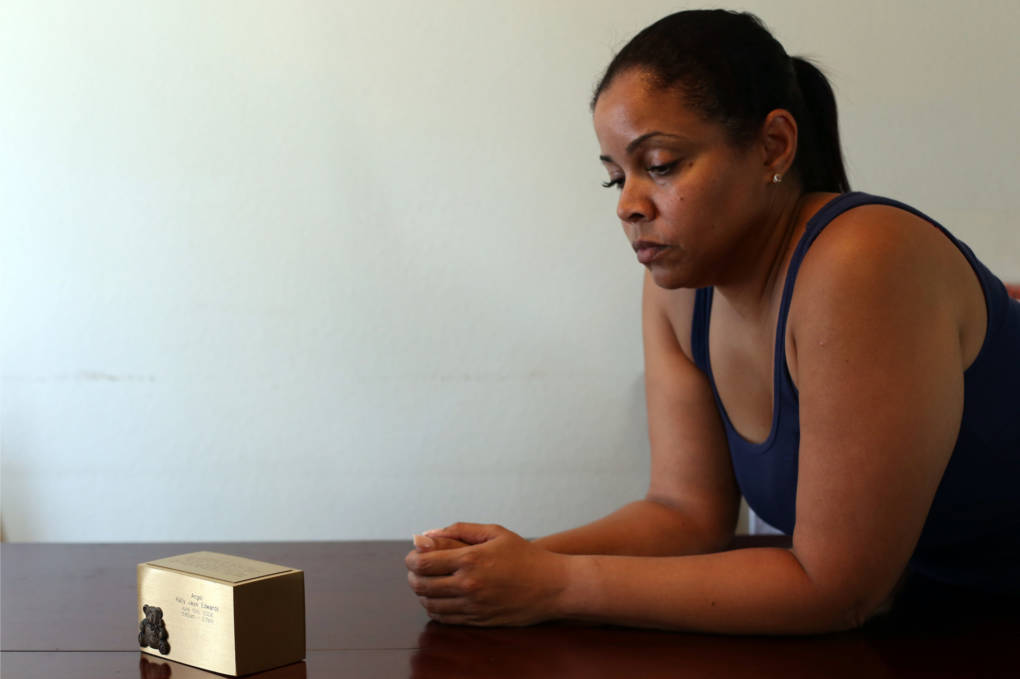
"caption": "Bettye Jean Ford with her first child Kally's ashes. Ms. Ford said when she lost her baby, she was determined to take Kally home with her. ",
"description": "Bettye Jean Ford with her first child Kally's ashes. Ms. Ford said when she lost her baby, she was determined to take Kally home with her. ",
"title": "RS38060_BLACK MOTHERS PHOTO 2-qut",
"credit": "Iris Schneider/CALmatters",
"status": "inherit",
"isLoading": false,
"fetchFailed": false
},
"news_11756773": {
"type": "attachments",
"id": "news_11756773",
"meta": {
"index": "attachments_1716263798",
"site": "news",
"id": "11756773",
"found": true
},
"parent": 11756766,
"imgSizes": {
"apple_news_ca_landscape_5_5": {
"file": "https://ww2.kqed.org/app/uploads/sites/10/2019/06/RS19755_GettyImages-538616764-qut-1044x783.jpg",
"width": 1044,
"mimeType": "image/jpeg",
"height": 783
},
"apple_news_ca_square_4_0": {
"file": "https://ww2.kqed.org/app/uploads/sites/10/2019/06/RS19755_GettyImages-538616764-qut-470x470.jpg",
"width": 470,
"mimeType": "image/jpeg",
"height": 470
},
"twentyfourteen-full-width": {
"file": "https://ww2.kqed.org/app/uploads/sites/10/2019/06/RS19755_GettyImages-538616764-qut-1038x576.jpg",
"width": 1038,
"mimeType": "image/jpeg",
"height": 576
},
"thumbnail": {
"file": "https://ww2.kqed.org/app/uploads/sites/10/2019/06/RS19755_GettyImages-538616764-qut-160x107.jpg",
"width": 160,
"mimeType": "image/jpeg",
"height": 107
},
"post-thumbnail": {
"file": "https://ww2.kqed.org/app/uploads/sites/10/2019/06/RS19755_GettyImages-538616764-qut-672x372.jpg",
"width": 672,
"mimeType": "image/jpeg",
"height": 372
},
"kqedFullSize": {
"file": "https://ww2.kqed.org/app/uploads/sites/10/2019/06/RS19755_GettyImages-538616764-qut.jpg",
"width": 1920,
"height": 1280
},
"apple_news_ca_landscape_4_7": {
"file": "https://ww2.kqed.org/app/uploads/sites/10/2019/06/RS19755_GettyImages-538616764-qut-632x474.jpg",
"width": 632,
"mimeType": "image/jpeg",
"height": 474
},
"large": {
"file": "https://ww2.kqed.org/app/uploads/sites/10/2019/06/RS19755_GettyImages-538616764-qut-1020x680.jpg",
"width": 1020,
"mimeType": "image/jpeg",
"height": 680
},
"complete_open_graph": {
"file": "https://ww2.kqed.org/app/uploads/sites/10/2019/06/RS19755_GettyImages-538616764-qut-1200x800.jpg",
"width": 1200,
"mimeType": "image/jpeg",
"height": 800
},
"apple_news_ca_landscape_4_0": {
"file": "https://ww2.kqed.org/app/uploads/sites/10/2019/06/RS19755_GettyImages-538616764-qut-536x402.jpg",
"width": 536,
"mimeType": "image/jpeg",
"height": 402
},
"apple_news_ca_portrait_12_9": {
"file": "https://ww2.kqed.org/app/uploads/sites/10/2019/06/RS19755_GettyImages-538616764-qut-1122x1280.jpg",
"width": 1122,
"mimeType": "image/jpeg",
"height": 1280
},
"medium": {
"file": "https://ww2.kqed.org/app/uploads/sites/10/2019/06/RS19755_GettyImages-538616764-qut-800x533.jpg",
"width": 800,
"mimeType": "image/jpeg",
"height": 533
},
"apple_news_ca_portrait_4_0": {
"file": "https://ww2.kqed.org/app/uploads/sites/10/2019/06/RS19755_GettyImages-538616764-qut-354x472.jpg",
"width": 354,
"mimeType": "image/jpeg",
"height": 472
},
"apple_news_ca_portrait_9_7": {
"file": "https://ww2.kqed.org/app/uploads/sites/10/2019/06/RS19755_GettyImages-538616764-qut-840x1120.jpg",
"width": 840,
"mimeType": "image/jpeg",
"height": 1120
},
"apple_news_ca_landscape_12_9": {
"file": "https://ww2.kqed.org/app/uploads/sites/10/2019/06/RS19755_GettyImages-538616764-qut-1832x1280.jpg",
"width": 1832,
"mimeType": "image/jpeg",
"height": 1280
},
"apple_news_ca_square_9_7": {
"file": "https://ww2.kqed.org/app/uploads/sites/10/2019/06/RS19755_GettyImages-538616764-qut-1104x1104.jpg",
"width": 1104,
"mimeType": "image/jpeg",
"height": 1104
},
"apple_news_ca_portrait_4_7": {
"file": "https://ww2.kqed.org/app/uploads/sites/10/2019/06/RS19755_GettyImages-538616764-qut-414x552.jpg",
"width": 414,
"mimeType": "image/jpeg",
"height": 552
},
"apple_news_ca_square_12_9": {
"file": "https://ww2.kqed.org/app/uploads/sites/10/2019/06/RS19755_GettyImages-538616764-qut-1472x1280.jpg",
"width": 1472,
"mimeType": "image/jpeg",
"height": 1280
},
"apple_news_ca_portrait_5_5": {
"file": "https://ww2.kqed.org/app/uploads/sites/10/2019/06/RS19755_GettyImages-538616764-qut-687x916.jpg",
"width": 687,
"mimeType": "image/jpeg",
"height": 916
},
"full-width": {
"file": "https://ww2.kqed.org/app/uploads/sites/10/2019/06/RS19755_GettyImages-538616764-qut-1920x1280.jpg",
"width": 1920,
"mimeType": "image/jpeg",
"height": 1280
},
"apple_news_ca_square_4_7": {
"file": "https://ww2.kqed.org/app/uploads/sites/10/2019/06/RS19755_GettyImages-538616764-qut-550x550.jpg",
"width": 550,
"mimeType": "image/jpeg",
"height": 550
},
"apple_news_ca_landscape_9_7": {
"file": "https://ww2.kqed.org/app/uploads/sites/10/2019/06/RS19755_GettyImages-538616764-qut-1376x1032.jpg",
"width": 1376,
"mimeType": "image/jpeg",
"height": 1032
},
"apple_news_ca_square_5_5": {
"file": "https://ww2.kqed.org/app/uploads/sites/10/2019/06/RS19755_GettyImages-538616764-qut-912x912.jpg",
"width": 912,
"mimeType": "image/jpeg",
"height": 912
}
},
"publishDate": 1561320941,
"modified": 1561321628,
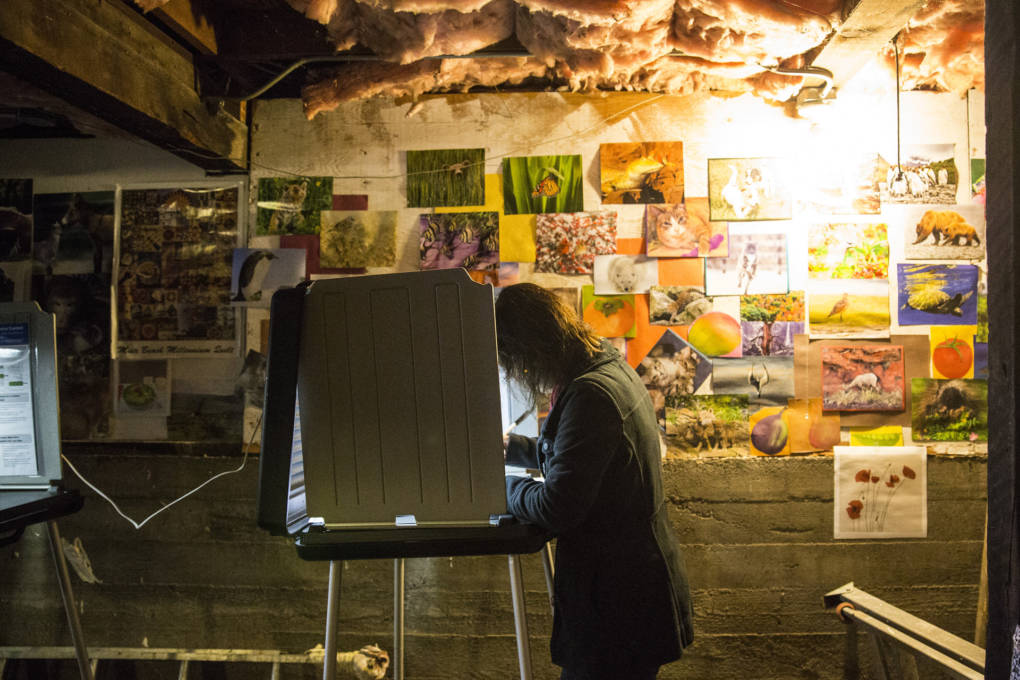
"caption": "Maryann Faricy votes in the California primaries on June 7, 2016 in the Potrero hill neighborhood of San Francisco, Calif. As independents make up an increasing share of the California electorate, a large portion of the electorate could be left out of the process.",
"description": null,
"title": "RS19755_GettyImages-538616764-qut",
"credit": "Andrew Burton/Getty Images",
"status": "inherit",
"isLoading": false,
"fetchFailed": false
},
"news_11756746": {
"type": "attachments",
"id": "news_11756746",
"meta": {
"index": "attachments_1716263798",
"site": "news",
"id": "11756746",
"found": true
},
"parent": 11756742,
"imgSizes": {
"apple_news_ca_landscape_5_5": {
"file": "https://ww2.kqed.org/app/uploads/sites/10/2019/06/CALMatters-FitzGibbon_009-e1561067123891-1044x783.jpg",
"width": 1044,
"mimeType": "image/jpeg",
"height": 783
},
"apple_news_ca_square_4_0": {
"file": "https://ww2.kqed.org/app/uploads/sites/10/2019/06/CALMatters-FitzGibbon_009-e1561067123891-470x470.jpg",
"width": 470,
"mimeType": "image/jpeg",
"height": 470
},
"twentyfourteen-full-width": {
"file": "https://ww2.kqed.org/app/uploads/sites/10/2019/06/CALMatters-FitzGibbon_009-e1561067123891-1038x576.jpg",
"width": 1038,
"mimeType": "image/jpeg",
"height": 576
},
"thumbnail": {
"file": "https://ww2.kqed.org/app/uploads/sites/10/2019/06/CALMatters-FitzGibbon_009-e1561067123891-160x112.jpg",
"width": 160,
"mimeType": "image/jpeg",
"height": 112
},
"post-thumbnail": {
"file": "https://ww2.kqed.org/app/uploads/sites/10/2019/06/CALMatters-FitzGibbon_009-e1561067123891-672x372.jpg",
"width": 672,
"mimeType": "image/jpeg",
"height": 372
},
"kqedFullSize": {
"file": "https://ww2.kqed.org/app/uploads/sites/10/2019/06/CALMatters-FitzGibbon_009-e1561067123891.jpg",
"width": 2048,
"height": 1438
},
"apple_news_ca_landscape_4_7": {
"file": "https://ww2.kqed.org/app/uploads/sites/10/2019/06/CALMatters-FitzGibbon_009-e1561067123891-632x474.jpg",
"width": 632,
"mimeType": "image/jpeg",
"height": 474
},
"large": {
"file": "https://ww2.kqed.org/app/uploads/sites/10/2019/06/CALMatters-FitzGibbon_009-e1561067123891-1020x716.jpg",
"width": 1020,
"mimeType": "image/jpeg",
"height": 716
},
"complete_open_graph": {
"file": "https://ww2.kqed.org/app/uploads/sites/10/2019/06/CALMatters-FitzGibbon_009-e1561067123891-1200x843.jpg",
"width": 1200,
"mimeType": "image/jpeg",
"height": 843
},
"apple_news_ca_landscape_4_0": {
"file": "https://ww2.kqed.org/app/uploads/sites/10/2019/06/CALMatters-FitzGibbon_009-e1561067123891-536x402.jpg",
"width": 536,
"mimeType": "image/jpeg",
"height": 402
},
"apple_news_ca_portrait_12_9": {
"file": "https://ww2.kqed.org/app/uploads/sites/10/2019/06/CALMatters-FitzGibbon_009-e1561067123891-1122x1496.jpg",
"width": 1122,
"mimeType": "image/jpeg",
"height": 1496
},
"medium": {
"file": "https://ww2.kqed.org/app/uploads/sites/10/2019/06/CALMatters-FitzGibbon_009-e1561067123891-800x562.jpg",
"width": 800,
"mimeType": "image/jpeg",
"height": 562
},
"apple_news_ca_portrait_4_0": {
"file": "https://ww2.kqed.org/app/uploads/sites/10/2019/06/CALMatters-FitzGibbon_009-e1561067123891-354x472.jpg",
"width": 354,
"mimeType": "image/jpeg",
"height": 472
},
"apple_news_ca_portrait_9_7": {
"file": "https://ww2.kqed.org/app/uploads/sites/10/2019/06/CALMatters-FitzGibbon_009-e1561067123891-840x1120.jpg",
"width": 840,
"mimeType": "image/jpeg",
"height": 1120
},
"apple_news_ca_landscape_12_9": {
"file": "https://ww2.kqed.org/app/uploads/sites/10/2019/06/CALMatters-FitzGibbon_009-e1561067123891-1832x1374.jpg",
"width": 1832,
"mimeType": "image/jpeg",
"height": 1374
},
"apple_news_ca_square_9_7": {
"file": "https://ww2.kqed.org/app/uploads/sites/10/2019/06/CALMatters-FitzGibbon_009-e1561067123891-1104x1104.jpg",
"width": 1104,
"mimeType": "image/jpeg",
"height": 1104
},
"apple_news_ca_portrait_4_7": {
"file": "https://ww2.kqed.org/app/uploads/sites/10/2019/06/CALMatters-FitzGibbon_009-e1561067123891-414x552.jpg",
"width": 414,
"mimeType": "image/jpeg",
"height": 552
},
"apple_news_ca_square_12_9": {
"file": "https://ww2.kqed.org/app/uploads/sites/10/2019/06/CALMatters-FitzGibbon_009-e1561067123891-1472x1472.jpg",
"width": 1472,
"mimeType": "image/jpeg",
"height": 1472
},
"apple_news_ca_portrait_5_5": {
"file": "https://ww2.kqed.org/app/uploads/sites/10/2019/06/CALMatters-FitzGibbon_009-e1561067123891-687x916.jpg",
"width": 687,
"mimeType": "image/jpeg",
"height": 916
},
"full-width": {
"file": "https://ww2.kqed.org/app/uploads/sites/10/2019/06/CALMatters-FitzGibbon_009-e1561067123891-1920x1348.jpg",
"width": 1920,
"mimeType": "image/jpeg",
"height": 1348
},
"apple_news_ca_square_4_7": {
"file": "https://ww2.kqed.org/app/uploads/sites/10/2019/06/CALMatters-FitzGibbon_009-e1561067123891-550x550.jpg",
"width": 550,
"mimeType": "image/jpeg",
"height": 550
},
"apple_news_ca_landscape_9_7": {
"file": "https://ww2.kqed.org/app/uploads/sites/10/2019/06/CALMatters-FitzGibbon_009-e1561067123891-1376x1032.jpg",
"width": 1376,
"mimeType": "image/jpeg",
"height": 1032
},
"apple_news_ca_square_5_5": {
"file": "https://ww2.kqed.org/app/uploads/sites/10/2019/06/CALMatters-FitzGibbon_009-e1561067123891-912x912.jpg",
"width": 912,
"mimeType": "image/jpeg",
"height": 912
}
},
"publishDate": 1561316824,
"modified": 1561317386,
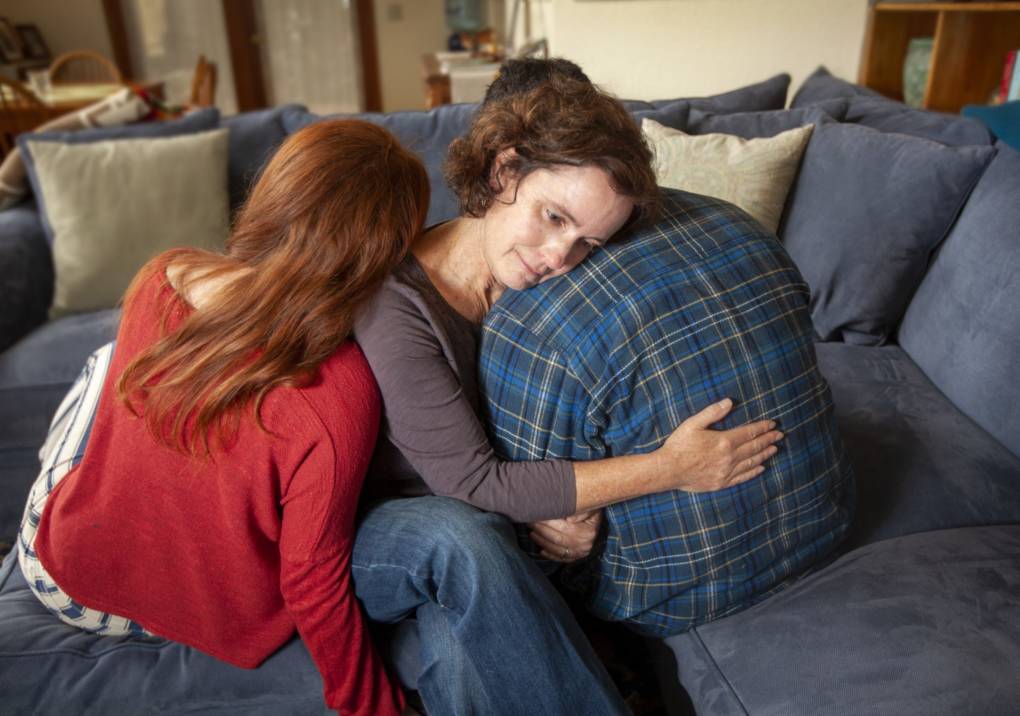
"caption": "Brighid FitzGibbon with her son, Evan. After he started having delusions last December, his parents discovered that early psychosis intervention was not available in their home county of Sonoma. ",
"description": null,
"title": "CALMatters-FitzGibbon_009-e1561067123891",
"credit": "Penny Gladstone/CALmatters",
"status": "inherit",
"isLoading": false,
"fetchFailed": false
},
"news_11756228": {
"type": "attachments",
"id": "news_11756228",
"meta": {
"index": "attachments_1716263798",
"site": "news",
"id": "11756228",
"found": true
},
"parent": 11756214,
"imgSizes": {
"apple_news_ca_square_4_0": {
"file": "https://ww2.kqed.org/app/uploads/sites/10/2019/06/shirley-weber-anna-caballero-california-legislature-police-shootings-bills-1000x554-470x470.jpg",
"width": 470,
"mimeType": "image/jpeg",
"height": 470
},
"thumbnail": {
"file": "https://ww2.kqed.org/app/uploads/sites/10/2019/06/shirley-weber-anna-caballero-california-legislature-police-shootings-bills-1000x554-160x89.jpg",
"width": 160,
"mimeType": "image/jpeg",
"height": 89
},
"post-thumbnail": {
"file": "https://ww2.kqed.org/app/uploads/sites/10/2019/06/shirley-weber-anna-caballero-california-legislature-police-shootings-bills-1000x554-672x372.jpg",
"width": 672,
"mimeType": "image/jpeg",
"height": 372
},
"kqedFullSize": {
"file": "https://ww2.kqed.org/app/uploads/sites/10/2019/06/shirley-weber-anna-caballero-california-legislature-police-shootings-bills-1000x554.jpg",
"width": 1000,
"height": 554
},
"apple_news_ca_landscape_4_7": {
"file": "https://ww2.kqed.org/app/uploads/sites/10/2019/06/shirley-weber-anna-caballero-california-legislature-police-shootings-bills-1000x554-632x474.jpg",
"width": 632,
"mimeType": "image/jpeg",
"height": 474
},
"apple_news_ca_landscape_4_0": {
"file": "https://ww2.kqed.org/app/uploads/sites/10/2019/06/shirley-weber-anna-caballero-california-legislature-police-shootings-bills-1000x554-536x402.jpg",
"width": 536,
"mimeType": "image/jpeg",
"height": 402
},
"medium": {
"file": "https://ww2.kqed.org/app/uploads/sites/10/2019/06/shirley-weber-anna-caballero-california-legislature-police-shootings-bills-1000x554-800x443.jpg",
"width": 800,
"mimeType": "image/jpeg",
"height": 443
},
"apple_news_ca_portrait_4_0": {
"file": "https://ww2.kqed.org/app/uploads/sites/10/2019/06/shirley-weber-anna-caballero-california-legislature-police-shootings-bills-1000x554-354x472.jpg",
"width": 354,
"mimeType": "image/jpeg",
"height": 472
},
"apple_news_ca_portrait_9_7": {
"file": "https://ww2.kqed.org/app/uploads/sites/10/2019/06/shirley-weber-anna-caballero-california-legislature-police-shootings-bills-1000x554-840x554.jpg",
"width": 840,
"mimeType": "image/jpeg",
"height": 554
},
"apple_news_ca_portrait_4_7": {
"file": "https://ww2.kqed.org/app/uploads/sites/10/2019/06/shirley-weber-anna-caballero-california-legislature-police-shootings-bills-1000x554-414x552.jpg",
"width": 414,
"mimeType": "image/jpeg",
"height": 552
},
"apple_news_ca_portrait_5_5": {
"file": "https://ww2.kqed.org/app/uploads/sites/10/2019/06/shirley-weber-anna-caballero-california-legislature-police-shootings-bills-1000x554-687x554.jpg",
"width": 687,
"mimeType": "image/jpeg",
"height": 554
},
"apple_news_ca_square_4_7": {
"file": "https://ww2.kqed.org/app/uploads/sites/10/2019/06/shirley-weber-anna-caballero-california-legislature-police-shootings-bills-1000x554-550x550.jpg",
"width": 550,
"mimeType": "image/jpeg",
"height": 550
},
"apple_news_ca_square_5_5": {
"file": "https://ww2.kqed.org/app/uploads/sites/10/2019/06/shirley-weber-anna-caballero-california-legislature-police-shootings-bills-1000x554-912x554.jpg",
"width": 912,
"mimeType": "image/jpeg",
"height": 554
}
},
"publishDate": 1561073802,
"modified": 1561074023,
"caption": "State Assemblywoman Shirley Weber (left) and State Sen. Anna Caballero, both Democrats, have competing approaches to policing.",
"description": null,
"title": "shirley-weber-anna-caballero-california-legislature-police-shootings-bills-1000x554",
"credit": "CALmatters",
"status": "inherit",
"isLoading": false,
"fetchFailed": false
},
"news_11754835": {
"type": "attachments",
"id": "news_11754835",
"meta": {
"index": "attachments_1716263798",
"site": "news",
"id": "11754835",
"found": true
},
"parent": 11754785,
"imgSizes": {
"apple_news_ca_square_4_0": {
"file": "https://ww2.kqed.org/app/uploads/sites/10/2019/06/GettyImages-937433370-470x470.jpg",
"width": 470,
"mimeType": "image/jpeg",
"height": 470
},
"twentyfourteen-full-width": {
"file": "https://ww2.kqed.org/app/uploads/sites/10/2019/06/GettyImages-937433370-1024x576.jpg",
"width": 1024,
"mimeType": "image/jpeg",
"height": 576
},
"thumbnail": {
"file": "https://ww2.kqed.org/app/uploads/sites/10/2019/06/GettyImages-937433370-160x107.jpg",
"width": 160,
"mimeType": "image/jpeg",
"height": 107
},
"post-thumbnail": {
"file": "https://ww2.kqed.org/app/uploads/sites/10/2019/06/GettyImages-937433370-672x372.jpg",
"width": 672,
"mimeType": "image/jpeg",
"height": 372
},
"kqedFullSize": {
"file": "https://ww2.kqed.org/app/uploads/sites/10/2019/06/GettyImages-937433370.jpg",
"width": 1024,
"height": 683
},
"apple_news_ca_landscape_4_7": {
"file": "https://ww2.kqed.org/app/uploads/sites/10/2019/06/GettyImages-937433370-632x474.jpg",
"width": 632,
"mimeType": "image/jpeg",
"height": 474
},
"large": {
"file": "https://ww2.kqed.org/app/uploads/sites/10/2019/06/GettyImages-937433370-1020x680.jpg",
"width": 1020,
"mimeType": "image/jpeg",
"height": 680
},
"apple_news_ca_landscape_4_0": {
"file": "https://ww2.kqed.org/app/uploads/sites/10/2019/06/GettyImages-937433370-536x402.jpg",
"width": 536,
"mimeType": "image/jpeg",
"height": 402
},
"medium": {
"file": "https://ww2.kqed.org/app/uploads/sites/10/2019/06/GettyImages-937433370-800x534.jpg",
"width": 800,
"mimeType": "image/jpeg",
"height": 534
},
"apple_news_ca_portrait_4_0": {
"file": "https://ww2.kqed.org/app/uploads/sites/10/2019/06/GettyImages-937433370-354x472.jpg",
"width": 354,
"mimeType": "image/jpeg",
"height": 472
},
"apple_news_ca_portrait_9_7": {
"file": "https://ww2.kqed.org/app/uploads/sites/10/2019/06/GettyImages-937433370-840x683.jpg",
"width": 840,
"mimeType": "image/jpeg",
"height": 683
},
"apple_news_ca_portrait_4_7": {
"file": "https://ww2.kqed.org/app/uploads/sites/10/2019/06/GettyImages-937433370-414x552.jpg",
"width": 414,
"mimeType": "image/jpeg",
"height": 552
},
"apple_news_ca_portrait_5_5": {
"file": "https://ww2.kqed.org/app/uploads/sites/10/2019/06/GettyImages-937433370-687x683.jpg",
"width": 687,
"mimeType": "image/jpeg",
"height": 683
},
"apple_news_ca_square_4_7": {
"file": "https://ww2.kqed.org/app/uploads/sites/10/2019/06/GettyImages-937433370-550x550.jpg",
"width": 550,
"mimeType": "image/jpeg",
"height": 550
},
"apple_news_ca_square_5_5": {
"file": "https://ww2.kqed.org/app/uploads/sites/10/2019/06/GettyImages-937433370-912x683.jpg",
"width": 912,
"mimeType": "image/jpeg",
"height": 683
}
},
"publishDate": 1560547570,
"modified": 1560547634,
"caption": "Thousands of people march to the California State Capitol during a demonstration in Sacramento. ",
"description": null,
"title": "Thousands Join March For Our Lives Events Across US For School Safety From Guns",
"credit": "Photo by Justin Sullivan/Getty Images",
"status": "inherit",
"isLoading": false,
"fetchFailed": false
},
"news_11648204": {
"type": "attachments",
"id": "news_11648204",
"meta": {
"index": "attachments_1716263798",
"site": "news",
"id": "11648204",
"found": true
},
"parent": 11648195,
"imgSizes": {
"small": {
"file": "https://ww2.kqed.org/app/uploads/sites/10/2018/02/SacCapitol-520x390.jpg",
"width": 520,
"mimeType": "image/jpeg",
"height": 390
},
"twentyfourteen-full-width": {
"file": "https://ww2.kqed.org/app/uploads/sites/10/2018/02/SacCapitol-1038x576.jpg",
"width": 1038,
"mimeType": "image/jpeg",
"height": 576
},
"thumbnail": {
"file": "https://ww2.kqed.org/app/uploads/sites/10/2018/02/SacCapitol-160x120.jpg",
"width": 160,
"mimeType": "image/jpeg",
"height": 120
},
"fd-sm": {
"file": "https://ww2.kqed.org/app/uploads/sites/10/2018/02/SacCapitol-960x720.jpg",
"width": 960,
"mimeType": "image/jpeg",
"height": 720
},
"post-thumbnail": {
"file": "https://ww2.kqed.org/app/uploads/sites/10/2018/02/SacCapitol-672x372.jpg",
"width": 672,
"mimeType": "image/jpeg",
"height": 372
},
"xsmall": {
"file": "https://ww2.kqed.org/app/uploads/sites/10/2018/02/SacCapitol-375x281.jpg",
"width": 375,
"mimeType": "image/jpeg",
"height": 281
},
"kqedFullSize": {
"file": "https://ww2.kqed.org/app/uploads/sites/10/2018/02/SacCapitol.jpg",
"width": 1920,
"height": 1440
},
"large": {
"file": "https://ww2.kqed.org/app/uploads/sites/10/2018/02/SacCapitol-1020x765.jpg",
"width": 1020,
"mimeType": "image/jpeg",
"height": 765
},
"xlarge": {
"file": "https://ww2.kqed.org/app/uploads/sites/10/2018/02/SacCapitol-1180x885.jpg",
"width": 1180,
"mimeType": "image/jpeg",
"height": 885
},
"guest-author-50": {
"file": "https://ww2.kqed.org/app/uploads/sites/10/2018/02/SacCapitol-50x50.jpg",
"width": 50,
"mimeType": "image/jpeg",
"height": 50
},
"guest-author-96": {
"file": "https://ww2.kqed.org/app/uploads/sites/10/2018/02/SacCapitol-96x96.jpg",
"width": 96,
"mimeType": "image/jpeg",
"height": 96
},
"medium": {
"file": "https://ww2.kqed.org/app/uploads/sites/10/2018/02/SacCapitol-800x600.jpg",
"width": 800,
"mimeType": "image/jpeg",
"height": 600
},
"guest-author-64": {
"file": "https://ww2.kqed.org/app/uploads/sites/10/2018/02/SacCapitol-64x64.jpg",
"width": 64,
"mimeType": "image/jpeg",
"height": 64
},
"guest-author-32": {
"file": "https://ww2.kqed.org/app/uploads/sites/10/2018/02/SacCapitol-32x32.jpg",
"width": 32,
"mimeType": "image/jpeg",
"height": 32
},
"fd-lrg": {
"file": "https://ww2.kqed.org/app/uploads/sites/10/2018/02/SacCapitol-1920x1440.jpg",
"width": 1920,
"mimeType": "image/jpeg",
"height": 1440
},
"fd-med": {
"file": "https://ww2.kqed.org/app/uploads/sites/10/2018/02/SacCapitol-1180x885.jpg",
"width": 1180,
"mimeType": "image/jpeg",
"height": 885
},
"full-width": {
"file": "https://ww2.kqed.org/app/uploads/sites/10/2018/02/SacCapitol-1920x1440.jpg",
"width": 1920,
"mimeType": "image/jpeg",
"height": 1440
},
"detail": {
"file": "https://ww2.kqed.org/app/uploads/sites/10/2018/02/SacCapitol-150x150.jpg",
"width": 150,
"mimeType": "image/jpeg",
"height": 150
},
"guest-author-128": {
"file": "https://ww2.kqed.org/app/uploads/sites/10/2018/02/SacCapitol-128x128.jpg",
"width": 128,
"mimeType": "image/jpeg",
"height": 128
},
"xxsmall": {
"file": "https://ww2.kqed.org/app/uploads/sites/10/2018/02/SacCapitol-240x180.jpg",
"width": 240,
"mimeType": "image/jpeg",
"height": 180
}
},
"publishDate": 1517876289,
"modified": 1517876317,
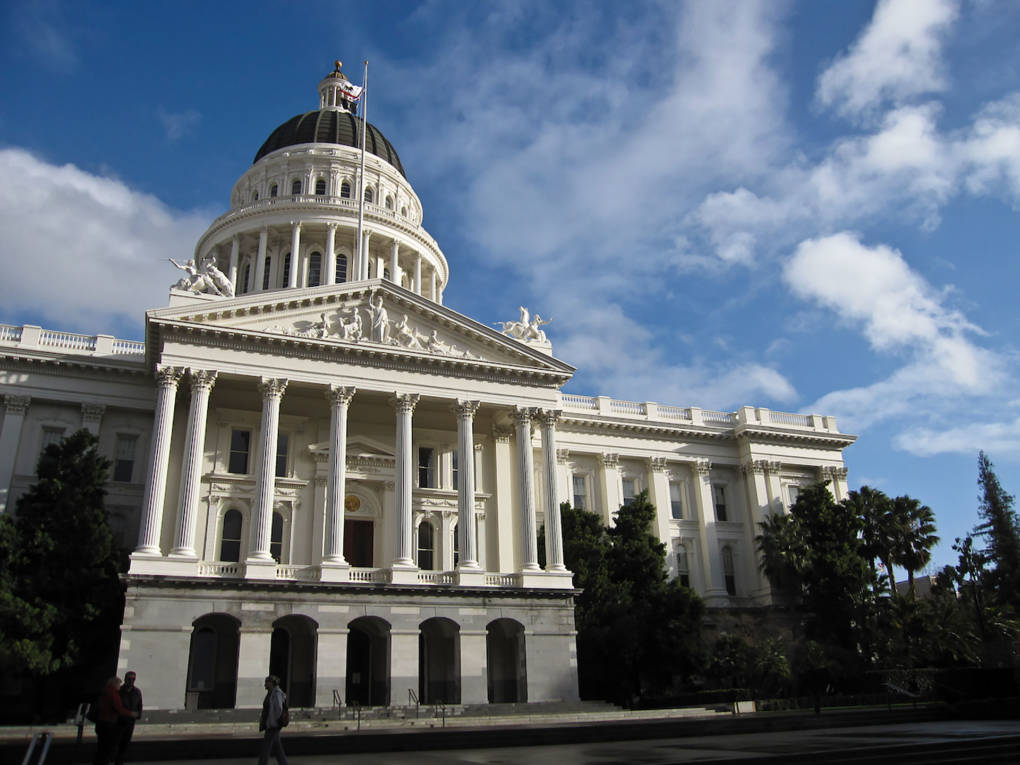
"caption": "The state Capitol in Sacramento.",
"description": "The state Capitol in Sacramento.",
"title": "SacCapitol",
"credit": "Vanessa Rancano/KQED",
"status": "inherit",
"isLoading": false,
"fetchFailed": false
},
"news_11751927": {
"type": "attachments",
"id": "news_11751927",
"meta": {
"index": "attachments_1716263798",
"site": "news",
"id": "11751927",
"found": true
},
"parent": 11751924,
"imgSizes": {
"apple_news_ca_landscape_5_5": {
"file": "https://ww2.kqed.org/app/uploads/sites/10/2019/06/RS14288_Mission-Coop_JRaff-4-of-7-qut-1044x783.jpg",
"width": 1044,
"mimeType": "image/jpeg",
"height": 783
},
"apple_news_ca_square_4_0": {
"file": "https://ww2.kqed.org/app/uploads/sites/10/2019/06/RS14288_Mission-Coop_JRaff-4-of-7-qut-470x470.jpg",
"width": 470,
"mimeType": "image/jpeg",
"height": 470
},
"twentyfourteen-full-width": {
"file": "https://ww2.kqed.org/app/uploads/sites/10/2019/06/RS14288_Mission-Coop_JRaff-4-of-7-qut-1038x576.jpg",
"width": 1038,
"mimeType": "image/jpeg",
"height": 576
},
"thumbnail": {
"file": "https://ww2.kqed.org/app/uploads/sites/10/2019/06/RS14288_Mission-Coop_JRaff-4-of-7-qut-160x107.jpg",
"width": 160,
"mimeType": "image/jpeg",
"height": 107
},
"post-thumbnail": {
"file": "https://ww2.kqed.org/app/uploads/sites/10/2019/06/RS14288_Mission-Coop_JRaff-4-of-7-qut-672x372.jpg",
"width": 672,
"mimeType": "image/jpeg",
"height": 372
},
"kqedFullSize": {
"file": "https://ww2.kqed.org/app/uploads/sites/10/2019/06/RS14288_Mission-Coop_JRaff-4-of-7-qut.jpg",
"width": 1440,
"height": 960
},
"apple_news_ca_landscape_4_7": {
"file": "https://ww2.kqed.org/app/uploads/sites/10/2019/06/RS14288_Mission-Coop_JRaff-4-of-7-qut-632x474.jpg",
"width": 632,
"mimeType": "image/jpeg",
"height": 474
},
"large": {
"file": "https://ww2.kqed.org/app/uploads/sites/10/2019/06/RS14288_Mission-Coop_JRaff-4-of-7-qut-1020x680.jpg",
"width": 1020,
"mimeType": "image/jpeg",
"height": 680
},
"complete_open_graph": {
"file": "https://ww2.kqed.org/app/uploads/sites/10/2019/06/RS14288_Mission-Coop_JRaff-4-of-7-qut-1200x800.jpg",
"width": 1200,
"mimeType": "image/jpeg",
"height": 800
},
"apple_news_ca_landscape_4_0": {
"file": "https://ww2.kqed.org/app/uploads/sites/10/2019/06/RS14288_Mission-Coop_JRaff-4-of-7-qut-536x402.jpg",
"width": 536,
"mimeType": "image/jpeg",
"height": 402
},
"apple_news_ca_portrait_12_9": {
"file": "https://ww2.kqed.org/app/uploads/sites/10/2019/06/RS14288_Mission-Coop_JRaff-4-of-7-qut-1122x960.jpg",
"width": 1122,
"mimeType": "image/jpeg",
"height": 960
},
"medium": {
"file": "https://ww2.kqed.org/app/uploads/sites/10/2019/06/RS14288_Mission-Coop_JRaff-4-of-7-qut-800x533.jpg",
"width": 800,
"mimeType": "image/jpeg",
"height": 533
},
"apple_news_ca_portrait_4_0": {
"file": "https://ww2.kqed.org/app/uploads/sites/10/2019/06/RS14288_Mission-Coop_JRaff-4-of-7-qut-354x472.jpg",
"width": 354,
"mimeType": "image/jpeg",
"height": 472
},
"apple_news_ca_portrait_9_7": {
"file": "https://ww2.kqed.org/app/uploads/sites/10/2019/06/RS14288_Mission-Coop_JRaff-4-of-7-qut-840x960.jpg",
"width": 840,
"mimeType": "image/jpeg",
"height": 960
},
"apple_news_ca_square_9_7": {
"file": "https://ww2.kqed.org/app/uploads/sites/10/2019/06/RS14288_Mission-Coop_JRaff-4-of-7-qut-1104x960.jpg",
"width": 1104,
"mimeType": "image/jpeg",
"height": 960
},
"apple_news_ca_portrait_4_7": {
"file": "https://ww2.kqed.org/app/uploads/sites/10/2019/06/RS14288_Mission-Coop_JRaff-4-of-7-qut-414x552.jpg",
"width": 414,
"mimeType": "image/jpeg",
"height": 552
},
"apple_news_ca_portrait_5_5": {
"file": "https://ww2.kqed.org/app/uploads/sites/10/2019/06/RS14288_Mission-Coop_JRaff-4-of-7-qut-687x916.jpg",
"width": 687,
"mimeType": "image/jpeg",
"height": 916
},
"apple_news_ca_square_4_7": {
"file": "https://ww2.kqed.org/app/uploads/sites/10/2019/06/RS14288_Mission-Coop_JRaff-4-of-7-qut-550x550.jpg",
"width": 550,
"mimeType": "image/jpeg",
"height": 550
},
"apple_news_ca_landscape_9_7": {
"file": "https://ww2.kqed.org/app/uploads/sites/10/2019/06/RS14288_Mission-Coop_JRaff-4-of-7-qut-1376x960.jpg",
"width": 1376,
"mimeType": "image/jpeg",
"height": 960
},
"apple_news_ca_square_5_5": {
"file": "https://ww2.kqed.org/app/uploads/sites/10/2019/06/RS14288_Mission-Coop_JRaff-4-of-7-qut-912x912.jpg",
"width": 912,
"mimeType": "image/jpeg",
"height": 912
}
},
"publishDate": 1559504903,
"modified": 1559505187,
"caption": "Lawmakers say predatory lending takes advantage of poor people, who often lack the education or consumer awareness to steer clear of these legal loan sharks. A new measure would place a 36% annual interest rate cap on loans made by state-licensed lenders.",
"description": null,
"title": "RS14288_Mission Coop_JRaff (4 of 7)-qut",
"credit": "Jeremy Raff",
"status": "inherit",
"isLoading": false,
"fetchFailed": false
},
"news_11751068": {
"type": "attachments",
"id": "news_11751068",
"meta": {
"index": "attachments_1716263798",
"site": "news",
"id": "11751068",
"found": true
},
"parent": 11751060,
"imgSizes": {
"apple_news_ca_square_4_0": {
"file": "https://ww2.kqed.org/app/uploads/sites/10/2019/05/iStock-1132235083-1000x667-470x470.jpg",
"width": 470,
"mimeType": "image/jpeg",
"height": 470
},
"twentyfourteen-full-width": {
"file": "https://ww2.kqed.org/app/uploads/sites/10/2019/05/iStock-1132235083-1000x667-1000x576.jpg",
"width": 1000,
"mimeType": "image/jpeg",
"height": 576
},
"thumbnail": {
"file": "https://ww2.kqed.org/app/uploads/sites/10/2019/05/iStock-1132235083-1000x667-160x107.jpg",
"width": 160,
"mimeType": "image/jpeg",
"height": 107
},
"post-thumbnail": {
"file": "https://ww2.kqed.org/app/uploads/sites/10/2019/05/iStock-1132235083-1000x667-672x372.jpg",
"width": 672,
"mimeType": "image/jpeg",
"height": 372
},
"kqedFullSize": {
"file": "https://ww2.kqed.org/app/uploads/sites/10/2019/05/iStock-1132235083-1000x667.jpg",
"width": 1000,
"height": 667
},
"apple_news_ca_landscape_4_7": {
"file": "https://ww2.kqed.org/app/uploads/sites/10/2019/05/iStock-1132235083-1000x667-632x474.jpg",
"width": 632,
"mimeType": "image/jpeg",
"height": 474
},
"apple_news_ca_landscape_4_0": {
"file": "https://ww2.kqed.org/app/uploads/sites/10/2019/05/iStock-1132235083-1000x667-536x402.jpg",
"width": 536,
"mimeType": "image/jpeg",
"height": 402
},
"medium": {
"file": "https://ww2.kqed.org/app/uploads/sites/10/2019/05/iStock-1132235083-1000x667-800x534.jpg",
"width": 800,
"mimeType": "image/jpeg",
"height": 534
},
"apple_news_ca_portrait_4_0": {
"file": "https://ww2.kqed.org/app/uploads/sites/10/2019/05/iStock-1132235083-1000x667-354x472.jpg",
"width": 354,
"mimeType": "image/jpeg",
"height": 472
},
"apple_news_ca_portrait_9_7": {
"file": "https://ww2.kqed.org/app/uploads/sites/10/2019/05/iStock-1132235083-1000x667-840x667.jpg",
"width": 840,
"mimeType": "image/jpeg",
"height": 667
},
"apple_news_ca_portrait_4_7": {
"file": "https://ww2.kqed.org/app/uploads/sites/10/2019/05/iStock-1132235083-1000x667-414x552.jpg",
"width": 414,
"mimeType": "image/jpeg",
"height": 552
},
"apple_news_ca_portrait_5_5": {
"file": "https://ww2.kqed.org/app/uploads/sites/10/2019/05/iStock-1132235083-1000x667-687x667.jpg",
"width": 687,
"mimeType": "image/jpeg",
"height": 667
},
"apple_news_ca_square_4_7": {
"file": "https://ww2.kqed.org/app/uploads/sites/10/2019/05/iStock-1132235083-1000x667-550x550.jpg",
"width": 550,
"mimeType": "image/jpeg",
"height": 550
},
"apple_news_ca_square_5_5": {
"file": "https://ww2.kqed.org/app/uploads/sites/10/2019/05/iStock-1132235083-1000x667-912x667.jpg",
"width": 912,
"mimeType": "image/jpeg",
"height": 667
}
},
"publishDate": 1559232186,
"modified": 1559232205,
"caption": "Residential rents could rise only up to 7% plus inflation per year under a bill approved by the California Assembly—an unusual victory in the Capitol for renters.",
"description": "Residential rents could rise only up to 7% plus inflation per year under a bill approved by the California Assembly—an unusual victory in the Capitol for renters.",
"title": "iStock-1132235083-1000x667",
"credit": "iStock",
"status": "inherit",
"isLoading": false,
"fetchFailed": false
},
"news_11689777": {
"type": "attachments",
"id": "news_11689777",
"meta": {
"index": "attachments_1716263798",
"site": "news",
"id": "11689777",
"found": true
},
"parent": 11689666,
"imgSizes": {
"small": {
"file": "https://ww2.kqed.org/app/uploads/sites/10/2018/08/ShotsCheers-520x342.jpg",
"width": 520,
"mimeType": "image/jpeg",
"height": 342
},
"twentyfourteen-full-width": {
"file": "https://ww2.kqed.org/app/uploads/sites/10/2018/08/ShotsCheers-1038x576.jpg",
"width": 1038,
"mimeType": "image/jpeg",
"height": 576
},
"thumbnail": {
"file": "https://ww2.kqed.org/app/uploads/sites/10/2018/08/ShotsCheers-160x105.jpg",
"width": 160,
"mimeType": "image/jpeg",
"height": 105
},
"fd-sm": {
"file": "https://ww2.kqed.org/app/uploads/sites/10/2018/08/ShotsCheers-960x631.jpg",
"width": 960,
"mimeType": "image/jpeg",
"height": 631
},
"post-thumbnail": {
"file": "https://ww2.kqed.org/app/uploads/sites/10/2018/08/ShotsCheers-672x372.jpg",
"width": 672,
"mimeType": "image/jpeg",
"height": 372
},
"xsmall": {
"file": "https://ww2.kqed.org/app/uploads/sites/10/2018/08/ShotsCheers-375x246.jpg",
"width": 375,
"mimeType": "image/jpeg",
"height": 246
},
"kqedFullSize": {
"file": "https://ww2.kqed.org/app/uploads/sites/10/2018/08/ShotsCheers.jpg",
"width": 1920,
"height": 1262
},
"large": {
"file": "https://ww2.kqed.org/app/uploads/sites/10/2018/08/ShotsCheers-1020x670.jpg",
"width": 1020,
"mimeType": "image/jpeg",
"height": 670
},
"xlarge": {
"file": "https://ww2.kqed.org/app/uploads/sites/10/2018/08/ShotsCheers-1180x776.jpg",
"width": 1180,
"mimeType": "image/jpeg",
"height": 776
},
"complete_open_graph": {
"file": "https://ww2.kqed.org/app/uploads/sites/10/2018/08/ShotsCheers-1200x789.jpg",
"width": 1200,
"mimeType": "image/jpeg",
"height": 789
},
"guest-author-50": {
"file": "https://ww2.kqed.org/app/uploads/sites/10/2018/08/ShotsCheers-50x50.jpg",
"width": 50,
"mimeType": "image/jpeg",
"height": 50
},
"guest-author-96": {
"file": "https://ww2.kqed.org/app/uploads/sites/10/2018/08/ShotsCheers-96x96.jpg",
"width": 96,
"mimeType": "image/jpeg",
"height": 96
},
"medium": {
"file": "https://ww2.kqed.org/app/uploads/sites/10/2018/08/ShotsCheers-800x526.jpg",
"width": 800,
"mimeType": "image/jpeg",
"height": 526
},
"guest-author-64": {
"file": "https://ww2.kqed.org/app/uploads/sites/10/2018/08/ShotsCheers-64x64.jpg",
"width": 64,
"mimeType": "image/jpeg",
"height": 64
},
"guest-author-32": {
"file": "https://ww2.kqed.org/app/uploads/sites/10/2018/08/ShotsCheers-32x32.jpg",
"width": 32,
"mimeType": "image/jpeg",
"height": 32
},
"fd-lrg": {
"file": "https://ww2.kqed.org/app/uploads/sites/10/2018/08/ShotsCheers-1920x1262.jpg",
"width": 1920,
"mimeType": "image/jpeg",
"height": 1262
},
"fd-med": {
"file": "https://ww2.kqed.org/app/uploads/sites/10/2018/08/ShotsCheers-1180x776.jpg",
"width": 1180,
"mimeType": "image/jpeg",
"height": 776
},
"full-width": {
"file": "https://ww2.kqed.org/app/uploads/sites/10/2018/08/ShotsCheers-1920x1262.jpg",
"width": 1920,
"mimeType": "image/jpeg",
"height": 1262
},
"detail": {
"file": "https://ww2.kqed.org/app/uploads/sites/10/2018/08/ShotsCheers-150x150.jpg",
"width": 150,
"mimeType": "image/jpeg",
"height": 150
},
"guest-author-128": {
"file": "https://ww2.kqed.org/app/uploads/sites/10/2018/08/ShotsCheers-128x128.jpg",
"width": 128,
"mimeType": "image/jpeg",
"height": 128
},
"xxsmall": {
"file": "https://ww2.kqed.org/app/uploads/sites/10/2018/08/ShotsCheers-240x158.jpg",
"width": 240,
"mimeType": "image/jpeg",
"height": 158
}
},
"publishDate": 1535742028,
"modified": 1558735403,
"caption": "California's 4 a.m. last call bar bill is up for reconsideration under Gov. Gavin Newsom, founder of PlumpJack winery. Jerry Brown vetoed it last year.",
"description": "California's 4 a.m. last call bar bill is up for reconsideration under Gov. Gavin Newsom, founder of PlumpJack winery. Jerry Brown vetoed it last year.",
"title": null,
"credit": "Getty Images",
"status": "inherit",
"isLoading": false,
"fetchFailed": false
},
"news_10891346": {
"type": "attachments",
"id": "news_10891346",
"meta": {
"index": "attachments_1716263798",
"site": "news",
"id": "10891346",
"found": true
},
"parent": 10891027,
"imgSizes": {
"twentyfourteen-full-width": {
"file": "https://ww2.kqed.org/app/uploads/sites/10/2016/03/cokecans-1038x576.jpg",
"width": 1038,
"mimeType": "image/jpeg",
"height": 576
},
"thumbnail": {
"file": "https://ww2.kqed.org/app/uploads/sites/10/2016/03/cokecans-400x250.jpg",
"width": 400,
"mimeType": "image/jpeg",
"height": 250
},
"fd-sm": {
"file": "https://ww2.kqed.org/app/uploads/sites/10/2016/03/cokecans-960x600.jpg",
"width": 960,
"mimeType": "image/jpeg",
"height": 600
},
"post-thumbnail": {
"file": "https://ww2.kqed.org/app/uploads/sites/10/2016/03/cokecans-672x372.jpg",
"width": 672,
"mimeType": "image/jpeg",
"height": 372
},
"kqedFullSize": {
"file": "https://ww2.kqed.org/app/uploads/sites/10/2016/03/cokecans.jpg",
"width": 1920,
"height": 1200
},
"large": {
"file": "https://ww2.kqed.org/app/uploads/sites/10/2016/03/cokecans-1920x1200.jpg",
"width": 1920,
"mimeType": "image/jpeg",
"height": 1200
},
"guest-author-96": {
"file": "https://ww2.kqed.org/app/uploads/sites/10/2016/03/cokecans-96x96.jpg",
"width": 96,
"mimeType": "image/jpeg",
"height": 96
},
"medium": {
"file": "https://ww2.kqed.org/app/uploads/sites/10/2016/03/cokecans-800x500.jpg",
"width": 800,
"mimeType": "image/jpeg",
"height": 500
},
"guest-author-64": {
"file": "https://ww2.kqed.org/app/uploads/sites/10/2016/03/cokecans-64x64.jpg",
"width": 64,
"mimeType": "image/jpeg",
"height": 64
},
"guest-author-32": {
"file": "https://ww2.kqed.org/app/uploads/sites/10/2016/03/cokecans-32x32.jpg",
"width": 32,
"mimeType": "image/jpeg",
"height": 32
},
"jmtc-small-thumb": {
"file": "https://ww2.kqed.org/app/uploads/sites/10/2016/03/cokecans-280x150.jpg",
"width": 280,
"mimeType": "image/jpeg",
"height": 150
},
"fd-lrg": {
"file": "https://ww2.kqed.org/app/uploads/sites/10/2016/03/cokecans-1920x1200.jpg",
"width": 1920,
"mimeType": "image/jpeg",
"height": 1200
},
"fd-med": {
"file": "https://ww2.kqed.org/app/uploads/sites/10/2016/03/cokecans-1180x738.jpg",
"width": 1180,
"mimeType": "image/jpeg",
"height": 738
},
"detail": {
"file": "https://ww2.kqed.org/app/uploads/sites/10/2016/03/cokecans-75x75.jpg",
"width": 75,
"mimeType": "image/jpeg",
"height": 75
},
"guest-author-128": {
"file": "https://ww2.kqed.org/app/uploads/sites/10/2016/03/cokecans-128x128.jpg",
"width": 128,
"mimeType": "image/jpeg",
"height": 128
}
},
"publishDate": 1457623295,
"modified": 1558649024,
"caption": "Despite public health warnings, the beverage industry is continuing to block efforts to tax sugary sodas in California.",
"description": "Despite public health warnings, the beverage industry is continuing to block efforts to tax sugary sodas in California.",
"title": "Soda Cans",
"credit": "Getty Images",
"status": "inherit",
"isLoading": false,
"fetchFailed": false
},
"news_11748555": {
"type": "attachments",
"id": "news_11748555",
"meta": {
"index": "attachments_1716263798",
"site": "news",
"id": "11748555",
"found": true
},
"parent": 11748518,
"imgSizes": {
"apple_news_ca_square_4_0": {
"file": "https://ww2.kqed.org/app/uploads/sites/10/2019/05/GettyImages-1126989180-470x470.jpg",
"width": 470,
"mimeType": "image/jpeg",
"height": 470
},
"twentyfourteen-full-width": {
"file": "https://ww2.kqed.org/app/uploads/sites/10/2019/05/GettyImages-1126989180-1024x576.jpg",
"width": 1024,
"mimeType": "image/jpeg",
"height": 576
},
"thumbnail": {
"file": "https://ww2.kqed.org/app/uploads/sites/10/2019/05/GettyImages-1126989180-160x100.jpg",
"width": 160,
"mimeType": "image/jpeg",
"height": 100
},
"post-thumbnail": {
"file": "https://ww2.kqed.org/app/uploads/sites/10/2019/05/GettyImages-1126989180-672x372.jpg",
"width": 672,
"mimeType": "image/jpeg",
"height": 372
},
"kqedFullSize": {
"file": "https://ww2.kqed.org/app/uploads/sites/10/2019/05/GettyImages-1126989180.jpg",
"width": 1024,
"height": 637
},
"apple_news_ca_landscape_4_7": {
"file": "https://ww2.kqed.org/app/uploads/sites/10/2019/05/GettyImages-1126989180-632x474.jpg",
"width": 632,
"mimeType": "image/jpeg",
"height": 474
},
"large": {
"file": "https://ww2.kqed.org/app/uploads/sites/10/2019/05/GettyImages-1126989180-1020x635.jpg",
"width": 1020,
"mimeType": "image/jpeg",
"height": 635
},
"apple_news_ca_landscape_4_0": {
"file": "https://ww2.kqed.org/app/uploads/sites/10/2019/05/GettyImages-1126989180-536x402.jpg",
"width": 536,
"mimeType": "image/jpeg",
"height": 402
},
"medium": {
"file": "https://ww2.kqed.org/app/uploads/sites/10/2019/05/GettyImages-1126989180-800x498.jpg",
"width": 800,
"mimeType": "image/jpeg",
"height": 498
},
"apple_news_ca_portrait_4_0": {
"file": "https://ww2.kqed.org/app/uploads/sites/10/2019/05/GettyImages-1126989180-354x472.jpg",
"width": 354,
"mimeType": "image/jpeg",
"height": 472
},
"apple_news_ca_portrait_9_7": {
"file": "https://ww2.kqed.org/app/uploads/sites/10/2019/05/GettyImages-1126989180-840x637.jpg",
"width": 840,
"mimeType": "image/jpeg",
"height": 637
},
"apple_news_ca_portrait_4_7": {
"file": "https://ww2.kqed.org/app/uploads/sites/10/2019/05/GettyImages-1126989180-414x552.jpg",
"width": 414,
"mimeType": "image/jpeg",
"height": 552
},
"apple_news_ca_portrait_5_5": {
"file": "https://ww2.kqed.org/app/uploads/sites/10/2019/05/GettyImages-1126989180-687x637.jpg",
"width": 687,
"mimeType": "image/jpeg",
"height": 637
},
"apple_news_ca_square_4_7": {
"file": "https://ww2.kqed.org/app/uploads/sites/10/2019/05/GettyImages-1126989180-550x550.jpg",
"width": 550,
"mimeType": "image/jpeg",
"height": 550
},
"apple_news_ca_square_5_5": {
"file": "https://ww2.kqed.org/app/uploads/sites/10/2019/05/GettyImages-1126989180-912x637.jpg",
"width": 912,
"mimeType": "image/jpeg",
"height": 637
}
},
"publishDate": 1558382503,
"modified": 1558396037,
"caption": "A bill to ban toxic chemicals in cosmetics stalled in its first committee. ",
"description": "A bill to ban toxic chemicals in cosmetics stalled in its first committee. ",
"title": "PHILIPPINES-BEAUTY-BOOTCAMP",
"credit": "Noel Celis/AFP/Getty Images",
"status": "inherit",
"isLoading": false,
"fetchFailed": false
}
},
"audioPlayerReducer": {
"postId": "stream_live",
"isPaused": true,
"isPlaying": false,
"pfsActive": false,
"pledgeModalIsOpen": true,
"playerDrawerIsOpen": false,
"liveAudioPlayStartedAt": 0,
"liveAudioPlayContext": ""
},
"authorsReducer": {
"byline_news_11761434": {
"type": "authors",
"id": "byline_news_11761434",
"meta": {
"override": true
},
"slug": "byline_news_11761434",
"name": "John M. Glionna\u003cbr>\u003cstrong>\u003ca href=\"https://calmatters.org/politics/2019/07/needles-sanctuary-guns-california-2nd-amendment-arizona-nevada-law/\">CALmatters\u003c/a>\u003c/strong>",
"isLoading": false
},
"byline_news_11760903": {
"type": "authors",
"id": "byline_news_11760903",
"meta": {
"override": true
},
"slug": "byline_news_11760903",
"name": "Adria Watson \u003cbr>CALmatters",
"isLoading": false
},
"byline_news_11756766": {
"type": "authors",
"id": "byline_news_11756766",
"meta": {
"override": true
},
"slug": "byline_news_11756766",
"name": "Ben Christopher \u003cbr>CALmatters",
"isLoading": false
},
"byline_news_11756742": {
"type": "authors",
"id": "byline_news_11756742",
"meta": {
"override": true
},
"slug": "byline_news_11756742",
"name": "Jocelyn Wiener \u003cbr>CALmatters",
"isLoading": false
},
"byline_news_11756214": {
"type": "authors",
"id": "byline_news_11756214",
"meta": {
"override": true
},
"slug": "byline_news_11756214",
"name": "Laurel Rosenhall \u003cbr> CALmatters",
"isLoading": false
},
"byline_news_11754785": {
"type": "authors",
"id": "byline_news_11754785",
"meta": {
"override": true
},
"slug": "byline_news_11754785",
"name": "\u003ca href=\"https://calmatters.org/articles/author/ben-christopher/\">Ben Christopher\u003c/a> and \u003ca href=\"https://calmatters.org/articles/author/laurel-rosenhall/\">Laurel Rosenhall\u003c/a>\u003cbr>CALmatters",
"isLoading": false
},
"byline_news_11754739": {
"type": "authors",
"id": "byline_news_11754739",
"meta": {
"override": true
},
"slug": "byline_news_11754739",
"name": "\u003ca href=\"https://calmatters.org/articles/author/judy-lin/\">Judy Lin\u003c/a>\u003cbr />CALmatters",
"isLoading": false
},
"byline_news_11751924": {
"type": "authors",
"id": "byline_news_11751924",
"meta": {
"override": true
},
"slug": "byline_news_11751924",
"name": "\u003cstrong>Dan Walters\u003c/strong>",
"isLoading": false
},
"byline_news_11751060": {
"type": "authors",
"id": "byline_news_11751060",
"meta": {
"override": true
},
"slug": "byline_news_11751060",
"name": "\u003ca href=\"https://calmatters.org/articles/author/matt-levin/\">Matt Levin\u003c/a>\u003cbr>\u003ca href=\"https://calmatters.org/articles/california-renters-lack-power-despite-rare-tenant-win/\">CALmatters\u003c/a>",
"isLoading": false
},
"byline_news_11749761": {
"type": "authors",
"id": "byline_news_11749761",
"meta": {
"override": true
},
"slug": "byline_news_11749761",
"name": "\u003ca href=\"https://calmatters.org/articles/author/adria-watson/\" rel=\"noopener\" target=\"_blank\">Adria Watson\u003c/a>\u003cbr />\u003ca href=\"https://calmatters.org/\" rel=\"noopener\" target=\"_blank\">CALmatters\u003c/a>",
"isLoading": false
},
"byline_news_11749471": {
"type": "authors",
"id": "byline_news_11749471",
"meta": {
"override": true
},
"slug": "byline_news_11749471",
"name": "\u003ca href=\"https://calmatters.org/articles/author/laurel-rosenhall/\" target=\"_blank\" rel=\"noopener\">Laurel Rosenhall\u003c/a>\u003cbr />\u003ca href=\"https://calmatters.org/\" target=\"_blank\" rel=\"noopener\">CALmatters\u003c/a>",
"isLoading": false
},
"byline_news_11748518": {
"type": "authors",
"id": "byline_news_11748518",
"meta": {
"override": true
},
"slug": "byline_news_11748518",
"name": "\u003ca href= \"https://calmatters.org/articles/author/elizabeth-castillo/\"> Elizabeth Castillo \u003ca/>",
"isLoading": false
}
},
"pagesReducer": {
"news_affiliate_calmatters": {
"type": "terms",
"id": "news_18481",
"meta": {
"index": "terms_1716263798",
"site": "news",
"id": "18481",
"score": 15.355862
},
"featImg": null,
"name": "CALmatters",
"description": null,
"taxonomy": "affiliate",
"headData": {
"twImgId": null,
"twTitle": null,
"ogTitle": null,
"ogImgId": null,
"twDescription": null,
"description": null,
"title": "CALmatters Archives | KQED Arts",
"ogDescription": null
},
"ttid": 18515,
"slug": "calmatters",
"isLoading": false,
"title": "CALmatters",
"pageMeta": {
"site": "news",
"WpPageTemplate": "page-topic-editorial",
"currentPage": 65
},
"blocks": [
{
"blockName": "kqed/post-list",
"attrs": {
"layout": "cardArticle2",
"query": "posts/news?affiliate=calmatters",
"seeMore": false,
"paginated": true,
"page": 65
}
},
{
"blockName": "kqed/ad"
}
]
}
},
"pfsSessionReducer": {},
"postsReducer": {
"stream_live": {
"type": "live",
"id": "stream_live",
"audioUrl": "https://streams.kqed.org/kqedradio",
"title": "Live Stream",
"excerpt": "Live Stream information currently unavailable.",
"link": "/radio",
"featImg": "",
"label": {
"name": "KQED Live",
"link": "/"
}
},
"stream_kqedNewscast": {
"type": "posts",
"id": "stream_kqedNewscast",
"audioUrl": "https://www.kqed.org/.stream/anon/radio/RDnews/newscast.mp3?_=1",
"title": "KQED Newscast",
"featImg": "",
"label": {
"name": "88.5 FM",
"link": "/"
}
},
"news_11761434": {
"type": "posts",
"id": "news_11761434",
"meta": {
"index": "posts_1716263798",
"site": "news",
"id": "11761434",
"score": null,
"sort": [
1563228940000
]
},
"parent": 0,
"labelTerm": {},
"blocks": [],
"publishDate": 1563228940,
"format": "standard",
"disqusTitle": "In Needles, a ‘Sanctuary’ for Gun Owners — and ‘A Little Jab in the Eyes’ for California",
"title": "In Needles, a ‘Sanctuary’ for Gun Owners — and ‘A Little Jab in the Eyes’ for California",
"headTitle": "The California Report | KQED News",
"content": "\u003cp>The whole business began with a backyard barbecue.\u003c/p>\n\u003cp>Tim Terral, a 50-year-old cable company worker and recently elected city councilman in Needles, on the rural eastern edge of California, planned a cookout for some buddies who live just over the state line in Arizona.\u003c/p>\n\u003cp>Nobody wanted to come.\u003c/p>\n\u003cp>Under California law, they \u003ca href=\"https://oag.ca.gov/firearms/ab991\" target=\"_blank\" rel=\"noopener\">couldn't bring their\u003c/a> \u003ca href=\"https://oag.ca.gov/firearms/ab991\" target=\"_blank\" rel=\"noopener\">loaded firearms\u003c/a> across the state line, so they all decided to stay home.\u003c/p>\n\u003cp>\"They're ex-military,\" Terral explained. \"I guess those guns are like security blankets.\"\u003c/p>\n\u003cp>But for Terral, the incident was more ammunition for a simmering resentment among many of the 5,000 residents of a San Bernardino County town that's 550 miles and an entire political culture away from the state capital in Sacramento.\u003c/p>\n\u003cp>Like many inland Californians, Needles residents say they're held hostage by state legislators who are too liberal and want too much control over their lives. They gripe about \u003ca href=\"https://calmatters.org/explainers/california-gun-laws-policy-explained/\" target=\"_blank\" rel=\"noopener\">strict gun laws\u003c/a> they say trample their constitutional right to keep and bear arms.\u003c/p>\n\u003cfigure id=\"attachment_11761441\" class=\"wp-caption aligncenter\" style=\"max-width: 960px\">\u003ca href=\"https://ww2.kqed.org/news/2019/07/15/in-needles-a-sanctuary-for-gun-owners-and-a-little-jab-in-the-eyes-for-california/calmatters-needles-photo-2/\" rel=\"attachment wp-att-11761441\">\u003cimg class=\"size-full wp-image-11761441\" src=\"https://ww2.kqed.org/news/wp-content/uploads/sites/10/2019/07/CalMatters-NEEDLES-PHOTO-2.jpeg\" alt=\"\" width=\"960\" height=\"1280\" srcset=\"https://ww2.kqed.org/app/uploads/sites/10/2019/07/CalMatters-NEEDLES-PHOTO-2.jpeg 960w, https://ww2.kqed.org/app/uploads/sites/10/2019/07/CalMatters-NEEDLES-PHOTO-2-160x213.jpeg 160w, https://ww2.kqed.org/app/uploads/sites/10/2019/07/CalMatters-NEEDLES-PHOTO-2-800x1067.jpeg 800w, https://ww2.kqed.org/app/uploads/sites/10/2019/07/CalMatters-NEEDLES-PHOTO-2-900x1200.jpeg 900w, https://ww2.kqed.org/app/uploads/sites/10/2019/07/CalMatters-NEEDLES-PHOTO-2-840x1120.jpeg 840w, https://ww2.kqed.org/app/uploads/sites/10/2019/07/CalMatters-NEEDLES-PHOTO-2-687x916.jpeg 687w, https://ww2.kqed.org/app/uploads/sites/10/2019/07/CalMatters-NEEDLES-PHOTO-2-414x552.jpeg 414w, https://ww2.kqed.org/app/uploads/sites/10/2019/07/CalMatters-NEEDLES-PHOTO-2-354x472.jpeg 354w\" sizes=\"(max-width: 960px) 100vw, 960px\">\u003c/a>\u003cfigcaption class=\"wp-caption-text\">A sign in the Route 66 city of Needles celebrates the non-California cities it best relates to. \u003ccite>(John M. Glionna/CalMatters)\u003c/cite>\u003c/figcaption>\u003c/figure>\n\u003cp>So Terral fought back. He spearheaded a resolution, passed last week by the council, that declared Needles a \"Second Amendment Sanctuary,\" a place where both California gun owners and those visiting from out of state can expect lenient enforcement on the Golden State's rules governing, for example, ammunition and concealed carry permits.\u003c/p>\n\u003cp>Terral even chose wording to take a swipe at Democratic legislators in Sacramento, and in cities such as San Francisco and Los Angeles, who have declared \"sanctuary\" policies limiting the involvement of state and local law enforcement in the pursuit of undocumented immigrants targeted by the Trump administration.\u003c/p>\n\u003cp>\"With the gun resolution, I purposely chose the word 'sanctuary' to take a stab at all the liberals,\" said Terral. \"It was a little jab in the eyes.\"\u003c/p>\n\u003cp>[ad fullwidth]\u003c/p>\n\u003cp>Needles residents insist they don't want to become any Wild West Dodge City where gunslingers rule. But they do want to make it easier for interstate travelers who pull off U.S. Interstate 40 for food and fuel to avoid a felony arrest if a traffic stop produces a loaded but legally registered gun from outside California.\u003c/p>\n\u003cp>They also want Sacramento to amend a recently enacted proposition that bans gun owners from bringing ammunition from other states, effectively requiring the state's gun owners to buy their ammunition in California.\u003c/p>\n\u003cp>[pullquote align=\"right\" citation=\"Tim Terral\"]\"We're like an island here in Needles, completely separate from California.\"[/pullquote]Needles Mayor Jeff Williams, a former San Bernardino County sheriff's deputy, grumbles at state law every hunting season: \"I have to drive 140 miles to Barstow to buy ammunition when right across the border in Arizona there are a dozen gun stores.\"\u003c/p>\n\u003cp>Williams, who carries a Glock 45 9mm pistol, which he says \"will throw a big brick at somebody,\" is soliciting support from various state border towns —including Yreka, Truckee, Blythe and Eureka —to support interstate reciprocity with legal gun owners who possess concealed weapons permits outside California.\u003c/p>\n\u003cp>\"When Sacramento passes a new law, they look to San Francisco and Los Angeles. They don't come looking to small towns like us, and it's time we made our opinions known,\" said Williams. \"We realize changing state law is pretty far-fetched, but you've got to start somewhere, you've got to stand on principle.\"\u003c/p>\n\u003cp>Assemblyman Jay Obernolte, a Republican representing the largely-rural 33rd District that includes Needles, supports the town's gun sanctuary declaration. He plans to introduce a bill in December to give more local control to rural gun owners and allow for interstate reciprocity with firearms laws.\u003c/p>\n\u003cp>Republicans are a decided minority in the Capitol, and the chances are low that gun rights proponents will get a carve-out. But Teresa Trujillo, Obernolte's chief of staff, said her boss supports more local control for the state's rural residents.\u003c/p>\n\u003cp>\"These people have a different culture than what’s in Sacramento,\" she said. \"They should be able to govern themselves with certain things and make decisions that are best for their community.\"\u003c/p>\n\u003cp>[pullquote align=\"right\" citation=\"Robbie Tieman\"]\"People should be able to carry their guns wherever they go.\"[/pullquote]Jim Stanley, a spokesman for Assembly Republicans, agreed that rural residents feel left out of California politics.\u003c/p>\n\u003cp>\"There's a sense that the bigger cities kind of run things around Sacramento,\" he said. \"When people feel like they're not being heard, it's natural to respond. It's all about feeling you have a voice in the room.\"\u003c/p>\n\u003cp>And when it comes to hearing voices around Needles, people feel that adjacent states such as Nevada and Arizona better speak their language than Sacramento.\u003c/p>\n\u003cp>\"We're like an island here in Needles, completely separate from California. The closest city in the state is Blythe, and that's 100 miles to the south, along a two-lane road,\" said Terral. \"We feel more of a kinship to Arizona and Nevada. I can walk to Arizona in two minutes. I can see it from my front yard. I can’t see Sacramento.\"\u003c/p>\n\u003cfigure id=\"attachment_11761440\" class=\"wp-caption aligncenter\" style=\"max-width: 960px\">\u003ca href=\"https://ww2.kqed.org/news/2019/07/15/in-needles-a-sanctuary-for-gun-owners-and-a-little-jab-in-the-eyes-for-california/calmatters-needles-photo-3/\" rel=\"attachment wp-att-11761440\">\u003cimg class=\"size-full wp-image-11761440\" src=\"https://ww2.kqed.org/news/wp-content/uploads/sites/10/2019/07/CalMatters-NEEDLES-PHOTO-3.jpeg\" alt=\"\" width=\"960\" height=\"1280\" srcset=\"https://ww2.kqed.org/app/uploads/sites/10/2019/07/CalMatters-NEEDLES-PHOTO-3.jpeg 960w, https://ww2.kqed.org/app/uploads/sites/10/2019/07/CalMatters-NEEDLES-PHOTO-3-160x213.jpeg 160w, https://ww2.kqed.org/app/uploads/sites/10/2019/07/CalMatters-NEEDLES-PHOTO-3-800x1067.jpeg 800w, https://ww2.kqed.org/app/uploads/sites/10/2019/07/CalMatters-NEEDLES-PHOTO-3-900x1200.jpeg 900w, https://ww2.kqed.org/app/uploads/sites/10/2019/07/CalMatters-NEEDLES-PHOTO-3-840x1120.jpeg 840w, https://ww2.kqed.org/app/uploads/sites/10/2019/07/CalMatters-NEEDLES-PHOTO-3-687x916.jpeg 687w, https://ww2.kqed.org/app/uploads/sites/10/2019/07/CalMatters-NEEDLES-PHOTO-3-414x552.jpeg 414w, https://ww2.kqed.org/app/uploads/sites/10/2019/07/CalMatters-NEEDLES-PHOTO-3-354x472.jpeg 354w\" sizes=\"(max-width: 960px) 100vw, 960px\">\u003c/a>\u003cfigcaption class=\"wp-caption-text\">Robbie Tieman, a waitress at the Wagon Wheel restaurant, says she wishes California’s gun laws were more like those just across the border in Arizona, where she lives. \u003ccite>(John M. Glionna/CalMatters)\u003c/cite>\u003c/figcaption>\u003c/figure>\n\u003cp>California's state capital lies as far away from politically conservative Needles as Atlanta is from Washington. Nobody can remember the last time a Democrat was elected to any office here in a town that voted for Donald Trump in 2016 by a decided margin.\u003c/p>\n\u003cp>Waitress Robbie Tieman, a 15-year food-serving veteran here, is a gun owner who lives in Arizona. She probably wouldn't bring her gun to work. Still, she doesn’t like anyone saying she \u003cem>can't\u003c/em> do it.\u003c/p>\n\u003cp>\"People should be able to carry their guns wherever they go,\" she said, refilling a visitor's cup with coffee. \"I know bad people carry guns, but I think they'd be less likely to rob a liquor store if they knew people inside were packing their own firearms.\"\u003c/p>\n\u003cfigure id=\"attachment_11761448\" class=\"wp-caption alignright\" style=\"max-width: 400px\">\u003ca href=\"https://ww2.kqed.org/news/2019/07/15/in-needles-a-sanctuary-for-gun-owners-and-a-little-jab-in-the-eyes-for-california/img_7972-e1563128854732/\" rel=\"attachment wp-att-11761448\">\u003cimg class=\"wp-image-11761448\" src=\"https://ww2.kqed.org/news/wp-content/uploads/sites/10/2019/07/IMG_7972-e1563128854732.jpeg\" alt=\"\" width=\"400\" height=\"342\" srcset=\"https://ww2.kqed.org/app/uploads/sites/10/2019/07/IMG_7972-e1563128854732.jpeg 719w, https://ww2.kqed.org/app/uploads/sites/10/2019/07/IMG_7972-e1563128854732-160x137.jpeg 160w\" sizes=\"(max-width: 400px) 100vw, 400px\">\u003c/a>\u003cfigcaption class=\"wp-caption-text\">Needles City Councilman Tim Terral, left, with Mayor Jeff Williams, complains that California state lawmakers “want their finger in every aspect.” \u003ccite>(John M. Glionna/CalMatters)\u003c/cite>\u003c/figcaption>\u003c/figure>\n\u003cp>At 55, Mayor Williams is a slender man who dresses in a form-fitting suits. He's a grandfather of 13 who wants Needles to stick around so his grandkids can enjoy it.\u003c/p>\n\u003cp>But Williams has seen his community lose half its population since the 1960s.\u003c/p>\n\u003cp>To survive, he said, the place needs all the help it can get, and restrictive gun laws are driving visitors — and their money — away from town. \"They're threatening the lifestyle we've built here,\" he said.\u003c/p>\n\u003cp>For his part, Terral just wants California to take its mitts off his gun, and his rights.\u003c/p>\n\u003cp>\"They don’t let you live your life,\" he said. \"Legislators want their finger in every aspect. Given the chance, they'd probably have our paychecks sent directly to Sacramento, and they’d give us back what they thought we needed.\"\u003c/p>\n\u003cp>That pet peeve hit home recently, he said, when he attended a conference in a small beach community south of Los Angeles.\u003c/p>\n\u003cp>\"I walked down the sidewalk and I saw all the signs. You'd couldn't smoke, ride a skateboard or roller skate. It was all no, no, no,\" he said.\u003c/p>\n\u003cp>He was glad to get back to Needles, \"where I wasn't watching where I walked in case I broke some law I didn’t know anything about.\"\u003c/p>\n\u003cp>\u003cem>This is an abridged version of the full story, which is available at \u003ca href=\"https://calmatters.org/\" target=\"_blank\" rel=\"noopener\">CalMatters.org, \u003c/a>a nonprofit, nonpartisan media venture explaining California policies and politics\u003c/em>.\u003c/p>\n\u003cp>[ad floatright]\u003c/p>\n",
"disqusIdentifier": "11761434 https://ww2.kqed.org/news/?p=11761434",
"disqusUrl": "https://ww2.kqed.org/news/2019/07/15/in-needles-a-sanctuary-for-gun-owners-and-a-little-jab-in-the-eyes-for-california/",
"stats": {
"hasVideo": false,
"hasChartOrMap": false,
"hasAudio": false,
"hasPolis": false,
"wordCount": 1322,
"hasGoogleForm": false,
"hasGallery": false,
"hasHearkenModule": false,
"iframeSrcs": [],
"paragraphCount": 36
},
"modified": 1563234676,
"excerpt": "The San Bernardino town has declared itself a 'sanctuary' for gun rights, saying liberal state lawmakers hold it hostage. In rural California, that feeling's not unusual. ",
"headData": {
"twImgId": "",
"twTitle": "",
"ogTitle": "",
"ogImgId": "",
"twDescription": "",
"description": "The San Bernardino town has declared itself a 'sanctuary' for gun rights, saying liberal state lawmakers hold it hostage. In rural California, that feeling's not unusual. ",
"title": "In Needles, a ‘Sanctuary’ for Gun Owners — and ‘A Little Jab in the Eyes’ for California | KQED",
"ogDescription": "",
"schema": {
"@context": "https://schema.org",
"@type": "NewsArticle",
"headline": "In Needles, a ‘Sanctuary’ for Gun Owners — and ‘A Little Jab in the Eyes’ for California",
"datePublished": "2019-07-15T15:15:40-07:00",
"dateModified": "2019-07-15T16:51:16-07:00",
"image": "https://cdn.kqed.org/wp-content/uploads/2020/02/KQED-OG-Image@1x.png",
"isAccessibleForFree": "True",
"publisher": {
"@type": "NewsMediaOrganization",
"@id": "https://www.kqed.org/#organization",
"name": "KQED",
"logo": "https://cdn.kqed.org/wp-content/uploads/2020/02/KQED-OG-Image@1x.png",
"url": "https://www.kqed.org",
"sameAs": [
"https://www.facebook.com/KQED",
"https://twitter.com/KQED",
"https://www.instagram.com/kqed/",
"https://www.tiktok.com/@kqedofficial",
"https://www.linkedin.com/company/kqed",
"https://www.youtube.com/channel/UCeC0IOo7i1P_61zVUWbJ4nw"
]
}
}
},
"guestAuthors": [],
"slug": "in-needles-a-sanctuary-for-gun-owners-and-a-little-jab-in-the-eyes-for-california",
"status": "publish",
"sourceUrl": "https://calmatters.org/politics/2019/07/needles-sanctuary-guns-california-2nd-amendment-arizona-nevada-law/",
"nprByline": "John M. Glionna\u003cbr>\u003cstrong>\u003ca href=\"https://calmatters.org/politics/2019/07/needles-sanctuary-guns-california-2nd-amendment-arizona-nevada-law/\">CALmatters\u003c/a>\u003c/strong>",
"source": "CALmatters",
"path": "/news/11761434/in-needles-a-sanctuary-for-gun-owners-and-a-little-jab-in-the-eyes-for-california",
"audioTrackLength": null,
"parsedContent": [
{
"type": "contentString",
"content": "\u003cdiv class=\"post-body\">\u003cp>\u003cp>The whole business began with a backyard barbecue.\u003c/p>\n\u003cp>Tim Terral, a 50-year-old cable company worker and recently elected city councilman in Needles, on the rural eastern edge of California, planned a cookout for some buddies who live just over the state line in Arizona.\u003c/p>\n\u003cp>Nobody wanted to come.\u003c/p>\n\u003cp>Under California law, they \u003ca href=\"https://oag.ca.gov/firearms/ab991\" target=\"_blank\" rel=\"noopener\">couldn't bring their\u003c/a> \u003ca href=\"https://oag.ca.gov/firearms/ab991\" target=\"_blank\" rel=\"noopener\">loaded firearms\u003c/a> across the state line, so they all decided to stay home.\u003c/p>\n\u003cp>\"They're ex-military,\" Terral explained. \"I guess those guns are like security blankets.\"\u003c/p>\n\u003cp>But for Terral, the incident was more ammunition for a simmering resentment among many of the 5,000 residents of a San Bernardino County town that's 550 miles and an entire political culture away from the state capital in Sacramento.\u003c/p>\n\u003cp>Like many inland Californians, Needles residents say they're held hostage by state legislators who are too liberal and want too much control over their lives. They gripe about \u003ca href=\"https://calmatters.org/explainers/california-gun-laws-policy-explained/\" target=\"_blank\" rel=\"noopener\">strict gun laws\u003c/a> they say trample their constitutional right to keep and bear arms.\u003c/p>\n\u003cfigure id=\"attachment_11761441\" class=\"wp-caption aligncenter\" style=\"max-width: 960px\">\u003ca href=\"https://ww2.kqed.org/news/2019/07/15/in-needles-a-sanctuary-for-gun-owners-and-a-little-jab-in-the-eyes-for-california/calmatters-needles-photo-2/\" rel=\"attachment wp-att-11761441\">\u003cimg class=\"size-full wp-image-11761441\" src=\"https://ww2.kqed.org/news/wp-content/uploads/sites/10/2019/07/CalMatters-NEEDLES-PHOTO-2.jpeg\" alt=\"\" width=\"960\" height=\"1280\" srcset=\"https://ww2.kqed.org/app/uploads/sites/10/2019/07/CalMatters-NEEDLES-PHOTO-2.jpeg 960w, https://ww2.kqed.org/app/uploads/sites/10/2019/07/CalMatters-NEEDLES-PHOTO-2-160x213.jpeg 160w, https://ww2.kqed.org/app/uploads/sites/10/2019/07/CalMatters-NEEDLES-PHOTO-2-800x1067.jpeg 800w, https://ww2.kqed.org/app/uploads/sites/10/2019/07/CalMatters-NEEDLES-PHOTO-2-900x1200.jpeg 900w, https://ww2.kqed.org/app/uploads/sites/10/2019/07/CalMatters-NEEDLES-PHOTO-2-840x1120.jpeg 840w, https://ww2.kqed.org/app/uploads/sites/10/2019/07/CalMatters-NEEDLES-PHOTO-2-687x916.jpeg 687w, https://ww2.kqed.org/app/uploads/sites/10/2019/07/CalMatters-NEEDLES-PHOTO-2-414x552.jpeg 414w, https://ww2.kqed.org/app/uploads/sites/10/2019/07/CalMatters-NEEDLES-PHOTO-2-354x472.jpeg 354w\" sizes=\"(max-width: 960px) 100vw, 960px\">\u003c/a>\u003cfigcaption class=\"wp-caption-text\">A sign in the Route 66 city of Needles celebrates the non-California cities it best relates to. \u003ccite>(John M. Glionna/CalMatters)\u003c/cite>\u003c/figcaption>\u003c/figure>\n\u003cp>So Terral fought back. He spearheaded a resolution, passed last week by the council, that declared Needles a \"Second Amendment Sanctuary,\" a place where both California gun owners and those visiting from out of state can expect lenient enforcement on the Golden State's rules governing, for example, ammunition and concealed carry permits.\u003c/p>\n\u003cp>Terral even chose wording to take a swipe at Democratic legislators in Sacramento, and in cities such as San Francisco and Los Angeles, who have declared \"sanctuary\" policies limiting the involvement of state and local law enforcement in the pursuit of undocumented immigrants targeted by the Trump administration.\u003c/p>\n\u003cp>\"With the gun resolution, I purposely chose the word 'sanctuary' to take a stab at all the liberals,\" said Terral. \"It was a little jab in the eyes.\"\u003c/p>\n\u003cp>\u003c/p>\u003c/div>",
"attributes": {
"named": {},
"numeric": []
}
},
{
"type": "component",
"content": "",
"name": "ad",
"attributes": {
"named": {
"label": "fullwidth"
},
"numeric": [
"fullwidth"
]
}
},
{
"type": "contentString",
"content": "\u003cdiv class=\"post-body\">\u003cp>\u003c/p>\n\u003cp>Needles residents insist they don't want to become any Wild West Dodge City where gunslingers rule. But they do want to make it easier for interstate travelers who pull off U.S. Interstate 40 for food and fuel to avoid a felony arrest if a traffic stop produces a loaded but legally registered gun from outside California.\u003c/p>\n\u003cp>They also want Sacramento to amend a recently enacted proposition that bans gun owners from bringing ammunition from other states, effectively requiring the state's gun owners to buy their ammunition in California.\u003c/p>\n\u003cp>\u003c/p>\u003c/div>",
"attributes": {
"named": {},
"numeric": []
}
},
{
"type": "component",
"content": "\"We're like an island here in Needles, completely separate from California.\"",
"name": "pullquote",
"attributes": {
"named": {
"align": "right",
"citation": "Tim Terral",
"label": ""
},
"numeric": []
}
},
{
"type": "contentString",
"content": "\u003cdiv class=\"post-body\">\u003cp>Needles Mayor Jeff Williams, a former San Bernardino County sheriff's deputy, grumbles at state law every hunting season: \"I have to drive 140 miles to Barstow to buy ammunition when right across the border in Arizona there are a dozen gun stores.\"\u003c/p>\n\u003cp>Williams, who carries a Glock 45 9mm pistol, which he says \"will throw a big brick at somebody,\" is soliciting support from various state border towns —including Yreka, Truckee, Blythe and Eureka —to support interstate reciprocity with legal gun owners who possess concealed weapons permits outside California.\u003c/p>\n\u003cp>\"When Sacramento passes a new law, they look to San Francisco and Los Angeles. They don't come looking to small towns like us, and it's time we made our opinions known,\" said Williams. \"We realize changing state law is pretty far-fetched, but you've got to start somewhere, you've got to stand on principle.\"\u003c/p>\n\u003cp>Assemblyman Jay Obernolte, a Republican representing the largely-rural 33rd District that includes Needles, supports the town's gun sanctuary declaration. He plans to introduce a bill in December to give more local control to rural gun owners and allow for interstate reciprocity with firearms laws.\u003c/p>\n\u003cp>Republicans are a decided minority in the Capitol, and the chances are low that gun rights proponents will get a carve-out. But Teresa Trujillo, Obernolte's chief of staff, said her boss supports more local control for the state's rural residents.\u003c/p>\n\u003cp>\"These people have a different culture than what’s in Sacramento,\" she said. \"They should be able to govern themselves with certain things and make decisions that are best for their community.\"\u003c/p>\n\u003cp>\u003c/p>\u003c/div>",
"attributes": {
"named": {},
"numeric": []
}
},
{
"type": "component",
"content": "\"People should be able to carry their guns wherever they go.\"",
"name": "pullquote",
"attributes": {
"named": {
"align": "right",
"citation": "Robbie Tieman",
"label": ""
},
"numeric": []
}
},
{
"type": "contentString",
"content": "\u003cdiv class=\"post-body\">\u003cp>Jim Stanley, a spokesman for Assembly Republicans, agreed that rural residents feel left out of California politics.\u003c/p>\n\u003cp>\"There's a sense that the bigger cities kind of run things around Sacramento,\" he said. \"When people feel like they're not being heard, it's natural to respond. It's all about feeling you have a voice in the room.\"\u003c/p>\n\u003cp>And when it comes to hearing voices around Needles, people feel that adjacent states such as Nevada and Arizona better speak their language than Sacramento.\u003c/p>\n\u003cp>\"We're like an island here in Needles, completely separate from California. The closest city in the state is Blythe, and that's 100 miles to the south, along a two-lane road,\" said Terral. \"We feel more of a kinship to Arizona and Nevada. I can walk to Arizona in two minutes. I can see it from my front yard. I can’t see Sacramento.\"\u003c/p>\n\u003cfigure id=\"attachment_11761440\" class=\"wp-caption aligncenter\" style=\"max-width: 960px\">\u003ca href=\"https://ww2.kqed.org/news/2019/07/15/in-needles-a-sanctuary-for-gun-owners-and-a-little-jab-in-the-eyes-for-california/calmatters-needles-photo-3/\" rel=\"attachment wp-att-11761440\">\u003cimg class=\"size-full wp-image-11761440\" src=\"https://ww2.kqed.org/news/wp-content/uploads/sites/10/2019/07/CalMatters-NEEDLES-PHOTO-3.jpeg\" alt=\"\" width=\"960\" height=\"1280\" srcset=\"https://ww2.kqed.org/app/uploads/sites/10/2019/07/CalMatters-NEEDLES-PHOTO-3.jpeg 960w, https://ww2.kqed.org/app/uploads/sites/10/2019/07/CalMatters-NEEDLES-PHOTO-3-160x213.jpeg 160w, https://ww2.kqed.org/app/uploads/sites/10/2019/07/CalMatters-NEEDLES-PHOTO-3-800x1067.jpeg 800w, https://ww2.kqed.org/app/uploads/sites/10/2019/07/CalMatters-NEEDLES-PHOTO-3-900x1200.jpeg 900w, https://ww2.kqed.org/app/uploads/sites/10/2019/07/CalMatters-NEEDLES-PHOTO-3-840x1120.jpeg 840w, https://ww2.kqed.org/app/uploads/sites/10/2019/07/CalMatters-NEEDLES-PHOTO-3-687x916.jpeg 687w, https://ww2.kqed.org/app/uploads/sites/10/2019/07/CalMatters-NEEDLES-PHOTO-3-414x552.jpeg 414w, https://ww2.kqed.org/app/uploads/sites/10/2019/07/CalMatters-NEEDLES-PHOTO-3-354x472.jpeg 354w\" sizes=\"(max-width: 960px) 100vw, 960px\">\u003c/a>\u003cfigcaption class=\"wp-caption-text\">Robbie Tieman, a waitress at the Wagon Wheel restaurant, says she wishes California’s gun laws were more like those just across the border in Arizona, where she lives. \u003ccite>(John M. Glionna/CalMatters)\u003c/cite>\u003c/figcaption>\u003c/figure>\n\u003cp>California's state capital lies as far away from politically conservative Needles as Atlanta is from Washington. Nobody can remember the last time a Democrat was elected to any office here in a town that voted for Donald Trump in 2016 by a decided margin.\u003c/p>\n\u003cp>Waitress Robbie Tieman, a 15-year food-serving veteran here, is a gun owner who lives in Arizona. She probably wouldn't bring her gun to work. Still, she doesn’t like anyone saying she \u003cem>can't\u003c/em> do it.\u003c/p>\n\u003cp>\"People should be able to carry their guns wherever they go,\" she said, refilling a visitor's cup with coffee. \"I know bad people carry guns, but I think they'd be less likely to rob a liquor store if they knew people inside were packing their own firearms.\"\u003c/p>\n\u003cfigure id=\"attachment_11761448\" class=\"wp-caption alignright\" style=\"max-width: 400px\">\u003ca href=\"https://ww2.kqed.org/news/2019/07/15/in-needles-a-sanctuary-for-gun-owners-and-a-little-jab-in-the-eyes-for-california/img_7972-e1563128854732/\" rel=\"attachment wp-att-11761448\">\u003cimg class=\"wp-image-11761448\" src=\"https://ww2.kqed.org/news/wp-content/uploads/sites/10/2019/07/IMG_7972-e1563128854732.jpeg\" alt=\"\" width=\"400\" height=\"342\" srcset=\"https://ww2.kqed.org/app/uploads/sites/10/2019/07/IMG_7972-e1563128854732.jpeg 719w, https://ww2.kqed.org/app/uploads/sites/10/2019/07/IMG_7972-e1563128854732-160x137.jpeg 160w\" sizes=\"(max-width: 400px) 100vw, 400px\">\u003c/a>\u003cfigcaption class=\"wp-caption-text\">Needles City Councilman Tim Terral, left, with Mayor Jeff Williams, complains that California state lawmakers “want their finger in every aspect.” \u003ccite>(John M. Glionna/CalMatters)\u003c/cite>\u003c/figcaption>\u003c/figure>\n\u003cp>At 55, Mayor Williams is a slender man who dresses in a form-fitting suits. He's a grandfather of 13 who wants Needles to stick around so his grandkids can enjoy it.\u003c/p>\n\u003cp>But Williams has seen his community lose half its population since the 1960s.\u003c/p>\n\u003cp>To survive, he said, the place needs all the help it can get, and restrictive gun laws are driving visitors — and their money — away from town. \"They're threatening the lifestyle we've built here,\" he said.\u003c/p>\n\u003cp>For his part, Terral just wants California to take its mitts off his gun, and his rights.\u003c/p>\n\u003cp>\"They don’t let you live your life,\" he said. \"Legislators want their finger in every aspect. Given the chance, they'd probably have our paychecks sent directly to Sacramento, and they’d give us back what they thought we needed.\"\u003c/p>\n\u003cp>That pet peeve hit home recently, he said, when he attended a conference in a small beach community south of Los Angeles.\u003c/p>\n\u003cp>\"I walked down the sidewalk and I saw all the signs. You'd couldn't smoke, ride a skateboard or roller skate. It was all no, no, no,\" he said.\u003c/p>\n\u003cp>He was glad to get back to Needles, \"where I wasn't watching where I walked in case I broke some law I didn’t know anything about.\"\u003c/p>\n\u003cp>\u003cem>This is an abridged version of the full story, which is available at \u003ca href=\"https://calmatters.org/\" target=\"_blank\" rel=\"noopener\">CalMatters.org, \u003c/a>a nonprofit, nonpartisan media venture explaining California policies and politics\u003c/em>.\u003c/p>\n\u003cp>\u003c/p>\u003c/div>",
"attributes": {
"named": {},
"numeric": []
}
},
{
"type": "component",
"content": "",
"name": "ad",
"attributes": {
"named": {
"label": "floatright"
},
"numeric": [
"floatright"
]
}
},
{
"type": "contentString",
"content": "\u003cdiv class=\"post-body\">\u003cp>\u003c/p>\n\u003c/div>\u003c/p>",
"attributes": {
"named": {},
"numeric": []
}
}
],
"link": "/news/11761434/in-needles-a-sanctuary-for-gun-owners-and-a-little-jab-in-the-eyes-for-california",
"authors": [
"byline_news_11761434"
],
"programs": [
"news_72"
],
"categories": [
"news_8",
"news_13"
],
"tags": [
"news_2795",
"news_22711",
"news_21603"
],
"affiliates": [
"news_18481"
],
"featImg": "news_11761443",
"label": "source_news_11761434"
},
"news_11760903": {
"type": "posts",
"id": "news_11760903",
"meta": {
"index": "posts_1716263798",
"site": "news",
"id": "11760903",
"score": null,
"sort": [
1563037209000
]
},
"guestAuthors": [],
"slug": "a-black-mother-told-not-to-scream-in-labor-asks-can-california-fix-racism-in-maternity-care",
"title": "A Black Mother Told Not to Scream in Labor Asks: Can California Fix Racism in Maternity Care?",
"publishDate": 1563037209,
"format": "standard",
"headTitle": "A Black Mother Told Not to Scream in Labor Asks: Can California Fix Racism in Maternity Care? | KQED",
"labelTerm": {},
"content": "\u003cp>Bettye Jean Ford was in her second trimester when the pressure she had been feeling in her abdomen for weeks turned to excruciating pain. She rushed to a Los Angeles emergency room, where she was diagnosed with a urinary tract infection and sent home with antibiotics. Still cramping severely, the first-time expectant mother spent the next 24 hours trying to sleep.\u003c/p>\n\u003cp>The next morning, her obstetrician found her dilated and sent her to the hospital next door where an ultrasound confirmed she was in labor. Rather than being admitted, she was sent back to the clinic with paperwork to finish.\u003c/p>\n\u003cp>Finally, at 23 weeks and six days, Ford gave birth to a premature baby girl while a nurse told her to close her mouth so as not to scream while pushing. After delivery, the new mother was sedated; her child, whom she had named Kally, had died by the time she awoke.\u003c/p>\n\u003cp>That was 2006. Since then, California has worked hard to improve health care for pregnant women—so hard, in fact, that the state is now often held up as a national success story in improving maternal outcomes.\u003c/p>\n\u003cp>But for African American mothers, that improvement has remained elusive. \u003ca href=\"https://www.youtube.com/watch?v=FSjHIr1Z7kc&feature=youtu.be\">Statewide\u003c/a> as well as \u003ca href=\"https://www.cdc.gov/mmwr/volumes/68/wr/mm6818e1.htm?s_cid=mm6818e1_w\">nationally\u003c/a>, black women are substantially more likely than white women to suffer life-threatening complications during pregnancy, give birth prematurely, die in childbirth and lose their babies.\u003c/p>\n\u003cp>\u003c!-- iframe plugin v.4.3 wordpress.org/plugins/iframe/ -->\u003cbr>\n\u003ciframe loading=\"lazy\" src=\"https://e.infogram.com/8e172bc0-8640-4937-9869-c974fddc198a?src=embed\" title=\"Maternal Morbidity\" width=\"800\" height=\"752\" scrolling=\"no\" frameborder=\"0\" style=\"border:none;\" allowfullscreen=\"allowfullscreen\" class=\"iframe-class\">\u003c/iframe>\u003cbr>\n Mortality rates among black infants in California are triple those of white infants, according to state birth records. California Department of Public Health statistics show the rate of preterm births among black mothers to be nearly twice that of white mothers, and the rate of maternal mortality to be quadruple, in part because of complications from underestimated or undiagnosed cardiovascular conditions.\u003c/p>\n\u003cp>A host of factors underlie this health gap, but studies consistently point to an ugly one: the persistence of racial bias in perinatal care \u003ca href=\"https://www.ncbi.nlm.nih.gov/pmc/articles/PMC2847630/\">for women of color\u003c/a>.\u003c/p>\n\u003cp>[aside tag='childbirth' label='Maternity in California']Even when studies control for socioeconomic differences, the health care experience for black mothers is particularly—and often lethally—inadequate compared to that of other ethnic groups, not to mention traumatizing.\u003c/p>\n\u003cp>“Giving birth was horrible,” said Ford. “It was just an awful experience emotionally, physically.”\u003c/p>\n\u003cp>Democratic state Sen. Holly Mitchell—who represents Los Angeles, where Ford still lives—is carrying \u003ca href=\"https://leginfo.legislature.ca.gov/faces/billStatusClient.xhtml?bill_id=201920200SB464\">legislation\u003c/a> that would make California the first state to mandate implicit bias training for obstetricians, delivery nurses and other perinatal health care providers at hospitals and birthing centers. \u003ca href=\"https://leginfo.legislature.ca.gov/faces/billTextClient.xhtml?bill_id=201920200SB464\">Senate Bill 464\u003c/a> would require that providers be taught to spot bias, to communicate across identities and be educated on how racial bias impacts maternal and infant health.\u003c/p>\n\u003cp>Mitchell’s bill, called the Dignity in Pregnancy and Childbirth Act, would also require maternal deaths to be registered more consistently on death certificates by requiring coroners to list whether a woman was pregnant at the time of her death or in the year preceding.\u003c/p>\n\u003cp>Advocacy groups including \u003ca href=\"https://www.bwwla.org/aboutus/\">Black Women for Wellness\u003c/a> and\u003ca href=\"https://wclp.org/about-us/\"> The Western Center on Law and Poverty\u003c/a>, an anti-poverty organization, sponsored the bill after noticing how racial discrimination persists in medicine regardless of a patient’s ability to pay. The issue has also drawn national attention.\u003c/p>\n\u003cfigure id=\"attachment_11760930\" class=\"wp-caption aligncenter\" style=\"max-width: 800px\">\u003cimg loading=\"lazy\" decoding=\"async\" class=\"size-medium wp-image-11760930\" src=\"https://ww2.kqed.org/news/wp-content/uploads/sites/10/2019/07/RS38059_BLACK-MOTHERS-PHOTO-1-qut-800x533.jpg\" alt=\"\" width=\"800\" height=\"533\" srcset=\"https://cdn.kqed.org/wp-content/uploads/sites/10/2019/07/RS38059_BLACK-MOTHERS-PHOTO-1-qut-800x533.jpg 800w, https://cdn.kqed.org/wp-content/uploads/sites/10/2019/07/RS38059_BLACK-MOTHERS-PHOTO-1-qut-160x107.jpg 160w, https://cdn.kqed.org/wp-content/uploads/sites/10/2019/07/RS38059_BLACK-MOTHERS-PHOTO-1-qut-1020x680.jpg 1020w, https://cdn.kqed.org/wp-content/uploads/sites/10/2019/07/RS38059_BLACK-MOTHERS-PHOTO-1-qut-1200x800.jpg 1200w, https://cdn.kqed.org/wp-content/uploads/sites/10/2019/07/RS38059_BLACK-MOTHERS-PHOTO-1-qut.jpg 1920w\" sizes=\"(max-width: 800px) 100vw, 800px\">\u003cfigcaption class=\"wp-caption-text\">Bettye Jean Ford holds the tiny urn containing the ashes of her first child Kally. Complications Ford says she wasn’t warned of resulted in a birth so premature that the child died within hours. \u003ccite>(Iris Schneider/CALmatters)\u003c/cite>\u003c/figcaption>\u003c/figure>\n\u003cp>Tennis star \u003ca href=\"https://www.cnn.com/2018/02/20/opinions/protect-mother-pregnancy-williams-opinion/index.html\">Serena Williams\u003c/a> underscored the dangers facing pregnant black women in sharing her labor and delivery experience. Singer Beyoncé echoed her concerns. And in Congress, California Sen. Kamala Harris, a presidential contender, has proposed the \u003ca href=\"https://www.harris.senate.gov/imo/media/doc/ERN18510.pdf\">Maternal Care Access and Reducing Emergencies (CARE) Act\u003c/a>, which would provide $125 million to train for the detection of high-risk pregnancies.\u003c/p>\n\u003cp>Nourbese Flint, policy director at Black Women for Wellness, said supporters of SB 464 drew inspiration in part from Harris’ legislation. Just as civil rights advocates have initiated tough conversations about race in the classroom or in the criminal justice system, she said, moms and nurses believe it’s time to have “the talk” about the doctor’s office.\u003c/p>\n\u003cp>“Delivering a baby is probably a moment in time when you feel the most vulnerable,” Mitchell said. “And to have to layer on top concerns about whether or not your health care provider sees you, hears you, listens to you—is an unfair burden black women are bearing.”\u003c/p>\n\u003cp>Though the bill has influential supporters, including nurses and MomsRising, a multicultural organization with more than 1 million members, physicians say the bill is too abstract and unwieldy to implement.\u003c/p>\n\u003cp>“It’s not a question of whether this training is needed, just how best to do it,” said Anthony York, spokesman for the influential California Medical Association.\u003c/p>\n\u003cp>\u003c!-- iframe plugin v.4.3 wordpress.org/plugins/iframe/ -->\u003cbr>\n\u003ciframe loading=\"lazy\" src=\"https://e.infogram.com/b5579ce1-479e-4be4-b5d1-f4570b28592c?src=embed\" title=\"Physicians by race\" width=\"800\" height=\"817\" scrolling=\"no\" frameborder=\"0\" style=\"border:none;\" allowfullscreen=\"allowfullscreen\" class=\"iframe-class\">\u003c/iframe>\u003cbr>\n Doctors don’t dispute there’s discrimination. A \u003ca href=\"https://www.pnas.org/content/113/16/4296\">2016 University of Virginia\u003c/a> study found biological myths about black patients still persist among white medical students, such as the notions that African Americans have less sensitive nerve endings, can tolerate more pain and have thicker skin. In other \u003ca href=\"https://www.medscape.com/features/slideshow/lifestyle/2017/womens-health#page=11\">surveys\u003c/a>, one in seven ob/gyns said that a patient’s race impacted treatment.\u003c/p>\n\u003cp>But while the California Hospital Association supported the bill after requesting technical changes, doctors have called Mitchell’s bill unenforceable since \u003ca href=\"https://calmatters.org/economy/2019/06/california-dynamex-gig-worker-classification-independent-contractors-uber-lyft-strippers-truckers-freelancers/\">physicians are not employees\u003c/a>.\u003c/p>\n\u003cp>Researchers agree that a physicans’ employment status is an obstacle.\u003c/p>\n\u003cp>[pullquote size='medium' align='right' citation='Monica McLemore, reproductive health researcher at UCSF']‘I think we’ve done a real disservice where you have a health care workforce that does not live, work, play, pray, thrive in the same communities where they actually provide care.’[/pullquote] Doctors throughout the state contract with hospitals so they don’t receive the same oversight or accountability as an employee would, and they cannot be disciplined or rewarded for biased care, said Monica McLemore, a reproductive health researcher at University of California, San Francisco, who has focused on \u003ca href=\"https://reproductive-health-journal.biomedcentral.com/track/pdf/10.1186/s12978-019-0729-2\">inequality and mistreatment during pregnancy and childbirth\u003c/a>.\u003c/p>\n\u003cp>“The same institutions and mechanisms that we use for accountability within organizations don’t exist for contract individuals,” she said. “There’s no established mechanisms to be able to enforce whether or not individuals actually deal with their own bias.”\u003c/p>\n\u003cp>McLemore said that, despite the legislation’s good intentions, it’s naive to believe systemic change will occur by leaving the implementation of implicit bias training up to health care facilities. A better solution, she said, would be more diversity in the health care workforce, with a push similar to campaigns for more \u003ca href=\"https://hechingerreport.org/whats-wrong-white-teachers/\">teachers who reflect the students in their classrooms.\u003c/a>\u003c/p>\n\u003cp>[ad fullwidth]\u003cbr>\nA 2018 \u003ca href=\"https://www.chcf.org/wp-content/uploads/2018/06/CAPhysicianSupply2018.pdf\">report\u003c/a> by the California Health Care Foundation found that Latinos and African Americans are profoundly underrepresented in the state’s physician workforce. Latinos, for instance, make up 38% of California’s population but only 5% of the state’s active physicians. African Americans make up 3% of the physician workforce, compared to 6% of the state population. And while the proportion of white doctors largely mirrors the rest of the state, Asians are overly represented in the field, with twice their share of the population.\u003c/p>\n\u003cp>“I think we’ve done a real disservice where you have a health care workforce that does not live, work, play, pray, thrive in the same communities where they actually provide care,” McLemore said.\u003c/p>\n\u003cp>And without buy-in from doctors, advocates say, California will continue to have a tough time making experiences like Ford’s a thing of the past for women of all races.\u003c/p>\n\u003cfigure id=\"attachment_11760958\" class=\"wp-caption alignnone\" style=\"max-width: 800px\">\u003cimg loading=\"lazy\" decoding=\"async\" class=\"size-medium wp-image-11760958\" src=\"https://ww2.kqed.org/news/wp-content/uploads/sites/10/2019/07/RS38061_BLACK-MOTHERS-PHOTO-3-qut-800x533.jpg\" alt=\"\" width=\"800\" height=\"533\" srcset=\"https://cdn.kqed.org/wp-content/uploads/sites/10/2019/07/RS38061_BLACK-MOTHERS-PHOTO-3-qut-800x533.jpg 800w, https://cdn.kqed.org/wp-content/uploads/sites/10/2019/07/RS38061_BLACK-MOTHERS-PHOTO-3-qut-160x107.jpg 160w, https://cdn.kqed.org/wp-content/uploads/sites/10/2019/07/RS38061_BLACK-MOTHERS-PHOTO-3-qut-1020x680.jpg 1020w, https://cdn.kqed.org/wp-content/uploads/sites/10/2019/07/RS38061_BLACK-MOTHERS-PHOTO-3-qut-1200x800.jpg 1200w, https://cdn.kqed.org/wp-content/uploads/sites/10/2019/07/RS38061_BLACK-MOTHERS-PHOTO-3-qut.jpg 1920w\" sizes=\"(max-width: 800px) 100vw, 800px\">\u003cfigcaption class=\"wp-caption-text\">Bettye Jean Ford at home with her 11-year-old daughter, Skylar, June 21, 2019. Skylar was born a year and a day after the due date of Ford’s first child. \u003ccite>(Iris Schneider/CALmatters)\u003c/cite>\u003c/figcaption>\u003c/figure>\n\u003cp>Since the\u003ca href=\"https://www.cmqcc.org/who-we-are\"> California Maternal Quality of Care Collaborative\u003c/a> was adopted in 2006 to improve health outcomes for mothers and infants in California, the overall maternal mortality rate in the state has declined 55%—far better than most of the U.S. In 2017, the national maternal mortality rate was 21.6 deaths per 100,000 live births compared to 8.7 deaths per 100,000 live births in California.\u003c/p>\n\u003cp>Women of color, however, continue to face worse outcomes.\u003c/p>\n\u003cp>“While we have been somewhat successful, we can’t really be jumping for joy yet,” said Holly Smith of the California Nurse-Midwives Association, which supports mandating racial bias training.\u003c/p>\n\u003cp>During Ford’s preterm delivery, for example, she was unaware that black women are \u003ca href=\"http://www.nationalpartnership.org/our-work/health/reports/black-womens-maternal-health.html\">three times more likely\u003c/a> than white women to have fibroids, which can have a harmful impact on \u003ca href=\"https://www.ncbi.nlm.nih.gov/pmc/articles/PMC3874080/\">fertility and pregnancy\u003c/a>. Ford said her doctor never warned her that the ones resting on her uterus could complicate her own childbirth.\u003c/p>\n\u003cp>[aside tag='women-of-color' label='More on women of color']\u003c/p>\n\u003cp>When Ford did get pregnant again, she took extra precautions fearing she would have to relive her trauma. It wasn’t until she was 27 weeks along that she and her husband felt comfortable enough to bring the crib intended for her first daughter back into their home.\u003c/p>\n\u003cp>A year and one day after Kally’s due date, Ford gave birth to her daughter Skylar, who is now 11.\u003c/p>\n\u003cp>“I really appreciate every day with my daughter,” says the therapist, who sought help to cope with her own grief and anger. “But I have a niece and a goddaughter who were born right around the time that Kally was born. So watching the three of these girls grow up, I always have this feeling of like there should be one more.”\u003c/p>\n\u003cp>Her first born, she said, is never far from memory. Her remains rest in a tiny urn at Ford’s home.\u003c/p>\n\u003cp>\u003ca href=\"http://calmatters.org/\">\u003cem>CALmatters.org\u003c/em>\u003c/a>\u003cem> is a nonprofit, nonpartisan media venture explaining California policies and politics.\u003c/em>\u003c/p>\n\u003cp>[ad floatright]\u003c/p>\n",
"blocks": [],
"excerpt": "A host of factors underlie the maternal health gap between black and white women, but studies consistently point to an ugly one: the persistence of racial bias.",
"status": "publish",
"parent": 0,
"modified": 1726008551,
"stats": {
"hasAudio": false,
"hasVideo": false,
"hasChartOrMap": true,
"iframeSrcs": [
"https://e.infogram.com/8e172bc0-8640-4937-9869-c974fddc198a",
"https://e.infogram.com/b5579ce1-479e-4be4-b5d1-f4570b28592c"
],
"hasGoogleForm": false,
"hasGallery": false,
"hasHearkenModule": false,
"hasPolis": false,
"paragraphCount": 37,
"wordCount": 1710
},
"headData": {
"title": "A Black Mother Told Not to Scream in Labor Asks: Can California Fix Racism in Maternity Care? | KQED",
"description": "A host of factors underlie the maternal health gap between black and white women, but studies consistently point to an ugly one: the persistence of racial bias.",
"ogTitle": "",
"ogDescription": "",
"ogImgId": "",
"twTitle": "",
"twDescription": "",
"twImgId": "",
"schema": {
"@context": "https://schema.org",
"@type": "NewsArticle",
"headline": "A Black Mother Told Not to Scream in Labor Asks: Can California Fix Racism in Maternity Care?",
"datePublished": "2019-07-13T10:00:09-07:00",
"dateModified": "2024-09-10T15:49:11-07:00",
"image": "https://cdn.kqed.org/wp-content/uploads/2020/02/KQED-OG-Image@1x.png",
"isAccessibleForFree": "True",
"publisher": {
"@type": "NewsMediaOrganization",
"@id": "https://www.kqed.org/#organization",
"name": "KQED",
"logo": "https://cdn.kqed.org/wp-content/uploads/2020/02/KQED-OG-Image@1x.png",
"url": "https://www.kqed.org",
"sameAs": [
"https://www.facebook.com/KQED",
"https://twitter.com/KQED",
"https://www.instagram.com/kqed/",
"https://www.tiktok.com/@kqedofficial",
"https://www.linkedin.com/company/kqed",
"https://www.youtube.com/channel/UCeC0IOo7i1P_61zVUWbJ4nw"
]
}
}
},
"source": "CALmatters",
"sourceUrl": "https://calmatters.org/",
"sticky": false,
"nprByline": "Adria Watson \u003cbr>CALmatters",
"path": "/news/11760903/a-black-mother-told-not-to-scream-in-labor-asks-can-california-fix-racism-in-maternity-care",
"audioTrackLength": null,
"parsedContent": [
{
"type": "contentString",
"content": "\u003cdiv class=\"post-body\">\u003cp>\u003cp>Bettye Jean Ford was in her second trimester when the pressure she had been feeling in her abdomen for weeks turned to excruciating pain. She rushed to a Los Angeles emergency room, where she was diagnosed with a urinary tract infection and sent home with antibiotics. Still cramping severely, the first-time expectant mother spent the next 24 hours trying to sleep.\u003c/p>\n\u003cp>The next morning, her obstetrician found her dilated and sent her to the hospital next door where an ultrasound confirmed she was in labor. Rather than being admitted, she was sent back to the clinic with paperwork to finish.\u003c/p>\n\u003cp>Finally, at 23 weeks and six days, Ford gave birth to a premature baby girl while a nurse told her to close her mouth so as not to scream while pushing. After delivery, the new mother was sedated; her child, whom she had named Kally, had died by the time she awoke.\u003c/p>\n\u003cp>That was 2006. Since then, California has worked hard to improve health care for pregnant women—so hard, in fact, that the state is now often held up as a national success story in improving maternal outcomes.\u003c/p>\n\u003cp>But for African American mothers, that improvement has remained elusive. \u003ca href=\"https://www.youtube.com/watch?v=FSjHIr1Z7kc&feature=youtu.be\">Statewide\u003c/a> as well as \u003ca href=\"https://www.cdc.gov/mmwr/volumes/68/wr/mm6818e1.htm?s_cid=mm6818e1_w\">nationally\u003c/a>, black women are substantially more likely than white women to suffer life-threatening complications during pregnancy, give birth prematurely, die in childbirth and lose their babies.\u003c/p>\n\u003cp>\u003c!-- iframe plugin v.4.3 wordpress.org/plugins/iframe/ -->\u003cbr>\n\u003ciframe loading=\"lazy\" src=\"https://e.infogram.com/8e172bc0-8640-4937-9869-c974fddc198a?src=embed\" title=\"Maternal Morbidity\" width=\"800\" height=\"752\" scrolling=\"no\" frameborder=\"0\" style=\"border:none;\" allowfullscreen=\"allowfullscreen\" class=\"iframe-class\">\u003c/iframe>\u003cbr>\n Mortality rates among black infants in California are triple those of white infants, according to state birth records. California Department of Public Health statistics show the rate of preterm births among black mothers to be nearly twice that of white mothers, and the rate of maternal mortality to be quadruple, in part because of complications from underestimated or undiagnosed cardiovascular conditions.\u003c/p>\n\u003cp>A host of factors underlie this health gap, but studies consistently point to an ugly one: the persistence of racial bias in perinatal care \u003ca href=\"https://www.ncbi.nlm.nih.gov/pmc/articles/PMC2847630/\">for women of color\u003c/a>.\u003c/p>\n\u003cp>\u003c/p>\u003c/div>",
"attributes": {
"named": {},
"numeric": []
}
},
{
"type": "component",
"content": "",
"name": "aside",
"attributes": {
"named": {
"tag": "childbirth",
"label": "Maternity in California "
},
"numeric": []
}
},
{
"type": "contentString",
"content": "\u003cdiv class=\"post-body\">\u003cp>Even when studies control for socioeconomic differences, the health care experience for black mothers is particularly—and often lethally—inadequate compared to that of other ethnic groups, not to mention traumatizing.\u003c/p>\n\u003cp>“Giving birth was horrible,” said Ford. “It was just an awful experience emotionally, physically.”\u003c/p>\n\u003cp>Democratic state Sen. Holly Mitchell—who represents Los Angeles, where Ford still lives—is carrying \u003ca href=\"https://leginfo.legislature.ca.gov/faces/billStatusClient.xhtml?bill_id=201920200SB464\">legislation\u003c/a> that would make California the first state to mandate implicit bias training for obstetricians, delivery nurses and other perinatal health care providers at hospitals and birthing centers. \u003ca href=\"https://leginfo.legislature.ca.gov/faces/billTextClient.xhtml?bill_id=201920200SB464\">Senate Bill 464\u003c/a> would require that providers be taught to spot bias, to communicate across identities and be educated on how racial bias impacts maternal and infant health.\u003c/p>\n\u003cp>Mitchell’s bill, called the Dignity in Pregnancy and Childbirth Act, would also require maternal deaths to be registered more consistently on death certificates by requiring coroners to list whether a woman was pregnant at the time of her death or in the year preceding.\u003c/p>\n\u003cp>Advocacy groups including \u003ca href=\"https://www.bwwla.org/aboutus/\">Black Women for Wellness\u003c/a> and\u003ca href=\"https://wclp.org/about-us/\"> The Western Center on Law and Poverty\u003c/a>, an anti-poverty organization, sponsored the bill after noticing how racial discrimination persists in medicine regardless of a patient’s ability to pay. The issue has also drawn national attention.\u003c/p>\n\u003cfigure id=\"attachment_11760930\" class=\"wp-caption aligncenter\" style=\"max-width: 800px\">\u003cimg loading=\"lazy\" decoding=\"async\" class=\"size-medium wp-image-11760930\" src=\"https://ww2.kqed.org/news/wp-content/uploads/sites/10/2019/07/RS38059_BLACK-MOTHERS-PHOTO-1-qut-800x533.jpg\" alt=\"\" width=\"800\" height=\"533\" srcset=\"https://cdn.kqed.org/wp-content/uploads/sites/10/2019/07/RS38059_BLACK-MOTHERS-PHOTO-1-qut-800x533.jpg 800w, https://cdn.kqed.org/wp-content/uploads/sites/10/2019/07/RS38059_BLACK-MOTHERS-PHOTO-1-qut-160x107.jpg 160w, https://cdn.kqed.org/wp-content/uploads/sites/10/2019/07/RS38059_BLACK-MOTHERS-PHOTO-1-qut-1020x680.jpg 1020w, https://cdn.kqed.org/wp-content/uploads/sites/10/2019/07/RS38059_BLACK-MOTHERS-PHOTO-1-qut-1200x800.jpg 1200w, https://cdn.kqed.org/wp-content/uploads/sites/10/2019/07/RS38059_BLACK-MOTHERS-PHOTO-1-qut.jpg 1920w\" sizes=\"(max-width: 800px) 100vw, 800px\">\u003cfigcaption class=\"wp-caption-text\">Bettye Jean Ford holds the tiny urn containing the ashes of her first child Kally. Complications Ford says she wasn’t warned of resulted in a birth so premature that the child died within hours. \u003ccite>(Iris Schneider/CALmatters)\u003c/cite>\u003c/figcaption>\u003c/figure>\n\u003cp>Tennis star \u003ca href=\"https://www.cnn.com/2018/02/20/opinions/protect-mother-pregnancy-williams-opinion/index.html\">Serena Williams\u003c/a> underscored the dangers facing pregnant black women in sharing her labor and delivery experience. Singer Beyoncé echoed her concerns. And in Congress, California Sen. Kamala Harris, a presidential contender, has proposed the \u003ca href=\"https://www.harris.senate.gov/imo/media/doc/ERN18510.pdf\">Maternal Care Access and Reducing Emergencies (CARE) Act\u003c/a>, which would provide $125 million to train for the detection of high-risk pregnancies.\u003c/p>\n\u003cp>Nourbese Flint, policy director at Black Women for Wellness, said supporters of SB 464 drew inspiration in part from Harris’ legislation. Just as civil rights advocates have initiated tough conversations about race in the classroom or in the criminal justice system, she said, moms and nurses believe it’s time to have “the talk” about the doctor’s office.\u003c/p>\n\u003cp>“Delivering a baby is probably a moment in time when you feel the most vulnerable,” Mitchell said. “And to have to layer on top concerns about whether or not your health care provider sees you, hears you, listens to you—is an unfair burden black women are bearing.”\u003c/p>\n\u003cp>Though the bill has influential supporters, including nurses and MomsRising, a multicultural organization with more than 1 million members, physicians say the bill is too abstract and unwieldy to implement.\u003c/p>\n\u003cp>“It’s not a question of whether this training is needed, just how best to do it,” said Anthony York, spokesman for the influential California Medical Association.\u003c/p>\n\u003cp>\u003c!-- iframe plugin v.4.3 wordpress.org/plugins/iframe/ -->\u003cbr>\n\u003ciframe loading=\"lazy\" src=\"https://e.infogram.com/b5579ce1-479e-4be4-b5d1-f4570b28592c?src=embed\" title=\"Physicians by race\" width=\"800\" height=\"817\" scrolling=\"no\" frameborder=\"0\" style=\"border:none;\" allowfullscreen=\"allowfullscreen\" class=\"iframe-class\">\u003c/iframe>\u003cbr>\n Doctors don’t dispute there’s discrimination. A \u003ca href=\"https://www.pnas.org/content/113/16/4296\">2016 University of Virginia\u003c/a> study found biological myths about black patients still persist among white medical students, such as the notions that African Americans have less sensitive nerve endings, can tolerate more pain and have thicker skin. In other \u003ca href=\"https://www.medscape.com/features/slideshow/lifestyle/2017/womens-health#page=11\">surveys\u003c/a>, one in seven ob/gyns said that a patient’s race impacted treatment.\u003c/p>\n\u003cp>But while the California Hospital Association supported the bill after requesting technical changes, doctors have called Mitchell’s bill unenforceable since \u003ca href=\"https://calmatters.org/economy/2019/06/california-dynamex-gig-worker-classification-independent-contractors-uber-lyft-strippers-truckers-freelancers/\">physicians are not employees\u003c/a>.\u003c/p>\n\u003cp>Researchers agree that a physicans’ employment status is an obstacle.\u003c/p>\n\u003cp>\u003c/p>\u003c/div>",
"attributes": {
"named": {},
"numeric": []
}
},
{
"type": "component",
"content": "‘I think we’ve done a real disservice where you have a health care workforce that does not live, work, play, pray, thrive in the same communities where they actually provide care.’",
"name": "pullquote",
"attributes": {
"named": {
"size": "medium",
"align": "right",
"citation": "Monica McLemore, reproductive health researcher at UCSF",
"label": ""
},
"numeric": []
}
},
{
"type": "contentString",
"content": "\u003cdiv class=\"post-body\">\u003cp> Doctors throughout the state contract with hospitals so they don’t receive the same oversight or accountability as an employee would, and they cannot be disciplined or rewarded for biased care, said Monica McLemore, a reproductive health researcher at University of California, San Francisco, who has focused on \u003ca href=\"https://reproductive-health-journal.biomedcentral.com/track/pdf/10.1186/s12978-019-0729-2\">inequality and mistreatment during pregnancy and childbirth\u003c/a>.\u003c/p>\n\u003cp>“The same institutions and mechanisms that we use for accountability within organizations don’t exist for contract individuals,” she said. “There’s no established mechanisms to be able to enforce whether or not individuals actually deal with their own bias.”\u003c/p>\n\u003cp>McLemore said that, despite the legislation’s good intentions, it’s naive to believe systemic change will occur by leaving the implementation of implicit bias training up to health care facilities. A better solution, she said, would be more diversity in the health care workforce, with a push similar to campaigns for more \u003ca href=\"https://hechingerreport.org/whats-wrong-white-teachers/\">teachers who reflect the students in their classrooms.\u003c/a>\u003c/p>\n\u003cp>\u003c/p>\u003c/div>",
"attributes": {
"named": {},
"numeric": []
}
},
{
"type": "component",
"content": "",
"name": "ad",
"attributes": {
"named": {
"label": "fullwidth"
},
"numeric": [
"fullwidth"
]
}
},
{
"type": "contentString",
"content": "\u003cdiv class=\"post-body\">\u003cp>\u003cbr>\nA 2018 \u003ca href=\"https://www.chcf.org/wp-content/uploads/2018/06/CAPhysicianSupply2018.pdf\">report\u003c/a> by the California Health Care Foundation found that Latinos and African Americans are profoundly underrepresented in the state’s physician workforce. Latinos, for instance, make up 38% of California’s population but only 5% of the state’s active physicians. African Americans make up 3% of the physician workforce, compared to 6% of the state population. And while the proportion of white doctors largely mirrors the rest of the state, Asians are overly represented in the field, with twice their share of the population.\u003c/p>\n\u003cp>“I think we’ve done a real disservice where you have a health care workforce that does not live, work, play, pray, thrive in the same communities where they actually provide care,” McLemore said.\u003c/p>\n\u003cp>And without buy-in from doctors, advocates say, California will continue to have a tough time making experiences like Ford’s a thing of the past for women of all races.\u003c/p>\n\u003cfigure id=\"attachment_11760958\" class=\"wp-caption alignnone\" style=\"max-width: 800px\">\u003cimg loading=\"lazy\" decoding=\"async\" class=\"size-medium wp-image-11760958\" src=\"https://ww2.kqed.org/news/wp-content/uploads/sites/10/2019/07/RS38061_BLACK-MOTHERS-PHOTO-3-qut-800x533.jpg\" alt=\"\" width=\"800\" height=\"533\" srcset=\"https://cdn.kqed.org/wp-content/uploads/sites/10/2019/07/RS38061_BLACK-MOTHERS-PHOTO-3-qut-800x533.jpg 800w, https://cdn.kqed.org/wp-content/uploads/sites/10/2019/07/RS38061_BLACK-MOTHERS-PHOTO-3-qut-160x107.jpg 160w, https://cdn.kqed.org/wp-content/uploads/sites/10/2019/07/RS38061_BLACK-MOTHERS-PHOTO-3-qut-1020x680.jpg 1020w, https://cdn.kqed.org/wp-content/uploads/sites/10/2019/07/RS38061_BLACK-MOTHERS-PHOTO-3-qut-1200x800.jpg 1200w, https://cdn.kqed.org/wp-content/uploads/sites/10/2019/07/RS38061_BLACK-MOTHERS-PHOTO-3-qut.jpg 1920w\" sizes=\"(max-width: 800px) 100vw, 800px\">\u003cfigcaption class=\"wp-caption-text\">Bettye Jean Ford at home with her 11-year-old daughter, Skylar, June 21, 2019. Skylar was born a year and a day after the due date of Ford’s first child. \u003ccite>(Iris Schneider/CALmatters)\u003c/cite>\u003c/figcaption>\u003c/figure>\n\u003cp>Since the\u003ca href=\"https://www.cmqcc.org/who-we-are\"> California Maternal Quality of Care Collaborative\u003c/a> was adopted in 2006 to improve health outcomes for mothers and infants in California, the overall maternal mortality rate in the state has declined 55%—far better than most of the U.S. In 2017, the national maternal mortality rate was 21.6 deaths per 100,000 live births compared to 8.7 deaths per 100,000 live births in California.\u003c/p>\n\u003cp>Women of color, however, continue to face worse outcomes.\u003c/p>\n\u003cp>“While we have been somewhat successful, we can’t really be jumping for joy yet,” said Holly Smith of the California Nurse-Midwives Association, which supports mandating racial bias training.\u003c/p>\n\u003cp>During Ford’s preterm delivery, for example, she was unaware that black women are \u003ca href=\"http://www.nationalpartnership.org/our-work/health/reports/black-womens-maternal-health.html\">three times more likely\u003c/a> than white women to have fibroids, which can have a harmful impact on \u003ca href=\"https://www.ncbi.nlm.nih.gov/pmc/articles/PMC3874080/\">fertility and pregnancy\u003c/a>. Ford said her doctor never warned her that the ones resting on her uterus could complicate her own childbirth.\u003c/p>\n\u003cp>\u003c/p>\u003c/div>",
"attributes": {
"named": {},
"numeric": []
}
},
{
"type": "component",
"content": "",
"name": "aside",
"attributes": {
"named": {
"tag": "women-of-color",
"label": "More on women of color "
},
"numeric": []
}
},
{
"type": "contentString",
"content": "\u003cdiv class=\"post-body\">\u003cp>\u003c/p>\n\u003cp>When Ford did get pregnant again, she took extra precautions fearing she would have to relive her trauma. It wasn’t until she was 27 weeks along that she and her husband felt comfortable enough to bring the crib intended for her first daughter back into their home.\u003c/p>\n\u003cp>A year and one day after Kally’s due date, Ford gave birth to her daughter Skylar, who is now 11.\u003c/p>\n\u003cp>“I really appreciate every day with my daughter,” says the therapist, who sought help to cope with her own grief and anger. “But I have a niece and a goddaughter who were born right around the time that Kally was born. So watching the three of these girls grow up, I always have this feeling of like there should be one more.”\u003c/p>\n\u003cp>Her first born, she said, is never far from memory. Her remains rest in a tiny urn at Ford’s home.\u003c/p>\n\u003cp>\u003ca href=\"http://calmatters.org/\">\u003cem>CALmatters.org\u003c/em>\u003c/a>\u003cem> is a nonprofit, nonpartisan media venture explaining California policies and politics.\u003c/em>\u003c/p>\n\u003cp>\u003c/p>\u003c/div>",
"attributes": {
"named": {},
"numeric": []
}
},
{
"type": "component",
"content": "",
"name": "ad",
"attributes": {
"named": {
"label": "floatright"
},
"numeric": [
"floatright"
]
}
},
{
"type": "contentString",
"content": "\u003cdiv class=\"post-body\">\u003cp>\u003c/p>\n\u003c/div>\u003c/p>",
"attributes": {
"named": {},
"numeric": []
}
}
],
"link": "/news/11760903/a-black-mother-told-not-to-scream-in-labor-asks-can-california-fix-racism-in-maternity-care",
"authors": [
"byline_news_11760903"
],
"programs": [
"news_72"
],
"categories": [
"news_457",
"news_8"
],
"tags": [
"news_18543",
"news_4",
"news_21771",
"news_19216"
],
"affiliates": [
"news_18481"
],
"featImg": "news_11760948",
"label": "source_news_11760903"
},
"news_11756766": {
"type": "posts",
"id": "news_11756766",
"meta": {
"index": "posts_1716263798",
"site": "news",
"id": "11756766",
"score": null,
"sort": [
1561322205000
]
},
"guestAuthors": [],
"slug": "a-million-independent-voters-risk-being-irrelevant-in-californias-presidential-primary",
"title": "A Million Independent Voters Risk Being Irrelevant in California’s Presidential Primary",
"publishDate": 1561322205,
"format": "standard",
"headTitle": "A Million Independent Voters Risk Being Irrelevant in California’s Presidential Primary | KQED",
"labelTerm": {},
"content": "\u003cp>Presidential challengers hoping to glide to victory through California’s \u003ca href=\"https://calmatters.org/articles/blog/californian-influence-presidential-primary-early-march-3-harris/\" target=\"_blank\" rel=\"noopener noreferrer\">newly relevant primary\u003c/a>, a heads-up: Your electoral fate may hinge on convincing enough left-leaning millennials to send postcards over the holiday season.\u003c/p>\n\u003cp>Welcome to the quirk-filled world of California election law. Here, voters without a registered political party can participate in the Democratic Party’s “open” presidential primary—but only if they ask for the right ballot.\u003c/p>\n\u003cp>Those who vote the old-fashioned way, in person at the polls, can simply request their presidential ballot of choice on the spot. But for those who vote by mail (now a majority of the state’s electorate), that request takes a remarkably analog form: a postcard signed and sent to the county registrar of voters.\u003c/p>\n\u003cp>If voters skip that step, the section of their ballot reserved for presidential candidates will be blank.\u003c/p>\n\u003cp>“Very few independent voters know that they have to do something to get the presidential ballot,” said Paul Mitchell of Political Data Inc., which analyzes electoral data for campaigns. He predicts the status quo could disenfranchise a million would-be presidential voters in California.\u003c/p>\n\u003cp>[ad fullwidth]\u003c/p>\n\u003cp>As political independents and absentee voters make up an increasing share of the California electorate—one disproportionately made up of non-white and young voters—that could leave a large, perhaps determinative, portion of the electorate confused and left out of the process.\u003c/p>\n\u003cp>Pending legislation by Assemblywoman Lorena Gonzalez, a Democrat from San Diego, won’t necessarily make the process easier, but it aims to at least ensure that voters get plenty of advance notice.\u003c/p>\n\u003cp>Her \u003ca href=\"https://leginfo.legislature.ca.gov/faces/billTextClient.xhtml?bill_id=201920200AB681\" target=\"_blank\" rel=\"noopener noreferrer\">bill AB 681\u003c/a> would require county election officials to send three notifications to registered voters reminding them which party they’re registered with—and if they’re registered with no party preference but want to vote in a party’s presidential primary, that they’ll need to request that party’s ballot. (Assuming their party of choice allows them to; more about that below.)\u003c/p>\n\u003cp>[aside tag='election-2020' label='more on the 2020 election'] Currently, county officials are required to send only one notification, a postcard asking independent voters if they want a “crossover” ballot. Given the timing of California’s March 3 primary, that reminder is likely to hit most voters’ mailboxes in November or December—squeezed between all the holiday cards, catalogs and bills.\u003c/p>\n\u003cp>With Democrats a supermajority in the Legislature, the bill is now in the Senate after sailing through the Assembly, despite almost every Republican voting no. No one argued against the idea, but GOP legislators were unconvinced that the price tag for the extra postcards—pegged in the low tens of millions of dollars—was a worthy state expense, not to mention that it might pump up participation among those less likely to vote conservative on the rest of the ballot. The League of Women Voters expressed support, noting that “voter confusion suppresses turnout, feeds a false narrative of unfairness or fraud, and destabilizes the electoral system.”\u003c/p>\n\u003cp>Along with the Democrats, the American Independent, Green, Libertarian and Peace and Freedom parties have traditionally allowed non-affiliated voters to participate in their presidential primaries.\u003c/p>\n\u003cp>But for over a decade, the Republican Party has been more exclusive: It has allowed only registered Republicans to cast ballots in its presidential contest. Independents who want to vote either for or against President Donald Trump in the 2020 primary will likely need to change their party affiliation to Republican. (The parties will make a formal decision about how to conduct their primaries later this year.)\u003c/p>\n\u003cp>The particular voting bloc that California omits by default from its presidential primary could be crucial this year.\u003c/p>\n\u003cp>No party preference voters (that’s election-speak for political independents) now make up the second largest political affiliation in the state, behind Democrats. They’re also by far the fastest growing group. That’s especially true since last year when the state began \u003ca href=\"https://calmatters.org/articles/california-dmv-voter-registration/\" target=\"_blank\" rel=\"noopener noreferrer\">automatically registering Californians\u003c/a> to vote when they applied for a driver’s license—with no party as the default choice.\u003c/p>\n\u003cp>At the same time, an expanding majority of California voters now vote by mail.\u003c/p>\n\u003cp>Combined, there are \u003ca href=\"https://www.politicaldata.com/voter-visualization/\" target=\"_blank\" rel=\"noopener noreferrer\">nearly 3.6 million\u003c/a> independent permanent “absentee ballot” voters in the state, or roughly 18% of all registered voters, according to Political Data Inc.\u003c/p>\n\u003cp>[pullquote size='medium' align='right' citation='Political data analyst Paul Mitchell']‘Very few independent voters know that they have to do something to get the presidential ballot.’[/pullquote] In 2016, Mitchell \u003ca href=\"https://capitolweekly.net/ca120-confusion-lurks-primary-california/\" target=\"_blank\" rel=\"noopener noreferrer\">conducted a survey\u003c/a> that found 88% percent of this type of voter saying they intended to participate in the presidential primary, with the vast majority saying they intended to vote in the Democratic race. But a majority did not know that they had to specifically request a ballot to do so.\u003c/p>\n\u003cp>Sure enough, in a follow-up poll after Election Day, he found that 45% of surveyed independent voters who cast their ballots by mail said that they wanted to vote in the Democratic primary but were unable to do so.\u003c/p>\n\u003cp>Santa Cruz County Clerk Gail Pellerin saw the fallout first hand.\u003c/p>\n\u003cp>She heard from plenty of confused and angry voters on Election Day when many voters opened their mail-in ballots for the first time, only to discover that they hadn’t been given an option to vote in the most eagerly watched contest of all.\u003c/p>\n\u003cp>She was also sued. A voter registered with the far-right American Independent Party (but who, \u003ca href=\"https://www.latimes.com/politics/la-pol-ca-road-map-american-independent-party-20180330-story.html\" target=\"_blank\" rel=\"noopener noreferrer\">like many American Independents\u003c/a> in the state, mistakenly believed she was a non-affiliated voter) requested a Democratic ballot at her polling station on Election Day and was denied.\u003c/p>\n\u003cp>“She sued and the judge ruled in her favor and allowed us to go ahead and count her vote for a party candidate, so that was cool,” said Pellerin. “I always tell people they can sue me, and she actually took me up on it.”\u003c/p>\n\u003cp>Pellerin said now that California allows same-day voter registration, litigation would no longer be necessary in that situation, since an erroneously registered American Independent will be able to switch affiliation to a lowercase “i” independent on the spot. But those voting by mail at the last minute will have a tougher time.\u003c/p>\n\u003cp>[aside tag='voting-rights' label='the right to choose']If past voting behavior is any indication, turning out a younger, less-white, less-consistently engaged contingent of voters will benefit Democratic candidates on the left. In 2016, a group of political independents backing Vermont Senator Bernie Sanders \u003ca href=\"https://www.pacermonitor.com/public/case/11502736/Voting_Rights_Defense_Project_v_Padilla_et_al\" target=\"_blank\" rel=\"noopener noreferrer\">sued the state\u003c/a> for denying them the ability to vote in the state’s primary. They lost.\u003c/p>\n\u003cp>As things stand now, “if you’re not a hyper-aware voter, you might miss being able to vote for Democrats in one of the most exciting elections of a generation,” said Adriel Hampton, a political consultant who works with progressive candidates. “This bill does go a long way in helping address some of the problems we saw in the 2016 primary.”\u003c/p>\n\u003cp>But not far enough for some.\u003c/p>\n\u003cp>Chad Peace, a legal strategist for the Independent Voter Project, which promotes nonpartisan elections, said providing voters with more information would not fix the underlying problem. Unaffiliated voters still would have “a significantly more difficult time participating” in the political process.\u003c/p>\n\u003cp>His solution: Rather than giving independents a blank presidential primary ballot by default, offer them a “public ballot” with all the candidates of all major parties listed together.\u003c/p>\n\u003cp>It’s a proposal that would make the California presidential primary look much more like the \u003ca href=\"https://calmatters.org/articles/democratic-dread-party-tries-to-keep-californias-odd-election-rules-from-denying-them-the-u-s-house/\" target=\"_blank\" rel=\"noopener noreferrer\">top two primary system\u003c/a> used for other federal and state races across California. But it would also run afoul of the primary rules set by the national parties.\u003c/p>\n\u003cp>So be it, said Peace.\u003c/p>\n\u003cp>The state should not be “subject to any consideration about a private national party’s rules in determining how they’re going to create a process that works for the voters,” he said. He added that the Independent Voter Project plans to sue the state “relatively soon.”\u003c/p>\n\u003cp>Political Data’s Mitchell called such a “public ballot” a “clean” solution, but one that risks creating a conflict between California and the national parties, with the national parties threatening not to accept the state’s votes.\u003c/p>\n\u003cp>[ad floatright]\u003c/p>\n\u003cp>“I don’t think anyone wants to play chicken with millions of California voters’ votes,” he said. “But the flipside is you’re probably going to have a million voters who are going to be disenfranchised in 2020 in the primary.”\u003c/p>\n\n",
"blocks": [],
"excerpt": "California voters without a registered political party can participate in the Democratic Party’s “open” presidential primary—only if they ask for the right ballot.",
"status": "publish",
"parent": 0,
"modified": 1721116713,
"stats": {
"hasAudio": false,
"hasVideo": false,
"hasChartOrMap": false,
"iframeSrcs": [],
"hasGoogleForm": false,
"hasGallery": false,
"hasHearkenModule": false,
"hasPolis": false,
"paragraphCount": 35,
"wordCount": 1483
},
"headData": {
"title": "A Million Independent Voters Risk Being Irrelevant in California’s Presidential Primary | KQED",
"description": "California voters without a registered political party can participate in the Democratic Party’s “open” presidential primary—only if they ask for the right ballot.",
"ogTitle": "",
"ogDescription": "",
"ogImgId": "",
"twTitle": "",
"twDescription": "",
"twImgId": "",
"schema": {
"@context": "https://schema.org",
"@type": "NewsArticle",
"headline": "A Million Independent Voters Risk Being Irrelevant in California’s Presidential Primary",
"datePublished": "2019-06-23T13:36:45-07:00",
"dateModified": "2024-07-16T00:58:33-07:00",
"image": "https://cdn.kqed.org/wp-content/uploads/2020/02/KQED-OG-Image@1x.png",
"isAccessibleForFree": "True",
"publisher": {
"@type": "NewsMediaOrganization",
"@id": "https://www.kqed.org/#organization",
"name": "KQED",
"logo": "https://cdn.kqed.org/wp-content/uploads/2020/02/KQED-OG-Image@1x.png",
"url": "https://www.kqed.org",
"sameAs": [
"https://www.facebook.com/KQED",
"https://twitter.com/KQED",
"https://www.instagram.com/kqed/",
"https://www.tiktok.com/@kqedofficial",
"https://www.linkedin.com/company/kqed",
"https://www.youtube.com/channel/UCeC0IOo7i1P_61zVUWbJ4nw"
]
}
}
},
"source": "CALmatters",
"sourceUrl": "https://calmatters.org/",
"sticky": false,
"nprByline": "Ben Christopher \u003cbr>CALmatters",
"path": "/news/11756766/a-million-independent-voters-risk-being-irrelevant-in-californias-presidential-primary",
"audioTrackLength": null,
"parsedContent": [
{
"type": "contentString",
"content": "\u003cdiv class=\"post-body\">\u003cp>\u003cp>Presidential challengers hoping to glide to victory through California’s \u003ca href=\"https://calmatters.org/articles/blog/californian-influence-presidential-primary-early-march-3-harris/\" target=\"_blank\" rel=\"noopener noreferrer\">newly relevant primary\u003c/a>, a heads-up: Your electoral fate may hinge on convincing enough left-leaning millennials to send postcards over the holiday season.\u003c/p>\n\u003cp>Welcome to the quirk-filled world of California election law. Here, voters without a registered political party can participate in the Democratic Party’s “open” presidential primary—but only if they ask for the right ballot.\u003c/p>\n\u003cp>Those who vote the old-fashioned way, in person at the polls, can simply request their presidential ballot of choice on the spot. But for those who vote by mail (now a majority of the state’s electorate), that request takes a remarkably analog form: a postcard signed and sent to the county registrar of voters.\u003c/p>\n\u003cp>If voters skip that step, the section of their ballot reserved for presidential candidates will be blank.\u003c/p>\n\u003cp>“Very few independent voters know that they have to do something to get the presidential ballot,” said Paul Mitchell of Political Data Inc., which analyzes electoral data for campaigns. He predicts the status quo could disenfranchise a million would-be presidential voters in California.\u003c/p>\n\u003cp>\u003c/p>\u003c/div>",
"attributes": {
"named": {},
"numeric": []
}
},
{
"type": "component",
"content": "",
"name": "ad",
"attributes": {
"named": {
"label": "fullwidth"
},
"numeric": [
"fullwidth"
]
}
},
{
"type": "contentString",
"content": "\u003cdiv class=\"post-body\">\u003cp>\u003c/p>\n\u003cp>As political independents and absentee voters make up an increasing share of the California electorate—one disproportionately made up of non-white and young voters—that could leave a large, perhaps determinative, portion of the electorate confused and left out of the process.\u003c/p>\n\u003cp>Pending legislation by Assemblywoman Lorena Gonzalez, a Democrat from San Diego, won’t necessarily make the process easier, but it aims to at least ensure that voters get plenty of advance notice.\u003c/p>\n\u003cp>Her \u003ca href=\"https://leginfo.legislature.ca.gov/faces/billTextClient.xhtml?bill_id=201920200AB681\" target=\"_blank\" rel=\"noopener noreferrer\">bill AB 681\u003c/a> would require county election officials to send three notifications to registered voters reminding them which party they’re registered with—and if they’re registered with no party preference but want to vote in a party’s presidential primary, that they’ll need to request that party’s ballot. (Assuming their party of choice allows them to; more about that below.)\u003c/p>\n\u003cp>\u003c/p>\u003c/div>",
"attributes": {
"named": {},
"numeric": []
}
},
{
"type": "component",
"content": "",
"name": "aside",
"attributes": {
"named": {
"tag": "election-2020",
"label": "more on the 2020 election "
},
"numeric": []
}
},
{
"type": "contentString",
"content": "\u003cdiv class=\"post-body\">\u003cp> Currently, county officials are required to send only one notification, a postcard asking independent voters if they want a “crossover” ballot. Given the timing of California’s March 3 primary, that reminder is likely to hit most voters’ mailboxes in November or December—squeezed between all the holiday cards, catalogs and bills.\u003c/p>\n\u003cp>With Democrats a supermajority in the Legislature, the bill is now in the Senate after sailing through the Assembly, despite almost every Republican voting no. No one argued against the idea, but GOP legislators were unconvinced that the price tag for the extra postcards—pegged in the low tens of millions of dollars—was a worthy state expense, not to mention that it might pump up participation among those less likely to vote conservative on the rest of the ballot. The League of Women Voters expressed support, noting that “voter confusion suppresses turnout, feeds a false narrative of unfairness or fraud, and destabilizes the electoral system.”\u003c/p>\n\u003cp>Along with the Democrats, the American Independent, Green, Libertarian and Peace and Freedom parties have traditionally allowed non-affiliated voters to participate in their presidential primaries.\u003c/p>\n\u003cp>But for over a decade, the Republican Party has been more exclusive: It has allowed only registered Republicans to cast ballots in its presidential contest. Independents who want to vote either for or against President Donald Trump in the 2020 primary will likely need to change their party affiliation to Republican. (The parties will make a formal decision about how to conduct their primaries later this year.)\u003c/p>\n\u003cp>The particular voting bloc that California omits by default from its presidential primary could be crucial this year.\u003c/p>\n\u003cp>No party preference voters (that’s election-speak for political independents) now make up the second largest political affiliation in the state, behind Democrats. They’re also by far the fastest growing group. That’s especially true since last year when the state began \u003ca href=\"https://calmatters.org/articles/california-dmv-voter-registration/\" target=\"_blank\" rel=\"noopener noreferrer\">automatically registering Californians\u003c/a> to vote when they applied for a driver’s license—with no party as the default choice.\u003c/p>\n\u003cp>At the same time, an expanding majority of California voters now vote by mail.\u003c/p>\n\u003cp>Combined, there are \u003ca href=\"https://www.politicaldata.com/voter-visualization/\" target=\"_blank\" rel=\"noopener noreferrer\">nearly 3.6 million\u003c/a> independent permanent “absentee ballot” voters in the state, or roughly 18% of all registered voters, according to Political Data Inc.\u003c/p>\n\u003cp>\u003c/p>\u003c/div>",
"attributes": {
"named": {},
"numeric": []
}
},
{
"type": "component",
"content": "‘Very few independent voters know that they have to do something to get the presidential ballot.’",
"name": "pullquote",
"attributes": {
"named": {
"size": "medium",
"align": "right",
"citation": "Political data analyst Paul Mitchell",
"label": ""
},
"numeric": []
}
},
{
"type": "contentString",
"content": "\u003cdiv class=\"post-body\">\u003cp> In 2016, Mitchell \u003ca href=\"https://capitolweekly.net/ca120-confusion-lurks-primary-california/\" target=\"_blank\" rel=\"noopener noreferrer\">conducted a survey\u003c/a> that found 88% percent of this type of voter saying they intended to participate in the presidential primary, with the vast majority saying they intended to vote in the Democratic race. But a majority did not know that they had to specifically request a ballot to do so.\u003c/p>\n\u003cp>Sure enough, in a follow-up poll after Election Day, he found that 45% of surveyed independent voters who cast their ballots by mail said that they wanted to vote in the Democratic primary but were unable to do so.\u003c/p>\n\u003cp>Santa Cruz County Clerk Gail Pellerin saw the fallout first hand.\u003c/p>\n\u003cp>She heard from plenty of confused and angry voters on Election Day when many voters opened their mail-in ballots for the first time, only to discover that they hadn’t been given an option to vote in the most eagerly watched contest of all.\u003c/p>\n\u003cp>She was also sued. A voter registered with the far-right American Independent Party (but who, \u003ca href=\"https://www.latimes.com/politics/la-pol-ca-road-map-american-independent-party-20180330-story.html\" target=\"_blank\" rel=\"noopener noreferrer\">like many American Independents\u003c/a> in the state, mistakenly believed she was a non-affiliated voter) requested a Democratic ballot at her polling station on Election Day and was denied.\u003c/p>\n\u003cp>“She sued and the judge ruled in her favor and allowed us to go ahead and count her vote for a party candidate, so that was cool,” said Pellerin. “I always tell people they can sue me, and she actually took me up on it.”\u003c/p>\n\u003cp>Pellerin said now that California allows same-day voter registration, litigation would no longer be necessary in that situation, since an erroneously registered American Independent will be able to switch affiliation to a lowercase “i” independent on the spot. But those voting by mail at the last minute will have a tougher time.\u003c/p>\n\u003cp>\u003c/p>\u003c/div>",
"attributes": {
"named": {},
"numeric": []
}
},
{
"type": "component",
"content": "",
"name": "aside",
"attributes": {
"named": {
"tag": "voting-rights",
"label": "the right to choose "
},
"numeric": []
}
},
{
"type": "contentString",
"content": "\u003cdiv class=\"post-body\">\u003cp>If past voting behavior is any indication, turning out a younger, less-white, less-consistently engaged contingent of voters will benefit Democratic candidates on the left. In 2016, a group of political independents backing Vermont Senator Bernie Sanders \u003ca href=\"https://www.pacermonitor.com/public/case/11502736/Voting_Rights_Defense_Project_v_Padilla_et_al\" target=\"_blank\" rel=\"noopener noreferrer\">sued the state\u003c/a> for denying them the ability to vote in the state’s primary. They lost.\u003c/p>\n\u003cp>As things stand now, “if you’re not a hyper-aware voter, you might miss being able to vote for Democrats in one of the most exciting elections of a generation,” said Adriel Hampton, a political consultant who works with progressive candidates. “This bill does go a long way in helping address some of the problems we saw in the 2016 primary.”\u003c/p>\n\u003cp>But not far enough for some.\u003c/p>\n\u003cp>Chad Peace, a legal strategist for the Independent Voter Project, which promotes nonpartisan elections, said providing voters with more information would not fix the underlying problem. Unaffiliated voters still would have “a significantly more difficult time participating” in the political process.\u003c/p>\n\u003cp>His solution: Rather than giving independents a blank presidential primary ballot by default, offer them a “public ballot” with all the candidates of all major parties listed together.\u003c/p>\n\u003cp>It’s a proposal that would make the California presidential primary look much more like the \u003ca href=\"https://calmatters.org/articles/democratic-dread-party-tries-to-keep-californias-odd-election-rules-from-denying-them-the-u-s-house/\" target=\"_blank\" rel=\"noopener noreferrer\">top two primary system\u003c/a> used for other federal and state races across California. But it would also run afoul of the primary rules set by the national parties.\u003c/p>\n\u003cp>So be it, said Peace.\u003c/p>\n\u003cp>The state should not be “subject to any consideration about a private national party’s rules in determining how they’re going to create a process that works for the voters,” he said. He added that the Independent Voter Project plans to sue the state “relatively soon.”\u003c/p>\n\u003cp>Political Data’s Mitchell called such a “public ballot” a “clean” solution, but one that risks creating a conflict between California and the national parties, with the national parties threatening not to accept the state’s votes.\u003c/p>\n\u003cp>\u003c/p>\u003c/div>",
"attributes": {
"named": {},
"numeric": []
}
},
{
"type": "component",
"content": "",
"name": "ad",
"attributes": {
"named": {
"label": "floatright"
},
"numeric": [
"floatright"
]
}
},
{
"type": "contentString",
"content": "\u003cdiv class=\"post-body\">\u003cp>\u003c/p>\n\u003cp>“I don’t think anyone wants to play chicken with millions of California voters’ votes,” he said. “But the flipside is you’re probably going to have a million voters who are going to be disenfranchised in 2020 in the primary.”\u003c/p>\n\n\u003c/div>\u003c/p>",
"attributes": {
"named": {},
"numeric": []
}
}
],
"link": "/news/11756766/a-million-independent-voters-risk-being-irrelevant-in-californias-presidential-primary",
"authors": [
"byline_news_11756766"
],
"programs": [
"news_72"
],
"categories": [
"news_8",
"news_13"
],
"tags": [
"news_5915",
"news_20156",
"news_23177",
"news_21983",
"news_27370",
"news_17968",
"news_21447",
"news_17041",
"news_2027",
"news_23471"
],
"affiliates": [
"news_18481"
],
"featImg": "news_11756773",
"label": "source_news_11756766"
},
"news_11756742": {
"type": "posts",
"id": "news_11756742",
"meta": {
"index": "posts_1716263798",
"site": "news",
"id": "11756742",
"score": null,
"sort": [
1561319232000
]
},
"guestAuthors": [],
"slug": "lack-of-central-leadership-complicating-treatment-for-mental-illness-in-california",
"title": "Lack of Central Leadership Is Complicating Treatment For Mental Illness in California",
"publishDate": 1561319232,
"format": "standard",
"headTitle": "Lack of Central Leadership Is Complicating Treatment For Mental Illness in California | KQED",
"labelTerm": {},
"content": "\u003cp>Last December, Brighid FitzGibbon’s son, Evan, entered a catatonic state. Acute psychosis had hit suddenly a few weeks earlier, toward the end of fall semester of his sophomore year at Bard College in upstate New York. Gripped by terrifying delusions, his body began to shut down.\u003c/p>\n\u003cp>FitzGibbon and her husband, Taylor, rushed their 20-year-old son to a hospital in Sonoma County, where they live. An acquaintance told them about a promising program for young people experiencing early psychosis. But the family quickly discovered a problem: the program didn’t exist in their county.\u003c/p>\n\u003cp>In California, geography creates significant barriers to people getting early psychosis treatment, as it does for array of other evidence-based mental health treatments. That’s partly because California’s 58 counties have 58 different public mental health programs, each with their own set of covered services.\u003c/p>\n\u003cp>[aside tag='mental-health' label='more on mental health']“If you get on a bus in Northern California and take it to Southern California, you get different services depending on where you step out,” said Carmela Coyle, president and CEO of the California Hospital Association, a lobbying group for the state’s hospitals. “That’s just inequitable.”\u003c/p>\n\u003cp>Dr. Tom Insel, whom Gov. Gavin Newsom recently appointed as his top mental health advisor, has likened the fragmented system to playing the piano with \u003cu>\u003ca href=\"https://calmatters.org/articles/if-you-think-the-system-works-youre-dead-wrong-a-discussion-on-californias-mental-health-system/\" target=\"_blank\" rel=\"noopener\">58 fingers\u003c/a>\u003c/u>.\u003c/p>\n\u003cp>“There’s no central leadership, really,” said Insel, the former director of the National Institute of Mental Health. “If you ask, ‘What are the counties trying to accomplish? What are their goals? What is their North Star?’ I can’t tell you that. There’s a North Star in L.A. County, in San Mateo, in Alameda. They’re not the same.”\u003c/p>\n\u003cp>Insel and many other mental health experts say California offers too little guidance and oversight to ensure fair access to mental health treatment, missing opportunities to spread best practices from individual counties statewide.\u003c/p>\n\u003cp>He wants the state to identify specific goals for mental health outcomes, such as reducing suicides and the incarceration of people with mental illness. He also wants the state to help counties achieve those goals. Among his top priorities: early psychosis intervention.\u003c/p>\n\u003cp>“For most kids who can get that kind of treatment soon after the onset, they’ll do quite well,” Insel said. “They can go on to really have a life that does not happen today with a diagnosis of schizophrenia.”\u003c/p>\n\u003chr>\n\u003cp> \u003c/p>\n\u003cp>[dropcap]A[/dropcap]bout 100,000 adolescents and young adults nationwide experience first-episode psychosis each year, \u003cu>\u003ca href=\"https://www.nimh.nih.gov/health/topics/schizophrenia/raise/fact-sheet-first-episode-psychosis.shtml\" target=\"_blank\" rel=\"noopener\">according to federal figures\u003c/a>\u003c/u>—and three out of 100 people will experience psychosis at some point in their lives.\u003c/p>\n\u003cp>In recent years, policymakers and mental health providers have grown enthusiastic about early psychosis intervention programs, which typically involve intensive counseling, psychiatric treatment and peer and family support, with trained providers working closely together to coordinate each patient’s care.\u003c/p>\n\u003cp>In 2016, the federal government set aside 10% of states’ Community Mental Health Block Grants for early psychosis programming; in California, that totals $9.5 million. Legislators this year have proposed allocating $20 million for early psychosis programming in California’s new budget, which is $5 million less than the governor sought.\u003c/p>\n\u003cfigure id=\"attachment_11756756\" class=\"wp-caption alignleft\" style=\"max-width: 350px\">\u003cimg loading=\"lazy\" decoding=\"async\" class=\"wp-image-11756756\" src=\"https://ww2.kqed.org/news/wp-content/uploads/sites/10/2019/06/Dennison17_1-400x600.jpg\" alt=\"\" width=\"350\" height=\"525\" srcset=\"https://cdn.kqed.org/wp-content/uploads/sites/10/2019/06/Dennison17_1-400x600.jpg 400w, https://cdn.kqed.org/wp-content/uploads/sites/10/2019/06/Dennison17_1-400x600-160x240.jpg 160w\" sizes=\"auto, (max-width: 350px) 100vw, 350px\">\u003cfigcaption class=\"wp-caption-text\">Christine Marie Frey, 18, attended an early psychosis program in San Diego after she began to hear demons as a 12-year-old. She’s the author of “Brain XP: Living with Mental Illness, A Young Teenager’s Perspective.” \u003ccite>(Family photo)\u003c/cite>\u003c/figcaption>\u003c/figure>\n\u003cp>Done right, research shows, the programs can dramatically help young people experiencing psychotic symptoms, with lasting benefits. The converse is also true: The longer psychosis goes untreated, the worse the outcome. People with an initial diagnosis of psychosis are approximately \u003cu>\u003ca href=\"https://jamanetwork.com/journals/jamapsychiatry/fullarticle/2670697\" target=\"_blank\" rel=\"noopener\">eight times\u003c/a>\u003c/u> as likely to die during the year following their diagnosis as people in the general population. The cause is often suicide.\u003c/p>\n\u003cp>According to one national study, clients in early psychosis programs stay in treatment longer, experience fewer symptoms are more involved in work or school, compared with patients in other care settings—provided they get into treatment fast. \u003ca href=\"https://ajp.psychiatryonline.org/doi/10.1176/appi.ajp.2017.17050480\" target=\"_blank\" rel=\"noopener\">A Canadian study\u003c/a> published last year in the American Journal of Psychiatry showed that people who participated in early psychosis intervention after their first episode were four times less likely to die.\u003c/p>\n\u003cp>In the United States, on average, individuals experiencing psychosis went without treatment for 74 weeks. Other countries have dramatically reduced this number.\u003c/p>\n\u003cp>Christine Marie Frey, now 18, attended a program in San Diego after she began to hear demons as a 12-year-old. It offered personal and occupational therapy, as well as help with mindfulness, medication and school. Frey found comfort in talking with peers in similar circumstances.\u003c/p>\n\u003cp>“They helped me realize, not just how to cope—they helped me feel like my own self again,” she said. “I went in there ready to give up.”\u003c/p>\n\u003cp>Early psychosis interventions can target young people with symptoms that put them at high risk for psychosis, or those who have had their first experience of psychosis. Those in the first group might hear whispers and wonder if their brain is playing tricks on them; the second group is more likely to believe the voices are real.\u003c/p>\n\u003cp>In California, only about two dozen counties have early psychosis programs. Most lack the money or capacity to make them available to all county residents. Often, the only people eligible are those without insurance or on Medi-Cal for low-income Californians, though in some cases private insurers pay for patients.\u003c/p>\n\u003chr>\n\u003cp> \u003c/p>\n\u003cp>[dropcap]G[/dropcap]rowing up, Evan had always been a strong student, and a talented musician and athlete, his mother said. But as he approached the end of his fall sophomore semester, he became increasingly worried about choosing a major and meeting music deadlines.\u003c/p>\n\u003cp>For several nights, he stopped sleeping. On his 20\u003csup>th\u003c/sup> birthday, a friend rushed him to the emergency room. He received medication to help him sleep, but continued to get worse. His father raced across the country to bring him back to Sebastopol, assuming the comfort of home would help. Then the delusions started.\u003c/p>\n\u003cp>After his parents heard about the early psychosis program, they said they begged their insurance provider, Kaiser Permanente, for a referral, but Kaiser refused.\u003c/p>\n\u003cp>In an emailed statement, Dr. Sameer Awsare, associate executive director of Kaiser’s Northern California medical group, said Kaiser is not simply an ‘insurer’” that pays for outside services.\u003c/p>\n\u003cp>“Kaiser Permanente is an integrated health care system that provides expert, evidence-based medical care for our members, including in the area of psychosis,” Awsare said. He added that Kaiser follows federal “best practices” for cognitive behavioral treatment of psychosis and multi-family group treatment, and when clinically appropriate, Kaiser does refer members to outside programs.\u003c/p>\n\u003cp>He cited patient confidentiality in declining to discuss Evan’s case.\u003c/p>\n\u003cfigure id=\"attachment_11756762\" class=\"wp-caption alignnone\" style=\"max-width: 800px\">\u003cimg loading=\"lazy\" decoding=\"async\" class=\"size-medium wp-image-11756762\" src=\"https://ww2.kqed.org/news/wp-content/uploads/sites/10/2019/06/CALMatters-FitzGibbon_015-2880x1800-800x500.jpg\" alt=\"\" width=\"800\" height=\"500\" srcset=\"https://cdn.kqed.org/wp-content/uploads/sites/10/2019/06/CALMatters-FitzGibbon_015-2880x1800-800x500.jpg 800w, https://cdn.kqed.org/wp-content/uploads/sites/10/2019/06/CALMatters-FitzGibbon_015-2880x1800-160x100.jpg 160w, https://cdn.kqed.org/wp-content/uploads/sites/10/2019/06/CALMatters-FitzGibbon_015-2880x1800-1020x638.jpg 1020w, https://cdn.kqed.org/wp-content/uploads/sites/10/2019/06/CALMatters-FitzGibbon_015-2880x1800-1200x750.jpg 1200w, https://cdn.kqed.org/wp-content/uploads/sites/10/2019/06/CALMatters-FitzGibbon_015-2880x1800-1920x1200.jpg 1920w, https://cdn.kqed.org/wp-content/uploads/sites/10/2019/06/CALMatters-FitzGibbon_015-2880x1800.jpg 2048w\" sizes=\"auto, (max-width: 800px) 100vw, 800px\">\u003cfigcaption class=\"wp-caption-text\">Brighid Fitzgibbon with her son, Evan, who was a sophomore at Bard College when acute psychosis hit. \u003ccite>(Penni Gladstone/CALmatters)\u003c/cite>\u003c/figcaption>\u003c/figure>\n\u003cp>But Evan’s parents didn’t feel that what they said Kaiser was offering—a general intensive outpatient program in which most patients didn’t have psychosis, a meeting with a psychiatrist every few weeks, and therapy every week or so—was enough.\u003c/p>\n\u003cp>So Evan’s father drove him every week or so to the UC Davis Early Diagnosis and Preventive Treatment Clinic, a state-of-the-art program in Sacramento. The drive was about four hours round-trip, and the family paid thousands of dollars for his care, with the help of a GoFundMe account set up by his elementary school teacher.\u003c/p>\n\u003cp>Evan stabilized and began to improve, his mother said. But the long drives wore on her son and his father, who had severe back pain. And the out-of-pocket costs became prohibitive. Coming from so far away, it was difficult for Evan to participate in the peer groups. Although Brighid FitzGibbon said they would have liked to continue, they made the difficult choice to stop a few months into the program in May.\u003c/p>\n\u003cp>“I don’t know,” said FitzGibbon, whose son gave permission for her to share his story. “It’s just disheartening to see how broken the system is. I think we did the best we could.”\u003c/p>\n\u003chr>\n\u003cp> \u003c/p>\n\u003cp>[dropcap]B[/dropcap]ill Carter, who recently became Sonoma County’s mental health director, said he is committed to bringing an early psychosis program there, calling it “one of the best things going.”\u003c/p>\n\u003cp>“It’s the kind of thing we in the mental health field have been waiting for,” he said. “Historically, schizophrenia and other thought disorders have the potential really just to ravage someone’s life.”\u003c/p>\n\u003cp>Carter previously worked for the California Institute of Mental Health, leading efforts to disseminate evidence-based practices, including early psychosis treatment. He also served as mental health director of Napa County, which beginning in 2014 has made early psychosis treatment available to any county resident who needed it, regardless of insurance.\u003c/p>\n\u003cp>[pullquote size='medium' align='right' citation='Sonoma County mental health director Bill Carter']‘Historically, schizophrenia and other thought disorders have the potential really just to ravage someone’s life.’[/pullquote]Napa managed this in part due to funding from One Mind, a nonprofit founded by the local Staglin family, whose son, Brandon, recovered from schizophrenia in the 1990s and is now the president. The Napa program also receives support from local vintners, a large charity auction and a variety of federal and state funding sources.\u003c/p>\n\u003cp>But despite Carter’s commitment to bringing early psychosis programming to Sonoma County, he has encountered significant obstacles. After 2017’s wildfires, the county is facing huge budget shortfalls—and making steep cuts to mental health care.\u003c/p>\n\u003cp>Convincing the public to invest significantly in a prevention program for relatively few people is challenging, Carter said, especially when so many very sick people are going without care. He’d prefer that the state provide centralized leadership and support to help counties fund and build early psychosis programs.\u003c/p>\n\u003chr>\n\u003cp> \u003c/p>\n\u003cp>[dropcap]W[/dropcap]hy doesn’t that exist? Why do 58 counties do things 58 ways? By design. Back in 1991, the state faced a budget crisis, and in a process known as “realignment,” it shifted responsibility for mental health delivery to counties.\u003c/p>\n\u003cp>It also assigned counties dedicated funding from sales taxes and vehicle license fees, creating formulas based on how much each county was spending at the time. Over the years, these funds have neither kept pace with need nor been adjusted to account for changing populations.\u003c/p>\n\u003cp>In 2004, California voters passed the Mental Health Services Act initiative, levying a tax on the state’s millionaires. It has pumped in about \u003cu>\u003ca href=\"https://mhsoac.ca.gov/act\">$15 billio\u003c/a>\u003ca href=\"https://mhsoac.ca.gov/act\">n more for mental health\u003c/a>\u003c/u>, which the stated doles out to counties to promote flexibility.\u003c/p>\n\u003cp>Counties say they need to be nimble. In a state as vast and varied as California, the issues facing rural Trinity County differ from those of urban Los Angeles. But the approach has disadvantages.\u003c/p>\n\u003cp>[aside tag='kaiser-permanente-mental-health' label='mental healthcare access']“There’s not necessarily rhyme or reason to why a county chooses to provide some services and not others,” said Sheree Lowe, vice president of behavioral health for the California Hospital Association. “The best way to describe it is, it’s a broken delivery system.”\u003c/p>\n\u003cp>What the state needs, Lowe contends, is core services available in every community. Now, she says, the state doesn’t track what services are provided in each county.\u003c/p>\n\u003cp>In 2012, the state shuttered its Department of Mental Health, and moved many of its staff members to the Department of Health Care Services. Some feel the move further sidelined mental health.\u003c/p>\n\u003cp>“I think counties have been cast adrift, really,” said Randall Hagar, government relations director for the California Psychiatric Association, which represents the interests of the state’s psychiatrists. “I would agree with the assessment that there is still no state leadership.”\u003c/p>\n\u003cp>This isn’t true everywhere. Oregon has a comprehensive, state-run early psychosis program. New York state created \u003cu>\u003ca href=\"https://www.ontrackny.org/\">OnTrackNY,\u003c/a>\u003c/u> a state-led effort to provide coordinated early psychosis care to young people. Dr. Insel said he would like to see California implement a similar effort.\u003c/p>\n\u003chr>\n\u003cp> \u003c/p>\n\u003cp>[dropcap]M[/dropcap]any people see hope for the future of early psychosis intervention in California because of the UC Davis clinic that Brighid FitzGibbon’s son Evan attended—and its director, Tara Niendam. In 2008, Dr. Cameron Carter, a prominent psychiatrist with a strong interest in early psychosis, recruited her to the Sacramento clinic he’d founded.\u003c/p>\n\u003cp>Today, the staff includes psychiatrists, therapists, a family advocate and a specialist in education and employment, as well as a worker dedicated to meeting patients’ social needs, such as housing. Patients participate in peer and family support groups.\u003c/p>\n\u003cp>Too often, Niendam says, individuals “just float around in our system receiving sometimes inadequate care.” Effective mental health care doesn’t simply make symptoms go away, she said. It gives individuals and families the tools to pursue meaningful lives.\u003c/p>\n\u003cp>“That’s more than a pill can do,” she said.\u003c/p>\n\u003cp>One of the clinic’s patients, Meheretab — who asked that his last name not be used — began attending Niendam’s clinic after suicidal thoughts and hallucinations. Meheretab, who has Medi-Cal, said the infrequent treatment he was receiving through Kaiser wasn’t working. Niendam’s clinic felt safe. With a combination of medication, counseling, job support and a peer group, he said, his depression subsided and the hallucinations ended.\u003c/p>\n\u003cp>“I feel like I’m in a better place right now,” he said.\u003c/p>\n\u003cp>Niendam helped Napa and Solano counties start early psychosis programs and is currently doing the same with Yolo County. Small counties can struggle to hire and train the staff necessary for a full early psychosis program, so she is developing a way for them to contract with larger counties or use telemedicine. She wants to expand the treatment model statewide.\u003c/p>\n\u003cp>Watching people who have been hospitalized 10 times return to school or hold a fulltime job, and showing them they can recover, “are the things that keep me going every day,” she said. “It’s game-changing for everyone. It’s super exciting to be part of that.”\u003c/p>\n\u003cp>[ad fullwidth]\u003c/p>\n\u003cp>[ad floatright]\u003c/p>\n",
"blocks": [],
"excerpt": "Each California county has a different public mental health program, which creates significant barriers to people getting early psychosis treatment.",
"status": "publish",
"parent": 0,
"modified": 1738185770,
"stats": {
"hasAudio": false,
"hasVideo": false,
"hasChartOrMap": false,
"iframeSrcs": [],
"hasGoogleForm": false,
"hasGallery": false,
"hasHearkenModule": false,
"hasPolis": false,
"paragraphCount": 54,
"wordCount": 2473
},
"headData": {
"title": "Lack of Central Leadership Is Complicating Treatment For Mental Illness in California | KQED",
"description": "Each California county has a different public mental health program, which creates significant barriers to people getting early psychosis treatment.",
"ogTitle": "",
"ogDescription": "",
"ogImgId": "",
"twTitle": "",
"twDescription": "",
"twImgId": "",
"schema": {
"@context": "https://schema.org",
"@type": "NewsArticle",
"headline": "Lack of Central Leadership Is Complicating Treatment For Mental Illness in California",
"datePublished": "2019-06-23T12:47:12-07:00",
"dateModified": "2025-01-29T13:22:50-08:00",
"image": "https://cdn.kqed.org/wp-content/uploads/2020/02/KQED-OG-Image@1x.png",
"isAccessibleForFree": "True",
"publisher": {
"@type": "NewsMediaOrganization",
"@id": "https://www.kqed.org/#organization",
"name": "KQED",
"logo": "https://cdn.kqed.org/wp-content/uploads/2020/02/KQED-OG-Image@1x.png",
"url": "https://www.kqed.org",
"sameAs": [
"https://www.facebook.com/KQED",
"https://twitter.com/KQED",
"https://www.instagram.com/kqed/",
"https://www.tiktok.com/@kqedofficial",
"https://www.linkedin.com/company/kqed",
"https://www.youtube.com/channel/UCeC0IOo7i1P_61zVUWbJ4nw"
]
}
}
},
"source": "CALmatters",
"sourceUrl": "https://calmatters.org/",
"sticky": false,
"nprByline": "Jocelyn Wiener \u003cbr>CALmatters",
"path": "/news/11756742/lack-of-central-leadership-complicating-treatment-for-mental-illness-in-california",
"audioTrackLength": null,
"parsedContent": [
{
"type": "contentString",
"content": "\u003cdiv class=\"post-body\">\u003cp>\u003cp>Last December, Brighid FitzGibbon’s son, Evan, entered a catatonic state. Acute psychosis had hit suddenly a few weeks earlier, toward the end of fall semester of his sophomore year at Bard College in upstate New York. Gripped by terrifying delusions, his body began to shut down.\u003c/p>\n\u003cp>FitzGibbon and her husband, Taylor, rushed their 20-year-old son to a hospital in Sonoma County, where they live. An acquaintance told them about a promising program for young people experiencing early psychosis. But the family quickly discovered a problem: the program didn’t exist in their county.\u003c/p>\n\u003cp>In California, geography creates significant barriers to people getting early psychosis treatment, as it does for array of other evidence-based mental health treatments. That’s partly because California’s 58 counties have 58 different public mental health programs, each with their own set of covered services.\u003c/p>\n\u003cp>\u003c/p>\u003c/div>",
"attributes": {
"named": {},
"numeric": []
}
},
{
"type": "component",
"content": "",
"name": "aside",
"attributes": {
"named": {
"tag": "mental-health",
"label": "more on mental health "
},
"numeric": []
}
},
{
"type": "contentString",
"content": "\u003cdiv class=\"post-body\">\u003cp>“If you get on a bus in Northern California and take it to Southern California, you get different services depending on where you step out,” said Carmela Coyle, president and CEO of the California Hospital Association, a lobbying group for the state’s hospitals. “That’s just inequitable.”\u003c/p>\n\u003cp>Dr. Tom Insel, whom Gov. Gavin Newsom recently appointed as his top mental health advisor, has likened the fragmented system to playing the piano with \u003cu>\u003ca href=\"https://calmatters.org/articles/if-you-think-the-system-works-youre-dead-wrong-a-discussion-on-californias-mental-health-system/\" target=\"_blank\" rel=\"noopener\">58 fingers\u003c/a>\u003c/u>.\u003c/p>\n\u003cp>“There’s no central leadership, really,” said Insel, the former director of the National Institute of Mental Health. “If you ask, ‘What are the counties trying to accomplish? What are their goals? What is their North Star?’ I can’t tell you that. There’s a North Star in L.A. County, in San Mateo, in Alameda. They’re not the same.”\u003c/p>\n\u003cp>Insel and many other mental health experts say California offers too little guidance and oversight to ensure fair access to mental health treatment, missing opportunities to spread best practices from individual counties statewide.\u003c/p>\n\u003cp>He wants the state to identify specific goals for mental health outcomes, such as reducing suicides and the incarceration of people with mental illness. He also wants the state to help counties achieve those goals. Among his top priorities: early psychosis intervention.\u003c/p>\n\u003cp>“For most kids who can get that kind of treatment soon after the onset, they’ll do quite well,” Insel said. “They can go on to really have a life that does not happen today with a diagnosis of schizophrenia.”\u003c/p>\n\u003chr>\n\u003cp> \u003c/p>\n\u003cp>\u003c/p>\u003cp>\u003cspan class=\"utils-parseShortcode-shortcodes-__dropcapShortcode__dropcap\">A\u003c/span>\u003c/p>\u003cp>bout 100,000 adolescents and young adults nationwide experience first-episode psychosis each year, \u003cu>\u003ca href=\"https://www.nimh.nih.gov/health/topics/schizophrenia/raise/fact-sheet-first-episode-psychosis.shtml\" target=\"_blank\" rel=\"noopener\">according to federal figures\u003c/a>\u003c/u>—and three out of 100 people will experience psychosis at some point in their lives.\u003c/p>\n\u003cp>In recent years, policymakers and mental health providers have grown enthusiastic about early psychosis intervention programs, which typically involve intensive counseling, psychiatric treatment and peer and family support, with trained providers working closely together to coordinate each patient’s care.\u003c/p>\n\u003cp>In 2016, the federal government set aside 10% of states’ Community Mental Health Block Grants for early psychosis programming; in California, that totals $9.5 million. Legislators this year have proposed allocating $20 million for early psychosis programming in California’s new budget, which is $5 million less than the governor sought.\u003c/p>\n\u003cfigure id=\"attachment_11756756\" class=\"wp-caption alignleft\" style=\"max-width: 350px\">\u003cimg loading=\"lazy\" decoding=\"async\" class=\"wp-image-11756756\" src=\"https://ww2.kqed.org/news/wp-content/uploads/sites/10/2019/06/Dennison17_1-400x600.jpg\" alt=\"\" width=\"350\" height=\"525\" srcset=\"https://cdn.kqed.org/wp-content/uploads/sites/10/2019/06/Dennison17_1-400x600.jpg 400w, https://cdn.kqed.org/wp-content/uploads/sites/10/2019/06/Dennison17_1-400x600-160x240.jpg 160w\" sizes=\"auto, (max-width: 350px) 100vw, 350px\">\u003cfigcaption class=\"wp-caption-text\">Christine Marie Frey, 18, attended an early psychosis program in San Diego after she began to hear demons as a 12-year-old. She’s the author of “Brain XP: Living with Mental Illness, A Young Teenager’s Perspective.” \u003ccite>(Family photo)\u003c/cite>\u003c/figcaption>\u003c/figure>\n\u003cp>Done right, research shows, the programs can dramatically help young people experiencing psychotic symptoms, with lasting benefits. The converse is also true: The longer psychosis goes untreated, the worse the outcome. People with an initial diagnosis of psychosis are approximately \u003cu>\u003ca href=\"https://jamanetwork.com/journals/jamapsychiatry/fullarticle/2670697\" target=\"_blank\" rel=\"noopener\">eight times\u003c/a>\u003c/u> as likely to die during the year following their diagnosis as people in the general population. The cause is often suicide.\u003c/p>\n\u003cp>According to one national study, clients in early psychosis programs stay in treatment longer, experience fewer symptoms are more involved in work or school, compared with patients in other care settings—provided they get into treatment fast. \u003ca href=\"https://ajp.psychiatryonline.org/doi/10.1176/appi.ajp.2017.17050480\" target=\"_blank\" rel=\"noopener\">A Canadian study\u003c/a> published last year in the American Journal of Psychiatry showed that people who participated in early psychosis intervention after their first episode were four times less likely to die.\u003c/p>\n\u003cp>In the United States, on average, individuals experiencing psychosis went without treatment for 74 weeks. Other countries have dramatically reduced this number.\u003c/p>\n\u003cp>Christine Marie Frey, now 18, attended a program in San Diego after she began to hear demons as a 12-year-old. It offered personal and occupational therapy, as well as help with mindfulness, medication and school. Frey found comfort in talking with peers in similar circumstances.\u003c/p>\n\u003cp>“They helped me realize, not just how to cope—they helped me feel like my own self again,” she said. “I went in there ready to give up.”\u003c/p>\n\u003cp>Early psychosis interventions can target young people with symptoms that put them at high risk for psychosis, or those who have had their first experience of psychosis. Those in the first group might hear whispers and wonder if their brain is playing tricks on them; the second group is more likely to believe the voices are real.\u003c/p>\n\u003cp>In California, only about two dozen counties have early psychosis programs. Most lack the money or capacity to make them available to all county residents. Often, the only people eligible are those without insurance or on Medi-Cal for low-income Californians, though in some cases private insurers pay for patients.\u003c/p>\n\u003chr>\n\u003cp> \u003c/p>\n\u003cp>\u003c/p>\u003cp>\u003cspan class=\"utils-parseShortcode-shortcodes-__dropcapShortcode__dropcap\">G\u003c/span>\u003c/p>\u003cp>rowing up, Evan had always been a strong student, and a talented musician and athlete, his mother said. But as he approached the end of his fall sophomore semester, he became increasingly worried about choosing a major and meeting music deadlines.\u003c/p>\n\u003cp>For several nights, he stopped sleeping. On his 20\u003csup>th\u003c/sup> birthday, a friend rushed him to the emergency room. He received medication to help him sleep, but continued to get worse. His father raced across the country to bring him back to Sebastopol, assuming the comfort of home would help. Then the delusions started.\u003c/p>\n\u003cp>After his parents heard about the early psychosis program, they said they begged their insurance provider, Kaiser Permanente, for a referral, but Kaiser refused.\u003c/p>\n\u003cp>In an emailed statement, Dr. Sameer Awsare, associate executive director of Kaiser’s Northern California medical group, said Kaiser is not simply an ‘insurer’” that pays for outside services.\u003c/p>\n\u003cp>“Kaiser Permanente is an integrated health care system that provides expert, evidence-based medical care for our members, including in the area of psychosis,” Awsare said. He added that Kaiser follows federal “best practices” for cognitive behavioral treatment of psychosis and multi-family group treatment, and when clinically appropriate, Kaiser does refer members to outside programs.\u003c/p>\n\u003cp>He cited patient confidentiality in declining to discuss Evan’s case.\u003c/p>\n\u003cfigure id=\"attachment_11756762\" class=\"wp-caption alignnone\" style=\"max-width: 800px\">\u003cimg loading=\"lazy\" decoding=\"async\" class=\"size-medium wp-image-11756762\" src=\"https://ww2.kqed.org/news/wp-content/uploads/sites/10/2019/06/CALMatters-FitzGibbon_015-2880x1800-800x500.jpg\" alt=\"\" width=\"800\" height=\"500\" srcset=\"https://cdn.kqed.org/wp-content/uploads/sites/10/2019/06/CALMatters-FitzGibbon_015-2880x1800-800x500.jpg 800w, https://cdn.kqed.org/wp-content/uploads/sites/10/2019/06/CALMatters-FitzGibbon_015-2880x1800-160x100.jpg 160w, https://cdn.kqed.org/wp-content/uploads/sites/10/2019/06/CALMatters-FitzGibbon_015-2880x1800-1020x638.jpg 1020w, https://cdn.kqed.org/wp-content/uploads/sites/10/2019/06/CALMatters-FitzGibbon_015-2880x1800-1200x750.jpg 1200w, https://cdn.kqed.org/wp-content/uploads/sites/10/2019/06/CALMatters-FitzGibbon_015-2880x1800-1920x1200.jpg 1920w, https://cdn.kqed.org/wp-content/uploads/sites/10/2019/06/CALMatters-FitzGibbon_015-2880x1800.jpg 2048w\" sizes=\"auto, (max-width: 800px) 100vw, 800px\">\u003cfigcaption class=\"wp-caption-text\">Brighid Fitzgibbon with her son, Evan, who was a sophomore at Bard College when acute psychosis hit. \u003ccite>(Penni Gladstone/CALmatters)\u003c/cite>\u003c/figcaption>\u003c/figure>\n\u003cp>But Evan’s parents didn’t feel that what they said Kaiser was offering—a general intensive outpatient program in which most patients didn’t have psychosis, a meeting with a psychiatrist every few weeks, and therapy every week or so—was enough.\u003c/p>\n\u003cp>So Evan’s father drove him every week or so to the UC Davis Early Diagnosis and Preventive Treatment Clinic, a state-of-the-art program in Sacramento. The drive was about four hours round-trip, and the family paid thousands of dollars for his care, with the help of a GoFundMe account set up by his elementary school teacher.\u003c/p>\n\u003cp>Evan stabilized and began to improve, his mother said. But the long drives wore on her son and his father, who had severe back pain. And the out-of-pocket costs became prohibitive. Coming from so far away, it was difficult for Evan to participate in the peer groups. Although Brighid FitzGibbon said they would have liked to continue, they made the difficult choice to stop a few months into the program in May.\u003c/p>\n\u003cp>“I don’t know,” said FitzGibbon, whose son gave permission for her to share his story. “It’s just disheartening to see how broken the system is. I think we did the best we could.”\u003c/p>\n\u003chr>\n\u003cp> \u003c/p>\n\u003cp>\u003c/p>\u003cp>\u003cspan class=\"utils-parseShortcode-shortcodes-__dropcapShortcode__dropcap\">B\u003c/span>\u003c/p>\u003cp>ill Carter, who recently became Sonoma County’s mental health director, said he is committed to bringing an early psychosis program there, calling it “one of the best things going.”\u003c/p>\n\u003cp>“It’s the kind of thing we in the mental health field have been waiting for,” he said. “Historically, schizophrenia and other thought disorders have the potential really just to ravage someone’s life.”\u003c/p>\n\u003cp>Carter previously worked for the California Institute of Mental Health, leading efforts to disseminate evidence-based practices, including early psychosis treatment. He also served as mental health director of Napa County, which beginning in 2014 has made early psychosis treatment available to any county resident who needed it, regardless of insurance.\u003c/p>\n\u003cp>\u003c/p>\u003c/div>",
"attributes": {
"named": {},
"numeric": []
}
},
{
"type": "component",
"content": "‘Historically, schizophrenia and other thought disorders have the potential really just to ravage someone’s life.’",
"name": "pullquote",
"attributes": {
"named": {
"size": "medium",
"align": "right",
"citation": "Sonoma County mental health director Bill Carter",
"label": ""
},
"numeric": []
}
},
{
"type": "contentString",
"content": "\u003cdiv class=\"post-body\">\u003cp>Napa managed this in part due to funding from One Mind, a nonprofit founded by the local Staglin family, whose son, Brandon, recovered from schizophrenia in the 1990s and is now the president. The Napa program also receives support from local vintners, a large charity auction and a variety of federal and state funding sources.\u003c/p>\n\u003cp>But despite Carter’s commitment to bringing early psychosis programming to Sonoma County, he has encountered significant obstacles. After 2017’s wildfires, the county is facing huge budget shortfalls—and making steep cuts to mental health care.\u003c/p>\n\u003cp>Convincing the public to invest significantly in a prevention program for relatively few people is challenging, Carter said, especially when so many very sick people are going without care. He’d prefer that the state provide centralized leadership and support to help counties fund and build early psychosis programs.\u003c/p>\n\u003chr>\n\u003cp> \u003c/p>\n\u003cp>\u003c/p>\u003cp>\u003cspan class=\"utils-parseShortcode-shortcodes-__dropcapShortcode__dropcap\">W\u003c/span>\u003c/p>\u003cp>hy doesn’t that exist? Why do 58 counties do things 58 ways? By design. Back in 1991, the state faced a budget crisis, and in a process known as “realignment,” it shifted responsibility for mental health delivery to counties.\u003c/p>\n\u003cp>It also assigned counties dedicated funding from sales taxes and vehicle license fees, creating formulas based on how much each county was spending at the time. Over the years, these funds have neither kept pace with need nor been adjusted to account for changing populations.\u003c/p>\n\u003cp>In 2004, California voters passed the Mental Health Services Act initiative, levying a tax on the state’s millionaires. It has pumped in about \u003cu>\u003ca href=\"https://mhsoac.ca.gov/act\">$15 billio\u003c/a>\u003ca href=\"https://mhsoac.ca.gov/act\">n more for mental health\u003c/a>\u003c/u>, which the stated doles out to counties to promote flexibility.\u003c/p>\n\u003cp>Counties say they need to be nimble. In a state as vast and varied as California, the issues facing rural Trinity County differ from those of urban Los Angeles. But the approach has disadvantages.\u003c/p>\n\u003cp>\u003c/p>\u003c/div>",
"attributes": {
"named": {},
"numeric": []
}
},
{
"type": "component",
"content": "",
"name": "aside",
"attributes": {
"named": {
"tag": "kaiser-permanente-mental-health",
"label": "mental healthcare access "
},
"numeric": []
}
},
{
"type": "contentString",
"content": "\u003cdiv class=\"post-body\">\u003cp>“There’s not necessarily rhyme or reason to why a county chooses to provide some services and not others,” said Sheree Lowe, vice president of behavioral health for the California Hospital Association. “The best way to describe it is, it’s a broken delivery system.”\u003c/p>\n\u003cp>What the state needs, Lowe contends, is core services available in every community. Now, she says, the state doesn’t track what services are provided in each county.\u003c/p>\n\u003cp>In 2012, the state shuttered its Department of Mental Health, and moved many of its staff members to the Department of Health Care Services. Some feel the move further sidelined mental health.\u003c/p>\n\u003cp>“I think counties have been cast adrift, really,” said Randall Hagar, government relations director for the California Psychiatric Association, which represents the interests of the state’s psychiatrists. “I would agree with the assessment that there is still no state leadership.”\u003c/p>\n\u003cp>This isn’t true everywhere. Oregon has a comprehensive, state-run early psychosis program. New York state created \u003cu>\u003ca href=\"https://www.ontrackny.org/\">OnTrackNY,\u003c/a>\u003c/u> a state-led effort to provide coordinated early psychosis care to young people. Dr. Insel said he would like to see California implement a similar effort.\u003c/p>\n\u003chr>\n\u003cp> \u003c/p>\n\u003cp>\u003c/p>\u003cp>\u003cspan class=\"utils-parseShortcode-shortcodes-__dropcapShortcode__dropcap\">M\u003c/span>\u003c/p>\u003cp>any people see hope for the future of early psychosis intervention in California because of the UC Davis clinic that Brighid FitzGibbon’s son Evan attended—and its director, Tara Niendam. In 2008, Dr. Cameron Carter, a prominent psychiatrist with a strong interest in early psychosis, recruited her to the Sacramento clinic he’d founded.\u003c/p>\n\u003cp>Today, the staff includes psychiatrists, therapists, a family advocate and a specialist in education and employment, as well as a worker dedicated to meeting patients’ social needs, such as housing. Patients participate in peer and family support groups.\u003c/p>\n\u003cp>Too often, Niendam says, individuals “just float around in our system receiving sometimes inadequate care.” Effective mental health care doesn’t simply make symptoms go away, she said. It gives individuals and families the tools to pursue meaningful lives.\u003c/p>\n\u003cp>“That’s more than a pill can do,” she said.\u003c/p>\n\u003cp>One of the clinic’s patients, Meheretab — who asked that his last name not be used — began attending Niendam’s clinic after suicidal thoughts and hallucinations. Meheretab, who has Medi-Cal, said the infrequent treatment he was receiving through Kaiser wasn’t working. Niendam’s clinic felt safe. With a combination of medication, counseling, job support and a peer group, he said, his depression subsided and the hallucinations ended.\u003c/p>\n\u003cp>“I feel like I’m in a better place right now,” he said.\u003c/p>\n\u003cp>Niendam helped Napa and Solano counties start early psychosis programs and is currently doing the same with Yolo County. Small counties can struggle to hire and train the staff necessary for a full early psychosis program, so she is developing a way for them to contract with larger counties or use telemedicine. She wants to expand the treatment model statewide.\u003c/p>\n\u003cp>Watching people who have been hospitalized 10 times return to school or hold a fulltime job, and showing them they can recover, “are the things that keep me going every day,” she said. “It’s game-changing for everyone. It’s super exciting to be part of that.”\u003c/p>\n\u003cp>\u003c/p>\u003c/div>",
"attributes": {
"named": {},
"numeric": []
}
},
{
"type": "component",
"content": "",
"name": "ad",
"attributes": {
"named": {
"label": "fullwidth"
},
"numeric": [
"fullwidth"
]
}
},
{
"type": "contentString",
"content": "\u003cdiv class=\"post-body\">\u003cp>\u003c/p>\n\u003cp>\u003c/p>\u003c/div>",
"attributes": {
"named": {},
"numeric": []
}
},
{
"type": "component",
"content": "",
"name": "ad",
"attributes": {
"named": {
"label": "floatright"
},
"numeric": [
"floatright"
]
}
},
{
"type": "contentString",
"content": "\u003cdiv class=\"post-body\">\u003cp>\u003c/p>\n\u003c/div>\u003c/p>",
"attributes": {
"named": {},
"numeric": []
}
}
],
"link": "/news/11756742/lack-of-central-leadership-complicating-treatment-for-mental-illness-in-california",
"authors": [
"byline_news_11756742"
],
"programs": [
"news_72"
],
"categories": [
"news_457",
"news_8",
"news_33520"
],
"tags": [
"news_18538",
"news_18543",
"news_6637",
"news_2109",
"news_17983",
"news_697"
],
"affiliates": [
"news_18481"
],
"featImg": "news_11756746",
"label": "source_news_11756742"
},
"news_11756214": {
"type": "posts",
"id": "news_11756214",
"meta": {
"index": "posts_1716263798",
"site": "news",
"id": "11756214",
"score": null,
"sort": [
1561294822000
]
},
"parent": 0,
"labelTerm": {},
"blocks": [],
"publishDate": 1561294822,
"format": "standard",
"disqusTitle": "Two State Lawmakers With Rival Strategies for Reducing Police Shootings Share A Powerful Common Experience as Mothers",
"title": "Two State Lawmakers With Rival Strategies for Reducing Police Shootings Share A Powerful Common Experience as Mothers",
"headTitle": "CALmatters | KQED News",
"content": "\u003cp>To reduce the use of force by California police, two Democrats began with competing approaches:\u003c/p>\n\u003cp>Assemblywoman Shirley Weber, a firebrand from a liberal San Diego district, aimed to crack down by setting a tougher standard for justifiable police shootings.\u003c/p>\n\u003cp>Sen. Anna Caballero, a centrist, who flipped a red Central Valley district blue, introduced a more moderate police-backed vision to reduce deadly force through improved officer training.\u003c/p>\n\u003cp>Yet as mothers —one African American, the other Latina — both lawmakers have had remarkably similar experiences in one respect: They instructed their teenage sons to cautiously navigate encounters with police, and they ultimately felt the police did not treat their sons fairly.\u003c/p>\n\u003cp>“It’s a difficult conversation to have,” Caballero says in an interview for “Force Of Law,” a podcast following California’s effort this year to reduce police shootings.\u003c/p>\n\u003cp>[ad fullwidth]\u003c/p>\n\u003cp>“As a woman of color, you have to tell your boys, ‘I don’t care what’s going on… You’re going to follow the instructions and you’re going to do exactly what they say, because they’re not going to know you, and they’re going to see you as a Mexican kid.’”\u003c/p>\n\u003cp>[aside tag='police-violence' label='More on police violence']In the same episode, Weber recalls her son being stopped by police on the campus of San Diego State University, where she was a professor of Africana studies.\u003c/p>\n\u003cp>“They would go through his car, sit him on the curb… and then they’d eventually go to the glove compartment and realize, ‘Oh, this truck is registered to Shirley Weber,’” she says.\u003c/p>\n\u003cp>“And immediately everybody would get nervous because they knew I was gonna call the police… for the campus and say, ‘Why are you still stopping my son, when you haven’t stopped anybody else? He wasn’t driving fast. He didn’t run a light. He was just coming out of the gym exercising and you stop him.’”\u003c/p>\n\u003cp>Weber’s bill, now advancing through the Legislature, would declare that police use of force is allowed \u003ca href=\"https://calmatters.org/articles/california-police-shooting-law-debate/\" target=\"_blank\" rel=\"noopener\">only when “necessary\u003c/a> in defense of human life.” That’s a steeper standard than prosecutors apply now, which says police can shoot when doing so is “reasonable.”\u003c/p>\n\u003cp>That bill initially faced fierce police opposition, and has been amended into \u003ca href=\"https://calmatters.org/articles/california-police-use-of-force-standards-lethal-shootings-legislature/\">a compromise\u003c/a> between law enforcement and civil rights advocates. The American Civil Liberties Union still champions the bill, Black Lives Matter withdrew its support, and police groups shifted from fighting it to being “neutral.”\u003c/p>\n\u003cp>Now it has a companion in \u003ca href=\"https://leginfo.legislature.ca.gov/faces/billNavClient.xhtml?bill_id=201920200SB230\">Caballero’s police-sponsored bill\u003c/a>, which would require all law enforcement departments in California to adopt policies stating that officers must carry out their duties, including the use of force, “in a manner that is fair and unbiased.” It also would require basic officer training to include lessons on cultural competency and overcoming bias.\u003cbr>\n\u003cbr>\n[pullquote size='large' align='right' citation='California Senator Anna Caballero']'As a woman of color, you have to tell your boys, ‘I don’t care what’s going on… You’re going to follow the instructions and you’re going to do exactly what they say, because they’re not going to know you, and they’re going to see you as a Mexican kid.’'[/pullquote]\u003cbr>\n\u003c/p>\n\u003cp>California lawmakers have been wrestling with how to respond following \u003ca href=\"https://calmatters.org/articles/california-police-shooting-law-debate/\">the death of Stephon Clark\u003c/a>, a black man who was unarmed when Sacramento Police shot him in his grandparents’ backyard, mistaking the cell phone he was holding for a gun.\u003c/p>\n\u003cp>But the issue is much broader than one incident: The debate in the Capitol reflects growing concern about the disproportionate toll police shootings take on people of color. In California, 63 percent of the people killed in 2017 were African American or Latino, according to the state Department of Justice. Together, those two groups make up 46 percent of the state’s population.\u003c/p>\n\u003cp>\u003c/p>\n\u003cp>Nor are Weber and Caballero the only politicians who have shared how profoundly personal the issue is for them. The debate has prompted anguished lawmakers to speak about their own encounters with police or their experiences as former officers, their fears about the safety of their relatives who wear a badge or their worries that their loved ones could be victimized by someone wearing a badge.\u003c/p>\n\n",
"disqusIdentifier": "11756214 https://ww2.kqed.org/news/?p=11756214",
"disqusUrl": "https://ww2.kqed.org/news/2019/06/23/two-state-lawmakers-with-rival-strategies-for-reducing-police-shootings-share-a-powerful-common-experience-as-mothers/",
"stats": {
"hasVideo": false,
"hasChartOrMap": false,
"hasAudio": false,
"hasPolis": false,
"wordCount": 768,
"hasGoogleForm": false,
"hasGallery": false,
"hasHearkenModule": false,
"iframeSrcs": [],
"paragraphCount": 17
},
"modified": 1561247255,
"excerpt": "Two California Democrats took rival approaches to reduce police shootings. Yet as mothers, both lawmakers have had remarkably similar experiences in one respect. ",
"headData": {
"twImgId": "",
"twTitle": "",
"ogTitle": "",
"ogImgId": "",
"twDescription": "",
"description": "Two California Democrats took rival approaches to reduce police shootings. Yet as mothers, both lawmakers have had remarkably similar experiences in one respect. ",
"title": "Two State Lawmakers With Rival Strategies for Reducing Police Shootings Share A Powerful Common Experience as Mothers | KQED",
"ogDescription": "",
"schema": {
"@context": "https://schema.org",
"@type": "NewsArticle",
"headline": "Two State Lawmakers With Rival Strategies for Reducing Police Shootings Share A Powerful Common Experience as Mothers",
"datePublished": "2019-06-23T06:00:22-07:00",
"dateModified": "2019-06-22T16:47:35-07:00",
"image": "https://cdn.kqed.org/wp-content/uploads/2020/02/KQED-OG-Image@1x.png",
"isAccessibleForFree": "True",
"publisher": {
"@type": "NewsMediaOrganization",
"@id": "https://www.kqed.org/#organization",
"name": "KQED",
"logo": "https://cdn.kqed.org/wp-content/uploads/2020/02/KQED-OG-Image@1x.png",
"url": "https://www.kqed.org",
"sameAs": [
"https://www.facebook.com/KQED",
"https://twitter.com/KQED",
"https://www.instagram.com/kqed/",
"https://www.tiktok.com/@kqedofficial",
"https://www.linkedin.com/company/kqed",
"https://www.youtube.com/channel/UCeC0IOo7i1P_61zVUWbJ4nw"
]
}
}
},
"guestAuthors": [],
"slug": "two-state-lawmakers-with-rival-strategies-for-reducing-police-shootings-share-a-powerful-common-experience-as-mothers",
"status": "publish",
"sourceUrl": "https://calmatters.org/",
"nprByline": "Laurel Rosenhall \u003cbr> CALmatters",
"source": "CALmatters",
"path": "/news/11756214/two-state-lawmakers-with-rival-strategies-for-reducing-police-shootings-share-a-powerful-common-experience-as-mothers",
"audioTrackLength": null,
"parsedContent": [
{
"type": "contentString",
"content": "\u003cdiv class=\"post-body\">\u003cp>\u003cp>To reduce the use of force by California police, two Democrats began with competing approaches:\u003c/p>\n\u003cp>Assemblywoman Shirley Weber, a firebrand from a liberal San Diego district, aimed to crack down by setting a tougher standard for justifiable police shootings.\u003c/p>\n\u003cp>Sen. Anna Caballero, a centrist, who flipped a red Central Valley district blue, introduced a more moderate police-backed vision to reduce deadly force through improved officer training.\u003c/p>\n\u003cp>Yet as mothers —one African American, the other Latina — both lawmakers have had remarkably similar experiences in one respect: They instructed their teenage sons to cautiously navigate encounters with police, and they ultimately felt the police did not treat their sons fairly.\u003c/p>\n\u003cp>“It’s a difficult conversation to have,” Caballero says in an interview for “Force Of Law,” a podcast following California’s effort this year to reduce police shootings.\u003c/p>\n\u003cp>\u003c/p>\u003c/div>",
"attributes": {
"named": {},
"numeric": []
}
},
{
"type": "component",
"content": "",
"name": "ad",
"attributes": {
"named": {
"label": "fullwidth"
},
"numeric": [
"fullwidth"
]
}
},
{
"type": "contentString",
"content": "\u003cdiv class=\"post-body\">\u003cp>\u003c/p>\n\u003cp>“As a woman of color, you have to tell your boys, ‘I don’t care what’s going on… You’re going to follow the instructions and you’re going to do exactly what they say, because they’re not going to know you, and they’re going to see you as a Mexican kid.’”\u003c/p>\n\u003cp>\u003c/p>\u003c/div>",
"attributes": {
"named": {},
"numeric": []
}
},
{
"type": "component",
"content": "",
"name": "aside",
"attributes": {
"named": {
"tag": "police-violence",
"label": "More on police violence "
},
"numeric": []
}
},
{
"type": "contentString",
"content": "\u003cdiv class=\"post-body\">\u003cp>In the same episode, Weber recalls her son being stopped by police on the campus of San Diego State University, where she was a professor of Africana studies.\u003c/p>\n\u003cp>“They would go through his car, sit him on the curb… and then they’d eventually go to the glove compartment and realize, ‘Oh, this truck is registered to Shirley Weber,’” she says.\u003c/p>\n\u003cp>“And immediately everybody would get nervous because they knew I was gonna call the police… for the campus and say, ‘Why are you still stopping my son, when you haven’t stopped anybody else? He wasn’t driving fast. He didn’t run a light. He was just coming out of the gym exercising and you stop him.’”\u003c/p>\n\u003cp>Weber’s bill, now advancing through the Legislature, would declare that police use of force is allowed \u003ca href=\"https://calmatters.org/articles/california-police-shooting-law-debate/\" target=\"_blank\" rel=\"noopener\">only when “necessary\u003c/a> in defense of human life.” That’s a steeper standard than prosecutors apply now, which says police can shoot when doing so is “reasonable.”\u003c/p>\n\u003cp>That bill initially faced fierce police opposition, and has been amended into \u003ca href=\"https://calmatters.org/articles/california-police-use-of-force-standards-lethal-shootings-legislature/\">a compromise\u003c/a> between law enforcement and civil rights advocates. The American Civil Liberties Union still champions the bill, Black Lives Matter withdrew its support, and police groups shifted from fighting it to being “neutral.”\u003c/p>\n\u003cp>Now it has a companion in \u003ca href=\"https://leginfo.legislature.ca.gov/faces/billNavClient.xhtml?bill_id=201920200SB230\">Caballero’s police-sponsored bill\u003c/a>, which would require all law enforcement departments in California to adopt policies stating that officers must carry out their duties, including the use of force, “in a manner that is fair and unbiased.” It also would require basic officer training to include lessons on cultural competency and overcoming bias.\u003cbr>\n\u003cbr>\n\u003c/p>\u003c/div>",
"attributes": {
"named": {},
"numeric": []
}
},
{
"type": "component",
"content": "'As a woman of color, you have to tell your boys, ‘I don’t care what’s going on… You’re going to follow the instructions and you’re going to do exactly what they say, because they’re not going to know you, and they’re going to see you as a Mexican kid.’'",
"name": "pullquote",
"attributes": {
"named": {
"size": "large",
"align": "right",
"citation": "California Senator Anna Caballero",
"label": ""
},
"numeric": []
}
},
{
"type": "contentString",
"content": "\u003cdiv class=\"post-body\">\u003cp>\u003cbr>\n\u003c/p>\n\u003cp>California lawmakers have been wrestling with how to respond following \u003ca href=\"https://calmatters.org/articles/california-police-shooting-law-debate/\">the death of Stephon Clark\u003c/a>, a black man who was unarmed when Sacramento Police shot him in his grandparents’ backyard, mistaking the cell phone he was holding for a gun.\u003c/p>\n\u003cp>But the issue is much broader than one incident: The debate in the Capitol reflects growing concern about the disproportionate toll police shootings take on people of color. In California, 63 percent of the people killed in 2017 were African American or Latino, according to the state Department of Justice. Together, those two groups make up 46 percent of the state’s population.\u003c/p>\n\u003cp>\u003c/p>\n\u003cp>Nor are Weber and Caballero the only politicians who have shared how profoundly personal the issue is for them. The debate has prompted anguished lawmakers to speak about their own encounters with police or their experiences as former officers, their fears about the safety of their relatives who wear a badge or their worries that their loved ones could be victimized by someone wearing a badge.\u003c/p>\n\n\u003c/div>\u003c/p>",
"attributes": {
"named": {},
"numeric": []
}
}
],
"link": "/news/11756214/two-state-lawmakers-with-rival-strategies-for-reducing-police-shootings-share-a-powerful-common-experience-as-mothers",
"authors": [
"byline_news_11756214"
],
"categories": [
"news_6188",
"news_8",
"news_13"
],
"tags": [
"news_19971",
"news_2997",
"news_2960",
"news_22050",
"news_18046",
"news_17968"
],
"affiliates": [
"news_18481"
],
"featImg": "news_11756228",
"label": "source_news_11756214"
},
"news_11754785": {
"type": "posts",
"id": "news_11754785",
"meta": {
"index": "posts_1716263798",
"site": "news",
"id": "11754785",
"score": null,
"sort": [
1560547712000
]
},
"parent": 0,
"labelTerm": {},
"blocks": [],
"publishDate": 1560547712,
"format": "standard",
"disqusTitle": "In California, a Blue Wave and Progressive Governor: So Why Are So Many Leftist Plans Going Under?",
"title": "In California, a Blue Wave and Progressive Governor: So Why Are So Many Leftist Plans Going Under?",
"headTitle": "The California Report | KQED News",
"content": "\u003cp>An unprecedented haul of tax dollars generated by a roaring economy. A governor who \u003ca href=\"https://www.kqed.org/news/11714545/newsom-promises-bold-leadership-as-governor-but-can-he-deliver\" target=\"_blank\" rel=\"noopener\">campaigned on a big-ticket policy agenda of long-time lefty favorites\u003c/a>, including universal childcare and state-funded healthcare for all. A Legislature so thoroughly packed with Democrats it gives rise to a new term—\"\u003ca href=\"https://calmatters.org/articles/blog/a-deep-blue-sea-of-california-lawmakers-take-oath-of-office-today/\">giga-majority\u003c/a>.\"\u003c/p>\n\u003cp>Californians could be forgiven for expecting it all to add up to liberal bonanza, a gusher of policies that the Democratic Party’s base has been clamoring to enact for decades.\u003c/p>\n\u003cp>[aside postID=\"news_11740828,news_11714545\" label=\"Gov. Newsom's Plans So Far\"]But as the new super-blue Legislature sends Gov. Gavin Newsom his \u003ca href=\"https://www.kqed.org/news/11754739/california-passed-a-215-billion-budget-heres-whats-between-the-lines\" target=\"_blank\" rel=\"noopener\">first state budget\u003c/a> and the Capitol passes the halfway point for making new laws this year, the progressive policies that are advancing amount to less of a torrent than a trickle.\u003c/p>\n\u003cp>California may look pretty far to the left from a national perspective, but state-wise, lawmakers have already killed or downsized major items on the progressive wish list. They rejected bills to rein in \u003ca href=\"https://calmatters.org/articles/tighter-charter-school-regulations-local-control-report-newsom-task-force/\">charter school growth\u003c/a>, curb oil production, expand data privacy rights and \u003ca href=\"https://calmatters.org/articles/flavored-tobacco-ban-floundering-california-legislature-vaping-electronic-cigarettes/\">regulate e-cigarettes\u003c/a>. They drastically scaled back ambitious agendas to \u003ca href=\"https://www.kqed.org/news/11751060/a-rare-tenant-win-in-the-capitol-but-why-dont-californias-renters-have-more-political-punch\" target=\"_blank\" rel=\"noopener\">protect renters\u003c/a> and limit \u003ca href=\"https://calmatters.org/articles/blog/soda-taxes-fizzling-california-capitol-legislature/\">soda\u003c/a> consumption. Though they approved some big progressive goals—giving workers \u003ca href=\"https://calmatters.org/articles/blog/newsom-budget-governor-dad-california-families-family-leave-diapers-preschool/\">more paid time off\u003c/a> to care for a new baby, boosting government funding for healthcare and childcare—those policies have been whittled down from their original versions, making them more incremental than revolutionary.\u003c/p>\n\u003cp>If voters expected last year’s blue wave to upend policymaking-as-usual in Sacramento, it seems, at least for now, that the old rules still apply. Why? Moderating forces are still at work: swing-district Democrats remain tax-wary, lobbying and campaign money still wield a lot of influence, and virtually no one wants to burn through the state's $21 billion budget surplus or its nearly $16 billion rainy day fund.\u003c/p>\n\u003cp>[ad fullwidth]\u003c/p>\n\u003cp>\"There was a lot of talk that with a supermajority and a very progressive governor, things were going to go crazy. But when you're sitting in that spot and looking at what's going on, you have to hold the line,\" said Dana Williamson, a Democratic political consultant who worked closely with former Gov. Jerry Brown.\u003c/p>\n\u003cp>\"It's also not as easy as everyone thinks to get a two-thirds vote, even when you have a supermajority.\"\u003c/p>\n\u003cp>[pullquote align=\"left\" citation=\"Holly Mitchell, chair of the Senate budget committee\"]\"All Democrats aren't created equal.\"[/pullquote]Democrats now hold about 75% of the Legislature's seats and most bills need only a simple majority to pass. But some measures—notably, any tax increases—must be approved by two-thirds of both houses. Legislative leaders have historically been strategic about using the supermajority, saving it only for high-priority votes. Even then, getting to two-thirds usually involves a lot of negotiation and heartburn because swing-district Democrats are leery of casting votes that their constituents could see as too liberal.\u003c/p>\n\u003cp>\"All Democrats aren't created equal,\" said Holly Mitchell, a Los Angeles Democrat and chair of the powerful Senate budget committee. \"We all celebrated having a supermajority in both houses. But we have to recognize that some of those areas where we were able to elect Democrats… are probably more purple than blue.\"\u003c/p>\n\u003cp>Democratic leaders—spooked by last year's successful \u003ca href=\"https://calmatters.org/articles/nuclear-option-why-politicians-are-warily-watching-the-recall-election-of-sen-josh-newman/\">recall of northern Orange County Democratic Sen. Josh Newman\u003c/a> after he voted to increase the gas tax—have shelved almost all \u003ca href=\"https://calmatters.org/articles/california-taxes-legislature-newsom-surplus-soda-water-tax/\">this year's proposals\u003c/a> to hike taxes. That nixed some progressive hopes to increase education funding by taxing oil, health programs by taxing soda, violence-prevention by taxing guns and environmental clean-up by taxing water.\u003c/p>\n\u003cp>[pullquote align=\"left\" citation=\"Mary Creasman of the California League of Conservation Voters\"]\"What's the point of having a supermajority if you don't do the hard and scary thing?\"[/pullquote]Instead, lawmakers and Newsom have agreed to clean up toxic drinking water by siphoning some money designated for projects to combat climate change. That frustrated environmentalists who say a progressive legislature and governor should not raid funding for climate programs but instead find another way to pay for water clean-up—even if it means voting for a new tax.\u003c/p>\n\u003cp>\"What's the point of having a supermajority if you don't do the hard and scary thing?\" said Mary Creasman of the California League of Conservation Voters.\u003c/p>\n\u003ch3>A 'sucker state,' or one failing to deliver on its progressive promises?\u003c/h3>\n\u003cp>Of course, moderation is in the eye of the beholder.\u003c/p>\n\u003cp>\"Governor Newsom proposed one of the most big-hearted and progressive budgets in memory and did so in a responsible way that builds historic reserves and saves more funding for a rainy day than at any point in our history,\" wrote Nathan Click, a spokesman for the governor. \"And in his first six months in office, the Governor has helped thrust the state to the forefront of the fight for justice and the national conversation—from taking on Big Pharma to putting a moratorium on the death penalty to fast-tracking humanitarian and legal aid for asylum seekers and refugees.\"\u003c/p>\n\u003cp>[aside postID=\"news_11753589\"]And on the national spectrum, California is still regarded by many as a leftist outlier. Its plan to become the first state to \u003ca href=\"https://www.kqed.org/news/11753589/california-lawmakers-agree-to-provide-health-benefits-for-some-undocumented-immigrants\">offer health insurance to low-income undocumented immigrants\u003c/a> under age 26 has been \u003ca href=\"https://www.foxnews.com/politics/ingraham-why-are-we-helping-illegal-immigrants-when-we-cant-help-ourselves\">lambasted\u003c/a> on the right, with Fox News commentator Laura Ingraham calling California a 'sucker state.' The governor’s most recent budget proposal puts the \u003ca href=\"https://www.sacbee.com/news/local/health-and-medicine/article230243474.html\">annual cost at $98 million\u003c/a>.\u003c/p>\n\u003cp>But that plan is a scaled-down version of a \u003ca href=\"https://leginfo.legislature.ca.gov/faces/billAnalysisClient.xhtml?bill_id=201920200SB29\">Senate proposal\u003c/a> that would have covered undocumented senior citizens as well, with an added yearly cost of $115 million. And it's a far cry from the governor's campaign vow to push California toward a single-payer healthcare system—with an estimated price tag in the hundreds of billions.\u003c/p>\n\u003cp>\"The hope from this blue wave—more Democrats, more progressive action—that remains to be seen,\" said Stephanie Roberson, a lobbyist with the California Nurses Association, which advocates for a state-funded universal healthcare program and endorsed Newsom last year, spending over $735,000 to help elect him. Earlier this year she said she expected a single-payer bill, but nothing was ever introduced.\u003c/p>\n\u003cp>[aside postID=\"news_11721672\"]\"There are a lot of issues that you would assume would have passed, so yeah, there are some surprises,\" she said. \"What we should be doing with these supermajorities is using them to our advantage to pass really good reform. Hasn't been exercised yet.\"\u003c/p>\n\u003cp>Anthony Wright of Health Access California, a nonprofit health advocacy group, applauded the governor's \"first steps\" on expanding health care: issuing an executive order to begin creating a way for the state to buy \u003ca href=\"https://calmatters.org/articles/lower-california-prescription-drug-costs/\">prescription drugs in bulk\u003c/a>, including in his budget a \u003ca href=\"https://www.kqed.org/news/11721672/newsoms-tactic-not-yet-health-care-for-all-but-health-care-for-more\">mandate\u003c/a> that all Californians buy health insurance, and sending a \u003ca href=\"https://www.gov.ca.gov/wp-content/uploads/2019/01/1.7.19-Letter-to-the-White-House-and-Congress.pdf\">request for a waiver\u003c/a>from the Trump administration to redirect federal funds to a future single-payer program.\u003c/p>\n\u003cp>\"We're not going to get to full universal coverage in one year,\" Wright said. \"But he hasn't laid out what his next steps are.\"\u003cbr>\n\u003c!-- iframe plugin v.4.3 wordpress.org/plugins/iframe/ -->\u003cbr>\n\u003ciframe src=\"https://e.infogram.com/65985294-1f04-44f1-97b7-2fefce88f88a?src=embed\" title=\"Top donors\" width=\"470\" height=\"1090\" scrolling=\"no\" align=\"right\" frameborder=\"0\" style=\"border:none;\" allowfullscreen=\"allowfullscreen\" class=\"iframe-class\">\u003c/iframe>\u003c/p>\n\u003cp>While California is in the grip of a severe housing crisis, lawmakers rejected several pro-tenant bills, such as one that would have given them more protection from evictions. The lone survivor: a weakened anti-rent-gouging bill that caps annual rent increases at roughly 9%, exempts landlords who own fewer than 10 homes and would expire after three years.\u003c/p>\n\u003cp>Contrast that with New York, where Democratic lawmakers this week announced an agreement on a package of bills to not only strengthen rent control in New York City but allow it to extend statewide—a move that The New York Times said \u003ca href=\"https://www.nytimes.com/2019/06/12/nyregion/landlord-rent-protection-regulation.html\">left big landlords there \"in shock\u003c/a>.\"\u003c/p>\n\u003cp>The governor has also thus far \u003ca href=\"https://calmatters.org/articles/activists-want-california-fracking-ban-newsom/\">resisted calls to ban fracking\u003c/a>, despite vows to do so on the campaign trail.\u003c/p>\n\u003cp>California progressives have scored a few notable wins. Newsom used his executive power to \u003ca href=\"https://calmatters.org/articles/blog/gavin-newsom-halts-executions-california/\">stop all executions \u003c/a>while he’s in office. The Assembly \u003ca href=\"https://www.kqed.org/news/11738880/measure-limiting-police-use-of-force-advances-in-state-legislature\">passed a bill\u003c/a> to limit when police can justifiably kill and another to \u003ca href=\"https://calmatters.org/articles/will-california-crack-down-predatory-lending-pink-slip-loans/\">cap interest rates\u003c/a> on predatory loans targeted at low-income consumers. The budget includes a sales tax exemption for diapers and tampons.\u003c/p>\n\u003cp>But even those wins come with asterisks.\u003c/p>\n\u003cp>Prosecutors are still \u003ca href=\"https://www.nytimes.com/2019/05/09/us/california-death-penalty.html\">seeking the death penalty\u003c/a> in some murder cases because only voters can repeal California's capital punishment law.\u003c/p>\n\u003cp>The original version of the police reform measure—proposed by a broad coalition of civil rights groups—didn’t seem to have enough votes to pass. Instead, lawmakers passed a version that \u003ca href=\"https://calmatters.org/articles/california-police-use-of-force-standards-lethal-shootings-legislature/\">reflects a compromise with law enforcement\u003c/a>, causing Black Lives Matter to remove its support. The American Civil Liberties Union remains a key supporter and the group spent heavily lobbying the statehouse—nearly $1.2 million in the first three months of the year.\u003c/p>\n\u003cp>[aside postID=\"news_11751060\"]Meanwhile, the bill to prohibit triple-digit interest rates on some consumer loans faces an uphill climb in the Senate, where it will go before its first committee next week.\u003c/p>\n\u003cp>And those who dug into the details of the governor's budget found it was often less than it seemed: His cancellation of the menstrual product tax, for example, would expire in two years. When a Newsom aide told a panel of lawmakers that a future decision to extend the tax break for longer would depend on the state's economic condition at that time, Democratic Assemblywoman Cristina Garcia shot back:\u003c/p>\n\u003cp>\"Our uteruses shouldn't be used to balance our budget down the road.\"\u003c/p>\n\u003cp>The relatively restrained pace of change has come as a pleasant surprise to many political moderates and business interests. Of the 31 bills stamped with the California Chamber of Commerce's 'job killer' label—a moniker for the policies it lobbies most strongly against— lawmakers have quashed \u003ca href=\"https://calmatters.org/articles/commentary/most-job-killer-bills-already-dead/\">all but five.\u003c/a>\u003c/p>\n\u003cp>Chamber president Allan Zaremberg attributes his organization's high success rate in a Democratic-dominated Legislature to a combination of \"good lobbying and their bad ideas.\"\u003c/p>\n\u003cp>Good lobbying is expensive. The Chamber is among the biggest spenders on lobbying in Sacramento—nearly $720,000 in the year's first quarter. The Chamber joined major tech firms in lobbying against two bills that would have expanded consumer protection under a landmark data privacy measure California passed in 2018. Lawmakers quietly shelved both of them.\u003cbr>\n\u003c!-- iframe plugin v.4.3 wordpress.org/plugins/iframe/ -->\u003cbr>\n\u003ciframe src=\"https://e.infogram.com/857760e7-24a6-4683-9f85-7e665cd2c899?src=embed\" title=\"Lobby spending 2019\" width=\"570\" height=\"830\" align=\"right\" scrolling=\"no\" frameborder=\"0\" style=\"border:none;\" allowfullscreen=\"allowfullscreen\" class=\"iframe-class\">\u003c/iframe>\u003c/p>\n\u003cp>The oil industry—a political bogeyman for many progressives and Sacramento’s most lavish lobbying spender—is so far faring pretty well in the Democratic-controlled statehouse. Lawmakers have already killed nearly half the bills the Western States Petroleum Association lobbied on this year. That includes \u003ca href=\"https://leginfo.legislature.ca.gov/faces/billTextClient.xhtml?bill_id=201920200SB332\">a bill\u003c/a> to increase reuse of treated wastewater by restricting how much can be released into the ocean, and a proposal to \u003ca href=\"https://leginfo.legislature.ca.gov/faces/billTextClient.xhtml?bill_id=201920200AB345\">prohibit\u003c/a> new oil and gas operations within 2,500 feet of homes, schools, playgrounds and healthcare facilities.\u003c/p>\n\u003cp>Industry lobbying helped kill several bills meant to promote public health by limiting vaping and soda consumption. \u003ca href=\"https://calmatters.org/articles/blog/soda-taxes-fizzling-california-capitol-legislature/\">Soda companies more than tripled their spending on lobbying\u003c/a> in Sacramento during the first three months of the year. They convinced lawmakers to jettison four of five measures backed by doctors, dentists and public health advocates that sought to limit how much sugar Californians drink. Lawmakers also \u003ca href=\"https://calmatters.org/articles/flavored-tobacco-ban-floundering-california-legislature-vaping-electronic-cigarettes/\">snuffed out bills meant to curb teen use of e-cigarettes\u003c/a> by banning the sale of products with enticing flavors.\u003c/p>\n\u003cp>The California Association of Realtors, who typically oppose restrictions on property owners, spent over $400,000 on lobbying and nearly $1 million (more than any other group) on campaign spending this year so far. That could help explain why all but one of the state's high-profile pro-renter bills have died already.\u003c/p>\n\u003cp>The effect of all that money may be put to the test next week as the Senate takes up a bill at the center of one of the year's \u003ca href=\"https://calmatters.org/articles/companies-beg-for-relief-from-pro-labor-gig-worker-ruling/\">biggest battles between organized labor and business interests\u003c/a>. The Assembly has passed the \u003ca href=\"https://leginfo.legislature.ca.gov/faces/billTextClient.xhtml?bill_id=201920200AB5\">proposal\u003c/a>, which would force gig-economy companies such as Uber and Lyft to treat their contractors as employees, guaranteeing them minimum wage and other basic worker protections.\u003c/p>\n\u003cp>One big test of Newsom’s progressive agenda remains: whether he'll be able to increase payments to low-income Californians by changing the state tax code.\u003c/p>\n\u003cp>He has proposed increasing the Earned Income Tax Credit—an anti-poverty program that has historically garnered bipartisan praise—by bringing California's tax code in line with changes Republicans enacted to the federal code in 2017, such as placing new limits on the losses, workplace-related expenses and interest payments that businesses have traditionally used to lower their tax bills. The governor's office estimates that nixing those deductions would raise an extra $1.7 billion from wealthier Californians and businesses and redirect it to poor people.\u003c/p>\n\u003cp>\"That sounds like the kind of thing you would expect to pass in a Legislature dominated by Democratic politics,\" said Chris Hoene, president of the California Budget and Policy Center, who supports the governor’s proposal.\u003c/p>\n\u003cp>But Assembly Democrats—fearful of potential political attacks—have yet to come on board.\u003c/p>\n\u003cp>[ad floatright]\u003c/p>\n\u003cp>Senate leader Toni Atkins of San Diego said Democrats in her chamber support Newsom’s proposal. But looking more broadly at negotiations among the governor and both legislative leaders, Atkins observed what may become the motto of 2019: \"All three of us are sort of moderating each other.\"\u003c/p>\n\n",
"disqusIdentifier": "11754785 https://ww2.kqed.org/news/?p=11754785",
"disqusUrl": "https://ww2.kqed.org/news/2019/06/14/in-california-a-blue-wave-and-progressive-governor-so-why-are-so-many-leftist-plans-going-under/",
"stats": {
"hasVideo": false,
"hasChartOrMap": false,
"hasAudio": false,
"hasPolis": false,
"wordCount": 2318,
"hasGoogleForm": false,
"hasGallery": false,
"hasHearkenModule": false,
"iframeSrcs": [],
"paragraphCount": 44
},
"modified": 1560548466,
"excerpt": "As the new super-blue Legislature sends Gov. Gavin Newsom his first state budget, the progressive policies that are advancing amount to less of a torrent than a trickle.",
"headData": {
"twImgId": "",
"twTitle": "",
"ogTitle": "",
"ogImgId": "",
"twDescription": "",
"description": "As the new super-blue Legislature sends Gov. Gavin Newsom his first state budget, the progressive policies that are advancing amount to less of a torrent than a trickle.",
"title": "In California, a Blue Wave and Progressive Governor: So Why Are So Many Leftist Plans Going Under? | KQED",
"ogDescription": "",
"schema": {
"@context": "https://schema.org",
"@type": "NewsArticle",
"headline": "In California, a Blue Wave and Progressive Governor: So Why Are So Many Leftist Plans Going Under?",
"datePublished": "2019-06-14T14:28:32-07:00",
"dateModified": "2019-06-14T14:41:06-07:00",
"image": "https://cdn.kqed.org/wp-content/uploads/2020/02/KQED-OG-Image@1x.png",
"isAccessibleForFree": "True",
"publisher": {
"@type": "NewsMediaOrganization",
"@id": "https://www.kqed.org/#organization",
"name": "KQED",
"logo": "https://cdn.kqed.org/wp-content/uploads/2020/02/KQED-OG-Image@1x.png",
"url": "https://www.kqed.org",
"sameAs": [
"https://www.facebook.com/KQED",
"https://twitter.com/KQED",
"https://www.instagram.com/kqed/",
"https://www.tiktok.com/@kqedofficial",
"https://www.linkedin.com/company/kqed",
"https://www.youtube.com/channel/UCeC0IOo7i1P_61zVUWbJ4nw"
]
}
}
},
"guestAuthors": [],
"slug": "in-california-a-blue-wave-and-progressive-governor-so-why-are-so-many-leftist-plans-going-under",
"status": "publish",
"sourceUrl": "https://calmatters.org/articles/california-democrats-progressive-policies-gavin-newsom-legislature/",
"nprByline": "\u003ca href=\"https://calmatters.org/articles/author/ben-christopher/\">Ben Christopher\u003c/a> and \u003ca href=\"https://calmatters.org/articles/author/laurel-rosenhall/\">Laurel Rosenhall\u003c/a>\u003cbr>CALmatters",
"source": "CALmatters",
"path": "/news/11754785/in-california-a-blue-wave-and-progressive-governor-so-why-are-so-many-leftist-plans-going-under",
"audioTrackLength": null,
"parsedContent": [
{
"type": "contentString",
"content": "\u003cdiv class=\"post-body\">\u003cp>\u003cp>An unprecedented haul of tax dollars generated by a roaring economy. A governor who \u003ca href=\"https://www.kqed.org/news/11714545/newsom-promises-bold-leadership-as-governor-but-can-he-deliver\" target=\"_blank\" rel=\"noopener\">campaigned on a big-ticket policy agenda of long-time lefty favorites\u003c/a>, including universal childcare and state-funded healthcare for all. A Legislature so thoroughly packed with Democrats it gives rise to a new term—\"\u003ca href=\"https://calmatters.org/articles/blog/a-deep-blue-sea-of-california-lawmakers-take-oath-of-office-today/\">giga-majority\u003c/a>.\"\u003c/p>\n\u003cp>Californians could be forgiven for expecting it all to add up to liberal bonanza, a gusher of policies that the Democratic Party’s base has been clamoring to enact for decades.\u003c/p>\n\u003cp>\u003c/p>\u003c/div>",
"attributes": {
"named": {},
"numeric": []
}
},
{
"type": "component",
"content": "",
"name": "aside",
"attributes": {
"named": {
"postid": "news_11740828,news_11714545",
"label": "Gov. Newsom's Plans So Far "
},
"numeric": []
}
},
{
"type": "contentString",
"content": "\u003cdiv class=\"post-body\">\u003cp>But as the new super-blue Legislature sends Gov. Gavin Newsom his \u003ca href=\"https://www.kqed.org/news/11754739/california-passed-a-215-billion-budget-heres-whats-between-the-lines\" target=\"_blank\" rel=\"noopener\">first state budget\u003c/a> and the Capitol passes the halfway point for making new laws this year, the progressive policies that are advancing amount to less of a torrent than a trickle.\u003c/p>\n\u003cp>California may look pretty far to the left from a national perspective, but state-wise, lawmakers have already killed or downsized major items on the progressive wish list. They rejected bills to rein in \u003ca href=\"https://calmatters.org/articles/tighter-charter-school-regulations-local-control-report-newsom-task-force/\">charter school growth\u003c/a>, curb oil production, expand data privacy rights and \u003ca href=\"https://calmatters.org/articles/flavored-tobacco-ban-floundering-california-legislature-vaping-electronic-cigarettes/\">regulate e-cigarettes\u003c/a>. They drastically scaled back ambitious agendas to \u003ca href=\"https://www.kqed.org/news/11751060/a-rare-tenant-win-in-the-capitol-but-why-dont-californias-renters-have-more-political-punch\" target=\"_blank\" rel=\"noopener\">protect renters\u003c/a> and limit \u003ca href=\"https://calmatters.org/articles/blog/soda-taxes-fizzling-california-capitol-legislature/\">soda\u003c/a> consumption. Though they approved some big progressive goals—giving workers \u003ca href=\"https://calmatters.org/articles/blog/newsom-budget-governor-dad-california-families-family-leave-diapers-preschool/\">more paid time off\u003c/a> to care for a new baby, boosting government funding for healthcare and childcare—those policies have been whittled down from their original versions, making them more incremental than revolutionary.\u003c/p>\n\u003cp>If voters expected last year’s blue wave to upend policymaking-as-usual in Sacramento, it seems, at least for now, that the old rules still apply. Why? Moderating forces are still at work: swing-district Democrats remain tax-wary, lobbying and campaign money still wield a lot of influence, and virtually no one wants to burn through the state's $21 billion budget surplus or its nearly $16 billion rainy day fund.\u003c/p>\n\u003cp>\u003c/p>\u003c/div>",
"attributes": {
"named": {},
"numeric": []
}
},
{
"type": "component",
"content": "",
"name": "ad",
"attributes": {
"named": {
"label": "fullwidth"
},
"numeric": [
"fullwidth"
]
}
},
{
"type": "contentString",
"content": "\u003cdiv class=\"post-body\">\u003cp>\u003c/p>\n\u003cp>\"There was a lot of talk that with a supermajority and a very progressive governor, things were going to go crazy. But when you're sitting in that spot and looking at what's going on, you have to hold the line,\" said Dana Williamson, a Democratic political consultant who worked closely with former Gov. Jerry Brown.\u003c/p>\n\u003cp>\"It's also not as easy as everyone thinks to get a two-thirds vote, even when you have a supermajority.\"\u003c/p>\n\u003cp>\u003c/p>\u003c/div>",
"attributes": {
"named": {},
"numeric": []
}
},
{
"type": "component",
"content": "\"All Democrats aren't created equal.\"",
"name": "pullquote",
"attributes": {
"named": {
"align": "left",
"citation": "Holly Mitchell, chair of the Senate budget committee",
"label": ""
},
"numeric": []
}
},
{
"type": "contentString",
"content": "\u003cdiv class=\"post-body\">\u003cp>Democrats now hold about 75% of the Legislature's seats and most bills need only a simple majority to pass. But some measures—notably, any tax increases—must be approved by two-thirds of both houses. Legislative leaders have historically been strategic about using the supermajority, saving it only for high-priority votes. Even then, getting to two-thirds usually involves a lot of negotiation and heartburn because swing-district Democrats are leery of casting votes that their constituents could see as too liberal.\u003c/p>\n\u003cp>\"All Democrats aren't created equal,\" said Holly Mitchell, a Los Angeles Democrat and chair of the powerful Senate budget committee. \"We all celebrated having a supermajority in both houses. But we have to recognize that some of those areas where we were able to elect Democrats… are probably more purple than blue.\"\u003c/p>\n\u003cp>Democratic leaders—spooked by last year's successful \u003ca href=\"https://calmatters.org/articles/nuclear-option-why-politicians-are-warily-watching-the-recall-election-of-sen-josh-newman/\">recall of northern Orange County Democratic Sen. Josh Newman\u003c/a> after he voted to increase the gas tax—have shelved almost all \u003ca href=\"https://calmatters.org/articles/california-taxes-legislature-newsom-surplus-soda-water-tax/\">this year's proposals\u003c/a> to hike taxes. That nixed some progressive hopes to increase education funding by taxing oil, health programs by taxing soda, violence-prevention by taxing guns and environmental clean-up by taxing water.\u003c/p>\n\u003cp>\u003c/p>\u003c/div>",
"attributes": {
"named": {},
"numeric": []
}
},
{
"type": "component",
"content": "\"What's the point of having a supermajority if you don't do the hard and scary thing?\"",
"name": "pullquote",
"attributes": {
"named": {
"align": "left",
"citation": "Mary Creasman of the California League of Conservation Voters",
"label": ""
},
"numeric": []
}
},
{
"type": "contentString",
"content": "\u003cdiv class=\"post-body\">\u003cp>Instead, lawmakers and Newsom have agreed to clean up toxic drinking water by siphoning some money designated for projects to combat climate change. That frustrated environmentalists who say a progressive legislature and governor should not raid funding for climate programs but instead find another way to pay for water clean-up—even if it means voting for a new tax.\u003c/p>\n\u003cp>\"What's the point of having a supermajority if you don't do the hard and scary thing?\" said Mary Creasman of the California League of Conservation Voters.\u003c/p>\n\u003ch3>A 'sucker state,' or one failing to deliver on its progressive promises?\u003c/h3>\n\u003cp>Of course, moderation is in the eye of the beholder.\u003c/p>\n\u003cp>\"Governor Newsom proposed one of the most big-hearted and progressive budgets in memory and did so in a responsible way that builds historic reserves and saves more funding for a rainy day than at any point in our history,\" wrote Nathan Click, a spokesman for the governor. \"And in his first six months in office, the Governor has helped thrust the state to the forefront of the fight for justice and the national conversation—from taking on Big Pharma to putting a moratorium on the death penalty to fast-tracking humanitarian and legal aid for asylum seekers and refugees.\"\u003c/p>\n\u003cp>\u003c/p>\u003c/div>",
"attributes": {
"named": {},
"numeric": []
}
},
{
"type": "component",
"content": "",
"name": "aside",
"attributes": {
"named": {
"postid": "news_11753589",
"label": ""
},
"numeric": []
}
},
{
"type": "contentString",
"content": "\u003cdiv class=\"post-body\">\u003cp>And on the national spectrum, California is still regarded by many as a leftist outlier. Its plan to become the first state to \u003ca href=\"https://www.kqed.org/news/11753589/california-lawmakers-agree-to-provide-health-benefits-for-some-undocumented-immigrants\">offer health insurance to low-income undocumented immigrants\u003c/a> under age 26 has been \u003ca href=\"https://www.foxnews.com/politics/ingraham-why-are-we-helping-illegal-immigrants-when-we-cant-help-ourselves\">lambasted\u003c/a> on the right, with Fox News commentator Laura Ingraham calling California a 'sucker state.' The governor’s most recent budget proposal puts the \u003ca href=\"https://www.sacbee.com/news/local/health-and-medicine/article230243474.html\">annual cost at $98 million\u003c/a>.\u003c/p>\n\u003cp>But that plan is a scaled-down version of a \u003ca href=\"https://leginfo.legislature.ca.gov/faces/billAnalysisClient.xhtml?bill_id=201920200SB29\">Senate proposal\u003c/a> that would have covered undocumented senior citizens as well, with an added yearly cost of $115 million. And it's a far cry from the governor's campaign vow to push California toward a single-payer healthcare system—with an estimated price tag in the hundreds of billions.\u003c/p>\n\u003cp>\"The hope from this blue wave—more Democrats, more progressive action—that remains to be seen,\" said Stephanie Roberson, a lobbyist with the California Nurses Association, which advocates for a state-funded universal healthcare program and endorsed Newsom last year, spending over $735,000 to help elect him. Earlier this year she said she expected a single-payer bill, but nothing was ever introduced.\u003c/p>\n\u003cp>\u003c/p>\u003c/div>",
"attributes": {
"named": {},
"numeric": []
}
},
{
"type": "component",
"content": "",
"name": "aside",
"attributes": {
"named": {
"postid": "news_11721672",
"label": ""
},
"numeric": []
}
},
{
"type": "contentString",
"content": "\u003cdiv class=\"post-body\">\u003cp>\"There are a lot of issues that you would assume would have passed, so yeah, there are some surprises,\" she said. \"What we should be doing with these supermajorities is using them to our advantage to pass really good reform. Hasn't been exercised yet.\"\u003c/p>\n\u003cp>Anthony Wright of Health Access California, a nonprofit health advocacy group, applauded the governor's \"first steps\" on expanding health care: issuing an executive order to begin creating a way for the state to buy \u003ca href=\"https://calmatters.org/articles/lower-california-prescription-drug-costs/\">prescription drugs in bulk\u003c/a>, including in his budget a \u003ca href=\"https://www.kqed.org/news/11721672/newsoms-tactic-not-yet-health-care-for-all-but-health-care-for-more\">mandate\u003c/a> that all Californians buy health insurance, and sending a \u003ca href=\"https://www.gov.ca.gov/wp-content/uploads/2019/01/1.7.19-Letter-to-the-White-House-and-Congress.pdf\">request for a waiver\u003c/a>from the Trump administration to redirect federal funds to a future single-payer program.\u003c/p>\n\u003cp>\"We're not going to get to full universal coverage in one year,\" Wright said. \"But he hasn't laid out what his next steps are.\"\u003cbr>\n\u003c!-- iframe plugin v.4.3 wordpress.org/plugins/iframe/ -->\u003cbr>\n\u003ciframe src=\"https://e.infogram.com/65985294-1f04-44f1-97b7-2fefce88f88a?src=embed\" title=\"Top donors\" width=\"470\" height=\"1090\" scrolling=\"no\" align=\"right\" frameborder=\"0\" style=\"border:none;\" allowfullscreen=\"allowfullscreen\" class=\"iframe-class\">\u003c/iframe>\u003c/p>\n\u003cp>While California is in the grip of a severe housing crisis, lawmakers rejected several pro-tenant bills, such as one that would have given them more protection from evictions. The lone survivor: a weakened anti-rent-gouging bill that caps annual rent increases at roughly 9%, exempts landlords who own fewer than 10 homes and would expire after three years.\u003c/p>\n\u003cp>Contrast that with New York, where Democratic lawmakers this week announced an agreement on a package of bills to not only strengthen rent control in New York City but allow it to extend statewide—a move that The New York Times said \u003ca href=\"https://www.nytimes.com/2019/06/12/nyregion/landlord-rent-protection-regulation.html\">left big landlords there \"in shock\u003c/a>.\"\u003c/p>\n\u003cp>The governor has also thus far \u003ca href=\"https://calmatters.org/articles/activists-want-california-fracking-ban-newsom/\">resisted calls to ban fracking\u003c/a>, despite vows to do so on the campaign trail.\u003c/p>\n\u003cp>California progressives have scored a few notable wins. Newsom used his executive power to \u003ca href=\"https://calmatters.org/articles/blog/gavin-newsom-halts-executions-california/\">stop all executions \u003c/a>while he’s in office. The Assembly \u003ca href=\"https://www.kqed.org/news/11738880/measure-limiting-police-use-of-force-advances-in-state-legislature\">passed a bill\u003c/a> to limit when police can justifiably kill and another to \u003ca href=\"https://calmatters.org/articles/will-california-crack-down-predatory-lending-pink-slip-loans/\">cap interest rates\u003c/a> on predatory loans targeted at low-income consumers. The budget includes a sales tax exemption for diapers and tampons.\u003c/p>\n\u003cp>But even those wins come with asterisks.\u003c/p>\n\u003cp>Prosecutors are still \u003ca href=\"https://www.nytimes.com/2019/05/09/us/california-death-penalty.html\">seeking the death penalty\u003c/a> in some murder cases because only voters can repeal California's capital punishment law.\u003c/p>\n\u003cp>The original version of the police reform measure—proposed by a broad coalition of civil rights groups—didn’t seem to have enough votes to pass. Instead, lawmakers passed a version that \u003ca href=\"https://calmatters.org/articles/california-police-use-of-force-standards-lethal-shootings-legislature/\">reflects a compromise with law enforcement\u003c/a>, causing Black Lives Matter to remove its support. The American Civil Liberties Union remains a key supporter and the group spent heavily lobbying the statehouse—nearly $1.2 million in the first three months of the year.\u003c/p>\n\u003cp>\u003c/p>\u003c/div>",
"attributes": {
"named": {},
"numeric": []
}
},
{
"type": "component",
"content": "",
"name": "aside",
"attributes": {
"named": {
"postid": "news_11751060",
"label": ""
},
"numeric": []
}
},
{
"type": "contentString",
"content": "\u003cdiv class=\"post-body\">\u003cp>Meanwhile, the bill to prohibit triple-digit interest rates on some consumer loans faces an uphill climb in the Senate, where it will go before its first committee next week.\u003c/p>\n\u003cp>And those who dug into the details of the governor's budget found it was often less than it seemed: His cancellation of the menstrual product tax, for example, would expire in two years. When a Newsom aide told a panel of lawmakers that a future decision to extend the tax break for longer would depend on the state's economic condition at that time, Democratic Assemblywoman Cristina Garcia shot back:\u003c/p>\n\u003cp>\"Our uteruses shouldn't be used to balance our budget down the road.\"\u003c/p>\n\u003cp>The relatively restrained pace of change has come as a pleasant surprise to many political moderates and business interests. Of the 31 bills stamped with the California Chamber of Commerce's 'job killer' label—a moniker for the policies it lobbies most strongly against— lawmakers have quashed \u003ca href=\"https://calmatters.org/articles/commentary/most-job-killer-bills-already-dead/\">all but five.\u003c/a>\u003c/p>\n\u003cp>Chamber president Allan Zaremberg attributes his organization's high success rate in a Democratic-dominated Legislature to a combination of \"good lobbying and their bad ideas.\"\u003c/p>\n\u003cp>Good lobbying is expensive. The Chamber is among the biggest spenders on lobbying in Sacramento—nearly $720,000 in the year's first quarter. The Chamber joined major tech firms in lobbying against two bills that would have expanded consumer protection under a landmark data privacy measure California passed in 2018. Lawmakers quietly shelved both of them.\u003cbr>\n\u003c!-- iframe plugin v.4.3 wordpress.org/plugins/iframe/ -->\u003cbr>\n\u003ciframe src=\"https://e.infogram.com/857760e7-24a6-4683-9f85-7e665cd2c899?src=embed\" title=\"Lobby spending 2019\" width=\"570\" height=\"830\" align=\"right\" scrolling=\"no\" frameborder=\"0\" style=\"border:none;\" allowfullscreen=\"allowfullscreen\" class=\"iframe-class\">\u003c/iframe>\u003c/p>\n\u003cp>The oil industry—a political bogeyman for many progressives and Sacramento’s most lavish lobbying spender—is so far faring pretty well in the Democratic-controlled statehouse. Lawmakers have already killed nearly half the bills the Western States Petroleum Association lobbied on this year. That includes \u003ca href=\"https://leginfo.legislature.ca.gov/faces/billTextClient.xhtml?bill_id=201920200SB332\">a bill\u003c/a> to increase reuse of treated wastewater by restricting how much can be released into the ocean, and a proposal to \u003ca href=\"https://leginfo.legislature.ca.gov/faces/billTextClient.xhtml?bill_id=201920200AB345\">prohibit\u003c/a> new oil and gas operations within 2,500 feet of homes, schools, playgrounds and healthcare facilities.\u003c/p>\n\u003cp>Industry lobbying helped kill several bills meant to promote public health by limiting vaping and soda consumption. \u003ca href=\"https://calmatters.org/articles/blog/soda-taxes-fizzling-california-capitol-legislature/\">Soda companies more than tripled their spending on lobbying\u003c/a> in Sacramento during the first three months of the year. They convinced lawmakers to jettison four of five measures backed by doctors, dentists and public health advocates that sought to limit how much sugar Californians drink. Lawmakers also \u003ca href=\"https://calmatters.org/articles/flavored-tobacco-ban-floundering-california-legislature-vaping-electronic-cigarettes/\">snuffed out bills meant to curb teen use of e-cigarettes\u003c/a> by banning the sale of products with enticing flavors.\u003c/p>\n\u003cp>The California Association of Realtors, who typically oppose restrictions on property owners, spent over $400,000 on lobbying and nearly $1 million (more than any other group) on campaign spending this year so far. That could help explain why all but one of the state's high-profile pro-renter bills have died already.\u003c/p>\n\u003cp>The effect of all that money may be put to the test next week as the Senate takes up a bill at the center of one of the year's \u003ca href=\"https://calmatters.org/articles/companies-beg-for-relief-from-pro-labor-gig-worker-ruling/\">biggest battles between organized labor and business interests\u003c/a>. The Assembly has passed the \u003ca href=\"https://leginfo.legislature.ca.gov/faces/billTextClient.xhtml?bill_id=201920200AB5\">proposal\u003c/a>, which would force gig-economy companies such as Uber and Lyft to treat their contractors as employees, guaranteeing them minimum wage and other basic worker protections.\u003c/p>\n\u003cp>One big test of Newsom’s progressive agenda remains: whether he'll be able to increase payments to low-income Californians by changing the state tax code.\u003c/p>\n\u003cp>He has proposed increasing the Earned Income Tax Credit—an anti-poverty program that has historically garnered bipartisan praise—by bringing California's tax code in line with changes Republicans enacted to the federal code in 2017, such as placing new limits on the losses, workplace-related expenses and interest payments that businesses have traditionally used to lower their tax bills. The governor's office estimates that nixing those deductions would raise an extra $1.7 billion from wealthier Californians and businesses and redirect it to poor people.\u003c/p>\n\u003cp>\"That sounds like the kind of thing you would expect to pass in a Legislature dominated by Democratic politics,\" said Chris Hoene, president of the California Budget and Policy Center, who supports the governor’s proposal.\u003c/p>\n\u003cp>But Assembly Democrats—fearful of potential political attacks—have yet to come on board.\u003c/p>\n\u003cp>\u003c/p>\u003c/div>",
"attributes": {
"named": {},
"numeric": []
}
},
{
"type": "component",
"content": "",
"name": "ad",
"attributes": {
"named": {
"label": "floatright"
},
"numeric": [
"floatright"
]
}
},
{
"type": "contentString",
"content": "\u003cdiv class=\"post-body\">\u003cp>\u003c/p>\n\u003cp>Senate leader Toni Atkins of San Diego said Democrats in her chamber support Newsom’s proposal. But looking more broadly at negotiations among the governor and both legislative leaders, Atkins observed what may become the motto of 2019: \"All three of us are sort of moderating each other.\"\u003c/p>\n\n\u003c/div>\u003c/p>",
"attributes": {
"named": {},
"numeric": []
}
}
],
"link": "/news/11754785/in-california-a-blue-wave-and-progressive-governor-so-why-are-so-many-leftist-plans-going-under",
"authors": [
"byline_news_11754785"
],
"programs": [
"news_72"
],
"categories": [
"news_8",
"news_13"
],
"tags": [
"news_2704",
"news_16"
],
"affiliates": [
"news_18481"
],
"featImg": "news_11754835",
"label": "source_news_11754785"
},
"news_11754739": {
"type": "posts",
"id": "news_11754739",
"meta": {
"index": "posts_1716263798",
"site": "news",
"id": "11754739",
"score": null,
"sort": [
1560536689000
]
},
"parent": 0,
"labelTerm": {},
"blocks": [],
"publishDate": 1560536689,
"format": "standard",
"disqusTitle": "California Passed a $215 Billion Budget. Here’s What’s Between the Lines",
"title": "California Passed a $215 Billion Budget. Here’s What’s Between the Lines",
"headTitle": "The California Report | KQED News",
"content": "\u003cp>Despite speculation about bold moves — in a far left direction, even for this blue state — Gov. Gavin Newsom and legislative Democrats actually landed a \u003ca href=\"http://leginfo.legislature.ca.gov/faces/billNavClient.xhtml?bill_id=201920200AB74\" target=\"_blank\" rel=\"noopener\">budget\u003c/a> Thursday that’s surgical about new taxing while still keeping promises to help poor Californians and working families.\u003c/p>\n\u003cp>[aside postID=\"news_11754468,news_11717355\" label=\"More on the Budget\"]\u003c/p>\n\u003cp>Under the $214.8 billion spending plan, the state inched closer to universal health coverage, expanding Medi-Cal to all low-income young adults regardless of immigration status. State lawmakers also charted a course to increase tax credits to the working poor and boost subsidies to middle-income Californians to buy health coverage. There were significant investments in early education and housing, also, while a portion of the surplus was diverted to pay down pension liabilities.\u003c/p>\n\u003cp>But while Democrats began the year with a \u003ca href=\"https://calmatters.org/articles/california-taxes-legislature-newsom-surplus-soda-water-tax/\" target=\"_blank\" rel=\"noopener\">surplus of ideas for taxing Californians\u003c/a>, only a few strategic levies survived the negotiation process, specifically a fine on individuals who don’t have health insurance under a state mandate. There’s even a little tax relief: Parents, for instance, will get a temporary tax exemption on diapers.\u003c/p>\n\u003cp>One hitch? The devil is in the details, some which have yet to be worked out. Though Democrats met their deadline for a balanced spending plan, most of the underlying policy to enact the budget wasn’t taken up — and may not be for weeks. Call it a learning curve: This was the new governor’s first time negotiating with seasoned legislative leaders who know how to count votes. Look for more action in coming trailer bills.\u003c/p>\n\u003cp>[ad fullwidth]\u003c/p>\n\u003cp>Here’s what you need to know about California’s new budget:\u003c/p>\n\u003cp>\u003cstrong>Yes to health care for undocumented young adults. Not yet on health care for all.\u003c/strong>\u003c/p>\n\u003cp>The Legislature agreed to the governor’s plan to expand Medi-Cal, the state’s Medicaid program for low-income people, to \u003ca href=\"https://calmatters.org/articles/california-poised-to-go-further-insuring-the-undocumented-immigrants/\" target=\"_blank\" rel=\"noopener\">young adults ages 19-25\u003c/a>. It’s a step toward offering free health care to all undocumented adults since the state already makes Medi-Cal available to children regardless of immigration status.\u003c/p>\n\u003cp>[aside postID=\"news_11753589,news_11721672\"]The Senate had proposed going further by offering Medi-Cal to undocumented seniors 65 and older. However, none of the leaders backed offering health care to all low-income immigrants.\u003c/p>\n\u003cp>The state expects an estimated 90,000 young adults could gain coverage when the benefit begins next year. Already, 76,000 have registered for a limited version of Medi-Cal that covers emergency services and prenatal care available to low-income people regardless of immigration status. The price tag for this expansion? About \u003ca href=\"http://www.ebudget.ca.gov/2019-20/pdf/Revised/BudgetSummary/HealthandHumanServices.pdf#page=6\" target=\"_blank\" rel=\"noopener\">$98 million a year\u003c/a>.\u003c/p>\n\u003cp>It’s worth noting the state also affirmed its commitment to restoring \u003ca href=\"https://calmatters.org/articles/california-eyeglasses-medi-cal-restoring-benefitsr/\" target=\"_blank\" rel=\"noopener\">optional Medi-Cal benefits\u003c/a>. During the recession, coverage for audiology, optical, podiatry, speech therapy and incontinence creams had been taken away.\u003c/p>\n\u003cp>\u003cstrong>Obamacare lives: A $695 state mandate to carry health coverage\u003c/strong>\u003c/p>\n\u003cp>Starting next year, California will join New Jersey, Vermont and the District of Columbia in requiring residents carry health coverage or face a $695 state penalty — a fine that will go up each year with inflation.\u003c/p>\n\u003cp>The state \u003ca href=\"https://calmatters.org/articles/california-ideas-counteract-obamacare-mandate-repeal/\" target=\"_blank\" rel=\"noopener\">individual mandate\u003c/a> aims to replace the federal one that Republicans repealed in their effort to dismantle the Affordable Care Act. The administration says California needs to act because without a mandate, the number of Californians without coverage — 10.4% in 2016 — will go back up. Separately, a study conducted by the University of California estimated the uninsurance rate will rise to \u003ca href=\"http://laborcenter.berkeley.edu/pdf/2018/CA-Coverage-Gains-To-Erode-Without-Further-State-Action.pdf\" target=\"_blank\" rel=\"noopener\">12.9% by 2023\u003c/a>, or 4.4 million people, without state action.\u003c/p>\n\u003cp>Money raised from the penalties, about $1 billion over three years, will be used to give bigger subsidies to those who purchase private insurance through the state’s health coverage exchange, Covered California.\u003c/p>\n\u003cp>Newsom and lawmakers hope to expand assistance to 190,000 middle-income Californians making between $48,000 to $72,000 a year, according to Health Access California, a health advocacy group.\u003c/p>\n\u003cp>\u003cstrong>Fear of recall = Not many new taxes\u003c/strong>\u003c/p>\n\u003cp>The budget includes a plan to impose a fee — that still needs to be voted on — of no more than \u003ca href=\"http://leginfo.legislature.ca.gov/faces/billTextClient.xhtml?bill_id=201920200AB96\" target=\"_blank\" rel=\"noopener\">80 cents a month\u003c/a> on each telephone line to help digitize the state’s 911 system, which is still analog. The next generation system would improve call delivery, better location data and incoming text capability.\u003c/p>\n\u003cfigure id=\"attachment_11754744\" class=\"wp-caption alignleft\" style=\"max-width: 800px\">\u003cimg class=\"size-medium wp-image-11754744\" src=\"https://ww2.kqed.org/news/wp-content/uploads/sites/10/2019/06/atkins-2-e1560456025570-800x558.jpg\" alt=\"Senate Pro Tem Toni Atkins says she would have liked to use discretionary funds rather than greenhouse gas reduction funds to provide clean water in the Central Valley but called it a compromise.\" width=\"800\" height=\"558\" srcset=\"https://ww2.kqed.org/app/uploads/sites/10/2019/06/atkins-2-e1560456025570-800x558.jpg 800w, https://ww2.kqed.org/app/uploads/sites/10/2019/06/atkins-2-e1560456025570-160x112.jpg 160w, https://ww2.kqed.org/app/uploads/sites/10/2019/06/atkins-2-e1560456025570-1020x711.jpg 1020w, https://ww2.kqed.org/app/uploads/sites/10/2019/06/atkins-2-e1560456025570-1200x836.jpg 1200w, https://ww2.kqed.org/app/uploads/sites/10/2019/06/atkins-2-e1560456025570.jpg 1257w\" sizes=\"(max-width: 800px) 100vw, 800px\">\u003cfigcaption class=\"wp-caption-text\">Senate Pro Tem Toni Atkins says she would have liked to use discretionary funds rather than greenhouse gas reduction funds to provide clean water in the Central Valley but called it a compromise. \u003ccite>(Judy Lin/CALmatters)\u003c/cite>\u003c/figcaption>\u003c/figure>\n\u003cp>Other than that and the health care mandate, lawmakers opted against most of the new taxes proposed early in the session. In fact, California parents and women will get a sales tax exemption on \u003ca href=\"https://calmatters.org/articles/blog/newsom-budget-governor-dad-california-families-family-leave-diapers-preschool/\" target=\"_blank\" rel=\"noopener\">diapers and menstrual products\u003c/a> (though only for two years).\u003c/p>\n\u003cp>Notably rejected, given the state’s current $21.5 billion surplus, was Newsom’s push for a 95-cent tax on most residential water bills to fund clean drinking water initiatives in the Central Valley. Instead, the Legislature worked out a deal to clean up toxic water by diverting money generated from big polluters under the state’s cap and trade program.\u003c/p>\n\u003cp>Some environmental groups \u003ca href=\"https://www.apnews.com/83ce9d94e85744a199bc45ecfb295a25\" target=\"_blank\" rel=\"noopener\">questioned\u003c/a> using clean air money to pay for drinking water, but supporters reasoned that water is being contaminated with arsenic and other toxic chemicals from the heavy use of fertilizers so it makes sense to draw the $100 million for cleanup from the agriculture industry’s portion of the greenhouse gas fund.\u003c/p>\n\u003cp>One issue that won’t be resolved this week is whether California will conform its tax code to match federal changes made by Republicans in 2017. Newsom is relying on the projected $1.7 billion increase in net revenue from that to expand the state’s \u003ca href=\"https://calmatters.org/articles/newsletters/more-bad-homelessness-news-why-college-is-so-pricey-and-special-election-day/\" target=\"_blank\" rel=\"noopener\">earned income tax credit\u003c/a>, the centerpiece of his anti-poverty agenda.\u003c/p>\n\u003cp>Assembly Democrats in swing districts are skittish about limiting deductions and losses that can be claimed by some businesses. They know the fate of \u003ca href=\"https://calmatters.org/articles/commentary/two-victims-of-a-blood-sport-politics/\" target=\"_blank\" rel=\"noopener\">former Sen. Josh Newman\u003c/a>, who was recalled from his Orange County seat after voting to raise California’s gas tax. Tax conformity requires a two-thirds vote in the Legislature to pass, so the pressure is on.\u003c/p>\n\u003cp>\u003cstrong>Newsom’s best Jerry Brown: Paying debt and rainy day saving\u003c/strong>\u003c/p>\n\u003cp>Lawmakers embraced the governor’s proposal to use some of the surplus to make extra pension payments, a step Newsom says is necessary to tame the state’s \u003ca href=\"https://calmatters.org/articles/blog/newsom-wants-extra-pension-payments-as-retirement-liability-tops-256b/\" target=\"_blank\" rel=\"noopener\">$256 billion retirement liability for state workers and teachers\u003c/a>.\u003c/p>\n\u003cp>The Legislature approved supplemental payments of $3 billion to the California Public Employees’ Retirement System and $1.1 billion to the California State Teachers’ Retirement System for the state’s portion of unfunded liability.\u003c/p>\n\u003cp>To relieve school districts across the state, the Legislature will contribute a total of $3.15 billion toward paying down their liabilities and reducing their payroll contribution rates. One difference is where it will go.\u003c/p>\n\u003cp>Previously, Newsom had all the extra payments going to the teachers pension fund — a reaction, in part, to teachers strikes that erupted as he took office. Now a portion of that money will be doled out to CalPERS. The change was made in recognition that while teachers are members of CalSTRS, many other school employees from janitors to bus drivers belong in the state’s other public employee pension fund.\u003c/p>\n\u003cp>Besides paying down California’s “wall of debt,” as former Gov. Jerry Brown called it, the state is shoring up for a downturn — or \u003ca href=\"https://calmatters.org/articles/jerry-brown-gavin-newsom-political-lexicon/\" target=\"_blank\" rel=\"noopener\">in Newsom-speak\u003c/a>, “building budget resiliency.” The new budget carries a roughly $20 billion reserve from several rainy day funds. This amount, while hefty, would be easily \u003ca href=\"https://calmatters.org/articles/california-recession-trump-newsom-washington-surplus-economy/\" target=\"_blank\" rel=\"noopener\">wiped away in a downturn\u003c/a>. According to the Legislative Analyst’s Office, the state would need as much as $40 billion to cover the budget in a moderate recession.\u003c/p>\n\u003cp>\u003cstrong>Big spending on housing, but fight over where it goes\u003c/strong>\u003c/p>\n\u003cp>With new commitments topping $2 billion, the budget represents the most important action the governor has taken so far on housing and homelessness. The lion’s share will target the state’s homeless population, including $650 million in grants for cities and counties to build and maintain emergency shelters and $100 million for wrap-around care for the state’s most vulnerable residents. Another $500 million will go to quintuple the size of the \u003ca href=\"https://calmatters.org/articles/california-state-budget-gavin-newsom/\" target=\"_blank\" rel=\"noopener\">state’s affordable housing financing fund\u003c/a>, plus hundreds of millions earmarked for cities to update their often outdated housing plans.\u003c/p>\n\u003cp>[aside postID=\"news_11754785\"]While lawmakers and Newsom have agreed to cut big checks, it’s not clear who’ll get the money and with what strings attached. Big city mayors and lawmakers want homelessness grants \u003ca href=\"https://www.latimes.com/politics/la-pol-ca-california-budget-homeless-funding-20190612-story.html\" target=\"_blank\" rel=\"noopener\">directed towards the state’s largest 13 cities\u003c/a>, while Newsom wants to spread out the money to include counties.\u003c/p>\n\u003cp>Newsom also wants to deny transportation funds to cities not building enough housing. As of Thursday, lawmakers were still negotiating a \u003ca href=\"https://www.latimes.com/politics/la-pol-ca-gavin-newsom-housing-plan-201903011-story.html\" target=\"_blank\" rel=\"noopener\">scaled-back version of the proposal\u003c/a>. Another Newsom proposal that speeds construction of homeless shelters by sidestepping environmental laws also remains unresolved.\u003c/p>\n\u003cp>\u003cstrong>Lending a hand to working families\u003c/strong>\u003c/p>\n\u003cp>Expanding California’s \u003ca href=\"https://www.ftb.ca.gov/individuals/faq/net/900.shtml\" target=\"_blank\" rel=\"noopener\">earned income tax credit\u003c/a> has quickly become one of Newsom’s signature anti-poverty programs because it gives a cost-of-living refund to low-income working families. Lawmakers are poised to triple the program from $400 million to $1.2 billion to provide a $1,000 refund for families with children under 6 and expand income eligibility from $24,950 to $30,000.\u003c/p>\n\u003cfigure id=\"attachment_11754745\" class=\"wp-caption alignright\" style=\"max-width: 600px\">\u003cimg class=\"size-full wp-image-11754745\" src=\"https://ww2.kqed.org/news/wp-content/uploads/sites/10/2019/06/2019-budget-vote-600x407.jpg\" alt=\"San Francisco Assemblyman Phil Ting, who chairs the Assembly budget committee, calls California’s new budget fiscally responsible while helping working families.\" width=\"600\" height=\"407\" srcset=\"https://ww2.kqed.org/app/uploads/sites/10/2019/06/2019-budget-vote-600x407.jpg 600w, https://ww2.kqed.org/app/uploads/sites/10/2019/06/2019-budget-vote-600x407-160x109.jpg 160w\" sizes=\"(max-width: 600px) 100vw, 600px\">\u003cfigcaption class=\"wp-caption-text\">San Francisco Assemblyman Phil Ting, who chairs the Assembly budget committee, calls California’s new budget fiscally responsible while helping working families. \u003ccite>(Judy Lin/CALmatters)\u003c/cite>\u003c/figcaption>\u003c/figure>\n\u003cp>Anti-poverty advocates had wanted Newsom to include undocumented workers who file with individual taxpayer identification numbers instead of Social Security numbers. That proposal did not make the final version of the budget. Still, the administration estimates the current expansion will increase the number of beneficiaries from 2 million to 3 million households.\u003c/p>\n\u003cp>The budget also will make it easier for low-income families with children to qualify for assistance, increasing the CalWORKs asset limit to $10,000 and the motor vehicle exemption to $25,000 — changes that will allow people to save and hang onto cars that can get them to work.\u003c/p>\n\u003cp>And parents of all incomes will get a longer paid family leave to care for new babies — 8 weeks, up from the current 6 weeks, starting in July of next year. The goal will be to boost the benefit to 90% of most wages, up from the current maximum of 70%.\u003c/p>\n\u003cp>\u003cstrong>The K-14 kids did all right\u003c/strong>\u003c/p>\n\u003cp>As required by law, the lion’s share of the budget goes to public schools, with nearly $102 billion in state money to be pumped into California classrooms and community colleges, plus another $389 million in a special reserve fund for schools. Though the figure is an all-time high, California is still viewed as lagging in per pupil spending, in part because of the high cost of living.\u003c/p>\n\u003cp>Democrats are also demanding more stringent oversight of charter schools, which can operate like private schools, tend to be non-union and have proliferated in big cities such as Oakland and Los Angeles. Newsom proposed prohibiting charter schools from blocking or disenrolling special education students who require more support for disabilities. Lawmakers readily embraced that change.\u003c/p>\n\u003cp>The budget includes $300 million to build more \u003ca href=\"https://calmatters.org/articles/blog/gavin-newsom-early-childhood-kindergarten-bathrooms/\" target=\"_blank\" rel=\"noopener\">kindergarten classrooms\u003c/a> in an effort to boost full-day kindergarten programs. Newsom had initially proposed $750 million but that was \u003ca href=\"https://calmatters.org/articles/blog/5-takeaways-newsom-may-revise-budget-california/\" target=\"_blank\" rel=\"noopener\">reduced\u003c/a> after a study found most part-day kindergarten programs are in wealthier communities.\u003c/p>\n\u003cp>\u003ca href=\"https://calmatters.org/articles/newsletters/after-school-programs-measles-foxs-take-on-the-budget-and-castration/\" target=\"_blank\" rel=\"noopener\">After-school programs\u003c/a> will get a $50 million boost to the $600 million or so the state is currently spending. The money will help cover the cost of minimum wage increases enacted during Brown’s tenure.\u003c/p>\n\u003cp>\u003cstrong>So did the little ones\u003c/strong>\u003c/p>\n\u003cp>In \u003ca href=\"https://calmatters.org/articles/can-california-afford-newsom-education-plan/\" target=\"_blank\" rel=\"noopener\">emphasizing early education\u003c/a>, Newsom and lawmakers agreed to \u003ca href=\"https://calmatters.org/articles/blog/early-childhood-universal-preschool-newsom-mccarty/\" target=\"_blank\" rel=\"noopener\">expand day care and preschool\u003c/a> slots by the thousands while investing in training for child care providers.\u003c/p>\n\u003cp>Newsom gets $50 million in seed money to start \u003ca href=\"https://calmatters.org/articles/child-college-savings-accounts-california-san-francisco-kindergartners-newsom/\" target=\"_blank\" rel=\"noopener\">child savings accounts\u003c/a> for college and post-secondary education. He initially asked that all of it go toward pilot projects with First 5 California and local governments but the Legislature is designating $25 million. The other $25 million will create a state program with the Scholarshare program in the Treasurer’s Office.\u003c/p>\n\u003cp>\u003cstrong>More free college and help for student parents\u003c/strong>\u003c/p>\n\u003cp>Newsom and legislators delivered on a $45 million promise to fund a second year of \u003ca href=\"https://calmatters.org/articles/california-free-community-college-cost/\" target=\"_blank\" rel=\"noopener\">tuition-free community college\u003c/a> for first-time, full-time students at campuses participating in the state’s College Promise program.\u003c/p>\n\u003cp>Other big winners include students with children, who will be eligible to receive grants of up to $6,000 to help cover their families’ living expenses. The budget boosts by about 15,000 the number of competitive Cal Grants — a significant jump, but far less than the 400,000 qualified students who applied for the state scholarships last year and \u003ca href=\"https://calmatters.org/articles/california-cost-of-college-explained/\" target=\"_blank\" rel=\"noopener\">didn’t receive them\u003c/a>.\u003c/p>\n\u003cp>The University of California and California State University will receive money to increase enrollment, and waive tuition during the summer to help low-income students graduate faster. Lawmakers also set aside funds for campuses to combat hunger and \u003ca href=\"https://calmatters.org/articles/homeless-college-students-california/\" target=\"_blank\" rel=\"noopener\">homelessness\u003c/a>, strengthen veterans resource centers, and provide more \u003ca href=\"https://calmatters.org/articles/a-push-for-mental-health-care-at-colleges-depression-and-anxiety-really-eat-up-our-kids/\" target=\"_blank\" rel=\"noopener\">mental health counseling\u003c/a>. A center at the University of California San Francisco is getting a $3.5 million earmark for \u003ca href=\"http://dyslexia.yale.edu/story/gavin-newsom/\" target=\"_blank\" rel=\"noopener\">dyslexia\u003c/a> screening and early intervention.\u003c/p>\n\u003cp>Backers of the state’s controversial new \u003ca href=\"https://calmatters.org/articles/online-community-college-california-heather-hiles-ceo/\" target=\"_blank\" rel=\"noopener\">online community college\u003c/a> fended off an effort to slash the college’s funding, clearing the way to enroll its first class this fall. And CSU will get $4 million to study five possible locations for a new campus: \u003ca href=\"https://calmatters.org/articles/how-a-cal-state-campus-would-help-stockton-comeback/\" target=\"_blank\" rel=\"noopener\">Stockton\u003c/a>, Chula Vista, San Mateo, Concord and Palm Desert.\u003c/p>\n\u003cp>\u003cstrong>Lots for police training, a little for police records\u003c/strong>\u003c/p>\n\u003cp>Reflecting the Legislature’s focus this year on \u003ca href=\"https://calmatters.org/articles/force-of-law-podcast-episode-one-cycles/\" target=\"_blank\" rel=\"noopener\">reducing police shootings\u003c/a>, the budget includes $20 million to train police officers on de-escalation tactics and how and when to use force. Outside the budget, bills to set a tougher standard for police to use deadly force and require more officer training are advancing through the Legislature, \u003ca href=\"https://calmatters.org/articles/california-police-use-of-force-standards-lethal-shootings-legislature/\" target=\"_blank\" rel=\"noopener\">reflecting a compromise\u003c/a> between civil rights advocates and law enforcement groups.\u003c/p>\n\u003cp>[aside postID=\"news_11738880\"]Attorney General Xavier Becerra’s office will get $155,000 to implement the new state law he’d been resisting: making law enforcement misconduct records public. Becerra will also have to report to the Legislature on how many requests his office processes and how much time is spent on that. A judge \u003ca href=\"https://www.mercurynews.com/2019/05/17/court-rules-against-attorney-general-state-must-disclose-police-records/\" target=\"_blank\" rel=\"noopener\">ruled in May\u003c/a> that Becerra must produce the records; previously he had said he would not release them until the courts clarified whether he had to.\u003c/p>\n\u003cp>\u003cstrong>Powering down to cope with wildfires\u003c/strong>\u003c/p>\n\u003cp>Besides \u003ca href=\"https://calmatters.org/articles/what-happens-next-wildfire-california/\" target=\"_blank\" rel=\"noopener\">beefing up the state’s firefighting capability\u003c/a> and disaster preparedness, California will add powering down to its to-do list for coping with climate change-driven \u003ca href=\"https://calmatters.org/articles/californias-worsening-wildfires-explained/\" target=\"_blank\" rel=\"noopener\">wildfires\u003c/a>.\u003c/p>\n\u003cp>The budget doles out $75 million to state and local agencies whenever investor-owned utilities decide to \u003ca href=\"https://calmatters.org/articles/what-happens-next-wildfire-california/\" target=\"_blank\" rel=\"noopener\">shut off electricity\u003c/a> during red flag weather warnings. One note: The Assembly added language to track how the money is used.\u003c/p>\n\u003cp>\u003cem>CALmatters reporters Matt Levin, Felicia Mello and Laurel Rosenhall contributed to this report.\u003c/em>\u003c/p>\n\u003cp>[ad floatright]\u003c/p>\n\u003cp>\u003cem>\u003ca href=\"https://calmatters.org/\" target=\"_blank\" rel=\"noopener\">CALmatters.org\u003c/a> is a nonprofit, nonpartisan media venture explaining California policies and politics.\u003c/em>\u003c/p>\n\n",
"disqusIdentifier": "11754739 https://ww2.kqed.org/news/?p=11754739",
"disqusUrl": "https://ww2.kqed.org/news/2019/06/14/california-passed-a-215-billion-budget-heres-whats-between-the-lines/",
"stats": {
"hasVideo": false,
"hasChartOrMap": false,
"hasAudio": false,
"hasPolis": false,
"wordCount": 2608,
"hasGoogleForm": false,
"hasGallery": false,
"hasHearkenModule": false,
"iframeSrcs": [],
"paragraphCount": 61
},
"modified": 1560553499,
"excerpt": "Less tax-and-spendy than expected, California's $215 billion budget delivers more for working and poor families, but avoids most new taxes and stops short of health care for all.",
"headData": {
"twImgId": "",
"twTitle": "",
"ogTitle": "",
"ogImgId": "",
"twDescription": "",
"description": "Less tax-and-spendy than expected, California's $215 billion budget delivers more for working and poor families, but avoids most new taxes and stops short of health care for all.",
"title": "California Passed a $215 Billion Budget. Here’s What’s Between the Lines | KQED",
"ogDescription": "",
"schema": {
"@context": "https://schema.org",
"@type": "NewsArticle",
"headline": "California Passed a $215 Billion Budget. Here’s What’s Between the Lines",
"datePublished": "2019-06-14T11:24:49-07:00",
"dateModified": "2019-06-14T16:04:59-07:00",
"image": "https://cdn.kqed.org/wp-content/uploads/2020/02/KQED-OG-Image@1x.png",
"isAccessibleForFree": "True",
"publisher": {
"@type": "NewsMediaOrganization",
"@id": "https://www.kqed.org/#organization",
"name": "KQED",
"logo": "https://cdn.kqed.org/wp-content/uploads/2020/02/KQED-OG-Image@1x.png",
"url": "https://www.kqed.org",
"sameAs": [
"https://www.facebook.com/KQED",
"https://twitter.com/KQED",
"https://www.instagram.com/kqed/",
"https://www.tiktok.com/@kqedofficial",
"https://www.linkedin.com/company/kqed",
"https://www.youtube.com/channel/UCeC0IOo7i1P_61zVUWbJ4nw"
]
}
}
},
"guestAuthors": [],
"slug": "california-passed-a-215-billion-budget-heres-whats-between-the-lines",
"status": "publish",
"sourceUrl": "https://calmatters.org/",
"nprByline": "\u003ca href=\"https://calmatters.org/articles/author/judy-lin/\">Judy Lin\u003c/a>\u003cbr />CALmatters",
"source": "CALmatters",
"path": "/news/11754739/california-passed-a-215-billion-budget-heres-whats-between-the-lines",
"audioTrackLength": null,
"parsedContent": [
{
"type": "contentString",
"content": "\u003cdiv class=\"post-body\">\u003cp>\u003cp>Despite speculation about bold moves — in a far left direction, even for this blue state — Gov. Gavin Newsom and legislative Democrats actually landed a \u003ca href=\"http://leginfo.legislature.ca.gov/faces/billNavClient.xhtml?bill_id=201920200AB74\" target=\"_blank\" rel=\"noopener\">budget\u003c/a> Thursday that’s surgical about new taxing while still keeping promises to help poor Californians and working families.\u003c/p>\n\u003cp>\u003c/p>\u003c/div>",
"attributes": {
"named": {},
"numeric": []
}
},
{
"type": "component",
"content": "",
"name": "aside",
"attributes": {
"named": {
"postid": "news_11754468,news_11717355",
"label": "More on the Budget "
},
"numeric": []
}
},
{
"type": "contentString",
"content": "\u003cdiv class=\"post-body\">\u003cp>\u003c/p>\n\u003cp>Under the $214.8 billion spending plan, the state inched closer to universal health coverage, expanding Medi-Cal to all low-income young adults regardless of immigration status. State lawmakers also charted a course to increase tax credits to the working poor and boost subsidies to middle-income Californians to buy health coverage. There were significant investments in early education and housing, also, while a portion of the surplus was diverted to pay down pension liabilities.\u003c/p>\n\u003cp>But while Democrats began the year with a \u003ca href=\"https://calmatters.org/articles/california-taxes-legislature-newsom-surplus-soda-water-tax/\" target=\"_blank\" rel=\"noopener\">surplus of ideas for taxing Californians\u003c/a>, only a few strategic levies survived the negotiation process, specifically a fine on individuals who don’t have health insurance under a state mandate. There’s even a little tax relief: Parents, for instance, will get a temporary tax exemption on diapers.\u003c/p>\n\u003cp>One hitch? The devil is in the details, some which have yet to be worked out. Though Democrats met their deadline for a balanced spending plan, most of the underlying policy to enact the budget wasn’t taken up — and may not be for weeks. Call it a learning curve: This was the new governor’s first time negotiating with seasoned legislative leaders who know how to count votes. Look for more action in coming trailer bills.\u003c/p>\n\u003cp>\u003c/p>\u003c/div>",
"attributes": {
"named": {},
"numeric": []
}
},
{
"type": "component",
"content": "",
"name": "ad",
"attributes": {
"named": {
"label": "fullwidth"
},
"numeric": [
"fullwidth"
]
}
},
{
"type": "contentString",
"content": "\u003cdiv class=\"post-body\">\u003cp>\u003c/p>\n\u003cp>Here’s what you need to know about California’s new budget:\u003c/p>\n\u003cp>\u003cstrong>Yes to health care for undocumented young adults. Not yet on health care for all.\u003c/strong>\u003c/p>\n\u003cp>The Legislature agreed to the governor’s plan to expand Medi-Cal, the state’s Medicaid program for low-income people, to \u003ca href=\"https://calmatters.org/articles/california-poised-to-go-further-insuring-the-undocumented-immigrants/\" target=\"_blank\" rel=\"noopener\">young adults ages 19-25\u003c/a>. It’s a step toward offering free health care to all undocumented adults since the state already makes Medi-Cal available to children regardless of immigration status.\u003c/p>\n\u003cp>\u003c/p>\u003c/div>",
"attributes": {
"named": {},
"numeric": []
}
},
{
"type": "component",
"content": "",
"name": "aside",
"attributes": {
"named": {
"postid": "news_11753589,news_11721672",
"label": ""
},
"numeric": []
}
},
{
"type": "contentString",
"content": "\u003cdiv class=\"post-body\">\u003cp>The Senate had proposed going further by offering Medi-Cal to undocumented seniors 65 and older. However, none of the leaders backed offering health care to all low-income immigrants.\u003c/p>\n\u003cp>The state expects an estimated 90,000 young adults could gain coverage when the benefit begins next year. Already, 76,000 have registered for a limited version of Medi-Cal that covers emergency services and prenatal care available to low-income people regardless of immigration status. The price tag for this expansion? About \u003ca href=\"http://www.ebudget.ca.gov/2019-20/pdf/Revised/BudgetSummary/HealthandHumanServices.pdf#page=6\" target=\"_blank\" rel=\"noopener\">$98 million a year\u003c/a>.\u003c/p>\n\u003cp>It’s worth noting the state also affirmed its commitment to restoring \u003ca href=\"https://calmatters.org/articles/california-eyeglasses-medi-cal-restoring-benefitsr/\" target=\"_blank\" rel=\"noopener\">optional Medi-Cal benefits\u003c/a>. During the recession, coverage for audiology, optical, podiatry, speech therapy and incontinence creams had been taken away.\u003c/p>\n\u003cp>\u003cstrong>Obamacare lives: A $695 state mandate to carry health coverage\u003c/strong>\u003c/p>\n\u003cp>Starting next year, California will join New Jersey, Vermont and the District of Columbia in requiring residents carry health coverage or face a $695 state penalty — a fine that will go up each year with inflation.\u003c/p>\n\u003cp>The state \u003ca href=\"https://calmatters.org/articles/california-ideas-counteract-obamacare-mandate-repeal/\" target=\"_blank\" rel=\"noopener\">individual mandate\u003c/a> aims to replace the federal one that Republicans repealed in their effort to dismantle the Affordable Care Act. The administration says California needs to act because without a mandate, the number of Californians without coverage — 10.4% in 2016 — will go back up. Separately, a study conducted by the University of California estimated the uninsurance rate will rise to \u003ca href=\"http://laborcenter.berkeley.edu/pdf/2018/CA-Coverage-Gains-To-Erode-Without-Further-State-Action.pdf\" target=\"_blank\" rel=\"noopener\">12.9% by 2023\u003c/a>, or 4.4 million people, without state action.\u003c/p>\n\u003cp>Money raised from the penalties, about $1 billion over three years, will be used to give bigger subsidies to those who purchase private insurance through the state’s health coverage exchange, Covered California.\u003c/p>\n\u003cp>Newsom and lawmakers hope to expand assistance to 190,000 middle-income Californians making between $48,000 to $72,000 a year, according to Health Access California, a health advocacy group.\u003c/p>\n\u003cp>\u003cstrong>Fear of recall = Not many new taxes\u003c/strong>\u003c/p>\n\u003cp>The budget includes a plan to impose a fee — that still needs to be voted on — of no more than \u003ca href=\"http://leginfo.legislature.ca.gov/faces/billTextClient.xhtml?bill_id=201920200AB96\" target=\"_blank\" rel=\"noopener\">80 cents a month\u003c/a> on each telephone line to help digitize the state’s 911 system, which is still analog. The next generation system would improve call delivery, better location data and incoming text capability.\u003c/p>\n\u003cfigure id=\"attachment_11754744\" class=\"wp-caption alignleft\" style=\"max-width: 800px\">\u003cimg class=\"size-medium wp-image-11754744\" src=\"https://ww2.kqed.org/news/wp-content/uploads/sites/10/2019/06/atkins-2-e1560456025570-800x558.jpg\" alt=\"Senate Pro Tem Toni Atkins says she would have liked to use discretionary funds rather than greenhouse gas reduction funds to provide clean water in the Central Valley but called it a compromise.\" width=\"800\" height=\"558\" srcset=\"https://ww2.kqed.org/app/uploads/sites/10/2019/06/atkins-2-e1560456025570-800x558.jpg 800w, https://ww2.kqed.org/app/uploads/sites/10/2019/06/atkins-2-e1560456025570-160x112.jpg 160w, https://ww2.kqed.org/app/uploads/sites/10/2019/06/atkins-2-e1560456025570-1020x711.jpg 1020w, https://ww2.kqed.org/app/uploads/sites/10/2019/06/atkins-2-e1560456025570-1200x836.jpg 1200w, https://ww2.kqed.org/app/uploads/sites/10/2019/06/atkins-2-e1560456025570.jpg 1257w\" sizes=\"(max-width: 800px) 100vw, 800px\">\u003cfigcaption class=\"wp-caption-text\">Senate Pro Tem Toni Atkins says she would have liked to use discretionary funds rather than greenhouse gas reduction funds to provide clean water in the Central Valley but called it a compromise. \u003ccite>(Judy Lin/CALmatters)\u003c/cite>\u003c/figcaption>\u003c/figure>\n\u003cp>Other than that and the health care mandate, lawmakers opted against most of the new taxes proposed early in the session. In fact, California parents and women will get a sales tax exemption on \u003ca href=\"https://calmatters.org/articles/blog/newsom-budget-governor-dad-california-families-family-leave-diapers-preschool/\" target=\"_blank\" rel=\"noopener\">diapers and menstrual products\u003c/a> (though only for two years).\u003c/p>\n\u003cp>Notably rejected, given the state’s current $21.5 billion surplus, was Newsom’s push for a 95-cent tax on most residential water bills to fund clean drinking water initiatives in the Central Valley. Instead, the Legislature worked out a deal to clean up toxic water by diverting money generated from big polluters under the state’s cap and trade program.\u003c/p>\n\u003cp>Some environmental groups \u003ca href=\"https://www.apnews.com/83ce9d94e85744a199bc45ecfb295a25\" target=\"_blank\" rel=\"noopener\">questioned\u003c/a> using clean air money to pay for drinking water, but supporters reasoned that water is being contaminated with arsenic and other toxic chemicals from the heavy use of fertilizers so it makes sense to draw the $100 million for cleanup from the agriculture industry’s portion of the greenhouse gas fund.\u003c/p>\n\u003cp>One issue that won’t be resolved this week is whether California will conform its tax code to match federal changes made by Republicans in 2017. Newsom is relying on the projected $1.7 billion increase in net revenue from that to expand the state’s \u003ca href=\"https://calmatters.org/articles/newsletters/more-bad-homelessness-news-why-college-is-so-pricey-and-special-election-day/\" target=\"_blank\" rel=\"noopener\">earned income tax credit\u003c/a>, the centerpiece of his anti-poverty agenda.\u003c/p>\n\u003cp>Assembly Democrats in swing districts are skittish about limiting deductions and losses that can be claimed by some businesses. They know the fate of \u003ca href=\"https://calmatters.org/articles/commentary/two-victims-of-a-blood-sport-politics/\" target=\"_blank\" rel=\"noopener\">former Sen. Josh Newman\u003c/a>, who was recalled from his Orange County seat after voting to raise California’s gas tax. Tax conformity requires a two-thirds vote in the Legislature to pass, so the pressure is on.\u003c/p>\n\u003cp>\u003cstrong>Newsom’s best Jerry Brown: Paying debt and rainy day saving\u003c/strong>\u003c/p>\n\u003cp>Lawmakers embraced the governor’s proposal to use some of the surplus to make extra pension payments, a step Newsom says is necessary to tame the state’s \u003ca href=\"https://calmatters.org/articles/blog/newsom-wants-extra-pension-payments-as-retirement-liability-tops-256b/\" target=\"_blank\" rel=\"noopener\">$256 billion retirement liability for state workers and teachers\u003c/a>.\u003c/p>\n\u003cp>The Legislature approved supplemental payments of $3 billion to the California Public Employees’ Retirement System and $1.1 billion to the California State Teachers’ Retirement System for the state’s portion of unfunded liability.\u003c/p>\n\u003cp>To relieve school districts across the state, the Legislature will contribute a total of $3.15 billion toward paying down their liabilities and reducing their payroll contribution rates. One difference is where it will go.\u003c/p>\n\u003cp>Previously, Newsom had all the extra payments going to the teachers pension fund — a reaction, in part, to teachers strikes that erupted as he took office. Now a portion of that money will be doled out to CalPERS. The change was made in recognition that while teachers are members of CalSTRS, many other school employees from janitors to bus drivers belong in the state’s other public employee pension fund.\u003c/p>\n\u003cp>Besides paying down California’s “wall of debt,” as former Gov. Jerry Brown called it, the state is shoring up for a downturn — or \u003ca href=\"https://calmatters.org/articles/jerry-brown-gavin-newsom-political-lexicon/\" target=\"_blank\" rel=\"noopener\">in Newsom-speak\u003c/a>, “building budget resiliency.” The new budget carries a roughly $20 billion reserve from several rainy day funds. This amount, while hefty, would be easily \u003ca href=\"https://calmatters.org/articles/california-recession-trump-newsom-washington-surplus-economy/\" target=\"_blank\" rel=\"noopener\">wiped away in a downturn\u003c/a>. According to the Legislative Analyst’s Office, the state would need as much as $40 billion to cover the budget in a moderate recession.\u003c/p>\n\u003cp>\u003cstrong>Big spending on housing, but fight over where it goes\u003c/strong>\u003c/p>\n\u003cp>With new commitments topping $2 billion, the budget represents the most important action the governor has taken so far on housing and homelessness. The lion’s share will target the state’s homeless population, including $650 million in grants for cities and counties to build and maintain emergency shelters and $100 million for wrap-around care for the state’s most vulnerable residents. Another $500 million will go to quintuple the size of the \u003ca href=\"https://calmatters.org/articles/california-state-budget-gavin-newsom/\" target=\"_blank\" rel=\"noopener\">state’s affordable housing financing fund\u003c/a>, plus hundreds of millions earmarked for cities to update their often outdated housing plans.\u003c/p>\n\u003cp>\u003c/p>\u003c/div>",
"attributes": {
"named": {},
"numeric": []
}
},
{
"type": "component",
"content": "",
"name": "aside",
"attributes": {
"named": {
"postid": "news_11754785",
"label": ""
},
"numeric": []
}
},
{
"type": "contentString",
"content": "\u003cdiv class=\"post-body\">\u003cp>While lawmakers and Newsom have agreed to cut big checks, it’s not clear who’ll get the money and with what strings attached. Big city mayors and lawmakers want homelessness grants \u003ca href=\"https://www.latimes.com/politics/la-pol-ca-california-budget-homeless-funding-20190612-story.html\" target=\"_blank\" rel=\"noopener\">directed towards the state’s largest 13 cities\u003c/a>, while Newsom wants to spread out the money to include counties.\u003c/p>\n\u003cp>Newsom also wants to deny transportation funds to cities not building enough housing. As of Thursday, lawmakers were still negotiating a \u003ca href=\"https://www.latimes.com/politics/la-pol-ca-gavin-newsom-housing-plan-201903011-story.html\" target=\"_blank\" rel=\"noopener\">scaled-back version of the proposal\u003c/a>. Another Newsom proposal that speeds construction of homeless shelters by sidestepping environmental laws also remains unresolved.\u003c/p>\n\u003cp>\u003cstrong>Lending a hand to working families\u003c/strong>\u003c/p>\n\u003cp>Expanding California’s \u003ca href=\"https://www.ftb.ca.gov/individuals/faq/net/900.shtml\" target=\"_blank\" rel=\"noopener\">earned income tax credit\u003c/a> has quickly become one of Newsom’s signature anti-poverty programs because it gives a cost-of-living refund to low-income working families. Lawmakers are poised to triple the program from $400 million to $1.2 billion to provide a $1,000 refund for families with children under 6 and expand income eligibility from $24,950 to $30,000.\u003c/p>\n\u003cfigure id=\"attachment_11754745\" class=\"wp-caption alignright\" style=\"max-width: 600px\">\u003cimg class=\"size-full wp-image-11754745\" src=\"https://ww2.kqed.org/news/wp-content/uploads/sites/10/2019/06/2019-budget-vote-600x407.jpg\" alt=\"San Francisco Assemblyman Phil Ting, who chairs the Assembly budget committee, calls California’s new budget fiscally responsible while helping working families.\" width=\"600\" height=\"407\" srcset=\"https://ww2.kqed.org/app/uploads/sites/10/2019/06/2019-budget-vote-600x407.jpg 600w, https://ww2.kqed.org/app/uploads/sites/10/2019/06/2019-budget-vote-600x407-160x109.jpg 160w\" sizes=\"(max-width: 600px) 100vw, 600px\">\u003cfigcaption class=\"wp-caption-text\">San Francisco Assemblyman Phil Ting, who chairs the Assembly budget committee, calls California’s new budget fiscally responsible while helping working families. \u003ccite>(Judy Lin/CALmatters)\u003c/cite>\u003c/figcaption>\u003c/figure>\n\u003cp>Anti-poverty advocates had wanted Newsom to include undocumented workers who file with individual taxpayer identification numbers instead of Social Security numbers. That proposal did not make the final version of the budget. Still, the administration estimates the current expansion will increase the number of beneficiaries from 2 million to 3 million households.\u003c/p>\n\u003cp>The budget also will make it easier for low-income families with children to qualify for assistance, increasing the CalWORKs asset limit to $10,000 and the motor vehicle exemption to $25,000 — changes that will allow people to save and hang onto cars that can get them to work.\u003c/p>\n\u003cp>And parents of all incomes will get a longer paid family leave to care for new babies — 8 weeks, up from the current 6 weeks, starting in July of next year. The goal will be to boost the benefit to 90% of most wages, up from the current maximum of 70%.\u003c/p>\n\u003cp>\u003cstrong>The K-14 kids did all right\u003c/strong>\u003c/p>\n\u003cp>As required by law, the lion’s share of the budget goes to public schools, with nearly $102 billion in state money to be pumped into California classrooms and community colleges, plus another $389 million in a special reserve fund for schools. Though the figure is an all-time high, California is still viewed as lagging in per pupil spending, in part because of the high cost of living.\u003c/p>\n\u003cp>Democrats are also demanding more stringent oversight of charter schools, which can operate like private schools, tend to be non-union and have proliferated in big cities such as Oakland and Los Angeles. Newsom proposed prohibiting charter schools from blocking or disenrolling special education students who require more support for disabilities. Lawmakers readily embraced that change.\u003c/p>\n\u003cp>The budget includes $300 million to build more \u003ca href=\"https://calmatters.org/articles/blog/gavin-newsom-early-childhood-kindergarten-bathrooms/\" target=\"_blank\" rel=\"noopener\">kindergarten classrooms\u003c/a> in an effort to boost full-day kindergarten programs. Newsom had initially proposed $750 million but that was \u003ca href=\"https://calmatters.org/articles/blog/5-takeaways-newsom-may-revise-budget-california/\" target=\"_blank\" rel=\"noopener\">reduced\u003c/a> after a study found most part-day kindergarten programs are in wealthier communities.\u003c/p>\n\u003cp>\u003ca href=\"https://calmatters.org/articles/newsletters/after-school-programs-measles-foxs-take-on-the-budget-and-castration/\" target=\"_blank\" rel=\"noopener\">After-school programs\u003c/a> will get a $50 million boost to the $600 million or so the state is currently spending. The money will help cover the cost of minimum wage increases enacted during Brown’s tenure.\u003c/p>\n\u003cp>\u003cstrong>So did the little ones\u003c/strong>\u003c/p>\n\u003cp>In \u003ca href=\"https://calmatters.org/articles/can-california-afford-newsom-education-plan/\" target=\"_blank\" rel=\"noopener\">emphasizing early education\u003c/a>, Newsom and lawmakers agreed to \u003ca href=\"https://calmatters.org/articles/blog/early-childhood-universal-preschool-newsom-mccarty/\" target=\"_blank\" rel=\"noopener\">expand day care and preschool\u003c/a> slots by the thousands while investing in training for child care providers.\u003c/p>\n\u003cp>Newsom gets $50 million in seed money to start \u003ca href=\"https://calmatters.org/articles/child-college-savings-accounts-california-san-francisco-kindergartners-newsom/\" target=\"_blank\" rel=\"noopener\">child savings accounts\u003c/a> for college and post-secondary education. He initially asked that all of it go toward pilot projects with First 5 California and local governments but the Legislature is designating $25 million. The other $25 million will create a state program with the Scholarshare program in the Treasurer’s Office.\u003c/p>\n\u003cp>\u003cstrong>More free college and help for student parents\u003c/strong>\u003c/p>\n\u003cp>Newsom and legislators delivered on a $45 million promise to fund a second year of \u003ca href=\"https://calmatters.org/articles/california-free-community-college-cost/\" target=\"_blank\" rel=\"noopener\">tuition-free community college\u003c/a> for first-time, full-time students at campuses participating in the state’s College Promise program.\u003c/p>\n\u003cp>Other big winners include students with children, who will be eligible to receive grants of up to $6,000 to help cover their families’ living expenses. The budget boosts by about 15,000 the number of competitive Cal Grants — a significant jump, but far less than the 400,000 qualified students who applied for the state scholarships last year and \u003ca href=\"https://calmatters.org/articles/california-cost-of-college-explained/\" target=\"_blank\" rel=\"noopener\">didn’t receive them\u003c/a>.\u003c/p>\n\u003cp>The University of California and California State University will receive money to increase enrollment, and waive tuition during the summer to help low-income students graduate faster. Lawmakers also set aside funds for campuses to combat hunger and \u003ca href=\"https://calmatters.org/articles/homeless-college-students-california/\" target=\"_blank\" rel=\"noopener\">homelessness\u003c/a>, strengthen veterans resource centers, and provide more \u003ca href=\"https://calmatters.org/articles/a-push-for-mental-health-care-at-colleges-depression-and-anxiety-really-eat-up-our-kids/\" target=\"_blank\" rel=\"noopener\">mental health counseling\u003c/a>. A center at the University of California San Francisco is getting a $3.5 million earmark for \u003ca href=\"http://dyslexia.yale.edu/story/gavin-newsom/\" target=\"_blank\" rel=\"noopener\">dyslexia\u003c/a> screening and early intervention.\u003c/p>\n\u003cp>Backers of the state’s controversial new \u003ca href=\"https://calmatters.org/articles/online-community-college-california-heather-hiles-ceo/\" target=\"_blank\" rel=\"noopener\">online community college\u003c/a> fended off an effort to slash the college’s funding, clearing the way to enroll its first class this fall. And CSU will get $4 million to study five possible locations for a new campus: \u003ca href=\"https://calmatters.org/articles/how-a-cal-state-campus-would-help-stockton-comeback/\" target=\"_blank\" rel=\"noopener\">Stockton\u003c/a>, Chula Vista, San Mateo, Concord and Palm Desert.\u003c/p>\n\u003cp>\u003cstrong>Lots for police training, a little for police records\u003c/strong>\u003c/p>\n\u003cp>Reflecting the Legislature’s focus this year on \u003ca href=\"https://calmatters.org/articles/force-of-law-podcast-episode-one-cycles/\" target=\"_blank\" rel=\"noopener\">reducing police shootings\u003c/a>, the budget includes $20 million to train police officers on de-escalation tactics and how and when to use force. Outside the budget, bills to set a tougher standard for police to use deadly force and require more officer training are advancing through the Legislature, \u003ca href=\"https://calmatters.org/articles/california-police-use-of-force-standards-lethal-shootings-legislature/\" target=\"_blank\" rel=\"noopener\">reflecting a compromise\u003c/a> between civil rights advocates and law enforcement groups.\u003c/p>\n\u003cp>\u003c/p>\u003c/div>",
"attributes": {
"named": {},
"numeric": []
}
},
{
"type": "component",
"content": "",
"name": "aside",
"attributes": {
"named": {
"postid": "news_11738880",
"label": ""
},
"numeric": []
}
},
{
"type": "contentString",
"content": "\u003cdiv class=\"post-body\">\u003cp>Attorney General Xavier Becerra’s office will get $155,000 to implement the new state law he’d been resisting: making law enforcement misconduct records public. Becerra will also have to report to the Legislature on how many requests his office processes and how much time is spent on that. A judge \u003ca href=\"https://www.mercurynews.com/2019/05/17/court-rules-against-attorney-general-state-must-disclose-police-records/\" target=\"_blank\" rel=\"noopener\">ruled in May\u003c/a> that Becerra must produce the records; previously he had said he would not release them until the courts clarified whether he had to.\u003c/p>\n\u003cp>\u003cstrong>Powering down to cope with wildfires\u003c/strong>\u003c/p>\n\u003cp>Besides \u003ca href=\"https://calmatters.org/articles/what-happens-next-wildfire-california/\" target=\"_blank\" rel=\"noopener\">beefing up the state’s firefighting capability\u003c/a> and disaster preparedness, California will add powering down to its to-do list for coping with climate change-driven \u003ca href=\"https://calmatters.org/articles/californias-worsening-wildfires-explained/\" target=\"_blank\" rel=\"noopener\">wildfires\u003c/a>.\u003c/p>\n\u003cp>The budget doles out $75 million to state and local agencies whenever investor-owned utilities decide to \u003ca href=\"https://calmatters.org/articles/what-happens-next-wildfire-california/\" target=\"_blank\" rel=\"noopener\">shut off electricity\u003c/a> during red flag weather warnings. One note: The Assembly added language to track how the money is used.\u003c/p>\n\u003cp>\u003cem>CALmatters reporters Matt Levin, Felicia Mello and Laurel Rosenhall contributed to this report.\u003c/em>\u003c/p>\n\u003cp>\u003c/p>\u003c/div>",
"attributes": {
"named": {},
"numeric": []
}
},
{
"type": "component",
"content": "",
"name": "ad",
"attributes": {
"named": {
"label": "floatright"
},
"numeric": [
"floatright"
]
}
},
{
"type": "contentString",
"content": "\u003cdiv class=\"post-body\">\u003cp>\u003c/p>\n\u003cp>\u003cem>\u003ca href=\"https://calmatters.org/\" target=\"_blank\" rel=\"noopener\">CALmatters.org\u003c/a> is a nonprofit, nonpartisan media venture explaining California policies and politics.\u003c/em>\u003c/p>\n\n\u003c/div>\u003c/p>",
"attributes": {
"named": {},
"numeric": []
}
}
],
"link": "/news/11754739/california-passed-a-215-billion-budget-heres-whats-between-the-lines",
"authors": [
"byline_news_11754739"
],
"programs": [
"news_72"
],
"categories": [
"news_1758",
"news_8",
"news_13"
],
"tags": [
"news_402",
"news_2704",
"news_16"
],
"affiliates": [
"news_18481"
],
"featImg": "news_11648204",
"label": "source_news_11754739"
},
"news_11751924": {
"type": "posts",
"id": "news_11751924",
"meta": {
"index": "posts_1716263798",
"site": "news",
"id": "11751924",
"score": null,
"sort": [
1559509057000
]
},
"guestAuthors": [],
"slug": "could-capping-interest-rates-curb-poverty-rates-in-california",
"title": "Could Capping Interest Rates Curb Poverty Rates in California?",
"publishDate": 1559509057,
"format": "standard",
"headTitle": "Could Capping Interest Rates Curb Poverty Rates in California? | KQED",
"labelTerm": {},
"content": "\u003cp>Last month, the Federal Reserve System \u003ca href=\"https://www.federalreserve.gov/publications/files/2018-report-economic-well-being-us-households-201905.pdf\" target=\"_blank\" rel=\"noopener\">issued a report\u003c/a> on “the economic well-being of U.S. households,” and it contained a rather disturbing bit of data.\u003c/p>\n\u003cp>“If faced with an unexpected expense of $400,” a survey of American households found, “61% of adults say they would cover it with cash, savings, or a credit card paid off at the next statement – a modest improvement from the prior year.”\u003c/p>\n\u003cp>Turning that around, 39% of American adults say they couldn’t readily cover an unexpected $400 expense – for a car repair, perhaps, or an emergency room visit. The survey found that two-thirds of them “would borrow or sell something to pay for the expense” and the remainder “would not be able to cover the expense at all.”\u003c/p>\n\u003cp>[aside tag='predatory-lending' label='More on small-dollar credit']Not surprisingly, that 39% number coincides rather neatly – if unfortunately – with poverty in California.\u003c/p>\n\u003cp>The Census Bureau says that California has the nation’s highest level of poverty when the cost of living is included in the calculation, with about 20% of its 40 million residents impoverished. The Public Policy Institute of California, using a similar methodology, calculates that another 20% are living in “near-poverty.”\u003c/p>\n\u003cp>It’s not a stretch to conclude, therefore, that the 40% of Californians in economic distress probably are incapable of meeting a sudden $400 expense — which brings us to \u003ca href=\"http://leginfo.legislature.ca.gov/faces/billNavClient.xhtml?bill_id=201920200AB539\" target=\"_blank\" rel=\"noopener\">Assembly Bill 539\u003c/a>, which passed the Assembly on a 60-4 vote on the same day that the Federal Reserve report was released.\u003c/p>\n\u003cp>The measure, carried by Assemblywoman Monique Limón, a Santa Barbara Democrat, is aimed at curbing the very high-interest loans that poor Californians often take out to meet their living costs because they are unable to qualify for conventional credit.\u003c/p>\n\u003cp>It would place a 36% annual interest rate cap on loans made by state-licensed lenders, more than a third of which have interest rates above 100%, according to the Department of Business Oversight.\u003c/p>\n\u003cp>Such ultra-high rates are, a legislative analysis of the bill says, “a relatively new phenomenon in California,” growing from 8,468 such loans in 2009 to more than 350,000 per year now, totaling more than $1 billion.\u003c/p>\n\u003cp>[aside tag='poverty' label='Poverty in California']Critics call it “predatory lending” that takes advantage of poor people, who often lack the education or consumer awareness to steer clear of these legal loan sharks. Unable to afford the high payments such loans demand, their unpaid balances are often folded into new loans with high fees and interest.\u003c/p>\n\u003cp>Limón says she wants to affect the “small number of lenders” that specialize in such loans. “I’ve worked hard to find a compromise,” she told the Assembly, saying her bill would “benefit both consumers and responsible lenders alike.”\u003c/p>\n\u003cp>The legislation, now pending in the Senate, is clearly a sincere effort to protect the poor. However, it does nothing about the underlying fact that so many Californians live on the edges of financial precipices and turn to high-interest lenders in desperation when cars break down, when landlords demand rent, or when some other sudden expense rears its ugly head.\u003c/p>\n\u003cp>The bill is one of dozens of legislative measures that seek to alleviate the effects of California’s embarrassingly high poverty. There is, however, not nearly enough political action on poverty at the source — such as building more housing to bring down its cost, getting more kids through high school, improving skills to fill well-paying jobs now going unfilled for a lack of trained workers, and/or making California more attractive to investment in more jobs.\u003c/p>\n\u003cp>We sometimes lose sight of the well-proven fact that the best anti-poverty program is a good job.\u003c/p>\n\u003cp>[ad fullwidth]\u003c/p>\n\u003cp>\u003c/p>\n",
"blocks": [],
"excerpt": "Thirty-nine percent of American adults say they couldn’t readily cover an unexpected $400 expense – for a car repair, perhaps, or an emergency room visit.",
"status": "publish",
"parent": 0,
"modified": 1721121527,
"stats": {
"hasAudio": false,
"hasVideo": false,
"hasChartOrMap": false,
"iframeSrcs": [],
"hasGoogleForm": false,
"hasGallery": false,
"hasHearkenModule": false,
"hasPolis": false,
"paragraphCount": 16,
"wordCount": 660
},
"headData": {
"title": "Could Capping Interest Rates Curb Poverty Rates in California? | KQED",
"description": "Thirty-nine percent of American adults say they couldn’t readily cover an unexpected $400 expense – for a car repair, perhaps, or an emergency room visit.",
"ogTitle": "",
"ogDescription": "",
"ogImgId": "",
"twTitle": "",
"twDescription": "",
"twImgId": "",
"schema": {
"@context": "https://schema.org",
"@type": "NewsArticle",
"headline": "Could Capping Interest Rates Curb Poverty Rates in California?",
"datePublished": "2019-06-02T13:57:37-07:00",
"dateModified": "2024-07-16T02:18:47-07:00",
"image": "https://cdn.kqed.org/wp-content/uploads/2020/02/KQED-OG-Image@1x.png",
"isAccessibleForFree": "True",
"publisher": {
"@type": "NewsMediaOrganization",
"@id": "https://www.kqed.org/#organization",
"name": "KQED",
"logo": "https://cdn.kqed.org/wp-content/uploads/2020/02/KQED-OG-Image@1x.png",
"url": "https://www.kqed.org",
"sameAs": [
"https://www.facebook.com/KQED",
"https://twitter.com/KQED",
"https://www.instagram.com/kqed/",
"https://www.tiktok.com/@kqedofficial",
"https://www.linkedin.com/company/kqed",
"https://www.youtube.com/channel/UCeC0IOo7i1P_61zVUWbJ4nw"
]
}
}
},
"source": "CALMATTERS",
"sticky": false,
"nprByline": "\u003cstrong>Dan Walters\u003c/strong>",
"path": "/news/11751924/could-capping-interest-rates-curb-poverty-rates-in-california",
"audioTrackLength": null,
"parsedContent": [
{
"type": "contentString",
"content": "\u003cdiv class=\"post-body\">\u003cp>\u003cp>Last month, the Federal Reserve System \u003ca href=\"https://www.federalreserve.gov/publications/files/2018-report-economic-well-being-us-households-201905.pdf\" target=\"_blank\" rel=\"noopener\">issued a report\u003c/a> on “the economic well-being of U.S. households,” and it contained a rather disturbing bit of data.\u003c/p>\n\u003cp>“If faced with an unexpected expense of $400,” a survey of American households found, “61% of adults say they would cover it with cash, savings, or a credit card paid off at the next statement – a modest improvement from the prior year.”\u003c/p>\n\u003cp>Turning that around, 39% of American adults say they couldn’t readily cover an unexpected $400 expense – for a car repair, perhaps, or an emergency room visit. The survey found that two-thirds of them “would borrow or sell something to pay for the expense” and the remainder “would not be able to cover the expense at all.”\u003c/p>\n\u003cp>\u003c/p>\u003c/div>",
"attributes": {
"named": {},
"numeric": []
}
},
{
"type": "component",
"content": "",
"name": "aside",
"attributes": {
"named": {
"tag": "predatory-lending",
"label": "More on small-dollar credit "
},
"numeric": []
}
},
{
"type": "contentString",
"content": "\u003cdiv class=\"post-body\">\u003cp>Not surprisingly, that 39% number coincides rather neatly – if unfortunately – with poverty in California.\u003c/p>\n\u003cp>The Census Bureau says that California has the nation’s highest level of poverty when the cost of living is included in the calculation, with about 20% of its 40 million residents impoverished. The Public Policy Institute of California, using a similar methodology, calculates that another 20% are living in “near-poverty.”\u003c/p>\n\u003cp>It’s not a stretch to conclude, therefore, that the 40% of Californians in economic distress probably are incapable of meeting a sudden $400 expense — which brings us to \u003ca href=\"http://leginfo.legislature.ca.gov/faces/billNavClient.xhtml?bill_id=201920200AB539\" target=\"_blank\" rel=\"noopener\">Assembly Bill 539\u003c/a>, which passed the Assembly on a 60-4 vote on the same day that the Federal Reserve report was released.\u003c/p>\n\u003cp>The measure, carried by Assemblywoman Monique Limón, a Santa Barbara Democrat, is aimed at curbing the very high-interest loans that poor Californians often take out to meet their living costs because they are unable to qualify for conventional credit.\u003c/p>\n\u003cp>It would place a 36% annual interest rate cap on loans made by state-licensed lenders, more than a third of which have interest rates above 100%, according to the Department of Business Oversight.\u003c/p>\n\u003cp>Such ultra-high rates are, a legislative analysis of the bill says, “a relatively new phenomenon in California,” growing from 8,468 such loans in 2009 to more than 350,000 per year now, totaling more than $1 billion.\u003c/p>\n\u003cp>\u003c/p>\u003c/div>",
"attributes": {
"named": {},
"numeric": []
}
},
{
"type": "component",
"content": "",
"name": "aside",
"attributes": {
"named": {
"tag": "poverty",
"label": "Poverty in California "
},
"numeric": []
}
},
{
"type": "contentString",
"content": "\u003cdiv class=\"post-body\">\u003cp>Critics call it “predatory lending” that takes advantage of poor people, who often lack the education or consumer awareness to steer clear of these legal loan sharks. Unable to afford the high payments such loans demand, their unpaid balances are often folded into new loans with high fees and interest.\u003c/p>\n\u003cp>Limón says she wants to affect the “small number of lenders” that specialize in such loans. “I’ve worked hard to find a compromise,” she told the Assembly, saying her bill would “benefit both consumers and responsible lenders alike.”\u003c/p>\n\u003cp>The legislation, now pending in the Senate, is clearly a sincere effort to protect the poor. However, it does nothing about the underlying fact that so many Californians live on the edges of financial precipices and turn to high-interest lenders in desperation when cars break down, when landlords demand rent, or when some other sudden expense rears its ugly head.\u003c/p>\n\u003cp>The bill is one of dozens of legislative measures that seek to alleviate the effects of California’s embarrassingly high poverty. There is, however, not nearly enough political action on poverty at the source — such as building more housing to bring down its cost, getting more kids through high school, improving skills to fill well-paying jobs now going unfilled for a lack of trained workers, and/or making California more attractive to investment in more jobs.\u003c/p>\n\u003cp>We sometimes lose sight of the well-proven fact that the best anti-poverty program is a good job.\u003c/p>\n\u003cp>\u003c/p>\u003c/div>",
"attributes": {
"named": {},
"numeric": []
}
},
{
"type": "component",
"content": "",
"name": "ad",
"attributes": {
"named": {
"label": "fullwidth"
},
"numeric": [
"fullwidth"
]
}
},
{
"type": "contentString",
"content": "\u003cdiv class=\"post-body\">\u003cp>\u003c/p>\n\u003cp>\u003c/p>\n\u003c/div>\u003c/p>",
"attributes": {
"named": {},
"numeric": []
}
}
],
"link": "/news/11751924/could-capping-interest-rates-curb-poverty-rates-in-california",
"authors": [
"byline_news_11751924"
],
"categories": [
"news_1758",
"news_8"
],
"tags": [
"news_69",
"news_18538",
"news_21405",
"news_1585",
"news_20704"
],
"affiliates": [
"news_18481"
],
"featImg": "news_11751927",
"label": "source_news_11751924"
},
"news_11751060": {
"type": "posts",
"id": "news_11751060",
"meta": {
"index": "posts_1716263798",
"site": "news",
"id": "11751060",
"score": null,
"sort": [
1559232621000
]
},
"guestAuthors": [],
"slug": "a-rare-tenant-win-in-the-capitol-but-why-dont-californias-renters-have-more-political-punch",
"title": "A Rare Tenant Win in the Capitol, But Why Don’t California’s Renters Have More Political Punch?",
"publishDate": 1559232621,
"format": "standard",
"headTitle": "A Rare Tenant Win in the Capitol, But Why Don’t California’s Renters Have More Political Punch? | KQED",
"labelTerm": {},
"content": "\u003cp>California tenants just scored a rare victory in the state Capitol—emphasis on the rare.\u003c/p>\n\u003cp>A high-profile bill passed Wednesday night by the state Assembly would impose \u003ca href=\"https://calmatters.org/articles/rent-control-cap-california-housing-gouging/\" target=\"_blank\" rel=\"noopener\">a “rent-gouging cap” on annual rent increases\u003c/a> for the vast majority of renters. If approved by the state Senate and signed by Gov. Gavin Newsom, it would make California the second state to provide such protections.\u003c/p>\n\u003cp>[aside postID=\"news_11677380,news_11732880,news_11728558\" label=\"More on Renter Protections\"]“I’m thrilled that the Assembly has taken one step forward to providing some relief to millions of tenants one rent increase away from losing their homes,” said Assemblyman David Chiu, Democrat from San Francisco and author of the bill.\u003c/p>\n\u003cp>Tenant rights group can rightfully celebrate today’s vote as an achievement—mostly because of the near-herculean effort it took to get a renter bill this far.\u003c/p>\n\u003cp>\u003ca href=\"http://leginfo.legislature.ca.gov/faces/billNavClient.xhtml?bill_id=201920200AB1482&firstNav=tracking\">AB 1482\u003c/a> was significantly watered down to accommodate reluctant lawmakers and appease opposing interest groups: The proposed rent cap was raised from 5% to 7% plus inflation; it exempts landlords who own less than 10 single family homes; and it would expire in 2023. And it still just squeaked by the Assembly. The fate of a \u003ca href=\"http://leginfo.legislature.ca.gov/faces/billNavClient.xhtml?bill_id=201920200AB1481&firstNav=tracking\">twin bill\u003c/a> that would have mandated landlords evict tenants only for “just cause”—which many argue is necessary for Chiu’s bill to be effective—remains uncertain.\u003c/p>\n\u003cp>You’d expect California’s 17 million renters to have more juice.\u003c/p>\n\u003cp>More than 40% of Californians are tenants, including 12 million of voting age—a major swath of the potential electorate. Rents have soared to alarming highs, causing more than half the state’s tenants to meet the federal definition of “housing-cost burdened.” In one of his first addresses in office, the state’s new progressive governor called on a Democratic supermajority of state lawmakers to send him a package of tenant protection bill as soon as possible. This weekend a recently formed Democratic \u003ca href=\"https://www.eventbrite.com/e/renters-caucus-california-democratic-state-convention-2019-tickets-62122943396\" target=\"_blank\" rel=\"noopener\">“renters caucus”\u003c/a> will host an event at the state party convention.\u003c/p>\n\u003cp>And yet, legislation aimed at helping California’s renters almost always has struggled to get through the state Capitol.\u003c/p>\n\u003cp>[ad fullwidth]\u003c/p>\n\u003cp>Earlier this month, \u003ca href=\"https://www.kqed.org/news/11742791/bill-to-expand-rent-control-in-california-stalls-in-legislature\" target=\"_blank\" rel=\"noopener\">a bill that would have allowed California cities to expand rent control\u003c/a> to more residences was withdrawn by its author when it became clear the bill couldn’t even muster enough support to pass its first committee hearing. A proposal that would have created a \u003ca href=\"https://a15.asmdc.org/press-releases/20190318-california-lawmakers-announce-measures-protect-renters-and-combat-housing\">statewide rental database\u003c/a> to reliably track evictions and prices—data that’s hard to come by for anyone but landlords—was quietly buried before it could advance to a full floor vote.\u003c/p>\n\u003cp>[pullquote align=\"left\" citation=\"Paul Mitchell, Political Data Inc\"]“When you think about renters, you’re looking at a lower socioeconomic status, younger people, people who move more often. That’s all negatively correlated to turnout.”[/pullquote]“We have in California in both houses a supermajority of Democrats, many of whom will tell you that they’re concerned about the housing crisis,” said Brian Augusta, legislative advocate for the California Rural Legal Assistance Foundation and a lobbyist for tenant interests who has watched a handful of tenant protection bills die or get watered down in recent years. “And yet when we go to try to secure their vote for what seem like very reasonable policies, they’re not going up [to vote].”\u003c/p>\n\u003cp>So why can’t tenant groups wield the political muscle you’d think their numbers would warrant?\u003c/p>\n\u003cp>Money is the easy answer: Landlords have it, renters don’t.\u003c/p>\n\u003cp>“We still have to have plausible arguments, and our arguments still have to resonate,” said Deb Carlton, lobbyist for the California Apartment Association.”A lot of these bills are extreme and they’re not willing to compromise on these issues.”\u003c/p>\n\u003cp>But there’s more to it than that.\u003c/p>\n\u003ch3>\u003cstrong>California renters are more likely to be lower income, younger and immigrants—all demographic blocs less likely to vote\u003c/strong>\u003c/h3>\n\u003cp>Who’s your typical California renter?\u003c/p>\n\u003cp>Picture a Latina woman in her early 40s, making around $26,000 a year. There’s about a 1 in 3 chance that’s she’s foreign-born.\u003c/p>\n\u003cp>Contrast that to your typical California homeowner—white, ten years older, making about $12,000 more a year. There’s about a 25% chance she was born in another country.\u003c/p>\n\u003cp>Almost all of the demographic characteristics associated with homeownership—nativity, race and ethnicity, income level, age—make homeowners much more likely to vote than renters. And lawmakers are acutely aware of who votes and who doesn’t.\u003c/p>\n\u003cp>\u003c!-- iframe plugin v.4.3 wordpress.org/plugins/iframe/ -->\u003cbr>\n\u003ciframe loading=\"lazy\" src=\"https://e.infogram.com/17564e7a-9f02-4e29-86e6-a30ac2d19a73?src=embed\" title=\"Renter v homeowner\" width=\"600\" height=\"860\" scrolling=\"no\" frameborder=\"0\" style=\"border:none;\" allowfullscreen=\"allowfullscreen\" class=\"iframe-class\">\u003c/iframe>\u003c/p>\n\u003cp>“When you think about renters, you’re looking at a lower socioeconomic status, younger people, people who move more often. That’s all negatively correlated to turnout,” said Paul Mitchell, a political consultant with Political Data Inc, which provides voter roll services to state political campaigns.\u003c/p>\n\u003cp>Despite comprising more than 40% of the population, renters make up only about 20% of registered California voters, according to data analyzed by the nonpartisan Public Policy Institute of California.\u003c/p>\n\u003cp>Last November, tenant advocates hoped that a rent control initiative put on the ballot would gin up turnout from renters who finally had a clear and compelling economic interest to show up to the polls. Although precise data on the rental status of voters is hard to obtain, an analysis of voters identified as renters by Political Data Inc. shows that registered homeowners were still about 25 percent more likely to vote than registered renters. The \u003ca href=\"https://www.kqed.org/news/11702293/early-results-show-rent-control-measure-trailing-at-polls\">rent control initiative lost\u003c/a> by an overwhelming margin.\u003c/p>\n\u003ch3>\u003cb>It’s not just what’s associated with being a renter that depresses turnout. Just being a renter, itself, makes you less likely to vote.\u003c/b>\u003c/h3>\n\u003cp>In 2016, simply owning a home in California meant you were nearly 6% more likely to be a registered voter than if you rented, even controlling for factors like ethnicity and level of education, according to an analysis by the nonpartisan Public Policy Institute of California.\u003c/p>\n\u003cp>Renting had roughly as strong an impact on your likelihood to register as being unemployed or being single. That disparity in renter-versus-homeowner registration and turnout has persisted election after election, in California and elsewhere.\u003c/p>\n\u003cp>“Once you buy a house, you become settled in a community,” said Eric McGhee, research fellow at the institute. “When you’re settled in a community, you’re more likely to sign up and register to vote, and when you’re registered, you’re more likely to vote.”\u003c/p>\n\u003cp>\u003ca href=\"https://ww2.kqed.org/news/wp-content/uploads/sites/10/2019/05/Screen-Shot-2019-05-30-at-9.07.42-AM.png\">\u003cimg loading=\"lazy\" decoding=\"async\" class=\"alignright wp-image-11751072\" src=\"https://ww2.kqed.org/news/wp-content/uploads/sites/10/2019/05/Screen-Shot-2019-05-30-at-9.07.42-AM-1020x1029.png\" alt=\"\" width=\"450\" height=\"454\" srcset=\"https://cdn.kqed.org/wp-content/uploads/sites/10/2019/05/Screen-Shot-2019-05-30-at-9.07.42-AM-1020x1029.png 1020w, https://cdn.kqed.org/wp-content/uploads/sites/10/2019/05/Screen-Shot-2019-05-30-at-9.07.42-AM-160x161.png 160w, https://cdn.kqed.org/wp-content/uploads/sites/10/2019/05/Screen-Shot-2019-05-30-at-9.07.42-AM-800x807.png 800w, https://cdn.kqed.org/wp-content/uploads/sites/10/2019/05/Screen-Shot-2019-05-30-at-9.07.42-AM.png 1102w\" sizes=\"auto, (max-width: 450px) 100vw, 450px\">\u003c/a>There are some very practical reasons renting keeps Californians from the ballot box. Renters tend to move more, meaning they need to re-register to vote at each new address. Political mailers and turn-out-the-vote campaigns can have a tough time infiltrating apartment complexes and keeping track of who moved where.\u003c/p>\n\u003cp>But beyond these structural barriers, there’s the thorny question of why more renters aren’t more politically organized and active, especially compared to homeowners.\u003c/p>\n\u003cp>Part of the answer–many renters consider their identity as a tenant temporary, and aspire to be homeowners some day. Why spend time on something like campaigning for rent control if you won’t benefit from it in a few years?\u003c/p>\n\u003cp>“Everyone in America and certainly everyone in California, from when you’re born, the expectation is you rent until you have enough money to buy a house,” said Shanti Singh, communications director for Tenants Together, a statewide coalition of local tenants groups.\u003c/p>\n\u003cp>Singh likens the difficulty tenants unions have mobilizing renters to the difficulty labor unions have mobilizing workers who aspire to one day rise to management.\u003c/p>\n\u003cp>[pullquote align=\"left\" citation=\"Brian Augusta, lobbyist for tenant interests\"]“That’s the question we’re always asking ourselves.”[/pullquote]“We’re like 20 to 30 years behind the labor movement, and even the labor movement is always trying to get people to understand their identity as workers,” said Singh. “We’re trying to do the same thing and kind of trying to follow that path.”\u003c/p>\n\u003cp>That dynamic may be changing as the cost of homeownership becomes less and less feasible for younger Californians, who may consider renting less a temporary station and more the only viable means of remaining in the state. In 1970, the average California home \u003ca href=\"https://calmatters.org/articles/digging-data-attainable-california-dream-today/\">cost about three times\u003c/a> the median income for a 25 to 34-year-old family. Today the average home costs about seven times a young family’s earnings.\u003c/p>\n\u003ch3>The money imbalance is important, but it doesn’t explain everything\u003c/h3>\n\u003cp>To many in the tenants rights movement, the answer to why pro-renter bills die in the Capitol is simple: Landlords and their allies have lots of money for campaign contributions, lobbying and independent political expenditures. Tenants don’t.\u003c/p>\n\u003cp>The California Apartment Association, the primary interest group representing large landlords on statewide issues, poured $280,000 into general lobbying in the first three months of this year. The California Association of Realtors, a longtime political ally of the landlords and a staunch opponent of rent control, spent $418,000. In the last election cycle, those interest groups lavished nearly $1 million on campaign contributions to candidates.\u003c/p>\n\u003cp>“When you’re doing your rounds on lobbying, it’s just sort of a black box when you have groups like the realtors and (landlords) on the other side,” said Augusta, the pro-tenant lobbyist.\u003c/p>\n\u003cp>But while certainly important, money doesn’t explain everything about why Democratic lawmakers shy away from tenant bills.\u003c/p>\n\u003cp>[aside postID=\"news_11741220\"]Many legislators who have not supported tenant legislation represent solidly blue legislative districts, and have little fear of losing to a Republican challenger funded by a punitive real estate lobby or a Democratic challenger in a primary.\u003c/p>\n\u003cp>“That’s the question we’re always asking ourselves,” said Augusta. “I don’t know the answer as to why they would run scared in a safe district from a bill that benefits their constituents even though it might upset groups from the industry.”\u003c/p>\n\u003cp>Lawmakers could obviously be worried about rubbing the industry the wrong way if they seek higher office, or have other legislative priorities in need of industry support.\u003c/p>\n\u003cp>But there’s another underlying reason tenant groups believe they have trouble resonating with lawmakers: Almost all the legislators are homeowners, and many are landlords \u003ca href=\"https://www.kqed.org/news/11741220/lawmakers-and-landlords-more-than-a-quarter-of-california-legislators-are-both\">themselves.\u003c/a>\u003c/p>\n\u003cp>CALmatters could only identify one state lawmaker who was not a homeowner—Assemblyman Todd Gloria, Democrat from San Diego.\u003c/p>\n\u003cp>[ad floatright]\u003c/p>\n",
"blocks": [],
"excerpt": "More than 40% of Californians are tenants, including 12 million of voting age. And yet, legislation aimed at helping renters almost always struggles to get through the state Capitol.",
"status": "publish",
"parent": 0,
"modified": 1738786058,
"stats": {
"hasAudio": false,
"hasVideo": false,
"hasChartOrMap": true,
"iframeSrcs": [
"https://e.infogram.com/17564e7a-9f02-4e29-86e6-a30ac2d19a73"
],
"hasGoogleForm": false,
"hasGallery": false,
"hasHearkenModule": false,
"hasPolis": false,
"paragraphCount": 43,
"wordCount": 1840
},
"headData": {
"title": "A Rare Tenant Win in the Capitol, But Why Don’t California’s Renters Have More Political Punch? | KQED",
"description": "More than 40% of Californians are tenants, including 12 million of voting age. And yet, legislation aimed at helping renters almost always struggles to get through the state Capitol.",
"ogTitle": "",
"ogDescription": "",
"ogImgId": "",
"twTitle": "",
"twDescription": "",
"twImgId": "",
"schema": {
"@context": "https://schema.org",
"@type": "NewsArticle",
"headline": "A Rare Tenant Win in the Capitol, But Why Don’t California’s Renters Have More Political Punch?",
"datePublished": "2019-05-30T09:10:21-07:00",
"dateModified": "2025-02-05T12:07:38-08:00",
"image": "https://cdn.kqed.org/wp-content/uploads/2020/02/KQED-OG-Image@1x.png",
"isAccessibleForFree": "True",
"publisher": {
"@type": "NewsMediaOrganization",
"@id": "https://www.kqed.org/#organization",
"name": "KQED",
"logo": "https://cdn.kqed.org/wp-content/uploads/2020/02/KQED-OG-Image@1x.png",
"url": "https://www.kqed.org",
"sameAs": [
"https://www.facebook.com/KQED",
"https://twitter.com/KQED",
"https://www.instagram.com/kqed/",
"https://www.tiktok.com/@kqedofficial",
"https://www.linkedin.com/company/kqed",
"https://www.youtube.com/channel/UCeC0IOo7i1P_61zVUWbJ4nw"
]
}
}
},
"source": "CALmatters",
"sourceUrl": "https://calmatters.org/articles/california-renters-lack-power-despite-rare-tenant-win/",
"sticky": false,
"nprByline": "\u003ca href=\"https://calmatters.org/articles/author/matt-levin/\">Matt Levin\u003c/a>\u003cbr>\u003ca href=\"https://calmatters.org/articles/california-renters-lack-power-despite-rare-tenant-win/\">CALmatters\u003c/a>",
"path": "/news/11751060/a-rare-tenant-win-in-the-capitol-but-why-dont-californias-renters-have-more-political-punch",
"audioTrackLength": null,
"parsedContent": [
{
"type": "contentString",
"content": "\u003cdiv class=\"post-body\">\u003cp>\u003cp>California tenants just scored a rare victory in the state Capitol—emphasis on the rare.\u003c/p>\n\u003cp>A high-profile bill passed Wednesday night by the state Assembly would impose \u003ca href=\"https://calmatters.org/articles/rent-control-cap-california-housing-gouging/\" target=\"_blank\" rel=\"noopener\">a “rent-gouging cap” on annual rent increases\u003c/a> for the vast majority of renters. If approved by the state Senate and signed by Gov. Gavin Newsom, it would make California the second state to provide such protections.\u003c/p>\n\u003cp>\u003c/p>\u003c/div>",
"attributes": {
"named": {},
"numeric": []
}
},
{
"type": "component",
"content": "",
"name": "aside",
"attributes": {
"named": {
"postid": "news_11677380,news_11732880,news_11728558",
"label": "More on Renter Protections "
},
"numeric": []
}
},
{
"type": "contentString",
"content": "\u003cdiv class=\"post-body\">\u003cp>“I’m thrilled that the Assembly has taken one step forward to providing some relief to millions of tenants one rent increase away from losing their homes,” said Assemblyman David Chiu, Democrat from San Francisco and author of the bill.\u003c/p>\n\u003cp>Tenant rights group can rightfully celebrate today’s vote as an achievement—mostly because of the near-herculean effort it took to get a renter bill this far.\u003c/p>\n\u003cp>\u003ca href=\"http://leginfo.legislature.ca.gov/faces/billNavClient.xhtml?bill_id=201920200AB1482&firstNav=tracking\">AB 1482\u003c/a> was significantly watered down to accommodate reluctant lawmakers and appease opposing interest groups: The proposed rent cap was raised from 5% to 7% plus inflation; it exempts landlords who own less than 10 single family homes; and it would expire in 2023. And it still just squeaked by the Assembly. The fate of a \u003ca href=\"http://leginfo.legislature.ca.gov/faces/billNavClient.xhtml?bill_id=201920200AB1481&firstNav=tracking\">twin bill\u003c/a> that would have mandated landlords evict tenants only for “just cause”—which many argue is necessary for Chiu’s bill to be effective—remains uncertain.\u003c/p>\n\u003cp>You’d expect California’s 17 million renters to have more juice.\u003c/p>\n\u003cp>More than 40% of Californians are tenants, including 12 million of voting age—a major swath of the potential electorate. Rents have soared to alarming highs, causing more than half the state’s tenants to meet the federal definition of “housing-cost burdened.” In one of his first addresses in office, the state’s new progressive governor called on a Democratic supermajority of state lawmakers to send him a package of tenant protection bill as soon as possible. This weekend a recently formed Democratic \u003ca href=\"https://www.eventbrite.com/e/renters-caucus-california-democratic-state-convention-2019-tickets-62122943396\" target=\"_blank\" rel=\"noopener\">“renters caucus”\u003c/a> will host an event at the state party convention.\u003c/p>\n\u003cp>And yet, legislation aimed at helping California’s renters almost always has struggled to get through the state Capitol.\u003c/p>\n\u003cp>\u003c/p>\u003c/div>",
"attributes": {
"named": {},
"numeric": []
}
},
{
"type": "component",
"content": "",
"name": "ad",
"attributes": {
"named": {
"label": "fullwidth"
},
"numeric": [
"fullwidth"
]
}
},
{
"type": "contentString",
"content": "\u003cdiv class=\"post-body\">\u003cp>\u003c/p>\n\u003cp>Earlier this month, \u003ca href=\"https://www.kqed.org/news/11742791/bill-to-expand-rent-control-in-california-stalls-in-legislature\" target=\"_blank\" rel=\"noopener\">a bill that would have allowed California cities to expand rent control\u003c/a> to more residences was withdrawn by its author when it became clear the bill couldn’t even muster enough support to pass its first committee hearing. A proposal that would have created a \u003ca href=\"https://a15.asmdc.org/press-releases/20190318-california-lawmakers-announce-measures-protect-renters-and-combat-housing\">statewide rental database\u003c/a> to reliably track evictions and prices—data that’s hard to come by for anyone but landlords—was quietly buried before it could advance to a full floor vote.\u003c/p>\n\u003cp>\u003c/p>\u003c/div>",
"attributes": {
"named": {},
"numeric": []
}
},
{
"type": "component",
"content": "“When you think about renters, you’re looking at a lower socioeconomic status, younger people, people who move more often. That’s all negatively correlated to turnout.”",
"name": "pullquote",
"attributes": {
"named": {
"align": "left",
"citation": "Paul Mitchell, Political Data Inc",
"label": ""
},
"numeric": []
}
},
{
"type": "contentString",
"content": "\u003cdiv class=\"post-body\">\u003cp>“We have in California in both houses a supermajority of Democrats, many of whom will tell you that they’re concerned about the housing crisis,” said Brian Augusta, legislative advocate for the California Rural Legal Assistance Foundation and a lobbyist for tenant interests who has watched a handful of tenant protection bills die or get watered down in recent years. “And yet when we go to try to secure their vote for what seem like very reasonable policies, they’re not going up [to vote].”\u003c/p>\n\u003cp>So why can’t tenant groups wield the political muscle you’d think their numbers would warrant?\u003c/p>\n\u003cp>Money is the easy answer: Landlords have it, renters don’t.\u003c/p>\n\u003cp>“We still have to have plausible arguments, and our arguments still have to resonate,” said Deb Carlton, lobbyist for the California Apartment Association.”A lot of these bills are extreme and they’re not willing to compromise on these issues.”\u003c/p>\n\u003cp>But there’s more to it than that.\u003c/p>\n\u003ch3>\u003cstrong>California renters are more likely to be lower income, younger and immigrants—all demographic blocs less likely to vote\u003c/strong>\u003c/h3>\n\u003cp>Who’s your typical California renter?\u003c/p>\n\u003cp>Picture a Latina woman in her early 40s, making around $26,000 a year. There’s about a 1 in 3 chance that’s she’s foreign-born.\u003c/p>\n\u003cp>Contrast that to your typical California homeowner—white, ten years older, making about $12,000 more a year. There’s about a 25% chance she was born in another country.\u003c/p>\n\u003cp>Almost all of the demographic characteristics associated with homeownership—nativity, race and ethnicity, income level, age—make homeowners much more likely to vote than renters. And lawmakers are acutely aware of who votes and who doesn’t.\u003c/p>\n\u003cp>\u003c!-- iframe plugin v.4.3 wordpress.org/plugins/iframe/ -->\u003cbr>\n\u003ciframe loading=\"lazy\" src=\"https://e.infogram.com/17564e7a-9f02-4e29-86e6-a30ac2d19a73?src=embed\" title=\"Renter v homeowner\" width=\"600\" height=\"860\" scrolling=\"no\" frameborder=\"0\" style=\"border:none;\" allowfullscreen=\"allowfullscreen\" class=\"iframe-class\">\u003c/iframe>\u003c/p>\n\u003cp>“When you think about renters, you’re looking at a lower socioeconomic status, younger people, people who move more often. That’s all negatively correlated to turnout,” said Paul Mitchell, a political consultant with Political Data Inc, which provides voter roll services to state political campaigns.\u003c/p>\n\u003cp>Despite comprising more than 40% of the population, renters make up only about 20% of registered California voters, according to data analyzed by the nonpartisan Public Policy Institute of California.\u003c/p>\n\u003cp>Last November, tenant advocates hoped that a rent control initiative put on the ballot would gin up turnout from renters who finally had a clear and compelling economic interest to show up to the polls. Although precise data on the rental status of voters is hard to obtain, an analysis of voters identified as renters by Political Data Inc. shows that registered homeowners were still about 25 percent more likely to vote than registered renters. The \u003ca href=\"https://www.kqed.org/news/11702293/early-results-show-rent-control-measure-trailing-at-polls\">rent control initiative lost\u003c/a> by an overwhelming margin.\u003c/p>\n\u003ch3>\u003cb>It’s not just what’s associated with being a renter that depresses turnout. Just being a renter, itself, makes you less likely to vote.\u003c/b>\u003c/h3>\n\u003cp>In 2016, simply owning a home in California meant you were nearly 6% more likely to be a registered voter than if you rented, even controlling for factors like ethnicity and level of education, according to an analysis by the nonpartisan Public Policy Institute of California.\u003c/p>\n\u003cp>Renting had roughly as strong an impact on your likelihood to register as being unemployed or being single. That disparity in renter-versus-homeowner registration and turnout has persisted election after election, in California and elsewhere.\u003c/p>\n\u003cp>“Once you buy a house, you become settled in a community,” said Eric McGhee, research fellow at the institute. “When you’re settled in a community, you’re more likely to sign up and register to vote, and when you’re registered, you’re more likely to vote.”\u003c/p>\n\u003cp>\u003ca href=\"https://ww2.kqed.org/news/wp-content/uploads/sites/10/2019/05/Screen-Shot-2019-05-30-at-9.07.42-AM.png\">\u003cimg loading=\"lazy\" decoding=\"async\" class=\"alignright wp-image-11751072\" src=\"https://ww2.kqed.org/news/wp-content/uploads/sites/10/2019/05/Screen-Shot-2019-05-30-at-9.07.42-AM-1020x1029.png\" alt=\"\" width=\"450\" height=\"454\" srcset=\"https://cdn.kqed.org/wp-content/uploads/sites/10/2019/05/Screen-Shot-2019-05-30-at-9.07.42-AM-1020x1029.png 1020w, https://cdn.kqed.org/wp-content/uploads/sites/10/2019/05/Screen-Shot-2019-05-30-at-9.07.42-AM-160x161.png 160w, https://cdn.kqed.org/wp-content/uploads/sites/10/2019/05/Screen-Shot-2019-05-30-at-9.07.42-AM-800x807.png 800w, https://cdn.kqed.org/wp-content/uploads/sites/10/2019/05/Screen-Shot-2019-05-30-at-9.07.42-AM.png 1102w\" sizes=\"auto, (max-width: 450px) 100vw, 450px\">\u003c/a>There are some very practical reasons renting keeps Californians from the ballot box. Renters tend to move more, meaning they need to re-register to vote at each new address. Political mailers and turn-out-the-vote campaigns can have a tough time infiltrating apartment complexes and keeping track of who moved where.\u003c/p>\n\u003cp>But beyond these structural barriers, there’s the thorny question of why more renters aren’t more politically organized and active, especially compared to homeowners.\u003c/p>\n\u003cp>Part of the answer–many renters consider their identity as a tenant temporary, and aspire to be homeowners some day. Why spend time on something like campaigning for rent control if you won’t benefit from it in a few years?\u003c/p>\n\u003cp>“Everyone in America and certainly everyone in California, from when you’re born, the expectation is you rent until you have enough money to buy a house,” said Shanti Singh, communications director for Tenants Together, a statewide coalition of local tenants groups.\u003c/p>\n\u003cp>Singh likens the difficulty tenants unions have mobilizing renters to the difficulty labor unions have mobilizing workers who aspire to one day rise to management.\u003c/p>\n\u003cp>\u003c/p>\u003c/div>",
"attributes": {
"named": {},
"numeric": []
}
},
{
"type": "component",
"content": "“That’s the question we’re always asking ourselves.”",
"name": "pullquote",
"attributes": {
"named": {
"align": "left",
"citation": "Brian Augusta, lobbyist for tenant interests",
"label": ""
},
"numeric": []
}
},
{
"type": "contentString",
"content": "\u003cdiv class=\"post-body\">\u003cp>“We’re like 20 to 30 years behind the labor movement, and even the labor movement is always trying to get people to understand their identity as workers,” said Singh. “We’re trying to do the same thing and kind of trying to follow that path.”\u003c/p>\n\u003cp>That dynamic may be changing as the cost of homeownership becomes less and less feasible for younger Californians, who may consider renting less a temporary station and more the only viable means of remaining in the state. In 1970, the average California home \u003ca href=\"https://calmatters.org/articles/digging-data-attainable-california-dream-today/\">cost about three times\u003c/a> the median income for a 25 to 34-year-old family. Today the average home costs about seven times a young family’s earnings.\u003c/p>\n\u003ch3>The money imbalance is important, but it doesn’t explain everything\u003c/h3>\n\u003cp>To many in the tenants rights movement, the answer to why pro-renter bills die in the Capitol is simple: Landlords and their allies have lots of money for campaign contributions, lobbying and independent political expenditures. Tenants don’t.\u003c/p>\n\u003cp>The California Apartment Association, the primary interest group representing large landlords on statewide issues, poured $280,000 into general lobbying in the first three months of this year. The California Association of Realtors, a longtime political ally of the landlords and a staunch opponent of rent control, spent $418,000. In the last election cycle, those interest groups lavished nearly $1 million on campaign contributions to candidates.\u003c/p>\n\u003cp>“When you’re doing your rounds on lobbying, it’s just sort of a black box when you have groups like the realtors and (landlords) on the other side,” said Augusta, the pro-tenant lobbyist.\u003c/p>\n\u003cp>But while certainly important, money doesn’t explain everything about why Democratic lawmakers shy away from tenant bills.\u003c/p>\n\u003cp>\u003c/p>\u003c/div>",
"attributes": {
"named": {},
"numeric": []
}
},
{
"type": "component",
"content": "",
"name": "aside",
"attributes": {
"named": {
"postid": "news_11741220",
"label": ""
},
"numeric": []
}
},
{
"type": "contentString",
"content": "\u003cdiv class=\"post-body\">\u003cp>Many legislators who have not supported tenant legislation represent solidly blue legislative districts, and have little fear of losing to a Republican challenger funded by a punitive real estate lobby or a Democratic challenger in a primary.\u003c/p>\n\u003cp>“That’s the question we’re always asking ourselves,” said Augusta. “I don’t know the answer as to why they would run scared in a safe district from a bill that benefits their constituents even though it might upset groups from the industry.”\u003c/p>\n\u003cp>Lawmakers could obviously be worried about rubbing the industry the wrong way if they seek higher office, or have other legislative priorities in need of industry support.\u003c/p>\n\u003cp>But there’s another underlying reason tenant groups believe they have trouble resonating with lawmakers: Almost all the legislators are homeowners, and many are landlords \u003ca href=\"https://www.kqed.org/news/11741220/lawmakers-and-landlords-more-than-a-quarter-of-california-legislators-are-both\">themselves.\u003c/a>\u003c/p>\n\u003cp>CALmatters could only identify one state lawmaker who was not a homeowner—Assemblyman Todd Gloria, Democrat from San Diego.\u003c/p>\n\u003cp>\u003c/p>\u003c/div>",
"attributes": {
"named": {},
"numeric": []
}
},
{
"type": "component",
"content": "",
"name": "ad",
"attributes": {
"named": {
"label": "floatright"
},
"numeric": [
"floatright"
]
}
},
{
"type": "contentString",
"content": "\u003cdiv class=\"post-body\">\u003cp>\u003c/p>\n\u003c/div>\u003c/p>",
"attributes": {
"named": {},
"numeric": []
}
}
],
"link": "/news/11751060/a-rare-tenant-win-in-the-capitol-but-why-dont-californias-renters-have-more-political-punch",
"authors": [
"byline_news_11751060"
],
"programs": [
"news_72"
],
"categories": [
"news_6266",
"news_8",
"news_33520",
"news_13"
],
"tags": [
"news_913",
"news_2704",
"news_20967",
"news_3924"
],
"affiliates": [
"news_18481"
],
"featImg": "news_11751068",
"label": "source_news_11751060"
},
"news_11749761": {
"type": "posts",
"id": "news_11749761",
"meta": {
"index": "posts_1716263798",
"site": "news",
"id": "11749761",
"score": null,
"sort": [
1558735924000
]
},
"parent": 0,
"labelTerm": {
"site": "news",
"term": 18481
},
"blocks": [],
"publishDate": 1558735924,
"format": "standard",
"disqusTitle": "Push for 4 A.M. Last Call Gets Fresh Shot With Winemaker Gavin Newsom",
"title": "Push for 4 A.M. Last Call Gets Fresh Shot With Winemaker Gavin Newsom",
"headTitle": "CALmatters | KQED News",
"content": "\u003cp>A bill that would extend last call from 2 a.m. to 4 a.m. in several California cities has a fresh shot at becoming law after it was unceremoniously vetoed last year.\u003c/p>\n\u003cp>What changed? The person in the governor’s office.\u003c/p>\n\u003cp>San Francisco Democratic Sen. Scott Wiener is hoping his alcohol extension bill, \u003ca href=\"http://leginfo.legislature.ca.gov/faces/billTextClient.xhtml?bill_id=201920200SB58\" target=\"_blank\" rel=\"noopener\">SB 58\u003c/a>, will find friendlier reception in winemaker-turned-governor Gavin Newsom, who founded \u003ca href=\"https://plumpjackwines.com/pages/about\" target=\"_blank\" rel=\"noopener\">PlumpJack \u003c/a>in 1992 by opening a wine shop in San Francisco with philanthropist Gordon Getty. The brand has since flourished into a chain of boutique wineries, restaurants and bars throughout Northern California. [pullquote align='right' citation='State Sen. Scott Wiener']'I believe that Gov. Newsom will have an open mind and hearing us out on why this bill is a good idea.'[/pullquote]Wiener’s legislation cleared the state Senate this week with \u003ca href=\"http://leginfo.legislature.ca.gov/faces/billVotesClient.xhtml?bill_id=201920200SB58\" target=\"_blank\" rel=\"noopener\">bipartisan support\u003c/a> and will now make its way through the Assembly. Former Gov. Jerry Brown \u003ca href=\"https://www.kqed.org/arts/13841872/jerry-brown-vetoes-4am-nightlife-bill-for-california-cities\" target=\"_blank\" rel=\"noopener\">had struck down Wiener’s nearly identical measure last year\u003c/a>, saying that while businesses would generate more money, the state doesn’t need more inebriated people on the street.\u003c/p>\n\u003cp>“The businesses and cities in support of this bill see that as a good source of revenue. The California Highway Patrol, however, strongly believes that this increased drinking will lead to more drunk driving,” Brown penned in his veto message. “California’s laws regulating late night drinking have been on the books since 1913. I believe we have enough mischief from midnight to 2 without adding two more hours of mayhem.”\u003c/p>\n\u003cp>Wiener, who has made several attempts at putting the bill on the governor’s desk, isn’t breaking out the champagne just yet.\u003c/p>\n\u003cp>[ad fullwidth]\u003c/p>\n\u003cp>“I don’t want to make a prediction about what Gov. Newsom will do,” Wiener said in an interview. “I believe that Gov. Newsom will have an open mind and hearing us out on why this bill is a good idea.”\u003c/p>\n\u003cp>“We were very disappointed that Gov. Brown vetoed it,” Wiener added. “His veto message, with all respect, was unfounded.”[aside postID=arts_13841872,arts_13833883,forum_2010101858776]SB 58 would allow 10 cities — San Francisco, Oakland, Los Angeles, Sacramento, West Hollywood, Long Beach, Coachella, Cathedral City, Fresno and Palm Springs — to decide if they want to extend alcohol service at bars to 4 a.m. through a five-year pilot program. While most states mandate last call at 2 a.m., the bill would allow these California cities to join New York City’s 4 a.m. service cutoff.\u003c/p>\n\u003cp>Although Newsom put the company in a blind trust, PlumpJack could be one of the many businesses across the state to benefit from the bill. His sister, Hilary Newsom, and cousin, Jeremy Scherer, run the \u003ca href=\"https://www.plumpjack.com/team\" target=\"_blank\" rel=\"noopener\">day-to-day operation\u003c/a> of the PlumpJack Group.\u003c/p>\n\u003cp>However, Loyola Law School professor Jessica Levinson noted that the cities, not the state, will ultimately determine whether to keep bars open.\u003c/p>\n\u003cp>“I think the governor has been very open about his businesses and his interest in his businesses,” Levinson said. “[SB 58] feels like something we’ve talked about for a while. This doesn’t seem like the type of change he would drive through for financial benefit.”\u003c/p>\n\u003cp>\u003c/p>\n\u003cp>Newsom spokesman Brian Ferguson said the governor will evaluate the bill on its own merits if it passes, and hasn’t yet taken a position on it.\u003c/p>\n\n",
"disqusIdentifier": "11749761 https://ww2.kqed.org/news/?p=11749761",
"disqusUrl": "https://ww2.kqed.org/news/2019/05/24/push-for-4-am-last-call-gets-fresh-shot-with-winemaker-gavin-newsom/",
"stats": {
"hasVideo": false,
"hasChartOrMap": false,
"hasAudio": false,
"hasPolis": false,
"wordCount": 587,
"hasGoogleForm": false,
"hasGallery": false,
"hasHearkenModule": false,
"iframeSrcs": [],
"paragraphCount": 13
},
"modified": 1558744359,
"excerpt": "A new bill cleared the state Senate this week that would allow 10 Californian cities to decide to extend last call by two hours.",
"headData": {
"twImgId": "",
"twTitle": "",
"ogTitle": "",
"ogImgId": "",
"twDescription": "",
"description": "A new bill cleared the state Senate this week that would allow 10 Californian cities to decide to extend last call by two hours.",
"title": "Push for 4 A.M. Last Call Gets Fresh Shot With Winemaker Gavin Newsom | KQED",
"ogDescription": "",
"schema": {
"@context": "https://schema.org",
"@type": "NewsArticle",
"headline": "Push for 4 A.M. Last Call Gets Fresh Shot With Winemaker Gavin Newsom",
"datePublished": "2019-05-24T15:12:04-07:00",
"dateModified": "2019-05-24T17:32:39-07:00",
"image": "https://cdn.kqed.org/wp-content/uploads/2020/02/KQED-OG-Image@1x.png",
"isAccessibleForFree": "True",
"publisher": {
"@type": "NewsMediaOrganization",
"@id": "https://www.kqed.org/#organization",
"name": "KQED",
"logo": "https://cdn.kqed.org/wp-content/uploads/2020/02/KQED-OG-Image@1x.png",
"url": "https://www.kqed.org",
"sameAs": [
"https://www.facebook.com/KQED",
"https://twitter.com/KQED",
"https://www.instagram.com/kqed/",
"https://www.tiktok.com/@kqedofficial",
"https://www.linkedin.com/company/kqed",
"https://www.youtube.com/channel/UCeC0IOo7i1P_61zVUWbJ4nw"
]
}
}
},
"guestAuthors": [],
"slug": "push-for-4-am-last-call-gets-fresh-shot-with-winemaker-gavin-newsom",
"status": "publish",
"nprByline": "\u003ca href=\"https://calmatters.org/articles/author/adria-watson/\" rel=\"noopener\" target=\"_blank\">Adria Watson\u003c/a>\u003cbr />\u003ca href=\"https://calmatters.org/\" rel=\"noopener\" target=\"_blank\">CALmatters\u003c/a>",
"path": "/news/11749761/push-for-4-am-last-call-gets-fresh-shot-with-winemaker-gavin-newsom",
"audioTrackLength": null,
"parsedContent": [
{
"type": "contentString",
"content": "\u003cdiv class=\"post-body\">\u003cp>\u003cp>A bill that would extend last call from 2 a.m. to 4 a.m. in several California cities has a fresh shot at becoming law after it was unceremoniously vetoed last year.\u003c/p>\n\u003cp>What changed? The person in the governor’s office.\u003c/p>\n\u003cp>San Francisco Democratic Sen. Scott Wiener is hoping his alcohol extension bill, \u003ca href=\"http://leginfo.legislature.ca.gov/faces/billTextClient.xhtml?bill_id=201920200SB58\" target=\"_blank\" rel=\"noopener\">SB 58\u003c/a>, will find friendlier reception in winemaker-turned-governor Gavin Newsom, who founded \u003ca href=\"https://plumpjackwines.com/pages/about\" target=\"_blank\" rel=\"noopener\">PlumpJack \u003c/a>in 1992 by opening a wine shop in San Francisco with philanthropist Gordon Getty. The brand has since flourished into a chain of boutique wineries, restaurants and bars throughout Northern California. \u003c/p>\u003c/div>",
"attributes": {
"named": {},
"numeric": []
}
},
{
"type": "component",
"content": "'I believe that Gov. Newsom will have an open mind and hearing us out on why this bill is a good idea.'",
"name": "pullquote",
"attributes": {
"named": {
"align": "right",
"citation": "State Sen. Scott Wiener",
"label": ""
},
"numeric": []
}
},
{
"type": "contentString",
"content": "\u003cdiv class=\"post-body\">\u003cp>Wiener’s legislation cleared the state Senate this week with \u003ca href=\"http://leginfo.legislature.ca.gov/faces/billVotesClient.xhtml?bill_id=201920200SB58\" target=\"_blank\" rel=\"noopener\">bipartisan support\u003c/a> and will now make its way through the Assembly. Former Gov. Jerry Brown \u003ca href=\"https://www.kqed.org/arts/13841872/jerry-brown-vetoes-4am-nightlife-bill-for-california-cities\" target=\"_blank\" rel=\"noopener\">had struck down Wiener’s nearly identical measure last year\u003c/a>, saying that while businesses would generate more money, the state doesn’t need more inebriated people on the street.\u003c/p>\n\u003cp>“The businesses and cities in support of this bill see that as a good source of revenue. The California Highway Patrol, however, strongly believes that this increased drinking will lead to more drunk driving,” Brown penned in his veto message. “California’s laws regulating late night drinking have been on the books since 1913. I believe we have enough mischief from midnight to 2 without adding two more hours of mayhem.”\u003c/p>\n\u003cp>Wiener, who has made several attempts at putting the bill on the governor’s desk, isn’t breaking out the champagne just yet.\u003c/p>\n\u003cp>\u003c/p>\u003c/div>",
"attributes": {
"named": {},
"numeric": []
}
},
{
"type": "component",
"content": "",
"name": "ad",
"attributes": {
"named": {
"label": "fullwidth"
},
"numeric": [
"fullwidth"
]
}
},
{
"type": "contentString",
"content": "\u003cdiv class=\"post-body\">\u003cp>\u003c/p>\n\u003cp>“I don’t want to make a prediction about what Gov. Newsom will do,” Wiener said in an interview. “I believe that Gov. Newsom will have an open mind and hearing us out on why this bill is a good idea.”\u003c/p>\n\u003cp>“We were very disappointed that Gov. Brown vetoed it,” Wiener added. “His veto message, with all respect, was unfounded.”\u003c/p>\u003c/div>",
"attributes": {
"named": {},
"numeric": []
}
},
{
"type": "component",
"content": "",
"name": "aside",
"attributes": {
"named": {
"postid": "arts_13841872,arts_13833883,forum_2010101858776",
"label": ""
},
"numeric": []
}
},
{
"type": "contentString",
"content": "\u003cdiv class=\"post-body\">\u003cp>SB 58 would allow 10 cities — San Francisco, Oakland, Los Angeles, Sacramento, West Hollywood, Long Beach, Coachella, Cathedral City, Fresno and Palm Springs — to decide if they want to extend alcohol service at bars to 4 a.m. through a five-year pilot program. While most states mandate last call at 2 a.m., the bill would allow these California cities to join New York City’s 4 a.m. service cutoff.\u003c/p>\n\u003cp>Although Newsom put the company in a blind trust, PlumpJack could be one of the many businesses across the state to benefit from the bill. His sister, Hilary Newsom, and cousin, Jeremy Scherer, run the \u003ca href=\"https://www.plumpjack.com/team\" target=\"_blank\" rel=\"noopener\">day-to-day operation\u003c/a> of the PlumpJack Group.\u003c/p>\n\u003cp>However, Loyola Law School professor Jessica Levinson noted that the cities, not the state, will ultimately determine whether to keep bars open.\u003c/p>\n\u003cp>“I think the governor has been very open about his businesses and his interest in his businesses,” Levinson said. “[SB 58] feels like something we’ve talked about for a while. This doesn’t seem like the type of change he would drive through for financial benefit.”\u003c/p>\n\u003cp>\u003c/p>\n\u003cp>Newsom spokesman Brian Ferguson said the governor will evaluate the bill on its own merits if it passes, and hasn’t yet taken a position on it.\u003c/p>\n\n\u003c/div>\u003c/p>",
"attributes": {
"named": {},
"numeric": []
}
}
],
"link": "/news/11749761/push-for-4-am-last-call-gets-fresh-shot-with-winemaker-gavin-newsom",
"authors": [
"byline_news_11749761"
],
"categories": [
"news_24114",
"news_8",
"news_13"
],
"tags": [
"news_20353",
"news_24050",
"news_16",
"news_23596"
],
"affiliates": [
"news_18481"
],
"featImg": "news_11689777",
"label": "news_18481"
},
"news_11749471": {
"type": "posts",
"id": "news_11749471",
"meta": {
"index": "posts_1716263798",
"site": "news",
"id": "11749471",
"score": null,
"sort": [
1558652611000
]
},
"guestAuthors": [],
"slug": "why-californias-efforts-to-limit-soda-keep-fizzling",
"title": "Why California’s Efforts to Limit Soda Keep Fizzling",
"publishDate": 1558652611,
"format": "standard",
"headTitle": "Why California’s Efforts to Limit Soda Keep Fizzling | KQED",
"labelTerm": {},
"content": "\u003cp>Earlier this year, Democrats in the state Capitol \u003ca href=\"https://www.kqed.org/news/11727515/california-lawmakers-seek-tax-other-limits-on-sugary-drinks\" target=\"_blank\" rel=\"noopener\">introduced several measures\u003c/a> intended to limit Californians’ consumption of soda, arguing that rotting teeth and rising diabetes presented a public health crisis demanding action akin to regulations on cigarettes. They \u003ca href=\"https://www.kqed.org/news/11732419/california-has-a-giant-surplus-of-ideas-for-new-taxes-whats-up-with-that\" target=\"_blank\" rel=\"noopener\">proposed taxing soda\u003c/a>, banning Big Gulps, prohibiting in-store discounts on soft drinks, banishing them from the front of convenience stores and slapping safety warning labels on all sugary beverages from Coca-Cola and sports drinks to sweet tea and chocolate milk.[pullquote align='right' citation='State Sen. Bill Monning']‘There is no doubt that the industry has a very strong voice in Sacramento and unlimited resources. That’s a tough opponent.’[/pullquote]The soda industry responded by drastically ramping up its lobbying in the statehouse, more than tripling the amount it spent in the first three months of this year, compared with the same period last year.\u003c/p>\n\u003cp>Now, as the Legislature hits the session’s halfway point, three of the anti-soda measures have fizzled. The two that remain in play — one \u003ca href=\"http://leginfo.legislature.ca.gov/faces/billNavClient.xhtml?bill_id=201920200AB764\" target=\"_blank\" rel=\"noopener\">prohibiting discount pricing\u003c/a> on soda and another \u003ca href=\"http://leginfo.legislature.ca.gov/faces/billNavClient.xhtml?bill_id=201920200SB347\" target=\"_blank\" rel=\"noopener\">requiring warning labels\u003c/a> — face difficult floor votes by the end of the month, as some lawmakers are likely to argue that the measures amount to “nanny government.”\u003c/p>\n\u003cp>Soda’s success so far in thwarting an agenda backed by doctors, dentists and public health advocates shows that despite Democrats’ historically large majority, some corporate interests remain influential in a Capitol dominated by varying shades of blue. The soda industry has gained clout by spending millions on lobbying and campaign donations, hiring well-connected former Capitol aides and forming alliances with labor unions that lend additional political muscle.\u003c/p>\n\u003cp>\u003c!-- iframe plugin v.4.3 wordpress.org/plugins/iframe/ -->\u003cbr>\n\u003ciframe loading=\"lazy\" src=\"https://e.infogram.com/d8d7ac70-83a4-4b41-bc08-cd9d94b3cfcb?src=embed\" title=\"soda lobbying\" width=\"550\" height=\"884\" scrolling=\"no\" frameborder=\"0\" style=\"border:none;\" allowfullscreen=\"allowfullscreen\" class=\"iframe-class\">\u003c/iframe>\u003cbr>\n“There is no doubt that the industry has a very strong voice in Sacramento and unlimited resources. That’s a tough opponent,” said Sen. Bill Monning, who is carrying the bill to require warning labels on sugar-sweetened beverages.\u003c/p>\n\u003cp>“So we try to use moral persuasion, health persuasion to overcome the political forces.”\u003c/p>\n\u003cp>Monning, a Carmel Democrat, points to research by the national Centers for Disease Control and Prevention that shows drinking sugary beverages is associated with obesity, diabetes and other ailments. Nationwide, the \u003ca href=\"https://www.cdc.gov/nutrition/data-statistics/sugar-sweetened-beverages-intake.html\" target=\"_blank\" rel=\"noopener\">CDC report\u003c/a> says, 63% of youth and 49% of adults drink a sugary beverage on a typical day — though consumption is lower in California than in most of the states surveyed. Other reports suggest Americans are drinking more water and less soda since the time of the CDC study.\u003c/p>\n\u003cp>Monning has carried several unsuccessful bills to tax soda or require warning labels. His current measure would require that sugar-sweetened drinks sold in California carry a notice saying: “STATE OF CALIFORNIA SAFETY WARNING: Drinking beverages with added sugar(s) may contribute to obesity, type 2 diabetes and tooth decay.”\u003c/p>\n\u003cp>He recently narrowed the bill to drop the requirement on flavored milk. No surprise, that hasn’t appeased soda companies.[aside postID=news_11677975,news_11727515,news_11722524 label='More Soda Tax Coverage']“There are already more effective ways to help people manage their overall sugar consumption rather than through mandatory and misleading messages,” said a statement from Steve Maviglio, a Democratic political consultant working for the American Beverage Association, which includes Coke, Pepsi and the Dr. Pepper Snapple company and which is \u003ca href=\"https://www.ameribev.org/education-resources/blog/post/reducing-sugar-through-innovation/\" target=\"_blank\" rel=\"noopener\">promoting their drinks\u003c/a> with less sugar than standard sodas.\u003c/p>\n\u003cp>The association hired Fredericka McGee, an attorney and longtime Capitol aide who advised five Assembly speakers, to lead its government affairs in California. The last speaker McGee worked for was Toni Atkins, who is now the leader of the state Senate.\u003c/p>\n\u003cp>In the first three months of this year, the lobbying operation McGee oversees involved taking five legislators and 16 aides to a Sacramento Kings basketball game, and treating many of them to food and drinks. Such goodies account for nearly $6,800 of the $273,704 the American Beverage Association spent on lobbying during the first quarter — a massive jump from the $76,754 it spent during the same period last year. Much of the spending this year went toward \u003ca href=\"http://cal-access.sos.ca.gov/PDFGen/pdfgen.prg?filingid=2380858&amendid=0\" target=\"_blank\" rel=\"noopener\">hiring political strategists and pollsters\u003c/a> who worked on Barack Obama’s presidential campaigns.\u003c/p>\n\u003cp>Lobbying ramped up, Maviglio said, in response to the “very comprehensive and well-financed attack on the beverage industry.”\u003c/p>\n\u003cp>Associations representing dentists and doctors, which support the anti-soda bills introduced this year, also spend big bucks lobbying in the statehouse and bestowing legislators with campaign cash. The California Medical Association spent $457,219 lobbying in the first quarter of this year, though it reported work on far more bills than the soda group.\u003c/p>\n\u003cp>As soda companies fight proposals they believe could harm their business, the message is often amplified by labor unions that carry clout in a Democratic-controlled Legislature. Roughly 25,000 Californians work in the soda industry, many of them in union jobs at bottling plants or delivering beverages to stores and restaurants. Fearing that a decline in soda drinking will reduce their jobs, Teamsters are lobbying against the bill to require warning labels, as they did against the measure to tax soda to pay for public health programs, which stalled last month.\u003c/p>\n\u003cp>[ad fullwidth]\u003c/p>\n\u003cp>“When the employer that has a unionized workforce and the union are on the same side in a legislative fight, it is a very powerful message,” said Shane Gusman, the Teamsters’ lobbyist.\u003c/p>\n\u003cp>Hearing the concern from workers makes some Democrats think twice about health policies that could hurt the middle class, Gusman said. The soda tax stalled when the chair of the Assembly’s tax committee said she couldn’t support a regressive tax that would burden people who are poor.\u003c/p>\n\u003cp>The argument that cracking down on soda would be costly to families would likely have emerged had the ban on Big Gulps advanced to a vote. Its author, Democratic Assemblyman David Chiu, pulled the bill before lawmakers could vote on it, following a Twitter dig from one of his fellow Democrats.\u003c/p>\n\u003cp>https://twitter.com/LorenaSGonzalez/status/1098308711276208128\u003c/p>\n\u003cp>Assemblywoman Lorena Gonzalez, who wields significant power as chair of the appropriations committee, said later that her tweet was a joke, not a policy position. Still, the comment was a clear indication of where debate in the Capitol was heading. The National Association of Theatre Owners made the same argument as Gonzalez in opposing Chiu’s bill. Retailers argued that a size ban wouldn’t decrease consumption because customers would just refill their cups.\u003c/p>\n\u003cp>“I didn’t mean it in any way to affect the outcome of the bill,” Gonzalez said. “It was just a comment about what happens at the movie theater with my family.”\u003c/p>\n\u003cp>Soda politics roiled the Capitol last year when the industry teamed up with the powerful Service Employees International Union to get lawmakers to ban cities from passing new taxes on soda or other grocery items until 2031. Frustrated with local soda bans voters approved in San Francisco, Berkeley and Oakland, beverage companies last year poured $8.3 million into a committee crafting a statewide ballot measure that sought to raise the threshold necessary to pass a new tax.[pullquote align='left' citation='Anthony York, California Medical Association.']‘We saw in the early days of the tobacco fight that it was hard to shake the influence of industry in the Legislature.’[/pullquote]Labor unions wanted to keep the lower threshold but didn’t want to spend money fighting the ballot measure. So they struck a deal: If soda companies pulled their initiative off the ballot, the union would support a ban on local grocery taxes. Lobbying together, SEIU and the soda companies persuaded the Legislature to pass the deal, which then-Gov. Jerry Brown promptly signed into law.\u003c/p>\n\u003cp>But the deal does not preclude a statewide tax on soda, something doctors and dentists are now working on as they craft an initiative for the 2020 ballot. They’re building an argument that soda industry tactics are similar to those of cigarette companies, and should be taxed and regulated accordingly.\u003c/p>\n\u003cp>“We saw in the early days of the tobacco fight that it was hard to shake the influence of industry in the Legislature,” said Anthony York, a spokesman for the California Medical Association.\u003c/p>\n\u003cp>“Tobacco regulation and taxes had more success … going to voters. And you’re seeing a similar dynamic here, quite frankly. The public is ahead of where their regulators are in many places.”\u003c/p>\n\u003cp>Or maybe health advocates are taking a page from soda’s successful playbook, crafting a ballot initiative they can use as leverage to get what they want from the Legislature next year.\u003c/p>\n\u003cp>\u003cem>\u003ca href=\"https://calmatters.org/\" target=\"_blank\" rel=\"noopener\">CALmatters.org\u003c/a> is a nonprofit, nonpartisan media venture explaining California policies and politics.\u003c/em>\u003c/p>\n\u003cp>[ad floatright]\u003c/p>\n",
"blocks": [],
"excerpt": "Despite public health warnings about sugary drinks, the beverage industry still wields considerable power in the Capitol and is using it to block efforts to tax sodas in California.",
"status": "publish",
"parent": 0,
"modified": 1721112035,
"stats": {
"hasAudio": false,
"hasVideo": false,
"hasChartOrMap": true,
"iframeSrcs": [
"https://e.infogram.com/d8d7ac70-83a4-4b41-bc08-cd9d94b3cfcb"
],
"hasGoogleForm": false,
"hasGallery": false,
"hasHearkenModule": false,
"hasPolis": false,
"paragraphCount": 26,
"wordCount": 1485
},
"headData": {
"title": "Why California’s Efforts to Limit Soda Keep Fizzling | KQED",
"description": "Despite public health warnings about sugary drinks, the beverage industry still wields considerable power in the Capitol and is using it to block efforts to tax sodas in California.",
"ogTitle": "",
"ogDescription": "",
"ogImgId": "",
"twTitle": "",
"twDescription": "",
"twImgId": "",
"schema": {
"@context": "https://schema.org",
"@type": "NewsArticle",
"headline": "Why California’s Efforts to Limit Soda Keep Fizzling",
"datePublished": "2019-05-23T16:03:31-07:00",
"dateModified": "2024-07-15T23:40:35-07:00",
"image": "https://cdn.kqed.org/wp-content/uploads/2020/02/KQED-OG-Image@1x.png",
"isAccessibleForFree": "True",
"publisher": {
"@type": "NewsMediaOrganization",
"@id": "https://www.kqed.org/#organization",
"name": "KQED",
"logo": "https://cdn.kqed.org/wp-content/uploads/2020/02/KQED-OG-Image@1x.png",
"url": "https://www.kqed.org",
"sameAs": [
"https://www.facebook.com/KQED",
"https://twitter.com/KQED",
"https://www.instagram.com/kqed/",
"https://www.tiktok.com/@kqedofficial",
"https://www.linkedin.com/company/kqed",
"https://www.youtube.com/channel/UCeC0IOo7i1P_61zVUWbJ4nw"
]
}
}
},
"sticky": false,
"nprByline": "\u003ca href=\"https://calmatters.org/articles/author/laurel-rosenhall/\" target=\"_blank\" rel=\"noopener\">Laurel Rosenhall\u003c/a>\u003cbr />\u003ca href=\"https://calmatters.org/\" target=\"_blank\" rel=\"noopener\">CALmatters\u003c/a>",
"path": "/news/11749471/why-californias-efforts-to-limit-soda-keep-fizzling",
"audioTrackLength": null,
"parsedContent": [
{
"type": "contentString",
"content": "\u003cdiv class=\"post-body\">\u003cp>\u003cp>Earlier this year, Democrats in the state Capitol \u003ca href=\"https://www.kqed.org/news/11727515/california-lawmakers-seek-tax-other-limits-on-sugary-drinks\" target=\"_blank\" rel=\"noopener\">introduced several measures\u003c/a> intended to limit Californians’ consumption of soda, arguing that rotting teeth and rising diabetes presented a public health crisis demanding action akin to regulations on cigarettes. They \u003ca href=\"https://www.kqed.org/news/11732419/california-has-a-giant-surplus-of-ideas-for-new-taxes-whats-up-with-that\" target=\"_blank\" rel=\"noopener\">proposed taxing soda\u003c/a>, banning Big Gulps, prohibiting in-store discounts on soft drinks, banishing them from the front of convenience stores and slapping safety warning labels on all sugary beverages from Coca-Cola and sports drinks to sweet tea and chocolate milk.\u003c/p>\u003c/div>",
"attributes": {
"named": {},
"numeric": []
}
},
{
"type": "component",
"content": "‘There is no doubt that the industry has a very strong voice in Sacramento and unlimited resources. That’s a tough opponent.’",
"name": "pullquote",
"attributes": {
"named": {
"align": "right",
"citation": "State Sen. Bill Monning",
"label": ""
},
"numeric": []
}
},
{
"type": "contentString",
"content": "\u003cdiv class=\"post-body\">\u003cp>The soda industry responded by drastically ramping up its lobbying in the statehouse, more than tripling the amount it spent in the first three months of this year, compared with the same period last year.\u003c/p>\n\u003cp>Now, as the Legislature hits the session’s halfway point, three of the anti-soda measures have fizzled. The two that remain in play — one \u003ca href=\"http://leginfo.legislature.ca.gov/faces/billNavClient.xhtml?bill_id=201920200AB764\" target=\"_blank\" rel=\"noopener\">prohibiting discount pricing\u003c/a> on soda and another \u003ca href=\"http://leginfo.legislature.ca.gov/faces/billNavClient.xhtml?bill_id=201920200SB347\" target=\"_blank\" rel=\"noopener\">requiring warning labels\u003c/a> — face difficult floor votes by the end of the month, as some lawmakers are likely to argue that the measures amount to “nanny government.”\u003c/p>\n\u003cp>Soda’s success so far in thwarting an agenda backed by doctors, dentists and public health advocates shows that despite Democrats’ historically large majority, some corporate interests remain influential in a Capitol dominated by varying shades of blue. The soda industry has gained clout by spending millions on lobbying and campaign donations, hiring well-connected former Capitol aides and forming alliances with labor unions that lend additional political muscle.\u003c/p>\n\u003cp>\u003c!-- iframe plugin v.4.3 wordpress.org/plugins/iframe/ -->\u003cbr>\n\u003ciframe loading=\"lazy\" src=\"https://e.infogram.com/d8d7ac70-83a4-4b41-bc08-cd9d94b3cfcb?src=embed\" title=\"soda lobbying\" width=\"550\" height=\"884\" scrolling=\"no\" frameborder=\"0\" style=\"border:none;\" allowfullscreen=\"allowfullscreen\" class=\"iframe-class\">\u003c/iframe>\u003cbr>\n“There is no doubt that the industry has a very strong voice in Sacramento and unlimited resources. That’s a tough opponent,” said Sen. Bill Monning, who is carrying the bill to require warning labels on sugar-sweetened beverages.\u003c/p>\n\u003cp>“So we try to use moral persuasion, health persuasion to overcome the political forces.”\u003c/p>\n\u003cp>Monning, a Carmel Democrat, points to research by the national Centers for Disease Control and Prevention that shows drinking sugary beverages is associated with obesity, diabetes and other ailments. Nationwide, the \u003ca href=\"https://www.cdc.gov/nutrition/data-statistics/sugar-sweetened-beverages-intake.html\" target=\"_blank\" rel=\"noopener\">CDC report\u003c/a> says, 63% of youth and 49% of adults drink a sugary beverage on a typical day — though consumption is lower in California than in most of the states surveyed. Other reports suggest Americans are drinking more water and less soda since the time of the CDC study.\u003c/p>\n\u003cp>Monning has carried several unsuccessful bills to tax soda or require warning labels. His current measure would require that sugar-sweetened drinks sold in California carry a notice saying: “STATE OF CALIFORNIA SAFETY WARNING: Drinking beverages with added sugar(s) may contribute to obesity, type 2 diabetes and tooth decay.”\u003c/p>\n\u003cp>He recently narrowed the bill to drop the requirement on flavored milk. No surprise, that hasn’t appeased soda companies.\u003c/p>\u003c/div>",
"attributes": {
"named": {},
"numeric": []
}
},
{
"type": "component",
"content": "",
"name": "aside",
"attributes": {
"named": {
"postid": "news_11677975,news_11727515,news_11722524",
"label": "More Soda Tax Coverage "
},
"numeric": []
}
},
{
"type": "contentString",
"content": "\u003cdiv class=\"post-body\">\u003cp>“There are already more effective ways to help people manage their overall sugar consumption rather than through mandatory and misleading messages,” said a statement from Steve Maviglio, a Democratic political consultant working for the American Beverage Association, which includes Coke, Pepsi and the Dr. Pepper Snapple company and which is \u003ca href=\"https://www.ameribev.org/education-resources/blog/post/reducing-sugar-through-innovation/\" target=\"_blank\" rel=\"noopener\">promoting their drinks\u003c/a> with less sugar than standard sodas.\u003c/p>\n\u003cp>The association hired Fredericka McGee, an attorney and longtime Capitol aide who advised five Assembly speakers, to lead its government affairs in California. The last speaker McGee worked for was Toni Atkins, who is now the leader of the state Senate.\u003c/p>\n\u003cp>In the first three months of this year, the lobbying operation McGee oversees involved taking five legislators and 16 aides to a Sacramento Kings basketball game, and treating many of them to food and drinks. Such goodies account for nearly $6,800 of the $273,704 the American Beverage Association spent on lobbying during the first quarter — a massive jump from the $76,754 it spent during the same period last year. Much of the spending this year went toward \u003ca href=\"http://cal-access.sos.ca.gov/PDFGen/pdfgen.prg?filingid=2380858&amendid=0\" target=\"_blank\" rel=\"noopener\">hiring political strategists and pollsters\u003c/a> who worked on Barack Obama’s presidential campaigns.\u003c/p>\n\u003cp>Lobbying ramped up, Maviglio said, in response to the “very comprehensive and well-financed attack on the beverage industry.”\u003c/p>\n\u003cp>Associations representing dentists and doctors, which support the anti-soda bills introduced this year, also spend big bucks lobbying in the statehouse and bestowing legislators with campaign cash. The California Medical Association spent $457,219 lobbying in the first quarter of this year, though it reported work on far more bills than the soda group.\u003c/p>\n\u003cp>As soda companies fight proposals they believe could harm their business, the message is often amplified by labor unions that carry clout in a Democratic-controlled Legislature. Roughly 25,000 Californians work in the soda industry, many of them in union jobs at bottling plants or delivering beverages to stores and restaurants. Fearing that a decline in soda drinking will reduce their jobs, Teamsters are lobbying against the bill to require warning labels, as they did against the measure to tax soda to pay for public health programs, which stalled last month.\u003c/p>\n\u003cp>\u003c/p>\u003c/div>",
"attributes": {
"named": {},
"numeric": []
}
},
{
"type": "component",
"content": "",
"name": "ad",
"attributes": {
"named": {
"label": "fullwidth"
},
"numeric": [
"fullwidth"
]
}
},
{
"type": "contentString",
"content": "\u003cdiv class=\"post-body\">\u003cp>\u003c/p>\n\u003cp>“When the employer that has a unionized workforce and the union are on the same side in a legislative fight, it is a very powerful message,” said Shane Gusman, the Teamsters’ lobbyist.\u003c/p>\n\u003cp>Hearing the concern from workers makes some Democrats think twice about health policies that could hurt the middle class, Gusman said. The soda tax stalled when the chair of the Assembly’s tax committee said she couldn’t support a regressive tax that would burden people who are poor.\u003c/p>\n\u003cp>The argument that cracking down on soda would be costly to families would likely have emerged had the ban on Big Gulps advanced to a vote. Its author, Democratic Assemblyman David Chiu, pulled the bill before lawmakers could vote on it, following a Twitter dig from one of his fellow Democrats.\u003c/p>\u003c/p>\u003c/div>",
"attributes": {
"named": {},
"numeric": []
}
},
{
"type": "component",
"content": "",
"name": "singleTwitterStatus",
"attributes": {
"named": {
"id": "1098308711276208128"
},
"numeric": []
}
},
{
"type": "contentString",
"content": "\u003cdiv class=\"post-body\">\u003cp>\n\u003cp>Assemblywoman Lorena Gonzalez, who wields significant power as chair of the appropriations committee, said later that her tweet was a joke, not a policy position. Still, the comment was a clear indication of where debate in the Capitol was heading. The National Association of Theatre Owners made the same argument as Gonzalez in opposing Chiu’s bill. Retailers argued that a size ban wouldn’t decrease consumption because customers would just refill their cups.\u003c/p>\n\u003cp>“I didn’t mean it in any way to affect the outcome of the bill,” Gonzalez said. “It was just a comment about what happens at the movie theater with my family.”\u003c/p>\n\u003cp>Soda politics roiled the Capitol last year when the industry teamed up with the powerful Service Employees International Union to get lawmakers to ban cities from passing new taxes on soda or other grocery items until 2031. Frustrated with local soda bans voters approved in San Francisco, Berkeley and Oakland, beverage companies last year poured $8.3 million into a committee crafting a statewide ballot measure that sought to raise the threshold necessary to pass a new tax.\u003c/p>\u003c/div>",
"attributes": {
"named": {},
"numeric": []
}
},
{
"type": "component",
"content": "‘We saw in the early days of the tobacco fight that it was hard to shake the influence of industry in the Legislature.’",
"name": "pullquote",
"attributes": {
"named": {
"align": "left",
"citation": "Anthony York, California Medical Association.",
"label": ""
},
"numeric": []
}
},
{
"type": "contentString",
"content": "\u003cdiv class=\"post-body\">\u003cp>Labor unions wanted to keep the lower threshold but didn’t want to spend money fighting the ballot measure. So they struck a deal: If soda companies pulled their initiative off the ballot, the union would support a ban on local grocery taxes. Lobbying together, SEIU and the soda companies persuaded the Legislature to pass the deal, which then-Gov. Jerry Brown promptly signed into law.\u003c/p>\n\u003cp>But the deal does not preclude a statewide tax on soda, something doctors and dentists are now working on as they craft an initiative for the 2020 ballot. They’re building an argument that soda industry tactics are similar to those of cigarette companies, and should be taxed and regulated accordingly.\u003c/p>\n\u003cp>“We saw in the early days of the tobacco fight that it was hard to shake the influence of industry in the Legislature,” said Anthony York, a spokesman for the California Medical Association.\u003c/p>\n\u003cp>“Tobacco regulation and taxes had more success … going to voters. And you’re seeing a similar dynamic here, quite frankly. The public is ahead of where their regulators are in many places.”\u003c/p>\n\u003cp>Or maybe health advocates are taking a page from soda’s successful playbook, crafting a ballot initiative they can use as leverage to get what they want from the Legislature next year.\u003c/p>\n\u003cp>\u003cem>\u003ca href=\"https://calmatters.org/\" target=\"_blank\" rel=\"noopener\">CALmatters.org\u003c/a> is a nonprofit, nonpartisan media venture explaining California policies and politics.\u003c/em>\u003c/p>\n\u003cp>\u003c/p>\u003c/div>",
"attributes": {
"named": {},
"numeric": []
}
},
{
"type": "component",
"content": "",
"name": "ad",
"attributes": {
"named": {
"label": "floatright"
},
"numeric": [
"floatright"
]
}
},
{
"type": "contentString",
"content": "\u003cdiv class=\"post-body\">\u003cp>\u003c/p>\n\u003c/div>\u003c/p>",
"attributes": {
"named": {},
"numeric": []
}
}
],
"link": "/news/11749471/why-californias-efforts-to-limit-soda-keep-fizzling",
"authors": [
"byline_news_11749471"
],
"categories": [
"news_24114",
"news_457",
"news_8",
"news_13"
],
"tags": [
"news_2704",
"news_333",
"news_3172",
"news_3448"
],
"affiliates": [
"news_18481"
],
"featImg": "news_10891346",
"label": "news"
},
"news_11748518": {
"type": "posts",
"id": "news_11748518",
"meta": {
"index": "posts_1716263798",
"site": "news",
"id": "11748518",
"score": null,
"sort": [
1558396468000
]
},
"guestAuthors": [],
"slug": "asbestos-in-your-makeup-legislature-rejects-proposal-to-ban-toxics-from-cosmetics",
"title": "Asbestos in Your Makeup? Legislature Rejects Proposal to Ban Toxics From Cosmetics",
"publishDate": 1558396468,
"format": "standard",
"headTitle": "Asbestos in Your Makeup? Legislature Rejects Proposal to Ban Toxics From Cosmetics | KQED",
"labelTerm": {},
"content": "\u003cp>Vivian Song of Sacramento tries to keep up with the latest makeup trends. While she pays attention to the ingredients in her beauty routine, she says others are clueless.\u003c/p>\n\u003cp>“Not a lot of girls know what they’re putting on their face,” she said. “Whatever’s trending, they’re going to put it on.”\u003c/p>\n\u003cp>California’s Legislature considered banning the sale of of cosmetics containing any of at least 15 toxic chemicals and minerals — including formaldehyde, asbestos and mercury. But after major pushback from powerful players such as the California Chamber of Commerce, which put the bill on its annual list of “\u003ca href=\"https://advocacy.calchamber.com/policy/bill-tracking/job-killers/2019-job-killer-list/\" target=\"_blank\" rel=\"noopener\">job killers\u003c/a>,” \u003ca href=\"http://leginfo.legislature.ca.gov/faces/billTextClient.xhtml?bill_id=201920200AB495\" target=\"_blank\" rel=\"noopener\">Assembly Bill 495\u003c/a> failed to survive its first committee hearing.\u003c/p>\n\u003cfigure id=\"attachment_11748557\" class=\"wp-caption alignright\" style=\"max-width: 1280px\">\u003ca href=\"https://ww2.kqed.org/news/wp-content/uploads/sites/10/2019/05/toxic-cosmetics-photo-1.jpg\">\u003cimg loading=\"lazy\" decoding=\"async\" class=\"wp-image-11748557 size-full\" src=\"https://ww2.kqed.org/news/wp-content/uploads/sites/10/2019/05/toxic-cosmetics-photo-1.jpg\" alt=\"\" width=\"1280\" height=\"1070\" srcset=\"https://cdn.kqed.org/wp-content/uploads/sites/10/2019/05/toxic-cosmetics-photo-1.jpg 1280w, https://cdn.kqed.org/wp-content/uploads/sites/10/2019/05/toxic-cosmetics-photo-1-160x134.jpg 160w, https://cdn.kqed.org/wp-content/uploads/sites/10/2019/05/toxic-cosmetics-photo-1-800x669.jpg 800w, https://cdn.kqed.org/wp-content/uploads/sites/10/2019/05/toxic-cosmetics-photo-1-1020x853.jpg 1020w, https://cdn.kqed.org/wp-content/uploads/sites/10/2019/05/toxic-cosmetics-photo-1-1200x1003.jpg 1200w\" sizes=\"(max-width: 1280px) 100vw, 1280px\">\u003c/a>\u003cfigcaption class=\"wp-caption-text\">Vivian Song, 19, says she wears organic makeup to alleviate breakouts. \u003ccite>(Elizabeth Castillo/CALmatters)\u003c/cite>\u003c/figcaption>\u003c/figure>\n\u003cp>“The goal of this bill is to bring California up to par with the majority of European and other nations that have already banned these cosmetics with highly toxic chemicals,” said Democratic Assemblyman Al Muratsuchi of Torrance, the bill’s author. “We certainly don’t want to kill jobs, but we want to make sure that these products are not being sold when there’s strong scientific evidence indicating there are harmful impacts on women, men and children.”\u003c/p>\n\u003cp>But the Chamber said it would have imposed “onerous and unnecessary economic burdens on California manufacturers and retailers by immediately banning thousands of personal care products from being sold in California….The mere presence of a chemical in a product cannot be a proxy for ‘exposure.’ Actual exposure at a level sufficient to cause harm, as determined via rigorous analysis, should be the standard for more regulation.”\u003c/p>\n\u003cp>Advocates said the bill would allow California to step in where the federal government had failed to protect consumers. \u003c/p>\n\u003cp>[ad fullwidth]\u003c/p>\n\u003cp>In March, the federal Food and Drug Administration identified asbestos in makeup sold at Claire’s, a retailer located in malls nationwide. The agency asked Claire’s to recall the makeup, but it did not. Only after the FDA released a public statement did the retailer pull the product from its shelves.\u003c/p>\n\u003cp>“At Claire’s, customer safety is paramount, and we pride ourselves on providing our customers with the highest quality and safest products,” the retailer said in a \u003ca href=\"https://twitter.com/claires/status/1103303881776422912/photo/1?ref_src=twsrc%5Etfw%7Ctwcamp%5Etweetembed%7Ctwterm%5E1103303881776422912&ref_url=https%3A%2F%2Fcalmatters.org%2Farticles%2Fblog%2Ftoxics-in-cosmetics-california-legislature-rejects-makeup-ban%2F\" target=\"_blank\" rel=\"noopener\">statement\u003c/a>. “Out of an abundance of caution, we have removed the three products identified by the FDA from our stores, and are also removing any remaining talc based cosmetic products.”\u003c/p>\n\u003cp>https://twitter.com/claires/status/1103303881776422912?ref_src=twsrc%5Etfw%7Ctwcamp%5Etweetembed%7Ctwterm%5E1103303881776422912&ref_url=https%3A%2F%2Fcalmatters.org%2Farticles%2Fblog%2Ftoxics-in-cosmetics-california-legislature-rejects-makeup-ban%2F\u003c/p>\n\u003cp>Even so, the FDA \u003ca href=\"https://www.fda.gov/news-events/press-announcements/statement-fda-commissioner-scott-gottlieb-md-and-susan-mayne-phd-director-center-food-safety-and\" target=\"_blank\" rel=\"noopener\">noted\u003c/a>: “To be clear, there are currently no legal requirements for any cosmetic manufacturer marketing products to American consumers to test their products for safety.”\u003c/p>\n\u003cp>“It’s ultimately still the honor system,” said Scott Faber of the Environmental Working Group, a sponsor of the Muratsuchi’s bill in California.\u003c/p>\n\u003cp>There is no amount of contact with asbestos — a combination of six naturally occurring minerals — that is considered safe, according to multiple government agencies, including the federal \u003ca href=\"https://www.atsdr.cdc.gov/toxprofiles/tp61.pdf\" target=\"_blank\" rel=\"noopener\">Centers for Disease Control\u003c/a>. Asbestos also appears on California’s Proposition 65 \u003ca href=\"https://oehha.ca.gov/proposition-65/chemicals/asbestos\" target=\"_blank\" rel=\"noopener\">list\u003c/a> and is known to cause cancer.\u003c/p>\n\u003cp>Asbestos can sometimes be found in talc, a mineral frequently used in certain personal care products like baby powder and eye shadow. A Reuters \u003ca href=\"https://www.reuters.com/investigates/special-report/johnsonandjohnson-cancer/\" target=\"_blank\" rel=\"noopener\">report\u003c/a> concluded that Johnson and Johnson knew its baby powder was sometimes contaminated with asbestos and the company knowingly kept that information from the public and regulators. The company faced thousands of lawsuits from those who claimed the asbestos-tainted products caused cancer.\u003c/p>\n\u003cp>[aside postID='science_1941369,news_11732921,science_1937767' label='chemical regulation']\u003c/p>\n\u003cp>Others argue that there is enough cosmetic regulation and the bill would make it difficult for manufacturers and retailers.\u003c/p>\n\u003cp>“This bill proposes an outright \u003ca href=\"https://calmatters.org/articles/california-hotel-shampoo-bottles-plastic-toiletries/\" target=\"_blank\" rel=\"noopener\">ban\u003c/a> on many ingredients extensively reviewed by independent experts worldwide and found safe for use in cosmetics,” said Jay Ansell of the Personal Care Products Council at the bill’s committee hearing. (The Council also opposes a bill that plans to ban tiny hotel toiletries.) “The ban would adversely affect tens of thousands of products and potentially compromise the ability to provide consumers with the safe high-quality products they expect.”\u003c/p>\n\u003cp>More than a decade ago, the state launched the California Safe Cosmetics Program, which features an updated, searchable \u003ca href=\"https://safecosmetics.cdph.ca.gov/search/Default.aspx\" target=\"_blank\" rel=\"noopener\">database\u003c/a> of products containing potentially harmful chemicals and minerals. Last year then-Gov. Jerry Brown line-item vetoed money to update the program and boost staff.\u003c/p>\n\u003cp>It currently features more than two dozen common cosmetics containing lead, for instance, and nearly a dozen containing arsenic.\u003c/p>\n\u003cp>While companies are required to report harmful chemicals, there is no enforcement of company disclosure.\u003c/p>\n\u003cp>Lead, another element the bill sought to ban, is more difficult to navigate. The substance is commonly found in small amounts in water and soil, according to the federal \u003ca href=\"https://www.epa.gov/lead/learn-about-lead\">Environmental Protection Agency\u003c/a>. Opponents argued that companies wouldn’t intentionally add lead to products, but since it’s so commonplace, trace amount of the element can still be found in makeup.\u003c/p>\n\u003cp>So where do Californians go from here? Muratsuchi said he plans to try again next year.\u003c/p>\n\u003cp>\u003cem>\u003ca href=\"http://CALmatters.org\" target=\"_blank\" rel=\"noopener\">CALmatters.org\u003c/a> is a nonprofit, nonpartisan media venture explaining California policies and politics.\u003c/em>\u003c/p>\n\u003cp>\u003c/p>\n",
"blocks": [],
"excerpt": "California lawmakers refused to bar the sale of cosmetics containing toxic chemicals after pushback from business interests, who said it would apply to trace amounts too small to be harmful.",
"status": "publish",
"parent": 0,
"modified": 1726008629,
"stats": {
"hasAudio": false,
"hasVideo": false,
"hasChartOrMap": false,
"iframeSrcs": [],
"hasGoogleForm": false,
"hasGallery": false,
"hasHearkenModule": false,
"hasPolis": false,
"paragraphCount": 23,
"wordCount": 916
},
"headData": {
"title": "Asbestos in Your Makeup? Legislature Rejects Proposal to Ban Toxics From Cosmetics | KQED",
"description": "California lawmakers refused to bar the sale of cosmetics containing toxic chemicals after pushback from business interests, who said it would apply to trace amounts too small to be harmful.",
"ogTitle": "",
"ogDescription": "",
"ogImgId": "",
"twTitle": "",
"twDescription": "",
"twImgId": "",
"schema": {
"@context": "https://schema.org",
"@type": "NewsArticle",
"headline": "Asbestos in Your Makeup? Legislature Rejects Proposal to Ban Toxics From Cosmetics",
"datePublished": "2019-05-20T16:54:28-07:00",
"dateModified": "2024-09-10T15:50:29-07:00",
"image": "https://cdn.kqed.org/wp-content/uploads/2020/02/KQED-OG-Image@1x.png",
"isAccessibleForFree": "True",
"publisher": {
"@type": "NewsMediaOrganization",
"@id": "https://www.kqed.org/#organization",
"name": "KQED",
"logo": "https://cdn.kqed.org/wp-content/uploads/2020/02/KQED-OG-Image@1x.png",
"url": "https://www.kqed.org",
"sameAs": [
"https://www.facebook.com/KQED",
"https://twitter.com/KQED",
"https://www.instagram.com/kqed/",
"https://www.tiktok.com/@kqedofficial",
"https://www.linkedin.com/company/kqed",
"https://www.youtube.com/channel/UCeC0IOo7i1P_61zVUWbJ4nw"
]
}
}
},
"source": "CALmatters",
"sourceUrl": "CALmatters.org",
"sticky": false,
"nprByline": "\u003ca href= \"https://calmatters.org/articles/author/elizabeth-castillo/\"> Elizabeth Castillo \u003ca/>",
"path": "/news/11748518/asbestos-in-your-makeup-legislature-rejects-proposal-to-ban-toxics-from-cosmetics",
"audioTrackLength": null,
"parsedContent": [
{
"type": "contentString",
"content": "\u003cdiv class=\"post-body\">\u003cp>\u003cp>Vivian Song of Sacramento tries to keep up with the latest makeup trends. While she pays attention to the ingredients in her beauty routine, she says others are clueless.\u003c/p>\n\u003cp>“Not a lot of girls know what they’re putting on their face,” she said. “Whatever’s trending, they’re going to put it on.”\u003c/p>\n\u003cp>California’s Legislature considered banning the sale of of cosmetics containing any of at least 15 toxic chemicals and minerals — including formaldehyde, asbestos and mercury. But after major pushback from powerful players such as the California Chamber of Commerce, which put the bill on its annual list of “\u003ca href=\"https://advocacy.calchamber.com/policy/bill-tracking/job-killers/2019-job-killer-list/\" target=\"_blank\" rel=\"noopener\">job killers\u003c/a>,” \u003ca href=\"http://leginfo.legislature.ca.gov/faces/billTextClient.xhtml?bill_id=201920200AB495\" target=\"_blank\" rel=\"noopener\">Assembly Bill 495\u003c/a> failed to survive its first committee hearing.\u003c/p>\n\u003cfigure id=\"attachment_11748557\" class=\"wp-caption alignright\" style=\"max-width: 1280px\">\u003ca href=\"https://ww2.kqed.org/news/wp-content/uploads/sites/10/2019/05/toxic-cosmetics-photo-1.jpg\">\u003cimg loading=\"lazy\" decoding=\"async\" class=\"wp-image-11748557 size-full\" src=\"https://ww2.kqed.org/news/wp-content/uploads/sites/10/2019/05/toxic-cosmetics-photo-1.jpg\" alt=\"\" width=\"1280\" height=\"1070\" srcset=\"https://cdn.kqed.org/wp-content/uploads/sites/10/2019/05/toxic-cosmetics-photo-1.jpg 1280w, https://cdn.kqed.org/wp-content/uploads/sites/10/2019/05/toxic-cosmetics-photo-1-160x134.jpg 160w, https://cdn.kqed.org/wp-content/uploads/sites/10/2019/05/toxic-cosmetics-photo-1-800x669.jpg 800w, https://cdn.kqed.org/wp-content/uploads/sites/10/2019/05/toxic-cosmetics-photo-1-1020x853.jpg 1020w, https://cdn.kqed.org/wp-content/uploads/sites/10/2019/05/toxic-cosmetics-photo-1-1200x1003.jpg 1200w\" sizes=\"(max-width: 1280px) 100vw, 1280px\">\u003c/a>\u003cfigcaption class=\"wp-caption-text\">Vivian Song, 19, says she wears organic makeup to alleviate breakouts. \u003ccite>(Elizabeth Castillo/CALmatters)\u003c/cite>\u003c/figcaption>\u003c/figure>\n\u003cp>“The goal of this bill is to bring California up to par with the majority of European and other nations that have already banned these cosmetics with highly toxic chemicals,” said Democratic Assemblyman Al Muratsuchi of Torrance, the bill’s author. “We certainly don’t want to kill jobs, but we want to make sure that these products are not being sold when there’s strong scientific evidence indicating there are harmful impacts on women, men and children.”\u003c/p>\n\u003cp>But the Chamber said it would have imposed “onerous and unnecessary economic burdens on California manufacturers and retailers by immediately banning thousands of personal care products from being sold in California….The mere presence of a chemical in a product cannot be a proxy for ‘exposure.’ Actual exposure at a level sufficient to cause harm, as determined via rigorous analysis, should be the standard for more regulation.”\u003c/p>\n\u003cp>Advocates said the bill would allow California to step in where the federal government had failed to protect consumers. \u003c/p>\n\u003cp>\u003c/p>\u003c/div>",
"attributes": {
"named": {},
"numeric": []
}
},
{
"type": "component",
"content": "",
"name": "ad",
"attributes": {
"named": {
"label": "fullwidth"
},
"numeric": [
"fullwidth"
]
}
},
{
"type": "contentString",
"content": "\u003cdiv class=\"post-body\">\u003cp>\u003c/p>\n\u003cp>In March, the federal Food and Drug Administration identified asbestos in makeup sold at Claire’s, a retailer located in malls nationwide. The agency asked Claire’s to recall the makeup, but it did not. Only after the FDA released a public statement did the retailer pull the product from its shelves.\u003c/p>\n\u003cp>“At Claire’s, customer safety is paramount, and we pride ourselves on providing our customers with the highest quality and safest products,” the retailer said in a \u003ca href=\"https://twitter.com/claires/status/1103303881776422912/photo/1?ref_src=twsrc%5Etfw%7Ctwcamp%5Etweetembed%7Ctwterm%5E1103303881776422912&ref_url=https%3A%2F%2Fcalmatters.org%2Farticles%2Fblog%2Ftoxics-in-cosmetics-california-legislature-rejects-makeup-ban%2F\" target=\"_blank\" rel=\"noopener\">statement\u003c/a>. “Out of an abundance of caution, we have removed the three products identified by the FDA from our stores, and are also removing any remaining talc based cosmetic products.”\u003c/p>\u003c/p>\u003c/div>",
"attributes": {
"named": {},
"numeric": []
}
},
{
"type": "component",
"content": "",
"name": "singleTwitterStatus",
"attributes": {
"named": {
"id": "1103303881776422912"
},
"numeric": []
}
},
{
"type": "contentString",
"content": "\u003cdiv class=\"post-body\">\u003cp>\n\u003cp>Even so, the FDA \u003ca href=\"https://www.fda.gov/news-events/press-announcements/statement-fda-commissioner-scott-gottlieb-md-and-susan-mayne-phd-director-center-food-safety-and\" target=\"_blank\" rel=\"noopener\">noted\u003c/a>: “To be clear, there are currently no legal requirements for any cosmetic manufacturer marketing products to American consumers to test their products for safety.”\u003c/p>\n\u003cp>“It’s ultimately still the honor system,” said Scott Faber of the Environmental Working Group, a sponsor of the Muratsuchi’s bill in California.\u003c/p>\n\u003cp>There is no amount of contact with asbestos — a combination of six naturally occurring minerals — that is considered safe, according to multiple government agencies, including the federal \u003ca href=\"https://www.atsdr.cdc.gov/toxprofiles/tp61.pdf\" target=\"_blank\" rel=\"noopener\">Centers for Disease Control\u003c/a>. Asbestos also appears on California’s Proposition 65 \u003ca href=\"https://oehha.ca.gov/proposition-65/chemicals/asbestos\" target=\"_blank\" rel=\"noopener\">list\u003c/a> and is known to cause cancer.\u003c/p>\n\u003cp>Asbestos can sometimes be found in talc, a mineral frequently used in certain personal care products like baby powder and eye shadow. A Reuters \u003ca href=\"https://www.reuters.com/investigates/special-report/johnsonandjohnson-cancer/\" target=\"_blank\" rel=\"noopener\">report\u003c/a> concluded that Johnson and Johnson knew its baby powder was sometimes contaminated with asbestos and the company knowingly kept that information from the public and regulators. The company faced thousands of lawsuits from those who claimed the asbestos-tainted products caused cancer.\u003c/p>\n\u003cp>\u003c/p>\u003c/div>",
"attributes": {
"named": {},
"numeric": []
}
},
{
"type": "component",
"content": "",
"name": "aside",
"attributes": {
"named": {
"postid": "science_1941369,news_11732921,science_1937767",
"label": "chemical regulation "
},
"numeric": []
}
},
{
"type": "contentString",
"content": "\u003cdiv class=\"post-body\">\u003cp>\u003c/p>\n\u003cp>Others argue that there is enough cosmetic regulation and the bill would make it difficult for manufacturers and retailers.\u003c/p>\n\u003cp>“This bill proposes an outright \u003ca href=\"https://calmatters.org/articles/california-hotel-shampoo-bottles-plastic-toiletries/\" target=\"_blank\" rel=\"noopener\">ban\u003c/a> on many ingredients extensively reviewed by independent experts worldwide and found safe for use in cosmetics,” said Jay Ansell of the Personal Care Products Council at the bill’s committee hearing. (The Council also opposes a bill that plans to ban tiny hotel toiletries.) “The ban would adversely affect tens of thousands of products and potentially compromise the ability to provide consumers with the safe high-quality products they expect.”\u003c/p>\n\u003cp>More than a decade ago, the state launched the California Safe Cosmetics Program, which features an updated, searchable \u003ca href=\"https://safecosmetics.cdph.ca.gov/search/Default.aspx\" target=\"_blank\" rel=\"noopener\">database\u003c/a> of products containing potentially harmful chemicals and minerals. Last year then-Gov. Jerry Brown line-item vetoed money to update the program and boost staff.\u003c/p>\n\u003cp>It currently features more than two dozen common cosmetics containing lead, for instance, and nearly a dozen containing arsenic.\u003c/p>\n\u003cp>While companies are required to report harmful chemicals, there is no enforcement of company disclosure.\u003c/p>\n\u003cp>Lead, another element the bill sought to ban, is more difficult to navigate. The substance is commonly found in small amounts in water and soil, according to the federal \u003ca href=\"https://www.epa.gov/lead/learn-about-lead\">Environmental Protection Agency\u003c/a>. Opponents argued that companies wouldn’t intentionally add lead to products, but since it’s so commonplace, trace amount of the element can still be found in makeup.\u003c/p>\n\u003cp>So where do Californians go from here? Muratsuchi said he plans to try again next year.\u003c/p>\n\u003cp>\u003cem>\u003ca href=\"http://CALmatters.org\" target=\"_blank\" rel=\"noopener\">CALmatters.org\u003c/a> is a nonprofit, nonpartisan media venture explaining California policies and politics.\u003c/em>\u003c/p>\n\u003cp>\u003c/p>\n\u003c/div>\u003c/p>",
"attributes": {
"named": {},
"numeric": []
}
}
],
"link": "/news/11748518/asbestos-in-your-makeup-legislature-rejects-proposal-to-ban-toxics-from-cosmetics",
"authors": [
"byline_news_11748518"
],
"programs": [
"news_72"
],
"categories": [
"news_19906",
"news_457",
"news_8",
"news_13",
"news_356"
],
"tags": [
"news_20402",
"news_18543",
"news_17041"
],
"affiliates": [
"news_18481"
],
"featImg": "news_11748555",
"label": "source_news_11748518"
}
},
"podcastsReducer": {
"isFetching": false,
"fetchFailed": false,
"hasFetched": false,
"podcasts": {}
},
"radioProgramsReducer": {
"isFetching": false,
"fetchFailed": false,
"hasFetched": false,
"radioPrograms": {}
},
"radioSearchSegmentsReducer": {},
"programsReducer": {
"all-things-considered": {
"id": "all-things-considered",
"title": "All Things Considered",
"info": "Every weekday, \u003cem>All Things Considered\u003c/em> hosts Robert Siegel, Audie Cornish, Ari Shapiro, and Kelly McEvers present the program's trademark mix of news, interviews, commentaries, reviews, and offbeat features. Michel Martin hosts on the weekends.",
"airtime": "MON-FRI 1pm-2pm, 4:30pm-6:30pm\u003cbr />SAT-SUN 5pm-6pm",
"imageSrc": "https://cdn.kqed.org/wp-content/uploads/2024/04/All-Things-Considered-Podcast-Tile-360x360-1.jpg",
"officialWebsiteLink": "https://www.npr.org/programs/all-things-considered/",
"meta": {
"site": "news",
"source": "npr"
},
"link": "/radio/program/all-things-considered"
},
"american-suburb-podcast": {
"id": "american-suburb-podcast",
"title": "American Suburb: The Podcast",
"tagline": "The flip side of gentrification, told through one town",
"info": "Gentrification is changing cities across America, forcing people from neighborhoods they have long called home. Call them the displaced. Now those priced out of the Bay Area are looking for a better life in an unlikely place. American Suburb follows this migration to one California town along the Delta, 45 miles from San Francisco. But is this once sleepy suburb ready for them?",
"imageSrc": "https://cdn.kqed.org/wp-content/uploads/2024/04/American-Suburb-Podcast-Tile-703x703-1.jpg",
"officialWebsiteLink": "/news/series/american-suburb-podcast",
"meta": {
"site": "news",
"source": "kqed",
"order": 19
},
"link": "/news/series/american-suburb-podcast/",
"subscribe": {
"npr": "https://rpb3r.app.goo.gl/RBrW",
"apple": "https://itunes.apple.com/WebObjects/MZStore.woa/wa/viewPodcast?mt=2&id=1287748328",
"tuneIn": "https://tunein.com/radio/American-Suburb-p1086805/",
"rss": "https://ww2.kqed.org/news/series/american-suburb-podcast/feed/podcast",
"google": "https://podcasts.google.com/feed/aHR0cHM6Ly9mZWVkcy5tZWdhcGhvbmUuZm0vS1FJTkMzMDExODgxNjA5"
}
},
"baycurious": {
"id": "baycurious",
"title": "Bay Curious",
"tagline": "Exploring the Bay Area, one question at a time",
"info": "KQED’s new podcast, Bay Curious, gets to the bottom of the mysteries — both profound and peculiar — that give the Bay Area its unique identity. And we’ll do it with your help! You ask the questions. You decide what Bay Curious investigates. And you join us on the journey to find the answers.",
"imageSrc": "https://cdn.kqed.org/wp-content/uploads/2024/04/Bay-Curious-Podcast-Tile-703x703-1.jpg",
"imageAlt": "KQED Bay Curious",
"officialWebsiteLink": "/news/series/baycurious",
"meta": {
"site": "news",
"source": "kqed",
"order": 3
},
"link": "/podcasts/baycurious",
"subscribe": {
"apple": "https://podcasts.apple.com/us/podcast/bay-curious/id1172473406",
"npr": "https://www.npr.org/podcasts/500557090/bay-curious",
"rss": "https://ww2.kqed.org/news/category/bay-curious-podcast/feed/podcast",
"amazon": "https://music.amazon.com/podcasts/9a90d476-aa04-455d-9a4c-0871ed6216d4/bay-curious",
"stitcher": "https://www.stitcher.com/podcast/kqed/bay-curious",
"spotify": "https://open.spotify.com/show/6O76IdmhixfijmhTZLIJ8k"
}
},
"bbc-world-service": {
"id": "bbc-world-service",
"title": "BBC World Service",
"info": "The day's top stories from BBC News compiled twice daily in the week, once at weekends.",
"airtime": "MON-FRI 9pm-10pm, TUE-FRI 1am-2am",
"imageSrc": "https://cdn.kqed.org/wp-content/uploads/2024/04/BBC-World-Service-Podcast-Tile-360x360-1.jpg",
"officialWebsiteLink": "https://www.bbc.co.uk/sounds/play/live:bbc_world_service",
"meta": {
"site": "news",
"source": "BBC World Service"
},
"link": "/radio/program/bbc-world-service",
"subscribe": {
"apple": "https://itunes.apple.com/us/podcast/global-news-podcast/id135067274?mt=2",
"tuneIn": "https://tunein.com/radio/BBC-World-Service-p455581/",
"rss": "https://podcasts.files.bbci.co.uk/p02nq0gn.rss"
}
},
"californiareport": {
"id": "californiareport",
"title": "The California Report",
"tagline": "California, day by day",
"info": "KQED’s statewide radio news program providing daily coverage of issues, trends and public policy decisions.",
"imageSrc": "https://cdn.kqed.org/wp-content/uploads/2024/04/The-California-Report-Podcast-Tile-703x703-1.jpg",
"imageAlt": "KQED The California Report",
"officialWebsiteLink": "/californiareport",
"meta": {
"site": "news",
"source": "kqed",
"order": 8
},
"link": "/californiareport",
"subscribe": {
"apple": "https://podcasts.apple.com/us/podcast/kqeds-the-california-report/id79681292",
"amazon": "https://music.amazon.com/podcasts/26099305-72af-4542-9dde-ac1807fe36d5/kqed-s-the-california-report",
"npr": "https://www.npr.org/podcasts/432285393/the-california-report",
"stitcher": "https://www.stitcher.com/podcast/kqedfm-kqeds-the-california-report-podcast-8838",
"rss": "https://ww2.kqed.org/news/tag/tcram/feed/podcast"
}
},
"californiareportmagazine": {
"id": "californiareportmagazine",
"title": "The California Report Magazine",
"tagline": "Your state, your stories",
"info": "Every week, The California Report Magazine takes you on a road trip for the ears: to visit the places and meet the people who make California unique. The in-depth storytelling podcast from the California Report.",
"airtime": "FRI 4:30pm-5pm, 6:30pm-7pm, 11pm-11:30pm",
"imageSrc": "https://cdn.kqed.org/wp-content/uploads/2024/04/The-California-Report-Magazine-Podcast-Tile-703x703-1.jpg",
"imageAlt": "KQED The California Report Magazine",
"officialWebsiteLink": "/californiareportmagazine",
"meta": {
"site": "news",
"source": "kqed",
"order": 10
},
"link": "/californiareportmagazine",
"subscribe": {
"apple": "https://podcasts.apple.com/us/podcast/the-california-report-magazine/id1314750545",
"google": "https://podcasts.google.com/feed/aHR0cHM6Ly9mZWVkcy5tZWdhcGhvbmUuZm0vS1FJTkM3NjkwNjk1OTAz",
"npr": "https://www.npr.org/podcasts/564733126/the-california-report-magazine",
"stitcher": "https://www.stitcher.com/podcast/kqed/the-california-report-magazine",
"rss": "https://ww2.kqed.org/news/tag/tcrmag/feed/podcast"
}
},
"city-arts": {
"id": "city-arts",
"title": "City Arts & Lectures",
"info": "A one-hour radio program to hear celebrated writers, artists and thinkers address contemporary ideas and values, often discussing the creative process. Please note: tapes or transcripts are not available",
"imageSrc": "https://ww2.kqed.org/radio/wp-content/uploads/sites/50/2018/05/cityartsandlecture-300x300.jpg",
"officialWebsiteLink": "https://www.cityarts.net/",
"airtime": "SUN 1pm-2pm, TUE 10pm, WED 1am",
"meta": {
"site": "news",
"source": "City Arts & Lectures"
},
"link": "https://www.cityarts.net",
"subscribe": {
"tuneIn": "https://tunein.com/radio/City-Arts-and-Lectures-p692/",
"rss": "https://www.cityarts.net/feed/"
}
},
"closealltabs": {
"id": "closealltabs",
"title": "Close All Tabs",
"tagline": "Your irreverent guide to the trends redefining our world",
"info": "Close All Tabs breaks down how digital culture shapes our world through thoughtful insights and irreverent humor.",
"imageSrc": "https://cdn.kqed.org/wp-content/uploads/2025/02/CAT_2_Tile-scaled.jpg",
"imageAlt": "KQED Close All Tabs",
"officialWebsiteLink": "/podcasts/closealltabs",
"meta": {
"site": "news",
"source": "kqed",
"order": 1
},
"link": "/podcasts/closealltabs",
"subscribe": {
"apple": "https://podcasts.apple.com/us/podcast/close-all-tabs/id214663465",
"rss": "https://feeds.megaphone.fm/KQINC6993880386",
"amazon": "https://music.amazon.com/podcasts/92d9d4ac-67a3-4eed-b10a-fb45d45b1ef2/close-all-tabs",
"spotify": "https://open.spotify.com/show/6LAJFHnGK1pYXYzv6SIol6?si=deb0cae19813417c"
}
},
"code-switch-life-kit": {
"id": "code-switch-life-kit",
"title": "Code Switch / Life Kit",
"info": "\u003cem>Code Switch\u003c/em>, which listeners will hear in the first part of the hour, has fearless and much-needed conversations about race. Hosted by journalists of color, the show tackles the subject of race head-on, exploring how it impacts every part of society — from politics and pop culture to history, sports and more.\u003cbr />\u003cbr />\u003cem>Life Kit\u003c/em>, which will be in the second part of the hour, guides you through spaces and feelings no one prepares you for — from finances to mental health, from workplace microaggressions to imposter syndrome, from relationships to parenting. The show features experts with real world experience and shares their knowledge. Because everyone needs a little help being human.\u003cbr />\u003cbr />\u003ca href=\"https://www.npr.org/podcasts/510312/codeswitch\">\u003cem>Code Switch\u003c/em> offical site and podcast\u003c/a>\u003cbr />\u003ca href=\"https://www.npr.org/lifekit\">\u003cem>Life Kit\u003c/em> offical site and podcast\u003c/a>\u003cbr />",
"airtime": "SUN 9pm-10pm",
"imageSrc": "https://cdn.kqed.org/wp-content/uploads/2024/04/Code-Switch-Life-Kit-Podcast-Tile-360x360-1.jpg",
"meta": {
"site": "radio",
"source": "npr"
},
"link": "/radio/program/code-switch-life-kit",
"subscribe": {
"apple": "https://podcasts.apple.com/podcast/1112190608?mt=2&at=11l79Y&ct=nprdirectory",
"google": "https://podcasts.google.com/feed/aHR0cHM6Ly93d3cubnByLm9yZy9yc3MvcG9kY2FzdC5waHA_aWQ9NTEwMzEy",
"spotify": "https://open.spotify.com/show/3bExJ9JQpkwNhoHvaIIuyV",
"rss": "https://feeds.npr.org/510312/podcast.xml"
}
},
"commonwealth-club": {
"id": "commonwealth-club",
"title": "Commonwealth Club of California Podcast",
"info": "The Commonwealth Club of California is the nation's oldest and largest public affairs forum. As a non-partisan forum, The Club brings to the public airwaves diverse viewpoints on important topics. The Club's weekly radio broadcast - the oldest in the U.S., dating back to 1924 - is carried across the nation on public radio stations and is now podcasting. Our website archive features audio of our recent programs, as well as selected speeches from our long and distinguished history. This podcast feed is usually updated twice a week and is always un-edited.",
"airtime": "THU 10pm, FRI 1am",
"imageSrc": "https://cdn.kqed.org/wp-content/uploads/2024/04/Commonwealth-Club-Podcast-Tile-360x360-1.jpg",
"officialWebsiteLink": "https://www.commonwealthclub.org/podcasts",
"meta": {
"site": "news",
"source": "Commonwealth Club of California"
},
"link": "/radio/program/commonwealth-club",
"subscribe": {
"apple": "https://itunes.apple.com/us/podcast/commonwealth-club-of-california-podcast/id976334034?mt=2",
"google": "https://podcasts.google.com/feed/aHR0cDovL3d3dy5jb21tb253ZWFsdGhjbHViLm9yZy9hdWRpby9wb2RjYXN0L3dlZWtseS54bWw",
"tuneIn": "https://tunein.com/radio/Commonwealth-Club-of-California-p1060/"
}
},
"forum": {
"id": "forum",
"title": "Forum",
"tagline": "The conversation starts here",
"info": "KQED’s live call-in program discussing local, state, national and international issues, as well as in-depth interviews.",
"airtime": "MON-FRI 9am-11am, 10pm-11pm",
"imageSrc": "https://cdn.kqed.org/wp-content/uploads/2024/04/Forum-Podcast-Tile-703x703-1.jpg",
"imageAlt": "KQED Forum with Mina Kim and Alexis Madrigal",
"officialWebsiteLink": "/forum",
"meta": {
"site": "news",
"source": "kqed",
"order": 9
},
"link": "/forum",
"subscribe": {
"apple": "https://podcasts.apple.com/us/podcast/kqeds-forum/id73329719",
"google": "https://podcasts.google.com/feed/aHR0cHM6Ly9mZWVkcy5tZWdhcGhvbmUuZm0vS1FJTkM5NTU3MzgxNjMz",
"npr": "https://www.npr.org/podcasts/432307980/forum",
"stitcher": "https://www.stitcher.com/podcast/kqedfm-kqeds-forum-podcast",
"rss": "https://feeds.megaphone.fm/KQINC9557381633"
}
},
"freakonomics-radio": {
"id": "freakonomics-radio",
"title": "Freakonomics Radio",
"info": "Freakonomics Radio is a one-hour award-winning podcast and public-radio project hosted by Stephen Dubner, with co-author Steve Levitt as a regular guest. It is produced in partnership with WNYC.",
"imageSrc": "https://ww2.kqed.org/news/wp-content/uploads/sites/10/2018/05/freakonomicsRadio.png",
"officialWebsiteLink": "http://freakonomics.com/",
"airtime": "SUN 1am-2am, SAT 3pm-4pm",
"meta": {
"site": "radio",
"source": "WNYC"
},
"link": "/radio/program/freakonomics-radio",
"subscribe": {
"npr": "https://rpb3r.app.goo.gl/4s8b",
"apple": "https://itunes.apple.com/us/podcast/freakonomics-radio/id354668519",
"tuneIn": "https://tunein.com/podcasts/WNYC-Podcasts/Freakonomics-Radio-p272293/",
"rss": "https://feeds.feedburner.com/freakonomicsradio"
}
},
"fresh-air": {
"id": "fresh-air",
"title": "Fresh Air",
"info": "Hosted by Terry Gross, \u003cem>Fresh Air from WHYY\u003c/em> is the Peabody Award-winning weekday magazine of contemporary arts and issues. One of public radio's most popular programs, Fresh Air features intimate conversations with today's biggest luminaries.",
"airtime": "MON-FRI 7pm-8pm",
"imageSrc": "https://cdn.kqed.org/wp-content/uploads/2024/04/Fresh-Air-Podcast-Tile-360x360-1.jpg",
"officialWebsiteLink": "https://www.npr.org/programs/fresh-air/",
"meta": {
"site": "radio",
"source": "npr"
},
"link": "/radio/program/fresh-air",
"subscribe": {
"npr": "https://rpb3r.app.goo.gl/4s8b",
"apple": "https://itunes.apple.com/WebObjects/MZStore.woa/wa/viewPodcast?s=143441&mt=2&id=214089682&at=11l79Y&ct=nprdirectory",
"tuneIn": "https://tunein.com/radio/Fresh-Air-p17/",
"rss": "https://feeds.npr.org/381444908/podcast.xml"
}
},
"here-and-now": {
"id": "here-and-now",
"title": "Here & Now",
"info": "A live production of NPR and WBUR Boston, in collaboration with stations across the country, Here & Now reflects the fluid world of news as it's happening in the middle of the day, with timely, in-depth news, interviews and conversation. Hosted by Robin Young, Jeremy Hobson and Tonya Mosley.",
"airtime": "MON-THU 11am-12pm",
"imageSrc": "https://cdn.kqed.org/wp-content/uploads/2024/04/Here-And-Now-Podcast-Tile-360x360-1.jpg",
"officialWebsiteLink": "http://www.wbur.org/hereandnow",
"meta": {
"site": "news",
"source": "npr"
},
"link": "/radio/program/here-and-now",
"subsdcribe": {
"apple": "https://itunes.apple.com/WebObjects/MZStore.woa/wa/viewPodcast?mt=2&id=426698661",
"tuneIn": "https://tunein.com/radio/Here--Now-p211/",
"rss": "https://feeds.npr.org/510051/podcast.xml"
}
},
"hidden-brain": {
"id": "hidden-brain",
"title": "Hidden Brain",
"info": "Shankar Vedantam uses science and storytelling to reveal the unconscious patterns that drive human behavior, shape our choices and direct our relationships.",
"imageSrc": "https://ww2.kqed.org/radio/wp-content/uploads/sites/50/2018/05/hiddenbrain.jpg",
"officialWebsiteLink": "https://www.npr.org/series/423302056/hidden-brain",
"airtime": "SUN 7pm-8pm",
"meta": {
"site": "news",
"source": "NPR"
},
"link": "/radio/program/hidden-brain",
"subscribe": {
"apple": "https://itunes.apple.com/us/podcast/hidden-brain/id1028908750?mt=2",
"tuneIn": "https://tunein.com/podcasts/Science-Podcasts/Hidden-Brain-p787503/",
"rss": "https://feeds.npr.org/510308/podcast.xml"
}
},
"how-i-built-this": {
"id": "how-i-built-this",
"title": "How I Built This with Guy Raz",
"info": "Guy Raz dives into the stories behind some of the world's best known companies. How I Built This weaves a narrative journey about innovators, entrepreneurs and idealists—and the movements they built.",
"imageSrc": "https://ww2.kqed.org/news/wp-content/uploads/sites/10/2018/05/howIBuiltThis.png",
"officialWebsiteLink": "https://www.npr.org/podcasts/510313/how-i-built-this",
"airtime": "SUN 7:30pm-8pm",
"meta": {
"site": "news",
"source": "npr"
},
"link": "/radio/program/how-i-built-this",
"subscribe": {
"npr": "https://rpb3r.app.goo.gl/3zxy",
"apple": "https://itunes.apple.com/us/podcast/how-i-built-this-with-guy-raz/id1150510297?mt=2",
"tuneIn": "https://tunein.com/podcasts/Arts--Culture-Podcasts/How-I-Built-This-p910896/",
"rss": "https://feeds.npr.org/510313/podcast.xml"
}
},
"hyphenacion": {
"id": "hyphenacion",
"title": "Hyphenación",
"tagline": "Where conversation and cultura meet",
"info": "What kind of no sabo word is Hyphenación? For us, it’s about living within a hyphenation. Like being a third-gen Mexican-American from the Texas border now living that Bay Area Chicano life. Like Xorje! Each week we bring together a couple of hyphenated Latinos to talk all about personal life choices: family, careers, relationships, belonging … everything is on the table. ",
"imageSrc": "https://cdn.kqed.org/wp-content/uploads/2025/03/Hyphenacion_FinalAssets_PodcastTile.png",
"imageAlt": "KQED Hyphenación",
"officialWebsiteLink": "/podcasts/hyphenacion",
"meta": {
"site": "news",
"source": "kqed",
"order": 15
},
"link": "/podcasts/hyphenacion",
"subscribe": {
"apple": "https://podcasts.apple.com/us/podcast/hyphenaci%C3%B3n/id1191591838",
"spotify": "https://open.spotify.com/show/2p3Fifq96nw9BPcmFdIq0o?si=39209f7b25774f38",
"youtube": "https://www.youtube.com/c/kqedarts",
"amazon": "https://music.amazon.com/podcasts/6c3dd23c-93fb-4aab-97ba-1725fa6315f1/hyphenaci%C3%B3n",
"rss": "https://feeds.megaphone.fm/KQINC2275451163"
}
},
"jerrybrown": {
"id": "jerrybrown",
"title": "The Political Mind of Jerry Brown",
"tagline": "Lessons from a lifetime in politics",
"info": "The Political Mind of Jerry Brown brings listeners the wisdom of the former Governor, Mayor, and presidential candidate. Scott Shafer interviewed Brown for more than 40 hours, covering the former governor's life and half-century in the political game – and Brown has some lessons he'd like to share. ",
"imageSrc": "https://cdn.kqed.org/wp-content/uploads/2024/04/The-Political-Mind-of-Jerry-Brown-Podcast-Tile-703x703-1.jpg",
"imageAlt": "KQED The Political Mind of Jerry Brown",
"officialWebsiteLink": "/podcasts/jerrybrown",
"meta": {
"site": "news",
"source": "kqed",
"order": 18
},
"link": "/podcasts/jerrybrown",
"subscribe": {
"npr": "https://www.npr.org/podcasts/790253322/the-political-mind-of-jerry-brown",
"apple": "https://itunes.apple.com/us/podcast/id1492194549",
"rss": "https://ww2.kqed.org/news/series/jerrybrown/feed/podcast/",
"tuneIn": "http://tun.in/pjGcK",
"stitcher": "https://www.stitcher.com/podcast/kqed/the-political-mind-of-jerry-brown",
"spotify": "https://open.spotify.com/show/54C1dmuyFyKMFttY6X2j6r?si=K8SgRCoISNK6ZbjpXrX5-w",
"amazon": "https://music.amazon.com/podcasts/44420f75-3b0e-4301-ab3b-16da6b09e543/the-political-mind-of-jerry-brown"
}
},
"latino-usa": {
"id": "latino-usa",
"title": "Latino USA",
"airtime": "MON 1am-2am, SUN 6pm-7pm",
"info": "Latino USA, the radio journal of news and culture, is the only national, English-language radio program produced from a Latino perspective.",
"imageSrc": "https://ww2.kqed.org/radio/wp-content/uploads/sites/50/2018/04/latinoUsa.jpg",
"officialWebsiteLink": "http://latinousa.org/",
"meta": {
"site": "news",
"source": "npr"
},
"link": "/radio/program/latino-usa",
"subscribe": {
"npr": "https://rpb3r.app.goo.gl/xtTd",
"apple": "https://itunes.apple.com/WebObjects/MZStore.woa/wa/viewPodcast?s=143441&mt=2&id=79681317&at=11l79Y&ct=nprdirectory",
"tuneIn": "https://tunein.com/radio/Latino-USA-p621/",
"rss": "https://feeds.npr.org/510016/podcast.xml"
}
},
"marketplace": {
"id": "marketplace",
"title": "Marketplace",
"info": "Our flagship program, helmed by Kai Ryssdal, examines what the day in money delivered, through stories, conversations, newsworthy numbers and more. Updated Monday through Friday at about 3:30 p.m. PT.",
"airtime": "MON-FRI 4pm-4:30pm, MON-WED 6:30pm-7pm",
"imageSrc": "https://cdn.kqed.org/wp-content/uploads/2024/04/Marketplace-Podcast-Tile-360x360-1.jpg",
"officialWebsiteLink": "https://www.marketplace.org/",
"meta": {
"site": "news",
"source": "American Public Media"
},
"link": "/radio/program/marketplace",
"subscribe": {
"apple": "https://itunes.apple.com/WebObjects/MZStore.woa/wa/viewPodcast?s=143441&mt=2&id=201853034&at=11l79Y&ct=nprdirectory",
"tuneIn": "https://tunein.com/radio/APM-Marketplace-p88/",
"rss": "https://feeds.publicradio.org/public_feeds/marketplace-pm/rss/rss"
}
},
"masters-of-scale": {
"id": "masters-of-scale",
"title": "Masters of Scale",
"info": "Masters of Scale is an original podcast in which LinkedIn co-founder and Greylock Partner Reid Hoffman sets out to describe and prove theories that explain how great entrepreneurs take their companies from zero to a gazillion in ingenious fashion.",
"airtime": "Every other Wednesday June 12 through October 16 at 8pm (repeats Thursdays at 2am)",
"imageSrc": "https://cdn.kqed.org/wp-content/uploads/2024/04/Masters-of-Scale-Podcast-Tile-360x360-1.jpg",
"officialWebsiteLink": "https://mastersofscale.com/",
"meta": {
"site": "radio",
"source": "WaitWhat"
},
"link": "/radio/program/masters-of-scale",
"subscribe": {
"apple": "http://mastersofscale.app.link/",
"rss": "https://rss.art19.com/masters-of-scale"
}
},
"mindshift": {
"id": "mindshift",
"title": "MindShift",
"tagline": "A podcast about the future of learning and how we raise our kids",
"info": "The MindShift podcast explores the innovations in education that are shaping how kids learn. Hosts Ki Sung and Katrina Schwartz introduce listeners to educators, researchers, parents and students who are developing effective ways to improve how kids learn. We cover topics like how fed-up administrators are developing surprising tactics to deal with classroom disruptions; how listening to podcasts are helping kids develop reading skills; the consequences of overparenting; and why interdisciplinary learning can engage students on all ends of the traditional achievement spectrum. This podcast is part of the MindShift education site, a division of KQED News. KQED is an NPR/PBS member station based in San Francisco. You can also visit the MindShift website for episodes and supplemental blog posts or tweet us \u003ca href=\"https://twitter.com/MindShiftKQED\">@MindShiftKQED\u003c/a> or visit us at \u003ca href=\"/mindshift\">MindShift.KQED.org\u003c/a>",
"imageSrc": "https://cdn.kqed.org/wp-content/uploads/2024/04/Mindshift-Podcast-Tile-703x703-1.jpg",
"imageAlt": "KQED MindShift: How We Will Learn",
"officialWebsiteLink": "/mindshift/",
"meta": {
"site": "news",
"source": "kqed",
"order": 12
},
"link": "/podcasts/mindshift",
"subscribe": {
"apple": "https://podcasts.apple.com/us/podcast/mindshift-podcast/id1078765985",
"google": "https://podcasts.google.com/feed/aHR0cHM6Ly9mZWVkcy5tZWdhcGhvbmUuZm0vS1FJTkM1NzY0NjAwNDI5",
"npr": "https://www.npr.org/podcasts/464615685/mind-shift-podcast",
"stitcher": "https://www.stitcher.com/podcast/kqed/stories-teachers-share",
"spotify": "https://open.spotify.com/show/0MxSpNYZKNprFLCl7eEtyx"
}
},
"morning-edition": {
"id": "morning-edition",
"title": "Morning Edition",
"info": "\u003cem>Morning Edition\u003c/em> takes listeners around the country and the world with multi-faceted stories and commentaries every weekday. Hosts Steve Inskeep, David Greene and Rachel Martin bring you the latest breaking news and features to prepare you for the day.",
"airtime": "MON-FRI 3am-9am",
"imageSrc": "https://cdn.kqed.org/wp-content/uploads/2024/04/Morning-Edition-Podcast-Tile-360x360-1.jpg",
"officialWebsiteLink": "https://www.npr.org/programs/morning-edition/",
"meta": {
"site": "news",
"source": "npr"
},
"link": "/radio/program/morning-edition"
},
"onourwatch": {
"id": "onourwatch",
"title": "On Our Watch",
"tagline": "Deeply-reported investigative journalism",
"info": "For decades, the process for how police police themselves has been inconsistent – if not opaque. In some states, like California, these proceedings were completely hidden. After a new police transparency law unsealed scores of internal affairs files, our reporters set out to examine these cases and the shadow world of police discipline. On Our Watch brings listeners into the rooms where officers are questioned and witnesses are interrogated to find out who this system is really protecting. Is it the officers, or the public they've sworn to serve?",
"imageSrc": "https://cdn.kqed.org/wp-content/uploads/2024/04/On-Our-Watch-Podcast-Tile-703x703-1.jpg",
"imageAlt": "On Our Watch from NPR and KQED",
"officialWebsiteLink": "/podcasts/onourwatch",
"meta": {
"site": "news",
"source": "kqed",
"order": 11
},
"link": "/podcasts/onourwatch",
"subscribe": {
"apple": "https://podcasts.apple.com/podcast/id1567098962",
"google": "https://podcasts.google.com/feed/aHR0cHM6Ly9mZWVkcy5ucHIub3JnLzUxMDM2MC9wb2RjYXN0LnhtbD9zYz1nb29nbGVwb2RjYXN0cw",
"npr": "https://rpb3r.app.goo.gl/onourwatch",
"spotify": "https://open.spotify.com/show/0OLWoyizopu6tY1XiuX70x",
"tuneIn": "https://tunein.com/radio/On-Our-Watch-p1436229/",
"stitcher": "https://www.stitcher.com/show/on-our-watch",
"rss": "https://feeds.npr.org/510360/podcast.xml"
}
},
"on-the-media": {
"id": "on-the-media",
"title": "On The Media",
"info": "Our weekly podcast explores how the media 'sausage' is made, casts an incisive eye on fluctuations in the marketplace of ideas, and examines threats to the freedom of information and expression in America and abroad. For one hour a week, the show tries to lift the veil from the process of \"making media,\" especially news media, because it's through that lens that we see the world and the world sees us",
"airtime": "SUN 2pm-3pm, MON 12am-1am",
"imageSrc": "https://ww2.kqed.org/radio/wp-content/uploads/sites/50/2018/04/onTheMedia.png",
"officialWebsiteLink": "https://www.wnycstudios.org/shows/otm",
"meta": {
"site": "news",
"source": "wnyc"
},
"link": "/radio/program/on-the-media",
"subscribe": {
"apple": "https://itunes.apple.com/us/podcast/on-the-media/id73330715?mt=2",
"tuneIn": "https://tunein.com/radio/On-the-Media-p69/",
"rss": "http://feeds.wnyc.org/onthemedia"
}
},
"pbs-newshour": {
"id": "pbs-newshour",
"title": "PBS NewsHour",
"info": "Analysis, background reports and updates from the PBS NewsHour putting today's news in context.",
"airtime": "MON-FRI 3pm-4pm",
"imageSrc": "https://cdn.kqed.org/wp-content/uploads/2024/04/PBS-News-Hour-Podcast-Tile-360x360-1.jpg",
"officialWebsiteLink": "https://www.pbs.org/newshour/",
"meta": {
"site": "news",
"source": "pbs"
},
"link": "/radio/program/pbs-newshour",
"subscribe": {
"apple": "https://itunes.apple.com/us/podcast/pbs-newshour-full-show/id394432287?mt=2",
"tuneIn": "https://tunein.com/radio/PBS-NewsHour---Full-Show-p425698/",
"rss": "https://www.pbs.org/newshour/feeds/rss/podcasts/show"
}
},
"perspectives": {
"id": "perspectives",
"title": "Perspectives",
"tagline": "KQED's series of daily listener commentaries since 1991",
"info": "KQED's series of daily listener commentaries since 1991.",
"imageSrc": "https://cdn.kqed.org/wp-content/uploads/2025/01/Perspectives_Tile_Final.jpg",
"imageAlt": "KQED Perspectives",
"officialWebsiteLink": "/perspectives/",
"meta": {
"site": "radio",
"source": "kqed",
"order": 14
},
"link": "/perspectives",
"subscribe": {
"apple": "https://podcasts.apple.com/us/podcast/id73801135",
"npr": "https://www.npr.org/podcasts/432309616/perspectives",
"rss": "https://ww2.kqed.org/perspectives/category/perspectives/feed/",
"google": "https://podcasts.google.com/feed/aHR0cHM6Ly93dzIua3FlZC5vcmcvcGVyc3BlY3RpdmVzL2NhdGVnb3J5L3BlcnNwZWN0aXZlcy9mZWVkLw"
}
},
"planet-money": {
"id": "planet-money",
"title": "Planet Money",
"info": "The economy explained. Imagine you could call up a friend and say, Meet me at the bar and tell me what's going on with the economy. Now imagine that's actually a fun evening.",
"airtime": "SUN 3pm-4pm",
"imageSrc": "https://ww2.kqed.org/radio/wp-content/uploads/sites/50/2018/04/planetmoney.jpg",
"officialWebsiteLink": "https://www.npr.org/sections/money/",
"meta": {
"site": "news",
"source": "npr"
},
"link": "/radio/program/planet-money",
"subscribe": {
"npr": "https://rpb3r.app.goo.gl/M4f5",
"apple": "https://itunes.apple.com/us/podcast/planet-money/id290783428?mt=2",
"tuneIn": "https://tunein.com/podcasts/Business--Economics-Podcasts/Planet-Money-p164680/",
"rss": "https://feeds.npr.org/510289/podcast.xml"
}
},
"politicalbreakdown": {
"id": "politicalbreakdown",
"title": "Political Breakdown",
"tagline": "Politics from a personal perspective",
"info": "Political Breakdown is a new series that explores the political intersection of California and the nation. Each week hosts Scott Shafer and Marisa Lagos are joined with a new special guest to unpack politics -- with personality — and offer an insider’s glimpse at how politics happens.",
"airtime": "THU 6:30pm-7pm",
"imageSrc": "https://cdn.kqed.org/wp-content/uploads/2024/04/Political-Breakdown-2024-Podcast-Tile-703x703-1.jpg",
"imageAlt": "KQED Political Breakdown",
"officialWebsiteLink": "/podcasts/politicalbreakdown",
"meta": {
"site": "radio",
"source": "kqed",
"order": 5
},
"link": "/podcasts/politicalbreakdown",
"subscribe": {
"apple": "https://podcasts.apple.com/us/podcast/political-breakdown/id1327641087",
"amazon": "https://music.amazon.com/podcasts/e0c2d153-ad36-4c8d-901d-f1da6a724824/political-breakdown",
"npr": "https://www.npr.org/podcasts/572155894/political-breakdown",
"stitcher": "https://www.stitcher.com/podcast/kqed/political-breakdown",
"spotify": "https://open.spotify.com/show/07RVyIjIdk2WDuVehvBMoN",
"rss": "https://ww2.kqed.org/news/tag/political-breakdown/feed/podcast"
}
},
"possible": {
"id": "possible",
"title": "Possible",
"info": "Possible is hosted by entrepreneur Reid Hoffman and writer Aria Finger. Together in Possible, Hoffman and Finger lead enlightening discussions about building a brighter collective future. The show features interviews with visionary guests like Trevor Noah, Sam Altman and Janette Sadik-Khan. Possible paints an optimistic portrait of the world we can create through science, policy, business, art and our shared humanity. It asks: What if everything goes right for once? How can we get there? Each episode also includes a short fiction story generated by advanced AI GPT-4, serving as a thought-provoking springboard to speculate how humanity could leverage technology for good.",
"airtime": "SUN 2pm",
"imageSrc": "https://cdn.kqed.org/wp-content/uploads/2024/04/Possible-Podcast-Tile-360x360-1.jpg",
"officialWebsiteLink": "https://www.possible.fm/",
"meta": {
"site": "news",
"source": "Possible"
},
"link": "/radio/program/possible",
"subscribe": {
"apple": "https://podcasts.apple.com/us/podcast/possible/id1677184070",
"spotify": "https://open.spotify.com/show/730YpdUSNlMyPQwNnyjp4k"
}
},
"pri-the-world": {
"id": "pri-the-world",
"title": "PRI's The World: Latest Edition",
"info": "Each weekday, host Marco Werman and his team of producers bring you the world's most interesting stories in an hour of radio that reminds us just how small our planet really is.",
"airtime": "MON-FRI 2pm-3pm",
"imageSrc": "https://cdn.kqed.org/wp-content/uploads/2024/04/The-World-Podcast-Tile-360x360-1.jpg",
"officialWebsiteLink": "https://www.pri.org/programs/the-world",
"meta": {
"site": "news",
"source": "PRI"
},
"link": "/radio/program/pri-the-world",
"subscribe": {
"apple": "https://itunes.apple.com/us/podcast/pris-the-world-latest-edition/id278196007?mt=2",
"tuneIn": "https://tunein.com/podcasts/News--Politics-Podcasts/PRIs-The-World-p24/",
"rss": "http://feeds.feedburner.com/pri/theworld"
}
},
"radiolab": {
"id": "radiolab",
"title": "Radiolab",
"info": "A two-time Peabody Award-winner, Radiolab is an investigation told through sounds and stories, and centered around one big idea. In the Radiolab world, information sounds like music and science and culture collide. Hosted by Jad Abumrad and Robert Krulwich, the show is designed for listeners who demand skepticism, but appreciate wonder. WNYC Studios is the producer of other leading podcasts including Freakonomics Radio, Death, Sex & Money, On the Media and many more.",
"airtime": "SUN 12am-1am, SAT 2pm-3pm",
"imageSrc": "https://ww2.kqed.org/radio/wp-content/uploads/sites/50/2018/04/radiolab1400.png",
"officialWebsiteLink": "https://www.wnycstudios.org/shows/radiolab/",
"meta": {
"site": "science",
"source": "WNYC"
},
"link": "/radio/program/radiolab",
"subscribe": {
"apple": "https://itunes.apple.com/us/podcast/radiolab/id152249110?mt=2",
"tuneIn": "https://tunein.com/radio/RadioLab-p68032/",
"rss": "https://feeds.wnyc.org/radiolab"
}
},
"reveal": {
"id": "reveal",
"title": "Reveal",
"info": "Created by The Center for Investigative Reporting and PRX, Reveal is public radios first one-hour weekly radio show and podcast dedicated to investigative reporting. Credible, fact based and without a partisan agenda, Reveal combines the power and artistry of driveway moment storytelling with data-rich reporting on critically important issues. The result is stories that inform and inspire, arming our listeners with information to right injustices, hold the powerful accountable and improve lives.Reveal is hosted by Al Letson and showcases the award-winning work of CIR and newsrooms large and small across the nation. In a radio and podcast market crowded with choices, Reveal focuses on important and often surprising stories that illuminate the world for our listeners.",
"airtime": "SAT 4pm-5pm",
"imageSrc": "https://ww2.kqed.org/radio/wp-content/uploads/sites/50/2018/04/reveal300px.png",
"officialWebsiteLink": "https://www.revealnews.org/episodes/",
"meta": {
"site": "news",
"source": "npr"
},
"link": "/radio/program/reveal",
"subscribe": {
"apple": "https://itunes.apple.com/us/podcast/reveal/id886009669",
"tuneIn": "https://tunein.com/radio/Reveal-p679597/",
"rss": "http://feeds.revealradio.org/revealpodcast"
}
},
"rightnowish": {
"id": "rightnowish",
"title": "Rightnowish",
"tagline": "Art is where you find it",
"info": "Rightnowish digs into life in the Bay Area right now… ish. Journalist Pendarvis Harshaw takes us to galleries painted on the sides of liquor stores in West Oakland. We'll dance in warehouses in the Bayview, make smoothies with kids in South Berkeley, and listen to classical music in a 1984 Cutlass Supreme in Richmond. Every week, Pen talks to movers and shakers about how the Bay Area shapes what they create, and how they shape the place we call home.",
"imageSrc": "https://cdn.kqed.org/wp-content/uploads/2024/04/Rightnowish-Podcast-Tile-500x500-1.jpg",
"imageAlt": "KQED Rightnowish with Pendarvis Harshaw",
"officialWebsiteLink": "/podcasts/rightnowish",
"meta": {
"site": "arts",
"source": "kqed",
"order": 16
},
"link": "/podcasts/rightnowish",
"subscribe": {
"npr": "https://www.npr.org/podcasts/721590300/rightnowish",
"rss": "https://ww2.kqed.org/arts/programs/rightnowish/feed/podcast",
"apple": "https://podcasts.apple.com/us/podcast/rightnowish/id1482187648",
"stitcher": "https://www.stitcher.com/podcast/kqed/rightnowish",
"google": "https://podcasts.google.com/feed/aHR0cHM6Ly9mZWVkcy5tZWdhcGhvbmUuZm0vS1FJTkMxMjU5MTY3NDc4",
"spotify": "https://open.spotify.com/show/7kEJuafTzTVan7B78ttz1I"
}
},
"science-friday": {
"id": "science-friday",
"title": "Science Friday",
"info": "Science Friday is a weekly science talk show, broadcast live over public radio stations nationwide. Each week, the show focuses on science topics that are in the news and tries to bring an educated, balanced discussion to bear on the scientific issues at hand. Panels of expert guests join host Ira Flatow, a veteran science journalist, to discuss science and to take questions from listeners during the call-in portion of the program.",
"airtime": "FRI 11am-1pm",
"imageSrc": "https://cdn.kqed.org/wp-content/uploads/2024/04/Science-Friday-Podcast-Tile-360x360-1.jpg",
"officialWebsiteLink": "https://www.wnycstudios.org/shows/science-friday",
"meta": {
"site": "news",
"source": "npr"
},
"link": "/radio/program/science-friday",
"subscribe": {
"apple": "https://itunes.apple.com/WebObjects/MZStore.woa/wa/viewPodcast?s=143441&mt=2&id=73329284&at=11l79Y&ct=nprdirectory",
"tuneIn": "https://tunein.com/radio/Science-Friday-p394/",
"rss": "http://feeds.wnyc.org/science-friday"
}
},
"snap-judgment": {
"id": "snap-judgment",
"title": "Snap Judgment",
"tagline": "Real stories with killer beats",
"info": "The Snap Judgment radio show and podcast mixes real stories with killer beats to produce cinematic, dramatic radio. Snap's musical brand of storytelling dares listeners to see the world through the eyes of another. This is storytelling... with a BEAT!! Snap first aired on public radio stations nationwide in July 2010. Today, Snap Judgment airs on over 450 public radio stations and is brought to the airwaves by KQED & PRX.",
"airtime": "SAT 1pm-2pm, 9pm-10pm",
"imageSrc": "https://cdn.kqed.org/wp-content/uploads/2024/05/Snap-Judgment-Podcast-Tile-703x703-1.jpg",
"imageAlt": "KQED Snap Judgment",
"officialWebsiteLink": "https://snapjudgment.org",
"meta": {
"site": "arts",
"source": "kqed",
"order": 4
},
"link": "https://snapjudgment.org",
"subscribe": {
"apple": "https://podcasts.apple.com/us/podcast/snap-judgment/id283657561",
"npr": "https://www.npr.org/podcasts/449018144/snap-judgment",
"stitcher": "https://www.pandora.com/podcast/snap-judgment/PC:241?source=stitcher-sunset",
"spotify": "https://open.spotify.com/show/3Cct7ZWmxHNAtLgBTqjC5v",
"rss": "https://snap.feed.snapjudgment.org/"
}
},
"soldout": {
"id": "soldout",
"title": "SOLD OUT: Rethinking Housing in America",
"tagline": "A new future for housing",
"info": "Sold Out: Rethinking Housing in America",
"imageSrc": "https://cdn.kqed.org/wp-content/uploads/2024/04/Sold-Out-Podcast-Tile-703x703-1.jpg",
"imageAlt": "KQED Sold Out: Rethinking Housing in America",
"officialWebsiteLink": "/podcasts/soldout",
"meta": {
"site": "news",
"source": "kqed",
"order": 13
},
"link": "/podcasts/soldout",
"subscribe": {
"npr": "https://www.npr.org/podcasts/911586047/s-o-l-d-o-u-t-a-new-future-for-housing",
"apple": "https://podcasts.apple.com/us/podcast/introducing-sold-out-rethinking-housing-in-america/id1531354937",
"rss": "https://feeds.megaphone.fm/soldout",
"spotify": "https://open.spotify.com/show/38dTBSk2ISFoPiyYNoKn1X",
"stitcher": "https://www.stitcher.com/podcast/kqed/sold-out-rethinking-housing-in-america",
"tunein": "https://tunein.com/radio/SOLD-OUT-Rethinking-Housing-in-America-p1365871/"
}
},
"spooked": {
"id": "spooked",
"title": "Spooked",
"tagline": "True-life supernatural stories",
"info": "",
"imageSrc": "https://cdn.kqed.org/wp-content/uploads/2024/10/Spooked-Podcast-Tile-703x703-1.jpg",
"imageAlt": "KQED Spooked",
"officialWebsiteLink": "https://spookedpodcast.org/",
"meta": {
"site": "news",
"source": "kqed",
"order": 7
},
"link": "https://spookedpodcast.org/",
"subscribe": {
"apple": "https://podcasts.apple.com/us/podcast/spooked/id1279361017",
"npr": "https://www.npr.org/podcasts/549547848/snap-judgment-presents-spooked",
"spotify": "https://open.spotify.com/show/76571Rfl3m7PLJQZKQIGCT",
"rss": "https://feeds.simplecast.com/TBotaapn"
}
},
"tech-nation": {
"id": "tech-nation",
"title": "Tech Nation Radio Podcast",
"info": "Tech Nation is a weekly public radio program, hosted by Dr. Moira Gunn. Founded in 1993, it has grown from a simple interview show to a multi-faceted production, featuring conversations with noted technology and science leaders, and a weekly science and technology-related commentary.",
"airtime": "FRI 10pm",
"imageSrc": "https://cdn.kqed.org/wp-content/uploads/2024/04/Tech-Nation-Radio-Podcast-Tile-360x360-1.jpg",
"officialWebsiteLink": "http://technation.podomatic.com/",
"meta": {
"site": "science",
"source": "Tech Nation Media"
},
"link": "/radio/program/tech-nation",
"subscribe": {
"rss": "https://technation.podomatic.com/rss2.xml"
}
},
"ted-radio-hour": {
"id": "ted-radio-hour",
"title": "TED Radio Hour",
"info": "The TED Radio Hour is a journey through fascinating ideas, astonishing inventions, fresh approaches to old problems, and new ways to think and create.",
"airtime": "SUN 3pm-4pm, SAT 10pm-11pm",
"imageSrc": "https://ww2.kqed.org/radio/wp-content/uploads/sites/50/2018/04/tedRadioHour.jpg",
"officialWebsiteLink": "https://www.npr.org/programs/ted-radio-hour/?showDate=2018-06-22",
"meta": {
"site": "news",
"source": "npr"
},
"link": "/radio/program/ted-radio-hour",
"subscribe": {
"npr": "https://rpb3r.app.goo.gl/8vsS",
"apple": "https://itunes.apple.com/WebObjects/MZStore.woa/wa/viewPodcast?s=143441&mt=2&id=523121474&at=11l79Y&ct=nprdirectory",
"tuneIn": "https://tunein.com/radio/TED-Radio-Hour-p418021/",
"rss": "https://feeds.npr.org/510298/podcast.xml"
}
},
"thebay": {
"id": "thebay",
"title": "The Bay",
"tagline": "Local news to keep you rooted",
"info": "Host Devin Katayama walks you through the biggest story of the day with reporters and newsmakers.",
"imageSrc": "https://cdn.kqed.org/wp-content/uploads/2024/04/The-Bay-Podcast-Tile-703x703-1.jpg",
"imageAlt": "KQED The Bay",
"officialWebsiteLink": "/podcasts/thebay",
"meta": {
"site": "radio",
"source": "kqed",
"order": 2
},
"link": "/podcasts/thebay",
"subscribe": {
"apple": "https://podcasts.apple.com/us/podcast/the-bay/id1350043452",
"amazon": "https://music.amazon.com/podcasts/d800ea4c-7a2c-42f2-b861-edaf78a5db0b/the-bay",
"npr": "https://www.npr.org/podcasts/586725995/the-bay",
"stitcher": "https://www.stitcher.com/podcast/kqed/the-bay",
"spotify": "https://open.spotify.com/show/4BIKBKIujizLHlIlBNaAqQ",
"rss": "https://feeds.megaphone.fm/KQINC8259786327"
}
},
"thelatest": {
"id": "thelatest",
"title": "The Latest",
"tagline": "Trusted local news in real time",
"info": "",
"imageSrc": "https://cdn.kqed.org/wp-content/uploads/2025/05/The-Latest-2025-Podcast-Tile-703x703-1.jpg",
"imageAlt": "KQED The Latest",
"officialWebsiteLink": "/thelatest",
"meta": {
"site": "news",
"source": "kqed",
"order": 6
},
"link": "/thelatest",
"subscribe": {
"apple": "https://podcasts.apple.com/us/podcast/the-latest-from-kqed/id1197721799",
"npr": "https://www.npr.org/podcasts/1257949365/the-latest-from-k-q-e-d",
"spotify": "https://open.spotify.com/show/5KIIXMgM9GTi5AepwOYvIZ?si=bd3053fec7244dba",
"rss": "https://feeds.megaphone.fm/KQINC9137121918"
}
},
"theleap": {
"id": "theleap",
"title": "The Leap",
"tagline": "What if you closed your eyes, and jumped?",
"info": "Stories about people making dramatic, risky changes, told by award-winning public radio reporter Judy Campbell.",
"imageSrc": "https://cdn.kqed.org/wp-content/uploads/2024/04/The-Leap-Podcast-Tile-703x703-1.jpg",
"imageAlt": "KQED The Leap",
"officialWebsiteLink": "/podcasts/theleap",
"meta": {
"site": "news",
"source": "kqed",
"order": 17
},
"link": "/podcasts/theleap",
"subscribe": {
"apple": "https://podcasts.apple.com/us/podcast/the-leap/id1046668171",
"npr": "https://www.npr.org/podcasts/447248267/the-leap",
"stitcher": "https://www.stitcher.com/podcast/kqed/the-leap",
"spotify": "https://open.spotify.com/show/3sSlVHHzU0ytLwuGs1SD1U",
"rss": "https://ww2.kqed.org/news/programs/the-leap/feed/podcast"
}
},
"the-moth-radio-hour": {
"id": "the-moth-radio-hour",
"title": "The Moth Radio Hour",
"info": "Since its launch in 1997, The Moth has presented thousands of true stories, told live and without notes, to standing-room-only crowds worldwide. Moth storytellers stand alone, under a spotlight, with only a microphone and a roomful of strangers. The storyteller and the audience embark on a high-wire act of shared experience which is both terrifying and exhilarating. Since 2008, The Moth podcast has featured many of our favorite stories told live on Moth stages around the country. For information on all of our programs and live events, visit themoth.org.",
"airtime": "SAT 8pm-9pm and SUN 11am-12pm",
"imageSrc": "https://ww2.kqed.org/radio/wp-content/uploads/sites/50/2018/04/theMoth.jpg",
"officialWebsiteLink": "https://themoth.org/",
"meta": {
"site": "arts",
"source": "prx"
},
"link": "/radio/program/the-moth-radio-hour",
"subscribe": {
"apple": "https://itunes.apple.com/us/podcast/the-moth-podcast/id275699983?mt=2",
"tuneIn": "https://tunein.com/radio/The-Moth-p273888/",
"rss": "http://feeds.themoth.org/themothpodcast"
}
},
"the-new-yorker-radio-hour": {
"id": "the-new-yorker-radio-hour",
"title": "The New Yorker Radio Hour",
"info": "The New Yorker Radio Hour is a weekly program presented by the magazine's editor, David Remnick, and produced by WNYC Studios and The New Yorker. Each episode features a diverse mix of interviews, profiles, storytelling, and an occasional burst of humor inspired by the magazine, and shaped by its writers, artists, and editors. This isn't a radio version of a magazine, but something all its own, reflecting the rich possibilities of audio storytelling and conversation. Theme music for the show was composed and performed by Merrill Garbus of tUnE-YArDs.",
"airtime": "SAT 10am-11am",
"imageSrc": "https://cdn.kqed.org/wp-content/uploads/2024/04/The-New-Yorker-Podcast-Tile-360x360-1.jpg",
"officialWebsiteLink": "https://www.wnycstudios.org/shows/tnyradiohour",
"meta": {
"site": "arts",
"source": "WNYC"
},
"link": "/radio/program/the-new-yorker-radio-hour",
"subscribe": {
"apple": "https://itunes.apple.com/us/podcast/id1050430296",
"tuneIn": "https://tunein.com/podcasts/WNYC-Podcasts/New-Yorker-Radio-Hour-p803804/",
"rss": "https://feeds.feedburner.com/newyorkerradiohour"
}
},
"the-sam-sanders-show": {
"id": "the-sam-sanders-show",
"title": "The Sam Sanders Show",
"info": "One of public radio's most dynamic voices, Sam Sanders helped launch The NPR Politics Podcast and hosted NPR's hit show It's Been A Minute. Now, the award-winning host returns with something brand new, The Sam Sanders Show. Every week, Sam Sanders and friends dig into the culture that shapes our lives: what's driving the biggest trends, how artists really think, and even the memes you can't stop scrolling past. Sam is beloved for his way of unpacking the world and bringing you up close to fresh currents and engaging conversations. The Sam Sanders Show is smart, funny and always a good time.",
"airtime": "FRI 12-1pm AND SAT 11am-12pm",
"imageSrc": "https://cdn.kqed.org/wp-content/uploads/2025/11/The-Sam-Sanders-Show-Podcast-Tile-400x400-1.jpg",
"officialWebsiteLink": "https://www.kcrw.com/shows/the-sam-sanders-show/latest",
"meta": {
"site": "arts",
"source": "KCRW"
},
"link": "https://www.kcrw.com/shows/the-sam-sanders-show/latest",
"subscribe": {
"rss": "https://feed.cdnstream1.com/zjb/feed/download/ac/28/59/ac28594c-e1d0-4231-8728-61865cdc80e8.xml"
}
},
"the-splendid-table": {
"id": "the-splendid-table",
"title": "The Splendid Table",
"info": "\u003cem>The Splendid Table\u003c/em> hosts our nation's conversations about cooking, sustainability and food culture.",
"imageSrc": "https://cdn.kqed.org/wp-content/uploads/2024/04/The-Splendid-Table-Podcast-Tile-360x360-1.jpg",
"officialWebsiteLink": "https://www.splendidtable.org/",
"airtime": "SUN 10-11 pm",
"meta": {
"site": "radio",
"source": "npr"
},
"link": "/radio/program/the-splendid-table"
},
"this-american-life": {
"id": "this-american-life",
"title": "This American Life",
"info": "This American Life is a weekly public radio show, heard by 2.2 million people on more than 500 stations. Another 2.5 million people download the weekly podcast. It is hosted by Ira Glass, produced in collaboration with Chicago Public Media, delivered to stations by PRX The Public Radio Exchange, and has won all of the major broadcasting awards.",
"airtime": "SAT 12pm-1pm, 7pm-8pm",
"imageSrc": "https://ww2.kqed.org/radio/wp-content/uploads/sites/50/2018/04/thisAmericanLife.png",
"officialWebsiteLink": "https://www.thisamericanlife.org/",
"meta": {
"site": "news",
"source": "wbez"
},
"link": "/radio/program/this-american-life",
"subscribe": {
"apple": "https://itunes.apple.com/WebObjects/MZStore.woa/wa/viewPodcast?s=143441&mt=2&id=201671138&at=11l79Y&ct=nprdirectory",
"rss": "https://www.thisamericanlife.org/podcast/rss.xml"
}
},
"tinydeskradio": {
"id": "tinydeskradio",
"title": "Tiny Desk Radio",
"info": "We're bringing the best of Tiny Desk to the airwaves, only on public radio.",
"airtime": "SUN 8pm and SAT 9pm",
"imageSrc": "https://cdn.kqed.org/wp-content/uploads/2025/04/300x300-For-Member-Station-Logo-Tiny-Desk-Radio-@2x.png",
"officialWebsiteLink": "https://www.npr.org/series/g-s1-52030/tiny-desk-radio",
"meta": {
"site": "news",
"source": "npr"
},
"link": "/radio/program/tinydeskradio",
"subscribe": {
"rss": "https://feeds.npr.org/g-s1-52030/rss.xml"
}
},
"wait-wait-dont-tell-me": {
"id": "wait-wait-dont-tell-me",
"title": "Wait Wait... Don't Tell Me!",
"info": "Peter Sagal and Bill Kurtis host the weekly NPR News quiz show alongside some of the best and brightest news and entertainment personalities.",
"airtime": "SUN 10am-11am, SAT 11am-12pm, SAT 6pm-7pm",
"imageSrc": "https://cdn.kqed.org/wp-content/uploads/2024/04/Wait-Wait-Podcast-Tile-300x300-1.jpg",
"officialWebsiteLink": "https://www.npr.org/programs/wait-wait-dont-tell-me/",
"meta": {
"site": "news",
"source": "npr"
},
"link": "/radio/program/wait-wait-dont-tell-me",
"subscribe": {
"npr": "https://rpb3r.app.goo.gl/Xogv",
"apple": "https://itunes.apple.com/WebObjects/MZStore.woa/wa/viewPodcast?s=143441&mt=2&id=121493804&at=11l79Y&ct=nprdirectory",
"tuneIn": "https://tunein.com/radio/Wait-Wait-Dont-Tell-Me-p46/",
"rss": "https://feeds.npr.org/344098539/podcast.xml"
}
},
"weekend-edition-saturday": {
"id": "weekend-edition-saturday",
"title": "Weekend Edition Saturday",
"info": "Weekend Edition Saturday wraps up the week's news and offers a mix of analysis and features on a wide range of topics, including arts, sports, entertainment, and human interest stories. The two-hour program is hosted by NPR's Peabody Award-winning Scott Simon.",
"airtime": "SAT 5am-10am",
"imageSrc": "https://cdn.kqed.org/wp-content/uploads/2024/04/Weekend-Edition-Podcast-Tile-360x360-1.jpg",
"officialWebsiteLink": "https://www.npr.org/programs/weekend-edition-saturday/",
"meta": {
"site": "news",
"source": "npr"
},
"link": "/radio/program/weekend-edition-saturday"
},
"weekend-edition-sunday": {
"id": "weekend-edition-sunday",
"title": "Weekend Edition Sunday",
"info": "Weekend Edition Sunday features interviews with newsmakers, artists, scientists, politicians, musicians, writers, theologians and historians. The program has covered news events from Nelson Mandela's 1990 release from a South African prison to the capture of Saddam Hussein.",
"airtime": "SUN 5am-10am",
"imageSrc": "https://cdn.kqed.org/wp-content/uploads/2024/04/Weekend-Edition-Podcast-Tile-360x360-1.jpg",
"officialWebsiteLink": "https://www.npr.org/programs/weekend-edition-sunday/",
"meta": {
"site": "news",
"source": "npr"
},
"link": "/radio/program/weekend-edition-sunday"
}
},
"racesReducer": {},
"racesGenElectionReducer": {},
"racesGenElection2026Reducer": {},
"racesGenElection2026PresidentialReducer": {},
"radioSchedulesReducer": {},
"listsReducer": {
"posts/news?affiliate=calmatters": {
"isFetching": false,
"latestQuery": {
"from": 768,
"size": 12
},
"vitalsOnly": false,
"totalRequested": 12,
"isLoading": false,
"isLoadingMore": true,
"total": {
"value": 1005,
"relation": "eq"
},
"items": [
"news_11761434",
"news_11760903",
"news_11756766",
"news_11756742",
"news_11756214",
"news_11754785",
"news_11754739",
"news_11751924",
"news_11751060",
"news_11749761",
"news_11749471",
"news_11748518"
],
"complete": true
}
},
"recallGuideReducer": {
"intros": {},
"policy": {},
"candidates": {}
},
"savedArticleReducer": {
"articles": [],
"status": {}
},
"newslettersReducer": {
"isFetching": false,
"fetchFailed": false,
"hasFetched": false,
"newsletters": {},
"isSubscribing": false,
"isUnsubscribing": false,
"subscribedNewsletters": {}
},
"termsReducer": {
"about": {
"name": "About",
"type": "terms",
"id": "about",
"slug": "about",
"link": "/about",
"taxonomy": "site"
},
"arts": {
"name": "Arts & Culture",
"grouping": [
"arts",
"pop",
"trulyca"
],
"description": "KQED Arts provides daily in-depth coverage of the Bay Area's music, art, film, performing arts, literature and arts news, as well as cultural commentary and criticism.",
"type": "terms",
"id": "arts",
"slug": "arts",
"link": "/arts",
"taxonomy": "site"
},
"artschool": {
"name": "Art School",
"parent": "arts",
"type": "terms",
"id": "artschool",
"slug": "artschool",
"link": "/artschool",
"taxonomy": "site"
},
"bayareabites": {
"name": "KQED food",
"grouping": [
"food",
"bayareabites",
"checkplease"
],
"parent": "food",
"type": "terms",
"id": "bayareabites",
"slug": "bayareabites",
"link": "/food",
"taxonomy": "site"
},
"bayareahiphop": {
"name": "Bay Area Hiphop",
"type": "terms",
"id": "bayareahiphop",
"slug": "bayareahiphop",
"link": "/bayareahiphop",
"taxonomy": "site"
},
"campaign21": {
"name": "Campaign 21",
"type": "terms",
"id": "campaign21",
"slug": "campaign21",
"link": "/campaign21",
"taxonomy": "site"
},
"careers": {
"name": "Careers",
"type": "terms",
"id": "careers",
"slug": "careers",
"link": "/careers",
"taxonomy": "site"
},
"checkplease": {
"name": "KQED food",
"grouping": [
"food",
"bayareabites",
"checkplease"
],
"parent": "food",
"type": "terms",
"id": "checkplease",
"slug": "checkplease",
"link": "/food",
"taxonomy": "site"
},
"education": {
"name": "Education",
"grouping": [
"education"
],
"type": "terms",
"id": "education",
"slug": "education",
"link": "/education",
"taxonomy": "site"
},
"elections": {
"name": "Elections",
"type": "terms",
"id": "elections",
"slug": "elections",
"link": "/elections",
"taxonomy": "site"
},
"events": {
"name": "Events",
"type": "terms",
"id": "events",
"slug": "events",
"link": "/events",
"taxonomy": "site"
},
"event": {
"name": "Event",
"alias": "events",
"type": "terms",
"id": "event",
"slug": "event",
"link": "/event",
"taxonomy": "site"
},
"filmschoolshorts": {
"name": "Film School Shorts",
"type": "terms",
"id": "filmschoolshorts",
"slug": "filmschoolshorts",
"link": "/filmschoolshorts",
"taxonomy": "site"
},
"food": {
"name": "KQED food",
"grouping": [
"food",
"bayareabites",
"checkplease"
],
"type": "terms",
"id": "food",
"slug": "food",
"link": "/food",
"taxonomy": "site"
},
"forum": {
"name": "Forum",
"relatedContentQuery": "posts/forum?",
"parent": "news",
"type": "terms",
"id": "forum",
"slug": "forum",
"link": "/forum",
"taxonomy": "site"
},
"futureofyou": {
"name": "Future of You",
"grouping": [
"science",
"futureofyou"
],
"parent": "science",
"type": "terms",
"id": "futureofyou",
"slug": "futureofyou",
"link": "/futureofyou",
"taxonomy": "site"
},
"jpepinheart": {
"name": "KQED food",
"relatedContentQuery": "posts/food,bayareabites,checkplease",
"parent": "food",
"type": "terms",
"id": "jpepinheart",
"slug": "jpepinheart",
"link": "/food",
"taxonomy": "site"
},
"liveblog": {
"name": "Live Blog",
"type": "terms",
"id": "liveblog",
"slug": "liveblog",
"link": "/liveblog",
"taxonomy": "site"
},
"livetv": {
"name": "Live TV",
"parent": "tv",
"type": "terms",
"id": "livetv",
"slug": "livetv",
"link": "/livetv",
"taxonomy": "site"
},
"lowdown": {
"name": "The Lowdown",
"relatedContentQuery": "posts/lowdown?",
"parent": "news",
"type": "terms",
"id": "lowdown",
"slug": "lowdown",
"link": "/lowdown",
"taxonomy": "site"
},
"mindshift": {
"name": "Mindshift",
"parent": "news",
"description": "MindShift explores the future of education by highlighting the innovative – and sometimes counterintuitive – ways educators and parents are helping all children succeed.",
"type": "terms",
"id": "mindshift",
"slug": "mindshift",
"link": "/mindshift",
"taxonomy": "site"
},
"news": {
"name": "News",
"grouping": [
"news",
"forum"
],
"type": "terms",
"id": "news",
"slug": "news",
"link": "/news",
"taxonomy": "site"
},
"newsletters": {
"name": "newsletters",
"type": "terms",
"id": "newsletters",
"slug": "newsletters",
"link": "/newsletters",
"taxonomy": "site"
},
"perspectives": {
"name": "Perspectives",
"parent": "radio",
"type": "terms",
"id": "perspectives",
"slug": "perspectives",
"link": "/perspectives",
"taxonomy": "site"
},
"podcasts": {
"name": "Podcasts",
"type": "terms",
"id": "podcasts",
"slug": "podcasts",
"link": "/podcasts",
"taxonomy": "site"
},
"pop": {
"name": "Pop",
"parent": "arts",
"type": "terms",
"id": "pop",
"slug": "pop",
"link": "/pop",
"taxonomy": "site"
},
"pressroom": {
"name": "Pressroom",
"type": "terms",
"id": "pressroom",
"slug": "pressroom",
"link": "/pressroom",
"taxonomy": "site"
},
"quest": {
"name": "Quest",
"parent": "science",
"type": "terms",
"id": "quest",
"slug": "quest",
"link": "/quest",
"taxonomy": "site"
},
"radio": {
"name": "Radio",
"grouping": [
"forum",
"perspectives"
],
"description": "Listen to KQED Public Radio – home of Forum and The California Report – on 88.5 FM in San Francisco, 89.3 FM in Sacramento, 88.3 FM in Santa Rosa and 88.1 FM in Martinez.",
"type": "terms",
"id": "radio",
"slug": "radio",
"link": "/radio",
"taxonomy": "site"
},
"root": {
"name": "KQED",
"image": "https://ww2.kqed.org/app/uploads/2020/02/KQED-OG-Image@1x.png",
"imageWidth": 1200,
"imageHeight": 630,
"headData": {
"title": "KQED | News, Radio, Podcasts, TV | Public Media for Northern California",
"description": "KQED provides public radio, television, and independent reporting on issues that matter to the Bay Area. We’re the NPR and PBS member station for Northern California."
},
"type": "terms",
"id": "root",
"slug": "root",
"link": "/root",
"taxonomy": "site"
},
"science": {
"name": "Science",
"grouping": [
"science",
"futureofyou"
],
"description": "KQED Science brings you award-winning science and environment coverage from the Bay Area and beyond.",
"type": "terms",
"id": "science",
"slug": "science",
"link": "/science",
"taxonomy": "site"
},
"stateofhealth": {
"name": "State of Health",
"parent": "science",
"type": "terms",
"id": "stateofhealth",
"slug": "stateofhealth",
"link": "/stateofhealth",
"taxonomy": "site"
},
"support": {
"name": "Support",
"type": "terms",
"id": "support",
"slug": "support",
"link": "/support",
"taxonomy": "site"
},
"thedolist": {
"name": "The Do List",
"parent": "arts",
"type": "terms",
"id": "thedolist",
"slug": "thedolist",
"link": "/thedolist",
"taxonomy": "site"
},
"trulyca": {
"name": "Truly CA",
"grouping": [
"arts",
"pop",
"trulyca"
],
"parent": "arts",
"type": "terms",
"id": "trulyca",
"slug": "trulyca",
"link": "/trulyca",
"taxonomy": "site"
},
"tv": {
"name": "TV",
"type": "terms",
"id": "tv",
"slug": "tv",
"link": "/tv",
"taxonomy": "site"
},
"voterguide": {
"name": "Voter Guide",
"parent": "elections",
"alias": "elections",
"type": "terms",
"id": "voterguide",
"slug": "voterguide",
"link": "/voterguide",
"taxonomy": "site"
},
"guiaelectoral": {
"name": "Guia Electoral",
"parent": "elections",
"alias": "elections",
"type": "terms",
"id": "guiaelectoral",
"slug": "guiaelectoral",
"link": "/guiaelectoral",
"taxonomy": "site"
},
"news_affiliate_calmatters": {
"isLoading": true
},
"news_18481": {
"type": "terms",
"id": "news_18481",
"meta": {
"index": "terms_1716263798",
"site": "news",
"id": "18481",
"found": true
},
"relationships": {},
"featImg": null,
"name": "CALmatters",
"description": null,
"taxonomy": "affiliate",
"headData": {
"twImgId": null,
"twTitle": null,
"ogTitle": null,
"ogImgId": null,
"twDescription": null,
"description": null,
"title": "CALmatters Archives | KQED Arts",
"ogDescription": null
},
"ttid": 18515,
"slug": "calmatters",
"isLoading": false,
"link": "/news/affiliate/calmatters"
},
"source_news_11761434": {
"type": "terms",
"id": "source_news_11761434",
"meta": {
"override": true
},
"name": "CALmatters",
"link": "https://calmatters.org/politics/2019/07/needles-sanctuary-guns-california-2nd-amendment-arizona-nevada-law/",
"isLoading": false
},
"source_news_11760903": {
"type": "terms",
"id": "source_news_11760903",
"meta": {
"override": true
},
"name": "CALmatters",
"link": "https://calmatters.org/",
"isLoading": false
},
"source_news_11756766": {
"type": "terms",
"id": "source_news_11756766",
"meta": {
"override": true
},
"name": "CALmatters",
"link": "https://calmatters.org/",
"isLoading": false
},
"source_news_11756742": {
"type": "terms",
"id": "source_news_11756742",
"meta": {
"override": true
},
"name": "CALmatters",
"link": "https://calmatters.org/",
"isLoading": false
},
"source_news_11756214": {
"type": "terms",
"id": "source_news_11756214",
"meta": {
"override": true
},
"name": "CALmatters",
"link": "https://calmatters.org/",
"isLoading": false
},
"source_news_11754785": {
"type": "terms",
"id": "source_news_11754785",
"meta": {
"override": true
},
"name": "CALmatters",
"link": "https://calmatters.org/articles/california-democrats-progressive-policies-gavin-newsom-legislature/",
"isLoading": false
},
"source_news_11754739": {
"type": "terms",
"id": "source_news_11754739",
"meta": {
"override": true
},
"name": "CALmatters",
"link": "https://calmatters.org/",
"isLoading": false
},
"source_news_11751924": {
"type": "terms",
"id": "source_news_11751924",
"meta": {
"override": true
},
"name": "CALMATTERS",
"isLoading": false
},
"source_news_11751060": {
"type": "terms",
"id": "source_news_11751060",
"meta": {
"override": true
},
"name": "CALmatters",
"link": "https://calmatters.org/articles/california-renters-lack-power-despite-rare-tenant-win/",
"isLoading": false
},
"source_news_11748518": {
"type": "terms",
"id": "source_news_11748518",
"meta": {
"override": true
},
"name": "CALmatters",
"link": "CALmatters.org",
"isLoading": false
},
"news_72": {
"type": "terms",
"id": "news_72",
"meta": {
"index": "terms_1716263798",
"site": "news",
"id": "72",
"found": true
},
"relationships": {},
"featImg": "https://ww2.kqed.org/app/uploads/sites/10/2014/10/TCR-2-Logo-Web-Banners-03.png",
"name": "The California Report",
"description": null,
"taxonomy": "program",
"headData": {
"twImgId": null,
"twTitle": null,
"ogTitle": null,
"ogImgId": null,
"twDescription": null,
"description": null,
"title": "The California Report Archives | KQED News",
"ogDescription": null
},
"ttid": 6969,
"slug": "the-california-report",
"isLoading": false,
"link": "/news/program/the-california-report"
},
"news_8": {
"type": "terms",
"id": "news_8",
"meta": {
"index": "terms_1716263798",
"site": "news",
"id": "8",
"found": true
},
"relationships": {},
"featImg": null,
"name": "News",
"description": null,
"taxonomy": "category",
"headData": {
"twImgId": null,
"twTitle": null,
"ogTitle": null,
"ogImgId": null,
"twDescription": null,
"description": null,
"title": "News Archives | KQED News",
"ogDescription": null
},
"ttid": 8,
"slug": "news",
"isLoading": false,
"link": "/news/category/news"
},
"news_13": {
"type": "terms",
"id": "news_13",
"meta": {
"index": "terms_1716263798",
"site": "news",
"id": "13",
"found": true
},
"relationships": {},
"name": "Politics",
"slug": "politics",
"taxonomy": "category",
"description": null,
"featImg": null,
"headData": {
"title": "Politics | KQED News",
"description": null,
"ogTitle": null,
"ogDescription": null,
"ogImgId": null,
"twTitle": null,
"twDescription": null,
"twImgId": null
},
"ttid": 13,
"isLoading": false,
"link": "/news/category/politics"
},
"news_2795": {
"type": "terms",
"id": "news_2795",
"meta": {
"index": "terms_1716263798",
"site": "news",
"id": "2795",
"found": true
},
"relationships": {},
"featImg": null,
"name": "gun control",
"description": null,
"taxonomy": "tag",
"headData": {
"twImgId": null,
"twTitle": null,
"ogTitle": null,
"ogImgId": null,
"twDescription": null,
"description": null,
"title": "gun control Archives | KQED News",
"ogDescription": null
},
"ttid": 2813,
"slug": "gun-control",
"isLoading": false,
"link": "/news/tag/gun-control"
},
"news_22711": {
"type": "terms",
"id": "news_22711",
"meta": {
"index": "terms_1716263798",
"site": "news",
"id": "22711",
"found": true
},
"relationships": {},
"featImg": null,
"name": "gun laws",
"description": null,
"taxonomy": "tag",
"headData": {
"twImgId": null,
"twTitle": null,
"ogTitle": null,
"ogImgId": null,
"twDescription": null,
"description": null,
"title": "gun laws Archives | KQED News",
"ogDescription": null
},
"ttid": 22728,
"slug": "gun-laws",
"isLoading": false,
"link": "/news/tag/gun-laws"
},
"news_21603": {
"type": "terms",
"id": "news_21603",
"meta": {
"index": "terms_1716263798",
"site": "news",
"id": "21603",
"found": true
},
"relationships": {},
"featImg": null,
"name": "rural California",
"description": null,
"taxonomy": "tag",
"headData": {
"twImgId": null,
"twTitle": null,
"ogTitle": null,
"ogImgId": null,
"twDescription": null,
"description": null,
"title": "rural California Archives | KQED News",
"ogDescription": null
},
"ttid": 21620,
"slug": "rural-california",
"isLoading": false,
"link": "/news/tag/rural-california"
},
"news_457": {
"type": "terms",
"id": "news_457",
"meta": {
"index": "terms_1716263798",
"site": "news",
"id": "457",
"found": true
},
"relationships": {},
"featImg": null,
"name": "Health",
"description": null,
"taxonomy": "category",
"headData": {
"twImgId": null,
"twTitle": null,
"ogTitle": null,
"ogImgId": null,
"twDescription": null,
"description": null,
"title": "Health Archives | KQED News",
"ogDescription": null
},
"ttid": 16998,
"slug": "health",
"isLoading": false,
"link": "/news/category/health"
},
"news_18543": {
"type": "terms",
"id": "news_18543",
"meta": {
"index": "terms_1716263798",
"site": "news",
"id": "18543",
"found": true
},
"relationships": {},
"featImg": null,
"name": "Health",
"description": null,
"taxonomy": "tag",
"headData": {
"twImgId": null,
"twTitle": null,
"ogTitle": null,
"ogImgId": null,
"twDescription": null,
"description": null,
"title": "Health Archives | KQED News",
"ogDescription": null
},
"ttid": 466,
"slug": "health",
"isLoading": false,
"link": "/news/tag/health"
},
"news_4": {
"type": "terms",
"id": "news_4",
"meta": {
"index": "terms_1716263798",
"site": "news",
"id": "4",
"found": true
},
"relationships": {},
"featImg": null,
"name": "los angeles",
"description": null,
"taxonomy": "tag",
"headData": {
"twImgId": null,
"twTitle": null,
"ogTitle": null,
"ogImgId": null,
"twDescription": null,
"description": null,
"title": "los angeles Archives | KQED News",
"ogDescription": null
},
"ttid": 4,
"slug": "los-angeles",
"isLoading": false,
"link": "/news/tag/los-angeles"
},
"news_21771": {
"type": "terms",
"id": "news_21771",
"meta": {
"index": "terms_1716263798",
"site": "news",
"id": "21771",
"found": true
},
"relationships": {},
"featImg": null,
"name": "pregnancy",
"description": null,
"taxonomy": "tag",
"headData": {
"twImgId": null,
"twTitle": null,
"ogTitle": null,
"ogImgId": null,
"twDescription": null,
"description": null,
"title": "pregnancy Archives | KQED News",
"ogDescription": null
},
"ttid": 21788,
"slug": "pregnancy",
"isLoading": false,
"link": "/news/tag/pregnancy"
},
"news_19216": {
"type": "terms",
"id": "news_19216",
"meta": {
"index": "terms_1716263798",
"site": "news",
"id": "19216",
"found": true
},
"relationships": {},
"featImg": null,
"name": "racism",
"description": null,
"taxonomy": "tag",
"headData": {
"twImgId": null,
"twTitle": null,
"ogTitle": null,
"ogImgId": null,
"twDescription": null,
"description": null,
"title": "racism Archives | KQED News",
"ogDescription": null
},
"ttid": 19233,
"slug": "racism",
"isLoading": false,
"link": "/news/tag/racism"
},
"news_5915": {
"type": "terms",
"id": "news_5915",
"meta": {
"index": "terms_1716263798",
"site": "news",
"id": "5915",
"found": true
},
"relationships": {},
"name": "Absentee voting",
"slug": "absentee-voting",
"taxonomy": "tag",
"description": null,
"featImg": null,
"headData": {
"title": "Absentee voting | KQED News",
"description": null,
"ogTitle": null,
"ogDescription": null,
"ogImgId": null,
"twTitle": null,
"twDescription": null,
"twImgId": null,
"metaRobotsNoIndex": "noindex"
},
"ttid": 5939,
"isLoading": false,
"link": "/news/tag/absentee-voting"
},
"news_20156": {
"type": "terms",
"id": "news_20156",
"meta": {
"index": "terms_1716263798",
"site": "news",
"id": "20156",
"found": true
},
"relationships": {},
"featImg": null,
"name": "California Democratic Party",
"description": null,
"taxonomy": "tag",
"headData": {
"twImgId": null,
"twTitle": null,
"ogTitle": null,
"ogImgId": null,
"twDescription": null,
"description": null,
"title": "California Democratic Party Archives | KQED News",
"ogDescription": null
},
"ttid": 20173,
"slug": "california-democratic-party",
"isLoading": false,
"link": "/news/tag/california-democratic-party"
},
"news_23177": {
"type": "terms",
"id": "news_23177",
"meta": {
"index": "terms_1716263798",
"site": "news",
"id": "23177",
"found": true
},
"relationships": {},
"featImg": null,
"name": "California Republican Party",
"description": null,
"taxonomy": "tag",
"headData": {
"twImgId": null,
"twTitle": null,
"ogTitle": null,
"ogImgId": null,
"twDescription": null,
"description": null,
"title": "California Republican Party Archives | KQED News",
"ogDescription": null
},
"ttid": 23194,
"slug": "california-republican-party",
"isLoading": false,
"link": "/news/tag/california-republican-party"
},
"news_21983": {
"type": "terms",
"id": "news_21983",
"meta": {
"index": "terms_1716263798",
"site": "news",
"id": "21983",
"found": true
},
"relationships": {},
"featImg": null,
"name": "democratic party",
"description": null,
"taxonomy": "tag",
"headData": {
"twImgId": null,
"twTitle": null,
"ogTitle": null,
"ogImgId": null,
"twDescription": null,
"description": null,
"title": "democratic party Archives | KQED News",
"ogDescription": null
},
"ttid": 22000,
"slug": "democratic-party",
"isLoading": false,
"link": "/news/tag/democratic-party"
},
"news_27370": {
"type": "terms",
"id": "news_27370",
"meta": {
"index": "terms_1716263798",
"site": "news",
"id": "27370",
"found": true
},
"relationships": {},
"name": "Election2020",
"slug": "election2020",
"taxonomy": "tag",
"description": null,
"featImg": null,
"headData": {
"title": "Election2020 | KQED News",
"description": null,
"ogTitle": null,
"ogDescription": null,
"ogImgId": null,
"twTitle": null,
"twDescription": null,
"twImgId": null
},
"ttid": 27387,
"isLoading": false,
"link": "/news/tag/election2020"
},
"news_17968": {
"type": "terms",
"id": "news_17968",
"meta": {
"index": "terms_1716263798",
"site": "news",
"id": "17968",
"found": true
},
"relationships": {},
"name": "Politics",
"slug": "politics",
"taxonomy": "tag",
"description": null,
"featImg": null,
"headData": {
"title": "Politics | KQED News",
"description": null,
"ogTitle": null,
"ogDescription": null,
"ogImgId": null,
"twTitle": null,
"twDescription": null,
"twImgId": null
},
"ttid": 18002,
"isLoading": false,
"link": "/news/tag/politics"
},
"news_21447": {
"type": "terms",
"id": "news_21447",
"meta": {
"index": "terms_1716263798",
"site": "news",
"id": "21447",
"found": true
},
"relationships": {},
"featImg": null,
"name": "Republican Party",
"description": null,
"taxonomy": "tag",
"headData": {
"twImgId": null,
"twTitle": null,
"ogTitle": null,
"ogImgId": null,
"twDescription": null,
"description": null,
"title": "Republican Party Archives | KQED News",
"ogDescription": null
},
"ttid": 21464,
"slug": "republican-party",
"isLoading": false,
"link": "/news/tag/republican-party"
},
"news_17041": {
"type": "terms",
"id": "news_17041",
"meta": {
"index": "terms_1716263798",
"site": "news",
"id": "17041",
"found": true
},
"relationships": {},
"featImg": null,
"name": "the-california-report-featured",
"description": null,
"taxonomy": "tag",
"headData": {
"twImgId": null,
"twTitle": null,
"ogTitle": null,
"ogImgId": null,
"twDescription": null,
"description": null,
"title": "the-california-report-featured Archives | KQED News",
"ogDescription": null
},
"ttid": 17067,
"slug": "the-california-report-featured",
"isLoading": false,
"link": "/news/tag/the-california-report-featured"
},
"news_2027": {
"type": "terms",
"id": "news_2027",
"meta": {
"index": "terms_1716263798",
"site": "news",
"id": "2027",
"found": true
},
"relationships": {},
"featImg": null,
"name": "voting",
"description": null,
"taxonomy": "tag",
"headData": {
"twImgId": null,
"twTitle": null,
"ogTitle": null,
"ogImgId": null,
"twDescription": null,
"description": null,
"title": "voting Archives | KQED News",
"ogDescription": null
},
"ttid": 2042,
"slug": "voting",
"isLoading": false,
"link": "/news/tag/voting"
},
"news_23471": {
"type": "terms",
"id": "news_23471",
"meta": {
"index": "terms_1716263798",
"site": "news",
"id": "23471",
"found": true
},
"relationships": {},
"featImg": null,
"name": "voting rights",
"description": null,
"taxonomy": "tag",
"headData": {
"twImgId": null,
"twTitle": null,
"ogTitle": null,
"ogImgId": null,
"twDescription": null,
"description": null,
"title": "voting rights Archives | KQED News",
"ogDescription": null
},
"ttid": 23488,
"slug": "voting-rights",
"isLoading": false,
"link": "/news/tag/voting-rights"
},
"news_33520": {
"type": "terms",
"id": "news_33520",
"meta": {
"index": "terms_1716263798",
"site": "news",
"id": "33520",
"found": true
},
"relationships": {},
"featImg": null,
"name": "Podcast",
"description": null,
"taxonomy": "category",
"headData": {
"twImgId": null,
"twTitle": null,
"ogTitle": null,
"ogImgId": null,
"twDescription": null,
"description": null,
"title": "Podcast Archives | KQED News",
"ogDescription": null
},
"ttid": 33537,
"slug": "podcast",
"isLoading": false,
"link": "/news/category/podcast"
},
"news_18538": {
"type": "terms",
"id": "news_18538",
"meta": {
"index": "terms_1716263798",
"site": "news",
"id": "18538",
"found": true
},
"relationships": {},
"featImg": null,
"name": "California",
"description": null,
"taxonomy": "tag",
"headData": {
"twImgId": null,
"twTitle": null,
"ogTitle": null,
"ogImgId": null,
"twDescription": null,
"description": null,
"title": "California Archives | KQED News",
"ogDescription": null
},
"ttid": 31,
"slug": "california",
"isLoading": false,
"link": "/news/tag/california"
},
"news_6637": {
"type": "terms",
"id": "news_6637",
"meta": {
"index": "terms_1716263798",
"site": "news",
"id": "6637",
"found": true
},
"relationships": {},
"featImg": null,
"name": "Kaiser Permanente mental health",
"description": null,
"taxonomy": "tag",
"headData": {
"twImgId": null,
"twTitle": null,
"ogTitle": null,
"ogImgId": null,
"twDescription": null,
"description": null,
"title": "Kaiser Permanente mental health Archives | KQED News",
"ogDescription": null
},
"ttid": 6661,
"slug": "kaiser-permanente-mental-health",
"isLoading": false,
"link": "/news/tag/kaiser-permanente-mental-health"
},
"news_2109": {
"type": "terms",
"id": "news_2109",
"meta": {
"index": "terms_1716263798",
"site": "news",
"id": "2109",
"found": true
},
"relationships": {},
"featImg": null,
"name": "mental health",
"description": null,
"taxonomy": "tag",
"headData": {
"twImgId": null,
"twTitle": null,
"ogTitle": null,
"ogImgId": null,
"twDescription": null,
"description": null,
"title": "mental health Archives | KQED News",
"ogDescription": null
},
"ttid": 2124,
"slug": "mental-health",
"isLoading": false,
"link": "/news/tag/mental-health"
},
"news_17983": {
"type": "terms",
"id": "news_17983",
"meta": {
"index": "terms_1716263798",
"site": "news",
"id": "17983",
"found": true
},
"relationships": {},
"featImg": null,
"name": "mental illness",
"description": null,
"taxonomy": "tag",
"headData": {
"twImgId": null,
"twTitle": null,
"ogTitle": null,
"ogImgId": null,
"twDescription": null,
"description": null,
"title": "mental illness Archives | KQED News",
"ogDescription": null
},
"ttid": 18017,
"slug": "mental-illness",
"isLoading": false,
"link": "/news/tag/mental-illness"
},
"news_697": {
"type": "terms",
"id": "news_697",
"meta": {
"index": "terms_1716263798",
"site": "news",
"id": "697",
"found": true
},
"relationships": {},
"featImg": null,
"name": "UC Davis",
"description": null,
"taxonomy": "tag",
"headData": {
"twImgId": null,
"twTitle": null,
"ogTitle": null,
"ogImgId": null,
"twDescription": null,
"description": null,
"title": "UC Davis Archives | KQED News",
"ogDescription": null
},
"ttid": 706,
"slug": "uc-davis",
"isLoading": false,
"link": "/news/tag/uc-davis"
},
"news_6188": {
"type": "terms",
"id": "news_6188",
"meta": {
"index": "terms_1716263798",
"site": "news",
"id": "6188",
"found": true
},
"relationships": {},
"featImg": null,
"name": "Law and Justice",
"description": null,
"taxonomy": "category",
"headData": {
"twImgId": null,
"twTitle": null,
"ogTitle": null,
"ogImgId": null,
"twDescription": null,
"description": null,
"title": "Law and Justice Archives | KQED News",
"ogDescription": null
},
"ttid": 6212,
"slug": "law-and-justice",
"isLoading": false,
"link": "/news/category/law-and-justice"
},
"news_19971": {
"type": "terms",
"id": "news_19971",
"meta": {
"index": "terms_1716263798",
"site": "news",
"id": "19971",
"found": true
},
"relationships": {},
"featImg": null,
"name": "black lives matter",
"description": null,
"taxonomy": "tag",
"headData": {
"twImgId": null,
"twTitle": null,
"ogTitle": null,
"ogImgId": null,
"twDescription": null,
"description": null,
"title": "black lives matter Archives | KQED News",
"ogDescription": null
},
"ttid": 19988,
"slug": "black-lives-matter",
"isLoading": false,
"link": "/news/tag/black-lives-matter"
},
"news_2997": {
"type": "terms",
"id": "news_2997",
"meta": {
"index": "terms_1716263798",
"site": "news",
"id": "2997",
"found": true
},
"relationships": {},
"featImg": null,
"name": "justice",
"description": null,
"taxonomy": "tag",
"headData": {
"twImgId": null,
"twTitle": null,
"ogTitle": null,
"ogImgId": null,
"twDescription": null,
"description": null,
"title": "justice Archives | KQED News",
"ogDescription": null
},
"ttid": 3015,
"slug": "justice",
"isLoading": false,
"link": "/news/tag/justice"
},
"news_2960": {
"type": "terms",
"id": "news_2960",
"meta": {
"index": "terms_1716263798",
"site": "news",
"id": "2960",
"found": true
},
"relationships": {},
"featImg": null,
"name": "legislation",
"description": null,
"taxonomy": "tag",
"headData": {
"twImgId": null,
"twTitle": null,
"ogTitle": null,
"ogImgId": null,
"twDescription": null,
"description": null,
"title": "legislation Archives | KQED News",
"ogDescription": null
},
"ttid": 2978,
"slug": "legislation",
"isLoading": false,
"link": "/news/tag/legislation"
},
"news_22050": {
"type": "terms",
"id": "news_22050",
"meta": {
"index": "terms_1716263798",
"site": "news",
"id": "22050",
"found": true
},
"relationships": {},
"featImg": null,
"name": "police brutality",
"description": null,
"taxonomy": "tag",
"headData": {
"twImgId": null,
"twTitle": null,
"ogTitle": null,
"ogImgId": null,
"twDescription": null,
"description": null,
"title": "police brutality Archives | KQED News",
"ogDescription": null
},
"ttid": 22067,
"slug": "police-brutality",
"isLoading": false,
"link": "/news/tag/police-brutality"
},
"news_18046": {
"type": "terms",
"id": "news_18046",
"meta": {
"index": "terms_1716263798",
"site": "news",
"id": "18046",
"found": true
},
"relationships": {},
"featImg": null,
"name": "police violence",
"description": null,
"taxonomy": "tag",
"headData": {
"twImgId": null,
"twTitle": null,
"ogTitle": null,
"ogImgId": null,
"twDescription": null,
"description": null,
"title": "police violence Archives | KQED News",
"ogDescription": null
},
"ttid": 18080,
"slug": "police-violence",
"isLoading": false,
"link": "/news/tag/police-violence"
},
"news_2704": {
"type": "terms",
"id": "news_2704",
"meta": {
"index": "terms_1716263798",
"site": "news",
"id": "2704",
"found": true
},
"relationships": {},
"featImg": null,
"name": "California Legislature",
"description": null,
"taxonomy": "tag",
"headData": {
"twImgId": null,
"twTitle": null,
"ogTitle": null,
"ogImgId": null,
"twDescription": null,
"description": null,
"title": "California Legislature Archives | KQED News",
"ogDescription": null
},
"ttid": 2722,
"slug": "california-legislature",
"isLoading": false,
"link": "/news/tag/california-legislature"
},
"news_16": {
"type": "terms",
"id": "news_16",
"meta": {
"index": "terms_1716263798",
"site": "news",
"id": "16",
"found": true
},
"relationships": {},
"featImg": null,
"name": "Gavin Newsom",
"description": null,
"taxonomy": "tag",
"headData": {
"twImgId": null,
"twTitle": null,
"ogTitle": null,
"ogImgId": null,
"twDescription": null,
"description": null,
"title": "Gavin Newsom Archives | KQED News",
"ogDescription": null
},
"ttid": 16,
"slug": "gavin-newsom",
"isLoading": false,
"link": "/news/tag/gavin-newsom"
},
"news_1758": {
"type": "terms",
"id": "news_1758",
"meta": {
"index": "terms_1716263798",
"site": "news",
"id": "1758",
"found": true
},
"relationships": {},
"featImg": null,
"name": "Economy",
"description": null,
"taxonomy": "category",
"headData": {
"twImgId": null,
"twTitle": null,
"ogTitle": null,
"ogImgId": null,
"twDescription": null,
"description": "Full coverage of the economy",
"title": "Economy Archives | KQED News",
"ogDescription": null
},
"ttid": 2648,
"slug": "economy",
"isLoading": false,
"link": "/news/category/economy"
},
"news_402": {
"type": "terms",
"id": "news_402",
"meta": {
"index": "terms_1716263798",
"site": "news",
"id": "402",
"found": true
},
"relationships": {},
"featImg": null,
"name": "California budget",
"description": null,
"taxonomy": "tag",
"headData": {
"twImgId": null,
"twTitle": null,
"ogTitle": null,
"ogImgId": null,
"twDescription": null,
"description": null,
"title": "California budget Archives | KQED News",
"ogDescription": null
},
"ttid": 410,
"slug": "california-budget",
"isLoading": false,
"link": "/news/tag/california-budget"
},
"news_69": {
"type": "terms",
"id": "news_69",
"meta": {
"index": "terms_1716263798",
"site": "news",
"id": "69",
"found": true
},
"relationships": {},
"name": "Banks",
"slug": "banks",
"taxonomy": "tag",
"description": null,
"featImg": null,
"headData": {
"title": "Banks | KQED News",
"description": null,
"ogTitle": null,
"ogDescription": null,
"ogImgId": null,
"twTitle": null,
"twDescription": null,
"twImgId": null
},
"ttid": 70,
"isLoading": false,
"link": "/news/tag/banks"
},
"news_21405": {
"type": "terms",
"id": "news_21405",
"meta": {
"index": "terms_1716263798",
"site": "news",
"id": "21405",
"found": true
},
"relationships": {},
"featImg": null,
"name": "equity",
"description": null,
"taxonomy": "tag",
"headData": {
"twImgId": null,
"twTitle": null,
"ogTitle": null,
"ogImgId": null,
"twDescription": null,
"description": null,
"title": "equity Archives | KQED News",
"ogDescription": null
},
"ttid": 21422,
"slug": "equity",
"isLoading": false,
"link": "/news/tag/equity"
},
"news_1585": {
"type": "terms",
"id": "news_1585",
"meta": {
"index": "terms_1716263798",
"site": "news",
"id": "1585",
"found": true
},
"relationships": {},
"featImg": null,
"name": "poverty",
"description": null,
"taxonomy": "tag",
"headData": {
"twImgId": null,
"twTitle": null,
"ogTitle": null,
"ogImgId": null,
"twDescription": null,
"description": null,
"title": "poverty Archives | KQED News",
"ogDescription": null
},
"ttid": 1597,
"slug": "poverty",
"isLoading": false,
"link": "/news/tag/poverty"
},
"news_20704": {
"type": "terms",
"id": "news_20704",
"meta": {
"index": "terms_1716263798",
"site": "news",
"id": "20704",
"found": true
},
"relationships": {},
"featImg": null,
"name": "predatory lending",
"description": null,
"taxonomy": "tag",
"headData": {
"twImgId": null,
"twTitle": null,
"ogTitle": null,
"ogImgId": null,
"twDescription": null,
"description": null,
"title": "predatory lending Archives | KQED News",
"ogDescription": null
},
"ttid": 20721,
"slug": "predatory-lending",
"isLoading": false,
"link": "/news/tag/predatory-lending"
},
"news_6266": {
"type": "terms",
"id": "news_6266",
"meta": {
"index": "terms_1716263798",
"site": "news",
"id": "6266",
"found": true
},
"relationships": {},
"featImg": null,
"name": "Housing",
"description": null,
"taxonomy": "category",
"headData": {
"twImgId": null,
"twTitle": null,
"ogTitle": null,
"ogImgId": null,
"twDescription": null,
"description": null,
"title": "Housing Archives | KQED News",
"ogDescription": null
},
"ttid": 6290,
"slug": "housing",
"isLoading": false,
"link": "/news/category/housing"
},
"news_913": {
"type": "terms",
"id": "news_913",
"meta": {
"index": "terms_1716263798",
"site": "news",
"id": "913",
"found": true
},
"relationships": {},
"featImg": null,
"name": "California Assembly",
"description": null,
"taxonomy": "tag",
"headData": {
"twImgId": null,
"twTitle": null,
"ogTitle": null,
"ogImgId": null,
"twDescription": null,
"description": null,
"title": "California Assembly Archives | KQED News",
"ogDescription": null
},
"ttid": 923,
"slug": "california-assembly",
"isLoading": false,
"link": "/news/tag/california-assembly"
},
"news_20967": {
"type": "terms",
"id": "news_20967",
"meta": {
"index": "terms_1716263798",
"site": "news",
"id": "20967",
"found": true
},
"relationships": {},
"featImg": null,
"name": "Rent",
"description": null,
"taxonomy": "tag",
"headData": {
"twImgId": null,
"twTitle": null,
"ogTitle": null,
"ogImgId": null,
"twDescription": null,
"description": null,
"title": "Rent Archives | KQED News",
"ogDescription": null
},
"ttid": 20984,
"slug": "rent",
"isLoading": false,
"link": "/news/tag/rent"
},
"news_3924": {
"type": "terms",
"id": "news_3924",
"meta": {
"index": "terms_1716263798",
"site": "news",
"id": "3924",
"found": true
},
"relationships": {},
"name": "Rent Control",
"slug": "rent-control",
"taxonomy": "tag",
"description": null,
"featImg": null,
"headData": {
"title": "Rent Control | KQED News",
"description": null,
"ogTitle": null,
"ogDescription": null,
"ogImgId": null,
"twTitle": null,
"twDescription": null,
"twImgId": null
},
"ttid": 3943,
"isLoading": false,
"link": "/news/tag/rent-control"
},
"news_24114": {
"type": "terms",
"id": "news_24114",
"meta": {
"index": "terms_1716263798",
"site": "news",
"id": "24114",
"found": true
},
"relationships": {},
"featImg": null,
"name": "Food",
"description": null,
"taxonomy": "category",
"headData": {
"twImgId": null,
"twTitle": null,
"ogTitle": null,
"ogImgId": null,
"twDescription": null,
"description": null,
"title": "Food Archives | KQED News",
"ogDescription": null
},
"ttid": 24131,
"slug": "food",
"isLoading": false,
"link": "/news/category/food"
},
"news_20353": {
"type": "terms",
"id": "news_20353",
"meta": {
"index": "terms_1716263798",
"site": "news",
"id": "20353",
"found": true
},
"relationships": {},
"name": "alcohol",
"slug": "alcohol",
"taxonomy": "tag",
"description": null,
"featImg": null,
"headData": {
"title": "alcohol | KQED News",
"description": null,
"ogTitle": null,
"ogDescription": null,
"ogImgId": null,
"twTitle": null,
"twDescription": null,
"twImgId": null,
"metaRobotsNoIndex": "noindex"
},
"ttid": 20370,
"isLoading": false,
"link": "/news/tag/alcohol"
},
"news_24050": {
"type": "terms",
"id": "news_24050",
"meta": {
"index": "terms_1716263798",
"site": "news",
"id": "24050",
"found": true
},
"relationships": {},
"featImg": null,
"name": "bars",
"description": null,
"taxonomy": "tag",
"headData": {
"twImgId": null,
"twTitle": null,
"ogTitle": null,
"ogImgId": null,
"twDescription": null,
"description": null,
"title": "bars Archives | KQED News",
"ogDescription": null
},
"ttid": 24067,
"slug": "bars",
"isLoading": false,
"link": "/news/tag/bars"
},
"news_23596": {
"type": "terms",
"id": "news_23596",
"meta": {
"index": "terms_1716263798",
"site": "news",
"id": "23596",
"found": true
},
"relationships": {},
"featImg": null,
"name": "State Legislature",
"description": null,
"taxonomy": "tag",
"headData": {
"twImgId": null,
"twTitle": null,
"ogTitle": null,
"ogImgId": null,
"twDescription": null,
"description": null,
"title": "State Legislature Archives | KQED News",
"ogDescription": null
},
"ttid": 23613,
"slug": "state-legislature",
"isLoading": false,
"link": "/news/tag/state-legislature"
},
"news_333": {
"type": "terms",
"id": "news_333",
"meta": {
"index": "terms_1716263798",
"site": "news",
"id": "333",
"found": true
},
"relationships": {},
"featImg": null,
"name": "Food",
"description": null,
"taxonomy": "tag",
"headData": {
"twImgId": null,
"twTitle": null,
"ogTitle": null,
"ogImgId": null,
"twDescription": null,
"description": null,
"title": "Food Archives | KQED News",
"ogDescription": null
},
"ttid": 341,
"slug": "food",
"isLoading": false,
"link": "/news/tag/food"
},
"news_3172": {
"type": "terms",
"id": "news_3172",
"meta": {
"index": "terms_1716263798",
"site": "news",
"id": "3172",
"found": true
},
"relationships": {},
"featImg": null,
"name": "lobbying",
"description": null,
"taxonomy": "tag",
"headData": {
"twImgId": null,
"twTitle": null,
"ogTitle": null,
"ogImgId": null,
"twDescription": null,
"description": null,
"title": "lobbying Archives | KQED News",
"ogDescription": null
},
"ttid": 3190,
"slug": "lobbying",
"isLoading": false,
"link": "/news/tag/lobbying"
},
"news_3448": {
"type": "terms",
"id": "news_3448",
"meta": {
"index": "terms_1716263798",
"site": "news",
"id": "3448",
"found": true
},
"relationships": {},
"featImg": null,
"name": "soda tax",
"description": "Berkeley will became the first city in America to impose a soda tax after the passage of Measure D. A similar measure was defeated in San Francisco. ",
"taxonomy": "tag",
"headData": {
"twImgId": null,
"twTitle": null,
"ogTitle": null,
"ogImgId": null,
"twDescription": null,
"description": "Berkeley will became the first city in America to impose a soda tax after the passage of Measure D. A similar measure was defeated in San Francisco.",
"title": "soda tax Archives | KQED News",
"ogDescription": null
},
"ttid": 3466,
"slug": "soda-tax",
"isLoading": false,
"link": "/news/tag/soda-tax"
},
"news_19906": {
"type": "terms",
"id": "news_19906",
"meta": {
"index": "terms_1716263798",
"site": "news",
"id": "19906",
"found": true
},
"relationships": {},
"featImg": null,
"name": "Environment",
"description": null,
"taxonomy": "category",
"headData": {
"twImgId": null,
"twTitle": null,
"ogTitle": null,
"ogImgId": null,
"twDescription": null,
"description": null,
"title": "Environment Archives | KQED News",
"ogDescription": null
},
"ttid": 19923,
"slug": "environment",
"isLoading": false,
"link": "/news/category/environment"
},
"news_356": {
"type": "terms",
"id": "news_356",
"meta": {
"index": "terms_1716263798",
"site": "news",
"id": "356",
"found": true
},
"relationships": {},
"featImg": null,
"name": "Science",
"description": null,
"taxonomy": "category",
"headData": {
"twImgId": null,
"twTitle": null,
"ogTitle": null,
"ogImgId": null,
"twDescription": null,
"description": null,
"title": "Science Archives | KQED News",
"ogDescription": null
},
"ttid": 364,
"slug": "science",
"isLoading": false,
"link": "/news/category/science"
},
"news_20402": {
"type": "terms",
"id": "news_20402",
"meta": {
"index": "terms_1716263798",
"site": "news",
"id": "20402",
"found": true
},
"relationships": {},
"featImg": null,
"name": "FDA",
"description": null,
"taxonomy": "tag",
"headData": {
"twImgId": null,
"twTitle": null,
"ogTitle": null,
"ogImgId": null,
"twDescription": null,
"description": null,
"title": "FDA Archives | KQED News",
"ogDescription": null
},
"ttid": 20419,
"slug": "fda",
"isLoading": false,
"link": "/news/tag/fda"
}
},
"userPermissionsReducer": {
"wpLoggedIn": false
},
"eventsReducer": {},
"fssReducer": {},
"tvDailyScheduleReducer": {},
"tvWeeklyScheduleReducer": {},
"tvPrimetimeScheduleReducer": {},
"tvMonthlyScheduleReducer": {},
"userAccountReducer": {
"user": {
"email": null,
"emailStatus": "EMAIL_UNVALIDATED",
"loggedStatus": "LOGGED_OUT",
"loggingChecked": false,
"articles": [],
"firstName": null,
"lastName": null,
"phoneNumber": null,
"fetchingMembership": false,
"membershipError": false,
"memberships": [
{
"id": null,
"startDate": null,
"firstName": null,
"lastName": null,
"familyNumber": null,
"memberNumber": null,
"memberSince": null,
"expirationDate": null,
"pfsEligible": false,
"isSustaining": false,
"membershipLevel": "Prospect",
"membershipStatus": "Non Member",
"lastGiftDate": null,
"renewalDate": null,
"lastDonationAmount": null
}
]
},
"authModal": {
"isOpen": false,
"view": "LANDING_VIEW"
},
"error": null
},
"youthMediaReducer": {},
"checkPleaseReducer": {
"filterData": {
"region": {
"key": "Restaurant Region",
"filters": [
"Any Region"
]
},
"cuisine": {
"key": "Restaurant Cuisine",
"filters": [
"Any Cuisine"
]
}
},
"restaurantDataById": {},
"restaurantIdsSorted": [],
"error": null
},
"userAgentReducer": {
"userAgent": "Mozilla/5.0 AppleWebKit/537.36 (KHTML, like Gecko; compatible; ClaudeBot/1.0; +claudebot@anthropic.com)",
"isBot": true
},
"requestOutcomesReducer": {
"notFound": []
}
}