window.__IS_SSR__=true
window.__INITIAL_STATE__={
"attachmentsReducer": {
"audio_0": {
"type": "attachments",
"id": "audio_0",
"imgSizes": {
"kqedFullSize": {
"file": "https://ww2.kqed.org/news/wp-content/themes/KQED-unified/img/audio_bgs/background0.jpg"
}
}
},
"audio_1": {
"type": "attachments",
"id": "audio_1",
"imgSizes": {
"kqedFullSize": {
"file": "https://ww2.kqed.org/news/wp-content/themes/KQED-unified/img/audio_bgs/background1.jpg"
}
}
},
"audio_2": {
"type": "attachments",
"id": "audio_2",
"imgSizes": {
"kqedFullSize": {
"file": "https://ww2.kqed.org/news/wp-content/themes/KQED-unified/img/audio_bgs/background2.jpg"
}
}
},
"audio_3": {
"type": "attachments",
"id": "audio_3",
"imgSizes": {
"kqedFullSize": {
"file": "https://ww2.kqed.org/news/wp-content/themes/KQED-unified/img/audio_bgs/background3.jpg"
}
}
},
"audio_4": {
"type": "attachments",
"id": "audio_4",
"imgSizes": {
"kqedFullSize": {
"file": "https://ww2.kqed.org/news/wp-content/themes/KQED-unified/img/audio_bgs/background4.jpg"
}
}
},
"placeholder": {
"type": "attachments",
"id": "placeholder",
"imgSizes": {
"thumbnail": {
"file": "https://cdn.kqed.org/wp-content/uploads/2024/12/KQED-Default-Image-816638274-2000x1333-1-160x107.jpg",
"width": 160,
"height": 107,
"mimeType": "image/jpeg"
},
"medium": {
"file": "https://cdn.kqed.org/wp-content/uploads/2024/12/KQED-Default-Image-816638274-2000x1333-1-800x533.jpg",
"width": 800,
"height": 533,
"mimeType": "image/jpeg"
},
"medium_large": {
"file": "https://cdn.kqed.org/wp-content/uploads/2024/12/KQED-Default-Image-816638274-2000x1333-1-768x512.jpg",
"width": 768,
"height": 512,
"mimeType": "image/jpeg"
},
"large": {
"file": "https://cdn.kqed.org/wp-content/uploads/2024/12/KQED-Default-Image-816638274-2000x1333-1-1020x680.jpg",
"width": 1020,
"height": 680,
"mimeType": "image/jpeg"
},
"1536x1536": {
"file": "https://cdn.kqed.org/wp-content/uploads/2024/12/KQED-Default-Image-816638274-2000x1333-1-1536x1024.jpg",
"width": 1536,
"height": 1024,
"mimeType": "image/jpeg"
},
"fd-lrg": {
"file": "https://cdn.kqed.org/wp-content/uploads/2024/12/KQED-Default-Image-816638274-2000x1333-1-1536x1024.jpg",
"width": 1536,
"height": 1024,
"mimeType": "image/jpeg"
},
"fd-med": {
"file": "https://cdn.kqed.org/wp-content/uploads/2024/12/KQED-Default-Image-816638274-2000x1333-1-1020x680.jpg",
"width": 1020,
"height": 680,
"mimeType": "image/jpeg"
},
"fd-sm": {
"file": "https://cdn.kqed.org/wp-content/uploads/2024/12/KQED-Default-Image-816638274-2000x1333-1-800x533.jpg",
"width": 800,
"height": 533,
"mimeType": "image/jpeg"
},
"post-thumbnail": {
"file": "https://cdn.kqed.org/wp-content/uploads/2024/12/KQED-Default-Image-816638274-2000x1333-1-672x372.jpg",
"width": 672,
"height": 372,
"mimeType": "image/jpeg"
},
"twentyfourteen-full-width": {
"file": "https://cdn.kqed.org/wp-content/uploads/2024/12/KQED-Default-Image-816638274-2000x1333-1-1038x576.jpg",
"width": 1038,
"height": 576,
"mimeType": "image/jpeg"
},
"xxsmall": {
"file": "https://cdn.kqed.org/wp-content/uploads/2024/12/KQED-Default-Image-816638274-2000x1333-1-160x107.jpg",
"width": 160,
"height": 107,
"mimeType": "image/jpeg"
},
"xsmall": {
"file": "https://cdn.kqed.org/wp-content/uploads/2024/12/KQED-Default-Image-816638274-2000x1333-1-672x372.jpg",
"width": 672,
"height": 372,
"mimeType": "image/jpeg"
},
"small": {
"file": "https://cdn.kqed.org/wp-content/uploads/2024/12/KQED-Default-Image-816638274-2000x1333-1-672x372.jpg",
"width": 672,
"height": 372,
"mimeType": "image/jpeg"
},
"xlarge": {
"file": "https://cdn.kqed.org/wp-content/uploads/2024/12/KQED-Default-Image-816638274-2000x1333-1-1020x680.jpg",
"width": 1020,
"height": 680,
"mimeType": "image/jpeg"
},
"full-width": {
"file": "https://cdn.kqed.org/wp-content/uploads/2024/12/KQED-Default-Image-816638274-2000x1333-1-1920x1280.jpg",
"width": 1920,
"height": 1280,
"mimeType": "image/jpeg"
},
"guest-author-32": {
"file": "https://cdn.kqed.org/wp-content/uploads/2025/01/KQED-Default-Image-816638274-1333x1333-1-160x160.jpg",
"width": 32,
"height": 32,
"mimeType": "image/jpeg"
},
"guest-author-50": {
"file": "https://cdn.kqed.org/wp-content/uploads/2025/01/KQED-Default-Image-816638274-1333x1333-1-160x160.jpg",
"width": 50,
"height": 50,
"mimeType": "image/jpeg"
},
"guest-author-64": {
"file": "https://cdn.kqed.org/wp-content/uploads/2025/01/KQED-Default-Image-816638274-1333x1333-1-160x160.jpg",
"width": 64,
"height": 64,
"mimeType": "image/jpeg"
},
"guest-author-96": {
"file": "https://cdn.kqed.org/wp-content/uploads/2025/01/KQED-Default-Image-816638274-1333x1333-1-160x160.jpg",
"width": 96,
"height": 96,
"mimeType": "image/jpeg"
},
"guest-author-128": {
"file": "https://cdn.kqed.org/wp-content/uploads/2025/01/KQED-Default-Image-816638274-1333x1333-1-160x160.jpg",
"width": 128,
"height": 128,
"mimeType": "image/jpeg"
},
"detail": {
"file": "https://cdn.kqed.org/wp-content/uploads/2025/01/KQED-Default-Image-816638274-1333x1333-1-160x160.jpg",
"width": 160,
"height": 160,
"mimeType": "image/jpeg"
},
"kqedFullSize": {
"file": "https://cdn.kqed.org/wp-content/uploads/2024/12/KQED-Default-Image-816638274-2000x1333-1.jpg",
"width": 2000,
"height": 1333
}
}
},
"news_11771474": {
"type": "attachments",
"id": "news_11771474",
"meta": {
"index": "attachments_1716263798",
"site": "news",
"id": "11771474",
"found": true
},
"parent": 11771447,
"imgSizes": {
"apple_news_ca_landscape_5_5": {
"file": "https://ww2.kqed.org/app/uploads/sites/10/2019/08/RS33765_GettyImages-1059345734-qut-1044x783.jpg",
"width": 1044,
"mimeType": "image/jpeg",
"height": 783
},
"apple_news_ca_square_4_0": {
"file": "https://ww2.kqed.org/app/uploads/sites/10/2019/08/RS33765_GettyImages-1059345734-qut-470x470.jpg",
"width": 470,
"mimeType": "image/jpeg",
"height": 470
},
"twentyfourteen-full-width": {
"file": "https://ww2.kqed.org/app/uploads/sites/10/2019/08/RS33765_GettyImages-1059345734-qut-1038x576.jpg",
"width": 1038,
"mimeType": "image/jpeg",
"height": 576
},
"thumbnail": {
"file": "https://ww2.kqed.org/app/uploads/sites/10/2019/08/RS33765_GettyImages-1059345734-qut-160x109.jpg",
"width": 160,
"mimeType": "image/jpeg",
"height": 109
},
"post-thumbnail": {
"file": "https://ww2.kqed.org/app/uploads/sites/10/2019/08/RS33765_GettyImages-1059345734-qut-672x372.jpg",
"width": 672,
"mimeType": "image/jpeg",
"height": 372
},
"kqedFullSize": {
"file": "https://ww2.kqed.org/app/uploads/sites/10/2019/08/RS33765_GettyImages-1059345734-qut.jpg",
"width": 1920,
"height": 1312
},
"apple_news_ca_landscape_4_7": {
"file": "https://ww2.kqed.org/app/uploads/sites/10/2019/08/RS33765_GettyImages-1059345734-qut-632x474.jpg",
"width": 632,
"mimeType": "image/jpeg",
"height": 474
},
"large": {
"file": "https://ww2.kqed.org/app/uploads/sites/10/2019/08/RS33765_GettyImages-1059345734-qut-1020x697.jpg",
"width": 1020,
"mimeType": "image/jpeg",
"height": 697
},
"complete_open_graph": {
"file": "https://ww2.kqed.org/app/uploads/sites/10/2019/08/RS33765_GettyImages-1059345734-qut-1200x820.jpg",
"width": 1200,
"mimeType": "image/jpeg",
"height": 820
},
"apple_news_ca_landscape_4_0": {
"file": "https://ww2.kqed.org/app/uploads/sites/10/2019/08/RS33765_GettyImages-1059345734-qut-536x402.jpg",
"width": 536,
"mimeType": "image/jpeg",
"height": 402
},
"apple_news_ca_portrait_12_9": {
"file": "https://ww2.kqed.org/app/uploads/sites/10/2019/08/RS33765_GettyImages-1059345734-qut-1122x1312.jpg",
"width": 1122,
"mimeType": "image/jpeg",
"height": 1312
},
"medium": {
"file": "https://ww2.kqed.org/app/uploads/sites/10/2019/08/RS33765_GettyImages-1059345734-qut-800x547.jpg",
"width": 800,
"mimeType": "image/jpeg",
"height": 547
},
"apple_news_ca_portrait_4_0": {
"file": "https://ww2.kqed.org/app/uploads/sites/10/2019/08/RS33765_GettyImages-1059345734-qut-354x472.jpg",
"width": 354,
"mimeType": "image/jpeg",
"height": 472
},
"apple_news_ca_portrait_9_7": {
"file": "https://ww2.kqed.org/app/uploads/sites/10/2019/08/RS33765_GettyImages-1059345734-qut-840x1120.jpg",
"width": 840,
"mimeType": "image/jpeg",
"height": 1120
},
"apple_news_ca_landscape_12_9": {
"file": "https://ww2.kqed.org/app/uploads/sites/10/2019/08/RS33765_GettyImages-1059345734-qut-1832x1312.jpg",
"width": 1832,
"mimeType": "image/jpeg",
"height": 1312
},
"apple_news_ca_square_9_7": {
"file": "https://ww2.kqed.org/app/uploads/sites/10/2019/08/RS33765_GettyImages-1059345734-qut-1104x1104.jpg",
"width": 1104,
"mimeType": "image/jpeg",
"height": 1104
},
"apple_news_ca_portrait_4_7": {
"file": "https://ww2.kqed.org/app/uploads/sites/10/2019/08/RS33765_GettyImages-1059345734-qut-414x552.jpg",
"width": 414,
"mimeType": "image/jpeg",
"height": 552
},
"apple_news_ca_square_12_9": {
"file": "https://ww2.kqed.org/app/uploads/sites/10/2019/08/RS33765_GettyImages-1059345734-qut-1472x1312.jpg",
"width": 1472,
"mimeType": "image/jpeg",
"height": 1312
},
"apple_news_ca_portrait_5_5": {
"file": "https://ww2.kqed.org/app/uploads/sites/10/2019/08/RS33765_GettyImages-1059345734-qut-687x916.jpg",
"width": 687,
"mimeType": "image/jpeg",
"height": 916
},
"full-width": {
"file": "https://ww2.kqed.org/app/uploads/sites/10/2019/08/RS33765_GettyImages-1059345734-qut-1920x1312.jpg",
"width": 1920,
"mimeType": "image/jpeg",
"height": 1312
},
"apple_news_ca_square_4_7": {
"file": "https://ww2.kqed.org/app/uploads/sites/10/2019/08/RS33765_GettyImages-1059345734-qut-550x550.jpg",
"width": 550,
"mimeType": "image/jpeg",
"height": 550
},
"apple_news_ca_landscape_9_7": {
"file": "https://ww2.kqed.org/app/uploads/sites/10/2019/08/RS33765_GettyImages-1059345734-qut-1376x1032.jpg",
"width": 1376,
"mimeType": "image/jpeg",
"height": 1032
},
"apple_news_ca_square_5_5": {
"file": "https://ww2.kqed.org/app/uploads/sites/10/2019/08/RS33765_GettyImages-1059345734-qut-912x912.jpg",
"width": 912,
"mimeType": "image/jpeg",
"height": 912
}
},
"publishDate": 1567201592,
"modified": 1567201690,
"caption": "A home is overshadowed by towering smoke plumes as the Camp fire races through town in Paradise, California on November 08, 2018. ",
"description": null,
"title": "US-FIRE-WEATHER",
"credit": "Josh Edelson/AFP/Getty Images",
"status": "inherit",
"isLoading": false,
"fetchFailed": false
},
"news_11770084": {
"type": "attachments",
"id": "news_11770084",
"meta": {
"index": "attachments_1716263798",
"site": "news",
"id": "11770084",
"found": true
},
"parent": 11770061,
"imgSizes": {
"apple_news_ca_landscape_5_5": {
"file": "https://ww2.kqed.org/app/uploads/sites/10/2019/08/RS38687_OCR-L-PATSYS-08XX-05-qut-1044x783.jpg",
"width": 1044,
"mimeType": "image/jpeg",
"height": 783
},
"apple_news_ca_square_4_0": {
"file": "https://ww2.kqed.org/app/uploads/sites/10/2019/08/RS38687_OCR-L-PATSYS-08XX-05-qut-470x470.jpg",
"width": 470,
"mimeType": "image/jpeg",
"height": 470
},
"twentyfourteen-full-width": {
"file": "https://ww2.kqed.org/app/uploads/sites/10/2019/08/RS38687_OCR-L-PATSYS-08XX-05-qut-1038x576.jpg",
"width": 1038,
"mimeType": "image/jpeg",
"height": 576
},
"thumbnail": {
"file": "https://ww2.kqed.org/app/uploads/sites/10/2019/08/RS38687_OCR-L-PATSYS-08XX-05-qut-160x107.jpg",
"width": 160,
"mimeType": "image/jpeg",
"height": 107
},
"post-thumbnail": {
"file": "https://ww2.kqed.org/app/uploads/sites/10/2019/08/RS38687_OCR-L-PATSYS-08XX-05-qut-672x372.jpg",
"width": 672,
"mimeType": "image/jpeg",
"height": 372
},
"kqedFullSize": {
"file": "https://ww2.kqed.org/app/uploads/sites/10/2019/08/RS38687_OCR-L-PATSYS-08XX-05-qut.jpg",
"width": 1920,
"height": 1280
},
"apple_news_ca_landscape_4_7": {
"file": "https://ww2.kqed.org/app/uploads/sites/10/2019/08/RS38687_OCR-L-PATSYS-08XX-05-qut-632x474.jpg",
"width": 632,
"mimeType": "image/jpeg",
"height": 474
},
"large": {
"file": "https://ww2.kqed.org/app/uploads/sites/10/2019/08/RS38687_OCR-L-PATSYS-08XX-05-qut-1020x680.jpg",
"width": 1020,
"mimeType": "image/jpeg",
"height": 680
},
"complete_open_graph": {
"file": "https://ww2.kqed.org/app/uploads/sites/10/2019/08/RS38687_OCR-L-PATSYS-08XX-05-qut-1200x800.jpg",
"width": 1200,
"mimeType": "image/jpeg",
"height": 800
},
"apple_news_ca_landscape_4_0": {
"file": "https://ww2.kqed.org/app/uploads/sites/10/2019/08/RS38687_OCR-L-PATSYS-08XX-05-qut-536x402.jpg",
"width": 536,
"mimeType": "image/jpeg",
"height": 402
},
"apple_news_ca_portrait_12_9": {
"file": "https://ww2.kqed.org/app/uploads/sites/10/2019/08/RS38687_OCR-L-PATSYS-08XX-05-qut-1122x1280.jpg",
"width": 1122,
"mimeType": "image/jpeg",
"height": 1280
},
"medium": {
"file": "https://ww2.kqed.org/app/uploads/sites/10/2019/08/RS38687_OCR-L-PATSYS-08XX-05-qut-800x533.jpg",
"width": 800,
"mimeType": "image/jpeg",
"height": 533
},
"apple_news_ca_portrait_4_0": {
"file": "https://ww2.kqed.org/app/uploads/sites/10/2019/08/RS38687_OCR-L-PATSYS-08XX-05-qut-354x472.jpg",
"width": 354,
"mimeType": "image/jpeg",
"height": 472
},
"apple_news_ca_portrait_9_7": {
"file": "https://ww2.kqed.org/app/uploads/sites/10/2019/08/RS38687_OCR-L-PATSYS-08XX-05-qut-840x1120.jpg",
"width": 840,
"mimeType": "image/jpeg",
"height": 1120
},
"apple_news_ca_landscape_12_9": {
"file": "https://ww2.kqed.org/app/uploads/sites/10/2019/08/RS38687_OCR-L-PATSYS-08XX-05-qut-1832x1280.jpg",
"width": 1832,
"mimeType": "image/jpeg",
"height": 1280
},
"apple_news_ca_square_9_7": {
"file": "https://ww2.kqed.org/app/uploads/sites/10/2019/08/RS38687_OCR-L-PATSYS-08XX-05-qut-1104x1104.jpg",
"width": 1104,
"mimeType": "image/jpeg",
"height": 1104
},
"apple_news_ca_portrait_4_7": {
"file": "https://ww2.kqed.org/app/uploads/sites/10/2019/08/RS38687_OCR-L-PATSYS-08XX-05-qut-414x552.jpg",
"width": 414,
"mimeType": "image/jpeg",
"height": 552
},
"apple_news_ca_square_12_9": {
"file": "https://ww2.kqed.org/app/uploads/sites/10/2019/08/RS38687_OCR-L-PATSYS-08XX-05-qut-1472x1280.jpg",
"width": 1472,
"mimeType": "image/jpeg",
"height": 1280
},
"apple_news_ca_portrait_5_5": {
"file": "https://ww2.kqed.org/app/uploads/sites/10/2019/08/RS38687_OCR-L-PATSYS-08XX-05-qut-687x916.jpg",
"width": 687,
"mimeType": "image/jpeg",
"height": 916
},
"full-width": {
"file": "https://ww2.kqed.org/app/uploads/sites/10/2019/08/RS38687_OCR-L-PATSYS-08XX-05-qut-1920x1280.jpg",
"width": 1920,
"mimeType": "image/jpeg",
"height": 1280
},
"apple_news_ca_square_4_7": {
"file": "https://ww2.kqed.org/app/uploads/sites/10/2019/08/RS38687_OCR-L-PATSYS-08XX-05-qut-550x550.jpg",
"width": 550,
"mimeType": "image/jpeg",
"height": 550
},
"apple_news_ca_landscape_9_7": {
"file": "https://ww2.kqed.org/app/uploads/sites/10/2019/08/RS38687_OCR-L-PATSYS-08XX-05-qut-1376x1032.jpg",
"width": 1376,
"mimeType": "image/jpeg",
"height": 1032
},
"apple_news_ca_square_5_5": {
"file": "https://ww2.kqed.org/app/uploads/sites/10/2019/08/RS38687_OCR-L-PATSYS-08XX-05-qut-912x912.jpg",
"width": 912,
"mimeType": "image/jpeg",
"height": 912
}
},
"publishDate": 1566852282,
"modified": 1566852388,
"caption": "Patsy’s Irish Pub in Lake Forest on Thursday, August 22, 2019. (Photo by Kevin Sullivan, Orange County Register/SCNG)",
"description": "The interior of Patsy’s Irish Pub in Mission Viejo. In this part of Orange County, roughly 55% of young adults live with their parents.",
"title": "RS38687_OCR-L-PATSYS-08XX-05-qut",
"credit": "Kevin Sullivan, Orange County Register/SCNG",
"status": "inherit",
"isLoading": false,
"fetchFailed": false
},
"news_11769560": {
"type": "attachments",
"id": "news_11769560",
"meta": {
"index": "attachments_1716263798",
"site": "news",
"id": "11769560",
"found": true
},
"title": "PGE-Truck",
"publishDate": 1566593400,
"status": "inherit",
"parent": 11769525,
"modified": 1730836982,
"caption": "Even before PG&E filed for bankruptcy, it was clear the company’s wildfire damages would hit customers’ wallets.",
"credit": "Justin Sullivan/Getty Images",
"altTag": "The backside of a PG&E truck.",
"description": "Even before PG&E filed for bankruptcy, it was clear the company’s wildfire damages would hit customers’ wallets.",
"imgSizes": {
"thumbnail": {
"file": "https://cdn.kqed.org/wp-content/uploads/sites/10/2019/08/PGE-Truck-160x107.jpg",
"width": 160,
"height": 107,
"mimeType": "image/jpeg"
},
"medium": {
"file": "https://cdn.kqed.org/wp-content/uploads/sites/10/2019/08/PGE-Truck-800x533.jpg",
"width": 800,
"height": 533,
"mimeType": "image/jpeg"
},
"large": {
"file": "https://cdn.kqed.org/wp-content/uploads/sites/10/2019/08/PGE-Truck-1020x680.jpg",
"width": 1020,
"height": 680,
"mimeType": "image/jpeg"
},
"complete_open_graph": {
"file": "https://cdn.kqed.org/wp-content/uploads/sites/10/2019/08/PGE-Truck-1200x800.jpg",
"width": 1200,
"height": 800,
"mimeType": "image/jpeg"
},
"post-thumbnail": {
"file": "https://cdn.kqed.org/wp-content/uploads/sites/10/2019/08/PGE-Truck-672x372.jpg",
"width": 672,
"height": 372,
"mimeType": "image/jpeg"
},
"twentyfourteen-full-width": {
"file": "https://cdn.kqed.org/wp-content/uploads/sites/10/2019/08/PGE-Truck-1038x576.jpg",
"width": 1038,
"height": 576,
"mimeType": "image/jpeg"
},
"full-width": {
"file": "https://cdn.kqed.org/wp-content/uploads/sites/10/2019/08/PGE-Truck-1920x1280.jpg",
"width": 1920,
"height": 1280,
"mimeType": "image/jpeg"
},
"apple_news_ca_landscape_12_9": {
"file": "https://cdn.kqed.org/wp-content/uploads/sites/10/2019/08/PGE-Truck-1832x1280.jpg",
"width": 1832,
"height": 1280,
"mimeType": "image/jpeg"
},
"apple_news_ca_landscape_9_7": {
"file": "https://cdn.kqed.org/wp-content/uploads/sites/10/2019/08/PGE-Truck-1376x1032.jpg",
"width": 1376,
"height": 1032,
"mimeType": "image/jpeg"
},
"apple_news_ca_landscape_5_5": {
"file": "https://cdn.kqed.org/wp-content/uploads/sites/10/2019/08/PGE-Truck-1044x783.jpg",
"width": 1044,
"height": 783,
"mimeType": "image/jpeg"
},
"apple_news_ca_landscape_4_7": {
"file": "https://cdn.kqed.org/wp-content/uploads/sites/10/2019/08/PGE-Truck-632x474.jpg",
"width": 632,
"height": 474,
"mimeType": "image/jpeg"
},
"apple_news_ca_landscape_4_0": {
"file": "https://cdn.kqed.org/wp-content/uploads/sites/10/2019/08/PGE-Truck-536x402.jpg",
"width": 536,
"height": 402,
"mimeType": "image/jpeg"
},
"apple_news_ca_portrait_12_9": {
"file": "https://cdn.kqed.org/wp-content/uploads/sites/10/2019/08/PGE-Truck-1122x1280.jpg",
"width": 1122,
"height": 1280,
"mimeType": "image/jpeg"
},
"apple_news_ca_portrait_9_7": {
"file": "https://cdn.kqed.org/wp-content/uploads/sites/10/2019/08/PGE-Truck-840x1120.jpg",
"width": 840,
"height": 1120,
"mimeType": "image/jpeg"
},
"apple_news_ca_portrait_5_5": {
"file": "https://cdn.kqed.org/wp-content/uploads/sites/10/2019/08/PGE-Truck-687x916.jpg",
"width": 687,
"height": 916,
"mimeType": "image/jpeg"
},
"apple_news_ca_portrait_4_7": {
"file": "https://cdn.kqed.org/wp-content/uploads/sites/10/2019/08/PGE-Truck-414x552.jpg",
"width": 414,
"height": 552,
"mimeType": "image/jpeg"
},
"apple_news_ca_portrait_4_0": {
"file": "https://cdn.kqed.org/wp-content/uploads/sites/10/2019/08/PGE-Truck-354x472.jpg",
"width": 354,
"height": 472,
"mimeType": "image/jpeg"
},
"apple_news_ca_square_12_9": {
"file": "https://cdn.kqed.org/wp-content/uploads/sites/10/2019/08/PGE-Truck-1472x1280.jpg",
"width": 1472,
"height": 1280,
"mimeType": "image/jpeg"
},
"apple_news_ca_square_9_7": {
"file": "https://cdn.kqed.org/wp-content/uploads/sites/10/2019/08/PGE-Truck-1104x1104.jpg",
"width": 1104,
"height": 1104,
"mimeType": "image/jpeg"
},
"apple_news_ca_square_5_5": {
"file": "https://cdn.kqed.org/wp-content/uploads/sites/10/2019/08/PGE-Truck-912x912.jpg",
"width": 912,
"height": 912,
"mimeType": "image/jpeg"
},
"apple_news_ca_square_4_7": {
"file": "https://cdn.kqed.org/wp-content/uploads/sites/10/2019/08/PGE-Truck-550x550.jpg",
"width": 550,
"height": 550,
"mimeType": "image/jpeg"
},
"apple_news_ca_square_4_0": {
"file": "https://cdn.kqed.org/wp-content/uploads/sites/10/2019/08/PGE-Truck-470x470.jpg",
"width": 470,
"height": 470,
"mimeType": "image/jpeg"
},
"kqedFullSize": {
"file": "https://cdn.kqed.org/wp-content/uploads/sites/10/2019/08/PGE-Truck.jpg",
"width": 1920,
"height": 1280
}
},
"isLoading": false,
"fetchFailed": false
},
"news_11768137": {
"type": "attachments",
"id": "news_11768137",
"meta": {
"index": "attachments_1716263798",
"site": "news",
"id": "11768137",
"found": true
},
"parent": 11768015,
"imgSizes": {
"apple_news_ca_landscape_5_5": {
"file": "https://ww2.kqed.org/app/uploads/sites/10/2019/08/Block-Party-WeHo-1044x783.jpg",
"width": 1044,
"mimeType": "image/jpeg",
"height": 783
},
"apple_news_ca_square_4_0": {
"file": "https://ww2.kqed.org/app/uploads/sites/10/2019/08/Block-Party-WeHo-470x470.jpg",
"width": 470,
"mimeType": "image/jpeg",
"height": 470
},
"twentyfourteen-full-width": {
"file": "https://ww2.kqed.org/app/uploads/sites/10/2019/08/Block-Party-WeHo-1038x576.jpg",
"width": 1038,
"mimeType": "image/jpeg",
"height": 576
},
"thumbnail": {
"file": "https://ww2.kqed.org/app/uploads/sites/10/2019/08/Block-Party-WeHo-160x95.jpg",
"width": 160,
"mimeType": "image/jpeg",
"height": 95
},
"post-thumbnail": {
"file": "https://ww2.kqed.org/app/uploads/sites/10/2019/08/Block-Party-WeHo-672x372.jpg",
"width": 672,
"mimeType": "image/jpeg",
"height": 372
},
"kqedFullSize": {
"file": "https://ww2.kqed.org/app/uploads/sites/10/2019/08/Block-Party-WeHo.jpg",
"width": 1920,
"height": 1137
},
"apple_news_ca_landscape_4_7": {
"file": "https://ww2.kqed.org/app/uploads/sites/10/2019/08/Block-Party-WeHo-632x474.jpg",
"width": 632,
"mimeType": "image/jpeg",
"height": 474
},
"large": {
"file": "https://ww2.kqed.org/app/uploads/sites/10/2019/08/Block-Party-WeHo-1020x604.jpg",
"width": 1020,
"mimeType": "image/jpeg",
"height": 604
},
"complete_open_graph": {
"file": "https://ww2.kqed.org/app/uploads/sites/10/2019/08/Block-Party-WeHo-1200x711.jpg",
"width": 1200,
"mimeType": "image/jpeg",
"height": 711
},
"apple_news_ca_landscape_4_0": {
"file": "https://ww2.kqed.org/app/uploads/sites/10/2019/08/Block-Party-WeHo-536x402.jpg",
"width": 536,
"mimeType": "image/jpeg",
"height": 402
},
"apple_news_ca_portrait_12_9": {
"file": "https://ww2.kqed.org/app/uploads/sites/10/2019/08/Block-Party-WeHo-1122x1137.jpg",
"width": 1122,
"mimeType": "image/jpeg",
"height": 1137
},
"medium": {
"file": "https://ww2.kqed.org/app/uploads/sites/10/2019/08/Block-Party-WeHo-800x474.jpg",
"width": 800,
"mimeType": "image/jpeg",
"height": 474
},
"apple_news_ca_portrait_4_0": {
"file": "https://ww2.kqed.org/app/uploads/sites/10/2019/08/Block-Party-WeHo-354x472.jpg",
"width": 354,
"mimeType": "image/jpeg",
"height": 472
},
"apple_news_ca_portrait_9_7": {
"file": "https://ww2.kqed.org/app/uploads/sites/10/2019/08/Block-Party-WeHo-840x1120.jpg",
"width": 840,
"mimeType": "image/jpeg",
"height": 1120
},
"apple_news_ca_landscape_12_9": {
"file": "https://ww2.kqed.org/app/uploads/sites/10/2019/08/Block-Party-WeHo-1832x1137.jpg",
"width": 1832,
"mimeType": "image/jpeg",
"height": 1137
},
"apple_news_ca_square_9_7": {
"file": "https://ww2.kqed.org/app/uploads/sites/10/2019/08/Block-Party-WeHo-1104x1104.jpg",
"width": 1104,
"mimeType": "image/jpeg",
"height": 1104
},
"apple_news_ca_portrait_4_7": {
"file": "https://ww2.kqed.org/app/uploads/sites/10/2019/08/Block-Party-WeHo-414x552.jpg",
"width": 414,
"mimeType": "image/jpeg",
"height": 552
},
"apple_news_ca_square_12_9": {
"file": "https://ww2.kqed.org/app/uploads/sites/10/2019/08/Block-Party-WeHo-1472x1137.jpg",
"width": 1472,
"mimeType": "image/jpeg",
"height": 1137
},
"apple_news_ca_portrait_5_5": {
"file": "https://ww2.kqed.org/app/uploads/sites/10/2019/08/Block-Party-WeHo-687x916.jpg",
"width": 687,
"mimeType": "image/jpeg",
"height": 916
},
"full-width": {
"file": "https://ww2.kqed.org/app/uploads/sites/10/2019/08/Block-Party-WeHo-1920x1137.jpg",
"width": 1920,
"mimeType": "image/jpeg",
"height": 1137
},
"apple_news_ca_square_4_7": {
"file": "https://ww2.kqed.org/app/uploads/sites/10/2019/08/Block-Party-WeHo-550x550.jpg",
"width": 550,
"mimeType": "image/jpeg",
"height": 550
},
"apple_news_ca_landscape_9_7": {
"file": "https://ww2.kqed.org/app/uploads/sites/10/2019/08/Block-Party-WeHo-1376x1032.jpg",
"width": 1376,
"mimeType": "image/jpeg",
"height": 1032
},
"apple_news_ca_square_5_5": {
"file": "https://ww2.kqed.org/app/uploads/sites/10/2019/08/Block-Party-WeHo-912x912.jpg",
"width": 912,
"mimeType": "image/jpeg",
"height": 912
}
},
"publishDate": 1565998064,
"modified": 1565998199,
"caption": "Larry Block owns Block Party, one of a handful of gay-owned and gay-centric shops left on Santa Monica Blvd in West Hollywood. He worries the neighborhood is changing too much with all of the new mainstream businesses coming in. He’s lived in WeHo since 1985.",
"description": "Larry Block owns Block Party, one of a handful of gay-owned and gay-centric shops left on Santa Monica Blvd in West Hollywood. He worries the neighborhood is changing too much with all of the new mainstream businesses coming in. He’s lived in WeHo since 1985.",
"title": "Block-Party-WeHo",
"credit": "Elizabeth Aguilera/KPCC",
"status": "inherit",
"isLoading": false,
"fetchFailed": false
},
"news_11723848": {
"type": "attachments",
"id": "news_11723848",
"meta": {
"index": "attachments_1716263798",
"site": "news",
"id": "11723848",
"found": true
},
"parent": 11723826,
"imgSizes": {
"twentyfourteen-full-width": {
"file": "https://ww2.kqed.org/app/uploads/sites/10/2019/02/harris-pic-1038x576.jpg",
"width": 1038,
"mimeType": "image/jpeg",
"height": 576
},
"thumbnail": {
"file": "https://ww2.kqed.org/app/uploads/sites/10/2019/02/harris-pic-160x107.jpg",
"width": 160,
"mimeType": "image/jpeg",
"height": 107
},
"post-thumbnail": {
"file": "https://ww2.kqed.org/app/uploads/sites/10/2019/02/harris-pic-672x372.jpg",
"width": 672,
"mimeType": "image/jpeg",
"height": 372
},
"kqedFullSize": {
"file": "https://ww2.kqed.org/app/uploads/sites/10/2019/02/harris-pic.jpg",
"width": 1920,
"height": 1280
},
"large": {
"file": "https://ww2.kqed.org/app/uploads/sites/10/2019/02/harris-pic-1020x680.jpg",
"width": 1020,
"mimeType": "image/jpeg",
"height": 680
},
"complete_open_graph": {
"file": "https://ww2.kqed.org/app/uploads/sites/10/2019/02/harris-pic-1200x800.jpg",
"width": 1200,
"mimeType": "image/jpeg",
"height": 800
},
"guest-author-50": {
"file": "https://ww2.kqed.org/app/uploads/sites/10/2019/02/harris-pic-50x50.jpg",
"width": 50,
"mimeType": "image/jpeg",
"height": 50
},
"guest-author-96": {
"file": "https://ww2.kqed.org/app/uploads/sites/10/2019/02/harris-pic-96x96.jpg",
"width": 96,
"mimeType": "image/jpeg",
"height": 96
},
"medium": {
"file": "https://ww2.kqed.org/app/uploads/sites/10/2019/02/harris-pic-800x533.jpg",
"width": 800,
"mimeType": "image/jpeg",
"height": 533
},
"guest-author-64": {
"file": "https://ww2.kqed.org/app/uploads/sites/10/2019/02/harris-pic-64x64.jpg",
"width": 64,
"mimeType": "image/jpeg",
"height": 64
},
"guest-author-32": {
"file": "https://ww2.kqed.org/app/uploads/sites/10/2019/02/harris-pic-32x32.jpg",
"width": 32,
"mimeType": "image/jpeg",
"height": 32
},
"full-width": {
"file": "https://ww2.kqed.org/app/uploads/sites/10/2019/02/harris-pic-1920x1280.jpg",
"width": 1920,
"mimeType": "image/jpeg",
"height": 1280
},
"detail": {
"file": "https://ww2.kqed.org/app/uploads/sites/10/2019/02/harris-pic-150x150.jpg",
"width": 150,
"mimeType": "image/jpeg",
"height": 150
},
"guest-author-128": {
"file": "https://ww2.kqed.org/app/uploads/sites/10/2019/02/harris-pic-128x128.jpg",
"width": 128,
"mimeType": "image/jpeg",
"height": 128
}
},
"publishDate": 1549483477,
"modified": 1549498845,
"caption": "California Democratic Sen. Kamala Harris launched her campaign for president with a rally in Oakland on Jan. 27, 2019.",
"description": "Sen. Kamala Harris launched her campaign for president with a rally in Oakland.",
"title": "harris pic",
"credit": "Stephanie Lister/KQED",
"status": "inherit",
"isLoading": false,
"fetchFailed": false
},
"news_11767086": {
"type": "attachments",
"id": "news_11767086",
"meta": {
"index": "attachments_1716263798",
"site": "news",
"id": "11767086",
"found": true
},
"parent": 11767050,
"imgSizes": {
"apple_news_ca_landscape_5_5": {
"file": "https://ww2.kqed.org/app/uploads/sites/10/2019/08/Sather-Gate-UC-Berkeley-1044x783.jpg",
"width": 1044,
"mimeType": "image/jpeg",
"height": 783
},
"apple_news_ca_square_4_0": {
"file": "https://ww2.kqed.org/app/uploads/sites/10/2019/08/Sather-Gate-UC-Berkeley-470x470.jpg",
"width": 470,
"mimeType": "image/jpeg",
"height": 470
},
"twentyfourteen-full-width": {
"file": "https://ww2.kqed.org/app/uploads/sites/10/2019/08/Sather-Gate-UC-Berkeley-1038x576.jpg",
"width": 1038,
"mimeType": "image/jpeg",
"height": 576
},
"thumbnail": {
"file": "https://ww2.kqed.org/app/uploads/sites/10/2019/08/Sather-Gate-UC-Berkeley-160x101.jpg",
"width": 160,
"mimeType": "image/jpeg",
"height": 101
},
"post-thumbnail": {
"file": "https://ww2.kqed.org/app/uploads/sites/10/2019/08/Sather-Gate-UC-Berkeley-672x372.jpg",
"width": 672,
"mimeType": "image/jpeg",
"height": 372
},
"kqedFullSize": {
"file": "https://ww2.kqed.org/app/uploads/sites/10/2019/08/Sather-Gate-UC-Berkeley.jpg",
"width": 1920,
"height": 1216
},
"apple_news_ca_landscape_4_7": {
"file": "https://ww2.kqed.org/app/uploads/sites/10/2019/08/Sather-Gate-UC-Berkeley-632x474.jpg",
"width": 632,
"mimeType": "image/jpeg",
"height": 474
},
"large": {
"file": "https://ww2.kqed.org/app/uploads/sites/10/2019/08/Sather-Gate-UC-Berkeley-1020x646.jpg",
"width": 1020,
"mimeType": "image/jpeg",
"height": 646
},
"complete_open_graph": {
"file": "https://ww2.kqed.org/app/uploads/sites/10/2019/08/Sather-Gate-UC-Berkeley-1200x760.jpg",
"width": 1200,
"mimeType": "image/jpeg",
"height": 760
},
"apple_news_ca_landscape_4_0": {
"file": "https://ww2.kqed.org/app/uploads/sites/10/2019/08/Sather-Gate-UC-Berkeley-536x402.jpg",
"width": 536,
"mimeType": "image/jpeg",
"height": 402
},
"apple_news_ca_portrait_12_9": {
"file": "https://ww2.kqed.org/app/uploads/sites/10/2019/08/Sather-Gate-UC-Berkeley-1122x1216.jpg",
"width": 1122,
"mimeType": "image/jpeg",
"height": 1216
},
"medium": {
"file": "https://ww2.kqed.org/app/uploads/sites/10/2019/08/Sather-Gate-UC-Berkeley-800x507.jpg",
"width": 800,
"mimeType": "image/jpeg",
"height": 507
},
"apple_news_ca_portrait_4_0": {
"file": "https://ww2.kqed.org/app/uploads/sites/10/2019/08/Sather-Gate-UC-Berkeley-354x472.jpg",
"width": 354,
"mimeType": "image/jpeg",
"height": 472
},
"apple_news_ca_portrait_9_7": {
"file": "https://ww2.kqed.org/app/uploads/sites/10/2019/08/Sather-Gate-UC-Berkeley-840x1120.jpg",
"width": 840,
"mimeType": "image/jpeg",
"height": 1120
},
"apple_news_ca_landscape_12_9": {
"file": "https://ww2.kqed.org/app/uploads/sites/10/2019/08/Sather-Gate-UC-Berkeley-1832x1216.jpg",
"width": 1832,
"mimeType": "image/jpeg",
"height": 1216
},
"apple_news_ca_square_9_7": {
"file": "https://ww2.kqed.org/app/uploads/sites/10/2019/08/Sather-Gate-UC-Berkeley-1104x1104.jpg",
"width": 1104,
"mimeType": "image/jpeg",
"height": 1104
},
"apple_news_ca_portrait_4_7": {
"file": "https://ww2.kqed.org/app/uploads/sites/10/2019/08/Sather-Gate-UC-Berkeley-414x552.jpg",
"width": 414,
"mimeType": "image/jpeg",
"height": 552
},
"apple_news_ca_square_12_9": {
"file": "https://ww2.kqed.org/app/uploads/sites/10/2019/08/Sather-Gate-UC-Berkeley-1472x1216.jpg",
"width": 1472,
"mimeType": "image/jpeg",
"height": 1216
},
"apple_news_ca_portrait_5_5": {
"file": "https://ww2.kqed.org/app/uploads/sites/10/2019/08/Sather-Gate-UC-Berkeley-687x916.jpg",
"width": 687,
"mimeType": "image/jpeg",
"height": 916
},
"full-width": {
"file": "https://ww2.kqed.org/app/uploads/sites/10/2019/08/Sather-Gate-UC-Berkeley-1920x1216.jpg",
"width": 1920,
"mimeType": "image/jpeg",
"height": 1216
},
"apple_news_ca_square_4_7": {
"file": "https://ww2.kqed.org/app/uploads/sites/10/2019/08/Sather-Gate-UC-Berkeley-550x550.jpg",
"width": 550,
"mimeType": "image/jpeg",
"height": 550
},
"apple_news_ca_landscape_9_7": {
"file": "https://ww2.kqed.org/app/uploads/sites/10/2019/08/Sather-Gate-UC-Berkeley-1376x1032.jpg",
"width": 1376,
"mimeType": "image/jpeg",
"height": 1032
},
"apple_news_ca_square_5_5": {
"file": "https://ww2.kqed.org/app/uploads/sites/10/2019/08/Sather-Gate-UC-Berkeley-912x912.jpg",
"width": 912,
"mimeType": "image/jpeg",
"height": 912
}
},
"publishDate": 1565649655,
"modified": 1565649746,
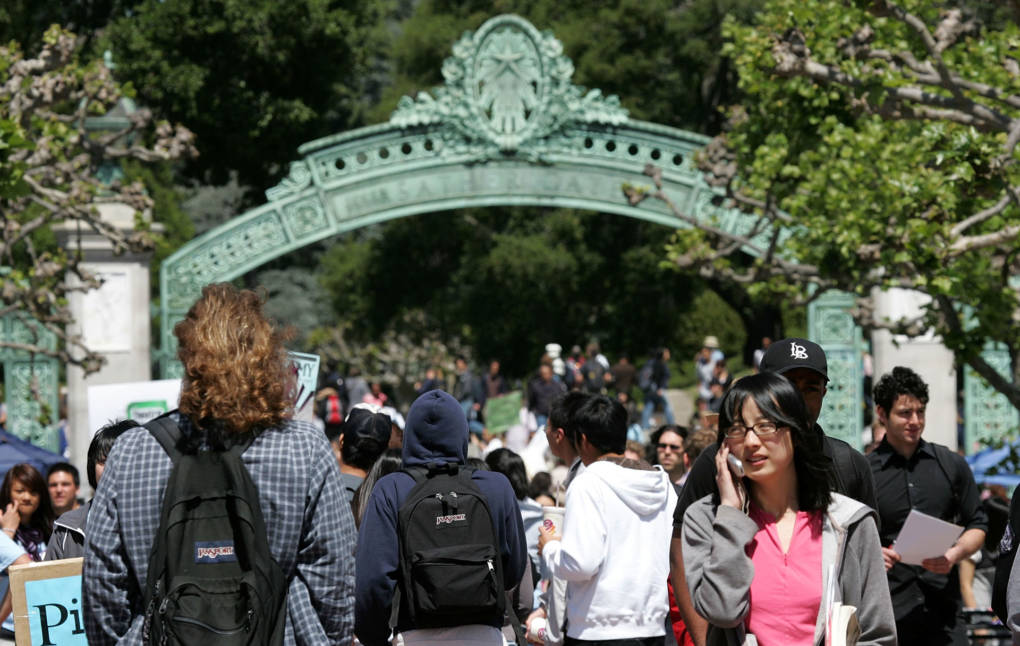
"caption": "Students walk through Sather Gate at UC Berkeley, one of the nation's most selective public universities.",
"description": "Students walk through Sather Gate at UC Berkeley, one of the nation's most selective public universities.",
"title": "Sather-Gate-UC-Berkeley",
"credit": "Justin Sullivan/Getty Images",
"status": "inherit",
"isLoading": false,
"fetchFailed": false
},
"news_11766444": {
"type": "attachments",
"id": "news_11766444",
"meta": {
"index": "attachments_1716263798",
"site": "news",
"id": "11766444",
"found": true
},
"parent": 11766439,
"imgSizes": {
"apple_news_ca_square_4_0": {
"file": "https://ww2.kqed.org/app/uploads/sites/10/2019/08/vote-tiles-470x470.jpg",
"width": 470,
"mimeType": "image/jpeg",
"height": 470
},
"thumbnail": {
"file": "https://ww2.kqed.org/app/uploads/sites/10/2019/08/vote-tiles-160x107.jpg",
"width": 160,
"mimeType": "image/jpeg",
"height": 107
},
"post-thumbnail": {
"file": "https://ww2.kqed.org/app/uploads/sites/10/2019/08/vote-tiles-672x372.jpg",
"width": 672,
"mimeType": "image/jpeg",
"height": 372
},
"kqedFullSize": {
"file": "https://ww2.kqed.org/app/uploads/sites/10/2019/08/vote-tiles.jpg",
"width": 792,
"height": 529
},
"apple_news_ca_landscape_4_7": {
"file": "https://ww2.kqed.org/app/uploads/sites/10/2019/08/vote-tiles-632x474.jpg",
"width": 632,
"mimeType": "image/jpeg",
"height": 474
},
"apple_news_ca_portrait_4_7": {
"file": "https://ww2.kqed.org/app/uploads/sites/10/2019/08/vote-tiles-414x529.jpg",
"width": 414,
"mimeType": "image/jpeg",
"height": 529
},
"apple_news_ca_portrait_5_5": {
"file": "https://ww2.kqed.org/app/uploads/sites/10/2019/08/vote-tiles-687x529.jpg",
"width": 687,
"mimeType": "image/jpeg",
"height": 529
},
"apple_news_ca_square_4_7": {
"file": "https://ww2.kqed.org/app/uploads/sites/10/2019/08/vote-tiles-550x529.jpg",
"width": 550,
"mimeType": "image/jpeg",
"height": 529
},
"apple_news_ca_landscape_4_0": {
"file": "https://ww2.kqed.org/app/uploads/sites/10/2019/08/vote-tiles-536x402.jpg",
"width": 536,
"mimeType": "image/jpeg",
"height": 402
},
"apple_news_ca_portrait_4_0": {
"file": "https://ww2.kqed.org/app/uploads/sites/10/2019/08/vote-tiles-354x472.jpg",
"width": 354,
"mimeType": "image/jpeg",
"height": 472
}
},
"publishDate": 1565292481,
"modified": 1565292502,
"caption": "Democrats have surpassed the GOP in the county that launched Richard Nixon and Ronald Reagan.",
"description": "Democrats have surpassed the GOP in the county that launched Richard Nixon and Ronald Reagan.",
"title": "vote-tiles",
"credit": "Creative Commons",
"status": "inherit",
"isLoading": false,
"fetchFailed": false
},
"news_11764605": {
"type": "attachments",
"id": "news_11764605",
"meta": {
"index": "attachments_1716263798",
"site": "news",
"id": "11764605",
"found": true
},
"parent": 11764572,
"imgSizes": {
"apple_news_ca_landscape_5_5": {
"file": "https://ww2.kqed.org/app/uploads/sites/10/2019/07/RS38284_food-stamp-cuts-photo-1-qut-1044x783.jpg",
"width": 1044,
"mimeType": "image/jpeg",
"height": 783
},
"apple_news_ca_square_4_0": {
"file": "https://ww2.kqed.org/app/uploads/sites/10/2019/07/RS38284_food-stamp-cuts-photo-1-qut-470x470.jpg",
"width": 470,
"mimeType": "image/jpeg",
"height": 470
},
"twentyfourteen-full-width": {
"file": "https://ww2.kqed.org/app/uploads/sites/10/2019/07/RS38284_food-stamp-cuts-photo-1-qut-1038x576.jpg",
"width": 1038,
"mimeType": "image/jpeg",
"height": 576
},
"thumbnail": {
"file": "https://ww2.kqed.org/app/uploads/sites/10/2019/07/RS38284_food-stamp-cuts-photo-1-qut-160x105.jpg",
"width": 160,
"mimeType": "image/jpeg",
"height": 105
},
"post-thumbnail": {
"file": "https://ww2.kqed.org/app/uploads/sites/10/2019/07/RS38284_food-stamp-cuts-photo-1-qut-672x372.jpg",
"width": 672,
"mimeType": "image/jpeg",
"height": 372
},
"kqedFullSize": {
"file": "https://ww2.kqed.org/app/uploads/sites/10/2019/07/RS38284_food-stamp-cuts-photo-1-qut.jpg",
"width": 1920,
"height": 1264
},
"apple_news_ca_landscape_4_7": {
"file": "https://ww2.kqed.org/app/uploads/sites/10/2019/07/RS38284_food-stamp-cuts-photo-1-qut-632x474.jpg",
"width": 632,
"mimeType": "image/jpeg",
"height": 474
},
"large": {
"file": "https://ww2.kqed.org/app/uploads/sites/10/2019/07/RS38284_food-stamp-cuts-photo-1-qut-1020x672.jpg",
"width": 1020,
"mimeType": "image/jpeg",
"height": 672
},
"complete_open_graph": {
"file": "https://ww2.kqed.org/app/uploads/sites/10/2019/07/RS38284_food-stamp-cuts-photo-1-qut-1200x790.jpg",
"width": 1200,
"mimeType": "image/jpeg",
"height": 790
},
"apple_news_ca_landscape_4_0": {
"file": "https://ww2.kqed.org/app/uploads/sites/10/2019/07/RS38284_food-stamp-cuts-photo-1-qut-536x402.jpg",
"width": 536,
"mimeType": "image/jpeg",
"height": 402
},
"apple_news_ca_portrait_12_9": {
"file": "https://ww2.kqed.org/app/uploads/sites/10/2019/07/RS38284_food-stamp-cuts-photo-1-qut-1122x1264.jpg",
"width": 1122,
"mimeType": "image/jpeg",
"height": 1264
},
"medium": {
"file": "https://ww2.kqed.org/app/uploads/sites/10/2019/07/RS38284_food-stamp-cuts-photo-1-qut-800x527.jpg",
"width": 800,
"mimeType": "image/jpeg",
"height": 527
},
"apple_news_ca_portrait_4_0": {
"file": "https://ww2.kqed.org/app/uploads/sites/10/2019/07/RS38284_food-stamp-cuts-photo-1-qut-354x472.jpg",
"width": 354,
"mimeType": "image/jpeg",
"height": 472
},
"apple_news_ca_portrait_9_7": {
"file": "https://ww2.kqed.org/app/uploads/sites/10/2019/07/RS38284_food-stamp-cuts-photo-1-qut-840x1120.jpg",
"width": 840,
"mimeType": "image/jpeg",
"height": 1120
},
"apple_news_ca_landscape_12_9": {
"file": "https://ww2.kqed.org/app/uploads/sites/10/2019/07/RS38284_food-stamp-cuts-photo-1-qut-1832x1264.jpg",
"width": 1832,
"mimeType": "image/jpeg",
"height": 1264
},
"apple_news_ca_square_9_7": {
"file": "https://ww2.kqed.org/app/uploads/sites/10/2019/07/RS38284_food-stamp-cuts-photo-1-qut-1104x1104.jpg",
"width": 1104,
"mimeType": "image/jpeg",
"height": 1104
},
"apple_news_ca_portrait_4_7": {
"file": "https://ww2.kqed.org/app/uploads/sites/10/2019/07/RS38284_food-stamp-cuts-photo-1-qut-414x552.jpg",
"width": 414,
"mimeType": "image/jpeg",
"height": 552
},
"apple_news_ca_square_12_9": {
"file": "https://ww2.kqed.org/app/uploads/sites/10/2019/07/RS38284_food-stamp-cuts-photo-1-qut-1472x1264.jpg",
"width": 1472,
"mimeType": "image/jpeg",
"height": 1264
},
"apple_news_ca_portrait_5_5": {
"file": "https://ww2.kqed.org/app/uploads/sites/10/2019/07/RS38284_food-stamp-cuts-photo-1-qut-687x916.jpg",
"width": 687,
"mimeType": "image/jpeg",
"height": 916
},
"full-width": {
"file": "https://ww2.kqed.org/app/uploads/sites/10/2019/07/RS38284_food-stamp-cuts-photo-1-qut-1920x1264.jpg",
"width": 1920,
"mimeType": "image/jpeg",
"height": 1264
},
"apple_news_ca_square_4_7": {
"file": "https://ww2.kqed.org/app/uploads/sites/10/2019/07/RS38284_food-stamp-cuts-photo-1-qut-550x550.jpg",
"width": 550,
"mimeType": "image/jpeg",
"height": 550
},
"apple_news_ca_landscape_9_7": {
"file": "https://ww2.kqed.org/app/uploads/sites/10/2019/07/RS38284_food-stamp-cuts-photo-1-qut-1376x1032.jpg",
"width": 1376,
"mimeType": "image/jpeg",
"height": 1032
},
"apple_news_ca_square_5_5": {
"file": "https://ww2.kqed.org/app/uploads/sites/10/2019/07/RS38284_food-stamp-cuts-photo-1-qut-912x912.jpg",
"width": 912,
"mimeType": "image/jpeg",
"height": 912
}
},
"publishDate": 1564603115,
"modified": 1564611180,
"caption": "Antoinette Martinez does her weekly grocery shopping at FoodMaxx on July 26, 2019. According to Martinez, the price of meat has increased significantly, making it harder for her to provide \"good meals\" for herself and her son. ",
"description": null,
"title": "RS38284_food stamp cuts photo 1 -qut",
"credit": "Anne Wernikoff/CalMatters",
"status": "inherit",
"isLoading": false,
"fetchFailed": false
},
"news_11764234": {
"type": "attachments",
"id": "news_11764234",
"meta": {
"index": "attachments_1716263798",
"site": "news",
"id": "11764234",
"found": true
},
"parent": 11764229,
"imgSizes": {
"apple_news_ca_landscape_5_5": {
"file": "https://ww2.kqed.org/app/uploads/sites/10/2019/07/presidential-poll-photo-WEB-1044x783.jpg",
"width": 1044,
"mimeType": "image/jpeg",
"height": 783
},
"apple_news_ca_square_4_0": {
"file": "https://ww2.kqed.org/app/uploads/sites/10/2019/07/presidential-poll-photo-WEB-470x470.jpg",
"width": 470,
"mimeType": "image/jpeg",
"height": 470
},
"twentyfourteen-full-width": {
"file": "https://ww2.kqed.org/app/uploads/sites/10/2019/07/presidential-poll-photo-WEB-1038x576.jpg",
"width": 1038,
"mimeType": "image/jpeg",
"height": 576
},
"thumbnail": {
"file": "https://ww2.kqed.org/app/uploads/sites/10/2019/07/presidential-poll-photo-WEB-160x107.jpg",
"width": 160,
"mimeType": "image/jpeg",
"height": 107
},
"post-thumbnail": {
"file": "https://ww2.kqed.org/app/uploads/sites/10/2019/07/presidential-poll-photo-WEB-672x372.jpg",
"width": 672,
"mimeType": "image/jpeg",
"height": 372
},
"kqedFullSize": {
"file": "https://ww2.kqed.org/app/uploads/sites/10/2019/07/presidential-poll-photo-WEB.jpg",
"width": 1800,
"height": 1200
},
"apple_news_ca_landscape_4_7": {
"file": "https://ww2.kqed.org/app/uploads/sites/10/2019/07/presidential-poll-photo-WEB-632x474.jpg",
"width": 632,
"mimeType": "image/jpeg",
"height": 474
},
"large": {
"file": "https://ww2.kqed.org/app/uploads/sites/10/2019/07/presidential-poll-photo-WEB-1020x680.jpg",
"width": 1020,
"mimeType": "image/jpeg",
"height": 680
},
"complete_open_graph": {
"file": "https://ww2.kqed.org/app/uploads/sites/10/2019/07/presidential-poll-photo-WEB-1200x800.jpg",
"width": 1200,
"mimeType": "image/jpeg",
"height": 800
},
"apple_news_ca_landscape_4_0": {
"file": "https://ww2.kqed.org/app/uploads/sites/10/2019/07/presidential-poll-photo-WEB-536x402.jpg",
"width": 536,
"mimeType": "image/jpeg",
"height": 402
},
"apple_news_ca_portrait_12_9": {
"file": "https://ww2.kqed.org/app/uploads/sites/10/2019/07/presidential-poll-photo-WEB-1122x1200.jpg",
"width": 1122,
"mimeType": "image/jpeg",
"height": 1200
},
"medium": {
"file": "https://ww2.kqed.org/app/uploads/sites/10/2019/07/presidential-poll-photo-WEB-800x533.jpg",
"width": 800,
"mimeType": "image/jpeg",
"height": 533
},
"apple_news_ca_portrait_4_0": {
"file": "https://ww2.kqed.org/app/uploads/sites/10/2019/07/presidential-poll-photo-WEB-354x472.jpg",
"width": 354,
"mimeType": "image/jpeg",
"height": 472
},
"apple_news_ca_portrait_9_7": {
"file": "https://ww2.kqed.org/app/uploads/sites/10/2019/07/presidential-poll-photo-WEB-840x1120.jpg",
"width": 840,
"mimeType": "image/jpeg",
"height": 1120
},
"apple_news_ca_square_9_7": {
"file": "https://ww2.kqed.org/app/uploads/sites/10/2019/07/presidential-poll-photo-WEB-1104x1104.jpg",
"width": 1104,
"mimeType": "image/jpeg",
"height": 1104
},
"apple_news_ca_portrait_4_7": {
"file": "https://ww2.kqed.org/app/uploads/sites/10/2019/07/presidential-poll-photo-WEB-414x552.jpg",
"width": 414,
"mimeType": "image/jpeg",
"height": 552
},
"apple_news_ca_square_12_9": {
"file": "https://ww2.kqed.org/app/uploads/sites/10/2019/07/presidential-poll-photo-WEB-1472x1200.jpg",
"width": 1472,
"mimeType": "image/jpeg",
"height": 1200
},
"apple_news_ca_portrait_5_5": {
"file": "https://ww2.kqed.org/app/uploads/sites/10/2019/07/presidential-poll-photo-WEB-687x916.jpg",
"width": 687,
"mimeType": "image/jpeg",
"height": 916
},
"apple_news_ca_square_4_7": {
"file": "https://ww2.kqed.org/app/uploads/sites/10/2019/07/presidential-poll-photo-WEB-550x550.jpg",
"width": 550,
"mimeType": "image/jpeg",
"height": 550
},
"apple_news_ca_landscape_9_7": {
"file": "https://ww2.kqed.org/app/uploads/sites/10/2019/07/presidential-poll-photo-WEB-1376x1032.jpg",
"width": 1376,
"mimeType": "image/jpeg",
"height": 1032
},
"apple_news_ca_square_5_5": {
"file": "https://ww2.kqed.org/app/uploads/sites/10/2019/07/presidential-poll-photo-WEB-912x912.jpg",
"width": 912,
"mimeType": "image/jpeg",
"height": 912
}
},
"publishDate": 1564508531,
"modified": 1564509946,
"caption": "Kamala Harris takes selfies with fans in San Francisco on June 1, 2019.",
"description": "Kamala Harris takes selfies with fans in San Francisco on June 1, 2019.",
"title": "presidential poll photo WEB",
"credit": "Ben Christopher/CalMatters.",
"status": "inherit",
"isLoading": false,
"fetchFailed": false
},
"news_11763401": {
"type": "attachments",
"id": "news_11763401",
"meta": {
"index": "attachments_1716263798",
"site": "news",
"id": "11763401",
"found": true
},
"parent": 11763398,
"imgSizes": {
"apple_news_ca_landscape_5_5": {
"file": "https://ww2.kqed.org/app/uploads/sites/10/2019/07/lawsuit_california_independent_voter_political-1044x783.jpg",
"width": 1044,
"mimeType": "image/jpeg",
"height": 783
},
"apple_news_ca_square_4_0": {
"file": "https://ww2.kqed.org/app/uploads/sites/10/2019/07/lawsuit_california_independent_voter_political-470x470.jpg",
"width": 470,
"mimeType": "image/jpeg",
"height": 470
},
"twentyfourteen-full-width": {
"file": "https://ww2.kqed.org/app/uploads/sites/10/2019/07/lawsuit_california_independent_voter_political-1038x576.jpg",
"width": 1038,
"mimeType": "image/jpeg",
"height": 576
},
"thumbnail": {
"file": "https://ww2.kqed.org/app/uploads/sites/10/2019/07/lawsuit_california_independent_voter_political-160x107.jpg",
"width": 160,
"mimeType": "image/jpeg",
"height": 107
},
"post-thumbnail": {
"file": "https://ww2.kqed.org/app/uploads/sites/10/2019/07/lawsuit_california_independent_voter_political-672x372.jpg",
"width": 672,
"mimeType": "image/jpeg",
"height": 372
},
"kqedFullSize": {
"file": "https://ww2.kqed.org/app/uploads/sites/10/2019/07/lawsuit_california_independent_voter_political-e1564077108653.jpg",
"width": 800,
"height": 533
},
"apple_news_ca_landscape_4_7": {
"file": "https://ww2.kqed.org/app/uploads/sites/10/2019/07/lawsuit_california_independent_voter_political-632x474.jpg",
"width": 632,
"mimeType": "image/jpeg",
"height": 474
},
"large": {
"file": "https://ww2.kqed.org/app/uploads/sites/10/2019/07/lawsuit_california_independent_voter_political-1020x680.jpg",
"width": 1020,
"mimeType": "image/jpeg",
"height": 680
},
"complete_open_graph": {
"file": "https://ww2.kqed.org/app/uploads/sites/10/2019/07/lawsuit_california_independent_voter_political-1200x800.jpg",
"width": 1200,
"mimeType": "image/jpeg",
"height": 800
},
"apple_news_ca_landscape_4_0": {
"file": "https://ww2.kqed.org/app/uploads/sites/10/2019/07/lawsuit_california_independent_voter_political-536x402.jpg",
"width": 536,
"mimeType": "image/jpeg",
"height": 402
},
"apple_news_ca_portrait_12_9": {
"file": "https://ww2.kqed.org/app/uploads/sites/10/2019/07/lawsuit_california_independent_voter_political-1122x836.jpg",
"width": 1122,
"mimeType": "image/jpeg",
"height": 836
},
"medium": {
"file": "https://ww2.kqed.org/app/uploads/sites/10/2019/07/lawsuit_california_independent_voter_political-800x533.jpg",
"width": 800,
"mimeType": "image/jpeg",
"height": 533
},
"apple_news_ca_portrait_4_0": {
"file": "https://ww2.kqed.org/app/uploads/sites/10/2019/07/lawsuit_california_independent_voter_political-354x472.jpg",
"width": 354,
"mimeType": "image/jpeg",
"height": 472
},
"apple_news_ca_portrait_9_7": {
"file": "https://ww2.kqed.org/app/uploads/sites/10/2019/07/lawsuit_california_independent_voter_political-840x836.jpg",
"width": 840,
"mimeType": "image/jpeg",
"height": 836
},
"apple_news_ca_square_9_7": {
"file": "https://ww2.kqed.org/app/uploads/sites/10/2019/07/lawsuit_california_independent_voter_political-1104x836.jpg",
"width": 1104,
"mimeType": "image/jpeg",
"height": 836
},
"apple_news_ca_portrait_4_7": {
"file": "https://ww2.kqed.org/app/uploads/sites/10/2019/07/lawsuit_california_independent_voter_political-414x552.jpg",
"width": 414,
"mimeType": "image/jpeg",
"height": 552
},
"apple_news_ca_portrait_5_5": {
"file": "https://ww2.kqed.org/app/uploads/sites/10/2019/07/lawsuit_california_independent_voter_political-687x836.jpg",
"width": 687,
"mimeType": "image/jpeg",
"height": 836
},
"apple_news_ca_square_4_7": {
"file": "https://ww2.kqed.org/app/uploads/sites/10/2019/07/lawsuit_california_independent_voter_political-550x550.jpg",
"width": 550,
"mimeType": "image/jpeg",
"height": 550
},
"apple_news_ca_square_5_5": {
"file": "https://ww2.kqed.org/app/uploads/sites/10/2019/07/lawsuit_california_independent_voter_political-912x836.jpg",
"width": 912,
"mimeType": "image/jpeg",
"height": 836
}
},
"publishDate": 1564077071,
"modified": 1564080162,
"caption": null,
"description": null,
"title": "Close Up Of Blindfolded Lady Of Justice",
"credit": null,
"status": "inherit",
"isLoading": false,
"fetchFailed": false
},
"news_11762403": {
"type": "attachments",
"id": "news_11762403",
"meta": {
"index": "attachments_1716263798",
"site": "news",
"id": "11762403",
"found": true
},
"parent": 11762399,
"imgSizes": {
"apple_news_ca_square_4_0": {
"file": "https://ww2.kqed.org/app/uploads/sites/10/2019/07/food-bank-cal-fresh-food-stamps-470x470.jpg",
"width": 470,
"mimeType": "image/jpeg",
"height": 470
},
"thumbnail": {
"file": "https://ww2.kqed.org/app/uploads/sites/10/2019/07/food-bank-cal-fresh-food-stamps-160x107.jpg",
"width": 160,
"mimeType": "image/jpeg",
"height": 107
},
"post-thumbnail": {
"file": "https://ww2.kqed.org/app/uploads/sites/10/2019/07/food-bank-cal-fresh-food-stamps-672x372.jpg",
"width": 672,
"mimeType": "image/jpeg",
"height": 372
},
"kqedFullSize": {
"file": "https://ww2.kqed.org/app/uploads/sites/10/2019/07/food-bank-cal-fresh-food-stamps.jpg",
"width": 794,
"height": 529
},
"apple_news_ca_landscape_4_7": {
"file": "https://ww2.kqed.org/app/uploads/sites/10/2019/07/food-bank-cal-fresh-food-stamps-632x474.jpg",
"width": 632,
"mimeType": "image/jpeg",
"height": 474
},
"apple_news_ca_portrait_4_7": {
"file": "https://ww2.kqed.org/app/uploads/sites/10/2019/07/food-bank-cal-fresh-food-stamps-414x529.jpg",
"width": 414,
"mimeType": "image/jpeg",
"height": 529
},
"apple_news_ca_portrait_5_5": {
"file": "https://ww2.kqed.org/app/uploads/sites/10/2019/07/food-bank-cal-fresh-food-stamps-687x529.jpg",
"width": 687,
"mimeType": "image/jpeg",
"height": 529
},
"apple_news_ca_square_4_7": {
"file": "https://ww2.kqed.org/app/uploads/sites/10/2019/07/food-bank-cal-fresh-food-stamps-550x529.jpg",
"width": 550,
"mimeType": "image/jpeg",
"height": 529
},
"apple_news_ca_landscape_4_0": {
"file": "https://ww2.kqed.org/app/uploads/sites/10/2019/07/food-bank-cal-fresh-food-stamps-536x402.jpg",
"width": 536,
"mimeType": "image/jpeg",
"height": 402
},
"apple_news_ca_portrait_4_0": {
"file": "https://ww2.kqed.org/app/uploads/sites/10/2019/07/food-bank-cal-fresh-food-stamps-354x472.jpg",
"width": 354,
"mimeType": "image/jpeg",
"height": 472
}
},
"publishDate": 1563546356,
"modified": 1563546386,
"caption": "A Bay Area woman fills out paperwork to prove she is eligible for CalFresh, California's food stamp program.",
"description": null,
"title": "food-bank-cal-fresh-food-stamps",
"credit": "San Francisco-Marin Food Bank",
"status": "inherit",
"isLoading": false,
"fetchFailed": false
},
"news_11757806": {
"type": "attachments",
"id": "news_11757806",
"meta": {
"index": "attachments_1716263798",
"site": "news",
"id": "11757806",
"found": true
},
"parent": 11757800,
"imgSizes": {
"apple_news_ca_landscape_5_5": {
"file": "https://ww2.kqed.org/app/uploads/sites/10/2019/06/06272019_2nd-Democratic-Primary-Debate-2020-election-qut-1044x783.jpg",
"width": 1044,
"mimeType": "image/jpeg",
"height": 783
},
"apple_news_ca_square_4_0": {
"file": "https://ww2.kqed.org/app/uploads/sites/10/2019/06/06272019_2nd-Democratic-Primary-Debate-2020-election-qut-470x470.jpg",
"width": 470,
"mimeType": "image/jpeg",
"height": 470
},
"twentyfourteen-full-width": {
"file": "https://ww2.kqed.org/app/uploads/sites/10/2019/06/06272019_2nd-Democratic-Primary-Debate-2020-election-qut-1038x576.jpg",
"width": 1038,
"mimeType": "image/jpeg",
"height": 576
},
"thumbnail": {
"file": "https://ww2.kqed.org/app/uploads/sites/10/2019/06/06272019_2nd-Democratic-Primary-Debate-2020-election-qut-160x107.jpg",
"width": 160,
"mimeType": "image/jpeg",
"height": 107
},
"post-thumbnail": {
"file": "https://ww2.kqed.org/app/uploads/sites/10/2019/06/06272019_2nd-Democratic-Primary-Debate-2020-election-qut-672x372.jpg",
"width": 672,
"mimeType": "image/jpeg",
"height": 372
},
"kqedFullSize": {
"file": "https://ww2.kqed.org/app/uploads/sites/10/2019/06/06272019_2nd-Democratic-Primary-Debate-2020-election-qut.jpg",
"width": 1920,
"height": 1280
},
"apple_news_ca_landscape_4_7": {
"file": "https://ww2.kqed.org/app/uploads/sites/10/2019/06/06272019_2nd-Democratic-Primary-Debate-2020-election-qut-632x474.jpg",
"width": 632,
"mimeType": "image/jpeg",
"height": 474
},
"large": {
"file": "https://ww2.kqed.org/app/uploads/sites/10/2019/06/06272019_2nd-Democratic-Primary-Debate-2020-election-qut-1020x680.jpg",
"width": 1020,
"mimeType": "image/jpeg",
"height": 680
},
"complete_open_graph": {
"file": "https://ww2.kqed.org/app/uploads/sites/10/2019/06/06272019_2nd-Democratic-Primary-Debate-2020-election-qut-1200x800.jpg",
"width": 1200,
"mimeType": "image/jpeg",
"height": 800
},
"apple_news_ca_landscape_4_0": {
"file": "https://ww2.kqed.org/app/uploads/sites/10/2019/06/06272019_2nd-Democratic-Primary-Debate-2020-election-qut-536x402.jpg",
"width": 536,
"mimeType": "image/jpeg",
"height": 402
},
"apple_news_ca_portrait_12_9": {
"file": "https://ww2.kqed.org/app/uploads/sites/10/2019/06/06272019_2nd-Democratic-Primary-Debate-2020-election-qut-1122x1280.jpg",
"width": 1122,
"mimeType": "image/jpeg",
"height": 1280
},
"medium": {
"file": "https://ww2.kqed.org/app/uploads/sites/10/2019/06/06272019_2nd-Democratic-Primary-Debate-2020-election-qut-800x533.jpg",
"width": 800,
"mimeType": "image/jpeg",
"height": 533
},
"apple_news_ca_portrait_4_0": {
"file": "https://ww2.kqed.org/app/uploads/sites/10/2019/06/06272019_2nd-Democratic-Primary-Debate-2020-election-qut-354x472.jpg",
"width": 354,
"mimeType": "image/jpeg",
"height": 472
},
"apple_news_ca_portrait_9_7": {
"file": "https://ww2.kqed.org/app/uploads/sites/10/2019/06/06272019_2nd-Democratic-Primary-Debate-2020-election-qut-840x1120.jpg",
"width": 840,
"mimeType": "image/jpeg",
"height": 1120
},
"apple_news_ca_landscape_12_9": {
"file": "https://ww2.kqed.org/app/uploads/sites/10/2019/06/06272019_2nd-Democratic-Primary-Debate-2020-election-qut-1832x1280.jpg",
"width": 1832,
"mimeType": "image/jpeg",
"height": 1280
},
"apple_news_ca_square_9_7": {
"file": "https://ww2.kqed.org/app/uploads/sites/10/2019/06/06272019_2nd-Democratic-Primary-Debate-2020-election-qut-1104x1104.jpg",
"width": 1104,
"mimeType": "image/jpeg",
"height": 1104
},
"apple_news_ca_portrait_4_7": {
"file": "https://ww2.kqed.org/app/uploads/sites/10/2019/06/06272019_2nd-Democratic-Primary-Debate-2020-election-qut-414x552.jpg",
"width": 414,
"mimeType": "image/jpeg",
"height": 552
},
"apple_news_ca_square_12_9": {
"file": "https://ww2.kqed.org/app/uploads/sites/10/2019/06/06272019_2nd-Democratic-Primary-Debate-2020-election-qut-1472x1280.jpg",
"width": 1472,
"mimeType": "image/jpeg",
"height": 1280
},
"apple_news_ca_portrait_5_5": {
"file": "https://ww2.kqed.org/app/uploads/sites/10/2019/06/06272019_2nd-Democratic-Primary-Debate-2020-election-qut-687x916.jpg",
"width": 687,
"mimeType": "image/jpeg",
"height": 916
},
"full-width": {
"file": "https://ww2.kqed.org/app/uploads/sites/10/2019/06/06272019_2nd-Democratic-Primary-Debate-2020-election-qut-1920x1280.jpg",
"width": 1920,
"mimeType": "image/jpeg",
"height": 1280
},
"apple_news_ca_square_4_7": {
"file": "https://ww2.kqed.org/app/uploads/sites/10/2019/06/06272019_2nd-Democratic-Primary-Debate-2020-election-qut-550x550.jpg",
"width": 550,
"mimeType": "image/jpeg",
"height": 550
},
"apple_news_ca_landscape_9_7": {
"file": "https://ww2.kqed.org/app/uploads/sites/10/2019/06/06272019_2nd-Democratic-Primary-Debate-2020-election-qut-1376x1032.jpg",
"width": 1376,
"mimeType": "image/jpeg",
"height": 1032
},
"apple_news_ca_square_5_5": {
"file": "https://ww2.kqed.org/app/uploads/sites/10/2019/06/06272019_2nd-Democratic-Primary-Debate-2020-election-qut-912x912.jpg",
"width": 912,
"mimeType": "image/jpeg",
"height": 912
}
},
"publishDate": 1561684055,
"modified": 1563497306,
"caption": "Second night of the Democratic debate in Miami on June 27, 2019.",
"description": "Second night of the Democratic Primary debate in Miami on June 27, 2019.",
"title": "Democratic Presidential Candidates Participate In First Debate Of 2020 Election Over Two Nights",
"credit": "Drew Angerer/Getty Images",
"status": "inherit",
"isLoading": false,
"fetchFailed": false
}
},
"audioPlayerReducer": {
"postId": "stream_live",
"isPaused": true,
"isPlaying": false,
"pfsActive": false,
"pledgeModalIsOpen": true,
"playerDrawerIsOpen": false,
"liveAudioPlayStartedAt": 0,
"liveAudioPlayContext": ""
},
"authorsReducer": {
"byline_news_11771447": {
"type": "authors",
"id": "byline_news_11771447",
"meta": {
"override": true
},
"slug": "byline_news_11771447",
"name": "\u003ca href= \"https://calmatters.org/author/julie-cart/\"> Julie Cart \u003ca/>",
"isLoading": false
},
"byline_news_11770061": {
"type": "authors",
"id": "byline_news_11770061",
"meta": {
"override": true
},
"slug": "byline_news_11770061",
"name": "\u003cstrong>\u003ca href=\"https://calmatters.org/author/matt-levin/\">Matt Levin\u003c/a>\u003c/strong>\u003cbr>CalMatters",
"isLoading": false
},
"byline_news_11769525": {
"type": "authors",
"id": "byline_news_11769525",
"meta": {
"override": true
},
"slug": "byline_news_11769525",
"name": "\u003ca href=\"https://calmatters.org/author/judy-lin/\">Judy Lin\u003c/a>\u003c/strong.",
"isLoading": false
},
"byline_news_11768015": {
"type": "authors",
"id": "byline_news_11768015",
"meta": {
"override": true
},
"slug": "byline_news_11768015",
"name": "\u003ca href= \"https://calmatters.org/author/elizabeth-aguilera/\"> Elizabeth Aguilera \u003ca/>",
"isLoading": false
},
"byline_news_11767224": {
"type": "authors",
"id": "byline_news_11767224",
"meta": {
"override": true
},
"slug": "byline_news_11767224",
"name": "\u003cstrong>Ben Christopher\u003cbr />CalMatters\u003c/strong>",
"isLoading": false
},
"byline_news_11767050": {
"type": "authors",
"id": "byline_news_11767050",
"meta": {
"override": true
},
"slug": "byline_news_11767050",
"name": "\u003cstrong>\u003ca href=\"https://calmatters.org/author/feliciacalmatters-org/\">Felicia Mello\u003c/a>\u003c/strong>",
"isLoading": false
},
"byline_news_11766439": {
"type": "authors",
"id": "byline_news_11766439",
"meta": {
"override": true
},
"slug": "byline_news_11766439",
"name": "\u003cstrong>Dan Morain\u003cbr />CalMatters\u003c/strong>",
"isLoading": false
},
"byline_news_11764572": {
"type": "authors",
"id": "byline_news_11764572",
"meta": {
"override": true
},
"slug": "byline_news_11764572",
"name": "\u003ca href= \"https://calmatters.org/author/jackie-botts/\"> Jackie Botts \u003ca/>",
"isLoading": false
},
"byline_news_11764229": {
"type": "authors",
"id": "byline_news_11764229",
"meta": {
"override": true
},
"slug": "byline_news_11764229",
"name": "Ben Christopher\u003cbr />CalMatters",
"isLoading": false
},
"byline_news_11763398": {
"type": "authors",
"id": "byline_news_11763398",
"meta": {
"override": true
},
"slug": "byline_news_11763398",
"name": "\u003cstrong>\u003ca href=\"https://calmatters.org/author/ben-christopher/\">Ben Christopher\u003cbr />CalMatters\u003c/strong>",
"isLoading": false
},
"byline_news_11762399": {
"type": "authors",
"id": "byline_news_11762399",
"meta": {
"override": true
},
"slug": "byline_news_11762399",
"name": "\u003cstrong>Jackie Botts\u003cbr />CalMatters\u003c/strong>",
"isLoading": false
},
"byline_news_11762290": {
"type": "authors",
"id": "byline_news_11762290",
"meta": {
"override": true
},
"slug": "byline_news_11762290",
"name": "\u003ca href=\"https://calmatters.org/author/ben-christopher/\" target=\"_blank\">Ben Christopher\u003c/a>",
"isLoading": false
}
},
"pagesReducer": {
"news_affiliate_calmatters": {
"type": "terms",
"id": "news_18481",
"meta": {
"index": "terms_1716263798",
"site": "news",
"id": "18481",
"score": 15.355862
},
"featImg": null,
"name": "CALmatters",
"description": null,
"taxonomy": "affiliate",
"headData": {
"twImgId": null,
"twTitle": null,
"ogTitle": null,
"ogImgId": null,
"twDescription": null,
"description": null,
"title": "CALmatters Archives | KQED Arts",
"ogDescription": null
},
"ttid": 18515,
"slug": "calmatters",
"isLoading": false,
"title": "CALmatters",
"pageMeta": {
"site": "news",
"WpPageTemplate": "page-topic-editorial",
"currentPage": 64
},
"blocks": [
{
"blockName": "kqed/post-list",
"attrs": {
"layout": "cardArticle2",
"query": "posts/news?affiliate=calmatters",
"seeMore": false,
"paginated": true,
"page": 64
}
},
{
"blockName": "kqed/ad"
}
]
}
},
"pfsSessionReducer": {},
"postsReducer": {
"stream_live": {
"type": "live",
"id": "stream_live",
"audioUrl": "https://streams.kqed.org/kqedradio",
"title": "Live Stream",
"excerpt": "Live Stream information currently unavailable.",
"link": "/radio",
"featImg": "",
"label": {
"name": "KQED Live",
"link": "/"
}
},
"stream_kqedNewscast": {
"type": "posts",
"id": "stream_kqedNewscast",
"audioUrl": "https://www.kqed.org/.stream/anon/radio/RDnews/newscast.mp3?_=1",
"title": "KQED Newscast",
"featImg": "",
"label": {
"name": "88.5 FM",
"link": "/"
}
},
"news_11771447": {
"type": "posts",
"id": "news_11771447",
"meta": {
"index": "posts_1716263798",
"site": "news",
"id": "11771447",
"score": null,
"sort": [
1567256486000
]
},
"parent": 0,
"labelTerm": {},
"blocks": [],
"publishDate": 1567256486,
"format": "image",
"title": "What to Know as California's Peak Fire Months Loom",
"headTitle": "What to Know as California’s Peak Fire Months Loom | KQED",
"content": "\u003cp>California fire officials have learned through hard experience to temper their optimism.\u003c/p>\n\u003cp>Having just endured more than a decade of rampaging fires — 14 of the 20 most destructive fires in state history have occurred since 2007 — fire bosses say this year the glass is half-full.\u003c/p>\n\u003cp>\u003cimg decoding=\"async\" loading=\"lazy\" class=\" wp-image-11771472 alignright\" src=\"https://ww2.kqed.org/news/wp-content/uploads/sites/10/2019/08/PEAK-WILDFIRE-MONTHS-GRAPHIC-.jpg\" alt=\"\" width=\"376\" height=\"621\" srcset=\"https://ww2.kqed.org/app/uploads/sites/10/2019/08/PEAK-WILDFIRE-MONTHS-GRAPHIC-.jpg 1239w, https://ww2.kqed.org/app/uploads/sites/10/2019/08/PEAK-WILDFIRE-MONTHS-GRAPHIC--160x264.jpg 160w, https://ww2.kqed.org/app/uploads/sites/10/2019/08/PEAK-WILDFIRE-MONTHS-GRAPHIC--800x1322.jpg 800w, https://ww2.kqed.org/app/uploads/sites/10/2019/08/PEAK-WILDFIRE-MONTHS-GRAPHIC--1020x1685.jpg 1020w, https://ww2.kqed.org/app/uploads/sites/10/2019/08/PEAK-WILDFIRE-MONTHS-GRAPHIC--726x1200.jpg 726w, https://ww2.kqed.org/app/uploads/sites/10/2019/08/PEAK-WILDFIRE-MONTHS-GRAPHIC--1920x3172.jpg 1920w\" sizes=\"(max-width: 376px) 100vw, 376px\">\u003c/p>\n\u003cp>“We’ve got a few things going for us at the moment,” said Scott McLean, a spokesman for Cal Fire, the state firefighting agency. “We still have a snowpack. Our upper elevations haven’t dried out. Because of that, we are able to continue our fuel-reduction projects.”\u003c/p>\n\u003cp>Yes, this year featured a wet winter — usually good news for fire officials. But so did 2017, one of the state’s wettest winters in half a century and one of the most \u003ca href=\"https://calmatters.org/explainers/californias-worsening-wildfires-explained/\" target=\"_blank\" rel=\"noopener\">devastating years\u003c/a> for wildfire.\u003c/p>\n\u003cp>Clearing and cutting has helped eliminate some of the brush and trees that fuel the flames. But California’s forests are still clogged with 147 million \u003ca href=\"http://calag.ucanr.edu/Archive/?article=ca.2019a0001\" target=\"_blank\" rel=\"noopener\">dead trees\u003c/a>, and counting. And the late-winter rains encouraged the growth of grasses and other \u003ca href=\"https://calmatters.org/environment/2019/02/californias-charred-hills-bloom-again-not-all-good/\" target=\"_blank\" rel=\"noopener\">highly combustible\u003c/a> plants.\u003c/p>\n\u003cp>Cal Fire battled 164 fires across the state in the third week of August, many of them small. History shows that September and October, with their hot, fierce winds, are the worst months for fire. And “this week we have dry lightning predicted,” McLean said. That could spark fires in the state’s northern forests.\u003c/p>\n\u003cp>On the other hand, state officials have been showering Cal Fire with \u003ca href=\"http://www.ebudget.ca.gov/budget/2019-20EN/#/Department/3540\" target=\"_blank\" rel=\"noopener\">financial aid\u003c/a>. The agency’s ranks are bolstered by an additional 400 seasonal firefighters and 13 new engines and crews to operate them. And the state is taking delivery of a new Sikorsky S-70i Firehawk helicopter next month, the first of 12 replacement firefighting helicopters.\u003c/p>\n\u003cp>“We’ve got everything out of maintenance; everything’s ready,” McLean said.\u003c/p>\n\u003cp>But don’t look for California’s biggest air tool to come to a rescue anytime soon. The converted 747 jet, which can carry 24,0000 gallons of water or retardant, is currently flying over the Amazon, fighting fires in Brazil.\u003c/p>\n\u003ch2>Mapping the Fire Threat\u003c/h2>\n\u003cp>Cal Fire is in the process of updating its map of \u003ca href=\"https://osfm.fire.ca.gov/media/6636/fhszs_map.pdf\" target=\"_blank\" rel=\"noopener\">wildfire-hazard zones\u003c/a>, identifying areas of fire danger and assigning degrees of risk to those places. The California Public Utilities Commission is revising its fire map as well. So are the state’s power providers and insurance companies.\u003c/p>\n\u003cp>They’re all trying to better predict where and how wildfires may strike, as officials across the state seek to gain some advantage over fire’s growing menace.\u003c/p>\n\u003cp>In the case of Cal Fire, the mapmaking — painstaking and devilishly complex, combining detailed data about weather, topography, vegetation and the placement of roads and homes — was last undertaken about 12 years ago. Officials say that doesn’t mean the 2007 version is out of date.\u003c/p>\n\u003cp>[aside postID=\"news_11759209\" label=\"High-Risk Fire Zone Map\"]\u003c/p>\n\u003cp>“When you look at hazards by themselves, they are long-term factors that don’t often change,” said Daniel Berlant, Cal Fire assistant deputy director and chief of planning and risk analysis. “The slope of topography is not going to change in a decade.”\u003c/p>\n\u003cp>But much else has changed. A debilitating drought has come and gone. That and widespread insect infestation \u003ca href=\"https://calmatters.org/environment/2016/11/sierra-forests-turned-to-brown/\" target=\"_blank\" rel=\"noopener\">wiped out\u003c/a> trees in especially fire-prone regions of the state. And more and more Californians are living in the very landscapes that are most flammable.\u003c/p>\n\u003cp>Cal Fire’s map is used largely by counties and local authorities in making decisions about construction in high-fire-hazard zones and fire-mitigation measures from homeowners.\u003c/p>\n\u003cp>Berlant said the document’s “major overhaul” will include the latest science, particularly sophisticated new models for where and how wind drives wildfires. It will be completed sometime next year, he said.\u003c/p>\n\u003cp>The utility commission’s \u003ca href=\"https://www.cpuc.ca.gov/firethreatmaps/\" target=\"_blank\" rel=\"noopener\">map\u003c/a> is somewhat different. It breaks the state into a grid of one-mile squares, focusing on power companies’ lines and equipment and assigning fire threats. The identification of risk areas dictates what prevention efforts the companies should undertake to safeguard their property from fire.\u003c/p>\n\u003cp>The map includes Cal Fire and utility-company data, updated yearly.\u003c/p>\n\u003cp>Mason Withers, who helps run San Diego Gas & Electric’s risk-management group, said his company assumes the worst-case scenario in all of its 4,000-square-mile service territory and assigns its own fire-potential index.\u003c/p>\n\u003cp>“If vegetation could be dry, we assume it is dry. We assume winds will get as bad as they can get,” he said.\u003c/p>\n\u003cp> [pullquote size=\"medium\" align=\"right\" citation=\"Curtis Simms, who lives in Paradise\"]“You don’t need a map to know you are in a high-risk area. You’re an idiot if you don’t.”[/pullquote]\u003c/p>\n\u003cp>The analysis is intended for use by firefighters and utility companies but is only glanced at by insurers, which have been assembling their own risk assessments for decades. Many companies hire outside firms to provide them with satellite data as well as information from NASA and other federal institutions.\u003c/p>\n\u003cp>Verisk Analytics provides reports to insurers about risk but does not do forecasting. “We are not trying to predict where the next wildfire is going to happen; it’s too complex,” said Arindam Samanta, the company’s director of product management and innovation.\u003c/p>\n\u003cp>Although Cal Fire and the utilities commission publish their maps online, California residents may never hear about them.\u003c/p>\n\u003cp>“I didn’t know there was one,” said Curtis Simms, who lives in Paradise, which was devastated by a wildfire last year. “You don’t need a map to know you are in a high-risk area. You’re an idiot if you don’t.”\u003c/p>\n\u003ch2>The Risk in Power Shutoffs\u003c/h2>\n\u003cp>Utilities call it “de-energizing” or Public Safety Power Shutoffs. To consumers, it’s what happens when a power company cuts electricity as a precaution during times of high wildfire risk.\u003c/p>\n\u003cp>Officials say the practice is a prudent fire-mitigation strategy, and it’s about to become a widespread tool, whether customers like it or not.\u003c/p>\n\u003cp>Officials say one in 10 wildfires in California \u003ca href=\"https://www.documentcloud.org/documents/5193666-CPUC-Meeting.html#document/p63/a466643\" target=\"_blank\" rel=\"noopener\">is related to\u003c/a> energy equipment. Even as California’s utilities do more to fireproof their lines and transformers, state officials say, the safest course during periods of high heat, dryness and winds may be to turn off power to some lines.\u003c/p>\n\u003cp>San Diego Gas & Electric has been proactively shutting off power ahead of high-fire-risk periods since 2013, but the state Public Utilities Commission adopted a \u003ca href=\"https://www.cpuc.ca.gov/deenergization/\" target=\"_blank\" rel=\"noopener\">policy\u003c/a> on such cuts only last year. Customers around the rest of the state are still adjusting to the prospect of blackouts.\u003c/p>\n\u003cp>[aside postID=\"news_11750896\" label=\"Related coverage\"]\u003c/p>\n\u003cp>“Some customers are not particularly enthusiastic about the program when they first hear about it,” said Jeff Smith, a spokesman for Pacific Gas and Electric. “They are frustrated that their power will be turned off but understand it once we tell customers that it’s to reduce fire risk.”\u003c/p>\n\u003cp>The company experienced that kind of frustration earlier this month when it made public its \u003ca href=\"https://www.pge.com/pge_global/common/pdfs/safety/emergency-preparedness/natural-disaster/wildfires/Wildfire-Safety-Plan.pdf\" target=\"_blank\" rel=\"noopener\">plan\u003c/a> for emergency shutdowns, involving four times as many power lines as in the previous year. Even though PG&E stressed that it doesn’t envision cutting power along every line it operates at once, residents reacted with trepidation.\u003c/p>\n\u003cp>Smith said the company has hosted dozens of events to describe the program, which is still new to PG&E’s 5 million electricity customers. The utility cut power only once in 2018, during high-fire-risk conditions, and twice this year, he said. The company has established a \u003ca href=\"https://www.pge.com/en_US/safety/emergency-preparedness/natural-disaster/wildfires/psps-weather-map.page?WT.mc_id=Vanity_weather\" target=\"_blank\" rel=\"noopener\">website\u003c/a> for customers to check for shutoff forecasts, as have \u003ca href=\"https://www.sdge.com/wildfire-safety/public-safety-power-shutoffs\" target=\"_blank\" rel=\"noopener\">SDG&E\u003c/a> and \u003ca href=\"https://www.sce.com/safety/wildfire/psps\" target=\"_blank\" rel=\"noopener\">Southern California Edison\u003c/a>.\u003c/p>\n\u003cp>Companies are loath to curtail power, for reasons that go far beyond spoiled food and other inconveniences. A representative of the city of Malibu testified at a Public Utilities Commission hearing last year that a power outage during a 2018 fire there cut off internet access and made it difficult for residents to keep abreast of emergency information and other public-safety announcements.\u003c/p>\n\u003cp>“We understand that there are risks on both sides,” Smith said. “There are impacts on first responders, impacts on traffic, on folks that have life-saving equipment they rely on. And there is risk with keeping power on during those high-threat periods.”\u003c/p>\n\u003cp>Technology has made the shutdowns less expansive. The San Diego utility has adopted a sophisticated system enabling it to curtail power to a single neighborhood or street.\u003c/p>\n\u003cp>Utilities have been meeting with local officials to discuss emergency power options that cities and counties may use to protect vulnerable people. Some residents are preparing for electrical outages by buying gasoline-powered generators.\u003c/p>\n\u003cp>Under new state rules, utilities are required to ramp up efforts to inform the public before outages, giving 24 to 48 hours of advance notice, or more, depending on the nature of the fire threat.\u003c/p>\n\u003ch2>Fire-Insurance Angst\u003c/h2>\n\u003cp>State Insurance Commissioner Ricardo Lara laid out the dire news to legislators earlier this month: Insurers have declined to renew 350,000 homeowner policies in high-fire-risk areas in California since 2015, when the state began collecting data.\u003c/p>\n\u003cp>“I have heard from many local communities about how not being able to obtain insurance can create a domino effect for the local economy, affecting home sales and property taxes,” Lara said in a prepared statement.\u003c/p>\n\u003cp>“This data should be a wake-up call for state and local policymakers that without action to reduce the risk from extreme wildfires and preserve the insurance market we could see communities unraveling,” he said.\u003c/p>\n\u003cp>Lara’s news, which did not reflect those who were able to obtain replacement policies, reiterates that for insurers, California remains an expensive place to do business, and for homeowners, a costly place to buy insurance.\u003c/p>\n\u003cp>The data firm CoreLogic, in a report due out in September, estimates that about 640,000 homes in California are in areas of \u003ca href=\"https://infogram.com/fire-card-deckchap-1card-1-1h1749qzj8wd2zj\" target=\"_blank\" rel=\"noopener\">high or extreme fire risk\u003c/a>. The cost to replace those homes: nearly $280 billion.\u003c/p>\n\u003cp>[aside postID=\"news_11769023,science_1943180,news_11746728\" label=\"Related coverage\"]\u003c/p>\n\u003cp>A RAND Corp. \u003ca href=\"https://www.rand.org/pubs/external_publications/EP67670.html\" target=\"_blank\" rel=\"noopener\">report\u003c/a>, prepared for the state last year, estimated that the insurance industry’s underwriting profits of $12 billion from 2001 through 2016, “were almost completely wiped out” by catastrophic wildfires in 2017. Residential insurance claims from the 2017-2018 fires, the worst fire period on record for California, totaled $26 billion.\u003c/p>\n\u003cp>Mark Sektnan, a lobbyist for the American Property Casualty Insurance Association, a trade group, said that for every dollar taken in via premiums, companies have been paying out $2 for fire claims.\u003c/p>\n\u003cp>“Things have been changing quickly,” he said, noting that the 1991 Oakland Hills fire, which killed 25 people, was long thought to be the worst-case scenario for loss of life and property. Those once-in-a-generation events are happening with greater frequency, he said.\u003c/p>\n\u003cp>In the face of the dropped policies, there has been some legislative relief. A law passed last year requires insurers to offer a homeowner who lost a residence to disaster two renewal periods or two years of coverage, whichever is greater.\u003c/p>\n\u003cp>However, that law doesn’t prevent those whose homes were untouched or only damaged by fire from having their policies cancelled.\u003c/p>\n\u003cp>Steven Nielsen’s story of frustration is all too familiar to many fire victims. The 52-year-old lost his Santa Rosa home in the October 2017 Tubbs fire in Sonoma County. Bureaucratic entanglements with his insurer of 25 years delayed the rebuilding process.\u003c/p>\n\u003cp>At the time, insurers were required by law to offer fire victims at least one policy renewal, which Nielsen received, taking him through 2018. But when renewal time came again a few months ago, he said, his insurer sent him a letter saying that because no home was built at his address, the company was dropping him.\u003c/p>\n\u003cp>Still, he counts himself lucky to have found a company to cover the rebuilt residence when it’s ready. He expects his premium will go up 60-80%.\u003c/p>\n\u003cp>For California homeowners who cannot find or afford new insurance, there is the FAIR Plan, a bare-bones fire policy created by the state and operated by insurance companies.\u003c/p>\n\u003ch2>Legislation: What’s Next\u003c/h2>\n\u003cp>After spending some of this year promising to roll out comprehensive fire legislation, lawmakers hustled a single \u003ca href=\"https://calmatters.org/environment/california-wildfires/2019/07/californias-new-wildfire-plan-5-things-to-know/\" target=\"_blank\" rel=\"noopener\">mega-bill\u003c/a> out in July, on a tight schedule, days before their month-long summer recess.\u003c/p>\n\u003cp>Many in Sacramento and elsewhere are still arguing over the bona fides of the bill, which was brokered by the governor: Is it a reprieve for Pacific Gas and Electric, which filed for bankruptcy because of fire-related liabilities, or substantive improvement in how California addresses wildfire?\u003c/p>\n\u003cp>The \u003ca href=\"https://leginfo.legislature.ca.gov/faces/billNavClient.xhtml?bill_id=201920200AB1054\" target=\"_blank\" rel=\"noopener\">law\u003c/a> does help the state’s largest utility pay fire victims by establishing a $21 billion compensation fund that it and other companies can tap under certain circumstances. It also requires California’s three biggest utilities to spend $5 billion to \u003ca href=\"https://calmatters.org/environment/california-wildfires/2019/06/scant-details-are-california-utilities-doing-enough-to-fireproof-their-equipment/\" target=\"_blank\" rel=\"noopener\">fireproof\u003c/a> their equipment. They had already pledged to spend $3 billion in that effort, replacing wooden poles with steel ones and insulating lines and other equipment.\u003c/p>\n\u003cp>And for the first time, the state is requiring utilities to obtain a safety certification, setting a standard for safe and responsible operation.\u003c/p>\n\u003cp>Now comes the legislative mop-up. Pieces of earlier proposals were swept into the mega-bill or reconstituted into new bills.\u003c/p>\n\u003cp>“We made a lot of progress, but there’s a lot more work to be done,” said state Sen. Bill Dodd, a Democrat from Napa whose district has been beset by wildfires.\u003c/p>\n\u003cp>Don’t look for blockbusters; the bills still on the table are more modest, addressing discrete pieces of a complex problem. “None of these things are a be-all, end-all,” Dodd said.\u003c/p>\n\u003cp>There are bills to fund \u003ca href=\"https://leginfo.legislature.ca.gov/faces/billNavClient.xhtml?bill_id=201920200SB190\" target=\"_blank\" rel=\"noopener\">education\u003c/a> programs and brush-clearing projects, beef up \u003ca href=\"https://leginfo.legislature.ca.gov/faces/billNavClient.xhtml?bill_id=201920200AB1516\" target=\"_blank\" rel=\"noopener\">enforcement\u003c/a> of “defensible space” ordinances and conduct independent audits of the utilities’ fire-mitigation work. \u003ca href=\"https://leginfo.legislature.ca.gov/faces/billNavClient.xhtml?bill_id=201920200SB209\" target=\"_blank\" rel=\"noopener\">Another\u003c/a> proposal would establish a state wildfire warning center.\u003c/p>\n\u003cp>Additional legislation would \u003ca href=\"https://leginfo.legislature.ca.gov/faces/billNavClient.xhtml?bill_id=201920200SB560\" target=\"_blank\" rel=\"noopener\">expand\u003c/a> notification periods before power companies shut off electricity to customers, especially to \u003ca href=\"https://leginfo.legislature.ca.gov/faces/billNavClient.xhtml?bill_id=201920200AB868\" target=\"_blank\" rel=\"noopener\">health care facilities\u003c/a> and first responders, during times of high fire risk. Another \u003ca href=\"https://leginfo.legislature.ca.gov/faces/billNavClient.xhtml?bill_id=201920200SB167\" target=\"_blank\" rel=\"noopener\">bill\u003c/a> would help low-income customers with back-up service or financial aid during power cutoffs.\u003c/p>\n\u003cp>And legislators are not finished with PG&E. One \u003ca href=\"https://leginfo.legislature.ca.gov/faces/billNavClient.xhtml?bill_id=201920200AB235\" target=\"_blank\" rel=\"noopener\">proposal\u003c/a> would allow the state to sell billions in bonds that would help the company pay off wildfire liabilities exceeding its insurance limits.\u003c/p>\n\u003cp>Most of the proposals have been put on hold; it’s not clear which, if any, will pass the Legislature before it adjourns in two weeks.\u003c/p>\n\u003cp>\u003cem>\u003ca href=\"http://CalMatters.org\">CalMatters.org\u003c/a> is a nonprofit, nonpartisan media venture explaining California policies and politics.\u003c/em>\u003c/p>\n\u003cp>[ad fullwidth]\u003c/p>\n\u003cp>[ad floatright]\u003c/p>\n",
"stats": {
"hasVideo": false,
"hasChartOrMap": false,
"hasAudio": false,
"hasPolis": false,
"wordCount": 2541,
"hasGoogleForm": false,
"hasGallery": false,
"hasHearkenModule": false,
"iframeSrcs": [],
"paragraphCount": 69
},
"modified": 1687376074,
"excerpt": "History shows that September and October, with their hot, fierce winds, are the state’s worst times for wildfire.",
"headData": {
"twImgId": "",
"twTitle": "",
"ogTitle": "",
"ogImgId": "",
"twDescription": "",
"description": "History shows that September and October, with their hot, fierce winds, are the state’s worst times for wildfire.",
"title": "What to Know as California's Peak Fire Months Loom | KQED",
"ogDescription": "",
"schema": {
"@context": "https://schema.org",
"@type": "NewsArticle",
"headline": "What to Know as California's Peak Fire Months Loom",
"datePublished": "2019-08-31T06:01:26-07:00",
"dateModified": "2023-06-21T12:34:34-07:00",
"image": "https://cdn.kqed.org/wp-content/uploads/2020/02/KQED-OG-Image@1x.png",
"isAccessibleForFree": "True",
"publisher": {
"@type": "NewsMediaOrganization",
"@id": "https://www.kqed.org/#organization",
"name": "KQED",
"logo": "https://cdn.kqed.org/wp-content/uploads/2020/02/KQED-OG-Image@1x.png",
"url": "https://www.kqed.org",
"sameAs": [
"https://www.facebook.com/KQED",
"https://twitter.com/KQED",
"https://www.instagram.com/kqed/",
"https://www.tiktok.com/@kqedofficial",
"https://www.linkedin.com/company/kqed",
"https://www.youtube.com/channel/UCeC0IOo7i1P_61zVUWbJ4nw"
]
}
}
},
"guestAuthors": [],
"slug": "what-to-know-as-californias-peak-fire-months-loom",
"status": "publish",
"sourceUrl": "CalMatters.org",
"nprByline": "\u003ca href= \"https://calmatters.org/author/julie-cart/\"> Julie Cart \u003ca/>",
"excludeFromSiteSearch": "Include",
"source": "CALMatters",
"showOnAuthorArchivePages": "No",
"articleAge": "0",
"path": "/news/11771447/what-to-know-as-californias-peak-fire-months-loom",
"audioTrackLength": null,
"parsedContent": [
{
"type": "contentString",
"content": "\u003cdiv class=\"post-body\">\u003cp>\u003cp>California fire officials have learned through hard experience to temper their optimism.\u003c/p>\n\u003cp>Having just endured more than a decade of rampaging fires — 14 of the 20 most destructive fires in state history have occurred since 2007 — fire bosses say this year the glass is half-full.\u003c/p>\n\u003cp>\u003cimg decoding=\"async\" loading=\"lazy\" class=\" wp-image-11771472 alignright\" src=\"https://ww2.kqed.org/news/wp-content/uploads/sites/10/2019/08/PEAK-WILDFIRE-MONTHS-GRAPHIC-.jpg\" alt=\"\" width=\"376\" height=\"621\" srcset=\"https://ww2.kqed.org/app/uploads/sites/10/2019/08/PEAK-WILDFIRE-MONTHS-GRAPHIC-.jpg 1239w, https://ww2.kqed.org/app/uploads/sites/10/2019/08/PEAK-WILDFIRE-MONTHS-GRAPHIC--160x264.jpg 160w, https://ww2.kqed.org/app/uploads/sites/10/2019/08/PEAK-WILDFIRE-MONTHS-GRAPHIC--800x1322.jpg 800w, https://ww2.kqed.org/app/uploads/sites/10/2019/08/PEAK-WILDFIRE-MONTHS-GRAPHIC--1020x1685.jpg 1020w, https://ww2.kqed.org/app/uploads/sites/10/2019/08/PEAK-WILDFIRE-MONTHS-GRAPHIC--726x1200.jpg 726w, https://ww2.kqed.org/app/uploads/sites/10/2019/08/PEAK-WILDFIRE-MONTHS-GRAPHIC--1920x3172.jpg 1920w\" sizes=\"(max-width: 376px) 100vw, 376px\">\u003c/p>\n\u003cp>“We’ve got a few things going for us at the moment,” said Scott McLean, a spokesman for Cal Fire, the state firefighting agency. “We still have a snowpack. Our upper elevations haven’t dried out. Because of that, we are able to continue our fuel-reduction projects.”\u003c/p>\n\u003cp>Yes, this year featured a wet winter — usually good news for fire officials. But so did 2017, one of the state’s wettest winters in half a century and one of the most \u003ca href=\"https://calmatters.org/explainers/californias-worsening-wildfires-explained/\" target=\"_blank\" rel=\"noopener\">devastating years\u003c/a> for wildfire.\u003c/p>\n\u003cp>Clearing and cutting has helped eliminate some of the brush and trees that fuel the flames. But California’s forests are still clogged with 147 million \u003ca href=\"http://calag.ucanr.edu/Archive/?article=ca.2019a0001\" target=\"_blank\" rel=\"noopener\">dead trees\u003c/a>, and counting. And the late-winter rains encouraged the growth of grasses and other \u003ca href=\"https://calmatters.org/environment/2019/02/californias-charred-hills-bloom-again-not-all-good/\" target=\"_blank\" rel=\"noopener\">highly combustible\u003c/a> plants.\u003c/p>\n\u003cp>Cal Fire battled 164 fires across the state in the third week of August, many of them small. History shows that September and October, with their hot, fierce winds, are the worst months for fire. And “this week we have dry lightning predicted,” McLean said. That could spark fires in the state’s northern forests.\u003c/p>\n\u003cp>On the other hand, state officials have been showering Cal Fire with \u003ca href=\"http://www.ebudget.ca.gov/budget/2019-20EN/#/Department/3540\" target=\"_blank\" rel=\"noopener\">financial aid\u003c/a>. The agency’s ranks are bolstered by an additional 400 seasonal firefighters and 13 new engines and crews to operate them. And the state is taking delivery of a new Sikorsky S-70i Firehawk helicopter next month, the first of 12 replacement firefighting helicopters.\u003c/p>\n\u003cp>“We’ve got everything out of maintenance; everything’s ready,” McLean said.\u003c/p>\n\u003cp>But don’t look for California’s biggest air tool to come to a rescue anytime soon. The converted 747 jet, which can carry 24,0000 gallons of water or retardant, is currently flying over the Amazon, fighting fires in Brazil.\u003c/p>\n\u003ch2>Mapping the Fire Threat\u003c/h2>\n\u003cp>Cal Fire is in the process of updating its map of \u003ca href=\"https://osfm.fire.ca.gov/media/6636/fhszs_map.pdf\" target=\"_blank\" rel=\"noopener\">wildfire-hazard zones\u003c/a>, identifying areas of fire danger and assigning degrees of risk to those places. The California Public Utilities Commission is revising its fire map as well. So are the state’s power providers and insurance companies.\u003c/p>\n\u003cp>They’re all trying to better predict where and how wildfires may strike, as officials across the state seek to gain some advantage over fire’s growing menace.\u003c/p>\n\u003cp>In the case of Cal Fire, the mapmaking — painstaking and devilishly complex, combining detailed data about weather, topography, vegetation and the placement of roads and homes — was last undertaken about 12 years ago. Officials say that doesn’t mean the 2007 version is out of date.\u003c/p>\n\u003cp>\u003c/p>\u003c/div>",
"attributes": {
"named": {},
"numeric": []
}
},
{
"type": "component",
"content": "",
"name": "aside",
"attributes": {
"named": {
"postid": "news_11759209",
"label": "High-Risk Fire Zone Map "
},
"numeric": []
}
},
{
"type": "contentString",
"content": "\u003cdiv class=\"post-body\">\u003cp>\u003c/p>\n\u003cp>“When you look at hazards by themselves, they are long-term factors that don’t often change,” said Daniel Berlant, Cal Fire assistant deputy director and chief of planning and risk analysis. “The slope of topography is not going to change in a decade.”\u003c/p>\n\u003cp>But much else has changed. A debilitating drought has come and gone. That and widespread insect infestation \u003ca href=\"https://calmatters.org/environment/2016/11/sierra-forests-turned-to-brown/\" target=\"_blank\" rel=\"noopener\">wiped out\u003c/a> trees in especially fire-prone regions of the state. And more and more Californians are living in the very landscapes that are most flammable.\u003c/p>\n\u003cp>Cal Fire’s map is used largely by counties and local authorities in making decisions about construction in high-fire-hazard zones and fire-mitigation measures from homeowners.\u003c/p>\n\u003cp>Berlant said the document’s “major overhaul” will include the latest science, particularly sophisticated new models for where and how wind drives wildfires. It will be completed sometime next year, he said.\u003c/p>\n\u003cp>The utility commission’s \u003ca href=\"https://www.cpuc.ca.gov/firethreatmaps/\" target=\"_blank\" rel=\"noopener\">map\u003c/a> is somewhat different. It breaks the state into a grid of one-mile squares, focusing on power companies’ lines and equipment and assigning fire threats. The identification of risk areas dictates what prevention efforts the companies should undertake to safeguard their property from fire.\u003c/p>\n\u003cp>The map includes Cal Fire and utility-company data, updated yearly.\u003c/p>\n\u003cp>Mason Withers, who helps run San Diego Gas & Electric’s risk-management group, said his company assumes the worst-case scenario in all of its 4,000-square-mile service territory and assigns its own fire-potential index.\u003c/p>\n\u003cp>“If vegetation could be dry, we assume it is dry. We assume winds will get as bad as they can get,” he said.\u003c/p>\n\u003cp> \u003c/p>\u003c/div>",
"attributes": {
"named": {},
"numeric": []
}
},
{
"type": "component",
"content": "“You don’t need a map to know you are in a high-risk area. You’re an idiot if you don’t.”",
"name": "pullquote",
"attributes": {
"named": {
"size": "medium",
"align": "right",
"citation": "Curtis Simms, who lives in Paradise",
"label": ""
},
"numeric": []
}
},
{
"type": "contentString",
"content": "\u003cdiv class=\"post-body\">\u003cp>\u003c/p>\n\u003cp>The analysis is intended for use by firefighters and utility companies but is only glanced at by insurers, which have been assembling their own risk assessments for decades. Many companies hire outside firms to provide them with satellite data as well as information from NASA and other federal institutions.\u003c/p>\n\u003cp>Verisk Analytics provides reports to insurers about risk but does not do forecasting. “We are not trying to predict where the next wildfire is going to happen; it’s too complex,” said Arindam Samanta, the company’s director of product management and innovation.\u003c/p>\n\u003cp>Although Cal Fire and the utilities commission publish their maps online, California residents may never hear about them.\u003c/p>\n\u003cp>“I didn’t know there was one,” said Curtis Simms, who lives in Paradise, which was devastated by a wildfire last year. “You don’t need a map to know you are in a high-risk area. You’re an idiot if you don’t.”\u003c/p>\n\u003ch2>The Risk in Power Shutoffs\u003c/h2>\n\u003cp>Utilities call it “de-energizing” or Public Safety Power Shutoffs. To consumers, it’s what happens when a power company cuts electricity as a precaution during times of high wildfire risk.\u003c/p>\n\u003cp>Officials say the practice is a prudent fire-mitigation strategy, and it’s about to become a widespread tool, whether customers like it or not.\u003c/p>\n\u003cp>Officials say one in 10 wildfires in California \u003ca href=\"https://www.documentcloud.org/documents/5193666-CPUC-Meeting.html#document/p63/a466643\" target=\"_blank\" rel=\"noopener\">is related to\u003c/a> energy equipment. Even as California’s utilities do more to fireproof their lines and transformers, state officials say, the safest course during periods of high heat, dryness and winds may be to turn off power to some lines.\u003c/p>\n\u003cp>San Diego Gas & Electric has been proactively shutting off power ahead of high-fire-risk periods since 2013, but the state Public Utilities Commission adopted a \u003ca href=\"https://www.cpuc.ca.gov/deenergization/\" target=\"_blank\" rel=\"noopener\">policy\u003c/a> on such cuts only last year. Customers around the rest of the state are still adjusting to the prospect of blackouts.\u003c/p>\n\u003cp>\u003c/p>\u003c/div>",
"attributes": {
"named": {},
"numeric": []
}
},
{
"type": "component",
"content": "",
"name": "aside",
"attributes": {
"named": {
"postid": "news_11750896",
"label": "Related coverage "
},
"numeric": []
}
},
{
"type": "contentString",
"content": "\u003cdiv class=\"post-body\">\u003cp>\u003c/p>\n\u003cp>“Some customers are not particularly enthusiastic about the program when they first hear about it,” said Jeff Smith, a spokesman for Pacific Gas and Electric. “They are frustrated that their power will be turned off but understand it once we tell customers that it’s to reduce fire risk.”\u003c/p>\n\u003cp>The company experienced that kind of frustration earlier this month when it made public its \u003ca href=\"https://www.pge.com/pge_global/common/pdfs/safety/emergency-preparedness/natural-disaster/wildfires/Wildfire-Safety-Plan.pdf\" target=\"_blank\" rel=\"noopener\">plan\u003c/a> for emergency shutdowns, involving four times as many power lines as in the previous year. Even though PG&E stressed that it doesn’t envision cutting power along every line it operates at once, residents reacted with trepidation.\u003c/p>\n\u003cp>Smith said the company has hosted dozens of events to describe the program, which is still new to PG&E’s 5 million electricity customers. The utility cut power only once in 2018, during high-fire-risk conditions, and twice this year, he said. The company has established a \u003ca href=\"https://www.pge.com/en_US/safety/emergency-preparedness/natural-disaster/wildfires/psps-weather-map.page?WT.mc_id=Vanity_weather\" target=\"_blank\" rel=\"noopener\">website\u003c/a> for customers to check for shutoff forecasts, as have \u003ca href=\"https://www.sdge.com/wildfire-safety/public-safety-power-shutoffs\" target=\"_blank\" rel=\"noopener\">SDG&E\u003c/a> and \u003ca href=\"https://www.sce.com/safety/wildfire/psps\" target=\"_blank\" rel=\"noopener\">Southern California Edison\u003c/a>.\u003c/p>\n\u003cp>Companies are loath to curtail power, for reasons that go far beyond spoiled food and other inconveniences. A representative of the city of Malibu testified at a Public Utilities Commission hearing last year that a power outage during a 2018 fire there cut off internet access and made it difficult for residents to keep abreast of emergency information and other public-safety announcements.\u003c/p>\n\u003cp>“We understand that there are risks on both sides,” Smith said. “There are impacts on first responders, impacts on traffic, on folks that have life-saving equipment they rely on. And there is risk with keeping power on during those high-threat periods.”\u003c/p>\n\u003cp>Technology has made the shutdowns less expansive. The San Diego utility has adopted a sophisticated system enabling it to curtail power to a single neighborhood or street.\u003c/p>\n\u003cp>Utilities have been meeting with local officials to discuss emergency power options that cities and counties may use to protect vulnerable people. Some residents are preparing for electrical outages by buying gasoline-powered generators.\u003c/p>\n\u003cp>Under new state rules, utilities are required to ramp up efforts to inform the public before outages, giving 24 to 48 hours of advance notice, or more, depending on the nature of the fire threat.\u003c/p>\n\u003ch2>Fire-Insurance Angst\u003c/h2>\n\u003cp>State Insurance Commissioner Ricardo Lara laid out the dire news to legislators earlier this month: Insurers have declined to renew 350,000 homeowner policies in high-fire-risk areas in California since 2015, when the state began collecting data.\u003c/p>\n\u003cp>“I have heard from many local communities about how not being able to obtain insurance can create a domino effect for the local economy, affecting home sales and property taxes,” Lara said in a prepared statement.\u003c/p>\n\u003cp>“This data should be a wake-up call for state and local policymakers that without action to reduce the risk from extreme wildfires and preserve the insurance market we could see communities unraveling,” he said.\u003c/p>\n\u003cp>Lara’s news, which did not reflect those who were able to obtain replacement policies, reiterates that for insurers, California remains an expensive place to do business, and for homeowners, a costly place to buy insurance.\u003c/p>\n\u003cp>The data firm CoreLogic, in a report due out in September, estimates that about 640,000 homes in California are in areas of \u003ca href=\"https://infogram.com/fire-card-deckchap-1card-1-1h1749qzj8wd2zj\" target=\"_blank\" rel=\"noopener\">high or extreme fire risk\u003c/a>. The cost to replace those homes: nearly $280 billion.\u003c/p>\n\u003cp>\u003c/p>\u003c/div>",
"attributes": {
"named": {},
"numeric": []
}
},
{
"type": "component",
"content": "",
"name": "aside",
"attributes": {
"named": {
"postid": "news_11769023,science_1943180,news_11746728",
"label": "Related coverage "
},
"numeric": []
}
},
{
"type": "contentString",
"content": "\u003cdiv class=\"post-body\">\u003cp>\u003c/p>\n\u003cp>A RAND Corp. \u003ca href=\"https://www.rand.org/pubs/external_publications/EP67670.html\" target=\"_blank\" rel=\"noopener\">report\u003c/a>, prepared for the state last year, estimated that the insurance industry’s underwriting profits of $12 billion from 2001 through 2016, “were almost completely wiped out” by catastrophic wildfires in 2017. Residential insurance claims from the 2017-2018 fires, the worst fire period on record for California, totaled $26 billion.\u003c/p>\n\u003cp>Mark Sektnan, a lobbyist for the American Property Casualty Insurance Association, a trade group, said that for every dollar taken in via premiums, companies have been paying out $2 for fire claims.\u003c/p>\n\u003cp>“Things have been changing quickly,” he said, noting that the 1991 Oakland Hills fire, which killed 25 people, was long thought to be the worst-case scenario for loss of life and property. Those once-in-a-generation events are happening with greater frequency, he said.\u003c/p>\n\u003cp>In the face of the dropped policies, there has been some legislative relief. A law passed last year requires insurers to offer a homeowner who lost a residence to disaster two renewal periods or two years of coverage, whichever is greater.\u003c/p>\n\u003cp>However, that law doesn’t prevent those whose homes were untouched or only damaged by fire from having their policies cancelled.\u003c/p>\n\u003cp>Steven Nielsen’s story of frustration is all too familiar to many fire victims. The 52-year-old lost his Santa Rosa home in the October 2017 Tubbs fire in Sonoma County. Bureaucratic entanglements with his insurer of 25 years delayed the rebuilding process.\u003c/p>\n\u003cp>At the time, insurers were required by law to offer fire victims at least one policy renewal, which Nielsen received, taking him through 2018. But when renewal time came again a few months ago, he said, his insurer sent him a letter saying that because no home was built at his address, the company was dropping him.\u003c/p>\n\u003cp>Still, he counts himself lucky to have found a company to cover the rebuilt residence when it’s ready. He expects his premium will go up 60-80%.\u003c/p>\n\u003cp>For California homeowners who cannot find or afford new insurance, there is the FAIR Plan, a bare-bones fire policy created by the state and operated by insurance companies.\u003c/p>\n\u003ch2>Legislation: What’s Next\u003c/h2>\n\u003cp>After spending some of this year promising to roll out comprehensive fire legislation, lawmakers hustled a single \u003ca href=\"https://calmatters.org/environment/california-wildfires/2019/07/californias-new-wildfire-plan-5-things-to-know/\" target=\"_blank\" rel=\"noopener\">mega-bill\u003c/a> out in July, on a tight schedule, days before their month-long summer recess.\u003c/p>\n\u003cp>Many in Sacramento and elsewhere are still arguing over the bona fides of the bill, which was brokered by the governor: Is it a reprieve for Pacific Gas and Electric, which filed for bankruptcy because of fire-related liabilities, or substantive improvement in how California addresses wildfire?\u003c/p>\n\u003cp>The \u003ca href=\"https://leginfo.legislature.ca.gov/faces/billNavClient.xhtml?bill_id=201920200AB1054\" target=\"_blank\" rel=\"noopener\">law\u003c/a> does help the state’s largest utility pay fire victims by establishing a $21 billion compensation fund that it and other companies can tap under certain circumstances. It also requires California’s three biggest utilities to spend $5 billion to \u003ca href=\"https://calmatters.org/environment/california-wildfires/2019/06/scant-details-are-california-utilities-doing-enough-to-fireproof-their-equipment/\" target=\"_blank\" rel=\"noopener\">fireproof\u003c/a> their equipment. They had already pledged to spend $3 billion in that effort, replacing wooden poles with steel ones and insulating lines and other equipment.\u003c/p>\n\u003cp>And for the first time, the state is requiring utilities to obtain a safety certification, setting a standard for safe and responsible operation.\u003c/p>\n\u003cp>Now comes the legislative mop-up. Pieces of earlier proposals were swept into the mega-bill or reconstituted into new bills.\u003c/p>\n\u003cp>“We made a lot of progress, but there’s a lot more work to be done,” said state Sen. Bill Dodd, a Democrat from Napa whose district has been beset by wildfires.\u003c/p>\n\u003cp>Don’t look for blockbusters; the bills still on the table are more modest, addressing discrete pieces of a complex problem. “None of these things are a be-all, end-all,” Dodd said.\u003c/p>\n\u003cp>There are bills to fund \u003ca href=\"https://leginfo.legislature.ca.gov/faces/billNavClient.xhtml?bill_id=201920200SB190\" target=\"_blank\" rel=\"noopener\">education\u003c/a> programs and brush-clearing projects, beef up \u003ca href=\"https://leginfo.legislature.ca.gov/faces/billNavClient.xhtml?bill_id=201920200AB1516\" target=\"_blank\" rel=\"noopener\">enforcement\u003c/a> of “defensible space” ordinances and conduct independent audits of the utilities’ fire-mitigation work. \u003ca href=\"https://leginfo.legislature.ca.gov/faces/billNavClient.xhtml?bill_id=201920200SB209\" target=\"_blank\" rel=\"noopener\">Another\u003c/a> proposal would establish a state wildfire warning center.\u003c/p>\n\u003cp>Additional legislation would \u003ca href=\"https://leginfo.legislature.ca.gov/faces/billNavClient.xhtml?bill_id=201920200SB560\" target=\"_blank\" rel=\"noopener\">expand\u003c/a> notification periods before power companies shut off electricity to customers, especially to \u003ca href=\"https://leginfo.legislature.ca.gov/faces/billNavClient.xhtml?bill_id=201920200AB868\" target=\"_blank\" rel=\"noopener\">health care facilities\u003c/a> and first responders, during times of high fire risk. Another \u003ca href=\"https://leginfo.legislature.ca.gov/faces/billNavClient.xhtml?bill_id=201920200SB167\" target=\"_blank\" rel=\"noopener\">bill\u003c/a> would help low-income customers with back-up service or financial aid during power cutoffs.\u003c/p>\n\u003cp>And legislators are not finished with PG&E. One \u003ca href=\"https://leginfo.legislature.ca.gov/faces/billNavClient.xhtml?bill_id=201920200AB235\" target=\"_blank\" rel=\"noopener\">proposal\u003c/a> would allow the state to sell billions in bonds that would help the company pay off wildfire liabilities exceeding its insurance limits.\u003c/p>\n\u003cp>Most of the proposals have been put on hold; it’s not clear which, if any, will pass the Legislature before it adjourns in two weeks.\u003c/p>\n\u003cp>\u003cem>\u003ca href=\"http://CalMatters.org\">CalMatters.org\u003c/a> is a nonprofit, nonpartisan media venture explaining California policies and politics.\u003c/em>\u003c/p>\n\u003cp>\u003c/p>\u003c/div>",
"attributes": {
"named": {},
"numeric": []
}
},
{
"type": "component",
"content": "",
"name": "ad",
"attributes": {
"named": {
"label": "fullwidth"
},
"numeric": [
"fullwidth"
]
}
},
{
"type": "contentString",
"content": "\u003cdiv class=\"post-body\">\u003cp>\u003c/p>\n\u003cp>\u003c/p>\u003c/div>",
"attributes": {
"named": {},
"numeric": []
}
},
{
"type": "component",
"content": "",
"name": "ad",
"attributes": {
"named": {
"label": "floatright"
},
"numeric": [
"floatright"
]
}
},
{
"type": "contentString",
"content": "\u003cdiv class=\"post-body\">\u003cp>\u003c/p>\n\u003c/div>\u003c/p>",
"attributes": {
"named": {},
"numeric": []
}
}
],
"link": "/news/11771447/what-to-know-as-californias-peak-fire-months-loom",
"authors": [
"byline_news_11771447"
],
"programs": [
"news_72"
],
"categories": [
"news_19906",
"news_8",
"news_356"
],
"tags": [
"news_24483",
"news_19542",
"news_4463"
],
"affiliates": [
"news_18481"
],
"featImg": "news_11771474",
"label": "source_news_11771447"
},
"news_11770061": {
"type": "posts",
"id": "news_11770061",
"meta": {
"index": "posts_1716263798",
"site": "news",
"id": "11770061",
"score": null,
"sort": [
1566918042000
]
},
"parent": 0,
"labelTerm": {},
"blocks": [],
"publishDate": 1566918042,
"format": "audio",
"disqusTitle": "In California, Nearly 40% of Young Adults Live With Their Parents. Here's How They Do It",
"title": "In California, Nearly 40% of Young Adults Live With Their Parents. Here's How They Do It",
"headTitle": "The California Dream | The California Report | KQED News",
"content": "\u003cp>It’s a Saturday night at Patsy’s Irish Pub in Mission Viejo, a wealthy suburb in south Orange County.\u003c/p>\n\u003cp>Patsy’s looks like a lot of other California bars in 2019 — a young woman belting off-key Katy Perry karaoke, a crowd of patrons vaping outside in a strip mall parking lot.\u003c/p>\n\u003cp>And loads of 20 and 30-year-olds who still live with their parents.\u003c/p>\n\u003cp>[pullquote size=\"medium\" align=\"right\" citation=\"Jacob Ostheimer, 24-years-old, lives with his mother, step-father and his wife\"]'I'm here right now getting drunk with my mom... The whole family’s here.'[/pullquote]\u003c/p>\n\u003cp>“I’m here right now getting drunk with my mom,” said Jacob Ostheimer, a 24-year old who lives with his mother and step-father … and his wife. “The whole family’s here.”\u003c/p>\n\u003cp>Ostheimer, who said he was co-founding a cannabis company with his stepfather, is not alone. Statewide, roughly 37% of Californians age 18 to 34 live with their parents, according to U.S.Census Bureau data.\u003c/p>\n\u003cp>In this pricey part of Southern California, where the average home is valued at well over $700,000, about 55% of young adults shack up with mom and/or dad.\u003c/p>\n\u003cp>“[My wife and I] had an apartment here for two years,” said Ostheimer. “But I was spending like 30 grand a year in rent, and I could have had that in my savings right now.”\u003c/p>\n\u003cp>[ad fullwidth]\u003c/p>\n\u003cp>Despite a booming economy and sizzling job market, millennial, and now Generation Z, Californians are as likely to live at home as young Californians were a decade ago during the depths of the Great Recession.\u003c/p>\n\u003cp>“This has, I think, surprised many of us, including myself,” said Richard Fry, a senior researcher with the Pew Research Center, who says he expected multi-generational living arrangements to decline as the economy recovered.\u003c/p>\n\u003cp>“Clearly in certain areas rents have gone up and the cost of living independently has increased.”\u003c/p>\n\u003cp>Here’s everything you need to know about the roughly 3.6 million Californians living with mom and dad into their 20’s and early 30’s. Yes, including the sex stuff.\u003c/p>\n\u003ch3>The Geography of Living With Your Parents\u003c/h3>\n\u003cp>California is not the only state with a high rate of young adults living with mom and dad. The living arrangement is equally common in high-cost states such as New York and Massachusetts. In New Jersey, an astonishing 46% of 18- to 34-year olds stay with at least one of their parents, according to Census Bureau data.\u003c/p>\n\u003cp>Looking at where in California young adults are living with their parents explains a lot about the reasons why. Somewhat counterintuitively, expensive urban cores in places such as San Diego and San Francisco actually have relatively low rates of young adults living at home, owing to the large numbers of twenty-somethings who shack up with roommates to defray housing costs.\u003c/p>\n\u003cp>Hotspots where stay-at-homers are most ubiquitous usually come in one of two flavors: affluent suburbs near the coast, or lower-income areas often farther inland and with a high concentration of Latino households.\u003c/p>\n\u003cp>Places like Mission Viejo, with a median household income of over $100,000, are a good example of that first flavor. So are expensive Southern California communities like Palos Verdes or Bay Area burbs like Cupertino and Saratoga, where more than half of young adults live at home.\u003c/p>\n\u003cfigure id=\"attachment_11770089\" class=\"wp-caption alignnone\" style=\"max-width: 800px\">\u003cimg class=\"size-medium wp-image-11770089\" src=\"https://ww2.kqed.org/news/wp-content/uploads/sites/10/2019/08/GRAPHIC_1-800x576.png\" alt=\"\" width=\"800\" height=\"576\" srcset=\"https://ww2.kqed.org/app/uploads/sites/10/2019/08/GRAPHIC_1-800x576.png 800w, https://ww2.kqed.org/app/uploads/sites/10/2019/08/GRAPHIC_1-160x115.png 160w, https://ww2.kqed.org/app/uploads/sites/10/2019/08/GRAPHIC_1-1020x734.png 1020w, https://ww2.kqed.org/app/uploads/sites/10/2019/08/GRAPHIC_1-1200x863.png 1200w, https://ww2.kqed.org/app/uploads/sites/10/2019/08/GRAPHIC_1.png 1832w\" sizes=\"(max-width: 800px) 100vw, 800px\">\u003cfigcaption class=\"wp-caption-text\">CalMatters and \u003ca href=\"https://esrimedia.maps.arcgis.com/apps/Minimalist/index.html?appid=b0422b74cdb442b1bdbe5d23a9835e0c\" target=\"_blank\" rel=\"noopener\">Esri\u003c/a> analysis of American Community Survey data. For the number of young adults living at home for every county in the U.S. see \u003ca href=\"https://esrimedia.maps.arcgis.com/apps/Minimalist/index.html?appid=b0422b74cdb442b1bdbe5d23a9835e0c\" target=\"_blank\" rel=\"noopener\">full interactive map.\u003c/a>\u003c/figcaption>\u003c/figure>\n\u003cp>On the other end of the income spectrum are places like Imperial County, in the southeast tip of the state, or portions of Fresno and Merced counties in the Central Valley. Housing prices are relatively low, but poverty rates are high. Here, young adults are often providing essential financial support to their families.\u003c/p>\n\u003cfigure id=\"attachment_11770145\" class=\"wp-caption alignnone\" style=\"max-width: 800px\">\u003cimg class=\"wp-image-11770145 size-medium\" src=\"https://ww2.kqed.org/news/wp-content/uploads/sites/10/2019/08/Image_2-800x513.png\" alt=\"\" width=\"800\" height=\"513\" srcset=\"https://ww2.kqed.org/app/uploads/sites/10/2019/08/Image_2-800x513.png 800w, https://ww2.kqed.org/app/uploads/sites/10/2019/08/Image_2-160x103.png 160w, https://ww2.kqed.org/app/uploads/sites/10/2019/08/Image_2-1020x654.png 1020w, https://ww2.kqed.org/app/uploads/sites/10/2019/08/Image_2-1200x770.png 1200w, https://ww2.kqed.org/app/uploads/sites/10/2019/08/Image_2-1920x1232.png 1920w, https://ww2.kqed.org/app/uploads/sites/10/2019/08/Image_2.png 2048w\" sizes=\"(max-width: 800px) 100vw, 800px\">\u003cfigcaption class=\"wp-caption-text\">CalMatters and Esri analysis of American Community Survey data. For the number of young adults living at home for every county in the U.S. see \u003ca href=\"https://esrimedia.maps.arcgis.com/apps/Minimalist/index.html?appid=b0422b74cdb442b1bdbe5d23a9835e0c\" target=\"_blank\" rel=\"noopener\">full interactive map\u003c/a>.\u003c/figcaption>\u003c/figure>\n\u003cp>“The degree of help that young people are giving their parents, particularly among Hispanics, is important to keep in mind,” said Jessica Hardie, professor of sociology at Hunter College, CUNY, who studies transitions to adulthood. “I think it’s important to think about how it’s benefitting the parents, not just the young adults.”\u003c/p>\n\u003cfigure id=\"attachment_11770146\" class=\"wp-caption alignnone\" style=\"max-width: 1675px\">\u003cimg class=\"wp-image-11770146 size-full\" src=\"https://ww2.kqed.org/news/wp-content/uploads/sites/10/2019/08/Map_1.1.jpg\" alt=\"\" width=\"1675\" height=\"767\" srcset=\"https://ww2.kqed.org/app/uploads/sites/10/2019/08/Map_1.1.jpg 1675w, https://ww2.kqed.org/app/uploads/sites/10/2019/08/Map_1.1-160x73.jpg 160w, https://ww2.kqed.org/app/uploads/sites/10/2019/08/Map_1.1-800x366.jpg 800w, https://ww2.kqed.org/app/uploads/sites/10/2019/08/Map_1.1-1020x467.jpg 1020w, https://ww2.kqed.org/app/uploads/sites/10/2019/08/Map_1.1-1200x549.jpg 1200w\" sizes=\"(max-width: 1675px) 100vw, 1675px\">\u003cfigcaption class=\"wp-caption-text\">CalMatters and Esri analysis of American Community Survey data. \u003ca href=\"https://esrimedia.maps.arcgis.com/apps/Minimalist/index.html?appid=dfc61465833343899544bc3b3269678e\" target=\"_blank\" rel=\"noopener\">Full interactive map\u003c/a>.\u003c/figcaption>\u003c/figure>\n\u003ch3>Who are These Young People, Exactly?\u003c/h3>\n\u003cp>Not all of them are so young. About 1 of every 4 Californians between 25 and 34 live with their parents — around 1.5 million people, according to a CalMatters analysis of Census Bureau data.\u003c/p>\n\u003cp>Stay-at-homers are more likely to be male than female, are more likely to be a person of color than white, and are more likely to live in an immigrant household than their counterparts who have flown the coop.\u003c/p>\n\u003cp>Beyond the financial benefits of living at home, cultural differences in the stigmas attached to staying with parents — and feelings of obligation to family — also contribute to the trend. Nearly half of California Latinos between 18 and 34 live at home.\u003c/p>\n\u003cp>“[Hispanics] tend to have higher levels of what we call familism — high regard for family, obligations to family, closeness to family members,” said Hardie, who researches young adult living arrangements.\u003c/p>\n\u003cp>\u003c!-- iframe plugin v.4.3 wordpress.org/plugins/iframe/ -->\u003cbr>\n\u003ciframe src=\"https://e.infogram.com/bdda5524-e7ee-4372-bbde-18ba06cbaa7e?src=embed\" title=\"Demographics of living at home\" width=\"800\" height=\"600\" scrolling=\"no\" frameborder=\"0\" class=\"iframe-class\">\u003c/iframe>\u003c/p>\n\u003cp>Stereotypes of unemployed, shiftless man-children playing X-Box in their parents’ basement aren’t really borne out by the data. More than 40% of California stay-at-homers are enrolled in school of some sort, often community college. The vast majority who are not in school are working at least part time.\u003c/p>\n\u003cp>Perhaps unsurprisingly, those who are working typically aren’t making much money. The median income for a working stay-at-homer over the age of 25 is just north of $22,000.\u003c/p>\n\u003ch3>Love and Sex, with Parents Down the Hall\u003c/h3>\n\u003cp>Where do young Californians living at home get intimate with their partners? Some are resorting to a tried and true form of privacy.\u003c/p>\n\u003cp>A Hyundai. Sedan.\u003c/p>\n\u003cp>“[The car] is small. Very small. Compact, really,” laughed Vicki, a 22-year-old college student who lives with her parents in the suburbs of Sacramento.\u003c/p>\n\u003cp>Vicki and her boyfriend Logan, 25, have fond memories of a parking lot across from the football field at Sacramento State University. Vicki and Logan are pseudonyms — they requested their real names not be used for this story.\u003c/p>\n\u003cp>Logan also lives with his parents, which made finding a place to have sex somewhat problematic, at least early in the relationship. Vicki’s parents forbid Logan from spending the night.\u003c/p>\n\u003cp>So on weekdays after class, Vicki would tell her parents she would be studying late — like 3 a.m. late.\u003c/p>\n\u003cp>“At times it would have been more comfortable or more convenient if we could go to like an apartment or a room in general,” said Vicki. “But for a while it was fun.”\u003c/p>\n\u003cp>Three months into the relationship, Vicki and Logan now typically get intimate in Logan’s bedroom at his parents’ place. Logan says his parents generally don’t care, or at least haven’t told him if they do. He chips in on the mortgage anyway.\u003c/p>\n\u003cp>“This is a new world for both parents and children,” said Dr. Helen Fisher, a researcher on sex and love at the Kinsey Institute. “In my day, one never took a boy home. Never.”\u003c/p>\n\u003cp>[aside tag=\"housing\" label=\"More Articles on Housing\"]\u003c/p>\n\u003cp>Fisher said parents are generally less concerned about their adult children having sex in their house than they are about their children saving up enough money to buy a house of their own one day.\u003c/p>\n\u003cp>And a certain type of parent might actually prefer to keep their children and their partners this close.\u003c/p>\n\u003cp>“Some people might be pleased with it because they get to know their child in a new way, and they get to know some of the people they are going around with,” said Fisher. “They’re helicopter parents.”\u003c/p>\n\u003cp>But even while parents are more sexually permissive than they used to be, it doesn’t mean it’s a boon to your average young person’s sex life.\u003c/p>\n\u003cp>“It’s impacting their love life in an important way — they’re having less sex,” said Fisher. \u003cspan style=\"font-weight: 400\">Lots of ink has been spilled in recent years on the so-called “\u003c/span>\u003ca href=\"https://www.theatlantic.com/magazine/archive/2018/12/the-sex-recession/573949/\" target=\"_blank\" rel=\"noopener\">\u003cspan style=\"font-weight: 400\">sex recession\u003c/span>\u003c/a>\u003cspan style=\"font-weight: 400\">” — why younger people are having less sex than they used to. Researchers have hypothesized explanations ranging from the prevalence of online pornography to hook-up culture and dating apps. \u003c/span>\u003c/p>\n\u003cp>\u003cspan style=\"font-weight: 400\">And while some couples like Vicki and Logan have resorted to a vehicular bedroom, their parking spot is actually the exception, not the rule. Public sex is likely down among younger adults, said Fisher.\u003c/span>\u003c/p>\n\u003cfigure id=\"attachment_11770026\" class=\"wp-caption alignnone\" style=\"max-width: 800px\">\u003cimg class=\"size-medium wp-image-11770026\" src=\"https://ww2.kqed.org/news/wp-content/uploads/sites/10/2019/08/Sac_State_Parking_Lot-800x600.jpg\" alt=\"\" width=\"800\" height=\"600\">\u003cfigcaption class=\"wp-caption-text\">The parking lot where some Sacramento State students who live with their parents have sex. \u003ccite>(Matt Levin for CalMatters)\u003c/cite>\u003c/figcaption>\u003c/figure>\n\u003ch3>Chicken-and-egg Marriage Questions\u003c/h3>\n\u003cp>Lame dad jokes aside, people in long-term relationships or marriages are much more likely to be having sex than singles.\u003c/p>\n\u003cp>Which raises a head-scratching question for those who study multi-generational households: Are young people living with their parents longer because they’re not in long-term relationships, or are they not in relationships because it’s tough to attract a partner when you’re living at home?\u003c/p>\n\u003cp>“I don’t know which is the chicken and which is the egg,” said Richard Fry, the Pew researcher. “The evidence is pretty clear that young adults who live with a partner or spouse don’t usually live with mom or dad. But over the last 60 years, young adults are substantially less likely to be partnered or to be married.”\u003c/p>\n\u003cp>California’s high cost of living is complicating that reasoning. In south Orange County, where living with your parents well into young adulthood is relatively free of stigma, moving out is no guarantee your love life will improve.\u003c/p>\n\u003cp>Ian Baker is 29 and works two low-wage jobs, one at a bowling alley near Mission Viejo. He moved out of his mother’s place a little less than a year ago, and hasn’t been on a date since.\u003c/p>\n\u003cp>\"Living with my parents it actually wasn't that hard to try and meet girls. Honestly it became harder when I moved out, just because of the fact that in order to move out I had to start working two jobs,\" said Baker.\u003c/p>\n\u003cp>Baker now pays $700 a month in rent to split a two-bedroom apartment with three roommates.\u003c/p>\n\u003cp>The irony isn’t lost on him. But Baker takes solace in the fact that he enjoys a romantic step-up from at least one of his roommates. The one who lives in the living room.\u003c/p>\n\u003cp>\"At least I have a door, he doesn’t” said Baker. “So I think it’s a little bit harder for him.\"\u003c/p>\n\u003cfigure id=\"attachment_11770147\" class=\"wp-caption alignnone\" style=\"max-width: 800px\">\u003cimg class=\"wp-image-11770147 size-medium\" src=\"https://ww2.kqed.org/news/wp-content/uploads/sites/10/2019/08/Spouse_Last_Image-800x349.png\" alt=\"\" width=\"800\" height=\"349\" srcset=\"https://ww2.kqed.org/app/uploads/sites/10/2019/08/Spouse_Last_Image-800x349.png 800w, https://ww2.kqed.org/app/uploads/sites/10/2019/08/Spouse_Last_Image-160x70.png 160w, https://ww2.kqed.org/app/uploads/sites/10/2019/08/Spouse_Last_Image-1020x445.png 1020w, https://ww2.kqed.org/app/uploads/sites/10/2019/08/Spouse_Last_Image-1200x523.png 1200w, https://ww2.kqed.org/app/uploads/sites/10/2019/08/Spouse_Last_Image-1920x838.png 1920w, https://ww2.kqed.org/app/uploads/sites/10/2019/08/Spouse_Last_Image.png 1999w\" sizes=\"(max-width: 800px) 100vw, 800px\">\u003cfigcaption class=\"wp-caption-text\">Does your county have more young people living with a spouse or with their parents? \u003ca href=\"https://esrimedia.maps.arcgis.com/apps/Minimalist/index.html?appid=cdc36635a1c6488091e5e8ae1433d3d1\" target=\"_blank\" rel=\"noopener\">Click the map for the full interactive.\u003c/a>\u003c/figcaption>\u003c/figure>\n\u003cp>\u003cem>The California Dream series is a statewide media collaboration of CalMatters, KPBS, KPCC, KQED and Capital Public Radio, with support from the Corporation for Public Broadcasting, the James Irvine Foundation and the College Futures Foundation.\u003c/em>\u003c/p>\n\u003cp>\u003ca href=\"https://ww2.kqed.org/news/wp-content/uploads/sites/10/2019/08/CADreamBanner-1-800x219.jpg\">\u003cimg class=\"alignnone size-full wp-image-11768052\" src=\"https://ww2.kqed.org/news/wp-content/uploads/sites/10/2019/08/CADreamBanner-1-800x219.jpg\" alt=\"\" width=\"800\" height=\"219\" srcset=\"https://ww2.kqed.org/app/uploads/sites/10/2019/08/CADreamBanner-1-800x219.jpg 800w, https://ww2.kqed.org/app/uploads/sites/10/2019/08/CADreamBanner-1-800x219-160x44.jpg 160w\" sizes=\"(max-width: 800px) 100vw, 800px\">\u003c/a>\u003c/p>\n\u003cp>[ad floatright]\u003c/p>\n",
"disqusIdentifier": "11770061 https://ww2.kqed.org/news/?p=11770061",
"disqusUrl": "https://ww2.kqed.org/news/2019/08/27/in-california-nearly-40-of-young-adults-live-with-their-parents-heres-how-they-do-it/",
"stats": {
"hasVideo": false,
"hasChartOrMap": false,
"hasAudio": false,
"hasPolis": false,
"wordCount": 1967,
"hasGoogleForm": false,
"hasGallery": false,
"hasHearkenModule": false,
"iframeSrcs": [],
"paragraphCount": 54
},
"modified": 1567025552,
"excerpt": "Nearly 40% of young adult Californians live with their parents. How much money do they make, and how do they manage dating with parents around? Dive into the data exploring who they are, where they are and why they still live at home. ",
"headData": {
"twImgId": "",
"twTitle": "",
"ogTitle": "",
"ogImgId": "",
"twDescription": "",
"description": "Nearly 40% of young adult Californians live with their parents. How much money do they make, and how do they manage dating with parents around? Dive into the data exploring who they are, where they are and why they still live at home. ",
"title": "In California, Nearly 40% of Young Adults Live With Their Parents. Here's How They Do It | KQED",
"ogDescription": "",
"schema": {
"@context": "https://schema.org",
"@type": "NewsArticle",
"headline": "In California, Nearly 40% of Young Adults Live With Their Parents. Here's How They Do It",
"datePublished": "2019-08-27T08:00:42-07:00",
"dateModified": "2019-08-28T13:52:32-07:00",
"image": "https://cdn.kqed.org/wp-content/uploads/2020/02/KQED-OG-Image@1x.png",
"isAccessibleForFree": "True",
"publisher": {
"@type": "NewsMediaOrganization",
"@id": "https://www.kqed.org/#organization",
"name": "KQED",
"logo": "https://cdn.kqed.org/wp-content/uploads/2020/02/KQED-OG-Image@1x.png",
"url": "https://www.kqed.org",
"sameAs": [
"https://www.facebook.com/KQED",
"https://twitter.com/KQED",
"https://www.instagram.com/kqed/",
"https://www.tiktok.com/@kqedofficial",
"https://www.linkedin.com/company/kqed",
"https://www.youtube.com/channel/UCeC0IOo7i1P_61zVUWbJ4nw"
]
}
}
},
"guestAuthors": [],
"slug": "in-california-nearly-40-of-young-adults-live-with-their-parents-heres-how-they-do-it",
"status": "publish",
"sourceUrl": "https://calmatters.org/",
"audioUrl": "https://www.kqed.org/.stream/anon/radio/RDnews/2019/08/LevinCADreamLivingAtHome.mp3",
"nprByline": "\u003cstrong>\u003ca href=\"https://calmatters.org/author/matt-levin/\">Matt Levin\u003c/a>\u003c/strong>\u003cbr>CalMatters",
"audioTrackLength": 254,
"source": "CALmatters",
"path": "/news/11770061/in-california-nearly-40-of-young-adults-live-with-their-parents-heres-how-they-do-it",
"audioDuration": 254000,
"parsedContent": [
{
"type": "contentString",
"content": "\u003cdiv class=\"post-body\">\u003cp>\u003cp>It’s a Saturday night at Patsy’s Irish Pub in Mission Viejo, a wealthy suburb in south Orange County.\u003c/p>\n\u003cp>Patsy’s looks like a lot of other California bars in 2019 — a young woman belting off-key Katy Perry karaoke, a crowd of patrons vaping outside in a strip mall parking lot.\u003c/p>\n\u003cp>And loads of 20 and 30-year-olds who still live with their parents.\u003c/p>\n\u003cp>\u003c/p>\u003c/div>",
"attributes": {
"named": {},
"numeric": []
}
},
{
"type": "component",
"content": "'I'm here right now getting drunk with my mom... The whole family’s here.'",
"name": "pullquote",
"attributes": {
"named": {
"size": "medium",
"align": "right",
"citation": "Jacob Ostheimer, 24-years-old, lives with his mother, step-father and his wife",
"label": ""
},
"numeric": []
}
},
{
"type": "contentString",
"content": "\u003cdiv class=\"post-body\">\u003cp>\u003c/p>\n\u003cp>“I’m here right now getting drunk with my mom,” said Jacob Ostheimer, a 24-year old who lives with his mother and step-father … and his wife. “The whole family’s here.”\u003c/p>\n\u003cp>Ostheimer, who said he was co-founding a cannabis company with his stepfather, is not alone. Statewide, roughly 37% of Californians age 18 to 34 live with their parents, according to U.S.Census Bureau data.\u003c/p>\n\u003cp>In this pricey part of Southern California, where the average home is valued at well over $700,000, about 55% of young adults shack up with mom and/or dad.\u003c/p>\n\u003cp>“[My wife and I] had an apartment here for two years,” said Ostheimer. “But I was spending like 30 grand a year in rent, and I could have had that in my savings right now.”\u003c/p>\n\u003cp>\u003c/p>\u003c/div>",
"attributes": {
"named": {},
"numeric": []
}
},
{
"type": "component",
"content": "",
"name": "ad",
"attributes": {
"named": {
"label": "fullwidth"
},
"numeric": [
"fullwidth"
]
}
},
{
"type": "contentString",
"content": "\u003cdiv class=\"post-body\">\u003cp>\u003c/p>\n\u003cp>Despite a booming economy and sizzling job market, millennial, and now Generation Z, Californians are as likely to live at home as young Californians were a decade ago during the depths of the Great Recession.\u003c/p>\n\u003cp>“This has, I think, surprised many of us, including myself,” said Richard Fry, a senior researcher with the Pew Research Center, who says he expected multi-generational living arrangements to decline as the economy recovered.\u003c/p>\n\u003cp>“Clearly in certain areas rents have gone up and the cost of living independently has increased.”\u003c/p>\n\u003cp>Here’s everything you need to know about the roughly 3.6 million Californians living with mom and dad into their 20’s and early 30’s. Yes, including the sex stuff.\u003c/p>\n\u003ch3>The Geography of Living With Your Parents\u003c/h3>\n\u003cp>California is not the only state with a high rate of young adults living with mom and dad. The living arrangement is equally common in high-cost states such as New York and Massachusetts. In New Jersey, an astonishing 46% of 18- to 34-year olds stay with at least one of their parents, according to Census Bureau data.\u003c/p>\n\u003cp>Looking at where in California young adults are living with their parents explains a lot about the reasons why. Somewhat counterintuitively, expensive urban cores in places such as San Diego and San Francisco actually have relatively low rates of young adults living at home, owing to the large numbers of twenty-somethings who shack up with roommates to defray housing costs.\u003c/p>\n\u003cp>Hotspots where stay-at-homers are most ubiquitous usually come in one of two flavors: affluent suburbs near the coast, or lower-income areas often farther inland and with a high concentration of Latino households.\u003c/p>\n\u003cp>Places like Mission Viejo, with a median household income of over $100,000, are a good example of that first flavor. So are expensive Southern California communities like Palos Verdes or Bay Area burbs like Cupertino and Saratoga, where more than half of young adults live at home.\u003c/p>\n\u003cfigure id=\"attachment_11770089\" class=\"wp-caption alignnone\" style=\"max-width: 800px\">\u003cimg class=\"size-medium wp-image-11770089\" src=\"https://ww2.kqed.org/news/wp-content/uploads/sites/10/2019/08/GRAPHIC_1-800x576.png\" alt=\"\" width=\"800\" height=\"576\" srcset=\"https://ww2.kqed.org/app/uploads/sites/10/2019/08/GRAPHIC_1-800x576.png 800w, https://ww2.kqed.org/app/uploads/sites/10/2019/08/GRAPHIC_1-160x115.png 160w, https://ww2.kqed.org/app/uploads/sites/10/2019/08/GRAPHIC_1-1020x734.png 1020w, https://ww2.kqed.org/app/uploads/sites/10/2019/08/GRAPHIC_1-1200x863.png 1200w, https://ww2.kqed.org/app/uploads/sites/10/2019/08/GRAPHIC_1.png 1832w\" sizes=\"(max-width: 800px) 100vw, 800px\">\u003cfigcaption class=\"wp-caption-text\">CalMatters and \u003ca href=\"https://esrimedia.maps.arcgis.com/apps/Minimalist/index.html?appid=b0422b74cdb442b1bdbe5d23a9835e0c\" target=\"_blank\" rel=\"noopener\">Esri\u003c/a> analysis of American Community Survey data. For the number of young adults living at home for every county in the U.S. see \u003ca href=\"https://esrimedia.maps.arcgis.com/apps/Minimalist/index.html?appid=b0422b74cdb442b1bdbe5d23a9835e0c\" target=\"_blank\" rel=\"noopener\">full interactive map.\u003c/a>\u003c/figcaption>\u003c/figure>\n\u003cp>On the other end of the income spectrum are places like Imperial County, in the southeast tip of the state, or portions of Fresno and Merced counties in the Central Valley. Housing prices are relatively low, but poverty rates are high. Here, young adults are often providing essential financial support to their families.\u003c/p>\n\u003cfigure id=\"attachment_11770145\" class=\"wp-caption alignnone\" style=\"max-width: 800px\">\u003cimg class=\"wp-image-11770145 size-medium\" src=\"https://ww2.kqed.org/news/wp-content/uploads/sites/10/2019/08/Image_2-800x513.png\" alt=\"\" width=\"800\" height=\"513\" srcset=\"https://ww2.kqed.org/app/uploads/sites/10/2019/08/Image_2-800x513.png 800w, https://ww2.kqed.org/app/uploads/sites/10/2019/08/Image_2-160x103.png 160w, https://ww2.kqed.org/app/uploads/sites/10/2019/08/Image_2-1020x654.png 1020w, https://ww2.kqed.org/app/uploads/sites/10/2019/08/Image_2-1200x770.png 1200w, https://ww2.kqed.org/app/uploads/sites/10/2019/08/Image_2-1920x1232.png 1920w, https://ww2.kqed.org/app/uploads/sites/10/2019/08/Image_2.png 2048w\" sizes=\"(max-width: 800px) 100vw, 800px\">\u003cfigcaption class=\"wp-caption-text\">CalMatters and Esri analysis of American Community Survey data. For the number of young adults living at home for every county in the U.S. see \u003ca href=\"https://esrimedia.maps.arcgis.com/apps/Minimalist/index.html?appid=b0422b74cdb442b1bdbe5d23a9835e0c\" target=\"_blank\" rel=\"noopener\">full interactive map\u003c/a>.\u003c/figcaption>\u003c/figure>\n\u003cp>“The degree of help that young people are giving their parents, particularly among Hispanics, is important to keep in mind,” said Jessica Hardie, professor of sociology at Hunter College, CUNY, who studies transitions to adulthood. “I think it’s important to think about how it’s benefitting the parents, not just the young adults.”\u003c/p>\n\u003cfigure id=\"attachment_11770146\" class=\"wp-caption alignnone\" style=\"max-width: 1675px\">\u003cimg class=\"wp-image-11770146 size-full\" src=\"https://ww2.kqed.org/news/wp-content/uploads/sites/10/2019/08/Map_1.1.jpg\" alt=\"\" width=\"1675\" height=\"767\" srcset=\"https://ww2.kqed.org/app/uploads/sites/10/2019/08/Map_1.1.jpg 1675w, https://ww2.kqed.org/app/uploads/sites/10/2019/08/Map_1.1-160x73.jpg 160w, https://ww2.kqed.org/app/uploads/sites/10/2019/08/Map_1.1-800x366.jpg 800w, https://ww2.kqed.org/app/uploads/sites/10/2019/08/Map_1.1-1020x467.jpg 1020w, https://ww2.kqed.org/app/uploads/sites/10/2019/08/Map_1.1-1200x549.jpg 1200w\" sizes=\"(max-width: 1675px) 100vw, 1675px\">\u003cfigcaption class=\"wp-caption-text\">CalMatters and Esri analysis of American Community Survey data. \u003ca href=\"https://esrimedia.maps.arcgis.com/apps/Minimalist/index.html?appid=dfc61465833343899544bc3b3269678e\" target=\"_blank\" rel=\"noopener\">Full interactive map\u003c/a>.\u003c/figcaption>\u003c/figure>\n\u003ch3>Who are These Young People, Exactly?\u003c/h3>\n\u003cp>Not all of them are so young. About 1 of every 4 Californians between 25 and 34 live with their parents — around 1.5 million people, according to a CalMatters analysis of Census Bureau data.\u003c/p>\n\u003cp>Stay-at-homers are more likely to be male than female, are more likely to be a person of color than white, and are more likely to live in an immigrant household than their counterparts who have flown the coop.\u003c/p>\n\u003cp>Beyond the financial benefits of living at home, cultural differences in the stigmas attached to staying with parents — and feelings of obligation to family — also contribute to the trend. Nearly half of California Latinos between 18 and 34 live at home.\u003c/p>\n\u003cp>“[Hispanics] tend to have higher levels of what we call familism — high regard for family, obligations to family, closeness to family members,” said Hardie, who researches young adult living arrangements.\u003c/p>\n\u003cp>\u003c!-- iframe plugin v.4.3 wordpress.org/plugins/iframe/ -->\u003cbr>\n\u003ciframe src=\"https://e.infogram.com/bdda5524-e7ee-4372-bbde-18ba06cbaa7e?src=embed\" title=\"Demographics of living at home\" width=\"800\" height=\"600\" scrolling=\"no\" frameborder=\"0\" class=\"iframe-class\">\u003c/iframe>\u003c/p>\n\u003cp>Stereotypes of unemployed, shiftless man-children playing X-Box in their parents’ basement aren’t really borne out by the data. More than 40% of California stay-at-homers are enrolled in school of some sort, often community college. The vast majority who are not in school are working at least part time.\u003c/p>\n\u003cp>Perhaps unsurprisingly, those who are working typically aren’t making much money. The median income for a working stay-at-homer over the age of 25 is just north of $22,000.\u003c/p>\n\u003ch3>Love and Sex, with Parents Down the Hall\u003c/h3>\n\u003cp>Where do young Californians living at home get intimate with their partners? Some are resorting to a tried and true form of privacy.\u003c/p>\n\u003cp>A Hyundai. Sedan.\u003c/p>\n\u003cp>“[The car] is small. Very small. Compact, really,” laughed Vicki, a 22-year-old college student who lives with her parents in the suburbs of Sacramento.\u003c/p>\n\u003cp>Vicki and her boyfriend Logan, 25, have fond memories of a parking lot across from the football field at Sacramento State University. Vicki and Logan are pseudonyms — they requested their real names not be used for this story.\u003c/p>\n\u003cp>Logan also lives with his parents, which made finding a place to have sex somewhat problematic, at least early in the relationship. Vicki’s parents forbid Logan from spending the night.\u003c/p>\n\u003cp>So on weekdays after class, Vicki would tell her parents she would be studying late — like 3 a.m. late.\u003c/p>\n\u003cp>“At times it would have been more comfortable or more convenient if we could go to like an apartment or a room in general,” said Vicki. “But for a while it was fun.”\u003c/p>\n\u003cp>Three months into the relationship, Vicki and Logan now typically get intimate in Logan’s bedroom at his parents’ place. Logan says his parents generally don’t care, or at least haven’t told him if they do. He chips in on the mortgage anyway.\u003c/p>\n\u003cp>“This is a new world for both parents and children,” said Dr. Helen Fisher, a researcher on sex and love at the Kinsey Institute. “In my day, one never took a boy home. Never.”\u003c/p>\n\u003cp>\u003c/p>\u003c/div>",
"attributes": {
"named": {},
"numeric": []
}
},
{
"type": "component",
"content": "",
"name": "aside",
"attributes": {
"named": {
"tag": "housing",
"label": "More Articles on Housing "
},
"numeric": []
}
},
{
"type": "contentString",
"content": "\u003cdiv class=\"post-body\">\u003cp>\u003c/p>\n\u003cp>Fisher said parents are generally less concerned about their adult children having sex in their house than they are about their children saving up enough money to buy a house of their own one day.\u003c/p>\n\u003cp>And a certain type of parent might actually prefer to keep their children and their partners this close.\u003c/p>\n\u003cp>“Some people might be pleased with it because they get to know their child in a new way, and they get to know some of the people they are going around with,” said Fisher. “They’re helicopter parents.”\u003c/p>\n\u003cp>But even while parents are more sexually permissive than they used to be, it doesn’t mean it’s a boon to your average young person’s sex life.\u003c/p>\n\u003cp>“It’s impacting their love life in an important way — they’re having less sex,” said Fisher. \u003cspan style=\"font-weight: 400\">Lots of ink has been spilled in recent years on the so-called “\u003c/span>\u003ca href=\"https://www.theatlantic.com/magazine/archive/2018/12/the-sex-recession/573949/\" target=\"_blank\" rel=\"noopener\">\u003cspan style=\"font-weight: 400\">sex recession\u003c/span>\u003c/a>\u003cspan style=\"font-weight: 400\">” — why younger people are having less sex than they used to. Researchers have hypothesized explanations ranging from the prevalence of online pornography to hook-up culture and dating apps. \u003c/span>\u003c/p>\n\u003cp>\u003cspan style=\"font-weight: 400\">And while some couples like Vicki and Logan have resorted to a vehicular bedroom, their parking spot is actually the exception, not the rule. Public sex is likely down among younger adults, said Fisher.\u003c/span>\u003c/p>\n\u003cfigure id=\"attachment_11770026\" class=\"wp-caption alignnone\" style=\"max-width: 800px\">\u003cimg class=\"size-medium wp-image-11770026\" src=\"https://ww2.kqed.org/news/wp-content/uploads/sites/10/2019/08/Sac_State_Parking_Lot-800x600.jpg\" alt=\"\" width=\"800\" height=\"600\">\u003cfigcaption class=\"wp-caption-text\">The parking lot where some Sacramento State students who live with their parents have sex. \u003ccite>(Matt Levin for CalMatters)\u003c/cite>\u003c/figcaption>\u003c/figure>\n\u003ch3>Chicken-and-egg Marriage Questions\u003c/h3>\n\u003cp>Lame dad jokes aside, people in long-term relationships or marriages are much more likely to be having sex than singles.\u003c/p>\n\u003cp>Which raises a head-scratching question for those who study multi-generational households: Are young people living with their parents longer because they’re not in long-term relationships, or are they not in relationships because it’s tough to attract a partner when you’re living at home?\u003c/p>\n\u003cp>“I don’t know which is the chicken and which is the egg,” said Richard Fry, the Pew researcher. “The evidence is pretty clear that young adults who live with a partner or spouse don’t usually live with mom or dad. But over the last 60 years, young adults are substantially less likely to be partnered or to be married.”\u003c/p>\n\u003cp>California’s high cost of living is complicating that reasoning. In south Orange County, where living with your parents well into young adulthood is relatively free of stigma, moving out is no guarantee your love life will improve.\u003c/p>\n\u003cp>Ian Baker is 29 and works two low-wage jobs, one at a bowling alley near Mission Viejo. He moved out of his mother’s place a little less than a year ago, and hasn’t been on a date since.\u003c/p>\n\u003cp>\"Living with my parents it actually wasn't that hard to try and meet girls. Honestly it became harder when I moved out, just because of the fact that in order to move out I had to start working two jobs,\" said Baker.\u003c/p>\n\u003cp>Baker now pays $700 a month in rent to split a two-bedroom apartment with three roommates.\u003c/p>\n\u003cp>The irony isn’t lost on him. But Baker takes solace in the fact that he enjoys a romantic step-up from at least one of his roommates. The one who lives in the living room.\u003c/p>\n\u003cp>\"At least I have a door, he doesn’t” said Baker. “So I think it’s a little bit harder for him.\"\u003c/p>\n\u003cfigure id=\"attachment_11770147\" class=\"wp-caption alignnone\" style=\"max-width: 800px\">\u003cimg class=\"wp-image-11770147 size-medium\" src=\"https://ww2.kqed.org/news/wp-content/uploads/sites/10/2019/08/Spouse_Last_Image-800x349.png\" alt=\"\" width=\"800\" height=\"349\" srcset=\"https://ww2.kqed.org/app/uploads/sites/10/2019/08/Spouse_Last_Image-800x349.png 800w, https://ww2.kqed.org/app/uploads/sites/10/2019/08/Spouse_Last_Image-160x70.png 160w, https://ww2.kqed.org/app/uploads/sites/10/2019/08/Spouse_Last_Image-1020x445.png 1020w, https://ww2.kqed.org/app/uploads/sites/10/2019/08/Spouse_Last_Image-1200x523.png 1200w, https://ww2.kqed.org/app/uploads/sites/10/2019/08/Spouse_Last_Image-1920x838.png 1920w, https://ww2.kqed.org/app/uploads/sites/10/2019/08/Spouse_Last_Image.png 1999w\" sizes=\"(max-width: 800px) 100vw, 800px\">\u003cfigcaption class=\"wp-caption-text\">Does your county have more young people living with a spouse or with their parents? \u003ca href=\"https://esrimedia.maps.arcgis.com/apps/Minimalist/index.html?appid=cdc36635a1c6488091e5e8ae1433d3d1\" target=\"_blank\" rel=\"noopener\">Click the map for the full interactive.\u003c/a>\u003c/figcaption>\u003c/figure>\n\u003cp>\u003cem>The California Dream series is a statewide media collaboration of CalMatters, KPBS, KPCC, KQED and Capital Public Radio, with support from the Corporation for Public Broadcasting, the James Irvine Foundation and the College Futures Foundation.\u003c/em>\u003c/p>\n\u003cp>\u003ca href=\"https://ww2.kqed.org/news/wp-content/uploads/sites/10/2019/08/CADreamBanner-1-800x219.jpg\">\u003cimg class=\"alignnone size-full wp-image-11768052\" src=\"https://ww2.kqed.org/news/wp-content/uploads/sites/10/2019/08/CADreamBanner-1-800x219.jpg\" alt=\"\" width=\"800\" height=\"219\" srcset=\"https://ww2.kqed.org/app/uploads/sites/10/2019/08/CADreamBanner-1-800x219.jpg 800w, https://ww2.kqed.org/app/uploads/sites/10/2019/08/CADreamBanner-1-800x219-160x44.jpg 160w\" sizes=\"(max-width: 800px) 100vw, 800px\">\u003c/a>\u003c/p>\n\u003cp>\u003c/p>\u003c/div>",
"attributes": {
"named": {},
"numeric": []
}
},
{
"type": "component",
"content": "",
"name": "ad",
"attributes": {
"named": {
"label": "floatright"
},
"numeric": [
"floatright"
]
}
},
{
"type": "contentString",
"content": "\u003cdiv class=\"post-body\">\u003cp>\u003c/p>\n\u003c/div>\u003c/p>",
"attributes": {
"named": {},
"numeric": []
}
}
],
"link": "/news/11770061/in-california-nearly-40-of-young-adults-live-with-their-parents-heres-how-they-do-it",
"authors": [
"byline_news_11770061"
],
"programs": [
"news_72"
],
"series": [
"news_21879"
],
"categories": [
"news_1758",
"news_6266",
"news_8"
],
"tags": [
"news_3921",
"news_18538",
"news_21840",
"news_22772",
"news_1775",
"news_21358",
"news_17041",
"news_98"
],
"affiliates": [
"news_18481"
],
"featImg": "news_11770084",
"label": "source_news_11770061"
},
"news_11769525": {
"type": "posts",
"id": "news_11769525",
"meta": {
"index": "posts_1716263798",
"site": "news",
"id": "11769525",
"score": null,
"sort": [
1566594956000
]
},
"parent": 0,
"labelTerm": {},
"blocks": [],
"publishDate": 1566594956,
"format": "audio",
"disqusTitle": "How Much Could PG&E's Rates Rise? What You Need to Know",
"title": "How Much Could PG&E's Rates Rise? What You Need to Know",
"headTitle": "The California Report | KQED News",
"content": "\u003cp>Pacific Gas and Electric’s customers were warned about the cost of massive wildfires that it may have sparked. Even before California’s largest utility filed bankruptcy proceedings at the start of the year, lawyers, policymakers and consumer advocates all \u003ca href=\"https://calmatters.org/environment/2018/11/what-happens-if-pge-goes-bankrupt/\">cautioned\u003c/a> that the company’s liabilities in those fires would, one way or another, hit the pocketbooks of its 16 million customers.\u003c/p>\n\u003cp>So how much could consumers throughout Northern and Central California be facing in higher costs?\u003c/p>\n\u003cp>[aside label=\"Related Coverage\" tag=\"pge\"]\u003c/p>\n\u003cp>We don’t have a full picture yet. We do know PG&E is seeking double-digit rate increases to help reduce the risk of future fires. But there isn’t agreement yet on how much the company will be held financially responsible for the deadly and destructive \u003ca href=\"https://calmatters.org/explainers/californias-worsening-wildfires-explained/\">wildfires\u003c/a> in 2017 and 2018. And we don’t know how much of that liability might be passed on.\u003c/p>\n\u003cp>Just recently, U.S. Bankruptcy Judge Dennis Montali \u003ca href=\"https://calmatters.org/newsletter/billionaires-hits-a-hard-patch-the-economy-is-on-a-roll-and-help-is-wanted-in-health-care/\">ruled\u003c/a> that a jury can decide whether the utility is liable in the Tubbs Fire in Sonoma County, even though investigators pinned the source on private electrical equipment, not PG&E (more on this later).\u003c/p>\n\u003cp>One thing is sure: Consumers will shoulder a big share of any liabilities. Here’s what we know so far about how much PG&E’s rates could go up.\u003c/p>\n\u003ch3>How Much Does PG&E Charge?\u003c/h3>\n\u003cp>PG&E’s customers are already paying some of the highest electricity rates in the state, if not the country. The utility’s average rate is \u003ca href=\"https://www.eia.gov/electricity/sales_revenue_price/pdf/table10.pdf\">20.06\u003c/a> cents per \u003ca href=\"https://www.eia.gov/tools/glossary/index.php?id=K\">kilowatt hour,\u003c/a> compared with an average \u003ca href=\"https://www.eia.gov/electricity/sales_revenue_price/pdf/table4.pdf\">16.06\u003c/a> cents statewide and \u003ca href=\"https://www.eia.gov/electricity/sales_revenue_price/pdf/table4.pdf\">10.48\u003c/a> cents nationally.\u003c/p>\n\u003cp>But interestingly, those higher rates are offset by California’s higher efficiency. The state’s average monthly consumption is about 300 kilowatt hours less than the U.S. average, with California’s average monthly electricity bill at $101.49 compared to $111.67 nationwide.\u003c/p>\n\u003cp>The average residential PG&E customer pays $113.64 a month for electricity and $52.30 for gas, or about \u003ca href=\"http://docs.cpuc.ca.gov/PublishedDocs/Efile/G000/M250/K270/250270251.PDF#page=9\">$165.94\u003c/a> a month, according to the company.\u003c/p>\n\u003cp>\u003c!-- iframe plugin v.4.3 wordpress.org/plugins/iframe/ -->\u003cbr>\n\u003ciframe src=\"https://e.infogram.com/1fb6fa14-deee-48c4-ae0b-3f90b81f80ca?src=embed\" title=\"Average utility rates in California\" width=\"800\" height=\"1470\" scrolling=\"no\" frameborder=\"0\" style=\"border:none;\" allowfullscreen=\"allowfullscreen\" class=\"iframe-class\">\u003c/iframe>\u003c/p>\n\u003ch3>How Much Have PG&E’s Rates Already Risen?\u003c/h3>\n\u003cp>In the past decade, the utility’s rates have been going up faster than inflation. According to the \u003ca href=\"https://www.cpuc.ca.gov/uploadedFiles/CPUCWebsite/Content/News_Room/NewsUpdates/2019/Cal%20Advocates%20Rate%20Trend%20Presentation%20-%20April%2024th%202019.pdf\">Public Advocates Office\u003c/a>, residential rates have risen 31% between 2009 and 2019 — higher than the consumer price index of 19%.\u003c/p>\n\u003cp>But PG&E isn’t alone. While Southern California Edison rates largely appear to keep track with inflation at 18%, San Diego Gas & Electric’s have jumped 51% in the past decade. That’s partly because SDG&E’s customers have been installing solar panels at a higher rate, which distorts the average cost because each customer appears to be consuming less electricity.\u003c/p>\n\u003cp>[ad fullwidth]\u003c/p>\n\u003ch3>How Much More Will Customers’ Costs Go Up?\u003c/h3>\n\u003cp>Based on what we know, the average residential PG&E customer could pay nearly $300 more a year in the next three years, or a 15% increase in their monthly bills. This is because the utility is asking permission from state regulators — separately from the bankruptcy proceedings — to increase its revenue in two ways. Most, but not all, of the new revenue would be passed to consumers.\u003c/p>\n\u003cp>First, PG&E has asked for a three-year increase totaling \u003ca href=\"https://www.cpuc.ca.gov/General.aspx?id=10432\">$2 billion\u003c/a>.That would include a 12.4% jump next year, a 4.7% increase the year after that and a 4.8% hike in 2022. That’s nearly a 22% rise. PG&E says much of the extra money is needed for fire-safety \u003ca href=\"https://calmatters.org/environment/california-wildfires/2019/06/scant-details-are-california-utilities-doing-enough-to-fireproof-their-equipment/\">improvements\u003c/a> such as more fire-resistant poles, covered power lines, new weather stations and high-definition field cameras.\u003c/p>\n\u003cp>In this scenario, for the average PG&E residential customer using both electricity and gas, the current bill of $165.94 a month would go up to $186.24 in three years.\u003c/p>\n\u003cp>On top of that, PG&E wants to raise the \u003ca href=\"https://www.cpuc.ca.gov/General.aspx?id=12093\">guaranteed rate of return\u003c/a> for capital investments that it gets under California law from 10.25% to 12%. It had sought a return as high as \u003ca href=\"https://www.pge.com/en/about/newsroom/newsdetails/index.page?title=20190422_pge_submits_updated_financing_proposal_for_safety_and_reliability_infrastructure_investments_for_16_million_customers_commits_to_working_toward_long-term_policy_solutions_to_best_serve_interests_of_customers_utility_and_california\">16%\u003c/a> in April. PG&E is arguing that it needs to offer investors bigger profits to offset the financial risks of liability in major wildfires.\u003c/p>\n\u003cp>This request would add an additional $4.12 a month to the average residential bill. Combined, the increases would be $293 a year.\u003c/p>\n\u003cp>\u003c!-- iframe plugin v.4.3 wordpress.org/plugins/iframe/ -->\u003cbr>\n\u003ciframe src=\"https://e.infogram.com/28b3e590-0506-4c73-a519-f470250b8e6e?src=embed\" title=\"PG&E monthly cost\" width=\"800\" height=\"750\" scrolling=\"no\" frameborder=\"0\" style=\"border:none;\" allowfullscreen=\"allowfullscreen\" class=\"iframe-class\">\u003c/iframe>\u003c/p>\n\u003ch3>Can This Really Happen?\u003c/h3>\n\u003cp>Yes, but it depends on state regulators. The California Public Utilities Commission will need to approve both rate increases, and PG&E may not get everything it wants. Already the commission, which oversees investor-owned utilities, is hearing an earful from residents in \u003ca href=\"https://www.pressdemocrat.com/news/9850146-181/pges-2-billion-rate-increase\">Santa Rosa\u003c/a> and \u003ca href=\"https://www.fresnobee.com/news/local/article234012322.html\">Fresno\u003c/a> overwhelmingly opposed to paying more.\u003c/p>\n\u003cp>The commission is expected to announce a decision next year.\u003c/p>\n\u003ch3>What’s Going on With the Bankruptcy?\u003c/h3>\n\u003cp>The bankruptcy case is proceeding in court in the meantime, but key issues have yet to be resolved. Perhaps the biggest unknown is how much PG&E will be on the hook for past wildfires. PG&E initially stated it could face as much as \u003ca href=\"https://calmatters.org/economy/2019/01/pge-bankruptcy-problems-wildfires-outcomes/\">$30 billion\u003c/a> in potential damages from a series of catastrophic wildfires in Northern California in 2017 and 2018. The utility has since lowered that estimate to \u003ca href=\"https://d18rn0p25nwr6d.cloudfront.net/CIK-0001004980/eabd64d5-e293-481f-98dd-15e77f594ec7.pdf\">$17.9 billion\u003c/a>.\u003c/p>\n\u003cp>[aside label=\"The PG&E Bankruptcy\" tag=\"pge-bankruptcy\"]\u003c/p>\n\u003cp>While the utility has all but accepted liability in the \u003ca href=\"https://www.fire.ca.gov/media/5038/campfire_cause.pdf\">Camp Fire\u003c/a> that leveled the Northern California town of Paradise, it has been trying to minimize liability in the Tubbs Fire, citing a Cal Fire investigation that blamed \u003ca href=\"https://www.fire.ca.gov/media/5032/tubbscause1v.pdf\">private electrical equipment\u003c/a>. But the bankruptcy judge \u003ca href=\"https://calmatters.org/newsletter/billionaires-hits-a-hard-patch-the-economy-is-on-a-roll-and-help-is-wanted-in-health-care/\">ruled\u003c/a> that victims can pursue a jury trial.\u003c/p>\n\u003cp>Fire victims argue that PG&E is at least partly to blame. They’re eager to show jurors a winery’s \u003ca href=\"https://sfist.com/2019/07/27/new-surveillance-video-puts-pg-e-back-in-the-blame-game-for-the-2017-tubbs-fire/\">surveillance video\u003c/a> they say is the moment when high-voltage PG&E lines exploded first, near the private power system. Rex Frazier, president of the Personal Insurance Federation of California, which represents insurance companies, said a jury could award victims up to $10 billion.\u003c/p>\n\u003ch3>Is There a Deadline for the Bankruptcy Proceedings?\u003c/h3>\n\u003cp>Yes. Under a new \u003ca href=\"https://leginfo.legislature.ca.gov/faces/billTextClient.xhtml?bill_id=201920200AB1054\">law\u003c/a> signed by Gov. Gavin Newsom, PG&E will need to have an exit plan resolved by June 30, 2020, in order to tap \u003ca href=\"https://calmatters.org/environment/california-wildfires/2019/07/californias-new-wildfire-plan-5-things-to-know/\">special funds\u003c/a> for future wildfire damages. PG&E is expected to present a draft of its plan in court next month.\u003c/p>\n\u003cp>Consumer advocates worry that PG&E may also try to stick customers with damages from past fires — the debt that drove them into bankruptcy. “PG&E wouldn’t be PG&E if they weren’t always looking for a bailout,” says Mindy Spatt, a spokeswoman for The Utility Reform Network, a consumer advocacy organization.\u003c/p>\n\u003ch3>Is There a Bailout?\u003c/h3>\n\u003cp>TBD. Assemblyman Chad Mayes, a Republican from Yucca Valley, has proposed allowing PG&E to sell \u003ca href=\"https://calmatters.org/newsletter/pge-legislation-emerges-newsom-visits-paradise-and-horse-tracks-jockey-for-position/\">$20 billion in bonds\u003c/a> to pay off past wildfire liabilities. Mayes says PG&E shareholders, not customers or taxpayers, would shoulder the debt. A group of PG&E shareholders created a \u003ca href=\"https://www.wildfirerecoverynow.com/\">website\u003c/a> to tout the plan.\u003c/p>\n\u003cp>But a group of bondholders led by Paul Singer, a significant contributor to the Republican Party, has mounted a challenge for control of PG&E. The group has teamed with agriculture and food-processing customers — major commercial customers — to warn that consumers and taxpayers would in fact pay more. Its website is \u003ca href=\"https://stopthepgebailout.com/the-bailout/\">here\u003c/a>.\u003c/p>\n\u003cp>It’s unclear if lawmakers will take up the additional legislation before they adjourn in three weeks.\u003c/p>\n\u003cp>\u003cem>\u003ca href=\"http://calmatters.org/\">CalMatters.org\u003c/a> is a nonprofit, nonpartisan media venture explaining California policies and politics.\u003c/em>\u003c/p>\n\u003cp>[ad floatright]\u003c/p>\n",
"disqusIdentifier": "11769525 https://ww2.kqed.org/news/?p=11769525",
"disqusUrl": "https://ww2.kqed.org/news/2019/08/23/how-much-could-pges-rates-rise-what-you-need-to-know/",
"stats": {
"hasVideo": false,
"hasChartOrMap": false,
"hasAudio": false,
"hasPolis": false,
"wordCount": 1363,
"hasGoogleForm": false,
"hasGallery": false,
"hasHearkenModule": false,
"iframeSrcs": [],
"paragraphCount": 32
},
"modified": 1566599173,
"excerpt": "Pacific Gas and Electric’s customers were warned about the cost of massive wildfires the utility may have sparked. Even before PG&E filed for bankruptcy, it was clear the company’s wildfire damages would hit customers’ wallets.",
"headData": {
"twImgId": "",
"twTitle": "",
"ogTitle": "",
"ogImgId": "",
"twDescription": "",
"description": "Pacific Gas and Electric’s customers were warned about the cost of massive wildfires the utility may have sparked. Even before PG&E filed for bankruptcy, it was clear the company’s wildfire damages would hit customers’ wallets.",
"title": "How Much Could PG&E's Rates Rise? What You Need to Know | KQED",
"ogDescription": "",
"schema": {
"@context": "https://schema.org",
"@type": "NewsArticle",
"headline": "How Much Could PG&E's Rates Rise? What You Need to Know",
"datePublished": "2019-08-23T14:15:56-07:00",
"dateModified": "2019-08-23T15:26:13-07:00",
"image": "https://cdn.kqed.org/wp-content/uploads/2020/02/KQED-OG-Image@1x.png",
"isAccessibleForFree": "True",
"publisher": {
"@type": "NewsMediaOrganization",
"@id": "https://www.kqed.org/#organization",
"name": "KQED",
"logo": "https://cdn.kqed.org/wp-content/uploads/2020/02/KQED-OG-Image@1x.png",
"url": "https://www.kqed.org",
"sameAs": [
"https://www.facebook.com/KQED",
"https://twitter.com/KQED",
"https://www.instagram.com/kqed/",
"https://www.tiktok.com/@kqedofficial",
"https://www.linkedin.com/company/kqed",
"https://www.youtube.com/channel/UCeC0IOo7i1P_61zVUWbJ4nw"
]
}
}
},
"guestAuthors": [],
"slug": "how-much-could-pges-rates-rise-what-you-need-to-know",
"status": "publish",
"sourceUrl": "https://calmatters.org/",
"nprByline": "\u003ca href=\"https://calmatters.org/author/judy-lin/\">Judy Lin\u003c/a>\u003c/strong.",
"source": "CALmatters",
"path": "/news/11769525/how-much-could-pges-rates-rise-what-you-need-to-know",
"audioTrackLength": null,
"parsedContent": [
{
"type": "contentString",
"content": "\u003cdiv class=\"post-body\">\u003cp>\u003cp>Pacific Gas and Electric’s customers were warned about the cost of massive wildfires that it may have sparked. Even before California’s largest utility filed bankruptcy proceedings at the start of the year, lawyers, policymakers and consumer advocates all \u003ca href=\"https://calmatters.org/environment/2018/11/what-happens-if-pge-goes-bankrupt/\">cautioned\u003c/a> that the company’s liabilities in those fires would, one way or another, hit the pocketbooks of its 16 million customers.\u003c/p>\n\u003cp>So how much could consumers throughout Northern and Central California be facing in higher costs?\u003c/p>\n\u003cp>\u003c/p>\u003c/div>",
"attributes": {
"named": {},
"numeric": []
}
},
{
"type": "component",
"content": "",
"name": "aside",
"attributes": {
"named": {
"label": "Related Coverage ",
"tag": "pge"
},
"numeric": []
}
},
{
"type": "contentString",
"content": "\u003cdiv class=\"post-body\">\u003cp>\u003c/p>\n\u003cp>We don’t have a full picture yet. We do know PG&E is seeking double-digit rate increases to help reduce the risk of future fires. But there isn’t agreement yet on how much the company will be held financially responsible for the deadly and destructive \u003ca href=\"https://calmatters.org/explainers/californias-worsening-wildfires-explained/\">wildfires\u003c/a> in 2017 and 2018. And we don’t know how much of that liability might be passed on.\u003c/p>\n\u003cp>Just recently, U.S. Bankruptcy Judge Dennis Montali \u003ca href=\"https://calmatters.org/newsletter/billionaires-hits-a-hard-patch-the-economy-is-on-a-roll-and-help-is-wanted-in-health-care/\">ruled\u003c/a> that a jury can decide whether the utility is liable in the Tubbs Fire in Sonoma County, even though investigators pinned the source on private electrical equipment, not PG&E (more on this later).\u003c/p>\n\u003cp>One thing is sure: Consumers will shoulder a big share of any liabilities. Here’s what we know so far about how much PG&E’s rates could go up.\u003c/p>\n\u003ch3>How Much Does PG&E Charge?\u003c/h3>\n\u003cp>PG&E’s customers are already paying some of the highest electricity rates in the state, if not the country. The utility’s average rate is \u003ca href=\"https://www.eia.gov/electricity/sales_revenue_price/pdf/table10.pdf\">20.06\u003c/a> cents per \u003ca href=\"https://www.eia.gov/tools/glossary/index.php?id=K\">kilowatt hour,\u003c/a> compared with an average \u003ca href=\"https://www.eia.gov/electricity/sales_revenue_price/pdf/table4.pdf\">16.06\u003c/a> cents statewide and \u003ca href=\"https://www.eia.gov/electricity/sales_revenue_price/pdf/table4.pdf\">10.48\u003c/a> cents nationally.\u003c/p>\n\u003cp>But interestingly, those higher rates are offset by California’s higher efficiency. The state’s average monthly consumption is about 300 kilowatt hours less than the U.S. average, with California’s average monthly electricity bill at $101.49 compared to $111.67 nationwide.\u003c/p>\n\u003cp>The average residential PG&E customer pays $113.64 a month for electricity and $52.30 for gas, or about \u003ca href=\"http://docs.cpuc.ca.gov/PublishedDocs/Efile/G000/M250/K270/250270251.PDF#page=9\">$165.94\u003c/a> a month, according to the company.\u003c/p>\n\u003cp>\u003c!-- iframe plugin v.4.3 wordpress.org/plugins/iframe/ -->\u003cbr>\n\u003ciframe src=\"https://e.infogram.com/1fb6fa14-deee-48c4-ae0b-3f90b81f80ca?src=embed\" title=\"Average utility rates in California\" width=\"800\" height=\"1470\" scrolling=\"no\" frameborder=\"0\" style=\"border:none;\" allowfullscreen=\"allowfullscreen\" class=\"iframe-class\">\u003c/iframe>\u003c/p>\n\u003ch3>How Much Have PG&E’s Rates Already Risen?\u003c/h3>\n\u003cp>In the past decade, the utility’s rates have been going up faster than inflation. According to the \u003ca href=\"https://www.cpuc.ca.gov/uploadedFiles/CPUCWebsite/Content/News_Room/NewsUpdates/2019/Cal%20Advocates%20Rate%20Trend%20Presentation%20-%20April%2024th%202019.pdf\">Public Advocates Office\u003c/a>, residential rates have risen 31% between 2009 and 2019 — higher than the consumer price index of 19%.\u003c/p>\n\u003cp>But PG&E isn’t alone. While Southern California Edison rates largely appear to keep track with inflation at 18%, San Diego Gas & Electric’s have jumped 51% in the past decade. That’s partly because SDG&E’s customers have been installing solar panels at a higher rate, which distorts the average cost because each customer appears to be consuming less electricity.\u003c/p>\n\u003cp>\u003c/p>\u003c/div>",
"attributes": {
"named": {},
"numeric": []
}
},
{
"type": "component",
"content": "",
"name": "ad",
"attributes": {
"named": {
"label": "fullwidth"
},
"numeric": [
"fullwidth"
]
}
},
{
"type": "contentString",
"content": "\u003cdiv class=\"post-body\">\u003cp>\u003c/p>\n\u003ch3>How Much More Will Customers’ Costs Go Up?\u003c/h3>\n\u003cp>Based on what we know, the average residential PG&E customer could pay nearly $300 more a year in the next three years, or a 15% increase in their monthly bills. This is because the utility is asking permission from state regulators — separately from the bankruptcy proceedings — to increase its revenue in two ways. Most, but not all, of the new revenue would be passed to consumers.\u003c/p>\n\u003cp>First, PG&E has asked for a three-year increase totaling \u003ca href=\"https://www.cpuc.ca.gov/General.aspx?id=10432\">$2 billion\u003c/a>.That would include a 12.4% jump next year, a 4.7% increase the year after that and a 4.8% hike in 2022. That’s nearly a 22% rise. PG&E says much of the extra money is needed for fire-safety \u003ca href=\"https://calmatters.org/environment/california-wildfires/2019/06/scant-details-are-california-utilities-doing-enough-to-fireproof-their-equipment/\">improvements\u003c/a> such as more fire-resistant poles, covered power lines, new weather stations and high-definition field cameras.\u003c/p>\n\u003cp>In this scenario, for the average PG&E residential customer using both electricity and gas, the current bill of $165.94 a month would go up to $186.24 in three years.\u003c/p>\n\u003cp>On top of that, PG&E wants to raise the \u003ca href=\"https://www.cpuc.ca.gov/General.aspx?id=12093\">guaranteed rate of return\u003c/a> for capital investments that it gets under California law from 10.25% to 12%. It had sought a return as high as \u003ca href=\"https://www.pge.com/en/about/newsroom/newsdetails/index.page?title=20190422_pge_submits_updated_financing_proposal_for_safety_and_reliability_infrastructure_investments_for_16_million_customers_commits_to_working_toward_long-term_policy_solutions_to_best_serve_interests_of_customers_utility_and_california\">16%\u003c/a> in April. PG&E is arguing that it needs to offer investors bigger profits to offset the financial risks of liability in major wildfires.\u003c/p>\n\u003cp>This request would add an additional $4.12 a month to the average residential bill. Combined, the increases would be $293 a year.\u003c/p>\n\u003cp>\u003c!-- iframe plugin v.4.3 wordpress.org/plugins/iframe/ -->\u003cbr>\n\u003ciframe src=\"https://e.infogram.com/28b3e590-0506-4c73-a519-f470250b8e6e?src=embed\" title=\"PG&E monthly cost\" width=\"800\" height=\"750\" scrolling=\"no\" frameborder=\"0\" style=\"border:none;\" allowfullscreen=\"allowfullscreen\" class=\"iframe-class\">\u003c/iframe>\u003c/p>\n\u003ch3>Can This Really Happen?\u003c/h3>\n\u003cp>Yes, but it depends on state regulators. The California Public Utilities Commission will need to approve both rate increases, and PG&E may not get everything it wants. Already the commission, which oversees investor-owned utilities, is hearing an earful from residents in \u003ca href=\"https://www.pressdemocrat.com/news/9850146-181/pges-2-billion-rate-increase\">Santa Rosa\u003c/a> and \u003ca href=\"https://www.fresnobee.com/news/local/article234012322.html\">Fresno\u003c/a> overwhelmingly opposed to paying more.\u003c/p>\n\u003cp>The commission is expected to announce a decision next year.\u003c/p>\n\u003ch3>What’s Going on With the Bankruptcy?\u003c/h3>\n\u003cp>The bankruptcy case is proceeding in court in the meantime, but key issues have yet to be resolved. Perhaps the biggest unknown is how much PG&E will be on the hook for past wildfires. PG&E initially stated it could face as much as \u003ca href=\"https://calmatters.org/economy/2019/01/pge-bankruptcy-problems-wildfires-outcomes/\">$30 billion\u003c/a> in potential damages from a series of catastrophic wildfires in Northern California in 2017 and 2018. The utility has since lowered that estimate to \u003ca href=\"https://d18rn0p25nwr6d.cloudfront.net/CIK-0001004980/eabd64d5-e293-481f-98dd-15e77f594ec7.pdf\">$17.9 billion\u003c/a>.\u003c/p>\n\u003cp>\u003c/p>\u003c/div>",
"attributes": {
"named": {},
"numeric": []
}
},
{
"type": "component",
"content": "",
"name": "aside",
"attributes": {
"named": {
"label": "The PG&E Bankruptcy ",
"tag": "pge-bankruptcy"
},
"numeric": []
}
},
{
"type": "contentString",
"content": "\u003cdiv class=\"post-body\">\u003cp>\u003c/p>\n\u003cp>While the utility has all but accepted liability in the \u003ca href=\"https://www.fire.ca.gov/media/5038/campfire_cause.pdf\">Camp Fire\u003c/a> that leveled the Northern California town of Paradise, it has been trying to minimize liability in the Tubbs Fire, citing a Cal Fire investigation that blamed \u003ca href=\"https://www.fire.ca.gov/media/5032/tubbscause1v.pdf\">private electrical equipment\u003c/a>. But the bankruptcy judge \u003ca href=\"https://calmatters.org/newsletter/billionaires-hits-a-hard-patch-the-economy-is-on-a-roll-and-help-is-wanted-in-health-care/\">ruled\u003c/a> that victims can pursue a jury trial.\u003c/p>\n\u003cp>Fire victims argue that PG&E is at least partly to blame. They’re eager to show jurors a winery’s \u003ca href=\"https://sfist.com/2019/07/27/new-surveillance-video-puts-pg-e-back-in-the-blame-game-for-the-2017-tubbs-fire/\">surveillance video\u003c/a> they say is the moment when high-voltage PG&E lines exploded first, near the private power system. Rex Frazier, president of the Personal Insurance Federation of California, which represents insurance companies, said a jury could award victims up to $10 billion.\u003c/p>\n\u003ch3>Is There a Deadline for the Bankruptcy Proceedings?\u003c/h3>\n\u003cp>Yes. Under a new \u003ca href=\"https://leginfo.legislature.ca.gov/faces/billTextClient.xhtml?bill_id=201920200AB1054\">law\u003c/a> signed by Gov. Gavin Newsom, PG&E will need to have an exit plan resolved by June 30, 2020, in order to tap \u003ca href=\"https://calmatters.org/environment/california-wildfires/2019/07/californias-new-wildfire-plan-5-things-to-know/\">special funds\u003c/a> for future wildfire damages. PG&E is expected to present a draft of its plan in court next month.\u003c/p>\n\u003cp>Consumer advocates worry that PG&E may also try to stick customers with damages from past fires — the debt that drove them into bankruptcy. “PG&E wouldn’t be PG&E if they weren’t always looking for a bailout,” says Mindy Spatt, a spokeswoman for The Utility Reform Network, a consumer advocacy organization.\u003c/p>\n\u003ch3>Is There a Bailout?\u003c/h3>\n\u003cp>TBD. Assemblyman Chad Mayes, a Republican from Yucca Valley, has proposed allowing PG&E to sell \u003ca href=\"https://calmatters.org/newsletter/pge-legislation-emerges-newsom-visits-paradise-and-horse-tracks-jockey-for-position/\">$20 billion in bonds\u003c/a> to pay off past wildfire liabilities. Mayes says PG&E shareholders, not customers or taxpayers, would shoulder the debt. A group of PG&E shareholders created a \u003ca href=\"https://www.wildfirerecoverynow.com/\">website\u003c/a> to tout the plan.\u003c/p>\n\u003cp>But a group of bondholders led by Paul Singer, a significant contributor to the Republican Party, has mounted a challenge for control of PG&E. The group has teamed with agriculture and food-processing customers — major commercial customers — to warn that consumers and taxpayers would in fact pay more. Its website is \u003ca href=\"https://stopthepgebailout.com/the-bailout/\">here\u003c/a>.\u003c/p>\n\u003cp>It’s unclear if lawmakers will take up the additional legislation before they adjourn in three weeks.\u003c/p>\n\u003cp>\u003cem>\u003ca href=\"http://calmatters.org/\">CalMatters.org\u003c/a> is a nonprofit, nonpartisan media venture explaining California policies and politics.\u003c/em>\u003c/p>\n\u003cp>\u003c/p>\u003c/div>",
"attributes": {
"named": {},
"numeric": []
}
},
{
"type": "component",
"content": "",
"name": "ad",
"attributes": {
"named": {
"label": "floatright"
},
"numeric": [
"floatright"
]
}
},
{
"type": "contentString",
"content": "\u003cdiv class=\"post-body\">\u003cp>\u003c/p>\n\u003c/div>\u003c/p>",
"attributes": {
"named": {},
"numeric": []
}
}
],
"link": "/news/11769525/how-much-could-pges-rates-rise-what-you-need-to-know",
"authors": [
"byline_news_11769525"
],
"programs": [
"news_72"
],
"categories": [
"news_1758",
"news_19906",
"news_8",
"news_356"
],
"tags": [
"news_140",
"news_24802",
"news_24803"
],
"affiliates": [
"news_18481"
],
"featImg": "news_11769560",
"label": "source_news_11769525"
},
"news_11768015": {
"type": "posts",
"id": "news_11768015",
"meta": {
"index": "posts_1716263798",
"site": "news",
"id": "11768015",
"score": null,
"sort": [
1566046865000
]
},
"parent": 0,
"labelTerm": {},
"blocks": [],
"publishDate": 1566046865,
"format": "standard",
"disqusTitle": "Gentrification is Changing Iconic Gay Neighborhoods in L.A. and S.F.",
"title": "Gentrification is Changing Iconic Gay Neighborhoods in L.A. and S.F.",
"headTitle": "The California Dream | The California Report | KQED News",
"content": "\u003cp>Wedged snugly between two of the most popular gay bars on Santa Monica Boulevard is Block Party, the “gayest” store in West Hollywood, selling men’s tank tops, swimwear and short shorts, party-themed cowboy hats and everything Pride from rainbow beanie babies to vivid striped jumpsuits.\u003c/p>\n\u003cp>On this stretch of what is loosely considered Boystown in the historically gay city, these three doors are some of the last gay-owned and gay-oriented businesses after a steady march of mainstream restaurants, bars and other retail have moved in.\u003c/p>\n\u003cp>[aside postID=\"news_11634601\" label=\"Bay Curious: A Changing Castro\" heroLink=\"https://ww2.kqed.org/wp-content/uploads/sites/10/2017/12/iStock-183834678-1180x882.jpg\"]\u003c/p>\n\u003cp>“We lost our community in the last three or four years,” said Larry Block from the sidewalk in front of his shop. Most of the other gay-owned clothing and retail owners have closed. Block opened Block Party in 2009 and has had retail businesses in West Hollywood for more than three decades.\u003c/p>\n\u003cp>He points to new restaurants and bars up and down the street that operate out of the former sites of gay men’s clothing stores. One of the oldest shops, Los Angeles Athletic Club, is having its final closing sale. Block places part of the blame on the city for freely issuing liquor licenses.\u003c/p>\n\u003cp>“This was the community in which the guys would come to shop. You know, gays like things a little tighter, a little shorter, a little skimpy or a little shearer. They like it a little sexier,” Block said. “Now, we’re just becoming a kind of big city. Money comes in, developments come in, restaurants come in.”\u003c/p>\n\u003cp>Experts say gay neighborhoods, once a haven for mainly gay men, have been shifting for more than a decade, driven by gentrification and other social factors including a wider acceptance of LGBTQ community. To make matters even more complicated, and expensive, Zillow released research in May showing that gay neighborhoods are so popular that buyers pay a premium to get in, sometimes hundreds of thousands of dollars.\u003c/p>\n\u003ch3>California’s Biggest Enclave: West Hollywood\u003c/h3>\n\u003cp>In California’s biggest enclave – the city of West Hollywood – change is afoot too, but it looks different, and the city is working hard to maintain much of its gay population and continues to keep them front and center in civic activities and benefits. The California dream many young gay people found there in the ’70s and ’80s, to be able to be themselves, to be safe and to be part of a community, is still alive albeit more expensive.\u003c/p>\n\u003cp>[pullquote size='medium' align='right' citation='Terry Beswick, executive director of the GLBT Historical Society']'There’s less necessity to move into gay neighborhoods for safety. We have more apps and online communities to find each other and find support for each other as we move into the post gay marriage era.'[/pullquote]\u003c/p>\n\u003cp>“California has long sought to make itself a place to welcome people who would feel more marginalized in other places,” said Gary Gates, a retired UCLA professor who spent his career studying LGBT communities. “Apart from the Brady Bunch version of the California dream, it’s been one about people going to a new place to feel more free, open and accepted.”\u003c/p>\n\u003cp>And that is still true in West Hollywood where longtime LGBTQ residents and younger people just arriving or visiting find a sense of community even with all of the change.\u003c/p>\n\u003cp>“West Hollywood is still our paradise,” Block said. “This is our Jerusalem.”\u003c/p>\n\u003cfigure id=\"attachment_11768058\" class=\"wp-caption alignnone\" style=\"max-width: 1920px\">\u003ca href=\"https://ww2.kqed.org/news/wp-content/uploads/sites/10/2019/08/38600_transform-e1565988560246.jpg\">\u003cimg class=\"size-full wp-image-11768058\" src=\"https://ww2.kqed.org/news/wp-content/uploads/sites/10/2019/08/38600_transform-e1565988560246.jpg\" alt=\"\" width=\"1920\" height=\"1440\">\u003c/a>\u003cfigcaption class=\"wp-caption-text\">Manny Lopez tries on a sparkly sequined top at Block Party in West Hollywood. He's looking for the perfect tank to wear to the pride celebration in San Diego. He lives in San Bernardino but he treks to WeHo as often as he can for the “community” he feels from being a gay neighborhood. \u003ccite>(Elizabeth Aguilera/CALMatters)\u003c/cite>\u003c/figcaption>\u003c/figure>\n\u003ch3>A Hollowed-Out Castro\u003c/h3>\n\u003cp>What is nipping at the edges of the gay community in West Hollywood has already swept through other gay neighborhoods across the country including Chelsea in New York, Dupont Circle in Washington, D.C. and The Castro in San Francisco.\u003c/p>\n\u003cp>High prices aren’t the only drivers of the change, said Alex Bitterman, professor and chair of architecture and design at Alfred State College in Upstate New York. Bitterman is co-writing a book about the evolution of gay neighborhoods and what factors are at play.\u003c/p>\n\u003cp>[aside postID=\"news_11758014\" label=\"Through a Neighborhood Fixture's Eyes\"]\u003c/p>\n\u003cp>These neighborhoods that have beckoned LGBTQ youth for decades have also been impacted by technology which makes it easier to find community and relationships online, broader social acceptance and whether young people feel the need or desire to live in enclave neighborhoods.\u003c/p>\n\u003cp>“The need to band together and to bolster one another is changing,” Bitterman said. “I don’t think it’s going away but the way we, as an isolated or ostracized community, gather is changing.”\u003c/p>\n\u003cp>In San Francisco’s Castro district, Terry Beswick, executive director of the GLBT Historical Society, sees the high housing prices and the greater acceptance across society as the biggest factors for the hollowing out of the Castro.\u003c/p>\n\u003cp>“There’s less necessity to move into gay neighborhoods for safety,” he said. “We have more apps and online communities to find each other and find support for each other as we move into the post gay marriage era.”\u003c/p>\n\u003cfigure id=\"attachment_11634607\" class=\"wp-caption aligncenter\" style=\"max-width: 800px\">\u003cimg src=\"https://ww2.kqed.org/news/wp-content/uploads/sites/10/2017/12/RS28194_Castro-2-qut-800x530.jpg\" alt=\"San Francisco's Castro District on Oct. 27, 2017. Many of the neighborhood's gay residents have been priced out in recent years.\" width=\"800\" height=\"530\" class=\"size-medium wp-image-11634607\" srcset=\"https://ww2.kqed.org/app/uploads/sites/10/2017/12/RS28194_Castro-2-qut-800x530.jpg 800w, https://ww2.kqed.org/app/uploads/sites/10/2017/12/RS28194_Castro-2-qut-160x106.jpg 160w, https://ww2.kqed.org/app/uploads/sites/10/2017/12/RS28194_Castro-2-qut-1020x676.jpg 1020w, https://ww2.kqed.org/app/uploads/sites/10/2017/12/RS28194_Castro-2-qut.jpg 1920w, https://ww2.kqed.org/app/uploads/sites/10/2017/12/RS28194_Castro-2-qut-1180x782.jpg 1180w, https://ww2.kqed.org/app/uploads/sites/10/2017/12/RS28194_Castro-2-qut-960x636.jpg 960w, https://ww2.kqed.org/app/uploads/sites/10/2017/12/RS28194_Castro-2-qut-240x159.jpg 240w, https://ww2.kqed.org/app/uploads/sites/10/2017/12/RS28194_Castro-2-qut-375x248.jpg 375w, https://ww2.kqed.org/app/uploads/sites/10/2017/12/RS28194_Castro-2-qut-520x345.jpg 520w\" sizes=\"(max-width: 800px) 100vw, 800px\">\u003cfigcaption class=\"wp-caption-text\">San Francisco's Castro District on Oct. 27, 2017. Many of the neighborhood's gay residents have been priced out in recent years. \u003ccite>(Ryan Levi/KQED)\u003c/cite>\u003c/figcaption>\u003c/figure>\n\u003ch3>Change With a New Generation\u003c/h3>\n\u003cp>But there is a generational difference, experts say.\u003c/p>\n\u003cp>Baby boomers and Gen Xer’s who created and flocked to gay neighborhoods grew up in a time when it was taboo to be gay and sometimes dangerous to reveal their sexual identity, even to family and friends.\u003c/p>\n\u003cp>“Young people are coming out in a different way, and what it means to them and how they live and the opportunities they have are different than previous generations. So their desire for exclusive gay options may be different than past generations,” said Gates. “They are growing up in a world that is quite different.”\u003c/p>\n\u003cp>Unlike other places, West Hollywood has been able to maintain a healthy gay population and is committed to its mission as an LGBTQ city, said Mayor John D’Amico.\u003c/p>\n\u003cp>[aside postID=\"news_11717648\" label=\"S.F.'s Tenderloin Establishes Trans District\"]\u003c/p>\n\u003cp>According to city surveys, its population remains about 45% LGBTQ – mainly gay men. By and large gay neighborhoods were established by gay men and are home to very few lesbians, transgender folks and gays of color.\u003c/p>\n\u003cp>West Hollywood is different because of its cityhood and that may be its saving grace, Gates said. It is able to do what bigger cities can’t, focus on the LGBTQ residents by providing services, support and events. The city is known for its gay-centric focus. It started the first registry of domestic partners, offers health services and has a HIV zero campaign to stop the transmission of the virus.\u003c/p>\n\u003cp>“It was founded to be an LGBT haven,” Gates said. “It is unique among LGBT enclaves”\u003c/p>\n\u003cp>Before it became a city, the 1.9 square-mile area was unincorporated and had been home to mobsters who served alcohol during the Prohibition, the first movie studio and, eventually, gay nightlife.\u003c/p>\n\u003cp>In 1984 it was incorporated as West Hollywood, home to more than 37,000 residents, many of them gay. It continues to be a beacon for LGBTQ folks, though it is much more expensive to move in than when D’Amico or councilwoman Lauren Meister arrived decades ago.\u003c/p>\n\u003cp>“They want to be here either to live or to work,” said Meister, who is not LGBTQ. “We have that edge. But I think it’s changing, and it’s changing partly because of the housing; and I think it’s also changing partly because of acceptance.”\u003c/p>\n\u003cp>For West Hollywood, where gay couples, who can now marry and have families, may be leaving for more suburban environs and some seniors may be retiring elsewhere there are still many aging gay residents who plan to stay.\u003c/p>\n\u003cp>That is creating a new moment in the city, said D’Amico.\u003c/p>\n\u003ch3>'We Got You'\u003c/h3>\n\u003cp>“We haven’t lost our identify as an LGBTQ center for Los Angeles,” he said.\u003c/p>\n\u003cp>[aside tag=\"lgbtq\" label=\"More related coverage\"]\u003c/p>\n\u003cp>D’Amico said there’s an assumption that the city isn’t as gay as it used to be but he says it’s just that younger, straight professionals who pull up a bar stool are more visible than the senior immigrants who have lived in the community previously.\u003c/p>\n\u003cp>Block is skeptical about the numbers the city touts. He has seen friends and neighbors move away – many to the latest gay mecca of Palm Springs – or to other parts of the city that are more affordable.\u003c/p>\n\u003cp>It’s important, Block said, because there are still young people, who like him, show up to come out or to find a safe place. That’s true even if the city can’t provide cheap housing anymore.\u003c/p>\n\u003cp>“We got you,” he said. “I mean, you’re amongst your own. I think that’s the most beautiful part of the community is that we are able to do that.”\u003c/p>\n\u003cp>[ad fullwidth]\u003c/p>\n\u003cp>\u003cem>The California Dream series is a statewide media collaboration of CALmatters, KPBS, KPCC, KQED and Capital Public Radio, with support from the Corporation for Public Broadcasting, the James Irvine Foundation and the College Futures Foundation.\u003c/em>\u003c/p>\n\u003cp>\u003ca href=\"https://ww2.kqed.org/news/wp-content/uploads/sites/10/2019/08/CADreamBanner-1-800x219.jpg\">\u003cimg class=\"alignnone size-full wp-image-11768052\" src=\"https://ww2.kqed.org/news/wp-content/uploads/sites/10/2019/08/CADreamBanner-1-800x219.jpg\" alt=\"\" width=\"800\" height=\"219\" srcset=\"https://ww2.kqed.org/app/uploads/sites/10/2019/08/CADreamBanner-1-800x219.jpg 800w, https://ww2.kqed.org/app/uploads/sites/10/2019/08/CADreamBanner-1-800x219-160x44.jpg 160w\" sizes=\"(max-width: 800px) 100vw, 800px\">\u003c/a>\u003c/p>\n\u003cp>[ad floatright]\u003c/p>\n",
"disqusIdentifier": "11768015 https://ww2.kqed.org/news/?p=11768015",
"disqusUrl": "https://ww2.kqed.org/news/2019/08/17/gentrification-is-changing-iconic-gay-neighborhoods-in-l-a-and-s-f/",
"stats": {
"hasVideo": false,
"hasChartOrMap": false,
"hasAudio": false,
"hasPolis": false,
"wordCount": 1673,
"hasGoogleForm": false,
"hasGallery": false,
"hasHearkenModule": false,
"iframeSrcs": [],
"paragraphCount": 42
},
"modified": 1565999008,
"excerpt": "Experts say gay neighborhoods, like S.F.'s Castro District, have been changing as home prices rise and cultural norms shift.",
"headData": {
"twImgId": "",
"twTitle": "",
"ogTitle": "",
"ogImgId": "",
"twDescription": "",
"description": "Experts say gay neighborhoods, like S.F.'s Castro District, have been changing as home prices rise and cultural norms shift.",
"title": "Gentrification is Changing Iconic Gay Neighborhoods in L.A. and S.F. | KQED",
"ogDescription": "",
"schema": {
"@context": "https://schema.org",
"@type": "NewsArticle",
"headline": "Gentrification is Changing Iconic Gay Neighborhoods in L.A. and S.F.",
"datePublished": "2019-08-17T06:01:05-07:00",
"dateModified": "2019-08-16T16:43:28-07:00",
"image": "https://cdn.kqed.org/wp-content/uploads/2020/02/KQED-OG-Image@1x.png",
"isAccessibleForFree": "True",
"publisher": {
"@type": "NewsMediaOrganization",
"@id": "https://www.kqed.org/#organization",
"name": "KQED",
"logo": "https://cdn.kqed.org/wp-content/uploads/2020/02/KQED-OG-Image@1x.png",
"url": "https://www.kqed.org",
"sameAs": [
"https://www.facebook.com/KQED",
"https://twitter.com/KQED",
"https://www.instagram.com/kqed/",
"https://www.tiktok.com/@kqedofficial",
"https://www.linkedin.com/company/kqed",
"https://www.youtube.com/channel/UCeC0IOo7i1P_61zVUWbJ4nw"
]
}
}
},
"guestAuthors": [],
"slug": "gentrification-is-changing-iconic-gay-neighborhoods-in-l-a-and-s-f",
"status": "publish",
"sourceUrl": "https://calmatters.org/",
"nprByline": "\u003ca href= \"https://calmatters.org/author/elizabeth-aguilera/\"> Elizabeth Aguilera \u003ca/>",
"source": "CALmatters",
"path": "/news/11768015/gentrification-is-changing-iconic-gay-neighborhoods-in-l-a-and-s-f",
"audioTrackLength": null,
"parsedContent": [
{
"type": "contentString",
"content": "\u003cdiv class=\"post-body\">\u003cp>\u003cp>Wedged snugly between two of the most popular gay bars on Santa Monica Boulevard is Block Party, the “gayest” store in West Hollywood, selling men’s tank tops, swimwear and short shorts, party-themed cowboy hats and everything Pride from rainbow beanie babies to vivid striped jumpsuits.\u003c/p>\n\u003cp>On this stretch of what is loosely considered Boystown in the historically gay city, these three doors are some of the last gay-owned and gay-oriented businesses after a steady march of mainstream restaurants, bars and other retail have moved in.\u003c/p>\n\u003cp>\u003c/p>\u003c/div>",
"attributes": {
"named": {},
"numeric": []
}
},
{
"type": "component",
"content": "",
"name": "aside",
"attributes": {
"named": {
"postid": "news_11634601",
"label": "Bay Curious: A Changing Castro ",
"herolink": "https://ww2.kqed.org/wp-content/uploads/sites/10/2017/12/iStock-183834678-1180x882.jpg"
},
"numeric": []
}
},
{
"type": "contentString",
"content": "\u003cdiv class=\"post-body\">\u003cp>\u003c/p>\n\u003cp>“We lost our community in the last three or four years,” said Larry Block from the sidewalk in front of his shop. Most of the other gay-owned clothing and retail owners have closed. Block opened Block Party in 2009 and has had retail businesses in West Hollywood for more than three decades.\u003c/p>\n\u003cp>He points to new restaurants and bars up and down the street that operate out of the former sites of gay men’s clothing stores. One of the oldest shops, Los Angeles Athletic Club, is having its final closing sale. Block places part of the blame on the city for freely issuing liquor licenses.\u003c/p>\n\u003cp>“This was the community in which the guys would come to shop. You know, gays like things a little tighter, a little shorter, a little skimpy or a little shearer. They like it a little sexier,” Block said. “Now, we’re just becoming a kind of big city. Money comes in, developments come in, restaurants come in.”\u003c/p>\n\u003cp>Experts say gay neighborhoods, once a haven for mainly gay men, have been shifting for more than a decade, driven by gentrification and other social factors including a wider acceptance of LGBTQ community. To make matters even more complicated, and expensive, Zillow released research in May showing that gay neighborhoods are so popular that buyers pay a premium to get in, sometimes hundreds of thousands of dollars.\u003c/p>\n\u003ch3>California’s Biggest Enclave: West Hollywood\u003c/h3>\n\u003cp>In California’s biggest enclave – the city of West Hollywood – change is afoot too, but it looks different, and the city is working hard to maintain much of its gay population and continues to keep them front and center in civic activities and benefits. The California dream many young gay people found there in the ’70s and ’80s, to be able to be themselves, to be safe and to be part of a community, is still alive albeit more expensive.\u003c/p>\n\u003cp>\u003c/p>\u003c/div>",
"attributes": {
"named": {},
"numeric": []
}
},
{
"type": "component",
"content": "'There’s less necessity to move into gay neighborhoods for safety. We have more apps and online communities to find each other and find support for each other as we move into the post gay marriage era.'",
"name": "pullquote",
"attributes": {
"named": {
"size": "medium",
"align": "right",
"citation": "Terry Beswick, executive director of the GLBT Historical Society",
"label": ""
},
"numeric": []
}
},
{
"type": "contentString",
"content": "\u003cdiv class=\"post-body\">\u003cp>\u003c/p>\n\u003cp>“California has long sought to make itself a place to welcome people who would feel more marginalized in other places,” said Gary Gates, a retired UCLA professor who spent his career studying LGBT communities. “Apart from the Brady Bunch version of the California dream, it’s been one about people going to a new place to feel more free, open and accepted.”\u003c/p>\n\u003cp>And that is still true in West Hollywood where longtime LGBTQ residents and younger people just arriving or visiting find a sense of community even with all of the change.\u003c/p>\n\u003cp>“West Hollywood is still our paradise,” Block said. “This is our Jerusalem.”\u003c/p>\n\u003cfigure id=\"attachment_11768058\" class=\"wp-caption alignnone\" style=\"max-width: 1920px\">\u003ca href=\"https://ww2.kqed.org/news/wp-content/uploads/sites/10/2019/08/38600_transform-e1565988560246.jpg\">\u003cimg class=\"size-full wp-image-11768058\" src=\"https://ww2.kqed.org/news/wp-content/uploads/sites/10/2019/08/38600_transform-e1565988560246.jpg\" alt=\"\" width=\"1920\" height=\"1440\">\u003c/a>\u003cfigcaption class=\"wp-caption-text\">Manny Lopez tries on a sparkly sequined top at Block Party in West Hollywood. He's looking for the perfect tank to wear to the pride celebration in San Diego. He lives in San Bernardino but he treks to WeHo as often as he can for the “community” he feels from being a gay neighborhood. \u003ccite>(Elizabeth Aguilera/CALMatters)\u003c/cite>\u003c/figcaption>\u003c/figure>\n\u003ch3>A Hollowed-Out Castro\u003c/h3>\n\u003cp>What is nipping at the edges of the gay community in West Hollywood has already swept through other gay neighborhoods across the country including Chelsea in New York, Dupont Circle in Washington, D.C. and The Castro in San Francisco.\u003c/p>\n\u003cp>High prices aren’t the only drivers of the change, said Alex Bitterman, professor and chair of architecture and design at Alfred State College in Upstate New York. Bitterman is co-writing a book about the evolution of gay neighborhoods and what factors are at play.\u003c/p>\n\u003cp>\u003c/p>\u003c/div>",
"attributes": {
"named": {},
"numeric": []
}
},
{
"type": "component",
"content": "",
"name": "aside",
"attributes": {
"named": {
"postid": "news_11758014",
"label": "Through a Neighborhood Fixture's Eyes "
},
"numeric": []
}
},
{
"type": "contentString",
"content": "\u003cdiv class=\"post-body\">\u003cp>\u003c/p>\n\u003cp>These neighborhoods that have beckoned LGBTQ youth for decades have also been impacted by technology which makes it easier to find community and relationships online, broader social acceptance and whether young people feel the need or desire to live in enclave neighborhoods.\u003c/p>\n\u003cp>“The need to band together and to bolster one another is changing,” Bitterman said. “I don’t think it’s going away but the way we, as an isolated or ostracized community, gather is changing.”\u003c/p>\n\u003cp>In San Francisco’s Castro district, Terry Beswick, executive director of the GLBT Historical Society, sees the high housing prices and the greater acceptance across society as the biggest factors for the hollowing out of the Castro.\u003c/p>\n\u003cp>“There’s less necessity to move into gay neighborhoods for safety,” he said. “We have more apps and online communities to find each other and find support for each other as we move into the post gay marriage era.”\u003c/p>\n\u003cfigure id=\"attachment_11634607\" class=\"wp-caption aligncenter\" style=\"max-width: 800px\">\u003cimg src=\"https://ww2.kqed.org/news/wp-content/uploads/sites/10/2017/12/RS28194_Castro-2-qut-800x530.jpg\" alt=\"San Francisco's Castro District on Oct. 27, 2017. Many of the neighborhood's gay residents have been priced out in recent years.\" width=\"800\" height=\"530\" class=\"size-medium wp-image-11634607\" srcset=\"https://ww2.kqed.org/app/uploads/sites/10/2017/12/RS28194_Castro-2-qut-800x530.jpg 800w, https://ww2.kqed.org/app/uploads/sites/10/2017/12/RS28194_Castro-2-qut-160x106.jpg 160w, https://ww2.kqed.org/app/uploads/sites/10/2017/12/RS28194_Castro-2-qut-1020x676.jpg 1020w, https://ww2.kqed.org/app/uploads/sites/10/2017/12/RS28194_Castro-2-qut.jpg 1920w, https://ww2.kqed.org/app/uploads/sites/10/2017/12/RS28194_Castro-2-qut-1180x782.jpg 1180w, https://ww2.kqed.org/app/uploads/sites/10/2017/12/RS28194_Castro-2-qut-960x636.jpg 960w, https://ww2.kqed.org/app/uploads/sites/10/2017/12/RS28194_Castro-2-qut-240x159.jpg 240w, https://ww2.kqed.org/app/uploads/sites/10/2017/12/RS28194_Castro-2-qut-375x248.jpg 375w, https://ww2.kqed.org/app/uploads/sites/10/2017/12/RS28194_Castro-2-qut-520x345.jpg 520w\" sizes=\"(max-width: 800px) 100vw, 800px\">\u003cfigcaption class=\"wp-caption-text\">San Francisco's Castro District on Oct. 27, 2017. Many of the neighborhood's gay residents have been priced out in recent years. \u003ccite>(Ryan Levi/KQED)\u003c/cite>\u003c/figcaption>\u003c/figure>\n\u003ch3>Change With a New Generation\u003c/h3>\n\u003cp>But there is a generational difference, experts say.\u003c/p>\n\u003cp>Baby boomers and Gen Xer’s who created and flocked to gay neighborhoods grew up in a time when it was taboo to be gay and sometimes dangerous to reveal their sexual identity, even to family and friends.\u003c/p>\n\u003cp>“Young people are coming out in a different way, and what it means to them and how they live and the opportunities they have are different than previous generations. So their desire for exclusive gay options may be different than past generations,” said Gates. “They are growing up in a world that is quite different.”\u003c/p>\n\u003cp>Unlike other places, West Hollywood has been able to maintain a healthy gay population and is committed to its mission as an LGBTQ city, said Mayor John D’Amico.\u003c/p>\n\u003cp>\u003c/p>\u003c/div>",
"attributes": {
"named": {},
"numeric": []
}
},
{
"type": "component",
"content": "",
"name": "aside",
"attributes": {
"named": {
"postid": "news_11717648",
"label": "S.F.'s Tenderloin Establishes Trans District "
},
"numeric": []
}
},
{
"type": "contentString",
"content": "\u003cdiv class=\"post-body\">\u003cp>\u003c/p>\n\u003cp>According to city surveys, its population remains about 45% LGBTQ – mainly gay men. By and large gay neighborhoods were established by gay men and are home to very few lesbians, transgender folks and gays of color.\u003c/p>\n\u003cp>West Hollywood is different because of its cityhood and that may be its saving grace, Gates said. It is able to do what bigger cities can’t, focus on the LGBTQ residents by providing services, support and events. The city is known for its gay-centric focus. It started the first registry of domestic partners, offers health services and has a HIV zero campaign to stop the transmission of the virus.\u003c/p>\n\u003cp>“It was founded to be an LGBT haven,” Gates said. “It is unique among LGBT enclaves”\u003c/p>\n\u003cp>Before it became a city, the 1.9 square-mile area was unincorporated and had been home to mobsters who served alcohol during the Prohibition, the first movie studio and, eventually, gay nightlife.\u003c/p>\n\u003cp>In 1984 it was incorporated as West Hollywood, home to more than 37,000 residents, many of them gay. It continues to be a beacon for LGBTQ folks, though it is much more expensive to move in than when D’Amico or councilwoman Lauren Meister arrived decades ago.\u003c/p>\n\u003cp>“They want to be here either to live or to work,” said Meister, who is not LGBTQ. “We have that edge. But I think it’s changing, and it’s changing partly because of the housing; and I think it’s also changing partly because of acceptance.”\u003c/p>\n\u003cp>For West Hollywood, where gay couples, who can now marry and have families, may be leaving for more suburban environs and some seniors may be retiring elsewhere there are still many aging gay residents who plan to stay.\u003c/p>\n\u003cp>That is creating a new moment in the city, said D’Amico.\u003c/p>\n\u003ch3>'We Got You'\u003c/h3>\n\u003cp>“We haven’t lost our identify as an LGBTQ center for Los Angeles,” he said.\u003c/p>\n\u003cp>\u003c/p>\u003c/div>",
"attributes": {
"named": {},
"numeric": []
}
},
{
"type": "component",
"content": "",
"name": "aside",
"attributes": {
"named": {
"tag": "lgbtq",
"label": "More related coverage "
},
"numeric": []
}
},
{
"type": "contentString",
"content": "\u003cdiv class=\"post-body\">\u003cp>\u003c/p>\n\u003cp>D’Amico said there’s an assumption that the city isn’t as gay as it used to be but he says it’s just that younger, straight professionals who pull up a bar stool are more visible than the senior immigrants who have lived in the community previously.\u003c/p>\n\u003cp>Block is skeptical about the numbers the city touts. He has seen friends and neighbors move away – many to the latest gay mecca of Palm Springs – or to other parts of the city that are more affordable.\u003c/p>\n\u003cp>It’s important, Block said, because there are still young people, who like him, show up to come out or to find a safe place. That’s true even if the city can’t provide cheap housing anymore.\u003c/p>\n\u003cp>“We got you,” he said. “I mean, you’re amongst your own. I think that’s the most beautiful part of the community is that we are able to do that.”\u003c/p>\n\u003cp>\u003c/p>\u003c/div>",
"attributes": {
"named": {},
"numeric": []
}
},
{
"type": "component",
"content": "",
"name": "ad",
"attributes": {
"named": {
"label": "fullwidth"
},
"numeric": [
"fullwidth"
]
}
},
{
"type": "contentString",
"content": "\u003cdiv class=\"post-body\">\u003cp>\u003c/p>\n\u003cp>\u003cem>The California Dream series is a statewide media collaboration of CALmatters, KPBS, KPCC, KQED and Capital Public Radio, with support from the Corporation for Public Broadcasting, the James Irvine Foundation and the College Futures Foundation.\u003c/em>\u003c/p>\n\u003cp>\u003ca href=\"https://ww2.kqed.org/news/wp-content/uploads/sites/10/2019/08/CADreamBanner-1-800x219.jpg\">\u003cimg class=\"alignnone size-full wp-image-11768052\" src=\"https://ww2.kqed.org/news/wp-content/uploads/sites/10/2019/08/CADreamBanner-1-800x219.jpg\" alt=\"\" width=\"800\" height=\"219\" srcset=\"https://ww2.kqed.org/app/uploads/sites/10/2019/08/CADreamBanner-1-800x219.jpg 800w, https://ww2.kqed.org/app/uploads/sites/10/2019/08/CADreamBanner-1-800x219-160x44.jpg 160w\" sizes=\"(max-width: 800px) 100vw, 800px\">\u003c/a>\u003c/p>\n\u003cp>\u003c/p>\u003c/div>",
"attributes": {
"named": {},
"numeric": []
}
},
{
"type": "component",
"content": "",
"name": "ad",
"attributes": {
"named": {
"label": "floatright"
},
"numeric": [
"floatright"
]
}
},
{
"type": "contentString",
"content": "\u003cdiv class=\"post-body\">\u003cp>\u003c/p>\n\u003c/div>\u003c/p>",
"attributes": {
"named": {},
"numeric": []
}
}
],
"link": "/news/11768015/gentrification-is-changing-iconic-gay-neighborhoods-in-l-a-and-s-f",
"authors": [
"byline_news_11768015"
],
"programs": [
"news_72"
],
"series": [
"news_21879"
],
"categories": [
"news_223",
"news_1758",
"news_6266",
"news_8"
],
"tags": [
"news_21840",
"news_21534",
"news_3252",
"news_4613",
"news_82",
"news_20004",
"news_20003"
],
"affiliates": [
"news_18481"
],
"featImg": "news_11768137",
"label": "source_news_11768015"
},
"news_11767224": {
"type": "posts",
"id": "news_11767224",
"meta": {
"index": "posts_1716263798",
"site": "news",
"id": "11767224",
"score": null,
"sort": [
1565725024000
]
},
"parent": 0,
"labelTerm": {},
"blocks": [],
"publishDate": 1565725024,
"format": "standard",
"disqusTitle": "What California Knows About Kamala Harris",
"title": "What California Knows About Kamala Harris",
"headTitle": "CALmatters | KQED News",
"content": "\u003cp>More than any other presidential candidate, Kamala Harris’ biography is singularly Californian.\u003c/p>\n\u003cp>Born and bused to school in Berkeley, tested by San Francisco’s cut-throat municipal politics and propelled onto the national stage as the state’s top law enforcement officer and then its first female senator of color, Harris’ approach to politics and policymaking were honed here.\u003c/p>\n\u003cp>[aside postID=\"news_11764832\" label=\"More Coverage of Kamala Harris\"]\u003c/p>\n\u003cp>What most Americans are still just beginning to learn about California’s junior senator — the particulars of her political pedigree, her record on criminal justice, her reputation as (depending on your point of view) a pragmatic or an over-cautious political figure — we’ve seen it here for decades.\u003c/p>\n\u003cp>Here are eight ways that California shaped Kamala Harris and that Harris has shaped California.\u003c/p>\n\u003ch2>1. Harris was born and raised in the Golden State\u003c/h2>\n\u003cp>In a state full of transplants, Harris is a lifelong Californian.\u003c/p>\n\u003cp>Harris was born in 1964 at Kaiser Permanente Medical Center in Oakland — a little over a mile from City Hall where, more than half a century later, she would announce her bid for the presidency. She spent her childhood in Berkeley during the city’s Free Speech Movement. Both of her parents were immigrants who met while getting their Ph.D.s and protesting for civil rights at UC Berkeley. Harris’ father, Donald Harris, is from Jamaica and her mother, Shyamala Gopalan, was from India. The couple split when Harris was seven and Harris and her sister Maya were raised mostly by her mother. Gopalan died in 2009.\u003c/p>\n\u003cp>In the first Democratic presidential debate this year, Harris famously skewered former Vice President Joe Biden for his past opposition to federally mandated busing to desegregate public schools. For Harris, she said, the issue was “personal.”\u003c/p>\n\u003cfigure id=\"attachment_11767287\" class=\"wp-caption alignleft\" style=\"max-width: 768px\">\u003cimg src=\"https://ww2.kqed.org/news/wp-content/uploads/sites/10/2019/08/ThousandOaksKamalaHarrisCaliforniaBerkeley.jpg\" alt=\"\" width=\"768\" height=\"512\" class=\"size-full wp-image-11767287\" srcset=\"https://ww2.kqed.org/app/uploads/sites/10/2019/08/ThousandOaksKamalaHarrisCaliforniaBerkeley.jpg 768w, https://ww2.kqed.org/app/uploads/sites/10/2019/08/ThousandOaksKamalaHarrisCaliforniaBerkeley-160x107.jpg 160w\" sizes=\"(max-width: 768px) 100vw, 768px\">\u003cfigcaption class=\"wp-caption-text\">A mural at Thousand Oaks Elementary School in Berkeley features alumna Kamala Harris. \u003ccite>(Ben Christopher/CalMatters)\u003c/cite>\u003c/figcaption>\u003c/figure>\n\u003cp>Specifically, Harris \u003ca href=\"https://www.washingtonpost.com/lifestyle/2019/07/23/who-is-real-kamala-harris-her-sister-maya-knows-answer/?noredirect=on\" rel=\"noopener noreferrer\" target=\"_blank\">rode the “red rooster”\u003c/a> from Berkeley’s working-class flatlands to Thousand Oaks Elementary School at the base of the affluent north Berkeley hills.\u003c/p>\n\u003cp>This was 1969, just one year after Berkeley Unified \u003ca href=\"https://www.berkeleyside.com/2018/10/16/a-radical-decision-an-unfinished-legacy\" rel=\"noopener noreferrer\" target=\"_blank\">introduced\u003c/a> its “two-way” busing program across its elementary schools. Berkeley being Berkeley, unlike local integration plans across the country, the city had undertaken this one on its own accord. \u003c/p>\n\u003cp>Traversing back and forth between different strata of society — black, white and Asian; well-off and working-class — is a familiar trope in Harris’ biography.\u003c/p>\n\u003cp>“It wasn’t a homogenous life,” said Debbie Mesloh, a friend who has also worked for Harris as a communication director and a consultant. “She’s a very resourceful person in that she can move in between these worlds.”\u003c/p>\n\u003cp>Harris spent her teenage years in Montreal, moving there with her sister and mother when Gopalan accepted a university research position there. She earned a political science and economics degree at Howard University in Washington, D.C. but returned to California to get her law degree in 1989 at the UC Hastings in San Francisco.\u003c/p>\n\u003cp>[ad fullwidth]\u003c/p>\n\u003cp>She’s called California home ever since.\u003c/p>\n\u003cp>Fresh out of law school, she joined the Alameda County District Attorney’s Office in 1990, serving there eight years before crossing the bay to San Francisco. In 2003, she unexpectedly won election as San Francisco district attorney, where she served two terms before her narrow election as state attorney general in 2010. She was elected to the U.S. Senate in 2016.\u003c/p>\n\u003ch2>2. The influence of San Francisco king (and queen) maker Willie Brown\u003c/h2>\n\u003cp>Former state Assembly Speaker and San Francisco Mayor Willie Brown has helped accelerate many a successful political career in California (including that of current Gov. Gavin Newsom). Harris got a boost from Brown, too.\u003c/p>\n\u003cp>In March 1994, San Francisco Chronicle’s legendary columnist Herb Caen described the scene at Brown’s surprise 60th birthday party. Clint Eastwood was there, wrote Caen, and he “spilled champagne on the speaker’s new steady, Kamala Harris.” In his column, Caen described Harris, then a deputy district attorney of Alameda County, as “something new in Willie’s love life. She’s a woman, not a girl.” \u003c/p>\n\u003cp>The relationship ended after two years, but her connection to Brown, three decades her senior, did have an outsized effect on her career.\u003c/p>\n\u003cp>“I would think it’s fair to say that most of the people in San Francisco met her through Willie,” John Burton, who used to be president pro tem of the state Senate, former chair of the California Democratic Party and a San Francisco political powerhouse in his own right, told \u003ca href=\"https://www.politico.com/magazine/story/2019/08/09/kamala-harris-2020-president-profile-san-francisco-elite-227611\" rel=\"noopener noreferrer\" target=\"_blank\">Politico\u003c/a> recently.\u003c/p>\n\u003cp>The speaker gave Harris a couple plum positions on two state regulatory boards — the Unemployment Insurance Appeals Board and the California Medical Assistance Commission. “If you were asked to be on a board that regulated medical care, would you say no?” Harris told \u003ca href=\"http://www.sfweekly.com/news/kamalas-karma/\" rel=\"noopener noreferrer\" target=\"_blank\">SF Weekly\u003c/a> a few years later.\u003c/p>\n\u003cp>Harris’ connection to Brown also helped her make connections across San Francisco high-society and California political elite. In 1996, a year after Brown became mayor and Harris broke off the relationship, she joined the board of trustees at San Francisco Museum of Modern Art. (Fun fact: A few years later, she dated the talk show host Montel Williams.)\u003c/p>\n\u003cp>When Harris ran for San Francisco district attorney nearly a decade later, her first contribution came from Elaine McKeon, \u003ca href=\"https://www.sfgate.com/bayarea/article/Elaine-McKeon-key-figure-in-SFMOMA-s-growth-dies-2502350.php\" rel=\"noopener noreferrer\" target=\"_blank\">chair of the museum’s board\u003c/a>. More — much more — poured in from donors with last names like Fisher, Getty, Buell, Haas and other noble houses of the Bay Area.\u003c/p>\n\u003cp>But from the beginning of her political career, Harris has seen her connection with Brown as a liability — a cudgel that opponents \u003ca href=\"http://www.sfweekly.com/news/kamalas-karma/\" rel=\"noopener noreferrer\" target=\"_blank\">can use against her\u003c/a> and, at worst, a tired, sexist trope used to \u003ca href=\"https://www.washingtonpost.com/arts-entertainment/2019/08/01/tomi-lahren-apologizes-after-saying-kamala-harris-slept-her-way-top/?noredirect=on\" rel=\"noopener noreferrer\" target=\"_blank\">question the legitimacy\u003c/a> of her ascendant career. In the first run for office to become San Francisco’s district attorney, Harris deliberately hired a campaign consultant known for working with clients outside the Brown political machine. During that same campaign, she described her past relationship with the former speaker and mayor as “an albatross hanging around my neck.”\u003c/p>\n\u003ch2>3. A lack of clarity\u003c/h2>\n\u003cp>You’re seeing it now in the presidential race. As the New York Times put it \u003ca href=\"https://www.nytimes.com/2019/07/27/us/politics/kamala-harris-2020-election.html?searchResultPosition=6\" rel=\"noopener noreferrer\" target=\"_blank\">recently\u003c/a>: “The content of her message remains a work in progress.” We saw it before in California.\u003c/p>\n\u003cp>While running the California Department of Justice, Harris was often loath to wade into the political battles taking place just a few blocks away in the state Legislature. \u003c/p>\n\u003cp>There was the bill that would have required her office to investigate police shootings. She did not take a formal position (though she did \u003ca href=\"https://www.sfgate.com/news/article/Kamala-Harris-sees-safeguards-in-D-A-s-5972586.php\" rel=\"noopener noreferrer\" target=\"_blank\">tell a reporter\u003c/a> it would be bad policy). The bill died. \u003c/p>\n\u003cp>There was the proposal to force police departments to gather data on the ethnicity and race of the civilians they stop. Harris also \u003ca href=\"https://www.latimes.com/politics/story/2019-08-05/kamala-harris-police-shootings-black-lives-matter\" rel=\"noopener noreferrer\" target=\"_blank\">declined\u003c/a> to take a position. It passed anyway. \u003c/p>\n\u003cp>And on the biggest criminal justice overhaul in California in a generation, Harris also kept mum. \u003c/p>\n\u003cp>Prompted by a judicial decree that the state had to dramatically cut the population of its overcrowded prison system, “realignment” was a package of state policies passed in 2011 that shifted tens of thousands of inmates out of state custody and into county jails or onto the rolls of local probation systems. \u003c/p>\n\u003cp>Despite in many ways reflecting the lessons described in her book \"Smart on Crime,\" which argued that non-violent criminals can be redirected into less punitive systems without jeopardizing public health, Harris, the state’s top law enforcement officer, was silent on the policy. \u003c/p>\n\u003cp>That earned a rebuke from the Los Angeles Times Editorial Board, which \u003ca href=\"https://www.latimes.com/opinion/editorials/la-ed-senate-endorsement-20161006-snap-story.html\" rel=\"noopener noreferrer\" target=\"_blank\">wrote\u003c/a> in its endorsement of her 2016 Senate candidacy that Harris “has been too cautious and unwilling to stake out a position on controversial issues, even when her voice would have been valuable to the debate.” \u003c/p>\n\u003cp>What some critics call prevarication or flip-floppery, her supporters call pragmatism. Those are just two ways of describing the same quality, said Corey Cook, a political science professor at St. Mary’s College and a longtime observer of San Francisco politics.\u003c/p>\n\u003cp>“She’s not an ideologue,” he said, meaning rather than stake out the boldest, ideologically coherent agenda, she tends to focus on individual fixes to specific problems. Hence the “3am agenda” of her presidential campaign, a collection of policy changes designed to address the problems that keep the average voter up at night.\u003c/p>\n\u003cp>“The idea that she would have consistent positions on issues informed by ideology isn’t who she is,” said Cook. Harris may appear to pick her battles, he said, because for her “the only lasting solutions are going to be the ones that are able to sustain a majority coalition of support.”\u003c/p>\n\u003cp>In an emailed statement, a spokesperson for Harris’ presidential campaign said that she “has spent her career fighting for reforms in the criminal justice system and pushing the envelope to keep everyone safer by bringing fairness and accountability.”\u003c/p>\n\u003cp>“Whether introducing an anti-recidivism program as San Francisco DA that has become a national model, implementing Open Justice, a first-of-its-kind criminal justice open data initiative, proposing a plan to the governor to implement independent investigations, or becoming the first state agency to require her agents to wear body cameras, Kamala has demonstrated a clear commitment to a transparent and progressive criminal justice system,” the statement said.\u003c/p>\n\u003ch2>4. One place Harris left a mark: sex crimes, domestic violence and child abuse\u003c/h2>\n\u003cp>Harris has never shied away from the “tough on crime” label when it comes to a certain class of criminals: domestic violence perpetrators, child abusers and sex traffickers.\u003c/p>\n\u003cp>After nearly a decade in Alameda County and a short stint as a deputy district attorney in San Francisco (she left, calling the leadership there “\u003ca href=\"https://www.sfgate.com/news/article/Top-S-F-Prosecutor-Quits-D-A-s-Office-2710499.php\" rel=\"noopener noreferrer\" target=\"_blank\">dysfunctional\u003c/a>”), in 2000, Harris joined the San Francisco City Attorney’s Office under Louise Renne.\u003c/p>\n\u003cp>Renne said she was looking for someone to head the office’s Child and Family Service unit, which investigates child abuse cases. This was not considered a prestigious post. Prosecutors inside the unit had taken to calling it “kiddie law.”\u003c/p>\n\u003cp>Renne thought Harris, who had focused on child abuse and sexual exploitation cases in Alameda County, would be a good fit.\u003c/p>\n\u003cp>That instinct was confirmed on Harris’ first day on the job, Renne said, when a number of children who had been separated from their parents were formally adopted into new families.\u003c/p>\n\u003cp>“She comes into my office and says, ‘Come on, Louise, we’ve got to go over to court. There are going to be adoptions today,’ and she had all these teddy bears,” Renne recalled. “She knew the occasion. She knew it was an important one and it should be celebrated.”\u003c/p>\n\u003cp>Harris’ focus on the victims of abuse and exploitation continued after she was elected as San Francisco’s district attorney.\u003c/p>\n\u003cp>“ \"I don’t know what the term “teenage prostitute” means. I have never met a ‘teenage prostitute.’ I have met exploited kids,’ ” Mesloh, then Harris’ communications director, recalls her boss saying at her first all-staff meeting. Harris then ordered her prosecutors not to use the term in court. A year later, Harris sponsored a bill putting the crime of human trafficking into the state criminal code.\u003c/p>\n\u003cp>But using the full force of the law to penalize pimps, traffickers and other abusers has earned Harris some criticism from \u003ca href=\"https://www.politico.com/magazine/story/2018/07/29/first-amendment-limits-backpage-escort-ads-219034\" rel=\"noopener noreferrer\" target=\"_blank\">civil libertarians\u003c/a> and from \u003ca href=\"https://www.lamag.com/citythinkblog/kamala-harris-sex-workers/\" rel=\"noopener noreferrer\" target=\"_blank\">advocates for sex workers\u003c/a>.\u003c/p>\n\u003cp>In one of her final acts as attorney general, Harris had the CEO of Backpage.com, Carl Ferrer, arrested on pimping charges. Backpage was an online classifieds site known for its “adult services” section, which prosecutors had long warned served as a market place for sex traffickers.\u003c/p>\n\u003cp>The arrest was based on a contentious legal argument that pit anti-trafficking fervor against the First Amendment. Since Backpage was merely a platform for ads, its lawyers argued, it was protected by the same law that protects Google from being held liable for illicit websites listed in its search results. A superior court judge \u003ca href=\"https://www.courthousenews.com/wp-content/uploads/2016/12/Backpage-Order.pdf\" rel=\"noopener noreferrer\" target=\"_blank\">agreed\u003c/a> and threw out the case, though an amended charge, pursued by current Attorney General Xavier Becerra, led Ferrer to \u003ca href=\"https://www.washingtonpost.com/news/true-crime/wp/2018/04/13/backpage-ceo-carl-ferrer-pleads-guilty-in-three-states-agrees-to-testify-against-other-website-officials/\" rel=\"noopener noreferrer\" target=\"_blank\">plead guilty\u003c/a> to money laundering and conspiracy to facilitate prostitution and to the shuttering of the site.\u003c/p>\n\u003ch2>5. “Smart on Crime”\u003c/h2>\n\u003cp>One of the reasons Harris became known as a rising-star district attorney was her focus on prevention, which she explained in her book, \"Smart on Crime,\" written in 2009, the year before she ran for attorney general. \u003c/p>\n\u003cp>“Public health practitioners know that the most beneficial use of resources is to prevent an outbreak, not to treat it,” Harris wrote. “Instead of just reacting to a crime every time it is committed, we have to step back and figure out how to disrupt the routes of infection.”\u003c/p>\n\u003cfigure id=\"attachment_11767243\" class=\"wp-caption alignright\" style=\"max-width: 768px\">\u003cimg src=\"https://ww2.kqed.org/news/wp-content/uploads/sites/10/2019/08/KamalaHarrisCaliforniaPlannedParent_web.jpg\" alt=\"Surrounded by California legislators and other women at a Planned Parenthood event in downtown San Francisco on May 31, 2019.\" width=\"768\" height=\"512\" class=\"size-full wp-image-11767243\" srcset=\"https://ww2.kqed.org/app/uploads/sites/10/2019/08/KamalaHarrisCaliforniaPlannedParent_web.jpg 768w, https://ww2.kqed.org/app/uploads/sites/10/2019/08/KamalaHarrisCaliforniaPlannedParent_web-160x107.jpg 160w\" sizes=\"(max-width: 768px) 100vw, 768px\">\u003cfigcaption class=\"wp-caption-text\">Surrounded by California legislators and other women at a Planned Parenthood event in downtown San Francisco on May 31, 2019. \u003ccite>(Ben Christopher/CalMatters)\u003c/cite>\u003c/figcaption>\u003c/figure>\n\u003cp>Harris’ “Back on Track” program, considered the most successful implementation of this idea, redirected first-time, non-violent drug offenders into supervised education, job training courses, therapy sessions and life skills classes. It was a modest program, but a novel one compared to what most other big city law enforcement officers were doing in 2005. \u003c/p>\n\u003cp>“In that time period, I think that she was a radical,” Mesloh said. The program has since been emulated by cities around the country. When Harris became attorney general, she launched a similar pilot program for Los Angeles County.\u003c/p>\n\u003cp>Harris’ focus on nipping crime in the bud prevention produced some of her key accomplishments as district attorney. But in the context of the presidential race, some of those same accomplishments have struck many critics as overly punitive.\u003c/p>\n\u003cp>The year after launching Back on Track, Harris introduced an anti-truancy initiative. Based on a statistical correlation that chronic class skippers are more likely to be both perpetrators and victims of homicide, Harris’ office begin threatening the parents of persistently absent students with prosecution. \u003c/p>\n\u003cp>Harris has been quick to point out that the “stick” in this carrot-and-stick approach only came out after a series of escalating interventions, including mandatory meetings with school staff and social workers. No one went to jail under the program, though a handful of parents were fined. Within a few years, city truancy rates fell by a \u003ca href=\"https://sfdistrictattorney.org/sfs-anti-truancy-initiative-goes-statewide\" rel=\"noopener noreferrer\" target=\"_blank\">third\u003c/a> and Harris took credit. \u003c/p>\n\u003cp>In 2010, her office \u003ca href=\"http://leginfo.legislature.ca.gov/faces/billNavClient.xhtml?bill_id=200920100SB1317\" rel=\"noopener noreferrer\" target=\"_blank\">sponsored a bill\u003c/a> to take the program statewide. But in the hands of other district attorneys, the statute was used in at least a \u003ca href=\"https://hanfordsentinel.com/news/local/truancy-case-not-a-first-for-lemoore-mom/article_53291246-075a-11e1-bc7c-001cc4c002e0.html\" rel=\"noopener noreferrer\" target=\"_blank\">handful of cases\u003c/a> to put parents behind bars. Critics have said that the policy has been disproportionately \u003ca href=\"https://www.huffpost.com/entry/kamala-harris-truancy-arrests-2020-progressive-prosecutor_n_5c995789e4b0f7bfa1b57d2e\" rel=\"noopener noreferrer\" target=\"_blank\">wielded against poor parents of color\u003c/a>.\u003c/p>\n\u003cp>In an \u003ca href=\"https://crooked.com/podcast/2020-kamala-harris-on-american-identity-and-secret-recipes/\" rel=\"noopener noreferrer\" target=\"_blank\">interview\u003c/a>, Harris said she regrets any “unintended consequences” of the state law.\u003c/p>\n\u003ch2>6. Harris has (almost) always opposed capital punishment\u003c/h2>\n\u003cp>Her opposition to the death penalty has been one of the boldest and most controversial stands in her career, but it’s also an example for those who criticize her lack of clarity.\u003c/p>\n\u003cp>On April 10, 2004, three months after her inauguration as San Francisco’s new district attorney, 29-year-old police officer Isaac Espinoza was gunned down by a 21-year-old with an AK-47. Three days later, Harris made good on a campaign promise and vowed not to seek the death penalty for the shooter. David Hill was later convicted of second-degree murder and sentenced to life without the possibility of parole.\u003c/p>\n\u003cp>The decision engendered a predictably fierce backlash from the police union and rebukes from politicians. “This is not only the definition of tragedy,” Sen. Dianne Feinstein said at Espinoza’s funeral, “it’s the special circumstance called for by the death penalty law.” The assembled officers cheered while Harris remained seated. \u003c/p>\n\u003cp>But some of Harris’ critics say she has wavered in tougher political circumstances.\u003c/p>\n\u003cp>In 2014, when a \u003ca href=\"https://www.latimes.com/local/lanow/la-me-ln-death-penalty-appeal-20140821-story.html\" rel=\"noopener noreferrer\" target=\"_blank\">federal court judge ruled\u003c/a> that California’s administration of the death penalty was unconstitutional, Harris appealed the decision as state attorney general, arguing that it was “not supported by the law.” \u003c/p>\n\u003cp>Harris later \u003ca href=\"https://www.sacbee.com/news/politics-government/capitol-alert/article74792387.html\" rel=\"noopener noreferrer\" target=\"_blank\">said\u003c/a> that she was obligated to defend capital punishment as the legal representative of the state. Many have pointed out that she was happy not to defend a constitutional ban on same-sex marriage that voters passed in Proposition 8 when it was challenged a year earlier. Harris’ response: She was merely reflecting the position of her client, Gov. Jerry Brown’s administration.\u003c/p>\n\u003cp>She has also \u003ca href=\"https://www.sfchronicle.com/opinion/diaz/article/Harris-and-the-death-penalty-years-of-13693075.php?psid=heeQ0\" rel=\"noopener noreferrer\" target=\"_blank\">explained\u003c/a> that the judge’s ruling, which held that the long delays between sentencing and execution in California amounted to “cruel and unusual punishment,” could be used to justify speeding up the state’s system of capital punishment.\u003c/p>\n\u003ch2>7. Prosecutorial overreach controversies\u003c/h2>\n\u003cp>Both as district attorney and as state attorney general, Harris led offices that criminal justice advocates say was overly aggressive in pursuing convictions and lacked transparency in a way that belies Harris’ brand as a “\u003ca href=\"https://www.nytimes.com/2019/01/17/opinion/kamala-harris-criminal-justice.html\" rel=\"noopener noreferrer\" target=\"_blank\">progressive prosecutor\u003c/a>.”\u003c/p>\n\u003cp>In March 2010, just as Harris was campaigning to become California’s attorney general, San Francisco authorities shut down a Police Department crime lab in the city’s Hunters Point Naval Shipyard. A technician named Deborah Madden was accused of skimming drugs, raising broader questions about the lab’s ability to appropriately handle evidence in criminal cases. (Madden later pleaded guilty). \u003c/p>\n\u003cp>Harris immediately dismissed 20 drug cases, but the number eventually grew to \u003ca href=\"https://www.sfgate.com/crime/article/Prosecutor-SFPD-ignored-tech-s-unreliability-3267300.php\" rel=\"noopener noreferrer\" target=\"_blank\">over 1,500\u003c/a> after documents showed that prosecutors within Harris’ office had known about Madden’s potential unreliability months before the lab was closed, but had neglected to tell defense attorneys. \u003c/p>\n\u003cp>(When, in the most recent Democratic debate, Joe Biden asked viewers to “Google ‘1,000 prisoners freed by Kamala Harris,’ ” this is what he was talking about).\u003c/p>\n\u003cp>A superior court judge later \u003ca href=\"https://legalpad.typepad.com/files/massulloorder.pdf\" rel=\"noopener noreferrer\" target=\"_blank\">excoriated\u003c/a> Harris’ office, writing that the violations infringed on the defendants’ “constitutional rights.” \u003c/p>\n\u003cp>Afterward, Harris formed a unit to handle the sharing of evidence with criminal defense attorneys. She has also said that she did not know about the problems at the crime lab until after the scandal blew up.\u003c/p>\n\u003cp>But that hasn’t done much to assuage the concerns of critics who say Harris had a tendency toward prosecutorial overreach, which continued once Harris became the state’s attorney general.\u003c/p>\n\u003cp>In 2015, for example, lawyers for an inmate convicted of murder attempted to have the case thrown out after new evidence suggested that Riverside County prosecutors lied on the stand during the initial trial. Harris’ office, representing the state prison system, resisted, only backing down after footage of one of her \u003ca href=\"https://www.youtube.com/watch?v=2sCUrhgXjH4&feature=youtu.be&t=962\" rel=\"noopener noreferrer\" target=\"_blank\">deputies being eviscerated\u003c/a> by three federal judges went viral. \u003c/p>\n\u003cp>A spokesperson for the campaign said Harris ordered her office to drop the challenge as soon as “she became aware” of the case.\u003c/p>\n\u003cp>Critics point to other examples. There was her office’s decision to \u003ca href=\"https://observer.com/2015/03/california-prosecutor-falsifies-transcript-of-confession/\" rel=\"noopener noreferrer\" target=\"_blank\">defend\u003c/a> a molestation conviction that local prosecutors had secured with a false confession.\u003c/p>\n\u003cp>Asked about that case, the campaign spokesperson said that it was “long-standing practice” for prosecutors within the Californian Department of Justice to file legal motions without the express approval of the attorney general, implying that, again, Harris was not aware that her office was making the argument. But in this case, the spokesperson added, state prosecutors believed “the original case ... was valid and that the victim in the case deserved justice.”\u003c/p>\n\u003cp>Another example: Her office’s \u003ca href=\"https://www.nytimes.com/2019/02/11/us/kamala-harris-progressive-prosecutor.html\" rel=\"noopener noreferrer\" target=\"_blank\">refusal\u003c/a> to take over a 2011 Seal Beach mass shooting case after a judge recused the entire Orange County District Attorney’s office for widespread prosecutorial misconduct. Harris recently \u003ca href=\"https://www.nytimes.com/2019/02/11/us/kamala-harris-progressive-prosecutor.html\" rel=\"noopener noreferrer\" target=\"_blank\">defended\u003c/a> her decision: “It was being handled at the local level.”\u003c/p>\n\u003cp>Such a track record is to be expected of any prosecutor, said Sally Lieber, who worked with Harris on human trafficking legislation while representing Mountain View in the state Assembly.\u003c/p>\n\u003cp>“It is an adversarial system and so she was filling a particular role (as a prosecutor), but I think that she was able to do it in a very sophisticated, smart and responsive way,” she said.\u003c/p>\n\u003ch2>8. Her biggest accomplishment as AG: being willing to walk away\u003c/h2>\n\u003cp>Harris’ biggest accomplishment while California’s attorney general was to secure a financial settlement with some of the country’s largest banks accused of illegally foreclosing on homeowners.\u003c/p>\n\u003cp>In September 2011, Harris pulled out of ongoing negotiations between attorneys general from nearly every U.S. state and the five banks, \u003ca href=\"https://www.youtube.com/watch?v=1JhiSDgCc-g&feature=youtu.be&t=558\" rel=\"noopener noreferrer\" target=\"_blank\">calling\u003c/a> the proposed deal of $2-to-$4 billion “crumbs on the table.”\u003c/p>\n\u003cfigure id=\"attachment_11767248\" class=\"wp-caption alignright\" style=\"max-width: 800px\">\u003cimg src=\"https://ww2.kqed.org/news/wp-content/uploads/sites/10/2019/08/KAMALA-IN-CA-1920-800x533.jpg\" alt=\"Kamala Harris takes selfies with fans in San Francisco on June 1, 2019.\" width=\"800\" height=\"533\" class=\"size-medium wp-image-11767248\" srcset=\"https://ww2.kqed.org/app/uploads/sites/10/2019/08/KAMALA-IN-CA-1920-800x533.jpg 800w, https://ww2.kqed.org/app/uploads/sites/10/2019/08/KAMALA-IN-CA-1920-160x107.jpg 160w, https://ww2.kqed.org/app/uploads/sites/10/2019/08/KAMALA-IN-CA-1920-1020x680.jpg 1020w, https://ww2.kqed.org/app/uploads/sites/10/2019/08/KAMALA-IN-CA-1920-1200x800.jpg 1200w, https://ww2.kqed.org/app/uploads/sites/10/2019/08/KAMALA-IN-CA-1920.jpg 1920w\" sizes=\"(max-width: 800px) 100vw, 800px\">\u003cfigcaption class=\"wp-caption-text\">Kamala Harris takes selfies with fans in San Francisco on June 1, 2019. \u003ccite>(Ben Christopher/CalMatters)\u003c/cite>\u003c/figcaption>\u003c/figure>\n\u003cp>Harris was not the first attorney general to walk away, but the departure of the country’s largest state seemed to have its intended effect.\u003c/p>\n\u003cp>A few months later, with California back in the mix, a new deal was struck. This time, California got $20.2 billion in debt reductions and direct financial assistance.\u003c/p>\n\u003cp>Still, some consumer groups and outside experts were critical of the deal, arguing that the banks would have been forced to write off much of that bad debt eventually. “\u003ca href=\"https://www.creditslips.org/creditslips/2012/02/the-servicing-settlement-banks-1-public-0.html\" rel=\"noopener noreferrer\" target=\"_blank\">All sizzle, no steak\u003c/a>,” is how Georgetown law professor Adam Levitin put it. \u003c/p>\n\u003cp>But Harris’ willingness to play hardball did result in a bigger settlement, said Rob McKenna, former Washington attorney general who was part of the negotiations.\u003c/p>\n\u003cp>“It’s possible for states to overstate the impact they had on the final settlement. The former New York Attorney General (Eric Schneiderman) would sometimes make claims about the settlement and improvements he had obtained,” he said. “But it’s fair to say that Attorney General Harris negotiated and obtained some improvement in the settlement for California.”\u003c/p>\n\u003cp>\u003cem>\u003ca href=\"https://calmatters.org/\" rel=\"noopener noreferrer\" target=\"_blank\">CalMatters.org\u003c/a> is a nonprofit, nonpartisan media venture explaining California policies and politics.\u003c/em>\u003c/p>\n\u003cp>[ad floatright]\u003c/p>\n",
"disqusIdentifier": "11767224 https://ww2.kqed.org/news/?p=11767224",
"disqusUrl": "https://ww2.kqed.org/news/2019/08/13/what-california-knows-about-kamala-harris/",
"stats": {
"hasVideo": false,
"hasChartOrMap": false,
"hasAudio": false,
"hasPolis": false,
"wordCount": 3793,
"hasGoogleForm": false,
"hasGallery": false,
"hasHearkenModule": false,
"iframeSrcs": [],
"paragraphCount": 87
},
"modified": 1580428932,
"excerpt": "What most Americans are still just beginning to learn about California’s junior senator, we’ve seen it here for decades. Here are eight ways that California shaped Kamala Harris and that Harris has shaped California.",
"headData": {
"twImgId": "",
"twTitle": "",
"ogTitle": "",
"ogImgId": "",
"twDescription": "",
"description": "What most Americans are still just beginning to learn about California’s junior senator, we’ve seen it here for decades. Here are eight ways that California shaped Kamala Harris and that Harris has shaped California.",
"title": "What California Knows About Kamala Harris | KQED",
"ogDescription": "",
"schema": {
"@context": "https://schema.org",
"@type": "NewsArticle",
"headline": "What California Knows About Kamala Harris",
"datePublished": "2019-08-13T12:37:04-07:00",
"dateModified": "2020-01-30T16:02:12-08:00",
"image": "https://cdn.kqed.org/wp-content/uploads/2020/02/KQED-OG-Image@1x.png",
"isAccessibleForFree": "True",
"publisher": {
"@type": "NewsMediaOrganization",
"@id": "https://www.kqed.org/#organization",
"name": "KQED",
"logo": "https://cdn.kqed.org/wp-content/uploads/2020/02/KQED-OG-Image@1x.png",
"url": "https://www.kqed.org",
"sameAs": [
"https://www.facebook.com/KQED",
"https://twitter.com/KQED",
"https://www.instagram.com/kqed/",
"https://www.tiktok.com/@kqedofficial",
"https://www.linkedin.com/company/kqed",
"https://www.youtube.com/channel/UCeC0IOo7i1P_61zVUWbJ4nw"
]
}
}
},
"guestAuthors": [],
"slug": "what-california-knows-about-kamala-harris",
"status": "publish",
"sourceUrl": "https://calmatters.org/",
"nprByline": "\u003cstrong>Ben Christopher\u003cbr />CalMatters\u003c/strong>",
"source": "CalMatters",
"path": "/news/11767224/what-california-knows-about-kamala-harris",
"audioTrackLength": null,
"parsedContent": [
{
"type": "contentString",
"content": "\u003cdiv class=\"post-body\">\u003cp>\u003cp>More than any other presidential candidate, Kamala Harris’ biography is singularly Californian.\u003c/p>\n\u003cp>Born and bused to school in Berkeley, tested by San Francisco’s cut-throat municipal politics and propelled onto the national stage as the state’s top law enforcement officer and then its first female senator of color, Harris’ approach to politics and policymaking were honed here.\u003c/p>\n\u003cp>\u003c/p>\u003c/div>",
"attributes": {
"named": {},
"numeric": []
}
},
{
"type": "component",
"content": "",
"name": "aside",
"attributes": {
"named": {
"postid": "news_11764832",
"label": "More Coverage of Kamala Harris "
},
"numeric": []
}
},
{
"type": "contentString",
"content": "\u003cdiv class=\"post-body\">\u003cp>\u003c/p>\n\u003cp>What most Americans are still just beginning to learn about California’s junior senator — the particulars of her political pedigree, her record on criminal justice, her reputation as (depending on your point of view) a pragmatic or an over-cautious political figure — we’ve seen it here for decades.\u003c/p>\n\u003cp>Here are eight ways that California shaped Kamala Harris and that Harris has shaped California.\u003c/p>\n\u003ch2>1. Harris was born and raised in the Golden State\u003c/h2>\n\u003cp>In a state full of transplants, Harris is a lifelong Californian.\u003c/p>\n\u003cp>Harris was born in 1964 at Kaiser Permanente Medical Center in Oakland — a little over a mile from City Hall where, more than half a century later, she would announce her bid for the presidency. She spent her childhood in Berkeley during the city’s Free Speech Movement. Both of her parents were immigrants who met while getting their Ph.D.s and protesting for civil rights at UC Berkeley. Harris’ father, Donald Harris, is from Jamaica and her mother, Shyamala Gopalan, was from India. The couple split when Harris was seven and Harris and her sister Maya were raised mostly by her mother. Gopalan died in 2009.\u003c/p>\n\u003cp>In the first Democratic presidential debate this year, Harris famously skewered former Vice President Joe Biden for his past opposition to federally mandated busing to desegregate public schools. For Harris, she said, the issue was “personal.”\u003c/p>\n\u003cfigure id=\"attachment_11767287\" class=\"wp-caption alignleft\" style=\"max-width: 768px\">\u003cimg src=\"https://ww2.kqed.org/news/wp-content/uploads/sites/10/2019/08/ThousandOaksKamalaHarrisCaliforniaBerkeley.jpg\" alt=\"\" width=\"768\" height=\"512\" class=\"size-full wp-image-11767287\" srcset=\"https://ww2.kqed.org/app/uploads/sites/10/2019/08/ThousandOaksKamalaHarrisCaliforniaBerkeley.jpg 768w, https://ww2.kqed.org/app/uploads/sites/10/2019/08/ThousandOaksKamalaHarrisCaliforniaBerkeley-160x107.jpg 160w\" sizes=\"(max-width: 768px) 100vw, 768px\">\u003cfigcaption class=\"wp-caption-text\">A mural at Thousand Oaks Elementary School in Berkeley features alumna Kamala Harris. \u003ccite>(Ben Christopher/CalMatters)\u003c/cite>\u003c/figcaption>\u003c/figure>\n\u003cp>Specifically, Harris \u003ca href=\"https://www.washingtonpost.com/lifestyle/2019/07/23/who-is-real-kamala-harris-her-sister-maya-knows-answer/?noredirect=on\" rel=\"noopener noreferrer\" target=\"_blank\">rode the “red rooster”\u003c/a> from Berkeley’s working-class flatlands to Thousand Oaks Elementary School at the base of the affluent north Berkeley hills.\u003c/p>\n\u003cp>This was 1969, just one year after Berkeley Unified \u003ca href=\"https://www.berkeleyside.com/2018/10/16/a-radical-decision-an-unfinished-legacy\" rel=\"noopener noreferrer\" target=\"_blank\">introduced\u003c/a> its “two-way” busing program across its elementary schools. Berkeley being Berkeley, unlike local integration plans across the country, the city had undertaken this one on its own accord. \u003c/p>\n\u003cp>Traversing back and forth between different strata of society — black, white and Asian; well-off and working-class — is a familiar trope in Harris’ biography.\u003c/p>\n\u003cp>“It wasn’t a homogenous life,” said Debbie Mesloh, a friend who has also worked for Harris as a communication director and a consultant. “She’s a very resourceful person in that she can move in between these worlds.”\u003c/p>\n\u003cp>Harris spent her teenage years in Montreal, moving there with her sister and mother when Gopalan accepted a university research position there. She earned a political science and economics degree at Howard University in Washington, D.C. but returned to California to get her law degree in 1989 at the UC Hastings in San Francisco.\u003c/p>\n\u003cp>\u003c/p>\u003c/div>",
"attributes": {
"named": {},
"numeric": []
}
},
{
"type": "component",
"content": "",
"name": "ad",
"attributes": {
"named": {
"label": "fullwidth"
},
"numeric": [
"fullwidth"
]
}
},
{
"type": "contentString",
"content": "\u003cdiv class=\"post-body\">\u003cp>\u003c/p>\n\u003cp>She’s called California home ever since.\u003c/p>\n\u003cp>Fresh out of law school, she joined the Alameda County District Attorney’s Office in 1990, serving there eight years before crossing the bay to San Francisco. In 2003, she unexpectedly won election as San Francisco district attorney, where she served two terms before her narrow election as state attorney general in 2010. She was elected to the U.S. Senate in 2016.\u003c/p>\n\u003ch2>2. The influence of San Francisco king (and queen) maker Willie Brown\u003c/h2>\n\u003cp>Former state Assembly Speaker and San Francisco Mayor Willie Brown has helped accelerate many a successful political career in California (including that of current Gov. Gavin Newsom). Harris got a boost from Brown, too.\u003c/p>\n\u003cp>In March 1994, San Francisco Chronicle’s legendary columnist Herb Caen described the scene at Brown’s surprise 60th birthday party. Clint Eastwood was there, wrote Caen, and he “spilled champagne on the speaker’s new steady, Kamala Harris.” In his column, Caen described Harris, then a deputy district attorney of Alameda County, as “something new in Willie’s love life. She’s a woman, not a girl.” \u003c/p>\n\u003cp>The relationship ended after two years, but her connection to Brown, three decades her senior, did have an outsized effect on her career.\u003c/p>\n\u003cp>“I would think it’s fair to say that most of the people in San Francisco met her through Willie,” John Burton, who used to be president pro tem of the state Senate, former chair of the California Democratic Party and a San Francisco political powerhouse in his own right, told \u003ca href=\"https://www.politico.com/magazine/story/2019/08/09/kamala-harris-2020-president-profile-san-francisco-elite-227611\" rel=\"noopener noreferrer\" target=\"_blank\">Politico\u003c/a> recently.\u003c/p>\n\u003cp>The speaker gave Harris a couple plum positions on two state regulatory boards — the Unemployment Insurance Appeals Board and the California Medical Assistance Commission. “If you were asked to be on a board that regulated medical care, would you say no?” Harris told \u003ca href=\"http://www.sfweekly.com/news/kamalas-karma/\" rel=\"noopener noreferrer\" target=\"_blank\">SF Weekly\u003c/a> a few years later.\u003c/p>\n\u003cp>Harris’ connection to Brown also helped her make connections across San Francisco high-society and California political elite. In 1996, a year after Brown became mayor and Harris broke off the relationship, she joined the board of trustees at San Francisco Museum of Modern Art. (Fun fact: A few years later, she dated the talk show host Montel Williams.)\u003c/p>\n\u003cp>When Harris ran for San Francisco district attorney nearly a decade later, her first contribution came from Elaine McKeon, \u003ca href=\"https://www.sfgate.com/bayarea/article/Elaine-McKeon-key-figure-in-SFMOMA-s-growth-dies-2502350.php\" rel=\"noopener noreferrer\" target=\"_blank\">chair of the museum’s board\u003c/a>. More — much more — poured in from donors with last names like Fisher, Getty, Buell, Haas and other noble houses of the Bay Area.\u003c/p>\n\u003cp>But from the beginning of her political career, Harris has seen her connection with Brown as a liability — a cudgel that opponents \u003ca href=\"http://www.sfweekly.com/news/kamalas-karma/\" rel=\"noopener noreferrer\" target=\"_blank\">can use against her\u003c/a> and, at worst, a tired, sexist trope used to \u003ca href=\"https://www.washingtonpost.com/arts-entertainment/2019/08/01/tomi-lahren-apologizes-after-saying-kamala-harris-slept-her-way-top/?noredirect=on\" rel=\"noopener noreferrer\" target=\"_blank\">question the legitimacy\u003c/a> of her ascendant career. In the first run for office to become San Francisco’s district attorney, Harris deliberately hired a campaign consultant known for working with clients outside the Brown political machine. During that same campaign, she described her past relationship with the former speaker and mayor as “an albatross hanging around my neck.”\u003c/p>\n\u003ch2>3. A lack of clarity\u003c/h2>\n\u003cp>You’re seeing it now in the presidential race. As the New York Times put it \u003ca href=\"https://www.nytimes.com/2019/07/27/us/politics/kamala-harris-2020-election.html?searchResultPosition=6\" rel=\"noopener noreferrer\" target=\"_blank\">recently\u003c/a>: “The content of her message remains a work in progress.” We saw it before in California.\u003c/p>\n\u003cp>While running the California Department of Justice, Harris was often loath to wade into the political battles taking place just a few blocks away in the state Legislature. \u003c/p>\n\u003cp>There was the bill that would have required her office to investigate police shootings. She did not take a formal position (though she did \u003ca href=\"https://www.sfgate.com/news/article/Kamala-Harris-sees-safeguards-in-D-A-s-5972586.php\" rel=\"noopener noreferrer\" target=\"_blank\">tell a reporter\u003c/a> it would be bad policy). The bill died. \u003c/p>\n\u003cp>There was the proposal to force police departments to gather data on the ethnicity and race of the civilians they stop. Harris also \u003ca href=\"https://www.latimes.com/politics/story/2019-08-05/kamala-harris-police-shootings-black-lives-matter\" rel=\"noopener noreferrer\" target=\"_blank\">declined\u003c/a> to take a position. It passed anyway. \u003c/p>\n\u003cp>And on the biggest criminal justice overhaul in California in a generation, Harris also kept mum. \u003c/p>\n\u003cp>Prompted by a judicial decree that the state had to dramatically cut the population of its overcrowded prison system, “realignment” was a package of state policies passed in 2011 that shifted tens of thousands of inmates out of state custody and into county jails or onto the rolls of local probation systems. \u003c/p>\n\u003cp>Despite in many ways reflecting the lessons described in her book \"Smart on Crime,\" which argued that non-violent criminals can be redirected into less punitive systems without jeopardizing public health, Harris, the state’s top law enforcement officer, was silent on the policy. \u003c/p>\n\u003cp>That earned a rebuke from the Los Angeles Times Editorial Board, which \u003ca href=\"https://www.latimes.com/opinion/editorials/la-ed-senate-endorsement-20161006-snap-story.html\" rel=\"noopener noreferrer\" target=\"_blank\">wrote\u003c/a> in its endorsement of her 2016 Senate candidacy that Harris “has been too cautious and unwilling to stake out a position on controversial issues, even when her voice would have been valuable to the debate.” \u003c/p>\n\u003cp>What some critics call prevarication or flip-floppery, her supporters call pragmatism. Those are just two ways of describing the same quality, said Corey Cook, a political science professor at St. Mary’s College and a longtime observer of San Francisco politics.\u003c/p>\n\u003cp>“She’s not an ideologue,” he said, meaning rather than stake out the boldest, ideologically coherent agenda, she tends to focus on individual fixes to specific problems. Hence the “3am agenda” of her presidential campaign, a collection of policy changes designed to address the problems that keep the average voter up at night.\u003c/p>\n\u003cp>“The idea that she would have consistent positions on issues informed by ideology isn’t who she is,” said Cook. Harris may appear to pick her battles, he said, because for her “the only lasting solutions are going to be the ones that are able to sustain a majority coalition of support.”\u003c/p>\n\u003cp>In an emailed statement, a spokesperson for Harris’ presidential campaign said that she “has spent her career fighting for reforms in the criminal justice system and pushing the envelope to keep everyone safer by bringing fairness and accountability.”\u003c/p>\n\u003cp>“Whether introducing an anti-recidivism program as San Francisco DA that has become a national model, implementing Open Justice, a first-of-its-kind criminal justice open data initiative, proposing a plan to the governor to implement independent investigations, or becoming the first state agency to require her agents to wear body cameras, Kamala has demonstrated a clear commitment to a transparent and progressive criminal justice system,” the statement said.\u003c/p>\n\u003ch2>4. One place Harris left a mark: sex crimes, domestic violence and child abuse\u003c/h2>\n\u003cp>Harris has never shied away from the “tough on crime” label when it comes to a certain class of criminals: domestic violence perpetrators, child abusers and sex traffickers.\u003c/p>\n\u003cp>After nearly a decade in Alameda County and a short stint as a deputy district attorney in San Francisco (she left, calling the leadership there “\u003ca href=\"https://www.sfgate.com/news/article/Top-S-F-Prosecutor-Quits-D-A-s-Office-2710499.php\" rel=\"noopener noreferrer\" target=\"_blank\">dysfunctional\u003c/a>”), in 2000, Harris joined the San Francisco City Attorney’s Office under Louise Renne.\u003c/p>\n\u003cp>Renne said she was looking for someone to head the office’s Child and Family Service unit, which investigates child abuse cases. This was not considered a prestigious post. Prosecutors inside the unit had taken to calling it “kiddie law.”\u003c/p>\n\u003cp>Renne thought Harris, who had focused on child abuse and sexual exploitation cases in Alameda County, would be a good fit.\u003c/p>\n\u003cp>That instinct was confirmed on Harris’ first day on the job, Renne said, when a number of children who had been separated from their parents were formally adopted into new families.\u003c/p>\n\u003cp>“She comes into my office and says, ‘Come on, Louise, we’ve got to go over to court. There are going to be adoptions today,’ and she had all these teddy bears,” Renne recalled. “She knew the occasion. She knew it was an important one and it should be celebrated.”\u003c/p>\n\u003cp>Harris’ focus on the victims of abuse and exploitation continued after she was elected as San Francisco’s district attorney.\u003c/p>\n\u003cp>“ \"I don’t know what the term “teenage prostitute” means. I have never met a ‘teenage prostitute.’ I have met exploited kids,’ ” Mesloh, then Harris’ communications director, recalls her boss saying at her first all-staff meeting. Harris then ordered her prosecutors not to use the term in court. A year later, Harris sponsored a bill putting the crime of human trafficking into the state criminal code.\u003c/p>\n\u003cp>But using the full force of the law to penalize pimps, traffickers and other abusers has earned Harris some criticism from \u003ca href=\"https://www.politico.com/magazine/story/2018/07/29/first-amendment-limits-backpage-escort-ads-219034\" rel=\"noopener noreferrer\" target=\"_blank\">civil libertarians\u003c/a> and from \u003ca href=\"https://www.lamag.com/citythinkblog/kamala-harris-sex-workers/\" rel=\"noopener noreferrer\" target=\"_blank\">advocates for sex workers\u003c/a>.\u003c/p>\n\u003cp>In one of her final acts as attorney general, Harris had the CEO of Backpage.com, Carl Ferrer, arrested on pimping charges. Backpage was an online classifieds site known for its “adult services” section, which prosecutors had long warned served as a market place for sex traffickers.\u003c/p>\n\u003cp>The arrest was based on a contentious legal argument that pit anti-trafficking fervor against the First Amendment. Since Backpage was merely a platform for ads, its lawyers argued, it was protected by the same law that protects Google from being held liable for illicit websites listed in its search results. A superior court judge \u003ca href=\"https://www.courthousenews.com/wp-content/uploads/2016/12/Backpage-Order.pdf\" rel=\"noopener noreferrer\" target=\"_blank\">agreed\u003c/a> and threw out the case, though an amended charge, pursued by current Attorney General Xavier Becerra, led Ferrer to \u003ca href=\"https://www.washingtonpost.com/news/true-crime/wp/2018/04/13/backpage-ceo-carl-ferrer-pleads-guilty-in-three-states-agrees-to-testify-against-other-website-officials/\" rel=\"noopener noreferrer\" target=\"_blank\">plead guilty\u003c/a> to money laundering and conspiracy to facilitate prostitution and to the shuttering of the site.\u003c/p>\n\u003ch2>5. “Smart on Crime”\u003c/h2>\n\u003cp>One of the reasons Harris became known as a rising-star district attorney was her focus on prevention, which she explained in her book, \"Smart on Crime,\" written in 2009, the year before she ran for attorney general. \u003c/p>\n\u003cp>“Public health practitioners know that the most beneficial use of resources is to prevent an outbreak, not to treat it,” Harris wrote. “Instead of just reacting to a crime every time it is committed, we have to step back and figure out how to disrupt the routes of infection.”\u003c/p>\n\u003cfigure id=\"attachment_11767243\" class=\"wp-caption alignright\" style=\"max-width: 768px\">\u003cimg src=\"https://ww2.kqed.org/news/wp-content/uploads/sites/10/2019/08/KamalaHarrisCaliforniaPlannedParent_web.jpg\" alt=\"Surrounded by California legislators and other women at a Planned Parenthood event in downtown San Francisco on May 31, 2019.\" width=\"768\" height=\"512\" class=\"size-full wp-image-11767243\" srcset=\"https://ww2.kqed.org/app/uploads/sites/10/2019/08/KamalaHarrisCaliforniaPlannedParent_web.jpg 768w, https://ww2.kqed.org/app/uploads/sites/10/2019/08/KamalaHarrisCaliforniaPlannedParent_web-160x107.jpg 160w\" sizes=\"(max-width: 768px) 100vw, 768px\">\u003cfigcaption class=\"wp-caption-text\">Surrounded by California legislators and other women at a Planned Parenthood event in downtown San Francisco on May 31, 2019. \u003ccite>(Ben Christopher/CalMatters)\u003c/cite>\u003c/figcaption>\u003c/figure>\n\u003cp>Harris’ “Back on Track” program, considered the most successful implementation of this idea, redirected first-time, non-violent drug offenders into supervised education, job training courses, therapy sessions and life skills classes. It was a modest program, but a novel one compared to what most other big city law enforcement officers were doing in 2005. \u003c/p>\n\u003cp>“In that time period, I think that she was a radical,” Mesloh said. The program has since been emulated by cities around the country. When Harris became attorney general, she launched a similar pilot program for Los Angeles County.\u003c/p>\n\u003cp>Harris’ focus on nipping crime in the bud prevention produced some of her key accomplishments as district attorney. But in the context of the presidential race, some of those same accomplishments have struck many critics as overly punitive.\u003c/p>\n\u003cp>The year after launching Back on Track, Harris introduced an anti-truancy initiative. Based on a statistical correlation that chronic class skippers are more likely to be both perpetrators and victims of homicide, Harris’ office begin threatening the parents of persistently absent students with prosecution. \u003c/p>\n\u003cp>Harris has been quick to point out that the “stick” in this carrot-and-stick approach only came out after a series of escalating interventions, including mandatory meetings with school staff and social workers. No one went to jail under the program, though a handful of parents were fined. Within a few years, city truancy rates fell by a \u003ca href=\"https://sfdistrictattorney.org/sfs-anti-truancy-initiative-goes-statewide\" rel=\"noopener noreferrer\" target=\"_blank\">third\u003c/a> and Harris took credit. \u003c/p>\n\u003cp>In 2010, her office \u003ca href=\"http://leginfo.legislature.ca.gov/faces/billNavClient.xhtml?bill_id=200920100SB1317\" rel=\"noopener noreferrer\" target=\"_blank\">sponsored a bill\u003c/a> to take the program statewide. But in the hands of other district attorneys, the statute was used in at least a \u003ca href=\"https://hanfordsentinel.com/news/local/truancy-case-not-a-first-for-lemoore-mom/article_53291246-075a-11e1-bc7c-001cc4c002e0.html\" rel=\"noopener noreferrer\" target=\"_blank\">handful of cases\u003c/a> to put parents behind bars. Critics have said that the policy has been disproportionately \u003ca href=\"https://www.huffpost.com/entry/kamala-harris-truancy-arrests-2020-progressive-prosecutor_n_5c995789e4b0f7bfa1b57d2e\" rel=\"noopener noreferrer\" target=\"_blank\">wielded against poor parents of color\u003c/a>.\u003c/p>\n\u003cp>In an \u003ca href=\"https://crooked.com/podcast/2020-kamala-harris-on-american-identity-and-secret-recipes/\" rel=\"noopener noreferrer\" target=\"_blank\">interview\u003c/a>, Harris said she regrets any “unintended consequences” of the state law.\u003c/p>\n\u003ch2>6. Harris has (almost) always opposed capital punishment\u003c/h2>\n\u003cp>Her opposition to the death penalty has been one of the boldest and most controversial stands in her career, but it’s also an example for those who criticize her lack of clarity.\u003c/p>\n\u003cp>On April 10, 2004, three months after her inauguration as San Francisco’s new district attorney, 29-year-old police officer Isaac Espinoza was gunned down by a 21-year-old with an AK-47. Three days later, Harris made good on a campaign promise and vowed not to seek the death penalty for the shooter. David Hill was later convicted of second-degree murder and sentenced to life without the possibility of parole.\u003c/p>\n\u003cp>The decision engendered a predictably fierce backlash from the police union and rebukes from politicians. “This is not only the definition of tragedy,” Sen. Dianne Feinstein said at Espinoza’s funeral, “it’s the special circumstance called for by the death penalty law.” The assembled officers cheered while Harris remained seated. \u003c/p>\n\u003cp>But some of Harris’ critics say she has wavered in tougher political circumstances.\u003c/p>\n\u003cp>In 2014, when a \u003ca href=\"https://www.latimes.com/local/lanow/la-me-ln-death-penalty-appeal-20140821-story.html\" rel=\"noopener noreferrer\" target=\"_blank\">federal court judge ruled\u003c/a> that California’s administration of the death penalty was unconstitutional, Harris appealed the decision as state attorney general, arguing that it was “not supported by the law.” \u003c/p>\n\u003cp>Harris later \u003ca href=\"https://www.sacbee.com/news/politics-government/capitol-alert/article74792387.html\" rel=\"noopener noreferrer\" target=\"_blank\">said\u003c/a> that she was obligated to defend capital punishment as the legal representative of the state. Many have pointed out that she was happy not to defend a constitutional ban on same-sex marriage that voters passed in Proposition 8 when it was challenged a year earlier. Harris’ response: She was merely reflecting the position of her client, Gov. Jerry Brown’s administration.\u003c/p>\n\u003cp>She has also \u003ca href=\"https://www.sfchronicle.com/opinion/diaz/article/Harris-and-the-death-penalty-years-of-13693075.php?psid=heeQ0\" rel=\"noopener noreferrer\" target=\"_blank\">explained\u003c/a> that the judge’s ruling, which held that the long delays between sentencing and execution in California amounted to “cruel and unusual punishment,” could be used to justify speeding up the state’s system of capital punishment.\u003c/p>\n\u003ch2>7. Prosecutorial overreach controversies\u003c/h2>\n\u003cp>Both as district attorney and as state attorney general, Harris led offices that criminal justice advocates say was overly aggressive in pursuing convictions and lacked transparency in a way that belies Harris’ brand as a “\u003ca href=\"https://www.nytimes.com/2019/01/17/opinion/kamala-harris-criminal-justice.html\" rel=\"noopener noreferrer\" target=\"_blank\">progressive prosecutor\u003c/a>.”\u003c/p>\n\u003cp>In March 2010, just as Harris was campaigning to become California’s attorney general, San Francisco authorities shut down a Police Department crime lab in the city’s Hunters Point Naval Shipyard. A technician named Deborah Madden was accused of skimming drugs, raising broader questions about the lab’s ability to appropriately handle evidence in criminal cases. (Madden later pleaded guilty). \u003c/p>\n\u003cp>Harris immediately dismissed 20 drug cases, but the number eventually grew to \u003ca href=\"https://www.sfgate.com/crime/article/Prosecutor-SFPD-ignored-tech-s-unreliability-3267300.php\" rel=\"noopener noreferrer\" target=\"_blank\">over 1,500\u003c/a> after documents showed that prosecutors within Harris’ office had known about Madden’s potential unreliability months before the lab was closed, but had neglected to tell defense attorneys. \u003c/p>\n\u003cp>(When, in the most recent Democratic debate, Joe Biden asked viewers to “Google ‘1,000 prisoners freed by Kamala Harris,’ ” this is what he was talking about).\u003c/p>\n\u003cp>A superior court judge later \u003ca href=\"https://legalpad.typepad.com/files/massulloorder.pdf\" rel=\"noopener noreferrer\" target=\"_blank\">excoriated\u003c/a> Harris’ office, writing that the violations infringed on the defendants’ “constitutional rights.” \u003c/p>\n\u003cp>Afterward, Harris formed a unit to handle the sharing of evidence with criminal defense attorneys. She has also said that she did not know about the problems at the crime lab until after the scandal blew up.\u003c/p>\n\u003cp>But that hasn’t done much to assuage the concerns of critics who say Harris had a tendency toward prosecutorial overreach, which continued once Harris became the state’s attorney general.\u003c/p>\n\u003cp>In 2015, for example, lawyers for an inmate convicted of murder attempted to have the case thrown out after new evidence suggested that Riverside County prosecutors lied on the stand during the initial trial. Harris’ office, representing the state prison system, resisted, only backing down after footage of one of her \u003ca href=\"https://www.youtube.com/watch?v=2sCUrhgXjH4&feature=youtu.be&t=962\" rel=\"noopener noreferrer\" target=\"_blank\">deputies being eviscerated\u003c/a> by three federal judges went viral. \u003c/p>\n\u003cp>A spokesperson for the campaign said Harris ordered her office to drop the challenge as soon as “she became aware” of the case.\u003c/p>\n\u003cp>Critics point to other examples. There was her office’s decision to \u003ca href=\"https://observer.com/2015/03/california-prosecutor-falsifies-transcript-of-confession/\" rel=\"noopener noreferrer\" target=\"_blank\">defend\u003c/a> a molestation conviction that local prosecutors had secured with a false confession.\u003c/p>\n\u003cp>Asked about that case, the campaign spokesperson said that it was “long-standing practice” for prosecutors within the Californian Department of Justice to file legal motions without the express approval of the attorney general, implying that, again, Harris was not aware that her office was making the argument. But in this case, the spokesperson added, state prosecutors believed “the original case ... was valid and that the victim in the case deserved justice.”\u003c/p>\n\u003cp>Another example: Her office’s \u003ca href=\"https://www.nytimes.com/2019/02/11/us/kamala-harris-progressive-prosecutor.html\" rel=\"noopener noreferrer\" target=\"_blank\">refusal\u003c/a> to take over a 2011 Seal Beach mass shooting case after a judge recused the entire Orange County District Attorney’s office for widespread prosecutorial misconduct. Harris recently \u003ca href=\"https://www.nytimes.com/2019/02/11/us/kamala-harris-progressive-prosecutor.html\" rel=\"noopener noreferrer\" target=\"_blank\">defended\u003c/a> her decision: “It was being handled at the local level.”\u003c/p>\n\u003cp>Such a track record is to be expected of any prosecutor, said Sally Lieber, who worked with Harris on human trafficking legislation while representing Mountain View in the state Assembly.\u003c/p>\n\u003cp>“It is an adversarial system and so she was filling a particular role (as a prosecutor), but I think that she was able to do it in a very sophisticated, smart and responsive way,” she said.\u003c/p>\n\u003ch2>8. Her biggest accomplishment as AG: being willing to walk away\u003c/h2>\n\u003cp>Harris’ biggest accomplishment while California’s attorney general was to secure a financial settlement with some of the country’s largest banks accused of illegally foreclosing on homeowners.\u003c/p>\n\u003cp>In September 2011, Harris pulled out of ongoing negotiations between attorneys general from nearly every U.S. state and the five banks, \u003ca href=\"https://www.youtube.com/watch?v=1JhiSDgCc-g&feature=youtu.be&t=558\" rel=\"noopener noreferrer\" target=\"_blank\">calling\u003c/a> the proposed deal of $2-to-$4 billion “crumbs on the table.”\u003c/p>\n\u003cfigure id=\"attachment_11767248\" class=\"wp-caption alignright\" style=\"max-width: 800px\">\u003cimg src=\"https://ww2.kqed.org/news/wp-content/uploads/sites/10/2019/08/KAMALA-IN-CA-1920-800x533.jpg\" alt=\"Kamala Harris takes selfies with fans in San Francisco on June 1, 2019.\" width=\"800\" height=\"533\" class=\"size-medium wp-image-11767248\" srcset=\"https://ww2.kqed.org/app/uploads/sites/10/2019/08/KAMALA-IN-CA-1920-800x533.jpg 800w, https://ww2.kqed.org/app/uploads/sites/10/2019/08/KAMALA-IN-CA-1920-160x107.jpg 160w, https://ww2.kqed.org/app/uploads/sites/10/2019/08/KAMALA-IN-CA-1920-1020x680.jpg 1020w, https://ww2.kqed.org/app/uploads/sites/10/2019/08/KAMALA-IN-CA-1920-1200x800.jpg 1200w, https://ww2.kqed.org/app/uploads/sites/10/2019/08/KAMALA-IN-CA-1920.jpg 1920w\" sizes=\"(max-width: 800px) 100vw, 800px\">\u003cfigcaption class=\"wp-caption-text\">Kamala Harris takes selfies with fans in San Francisco on June 1, 2019. \u003ccite>(Ben Christopher/CalMatters)\u003c/cite>\u003c/figcaption>\u003c/figure>\n\u003cp>Harris was not the first attorney general to walk away, but the departure of the country’s largest state seemed to have its intended effect.\u003c/p>\n\u003cp>A few months later, with California back in the mix, a new deal was struck. This time, California got $20.2 billion in debt reductions and direct financial assistance.\u003c/p>\n\u003cp>Still, some consumer groups and outside experts were critical of the deal, arguing that the banks would have been forced to write off much of that bad debt eventually. “\u003ca href=\"https://www.creditslips.org/creditslips/2012/02/the-servicing-settlement-banks-1-public-0.html\" rel=\"noopener noreferrer\" target=\"_blank\">All sizzle, no steak\u003c/a>,” is how Georgetown law professor Adam Levitin put it. \u003c/p>\n\u003cp>But Harris’ willingness to play hardball did result in a bigger settlement, said Rob McKenna, former Washington attorney general who was part of the negotiations.\u003c/p>\n\u003cp>“It’s possible for states to overstate the impact they had on the final settlement. The former New York Attorney General (Eric Schneiderman) would sometimes make claims about the settlement and improvements he had obtained,” he said. “But it’s fair to say that Attorney General Harris negotiated and obtained some improvement in the settlement for California.”\u003c/p>\n\u003cp>\u003cem>\u003ca href=\"https://calmatters.org/\" rel=\"noopener noreferrer\" target=\"_blank\">CalMatters.org\u003c/a> is a nonprofit, nonpartisan media venture explaining California policies and politics.\u003c/em>\u003c/p>\n\u003cp>\u003c/p>\u003c/div>",
"attributes": {
"named": {},
"numeric": []
}
},
{
"type": "component",
"content": "",
"name": "ad",
"attributes": {
"named": {
"label": "floatright"
},
"numeric": [
"floatright"
]
}
},
{
"type": "contentString",
"content": "\u003cdiv class=\"post-body\">\u003cp>\u003c/p>\n\u003c/div>\u003c/p>",
"attributes": {
"named": {},
"numeric": []
}
}
],
"link": "/news/11767224/what-california-knows-about-kamala-harris",
"authors": [
"byline_news_11767224"
],
"categories": [
"news_8",
"news_13"
],
"tags": [
"news_22772",
"news_27370",
"news_61"
],
"affiliates": [
"news_18481"
],
"featImg": "news_11723848",
"label": "source_news_11767224"
},
"news_11767050": {
"type": "posts",
"id": "news_11767050",
"meta": {
"index": "posts_1716263798",
"site": "news",
"id": "11767050",
"score": null,
"sort": [
1565650896000
]
},
"guestAuthors": [],
"slug": "behind-ucs-admission-by-exception-side-door-sports-money-diversity-and-secrecy",
"title": "Behind UC's 'Admission by Exception' Side Door: Sports, Money, Diversity – and Secrecy",
"publishDate": 1565650896,
"format": "image",
"headTitle": "Behind UC’s ‘Admission by Exception’ Side Door: Sports, Money, Diversity – and Secrecy | KQED",
"labelTerm": {},
"content": "\u003cp>[dropcap]E[/dropcap]ach November, tens of thousands of high school students file their applications to the University of California and an army of admissions staffers begins deciding who will be accepted to the nation’s most prestigious public university.\u003c/p>\n\u003cp>Now, the \u003ca href=\"https://calmatters.org/education/2019/03/california-college-admissions-scandal-uc-legislature-sat-athletes/\">Varsity Blues scandal\u003c/a> has cast a spotlight on a once-obscure part of that admissions process. Known as “admissions by exception,” it gives campuses flexibility to admit up to 6% of each entering class from applicants who don’t meet UC’s minimum standards, but have a special talent or come from a disadvantaged background.\u003c/p>\n\u003cp>While it’s unclear if admissions by exception played a direct role in the college cheating scandal, it has surfaced as a potential weak spot as policymakers seek ways to bulletproof the university’s admission system from scammers.\u003c/p>\n\u003cp>Documents and interviews with admissions officers show UC’s nine undergraduate campuses are using the policy in very different ways — ways that some campuses prefer to keep secret, even after \u003ca href=\"https://regents.universityofcalifornia.edu/regmeet/july19/c1attach1.pdf\">an internal UC audit\u003c/a> urged more transparency.\u003c/p>\n\u003cp>In response to a public records request from CalMatters, for instance, most campuses said they had no documentation of how many students are admitted by exception each year. At least one campus exceeded the 6% cap in 2018.\u003c/p>\n\u003cp>[ad fullwidth]\u003c/p>\n\u003cp>Just one campus—UCLA—provided records outlining the total numbers and demographics of students admitted under the policy, while two others—UC Santa Cruz and UC Riverside—verbally detailed how they select the exceptional admits.\u003c/p>\n\u003cp>Together, the three campuses offer a glimpse of how admissions by exception works and how campuses use it to their advantage. Perhaps best known as a tool for athletic recruitment, the policy also helps campuses open access to non-traditional students, and even shore up their bottom lines.\u003c/p>\n\u003ch3>UCLA: A Leg Up for Athletic Stars\u003c/h3>\n\u003cfigure id=\"attachment_11767087\" class=\"wp-caption aligncenter\" style=\"max-width: 800px\">\u003cimg loading=\"lazy\" decoding=\"async\" src=\"https://ww2.kqed.org/news/wp-content/uploads/sites/10/2019/08/UCLA-Football-800x592.jpg\" alt=\"UCLA largely uses its admissions by exception to recruit gifted athletes. The university is highly selective and receives more applications than any other campus at UC. \" width=\"800\" height=\"592\" class=\"size-medium wp-image-11767087\" srcset=\"https://cdn.kqed.org/wp-content/uploads/sites/10/2019/08/UCLA-Football-800x592.jpg 800w, https://cdn.kqed.org/wp-content/uploads/sites/10/2019/08/UCLA-Football-160x118.jpg 160w, https://cdn.kqed.org/wp-content/uploads/sites/10/2019/08/UCLA-Football-1020x755.jpg 1020w, https://cdn.kqed.org/wp-content/uploads/sites/10/2019/08/UCLA-Football-1200x888.jpg 1200w, https://cdn.kqed.org/wp-content/uploads/sites/10/2019/08/UCLA-Football.jpg 1920w\" sizes=\"(max-width: 800px) 100vw, 800px\">\u003cfigcaption class=\"wp-caption-text\">UCLA largely uses its admissions by exception to recruit gifted athletes. The university is highly selective and receives more applications than any other campus at UC. \u003ccite>(Harry How/Getty Images)\u003c/cite>\u003c/figcaption>\u003c/figure>\n\u003cp>At highly-selective UCLA, most of the 132 students admitted by exception in 2018 came from California, according to documents obtained under CalMatters’ public records request. All but about a dozen were athletes or possessed other special talents.\u003c/p>\n\u003cp>While athletes made up the bulk of that group, UCLA spokesperson Ricardo Vazquez said it also included applicants with skills in music and art. More than a third had grade point averages below 3.5, well under the 4.25 median GPA for all admitted freshmen that year. The GPAs of another quarter of admits are listed as “missing.”\u003c/p>\n\u003cp>“Extraordinary talent of any sort, athletic or otherwise, can limit a student’s ability to meet eligibility requirements because of the time commitments some of those activities may involve,” Vazquez wrote in a statement to CalMatters.\u003c/p>\n\u003cp>UCLA has long used admission by exception for athletic recruitment. Its officials told the NCAA in a 2011 report that about half of all student-athletes were admitted via the policy—including 85 percent of football players on scholarship—compared with fewer than two percent of incoming freshmen overall.\u003c/p>\n\u003cp>\u003c!-- iframe plugin v.4.3 wordpress.org/plugins/iframe/ -->\u003cbr>\n\u003ciframe loading=\"lazy\" src=\"https://e.infogram.com/c4f696f0-2859-4cc9-b238-021e13c0acf3?src=embed\" title=\"UCLA Admissions by Exception\" width=\"800\" height=\"1674\" scrolling=\"no\" frameborder=\"0\" style=\"border:none;\" allowfullscreen=\"allowfullscreen\" class=\"iframe-class\">\u003c/iframe>\u003c/p>\n\u003cp>The practice is not without risks.\u003cstrong> \u003c/strong>UC Berkeley \u003ca href=\"https://www.mercurynews.com/2014/10/29/80-percent-of-cal-recruits-must-have-3-0-gpa-by-2017-18/\">overhauled\u003c/a> its admissions process for athletes five years ago after revelations that graduation rates on its men’s football and basketball teams ranked last in the country. But UCLA officials \u003ca href=\"http://grfx.cstv.com/photos/schools/ucla/genrel/auto_pdf/2011-12/misc_non_event/1112.pdf\">wrote in 2011\u003c/a> that “given UCLA’s highly competitive academic reality for admitting first-year students in general, there is no real alternative…if UCLA is to compete athletically with any success.”\u003c/p>\n\u003cp>Recruits recommended by coaches must be reviewed for admission by exception only if they lack the minimum qualifications for UC. Those include earning a C or better in each of a sequence of college prep courses, including four years of English and three years of math; averaging at least a 3.0 GPA; and taking the SAT or ACT.\u003c/p>\n\u003cp>UCLA’s admission practices have come under scrutiny since soccer coach Jorge Salcedo was ensnared in the nationwide college admissions scandal, charged with accepting $200,000 in bribes from wealthy families to recruit their children as players. \u003ca href=\"https://www.latimes.com/california/story/2019-07-20/la-sp-ucla-athlete-recruits-children-coaches-admissions-20190721\">A recent Los Angeles Times investigation\u003c/a> identified a handful of students with close ties to athletics department employees who were recruited as athletes despite appearing to have little experience in their sports.\u003c/p>\n\u003cp>Vazquez declined to comment on whether admissions by exception played a role in those cases, citing student privacy. He said the university is reviewing its use of the policy, which has become increasingly limited to unusually talented students as UCLA has grown in popularity: For some years, it has received more applications than any other university in the United States.\u003c/p>\n\u003ch3>UC Riverside: Homeschooler Advantage\u003c/h3>\n\u003cfigure id=\"attachment_11767096\" class=\"wp-caption aligncenter\" style=\"max-width: 800px\">\u003cimg loading=\"lazy\" decoding=\"async\" src=\"https://ww2.kqed.org/news/wp-content/uploads/sites/10/2019/08/UC-Riverside-800x400.jpg\" alt=\"UC Riverside’s 'exceptional' admissions include athletes, disadvantaged students and homeschoolers.\" width=\"800\" height=\"400\" class=\"size-medium wp-image-11767096\" srcset=\"https://cdn.kqed.org/wp-content/uploads/sites/10/2019/08/UC-Riverside-800x400.jpg 800w, https://cdn.kqed.org/wp-content/uploads/sites/10/2019/08/UC-Riverside-160x80.jpg 160w, https://cdn.kqed.org/wp-content/uploads/sites/10/2019/08/UC-Riverside-1020x510.jpg 1020w, https://cdn.kqed.org/wp-content/uploads/sites/10/2019/08/UC-Riverside-1200x600.jpg 1200w, https://cdn.kqed.org/wp-content/uploads/sites/10/2019/08/UC-Riverside.jpg 1280w\" sizes=\"(max-width: 800px) 100vw, 800px\">\u003cfigcaption class=\"wp-caption-text\">UC Riverside’s ‘exceptional’ admissions include athletes, disadvantaged students and homeschoolers. \u003ccite>(Felicia Mello/CALmatters)\u003c/cite>\u003c/figcaption>\u003c/figure>\n\u003cp>Like UCLA, UC Riverside fields Division 1 sports teams, but campus policy limits the number of athletes admitted by exception to 1% of each entering class. Instead, the campus targets those students with extreme educational disadvantages, said undergraduate admissions director Emily Engelschall.\u003c/p>\n\u003cp>Riverside’s admissions by exception, she said, tend toward students who were homeschooled, experienced a medical emergency that delayed their coursework, or “come from a foster care environment who’ve attended 10 different high schools throughout their career.”\u003c/p>\n\u003cp>Even students admitted by exception to UC Riverside must have at least a 3.0 GPA and meet minimum test score cutoffs, said Engelschall — a stricter standard than at other campuses. Those requirements can be waived, however, if a special faculty review committee signs off.\u003c/p>\n\u003cp>Eddie Comeaux, a professor of higher education at UC Riverside, said such committees sometimes fail to adequately assess whether students they’re admitting have the skills and support to succeed at the university.\u003c/p>\n\u003cp>[pullquote size='medium' align='right' citation=\"Tasha Boerner-Horvath, California assemblymember (D, San Diego)\"]‘It’s a more subjective admissions process than the rest of admissions. Is that something that can be theoretically abused? Yes.[/pullquote]\u003c/p>\n\u003cp>“Sometimes they become a rubber stamp, and there’s not a thoughtful, evidence-based approach,” said Comeaux, who chairs the UC-wide faculty panel charged with overseeing admissions policy.\u003c/p>\n\u003cp>Athletes in sports that don’t generate revenue for the university are among those who can receive a cursory review, Comeaux said. “So much of that is under the radar because these are athletes that are not high profile.”\u003c/p>\n\u003cp>At least two people review every application granted admission by exception at UC Riverside, said Engelschall — but that’s not true for every campus, an internal UC audit found. In some cases, a single individual makes the selection, according to the June audit, the first of three to examine ways to improve UC’s admissions procedures in the wake of Varsity Blues.\u003c/p>\n\u003cp>\u003ca href=\"https://leginfo.legislature.ca.gov/faces/billTextClient.xhtml?bill_id=201920200AB1383\">A bill\u003c/a> pending in the state Legislature aims to address that: Authored by Sacramento Assemblyman Kevin McCarty, it would require that at least three senior administrators sign off on every student admitted by exception to UC and CSU.\u003c/p>\n\u003ch3>UC Santa Cruz: Out-of-Staters — and Tuition\u003c/h3>\n\u003cp>UC’s internal audit also found that campuses are not consistently measuring how many students they admit by exception, and sometimes fail to document the reason for the decision. UC Santa Cruz, for example, admitted about 8% of its entering class by exception in 2018, exceeding the 6% allowed under UC rules.\u003c/p>\n\u003cp>Michelle Wittingham, associate vice chancellor of enrollment management, said the way the university handled those applications — which were flagged by a reviewer, given a score between 1 and 5, and then lumped in with the regular pool — made it harder to track compliance with the cap. But she added that the university is “going to really be looking closely into that.”\u003c/p>\n\u003cp>UC Santa Cruz has used the program to recruit students from outside California who have strong academic records but didn’t take a required class, Wittingham said: “You might be missing a year of English, but we see that you had senior English and got great grades and had strong test scores.”\u003c/p>\n\u003cp>The university is working to increase its population of non-resident students, Whittingham said, both to expose California students to other cultural influences and bring in the extra tuition dollars those students pay. About 86% of the 282 students the campus admitted by exception in 2018 came from outside the state, she said, and “not shockingly, curriculum in other countries is not aligned to UC requirements.”\u003c/p>\n\u003cp>Whittingham took care to emphasize that non-resident students who come in by exception aren’t displacing California residents — the number of in-state students, she said, is determined by state funds.\u003c/p>\n\u003ch3>UC-wide: Promoting Diversity?\u003c/h3>\n\u003cp>UC President Janet Napolitano has said the university will follow the audit’s recommendations, which include requiring campuses to track why they admit each student by exception and ensure that multiple people evaluate each file.\u003c/p>\n\u003cp>While UC says only about 2% of newly enrolled students systemwide enter via the policy, that still amounts to hundreds of students. The university sent acceptance letters to a record 108,178 freshmen for fall 2019, including 71,655 Californians. About 62% of California applicants got in, though not necessarily to their first-choice campus.\u003c/p>\n\u003cp>\u003c!-- iframe plugin v.4.3 wordpress.org/plugins/iframe/ -->\u003cbr>\n\u003ciframe loading=\"lazy\" src=\"https://e.infogram.com/222825bd-eddf-4320-963c-47622ef30954?src=embed\" title=\"UC Admissions Requirements\" width=\"800\" height=\"535\" scrolling=\"no\" frameborder=\"0\" style=\"border:none;\" allowfullscreen=\"allowfullscreen\" class=\"iframe-class\">\u003c/iframe>\u003c/p>\n\u003cp>In some ways, admissions by exception may be contributing to campus diversity. California students admitted via the policy in 2018 were more likely to be black than those in the entering class overall — though less likely to be Latino or first-generation. Black students, who are underrepresented at UC compared to their share of California’s population, made up about 10% of in-state students admitted by exception, double their share of total admitted students from the state.\u003c/p>\n\u003cp>At a recent meeting of UC’s governing board, some university regents worried that tightening oversight of admissions by exception too much — for example, by requiring more students to submit documents verifying claims they make in their applications — could adversely affect disadvantaged students.\u003c/p>\n\u003cp>“Folks that are being admitted by exception…might be in the least favorable position to provide a lot of verification,” said regents vice-chair Cecilia Estolano. “Those are super-important categories for us to ensure that we’re opening access to really amazing, talented people that just don’t have opportunities to show that in their high school.”\u003c/p>\n\u003cp>But Wei-Li Sun, an admissions consultant who specializes in helping students apply to UC, says the practice seems less to benefit disadvantaged students overall than to target specific groups.\u003c/p>\n\u003cp>[aside label=\"The College Admissions Scandal\" tag=\"college-admissions-scandal\"]\u003c/p>\n\u003cp>“You’ve got your out of state students who bring in money, you’ve got your athletes who are going to win, and you’ve got your homeschool students who tend to outperform the regular students, so it makes sense for the UCs to want them,” she said.\u003c/p>\n\u003cp>Bay Area-based admissions counselor Felicia Fahey said she’s helped two clients gain admission by exception — one a homeschooled student who attended UC Berkeley, and another a skilled writer who was admitted to UC Davis after a heart surgery that affected her grades.\u003c/p>\n\u003cp>“[The second student] had clearly overcome this problem and was performing at a really high level,” Fahey said.\u003c/p>\n\u003ch3>On Basic Data, ‘Surprising’ Secrecy\u003c/h3>\n\u003cp>Whatever their reasons, some UC campuses are clearly reluctant to share data on admissions by exception. Four months after CalMatters sent public records requests to each of the nine undergraduate campuses seeking information about the number and demographics of students admitted under the policy, only UCLA has provided any documents. UC Riverside and UC Santa Cruz made admissions staff available for interviews.\u003c/p>\n\u003cp>The other six campuses either failed to respond or said they did not have records that answered any of our questions — even the most basic one about how many students were admitted by exception last year.\u003c/p>\n\u003cp>When CalMatters followed up, pointing out that UC’s own internal audit was examining that question, some campuses agreed to look into our request — but had yet to provide any documents by deadline.\u003c/p>\n\u003cp>More details could emerge when the university conducts a second internal audit of its admissions over the next six months, followed by an independent state study requested by the Legislature.\u003c/p>\n\u003cp>Assemblymember Tasha Boerner-Horvath, the San Diego Democrat who asked for the state audit, said she found campuses’ lack of documentation “very surprising.”\u003c/p>\n\u003cp>“It’s a more subjective admissions process than the rest of admissions,” she said. “Is that something that can be theoretically abused? Yes.\u003cstrong> \u003c/strong>Are they doing enough due diligence to ensure it’s not being misused?”\u003c/p>\n\u003cp>\u003cem>This story and other higher education coverage are supported by the College Futures Foundation.\u003c/em>\u003c/p>\n\u003cp>[ad floatright]\u003c/p>\n\u003cp>\u003ca href=\"http://calmatters.org/\">CalMatters.org\u003c/a> is a nonprofit, nonpartisan media venture explaining California policies and politics.\u003c/p>\n\n",
"blocks": [],
"excerpt": "The college admissions scandal has drawn attention to UC 'admissions by exception.' Some are athletes, some homeschoolers, some out-of-staters — and at most campuses, they're cloaked in secrecy.",
"status": "publish",
"parent": 0,
"modified": 1721120276,
"stats": {
"hasAudio": false,
"hasVideo": false,
"hasChartOrMap": true,
"iframeSrcs": [
"https://e.infogram.com/c4f696f0-2859-4cc9-b238-021e13c0acf3",
"https://e.infogram.com/222825bd-eddf-4320-963c-47622ef30954"
],
"hasGoogleForm": false,
"hasGallery": false,
"hasHearkenModule": false,
"hasPolis": false,
"paragraphCount": 51,
"wordCount": 2208
},
"headData": {
"title": "Behind UC's 'Admission by Exception' Side Door: Sports, Money, Diversity – and Secrecy | KQED",
"description": "The college admissions scandal has drawn attention to UC 'admissions by exception.' Some are athletes, some homeschoolers, some out-of-staters — and at most campuses, they're cloaked in secrecy.",
"ogTitle": "",
"ogDescription": "",
"ogImgId": "",
"twTitle": "",
"twDescription": "",
"twImgId": "",
"schema": {
"@context": "https://schema.org",
"@type": "NewsArticle",
"headline": "Behind UC's 'Admission by Exception' Side Door: Sports, Money, Diversity – and Secrecy",
"datePublished": "2019-08-12T16:01:36-07:00",
"dateModified": "2024-07-16T01:57:56-07:00",
"image": "https://cdn.kqed.org/wp-content/uploads/2020/02/KQED-OG-Image@1x.png",
"isAccessibleForFree": "True",
"publisher": {
"@type": "NewsMediaOrganization",
"@id": "https://www.kqed.org/#organization",
"name": "KQED",
"logo": "https://cdn.kqed.org/wp-content/uploads/2020/02/KQED-OG-Image@1x.png",
"url": "https://www.kqed.org",
"sameAs": [
"https://www.facebook.com/KQED",
"https://twitter.com/KQED",
"https://www.instagram.com/kqed/",
"https://www.tiktok.com/@kqedofficial",
"https://www.linkedin.com/company/kqed",
"https://www.youtube.com/channel/UCeC0IOo7i1P_61zVUWbJ4nw"
]
}
}
},
"source": "CALmatters",
"sourceUrl": "https://calmatters.org/",
"sticky": false,
"nprByline": "\u003cstrong>\u003ca href=\"https://calmatters.org/author/feliciacalmatters-org/\">Felicia Mello\u003c/a>\u003c/strong>",
"path": "/news/11767050/behind-ucs-admission-by-exception-side-door-sports-money-diversity-and-secrecy",
"audioTrackLength": null,
"parsedContent": [
{
"type": "contentString",
"content": "\u003cdiv class=\"post-body\">\u003cp>\u003cp>\u003c/p>\u003cp>\u003cspan class=\"utils-parseShortcode-shortcodes-__dropcapShortcode__dropcap\">E\u003c/span>\u003c/p>\u003cp>ach November, tens of thousands of high school students file their applications to the University of California and an army of admissions staffers begins deciding who will be accepted to the nation’s most prestigious public university.\u003c/p>\n\u003cp>Now, the \u003ca href=\"https://calmatters.org/education/2019/03/california-college-admissions-scandal-uc-legislature-sat-athletes/\">Varsity Blues scandal\u003c/a> has cast a spotlight on a once-obscure part of that admissions process. Known as “admissions by exception,” it gives campuses flexibility to admit up to 6% of each entering class from applicants who don’t meet UC’s minimum standards, but have a special talent or come from a disadvantaged background.\u003c/p>\n\u003cp>While it’s unclear if admissions by exception played a direct role in the college cheating scandal, it has surfaced as a potential weak spot as policymakers seek ways to bulletproof the university’s admission system from scammers.\u003c/p>\n\u003cp>Documents and interviews with admissions officers show UC’s nine undergraduate campuses are using the policy in very different ways — ways that some campuses prefer to keep secret, even after \u003ca href=\"https://regents.universityofcalifornia.edu/regmeet/july19/c1attach1.pdf\">an internal UC audit\u003c/a> urged more transparency.\u003c/p>\n\u003cp>In response to a public records request from CalMatters, for instance, most campuses said they had no documentation of how many students are admitted by exception each year. At least one campus exceeded the 6% cap in 2018.\u003c/p>\n\u003cp>\u003c/p>\u003c/div>",
"attributes": {
"named": {},
"numeric": []
}
},
{
"type": "component",
"content": "",
"name": "ad",
"attributes": {
"named": {
"label": "fullwidth"
},
"numeric": [
"fullwidth"
]
}
},
{
"type": "contentString",
"content": "\u003cdiv class=\"post-body\">\u003cp>\u003c/p>\n\u003cp>Just one campus—UCLA—provided records outlining the total numbers and demographics of students admitted under the policy, while two others—UC Santa Cruz and UC Riverside—verbally detailed how they select the exceptional admits.\u003c/p>\n\u003cp>Together, the three campuses offer a glimpse of how admissions by exception works and how campuses use it to their advantage. Perhaps best known as a tool for athletic recruitment, the policy also helps campuses open access to non-traditional students, and even shore up their bottom lines.\u003c/p>\n\u003ch3>UCLA: A Leg Up for Athletic Stars\u003c/h3>\n\u003cfigure id=\"attachment_11767087\" class=\"wp-caption aligncenter\" style=\"max-width: 800px\">\u003cimg loading=\"lazy\" decoding=\"async\" src=\"https://ww2.kqed.org/news/wp-content/uploads/sites/10/2019/08/UCLA-Football-800x592.jpg\" alt=\"UCLA largely uses its admissions by exception to recruit gifted athletes. The university is highly selective and receives more applications than any other campus at UC. \" width=\"800\" height=\"592\" class=\"size-medium wp-image-11767087\" srcset=\"https://cdn.kqed.org/wp-content/uploads/sites/10/2019/08/UCLA-Football-800x592.jpg 800w, https://cdn.kqed.org/wp-content/uploads/sites/10/2019/08/UCLA-Football-160x118.jpg 160w, https://cdn.kqed.org/wp-content/uploads/sites/10/2019/08/UCLA-Football-1020x755.jpg 1020w, https://cdn.kqed.org/wp-content/uploads/sites/10/2019/08/UCLA-Football-1200x888.jpg 1200w, https://cdn.kqed.org/wp-content/uploads/sites/10/2019/08/UCLA-Football.jpg 1920w\" sizes=\"(max-width: 800px) 100vw, 800px\">\u003cfigcaption class=\"wp-caption-text\">UCLA largely uses its admissions by exception to recruit gifted athletes. The university is highly selective and receives more applications than any other campus at UC. \u003ccite>(Harry How/Getty Images)\u003c/cite>\u003c/figcaption>\u003c/figure>\n\u003cp>At highly-selective UCLA, most of the 132 students admitted by exception in 2018 came from California, according to documents obtained under CalMatters’ public records request. All but about a dozen were athletes or possessed other special talents.\u003c/p>\n\u003cp>While athletes made up the bulk of that group, UCLA spokesperson Ricardo Vazquez said it also included applicants with skills in music and art. More than a third had grade point averages below 3.5, well under the 4.25 median GPA for all admitted freshmen that year. The GPAs of another quarter of admits are listed as “missing.”\u003c/p>\n\u003cp>“Extraordinary talent of any sort, athletic or otherwise, can limit a student’s ability to meet eligibility requirements because of the time commitments some of those activities may involve,” Vazquez wrote in a statement to CalMatters.\u003c/p>\n\u003cp>UCLA has long used admission by exception for athletic recruitment. Its officials told the NCAA in a 2011 report that about half of all student-athletes were admitted via the policy—including 85 percent of football players on scholarship—compared with fewer than two percent of incoming freshmen overall.\u003c/p>\n\u003cp>\u003c!-- iframe plugin v.4.3 wordpress.org/plugins/iframe/ -->\u003cbr>\n\u003ciframe loading=\"lazy\" src=\"https://e.infogram.com/c4f696f0-2859-4cc9-b238-021e13c0acf3?src=embed\" title=\"UCLA Admissions by Exception\" width=\"800\" height=\"1674\" scrolling=\"no\" frameborder=\"0\" style=\"border:none;\" allowfullscreen=\"allowfullscreen\" class=\"iframe-class\">\u003c/iframe>\u003c/p>\n\u003cp>The practice is not without risks.\u003cstrong> \u003c/strong>UC Berkeley \u003ca href=\"https://www.mercurynews.com/2014/10/29/80-percent-of-cal-recruits-must-have-3-0-gpa-by-2017-18/\">overhauled\u003c/a> its admissions process for athletes five years ago after revelations that graduation rates on its men’s football and basketball teams ranked last in the country. But UCLA officials \u003ca href=\"http://grfx.cstv.com/photos/schools/ucla/genrel/auto_pdf/2011-12/misc_non_event/1112.pdf\">wrote in 2011\u003c/a> that “given UCLA’s highly competitive academic reality for admitting first-year students in general, there is no real alternative…if UCLA is to compete athletically with any success.”\u003c/p>\n\u003cp>Recruits recommended by coaches must be reviewed for admission by exception only if they lack the minimum qualifications for UC. Those include earning a C or better in each of a sequence of college prep courses, including four years of English and three years of math; averaging at least a 3.0 GPA; and taking the SAT or ACT.\u003c/p>\n\u003cp>UCLA’s admission practices have come under scrutiny since soccer coach Jorge Salcedo was ensnared in the nationwide college admissions scandal, charged with accepting $200,000 in bribes from wealthy families to recruit their children as players. \u003ca href=\"https://www.latimes.com/california/story/2019-07-20/la-sp-ucla-athlete-recruits-children-coaches-admissions-20190721\">A recent Los Angeles Times investigation\u003c/a> identified a handful of students with close ties to athletics department employees who were recruited as athletes despite appearing to have little experience in their sports.\u003c/p>\n\u003cp>Vazquez declined to comment on whether admissions by exception played a role in those cases, citing student privacy. He said the university is reviewing its use of the policy, which has become increasingly limited to unusually talented students as UCLA has grown in popularity: For some years, it has received more applications than any other university in the United States.\u003c/p>\n\u003ch3>UC Riverside: Homeschooler Advantage\u003c/h3>\n\u003cfigure id=\"attachment_11767096\" class=\"wp-caption aligncenter\" style=\"max-width: 800px\">\u003cimg loading=\"lazy\" decoding=\"async\" src=\"https://ww2.kqed.org/news/wp-content/uploads/sites/10/2019/08/UC-Riverside-800x400.jpg\" alt=\"UC Riverside’s 'exceptional' admissions include athletes, disadvantaged students and homeschoolers.\" width=\"800\" height=\"400\" class=\"size-medium wp-image-11767096\" srcset=\"https://cdn.kqed.org/wp-content/uploads/sites/10/2019/08/UC-Riverside-800x400.jpg 800w, https://cdn.kqed.org/wp-content/uploads/sites/10/2019/08/UC-Riverside-160x80.jpg 160w, https://cdn.kqed.org/wp-content/uploads/sites/10/2019/08/UC-Riverside-1020x510.jpg 1020w, https://cdn.kqed.org/wp-content/uploads/sites/10/2019/08/UC-Riverside-1200x600.jpg 1200w, https://cdn.kqed.org/wp-content/uploads/sites/10/2019/08/UC-Riverside.jpg 1280w\" sizes=\"(max-width: 800px) 100vw, 800px\">\u003cfigcaption class=\"wp-caption-text\">UC Riverside’s ‘exceptional’ admissions include athletes, disadvantaged students and homeschoolers. \u003ccite>(Felicia Mello/CALmatters)\u003c/cite>\u003c/figcaption>\u003c/figure>\n\u003cp>Like UCLA, UC Riverside fields Division 1 sports teams, but campus policy limits the number of athletes admitted by exception to 1% of each entering class. Instead, the campus targets those students with extreme educational disadvantages, said undergraduate admissions director Emily Engelschall.\u003c/p>\n\u003cp>Riverside’s admissions by exception, she said, tend toward students who were homeschooled, experienced a medical emergency that delayed their coursework, or “come from a foster care environment who’ve attended 10 different high schools throughout their career.”\u003c/p>\n\u003cp>Even students admitted by exception to UC Riverside must have at least a 3.0 GPA and meet minimum test score cutoffs, said Engelschall — a stricter standard than at other campuses. Those requirements can be waived, however, if a special faculty review committee signs off.\u003c/p>\n\u003cp>Eddie Comeaux, a professor of higher education at UC Riverside, said such committees sometimes fail to adequately assess whether students they’re admitting have the skills and support to succeed at the university.\u003c/p>\n\u003cp>\u003c/p>\u003c/div>",
"attributes": {
"named": {},
"numeric": []
}
},
{
"type": "component",
"content": "‘It’s a more subjective admissions process than the rest of admissions. Is that something that can be theoretically abused? Yes.",
"name": "pullquote",
"attributes": {
"named": {
"size": "medium",
"align": "right",
"citation": "Tasha Boerner-Horvath, California assemblymember (D, San Diego)",
"label": ""
},
"numeric": []
}
},
{
"type": "contentString",
"content": "\u003cdiv class=\"post-body\">\u003cp>\u003c/p>\n\u003cp>“Sometimes they become a rubber stamp, and there’s not a thoughtful, evidence-based approach,” said Comeaux, who chairs the UC-wide faculty panel charged with overseeing admissions policy.\u003c/p>\n\u003cp>Athletes in sports that don’t generate revenue for the university are among those who can receive a cursory review, Comeaux said. “So much of that is under the radar because these are athletes that are not high profile.”\u003c/p>\n\u003cp>At least two people review every application granted admission by exception at UC Riverside, said Engelschall — but that’s not true for every campus, an internal UC audit found. In some cases, a single individual makes the selection, according to the June audit, the first of three to examine ways to improve UC’s admissions procedures in the wake of Varsity Blues.\u003c/p>\n\u003cp>\u003ca href=\"https://leginfo.legislature.ca.gov/faces/billTextClient.xhtml?bill_id=201920200AB1383\">A bill\u003c/a> pending in the state Legislature aims to address that: Authored by Sacramento Assemblyman Kevin McCarty, it would require that at least three senior administrators sign off on every student admitted by exception to UC and CSU.\u003c/p>\n\u003ch3>UC Santa Cruz: Out-of-Staters — and Tuition\u003c/h3>\n\u003cp>UC’s internal audit also found that campuses are not consistently measuring how many students they admit by exception, and sometimes fail to document the reason for the decision. UC Santa Cruz, for example, admitted about 8% of its entering class by exception in 2018, exceeding the 6% allowed under UC rules.\u003c/p>\n\u003cp>Michelle Wittingham, associate vice chancellor of enrollment management, said the way the university handled those applications — which were flagged by a reviewer, given a score between 1 and 5, and then lumped in with the regular pool — made it harder to track compliance with the cap. But she added that the university is “going to really be looking closely into that.”\u003c/p>\n\u003cp>UC Santa Cruz has used the program to recruit students from outside California who have strong academic records but didn’t take a required class, Wittingham said: “You might be missing a year of English, but we see that you had senior English and got great grades and had strong test scores.”\u003c/p>\n\u003cp>The university is working to increase its population of non-resident students, Whittingham said, both to expose California students to other cultural influences and bring in the extra tuition dollars those students pay. About 86% of the 282 students the campus admitted by exception in 2018 came from outside the state, she said, and “not shockingly, curriculum in other countries is not aligned to UC requirements.”\u003c/p>\n\u003cp>Whittingham took care to emphasize that non-resident students who come in by exception aren’t displacing California residents — the number of in-state students, she said, is determined by state funds.\u003c/p>\n\u003ch3>UC-wide: Promoting Diversity?\u003c/h3>\n\u003cp>UC President Janet Napolitano has said the university will follow the audit’s recommendations, which include requiring campuses to track why they admit each student by exception and ensure that multiple people evaluate each file.\u003c/p>\n\u003cp>While UC says only about 2% of newly enrolled students systemwide enter via the policy, that still amounts to hundreds of students. The university sent acceptance letters to a record 108,178 freshmen for fall 2019, including 71,655 Californians. About 62% of California applicants got in, though not necessarily to their first-choice campus.\u003c/p>\n\u003cp>\u003c!-- iframe plugin v.4.3 wordpress.org/plugins/iframe/ -->\u003cbr>\n\u003ciframe loading=\"lazy\" src=\"https://e.infogram.com/222825bd-eddf-4320-963c-47622ef30954?src=embed\" title=\"UC Admissions Requirements\" width=\"800\" height=\"535\" scrolling=\"no\" frameborder=\"0\" style=\"border:none;\" allowfullscreen=\"allowfullscreen\" class=\"iframe-class\">\u003c/iframe>\u003c/p>\n\u003cp>In some ways, admissions by exception may be contributing to campus diversity. California students admitted via the policy in 2018 were more likely to be black than those in the entering class overall — though less likely to be Latino or first-generation. Black students, who are underrepresented at UC compared to their share of California’s population, made up about 10% of in-state students admitted by exception, double their share of total admitted students from the state.\u003c/p>\n\u003cp>At a recent meeting of UC’s governing board, some university regents worried that tightening oversight of admissions by exception too much — for example, by requiring more students to submit documents verifying claims they make in their applications — could adversely affect disadvantaged students.\u003c/p>\n\u003cp>“Folks that are being admitted by exception…might be in the least favorable position to provide a lot of verification,” said regents vice-chair Cecilia Estolano. “Those are super-important categories for us to ensure that we’re opening access to really amazing, talented people that just don’t have opportunities to show that in their high school.”\u003c/p>\n\u003cp>But Wei-Li Sun, an admissions consultant who specializes in helping students apply to UC, says the practice seems less to benefit disadvantaged students overall than to target specific groups.\u003c/p>\n\u003cp>\u003c/p>\u003c/div>",
"attributes": {
"named": {},
"numeric": []
}
},
{
"type": "component",
"content": "",
"name": "aside",
"attributes": {
"named": {
"label": "The College Admissions Scandal ",
"tag": "college-admissions-scandal"
},
"numeric": []
}
},
{
"type": "contentString",
"content": "\u003cdiv class=\"post-body\">\u003cp>\u003c/p>\n\u003cp>“You’ve got your out of state students who bring in money, you’ve got your athletes who are going to win, and you’ve got your homeschool students who tend to outperform the regular students, so it makes sense for the UCs to want them,” she said.\u003c/p>\n\u003cp>Bay Area-based admissions counselor Felicia Fahey said she’s helped two clients gain admission by exception — one a homeschooled student who attended UC Berkeley, and another a skilled writer who was admitted to UC Davis after a heart surgery that affected her grades.\u003c/p>\n\u003cp>“[The second student] had clearly overcome this problem and was performing at a really high level,” Fahey said.\u003c/p>\n\u003ch3>On Basic Data, ‘Surprising’ Secrecy\u003c/h3>\n\u003cp>Whatever their reasons, some UC campuses are clearly reluctant to share data on admissions by exception. Four months after CalMatters sent public records requests to each of the nine undergraduate campuses seeking information about the number and demographics of students admitted under the policy, only UCLA has provided any documents. UC Riverside and UC Santa Cruz made admissions staff available for interviews.\u003c/p>\n\u003cp>The other six campuses either failed to respond or said they did not have records that answered any of our questions — even the most basic one about how many students were admitted by exception last year.\u003c/p>\n\u003cp>When CalMatters followed up, pointing out that UC’s own internal audit was examining that question, some campuses agreed to look into our request — but had yet to provide any documents by deadline.\u003c/p>\n\u003cp>More details could emerge when the university conducts a second internal audit of its admissions over the next six months, followed by an independent state study requested by the Legislature.\u003c/p>\n\u003cp>Assemblymember Tasha Boerner-Horvath, the San Diego Democrat who asked for the state audit, said she found campuses’ lack of documentation “very surprising.”\u003c/p>\n\u003cp>“It’s a more subjective admissions process than the rest of admissions,” she said. “Is that something that can be theoretically abused? Yes.\u003cstrong> \u003c/strong>Are they doing enough due diligence to ensure it’s not being misused?”\u003c/p>\n\u003cp>\u003cem>This story and other higher education coverage are supported by the College Futures Foundation.\u003c/em>\u003c/p>\n\u003cp>\u003c/p>\u003c/div>",
"attributes": {
"named": {},
"numeric": []
}
},
{
"type": "component",
"content": "",
"name": "ad",
"attributes": {
"named": {
"label": "floatright"
},
"numeric": [
"floatright"
]
}
},
{
"type": "contentString",
"content": "\u003cdiv class=\"post-body\">\u003cp>\u003c/p>\n\u003cp>\u003ca href=\"http://calmatters.org/\">CalMatters.org\u003c/a> is a nonprofit, nonpartisan media venture explaining California policies and politics.\u003c/p>\n\n\u003c/div>\u003c/p>",
"attributes": {
"named": {},
"numeric": []
}
}
],
"link": "/news/11767050/behind-ucs-admission-by-exception-side-door-sports-money-diversity-and-secrecy",
"authors": [
"byline_news_11767050"
],
"programs": [
"news_72"
],
"categories": [
"news_18540",
"news_8",
"news_13",
"news_10"
],
"tags": [
"news_22809",
"news_20013",
"news_22617",
"news_25682",
"news_2792",
"news_206"
],
"affiliates": [
"news_18481"
],
"featImg": "news_11767086",
"label": "source_news_11767050"
},
"news_11766439": {
"type": "posts",
"id": "news_11766439",
"meta": {
"index": "posts_1716263798",
"site": "news",
"id": "11766439",
"score": null,
"sort": [
1565295961000
]
},
"parent": 0,
"labelTerm": {},
"blocks": [],
"publishDate": 1565295961,
"format": "audio",
"disqusTitle": "Orange County, Once a GOP Stronghold, Officially Goes to the Democrats",
"title": "Orange County, Once a GOP Stronghold, Officially Goes to the Democrats",
"headTitle": "The California Report | KQED News",
"content": "\u003cp>Political tectonic plates slipped past one another Wednesday, as the number of registered Democrats surpassed Republicans in Orange County, once a GOP bastion in California and in the nation.\u003c/p>\n\u003cp>Orange County helped launch and nurture Republican politicians from Richard Nixon and Ronald Reagan to the congressman who went by the nickname “B-1 Bob” (Dornan).\u003c/p>\n\u003cp>It’s where Reagan launched his 1984 presidential re-election campaign, and tossed off the one-liner, at private fundraisers and later publicly: “It’s nice to be in Orange County, where the good Republicans go to die.”\u003c/p>\n\u003cp>But for weeks, students of political data have been \u003ca href=\"https://calmatters.org/blogs/california-election-2020/2019/07/democratic-race-california-campaign-cash-charts/\" target=\"_blank\" rel=\"noopener\">counting the days\u003c/a> when the inevitable would occur, and it happened with the latest registration \u003ca href=\"https://www.ocvote.com/datacentral/\" target=\"_blank\" rel=\"noopener\">numbers, posted Wednesday\u003c/a>. Democratic registration hit 547,458 to the GOP’s 547,369, or 34% of the 1.6 million registered voters in Orange County. No-party preference voters grew the fastest to 449,711, or 27%.\u003c/p>\n\u003cp>As President Trump began running for the \u003ca href=\"https://elections.cdn.sos.ca.gov/ror/ror-pages/ror-odd-year-2015/county.pdf\" target=\"_blank\" rel=\"noopener\">White House in 2015\u003c/a>, there were 124,600 more registered Republicans than Democrats in the county. He promised to grow the party. The reverse has occurred. The numbers in 2015:\u003c/p>\n\u003cul>\n\u003cli>575,329 were Republicans, 40%.\u003c/li>\n\u003cli>450,704 were Democrats, 32%.\u003c/li>\n\u003cli>327,222 were no-party preference voters, 23%.\u003c/li>\n\u003c/ul>\n\u003cp>\u003ca href=\"https://calmatters.org/politics/2018/06/californias-blue-wave-watch-why-this-graphic-should-worry-republicans/\" target=\"_blank\" rel=\"noopener\">What a change\u003c/a> from the Orange County of yesteryear.\u003c/p>\n\u003cp>[ad fullwidth]\u003c/p>\n\u003cp>Orange County was the birthplace and the home of the former western White House for Richard Nixon, who is buried at his presidential library in Yorba Linda. The county’s business leaders were instrumental in recruiting Reagan, then a television spokesman for General Electric, to seek public office.\u003c/p>\n\u003cfigure id=\"attachment_11766445\" class=\"wp-caption aligncenter\" style=\"max-width: 600px\">\u003cimg class=\"size-full wp-image-11766445\" src=\"https://ww2.kqed.org/news/wp-content/uploads/sites/10/2019/08/John_Wayne_Statue_Orange_County_Airport-e1542165030872.jpg\" alt=\"At one point, Orange County had 38 chapters of the conspiracy-minded, anti-communist John Birch Society. The late actor John Wayne, for whom the county’s main airport is named, was a member.\" width=\"600\" height=\"450\" srcset=\"https://ww2.kqed.org/app/uploads/sites/10/2019/08/John_Wayne_Statue_Orange_County_Airport-e1542165030872.jpg 600w, https://ww2.kqed.org/app/uploads/sites/10/2019/08/John_Wayne_Statue_Orange_County_Airport-e1542165030872-160x120.jpg 160w, https://ww2.kqed.org/app/uploads/sites/10/2019/08/John_Wayne_Statue_Orange_County_Airport-e1542165030872-536x402.jpg 536w\" sizes=\"(max-width: 600px) 100vw, 600px\">\u003cfigcaption class=\"wp-caption-text\">At one point, Orange County had 38 chapters of the conspiracy-minded, anti-communist John Birch Society. The late actor John Wayne, for whom the county’s main airport is named, was a member. \u003ccite>(Creative Commons)\u003c/cite>\u003c/figcaption>\u003c/figure>\n\u003cp>At one point, Orange County had 38 chapters of the conspiracy-minded, anti-communist John Birch Society. The late actor John Wayne, for whom the county’s main airport is named, was a member, as were members of Orange County’s congressional delegation, \u003ca href=\"https://www.latimes.com/politics/la-me-orange-county-politics-20181105-story.html\" target=\"_blank\" rel=\"noopener\">The Los Angeles Times recently noted\u003c/a>.\u003c/p>\n\u003cp>It was predominantly \u003ca href=\"https://www.latimes.com/archives/la-xpm-1991-02-27-me-2183-story.html\" target=\"_blank\" rel=\"noopener\">white and generally wealthy\u003c/a>. No more.\u003c/p>\n\u003cp>[pullquote]'Sacramento-based Republican consultant Mike Madrid, who spent a career trying to encourage a more ethnically inclusive GOP, sees that cause as lost now that the GOP is the party of Trump.'[/pullquote]\u003c/p>\n\u003cp>Reflecting California, the ethnic makeup has changed as the Latino and Asian population has grown, and it has become more economically stratified.\u003c/p>\n\u003cp>Sacramento-based Republican consultant Mike Madrid, who spent a career trying to encourage a more ethnically inclusive GOP, sees that cause as lost now that the GOP is the party of Trump.\u003c/p>\n\u003cp>“It is choosing extinction over evolution. It is the end of the line,” Madrid said.\u003c/p>\n\u003cp>In 1960, John Kennedy would not have needed Chicago to win the presidency if Orange County didn’t count. Nixon beat Kennedy by 35,623 votes in California, propelled by a 62,884-vote margin in Orange County.\u003c/p>\n\u003cp>In 1964, Lyndon Johnson won in a landslide against Barry Goldwater. In California, LBJ won by almost 1.3 million votes. If Orange County had had its way, Goldwater would have been the man. He carried it with almost 56% of the vote.\u003c/p>\n\u003cfigure id=\"attachment_11766446\" class=\"wp-caption aligncenter\" style=\"max-width: 750px\">\u003cimg class=\"size-full wp-image-11766446\" src=\"https://ww2.kqed.org/news/wp-content/uploads/sites/10/2019/08/Ronald-Reagan.jpg\" alt=\"President Ronald Reagan and First Lady Nancy Reagan in 1984 in Orange County. Reagan liked to say that Orange County was “where the good Republicans go to die.”\" width=\"750\" height=\"497\" srcset=\"https://ww2.kqed.org/app/uploads/sites/10/2019/08/Ronald-Reagan.jpg 750w, https://ww2.kqed.org/app/uploads/sites/10/2019/08/Ronald-Reagan-160x106.jpg 160w\" sizes=\"(max-width: 750px) 100vw, 750px\">\u003cfigcaption class=\"wp-caption-text\">President Ronald Reagan and First Lady Nancy Reagan in 1984 in Orange County. Reagan liked to say that Orange County was “where the good Republicans go to die.” \u003ccite>(Courtesy of the Ronald Reagan Presidential Library)\u003c/cite>\u003c/figcaption>\u003c/figure>\n\u003cp>In the 1970s, '80s and '90s, any statewide Republican candidate’s campaign playbook required an overwhelming margin in Orange County to offset the lopsided Democratic vote in Los Angeles and the Bay Area.\u003c/p>\n\u003cp>Without the Orange County vote, it’s not hard to imagine Los Angeles Mayor Tom Bradley beating Republican George Deukmejian for governor in 1982, or former San Francisco Mayor Dianne Feinstein beating former San Diego Mayor Pete Wilson for governor in 1990.\u003c/p>\n\u003cp>Bradley lost by about 1% of the vote. And Wilson barely won in 1990, defeating Feinstein by about 260,000 votes statewide, almost all from his 2-to-1 victory in Orange County.\u003c/p>\n\u003cp>The stakes were high enough and the crowds enthusiastic enough that some of the most prominent political rallies for top state and national Republican campaigns, including the White House bids by Reagan and George H.W. Bush, were held at Orange County’s Mile Square Regional Park in Fountain Valley.\u003c/p>\n\u003cp>[aside postID=\"news_11694776,news_11379015,news_11708731\" label=\"Republicans in California\"]In 1991, some of the first cracks appeared in President George H.W. Bush’s losing re-election bid when a little-known Arkansas governor named Bill Clinton impressed a breakfast speech of Orange County business leaders about the need to boost a sagging economy.\u003c/p>\n\u003cp>The speech became national news when some of those leaders, who were part of Bush’s elite “Team 100” campaign supporters, defected to support Clinton.\u003c/p>\n\u003cp>In 1994, Orange County was a hub of support for Proposition 187, the initiative that sought to beat back the demographic shift by taking aim at undocumented immigrants. For a generation of Latinos, Proposition 187 came to define the California GOP as unwelcoming.\u003c/p>\n\u003cp>It did, however, work for a minute. In 1994, Republicans swept every legislative seat in Orange County, and after a year of intrigue and maneuvering, Curt Pringle of Anaheim emerged as Assembly speaker.\u003c/p>\n\u003cp>There hasn’t been another Republican speaker since and won’t be for the foreseeable future.\u003c/p>\n\u003cp>“The Democrats have done a much better job of bringing in new voters, and getting those voters to vote,” Pringle said. “The Democrat Party in Orange County has been whupping the Republican Party.”\u003c/p>\n\u003cp>So much so that Democratic congressional candidates swept Republicans from Congress in 2018, and in 2020 are looking to hold those seats and win more state legislative seats.\u003c/p>\n\u003cp>“There are too many people who want to blame Trump for all the woes. I’m not going to do that. The decline began before that,” Pringle said.\u003c/p>\n\u003cp>\u003c/p>\n\u003cp>\u003cem>\u003ca href=\"https://calmatters.org/\" target=\"_blank\" rel=\"noopener\">CalMatters.org\u003c/a> is a nonprofit, nonpartisan media venture explaining California policies and politics.\u003c/em>\u003c/p>\n\n",
"disqusIdentifier": "11766439 https://ww2.kqed.org/news/?p=11766439",
"disqusUrl": "https://ww2.kqed.org/news/2019/08/08/orange-county-once-a-gop-stronghold-officially-goes-to-the-democrats/",
"stats": {
"hasVideo": false,
"hasChartOrMap": false,
"hasAudio": false,
"hasPolis": false,
"wordCount": 1045,
"hasGoogleForm": false,
"hasGallery": false,
"hasHearkenModule": false,
"iframeSrcs": [],
"paragraphCount": 30
},
"modified": 1565304273,
"excerpt": " It's official: Democrats now outnumber Republicans in voter registration in what once was the heart of the California GOP.",
"headData": {
"twImgId": "",
"twTitle": "",
"ogTitle": "",
"ogImgId": "",
"twDescription": "",
"description": " It's official: Democrats now outnumber Republicans in voter registration in what once was the heart of the California GOP.",
"title": "Orange County, Once a GOP Stronghold, Officially Goes to the Democrats | KQED",
"ogDescription": "",
"schema": {
"@context": "https://schema.org",
"@type": "NewsArticle",
"headline": "Orange County, Once a GOP Stronghold, Officially Goes to the Democrats",
"datePublished": "2019-08-08T13:26:01-07:00",
"dateModified": "2019-08-08T15:44:33-07:00",
"image": "https://cdn.kqed.org/wp-content/uploads/2020/02/KQED-OG-Image@1x.png",
"isAccessibleForFree": "True",
"publisher": {
"@type": "NewsMediaOrganization",
"@id": "https://www.kqed.org/#organization",
"name": "KQED",
"logo": "https://cdn.kqed.org/wp-content/uploads/2020/02/KQED-OG-Image@1x.png",
"url": "https://www.kqed.org",
"sameAs": [
"https://www.facebook.com/KQED",
"https://twitter.com/KQED",
"https://www.instagram.com/kqed/",
"https://www.tiktok.com/@kqedofficial",
"https://www.linkedin.com/company/kqed",
"https://www.youtube.com/channel/UCeC0IOo7i1P_61zVUWbJ4nw"
]
}
}
},
"guestAuthors": [],
"slug": "orange-county-once-a-gop-stronghold-officially-goes-to-the-democrats",
"status": "publish",
"sourceUrl": "https://calmatters.org/",
"audioUrl": "https://www.kqed.org/.stream/anon/radio/tcr/2019/08/279689RepbulicanParty.mp3",
"nprByline": "\u003cstrong>Dan Morain\u003cbr />CalMatters\u003c/strong>",
"audioTrackLength": 142,
"source": "CalMatters",
"path": "/news/11766439/orange-county-once-a-gop-stronghold-officially-goes-to-the-democrats",
"audioDuration": 142000,
"parsedContent": [
{
"type": "contentString",
"content": "\u003cdiv class=\"post-body\">\u003cp>\u003cp>Political tectonic plates slipped past one another Wednesday, as the number of registered Democrats surpassed Republicans in Orange County, once a GOP bastion in California and in the nation.\u003c/p>\n\u003cp>Orange County helped launch and nurture Republican politicians from Richard Nixon and Ronald Reagan to the congressman who went by the nickname “B-1 Bob” (Dornan).\u003c/p>\n\u003cp>It’s where Reagan launched his 1984 presidential re-election campaign, and tossed off the one-liner, at private fundraisers and later publicly: “It’s nice to be in Orange County, where the good Republicans go to die.”\u003c/p>\n\u003cp>But for weeks, students of political data have been \u003ca href=\"https://calmatters.org/blogs/california-election-2020/2019/07/democratic-race-california-campaign-cash-charts/\" target=\"_blank\" rel=\"noopener\">counting the days\u003c/a> when the inevitable would occur, and it happened with the latest registration \u003ca href=\"https://www.ocvote.com/datacentral/\" target=\"_blank\" rel=\"noopener\">numbers, posted Wednesday\u003c/a>. Democratic registration hit 547,458 to the GOP’s 547,369, or 34% of the 1.6 million registered voters in Orange County. No-party preference voters grew the fastest to 449,711, or 27%.\u003c/p>\n\u003cp>As President Trump began running for the \u003ca href=\"https://elections.cdn.sos.ca.gov/ror/ror-pages/ror-odd-year-2015/county.pdf\" target=\"_blank\" rel=\"noopener\">White House in 2015\u003c/a>, there were 124,600 more registered Republicans than Democrats in the county. He promised to grow the party. The reverse has occurred. The numbers in 2015:\u003c/p>\n\u003cul>\n\u003cli>575,329 were Republicans, 40%.\u003c/li>\n\u003cli>450,704 were Democrats, 32%.\u003c/li>\n\u003cli>327,222 were no-party preference voters, 23%.\u003c/li>\n\u003c/ul>\n\u003cp>\u003ca href=\"https://calmatters.org/politics/2018/06/californias-blue-wave-watch-why-this-graphic-should-worry-republicans/\" target=\"_blank\" rel=\"noopener\">What a change\u003c/a> from the Orange County of yesteryear.\u003c/p>\n\u003cp>\u003c/p>\u003c/div>",
"attributes": {
"named": {},
"numeric": []
}
},
{
"type": "component",
"content": "",
"name": "ad",
"attributes": {
"named": {
"label": "fullwidth"
},
"numeric": [
"fullwidth"
]
}
},
{
"type": "contentString",
"content": "\u003cdiv class=\"post-body\">\u003cp>\u003c/p>\n\u003cp>Orange County was the birthplace and the home of the former western White House for Richard Nixon, who is buried at his presidential library in Yorba Linda. The county’s business leaders were instrumental in recruiting Reagan, then a television spokesman for General Electric, to seek public office.\u003c/p>\n\u003cfigure id=\"attachment_11766445\" class=\"wp-caption aligncenter\" style=\"max-width: 600px\">\u003cimg class=\"size-full wp-image-11766445\" src=\"https://ww2.kqed.org/news/wp-content/uploads/sites/10/2019/08/John_Wayne_Statue_Orange_County_Airport-e1542165030872.jpg\" alt=\"At one point, Orange County had 38 chapters of the conspiracy-minded, anti-communist John Birch Society. The late actor John Wayne, for whom the county’s main airport is named, was a member.\" width=\"600\" height=\"450\" srcset=\"https://ww2.kqed.org/app/uploads/sites/10/2019/08/John_Wayne_Statue_Orange_County_Airport-e1542165030872.jpg 600w, https://ww2.kqed.org/app/uploads/sites/10/2019/08/John_Wayne_Statue_Orange_County_Airport-e1542165030872-160x120.jpg 160w, https://ww2.kqed.org/app/uploads/sites/10/2019/08/John_Wayne_Statue_Orange_County_Airport-e1542165030872-536x402.jpg 536w\" sizes=\"(max-width: 600px) 100vw, 600px\">\u003cfigcaption class=\"wp-caption-text\">At one point, Orange County had 38 chapters of the conspiracy-minded, anti-communist John Birch Society. The late actor John Wayne, for whom the county’s main airport is named, was a member. \u003ccite>(Creative Commons)\u003c/cite>\u003c/figcaption>\u003c/figure>\n\u003cp>At one point, Orange County had 38 chapters of the conspiracy-minded, anti-communist John Birch Society. The late actor John Wayne, for whom the county’s main airport is named, was a member, as were members of Orange County’s congressional delegation, \u003ca href=\"https://www.latimes.com/politics/la-me-orange-county-politics-20181105-story.html\" target=\"_blank\" rel=\"noopener\">The Los Angeles Times recently noted\u003c/a>.\u003c/p>\n\u003cp>It was predominantly \u003ca href=\"https://www.latimes.com/archives/la-xpm-1991-02-27-me-2183-story.html\" target=\"_blank\" rel=\"noopener\">white and generally wealthy\u003c/a>. No more.\u003c/p>\n\u003cp>\u003c/p>\u003c/div>",
"attributes": {
"named": {},
"numeric": []
}
},
{
"type": "component",
"content": "'Sacramento-based Republican consultant Mike Madrid, who spent a career trying to encourage a more ethnically inclusive GOP, sees that cause as lost now that the GOP is the party of Trump.'",
"name": "pullquote",
"attributes": {
"named": {
"label": ""
},
"numeric": []
}
},
{
"type": "contentString",
"content": "\u003cdiv class=\"post-body\">\u003cp>\u003c/p>\n\u003cp>Reflecting California, the ethnic makeup has changed as the Latino and Asian population has grown, and it has become more economically stratified.\u003c/p>\n\u003cp>Sacramento-based Republican consultant Mike Madrid, who spent a career trying to encourage a more ethnically inclusive GOP, sees that cause as lost now that the GOP is the party of Trump.\u003c/p>\n\u003cp>“It is choosing extinction over evolution. It is the end of the line,” Madrid said.\u003c/p>\n\u003cp>In 1960, John Kennedy would not have needed Chicago to win the presidency if Orange County didn’t count. Nixon beat Kennedy by 35,623 votes in California, propelled by a 62,884-vote margin in Orange County.\u003c/p>\n\u003cp>In 1964, Lyndon Johnson won in a landslide against Barry Goldwater. In California, LBJ won by almost 1.3 million votes. If Orange County had had its way, Goldwater would have been the man. He carried it with almost 56% of the vote.\u003c/p>\n\u003cfigure id=\"attachment_11766446\" class=\"wp-caption aligncenter\" style=\"max-width: 750px\">\u003cimg class=\"size-full wp-image-11766446\" src=\"https://ww2.kqed.org/news/wp-content/uploads/sites/10/2019/08/Ronald-Reagan.jpg\" alt=\"President Ronald Reagan and First Lady Nancy Reagan in 1984 in Orange County. Reagan liked to say that Orange County was “where the good Republicans go to die.”\" width=\"750\" height=\"497\" srcset=\"https://ww2.kqed.org/app/uploads/sites/10/2019/08/Ronald-Reagan.jpg 750w, https://ww2.kqed.org/app/uploads/sites/10/2019/08/Ronald-Reagan-160x106.jpg 160w\" sizes=\"(max-width: 750px) 100vw, 750px\">\u003cfigcaption class=\"wp-caption-text\">President Ronald Reagan and First Lady Nancy Reagan in 1984 in Orange County. Reagan liked to say that Orange County was “where the good Republicans go to die.” \u003ccite>(Courtesy of the Ronald Reagan Presidential Library)\u003c/cite>\u003c/figcaption>\u003c/figure>\n\u003cp>In the 1970s, '80s and '90s, any statewide Republican candidate’s campaign playbook required an overwhelming margin in Orange County to offset the lopsided Democratic vote in Los Angeles and the Bay Area.\u003c/p>\n\u003cp>Without the Orange County vote, it’s not hard to imagine Los Angeles Mayor Tom Bradley beating Republican George Deukmejian for governor in 1982, or former San Francisco Mayor Dianne Feinstein beating former San Diego Mayor Pete Wilson for governor in 1990.\u003c/p>\n\u003cp>Bradley lost by about 1% of the vote. And Wilson barely won in 1990, defeating Feinstein by about 260,000 votes statewide, almost all from his 2-to-1 victory in Orange County.\u003c/p>\n\u003cp>The stakes were high enough and the crowds enthusiastic enough that some of the most prominent political rallies for top state and national Republican campaigns, including the White House bids by Reagan and George H.W. Bush, were held at Orange County’s Mile Square Regional Park in Fountain Valley.\u003c/p>\n\u003cp>\u003c/p>\u003c/div>",
"attributes": {
"named": {},
"numeric": []
}
},
{
"type": "component",
"content": "",
"name": "aside",
"attributes": {
"named": {
"postid": "news_11694776,news_11379015,news_11708731",
"label": "Republicans in California "
},
"numeric": []
}
},
{
"type": "contentString",
"content": "\u003cdiv class=\"post-body\">\u003cp>In 1991, some of the first cracks appeared in President George H.W. Bush’s losing re-election bid when a little-known Arkansas governor named Bill Clinton impressed a breakfast speech of Orange County business leaders about the need to boost a sagging economy.\u003c/p>\n\u003cp>The speech became national news when some of those leaders, who were part of Bush’s elite “Team 100” campaign supporters, defected to support Clinton.\u003c/p>\n\u003cp>In 1994, Orange County was a hub of support for Proposition 187, the initiative that sought to beat back the demographic shift by taking aim at undocumented immigrants. For a generation of Latinos, Proposition 187 came to define the California GOP as unwelcoming.\u003c/p>\n\u003cp>It did, however, work for a minute. In 1994, Republicans swept every legislative seat in Orange County, and after a year of intrigue and maneuvering, Curt Pringle of Anaheim emerged as Assembly speaker.\u003c/p>\n\u003cp>There hasn’t been another Republican speaker since and won’t be for the foreseeable future.\u003c/p>\n\u003cp>“The Democrats have done a much better job of bringing in new voters, and getting those voters to vote,” Pringle said. “The Democrat Party in Orange County has been whupping the Republican Party.”\u003c/p>\n\u003cp>So much so that Democratic congressional candidates swept Republicans from Congress in 2018, and in 2020 are looking to hold those seats and win more state legislative seats.\u003c/p>\n\u003cp>“There are too many people who want to blame Trump for all the woes. I’m not going to do that. The decline began before that,” Pringle said.\u003c/p>\n\u003cp>\u003c/p>\n\u003cp>\u003cem>\u003ca href=\"https://calmatters.org/\" target=\"_blank\" rel=\"noopener\">CalMatters.org\u003c/a> is a nonprofit, nonpartisan media venture explaining California policies and politics.\u003c/em>\u003c/p>\n\n\u003c/div>\u003c/p>",
"attributes": {
"named": {},
"numeric": []
}
}
],
"link": "/news/11766439/orange-county-once-a-gop-stronghold-officially-goes-to-the-democrats",
"authors": [
"byline_news_11766439"
],
"programs": [
"news_72"
],
"categories": [
"news_8",
"news_13"
],
"tags": [
"news_20156",
"news_21983",
"news_3037",
"news_18371",
"news_21447"
],
"affiliates": [
"news_18481"
],
"featImg": "news_11766444",
"label": "source_news_11766439"
},
"news_11764572": {
"type": "posts",
"id": "news_11764572",
"meta": {
"index": "posts_1716263798",
"site": "news",
"id": "11764572",
"score": null,
"sort": [
1564608223000
]
},
"parent": 0,
"labelTerm": {},
"blocks": [],
"publishDate": 1564608223,
"format": "standard",
"disqusTitle": "'We’re Not Going to be Able to Survive:' Why Californians Could Bear the Brunt of Trump Food Stamp Cuts",
"title": "'We’re Not Going to be Able to Survive:' Why Californians Could Bear the Brunt of Trump Food Stamp Cuts",
"headTitle": "The California Report | KQED News",
"content": "\u003cp>When Antoinette Martinez rolls her cart through the produce section of the FoodMaxx in Watsonville, her 5-year-old son, Caden, often asks for strawberries and blueberries.\u003c/p>\n\u003cp>Sometimes Martinez bends, but usually she sticks to the produce on sale: Roma tomatoes for 69 cents a pound, cucumbers at three-for-99 cents. And banana bunches are relatively cheap.\u003c/p>\n\u003cp>“If it’s not under a dollar, then I don’t buy it,” Martinez said, bypassing $2 lettuce as Caden clambered into her grocery cart. “It’s about stretching the dollar.”\u003c/p>\n\u003cp>The food budget isn’t as tight as it used to be since Martinez, a single mother, got a job at the Second Harvest Food Bank in Santa Cruz County. She helps people sign up for food stamps, known in California as CalFresh.\u003c/p>\n\u003cp>Between her $2,380 monthly paycheck and about $100 she receives in CalFresh, Martinez can make it through the month without her or Caden ever going hungry.\u003c/p>\n\u003cp>[pullquote size='medium' align='right' citation='Jessica Bartholow, a policy advocate for the Western Center on Law and Poverty']'There’s actually no evidence that making someone hungrier makes them less dependent on public benefits. And there’s plenty of evidence showing the opposite.'[/pullquote]\u003c/p>\n\u003cp>But under \u003ca href=\"https://www.usda.gov/media/press-releases/2019/07/23/usda-proposes-close-snap-automatic-eligibility-loophole\" target=\"_blank\" rel=\"noopener\">a new proposal from the Trump administration\u003c/a>, Martinez and her son would lose their food stamps. So would many clients she helps at the food bank, along with an estimated 3.1 million Americans.\u003c/p>\n\u003cp>Californians are likely to be hit particularly hard. Here’s why:\u003c/p>\n\u003cp>The proposed rule, announced last week, would undo the ability of states to provide food stamps to households that have incomes above the federal food stamp limit — 130% of the federal poverty line — but hefty expenses.\u003c/p>\n\u003cp>That would have the biggest impact in states like California that have raised the minimum wage to try to chase the skyrocketing costs of housing. As California’s minimum wage creeps toward $15 per hour by 2023, many more workers could be bumped off food stamps when their monthly incomes rise above the federal limit.\u003c/p>\n\u003cp>Under current law, a California family of two with a gross monthly income between 130% and 200% of the federal poverty level — or between $1,784 and $2,744 — can qualify to receive CalFresh as long as their net income after housing, child care or medical costs falls under 100% of the poverty level, or $1,372.\u003c/p>\n\u003cp>For now, Martinez falls right into that bracket.\u003c/p>\n\u003cp>The rule would also cut the benefit for families who have savings or assets above a federal limit that many states, including California, currently waive. That limit — $2,250 for most families — is only slightly over the \u003ca href=\"https://www.apartmentlist.com/rentonomics/california-rent-report-rentonomics/\" target=\"_blank\" rel=\"noopener\">median monthly rent\u003c/a> for a two-bedroom apartment in California ($2,110) and about half that of a two-bedroom in San Francisco ($4,730).\u003c/p>\n\u003cp>“It’s clear that states like California are a target on this,” said Jessica Bartholow, a policy advocate for the \u003ca href=\"https://www.google.com/url?sa=t&rct=j&q=&esrc=s&source=web&cd=1&ved=2ahUKEwj566-t9d_jAhXUJzQIHSkyCP8QFjAAegQIBRAD&url=https%3A%2F%2Fwclp.org%2F&usg=AOvVaw0WrfpyNihAEfYYUe7C7r-R\" target=\"_blank\" rel=\"noopener\">Western Center on Law and Poverty\u003c/a>.\u003c/p>\n\u003cfigure id=\"attachment_11764606\" class=\"wp-caption alignnone\" style=\"max-width: 1920px\">\u003ca href=\"https://ww2.kqed.org/news/wp-content/uploads/sites/10/2019/07/RS38285_food-stamp-cuts-photo-2-qut.jpg\">\u003cimg class=\"size-full wp-image-11764606\" src=\"https://ww2.kqed.org/news/wp-content/uploads/sites/10/2019/07/RS38285_food-stamp-cuts-photo-2-qut.jpg\" alt=\"\" width=\"1920\" height=\"1280\" srcset=\"https://ww2.kqed.org/app/uploads/sites/10/2019/07/RS38285_food-stamp-cuts-photo-2-qut.jpg 1920w, https://ww2.kqed.org/app/uploads/sites/10/2019/07/RS38285_food-stamp-cuts-photo-2-qut-160x107.jpg 160w, https://ww2.kqed.org/app/uploads/sites/10/2019/07/RS38285_food-stamp-cuts-photo-2-qut-800x533.jpg 800w, https://ww2.kqed.org/app/uploads/sites/10/2019/07/RS38285_food-stamp-cuts-photo-2-qut-1020x680.jpg 1020w, https://ww2.kqed.org/app/uploads/sites/10/2019/07/RS38285_food-stamp-cuts-photo-2-qut-1200x800.jpg 1200w\" sizes=\"(max-width: 1920px) 100vw, 1920px\">\u003c/a>\u003cfigcaption class=\"wp-caption-text\">Antoinette Martinez uses CalFresh to pay for her groceries at FoodMaxx on July 26, 2019. The food she purchases today is expected to last her and her 5-year-old for at least a week. \u003ccite>(Anne Wernikoff/CalMatters)\u003c/cite>\u003c/figcaption>\u003c/figure>\n\u003cp>U.S. Secretary of Agriculture Sonny Perdue said that the proposal to eliminate what he called a “loophole” would reduce fraud and save the federal government money — more than $9 billion over the next five years, \u003ca href=\"https://www.federalregister.gov/documents/2019/07/24/2019-15670/revision-of-categorical-eligibility-in-the-supplemental-nutrition-assistance-program-snap\" target=\"_blank\" rel=\"noopener\">according to a federal estimate\u003c/a>. The proposal could go into effect following a 60-day public comment period.\u003c/p>\n\u003cp>“Our job is to make sure folks have the tools they need to move away from (food stamp) dependency… and preserve the benefits for those most in need,” Perdue said.\u003c/p>\n\u003cp>But advocates counter that the move would largely cut benefits for working families who spend large chunks of their paychecks on housing and caretaking costs for young children or ill or disabled family members.\u003c/p>\n\u003cp>“There’s actually no evidence that making someone hungrier makes them less dependent on public benefits. And there’s plenty of evidence showing the opposite,” said Bartholow.\u003c/p>\n\u003cp>[aside tag=\"food-stamps\" label=\"More coverage of public benefits\"]\u003c/p>\n\u003cp>The Western Center estimates that some 250,000 Californians could lose CalFresh, based on estimates made when California expanded eligibility in 2008 under Republican Gov. Arnold Schwarzenegger and again in 2013 under Democrat Gov. Jerry Brown.\u003c/p>\n\u003cp>Additionally, children in those families could lose automatic eligibility for free lunches at school.\u003c/p>\n\u003cp>The proposal to cut food stamps is the latest in a series of Trump administration initiatives to curtail government benefits for low-income people, including a rule that would \u003ca href=\"https://www.npr.org/2019/04/01/707681965/more-than-750-000-could-lose-food-stamps-under-trump-administration-proposal\" target=\"_blank\" rel=\"noopener\">tighten food stamp work requirements\u003c/a>, another to block some legal immigrants from getting a green card if they are\u003ca href=\"https://calmatters.org/health/2018/12/california-ag-labels-public-charge-unconstitutional-immigration-change/\" target=\"_blank\" rel=\"noopener\"> deemed likely to use public services\u003c/a>, and another to adjust the way the \u003ca href=\"https://calmatters.org/newsletters/2019/06/a-vaccine-show-down-a-tax-bill-wildfire-costs-and-poverty/\" target=\"_blank\" rel=\"noopener\">federal poverty measure is calculated\u003c/a>.\u003c/p>\n\u003cp>Those other proposed rules have cleared their comment periods, but the Trump administration has yet to impose them.\u003c/p>\n\u003cp>Opposition from California’s Democratic leaders to the latest proposal was swift and predictable.\u003c/p>\n\u003cp>“There is not a state in the country that is probably more aggressive in pushing back from a litigation perspective, so that will be analyzed by the lawyers,” Gov. Gavin Newsom \u003ca href=\"https://calmatters.org/newsletter/newsompgeownership/\" target=\"_blank\" rel=\"noopener\">told CalMatters\u003c/a>. A spokesman for Attorney General Xavier Becerra, who has \u003ca href=\"https://calmatters.org/justice/2019/04/california-sues-trump-more-becerra-lawsuit-tracker-update/\" target=\"_blank\" rel=\"noopener\">sued the Trump administration over 50 times\u003c/a> thus far, said his office was reviewing the proposal. (CalMatters is tracking those lawsuits \u003ca href=\"https://calmatters.org/education/2018/03/becerra-v-trump-california-using-courts-fight-administration/\" target=\"_blank\" rel=\"noopener\">here\u003c/a>.)\u003c/p>\n\u003cp>U.S. Rep. Jimmy Panetta, who represents Martinez’ district, sent Secretary Perdue a \u003ca href=\"https://panetta.house.gov/sites/panetta.house.gov/files/documents/2019.07.26_Panetta_Letter_CADemDelegation_SecPerdue_SNAPCatElProposedRule.pdf\" target=\"_blank\" rel=\"noopener\">letter\u003c/a>, signed by 45 California Democrats in Congress, asking that he “take into consideration the harmful effects of this proposed rule and act quickly to rescind it.”\u003c/p>\n\u003cfigure id=\"attachment_11764607\" class=\"wp-caption alignnone\" style=\"max-width: 1920px\">\u003ca href=\"https://ww2.kqed.org/news/wp-content/uploads/sites/10/2019/07/RS38286_food-stamp-cuts-photo-3-qut.jpg\">\u003cimg class=\"size-full wp-image-11764607\" src=\"https://ww2.kqed.org/news/wp-content/uploads/sites/10/2019/07/RS38286_food-stamp-cuts-photo-3-qut.jpg\" alt=\"\" width=\"1920\" height=\"1280\" srcset=\"https://ww2.kqed.org/app/uploads/sites/10/2019/07/RS38286_food-stamp-cuts-photo-3-qut.jpg 1920w, https://ww2.kqed.org/app/uploads/sites/10/2019/07/RS38286_food-stamp-cuts-photo-3-qut-160x107.jpg 160w, https://ww2.kqed.org/app/uploads/sites/10/2019/07/RS38286_food-stamp-cuts-photo-3-qut-800x533.jpg 800w, https://ww2.kqed.org/app/uploads/sites/10/2019/07/RS38286_food-stamp-cuts-photo-3-qut-1020x680.jpg 1020w, https://ww2.kqed.org/app/uploads/sites/10/2019/07/RS38286_food-stamp-cuts-photo-3-qut-1200x800.jpg 1200w\" sizes=\"(max-width: 1920px) 100vw, 1920px\">\u003c/a>\u003cfigcaption class=\"wp-caption-text\">Antoinette Martinez does her weekly grocery shopping at FoodMaxx on July 26, 2019. When choosing her fruits and vegetables Martinez, who receives CalFresh, will not buy an item if it costs more than a dollar per unit. \u003ccite>(Anne Wernikoff/CalMatters)\u003c/cite>\u003c/figcaption>\u003c/figure>\n\u003cp>Martinez knows the feeling of hunger well. For many years, she said, she was homeless, battling addiction and mental illness.\u003c/p>\n\u003cp>“When I was homeless … there was no place to eat,” Martinez said. “I wasn’t really too sure where to go.”\u003c/p>\n\u003cp>She recalled what happened next: She got pregnant, enrolled in CalFresh and was finally able to count on a steady source of food. Then she entered an intensive program to help homeless people get back on their feet.\u003c/p>\n\u003cp>[pullquote size='medium' align='right' citation='Antoinette Martinez']'CalFresh is the first line of defense against hunger; the food bank is the second. We were barely surviving but we’re not going to be able to survive if [President Trump] continues to push this.'[/pullquote]\u003c/p>\n\u003cp>Martinez and her son have now been housed for two years. She said she’s close to finishing her associate degree in human services at Cabrillo College and dreams of being a case manager for a non-profit, helping others battle addiction and poverty.\u003c/p>\n\u003cp>She worries about what the food stamp proposal would mean for her and her growing son. But she said she’s also concerned about the rest of the community she serves in Santa Cruz County.\u003c/p>\n\u003cp>Within the county, 21.7% of residents live in poverty, the third-highest rate in the state after Los Angeles and Santa Barbara counties, according to new \u003ca href=\"https://www.ppic.org/publication/poverty-in-california/\" target=\"_blank\" rel=\"noopener\">data\u003c/a> from the Public Policy Institute of California.\u003c/p>\n\u003cp>“CalFresh is the first line of defense against hunger; the food bank is the second,” Martinez said. “We were barely surviving but we’re not going to be able to survive if [President Trump] continues to push this.”\u003c/p>\n\u003cp>\u003cem>Jackie Botts is a journalist at CalMatters working for The California Divide, a collaboration among newsrooms examining income inequity and economic survival in California.\u003c/em>\u003c/p>\n\u003cp>\u003ca href=\"http://CalMatters.org\" target=\"_blank\" rel=\"noopener\">CalMatters.org\u003c/a> is a nonprofit, nonpartisan media venture explaining California policies and politics.\u003c/p>\n\u003cp>[ad fullwidth]\u003c/p>\n\u003cp>[ad floatright]\u003c/p>\n",
"disqusIdentifier": "11764572 https://ww2.kqed.org/news/?p=11764572",
"disqusUrl": "https://ww2.kqed.org/news/2019/07/31/were-not-going-to-be-able-to-survive-why-californians-could-bear-the-brunt-of-trump-food-stamp-cuts/",
"stats": {
"hasVideo": false,
"hasChartOrMap": false,
"hasAudio": false,
"hasPolis": false,
"wordCount": 1348,
"hasGoogleForm": false,
"hasGallery": false,
"hasHearkenModule": false,
"iframeSrcs": [],
"paragraphCount": 38
},
"modified": 1564611238,
"excerpt": "A Trump administration proposal would cut food stamps to 3.1 million Americans — largely working families with high housing, child care and medical costs. That could hit hard in California, a state where both the cost of living and the minimum wage are on the rise.",
"headData": {
"twImgId": "",
"twTitle": "",
"ogTitle": "",
"ogImgId": "",
"twDescription": "",
"description": "A Trump administration proposal would cut food stamps to 3.1 million Americans — largely working families with high housing, child care and medical costs. That could hit hard in California, a state where both the cost of living and the minimum wage are on the rise.",
"title": "'We’re Not Going to be Able to Survive:' Why Californians Could Bear the Brunt of Trump Food Stamp Cuts | KQED",
"ogDescription": "",
"schema": {
"@context": "https://schema.org",
"@type": "NewsArticle",
"headline": "'We’re Not Going to be Able to Survive:' Why Californians Could Bear the Brunt of Trump Food Stamp Cuts",
"datePublished": "2019-07-31T14:23:43-07:00",
"dateModified": "2019-07-31T15:13:58-07:00",
"image": "https://cdn.kqed.org/wp-content/uploads/2020/02/KQED-OG-Image@1x.png",
"isAccessibleForFree": "True",
"publisher": {
"@type": "NewsMediaOrganization",
"@id": "https://www.kqed.org/#organization",
"name": "KQED",
"logo": "https://cdn.kqed.org/wp-content/uploads/2020/02/KQED-OG-Image@1x.png",
"url": "https://www.kqed.org",
"sameAs": [
"https://www.facebook.com/KQED",
"https://twitter.com/KQED",
"https://www.instagram.com/kqed/",
"https://www.tiktok.com/@kqedofficial",
"https://www.linkedin.com/company/kqed",
"https://www.youtube.com/channel/UCeC0IOo7i1P_61zVUWbJ4nw"
]
}
}
},
"guestAuthors": [],
"slug": "were-not-going-to-be-able-to-survive-why-californians-could-bear-the-brunt-of-trump-food-stamp-cuts",
"status": "publish",
"sourceUrl": "CalMatters.org",
"nprByline": "\u003ca href= \"https://calmatters.org/author/jackie-botts/\"> Jackie Botts \u003ca/>",
"source": "CALmatters",
"path": "/news/11764572/were-not-going-to-be-able-to-survive-why-californians-could-bear-the-brunt-of-trump-food-stamp-cuts",
"audioTrackLength": null,
"parsedContent": [
{
"type": "contentString",
"content": "\u003cdiv class=\"post-body\">\u003cp>\u003cp>When Antoinette Martinez rolls her cart through the produce section of the FoodMaxx in Watsonville, her 5-year-old son, Caden, often asks for strawberries and blueberries.\u003c/p>\n\u003cp>Sometimes Martinez bends, but usually she sticks to the produce on sale: Roma tomatoes for 69 cents a pound, cucumbers at three-for-99 cents. And banana bunches are relatively cheap.\u003c/p>\n\u003cp>“If it’s not under a dollar, then I don’t buy it,” Martinez said, bypassing $2 lettuce as Caden clambered into her grocery cart. “It’s about stretching the dollar.”\u003c/p>\n\u003cp>The food budget isn’t as tight as it used to be since Martinez, a single mother, got a job at the Second Harvest Food Bank in Santa Cruz County. She helps people sign up for food stamps, known in California as CalFresh.\u003c/p>\n\u003cp>Between her $2,380 monthly paycheck and about $100 she receives in CalFresh, Martinez can make it through the month without her or Caden ever going hungry.\u003c/p>\n\u003cp>\u003c/p>\u003c/div>",
"attributes": {
"named": {},
"numeric": []
}
},
{
"type": "component",
"content": "'There’s actually no evidence that making someone hungrier makes them less dependent on public benefits. And there’s plenty of evidence showing the opposite.'",
"name": "pullquote",
"attributes": {
"named": {
"size": "medium",
"align": "right",
"citation": "Jessica Bartholow, a policy advocate for the Western Center on Law and Poverty",
"label": ""
},
"numeric": []
}
},
{
"type": "contentString",
"content": "\u003cdiv class=\"post-body\">\u003cp>\u003c/p>\n\u003cp>But under \u003ca href=\"https://www.usda.gov/media/press-releases/2019/07/23/usda-proposes-close-snap-automatic-eligibility-loophole\" target=\"_blank\" rel=\"noopener\">a new proposal from the Trump administration\u003c/a>, Martinez and her son would lose their food stamps. So would many clients she helps at the food bank, along with an estimated 3.1 million Americans.\u003c/p>\n\u003cp>Californians are likely to be hit particularly hard. Here’s why:\u003c/p>\n\u003cp>The proposed rule, announced last week, would undo the ability of states to provide food stamps to households that have incomes above the federal food stamp limit — 130% of the federal poverty line — but hefty expenses.\u003c/p>\n\u003cp>That would have the biggest impact in states like California that have raised the minimum wage to try to chase the skyrocketing costs of housing. As California’s minimum wage creeps toward $15 per hour by 2023, many more workers could be bumped off food stamps when their monthly incomes rise above the federal limit.\u003c/p>\n\u003cp>Under current law, a California family of two with a gross monthly income between 130% and 200% of the federal poverty level — or between $1,784 and $2,744 — can qualify to receive CalFresh as long as their net income after housing, child care or medical costs falls under 100% of the poverty level, or $1,372.\u003c/p>\n\u003cp>For now, Martinez falls right into that bracket.\u003c/p>\n\u003cp>The rule would also cut the benefit for families who have savings or assets above a federal limit that many states, including California, currently waive. That limit — $2,250 for most families — is only slightly over the \u003ca href=\"https://www.apartmentlist.com/rentonomics/california-rent-report-rentonomics/\" target=\"_blank\" rel=\"noopener\">median monthly rent\u003c/a> for a two-bedroom apartment in California ($2,110) and about half that of a two-bedroom in San Francisco ($4,730).\u003c/p>\n\u003cp>“It’s clear that states like California are a target on this,” said Jessica Bartholow, a policy advocate for the \u003ca href=\"https://www.google.com/url?sa=t&rct=j&q=&esrc=s&source=web&cd=1&ved=2ahUKEwj566-t9d_jAhXUJzQIHSkyCP8QFjAAegQIBRAD&url=https%3A%2F%2Fwclp.org%2F&usg=AOvVaw0WrfpyNihAEfYYUe7C7r-R\" target=\"_blank\" rel=\"noopener\">Western Center on Law and Poverty\u003c/a>.\u003c/p>\n\u003cfigure id=\"attachment_11764606\" class=\"wp-caption alignnone\" style=\"max-width: 1920px\">\u003ca href=\"https://ww2.kqed.org/news/wp-content/uploads/sites/10/2019/07/RS38285_food-stamp-cuts-photo-2-qut.jpg\">\u003cimg class=\"size-full wp-image-11764606\" src=\"https://ww2.kqed.org/news/wp-content/uploads/sites/10/2019/07/RS38285_food-stamp-cuts-photo-2-qut.jpg\" alt=\"\" width=\"1920\" height=\"1280\" srcset=\"https://ww2.kqed.org/app/uploads/sites/10/2019/07/RS38285_food-stamp-cuts-photo-2-qut.jpg 1920w, https://ww2.kqed.org/app/uploads/sites/10/2019/07/RS38285_food-stamp-cuts-photo-2-qut-160x107.jpg 160w, https://ww2.kqed.org/app/uploads/sites/10/2019/07/RS38285_food-stamp-cuts-photo-2-qut-800x533.jpg 800w, https://ww2.kqed.org/app/uploads/sites/10/2019/07/RS38285_food-stamp-cuts-photo-2-qut-1020x680.jpg 1020w, https://ww2.kqed.org/app/uploads/sites/10/2019/07/RS38285_food-stamp-cuts-photo-2-qut-1200x800.jpg 1200w\" sizes=\"(max-width: 1920px) 100vw, 1920px\">\u003c/a>\u003cfigcaption class=\"wp-caption-text\">Antoinette Martinez uses CalFresh to pay for her groceries at FoodMaxx on July 26, 2019. The food she purchases today is expected to last her and her 5-year-old for at least a week. \u003ccite>(Anne Wernikoff/CalMatters)\u003c/cite>\u003c/figcaption>\u003c/figure>\n\u003cp>U.S. Secretary of Agriculture Sonny Perdue said that the proposal to eliminate what he called a “loophole” would reduce fraud and save the federal government money — more than $9 billion over the next five years, \u003ca href=\"https://www.federalregister.gov/documents/2019/07/24/2019-15670/revision-of-categorical-eligibility-in-the-supplemental-nutrition-assistance-program-snap\" target=\"_blank\" rel=\"noopener\">according to a federal estimate\u003c/a>. The proposal could go into effect following a 60-day public comment period.\u003c/p>\n\u003cp>“Our job is to make sure folks have the tools they need to move away from (food stamp) dependency… and preserve the benefits for those most in need,” Perdue said.\u003c/p>\n\u003cp>But advocates counter that the move would largely cut benefits for working families who spend large chunks of their paychecks on housing and caretaking costs for young children or ill or disabled family members.\u003c/p>\n\u003cp>“There’s actually no evidence that making someone hungrier makes them less dependent on public benefits. And there’s plenty of evidence showing the opposite,” said Bartholow.\u003c/p>\n\u003cp>\u003c/p>\u003c/div>",
"attributes": {
"named": {},
"numeric": []
}
},
{
"type": "component",
"content": "",
"name": "aside",
"attributes": {
"named": {
"tag": "food-stamps",
"label": "More coverage of public benefits "
},
"numeric": []
}
},
{
"type": "contentString",
"content": "\u003cdiv class=\"post-body\">\u003cp>\u003c/p>\n\u003cp>The Western Center estimates that some 250,000 Californians could lose CalFresh, based on estimates made when California expanded eligibility in 2008 under Republican Gov. Arnold Schwarzenegger and again in 2013 under Democrat Gov. Jerry Brown.\u003c/p>\n\u003cp>Additionally, children in those families could lose automatic eligibility for free lunches at school.\u003c/p>\n\u003cp>The proposal to cut food stamps is the latest in a series of Trump administration initiatives to curtail government benefits for low-income people, including a rule that would \u003ca href=\"https://www.npr.org/2019/04/01/707681965/more-than-750-000-could-lose-food-stamps-under-trump-administration-proposal\" target=\"_blank\" rel=\"noopener\">tighten food stamp work requirements\u003c/a>, another to block some legal immigrants from getting a green card if they are\u003ca href=\"https://calmatters.org/health/2018/12/california-ag-labels-public-charge-unconstitutional-immigration-change/\" target=\"_blank\" rel=\"noopener\"> deemed likely to use public services\u003c/a>, and another to adjust the way the \u003ca href=\"https://calmatters.org/newsletters/2019/06/a-vaccine-show-down-a-tax-bill-wildfire-costs-and-poverty/\" target=\"_blank\" rel=\"noopener\">federal poverty measure is calculated\u003c/a>.\u003c/p>\n\u003cp>Those other proposed rules have cleared their comment periods, but the Trump administration has yet to impose them.\u003c/p>\n\u003cp>Opposition from California’s Democratic leaders to the latest proposal was swift and predictable.\u003c/p>\n\u003cp>“There is not a state in the country that is probably more aggressive in pushing back from a litigation perspective, so that will be analyzed by the lawyers,” Gov. Gavin Newsom \u003ca href=\"https://calmatters.org/newsletter/newsompgeownership/\" target=\"_blank\" rel=\"noopener\">told CalMatters\u003c/a>. A spokesman for Attorney General Xavier Becerra, who has \u003ca href=\"https://calmatters.org/justice/2019/04/california-sues-trump-more-becerra-lawsuit-tracker-update/\" target=\"_blank\" rel=\"noopener\">sued the Trump administration over 50 times\u003c/a> thus far, said his office was reviewing the proposal. (CalMatters is tracking those lawsuits \u003ca href=\"https://calmatters.org/education/2018/03/becerra-v-trump-california-using-courts-fight-administration/\" target=\"_blank\" rel=\"noopener\">here\u003c/a>.)\u003c/p>\n\u003cp>U.S. Rep. Jimmy Panetta, who represents Martinez’ district, sent Secretary Perdue a \u003ca href=\"https://panetta.house.gov/sites/panetta.house.gov/files/documents/2019.07.26_Panetta_Letter_CADemDelegation_SecPerdue_SNAPCatElProposedRule.pdf\" target=\"_blank\" rel=\"noopener\">letter\u003c/a>, signed by 45 California Democrats in Congress, asking that he “take into consideration the harmful effects of this proposed rule and act quickly to rescind it.”\u003c/p>\n\u003cfigure id=\"attachment_11764607\" class=\"wp-caption alignnone\" style=\"max-width: 1920px\">\u003ca href=\"https://ww2.kqed.org/news/wp-content/uploads/sites/10/2019/07/RS38286_food-stamp-cuts-photo-3-qut.jpg\">\u003cimg class=\"size-full wp-image-11764607\" src=\"https://ww2.kqed.org/news/wp-content/uploads/sites/10/2019/07/RS38286_food-stamp-cuts-photo-3-qut.jpg\" alt=\"\" width=\"1920\" height=\"1280\" srcset=\"https://ww2.kqed.org/app/uploads/sites/10/2019/07/RS38286_food-stamp-cuts-photo-3-qut.jpg 1920w, https://ww2.kqed.org/app/uploads/sites/10/2019/07/RS38286_food-stamp-cuts-photo-3-qut-160x107.jpg 160w, https://ww2.kqed.org/app/uploads/sites/10/2019/07/RS38286_food-stamp-cuts-photo-3-qut-800x533.jpg 800w, https://ww2.kqed.org/app/uploads/sites/10/2019/07/RS38286_food-stamp-cuts-photo-3-qut-1020x680.jpg 1020w, https://ww2.kqed.org/app/uploads/sites/10/2019/07/RS38286_food-stamp-cuts-photo-3-qut-1200x800.jpg 1200w\" sizes=\"(max-width: 1920px) 100vw, 1920px\">\u003c/a>\u003cfigcaption class=\"wp-caption-text\">Antoinette Martinez does her weekly grocery shopping at FoodMaxx on July 26, 2019. When choosing her fruits and vegetables Martinez, who receives CalFresh, will not buy an item if it costs more than a dollar per unit. \u003ccite>(Anne Wernikoff/CalMatters)\u003c/cite>\u003c/figcaption>\u003c/figure>\n\u003cp>Martinez knows the feeling of hunger well. For many years, she said, she was homeless, battling addiction and mental illness.\u003c/p>\n\u003cp>“When I was homeless … there was no place to eat,” Martinez said. “I wasn’t really too sure where to go.”\u003c/p>\n\u003cp>She recalled what happened next: She got pregnant, enrolled in CalFresh and was finally able to count on a steady source of food. Then she entered an intensive program to help homeless people get back on their feet.\u003c/p>\n\u003cp>\u003c/p>\u003c/div>",
"attributes": {
"named": {},
"numeric": []
}
},
{
"type": "component",
"content": "'CalFresh is the first line of defense against hunger; the food bank is the second. We were barely surviving but we’re not going to be able to survive if [President Trump] continues to push this.'",
"name": "pullquote",
"attributes": {
"named": {
"size": "medium",
"align": "right",
"citation": "Antoinette Martinez",
"label": ""
},
"numeric": []
}
},
{
"type": "contentString",
"content": "\u003cdiv class=\"post-body\">\u003cp>\u003c/p>\n\u003cp>Martinez and her son have now been housed for two years. She said she’s close to finishing her associate degree in human services at Cabrillo College and dreams of being a case manager for a non-profit, helping others battle addiction and poverty.\u003c/p>\n\u003cp>She worries about what the food stamp proposal would mean for her and her growing son. But she said she’s also concerned about the rest of the community she serves in Santa Cruz County.\u003c/p>\n\u003cp>Within the county, 21.7% of residents live in poverty, the third-highest rate in the state after Los Angeles and Santa Barbara counties, according to new \u003ca href=\"https://www.ppic.org/publication/poverty-in-california/\" target=\"_blank\" rel=\"noopener\">data\u003c/a> from the Public Policy Institute of California.\u003c/p>\n\u003cp>“CalFresh is the first line of defense against hunger; the food bank is the second,” Martinez said. “We were barely surviving but we’re not going to be able to survive if [President Trump] continues to push this.”\u003c/p>\n\u003cp>\u003cem>Jackie Botts is a journalist at CalMatters working for The California Divide, a collaboration among newsrooms examining income inequity and economic survival in California.\u003c/em>\u003c/p>\n\u003cp>\u003ca href=\"http://CalMatters.org\" target=\"_blank\" rel=\"noopener\">CalMatters.org\u003c/a> is a nonprofit, nonpartisan media venture explaining California policies and politics.\u003c/p>\n\u003cp>\u003c/p>\u003c/div>",
"attributes": {
"named": {},
"numeric": []
}
},
{
"type": "component",
"content": "",
"name": "ad",
"attributes": {
"named": {
"label": "fullwidth"
},
"numeric": [
"fullwidth"
]
}
},
{
"type": "contentString",
"content": "\u003cdiv class=\"post-body\">\u003cp>\u003c/p>\n\u003cp>\u003c/p>\u003c/div>",
"attributes": {
"named": {},
"numeric": []
}
},
{
"type": "component",
"content": "",
"name": "ad",
"attributes": {
"named": {
"label": "floatright"
},
"numeric": [
"floatright"
]
}
},
{
"type": "contentString",
"content": "\u003cdiv class=\"post-body\">\u003cp>\u003c/p>\n\u003c/div>\u003c/p>",
"attributes": {
"named": {},
"numeric": []
}
}
],
"link": "/news/11764572/were-not-going-to-be-able-to-survive-why-californians-could-bear-the-brunt-of-trump-food-stamp-cuts",
"authors": [
"byline_news_11764572"
],
"programs": [
"news_72"
],
"categories": [
"news_1758",
"news_24114",
"news_8"
],
"tags": [
"news_22578",
"news_1323",
"news_19994",
"news_2141",
"news_721"
],
"affiliates": [
"news_18481"
],
"featImg": "news_11764605",
"label": "source_news_11764572"
},
"news_11764229": {
"type": "posts",
"id": "news_11764229",
"meta": {
"index": "posts_1716263798",
"site": "news",
"id": "11764229",
"score": null,
"sort": [
1564510976000
]
},
"parent": 0,
"labelTerm": {},
"blocks": [],
"publishDate": 1564510976,
"format": "standard",
"disqusTitle": "California Poll Puts Harris On Top and Biden (Way) Down",
"title": "California Poll Puts Harris On Top and Biden (Way) Down",
"headTitle": "The California Report | KQED News",
"content": "\u003cp>A new poll gives Sen. Kamala Harris a narrow lead among Democratic voters in her home state of California, but otherwise shows that the race is still up in the air.\u003c/p>\n\u003cp>That’s probably terrible news for Joe Biden.\u003c/p>\n\u003cp>And the poll is also bound to disappoint Pete Buttigieg. The mayor of South Bend, Indiana, \u003ca href=\"https://calmatters.org/blogs/california-election-2020/2019/07/democratic-race-california-campaign-cash-charts/\" target=\"_blank\" rel=\"noopener\">raised more money in California\u003c/a> in the past quarter than any other Democratic contender, yet he lagged in fifth place among the state's likely Democratic voters.\u003c/p>\n\u003cp>The \u003ca href=\"http://www.ppic.org/publication/ppic-statewide-survey-californians-and-the-environment-july-2019/\" target=\"_blank\" rel=\"noopener\">new survey from the nonpartisan Public Policy Institute of California\u003c/a> found that 19% of Democrats and left-leaning independents who are likely to vote say they would cast their ballot for Harris if the presidential primary were held today.\u003c/p>\n\u003cp>There's still more than seven months before they could actually cast those ballots, but the state's March 3 primary is a few months earlier than it has been in years past. And that seems certain to give voters here an earlier, more consequential say about who will take on President Trump in the general election.\u003c/p>\n\u003cp>\u003c!-- iframe plugin v.4.3 wordpress.org/plugins/iframe/ -->\u003cbr>\n\u003ciframe src=\"https://e.infogram.com/37a79570-3469-44cb-8b8f-17a99a45c6b5?src=embed\" title=\"PPIC July Poll\" width=\"550\" height=\"602\" scrolling=\"no\" frameborder=\"0\" style=\"border:none;\" allowfullscreen=\"allowfullscreen\" class=\"iframe-class\">\u003c/iframe>\u003c/p>\n\u003cp>Just behind Harris in the poll were Massachusetts Sen. Elizabeth Warren with 15% of respondents (and a top performance among college graduates), and Vermont Sen. Bernie Sanders with 12%.\u003c/p>\n\u003cp>Biden, the former vice president who has long been considered the candidate to beat in the race, came in fourth with 11%.\u003c/p>\n\u003cp>The poll has an error margin of plus or minus 4.4%.[aside tag=\"democratic-primary-debate\" label=\"Democratic Presidential Debates\"]\u003c/p>\n\u003cp>“You can’t really say that the person who we thought was going to be the front-runner—Biden—is. Because clearly, he is not in California,” said Mark Baldassare, president of the institute. \"He's not where people thought Biden would be. Maybe it's less surprising that Harris would be off to a good start in a state where she's run for office several times.\"\u003c/p>\n\u003cp>Today’s poll is one of a series of lackluster indicators for Team Biden in California. A \u003ca href=\"https://poll.qu.edu/national/release-detail?ReleaseID=2632\" target=\"_blank\" rel=\"noopener\">Quinnipiac University survey\u003c/a> from earlier this month found that Biden had slipped from his first-place post in that poll among registered Democrats, losing ground to Harris.\u003c/p>\n\u003cp>The former vice president also struggled with individual donors in California. So far in 2019, he’s raised less with that group than Harris, Buttigieg and \u003ca href=\"https://calmatters.org/blogs/california-election-2020/2019/07/trump-funders-california-presidential-campaign-charts/\" target=\"_blank\" rel=\"noopener\">Trump\u003c/a>.\u003c/p>\n\u003cp>Of all the candidates, Biden may be the most vulnerable to a bit of bad news. A \u003ca href=\"https://www.cnn.com/2019/07/25/politics/2020-poll-ohio/index.html\" target=\"_blank\" rel=\"noopener\">number of surveys\u003c/a> have found that his appeal among Democratic voters is based on the perception that he is the most “electable.” Today's new poll putting him in fourth place puts a crack in that presumption of inevitability. [ad fullwidth]\u003c/p>\n\u003cp>But even with California’s newly prominent place on the primary calendar, it’s not clear how much that will matter. A fresh \u003ca href=\"https://poll.qu.edu/national/release-detail?ReleaseID=2632\" target=\"_blank\" rel=\"noopener\">Quinnipiac poll\u003c/a> shows that he still leads among Democratic voters nationwide.\u003c/p>\n\u003cp>And with more than half a year to go before the first California votes are cast, there is still plenty of time for voters to make up their minds. According to the Public Policy Institute’s poll, a quarter of likely Democratic voters have yet to do so, including nearly a third of self-described moderates and conservatives.\u003c/p>\n\u003cp>\u003cem>CalMatters.org is a nonprofit, nonpartisan media venture explaining California policies and politics.\u003c/em>\u003c/p>\n\u003cp>\u003c/p>\n",
"disqusIdentifier": "11764229 https://ww2.kqed.org/news/?p=11764229",
"disqusUrl": "https://ww2.kqed.org/news/2019/07/30/california-poll-puts-harris-on-top-and-biden-way-down/",
"stats": {
"hasVideo": false,
"hasChartOrMap": false,
"hasAudio": false,
"hasPolis": false,
"wordCount": 566,
"hasGoogleForm": false,
"hasGallery": false,
"hasHearkenModule": false,
"iframeSrcs": [],
"paragraphCount": 17
},
"modified": 1564525222,
"excerpt": "A new poll gives Sen. Kamala Harris a narrow lead among Democratic voters in her home state of California, but otherwise shows that the race is still up in the air.",
"headData": {
"twImgId": "",
"twTitle": "",
"ogTitle": "",
"ogImgId": "",
"twDescription": "",
"description": "A new poll gives Sen. Kamala Harris a narrow lead among Democratic voters in her home state of California, but otherwise shows that the race is still up in the air.",
"title": "California Poll Puts Harris On Top and Biden (Way) Down | KQED",
"ogDescription": "",
"schema": {
"@context": "https://schema.org",
"@type": "NewsArticle",
"headline": "California Poll Puts Harris On Top and Biden (Way) Down",
"datePublished": "2019-07-30T11:22:56-07:00",
"dateModified": "2019-07-30T15:20:22-07:00",
"image": "https://cdn.kqed.org/wp-content/uploads/2020/02/KQED-OG-Image@1x.png",
"isAccessibleForFree": "True",
"publisher": {
"@type": "NewsMediaOrganization",
"@id": "https://www.kqed.org/#organization",
"name": "KQED",
"logo": "https://cdn.kqed.org/wp-content/uploads/2020/02/KQED-OG-Image@1x.png",
"url": "https://www.kqed.org",
"sameAs": [
"https://www.facebook.com/KQED",
"https://twitter.com/KQED",
"https://www.instagram.com/kqed/",
"https://www.tiktok.com/@kqedofficial",
"https://www.linkedin.com/company/kqed",
"https://www.youtube.com/channel/UCeC0IOo7i1P_61zVUWbJ4nw"
]
}
}
},
"guestAuthors": [],
"slug": "california-poll-puts-harris-on-top-and-biden-way-down",
"status": "publish",
"sourceUrl": "https://calmatters.org/",
"nprByline": "Ben Christopher\u003cbr />CalMatters",
"source": "CalMatters",
"path": "/news/11764229/california-poll-puts-harris-on-top-and-biden-way-down",
"audioTrackLength": null,
"parsedContent": [
{
"type": "contentString",
"content": "\u003cdiv class=\"post-body\">\u003cp>\u003cp>A new poll gives Sen. Kamala Harris a narrow lead among Democratic voters in her home state of California, but otherwise shows that the race is still up in the air.\u003c/p>\n\u003cp>That’s probably terrible news for Joe Biden.\u003c/p>\n\u003cp>And the poll is also bound to disappoint Pete Buttigieg. The mayor of South Bend, Indiana, \u003ca href=\"https://calmatters.org/blogs/california-election-2020/2019/07/democratic-race-california-campaign-cash-charts/\" target=\"_blank\" rel=\"noopener\">raised more money in California\u003c/a> in the past quarter than any other Democratic contender, yet he lagged in fifth place among the state's likely Democratic voters.\u003c/p>\n\u003cp>The \u003ca href=\"http://www.ppic.org/publication/ppic-statewide-survey-californians-and-the-environment-july-2019/\" target=\"_blank\" rel=\"noopener\">new survey from the nonpartisan Public Policy Institute of California\u003c/a> found that 19% of Democrats and left-leaning independents who are likely to vote say they would cast their ballot for Harris if the presidential primary were held today.\u003c/p>\n\u003cp>There's still more than seven months before they could actually cast those ballots, but the state's March 3 primary is a few months earlier than it has been in years past. And that seems certain to give voters here an earlier, more consequential say about who will take on President Trump in the general election.\u003c/p>\n\u003cp>\u003c!-- iframe plugin v.4.3 wordpress.org/plugins/iframe/ -->\u003cbr>\n\u003ciframe src=\"https://e.infogram.com/37a79570-3469-44cb-8b8f-17a99a45c6b5?src=embed\" title=\"PPIC July Poll\" width=\"550\" height=\"602\" scrolling=\"no\" frameborder=\"0\" style=\"border:none;\" allowfullscreen=\"allowfullscreen\" class=\"iframe-class\">\u003c/iframe>\u003c/p>\n\u003cp>Just behind Harris in the poll were Massachusetts Sen. Elizabeth Warren with 15% of respondents (and a top performance among college graduates), and Vermont Sen. Bernie Sanders with 12%.\u003c/p>\n\u003cp>Biden, the former vice president who has long been considered the candidate to beat in the race, came in fourth with 11%.\u003c/p>\n\u003cp>The poll has an error margin of plus or minus 4.4%.\u003c/p>\u003c/div>",
"attributes": {
"named": {},
"numeric": []
}
},
{
"type": "component",
"content": "",
"name": "aside",
"attributes": {
"named": {
"tag": "democratic-primary-debate",
"label": "Democratic Presidential Debates "
},
"numeric": []
}
},
{
"type": "contentString",
"content": "\u003cdiv class=\"post-body\">\u003cp>\u003c/p>\n\u003cp>“You can’t really say that the person who we thought was going to be the front-runner—Biden—is. Because clearly, he is not in California,” said Mark Baldassare, president of the institute. \"He's not where people thought Biden would be. Maybe it's less surprising that Harris would be off to a good start in a state where she's run for office several times.\"\u003c/p>\n\u003cp>Today’s poll is one of a series of lackluster indicators for Team Biden in California. A \u003ca href=\"https://poll.qu.edu/national/release-detail?ReleaseID=2632\" target=\"_blank\" rel=\"noopener\">Quinnipiac University survey\u003c/a> from earlier this month found that Biden had slipped from his first-place post in that poll among registered Democrats, losing ground to Harris.\u003c/p>\n\u003cp>The former vice president also struggled with individual donors in California. So far in 2019, he’s raised less with that group than Harris, Buttigieg and \u003ca href=\"https://calmatters.org/blogs/california-election-2020/2019/07/trump-funders-california-presidential-campaign-charts/\" target=\"_blank\" rel=\"noopener\">Trump\u003c/a>.\u003c/p>\n\u003cp>Of all the candidates, Biden may be the most vulnerable to a bit of bad news. A \u003ca href=\"https://www.cnn.com/2019/07/25/politics/2020-poll-ohio/index.html\" target=\"_blank\" rel=\"noopener\">number of surveys\u003c/a> have found that his appeal among Democratic voters is based on the perception that he is the most “electable.” Today's new poll putting him in fourth place puts a crack in that presumption of inevitability. \u003c/p>\u003c/div>",
"attributes": {
"named": {},
"numeric": []
}
},
{
"type": "component",
"content": "",
"name": "ad",
"attributes": {
"named": {
"label": "fullwidth"
},
"numeric": [
"fullwidth"
]
}
},
{
"type": "contentString",
"content": "\u003cdiv class=\"post-body\">\u003cp>\u003c/p>\n\u003cp>But even with California’s newly prominent place on the primary calendar, it’s not clear how much that will matter. A fresh \u003ca href=\"https://poll.qu.edu/national/release-detail?ReleaseID=2632\" target=\"_blank\" rel=\"noopener\">Quinnipiac poll\u003c/a> shows that he still leads among Democratic voters nationwide.\u003c/p>\n\u003cp>And with more than half a year to go before the first California votes are cast, there is still plenty of time for voters to make up their minds. According to the Public Policy Institute’s poll, a quarter of likely Democratic voters have yet to do so, including nearly a third of self-described moderates and conservatives.\u003c/p>\n\u003cp>\u003cem>CalMatters.org is a nonprofit, nonpartisan media venture explaining California policies and politics.\u003c/em>\u003c/p>\n\u003cp>\u003c/p>\n\u003c/div>\u003c/p>",
"attributes": {
"named": {},
"numeric": []
}
}
],
"link": "/news/11764229/california-poll-puts-harris-on-top-and-biden-way-down",
"authors": [
"byline_news_11764229"
],
"programs": [
"news_72"
],
"categories": [
"news_8",
"news_13"
],
"tags": [
"news_26071"
],
"affiliates": [
"news_18481"
],
"featImg": "news_11764234",
"label": "source_news_11764229"
},
"news_11763398": {
"type": "posts",
"id": "news_11763398",
"meta": {
"index": "posts_1716263798",
"site": "news",
"id": "11763398",
"score": null,
"sort": [
1564080176000
]
},
"guestAuthors": [],
"slug": "lawsuit-california-should-open-its-presidential-primary-to-independents",
"title": "Lawsuit: California Should Open Its Presidential Primary to Independents",
"publishDate": 1564080176,
"format": "standard",
"headTitle": "Lawsuit: California Should Open Its Presidential Primary to Independents | KQED",
"labelTerm": {},
"content": "\u003cp>The way California holds its presidential primary violates the constitutional rights of political independents and misuses taxpayer dollars to “benefit wholly private political parties,” a nonpartisan election group argues in a lawsuit it filed against the state this week.\u003c/p>\n\u003cp>A \u003ca href=\"https://www.documentcloud.org/documents/6213217-Lawsuit-California-Independent-Voter-Political.html\" target=\"_blank\" rel=\"noopener noreferrer\">filing by the Independent Voter Project\u003c/a> argues that Secretary of State Alex Padilla, who administers elections, is ignoring a state constitutional requirement to hold an “open” presidential primary, in which anyone — regardless of political party — can participate.\u003c/p>\n\u003cp>Currently, each political party decides who gets to vote in its primary, forcing political independents who want to participate to jump through additional administrative hoops, or to join a party outright.\u003c/p>\n\u003cp>“The State of California can’t create a process that includes some voters and excludes others,” said Chad Peace, the Independent Voter Project’s legal counsel.\u003c/p>\n\u003cp>A spokesperson for the Secretary of State’s Office declined to comment.\u003c/p>\n\u003cp>[ad fullwidth]\u003c/p>\n\u003cp>In the past, the Democratic Party has allowed political independents without a party preference to cast a vote in its primary — but those voting by mail have been forced to request the ballot ahead of time. That rule isn’t likely to change in 2020.\u003c/p>\n\u003cp>Right-leaning independents have had an even tougher time of it. State GOP rules typically require voters to re-register as Republicans if they want to vote in the party’s primary.\u003c/p>\n\u003cp>But independents and absentee voters — who also are disproportionately young and people of color — make up a growing share of the California electorate. As we reported last month, the current system could confuse a large portion of would-be voters, perhaps as many as a million Californians, and lock them out of the process.\u003c/p>\n\u003cp>Plaintiffs in the suit will include six political independents in California, including the Independent Voter Project’s executive director, Dan Howle.\u003c/p>\n\u003cp>The filing, slated for state Superior Court in San Bernardino County, argues that the state’s current primary process violates the California constitution, which requires the state to hold an “open primary.” That term isn’t precisely defined in state law, but Peace argues that it means “open to voters without conditions.”\u003c/p>\n\u003cp>This may be the first time this argument will be presented in a California court, but federal judges have weighed in elsewhere — and they have not been convinced, said Christopher Elmendorf, a law professor at UC Davis.\u003c/p>\n\u003cp>“The federal courts have said that parties have the right to keep non-members from voting for their candidates, as a general rule,” he said. “This sounds like an effort to relitigate under the state constitution a type of claim that the federal courts have not simply just rejected, but have said itself is violative of the rights of the party.”\u003c/p>\n\u003cp>In its filing, the Independent Voter Project also argues:\u003c/p>\n\u003cul>\n\u003cli>State spending on a process that benefits private political parties violates the California constitution\u003c/li>\n\u003cli>Putting additional restrictions on the electoral choices of political independents violates their due process and equal protection rights as guaranteed by both state and federal constitution\u003c/li>\n\u003cli>Requiring a political independent to register with a particular party or request its ballot as a condition to vote for a specific candidate violates their right of association (or, in this case, non-association), which is guaranteed by the First Amendment of the U.S. Constitution\u003c/li>\n\u003c/ul>\n\u003cp>Among the plaintiffs are both Democratic- and Republican-leaning voters who, the filing states, would like to vote for a presidential candidate running in the primaries of those two parties “without being forced to associate” with that party.\u003c/p>\n\u003cp>“Would you say to somebody, ‘Well, you have the freedom of religion, but you have to go to a Catholic Church in order to practice it?’ ” Peace said. “Then you also can’t say, ‘You have freedom of political expression and the freedom of vote, but you have to go to the Democratic Party’s private nomination process in order to exercise it.’ It’s the same argument.”\u003c/p>\n\u003cp>The Independent Voter Project has advocated for a “public ballot” for nonpartisan voters, allowing them to pick from a list of all the major party candidates — though parties would not be obligated to count those votes.\u003c/p>\n\u003cp>The group has lobbied state legislators to create such a ballot in the past, unsuccessfully.\u003c/p>\n\u003cp>\u003c/p>\n\u003cp>[documentcloud url=\"https://www.documentcloud.org/documents/6213217-Lawsuit-California-Independent-Voter-Political\" notes=\"true\" text=\"true\" search=\"true\" sidebar=\"true\" pdf=\"true\" responsive=\"true\" page=\"1\"]\u003c/p>\n\n",
"blocks": [],
"excerpt": "California independent voters can't always vote for the presidential candidate of their choice. Is that merely annoying for nonpartisan voters? Or, as a new lawsuit argues, is it unconstitutional?",
"status": "publish",
"parent": 0,
"modified": 1721110905,
"stats": {
"hasAudio": false,
"hasVideo": false,
"hasChartOrMap": false,
"iframeSrcs": [],
"hasGoogleForm": false,
"hasGallery": false,
"hasHearkenModule": false,
"hasPolis": false,
"paragraphCount": 20,
"wordCount": 773
},
"headData": {
"title": "Lawsuit: California Should Open Its Presidential Primary to Independents | KQED",
"description": "California independent voters can't always vote for the presidential candidate of their choice. Is that merely annoying for nonpartisan voters? Or, as a new lawsuit argues, is it unconstitutional?",
"ogTitle": "",
"ogDescription": "",
"ogImgId": "",
"twTitle": "",
"twDescription": "",
"twImgId": "",
"schema": {
"@context": "https://schema.org",
"@type": "NewsArticle",
"headline": "Lawsuit: California Should Open Its Presidential Primary to Independents",
"datePublished": "2019-07-25T11:42:56-07:00",
"dateModified": "2024-07-15T23:21:45-07:00",
"image": "https://cdn.kqed.org/wp-content/uploads/2020/02/KQED-OG-Image@1x.png",
"isAccessibleForFree": "True",
"publisher": {
"@type": "NewsMediaOrganization",
"@id": "https://www.kqed.org/#organization",
"name": "KQED",
"logo": "https://cdn.kqed.org/wp-content/uploads/2020/02/KQED-OG-Image@1x.png",
"url": "https://www.kqed.org",
"sameAs": [
"https://www.facebook.com/KQED",
"https://twitter.com/KQED",
"https://www.instagram.com/kqed/",
"https://www.tiktok.com/@kqedofficial",
"https://www.linkedin.com/company/kqed",
"https://www.youtube.com/channel/UCeC0IOo7i1P_61zVUWbJ4nw"
]
}
}
},
"source": "CalMatters",
"sourceUrl": "https://calmatters.org/",
"sticky": false,
"nprByline": "\u003cstrong>\u003ca href=\"https://calmatters.org/author/ben-christopher/\">Ben Christopher\u003cbr />CalMatters\u003c/strong>",
"templateType": "standard",
"featuredImageType": "standard",
"path": "/news/11763398/lawsuit-california-should-open-its-presidential-primary-to-independents",
"audioTrackLength": null,
"parsedContent": [
{
"type": "contentString",
"content": "\u003cdiv class=\"post-body\">\u003cp>\u003cp>The way California holds its presidential primary violates the constitutional rights of political independents and misuses taxpayer dollars to “benefit wholly private political parties,” a nonpartisan election group argues in a lawsuit it filed against the state this week.\u003c/p>\n\u003cp>A \u003ca href=\"https://www.documentcloud.org/documents/6213217-Lawsuit-California-Independent-Voter-Political.html\" target=\"_blank\" rel=\"noopener noreferrer\">filing by the Independent Voter Project\u003c/a> argues that Secretary of State Alex Padilla, who administers elections, is ignoring a state constitutional requirement to hold an “open” presidential primary, in which anyone — regardless of political party — can participate.\u003c/p>\n\u003cp>Currently, each political party decides who gets to vote in its primary, forcing political independents who want to participate to jump through additional administrative hoops, or to join a party outright.\u003c/p>\n\u003cp>“The State of California can’t create a process that includes some voters and excludes others,” said Chad Peace, the Independent Voter Project’s legal counsel.\u003c/p>\n\u003cp>A spokesperson for the Secretary of State’s Office declined to comment.\u003c/p>\n\u003cp>\u003c/p>\u003c/div>",
"attributes": {
"named": {},
"numeric": []
}
},
{
"type": "component",
"content": "",
"name": "ad",
"attributes": {
"named": {
"label": "fullwidth"
},
"numeric": [
"fullwidth"
]
}
},
{
"type": "contentString",
"content": "\u003cdiv class=\"post-body\">\u003cp>\u003c/p>\n\u003cp>In the past, the Democratic Party has allowed political independents without a party preference to cast a vote in its primary — but those voting by mail have been forced to request the ballot ahead of time. That rule isn’t likely to change in 2020.\u003c/p>\n\u003cp>Right-leaning independents have had an even tougher time of it. State GOP rules typically require voters to re-register as Republicans if they want to vote in the party’s primary.\u003c/p>\n\u003cp>But independents and absentee voters — who also are disproportionately young and people of color — make up a growing share of the California electorate. As we reported last month, the current system could confuse a large portion of would-be voters, perhaps as many as a million Californians, and lock them out of the process.\u003c/p>\n\u003cp>Plaintiffs in the suit will include six political independents in California, including the Independent Voter Project’s executive director, Dan Howle.\u003c/p>\n\u003cp>The filing, slated for state Superior Court in San Bernardino County, argues that the state’s current primary process violates the California constitution, which requires the state to hold an “open primary.” That term isn’t precisely defined in state law, but Peace argues that it means “open to voters without conditions.”\u003c/p>\n\u003cp>This may be the first time this argument will be presented in a California court, but federal judges have weighed in elsewhere — and they have not been convinced, said Christopher Elmendorf, a law professor at UC Davis.\u003c/p>\n\u003cp>“The federal courts have said that parties have the right to keep non-members from voting for their candidates, as a general rule,” he said. “This sounds like an effort to relitigate under the state constitution a type of claim that the federal courts have not simply just rejected, but have said itself is violative of the rights of the party.”\u003c/p>\n\u003cp>In its filing, the Independent Voter Project also argues:\u003c/p>\n\u003cul>\n\u003cli>State spending on a process that benefits private political parties violates the California constitution\u003c/li>\n\u003cli>Putting additional restrictions on the electoral choices of political independents violates their due process and equal protection rights as guaranteed by both state and federal constitution\u003c/li>\n\u003cli>Requiring a political independent to register with a particular party or request its ballot as a condition to vote for a specific candidate violates their right of association (or, in this case, non-association), which is guaranteed by the First Amendment of the U.S. Constitution\u003c/li>\n\u003c/ul>\n\u003cp>Among the plaintiffs are both Democratic- and Republican-leaning voters who, the filing states, would like to vote for a presidential candidate running in the primaries of those two parties “without being forced to associate” with that party.\u003c/p>\n\u003cp>“Would you say to somebody, ‘Well, you have the freedom of religion, but you have to go to a Catholic Church in order to practice it?’ ” Peace said. “Then you also can’t say, ‘You have freedom of political expression and the freedom of vote, but you have to go to the Democratic Party’s private nomination process in order to exercise it.’ It’s the same argument.”\u003c/p>\n\u003cp>The Independent Voter Project has advocated for a “public ballot” for nonpartisan voters, allowing them to pick from a list of all the major party candidates — though parties would not be obligated to count those votes.\u003c/p>\n\u003cp>The group has lobbied state legislators to create such a ballot in the past, unsuccessfully.\u003c/p>\n\u003cp>\u003c/p>\n\u003cp>\u003c/p>\u003c/div>",
"attributes": {
"named": {},
"numeric": []
}
},
{
"type": "component",
"content": "",
"name": "documentcloud",
"attributes": {
"named": {
"url": "https://www.documentcloud.org/documents/6213217-Lawsuit-California-Independent-Voter-Political",
"notes": "true",
"text": "true",
"search": "true",
"sidebar": "true",
"pdf": "true",
"responsive": "true",
"page": "1",
"label": ""
},
"numeric": []
}
},
{
"type": "contentString",
"content": "\u003cdiv class=\"post-body\">\u003cp>\u003c/p>\n\n\u003c/div>\u003c/p>",
"attributes": {
"named": {},
"numeric": []
}
}
],
"link": "/news/11763398/lawsuit-california-should-open-its-presidential-primary-to-independents",
"authors": [
"byline_news_11763398"
],
"categories": [
"news_8",
"news_13"
],
"tags": [
"news_19112",
"news_23394",
"news_17968"
],
"affiliates": [
"news_18481"
],
"featImg": "news_11763401",
"label": "source_news_11763398"
},
"news_11762399": {
"type": "posts",
"id": "news_11762399",
"meta": {
"index": "posts_1716263798",
"site": "news",
"id": "11762399",
"score": null,
"sort": [
1563553935000
]
},
"parent": 0,
"labelTerm": {},
"blocks": [],
"publishDate": 1563553935,
"format": "standard",
"disqusTitle": "California’s Struggle to Get Food Stamps to the Hungry",
"title": "California’s Struggle to Get Food Stamps to the Hungry",
"headTitle": "CALmatters | KQED News",
"content": "\u003cp>California, a state with the nation’s highest poverty rate, consistently ranks near the bottom when it comes to enrolling low-income people in CalFresh, the state’s name for the federal food stamp program.\u003c/p>\n\u003cp>That translates to a lot of federal money that California forsakes each year. Low-income Californians would have received an additional $1.8 billion in 2016 in federal funding if CalFresh reached every eligible person, \u003ca href=\"https://cfpa.net/CalFresh/CFPAPublications/LDEP-FullReport-2019.pdf\" rel=\"noopener\" target=\"_blank\">estimates\u003c/a> California Food Policy Advocates, a nonprofit that promotes greater access to food for low-income people.\u003c/p>\n\u003cp>“It’s outrageous that so many Californians struggle to put food on the table,” said state Sen. Scott Wiener, a San Francisco Democrat. “We’re leaving money on the table and people aren’t getting the food that they need. It’s time to kick into gear, streamline the system, get people signed up and stop with the excuses.” \u003c/p>\n\u003cp>Just 72% of eligible Californians were enrolled in CalFresh — the fourth lowest rate in the nation — in 2016, the last year for which national \u003ca href=\"https://fns-prod.azureedge.net/sites/default/files/ops/Reaching2016.pdf\" rel=\"noopener\" target=\"_blank\">data\u003c/a> is available. A bill by Wiener, currently winding through the Assembly, would require the state to enroll 95% of eligible households by 2024, with no county enrolling fewer than 85%. It also requires the state to develop a new metric to better track who’s getting CalFresh at a local level and who’s not.\u003c/p>\n\u003cp>“I’ve sat with folks who shared tearful hugs at the realization that they would have $200 extra in their budget for food and I’ve also sat with people so frustrated with the process that they gave up entirely,” Francesca Costa, who does CalFresh outreach at a nonprofit in San Francisco, said at an April legislative hearing. “This is a loss not just for them, but for their families, for California’s economy.”\u003c/p>\n\u003cp>[ad fullwidth]\u003c/p>\n\u003cp>CalFresh is fully funded by the federal government and generally available to households earning less than 200% of the federal poverty level before taxes, which is about $4,184 per month for a family of four. The program reached 3.9 million Californians in 2018, but roughly 1.5 million missed out on the monthly payments, which average $270 per household. \u003c/p>\n\u003cp>Nine states, including coastal neighbors Oregon and Washington, enroll nearly every eligible person.\u003c/p>\n\u003cdiv align=\"center\">\n\u003c!-- iframe plugin v.4.3 wordpress.org/plugins/iframe/ -->\u003cbr>\n\u003ciframe src=\"https://e.infogram.com/1b886097-439f-4211-a8ce-1b27e7104689?src=embed\" title=\"calfresh_funding\" width=\"532\" height=\"814\" scrolling=\"no\" frameborder=\"0\" style=\"border:none;\" allowfullscreen=\"allowfullscreen\" class=\"iframe-class\">\u003c/iframe>\n\u003c/div>\n\u003cp>That California trails far behind the rest of the country has long vexed state officials.\u003c/p>\n\u003cp>The state has steadily improved the program’s reach in recent years, up from a dismal 51% participation rate in 2010. That’s due in part to lawmakers’ attempts to streamline the application process, dropping a requirement for fingerprints, a test of financial assets and a lifetime ban on people with drug-related felony offenses. \u003c/p>\n\u003cp>California also launched a partnership five years ago with Code For America, a nonprofit that works to modernize government services, to create a user-friendly online application called \u003ca href=\"https://www.getcalfresh.org/\" rel=\"noopener\" target=\"_blank\">GetCalFresh.org\u003c/a>. Small tinkering made a big difference, like making the website mobile-friendly, breaking up hard-to-calculate questions about income into \u003ca href=\"https://medium.com/code-for-america/overcoming-barriers-finding-better-ways-to-ask-getcalfresh-applicants-about-income-ef45f0d5bdad\" rel=\"noopener\" target=\"_blank\">multiple steps\u003c/a> and allowing people to \u003ca href=\"https://medium.com/code-for-america/overcoming-barriers-how-getcalfresh-helps-applicants-submit-verifications-f2082823f64f\" rel=\"noopener\" target=\"_blank\">upload\u003c/a> documents on smartphones. All told, more than \u003ca href=\"https://www.codeforamerica.org/programs/getcalfresh\" rel=\"noopener\" target=\"_blank\">1 million\u003c/a> people have used the site.\u003c/p>\n\u003cp>“We’ve been making pretty good progress in increasing participation over time,” said Alexis Fernandez, acting chief of the California Department of Social Services CalFresh branch.\u003c/p>\n\u003cp>But reaching Wiener’s goal of getting CalFresh to nearly all eligible households will require California to reckon with an arduous application that leads many to give up or not try at all. Unlike most other states, California’s program is administered at the county level, creating a variety of application processes statewide.\u003c/p>\n\u003cp>Some counties would have to do a lot more to catch up than others. Contra Costa County got CalFresh in the hands of just about half of eligible people in 2017, compared to nearly full enrollment in Fresno County, according to \u003ca href=\"https://public.tableau.com/profile/california.department.of.social.services#!/vizhome/CFdashboard-PUBLIC/Home\" rel=\"noopener\" target=\"_blank\">state data\u003c/a>.\u003c/p>\n\u003cdiv align=\"center\">\n\u003c!-- iframe plugin v.4.3 wordpress.org/plugins/iframe/ -->\u003cbr>\n\u003ciframe src=\"https://e.infogram.com/e2a6f736-b504-4e66-9544-a9e09345a043?src=embed\" title=\"calfresh_participation_trend\" width=\"550\" height=\"659\" scrolling=\"no\" frameborder=\"0\" style=\"border:none;\" allowfullscreen=\"allowfullscreen\" class=\"iframe-class\">\u003c/iframe>\n\u003c/div>\n\u003cp>“When you have a legacy of barriers and 58 counties administering CalFresh in different ways, you have to actually proactively remove barriers,” said Tracey Patterson, of California Food Policy Advocates, a sponsor of the bill. \u003c/p>\n\u003cp>The eligibility calculation is complex and exceptions abound, so applicants must answer \u003ca href=\"https://www.cdss.ca.gov/cdssweb/entres/forms/English/CF285.pdf\" rel=\"noopener\" target=\"_blank\">dozens of questions\u003c/a>, provide supporting documents and attend a mandatory interview always during working hours. A missed phone interview is a principal reason people give up on CalFresh, according to Code For America. \u003c/p>\n\u003cp>Wiener’s bill also requires counties to allow people to apply entirely over the phone, including providing a signature, rather than having to visit a welfare office or mail in paperwork. Currently only 19 counties offer this.\u003c/p>\n\u003cp>“We shouldn’t have a DMV situation in terms of how you apply to CalFresh,” Wiener said, referring to long lines and in-person processes at the Department of Motor Vehicles. “You shouldn’t have to go into the office.”\u003c/p>\n\u003cp>Patterson hopes that by creating better metrics the bill will realign counties’ incentives to improve participation, evoking the adage that “what gets measured gets done.” \u003c/p>\n\u003cp>At present, counties can only be penalized for giving people too much benefit, which could lead some county workers to require extra documentation from applicants to prove their eligibility.\u003c/p>\n\u003cp>“When you’re looking at what counties are evaluated on in terms of their oversight from the state, it is their error rate and their timeliness rate,” Patterson said. “That can run in somewhat of a disincentive to a culture of eligibility, where you’re trying to figure out how to make sure that you get everyone possible through the process and get it right the first time.”\u003c/p>\n\u003cfigure id=\"attachment_11762402\" class=\"wp-caption aligncenter\" style=\"max-width: 800px\">\u003cimg src=\"https://ww2.kqed.org/news/wp-content/uploads/sites/10/2019/07/07132019_CalFresh_AW_sized_06-800x534.jpg\" alt=\"\" width=\"800\" height=\"534\" class=\"size-medium wp-image-11762402\" srcset=\"https://ww2.kqed.org/app/uploads/sites/10/2019/07/07132019_CalFresh_AW_sized_06-800x534.jpg 800w, https://ww2.kqed.org/app/uploads/sites/10/2019/07/07132019_CalFresh_AW_sized_06-160x107.jpg 160w, https://ww2.kqed.org/app/uploads/sites/10/2019/07/07132019_CalFresh_AW_sized_06.jpg 1000w\" sizes=\"(max-width: 800px) 100vw, 800px\">\u003cfigcaption class=\"wp-caption-text\">Berkeley resident Alex McNall uses CalFresh tokens to purchase vegetables at the Ecology Center farmers' market in downtown Berkeley on July 13, 2019. CalFresh participants can purchase tokens at the market using their benefits card and can receive up to $10 in additional tokens specifically for fruits and vegetables. \u003ccite>(Anne Wernikoff/Calmatters)\u003c/cite>\u003c/figcaption>\u003c/figure>\n\u003cp>The pending legislation lacks any funding for counties to improve their application process or increase outreach, causing some local officials to raise concerns about how they could achieve the new goals.\u003c/p>\n\u003cp>“We definitely need more state and federal funding, because we’d have to add staff,” said Kathy Gallagher, director of the social services department in Contra Costa County, home to a hard-to-reach senior population. Currently, only one in five eligible seniors in California receive CalFresh \u003ca href=\"http://www.frac.org/maps/seniors/senior-snap-rates.html\" rel=\"noopener\" target=\"_blank\">compared\u003c/a> to the national average of 42%.\u003c/p>\n\u003cp>Advocates counter that there’s plenty of low-hanging fruit that will cost little to fix.\u003c/p>\n\u003cp>But Fernandez, of the state’s CalFresh branch, said: “I hesitate to call them low-hanging fruit. If they were low hanging, we would have done them. These are really complex issues. Locally things look different across California depending on communities where our participants are living.”\u003c/p>\n\u003cp>Counties with large populations of working poor, unhoused people and immigrants face unique challenges. \u003c/p>\n\u003cp>In California, immigrants living in the U.S. legally can be eligible but many worry that receiving CalFresh will hinder the chances that they or family members get citizenship, particularly in light of a \u003ca href=\"https://calmatters.org/health/2018/12/california-ag-labels-public-charge-unconstitutional-immigration-change/\" rel=\"noopener\" target=\"_blank\">proposed rule\u003c/a> from the Trump administration that would block some legal immigrants from getting a green card if they use — or are deemed likely to use — public services like health care, food assistance and housing programs.\u003c/p>\n\u003cp>Despite the challenges, Wiener is optimistic about the goals in his legislation.\u003c/p>\n\u003cp>“I don’t think it’s too ambitious. I think the counties have had all the time in the world to fix these problems and they’ve made some progress but it hasn’t been fast enough,” Wiener said. “It’s time to just get the job done.”\u003c/p>\n\u003cp>\u003cem>Jackie Botts is a journalist at CalMatters working for The California Divide, a collaboration among newsrooms examining income inequity and economic survival in California.\u003c/em>\u003c/p>\n\u003cp>[ad floatright]\u003c/p>\n\u003cp>\u003ca href=\"https://calmatters.org/\" rel=\"noopener\" target=\"_blank\">CalMatters.org\u003c/a> is a nonprofit, nonpartisan media venture explaining California policies and politics.\u003c/p>\n\n",
"disqusIdentifier": "11762399 https://ww2.kqed.org/news/?p=11762399",
"disqusUrl": "https://ww2.kqed.org/news/2019/07/19/californias-struggle-to-get-food-stamps-to-the-hungry/",
"stats": {
"hasVideo": false,
"hasChartOrMap": false,
"hasAudio": false,
"hasPolis": false,
"wordCount": 1366,
"hasGoogleForm": false,
"hasGallery": false,
"hasHearkenModule": false,
"iframeSrcs": [],
"paragraphCount": 32
},
"modified": 1563555981,
"excerpt": "Low-income Californians would have received an additional $1.8 billion in 2016 in federal funding if CalFresh reached every eligible person, estimates California Food Policy Advocates.",
"headData": {
"twImgId": "",
"twTitle": "",
"ogTitle": "",
"ogImgId": "",
"twDescription": "",
"description": "Low-income Californians would have received an additional $1.8 billion in 2016 in federal funding if CalFresh reached every eligible person, estimates California Food Policy Advocates.",
"title": "California’s Struggle to Get Food Stamps to the Hungry | KQED",
"ogDescription": "",
"schema": {
"@context": "https://schema.org",
"@type": "NewsArticle",
"headline": "California’s Struggle to Get Food Stamps to the Hungry",
"datePublished": "2019-07-19T09:32:15-07:00",
"dateModified": "2019-07-19T10:06:21-07:00",
"image": "https://cdn.kqed.org/wp-content/uploads/2020/02/KQED-OG-Image@1x.png",
"isAccessibleForFree": "True",
"publisher": {
"@type": "NewsMediaOrganization",
"@id": "https://www.kqed.org/#organization",
"name": "KQED",
"logo": "https://cdn.kqed.org/wp-content/uploads/2020/02/KQED-OG-Image@1x.png",
"url": "https://www.kqed.org",
"sameAs": [
"https://www.facebook.com/KQED",
"https://twitter.com/KQED",
"https://www.instagram.com/kqed/",
"https://www.tiktok.com/@kqedofficial",
"https://www.linkedin.com/company/kqed",
"https://www.youtube.com/channel/UCeC0IOo7i1P_61zVUWbJ4nw"
]
}
}
},
"guestAuthors": [],
"slug": "californias-struggle-to-get-food-stamps-to-the-hungry",
"status": "publish",
"sourceUrl": "https://calmatters.org/",
"nprByline": "\u003cstrong>Jackie Botts\u003cbr />CalMatters\u003c/strong>",
"source": "CalMatters",
"path": "/news/11762399/californias-struggle-to-get-food-stamps-to-the-hungry",
"audioTrackLength": null,
"parsedContent": [
{
"type": "contentString",
"content": "\u003cdiv class=\"post-body\">\u003cp>\u003cp>California, a state with the nation’s highest poverty rate, consistently ranks near the bottom when it comes to enrolling low-income people in CalFresh, the state’s name for the federal food stamp program.\u003c/p>\n\u003cp>That translates to a lot of federal money that California forsakes each year. Low-income Californians would have received an additional $1.8 billion in 2016 in federal funding if CalFresh reached every eligible person, \u003ca href=\"https://cfpa.net/CalFresh/CFPAPublications/LDEP-FullReport-2019.pdf\" rel=\"noopener\" target=\"_blank\">estimates\u003c/a> California Food Policy Advocates, a nonprofit that promotes greater access to food for low-income people.\u003c/p>\n\u003cp>“It’s outrageous that so many Californians struggle to put food on the table,” said state Sen. Scott Wiener, a San Francisco Democrat. “We’re leaving money on the table and people aren’t getting the food that they need. It’s time to kick into gear, streamline the system, get people signed up and stop with the excuses.” \u003c/p>\n\u003cp>Just 72% of eligible Californians were enrolled in CalFresh — the fourth lowest rate in the nation — in 2016, the last year for which national \u003ca href=\"https://fns-prod.azureedge.net/sites/default/files/ops/Reaching2016.pdf\" rel=\"noopener\" target=\"_blank\">data\u003c/a> is available. A bill by Wiener, currently winding through the Assembly, would require the state to enroll 95% of eligible households by 2024, with no county enrolling fewer than 85%. It also requires the state to develop a new metric to better track who’s getting CalFresh at a local level and who’s not.\u003c/p>\n\u003cp>“I’ve sat with folks who shared tearful hugs at the realization that they would have $200 extra in their budget for food and I’ve also sat with people so frustrated with the process that they gave up entirely,” Francesca Costa, who does CalFresh outreach at a nonprofit in San Francisco, said at an April legislative hearing. “This is a loss not just for them, but for their families, for California’s economy.”\u003c/p>\n\u003cp>\u003c/p>\u003c/div>",
"attributes": {
"named": {},
"numeric": []
}
},
{
"type": "component",
"content": "",
"name": "ad",
"attributes": {
"named": {
"label": "fullwidth"
},
"numeric": [
"fullwidth"
]
}
},
{
"type": "contentString",
"content": "\u003cdiv class=\"post-body\">\u003cp>\u003c/p>\n\u003cp>CalFresh is fully funded by the federal government and generally available to households earning less than 200% of the federal poverty level before taxes, which is about $4,184 per month for a family of four. The program reached 3.9 million Californians in 2018, but roughly 1.5 million missed out on the monthly payments, which average $270 per household. \u003c/p>\n\u003cp>Nine states, including coastal neighbors Oregon and Washington, enroll nearly every eligible person.\u003c/p>\n\u003cdiv align=\"center\">\n\u003c!-- iframe plugin v.4.3 wordpress.org/plugins/iframe/ -->\u003cbr>\n\u003ciframe src=\"https://e.infogram.com/1b886097-439f-4211-a8ce-1b27e7104689?src=embed\" title=\"calfresh_funding\" width=\"532\" height=\"814\" scrolling=\"no\" frameborder=\"0\" style=\"border:none;\" allowfullscreen=\"allowfullscreen\" class=\"iframe-class\">\u003c/iframe>\n\u003c/div>\n\u003cp>That California trails far behind the rest of the country has long vexed state officials.\u003c/p>\n\u003cp>The state has steadily improved the program’s reach in recent years, up from a dismal 51% participation rate in 2010. That’s due in part to lawmakers’ attempts to streamline the application process, dropping a requirement for fingerprints, a test of financial assets and a lifetime ban on people with drug-related felony offenses. \u003c/p>\n\u003cp>California also launched a partnership five years ago with Code For America, a nonprofit that works to modernize government services, to create a user-friendly online application called \u003ca href=\"https://www.getcalfresh.org/\" rel=\"noopener\" target=\"_blank\">GetCalFresh.org\u003c/a>. Small tinkering made a big difference, like making the website mobile-friendly, breaking up hard-to-calculate questions about income into \u003ca href=\"https://medium.com/code-for-america/overcoming-barriers-finding-better-ways-to-ask-getcalfresh-applicants-about-income-ef45f0d5bdad\" rel=\"noopener\" target=\"_blank\">multiple steps\u003c/a> and allowing people to \u003ca href=\"https://medium.com/code-for-america/overcoming-barriers-how-getcalfresh-helps-applicants-submit-verifications-f2082823f64f\" rel=\"noopener\" target=\"_blank\">upload\u003c/a> documents on smartphones. All told, more than \u003ca href=\"https://www.codeforamerica.org/programs/getcalfresh\" rel=\"noopener\" target=\"_blank\">1 million\u003c/a> people have used the site.\u003c/p>\n\u003cp>“We’ve been making pretty good progress in increasing participation over time,” said Alexis Fernandez, acting chief of the California Department of Social Services CalFresh branch.\u003c/p>\n\u003cp>But reaching Wiener’s goal of getting CalFresh to nearly all eligible households will require California to reckon with an arduous application that leads many to give up or not try at all. Unlike most other states, California’s program is administered at the county level, creating a variety of application processes statewide.\u003c/p>\n\u003cp>Some counties would have to do a lot more to catch up than others. Contra Costa County got CalFresh in the hands of just about half of eligible people in 2017, compared to nearly full enrollment in Fresno County, according to \u003ca href=\"https://public.tableau.com/profile/california.department.of.social.services#!/vizhome/CFdashboard-PUBLIC/Home\" rel=\"noopener\" target=\"_blank\">state data\u003c/a>.\u003c/p>\n\u003cdiv align=\"center\">\n\u003c!-- iframe plugin v.4.3 wordpress.org/plugins/iframe/ -->\u003cbr>\n\u003ciframe src=\"https://e.infogram.com/e2a6f736-b504-4e66-9544-a9e09345a043?src=embed\" title=\"calfresh_participation_trend\" width=\"550\" height=\"659\" scrolling=\"no\" frameborder=\"0\" style=\"border:none;\" allowfullscreen=\"allowfullscreen\" class=\"iframe-class\">\u003c/iframe>\n\u003c/div>\n\u003cp>“When you have a legacy of barriers and 58 counties administering CalFresh in different ways, you have to actually proactively remove barriers,” said Tracey Patterson, of California Food Policy Advocates, a sponsor of the bill. \u003c/p>\n\u003cp>The eligibility calculation is complex and exceptions abound, so applicants must answer \u003ca href=\"https://www.cdss.ca.gov/cdssweb/entres/forms/English/CF285.pdf\" rel=\"noopener\" target=\"_blank\">dozens of questions\u003c/a>, provide supporting documents and attend a mandatory interview always during working hours. A missed phone interview is a principal reason people give up on CalFresh, according to Code For America. \u003c/p>\n\u003cp>Wiener’s bill also requires counties to allow people to apply entirely over the phone, including providing a signature, rather than having to visit a welfare office or mail in paperwork. Currently only 19 counties offer this.\u003c/p>\n\u003cp>“We shouldn’t have a DMV situation in terms of how you apply to CalFresh,” Wiener said, referring to long lines and in-person processes at the Department of Motor Vehicles. “You shouldn’t have to go into the office.”\u003c/p>\n\u003cp>Patterson hopes that by creating better metrics the bill will realign counties’ incentives to improve participation, evoking the adage that “what gets measured gets done.” \u003c/p>\n\u003cp>At present, counties can only be penalized for giving people too much benefit, which could lead some county workers to require extra documentation from applicants to prove their eligibility.\u003c/p>\n\u003cp>“When you’re looking at what counties are evaluated on in terms of their oversight from the state, it is their error rate and their timeliness rate,” Patterson said. “That can run in somewhat of a disincentive to a culture of eligibility, where you’re trying to figure out how to make sure that you get everyone possible through the process and get it right the first time.”\u003c/p>\n\u003cfigure id=\"attachment_11762402\" class=\"wp-caption aligncenter\" style=\"max-width: 800px\">\u003cimg src=\"https://ww2.kqed.org/news/wp-content/uploads/sites/10/2019/07/07132019_CalFresh_AW_sized_06-800x534.jpg\" alt=\"\" width=\"800\" height=\"534\" class=\"size-medium wp-image-11762402\" srcset=\"https://ww2.kqed.org/app/uploads/sites/10/2019/07/07132019_CalFresh_AW_sized_06-800x534.jpg 800w, https://ww2.kqed.org/app/uploads/sites/10/2019/07/07132019_CalFresh_AW_sized_06-160x107.jpg 160w, https://ww2.kqed.org/app/uploads/sites/10/2019/07/07132019_CalFresh_AW_sized_06.jpg 1000w\" sizes=\"(max-width: 800px) 100vw, 800px\">\u003cfigcaption class=\"wp-caption-text\">Berkeley resident Alex McNall uses CalFresh tokens to purchase vegetables at the Ecology Center farmers' market in downtown Berkeley on July 13, 2019. CalFresh participants can purchase tokens at the market using their benefits card and can receive up to $10 in additional tokens specifically for fruits and vegetables. \u003ccite>(Anne Wernikoff/Calmatters)\u003c/cite>\u003c/figcaption>\u003c/figure>\n\u003cp>The pending legislation lacks any funding for counties to improve their application process or increase outreach, causing some local officials to raise concerns about how they could achieve the new goals.\u003c/p>\n\u003cp>“We definitely need more state and federal funding, because we’d have to add staff,” said Kathy Gallagher, director of the social services department in Contra Costa County, home to a hard-to-reach senior population. Currently, only one in five eligible seniors in California receive CalFresh \u003ca href=\"http://www.frac.org/maps/seniors/senior-snap-rates.html\" rel=\"noopener\" target=\"_blank\">compared\u003c/a> to the national average of 42%.\u003c/p>\n\u003cp>Advocates counter that there’s plenty of low-hanging fruit that will cost little to fix.\u003c/p>\n\u003cp>But Fernandez, of the state’s CalFresh branch, said: “I hesitate to call them low-hanging fruit. If they were low hanging, we would have done them. These are really complex issues. Locally things look different across California depending on communities where our participants are living.”\u003c/p>\n\u003cp>Counties with large populations of working poor, unhoused people and immigrants face unique challenges. \u003c/p>\n\u003cp>In California, immigrants living in the U.S. legally can be eligible but many worry that receiving CalFresh will hinder the chances that they or family members get citizenship, particularly in light of a \u003ca href=\"https://calmatters.org/health/2018/12/california-ag-labels-public-charge-unconstitutional-immigration-change/\" rel=\"noopener\" target=\"_blank\">proposed rule\u003c/a> from the Trump administration that would block some legal immigrants from getting a green card if they use — or are deemed likely to use — public services like health care, food assistance and housing programs.\u003c/p>\n\u003cp>Despite the challenges, Wiener is optimistic about the goals in his legislation.\u003c/p>\n\u003cp>“I don’t think it’s too ambitious. I think the counties have had all the time in the world to fix these problems and they’ve made some progress but it hasn’t been fast enough,” Wiener said. “It’s time to just get the job done.”\u003c/p>\n\u003cp>\u003cem>Jackie Botts is a journalist at CalMatters working for The California Divide, a collaboration among newsrooms examining income inequity and economic survival in California.\u003c/em>\u003c/p>\n\u003cp>\u003c/p>\u003c/div>",
"attributes": {
"named": {},
"numeric": []
}
},
{
"type": "component",
"content": "",
"name": "ad",
"attributes": {
"named": {
"label": "floatright"
},
"numeric": [
"floatright"
]
}
},
{
"type": "contentString",
"content": "\u003cdiv class=\"post-body\">\u003cp>\u003c/p>\n\u003cp>\u003ca href=\"https://calmatters.org/\" rel=\"noopener\" target=\"_blank\">CalMatters.org\u003c/a> is a nonprofit, nonpartisan media venture explaining California policies and politics.\u003c/p>\n\n\u003c/div>\u003c/p>",
"attributes": {
"named": {},
"numeric": []
}
}
],
"link": "/news/11762399/californias-struggle-to-get-food-stamps-to-the-hungry",
"authors": [
"byline_news_11762399"
],
"categories": [
"news_24114",
"news_8",
"news_13"
],
"tags": [
"news_22578",
"news_19994",
"news_1217"
],
"affiliates": [
"news_18481"
],
"featImg": "news_11762403",
"label": "source_news_11762399"
},
"news_11762290": {
"type": "posts",
"id": "news_11762290",
"meta": {
"index": "posts_1716263798",
"site": "news",
"id": "11762290",
"score": null,
"sort": [
1563491894000
]
},
"guestAuthors": [],
"slug": "which-dems-are-californians-putting-their-money-on-to-beat-trump",
"title": "Which Dem Candidates Are Californians Putting Their Money on to Beat Trump?",
"publishDate": 1563491894,
"format": "standard",
"headTitle": "Which Dem Candidates Are Californians Putting Their Money on to Beat Trump? | KQED",
"labelTerm": {},
"content": "\u003cp>While Sen. Kamala Harris has harvested more than $7.5 million in California this year in her bid for the presidency, the mayor of South Bend, Indiana, outraised her in her own state in this year’s second fundraising quarter.\u003c/p>\n\u003cp>Even so, she bested Mayor Pete Buttigieg in California dollars in the past month. A sharp dip in his statewide fundraising numbers in June could suggest that the multilingual millennial mayor may have reached the end of his honeymoon in California, despite the fact that his fundraising numbers nationwide remained robust.\u003c/p>\n\u003cp>[aside label=\"Related stories\" tag=\"2020-presidential-election\"]\u003c/p>\n\u003cp>Also worth noting: Vermont Sen. Bernie Sanders actually “won” more California ZIP codes than any other candidate — albeit with smaller donations.\u003c/p>\n\u003cp>That’s according to the latest batch of figures from the Federal Election Commission, which every three months publishes a list of itemized donations — political contributions from any California donors who have given at least $200 a year.\u003c/p>\n\u003cp>There still may be more than 16 months —yes, that’s 476 days — until Election Day in November 2020, but this year Californians have thrown more than $26 million at the two dozen candidates hoping to win the Democratic nomination and take on President Trump.\u003c/p>\n\u003cp>So, what else do the numbers tell us?\u003c/p>\n\u003cp>In short: The race for money largely mirrors the polls, showing that California’s donor class is gravitating toward the top five candidates. Harris, Buttigieg, Sanders, former Vice President Joe Biden and Massachusetts Sen. Elizabeth Warren have all jockeyed in both state and national surveys for the top spots. Combined, they have taken home more than 71% of California’s itemized donations in 2019.\u003c/p>\n\u003cdiv align=\"center\">\n\u003c!-- iframe plugin v.4.3 wordpress.org/plugins/iframe/ -->\u003cbr>\n\u003ciframe loading=\"lazy\" src=\"https://e.infogram.com/dd0c6752-1a53-4e46-ad9d-49f17e8b4a3c?src=embed\" title=\"Top Fundraisers in California\" width=\"550\" height=\"812\" scrolling=\"no\" frameborder=\"0\" style=\"border:none;\" allowfullscreen=\"allowfullscreen\" class=\"iframe-class\">\u003c/iframe>\n\u003c/div>\n\u003cp>Money may not count for everything in politics (just ask Jeb Bush, who spent $130 million in his unsuccessful Republican presidential bid in 2016).\u003c/p>\n\u003cp>But about a year out from the deadline for the Democrats to choose their presidential ticket, a boatload of cash is necessary to keep contenders in the game. It’s even essential to make it into the next debate. This week, the Democratic National Committee will announce who has made the cut for the next televised face-off on July 30. \u003ca href=\"https://www.vox.com/2019/7/15/20691651/democratic-debate-2019-cnn-detroit-candidates-rules\" target=\"_blank\" rel=\"noopener noreferrer\">One way to qualify\u003c/a>: garner donations from at least 65,000 people (with at least 200 from each state).\u003c/p>\n\u003cp>And now that California \u003ca href=\"https://calmatters.org/blogs/2019/05/californian-influence-presidential-primary-early-march-3-harris/\" target=\"_blank\" rel=\"noopener noreferrer\">comes early in the primary pecking order\u003c/a>, with its moved-up March 3 primary, initial financial success here could be an important indicator of who will make it through that Super Tuesday.\u003c/p>\n\u003cp>No surprise, the top fundraisers in California did particularly well in the biggest-giving (that is, the richest) ZIP codes in the state.\u003c/p>\n\u003cp>Harris and Buttigieg both saw big infusions from the tonier neighborhoods of Los Angeles and the Bay Area, with Harris, the former district attorney of San Francisco, doing particularly well in that city’s mansion-festooned Pacific Heights and Presidio Heights. Buttigieg, the first major gay candidate, had a strong showing in West Hollywood, a high-income area that also has a large LGBTQ community.\u003c/p>\n\u003cdiv align=\"center\">\n\u003c!-- iframe plugin v.4.3 wordpress.org/plugins/iframe/ -->\u003cbr>\n\u003ciframe loading=\"lazy\" src=\"https://e.infogram.com/0cc237ea-d6e0-4526-bcbc-035b88f8a771?src=embed\" title=\"Top California Zip Codes\" width=\"550\" height=\"977\" scrolling=\"no\" frameborder=\"0\" style=\"border:none;\" allowfullscreen=\"allowfullscreen\" class=\"iframe-class\">\u003c/iframe>\n\u003c/div>\n\u003cp>The top ten ZIP codes by total donations account for nearly 18% of all of California’s itemized donations so far this year.\u003c/p>\n\u003cp>Sanders, who \u003ca href=\"https://www.npr.org/2016/06/08/481244008/californias-geographic-sanders-clinton-divide-suggests-ethnic-rural-urban-split\" target=\"_blank\" rel=\"noopener noreferrer\">did well in many rural swaths\u003c/a> of the state in the 2016 primary, was the top fundraiser in more of California’s ZIP codes than any other candidate. By that measure, he led in 443 ZIP codes, beating out Harris’ count of 419 and Buttigieg’s 167.\u003c/p>\n\u003cp>The average Buttigieg donation was $418, and the average Harris donation was $371, while the average Sanders contribution was $66. In other words, Sanders may have been the most popular candidate in the most neighborhoods across California — just not among big donors or in the neighborhoods where big donors tend to live.\u003c/p>\n\u003cdiv align=\"center\">\n\u003c!-- iframe plugin v.4.3 wordpress.org/plugins/iframe/ -->\u003cbr>\n\u003ciframe loading=\"lazy\" src=\"https://e.infogram.com/0f0e7eea-04f5-4d7d-9eff-46aac9273d46?src=embed\" title=\"Dem presidential money by zipcode (July 2019)\" width=\"550\" height=\"1020\" scrolling=\"no\" frameborder=\"0\" style=\"border:none;\" allowfullscreen=\"allowfullscreen\" class=\"iframe-class\">\u003c/iframe>\n\u003c/div>\n\u003cp>As the top collector of itemized California cash in the past quarter, Buttigieg raised roughly $3 million here in April and May, taking a massive bite out of what had been a commanding financial lead for Harris. But as of June, that monthly haul has been cut in half. That may be thanks in part to some \u003ca href=\"https://www.nytimes.com/2019/06/23/us/politics/buttigieg-south-bend-shooting.html\" target=\"_blank\" rel=\"noopener noreferrer\">less than flattering coverage\u003c/a> of the mayor, who was criticized last month for his handling of a police shooting in his hometown, and to Harris’ standout performance in the first televised debate.\u003c/p>\n\u003cp>And while Beto O’Rourke, the former congressman from Texas who nearly defeated Sen. Ted Cruz in the 2018 Senate race, was clearly the flavor of the month in March, his popularity has been melting ever since.\u003c/p>\n\u003cdiv align=\"center\">\n\u003c!-- iframe plugin v.4.3 wordpress.org/plugins/iframe/ -->\u003cbr>\n\u003ciframe loading=\"lazy\" src=\"https://e.infogram.com/d3a6a603-73a9-4270-8810-ee901a514ed2?src=embed\" title=\"Monthly Dem Race\" width=\"550\" height=\"846\" scrolling=\"no\" frameborder=\"0\" style=\"border:none;\" allowfullscreen=\"allowfullscreen\" class=\"iframe-class\">\u003c/iframe>\n\u003c/div>\n\u003cp>Curious how the candidates are crafting their pitch for California voters? \u003ca href=\"https://calmatters.org/politics/2019/06/california-democratic-convention-2019-presidential-candidates/\" target=\"_blank\" rel=\"noopener noreferrer\">Read more here\u003c/a>.\u003c/p>\n\u003cp>\u003ca href=\"http://calmatters.org/\" target=\"_blank\" rel=\"noopener noreferrer\">\u003cem>CalMatters.org\u003c/em>\u003c/a>\u003cem> is a nonprofit, nonpartisan media venture explaining California policies and politics.\u003c/em>\u003c/p>\n\u003cp>[ad fullwidth]\u003c/p>\n\u003cp>\u003c/p>\n",
"blocks": [],
"excerpt": "By the numbers: Which Democratic presidential challenger has raised the most from Californians so far this year? This past quarter? Last month? We break it all down for you. \r\n",
"status": "publish",
"parent": 0,
"modified": 1727474985,
"stats": {
"hasAudio": false,
"hasVideo": false,
"hasChartOrMap": true,
"iframeSrcs": [
"https://e.infogram.com/dd0c6752-1a53-4e46-ad9d-49f17e8b4a3c",
"https://e.infogram.com/0cc237ea-d6e0-4526-bcbc-035b88f8a771",
"https://e.infogram.com/0f0e7eea-04f5-4d7d-9eff-46aac9273d46",
"https://e.infogram.com/d3a6a603-73a9-4270-8810-ee901a514ed2"
],
"hasGoogleForm": false,
"hasGallery": false,
"hasHearkenModule": false,
"hasPolis": false,
"paragraphCount": 22,
"wordCount": 812
},
"headData": {
"title": "Which Dem Candidates Are Californians Putting Their Money on to Beat Trump? | KQED",
"description": "By the numbers: Which Democratic presidential challenger has raised the most from Californians so far this year? This past quarter? Last month? We break it all down for you. \r\n",
"ogTitle": "",
"ogDescription": "",
"ogImgId": "",
"twTitle": "",
"twDescription": "",
"twImgId": "",
"schema": {
"@context": "https://schema.org",
"@type": "NewsArticle",
"headline": "Which Dem Candidates Are Californians Putting Their Money on to Beat Trump?",
"datePublished": "2019-07-18T16:18:14-07:00",
"dateModified": "2024-09-27T15:09:45-07:00",
"image": "https://cdn.kqed.org/wp-content/uploads/2020/02/KQED-OG-Image@1x.png",
"isAccessibleForFree": "True",
"publisher": {
"@type": "NewsMediaOrganization",
"@id": "https://www.kqed.org/#organization",
"name": "KQED",
"logo": "https://cdn.kqed.org/wp-content/uploads/2020/02/KQED-OG-Image@1x.png",
"url": "https://www.kqed.org",
"sameAs": [
"https://www.facebook.com/KQED",
"https://twitter.com/KQED",
"https://www.instagram.com/kqed/",
"https://www.tiktok.com/@kqedofficial",
"https://www.linkedin.com/company/kqed",
"https://www.youtube.com/channel/UCeC0IOo7i1P_61zVUWbJ4nw"
]
}
}
},
"source": "CALmatters",
"sourceUrl": "http://calmatters.org/",
"sticky": false,
"nprByline": "\u003ca href=\"https://calmatters.org/author/ben-christopher/\" target=\"_blank\">Ben Christopher\u003c/a>",
"path": "/news/11762290/which-dems-are-californians-putting-their-money-on-to-beat-trump",
"audioTrackLength": null,
"parsedContent": [
{
"type": "contentString",
"content": "\u003cdiv class=\"post-body\">\u003cp>\u003cp>While Sen. Kamala Harris has harvested more than $7.5 million in California this year in her bid for the presidency, the mayor of South Bend, Indiana, outraised her in her own state in this year’s second fundraising quarter.\u003c/p>\n\u003cp>Even so, she bested Mayor Pete Buttigieg in California dollars in the past month. A sharp dip in his statewide fundraising numbers in June could suggest that the multilingual millennial mayor may have reached the end of his honeymoon in California, despite the fact that his fundraising numbers nationwide remained robust.\u003c/p>\n\u003cp>\u003c/p>\u003c/div>",
"attributes": {
"named": {},
"numeric": []
}
},
{
"type": "component",
"content": "",
"name": "aside",
"attributes": {
"named": {
"label": "Related stories ",
"tag": "2020-presidential-election"
},
"numeric": []
}
},
{
"type": "contentString",
"content": "\u003cdiv class=\"post-body\">\u003cp>\u003c/p>\n\u003cp>Also worth noting: Vermont Sen. Bernie Sanders actually “won” more California ZIP codes than any other candidate — albeit with smaller donations.\u003c/p>\n\u003cp>That’s according to the latest batch of figures from the Federal Election Commission, which every three months publishes a list of itemized donations — political contributions from any California donors who have given at least $200 a year.\u003c/p>\n\u003cp>There still may be more than 16 months —yes, that’s 476 days — until Election Day in November 2020, but this year Californians have thrown more than $26 million at the two dozen candidates hoping to win the Democratic nomination and take on President Trump.\u003c/p>\n\u003cp>So, what else do the numbers tell us?\u003c/p>\n\u003cp>In short: The race for money largely mirrors the polls, showing that California’s donor class is gravitating toward the top five candidates. Harris, Buttigieg, Sanders, former Vice President Joe Biden and Massachusetts Sen. Elizabeth Warren have all jockeyed in both state and national surveys for the top spots. Combined, they have taken home more than 71% of California’s itemized donations in 2019.\u003c/p>\n\u003cdiv align=\"center\">\n\u003c!-- iframe plugin v.4.3 wordpress.org/plugins/iframe/ -->\u003cbr>\n\u003ciframe loading=\"lazy\" src=\"https://e.infogram.com/dd0c6752-1a53-4e46-ad9d-49f17e8b4a3c?src=embed\" title=\"Top Fundraisers in California\" width=\"550\" height=\"812\" scrolling=\"no\" frameborder=\"0\" style=\"border:none;\" allowfullscreen=\"allowfullscreen\" class=\"iframe-class\">\u003c/iframe>\n\u003c/div>\n\u003cp>Money may not count for everything in politics (just ask Jeb Bush, who spent $130 million in his unsuccessful Republican presidential bid in 2016).\u003c/p>\n\u003cp>But about a year out from the deadline for the Democrats to choose their presidential ticket, a boatload of cash is necessary to keep contenders in the game. It’s even essential to make it into the next debate. This week, the Democratic National Committee will announce who has made the cut for the next televised face-off on July 30. \u003ca href=\"https://www.vox.com/2019/7/15/20691651/democratic-debate-2019-cnn-detroit-candidates-rules\" target=\"_blank\" rel=\"noopener noreferrer\">One way to qualify\u003c/a>: garner donations from at least 65,000 people (with at least 200 from each state).\u003c/p>\n\u003cp>And now that California \u003ca href=\"https://calmatters.org/blogs/2019/05/californian-influence-presidential-primary-early-march-3-harris/\" target=\"_blank\" rel=\"noopener noreferrer\">comes early in the primary pecking order\u003c/a>, with its moved-up March 3 primary, initial financial success here could be an important indicator of who will make it through that Super Tuesday.\u003c/p>\n\u003cp>No surprise, the top fundraisers in California did particularly well in the biggest-giving (that is, the richest) ZIP codes in the state.\u003c/p>\n\u003cp>Harris and Buttigieg both saw big infusions from the tonier neighborhoods of Los Angeles and the Bay Area, with Harris, the former district attorney of San Francisco, doing particularly well in that city’s mansion-festooned Pacific Heights and Presidio Heights. Buttigieg, the first major gay candidate, had a strong showing in West Hollywood, a high-income area that also has a large LGBTQ community.\u003c/p>\n\u003cdiv align=\"center\">\n\u003c!-- iframe plugin v.4.3 wordpress.org/plugins/iframe/ -->\u003cbr>\n\u003ciframe loading=\"lazy\" src=\"https://e.infogram.com/0cc237ea-d6e0-4526-bcbc-035b88f8a771?src=embed\" title=\"Top California Zip Codes\" width=\"550\" height=\"977\" scrolling=\"no\" frameborder=\"0\" style=\"border:none;\" allowfullscreen=\"allowfullscreen\" class=\"iframe-class\">\u003c/iframe>\n\u003c/div>\n\u003cp>The top ten ZIP codes by total donations account for nearly 18% of all of California’s itemized donations so far this year.\u003c/p>\n\u003cp>Sanders, who \u003ca href=\"https://www.npr.org/2016/06/08/481244008/californias-geographic-sanders-clinton-divide-suggests-ethnic-rural-urban-split\" target=\"_blank\" rel=\"noopener noreferrer\">did well in many rural swaths\u003c/a> of the state in the 2016 primary, was the top fundraiser in more of California’s ZIP codes than any other candidate. By that measure, he led in 443 ZIP codes, beating out Harris’ count of 419 and Buttigieg’s 167.\u003c/p>\n\u003cp>The average Buttigieg donation was $418, and the average Harris donation was $371, while the average Sanders contribution was $66. In other words, Sanders may have been the most popular candidate in the most neighborhoods across California — just not among big donors or in the neighborhoods where big donors tend to live.\u003c/p>\n\u003cdiv align=\"center\">\n\u003c!-- iframe plugin v.4.3 wordpress.org/plugins/iframe/ -->\u003cbr>\n\u003ciframe loading=\"lazy\" src=\"https://e.infogram.com/0f0e7eea-04f5-4d7d-9eff-46aac9273d46?src=embed\" title=\"Dem presidential money by zipcode (July 2019)\" width=\"550\" height=\"1020\" scrolling=\"no\" frameborder=\"0\" style=\"border:none;\" allowfullscreen=\"allowfullscreen\" class=\"iframe-class\">\u003c/iframe>\n\u003c/div>\n\u003cp>As the top collector of itemized California cash in the past quarter, Buttigieg raised roughly $3 million here in April and May, taking a massive bite out of what had been a commanding financial lead for Harris. But as of June, that monthly haul has been cut in half. That may be thanks in part to some \u003ca href=\"https://www.nytimes.com/2019/06/23/us/politics/buttigieg-south-bend-shooting.html\" target=\"_blank\" rel=\"noopener noreferrer\">less than flattering coverage\u003c/a> of the mayor, who was criticized last month for his handling of a police shooting in his hometown, and to Harris’ standout performance in the first televised debate.\u003c/p>\n\u003cp>And while Beto O’Rourke, the former congressman from Texas who nearly defeated Sen. Ted Cruz in the 2018 Senate race, was clearly the flavor of the month in March, his popularity has been melting ever since.\u003c/p>\n\u003cdiv align=\"center\">\n\u003c!-- iframe plugin v.4.3 wordpress.org/plugins/iframe/ -->\u003cbr>\n\u003ciframe loading=\"lazy\" src=\"https://e.infogram.com/d3a6a603-73a9-4270-8810-ee901a514ed2?src=embed\" title=\"Monthly Dem Race\" width=\"550\" height=\"846\" scrolling=\"no\" frameborder=\"0\" style=\"border:none;\" allowfullscreen=\"allowfullscreen\" class=\"iframe-class\">\u003c/iframe>\n\u003c/div>\n\u003cp>Curious how the candidates are crafting their pitch for California voters? \u003ca href=\"https://calmatters.org/politics/2019/06/california-democratic-convention-2019-presidential-candidates/\" target=\"_blank\" rel=\"noopener noreferrer\">Read more here\u003c/a>.\u003c/p>\n\u003cp>\u003ca href=\"http://calmatters.org/\" target=\"_blank\" rel=\"noopener noreferrer\">\u003cem>CalMatters.org\u003c/em>\u003c/a>\u003cem> is a nonprofit, nonpartisan media venture explaining California policies and politics.\u003c/em>\u003c/p>\n\u003cp>\u003c/p>\u003c/div>",
"attributes": {
"named": {},
"numeric": []
}
},
{
"type": "component",
"content": "",
"name": "ad",
"attributes": {
"named": {
"label": "fullwidth"
},
"numeric": [
"fullwidth"
]
}
},
{
"type": "contentString",
"content": "\u003cdiv class=\"post-body\">\u003cp>\u003c/p>\n\u003cp>\u003c/p>\n\u003c/div>\u003c/p>",
"attributes": {
"named": {},
"numeric": []
}
}
],
"link": "/news/11762290/which-dems-are-californians-putting-their-money-on-to-beat-trump",
"authors": [
"byline_news_11762290"
],
"programs": [
"news_72"
],
"categories": [
"news_8",
"news_33520",
"news_13"
],
"tags": [
"news_26256",
"news_26255",
"news_27370",
"news_29111"
],
"affiliates": [
"news_18481"
],
"featImg": "news_11757806",
"label": "source_news_11762290"
}
},
"podcastsReducer": {
"isFetching": false,
"fetchFailed": false,
"hasFetched": false,
"podcasts": {}
},
"radioProgramsReducer": {
"isFetching": false,
"fetchFailed": false,
"hasFetched": false,
"radioPrograms": {}
},
"radioSearchSegmentsReducer": {},
"programsReducer": {
"all-things-considered": {
"id": "all-things-considered",
"title": "All Things Considered",
"info": "Every weekday, \u003cem>All Things Considered\u003c/em> hosts Robert Siegel, Audie Cornish, Ari Shapiro, and Kelly McEvers present the program's trademark mix of news, interviews, commentaries, reviews, and offbeat features. Michel Martin hosts on the weekends.",
"airtime": "MON-FRI 1pm-2pm, 4:30pm-6:30pm\u003cbr />SAT-SUN 5pm-6pm",
"imageSrc": "https://cdn.kqed.org/wp-content/uploads/2024/04/All-Things-Considered-Podcast-Tile-360x360-1.jpg",
"officialWebsiteLink": "https://www.npr.org/programs/all-things-considered/",
"meta": {
"site": "news",
"source": "npr"
},
"link": "/radio/program/all-things-considered"
},
"american-suburb-podcast": {
"id": "american-suburb-podcast",
"title": "American Suburb: The Podcast",
"tagline": "The flip side of gentrification, told through one town",
"info": "Gentrification is changing cities across America, forcing people from neighborhoods they have long called home. Call them the displaced. Now those priced out of the Bay Area are looking for a better life in an unlikely place. American Suburb follows this migration to one California town along the Delta, 45 miles from San Francisco. But is this once sleepy suburb ready for them?",
"imageSrc": "https://cdn.kqed.org/wp-content/uploads/2024/04/American-Suburb-Podcast-Tile-703x703-1.jpg",
"officialWebsiteLink": "/news/series/american-suburb-podcast",
"meta": {
"site": "news",
"source": "kqed",
"order": 19
},
"link": "/news/series/american-suburb-podcast/",
"subscribe": {
"npr": "https://rpb3r.app.goo.gl/RBrW",
"apple": "https://itunes.apple.com/WebObjects/MZStore.woa/wa/viewPodcast?mt=2&id=1287748328",
"tuneIn": "https://tunein.com/radio/American-Suburb-p1086805/",
"rss": "https://ww2.kqed.org/news/series/american-suburb-podcast/feed/podcast",
"google": "https://podcasts.google.com/feed/aHR0cHM6Ly9mZWVkcy5tZWdhcGhvbmUuZm0vS1FJTkMzMDExODgxNjA5"
}
},
"baycurious": {
"id": "baycurious",
"title": "Bay Curious",
"tagline": "Exploring the Bay Area, one question at a time",
"info": "KQED’s new podcast, Bay Curious, gets to the bottom of the mysteries — both profound and peculiar — that give the Bay Area its unique identity. And we’ll do it with your help! You ask the questions. You decide what Bay Curious investigates. And you join us on the journey to find the answers.",
"imageSrc": "https://cdn.kqed.org/wp-content/uploads/2024/04/Bay-Curious-Podcast-Tile-703x703-1.jpg",
"imageAlt": "KQED Bay Curious",
"officialWebsiteLink": "/news/series/baycurious",
"meta": {
"site": "news",
"source": "kqed",
"order": 3
},
"link": "/podcasts/baycurious",
"subscribe": {
"apple": "https://podcasts.apple.com/us/podcast/bay-curious/id1172473406",
"npr": "https://www.npr.org/podcasts/500557090/bay-curious",
"rss": "https://ww2.kqed.org/news/category/bay-curious-podcast/feed/podcast",
"amazon": "https://music.amazon.com/podcasts/9a90d476-aa04-455d-9a4c-0871ed6216d4/bay-curious",
"stitcher": "https://www.stitcher.com/podcast/kqed/bay-curious",
"spotify": "https://open.spotify.com/show/6O76IdmhixfijmhTZLIJ8k"
}
},
"bbc-world-service": {
"id": "bbc-world-service",
"title": "BBC World Service",
"info": "The day's top stories from BBC News compiled twice daily in the week, once at weekends.",
"airtime": "MON-FRI 9pm-10pm, TUE-FRI 1am-2am",
"imageSrc": "https://cdn.kqed.org/wp-content/uploads/2024/04/BBC-World-Service-Podcast-Tile-360x360-1.jpg",
"officialWebsiteLink": "https://www.bbc.co.uk/sounds/play/live:bbc_world_service",
"meta": {
"site": "news",
"source": "BBC World Service"
},
"link": "/radio/program/bbc-world-service",
"subscribe": {
"apple": "https://itunes.apple.com/us/podcast/global-news-podcast/id135067274?mt=2",
"tuneIn": "https://tunein.com/radio/BBC-World-Service-p455581/",
"rss": "https://podcasts.files.bbci.co.uk/p02nq0gn.rss"
}
},
"californiareport": {
"id": "californiareport",
"title": "The California Report",
"tagline": "California, day by day",
"info": "KQED’s statewide radio news program providing daily coverage of issues, trends and public policy decisions.",
"imageSrc": "https://cdn.kqed.org/wp-content/uploads/2024/04/The-California-Report-Podcast-Tile-703x703-1.jpg",
"imageAlt": "KQED The California Report",
"officialWebsiteLink": "/californiareport",
"meta": {
"site": "news",
"source": "kqed",
"order": 8
},
"link": "/californiareport",
"subscribe": {
"apple": "https://podcasts.apple.com/us/podcast/kqeds-the-california-report/id79681292",
"amazon": "https://music.amazon.com/podcasts/26099305-72af-4542-9dde-ac1807fe36d5/kqed-s-the-california-report",
"npr": "https://www.npr.org/podcasts/432285393/the-california-report",
"stitcher": "https://www.stitcher.com/podcast/kqedfm-kqeds-the-california-report-podcast-8838",
"rss": "https://ww2.kqed.org/news/tag/tcram/feed/podcast"
}
},
"californiareportmagazine": {
"id": "californiareportmagazine",
"title": "The California Report Magazine",
"tagline": "Your state, your stories",
"info": "Every week, The California Report Magazine takes you on a road trip for the ears: to visit the places and meet the people who make California unique. The in-depth storytelling podcast from the California Report.",
"airtime": "FRI 4:30pm-5pm, 6:30pm-7pm, 11pm-11:30pm",
"imageSrc": "https://cdn.kqed.org/wp-content/uploads/2024/04/The-California-Report-Magazine-Podcast-Tile-703x703-1.jpg",
"imageAlt": "KQED The California Report Magazine",
"officialWebsiteLink": "/californiareportmagazine",
"meta": {
"site": "news",
"source": "kqed",
"order": 10
},
"link": "/californiareportmagazine",
"subscribe": {
"apple": "https://podcasts.apple.com/us/podcast/the-california-report-magazine/id1314750545",
"google": "https://podcasts.google.com/feed/aHR0cHM6Ly9mZWVkcy5tZWdhcGhvbmUuZm0vS1FJTkM3NjkwNjk1OTAz",
"npr": "https://www.npr.org/podcasts/564733126/the-california-report-magazine",
"stitcher": "https://www.stitcher.com/podcast/kqed/the-california-report-magazine",
"rss": "https://ww2.kqed.org/news/tag/tcrmag/feed/podcast"
}
},
"city-arts": {
"id": "city-arts",
"title": "City Arts & Lectures",
"info": "A one-hour radio program to hear celebrated writers, artists and thinkers address contemporary ideas and values, often discussing the creative process. Please note: tapes or transcripts are not available",
"imageSrc": "https://ww2.kqed.org/radio/wp-content/uploads/sites/50/2018/05/cityartsandlecture-300x300.jpg",
"officialWebsiteLink": "https://www.cityarts.net/",
"airtime": "SUN 1pm-2pm, TUE 10pm, WED 1am",
"meta": {
"site": "news",
"source": "City Arts & Lectures"
},
"link": "https://www.cityarts.net",
"subscribe": {
"tuneIn": "https://tunein.com/radio/City-Arts-and-Lectures-p692/",
"rss": "https://www.cityarts.net/feed/"
}
},
"closealltabs": {
"id": "closealltabs",
"title": "Close All Tabs",
"tagline": "Your irreverent guide to the trends redefining our world",
"info": "Close All Tabs breaks down how digital culture shapes our world through thoughtful insights and irreverent humor.",
"imageSrc": "https://cdn.kqed.org/wp-content/uploads/2025/02/CAT_2_Tile-scaled.jpg",
"imageAlt": "KQED Close All Tabs",
"officialWebsiteLink": "/podcasts/closealltabs",
"meta": {
"site": "news",
"source": "kqed",
"order": 1
},
"link": "/podcasts/closealltabs",
"subscribe": {
"apple": "https://podcasts.apple.com/us/podcast/close-all-tabs/id214663465",
"rss": "https://feeds.megaphone.fm/KQINC6993880386",
"amazon": "https://music.amazon.com/podcasts/92d9d4ac-67a3-4eed-b10a-fb45d45b1ef2/close-all-tabs",
"spotify": "https://open.spotify.com/show/6LAJFHnGK1pYXYzv6SIol6?si=deb0cae19813417c"
}
},
"code-switch-life-kit": {
"id": "code-switch-life-kit",
"title": "Code Switch / Life Kit",
"info": "\u003cem>Code Switch\u003c/em>, which listeners will hear in the first part of the hour, has fearless and much-needed conversations about race. Hosted by journalists of color, the show tackles the subject of race head-on, exploring how it impacts every part of society — from politics and pop culture to history, sports and more.\u003cbr />\u003cbr />\u003cem>Life Kit\u003c/em>, which will be in the second part of the hour, guides you through spaces and feelings no one prepares you for — from finances to mental health, from workplace microaggressions to imposter syndrome, from relationships to parenting. The show features experts with real world experience and shares their knowledge. Because everyone needs a little help being human.\u003cbr />\u003cbr />\u003ca href=\"https://www.npr.org/podcasts/510312/codeswitch\">\u003cem>Code Switch\u003c/em> offical site and podcast\u003c/a>\u003cbr />\u003ca href=\"https://www.npr.org/lifekit\">\u003cem>Life Kit\u003c/em> offical site and podcast\u003c/a>\u003cbr />",
"airtime": "SUN 9pm-10pm",
"imageSrc": "https://cdn.kqed.org/wp-content/uploads/2024/04/Code-Switch-Life-Kit-Podcast-Tile-360x360-1.jpg",
"meta": {
"site": "radio",
"source": "npr"
},
"link": "/radio/program/code-switch-life-kit",
"subscribe": {
"apple": "https://podcasts.apple.com/podcast/1112190608?mt=2&at=11l79Y&ct=nprdirectory",
"google": "https://podcasts.google.com/feed/aHR0cHM6Ly93d3cubnByLm9yZy9yc3MvcG9kY2FzdC5waHA_aWQ9NTEwMzEy",
"spotify": "https://open.spotify.com/show/3bExJ9JQpkwNhoHvaIIuyV",
"rss": "https://feeds.npr.org/510312/podcast.xml"
}
},
"commonwealth-club": {
"id": "commonwealth-club",
"title": "Commonwealth Club of California Podcast",
"info": "The Commonwealth Club of California is the nation's oldest and largest public affairs forum. As a non-partisan forum, The Club brings to the public airwaves diverse viewpoints on important topics. The Club's weekly radio broadcast - the oldest in the U.S., dating back to 1924 - is carried across the nation on public radio stations and is now podcasting. Our website archive features audio of our recent programs, as well as selected speeches from our long and distinguished history. This podcast feed is usually updated twice a week and is always un-edited.",
"airtime": "THU 10pm, FRI 1am",
"imageSrc": "https://cdn.kqed.org/wp-content/uploads/2024/04/Commonwealth-Club-Podcast-Tile-360x360-1.jpg",
"officialWebsiteLink": "https://www.commonwealthclub.org/podcasts",
"meta": {
"site": "news",
"source": "Commonwealth Club of California"
},
"link": "/radio/program/commonwealth-club",
"subscribe": {
"apple": "https://itunes.apple.com/us/podcast/commonwealth-club-of-california-podcast/id976334034?mt=2",
"google": "https://podcasts.google.com/feed/aHR0cDovL3d3dy5jb21tb253ZWFsdGhjbHViLm9yZy9hdWRpby9wb2RjYXN0L3dlZWtseS54bWw",
"tuneIn": "https://tunein.com/radio/Commonwealth-Club-of-California-p1060/"
}
},
"forum": {
"id": "forum",
"title": "Forum",
"tagline": "The conversation starts here",
"info": "KQED’s live call-in program discussing local, state, national and international issues, as well as in-depth interviews.",
"airtime": "MON-FRI 9am-11am, 10pm-11pm",
"imageSrc": "https://cdn.kqed.org/wp-content/uploads/2024/04/Forum-Podcast-Tile-703x703-1.jpg",
"imageAlt": "KQED Forum with Mina Kim and Alexis Madrigal",
"officialWebsiteLink": "/forum",
"meta": {
"site": "news",
"source": "kqed",
"order": 9
},
"link": "/forum",
"subscribe": {
"apple": "https://podcasts.apple.com/us/podcast/kqeds-forum/id73329719",
"google": "https://podcasts.google.com/feed/aHR0cHM6Ly9mZWVkcy5tZWdhcGhvbmUuZm0vS1FJTkM5NTU3MzgxNjMz",
"npr": "https://www.npr.org/podcasts/432307980/forum",
"stitcher": "https://www.stitcher.com/podcast/kqedfm-kqeds-forum-podcast",
"rss": "https://feeds.megaphone.fm/KQINC9557381633"
}
},
"freakonomics-radio": {
"id": "freakonomics-radio",
"title": "Freakonomics Radio",
"info": "Freakonomics Radio is a one-hour award-winning podcast and public-radio project hosted by Stephen Dubner, with co-author Steve Levitt as a regular guest. It is produced in partnership with WNYC.",
"imageSrc": "https://ww2.kqed.org/news/wp-content/uploads/sites/10/2018/05/freakonomicsRadio.png",
"officialWebsiteLink": "http://freakonomics.com/",
"airtime": "SUN 1am-2am, SAT 3pm-4pm",
"meta": {
"site": "radio",
"source": "WNYC"
},
"link": "/radio/program/freakonomics-radio",
"subscribe": {
"npr": "https://rpb3r.app.goo.gl/4s8b",
"apple": "https://itunes.apple.com/us/podcast/freakonomics-radio/id354668519",
"tuneIn": "https://tunein.com/podcasts/WNYC-Podcasts/Freakonomics-Radio-p272293/",
"rss": "https://feeds.feedburner.com/freakonomicsradio"
}
},
"fresh-air": {
"id": "fresh-air",
"title": "Fresh Air",
"info": "Hosted by Terry Gross, \u003cem>Fresh Air from WHYY\u003c/em> is the Peabody Award-winning weekday magazine of contemporary arts and issues. One of public radio's most popular programs, Fresh Air features intimate conversations with today's biggest luminaries.",
"airtime": "MON-FRI 7pm-8pm",
"imageSrc": "https://cdn.kqed.org/wp-content/uploads/2024/04/Fresh-Air-Podcast-Tile-360x360-1.jpg",
"officialWebsiteLink": "https://www.npr.org/programs/fresh-air/",
"meta": {
"site": "radio",
"source": "npr"
},
"link": "/radio/program/fresh-air",
"subscribe": {
"npr": "https://rpb3r.app.goo.gl/4s8b",
"apple": "https://itunes.apple.com/WebObjects/MZStore.woa/wa/viewPodcast?s=143441&mt=2&id=214089682&at=11l79Y&ct=nprdirectory",
"tuneIn": "https://tunein.com/radio/Fresh-Air-p17/",
"rss": "https://feeds.npr.org/381444908/podcast.xml"
}
},
"here-and-now": {
"id": "here-and-now",
"title": "Here & Now",
"info": "A live production of NPR and WBUR Boston, in collaboration with stations across the country, Here & Now reflects the fluid world of news as it's happening in the middle of the day, with timely, in-depth news, interviews and conversation. Hosted by Robin Young, Jeremy Hobson and Tonya Mosley.",
"airtime": "MON-THU 11am-12pm",
"imageSrc": "https://cdn.kqed.org/wp-content/uploads/2024/04/Here-And-Now-Podcast-Tile-360x360-1.jpg",
"officialWebsiteLink": "http://www.wbur.org/hereandnow",
"meta": {
"site": "news",
"source": "npr"
},
"link": "/radio/program/here-and-now",
"subsdcribe": {
"apple": "https://itunes.apple.com/WebObjects/MZStore.woa/wa/viewPodcast?mt=2&id=426698661",
"tuneIn": "https://tunein.com/radio/Here--Now-p211/",
"rss": "https://feeds.npr.org/510051/podcast.xml"
}
},
"hidden-brain": {
"id": "hidden-brain",
"title": "Hidden Brain",
"info": "Shankar Vedantam uses science and storytelling to reveal the unconscious patterns that drive human behavior, shape our choices and direct our relationships.",
"imageSrc": "https://ww2.kqed.org/radio/wp-content/uploads/sites/50/2018/05/hiddenbrain.jpg",
"officialWebsiteLink": "https://www.npr.org/series/423302056/hidden-brain",
"airtime": "SUN 7pm-8pm",
"meta": {
"site": "news",
"source": "NPR"
},
"link": "/radio/program/hidden-brain",
"subscribe": {
"apple": "https://itunes.apple.com/us/podcast/hidden-brain/id1028908750?mt=2",
"tuneIn": "https://tunein.com/podcasts/Science-Podcasts/Hidden-Brain-p787503/",
"rss": "https://feeds.npr.org/510308/podcast.xml"
}
},
"how-i-built-this": {
"id": "how-i-built-this",
"title": "How I Built This with Guy Raz",
"info": "Guy Raz dives into the stories behind some of the world's best known companies. How I Built This weaves a narrative journey about innovators, entrepreneurs and idealists—and the movements they built.",
"imageSrc": "https://ww2.kqed.org/news/wp-content/uploads/sites/10/2018/05/howIBuiltThis.png",
"officialWebsiteLink": "https://www.npr.org/podcasts/510313/how-i-built-this",
"airtime": "SUN 7:30pm-8pm",
"meta": {
"site": "news",
"source": "npr"
},
"link": "/radio/program/how-i-built-this",
"subscribe": {
"npr": "https://rpb3r.app.goo.gl/3zxy",
"apple": "https://itunes.apple.com/us/podcast/how-i-built-this-with-guy-raz/id1150510297?mt=2",
"tuneIn": "https://tunein.com/podcasts/Arts--Culture-Podcasts/How-I-Built-This-p910896/",
"rss": "https://feeds.npr.org/510313/podcast.xml"
}
},
"hyphenacion": {
"id": "hyphenacion",
"title": "Hyphenación",
"tagline": "Where conversation and cultura meet",
"info": "What kind of no sabo word is Hyphenación? For us, it’s about living within a hyphenation. Like being a third-gen Mexican-American from the Texas border now living that Bay Area Chicano life. Like Xorje! Each week we bring together a couple of hyphenated Latinos to talk all about personal life choices: family, careers, relationships, belonging … everything is on the table. ",
"imageSrc": "https://cdn.kqed.org/wp-content/uploads/2025/03/Hyphenacion_FinalAssets_PodcastTile.png",
"imageAlt": "KQED Hyphenación",
"officialWebsiteLink": "/podcasts/hyphenacion",
"meta": {
"site": "news",
"source": "kqed",
"order": 15
},
"link": "/podcasts/hyphenacion",
"subscribe": {
"apple": "https://podcasts.apple.com/us/podcast/hyphenaci%C3%B3n/id1191591838",
"spotify": "https://open.spotify.com/show/2p3Fifq96nw9BPcmFdIq0o?si=39209f7b25774f38",
"youtube": "https://www.youtube.com/c/kqedarts",
"amazon": "https://music.amazon.com/podcasts/6c3dd23c-93fb-4aab-97ba-1725fa6315f1/hyphenaci%C3%B3n",
"rss": "https://feeds.megaphone.fm/KQINC2275451163"
}
},
"jerrybrown": {
"id": "jerrybrown",
"title": "The Political Mind of Jerry Brown",
"tagline": "Lessons from a lifetime in politics",
"info": "The Political Mind of Jerry Brown brings listeners the wisdom of the former Governor, Mayor, and presidential candidate. Scott Shafer interviewed Brown for more than 40 hours, covering the former governor's life and half-century in the political game – and Brown has some lessons he'd like to share. ",
"imageSrc": "https://cdn.kqed.org/wp-content/uploads/2024/04/The-Political-Mind-of-Jerry-Brown-Podcast-Tile-703x703-1.jpg",
"imageAlt": "KQED The Political Mind of Jerry Brown",
"officialWebsiteLink": "/podcasts/jerrybrown",
"meta": {
"site": "news",
"source": "kqed",
"order": 18
},
"link": "/podcasts/jerrybrown",
"subscribe": {
"npr": "https://www.npr.org/podcasts/790253322/the-political-mind-of-jerry-brown",
"apple": "https://itunes.apple.com/us/podcast/id1492194549",
"rss": "https://ww2.kqed.org/news/series/jerrybrown/feed/podcast/",
"tuneIn": "http://tun.in/pjGcK",
"stitcher": "https://www.stitcher.com/podcast/kqed/the-political-mind-of-jerry-brown",
"spotify": "https://open.spotify.com/show/54C1dmuyFyKMFttY6X2j6r?si=K8SgRCoISNK6ZbjpXrX5-w",
"amazon": "https://music.amazon.com/podcasts/44420f75-3b0e-4301-ab3b-16da6b09e543/the-political-mind-of-jerry-brown"
}
},
"latino-usa": {
"id": "latino-usa",
"title": "Latino USA",
"airtime": "MON 1am-2am, SUN 6pm-7pm",
"info": "Latino USA, the radio journal of news and culture, is the only national, English-language radio program produced from a Latino perspective.",
"imageSrc": "https://ww2.kqed.org/radio/wp-content/uploads/sites/50/2018/04/latinoUsa.jpg",
"officialWebsiteLink": "http://latinousa.org/",
"meta": {
"site": "news",
"source": "npr"
},
"link": "/radio/program/latino-usa",
"subscribe": {
"npr": "https://rpb3r.app.goo.gl/xtTd",
"apple": "https://itunes.apple.com/WebObjects/MZStore.woa/wa/viewPodcast?s=143441&mt=2&id=79681317&at=11l79Y&ct=nprdirectory",
"tuneIn": "https://tunein.com/radio/Latino-USA-p621/",
"rss": "https://feeds.npr.org/510016/podcast.xml"
}
},
"marketplace": {
"id": "marketplace",
"title": "Marketplace",
"info": "Our flagship program, helmed by Kai Ryssdal, examines what the day in money delivered, through stories, conversations, newsworthy numbers and more. Updated Monday through Friday at about 3:30 p.m. PT.",
"airtime": "MON-FRI 4pm-4:30pm, MON-WED 6:30pm-7pm",
"imageSrc": "https://cdn.kqed.org/wp-content/uploads/2024/04/Marketplace-Podcast-Tile-360x360-1.jpg",
"officialWebsiteLink": "https://www.marketplace.org/",
"meta": {
"site": "news",
"source": "American Public Media"
},
"link": "/radio/program/marketplace",
"subscribe": {
"apple": "https://itunes.apple.com/WebObjects/MZStore.woa/wa/viewPodcast?s=143441&mt=2&id=201853034&at=11l79Y&ct=nprdirectory",
"tuneIn": "https://tunein.com/radio/APM-Marketplace-p88/",
"rss": "https://feeds.publicradio.org/public_feeds/marketplace-pm/rss/rss"
}
},
"masters-of-scale": {
"id": "masters-of-scale",
"title": "Masters of Scale",
"info": "Masters of Scale is an original podcast in which LinkedIn co-founder and Greylock Partner Reid Hoffman sets out to describe and prove theories that explain how great entrepreneurs take their companies from zero to a gazillion in ingenious fashion.",
"airtime": "Every other Wednesday June 12 through October 16 at 8pm (repeats Thursdays at 2am)",
"imageSrc": "https://cdn.kqed.org/wp-content/uploads/2024/04/Masters-of-Scale-Podcast-Tile-360x360-1.jpg",
"officialWebsiteLink": "https://mastersofscale.com/",
"meta": {
"site": "radio",
"source": "WaitWhat"
},
"link": "/radio/program/masters-of-scale",
"subscribe": {
"apple": "http://mastersofscale.app.link/",
"rss": "https://rss.art19.com/masters-of-scale"
}
},
"mindshift": {
"id": "mindshift",
"title": "MindShift",
"tagline": "A podcast about the future of learning and how we raise our kids",
"info": "The MindShift podcast explores the innovations in education that are shaping how kids learn. Hosts Ki Sung and Katrina Schwartz introduce listeners to educators, researchers, parents and students who are developing effective ways to improve how kids learn. We cover topics like how fed-up administrators are developing surprising tactics to deal with classroom disruptions; how listening to podcasts are helping kids develop reading skills; the consequences of overparenting; and why interdisciplinary learning can engage students on all ends of the traditional achievement spectrum. This podcast is part of the MindShift education site, a division of KQED News. KQED is an NPR/PBS member station based in San Francisco. You can also visit the MindShift website for episodes and supplemental blog posts or tweet us \u003ca href=\"https://twitter.com/MindShiftKQED\">@MindShiftKQED\u003c/a> or visit us at \u003ca href=\"/mindshift\">MindShift.KQED.org\u003c/a>",
"imageSrc": "https://cdn.kqed.org/wp-content/uploads/2024/04/Mindshift-Podcast-Tile-703x703-1.jpg",
"imageAlt": "KQED MindShift: How We Will Learn",
"officialWebsiteLink": "/mindshift/",
"meta": {
"site": "news",
"source": "kqed",
"order": 12
},
"link": "/podcasts/mindshift",
"subscribe": {
"apple": "https://podcasts.apple.com/us/podcast/mindshift-podcast/id1078765985",
"google": "https://podcasts.google.com/feed/aHR0cHM6Ly9mZWVkcy5tZWdhcGhvbmUuZm0vS1FJTkM1NzY0NjAwNDI5",
"npr": "https://www.npr.org/podcasts/464615685/mind-shift-podcast",
"stitcher": "https://www.stitcher.com/podcast/kqed/stories-teachers-share",
"spotify": "https://open.spotify.com/show/0MxSpNYZKNprFLCl7eEtyx"
}
},
"morning-edition": {
"id": "morning-edition",
"title": "Morning Edition",
"info": "\u003cem>Morning Edition\u003c/em> takes listeners around the country and the world with multi-faceted stories and commentaries every weekday. Hosts Steve Inskeep, David Greene and Rachel Martin bring you the latest breaking news and features to prepare you for the day.",
"airtime": "MON-FRI 3am-9am",
"imageSrc": "https://cdn.kqed.org/wp-content/uploads/2024/04/Morning-Edition-Podcast-Tile-360x360-1.jpg",
"officialWebsiteLink": "https://www.npr.org/programs/morning-edition/",
"meta": {
"site": "news",
"source": "npr"
},
"link": "/radio/program/morning-edition"
},
"onourwatch": {
"id": "onourwatch",
"title": "On Our Watch",
"tagline": "Deeply-reported investigative journalism",
"info": "For decades, the process for how police police themselves has been inconsistent – if not opaque. In some states, like California, these proceedings were completely hidden. After a new police transparency law unsealed scores of internal affairs files, our reporters set out to examine these cases and the shadow world of police discipline. On Our Watch brings listeners into the rooms where officers are questioned and witnesses are interrogated to find out who this system is really protecting. Is it the officers, or the public they've sworn to serve?",
"imageSrc": "https://cdn.kqed.org/wp-content/uploads/2024/04/On-Our-Watch-Podcast-Tile-703x703-1.jpg",
"imageAlt": "On Our Watch from NPR and KQED",
"officialWebsiteLink": "/podcasts/onourwatch",
"meta": {
"site": "news",
"source": "kqed",
"order": 11
},
"link": "/podcasts/onourwatch",
"subscribe": {
"apple": "https://podcasts.apple.com/podcast/id1567098962",
"google": "https://podcasts.google.com/feed/aHR0cHM6Ly9mZWVkcy5ucHIub3JnLzUxMDM2MC9wb2RjYXN0LnhtbD9zYz1nb29nbGVwb2RjYXN0cw",
"npr": "https://rpb3r.app.goo.gl/onourwatch",
"spotify": "https://open.spotify.com/show/0OLWoyizopu6tY1XiuX70x",
"tuneIn": "https://tunein.com/radio/On-Our-Watch-p1436229/",
"stitcher": "https://www.stitcher.com/show/on-our-watch",
"rss": "https://feeds.npr.org/510360/podcast.xml"
}
},
"on-the-media": {
"id": "on-the-media",
"title": "On The Media",
"info": "Our weekly podcast explores how the media 'sausage' is made, casts an incisive eye on fluctuations in the marketplace of ideas, and examines threats to the freedom of information and expression in America and abroad. For one hour a week, the show tries to lift the veil from the process of \"making media,\" especially news media, because it's through that lens that we see the world and the world sees us",
"airtime": "SUN 2pm-3pm, MON 12am-1am",
"imageSrc": "https://ww2.kqed.org/radio/wp-content/uploads/sites/50/2018/04/onTheMedia.png",
"officialWebsiteLink": "https://www.wnycstudios.org/shows/otm",
"meta": {
"site": "news",
"source": "wnyc"
},
"link": "/radio/program/on-the-media",
"subscribe": {
"apple": "https://itunes.apple.com/us/podcast/on-the-media/id73330715?mt=2",
"tuneIn": "https://tunein.com/radio/On-the-Media-p69/",
"rss": "http://feeds.wnyc.org/onthemedia"
}
},
"pbs-newshour": {
"id": "pbs-newshour",
"title": "PBS NewsHour",
"info": "Analysis, background reports and updates from the PBS NewsHour putting today's news in context.",
"airtime": "MON-FRI 3pm-4pm",
"imageSrc": "https://cdn.kqed.org/wp-content/uploads/2024/04/PBS-News-Hour-Podcast-Tile-360x360-1.jpg",
"officialWebsiteLink": "https://www.pbs.org/newshour/",
"meta": {
"site": "news",
"source": "pbs"
},
"link": "/radio/program/pbs-newshour",
"subscribe": {
"apple": "https://itunes.apple.com/us/podcast/pbs-newshour-full-show/id394432287?mt=2",
"tuneIn": "https://tunein.com/radio/PBS-NewsHour---Full-Show-p425698/",
"rss": "https://www.pbs.org/newshour/feeds/rss/podcasts/show"
}
},
"perspectives": {
"id": "perspectives",
"title": "Perspectives",
"tagline": "KQED's series of daily listener commentaries since 1991",
"info": "KQED's series of daily listener commentaries since 1991.",
"imageSrc": "https://cdn.kqed.org/wp-content/uploads/2025/01/Perspectives_Tile_Final.jpg",
"imageAlt": "KQED Perspectives",
"officialWebsiteLink": "/perspectives/",
"meta": {
"site": "radio",
"source": "kqed",
"order": 14
},
"link": "/perspectives",
"subscribe": {
"apple": "https://podcasts.apple.com/us/podcast/id73801135",
"npr": "https://www.npr.org/podcasts/432309616/perspectives",
"rss": "https://ww2.kqed.org/perspectives/category/perspectives/feed/",
"google": "https://podcasts.google.com/feed/aHR0cHM6Ly93dzIua3FlZC5vcmcvcGVyc3BlY3RpdmVzL2NhdGVnb3J5L3BlcnNwZWN0aXZlcy9mZWVkLw"
}
},
"planet-money": {
"id": "planet-money",
"title": "Planet Money",
"info": "The economy explained. Imagine you could call up a friend and say, Meet me at the bar and tell me what's going on with the economy. Now imagine that's actually a fun evening.",
"airtime": "SUN 3pm-4pm",
"imageSrc": "https://ww2.kqed.org/radio/wp-content/uploads/sites/50/2018/04/planetmoney.jpg",
"officialWebsiteLink": "https://www.npr.org/sections/money/",
"meta": {
"site": "news",
"source": "npr"
},
"link": "/radio/program/planet-money",
"subscribe": {
"npr": "https://rpb3r.app.goo.gl/M4f5",
"apple": "https://itunes.apple.com/us/podcast/planet-money/id290783428?mt=2",
"tuneIn": "https://tunein.com/podcasts/Business--Economics-Podcasts/Planet-Money-p164680/",
"rss": "https://feeds.npr.org/510289/podcast.xml"
}
},
"politicalbreakdown": {
"id": "politicalbreakdown",
"title": "Political Breakdown",
"tagline": "Politics from a personal perspective",
"info": "Political Breakdown is a new series that explores the political intersection of California and the nation. Each week hosts Scott Shafer and Marisa Lagos are joined with a new special guest to unpack politics -- with personality — and offer an insider’s glimpse at how politics happens.",
"airtime": "THU 6:30pm-7pm",
"imageSrc": "https://cdn.kqed.org/wp-content/uploads/2024/04/Political-Breakdown-2024-Podcast-Tile-703x703-1.jpg",
"imageAlt": "KQED Political Breakdown",
"officialWebsiteLink": "/podcasts/politicalbreakdown",
"meta": {
"site": "radio",
"source": "kqed",
"order": 5
},
"link": "/podcasts/politicalbreakdown",
"subscribe": {
"apple": "https://podcasts.apple.com/us/podcast/political-breakdown/id1327641087",
"amazon": "https://music.amazon.com/podcasts/e0c2d153-ad36-4c8d-901d-f1da6a724824/political-breakdown",
"npr": "https://www.npr.org/podcasts/572155894/political-breakdown",
"stitcher": "https://www.stitcher.com/podcast/kqed/political-breakdown",
"spotify": "https://open.spotify.com/show/07RVyIjIdk2WDuVehvBMoN",
"rss": "https://ww2.kqed.org/news/tag/political-breakdown/feed/podcast"
}
},
"possible": {
"id": "possible",
"title": "Possible",
"info": "Possible is hosted by entrepreneur Reid Hoffman and writer Aria Finger. Together in Possible, Hoffman and Finger lead enlightening discussions about building a brighter collective future. The show features interviews with visionary guests like Trevor Noah, Sam Altman and Janette Sadik-Khan. Possible paints an optimistic portrait of the world we can create through science, policy, business, art and our shared humanity. It asks: What if everything goes right for once? How can we get there? Each episode also includes a short fiction story generated by advanced AI GPT-4, serving as a thought-provoking springboard to speculate how humanity could leverage technology for good.",
"airtime": "SUN 2pm",
"imageSrc": "https://cdn.kqed.org/wp-content/uploads/2024/04/Possible-Podcast-Tile-360x360-1.jpg",
"officialWebsiteLink": "https://www.possible.fm/",
"meta": {
"site": "news",
"source": "Possible"
},
"link": "/radio/program/possible",
"subscribe": {
"apple": "https://podcasts.apple.com/us/podcast/possible/id1677184070",
"spotify": "https://open.spotify.com/show/730YpdUSNlMyPQwNnyjp4k"
}
},
"pri-the-world": {
"id": "pri-the-world",
"title": "PRI's The World: Latest Edition",
"info": "Each weekday, host Marco Werman and his team of producers bring you the world's most interesting stories in an hour of radio that reminds us just how small our planet really is.",
"airtime": "MON-FRI 2pm-3pm",
"imageSrc": "https://cdn.kqed.org/wp-content/uploads/2024/04/The-World-Podcast-Tile-360x360-1.jpg",
"officialWebsiteLink": "https://www.pri.org/programs/the-world",
"meta": {
"site": "news",
"source": "PRI"
},
"link": "/radio/program/pri-the-world",
"subscribe": {
"apple": "https://itunes.apple.com/us/podcast/pris-the-world-latest-edition/id278196007?mt=2",
"tuneIn": "https://tunein.com/podcasts/News--Politics-Podcasts/PRIs-The-World-p24/",
"rss": "http://feeds.feedburner.com/pri/theworld"
}
},
"radiolab": {
"id": "radiolab",
"title": "Radiolab",
"info": "A two-time Peabody Award-winner, Radiolab is an investigation told through sounds and stories, and centered around one big idea. In the Radiolab world, information sounds like music and science and culture collide. Hosted by Jad Abumrad and Robert Krulwich, the show is designed for listeners who demand skepticism, but appreciate wonder. WNYC Studios is the producer of other leading podcasts including Freakonomics Radio, Death, Sex & Money, On the Media and many more.",
"airtime": "SUN 12am-1am, SAT 2pm-3pm",
"imageSrc": "https://ww2.kqed.org/radio/wp-content/uploads/sites/50/2018/04/radiolab1400.png",
"officialWebsiteLink": "https://www.wnycstudios.org/shows/radiolab/",
"meta": {
"site": "science",
"source": "WNYC"
},
"link": "/radio/program/radiolab",
"subscribe": {
"apple": "https://itunes.apple.com/us/podcast/radiolab/id152249110?mt=2",
"tuneIn": "https://tunein.com/radio/RadioLab-p68032/",
"rss": "https://feeds.wnyc.org/radiolab"
}
},
"reveal": {
"id": "reveal",
"title": "Reveal",
"info": "Created by The Center for Investigative Reporting and PRX, Reveal is public radios first one-hour weekly radio show and podcast dedicated to investigative reporting. Credible, fact based and without a partisan agenda, Reveal combines the power and artistry of driveway moment storytelling with data-rich reporting on critically important issues. The result is stories that inform and inspire, arming our listeners with information to right injustices, hold the powerful accountable and improve lives.Reveal is hosted by Al Letson and showcases the award-winning work of CIR and newsrooms large and small across the nation. In a radio and podcast market crowded with choices, Reveal focuses on important and often surprising stories that illuminate the world for our listeners.",
"airtime": "SAT 4pm-5pm",
"imageSrc": "https://ww2.kqed.org/radio/wp-content/uploads/sites/50/2018/04/reveal300px.png",
"officialWebsiteLink": "https://www.revealnews.org/episodes/",
"meta": {
"site": "news",
"source": "npr"
},
"link": "/radio/program/reveal",
"subscribe": {
"apple": "https://itunes.apple.com/us/podcast/reveal/id886009669",
"tuneIn": "https://tunein.com/radio/Reveal-p679597/",
"rss": "http://feeds.revealradio.org/revealpodcast"
}
},
"rightnowish": {
"id": "rightnowish",
"title": "Rightnowish",
"tagline": "Art is where you find it",
"info": "Rightnowish digs into life in the Bay Area right now… ish. Journalist Pendarvis Harshaw takes us to galleries painted on the sides of liquor stores in West Oakland. We'll dance in warehouses in the Bayview, make smoothies with kids in South Berkeley, and listen to classical music in a 1984 Cutlass Supreme in Richmond. Every week, Pen talks to movers and shakers about how the Bay Area shapes what they create, and how they shape the place we call home.",
"imageSrc": "https://cdn.kqed.org/wp-content/uploads/2024/04/Rightnowish-Podcast-Tile-500x500-1.jpg",
"imageAlt": "KQED Rightnowish with Pendarvis Harshaw",
"officialWebsiteLink": "/podcasts/rightnowish",
"meta": {
"site": "arts",
"source": "kqed",
"order": 16
},
"link": "/podcasts/rightnowish",
"subscribe": {
"npr": "https://www.npr.org/podcasts/721590300/rightnowish",
"rss": "https://ww2.kqed.org/arts/programs/rightnowish/feed/podcast",
"apple": "https://podcasts.apple.com/us/podcast/rightnowish/id1482187648",
"stitcher": "https://www.stitcher.com/podcast/kqed/rightnowish",
"google": "https://podcasts.google.com/feed/aHR0cHM6Ly9mZWVkcy5tZWdhcGhvbmUuZm0vS1FJTkMxMjU5MTY3NDc4",
"spotify": "https://open.spotify.com/show/7kEJuafTzTVan7B78ttz1I"
}
},
"science-friday": {
"id": "science-friday",
"title": "Science Friday",
"info": "Science Friday is a weekly science talk show, broadcast live over public radio stations nationwide. Each week, the show focuses on science topics that are in the news and tries to bring an educated, balanced discussion to bear on the scientific issues at hand. Panels of expert guests join host Ira Flatow, a veteran science journalist, to discuss science and to take questions from listeners during the call-in portion of the program.",
"airtime": "FRI 11am-1pm",
"imageSrc": "https://cdn.kqed.org/wp-content/uploads/2024/04/Science-Friday-Podcast-Tile-360x360-1.jpg",
"officialWebsiteLink": "https://www.wnycstudios.org/shows/science-friday",
"meta": {
"site": "news",
"source": "npr"
},
"link": "/radio/program/science-friday",
"subscribe": {
"apple": "https://itunes.apple.com/WebObjects/MZStore.woa/wa/viewPodcast?s=143441&mt=2&id=73329284&at=11l79Y&ct=nprdirectory",
"tuneIn": "https://tunein.com/radio/Science-Friday-p394/",
"rss": "http://feeds.wnyc.org/science-friday"
}
},
"snap-judgment": {
"id": "snap-judgment",
"title": "Snap Judgment",
"tagline": "Real stories with killer beats",
"info": "The Snap Judgment radio show and podcast mixes real stories with killer beats to produce cinematic, dramatic radio. Snap's musical brand of storytelling dares listeners to see the world through the eyes of another. This is storytelling... with a BEAT!! Snap first aired on public radio stations nationwide in July 2010. Today, Snap Judgment airs on over 450 public radio stations and is brought to the airwaves by KQED & PRX.",
"airtime": "SAT 1pm-2pm, 9pm-10pm",
"imageSrc": "https://cdn.kqed.org/wp-content/uploads/2024/05/Snap-Judgment-Podcast-Tile-703x703-1.jpg",
"imageAlt": "KQED Snap Judgment",
"officialWebsiteLink": "https://snapjudgment.org",
"meta": {
"site": "arts",
"source": "kqed",
"order": 4
},
"link": "https://snapjudgment.org",
"subscribe": {
"apple": "https://podcasts.apple.com/us/podcast/snap-judgment/id283657561",
"npr": "https://www.npr.org/podcasts/449018144/snap-judgment",
"stitcher": "https://www.pandora.com/podcast/snap-judgment/PC:241?source=stitcher-sunset",
"spotify": "https://open.spotify.com/show/3Cct7ZWmxHNAtLgBTqjC5v",
"rss": "https://snap.feed.snapjudgment.org/"
}
},
"soldout": {
"id": "soldout",
"title": "SOLD OUT: Rethinking Housing in America",
"tagline": "A new future for housing",
"info": "Sold Out: Rethinking Housing in America",
"imageSrc": "https://cdn.kqed.org/wp-content/uploads/2024/04/Sold-Out-Podcast-Tile-703x703-1.jpg",
"imageAlt": "KQED Sold Out: Rethinking Housing in America",
"officialWebsiteLink": "/podcasts/soldout",
"meta": {
"site": "news",
"source": "kqed",
"order": 13
},
"link": "/podcasts/soldout",
"subscribe": {
"npr": "https://www.npr.org/podcasts/911586047/s-o-l-d-o-u-t-a-new-future-for-housing",
"apple": "https://podcasts.apple.com/us/podcast/introducing-sold-out-rethinking-housing-in-america/id1531354937",
"rss": "https://feeds.megaphone.fm/soldout",
"spotify": "https://open.spotify.com/show/38dTBSk2ISFoPiyYNoKn1X",
"stitcher": "https://www.stitcher.com/podcast/kqed/sold-out-rethinking-housing-in-america",
"tunein": "https://tunein.com/radio/SOLD-OUT-Rethinking-Housing-in-America-p1365871/"
}
},
"spooked": {
"id": "spooked",
"title": "Spooked",
"tagline": "True-life supernatural stories",
"info": "",
"imageSrc": "https://cdn.kqed.org/wp-content/uploads/2024/10/Spooked-Podcast-Tile-703x703-1.jpg",
"imageAlt": "KQED Spooked",
"officialWebsiteLink": "https://spookedpodcast.org/",
"meta": {
"site": "news",
"source": "kqed",
"order": 7
},
"link": "https://spookedpodcast.org/",
"subscribe": {
"apple": "https://podcasts.apple.com/us/podcast/spooked/id1279361017",
"npr": "https://www.npr.org/podcasts/549547848/snap-judgment-presents-spooked",
"spotify": "https://open.spotify.com/show/76571Rfl3m7PLJQZKQIGCT",
"rss": "https://feeds.simplecast.com/TBotaapn"
}
},
"tech-nation": {
"id": "tech-nation",
"title": "Tech Nation Radio Podcast",
"info": "Tech Nation is a weekly public radio program, hosted by Dr. Moira Gunn. Founded in 1993, it has grown from a simple interview show to a multi-faceted production, featuring conversations with noted technology and science leaders, and a weekly science and technology-related commentary.",
"airtime": "FRI 10pm",
"imageSrc": "https://cdn.kqed.org/wp-content/uploads/2024/04/Tech-Nation-Radio-Podcast-Tile-360x360-1.jpg",
"officialWebsiteLink": "http://technation.podomatic.com/",
"meta": {
"site": "science",
"source": "Tech Nation Media"
},
"link": "/radio/program/tech-nation",
"subscribe": {
"rss": "https://technation.podomatic.com/rss2.xml"
}
},
"ted-radio-hour": {
"id": "ted-radio-hour",
"title": "TED Radio Hour",
"info": "The TED Radio Hour is a journey through fascinating ideas, astonishing inventions, fresh approaches to old problems, and new ways to think and create.",
"airtime": "SUN 3pm-4pm, SAT 10pm-11pm",
"imageSrc": "https://ww2.kqed.org/radio/wp-content/uploads/sites/50/2018/04/tedRadioHour.jpg",
"officialWebsiteLink": "https://www.npr.org/programs/ted-radio-hour/?showDate=2018-06-22",
"meta": {
"site": "news",
"source": "npr"
},
"link": "/radio/program/ted-radio-hour",
"subscribe": {
"npr": "https://rpb3r.app.goo.gl/8vsS",
"apple": "https://itunes.apple.com/WebObjects/MZStore.woa/wa/viewPodcast?s=143441&mt=2&id=523121474&at=11l79Y&ct=nprdirectory",
"tuneIn": "https://tunein.com/radio/TED-Radio-Hour-p418021/",
"rss": "https://feeds.npr.org/510298/podcast.xml"
}
},
"thebay": {
"id": "thebay",
"title": "The Bay",
"tagline": "Local news to keep you rooted",
"info": "Host Devin Katayama walks you through the biggest story of the day with reporters and newsmakers.",
"imageSrc": "https://cdn.kqed.org/wp-content/uploads/2024/04/The-Bay-Podcast-Tile-703x703-1.jpg",
"imageAlt": "KQED The Bay",
"officialWebsiteLink": "/podcasts/thebay",
"meta": {
"site": "radio",
"source": "kqed",
"order": 2
},
"link": "/podcasts/thebay",
"subscribe": {
"apple": "https://podcasts.apple.com/us/podcast/the-bay/id1350043452",
"amazon": "https://music.amazon.com/podcasts/d800ea4c-7a2c-42f2-b861-edaf78a5db0b/the-bay",
"npr": "https://www.npr.org/podcasts/586725995/the-bay",
"stitcher": "https://www.stitcher.com/podcast/kqed/the-bay",
"spotify": "https://open.spotify.com/show/4BIKBKIujizLHlIlBNaAqQ",
"rss": "https://feeds.megaphone.fm/KQINC8259786327"
}
},
"thelatest": {
"id": "thelatest",
"title": "The Latest",
"tagline": "Trusted local news in real time",
"info": "",
"imageSrc": "https://cdn.kqed.org/wp-content/uploads/2025/05/The-Latest-2025-Podcast-Tile-703x703-1.jpg",
"imageAlt": "KQED The Latest",
"officialWebsiteLink": "/thelatest",
"meta": {
"site": "news",
"source": "kqed",
"order": 6
},
"link": "/thelatest",
"subscribe": {
"apple": "https://podcasts.apple.com/us/podcast/the-latest-from-kqed/id1197721799",
"npr": "https://www.npr.org/podcasts/1257949365/the-latest-from-k-q-e-d",
"spotify": "https://open.spotify.com/show/5KIIXMgM9GTi5AepwOYvIZ?si=bd3053fec7244dba",
"rss": "https://feeds.megaphone.fm/KQINC9137121918"
}
},
"theleap": {
"id": "theleap",
"title": "The Leap",
"tagline": "What if you closed your eyes, and jumped?",
"info": "Stories about people making dramatic, risky changes, told by award-winning public radio reporter Judy Campbell.",
"imageSrc": "https://cdn.kqed.org/wp-content/uploads/2024/04/The-Leap-Podcast-Tile-703x703-1.jpg",
"imageAlt": "KQED The Leap",
"officialWebsiteLink": "/podcasts/theleap",
"meta": {
"site": "news",
"source": "kqed",
"order": 17
},
"link": "/podcasts/theleap",
"subscribe": {
"apple": "https://podcasts.apple.com/us/podcast/the-leap/id1046668171",
"npr": "https://www.npr.org/podcasts/447248267/the-leap",
"stitcher": "https://www.stitcher.com/podcast/kqed/the-leap",
"spotify": "https://open.spotify.com/show/3sSlVHHzU0ytLwuGs1SD1U",
"rss": "https://ww2.kqed.org/news/programs/the-leap/feed/podcast"
}
},
"the-moth-radio-hour": {
"id": "the-moth-radio-hour",
"title": "The Moth Radio Hour",
"info": "Since its launch in 1997, The Moth has presented thousands of true stories, told live and without notes, to standing-room-only crowds worldwide. Moth storytellers stand alone, under a spotlight, with only a microphone and a roomful of strangers. The storyteller and the audience embark on a high-wire act of shared experience which is both terrifying and exhilarating. Since 2008, The Moth podcast has featured many of our favorite stories told live on Moth stages around the country. For information on all of our programs and live events, visit themoth.org.",
"airtime": "SAT 8pm-9pm and SUN 11am-12pm",
"imageSrc": "https://ww2.kqed.org/radio/wp-content/uploads/sites/50/2018/04/theMoth.jpg",
"officialWebsiteLink": "https://themoth.org/",
"meta": {
"site": "arts",
"source": "prx"
},
"link": "/radio/program/the-moth-radio-hour",
"subscribe": {
"apple": "https://itunes.apple.com/us/podcast/the-moth-podcast/id275699983?mt=2",
"tuneIn": "https://tunein.com/radio/The-Moth-p273888/",
"rss": "http://feeds.themoth.org/themothpodcast"
}
},
"the-new-yorker-radio-hour": {
"id": "the-new-yorker-radio-hour",
"title": "The New Yorker Radio Hour",
"info": "The New Yorker Radio Hour is a weekly program presented by the magazine's editor, David Remnick, and produced by WNYC Studios and The New Yorker. Each episode features a diverse mix of interviews, profiles, storytelling, and an occasional burst of humor inspired by the magazine, and shaped by its writers, artists, and editors. This isn't a radio version of a magazine, but something all its own, reflecting the rich possibilities of audio storytelling and conversation. Theme music for the show was composed and performed by Merrill Garbus of tUnE-YArDs.",
"airtime": "SAT 10am-11am",
"imageSrc": "https://cdn.kqed.org/wp-content/uploads/2024/04/The-New-Yorker-Podcast-Tile-360x360-1.jpg",
"officialWebsiteLink": "https://www.wnycstudios.org/shows/tnyradiohour",
"meta": {
"site": "arts",
"source": "WNYC"
},
"link": "/radio/program/the-new-yorker-radio-hour",
"subscribe": {
"apple": "https://itunes.apple.com/us/podcast/id1050430296",
"tuneIn": "https://tunein.com/podcasts/WNYC-Podcasts/New-Yorker-Radio-Hour-p803804/",
"rss": "https://feeds.feedburner.com/newyorkerradiohour"
}
},
"the-sam-sanders-show": {
"id": "the-sam-sanders-show",
"title": "The Sam Sanders Show",
"info": "One of public radio's most dynamic voices, Sam Sanders helped launch The NPR Politics Podcast and hosted NPR's hit show It's Been A Minute. Now, the award-winning host returns with something brand new, The Sam Sanders Show. Every week, Sam Sanders and friends dig into the culture that shapes our lives: what's driving the biggest trends, how artists really think, and even the memes you can't stop scrolling past. Sam is beloved for his way of unpacking the world and bringing you up close to fresh currents and engaging conversations. The Sam Sanders Show is smart, funny and always a good time.",
"airtime": "FRI 12-1pm AND SAT 11am-12pm",
"imageSrc": "https://cdn.kqed.org/wp-content/uploads/2025/11/The-Sam-Sanders-Show-Podcast-Tile-400x400-1.jpg",
"officialWebsiteLink": "https://www.kcrw.com/shows/the-sam-sanders-show/latest",
"meta": {
"site": "arts",
"source": "KCRW"
},
"link": "https://www.kcrw.com/shows/the-sam-sanders-show/latest",
"subscribe": {
"rss": "https://feed.cdnstream1.com/zjb/feed/download/ac/28/59/ac28594c-e1d0-4231-8728-61865cdc80e8.xml"
}
},
"the-splendid-table": {
"id": "the-splendid-table",
"title": "The Splendid Table",
"info": "\u003cem>The Splendid Table\u003c/em> hosts our nation's conversations about cooking, sustainability and food culture.",
"imageSrc": "https://cdn.kqed.org/wp-content/uploads/2024/04/The-Splendid-Table-Podcast-Tile-360x360-1.jpg",
"officialWebsiteLink": "https://www.splendidtable.org/",
"airtime": "SUN 10-11 pm",
"meta": {
"site": "radio",
"source": "npr"
},
"link": "/radio/program/the-splendid-table"
},
"this-american-life": {
"id": "this-american-life",
"title": "This American Life",
"info": "This American Life is a weekly public radio show, heard by 2.2 million people on more than 500 stations. Another 2.5 million people download the weekly podcast. It is hosted by Ira Glass, produced in collaboration with Chicago Public Media, delivered to stations by PRX The Public Radio Exchange, and has won all of the major broadcasting awards.",
"airtime": "SAT 12pm-1pm, 7pm-8pm",
"imageSrc": "https://ww2.kqed.org/radio/wp-content/uploads/sites/50/2018/04/thisAmericanLife.png",
"officialWebsiteLink": "https://www.thisamericanlife.org/",
"meta": {
"site": "news",
"source": "wbez"
},
"link": "/radio/program/this-american-life",
"subscribe": {
"apple": "https://itunes.apple.com/WebObjects/MZStore.woa/wa/viewPodcast?s=143441&mt=2&id=201671138&at=11l79Y&ct=nprdirectory",
"rss": "https://www.thisamericanlife.org/podcast/rss.xml"
}
},
"tinydeskradio": {
"id": "tinydeskradio",
"title": "Tiny Desk Radio",
"info": "We're bringing the best of Tiny Desk to the airwaves, only on public radio.",
"airtime": "SUN 8pm and SAT 9pm",
"imageSrc": "https://cdn.kqed.org/wp-content/uploads/2025/04/300x300-For-Member-Station-Logo-Tiny-Desk-Radio-@2x.png",
"officialWebsiteLink": "https://www.npr.org/series/g-s1-52030/tiny-desk-radio",
"meta": {
"site": "news",
"source": "npr"
},
"link": "/radio/program/tinydeskradio",
"subscribe": {
"rss": "https://feeds.npr.org/g-s1-52030/rss.xml"
}
},
"wait-wait-dont-tell-me": {
"id": "wait-wait-dont-tell-me",
"title": "Wait Wait... Don't Tell Me!",
"info": "Peter Sagal and Bill Kurtis host the weekly NPR News quiz show alongside some of the best and brightest news and entertainment personalities.",
"airtime": "SUN 10am-11am, SAT 11am-12pm, SAT 6pm-7pm",
"imageSrc": "https://cdn.kqed.org/wp-content/uploads/2024/04/Wait-Wait-Podcast-Tile-300x300-1.jpg",
"officialWebsiteLink": "https://www.npr.org/programs/wait-wait-dont-tell-me/",
"meta": {
"site": "news",
"source": "npr"
},
"link": "/radio/program/wait-wait-dont-tell-me",
"subscribe": {
"npr": "https://rpb3r.app.goo.gl/Xogv",
"apple": "https://itunes.apple.com/WebObjects/MZStore.woa/wa/viewPodcast?s=143441&mt=2&id=121493804&at=11l79Y&ct=nprdirectory",
"tuneIn": "https://tunein.com/radio/Wait-Wait-Dont-Tell-Me-p46/",
"rss": "https://feeds.npr.org/344098539/podcast.xml"
}
},
"weekend-edition-saturday": {
"id": "weekend-edition-saturday",
"title": "Weekend Edition Saturday",
"info": "Weekend Edition Saturday wraps up the week's news and offers a mix of analysis and features on a wide range of topics, including arts, sports, entertainment, and human interest stories. The two-hour program is hosted by NPR's Peabody Award-winning Scott Simon.",
"airtime": "SAT 5am-10am",
"imageSrc": "https://cdn.kqed.org/wp-content/uploads/2024/04/Weekend-Edition-Podcast-Tile-360x360-1.jpg",
"officialWebsiteLink": "https://www.npr.org/programs/weekend-edition-saturday/",
"meta": {
"site": "news",
"source": "npr"
},
"link": "/radio/program/weekend-edition-saturday"
},
"weekend-edition-sunday": {
"id": "weekend-edition-sunday",
"title": "Weekend Edition Sunday",
"info": "Weekend Edition Sunday features interviews with newsmakers, artists, scientists, politicians, musicians, writers, theologians and historians. The program has covered news events from Nelson Mandela's 1990 release from a South African prison to the capture of Saddam Hussein.",
"airtime": "SUN 5am-10am",
"imageSrc": "https://cdn.kqed.org/wp-content/uploads/2024/04/Weekend-Edition-Podcast-Tile-360x360-1.jpg",
"officialWebsiteLink": "https://www.npr.org/programs/weekend-edition-sunday/",
"meta": {
"site": "news",
"source": "npr"
},
"link": "/radio/program/weekend-edition-sunday"
}
},
"racesReducer": {},
"racesGenElectionReducer": {},
"racesGenElection2026Reducer": {},
"racesGenElection2026PresidentialReducer": {},
"radioSchedulesReducer": {},
"listsReducer": {
"posts/news?affiliate=calmatters": {
"isFetching": false,
"latestQuery": {
"from": 756,
"size": 12
},
"vitalsOnly": false,
"totalRequested": 12,
"isLoading": false,
"isLoadingMore": true,
"total": {
"value": 1005,
"relation": "eq"
},
"items": [
"news_11771447",
"news_11770061",
"news_11769525",
"news_11768015",
"news_11767224",
"news_11767050",
"news_11766439",
"news_11764572",
"news_11764229",
"news_11763398",
"news_11762399",
"news_11762290"
],
"complete": true
}
},
"recallGuideReducer": {
"intros": {},
"policy": {},
"candidates": {}
},
"savedArticleReducer": {
"articles": [],
"status": {}
},
"newslettersReducer": {
"isFetching": false,
"fetchFailed": false,
"hasFetched": false,
"newsletters": {},
"isSubscribing": false,
"isUnsubscribing": false,
"subscribedNewsletters": {}
},
"termsReducer": {
"about": {
"name": "About",
"type": "terms",
"id": "about",
"slug": "about",
"link": "/about",
"taxonomy": "site"
},
"arts": {
"name": "Arts & Culture",
"grouping": [
"arts",
"pop",
"trulyca"
],
"description": "KQED Arts provides daily in-depth coverage of the Bay Area's music, art, film, performing arts, literature and arts news, as well as cultural commentary and criticism.",
"type": "terms",
"id": "arts",
"slug": "arts",
"link": "/arts",
"taxonomy": "site"
},
"artschool": {
"name": "Art School",
"parent": "arts",
"type": "terms",
"id": "artschool",
"slug": "artschool",
"link": "/artschool",
"taxonomy": "site"
},
"bayareabites": {
"name": "KQED food",
"grouping": [
"food",
"bayareabites",
"checkplease"
],
"parent": "food",
"type": "terms",
"id": "bayareabites",
"slug": "bayareabites",
"link": "/food",
"taxonomy": "site"
},
"bayareahiphop": {
"name": "Bay Area Hiphop",
"type": "terms",
"id": "bayareahiphop",
"slug": "bayareahiphop",
"link": "/bayareahiphop",
"taxonomy": "site"
},
"campaign21": {
"name": "Campaign 21",
"type": "terms",
"id": "campaign21",
"slug": "campaign21",
"link": "/campaign21",
"taxonomy": "site"
},
"careers": {
"name": "Careers",
"type": "terms",
"id": "careers",
"slug": "careers",
"link": "/careers",
"taxonomy": "site"
},
"checkplease": {
"name": "KQED food",
"grouping": [
"food",
"bayareabites",
"checkplease"
],
"parent": "food",
"type": "terms",
"id": "checkplease",
"slug": "checkplease",
"link": "/food",
"taxonomy": "site"
},
"education": {
"name": "Education",
"grouping": [
"education"
],
"type": "terms",
"id": "education",
"slug": "education",
"link": "/education",
"taxonomy": "site"
},
"elections": {
"name": "Elections",
"type": "terms",
"id": "elections",
"slug": "elections",
"link": "/elections",
"taxonomy": "site"
},
"events": {
"name": "Events",
"type": "terms",
"id": "events",
"slug": "events",
"link": "/events",
"taxonomy": "site"
},
"event": {
"name": "Event",
"alias": "events",
"type": "terms",
"id": "event",
"slug": "event",
"link": "/event",
"taxonomy": "site"
},
"filmschoolshorts": {
"name": "Film School Shorts",
"type": "terms",
"id": "filmschoolshorts",
"slug": "filmschoolshorts",
"link": "/filmschoolshorts",
"taxonomy": "site"
},
"food": {
"name": "KQED food",
"grouping": [
"food",
"bayareabites",
"checkplease"
],
"type": "terms",
"id": "food",
"slug": "food",
"link": "/food",
"taxonomy": "site"
},
"forum": {
"name": "Forum",
"relatedContentQuery": "posts/forum?",
"parent": "news",
"type": "terms",
"id": "forum",
"slug": "forum",
"link": "/forum",
"taxonomy": "site"
},
"futureofyou": {
"name": "Future of You",
"grouping": [
"science",
"futureofyou"
],
"parent": "science",
"type": "terms",
"id": "futureofyou",
"slug": "futureofyou",
"link": "/futureofyou",
"taxonomy": "site"
},
"jpepinheart": {
"name": "KQED food",
"relatedContentQuery": "posts/food,bayareabites,checkplease",
"parent": "food",
"type": "terms",
"id": "jpepinheart",
"slug": "jpepinheart",
"link": "/food",
"taxonomy": "site"
},
"liveblog": {
"name": "Live Blog",
"type": "terms",
"id": "liveblog",
"slug": "liveblog",
"link": "/liveblog",
"taxonomy": "site"
},
"livetv": {
"name": "Live TV",
"parent": "tv",
"type": "terms",
"id": "livetv",
"slug": "livetv",
"link": "/livetv",
"taxonomy": "site"
},
"lowdown": {
"name": "The Lowdown",
"relatedContentQuery": "posts/lowdown?",
"parent": "news",
"type": "terms",
"id": "lowdown",
"slug": "lowdown",
"link": "/lowdown",
"taxonomy": "site"
},
"mindshift": {
"name": "Mindshift",
"parent": "news",
"description": "MindShift explores the future of education by highlighting the innovative – and sometimes counterintuitive – ways educators and parents are helping all children succeed.",
"type": "terms",
"id": "mindshift",
"slug": "mindshift",
"link": "/mindshift",
"taxonomy": "site"
},
"news": {
"name": "News",
"grouping": [
"news",
"forum"
],
"type": "terms",
"id": "news",
"slug": "news",
"link": "/news",
"taxonomy": "site"
},
"newsletters": {
"name": "newsletters",
"type": "terms",
"id": "newsletters",
"slug": "newsletters",
"link": "/newsletters",
"taxonomy": "site"
},
"perspectives": {
"name": "Perspectives",
"parent": "radio",
"type": "terms",
"id": "perspectives",
"slug": "perspectives",
"link": "/perspectives",
"taxonomy": "site"
},
"podcasts": {
"name": "Podcasts",
"type": "terms",
"id": "podcasts",
"slug": "podcasts",
"link": "/podcasts",
"taxonomy": "site"
},
"pop": {
"name": "Pop",
"parent": "arts",
"type": "terms",
"id": "pop",
"slug": "pop",
"link": "/pop",
"taxonomy": "site"
},
"pressroom": {
"name": "Pressroom",
"type": "terms",
"id": "pressroom",
"slug": "pressroom",
"link": "/pressroom",
"taxonomy": "site"
},
"quest": {
"name": "Quest",
"parent": "science",
"type": "terms",
"id": "quest",
"slug": "quest",
"link": "/quest",
"taxonomy": "site"
},
"radio": {
"name": "Radio",
"grouping": [
"forum",
"perspectives"
],
"description": "Listen to KQED Public Radio – home of Forum and The California Report – on 88.5 FM in San Francisco, 89.3 FM in Sacramento, 88.3 FM in Santa Rosa and 88.1 FM in Martinez.",
"type": "terms",
"id": "radio",
"slug": "radio",
"link": "/radio",
"taxonomy": "site"
},
"root": {
"name": "KQED",
"image": "https://ww2.kqed.org/app/uploads/2020/02/KQED-OG-Image@1x.png",
"imageWidth": 1200,
"imageHeight": 630,
"headData": {
"title": "KQED | News, Radio, Podcasts, TV | Public Media for Northern California",
"description": "KQED provides public radio, television, and independent reporting on issues that matter to the Bay Area. We’re the NPR and PBS member station for Northern California."
},
"type": "terms",
"id": "root",
"slug": "root",
"link": "/root",
"taxonomy": "site"
},
"science": {
"name": "Science",
"grouping": [
"science",
"futureofyou"
],
"description": "KQED Science brings you award-winning science and environment coverage from the Bay Area and beyond.",
"type": "terms",
"id": "science",
"slug": "science",
"link": "/science",
"taxonomy": "site"
},
"stateofhealth": {
"name": "State of Health",
"parent": "science",
"type": "terms",
"id": "stateofhealth",
"slug": "stateofhealth",
"link": "/stateofhealth",
"taxonomy": "site"
},
"support": {
"name": "Support",
"type": "terms",
"id": "support",
"slug": "support",
"link": "/support",
"taxonomy": "site"
},
"thedolist": {
"name": "The Do List",
"parent": "arts",
"type": "terms",
"id": "thedolist",
"slug": "thedolist",
"link": "/thedolist",
"taxonomy": "site"
},
"trulyca": {
"name": "Truly CA",
"grouping": [
"arts",
"pop",
"trulyca"
],
"parent": "arts",
"type": "terms",
"id": "trulyca",
"slug": "trulyca",
"link": "/trulyca",
"taxonomy": "site"
},
"tv": {
"name": "TV",
"type": "terms",
"id": "tv",
"slug": "tv",
"link": "/tv",
"taxonomy": "site"
},
"voterguide": {
"name": "Voter Guide",
"parent": "elections",
"alias": "elections",
"type": "terms",
"id": "voterguide",
"slug": "voterguide",
"link": "/voterguide",
"taxonomy": "site"
},
"guiaelectoral": {
"name": "Guia Electoral",
"parent": "elections",
"alias": "elections",
"type": "terms",
"id": "guiaelectoral",
"slug": "guiaelectoral",
"link": "/guiaelectoral",
"taxonomy": "site"
},
"news_affiliate_calmatters": {
"isLoading": true
},
"news_18481": {
"type": "terms",
"id": "news_18481",
"meta": {
"index": "terms_1716263798",
"site": "news",
"id": "18481",
"found": true
},
"relationships": {},
"featImg": null,
"name": "CALmatters",
"description": null,
"taxonomy": "affiliate",
"headData": {
"twImgId": null,
"twTitle": null,
"ogTitle": null,
"ogImgId": null,
"twDescription": null,
"description": null,
"title": "CALmatters Archives | KQED Arts",
"ogDescription": null
},
"ttid": 18515,
"slug": "calmatters",
"isLoading": false,
"link": "/news/affiliate/calmatters"
},
"source_news_11771447": {
"type": "terms",
"id": "source_news_11771447",
"meta": {
"override": true
},
"name": "CALMatters",
"link": "CalMatters.org",
"isLoading": false
},
"source_news_11770061": {
"type": "terms",
"id": "source_news_11770061",
"meta": {
"override": true
},
"name": "CALmatters",
"link": "https://calmatters.org/",
"isLoading": false
},
"source_news_11769525": {
"type": "terms",
"id": "source_news_11769525",
"meta": {
"override": true
},
"name": "CALmatters",
"link": "https://calmatters.org/",
"isLoading": false
},
"source_news_11768015": {
"type": "terms",
"id": "source_news_11768015",
"meta": {
"override": true
},
"name": "CALmatters",
"link": "https://calmatters.org/",
"isLoading": false
},
"source_news_11767224": {
"type": "terms",
"id": "source_news_11767224",
"meta": {
"override": true
},
"name": "CalMatters",
"link": "https://calmatters.org/",
"isLoading": false
},
"source_news_11767050": {
"type": "terms",
"id": "source_news_11767050",
"meta": {
"override": true
},
"name": "CALmatters",
"link": "https://calmatters.org/",
"isLoading": false
},
"source_news_11766439": {
"type": "terms",
"id": "source_news_11766439",
"meta": {
"override": true
},
"name": "CalMatters",
"link": "https://calmatters.org/",
"isLoading": false
},
"source_news_11764572": {
"type": "terms",
"id": "source_news_11764572",
"meta": {
"override": true
},
"name": "CALmatters",
"link": "CalMatters.org",
"isLoading": false
},
"source_news_11764229": {
"type": "terms",
"id": "source_news_11764229",
"meta": {
"override": true
},
"name": "CalMatters",
"link": "https://calmatters.org/",
"isLoading": false
},
"source_news_11763398": {
"type": "terms",
"id": "source_news_11763398",
"meta": {
"override": true
},
"name": "CalMatters",
"link": "https://calmatters.org/",
"isLoading": false
},
"source_news_11762399": {
"type": "terms",
"id": "source_news_11762399",
"meta": {
"override": true
},
"name": "CalMatters",
"link": "https://calmatters.org/",
"isLoading": false
},
"source_news_11762290": {
"type": "terms",
"id": "source_news_11762290",
"meta": {
"override": true
},
"name": "CALmatters",
"link": "http://calmatters.org/",
"isLoading": false
},
"news_72": {
"type": "terms",
"id": "news_72",
"meta": {
"index": "terms_1716263798",
"site": "news",
"id": "72",
"found": true
},
"relationships": {},
"featImg": "https://ww2.kqed.org/app/uploads/sites/10/2014/10/TCR-2-Logo-Web-Banners-03.png",
"name": "The California Report",
"description": null,
"taxonomy": "program",
"headData": {
"twImgId": null,
"twTitle": null,
"ogTitle": null,
"ogImgId": null,
"twDescription": null,
"description": null,
"title": "The California Report Archives | KQED News",
"ogDescription": null
},
"ttid": 6969,
"slug": "the-california-report",
"isLoading": false,
"link": "/news/program/the-california-report"
},
"news_19906": {
"type": "terms",
"id": "news_19906",
"meta": {
"index": "terms_1716263798",
"site": "news",
"id": "19906",
"found": true
},
"relationships": {},
"featImg": null,
"name": "Environment",
"description": null,
"taxonomy": "category",
"headData": {
"twImgId": null,
"twTitle": null,
"ogTitle": null,
"ogImgId": null,
"twDescription": null,
"description": null,
"title": "Environment Archives | KQED News",
"ogDescription": null
},
"ttid": 19923,
"slug": "environment",
"isLoading": false,
"link": "/news/category/environment"
},
"news_8": {
"type": "terms",
"id": "news_8",
"meta": {
"index": "terms_1716263798",
"site": "news",
"id": "8",
"found": true
},
"relationships": {},
"featImg": null,
"name": "News",
"description": null,
"taxonomy": "category",
"headData": {
"twImgId": null,
"twTitle": null,
"ogTitle": null,
"ogImgId": null,
"twDescription": null,
"description": null,
"title": "News Archives | KQED News",
"ogDescription": null
},
"ttid": 8,
"slug": "news",
"isLoading": false,
"link": "/news/category/news"
},
"news_356": {
"type": "terms",
"id": "news_356",
"meta": {
"index": "terms_1716263798",
"site": "news",
"id": "356",
"found": true
},
"relationships": {},
"featImg": null,
"name": "Science",
"description": null,
"taxonomy": "category",
"headData": {
"twImgId": null,
"twTitle": null,
"ogTitle": null,
"ogImgId": null,
"twDescription": null,
"description": null,
"title": "Science Archives | KQED News",
"ogDescription": null
},
"ttid": 364,
"slug": "science",
"isLoading": false,
"link": "/news/category/science"
},
"news_24483": {
"type": "terms",
"id": "news_24483",
"meta": {
"index": "terms_1716263798",
"site": "news",
"id": "24483",
"found": true
},
"relationships": {},
"featImg": null,
"name": "Camp Fire",
"description": null,
"taxonomy": "tag",
"headData": {
"twImgId": null,
"twTitle": null,
"ogTitle": null,
"ogImgId": null,
"twDescription": null,
"description": null,
"title": "Camp Fire Archives | KQED News",
"ogDescription": null
},
"ttid": 24500,
"slug": "camp-fire",
"isLoading": false,
"link": "/news/tag/camp-fire"
},
"news_19542": {
"type": "terms",
"id": "news_19542",
"meta": {
"index": "terms_1716263798",
"site": "news",
"id": "19542",
"found": true
},
"relationships": {},
"featImg": null,
"name": "featured",
"description": null,
"taxonomy": "tag",
"headData": {
"twImgId": null,
"twTitle": null,
"ogTitle": null,
"ogImgId": null,
"twDescription": null,
"description": null,
"title": "featured Archives | KQED News",
"ogDescription": null
},
"ttid": 19559,
"slug": "featured",
"isLoading": false,
"link": "/news/tag/featured"
},
"news_4463": {
"type": "terms",
"id": "news_4463",
"meta": {
"index": "terms_1716263798",
"site": "news",
"id": "4463",
"found": true
},
"relationships": {},
"featImg": null,
"name": "wildfires",
"description": null,
"taxonomy": "tag",
"headData": {
"twImgId": null,
"twTitle": null,
"ogTitle": null,
"ogImgId": null,
"twDescription": null,
"description": null,
"title": "wildfires Archives | KQED News",
"ogDescription": null
},
"ttid": 4482,
"slug": "wildfires",
"isLoading": false,
"link": "/news/tag/wildfires"
},
"news_21879": {
"type": "terms",
"id": "news_21879",
"meta": {
"index": "terms_1716263798",
"site": "news",
"id": "21879",
"found": true
},
"relationships": {},
"featImg": "https://ww2.kqed.org/app/uploads/sites/10/2017/10/interstate-1920x1080-tight-crop.jpg",
"name": "The California Dream",
"description": "\u003ch1>The California Dream\u003c/h1>\r\nYou became a Californian because someone in your family believed in a dream. A strong public education. The promise of a job. The weather. (Ahhh, the weather.) In its long history, the California Dream has meant different things to different people. Today, the state’s identity is in marked contrast to the rest of the country. The dream may still be alive, but it’s challenged at every corner.\r\n\r\nWhat does it mean today?\r\n\r\nKQED and mission-driven media organizations around the state will explore the California Dream starting this year. Reporters and producers will tell the personal stories and discuss the ideas that make up the history, future and current state of the California Dream.\r\n\r\nIs the dream still attainable for most people who live here? \u003ca href=\"https://www.kqed.org/news/11671006/what-was-your-familys-california-dream\">\u003cstrong>Tell us your California Dream story\u003c/strong>\u003c/a>.\r\n\r\n\u003ca href=\"https://www.kqed.org/news/11671006/what-was-your-familys-california-dream\">\u003cimg class=\"aligncenter size-medium wp-image-11660152\" src=\"https://ww2.kqed.org/news/wp-content/uploads/sites/10/2018/04/CADreamBanner-1-800x219.jpg\" alt=\"\" width=\"800\" height=\"219\" />\u003c/a>",
"taxonomy": "series",
"headData": {
"twImgId": null,
"twTitle": null,
"ogTitle": null,
"ogImgId": null,
"twDescription": null,
"description": "The California Dream You became a Californian because someone in your family believed in a dream. A strong public education. The promise of a job. The weather. (Ahhh, the weather.) In its long history, the California Dream has meant different things to different people. Today, the state’s identity is in marked contrast to the rest of the country. The dream may still be alive, but it’s challenged at every corner. What does it mean today? KQED and mission-driven media organizations around the state will explore the California Dream starting this year. Reporters and producers will tell the personal stories and discuss the ideas that make up the history, future and current state of the California Dream. Is the dream still attainable for most people who live here? Tell us your California Dream story.",
"title": "The California Dream Archives | KQED News",
"ogDescription": null
},
"ttid": 21896,
"slug": "californiadream",
"isLoading": false,
"link": "/news/series/californiadream"
},
"news_1758": {
"type": "terms",
"id": "news_1758",
"meta": {
"index": "terms_1716263798",
"site": "news",
"id": "1758",
"found": true
},
"relationships": {},
"featImg": null,
"name": "Economy",
"description": null,
"taxonomy": "category",
"headData": {
"twImgId": null,
"twTitle": null,
"ogTitle": null,
"ogImgId": null,
"twDescription": null,
"description": "Full coverage of the economy",
"title": "Economy Archives | KQED News",
"ogDescription": null
},
"ttid": 2648,
"slug": "economy",
"isLoading": false,
"link": "/news/category/economy"
},
"news_6266": {
"type": "terms",
"id": "news_6266",
"meta": {
"index": "terms_1716263798",
"site": "news",
"id": "6266",
"found": true
},
"relationships": {},
"featImg": null,
"name": "Housing",
"description": null,
"taxonomy": "category",
"headData": {
"twImgId": null,
"twTitle": null,
"ogTitle": null,
"ogImgId": null,
"twDescription": null,
"description": null,
"title": "Housing Archives | KQED News",
"ogDescription": null
},
"ttid": 6290,
"slug": "housing",
"isLoading": false,
"link": "/news/category/housing"
},
"news_3921": {
"type": "terms",
"id": "news_3921",
"meta": {
"index": "terms_1716263798",
"site": "news",
"id": "3921",
"found": true
},
"relationships": {},
"featImg": null,
"name": "affordable housing",
"description": null,
"taxonomy": "tag",
"headData": {
"twImgId": null,
"twTitle": null,
"ogTitle": null,
"ogImgId": null,
"twDescription": null,
"description": null,
"title": "affordable housing Archives | KQED News",
"ogDescription": null
},
"ttid": 3940,
"slug": "affordable-housing",
"isLoading": false,
"link": "/news/tag/affordable-housing"
},
"news_18538": {
"type": "terms",
"id": "news_18538",
"meta": {
"index": "terms_1716263798",
"site": "news",
"id": "18538",
"found": true
},
"relationships": {},
"featImg": null,
"name": "California",
"description": null,
"taxonomy": "tag",
"headData": {
"twImgId": null,
"twTitle": null,
"ogTitle": null,
"ogImgId": null,
"twDescription": null,
"description": null,
"title": "California Archives | KQED News",
"ogDescription": null
},
"ttid": 31,
"slug": "california",
"isLoading": false,
"link": "/news/tag/california"
},
"news_21840": {
"type": "terms",
"id": "news_21840",
"meta": {
"index": "terms_1716263798",
"site": "news",
"id": "21840",
"found": true
},
"relationships": {},
"featImg": null,
"name": "California Dream",
"description": null,
"taxonomy": "tag",
"headData": {
"twImgId": null,
"twTitle": null,
"ogTitle": null,
"ogImgId": null,
"twDescription": null,
"description": null,
"title": "California Dream Archives | KQED News",
"ogDescription": null
},
"ttid": 21857,
"slug": "california-dream",
"isLoading": false,
"link": "/news/tag/california-dream"
},
"news_22772": {
"type": "terms",
"id": "news_22772",
"meta": {
"index": "terms_1716263798",
"site": "news",
"id": "22772",
"found": true
},
"relationships": {},
"featImg": null,
"name": "CALmatters",
"description": null,
"taxonomy": "tag",
"headData": {
"twImgId": null,
"twTitle": null,
"ogTitle": null,
"ogImgId": null,
"twDescription": null,
"description": null,
"title": "CALmatters Archives | KQED News",
"ogDescription": null
},
"ttid": 22789,
"slug": "calmatters",
"isLoading": false,
"link": "/news/tag/calmatters"
},
"news_1775": {
"type": "terms",
"id": "news_1775",
"meta": {
"index": "terms_1716263798",
"site": "news",
"id": "1775",
"found": true
},
"relationships": {},
"featImg": null,
"name": "housing",
"description": null,
"taxonomy": "tag",
"headData": {
"twImgId": null,
"twTitle": null,
"ogTitle": null,
"ogImgId": null,
"twDescription": null,
"description": null,
"title": "housing Archives | KQED News",
"ogDescription": null
},
"ttid": 1790,
"slug": "housing",
"isLoading": false,
"link": "/news/tag/housing"
},
"news_21358": {
"type": "terms",
"id": "news_21358",
"meta": {
"index": "terms_1716263798",
"site": "news",
"id": "21358",
"found": true
},
"relationships": {},
"featImg": null,
"name": "housing crisis",
"description": null,
"taxonomy": "tag",
"headData": {
"twImgId": null,
"twTitle": null,
"ogTitle": null,
"ogImgId": null,
"twDescription": null,
"description": null,
"title": "housing crisis Archives | KQED News",
"ogDescription": null
},
"ttid": 21375,
"slug": "housing-crisis",
"isLoading": false,
"link": "/news/tag/housing-crisis"
},
"news_17041": {
"type": "terms",
"id": "news_17041",
"meta": {
"index": "terms_1716263798",
"site": "news",
"id": "17041",
"found": true
},
"relationships": {},
"featImg": null,
"name": "the-california-report-featured",
"description": null,
"taxonomy": "tag",
"headData": {
"twImgId": null,
"twTitle": null,
"ogTitle": null,
"ogImgId": null,
"twDescription": null,
"description": null,
"title": "the-california-report-featured Archives | KQED News",
"ogDescription": null
},
"ttid": 17067,
"slug": "the-california-report-featured",
"isLoading": false,
"link": "/news/tag/the-california-report-featured"
},
"news_98": {
"type": "terms",
"id": "news_98",
"meta": {
"index": "terms_1716263798",
"site": "news",
"id": "98",
"found": true
},
"relationships": {},
"featImg": null,
"name": "Youth",
"description": null,
"taxonomy": "tag",
"headData": {
"twImgId": null,
"twTitle": null,
"ogTitle": null,
"ogImgId": null,
"twDescription": null,
"description": null,
"title": "Youth Archives | KQED News",
"ogDescription": null
},
"ttid": 101,
"slug": "youth",
"isLoading": false,
"link": "/news/tag/youth"
},
"news_140": {
"type": "terms",
"id": "news_140",
"meta": {
"index": "terms_1716263798",
"site": "news",
"id": "140",
"found": true
},
"relationships": {},
"featImg": null,
"name": "PG&E",
"description": null,
"taxonomy": "tag",
"headData": {
"twImgId": null,
"twTitle": null,
"ogTitle": null,
"ogImgId": null,
"twDescription": null,
"description": null,
"title": "PG&E Archives | KQED News",
"ogDescription": null
},
"ttid": 144,
"slug": "pge",
"isLoading": false,
"link": "/news/tag/pge"
},
"news_24802": {
"type": "terms",
"id": "news_24802",
"meta": {
"index": "terms_1716263798",
"site": "news",
"id": "24802",
"found": true
},
"relationships": {},
"featImg": null,
"name": "PG&E bankruptcy",
"description": null,
"taxonomy": "tag",
"headData": {
"twImgId": null,
"twTitle": null,
"ogTitle": null,
"ogImgId": null,
"twDescription": null,
"description": null,
"title": "PG&E bankruptcy Archives | KQED News",
"ogDescription": null
},
"ttid": 24819,
"slug": "pge-bankruptcy",
"isLoading": false,
"link": "/news/tag/pge-bankruptcy"
},
"news_24803": {
"type": "terms",
"id": "news_24803",
"meta": {
"index": "terms_1716263798",
"site": "news",
"id": "24803",
"found": true
},
"relationships": {},
"featImg": null,
"name": "PGE-featured",
"description": null,
"taxonomy": "tag",
"headData": {
"twImgId": null,
"twTitle": null,
"ogTitle": null,
"ogImgId": null,
"twDescription": null,
"description": null,
"title": "PGE-featured Archives | KQED News",
"ogDescription": null
},
"ttid": 24820,
"slug": "pge-featured",
"isLoading": false,
"link": "/news/tag/pge-featured"
},
"news_223": {
"type": "terms",
"id": "news_223",
"meta": {
"index": "terms_1716263798",
"site": "news",
"id": "223",
"found": true
},
"relationships": {},
"featImg": null,
"name": "Arts and Culture",
"description": null,
"taxonomy": "category",
"headData": {
"twImgId": null,
"twTitle": null,
"ogTitle": null,
"ogImgId": null,
"twDescription": null,
"description": null,
"title": "Arts and Culture Archives | KQED News",
"ogDescription": null
},
"ttid": 231,
"slug": "arts-and-culture",
"isLoading": false,
"link": "/news/category/arts-and-culture"
},
"news_21534": {
"type": "terms",
"id": "news_21534",
"meta": {
"index": "terms_1716263798",
"site": "news",
"id": "21534",
"found": true
},
"relationships": {},
"featImg": null,
"name": "Castro",
"description": null,
"taxonomy": "tag",
"headData": {
"twImgId": null,
"twTitle": null,
"ogTitle": null,
"ogImgId": null,
"twDescription": null,
"description": null,
"title": "Castro Archives | KQED News",
"ogDescription": null
},
"ttid": 21551,
"slug": "castro",
"isLoading": false,
"link": "/news/tag/castro"
},
"news_3252": {
"type": "terms",
"id": "news_3252",
"meta": {
"index": "terms_1716263798",
"site": "news",
"id": "3252",
"found": true
},
"relationships": {},
"featImg": null,
"name": "Castro district",
"description": null,
"taxonomy": "tag",
"headData": {
"twImgId": null,
"twTitle": null,
"ogTitle": null,
"ogImgId": null,
"twDescription": null,
"description": null,
"title": "Castro district Archives | KQED News",
"ogDescription": null
},
"ttid": 3270,
"slug": "castro-district",
"isLoading": false,
"link": "/news/tag/castro-district"
},
"news_4613": {
"type": "terms",
"id": "news_4613",
"meta": {
"index": "terms_1716263798",
"site": "news",
"id": "4613",
"found": true
},
"relationships": {},
"featImg": null,
"name": "gentrification",
"description": null,
"taxonomy": "tag",
"headData": {
"twImgId": null,
"twTitle": null,
"ogTitle": null,
"ogImgId": null,
"twDescription": null,
"description": null,
"title": "gentrification Archives | KQED News",
"ogDescription": null
},
"ttid": 4632,
"slug": "gentrification",
"isLoading": false,
"link": "/news/tag/gentrification"
},
"news_82": {
"type": "terms",
"id": "news_82",
"meta": {
"index": "terms_1716263798",
"site": "news",
"id": "82",
"found": true
},
"relationships": {},
"featImg": null,
"name": "LGBT",
"description": null,
"taxonomy": "tag",
"headData": {
"twImgId": null,
"twTitle": null,
"ogTitle": null,
"ogImgId": null,
"twDescription": null,
"description": null,
"title": "LGBT Archives | KQED News",
"ogDescription": null
},
"ttid": 83,
"slug": "lgbt",
"isLoading": false,
"link": "/news/tag/lgbt"
},
"news_20004": {
"type": "terms",
"id": "news_20004",
"meta": {
"index": "terms_1716263798",
"site": "news",
"id": "20004",
"found": true
},
"relationships": {},
"featImg": null,
"name": "LGBTQ",
"description": null,
"taxonomy": "tag",
"headData": {
"twImgId": null,
"twTitle": null,
"ogTitle": null,
"ogImgId": null,
"twDescription": null,
"description": null,
"title": "LGBTQ Archives | KQED News",
"ogDescription": null
},
"ttid": 20021,
"slug": "lgbtq",
"isLoading": false,
"link": "/news/tag/lgbtq"
},
"news_20003": {
"type": "terms",
"id": "news_20003",
"meta": {
"index": "terms_1716263798",
"site": "news",
"id": "20003",
"found": true
},
"relationships": {},
"featImg": null,
"name": "LGBTQ community",
"description": null,
"taxonomy": "tag",
"headData": {
"twImgId": null,
"twTitle": null,
"ogTitle": null,
"ogImgId": null,
"twDescription": null,
"description": null,
"title": "LGBTQ community Archives | KQED News",
"ogDescription": null
},
"ttid": 20020,
"slug": "lgbtq-community",
"isLoading": false,
"link": "/news/tag/lgbtq-community"
},
"news_13": {
"type": "terms",
"id": "news_13",
"meta": {
"index": "terms_1716263798",
"site": "news",
"id": "13",
"found": true
},
"relationships": {},
"name": "Politics",
"slug": "politics",
"taxonomy": "category",
"description": null,
"featImg": null,
"headData": {
"title": "Politics | KQED News",
"description": null,
"ogTitle": null,
"ogDescription": null,
"ogImgId": null,
"twTitle": null,
"twDescription": null,
"twImgId": null
},
"ttid": 13,
"isLoading": false,
"link": "/news/category/politics"
},
"news_27370": {
"type": "terms",
"id": "news_27370",
"meta": {
"index": "terms_1716263798",
"site": "news",
"id": "27370",
"found": true
},
"relationships": {},
"name": "Election2020",
"slug": "election2020",
"taxonomy": "tag",
"description": null,
"featImg": null,
"headData": {
"title": "Election2020 | KQED News",
"description": null,
"ogTitle": null,
"ogDescription": null,
"ogImgId": null,
"twTitle": null,
"twDescription": null,
"twImgId": null
},
"ttid": 27387,
"isLoading": false,
"link": "/news/tag/election2020"
},
"news_61": {
"type": "terms",
"id": "news_61",
"meta": {
"index": "terms_1716263798",
"site": "news",
"id": "61",
"found": true
},
"relationships": {},
"name": "Kamala Harris",
"slug": "kamala-harris",
"taxonomy": "tag",
"description": "Browse all our stories on Vice President Kamala Harris, including archive coverage of her accomplishments — and controversies — during her time in Bay Area and California politics before 2020.\r\n\r\nThe Oakland-born, Berkeley-raised Harris was San Francisco district attorney from 2004–10, California attorney general from 2011–17 and United States senator for California from 2017–21. In 2020, she became the first woman, the first Black woman and the first South Asian woman to be elected to vice president.",
"featImg": null,
"headData": {
"title": "Kamala Harris Archives | KQED News",
"description": "Browse all our stories on Vice President Kamala Harris, including archive coverage of her accomplishments — and controversies — during her time in Bay Area and California politics before 2020. The Oakland-born, Berkeley-raised Harris was San Francisco district attorney from 2004–10, California attorney general from 2011–17 and United States senator for California from 2017–21. In 2020, she became the first woman, the first Black woman and the first South Asian woman to be elected to vice president.",
"ogTitle": null,
"ogDescription": null,
"ogImgId": null,
"twTitle": null,
"twDescription": null,
"twImgId": null
},
"ttid": 62,
"isLoading": false,
"link": "/news/tag/kamala-harris"
},
"news_18540": {
"type": "terms",
"id": "news_18540",
"meta": {
"index": "terms_1716263798",
"site": "news",
"id": "18540",
"found": true
},
"relationships": {},
"featImg": null,
"name": "Education",
"description": null,
"taxonomy": "category",
"headData": {
"twImgId": null,
"twTitle": null,
"ogTitle": null,
"ogImgId": null,
"twDescription": null,
"description": null,
"title": "Education Archives | KQED News",
"ogDescription": null
},
"ttid": 2595,
"slug": "education",
"isLoading": false,
"link": "/news/category/education"
},
"news_10": {
"type": "terms",
"id": "news_10",
"meta": {
"index": "terms_1716263798",
"site": "news",
"id": "10",
"found": true
},
"relationships": {},
"featImg": null,
"name": "Sports",
"description": null,
"taxonomy": "category",
"headData": {
"twImgId": null,
"twTitle": null,
"ogTitle": null,
"ogImgId": null,
"twDescription": null,
"description": null,
"title": "Sports Archives | KQED News",
"ogDescription": null
},
"ttid": 10,
"slug": "sports",
"isLoading": false,
"link": "/news/category/sports"
},
"news_22809": {
"type": "terms",
"id": "news_22809",
"meta": {
"index": "terms_1716263798",
"site": "news",
"id": "22809",
"found": true
},
"relationships": {},
"featImg": null,
"name": "college admissions",
"description": null,
"taxonomy": "tag",
"headData": {
"twImgId": null,
"twTitle": null,
"ogTitle": null,
"ogImgId": null,
"twDescription": null,
"description": null,
"title": "college admissions Archives | KQED News",
"ogDescription": null
},
"ttid": 22826,
"slug": "college-admissions",
"isLoading": false,
"link": "/news/tag/college-admissions"
},
"news_20013": {
"type": "terms",
"id": "news_20013",
"meta": {
"index": "terms_1716263798",
"site": "news",
"id": "20013",
"found": true
},
"relationships": {},
"featImg": null,
"name": "education",
"description": null,
"taxonomy": "tag",
"headData": {
"twImgId": null,
"twTitle": null,
"ogTitle": null,
"ogImgId": null,
"twDescription": null,
"description": null,
"title": "education Archives | KQED News",
"ogDescription": null
},
"ttid": 20030,
"slug": "education",
"isLoading": false,
"link": "/news/tag/education"
},
"news_22617": {
"type": "terms",
"id": "news_22617",
"meta": {
"index": "terms_1716263798",
"site": "news",
"id": "22617",
"found": true
},
"relationships": {},
"name": "UC Riverside",
"slug": "uc-riverside",
"taxonomy": "tag",
"description": null,
"featImg": null,
"headData": {
"title": "UC Riverside | KQED News",
"description": null,
"ogTitle": null,
"ogDescription": null,
"ogImgId": null,
"twTitle": null,
"twDescription": null,
"twImgId": null,
"metaRobotsNoIndex": "noindex"
},
"ttid": 22634,
"isLoading": false,
"link": "/news/tag/uc-riverside"
},
"news_25682": {
"type": "terms",
"id": "news_25682",
"meta": {
"index": "terms_1716263798",
"site": "news",
"id": "25682",
"found": true
},
"relationships": {},
"featImg": null,
"name": "UC Santa Cruz",
"description": null,
"taxonomy": "tag",
"headData": {
"twImgId": null,
"twTitle": null,
"ogTitle": null,
"ogImgId": null,
"twDescription": null,
"description": null,
"title": "UC Santa Cruz Archives | KQED News",
"ogDescription": null
},
"ttid": 25699,
"slug": "uc-santa-cruz",
"isLoading": false,
"link": "/news/tag/uc-santa-cruz"
},
"news_2792": {
"type": "terms",
"id": "news_2792",
"meta": {
"index": "terms_1716263798",
"site": "news",
"id": "2792",
"found": true
},
"relationships": {},
"featImg": null,
"name": "UCLA",
"description": null,
"taxonomy": "tag",
"headData": {
"twImgId": null,
"twTitle": null,
"ogTitle": null,
"ogImgId": null,
"twDescription": null,
"description": null,
"title": "UCLA Archives | KQED News",
"ogDescription": null
},
"ttid": 2810,
"slug": "ucla",
"isLoading": false,
"link": "/news/tag/ucla"
},
"news_206": {
"type": "terms",
"id": "news_206",
"meta": {
"index": "terms_1716263798",
"site": "news",
"id": "206",
"found": true
},
"relationships": {},
"featImg": null,
"name": "University of California",
"description": null,
"taxonomy": "tag",
"headData": {
"twImgId": null,
"twTitle": null,
"ogTitle": null,
"ogImgId": null,
"twDescription": null,
"description": null,
"title": "University of California Archives | KQED News",
"ogDescription": null
},
"ttid": 214,
"slug": "university-of-california",
"isLoading": false,
"link": "/news/tag/university-of-california"
},
"news_20156": {
"type": "terms",
"id": "news_20156",
"meta": {
"index": "terms_1716263798",
"site": "news",
"id": "20156",
"found": true
},
"relationships": {},
"featImg": null,
"name": "California Democratic Party",
"description": null,
"taxonomy": "tag",
"headData": {
"twImgId": null,
"twTitle": null,
"ogTitle": null,
"ogImgId": null,
"twDescription": null,
"description": null,
"title": "California Democratic Party Archives | KQED News",
"ogDescription": null
},
"ttid": 20173,
"slug": "california-democratic-party",
"isLoading": false,
"link": "/news/tag/california-democratic-party"
},
"news_21983": {
"type": "terms",
"id": "news_21983",
"meta": {
"index": "terms_1716263798",
"site": "news",
"id": "21983",
"found": true
},
"relationships": {},
"featImg": null,
"name": "democratic party",
"description": null,
"taxonomy": "tag",
"headData": {
"twImgId": null,
"twTitle": null,
"ogTitle": null,
"ogImgId": null,
"twDescription": null,
"description": null,
"title": "democratic party Archives | KQED News",
"ogDescription": null
},
"ttid": 22000,
"slug": "democratic-party",
"isLoading": false,
"link": "/news/tag/democratic-party"
},
"news_3037": {
"type": "terms",
"id": "news_3037",
"meta": {
"index": "terms_1716263798",
"site": "news",
"id": "3037",
"found": true
},
"relationships": {},
"featImg": null,
"name": "GOP",
"description": null,
"taxonomy": "tag",
"headData": {
"twImgId": null,
"twTitle": null,
"ogTitle": null,
"ogImgId": null,
"twDescription": null,
"description": null,
"title": "GOP Archives | KQED News",
"ogDescription": null
},
"ttid": 3055,
"slug": "gop",
"isLoading": false,
"link": "/news/tag/gop"
},
"news_18371": {
"type": "terms",
"id": "news_18371",
"meta": {
"index": "terms_1716263798",
"site": "news",
"id": "18371",
"found": true
},
"relationships": {},
"featImg": null,
"name": "orange county",
"description": null,
"taxonomy": "tag",
"headData": {
"twImgId": null,
"twTitle": null,
"ogTitle": null,
"ogImgId": null,
"twDescription": null,
"description": null,
"title": "orange county Archives | KQED News",
"ogDescription": null
},
"ttid": 18405,
"slug": "orange-county",
"isLoading": false,
"link": "/news/tag/orange-county"
},
"news_21447": {
"type": "terms",
"id": "news_21447",
"meta": {
"index": "terms_1716263798",
"site": "news",
"id": "21447",
"found": true
},
"relationships": {},
"featImg": null,
"name": "Republican Party",
"description": null,
"taxonomy": "tag",
"headData": {
"twImgId": null,
"twTitle": null,
"ogTitle": null,
"ogImgId": null,
"twDescription": null,
"description": null,
"title": "Republican Party Archives | KQED News",
"ogDescription": null
},
"ttid": 21464,
"slug": "republican-party",
"isLoading": false,
"link": "/news/tag/republican-party"
},
"news_24114": {
"type": "terms",
"id": "news_24114",
"meta": {
"index": "terms_1716263798",
"site": "news",
"id": "24114",
"found": true
},
"relationships": {},
"featImg": null,
"name": "Food",
"description": null,
"taxonomy": "category",
"headData": {
"twImgId": null,
"twTitle": null,
"ogTitle": null,
"ogImgId": null,
"twDescription": null,
"description": null,
"title": "Food Archives | KQED News",
"ogDescription": null
},
"ttid": 24131,
"slug": "food",
"isLoading": false,
"link": "/news/category/food"
},
"news_22578": {
"type": "terms",
"id": "news_22578",
"meta": {
"index": "terms_1716263798",
"site": "news",
"id": "22578",
"found": true
},
"relationships": {},
"featImg": null,
"name": "CalFresh",
"description": null,
"taxonomy": "tag",
"headData": {
"twImgId": null,
"twTitle": null,
"ogTitle": null,
"ogImgId": null,
"twDescription": null,
"description": null,
"title": "CalFresh Archives | KQED News",
"ogDescription": null
},
"ttid": 22595,
"slug": "calfresh",
"isLoading": false,
"link": "/news/tag/calfresh"
},
"news_1323": {
"type": "terms",
"id": "news_1323",
"meta": {
"index": "terms_1716263798",
"site": "news",
"id": "1323",
"found": true
},
"relationships": {},
"featImg": null,
"name": "Donald Trump",
"description": null,
"taxonomy": "tag",
"headData": {
"twImgId": null,
"twTitle": null,
"ogTitle": null,
"ogImgId": null,
"twDescription": null,
"description": null,
"title": "Donald Trump Archives | KQED News",
"ogDescription": null
},
"ttid": 1335,
"slug": "donald-trump",
"isLoading": false,
"link": "/news/tag/donald-trump"
},
"news_19994": {
"type": "terms",
"id": "news_19994",
"meta": {
"index": "terms_1716263798",
"site": "news",
"id": "19994",
"found": true
},
"relationships": {},
"featImg": null,
"name": "food stamps",
"description": null,
"taxonomy": "tag",
"headData": {
"twImgId": null,
"twTitle": null,
"ogTitle": null,
"ogImgId": null,
"twDescription": null,
"description": null,
"title": "food stamps Archives | KQED News",
"ogDescription": null
},
"ttid": 20011,
"slug": "food-stamps",
"isLoading": false,
"link": "/news/tag/food-stamps"
},
"news_2141": {
"type": "terms",
"id": "news_2141",
"meta": {
"index": "terms_1716263798",
"site": "news",
"id": "2141",
"found": true
},
"relationships": {},
"featImg": null,
"name": "minimum wage",
"description": null,
"taxonomy": "tag",
"headData": {
"twImgId": null,
"twTitle": null,
"ogTitle": null,
"ogImgId": null,
"twDescription": null,
"description": null,
"title": "minimum wage Archives | KQED News",
"ogDescription": null
},
"ttid": 2156,
"slug": "minimum-wage",
"isLoading": false,
"link": "/news/tag/minimum-wage"
},
"news_721": {
"type": "terms",
"id": "news_721",
"meta": {
"index": "terms_1716263798",
"site": "news",
"id": "721",
"found": true
},
"relationships": {},
"featImg": null,
"name": "Santa Cruz",
"description": null,
"taxonomy": "tag",
"headData": {
"twImgId": null,
"twTitle": null,
"ogTitle": null,
"ogImgId": null,
"twDescription": null,
"description": null,
"title": "Santa Cruz Archives | KQED News",
"ogDescription": null
},
"ttid": 730,
"slug": "santa-cruz",
"isLoading": false,
"link": "/news/tag/santa-cruz"
},
"news_26071": {
"type": "terms",
"id": "news_26071",
"meta": {
"index": "terms_1716263798",
"site": "news",
"id": "26071",
"found": true
},
"relationships": {},
"featImg": null,
"name": "Democratic Primary debate",
"description": null,
"taxonomy": "tag",
"headData": {
"twImgId": null,
"twTitle": null,
"ogTitle": null,
"ogImgId": null,
"twDescription": null,
"description": null,
"title": "Democratic Primary debate Archives | KQED News",
"ogDescription": null
},
"ttid": 26088,
"slug": "democratic-primary-debate",
"isLoading": false,
"link": "/news/tag/democratic-primary-debate"
},
"news_19112": {
"type": "terms",
"id": "news_19112",
"meta": {
"index": "terms_1716263798",
"site": "news",
"id": "19112",
"found": true
},
"relationships": {},
"featImg": null,
"name": "Alex Padilla",
"description": null,
"taxonomy": "tag",
"headData": {
"twImgId": null,
"twTitle": null,
"ogTitle": null,
"ogImgId": null,
"twDescription": null,
"description": null,
"title": "Alex Padilla Archives | KQED News",
"ogDescription": null
},
"ttid": 19129,
"slug": "alex-padilla",
"isLoading": false,
"link": "/news/tag/alex-padilla"
},
"news_23394": {
"type": "terms",
"id": "news_23394",
"meta": {
"index": "terms_1716263798",
"site": "news",
"id": "23394",
"found": true
},
"relationships": {},
"featImg": null,
"name": "elections",
"description": null,
"taxonomy": "tag",
"headData": {
"twImgId": null,
"twTitle": null,
"ogTitle": null,
"ogImgId": null,
"twDescription": null,
"description": null,
"title": "elections Archives | KQED News",
"ogDescription": null
},
"ttid": 23411,
"slug": "elections",
"isLoading": false,
"link": "/news/tag/elections"
},
"news_17968": {
"type": "terms",
"id": "news_17968",
"meta": {
"index": "terms_1716263798",
"site": "news",
"id": "17968",
"found": true
},
"relationships": {},
"name": "Politics",
"slug": "politics",
"taxonomy": "tag",
"description": null,
"featImg": null,
"headData": {
"title": "Politics | KQED News",
"description": null,
"ogTitle": null,
"ogDescription": null,
"ogImgId": null,
"twTitle": null,
"twDescription": null,
"twImgId": null
},
"ttid": 18002,
"isLoading": false,
"link": "/news/tag/politics"
},
"news_1217": {
"type": "terms",
"id": "news_1217",
"meta": {
"index": "terms_1716263798",
"site": "news",
"id": "1217",
"found": true
},
"relationships": {},
"featImg": null,
"name": "Scott Wiener",
"description": null,
"taxonomy": "tag",
"headData": {
"twImgId": null,
"twTitle": null,
"ogTitle": null,
"ogImgId": null,
"twDescription": null,
"description": null,
"title": "Scott Wiener Archives | KQED News",
"ogDescription": null
},
"ttid": 1229,
"slug": "scott-wiener",
"isLoading": false,
"link": "/news/tag/scott-wiener"
},
"news_33520": {
"type": "terms",
"id": "news_33520",
"meta": {
"index": "terms_1716263798",
"site": "news",
"id": "33520",
"found": true
},
"relationships": {},
"featImg": null,
"name": "Podcast",
"description": null,
"taxonomy": "category",
"headData": {
"twImgId": null,
"twTitle": null,
"ogTitle": null,
"ogImgId": null,
"twDescription": null,
"description": null,
"title": "Podcast Archives | KQED News",
"ogDescription": null
},
"ttid": 33537,
"slug": "podcast",
"isLoading": false,
"link": "/news/category/podcast"
},
"news_26256": {
"type": "terms",
"id": "news_26256",
"meta": {
"index": "terms_1716263798",
"site": "news",
"id": "26256",
"found": true
},
"relationships": {},
"featImg": null,
"name": "campaign fundraising",
"description": null,
"taxonomy": "tag",
"headData": {
"twImgId": null,
"twTitle": null,
"ogTitle": null,
"ogImgId": null,
"twDescription": null,
"description": null,
"title": "campaign fundraising Archives | KQED News",
"ogDescription": null
},
"ttid": 26273,
"slug": "campaign-fundraising",
"isLoading": false,
"link": "/news/tag/campaign-fundraising"
},
"news_26255": {
"type": "terms",
"id": "news_26255",
"meta": {
"index": "terms_1716263798",
"site": "news",
"id": "26255",
"found": true
},
"relationships": {},
"featImg": null,
"name": "democratic primary",
"description": null,
"taxonomy": "tag",
"headData": {
"twImgId": null,
"twTitle": null,
"ogTitle": null,
"ogImgId": null,
"twDescription": null,
"description": null,
"title": "democratic primary Archives | KQED News",
"ogDescription": null
},
"ttid": 26272,
"slug": "democratic-primary",
"isLoading": false,
"link": "/news/tag/democratic-primary"
},
"news_29111": {
"type": "terms",
"id": "news_29111",
"meta": {
"index": "terms_1716263798",
"site": "news",
"id": "29111",
"found": true
},
"relationships": {},
"name": "Presidential Election",
"slug": "presidential-election",
"taxonomy": "tag",
"description": null,
"featImg": null,
"headData": {
"title": "Presidential Election Archives | KQED News",
"description": null,
"ogTitle": null,
"ogDescription": null,
"ogImgId": null,
"twTitle": null,
"twDescription": null,
"twImgId": null
},
"ttid": 29128,
"isLoading": false,
"link": "/news/tag/presidential-election"
}
},
"userPermissionsReducer": {
"wpLoggedIn": false
},
"eventsReducer": {},
"fssReducer": {},
"tvDailyScheduleReducer": {},
"tvWeeklyScheduleReducer": {},
"tvPrimetimeScheduleReducer": {},
"tvMonthlyScheduleReducer": {},
"userAccountReducer": {
"user": {
"email": null,
"emailStatus": "EMAIL_UNVALIDATED",
"loggedStatus": "LOGGED_OUT",
"loggingChecked": false,
"articles": [],
"firstName": null,
"lastName": null,
"phoneNumber": null,
"fetchingMembership": false,
"membershipError": false,
"memberships": [
{
"id": null,
"startDate": null,
"firstName": null,
"lastName": null,
"familyNumber": null,
"memberNumber": null,
"memberSince": null,
"expirationDate": null,
"pfsEligible": false,
"isSustaining": false,
"membershipLevel": "Prospect",
"membershipStatus": "Non Member",
"lastGiftDate": null,
"renewalDate": null,
"lastDonationAmount": null
}
]
},
"authModal": {
"isOpen": false,
"view": "LANDING_VIEW"
},
"error": null
},
"youthMediaReducer": {},
"checkPleaseReducer": {
"filterData": {
"region": {
"key": "Restaurant Region",
"filters": [
"Any Region"
]
},
"cuisine": {
"key": "Restaurant Cuisine",
"filters": [
"Any Cuisine"
]
}
},
"restaurantDataById": {},
"restaurantIdsSorted": [],
"error": null
},
"userAgentReducer": {
"userAgent": "Mozilla/5.0 AppleWebKit/537.36 (KHTML, like Gecko; compatible; ClaudeBot/1.0; +claudebot@anthropic.com)",
"isBot": true
},
"requestOutcomesReducer": {
"notFound": []
}
}