window.__IS_SSR__=true
window.__INITIAL_STATE__={
"attachmentsReducer": {
"audio_0": {
"type": "attachments",
"id": "audio_0",
"imgSizes": {
"kqedFullSize": {
"file": "https://ww2.kqed.org/news/wp-content/themes/KQED-unified/img/audio_bgs/background0.jpg"
}
}
},
"audio_1": {
"type": "attachments",
"id": "audio_1",
"imgSizes": {
"kqedFullSize": {
"file": "https://ww2.kqed.org/news/wp-content/themes/KQED-unified/img/audio_bgs/background1.jpg"
}
}
},
"audio_2": {
"type": "attachments",
"id": "audio_2",
"imgSizes": {
"kqedFullSize": {
"file": "https://ww2.kqed.org/news/wp-content/themes/KQED-unified/img/audio_bgs/background2.jpg"
}
}
},
"audio_3": {
"type": "attachments",
"id": "audio_3",
"imgSizes": {
"kqedFullSize": {
"file": "https://ww2.kqed.org/news/wp-content/themes/KQED-unified/img/audio_bgs/background3.jpg"
}
}
},
"audio_4": {
"type": "attachments",
"id": "audio_4",
"imgSizes": {
"kqedFullSize": {
"file": "https://ww2.kqed.org/news/wp-content/themes/KQED-unified/img/audio_bgs/background4.jpg"
}
}
},
"placeholder": {
"type": "attachments",
"id": "placeholder",
"imgSizes": {
"thumbnail": {
"file": "https://cdn.kqed.org/wp-content/uploads/2024/12/KQED-Default-Image-816638274-2000x1333-1-160x107.jpg",
"width": 160,
"height": 107,
"mimeType": "image/jpeg"
},
"medium": {
"file": "https://cdn.kqed.org/wp-content/uploads/2024/12/KQED-Default-Image-816638274-2000x1333-1-800x533.jpg",
"width": 800,
"height": 533,
"mimeType": "image/jpeg"
},
"medium_large": {
"file": "https://cdn.kqed.org/wp-content/uploads/2024/12/KQED-Default-Image-816638274-2000x1333-1-768x512.jpg",
"width": 768,
"height": 512,
"mimeType": "image/jpeg"
},
"large": {
"file": "https://cdn.kqed.org/wp-content/uploads/2024/12/KQED-Default-Image-816638274-2000x1333-1-1020x680.jpg",
"width": 1020,
"height": 680,
"mimeType": "image/jpeg"
},
"1536x1536": {
"file": "https://cdn.kqed.org/wp-content/uploads/2024/12/KQED-Default-Image-816638274-2000x1333-1-1536x1024.jpg",
"width": 1536,
"height": 1024,
"mimeType": "image/jpeg"
},
"fd-lrg": {
"file": "https://cdn.kqed.org/wp-content/uploads/2024/12/KQED-Default-Image-816638274-2000x1333-1-1536x1024.jpg",
"width": 1536,
"height": 1024,
"mimeType": "image/jpeg"
},
"fd-med": {
"file": "https://cdn.kqed.org/wp-content/uploads/2024/12/KQED-Default-Image-816638274-2000x1333-1-1020x680.jpg",
"width": 1020,
"height": 680,
"mimeType": "image/jpeg"
},
"fd-sm": {
"file": "https://cdn.kqed.org/wp-content/uploads/2024/12/KQED-Default-Image-816638274-2000x1333-1-800x533.jpg",
"width": 800,
"height": 533,
"mimeType": "image/jpeg"
},
"post-thumbnail": {
"file": "https://cdn.kqed.org/wp-content/uploads/2024/12/KQED-Default-Image-816638274-2000x1333-1-672x372.jpg",
"width": 672,
"height": 372,
"mimeType": "image/jpeg"
},
"twentyfourteen-full-width": {
"file": "https://cdn.kqed.org/wp-content/uploads/2024/12/KQED-Default-Image-816638274-2000x1333-1-1038x576.jpg",
"width": 1038,
"height": 576,
"mimeType": "image/jpeg"
},
"xxsmall": {
"file": "https://cdn.kqed.org/wp-content/uploads/2024/12/KQED-Default-Image-816638274-2000x1333-1-160x107.jpg",
"width": 160,
"height": 107,
"mimeType": "image/jpeg"
},
"xsmall": {
"file": "https://cdn.kqed.org/wp-content/uploads/2024/12/KQED-Default-Image-816638274-2000x1333-1-672x372.jpg",
"width": 672,
"height": 372,
"mimeType": "image/jpeg"
},
"small": {
"file": "https://cdn.kqed.org/wp-content/uploads/2024/12/KQED-Default-Image-816638274-2000x1333-1-672x372.jpg",
"width": 672,
"height": 372,
"mimeType": "image/jpeg"
},
"xlarge": {
"file": "https://cdn.kqed.org/wp-content/uploads/2024/12/KQED-Default-Image-816638274-2000x1333-1-1020x680.jpg",
"width": 1020,
"height": 680,
"mimeType": "image/jpeg"
},
"full-width": {
"file": "https://cdn.kqed.org/wp-content/uploads/2024/12/KQED-Default-Image-816638274-2000x1333-1-1920x1280.jpg",
"width": 1920,
"height": 1280,
"mimeType": "image/jpeg"
},
"guest-author-32": {
"file": "https://cdn.kqed.org/wp-content/uploads/2025/01/KQED-Default-Image-816638274-1333x1333-1-160x160.jpg",
"width": 32,
"height": 32,
"mimeType": "image/jpeg"
},
"guest-author-50": {
"file": "https://cdn.kqed.org/wp-content/uploads/2025/01/KQED-Default-Image-816638274-1333x1333-1-160x160.jpg",
"width": 50,
"height": 50,
"mimeType": "image/jpeg"
},
"guest-author-64": {
"file": "https://cdn.kqed.org/wp-content/uploads/2025/01/KQED-Default-Image-816638274-1333x1333-1-160x160.jpg",
"width": 64,
"height": 64,
"mimeType": "image/jpeg"
},
"guest-author-96": {
"file": "https://cdn.kqed.org/wp-content/uploads/2025/01/KQED-Default-Image-816638274-1333x1333-1-160x160.jpg",
"width": 96,
"height": 96,
"mimeType": "image/jpeg"
},
"guest-author-128": {
"file": "https://cdn.kqed.org/wp-content/uploads/2025/01/KQED-Default-Image-816638274-1333x1333-1-160x160.jpg",
"width": 128,
"height": 128,
"mimeType": "image/jpeg"
},
"detail": {
"file": "https://cdn.kqed.org/wp-content/uploads/2025/01/KQED-Default-Image-816638274-1333x1333-1-160x160.jpg",
"width": 160,
"height": 160,
"mimeType": "image/jpeg"
},
"kqedFullSize": {
"file": "https://cdn.kqed.org/wp-content/uploads/2024/12/KQED-Default-Image-816638274-2000x1333-1.jpg",
"width": 2000,
"height": 1333
}
}
},
"news_11793644": {
"type": "attachments",
"id": "news_11793644",
"meta": {
"index": "attachments_1716263798",
"site": "news",
"id": "11793644",
"found": true
},
"parent": 11793607,
"imgSizes": {
"apple_news_ca_landscape_5_5": {
"file": "https://ww2.kqed.org/app/uploads/sites/10/2020/01/HOMELESSNESS_EXPLAINER_photo_1920resize-1044x783.jpg",
"width": 1044,
"mimeType": "image/jpeg",
"height": 783
},
"apple_news_ca_square_4_0": {
"file": "https://ww2.kqed.org/app/uploads/sites/10/2020/01/HOMELESSNESS_EXPLAINER_photo_1920resize-470x470.jpg",
"width": 470,
"mimeType": "image/jpeg",
"height": 470
},
"twentyfourteen-full-width": {
"file": "https://ww2.kqed.org/app/uploads/sites/10/2020/01/HOMELESSNESS_EXPLAINER_photo_1920resize-1038x576.jpg",
"width": 1038,
"mimeType": "image/jpeg",
"height": 576
},
"thumbnail": {
"file": "https://ww2.kqed.org/app/uploads/sites/10/2020/01/HOMELESSNESS_EXPLAINER_photo_1920resize-160x97.jpg",
"width": 160,
"mimeType": "image/jpeg",
"height": 97
},
"post-thumbnail": {
"file": "https://ww2.kqed.org/app/uploads/sites/10/2020/01/HOMELESSNESS_EXPLAINER_photo_1920resize-672x372.jpg",
"width": 672,
"mimeType": "image/jpeg",
"height": 372
},
"kqedFullSize": {
"file": "https://ww2.kqed.org/app/uploads/sites/10/2020/01/HOMELESSNESS_EXPLAINER_photo_1920resize.jpg",
"width": 1920,
"height": 1167
},
"apple_news_ca_landscape_4_7": {
"file": "https://ww2.kqed.org/app/uploads/sites/10/2020/01/HOMELESSNESS_EXPLAINER_photo_1920resize-632x474.jpg",
"width": 632,
"mimeType": "image/jpeg",
"height": 474
},
"large": {
"file": "https://ww2.kqed.org/app/uploads/sites/10/2020/01/HOMELESSNESS_EXPLAINER_photo_1920resize-1020x620.jpg",
"width": 1020,
"mimeType": "image/jpeg",
"height": 620
},
"complete_open_graph": {
"file": "https://ww2.kqed.org/app/uploads/sites/10/2020/01/HOMELESSNESS_EXPLAINER_photo_1920resize-1200x729.jpg",
"width": 1200,
"mimeType": "image/jpeg",
"height": 729
},
"apple_news_ca_landscape_4_0": {
"file": "https://ww2.kqed.org/app/uploads/sites/10/2020/01/HOMELESSNESS_EXPLAINER_photo_1920resize-536x402.jpg",
"width": 536,
"mimeType": "image/jpeg",
"height": 402
},
"apple_news_ca_portrait_12_9": {
"file": "https://ww2.kqed.org/app/uploads/sites/10/2020/01/HOMELESSNESS_EXPLAINER_photo_1920resize-1122x1167.jpg",
"width": 1122,
"mimeType": "image/jpeg",
"height": 1167
},
"medium": {
"file": "https://ww2.kqed.org/app/uploads/sites/10/2020/01/HOMELESSNESS_EXPLAINER_photo_1920resize-800x486.jpg",
"width": 800,
"mimeType": "image/jpeg",
"height": 486
},
"apple_news_ca_portrait_4_0": {
"file": "https://ww2.kqed.org/app/uploads/sites/10/2020/01/HOMELESSNESS_EXPLAINER_photo_1920resize-354x472.jpg",
"width": 354,
"mimeType": "image/jpeg",
"height": 472
},
"apple_news_ca_portrait_9_7": {
"file": "https://ww2.kqed.org/app/uploads/sites/10/2020/01/HOMELESSNESS_EXPLAINER_photo_1920resize-840x1120.jpg",
"width": 840,
"mimeType": "image/jpeg",
"height": 1120
},
"apple_news_ca_landscape_12_9": {
"file": "https://ww2.kqed.org/app/uploads/sites/10/2020/01/HOMELESSNESS_EXPLAINER_photo_1920resize-1832x1167.jpg",
"width": 1832,
"mimeType": "image/jpeg",
"height": 1167
},
"apple_news_ca_square_9_7": {
"file": "https://ww2.kqed.org/app/uploads/sites/10/2020/01/HOMELESSNESS_EXPLAINER_photo_1920resize-1104x1104.jpg",
"width": 1104,
"mimeType": "image/jpeg",
"height": 1104
},
"apple_news_ca_portrait_4_7": {
"file": "https://ww2.kqed.org/app/uploads/sites/10/2020/01/HOMELESSNESS_EXPLAINER_photo_1920resize-414x552.jpg",
"width": 414,
"mimeType": "image/jpeg",
"height": 552
},
"apple_news_ca_square_12_9": {
"file": "https://ww2.kqed.org/app/uploads/sites/10/2020/01/HOMELESSNESS_EXPLAINER_photo_1920resize-1472x1167.jpg",
"width": 1472,
"mimeType": "image/jpeg",
"height": 1167
},
"apple_news_ca_portrait_5_5": {
"file": "https://ww2.kqed.org/app/uploads/sites/10/2020/01/HOMELESSNESS_EXPLAINER_photo_1920resize-687x916.jpg",
"width": 687,
"mimeType": "image/jpeg",
"height": 916
},
"full-width": {
"file": "https://ww2.kqed.org/app/uploads/sites/10/2020/01/HOMELESSNESS_EXPLAINER_photo_1920resize-1920x1167.jpg",
"width": 1920,
"mimeType": "image/jpeg",
"height": 1167
},
"apple_news_ca_square_4_7": {
"file": "https://ww2.kqed.org/app/uploads/sites/10/2020/01/HOMELESSNESS_EXPLAINER_photo_1920resize-550x550.jpg",
"width": 550,
"mimeType": "image/jpeg",
"height": 550
},
"apple_news_ca_landscape_9_7": {
"file": "https://ww2.kqed.org/app/uploads/sites/10/2020/01/HOMELESSNESS_EXPLAINER_photo_1920resize-1376x1032.jpg",
"width": 1376,
"mimeType": "image/jpeg",
"height": 1032
},
"apple_news_ca_square_5_5": {
"file": "https://ww2.kqed.org/app/uploads/sites/10/2020/01/HOMELESSNESS_EXPLAINER_photo_1920resize-912x912.jpg",
"width": 912,
"mimeType": "image/jpeg",
"height": 912
}
},
"publishDate": 1577994280,
"modified": 1577994325,
"caption": "A tent encampment in West Oakland.",
"description": null,
"title": "A tent encampment in West Oakland. Photo by Anne Wernikoff for CalMatters",
"credit": "Anne Wernikoff/CalMatters",
"status": "inherit",
"isLoading": false,
"fetchFailed": false
},
"news_11792238": {
"type": "attachments",
"id": "news_11792238",
"meta": {
"index": "attachments_1716263798",
"site": "news",
"id": "11792238",
"found": true
},
"parent": 11792236,
"imgSizes": {
"apple_news_ca_landscape_5_5": {
"file": "https://ww2.kqed.org/app/uploads/sites/10/2019/12/RS40555_KAISER-MENTAL-HEALTH-CASES-photo-qut-1044x783.jpg",
"width": 1044,
"mimeType": "image/jpeg",
"height": 783
},
"apple_news_ca_square_4_0": {
"file": "https://ww2.kqed.org/app/uploads/sites/10/2019/12/RS40555_KAISER-MENTAL-HEALTH-CASES-photo-qut-470x470.jpg",
"width": 470,
"mimeType": "image/jpeg",
"height": 470
},
"twentyfourteen-full-width": {
"file": "https://ww2.kqed.org/app/uploads/sites/10/2019/12/RS40555_KAISER-MENTAL-HEALTH-CASES-photo-qut-1038x576.jpg",
"width": 1038,
"mimeType": "image/jpeg",
"height": 576
},
"thumbnail": {
"file": "https://ww2.kqed.org/app/uploads/sites/10/2019/12/RS40555_KAISER-MENTAL-HEALTH-CASES-photo-qut-160x107.jpg",
"width": 160,
"mimeType": "image/jpeg",
"height": 107
},
"post-thumbnail": {
"file": "https://ww2.kqed.org/app/uploads/sites/10/2019/12/RS40555_KAISER-MENTAL-HEALTH-CASES-photo-qut-672x372.jpg",
"width": 672,
"mimeType": "image/jpeg",
"height": 372
},
"kqedFullSize": {
"file": "https://ww2.kqed.org/app/uploads/sites/10/2019/12/RS40555_KAISER-MENTAL-HEALTH-CASES-photo-qut.jpg",
"width": 1920,
"height": 1280
},
"apple_news_ca_landscape_4_7": {
"file": "https://ww2.kqed.org/app/uploads/sites/10/2019/12/RS40555_KAISER-MENTAL-HEALTH-CASES-photo-qut-632x474.jpg",
"width": 632,
"mimeType": "image/jpeg",
"height": 474
},
"large": {
"file": "https://ww2.kqed.org/app/uploads/sites/10/2019/12/RS40555_KAISER-MENTAL-HEALTH-CASES-photo-qut-1020x680.jpg",
"width": 1020,
"mimeType": "image/jpeg",
"height": 680
},
"complete_open_graph": {
"file": "https://ww2.kqed.org/app/uploads/sites/10/2019/12/RS40555_KAISER-MENTAL-HEALTH-CASES-photo-qut-1200x800.jpg",
"width": 1200,
"mimeType": "image/jpeg",
"height": 800
},
"apple_news_ca_landscape_4_0": {
"file": "https://ww2.kqed.org/app/uploads/sites/10/2019/12/RS40555_KAISER-MENTAL-HEALTH-CASES-photo-qut-536x402.jpg",
"width": 536,
"mimeType": "image/jpeg",
"height": 402
},
"apple_news_ca_portrait_12_9": {
"file": "https://ww2.kqed.org/app/uploads/sites/10/2019/12/RS40555_KAISER-MENTAL-HEALTH-CASES-photo-qut-1122x1280.jpg",
"width": 1122,
"mimeType": "image/jpeg",
"height": 1280
},
"medium": {
"file": "https://ww2.kqed.org/app/uploads/sites/10/2019/12/RS40555_KAISER-MENTAL-HEALTH-CASES-photo-qut-800x533.jpg",
"width": 800,
"mimeType": "image/jpeg",
"height": 533
},
"apple_news_ca_portrait_4_0": {
"file": "https://ww2.kqed.org/app/uploads/sites/10/2019/12/RS40555_KAISER-MENTAL-HEALTH-CASES-photo-qut-354x472.jpg",
"width": 354,
"mimeType": "image/jpeg",
"height": 472
},
"apple_news_ca_portrait_9_7": {
"file": "https://ww2.kqed.org/app/uploads/sites/10/2019/12/RS40555_KAISER-MENTAL-HEALTH-CASES-photo-qut-840x1120.jpg",
"width": 840,
"mimeType": "image/jpeg",
"height": 1120
},
"apple_news_ca_landscape_12_9": {
"file": "https://ww2.kqed.org/app/uploads/sites/10/2019/12/RS40555_KAISER-MENTAL-HEALTH-CASES-photo-qut-1832x1280.jpg",
"width": 1832,
"mimeType": "image/jpeg",
"height": 1280
},
"apple_news_ca_square_9_7": {
"file": "https://ww2.kqed.org/app/uploads/sites/10/2019/12/RS40555_KAISER-MENTAL-HEALTH-CASES-photo-qut-1104x1104.jpg",
"width": 1104,
"mimeType": "image/jpeg",
"height": 1104
},
"apple_news_ca_portrait_4_7": {
"file": "https://ww2.kqed.org/app/uploads/sites/10/2019/12/RS40555_KAISER-MENTAL-HEALTH-CASES-photo-qut-414x552.jpg",
"width": 414,
"mimeType": "image/jpeg",
"height": 552
},
"apple_news_ca_square_12_9": {
"file": "https://ww2.kqed.org/app/uploads/sites/10/2019/12/RS40555_KAISER-MENTAL-HEALTH-CASES-photo-qut-1472x1280.jpg",
"width": 1472,
"mimeType": "image/jpeg",
"height": 1280
},
"apple_news_ca_portrait_5_5": {
"file": "https://ww2.kqed.org/app/uploads/sites/10/2019/12/RS40555_KAISER-MENTAL-HEALTH-CASES-photo-qut-687x916.jpg",
"width": 687,
"mimeType": "image/jpeg",
"height": 916
},
"full-width": {
"file": "https://ww2.kqed.org/app/uploads/sites/10/2019/12/RS40555_KAISER-MENTAL-HEALTH-CASES-photo-qut-1920x1280.jpg",
"width": 1920,
"mimeType": "image/jpeg",
"height": 1280
},
"apple_news_ca_square_4_7": {
"file": "https://ww2.kqed.org/app/uploads/sites/10/2019/12/RS40555_KAISER-MENTAL-HEALTH-CASES-photo-qut-550x550.jpg",
"width": 550,
"mimeType": "image/jpeg",
"height": 550
},
"apple_news_ca_landscape_9_7": {
"file": "https://ww2.kqed.org/app/uploads/sites/10/2019/12/RS40555_KAISER-MENTAL-HEALTH-CASES-photo-qut-1376x1032.jpg",
"width": 1376,
"mimeType": "image/jpeg",
"height": 1032
},
"apple_news_ca_square_5_5": {
"file": "https://ww2.kqed.org/app/uploads/sites/10/2019/12/RS40555_KAISER-MENTAL-HEALTH-CASES-photo-qut-912x912.jpg",
"width": 912,
"mimeType": "image/jpeg",
"height": 912
}
},
"publishDate": 1576788852,
"modified": 1576788906,
"caption": "Dozens of mental healthcare workers picket outside of Sacramento Medical Center to protest long wait times for patients and overwhelming case-loads at Kaiser Permanente facilities. The strike is one of several to take place across the state this week. ",
"description": null,
"title": "RS40555_KAISER MENTAL HEALTH CASES photo-qut",
"credit": "Anne Wernikoff/CalMatters",
"status": "inherit",
"isLoading": false,
"fetchFailed": false
},
"news_11791977": {
"type": "attachments",
"id": "news_11791977",
"meta": {
"index": "attachments_1716263798",
"site": "news",
"id": "11791977",
"found": true
},
"parent": 11791969,
"imgSizes": {
"apple_news_ca_landscape_5_5": {
"file": "https://ww2.kqed.org/app/uploads/sites/10/2019/12/women-on-boards-photo-1044x783.jpeg",
"width": 1044,
"mimeType": "image/jpeg",
"height": 783
},
"apple_news_ca_square_4_0": {
"file": "https://ww2.kqed.org/app/uploads/sites/10/2019/12/women-on-boards-photo-470x470.jpeg",
"width": 470,
"mimeType": "image/jpeg",
"height": 470
},
"twentyfourteen-full-width": {
"file": "https://ww2.kqed.org/app/uploads/sites/10/2019/12/women-on-boards-photo-1038x576.jpeg",
"width": 1038,
"mimeType": "image/jpeg",
"height": 576
},
"thumbnail": {
"file": "https://ww2.kqed.org/app/uploads/sites/10/2019/12/women-on-boards-photo-160x120.jpeg",
"width": 160,
"mimeType": "image/jpeg",
"height": 120
},
"post-thumbnail": {
"file": "https://ww2.kqed.org/app/uploads/sites/10/2019/12/women-on-boards-photo-672x372.jpeg",
"width": 672,
"mimeType": "image/jpeg",
"height": 372
},
"kqedFullSize": {
"file": "https://ww2.kqed.org/app/uploads/sites/10/2019/12/women-on-boards-photo.jpeg",
"width": 1536,
"height": 1152
},
"apple_news_ca_landscape_4_7": {
"file": "https://ww2.kqed.org/app/uploads/sites/10/2019/12/women-on-boards-photo-632x474.jpeg",
"width": 632,
"mimeType": "image/jpeg",
"height": 474
},
"large": {
"file": "https://ww2.kqed.org/app/uploads/sites/10/2019/12/women-on-boards-photo-1020x765.jpeg",
"width": 1020,
"mimeType": "image/jpeg",
"height": 765
},
"complete_open_graph": {
"file": "https://ww2.kqed.org/app/uploads/sites/10/2019/12/women-on-boards-photo-1200x900.jpeg",
"width": 1200,
"mimeType": "image/jpeg",
"height": 900
},
"apple_news_ca_landscape_4_0": {
"file": "https://ww2.kqed.org/app/uploads/sites/10/2019/12/women-on-boards-photo-536x402.jpeg",
"width": 536,
"mimeType": "image/jpeg",
"height": 402
},
"apple_news_ca_portrait_12_9": {
"file": "https://ww2.kqed.org/app/uploads/sites/10/2019/12/women-on-boards-photo-1122x1152.jpeg",
"width": 1122,
"mimeType": "image/jpeg",
"height": 1152
},
"medium": {
"file": "https://ww2.kqed.org/app/uploads/sites/10/2019/12/women-on-boards-photo-800x600.jpeg",
"width": 800,
"mimeType": "image/jpeg",
"height": 600
},
"apple_news_ca_portrait_4_0": {
"file": "https://ww2.kqed.org/app/uploads/sites/10/2019/12/women-on-boards-photo-354x472.jpeg",
"width": 354,
"mimeType": "image/jpeg",
"height": 472
},
"apple_news_ca_portrait_9_7": {
"file": "https://ww2.kqed.org/app/uploads/sites/10/2019/12/women-on-boards-photo-840x1120.jpeg",
"width": 840,
"mimeType": "image/jpeg",
"height": 1120
},
"apple_news_ca_square_9_7": {
"file": "https://ww2.kqed.org/app/uploads/sites/10/2019/12/women-on-boards-photo-1104x1104.jpeg",
"width": 1104,
"mimeType": "image/jpeg",
"height": 1104
},
"apple_news_ca_portrait_4_7": {
"file": "https://ww2.kqed.org/app/uploads/sites/10/2019/12/women-on-boards-photo-414x552.jpeg",
"width": 414,
"mimeType": "image/jpeg",
"height": 552
},
"apple_news_ca_square_12_9": {
"file": "https://ww2.kqed.org/app/uploads/sites/10/2019/12/women-on-boards-photo-1472x1152.jpeg",
"width": 1472,
"mimeType": "image/jpeg",
"height": 1152
},
"apple_news_ca_portrait_5_5": {
"file": "https://ww2.kqed.org/app/uploads/sites/10/2019/12/women-on-boards-photo-687x916.jpeg",
"width": 687,
"mimeType": "image/jpeg",
"height": 916
},
"apple_news_ca_square_4_7": {
"file": "https://ww2.kqed.org/app/uploads/sites/10/2019/12/women-on-boards-photo-550x550.jpeg",
"width": 550,
"mimeType": "image/jpeg",
"height": 550
},
"apple_news_ca_landscape_9_7": {
"file": "https://ww2.kqed.org/app/uploads/sites/10/2019/12/women-on-boards-photo-1376x1032.jpeg",
"width": 1376,
"mimeType": "image/jpeg",
"height": 1032
},
"apple_news_ca_square_5_5": {
"file": "https://ww2.kqed.org/app/uploads/sites/10/2019/12/women-on-boards-photo-912x912.jpeg",
"width": 912,
"mimeType": "image/jpeg",
"height": 912
}
},
"publishDate": 1576698886,
"modified": 1576706509,
"caption": "Sen. Hannah-Beth Jackson and Los Angeles executive recruiter Betsy Berkhemer-Credaire celebrate Jackson's board diversity law at a Ventura County awards dinner. Companies have until Jan. 1, 2020, to comply. ",
"description": "Sen. Hannah-Beth Jackson and Los Angeles executive recruiter Betsy Berkhemer-Credaire celebrate Jackson's board diversity law at a Ventura County awards dinner. Companies have until Jan. 1, 2020, to comply. ",
"title": "women on boards photo",
"credit": "Courtesy of the office of Sen. Hannah-Beth",
"status": "inherit",
"isLoading": false,
"fetchFailed": false
},
"news_11792011": {
"type": "attachments",
"id": "news_11792011",
"meta": {
"index": "attachments_1716263798",
"site": "news",
"id": "11792011",
"found": true
},
"parent": 11791987,
"imgSizes": {
"apple_news_ca_landscape_5_5": {
"file": "https://ww2.kqed.org/app/uploads/sites/10/2019/12/FOOD-PRESCRIBE-photo-1-1044x783.jpg",
"width": 1044,
"mimeType": "image/jpeg",
"height": 783
},
"apple_news_ca_square_4_0": {
"file": "https://ww2.kqed.org/app/uploads/sites/10/2019/12/FOOD-PRESCRIBE-photo-1-470x470.jpg",
"width": 470,
"mimeType": "image/jpeg",
"height": 470
},
"twentyfourteen-full-width": {
"file": "https://ww2.kqed.org/app/uploads/sites/10/2019/12/FOOD-PRESCRIBE-photo-1-1038x576.jpg",
"width": 1038,
"mimeType": "image/jpeg",
"height": 576
},
"thumbnail": {
"file": "https://ww2.kqed.org/app/uploads/sites/10/2019/12/FOOD-PRESCRIBE-photo-1-160x107.jpg",
"width": 160,
"mimeType": "image/jpeg",
"height": 107
},
"post-thumbnail": {
"file": "https://ww2.kqed.org/app/uploads/sites/10/2019/12/FOOD-PRESCRIBE-photo-1-672x372.jpg",
"width": 672,
"mimeType": "image/jpeg",
"height": 372
},
"kqedFullSize": {
"file": "https://ww2.kqed.org/app/uploads/sites/10/2019/12/FOOD-PRESCRIBE-photo-1.jpg",
"width": 1920,
"height": 1280
},
"apple_news_ca_landscape_4_7": {
"file": "https://ww2.kqed.org/app/uploads/sites/10/2019/12/FOOD-PRESCRIBE-photo-1-632x474.jpg",
"width": 632,
"mimeType": "image/jpeg",
"height": 474
},
"large": {
"file": "https://ww2.kqed.org/app/uploads/sites/10/2019/12/FOOD-PRESCRIBE-photo-1-1020x680.jpg",
"width": 1020,
"mimeType": "image/jpeg",
"height": 680
},
"complete_open_graph": {
"file": "https://ww2.kqed.org/app/uploads/sites/10/2019/12/FOOD-PRESCRIBE-photo-1-1200x800.jpg",
"width": 1200,
"mimeType": "image/jpeg",
"height": 800
},
"apple_news_ca_landscape_4_0": {
"file": "https://ww2.kqed.org/app/uploads/sites/10/2019/12/FOOD-PRESCRIBE-photo-1-536x402.jpg",
"width": 536,
"mimeType": "image/jpeg",
"height": 402
},
"apple_news_ca_portrait_12_9": {
"file": "https://ww2.kqed.org/app/uploads/sites/10/2019/12/FOOD-PRESCRIBE-photo-1-1122x1280.jpg",
"width": 1122,
"mimeType": "image/jpeg",
"height": 1280
},
"medium": {
"file": "https://ww2.kqed.org/app/uploads/sites/10/2019/12/FOOD-PRESCRIBE-photo-1-800x533.jpg",
"width": 800,
"mimeType": "image/jpeg",
"height": 533
},
"apple_news_ca_portrait_4_0": {
"file": "https://ww2.kqed.org/app/uploads/sites/10/2019/12/FOOD-PRESCRIBE-photo-1-354x472.jpg",
"width": 354,
"mimeType": "image/jpeg",
"height": 472
},
"apple_news_ca_portrait_9_7": {
"file": "https://ww2.kqed.org/app/uploads/sites/10/2019/12/FOOD-PRESCRIBE-photo-1-840x1120.jpg",
"width": 840,
"mimeType": "image/jpeg",
"height": 1120
},
"apple_news_ca_landscape_12_9": {
"file": "https://ww2.kqed.org/app/uploads/sites/10/2019/12/FOOD-PRESCRIBE-photo-1-1832x1280.jpg",
"width": 1832,
"mimeType": "image/jpeg",
"height": 1280
},
"apple_news_ca_square_9_7": {
"file": "https://ww2.kqed.org/app/uploads/sites/10/2019/12/FOOD-PRESCRIBE-photo-1-1104x1104.jpg",
"width": 1104,
"mimeType": "image/jpeg",
"height": 1104
},
"apple_news_ca_portrait_4_7": {
"file": "https://ww2.kqed.org/app/uploads/sites/10/2019/12/FOOD-PRESCRIBE-photo-1-414x552.jpg",
"width": 414,
"mimeType": "image/jpeg",
"height": 552
},
"apple_news_ca_square_12_9": {
"file": "https://ww2.kqed.org/app/uploads/sites/10/2019/12/FOOD-PRESCRIBE-photo-1-1472x1280.jpg",
"width": 1472,
"mimeType": "image/jpeg",
"height": 1280
},
"apple_news_ca_portrait_5_5": {
"file": "https://ww2.kqed.org/app/uploads/sites/10/2019/12/FOOD-PRESCRIBE-photo-1-687x916.jpg",
"width": 687,
"mimeType": "image/jpeg",
"height": 916
},
"full-width": {
"file": "https://ww2.kqed.org/app/uploads/sites/10/2019/12/FOOD-PRESCRIBE-photo-1-1920x1280.jpg",
"width": 1920,
"mimeType": "image/jpeg",
"height": 1280
},
"apple_news_ca_square_4_7": {
"file": "https://ww2.kqed.org/app/uploads/sites/10/2019/12/FOOD-PRESCRIBE-photo-1-550x550.jpg",
"width": 550,
"mimeType": "image/jpeg",
"height": 550
},
"apple_news_ca_landscape_9_7": {
"file": "https://ww2.kqed.org/app/uploads/sites/10/2019/12/FOOD-PRESCRIBE-photo-1-1376x1032.jpg",
"width": 1376,
"mimeType": "image/jpeg",
"height": 1032
},
"apple_news_ca_square_5_5": {
"file": "https://ww2.kqed.org/app/uploads/sites/10/2019/12/FOOD-PRESCRIBE-photo-1-912x912.jpg",
"width": 912,
"mimeType": "image/jpeg",
"height": 912
}
},
"publishDate": 1576701830,
"modified": 1576702035,
"caption": "La Cl’nica staff members Maria Rangel, second from left, and Ana Lopez, third from left, help distribute food to patients at San Antonio Neighborhood Health Center in Oakland, Calif.",
"description": null,
"title": "La Clinica healthy food",
"credit": "Aric Crabb/Bay Area News Group",
"status": "inherit",
"isLoading": false,
"fetchFailed": false
},
"news_11790980": {
"type": "attachments",
"id": "news_11790980",
"meta": {
"index": "attachments_1716263798",
"site": "news",
"id": "11790980",
"found": true
},
"parent": 11790969,
"imgSizes": {
"apple_news_ca_landscape_5_5": {
"file": "https://ww2.kqed.org/app/uploads/sites/10/2019/12/King-Tide-San-Francisco-Sea-Level-Rise-1044x783.jpg",
"width": 1044,
"mimeType": "image/jpeg",
"height": 783
},
"apple_news_ca_square_4_0": {
"file": "https://ww2.kqed.org/app/uploads/sites/10/2019/12/King-Tide-San-Francisco-Sea-Level-Rise-470x470.jpg",
"width": 470,
"mimeType": "image/jpeg",
"height": 470
},
"twentyfourteen-full-width": {
"file": "https://ww2.kqed.org/app/uploads/sites/10/2019/12/King-Tide-San-Francisco-Sea-Level-Rise-1038x576.jpg",
"width": 1038,
"mimeType": "image/jpeg",
"height": 576
},
"thumbnail": {
"file": "https://ww2.kqed.org/app/uploads/sites/10/2019/12/King-Tide-San-Francisco-Sea-Level-Rise-160x103.jpg",
"width": 160,
"mimeType": "image/jpeg",
"height": 103
},
"post-thumbnail": {
"file": "https://ww2.kqed.org/app/uploads/sites/10/2019/12/King-Tide-San-Francisco-Sea-Level-Rise-672x372.jpg",
"width": 672,
"mimeType": "image/jpeg",
"height": 372
},
"kqedFullSize": {
"file": "https://ww2.kqed.org/app/uploads/sites/10/2019/12/King-Tide-San-Francisco-Sea-Level-Rise.jpg",
"width": 1920,
"height": 1231
},
"apple_news_ca_landscape_4_7": {
"file": "https://ww2.kqed.org/app/uploads/sites/10/2019/12/King-Tide-San-Francisco-Sea-Level-Rise-632x474.jpg",
"width": 632,
"mimeType": "image/jpeg",
"height": 474
},
"large": {
"file": "https://ww2.kqed.org/app/uploads/sites/10/2019/12/King-Tide-San-Francisco-Sea-Level-Rise-1020x654.jpg",
"width": 1020,
"mimeType": "image/jpeg",
"height": 654
},
"complete_open_graph": {
"file": "https://ww2.kqed.org/app/uploads/sites/10/2019/12/King-Tide-San-Francisco-Sea-Level-Rise-1200x769.jpg",
"width": 1200,
"mimeType": "image/jpeg",
"height": 769
},
"apple_news_ca_landscape_4_0": {
"file": "https://ww2.kqed.org/app/uploads/sites/10/2019/12/King-Tide-San-Francisco-Sea-Level-Rise-536x402.jpg",
"width": 536,
"mimeType": "image/jpeg",
"height": 402
},
"apple_news_ca_portrait_12_9": {
"file": "https://ww2.kqed.org/app/uploads/sites/10/2019/12/King-Tide-San-Francisco-Sea-Level-Rise-1122x1231.jpg",
"width": 1122,
"mimeType": "image/jpeg",
"height": 1231
},
"medium": {
"file": "https://ww2.kqed.org/app/uploads/sites/10/2019/12/King-Tide-San-Francisco-Sea-Level-Rise-800x513.jpg",
"width": 800,
"mimeType": "image/jpeg",
"height": 513
},
"apple_news_ca_portrait_4_0": {
"file": "https://ww2.kqed.org/app/uploads/sites/10/2019/12/King-Tide-San-Francisco-Sea-Level-Rise-354x472.jpg",
"width": 354,
"mimeType": "image/jpeg",
"height": 472
},
"apple_news_ca_portrait_9_7": {
"file": "https://ww2.kqed.org/app/uploads/sites/10/2019/12/King-Tide-San-Francisco-Sea-Level-Rise-840x1120.jpg",
"width": 840,
"mimeType": "image/jpeg",
"height": 1120
},
"apple_news_ca_landscape_12_9": {
"file": "https://ww2.kqed.org/app/uploads/sites/10/2019/12/King-Tide-San-Francisco-Sea-Level-Rise-1832x1231.jpg",
"width": 1832,
"mimeType": "image/jpeg",
"height": 1231
},
"apple_news_ca_square_9_7": {
"file": "https://ww2.kqed.org/app/uploads/sites/10/2019/12/King-Tide-San-Francisco-Sea-Level-Rise-1104x1104.jpg",
"width": 1104,
"mimeType": "image/jpeg",
"height": 1104
},
"apple_news_ca_portrait_4_7": {
"file": "https://ww2.kqed.org/app/uploads/sites/10/2019/12/King-Tide-San-Francisco-Sea-Level-Rise-414x552.jpg",
"width": 414,
"mimeType": "image/jpeg",
"height": 552
},
"apple_news_ca_square_12_9": {
"file": "https://ww2.kqed.org/app/uploads/sites/10/2019/12/King-Tide-San-Francisco-Sea-Level-Rise-1472x1231.jpg",
"width": 1472,
"mimeType": "image/jpeg",
"height": 1231
},
"apple_news_ca_portrait_5_5": {
"file": "https://ww2.kqed.org/app/uploads/sites/10/2019/12/King-Tide-San-Francisco-Sea-Level-Rise-687x916.jpg",
"width": 687,
"mimeType": "image/jpeg",
"height": 916
},
"full-width": {
"file": "https://ww2.kqed.org/app/uploads/sites/10/2019/12/King-Tide-San-Francisco-Sea-Level-Rise-1920x1231.jpg",
"width": 1920,
"mimeType": "image/jpeg",
"height": 1231
},
"apple_news_ca_square_4_7": {
"file": "https://ww2.kqed.org/app/uploads/sites/10/2019/12/King-Tide-San-Francisco-Sea-Level-Rise-550x550.jpg",
"width": 550,
"mimeType": "image/jpeg",
"height": 550
},
"apple_news_ca_landscape_9_7": {
"file": "https://ww2.kqed.org/app/uploads/sites/10/2019/12/King-Tide-San-Francisco-Sea-Level-Rise-1376x1032.jpg",
"width": 1376,
"mimeType": "image/jpeg",
"height": 1032
},
"apple_news_ca_square_5_5": {
"file": "https://ww2.kqed.org/app/uploads/sites/10/2019/12/King-Tide-San-Francisco-Sea-Level-Rise-912x912.jpg",
"width": 912,
"mimeType": "image/jpeg",
"height": 912
}
},
"publishDate": 1576193575,
"modified": 1576193630,
"caption": "Walkways along Pier 14 at the San Francisco Embarcadero begin to flood during the high point of a king tide in 2017.",
"description": "Walkways along Pier 14 at the San Francisco Embarcadero begin to flood during the high point of a king tide in 2017.",
"title": "King-Tide-San-Francisco-Sea-Level-Rise",
"credit": "Brittany Hosea-Small/KQED",
"status": "inherit",
"isLoading": false,
"fetchFailed": false
},
"news_11790219": {
"type": "attachments",
"id": "news_11790219",
"meta": {
"index": "attachments_1716263798",
"site": "news",
"id": "11790219",
"found": true
},
"parent": 11790206,
"imgSizes": {
"apple_news_ca_landscape_5_5": {
"file": "https://ww2.kqed.org/app/uploads/sites/10/2019/12/DISASTER-DAYS-PART-3-photo-1-3-1-1044x783.jpg",
"width": 1044,
"mimeType": "image/jpeg",
"height": 783
},
"apple_news_ca_square_4_0": {
"file": "https://ww2.kqed.org/app/uploads/sites/10/2019/12/DISASTER-DAYS-PART-3-photo-1-3-1-470x470.jpg",
"width": 470,
"mimeType": "image/jpeg",
"height": 470
},
"twentyfourteen-full-width": {
"file": "https://ww2.kqed.org/app/uploads/sites/10/2019/12/DISASTER-DAYS-PART-3-photo-1-3-1-1038x576.jpg",
"width": 1038,
"mimeType": "image/jpeg",
"height": 576
},
"thumbnail": {
"file": "https://ww2.kqed.org/app/uploads/sites/10/2019/12/DISASTER-DAYS-PART-3-photo-1-3-1-160x107.jpg",
"width": 160,
"mimeType": "image/jpeg",
"height": 107
},
"post-thumbnail": {
"file": "https://ww2.kqed.org/app/uploads/sites/10/2019/12/DISASTER-DAYS-PART-3-photo-1-3-1-672x372.jpg",
"width": 672,
"mimeType": "image/jpeg",
"height": 372
},
"kqedFullSize": {
"file": "https://ww2.kqed.org/app/uploads/sites/10/2019/12/DISASTER-DAYS-PART-3-photo-1-3-1.jpg",
"width": 1920,
"height": 1280
},
"apple_news_ca_landscape_4_7": {
"file": "https://ww2.kqed.org/app/uploads/sites/10/2019/12/DISASTER-DAYS-PART-3-photo-1-3-1-632x474.jpg",
"width": 632,
"mimeType": "image/jpeg",
"height": 474
},
"large": {
"file": "https://ww2.kqed.org/app/uploads/sites/10/2019/12/DISASTER-DAYS-PART-3-photo-1-3-1-1020x680.jpg",
"width": 1020,
"mimeType": "image/jpeg",
"height": 680
},
"complete_open_graph": {
"file": "https://ww2.kqed.org/app/uploads/sites/10/2019/12/DISASTER-DAYS-PART-3-photo-1-3-1-1200x800.jpg",
"width": 1200,
"mimeType": "image/jpeg",
"height": 800
},
"apple_news_ca_landscape_4_0": {
"file": "https://ww2.kqed.org/app/uploads/sites/10/2019/12/DISASTER-DAYS-PART-3-photo-1-3-1-536x402.jpg",
"width": 536,
"mimeType": "image/jpeg",
"height": 402
},
"apple_news_ca_portrait_12_9": {
"file": "https://ww2.kqed.org/app/uploads/sites/10/2019/12/DISASTER-DAYS-PART-3-photo-1-3-1-1122x1280.jpg",
"width": 1122,
"mimeType": "image/jpeg",
"height": 1280
},
"medium": {
"file": "https://ww2.kqed.org/app/uploads/sites/10/2019/12/DISASTER-DAYS-PART-3-photo-1-3-1-800x533.jpg",
"width": 800,
"mimeType": "image/jpeg",
"height": 533
},
"apple_news_ca_portrait_4_0": {
"file": "https://ww2.kqed.org/app/uploads/sites/10/2019/12/DISASTER-DAYS-PART-3-photo-1-3-1-354x472.jpg",
"width": 354,
"mimeType": "image/jpeg",
"height": 472
},
"apple_news_ca_portrait_9_7": {
"file": "https://ww2.kqed.org/app/uploads/sites/10/2019/12/DISASTER-DAYS-PART-3-photo-1-3-1-840x1120.jpg",
"width": 840,
"mimeType": "image/jpeg",
"height": 1120
},
"apple_news_ca_landscape_12_9": {
"file": "https://ww2.kqed.org/app/uploads/sites/10/2019/12/DISASTER-DAYS-PART-3-photo-1-3-1-1832x1280.jpg",
"width": 1832,
"mimeType": "image/jpeg",
"height": 1280
},
"apple_news_ca_square_9_7": {
"file": "https://ww2.kqed.org/app/uploads/sites/10/2019/12/DISASTER-DAYS-PART-3-photo-1-3-1-1104x1104.jpg",
"width": 1104,
"mimeType": "image/jpeg",
"height": 1104
},
"apple_news_ca_portrait_4_7": {
"file": "https://ww2.kqed.org/app/uploads/sites/10/2019/12/DISASTER-DAYS-PART-3-photo-1-3-1-414x552.jpg",
"width": 414,
"mimeType": "image/jpeg",
"height": 552
},
"apple_news_ca_square_12_9": {
"file": "https://ww2.kqed.org/app/uploads/sites/10/2019/12/DISASTER-DAYS-PART-3-photo-1-3-1-1472x1280.jpg",
"width": 1472,
"mimeType": "image/jpeg",
"height": 1280
},
"apple_news_ca_portrait_5_5": {
"file": "https://ww2.kqed.org/app/uploads/sites/10/2019/12/DISASTER-DAYS-PART-3-photo-1-3-1-687x916.jpg",
"width": 687,
"mimeType": "image/jpeg",
"height": 916
},
"full-width": {
"file": "https://ww2.kqed.org/app/uploads/sites/10/2019/12/DISASTER-DAYS-PART-3-photo-1-3-1-1920x1280.jpg",
"width": 1920,
"mimeType": "image/jpeg",
"height": 1280
},
"apple_news_ca_square_4_7": {
"file": "https://ww2.kqed.org/app/uploads/sites/10/2019/12/DISASTER-DAYS-PART-3-photo-1-3-1-550x550.jpg",
"width": 550,
"mimeType": "image/jpeg",
"height": 550
},
"apple_news_ca_landscape_9_7": {
"file": "https://ww2.kqed.org/app/uploads/sites/10/2019/12/DISASTER-DAYS-PART-3-photo-1-3-1-1376x1032.jpg",
"width": 1376,
"mimeType": "image/jpeg",
"height": 1032
},
"apple_news_ca_square_5_5": {
"file": "https://ww2.kqed.org/app/uploads/sites/10/2019/12/DISASTER-DAYS-PART-3-photo-1-3-1-912x912.jpg",
"width": 912,
"mimeType": "image/jpeg",
"height": 912
}
},
"publishDate": 1575759526,
"modified": 1575760388,
"caption": "Students from Sonoma County speak at a press conference in front of the California Department of Education, urging lawmakers to recognize the effects of climate change on education. ",
"description": null,
"title": "DISASTER DAYS PART 3 photo 1 (3) (1)",
"credit": "Anne Wernikoff/CalMatters",
"status": "inherit",
"isLoading": false,
"fetchFailed": false
},
"news_11789507": {
"type": "attachments",
"id": "news_11789507",
"meta": {
"index": "attachments_1716263798",
"site": "news",
"id": "11789507",
"found": true
},
"title": "A close-up of a mobile phone screen, with app icons for Facebook, Instagram, WhatsApp, Snapchat, Facebook Messenger, and Twitter.",
"publishDate": 1575486209,
"status": "inherit",
"parent": 11789488,
"modified": 1786479738,
"caption": "California, Colorado, Kentucky and New Jersey argue Meta built features it knew would hook young users, and kept children under 13 on its platforms because they were valuable future customers, while claiming otherwise to parents and regulators. ",
"credit": "Chandan Khanna/AFP via Getty Images",
"altTag": null,
"description": "A photo taken on March 22, 2018, shows apps for Facebook, Instagram, Twitter and other social networks.",
"imgSizes": {
"thumbnail": {
"file": "https://cdn.kqed.org/wp-content/uploads/sites/10/2019/12/cellphone-1920-160x107.jpg",
"width": 160,
"height": 107,
"mimeType": "image/jpeg"
},
"medium": {
"file": "https://cdn.kqed.org/wp-content/uploads/sites/10/2019/12/cellphone-1920-800x534.jpg",
"width": 800,
"height": 534,
"mimeType": "image/jpeg"
},
"large": {
"file": "https://cdn.kqed.org/wp-content/uploads/sites/10/2019/12/cellphone-1920-1020x681.jpg",
"width": 1020,
"height": 681,
"mimeType": "image/jpeg"
},
"complete_open_graph": {
"file": "https://cdn.kqed.org/wp-content/uploads/sites/10/2019/12/cellphone-1920-1200x801.jpg",
"width": 1200,
"height": 801,
"mimeType": "image/jpeg"
},
"post-thumbnail": {
"file": "https://cdn.kqed.org/wp-content/uploads/sites/10/2019/12/cellphone-1920-672x372.jpg",
"width": 672,
"height": 372,
"mimeType": "image/jpeg"
},
"twentyfourteen-full-width": {
"file": "https://cdn.kqed.org/wp-content/uploads/sites/10/2019/12/cellphone-1920-1038x576.jpg",
"width": 1038,
"height": 576,
"mimeType": "image/jpeg"
},
"full-width": {
"file": "https://cdn.kqed.org/wp-content/uploads/sites/10/2019/12/cellphone-1920-1920x1281.jpg",
"width": 1920,
"height": 1281,
"mimeType": "image/jpeg"
},
"apple_news_ca_landscape_12_9": {
"file": "https://cdn.kqed.org/wp-content/uploads/sites/10/2019/12/cellphone-1920-1832x1281.jpg",
"width": 1832,
"height": 1281,
"mimeType": "image/jpeg"
},
"apple_news_ca_landscape_9_7": {
"file": "https://cdn.kqed.org/wp-content/uploads/sites/10/2019/12/cellphone-1920-1376x1032.jpg",
"width": 1376,
"height": 1032,
"mimeType": "image/jpeg"
},
"apple_news_ca_landscape_5_5": {
"file": "https://cdn.kqed.org/wp-content/uploads/sites/10/2019/12/cellphone-1920-1044x783.jpg",
"width": 1044,
"height": 783,
"mimeType": "image/jpeg"
},
"apple_news_ca_landscape_4_7": {
"file": "https://cdn.kqed.org/wp-content/uploads/sites/10/2019/12/cellphone-1920-632x474.jpg",
"width": 632,
"height": 474,
"mimeType": "image/jpeg"
},
"apple_news_ca_landscape_4_0": {
"file": "https://cdn.kqed.org/wp-content/uploads/sites/10/2019/12/cellphone-1920-536x402.jpg",
"width": 536,
"height": 402,
"mimeType": "image/jpeg"
},
"apple_news_ca_portrait_12_9": {
"file": "https://cdn.kqed.org/wp-content/uploads/sites/10/2019/12/cellphone-1920-1122x1281.jpg",
"width": 1122,
"height": 1281,
"mimeType": "image/jpeg"
},
"apple_news_ca_portrait_9_7": {
"file": "https://cdn.kqed.org/wp-content/uploads/sites/10/2019/12/cellphone-1920-840x1120.jpg",
"width": 840,
"height": 1120,
"mimeType": "image/jpeg"
},
"apple_news_ca_portrait_5_5": {
"file": "https://cdn.kqed.org/wp-content/uploads/sites/10/2019/12/cellphone-1920-687x916.jpg",
"width": 687,
"height": 916,
"mimeType": "image/jpeg"
},
"apple_news_ca_portrait_4_7": {
"file": "https://cdn.kqed.org/wp-content/uploads/sites/10/2019/12/cellphone-1920-414x552.jpg",
"width": 414,
"height": 552,
"mimeType": "image/jpeg"
},
"apple_news_ca_portrait_4_0": {
"file": "https://cdn.kqed.org/wp-content/uploads/sites/10/2019/12/cellphone-1920-354x472.jpg",
"width": 354,
"height": 472,
"mimeType": "image/jpeg"
},
"apple_news_ca_square_12_9": {
"file": "https://cdn.kqed.org/wp-content/uploads/sites/10/2019/12/cellphone-1920-1472x1281.jpg",
"width": 1472,
"height": 1281,
"mimeType": "image/jpeg"
},
"apple_news_ca_square_9_7": {
"file": "https://cdn.kqed.org/wp-content/uploads/sites/10/2019/12/cellphone-1920-1104x1104.jpg",
"width": 1104,
"height": 1104,
"mimeType": "image/jpeg"
},
"apple_news_ca_square_5_5": {
"file": "https://cdn.kqed.org/wp-content/uploads/sites/10/2019/12/cellphone-1920-912x912.jpg",
"width": 912,
"height": 912,
"mimeType": "image/jpeg"
},
"apple_news_ca_square_4_7": {
"file": "https://cdn.kqed.org/wp-content/uploads/sites/10/2019/12/cellphone-1920-550x550.jpg",
"width": 550,
"height": 550,
"mimeType": "image/jpeg"
},
"apple_news_ca_square_4_0": {
"file": "https://cdn.kqed.org/wp-content/uploads/sites/10/2019/12/cellphone-1920-470x470.jpg",
"width": 470,
"height": 470,
"mimeType": "image/jpeg"
},
"kqedFullSize": {
"file": "https://cdn.kqed.org/wp-content/uploads/sites/10/2019/12/cellphone-1920.jpg",
"width": 1920,
"height": 1281
}
},
"isLoading": false,
"fetchFailed": false
},
"news_11788134": {
"type": "attachments",
"id": "news_11788134",
"meta": {
"index": "attachments_1716263798",
"site": "news",
"id": "11788134",
"found": true
},
"parent": 11788115,
"imgSizes": {
"apple_news_ca_landscape_5_5": {
"file": "https://ww2.kqed.org/app/uploads/sites/10/2019/11/calmatters-feature-1044x783.jpeg",
"width": 1044,
"mimeType": "image/jpeg",
"height": 783
},
"apple_news_ca_square_4_0": {
"file": "https://ww2.kqed.org/app/uploads/sites/10/2019/11/calmatters-feature-470x470.jpeg",
"width": 470,
"mimeType": "image/jpeg",
"height": 470
},
"twentyfourteen-full-width": {
"file": "https://ww2.kqed.org/app/uploads/sites/10/2019/11/calmatters-feature-1038x576.jpeg",
"width": 1038,
"mimeType": "image/jpeg",
"height": 576
},
"thumbnail": {
"file": "https://ww2.kqed.org/app/uploads/sites/10/2019/11/calmatters-feature-160x77.jpeg",
"width": 160,
"mimeType": "image/jpeg",
"height": 77
},
"post-thumbnail": {
"file": "https://ww2.kqed.org/app/uploads/sites/10/2019/11/calmatters-feature-672x372.jpeg",
"width": 672,
"mimeType": "image/jpeg",
"height": 372
},
"kqedFullSize": {
"file": "https://ww2.kqed.org/app/uploads/sites/10/2019/11/calmatters-feature.jpeg",
"width": 2000,
"height": 967
},
"apple_news_ca_landscape_4_7": {
"file": "https://ww2.kqed.org/app/uploads/sites/10/2019/11/calmatters-feature-632x474.jpeg",
"width": 632,
"mimeType": "image/jpeg",
"height": 474
},
"large": {
"file": "https://ww2.kqed.org/app/uploads/sites/10/2019/11/calmatters-feature-1020x493.jpeg",
"width": 1020,
"mimeType": "image/jpeg",
"height": 493
},
"complete_open_graph": {
"file": "https://ww2.kqed.org/app/uploads/sites/10/2019/11/calmatters-feature-1200x580.jpeg",
"width": 1200,
"mimeType": "image/jpeg",
"height": 580
},
"apple_news_ca_landscape_4_0": {
"file": "https://ww2.kqed.org/app/uploads/sites/10/2019/11/calmatters-feature-536x402.jpeg",
"width": 536,
"mimeType": "image/jpeg",
"height": 402
},
"apple_news_ca_portrait_12_9": {
"file": "https://ww2.kqed.org/app/uploads/sites/10/2019/11/calmatters-feature-1122x967.jpeg",
"width": 1122,
"mimeType": "image/jpeg",
"height": 967
},
"medium": {
"file": "https://ww2.kqed.org/app/uploads/sites/10/2019/11/calmatters-feature-800x387.jpeg",
"width": 800,
"mimeType": "image/jpeg",
"height": 387
},
"apple_news_ca_portrait_4_0": {
"file": "https://ww2.kqed.org/app/uploads/sites/10/2019/11/calmatters-feature-354x472.jpeg",
"width": 354,
"mimeType": "image/jpeg",
"height": 472
},
"apple_news_ca_portrait_9_7": {
"file": "https://ww2.kqed.org/app/uploads/sites/10/2019/11/calmatters-feature-840x967.jpeg",
"width": 840,
"mimeType": "image/jpeg",
"height": 967
},
"apple_news_ca_landscape_12_9": {
"file": "https://ww2.kqed.org/app/uploads/sites/10/2019/11/calmatters-feature-1832x967.jpeg",
"width": 1832,
"mimeType": "image/jpeg",
"height": 967
},
"apple_news_ca_square_9_7": {
"file": "https://ww2.kqed.org/app/uploads/sites/10/2019/11/calmatters-feature-1104x967.jpeg",
"width": 1104,
"mimeType": "image/jpeg",
"height": 967
},
"apple_news_ca_portrait_4_7": {
"file": "https://ww2.kqed.org/app/uploads/sites/10/2019/11/calmatters-feature-414x552.jpeg",
"width": 414,
"mimeType": "image/jpeg",
"height": 552
},
"apple_news_ca_square_12_9": {
"file": "https://ww2.kqed.org/app/uploads/sites/10/2019/11/calmatters-feature-1472x967.jpeg",
"width": 1472,
"mimeType": "image/jpeg",
"height": 967
},
"apple_news_ca_portrait_5_5": {
"file": "https://ww2.kqed.org/app/uploads/sites/10/2019/11/calmatters-feature-687x916.jpeg",
"width": 687,
"mimeType": "image/jpeg",
"height": 916
},
"full-width": {
"file": "https://ww2.kqed.org/app/uploads/sites/10/2019/11/calmatters-feature-1920x928.jpeg",
"width": 1920,
"mimeType": "image/jpeg",
"height": 928
},
"apple_news_ca_square_4_7": {
"file": "https://ww2.kqed.org/app/uploads/sites/10/2019/11/calmatters-feature-550x550.jpeg",
"width": 550,
"mimeType": "image/jpeg",
"height": 550
},
"apple_news_ca_landscape_9_7": {
"file": "https://ww2.kqed.org/app/uploads/sites/10/2019/11/calmatters-feature-1376x967.jpeg",
"width": 1376,
"mimeType": "image/jpeg",
"height": 967
},
"apple_news_ca_square_5_5": {
"file": "https://ww2.kqed.org/app/uploads/sites/10/2019/11/calmatters-feature-912x912.jpeg",
"width": 912,
"mimeType": "image/jpeg",
"height": 912
}
},
"publishDate": 1574447010,
"modified": 1574470977,
"caption": "A mother and daughter push a crate of food across the yard at El Verano Elementary School during a food distribution for families affected by October's planned power outages. ",
"description": null,
"title": "calmatters feature",
"credit": "Anne Wernikoff for CalMatters",
"status": "inherit",
"isLoading": false,
"fetchFailed": false
},
"news_11787106": {
"type": "attachments",
"id": "news_11787106",
"meta": {
"index": "attachments_1716263798",
"site": "news",
"id": "11787106",
"found": true
},
"parent": 11787091,
"imgSizes": {
"apple_news_ca_portrait_9_7": {
"file": "https://ww2.kqed.org/app/uploads/sites/10/2019/11/lede.fire-4-1_sized-840x483.jpg",
"width": 840,
"mimeType": "image/jpeg",
"height": 483
},
"apple_news_ca_square_4_0": {
"file": "https://ww2.kqed.org/app/uploads/sites/10/2019/11/lede.fire-4-1_sized-470x470.jpg",
"width": 470,
"mimeType": "image/jpeg",
"height": 470
},
"thumbnail": {
"file": "https://ww2.kqed.org/app/uploads/sites/10/2019/11/lede.fire-4-1_sized-160x90.jpg",
"width": 160,
"mimeType": "image/jpeg",
"height": 90
},
"post-thumbnail": {
"file": "https://ww2.kqed.org/app/uploads/sites/10/2019/11/lede.fire-4-1_sized-672x372.jpg",
"width": 672,
"mimeType": "image/jpeg",
"height": 372
},
"kqedFullSize": {
"file": "https://ww2.kqed.org/app/uploads/sites/10/2019/11/lede.fire-4-1_sized.jpg",
"width": 860,
"height": 483
},
"apple_news_ca_landscape_4_7": {
"file": "https://ww2.kqed.org/app/uploads/sites/10/2019/11/lede.fire-4-1_sized-632x474.jpg",
"width": 632,
"mimeType": "image/jpeg",
"height": 474
},
"apple_news_ca_portrait_4_7": {
"file": "https://ww2.kqed.org/app/uploads/sites/10/2019/11/lede.fire-4-1_sized-414x483.jpg",
"width": 414,
"mimeType": "image/jpeg",
"height": 483
},
"apple_news_ca_portrait_5_5": {
"file": "https://ww2.kqed.org/app/uploads/sites/10/2019/11/lede.fire-4-1_sized-687x483.jpg",
"width": 687,
"mimeType": "image/jpeg",
"height": 483
},
"apple_news_ca_square_4_7": {
"file": "https://ww2.kqed.org/app/uploads/sites/10/2019/11/lede.fire-4-1_sized-550x483.jpg",
"width": 550,
"mimeType": "image/jpeg",
"height": 483
},
"apple_news_ca_landscape_4_0": {
"file": "https://ww2.kqed.org/app/uploads/sites/10/2019/11/lede.fire-4-1_sized-536x402.jpg",
"width": 536,
"mimeType": "image/jpeg",
"height": 402
},
"medium": {
"file": "https://ww2.kqed.org/app/uploads/sites/10/2019/11/lede.fire-4-1_sized-800x449.jpg",
"width": 800,
"mimeType": "image/jpeg",
"height": 449
},
"apple_news_ca_portrait_4_0": {
"file": "https://ww2.kqed.org/app/uploads/sites/10/2019/11/lede.fire-4-1_sized-354x472.jpg",
"width": 354,
"mimeType": "image/jpeg",
"height": 472
}
},
"publishDate": 1574022387,
"modified": 1574022626,
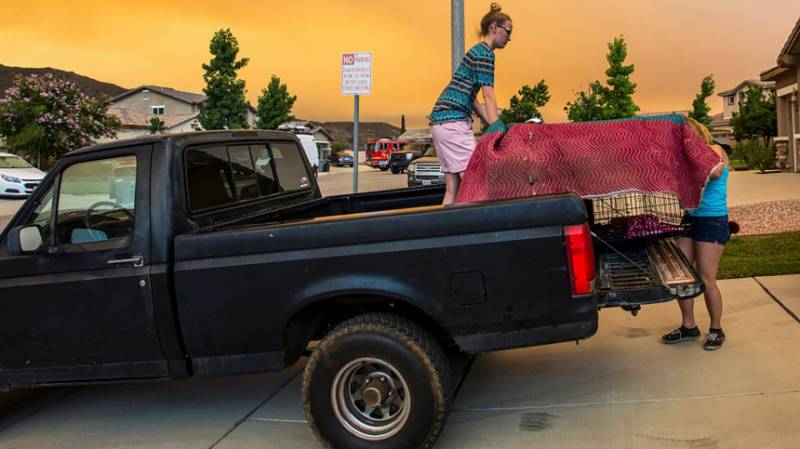
"caption": "Residents along Crystal Ridge Court in Lake Elsinore load a truck as they evacuate as the Holy fire burns near their home on Wednesday afternoon, August 8, 2018.",
"description": null,
"title": "lede.fire-4-1_sized",
"credit": "Mark Rightmire, Orange County Register/SCNG",
"status": "inherit",
"isLoading": false,
"fetchFailed": false
},
"news_11786960": {
"type": "attachments",
"id": "news_11786960",
"meta": {
"index": "attachments_1716263798",
"site": "news",
"id": "11786960",
"found": true
},
"parent": 11786957,
"imgSizes": {
"apple_news_ca_landscape_5_5": {
"file": "https://ww2.kqed.org/app/uploads/sites/10/2019/11/house_hardening_sized_01-1044x783.jpg",
"width": 1044,
"mimeType": "image/jpeg",
"height": 783
},
"apple_news_ca_square_4_0": {
"file": "https://ww2.kqed.org/app/uploads/sites/10/2019/11/house_hardening_sized_01-470x470.jpg",
"width": 470,
"mimeType": "image/jpeg",
"height": 470
},
"twentyfourteen-full-width": {
"file": "https://ww2.kqed.org/app/uploads/sites/10/2019/11/house_hardening_sized_01-1038x576.jpg",
"width": 1038,
"mimeType": "image/jpeg",
"height": 576
},
"thumbnail": {
"file": "https://ww2.kqed.org/app/uploads/sites/10/2019/11/house_hardening_sized_01-160x90.jpg",
"width": 160,
"mimeType": "image/jpeg",
"height": 90
},
"post-thumbnail": {
"file": "https://ww2.kqed.org/app/uploads/sites/10/2019/11/house_hardening_sized_01-672x372.jpg",
"width": 672,
"mimeType": "image/jpeg",
"height": 372
},
"kqedFullSize": {
"file": "https://ww2.kqed.org/app/uploads/sites/10/2019/11/house_hardening_sized_01-e1573867846543.jpg",
"width": 1920,
"height": 1080
},
"apple_news_ca_landscape_4_7": {
"file": "https://ww2.kqed.org/app/uploads/sites/10/2019/11/house_hardening_sized_01-632x474.jpg",
"width": 632,
"mimeType": "image/jpeg",
"height": 474
},
"large": {
"file": "https://ww2.kqed.org/app/uploads/sites/10/2019/11/house_hardening_sized_01-1020x574.jpg",
"width": 1020,
"mimeType": "image/jpeg",
"height": 574
},
"complete_open_graph": {
"file": "https://ww2.kqed.org/app/uploads/sites/10/2019/11/house_hardening_sized_01-1200x675.jpg",
"width": 1200,
"mimeType": "image/jpeg",
"height": 675
},
"apple_news_ca_landscape_4_0": {
"file": "https://ww2.kqed.org/app/uploads/sites/10/2019/11/house_hardening_sized_01-536x402.jpg",
"width": 536,
"mimeType": "image/jpeg",
"height": 402
},
"apple_news_ca_portrait_12_9": {
"file": "https://ww2.kqed.org/app/uploads/sites/10/2019/11/house_hardening_sized_01-1122x1125.jpg",
"width": 1122,
"mimeType": "image/jpeg",
"height": 1125
},
"medium": {
"file": "https://ww2.kqed.org/app/uploads/sites/10/2019/11/house_hardening_sized_01-800x450.jpg",
"width": 800,
"mimeType": "image/jpeg",
"height": 450
},
"apple_news_ca_portrait_4_0": {
"file": "https://ww2.kqed.org/app/uploads/sites/10/2019/11/house_hardening_sized_01-354x472.jpg",
"width": 354,
"mimeType": "image/jpeg",
"height": 472
},
"apple_news_ca_portrait_9_7": {
"file": "https://ww2.kqed.org/app/uploads/sites/10/2019/11/house_hardening_sized_01-840x1120.jpg",
"width": 840,
"mimeType": "image/jpeg",
"height": 1120
},
"apple_news_ca_landscape_12_9": {
"file": "https://ww2.kqed.org/app/uploads/sites/10/2019/11/house_hardening_sized_01-1832x1125.jpg",
"width": 1832,
"mimeType": "image/jpeg",
"height": 1125
},
"apple_news_ca_square_9_7": {
"file": "https://ww2.kqed.org/app/uploads/sites/10/2019/11/house_hardening_sized_01-1104x1104.jpg",
"width": 1104,
"mimeType": "image/jpeg",
"height": 1104
},
"apple_news_ca_portrait_4_7": {
"file": "https://ww2.kqed.org/app/uploads/sites/10/2019/11/house_hardening_sized_01-414x552.jpg",
"width": 414,
"mimeType": "image/jpeg",
"height": 552
},
"apple_news_ca_square_12_9": {
"file": "https://ww2.kqed.org/app/uploads/sites/10/2019/11/house_hardening_sized_01-1472x1125.jpg",
"width": 1472,
"mimeType": "image/jpeg",
"height": 1125
},
"apple_news_ca_portrait_5_5": {
"file": "https://ww2.kqed.org/app/uploads/sites/10/2019/11/house_hardening_sized_01-687x916.jpg",
"width": 687,
"mimeType": "image/jpeg",
"height": 916
},
"full-width": {
"file": "https://ww2.kqed.org/app/uploads/sites/10/2019/11/house_hardening_sized_01-1920x1080.jpg",
"width": 1920,
"mimeType": "image/jpeg",
"height": 1080
},
"apple_news_ca_square_4_7": {
"file": "https://ww2.kqed.org/app/uploads/sites/10/2019/11/house_hardening_sized_01-550x550.jpg",
"width": 550,
"mimeType": "image/jpeg",
"height": 550
},
"apple_news_ca_landscape_9_7": {
"file": "https://ww2.kqed.org/app/uploads/sites/10/2019/11/house_hardening_sized_01-1376x1032.jpg",
"width": 1376,
"mimeType": "image/jpeg",
"height": 1032
},
"apple_news_ca_square_5_5": {
"file": "https://ww2.kqed.org/app/uploads/sites/10/2019/11/house_hardening_sized_01-912x912.jpg",
"width": 912,
"mimeType": "image/jpeg",
"height": 912
}
},
"publishDate": 1573867816,
"modified": 1573867883,
"caption": "Fireproofing can be costly for homeowners, but some creative solutions are a relative bargain. ",
"description": null,
"title": "Herd of goats",
"credit": "iStock",
"status": "inherit",
"isLoading": false,
"fetchFailed": false
},
"news_11786071": {
"type": "attachments",
"id": "news_11786071",
"meta": {
"index": "attachments_1716263798",
"site": "news",
"id": "11786071",
"found": true
},
"parent": 11785978,
"imgSizes": {
"apple_news_ca_landscape_5_5": {
"file": "https://ww2.kqed.org/app/uploads/sites/10/2019/11/CalFreshprofilesphoto7-1044x783.jpg",
"width": 1044,
"mimeType": "image/jpeg",
"height": 783
},
"apple_news_ca_square_4_0": {
"file": "https://ww2.kqed.org/app/uploads/sites/10/2019/11/CalFreshprofilesphoto7-470x470.jpg",
"width": 470,
"mimeType": "image/jpeg",
"height": 470
},
"twentyfourteen-full-width": {
"file": "https://ww2.kqed.org/app/uploads/sites/10/2019/11/CalFreshprofilesphoto7-1038x576.jpg",
"width": 1038,
"mimeType": "image/jpeg",
"height": 576
},
"thumbnail": {
"file": "https://ww2.kqed.org/app/uploads/sites/10/2019/11/CalFreshprofilesphoto7-160x122.jpg",
"width": 160,
"mimeType": "image/jpeg",
"height": 122
},
"post-thumbnail": {
"file": "https://ww2.kqed.org/app/uploads/sites/10/2019/11/CalFreshprofilesphoto7-672x372.jpg",
"width": 672,
"mimeType": "image/jpeg",
"height": 372
},
"kqedFullSize": {
"file": "https://ww2.kqed.org/app/uploads/sites/10/2019/11/CalFreshprofilesphoto7.jpg",
"width": 1920,
"height": 1458
},
"apple_news_ca_landscape_4_7": {
"file": "https://ww2.kqed.org/app/uploads/sites/10/2019/11/CalFreshprofilesphoto7-632x474.jpg",
"width": 632,
"mimeType": "image/jpeg",
"height": 474
},
"large": {
"file": "https://ww2.kqed.org/app/uploads/sites/10/2019/11/CalFreshprofilesphoto7-1020x775.jpg",
"width": 1020,
"mimeType": "image/jpeg",
"height": 775
},
"complete_open_graph": {
"file": "https://ww2.kqed.org/app/uploads/sites/10/2019/11/CalFreshprofilesphoto7-1200x911.jpg",
"width": 1200,
"mimeType": "image/jpeg",
"height": 911
},
"apple_news_ca_landscape_4_0": {
"file": "https://ww2.kqed.org/app/uploads/sites/10/2019/11/CalFreshprofilesphoto7-536x402.jpg",
"width": 536,
"mimeType": "image/jpeg",
"height": 402
},
"apple_news_ca_portrait_12_9": {
"file": "https://ww2.kqed.org/app/uploads/sites/10/2019/11/CalFreshprofilesphoto7-1122x1458.jpg",
"width": 1122,
"mimeType": "image/jpeg",
"height": 1458
},
"medium": {
"file": "https://ww2.kqed.org/app/uploads/sites/10/2019/11/CalFreshprofilesphoto7-800x608.jpg",
"width": 800,
"mimeType": "image/jpeg",
"height": 608
},
"apple_news_ca_portrait_4_0": {
"file": "https://ww2.kqed.org/app/uploads/sites/10/2019/11/CalFreshprofilesphoto7-354x472.jpg",
"width": 354,
"mimeType": "image/jpeg",
"height": 472
},
"apple_news_ca_portrait_9_7": {
"file": "https://ww2.kqed.org/app/uploads/sites/10/2019/11/CalFreshprofilesphoto7-840x1120.jpg",
"width": 840,
"mimeType": "image/jpeg",
"height": 1120
},
"apple_news_ca_landscape_12_9": {
"file": "https://ww2.kqed.org/app/uploads/sites/10/2019/11/CalFreshprofilesphoto7-1832x1374.jpg",
"width": 1832,
"mimeType": "image/jpeg",
"height": 1374
},
"apple_news_ca_square_9_7": {
"file": "https://ww2.kqed.org/app/uploads/sites/10/2019/11/CalFreshprofilesphoto7-1104x1104.jpg",
"width": 1104,
"mimeType": "image/jpeg",
"height": 1104
},
"apple_news_ca_portrait_4_7": {
"file": "https://ww2.kqed.org/app/uploads/sites/10/2019/11/CalFreshprofilesphoto7-414x552.jpg",
"width": 414,
"mimeType": "image/jpeg",
"height": 552
},
"apple_news_ca_square_12_9": {
"file": "https://ww2.kqed.org/app/uploads/sites/10/2019/11/CalFreshprofilesphoto7-1472x1458.jpg",
"width": 1472,
"mimeType": "image/jpeg",
"height": 1458
},
"apple_news_ca_portrait_5_5": {
"file": "https://ww2.kqed.org/app/uploads/sites/10/2019/11/CalFreshprofilesphoto7-687x916.jpg",
"width": 687,
"mimeType": "image/jpeg",
"height": 916
},
"full-width": {
"file": "https://ww2.kqed.org/app/uploads/sites/10/2019/11/CalFreshprofilesphoto7-1920x1458.jpg",
"width": 1920,
"mimeType": "image/jpeg",
"height": 1458
},
"apple_news_ca_square_4_7": {
"file": "https://ww2.kqed.org/app/uploads/sites/10/2019/11/CalFreshprofilesphoto7-550x550.jpg",
"width": 550,
"mimeType": "image/jpeg",
"height": 550
},
"apple_news_ca_landscape_9_7": {
"file": "https://ww2.kqed.org/app/uploads/sites/10/2019/11/CalFreshprofilesphoto7-1376x1032.jpg",
"width": 1376,
"mimeType": "image/jpeg",
"height": 1032
},
"apple_news_ca_square_5_5": {
"file": "https://ww2.kqed.org/app/uploads/sites/10/2019/11/CalFreshprofilesphoto7-912x912.jpg",
"width": 912,
"mimeType": "image/jpeg",
"height": 912
}
},
"publishDate": 1573493596,
"modified": 1669210011,
"caption": null,
"description": "Student volunteer Yongjie He restocks shelves with canned goods at the UC Berkeley campus food pantry. (Anne Wernikoff for CalMatters)",
"title": "CalFreshprofilesphoto7",
"credit": "Anne Wernikoff for CalMatters",
"status": "inherit",
"altTag": "Man restocks shelves with canned food",
"isLoading": false,
"fetchFailed": false
}
},
"audioPlayerReducer": {
"postId": "stream_live",
"isPaused": true,
"isPlaying": false,
"pfsActive": false,
"pledgeModalIsOpen": true,
"playerDrawerIsOpen": false,
"liveAudioPlayStartedAt": 0,
"liveAudioPlayContext": ""
},
"authorsReducer": {
"byline_news_11793607": {
"type": "authors",
"id": "byline_news_11793607",
"meta": {
"override": true
},
"slug": "byline_news_11793607",
"name": "\u003ca href=\"https://calmatters.org/author/matt-levin/\"> Matt Levin \u003ca /> and \u003ca href=\"https://calmatters.org/author/jackie-botts/\"> Jackie Botts \u003ca />",
"isLoading": false
},
"byline_news_11792236": {
"type": "authors",
"id": "byline_news_11792236",
"meta": {
"override": true
},
"slug": "byline_news_11792236",
"name": "\u003ca href=\"https://calmatters.org/author/jocelyn-wiener/\"> Jocelyn Wiener \u003ca />",
"isLoading": false
},
"byline_news_11791969": {
"type": "authors",
"id": "byline_news_11791969",
"meta": {
"override": true
},
"slug": "byline_news_11791969",
"name": "\u003ca href=\"https://calmatters.org/author/martha-groves/\"> Martha Groves \u003ca />",
"isLoading": false
},
"byline_news_11791987": {
"type": "authors",
"id": "byline_news_11791987",
"meta": {
"override": true
},
"slug": "byline_news_11791987",
"name": "Erica Hellerstein\u003cbr>\u003ca href=\"https://calmatters.org/california-divide/2019/12/why-this-bay-area-county-is-betting-big-on-food-pharmacies-for-low-income-patients/\">CALmatters\u003c/a>",
"isLoading": false
},
"byline_news_11790969": {
"type": "authors",
"id": "byline_news_11790969",
"meta": {
"override": true
},
"slug": "byline_news_11790969",
"name": "\u003cstrong>\u003ca href=\"https://calmatters.org/author/elizabeth-castillo/\">Elizabeth Castillo\u003c/a>\u003c/strong>",
"isLoading": false
},
"byline_news_11790206": {
"type": "authors",
"id": "byline_news_11790206",
"meta": {
"override": true
},
"slug": "byline_news_11790206",
"name": "\u003ca href=\"https://calmatters.org/author/ricardo-cano/\"> Ricardo Cano \u003ca />",
"isLoading": false
},
"byline_news_11789488": {
"type": "authors",
"id": "byline_news_11789488",
"meta": {
"override": true
},
"slug": "byline_news_11789488",
"name": "\u003cstrong>Laurel Rosenhall\u003cbr />CalMatters\u003c/strong>",
"isLoading": false
},
"byline_news_11789044": {
"type": "authors",
"id": "byline_news_11789044",
"meta": {
"override": true
},
"slug": "byline_news_11789044",
"name": "Erica Hellerstein \u003cbr>\u003cstrong>Mercury News\u003c/strong>",
"isLoading": false
},
"byline_news_11788115": {
"type": "authors",
"id": "byline_news_11788115",
"meta": {
"override": true
},
"slug": "byline_news_11788115",
"name": "\u003ca href=\"https://calmatters.org/author/jackie-botts/\">Jackie Botts\u003c/a>\u003cbr>CALmatters",
"isLoading": false
},
"byline_news_11787091": {
"type": "authors",
"id": "byline_news_11787091",
"meta": {
"override": true
},
"slug": "byline_news_11787091",
"name": "\u003ca href=\"https://calmatters.org/author/julie-cart/\"> Julie Cart \u003ca />",
"isLoading": false
},
"byline_news_11786957": {
"type": "authors",
"id": "byline_news_11786957",
"meta": {
"override": true
},
"slug": "byline_news_11786957",
"name": "\u003ca href=\"https://calmatters.org/author/adria-watson/\"> Adria Watson\u003c/a>\u003cbr>CalMatters",
"isLoading": false
},
"byline_news_11785978": {
"type": "authors",
"id": "byline_news_11785978",
"meta": {
"override": true
},
"slug": "byline_news_11785978",
"name": "\u003ca href= https://calmatters.org/author/jackie-botts/\"> Jackie Botts \u003ca/> \u003cbr>\u003ca href= https://calmatters.org/author/feliciacalmatters-org/\"> Felicia Mello \u003ca/>",
"isLoading": false
}
},
"pagesReducer": {
"news_affiliate_calmatters": {
"type": "terms",
"id": "news_18481",
"meta": {
"index": "terms_1716263798",
"site": "news",
"id": "18481",
"score": 15.355904
},
"featImg": null,
"name": "CALmatters",
"description": null,
"taxonomy": "affiliate",
"headData": {
"twImgId": null,
"twTitle": null,
"ogTitle": null,
"ogImgId": null,
"twDescription": null,
"description": null,
"title": "CALmatters Archives | KQED Arts",
"ogDescription": null
},
"ttid": 18515,
"slug": "calmatters",
"isLoading": false,
"title": "CALmatters",
"pageMeta": {
"site": "news",
"WpPageTemplate": "page-topic-editorial",
"currentPage": 62
},
"blocks": [
{
"blockName": "kqed/post-list",
"attrs": {
"layout": "cardArticle2",
"query": "posts/news?affiliate=calmatters",
"seeMore": false,
"paginated": true,
"page": 62
}
},
{
"blockName": "kqed/ad"
}
]
}
},
"pfsSessionReducer": {},
"postsReducer": {
"stream_live": {
"type": "live",
"id": "stream_live",
"audioUrl": "https://streams.kqed.org/kqedradio",
"title": "Live Stream",
"excerpt": "Live Stream information currently unavailable.",
"link": "/radio",
"featImg": "",
"label": {
"name": "KQED Live",
"link": "/"
}
},
"stream_kqedNewscast": {
"type": "posts",
"id": "stream_kqedNewscast",
"audioUrl": "https://www.kqed.org/.stream/anon/radio/RDnews/newscast.mp3?_=1",
"title": "KQED Newscast",
"featImg": "",
"label": {
"name": "88.5 FM",
"link": "/"
}
},
"news_11793607": {
"type": "posts",
"id": "news_11793607",
"meta": {
"index": "posts_1716263798",
"site": "news",
"id": "11793607",
"score": null,
"sort": [
1578001154000
]
},
"guestAuthors": [],
"slug": "californias-homelessness-crisis-and-possible-solutions-explained",
"title": "California’s Homelessness Crisis — and Possible Solutions — Explained",
"publishDate": 1578001154,
"format": "standard",
"headTitle": "California’s Homelessness Crisis — and Possible Solutions — Explained | KQED",
"labelTerm": {},
"content": "\u003cp>California’s most vexing issue is also its most shameful: the large and rising number of residents who lack a safe place to call home. In a state with vast amounts of wealth, more than 150,000 of its residents sleep in shelters, cars or on the street.\u003c/p>\n\u003cp>The \u003ca href=\"https://www.sfgate.com/bayarea/article/rapporteur-United-Nations-San-Francisco-homeless-13351509.php\" target=\"_blank\" rel=\"noopener noreferrer\">United Nations\u003c/a> compared the tent encampments of San Francisco to the slums of New Delhi and Mexico City. \u003ca href=\"http://www.ladowntownnews.com/news/number-of-homeless-people-on-skid-row-spikes-by/article_aa32fbda-bafb-11e9-849f-ab047fa8951a.html\" target=\"_blank\" rel=\"noopener noreferrer\">Nearly 5,000 people\u003c/a> live in the half square mile of Los Angeles’ Skid Row. And while the problem is most acute in California’s urban centers, homelessness is now a common fixture in many of the state’s \u003ca href=\"https://www.sfchronicle.com/news/article/California-s-homelessness-crisis-moves-to-the-12182026.php#\" target=\"_blank\" rel=\"noopener noreferrer\">suburbs and rural towns\u003c/a>. State and local officials have pledged billions in recent years to help, but voters remain frustrated by a lack of visible progress.\u003c/p>\n\u003cp>President Donald Trump has wielded the state’s homelessness woes as a political weapon, \u003ca href=\"https://www.nytimes.com/2019/09/17/us/politics/trump-california-homeless.html\" target=\"_blank\" rel=\"noopener noreferrer\">excoriating\u003c/a> Gov. Gavin Newsom and the state’s progressive policies for allowing the country’s “best highways, our best streets, our best entrances to buildings” to be blockaded by people without homes. In a Christmas Day \u003ca href=\"https://twitter.com/realDonaldTrump/status/1209964406324510720\" target=\"_blank\" rel=\"noopener noreferrer\">tweet\u003c/a>, Trump repeated his threats of federal intervention if the state fails to fix the problem.\u003c/p>\n\u003cp>Here’s what you need to know about California’s homelessness crisis — including possible solutions.\u003c/p>\n\u003ch3 class=\"explainer-card-title\">How Many People Are Homeless?\u003c/h3>\n\u003cp>At \u003ca href=\"https://www.hud.gov/press/press_releases_media_advisories/HUD_No_19_177\" target=\"_blank\" rel=\"noopener noreferrer\">last official count\u003c/a> 151,278 individuals are homeless in California, according to the U.S. Department of Housing and Urban Development. That’s the highest number since at least 2007, and represents a nearly 17% uptick since 2018. The number of unsheltered Californians — living on the streets or in cars — has surged the past year.\u003c/p>\n\u003cp>[ad fullwidth]\u003c/p>\n\u003cp>\u003c!-- iframe plugin v.4.3 wordpress.org/plugins/iframe/ -->\u003cbr>\n\u003ciframe loading=\"lazy\" src=\"https://e.infogram.com/738a2c29-86c2-48b4-a641-c9e37d2db962?src=embed\" title=\"California homelessness over time\" width=\"600\" height=\"718\" scrolling=\"no\" frameborder=\"0\" style=\"border:none;\" class=\"iframe-class\">\u003c/iframe>\u003c/p>\n\u003cp>Official homelessness statistics mostly come from “one night counts” — a volunteer-led snapshot of the number of people experiencing homelessness one night in January. Experts say this method \u003ca href=\"https://www.citylab.com/equity/2019/03/homeless-crisis-oakland-california-hud-point-in-time-data/584023/\" target=\"_blank\" rel=\"noopener noreferrer\">likely underestimates\u003c/a> the unsheltered, and doesn’t capture the total number of people who fall into homelessness over the course of a year, which could be \u003ca href=\"https://www.politifact.com/california/statements/2018/mar/27/travis-allen/has-californias-homeless-population-skyrocketed-an/\" target=\"_blank\" rel=\"noopener noreferrer\">two or three times higher\u003c/a>.\u003c/p>\n\u003cp>[aside tag=\"homelessness\" label=\"related coverage\"]\u003c/p>\n\u003cp>It’s not surprising that California, the largest state, has the biggest homeless population in the country. But while about 1 in 9 Americans lives in California, roughly 1 in 4 homeless Americans lives here. New York and Hawaii have slightly higher per capita rates of homelessness, but California has the largest proportion of people living without shelter. That means the state’s homeless population is far more visible than in other places, and more vulnerable to the illness, violence \u003ca href=\"https://www.latimes.com/local/lanow/la-me-homeless-hypothermia-20190217-story.html\" target=\"_blank\" rel=\"noopener noreferrer\">and death\u003c/a> that accompany living on the street.\u003c/p>\n\u003cp>And although states such as Texas and New York have seen a slight uptick in their homeless counts since last year, California saw the largest proportional swell of any state besides New Mexico. The Trump administration is quick to point out that the country would have seen an overall decline in homelessness if California and Oregon were excluded from the count.\u003c/p>\n\u003ch3 class=\"explainer-card-title\">Who Are They?\u003c/h3>\n\u003cp>Governments and services providers tend to focus their efforts on the chronically homeless — an individual with a disability who has lived without consistent shelter for a year, or has had multiple recent bouts of homelessness. About 26% of Californians experiencing homelessness fit that definition, or some 34,000 people.\u003c/p>\n\u003cp>African-Americans are disproportionately found on California’s streets — roughly 30% of the state’s unhoused population is Black or African-American, according to HUD. Several Bay Area regions, including San Francisco and Marin County, have some of the highest rates of Black homelessness in the country. A legacy of racial discrimination in rental housing, higher rates of poverty among Black families, and overrepresentation in the state’s incarceration and child welfare systems \u003ca href=\"https://www.lahsa.org/news?article=514-groundbreaking-report-on-black-people-and-homelessness-released\" target=\"_blank\" rel=\"noopener noreferrer\">all contribute\u003c/a> to the high numbers of African-Americans experiencing homelessness.\u003c/p>\n\u003cp>\u003c!-- iframe plugin v.4.3 wordpress.org/plugins/iframe/ -->\u003cbr>\n\u003ciframe loading=\"lazy\" src=\"https://e.infogram.com/525f355e-1ab3-401f-ab62-763890e38702?src=embed\" title=\"Demographics_homeless\" width=\"550\" height=\"855\" scrolling=\"no\" frameborder=\"0\" style=\"border:none;\" class=\"iframe-class\">\u003c/iframe>\u003c/p>\n\u003cp>A person experiencing homelessness is about twice as likely to be male than female, and significantly more likely to be LGBTQ than in the population at large. A growing proportion are seniors, with \u003ca href=\"https://www.sfchronicle.com/bayarea/article/Aging-onto-the-street-Nearly-half-of-older-13668900.php\" target=\"_blank\" rel=\"noopener noreferrer\">new research\u003c/a> indicating nearly half fall of seniors on the street fall into homelessness after age 50.\u003c/p>\n\u003ch3 class=\"explainer-card-title\">Are They Local, or Are They Coming From Somewhere Else?\u003c/h3>\n\u003cp>One of the more enduring myths about California’s homeless population is that the vast majority have traveled here from other states, seeking generous government assistance and weather more hospitable to living outdoors. It’s a baseless claim perpetuated by both sides of the aisle — Gov. Newsom has made it \u003ca href=\"https://www.politifact.com/california/statements/2019/aug/14/gavin-newsom/gavin-newsoms-ridiculous-claim-texas-responsible-s/\" target=\"_blank\" rel=\"noopener noreferrer\">repeatedly\u003c/a>.\u003c/p>\n\u003cp>While comprehensive statewide data is lacking, local surveys indicate people living on the streets are typically from the surrounding neighborhood. Example: 70% of San Francisco’s homeless people were housed somewhere in the city when they lost housing; only 8% came from out of state. \u003ca href=\"https://www.lahsa.org/documents?id=3437-2019-greater-los-angeles-homeless-count-presentation.pdf\" target=\"_blank\" rel=\"noopener noreferrer\">Three quarters\u003c/a> of Los Angeles County’s homeless population lived in the region before becoming homeless.\u003c/p>\n\u003cp>\u003c!-- iframe plugin v.4.3 wordpress.org/plugins/iframe/ -->\u003cbr>\n\u003ciframe loading=\"lazy\" src=\"https://e.infogram.com/373989ba-1c3c-439c-95e8-22df331d8a9f?src=embed\" title=\"Homelessness origin\" width=\"600\" height=\"872\" scrolling=\"no\" frameborder=\"0\" style=\"border:none;\" class=\"iframe-class\">\u003c/iframe>\u003c/p>\n\u003cp>There’s little evidence to suggest undocumented immigrants constitute a large share of California’s homeless population. But those that are unhoused are particularly difficult to help. Crucial safety net resources such as Social Security, Section 8 housing vouchers and food stamps are unavailable to the undocumented, who \u003ca href=\"https://latino.ucla.edu/wp-content/uploads/2019/02/FINAL-DRAFT-02_08_19-Stemming-the-Rise-of-Homelessness.pdf\" target=\"_blank\" rel=\"noopener noreferrer\">often resist engagement\u003c/a> with homeless services providers because of deportation fears. Language and cultural barriers also complicate re-housing efforts.\u003c/p>\n\u003ch3 class=\"explainer-card-title\">A Welcome Decrease in Veteran and Family Homelessness\u003c/h3>\n\u003cp>Military veterans, at higher risk of mental illness and substance abuse issues, make up a disproportionate share of the country’s homeless population. Roughly 11,000 veterans experience homelessness in California on any given night, about 8% of the state’s total homeless population. Most vets experiencing homelessness are over age 50, and often have significant disabilities and medical conditions that are exacerbated by precarious housing situations. Military members who experienced an episode of sexual trauma during their service are at especially high risk.\u003c/p>\n\u003cp>[pullquote]Infancy is the age at which a person in the United States is most likely to be found in a homeless shelter.[/pullquote]\u003c/p>\n\u003cp>The good news is that the number of vets living on the streets has declined significantly over the past decade, both nationally and in California. Experts credit initiatives from the Obama administration incentivizing a “housing-first” approach — where permanent housing is provided without preconditions for addiction or mental health treatment — to help homeless vets. The \u003ca href=\"https://calmatters.org/housing/2018/05/the-only-city-in-california-to-solve-veteran-homelessness-is-on-a-mission-to-go-bigger/\" target=\"_blank\" rel=\"noopener noreferrer\">city of Riverside\u003c/a> succeeded in housing all 89 of its homeless veterans after adopting that approach.\u003c/p>\n\u003cp>\u003c!-- iframe plugin v.4.3 wordpress.org/plugins/iframe/ -->\u003cbr>\n\u003ciframe loading=\"lazy\" src=\"https://e.infogram.com/f0725372-d44f-4af4-b92f-ceb481dbfa56?src=embed\" title=\"Vets homelessness\" width=\"550\" height=\"796\" scrolling=\"no\" frameborder=\"0\" style=\"border:none;\" class=\"iframe-class\">\u003c/iframe>\u003c/p>\n\u003cp>[aside postID=\"news_11787061,news_11680975,news_11667527 \" label=\"Vets Experiencing Homelessness\"]\u003c/p>\n\u003cp>Homelessness among families is also down over the last decade. Still, about 6,000 families and 12,000 children were homeless in California last year, according to point-in-time estimates. Unlike households without children, those with at least one child are far more likely to utilize emergency shelter or transitional housing. One striking statistic: Infancy is the age at which a person in the United States is most likely to be found in a homeless shelter.\u003c/p>\n\u003cp>\u003ca href=\"https://www.acf.hhs.gov/sites/default/files/opre/opre_homefam_brief3_hhs_children_02_24_2017_b508.pdf\" target=\"_blank\" rel=\"noopener noreferrer\">Several studies\u003c/a> have found strong correlations between early childhood housing instability and behavioral and learning difficulties later in school.\u003c/p>\n\u003ch3 class=\"explainer-card-title\">High Rents Drive Up Homelessness\u003c/h3>\n\u003cp>Mental health problems, addiction, childhood trauma, interaction with the criminal justice system and poverty all play significant roles in whether someone becomes homeless. But the primary reason? They can no longer afford rent.\u003c/p>\n\u003cp>About 1.3 million California renter households are considered “extremely low income,” making less than $25,000 a year, according to the California Housing Partnership, a nonprofit organization the state created to advise affordable housing builders. Predictably, these financially strapped households can barely afford the state’s \u003ca href=\"https://www.rentcafe.com/blog/rental-market/market-snapshots/renting-america-housing-changed-past-decade/#pricegrowth\" target=\"_blank\" rel=\"noopener noreferrer\">escalating rents\u003c/a>, and are most at risk of falling into homelessness.\u003c/p>\n\u003cp>\u003c!-- iframe plugin v.4.3 wordpress.org/plugins/iframe/ -->\u003cbr>\n\u003ciframe loading=\"lazy\" src=\"https://e.infogram.com/8ba98878-b59c-40e0-81f2-f5b5229f19c6?src=embed\" title=\"rent vs wage\" width=\"550\" height=\"860\" scrolling=\"no\" frameborder=\"0\" style=\"border:none;\" class=\"iframe-class\">\u003c/iframe>\u003c/p>\n\u003cp>Fueled by decades of underproduction, California’s stock of “naturally occurring” affordable housing is dwindling, as shoddy, older apartments that used to house lower-income families are increasingly taken by higher-income tenants.\u003c/p>\n\u003cp>Government-subsidized housing has not filled the gap. That’s partly because doing so would be insanely expensive. The nonpartisan Legislative Analyst’s Office estimates that building new housing for every low-income Californian who needs it would cost \u003ca href=\"https://lao.ca.gov/publications/report/3345\">$15 to $30 billion annually.\u003c/a> That’s what the state currently spends on Medi-Cal, its massive program to provide health care to the poor, which covers a third of the state’s residents.\u003c/p>\n\u003ch2 class=\"explainer-card-title\">What About Mental Illness and Addiction?\u003c/h2>\n\u003cp>Advocates for homeless people are leery of casting too much blame for the state’s crisis on mental health and substance abuse issues. They argue that plenty of low-income residents in other states struggle with drug addiction and debilitating psychological conditions. They simply manage to remain off the streets because the rent is cheaper.\u003c/p>\n\u003cp>But recent data suggests these issues are more prevalent among people experiencing homelessness than previously reported, especially for those living on the street. About half of the unsheltered nationally report that mental health and/or substance abuse contributed to their loss of housing. A Los Angeles Times \u003ca href=\"https://www.latimes.com/california/story/2019-10-07/homeless-population-mental-illness-disability\" target=\"_blank\" rel=\"noopener noreferrer\">investigation\u003c/a> found two-thirds of L.A. County’s residents living on the streets suffer from a psychological or substance abuse disorder, far more than what’s been reported in official statistics that exclude mental disorders that aren’t “long-term.”\u003c/p>\n\u003cp>\u003c!-- iframe plugin v.4.3 wordpress.org/plugins/iframe/ -->\u003cbr>\n\u003ciframe loading=\"lazy\" src=\"https://e.infogram.com/eeb1eed6-df15-40ae-b5ab-6464f6b300d0?src=embed\" title=\"Mental health \" width=\"550\" height=\"879\" scrolling=\"no\" frameborder=\"0\" style=\"border:none;\" class=\"iframe-class\">\u003c/iframe>\u003c/p>\n\u003cp>Methamphetamine use is \u003ca href=\"https://www.npr.org/sections/health-shots/2019/05/01/716404677/as-meth-use-surges-first-responders-struggle-to-help-those-in-crisis\" target=\"_blank\" rel=\"noopener noreferrer\">up across the West Coast\u003c/a>, and is often to blame for some of the most visible episodes of homelessness seen on California streets. Unfortunately, physicians say meth addiction is \u003ca href=\"https://www.sfchronicle.com/bayarea/article/Meth-devilishly-hard-to-kick-for-addicts-No-14563881.php#\" target=\"_blank\" rel=\"noopener noreferrer\">confoundingly difficult to treat\u003c/a>. While methadone is available to wean heroin addicts off of opioids, no such replacement medication exists for meth.\u003c/p>\n\u003cp>[aside postID=\"forum_11778887,news_11772258,news_11742865\" label=\"Related coverage\"]\u003c/p>\n\u003cp>Worse still, meth can exacerbate existing mental illnesses. Addiction and psychological conditions are often inextricably intertwined, and present a complex case for outreach workers or (more often) law enforcement to confront. A disconcerting number of California \u003ca href=\"https://calmatters.org/projects/board-and-care-homes-closing-in-california-mental-health-crisis/\" target=\"_blank\" rel=\"noopener noreferrer\">board-and-care facilities\u003c/a>, which have traditionally housed low-income patients with schizophrenia and other severe conditions, have shuttered in recent years.\u003c/p>\n\u003cp>Many have also blamed California’s \u003ca href=\"https://calmatters.org/explainers/breakdown-californias-mental-health-system-explained/\" target=\"_blank\" rel=\"noopener noreferrer\">conservatorship laws\u003c/a> for making it too difficult to compel treatment for people with mental illness or drug addiction living on the street. Civil libertarians and disability rights groups argue that \u003ca href=\"https://calmatters.org/projects/mentally-ill-forced-treatment-conservatorship-california-debate/\" target=\"_blank\" rel=\"noopener noreferrer\">conservatorship\u003c/a> —when a court-appointed official manages another person’s life, including medical decisions — should be used as sparingly as possible, as it risks violating civil liberties and is a hollow remedy given the severe shortage of actual treatment options. Under a 1967 state law known as the Lanterman-Petris-Short Act, Californians can be held for treatment against their will only if they are deemed a danger to themselves or others, or are determined to be gravely disabled. Other states such as New York do not impose such strict requirements. California is experimenting with allowing three counties to take legal power over mentally ill people living on the street, but only in \u003ca href=\"https://calmatters.org/newsletter/in-the-past-homeless-barely-registered-as-a-political-issue-now-its-a-top-concern/\" target=\"_blank\" rel=\"noopener noreferrer\">limited\u003c/a> circumstances.\u003c/p>\n\u003cp>Finally there is the eternal question of cause and effect: The severe stresses people face when they lose shelter and are forced to live exposed on the streets can also wreak havoc on their mental health and lead to substance abuse.\u003c/p>\n\u003ch3 class=\"explainer-card-title\">Other Factors That Cause Homelessness\u003c/h3>\n\u003cp>Survivors of domestic violence are among those at high risk of homelessness. One California study found that women reporting an episode of domestic violence were \u003ca href=\"https://www.ncbi.nlm.nih.gov/pubmed/17234488\" target=\"_blank\" rel=\"noopener noreferrer\">four times more likely\u003c/a> to suffer housing instability than other women.\u003c/p>\n\u003cp>The formerly incarcerated — ineligible for many public housing programs and frequently a target of discrimination in the rental housing market — often take refuge in emergency shelters or on the streets. While comprehensive California data is lacking, \u003ca href=\"https://www.prisonpolicy.org/reports/housing.html\" target=\"_blank\" rel=\"noopener noreferrer\">one study\u003c/a> by a criminal justice reform advocacy group found that people who have been in jail or prison are ten times more likely to experience homelessness than the general public.\u003c/p>\n\u003cp>Youth aging out of the foster care system likely constitute a significant share of the more than 11,000 homeless young adults in California. One study found \u003ca href=\"https://www.chapinhall.org/wp-content/uploads/Midwest-Eval-Outcomes-at-Age-23-and-24.pdf\" target=\"_blank\" rel=\"noopener noreferrer\">30% of former foster care\u003c/a> children in the Midwest were homeless at least once before age 24. Lacking family support networks and often victims of childhood traumas, \u003ca href=\"https://www.aecf.org/m/resourcedoc/california-fosteringyouthtransitions-2018.pdf\" target=\"_blank\" rel=\"noopener noreferrer\">about 25%\u003c/a> of California’s foster youth transitioning into adulthood live in precarious housing situations.\u003c/p>\n\u003ch3 class=\"explainer-card-title\">Emergency Shelters and Permanent Supportive Housing\u003c/h3>\n\u003cp class=\"has-text-align-justify\">California has a patchwork of government-provided housing for people experiencing homelessness. While the nomenclature varies from city to city, the two most prevalent and important categories of housing are emergency shelters and permanent supportive housing.\u003c/p>\n\u003cp class=\"has-text-align-left\">\u003cstrong>Emergency Shelters:\u003c/strong> These are any facilities that provide temporary shelter for people experiencing homelessness. At their most basic they are a barracks-like arrangement of cots, and provide a bed and a meal. Typically they are operated by publicly funded nonprofit and religious organizations. Many shelters bar residents from staying with partners or \u003ca href=\"https://calmatters.org/politics/2019/03/homeless-shelters-pets-california-bill/\" target=\"_blank\" rel=\"noopener noreferrer\">pets\u003c/a>, and are often viewed by homeless people as dangerous and dirty, even compared to sleeping on the streets. A \u003ca href=\"https://www.scpr.org/news/2018/05/09/82908/rats-roaches-bedbugs-mold-why-thousands-of-las-hom/?_ga=2.128451404.1980297995.1577657887-661267234.1574806772\" target=\"_blank\" rel=\"noopener noreferrer\">KPCC investigatio\u003c/a>\u003ca href=\"http://a%20kpcc%20investigation%20found%20reports%20of%20bedbugs%2C%20rats%2C%20foul%20odors%2C%20poor%20lighting%2C%20harassment%2C/\">n\u003c/a> of Los Angeles area shelters last year found reports of rats, bedbugs, foul odors and harassment rampant at several shelters.\u003c/p>\n\u003cp class=\"has-text-align-left\">But while shelter beds frequently go unused in \u003ca href=\"https://laist.com/2018/07/05/there_are_empty_beds_heres_whats_keeping_homeless_people_out_of_shelters.php\" target=\"_blank\" rel=\"noopener noreferrer\">Los Angeles County\u003c/a>, where transportation is also a complicating factor, overall the state has a major shortage. Federal funding has shifted away from emergency shelters over the last decade, causing the Bay Area, for example, to lose \u003ca href=\"http://www.bayareaeconomy.org/files/pdf/BayAreaHomelessnessReport.pdf\" target=\"_blank\" rel=\"noopener noreferrer\">1,700 shelter beds\u003c/a> since 2011, according to the Bay Area Council Economic Institute.\u003c/p>\n\u003cp class=\"has-text-align-left\">\u003ca href=\"http://hsh.sfgov.org/services/emergencyshelter/navigation-centers/\" target=\"_blank\" rel=\"noopener noreferrer\">San Francisco\u003c/a> and Los Angeles have tried to reinvent emergency shelters, equipping them with health and social service providers who can help guide residents to more stable housing outcomes. According to city officials\u003ca href=\"https://www.sfchronicle.com/bayarea/article/SF-s-homeless-navigation-centers-seem-to-be-13025012.php\" target=\"_blank\" rel=\"noopener noreferrer\"> more than 50%\u003c/a> of the short-term residents of San Francisco’s “navigation centers,” which are tailored to high-needs clients, are ultimately placed in housing. Emergency shelters are generally much cheaper to build than permanent supportive housing, but new projects often run into stringent community opposition.\u003c/p>\n\u003cp>\u003c!-- iframe plugin v.4.3 wordpress.org/plugins/iframe/ -->\u003cbr>\n\u003ciframe loading=\"lazy\" src=\"https://e.infogram.com/b80bd03e-8fa8-4743-9c44-cb30d72fa68b?src=embed\" title=\"Costs of different types of homeless housing\" width=\"550\" height=\"814\" scrolling=\"no\" frameborder=\"0\" style=\"border:none;\" class=\"iframe-class\">\u003c/iframe>\u003c/p>\n\u003cp>\u003cstrong>Permanent Supportive Housing:\u003c/strong> Homelessness experts agree that emergency shelters are mostly just a Band-Aid — permanent supportive housing is the long-term solution. Usually targeted at the chronically homeless, this offers a highly subsidized apartment paired with support services including psychological counseling, substance abuse rehab and job training. Permanent supportive housing is a pillar of the “housing first” model of ending homelessness: Individuals don’t need to quit drugs or agree to participate in any program to get a permanent roof over their head. \u003ca href=\"https://www.rand.org/blog/2018/01/housing-for-health-los-angeles-countys-department-of.html\" target=\"_blank\" rel=\"noopener noreferrer\">Studies show\u003c/a> that once placed in permanent supportive housing, residents tend to stay off the streets and out of the hospital and jail, saving taxpayers considerable expense.\u003c/p>\n\u003cp>One problem: Permanent supportive housing is really expensive to build. In Los Angeles, a recent estimate from the\u003ca href=\"https://laist.com/2019/10/08/prop_hhh_homeless_housing_audit.php\" target=\"_blank\" rel=\"noopener noreferrer\"> city auditor\u003c/a> put the median cost of building one unit at more than $530,000. A new project coming on line in San Jose is estimated to pencil out at roughly $470,000 per unit. The outrageous price tags aren’t just driven by land costs — a shortage of construction labor and prolonged city approval processes are also to blame. Cities including Oakland have recently begun buying and converting single-room occupancy hotels to sidestep prohibitively high new construction costs.\u003c/p>\n\u003ch3 class=\"explainer-card-title\">Preventing Homelessness\u003c/h3>\n\u003cp>Many California cities have made significant strides in moving people from streets and shelters into safe, stable housing. The Los Angeles Housing Services Authority, buoyed by fresh state and local funds approved by voters, estimated that it was able to place \u003ca href=\"https://www.lahsa.org/documents?id=3437-2019-greater-los-angeles-homeless-count-presentation.pdf\" target=\"_blank\" rel=\"noopener noreferrer\">more than 20,000 people\u003c/a> experiencing homelessness into housing last year.\u003c/p>\n\u003cp>So why did L.A. County’s homeless population still grow 12% between 2018 and 2019? Because an estimated 55,000 residents simultaneously lost a place to live, according to the Los Angeles Homeless Services Authority (another \u003ca href=\"https://www.capolicylab.org/wp-content/uploads/2019/12/Predicting_and_Preventing_Homelessness_in_Los_Angeles.pdf\" target=\"_blank\" rel=\"noopener noreferrer\">source\u003c/a> puts the number closer to 34,000). San Francisco officials say for every homeless person they house, another three fall into homelessness. Much to the chagrin of local politicians trying to prove taxpayer money is being spent effectively, new shelters and supportive housing will have trouble making a dent in visible homelessness unless the spigot is plugged in the first place.\u003c/p>\n\u003cp>States and local governments across the country (including California) are devoting a rising share of homelessness resources to prevention strategies. These include:\u003c/p>\n\u003cul>\n\u003cli>\u003cstrong>Eviction counseling and defense: \u003c/strong>Being evicted — forcibly removed from an apartment — can lead to devastating family housing instability. An eviction record also makes it exceedingly difficult to find rental housing. The Newsom administration bulked up legal services in last year’s budget for low-income tenants facing evictions.\u003c/li>\n\u003cli>\u003cstrong>Emergency rental assistance:\u003c/strong> New York and Chicago have seen\u003ca href=\"https://www.scpr.org/news/2019/12/06/90541/can-california-reduce-homelessness-through-better/\" target=\"_blank\" rel=\"noopener noreferrer\"> early successes\u003c/a> with programs that provide small cash assistance and landlord mediation services to renters struggling to make ends meet. Many California cities have versions of these programs. But targeting emergency aid to those most at risk of homelessness can be difficult. \u003ca href=\"https://www.capolicylab.org/wp-content/uploads/2019/12/Predicting_and_Preventing_Homelessness_in_Los_Angeles.pdf\" target=\"_blank\" rel=\"noopener noreferrer\">A pilot project\u003c/a> from Los Angeles County, UCLA and the University of Chicago hopes to use big data and predictive analytics to better target emergency services to stem homelessness.\u003c/li>\n\u003cli>\u003cstrong>Diversion and rapid re-housing: \u003c/strong>Quickly connecting individuals who just lost their home with a new one is one of the most cost effective ways of preventing long-term homelessness. In \u003ca href=\"https://endhomelessness.org/rapid-re-housing-works/\" target=\"_blank\" rel=\"noopener noreferrer\">rapid re-housing programs,\u003c/a> people teetering on the verge of homelessness or new to a shelter are often provided a security deposit, first month’s rent (or more), and connected to a landlord with an immediate vacancy.\u003c/li>\n\u003c/ul>\n\u003ch3 class=\"explainer-card-title\">Law Enforcement’s Role\u003c/h3>\n\u003cp>Is it legal for someone to sleep on the sidewalk or other public property?\u003c/p>\n\u003cp>A landmark federal court decision says yes — if there aren’t shelter beds available. Allowed to stand by the Supreme Court in late 2019, the Ninth Circuit Court of Appeals’ ruling in \u003ca href=\"https://law.justia.com/cases/federal/appellate-courts/ca9/15-35845/15-35845-2019-04-01.html\" target=\"_blank\" rel=\"noopener noreferrer\">Martin vs City of Boise\u003c/a> held that ticketing, arresting or otherwise criminalizing people living outside violates constitutional protections against cruel and unusual punishment. Several California cities and counties filed amicus briefs urging the Supreme Court to reverse the decision, arguing it would hamstring efforts to clear homeless encampments that posed serious public health and safety risks.\u003c/p>\n\u003cp>The impact of the Boise decision remains unclear. Police departments and sheriffs still can enforce various “quality of life” ordinances, as well as bans against public defecation and drug use. Many advocates say issuing citations against these behaviors is counterproductive, because people experiencing homelessness have few resources to pay off city fines, and brief incarceration episodes only add to housing instability.\u003c/p>\n\u003cp>Homelessness puts enormous financial and resource strains on California police and sheriff departments. A recent audit of how Los Angeles spends homelessness dollars found that \u003ca href=\"https://www.latimes.com/local/lanow/la-me-ln-homeless-cost-police-20150417-story.html\" target=\"_blank\" rel=\"noopener noreferrer\">over 50% went to law enforcement\u003c/a>. Several police departments have created units dedicated to interacting with homeless populations, often pairing cops with social workers.\u003c/p>\n\u003cp>Sweeps also take a toll on unsheltered people, who can lose what little belongings they still have — including sleeping bags, family photographs and medicine.\u003c/p>\n\u003ch3 class=\"explainer-card-title\">What is the State Doing About Homelessness?\u003c/h3>\n\u003cp>As homelessness has soared in California, so has state spending on programs to address it, especially in the last two years.\u003c/p>\n\u003cp>In 2018, then-Gov. Jerry Brown directed $500 million to emergency homelessness funding in response to a \u003ca href=\"https://apnews.com/9fc4b636ece646ff9578a84e8514027d\" target=\"_blank\" rel=\"noopener noreferrer\">plea for help\u003c/a> from mayors of the state’s 11 largest cities. That same year, voters passed \u003ca href=\"https://elections.calmatters.org/2018/california-ballot-measures/proposition-1-affordable-housing-bond/\" target=\"_blank\" rel=\"noopener noreferrer\">Prop. 1\u003c/a>, a $4 billion bond that funds affordable housing construction. They also passed \u003ca href=\"https://elections.calmatters.org/2018/california-ballot-measures/proposition-2-mental-health-money-for-housing/\" target=\"_blank\" rel=\"noopener noreferrer\">Prop. 2\u003c/a>, a $2 billion bond to fund supportive housing for people with mental illness.\u003c/p>\n\u003cp>In his first year, Gov. Gavin Newsom upped the ante on homelessness spending. He designated a record \u003ca href=\"http://www.ebudget.ca.gov/2019-20/pdf/Enacted/BudgetSummary/Homelessness.pdf\" target=\"_blank\" rel=\"noopener noreferrer\">$1 billion\u003c/a> of his 2019-2020 budget to one-time investments combating homelessness, on top of $1.75 billion to expand California’s affordable housing stock. The budget includes funding to increase welfare grants for low-income families with children, to house mentally ill patients who are homeless or at-risk, and to rapidly rehouse college students who become homeless.\u003c/p>\n\u003cp>The largest chunk, $650 million, went to emergency aid for California’s cities and counties to build more emergency shelters, medium- and long-term housing and motel conversions. But that money didn’t start flowing immediately: Cities and counties couldn’t apply for the funds until \u003ca href=\"https://www.sfchronicle.com/politics/article/Trump-administration-holding-up-California-14882297.php\" target=\"_blank\" rel=\"noopener noreferrer\">early December.\u003c/a>\u003c/p>\n\u003cp>In an effort to get local governments to cooperate with his homelessness agenda, Newsom also signed a suite of \u003ca href=\"http://a%20suite%20of%20new%20california%20laws%20also%20take%20stab%20at%20the%20state%27s%20severe%20shortage%20of%20emergency%20shelter%20beds%20by%20removing%20regulatory%20barriers%20for%20cities%20and%20counties%20to%20build%20more.bhttps//apnews.com/d3943138ee224eaa84db9c957e9d3963\" target=\"_blank\" rel=\"noreferrer noopener\" aria-label=\"bills (opens in a new tab)\">bills\u003c/a> that remove regulatory barriers to building more housing for homeless people. Two of the new laws allow developers to bypass certain requirements of the California Environmental Quality Act, which neighborhood groups have tried to use to block new housing developments such as a \u003ca href=\"https://www.kqed.org/news/11757452/opponents-of-s-f-navigation-center-to-sue-city-over-controversial-development\" target=\"_blank\" rel=\"noopener noreferrer\">homeless shelter\u003c/a> on San Francisco’s Embarcadero.\u003c/p>\n\u003cp>A task force on homelessness Newsom assembled in May is expected to release its recommendations soon. Those will shape how Newsom tackles homelessness in 2020 on a range of issues, from whether he’ll push a legal \u003ca href=\"https://www.latimes.com/california/story/2019-07-21/homeless-right-to-shelter-housing-law-california-new-york\" target=\"_blank\" rel=\"noopener noreferrer\">“right to shelter”\u003c/a> to how much money he’ll budget to try to fix the problem.\u003c/p>\n\u003cp>\u003c!-- iframe plugin v.4.3 wordpress.org/plugins/iframe/ -->\u003cbr>\n\u003ciframe loading=\"lazy\" src=\"https://e.infogram.com/f090d5c8-bd27-4453-a375-e7ac8f311c71?src=embed\" title=\"2019-2020 California spending homelessness\" width=\"550\" height=\"1012\" scrolling=\"no\" frameborder=\"0\" style=\"border:none;\" class=\"iframe-class\">\u003c/iframe>\u003c/p>\n\u003cp>Counties and cities also shell out significant funds to address homelessness. For example, the \u003ca href=\"http://cao.lacity.org/budget/summary/2019-20BudgetSummaryBooklet.pdf\" target=\"_blank\" rel=\"noopener noreferrer\">Los Angeles city budget for 2018-2019\u003c/a> included $426 million for homeless outreach and services, largely financed by \u003ca href=\"https://www.lamayor.org/summary-supportive-housing-pipeline\" target=\"_blank\" rel=\"noopener noreferrer\">Prop HHH\u003c/a>, a $1.2 billion bond measure passed by voters in 2016 to fund 10,000 new units of supportive housing over ten years. But there’s no comprehensive statewide accounting of local spending on the problem.\u003c/p>\n\u003cp>Though California spends big on homelessness, failing to house the growing number of people living on the streets may cost much more. A \u003ca href=\"https://papers.ssrn.com/sol3/papers.cfm?abstract_id=2772270\" target=\"_blank\" rel=\"noopener noreferrer\">2016 study\u003c/a> found Santa Clara County spent $520 million a year on the county’s homeless population of 104,206 residents between 2007 and 2012, including the costs of health care, jail and public benefits.\u003c/p>\n\u003ch3 class=\"explainer-card-title\">What Are Trump and the Feds Doing?\u003c/h3>\n\u003cp>According to data from the \u003ca href=\"https://datalab.usaspending.gov/homelessness-analysis.html\" target=\"_blank\" rel=\"noopener noreferrer\">U.S. Treasury Department\u003c/a>, California communities received nearly half a billion in federal grant money to fight homelessness in 2018. California couldn’t come close to providing its current levels of emergency shelter, housing vouchers, health services for the indigent and permanent supportive housing without significant assistance from Washington.\u003c/p>\n\u003cp>Under the Obama administration, federal resources were steered toward a “housing first” model that prioritized permanent supportive housing and allowing people to access housing without preconditions such as sobriety or job training. While the Trump administration has yet to officially deviate from that bipartisan approach, \u003ca href=\"https://www.citylab.com/equity/2019/12/trump-homeless-shelter-agency-robert-g-marbut-texas-housing/603280/\" target=\"_blank\" rel=\"noopener noreferrer\">recent personnel decisions\u003c/a> and \u003ca href=\"https://www.citylab.com/equity/2019/09/california-homeless-crisis-trump-intervention-los-angeles/597790/\" target=\"_blank\" rel=\"noopener noreferrer\">public comments\u003c/a> from the president have California homeless advocates and housing officials fearful that a federal “crackdown” on homelessness is looming.\u003c/p>\n\u003cp>https://twitter.com/realDonaldTrump/status/1209964406324510720?ref_src=twsrc%5Etfw%7Ctwcamp%5Etweetembed%7Ctwterm%5E1209964406324510720&ref_url=https%3A%2F%2Fcalmatters.org%2Fexplainers%2Fcalifornias-homelessness-crisis-explained%2F\u003c/p>\n\u003cp>What exactly a “crackdown” would entail remains an object of fear, loathing and uncertainty for the Newsom administration. \u003ca href=\"https://www.whitehouse.gov/wp-content/uploads/2019/09/The-State-of-Homelessness-in-America.pdf\" target=\"_blank\" rel=\"noopener noreferrer\">A 2019 report\u003c/a> from the White House Council of Economic Advisers blamed California’s homelessness woes on regulatory barriers to building new housing and lax enforcement of laws against loitering and public nuisance. The report also cast doubt on the efficacy of permanent supportive housing, prompting a homelessness expert at the University of California San Francisco to \u003ca href=\"https://calmatters.org/multimedia/podcasts/gimme-shelter/2019/09/california-housing-crisis-gimme-shelter-podcast-event/\" target=\"_blank\" rel=\"noopener noreferrer\">compare\u003c/a> the White House’s findings to climate change denial.\u003c/p>\n\u003cp>Some fear the Trump administration intends to try to force homeless people living on California’s streets to move to former federal armories and other converted federal buildings. While experts says the legal and practical obstacles to such widespread sweeps are considerable, officials at the federal department of Housing and Urban Development have \u003ca href=\"https://www.citylab.com/equity/2019/12/trump-policy-homeless-executive-order-city-services-shelters/603670/\" target=\"_blank\" rel=\"noopener noreferrer\">reportedly\u003c/a> scouted and inquired about properties across the West Coast. Trump could also issue an \u003ca href=\"https://www.citylab.com/equity/2019/12/trump-policy-homeless-executive-order-city-services-shelters/603670/\" target=\"_blank\" rel=\"noopener noreferrer\">executive order\u003c/a> that strips funding from cities that tolerate public encampments, beefs up law enforcement resources to deal with homelessness, and directs funding to shelters and away from permanent supportive housing.\u003c/p>\n\u003ch3 class=\"explainer-card-title\">What Are Other Places Doing Successfully?\u003c/h3>\n\u003cp>Some U.S. cities, counties and states have made enviable progress in reducing homelessness, revealing possible solutions for California. Four communities have been \u003ca href=\"https://www.usich.gov/communities-that-have-ended-homelessness/\" target=\"_blank\" rel=\"noopener noreferrer\">recognized\u003c/a> by the U.S. Interagency Council on Homelessness for effectively ending chronic homelessness, meaning that any homeless person with a disability is immediately provided shelter and is able to land permanent housing within 90 days if he or she wants. Three states and 78 communities have ended veteran homelessness.\u003c/p>\n\u003cp>Houston has reduced homelessness by over half, from a peak of around 8,500 in 2011 to around 4,000 in 2019, according to federal point-in-time data. The city began by bringing together more than 100 agencies, including the city of Houston, the counties, nonprofit agencies, businesses and the federal HUD. Coalition members continually update a \u003ca href=\"http://www.homelesshouston.org/hmis/\" target=\"_blank\" rel=\"noopener noreferrer\">data dashboard\u003c/a> that tracks homeless people as they interact with shelters and services. During regular meetings, they match a list of homeless people seeking permanent supportive housing with spots. A sobriety center provides a safe place for people who are publicly intoxicated to sober up — and avoid an arrest record. Federal funding has been key to bringing thousands of new supportive housing units online: HUD nearly doubled its funding for Houston homelessness programs between 2008 and 2018, to \u003ca href=\"https://www.texastribune.org/2019/07/02/why-homelessness-going-down-houston-dallas/\" target=\"_blank\" rel=\"noopener noreferrer\">$38.2 million\u003c/a>.\u003c/p>\n\u003cp>\u003c!-- iframe plugin v.4.3 wordpress.org/plugins/iframe/ -->\u003cbr>\n\u003ciframe loading=\"lazy\" src=\"https://e.infogram.com/c5832fa8-1e0d-49be-9c09-b23ffc55e734?src=embed\" title=\"Homelessness in Houston\" width=\"550\" height=\"796\" scrolling=\"no\" frameborder=\"0\" style=\"border:none;\" class=\"iframe-class\">\u003c/iframe>\u003c/p>\n\u003cp>In Atlanta, a city similar in population to Sacramento or Long Beach, the homeless population has also more than halved since 2010, even as rents have raced upwards. Like Houston, Atlanta has embraced the “housing first” approach, investing \u003ca href=\"https://www.wbur.org/hereandnow/2019/02/22/atlanta-reduce-homelessness\" target=\"_blank\" rel=\"noopener noreferrer\">public and private dollars\u003c/a> in a growing stock of low-barrier shelter beds, rapid rehousing units and permanent supportive housing. One innovative solution: A \u003ca href=\"https://weinspirit.org/blog/2019/4/16/inspiritus-launches-program-serving-youth-experiencing-homelessness\" target=\"_blank\" rel=\"noopener noreferrer\">host-family program\u003c/a> that pairs homeless LGBTQ young adults with supportive households.\u003c/p>\n\u003ch3 class=\"explainer-card-title\">What About Outside-the-Box Solutions?\u003c/h3>\n\u003cp>Desperate shortages of affordable housing have led some cities to consider desperate measures.\u003c/p>\n\u003cp>Take for example, a recent proposal out of Oakland, where homelessness grew 47% from 2017 to 2019. City Council President Rebecca Kaplan floated a plan to \u003ca href=\"https://www.sfchronicle.com/bayarea/article/Councilwoman-says-a-cruise-ship-at-Oakland-s-14897717.php\" target=\"_blank\" rel=\"noopener noreferrer\">house up to 1,000 homeless residents on a cruise ship\u003c/a> in the city’s port. Though not a novel idea — cruise ships offered emergency shelter during Hurricane Katrina — the Port of Oakland instantly dismissed the proposal as “untenable,” while Twitter users pointed out the \u003ca href=\"https://www.washingtonpost.com/travel/2019/12/13/oakland-is-considering-housing-its-homeless-cruise-ships-could-it-actually-happen/\" target=\"_blank\" rel=\"noopener noreferrer\">irony\u003c/a> of housing people in boats rather than actual homes.\u003c/p>\n\u003cp>[aside postID=\"news_11677912\" label=\"Cabin communities\"]\u003c/p>\n\u003cp>Oakland is also home to another controversial solution: move the homeless out of street encampments and into metal structures more often used as tool sheds. The city currently operates four “cabin communities,” which include electricity, security guards and supportive services. About \u003ca href=\"https://www.sfchronicle.com/bayarea/article/Are-Oakland-s-cabins-a-success-Homeless-14477680.php\" target=\"_blank\" rel=\"noopener noreferrer\">two-thirds of residents\u003c/a> who have been through the program have found more permanent shelter — a statistic the city calls a success. Supporters of the sheds — including Riverside Mayor Rusty Bailey, who has been \u003ca href=\"https://www.pe.com/2019/12/14/why-riversides-mayor-is-sleeping-in-an-8-by-8-metal-shed-to-help-the-homeless/\" target=\"_blank\" rel=\"noopener noreferrer\">sleeping in one himself to garner local support\u003c/a> for the strategy — say that they are warmer, safer, and more humane than sleeping in tents on cement. Detractors argue that the cramped structures are a poor substitute for permanent supportive housing or building affordable apartments.\u003c/p>\n\u003cp>[ad floatright]\u003c/p>\n\u003cp>Cities around the country have jumped on the tiny house craze, building \u003ca href=\"https://www.curbed.com/maps/tiny-houses-for-the-homeless-villages\" target=\"_blank\" rel=\"noopener noreferrer\">villages\u003c/a> of the pint-sized dwellings for the homeless. Los Angeles has piloted a \u003ca href=\"http://planning.lacounty.gov/secondunitpilot\" target=\"_blank\" rel=\"noopener noreferrer\">program\u003c/a> to pay homeowners to host homeless people in backyard “granny flats.” Other cities have turned to \u003ca href=\"https://newatlas.com/architecture/3d-printed-low-cost-housing-texas/\" target=\"_blank\" rel=\"noopener noreferrer\">3D-printed homes\u003c/a> that can be turned out in 48 hours to lower the cost of building extremely-affordable units.\u003c/p>\n\n",
"blocks": [],
"excerpt": "More than 150,000 of California residents sleep in shelters, cars or on the street. Here’s what you need to know about the homelessness crisis — including possible solutions.",
"status": "publish",
"parent": 0,
"modified": 1740518048,
"stats": {
"hasAudio": false,
"hasVideo": false,
"hasChartOrMap": true,
"iframeSrcs": [
"https://e.infogram.com/738a2c29-86c2-48b4-a641-c9e37d2db962",
"https://e.infogram.com/525f355e-1ab3-401f-ab62-763890e38702",
"https://e.infogram.com/373989ba-1c3c-439c-95e8-22df331d8a9f",
"https://e.infogram.com/f0725372-d44f-4af4-b92f-ceb481dbfa56",
"https://e.infogram.com/8ba98878-b59c-40e0-81f2-f5b5229f19c6",
"https://e.infogram.com/eeb1eed6-df15-40ae-b5ab-6464f6b300d0",
"https://e.infogram.com/b80bd03e-8fa8-4743-9c44-cb30d72fa68b",
"https://e.infogram.com/f090d5c8-bd27-4453-a375-e7ac8f311c71",
"https://e.infogram.com/c5832fa8-1e0d-49be-9c09-b23ffc55e734"
],
"hasGoogleForm": false,
"hasGallery": false,
"hasHearkenModule": false,
"hasPolis": false,
"paragraphCount": 76,
"wordCount": 4731
},
"headData": {
"title": "California’s Homelessness Crisis — and Possible Solutions — Explained | KQED",
"description": "More than 150,000 of California residents sleep in shelters, cars or on the street. Here’s what you need to know about the homelessness crisis — including possible solutions.",
"ogTitle": "",
"ogDescription": "",
"ogImgId": "",
"twTitle": "",
"twDescription": "",
"twImgId": "",
"schema": {
"@context": "https://schema.org",
"@type": "NewsArticle",
"headline": "California’s Homelessness Crisis — and Possible Solutions — Explained",
"datePublished": "2020-01-02T13:39:14-08:00",
"dateModified": "2025-02-25T13:14:08-08:00",
"image": "https://cdn.kqed.org/wp-content/uploads/2020/02/KQED-OG-Image@1x.png",
"isAccessibleForFree": "True",
"publisher": {
"@type": "NewsMediaOrganization",
"@id": "https://www.kqed.org/#organization",
"name": "KQED",
"logo": "https://cdn.kqed.org/wp-content/uploads/2020/02/KQED-OG-Image@1x.png",
"url": "https://www.kqed.org",
"sameAs": [
"https://www.facebook.com/KQED",
"https://twitter.com/KQED",
"https://www.instagram.com/kqed/",
"https://www.tiktok.com/@kqedofficial",
"https://www.linkedin.com/company/kqed",
"https://www.youtube.com/channel/UCeC0IOo7i1P_61zVUWbJ4nw"
]
}
}
},
"source": "CALmatters",
"sourceUrl": "calmatters.org",
"sticky": false,
"nprByline": "\u003ca href=\"https://calmatters.org/author/matt-levin/\"> Matt Levin \u003ca /> and \u003ca href=\"https://calmatters.org/author/jackie-botts/\"> Jackie Botts \u003ca />",
"path": "/news/11793607/californias-homelessness-crisis-and-possible-solutions-explained",
"audioTrackLength": null,
"parsedContent": [
{
"type": "contentString",
"content": "\u003cdiv class=\"post-body\">\u003cp>\u003cp>California’s most vexing issue is also its most shameful: the large and rising number of residents who lack a safe place to call home. In a state with vast amounts of wealth, more than 150,000 of its residents sleep in shelters, cars or on the street.\u003c/p>\n\u003cp>The \u003ca href=\"https://www.sfgate.com/bayarea/article/rapporteur-United-Nations-San-Francisco-homeless-13351509.php\" target=\"_blank\" rel=\"noopener noreferrer\">United Nations\u003c/a> compared the tent encampments of San Francisco to the slums of New Delhi and Mexico City. \u003ca href=\"http://www.ladowntownnews.com/news/number-of-homeless-people-on-skid-row-spikes-by/article_aa32fbda-bafb-11e9-849f-ab047fa8951a.html\" target=\"_blank\" rel=\"noopener noreferrer\">Nearly 5,000 people\u003c/a> live in the half square mile of Los Angeles’ Skid Row. And while the problem is most acute in California’s urban centers, homelessness is now a common fixture in many of the state’s \u003ca href=\"https://www.sfchronicle.com/news/article/California-s-homelessness-crisis-moves-to-the-12182026.php#\" target=\"_blank\" rel=\"noopener noreferrer\">suburbs and rural towns\u003c/a>. State and local officials have pledged billions in recent years to help, but voters remain frustrated by a lack of visible progress.\u003c/p>\n\u003cp>President Donald Trump has wielded the state’s homelessness woes as a political weapon, \u003ca href=\"https://www.nytimes.com/2019/09/17/us/politics/trump-california-homeless.html\" target=\"_blank\" rel=\"noopener noreferrer\">excoriating\u003c/a> Gov. Gavin Newsom and the state’s progressive policies for allowing the country’s “best highways, our best streets, our best entrances to buildings” to be blockaded by people without homes. In a Christmas Day \u003ca href=\"https://twitter.com/realDonaldTrump/status/1209964406324510720\" target=\"_blank\" rel=\"noopener noreferrer\">tweet\u003c/a>, Trump repeated his threats of federal intervention if the state fails to fix the problem.\u003c/p>\n\u003cp>Here’s what you need to know about California’s homelessness crisis — including possible solutions.\u003c/p>\n\u003ch3 class=\"explainer-card-title\">How Many People Are Homeless?\u003c/h3>\n\u003cp>At \u003ca href=\"https://www.hud.gov/press/press_releases_media_advisories/HUD_No_19_177\" target=\"_blank\" rel=\"noopener noreferrer\">last official count\u003c/a> 151,278 individuals are homeless in California, according to the U.S. Department of Housing and Urban Development. That’s the highest number since at least 2007, and represents a nearly 17% uptick since 2018. The number of unsheltered Californians — living on the streets or in cars — has surged the past year.\u003c/p>\n\u003cp>\u003c/p>\u003c/div>",
"attributes": {
"named": {},
"numeric": []
}
},
{
"type": "component",
"content": "",
"name": "ad",
"attributes": {
"named": {
"label": "fullwidth"
},
"numeric": [
"fullwidth"
]
}
},
{
"type": "contentString",
"content": "\u003cdiv class=\"post-body\">\u003cp>\u003c/p>\n\u003cp>\u003c!-- iframe plugin v.4.3 wordpress.org/plugins/iframe/ -->\u003cbr>\n\u003ciframe loading=\"lazy\" src=\"https://e.infogram.com/738a2c29-86c2-48b4-a641-c9e37d2db962?src=embed\" title=\"California homelessness over time\" width=\"600\" height=\"718\" scrolling=\"no\" frameborder=\"0\" style=\"border:none;\" class=\"iframe-class\">\u003c/iframe>\u003c/p>\n\u003cp>Official homelessness statistics mostly come from “one night counts” — a volunteer-led snapshot of the number of people experiencing homelessness one night in January. Experts say this method \u003ca href=\"https://www.citylab.com/equity/2019/03/homeless-crisis-oakland-california-hud-point-in-time-data/584023/\" target=\"_blank\" rel=\"noopener noreferrer\">likely underestimates\u003c/a> the unsheltered, and doesn’t capture the total number of people who fall into homelessness over the course of a year, which could be \u003ca href=\"https://www.politifact.com/california/statements/2018/mar/27/travis-allen/has-californias-homeless-population-skyrocketed-an/\" target=\"_blank\" rel=\"noopener noreferrer\">two or three times higher\u003c/a>.\u003c/p>\n\u003cp>\u003c/p>\u003c/div>",
"attributes": {
"named": {},
"numeric": []
}
},
{
"type": "component",
"content": "",
"name": "aside",
"attributes": {
"named": {
"tag": "homelessness",
"label": "related coverage "
},
"numeric": []
}
},
{
"type": "contentString",
"content": "\u003cdiv class=\"post-body\">\u003cp>\u003c/p>\n\u003cp>It’s not surprising that California, the largest state, has the biggest homeless population in the country. But while about 1 in 9 Americans lives in California, roughly 1 in 4 homeless Americans lives here. New York and Hawaii have slightly higher per capita rates of homelessness, but California has the largest proportion of people living without shelter. That means the state’s homeless population is far more visible than in other places, and more vulnerable to the illness, violence \u003ca href=\"https://www.latimes.com/local/lanow/la-me-homeless-hypothermia-20190217-story.html\" target=\"_blank\" rel=\"noopener noreferrer\">and death\u003c/a> that accompany living on the street.\u003c/p>\n\u003cp>And although states such as Texas and New York have seen a slight uptick in their homeless counts since last year, California saw the largest proportional swell of any state besides New Mexico. The Trump administration is quick to point out that the country would have seen an overall decline in homelessness if California and Oregon were excluded from the count.\u003c/p>\n\u003ch3 class=\"explainer-card-title\">Who Are They?\u003c/h3>\n\u003cp>Governments and services providers tend to focus their efforts on the chronically homeless — an individual with a disability who has lived without consistent shelter for a year, or has had multiple recent bouts of homelessness. About 26% of Californians experiencing homelessness fit that definition, or some 34,000 people.\u003c/p>\n\u003cp>African-Americans are disproportionately found on California’s streets — roughly 30% of the state’s unhoused population is Black or African-American, according to HUD. Several Bay Area regions, including San Francisco and Marin County, have some of the highest rates of Black homelessness in the country. A legacy of racial discrimination in rental housing, higher rates of poverty among Black families, and overrepresentation in the state’s incarceration and child welfare systems \u003ca href=\"https://www.lahsa.org/news?article=514-groundbreaking-report-on-black-people-and-homelessness-released\" target=\"_blank\" rel=\"noopener noreferrer\">all contribute\u003c/a> to the high numbers of African-Americans experiencing homelessness.\u003c/p>\n\u003cp>\u003c!-- iframe plugin v.4.3 wordpress.org/plugins/iframe/ -->\u003cbr>\n\u003ciframe loading=\"lazy\" src=\"https://e.infogram.com/525f355e-1ab3-401f-ab62-763890e38702?src=embed\" title=\"Demographics_homeless\" width=\"550\" height=\"855\" scrolling=\"no\" frameborder=\"0\" style=\"border:none;\" class=\"iframe-class\">\u003c/iframe>\u003c/p>\n\u003cp>A person experiencing homelessness is about twice as likely to be male than female, and significantly more likely to be LGBTQ than in the population at large. A growing proportion are seniors, with \u003ca href=\"https://www.sfchronicle.com/bayarea/article/Aging-onto-the-street-Nearly-half-of-older-13668900.php\" target=\"_blank\" rel=\"noopener noreferrer\">new research\u003c/a> indicating nearly half fall of seniors on the street fall into homelessness after age 50.\u003c/p>\n\u003ch3 class=\"explainer-card-title\">Are They Local, or Are They Coming From Somewhere Else?\u003c/h3>\n\u003cp>One of the more enduring myths about California’s homeless population is that the vast majority have traveled here from other states, seeking generous government assistance and weather more hospitable to living outdoors. It’s a baseless claim perpetuated by both sides of the aisle — Gov. Newsom has made it \u003ca href=\"https://www.politifact.com/california/statements/2019/aug/14/gavin-newsom/gavin-newsoms-ridiculous-claim-texas-responsible-s/\" target=\"_blank\" rel=\"noopener noreferrer\">repeatedly\u003c/a>.\u003c/p>\n\u003cp>While comprehensive statewide data is lacking, local surveys indicate people living on the streets are typically from the surrounding neighborhood. Example: 70% of San Francisco’s homeless people were housed somewhere in the city when they lost housing; only 8% came from out of state. \u003ca href=\"https://www.lahsa.org/documents?id=3437-2019-greater-los-angeles-homeless-count-presentation.pdf\" target=\"_blank\" rel=\"noopener noreferrer\">Three quarters\u003c/a> of Los Angeles County’s homeless population lived in the region before becoming homeless.\u003c/p>\n\u003cp>\u003c!-- iframe plugin v.4.3 wordpress.org/plugins/iframe/ -->\u003cbr>\n\u003ciframe loading=\"lazy\" src=\"https://e.infogram.com/373989ba-1c3c-439c-95e8-22df331d8a9f?src=embed\" title=\"Homelessness origin\" width=\"600\" height=\"872\" scrolling=\"no\" frameborder=\"0\" style=\"border:none;\" class=\"iframe-class\">\u003c/iframe>\u003c/p>\n\u003cp>There’s little evidence to suggest undocumented immigrants constitute a large share of California’s homeless population. But those that are unhoused are particularly difficult to help. Crucial safety net resources such as Social Security, Section 8 housing vouchers and food stamps are unavailable to the undocumented, who \u003ca href=\"https://latino.ucla.edu/wp-content/uploads/2019/02/FINAL-DRAFT-02_08_19-Stemming-the-Rise-of-Homelessness.pdf\" target=\"_blank\" rel=\"noopener noreferrer\">often resist engagement\u003c/a> with homeless services providers because of deportation fears. Language and cultural barriers also complicate re-housing efforts.\u003c/p>\n\u003ch3 class=\"explainer-card-title\">A Welcome Decrease in Veteran and Family Homelessness\u003c/h3>\n\u003cp>Military veterans, at higher risk of mental illness and substance abuse issues, make up a disproportionate share of the country’s homeless population. Roughly 11,000 veterans experience homelessness in California on any given night, about 8% of the state’s total homeless population. Most vets experiencing homelessness are over age 50, and often have significant disabilities and medical conditions that are exacerbated by precarious housing situations. Military members who experienced an episode of sexual trauma during their service are at especially high risk.\u003c/p>\n\u003cp>\u003c/p>\u003c/div>",
"attributes": {
"named": {},
"numeric": []
}
},
{
"type": "component",
"content": "Infancy is the age at which a person in the United States is most likely to be found in a homeless shelter.",
"name": "pullquote",
"attributes": {
"named": {
"label": ""
},
"numeric": []
}
},
{
"type": "contentString",
"content": "\u003cdiv class=\"post-body\">\u003cp>\u003c/p>\n\u003cp>The good news is that the number of vets living on the streets has declined significantly over the past decade, both nationally and in California. Experts credit initiatives from the Obama administration incentivizing a “housing-first” approach — where permanent housing is provided without preconditions for addiction or mental health treatment — to help homeless vets. The \u003ca href=\"https://calmatters.org/housing/2018/05/the-only-city-in-california-to-solve-veteran-homelessness-is-on-a-mission-to-go-bigger/\" target=\"_blank\" rel=\"noopener noreferrer\">city of Riverside\u003c/a> succeeded in housing all 89 of its homeless veterans after adopting that approach.\u003c/p>\n\u003cp>\u003c!-- iframe plugin v.4.3 wordpress.org/plugins/iframe/ -->\u003cbr>\n\u003ciframe loading=\"lazy\" src=\"https://e.infogram.com/f0725372-d44f-4af4-b92f-ceb481dbfa56?src=embed\" title=\"Vets homelessness\" width=\"550\" height=\"796\" scrolling=\"no\" frameborder=\"0\" style=\"border:none;\" class=\"iframe-class\">\u003c/iframe>\u003c/p>\n\u003cp>\u003c/p>\u003c/div>",
"attributes": {
"named": {},
"numeric": []
}
},
{
"type": "component",
"content": "",
"name": "aside",
"attributes": {
"named": {
"postid": "news_11787061,news_11680975,news_11667527 ",
"label": "Vets Experiencing Homelessness "
},
"numeric": []
}
},
{
"type": "contentString",
"content": "\u003cdiv class=\"post-body\">\u003cp>\u003c/p>\n\u003cp>Homelessness among families is also down over the last decade. Still, about 6,000 families and 12,000 children were homeless in California last year, according to point-in-time estimates. Unlike households without children, those with at least one child are far more likely to utilize emergency shelter or transitional housing. One striking statistic: Infancy is the age at which a person in the United States is most likely to be found in a homeless shelter.\u003c/p>\n\u003cp>\u003ca href=\"https://www.acf.hhs.gov/sites/default/files/opre/opre_homefam_brief3_hhs_children_02_24_2017_b508.pdf\" target=\"_blank\" rel=\"noopener noreferrer\">Several studies\u003c/a> have found strong correlations between early childhood housing instability and behavioral and learning difficulties later in school.\u003c/p>\n\u003ch3 class=\"explainer-card-title\">High Rents Drive Up Homelessness\u003c/h3>\n\u003cp>Mental health problems, addiction, childhood trauma, interaction with the criminal justice system and poverty all play significant roles in whether someone becomes homeless. But the primary reason? They can no longer afford rent.\u003c/p>\n\u003cp>About 1.3 million California renter households are considered “extremely low income,” making less than $25,000 a year, according to the California Housing Partnership, a nonprofit organization the state created to advise affordable housing builders. Predictably, these financially strapped households can barely afford the state’s \u003ca href=\"https://www.rentcafe.com/blog/rental-market/market-snapshots/renting-america-housing-changed-past-decade/#pricegrowth\" target=\"_blank\" rel=\"noopener noreferrer\">escalating rents\u003c/a>, and are most at risk of falling into homelessness.\u003c/p>\n\u003cp>\u003c!-- iframe plugin v.4.3 wordpress.org/plugins/iframe/ -->\u003cbr>\n\u003ciframe loading=\"lazy\" src=\"https://e.infogram.com/8ba98878-b59c-40e0-81f2-f5b5229f19c6?src=embed\" title=\"rent vs wage\" width=\"550\" height=\"860\" scrolling=\"no\" frameborder=\"0\" style=\"border:none;\" class=\"iframe-class\">\u003c/iframe>\u003c/p>\n\u003cp>Fueled by decades of underproduction, California’s stock of “naturally occurring” affordable housing is dwindling, as shoddy, older apartments that used to house lower-income families are increasingly taken by higher-income tenants.\u003c/p>\n\u003cp>Government-subsidized housing has not filled the gap. That’s partly because doing so would be insanely expensive. The nonpartisan Legislative Analyst’s Office estimates that building new housing for every low-income Californian who needs it would cost \u003ca href=\"https://lao.ca.gov/publications/report/3345\">$15 to $30 billion annually.\u003c/a> That’s what the state currently spends on Medi-Cal, its massive program to provide health care to the poor, which covers a third of the state’s residents.\u003c/p>\n\u003ch2 class=\"explainer-card-title\">What About Mental Illness and Addiction?\u003c/h2>\n\u003cp>Advocates for homeless people are leery of casting too much blame for the state’s crisis on mental health and substance abuse issues. They argue that plenty of low-income residents in other states struggle with drug addiction and debilitating psychological conditions. They simply manage to remain off the streets because the rent is cheaper.\u003c/p>\n\u003cp>But recent data suggests these issues are more prevalent among people experiencing homelessness than previously reported, especially for those living on the street. About half of the unsheltered nationally report that mental health and/or substance abuse contributed to their loss of housing. A Los Angeles Times \u003ca href=\"https://www.latimes.com/california/story/2019-10-07/homeless-population-mental-illness-disability\" target=\"_blank\" rel=\"noopener noreferrer\">investigation\u003c/a> found two-thirds of L.A. County’s residents living on the streets suffer from a psychological or substance abuse disorder, far more than what’s been reported in official statistics that exclude mental disorders that aren’t “long-term.”\u003c/p>\n\u003cp>\u003c!-- iframe plugin v.4.3 wordpress.org/plugins/iframe/ -->\u003cbr>\n\u003ciframe loading=\"lazy\" src=\"https://e.infogram.com/eeb1eed6-df15-40ae-b5ab-6464f6b300d0?src=embed\" title=\"Mental health \" width=\"550\" height=\"879\" scrolling=\"no\" frameborder=\"0\" style=\"border:none;\" class=\"iframe-class\">\u003c/iframe>\u003c/p>\n\u003cp>Methamphetamine use is \u003ca href=\"https://www.npr.org/sections/health-shots/2019/05/01/716404677/as-meth-use-surges-first-responders-struggle-to-help-those-in-crisis\" target=\"_blank\" rel=\"noopener noreferrer\">up across the West Coast\u003c/a>, and is often to blame for some of the most visible episodes of homelessness seen on California streets. Unfortunately, physicians say meth addiction is \u003ca href=\"https://www.sfchronicle.com/bayarea/article/Meth-devilishly-hard-to-kick-for-addicts-No-14563881.php#\" target=\"_blank\" rel=\"noopener noreferrer\">confoundingly difficult to treat\u003c/a>. While methadone is available to wean heroin addicts off of opioids, no such replacement medication exists for meth.\u003c/p>\n\u003cp>\u003c/p>\u003c/div>",
"attributes": {
"named": {},
"numeric": []
}
},
{
"type": "component",
"content": "",
"name": "aside",
"attributes": {
"named": {
"postid": "forum_11778887,news_11772258,news_11742865",
"label": "Related coverage "
},
"numeric": []
}
},
{
"type": "contentString",
"content": "\u003cdiv class=\"post-body\">\u003cp>\u003c/p>\n\u003cp>Worse still, meth can exacerbate existing mental illnesses. Addiction and psychological conditions are often inextricably intertwined, and present a complex case for outreach workers or (more often) law enforcement to confront. A disconcerting number of California \u003ca href=\"https://calmatters.org/projects/board-and-care-homes-closing-in-california-mental-health-crisis/\" target=\"_blank\" rel=\"noopener noreferrer\">board-and-care facilities\u003c/a>, which have traditionally housed low-income patients with schizophrenia and other severe conditions, have shuttered in recent years.\u003c/p>\n\u003cp>Many have also blamed California’s \u003ca href=\"https://calmatters.org/explainers/breakdown-californias-mental-health-system-explained/\" target=\"_blank\" rel=\"noopener noreferrer\">conservatorship laws\u003c/a> for making it too difficult to compel treatment for people with mental illness or drug addiction living on the street. Civil libertarians and disability rights groups argue that \u003ca href=\"https://calmatters.org/projects/mentally-ill-forced-treatment-conservatorship-california-debate/\" target=\"_blank\" rel=\"noopener noreferrer\">conservatorship\u003c/a> —when a court-appointed official manages another person’s life, including medical decisions — should be used as sparingly as possible, as it risks violating civil liberties and is a hollow remedy given the severe shortage of actual treatment options. Under a 1967 state law known as the Lanterman-Petris-Short Act, Californians can be held for treatment against their will only if they are deemed a danger to themselves or others, or are determined to be gravely disabled. Other states such as New York do not impose such strict requirements. California is experimenting with allowing three counties to take legal power over mentally ill people living on the street, but only in \u003ca href=\"https://calmatters.org/newsletter/in-the-past-homeless-barely-registered-as-a-political-issue-now-its-a-top-concern/\" target=\"_blank\" rel=\"noopener noreferrer\">limited\u003c/a> circumstances.\u003c/p>\n\u003cp>Finally there is the eternal question of cause and effect: The severe stresses people face when they lose shelter and are forced to live exposed on the streets can also wreak havoc on their mental health and lead to substance abuse.\u003c/p>\n\u003ch3 class=\"explainer-card-title\">Other Factors That Cause Homelessness\u003c/h3>\n\u003cp>Survivors of domestic violence are among those at high risk of homelessness. One California study found that women reporting an episode of domestic violence were \u003ca href=\"https://www.ncbi.nlm.nih.gov/pubmed/17234488\" target=\"_blank\" rel=\"noopener noreferrer\">four times more likely\u003c/a> to suffer housing instability than other women.\u003c/p>\n\u003cp>The formerly incarcerated — ineligible for many public housing programs and frequently a target of discrimination in the rental housing market — often take refuge in emergency shelters or on the streets. While comprehensive California data is lacking, \u003ca href=\"https://www.prisonpolicy.org/reports/housing.html\" target=\"_blank\" rel=\"noopener noreferrer\">one study\u003c/a> by a criminal justice reform advocacy group found that people who have been in jail or prison are ten times more likely to experience homelessness than the general public.\u003c/p>\n\u003cp>Youth aging out of the foster care system likely constitute a significant share of the more than 11,000 homeless young adults in California. One study found \u003ca href=\"https://www.chapinhall.org/wp-content/uploads/Midwest-Eval-Outcomes-at-Age-23-and-24.pdf\" target=\"_blank\" rel=\"noopener noreferrer\">30% of former foster care\u003c/a> children in the Midwest were homeless at least once before age 24. Lacking family support networks and often victims of childhood traumas, \u003ca href=\"https://www.aecf.org/m/resourcedoc/california-fosteringyouthtransitions-2018.pdf\" target=\"_blank\" rel=\"noopener noreferrer\">about 25%\u003c/a> of California’s foster youth transitioning into adulthood live in precarious housing situations.\u003c/p>\n\u003ch3 class=\"explainer-card-title\">Emergency Shelters and Permanent Supportive Housing\u003c/h3>\n\u003cp class=\"has-text-align-justify\">California has a patchwork of government-provided housing for people experiencing homelessness. While the nomenclature varies from city to city, the two most prevalent and important categories of housing are emergency shelters and permanent supportive housing.\u003c/p>\n\u003cp class=\"has-text-align-left\">\u003cstrong>Emergency Shelters:\u003c/strong> These are any facilities that provide temporary shelter for people experiencing homelessness. At their most basic they are a barracks-like arrangement of cots, and provide a bed and a meal. Typically they are operated by publicly funded nonprofit and religious organizations. Many shelters bar residents from staying with partners or \u003ca href=\"https://calmatters.org/politics/2019/03/homeless-shelters-pets-california-bill/\" target=\"_blank\" rel=\"noopener noreferrer\">pets\u003c/a>, and are often viewed by homeless people as dangerous and dirty, even compared to sleeping on the streets. A \u003ca href=\"https://www.scpr.org/news/2018/05/09/82908/rats-roaches-bedbugs-mold-why-thousands-of-las-hom/?_ga=2.128451404.1980297995.1577657887-661267234.1574806772\" target=\"_blank\" rel=\"noopener noreferrer\">KPCC investigatio\u003c/a>\u003ca href=\"http://a%20kpcc%20investigation%20found%20reports%20of%20bedbugs%2C%20rats%2C%20foul%20odors%2C%20poor%20lighting%2C%20harassment%2C/\">n\u003c/a> of Los Angeles area shelters last year found reports of rats, bedbugs, foul odors and harassment rampant at several shelters.\u003c/p>\n\u003cp class=\"has-text-align-left\">But while shelter beds frequently go unused in \u003ca href=\"https://laist.com/2018/07/05/there_are_empty_beds_heres_whats_keeping_homeless_people_out_of_shelters.php\" target=\"_blank\" rel=\"noopener noreferrer\">Los Angeles County\u003c/a>, where transportation is also a complicating factor, overall the state has a major shortage. Federal funding has shifted away from emergency shelters over the last decade, causing the Bay Area, for example, to lose \u003ca href=\"http://www.bayareaeconomy.org/files/pdf/BayAreaHomelessnessReport.pdf\" target=\"_blank\" rel=\"noopener noreferrer\">1,700 shelter beds\u003c/a> since 2011, according to the Bay Area Council Economic Institute.\u003c/p>\n\u003cp class=\"has-text-align-left\">\u003ca href=\"http://hsh.sfgov.org/services/emergencyshelter/navigation-centers/\" target=\"_blank\" rel=\"noopener noreferrer\">San Francisco\u003c/a> and Los Angeles have tried to reinvent emergency shelters, equipping them with health and social service providers who can help guide residents to more stable housing outcomes. According to city officials\u003ca href=\"https://www.sfchronicle.com/bayarea/article/SF-s-homeless-navigation-centers-seem-to-be-13025012.php\" target=\"_blank\" rel=\"noopener noreferrer\"> more than 50%\u003c/a> of the short-term residents of San Francisco’s “navigation centers,” which are tailored to high-needs clients, are ultimately placed in housing. Emergency shelters are generally much cheaper to build than permanent supportive housing, but new projects often run into stringent community opposition.\u003c/p>\n\u003cp>\u003c!-- iframe plugin v.4.3 wordpress.org/plugins/iframe/ -->\u003cbr>\n\u003ciframe loading=\"lazy\" src=\"https://e.infogram.com/b80bd03e-8fa8-4743-9c44-cb30d72fa68b?src=embed\" title=\"Costs of different types of homeless housing\" width=\"550\" height=\"814\" scrolling=\"no\" frameborder=\"0\" style=\"border:none;\" class=\"iframe-class\">\u003c/iframe>\u003c/p>\n\u003cp>\u003cstrong>Permanent Supportive Housing:\u003c/strong> Homelessness experts agree that emergency shelters are mostly just a Band-Aid — permanent supportive housing is the long-term solution. Usually targeted at the chronically homeless, this offers a highly subsidized apartment paired with support services including psychological counseling, substance abuse rehab and job training. Permanent supportive housing is a pillar of the “housing first” model of ending homelessness: Individuals don’t need to quit drugs or agree to participate in any program to get a permanent roof over their head. \u003ca href=\"https://www.rand.org/blog/2018/01/housing-for-health-los-angeles-countys-department-of.html\" target=\"_blank\" rel=\"noopener noreferrer\">Studies show\u003c/a> that once placed in permanent supportive housing, residents tend to stay off the streets and out of the hospital and jail, saving taxpayers considerable expense.\u003c/p>\n\u003cp>One problem: Permanent supportive housing is really expensive to build. In Los Angeles, a recent estimate from the\u003ca href=\"https://laist.com/2019/10/08/prop_hhh_homeless_housing_audit.php\" target=\"_blank\" rel=\"noopener noreferrer\"> city auditor\u003c/a> put the median cost of building one unit at more than $530,000. A new project coming on line in San Jose is estimated to pencil out at roughly $470,000 per unit. The outrageous price tags aren’t just driven by land costs — a shortage of construction labor and prolonged city approval processes are also to blame. Cities including Oakland have recently begun buying and converting single-room occupancy hotels to sidestep prohibitively high new construction costs.\u003c/p>\n\u003ch3 class=\"explainer-card-title\">Preventing Homelessness\u003c/h3>\n\u003cp>Many California cities have made significant strides in moving people from streets and shelters into safe, stable housing. The Los Angeles Housing Services Authority, buoyed by fresh state and local funds approved by voters, estimated that it was able to place \u003ca href=\"https://www.lahsa.org/documents?id=3437-2019-greater-los-angeles-homeless-count-presentation.pdf\" target=\"_blank\" rel=\"noopener noreferrer\">more than 20,000 people\u003c/a> experiencing homelessness into housing last year.\u003c/p>\n\u003cp>So why did L.A. County’s homeless population still grow 12% between 2018 and 2019? Because an estimated 55,000 residents simultaneously lost a place to live, according to the Los Angeles Homeless Services Authority (another \u003ca href=\"https://www.capolicylab.org/wp-content/uploads/2019/12/Predicting_and_Preventing_Homelessness_in_Los_Angeles.pdf\" target=\"_blank\" rel=\"noopener noreferrer\">source\u003c/a> puts the number closer to 34,000). San Francisco officials say for every homeless person they house, another three fall into homelessness. Much to the chagrin of local politicians trying to prove taxpayer money is being spent effectively, new shelters and supportive housing will have trouble making a dent in visible homelessness unless the spigot is plugged in the first place.\u003c/p>\n\u003cp>States and local governments across the country (including California) are devoting a rising share of homelessness resources to prevention strategies. These include:\u003c/p>\n\u003cul>\n\u003cli>\u003cstrong>Eviction counseling and defense: \u003c/strong>Being evicted — forcibly removed from an apartment — can lead to devastating family housing instability. An eviction record also makes it exceedingly difficult to find rental housing. The Newsom administration bulked up legal services in last year’s budget for low-income tenants facing evictions.\u003c/li>\n\u003cli>\u003cstrong>Emergency rental assistance:\u003c/strong> New York and Chicago have seen\u003ca href=\"https://www.scpr.org/news/2019/12/06/90541/can-california-reduce-homelessness-through-better/\" target=\"_blank\" rel=\"noopener noreferrer\"> early successes\u003c/a> with programs that provide small cash assistance and landlord mediation services to renters struggling to make ends meet. Many California cities have versions of these programs. But targeting emergency aid to those most at risk of homelessness can be difficult. \u003ca href=\"https://www.capolicylab.org/wp-content/uploads/2019/12/Predicting_and_Preventing_Homelessness_in_Los_Angeles.pdf\" target=\"_blank\" rel=\"noopener noreferrer\">A pilot project\u003c/a> from Los Angeles County, UCLA and the University of Chicago hopes to use big data and predictive analytics to better target emergency services to stem homelessness.\u003c/li>\n\u003cli>\u003cstrong>Diversion and rapid re-housing: \u003c/strong>Quickly connecting individuals who just lost their home with a new one is one of the most cost effective ways of preventing long-term homelessness. In \u003ca href=\"https://endhomelessness.org/rapid-re-housing-works/\" target=\"_blank\" rel=\"noopener noreferrer\">rapid re-housing programs,\u003c/a> people teetering on the verge of homelessness or new to a shelter are often provided a security deposit, first month’s rent (or more), and connected to a landlord with an immediate vacancy.\u003c/li>\n\u003c/ul>\n\u003ch3 class=\"explainer-card-title\">Law Enforcement’s Role\u003c/h3>\n\u003cp>Is it legal for someone to sleep on the sidewalk or other public property?\u003c/p>\n\u003cp>A landmark federal court decision says yes — if there aren’t shelter beds available. Allowed to stand by the Supreme Court in late 2019, the Ninth Circuit Court of Appeals’ ruling in \u003ca href=\"https://law.justia.com/cases/federal/appellate-courts/ca9/15-35845/15-35845-2019-04-01.html\" target=\"_blank\" rel=\"noopener noreferrer\">Martin vs City of Boise\u003c/a> held that ticketing, arresting or otherwise criminalizing people living outside violates constitutional protections against cruel and unusual punishment. Several California cities and counties filed amicus briefs urging the Supreme Court to reverse the decision, arguing it would hamstring efforts to clear homeless encampments that posed serious public health and safety risks.\u003c/p>\n\u003cp>The impact of the Boise decision remains unclear. Police departments and sheriffs still can enforce various “quality of life” ordinances, as well as bans against public defecation and drug use. Many advocates say issuing citations against these behaviors is counterproductive, because people experiencing homelessness have few resources to pay off city fines, and brief incarceration episodes only add to housing instability.\u003c/p>\n\u003cp>Homelessness puts enormous financial and resource strains on California police and sheriff departments. A recent audit of how Los Angeles spends homelessness dollars found that \u003ca href=\"https://www.latimes.com/local/lanow/la-me-ln-homeless-cost-police-20150417-story.html\" target=\"_blank\" rel=\"noopener noreferrer\">over 50% went to law enforcement\u003c/a>. Several police departments have created units dedicated to interacting with homeless populations, often pairing cops with social workers.\u003c/p>\n\u003cp>Sweeps also take a toll on unsheltered people, who can lose what little belongings they still have — including sleeping bags, family photographs and medicine.\u003c/p>\n\u003ch3 class=\"explainer-card-title\">What is the State Doing About Homelessness?\u003c/h3>\n\u003cp>As homelessness has soared in California, so has state spending on programs to address it, especially in the last two years.\u003c/p>\n\u003cp>In 2018, then-Gov. Jerry Brown directed $500 million to emergency homelessness funding in response to a \u003ca href=\"https://apnews.com/9fc4b636ece646ff9578a84e8514027d\" target=\"_blank\" rel=\"noopener noreferrer\">plea for help\u003c/a> from mayors of the state’s 11 largest cities. That same year, voters passed \u003ca href=\"https://elections.calmatters.org/2018/california-ballot-measures/proposition-1-affordable-housing-bond/\" target=\"_blank\" rel=\"noopener noreferrer\">Prop. 1\u003c/a>, a $4 billion bond that funds affordable housing construction. They also passed \u003ca href=\"https://elections.calmatters.org/2018/california-ballot-measures/proposition-2-mental-health-money-for-housing/\" target=\"_blank\" rel=\"noopener noreferrer\">Prop. 2\u003c/a>, a $2 billion bond to fund supportive housing for people with mental illness.\u003c/p>\n\u003cp>In his first year, Gov. Gavin Newsom upped the ante on homelessness spending. He designated a record \u003ca href=\"http://www.ebudget.ca.gov/2019-20/pdf/Enacted/BudgetSummary/Homelessness.pdf\" target=\"_blank\" rel=\"noopener noreferrer\">$1 billion\u003c/a> of his 2019-2020 budget to one-time investments combating homelessness, on top of $1.75 billion to expand California’s affordable housing stock. The budget includes funding to increase welfare grants for low-income families with children, to house mentally ill patients who are homeless or at-risk, and to rapidly rehouse college students who become homeless.\u003c/p>\n\u003cp>The largest chunk, $650 million, went to emergency aid for California’s cities and counties to build more emergency shelters, medium- and long-term housing and motel conversions. But that money didn’t start flowing immediately: Cities and counties couldn’t apply for the funds until \u003ca href=\"https://www.sfchronicle.com/politics/article/Trump-administration-holding-up-California-14882297.php\" target=\"_blank\" rel=\"noopener noreferrer\">early December.\u003c/a>\u003c/p>\n\u003cp>In an effort to get local governments to cooperate with his homelessness agenda, Newsom also signed a suite of \u003ca href=\"http://a%20suite%20of%20new%20california%20laws%20also%20take%20stab%20at%20the%20state%27s%20severe%20shortage%20of%20emergency%20shelter%20beds%20by%20removing%20regulatory%20barriers%20for%20cities%20and%20counties%20to%20build%20more.bhttps//apnews.com/d3943138ee224eaa84db9c957e9d3963\" target=\"_blank\" rel=\"noreferrer noopener\" aria-label=\"bills (opens in a new tab)\">bills\u003c/a> that remove regulatory barriers to building more housing for homeless people. Two of the new laws allow developers to bypass certain requirements of the California Environmental Quality Act, which neighborhood groups have tried to use to block new housing developments such as a \u003ca href=\"https://www.kqed.org/news/11757452/opponents-of-s-f-navigation-center-to-sue-city-over-controversial-development\" target=\"_blank\" rel=\"noopener noreferrer\">homeless shelter\u003c/a> on San Francisco’s Embarcadero.\u003c/p>\n\u003cp>A task force on homelessness Newsom assembled in May is expected to release its recommendations soon. Those will shape how Newsom tackles homelessness in 2020 on a range of issues, from whether he’ll push a legal \u003ca href=\"https://www.latimes.com/california/story/2019-07-21/homeless-right-to-shelter-housing-law-california-new-york\" target=\"_blank\" rel=\"noopener noreferrer\">“right to shelter”\u003c/a> to how much money he’ll budget to try to fix the problem.\u003c/p>\n\u003cp>\u003c!-- iframe plugin v.4.3 wordpress.org/plugins/iframe/ -->\u003cbr>\n\u003ciframe loading=\"lazy\" src=\"https://e.infogram.com/f090d5c8-bd27-4453-a375-e7ac8f311c71?src=embed\" title=\"2019-2020 California spending homelessness\" width=\"550\" height=\"1012\" scrolling=\"no\" frameborder=\"0\" style=\"border:none;\" class=\"iframe-class\">\u003c/iframe>\u003c/p>\n\u003cp>Counties and cities also shell out significant funds to address homelessness. For example, the \u003ca href=\"http://cao.lacity.org/budget/summary/2019-20BudgetSummaryBooklet.pdf\" target=\"_blank\" rel=\"noopener noreferrer\">Los Angeles city budget for 2018-2019\u003c/a> included $426 million for homeless outreach and services, largely financed by \u003ca href=\"https://www.lamayor.org/summary-supportive-housing-pipeline\" target=\"_blank\" rel=\"noopener noreferrer\">Prop HHH\u003c/a>, a $1.2 billion bond measure passed by voters in 2016 to fund 10,000 new units of supportive housing over ten years. But there’s no comprehensive statewide accounting of local spending on the problem.\u003c/p>\n\u003cp>Though California spends big on homelessness, failing to house the growing number of people living on the streets may cost much more. A \u003ca href=\"https://papers.ssrn.com/sol3/papers.cfm?abstract_id=2772270\" target=\"_blank\" rel=\"noopener noreferrer\">2016 study\u003c/a> found Santa Clara County spent $520 million a year on the county’s homeless population of 104,206 residents between 2007 and 2012, including the costs of health care, jail and public benefits.\u003c/p>\n\u003ch3 class=\"explainer-card-title\">What Are Trump and the Feds Doing?\u003c/h3>\n\u003cp>According to data from the \u003ca href=\"https://datalab.usaspending.gov/homelessness-analysis.html\" target=\"_blank\" rel=\"noopener noreferrer\">U.S. Treasury Department\u003c/a>, California communities received nearly half a billion in federal grant money to fight homelessness in 2018. California couldn’t come close to providing its current levels of emergency shelter, housing vouchers, health services for the indigent and permanent supportive housing without significant assistance from Washington.\u003c/p>\n\u003cp>Under the Obama administration, federal resources were steered toward a “housing first” model that prioritized permanent supportive housing and allowing people to access housing without preconditions such as sobriety or job training. While the Trump administration has yet to officially deviate from that bipartisan approach, \u003ca href=\"https://www.citylab.com/equity/2019/12/trump-homeless-shelter-agency-robert-g-marbut-texas-housing/603280/\" target=\"_blank\" rel=\"noopener noreferrer\">recent personnel decisions\u003c/a> and \u003ca href=\"https://www.citylab.com/equity/2019/09/california-homeless-crisis-trump-intervention-los-angeles/597790/\" target=\"_blank\" rel=\"noopener noreferrer\">public comments\u003c/a> from the president have California homeless advocates and housing officials fearful that a federal “crackdown” on homelessness is looming.\u003c/p>\u003c/p>\u003c/div>",
"attributes": {
"named": {},
"numeric": []
}
},
{
"type": "component",
"content": "",
"name": "singleTwitterStatus",
"attributes": {
"named": {
"id": "1209964406324510720"
},
"numeric": []
}
},
{
"type": "contentString",
"content": "\u003cdiv class=\"post-body\">\u003cp>\n\u003cp>What exactly a “crackdown” would entail remains an object of fear, loathing and uncertainty for the Newsom administration. \u003ca href=\"https://www.whitehouse.gov/wp-content/uploads/2019/09/The-State-of-Homelessness-in-America.pdf\" target=\"_blank\" rel=\"noopener noreferrer\">A 2019 report\u003c/a> from the White House Council of Economic Advisers blamed California’s homelessness woes on regulatory barriers to building new housing and lax enforcement of laws against loitering and public nuisance. The report also cast doubt on the efficacy of permanent supportive housing, prompting a homelessness expert at the University of California San Francisco to \u003ca href=\"https://calmatters.org/multimedia/podcasts/gimme-shelter/2019/09/california-housing-crisis-gimme-shelter-podcast-event/\" target=\"_blank\" rel=\"noopener noreferrer\">compare\u003c/a> the White House’s findings to climate change denial.\u003c/p>\n\u003cp>Some fear the Trump administration intends to try to force homeless people living on California’s streets to move to former federal armories and other converted federal buildings. While experts says the legal and practical obstacles to such widespread sweeps are considerable, officials at the federal department of Housing and Urban Development have \u003ca href=\"https://www.citylab.com/equity/2019/12/trump-policy-homeless-executive-order-city-services-shelters/603670/\" target=\"_blank\" rel=\"noopener noreferrer\">reportedly\u003c/a> scouted and inquired about properties across the West Coast. Trump could also issue an \u003ca href=\"https://www.citylab.com/equity/2019/12/trump-policy-homeless-executive-order-city-services-shelters/603670/\" target=\"_blank\" rel=\"noopener noreferrer\">executive order\u003c/a> that strips funding from cities that tolerate public encampments, beefs up law enforcement resources to deal with homelessness, and directs funding to shelters and away from permanent supportive housing.\u003c/p>\n\u003ch3 class=\"explainer-card-title\">What Are Other Places Doing Successfully?\u003c/h3>\n\u003cp>Some U.S. cities, counties and states have made enviable progress in reducing homelessness, revealing possible solutions for California. Four communities have been \u003ca href=\"https://www.usich.gov/communities-that-have-ended-homelessness/\" target=\"_blank\" rel=\"noopener noreferrer\">recognized\u003c/a> by the U.S. Interagency Council on Homelessness for effectively ending chronic homelessness, meaning that any homeless person with a disability is immediately provided shelter and is able to land permanent housing within 90 days if he or she wants. Three states and 78 communities have ended veteran homelessness.\u003c/p>\n\u003cp>Houston has reduced homelessness by over half, from a peak of around 8,500 in 2011 to around 4,000 in 2019, according to federal point-in-time data. The city began by bringing together more than 100 agencies, including the city of Houston, the counties, nonprofit agencies, businesses and the federal HUD. Coalition members continually update a \u003ca href=\"http://www.homelesshouston.org/hmis/\" target=\"_blank\" rel=\"noopener noreferrer\">data dashboard\u003c/a> that tracks homeless people as they interact with shelters and services. During regular meetings, they match a list of homeless people seeking permanent supportive housing with spots. A sobriety center provides a safe place for people who are publicly intoxicated to sober up — and avoid an arrest record. Federal funding has been key to bringing thousands of new supportive housing units online: HUD nearly doubled its funding for Houston homelessness programs between 2008 and 2018, to \u003ca href=\"https://www.texastribune.org/2019/07/02/why-homelessness-going-down-houston-dallas/\" target=\"_blank\" rel=\"noopener noreferrer\">$38.2 million\u003c/a>.\u003c/p>\n\u003cp>\u003c!-- iframe plugin v.4.3 wordpress.org/plugins/iframe/ -->\u003cbr>\n\u003ciframe loading=\"lazy\" src=\"https://e.infogram.com/c5832fa8-1e0d-49be-9c09-b23ffc55e734?src=embed\" title=\"Homelessness in Houston\" width=\"550\" height=\"796\" scrolling=\"no\" frameborder=\"0\" style=\"border:none;\" class=\"iframe-class\">\u003c/iframe>\u003c/p>\n\u003cp>In Atlanta, a city similar in population to Sacramento or Long Beach, the homeless population has also more than halved since 2010, even as rents have raced upwards. Like Houston, Atlanta has embraced the “housing first” approach, investing \u003ca href=\"https://www.wbur.org/hereandnow/2019/02/22/atlanta-reduce-homelessness\" target=\"_blank\" rel=\"noopener noreferrer\">public and private dollars\u003c/a> in a growing stock of low-barrier shelter beds, rapid rehousing units and permanent supportive housing. One innovative solution: A \u003ca href=\"https://weinspirit.org/blog/2019/4/16/inspiritus-launches-program-serving-youth-experiencing-homelessness\" target=\"_blank\" rel=\"noopener noreferrer\">host-family program\u003c/a> that pairs homeless LGBTQ young adults with supportive households.\u003c/p>\n\u003ch3 class=\"explainer-card-title\">What About Outside-the-Box Solutions?\u003c/h3>\n\u003cp>Desperate shortages of affordable housing have led some cities to consider desperate measures.\u003c/p>\n\u003cp>Take for example, a recent proposal out of Oakland, where homelessness grew 47% from 2017 to 2019. City Council President Rebecca Kaplan floated a plan to \u003ca href=\"https://www.sfchronicle.com/bayarea/article/Councilwoman-says-a-cruise-ship-at-Oakland-s-14897717.php\" target=\"_blank\" rel=\"noopener noreferrer\">house up to 1,000 homeless residents on a cruise ship\u003c/a> in the city’s port. Though not a novel idea — cruise ships offered emergency shelter during Hurricane Katrina — the Port of Oakland instantly dismissed the proposal as “untenable,” while Twitter users pointed out the \u003ca href=\"https://www.washingtonpost.com/travel/2019/12/13/oakland-is-considering-housing-its-homeless-cruise-ships-could-it-actually-happen/\" target=\"_blank\" rel=\"noopener noreferrer\">irony\u003c/a> of housing people in boats rather than actual homes.\u003c/p>\n\u003cp>\u003c/p>\u003c/div>",
"attributes": {
"named": {},
"numeric": []
}
},
{
"type": "component",
"content": "",
"name": "aside",
"attributes": {
"named": {
"postid": "news_11677912",
"label": "Cabin communities "
},
"numeric": []
}
},
{
"type": "contentString",
"content": "\u003cdiv class=\"post-body\">\u003cp>\u003c/p>\n\u003cp>Oakland is also home to another controversial solution: move the homeless out of street encampments and into metal structures more often used as tool sheds. The city currently operates four “cabin communities,” which include electricity, security guards and supportive services. About \u003ca href=\"https://www.sfchronicle.com/bayarea/article/Are-Oakland-s-cabins-a-success-Homeless-14477680.php\" target=\"_blank\" rel=\"noopener noreferrer\">two-thirds of residents\u003c/a> who have been through the program have found more permanent shelter — a statistic the city calls a success. Supporters of the sheds — including Riverside Mayor Rusty Bailey, who has been \u003ca href=\"https://www.pe.com/2019/12/14/why-riversides-mayor-is-sleeping-in-an-8-by-8-metal-shed-to-help-the-homeless/\" target=\"_blank\" rel=\"noopener noreferrer\">sleeping in one himself to garner local support\u003c/a> for the strategy — say that they are warmer, safer, and more humane than sleeping in tents on cement. Detractors argue that the cramped structures are a poor substitute for permanent supportive housing or building affordable apartments.\u003c/p>\n\u003cp>\u003c/p>\u003c/div>",
"attributes": {
"named": {},
"numeric": []
}
},
{
"type": "component",
"content": "",
"name": "ad",
"attributes": {
"named": {
"label": "floatright"
},
"numeric": [
"floatright"
]
}
},
{
"type": "contentString",
"content": "\u003cdiv class=\"post-body\">\u003cp>\u003c/p>\n\u003cp>Cities around the country have jumped on the tiny house craze, building \u003ca href=\"https://www.curbed.com/maps/tiny-houses-for-the-homeless-villages\" target=\"_blank\" rel=\"noopener noreferrer\">villages\u003c/a> of the pint-sized dwellings for the homeless. Los Angeles has piloted a \u003ca href=\"http://planning.lacounty.gov/secondunitpilot\" target=\"_blank\" rel=\"noopener noreferrer\">program\u003c/a> to pay homeowners to host homeless people in backyard “granny flats.” Other cities have turned to \u003ca href=\"https://newatlas.com/architecture/3d-printed-low-cost-housing-texas/\" target=\"_blank\" rel=\"noopener noreferrer\">3D-printed homes\u003c/a> that can be turned out in 48 hours to lower the cost of building extremely-affordable units.\u003c/p>\n\n\u003c/div>\u003c/p>",
"attributes": {
"named": {},
"numeric": []
}
}
],
"link": "/news/11793607/californias-homelessness-crisis-and-possible-solutions-explained",
"authors": [
"byline_news_11793607"
],
"programs": [
"news_72"
],
"categories": [
"news_6266",
"news_8",
"news_33520"
],
"tags": [
"news_3921",
"news_4020"
],
"affiliates": [
"news_18481"
],
"featImg": "news_11793644",
"label": "source_news_11793607"
},
"news_11792236": {
"type": "posts",
"id": "news_11792236",
"meta": {
"index": "posts_1716263798",
"site": "news",
"id": "11792236",
"score": null,
"sort": [
1576795354000
]
},
"guestAuthors": [],
"slug": "mental-health-care-outcry-targets-kaiser-and-state-regulators",
"title": "Mental Health Care Outcry Targets Kaiser — and State Regulators",
"publishDate": 1576795354,
"format": "image",
"headTitle": "Mental Health Care Outcry Targets Kaiser — and State Regulators | KQED",
"labelTerm": {},
"content": "\u003cp>The state is facing mounting pressure to enforce \u003ca href=\"https://calmatters.org/projects/california-mental-health-care-parity/\" target=\"_blank\" rel=\"noopener noreferrer\">parity laws that are supposed to guarantee equal care for physical and mental health issues\u003c/a>— with a spotlight this week on mental health care problems at health giant Kaiser Permanente.\u003c/p>\n\u003cp>This week, Kaiser mental health clinicians are on a\u003ca href=\"https://www.kqed.org/news/11791527/kaiser-therapists-strike-again-over-long-wait-times\" target=\"_blank\" rel=\"noopener noreferrer\"> five-day strike\u003c/a>, protesting long patient wait times and strenuous working conditions for providers. They say children and adults with serious mental health needs, including schizophrenia, anxiety and severe depression, are often waiting six to eight weeks — sometimes longer — to see a therapist. And they contend that Kaiser’s behavioral health services have in many ways worsened in recent years, despite being under a corrective plan overseen by the state \u003ca href=\"http://www.dmhc.ca.gov/?referral=healthhelp.ca.gov\" target=\"_blank\" rel=\"noopener noreferrer\">Department of Managed Health Care\u003c/a>.\u003c/p>\n\u003cp>[pullquote size=\"medium\" align=\"right\" citation=\"Fred Seavey, research director for the National Union of Healthcare Workers\"]‘If these were cardiac catheterization services that were not functioning, if a health plan was screwing those up, (the state) would jump on that and require those to be fixed right away. Meanwhile they’re just sitting on their hands.’[/pullquote]\u003c/p>\n\u003cp>Striking clinicians on Thursday plan to march from the Capitol to the state agency to protest what they called “the agency’s failure to enforce parity legislation.” They specifically criticized the agency for not releasing reports from an outside monitor that would show whether Kaiser is meeting mental health access benchmarks outlined in a 2017 settlement agreement.\u003c/p>\n\u003cp>“I’m very disappointed with the DMHC — it’s just stunning,” said Fred Seavey, research director for the National Union of Healthcare Workers, which organized the strike. “It’s just criminal in my mind that they’re not holding Kaiser accountable.”\u003c/p>\n\u003cp>“If these were cardiac catheterization services that were not functioning, if a health plan was screwing those up, (the state) would jump on that and require those to be fixed right away,” he said. “Meanwhile they’re just sitting on their hands. We have people who are dying in the course of this failed enforcement by the DMHC.”\u003c/p>\n\u003cp>Seavey criticized Kaiser’s “massive influence” with the department, and said the union may call an open-ended strike in early 2020 if Kaiser does not improve mental health services.\u003c/p>\n\u003cp>After the state’s agreement with Kaiser in 2017, the health plan created a process to ensure that follow-up appointments are available in a timely manner, the state agency said in an emailed statement. Providers who cannot get their patients in for follow-up care are supposed to notify their managers.\u003c/p>\n\u003cp>The department fined Kaiser $4 million in 2013, but the plan did not agree to a settlement with corrective actions until 2017. That \u003ca href=\"https://wpso.dmhc.ca.gov/enfactions/docs/2895/1500394196511.pdf\">settlement agreement\u003c/a> is publicly available. But while the state department receives regular updates about the plan’s progress, it says it keeps that information confidential “in compliance with federal and state laws.”\u003c/p>\n\u003cp>Kaiser spokesman Marc Brown called the strikes “disruptive to patient access, operational care and service and…frankly irresponsible.” In an emailed statement, he said this is the union’s sixth strike this year (Seavey said most of these strikes were done at individual clinics, as opposed to statewide).\u003c/p>\n\u003cp>[aside postID=\"arts_13871243,news_11786202,news_11756742\" label=\"Mental Health Care in California\"]“We take any concern raised about our care very seriously, and always investigate and respond thoroughly,” Brown said. “However, it is inappropriate for the union to file multiple, often unwarranted complaints, and attack Kaiser Permanente’s reputation.”\u003c/p>\n\u003cp>More than a dozen complaints the union has filed with the DMHC in the past year — and sought to publicize — decry violations of network adequacy rules, timely access rules and long appointment wait times, among others. One complaint said patients in Pasadena with schizophrenia, serious major depression and bipolar disorder were waiting three or four months for an appointment. Another complaint said therapists in San Francisco were being told to keep alternative paper wait lists — or tell patients to call back later — to hide its failure to see children in a timely manner.\u003c/p>\n\u003cp>\u003ca href=\"https://calmatters.org/projects/californians-struggle-to-get-mental-health-care/\">Frustration with access to mental health services at Kaiser\u003c/a> extends beyond the HMO as well. According to a\u003ca href=\"https://www.chcf.org/publication/poll-shows-californians-health-priorities-new-governor-legislature/\"> statewide poll\u003c/a> by the Kaiser Family Foundation and the California Health Care Foundation released earlier this year, more than half of those surveyed thought that most people with mental health conditions are unable to get the services they need. A \u003ca href=\"http://www.milliman.com/bowman/\">recent analysis by healthcare consultants Milliman Inc.\u003c/a> showed that California patients were more than five times more likely to have office visits for mental health or addiction problems from providers outside their insurance plan’s network compared with their counterparts seeking medical or surgical care.\u003c/p>\n\u003cp>Concerned about these access problems, State Controller Betty Yee, who sits on the board of the California Public Employees’ Retirement System, wrote a letter to its executive officer requesting a series of hearings with its largest plans: Kaiser, Anthem, Blue Shield and United Healthcare. Kaiser, with more than 640,000 enrollees, has by far the highest membership.\u003c/p>\n\u003cp>“We negotiate contracts; we have leverage,” Yee said Tuesday, as the CalPERS board was conducting its third hearing on the subject. “To the extent that parity is not guaranteed, we need to make sure that our plans are living up to the law.”\u003c/p>\n\u003cp>State Treasurer Fiona Ma, who also sits on the board, said she’s seen firsthand how her own mother and brother have struggled to get adequate, timely care for depression. She’s been writing letters asking plans to explain the long wait times and high cost of care, and the growing numbers of people suffering from mental illnesses. Plans need to get more creative in finding solutions, she said.\u003cbr>\n[pullquote size=\"medium\" align=\"right\" citation=\"Cindy Striegel, a vice president at Kaiser\"]‘This is not an issue or an area that we can solve overnight. We can’t just throw more money at it. We can’t throw more effort at it. We’re doing the things that we feel are the most important.’[/pullquote]\u003c/p>\n\u003cp>“Kaiser is out on strike again today,” she said. “Why is that? Is it because everything is going well? No, it’s because things are not going well in the system and patients are getting sicker and sicker.”\u003c/p>\n\u003cp>Kaiser and the Department of Managed Health Care both sent representatives to speak at a November meeting of the CalPERS Pension and Benefits Committee.\u003c/p>\n\u003cp>DMHC director Shelley Rouillard told board members that day that the department takes its responsibility as a consumer protection agency very seriously, and outlined some of its offerings: a consumer help center, independent medical review process, regular monitoring of plans to ensure they have enough providers and enforcement actions against plans that violate timely access requirements. She said Kaiser has met all of the benchmarks of the 2017 settlement agreement so far.\u003c/p>\n\u003cp>But she also acknowledged that, in some cases, it takes years to correct problems with plans.\u003c/p>\n\u003cp>https://youtu.be/zDuLZ1oJR8k\u003c/p>\n\u003cp>Cindy Striegel, a vice president at Kaiser, said it has hired more than 1,200 full-time therapists or clinicians since 2015, an increase of 30 percent. At the same time, she said, membership has grown about 20 percent. Kaiser is continuing to recruit and currently has about 300 positions posted or in the hiring process.\u003c/p>\n\u003cp>“This is not an issue or an area that we can solve overnight,” she said. “We can’t just throw more money at it. We can’t throw more effort at it. We’re doing the things that we feel are the most important. They just take some time to implement.”\u003c/p>\n\u003cp>Susan Whitney, a psychiatric social worker at the Kern County Kaiser Medical Center in Bakersfield, said she has worked for Kaiser for 15 years. Since the state first cited Kaiser in 2013, she said, “access to care has definitely gotten worse.” She believes that’s because the state has focused its scrutiny on how long it takes to get patients in the door for an initial appointment.\u003c/p>\n\u003cp>“People can get in right away to be seen, but then we’re left saying we don’t have a follow-up appointment for them for 6 to 8 or 12 weeks,’” she said. Whitney, who works with children and teenagers, said those delays in follow-up care exist even for children have anxiety so bad they can’t go to school, or show signs of being suicidal. The network of community providers that Kaiser sometimes outsources care to has been “completely overwhelmed,” she said.\u003c/p>\n\u003cp>“There is no therapy treatment model where you see a provider every 6 to 8 weeks,” she said. “Therapy just doesn’t work that way.”\u003c/p>\n\u003cp>Vicki Hoskins, a psychiatric therapist at Kaiser’s Euclid Medical Offices in Anaheim, said last week she spent the day on the phone telling patients in crisis they can’t get an appointment for a therapist until March.\u003c/p>\n\u003cp>“It’s super stressful,” she said. “Everyone’s frustrated. It’s always been bad, but this is the worst it’s ever been.”\u003c/p>\n\u003cp>She attributes the problem, in part, to Kaiser adding members before they build up their base of clinicians, along with greater awareness of suicidality and depression. A reduced stigma around mental illness also has led more people to seek help.\u003c/p>\n\u003cp>“When someone finally decides to seek help and then are told they can’t get help for 3 months, it makes them feel worse,” she said.\u003c/p>\n\u003cp>[aside tag=\"kaiser-permanente\" label=\"More on Kaiser\"]Des Michel, 27, from Oakland, said they reached out to Kaiser in July of 2018 in crisis, seeking care for gender identity affirming therapy. Michel’s first appointment was at the end of October, at which point they received referrals to Beacon Health Services and then, a few months later to Magellan.\u003c/p>\n\u003cp>“It was overall, and still is, a very negative experience for my mental health,” Michel said. “It’s been a year and a half. I’m probably just going to suck it up and pay privately, but financially and ethically it wasn’t something I wanted to do because I feel strongly that Kaiser has an obligation to their patients to be providing mental health care.”\u003c/p>\n\u003cp>Jeanette Zollinger, 42, of Thousand Oaks, said she, too, ended up paying out of pocket to see an outside therapist when she was having a “pretty rough breakdown.”\u003c/p>\n\u003cp>“It was literally life-saving,” she said. “I really didn’t feel like I had an option to go through Kaiser when I really needed help. They just didn’t have the staffing.”\u003c/p>\n\u003cp>Rouillard at the state Department of Managed Health Care maintains that the state is doing its job, but it is challenging given the shortage of providers.\u003c/p>\n\u003cp>“Access to behavioral health care services is a very high priority for our governor and for the Secretary of the Health and Human Services Agency,” she said. “The department has been working hard to ensure health plans comply with all requirements regarding timely access to care and federal and state mental health law — parity laws.”\u003c/p>\n\u003cp>Critics are unconvinced. Meiram Bendat, a Los Angeles attorney and psychotherapist, won a much-touted case this spring in which a Northern California federal court found that United Behavioral Health had wrongly restricted treatment for patients with mental health and substance abuse disorders in order to cut costs.\u003c/p>\n\u003cp>Kaiser therapists “have every reason to be fed up with the DMHC, which over the years has created an illusion of public service by fining it a few million dollars – trivial penalties that have no actual deterrent effect,” he said. He said Kaiser could compensate for network inadequacies by covering out-of-network mental health treatment at billed charges\u003c/p>\n\u003cp>“If DMHC were truly committed to mental health reforms and not just to its public image, it would have insisted on such measures long ago,” he said.\u003c/p>\n\u003cp>\u003cem>Jocelyn Wiener is a CalMatters contributing writer. Her reporting is made possible by a grant from the California Health Care Foundation.\u003c/em>\u003c/p>\n\u003cp>\u003cem>\u003ca href=\"http://CalMatters.org\" target=\"_blank\" rel=\"noopener noreferrer\">CalMatters.org \u003c/a>is a nonprofit, nonpartisan media venture explaining California policies and politics.\u003c/em>\u003c/p>\n\u003cp>[ad fullwidth]\u003c/p>\n\u003cp>[ad floatright]\u003c/p>\n",
"blocks": [],
"excerpt": "Striking clinicians — spotlighting complaints that patients with serious mental illness face long waits and inadequate care — lay blame at the doorstep of the state Department of Managed Health Care.",
"status": "publish",
"parent": 0,
"modified": 1721107751,
"stats": {
"hasAudio": false,
"hasVideo": false,
"hasChartOrMap": false,
"iframeSrcs": [],
"hasGoogleForm": false,
"hasGallery": false,
"hasHearkenModule": false,
"hasPolis": false,
"paragraphCount": 42,
"wordCount": 2121
},
"headData": {
"title": "Mental Health Care Outcry Targets Kaiser — and State Regulators | KQED",
"description": "Striking clinicians — spotlighting complaints that patients with serious mental illness face long waits and inadequate care — lay blame at the doorstep of the state Department of Managed Health Care.",
"ogTitle": "",
"ogDescription": "",
"ogImgId": "",
"twTitle": "",
"twDescription": "",
"twImgId": "",
"schema": {
"@context": "https://schema.org",
"@type": "NewsArticle",
"headline": "Mental Health Care Outcry Targets Kaiser — and State Regulators",
"datePublished": "2019-12-19T14:42:34-08:00",
"dateModified": "2024-07-15T22:29:11-07:00",
"image": "https://cdn.kqed.org/wp-content/uploads/2020/02/KQED-OG-Image@1x.png",
"isAccessibleForFree": "True",
"publisher": {
"@type": "NewsMediaOrganization",
"@id": "https://www.kqed.org/#organization",
"name": "KQED",
"logo": "https://cdn.kqed.org/wp-content/uploads/2020/02/KQED-OG-Image@1x.png",
"url": "https://www.kqed.org",
"sameAs": [
"https://www.facebook.com/KQED",
"https://twitter.com/KQED",
"https://www.instagram.com/kqed/",
"https://www.tiktok.com/@kqedofficial",
"https://www.linkedin.com/company/kqed",
"https://www.youtube.com/channel/UCeC0IOo7i1P_61zVUWbJ4nw"
]
}
}
},
"source": "CALMatters",
"sourceUrl": "calmatters.org",
"sticky": false,
"nprByline": "\u003ca href=\"https://calmatters.org/author/jocelyn-wiener/\"> Jocelyn Wiener \u003ca />",
"path": "/news/11792236/mental-health-care-outcry-targets-kaiser-and-state-regulators",
"audioTrackLength": null,
"parsedContent": [
{
"type": "contentString",
"content": "\u003cdiv class=\"post-body\">\u003cp>\u003cp>The state is facing mounting pressure to enforce \u003ca href=\"https://calmatters.org/projects/california-mental-health-care-parity/\" target=\"_blank\" rel=\"noopener noreferrer\">parity laws that are supposed to guarantee equal care for physical and mental health issues\u003c/a>— with a spotlight this week on mental health care problems at health giant Kaiser Permanente.\u003c/p>\n\u003cp>This week, Kaiser mental health clinicians are on a\u003ca href=\"https://www.kqed.org/news/11791527/kaiser-therapists-strike-again-over-long-wait-times\" target=\"_blank\" rel=\"noopener noreferrer\"> five-day strike\u003c/a>, protesting long patient wait times and strenuous working conditions for providers. They say children and adults with serious mental health needs, including schizophrenia, anxiety and severe depression, are often waiting six to eight weeks — sometimes longer — to see a therapist. And they contend that Kaiser’s behavioral health services have in many ways worsened in recent years, despite being under a corrective plan overseen by the state \u003ca href=\"http://www.dmhc.ca.gov/?referral=healthhelp.ca.gov\" target=\"_blank\" rel=\"noopener noreferrer\">Department of Managed Health Care\u003c/a>.\u003c/p>\n\u003cp>\u003c/p>\u003c/div>",
"attributes": {
"named": {},
"numeric": []
}
},
{
"type": "component",
"content": "‘If these were cardiac catheterization services that were not functioning, if a health plan was screwing those up, (the state) would jump on that and require those to be fixed right away. Meanwhile they’re just sitting on their hands.’",
"name": "pullquote",
"attributes": {
"named": {
"size": "medium",
"align": "right",
"citation": "Fred Seavey, research director for the National Union of Healthcare Workers",
"label": ""
},
"numeric": []
}
},
{
"type": "contentString",
"content": "\u003cdiv class=\"post-body\">\u003cp>\u003c/p>\n\u003cp>Striking clinicians on Thursday plan to march from the Capitol to the state agency to protest what they called “the agency’s failure to enforce parity legislation.” They specifically criticized the agency for not releasing reports from an outside monitor that would show whether Kaiser is meeting mental health access benchmarks outlined in a 2017 settlement agreement.\u003c/p>\n\u003cp>“I’m very disappointed with the DMHC — it’s just stunning,” said Fred Seavey, research director for the National Union of Healthcare Workers, which organized the strike. “It’s just criminal in my mind that they’re not holding Kaiser accountable.”\u003c/p>\n\u003cp>“If these were cardiac catheterization services that were not functioning, if a health plan was screwing those up, (the state) would jump on that and require those to be fixed right away,” he said. “Meanwhile they’re just sitting on their hands. We have people who are dying in the course of this failed enforcement by the DMHC.”\u003c/p>\n\u003cp>Seavey criticized Kaiser’s “massive influence” with the department, and said the union may call an open-ended strike in early 2020 if Kaiser does not improve mental health services.\u003c/p>\n\u003cp>After the state’s agreement with Kaiser in 2017, the health plan created a process to ensure that follow-up appointments are available in a timely manner, the state agency said in an emailed statement. Providers who cannot get their patients in for follow-up care are supposed to notify their managers.\u003c/p>\n\u003cp>The department fined Kaiser $4 million in 2013, but the plan did not agree to a settlement with corrective actions until 2017. That \u003ca href=\"https://wpso.dmhc.ca.gov/enfactions/docs/2895/1500394196511.pdf\">settlement agreement\u003c/a> is publicly available. But while the state department receives regular updates about the plan’s progress, it says it keeps that information confidential “in compliance with federal and state laws.”\u003c/p>\n\u003cp>Kaiser spokesman Marc Brown called the strikes “disruptive to patient access, operational care and service and…frankly irresponsible.” In an emailed statement, he said this is the union’s sixth strike this year (Seavey said most of these strikes were done at individual clinics, as opposed to statewide).\u003c/p>\n\u003cp>\u003c/p>\u003c/div>",
"attributes": {
"named": {},
"numeric": []
}
},
{
"type": "component",
"content": "",
"name": "aside",
"attributes": {
"named": {
"postid": "arts_13871243,news_11786202,news_11756742",
"label": "Mental Health Care in California "
},
"numeric": []
}
},
{
"type": "contentString",
"content": "\u003cdiv class=\"post-body\">\u003cp>“We take any concern raised about our care very seriously, and always investigate and respond thoroughly,” Brown said. “However, it is inappropriate for the union to file multiple, often unwarranted complaints, and attack Kaiser Permanente’s reputation.”\u003c/p>\n\u003cp>More than a dozen complaints the union has filed with the DMHC in the past year — and sought to publicize — decry violations of network adequacy rules, timely access rules and long appointment wait times, among others. One complaint said patients in Pasadena with schizophrenia, serious major depression and bipolar disorder were waiting three or four months for an appointment. Another complaint said therapists in San Francisco were being told to keep alternative paper wait lists — or tell patients to call back later — to hide its failure to see children in a timely manner.\u003c/p>\n\u003cp>\u003ca href=\"https://calmatters.org/projects/californians-struggle-to-get-mental-health-care/\">Frustration with access to mental health services at Kaiser\u003c/a> extends beyond the HMO as well. According to a\u003ca href=\"https://www.chcf.org/publication/poll-shows-californians-health-priorities-new-governor-legislature/\"> statewide poll\u003c/a> by the Kaiser Family Foundation and the California Health Care Foundation released earlier this year, more than half of those surveyed thought that most people with mental health conditions are unable to get the services they need. A \u003ca href=\"http://www.milliman.com/bowman/\">recent analysis by healthcare consultants Milliman Inc.\u003c/a> showed that California patients were more than five times more likely to have office visits for mental health or addiction problems from providers outside their insurance plan’s network compared with their counterparts seeking medical or surgical care.\u003c/p>\n\u003cp>Concerned about these access problems, State Controller Betty Yee, who sits on the board of the California Public Employees’ Retirement System, wrote a letter to its executive officer requesting a series of hearings with its largest plans: Kaiser, Anthem, Blue Shield and United Healthcare. Kaiser, with more than 640,000 enrollees, has by far the highest membership.\u003c/p>\n\u003cp>“We negotiate contracts; we have leverage,” Yee said Tuesday, as the CalPERS board was conducting its third hearing on the subject. “To the extent that parity is not guaranteed, we need to make sure that our plans are living up to the law.”\u003c/p>\n\u003cp>State Treasurer Fiona Ma, who also sits on the board, said she’s seen firsthand how her own mother and brother have struggled to get adequate, timely care for depression. She’s been writing letters asking plans to explain the long wait times and high cost of care, and the growing numbers of people suffering from mental illnesses. Plans need to get more creative in finding solutions, she said.\u003cbr>\n\u003c/p>\u003c/div>",
"attributes": {
"named": {},
"numeric": []
}
},
{
"type": "component",
"content": "‘This is not an issue or an area that we can solve overnight. We can’t just throw more money at it. We can’t throw more effort at it. We’re doing the things that we feel are the most important.’",
"name": "pullquote",
"attributes": {
"named": {
"size": "medium",
"align": "right",
"citation": "Cindy Striegel, a vice president at Kaiser",
"label": ""
},
"numeric": []
}
},
{
"type": "contentString",
"content": "\u003cdiv class=\"post-body\">\u003cp>\u003c/p>\n\u003cp>“Kaiser is out on strike again today,” she said. “Why is that? Is it because everything is going well? No, it’s because things are not going well in the system and patients are getting sicker and sicker.”\u003c/p>\n\u003cp>Kaiser and the Department of Managed Health Care both sent representatives to speak at a November meeting of the CalPERS Pension and Benefits Committee.\u003c/p>\n\u003cp>DMHC director Shelley Rouillard told board members that day that the department takes its responsibility as a consumer protection agency very seriously, and outlined some of its offerings: a consumer help center, independent medical review process, regular monitoring of plans to ensure they have enough providers and enforcement actions against plans that violate timely access requirements. She said Kaiser has met all of the benchmarks of the 2017 settlement agreement so far.\u003c/p>\n\u003cp>But she also acknowledged that, in some cases, it takes years to correct problems with plans.\u003c/p>\u003c/p>\u003cp>\u003cspan class='utils-parseShortcode-shortcodes-__youtubeShortcode__embedYoutube'>\n \u003cspan class='utils-parseShortcode-shortcodes-__youtubeShortcode__embedYoutubeInside'>\n \u003ciframe\n loading='lazy'\n class='utils-parseShortcode-shortcodes-__youtubeShortcode__youtubePlayer'\n type='text/html'\n src='//www.youtube.com/embed/zDuLZ1oJR8k'\n title='//www.youtube.com/embed/zDuLZ1oJR8k'\n allowfullscreen='true'\n style='border:0;'>\u003c/iframe>\n \u003c/span>\n \u003c/span>\u003c/p>\u003cp>\u003cp>Cindy Striegel, a vice president at Kaiser, said it has hired more than 1,200 full-time therapists or clinicians since 2015, an increase of 30 percent. At the same time, she said, membership has grown about 20 percent. Kaiser is continuing to recruit and currently has about 300 positions posted or in the hiring process.\u003c/p>\n\u003cp>“This is not an issue or an area that we can solve overnight,” she said. “We can’t just throw more money at it. We can’t throw more effort at it. We’re doing the things that we feel are the most important. They just take some time to implement.”\u003c/p>\n\u003cp>Susan Whitney, a psychiatric social worker at the Kern County Kaiser Medical Center in Bakersfield, said she has worked for Kaiser for 15 years. Since the state first cited Kaiser in 2013, she said, “access to care has definitely gotten worse.” She believes that’s because the state has focused its scrutiny on how long it takes to get patients in the door for an initial appointment.\u003c/p>\n\u003cp>“People can get in right away to be seen, but then we’re left saying we don’t have a follow-up appointment for them for 6 to 8 or 12 weeks,’” she said. Whitney, who works with children and teenagers, said those delays in follow-up care exist even for children have anxiety so bad they can’t go to school, or show signs of being suicidal. The network of community providers that Kaiser sometimes outsources care to has been “completely overwhelmed,” she said.\u003c/p>\n\u003cp>“There is no therapy treatment model where you see a provider every 6 to 8 weeks,” she said. “Therapy just doesn’t work that way.”\u003c/p>\n\u003cp>Vicki Hoskins, a psychiatric therapist at Kaiser’s Euclid Medical Offices in Anaheim, said last week she spent the day on the phone telling patients in crisis they can’t get an appointment for a therapist until March.\u003c/p>\n\u003cp>“It’s super stressful,” she said. “Everyone’s frustrated. It’s always been bad, but this is the worst it’s ever been.”\u003c/p>\n\u003cp>She attributes the problem, in part, to Kaiser adding members before they build up their base of clinicians, along with greater awareness of suicidality and depression. A reduced stigma around mental illness also has led more people to seek help.\u003c/p>\n\u003cp>“When someone finally decides to seek help and then are told they can’t get help for 3 months, it makes them feel worse,” she said.\u003c/p>\n\u003cp>\u003c/p>\u003c/div>",
"attributes": {
"named": {},
"numeric": []
}
},
{
"type": "component",
"content": "",
"name": "aside",
"attributes": {
"named": {
"tag": "kaiser-permanente",
"label": "More on Kaiser "
},
"numeric": []
}
},
{
"type": "contentString",
"content": "\u003cdiv class=\"post-body\">\u003cp>Des Michel, 27, from Oakland, said they reached out to Kaiser in July of 2018 in crisis, seeking care for gender identity affirming therapy. Michel’s first appointment was at the end of October, at which point they received referrals to Beacon Health Services and then, a few months later to Magellan.\u003c/p>\n\u003cp>“It was overall, and still is, a very negative experience for my mental health,” Michel said. “It’s been a year and a half. I’m probably just going to suck it up and pay privately, but financially and ethically it wasn’t something I wanted to do because I feel strongly that Kaiser has an obligation to their patients to be providing mental health care.”\u003c/p>\n\u003cp>Jeanette Zollinger, 42, of Thousand Oaks, said she, too, ended up paying out of pocket to see an outside therapist when she was having a “pretty rough breakdown.”\u003c/p>\n\u003cp>“It was literally life-saving,” she said. “I really didn’t feel like I had an option to go through Kaiser when I really needed help. They just didn’t have the staffing.”\u003c/p>\n\u003cp>Rouillard at the state Department of Managed Health Care maintains that the state is doing its job, but it is challenging given the shortage of providers.\u003c/p>\n\u003cp>“Access to behavioral health care services is a very high priority for our governor and for the Secretary of the Health and Human Services Agency,” she said. “The department has been working hard to ensure health plans comply with all requirements regarding timely access to care and federal and state mental health law — parity laws.”\u003c/p>\n\u003cp>Critics are unconvinced. Meiram Bendat, a Los Angeles attorney and psychotherapist, won a much-touted case this spring in which a Northern California federal court found that United Behavioral Health had wrongly restricted treatment for patients with mental health and substance abuse disorders in order to cut costs.\u003c/p>\n\u003cp>Kaiser therapists “have every reason to be fed up with the DMHC, which over the years has created an illusion of public service by fining it a few million dollars – trivial penalties that have no actual deterrent effect,” he said. He said Kaiser could compensate for network inadequacies by covering out-of-network mental health treatment at billed charges\u003c/p>\n\u003cp>“If DMHC were truly committed to mental health reforms and not just to its public image, it would have insisted on such measures long ago,” he said.\u003c/p>\n\u003cp>\u003cem>Jocelyn Wiener is a CalMatters contributing writer. Her reporting is made possible by a grant from the California Health Care Foundation.\u003c/em>\u003c/p>\n\u003cp>\u003cem>\u003ca href=\"http://CalMatters.org\" target=\"_blank\" rel=\"noopener noreferrer\">CalMatters.org \u003c/a>is a nonprofit, nonpartisan media venture explaining California policies and politics.\u003c/em>\u003c/p>\n\u003cp>\u003c/p>\u003c/div>",
"attributes": {
"named": {},
"numeric": []
}
},
{
"type": "component",
"content": "",
"name": "ad",
"attributes": {
"named": {
"label": "fullwidth"
},
"numeric": [
"fullwidth"
]
}
},
{
"type": "contentString",
"content": "\u003cdiv class=\"post-body\">\u003cp>\u003c/p>\n\u003cp>\u003c/p>\u003c/div>",
"attributes": {
"named": {},
"numeric": []
}
},
{
"type": "component",
"content": "",
"name": "ad",
"attributes": {
"named": {
"label": "floatright"
},
"numeric": [
"floatright"
]
}
},
{
"type": "contentString",
"content": "\u003cdiv class=\"post-body\">\u003cp>\u003c/p>\n\u003c/div>\u003c/p>",
"attributes": {
"named": {},
"numeric": []
}
}
],
"link": "/news/11792236/mental-health-care-outcry-targets-kaiser-and-state-regulators",
"authors": [
"byline_news_11792236"
],
"programs": [
"news_72"
],
"categories": [
"news_457",
"news_8"
],
"tags": [
"news_421",
"news_19904",
"news_2109"
],
"affiliates": [
"news_18481"
],
"featImg": "news_11792238",
"label": "source_news_11792236"
},
"news_11791969": {
"type": "posts",
"id": "news_11791969",
"meta": {
"index": "posts_1716263798",
"site": "news",
"id": "11791969",
"score": null,
"sort": [
1576706806000
]
},
"parent": 0,
"labelTerm": {},
"blocks": [],
"publishDate": 1576706806,
"format": "standard",
"disqusTitle": "How California’s ‘Woman Quota’ Is Already Changing Corporate Boards",
"title": "How California’s ‘Woman Quota’ Is Already Changing Corporate Boards",
"headTitle": "The California Report | KQED News",
"content": "\u003cp>For 46 publicly held companies in California with all-male boards, the clock is ticking.\u003c/p>\n\u003cp>The corporations, including pharmaceutical, financial and software companies that tend to be on the smaller, younger side, have only until revelers ring in 2020 to name a woman to their boards of directors or face a $100,000 penalty.\u003c/p>\n\u003cp>\u003ca href=\"https://calmatters.org/economy/2018/11/california-women-boardroom-law-faces-legal-challenges/\" target=\"_blank\" rel=\"noopener noreferrer\">A bill signed into law \u003c/a>by former Gov. Jerry Brown in September 2018 required public companies with headquarters in California to name at least one female director by the end of 2019. The law further mandates that companies with five-member boards have at least two female directors by the end of 2021; corporations with six or more directors need at least three women. The penalties for failing to comply rise accordingly.\u003c/p>\n\u003cp>The Golden State became the first in the nation to legislate the requirement for female board members, inspiring lawmakers in Massachusetts and New Jersey to introduce similar proposals. Illinois enacted a pale version of the California law, requiring publicly traded companies to report each year their boards’ demographics and plans to promote diversity.\u003c/p>\n\u003cp>[pullquote size=\"medium\" align=\"right\" citation=\"Anastasia Boden, Pacific Legal Foundation\"]'We’re not claiming that the injury to him is having a woman on the board per se. The injury is forcing people to make decisions based on sex.'[/pullquote]\u003c/p>\n\u003cp>Researchers tracking the situation in California say the new law appears to be having the intended effect, with more than 90% of publicly traded companies based in the state now in compliance — and with women added to at least two dozen all-male boards just since July. But the measure has also drawn legal challenges, as many observers predicted.\u003c/p>\n\u003cp>In acknowledging “serious legal objections” to the law, Brown \u003ca href=\"https://ca-times.brightspotcdn.com/89/11/e07e898d40bfa1a532dabef65abe/sb-826-signing-message.pdf\" target=\"_blank\" rel=\"noopener noreferrer\">said when he signed\u003c/a> that it was nonetheless important to send a message to the male-dominated business world. That message has resulted in at least two lawsuits. One was \u003ca href=\"https://pacificlegal.org/wp-content/uploads/2019/11/Creighton-Meland-v.-Alex-Padilla-Secretary-of-State-of-California-Complaint.pdf\" target=\"_blank\" rel=\"noopener noreferrer\">filed in November\u003c/a> by the libertarian Pacific Legal Foundation, a public interest law firm, on behalf of a shareholder of OSI Systems Inc., a manufacturer of airport security, medical and other equipment based in Hawthorne.\u003c/p>\n\u003cp>In that suit, filed in U.S. District Court in Sacramento, Creighton Meland Jr., a retired corporate attorney, maintains that the “woman quota” would force him to discriminate when voting for OSI board members. Instead of voting for the best candidate, he said, he would have to consider the person’s sex as well. OSI, which did not respond to multiple requests for comment, has a seven-member board that includes founder and Chief Executive Deepak Chopra (not the internationally famed holistic medicine proponent).\u003c/p>\n\u003cp>“We’re not claiming that the injury to him is having a woman on the board per se,” said Anastasia Boden, a senior attorney with the Pacific Legal Foundation, who is handling the Meland case. “The 2020injury is forcing people to make decisions based on sex.”\u003c/p>\n\u003cp>That would violate the equal protection clause of the U.S. Constitution, which was meant to create a sex- and race-blind society, she said, adding: “This law … just reduces people back down to their immutable traits.”\u003c/p>\n\u003cp>[ad fullwidth]\u003c/p>\n\u003cp>An earlier challenge was filed in August by Judicial Watch, a conservative group based in Washington, on behalf of three California taxpayers. That suit argues that spending taxpayer money to enforce the law would violate the state’s Constitution. Jill Farrell, a Judicial Watch spokeswoman, said the case was scheduled to be heard March 9 in Los Angeles County Superior Court.\u003c/p>\n\u003cp>Both suits name Secretary of State Alex Padilla, whose office handles corporate filings and \u003ca href=\"https://www.sos.ca.gov/business-programs/women-boards/\" target=\"_blank\" rel=\"noopener noreferrer\">processes the records\u003c/a> of entities that conduct business in California. Padilla has asked a judge to throw out the Judicial Watch lawsuit, saying taxpayers have not been harmed and thus have no standing to sue. Paula Valle, a spokeswoman for the secretary of state, said his office would review the Pacific Legal Foundation suit and “respond in court.”\u003c/p>\n\u003cp>\u003cimg class=\"size-full wp-image-11791982 alignright\" src=\"https://ww2.kqed.org/app/uploads/sites/10/2019/12/women-on-boards-graphic-e1576700766468.jpg\" alt=\"\" width=\"430\" height=\"800\">\u003c/p>\n\u003cp>Although the number of women in boardrooms is rising, sexual parity remains a distant prospect in California and globally. According to the accounting giant Deloitte’s \u003ca href=\"https://www2.deloitte.com/global/en/pages/risk/articles/women-in-the-boardroom-global-perspective.html\" target=\"_blank\" rel=\"noopener noreferrer\">most recent report\u003c/a> on the issue, released in October, women hold just 16.9% of board seats worldwide, a 1.9-point increase from 2017. Norway, with 41% of board seats held by women, the highest percentage in the world, was the first country to enact legislation requiring female representation, in 2005.\u003c/p>\n\u003cp>In California, women now hold 21.2% of the board seats at the state’s 444 largest corporations, according to \u003ca href=\"https://2020wob.com/educate2/#ourReport\" target=\"_blank\" rel=\"noopener noreferrer\">2020 Women on Boards\u003c/a>, an education and advocacy organization based in Los Angeles. In the boardrooms of the 414 companies on the Russell 3000 lists in both 2018 and 2019, female corporate directors gained 183 seats between July 2018 and June 2019. Still, 36 of the Russell 3000 companies in California had no women on their boards as of June. The Russell 3000 tracks the performance of the 3,000 largest U.S.-traded stocks.\u003c/p>\n\u003cp>State Sen. Hannah-Beth Jackson — the Santa Barbara Democrat who wrote the legislation, \u003ca href=\"https://leginfo.legislature.ca.gov/faces/billTextClient.xhtml?bill_id=201720180SB826\" target=\"_blank\" rel=\"noopener noreferrer\">Senate Bill 826\u003c/a> — noted when the measure became law that a quarter of California’s publicly traded companies did not have a woman on their boards.\u003c/p>\n\u003cp>This was despite the fact that women made more than 70% of buying decisions, she said, making their input “critical to discussions and decisions that affect corporate culture, actions and profitability.”\u003c/p>\n\u003cp>Of the legal challenges, Jackson said recently in a statement: “I certainly respect the constitutional right of anyone to challenge the law in our courts. However, I strongly believe that this measure meets constitutional requirements and will be held up in court. Significant research has shown the importance of adding women to boards to improve profitability and add to the economic well-being of the state, as well the interest of the state to advance gender equality.”\u003c/p>\n\u003cp>The law itself does appear to have spurred some companies to add women to their boards. Skechers, Stamps.com and TiVo, for instance, all named women to previously all-male boards after SB 826’s passage; they and several other companies contacted for this story did not respond or issued a “no comment” to requests for interviews.\u003c/p>\n\u003cp>[pullquote size=\"medium\" align=\"right\" citation=\"Betsy Berkhemer-Credaire, 2020 Women on Boards\"]'We’ve already won the hearts and minds of corporations and good-governance leaders throughout the country. We’ve already won the public awareness campaign.'[/pullquote]“We knew that someone would sue,” said Betsy Berkhemer-Credaire, a Los Angeles executive recruiter and board member of the California chapter of the National Assn. of Women Business Owners, which lobbied extensively for the measure. She said she doubted that the cases would get far.\u003c/p>\n\u003cp>“I don’t expect it to be much beyond a kerfuffle,” said Berkhemer-Credaire, who is also chief executive of 2020 Women on Boards. “The reason I sound so cavalier about it is that we’ve already won the hearts and minds of corporations and good-governance leaders throughout the country. We’ve already won the public awareness campaign.”\u003c/p>\n\u003cp>Institutional investors have helped to spark public awareness about the relative lack of diversity in the boardroom. TIAA’s “Women on Boards” initiative, which began in 2018, targeted about 470 mid- and small-cap companies, asking that each company either add a female director or adopt a formal policy to emphasize diversity. More than one-third of the companies had added a female director by the end of the 2019 proxy season. Companies that did not cooperate faced TIAA opposition via proxy votes.\u003c/p>\n\u003cp>The long-running failure of some technology companies to include women on their boards helped to fuel support for the mandate. Twitter, the social networking entity founded in San Francisco in 2006, tweeted the naming of its first female director in November 2013, days after becoming a public company. Diversity proponents had disparaged the company for having a board consisting only of white men, including three directors named Peter.\u003c/p>\n\u003cp>One company that determinedly maintained an all-male board, until recently, was Skechers. The nearly three-decade-old footwear brand, based in Manhattan Beach, would seem to be the sort of fashion and fitness entity that would benefit from female feedback in the boardroom.\u003c/p>\n\u003cp>In 2014, CtW Investment Group, which was working with union pension funds investing in Skechers, pushed other shareholders to urge Skechers to freshen its largely insider board by adding diversity of “gender, race and experience.” Only last May did the company \u003ca href=\"https://labusinessjournal.com/news/2019/may/16/katherine-blair-named-first-woman-skechers-board/\" target=\"_blank\" rel=\"noopener noreferrer\">name Katherine Blair\u003c/a>, a partner with Manatt, Phelps & Phillips, as its first female director.\u003c/p>\n\u003cp>Blair said by email that she was too busy to speak. The company did not respond to requests for comment, but Robert Greenberg, the chief executive and board chair, said in the statement naming Blair that her background “expands the diverse viewpoints of our board.” Her appointment brought the nine-member board to 10.\u003c/p>\n\u003cp>Two other companies that named women to their boards after the law went into effect would not weigh in on the topic.\u003c/p>\n\u003cp>[aside tag=\"gender-equality\" label=\"Related coverage\"]Eric Nash, a spokesman for El Segundo-based Stamps.com, a provider of online postage and shipping software, said the company had no comment beyond its \u003ca href=\"https://www.sec.gov/Archives/edgar/data/1082923/000108292319000040/stmp-2019def14a.htm\" target=\"_blank\" rel=\"noopener noreferrer\">April announcement \u003c/a>of entrepreneur \u003ca href=\"https://investor.stamps.com/corporate-governance/board-of-directors\" target=\"_blank\" rel=\"noopener noreferrer\">Kate Ann May\u003c/a>’s appointment to the board. May did not respond to a request for comment.\u003c/p>\n\u003cp>TiVo Corp., the San Jose-based company whose device became the generic name for digital video recorders, did not respond to emails and calls seeking comment about its \u003ca href=\"https://www.businesswire.com/news/home/20190411005191/en/TiVo-Corporation-Adds-New-Members-Board-Directors\" target=\"_blank\" rel=\"noopener noreferrer\">appointment of two women\u003c/a> to its board in April. Loria Yeadon, chief executive of the YMCA of Greater Seattle, declined to speak. Laura Durr, a former technology executive, could not be reached.\u003c/p>\n\u003cp>\u003ca href=\"https://www.sciencedirect.com/science/article/pii/S092911991930375X\" target=\"_blank\" rel=\"noopener noreferrer\">A study \u003c/a>by Daniel Greene and Vincent Intintoli, Clemson University assistant finance professors, and Kathleen Kahle, a University of Arizona finance professor, showed that, as of July, 70 of the 602 publicly traded companies with headquarters in California were not in compliance with the new law. Since then, the number has dropped to 46 (about 8%), said Clemson’s Greene. The three did not name the companies.\u003c/p>\n\u003cp>The initial study showed that the costs of board expansion were negligible for the largest firms but substantial for the smallest. For many firms, the study showed, the cost of expanding a board to accommodate a woman could outweigh the financial penalty for failing to comply by the 2019 deadline.\u003c/p>\n\u003cp>Companies that continue to fail to satisfy the law face fines of $300,000 for a second or subsequent violation.\u003c/p>\n\u003cp>SeaSpine Holdings Corp., a medical device company based in Carlsbad that was spun off from its parent in 2015, recently named two women to its board who brought expertise in marketing and finance. But they were not the first females in the company’s boardroom. Another woman, who had been on the board since before SB 826, resigned after a work-related move to Boston.\u003c/p>\n\u003cp>SeaSpine President and Chief Executive Keith Valentine said he applauded the new law’s goal of moving more women into boardrooms.\u003c/p>\n\u003cp>“From our perspective, I think this is appropriate, progressive movement forward,” he said. “There are going to be folks who want to argue it. … We have very talented people now on our board, and we’re a better company for it.”\u003c/p>\n\u003cp>Kimberly Commins-Tzoumakas, a seasoned CEO and one of the two women SeaSpine appointed, said board seats have typically been filled through historical relationships. “I do not believe that every all-male board is in place for discriminatory reasons,” she said. “I do, however, commend California for taking a stand of inclusion and opening doors for equality on boards.”\u003c/p>\n\u003cp>\u003cem>\u003ca href=\"http://CalMatters.org\" target=\"_blank\" rel=\"noopener noreferrer\">CalMatters.org\u003c/a> is a nonprofit, nonpartisan media venture explaining California policies and politics.\u003c/em>\u003c/p>\n\u003cp>[ad floatright]\u003c/p>\n",
"disqusIdentifier": "11791969 https://ww2.kqed.org/news/?p=11791969",
"disqusUrl": "https://ww2.kqed.org/news/2019/12/18/how-californias-woman-quota-is-already-changing-corporate-boards/",
"stats": {
"hasVideo": false,
"hasChartOrMap": false,
"hasAudio": false,
"hasPolis": false,
"wordCount": 2021,
"hasGoogleForm": false,
"hasGallery": false,
"hasHearkenModule": false,
"iframeSrcs": [],
"paragraphCount": 39
},
"modified": 1576706806,
"excerpt": "Public companies headquartered in California have until Jan. 1 to name at least one female director. The new law has prompted both anticipated lawsuits and boardroom diversity. ",
"headData": {
"twImgId": "",
"twTitle": "",
"ogTitle": "",
"ogImgId": "",
"twDescription": "",
"description": "Public companies headquartered in California have until Jan. 1 to name at least one female director. The new law has prompted both anticipated lawsuits and boardroom diversity. ",
"title": "How California’s ‘Woman Quota’ Is Already Changing Corporate Boards | KQED",
"ogDescription": "",
"schema": {
"@context": "https://schema.org",
"@type": "NewsArticle",
"headline": "How California’s ‘Woman Quota’ Is Already Changing Corporate Boards",
"datePublished": "2019-12-18T14:06:46-08:00",
"dateModified": "2019-12-18T14:06:46-08:00",
"image": "https://cdn.kqed.org/wp-content/uploads/2020/02/KQED-OG-Image@1x.png",
"isAccessibleForFree": "True",
"publisher": {
"@type": "NewsMediaOrganization",
"@id": "https://www.kqed.org/#organization",
"name": "KQED",
"logo": "https://cdn.kqed.org/wp-content/uploads/2020/02/KQED-OG-Image@1x.png",
"url": "https://www.kqed.org",
"sameAs": [
"https://www.facebook.com/KQED",
"https://twitter.com/KQED",
"https://www.instagram.com/kqed/",
"https://www.tiktok.com/@kqedofficial",
"https://www.linkedin.com/company/kqed",
"https://www.youtube.com/channel/UCeC0IOo7i1P_61zVUWbJ4nw"
]
}
}
},
"guestAuthors": [],
"slug": "how-californias-woman-quota-is-already-changing-corporate-boards",
"status": "publish",
"sourceUrl": "https://calmatters.org/",
"nprByline": "\u003ca href=\"https://calmatters.org/author/martha-groves/\"> Martha Groves \u003ca />",
"source": "CaLMatters",
"path": "/news/11791969/how-californias-woman-quota-is-already-changing-corporate-boards",
"audioTrackLength": null,
"parsedContent": [
{
"type": "contentString",
"content": "\u003cdiv class=\"post-body\">\u003cp>\u003cp>For 46 publicly held companies in California with all-male boards, the clock is ticking.\u003c/p>\n\u003cp>The corporations, including pharmaceutical, financial and software companies that tend to be on the smaller, younger side, have only until revelers ring in 2020 to name a woman to their boards of directors or face a $100,000 penalty.\u003c/p>\n\u003cp>\u003ca href=\"https://calmatters.org/economy/2018/11/california-women-boardroom-law-faces-legal-challenges/\" target=\"_blank\" rel=\"noopener noreferrer\">A bill signed into law \u003c/a>by former Gov. Jerry Brown in September 2018 required public companies with headquarters in California to name at least one female director by the end of 2019. The law further mandates that companies with five-member boards have at least two female directors by the end of 2021; corporations with six or more directors need at least three women. The penalties for failing to comply rise accordingly.\u003c/p>\n\u003cp>The Golden State became the first in the nation to legislate the requirement for female board members, inspiring lawmakers in Massachusetts and New Jersey to introduce similar proposals. Illinois enacted a pale version of the California law, requiring publicly traded companies to report each year their boards’ demographics and plans to promote diversity.\u003c/p>\n\u003cp>\u003c/p>\u003c/div>",
"attributes": {
"named": {},
"numeric": []
}
},
{
"type": "component",
"content": "'We’re not claiming that the injury to him is having a woman on the board per se. The injury is forcing people to make decisions based on sex.'",
"name": "pullquote",
"attributes": {
"named": {
"size": "medium",
"align": "right",
"citation": "Anastasia Boden, Pacific Legal Foundation",
"label": ""
},
"numeric": []
}
},
{
"type": "contentString",
"content": "\u003cdiv class=\"post-body\">\u003cp>\u003c/p>\n\u003cp>Researchers tracking the situation in California say the new law appears to be having the intended effect, with more than 90% of publicly traded companies based in the state now in compliance — and with women added to at least two dozen all-male boards just since July. But the measure has also drawn legal challenges, as many observers predicted.\u003c/p>\n\u003cp>In acknowledging “serious legal objections” to the law, Brown \u003ca href=\"https://ca-times.brightspotcdn.com/89/11/e07e898d40bfa1a532dabef65abe/sb-826-signing-message.pdf\" target=\"_blank\" rel=\"noopener noreferrer\">said when he signed\u003c/a> that it was nonetheless important to send a message to the male-dominated business world. That message has resulted in at least two lawsuits. One was \u003ca href=\"https://pacificlegal.org/wp-content/uploads/2019/11/Creighton-Meland-v.-Alex-Padilla-Secretary-of-State-of-California-Complaint.pdf\" target=\"_blank\" rel=\"noopener noreferrer\">filed in November\u003c/a> by the libertarian Pacific Legal Foundation, a public interest law firm, on behalf of a shareholder of OSI Systems Inc., a manufacturer of airport security, medical and other equipment based in Hawthorne.\u003c/p>\n\u003cp>In that suit, filed in U.S. District Court in Sacramento, Creighton Meland Jr., a retired corporate attorney, maintains that the “woman quota” would force him to discriminate when voting for OSI board members. Instead of voting for the best candidate, he said, he would have to consider the person’s sex as well. OSI, which did not respond to multiple requests for comment, has a seven-member board that includes founder and Chief Executive Deepak Chopra (not the internationally famed holistic medicine proponent).\u003c/p>\n\u003cp>“We’re not claiming that the injury to him is having a woman on the board per se,” said Anastasia Boden, a senior attorney with the Pacific Legal Foundation, who is handling the Meland case. “The 2020injury is forcing people to make decisions based on sex.”\u003c/p>\n\u003cp>That would violate the equal protection clause of the U.S. Constitution, which was meant to create a sex- and race-blind society, she said, adding: “This law … just reduces people back down to their immutable traits.”\u003c/p>\n\u003cp>\u003c/p>\u003c/div>",
"attributes": {
"named": {},
"numeric": []
}
},
{
"type": "component",
"content": "",
"name": "ad",
"attributes": {
"named": {
"label": "fullwidth"
},
"numeric": [
"fullwidth"
]
}
},
{
"type": "contentString",
"content": "\u003cdiv class=\"post-body\">\u003cp>\u003c/p>\n\u003cp>An earlier challenge was filed in August by Judicial Watch, a conservative group based in Washington, on behalf of three California taxpayers. That suit argues that spending taxpayer money to enforce the law would violate the state’s Constitution. Jill Farrell, a Judicial Watch spokeswoman, said the case was scheduled to be heard March 9 in Los Angeles County Superior Court.\u003c/p>\n\u003cp>Both suits name Secretary of State Alex Padilla, whose office handles corporate filings and \u003ca href=\"https://www.sos.ca.gov/business-programs/women-boards/\" target=\"_blank\" rel=\"noopener noreferrer\">processes the records\u003c/a> of entities that conduct business in California. Padilla has asked a judge to throw out the Judicial Watch lawsuit, saying taxpayers have not been harmed and thus have no standing to sue. Paula Valle, a spokeswoman for the secretary of state, said his office would review the Pacific Legal Foundation suit and “respond in court.”\u003c/p>\n\u003cp>\u003cimg class=\"size-full wp-image-11791982 alignright\" src=\"https://ww2.kqed.org/app/uploads/sites/10/2019/12/women-on-boards-graphic-e1576700766468.jpg\" alt=\"\" width=\"430\" height=\"800\">\u003c/p>\n\u003cp>Although the number of women in boardrooms is rising, sexual parity remains a distant prospect in California and globally. According to the accounting giant Deloitte’s \u003ca href=\"https://www2.deloitte.com/global/en/pages/risk/articles/women-in-the-boardroom-global-perspective.html\" target=\"_blank\" rel=\"noopener noreferrer\">most recent report\u003c/a> on the issue, released in October, women hold just 16.9% of board seats worldwide, a 1.9-point increase from 2017. Norway, with 41% of board seats held by women, the highest percentage in the world, was the first country to enact legislation requiring female representation, in 2005.\u003c/p>\n\u003cp>In California, women now hold 21.2% of the board seats at the state’s 444 largest corporations, according to \u003ca href=\"https://2020wob.com/educate2/#ourReport\" target=\"_blank\" rel=\"noopener noreferrer\">2020 Women on Boards\u003c/a>, an education and advocacy organization based in Los Angeles. In the boardrooms of the 414 companies on the Russell 3000 lists in both 2018 and 2019, female corporate directors gained 183 seats between July 2018 and June 2019. Still, 36 of the Russell 3000 companies in California had no women on their boards as of June. The Russell 3000 tracks the performance of the 3,000 largest U.S.-traded stocks.\u003c/p>\n\u003cp>State Sen. Hannah-Beth Jackson — the Santa Barbara Democrat who wrote the legislation, \u003ca href=\"https://leginfo.legislature.ca.gov/faces/billTextClient.xhtml?bill_id=201720180SB826\" target=\"_blank\" rel=\"noopener noreferrer\">Senate Bill 826\u003c/a> — noted when the measure became law that a quarter of California’s publicly traded companies did not have a woman on their boards.\u003c/p>\n\u003cp>This was despite the fact that women made more than 70% of buying decisions, she said, making their input “critical to discussions and decisions that affect corporate culture, actions and profitability.”\u003c/p>\n\u003cp>Of the legal challenges, Jackson said recently in a statement: “I certainly respect the constitutional right of anyone to challenge the law in our courts. However, I strongly believe that this measure meets constitutional requirements and will be held up in court. Significant research has shown the importance of adding women to boards to improve profitability and add to the economic well-being of the state, as well the interest of the state to advance gender equality.”\u003c/p>\n\u003cp>The law itself does appear to have spurred some companies to add women to their boards. Skechers, Stamps.com and TiVo, for instance, all named women to previously all-male boards after SB 826’s passage; they and several other companies contacted for this story did not respond or issued a “no comment” to requests for interviews.\u003c/p>\n\u003cp>\u003c/p>\u003c/div>",
"attributes": {
"named": {},
"numeric": []
}
},
{
"type": "component",
"content": "'We’ve already won the hearts and minds of corporations and good-governance leaders throughout the country. We’ve already won the public awareness campaign.'",
"name": "pullquote",
"attributes": {
"named": {
"size": "medium",
"align": "right",
"citation": "Betsy Berkhemer-Credaire, 2020 Women on Boards",
"label": ""
},
"numeric": []
}
},
{
"type": "contentString",
"content": "\u003cdiv class=\"post-body\">\u003cp>“We knew that someone would sue,” said Betsy Berkhemer-Credaire, a Los Angeles executive recruiter and board member of the California chapter of the National Assn. of Women Business Owners, which lobbied extensively for the measure. She said she doubted that the cases would get far.\u003c/p>\n\u003cp>“I don’t expect it to be much beyond a kerfuffle,” said Berkhemer-Credaire, who is also chief executive of 2020 Women on Boards. “The reason I sound so cavalier about it is that we’ve already won the hearts and minds of corporations and good-governance leaders throughout the country. We’ve already won the public awareness campaign.”\u003c/p>\n\u003cp>Institutional investors have helped to spark public awareness about the relative lack of diversity in the boardroom. TIAA’s “Women on Boards” initiative, which began in 2018, targeted about 470 mid- and small-cap companies, asking that each company either add a female director or adopt a formal policy to emphasize diversity. More than one-third of the companies had added a female director by the end of the 2019 proxy season. Companies that did not cooperate faced TIAA opposition via proxy votes.\u003c/p>\n\u003cp>The long-running failure of some technology companies to include women on their boards helped to fuel support for the mandate. Twitter, the social networking entity founded in San Francisco in 2006, tweeted the naming of its first female director in November 2013, days after becoming a public company. Diversity proponents had disparaged the company for having a board consisting only of white men, including three directors named Peter.\u003c/p>\n\u003cp>One company that determinedly maintained an all-male board, until recently, was Skechers. The nearly three-decade-old footwear brand, based in Manhattan Beach, would seem to be the sort of fashion and fitness entity that would benefit from female feedback in the boardroom.\u003c/p>\n\u003cp>In 2014, CtW Investment Group, which was working with union pension funds investing in Skechers, pushed other shareholders to urge Skechers to freshen its largely insider board by adding diversity of “gender, race and experience.” Only last May did the company \u003ca href=\"https://labusinessjournal.com/news/2019/may/16/katherine-blair-named-first-woman-skechers-board/\" target=\"_blank\" rel=\"noopener noreferrer\">name Katherine Blair\u003c/a>, a partner with Manatt, Phelps & Phillips, as its first female director.\u003c/p>\n\u003cp>Blair said by email that she was too busy to speak. The company did not respond to requests for comment, but Robert Greenberg, the chief executive and board chair, said in the statement naming Blair that her background “expands the diverse viewpoints of our board.” Her appointment brought the nine-member board to 10.\u003c/p>\n\u003cp>Two other companies that named women to their boards after the law went into effect would not weigh in on the topic.\u003c/p>\n\u003cp>\u003c/p>\u003c/div>",
"attributes": {
"named": {},
"numeric": []
}
},
{
"type": "component",
"content": "",
"name": "aside",
"attributes": {
"named": {
"tag": "gender-equality",
"label": "Related coverage "
},
"numeric": []
}
},
{
"type": "contentString",
"content": "\u003cdiv class=\"post-body\">\u003cp>Eric Nash, a spokesman for El Segundo-based Stamps.com, a provider of online postage and shipping software, said the company had no comment beyond its \u003ca href=\"https://www.sec.gov/Archives/edgar/data/1082923/000108292319000040/stmp-2019def14a.htm\" target=\"_blank\" rel=\"noopener noreferrer\">April announcement \u003c/a>of entrepreneur \u003ca href=\"https://investor.stamps.com/corporate-governance/board-of-directors\" target=\"_blank\" rel=\"noopener noreferrer\">Kate Ann May\u003c/a>’s appointment to the board. May did not respond to a request for comment.\u003c/p>\n\u003cp>TiVo Corp., the San Jose-based company whose device became the generic name for digital video recorders, did not respond to emails and calls seeking comment about its \u003ca href=\"https://www.businesswire.com/news/home/20190411005191/en/TiVo-Corporation-Adds-New-Members-Board-Directors\" target=\"_blank\" rel=\"noopener noreferrer\">appointment of two women\u003c/a> to its board in April. Loria Yeadon, chief executive of the YMCA of Greater Seattle, declined to speak. Laura Durr, a former technology executive, could not be reached.\u003c/p>\n\u003cp>\u003ca href=\"https://www.sciencedirect.com/science/article/pii/S092911991930375X\" target=\"_blank\" rel=\"noopener noreferrer\">A study \u003c/a>by Daniel Greene and Vincent Intintoli, Clemson University assistant finance professors, and Kathleen Kahle, a University of Arizona finance professor, showed that, as of July, 70 of the 602 publicly traded companies with headquarters in California were not in compliance with the new law. Since then, the number has dropped to 46 (about 8%), said Clemson’s Greene. The three did not name the companies.\u003c/p>\n\u003cp>The initial study showed that the costs of board expansion were negligible for the largest firms but substantial for the smallest. For many firms, the study showed, the cost of expanding a board to accommodate a woman could outweigh the financial penalty for failing to comply by the 2019 deadline.\u003c/p>\n\u003cp>Companies that continue to fail to satisfy the law face fines of $300,000 for a second or subsequent violation.\u003c/p>\n\u003cp>SeaSpine Holdings Corp., a medical device company based in Carlsbad that was spun off from its parent in 2015, recently named two women to its board who brought expertise in marketing and finance. But they were not the first females in the company’s boardroom. Another woman, who had been on the board since before SB 826, resigned after a work-related move to Boston.\u003c/p>\n\u003cp>SeaSpine President and Chief Executive Keith Valentine said he applauded the new law’s goal of moving more women into boardrooms.\u003c/p>\n\u003cp>“From our perspective, I think this is appropriate, progressive movement forward,” he said. “There are going to be folks who want to argue it. … We have very talented people now on our board, and we’re a better company for it.”\u003c/p>\n\u003cp>Kimberly Commins-Tzoumakas, a seasoned CEO and one of the two women SeaSpine appointed, said board seats have typically been filled through historical relationships. “I do not believe that every all-male board is in place for discriminatory reasons,” she said. “I do, however, commend California for taking a stand of inclusion and opening doors for equality on boards.”\u003c/p>\n\u003cp>\u003cem>\u003ca href=\"http://CalMatters.org\" target=\"_blank\" rel=\"noopener noreferrer\">CalMatters.org\u003c/a> is a nonprofit, nonpartisan media venture explaining California policies and politics.\u003c/em>\u003c/p>\n\u003cp>\u003c/p>\u003c/div>",
"attributes": {
"named": {},
"numeric": []
}
},
{
"type": "component",
"content": "",
"name": "ad",
"attributes": {
"named": {
"label": "floatright"
},
"numeric": [
"floatright"
]
}
},
{
"type": "contentString",
"content": "\u003cdiv class=\"post-body\">\u003cp>\u003c/p>\n\u003c/div>\u003c/p>",
"attributes": {
"named": {},
"numeric": []
}
}
],
"link": "/news/11791969/how-californias-woman-quota-is-already-changing-corporate-boards",
"authors": [
"byline_news_11791969"
],
"programs": [
"news_72"
],
"categories": [
"news_6188",
"news_8",
"news_13"
],
"tags": [
"news_17611",
"news_17921",
"news_30",
"news_2833"
],
"affiliates": [
"news_18481"
],
"featImg": "news_11791977",
"label": "source_news_11791969"
},
"news_11791987": {
"type": "posts",
"id": "news_11791987",
"meta": {
"index": "posts_1716263798",
"site": "news",
"id": "11791987",
"score": null,
"sort": [
1576702418000
]
},
"parent": 0,
"labelTerm": {},
"blocks": [],
"publishDate": 1576702418,
"format": "standard",
"disqusTitle": "Why This Bay Area County is Betting Big on Food Pharmacies for Low-Income Patients",
"title": "Why This Bay Area County is Betting Big on Food Pharmacies for Low-Income Patients",
"headTitle": "CALmatters | KQED News",
"content": "\u003cp>When she went to La Clinica de la Raza health center in Oakland for a routine checkup, the 54-year-old immigrant told her doctor she was under a lot of stress. Work had begun to dry up for her husband, a day laborer, and money was tight. Marta, who asked to be identified by a first name only, has chronic diabetes, and the doctor noted her high blood pressure. So the physician gave her an unexpected prescription: a $10 voucher for locally sourced produce, which Marta could redeem at La Clinica’s monthly food distribution.\u003c/p>\n\u003cp>The prescription was her gateway to what organizers call a food pharmacy — a new program aimed at improving the health of low-income patients in Alameda County by connecting them with fresh produce.\u003c/p>\n\u003cp>Unfolding in the backyard of the local food movement, these pharmacies are part of a new push to bring produce into primary care. The goal is to stave off poor health outcomes and reduce nutrition-related diseases like diabetes and hypertension. Instead of farm to table, you could call it farm to clinic.\u003c/p>\n\u003cp>“I think medicine is trying to grapple with social determinants of health now in a way that it never did before,” says Dr. William Chen, chief medical officer at ALL IN Alameda County, a county-wide effort to combat poverty. “There’s many social determinants of health: housing insecurity, food insecurity, transportation insecurity. Food insecurity is something you can do in the clinic. It’s a low-hanging fruit that has lots of upsides.”\u003c/p>\n\u003cp>La Clinica’s food pharmacy is part of what experts and organizers say is a burgeoning “food is medicine movement” unfolding nationwide amid a growing consensus that access to fresh produce can improve the health of underserved communities. It’s an approach that’s gaining traction across the country, with clinic-based food pharmacies popping up in recent years everywhere from\u003ca href=\"https://www.chop.edu/news/chop-celebrates-grand-opening-healthy-weight-food-pharmacy\"> Philadelphia\u003c/a> to\u003ca href=\"https://www.harrishealth.org/about-us-hh/news/Pages/harris-healths-lbj-hospital-wins-national-award-for-its-farm-food-program.aspx\"> Houston.\u003c/a>\u003c/p>\n\u003cp>[ad fullwidth]\u003c/p>\n\u003cp>The Bay Area has been at the forefront of the movement. In 2016, San Francisco piloted a food pharmacy program that has since expanded to 10 clinics across the city and Marin County. The South Bay launched its first food pharmacy the same year of out the Samaritan House Free Clinic in Redwood City. Alameda County’s program now has five pharmacies under way at La Clinica, Hayward Wellness, Native American Health Center, West Oakland Health Center and Roots Community Clinic, with plans for several more in the coming year.\u003c/p>\n\u003cp>Alameda County’s initiative was Chen’s brainchild and is part of County Supervisor Wilma Chan’s “new war on poverty,” a multi-pronged effort launched in 2014. The initiative hopes to improve health outcomes for the county’s most economically disadvantaged residents by making it easier to get fresh, healthy food — often a barrier for people living paycheck to paycheck.\u003c/p>\n\u003cp>Experts say the need in Alameda County is profound. According to a recent report by the Alameda County Food Bank and the Urban Institute, roughly 1 in 5 people are either food insecure or at risk of hunger. Yet nearly half of those residents make too much money to\u003ca href=\"https://www.mercurynews.com/2019/07/19/californias-struggle-to-get-food-stamps-to-the-hungry/\"> qualify for food stamps\u003c/a>.\u003c/p>\n\u003cp>That gap brings many of the hungry and those struggling with health issues to food banks such as Alameda County’s,\u003ca href=\"https://www.accfb.org/impact/by-the-numbers/\"> where 20%\u003c/a> of the households it serves have at least one member with diabetes and 39% have at least one member with high blood pressure. But organizers say food banks don’t have a doctor on-hand to advise clients on eating habits to manage certain health conditions.\u003c/p>\n\u003cp>That’s where food pharmacies come in.\u003c/p>\n\u003cp>At the health centers where they operate, providers screen patients for food insecurity at routine checkups and then prescribe a list of produce to address their specific health needs, from hunger to diabetes, obesity to hypertension. Patients can then take their prescription vouchers and use them to pick up $10 of locally sourced produce at the clinic’s monthly food distribution.\u003c/p>\n\u003cfigure id=\"attachment_11792013\" class=\"wp-caption aligncenter\" style=\"max-width: 1000px\">\u003ca href=\"https://ww2.kqed.org/news/2019/12/18/why-this-bay-area-county-is-betting-big-on-food-pharmacies-for-low-income-patients/la-clinica-healthy-food-2/\" rel=\"attachment wp-att-11792013\">\u003cimg class=\"size-full wp-image-11792013\" src=\"https://ww2.kqed.org/app/uploads/sites/10/2019/12/FOOD-PRESCRIBE-2.jpg\" alt=\"\" width=\"1000\" height=\"793\" srcset=\"https://ww2.kqed.org/app/uploads/sites/10/2019/12/FOOD-PRESCRIBE-2.jpg 1000w, https://ww2.kqed.org/app/uploads/sites/10/2019/12/FOOD-PRESCRIBE-2-160x127.jpg 160w, https://ww2.kqed.org/app/uploads/sites/10/2019/12/FOOD-PRESCRIBE-2-800x634.jpg 800w\" sizes=\"(max-width: 1000px) 100vw, 1000px\">\u003c/a>\u003cfigcaption class=\"wp-caption-text\">La Cl’nica staff member Lauren Forsell, left, is part of a program in Alameda County that is providing healthy food to people as part of their health care. \u003ccite>(Aric Crabb/Bay Area News Group)\u003c/cite>\u003c/figcaption>\u003c/figure>\n\u003cp>The produce is provided by Dig Deep Farms, a San Leandro-based farm that offers paid internships to formerly incarcerated youth and adults. The Alameda County Food Bank provides additional food, and patients who want more than the $10 of produce can use food stamps to buy from Dig Deep.\u003c/p>\n\u003cp>Chen, who has a background in integrated medicine, was tapped to run the program after introducing a smaller-scale food pharmacy program at the Hayward Wellness Center. Chen, who had a background in integrated medicine, saw an opportunity to integrate food into primary care to help manage and prevent chronic illnesses and hunger. In August, he moved from Hayward Wellness to ALL In to implement the food pharmacy model across the county.\u003c/p>\n\u003cp>La Clinica’s food distribution draws local volunteers through a\u003cb> \u003c/b>program that gives community members the opportunity to educate patients on healthy eating and cook a meal using produce passed out at the distribution. At a recent event, one volunteer ladled out spoonfuls of spicy chayote squash. “Try the recipe we made for you today!” she said to each patient.\u003c/p>\n\u003cp>Dora, a 63-year-old Oakland resident who asked to use her only first name because of concerns over her immigration status, grabbed a bowl and drizzled the squash with a splash of lime. She is diabetic, unemployed and struggling to find work.\u003c/p>\n\u003cp>At a visit to La Clinica a few months ago, she told her doctor she has trouble affording food. Her physician wrote her a prescription to La Clinica’s food pharmacy and she’s been coming faithfully for the past four months.\u003c/p>\n\u003cp>“This helps me so much, what they give me, especially when I have no job,” she said in Spanish.\u003c/p>\n\u003cp>La Clinica last week celebrated the one-year anniversary of its food pharmacy. Natalia Solano-Rojas, a registered dietitian at La Clinica, said 80 families typically use the distribution each month, and often line up early — rain or shine — to fill their grocery bags and carts with vegetables.\u003c/p>\n\u003cp>“They’re pretty excited about it,” she says.”I think having it here in the clinic and seeing people that they know and are familiar with makes them a little more comfortable to come get food.”\u003c/p>\n\u003cp>For Marta, the extra produce helps her family get by when her\u003cb> \u003c/b>husband’s paycheck will only stretch so far. She left\u003cb> \u003c/b>with two grocery bags brimming with vegetables — squash, herbs, celery and fruit.\u003c/p>\n\u003cp>“I was very happy when I learned about this,” she says. “Because now that we have less work, we can still feed ourselves. And that’s a blessing for my house.”\u003c/p>\n\u003cp>\u003ci>Erica Hellerstein is a Mercury News reporter who is part of \u003c/i>\u003ca href=\"https://calmatters.org/divide/\">\u003ci>The California Divide\u003c/i>\u003c/a>\u003ci>, a collaboration among newsrooms examining income inequity and economic survival in California.\u003c/i>\u003c/p>\n\u003cp>[ad floatright]\u003c/p>\n\u003cp>\u003cem>\u003ca href=\"https://calmatters.org/\">CalMatters.org\u003c/a> is a nonprofit, nonpartisan media venture explaining California policies and politics.\u003c/em>\u003c/p>\n\n",
"disqusIdentifier": "11791987 https://ww2.kqed.org/news/?p=11791987",
"disqusUrl": "https://ww2.kqed.org/news/2019/12/18/why-this-bay-area-county-is-betting-big-on-food-pharmacies-for-low-income-patients/",
"stats": {
"hasVideo": false,
"hasChartOrMap": false,
"hasAudio": false,
"hasPolis": false,
"wordCount": 1232,
"hasGoogleForm": false,
"hasGallery": false,
"hasHearkenModule": false,
"iframeSrcs": [],
"paragraphCount": 25
},
"modified": 1576702433,
"excerpt": "Bringing produce to primary health care is a new push to fight poverty. Instead of farm to table, it's farm to clinic. ",
"headData": {
"twImgId": "",
"twTitle": "",
"ogTitle": "",
"ogImgId": "",
"twDescription": "",
"description": "Bringing produce to primary health care is a new push to fight poverty. Instead of farm to table, it's farm to clinic. ",
"title": "Why This Bay Area County is Betting Big on Food Pharmacies for Low-Income Patients | KQED",
"ogDescription": "",
"schema": {
"@context": "https://schema.org",
"@type": "NewsArticle",
"headline": "Why This Bay Area County is Betting Big on Food Pharmacies for Low-Income Patients",
"datePublished": "2019-12-18T12:53:38-08:00",
"dateModified": "2019-12-18T12:53:53-08:00",
"image": "https://cdn.kqed.org/wp-content/uploads/2020/02/KQED-OG-Image@1x.png",
"isAccessibleForFree": "True",
"publisher": {
"@type": "NewsMediaOrganization",
"@id": "https://www.kqed.org/#organization",
"name": "KQED",
"logo": "https://cdn.kqed.org/wp-content/uploads/2020/02/KQED-OG-Image@1x.png",
"url": "https://www.kqed.org",
"sameAs": [
"https://www.facebook.com/KQED",
"https://twitter.com/KQED",
"https://www.instagram.com/kqed/",
"https://www.tiktok.com/@kqedofficial",
"https://www.linkedin.com/company/kqed",
"https://www.youtube.com/channel/UCeC0IOo7i1P_61zVUWbJ4nw"
]
}
}
},
"guestAuthors": [],
"slug": "why-this-bay-area-county-is-betting-big-on-food-pharmacies-for-low-income-patients",
"status": "publish",
"sourceUrl": "https://calmatters.org/california-divide/2019/12/why-this-bay-area-county-is-betting-big-on-food-pharmacies-for-low-income-patients/",
"nprByline": "Erica Hellerstein\u003cbr>\u003ca href=\"https://calmatters.org/california-divide/2019/12/why-this-bay-area-county-is-betting-big-on-food-pharmacies-for-low-income-patients/\">CALmatters\u003c/a>",
"source": "CALmatters",
"path": "/news/11791987/why-this-bay-area-county-is-betting-big-on-food-pharmacies-for-low-income-patients",
"audioTrackLength": null,
"parsedContent": [
{
"type": "contentString",
"content": "\u003cdiv class=\"post-body\">\u003cp>\u003cp>When she went to La Clinica de la Raza health center in Oakland for a routine checkup, the 54-year-old immigrant told her doctor she was under a lot of stress. Work had begun to dry up for her husband, a day laborer, and money was tight. Marta, who asked to be identified by a first name only, has chronic diabetes, and the doctor noted her high blood pressure. So the physician gave her an unexpected prescription: a $10 voucher for locally sourced produce, which Marta could redeem at La Clinica’s monthly food distribution.\u003c/p>\n\u003cp>The prescription was her gateway to what organizers call a food pharmacy — a new program aimed at improving the health of low-income patients in Alameda County by connecting them with fresh produce.\u003c/p>\n\u003cp>Unfolding in the backyard of the local food movement, these pharmacies are part of a new push to bring produce into primary care. The goal is to stave off poor health outcomes and reduce nutrition-related diseases like diabetes and hypertension. Instead of farm to table, you could call it farm to clinic.\u003c/p>\n\u003cp>“I think medicine is trying to grapple with social determinants of health now in a way that it never did before,” says Dr. William Chen, chief medical officer at ALL IN Alameda County, a county-wide effort to combat poverty. “There’s many social determinants of health: housing insecurity, food insecurity, transportation insecurity. Food insecurity is something you can do in the clinic. It’s a low-hanging fruit that has lots of upsides.”\u003c/p>\n\u003cp>La Clinica’s food pharmacy is part of what experts and organizers say is a burgeoning “food is medicine movement” unfolding nationwide amid a growing consensus that access to fresh produce can improve the health of underserved communities. It’s an approach that’s gaining traction across the country, with clinic-based food pharmacies popping up in recent years everywhere from\u003ca href=\"https://www.chop.edu/news/chop-celebrates-grand-opening-healthy-weight-food-pharmacy\"> Philadelphia\u003c/a> to\u003ca href=\"https://www.harrishealth.org/about-us-hh/news/Pages/harris-healths-lbj-hospital-wins-national-award-for-its-farm-food-program.aspx\"> Houston.\u003c/a>\u003c/p>\n\u003cp>\u003c/p>\u003c/div>",
"attributes": {
"named": {},
"numeric": []
}
},
{
"type": "component",
"content": "",
"name": "ad",
"attributes": {
"named": {
"label": "fullwidth"
},
"numeric": [
"fullwidth"
]
}
},
{
"type": "contentString",
"content": "\u003cdiv class=\"post-body\">\u003cp>\u003c/p>\n\u003cp>The Bay Area has been at the forefront of the movement. In 2016, San Francisco piloted a food pharmacy program that has since expanded to 10 clinics across the city and Marin County. The South Bay launched its first food pharmacy the same year of out the Samaritan House Free Clinic in Redwood City. Alameda County’s program now has five pharmacies under way at La Clinica, Hayward Wellness, Native American Health Center, West Oakland Health Center and Roots Community Clinic, with plans for several more in the coming year.\u003c/p>\n\u003cp>Alameda County’s initiative was Chen’s brainchild and is part of County Supervisor Wilma Chan’s “new war on poverty,” a multi-pronged effort launched in 2014. The initiative hopes to improve health outcomes for the county’s most economically disadvantaged residents by making it easier to get fresh, healthy food — often a barrier for people living paycheck to paycheck.\u003c/p>\n\u003cp>Experts say the need in Alameda County is profound. According to a recent report by the Alameda County Food Bank and the Urban Institute, roughly 1 in 5 people are either food insecure or at risk of hunger. Yet nearly half of those residents make too much money to\u003ca href=\"https://www.mercurynews.com/2019/07/19/californias-struggle-to-get-food-stamps-to-the-hungry/\"> qualify for food stamps\u003c/a>.\u003c/p>\n\u003cp>That gap brings many of the hungry and those struggling with health issues to food banks such as Alameda County’s,\u003ca href=\"https://www.accfb.org/impact/by-the-numbers/\"> where 20%\u003c/a> of the households it serves have at least one member with diabetes and 39% have at least one member with high blood pressure. But organizers say food banks don’t have a doctor on-hand to advise clients on eating habits to manage certain health conditions.\u003c/p>\n\u003cp>That’s where food pharmacies come in.\u003c/p>\n\u003cp>At the health centers where they operate, providers screen patients for food insecurity at routine checkups and then prescribe a list of produce to address their specific health needs, from hunger to diabetes, obesity to hypertension. Patients can then take their prescription vouchers and use them to pick up $10 of locally sourced produce at the clinic’s monthly food distribution.\u003c/p>\n\u003cfigure id=\"attachment_11792013\" class=\"wp-caption aligncenter\" style=\"max-width: 1000px\">\u003ca href=\"https://ww2.kqed.org/news/2019/12/18/why-this-bay-area-county-is-betting-big-on-food-pharmacies-for-low-income-patients/la-clinica-healthy-food-2/\" rel=\"attachment wp-att-11792013\">\u003cimg class=\"size-full wp-image-11792013\" src=\"https://ww2.kqed.org/app/uploads/sites/10/2019/12/FOOD-PRESCRIBE-2.jpg\" alt=\"\" width=\"1000\" height=\"793\" srcset=\"https://ww2.kqed.org/app/uploads/sites/10/2019/12/FOOD-PRESCRIBE-2.jpg 1000w, https://ww2.kqed.org/app/uploads/sites/10/2019/12/FOOD-PRESCRIBE-2-160x127.jpg 160w, https://ww2.kqed.org/app/uploads/sites/10/2019/12/FOOD-PRESCRIBE-2-800x634.jpg 800w\" sizes=\"(max-width: 1000px) 100vw, 1000px\">\u003c/a>\u003cfigcaption class=\"wp-caption-text\">La Cl’nica staff member Lauren Forsell, left, is part of a program in Alameda County that is providing healthy food to people as part of their health care. \u003ccite>(Aric Crabb/Bay Area News Group)\u003c/cite>\u003c/figcaption>\u003c/figure>\n\u003cp>The produce is provided by Dig Deep Farms, a San Leandro-based farm that offers paid internships to formerly incarcerated youth and adults. The Alameda County Food Bank provides additional food, and patients who want more than the $10 of produce can use food stamps to buy from Dig Deep.\u003c/p>\n\u003cp>Chen, who has a background in integrated medicine, was tapped to run the program after introducing a smaller-scale food pharmacy program at the Hayward Wellness Center. Chen, who had a background in integrated medicine, saw an opportunity to integrate food into primary care to help manage and prevent chronic illnesses and hunger. In August, he moved from Hayward Wellness to ALL In to implement the food pharmacy model across the county.\u003c/p>\n\u003cp>La Clinica’s food distribution draws local volunteers through a\u003cb> \u003c/b>program that gives community members the opportunity to educate patients on healthy eating and cook a meal using produce passed out at the distribution. At a recent event, one volunteer ladled out spoonfuls of spicy chayote squash. “Try the recipe we made for you today!” she said to each patient.\u003c/p>\n\u003cp>Dora, a 63-year-old Oakland resident who asked to use her only first name because of concerns over her immigration status, grabbed a bowl and drizzled the squash with a splash of lime. She is diabetic, unemployed and struggling to find work.\u003c/p>\n\u003cp>At a visit to La Clinica a few months ago, she told her doctor she has trouble affording food. Her physician wrote her a prescription to La Clinica’s food pharmacy and she’s been coming faithfully for the past four months.\u003c/p>\n\u003cp>“This helps me so much, what they give me, especially when I have no job,” she said in Spanish.\u003c/p>\n\u003cp>La Clinica last week celebrated the one-year anniversary of its food pharmacy. Natalia Solano-Rojas, a registered dietitian at La Clinica, said 80 families typically use the distribution each month, and often line up early — rain or shine — to fill their grocery bags and carts with vegetables.\u003c/p>\n\u003cp>“They’re pretty excited about it,” she says.”I think having it here in the clinic and seeing people that they know and are familiar with makes them a little more comfortable to come get food.”\u003c/p>\n\u003cp>For Marta, the extra produce helps her family get by when her\u003cb> \u003c/b>husband’s paycheck will only stretch so far. She left\u003cb> \u003c/b>with two grocery bags brimming with vegetables — squash, herbs, celery and fruit.\u003c/p>\n\u003cp>“I was very happy when I learned about this,” she says. “Because now that we have less work, we can still feed ourselves. And that’s a blessing for my house.”\u003c/p>\n\u003cp>\u003ci>Erica Hellerstein is a Mercury News reporter who is part of \u003c/i>\u003ca href=\"https://calmatters.org/divide/\">\u003ci>The California Divide\u003c/i>\u003c/a>\u003ci>, a collaboration among newsrooms examining income inequity and economic survival in California.\u003c/i>\u003c/p>\n\u003cp>\u003c/p>\u003c/div>",
"attributes": {
"named": {},
"numeric": []
}
},
{
"type": "component",
"content": "",
"name": "ad",
"attributes": {
"named": {
"label": "floatright"
},
"numeric": [
"floatright"
]
}
},
{
"type": "contentString",
"content": "\u003cdiv class=\"post-body\">\u003cp>\u003c/p>\n\u003cp>\u003cem>\u003ca href=\"https://calmatters.org/\">CalMatters.org\u003c/a> is a nonprofit, nonpartisan media venture explaining California policies and politics.\u003c/em>\u003c/p>\n\n\u003c/div>\u003c/p>",
"attributes": {
"named": {},
"numeric": []
}
}
],
"link": "/news/11791987/why-this-bay-area-county-is-betting-big-on-food-pharmacies-for-low-income-patients",
"authors": [
"byline_news_11791987"
],
"categories": [
"news_24114",
"news_457",
"news_8"
],
"tags": [
"news_260",
"news_20337"
],
"affiliates": [
"news_18481"
],
"featImg": "news_11792011",
"label": "source_news_11791987"
},
"news_11790969": {
"type": "posts",
"id": "news_11790969",
"meta": {
"index": "posts_1716263798",
"site": "news",
"id": "11790969",
"score": null,
"sort": [
1576194964000
]
},
"parent": 0,
"labelTerm": {},
"blocks": [],
"publishDate": 1576194964,
"format": "standard",
"disqusTitle": "Without Urgent Action, California's Sea-Level Rise Threatens Housing, Economy, Report Says",
"title": "Without Urgent Action, California's Sea-Level Rise Threatens Housing, Economy, Report Says",
"headTitle": "The California Report | KQED News",
"content": "\u003cp>Despite years of urgent warnings, local governments are moving too slow to prevent the worst damage from sea-level rise caused by climate change, risking repercussions as severe as housing shortages or an injured state economy, according to a report released this week by the Legislative Analyst’s Office.\u003c/p>\n\u003cp>The report suggests California would need to start building 100,000 more housing units annually in coastal cities to mitigate the problems caused by sea-level rise.\u003c/p>\n\u003cp>Funding for public schools might be affected as well, as higher sea levels hurt property values and lower tax revenue. And it's not just beachside housing that will be impacted. Commercial property like Oakland’s airport could face severe flooding in the coming years. In years with what’s called a 10-year storm surge, the airport would be useless. \u003c/p>\n\u003cp>[aside postID=science_1939059 hero='https://ww2.kqed.org/science/wp-content/uploads/sites/35/2019/03/Sea-Level-Rise-California-Study.jpg']The report maps out solutions for California’s Legislature. Key among them is money for local governments, but the analyst’s office also recommends teamwork. Sea-level rise will affect coastal communities across county lines, the report says, so it recommends regional planning and adaptation projects up and down the state’s coast.\u003c/p>\n\u003cp>\"We need to expand our efforts to start preparing for those inevitable impacts and even though it’s really an issue of statewide importance, most of the work needs to happen at the local level,\" said Rachel Ehlers, a principal fiscal and policy analyst at the analyst’s office and the lead author of the report.\u003c/p>\n\u003cp>The report relies on scientific findings that project sea-level rise reaching half a foot in 2030 and about seven feet by 2100, although other state-commissioned projections place sea-level rise at closer to 10 feet in 2100. Ehlers acknowledged the rise could be worse than the report’s projection, but analysts chose to use the estimates reported in most studies.\u003c/p>\n\u003cp>\"Science tells us that some degree of impact from climate change is inevitable, including rising sea levels, and that has the potential to be really destructive in California, given all of our infrastructure and property and natural resources along the coast,\" Ehlers said.\u003c/p>\n\u003cp>[ad fullwidth]\u003c/p>\n\u003cp>For those with boots on the ground, finding financial support to tackle a problem whose ugly side won’t show for years is a tough challenge.\u003c/p>\n\u003cp>“Action requires money. We spend a lot of our time applying for grants... and that may not be the most efficient way to go about planning,” said Jack Liebster, the planning manager for Marin County. “When it gets down to building some solutions, ‘who’s going to pay’ is the question.”\u003c/p>\n\u003cfigure id=\"attachment_10771558\" class=\"wp-caption aligncenter\" style=\"max-width: 800px\">\u003cimg src=\"https://ww2.kqed.org/app/uploads/sites/10/2015/11/tides-800x531.jpg\" alt=\"A cyclist pedals on a flooded path adjacent to Marin County's Richardson Bay during a king tide in 2012.\" width=\"800\" height=\"531\" class=\"size-medium wp-image-10771558\" srcset=\"https://ww2.kqed.org/app/uploads/sites/10/2015/11/tides-800x531.jpg 800w, https://ww2.kqed.org/app/uploads/sites/10/2015/11/tides-400x266.jpg 400w, https://ww2.kqed.org/app/uploads/sites/10/2015/11/tides-960x638.jpg 960w, https://ww2.kqed.org/app/uploads/sites/10/2015/11/tides.jpg 1024w\" sizes=\"(max-width: 800px) 100vw, 800px\">\u003cfigcaption class=\"wp-caption-text\">A cyclist pedals on a flooded path adjacent to Marin County's Richardson Bay during a king tide in 2012. \u003ccite>(Sarah Craig/Flickr)\u003c/cite>\u003c/figcaption>\u003c/figure>\n\u003cp>Liebster said his department has relied heavily on grant funding to plan and act on sea-level rise. He considers Marin to be on the “bleeding edge” of the issue, and the county is planning solutions to forthcoming natural disasters. \u003c/p>\n\u003cp>One such proposal includes building sand dunes near beaches in the county to fight the loss of sand and protect homes near the water. Liebster said they’re examining whether the solution is feasible. The county has also made progress on how it plans to inform citizens of rising sea levels. In March, it released “Game of Floods,” a board game designed to help people understand adaptation choices and show how vulnerable the county is to sea-level rise. \u003c/p>\n\u003cp>Other local agencies have been monitoring sea levels as well. \u003c/p>\n\u003cp>The Port of Oakland, which also owns Oakland International Airport, is planning ways to manage the predicted flooding. Next year, construction will begin on a dike that will protect the airport’s main commercial runway from sea-level rise up until 2030. The airport also has a drainage system in place that helps alleviate flooding now.\u003c/p>\n\u003cp>“We’re not sitting around, waiting for something bad to happen and then try and do an after-the-fact solution,” said Marilyn Sandifur, a port spokesperson. “We’re proactive. We’ve been planning for years and coordinating with others.”\u003c/p>\n\u003cp>[aside postID=science_1924579 hero='https://ww2.kqed.org/wp-content/uploads/sites/35/2018/05/38628863865_434d8ddc2b_o-1180x787.jpg']For instance, Sandifur said, just last week the port’s officials met with colleagues from other California ports to discuss sea-level rise across the state. The conference also invited the Netherlands’ Port of Rotterdam to attend and share its solutions to flooding. The Port of Rotterdam uses levees and dikes to keep the port from flooding because much of the country is located below sea level, according to The New York Times. \u003c/p>\n\u003cp>The organization has also been working with the San Francisco Bay Conservation and Development Commission, whose mission is to protect the bay and its shoreline. The commission supports regional planning for sea-level rise, thanks to more than $3 million in state funding, and in 2012, it mapped vulnerable Bay Area populations and communities. \u003c/p>\n\u003cp>The analyst’s office reported that of those communities, Oakland’s airport would be one of the most threatened areas. This type of regional collaboration is one of the many recommendations outlined in the report. The recommendations range from low-cost barriers that hold the ocean back from development, to expensive options like moving buildings. \u003c/p>\n\u003cp>In places like Marin, though, some options aren’t feasible. The county is surrounded by protected agricultural lands and forests. Liebster, the county’s planning manager, said it would be “controversial” to move developed areas. “There are some difficult choices that will need to be addressed,” he said. \u003c/p>\n\u003cp>\u003cem>\u003ca href=\"https://calmatters.org/\">CalMatters.org\u003c/a> is a nonprofit, nonpartisan media venture explaining California policies and politics.\u003c/em>\u003c/p>\n\u003cp>\u003c/p>\n",
"disqusIdentifier": "11790969 https://ww2.kqed.org/news/?p=11790969",
"disqusUrl": "https://ww2.kqed.org/news/2019/12/12/californias-sea-level-rise-threatens-housing-economy-report-says/",
"stats": {
"hasVideo": false,
"hasChartOrMap": false,
"hasAudio": false,
"hasPolis": false,
"wordCount": 1001,
"hasGoogleForm": false,
"hasGallery": false,
"hasHearkenModule": false,
"iframeSrcs": [],
"paragraphCount": 21
},
"modified": 1576195378,
"excerpt": "California would need to build 100,000 more housing units annually in coastal cities to mitigate problems caused by sea-level rise, the Legislative Analyst’s Office report says.",
"headData": {
"twImgId": "",
"twTitle": "",
"ogTitle": "",
"ogImgId": "",
"twDescription": "",
"description": "California would need to build 100,000 more housing units annually in coastal cities to mitigate problems caused by sea-level rise, the report says.",
"title": "Without Urgent Action, California's Sea-Level Rise Threatens Housing, Economy, Report Says | KQED",
"ogDescription": "",
"schema": {
"@context": "https://schema.org",
"@type": "NewsArticle",
"headline": "Without Urgent Action, California's Sea-Level Rise Threatens Housing, Economy, Report Says",
"datePublished": "2019-12-12T15:56:04-08:00",
"dateModified": "2019-12-12T16:02:58-08:00",
"image": "https://cdn.kqed.org/wp-content/uploads/2020/02/KQED-OG-Image@1x.png",
"isAccessibleForFree": "True",
"publisher": {
"@type": "NewsMediaOrganization",
"@id": "https://www.kqed.org/#organization",
"name": "KQED",
"logo": "https://cdn.kqed.org/wp-content/uploads/2020/02/KQED-OG-Image@1x.png",
"url": "https://www.kqed.org",
"sameAs": [
"https://www.facebook.com/KQED",
"https://twitter.com/KQED",
"https://www.instagram.com/kqed/",
"https://www.tiktok.com/@kqedofficial",
"https://www.linkedin.com/company/kqed",
"https://www.youtube.com/channel/UCeC0IOo7i1P_61zVUWbJ4nw"
]
}
}
},
"guestAuthors": [],
"slug": "californias-sea-level-rise-threatens-housing-economy-report-says",
"status": "publish",
"sourceUrl": "https://calmatters.org/",
"nprByline": "\u003cstrong>\u003ca href=\"https://calmatters.org/author/elizabeth-castillo/\">Elizabeth Castillo\u003c/a>\u003c/strong>",
"source": "CALmatters",
"path": "/news/11790969/californias-sea-level-rise-threatens-housing-economy-report-says",
"audioTrackLength": null,
"parsedContent": [
{
"type": "contentString",
"content": "\u003cdiv class=\"post-body\">\u003cp>\u003cp>Despite years of urgent warnings, local governments are moving too slow to prevent the worst damage from sea-level rise caused by climate change, risking repercussions as severe as housing shortages or an injured state economy, according to a report released this week by the Legislative Analyst’s Office.\u003c/p>\n\u003cp>The report suggests California would need to start building 100,000 more housing units annually in coastal cities to mitigate the problems caused by sea-level rise.\u003c/p>\n\u003cp>Funding for public schools might be affected as well, as higher sea levels hurt property values and lower tax revenue. And it's not just beachside housing that will be impacted. Commercial property like Oakland’s airport could face severe flooding in the coming years. In years with what’s called a 10-year storm surge, the airport would be useless. \u003c/p>\n\u003cp>\u003c/p>\u003c/div>",
"attributes": {
"named": {},
"numeric": []
}
},
{
"type": "component",
"content": "",
"name": "aside",
"attributes": {
"named": {
"postid": "science_1939059",
"hero": "https://ww2.kqed.org/science/wp-content/uploads/sites/35/2019/03/Sea-Level-Rise-California-Study.jpg",
"label": ""
},
"numeric": []
}
},
{
"type": "contentString",
"content": "\u003cdiv class=\"post-body\">\u003cp>The report maps out solutions for California’s Legislature. Key among them is money for local governments, but the analyst’s office also recommends teamwork. Sea-level rise will affect coastal communities across county lines, the report says, so it recommends regional planning and adaptation projects up and down the state’s coast.\u003c/p>\n\u003cp>\"We need to expand our efforts to start preparing for those inevitable impacts and even though it’s really an issue of statewide importance, most of the work needs to happen at the local level,\" said Rachel Ehlers, a principal fiscal and policy analyst at the analyst’s office and the lead author of the report.\u003c/p>\n\u003cp>The report relies on scientific findings that project sea-level rise reaching half a foot in 2030 and about seven feet by 2100, although other state-commissioned projections place sea-level rise at closer to 10 feet in 2100. Ehlers acknowledged the rise could be worse than the report’s projection, but analysts chose to use the estimates reported in most studies.\u003c/p>\n\u003cp>\"Science tells us that some degree of impact from climate change is inevitable, including rising sea levels, and that has the potential to be really destructive in California, given all of our infrastructure and property and natural resources along the coast,\" Ehlers said.\u003c/p>\n\u003cp>\u003c/p>\u003c/div>",
"attributes": {
"named": {},
"numeric": []
}
},
{
"type": "component",
"content": "",
"name": "ad",
"attributes": {
"named": {
"label": "fullwidth"
},
"numeric": [
"fullwidth"
]
}
},
{
"type": "contentString",
"content": "\u003cdiv class=\"post-body\">\u003cp>\u003c/p>\n\u003cp>For those with boots on the ground, finding financial support to tackle a problem whose ugly side won’t show for years is a tough challenge.\u003c/p>\n\u003cp>“Action requires money. We spend a lot of our time applying for grants... and that may not be the most efficient way to go about planning,” said Jack Liebster, the planning manager for Marin County. “When it gets down to building some solutions, ‘who’s going to pay’ is the question.”\u003c/p>\n\u003cfigure id=\"attachment_10771558\" class=\"wp-caption aligncenter\" style=\"max-width: 800px\">\u003cimg src=\"https://ww2.kqed.org/app/uploads/sites/10/2015/11/tides-800x531.jpg\" alt=\"A cyclist pedals on a flooded path adjacent to Marin County's Richardson Bay during a king tide in 2012.\" width=\"800\" height=\"531\" class=\"size-medium wp-image-10771558\" srcset=\"https://ww2.kqed.org/app/uploads/sites/10/2015/11/tides-800x531.jpg 800w, https://ww2.kqed.org/app/uploads/sites/10/2015/11/tides-400x266.jpg 400w, https://ww2.kqed.org/app/uploads/sites/10/2015/11/tides-960x638.jpg 960w, https://ww2.kqed.org/app/uploads/sites/10/2015/11/tides.jpg 1024w\" sizes=\"(max-width: 800px) 100vw, 800px\">\u003cfigcaption class=\"wp-caption-text\">A cyclist pedals on a flooded path adjacent to Marin County's Richardson Bay during a king tide in 2012. \u003ccite>(Sarah Craig/Flickr)\u003c/cite>\u003c/figcaption>\u003c/figure>\n\u003cp>Liebster said his department has relied heavily on grant funding to plan and act on sea-level rise. He considers Marin to be on the “bleeding edge” of the issue, and the county is planning solutions to forthcoming natural disasters. \u003c/p>\n\u003cp>One such proposal includes building sand dunes near beaches in the county to fight the loss of sand and protect homes near the water. Liebster said they’re examining whether the solution is feasible. The county has also made progress on how it plans to inform citizens of rising sea levels. In March, it released “Game of Floods,” a board game designed to help people understand adaptation choices and show how vulnerable the county is to sea-level rise. \u003c/p>\n\u003cp>Other local agencies have been monitoring sea levels as well. \u003c/p>\n\u003cp>The Port of Oakland, which also owns Oakland International Airport, is planning ways to manage the predicted flooding. Next year, construction will begin on a dike that will protect the airport’s main commercial runway from sea-level rise up until 2030. The airport also has a drainage system in place that helps alleviate flooding now.\u003c/p>\n\u003cp>“We’re not sitting around, waiting for something bad to happen and then try and do an after-the-fact solution,” said Marilyn Sandifur, a port spokesperson. “We’re proactive. We’ve been planning for years and coordinating with others.”\u003c/p>\n\u003cp>\u003c/p>\u003c/div>",
"attributes": {
"named": {},
"numeric": []
}
},
{
"type": "component",
"content": "",
"name": "aside",
"attributes": {
"named": {
"postid": "science_1924579",
"hero": "https://ww2.kqed.org/wp-content/uploads/sites/35/2018/05/38628863865_434d8ddc2b_o-1180x787.jpg",
"label": ""
},
"numeric": []
}
},
{
"type": "contentString",
"content": "\u003cdiv class=\"post-body\">\u003cp>For instance, Sandifur said, just last week the port’s officials met with colleagues from other California ports to discuss sea-level rise across the state. The conference also invited the Netherlands’ Port of Rotterdam to attend and share its solutions to flooding. The Port of Rotterdam uses levees and dikes to keep the port from flooding because much of the country is located below sea level, according to The New York Times. \u003c/p>\n\u003cp>The organization has also been working with the San Francisco Bay Conservation and Development Commission, whose mission is to protect the bay and its shoreline. The commission supports regional planning for sea-level rise, thanks to more than $3 million in state funding, and in 2012, it mapped vulnerable Bay Area populations and communities. \u003c/p>\n\u003cp>The analyst’s office reported that of those communities, Oakland’s airport would be one of the most threatened areas. This type of regional collaboration is one of the many recommendations outlined in the report. The recommendations range from low-cost barriers that hold the ocean back from development, to expensive options like moving buildings. \u003c/p>\n\u003cp>In places like Marin, though, some options aren’t feasible. The county is surrounded by protected agricultural lands and forests. Liebster, the county’s planning manager, said it would be “controversial” to move developed areas. “There are some difficult choices that will need to be addressed,” he said. \u003c/p>\n\u003cp>\u003cem>\u003ca href=\"https://calmatters.org/\">CalMatters.org\u003c/a> is a nonprofit, nonpartisan media venture explaining California policies and politics.\u003c/em>\u003c/p>\n\u003cp>\u003c/p>\n\u003c/div>\u003c/p>",
"attributes": {
"named": {},
"numeric": []
}
}
],
"link": "/news/11790969/californias-sea-level-rise-threatens-housing-economy-report-says",
"authors": [
"byline_news_11790969"
],
"programs": [
"news_72"
],
"categories": [
"news_19906",
"news_8",
"news_356"
],
"tags": [
"news_255",
"news_2630",
"news_3430"
],
"affiliates": [
"news_18481"
],
"featImg": "news_11790980",
"label": "source_news_11790969"
},
"news_11790206": {
"type": "posts",
"id": "news_11790206",
"meta": {
"index": "posts_1716263798",
"site": "news",
"id": "11790206",
"score": null,
"sort": [
1575762125000
]
},
"parent": 0,
"labelTerm": {},
"blocks": [],
"publishDate": 1575762125,
"format": "standard",
"disqusTitle": "Will Fires, Outages Land California Students in ‘Disaster Relief’ Summer School?",
"title": "Will Fires, Outages Land California Students in ‘Disaster Relief’ Summer School?",
"headTitle": "The California Report | KQED News",
"content": "\u003cp>Reeling from a fire-ravaged autumn in which “\u003ca href=\"https://calmatters.org/projects/school-closures-california-wildfire-outage-flood-water-electricity-guns-snow-days-disaster/\" target=\"_blank\" rel=\"noopener noreferrer\">disaster days\u003c/a>” have already cost some 800,000 students days and even weeks of instruction, California educators are asking the state to address one of the most sweeping consequences of climate-fueled wildfire: the now-annual mass emergency \u003ca href=\"https://calmatters.org/projects/california-school-closures-wildfire-middletown-paradise-disaster-days/\" target=\"_blank\" rel=\"noopener noreferrer\">closures of schools\u003c/a>.\u003c/p>\n\u003cp>In Sonoma County, where some schools have lost nearly 40 instructional days in two years to wildfires, floods and power shutoffs, one superintendent is leading a lobbying campaign for “summer disaster relief” school funding to underwrite summer school in fire country. In Butte County, another has told lawmakers that pre-emptive blackouts forced him to choose between educating kids in the dark or risking $107,000 per day in attendance-based state money.\u003c/p>\n\u003cp>[pullquote]The pleas for more state involvement — expected to be a focus when the Legislature reconvenes in the New Year — are a departure in a state where local control has been the K-12 mantra, not only for districts but also for the state’s powerful teachers unions. The difference, school officials say, is the onset of climate-driven disasters.[/pullquote]\u003c/p>\n\u003cp>On the rural North Coast, a state senator and former school board member says he’s planning to push for school-based microgrids in 2020 so classrooms have backup the next time utilities cut the power to avoid sparking another inferno.\u003c/p>\n\u003cp>Meanwhile, in letters, meetings and public testimony, alarmed school officials — and, in some cases, students — have called for stronger state action as the state’s public school system struggles to educate some 6 million students in the face of more and more frequent climate emergencies.\u003c/p>\n\u003cp>[ad fullwidth]\u003c/p>\n\u003cp>California law requires schools to provide at least 180 days of annual instruction. The Legislature can penalize them financially by withholding attendance-based aid if they don’t meet that threshold, though in natural disasters, the state usually waives those penalties.\u003c/p>\n\u003cp>But beyond that, schools have broad autonomy under the state constitution, leaving the California Department of Education with little more than the power to advise on such issues as school cancellations. Whether to build emergency days into the school calendar or sacrifice instruction for smoky air or a precautionary power outage is up to each individual district. The result, educators say, has been a patchwork of confusion in a crisis that’s only widening.\u003c/p>\n\u003cp>\u003c!-- iframe plugin v.4.3 wordpress.org/plugins/iframe/ -->\u003cbr>\n\u003ciframe src=\"https://e.infogram.com/866e81c5-fb48-437f-8869-db08556afc0c?src=embed\" title=\"DISASTER DAYS 2 - Schools / Students Impacted by Year\" width=\"800\" height=\"815\" scrolling=\"no\" frameborder=\"0\" style=\"border:none;\" class=\"iframe-class\">\u003c/iframe>\u003c/p>\n\u003cp>A CDE spokesman said the department is soliciting district interest in a disaster response task force and gathering information for a possible policy proposal next year on lost instructional time. Otherwise, the department and State Superintendent of Public Instruction Tony Thurmond have mostly urged schools in high-risk areas to adjust their calendars for disasters and to stump for the \u003ca href=\"https://calmatters.org/blogs/california-election-2020/2019/11/school-bond-2020-support-ppic-poll/\" target=\"_blank\" rel=\"noopener noreferrer\">school bond initiative\u003c/a> on the March ballot so money will be available for generators and fireproofing.\u003c/p>\n\u003cp>The pleas for more state involvement — expected to be a focus when the Legislature reconvenes in the New Year — are a departure in a state where local control has been the K-12 mantra, not only for districts but also for the state’s powerful teachers unions. The difference, school officials say, is the onset of climate-driven disasters.\u003c/p>\n\u003cp>“The occasion by which I would close a school would be about an every-other-year thing based on weather and road conditions. Now, it is common practice to close school at least two to three times a year for most districts,” said Steve Herrington, superintendent of the Sonoma County Office of Education whose career as a school administrator has spanned four decades.\u003c/p>\n\u003cp>“This is a phenomenon I have not seen in my professional career until the last five years.”\u003c/p>\n\u003ch3>Mounting Impact on California Students\u003c/h3>\n\u003cp>Though wildfire is a natural phenomenon in California, climate change and wildland development \u003ca href=\"https://calmatters.org/explainers/californias-worsening-wildfires-explained/\" target=\"_blank\" rel=\"noopener noreferrer\">have amplified it\u003c/a> to historic proportions. \u003ca href=\"https://calmatters.org/projects/california-school-closures-wildfire-middletown-paradise-disaster-days/\" target=\"_blank\" rel=\"noopener noreferrer\">As CalMatters found in a recent analysis of nearly two decades of school closure data\u003c/a>, the threat to communities — and core institutions, such as schools — has grown dramatically.\u003c/p>\n\u003cp>Since late 2015, wildfires \u003ca href=\"https://disasterdays.calmatters.org/california-school-closures\" target=\"_blank\" rel=\"noopener noreferrer\">have temporarily shut down\u003c/a> thousands of schools statewide, disrupting public education more often, more widely and for longer periods than in years past. Closures lasting days or weeks have ceased to be a rarity.\u003c/p>\n\u003cp>Last school year, state records showed, wildfires and related outages and smoke pollution sent home more than 1.1 million of the state’s 6 million or so public school students, a record. Four months into this school year, fires and preventative blackouts already have forced closures in at least 34 counties, according to a separate database CalMatters built to track this year’s fire impact.\u003c/p>\n\u003cp>[pullquote]Just four months into the school year, fire-related blackouts and evacuations have already canceled 15 days of instruction in the community of Geyserville.[/pullquote]\u003c/p>\n\u003cp>That sweep — surpassing the 29 counties in which schools closed for fire and related issues last year — is also a new record, driven in part by the liability concerns of utilities such as Pacific Gas & Electric, which are increasingly powering down during red flag conditions. In Sonoma County, for example, even before classes dismissed for Thanksgiving, fire-related blackouts and evacuations had already canceled 15 days of instruction in the community of Geyserville.\u003c/p>\n\u003cp>Missed school \u003ca href=\"https://www.epi.org/publication/student-absenteeism-who-misses-school-and-how-missing-school-matters-for-performance/\" target=\"_blank\" rel=\"noopener noreferrer\">correlates strongly\u003c/a> with lower academic performance, according to a \u003ca href=\"https://www.attendanceworks.org/data-matters/\" target=\"_blank\" rel=\"noopener noreferrer\">host of academic research\u003c/a>. And school days lost to disaster differ from the benign absences of, say, a snow day in the Sierra or on the East Coast.\u003c/p>\n\u003cp>“The experience of anxiety and trauma that are associated with the fire days is very different,” said John Rogers, professor of education at UCLA’s Graduate School of Education and Information Studies. Rogers noted that disruptions at the start of a school year are particularly costly, and that days off for disaster come as a result of upheaval, fear, flight and loss.\u003c/p>\n\u003cp>Natural disasters can generate \u003ca href=\"https://www.educationnext.org/defense-snow-days/\" target=\"_blank\" rel=\"noopener noreferrer\">long-term trauma among children\u003c/a>, impacting both mental health and academic progress. Researchers who tracked students displaced by Hurricanes Rita and Katrina found that \u003ca href=\"https://www.nber.org/papers/w14385\" target=\"_blank\" rel=\"noopener noreferrer\">test scores dropped dramatically\u003c/a> in the years after those disasters; after Katrina, college enrollment rates among displaced suburban students fell by 3.5 percentage points.\u003c/p>\n\u003cp>In the Lake County community of Middletown, where students have now lost a cumulative 34 days of instruction over the past four years due to fires and power shutoffs, the disasters have had a significant academic impact. After the 2015 Valley Fire, the proportion of graduating seniors in the Middletown Unified district deemed by the state to be “college and career ready” fell from about 50% to 27.5%.\u003c/p>\n\u003cp>[aside tag='wildfires' label='California Wildfires']\u003c/p>\n\u003cp>Poverty exacerbates that. Though some of the wealthiest parts of the state, from Malibu to Santa Barbara, lie in the wildland-urban interface \u003ca href=\"https://www.pnas.org/content/115/13/3314#abstract-2\" target=\"_blank\" rel=\"noopener noreferrer\">where the most damaging wildfires happen\u003c/a>, those outlying areas where development meets nature are also among the state’s last bastions of affordable housing and cheap land.\u003c/p>\n\u003cp>When California’s largest utility, PG&E, blacked out its Northern California service area in October to avoid sparking a wildfire, for instance, a \u003ca href=\"https://calmatters.org/projects/california-psps-power-shutoffs-poverty-spoiled-food-hunger/\" target=\"_blank\" rel=\"noopener noreferrer\">CalMatters analysis\u003c/a> of census tracts impacted found that one in ten of the residents — and one in eight children — in the affected area were living below the federal poverty line.\u003c/p>\n\u003cp>Lost school time falls particularly hard on low-income students, depriving them not only of instruction but also, in many cases, of critical health services and nutrition. Of the nearly 132,000 students who, by CalMatters’ estimate, have lost a week or more of school this year to outages and wildfires, more than half — 52.6% — rely on free or reduced-price school meals.\u003c/p>\n\u003cp>“It’s not only the [school] lunch services, but you have to think about the additional types of services that flow through schools, be it mental health services, be it school nurses,” said Kevin Gee, an associate professor at UC Davis who researches the health and educational outcomes of students in need.\u003c/p>\n\u003cp>“Increasingly, schools are responsible for ensuring the overall well-being of students, so those lost instructional days mean that kids aren’t necessarily being engaged in those services.”\u003c/p>\n\u003ch3>Lose-lose Situation for Schools\u003c/h3>\n\u003cfigure id=\"attachment_11790209\" class=\"wp-caption alignnone\" style=\"max-width: 1280px\">\u003cimg class=\"size-full wp-image-11790209\" src=\"https://ww2.kqed.org/app/uploads/sites/10/2019/12/DISASTER-DAYS-PART-3-photo-2-1.jpg\" alt=\"\" width=\"1280\" height=\"908\" srcset=\"https://ww2.kqed.org/app/uploads/sites/10/2019/12/DISASTER-DAYS-PART-3-photo-2-1.jpg 1280w, https://ww2.kqed.org/app/uploads/sites/10/2019/12/DISASTER-DAYS-PART-3-photo-2-1-160x114.jpg 160w, https://ww2.kqed.org/app/uploads/sites/10/2019/12/DISASTER-DAYS-PART-3-photo-2-1-800x568.jpg 800w, https://ww2.kqed.org/app/uploads/sites/10/2019/12/DISASTER-DAYS-PART-3-photo-2-1-1020x724.jpg 1020w, https://ww2.kqed.org/app/uploads/sites/10/2019/12/DISASTER-DAYS-PART-3-photo-2-1-1200x851.jpg 1200w\" sizes=\"(max-width: 1280px) 100vw, 1280px\">\u003cfigcaption class=\"wp-caption-text\">Superintendent of Public Instruction Tony Thurmond and Gov. Gavin Newsom at Blue Oak Elementary School in Shingle Springs, which remained open during an earlier power shutoff, Oct. 31, 2019. \u003ccite>(Anne Wernikoff/CalMatters)\u003c/cite>\u003c/figcaption>\u003c/figure>\n\u003cp>In Amador County Unified School District, for instance, a district of about 4,000 students southeast of Sacramento, PG&E power shutoffs closed 12 schools for six days during wildfire conditions at the start of the school year. Superintendent Amy Slavensky said parents complained about the threat to their kids’ academics, but she was most worried about the 50% or so of her student body living in poverty.\u003c/p>\n\u003cp>“When their power is shut off, yeah, they’re certainly losing learning time and class time, but many of our students are also in situations where they don’t have electricity, they’re cold, they’re not able to bathe properly,” Slavensky said. “They may not be getting three meals a day, or even one or two meals a day.”\u003c/p>\n\u003cp>[pullquote] Given the choice between teaching without power and possibly losing attendance-based state funding, he said, he kept Oroville schools open because the students' need for food and stability outweighed the discomfort.[/pullquote]\u003c/p>\n\u003cp>In Yuba County’s sprawling Marysville Joint Unified School District, meanwhile, some schools lost as many as 10 school days because of related power shutoffs. Now, schools superintendent Gary Cena is leaning on guidance from the state Department of Education to secure funding for generators and says he’ll build “shutdown days” into the academic calendar from now on. He hopes the state will push back standardized testing dates this spring in acknowledgment of the academic strain of power shutoffs.\u003c/p>\n\u003cp>“Any wiggle room in the schedule now is more geared toward core instruction,” Cena said.\u003c/p>\n\u003cp>Even educators in schools that remained open during blackouts – whether by purchasing generators, bottled water and portable toilets, or relying on iPhone flashlights in pitch-black classrooms to power through lessons – described the situation as lose-lose.\u003c/p>\n\u003cp>Corey Willenberg, superintendent of the Oroville Union High School District in Butte County, said he steered $20,000 in funding “that is now no longer available to put toward students and teachers” toward generators, fuel and lanterns to keep schools running.\u003c/p>\n\u003cp>At a Nov. 18 marathon legislative hearing in Sacramento, Willenberg told lawmakers that, given the choice between teaching without power and possibly losing attendance-based state funding, he kept Oroville schools open because the students’ need for food and stability outweighed the discomfort and risk of conducting classes without electricity.\u003c/p>\n\u003cp>Some classrooms had to be vacated because they hit triple-digits without air conditioning, he added, and kids overall didn’t receive quality instruction.\u003c/p>\n\u003cp>“Without electricity, staff was unable to perform daily duties,” Willenberg told lawmakers. “Teachers were unable to properly deliver lessons, and students were not able to perform tasks.”\u003c/p>\n\u003ch3>‘Fatigue Has Set In’\u003c/h3>\n\u003cfigure id=\"attachment_11790210\" class=\"wp-caption alignnone\" style=\"max-width: 1280px\">\u003cimg class=\"size-full wp-image-11790210\" src=\"https://ww2.kqed.org/app/uploads/sites/10/2019/12/DISASTER-DAYS-PART-3-photo-3-1.jpg\" alt=\"\" width=\"1280\" height=\"853\" srcset=\"https://ww2.kqed.org/app/uploads/sites/10/2019/12/DISASTER-DAYS-PART-3-photo-3-1.jpg 1280w, https://ww2.kqed.org/app/uploads/sites/10/2019/12/DISASTER-DAYS-PART-3-photo-3-1-160x107.jpg 160w, https://ww2.kqed.org/app/uploads/sites/10/2019/12/DISASTER-DAYS-PART-3-photo-3-1-800x533.jpg 800w, https://ww2.kqed.org/app/uploads/sites/10/2019/12/DISASTER-DAYS-PART-3-photo-3-1-1020x680.jpg 1020w, https://ww2.kqed.org/app/uploads/sites/10/2019/12/DISASTER-DAYS-PART-3-photo-3-1-1200x800.jpg 1200w\" sizes=\"(max-width: 1280px) 100vw, 1280px\">\u003cfigcaption class=\"wp-caption-text\">Senator Mike McGuire questions PG&E officials during a senate Energy, Utilities and Communications Committee hearing on wildfires and public utilities on November 18, 2019. \u003ccite>(Anne Wernikoff/CalMatters)\u003c/cite>\u003c/figcaption>\u003c/figure>\n\u003cp>Since the 2015-16 school year, fire-related school closures, which now include preventative power shutoffs, have affected more than 3,300 public schools across the state, according to CalMatters’ analysis. In about half, the loss of instructional time has amounted only to one or two days.\u003c/p>\n\u003cp>But in fire-prone regions, thousands of students in hundreds of schools have had to evacuate multiple times or have been shut out of school because of toxic air quality. Eighty-two schools in six counties have accumulated four weeks of lost school time since 2015. A CalMatters survey of state data and county education officials indicates that some 8,000 California kids have lost homes in the fires or otherwise been displaced.\u003c/p>\n\u003cp>For Sabine Wolpert, a seventh-grader at Salmon Creek Charter School in the Sonoma County community of Occidental, the response has been to organize. As part of the grassroots Schools for Climate Action, Wolpert and her classmates have written scores of letters to education groups and local school boards calling for them to publicly acknowledge the adverse effects that climate-driven disasters have on students and schools.\u003c/p>\n\u003cp>The issue is personal: Since 2017, students at Salmon Creek have lost 16 days of instruction — essentially a week per year — to fires and floods, according to state records and CalMatters data. The Friday after the Kincade Fire erupted, smoke blanketed the North Coast, creating air quality too hazardous for kids to be outside. Classrooms became hot and stuffy from lack of ventilation. Eventually, 200,000 people were ordered to evacuate, including Wolpert and her classmates.\u003c/p>\n\u003cp>Wolpert said she felt scared and stressed during the evacuation. When she returned to Salmon Creek after losing five instructional days, she said class felt like “condensed work” with teachers rushing to get through curriculum.\u003c/p>\n\u003cfigure id=\"attachment_11790211\" class=\"wp-caption alignnone\" style=\"max-width: 1280px\">\u003cimg class=\"size-full wp-image-11790211\" src=\"https://ww2.kqed.org/app/uploads/sites/10/2019/12/DISASTER-DAYS-PART-3-photo-4-1.jpg\" alt=\"\" width=\"1280\" height=\"867\" srcset=\"https://ww2.kqed.org/app/uploads/sites/10/2019/12/DISASTER-DAYS-PART-3-photo-4-1.jpg 1280w, https://ww2.kqed.org/app/uploads/sites/10/2019/12/DISASTER-DAYS-PART-3-photo-4-1-160x108.jpg 160w, https://ww2.kqed.org/app/uploads/sites/10/2019/12/DISASTER-DAYS-PART-3-photo-4-1-800x542.jpg 800w, https://ww2.kqed.org/app/uploads/sites/10/2019/12/DISASTER-DAYS-PART-3-photo-4-1-1020x691.jpg 1020w, https://ww2.kqed.org/app/uploads/sites/10/2019/12/DISASTER-DAYS-PART-3-photo-4-1-1200x813.jpg 1200w\" sizes=\"(max-width: 1280px) 100vw, 1280px\">\u003cfigcaption class=\"wp-caption-text\">Sabine Wolpert, a seventh grader from Sonoma County, took her message to the California Department of Education on November 6, 2019. \u003ccite>(Anne Wernikoff/CalMatters)\u003c/cite>\u003c/figcaption>\u003c/figure>\n\u003cp>Herrington, the Sonoma County superintendent, is urging the state to fund summer school as an option for districts hit hardest by wildfire. CalMatters found more than 360 schools that would be eligible for Herrington’s “summer disaster relief” proposal, which would be open to schools that have lost five or more days of instruction in a school year.\u003c/p>\n\u003cp>Other educators want the state to fund generators, though that solution, too, has its limits. In the remote Southern Trinity Joint Unified School District, where three of four campuses lost five days of instruction to fire-related outages this year, some buildings are more than 50 years old and likely lack the capacity to support a generator, said superintendent and principal Peggy Canale.\u003c/p>\n\u003cp>“The wiring in our main building is old, and we’ve probably already overmaxed it with new computer technology that is required” for instruction, Canale said.\u003c/p>\n\u003cp>What’s becoming clear, lawmakers say, is that \u003ca href=\"https://calmatters.org/explainers/solving-california-wildfires-why-dont-we-do-these-things/\" target=\"_blank\" rel=\"noopener noreferrer\">the need for action is as complicated as it is urgent\u003c/a>. “Fatigue has set in” for students and educators, said Sen. Mike McGuire, the Sonoma County Democrat who hopes school-based \u003ca href=\"https://calmatters.org/environment/2019/11/california-wildfires-pge-blackouts-microgrids/\" target=\"_blank\" rel=\"noopener noreferrer\">microgrids \u003c/a>will at least mitigate future outages.\u003c/p>\n\u003cp>McGuire, a former school board member who’s married to an elementary school principal, said recent years have put an “incredible strain on kids and families” in his legislative district. They experienced the devastating Valley Fire in 2015 and Tubbs Fire in 2017, followed by flooding in the Russian River – and then, this fall, the Kincade Fire coupled with a wave of power shutoffs.\u003c/p>\n\u003cp>Parents working hourly, low-paying jobs, he said, didn’t earn any income during the shutoffs, which, for some, also spoiled hundreds of dollars worth of groceries. Families have fallen behind on rent and bills.\u003c/p>\n\u003cp>“I can’t stress this enough – you can see the stress in these kids’ eyes,” McGuire said. “You can see the stress in their parents’ eyes. They’re struggling with money.\u003c/p>\n\u003cp>“And there is no alternative. Which is why we need to expedite assistance to bring back some normalcy in their lives. And I can’t believe I’m talking to you like this, when we’re almost in the year 2020,” he said.\u003c/p>\n\u003cp>\u003cimg class=\"alignnone size-full wp-image-11790212\" src=\"https://ww2.kqed.org/app/uploads/sites/10/2019/12/DISASTER-DAYS-PART-3-graphic-2.jpg\" alt=\"\" width=\"550\" height=\"1043\" srcset=\"https://ww2.kqed.org/app/uploads/sites/10/2019/12/DISASTER-DAYS-PART-3-graphic-2.jpg 550w, https://ww2.kqed.org/app/uploads/sites/10/2019/12/DISASTER-DAYS-PART-3-graphic-2-160x303.jpg 160w\" sizes=\"(max-width: 550px) 100vw, 550px\">\u003c/p>\n\u003cp>[ad floatright]\u003c/p>\n\u003cp>\u003cem>CalMatters.org is a nonprofit, nonpartisan media venture explaining California policies and politics.\u003c/em>\u003c/p>\n\n",
"disqusIdentifier": "11790206 https://ww2.kqed.org/news/?p=11790206",
"disqusUrl": "https://ww2.kqed.org/news/2019/12/07/will-fires-outages-land-california-students-in-disaster-relief-summer-school/",
"stats": {
"hasVideo": false,
"hasChartOrMap": false,
"hasAudio": false,
"hasPolis": false,
"wordCount": 2648,
"hasGoogleForm": false,
"hasGallery": false,
"hasHearkenModule": false,
"iframeSrcs": [],
"paragraphCount": 54
},
"modified": 1575763733,
"excerpt": "Public schools cherish local control in California. But as climate-fueled disasters force hundreds of thousands of students each year to sacrifice days or weeks of instruction, districts are begging the state to step in with solutions, from campus microgrids to extra school.",
"headData": {
"twImgId": "",
"twTitle": "",
"ogTitle": "",
"ogImgId": "",
"twDescription": "",
"description": "Public schools cherish local control in California. But as climate-fueled disasters force hundreds of thousands of students each year to sacrifice days or weeks of instruction, districts are begging the state to step in with solutions, from campus microgrids to extra school.",
"title": "Will Fires, Outages Land California Students in ‘Disaster Relief’ Summer School? | KQED",
"ogDescription": "",
"schema": {
"@context": "https://schema.org",
"@type": "NewsArticle",
"headline": "Will Fires, Outages Land California Students in ‘Disaster Relief’ Summer School?",
"datePublished": "2019-12-07T15:42:05-08:00",
"dateModified": "2019-12-07T16:08:53-08:00",
"image": "https://cdn.kqed.org/wp-content/uploads/2020/02/KQED-OG-Image@1x.png",
"isAccessibleForFree": "True",
"publisher": {
"@type": "NewsMediaOrganization",
"@id": "https://www.kqed.org/#organization",
"name": "KQED",
"logo": "https://cdn.kqed.org/wp-content/uploads/2020/02/KQED-OG-Image@1x.png",
"url": "https://www.kqed.org",
"sameAs": [
"https://www.facebook.com/KQED",
"https://twitter.com/KQED",
"https://www.instagram.com/kqed/",
"https://www.tiktok.com/@kqedofficial",
"https://www.linkedin.com/company/kqed",
"https://www.youtube.com/channel/UCeC0IOo7i1P_61zVUWbJ4nw"
]
}
}
},
"guestAuthors": [],
"slug": "will-fires-outages-land-california-students-in-disaster-relief-summer-school",
"status": "publish",
"sourceUrl": "https://calmatters.org/",
"nprByline": "\u003ca href=\"https://calmatters.org/author/ricardo-cano/\"> Ricardo Cano \u003ca />",
"source": "CALMatters",
"path": "/news/11790206/will-fires-outages-land-california-students-in-disaster-relief-summer-school",
"audioTrackLength": null,
"parsedContent": [
{
"type": "contentString",
"content": "\u003cdiv class=\"post-body\">\u003cp>\u003cp>Reeling from a fire-ravaged autumn in which “\u003ca href=\"https://calmatters.org/projects/school-closures-california-wildfire-outage-flood-water-electricity-guns-snow-days-disaster/\" target=\"_blank\" rel=\"noopener noreferrer\">disaster days\u003c/a>” have already cost some 800,000 students days and even weeks of instruction, California educators are asking the state to address one of the most sweeping consequences of climate-fueled wildfire: the now-annual mass emergency \u003ca href=\"https://calmatters.org/projects/california-school-closures-wildfire-middletown-paradise-disaster-days/\" target=\"_blank\" rel=\"noopener noreferrer\">closures of schools\u003c/a>.\u003c/p>\n\u003cp>In Sonoma County, where some schools have lost nearly 40 instructional days in two years to wildfires, floods and power shutoffs, one superintendent is leading a lobbying campaign for “summer disaster relief” school funding to underwrite summer school in fire country. In Butte County, another has told lawmakers that pre-emptive blackouts forced him to choose between educating kids in the dark or risking $107,000 per day in attendance-based state money.\u003c/p>\n\u003cp>\u003c/p>\u003c/div>",
"attributes": {
"named": {},
"numeric": []
}
},
{
"type": "component",
"content": "The pleas for more state involvement — expected to be a focus when the Legislature reconvenes in the New Year — are a departure in a state where local control has been the K-12 mantra, not only for districts but also for the state’s powerful teachers unions. The difference, school officials say, is the onset of climate-driven disasters.",
"name": "pullquote",
"attributes": {
"named": {
"label": ""
},
"numeric": []
}
},
{
"type": "contentString",
"content": "\u003cdiv class=\"post-body\">\u003cp>\u003c/p>\n\u003cp>On the rural North Coast, a state senator and former school board member says he’s planning to push for school-based microgrids in 2020 so classrooms have backup the next time utilities cut the power to avoid sparking another inferno.\u003c/p>\n\u003cp>Meanwhile, in letters, meetings and public testimony, alarmed school officials — and, in some cases, students — have called for stronger state action as the state’s public school system struggles to educate some 6 million students in the face of more and more frequent climate emergencies.\u003c/p>\n\u003cp>\u003c/p>\u003c/div>",
"attributes": {
"named": {},
"numeric": []
}
},
{
"type": "component",
"content": "",
"name": "ad",
"attributes": {
"named": {
"label": "fullwidth"
},
"numeric": [
"fullwidth"
]
}
},
{
"type": "contentString",
"content": "\u003cdiv class=\"post-body\">\u003cp>\u003c/p>\n\u003cp>California law requires schools to provide at least 180 days of annual instruction. The Legislature can penalize them financially by withholding attendance-based aid if they don’t meet that threshold, though in natural disasters, the state usually waives those penalties.\u003c/p>\n\u003cp>But beyond that, schools have broad autonomy under the state constitution, leaving the California Department of Education with little more than the power to advise on such issues as school cancellations. Whether to build emergency days into the school calendar or sacrifice instruction for smoky air or a precautionary power outage is up to each individual district. The result, educators say, has been a patchwork of confusion in a crisis that’s only widening.\u003c/p>\n\u003cp>\u003c!-- iframe plugin v.4.3 wordpress.org/plugins/iframe/ -->\u003cbr>\n\u003ciframe src=\"https://e.infogram.com/866e81c5-fb48-437f-8869-db08556afc0c?src=embed\" title=\"DISASTER DAYS 2 - Schools / Students Impacted by Year\" width=\"800\" height=\"815\" scrolling=\"no\" frameborder=\"0\" style=\"border:none;\" class=\"iframe-class\">\u003c/iframe>\u003c/p>\n\u003cp>A CDE spokesman said the department is soliciting district interest in a disaster response task force and gathering information for a possible policy proposal next year on lost instructional time. Otherwise, the department and State Superintendent of Public Instruction Tony Thurmond have mostly urged schools in high-risk areas to adjust their calendars for disasters and to stump for the \u003ca href=\"https://calmatters.org/blogs/california-election-2020/2019/11/school-bond-2020-support-ppic-poll/\" target=\"_blank\" rel=\"noopener noreferrer\">school bond initiative\u003c/a> on the March ballot so money will be available for generators and fireproofing.\u003c/p>\n\u003cp>The pleas for more state involvement — expected to be a focus when the Legislature reconvenes in the New Year — are a departure in a state where local control has been the K-12 mantra, not only for districts but also for the state’s powerful teachers unions. The difference, school officials say, is the onset of climate-driven disasters.\u003c/p>\n\u003cp>“The occasion by which I would close a school would be about an every-other-year thing based on weather and road conditions. Now, it is common practice to close school at least two to three times a year for most districts,” said Steve Herrington, superintendent of the Sonoma County Office of Education whose career as a school administrator has spanned four decades.\u003c/p>\n\u003cp>“This is a phenomenon I have not seen in my professional career until the last five years.”\u003c/p>\n\u003ch3>Mounting Impact on California Students\u003c/h3>\n\u003cp>Though wildfire is a natural phenomenon in California, climate change and wildland development \u003ca href=\"https://calmatters.org/explainers/californias-worsening-wildfires-explained/\" target=\"_blank\" rel=\"noopener noreferrer\">have amplified it\u003c/a> to historic proportions. \u003ca href=\"https://calmatters.org/projects/california-school-closures-wildfire-middletown-paradise-disaster-days/\" target=\"_blank\" rel=\"noopener noreferrer\">As CalMatters found in a recent analysis of nearly two decades of school closure data\u003c/a>, the threat to communities — and core institutions, such as schools — has grown dramatically.\u003c/p>\n\u003cp>Since late 2015, wildfires \u003ca href=\"https://disasterdays.calmatters.org/california-school-closures\" target=\"_blank\" rel=\"noopener noreferrer\">have temporarily shut down\u003c/a> thousands of schools statewide, disrupting public education more often, more widely and for longer periods than in years past. Closures lasting days or weeks have ceased to be a rarity.\u003c/p>\n\u003cp>Last school year, state records showed, wildfires and related outages and smoke pollution sent home more than 1.1 million of the state’s 6 million or so public school students, a record. Four months into this school year, fires and preventative blackouts already have forced closures in at least 34 counties, according to a separate database CalMatters built to track this year’s fire impact.\u003c/p>\n\u003cp>\u003c/p>\u003c/div>",
"attributes": {
"named": {},
"numeric": []
}
},
{
"type": "component",
"content": "Just four months into the school year, fire-related blackouts and evacuations have already canceled 15 days of instruction in the community of Geyserville.",
"name": "pullquote",
"attributes": {
"named": {
"label": ""
},
"numeric": []
}
},
{
"type": "contentString",
"content": "\u003cdiv class=\"post-body\">\u003cp>\u003c/p>\n\u003cp>That sweep — surpassing the 29 counties in which schools closed for fire and related issues last year — is also a new record, driven in part by the liability concerns of utilities such as Pacific Gas & Electric, which are increasingly powering down during red flag conditions. In Sonoma County, for example, even before classes dismissed for Thanksgiving, fire-related blackouts and evacuations had already canceled 15 days of instruction in the community of Geyserville.\u003c/p>\n\u003cp>Missed school \u003ca href=\"https://www.epi.org/publication/student-absenteeism-who-misses-school-and-how-missing-school-matters-for-performance/\" target=\"_blank\" rel=\"noopener noreferrer\">correlates strongly\u003c/a> with lower academic performance, according to a \u003ca href=\"https://www.attendanceworks.org/data-matters/\" target=\"_blank\" rel=\"noopener noreferrer\">host of academic research\u003c/a>. And school days lost to disaster differ from the benign absences of, say, a snow day in the Sierra or on the East Coast.\u003c/p>\n\u003cp>“The experience of anxiety and trauma that are associated with the fire days is very different,” said John Rogers, professor of education at UCLA’s Graduate School of Education and Information Studies. Rogers noted that disruptions at the start of a school year are particularly costly, and that days off for disaster come as a result of upheaval, fear, flight and loss.\u003c/p>\n\u003cp>Natural disasters can generate \u003ca href=\"https://www.educationnext.org/defense-snow-days/\" target=\"_blank\" rel=\"noopener noreferrer\">long-term trauma among children\u003c/a>, impacting both mental health and academic progress. Researchers who tracked students displaced by Hurricanes Rita and Katrina found that \u003ca href=\"https://www.nber.org/papers/w14385\" target=\"_blank\" rel=\"noopener noreferrer\">test scores dropped dramatically\u003c/a> in the years after those disasters; after Katrina, college enrollment rates among displaced suburban students fell by 3.5 percentage points.\u003c/p>\n\u003cp>In the Lake County community of Middletown, where students have now lost a cumulative 34 days of instruction over the past four years due to fires and power shutoffs, the disasters have had a significant academic impact. After the 2015 Valley Fire, the proportion of graduating seniors in the Middletown Unified district deemed by the state to be “college and career ready” fell from about 50% to 27.5%.\u003c/p>\n\u003cp>\u003c/p>\u003c/div>",
"attributes": {
"named": {},
"numeric": []
}
},
{
"type": "component",
"content": "",
"name": "aside",
"attributes": {
"named": {
"tag": "wildfires",
"label": "California Wildfires "
},
"numeric": []
}
},
{
"type": "contentString",
"content": "\u003cdiv class=\"post-body\">\u003cp>\u003c/p>\n\u003cp>Poverty exacerbates that. Though some of the wealthiest parts of the state, from Malibu to Santa Barbara, lie in the wildland-urban interface \u003ca href=\"https://www.pnas.org/content/115/13/3314#abstract-2\" target=\"_blank\" rel=\"noopener noreferrer\">where the most damaging wildfires happen\u003c/a>, those outlying areas where development meets nature are also among the state’s last bastions of affordable housing and cheap land.\u003c/p>\n\u003cp>When California’s largest utility, PG&E, blacked out its Northern California service area in October to avoid sparking a wildfire, for instance, a \u003ca href=\"https://calmatters.org/projects/california-psps-power-shutoffs-poverty-spoiled-food-hunger/\" target=\"_blank\" rel=\"noopener noreferrer\">CalMatters analysis\u003c/a> of census tracts impacted found that one in ten of the residents — and one in eight children — in the affected area were living below the federal poverty line.\u003c/p>\n\u003cp>Lost school time falls particularly hard on low-income students, depriving them not only of instruction but also, in many cases, of critical health services and nutrition. Of the nearly 132,000 students who, by CalMatters’ estimate, have lost a week or more of school this year to outages and wildfires, more than half — 52.6% — rely on free or reduced-price school meals.\u003c/p>\n\u003cp>“It’s not only the [school] lunch services, but you have to think about the additional types of services that flow through schools, be it mental health services, be it school nurses,” said Kevin Gee, an associate professor at UC Davis who researches the health and educational outcomes of students in need.\u003c/p>\n\u003cp>“Increasingly, schools are responsible for ensuring the overall well-being of students, so those lost instructional days mean that kids aren’t necessarily being engaged in those services.”\u003c/p>\n\u003ch3>Lose-lose Situation for Schools\u003c/h3>\n\u003cfigure id=\"attachment_11790209\" class=\"wp-caption alignnone\" style=\"max-width: 1280px\">\u003cimg class=\"size-full wp-image-11790209\" src=\"https://ww2.kqed.org/app/uploads/sites/10/2019/12/DISASTER-DAYS-PART-3-photo-2-1.jpg\" alt=\"\" width=\"1280\" height=\"908\" srcset=\"https://ww2.kqed.org/app/uploads/sites/10/2019/12/DISASTER-DAYS-PART-3-photo-2-1.jpg 1280w, https://ww2.kqed.org/app/uploads/sites/10/2019/12/DISASTER-DAYS-PART-3-photo-2-1-160x114.jpg 160w, https://ww2.kqed.org/app/uploads/sites/10/2019/12/DISASTER-DAYS-PART-3-photo-2-1-800x568.jpg 800w, https://ww2.kqed.org/app/uploads/sites/10/2019/12/DISASTER-DAYS-PART-3-photo-2-1-1020x724.jpg 1020w, https://ww2.kqed.org/app/uploads/sites/10/2019/12/DISASTER-DAYS-PART-3-photo-2-1-1200x851.jpg 1200w\" sizes=\"(max-width: 1280px) 100vw, 1280px\">\u003cfigcaption class=\"wp-caption-text\">Superintendent of Public Instruction Tony Thurmond and Gov. Gavin Newsom at Blue Oak Elementary School in Shingle Springs, which remained open during an earlier power shutoff, Oct. 31, 2019. \u003ccite>(Anne Wernikoff/CalMatters)\u003c/cite>\u003c/figcaption>\u003c/figure>\n\u003cp>In Amador County Unified School District, for instance, a district of about 4,000 students southeast of Sacramento, PG&E power shutoffs closed 12 schools for six days during wildfire conditions at the start of the school year. Superintendent Amy Slavensky said parents complained about the threat to their kids’ academics, but she was most worried about the 50% or so of her student body living in poverty.\u003c/p>\n\u003cp>“When their power is shut off, yeah, they’re certainly losing learning time and class time, but many of our students are also in situations where they don’t have electricity, they’re cold, they’re not able to bathe properly,” Slavensky said. “They may not be getting three meals a day, or even one or two meals a day.”\u003c/p>\n\u003cp>\u003c/p>\u003c/div>",
"attributes": {
"named": {},
"numeric": []
}
},
{
"type": "component",
"content": " Given the choice between teaching without power and possibly losing attendance-based state funding, he said, he kept Oroville schools open because the students' need for food and stability outweighed the discomfort.",
"name": "pullquote",
"attributes": {
"named": {
"label": ""
},
"numeric": []
}
},
{
"type": "contentString",
"content": "\u003cdiv class=\"post-body\">\u003cp>\u003c/p>\n\u003cp>In Yuba County’s sprawling Marysville Joint Unified School District, meanwhile, some schools lost as many as 10 school days because of related power shutoffs. Now, schools superintendent Gary Cena is leaning on guidance from the state Department of Education to secure funding for generators and says he’ll build “shutdown days” into the academic calendar from now on. He hopes the state will push back standardized testing dates this spring in acknowledgment of the academic strain of power shutoffs.\u003c/p>\n\u003cp>“Any wiggle room in the schedule now is more geared toward core instruction,” Cena said.\u003c/p>\n\u003cp>Even educators in schools that remained open during blackouts – whether by purchasing generators, bottled water and portable toilets, or relying on iPhone flashlights in pitch-black classrooms to power through lessons – described the situation as lose-lose.\u003c/p>\n\u003cp>Corey Willenberg, superintendent of the Oroville Union High School District in Butte County, said he steered $20,000 in funding “that is now no longer available to put toward students and teachers” toward generators, fuel and lanterns to keep schools running.\u003c/p>\n\u003cp>At a Nov. 18 marathon legislative hearing in Sacramento, Willenberg told lawmakers that, given the choice between teaching without power and possibly losing attendance-based state funding, he kept Oroville schools open because the students’ need for food and stability outweighed the discomfort and risk of conducting classes without electricity.\u003c/p>\n\u003cp>Some classrooms had to be vacated because they hit triple-digits without air conditioning, he added, and kids overall didn’t receive quality instruction.\u003c/p>\n\u003cp>“Without electricity, staff was unable to perform daily duties,” Willenberg told lawmakers. “Teachers were unable to properly deliver lessons, and students were not able to perform tasks.”\u003c/p>\n\u003ch3>‘Fatigue Has Set In’\u003c/h3>\n\u003cfigure id=\"attachment_11790210\" class=\"wp-caption alignnone\" style=\"max-width: 1280px\">\u003cimg class=\"size-full wp-image-11790210\" src=\"https://ww2.kqed.org/app/uploads/sites/10/2019/12/DISASTER-DAYS-PART-3-photo-3-1.jpg\" alt=\"\" width=\"1280\" height=\"853\" srcset=\"https://ww2.kqed.org/app/uploads/sites/10/2019/12/DISASTER-DAYS-PART-3-photo-3-1.jpg 1280w, https://ww2.kqed.org/app/uploads/sites/10/2019/12/DISASTER-DAYS-PART-3-photo-3-1-160x107.jpg 160w, https://ww2.kqed.org/app/uploads/sites/10/2019/12/DISASTER-DAYS-PART-3-photo-3-1-800x533.jpg 800w, https://ww2.kqed.org/app/uploads/sites/10/2019/12/DISASTER-DAYS-PART-3-photo-3-1-1020x680.jpg 1020w, https://ww2.kqed.org/app/uploads/sites/10/2019/12/DISASTER-DAYS-PART-3-photo-3-1-1200x800.jpg 1200w\" sizes=\"(max-width: 1280px) 100vw, 1280px\">\u003cfigcaption class=\"wp-caption-text\">Senator Mike McGuire questions PG&E officials during a senate Energy, Utilities and Communications Committee hearing on wildfires and public utilities on November 18, 2019. \u003ccite>(Anne Wernikoff/CalMatters)\u003c/cite>\u003c/figcaption>\u003c/figure>\n\u003cp>Since the 2015-16 school year, fire-related school closures, which now include preventative power shutoffs, have affected more than 3,300 public schools across the state, according to CalMatters’ analysis. In about half, the loss of instructional time has amounted only to one or two days.\u003c/p>\n\u003cp>But in fire-prone regions, thousands of students in hundreds of schools have had to evacuate multiple times or have been shut out of school because of toxic air quality. Eighty-two schools in six counties have accumulated four weeks of lost school time since 2015. A CalMatters survey of state data and county education officials indicates that some 8,000 California kids have lost homes in the fires or otherwise been displaced.\u003c/p>\n\u003cp>For Sabine Wolpert, a seventh-grader at Salmon Creek Charter School in the Sonoma County community of Occidental, the response has been to organize. As part of the grassroots Schools for Climate Action, Wolpert and her classmates have written scores of letters to education groups and local school boards calling for them to publicly acknowledge the adverse effects that climate-driven disasters have on students and schools.\u003c/p>\n\u003cp>The issue is personal: Since 2017, students at Salmon Creek have lost 16 days of instruction — essentially a week per year — to fires and floods, according to state records and CalMatters data. The Friday after the Kincade Fire erupted, smoke blanketed the North Coast, creating air quality too hazardous for kids to be outside. Classrooms became hot and stuffy from lack of ventilation. Eventually, 200,000 people were ordered to evacuate, including Wolpert and her classmates.\u003c/p>\n\u003cp>Wolpert said she felt scared and stressed during the evacuation. When she returned to Salmon Creek after losing five instructional days, she said class felt like “condensed work” with teachers rushing to get through curriculum.\u003c/p>\n\u003cfigure id=\"attachment_11790211\" class=\"wp-caption alignnone\" style=\"max-width: 1280px\">\u003cimg class=\"size-full wp-image-11790211\" src=\"https://ww2.kqed.org/app/uploads/sites/10/2019/12/DISASTER-DAYS-PART-3-photo-4-1.jpg\" alt=\"\" width=\"1280\" height=\"867\" srcset=\"https://ww2.kqed.org/app/uploads/sites/10/2019/12/DISASTER-DAYS-PART-3-photo-4-1.jpg 1280w, https://ww2.kqed.org/app/uploads/sites/10/2019/12/DISASTER-DAYS-PART-3-photo-4-1-160x108.jpg 160w, https://ww2.kqed.org/app/uploads/sites/10/2019/12/DISASTER-DAYS-PART-3-photo-4-1-800x542.jpg 800w, https://ww2.kqed.org/app/uploads/sites/10/2019/12/DISASTER-DAYS-PART-3-photo-4-1-1020x691.jpg 1020w, https://ww2.kqed.org/app/uploads/sites/10/2019/12/DISASTER-DAYS-PART-3-photo-4-1-1200x813.jpg 1200w\" sizes=\"(max-width: 1280px) 100vw, 1280px\">\u003cfigcaption class=\"wp-caption-text\">Sabine Wolpert, a seventh grader from Sonoma County, took her message to the California Department of Education on November 6, 2019. \u003ccite>(Anne Wernikoff/CalMatters)\u003c/cite>\u003c/figcaption>\u003c/figure>\n\u003cp>Herrington, the Sonoma County superintendent, is urging the state to fund summer school as an option for districts hit hardest by wildfire. CalMatters found more than 360 schools that would be eligible for Herrington’s “summer disaster relief” proposal, which would be open to schools that have lost five or more days of instruction in a school year.\u003c/p>\n\u003cp>Other educators want the state to fund generators, though that solution, too, has its limits. In the remote Southern Trinity Joint Unified School District, where three of four campuses lost five days of instruction to fire-related outages this year, some buildings are more than 50 years old and likely lack the capacity to support a generator, said superintendent and principal Peggy Canale.\u003c/p>\n\u003cp>“The wiring in our main building is old, and we’ve probably already overmaxed it with new computer technology that is required” for instruction, Canale said.\u003c/p>\n\u003cp>What’s becoming clear, lawmakers say, is that \u003ca href=\"https://calmatters.org/explainers/solving-california-wildfires-why-dont-we-do-these-things/\" target=\"_blank\" rel=\"noopener noreferrer\">the need for action is as complicated as it is urgent\u003c/a>. “Fatigue has set in” for students and educators, said Sen. Mike McGuire, the Sonoma County Democrat who hopes school-based \u003ca href=\"https://calmatters.org/environment/2019/11/california-wildfires-pge-blackouts-microgrids/\" target=\"_blank\" rel=\"noopener noreferrer\">microgrids \u003c/a>will at least mitigate future outages.\u003c/p>\n\u003cp>McGuire, a former school board member who’s married to an elementary school principal, said recent years have put an “incredible strain on kids and families” in his legislative district. They experienced the devastating Valley Fire in 2015 and Tubbs Fire in 2017, followed by flooding in the Russian River – and then, this fall, the Kincade Fire coupled with a wave of power shutoffs.\u003c/p>\n\u003cp>Parents working hourly, low-paying jobs, he said, didn’t earn any income during the shutoffs, which, for some, also spoiled hundreds of dollars worth of groceries. Families have fallen behind on rent and bills.\u003c/p>\n\u003cp>“I can’t stress this enough – you can see the stress in these kids’ eyes,” McGuire said. “You can see the stress in their parents’ eyes. They’re struggling with money.\u003c/p>\n\u003cp>“And there is no alternative. Which is why we need to expedite assistance to bring back some normalcy in their lives. And I can’t believe I’m talking to you like this, when we’re almost in the year 2020,” he said.\u003c/p>\n\u003cp>\u003cimg class=\"alignnone size-full wp-image-11790212\" src=\"https://ww2.kqed.org/app/uploads/sites/10/2019/12/DISASTER-DAYS-PART-3-graphic-2.jpg\" alt=\"\" width=\"550\" height=\"1043\" srcset=\"https://ww2.kqed.org/app/uploads/sites/10/2019/12/DISASTER-DAYS-PART-3-graphic-2.jpg 550w, https://ww2.kqed.org/app/uploads/sites/10/2019/12/DISASTER-DAYS-PART-3-graphic-2-160x303.jpg 160w\" sizes=\"(max-width: 550px) 100vw, 550px\">\u003c/p>\n\u003cp>\u003c/p>\u003c/div>",
"attributes": {
"named": {},
"numeric": []
}
},
{
"type": "component",
"content": "",
"name": "ad",
"attributes": {
"named": {
"label": "floatright"
},
"numeric": [
"floatright"
]
}
},
{
"type": "contentString",
"content": "\u003cdiv class=\"post-body\">\u003cp>\u003c/p>\n\u003cp>\u003cem>CalMatters.org is a nonprofit, nonpartisan media venture explaining California policies and politics.\u003c/em>\u003c/p>\n\n\u003c/div>\u003c/p>",
"attributes": {
"named": {},
"numeric": []
}
}
],
"link": "/news/11790206/will-fires-outages-land-california-students-in-disaster-relief-summer-school",
"authors": [
"byline_news_11790206"
],
"programs": [
"news_72"
],
"categories": [
"news_18540",
"news_8",
"news_13"
],
"tags": [
"news_20013",
"news_4462"
],
"affiliates": [
"news_18481"
],
"featImg": "news_11790219",
"label": "source_news_11790206"
},
"news_11789488": {
"type": "posts",
"id": "news_11789488",
"meta": {
"index": "posts_1716263798",
"site": "news",
"id": "11789488",
"score": null,
"sort": [
1575565545000
]
},
"parent": 0,
"labelTerm": {
"site": "news",
"term": 72
},
"blocks": [],
"publishDate": 1575565545,
"format": "image",
"disqusTitle": "How California Is Rewriting the Law on Online Privacy",
"title": "How California Is Rewriting the Law on Online Privacy",
"headTitle": "The California Report | KQED News",
"content": "\u003cp>Our actions online have created a vast trove of information worth billions of dollars. Every time we search, click, shop, watch, send, receive, delete or download, we create a trail of data that companies can use to figure out our tastes and interests. We also hand over information when we use social media or loyalty programs at our favorite stores. \u003c/p>\n\u003cp>This data has formed the foundation of the internet economy, allowing advertisers to better target the people they want to reach — whether that’s a company that wants to sell you something or a politician who wants your vote.\u003c/p>\n\u003cp>But many Americans have grown concerned about what else can happen with all this data. Hackers have stolen it from \u003ca href=\"https://www.nytimes.com/2017/10/03/technology/yahoo-hack-3-billion-users.html\" rel=\"noopener noreferrer\" target=\"_blank\">email providers\u003c/a> and \u003ca href=\"https://www.cnbc.com/2019/07/30/how-to-tell-if-you-were-affected-by-the-capital-one-breach.html\" rel=\"noopener noreferrer\" target=\"_blank\">credit card companies\u003c/a>. Facebook was \u003ca href=\"https://www.nytimes.com/2019/07/12/technology/facebook-ftc-fine.html\" rel=\"noopener noreferrer\" target=\"_blank\">fined $5 billion\u003c/a> for mishandling information on millions of people that political consultants \u003ca href=\"https://www.nytimes.com/2018/03/17/us/politics/cambridge-analytica-trump-campaign.html?module=inline\" rel=\"noopener noreferrer\" target=\"_blank\">exploited\u003c/a> to influence the 2016 presidential race. Health apps have been criticized for sharing their users’ most intimate details — including when they \u003ca href=\"https://www.forbes.com/sites/kashmirhill/2011/07/05/fitbit-moves-quickly-after-users-sex-stats-exposed/#1b19c25b4327\" rel=\"noopener noreferrer\" target=\"_blank\">have sex\u003c/a> or \u003ca href=\"https://www.wsj.com/articles/you-give-apps-sensitive-personal-information-then-they-tell-facebook-11550851636\" rel=\"noopener noreferrer\" target=\"_blank\">ovulate\u003c/a>.\u003c/p>\n\u003cp>Responding to outcry that technology companies have invaded consumers’ privacy, California became the first state in the nation to pass a law giving people more control of their digital data. The new rules take effect on Jan. 1. This explainer will walk you through what California is — and isn’t — doing to give you options to protect your privacy.\u003c/p>\n\u003ch3>How much information do companies have about us?\u003c/h3>\n\u003cp>Last year, a writer downloaded his data from Google and Facebook and published an \u003ca href=\"https://www.theguardian.com/commentisfree/2018/mar/28/all-the-data-facebook-google-has-on-you-privacy\" rel=\"noopener noreferrer\" target=\"_blank\">article about it in The Guardian\u003c/a>. The amount of information the companies had about him was mind blowing: \u003c/p>\n\u003cul>\n\u003cli>The Google data was the equivalent of 3 million Word documents\n\u003c/li>\u003cli>The Facebook data was about 400,000 Word documents\u003c/li>\n\u003c/ul>\n\u003cp>It included:\u003c/p>\n\u003cul>\n\u003cli>Histories of every location he’d been in the last year (with the time and date he was there)\u003c/li>\n\u003cli>A calendar of which events he added and which ones he actually attended\u003c/li>\n\u003cli>All the photos he’d ever taken with his phone (including when and where they were taken)\u003c/li>\n\u003cli> Every email he’d ever sent or received (including those he deleted) \u003c/li>\n\u003c/ul>\n\u003cp>“They also have every image I’ve ever searched for and saved, every location I’ve ever searched for or clicked on, every news article I’ve ever searched for or read, and every single Google search I’ve made since 2009. And then finally, every YouTube video I’ve ever searched for or viewed, since 2008,” Dylan Curran wrote.\u003c/p>\n\u003ch3>How did California’s new law come about?\u003c/h3>\n\u003cfigure id=\"attachment_11789491\" class=\"wp-caption alignright\" style=\"max-width: 379px\">\u003cimg src=\"https://ww2.kqed.org/app/uploads/sites/10/2019/12/Mactaggart_crop.jpg\" alt=\"\" width=\"379\" height=\"269\" class=\"size-full wp-image-11789491\" srcset=\"https://ww2.kqed.org/app/uploads/sites/10/2019/12/Mactaggart_crop.jpg 379w, https://ww2.kqed.org/app/uploads/sites/10/2019/12/Mactaggart_crop-160x114.jpg 160w\" sizes=\"(max-width: 379px) 100vw, 379px\">\u003cfigcaption class=\"wp-caption-text\">Privacy advocate Alastair Mactaggart speaks in the state Capitol. \u003ccite>(Laurel Rosenhall/CalMatters)\u003c/cite>\u003c/figcaption>\u003c/figure>\n\u003cp>It all started with some dinner party chitchat between a San Francisco real estate developer and a Google engineer. The engineer told the developer that Americans would freak out if they knew how much information Google has on them. The developer then spent $3.2 million to put an initiative on the California ballot that would give people more control of their digital data.\u003c/p>\n\u003cp>Tech companies put up \u003ca href=\"https://calmatters.org/economy/2018/03/facebook-even-as-it-apologizes-for-scandal-funds-campaign-to-block-a-california-data-privacy-measure/\" rel=\"noopener noreferrer\" target=\"_blank\">$1 million to fight the ballot measure before deciding they’d rather not wage a public campaign against consumer privacy\u003c/a>. The developer, Alastair Mactaggart, agreed to take his measure off the ballot if the Legislature would pass a privacy law. \u003c/p>\n\u003cp>Lawmakers had caved to pressure from tech companies in 2017 and let a privacy bill stall. But Mactaggart’s initiative forced them to act, and the two sides worked out a \u003ca href=\"https://calmatters.org/politics/2018/06/special-interests-win-as-lawmakers-cut-last-minute-deals-to-pull-initiatives-off-your-ballot/\" rel=\"noopener noreferrer\" target=\"_blank\">compromise that lawmakers passed in 2018\u003c/a>. Mactaggart won a nation-leading privacy law. Tech companies won limits on the ability for people to sue over privacy violations. And both sides won the ability to keep lobbying for changes for a year before the law took effect.\u003c/p>\n\u003cp>Throughout 2019, tech companies lobbied to weaken the bill while privacy advocates lobbied to toughen it by, among other provisions, \u003ca href=\"https://calmatters.org/economy/2019/02/data-privacy-fight-california-us-law/\" rel=\"noopener noreferrer\" target=\"_blank\">giving consumers more ability to sue\u003c/a>. (Privacy advocates were divided on that detail; Mactaggart did not advocate for more power to sue, but many other groups did.) When lawmakers gaveled down for the year, however, neither side had won any significant changes to the privacy law.\u003c/p>\n\u003cp>\u003c!-- iframe plugin v.4.3 wordpress.org/plugins/iframe/ -->\u003cbr>\n\u003ciframe src=\"https://e.infogram.com/dc195f15-c2d1-4c23-9f4d-f766644005b1?src=embed\" title=\"data privacy lobby spending\" width=\"800\" height=\"834\" scrolling=\"no\" frameborder=\"0\" style=\"border:none;\" allowfullscreen=\"allowfullscreen\" class=\"iframe-class\">\u003c/iframe>\u003c/p>\n\u003ch3>What does the new privacy law do, exactly?\u003c/h3>\n\u003cp>The \u003ca href=\"http://leginfo.legislature.ca.gov/faces/billNavClient.xhtml?bill_id=201720180AB375\" rel=\"noopener noreferrer\" target=\"_blank\">law\u003c/a> gives Californians new rights and businesses new responsibilities. It does not apply to journalistic coverage and nonprofit organizations. Businesses must comply if their revenues exceed $25 million a year, if they get at least half their annual revenue from selling consumers’ personal information, or if they buy or sell personal data of at least 50,000 households a year. That means as many as 500,000 companies are likely to have to follow the law.\u003c/p>\n\u003cp>\u003c!-- iframe plugin v.4.3 wordpress.org/plugins/iframe/ -->\u003cbr>\n\u003ciframe src=\"https://e.infogram.com/31cc2000-3cc8-4931-a88a-e0c09c7d8c88?src=embed\" title=\"data privacy what the law does\" width=\"800\" height=\"1700\" scrolling=\"no\" frameborder=\"0\" style=\"border:none;\" allowfullscreen=\"allowfullscreen\" class=\"iframe-class\">\u003c/iframe>\u003c/p>\n\u003ch3>How big a change is this?\u003c/h3>\n\u003cp>\u003cimg src=\"https://ww2.kqed.org/app/uploads/sites/10/2019/12/iStock-652327908-e1574728951937.jpg\" alt=\"\" width=\"600\" height=\"443\" class=\"alignright size-full wp-image-11789492\" srcset=\"https://ww2.kqed.org/app/uploads/sites/10/2019/12/iStock-652327908-e1574728951937.jpg 600w, https://ww2.kqed.org/app/uploads/sites/10/2019/12/iStock-652327908-e1574728951937-160x118.jpg 160w\" sizes=\"(max-width: 600px) 100vw, 600px\">\u003c/p>\n\u003cp>Depends on your perspective. On one hand, California’s privacy law is the strongest in the United States, giving consumers a new level of control that may become the national standard. Companies are spending an estimated $55 billion to comply, largely on updates to their policies and systems. \u003c/p>\n\u003cp>On the other hand, the law doesn’t stop companies from collecting personal data — it just gives people more ways to know what’s being collected and ask that their information be deleted. In other words: The impact of the law may rest in how many people exercise their new rights.\u003c/p>\n\u003cp>The biggest change most Californians likely will see is a flurry of notices that companies have updated their privacy policies. If you click through these emails and read the privacy policies, you may notice a California-specific section, such \u003ca href=\"https://www.kohls.com/feature/privacy-policy.jsp\" rel=\"noopener noreferrer\" target=\"_blank\">as this one from Kohl’s\u003c/a>. You’ll also see directions on how to request the data the company has about you and how to ask that it be deleted. \u003c/p>\n\u003cp>Some companies already have tools for you to access your information:\u003c/p>\n\u003cul>\n\u003cli>Download your \u003ca href=\"https://takeout.google.com/settings/takeout?pli=1\" rel=\"noopener noreferrer\" target=\"_blank\">Google data here\u003c/a>\u003c/li>\n\u003cli>Download your \u003ca href=\"https://www.facebook.com/help/1701730696756992\" rel=\"noopener noreferrer\" target=\"_blank\">Facebook data here\u003c/a>\u003c/li>\n\u003cli>Download your T\u003ca href=\"https://help.twitter.com/en/managing-your-account/accessing-your-twitter-data\" rel=\"noopener noreferrer\" target=\"_blank\">witter data here\u003c/a> \u003c/li>\n\u003cli>Experts anticipate that commercial services will soon emerge to help consumers use the new law to protect their privacy. Common Sense Kids Action, a nonprofit group that co-sponsored the law, will offer \u003ca href=\"https://www.commonsensemedia.org/kids-action/about-us/our-issues/digital-privacy\" rel=\"noopener noreferrer\" target=\"_blank\">free resources at this link\u003c/a> to help people monitor their data and that of their children.\u003c/li>\n\u003c/ul>\n\u003ch3>What about data brokers?\u003c/h3>\n\u003cp>\u003cimg src=\"https://ww2.kqed.org/app/uploads/sites/10/2019/12/ThinkstockPhotos-682462080-1-e1530723256297.jpg\" alt=\"\" width=\"600\" height=\"400\" class=\"alignright size-full wp-image-11789496\" srcset=\"https://ww2.kqed.org/app/uploads/sites/10/2019/12/ThinkstockPhotos-682462080-1-e1530723256297.jpg 600w, https://ww2.kqed.org/app/uploads/sites/10/2019/12/ThinkstockPhotos-682462080-1-e1530723256297-160x107.jpg 160w\" sizes=\"(max-width: 600px) 100vw, 600px\">\u003c/p>\n\u003cp>\u003ca href=\"https://www.facebook.com/help/152637448140583\" rel=\"noopener noreferrer\" target=\"_blank\">Facebook\u003c/a> and \u003ca href=\"https://safety.google/privacy/ads-and-data/\" rel=\"noopener noreferrer\" target=\"_blank\">Google\u003c/a> contend they do not sell users’ data. \u003c/p>\n\u003cp>“There are other ways they utilize personal information that secure their market position and still bring them monopoly revenues without having to sell information,” said Dipayan Ghosh, a former Facebook executive who is now co-director of the Digital Platforms & Democracy Project at Harvard.\u003c/p>\n\u003cp>Instead, these companies aggregate users’ data and sell advertisers access to them based on categories such as age bracket, geographic region, buying habits or hobbies.\u003c/p>\n\u003cp>\u003cstrong>Data brokers are different.\u003c/strong> They scoop up loads of personal information from various sources, combine and organize it, then sell it to advertisers. For example, they sell lists of people: \u003c/p>\n\u003cul>\n\u003cli>likely to \u003ca href=\"https://www.acxiom.com/wp-content/uploads/2017/10/AC-0057-17-Collateral-Flyer-Data-Guru-Seasonal-Flyer-Valentines_lr.pdf\" rel=\"noopener noreferrer\" target=\"_blank\">spend at least $100 on their sweetie\u003c/a> on Valentine’s Day\u003c/li>\n\u003cli>considered “\u003ca href=\"https://www.acxiom.com/wp-content/uploads/2017/03/AC-0430-16-Collateral-Flyer-DataGuru-Seasonal-Flyer-Back-to-School.pdf\" rel=\"noopener noreferrer\" target=\"_blank\">campus trendsetters\u003c/a>” for back to school shopping\u003c/li>\n\u003cli>planning \u003ca href=\"https://www.acxiom.com/wp-content/uploads/2017/05/AC-0431-16-Collateral-Flyer-DataGuru-Seasonal-Flyer-Summer-Season.pdf\" rel=\"noopener noreferrer\" target=\"_blank\">beach vacations or international trips\u003c/a>\u003c/li>\n\u003c/ul>\n\u003cp>Data brokers may know: \u003c/p>\n\u003cul>\n\u003cli>how much money you have \u003ca href=\"https://www.experian.com/consumer-information/household-deposits.html\" rel=\"noopener noreferrer\" target=\"_blank\">in your bank account\u003c/a>\u003c/li>\n\u003cli>how much \u003ca href=\"https://www.experian.com/consumer-information/debt-to-income-insight.html?cat1=customer-acquisition&cat2=target-prospects\" rel=\"noopener noreferrer\" target=\"_blank\">debt you have\u003c/a>\u003c/li>\n\u003cli>whether you \u003ca href=\"https://www.experian.com/rentbureau/rental-data.html?cat1=customer-acquisition&cat2=target-prospects\" rel=\"noopener noreferrer\" target=\"_blank\">pay your rent on time\u003c/a>\u003c/li>\n\u003c/ul>\n\u003cp>A \u003ca href=\"https://www.fastcompany.com/90310803/here-are-the-data-brokers-quietly-buying-and-selling-your-personal-information\" rel=\"noopener noreferrer\" target=\"_blank\">review by Fast Company found 121 data brokers\u003c/a> operating in the United States, calling it a “bustling economy that operates largely in the shadows, and often with few rules.”\u003c/p>\n\u003cp>Under California’s privacy act, data brokers will have to add a button to their websites allowing people to opt out of having their information sold. But many people have no clue who these data brokers are, or how to find the websites where they can click on an opt-out button. So California enacted a \u003ca href=\"http://leginfo.legislature.ca.gov/faces/billTextClient.xhtml?bill_id=201920200AB1202\" rel=\"noopener noreferrer\" target=\"_blank\">follow-up law\u003c/a> that will create a state registry of data brokers — but it won’t be available until January 2021.\u003c/p>\n\u003ch3>\nHow much is my data worth?\u003c/h3>\n\u003cp>“California’s consumers should ... be able to share in the wealth that is created from their data,” \u003ca href=\"https://www.gov.ca.gov/2019/02/12/state-of-the-state-address/\" rel=\"noopener noreferrer\" target=\"_blank\">Gov. Gavin Newsom said\u003c/a> a few weeks after he was inaugurated in 2019. \u003c/p>\n\u003cp>He directed his staff to come up with a proposal for a “data dividend” for Californians, but has yet to release any details on how it might work. One idea, floated by \u003ca href=\"https://www.theguardian.com/commentisfree/2018/apr/27/chris-hughes-facebook-google-data-tax-regulation\" rel=\"noopener noreferrer\" target=\"_blank\">Facebook co-founder Chris Hughes\u003c/a>, would be to structure a data dividend similar to the way Alaska shares the wealth from its oil by sending annual checks of $1,500 to each resident. (Another former Facebooker \u003ca href=\"https://www.wired.com/story/no-data-is-not-the-new-oil/\" rel=\"noopener noreferrer\" target=\"_blank\">panned the idea\u003c/a>.)\u003c/p>\n\u003cp>So, how much is our data worth? There’s not one agreed-upon method for calculating the answer, but here are a few estimates economists have come up with:\u003c/p>\n\u003cp>\u003c!-- iframe plugin v.4.3 wordpress.org/plugins/iframe/ -->\u003cbr>\n\u003ciframe src=\"https://e.infogram.com/85dd3f3f-5b3a-4608-8755-efa8684b2ac1?src=embed\" title=\"data privacy what is your data worth\" width=\"800\" height=\"1100\" scrolling=\"no\" frameborder=\"0\" style=\"border:none;\" allowfullscreen=\"allowfullscreen\" class=\"iframe-class\">\u003c/iframe>\u003c/p>\n\u003ch3>Will I have to pay more if I opt out of having my data sold?\u003c/h3>\n\u003cp>\u003cimg src=\"https://ww2.kqed.org/app/uploads/sites/10/2019/12/data-privacy-e1551405320885.jpg\" alt=\"\" width=\"600\" height=\"400\" class=\"alignright size-full wp-image-11789499\" srcset=\"https://ww2.kqed.org/app/uploads/sites/10/2019/12/data-privacy-e1551405320885.jpg 600w, https://ww2.kqed.org/app/uploads/sites/10/2019/12/data-privacy-e1551405320885-160x107.jpg 160w\" sizes=\"(max-width: 600px) 100vw, 600px\">\u003c/p>\n\u003cp>Maybe. \u003c/p>\n\u003cp>Some privacy advocates are concerned about the provision in California’s law that allows businesses to charge more for their services to people who opt out of having their data sold.\u003c/p>\n\u003cp>“Privacy is not something that should be available only to rich people. It should be available to everyone,” said ACLU attorney Jacob Snow.\u003c/p>\n\u003cp>The law says the price differential would have to be commensurate with the value of a customer’s data. Snow cautions this may lead to a two-tiered internet economy — one for Californians who pay with money, another for those who pay with personal data. \u003c/p>\n\u003cp>But if price differentials like that emerge, they’re unlikely to roll out immediately. That’s because even though the law takes effect in January, the attorney general is still developing rules that will guide how much more businesses can charge. \u003c/p>\n\u003cp>“There is going to be a little bit of a warm-up period on some of this,” said Internet Association lobbyist Kevin McKinley.\u003c/p>\n\u003ch3>Why are we doing this?\u003c/h3>\n\u003cp>Exposés of \u003ca href=\"https://www.propublica.org/article/nsa-data-collection-faq\" rel=\"noopener noreferrer\" target=\"_blank\">government surveillance programs\u003c/a> and revelations that \u003ca href=\"https://www.nytimes.com/2018/12/18/technology/facebook-privacy.html\" rel=\"noopener noreferrer\" target=\"_blank\">social media giants\u003c/a> share users’ information have lead many Americans to worry about digital privacy, according to public opinion surveys.\u003c/p>\n\u003cp>\u003c!-- iframe plugin v.4.3 wordpress.org/plugins/iframe/ -->\u003cbr>\n\u003ciframe src=\"https://e.infogram.com/55017909-0abf-4a45-970c-b00cc34e361a?src=embed\" title=\"data privacy public opinion\" width=\"800\" height=\"1700\" scrolling=\"no\" frameborder=\"0\" style=\"border:none;\" allowfullscreen=\"allowfullscreen\" class=\"iframe-class\">\u003c/iframe>\u003c/p>\n\u003ch3>What doesn’t the new law cover?\u003c/h3>\n\u003cp>Saying California’s privacy law doesn’t go far enough, \u003ca href=\"https://calmatters.org/blogs/california-election-2020/2019/09/privacy-initiative/\" rel=\"noopener noreferrer\" target=\"_blank\">Mactaggart is now back with a new initiative\u003c/a> he’s aiming to place on the November 2020 ballot. It would make it harder for the Legislature to change the privacy law and add new protections to make California’s privacy law more similar to Europe’s.\u003c/p>\n\u003cp>\u003c!-- iframe plugin v.4.3 wordpress.org/plugins/iframe/ -->\u003cbr>\n\u003ciframe src=\"https://e.infogram.com/9fa3f76c-dbfe-4306-9c1b-d5de8614d688?src=embed\" title=\"data privacy Mactaggart 2nd initiative\" width=\"800\" height=\"1600\" scrolling=\"no\" frameborder=\"0\" style=\"border:none;\" allowfullscreen=\"allowfullscreen\" class=\"iframe-class\">\u003c/iframe>\u003c/p>\n\u003ch3>What are other states doing?\u003c/h3>\n\u003cp>In 2018, California and Vermont were the first states to pass data privacy laws (though Vermont’s is narrower, focused only on data brokers). The next year, about half the states introduced legislation on data privacy. Several of the state laws that passed only require further study of how to regulate consumer privacy. Nevada and Maine passed laws similar to California’s, and Illinois passed a law prohibiting genetic testing companies from sharing personal data with health and life insurance companies without written consent from the consumer.\u003c/p>\n\u003cp>\u003c!-- iframe plugin v.4.3 wordpress.org/plugins/iframe/ -->\u003cbr>\n\u003ciframe src=\"https://e.infogram.com/6c8c29fa-30ea-48a8-9c39-13e7b58525d4?src=embed\" title=\"data privacy map of state policies\" width=\"550\" height=\"639\" scrolling=\"no\" frameborder=\"0\" style=\"border:none;\" allowfullscreen=\"allowfullscreen\" class=\"iframe-class\">\u003c/iframe>\u003c/p>\n\u003ch3>Is there going to be a nationwide policy on data privacy?\u003c/h3>\n\u003cp>\u003cimg src=\"https://ww2.kqed.org/app/uploads/sites/10/2019/12/Animated-GIF-downsized_large-1.gif\" alt=\"\" width=\"480\" height=\"270\" class=\"alignright size-full wp-image-11789501\">\u003c/p>\n\u003cp>Hard to say. Several bills have been introduced in Congress but they have not advanced very far. \u003ca href=\"https://blogs.microsoft.com/on-the-issues/2019/11/11/microsoft-california-privacy-rights/\" rel=\"noopener noreferrer\" target=\"_blank\">Microsoft has announced\u003c/a> that it will make the privacy controls required under California law available to all its customers in the U.S. If lots of companies follow suit, California’s law could become the de facto standard nationwide.\u003c/p>\n\u003cp>But business groups are still pushing for a national law that would override state laws. \u003ca href=\"https://privacy.internetassociation.org/\" rel=\"noopener noreferrer\" target=\"_blank\">Internet companies\u003c/a> and \u003ca href=\"https://www.privacyforamerica.com/about/\" rel=\"noopener noreferrer\" target=\"_blank\">advertisers\u003c/a> have each made proposals.\u003c/p>\n\u003cp>“It’s going to be unworkable to have a balkanized approach to data privacy,” said Dan Jaffe, an executive vice president of the Association of National Advertisers. “But what a national law will look like is up in the air.”\u003c/p>\n\u003cp>Privacy advocates hope any law that comes out of Washington will use California’s provisions as a baseline.\u003c/p>\n\u003cp>“If they want to add regulations we are OK with it, but not with repealing any piece of the California Consumer Privacy Act,” said privacy campaign spokeswoman Robin Swanson.\u003c/p>\n\u003cp>No matter what, it seems California is bound to shape any national policy that may emerge, not only as the home of Silicon Valley but also as home of both Democratic House speaker Nancy Pelosi and Republican Leader Kevin McCarthy.\u003c/p>\n\u003cp>“They would be hard pressed to override a law that gives rights to Californians,” Swanson said.\u003c/p>\n\u003cp>[ad fullwidth]\u003c/p>\n\u003cp>[ad floatright]\u003c/p>\n",
"disqusIdentifier": "11789488 https://ww2.kqed.org/news/?p=11789488",
"disqusUrl": "https://ww2.kqed.org/news/2019/12/05/how-california-is-rewriting-the-law-on-online-privacy/",
"stats": {
"hasVideo": false,
"hasChartOrMap": false,
"hasAudio": false,
"hasPolis": false,
"wordCount": 2103,
"hasGoogleForm": false,
"hasGallery": false,
"hasHearkenModule": false,
"iframeSrcs": [],
"paragraphCount": 54
},
"modified": 1577402654,
"excerpt": "Responding to outcry that technology companies have invaded consumers’ privacy, California became the first state in the nation to pass a law giving people more control of their digital data. The new rules take effect on Jan. 1.",
"headData": {
"twImgId": "",
"twTitle": "",
"ogTitle": "",
"ogImgId": "",
"twDescription": "",
"description": "Responding to outcry that technology companies have invaded consumers’ privacy, California became the first state in the nation to pass a law giving people more control of their digital data. The new rules take effect on Jan. 1.",
"title": "How California Is Rewriting the Law on Online Privacy | KQED",
"ogDescription": "",
"schema": {
"@context": "https://schema.org",
"@type": "NewsArticle",
"headline": "How California Is Rewriting the Law on Online Privacy",
"datePublished": "2019-12-05T09:05:45-08:00",
"dateModified": "2019-12-26T15:24:14-08:00",
"image": "https://cdn.kqed.org/wp-content/uploads/2020/02/KQED-OG-Image@1x.png",
"isAccessibleForFree": "True",
"publisher": {
"@type": "NewsMediaOrganization",
"@id": "https://www.kqed.org/#organization",
"name": "KQED",
"logo": "https://cdn.kqed.org/wp-content/uploads/2020/02/KQED-OG-Image@1x.png",
"url": "https://www.kqed.org",
"sameAs": [
"https://www.facebook.com/KQED",
"https://twitter.com/KQED",
"https://www.instagram.com/kqed/",
"https://www.tiktok.com/@kqedofficial",
"https://www.linkedin.com/company/kqed",
"https://www.youtube.com/channel/UCeC0IOo7i1P_61zVUWbJ4nw"
]
}
}
},
"guestAuthors": [],
"slug": "how-california-is-rewriting-the-law-on-online-privacy",
"status": "publish",
"nprByline": "\u003cstrong>Laurel Rosenhall\u003cbr />CalMatters\u003c/strong>",
"path": "/news/11789488/how-california-is-rewriting-the-law-on-online-privacy",
"audioTrackLength": null,
"parsedContent": [
{
"type": "contentString",
"content": "\u003cdiv class=\"post-body\">\u003cp>\u003cp>Our actions online have created a vast trove of information worth billions of dollars. Every time we search, click, shop, watch, send, receive, delete or download, we create a trail of data that companies can use to figure out our tastes and interests. We also hand over information when we use social media or loyalty programs at our favorite stores. \u003c/p>\n\u003cp>This data has formed the foundation of the internet economy, allowing advertisers to better target the people they want to reach — whether that’s a company that wants to sell you something or a politician who wants your vote.\u003c/p>\n\u003cp>But many Americans have grown concerned about what else can happen with all this data. Hackers have stolen it from \u003ca href=\"https://www.nytimes.com/2017/10/03/technology/yahoo-hack-3-billion-users.html\" rel=\"noopener noreferrer\" target=\"_blank\">email providers\u003c/a> and \u003ca href=\"https://www.cnbc.com/2019/07/30/how-to-tell-if-you-were-affected-by-the-capital-one-breach.html\" rel=\"noopener noreferrer\" target=\"_blank\">credit card companies\u003c/a>. Facebook was \u003ca href=\"https://www.nytimes.com/2019/07/12/technology/facebook-ftc-fine.html\" rel=\"noopener noreferrer\" target=\"_blank\">fined $5 billion\u003c/a> for mishandling information on millions of people that political consultants \u003ca href=\"https://www.nytimes.com/2018/03/17/us/politics/cambridge-analytica-trump-campaign.html?module=inline\" rel=\"noopener noreferrer\" target=\"_blank\">exploited\u003c/a> to influence the 2016 presidential race. Health apps have been criticized for sharing their users’ most intimate details — including when they \u003ca href=\"https://www.forbes.com/sites/kashmirhill/2011/07/05/fitbit-moves-quickly-after-users-sex-stats-exposed/#1b19c25b4327\" rel=\"noopener noreferrer\" target=\"_blank\">have sex\u003c/a> or \u003ca href=\"https://www.wsj.com/articles/you-give-apps-sensitive-personal-information-then-they-tell-facebook-11550851636\" rel=\"noopener noreferrer\" target=\"_blank\">ovulate\u003c/a>.\u003c/p>\n\u003cp>Responding to outcry that technology companies have invaded consumers’ privacy, California became the first state in the nation to pass a law giving people more control of their digital data. The new rules take effect on Jan. 1. This explainer will walk you through what California is — and isn’t — doing to give you options to protect your privacy.\u003c/p>\n\u003ch3>How much information do companies have about us?\u003c/h3>\n\u003cp>Last year, a writer downloaded his data from Google and Facebook and published an \u003ca href=\"https://www.theguardian.com/commentisfree/2018/mar/28/all-the-data-facebook-google-has-on-you-privacy\" rel=\"noopener noreferrer\" target=\"_blank\">article about it in The Guardian\u003c/a>. The amount of information the companies had about him was mind blowing: \u003c/p>\n\u003cul>\n\u003cli>The Google data was the equivalent of 3 million Word documents\n\u003c/li>\u003cli>The Facebook data was about 400,000 Word documents\u003c/li>\n\u003c/ul>\n\u003cp>It included:\u003c/p>\n\u003cul>\n\u003cli>Histories of every location he’d been in the last year (with the time and date he was there)\u003c/li>\n\u003cli>A calendar of which events he added and which ones he actually attended\u003c/li>\n\u003cli>All the photos he’d ever taken with his phone (including when and where they were taken)\u003c/li>\n\u003cli> Every email he’d ever sent or received (including those he deleted) \u003c/li>\n\u003c/ul>\n\u003cp>“They also have every image I’ve ever searched for and saved, every location I’ve ever searched for or clicked on, every news article I’ve ever searched for or read, and every single Google search I’ve made since 2009. And then finally, every YouTube video I’ve ever searched for or viewed, since 2008,” Dylan Curran wrote.\u003c/p>\n\u003ch3>How did California’s new law come about?\u003c/h3>\n\u003cfigure id=\"attachment_11789491\" class=\"wp-caption alignright\" style=\"max-width: 379px\">\u003cimg src=\"https://ww2.kqed.org/app/uploads/sites/10/2019/12/Mactaggart_crop.jpg\" alt=\"\" width=\"379\" height=\"269\" class=\"size-full wp-image-11789491\" srcset=\"https://ww2.kqed.org/app/uploads/sites/10/2019/12/Mactaggart_crop.jpg 379w, https://ww2.kqed.org/app/uploads/sites/10/2019/12/Mactaggart_crop-160x114.jpg 160w\" sizes=\"(max-width: 379px) 100vw, 379px\">\u003cfigcaption class=\"wp-caption-text\">Privacy advocate Alastair Mactaggart speaks in the state Capitol. \u003ccite>(Laurel Rosenhall/CalMatters)\u003c/cite>\u003c/figcaption>\u003c/figure>\n\u003cp>It all started with some dinner party chitchat between a San Francisco real estate developer and a Google engineer. The engineer told the developer that Americans would freak out if they knew how much information Google has on them. The developer then spent $3.2 million to put an initiative on the California ballot that would give people more control of their digital data.\u003c/p>\n\u003cp>Tech companies put up \u003ca href=\"https://calmatters.org/economy/2018/03/facebook-even-as-it-apologizes-for-scandal-funds-campaign-to-block-a-california-data-privacy-measure/\" rel=\"noopener noreferrer\" target=\"_blank\">$1 million to fight the ballot measure before deciding they’d rather not wage a public campaign against consumer privacy\u003c/a>. The developer, Alastair Mactaggart, agreed to take his measure off the ballot if the Legislature would pass a privacy law. \u003c/p>\n\u003cp>Lawmakers had caved to pressure from tech companies in 2017 and let a privacy bill stall. But Mactaggart’s initiative forced them to act, and the two sides worked out a \u003ca href=\"https://calmatters.org/politics/2018/06/special-interests-win-as-lawmakers-cut-last-minute-deals-to-pull-initiatives-off-your-ballot/\" rel=\"noopener noreferrer\" target=\"_blank\">compromise that lawmakers passed in 2018\u003c/a>. Mactaggart won a nation-leading privacy law. Tech companies won limits on the ability for people to sue over privacy violations. And both sides won the ability to keep lobbying for changes for a year before the law took effect.\u003c/p>\n\u003cp>Throughout 2019, tech companies lobbied to weaken the bill while privacy advocates lobbied to toughen it by, among other provisions, \u003ca href=\"https://calmatters.org/economy/2019/02/data-privacy-fight-california-us-law/\" rel=\"noopener noreferrer\" target=\"_blank\">giving consumers more ability to sue\u003c/a>. (Privacy advocates were divided on that detail; Mactaggart did not advocate for more power to sue, but many other groups did.) When lawmakers gaveled down for the year, however, neither side had won any significant changes to the privacy law.\u003c/p>\n\u003cp>\u003c!-- iframe plugin v.4.3 wordpress.org/plugins/iframe/ -->\u003cbr>\n\u003ciframe src=\"https://e.infogram.com/dc195f15-c2d1-4c23-9f4d-f766644005b1?src=embed\" title=\"data privacy lobby spending\" width=\"800\" height=\"834\" scrolling=\"no\" frameborder=\"0\" style=\"border:none;\" allowfullscreen=\"allowfullscreen\" class=\"iframe-class\">\u003c/iframe>\u003c/p>\n\u003ch3>What does the new privacy law do, exactly?\u003c/h3>\n\u003cp>The \u003ca href=\"http://leginfo.legislature.ca.gov/faces/billNavClient.xhtml?bill_id=201720180AB375\" rel=\"noopener noreferrer\" target=\"_blank\">law\u003c/a> gives Californians new rights and businesses new responsibilities. It does not apply to journalistic coverage and nonprofit organizations. Businesses must comply if their revenues exceed $25 million a year, if they get at least half their annual revenue from selling consumers’ personal information, or if they buy or sell personal data of at least 50,000 households a year. That means as many as 500,000 companies are likely to have to follow the law.\u003c/p>\n\u003cp>\u003c!-- iframe plugin v.4.3 wordpress.org/plugins/iframe/ -->\u003cbr>\n\u003ciframe src=\"https://e.infogram.com/31cc2000-3cc8-4931-a88a-e0c09c7d8c88?src=embed\" title=\"data privacy what the law does\" width=\"800\" height=\"1700\" scrolling=\"no\" frameborder=\"0\" style=\"border:none;\" allowfullscreen=\"allowfullscreen\" class=\"iframe-class\">\u003c/iframe>\u003c/p>\n\u003ch3>How big a change is this?\u003c/h3>\n\u003cp>\u003cimg src=\"https://ww2.kqed.org/app/uploads/sites/10/2019/12/iStock-652327908-e1574728951937.jpg\" alt=\"\" width=\"600\" height=\"443\" class=\"alignright size-full wp-image-11789492\" srcset=\"https://ww2.kqed.org/app/uploads/sites/10/2019/12/iStock-652327908-e1574728951937.jpg 600w, https://ww2.kqed.org/app/uploads/sites/10/2019/12/iStock-652327908-e1574728951937-160x118.jpg 160w\" sizes=\"(max-width: 600px) 100vw, 600px\">\u003c/p>\n\u003cp>Depends on your perspective. On one hand, California’s privacy law is the strongest in the United States, giving consumers a new level of control that may become the national standard. Companies are spending an estimated $55 billion to comply, largely on updates to their policies and systems. \u003c/p>\n\u003cp>On the other hand, the law doesn’t stop companies from collecting personal data — it just gives people more ways to know what’s being collected and ask that their information be deleted. In other words: The impact of the law may rest in how many people exercise their new rights.\u003c/p>\n\u003cp>The biggest change most Californians likely will see is a flurry of notices that companies have updated their privacy policies. If you click through these emails and read the privacy policies, you may notice a California-specific section, such \u003ca href=\"https://www.kohls.com/feature/privacy-policy.jsp\" rel=\"noopener noreferrer\" target=\"_blank\">as this one from Kohl’s\u003c/a>. You’ll also see directions on how to request the data the company has about you and how to ask that it be deleted. \u003c/p>\n\u003cp>Some companies already have tools for you to access your information:\u003c/p>\n\u003cul>\n\u003cli>Download your \u003ca href=\"https://takeout.google.com/settings/takeout?pli=1\" rel=\"noopener noreferrer\" target=\"_blank\">Google data here\u003c/a>\u003c/li>\n\u003cli>Download your \u003ca href=\"https://www.facebook.com/help/1701730696756992\" rel=\"noopener noreferrer\" target=\"_blank\">Facebook data here\u003c/a>\u003c/li>\n\u003cli>Download your T\u003ca href=\"https://help.twitter.com/en/managing-your-account/accessing-your-twitter-data\" rel=\"noopener noreferrer\" target=\"_blank\">witter data here\u003c/a> \u003c/li>\n\u003cli>Experts anticipate that commercial services will soon emerge to help consumers use the new law to protect their privacy. Common Sense Kids Action, a nonprofit group that co-sponsored the law, will offer \u003ca href=\"https://www.commonsensemedia.org/kids-action/about-us/our-issues/digital-privacy\" rel=\"noopener noreferrer\" target=\"_blank\">free resources at this link\u003c/a> to help people monitor their data and that of their children.\u003c/li>\n\u003c/ul>\n\u003ch3>What about data brokers?\u003c/h3>\n\u003cp>\u003cimg src=\"https://ww2.kqed.org/app/uploads/sites/10/2019/12/ThinkstockPhotos-682462080-1-e1530723256297.jpg\" alt=\"\" width=\"600\" height=\"400\" class=\"alignright size-full wp-image-11789496\" srcset=\"https://ww2.kqed.org/app/uploads/sites/10/2019/12/ThinkstockPhotos-682462080-1-e1530723256297.jpg 600w, https://ww2.kqed.org/app/uploads/sites/10/2019/12/ThinkstockPhotos-682462080-1-e1530723256297-160x107.jpg 160w\" sizes=\"(max-width: 600px) 100vw, 600px\">\u003c/p>\n\u003cp>\u003ca href=\"https://www.facebook.com/help/152637448140583\" rel=\"noopener noreferrer\" target=\"_blank\">Facebook\u003c/a> and \u003ca href=\"https://safety.google/privacy/ads-and-data/\" rel=\"noopener noreferrer\" target=\"_blank\">Google\u003c/a> contend they do not sell users’ data. \u003c/p>\n\u003cp>“There are other ways they utilize personal information that secure their market position and still bring them monopoly revenues without having to sell information,” said Dipayan Ghosh, a former Facebook executive who is now co-director of the Digital Platforms & Democracy Project at Harvard.\u003c/p>\n\u003cp>Instead, these companies aggregate users’ data and sell advertisers access to them based on categories such as age bracket, geographic region, buying habits or hobbies.\u003c/p>\n\u003cp>\u003cstrong>Data brokers are different.\u003c/strong> They scoop up loads of personal information from various sources, combine and organize it, then sell it to advertisers. For example, they sell lists of people: \u003c/p>\n\u003cul>\n\u003cli>likely to \u003ca href=\"https://www.acxiom.com/wp-content/uploads/2017/10/AC-0057-17-Collateral-Flyer-Data-Guru-Seasonal-Flyer-Valentines_lr.pdf\" rel=\"noopener noreferrer\" target=\"_blank\">spend at least $100 on their sweetie\u003c/a> on Valentine’s Day\u003c/li>\n\u003cli>considered “\u003ca href=\"https://www.acxiom.com/wp-content/uploads/2017/03/AC-0430-16-Collateral-Flyer-DataGuru-Seasonal-Flyer-Back-to-School.pdf\" rel=\"noopener noreferrer\" target=\"_blank\">campus trendsetters\u003c/a>” for back to school shopping\u003c/li>\n\u003cli>planning \u003ca href=\"https://www.acxiom.com/wp-content/uploads/2017/05/AC-0431-16-Collateral-Flyer-DataGuru-Seasonal-Flyer-Summer-Season.pdf\" rel=\"noopener noreferrer\" target=\"_blank\">beach vacations or international trips\u003c/a>\u003c/li>\n\u003c/ul>\n\u003cp>Data brokers may know: \u003c/p>\n\u003cul>\n\u003cli>how much money you have \u003ca href=\"https://www.experian.com/consumer-information/household-deposits.html\" rel=\"noopener noreferrer\" target=\"_blank\">in your bank account\u003c/a>\u003c/li>\n\u003cli>how much \u003ca href=\"https://www.experian.com/consumer-information/debt-to-income-insight.html?cat1=customer-acquisition&cat2=target-prospects\" rel=\"noopener noreferrer\" target=\"_blank\">debt you have\u003c/a>\u003c/li>\n\u003cli>whether you \u003ca href=\"https://www.experian.com/rentbureau/rental-data.html?cat1=customer-acquisition&cat2=target-prospects\" rel=\"noopener noreferrer\" target=\"_blank\">pay your rent on time\u003c/a>\u003c/li>\n\u003c/ul>\n\u003cp>A \u003ca href=\"https://www.fastcompany.com/90310803/here-are-the-data-brokers-quietly-buying-and-selling-your-personal-information\" rel=\"noopener noreferrer\" target=\"_blank\">review by Fast Company found 121 data brokers\u003c/a> operating in the United States, calling it a “bustling economy that operates largely in the shadows, and often with few rules.”\u003c/p>\n\u003cp>Under California’s privacy act, data brokers will have to add a button to their websites allowing people to opt out of having their information sold. But many people have no clue who these data brokers are, or how to find the websites where they can click on an opt-out button. So California enacted a \u003ca href=\"http://leginfo.legislature.ca.gov/faces/billTextClient.xhtml?bill_id=201920200AB1202\" rel=\"noopener noreferrer\" target=\"_blank\">follow-up law\u003c/a> that will create a state registry of data brokers — but it won’t be available until January 2021.\u003c/p>\n\u003ch3>\nHow much is my data worth?\u003c/h3>\n\u003cp>“California’s consumers should ... be able to share in the wealth that is created from their data,” \u003ca href=\"https://www.gov.ca.gov/2019/02/12/state-of-the-state-address/\" rel=\"noopener noreferrer\" target=\"_blank\">Gov. Gavin Newsom said\u003c/a> a few weeks after he was inaugurated in 2019. \u003c/p>\n\u003cp>He directed his staff to come up with a proposal for a “data dividend” for Californians, but has yet to release any details on how it might work. One idea, floated by \u003ca href=\"https://www.theguardian.com/commentisfree/2018/apr/27/chris-hughes-facebook-google-data-tax-regulation\" rel=\"noopener noreferrer\" target=\"_blank\">Facebook co-founder Chris Hughes\u003c/a>, would be to structure a data dividend similar to the way Alaska shares the wealth from its oil by sending annual checks of $1,500 to each resident. (Another former Facebooker \u003ca href=\"https://www.wired.com/story/no-data-is-not-the-new-oil/\" rel=\"noopener noreferrer\" target=\"_blank\">panned the idea\u003c/a>.)\u003c/p>\n\u003cp>So, how much is our data worth? There’s not one agreed-upon method for calculating the answer, but here are a few estimates economists have come up with:\u003c/p>\n\u003cp>\u003c!-- iframe plugin v.4.3 wordpress.org/plugins/iframe/ -->\u003cbr>\n\u003ciframe src=\"https://e.infogram.com/85dd3f3f-5b3a-4608-8755-efa8684b2ac1?src=embed\" title=\"data privacy what is your data worth\" width=\"800\" height=\"1100\" scrolling=\"no\" frameborder=\"0\" style=\"border:none;\" allowfullscreen=\"allowfullscreen\" class=\"iframe-class\">\u003c/iframe>\u003c/p>\n\u003ch3>Will I have to pay more if I opt out of having my data sold?\u003c/h3>\n\u003cp>\u003cimg src=\"https://ww2.kqed.org/app/uploads/sites/10/2019/12/data-privacy-e1551405320885.jpg\" alt=\"\" width=\"600\" height=\"400\" class=\"alignright size-full wp-image-11789499\" srcset=\"https://ww2.kqed.org/app/uploads/sites/10/2019/12/data-privacy-e1551405320885.jpg 600w, https://ww2.kqed.org/app/uploads/sites/10/2019/12/data-privacy-e1551405320885-160x107.jpg 160w\" sizes=\"(max-width: 600px) 100vw, 600px\">\u003c/p>\n\u003cp>Maybe. \u003c/p>\n\u003cp>Some privacy advocates are concerned about the provision in California’s law that allows businesses to charge more for their services to people who opt out of having their data sold.\u003c/p>\n\u003cp>“Privacy is not something that should be available only to rich people. It should be available to everyone,” said ACLU attorney Jacob Snow.\u003c/p>\n\u003cp>The law says the price differential would have to be commensurate with the value of a customer’s data. Snow cautions this may lead to a two-tiered internet economy — one for Californians who pay with money, another for those who pay with personal data. \u003c/p>\n\u003cp>But if price differentials like that emerge, they’re unlikely to roll out immediately. That’s because even though the law takes effect in January, the attorney general is still developing rules that will guide how much more businesses can charge. \u003c/p>\n\u003cp>“There is going to be a little bit of a warm-up period on some of this,” said Internet Association lobbyist Kevin McKinley.\u003c/p>\n\u003ch3>Why are we doing this?\u003c/h3>\n\u003cp>Exposés of \u003ca href=\"https://www.propublica.org/article/nsa-data-collection-faq\" rel=\"noopener noreferrer\" target=\"_blank\">government surveillance programs\u003c/a> and revelations that \u003ca href=\"https://www.nytimes.com/2018/12/18/technology/facebook-privacy.html\" rel=\"noopener noreferrer\" target=\"_blank\">social media giants\u003c/a> share users’ information have lead many Americans to worry about digital privacy, according to public opinion surveys.\u003c/p>\n\u003cp>\u003c!-- iframe plugin v.4.3 wordpress.org/plugins/iframe/ -->\u003cbr>\n\u003ciframe src=\"https://e.infogram.com/55017909-0abf-4a45-970c-b00cc34e361a?src=embed\" title=\"data privacy public opinion\" width=\"800\" height=\"1700\" scrolling=\"no\" frameborder=\"0\" style=\"border:none;\" allowfullscreen=\"allowfullscreen\" class=\"iframe-class\">\u003c/iframe>\u003c/p>\n\u003ch3>What doesn’t the new law cover?\u003c/h3>\n\u003cp>Saying California’s privacy law doesn’t go far enough, \u003ca href=\"https://calmatters.org/blogs/california-election-2020/2019/09/privacy-initiative/\" rel=\"noopener noreferrer\" target=\"_blank\">Mactaggart is now back with a new initiative\u003c/a> he’s aiming to place on the November 2020 ballot. It would make it harder for the Legislature to change the privacy law and add new protections to make California’s privacy law more similar to Europe’s.\u003c/p>\n\u003cp>\u003c!-- iframe plugin v.4.3 wordpress.org/plugins/iframe/ -->\u003cbr>\n\u003ciframe src=\"https://e.infogram.com/9fa3f76c-dbfe-4306-9c1b-d5de8614d688?src=embed\" title=\"data privacy Mactaggart 2nd initiative\" width=\"800\" height=\"1600\" scrolling=\"no\" frameborder=\"0\" style=\"border:none;\" allowfullscreen=\"allowfullscreen\" class=\"iframe-class\">\u003c/iframe>\u003c/p>\n\u003ch3>What are other states doing?\u003c/h3>\n\u003cp>In 2018, California and Vermont were the first states to pass data privacy laws (though Vermont’s is narrower, focused only on data brokers). The next year, about half the states introduced legislation on data privacy. Several of the state laws that passed only require further study of how to regulate consumer privacy. Nevada and Maine passed laws similar to California’s, and Illinois passed a law prohibiting genetic testing companies from sharing personal data with health and life insurance companies without written consent from the consumer.\u003c/p>\n\u003cp>\u003c!-- iframe plugin v.4.3 wordpress.org/plugins/iframe/ -->\u003cbr>\n\u003ciframe src=\"https://e.infogram.com/6c8c29fa-30ea-48a8-9c39-13e7b58525d4?src=embed\" title=\"data privacy map of state policies\" width=\"550\" height=\"639\" scrolling=\"no\" frameborder=\"0\" style=\"border:none;\" allowfullscreen=\"allowfullscreen\" class=\"iframe-class\">\u003c/iframe>\u003c/p>\n\u003ch3>Is there going to be a nationwide policy on data privacy?\u003c/h3>\n\u003cp>\u003cimg src=\"https://ww2.kqed.org/app/uploads/sites/10/2019/12/Animated-GIF-downsized_large-1.gif\" alt=\"\" width=\"480\" height=\"270\" class=\"alignright size-full wp-image-11789501\">\u003c/p>\n\u003cp>Hard to say. Several bills have been introduced in Congress but they have not advanced very far. \u003ca href=\"https://blogs.microsoft.com/on-the-issues/2019/11/11/microsoft-california-privacy-rights/\" rel=\"noopener noreferrer\" target=\"_blank\">Microsoft has announced\u003c/a> that it will make the privacy controls required under California law available to all its customers in the U.S. If lots of companies follow suit, California’s law could become the de facto standard nationwide.\u003c/p>\n\u003cp>But business groups are still pushing for a national law that would override state laws. \u003ca href=\"https://privacy.internetassociation.org/\" rel=\"noopener noreferrer\" target=\"_blank\">Internet companies\u003c/a> and \u003ca href=\"https://www.privacyforamerica.com/about/\" rel=\"noopener noreferrer\" target=\"_blank\">advertisers\u003c/a> have each made proposals.\u003c/p>\n\u003cp>“It’s going to be unworkable to have a balkanized approach to data privacy,” said Dan Jaffe, an executive vice president of the Association of National Advertisers. “But what a national law will look like is up in the air.”\u003c/p>\n\u003cp>Privacy advocates hope any law that comes out of Washington will use California’s provisions as a baseline.\u003c/p>\n\u003cp>“If they want to add regulations we are OK with it, but not with repealing any piece of the California Consumer Privacy Act,” said privacy campaign spokeswoman Robin Swanson.\u003c/p>\n\u003cp>No matter what, it seems California is bound to shape any national policy that may emerge, not only as the home of Silicon Valley but also as home of both Democratic House speaker Nancy Pelosi and Republican Leader Kevin McCarthy.\u003c/p>\n\u003cp>“They would be hard pressed to override a law that gives rights to Californians,” Swanson said.\u003c/p>\n\u003cp>\u003c/p>\u003c/div>",
"attributes": {
"named": {},
"numeric": []
}
},
{
"type": "component",
"content": "",
"name": "ad",
"attributes": {
"named": {
"label": "fullwidth"
},
"numeric": [
"fullwidth"
]
}
},
{
"type": "contentString",
"content": "\u003cdiv class=\"post-body\">\u003cp>\u003c/p>\n\u003cp>\u003c/p>\u003c/div>",
"attributes": {
"named": {},
"numeric": []
}
},
{
"type": "component",
"content": "",
"name": "ad",
"attributes": {
"named": {
"label": "floatright"
},
"numeric": [
"floatright"
]
}
},
{
"type": "contentString",
"content": "\u003cdiv class=\"post-body\">\u003cp>\u003c/p>\n\u003c/div>\u003c/p>",
"attributes": {
"named": {},
"numeric": []
}
}
],
"link": "/news/11789488/how-california-is-rewriting-the-law-on-online-privacy",
"authors": [
"byline_news_11789488"
],
"programs": [
"news_72"
],
"categories": [
"news_8",
"news_248"
],
"tags": [
"news_22845",
"news_3137",
"news_1859"
],
"affiliates": [
"news_18481"
],
"featImg": "news_11789507",
"label": "news_72"
},
"news_11789044": {
"type": "posts",
"id": "news_11789044",
"meta": {
"index": "posts_1716263798",
"site": "news",
"id": "11789044",
"score": null,
"sort": [
1575053756000
]
},
"guestAuthors": [],
"slug": "cost-of-citizenship-would-rise-60-under-trump-plan",
"title": "Cost of Citizenship Would Rise 60% Under Trump Plan",
"publishDate": 1575053756,
"format": "standard",
"headTitle": "Cost of Citizenship Would Rise 60% Under Trump Plan | KQED",
"labelTerm": {},
"content": "\u003cp>A recent proposal by the Trump administration to increase the cost of applying for U.S. citizenship will disproportionately affect low-income immigrants and could dissuade many green card holders from applying, immigration advocates say.\u003c/p>\n\u003cp>The proposed new rule, published on Nov. 14 by the \u003ca href=\"https://www.federalregister.gov/documents/2019/11/14/2019-24366/us-citizenship-and-immigration-services-fee-schedule-and-changes-to-certain-other-immigration\" target=\"_blank\" rel=\"noopener noreferrer\">Federal Register\u003c/a> with a month-long comment period, would raise the naturalization application fee for most eligible immigrants by more than 60 percent, from $725 to $1,170. It also would eliminate a fee waiver now available to low-income applicants.\u003c/p>\n\u003cp>[aside tag=\"citizenship\" label=\"Related coverage\"]\u003c/p>\n\u003cp>The increase is one of a number of immigration-related fee hikes proposed. Others would charge asylum seekers for filing applications and work permits, and increase the cost of renewal for recipients of the Deferred Action for Childhood Arrivals program, or DACA, whose fate is currently being deliberated by the Supreme Court.\u003c/p>\n\u003cp>In a \u003ca href=\"https://www.uscis.gov/news/news-releases/uscis-proposes-adjust-fees-meet-operational-needs\" target=\"_blank\" rel=\"noopener noreferrer\">statement\u003c/a>, Ken Cuccinelli, acting director of U.S. Citizenship and Immigration Services, said the increases were needed to support an “overextended system” with a deficit of more than $1 billion, but local immigration advocates argue the shortfall could be funded in other ways. They say the additional cost of applying for citizenship would present significant barriers for low-income green card holders since the higher fee is equivalent to roughly two weeks of pay for California workers making minimum wage.\u003c/p>\n\u003cp>“This is part of a coordinated and concerted effort to manipulate the immigration system and the naturalization system so that it becomes a system that favors the wealthy,” says Melissa Rodgers, director of programs at the San Francisco-based Immigrant Legal Resource Center. “It’s a vicious attack on vulnerable communities and it’s a vicious attack on communities of color who are going to be most affected by these changes.”\u003c/p>\n\u003cp>Rogers estimated that up to \u003ca href=\"https://dornsife.usc.edu/assets/sites/731/docs/CSII_Citizenship_Brief_May2016_Final_Web.pdf\" target=\"_blank\" rel=\"noopener noreferrer\">one-third\u003c/a> of the roughly 9 million people now eligible for naturalization could be priced out by the proposal. A 2018 \u003ca href=\"https://www.pnas.org/content/115/5/939.full\" target=\"_blank\" rel=\"noopener noreferrer\">study\u003c/a> from Stanford University’s Immigration Policy Lab concluded that the current $725 fee already prevents a “considerable share” of low-income immigrants from applying for citizenship. The study also found that application rates for eligible, financially insecure immigrants increased by more than 40% when they were given vouchers that covered the cost of applying.\u003c/p>\n\u003cp>[pullquote size=\"medium\" align=\"right\" citation=\"Maricela Gutiérrez,executive director of SIREN\"]“Every penny counts for these families.”[/pullquote]\u003c/p>\n\u003cp>Maricela Gutiérrez, executive director of the San Jose-based immigrant rights nonprofit SIREN, says clients have expressed concern about the possibility of higher fees.\u003c/p>\n\u003cp>“Many of these clients have minimum wage jobs, they’re helping their children with college and book fees, and many of them live in rental units that are very expensive,” she says. “Every penny counts for these families. And another increase when they were putting away a certain amount of money for their applications will most likely delay when they can apply.”\u003c/p>\n\u003cp>Others noted that the changes could potentially limit the number of people who would apply for naturalization and vote in the 2020 presidential election. Richard Hobbs, an immigration attorney in San Jose, says many of his clients are interested in becoming citizens so they can vote — a possibility that could become less likely for those who can’t afford the higher costs of applying.\u003c/p>\n\u003cp>“I think it’s a very pointed policy to prevent immigrants from being able to vote,” he said.\u003c/p>\n\u003cp>\u003cem>Erica Hellerstein is a Mercury News reporter who is part of \u003ca href=\"https://calmatters.org/divide/\" target=\"_blank\" rel=\"noopener noreferrer\">The California Divide\u003c/a>, a collaboration among newsrooms examining income inequity and economic survival in California.\u003c/em>\u003c/p>\n\u003cp>\u003cem>CalMatters.org is a nonprofit, nonpartisan media venture explaining California policies and politics.\u003c/em>\u003c/p>\n\u003cp>[ad fullwidth]\u003c/p>\n\u003cp>\u003c/p>\n",
"blocks": [],
"excerpt": "Low-income immigrants would be affected the most, since they already have trouble paying the naturalization fee. ",
"status": "publish",
"parent": 0,
"modified": 1721123536,
"stats": {
"hasAudio": false,
"hasVideo": false,
"hasChartOrMap": false,
"iframeSrcs": [],
"hasGoogleForm": false,
"hasGallery": false,
"hasHearkenModule": false,
"hasPolis": false,
"paragraphCount": 16,
"wordCount": 634
},
"headData": {
"title": "Cost of Citizenship Would Rise 60% Under Trump Plan | KQED",
"description": "Low-income immigrants would be affected the most, since they already have trouble paying the naturalization fee. ",
"ogTitle": "",
"ogDescription": "",
"ogImgId": "",
"twTitle": "",
"twDescription": "",
"twImgId": "",
"schema": {
"@context": "https://schema.org",
"@type": "NewsArticle",
"headline": "Cost of Citizenship Would Rise 60% Under Trump Plan",
"datePublished": "2019-11-29T10:55:56-08:00",
"dateModified": "2024-07-16T02:52:16-07:00",
"image": "https://cdn.kqed.org/wp-content/uploads/2020/02/KQED-OG-Image@1x.png",
"isAccessibleForFree": "True",
"publisher": {
"@type": "NewsMediaOrganization",
"@id": "https://www.kqed.org/#organization",
"name": "KQED",
"logo": "https://cdn.kqed.org/wp-content/uploads/2020/02/KQED-OG-Image@1x.png",
"url": "https://www.kqed.org",
"sameAs": [
"https://www.facebook.com/KQED",
"https://twitter.com/KQED",
"https://www.instagram.com/kqed/",
"https://www.tiktok.com/@kqedofficial",
"https://www.linkedin.com/company/kqed",
"https://www.youtube.com/channel/UCeC0IOo7i1P_61zVUWbJ4nw"
]
}
}
},
"source": "CALmatters",
"sourceUrl": "https://calmatters.org/california-divide/2019/11/cost-of-citizenship-would-rise-60-under-trump-plan/",
"sticky": false,
"nprByline": "Erica Hellerstein \u003cbr>\u003cstrong>Mercury News\u003c/strong>",
"path": "/news/11789044/cost-of-citizenship-would-rise-60-under-trump-plan",
"audioTrackLength": null,
"parsedContent": [
{
"type": "contentString",
"content": "\u003cdiv class=\"post-body\">\u003cp>\u003cp>A recent proposal by the Trump administration to increase the cost of applying for U.S. citizenship will disproportionately affect low-income immigrants and could dissuade many green card holders from applying, immigration advocates say.\u003c/p>\n\u003cp>The proposed new rule, published on Nov. 14 by the \u003ca href=\"https://www.federalregister.gov/documents/2019/11/14/2019-24366/us-citizenship-and-immigration-services-fee-schedule-and-changes-to-certain-other-immigration\" target=\"_blank\" rel=\"noopener noreferrer\">Federal Register\u003c/a> with a month-long comment period, would raise the naturalization application fee for most eligible immigrants by more than 60 percent, from $725 to $1,170. It also would eliminate a fee waiver now available to low-income applicants.\u003c/p>\n\u003cp>\u003c/p>\u003c/div>",
"attributes": {
"named": {},
"numeric": []
}
},
{
"type": "component",
"content": "",
"name": "aside",
"attributes": {
"named": {
"tag": "citizenship",
"label": "Related coverage "
},
"numeric": []
}
},
{
"type": "contentString",
"content": "\u003cdiv class=\"post-body\">\u003cp>\u003c/p>\n\u003cp>The increase is one of a number of immigration-related fee hikes proposed. Others would charge asylum seekers for filing applications and work permits, and increase the cost of renewal for recipients of the Deferred Action for Childhood Arrivals program, or DACA, whose fate is currently being deliberated by the Supreme Court.\u003c/p>\n\u003cp>In a \u003ca href=\"https://www.uscis.gov/news/news-releases/uscis-proposes-adjust-fees-meet-operational-needs\" target=\"_blank\" rel=\"noopener noreferrer\">statement\u003c/a>, Ken Cuccinelli, acting director of U.S. Citizenship and Immigration Services, said the increases were needed to support an “overextended system” with a deficit of more than $1 billion, but local immigration advocates argue the shortfall could be funded in other ways. They say the additional cost of applying for citizenship would present significant barriers for low-income green card holders since the higher fee is equivalent to roughly two weeks of pay for California workers making minimum wage.\u003c/p>\n\u003cp>“This is part of a coordinated and concerted effort to manipulate the immigration system and the naturalization system so that it becomes a system that favors the wealthy,” says Melissa Rodgers, director of programs at the San Francisco-based Immigrant Legal Resource Center. “It’s a vicious attack on vulnerable communities and it’s a vicious attack on communities of color who are going to be most affected by these changes.”\u003c/p>\n\u003cp>Rogers estimated that up to \u003ca href=\"https://dornsife.usc.edu/assets/sites/731/docs/CSII_Citizenship_Brief_May2016_Final_Web.pdf\" target=\"_blank\" rel=\"noopener noreferrer\">one-third\u003c/a> of the roughly 9 million people now eligible for naturalization could be priced out by the proposal. A 2018 \u003ca href=\"https://www.pnas.org/content/115/5/939.full\" target=\"_blank\" rel=\"noopener noreferrer\">study\u003c/a> from Stanford University’s Immigration Policy Lab concluded that the current $725 fee already prevents a “considerable share” of low-income immigrants from applying for citizenship. The study also found that application rates for eligible, financially insecure immigrants increased by more than 40% when they were given vouchers that covered the cost of applying.\u003c/p>\n\u003cp>\u003c/p>\u003c/div>",
"attributes": {
"named": {},
"numeric": []
}
},
{
"type": "component",
"content": "“Every penny counts for these families.”",
"name": "pullquote",
"attributes": {
"named": {
"size": "medium",
"align": "right",
"citation": "Maricela Gutiérrez,executive director of SIREN",
"label": ""
},
"numeric": []
}
},
{
"type": "contentString",
"content": "\u003cdiv class=\"post-body\">\u003cp>\u003c/p>\n\u003cp>Maricela Gutiérrez, executive director of the San Jose-based immigrant rights nonprofit SIREN, says clients have expressed concern about the possibility of higher fees.\u003c/p>\n\u003cp>“Many of these clients have minimum wage jobs, they’re helping their children with college and book fees, and many of them live in rental units that are very expensive,” she says. “Every penny counts for these families. And another increase when they were putting away a certain amount of money for their applications will most likely delay when they can apply.”\u003c/p>\n\u003cp>Others noted that the changes could potentially limit the number of people who would apply for naturalization and vote in the 2020 presidential election. Richard Hobbs, an immigration attorney in San Jose, says many of his clients are interested in becoming citizens so they can vote — a possibility that could become less likely for those who can’t afford the higher costs of applying.\u003c/p>\n\u003cp>“I think it’s a very pointed policy to prevent immigrants from being able to vote,” he said.\u003c/p>\n\u003cp>\u003cem>Erica Hellerstein is a Mercury News reporter who is part of \u003ca href=\"https://calmatters.org/divide/\" target=\"_blank\" rel=\"noopener noreferrer\">The California Divide\u003c/a>, a collaboration among newsrooms examining income inequity and economic survival in California.\u003c/em>\u003c/p>\n\u003cp>\u003cem>CalMatters.org is a nonprofit, nonpartisan media venture explaining California policies and politics.\u003c/em>\u003c/p>\n\u003cp>\u003c/p>\u003c/div>",
"attributes": {
"named": {},
"numeric": []
}
},
{
"type": "component",
"content": "",
"name": "ad",
"attributes": {
"named": {
"label": "fullwidth"
},
"numeric": [
"fullwidth"
]
}
},
{
"type": "contentString",
"content": "\u003cdiv class=\"post-body\">\u003cp>\u003c/p>\n\u003cp>\u003c/p>\n\u003c/div>\u003c/p>",
"attributes": {
"named": {},
"numeric": []
}
}
],
"link": "/news/11789044/cost-of-citizenship-would-rise-60-under-trump-plan",
"authors": [
"byline_news_11789044"
],
"categories": [
"news_1169",
"news_8"
],
"tags": [
"news_22883",
"news_17708",
"news_20202"
],
"affiliates": [
"news_18481"
],
"featImg": "news_11789046",
"label": "source_news_11789044"
},
"news_11788115": {
"type": "posts",
"id": "news_11788115",
"meta": {
"index": "posts_1716263798",
"site": "news",
"id": "11788115",
"score": null,
"sort": [
1574447095000
]
},
"parent": 0,
"labelTerm": {},
"blocks": [],
"publishDate": 1574447095,
"format": "image",
"disqusTitle": "'We Need the Food That We Lost.' Low-Income Families Still Reeling From Blackouts",
"title": "'We Need the Food That We Lost.' Low-Income Families Still Reeling From Blackouts",
"headTitle": "The California Report | KQED News",
"content": "\u003cp>Pacific Gas & Electric turned off power to Ana Patricia Rios’ neighborhood in Sonoma County for eight days in October, three at the beginning of the month and five near the end. The mother of three young boys watched twice as nearly all of the food in her refrigerator spoiled. She threw out at least $500 worth of meat, fruit, vegetables, salsas and other food that would have supplied her family with months of meals.\u003c/p>\n\u003cp>“It’s a big impact because we need the food that we lost,” Rios said in Spanish, two days after the lights finally came back on.\u003c/p>\n\u003cp>[aside postID='news_11784017']Similar losses occurred throughout Rios’ wooded, hilly neighborhood, which is mostly home to Hispanic families. Many are vineyard and hospitality workers, and sometimes several families share a house.\u003c/p>\n\u003cp>Making matters worse, last weekend, Rios received a PG&E alert that her family might be plunged into the dark once again this week. She decided to cook the one package of meat in her freezer, which is now mostly empty to avoid another colossal loss.\u003c/p>\n\u003cp>“Even if the electricity doesn’t arrive,” she said, “the bills do.”\u003c/p>\n\u003cfigure id=\"attachment_11788117\" class=\"wp-caption aligncenter\" style=\"max-width: 2000px\">\u003ca href=\"https://ww2.kqed.org/news/2019/11/22/we-need-the-food-that-we-lost-low-income-families-still-reeling-from-blackouts/calmatters1-3/\" rel=\"attachment wp-att-11788117\">\u003cimg class=\"size-full wp-image-11788117\" src=\"https://ww2.kqed.org/app/uploads/sites/10/2019/11/calmatters1.jpg\" alt=\"\" width=\"2000\" height=\"1361\" srcset=\"https://ww2.kqed.org/app/uploads/sites/10/2019/11/calmatters1.jpg 2000w, https://ww2.kqed.org/app/uploads/sites/10/2019/11/calmatters1-160x109.jpg 160w, https://ww2.kqed.org/app/uploads/sites/10/2019/11/calmatters1-800x544.jpg 800w, https://ww2.kqed.org/app/uploads/sites/10/2019/11/calmatters1-1020x694.jpg 1020w, https://ww2.kqed.org/app/uploads/sites/10/2019/11/calmatters1-1200x817.jpg 1200w, https://ww2.kqed.org/app/uploads/sites/10/2019/11/calmatters1-1920x1307.jpg 1920w\" sizes=\"(max-width: 2000px) 100vw, 2000px\">\u003c/a>\u003cfigcaption class=\"wp-caption-text\">Ana Patricia Rios picked up food and volunteered at a food distribution at her children’s school in Sonoma County after she lost at least $500 of food during the outages. \u003ccite>(Anne Wernikoff for CalMatters)\u003c/cite>\u003c/figcaption>\u003c/figure>\n\u003cp>Across California, low-income households like the Rios family faced hunger and financial crisis as the food in their refrigerators spoiled during October’s unprecedented, deliberate blackouts. Utility companies shut down the power in certain fire-prone communities during windy, dry conditions to reduce the risk of an electric line sparking a fire.\u003c/p>\n\u003cp>[ad fullwidth]\u003c/p>\n\u003cp>An inconvenience for many, losing hundreds of dollars of food was an economic disaster for others.\u003c/p>\n\u003cp>While many of the areas that lost power, such as parts of Marin County and the Napa Valley, tend to be wealthier than the rest of the state, tens of thousands of the affected households live on extremely tight budgets, according to a CalMatters analysis of census tracts touched by PG&E’s power outage that began on Oct. 26 and in some cases lasted through Oct. 31.\u003c/p>\n\u003cp>CalMatters’ analysis found that one in 10 residents and one in eight children in the affected census tracts live below the federal poverty level, which is $25,750 of annual income for a family of four. The estimates are based on PG&E’s maps of the approximate areas affected by the shutoffs and averaged data from the 2013 through 2017 annual American Community Survey conducted by the Census Bureau.\u003c/p>\n\u003cp>[aside tag='power-shutoffs' hero='https://cdn.kqed.org/wp-content/uploads/sites/10/2019/10/10102019_pge_power-shutoffs_bay-area_sonoma-qut-1020x680.jpg' label='The Power Shutoffs']Several very poor communities lost power. In some of the sections of Vallejo, San Pablo, Berkeley, San Rafael, Santa Cruz, Clearlake, Redding, Arcata and Sonora where the lights went out, more than a third of the people live in poverty.\u003c/p>\n\u003cp>In some cases, people who were unable to replace their spoiled food faced immediate hunger. Many relied on local food banks, some of which lost their own power and had to throw out their food. Some schools had to shut down, so families like the Rioses had to feed children who usually eat free and reduced-price school meals. And many scrambled to pull together the November rent while also refilling their fridges. The \u003ca href=\"https://www.latimes.com/california/story/2019-10-11/pge-power-outage-darkness-stress-debt-vulnerable?utm_source=Essential+California&utm_campaign=22d095aee4-EMAIL_CAMPAIGN_2016_12_12_COPY_01&utm_medium=email&utm_term=0_6e35f7f85b-22d095aee4-84307433\">elderly\u003c/a>, ill and \u003ca href=\"https://www.latimes.com/california/story/2019-10-25/problems-disabled-help-power-outages?utm_source=Essential+California&utm_campaign=22d095aee4-EMAIL_CAMPAIGN_2016_12_12_COPY_01&utm_medium=email&utm_term=0_6e35f7f85b-22d095aee4-84307433\">disabled\u003c/a> struggled the most.\u003c/p>\n\u003cp>“The shutoffs not only taxed our network but deepened hunger among those already food insecure,” Andrew Cheyne, director of government affairs at the California Association of Food Banks, said in a state Senate committee \u003ca href=\"https://www.senate.ca.gov/calendar?startdate=11-18-2019&enddate=11-18-2019\">hearing\u003c/a> on Monday. “We cannot be there for everyone in need, and Californians are not refilling those refrigerators.”\u003c/p>\n\u003cp>The risk of hunger triggered by outages continues. On Wednesday morning, PG&E shut off power to about \u003ca href=\"https://www.pge.com/en/about/newsroom/newsdetails/index.page?title=20191120_nov_20_psps_update_improved_weather_conditions_reduce_scope_of_psps_event_power_turned_off_for_safety_to_a_total_of_approximately_50000_customers_in_11_counties\">50,000 customers\u003c/a> in 11 Northern California counties.\u003c/p>\n\u003cp>\u003cstrong>Poverty level of areas affected by PG&E’s Oct. 26 planned blackouts:\u003c/strong>\u003c/p>\n\u003cp>\u003c!-- iframe plugin v.4.3 wordpress.org/plugins/iframe/ -->\u003cbr>\n\u003ciframe width=\"500\" height=\"400\" frameborder=\"0\" scrolling=\"no\" marginheight=\"0\" marginwidth=\"0\" src=\"https://mediaprogram.maps.arcgis.com/apps/Embed/index.html?webmap=cf4649f10fc3486290e45c55bd7264da&extent=-128.6245,32.4662,-112.7932,42.0028&home=true&zoom=true&scale=true&search=true&searchextent=true&details=true&basemap_gallery=true&disable_scroll=false&theme=light\" class=\"iframe-class\">\u003c/iframe>\u003c/p>\n\u003cp>(\u003ca href=\"https://mediaprogram.maps.arcgis.com/apps/Embed/index.html?webmap=cf4649f10fc3486290e45c55bd7264da&extent=-128.6245,32.4662,-112.7932,42.0028&home=true&zoom=true&scale=true&search=true&searchextent=true&details=true&basemap_gallery=true&disable_scroll=false&theme=light\" target=\"_blank\" rel=\"noopener noreferrer\">View larger map\u003c/a>)\u003c/p>\n\u003ch3>Will families be reimbursed?\u003c/h3>\n\u003cp>Rios was one of more than 2.7 million Californians who lost power during October’s deliberate power outages. PG&E was responsible for most, while Southern California Edison (SCE) and San Diego Gas & Electric (SDG&E) each blacked out tens of thousands of customers.\u003c/p>\n\u003cp>Roughly 480,000 people, including 120,000 children and 81,000 seniors, live in poverty in the affected census tracts. However, that’s an overestimate of the number of poor people who actually lost power, given that many census tracts reach far beyond shutoff zones.\u003c/p>\n\u003cp>As wildfire risk persists, how utility companies will protect low-income customers from hunger and financial crisis is an open question.\u003c/p>\n\u003cp>[pullquote align='left' citation='Gov. Gavin Newsom']'We cannot continue to incur the economic losses, the potential health and human costs associated with these power shutoffs.'[/pullquote] Gov. Gavin Newsom called the planned outages “unacceptable.”\u003c/p>\n\u003cp>“We cannot continue to incur the economic losses, the potential health and human costs associated with these power shutoffs,” Newsom told CalMatters.\u003c/p>\n\u003cp>Bowing to a \u003ca href=\"https://www.gov.ca.gov/2019/10/14/governor-newsom-demands-pge-accountability-for-mismanaged-public-safety-power-shutoffs/\">demand\u003c/a> from Newsom, PG&E agreed to \u003ca href=\"https://www.pgecurrents.com/2019/10/29/pge-statement-on-oct-9-public-safety-power-shutoff-customer-bill-credit/\">provide a one-time rebate\u003c/a> of $100 for households and $250 for businesses affected by the first wave of outages that begin Oct. 9, plunging roughly 738,000 customers into darkness with limited notice and bungled communications.\u003c/p>\n\u003cp>“But will it meet the losses? In many cases it will not,” Newsom told CalMatters. “And that’s why it’s still inadequate. It was the least they could do under the circumstances.”\u003c/p>\n\u003cp>Sen. Scott Wiener, a San Francisco Democrat, has introduced a \u003ca href=\"https://leginfo.legislature.ca.gov/faces/billNavClient.xhtml?bill_id=201920200SB378\">bill\u003c/a> that would require utilities to reimburse customers for the costs they accrued during planned outages.\u003c/p>\n\u003cfigure id=\"attachment_11788120\" class=\"wp-caption alignright\" style=\"max-width: 800px\">\u003ca href=\"https://ww2.kqed.org/news/2019/11/22/we-need-the-food-that-we-lost-low-income-families-still-reeling-from-blackouts/calmatters3/\" rel=\"attachment wp-att-11788120\">\u003cimg class=\"size-medium wp-image-11788120\" src=\"https://ww2.kqed.org/app/uploads/sites/10/2019/11/calmatters3-800x550.jpg\" alt=\"\" width=\"800\" height=\"550\" srcset=\"https://ww2.kqed.org/app/uploads/sites/10/2019/11/calmatters3-800x550.jpg 800w, https://ww2.kqed.org/app/uploads/sites/10/2019/11/calmatters3-160x110.jpg 160w, https://ww2.kqed.org/app/uploads/sites/10/2019/11/calmatters3-1020x702.jpg 1020w, https://ww2.kqed.org/app/uploads/sites/10/2019/11/calmatters3-1200x826.jpg 1200w, https://ww2.kqed.org/app/uploads/sites/10/2019/11/calmatters3-1920x1321.jpg 1920w, https://ww2.kqed.org/app/uploads/sites/10/2019/11/calmatters3.jpg 2000w\" sizes=\"(max-width: 800px) 100vw, 800px\">\u003c/a>\u003cfigcaption class=\"wp-caption-text\">PG&E CEO and President Bill Johnson answers questions before the California Senate Energy, Utilities and Communications Committee. \u003ccite>(Anne Wernikoff for CalMatters)\u003c/cite>\u003c/figcaption>\u003c/figure>\n\u003cp>On Sunday, along with the warning about this week’s planned shutoff, PG&E \u003ca href=\"https://www.pge.com/en/about/newsroom/newsdetails/index.page?title=20191117_pge_monitoring_a_mid-week_potentially_strong_offshore_wind_event\">announced\u003c/a> it would donate $2 million to nonprofits that provide food, water, shelter and other services to “low-income children and families, communities of color, seniors, and tribal members” during disasters and planned outages.\u003c/p>\n\u003cp>“For the most vulnerable among us, those who depend on life-sustaining medical equipment or cannot afford to replace lost food, losing power for an extended period can come with considerable fear and safety risks,” said PG&E CEO and President Bill Johnson in prepared remarks at Monday’s hearing.\u003c/p>\n\u003cp>“We are working to narrow the scope and duration of future safety shutoffs and minimizing their customer impact as much as possible,” he said.\u003c/p>\n\u003ch3>Families struggle to find food\u003c/h3>\n\u003cp>Two days after the lights came back on, Rios’ family spent Día de Los Muertos — the day after Halloween and her son’s 12th birthday — volunteering at a food distribution at her children’s school in El Verano, an unincorporated community in Sonoma County. They hadn’t celebrated anything yet.\u003c/p>\n\u003cp>“I tell the kids, no, right now buying a costume is not a necessity. It’s first being able to buy food,” Rios said.\u003c/p>\n\u003cp>Between Rios’ job coordinating adult-ed classes and her husband’s job as a gardener, they usually bring in about $3,500 each month. That means they earn $1,000 above the federal poverty level for a family of five. Nevertheless, Rios said it’s a struggle to pull together the money for rent — which consumes nearly half of their income — and for food and monthly bills.\u003c/p>\n\u003cp>[pullquote align='left' citation='Maite Iturri, El Verano Elementary School principal']'The impact it has with people who are disenfranchised or marginalized to begin with is much greater than (for) families who are like, 'Oh OK, well I’m going to go to Tahoe for the weekend.' These people aren’t going to Tahoe.'[/pullquote]Plus, Rios had missed eight days of work due to the outages. Her husband lost four days of work because of the smoke from the Kincade Fire 40 miles north, which may have been \u003ca href=\"https://projects.sfchronicle.com/2019/kincade-fire-origin/\">sparked by PG&E equipment\u003c/a>, despite the planned outages. Rios has relied heavily on food bank distributions to feed her family since.\u003c/p>\n\u003cp>That day at the El Verano Elementary School, nearly 250 families lined up to replace the food they had lost, filling boxes with potatoes, onions, milk, cheese, eggs and bread trucked in by the Redwood Empire Food Bank.\u003c/p>\n\u003cp>“They’ve lost all of the foods in their homes because our families can’t afford to buy generators to keep their refrigerators running all night,” said Maite Iturri, the school’s principal. “You end up with some pretty serious situations that are hard for people to recover from.”\u003c/p>\n\u003cp>Iturri said that 86% of students receive free or reduced-price breakfast and lunch at the school, but the meals were not available during the outages because the school was closed.\u003c/p>\n\u003cp>“The impact it has with people who are disenfranchised or marginalized to begin with is much greater than (for) families who are like, ‘Oh OK, well I’m going to go to Tahoe for the weekend,’” Iturri said. “These people aren’t going to Tahoe.”\u003c/p>\n\u003cfigure id=\"attachment_11788122\" class=\"wp-caption aligncenter\" style=\"max-width: 2000px\">\u003ca href=\"https://ww2.kqed.org/news/2019/11/22/we-need-the-food-that-we-lost-low-income-families-still-reeling-from-blackouts/calmatters4/\" rel=\"attachment wp-att-11788122\">\u003cimg class=\"size-full wp-image-11788122\" src=\"https://ww2.kqed.org/app/uploads/sites/10/2019/11/calmatters4.jpg\" alt=\"\" width=\"2000\" height=\"1333\" srcset=\"https://ww2.kqed.org/app/uploads/sites/10/2019/11/calmatters4.jpg 2000w, https://ww2.kqed.org/app/uploads/sites/10/2019/11/calmatters4-160x107.jpg 160w, https://ww2.kqed.org/app/uploads/sites/10/2019/11/calmatters4-800x533.jpg 800w, https://ww2.kqed.org/app/uploads/sites/10/2019/11/calmatters4-1020x680.jpg 1020w, https://ww2.kqed.org/app/uploads/sites/10/2019/11/calmatters4-1200x800.jpg 1200w, https://ww2.kqed.org/app/uploads/sites/10/2019/11/calmatters4-1920x1280.jpg 1920w\" sizes=\"(max-width: 2000px) 100vw, 2000px\">\u003c/a>\u003cfigcaption class=\"wp-caption-text\">Families whose food spoiled during the outages pick up fresh produce from a food bank distribution at El Verano Elementary School. \u003ccite>(Anne Wernikoff for CalMatters)\u003c/cite>\u003c/figcaption>\u003c/figure>\n\u003cp>Despite Sonoma’s reputation as a luxe destination for well-to-do wine lovers, nearly one in three county residents, or about 60,000 households, couldn’t afford three healthy meals a day last year, according to county estimates.\u003c/p>\n\u003cp>But only about 16,000 households receive food stamps. That means Sonoma County’s main tool for fighting hunger caused by the outages — providing replacement benefits to families on food stamps who had to throw away food — only goes so far. Over 3,000 county residents have claimed replacement food stamps to date.\u003c/p>\n\u003cp>Statewide, more than 49,000 households received an automatic replacement of food stamp benefits after PG&E’s Oct. 9 outage, amounting to $5,730,774\u003cstrong>. \u003c/strong>Counties are continuing to accept requests for replacement food stamp benefits from households affected by later outages.\u003c/p>\n\u003cp>Oscar Chavez, Sonoma County assistant director of human services, lost everything in his own refrigerator during the outages. His wife and four sons drove five hours south to stay with family in Bakersfield, while he stayed to work the county evacuation shelters for the Kincade Fire. He bought most of his meals at restaurants and invested in a generator to keep warm at night.\u003c/p>\n\u003cp>But he knows that many Sonoma families couldn’t afford those surprise expenses. Chavez said he was particularly worried about undocumented families, who often don’t qualify for or are reluctant to access safety net benefits and disaster relief.\u003c/p>\n\u003cp>“I think this is perhaps a new reality for us, the potential of power shutoffs with greater frequency, so I think we’ll want to really think about how we can provide additional safeguards or supports for vulnerable populations,” Chavez said. “We have a lot to learn. This is new territory for us.”\u003c/p>\n\u003ch3>Food banks hit hard, too\u003c/h3>\n\u003cp>In response to the strains of the outages and other emergencies, the California Association of Food Banks has requested a one-time state investment of $32 million to fund backup power and emergency supply for food banks, said Cheyne.\u003c/p>\n\u003cp>Redwood Empire Food Bank distributed about 300,000 pounds of food to 25,000 people affected by the fire and outages across Sonoma, Lake and Mendocino counties as of Nov. 8. The San Diego Food Bank distributed $50,000 in cash cards to affected families. In Shasta County, the food bank saw a 34% spike in food demand in October.\u003c/p>\n\u003cp>In Humboldt County, the Food for People food bank lost power twice last month for a total of four days, said Executive Director Anne Holcomb.\u003cstrong> \u003c/strong>It serves about 10% of the roughly 136,000 residents of Humboldt County, where one in five people live in poverty.\u003c/p>\n\u003cp>With almost no advance notice before the first 24-hour outage on Oct. 9, the food bank was able to load most perishables into refrigerated trucks, but had to throw out 60 pounds of meat and nearly 3,000 eggs, Holcomb said. That first round of outages, though shorter, led to the largest losses, because many of the county’s poorest residents had just done a big food shop after receiving their food stamps or Social Security checks on the first of the month.\u003c/p>\n\u003cp>[aside postID='news_11779299']“Particularly if you’re already living close to the edge financially, if you just bought $30 or $40 worth of groceries and it goes bad, that’s a significant loss,” Holcomb said.\u003c/p>\n\u003cp>Whether utilities violated regulations by failing to properly notify customers of the outages is the focus of an \u003ca href=\"http://docs.cpuc.ca.gov/PublishedDocs/Published/G000/M319/K527/319527577.PDF\">investigation that the California Public Utilities Commission opened last week. \u003c/a>\u003c/p>\n\u003cp>“The number one way (the utilities) can prevent food loss is letting customers know in advance,” said Commissioner Martha Guzman Aceves. “It’s clear that there’s been an impact here that could have been reduced from my perspective if there had been proper noticing.”\u003c/p>\n\u003cp>Eating the food during the outages could make people sick because bacteria can build up without refrigeration. During an outage, most food will stay cold for no more than four hours in a refrigerator and two days in a freezer, according to federal \u003ca href=\"https://www.fsis.usda.gov/wps/wcm/connect/d3506874-2867-4190-a941-d511d3fcae71/Keep_Your_Food_Safe_During_Emergencies.pdf?MOD=AJPERES\">guidelines\u003c/a>.\u003c/p>\n\u003cp>“I know it’s very hard for people to have to sacrifice all this food,” said Linda Harris, a food microbiologist at UC Davis.\u003c/p>\n\u003cp>The consequences of eating spoiled food include vomiting and diarrhea. “If you think that there’s a risk, then throwing it away is the safest thing to do,” Harris said.\u003c/p>\n\u003ch3>Preparing for the next blackout\u003c/h3>\n\u003cp>Rios said she changed the way she shops. “I learned to no longer buy in volume.” It’s more expensive to shop every few days, especially because she generally drives about an hour to find the best prices. But her family can’t afford to empty out a full freezer again.\u003c/p>\n\u003cfigure id=\"attachment_11788124\" class=\"wp-caption aligncenter\" style=\"max-width: 2000px\">\u003ca href=\"https://ww2.kqed.org/news/2019/11/22/we-need-the-food-that-we-lost-low-income-families-still-reeling-from-blackouts/calmatters6/\" rel=\"attachment wp-att-11788124\">\u003cimg class=\"size-full wp-image-11788124\" src=\"https://ww2.kqed.org/app/uploads/sites/10/2019/11/calmatters6.jpg\" alt=\"\" width=\"2000\" height=\"1522\" srcset=\"https://ww2.kqed.org/app/uploads/sites/10/2019/11/calmatters6.jpg 2000w, https://ww2.kqed.org/app/uploads/sites/10/2019/11/calmatters6-160x122.jpg 160w, https://ww2.kqed.org/app/uploads/sites/10/2019/11/calmatters6-800x609.jpg 800w, https://ww2.kqed.org/app/uploads/sites/10/2019/11/calmatters6-1020x776.jpg 1020w, https://ww2.kqed.org/app/uploads/sites/10/2019/11/calmatters6-1200x913.jpg 1200w, https://ww2.kqed.org/app/uploads/sites/10/2019/11/calmatters6-1920x1461.jpg 1920w\" sizes=\"(max-width: 2000px) 100vw, 2000px\">\u003c/a>\u003cfigcaption class=\"wp-caption-text\">Ana Patricia Rios puts away folding tables after volunteering at a food distribution for families like hers that were affected by the power outages. \u003ccite>(Anne Wernikoff for CalMatters)\u003c/cite>\u003c/figcaption>\u003c/figure>\n\u003cp>Having lived through the terror-filled evacuations of the North Bay fires two years earlier, she understands why utilities cut power to prevent wildfire. But she doubts whether PG&E had taken into account how families are affected and whether the shutoffs actually work.\u003c/p>\n\u003cp>“You think if it’s for your safety, to prevent a bigger disaster, that’s good,” said Rios. “At the same time, it doesn’t make sense because we see that the accidents keep happening.”\u003c/p>\n\u003cp>\u003cem>Jackie Botts is a journalist at CalMatters. This article is part of \u003ca href=\"https://calmatters.org/divide/\">The California Divide\u003c/a>, a collaboration among newsrooms examining income inequity and economic survival in California.\u003c/em>\u003c/p>\n\u003cp>[ad floatright]\u003c/p>\n\u003cp>\u003cem>\u003ca href=\"http://calmatters.org/\" target=\"_blank\" rel=\"noopener noreferrer\">CalMatters.org\u003c/a> is a nonprofit, nonpartisan media venture explaining California policies and politics.\u003c/em>\u003c/p>\n\n",
"disqusIdentifier": "11788115 https://ww2.kqed.org/news/?p=11788115",
"disqusUrl": "https://ww2.kqed.org/news/2019/11/22/we-need-the-food-that-we-lost-low-income-families-still-reeling-from-blackouts/",
"stats": {
"hasVideo": false,
"hasChartOrMap": false,
"hasAudio": false,
"hasPolis": false,
"wordCount": 2625,
"hasGoogleForm": false,
"hasGallery": false,
"hasHearkenModule": false,
"iframeSrcs": [],
"paragraphCount": 58
},
"modified": 1574473578,
"excerpt": "Tossing a fridge full of food means hunger for Californians on tight budgets. Even food banks lost supplies during outages.",
"headData": {
"twImgId": "",
"twTitle": "",
"ogTitle": "",
"ogImgId": "",
"twDescription": "",
"description": "Tossing a fridge full of food means hunger for Californians on tight budgets. Even food banks lost supplies during outages.",
"title": "'We Need the Food That We Lost.' Low-Income Families Still Reeling From Blackouts | KQED",
"ogDescription": "",
"schema": {
"@context": "https://schema.org",
"@type": "NewsArticle",
"headline": "'We Need the Food That We Lost.' Low-Income Families Still Reeling From Blackouts",
"datePublished": "2019-11-22T10:24:55-08:00",
"dateModified": "2019-11-22T17:46:18-08:00",
"image": "https://cdn.kqed.org/wp-content/uploads/2020/02/KQED-OG-Image@1x.png",
"isAccessibleForFree": "True",
"publisher": {
"@type": "NewsMediaOrganization",
"@id": "https://www.kqed.org/#organization",
"name": "KQED",
"logo": "https://cdn.kqed.org/wp-content/uploads/2020/02/KQED-OG-Image@1x.png",
"url": "https://www.kqed.org",
"sameAs": [
"https://www.facebook.com/KQED",
"https://twitter.com/KQED",
"https://www.instagram.com/kqed/",
"https://www.tiktok.com/@kqedofficial",
"https://www.linkedin.com/company/kqed",
"https://www.youtube.com/channel/UCeC0IOo7i1P_61zVUWbJ4nw"
]
}
}
},
"guestAuthors": [],
"slug": "we-need-the-food-that-we-lost-low-income-families-still-reeling-from-blackouts",
"status": "publish",
"sourceUrl": "https://calmatters.org/projects/california-psps-power-shutoffs-poverty-spoiled-food-hunger/",
"nprByline": "\u003ca href=\"https://calmatters.org/author/jackie-botts/\">Jackie Botts\u003c/a>\u003cbr>CALmatters",
"source": "CALmatters",
"path": "/news/11788115/we-need-the-food-that-we-lost-low-income-families-still-reeling-from-blackouts",
"audioTrackLength": null,
"parsedContent": [
{
"type": "contentString",
"content": "\u003cdiv class=\"post-body\">\u003cp>\u003cp>Pacific Gas & Electric turned off power to Ana Patricia Rios’ neighborhood in Sonoma County for eight days in October, three at the beginning of the month and five near the end. The mother of three young boys watched twice as nearly all of the food in her refrigerator spoiled. She threw out at least $500 worth of meat, fruit, vegetables, salsas and other food that would have supplied her family with months of meals.\u003c/p>\n\u003cp>“It’s a big impact because we need the food that we lost,” Rios said in Spanish, two days after the lights finally came back on.\u003c/p>\n\u003cp>\u003c/p>\u003c/div>",
"attributes": {
"named": {},
"numeric": []
}
},
{
"type": "component",
"content": "",
"name": "aside",
"attributes": {
"named": {
"postid": "news_11784017",
"label": ""
},
"numeric": []
}
},
{
"type": "contentString",
"content": "\u003cdiv class=\"post-body\">\u003cp>Similar losses occurred throughout Rios’ wooded, hilly neighborhood, which is mostly home to Hispanic families. Many are vineyard and hospitality workers, and sometimes several families share a house.\u003c/p>\n\u003cp>Making matters worse, last weekend, Rios received a PG&E alert that her family might be plunged into the dark once again this week. She decided to cook the one package of meat in her freezer, which is now mostly empty to avoid another colossal loss.\u003c/p>\n\u003cp>“Even if the electricity doesn’t arrive,” she said, “the bills do.”\u003c/p>\n\u003cfigure id=\"attachment_11788117\" class=\"wp-caption aligncenter\" style=\"max-width: 2000px\">\u003ca href=\"https://ww2.kqed.org/news/2019/11/22/we-need-the-food-that-we-lost-low-income-families-still-reeling-from-blackouts/calmatters1-3/\" rel=\"attachment wp-att-11788117\">\u003cimg class=\"size-full wp-image-11788117\" src=\"https://ww2.kqed.org/app/uploads/sites/10/2019/11/calmatters1.jpg\" alt=\"\" width=\"2000\" height=\"1361\" srcset=\"https://ww2.kqed.org/app/uploads/sites/10/2019/11/calmatters1.jpg 2000w, https://ww2.kqed.org/app/uploads/sites/10/2019/11/calmatters1-160x109.jpg 160w, https://ww2.kqed.org/app/uploads/sites/10/2019/11/calmatters1-800x544.jpg 800w, https://ww2.kqed.org/app/uploads/sites/10/2019/11/calmatters1-1020x694.jpg 1020w, https://ww2.kqed.org/app/uploads/sites/10/2019/11/calmatters1-1200x817.jpg 1200w, https://ww2.kqed.org/app/uploads/sites/10/2019/11/calmatters1-1920x1307.jpg 1920w\" sizes=\"(max-width: 2000px) 100vw, 2000px\">\u003c/a>\u003cfigcaption class=\"wp-caption-text\">Ana Patricia Rios picked up food and volunteered at a food distribution at her children’s school in Sonoma County after she lost at least $500 of food during the outages. \u003ccite>(Anne Wernikoff for CalMatters)\u003c/cite>\u003c/figcaption>\u003c/figure>\n\u003cp>Across California, low-income households like the Rios family faced hunger and financial crisis as the food in their refrigerators spoiled during October’s unprecedented, deliberate blackouts. Utility companies shut down the power in certain fire-prone communities during windy, dry conditions to reduce the risk of an electric line sparking a fire.\u003c/p>\n\u003cp>\u003c/p>\u003c/div>",
"attributes": {
"named": {},
"numeric": []
}
},
{
"type": "component",
"content": "",
"name": "ad",
"attributes": {
"named": {
"label": "fullwidth"
},
"numeric": [
"fullwidth"
]
}
},
{
"type": "contentString",
"content": "\u003cdiv class=\"post-body\">\u003cp>\u003c/p>\n\u003cp>An inconvenience for many, losing hundreds of dollars of food was an economic disaster for others.\u003c/p>\n\u003cp>While many of the areas that lost power, such as parts of Marin County and the Napa Valley, tend to be wealthier than the rest of the state, tens of thousands of the affected households live on extremely tight budgets, according to a CalMatters analysis of census tracts touched by PG&E’s power outage that began on Oct. 26 and in some cases lasted through Oct. 31.\u003c/p>\n\u003cp>CalMatters’ analysis found that one in 10 residents and one in eight children in the affected census tracts live below the federal poverty level, which is $25,750 of annual income for a family of four. The estimates are based on PG&E’s maps of the approximate areas affected by the shutoffs and averaged data from the 2013 through 2017 annual American Community Survey conducted by the Census Bureau.\u003c/p>\n\u003cp>\u003c/p>\u003c/div>",
"attributes": {
"named": {},
"numeric": []
}
},
{
"type": "component",
"content": "",
"name": "aside",
"attributes": {
"named": {
"tag": "power-shutoffs",
"hero": "https://cdn.kqed.org/wp-content/uploads/sites/10/2019/10/10102019_pge_power-shutoffs_bay-area_sonoma-qut-1020x680.jpg",
"label": "The Power Shutoffs "
},
"numeric": []
}
},
{
"type": "contentString",
"content": "\u003cdiv class=\"post-body\">\u003cp>Several very poor communities lost power. In some of the sections of Vallejo, San Pablo, Berkeley, San Rafael, Santa Cruz, Clearlake, Redding, Arcata and Sonora where the lights went out, more than a third of the people live in poverty.\u003c/p>\n\u003cp>In some cases, people who were unable to replace their spoiled food faced immediate hunger. Many relied on local food banks, some of which lost their own power and had to throw out their food. Some schools had to shut down, so families like the Rioses had to feed children who usually eat free and reduced-price school meals. And many scrambled to pull together the November rent while also refilling their fridges. The \u003ca href=\"https://www.latimes.com/california/story/2019-10-11/pge-power-outage-darkness-stress-debt-vulnerable?utm_source=Essential+California&utm_campaign=22d095aee4-EMAIL_CAMPAIGN_2016_12_12_COPY_01&utm_medium=email&utm_term=0_6e35f7f85b-22d095aee4-84307433\">elderly\u003c/a>, ill and \u003ca href=\"https://www.latimes.com/california/story/2019-10-25/problems-disabled-help-power-outages?utm_source=Essential+California&utm_campaign=22d095aee4-EMAIL_CAMPAIGN_2016_12_12_COPY_01&utm_medium=email&utm_term=0_6e35f7f85b-22d095aee4-84307433\">disabled\u003c/a> struggled the most.\u003c/p>\n\u003cp>“The shutoffs not only taxed our network but deepened hunger among those already food insecure,” Andrew Cheyne, director of government affairs at the California Association of Food Banks, said in a state Senate committee \u003ca href=\"https://www.senate.ca.gov/calendar?startdate=11-18-2019&enddate=11-18-2019\">hearing\u003c/a> on Monday. “We cannot be there for everyone in need, and Californians are not refilling those refrigerators.”\u003c/p>\n\u003cp>The risk of hunger triggered by outages continues. On Wednesday morning, PG&E shut off power to about \u003ca href=\"https://www.pge.com/en/about/newsroom/newsdetails/index.page?title=20191120_nov_20_psps_update_improved_weather_conditions_reduce_scope_of_psps_event_power_turned_off_for_safety_to_a_total_of_approximately_50000_customers_in_11_counties\">50,000 customers\u003c/a> in 11 Northern California counties.\u003c/p>\n\u003cp>\u003cstrong>Poverty level of areas affected by PG&E’s Oct. 26 planned blackouts:\u003c/strong>\u003c/p>\n\u003cp>\u003c!-- iframe plugin v.4.3 wordpress.org/plugins/iframe/ -->\u003cbr>\n\u003ciframe width=\"500\" height=\"400\" frameborder=\"0\" scrolling=\"no\" marginheight=\"0\" marginwidth=\"0\" src=\"https://mediaprogram.maps.arcgis.com/apps/Embed/index.html?webmap=cf4649f10fc3486290e45c55bd7264da&extent=-128.6245,32.4662,-112.7932,42.0028&home=true&zoom=true&scale=true&search=true&searchextent=true&details=true&basemap_gallery=true&disable_scroll=false&theme=light\" class=\"iframe-class\">\u003c/iframe>\u003c/p>\n\u003cp>(\u003ca href=\"https://mediaprogram.maps.arcgis.com/apps/Embed/index.html?webmap=cf4649f10fc3486290e45c55bd7264da&extent=-128.6245,32.4662,-112.7932,42.0028&home=true&zoom=true&scale=true&search=true&searchextent=true&details=true&basemap_gallery=true&disable_scroll=false&theme=light\" target=\"_blank\" rel=\"noopener noreferrer\">View larger map\u003c/a>)\u003c/p>\n\u003ch3>Will families be reimbursed?\u003c/h3>\n\u003cp>Rios was one of more than 2.7 million Californians who lost power during October’s deliberate power outages. PG&E was responsible for most, while Southern California Edison (SCE) and San Diego Gas & Electric (SDG&E) each blacked out tens of thousands of customers.\u003c/p>\n\u003cp>Roughly 480,000 people, including 120,000 children and 81,000 seniors, live in poverty in the affected census tracts. However, that’s an overestimate of the number of poor people who actually lost power, given that many census tracts reach far beyond shutoff zones.\u003c/p>\n\u003cp>As wildfire risk persists, how utility companies will protect low-income customers from hunger and financial crisis is an open question.\u003c/p>\n\u003cp>\u003c/p>\u003c/div>",
"attributes": {
"named": {},
"numeric": []
}
},
{
"type": "component",
"content": "'We cannot continue to incur the economic losses, the potential health and human costs associated with these power shutoffs.'",
"name": "pullquote",
"attributes": {
"named": {
"align": "left",
"citation": "Gov. Gavin Newsom",
"label": ""
},
"numeric": []
}
},
{
"type": "contentString",
"content": "\u003cdiv class=\"post-body\">\u003cp> Gov. Gavin Newsom called the planned outages “unacceptable.”\u003c/p>\n\u003cp>“We cannot continue to incur the economic losses, the potential health and human costs associated with these power shutoffs,” Newsom told CalMatters.\u003c/p>\n\u003cp>Bowing to a \u003ca href=\"https://www.gov.ca.gov/2019/10/14/governor-newsom-demands-pge-accountability-for-mismanaged-public-safety-power-shutoffs/\">demand\u003c/a> from Newsom, PG&E agreed to \u003ca href=\"https://www.pgecurrents.com/2019/10/29/pge-statement-on-oct-9-public-safety-power-shutoff-customer-bill-credit/\">provide a one-time rebate\u003c/a> of $100 for households and $250 for businesses affected by the first wave of outages that begin Oct. 9, plunging roughly 738,000 customers into darkness with limited notice and bungled communications.\u003c/p>\n\u003cp>“But will it meet the losses? In many cases it will not,” Newsom told CalMatters. “And that’s why it’s still inadequate. It was the least they could do under the circumstances.”\u003c/p>\n\u003cp>Sen. Scott Wiener, a San Francisco Democrat, has introduced a \u003ca href=\"https://leginfo.legislature.ca.gov/faces/billNavClient.xhtml?bill_id=201920200SB378\">bill\u003c/a> that would require utilities to reimburse customers for the costs they accrued during planned outages.\u003c/p>\n\u003cfigure id=\"attachment_11788120\" class=\"wp-caption alignright\" style=\"max-width: 800px\">\u003ca href=\"https://ww2.kqed.org/news/2019/11/22/we-need-the-food-that-we-lost-low-income-families-still-reeling-from-blackouts/calmatters3/\" rel=\"attachment wp-att-11788120\">\u003cimg class=\"size-medium wp-image-11788120\" src=\"https://ww2.kqed.org/app/uploads/sites/10/2019/11/calmatters3-800x550.jpg\" alt=\"\" width=\"800\" height=\"550\" srcset=\"https://ww2.kqed.org/app/uploads/sites/10/2019/11/calmatters3-800x550.jpg 800w, https://ww2.kqed.org/app/uploads/sites/10/2019/11/calmatters3-160x110.jpg 160w, https://ww2.kqed.org/app/uploads/sites/10/2019/11/calmatters3-1020x702.jpg 1020w, https://ww2.kqed.org/app/uploads/sites/10/2019/11/calmatters3-1200x826.jpg 1200w, https://ww2.kqed.org/app/uploads/sites/10/2019/11/calmatters3-1920x1321.jpg 1920w, https://ww2.kqed.org/app/uploads/sites/10/2019/11/calmatters3.jpg 2000w\" sizes=\"(max-width: 800px) 100vw, 800px\">\u003c/a>\u003cfigcaption class=\"wp-caption-text\">PG&E CEO and President Bill Johnson answers questions before the California Senate Energy, Utilities and Communications Committee. \u003ccite>(Anne Wernikoff for CalMatters)\u003c/cite>\u003c/figcaption>\u003c/figure>\n\u003cp>On Sunday, along with the warning about this week’s planned shutoff, PG&E \u003ca href=\"https://www.pge.com/en/about/newsroom/newsdetails/index.page?title=20191117_pge_monitoring_a_mid-week_potentially_strong_offshore_wind_event\">announced\u003c/a> it would donate $2 million to nonprofits that provide food, water, shelter and other services to “low-income children and families, communities of color, seniors, and tribal members” during disasters and planned outages.\u003c/p>\n\u003cp>“For the most vulnerable among us, those who depend on life-sustaining medical equipment or cannot afford to replace lost food, losing power for an extended period can come with considerable fear and safety risks,” said PG&E CEO and President Bill Johnson in prepared remarks at Monday’s hearing.\u003c/p>\n\u003cp>“We are working to narrow the scope and duration of future safety shutoffs and minimizing their customer impact as much as possible,” he said.\u003c/p>\n\u003ch3>Families struggle to find food\u003c/h3>\n\u003cp>Two days after the lights came back on, Rios’ family spent Día de Los Muertos — the day after Halloween and her son’s 12th birthday — volunteering at a food distribution at her children’s school in El Verano, an unincorporated community in Sonoma County. They hadn’t celebrated anything yet.\u003c/p>\n\u003cp>“I tell the kids, no, right now buying a costume is not a necessity. It’s first being able to buy food,” Rios said.\u003c/p>\n\u003cp>Between Rios’ job coordinating adult-ed classes and her husband’s job as a gardener, they usually bring in about $3,500 each month. That means they earn $1,000 above the federal poverty level for a family of five. Nevertheless, Rios said it’s a struggle to pull together the money for rent — which consumes nearly half of their income — and for food and monthly bills.\u003c/p>\n\u003cp>\u003c/p>\u003c/div>",
"attributes": {
"named": {},
"numeric": []
}
},
{
"type": "component",
"content": "'The impact it has with people who are disenfranchised or marginalized to begin with is much greater than (for) families who are like, 'Oh OK, well I’m going to go to Tahoe for the weekend.' These people aren’t going to Tahoe.'",
"name": "pullquote",
"attributes": {
"named": {
"align": "left",
"citation": "Maite Iturri, El Verano Elementary School principal",
"label": ""
},
"numeric": []
}
},
{
"type": "contentString",
"content": "\u003cdiv class=\"post-body\">\u003cp>Plus, Rios had missed eight days of work due to the outages. Her husband lost four days of work because of the smoke from the Kincade Fire 40 miles north, which may have been \u003ca href=\"https://projects.sfchronicle.com/2019/kincade-fire-origin/\">sparked by PG&E equipment\u003c/a>, despite the planned outages. Rios has relied heavily on food bank distributions to feed her family since.\u003c/p>\n\u003cp>That day at the El Verano Elementary School, nearly 250 families lined up to replace the food they had lost, filling boxes with potatoes, onions, milk, cheese, eggs and bread trucked in by the Redwood Empire Food Bank.\u003c/p>\n\u003cp>“They’ve lost all of the foods in their homes because our families can’t afford to buy generators to keep their refrigerators running all night,” said Maite Iturri, the school’s principal. “You end up with some pretty serious situations that are hard for people to recover from.”\u003c/p>\n\u003cp>Iturri said that 86% of students receive free or reduced-price breakfast and lunch at the school, but the meals were not available during the outages because the school was closed.\u003c/p>\n\u003cp>“The impact it has with people who are disenfranchised or marginalized to begin with is much greater than (for) families who are like, ‘Oh OK, well I’m going to go to Tahoe for the weekend,’” Iturri said. “These people aren’t going to Tahoe.”\u003c/p>\n\u003cfigure id=\"attachment_11788122\" class=\"wp-caption aligncenter\" style=\"max-width: 2000px\">\u003ca href=\"https://ww2.kqed.org/news/2019/11/22/we-need-the-food-that-we-lost-low-income-families-still-reeling-from-blackouts/calmatters4/\" rel=\"attachment wp-att-11788122\">\u003cimg class=\"size-full wp-image-11788122\" src=\"https://ww2.kqed.org/app/uploads/sites/10/2019/11/calmatters4.jpg\" alt=\"\" width=\"2000\" height=\"1333\" srcset=\"https://ww2.kqed.org/app/uploads/sites/10/2019/11/calmatters4.jpg 2000w, https://ww2.kqed.org/app/uploads/sites/10/2019/11/calmatters4-160x107.jpg 160w, https://ww2.kqed.org/app/uploads/sites/10/2019/11/calmatters4-800x533.jpg 800w, https://ww2.kqed.org/app/uploads/sites/10/2019/11/calmatters4-1020x680.jpg 1020w, https://ww2.kqed.org/app/uploads/sites/10/2019/11/calmatters4-1200x800.jpg 1200w, https://ww2.kqed.org/app/uploads/sites/10/2019/11/calmatters4-1920x1280.jpg 1920w\" sizes=\"(max-width: 2000px) 100vw, 2000px\">\u003c/a>\u003cfigcaption class=\"wp-caption-text\">Families whose food spoiled during the outages pick up fresh produce from a food bank distribution at El Verano Elementary School. \u003ccite>(Anne Wernikoff for CalMatters)\u003c/cite>\u003c/figcaption>\u003c/figure>\n\u003cp>Despite Sonoma’s reputation as a luxe destination for well-to-do wine lovers, nearly one in three county residents, or about 60,000 households, couldn’t afford three healthy meals a day last year, according to county estimates.\u003c/p>\n\u003cp>But only about 16,000 households receive food stamps. That means Sonoma County’s main tool for fighting hunger caused by the outages — providing replacement benefits to families on food stamps who had to throw away food — only goes so far. Over 3,000 county residents have claimed replacement food stamps to date.\u003c/p>\n\u003cp>Statewide, more than 49,000 households received an automatic replacement of food stamp benefits after PG&E’s Oct. 9 outage, amounting to $5,730,774\u003cstrong>. \u003c/strong>Counties are continuing to accept requests for replacement food stamp benefits from households affected by later outages.\u003c/p>\n\u003cp>Oscar Chavez, Sonoma County assistant director of human services, lost everything in his own refrigerator during the outages. His wife and four sons drove five hours south to stay with family in Bakersfield, while he stayed to work the county evacuation shelters for the Kincade Fire. He bought most of his meals at restaurants and invested in a generator to keep warm at night.\u003c/p>\n\u003cp>But he knows that many Sonoma families couldn’t afford those surprise expenses. Chavez said he was particularly worried about undocumented families, who often don’t qualify for or are reluctant to access safety net benefits and disaster relief.\u003c/p>\n\u003cp>“I think this is perhaps a new reality for us, the potential of power shutoffs with greater frequency, so I think we’ll want to really think about how we can provide additional safeguards or supports for vulnerable populations,” Chavez said. “We have a lot to learn. This is new territory for us.”\u003c/p>\n\u003ch3>Food banks hit hard, too\u003c/h3>\n\u003cp>In response to the strains of the outages and other emergencies, the California Association of Food Banks has requested a one-time state investment of $32 million to fund backup power and emergency supply for food banks, said Cheyne.\u003c/p>\n\u003cp>Redwood Empire Food Bank distributed about 300,000 pounds of food to 25,000 people affected by the fire and outages across Sonoma, Lake and Mendocino counties as of Nov. 8. The San Diego Food Bank distributed $50,000 in cash cards to affected families. In Shasta County, the food bank saw a 34% spike in food demand in October.\u003c/p>\n\u003cp>In Humboldt County, the Food for People food bank lost power twice last month for a total of four days, said Executive Director Anne Holcomb.\u003cstrong> \u003c/strong>It serves about 10% of the roughly 136,000 residents of Humboldt County, where one in five people live in poverty.\u003c/p>\n\u003cp>With almost no advance notice before the first 24-hour outage on Oct. 9, the food bank was able to load most perishables into refrigerated trucks, but had to throw out 60 pounds of meat and nearly 3,000 eggs, Holcomb said. That first round of outages, though shorter, led to the largest losses, because many of the county’s poorest residents had just done a big food shop after receiving their food stamps or Social Security checks on the first of the month.\u003c/p>\n\u003cp>\u003c/p>\u003c/div>",
"attributes": {
"named": {},
"numeric": []
}
},
{
"type": "component",
"content": "",
"name": "aside",
"attributes": {
"named": {
"postid": "news_11779299",
"label": ""
},
"numeric": []
}
},
{
"type": "contentString",
"content": "\u003cdiv class=\"post-body\">\u003cp>“Particularly if you’re already living close to the edge financially, if you just bought $30 or $40 worth of groceries and it goes bad, that’s a significant loss,” Holcomb said.\u003c/p>\n\u003cp>Whether utilities violated regulations by failing to properly notify customers of the outages is the focus of an \u003ca href=\"http://docs.cpuc.ca.gov/PublishedDocs/Published/G000/M319/K527/319527577.PDF\">investigation that the California Public Utilities Commission opened last week. \u003c/a>\u003c/p>\n\u003cp>“The number one way (the utilities) can prevent food loss is letting customers know in advance,” said Commissioner Martha Guzman Aceves. “It’s clear that there’s been an impact here that could have been reduced from my perspective if there had been proper noticing.”\u003c/p>\n\u003cp>Eating the food during the outages could make people sick because bacteria can build up without refrigeration. During an outage, most food will stay cold for no more than four hours in a refrigerator and two days in a freezer, according to federal \u003ca href=\"https://www.fsis.usda.gov/wps/wcm/connect/d3506874-2867-4190-a941-d511d3fcae71/Keep_Your_Food_Safe_During_Emergencies.pdf?MOD=AJPERES\">guidelines\u003c/a>.\u003c/p>\n\u003cp>“I know it’s very hard for people to have to sacrifice all this food,” said Linda Harris, a food microbiologist at UC Davis.\u003c/p>\n\u003cp>The consequences of eating spoiled food include vomiting and diarrhea. “If you think that there’s a risk, then throwing it away is the safest thing to do,” Harris said.\u003c/p>\n\u003ch3>Preparing for the next blackout\u003c/h3>\n\u003cp>Rios said she changed the way she shops. “I learned to no longer buy in volume.” It’s more expensive to shop every few days, especially because she generally drives about an hour to find the best prices. But her family can’t afford to empty out a full freezer again.\u003c/p>\n\u003cfigure id=\"attachment_11788124\" class=\"wp-caption aligncenter\" style=\"max-width: 2000px\">\u003ca href=\"https://ww2.kqed.org/news/2019/11/22/we-need-the-food-that-we-lost-low-income-families-still-reeling-from-blackouts/calmatters6/\" rel=\"attachment wp-att-11788124\">\u003cimg class=\"size-full wp-image-11788124\" src=\"https://ww2.kqed.org/app/uploads/sites/10/2019/11/calmatters6.jpg\" alt=\"\" width=\"2000\" height=\"1522\" srcset=\"https://ww2.kqed.org/app/uploads/sites/10/2019/11/calmatters6.jpg 2000w, https://ww2.kqed.org/app/uploads/sites/10/2019/11/calmatters6-160x122.jpg 160w, https://ww2.kqed.org/app/uploads/sites/10/2019/11/calmatters6-800x609.jpg 800w, https://ww2.kqed.org/app/uploads/sites/10/2019/11/calmatters6-1020x776.jpg 1020w, https://ww2.kqed.org/app/uploads/sites/10/2019/11/calmatters6-1200x913.jpg 1200w, https://ww2.kqed.org/app/uploads/sites/10/2019/11/calmatters6-1920x1461.jpg 1920w\" sizes=\"(max-width: 2000px) 100vw, 2000px\">\u003c/a>\u003cfigcaption class=\"wp-caption-text\">Ana Patricia Rios puts away folding tables after volunteering at a food distribution for families like hers that were affected by the power outages. \u003ccite>(Anne Wernikoff for CalMatters)\u003c/cite>\u003c/figcaption>\u003c/figure>\n\u003cp>Having lived through the terror-filled evacuations of the North Bay fires two years earlier, she understands why utilities cut power to prevent wildfire. But she doubts whether PG&E had taken into account how families are affected and whether the shutoffs actually work.\u003c/p>\n\u003cp>“You think if it’s for your safety, to prevent a bigger disaster, that’s good,” said Rios. “At the same time, it doesn’t make sense because we see that the accidents keep happening.”\u003c/p>\n\u003cp>\u003cem>Jackie Botts is a journalist at CalMatters. This article is part of \u003ca href=\"https://calmatters.org/divide/\">The California Divide\u003c/a>, a collaboration among newsrooms examining income inequity and economic survival in California.\u003c/em>\u003c/p>\n\u003cp>\u003c/p>\u003c/div>",
"attributes": {
"named": {},
"numeric": []
}
},
{
"type": "component",
"content": "",
"name": "ad",
"attributes": {
"named": {
"label": "floatright"
},
"numeric": [
"floatright"
]
}
},
{
"type": "contentString",
"content": "\u003cdiv class=\"post-body\">\u003cp>\u003c/p>\n\u003cp>\u003cem>\u003ca href=\"http://calmatters.org/\" target=\"_blank\" rel=\"noopener noreferrer\">CalMatters.org\u003c/a> is a nonprofit, nonpartisan media venture explaining California policies and politics.\u003c/em>\u003c/p>\n\n\u003c/div>\u003c/p>",
"attributes": {
"named": {},
"numeric": []
}
}
],
"link": "/news/11788115/we-need-the-food-that-we-lost-low-income-families-still-reeling-from-blackouts",
"authors": [
"byline_news_11788115"
],
"programs": [
"news_72"
],
"categories": [
"news_1758",
"news_24114",
"news_8"
],
"tags": [
"news_20337",
"news_140",
"news_26802",
"news_25816"
],
"affiliates": [
"news_18481"
],
"featImg": "news_11788134",
"label": "source_news_11788115"
},
"news_11787091": {
"type": "posts",
"id": "news_11787091",
"meta": {
"index": "posts_1716263798",
"site": "news",
"id": "11787091",
"score": null,
"sort": [
1574033244000
]
},
"parent": 0,
"labelTerm": {},
"blocks": [],
"publishDate": 1574033244,
"format": "standard",
"disqusTitle": "Sirens, Texts, Even Church Bells. California Wildfire Alerts and Evacuations Still Ad Hoc",
"title": "Sirens, Texts, Even Church Bells. California Wildfire Alerts and Evacuations Still Ad Hoc",
"headTitle": "The California Report | KQED News",
"content": "\u003cp>When a fast-moving wildfire marched toward the town of Paradise more than a year ago, few who lived there were aware of it. Even though the community used the \u003ca href=\"https://www.onsolve.com/landing/codered-emergency-notification-solutions/?utm_source=google&utm_medium=cpc&utm_campaign=CodeRedCampaign&utm_content=CodeRed&utm_term=codered&gclid=EAIaIQobChMIo4u4g9Xq5QIVFbvsCh20ZQylEAAYASAAEgIBPvD_BwE\" target=\"_blank\" rel=\"noopener noreferrer\">CodeRED\u003c/a> automated emergency warning system, less than 40% of residents subscribed to the alerts.\u003cbr>\nOnly 7,000 of the 52,000 residents who eventually evacuated received the emergency alert to leave.\u003c/p>\n\u003cp>The fire incinerated cell towers and communications equipment, revealing a vulnerability of the telephone-based disaster alert system. “The only notification systems left were emergency vehicle sirens and bull horns … word-of-mouth with families and neighbors … and immediate action,” the Butte County Grand Jury \u003ca href=\"https://www.buttecourt.ca.gov/GrandJury/reports/2018-2019%20Grand%20Jury%20Report.pdf\" target=\"_blank\" rel=\"noopener noreferrer\">reported\u003c/a> to the Superior Court earlier this year.\u003c/p>\n\u003cp>[aside tag=\"paradise\" label=\"Paradise: one year later\"]\u003c/p>\n\u003cp>The unimaginable deaths and the wholesale destruction of a town exposed California’s ad hoc approach to alerting residents to approaching wildfires and providing prompt and accurate information about escape routes.\u003c/p>\n\u003cp>By the time Paradise residents begin to understand the menace that was about to engulf them, they found themselves in rush-hour-volume gridlock: Only one of the four roads planners had expected to use for evacuations remained open, the others were burning, the grand jury reported.\u003c/p>\n\u003cp>Panicked motorists abandoned their cars and fled on foot, attempting to outrun the advancing flames. Of 85 deaths attributed to the fire, ten perished in or near their vehicles. Unable to reach the safety of another town, some residents took shelter in any available structure, the report said; a church, a gas station, a supermarket parking lot, a lake.\u003c/p>\n\u003ch3>Disaster Warnings Still Piecemeal\u003c/h3>\n\u003cp>Up and down the state, families, businesses and local authorities are learning through hard experience how to protect themselves during fires. They are pre-planning their evacuation routes and establishing their personal get-out threshold for evacuating.\u003c/p>\n\u003cp>Companies have set up their own emergency response centers, cities have contracted with web-based developers to better understand fire threat, and one small fire department is developing a smartphone app to help residents know when and how to evacuate.\u003c/p>\n\u003cp>[aside postID=\"news_11786957,science_1942547,news_11622223\" label=\"Fire preparation\"]\u003c/p>\n\u003cp>Still, there is no statewide standard for emergency evacuation, no set of uniform, comprehensive plans that can be called upon in emergencies, not just for fire but for floods and earthquakes. Public notification of impending disaster is piecemeal, and much of it depends on working telephone lines and available power, equipment that is often the first casualty of fire.\u003c/p>\n\u003cp>State officials have shown an interest in adopting \u003ca href=\"https://calmatters.org/environment/2019/10/california-wildfire-response-plan-new-technology/\" target=\"_blank\" rel=\"noopener noreferrer\">technology\u003c/a> for fire response, particularly for detecting, monitoring, and mapping blazes. California even hosted an international\u003ca href=\"https://firetechsummit.cpuc.ca.gov/\" target=\"_blank\" rel=\"noopener noreferrer\"> fire innovation summit\u003c/a> last March to fish for new ideas. But the state has yet to roll out many of its initiatives.\u003c/p>\n\u003cp>And the policy of utility companies curtailing power in times of high fire danger to prevent sparking blazes presents a new, still unresolved, wrinkle in broadcasting emergency alerts.\u003c/p>\n\u003cp>California officials — in the Legislature and at the Office of Emergency Services — say they are working on it, while noting that the state’s role is to provide guidance: it is local authorities that are responsible for immediate emergency response. Following the deadly 2017 fire season, a \u003ca href=\"https://leginfo.legislature.ca.gov/faces/billNavClient.xhtml?bill_id=201720180SB833\" target=\"_blank\" rel=\"noopener noreferrer\">new state law\u003c/a> required local governments to have a mechanism to warn residents during emergencies. The state Office of Emergency Services released \u003ca href=\"http://www.calalerts.org/documents/2019-CA-Alert-Warning-Guidelines.pdf\" target=\"_blank\" rel=\"noopener noreferrer\">general guidelines\u003c/a> earlier this year.\u003c/p>\n\u003cp>\u003c!-- iframe plugin v.4.3 wordpress.org/plugins/iframe/ -->\u003cbr>\n\u003ciframe src=\"https://e.infogram.com/714d471c-ebe5-4907-b3de-4d70441b8bce?src=embed\" title=\"wildfire deaths/annual\" width=\"595\" height=\"829\" scrolling=\"no\" frameborder=\"0\" style=\"border:none;\" class=\"iframe-class\">\u003c/iframe>\u003c/p>\n\u003cp>The guidelines advocate a scattershot approach to alerts, suggesting a mix of old-school and cutting-edge: Sirens, loudspeakers, social media, texting, even ringing church bells. The new rules require alerts when there is an “imminent threat to life, health or property” and emphasize that time is critical. Worries about triggering mass panic are not an excuse to avoid or delay issuing a warning, the guidelines say.\u003c/p>\n\u003cp>The state consulted with a wide range of experts before publishing the guidelines, and they reflect policies many local authorities already had in place, according to Sam Wallis, a Sonoma County emergency coordinator. He said the county did not adopt any of the state’s new fire alert strategies in response to recent wildfires.\u003c/p>\n\u003cp>“The document reflects what we are already doing,” Wallis said.\u003c/p>\n\u003ch3>'An Awful Lot of Work to be Done'\u003c/h3>\n\u003cp>California does not require communities to plan for wildfire evacuations, leaving it as a local decision.\u003c/p>\n\u003cp>Among the state’s communities that are at the highest risk of fire, fewer than one in four have an evacuation plan that residents can review, according to an \u003ca href=\"http://www.calalerts.org/documents/2019-CA-Alert-Warning-Guidelines.pdf\" target=\"_blank\" rel=\"noopener noreferrer\">investigation\u003c/a> published earlier this year by a media collaboration including The AP, USA TODAY Network-California, McClatchy and Media News.\u003c/p>\n\u003cp>“If you have a plan and are unable to communicate to the population at risk in real time, you don’t really have a plan, you have an interesting piece of paper on the shelf,” said Dave Winnaker, chief of the \u003ca href=\"http://www.mofd.org/about\" target=\"_blank\" rel=\"noopener noreferrer\">Moraga-Orinda Fire District\u003c/a> in Contra Costa County. “That’s where historically we have missed the mark.”\u003c/p>\n\u003cp>Winnaker has been experimenting with harnessing technology, and anything else, to warn residents of impending fire. His department has carefully studied the puzzle of evacuation and is developing an app to help residents safely leave a fire zone. It’s the kind of innovative idea that experts say is needed to respond to the challenge presented by California’s new ferocious\u003ca href=\"https://calmatters.org/explainers/californias-worsening-wildfires-explained/\" target=\"_blank\" rel=\"noopener noreferrer\"> fire threat\u003c/a>.\u003c/p>\n\u003cp>“The state does not have an amazing track record for fielding technology,” Winnaker said. “The state is going to need some help. There’s an awful lot of work to be done.”\u003c/p>\n\u003cp>The private sector is brimming with ideas. There are \u003ca href=\"https://www.intterragroup.com/incident-management/\" target=\"_blank\" rel=\"noopener noreferrer\">companies\u003c/a> that are instantly able to supply detailed weather information and forecasting, real-time traffic and road reports, images from satellites and remote cameras with eyes on an active fire, and census data providing first responders with information about the location of disabled residents and the languages spoken in a particular household.\u003c/p>\n\u003cp>The trick is to synthesize layers and layers of information and get it where it’s needed, quickly and accurately.\u003c/p>\n\u003cp>“With state policy, we are just at the front end of this conversation,” said Pete Peterson, dean of the Pepperdine School of Public Policy, which operates a web-based emergency\u003ca href=\"https://www.hsacouncil.org/salus\" target=\"_blank\" rel=\"noopener noreferrer\"> mapping tool\u003c/a> that has been adopted by the city of Los Angeles.\u003c/p>\n\u003cp>The platform aggregates more than 200 layers of publicly available information — the functioning of the electricity grid and transportation, for example — and collates that onto maps that help authorities and residents make decisions about evacuation. The maps and other data are available online.\u003c/p>\n\u003cp>Peterson said that during the recent Tick Fire in L.A. County his research group got a call from officials who were considering evacuating an area where they believed about 50,000 people lived. The computer program ran the census data and discovered the area had about 250,000 residents. That kind of accurate information is vital during urgent evacuations.\u003c/p>\n\u003cp>“The communications part of evacuations is not real good,” he said. “Policymakers and government agencies are going to be increasingly accountable for why we don’t have this.”\u003c/p>\n\u003ch3>Avoiding Cautionary Tales and Lives Lost\u003c/h3>\n\u003cp>No community wants to join Paradise, or the Sonoma County city of Santa Rosa, as a cautionary tale of lives lost because of chaotic and inadequate communication.\u003c/p>\n\u003cp>But missteps can bring about better policy. Misti Wood, the Community Engagement Liaison for the Sonoma County Sheriff’s Office, pointed to the difference between community response to the 2017 Tubbs Fire that killed at least 22 people and the recent \u003ca href=\"https://www.kqed.org/news/11782314/what-you-need-to-know-sonoma-countys-kincade-fire\" target=\"_blank\" rel=\"noopener noreferrer\">Kincade Fire\u003c/a> that burned for two weeks but caused no fatalities.\u003c/p>\n\u003cp>“Two years ago, people tended to wait for instructions. That’s changed,” Wood said. “Most of us remember what it was like, none of us want to be in that position again. This fire, we had extraordinary compliance. There are always people who stay behind and we will always bang on your door. But most people left.”\u003c/p>\n\u003cp>Last month’s Kincade Fire afforded authorities more time to warn residents and evacuate 187,000 people over several days, the biggest evacuation in Sonoma County history. Deputies drove through neighborhoods with bullhorns and knocked on doors. Officials also triggered the Nixel system — a subscription service that texts fire alerts. Wood said signups for the service jumped since 2017 and now 66% of the county’s residents use the system.\u003cbr>\n[aside tag=\"wildfires\" label=\"Related coverage\"]\u003c/p>\n\u003cp>The medical group Kaiser Permanente didn’t wait for the evacuation orders to begin moving hospital patients when the Kincade Fire started, according to Stephen Parodi, the Associate Executive Director of the Permanente Medical Group at Kaiser Permanente and an infectious disease physician who plans for patient evacuations at several hospitals in Northern California.\u003c/p>\n\u003cp>Parodi said there was scarcely time to evacuate during the 2017 Santa Rosa fires, which came in with such speed that staff wheeled patients in the streets in gurneys and loaded patients into buses or private cars to move them out of harm’s way. In the chaos of the emergency, dozens of patients were sent to hospitals with no documents or medical records.\u003c/p>\n\u003cp>The most recent fires were different, Parodi said. Working from the company’s own emergency operations center, Kaiser officials monitored weather and fire maps and were in constant communication with local authorities, enabling hospitals to make independent decisions about how best to respond.\u003c/p>\n\u003cp>Because of the time-consuming triage required to evacuate hundreds of patients, some critically ill, Parodi said he decided to start evacuating at 10:30 p.m., before the facility was under orders to clear out.\u003c/p>\n\u003cp>Six hours later, when mandatory evacuation orders were given, the hospital was still only halfway through its process. The standard practice of relocating patients to the nearest sister hospital had been stymied because the two closest facilities had no power and were operating on generators.\u003c/p>\n\u003cp>In the end, all patients were safely relocated, Parodi said.\u003c/p>\n\u003cp>The new reality for Californians is going to be one of more warnings and, very likely, more evacuations. The public will have to adjust to the new safety paradigm, CalFire officials say, and beware evacuation fatigue.\u003c/p>\n\u003cp>Cal Fire Deputy Director Mike Mohler pointed to the December 2017 Thomas Fire that stalked the coastal city of Montecito. Residents yo-yo’d between orders to evacuate and approval to return home, as the unpredictable fire front shifted with the wind. It became the largest fire in California history.\u003c/p>\n\u003cp>A month later a deluge of rain placed the community in jeopardy for \u003ca href=\"https://www.latimes.com/local/california/la-me-montecito-debris-basins-20181220-htmlstory.html\" target=\"_blank\" rel=\"noopener noreferrer\">mudslides\u003c/a>. Weary of false alarms, some homeowners chose to stay put. Nearly two dozen people were killed.\u003c/p>\n\u003cp>\u003cem>\u003ca href=\"http://CalMatters.org\" target=\"_blank\" rel=\"noopener noreferrer\">CalMatters.org\u003c/a> is a nonprofit, nonpartisan media venture explaining California policies and politics.\u003c/em>\u003c/p>\n\u003cp>[ad fullwidth]\u003c/p>\n\u003cp>[ad floatright]\u003c/p>\n",
"disqusIdentifier": "11787091 https://ww2.kqed.org/news/?p=11787091",
"disqusUrl": "https://ww2.kqed.org/news/2019/11/17/sirens-texts-even-church-bells-california-wildfire-alerts-and-evacuations-still-ad-hoc/",
"stats": {
"hasVideo": false,
"hasChartOrMap": false,
"hasAudio": false,
"hasPolis": false,
"wordCount": 1819,
"hasGoogleForm": false,
"hasGallery": false,
"hasHearkenModule": false,
"iframeSrcs": [],
"paragraphCount": 44
},
"modified": 1574107481,
"excerpt": "Families, businesses and local authorities must learn through hard experience how to protect themselves during fires as there isn't a statewide standard for emergency evacuation.",
"headData": {
"twImgId": "",
"twTitle": "",
"ogTitle": "",
"ogImgId": "",
"twDescription": "",
"description": "Families, businesses and local authorities must learn through hard experience how to protect themselves during fires as there isn't a statewide standard for emergency evacuation.",
"title": "Sirens, Texts, Even Church Bells. California Wildfire Alerts and Evacuations Still Ad Hoc | KQED",
"ogDescription": "",
"schema": {
"@context": "https://schema.org",
"@type": "NewsArticle",
"headline": "Sirens, Texts, Even Church Bells. California Wildfire Alerts and Evacuations Still Ad Hoc",
"datePublished": "2019-11-17T15:27:24-08:00",
"dateModified": "2019-11-18T12:04:41-08:00",
"image": "https://cdn.kqed.org/wp-content/uploads/2020/02/KQED-OG-Image@1x.png",
"isAccessibleForFree": "True",
"publisher": {
"@type": "NewsMediaOrganization",
"@id": "https://www.kqed.org/#organization",
"name": "KQED",
"logo": "https://cdn.kqed.org/wp-content/uploads/2020/02/KQED-OG-Image@1x.png",
"url": "https://www.kqed.org",
"sameAs": [
"https://www.facebook.com/KQED",
"https://twitter.com/KQED",
"https://www.instagram.com/kqed/",
"https://www.tiktok.com/@kqedofficial",
"https://www.linkedin.com/company/kqed",
"https://www.youtube.com/channel/UCeC0IOo7i1P_61zVUWbJ4nw"
]
}
}
},
"guestAuthors": [],
"slug": "sirens-texts-even-church-bells-california-wildfire-alerts-and-evacuations-still-ad-hoc",
"status": "publish",
"sourceUrl": "https://calmatters.org/",
"nprByline": "\u003ca href=\"https://calmatters.org/author/julie-cart/\"> Julie Cart \u003ca />",
"source": "CALMATTERS",
"path": "/news/11787091/sirens-texts-even-church-bells-california-wildfire-alerts-and-evacuations-still-ad-hoc",
"audioTrackLength": null,
"parsedContent": [
{
"type": "contentString",
"content": "\u003cdiv class=\"post-body\">\u003cp>\u003cp>When a fast-moving wildfire marched toward the town of Paradise more than a year ago, few who lived there were aware of it. Even though the community used the \u003ca href=\"https://www.onsolve.com/landing/codered-emergency-notification-solutions/?utm_source=google&utm_medium=cpc&utm_campaign=CodeRedCampaign&utm_content=CodeRed&utm_term=codered&gclid=EAIaIQobChMIo4u4g9Xq5QIVFbvsCh20ZQylEAAYASAAEgIBPvD_BwE\" target=\"_blank\" rel=\"noopener noreferrer\">CodeRED\u003c/a> automated emergency warning system, less than 40% of residents subscribed to the alerts.\u003cbr>\nOnly 7,000 of the 52,000 residents who eventually evacuated received the emergency alert to leave.\u003c/p>\n\u003cp>The fire incinerated cell towers and communications equipment, revealing a vulnerability of the telephone-based disaster alert system. “The only notification systems left were emergency vehicle sirens and bull horns … word-of-mouth with families and neighbors … and immediate action,” the Butte County Grand Jury \u003ca href=\"https://www.buttecourt.ca.gov/GrandJury/reports/2018-2019%20Grand%20Jury%20Report.pdf\" target=\"_blank\" rel=\"noopener noreferrer\">reported\u003c/a> to the Superior Court earlier this year.\u003c/p>\n\u003cp>\u003c/p>\u003c/div>",
"attributes": {
"named": {},
"numeric": []
}
},
{
"type": "component",
"content": "",
"name": "aside",
"attributes": {
"named": {
"tag": "paradise",
"label": "Paradise: one year later "
},
"numeric": []
}
},
{
"type": "contentString",
"content": "\u003cdiv class=\"post-body\">\u003cp>\u003c/p>\n\u003cp>The unimaginable deaths and the wholesale destruction of a town exposed California’s ad hoc approach to alerting residents to approaching wildfires and providing prompt and accurate information about escape routes.\u003c/p>\n\u003cp>By the time Paradise residents begin to understand the menace that was about to engulf them, they found themselves in rush-hour-volume gridlock: Only one of the four roads planners had expected to use for evacuations remained open, the others were burning, the grand jury reported.\u003c/p>\n\u003cp>Panicked motorists abandoned their cars and fled on foot, attempting to outrun the advancing flames. Of 85 deaths attributed to the fire, ten perished in or near their vehicles. Unable to reach the safety of another town, some residents took shelter in any available structure, the report said; a church, a gas station, a supermarket parking lot, a lake.\u003c/p>\n\u003ch3>Disaster Warnings Still Piecemeal\u003c/h3>\n\u003cp>Up and down the state, families, businesses and local authorities are learning through hard experience how to protect themselves during fires. They are pre-planning their evacuation routes and establishing their personal get-out threshold for evacuating.\u003c/p>\n\u003cp>Companies have set up their own emergency response centers, cities have contracted with web-based developers to better understand fire threat, and one small fire department is developing a smartphone app to help residents know when and how to evacuate.\u003c/p>\n\u003cp>\u003c/p>\u003c/div>",
"attributes": {
"named": {},
"numeric": []
}
},
{
"type": "component",
"content": "",
"name": "aside",
"attributes": {
"named": {
"postid": "news_11786957,science_1942547,news_11622223",
"label": "Fire preparation "
},
"numeric": []
}
},
{
"type": "contentString",
"content": "\u003cdiv class=\"post-body\">\u003cp>\u003c/p>\n\u003cp>Still, there is no statewide standard for emergency evacuation, no set of uniform, comprehensive plans that can be called upon in emergencies, not just for fire but for floods and earthquakes. Public notification of impending disaster is piecemeal, and much of it depends on working telephone lines and available power, equipment that is often the first casualty of fire.\u003c/p>\n\u003cp>State officials have shown an interest in adopting \u003ca href=\"https://calmatters.org/environment/2019/10/california-wildfire-response-plan-new-technology/\" target=\"_blank\" rel=\"noopener noreferrer\">technology\u003c/a> for fire response, particularly for detecting, monitoring, and mapping blazes. California even hosted an international\u003ca href=\"https://firetechsummit.cpuc.ca.gov/\" target=\"_blank\" rel=\"noopener noreferrer\"> fire innovation summit\u003c/a> last March to fish for new ideas. But the state has yet to roll out many of its initiatives.\u003c/p>\n\u003cp>And the policy of utility companies curtailing power in times of high fire danger to prevent sparking blazes presents a new, still unresolved, wrinkle in broadcasting emergency alerts.\u003c/p>\n\u003cp>California officials — in the Legislature and at the Office of Emergency Services — say they are working on it, while noting that the state’s role is to provide guidance: it is local authorities that are responsible for immediate emergency response. Following the deadly 2017 fire season, a \u003ca href=\"https://leginfo.legislature.ca.gov/faces/billNavClient.xhtml?bill_id=201720180SB833\" target=\"_blank\" rel=\"noopener noreferrer\">new state law\u003c/a> required local governments to have a mechanism to warn residents during emergencies. The state Office of Emergency Services released \u003ca href=\"http://www.calalerts.org/documents/2019-CA-Alert-Warning-Guidelines.pdf\" target=\"_blank\" rel=\"noopener noreferrer\">general guidelines\u003c/a> earlier this year.\u003c/p>\n\u003cp>\u003c!-- iframe plugin v.4.3 wordpress.org/plugins/iframe/ -->\u003cbr>\n\u003ciframe src=\"https://e.infogram.com/714d471c-ebe5-4907-b3de-4d70441b8bce?src=embed\" title=\"wildfire deaths/annual\" width=\"595\" height=\"829\" scrolling=\"no\" frameborder=\"0\" style=\"border:none;\" class=\"iframe-class\">\u003c/iframe>\u003c/p>\n\u003cp>The guidelines advocate a scattershot approach to alerts, suggesting a mix of old-school and cutting-edge: Sirens, loudspeakers, social media, texting, even ringing church bells. The new rules require alerts when there is an “imminent threat to life, health or property” and emphasize that time is critical. Worries about triggering mass panic are not an excuse to avoid or delay issuing a warning, the guidelines say.\u003c/p>\n\u003cp>The state consulted with a wide range of experts before publishing the guidelines, and they reflect policies many local authorities already had in place, according to Sam Wallis, a Sonoma County emergency coordinator. He said the county did not adopt any of the state’s new fire alert strategies in response to recent wildfires.\u003c/p>\n\u003cp>“The document reflects what we are already doing,” Wallis said.\u003c/p>\n\u003ch3>'An Awful Lot of Work to be Done'\u003c/h3>\n\u003cp>California does not require communities to plan for wildfire evacuations, leaving it as a local decision.\u003c/p>\n\u003cp>Among the state’s communities that are at the highest risk of fire, fewer than one in four have an evacuation plan that residents can review, according to an \u003ca href=\"http://www.calalerts.org/documents/2019-CA-Alert-Warning-Guidelines.pdf\" target=\"_blank\" rel=\"noopener noreferrer\">investigation\u003c/a> published earlier this year by a media collaboration including The AP, USA TODAY Network-California, McClatchy and Media News.\u003c/p>\n\u003cp>“If you have a plan and are unable to communicate to the population at risk in real time, you don’t really have a plan, you have an interesting piece of paper on the shelf,” said Dave Winnaker, chief of the \u003ca href=\"http://www.mofd.org/about\" target=\"_blank\" rel=\"noopener noreferrer\">Moraga-Orinda Fire District\u003c/a> in Contra Costa County. “That’s where historically we have missed the mark.”\u003c/p>\n\u003cp>Winnaker has been experimenting with harnessing technology, and anything else, to warn residents of impending fire. His department has carefully studied the puzzle of evacuation and is developing an app to help residents safely leave a fire zone. It’s the kind of innovative idea that experts say is needed to respond to the challenge presented by California’s new ferocious\u003ca href=\"https://calmatters.org/explainers/californias-worsening-wildfires-explained/\" target=\"_blank\" rel=\"noopener noreferrer\"> fire threat\u003c/a>.\u003c/p>\n\u003cp>“The state does not have an amazing track record for fielding technology,” Winnaker said. “The state is going to need some help. There’s an awful lot of work to be done.”\u003c/p>\n\u003cp>The private sector is brimming with ideas. There are \u003ca href=\"https://www.intterragroup.com/incident-management/\" target=\"_blank\" rel=\"noopener noreferrer\">companies\u003c/a> that are instantly able to supply detailed weather information and forecasting, real-time traffic and road reports, images from satellites and remote cameras with eyes on an active fire, and census data providing first responders with information about the location of disabled residents and the languages spoken in a particular household.\u003c/p>\n\u003cp>The trick is to synthesize layers and layers of information and get it where it’s needed, quickly and accurately.\u003c/p>\n\u003cp>“With state policy, we are just at the front end of this conversation,” said Pete Peterson, dean of the Pepperdine School of Public Policy, which operates a web-based emergency\u003ca href=\"https://www.hsacouncil.org/salus\" target=\"_blank\" rel=\"noopener noreferrer\"> mapping tool\u003c/a> that has been adopted by the city of Los Angeles.\u003c/p>\n\u003cp>The platform aggregates more than 200 layers of publicly available information — the functioning of the electricity grid and transportation, for example — and collates that onto maps that help authorities and residents make decisions about evacuation. The maps and other data are available online.\u003c/p>\n\u003cp>Peterson said that during the recent Tick Fire in L.A. County his research group got a call from officials who were considering evacuating an area where they believed about 50,000 people lived. The computer program ran the census data and discovered the area had about 250,000 residents. That kind of accurate information is vital during urgent evacuations.\u003c/p>\n\u003cp>“The communications part of evacuations is not real good,” he said. “Policymakers and government agencies are going to be increasingly accountable for why we don’t have this.”\u003c/p>\n\u003ch3>Avoiding Cautionary Tales and Lives Lost\u003c/h3>\n\u003cp>No community wants to join Paradise, or the Sonoma County city of Santa Rosa, as a cautionary tale of lives lost because of chaotic and inadequate communication.\u003c/p>\n\u003cp>But missteps can bring about better policy. Misti Wood, the Community Engagement Liaison for the Sonoma County Sheriff’s Office, pointed to the difference between community response to the 2017 Tubbs Fire that killed at least 22 people and the recent \u003ca href=\"https://www.kqed.org/news/11782314/what-you-need-to-know-sonoma-countys-kincade-fire\" target=\"_blank\" rel=\"noopener noreferrer\">Kincade Fire\u003c/a> that burned for two weeks but caused no fatalities.\u003c/p>\n\u003cp>“Two years ago, people tended to wait for instructions. That’s changed,” Wood said. “Most of us remember what it was like, none of us want to be in that position again. This fire, we had extraordinary compliance. There are always people who stay behind and we will always bang on your door. But most people left.”\u003c/p>\n\u003cp>Last month’s Kincade Fire afforded authorities more time to warn residents and evacuate 187,000 people over several days, the biggest evacuation in Sonoma County history. Deputies drove through neighborhoods with bullhorns and knocked on doors. Officials also triggered the Nixel system — a subscription service that texts fire alerts. Wood said signups for the service jumped since 2017 and now 66% of the county’s residents use the system.\u003cbr>\n\u003c/p>\u003c/div>",
"attributes": {
"named": {},
"numeric": []
}
},
{
"type": "component",
"content": "",
"name": "aside",
"attributes": {
"named": {
"tag": "wildfires",
"label": "Related coverage "
},
"numeric": []
}
},
{
"type": "contentString",
"content": "\u003cdiv class=\"post-body\">\u003cp>\u003c/p>\n\u003cp>The medical group Kaiser Permanente didn’t wait for the evacuation orders to begin moving hospital patients when the Kincade Fire started, according to Stephen Parodi, the Associate Executive Director of the Permanente Medical Group at Kaiser Permanente and an infectious disease physician who plans for patient evacuations at several hospitals in Northern California.\u003c/p>\n\u003cp>Parodi said there was scarcely time to evacuate during the 2017 Santa Rosa fires, which came in with such speed that staff wheeled patients in the streets in gurneys and loaded patients into buses or private cars to move them out of harm’s way. In the chaos of the emergency, dozens of patients were sent to hospitals with no documents or medical records.\u003c/p>\n\u003cp>The most recent fires were different, Parodi said. Working from the company’s own emergency operations center, Kaiser officials monitored weather and fire maps and were in constant communication with local authorities, enabling hospitals to make independent decisions about how best to respond.\u003c/p>\n\u003cp>Because of the time-consuming triage required to evacuate hundreds of patients, some critically ill, Parodi said he decided to start evacuating at 10:30 p.m., before the facility was under orders to clear out.\u003c/p>\n\u003cp>Six hours later, when mandatory evacuation orders were given, the hospital was still only halfway through its process. The standard practice of relocating patients to the nearest sister hospital had been stymied because the two closest facilities had no power and were operating on generators.\u003c/p>\n\u003cp>In the end, all patients were safely relocated, Parodi said.\u003c/p>\n\u003cp>The new reality for Californians is going to be one of more warnings and, very likely, more evacuations. The public will have to adjust to the new safety paradigm, CalFire officials say, and beware evacuation fatigue.\u003c/p>\n\u003cp>Cal Fire Deputy Director Mike Mohler pointed to the December 2017 Thomas Fire that stalked the coastal city of Montecito. Residents yo-yo’d between orders to evacuate and approval to return home, as the unpredictable fire front shifted with the wind. It became the largest fire in California history.\u003c/p>\n\u003cp>A month later a deluge of rain placed the community in jeopardy for \u003ca href=\"https://www.latimes.com/local/california/la-me-montecito-debris-basins-20181220-htmlstory.html\" target=\"_blank\" rel=\"noopener noreferrer\">mudslides\u003c/a>. Weary of false alarms, some homeowners chose to stay put. Nearly two dozen people were killed.\u003c/p>\n\u003cp>\u003cem>\u003ca href=\"http://CalMatters.org\" target=\"_blank\" rel=\"noopener noreferrer\">CalMatters.org\u003c/a> is a nonprofit, nonpartisan media venture explaining California policies and politics.\u003c/em>\u003c/p>\n\u003cp>\u003c/p>\u003c/div>",
"attributes": {
"named": {},
"numeric": []
}
},
{
"type": "component",
"content": "",
"name": "ad",
"attributes": {
"named": {
"label": "fullwidth"
},
"numeric": [
"fullwidth"
]
}
},
{
"type": "contentString",
"content": "\u003cdiv class=\"post-body\">\u003cp>\u003c/p>\n\u003cp>\u003c/p>\u003c/div>",
"attributes": {
"named": {},
"numeric": []
}
},
{
"type": "component",
"content": "",
"name": "ad",
"attributes": {
"named": {
"label": "floatright"
},
"numeric": [
"floatright"
]
}
},
{
"type": "contentString",
"content": "\u003cdiv class=\"post-body\">\u003cp>\u003c/p>\n\u003c/div>\u003c/p>",
"attributes": {
"named": {},
"numeric": []
}
}
],
"link": "/news/11787091/sirens-texts-even-church-bells-california-wildfire-alerts-and-evacuations-still-ad-hoc",
"authors": [
"byline_news_11787091"
],
"programs": [
"news_72"
],
"categories": [
"news_8",
"news_248"
],
"tags": [
"news_4807",
"news_24504",
"news_4463"
],
"affiliates": [
"news_18481"
],
"featImg": "news_11787106",
"label": "source_news_11787091"
},
"news_11786957": {
"type": "posts",
"id": "news_11786957",
"meta": {
"index": "posts_1716263798",
"site": "news",
"id": "11786957",
"score": null,
"sort": [
1573916424000
]
},
"guestAuthors": [],
"slug": "7-affordable-ways-to-protect-your-home-from-wildfires",
"title": "7 Affordable Ways to Protect Your Home From Wildfires",
"publishDate": 1573916424,
"format": "standard",
"headTitle": "7 Affordable Ways to Protect Your Home From Wildfires | KQED",
"labelTerm": {
"term": 18481,
"site": "news"
},
"content": "\u003cp>Californians have all but adapted to a \u003ca href=\"https://calmatters.org/explainers/californias-worsening-wildfires-explained/\">new normal\u003c/a>: In the last four years, the state has experienced \u003ca href=\"https://www.fire.ca.gov/media/5511/top20_destruction.pdf\">10 of the most destructive wildfires\u003c/a> in its history.\u003c/p>\n\u003cp>The 2018 \u003ca href=\"https://www.latimes.com/local/lanow/la-me-california-braces-for-new-wildfires-20190614-story.html\">Camp Fire\u003c/a> in Butte County that destroyed nearly 19,000 structures and killed 85 people was the deadliest on record. And though the 2019 fire season has not been as active, the \u003ca href=\"https://www.kqed.org/news/11782314/what-you-need-to-know-sonoma-countys-kincade-fire\">Kincade Fire\u003c/a> in Sonoma County triggered the evacuation of some 200,000 residents, while the Getty Fire last month forced Angelenos from Mount St. Mary’s University to \u003ca href=\"https://www.latimes.com/sports/lakers/story/2019-10-29/lebron-james-seeks-normalcy-with-family-safe-from-getty-fire\">LeBron James\u003c/a>’ neighborhood in Brentwood to flee.\u003c/p>\n\u003cp>State fire officials are adapting by changing firefighting tactics, improving emergency response plans and adding \u003ca href=\"https://calmatters.org/environment/2019/10/california-wildfire-response-plan-new-technology/\">high-tech cameras, radar and infrared equipment\u003c/a> to their arsenal of firefighting tools. But for all that the government is doing, the public needs to pitch in, because \u003ca href=\"https://www.gov.ca.gov/2019/04/23/newsom-warns-of-wildfire-risk-to-urban-communities-across-state/\">one in three\u003c/a> homes is located in the urban-wildland interface, where the danger of wildfires is elevated. With an estimated 11 million residents living in high fire-threat areas, it’s no wonder Gov. Gavin Newsom and lawmakers are demanding property owners take responsibility for fireproofing their homes.\u003c/p>\n\u003cp>[aside label=\"related coverage\" tag=\"disaster-preparedness\"]This year, the Legislature passed several bills aimed at encouraging home hardening. Among them: \u003ca href=\"http://leginfo.legislature.ca.gov/faces/billNavClient.xhtml?bill_id=201920200AB38\">Assembly Bill 38\u003c/a>, introduced by Democratic Assemblyman Jim Woods of Santa Rosa, requiring property sellers in high fire-threat zones to disclose fire safety improvements. And \u003ca href=\"https://leginfo.legislature.ca.gov/faces/billTextClient.xhtml?bill_id=201920200SB190\">SB 190\u003c/a> directs the state fire marshal to develop a defensible space program. That bill, from Democratic Sen. Bill Dodd of Napa, gives local governments the authority to impose an abatement lien if they fail to create and maintain defensible space around their homes.\u003c/p>\n\u003cp>So how can homeowners help themselves?\u003c/p>\n\u003cp>First, find out whether your home is located in a high-fire threat area. The California Public Utilities Commission recently developed a \u003ca href=\"https://ia.cpuc.ca.gov/firemap/\">searchable fire map\u003c/a> to help residents determine their fire risk.\u003c/p>\n\u003cp>If you are in the high-risk zone, Cal Fire has \u003ca href=\"https://www.readyforwildfire.org/prepare-for-wildfire/get-ready/hardening-your-home/\">recommendations\u003c/a> for hardening a home for wildfire season. Some suggestions are costly, such as replacing wood or shingle roofs and single-pane windows, or using ignition-resistant materials for decks, patios and fences.\u003c/p>\n\u003cp>But if spending tens of thousands of dollars isn’t in your budget, there are still many low-cost preventive measures worth trying. Here are a cheap and effective few:\u003c/p>\n\u003cp>\u003cstrong> Fire-resistant landscaping \u003c/strong>\u003c/p>\n\u003cp>\u003cem>Cost: $20 and up\u003c/em>\u003c/p>\n\u003cp>French lavender, red monkey flower, sage, California fuchsia, and California lilac. These are only a few of the beautiful and affordable \u003ca href=\"https://www.readyforwildfire.org/prepare-for-wildfire/get-ready/fire-resistant-landscaping/\">fire-resistant plants\u003c/a> that can be used to strategically resist the spread of fire to your home. A gardener can re-landscape your home in an afternoon for a few hundred dollars, or a family can turn it into a fun weekend do-it-yourself project. An added bonus? Fire-resistant plants are usually also drought tolerant.\u003c/p>\n\u003cp>\u003cstrong> A good pair of pruners\u003c/strong>\u003c/p>\n\u003cp>\u003cem>Cost: $30 and up\u003c/em>\u003c/p>\n\u003cp>Cal Fire suggests trimming trees, branches and clearing bushes around defensible spaces — areas that are usually up to 5 feet from the home. Trees should be cut regularly so that branches are a minimum of 10 feet from other trees. Remove branches that hang over a roof and keep dead branches 10 feet away from a chimney. A gardening crew can do this for a few hundred dollars, but homeowners on a budget can also do it themselves.\u003c/p>\n\u003cp>\u003cstrong> Ember-resistant vents\u003c/strong>\u003c/p>\n\u003cp>\u003cem>Cost: About $50 per vent\u003c/em>\u003c/p>\n\u003cp>Open vents act as backdoors for embers. Hours after a blaze appears to be extinguished, a smoldering wildfire fragment can ignite a new fire from inside a home. Fire officials recommend covering vent openings with ⅛-inch or ¼-inch metal wire mesh. The mesh should be very small and stay away from material that can melt and burn, such as fiberglass or plastic — fireproof vents are also available at your local hardware store. Again, homeowners can pay a handyman or contractor a modest fee to do this, or do it themselves.\u003c/p>\n\u003cp>[ad fullwidth]\u003c/p>\n\u003cp>\u003cstrong> Garden hoses\u003c/strong>\u003c/p>\n\u003cp>\u003cem>Cost: $10-$100\u003c/em>\u003c/p>\n\u003cp>Keep multiple gardening hoses on your property. Make sure they are long enough to reach around the house and other structures. Fire officials also recommend getting a pump if you have a pool.\u003c/p>\n\u003cp>\u003cstrong> Rakes\u003c/strong>\u003c/p>\n\u003cp>\u003cem>Cost: $20 and up\u003c/em>\u003c/p>\n\u003cp>President Donald Trump was razzed for suggesting, after the Camp Fire, that Finland has fewer wildfires because of all the “\u003ca href=\"https://www.cnn.com/videos/politics/2018/11/17/trump-leaves-wildfires-fox-intv-sot-newday-vpx.cnn\">raking and cleaning\u003c/a>” Finns purportedly do in their forests. Finns were flummoxed by the remark — their fire management apparently \u003ca href=\"https://www.latimes.com/opinion/op-ed/la-oe-partanen-finns-dont-rake-the-forest-floor-20181119-story.html\">doesn’t hinge on raking\u003c/a> — but fire officials recommend it highly for homeowners in fire-prone neighborhoods. Clearing all dead plants, leaves and pine needles from your yard will go a long way toward removing fuel for wildfires. It’s also a good idea to get up on a ladder and pull out any vegetation that may have collected in rain gutters. Gutter cleaning services will do this for a couple hundred dollars for homeowners who don’t want to do it themselves.\u003c/p>\n\u003cp>\u003cstrong>Weather stripping\u003c/strong>\u003c/p>\n\u003cp>\u003cem>Cost: $10 and up\u003c/em>\u003c/p>\n\u003cp>Just as you want to stop embers from blowing into vents, you should also block them from slipping through doorways. Pro tip: Don’t forget to install weather stripping around and under the garage door. This can be DIY, or homeowners can spend a few hundred dollars on a service. As a bonus, weather-stripping also helps keep down your heating and cooling bill.\u003c/p>\n\u003cp>\u003cstrong>The goat option\u003c/strong>\u003c/p>\n\u003cp>\u003cem>Cost: About $1,000 an acre\u003c/em>\u003c/p>\n\u003cp>Goats can help with vegetation management by eating tall grass or dried brush that could spread without containment. \u003ca href=\"https://goatcentral.com/\">Goat Central\u003c/a> owner Roy Austin in El Dorado has been renting goats for 20 years and said these four-legged fire mitigators can “go where machine and chemicals can’t be used.” Plus, they provide fertilization.\u003c/p>\n\u003cp>Goats tend to cost less than hand crews. The city of Laguna Beach put out a \u003ca href=\"http://www.lagunabeachcity.net/civicax/filebank/blobdload.aspx?t=71727.78&BlobID=22875\">wildfire mitigation report\u003c/a> pegging the average cost for a crew to do hand modification at $28,000 per acre. That compares to around $1,000 per acre for a herd of goats, depending on vegetation and labor, Austin said. And the more acreage, the more likely you can negotiate a lower price (with the owner, that is, not the goats).\u003c/p>\n\u003cp>Act fast, though. Austin says recent demand is driving up prices. He’s commanding $1,800 per acre right now.\u003c/p>\n\u003cp>\u003cem>\u003ca href=\"http://calmatters.org/\">CalMatters.org\u003c/a> is a nonprofit, nonpartisan media venture explaining California policies and politics.\u003c/em>\u003c/p>\n\u003cp> \u003c/p>\n\u003cp>[ad floatright]\u003c/p>\n",
"blocks": [],
"excerpt": "As wildfires become more frequent and ferocious, state officials recommend homeowners do more to harden their properties in high-risk areas.",
"status": "publish",
"parent": 0,
"modified": 1722632512,
"stats": {
"hasAudio": false,
"hasVideo": false,
"hasChartOrMap": false,
"iframeSrcs": [],
"hasGoogleForm": false,
"hasGallery": false,
"hasHearkenModule": false,
"hasPolis": false,
"paragraphCount": 34,
"wordCount": 1122
},
"headData": {
"title": "7 Affordable Ways to Protect Your Home From Wildfires | KQED",
"description": "As wildfires become more frequent and ferocious, state officials recommend homeowners do more to harden their properties in high-risk areas.",
"ogTitle": "",
"ogDescription": "",
"ogImgId": "",
"twTitle": "",
"twDescription": "",
"twImgId": "",
"schema": {
"@context": "https://schema.org",
"@type": "NewsArticle",
"headline": "7 Affordable Ways to Protect Your Home From Wildfires",
"datePublished": "2019-11-16T07:00:24-08:00",
"dateModified": "2024-08-02T14:01:52-07:00",
"image": "https://cdn.kqed.org/wp-content/uploads/2020/02/KQED-OG-Image@1x.png",
"isAccessibleForFree": "True",
"publisher": {
"@type": "NewsMediaOrganization",
"@id": "https://www.kqed.org/#organization",
"name": "KQED",
"logo": "https://cdn.kqed.org/wp-content/uploads/2020/02/KQED-OG-Image@1x.png",
"url": "https://www.kqed.org",
"sameAs": [
"https://www.facebook.com/KQED",
"https://twitter.com/KQED",
"https://www.instagram.com/kqed/",
"https://www.tiktok.com/@kqedofficial",
"https://www.linkedin.com/company/kqed",
"https://www.youtube.com/channel/UCeC0IOo7i1P_61zVUWbJ4nw"
]
}
}
},
"sourceUrl": "https://calmatters.org/",
"sticky": false,
"nprByline": "\u003ca href=\"https://calmatters.org/author/adria-watson/\"> Adria Watson\u003c/a>\u003cbr>CalMatters",
"path": "/news/11786957/7-affordable-ways-to-protect-your-home-from-wildfires",
"audioTrackLength": null,
"parsedContent": [
{
"type": "contentString",
"content": "\u003cdiv class=\"post-body\">\u003cp>\u003cp>Californians have all but adapted to a \u003ca href=\"https://calmatters.org/explainers/californias-worsening-wildfires-explained/\">new normal\u003c/a>: In the last four years, the state has experienced \u003ca href=\"https://www.fire.ca.gov/media/5511/top20_destruction.pdf\">10 of the most destructive wildfires\u003c/a> in its history.\u003c/p>\n\u003cp>The 2018 \u003ca href=\"https://www.latimes.com/local/lanow/la-me-california-braces-for-new-wildfires-20190614-story.html\">Camp Fire\u003c/a> in Butte County that destroyed nearly 19,000 structures and killed 85 people was the deadliest on record. And though the 2019 fire season has not been as active, the \u003ca href=\"https://www.kqed.org/news/11782314/what-you-need-to-know-sonoma-countys-kincade-fire\">Kincade Fire\u003c/a> in Sonoma County triggered the evacuation of some 200,000 residents, while the Getty Fire last month forced Angelenos from Mount St. Mary’s University to \u003ca href=\"https://www.latimes.com/sports/lakers/story/2019-10-29/lebron-james-seeks-normalcy-with-family-safe-from-getty-fire\">LeBron James\u003c/a>’ neighborhood in Brentwood to flee.\u003c/p>\n\u003cp>State fire officials are adapting by changing firefighting tactics, improving emergency response plans and adding \u003ca href=\"https://calmatters.org/environment/2019/10/california-wildfire-response-plan-new-technology/\">high-tech cameras, radar and infrared equipment\u003c/a> to their arsenal of firefighting tools. But for all that the government is doing, the public needs to pitch in, because \u003ca href=\"https://www.gov.ca.gov/2019/04/23/newsom-warns-of-wildfire-risk-to-urban-communities-across-state/\">one in three\u003c/a> homes is located in the urban-wildland interface, where the danger of wildfires is elevated. With an estimated 11 million residents living in high fire-threat areas, it’s no wonder Gov. Gavin Newsom and lawmakers are demanding property owners take responsibility for fireproofing their homes.\u003c/p>\n\u003cp>\u003c/p>\u003c/div>",
"attributes": {
"named": {},
"numeric": []
}
},
{
"type": "component",
"content": "",
"name": "aside",
"attributes": {
"named": {
"label": "related coverage ",
"tag": "disaster-preparedness"
},
"numeric": []
}
},
{
"type": "contentString",
"content": "\u003cdiv class=\"post-body\">\u003cp>This year, the Legislature passed several bills aimed at encouraging home hardening. Among them: \u003ca href=\"http://leginfo.legislature.ca.gov/faces/billNavClient.xhtml?bill_id=201920200AB38\">Assembly Bill 38\u003c/a>, introduced by Democratic Assemblyman Jim Woods of Santa Rosa, requiring property sellers in high fire-threat zones to disclose fire safety improvements. And \u003ca href=\"https://leginfo.legislature.ca.gov/faces/billTextClient.xhtml?bill_id=201920200SB190\">SB 190\u003c/a> directs the state fire marshal to develop a defensible space program. That bill, from Democratic Sen. Bill Dodd of Napa, gives local governments the authority to impose an abatement lien if they fail to create and maintain defensible space around their homes.\u003c/p>\n\u003cp>So how can homeowners help themselves?\u003c/p>\n\u003cp>First, find out whether your home is located in a high-fire threat area. The California Public Utilities Commission recently developed a \u003ca href=\"https://ia.cpuc.ca.gov/firemap/\">searchable fire map\u003c/a> to help residents determine their fire risk.\u003c/p>\n\u003cp>If you are in the high-risk zone, Cal Fire has \u003ca href=\"https://www.readyforwildfire.org/prepare-for-wildfire/get-ready/hardening-your-home/\">recommendations\u003c/a> for hardening a home for wildfire season. Some suggestions are costly, such as replacing wood or shingle roofs and single-pane windows, or using ignition-resistant materials for decks, patios and fences.\u003c/p>\n\u003cp>But if spending tens of thousands of dollars isn’t in your budget, there are still many low-cost preventive measures worth trying. Here are a cheap and effective few:\u003c/p>\n\u003cp>\u003cstrong> Fire-resistant landscaping \u003c/strong>\u003c/p>\n\u003cp>\u003cem>Cost: $20 and up\u003c/em>\u003c/p>\n\u003cp>French lavender, red monkey flower, sage, California fuchsia, and California lilac. These are only a few of the beautiful and affordable \u003ca href=\"https://www.readyforwildfire.org/prepare-for-wildfire/get-ready/fire-resistant-landscaping/\">fire-resistant plants\u003c/a> that can be used to strategically resist the spread of fire to your home. A gardener can re-landscape your home in an afternoon for a few hundred dollars, or a family can turn it into a fun weekend do-it-yourself project. An added bonus? Fire-resistant plants are usually also drought tolerant.\u003c/p>\n\u003cp>\u003cstrong> A good pair of pruners\u003c/strong>\u003c/p>\n\u003cp>\u003cem>Cost: $30 and up\u003c/em>\u003c/p>\n\u003cp>Cal Fire suggests trimming trees, branches and clearing bushes around defensible spaces — areas that are usually up to 5 feet from the home. Trees should be cut regularly so that branches are a minimum of 10 feet from other trees. Remove branches that hang over a roof and keep dead branches 10 feet away from a chimney. A gardening crew can do this for a few hundred dollars, but homeowners on a budget can also do it themselves.\u003c/p>\n\u003cp>\u003cstrong> Ember-resistant vents\u003c/strong>\u003c/p>\n\u003cp>\u003cem>Cost: About $50 per vent\u003c/em>\u003c/p>\n\u003cp>Open vents act as backdoors for embers. Hours after a blaze appears to be extinguished, a smoldering wildfire fragment can ignite a new fire from inside a home. Fire officials recommend covering vent openings with ⅛-inch or ¼-inch metal wire mesh. The mesh should be very small and stay away from material that can melt and burn, such as fiberglass or plastic — fireproof vents are also available at your local hardware store. Again, homeowners can pay a handyman or contractor a modest fee to do this, or do it themselves.\u003c/p>\n\u003cp>\u003c/p>\u003c/div>",
"attributes": {
"named": {},
"numeric": []
}
},
{
"type": "component",
"content": "",
"name": "ad",
"attributes": {
"named": {
"label": "fullwidth"
},
"numeric": [
"fullwidth"
]
}
},
{
"type": "contentString",
"content": "\u003cdiv class=\"post-body\">\u003cp>\u003c/p>\n\u003cp>\u003cstrong> Garden hoses\u003c/strong>\u003c/p>\n\u003cp>\u003cem>Cost: $10-$100\u003c/em>\u003c/p>\n\u003cp>Keep multiple gardening hoses on your property. Make sure they are long enough to reach around the house and other structures. Fire officials also recommend getting a pump if you have a pool.\u003c/p>\n\u003cp>\u003cstrong> Rakes\u003c/strong>\u003c/p>\n\u003cp>\u003cem>Cost: $20 and up\u003c/em>\u003c/p>\n\u003cp>President Donald Trump was razzed for suggesting, after the Camp Fire, that Finland has fewer wildfires because of all the “\u003ca href=\"https://www.cnn.com/videos/politics/2018/11/17/trump-leaves-wildfires-fox-intv-sot-newday-vpx.cnn\">raking and cleaning\u003c/a>” Finns purportedly do in their forests. Finns were flummoxed by the remark — their fire management apparently \u003ca href=\"https://www.latimes.com/opinion/op-ed/la-oe-partanen-finns-dont-rake-the-forest-floor-20181119-story.html\">doesn’t hinge on raking\u003c/a> — but fire officials recommend it highly for homeowners in fire-prone neighborhoods. Clearing all dead plants, leaves and pine needles from your yard will go a long way toward removing fuel for wildfires. It’s also a good idea to get up on a ladder and pull out any vegetation that may have collected in rain gutters. Gutter cleaning services will do this for a couple hundred dollars for homeowners who don’t want to do it themselves.\u003c/p>\n\u003cp>\u003cstrong>Weather stripping\u003c/strong>\u003c/p>\n\u003cp>\u003cem>Cost: $10 and up\u003c/em>\u003c/p>\n\u003cp>Just as you want to stop embers from blowing into vents, you should also block them from slipping through doorways. Pro tip: Don’t forget to install weather stripping around and under the garage door. This can be DIY, or homeowners can spend a few hundred dollars on a service. As a bonus, weather-stripping also helps keep down your heating and cooling bill.\u003c/p>\n\u003cp>\u003cstrong>The goat option\u003c/strong>\u003c/p>\n\u003cp>\u003cem>Cost: About $1,000 an acre\u003c/em>\u003c/p>\n\u003cp>Goats can help with vegetation management by eating tall grass or dried brush that could spread without containment. \u003ca href=\"https://goatcentral.com/\">Goat Central\u003c/a> owner Roy Austin in El Dorado has been renting goats for 20 years and said these four-legged fire mitigators can “go where machine and chemicals can’t be used.” Plus, they provide fertilization.\u003c/p>\n\u003cp>Goats tend to cost less than hand crews. The city of Laguna Beach put out a \u003ca href=\"http://www.lagunabeachcity.net/civicax/filebank/blobdload.aspx?t=71727.78&BlobID=22875\">wildfire mitigation report\u003c/a> pegging the average cost for a crew to do hand modification at $28,000 per acre. That compares to around $1,000 per acre for a herd of goats, depending on vegetation and labor, Austin said. And the more acreage, the more likely you can negotiate a lower price (with the owner, that is, not the goats).\u003c/p>\n\u003cp>Act fast, though. Austin says recent demand is driving up prices. He’s commanding $1,800 per acre right now.\u003c/p>\n\u003cp>\u003cem>\u003ca href=\"http://calmatters.org/\">CalMatters.org\u003c/a> is a nonprofit, nonpartisan media venture explaining California policies and politics.\u003c/em>\u003c/p>\n\u003cp> \u003c/p>\n\u003cp>\u003c/p>\u003c/div>",
"attributes": {
"named": {},
"numeric": []
}
},
{
"type": "component",
"content": "",
"name": "ad",
"attributes": {
"named": {
"label": "floatright"
},
"numeric": [
"floatright"
]
}
},
{
"type": "contentString",
"content": "\u003cdiv class=\"post-body\">\u003cp>\u003c/p>\n\u003c/div>\u003c/p>",
"attributes": {
"named": {},
"numeric": []
}
}
],
"link": "/news/11786957/7-affordable-ways-to-protect-your-home-from-wildfires",
"authors": [
"byline_news_11786957"
],
"categories": [
"news_19906",
"news_6266",
"news_8"
],
"tags": [
"news_25411",
"news_4463"
],
"affiliates": [
"news_18481"
],
"featImg": "news_11786960",
"label": "news_18481"
},
"news_11785978": {
"type": "posts",
"id": "news_11785978",
"meta": {
"index": "posts_1716263798",
"site": "news",
"id": "11785978",
"score": null,
"sort": [
1573490241000
]
},
"guestAuthors": [],
"slug": "college-students-seniors-and-immigrants-miss-out-on-food-stamps-heres-why",
"title": "College Students, Seniors and Immigrants Miss Out on Food Stamps. Here’s Why.",
"publishDate": 1573490241,
"format": "image",
"headTitle": "College Students, Seniors and Immigrants Miss Out on Food Stamps. Here’s Why. | KQED",
"labelTerm": {},
"content": "\u003cp>A college student in Fresno who struggles with hunger has applied for food stamps three times. Another student, who is homeless in Sacramento, has applied twice. Each time, they were denied.\u003c/p>\n\u003cp>A 61-year-old in-home caretaker in Oakland was cut off from food stamps last year when her paperwork got lost. Out of work, she can’t afford groceries.\u003c/p>\n\u003cp>While picking up a monthly box of free food, a 62-year-old senior in San Diego told outreach workers that she won’t apply for food stamps because she worries that it might prevent her from qualifying for U.S. citizenship.\u003c/p>\n\u003cfigure id=\"attachment_11785986\" class=\"wp-caption aligncenter\" style=\"max-width: 800px\">\u003cimg loading=\"lazy\" decoding=\"async\" class=\"size-medium wp-image-11785986\" src=\"https://ww2.kqed.org/news/wp-content/uploads/sites/10/2019/11/CalFreshprofilesphoto1-800x533.jpg\" alt=\"Photo of Beverly Callupe preparing lunch.\" width=\"800\" height=\"533\" srcset=\"https://cdn.kqed.org/wp-content/uploads/sites/10/2019/11/CalFreshprofilesphoto1-800x533.jpg 800w, https://cdn.kqed.org/wp-content/uploads/sites/10/2019/11/CalFreshprofilesphoto1-160x107.jpg 160w, https://cdn.kqed.org/wp-content/uploads/sites/10/2019/11/CalFreshprofilesphoto1-1020x680.jpg 1020w, https://cdn.kqed.org/wp-content/uploads/sites/10/2019/11/CalFreshprofilesphoto1-1200x800.jpg 1200w, https://cdn.kqed.org/wp-content/uploads/sites/10/2019/11/CalFreshprofilesphoto1.jpg 1920w\" sizes=\"auto, (max-width: 800px) 100vw, 800px\">\u003cfigcaption class=\"wp-caption-text\">Beverly Callupe, 20, prepares lunch in a homeless shelter after an English class at Sacramento City College. Some days, she skipped lunch to save money. She recently dropped all her classes so she could focus on finding work. \u003ccite>(Anne Wernikoff for CalMatters)\u003c/cite>\u003c/figcaption>\u003c/figure>\n\u003cp>All told, roughly 1.6 million Californians are not getting help from the federal Supplemental Nutrition Assistance Program, known as CalFresh here, even though they are eligible. That means \u003ca href=\"https://calmatters.org/poverty/2019/07/california-food-stamp-enrollment-rate-calfresh/\" target=\"_blank\" rel=\"noopener\">28% of people\u003c/a> with poverty-level budgets didn’t receive the food assistance they needed, according to 2017 \u003ca href=\"https://public.tableau.com/profile/california.department.of.social.services#!/vizhome/CFdashboard-PUBLIC/Home?publish=yes\" target=\"_blank\" rel=\"noopener\">state data\u003c/a>.\u003c/p>\n\u003cp>At the bookends of adulthood, college students and seniors increasingly struggle to pay their bills yet they are among the groups most likely to miss out on the food stamps they qualify for, according to interviews with more than a dozen outreach workers and state and county officials. Obstacles also face immigrants, working families and homeless people, experts said. When these categories overlap, the hurdles to obtaining food stamps are often higher.\u003c/p>\n\u003cp>At California State University\u003ca href=\"https://www2.calstate.edu/impact-of-the-csu/student-success/basic-needs-initiative/Documents/BasicNeedsStudy_phaseII_withAccessibilityComments.pdf\" target=\"_blank\" rel=\"noopener\"> campuses\u003c/a> in 2016, just 5% of students were getting food stamps even though one in every four is eligible. For \u003ca href=\"https://frac.org/research/resource-library/snap-map-snap-matters-to-seniors\" target=\"_blank\" rel=\"noopener\">seniors in California\u003c/a>, just 19% get the assistance, compared with 42% of seniors nationally, according to 2015 data. And citizens who are immigrants are less likely to sign up than those who were born in the United States.\u003cbr>\n\u003c!-- iframe plugin v.4.3 wordpress.org/plugins/iframe/ -->\u003cbr>\n\u003ciframe loading=\"lazy\" src=\"https://e.infogram.com/959f427a-1571-4e5a-9290-65ae23e5533d?src=embed\" title=\"CalFresh participation gaps among college students, seniors, working poor\" width=\"400\" height=\"550\" align=\"left\" scrolling=\"no\" frameborder=\"0\" style=\"border:none;\" allowfullscreen=\"allowfullscreen\" class=\"iframe-class\">\u003c/iframe>\u003c/p>\n\u003cp>For those living on the edge, food stamps can make a big difference: The \u003ca href=\"https://fns-prod.azureedge.net/sites/default/files/resource-files/Characteristics2017.pdf\" target=\"_blank\" rel=\"noopener\">average CalFresh\u003c/a> household each month earns $735 and gets $272 in food stamps, which amounts to $3 per meal. A family of two qualifies with $16,920 per year after paying expenses such as housing and childcare.\u003c/p>\n\u003cp>“On a human level, what that means is that we continue to allow Californians to go without food,” said Jessica Bartholow, a policy advocate at the Western Center on Law and Poverty.\u003c/p>\n\u003cp>California’s low enrollment is not inevitable. Nine states, including neighbors Oregon and Washington, enrolled nearly every eligible person in 2016, according to federal data, while California had the \u003ca href=\"https://fns-prod.azureedge.net/sites/default/files/ops/Reaching2016.pdf\" target=\"_blank\" rel=\"noopener\">fifth lowest rate\u003c/a> in the nation.\u003c/p>\n\u003cp>Nearly \u003ca href=\"https://map.feedingamerica.org/county/2017/overall/california\" target=\"_blank\" rel=\"noopener\">4.4 million Californians\u003c/a> lack reliable access to sufficient food, including 644,300 \u003ca href=\"https://www.feedingamerica.org/sites/default/files/2019-06/The%20State%20of%20Senior%20Hunger%20in%202017_F2.pdf\" target=\"_blank\" rel=\"noopener\">seniors\u003c/a> and 1,638,430 \u003ca href=\"https://map.feedingamerica.org/county/2017/child/california\" target=\"_blank\" rel=\"noopener\">children\u003c/a>. In a statewide survey of college students, 35% were\u003ca href=\"https://www.csac.ca.gov/sites/main/files/file-attachments/2018-19_student_expenses_and_resources_survey_web.pdf\" target=\"_blank\" rel=\"noopener\"> food insecure\u003c/a>.\u003c/p>\n\u003cp>Each story of someone who loses out on food stamps provides a lesson for how county officials and state lawmakers could clear the roadblocks that prevent people from getting help.\u003c/p>\n\u003cp>Here are some of their stories.\u003c/p>\n\u003ch3>“It’s like a job itself to apply”\u003c/h3>\n\u003cp>On an empty stomach, Beverly Callupe’s brain felt hazy and slow while her English instructor reviewed possible exam questions on the memoir \u003cem>The Glass Castle\u003c/em>.\u003c/p>\n\u003cp>“I just try to write down everything and try to make sense of it after, when I’ve gotten some food,” said Callupe, 20, a Sacramento City College student. “Doing something as simple as reading just becomes so exhausting. Paying attention is really difficult. It is not the best state to go to class.”\u003c/p>\n\u003cp>Hunger has been a constant for Callupe since June, when she left what she describes as the abusive household of a parent and became homeless overnight. Now living in a shelter, she supplements free dinners there with the cheapest foods she can find: canned soup, pancake mix, granola bars, canned peaches. She often skips lunch, and said she goes to bed hungry “almost every single night.”\u003c/p>\n\u003cfigure id=\"attachment_11785988\" class=\"wp-caption aligncenter\" style=\"max-width: 800px\">\u003cimg loading=\"lazy\" decoding=\"async\" class=\"size-medium wp-image-11785988\" src=\"https://ww2.kqed.org/news/wp-content/uploads/sites/10/2019/11/CalFreshprofilesphoto6-800x548.jpg\" alt=\"Photo of Beverly Callupe eating soup.\" width=\"800\" height=\"548\" srcset=\"https://cdn.kqed.org/wp-content/uploads/sites/10/2019/11/CalFreshprofilesphoto6-800x548.jpg 800w, https://cdn.kqed.org/wp-content/uploads/sites/10/2019/11/CalFreshprofilesphoto6-160x110.jpg 160w, https://cdn.kqed.org/wp-content/uploads/sites/10/2019/11/CalFreshprofilesphoto6-1020x699.jpg 1020w, https://cdn.kqed.org/wp-content/uploads/sites/10/2019/11/CalFreshprofilesphoto6-1200x822.jpg 1200w, https://cdn.kqed.org/wp-content/uploads/sites/10/2019/11/CalFreshprofilesphoto6.jpg 1920w\" sizes=\"auto, (max-width: 800px) 100vw, 800px\">\u003cfigcaption class=\"wp-caption-text\">Beverly Callupe, 20, eats a bowl of soup after class. Callupe knows that she should eat more but would rather save money in case she loses her housing. She was turned down for food stamps twice. \u003ccite>(Anne Wernikoff for CalMatters)\u003c/cite>\u003c/figcaption>\u003c/figure>\n\u003cp>The first time Sacramento County denied Callupe’s CalFresh application, several months ago, she wasn’t sure why. The second time, a county worker told her that she needed to work more hours to qualify.\u003c/p>\n\u003cp>That’s because federal law bars full-time students from receiving CalFresh benefits unless they meet one of several exceptions or work at least 20 hours per week — an amount that can hurt their grades and delay graduation.\u003c/p>\n\u003cp>“I was really sad and frustrated because I was really depending on that,” said Callupe.\u003c/p>\n\u003cp>In late October, she dropped all of her courses to focus on finding a job. She is hesitant to apply for CalFresh again because she plans to enroll as a full-time student again next semester.\u003c/p>\n\u003cp>Many students also struggle to navigate the complex rules. Ruby Sultan first learned about CalFresh in a class for her major in Food Science and Nutrition at Fresno State University. The instructor assigned the students to live for one week on just $21 worth of food — a typical food stamp budget. To Sultan, the assignment felt like an abstract exercise.\u003c/p>\n\u003cp>“Now it’s like my real life,” said Sultan, 26, who has since moved out of her mother’s house, become financially independent and unsuccessfully applied for CalFresh three times.\u003c/p>\n\u003cp>Between odd jobs and teaching classes at three fitness studios, Sultan said she hardly has enough money to cover food and rent. But the aspiring dietitian refuses to let her budget diminish the quality of her diet, so she meticulously plans meals with fresh veggies, seeds and grains. Meanwhile, she holds off on other expenses, like textbooks.\u003c/p>\n\u003cp>Apart from the $25-$30 she spends on groceries each week, she relies on free rice, beans and oranges from a food pantry, and weekly hot meals at a local church.\u003c/p>\n\u003cp>Sultan frequently works over 20 hours a week but has struggled to prove it to Fresno County. The first time she was denied CalFresh, she couldn’t get pay stubs for one job in time. The second time, she hadn’t worked enough hours to qualify. The last time, in September, she was working enough hours but failed to get a boss to sign a form before time ran out.\u003c/p>\n\u003cfigure id=\"attachment_11785989\" class=\"wp-caption aligncenter\" style=\"max-width: 800px\">\u003cimg loading=\"lazy\" decoding=\"async\" class=\"size-medium wp-image-11785989\" src=\"https://ww2.kqed.org/news/wp-content/uploads/sites/10/2019/11/CalFreshprofilesphoto8-800x563.jpg\" alt=\"Photo of Ruby Sultan lifting weights. \" width=\"800\" height=\"563\" srcset=\"https://cdn.kqed.org/wp-content/uploads/sites/10/2019/11/CalFreshprofilesphoto8-800x563.jpg 800w, https://cdn.kqed.org/wp-content/uploads/sites/10/2019/11/CalFreshprofilesphoto8-160x113.jpg 160w, https://cdn.kqed.org/wp-content/uploads/sites/10/2019/11/CalFreshprofilesphoto8-1020x718.jpg 1020w, https://cdn.kqed.org/wp-content/uploads/sites/10/2019/11/CalFreshprofilesphoto8-1200x845.jpg 1200w, https://cdn.kqed.org/wp-content/uploads/sites/10/2019/11/CalFreshprofilesphoto8.jpg 1920w\" sizes=\"auto, (max-width: 800px) 100vw, 800px\">\u003cfigcaption class=\"wp-caption-text\">Ruby Sultan, 26, teaches a fitness class at Fresno State’s Student Recreation Center in Fresno. \u003ccite>(Eric Zamora/The Fresno Bee)\u003c/cite>\u003c/figcaption>\u003c/figure>\n\u003cp>Student \u003ca href=\"https://www.google.com/search?q=california+campuses+confront+a+growing+challenge+homeless+kqed&oq=california+campuses+confront+a+growing+challenge+homeless+kqed&aqs=chrome..69i57.8118j0j4&sourceid=chrome&ie=UTF-8\" target=\"_blank\" rel=\"noopener\">hunger and homelessness\u003c/a> in California is widespread. In a 2018 \u003ca href=\"https://www2.calstate.edu/impact-of-the-csu/student-success/basic-needs-initiative/Documents/BasicNeedsStudy_phaseII_withAccessibilityComments.pdf\" target=\"_blank\" rel=\"noopener\">survey\u003c/a> at 23 California State University campuses, more than 40% of students reported food insecurity while one in ten said they experienced homelessness in the past year.\u003c/p>\n\u003cp>“It really has to do with this kind of mythology about students that comes from the history of education being reserved for elite and middle class people,” said Bartholow of the Western Center on Law and Poverty. While previous generations might have been able to rely on their parents for help with food costs, she said, many of today’s students come from families already grappling with hunger.\u003c/p>\n\u003cp>Students who have children or receive certain other forms of aid — such as Cal Grants and federal work-study jobs — are still eligible for food stamps.\u003c/p>\n\u003cp>In recent years, California campuses have stepped up their efforts to help students like Callupe and Sultan negotiate the CalFresh bureaucracy. Some hold \u003ca href=\"http://triton.news/2018/02/hundreds-students-seek-calfresh-information-benefits/\" target=\"_blank\" rel=\"noopener\">fairs\u003c/a> in which hundreds sign up en masse.\u003c/p>\n\u003cp>Sacramento County sends county workers to fairs at two area colleges — though not to Callupe’s — several times a year to help students apply on the spot, said Media Officer Janna Haynes. Fresno County has trained staff at campuses to help students apply and has clarified letters to students, said Social Service Program Manager Angela Stillwell.\u003c/p>\n\u003cp>“The support is there if [students] have the time to seek it,” said Stillwell. But she said there’s only so much Fresno County can do to simplify the process given federal regulations.\u003c/p>\n\u003cp>[ad fullwidth]\u003c/p>\n\u003cp>Campus outreach workers say their biggest challenge is meeting the growing demand from students who want to apply but need support.\u003c/p>\n\u003cp>When Fresno State added a CalFresh application link to its class registration system, interest among students skyrocketed, said Jessica Medina, who runs the school’s food security project. Nearly 400 students have applied this quarter alone, she said, compared with a total of about 200 over the previous two years. Medina estimates she’d need two to three assistants to handle the volume of questions her office receives. Right now, she has one part-time helper.\u003c/p>\n\u003cp>One new California \u003ca href=\"https://leginfo.legislature.ca.gov/faces/billTextClient.xhtml?bill_id=201920200SB173\" target=\"_blank\" rel=\"noopener\">law\u003c/a> might make a dent by streamlining the student application for CalFresh. \u003ca href=\"https://www.congress.gov/bill/116th-congress/senate-bill/2143/related-bills?r=2\" target=\"_blank\" rel=\"noopener\">Two bills\u003c/a> pending in Congress would expand student eligibility for food stamps.\u003c/p>\n\u003cp>A few days after her third denial, Sultan said she was too discouraged to apply again.\u003c/p>\n\u003cp>“It’s too much time. It’s like a job itself to apply.”\u003c/p>\n\u003cfigure id=\"attachment_11785990\" class=\"wp-caption aligncenter\" style=\"max-width: 800px\">\u003cimg loading=\"lazy\" decoding=\"async\" class=\"size-medium wp-image-11785990\" src=\"https://ww2.kqed.org/news/wp-content/uploads/sites/10/2019/11/CalFreshprofilesphoto9-800x533.jpg\" alt=\"Photo of students sitting outside the food pantry room at UC Berkeley.\" width=\"800\" height=\"533\" srcset=\"https://cdn.kqed.org/wp-content/uploads/sites/10/2019/11/CalFreshprofilesphoto9-800x533.jpg 800w, https://cdn.kqed.org/wp-content/uploads/sites/10/2019/11/CalFreshprofilesphoto9-160x107.jpg 160w, https://cdn.kqed.org/wp-content/uploads/sites/10/2019/11/CalFreshprofilesphoto9-1020x680.jpg 1020w, https://cdn.kqed.org/wp-content/uploads/sites/10/2019/11/CalFreshprofilesphoto9-1200x800.jpg 1200w, https://cdn.kqed.org/wp-content/uploads/sites/10/2019/11/CalFreshprofilesphoto9.jpg 1920w\" sizes=\"auto, (max-width: 800px) 100vw, 800px\">\u003cfigcaption class=\"wp-caption-text\">Students sit against the wall while they wait for the campus food pantry to open at UC Berkeley. \u003ccite>( Anne Wernikoff for CalMatters)\u003c/cite>\u003c/figcaption>\u003c/figure>\n\u003ch3>“I don’t know why they cut me off.”\u003c/h3>\n\u003cp>It’s not only students who struggle to navigate CalFresh. A year ago, Ruth Aquino, 61, received a letter from Alameda County saying that her CalFresh benefits had ended because she failed to turn in a report verifying that she was still eligible. But Aquino says she did submit the report, and left a voicemail to confirm it.\u003c/p>\n\u003cp>“I don’t know why they cut me off when I submitted the papers. I have the receipt,” said Aquino.\u003c/p>\n\u003cp>She had come to count on the $91 per month. Now, between jobs as an in-home caretaker after a client died, she has no income. To save money, she stopped filling prescriptions to treat her high cholesterol.\u003c/p>\n\u003cp>In September, she learned that she could sign up for CalFresh in the lobby of her low-income senior apartment building in West Oakland. She decided it was time to apply again, no matter how frustrating her last experience had been.\u003c/p>\n\u003cp>“Sometimes I’m looking at food that I want to buy that I cannot afford,” Aquino said. With the extra grocery money, she’d be able to buy meat with less saturated fat. She daydreamed about making a big spaghetti dish with lots of vegetables.\u003c/p>\n\u003cp>With the help of an outreach worker from the Alameda County Community Food Bank, it took half an hour to upload Aquino’s documents — ID, rent receipt, utility bills — and answer the application’s many \u003ca href=\"https://www.cdss.ca.gov/cdssweb/entres/forms/English/CF285.pdf\" target=\"_blank\" rel=\"noopener\">questions\u003c/a>. Days later, a county worker called Aquino for a required interview. When her application was approved about a week later, she received $194, the maximum amount per month for a single person.\u003c/p>\n\u003cp>To veteran CalFresh outreach workers, the phenomenon of people reapplying after they accidentally fall off is called “churn.”\u003c/p>\n\u003cp>In the first quarter of 2019, 23% of all new CalFresh applications statewide came from people who had received the food aid within the last 90 days.\u003c/p>\n\u003cp>Sometimes people churn because their income temporarily rises above the limit, but more often it’s due to paperwork problems. Often people miss the deadline for their six-month \u003ca href=\"https://www.cdss.ca.gov/cdssweb/entres/forms/English/SAR7.pdf\" target=\"_blank\" rel=\"noopener\">status report\u003c/a> or annual \u003ca href=\"https://www.cdss.ca.gov/cdssweb/entres/forms/English/CF37.pdf\" target=\"_blank\" rel=\"noopener\">recertification\u003c/a>, or their paperwork is deemed incomplete. It’s not uncommon that documents get lost at the county, according to outreach workers.\u003c/p>\n\u003cfigure id=\"attachment_11785992\" class=\"wp-caption aligncenter\" style=\"max-width: 800px\">\u003cimg loading=\"lazy\" decoding=\"async\" class=\"size-medium wp-image-11785992\" src=\"https://ww2.kqed.org/news/wp-content/uploads/sites/10/2019/11/CalFreshprofilesphoto2-800x600.jpg\" alt=\"Photo of Sharon Johnston-Corson stands in the middle of the street with a plastic bag on her hand and a rolling bag on the other. \" width=\"800\" height=\"600\" srcset=\"https://cdn.kqed.org/wp-content/uploads/sites/10/2019/11/CalFreshprofilesphoto2-800x600.jpg 800w, https://cdn.kqed.org/wp-content/uploads/sites/10/2019/11/CalFreshprofilesphoto2-160x120.jpg 160w, https://cdn.kqed.org/wp-content/uploads/sites/10/2019/11/CalFreshprofilesphoto2-1020x765.jpg 1020w, https://cdn.kqed.org/wp-content/uploads/sites/10/2019/11/CalFreshprofilesphoto2-1200x900.jpg 1200w, https://cdn.kqed.org/wp-content/uploads/sites/10/2019/11/CalFreshprofilesphoto2.jpg 1920w, https://cdn.kqed.org/wp-content/uploads/sites/10/2019/11/CalFreshprofilesphoto2-1832x1374.jpg 1832w, https://cdn.kqed.org/wp-content/uploads/sites/10/2019/11/CalFreshprofilesphoto2-1376x1032.jpg 1376w, https://cdn.kqed.org/wp-content/uploads/sites/10/2019/11/CalFreshprofilesphoto2-1044x783.jpg 1044w, https://cdn.kqed.org/wp-content/uploads/sites/10/2019/11/CalFreshprofilesphoto2-632x474.jpg 632w, https://cdn.kqed.org/wp-content/uploads/sites/10/2019/11/CalFreshprofilesphoto2-536x402.jpg 536w\" sizes=\"auto, (max-width: 800px) 100vw, 800px\">\u003cfigcaption class=\"wp-caption-text\">Sharon Johnston-Corson, 50, leaves the River City Food Bank in Sacramento, where she reapplied for CalFresh and picked up food for herself, her husband and her teenage twins. \u003ccite>(Jackie Botts for CalMatters)\u003c/cite>\u003c/figcaption>\u003c/figure>\n\u003cp>For Sharon Johnston-Corson, 50, of Sacramento, it took losing a job to have time to deal with CalFresh. Without a computer at home, she said she and her husband had struggled to find time outside of their full-time jobs to go to a library where they could upload required documents. A month ago their CalFresh was cut off.\u003c/p>\n\u003cp>But now that Johnston-Corson’s temporary job has ended, their family — including teenage twins — is living on the $11 per hour her husband makes.\u003c/p>\n\u003cp>“One thing being out of work is that I do have time to get to the food bank and get all of that (CalFresh) stuff done,” she said.\u003c/p>\n\u003cp>In California, about 61% of eligible working poor people participated in CalFresh in 2016, compared to 75% across the country, \u003ca href=\"https://fns-prod.azureedge.net/sites/default/files/resource-files/Reaching2016.pdf\" target=\"_blank\" rel=\"noopener\">according to federal data\u003c/a>.\u003c/p>\n\u003cp>Incomplete applications and churn are especially common among homeless people, who often lack an address and cellphone, said Amy Dierlam, CalFresh outreach director at the River City Food Bank, a lifeline for Sacramento’s growing homeless population. Some have trouble keeping track of papers and appointments due to disability, mental illness or addiction.\u003c/p>\n\u003cp>While waiting for Dierlam’s help on a recent afternoon, Antonio Chaquies, a middle-aged homeless man, railed off a list of things that have gone wrong: His CalFresh card was stolen, his benefits were cut because he didn’t turn in one of his interim reports, his backpack containing personal documents was stolen. He’d missed multiple county meetings.\u003c/p>\n\u003cp>“They just don’t get through the hoops,” Dierlam said. Her job often feels like detective work, piecing together clients’ stories with letters from the county to figure out why their CalFresh was cut.\u003c/p>\n\u003cp>“For some, it’s life or death.”\u003c/p>\n\u003cfigure id=\"attachment_11785993\" class=\"wp-caption aligncenter\" style=\"max-width: 800px\">\u003cimg loading=\"lazy\" decoding=\"async\" class=\"size-medium wp-image-11785993\" src=\"https://ww2.kqed.org/news/wp-content/uploads/sites/10/2019/11/CalFreshprofilesphoto3-800x600.jpg\" alt=\"Photo of Richard Valentin standing in line to pick up food from the River City Food Bank. He places the bags of food on his walker.\" width=\"800\" height=\"600\" srcset=\"https://cdn.kqed.org/wp-content/uploads/sites/10/2019/11/CalFreshprofilesphoto3-800x600.jpg 800w, https://cdn.kqed.org/wp-content/uploads/sites/10/2019/11/CalFreshprofilesphoto3-160x120.jpg 160w, https://cdn.kqed.org/wp-content/uploads/sites/10/2019/11/CalFreshprofilesphoto3-1020x765.jpg 1020w, https://cdn.kqed.org/wp-content/uploads/sites/10/2019/11/CalFreshprofilesphoto3-1200x900.jpg 1200w, https://cdn.kqed.org/wp-content/uploads/sites/10/2019/11/CalFreshprofilesphoto3.jpg 1920w, https://cdn.kqed.org/wp-content/uploads/sites/10/2019/11/CalFreshprofilesphoto3-1832x1374.jpg 1832w, https://cdn.kqed.org/wp-content/uploads/sites/10/2019/11/CalFreshprofilesphoto3-1376x1032.jpg 1376w, https://cdn.kqed.org/wp-content/uploads/sites/10/2019/11/CalFreshprofilesphoto3-1044x783.jpg 1044w, https://cdn.kqed.org/wp-content/uploads/sites/10/2019/11/CalFreshprofilesphoto3-632x474.jpg 632w, https://cdn.kqed.org/wp-content/uploads/sites/10/2019/11/CalFreshprofilesphoto3-536x402.jpg 536w\" sizes=\"auto, (max-width: 800px) 100vw, 800px\">\u003cfigcaption class=\"wp-caption-text\">Richard Valentine, 70, picks up food from the River City Food Bank in Sacramento for himself and his brother Antonio Chaquies, who struggles to hold onto CalFresh. The two brothers are homeless. \u003ccite>(Jackie Botts for CalMatters)\u003c/cite>\u003c/figcaption>\u003c/figure>\n\u003ch3>“This program is not for me anymore”\u003c/h3>\n\u003cp>Nearly two decades ago, when Evangelina Castaneda’s husband passed away, food stamps helped her family make ends meet. But now the 62-year-old San Diego resident doesn’t want to depend on governmental assistance.\u003c/p>\n\u003cp>“I have fear that I will lose my papers,” said Castaneda who is originally from Mexico, but as a lawful permanent resident for decades, is eligible for food stamps. “Now it’s a little scary because of the president…. I hear about what he says sometimes in the news.”\u003c/p>\n\u003cp>Castaneda said she usually has enough to eat, and when she doesn’t, she picks up boxes from the food bank or attends meals at a local church. Of her four adult children, she said, “They don’t know I go to these places to eat food…. I’m not going to tell them, because they have their own families.”\u003c/p>\n\u003cp>Castaneda’s concern has become increasingly common among immigrant communities since early 2017, said food bank outreach workers. That’s when a version was first leaked of \u003ca href=\"https://www.kqed.org/news/11776046/immigrants-afraid-of-trumps-public-charge-rule-are-dropping-food-stamps-medical\" target=\"_blank\" rel=\"noopener\">a Trump administration rule\u003c/a> that would make it harder for immigrants to get a green card if they were likely to use safety net benefits like food stamps or Medicaid.\u003c/p>\n\u003cp>California and other states sued the Trump administration and federal courts blocked the rule on Oct. 11, days before it would it take effect.\u003c/p>\n\u003cp>The court battle hasn’t made a difference on the ground. Maria Lewis, a San Diego Food Bank CalFresh outreach coordinator, estimates that she talks to about 10 people each week who worry applying for CalFresh would harm their or a family member’s green card application.\u003c/p>\n\u003cp>Across the state, social services providers have reported that even those, like Castaneda, who would be unaffected by the federal rule increasingly are avoiding safety net programs because of uncertainty and confusion.\u003c/p>\n\u003cdiv class=\"mceTemp\">\u003c/div>\n\u003cfigure id=\"attachment_11785994\" class=\"wp-caption aligncenter\" style=\"max-width: 1920px\">\u003ca href=\"https://ww2.kqed.org/news/2019/11/11/college-students-seniors-and-immigrants-miss-out-on-food-stamps-heres-why/calfreshprofilesphoto5/\" rel=\"attachment wp-att-11785994\">\u003cimg loading=\"lazy\" decoding=\"async\" class=\"size-full wp-image-11785994\" src=\"https://ww2.kqed.org/news/wp-content/uploads/sites/10/2019/11/CalFreshprofilesphoto5.jpg\" alt=\"Photo of a man signing a document at a table with an ad that says CalFresh.\" width=\"1920\" height=\"1280\" srcset=\"https://cdn.kqed.org/wp-content/uploads/sites/10/2019/11/CalFreshprofilesphoto5.jpg 1920w, https://cdn.kqed.org/wp-content/uploads/sites/10/2019/11/CalFreshprofilesphoto5-160x107.jpg 160w, https://cdn.kqed.org/wp-content/uploads/sites/10/2019/11/CalFreshprofilesphoto5-800x533.jpg 800w, https://cdn.kqed.org/wp-content/uploads/sites/10/2019/11/CalFreshprofilesphoto5-1020x680.jpg 1020w, https://cdn.kqed.org/wp-content/uploads/sites/10/2019/11/CalFreshprofilesphoto5-1200x800.jpg 1200w\" sizes=\"auto, (max-width: 1920px) 100vw, 1920px\">\u003c/a>\u003cfigcaption class=\"wp-caption-text\">A man signs up for food stamps, known as CalFresh in California, at a low-income health clinic in Contra Costa County. \u003ccite>(Anne Wernikoff for CalMatters)\u003c/cite>\u003c/figcaption>\u003c/figure>\n\u003cp>The fear has made it harder to get CalFresh to immigrants. But the puzzle of \u003ca href=\"https://www.fns.usda.gov/snap/eligibility/citizen/non-citizen-policy\" target=\"_blank\" rel=\"noopener\">federal eligibility requirements for non-citizens\u003c/a> has long been difficult for county workers to explain in English, let alone in other languages.\u003c/p>\n\u003cp>Among U.S. citizens who fall below the income limit for the program, the rate of immigrants who reported participating in CalFresh is 70% that of people born in the U.S., \u003ca href=\"http://healthpolicy.ucla.edu/chis/Pages/default.aspx\" target=\"_blank\" rel=\"noopener\">according to 2018 California Health Interview Survey data\u003c/a>.\u003c/p>\n\u003cp>Counties can fight the chilling effect by ensuring that all paperwork is well-translated into locally-spoken languages, said Almas Sayeed, deputy director of California Immigrant Policy Center. She said county offices dedicated to providing immigrants with a welcoming space in Los Angeles, San Francisco, San Mateo and Santa Clara provide a model.\u003c/p>\n\u003cp>Castaneda also didn’t want to accept food stamps because she thought it should go to needier people, a belief common among seniors. “These programs are good but I feel that this program is not for me anymore because I’m healthy,” said Castaneda. “I don’t want to take advantage.”\u003c/p>\n\u003cp>Limited knowledge of the program and the intimidating amount of paperwork also are significant barriers for seniors, said Lorena Carranza, CalFresh outreach manager at the Sacramento Food Bank.\u003c/p>\n\u003cp>One recent policy change may help educate seniors and dispel myths. Until June of this year, low-income seniors and disabled people receiving Supplemental Security Income (SSI) were barred from getting CalFresh. But California lawmakers voted last year to expand the program to SSI recipients, so counties and food bank mobilized \u003ca href=\"https://www.sacbee.com/news/local/article234714092.html\" target=\"_blank\" rel=\"noopener\">a statewide enrollment campaign\u003c/a>. As of Oct. 1, nearly \u003ca href=\"https://public.tableau.com/profile/california.department.of.social.services#!/vizhome/CFdashboard-PUBLIC/Home?publish=yes\" target=\"_blank\" rel=\"noopener\">243,000\u003c/a> SSI recipients had enrolled.\u003c/p>\n\u003cp>\u003c!-- iframe plugin v.4.3 wordpress.org/plugins/iframe/ -->\u003cbr>\n\u003ciframe loading=\"lazy\" src=\"https://e.infogram.com/22910855-23f0-4f3f-a1e4-14d9a80b7939?src=embed\" title=\"California Food Insecurity\" width=\"800\" height=\"715\" scrolling=\"no\" frameborder=\"0\" style=\"border:none;\" allowfullscreen=\"allowfullscreen\" class=\"iframe-class\">\u003c/iframe>\u003c/p>\n\u003ch3>Lessons learned\u003c/h3>\n\u003cp>There are common themes among these tales of Californians — college students, immigrants, seniors, people working long hours and those without homes — who are not getting the food they need.\u003c/p>\n\u003cp>Misconceptions about who’s entitled to food stamps abound. Getting on and staying on the program requires a lot of time, diligent record-keeping and comfort navigating bureaucracy. Many need the support of food banks and non-profits to guide them through the program.\u003c/p>\n\u003cp>Alexis Fernandez, acting chief of the California Department of Social Services CalFresh branch, said increasing participation among students, working people and seniors is a priority for the state. Some progress already has been made: The state has dropped requirements for fingerprints, a test of financial assets and a lifetime ban on people with drug-related felonies.\u003c/p>\n\u003cp>Allowing people to apply and be approved for the program all in the same day, as Washington state has done, would greatly reduce barriers, said policy advocate Bartholow. Some California counties have moved towards this model by checking state databases rather than requiring people to track down documents, offering applications entirely over the phone and letting people do the interview on-demand.\u003c/p>\n\u003cp>But the roll-out hasn’t been uniform across the state’s 58 counties, which each run the program separately. State leaders have \u003ca href=\"https://calmatters.org/california-divide/2019/09/california-food-stamp-participation-counties-challenges/?_thumbnail_id=86399\" target=\"_blank\" rel=\"noopener\">clashed\u003c/a> over how much improvement can be gained by pressuring counties to be more efficient and how much depends on the state providing more funding for workers and outreach.\u003c/p>\n\u003cp>The stakes are high as populations who are vulnerable to hunger swell. Seniors, who are increasingly poor and immigrant, are the \u003ca href=\"https://grayingcalifornia.org/stories/data/\" target=\"_blank\" rel=\"noopener\">fastest growing age group in the state\u003c/a>. More low-income students are attending California colleges than in the past. And homelessness is rising rapidly amid a housing affordability crisis.\u003c/p>\n\u003cp>But closing the gap between those who need food stamps and those who aren’t getting them is doable, Bartholow said.\u003c/p>\n\u003cp>“It’s not as complicated as being hungry and trying to go to school, or being hungry and trying to find housing, or being hungry and trying to care for your kids, or being hungry and needing to take medication with your meals,” Bartholow said.\u003c/p>\n\u003cp>“There’s a meal with their name on it.”\u003c/p>\n\u003cfigure id=\"attachment_11785995\" class=\"wp-caption aligncenter\" style=\"max-width: 800px\">\u003cimg loading=\"lazy\" decoding=\"async\" class=\"size-medium wp-image-11785995\" src=\"https://ww2.kqed.org/news/wp-content/uploads/sites/10/2019/11/CalFreshprofilesphoto4-800x415.jpg\" alt='Photo of people going through an assembly line to pick up groceries. There is a sign above the line that reads \"nutrition.\"' width=\"800\" height=\"415\" srcset=\"https://cdn.kqed.org/wp-content/uploads/sites/10/2019/11/CalFreshprofilesphoto4-800x415.jpg 800w, https://cdn.kqed.org/wp-content/uploads/sites/10/2019/11/CalFreshprofilesphoto4-160x83.jpg 160w, https://cdn.kqed.org/wp-content/uploads/sites/10/2019/11/CalFreshprofilesphoto4-1020x529.jpg 1020w, https://cdn.kqed.org/wp-content/uploads/sites/10/2019/11/CalFreshprofilesphoto4-1200x622.jpg 1200w, https://cdn.kqed.org/wp-content/uploads/sites/10/2019/11/CalFreshprofilesphoto4.jpg 1920w\" sizes=\"auto, (max-width: 800px) 100vw, 800px\">\u003cfigcaption class=\"wp-caption-text\">People pick up produce, canned goods, meat, dairy and bread at the River City Food Bank in Sacramento. \u003ccite>(Jackie Botts for CalMatters)\u003c/cite>\u003c/figcaption>\u003c/figure>\n\u003cp>\u003cem>Jackie Botts and Felicia Mellow are CalMatters journalists. Botts is part of \u003ca href=\"https://calmatters.org/divide/\" target=\"_blank\" rel=\"noopener\">The California Divide\u003c/a>, a collaboration among newsrooms examining income inequity and economic survival in California.\u003c/em>\u003c/p>\n\u003cp>[ad floatright]\u003c/p>\n",
"blocks": [],
"excerpt": "Each story of someone who loses out on food stamps provides a lesson for how county officials and state lawmakers could clear the roadblocks that prevent people from getting help. Here are some of their stories.",
"status": "publish",
"parent": 0,
"modified": 1740612916,
"stats": {
"hasAudio": false,
"hasVideo": false,
"hasChartOrMap": true,
"iframeSrcs": [
"https://e.infogram.com/959f427a-1571-4e5a-9290-65ae23e5533d",
"https://e.infogram.com/22910855-23f0-4f3f-a1e4-14d9a80b7939"
],
"hasGoogleForm": false,
"hasGallery": false,
"hasHearkenModule": false,
"hasPolis": false,
"paragraphCount": 78,
"wordCount": 3424
},
"headData": {
"title": "College Students, Seniors and Immigrants Miss Out on Food Stamps. Here’s Why. | KQED",
"description": "Each story of someone who loses out on food stamps provides a lesson for how county officials and state lawmakers could clear the roadblocks that prevent people from getting help. Here are some of their stories.",
"ogTitle": "",
"ogDescription": "",
"ogImgId": "",
"twTitle": "",
"twDescription": "",
"twImgId": "",
"schema": {
"@context": "https://schema.org",
"@type": "NewsArticle",
"headline": "College Students, Seniors and Immigrants Miss Out on Food Stamps. Here’s Why.",
"datePublished": "2019-11-11T08:37:21-08:00",
"dateModified": "2025-02-26T15:35:16-08:00",
"image": "https://cdn.kqed.org/wp-content/uploads/2020/02/KQED-OG-Image@1x.png",
"isAccessibleForFree": "True",
"publisher": {
"@type": "NewsMediaOrganization",
"@id": "https://www.kqed.org/#organization",
"name": "KQED",
"logo": "https://cdn.kqed.org/wp-content/uploads/2020/02/KQED-OG-Image@1x.png",
"url": "https://www.kqed.org",
"sameAs": [
"https://www.facebook.com/KQED",
"https://twitter.com/KQED",
"https://www.instagram.com/kqed/",
"https://www.tiktok.com/@kqedofficial",
"https://www.linkedin.com/company/kqed",
"https://www.youtube.com/channel/UCeC0IOo7i1P_61zVUWbJ4nw"
]
}
}
},
"source": "CALmatters",
"sourceUrl": "https://calmatters.org/projects/california-food-stamp-gap-seniors-students-immigrants-calfresh/",
"sticky": false,
"nprByline": "\u003ca href= https://calmatters.org/author/jackie-botts/\"> Jackie Botts \u003ca/> \u003cbr>\u003ca href= https://calmatters.org/author/feliciacalmatters-org/\"> Felicia Mello \u003ca/>",
"path": "/news/11785978/college-students-seniors-and-immigrants-miss-out-on-food-stamps-heres-why",
"audioTrackLength": null,
"parsedContent": [
{
"type": "contentString",
"content": "\u003cdiv class=\"post-body\">\u003cp>\u003cp>A college student in Fresno who struggles with hunger has applied for food stamps three times. Another student, who is homeless in Sacramento, has applied twice. Each time, they were denied.\u003c/p>\n\u003cp>A 61-year-old in-home caretaker in Oakland was cut off from food stamps last year when her paperwork got lost. Out of work, she can’t afford groceries.\u003c/p>\n\u003cp>While picking up a monthly box of free food, a 62-year-old senior in San Diego told outreach workers that she won’t apply for food stamps because she worries that it might prevent her from qualifying for U.S. citizenship.\u003c/p>\n\u003cfigure id=\"attachment_11785986\" class=\"wp-caption aligncenter\" style=\"max-width: 800px\">\u003cimg loading=\"lazy\" decoding=\"async\" class=\"size-medium wp-image-11785986\" src=\"https://ww2.kqed.org/news/wp-content/uploads/sites/10/2019/11/CalFreshprofilesphoto1-800x533.jpg\" alt=\"Photo of Beverly Callupe preparing lunch.\" width=\"800\" height=\"533\" srcset=\"https://cdn.kqed.org/wp-content/uploads/sites/10/2019/11/CalFreshprofilesphoto1-800x533.jpg 800w, https://cdn.kqed.org/wp-content/uploads/sites/10/2019/11/CalFreshprofilesphoto1-160x107.jpg 160w, https://cdn.kqed.org/wp-content/uploads/sites/10/2019/11/CalFreshprofilesphoto1-1020x680.jpg 1020w, https://cdn.kqed.org/wp-content/uploads/sites/10/2019/11/CalFreshprofilesphoto1-1200x800.jpg 1200w, https://cdn.kqed.org/wp-content/uploads/sites/10/2019/11/CalFreshprofilesphoto1.jpg 1920w\" sizes=\"auto, (max-width: 800px) 100vw, 800px\">\u003cfigcaption class=\"wp-caption-text\">Beverly Callupe, 20, prepares lunch in a homeless shelter after an English class at Sacramento City College. Some days, she skipped lunch to save money. She recently dropped all her classes so she could focus on finding work. \u003ccite>(Anne Wernikoff for CalMatters)\u003c/cite>\u003c/figcaption>\u003c/figure>\n\u003cp>All told, roughly 1.6 million Californians are not getting help from the federal Supplemental Nutrition Assistance Program, known as CalFresh here, even though they are eligible. That means \u003ca href=\"https://calmatters.org/poverty/2019/07/california-food-stamp-enrollment-rate-calfresh/\" target=\"_blank\" rel=\"noopener\">28% of people\u003c/a> with poverty-level budgets didn’t receive the food assistance they needed, according to 2017 \u003ca href=\"https://public.tableau.com/profile/california.department.of.social.services#!/vizhome/CFdashboard-PUBLIC/Home?publish=yes\" target=\"_blank\" rel=\"noopener\">state data\u003c/a>.\u003c/p>\n\u003cp>At the bookends of adulthood, college students and seniors increasingly struggle to pay their bills yet they are among the groups most likely to miss out on the food stamps they qualify for, according to interviews with more than a dozen outreach workers and state and county officials. Obstacles also face immigrants, working families and homeless people, experts said. When these categories overlap, the hurdles to obtaining food stamps are often higher.\u003c/p>\n\u003cp>At California State University\u003ca href=\"https://www2.calstate.edu/impact-of-the-csu/student-success/basic-needs-initiative/Documents/BasicNeedsStudy_phaseII_withAccessibilityComments.pdf\" target=\"_blank\" rel=\"noopener\"> campuses\u003c/a> in 2016, just 5% of students were getting food stamps even though one in every four is eligible. For \u003ca href=\"https://frac.org/research/resource-library/snap-map-snap-matters-to-seniors\" target=\"_blank\" rel=\"noopener\">seniors in California\u003c/a>, just 19% get the assistance, compared with 42% of seniors nationally, according to 2015 data. And citizens who are immigrants are less likely to sign up than those who were born in the United States.\u003cbr>\n\u003c!-- iframe plugin v.4.3 wordpress.org/plugins/iframe/ -->\u003cbr>\n\u003ciframe loading=\"lazy\" src=\"https://e.infogram.com/959f427a-1571-4e5a-9290-65ae23e5533d?src=embed\" title=\"CalFresh participation gaps among college students, seniors, working poor\" width=\"400\" height=\"550\" align=\"left\" scrolling=\"no\" frameborder=\"0\" style=\"border:none;\" allowfullscreen=\"allowfullscreen\" class=\"iframe-class\">\u003c/iframe>\u003c/p>\n\u003cp>For those living on the edge, food stamps can make a big difference: The \u003ca href=\"https://fns-prod.azureedge.net/sites/default/files/resource-files/Characteristics2017.pdf\" target=\"_blank\" rel=\"noopener\">average CalFresh\u003c/a> household each month earns $735 and gets $272 in food stamps, which amounts to $3 per meal. A family of two qualifies with $16,920 per year after paying expenses such as housing and childcare.\u003c/p>\n\u003cp>“On a human level, what that means is that we continue to allow Californians to go without food,” said Jessica Bartholow, a policy advocate at the Western Center on Law and Poverty.\u003c/p>\n\u003cp>California’s low enrollment is not inevitable. Nine states, including neighbors Oregon and Washington, enrolled nearly every eligible person in 2016, according to federal data, while California had the \u003ca href=\"https://fns-prod.azureedge.net/sites/default/files/ops/Reaching2016.pdf\" target=\"_blank\" rel=\"noopener\">fifth lowest rate\u003c/a> in the nation.\u003c/p>\n\u003cp>Nearly \u003ca href=\"https://map.feedingamerica.org/county/2017/overall/california\" target=\"_blank\" rel=\"noopener\">4.4 million Californians\u003c/a> lack reliable access to sufficient food, including 644,300 \u003ca href=\"https://www.feedingamerica.org/sites/default/files/2019-06/The%20State%20of%20Senior%20Hunger%20in%202017_F2.pdf\" target=\"_blank\" rel=\"noopener\">seniors\u003c/a> and 1,638,430 \u003ca href=\"https://map.feedingamerica.org/county/2017/child/california\" target=\"_blank\" rel=\"noopener\">children\u003c/a>. In a statewide survey of college students, 35% were\u003ca href=\"https://www.csac.ca.gov/sites/main/files/file-attachments/2018-19_student_expenses_and_resources_survey_web.pdf\" target=\"_blank\" rel=\"noopener\"> food insecure\u003c/a>.\u003c/p>\n\u003cp>Each story of someone who loses out on food stamps provides a lesson for how county officials and state lawmakers could clear the roadblocks that prevent people from getting help.\u003c/p>\n\u003cp>Here are some of their stories.\u003c/p>\n\u003ch3>“It’s like a job itself to apply”\u003c/h3>\n\u003cp>On an empty stomach, Beverly Callupe’s brain felt hazy and slow while her English instructor reviewed possible exam questions on the memoir \u003cem>The Glass Castle\u003c/em>.\u003c/p>\n\u003cp>“I just try to write down everything and try to make sense of it after, when I’ve gotten some food,” said Callupe, 20, a Sacramento City College student. “Doing something as simple as reading just becomes so exhausting. Paying attention is really difficult. It is not the best state to go to class.”\u003c/p>\n\u003cp>Hunger has been a constant for Callupe since June, when she left what she describes as the abusive household of a parent and became homeless overnight. Now living in a shelter, she supplements free dinners there with the cheapest foods she can find: canned soup, pancake mix, granola bars, canned peaches. She often skips lunch, and said she goes to bed hungry “almost every single night.”\u003c/p>\n\u003cfigure id=\"attachment_11785988\" class=\"wp-caption aligncenter\" style=\"max-width: 800px\">\u003cimg loading=\"lazy\" decoding=\"async\" class=\"size-medium wp-image-11785988\" src=\"https://ww2.kqed.org/news/wp-content/uploads/sites/10/2019/11/CalFreshprofilesphoto6-800x548.jpg\" alt=\"Photo of Beverly Callupe eating soup.\" width=\"800\" height=\"548\" srcset=\"https://cdn.kqed.org/wp-content/uploads/sites/10/2019/11/CalFreshprofilesphoto6-800x548.jpg 800w, https://cdn.kqed.org/wp-content/uploads/sites/10/2019/11/CalFreshprofilesphoto6-160x110.jpg 160w, https://cdn.kqed.org/wp-content/uploads/sites/10/2019/11/CalFreshprofilesphoto6-1020x699.jpg 1020w, https://cdn.kqed.org/wp-content/uploads/sites/10/2019/11/CalFreshprofilesphoto6-1200x822.jpg 1200w, https://cdn.kqed.org/wp-content/uploads/sites/10/2019/11/CalFreshprofilesphoto6.jpg 1920w\" sizes=\"auto, (max-width: 800px) 100vw, 800px\">\u003cfigcaption class=\"wp-caption-text\">Beverly Callupe, 20, eats a bowl of soup after class. Callupe knows that she should eat more but would rather save money in case she loses her housing. She was turned down for food stamps twice. \u003ccite>(Anne Wernikoff for CalMatters)\u003c/cite>\u003c/figcaption>\u003c/figure>\n\u003cp>The first time Sacramento County denied Callupe’s CalFresh application, several months ago, she wasn’t sure why. The second time, a county worker told her that she needed to work more hours to qualify.\u003c/p>\n\u003cp>That’s because federal law bars full-time students from receiving CalFresh benefits unless they meet one of several exceptions or work at least 20 hours per week — an amount that can hurt their grades and delay graduation.\u003c/p>\n\u003cp>“I was really sad and frustrated because I was really depending on that,” said Callupe.\u003c/p>\n\u003cp>In late October, she dropped all of her courses to focus on finding a job. She is hesitant to apply for CalFresh again because she plans to enroll as a full-time student again next semester.\u003c/p>\n\u003cp>Many students also struggle to navigate the complex rules. Ruby Sultan first learned about CalFresh in a class for her major in Food Science and Nutrition at Fresno State University. The instructor assigned the students to live for one week on just $21 worth of food — a typical food stamp budget. To Sultan, the assignment felt like an abstract exercise.\u003c/p>\n\u003cp>“Now it’s like my real life,” said Sultan, 26, who has since moved out of her mother’s house, become financially independent and unsuccessfully applied for CalFresh three times.\u003c/p>\n\u003cp>Between odd jobs and teaching classes at three fitness studios, Sultan said she hardly has enough money to cover food and rent. But the aspiring dietitian refuses to let her budget diminish the quality of her diet, so she meticulously plans meals with fresh veggies, seeds and grains. Meanwhile, she holds off on other expenses, like textbooks.\u003c/p>\n\u003cp>Apart from the $25-$30 she spends on groceries each week, she relies on free rice, beans and oranges from a food pantry, and weekly hot meals at a local church.\u003c/p>\n\u003cp>Sultan frequently works over 20 hours a week but has struggled to prove it to Fresno County. The first time she was denied CalFresh, she couldn’t get pay stubs for one job in time. The second time, she hadn’t worked enough hours to qualify. The last time, in September, she was working enough hours but failed to get a boss to sign a form before time ran out.\u003c/p>\n\u003cfigure id=\"attachment_11785989\" class=\"wp-caption aligncenter\" style=\"max-width: 800px\">\u003cimg loading=\"lazy\" decoding=\"async\" class=\"size-medium wp-image-11785989\" src=\"https://ww2.kqed.org/news/wp-content/uploads/sites/10/2019/11/CalFreshprofilesphoto8-800x563.jpg\" alt=\"Photo of Ruby Sultan lifting weights. \" width=\"800\" height=\"563\" srcset=\"https://cdn.kqed.org/wp-content/uploads/sites/10/2019/11/CalFreshprofilesphoto8-800x563.jpg 800w, https://cdn.kqed.org/wp-content/uploads/sites/10/2019/11/CalFreshprofilesphoto8-160x113.jpg 160w, https://cdn.kqed.org/wp-content/uploads/sites/10/2019/11/CalFreshprofilesphoto8-1020x718.jpg 1020w, https://cdn.kqed.org/wp-content/uploads/sites/10/2019/11/CalFreshprofilesphoto8-1200x845.jpg 1200w, https://cdn.kqed.org/wp-content/uploads/sites/10/2019/11/CalFreshprofilesphoto8.jpg 1920w\" sizes=\"auto, (max-width: 800px) 100vw, 800px\">\u003cfigcaption class=\"wp-caption-text\">Ruby Sultan, 26, teaches a fitness class at Fresno State’s Student Recreation Center in Fresno. \u003ccite>(Eric Zamora/The Fresno Bee)\u003c/cite>\u003c/figcaption>\u003c/figure>\n\u003cp>Student \u003ca href=\"https://www.google.com/search?q=california+campuses+confront+a+growing+challenge+homeless+kqed&oq=california+campuses+confront+a+growing+challenge+homeless+kqed&aqs=chrome..69i57.8118j0j4&sourceid=chrome&ie=UTF-8\" target=\"_blank\" rel=\"noopener\">hunger and homelessness\u003c/a> in California is widespread. In a 2018 \u003ca href=\"https://www2.calstate.edu/impact-of-the-csu/student-success/basic-needs-initiative/Documents/BasicNeedsStudy_phaseII_withAccessibilityComments.pdf\" target=\"_blank\" rel=\"noopener\">survey\u003c/a> at 23 California State University campuses, more than 40% of students reported food insecurity while one in ten said they experienced homelessness in the past year.\u003c/p>\n\u003cp>“It really has to do with this kind of mythology about students that comes from the history of education being reserved for elite and middle class people,” said Bartholow of the Western Center on Law and Poverty. While previous generations might have been able to rely on their parents for help with food costs, she said, many of today’s students come from families already grappling with hunger.\u003c/p>\n\u003cp>Students who have children or receive certain other forms of aid — such as Cal Grants and federal work-study jobs — are still eligible for food stamps.\u003c/p>\n\u003cp>In recent years, California campuses have stepped up their efforts to help students like Callupe and Sultan negotiate the CalFresh bureaucracy. Some hold \u003ca href=\"http://triton.news/2018/02/hundreds-students-seek-calfresh-information-benefits/\" target=\"_blank\" rel=\"noopener\">fairs\u003c/a> in which hundreds sign up en masse.\u003c/p>\n\u003cp>Sacramento County sends county workers to fairs at two area colleges — though not to Callupe’s — several times a year to help students apply on the spot, said Media Officer Janna Haynes. Fresno County has trained staff at campuses to help students apply and has clarified letters to students, said Social Service Program Manager Angela Stillwell.\u003c/p>\n\u003cp>“The support is there if [students] have the time to seek it,” said Stillwell. But she said there’s only so much Fresno County can do to simplify the process given federal regulations.\u003c/p>\n\u003cp>\u003c/p>\u003c/div>",
"attributes": {
"named": {},
"numeric": []
}
},
{
"type": "component",
"content": "",
"name": "ad",
"attributes": {
"named": {
"label": "fullwidth"
},
"numeric": [
"fullwidth"
]
}
},
{
"type": "contentString",
"content": "\u003cdiv class=\"post-body\">\u003cp>\u003c/p>\n\u003cp>Campus outreach workers say their biggest challenge is meeting the growing demand from students who want to apply but need support.\u003c/p>\n\u003cp>When Fresno State added a CalFresh application link to its class registration system, interest among students skyrocketed, said Jessica Medina, who runs the school’s food security project. Nearly 400 students have applied this quarter alone, she said, compared with a total of about 200 over the previous two years. Medina estimates she’d need two to three assistants to handle the volume of questions her office receives. Right now, she has one part-time helper.\u003c/p>\n\u003cp>One new California \u003ca href=\"https://leginfo.legislature.ca.gov/faces/billTextClient.xhtml?bill_id=201920200SB173\" target=\"_blank\" rel=\"noopener\">law\u003c/a> might make a dent by streamlining the student application for CalFresh. \u003ca href=\"https://www.congress.gov/bill/116th-congress/senate-bill/2143/related-bills?r=2\" target=\"_blank\" rel=\"noopener\">Two bills\u003c/a> pending in Congress would expand student eligibility for food stamps.\u003c/p>\n\u003cp>A few days after her third denial, Sultan said she was too discouraged to apply again.\u003c/p>\n\u003cp>“It’s too much time. It’s like a job itself to apply.”\u003c/p>\n\u003cfigure id=\"attachment_11785990\" class=\"wp-caption aligncenter\" style=\"max-width: 800px\">\u003cimg loading=\"lazy\" decoding=\"async\" class=\"size-medium wp-image-11785990\" src=\"https://ww2.kqed.org/news/wp-content/uploads/sites/10/2019/11/CalFreshprofilesphoto9-800x533.jpg\" alt=\"Photo of students sitting outside the food pantry room at UC Berkeley.\" width=\"800\" height=\"533\" srcset=\"https://cdn.kqed.org/wp-content/uploads/sites/10/2019/11/CalFreshprofilesphoto9-800x533.jpg 800w, https://cdn.kqed.org/wp-content/uploads/sites/10/2019/11/CalFreshprofilesphoto9-160x107.jpg 160w, https://cdn.kqed.org/wp-content/uploads/sites/10/2019/11/CalFreshprofilesphoto9-1020x680.jpg 1020w, https://cdn.kqed.org/wp-content/uploads/sites/10/2019/11/CalFreshprofilesphoto9-1200x800.jpg 1200w, https://cdn.kqed.org/wp-content/uploads/sites/10/2019/11/CalFreshprofilesphoto9.jpg 1920w\" sizes=\"auto, (max-width: 800px) 100vw, 800px\">\u003cfigcaption class=\"wp-caption-text\">Students sit against the wall while they wait for the campus food pantry to open at UC Berkeley. \u003ccite>( Anne Wernikoff for CalMatters)\u003c/cite>\u003c/figcaption>\u003c/figure>\n\u003ch3>“I don’t know why they cut me off.”\u003c/h3>\n\u003cp>It’s not only students who struggle to navigate CalFresh. A year ago, Ruth Aquino, 61, received a letter from Alameda County saying that her CalFresh benefits had ended because she failed to turn in a report verifying that she was still eligible. But Aquino says she did submit the report, and left a voicemail to confirm it.\u003c/p>\n\u003cp>“I don’t know why they cut me off when I submitted the papers. I have the receipt,” said Aquino.\u003c/p>\n\u003cp>She had come to count on the $91 per month. Now, between jobs as an in-home caretaker after a client died, she has no income. To save money, she stopped filling prescriptions to treat her high cholesterol.\u003c/p>\n\u003cp>In September, she learned that she could sign up for CalFresh in the lobby of her low-income senior apartment building in West Oakland. She decided it was time to apply again, no matter how frustrating her last experience had been.\u003c/p>\n\u003cp>“Sometimes I’m looking at food that I want to buy that I cannot afford,” Aquino said. With the extra grocery money, she’d be able to buy meat with less saturated fat. She daydreamed about making a big spaghetti dish with lots of vegetables.\u003c/p>\n\u003cp>With the help of an outreach worker from the Alameda County Community Food Bank, it took half an hour to upload Aquino’s documents — ID, rent receipt, utility bills — and answer the application’s many \u003ca href=\"https://www.cdss.ca.gov/cdssweb/entres/forms/English/CF285.pdf\" target=\"_blank\" rel=\"noopener\">questions\u003c/a>. Days later, a county worker called Aquino for a required interview. When her application was approved about a week later, she received $194, the maximum amount per month for a single person.\u003c/p>\n\u003cp>To veteran CalFresh outreach workers, the phenomenon of people reapplying after they accidentally fall off is called “churn.”\u003c/p>\n\u003cp>In the first quarter of 2019, 23% of all new CalFresh applications statewide came from people who had received the food aid within the last 90 days.\u003c/p>\n\u003cp>Sometimes people churn because their income temporarily rises above the limit, but more often it’s due to paperwork problems. Often people miss the deadline for their six-month \u003ca href=\"https://www.cdss.ca.gov/cdssweb/entres/forms/English/SAR7.pdf\" target=\"_blank\" rel=\"noopener\">status report\u003c/a> or annual \u003ca href=\"https://www.cdss.ca.gov/cdssweb/entres/forms/English/CF37.pdf\" target=\"_blank\" rel=\"noopener\">recertification\u003c/a>, or their paperwork is deemed incomplete. It’s not uncommon that documents get lost at the county, according to outreach workers.\u003c/p>\n\u003cfigure id=\"attachment_11785992\" class=\"wp-caption aligncenter\" style=\"max-width: 800px\">\u003cimg loading=\"lazy\" decoding=\"async\" class=\"size-medium wp-image-11785992\" src=\"https://ww2.kqed.org/news/wp-content/uploads/sites/10/2019/11/CalFreshprofilesphoto2-800x600.jpg\" alt=\"Photo of Sharon Johnston-Corson stands in the middle of the street with a plastic bag on her hand and a rolling bag on the other. \" width=\"800\" height=\"600\" srcset=\"https://cdn.kqed.org/wp-content/uploads/sites/10/2019/11/CalFreshprofilesphoto2-800x600.jpg 800w, https://cdn.kqed.org/wp-content/uploads/sites/10/2019/11/CalFreshprofilesphoto2-160x120.jpg 160w, https://cdn.kqed.org/wp-content/uploads/sites/10/2019/11/CalFreshprofilesphoto2-1020x765.jpg 1020w, https://cdn.kqed.org/wp-content/uploads/sites/10/2019/11/CalFreshprofilesphoto2-1200x900.jpg 1200w, https://cdn.kqed.org/wp-content/uploads/sites/10/2019/11/CalFreshprofilesphoto2.jpg 1920w, https://cdn.kqed.org/wp-content/uploads/sites/10/2019/11/CalFreshprofilesphoto2-1832x1374.jpg 1832w, https://cdn.kqed.org/wp-content/uploads/sites/10/2019/11/CalFreshprofilesphoto2-1376x1032.jpg 1376w, https://cdn.kqed.org/wp-content/uploads/sites/10/2019/11/CalFreshprofilesphoto2-1044x783.jpg 1044w, https://cdn.kqed.org/wp-content/uploads/sites/10/2019/11/CalFreshprofilesphoto2-632x474.jpg 632w, https://cdn.kqed.org/wp-content/uploads/sites/10/2019/11/CalFreshprofilesphoto2-536x402.jpg 536w\" sizes=\"auto, (max-width: 800px) 100vw, 800px\">\u003cfigcaption class=\"wp-caption-text\">Sharon Johnston-Corson, 50, leaves the River City Food Bank in Sacramento, where she reapplied for CalFresh and picked up food for herself, her husband and her teenage twins. \u003ccite>(Jackie Botts for CalMatters)\u003c/cite>\u003c/figcaption>\u003c/figure>\n\u003cp>For Sharon Johnston-Corson, 50, of Sacramento, it took losing a job to have time to deal with CalFresh. Without a computer at home, she said she and her husband had struggled to find time outside of their full-time jobs to go to a library where they could upload required documents. A month ago their CalFresh was cut off.\u003c/p>\n\u003cp>But now that Johnston-Corson’s temporary job has ended, their family — including teenage twins — is living on the $11 per hour her husband makes.\u003c/p>\n\u003cp>“One thing being out of work is that I do have time to get to the food bank and get all of that (CalFresh) stuff done,” she said.\u003c/p>\n\u003cp>In California, about 61% of eligible working poor people participated in CalFresh in 2016, compared to 75% across the country, \u003ca href=\"https://fns-prod.azureedge.net/sites/default/files/resource-files/Reaching2016.pdf\" target=\"_blank\" rel=\"noopener\">according to federal data\u003c/a>.\u003c/p>\n\u003cp>Incomplete applications and churn are especially common among homeless people, who often lack an address and cellphone, said Amy Dierlam, CalFresh outreach director at the River City Food Bank, a lifeline for Sacramento’s growing homeless population. Some have trouble keeping track of papers and appointments due to disability, mental illness or addiction.\u003c/p>\n\u003cp>While waiting for Dierlam’s help on a recent afternoon, Antonio Chaquies, a middle-aged homeless man, railed off a list of things that have gone wrong: His CalFresh card was stolen, his benefits were cut because he didn’t turn in one of his interim reports, his backpack containing personal documents was stolen. He’d missed multiple county meetings.\u003c/p>\n\u003cp>“They just don’t get through the hoops,” Dierlam said. Her job often feels like detective work, piecing together clients’ stories with letters from the county to figure out why their CalFresh was cut.\u003c/p>\n\u003cp>“For some, it’s life or death.”\u003c/p>\n\u003cfigure id=\"attachment_11785993\" class=\"wp-caption aligncenter\" style=\"max-width: 800px\">\u003cimg loading=\"lazy\" decoding=\"async\" class=\"size-medium wp-image-11785993\" src=\"https://ww2.kqed.org/news/wp-content/uploads/sites/10/2019/11/CalFreshprofilesphoto3-800x600.jpg\" alt=\"Photo of Richard Valentin standing in line to pick up food from the River City Food Bank. He places the bags of food on his walker.\" width=\"800\" height=\"600\" srcset=\"https://cdn.kqed.org/wp-content/uploads/sites/10/2019/11/CalFreshprofilesphoto3-800x600.jpg 800w, https://cdn.kqed.org/wp-content/uploads/sites/10/2019/11/CalFreshprofilesphoto3-160x120.jpg 160w, https://cdn.kqed.org/wp-content/uploads/sites/10/2019/11/CalFreshprofilesphoto3-1020x765.jpg 1020w, https://cdn.kqed.org/wp-content/uploads/sites/10/2019/11/CalFreshprofilesphoto3-1200x900.jpg 1200w, https://cdn.kqed.org/wp-content/uploads/sites/10/2019/11/CalFreshprofilesphoto3.jpg 1920w, https://cdn.kqed.org/wp-content/uploads/sites/10/2019/11/CalFreshprofilesphoto3-1832x1374.jpg 1832w, https://cdn.kqed.org/wp-content/uploads/sites/10/2019/11/CalFreshprofilesphoto3-1376x1032.jpg 1376w, https://cdn.kqed.org/wp-content/uploads/sites/10/2019/11/CalFreshprofilesphoto3-1044x783.jpg 1044w, https://cdn.kqed.org/wp-content/uploads/sites/10/2019/11/CalFreshprofilesphoto3-632x474.jpg 632w, https://cdn.kqed.org/wp-content/uploads/sites/10/2019/11/CalFreshprofilesphoto3-536x402.jpg 536w\" sizes=\"auto, (max-width: 800px) 100vw, 800px\">\u003cfigcaption class=\"wp-caption-text\">Richard Valentine, 70, picks up food from the River City Food Bank in Sacramento for himself and his brother Antonio Chaquies, who struggles to hold onto CalFresh. The two brothers are homeless. \u003ccite>(Jackie Botts for CalMatters)\u003c/cite>\u003c/figcaption>\u003c/figure>\n\u003ch3>“This program is not for me anymore”\u003c/h3>\n\u003cp>Nearly two decades ago, when Evangelina Castaneda’s husband passed away, food stamps helped her family make ends meet. But now the 62-year-old San Diego resident doesn’t want to depend on governmental assistance.\u003c/p>\n\u003cp>“I have fear that I will lose my papers,” said Castaneda who is originally from Mexico, but as a lawful permanent resident for decades, is eligible for food stamps. “Now it’s a little scary because of the president…. I hear about what he says sometimes in the news.”\u003c/p>\n\u003cp>Castaneda said she usually has enough to eat, and when she doesn’t, she picks up boxes from the food bank or attends meals at a local church. Of her four adult children, she said, “They don’t know I go to these places to eat food…. I’m not going to tell them, because they have their own families.”\u003c/p>\n\u003cp>Castaneda’s concern has become increasingly common among immigrant communities since early 2017, said food bank outreach workers. That’s when a version was first leaked of \u003ca href=\"https://www.kqed.org/news/11776046/immigrants-afraid-of-trumps-public-charge-rule-are-dropping-food-stamps-medical\" target=\"_blank\" rel=\"noopener\">a Trump administration rule\u003c/a> that would make it harder for immigrants to get a green card if they were likely to use safety net benefits like food stamps or Medicaid.\u003c/p>\n\u003cp>California and other states sued the Trump administration and federal courts blocked the rule on Oct. 11, days before it would it take effect.\u003c/p>\n\u003cp>The court battle hasn’t made a difference on the ground. Maria Lewis, a San Diego Food Bank CalFresh outreach coordinator, estimates that she talks to about 10 people each week who worry applying for CalFresh would harm their or a family member’s green card application.\u003c/p>\n\u003cp>Across the state, social services providers have reported that even those, like Castaneda, who would be unaffected by the federal rule increasingly are avoiding safety net programs because of uncertainty and confusion.\u003c/p>\n\u003cdiv class=\"mceTemp\">\u003c/div>\n\u003cfigure id=\"attachment_11785994\" class=\"wp-caption aligncenter\" style=\"max-width: 1920px\">\u003ca href=\"https://ww2.kqed.org/news/2019/11/11/college-students-seniors-and-immigrants-miss-out-on-food-stamps-heres-why/calfreshprofilesphoto5/\" rel=\"attachment wp-att-11785994\">\u003cimg loading=\"lazy\" decoding=\"async\" class=\"size-full wp-image-11785994\" src=\"https://ww2.kqed.org/news/wp-content/uploads/sites/10/2019/11/CalFreshprofilesphoto5.jpg\" alt=\"Photo of a man signing a document at a table with an ad that says CalFresh.\" width=\"1920\" height=\"1280\" srcset=\"https://cdn.kqed.org/wp-content/uploads/sites/10/2019/11/CalFreshprofilesphoto5.jpg 1920w, https://cdn.kqed.org/wp-content/uploads/sites/10/2019/11/CalFreshprofilesphoto5-160x107.jpg 160w, https://cdn.kqed.org/wp-content/uploads/sites/10/2019/11/CalFreshprofilesphoto5-800x533.jpg 800w, https://cdn.kqed.org/wp-content/uploads/sites/10/2019/11/CalFreshprofilesphoto5-1020x680.jpg 1020w, https://cdn.kqed.org/wp-content/uploads/sites/10/2019/11/CalFreshprofilesphoto5-1200x800.jpg 1200w\" sizes=\"auto, (max-width: 1920px) 100vw, 1920px\">\u003c/a>\u003cfigcaption class=\"wp-caption-text\">A man signs up for food stamps, known as CalFresh in California, at a low-income health clinic in Contra Costa County. \u003ccite>(Anne Wernikoff for CalMatters)\u003c/cite>\u003c/figcaption>\u003c/figure>\n\u003cp>The fear has made it harder to get CalFresh to immigrants. But the puzzle of \u003ca href=\"https://www.fns.usda.gov/snap/eligibility/citizen/non-citizen-policy\" target=\"_blank\" rel=\"noopener\">federal eligibility requirements for non-citizens\u003c/a> has long been difficult for county workers to explain in English, let alone in other languages.\u003c/p>\n\u003cp>Among U.S. citizens who fall below the income limit for the program, the rate of immigrants who reported participating in CalFresh is 70% that of people born in the U.S., \u003ca href=\"http://healthpolicy.ucla.edu/chis/Pages/default.aspx\" target=\"_blank\" rel=\"noopener\">according to 2018 California Health Interview Survey data\u003c/a>.\u003c/p>\n\u003cp>Counties can fight the chilling effect by ensuring that all paperwork is well-translated into locally-spoken languages, said Almas Sayeed, deputy director of California Immigrant Policy Center. She said county offices dedicated to providing immigrants with a welcoming space in Los Angeles, San Francisco, San Mateo and Santa Clara provide a model.\u003c/p>\n\u003cp>Castaneda also didn’t want to accept food stamps because she thought it should go to needier people, a belief common among seniors. “These programs are good but I feel that this program is not for me anymore because I’m healthy,” said Castaneda. “I don’t want to take advantage.”\u003c/p>\n\u003cp>Limited knowledge of the program and the intimidating amount of paperwork also are significant barriers for seniors, said Lorena Carranza, CalFresh outreach manager at the Sacramento Food Bank.\u003c/p>\n\u003cp>One recent policy change may help educate seniors and dispel myths. Until June of this year, low-income seniors and disabled people receiving Supplemental Security Income (SSI) were barred from getting CalFresh. But California lawmakers voted last year to expand the program to SSI recipients, so counties and food bank mobilized \u003ca href=\"https://www.sacbee.com/news/local/article234714092.html\" target=\"_blank\" rel=\"noopener\">a statewide enrollment campaign\u003c/a>. As of Oct. 1, nearly \u003ca href=\"https://public.tableau.com/profile/california.department.of.social.services#!/vizhome/CFdashboard-PUBLIC/Home?publish=yes\" target=\"_blank\" rel=\"noopener\">243,000\u003c/a> SSI recipients had enrolled.\u003c/p>\n\u003cp>\u003c!-- iframe plugin v.4.3 wordpress.org/plugins/iframe/ -->\u003cbr>\n\u003ciframe loading=\"lazy\" src=\"https://e.infogram.com/22910855-23f0-4f3f-a1e4-14d9a80b7939?src=embed\" title=\"California Food Insecurity\" width=\"800\" height=\"715\" scrolling=\"no\" frameborder=\"0\" style=\"border:none;\" allowfullscreen=\"allowfullscreen\" class=\"iframe-class\">\u003c/iframe>\u003c/p>\n\u003ch3>Lessons learned\u003c/h3>\n\u003cp>There are common themes among these tales of Californians — college students, immigrants, seniors, people working long hours and those without homes — who are not getting the food they need.\u003c/p>\n\u003cp>Misconceptions about who’s entitled to food stamps abound. Getting on and staying on the program requires a lot of time, diligent record-keeping and comfort navigating bureaucracy. Many need the support of food banks and non-profits to guide them through the program.\u003c/p>\n\u003cp>Alexis Fernandez, acting chief of the California Department of Social Services CalFresh branch, said increasing participation among students, working people and seniors is a priority for the state. Some progress already has been made: The state has dropped requirements for fingerprints, a test of financial assets and a lifetime ban on people with drug-related felonies.\u003c/p>\n\u003cp>Allowing people to apply and be approved for the program all in the same day, as Washington state has done, would greatly reduce barriers, said policy advocate Bartholow. Some California counties have moved towards this model by checking state databases rather than requiring people to track down documents, offering applications entirely over the phone and letting people do the interview on-demand.\u003c/p>\n\u003cp>But the roll-out hasn’t been uniform across the state’s 58 counties, which each run the program separately. State leaders have \u003ca href=\"https://calmatters.org/california-divide/2019/09/california-food-stamp-participation-counties-challenges/?_thumbnail_id=86399\" target=\"_blank\" rel=\"noopener\">clashed\u003c/a> over how much improvement can be gained by pressuring counties to be more efficient and how much depends on the state providing more funding for workers and outreach.\u003c/p>\n\u003cp>The stakes are high as populations who are vulnerable to hunger swell. Seniors, who are increasingly poor and immigrant, are the \u003ca href=\"https://grayingcalifornia.org/stories/data/\" target=\"_blank\" rel=\"noopener\">fastest growing age group in the state\u003c/a>. More low-income students are attending California colleges than in the past. And homelessness is rising rapidly amid a housing affordability crisis.\u003c/p>\n\u003cp>But closing the gap between those who need food stamps and those who aren’t getting them is doable, Bartholow said.\u003c/p>\n\u003cp>“It’s not as complicated as being hungry and trying to go to school, or being hungry and trying to find housing, or being hungry and trying to care for your kids, or being hungry and needing to take medication with your meals,” Bartholow said.\u003c/p>\n\u003cp>“There’s a meal with their name on it.”\u003c/p>\n\u003cfigure id=\"attachment_11785995\" class=\"wp-caption aligncenter\" style=\"max-width: 800px\">\u003cimg loading=\"lazy\" decoding=\"async\" class=\"size-medium wp-image-11785995\" src=\"https://ww2.kqed.org/news/wp-content/uploads/sites/10/2019/11/CalFreshprofilesphoto4-800x415.jpg\" alt='Photo of people going through an assembly line to pick up groceries. There is a sign above the line that reads \"nutrition.\"' width=\"800\" height=\"415\" srcset=\"https://cdn.kqed.org/wp-content/uploads/sites/10/2019/11/CalFreshprofilesphoto4-800x415.jpg 800w, https://cdn.kqed.org/wp-content/uploads/sites/10/2019/11/CalFreshprofilesphoto4-160x83.jpg 160w, https://cdn.kqed.org/wp-content/uploads/sites/10/2019/11/CalFreshprofilesphoto4-1020x529.jpg 1020w, https://cdn.kqed.org/wp-content/uploads/sites/10/2019/11/CalFreshprofilesphoto4-1200x622.jpg 1200w, https://cdn.kqed.org/wp-content/uploads/sites/10/2019/11/CalFreshprofilesphoto4.jpg 1920w\" sizes=\"auto, (max-width: 800px) 100vw, 800px\">\u003cfigcaption class=\"wp-caption-text\">People pick up produce, canned goods, meat, dairy and bread at the River City Food Bank in Sacramento. \u003ccite>(Jackie Botts for CalMatters)\u003c/cite>\u003c/figcaption>\u003c/figure>\n\u003cp>\u003cem>Jackie Botts and Felicia Mellow are CalMatters journalists. Botts is part of \u003ca href=\"https://calmatters.org/divide/\" target=\"_blank\" rel=\"noopener\">The California Divide\u003c/a>, a collaboration among newsrooms examining income inequity and economic survival in California.\u003c/em>\u003c/p>\n\u003cp>\u003c/p>\u003c/div>",
"attributes": {
"named": {},
"numeric": []
}
},
{
"type": "component",
"content": "",
"name": "ad",
"attributes": {
"named": {
"label": "floatright"
},
"numeric": [
"floatright"
]
}
},
{
"type": "contentString",
"content": "\u003cdiv class=\"post-body\">\u003cp>\u003c/p>\n\u003c/div>\u003c/p>",
"attributes": {
"named": {},
"numeric": []
}
}
],
"link": "/news/11785978/college-students-seniors-and-immigrants-miss-out-on-food-stamps-heres-why",
"authors": [
"byline_news_11785978"
],
"programs": [
"news_72"
],
"categories": [
"news_1758",
"news_24114",
"news_8",
"news_33520"
],
"tags": [
"news_22578",
"news_19994",
"news_25798",
"news_22992",
"news_3457"
],
"affiliates": [
"news_18481"
],
"featImg": "news_11786071",
"label": "source_news_11785978"
}
},
"podcastsReducer": {
"isFetching": false,
"fetchFailed": false,
"hasFetched": false,
"podcasts": {}
},
"radioProgramsReducer": {
"isFetching": false,
"fetchFailed": false,
"hasFetched": false,
"radioPrograms": {}
},
"radioSearchSegmentsReducer": {},
"programsReducer": {
"all-things-considered": {
"id": "all-things-considered",
"title": "All Things Considered",
"info": "Every weekday, \u003cem>All Things Considered\u003c/em> hosts Robert Siegel, Audie Cornish, Ari Shapiro, and Kelly McEvers present the program's trademark mix of news, interviews, commentaries, reviews, and offbeat features. Michel Martin hosts on the weekends.",
"airtime": "MON-FRI 1pm-2pm, 4:30pm-6:30pm\u003cbr />SAT-SUN 5pm-6pm",
"imageSrc": "https://cdn.kqed.org/wp-content/uploads/2024/04/All-Things-Considered-Podcast-Tile-360x360-1.jpg",
"officialWebsiteLink": "https://www.npr.org/programs/all-things-considered/",
"meta": {
"site": "news",
"source": "npr"
},
"link": "/radio/program/all-things-considered"
},
"american-suburb-podcast": {
"id": "american-suburb-podcast",
"title": "American Suburb: The Podcast",
"tagline": "The flip side of gentrification, told through one town",
"info": "Gentrification is changing cities across America, forcing people from neighborhoods they have long called home. Call them the displaced. Now those priced out of the Bay Area are looking for a better life in an unlikely place. American Suburb follows this migration to one California town along the Delta, 45 miles from San Francisco. But is this once sleepy suburb ready for them?",
"imageSrc": "https://cdn.kqed.org/wp-content/uploads/2024/04/American-Suburb-Podcast-Tile-703x703-1.jpg",
"officialWebsiteLink": "/news/series/american-suburb-podcast",
"meta": {
"site": "news",
"source": "kqed",
"order": 19
},
"link": "/news/series/american-suburb-podcast/",
"subscribe": {
"npr": "https://rpb3r.app.goo.gl/RBrW",
"apple": "https://itunes.apple.com/WebObjects/MZStore.woa/wa/viewPodcast?mt=2&id=1287748328",
"tuneIn": "https://tunein.com/radio/American-Suburb-p1086805/",
"rss": "https://ww2.kqed.org/news/series/american-suburb-podcast/feed/podcast",
"google": "https://podcasts.google.com/feed/aHR0cHM6Ly9mZWVkcy5tZWdhcGhvbmUuZm0vS1FJTkMzMDExODgxNjA5"
}
},
"baycurious": {
"id": "baycurious",
"title": "Bay Curious",
"tagline": "Exploring the Bay Area, one question at a time",
"info": "KQED’s new podcast, Bay Curious, gets to the bottom of the mysteries — both profound and peculiar — that give the Bay Area its unique identity. And we’ll do it with your help! You ask the questions. You decide what Bay Curious investigates. And you join us on the journey to find the answers.",
"imageSrc": "https://cdn.kqed.org/wp-content/uploads/2024/04/Bay-Curious-Podcast-Tile-703x703-1.jpg",
"imageAlt": "KQED Bay Curious",
"officialWebsiteLink": "/news/series/baycurious",
"meta": {
"site": "news",
"source": "kqed",
"order": 3
},
"link": "/podcasts/baycurious",
"subscribe": {
"apple": "https://podcasts.apple.com/us/podcast/bay-curious/id1172473406",
"npr": "https://www.npr.org/podcasts/500557090/bay-curious",
"rss": "https://ww2.kqed.org/news/category/bay-curious-podcast/feed/podcast",
"amazon": "https://music.amazon.com/podcasts/9a90d476-aa04-455d-9a4c-0871ed6216d4/bay-curious",
"stitcher": "https://www.stitcher.com/podcast/kqed/bay-curious",
"spotify": "https://open.spotify.com/show/6O76IdmhixfijmhTZLIJ8k"
}
},
"bbc-world-service": {
"id": "bbc-world-service",
"title": "BBC World Service",
"info": "The day's top stories from BBC News compiled twice daily in the week, once at weekends.",
"airtime": "MON-FRI 9pm-10pm, TUE-FRI 1am-2am",
"imageSrc": "https://cdn.kqed.org/wp-content/uploads/2024/04/BBC-World-Service-Podcast-Tile-360x360-1.jpg",
"officialWebsiteLink": "https://www.bbc.co.uk/sounds/play/live:bbc_world_service",
"meta": {
"site": "news",
"source": "BBC World Service"
},
"link": "/radio/program/bbc-world-service",
"subscribe": {
"apple": "https://itunes.apple.com/us/podcast/global-news-podcast/id135067274?mt=2",
"tuneIn": "https://tunein.com/radio/BBC-World-Service-p455581/",
"rss": "https://podcasts.files.bbci.co.uk/p02nq0gn.rss"
}
},
"californiareport": {
"id": "californiareport",
"title": "The California Report",
"tagline": "California, day by day",
"info": "KQED’s statewide radio news program providing daily coverage of issues, trends and public policy decisions.",
"imageSrc": "https://cdn.kqed.org/wp-content/uploads/2024/04/The-California-Report-Podcast-Tile-703x703-1.jpg",
"imageAlt": "KQED The California Report",
"officialWebsiteLink": "/californiareport",
"meta": {
"site": "news",
"source": "kqed",
"order": 8
},
"link": "/californiareport",
"subscribe": {
"apple": "https://podcasts.apple.com/us/podcast/kqeds-the-california-report/id79681292",
"amazon": "https://music.amazon.com/podcasts/26099305-72af-4542-9dde-ac1807fe36d5/kqed-s-the-california-report",
"npr": "https://www.npr.org/podcasts/432285393/the-california-report",
"stitcher": "https://www.stitcher.com/podcast/kqedfm-kqeds-the-california-report-podcast-8838",
"rss": "https://ww2.kqed.org/news/tag/tcram/feed/podcast"
}
},
"californiareportmagazine": {
"id": "californiareportmagazine",
"title": "The California Report Magazine",
"tagline": "Your state, your stories",
"info": "Every week, The California Report Magazine takes you on a road trip for the ears: to visit the places and meet the people who make California unique. The in-depth storytelling podcast from the California Report.",
"airtime": "FRI 4:30pm-5pm, 6:30pm-7pm, 11pm-11:30pm",
"imageSrc": "https://cdn.kqed.org/wp-content/uploads/2024/04/The-California-Report-Magazine-Podcast-Tile-703x703-1.jpg",
"imageAlt": "KQED The California Report Magazine",
"officialWebsiteLink": "/californiareportmagazine",
"meta": {
"site": "news",
"source": "kqed",
"order": 10
},
"link": "/californiareportmagazine",
"subscribe": {
"apple": "https://podcasts.apple.com/us/podcast/the-california-report-magazine/id1314750545",
"google": "https://podcasts.google.com/feed/aHR0cHM6Ly9mZWVkcy5tZWdhcGhvbmUuZm0vS1FJTkM3NjkwNjk1OTAz",
"npr": "https://www.npr.org/podcasts/564733126/the-california-report-magazine",
"stitcher": "https://www.stitcher.com/podcast/kqed/the-california-report-magazine",
"rss": "https://ww2.kqed.org/news/tag/tcrmag/feed/podcast"
}
},
"city-arts": {
"id": "city-arts",
"title": "City Arts & Lectures",
"info": "A one-hour radio program to hear celebrated writers, artists and thinkers address contemporary ideas and values, often discussing the creative process. Please note: tapes or transcripts are not available",
"imageSrc": "https://ww2.kqed.org/radio/wp-content/uploads/sites/50/2018/05/cityartsandlecture-300x300.jpg",
"officialWebsiteLink": "https://www.cityarts.net/",
"airtime": "SUN 1pm-2pm, TUE 10pm, WED 1am",
"meta": {
"site": "news",
"source": "City Arts & Lectures"
},
"link": "https://www.cityarts.net",
"subscribe": {
"tuneIn": "https://tunein.com/radio/City-Arts-and-Lectures-p692/",
"rss": "https://www.cityarts.net/feed/"
}
},
"closealltabs": {
"id": "closealltabs",
"title": "Close All Tabs",
"tagline": "Your irreverent guide to the trends redefining our world",
"info": "Close All Tabs breaks down how digital culture shapes our world through thoughtful insights and irreverent humor.",
"imageSrc": "https://cdn.kqed.org/wp-content/uploads/2025/02/CAT_2_Tile-scaled.jpg",
"imageAlt": "KQED Close All Tabs",
"officialWebsiteLink": "/podcasts/closealltabs",
"meta": {
"site": "news",
"source": "kqed",
"order": 1
},
"link": "/podcasts/closealltabs",
"subscribe": {
"apple": "https://podcasts.apple.com/us/podcast/close-all-tabs/id214663465",
"rss": "https://feeds.megaphone.fm/KQINC6993880386",
"amazon": "https://music.amazon.com/podcasts/92d9d4ac-67a3-4eed-b10a-fb45d45b1ef2/close-all-tabs",
"spotify": "https://open.spotify.com/show/6LAJFHnGK1pYXYzv6SIol6?si=deb0cae19813417c"
}
},
"code-switch-life-kit": {
"id": "code-switch-life-kit",
"title": "Code Switch / Life Kit",
"info": "\u003cem>Code Switch\u003c/em>, which listeners will hear in the first part of the hour, has fearless and much-needed conversations about race. Hosted by journalists of color, the show tackles the subject of race head-on, exploring how it impacts every part of society — from politics and pop culture to history, sports and more.\u003cbr />\u003cbr />\u003cem>Life Kit\u003c/em>, which will be in the second part of the hour, guides you through spaces and feelings no one prepares you for — from finances to mental health, from workplace microaggressions to imposter syndrome, from relationships to parenting. The show features experts with real world experience and shares their knowledge. Because everyone needs a little help being human.\u003cbr />\u003cbr />\u003ca href=\"https://www.npr.org/podcasts/510312/codeswitch\">\u003cem>Code Switch\u003c/em> offical site and podcast\u003c/a>\u003cbr />\u003ca href=\"https://www.npr.org/lifekit\">\u003cem>Life Kit\u003c/em> offical site and podcast\u003c/a>\u003cbr />",
"airtime": "SUN 9pm-10pm",
"imageSrc": "https://cdn.kqed.org/wp-content/uploads/2024/04/Code-Switch-Life-Kit-Podcast-Tile-360x360-1.jpg",
"meta": {
"site": "radio",
"source": "npr"
},
"link": "/radio/program/code-switch-life-kit",
"subscribe": {
"apple": "https://podcasts.apple.com/podcast/1112190608?mt=2&at=11l79Y&ct=nprdirectory",
"google": "https://podcasts.google.com/feed/aHR0cHM6Ly93d3cubnByLm9yZy9yc3MvcG9kY2FzdC5waHA_aWQ9NTEwMzEy",
"spotify": "https://open.spotify.com/show/3bExJ9JQpkwNhoHvaIIuyV",
"rss": "https://feeds.npr.org/510312/podcast.xml"
}
},
"commonwealth-club": {
"id": "commonwealth-club",
"title": "Commonwealth Club of California Podcast",
"info": "The Commonwealth Club of California is the nation's oldest and largest public affairs forum. As a non-partisan forum, The Club brings to the public airwaves diverse viewpoints on important topics. The Club's weekly radio broadcast - the oldest in the U.S., dating back to 1924 - is carried across the nation on public radio stations and is now podcasting. Our website archive features audio of our recent programs, as well as selected speeches from our long and distinguished history. This podcast feed is usually updated twice a week and is always un-edited.",
"airtime": "THU 10pm, FRI 1am",
"imageSrc": "https://cdn.kqed.org/wp-content/uploads/2024/04/Commonwealth-Club-Podcast-Tile-360x360-1.jpg",
"officialWebsiteLink": "https://www.commonwealthclub.org/podcasts",
"meta": {
"site": "news",
"source": "Commonwealth Club of California"
},
"link": "/radio/program/commonwealth-club",
"subscribe": {
"apple": "https://itunes.apple.com/us/podcast/commonwealth-club-of-california-podcast/id976334034?mt=2",
"google": "https://podcasts.google.com/feed/aHR0cDovL3d3dy5jb21tb253ZWFsdGhjbHViLm9yZy9hdWRpby9wb2RjYXN0L3dlZWtseS54bWw",
"tuneIn": "https://tunein.com/radio/Commonwealth-Club-of-California-p1060/"
}
},
"forum": {
"id": "forum",
"title": "Forum",
"tagline": "The conversation starts here",
"info": "KQED’s live call-in program discussing local, state, national and international issues, as well as in-depth interviews.",
"airtime": "MON-FRI 9am-11am, 10pm-11pm",
"imageSrc": "https://cdn.kqed.org/wp-content/uploads/2024/04/Forum-Podcast-Tile-703x703-1.jpg",
"imageAlt": "KQED Forum with Mina Kim and Alexis Madrigal",
"officialWebsiteLink": "/forum",
"meta": {
"site": "news",
"source": "kqed",
"order": 9
},
"link": "/forum",
"subscribe": {
"apple": "https://podcasts.apple.com/us/podcast/kqeds-forum/id73329719",
"google": "https://podcasts.google.com/feed/aHR0cHM6Ly9mZWVkcy5tZWdhcGhvbmUuZm0vS1FJTkM5NTU3MzgxNjMz",
"npr": "https://www.npr.org/podcasts/432307980/forum",
"stitcher": "https://www.stitcher.com/podcast/kqedfm-kqeds-forum-podcast",
"rss": "https://feeds.megaphone.fm/KQINC9557381633"
}
},
"freakonomics-radio": {
"id": "freakonomics-radio",
"title": "Freakonomics Radio",
"info": "Freakonomics Radio is a one-hour award-winning podcast and public-radio project hosted by Stephen Dubner, with co-author Steve Levitt as a regular guest. It is produced in partnership with WNYC.",
"imageSrc": "https://ww2.kqed.org/news/wp-content/uploads/sites/10/2018/05/freakonomicsRadio.png",
"officialWebsiteLink": "http://freakonomics.com/",
"airtime": "SUN 1am-2am, SAT 3pm-4pm",
"meta": {
"site": "radio",
"source": "WNYC"
},
"link": "/radio/program/freakonomics-radio",
"subscribe": {
"npr": "https://rpb3r.app.goo.gl/4s8b",
"apple": "https://itunes.apple.com/us/podcast/freakonomics-radio/id354668519",
"tuneIn": "https://tunein.com/podcasts/WNYC-Podcasts/Freakonomics-Radio-p272293/",
"rss": "https://feeds.feedburner.com/freakonomicsradio"
}
},
"fresh-air": {
"id": "fresh-air",
"title": "Fresh Air",
"info": "Hosted by Terry Gross, \u003cem>Fresh Air from WHYY\u003c/em> is the Peabody Award-winning weekday magazine of contemporary arts and issues. One of public radio's most popular programs, Fresh Air features intimate conversations with today's biggest luminaries.",
"airtime": "MON-FRI 7pm-8pm",
"imageSrc": "https://cdn.kqed.org/wp-content/uploads/2024/04/Fresh-Air-Podcast-Tile-360x360-1.jpg",
"officialWebsiteLink": "https://www.npr.org/programs/fresh-air/",
"meta": {
"site": "radio",
"source": "npr"
},
"link": "/radio/program/fresh-air",
"subscribe": {
"npr": "https://rpb3r.app.goo.gl/4s8b",
"apple": "https://itunes.apple.com/WebObjects/MZStore.woa/wa/viewPodcast?s=143441&mt=2&id=214089682&at=11l79Y&ct=nprdirectory",
"tuneIn": "https://tunein.com/radio/Fresh-Air-p17/",
"rss": "https://feeds.npr.org/381444908/podcast.xml"
}
},
"here-and-now": {
"id": "here-and-now",
"title": "Here & Now",
"info": "A live production of NPR and WBUR Boston, in collaboration with stations across the country, Here & Now reflects the fluid world of news as it's happening in the middle of the day, with timely, in-depth news, interviews and conversation. Hosted by Robin Young, Jeremy Hobson and Tonya Mosley.",
"airtime": "MON-THU 11am-12pm",
"imageSrc": "https://cdn.kqed.org/wp-content/uploads/2024/04/Here-And-Now-Podcast-Tile-360x360-1.jpg",
"officialWebsiteLink": "http://www.wbur.org/hereandnow",
"meta": {
"site": "news",
"source": "npr"
},
"link": "/radio/program/here-and-now",
"subsdcribe": {
"apple": "https://itunes.apple.com/WebObjects/MZStore.woa/wa/viewPodcast?mt=2&id=426698661",
"tuneIn": "https://tunein.com/radio/Here--Now-p211/",
"rss": "https://feeds.npr.org/510051/podcast.xml"
}
},
"hidden-brain": {
"id": "hidden-brain",
"title": "Hidden Brain",
"info": "Shankar Vedantam uses science and storytelling to reveal the unconscious patterns that drive human behavior, shape our choices and direct our relationships.",
"imageSrc": "https://ww2.kqed.org/radio/wp-content/uploads/sites/50/2018/05/hiddenbrain.jpg",
"officialWebsiteLink": "https://www.npr.org/series/423302056/hidden-brain",
"airtime": "SUN 7pm-8pm",
"meta": {
"site": "news",
"source": "NPR"
},
"link": "/radio/program/hidden-brain",
"subscribe": {
"apple": "https://itunes.apple.com/us/podcast/hidden-brain/id1028908750?mt=2",
"tuneIn": "https://tunein.com/podcasts/Science-Podcasts/Hidden-Brain-p787503/",
"rss": "https://feeds.npr.org/510308/podcast.xml"
}
},
"how-i-built-this": {
"id": "how-i-built-this",
"title": "How I Built This with Guy Raz",
"info": "Guy Raz dives into the stories behind some of the world's best known companies. How I Built This weaves a narrative journey about innovators, entrepreneurs and idealists—and the movements they built.",
"imageSrc": "https://ww2.kqed.org/news/wp-content/uploads/sites/10/2018/05/howIBuiltThis.png",
"officialWebsiteLink": "https://www.npr.org/podcasts/510313/how-i-built-this",
"airtime": "SUN 7:30pm-8pm",
"meta": {
"site": "news",
"source": "npr"
},
"link": "/radio/program/how-i-built-this",
"subscribe": {
"npr": "https://rpb3r.app.goo.gl/3zxy",
"apple": "https://itunes.apple.com/us/podcast/how-i-built-this-with-guy-raz/id1150510297?mt=2",
"tuneIn": "https://tunein.com/podcasts/Arts--Culture-Podcasts/How-I-Built-This-p910896/",
"rss": "https://feeds.npr.org/510313/podcast.xml"
}
},
"hyphenacion": {
"id": "hyphenacion",
"title": "Hyphenación",
"tagline": "Where conversation and cultura meet",
"info": "What kind of no sabo word is Hyphenación? For us, it’s about living within a hyphenation. Like being a third-gen Mexican-American from the Texas border now living that Bay Area Chicano life. Like Xorje! Each week we bring together a couple of hyphenated Latinos to talk all about personal life choices: family, careers, relationships, belonging … everything is on the table. ",
"imageSrc": "https://cdn.kqed.org/wp-content/uploads/2025/03/Hyphenacion_FinalAssets_PodcastTile.png",
"imageAlt": "KQED Hyphenación",
"officialWebsiteLink": "/podcasts/hyphenacion",
"meta": {
"site": "news",
"source": "kqed",
"order": 15
},
"link": "/podcasts/hyphenacion",
"subscribe": {
"apple": "https://podcasts.apple.com/us/podcast/hyphenaci%C3%B3n/id1191591838",
"spotify": "https://open.spotify.com/show/2p3Fifq96nw9BPcmFdIq0o?si=39209f7b25774f38",
"youtube": "https://www.youtube.com/c/kqedarts",
"amazon": "https://music.amazon.com/podcasts/6c3dd23c-93fb-4aab-97ba-1725fa6315f1/hyphenaci%C3%B3n",
"rss": "https://feeds.megaphone.fm/KQINC2275451163"
}
},
"jerrybrown": {
"id": "jerrybrown",
"title": "The Political Mind of Jerry Brown",
"tagline": "Lessons from a lifetime in politics",
"info": "The Political Mind of Jerry Brown brings listeners the wisdom of the former Governor, Mayor, and presidential candidate. Scott Shafer interviewed Brown for more than 40 hours, covering the former governor's life and half-century in the political game – and Brown has some lessons he'd like to share. ",
"imageSrc": "https://cdn.kqed.org/wp-content/uploads/2024/04/The-Political-Mind-of-Jerry-Brown-Podcast-Tile-703x703-1.jpg",
"imageAlt": "KQED The Political Mind of Jerry Brown",
"officialWebsiteLink": "/podcasts/jerrybrown",
"meta": {
"site": "news",
"source": "kqed",
"order": 18
},
"link": "/podcasts/jerrybrown",
"subscribe": {
"npr": "https://www.npr.org/podcasts/790253322/the-political-mind-of-jerry-brown",
"apple": "https://itunes.apple.com/us/podcast/id1492194549",
"rss": "https://ww2.kqed.org/news/series/jerrybrown/feed/podcast/",
"tuneIn": "http://tun.in/pjGcK",
"stitcher": "https://www.stitcher.com/podcast/kqed/the-political-mind-of-jerry-brown",
"spotify": "https://open.spotify.com/show/54C1dmuyFyKMFttY6X2j6r?si=K8SgRCoISNK6ZbjpXrX5-w",
"amazon": "https://music.amazon.com/podcasts/44420f75-3b0e-4301-ab3b-16da6b09e543/the-political-mind-of-jerry-brown"
}
},
"latino-usa": {
"id": "latino-usa",
"title": "Latino USA",
"airtime": "MON 1am-2am, SUN 6pm-7pm",
"info": "Latino USA, the radio journal of news and culture, is the only national, English-language radio program produced from a Latino perspective.",
"imageSrc": "https://ww2.kqed.org/radio/wp-content/uploads/sites/50/2018/04/latinoUsa.jpg",
"officialWebsiteLink": "http://latinousa.org/",
"meta": {
"site": "news",
"source": "npr"
},
"link": "/radio/program/latino-usa",
"subscribe": {
"npr": "https://rpb3r.app.goo.gl/xtTd",
"apple": "https://itunes.apple.com/WebObjects/MZStore.woa/wa/viewPodcast?s=143441&mt=2&id=79681317&at=11l79Y&ct=nprdirectory",
"tuneIn": "https://tunein.com/radio/Latino-USA-p621/",
"rss": "https://feeds.npr.org/510016/podcast.xml"
}
},
"marketplace": {
"id": "marketplace",
"title": "Marketplace",
"info": "Our flagship program, helmed by Kai Ryssdal, examines what the day in money delivered, through stories, conversations, newsworthy numbers and more. Updated Monday through Friday at about 3:30 p.m. PT.",
"airtime": "MON-FRI 4pm-4:30pm, MON-WED 6:30pm-7pm",
"imageSrc": "https://cdn.kqed.org/wp-content/uploads/2024/04/Marketplace-Podcast-Tile-360x360-1.jpg",
"officialWebsiteLink": "https://www.marketplace.org/",
"meta": {
"site": "news",
"source": "American Public Media"
},
"link": "/radio/program/marketplace",
"subscribe": {
"apple": "https://itunes.apple.com/WebObjects/MZStore.woa/wa/viewPodcast?s=143441&mt=2&id=201853034&at=11l79Y&ct=nprdirectory",
"tuneIn": "https://tunein.com/radio/APM-Marketplace-p88/",
"rss": "https://feeds.publicradio.org/public_feeds/marketplace-pm/rss/rss"
}
},
"masters-of-scale": {
"id": "masters-of-scale",
"title": "Masters of Scale",
"info": "Masters of Scale is an original podcast in which LinkedIn co-founder and Greylock Partner Reid Hoffman sets out to describe and prove theories that explain how great entrepreneurs take their companies from zero to a gazillion in ingenious fashion.",
"airtime": "Every other Wednesday June 12 through October 16 at 8pm (repeats Thursdays at 2am)",
"imageSrc": "https://cdn.kqed.org/wp-content/uploads/2024/04/Masters-of-Scale-Podcast-Tile-360x360-1.jpg",
"officialWebsiteLink": "https://mastersofscale.com/",
"meta": {
"site": "radio",
"source": "WaitWhat"
},
"link": "/radio/program/masters-of-scale",
"subscribe": {
"apple": "http://mastersofscale.app.link/",
"rss": "https://rss.art19.com/masters-of-scale"
}
},
"mindshift": {
"id": "mindshift",
"title": "MindShift",
"tagline": "A podcast about the future of learning and how we raise our kids",
"info": "The MindShift podcast explores the innovations in education that are shaping how kids learn. Hosts Ki Sung and Katrina Schwartz introduce listeners to educators, researchers, parents and students who are developing effective ways to improve how kids learn. We cover topics like how fed-up administrators are developing surprising tactics to deal with classroom disruptions; how listening to podcasts are helping kids develop reading skills; the consequences of overparenting; and why interdisciplinary learning can engage students on all ends of the traditional achievement spectrum. This podcast is part of the MindShift education site, a division of KQED News. KQED is an NPR/PBS member station based in San Francisco. You can also visit the MindShift website for episodes and supplemental blog posts or tweet us \u003ca href=\"https://twitter.com/MindShiftKQED\">@MindShiftKQED\u003c/a> or visit us at \u003ca href=\"/mindshift\">MindShift.KQED.org\u003c/a>",
"imageSrc": "https://cdn.kqed.org/wp-content/uploads/2024/04/Mindshift-Podcast-Tile-703x703-1.jpg",
"imageAlt": "KQED MindShift: How We Will Learn",
"officialWebsiteLink": "/mindshift/",
"meta": {
"site": "news",
"source": "kqed",
"order": 12
},
"link": "/podcasts/mindshift",
"subscribe": {
"apple": "https://podcasts.apple.com/us/podcast/mindshift-podcast/id1078765985",
"google": "https://podcasts.google.com/feed/aHR0cHM6Ly9mZWVkcy5tZWdhcGhvbmUuZm0vS1FJTkM1NzY0NjAwNDI5",
"npr": "https://www.npr.org/podcasts/464615685/mind-shift-podcast",
"stitcher": "https://www.stitcher.com/podcast/kqed/stories-teachers-share",
"spotify": "https://open.spotify.com/show/0MxSpNYZKNprFLCl7eEtyx"
}
},
"morning-edition": {
"id": "morning-edition",
"title": "Morning Edition",
"info": "\u003cem>Morning Edition\u003c/em> takes listeners around the country and the world with multi-faceted stories and commentaries every weekday. Hosts Steve Inskeep, David Greene and Rachel Martin bring you the latest breaking news and features to prepare you for the day.",
"airtime": "MON-FRI 3am-9am",
"imageSrc": "https://cdn.kqed.org/wp-content/uploads/2024/04/Morning-Edition-Podcast-Tile-360x360-1.jpg",
"officialWebsiteLink": "https://www.npr.org/programs/morning-edition/",
"meta": {
"site": "news",
"source": "npr"
},
"link": "/radio/program/morning-edition"
},
"onourwatch": {
"id": "onourwatch",
"title": "On Our Watch",
"tagline": "Deeply-reported investigative journalism",
"info": "For decades, the process for how police police themselves has been inconsistent – if not opaque. In some states, like California, these proceedings were completely hidden. After a new police transparency law unsealed scores of internal affairs files, our reporters set out to examine these cases and the shadow world of police discipline. On Our Watch brings listeners into the rooms where officers are questioned and witnesses are interrogated to find out who this system is really protecting. Is it the officers, or the public they've sworn to serve?",
"imageSrc": "https://cdn.kqed.org/wp-content/uploads/2024/04/On-Our-Watch-Podcast-Tile-703x703-1.jpg",
"imageAlt": "On Our Watch from NPR and KQED",
"officialWebsiteLink": "/podcasts/onourwatch",
"meta": {
"site": "news",
"source": "kqed",
"order": 11
},
"link": "/podcasts/onourwatch",
"subscribe": {
"apple": "https://podcasts.apple.com/podcast/id1567098962",
"google": "https://podcasts.google.com/feed/aHR0cHM6Ly9mZWVkcy5ucHIub3JnLzUxMDM2MC9wb2RjYXN0LnhtbD9zYz1nb29nbGVwb2RjYXN0cw",
"npr": "https://rpb3r.app.goo.gl/onourwatch",
"spotify": "https://open.spotify.com/show/0OLWoyizopu6tY1XiuX70x",
"tuneIn": "https://tunein.com/radio/On-Our-Watch-p1436229/",
"stitcher": "https://www.stitcher.com/show/on-our-watch",
"rss": "https://feeds.npr.org/510360/podcast.xml"
}
},
"on-the-media": {
"id": "on-the-media",
"title": "On The Media",
"info": "Our weekly podcast explores how the media 'sausage' is made, casts an incisive eye on fluctuations in the marketplace of ideas, and examines threats to the freedom of information and expression in America and abroad. For one hour a week, the show tries to lift the veil from the process of \"making media,\" especially news media, because it's through that lens that we see the world and the world sees us",
"airtime": "SUN 2pm-3pm, MON 12am-1am",
"imageSrc": "https://ww2.kqed.org/radio/wp-content/uploads/sites/50/2018/04/onTheMedia.png",
"officialWebsiteLink": "https://www.wnycstudios.org/shows/otm",
"meta": {
"site": "news",
"source": "wnyc"
},
"link": "/radio/program/on-the-media",
"subscribe": {
"apple": "https://itunes.apple.com/us/podcast/on-the-media/id73330715?mt=2",
"tuneIn": "https://tunein.com/radio/On-the-Media-p69/",
"rss": "http://feeds.wnyc.org/onthemedia"
}
},
"pbs-newshour": {
"id": "pbs-newshour",
"title": "PBS NewsHour",
"info": "Analysis, background reports and updates from the PBS NewsHour putting today's news in context.",
"airtime": "MON-FRI 3pm-4pm",
"imageSrc": "https://cdn.kqed.org/wp-content/uploads/2024/04/PBS-News-Hour-Podcast-Tile-360x360-1.jpg",
"officialWebsiteLink": "https://www.pbs.org/newshour/",
"meta": {
"site": "news",
"source": "pbs"
},
"link": "/radio/program/pbs-newshour",
"subscribe": {
"apple": "https://itunes.apple.com/us/podcast/pbs-newshour-full-show/id394432287?mt=2",
"tuneIn": "https://tunein.com/radio/PBS-NewsHour---Full-Show-p425698/",
"rss": "https://www.pbs.org/newshour/feeds/rss/podcasts/show"
}
},
"perspectives": {
"id": "perspectives",
"title": "Perspectives",
"tagline": "KQED's series of daily listener commentaries since 1991",
"info": "KQED's series of daily listener commentaries since 1991.",
"imageSrc": "https://cdn.kqed.org/wp-content/uploads/2025/01/Perspectives_Tile_Final.jpg",
"imageAlt": "KQED Perspectives",
"officialWebsiteLink": "/perspectives/",
"meta": {
"site": "radio",
"source": "kqed",
"order": 14
},
"link": "/perspectives",
"subscribe": {
"apple": "https://podcasts.apple.com/us/podcast/id73801135",
"npr": "https://www.npr.org/podcasts/432309616/perspectives",
"rss": "https://ww2.kqed.org/perspectives/category/perspectives/feed/",
"google": "https://podcasts.google.com/feed/aHR0cHM6Ly93dzIua3FlZC5vcmcvcGVyc3BlY3RpdmVzL2NhdGVnb3J5L3BlcnNwZWN0aXZlcy9mZWVkLw"
}
},
"planet-money": {
"id": "planet-money",
"title": "Planet Money",
"info": "The economy explained. Imagine you could call up a friend and say, Meet me at the bar and tell me what's going on with the economy. Now imagine that's actually a fun evening.",
"airtime": "SUN 3pm-4pm",
"imageSrc": "https://ww2.kqed.org/radio/wp-content/uploads/sites/50/2018/04/planetmoney.jpg",
"officialWebsiteLink": "https://www.npr.org/sections/money/",
"meta": {
"site": "news",
"source": "npr"
},
"link": "/radio/program/planet-money",
"subscribe": {
"npr": "https://rpb3r.app.goo.gl/M4f5",
"apple": "https://itunes.apple.com/us/podcast/planet-money/id290783428?mt=2",
"tuneIn": "https://tunein.com/podcasts/Business--Economics-Podcasts/Planet-Money-p164680/",
"rss": "https://feeds.npr.org/510289/podcast.xml"
}
},
"politicalbreakdown": {
"id": "politicalbreakdown",
"title": "Political Breakdown",
"tagline": "Politics from a personal perspective",
"info": "Political Breakdown is a new series that explores the political intersection of California and the nation. Each week hosts Scott Shafer and Marisa Lagos are joined with a new special guest to unpack politics -- with personality — and offer an insider’s glimpse at how politics happens.",
"airtime": "THU 6:30pm-7pm",
"imageSrc": "https://cdn.kqed.org/wp-content/uploads/2024/04/Political-Breakdown-2024-Podcast-Tile-703x703-1.jpg",
"imageAlt": "KQED Political Breakdown",
"officialWebsiteLink": "/podcasts/politicalbreakdown",
"meta": {
"site": "radio",
"source": "kqed",
"order": 5
},
"link": "/podcasts/politicalbreakdown",
"subscribe": {
"apple": "https://podcasts.apple.com/us/podcast/political-breakdown/id1327641087",
"amazon": "https://music.amazon.com/podcasts/e0c2d153-ad36-4c8d-901d-f1da6a724824/political-breakdown",
"npr": "https://www.npr.org/podcasts/572155894/political-breakdown",
"stitcher": "https://www.stitcher.com/podcast/kqed/political-breakdown",
"spotify": "https://open.spotify.com/show/07RVyIjIdk2WDuVehvBMoN",
"rss": "https://ww2.kqed.org/news/tag/political-breakdown/feed/podcast"
}
},
"possible": {
"id": "possible",
"title": "Possible",
"info": "Possible is hosted by entrepreneur Reid Hoffman and writer Aria Finger. Together in Possible, Hoffman and Finger lead enlightening discussions about building a brighter collective future. The show features interviews with visionary guests like Trevor Noah, Sam Altman and Janette Sadik-Khan. Possible paints an optimistic portrait of the world we can create through science, policy, business, art and our shared humanity. It asks: What if everything goes right for once? How can we get there? Each episode also includes a short fiction story generated by advanced AI GPT-4, serving as a thought-provoking springboard to speculate how humanity could leverage technology for good.",
"airtime": "SUN 2pm",
"imageSrc": "https://cdn.kqed.org/wp-content/uploads/2024/04/Possible-Podcast-Tile-360x360-1.jpg",
"officialWebsiteLink": "https://www.possible.fm/",
"meta": {
"site": "news",
"source": "Possible"
},
"link": "/radio/program/possible",
"subscribe": {
"apple": "https://podcasts.apple.com/us/podcast/possible/id1677184070",
"spotify": "https://open.spotify.com/show/730YpdUSNlMyPQwNnyjp4k"
}
},
"pri-the-world": {
"id": "pri-the-world",
"title": "PRI's The World: Latest Edition",
"info": "Each weekday, host Marco Werman and his team of producers bring you the world's most interesting stories in an hour of radio that reminds us just how small our planet really is.",
"airtime": "MON-FRI 2pm-3pm",
"imageSrc": "https://cdn.kqed.org/wp-content/uploads/2024/04/The-World-Podcast-Tile-360x360-1.jpg",
"officialWebsiteLink": "https://www.pri.org/programs/the-world",
"meta": {
"site": "news",
"source": "PRI"
},
"link": "/radio/program/pri-the-world",
"subscribe": {
"apple": "https://itunes.apple.com/us/podcast/pris-the-world-latest-edition/id278196007?mt=2",
"tuneIn": "https://tunein.com/podcasts/News--Politics-Podcasts/PRIs-The-World-p24/",
"rss": "http://feeds.feedburner.com/pri/theworld"
}
},
"radiolab": {
"id": "radiolab",
"title": "Radiolab",
"info": "A two-time Peabody Award-winner, Radiolab is an investigation told through sounds and stories, and centered around one big idea. In the Radiolab world, information sounds like music and science and culture collide. Hosted by Jad Abumrad and Robert Krulwich, the show is designed for listeners who demand skepticism, but appreciate wonder. WNYC Studios is the producer of other leading podcasts including Freakonomics Radio, Death, Sex & Money, On the Media and many more.",
"airtime": "SUN 12am-1am, SAT 2pm-3pm",
"imageSrc": "https://ww2.kqed.org/radio/wp-content/uploads/sites/50/2018/04/radiolab1400.png",
"officialWebsiteLink": "https://www.wnycstudios.org/shows/radiolab/",
"meta": {
"site": "science",
"source": "WNYC"
},
"link": "/radio/program/radiolab",
"subscribe": {
"apple": "https://itunes.apple.com/us/podcast/radiolab/id152249110?mt=2",
"tuneIn": "https://tunein.com/radio/RadioLab-p68032/",
"rss": "https://feeds.wnyc.org/radiolab"
}
},
"reveal": {
"id": "reveal",
"title": "Reveal",
"info": "Created by The Center for Investigative Reporting and PRX, Reveal is public radios first one-hour weekly radio show and podcast dedicated to investigative reporting. Credible, fact based and without a partisan agenda, Reveal combines the power and artistry of driveway moment storytelling with data-rich reporting on critically important issues. The result is stories that inform and inspire, arming our listeners with information to right injustices, hold the powerful accountable and improve lives.Reveal is hosted by Al Letson and showcases the award-winning work of CIR and newsrooms large and small across the nation. In a radio and podcast market crowded with choices, Reveal focuses on important and often surprising stories that illuminate the world for our listeners.",
"airtime": "SAT 4pm-5pm",
"imageSrc": "https://ww2.kqed.org/radio/wp-content/uploads/sites/50/2018/04/reveal300px.png",
"officialWebsiteLink": "https://www.revealnews.org/episodes/",
"meta": {
"site": "news",
"source": "npr"
},
"link": "/radio/program/reveal",
"subscribe": {
"apple": "https://itunes.apple.com/us/podcast/reveal/id886009669",
"tuneIn": "https://tunein.com/radio/Reveal-p679597/",
"rss": "http://feeds.revealradio.org/revealpodcast"
}
},
"rightnowish": {
"id": "rightnowish",
"title": "Rightnowish",
"tagline": "Art is where you find it",
"info": "Rightnowish digs into life in the Bay Area right now… ish. Journalist Pendarvis Harshaw takes us to galleries painted on the sides of liquor stores in West Oakland. We'll dance in warehouses in the Bayview, make smoothies with kids in South Berkeley, and listen to classical music in a 1984 Cutlass Supreme in Richmond. Every week, Pen talks to movers and shakers about how the Bay Area shapes what they create, and how they shape the place we call home.",
"imageSrc": "https://cdn.kqed.org/wp-content/uploads/2024/04/Rightnowish-Podcast-Tile-500x500-1.jpg",
"imageAlt": "KQED Rightnowish with Pendarvis Harshaw",
"officialWebsiteLink": "/podcasts/rightnowish",
"meta": {
"site": "arts",
"source": "kqed",
"order": 16
},
"link": "/podcasts/rightnowish",
"subscribe": {
"npr": "https://www.npr.org/podcasts/721590300/rightnowish",
"rss": "https://ww2.kqed.org/arts/programs/rightnowish/feed/podcast",
"apple": "https://podcasts.apple.com/us/podcast/rightnowish/id1482187648",
"stitcher": "https://www.stitcher.com/podcast/kqed/rightnowish",
"google": "https://podcasts.google.com/feed/aHR0cHM6Ly9mZWVkcy5tZWdhcGhvbmUuZm0vS1FJTkMxMjU5MTY3NDc4",
"spotify": "https://open.spotify.com/show/7kEJuafTzTVan7B78ttz1I"
}
},
"science-friday": {
"id": "science-friday",
"title": "Science Friday",
"info": "Science Friday is a weekly science talk show, broadcast live over public radio stations nationwide. Each week, the show focuses on science topics that are in the news and tries to bring an educated, balanced discussion to bear on the scientific issues at hand. Panels of expert guests join host Ira Flatow, a veteran science journalist, to discuss science and to take questions from listeners during the call-in portion of the program.",
"airtime": "FRI 11am-1pm",
"imageSrc": "https://cdn.kqed.org/wp-content/uploads/2024/04/Science-Friday-Podcast-Tile-360x360-1.jpg",
"officialWebsiteLink": "https://www.wnycstudios.org/shows/science-friday",
"meta": {
"site": "news",
"source": "npr"
},
"link": "/radio/program/science-friday",
"subscribe": {
"apple": "https://itunes.apple.com/WebObjects/MZStore.woa/wa/viewPodcast?s=143441&mt=2&id=73329284&at=11l79Y&ct=nprdirectory",
"tuneIn": "https://tunein.com/radio/Science-Friday-p394/",
"rss": "http://feeds.wnyc.org/science-friday"
}
},
"snap-judgment": {
"id": "snap-judgment",
"title": "Snap Judgment",
"tagline": "Real stories with killer beats",
"info": "The Snap Judgment radio show and podcast mixes real stories with killer beats to produce cinematic, dramatic radio. Snap's musical brand of storytelling dares listeners to see the world through the eyes of another. This is storytelling... with a BEAT!! Snap first aired on public radio stations nationwide in July 2010. Today, Snap Judgment airs on over 450 public radio stations and is brought to the airwaves by KQED & PRX.",
"airtime": "SAT 1pm-2pm, 9pm-10pm",
"imageSrc": "https://cdn.kqed.org/wp-content/uploads/2024/05/Snap-Judgment-Podcast-Tile-703x703-1.jpg",
"imageAlt": "KQED Snap Judgment",
"officialWebsiteLink": "https://snapjudgment.org",
"meta": {
"site": "arts",
"source": "kqed",
"order": 4
},
"link": "https://snapjudgment.org",
"subscribe": {
"apple": "https://podcasts.apple.com/us/podcast/snap-judgment/id283657561",
"npr": "https://www.npr.org/podcasts/449018144/snap-judgment",
"stitcher": "https://www.pandora.com/podcast/snap-judgment/PC:241?source=stitcher-sunset",
"spotify": "https://open.spotify.com/show/3Cct7ZWmxHNAtLgBTqjC5v",
"rss": "https://snap.feed.snapjudgment.org/"
}
},
"soldout": {
"id": "soldout",
"title": "SOLD OUT: Rethinking Housing in America",
"tagline": "A new future for housing",
"info": "Sold Out: Rethinking Housing in America",
"imageSrc": "https://cdn.kqed.org/wp-content/uploads/2024/04/Sold-Out-Podcast-Tile-703x703-1.jpg",
"imageAlt": "KQED Sold Out: Rethinking Housing in America",
"officialWebsiteLink": "/podcasts/soldout",
"meta": {
"site": "news",
"source": "kqed",
"order": 13
},
"link": "/podcasts/soldout",
"subscribe": {
"npr": "https://www.npr.org/podcasts/911586047/s-o-l-d-o-u-t-a-new-future-for-housing",
"apple": "https://podcasts.apple.com/us/podcast/introducing-sold-out-rethinking-housing-in-america/id1531354937",
"rss": "https://feeds.megaphone.fm/soldout",
"spotify": "https://open.spotify.com/show/38dTBSk2ISFoPiyYNoKn1X",
"stitcher": "https://www.stitcher.com/podcast/kqed/sold-out-rethinking-housing-in-america",
"tunein": "https://tunein.com/radio/SOLD-OUT-Rethinking-Housing-in-America-p1365871/"
}
},
"spooked": {
"id": "spooked",
"title": "Spooked",
"tagline": "True-life supernatural stories",
"info": "",
"imageSrc": "https://cdn.kqed.org/wp-content/uploads/2024/10/Spooked-Podcast-Tile-703x703-1.jpg",
"imageAlt": "KQED Spooked",
"officialWebsiteLink": "https://spookedpodcast.org/",
"meta": {
"site": "news",
"source": "kqed",
"order": 7
},
"link": "https://spookedpodcast.org/",
"subscribe": {
"apple": "https://podcasts.apple.com/us/podcast/spooked/id1279361017",
"npr": "https://www.npr.org/podcasts/549547848/snap-judgment-presents-spooked",
"spotify": "https://open.spotify.com/show/76571Rfl3m7PLJQZKQIGCT",
"rss": "https://feeds.simplecast.com/TBotaapn"
}
},
"tech-nation": {
"id": "tech-nation",
"title": "Tech Nation Radio Podcast",
"info": "Tech Nation is a weekly public radio program, hosted by Dr. Moira Gunn. Founded in 1993, it has grown from a simple interview show to a multi-faceted production, featuring conversations with noted technology and science leaders, and a weekly science and technology-related commentary.",
"airtime": "FRI 10pm",
"imageSrc": "https://cdn.kqed.org/wp-content/uploads/2024/04/Tech-Nation-Radio-Podcast-Tile-360x360-1.jpg",
"officialWebsiteLink": "http://technation.podomatic.com/",
"meta": {
"site": "science",
"source": "Tech Nation Media"
},
"link": "/radio/program/tech-nation",
"subscribe": {
"rss": "https://technation.podomatic.com/rss2.xml"
}
},
"ted-radio-hour": {
"id": "ted-radio-hour",
"title": "TED Radio Hour",
"info": "The TED Radio Hour is a journey through fascinating ideas, astonishing inventions, fresh approaches to old problems, and new ways to think and create.",
"airtime": "SUN 3pm-4pm, SAT 10pm-11pm",
"imageSrc": "https://ww2.kqed.org/radio/wp-content/uploads/sites/50/2018/04/tedRadioHour.jpg",
"officialWebsiteLink": "https://www.npr.org/programs/ted-radio-hour/?showDate=2018-06-22",
"meta": {
"site": "news",
"source": "npr"
},
"link": "/radio/program/ted-radio-hour",
"subscribe": {
"npr": "https://rpb3r.app.goo.gl/8vsS",
"apple": "https://itunes.apple.com/WebObjects/MZStore.woa/wa/viewPodcast?s=143441&mt=2&id=523121474&at=11l79Y&ct=nprdirectory",
"tuneIn": "https://tunein.com/radio/TED-Radio-Hour-p418021/",
"rss": "https://feeds.npr.org/510298/podcast.xml"
}
},
"thebay": {
"id": "thebay",
"title": "The Bay",
"tagline": "Local news to keep you rooted",
"info": "Host Devin Katayama walks you through the biggest story of the day with reporters and newsmakers.",
"imageSrc": "https://cdn.kqed.org/wp-content/uploads/2024/04/The-Bay-Podcast-Tile-703x703-1.jpg",
"imageAlt": "KQED The Bay",
"officialWebsiteLink": "/podcasts/thebay",
"meta": {
"site": "radio",
"source": "kqed",
"order": 2
},
"link": "/podcasts/thebay",
"subscribe": {
"apple": "https://podcasts.apple.com/us/podcast/the-bay/id1350043452",
"amazon": "https://music.amazon.com/podcasts/d800ea4c-7a2c-42f2-b861-edaf78a5db0b/the-bay",
"npr": "https://www.npr.org/podcasts/586725995/the-bay",
"stitcher": "https://www.stitcher.com/podcast/kqed/the-bay",
"spotify": "https://open.spotify.com/show/4BIKBKIujizLHlIlBNaAqQ",
"rss": "https://feeds.megaphone.fm/KQINC8259786327"
}
},
"thelatest": {
"id": "thelatest",
"title": "The Latest",
"tagline": "Trusted local news in real time",
"info": "",
"imageSrc": "https://cdn.kqed.org/wp-content/uploads/2025/05/The-Latest-2025-Podcast-Tile-703x703-1.jpg",
"imageAlt": "KQED The Latest",
"officialWebsiteLink": "/thelatest",
"meta": {
"site": "news",
"source": "kqed",
"order": 6
},
"link": "/thelatest",
"subscribe": {
"apple": "https://podcasts.apple.com/us/podcast/the-latest-from-kqed/id1197721799",
"npr": "https://www.npr.org/podcasts/1257949365/the-latest-from-k-q-e-d",
"spotify": "https://open.spotify.com/show/5KIIXMgM9GTi5AepwOYvIZ?si=bd3053fec7244dba",
"rss": "https://feeds.megaphone.fm/KQINC9137121918"
}
},
"theleap": {
"id": "theleap",
"title": "The Leap",
"tagline": "What if you closed your eyes, and jumped?",
"info": "Stories about people making dramatic, risky changes, told by award-winning public radio reporter Judy Campbell.",
"imageSrc": "https://cdn.kqed.org/wp-content/uploads/2024/04/The-Leap-Podcast-Tile-703x703-1.jpg",
"imageAlt": "KQED The Leap",
"officialWebsiteLink": "/podcasts/theleap",
"meta": {
"site": "news",
"source": "kqed",
"order": 17
},
"link": "/podcasts/theleap",
"subscribe": {
"apple": "https://podcasts.apple.com/us/podcast/the-leap/id1046668171",
"npr": "https://www.npr.org/podcasts/447248267/the-leap",
"stitcher": "https://www.stitcher.com/podcast/kqed/the-leap",
"spotify": "https://open.spotify.com/show/3sSlVHHzU0ytLwuGs1SD1U",
"rss": "https://ww2.kqed.org/news/programs/the-leap/feed/podcast"
}
},
"the-moth-radio-hour": {
"id": "the-moth-radio-hour",
"title": "The Moth Radio Hour",
"info": "Since its launch in 1997, The Moth has presented thousands of true stories, told live and without notes, to standing-room-only crowds worldwide. Moth storytellers stand alone, under a spotlight, with only a microphone and a roomful of strangers. The storyteller and the audience embark on a high-wire act of shared experience which is both terrifying and exhilarating. Since 2008, The Moth podcast has featured many of our favorite stories told live on Moth stages around the country. For information on all of our programs and live events, visit themoth.org.",
"airtime": "SAT 8pm-9pm and SUN 11am-12pm",
"imageSrc": "https://ww2.kqed.org/radio/wp-content/uploads/sites/50/2018/04/theMoth.jpg",
"officialWebsiteLink": "https://themoth.org/",
"meta": {
"site": "arts",
"source": "prx"
},
"link": "/radio/program/the-moth-radio-hour",
"subscribe": {
"apple": "https://itunes.apple.com/us/podcast/the-moth-podcast/id275699983?mt=2",
"tuneIn": "https://tunein.com/radio/The-Moth-p273888/",
"rss": "http://feeds.themoth.org/themothpodcast"
}
},
"the-new-yorker-radio-hour": {
"id": "the-new-yorker-radio-hour",
"title": "The New Yorker Radio Hour",
"info": "The New Yorker Radio Hour is a weekly program presented by the magazine's editor, David Remnick, and produced by WNYC Studios and The New Yorker. Each episode features a diverse mix of interviews, profiles, storytelling, and an occasional burst of humor inspired by the magazine, and shaped by its writers, artists, and editors. This isn't a radio version of a magazine, but something all its own, reflecting the rich possibilities of audio storytelling and conversation. Theme music for the show was composed and performed by Merrill Garbus of tUnE-YArDs.",
"airtime": "SAT 10am-11am",
"imageSrc": "https://cdn.kqed.org/wp-content/uploads/2024/04/The-New-Yorker-Podcast-Tile-360x360-1.jpg",
"officialWebsiteLink": "https://www.wnycstudios.org/shows/tnyradiohour",
"meta": {
"site": "arts",
"source": "WNYC"
},
"link": "/radio/program/the-new-yorker-radio-hour",
"subscribe": {
"apple": "https://itunes.apple.com/us/podcast/id1050430296",
"tuneIn": "https://tunein.com/podcasts/WNYC-Podcasts/New-Yorker-Radio-Hour-p803804/",
"rss": "https://feeds.feedburner.com/newyorkerradiohour"
}
},
"the-sam-sanders-show": {
"id": "the-sam-sanders-show",
"title": "The Sam Sanders Show",
"info": "One of public radio's most dynamic voices, Sam Sanders helped launch The NPR Politics Podcast and hosted NPR's hit show It's Been A Minute. Now, the award-winning host returns with something brand new, The Sam Sanders Show. Every week, Sam Sanders and friends dig into the culture that shapes our lives: what's driving the biggest trends, how artists really think, and even the memes you can't stop scrolling past. Sam is beloved for his way of unpacking the world and bringing you up close to fresh currents and engaging conversations. The Sam Sanders Show is smart, funny and always a good time.",
"airtime": "FRI 12-1pm AND SAT 11am-12pm",
"imageSrc": "https://cdn.kqed.org/wp-content/uploads/2025/11/The-Sam-Sanders-Show-Podcast-Tile-400x400-1.jpg",
"officialWebsiteLink": "https://www.kcrw.com/shows/the-sam-sanders-show/latest",
"meta": {
"site": "arts",
"source": "KCRW"
},
"link": "https://www.kcrw.com/shows/the-sam-sanders-show/latest",
"subscribe": {
"rss": "https://feed.cdnstream1.com/zjb/feed/download/ac/28/59/ac28594c-e1d0-4231-8728-61865cdc80e8.xml"
}
},
"the-splendid-table": {
"id": "the-splendid-table",
"title": "The Splendid Table",
"info": "\u003cem>The Splendid Table\u003c/em> hosts our nation's conversations about cooking, sustainability and food culture.",
"imageSrc": "https://cdn.kqed.org/wp-content/uploads/2024/04/The-Splendid-Table-Podcast-Tile-360x360-1.jpg",
"officialWebsiteLink": "https://www.splendidtable.org/",
"airtime": "SUN 10-11 pm",
"meta": {
"site": "radio",
"source": "npr"
},
"link": "/radio/program/the-splendid-table"
},
"this-american-life": {
"id": "this-american-life",
"title": "This American Life",
"info": "This American Life is a weekly public radio show, heard by 2.2 million people on more than 500 stations. Another 2.5 million people download the weekly podcast. It is hosted by Ira Glass, produced in collaboration with Chicago Public Media, delivered to stations by PRX The Public Radio Exchange, and has won all of the major broadcasting awards.",
"airtime": "SAT 12pm-1pm, 7pm-8pm",
"imageSrc": "https://ww2.kqed.org/radio/wp-content/uploads/sites/50/2018/04/thisAmericanLife.png",
"officialWebsiteLink": "https://www.thisamericanlife.org/",
"meta": {
"site": "news",
"source": "wbez"
},
"link": "/radio/program/this-american-life",
"subscribe": {
"apple": "https://itunes.apple.com/WebObjects/MZStore.woa/wa/viewPodcast?s=143441&mt=2&id=201671138&at=11l79Y&ct=nprdirectory",
"rss": "https://www.thisamericanlife.org/podcast/rss.xml"
}
},
"tinydeskradio": {
"id": "tinydeskradio",
"title": "Tiny Desk Radio",
"info": "We're bringing the best of Tiny Desk to the airwaves, only on public radio.",
"airtime": "SUN 8pm and SAT 9pm",
"imageSrc": "https://cdn.kqed.org/wp-content/uploads/2025/04/300x300-For-Member-Station-Logo-Tiny-Desk-Radio-@2x.png",
"officialWebsiteLink": "https://www.npr.org/series/g-s1-52030/tiny-desk-radio",
"meta": {
"site": "news",
"source": "npr"
},
"link": "/radio/program/tinydeskradio",
"subscribe": {
"rss": "https://feeds.npr.org/g-s1-52030/rss.xml"
}
},
"wait-wait-dont-tell-me": {
"id": "wait-wait-dont-tell-me",
"title": "Wait Wait... Don't Tell Me!",
"info": "Peter Sagal and Bill Kurtis host the weekly NPR News quiz show alongside some of the best and brightest news and entertainment personalities.",
"airtime": "SUN 10am-11am, SAT 11am-12pm, SAT 6pm-7pm",
"imageSrc": "https://cdn.kqed.org/wp-content/uploads/2024/04/Wait-Wait-Podcast-Tile-300x300-1.jpg",
"officialWebsiteLink": "https://www.npr.org/programs/wait-wait-dont-tell-me/",
"meta": {
"site": "news",
"source": "npr"
},
"link": "/radio/program/wait-wait-dont-tell-me",
"subscribe": {
"npr": "https://rpb3r.app.goo.gl/Xogv",
"apple": "https://itunes.apple.com/WebObjects/MZStore.woa/wa/viewPodcast?s=143441&mt=2&id=121493804&at=11l79Y&ct=nprdirectory",
"tuneIn": "https://tunein.com/radio/Wait-Wait-Dont-Tell-Me-p46/",
"rss": "https://feeds.npr.org/344098539/podcast.xml"
}
},
"weekend-edition-saturday": {
"id": "weekend-edition-saturday",
"title": "Weekend Edition Saturday",
"info": "Weekend Edition Saturday wraps up the week's news and offers a mix of analysis and features on a wide range of topics, including arts, sports, entertainment, and human interest stories. The two-hour program is hosted by NPR's Peabody Award-winning Scott Simon.",
"airtime": "SAT 5am-10am",
"imageSrc": "https://cdn.kqed.org/wp-content/uploads/2024/04/Weekend-Edition-Podcast-Tile-360x360-1.jpg",
"officialWebsiteLink": "https://www.npr.org/programs/weekend-edition-saturday/",
"meta": {
"site": "news",
"source": "npr"
},
"link": "/radio/program/weekend-edition-saturday"
},
"weekend-edition-sunday": {
"id": "weekend-edition-sunday",
"title": "Weekend Edition Sunday",
"info": "Weekend Edition Sunday features interviews with newsmakers, artists, scientists, politicians, musicians, writers, theologians and historians. The program has covered news events from Nelson Mandela's 1990 release from a South African prison to the capture of Saddam Hussein.",
"airtime": "SUN 5am-10am",
"imageSrc": "https://cdn.kqed.org/wp-content/uploads/2024/04/Weekend-Edition-Podcast-Tile-360x360-1.jpg",
"officialWebsiteLink": "https://www.npr.org/programs/weekend-edition-sunday/",
"meta": {
"site": "news",
"source": "npr"
},
"link": "/radio/program/weekend-edition-sunday"
}
},
"racesReducer": {},
"racesGenElectionReducer": {},
"racesGenElection2026Reducer": {},
"racesGenElection2026PresidentialReducer": {},
"radioSchedulesReducer": {},
"listsReducer": {
"posts/news?affiliate=calmatters": {
"isFetching": false,
"latestQuery": {
"from": 732,
"size": 12
},
"vitalsOnly": false,
"totalRequested": 12,
"isLoading": false,
"isLoadingMore": true,
"total": {
"value": 1005,
"relation": "eq"
},
"items": [
"news_11793607",
"news_11792236",
"news_11791969",
"news_11791987",
"news_11790969",
"news_11790206",
"news_11789488",
"news_11789044",
"news_11788115",
"news_11787091",
"news_11786957",
"news_11785978"
],
"complete": true
}
},
"recallGuideReducer": {
"intros": {},
"policy": {},
"candidates": {}
},
"savedArticleReducer": {
"articles": [],
"status": {}
},
"newslettersReducer": {
"isFetching": false,
"fetchFailed": false,
"hasFetched": false,
"newsletters": {},
"isSubscribing": false,
"isUnsubscribing": false,
"subscribedNewsletters": {}
},
"termsReducer": {
"about": {
"name": "About",
"type": "terms",
"id": "about",
"slug": "about",
"link": "/about",
"taxonomy": "site"
},
"arts": {
"name": "Arts & Culture",
"grouping": [
"arts",
"pop",
"trulyca"
],
"description": "KQED Arts provides daily in-depth coverage of the Bay Area's music, art, film, performing arts, literature and arts news, as well as cultural commentary and criticism.",
"type": "terms",
"id": "arts",
"slug": "arts",
"link": "/arts",
"taxonomy": "site"
},
"artschool": {
"name": "Art School",
"parent": "arts",
"type": "terms",
"id": "artschool",
"slug": "artschool",
"link": "/artschool",
"taxonomy": "site"
},
"bayareabites": {
"name": "KQED food",
"grouping": [
"food",
"bayareabites",
"checkplease"
],
"parent": "food",
"type": "terms",
"id": "bayareabites",
"slug": "bayareabites",
"link": "/food",
"taxonomy": "site"
},
"bayareahiphop": {
"name": "Bay Area Hiphop",
"type": "terms",
"id": "bayareahiphop",
"slug": "bayareahiphop",
"link": "/bayareahiphop",
"taxonomy": "site"
},
"campaign21": {
"name": "Campaign 21",
"type": "terms",
"id": "campaign21",
"slug": "campaign21",
"link": "/campaign21",
"taxonomy": "site"
},
"careers": {
"name": "Careers",
"type": "terms",
"id": "careers",
"slug": "careers",
"link": "/careers",
"taxonomy": "site"
},
"checkplease": {
"name": "KQED food",
"grouping": [
"food",
"bayareabites",
"checkplease"
],
"parent": "food",
"type": "terms",
"id": "checkplease",
"slug": "checkplease",
"link": "/food",
"taxonomy": "site"
},
"education": {
"name": "Education",
"grouping": [
"education"
],
"type": "terms",
"id": "education",
"slug": "education",
"link": "/education",
"taxonomy": "site"
},
"elections": {
"name": "Elections",
"type": "terms",
"id": "elections",
"slug": "elections",
"link": "/elections",
"taxonomy": "site"
},
"events": {
"name": "Events",
"type": "terms",
"id": "events",
"slug": "events",
"link": "/events",
"taxonomy": "site"
},
"event": {
"name": "Event",
"alias": "events",
"type": "terms",
"id": "event",
"slug": "event",
"link": "/event",
"taxonomy": "site"
},
"filmschoolshorts": {
"name": "Film School Shorts",
"type": "terms",
"id": "filmschoolshorts",
"slug": "filmschoolshorts",
"link": "/filmschoolshorts",
"taxonomy": "site"
},
"food": {
"name": "KQED food",
"grouping": [
"food",
"bayareabites",
"checkplease"
],
"type": "terms",
"id": "food",
"slug": "food",
"link": "/food",
"taxonomy": "site"
},
"forum": {
"name": "Forum",
"relatedContentQuery": "posts/forum?",
"parent": "news",
"type": "terms",
"id": "forum",
"slug": "forum",
"link": "/forum",
"taxonomy": "site"
},
"futureofyou": {
"name": "Future of You",
"grouping": [
"science",
"futureofyou"
],
"parent": "science",
"type": "terms",
"id": "futureofyou",
"slug": "futureofyou",
"link": "/futureofyou",
"taxonomy": "site"
},
"jpepinheart": {
"name": "KQED food",
"relatedContentQuery": "posts/food,bayareabites,checkplease",
"parent": "food",
"type": "terms",
"id": "jpepinheart",
"slug": "jpepinheart",
"link": "/food",
"taxonomy": "site"
},
"liveblog": {
"name": "Live Blog",
"type": "terms",
"id": "liveblog",
"slug": "liveblog",
"link": "/liveblog",
"taxonomy": "site"
},
"livetv": {
"name": "Live TV",
"parent": "tv",
"type": "terms",
"id": "livetv",
"slug": "livetv",
"link": "/livetv",
"taxonomy": "site"
},
"lowdown": {
"name": "The Lowdown",
"relatedContentQuery": "posts/lowdown?",
"parent": "news",
"type": "terms",
"id": "lowdown",
"slug": "lowdown",
"link": "/lowdown",
"taxonomy": "site"
},
"mindshift": {
"name": "Mindshift",
"parent": "news",
"description": "MindShift explores the future of education by highlighting the innovative – and sometimes counterintuitive – ways educators and parents are helping all children succeed.",
"type": "terms",
"id": "mindshift",
"slug": "mindshift",
"link": "/mindshift",
"taxonomy": "site"
},
"news": {
"name": "News",
"grouping": [
"news",
"forum"
],
"type": "terms",
"id": "news",
"slug": "news",
"link": "/news",
"taxonomy": "site"
},
"newsletters": {
"name": "newsletters",
"type": "terms",
"id": "newsletters",
"slug": "newsletters",
"link": "/newsletters",
"taxonomy": "site"
},
"perspectives": {
"name": "Perspectives",
"parent": "radio",
"type": "terms",
"id": "perspectives",
"slug": "perspectives",
"link": "/perspectives",
"taxonomy": "site"
},
"podcasts": {
"name": "Podcasts",
"type": "terms",
"id": "podcasts",
"slug": "podcasts",
"link": "/podcasts",
"taxonomy": "site"
},
"pop": {
"name": "Pop",
"parent": "arts",
"type": "terms",
"id": "pop",
"slug": "pop",
"link": "/pop",
"taxonomy": "site"
},
"pressroom": {
"name": "Pressroom",
"type": "terms",
"id": "pressroom",
"slug": "pressroom",
"link": "/pressroom",
"taxonomy": "site"
},
"quest": {
"name": "Quest",
"parent": "science",
"type": "terms",
"id": "quest",
"slug": "quest",
"link": "/quest",
"taxonomy": "site"
},
"radio": {
"name": "Radio",
"grouping": [
"forum",
"perspectives"
],
"description": "Listen to KQED Public Radio – home of Forum and The California Report – on 88.5 FM in San Francisco, 89.3 FM in Sacramento, 88.3 FM in Santa Rosa and 88.1 FM in Martinez.",
"type": "terms",
"id": "radio",
"slug": "radio",
"link": "/radio",
"taxonomy": "site"
},
"root": {
"name": "KQED",
"image": "https://ww2.kqed.org/app/uploads/2020/02/KQED-OG-Image@1x.png",
"imageWidth": 1200,
"imageHeight": 630,
"headData": {
"title": "KQED | News, Radio, Podcasts, TV | Public Media for Northern California",
"description": "KQED provides public radio, television, and independent reporting on issues that matter to the Bay Area. We’re the NPR and PBS member station for Northern California."
},
"type": "terms",
"id": "root",
"slug": "root",
"link": "/root",
"taxonomy": "site"
},
"science": {
"name": "Science",
"grouping": [
"science",
"futureofyou"
],
"description": "KQED Science brings you award-winning science and environment coverage from the Bay Area and beyond.",
"type": "terms",
"id": "science",
"slug": "science",
"link": "/science",
"taxonomy": "site"
},
"stateofhealth": {
"name": "State of Health",
"parent": "science",
"type": "terms",
"id": "stateofhealth",
"slug": "stateofhealth",
"link": "/stateofhealth",
"taxonomy": "site"
},
"support": {
"name": "Support",
"type": "terms",
"id": "support",
"slug": "support",
"link": "/support",
"taxonomy": "site"
},
"thedolist": {
"name": "The Do List",
"parent": "arts",
"type": "terms",
"id": "thedolist",
"slug": "thedolist",
"link": "/thedolist",
"taxonomy": "site"
},
"trulyca": {
"name": "Truly CA",
"grouping": [
"arts",
"pop",
"trulyca"
],
"parent": "arts",
"type": "terms",
"id": "trulyca",
"slug": "trulyca",
"link": "/trulyca",
"taxonomy": "site"
},
"tv": {
"name": "TV",
"type": "terms",
"id": "tv",
"slug": "tv",
"link": "/tv",
"taxonomy": "site"
},
"voterguide": {
"name": "Voter Guide",
"parent": "elections",
"alias": "elections",
"type": "terms",
"id": "voterguide",
"slug": "voterguide",
"link": "/voterguide",
"taxonomy": "site"
},
"guiaelectoral": {
"name": "Guia Electoral",
"parent": "elections",
"alias": "elections",
"type": "terms",
"id": "guiaelectoral",
"slug": "guiaelectoral",
"link": "/guiaelectoral",
"taxonomy": "site"
},
"news_affiliate_calmatters": {
"isLoading": true
},
"news_18481": {
"type": "terms",
"id": "news_18481",
"meta": {
"index": "terms_1716263798",
"site": "news",
"id": "18481",
"found": true
},
"relationships": {},
"featImg": null,
"name": "CALmatters",
"description": null,
"taxonomy": "affiliate",
"headData": {
"twImgId": null,
"twTitle": null,
"ogTitle": null,
"ogImgId": null,
"twDescription": null,
"description": null,
"title": "CALmatters Archives | KQED Arts",
"ogDescription": null
},
"ttid": 18515,
"slug": "calmatters",
"isLoading": false,
"link": "/news/affiliate/calmatters"
},
"source_news_11793607": {
"type": "terms",
"id": "source_news_11793607",
"meta": {
"override": true
},
"name": "CALmatters",
"link": "calmatters.org",
"isLoading": false
},
"source_news_11792236": {
"type": "terms",
"id": "source_news_11792236",
"meta": {
"override": true
},
"name": "CALMatters",
"link": "calmatters.org",
"isLoading": false
},
"source_news_11791969": {
"type": "terms",
"id": "source_news_11791969",
"meta": {
"override": true
},
"name": "CaLMatters",
"link": "https://calmatters.org/",
"isLoading": false
},
"source_news_11791987": {
"type": "terms",
"id": "source_news_11791987",
"meta": {
"override": true
},
"name": "CALmatters",
"link": "https://calmatters.org/california-divide/2019/12/why-this-bay-area-county-is-betting-big-on-food-pharmacies-for-low-income-patients/",
"isLoading": false
},
"source_news_11790969": {
"type": "terms",
"id": "source_news_11790969",
"meta": {
"override": true
},
"name": "CALmatters",
"link": "https://calmatters.org/",
"isLoading": false
},
"source_news_11790206": {
"type": "terms",
"id": "source_news_11790206",
"meta": {
"override": true
},
"name": "CALMatters",
"link": "https://calmatters.org/",
"isLoading": false
},
"source_news_11789044": {
"type": "terms",
"id": "source_news_11789044",
"meta": {
"override": true
},
"name": "CALmatters",
"link": "https://calmatters.org/california-divide/2019/11/cost-of-citizenship-would-rise-60-under-trump-plan/",
"isLoading": false
},
"source_news_11788115": {
"type": "terms",
"id": "source_news_11788115",
"meta": {
"override": true
},
"name": "CALmatters",
"link": "https://calmatters.org/projects/california-psps-power-shutoffs-poverty-spoiled-food-hunger/",
"isLoading": false
},
"source_news_11787091": {
"type": "terms",
"id": "source_news_11787091",
"meta": {
"override": true
},
"name": "CALMATTERS",
"link": "https://calmatters.org/",
"isLoading": false
},
"source_news_11785978": {
"type": "terms",
"id": "source_news_11785978",
"meta": {
"override": true
},
"name": "CALmatters",
"link": "https://calmatters.org/projects/california-food-stamp-gap-seniors-students-immigrants-calfresh/",
"isLoading": false
},
"news_72": {
"type": "terms",
"id": "news_72",
"meta": {
"index": "terms_1716263798",
"site": "news",
"id": "72",
"found": true
},
"relationships": {},
"featImg": "https://ww2.kqed.org/app/uploads/sites/10/2014/10/TCR-2-Logo-Web-Banners-03.png",
"name": "The California Report",
"description": null,
"taxonomy": "program",
"headData": {
"twImgId": null,
"twTitle": null,
"ogTitle": null,
"ogImgId": null,
"twDescription": null,
"description": null,
"title": "The California Report Archives | KQED News",
"ogDescription": null
},
"ttid": 6969,
"slug": "the-california-report",
"isLoading": false,
"link": "/news/program/the-california-report"
},
"news_6266": {
"type": "terms",
"id": "news_6266",
"meta": {
"index": "terms_1716263798",
"site": "news",
"id": "6266",
"found": true
},
"relationships": {},
"featImg": null,
"name": "Housing",
"description": null,
"taxonomy": "category",
"headData": {
"twImgId": null,
"twTitle": null,
"ogTitle": null,
"ogImgId": null,
"twDescription": null,
"description": null,
"title": "Housing Archives | KQED News",
"ogDescription": null
},
"ttid": 6290,
"slug": "housing",
"isLoading": false,
"link": "/news/category/housing"
},
"news_8": {
"type": "terms",
"id": "news_8",
"meta": {
"index": "terms_1716263798",
"site": "news",
"id": "8",
"found": true
},
"relationships": {},
"featImg": null,
"name": "News",
"description": null,
"taxonomy": "category",
"headData": {
"twImgId": null,
"twTitle": null,
"ogTitle": null,
"ogImgId": null,
"twDescription": null,
"description": null,
"title": "News Archives | KQED News",
"ogDescription": null
},
"ttid": 8,
"slug": "news",
"isLoading": false,
"link": "/news/category/news"
},
"news_33520": {
"type": "terms",
"id": "news_33520",
"meta": {
"index": "terms_1716263798",
"site": "news",
"id": "33520",
"found": true
},
"relationships": {},
"featImg": null,
"name": "Podcast",
"description": null,
"taxonomy": "category",
"headData": {
"twImgId": null,
"twTitle": null,
"ogTitle": null,
"ogImgId": null,
"twDescription": null,
"description": null,
"title": "Podcast Archives | KQED News",
"ogDescription": null
},
"ttid": 33537,
"slug": "podcast",
"isLoading": false,
"link": "/news/category/podcast"
},
"news_3921": {
"type": "terms",
"id": "news_3921",
"meta": {
"index": "terms_1716263798",
"site": "news",
"id": "3921",
"found": true
},
"relationships": {},
"featImg": null,
"name": "affordable housing",
"description": null,
"taxonomy": "tag",
"headData": {
"twImgId": null,
"twTitle": null,
"ogTitle": null,
"ogImgId": null,
"twDescription": null,
"description": null,
"title": "affordable housing Archives | KQED News",
"ogDescription": null
},
"ttid": 3940,
"slug": "affordable-housing",
"isLoading": false,
"link": "/news/tag/affordable-housing"
},
"news_4020": {
"type": "terms",
"id": "news_4020",
"meta": {
"index": "terms_1716263798",
"site": "news",
"id": "4020",
"found": true
},
"relationships": {},
"name": "Homelessness",
"slug": "homelessness",
"taxonomy": "tag",
"description": null,
"featImg": null,
"headData": {
"title": "Homelessness | KQED News",
"description": null,
"ogTitle": null,
"ogDescription": null,
"ogImgId": null,
"twTitle": null,
"twDescription": null,
"twImgId": null,
"metaRobotsNoIndex": "index"
},
"ttid": 4039,
"isLoading": false,
"link": "/news/tag/homelessness"
},
"news_457": {
"type": "terms",
"id": "news_457",
"meta": {
"index": "terms_1716263798",
"site": "news",
"id": "457",
"found": true
},
"relationships": {},
"featImg": null,
"name": "Health",
"description": null,
"taxonomy": "category",
"headData": {
"twImgId": null,
"twTitle": null,
"ogTitle": null,
"ogImgId": null,
"twDescription": null,
"description": null,
"title": "Health Archives | KQED News",
"ogDescription": null
},
"ttid": 16998,
"slug": "health",
"isLoading": false,
"link": "/news/category/health"
},
"news_421": {
"type": "terms",
"id": "news_421",
"meta": {
"index": "terms_1716263798",
"site": "news",
"id": "421",
"found": true
},
"relationships": {},
"featImg": null,
"name": "Kaiser Permanente",
"description": null,
"taxonomy": "tag",
"headData": {
"twImgId": null,
"twTitle": null,
"ogTitle": null,
"ogImgId": null,
"twDescription": null,
"description": null,
"title": "Kaiser Permanente Archives | KQED News",
"ogDescription": null
},
"ttid": 430,
"slug": "kaiser-permanente",
"isLoading": false,
"link": "/news/tag/kaiser-permanente"
},
"news_19904": {
"type": "terms",
"id": "news_19904",
"meta": {
"index": "terms_1716263798",
"site": "news",
"id": "19904",
"found": true
},
"relationships": {},
"name": "Labor",
"slug": "labor",
"taxonomy": "tag",
"description": null,
"featImg": null,
"headData": {
"title": "Labor | KQED News",
"description": null,
"ogTitle": null,
"ogDescription": null,
"ogImgId": null,
"twTitle": null,
"twDescription": null,
"twImgId": null
},
"ttid": 19921,
"isLoading": false,
"link": "/news/tag/labor"
},
"news_2109": {
"type": "terms",
"id": "news_2109",
"meta": {
"index": "terms_1716263798",
"site": "news",
"id": "2109",
"found": true
},
"relationships": {},
"featImg": null,
"name": "mental health",
"description": null,
"taxonomy": "tag",
"headData": {
"twImgId": null,
"twTitle": null,
"ogTitle": null,
"ogImgId": null,
"twDescription": null,
"description": null,
"title": "mental health Archives | KQED News",
"ogDescription": null
},
"ttid": 2124,
"slug": "mental-health",
"isLoading": false,
"link": "/news/tag/mental-health"
},
"news_6188": {
"type": "terms",
"id": "news_6188",
"meta": {
"index": "terms_1716263798",
"site": "news",
"id": "6188",
"found": true
},
"relationships": {},
"featImg": null,
"name": "Law and Justice",
"description": null,
"taxonomy": "category",
"headData": {
"twImgId": null,
"twTitle": null,
"ogTitle": null,
"ogImgId": null,
"twDescription": null,
"description": null,
"title": "Law and Justice Archives | KQED News",
"ogDescription": null
},
"ttid": 6212,
"slug": "law-and-justice",
"isLoading": false,
"link": "/news/category/law-and-justice"
},
"news_13": {
"type": "terms",
"id": "news_13",
"meta": {
"index": "terms_1716263798",
"site": "news",
"id": "13",
"found": true
},
"relationships": {},
"name": "Politics",
"slug": "politics",
"taxonomy": "category",
"description": null,
"featImg": null,
"headData": {
"title": "Politics | KQED News",
"description": null,
"ogTitle": null,
"ogDescription": null,
"ogImgId": null,
"twTitle": null,
"twDescription": null,
"twImgId": null
},
"ttid": 13,
"isLoading": false,
"link": "/news/category/politics"
},
"news_17611": {
"type": "terms",
"id": "news_17611",
"meta": {
"index": "terms_1716263798",
"site": "news",
"id": "17611",
"found": true
},
"relationships": {},
"featImg": null,
"name": "business",
"description": null,
"taxonomy": "tag",
"headData": {
"twImgId": null,
"twTitle": null,
"ogTitle": null,
"ogImgId": null,
"twDescription": null,
"description": null,
"title": "business Archives | KQED News",
"ogDescription": null
},
"ttid": 17645,
"slug": "business",
"isLoading": false,
"link": "/news/tag/business"
},
"news_17921": {
"type": "terms",
"id": "news_17921",
"meta": {
"index": "terms_1716263798",
"site": "news",
"id": "17921",
"found": true
},
"relationships": {},
"featImg": null,
"name": "gender equality",
"description": null,
"taxonomy": "tag",
"headData": {
"twImgId": null,
"twTitle": null,
"ogTitle": null,
"ogImgId": null,
"twDescription": null,
"description": null,
"title": "gender equality Archives | KQED News",
"ogDescription": null
},
"ttid": 17955,
"slug": "gender-equality",
"isLoading": false,
"link": "/news/tag/gender-equality"
},
"news_30": {
"type": "terms",
"id": "news_30",
"meta": {
"index": "terms_1716263798",
"site": "news",
"id": "30",
"found": true
},
"relationships": {},
"featImg": null,
"name": "Jerry Brown",
"description": null,
"taxonomy": "tag",
"headData": {
"twImgId": null,
"twTitle": null,
"ogTitle": null,
"ogImgId": null,
"twDescription": null,
"description": null,
"title": "Jerry Brown Archives | KQED News",
"ogDescription": null
},
"ttid": 30,
"slug": "jerry-brown",
"isLoading": false,
"link": "/news/tag/jerry-brown"
},
"news_2833": {
"type": "terms",
"id": "news_2833",
"meta": {
"index": "terms_1716263798",
"site": "news",
"id": "2833",
"found": true
},
"relationships": {},
"featImg": null,
"name": "women",
"description": null,
"taxonomy": "tag",
"headData": {
"twImgId": null,
"twTitle": null,
"ogTitle": null,
"ogImgId": null,
"twDescription": null,
"description": null,
"title": "women Archives | KQED News",
"ogDescription": null
},
"ttid": 2851,
"slug": "women",
"isLoading": false,
"link": "/news/tag/women"
},
"news_24114": {
"type": "terms",
"id": "news_24114",
"meta": {
"index": "terms_1716263798",
"site": "news",
"id": "24114",
"found": true
},
"relationships": {},
"featImg": null,
"name": "Food",
"description": null,
"taxonomy": "category",
"headData": {
"twImgId": null,
"twTitle": null,
"ogTitle": null,
"ogImgId": null,
"twDescription": null,
"description": null,
"title": "Food Archives | KQED News",
"ogDescription": null
},
"ttid": 24131,
"slug": "food",
"isLoading": false,
"link": "/news/category/food"
},
"news_260": {
"type": "terms",
"id": "news_260",
"meta": {
"index": "terms_1716263798",
"site": "news",
"id": "260",
"found": true
},
"relationships": {},
"featImg": null,
"name": "Alameda County",
"description": null,
"taxonomy": "tag",
"headData": {
"twImgId": null,
"twTitle": null,
"ogTitle": null,
"ogImgId": null,
"twDescription": null,
"description": null,
"title": "Alameda County Archives | KQED News",
"ogDescription": null
},
"ttid": 268,
"slug": "alameda-county",
"isLoading": false,
"link": "/news/tag/alameda-county"
},
"news_20337": {
"type": "terms",
"id": "news_20337",
"meta": {
"index": "terms_1716263798",
"site": "news",
"id": "20337",
"found": true
},
"relationships": {},
"featImg": null,
"name": "food banks",
"description": null,
"taxonomy": "tag",
"headData": {
"twImgId": null,
"twTitle": null,
"ogTitle": null,
"ogImgId": null,
"twDescription": null,
"description": null,
"title": "food banks Archives | KQED News",
"ogDescription": null
},
"ttid": 20354,
"slug": "food-banks",
"isLoading": false,
"link": "/news/tag/food-banks"
},
"news_19906": {
"type": "terms",
"id": "news_19906",
"meta": {
"index": "terms_1716263798",
"site": "news",
"id": "19906",
"found": true
},
"relationships": {},
"featImg": null,
"name": "Environment",
"description": null,
"taxonomy": "category",
"headData": {
"twImgId": null,
"twTitle": null,
"ogTitle": null,
"ogImgId": null,
"twDescription": null,
"description": null,
"title": "Environment Archives | KQED News",
"ogDescription": null
},
"ttid": 19923,
"slug": "environment",
"isLoading": false,
"link": "/news/category/environment"
},
"news_356": {
"type": "terms",
"id": "news_356",
"meta": {
"index": "terms_1716263798",
"site": "news",
"id": "356",
"found": true
},
"relationships": {},
"featImg": null,
"name": "Science",
"description": null,
"taxonomy": "category",
"headData": {
"twImgId": null,
"twTitle": null,
"ogTitle": null,
"ogImgId": null,
"twDescription": null,
"description": null,
"title": "Science Archives | KQED News",
"ogDescription": null
},
"ttid": 364,
"slug": "science",
"isLoading": false,
"link": "/news/category/science"
},
"news_255": {
"type": "terms",
"id": "news_255",
"meta": {
"index": "terms_1716263798",
"site": "news",
"id": "255",
"found": true
},
"relationships": {},
"featImg": null,
"name": "climate change",
"description": null,
"taxonomy": "tag",
"headData": {
"twImgId": null,
"twTitle": null,
"ogTitle": null,
"ogImgId": null,
"twDescription": null,
"description": null,
"title": "climate change Archives | KQED News",
"ogDescription": null
},
"ttid": 263,
"slug": "climate-change",
"isLoading": false,
"link": "/news/tag/climate-change"
},
"news_2630": {
"type": "terms",
"id": "news_2630",
"meta": {
"index": "terms_1716263798",
"site": "news",
"id": "2630",
"found": true
},
"relationships": {},
"featImg": null,
"name": "sea level",
"description": null,
"taxonomy": "tag",
"headData": {
"twImgId": null,
"twTitle": null,
"ogTitle": null,
"ogImgId": null,
"twDescription": null,
"description": null,
"title": "sea level Archives | KQED News",
"ogDescription": null
},
"ttid": 2646,
"slug": "sea-level",
"isLoading": false,
"link": "/news/tag/sea-level"
},
"news_3430": {
"type": "terms",
"id": "news_3430",
"meta": {
"index": "terms_1716263798",
"site": "news",
"id": "3430",
"found": true
},
"relationships": {},
"featImg": null,
"name": "sea levels",
"description": null,
"taxonomy": "tag",
"headData": {
"twImgId": null,
"twTitle": null,
"ogTitle": null,
"ogImgId": null,
"twDescription": null,
"description": null,
"title": "sea levels Archives | KQED News",
"ogDescription": null
},
"ttid": 3448,
"slug": "sea-levels",
"isLoading": false,
"link": "/news/tag/sea-levels"
},
"news_18540": {
"type": "terms",
"id": "news_18540",
"meta": {
"index": "terms_1716263798",
"site": "news",
"id": "18540",
"found": true
},
"relationships": {},
"featImg": null,
"name": "Education",
"description": null,
"taxonomy": "category",
"headData": {
"twImgId": null,
"twTitle": null,
"ogTitle": null,
"ogImgId": null,
"twDescription": null,
"description": null,
"title": "Education Archives | KQED News",
"ogDescription": null
},
"ttid": 2595,
"slug": "education",
"isLoading": false,
"link": "/news/category/education"
},
"news_20013": {
"type": "terms",
"id": "news_20013",
"meta": {
"index": "terms_1716263798",
"site": "news",
"id": "20013",
"found": true
},
"relationships": {},
"featImg": null,
"name": "education",
"description": null,
"taxonomy": "tag",
"headData": {
"twImgId": null,
"twTitle": null,
"ogTitle": null,
"ogImgId": null,
"twDescription": null,
"description": null,
"title": "education Archives | KQED News",
"ogDescription": null
},
"ttid": 20030,
"slug": "education",
"isLoading": false,
"link": "/news/tag/education"
},
"news_4462": {
"type": "terms",
"id": "news_4462",
"meta": {
"index": "terms_1716263798",
"site": "news",
"id": "4462",
"found": true
},
"relationships": {},
"featImg": null,
"name": "fires",
"description": null,
"taxonomy": "tag",
"headData": {
"twImgId": null,
"twTitle": null,
"ogTitle": null,
"ogImgId": null,
"twDescription": null,
"description": null,
"title": "fires Archives | KQED News",
"ogDescription": null
},
"ttid": 4481,
"slug": "fires",
"isLoading": false,
"link": "/news/tag/fires"
},
"news_248": {
"type": "terms",
"id": "news_248",
"meta": {
"index": "terms_1716263798",
"site": "news",
"id": "248",
"found": true
},
"relationships": {},
"featImg": null,
"name": "Technology",
"description": null,
"taxonomy": "category",
"headData": {
"twImgId": null,
"twTitle": null,
"ogTitle": null,
"ogImgId": null,
"twDescription": null,
"description": null,
"title": "Technology Archives | KQED News",
"ogDescription": null
},
"ttid": 256,
"slug": "technology",
"isLoading": false,
"link": "/news/category/technology"
},
"news_22845": {
"type": "terms",
"id": "news_22845",
"meta": {
"index": "terms_1716263798",
"site": "news",
"id": "22845",
"found": true
},
"relationships": {},
"featImg": null,
"name": "California Consumer Privacy Act",
"description": null,
"taxonomy": "tag",
"headData": {
"twImgId": null,
"twTitle": null,
"ogTitle": null,
"ogImgId": null,
"twDescription": null,
"description": null,
"title": "California Consumer Privacy Act Archives | KQED News",
"ogDescription": null
},
"ttid": 22862,
"slug": "california-consumer-privacy-act",
"isLoading": false,
"link": "/news/tag/california-consumer-privacy-act"
},
"news_3137": {
"type": "terms",
"id": "news_3137",
"meta": {
"index": "terms_1716263798",
"site": "news",
"id": "3137",
"found": true
},
"relationships": {},
"featImg": null,
"name": "internet",
"description": null,
"taxonomy": "tag",
"headData": {
"twImgId": null,
"twTitle": null,
"ogTitle": null,
"ogImgId": null,
"twDescription": null,
"description": null,
"title": "internet Archives | KQED News",
"ogDescription": null
},
"ttid": 3155,
"slug": "internet",
"isLoading": false,
"link": "/news/tag/internet"
},
"news_1859": {
"type": "terms",
"id": "news_1859",
"meta": {
"index": "terms_1716263798",
"site": "news",
"id": "1859",
"found": true
},
"relationships": {},
"featImg": null,
"name": "privacy",
"description": null,
"taxonomy": "tag",
"headData": {
"twImgId": null,
"twTitle": null,
"ogTitle": null,
"ogImgId": null,
"twDescription": null,
"description": null,
"title": "privacy Archives | KQED News",
"ogDescription": null
},
"ttid": 1874,
"slug": "privacy",
"isLoading": false,
"link": "/news/tag/privacy"
},
"news_1169": {
"type": "terms",
"id": "news_1169",
"meta": {
"index": "terms_1716263798",
"site": "news",
"id": "1169",
"found": true
},
"relationships": {},
"featImg": null,
"name": "Immigration",
"description": null,
"taxonomy": "category",
"headData": {
"twImgId": null,
"twTitle": null,
"ogTitle": null,
"ogImgId": null,
"twDescription": null,
"description": null,
"title": "Immigration Archives | KQED News",
"ogDescription": null
},
"ttid": 1180,
"slug": "immigration",
"isLoading": false,
"link": "/news/category/immigration"
},
"news_22883": {
"type": "terms",
"id": "news_22883",
"meta": {
"index": "terms_1716263798",
"site": "news",
"id": "22883",
"found": true
},
"relationships": {},
"featImg": null,
"name": "citizenship",
"description": null,
"taxonomy": "tag",
"headData": {
"twImgId": null,
"twTitle": null,
"ogTitle": null,
"ogImgId": null,
"twDescription": null,
"description": null,
"title": "citizenship Archives | KQED News",
"ogDescription": null
},
"ttid": 22900,
"slug": "citizenship",
"isLoading": false,
"link": "/news/tag/citizenship"
},
"news_17708": {
"type": "terms",
"id": "news_17708",
"meta": {
"index": "terms_1716263798",
"site": "news",
"id": "17708",
"found": true
},
"relationships": {},
"featImg": null,
"name": "immigrants",
"description": null,
"taxonomy": "tag",
"headData": {
"twImgId": null,
"twTitle": null,
"ogTitle": null,
"ogImgId": null,
"twDescription": null,
"description": null,
"title": "immigrants Archives | KQED News",
"ogDescription": null
},
"ttid": 17742,
"slug": "immigrants",
"isLoading": false,
"link": "/news/tag/immigrants"
},
"news_20202": {
"type": "terms",
"id": "news_20202",
"meta": {
"index": "terms_1716263798",
"site": "news",
"id": "20202",
"found": true
},
"relationships": {},
"featImg": null,
"name": "immigration",
"description": null,
"taxonomy": "tag",
"headData": {
"twImgId": null,
"twTitle": null,
"ogTitle": null,
"ogImgId": null,
"twDescription": null,
"description": null,
"title": "immigration Archives | KQED News",
"ogDescription": null
},
"ttid": 20219,
"slug": "immigration",
"isLoading": false,
"link": "/news/tag/immigration"
},
"news_1758": {
"type": "terms",
"id": "news_1758",
"meta": {
"index": "terms_1716263798",
"site": "news",
"id": "1758",
"found": true
},
"relationships": {},
"featImg": null,
"name": "Economy",
"description": null,
"taxonomy": "category",
"headData": {
"twImgId": null,
"twTitle": null,
"ogTitle": null,
"ogImgId": null,
"twDescription": null,
"description": "Full coverage of the economy",
"title": "Economy Archives | KQED News",
"ogDescription": null
},
"ttid": 2648,
"slug": "economy",
"isLoading": false,
"link": "/news/category/economy"
},
"news_140": {
"type": "terms",
"id": "news_140",
"meta": {
"index": "terms_1716263798",
"site": "news",
"id": "140",
"found": true
},
"relationships": {},
"featImg": null,
"name": "PG&E",
"description": null,
"taxonomy": "tag",
"headData": {
"twImgId": null,
"twTitle": null,
"ogTitle": null,
"ogImgId": null,
"twDescription": null,
"description": null,
"title": "PG&E Archives | KQED News",
"ogDescription": null
},
"ttid": 144,
"slug": "pge",
"isLoading": false,
"link": "/news/tag/pge"
},
"news_26802": {
"type": "terms",
"id": "news_26802",
"meta": {
"index": "terms_1716263798",
"site": "news",
"id": "26802",
"found": true
},
"relationships": {},
"featImg": null,
"name": "power shutoffs",
"description": null,
"taxonomy": "tag",
"headData": {
"twImgId": null,
"twTitle": null,
"ogTitle": null,
"ogImgId": null,
"twDescription": null,
"description": null,
"title": "power shutoffs Archives | KQED News",
"ogDescription": null
},
"ttid": 26819,
"slug": "power-shutoffs",
"isLoading": false,
"link": "/news/tag/power-shutoffs"
},
"news_25816": {
"type": "terms",
"id": "news_25816",
"meta": {
"index": "terms_1716263798",
"site": "news",
"id": "25816",
"found": true
},
"relationships": {},
"featImg": null,
"name": "public safety power shutoffs",
"description": null,
"taxonomy": "tag",
"headData": {
"twImgId": null,
"twTitle": null,
"ogTitle": null,
"ogImgId": null,
"twDescription": null,
"description": null,
"title": "public safety power shutoffs Archives | KQED News",
"ogDescription": null
},
"ttid": 25833,
"slug": "public-safety-power-shutoffs",
"isLoading": false,
"link": "/news/tag/public-safety-power-shutoffs"
},
"news_24504": {
"type": "terms",
"id": "news_24504",
"meta": {
"index": "terms_1716263798",
"site": "news",
"id": "24504",
"found": true
},
"relationships": {},
"featImg": null,
"name": "emergency alerts",
"description": null,
"taxonomy": "tag",
"headData": {
"twImgId": null,
"twTitle": null,
"ogTitle": null,
"ogImgId": null,
"twDescription": null,
"description": null,
"title": "emergency alerts Archives | KQED News",
"ogDescription": null
},
"ttid": 24521,
"slug": "emergency-alerts",
"isLoading": false,
"link": "/news/tag/emergency-alerts"
},
"news_4463": {
"type": "terms",
"id": "news_4463",
"meta": {
"index": "terms_1716263798",
"site": "news",
"id": "4463",
"found": true
},
"relationships": {},
"featImg": null,
"name": "wildfires",
"description": null,
"taxonomy": "tag",
"headData": {
"twImgId": null,
"twTitle": null,
"ogTitle": null,
"ogImgId": null,
"twDescription": null,
"description": null,
"title": "wildfires Archives | KQED News",
"ogDescription": null
},
"ttid": 4482,
"slug": "wildfires",
"isLoading": false,
"link": "/news/tag/wildfires"
},
"news_25411": {
"type": "terms",
"id": "news_25411",
"meta": {
"index": "terms_1716263798",
"site": "news",
"id": "25411",
"found": true
},
"relationships": {},
"featImg": null,
"name": "disaster preparedness",
"description": null,
"taxonomy": "tag",
"headData": {
"twImgId": null,
"twTitle": null,
"ogTitle": null,
"ogImgId": null,
"twDescription": null,
"description": null,
"title": "disaster preparedness Archives | KQED News",
"ogDescription": null
},
"ttid": 25428,
"slug": "disaster-preparedness",
"isLoading": false,
"link": "/news/tag/disaster-preparedness"
},
"news_22578": {
"type": "terms",
"id": "news_22578",
"meta": {
"index": "terms_1716263798",
"site": "news",
"id": "22578",
"found": true
},
"relationships": {},
"featImg": null,
"name": "CalFresh",
"description": null,
"taxonomy": "tag",
"headData": {
"twImgId": null,
"twTitle": null,
"ogTitle": null,
"ogImgId": null,
"twDescription": null,
"description": null,
"title": "CalFresh Archives | KQED News",
"ogDescription": null
},
"ttid": 22595,
"slug": "calfresh",
"isLoading": false,
"link": "/news/tag/calfresh"
},
"news_19994": {
"type": "terms",
"id": "news_19994",
"meta": {
"index": "terms_1716263798",
"site": "news",
"id": "19994",
"found": true
},
"relationships": {},
"featImg": null,
"name": "food stamps",
"description": null,
"taxonomy": "tag",
"headData": {
"twImgId": null,
"twTitle": null,
"ogTitle": null,
"ogImgId": null,
"twDescription": null,
"description": null,
"title": "food stamps Archives | KQED News",
"ogDescription": null
},
"ttid": 20011,
"slug": "food-stamps",
"isLoading": false,
"link": "/news/tag/food-stamps"
},
"news_25798": {
"type": "terms",
"id": "news_25798",
"meta": {
"index": "terms_1716263798",
"site": "news",
"id": "25798",
"found": true
},
"relationships": {},
"featImg": null,
"name": "senior citizens",
"description": null,
"taxonomy": "tag",
"headData": {
"twImgId": null,
"twTitle": null,
"ogTitle": null,
"ogImgId": null,
"twDescription": null,
"description": null,
"title": "senior citizens Archives | KQED News",
"ogDescription": null
},
"ttid": 25815,
"slug": "senior-citizens",
"isLoading": false,
"link": "/news/tag/senior-citizens"
},
"news_22992": {
"type": "terms",
"id": "news_22992",
"meta": {
"index": "terms_1716263798",
"site": "news",
"id": "22992",
"found": true
},
"relationships": {},
"featImg": null,
"name": "snap",
"description": null,
"taxonomy": "tag",
"headData": {
"twImgId": null,
"twTitle": null,
"ogTitle": null,
"ogImgId": null,
"twDescription": null,
"description": null,
"title": "snap Archives | KQED News",
"ogDescription": null
},
"ttid": 23009,
"slug": "snap",
"isLoading": false,
"link": "/news/tag/snap"
},
"news_3457": {
"type": "terms",
"id": "news_3457",
"meta": {
"index": "terms_1716263798",
"site": "news",
"id": "3457",
"found": true
},
"relationships": {},
"name": "Students",
"slug": "students",
"taxonomy": "tag",
"description": null,
"featImg": null,
"headData": {
"title": "Students | KQED News",
"description": null,
"ogTitle": null,
"ogDescription": null,
"ogImgId": null,
"twTitle": null,
"twDescription": null,
"twImgId": null
},
"ttid": 3475,
"isLoading": false,
"link": "/news/tag/students"
}
},
"userPermissionsReducer": {
"wpLoggedIn": false
},
"eventsReducer": {},
"fssReducer": {},
"tvDailyScheduleReducer": {},
"tvWeeklyScheduleReducer": {},
"tvPrimetimeScheduleReducer": {},
"tvMonthlyScheduleReducer": {},
"userAccountReducer": {
"user": {
"email": null,
"emailStatus": "EMAIL_UNVALIDATED",
"loggedStatus": "LOGGED_OUT",
"loggingChecked": false,
"articles": [],
"firstName": null,
"lastName": null,
"phoneNumber": null,
"fetchingMembership": false,
"membershipError": false,
"memberships": [
{
"id": null,
"startDate": null,
"firstName": null,
"lastName": null,
"familyNumber": null,
"memberNumber": null,
"memberSince": null,
"expirationDate": null,
"pfsEligible": false,
"isSustaining": false,
"membershipLevel": "Prospect",
"membershipStatus": "Non Member",
"lastGiftDate": null,
"renewalDate": null,
"lastDonationAmount": null
}
]
},
"authModal": {
"isOpen": false,
"view": "LANDING_VIEW"
},
"error": null
},
"youthMediaReducer": {},
"checkPleaseReducer": {
"filterData": {
"region": {
"key": "Restaurant Region",
"filters": [
"Any Region"
]
},
"cuisine": {
"key": "Restaurant Cuisine",
"filters": [
"Any Cuisine"
]
}
},
"restaurantDataById": {},
"restaurantIdsSorted": [],
"error": null
},
"userAgentReducer": {
"userAgent": "Mozilla/5.0 AppleWebKit/537.36 (KHTML, like Gecko; compatible; ClaudeBot/1.0; +claudebot@anthropic.com)",
"isBot": true
},
"requestOutcomesReducer": {
"notFound": []
}
}