window.__IS_SSR__=true
window.__INITIAL_STATE__={
"attachmentsReducer": {
"audio_0": {
"type": "attachments",
"id": "audio_0",
"imgSizes": {
"kqedFullSize": {
"file": "https://ww2.kqed.org/news/wp-content/themes/KQED-unified/img/audio_bgs/background0.jpg"
}
}
},
"audio_1": {
"type": "attachments",
"id": "audio_1",
"imgSizes": {
"kqedFullSize": {
"file": "https://ww2.kqed.org/news/wp-content/themes/KQED-unified/img/audio_bgs/background1.jpg"
}
}
},
"audio_2": {
"type": "attachments",
"id": "audio_2",
"imgSizes": {
"kqedFullSize": {
"file": "https://ww2.kqed.org/news/wp-content/themes/KQED-unified/img/audio_bgs/background2.jpg"
}
}
},
"audio_3": {
"type": "attachments",
"id": "audio_3",
"imgSizes": {
"kqedFullSize": {
"file": "https://ww2.kqed.org/news/wp-content/themes/KQED-unified/img/audio_bgs/background3.jpg"
}
}
},
"audio_4": {
"type": "attachments",
"id": "audio_4",
"imgSizes": {
"kqedFullSize": {
"file": "https://ww2.kqed.org/news/wp-content/themes/KQED-unified/img/audio_bgs/background4.jpg"
}
}
},
"placeholder": {
"type": "attachments",
"id": "placeholder",
"imgSizes": {
"thumbnail": {
"file": "https://cdn.kqed.org/wp-content/uploads/2024/12/KQED-Default-Image-816638274-2000x1333-1-160x107.jpg",
"width": 160,
"height": 107,
"mimeType": "image/jpeg"
},
"medium": {
"file": "https://cdn.kqed.org/wp-content/uploads/2024/12/KQED-Default-Image-816638274-2000x1333-1-800x533.jpg",
"width": 800,
"height": 533,
"mimeType": "image/jpeg"
},
"medium_large": {
"file": "https://cdn.kqed.org/wp-content/uploads/2024/12/KQED-Default-Image-816638274-2000x1333-1-768x512.jpg",
"width": 768,
"height": 512,
"mimeType": "image/jpeg"
},
"large": {
"file": "https://cdn.kqed.org/wp-content/uploads/2024/12/KQED-Default-Image-816638274-2000x1333-1-1020x680.jpg",
"width": 1020,
"height": 680,
"mimeType": "image/jpeg"
},
"1536x1536": {
"file": "https://cdn.kqed.org/wp-content/uploads/2024/12/KQED-Default-Image-816638274-2000x1333-1-1536x1024.jpg",
"width": 1536,
"height": 1024,
"mimeType": "image/jpeg"
},
"fd-lrg": {
"file": "https://cdn.kqed.org/wp-content/uploads/2024/12/KQED-Default-Image-816638274-2000x1333-1-1536x1024.jpg",
"width": 1536,
"height": 1024,
"mimeType": "image/jpeg"
},
"fd-med": {
"file": "https://cdn.kqed.org/wp-content/uploads/2024/12/KQED-Default-Image-816638274-2000x1333-1-1020x680.jpg",
"width": 1020,
"height": 680,
"mimeType": "image/jpeg"
},
"fd-sm": {
"file": "https://cdn.kqed.org/wp-content/uploads/2024/12/KQED-Default-Image-816638274-2000x1333-1-800x533.jpg",
"width": 800,
"height": 533,
"mimeType": "image/jpeg"
},
"post-thumbnail": {
"file": "https://cdn.kqed.org/wp-content/uploads/2024/12/KQED-Default-Image-816638274-2000x1333-1-672x372.jpg",
"width": 672,
"height": 372,
"mimeType": "image/jpeg"
},
"twentyfourteen-full-width": {
"file": "https://cdn.kqed.org/wp-content/uploads/2024/12/KQED-Default-Image-816638274-2000x1333-1-1038x576.jpg",
"width": 1038,
"height": 576,
"mimeType": "image/jpeg"
},
"xxsmall": {
"file": "https://cdn.kqed.org/wp-content/uploads/2024/12/KQED-Default-Image-816638274-2000x1333-1-160x107.jpg",
"width": 160,
"height": 107,
"mimeType": "image/jpeg"
},
"xsmall": {
"file": "https://cdn.kqed.org/wp-content/uploads/2024/12/KQED-Default-Image-816638274-2000x1333-1-672x372.jpg",
"width": 672,
"height": 372,
"mimeType": "image/jpeg"
},
"small": {
"file": "https://cdn.kqed.org/wp-content/uploads/2024/12/KQED-Default-Image-816638274-2000x1333-1-672x372.jpg",
"width": 672,
"height": 372,
"mimeType": "image/jpeg"
},
"xlarge": {
"file": "https://cdn.kqed.org/wp-content/uploads/2024/12/KQED-Default-Image-816638274-2000x1333-1-1020x680.jpg",
"width": 1020,
"height": 680,
"mimeType": "image/jpeg"
},
"full-width": {
"file": "https://cdn.kqed.org/wp-content/uploads/2024/12/KQED-Default-Image-816638274-2000x1333-1-1920x1280.jpg",
"width": 1920,
"height": 1280,
"mimeType": "image/jpeg"
},
"guest-author-32": {
"file": "https://cdn.kqed.org/wp-content/uploads/2025/01/KQED-Default-Image-816638274-1333x1333-1-160x160.jpg",
"width": 32,
"height": 32,
"mimeType": "image/jpeg"
},
"guest-author-50": {
"file": "https://cdn.kqed.org/wp-content/uploads/2025/01/KQED-Default-Image-816638274-1333x1333-1-160x160.jpg",
"width": 50,
"height": 50,
"mimeType": "image/jpeg"
},
"guest-author-64": {
"file": "https://cdn.kqed.org/wp-content/uploads/2025/01/KQED-Default-Image-816638274-1333x1333-1-160x160.jpg",
"width": 64,
"height": 64,
"mimeType": "image/jpeg"
},
"guest-author-96": {
"file": "https://cdn.kqed.org/wp-content/uploads/2025/01/KQED-Default-Image-816638274-1333x1333-1-160x160.jpg",
"width": 96,
"height": 96,
"mimeType": "image/jpeg"
},
"guest-author-128": {
"file": "https://cdn.kqed.org/wp-content/uploads/2025/01/KQED-Default-Image-816638274-1333x1333-1-160x160.jpg",
"width": 128,
"height": 128,
"mimeType": "image/jpeg"
},
"detail": {
"file": "https://cdn.kqed.org/wp-content/uploads/2025/01/KQED-Default-Image-816638274-1333x1333-1-160x160.jpg",
"width": 160,
"height": 160,
"mimeType": "image/jpeg"
},
"kqedFullSize": {
"file": "https://cdn.kqed.org/wp-content/uploads/2024/12/KQED-Default-Image-816638274-2000x1333-1.jpg",
"width": 2000,
"height": 1333
}
}
},
"news_11982108": {
"type": "attachments",
"id": "news_11982108",
"meta": {
"index": "attachments_1716263798",
"site": "news",
"id": "11982108",
"found": true
},
"parent": 11982105,
"imgSizes": {
"twentyfourteen-full-width": {
"file": "https://cdn.kqed.org/wp-content/uploads/sites/10/2024/04/070907-Gavin-Newsom-Baseball-REUTERS-CM-01-copy-1038x576.jpg",
"width": 1038,
"mimeType": "image/jpeg",
"height": 576
},
"thumbnail": {
"file": "https://cdn.kqed.org/wp-content/uploads/sites/10/2024/04/070907-Gavin-Newsom-Baseball-REUTERS-CM-01-copy-160x107.jpg",
"width": 160,
"mimeType": "image/jpeg",
"height": 107
},
"post-thumbnail": {
"file": "https://cdn.kqed.org/wp-content/uploads/sites/10/2024/04/070907-Gavin-Newsom-Baseball-REUTERS-CM-01-copy-672x372.jpg",
"width": 672,
"mimeType": "image/jpeg",
"height": 372
},
"kqedFullSize": {
"file": "https://cdn.kqed.org/wp-content/uploads/sites/10/2024/04/070907-Gavin-Newsom-Baseball-REUTERS-CM-01-copy.jpg",
"width": 2000,
"height": 1333
},
"large": {
"file": "https://cdn.kqed.org/wp-content/uploads/sites/10/2024/04/070907-Gavin-Newsom-Baseball-REUTERS-CM-01-copy-1020x680.jpg",
"width": 1020,
"mimeType": "image/jpeg",
"height": 680
},
"1536x1536": {
"file": "https://cdn.kqed.org/wp-content/uploads/sites/10/2024/04/070907-Gavin-Newsom-Baseball-REUTERS-CM-01-copy-1536x1024.jpg",
"width": 1536,
"mimeType": "image/jpeg",
"height": 1024
},
"full-width": {
"file": "https://cdn.kqed.org/wp-content/uploads/sites/10/2024/04/070907-Gavin-Newsom-Baseball-REUTERS-CM-01-copy-1920x1280.jpg",
"width": 1920,
"mimeType": "image/jpeg",
"height": 1280
},
"medium": {
"file": "https://cdn.kqed.org/wp-content/uploads/sites/10/2024/04/070907-Gavin-Newsom-Baseball-REUTERS-CM-01-copy-800x533.jpg",
"width": 800,
"mimeType": "image/jpeg",
"height": 533
}
},
"publishDate": 1712427054,
"modified": 1712427149,
"caption": "Then-San Francisco Mayor Gavin Newsom warms up before the All-Star Legends and Celebrity Softball Game, held ahead of the All-Star Game in San Francisco, on July 8, 2007. ",
"description": null,
"title": "070907-Gavin-Newsom-Baseball-REUTERS-CM-01 copy",
"credit": "Robert Galbraith/Reuters via CalMatters",
"status": "inherit",
"altTag": "A middle aged man pitches a baseball in a full ballpark and wearting a \"nationals\" outfit.",
"isLoading": false,
"fetchFailed": false
},
"news_11982062": {
"type": "attachments",
"id": "news_11982062",
"meta": {
"index": "attachments_1716263798",
"site": "news",
"id": "11982062",
"found": true
},
"parent": 11982060,
"imgSizes": {
"twentyfourteen-full-width": {
"file": "https://cdn.kqed.org/wp-content/uploads/sites/10/2024/04/CMNativeStudents01-1038x576.jpg",
"width": 1038,
"mimeType": "image/jpeg",
"height": 576
},
"thumbnail": {
"file": "https://cdn.kqed.org/wp-content/uploads/sites/10/2024/04/CMNativeStudents01-160x107.jpg",
"width": 160,
"mimeType": "image/jpeg",
"height": 107
},
"post-thumbnail": {
"file": "https://cdn.kqed.org/wp-content/uploads/sites/10/2024/04/CMNativeStudents01-672x372.jpg",
"width": 672,
"mimeType": "image/jpeg",
"height": 372
},
"kqedFullSize": {
"file": "https://cdn.kqed.org/wp-content/uploads/sites/10/2024/04/CMNativeStudents01.jpg",
"width": 2000,
"height": 1336
},
"large": {
"file": "https://cdn.kqed.org/wp-content/uploads/sites/10/2024/04/CMNativeStudents01-1020x681.jpg",
"width": 1020,
"mimeType": "image/jpeg",
"height": 681
},
"1536x1536": {
"file": "https://cdn.kqed.org/wp-content/uploads/sites/10/2024/04/CMNativeStudents01-1536x1026.jpg",
"width": 1536,
"mimeType": "image/jpeg",
"height": 1026
},
"full-width": {
"file": "https://cdn.kqed.org/wp-content/uploads/sites/10/2024/04/CMNativeStudents01-1920x1283.jpg",
"width": 1920,
"mimeType": "image/jpeg",
"height": 1283
},
"medium": {
"file": "https://cdn.kqed.org/wp-content/uploads/sites/10/2024/04/CMNativeStudents01-800x534.jpg",
"width": 800,
"mimeType": "image/jpeg",
"height": 534
}
},
"publishDate": 1712354910,
"modified": 1712363198,
"caption": "Carlos Morales and Michelle Villegas-Frazier participate in a sage-burning ritual outside of the Native American Academic Student Success Center at UC Davis on April 1, 2024.",
"description": null,
"title": "CMNativeStudents01",
"credit": "José Luis Villegas/CalMatters",
"status": "inherit",
"altTag": "A native American woman in a white dress and a Native American man in a blue shirt and two people in the background during a ceremony.",
"isLoading": false,
"fetchFailed": false
},
"news_11981538": {
"type": "attachments",
"id": "news_11981538",
"meta": {
"index": "attachments_1716263798",
"site": "news",
"id": "11981538",
"found": true
},
"parent": 11981524,
"imgSizes": {
"twentyfourteen-full-width": {
"file": "https://cdn.kqed.org/wp-content/uploads/sites/10/2024/04/031424_ELAC_JH_CM_01-1038x576.jpg",
"width": 1038,
"mimeType": "image/jpeg",
"height": 576
},
"thumbnail": {
"file": "https://cdn.kqed.org/wp-content/uploads/sites/10/2024/04/031424_ELAC_JH_CM_01-160x107.jpg",
"width": 160,
"mimeType": "image/jpeg",
"height": 107
},
"post-thumbnail": {
"file": "https://cdn.kqed.org/wp-content/uploads/sites/10/2024/04/031424_ELAC_JH_CM_01-672x372.jpg",
"width": 672,
"mimeType": "image/jpeg",
"height": 372
},
"kqedFullSize": {
"file": "https://cdn.kqed.org/wp-content/uploads/sites/10/2024/04/031424_ELAC_JH_CM_01.jpg",
"width": 2000,
"height": 1333
},
"large": {
"file": "https://cdn.kqed.org/wp-content/uploads/sites/10/2024/04/031424_ELAC_JH_CM_01-1020x680.jpg",
"width": 1020,
"mimeType": "image/jpeg",
"height": 680
},
"1536x1536": {
"file": "https://cdn.kqed.org/wp-content/uploads/sites/10/2024/04/031424_ELAC_JH_CM_01-1536x1024.jpg",
"width": 1536,
"mimeType": "image/jpeg",
"height": 1024
},
"full-width": {
"file": "https://cdn.kqed.org/wp-content/uploads/sites/10/2024/04/031424_ELAC_JH_CM_01-1920x1280.jpg",
"width": 1920,
"mimeType": "image/jpeg",
"height": 1280
},
"medium": {
"file": "https://cdn.kqed.org/wp-content/uploads/sites/10/2024/04/031424_ELAC_JH_CM_01-800x533.jpg",
"width": 800,
"mimeType": "image/jpeg",
"height": 533
}
},
"publishDate": 1712005196,
"modified": 1712008988,
"caption": "Martin Romero, a journalism major at East Los Angeles College campus in Monterey Park, on March 14, 2024. ",
"description": null,
"title": "031424_ELAC_JH_CM_01",
"credit": "Jules Hotz/CalMatters",
"status": "inherit",
"altTag": "A man stands outside a building while wearing a hat and dark blue sweatshirt with his hands in his pockets.",
"isLoading": false,
"fetchFailed": false
},
"news_11981420": {
"type": "attachments",
"id": "news_11981420",
"meta": {
"index": "attachments_1716263798",
"site": "news",
"id": "11981420",
"found": true
},
"parent": 11981418,
"imgSizes": {
"twentyfourteen-full-width": {
"file": "https://cdn.kqed.org/wp-content/uploads/sites/10/2024/03/032024_CalWorks-Hearing_JLV_CM_15-copy-1038x576.jpg",
"width": 1038,
"mimeType": "image/jpeg",
"height": 576
},
"thumbnail": {
"file": "https://cdn.kqed.org/wp-content/uploads/sites/10/2024/03/032024_CalWorks-Hearing_JLV_CM_15-copy-160x107.jpg",
"width": 160,
"mimeType": "image/jpeg",
"height": 107
},
"post-thumbnail": {
"file": "https://cdn.kqed.org/wp-content/uploads/sites/10/2024/03/032024_CalWorks-Hearing_JLV_CM_15-copy-672x372.jpg",
"width": 672,
"mimeType": "image/jpeg",
"height": 372
},
"kqedFullSize": {
"file": "https://cdn.kqed.org/wp-content/uploads/sites/10/2024/03/032024_CalWorks-Hearing_JLV_CM_15-copy.jpg",
"width": 2000,
"height": 1333
},
"large": {
"file": "https://cdn.kqed.org/wp-content/uploads/sites/10/2024/03/032024_CalWorks-Hearing_JLV_CM_15-copy-1020x680.jpg",
"width": 1020,
"mimeType": "image/jpeg",
"height": 680
},
"1536x1536": {
"file": "https://cdn.kqed.org/wp-content/uploads/sites/10/2024/03/032024_CalWorks-Hearing_JLV_CM_15-copy-1536x1024.jpg",
"width": 1536,
"mimeType": "image/jpeg",
"height": 1024
},
"full-width": {
"file": "https://cdn.kqed.org/wp-content/uploads/sites/10/2024/03/032024_CalWorks-Hearing_JLV_CM_15-copy-1920x1280.jpg",
"width": 1920,
"mimeType": "image/jpeg",
"height": 1280
},
"medium": {
"file": "https://cdn.kqed.org/wp-content/uploads/sites/10/2024/03/032024_CalWorks-Hearing_JLV_CM_15-copy-800x533.jpg",
"width": 800,
"mimeType": "image/jpeg",
"height": 533
}
},
"publishDate": 1711833797,
"modified": 1711833872,
"caption": "Joy Perrin, a mother of 2 children, testifies at the Budget Subcommittee on Human Services hearing at the state Capitol in Sacramento March 20, 2024. With the help of CalWORKS, Perrin was able to secure housing for her and her family. ",
"description": null,
"title": "032024_CalWorks-Hearing_JLV_CM_15 copy",
"credit": "José Luis Villegas for CalMatters",
"status": "inherit",
"altTag": "A concerned-looking white woman looks on in a courtroom with another woman in the background.",
"isLoading": false,
"fetchFailed": false
},
"news_11980994": {
"type": "attachments",
"id": "news_11980994",
"meta": {
"index": "attachments_1716263798",
"site": "news",
"id": "11980994",
"found": true
},
"parent": 11980987,
"imgSizes": {
"twentyfourteen-full-width": {
"file": "https://cdn.kqed.org/wp-content/uploads/sites/10/2024/03/103123-Riverside-JailDeath-JAH-CM-08-1038x576.jpg",
"width": 1038,
"mimeType": "image/jpeg",
"height": 576
},
"thumbnail": {
"file": "https://cdn.kqed.org/wp-content/uploads/sites/10/2024/03/103123-Riverside-JailDeath-JAH-CM-08-160x107.jpg",
"width": 160,
"mimeType": "image/jpeg",
"height": 107
},
"post-thumbnail": {
"file": "https://cdn.kqed.org/wp-content/uploads/sites/10/2024/03/103123-Riverside-JailDeath-JAH-CM-08-672x372.jpg",
"width": 672,
"mimeType": "image/jpeg",
"height": 372
},
"kqedFullSize": {
"file": "https://cdn.kqed.org/wp-content/uploads/sites/10/2024/03/103123-Riverside-JailDeath-JAH-CM-08.jpg",
"width": 2000,
"height": 1333
},
"large": {
"file": "https://cdn.kqed.org/wp-content/uploads/sites/10/2024/03/103123-Riverside-JailDeath-JAH-CM-08-1020x680.jpg",
"width": 1020,
"mimeType": "image/jpeg",
"height": 680
},
"1536x1536": {
"file": "https://cdn.kqed.org/wp-content/uploads/sites/10/2024/03/103123-Riverside-JailDeath-JAH-CM-08-1536x1024.jpg",
"width": 1536,
"mimeType": "image/jpeg",
"height": 1024
},
"full-width": {
"file": "https://cdn.kqed.org/wp-content/uploads/sites/10/2024/03/103123-Riverside-JailDeath-JAH-CM-08-1920x1280.jpg",
"width": 1920,
"mimeType": "image/jpeg",
"height": 1280
},
"medium": {
"file": "https://cdn.kqed.org/wp-content/uploads/sites/10/2024/03/103123-Riverside-JailDeath-JAH-CM-08-800x533.jpg",
"width": 800,
"mimeType": "image/jpeg",
"height": 533
}
},
"publishDate": 1711567480,
"modified": 1711568166,
"caption": "A Dia de Los Muertos altar in honor of the lives of those killed in-custody or by Riverside Sheriff's Department deputies outside the John F. Tavaglione Executive Annex/Riverside County Board of Supervisors chambers in protest of recent jail deaths in Riverside county, on Oct. 31, 2023. ",
"description": null,
"title": "103123-Riverside-JailDeath-JAH-CM-08",
"credit": "Jules Hotz/CalMatters",
"status": "inherit",
"altTag": "An altar near steps of a building with candles and images of a man.",
"isLoading": false,
"fetchFailed": false
},
"news_11980762": {
"type": "attachments",
"id": "news_11980762",
"meta": {
"index": "attachments_1716263798",
"site": "news",
"id": "11980762",
"found": true
},
"parent": 11980757,
"imgSizes": {
"twentyfourteen-full-width": {
"file": "https://cdn.kqed.org/wp-content/uploads/sites/10/2024/03/092120_BerryessaHighlands_AW_CM_09-copy-1038x576.jpg",
"width": 1038,
"mimeType": "image/jpeg",
"height": 576
},
"thumbnail": {
"file": "https://cdn.kqed.org/wp-content/uploads/sites/10/2024/03/092120_BerryessaHighlands_AW_CM_09-copy-160x107.jpg",
"width": 160,
"mimeType": "image/jpeg",
"height": 107
},
"post-thumbnail": {
"file": "https://cdn.kqed.org/wp-content/uploads/sites/10/2024/03/092120_BerryessaHighlands_AW_CM_09-copy-672x372.jpg",
"width": 672,
"mimeType": "image/jpeg",
"height": 372
},
"kqedFullSize": {
"file": "https://cdn.kqed.org/wp-content/uploads/sites/10/2024/03/092120_BerryessaHighlands_AW_CM_09-copy.jpg",
"width": 2000,
"height": 1333
},
"large": {
"file": "https://cdn.kqed.org/wp-content/uploads/sites/10/2024/03/092120_BerryessaHighlands_AW_CM_09-copy-1020x680.jpg",
"width": 1020,
"mimeType": "image/jpeg",
"height": 680
},
"1536x1536": {
"file": "https://cdn.kqed.org/wp-content/uploads/sites/10/2024/03/092120_BerryessaHighlands_AW_CM_09-copy-1536x1024.jpg",
"width": 1536,
"mimeType": "image/jpeg",
"height": 1024
},
"full-width": {
"file": "https://cdn.kqed.org/wp-content/uploads/sites/10/2024/03/092120_BerryessaHighlands_AW_CM_09-copy-1920x1280.jpg",
"width": 1920,
"mimeType": "image/jpeg",
"height": 1280
},
"medium": {
"file": "https://cdn.kqed.org/wp-content/uploads/sites/10/2024/03/092120_BerryessaHighlands_AW_CM_09-copy-800x533.jpg",
"width": 800,
"mimeType": "image/jpeg",
"height": 533
}
},
"publishDate": 1711473844,
"modified": 1711473879,
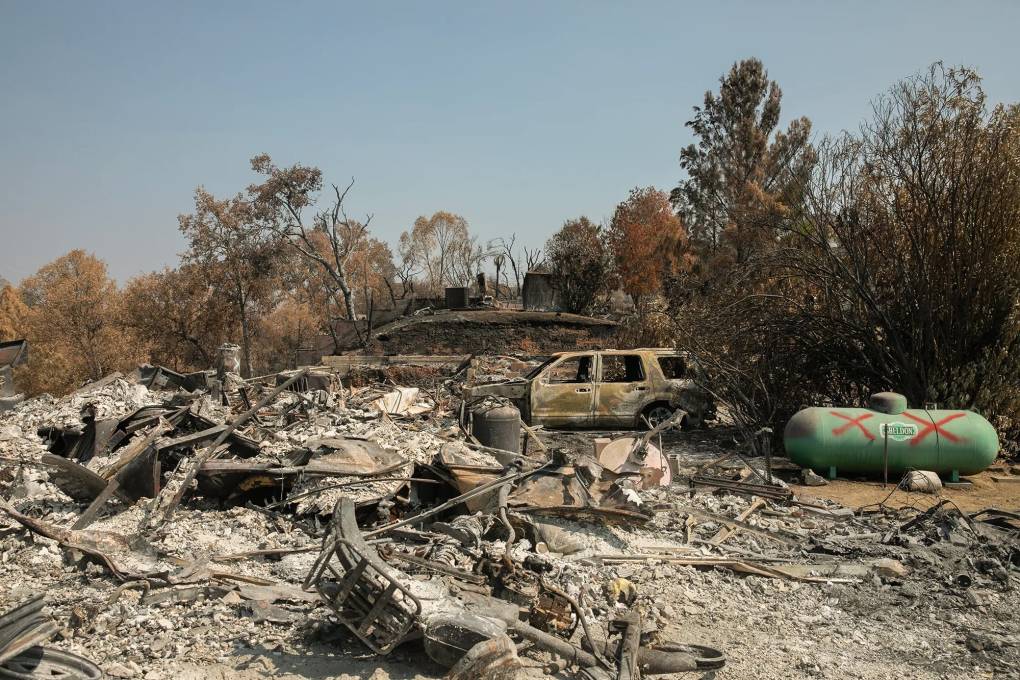
"caption": "The remains of a burned home in Berryessa Highlands on Sept. 21, 2020.\n",
"description": null,
"title": "092120_BerryessaHighlands_AW_CM_09 copy",
"credit": "Anne Wernikoff for CalMatters",
"status": "inherit",
"altTag": null,
"isLoading": false,
"fetchFailed": false
},
"news_11980650": {
"type": "attachments",
"id": "news_11980650",
"meta": {
"index": "attachments_1716263798",
"site": "news",
"id": "11980650",
"found": true
},
"parent": 11980642,
"imgSizes": {
"twentyfourteen-full-width": {
"file": "https://cdn.kqed.org/wp-content/uploads/sites/10/2024/03/030924-Expungement-Clinic-JLV-CM-112-1038x576.jpg",
"width": 1038,
"mimeType": "image/jpeg",
"height": 576
},
"thumbnail": {
"file": "https://cdn.kqed.org/wp-content/uploads/sites/10/2024/03/030924-Expungement-Clinic-JLV-CM-112-160x107.jpg",
"width": 160,
"mimeType": "image/jpeg",
"height": 107
},
"post-thumbnail": {
"file": "https://cdn.kqed.org/wp-content/uploads/sites/10/2024/03/030924-Expungement-Clinic-JLV-CM-112-672x372.jpg",
"width": 672,
"mimeType": "image/jpeg",
"height": 372
},
"kqedFullSize": {
"file": "https://cdn.kqed.org/wp-content/uploads/sites/10/2024/03/030924-Expungement-Clinic-JLV-CM-112.jpg",
"width": 2000,
"height": 1334
},
"large": {
"file": "https://cdn.kqed.org/wp-content/uploads/sites/10/2024/03/030924-Expungement-Clinic-JLV-CM-112-1020x680.jpg",
"width": 1020,
"mimeType": "image/jpeg",
"height": 680
},
"1536x1536": {
"file": "https://cdn.kqed.org/wp-content/uploads/sites/10/2024/03/030924-Expungement-Clinic-JLV-CM-112-1536x1025.jpg",
"width": 1536,
"mimeType": "image/jpeg",
"height": 1025
},
"full-width": {
"file": "https://cdn.kqed.org/wp-content/uploads/sites/10/2024/03/030924-Expungement-Clinic-JLV-CM-112-1920x1281.jpg",
"width": 1920,
"mimeType": "image/jpeg",
"height": 1281
},
"medium": {
"file": "https://cdn.kqed.org/wp-content/uploads/sites/10/2024/03/030924-Expungement-Clinic-JLV-CM-112-800x534.jpg",
"width": 800,
"mimeType": "image/jpeg",
"height": 534
}
},
"publishDate": 1711388939,
"modified": 1711389080,
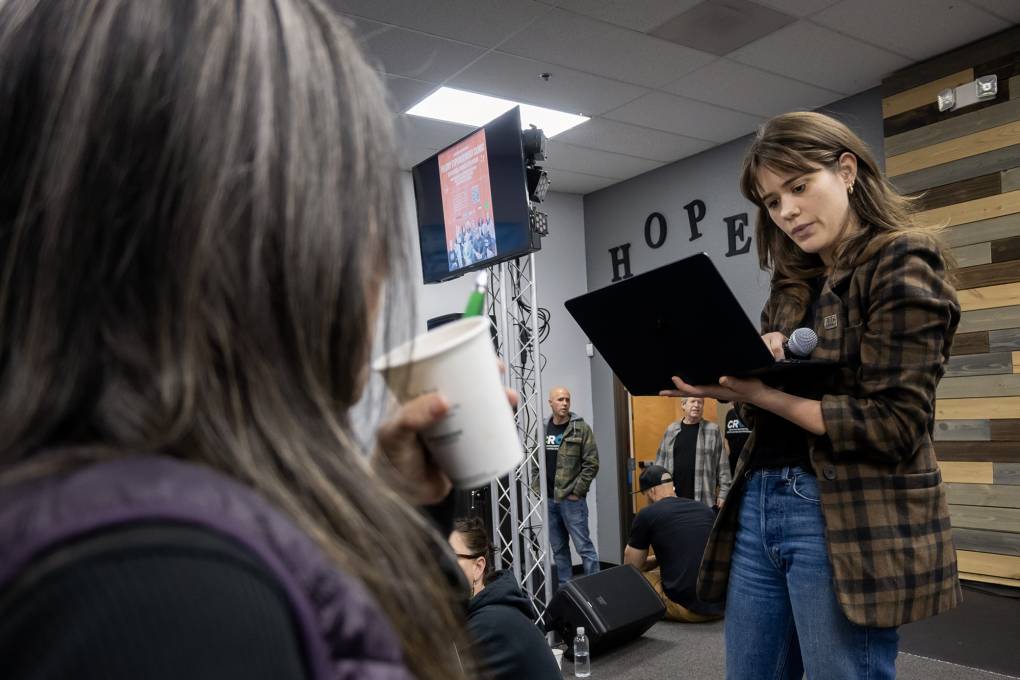
"caption": "Celina Chapin, associate director of policy and activism at the Anti-Recidivism Coalition, answers questions from people attending a clinic to support them in petitioning to have felonies expunged from their records at the New Beginnings Fellowship in South Sacramento on March 9, 2024. Participants who have not been incarcerated in the last two years and have been without supervision are qualified to sign up and begin the process.",
"description": null,
"title": "030924-Expungement-Clinic-JLV-CM-112",
"credit": "José Luis Villegas/CalMatters",
"status": "inherit",
"altTag": "A woman looks at a laptop in her hand in front of a group of people.",
"isLoading": false,
"fetchFailed": false
},
"news_11980571": {
"type": "attachments",
"id": "news_11980571",
"meta": {
"index": "attachments_1716263798",
"site": "news",
"id": "11980571",
"found": true
},
"title": "US-ECONOMY-HOUSING-RENT",
"publishDate": 1711152822,
"status": "inherit",
"parent": 11980565,
"modified": 1754519584,
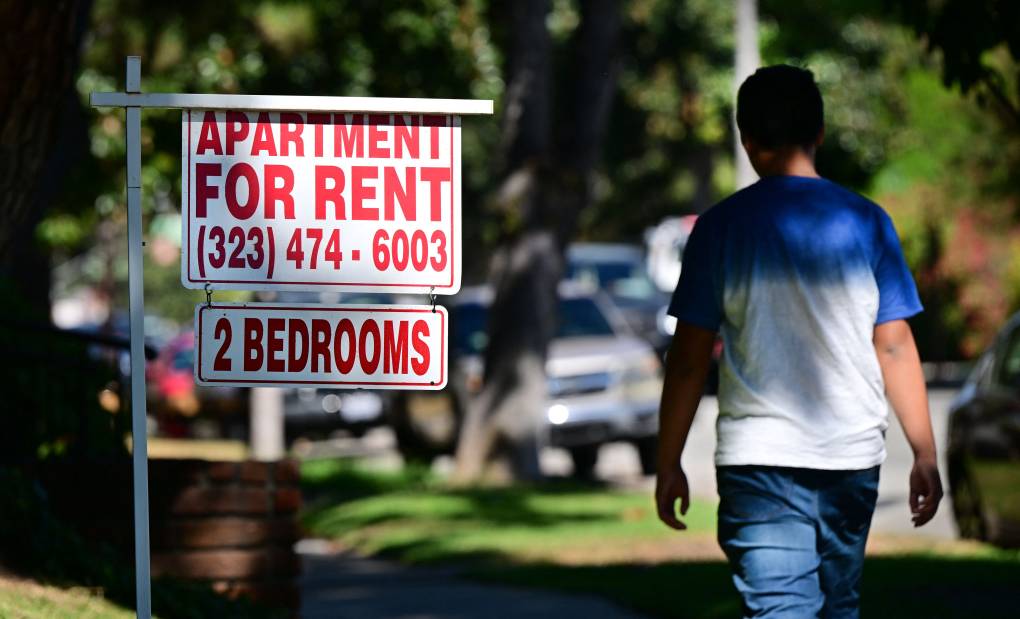
"caption": "An apartment for rent sign is posted in South Pasadena, California. Giving cash directly to renters is one policy tool that takes out the bureaucracy of renters needing to apply for federal vouchers and then find a landlord who will accept the voucher.",
"credit": "Frederic J. Brown/AFP via Getty Images",
"altTag": "A man walks by a 'for rent' sign.",
"description": null,
"imgSizes": {
"medium": {
"file": "https://cdn.kqed.org/wp-content/uploads/sites/10/2024/03/GettyImages-1244095544-800x485.jpg",
"width": 800,
"height": 485,
"mimeType": "image/jpeg"
},
"large": {
"file": "https://cdn.kqed.org/wp-content/uploads/sites/10/2024/03/GettyImages-1244095544-1020x619.jpg",
"width": 1020,
"height": 619,
"mimeType": "image/jpeg"
},
"thumbnail": {
"file": "https://cdn.kqed.org/wp-content/uploads/sites/10/2024/03/GettyImages-1244095544-160x97.jpg",
"width": 160,
"height": 97,
"mimeType": "image/jpeg"
},
"1536x1536": {
"file": "https://cdn.kqed.org/wp-content/uploads/sites/10/2024/03/GettyImages-1244095544-1536x932.jpg",
"width": 1536,
"height": 932,
"mimeType": "image/jpeg"
},
"2048x2048": {
"file": "https://cdn.kqed.org/wp-content/uploads/sites/10/2024/03/GettyImages-1244095544-2048x1242.jpg",
"width": 2048,
"height": 1242,
"mimeType": "image/jpeg"
},
"post-thumbnail": {
"file": "https://cdn.kqed.org/wp-content/uploads/sites/10/2024/03/GettyImages-1244095544-672x372.jpg",
"width": 672,
"height": 372,
"mimeType": "image/jpeg"
},
"twentyfourteen-full-width": {
"file": "https://cdn.kqed.org/wp-content/uploads/sites/10/2024/03/GettyImages-1244095544-1038x576.jpg",
"width": 1038,
"height": 576,
"mimeType": "image/jpeg"
},
"full-width": {
"file": "https://cdn.kqed.org/wp-content/uploads/sites/10/2024/03/GettyImages-1244095544-1920x1164.jpg",
"width": 1920,
"height": 1164,
"mimeType": "image/jpeg"
},
"kqedFullSize": {
"file": "https://cdn.kqed.org/wp-content/uploads/sites/10/2024/03/GettyImages-1244095544-scaled.jpg",
"width": 2560,
"height": 1553
}
},
"isLoading": false,
"fetchFailed": false
},
"news_11980429": {
"type": "attachments",
"id": "news_11980429",
"meta": {
"index": "attachments_1716263798",
"site": "news",
"id": "11980429",
"found": true
},
"parent": 11980425,
"imgSizes": {
"twentyfourteen-full-width": {
"file": "https://cdn.kqed.org/wp-content/uploads/sites/10/2024/03/GettyImages-1243927438-1024x576.jpg",
"width": 1024,
"mimeType": "image/jpeg",
"height": 576
},
"thumbnail": {
"file": "https://cdn.kqed.org/wp-content/uploads/sites/10/2024/03/GettyImages-1243927438-160x107.jpg",
"width": 160,
"mimeType": "image/jpeg",
"height": 107
},
"post-thumbnail": {
"file": "https://cdn.kqed.org/wp-content/uploads/sites/10/2024/03/GettyImages-1243927438-672x372.jpg",
"width": 672,
"mimeType": "image/jpeg",
"height": 372
},
"kqedFullSize": {
"file": "https://cdn.kqed.org/wp-content/uploads/sites/10/2024/03/GettyImages-1243927438.jpg",
"width": 1024,
"height": 683
},
"large": {
"file": "https://cdn.kqed.org/wp-content/uploads/sites/10/2024/03/GettyImages-1243927438-1020x680.jpg",
"width": 1020,
"mimeType": "image/jpeg",
"height": 680
},
"medium": {
"file": "https://cdn.kqed.org/wp-content/uploads/sites/10/2024/03/GettyImages-1243927438-800x534.jpg",
"width": 800,
"mimeType": "image/jpeg",
"height": 534
}
},
"publishDate": 1711065791,
"modified": 1711065933,
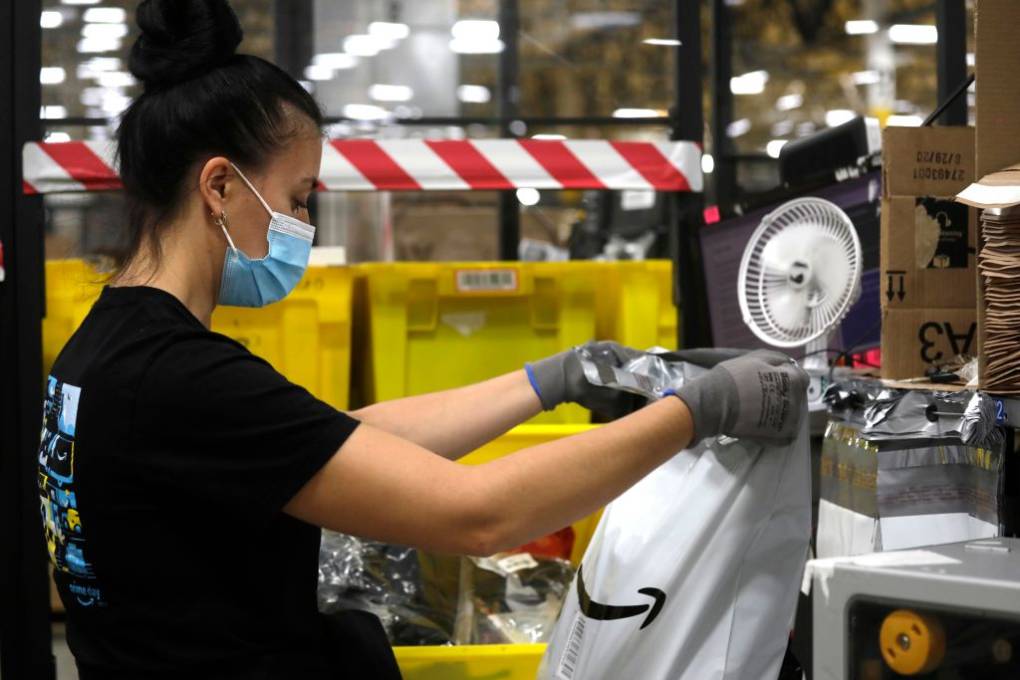
"caption": "A worker packages orders, with a small fan nearby to keep her cool, at the Amazon Fulfillment Center in Moreno Valley, Riverside County, on Sept. 29, 2021. ",
"description": null,
"title": "Amazon Fulfillment Center - during the Coronavirus pandemic.",
"credit": "Genaro Molina/Los Angeles Times via Getty Images",
"status": "inherit",
"altTag": null,
"isLoading": false,
"fetchFailed": false
},
"news_11979834": {
"type": "attachments",
"id": "news_11979834",
"meta": {
"index": "attachments_1716263798",
"site": "news",
"id": "11979834",
"found": true
},
"parent": 11979829,
"imgSizes": {
"twentyfourteen-full-width": {
"file": "https://cdn.kqed.org/wp-content/uploads/sites/10/2024/03/022624_Mia-Cooper-ESSER_EF_CM_03-1038x576.jpg",
"width": 1038,
"mimeType": "image/jpeg",
"height": 576
},
"thumbnail": {
"file": "https://cdn.kqed.org/wp-content/uploads/sites/10/2024/03/022624_Mia-Cooper-ESSER_EF_CM_03-160x107.jpg",
"width": 160,
"mimeType": "image/jpeg",
"height": 107
},
"post-thumbnail": {
"file": "https://cdn.kqed.org/wp-content/uploads/sites/10/2024/03/022624_Mia-Cooper-ESSER_EF_CM_03-672x372.jpg",
"width": 672,
"mimeType": "image/jpeg",
"height": 372
},
"kqedFullSize": {
"file": "https://cdn.kqed.org/wp-content/uploads/sites/10/2024/03/022624_Mia-Cooper-ESSER_EF_CM_03.jpg",
"width": 2000,
"height": 1333
},
"large": {
"file": "https://cdn.kqed.org/wp-content/uploads/sites/10/2024/03/022624_Mia-Cooper-ESSER_EF_CM_03-1020x680.jpg",
"width": 1020,
"mimeType": "image/jpeg",
"height": 680
},
"1536x1536": {
"file": "https://cdn.kqed.org/wp-content/uploads/sites/10/2024/03/022624_Mia-Cooper-ESSER_EF_CM_03-1536x1024.jpg",
"width": 1536,
"mimeType": "image/jpeg",
"height": 1024
},
"full-width": {
"file": "https://cdn.kqed.org/wp-content/uploads/sites/10/2024/03/022624_Mia-Cooper-ESSER_EF_CM_03-1920x1280.jpg",
"width": 1920,
"mimeType": "image/jpeg",
"height": 1280
},
"medium": {
"file": "https://cdn.kqed.org/wp-content/uploads/sites/10/2024/03/022624_Mia-Cooper-ESSER_EF_CM_03-800x533.jpg",
"width": 800,
"mimeType": "image/jpeg",
"height": 533
}
},
"publishDate": 1710791436,
"modified": 1710791578,
"caption": "Mia Cooper, center, with her children Alec, far left, Honey, second from right, and Samantha Cooper, far right, near their home in Highland on Feb. 26, 2024. ",
"description": null,
"title": "022624_Mia-Cooper-ESSER_EF_CM_03",
"credit": "Elisa Ferrari/CalMatters",
"status": "inherit",
"altTag": "A young Black man, an adult Black woman and two young Black girls walk down a path.",
"isLoading": false,
"fetchFailed": false
},
"news_11979824": {
"type": "attachments",
"id": "news_11979824",
"meta": {
"index": "attachments_1716263798",
"site": "news",
"id": "11979824",
"found": true
},
"parent": 11979822,
"imgSizes": {
"twentyfourteen-full-width": {
"file": "https://cdn.kqed.org/wp-content/uploads/sites/10/2024/03/020124_Prop_1_Protest_FG_CM_20964-1038x576.jpg",
"width": 1038,
"mimeType": "image/jpeg",
"height": 576
},
"thumbnail": {
"file": "https://cdn.kqed.org/wp-content/uploads/sites/10/2024/03/020124_Prop_1_Protest_FG_CM_20964-160x107.jpg",
"width": 160,
"mimeType": "image/jpeg",
"height": 107
},
"post-thumbnail": {
"file": "https://cdn.kqed.org/wp-content/uploads/sites/10/2024/03/020124_Prop_1_Protest_FG_CM_20964-672x372.jpg",
"width": 672,
"mimeType": "image/jpeg",
"height": 372
},
"kqedFullSize": {
"file": "https://cdn.kqed.org/wp-content/uploads/sites/10/2024/03/020124_Prop_1_Protest_FG_CM_20964.jpg",
"width": 2000,
"height": 1333
},
"large": {
"file": "https://cdn.kqed.org/wp-content/uploads/sites/10/2024/03/020124_Prop_1_Protest_FG_CM_20964-1020x680.jpg",
"width": 1020,
"mimeType": "image/jpeg",
"height": 680
},
"1536x1536": {
"file": "https://cdn.kqed.org/wp-content/uploads/sites/10/2024/03/020124_Prop_1_Protest_FG_CM_20964-1536x1024.jpg",
"width": 1536,
"mimeType": "image/jpeg",
"height": 1024
},
"full-width": {
"file": "https://cdn.kqed.org/wp-content/uploads/sites/10/2024/03/020124_Prop_1_Protest_FG_CM_20964-1920x1280.jpg",
"width": 1920,
"mimeType": "image/jpeg",
"height": 1280
},
"medium": {
"file": "https://cdn.kqed.org/wp-content/uploads/sites/10/2024/03/020124_Prop_1_Protest_FG_CM_20964-800x533.jpg",
"width": 800,
"mimeType": "image/jpeg",
"height": 533
}
},
"publishDate": 1710789980,
"modified": 1710790021,
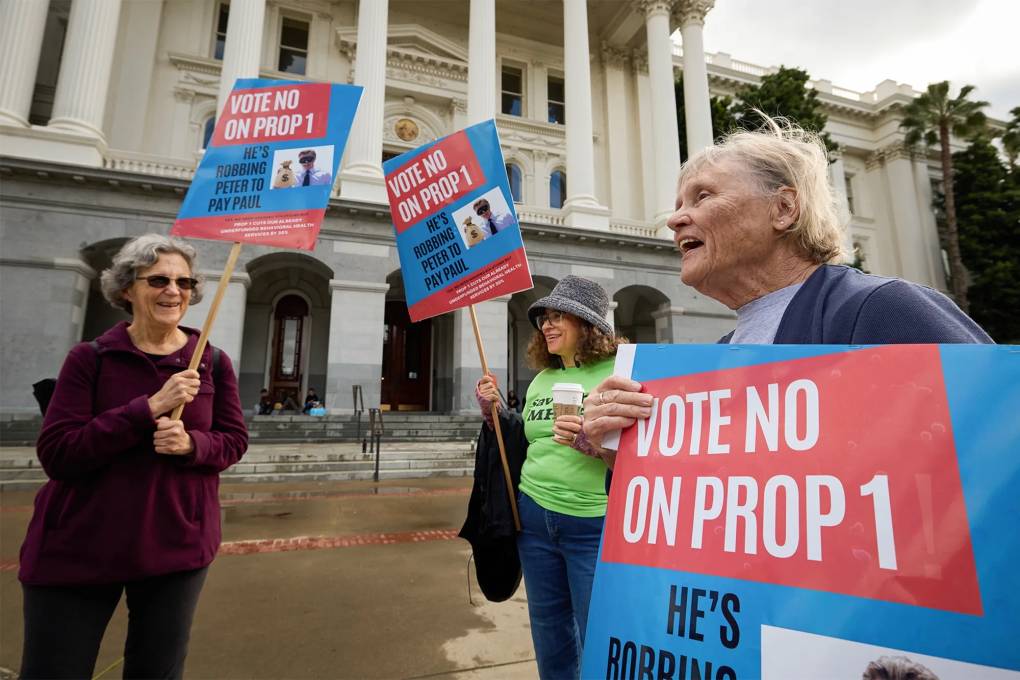
"caption": "From left, protestors Carol Patterson, Natalie Conrad and Debi Davis try to engage with people during a “Vote No on Prop. 1” event at the state Capitol on Feb. 1, 2024. ",
"description": null,
"title": "020124_Prop_1_Protest_FG_CM_20964",
"credit": " Fred Greaves for CalMatters",
"status": "inherit",
"altTag": "three woman stand outside a capitol building holding signs that say 'Vote No on Prop 1\"",
"isLoading": false,
"fetchFailed": false
},
"news_11979518": {
"type": "attachments",
"id": "news_11979518",
"meta": {
"index": "attachments_1716263798",
"site": "news",
"id": "11979518",
"found": true
},
"parent": 11979516,
"imgSizes": {
"twentyfourteen-full-width": {
"file": "https://cdn.kqed.org/wp-content/uploads/sites/10/2024/03/1282021_refinery_SH_0_4-copy-1038x576.jpg",
"width": 1038,
"mimeType": "image/jpeg",
"height": 576
},
"thumbnail": {
"file": "https://cdn.kqed.org/wp-content/uploads/sites/10/2024/03/1282021_refinery_SH_0_4-copy-160x107.jpg",
"width": 160,
"mimeType": "image/jpeg",
"height": 107
},
"post-thumbnail": {
"file": "https://cdn.kqed.org/wp-content/uploads/sites/10/2024/03/1282021_refinery_SH_0_4-copy-672x372.jpg",
"width": 672,
"mimeType": "image/jpeg",
"height": 372
},
"kqedFullSize": {
"file": "https://cdn.kqed.org/wp-content/uploads/sites/10/2024/03/1282021_refinery_SH_0_4-copy.jpg",
"width": 2000,
"height": 1333
},
"large": {
"file": "https://cdn.kqed.org/wp-content/uploads/sites/10/2024/03/1282021_refinery_SH_0_4-copy-1020x680.jpg",
"width": 1020,
"mimeType": "image/jpeg",
"height": 680
},
"1536x1536": {
"file": "https://cdn.kqed.org/wp-content/uploads/sites/10/2024/03/1282021_refinery_SH_0_4-copy-1536x1024.jpg",
"width": 1536,
"mimeType": "image/jpeg",
"height": 1024
},
"full-width": {
"file": "https://cdn.kqed.org/wp-content/uploads/sites/10/2024/03/1282021_refinery_SH_0_4-copy-1920x1280.jpg",
"width": 1920,
"mimeType": "image/jpeg",
"height": 1280
},
"medium": {
"file": "https://cdn.kqed.org/wp-content/uploads/sites/10/2024/03/1282021_refinery_SH_0_4-copy-800x533.jpg",
"width": 800,
"mimeType": "image/jpeg",
"height": 533
}
},
"publishDate": 1710455843,
"modified": 1710455905,
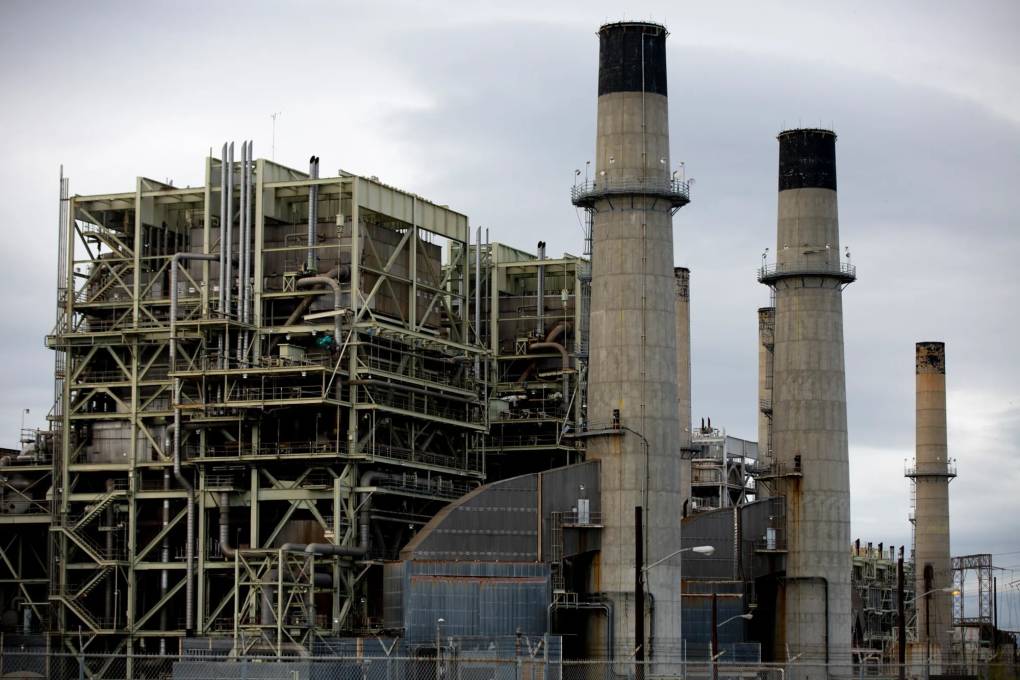
"caption": "The AES power plant in Redondo Beach on Jan. 28, 2021. Natural gas power plants, like this one, are among the state's largest sources of greenhouse gases. California is not on track to meet its climate change goals, according to a new analysis.",
"description": null,
"title": "1282021_refinery_SH_0_4 copy",
"credit": "Shae Hammond for CalMatters",
"status": "inherit",
"altTag": "A power plant with two chimneys.",
"isLoading": false,
"fetchFailed": false
}
},
"audioPlayerReducer": {
"postId": "stream_live",
"isPaused": true,
"isPlaying": false,
"pfsActive": false,
"pledgeModalIsOpen": true,
"playerDrawerIsOpen": false,
"liveAudioPlayStartedAt": 0,
"liveAudioPlayContext": ""
},
"authorsReducer": {
"byline_news_11982105": {
"type": "authors",
"id": "byline_news_11982105",
"meta": {
"override": true
},
"slug": "byline_news_11982105",
"name": "\u003ca href=\"https://calmatters.org/author/alexei-koseff/\">Alexei Koseff\u003c/a>",
"isLoading": false
},
"byline_news_11982060": {
"type": "authors",
"id": "byline_news_11982060",
"meta": {
"override": true
},
"slug": "byline_news_11982060",
"name": "\u003ca href=\"https://calmatters.org/author/christopher-buchanan/\">Christopher Buchanan\u003c/a>",
"isLoading": false
},
"byline_news_11981524": {
"type": "authors",
"id": "byline_news_11981524",
"meta": {
"override": true
},
"slug": "byline_news_11981524",
"name": "Adam Echelman",
"isLoading": false
},
"byline_news_11981418": {
"type": "authors",
"id": "byline_news_11981418",
"meta": {
"override": true
},
"slug": "byline_news_11981418",
"name": "\u003ca href=\"https://calmatters.org/author/kervy-robles/\">Justo Robles\u003c/a>",
"isLoading": false
},
"byline_news_11980987": {
"type": "authors",
"id": "byline_news_11980987",
"meta": {
"override": true
},
"slug": "byline_news_11980987",
"name": "Nigel Duara and Jeremia Kimelman",
"isLoading": false
},
"byline_news_11980757": {
"type": "authors",
"id": "byline_news_11980757",
"meta": {
"override": true
},
"slug": "byline_news_11980757",
"name": "\u003ca href=\"https://calmatters.org/author/levi-sumagaysay/\">Levi Sumagaysay\u003c/a>",
"isLoading": false
},
"byline_news_11980642": {
"type": "authors",
"id": "byline_news_11980642",
"meta": {
"override": true
},
"slug": "byline_news_11980642",
"name": "Jeanne Kuang \u003cbr> \u003ca href=\"https://calmatters.org/\">CalMatters\u003c/a>",
"isLoading": false
},
"byline_news_11980565": {
"type": "authors",
"id": "byline_news_11980565",
"meta": {
"override": true
},
"slug": "byline_news_11980565",
"name": "\u003ca href=\"https://calmatters.org/author/marisa-kendall/\">Marisa Kendall\u003c/a>",
"isLoading": false
},
"byline_news_11980425": {
"type": "authors",
"id": "byline_news_11980425",
"meta": {
"override": true
},
"slug": "byline_news_11980425",
"name": "\u003ca href=\"https://calmatters.org/author/jeanne-kuang/\">Jeanne Kuang\u003c/a>",
"isLoading": false
},
"byline_news_11979829": {
"type": "authors",
"id": "byline_news_11979829",
"meta": {
"override": true
},
"slug": "byline_news_11979829",
"name": "Carolyn Jones",
"isLoading": false
},
"byline_news_11979822": {
"type": "authors",
"id": "byline_news_11979822",
"meta": {
"override": true
},
"slug": "byline_news_11979822",
"name": "\u003ca href=\"https://calmatters.org/politics/2024/03/proposition-1-opponents-campaign/\">CalMatters Staff\u003c/a>",
"isLoading": false
},
"byline_news_11979516": {
"type": "authors",
"id": "byline_news_11979516",
"meta": {
"override": true
},
"slug": "byline_news_11979516",
"name": "\u003ca href=\"https://calmatters.org/author/alejandro-lazo/\">Alejandro Lazo\u003c/a>",
"isLoading": false
}
},
"pagesReducer": {
"news_affiliate_calmatters": {
"type": "terms",
"id": "news_18481",
"meta": {
"index": "terms_1716263798",
"site": "news",
"id": "18481",
"score": 15.355904
},
"featImg": null,
"name": "CALmatters",
"description": null,
"taxonomy": "affiliate",
"headData": {
"twImgId": null,
"twTitle": null,
"ogTitle": null,
"ogImgId": null,
"twDescription": null,
"description": null,
"title": "CALmatters Archives | KQED Arts",
"ogDescription": null
},
"ttid": 18515,
"slug": "calmatters",
"isLoading": false,
"title": "CALmatters",
"pageMeta": {
"site": "news",
"WpPageTemplate": "page-topic-editorial",
"currentPage": 34
},
"blocks": [
{
"blockName": "kqed/post-list",
"attrs": {
"layout": "cardArticle2",
"query": "posts/news?affiliate=calmatters",
"seeMore": false,
"paginated": true,
"page": 34
}
},
{
"blockName": "kqed/ad"
}
]
}
},
"pfsSessionReducer": {},
"postsReducer": {
"stream_live": {
"type": "live",
"id": "stream_live",
"audioUrl": "https://streams.kqed.org/kqedradio",
"title": "Live Stream",
"excerpt": "Live Stream information currently unavailable.",
"link": "/radio",
"featImg": "",
"label": {
"name": "KQED Live",
"link": "/"
}
},
"stream_kqedNewscast": {
"type": "posts",
"id": "stream_kqedNewscast",
"audioUrl": "https://www.kqed.org/.stream/anon/radio/RDnews/newscast.mp3?_=1",
"title": "KQED Newscast",
"featImg": "",
"label": {
"name": "88.5 FM",
"link": "/"
}
},
"news_11982105": {
"type": "posts",
"id": "news_11982105",
"meta": {
"index": "posts_1716263798",
"site": "news",
"id": "11982105",
"score": null,
"sort": [
1712487634000
]
},
"guestAuthors": [],
"slug": "gavin-newsom-says-baseball-saved-him-but-the-legend-of-his-career-doesnt-always-match-the-reality",
"title": "Gavin Newsom Says Baseball Saved Him. But the Legend of His Career Doesn’t Always Match the Reality",
"publishDate": 1712487634,
"format": "standard",
"headTitle": "Gavin Newsom Says Baseball Saved Him. But the Legend of His Career Doesn’t Always Match the Reality | KQED",
"labelTerm": {
"term": 18481,
"site": "news"
},
"content": "\u003cp>For their 2004 home opener, the San Francisco Giants invited a special guest to throw the ceremonial first pitch: Gavin Newsom, then just a few months into his first term as mayor of San Francisco.\u003c/p>\n\u003cp>As Newsom took the pitcher’s mound, wearing dress shoes and a button-down shirt underneath his custom Giants jersey, the announcer informed the crowd that “he played first base for the University of Santa Clara and was drafted by the Texas Rangers.”\u003c/p>\n\u003cp>The introduction was quickly overshadowed by Newsom nearly hitting a photographer with the ball. But it left a lasting impact on a few attendees that day — a group of former Santa Clara University baseball players who were struck by the glowing treatment of Newsom’s resume.\u003c/p>\n\u003cp>“It’s kind of the standing joke that Newsom played on the team,” said Vince Machi, who arrived at Santa Clara in 1985, the same year as Newsom, and played baseball for three years. “There’s always been kind of a joke between the guys who stay in touch.”\u003c/p>\n\u003cp>[ad fullwidth]\u003c/p>\n\u003cp>Twenty years later, as the Giants kick off their latest home season Friday, Newsom is now a national political figure — not just an \u003ca href=\"https://calmatters.org/politics/2023/11/newsom-desantis-debate/\">outspoken champion of the Democratic Party\u003c/a> but a \u003ca href=\"https://calmatters.org/politics/2022/10/gavin-newsom-campaign-president/\">potential future presidential contender\u003c/a>. He regularly appears on cable news to discuss California policies and attack Republicans. Lately he has traveled the country as a leading surrogate for President Biden’s re-election campaign.\u003c/p>\n\u003cp>Through his rise over the intervening two decades, his baseball career has provided Newsom a triumphant narrative to push back on the perception that his upbringing was privileged and easy: The high school standout scouted by the major leagues, who overcame his dyslexia and academic shortcomings to earn a partial scholarship to Santa Clara University before an injury forced him to find a new purpose.\u003c/p>\n\u003cp>It has become so closely associated with Newsom that “Saturday Night Live” \u003ca href=\"https://www.youtube.com/watch?v=lpNCwUzIPtU\">opened a show in March with a sketch\u003c/a> where the Democratic governor, portrayed by Michael Longfellow, defends President Biden’s mental fitness by recounting: “The other day he was taking a nap and I whipped a baseball at him and he caught it like De Niro in ‘Awakenings.’”\u003c/p>\n\u003cp>[pullquote align=\"right\" size=\"medium\" citation=\"Vince Machi, former Santa Clara baseballer\"]‘It’s kind of the standing joke that Newsom played on the team.’[/pullquote]Newsom told the story himself again in January on \u003ca href=\"https://www.youtube.com/watch?v=vIn1YknOSsc#t=1h00m38s\">the podcast Pod Save America\u003c/a>: Because of poor test scores, he was headed to community college until he got a call from the Santa Clara University baseball coaches. “It was literally the ticket to a four-year university. It changed my life, my trajectory,” he said.\u003c/p>\n\u003cp>But former coaches and teammates said that biography, repeated again and again through interviews and glossy magazine profiles and coverage of his 2021 \u003ca href=\"https://www.mercurynews.com/2021/09/30/gov-newsom-writes-childrens-book-inspired-by-personal-experience-with-dyslexia/\">baseball-themed children’s book\u003c/a> on overcoming dyslexia, has inflated Newsom’s baseball credentials, giving the impression that he was a more accomplished player than he was.\u003c/p>\n\u003cp>Most notably, Newsom never played an official game for Santa Clara University; he was a junior varsity recruit who played only during the fall tryouts his freshman and sophomore years, then left the baseball program before the regular season began. He does not appear on the Broncos’ \u003ca href=\"https://santaclarabroncos.com/sports/2023/6/20/all-time-roster-bold-indicates-current-player-bb.aspx\">all-time roster\u003c/a> or in media guides published by the athletic department to preview the upcoming season.\u003c/p>\n\u003cfigure id=\"attachment_11982110\" class=\"wp-caption alignnone\" style=\"max-width: 1568px\">\u003cimg loading=\"lazy\" decoding=\"async\" class=\"size-full wp-image-11982110\" src=\"https://cdn.kqed.org/wp-content/uploads/sites/10/2024/04/040224_Snow_Survey_Newsom_FG_CM_02-copy.jpg\" alt=\"A middle-aged white man wearing jeans and a blue buttoned shirt and sunglasses throws a snowball with snow and trees in the background.\" width=\"1568\" height=\"1046\" srcset=\"https://cdn.kqed.org/wp-content/uploads/sites/10/2024/04/040224_Snow_Survey_Newsom_FG_CM_02-copy.jpg 1568w, https://cdn.kqed.org/wp-content/uploads/sites/10/2024/04/040224_Snow_Survey_Newsom_FG_CM_02-copy-800x534.jpg 800w, https://cdn.kqed.org/wp-content/uploads/sites/10/2024/04/040224_Snow_Survey_Newsom_FG_CM_02-copy-1020x680.jpg 1020w, https://cdn.kqed.org/wp-content/uploads/sites/10/2024/04/040224_Snow_Survey_Newsom_FG_CM_02-copy-160x107.jpg 160w, https://cdn.kqed.org/wp-content/uploads/sites/10/2024/04/040224_Snow_Survey_Newsom_FG_CM_02-copy-1536x1025.jpg 1536w\" sizes=\"(max-width: 1568px) 100vw, 1568px\">\u003cfigcaption class=\"wp-caption-text\">Gov. Gavin Newsom tosses a snowball after the California Department of Water Resources conducted a media snow survey at Phillips Station in the Sierra Nevada on April 2, 2024. \u003ccite>(Fred Greaves/California Department of Water Resources)\u003c/cite>\u003c/figcaption>\u003c/figure>\n\u003cp>A deeper look at his recruitment also reveals that Newsom’s admission to Santa Clara University — like \u003ca href=\"https://www.latimes.com/projects/la-pol-ca-gavin-newsom-san-francisco-money/\">so many of his formative opportunities\u003c/a> — was substantially boosted by friends and acquaintances of his father, William Newsom, a San Francisco judge and financial adviser to the Gettys, the wealthy oil family. One associate connected Newsom to the baseball program when he was in high school, while his father’s best friend, then a member of the university’s board of regents, wrote him a letter of recommendation.\u003c/p>\n\u003cp>Mike Cummins, the assistant coach at Santa Clara while Newsom was there, said the governor has “embellished his baseball career a little bit at times.”\u003c/p>\n\u003cp>“He never played in a varsity game. He may have played in some scrimmages,” said Cummins, who is now the \u003ca href=\"https://eastbaypioneers.com/staff-directory/mike-cummins/193\">head baseball coach\u003c/a> at California State University, East Bay. “He’s embellished it. It’s half-truths. He was recruited to Santa Clara, he was there in the fall, but he never played. He didn’t have a varsity career there.”\u003c/p>\n\u003cp>The misconception has been propelled as much by what Newsom doesn’t say as what he does — a polished sweep over his time at Santa Clara University that rarely gets more detailed than, “I played a little baseball. Just my first and second year,” as he told The Santa Clara, the student newspaper, in \u003ca href=\"https://web.archive.org/web/20090426073753/http:/media.www.thesantaclara.com/media/storage/paper946/news/2008/02/14/News/San-Franciscos.Gavin.Newsom.Sits.Down.With.The.Santa.Clara-3210314.shtml\">a 2008 interview\u003c/a>.\u003c/p>\n\u003cp>Not for the first time in his career, Newsom has allowed a more flattering version of events to develop in the public discourse while being slow to clear up the inaccuracies. During his first gubernatorial campaign in 2018, he acknowledged that \u003ca href=\"https://www.sacbee.com/news/politics-government/capitol-alert/article209176644.html\">he never attended rehab\u003c/a>, as was widely reported more than a decade earlier after he pledged to seek treatment for problems with alcohol.\u003c/p>\n\u003cp>Some Broncos players from the era, who said they still regularly get asked about Newsom when people find out they played baseball at Santa Clara, wanted to correct the record.\u003c/p>\n\u003cp>“He didn’t earn it. He didn’t earn the right to say it,” said Kevin Schneider, who pitched for two seasons and now runs a pitching academy in San Francisco. “I worked my ass off. So did everyone else on that team. For him to just go all these years, to say he did something he didn’t that takes not just talent but also dedication and effort and sacrifice, it’s not right.”\u003c/p>\n\u003cp>Spokespeople for Newsom rejected multiple requests to interview the governor about his baseball career. They said Newsom had never exaggerated his experience at Santa Clara University and that it was not his job to fix whatever mistaken assumptions the public may have developed.\u003c/p>\n\u003cp>“He’s been very honest and consistent about what happened to him in college and more personable than you would get from most politicians,” spokesperson Bob Salladay said. “He is not responsible for other people’s impressions or interpretations of him and his life. He is doing his job, and he cannot spend his entire day correcting people when they make errors about him. He’s moved on.”\u003c/p>\n\u003cp>Newsom speaks about his baseball journey with “emotional, real truth that is visceral to him,” said Nathan Click, another spokesperson for the governor. “We all go through life and remember the emotions we feel about things, not, you know, facts.”\u003c/p>\n\u003cp>“He chooses to talk about the emotional side of it, because he thinks that is the place that young people in particular, who are going through struggles, people with dyslexia, can find themselves in his story,” Click said. “That matters way more than, you know, whether he was a rostered player or what his stats were in the fall ball, JV, freshman year, Santa Clara University season.”\u003c/p>\n\u003ch2>From high school standout to Santa Clara University\u003c/h2>\n\u003cp>By all accounts, Newsom was a talented baseball player at Redwood High School in Marin County, where he was also a star on the basketball team before graduating in 1985. His name appears in the \u003cem>San Francisco Examiner\u003c/em>’s prep coverage from the time — banging home runs, hitting a game-winning single in the Marin County Athletic League championship his senior year and being named to the all-league first team.\u003c/p>\n\u003cp>Publications including \u003ca href=\"https://www.newyorker.com/magazine/2018/11/05/gavin-newsom-the-next-head-of-the-california-resistance\">\u003cem>The New Yorker\u003c/em>\u003c/a>, \u003ca href=\"https://www.nytimes.com/2010/10/27/sports/baseball/27mayors.html\">\u003cem>The New York Times\u003c/em>\u003c/a>, \u003ca href=\"https://www.marinij.com/2007/07/08/dave-albee-sf-mayor-takes-his-licks-at-att-park/\">the \u003cem>Marin Independent Journal\u003c/em>\u003c/a> and \u003cem>\u003ca href=\"https://web.archive.org/web/20091127090647/http:/www.mensjournal.com/newsom\">Men’s Journal\u003c/a> \u003c/em>have reported over the years that the Texas Rangers drafted, recruited or showed interest in Newsom in high school.\u003cstrong> \u003c/strong>In 2009, a Newsom spokesperson \u003ca href=\"https://web.archive.org/web/20090430051404/http://www.sfgate.com/cgi-bin/blogs/cityinsider/detail?entry_id=39062\">clarified\u003c/a> to the \u003cem>San Francisco Chronicle\u003c/em> that he had merely been scouted, not drafted.\u003c/p>\n\u003cp>[pullquote align=\"right\" size=\"medium\" citation=\"Nathan Click, spokesperson for Gavin Newsom\"]‘He chooses to talk about the emotional side of it, because he thinks that is the place that young people in particular, who are going through struggles, people with dyslexia, can find themselves in his story.’[/pullquote]Newsom was among the hundreds of high school players across the country whom the Rangers organization looked at while preparing for the annual amateur draft, according to a spokesperson for the team.\u003c/p>\n\u003cp>Spokesperson John Blake wrote in an email that the Rangers’ chief California scout from the time “said that we did watch Governor Newsom play in high school, but he doesn’t remember us specially scouting him.” He said major league teams are very thorough in scouting California and “it is likely there were several players on this particular high school team that our scouts had interest in seeing, including Governor Newsom.”\u003c/p>\n\u003cp>Newsom spokesperson Click said the governor received business cards from those scouts after they watched him play, which he has spoken about in past interviews. “They made a point to come up to him and introduce themselves, which means something,” Click said.\u003c/p>\n\u003cp>Newsom headed down the Peninsula to Santa Clara University, a private Jesuit college where he was a freshman in the fall of 1985. Having struggled in high school, with a reported SAT score of 960 out of 1600, Newsom has long \u003ca href=\"https://www.nytimes.com/2019/10/01/us/college-sports-gavin-newsom.html\">credited baseball\u003c/a> with securing his admission.\u003c/p>\n\u003cp>“I had a pretty severe learning disability, dyslexia, struggled academically, and the only reason Santa Clara University would have ever accepted me was because I was a left-handed first baseman who could hit fairly well,” he \u003ca href=\"https://www.nytimes.com/2019/10/01/us/college-sports-gavin-newsom.html\">told \u003cem>The New York Times\u003c/em>\u003c/a> in 2019.\u003c/p>\n\u003cfigure id=\"attachment_11982126\" class=\"wp-caption alignnone\" style=\"max-width: 1568px\">\u003cimg loading=\"lazy\" decoding=\"async\" class=\"size-full wp-image-11982126\" src=\"https://cdn.kqed.org/wp-content/uploads/sites/10/2024/04/022724-Gavin-Newsom-Baseball-SOCIAL-CM-01-copy.jpg\" alt=\"A young high school male with baseball uniform crouches on one knee and leans on a baseball bat.\" width=\"1568\" height=\"1045\" srcset=\"https://cdn.kqed.org/wp-content/uploads/sites/10/2024/04/022724-Gavin-Newsom-Baseball-SOCIAL-CM-01-copy.jpg 1568w, https://cdn.kqed.org/wp-content/uploads/sites/10/2024/04/022724-Gavin-Newsom-Baseball-SOCIAL-CM-01-copy-800x533.jpg 800w, https://cdn.kqed.org/wp-content/uploads/sites/10/2024/04/022724-Gavin-Newsom-Baseball-SOCIAL-CM-01-copy-1020x680.jpg 1020w, https://cdn.kqed.org/wp-content/uploads/sites/10/2024/04/022724-Gavin-Newsom-Baseball-SOCIAL-CM-01-copy-160x107.jpg 160w, https://cdn.kqed.org/wp-content/uploads/sites/10/2024/04/022724-Gavin-Newsom-Baseball-SOCIAL-CM-01-copy-1536x1024.jpg 1536w\" sizes=\"(max-width: 1568px) 100vw, 1568px\">\u003cfigcaption class=\"wp-caption-text\">Gov. Gavin Newsom played baseball and graduated from Redwood High School in 1985. \u003ccite>(Photo from Gavin Newsom’s social media via CalMatters)\u003c/cite>\u003c/figcaption>\u003c/figure>\n\u003cp>Newsom also had help from several well-connected alumni.\u003c/p>\n\u003cp>Bill Connolly, a San Francisco investment banker and associate of William Newsom who played baseball at Santa Clara in the 1960s, put the younger Newsom on the team’s radar, according to Cummins, the former assistant coach. Connolly \u003ca href=\"https://magazine.scu.edu/classnote/bill-connolly/\">died in 2017\u003c/a>, and his widow could not be reached for comment.\u003c/p>\n\u003cp>Connolly “was a very good supporter of us at the time, money-wise,” Cummins said, and pushed the coaches to check Newsom out. “That was pretty normal at the time,” Cummins said, especially in a pre-internet era when recruiting was more regional and word-of-mouth. He said the baseball team was not a “backdoor” to admit Newsom into the university.\u003c/p>\n\u003cp>Click said Newsom does not remember his family asking Connolly to recommend him to Santa Clara University “and if it’s true, it would be news to him.”\u003c/p>\n\u003cp>Alongside then-head coach John Oldham, who died in February, Cummins eventually visited Newsom at home and recruited him to Santa Clara. The team had a junior varsity squad at the time, which it used as a “minor league,” Cummins said, so Newsom had a guaranteed spot in the program, but would have to perform well enough to play in varsity games.\u003c/p>\n\u003cp>He was offered a scholarship of $500 in October 1985, during fall quarter of his freshman year, according to a photograph of a section of the paperwork provided by Click, though it’s unclear if that’s the only payment he received. Click said Newsom was unable to locate the original document. The cost of attendance for Santa Clara University that year was $10,251, including tuition, room and board.\u003c/p>\n\u003cp>Eager to ensure his spot, Newsom’s family also solicited letters of recommendation \u003ca href=\"https://www.sacbee.com/news/politics-government/capitol-alert/article7965822.html\">from former Gov. Jerry Brown\u003c/a>, who attended Santa Clara University for one year and appointed William Newsom to the Superior Court and the state Court of Appeal during his first term as governor, and from John Mallen, an attorney who served on Santa Clara’s board of regents at the time.\u003c/p>\n\u003cp>Mallen, who described William Newsom as “my best friend for 75 years,” said he did not frequently write letters of recommendation for applicants while he was on the board.\u003c/p>\n\u003cfigure id=\"attachment_11982127\" class=\"wp-caption alignnone\" style=\"max-width: 1568px\">\u003cimg loading=\"lazy\" decoding=\"async\" class=\"size-full wp-image-11982127\" src=\"https://cdn.kqed.org/wp-content/uploads/sites/10/2024/04/Newsom-Baseball-Headlines-copy.jpg\" alt=\"Illustration with newspaper clippings.\" width=\"1568\" height=\"1045\" srcset=\"https://cdn.kqed.org/wp-content/uploads/sites/10/2024/04/Newsom-Baseball-Headlines-copy.jpg 1568w, https://cdn.kqed.org/wp-content/uploads/sites/10/2024/04/Newsom-Baseball-Headlines-copy-800x533.jpg 800w, https://cdn.kqed.org/wp-content/uploads/sites/10/2024/04/Newsom-Baseball-Headlines-copy-1020x680.jpg 1020w, https://cdn.kqed.org/wp-content/uploads/sites/10/2024/04/Newsom-Baseball-Headlines-copy-160x107.jpg 160w, https://cdn.kqed.org/wp-content/uploads/sites/10/2024/04/Newsom-Baseball-Headlines-copy-1536x1024.jpg 1536w\" sizes=\"(max-width: 1568px) 100vw, 1568px\">\u003cfigcaption class=\"wp-caption-text\">A series of newspaper clippings that highlight Newsom’s baseball accomplishments during high school. \u003ccite>(Illustration by Miguel Gutierrez Jr./CalMatters)\u003c/cite>\u003c/figcaption>\u003c/figure>\n\u003cp>“In fact, I may not have helped anybody else get in,” Mallen said.\u003c/p>\n\u003cp>Though he does not have a copy of the letter anymore, Mallen said it was probably addressed to the president of the university and would have been a character reference for the younger Newsom.\u003c/p>\n\u003cp>“I mean, I’d known him since birth,” Mallen said. “He was a good athlete. That I remember.”\u003c/p>\n\u003cp>Mallen said it “absolutely” would have been “hugely influential” in helping Newsom gain admission to Santa Clara: “I think it was a big help.”\u003c/p>\n\u003cp>Click denied that the letters of recommendations played any role in Newsom’s acceptance.\u003c/p>\n\u003cp>“Baseball was the reason he got into university and the partial baseball scholarship shows it,” Click said.\u003c/p>\n\u003ch2>College baseball cut short by elbow injury\u003c/h2>\n\u003cp>Newsom has previously said he played baseball his first two years at Santa Clara University before injuring his throwing arm and reevaluating his path, a timeline repeated in major profiles of Newsom, most recently by \u003ca href=\"https://lamag.com/featured/gavin-newsom-recall\">Los Angeles Magazine\u003c/a> in 2021.\u003c/p>\n\u003cp>“Ultimately, I had an ulnar nerve issue and threw out my arm and had a surgery and really didn’t come back,” \u003ca href=\"https://www.wbur.org/onlyagame/2019/10/18/california-governor-gavin-newsom-lebron-james-fair-pay-to-play-act\">he told WBUR\u003c/a>, a Boston public radio station, in 2019. “And then I had to make that tough choice of, ‘What the hell do I do with my life?’ Because I was just so consumed by baseball.”\u003c/p>\n\u003cp>To report this story, CalMatters reached out to coaches and teammates listed on the Broncos rosters for the 1986 and 1987 seasons. They\u003cstrong> \u003c/strong>said Newsom played only during the fall tryout periods of his freshman and sophomore years, when prospective players trained and rotated into practice games against other local universities, and no official statistics were kept.\u003c/p>\n\u003cp>Several people recalled that Newsom was around\u003cstrong> \u003c/strong>for just the first few weeks, perhaps as much as six weeks, as a freshman. He did not make the 1986 roster, as reflected in the game program and media guide “The Boys of Spring.”\u003c/p>\n\u003cfigure id=\"attachment_11982130\" class=\"wp-caption alignnone\" style=\"max-width: 1568px\">\u003cimg loading=\"lazy\" decoding=\"async\" class=\"size-full wp-image-11982130\" src=\"https://cdn.kqed.org/wp-content/uploads/sites/10/2024/04/022724-Santa-Clara-Baseball-Roster-CM-copy.jpg\" alt=\"A team roster on an illustrated background.\" width=\"1568\" height=\"1960\" srcset=\"https://cdn.kqed.org/wp-content/uploads/sites/10/2024/04/022724-Santa-Clara-Baseball-Roster-CM-copy.jpg 1568w, https://cdn.kqed.org/wp-content/uploads/sites/10/2024/04/022724-Santa-Clara-Baseball-Roster-CM-copy-800x1000.jpg 800w, https://cdn.kqed.org/wp-content/uploads/sites/10/2024/04/022724-Santa-Clara-Baseball-Roster-CM-copy-1020x1275.jpg 1020w, https://cdn.kqed.org/wp-content/uploads/sites/10/2024/04/022724-Santa-Clara-Baseball-Roster-CM-copy-160x200.jpg 160w, https://cdn.kqed.org/wp-content/uploads/sites/10/2024/04/022724-Santa-Clara-Baseball-Roster-CM-copy-1229x1536.jpg 1229w\" sizes=\"(max-width: 1568px) 100vw, 1568px\">\u003cfigcaption class=\"wp-caption-text\">Gov. Gavin Newsom does not appear on the 1986 Santa Clara University baseball roster. \u003ccite>(Illustration by Miguel Gutierrez Jr./CalMatters)\u003c/cite>\u003c/figcaption>\u003c/figure>\n\u003cp>Newsom was not one of the standout prospects that year — “We would have known he was a big scholarship player who crapped out,” said Jim Flynn, who was a freshman pitcher — but no one interviewed by CalMatters disputes his athletic ability.\u003c/p>\n\u003cp>Victor Cole, a freshman in the 1986 season who split his time pitching and playing outfield for the varsity team and playing outfield for the junior varsity team, said Newsom “was a good athlete” and “he looked like somebody who could play college ball.”\u003c/p>\n\u003cp>“Everyone who was recruited had talent. So he had talent,” said Cole, who \u003ca href=\"https://www.espn.com/mlb/player/_/id/2695/victor-cole\">briefly played\u003c/a> for the Pittsburgh Pirates in 1992 and \u003ca href=\"https://cbubucs.com/sports/baseball/roster/coaches/victor-cole/504\">now coaches\u003c/a> at Christian Brothers University in Memphis.\u003c/p>\n\u003cp>Machi, who also arrived in 1985, said Newsom caught his attention because they were competing for the same spot, playing first base.\u003c/p>\n\u003cp>“I do recall him being a fairly athletic guy. It wasn’t like he was a fish out of water,” Machi said. “As a competitor, you’re always looking around.”\u003c/p>\n\u003cp>But within a few weeks, Newsom had “just disappeared,” Machi said. “He didn’t have any accolades on the field.”\u003c/p>\n\u003cp>[pullquote align=\"right\" size=\"medium\" citation=\"Gavin Newsom\"]‘I had to make that tough choice of, ‘What the hell do I do with my life?’ Because I was just so consumed by baseball.’[/pullquote]Struggling with pain in his left elbow, Newsom underwent ulnar nerve surgery in late 1985 and took the rest of the season off, Click said. Dr. \u003ca href=\"https://www.poadocs.com/provider/michael-f-dillingham-md\">Michael Dillingham\u003c/a>, an orthopedic surgeon in Daly City who was the team doctor at the time, confirmed to CalMatters that he performed the operation.\u003c/p>\n\u003cp>After the surgery, however, Newsom did not rehabilitate his arm through the Santa Clara baseball program, recalled Larry Donahe, then a freshman pitcher who also sat out the 1986 season recovering from an elbow operation for the same injury as Newsom.\u003c/p>\n\u003cp>“If he had a bad elbow and was hurt and was doing any sort of rehab, I probably would have seen him,” said Donahe, who had a full-ride scholarship and continued to play for the Broncos through other surgeries his sophomore and junior years. “He never came into the training room.”\u003c/p>\n\u003cp>Click said Newsom was in a cast and then physical therapy for several months and did not begin training seriously to return to baseball until the summer.\u003c/p>\n\u003cp>He tried out for the Broncos again in fall 1986 as a sophomore but “couldn’t make it work” because of continued elbow pain, Click said. Before the regular season began, Newsom gave up his beloved sport for good.\u003c/p>\n\u003cp>Players said Newsom was not particularly close to his teammates and they were uncertain of the circumstances of his departure. Many wondered if he lost interest in baseball because of the fierce demands of Santa Clara’s program.\u003c/p>\n\u003cp>Because the NCAA had not yet \u003ca href=\"https://www.nytimes.com/1991/01/10/sports/ncaa-cuts-practice-scholarships-and-seasons.html\">established limits on student-athletes’ time\u003c/a>, players described the team in that era as a full-time job, even during fall tryouts: multiple games each week; practices that ran from the early afternoon until after the dining hall stopped serving dinner and all day on the weekends; extra training including 5 a.m. workouts; and vision strengthening and success visualization classes, where players would lie on the floor with their eyes closed and imagine how to improve their technique.\u003c/p>\n\u003cp>“If you had a life, you chose to do something else. If you were a baseball lifer you loved it,” Matt Toole, who played baseball at Santa Clara from 1985 to 1989 and then two seasons in the minor leagues, wrote in an email.\u003c/p>\n\u003cp>Newsom “actually played well enough to make our team both years,” he wrote. “He had a lot of potential but he chose not to play.”\u003c/p>\n\u003cfigure id=\"attachment_11982131\" class=\"wp-caption alignnone\" style=\"max-width: 1568px\">\u003cimg loading=\"lazy\" decoding=\"async\" class=\"size-full wp-image-11982131\" src=\"https://cdn.kqed.org/wp-content/uploads/sites/10/2024/04/022724-Gavin-Newsom-Baseball-SOCIAL-CM-02-copy.jpg\" alt=\"A photo of a young boy in baseball uniform with a hat and bat.\" width=\"1568\" height=\"1045\" srcset=\"https://cdn.kqed.org/wp-content/uploads/sites/10/2024/04/022724-Gavin-Newsom-Baseball-SOCIAL-CM-02-copy.jpg 1568w, https://cdn.kqed.org/wp-content/uploads/sites/10/2024/04/022724-Gavin-Newsom-Baseball-SOCIAL-CM-02-copy-800x533.jpg 800w, https://cdn.kqed.org/wp-content/uploads/sites/10/2024/04/022724-Gavin-Newsom-Baseball-SOCIAL-CM-02-copy-1020x680.jpg 1020w, https://cdn.kqed.org/wp-content/uploads/sites/10/2024/04/022724-Gavin-Newsom-Baseball-SOCIAL-CM-02-copy-160x107.jpg 160w, https://cdn.kqed.org/wp-content/uploads/sites/10/2024/04/022724-Gavin-Newsom-Baseball-SOCIAL-CM-02-copy-1536x1024.jpg 1536w\" sizes=\"(max-width: 1568px) 100vw, 1568px\">\u003cfigcaption class=\"wp-caption-text\">A young Gavin Newsom in a baseball uniform. \u003ccite>(CalMatters)\u003c/cite>\u003c/figcaption>\u003c/figure>\n\u003cp>Click said Newsom may not have felt comfortable sharing his injury publicly at the time because he was ashamed not to live up to the success he experienced earlier in his baseball career.\u003c/p>\n\u003cp>“It was really a crushing moment for him,” Click said, “especially somebody who had been really hyped up by everyone around him in Little League, in high school.”\u003c/p>\n\u003cp>But the legend of Newsom’s feats on the diamond\u003cstrong> \u003c/strong>endured. In a 2010 story previewing the Giants-Rangers World Series, The New York Times \u003ca href=\"https://www.nytimes.com/2010/10/27/sports/baseball/27mayors.html\">contrasted the baseball careers\u003c/a> of the mayors for the two teams.\u003c/p>\n\u003cp>Dallas Mayor Tom Leppert joked about his brief stint playing junior varsity at Claremont McKenna College: “They put me in when it was time for the outfielders to do wind sprints.”\u003c/p>\n\u003cp>The Times called Newsom “more serious about the game,” noting the then-San Francisco mayor played for two years at Santa Clara University.\u003c/p>\n\u003cp>“I was your standard 6-foot-3-inch first baseman,” Newsom told the paper.\u003c/p>\n\u003cp>[ad floatright]\u003c/p>\n",
"blocks": [],
"excerpt": "Public biographies of Gov. Gavin Newsom have long touted his baseball career, and playing at Santa Clara University. But he was never on the roster, among other misperceptions of his accomplishments. Newsom has not corrected the record.",
"status": "publish",
"parent": 0,
"modified": 1722644076,
"stats": {
"hasAudio": false,
"hasVideo": false,
"hasChartOrMap": false,
"iframeSrcs": [],
"hasGoogleForm": false,
"hasGallery": false,
"hasHearkenModule": false,
"hasPolis": false,
"paragraphCount": 69,
"wordCount": 3413
},
"headData": {
"title": "Gavin Newsom Says Baseball Saved Him. But the Legend of His Career Doesn’t Always Match the Reality | KQED",
"description": "Public biographies of Gov. Gavin Newsom have long touted his baseball career, and playing at Santa Clara University. But he was never on the roster, among other misperceptions of his accomplishments. Newsom has not corrected the record.",
"ogTitle": "",
"ogDescription": "",
"ogImgId": "",
"twTitle": "",
"twDescription": "",
"twImgId": "",
"schema": {
"@context": "https://schema.org",
"@type": "NewsArticle",
"headline": "Gavin Newsom Says Baseball Saved Him. But the Legend of His Career Doesn’t Always Match the Reality",
"datePublished": "2024-04-07T04:00:34-07:00",
"dateModified": "2024-08-02T17:14:36-07:00",
"image": "https://cdn.kqed.org/wp-content/uploads/2020/02/KQED-OG-Image@1x.png",
"isAccessibleForFree": "True",
"publisher": {
"@type": "NewsMediaOrganization",
"@id": "https://www.kqed.org/#organization",
"name": "KQED",
"logo": "https://cdn.kqed.org/wp-content/uploads/2020/02/KQED-OG-Image@1x.png",
"url": "https://www.kqed.org",
"sameAs": [
"https://www.facebook.com/KQED",
"https://twitter.com/KQED",
"https://www.instagram.com/kqed/",
"https://www.tiktok.com/@kqedofficial",
"https://www.linkedin.com/company/kqed",
"https://www.youtube.com/channel/UCeC0IOo7i1P_61zVUWbJ4nw"
]
}
}
},
"sticky": false,
"nprByline": "\u003ca href=\"https://calmatters.org/author/alexei-koseff/\">Alexei Koseff\u003c/a>",
"excludeFromSiteSearch": "Include",
"showOnAuthorArchivePages": "No",
"articleAge": "0",
"path": "/news/11982105/gavin-newsom-says-baseball-saved-him-but-the-legend-of-his-career-doesnt-always-match-the-reality",
"audioTrackLength": null,
"parsedContent": [
{
"type": "contentString",
"content": "\u003cdiv class=\"post-body\">\u003cp>\u003cp>For their 2004 home opener, the San Francisco Giants invited a special guest to throw the ceremonial first pitch: Gavin Newsom, then just a few months into his first term as mayor of San Francisco.\u003c/p>\n\u003cp>As Newsom took the pitcher’s mound, wearing dress shoes and a button-down shirt underneath his custom Giants jersey, the announcer informed the crowd that “he played first base for the University of Santa Clara and was drafted by the Texas Rangers.”\u003c/p>\n\u003cp>The introduction was quickly overshadowed by Newsom nearly hitting a photographer with the ball. But it left a lasting impact on a few attendees that day — a group of former Santa Clara University baseball players who were struck by the glowing treatment of Newsom’s resume.\u003c/p>\n\u003cp>“It’s kind of the standing joke that Newsom played on the team,” said Vince Machi, who arrived at Santa Clara in 1985, the same year as Newsom, and played baseball for three years. “There’s always been kind of a joke between the guys who stay in touch.”\u003c/p>\n\u003cp>\u003c/p>\u003c/div>",
"attributes": {
"named": {},
"numeric": []
}
},
{
"type": "component",
"content": "",
"name": "ad",
"attributes": {
"named": {
"label": "fullwidth"
},
"numeric": [
"fullwidth"
]
}
},
{
"type": "contentString",
"content": "\u003cdiv class=\"post-body\">\u003cp>\u003c/p>\n\u003cp>Twenty years later, as the Giants kick off their latest home season Friday, Newsom is now a national political figure — not just an \u003ca href=\"https://calmatters.org/politics/2023/11/newsom-desantis-debate/\">outspoken champion of the Democratic Party\u003c/a> but a \u003ca href=\"https://calmatters.org/politics/2022/10/gavin-newsom-campaign-president/\">potential future presidential contender\u003c/a>. He regularly appears on cable news to discuss California policies and attack Republicans. Lately he has traveled the country as a leading surrogate for President Biden’s re-election campaign.\u003c/p>\n\u003cp>Through his rise over the intervening two decades, his baseball career has provided Newsom a triumphant narrative to push back on the perception that his upbringing was privileged and easy: The high school standout scouted by the major leagues, who overcame his dyslexia and academic shortcomings to earn a partial scholarship to Santa Clara University before an injury forced him to find a new purpose.\u003c/p>\n\u003cp>It has become so closely associated with Newsom that “Saturday Night Live” \u003ca href=\"https://www.youtube.com/watch?v=lpNCwUzIPtU\">opened a show in March with a sketch\u003c/a> where the Democratic governor, portrayed by Michael Longfellow, defends President Biden’s mental fitness by recounting: “The other day he was taking a nap and I whipped a baseball at him and he caught it like De Niro in ‘Awakenings.’”\u003c/p>\n\u003cp>\u003c/p>\u003c/div>",
"attributes": {
"named": {},
"numeric": []
}
},
{
"type": "component",
"content": "‘It’s kind of the standing joke that Newsom played on the team.’",
"name": "pullquote",
"attributes": {
"named": {
"align": "right",
"size": "medium",
"citation": "Vince Machi, former Santa Clara baseballer",
"label": ""
},
"numeric": []
}
},
{
"type": "contentString",
"content": "\u003cdiv class=\"post-body\">\u003cp>Newsom told the story himself again in January on \u003ca href=\"https://www.youtube.com/watch?v=vIn1YknOSsc#t=1h00m38s\">the podcast Pod Save America\u003c/a>: Because of poor test scores, he was headed to community college until he got a call from the Santa Clara University baseball coaches. “It was literally the ticket to a four-year university. It changed my life, my trajectory,” he said.\u003c/p>\n\u003cp>But former coaches and teammates said that biography, repeated again and again through interviews and glossy magazine profiles and coverage of his 2021 \u003ca href=\"https://www.mercurynews.com/2021/09/30/gov-newsom-writes-childrens-book-inspired-by-personal-experience-with-dyslexia/\">baseball-themed children’s book\u003c/a> on overcoming dyslexia, has inflated Newsom’s baseball credentials, giving the impression that he was a more accomplished player than he was.\u003c/p>\n\u003cp>Most notably, Newsom never played an official game for Santa Clara University; he was a junior varsity recruit who played only during the fall tryouts his freshman and sophomore years, then left the baseball program before the regular season began. He does not appear on the Broncos’ \u003ca href=\"https://santaclarabroncos.com/sports/2023/6/20/all-time-roster-bold-indicates-current-player-bb.aspx\">all-time roster\u003c/a> or in media guides published by the athletic department to preview the upcoming season.\u003c/p>\n\u003cfigure id=\"attachment_11982110\" class=\"wp-caption alignnone\" style=\"max-width: 1568px\">\u003cimg loading=\"lazy\" decoding=\"async\" class=\"size-full wp-image-11982110\" src=\"https://cdn.kqed.org/wp-content/uploads/sites/10/2024/04/040224_Snow_Survey_Newsom_FG_CM_02-copy.jpg\" alt=\"A middle-aged white man wearing jeans and a blue buttoned shirt and sunglasses throws a snowball with snow and trees in the background.\" width=\"1568\" height=\"1046\" srcset=\"https://cdn.kqed.org/wp-content/uploads/sites/10/2024/04/040224_Snow_Survey_Newsom_FG_CM_02-copy.jpg 1568w, https://cdn.kqed.org/wp-content/uploads/sites/10/2024/04/040224_Snow_Survey_Newsom_FG_CM_02-copy-800x534.jpg 800w, https://cdn.kqed.org/wp-content/uploads/sites/10/2024/04/040224_Snow_Survey_Newsom_FG_CM_02-copy-1020x680.jpg 1020w, https://cdn.kqed.org/wp-content/uploads/sites/10/2024/04/040224_Snow_Survey_Newsom_FG_CM_02-copy-160x107.jpg 160w, https://cdn.kqed.org/wp-content/uploads/sites/10/2024/04/040224_Snow_Survey_Newsom_FG_CM_02-copy-1536x1025.jpg 1536w\" sizes=\"(max-width: 1568px) 100vw, 1568px\">\u003cfigcaption class=\"wp-caption-text\">Gov. Gavin Newsom tosses a snowball after the California Department of Water Resources conducted a media snow survey at Phillips Station in the Sierra Nevada on April 2, 2024. \u003ccite>(Fred Greaves/California Department of Water Resources)\u003c/cite>\u003c/figcaption>\u003c/figure>\n\u003cp>A deeper look at his recruitment also reveals that Newsom’s admission to Santa Clara University — like \u003ca href=\"https://www.latimes.com/projects/la-pol-ca-gavin-newsom-san-francisco-money/\">so many of his formative opportunities\u003c/a> — was substantially boosted by friends and acquaintances of his father, William Newsom, a San Francisco judge and financial adviser to the Gettys, the wealthy oil family. One associate connected Newsom to the baseball program when he was in high school, while his father’s best friend, then a member of the university’s board of regents, wrote him a letter of recommendation.\u003c/p>\n\u003cp>Mike Cummins, the assistant coach at Santa Clara while Newsom was there, said the governor has “embellished his baseball career a little bit at times.”\u003c/p>\n\u003cp>“He never played in a varsity game. He may have played in some scrimmages,” said Cummins, who is now the \u003ca href=\"https://eastbaypioneers.com/staff-directory/mike-cummins/193\">head baseball coach\u003c/a> at California State University, East Bay. “He’s embellished it. It’s half-truths. He was recruited to Santa Clara, he was there in the fall, but he never played. He didn’t have a varsity career there.”\u003c/p>\n\u003cp>The misconception has been propelled as much by what Newsom doesn’t say as what he does — a polished sweep over his time at Santa Clara University that rarely gets more detailed than, “I played a little baseball. Just my first and second year,” as he told The Santa Clara, the student newspaper, in \u003ca href=\"https://web.archive.org/web/20090426073753/http:/media.www.thesantaclara.com/media/storage/paper946/news/2008/02/14/News/San-Franciscos.Gavin.Newsom.Sits.Down.With.The.Santa.Clara-3210314.shtml\">a 2008 interview\u003c/a>.\u003c/p>\n\u003cp>Not for the first time in his career, Newsom has allowed a more flattering version of events to develop in the public discourse while being slow to clear up the inaccuracies. During his first gubernatorial campaign in 2018, he acknowledged that \u003ca href=\"https://www.sacbee.com/news/politics-government/capitol-alert/article209176644.html\">he never attended rehab\u003c/a>, as was widely reported more than a decade earlier after he pledged to seek treatment for problems with alcohol.\u003c/p>\n\u003cp>Some Broncos players from the era, who said they still regularly get asked about Newsom when people find out they played baseball at Santa Clara, wanted to correct the record.\u003c/p>\n\u003cp>“He didn’t earn it. He didn’t earn the right to say it,” said Kevin Schneider, who pitched for two seasons and now runs a pitching academy in San Francisco. “I worked my ass off. So did everyone else on that team. For him to just go all these years, to say he did something he didn’t that takes not just talent but also dedication and effort and sacrifice, it’s not right.”\u003c/p>\n\u003cp>Spokespeople for Newsom rejected multiple requests to interview the governor about his baseball career. They said Newsom had never exaggerated his experience at Santa Clara University and that it was not his job to fix whatever mistaken assumptions the public may have developed.\u003c/p>\n\u003cp>“He’s been very honest and consistent about what happened to him in college and more personable than you would get from most politicians,” spokesperson Bob Salladay said. “He is not responsible for other people’s impressions or interpretations of him and his life. He is doing his job, and he cannot spend his entire day correcting people when they make errors about him. He’s moved on.”\u003c/p>\n\u003cp>Newsom speaks about his baseball journey with “emotional, real truth that is visceral to him,” said Nathan Click, another spokesperson for the governor. “We all go through life and remember the emotions we feel about things, not, you know, facts.”\u003c/p>\n\u003cp>“He chooses to talk about the emotional side of it, because he thinks that is the place that young people in particular, who are going through struggles, people with dyslexia, can find themselves in his story,” Click said. “That matters way more than, you know, whether he was a rostered player or what his stats were in the fall ball, JV, freshman year, Santa Clara University season.”\u003c/p>\n\u003ch2>From high school standout to Santa Clara University\u003c/h2>\n\u003cp>By all accounts, Newsom was a talented baseball player at Redwood High School in Marin County, where he was also a star on the basketball team before graduating in 1985. His name appears in the \u003cem>San Francisco Examiner\u003c/em>’s prep coverage from the time — banging home runs, hitting a game-winning single in the Marin County Athletic League championship his senior year and being named to the all-league first team.\u003c/p>\n\u003cp>Publications including \u003ca href=\"https://www.newyorker.com/magazine/2018/11/05/gavin-newsom-the-next-head-of-the-california-resistance\">\u003cem>The New Yorker\u003c/em>\u003c/a>, \u003ca href=\"https://www.nytimes.com/2010/10/27/sports/baseball/27mayors.html\">\u003cem>The New York Times\u003c/em>\u003c/a>, \u003ca href=\"https://www.marinij.com/2007/07/08/dave-albee-sf-mayor-takes-his-licks-at-att-park/\">the \u003cem>Marin Independent Journal\u003c/em>\u003c/a> and \u003cem>\u003ca href=\"https://web.archive.org/web/20091127090647/http:/www.mensjournal.com/newsom\">Men’s Journal\u003c/a> \u003c/em>have reported over the years that the Texas Rangers drafted, recruited or showed interest in Newsom in high school.\u003cstrong> \u003c/strong>In 2009, a Newsom spokesperson \u003ca href=\"https://web.archive.org/web/20090430051404/http://www.sfgate.com/cgi-bin/blogs/cityinsider/detail?entry_id=39062\">clarified\u003c/a> to the \u003cem>San Francisco Chronicle\u003c/em> that he had merely been scouted, not drafted.\u003c/p>\n\u003cp>\u003c/p>\u003c/div>",
"attributes": {
"named": {},
"numeric": []
}
},
{
"type": "component",
"content": "‘He chooses to talk about the emotional side of it, because he thinks that is the place that young people in particular, who are going through struggles, people with dyslexia, can find themselves in his story.’",
"name": "pullquote",
"attributes": {
"named": {
"align": "right",
"size": "medium",
"citation": "Nathan Click, spokesperson for Gavin Newsom",
"label": ""
},
"numeric": []
}
},
{
"type": "contentString",
"content": "\u003cdiv class=\"post-body\">\u003cp>Newsom was among the hundreds of high school players across the country whom the Rangers organization looked at while preparing for the annual amateur draft, according to a spokesperson for the team.\u003c/p>\n\u003cp>Spokesperson John Blake wrote in an email that the Rangers’ chief California scout from the time “said that we did watch Governor Newsom play in high school, but he doesn’t remember us specially scouting him.” He said major league teams are very thorough in scouting California and “it is likely there were several players on this particular high school team that our scouts had interest in seeing, including Governor Newsom.”\u003c/p>\n\u003cp>Newsom spokesperson Click said the governor received business cards from those scouts after they watched him play, which he has spoken about in past interviews. “They made a point to come up to him and introduce themselves, which means something,” Click said.\u003c/p>\n\u003cp>Newsom headed down the Peninsula to Santa Clara University, a private Jesuit college where he was a freshman in the fall of 1985. Having struggled in high school, with a reported SAT score of 960 out of 1600, Newsom has long \u003ca href=\"https://www.nytimes.com/2019/10/01/us/college-sports-gavin-newsom.html\">credited baseball\u003c/a> with securing his admission.\u003c/p>\n\u003cp>“I had a pretty severe learning disability, dyslexia, struggled academically, and the only reason Santa Clara University would have ever accepted me was because I was a left-handed first baseman who could hit fairly well,” he \u003ca href=\"https://www.nytimes.com/2019/10/01/us/college-sports-gavin-newsom.html\">told \u003cem>The New York Times\u003c/em>\u003c/a> in 2019.\u003c/p>\n\u003cfigure id=\"attachment_11982126\" class=\"wp-caption alignnone\" style=\"max-width: 1568px\">\u003cimg loading=\"lazy\" decoding=\"async\" class=\"size-full wp-image-11982126\" src=\"https://cdn.kqed.org/wp-content/uploads/sites/10/2024/04/022724-Gavin-Newsom-Baseball-SOCIAL-CM-01-copy.jpg\" alt=\"A young high school male with baseball uniform crouches on one knee and leans on a baseball bat.\" width=\"1568\" height=\"1045\" srcset=\"https://cdn.kqed.org/wp-content/uploads/sites/10/2024/04/022724-Gavin-Newsom-Baseball-SOCIAL-CM-01-copy.jpg 1568w, https://cdn.kqed.org/wp-content/uploads/sites/10/2024/04/022724-Gavin-Newsom-Baseball-SOCIAL-CM-01-copy-800x533.jpg 800w, https://cdn.kqed.org/wp-content/uploads/sites/10/2024/04/022724-Gavin-Newsom-Baseball-SOCIAL-CM-01-copy-1020x680.jpg 1020w, https://cdn.kqed.org/wp-content/uploads/sites/10/2024/04/022724-Gavin-Newsom-Baseball-SOCIAL-CM-01-copy-160x107.jpg 160w, https://cdn.kqed.org/wp-content/uploads/sites/10/2024/04/022724-Gavin-Newsom-Baseball-SOCIAL-CM-01-copy-1536x1024.jpg 1536w\" sizes=\"(max-width: 1568px) 100vw, 1568px\">\u003cfigcaption class=\"wp-caption-text\">Gov. Gavin Newsom played baseball and graduated from Redwood High School in 1985. \u003ccite>(Photo from Gavin Newsom’s social media via CalMatters)\u003c/cite>\u003c/figcaption>\u003c/figure>\n\u003cp>Newsom also had help from several well-connected alumni.\u003c/p>\n\u003cp>Bill Connolly, a San Francisco investment banker and associate of William Newsom who played baseball at Santa Clara in the 1960s, put the younger Newsom on the team’s radar, according to Cummins, the former assistant coach. Connolly \u003ca href=\"https://magazine.scu.edu/classnote/bill-connolly/\">died in 2017\u003c/a>, and his widow could not be reached for comment.\u003c/p>\n\u003cp>Connolly “was a very good supporter of us at the time, money-wise,” Cummins said, and pushed the coaches to check Newsom out. “That was pretty normal at the time,” Cummins said, especially in a pre-internet era when recruiting was more regional and word-of-mouth. He said the baseball team was not a “backdoor” to admit Newsom into the university.\u003c/p>\n\u003cp>Click said Newsom does not remember his family asking Connolly to recommend him to Santa Clara University “and if it’s true, it would be news to him.”\u003c/p>\n\u003cp>Alongside then-head coach John Oldham, who died in February, Cummins eventually visited Newsom at home and recruited him to Santa Clara. The team had a junior varsity squad at the time, which it used as a “minor league,” Cummins said, so Newsom had a guaranteed spot in the program, but would have to perform well enough to play in varsity games.\u003c/p>\n\u003cp>He was offered a scholarship of $500 in October 1985, during fall quarter of his freshman year, according to a photograph of a section of the paperwork provided by Click, though it’s unclear if that’s the only payment he received. Click said Newsom was unable to locate the original document. The cost of attendance for Santa Clara University that year was $10,251, including tuition, room and board.\u003c/p>\n\u003cp>Eager to ensure his spot, Newsom’s family also solicited letters of recommendation \u003ca href=\"https://www.sacbee.com/news/politics-government/capitol-alert/article7965822.html\">from former Gov. Jerry Brown\u003c/a>, who attended Santa Clara University for one year and appointed William Newsom to the Superior Court and the state Court of Appeal during his first term as governor, and from John Mallen, an attorney who served on Santa Clara’s board of regents at the time.\u003c/p>\n\u003cp>Mallen, who described William Newsom as “my best friend for 75 years,” said he did not frequently write letters of recommendation for applicants while he was on the board.\u003c/p>\n\u003cfigure id=\"attachment_11982127\" class=\"wp-caption alignnone\" style=\"max-width: 1568px\">\u003cimg loading=\"lazy\" decoding=\"async\" class=\"size-full wp-image-11982127\" src=\"https://cdn.kqed.org/wp-content/uploads/sites/10/2024/04/Newsom-Baseball-Headlines-copy.jpg\" alt=\"Illustration with newspaper clippings.\" width=\"1568\" height=\"1045\" srcset=\"https://cdn.kqed.org/wp-content/uploads/sites/10/2024/04/Newsom-Baseball-Headlines-copy.jpg 1568w, https://cdn.kqed.org/wp-content/uploads/sites/10/2024/04/Newsom-Baseball-Headlines-copy-800x533.jpg 800w, https://cdn.kqed.org/wp-content/uploads/sites/10/2024/04/Newsom-Baseball-Headlines-copy-1020x680.jpg 1020w, https://cdn.kqed.org/wp-content/uploads/sites/10/2024/04/Newsom-Baseball-Headlines-copy-160x107.jpg 160w, https://cdn.kqed.org/wp-content/uploads/sites/10/2024/04/Newsom-Baseball-Headlines-copy-1536x1024.jpg 1536w\" sizes=\"(max-width: 1568px) 100vw, 1568px\">\u003cfigcaption class=\"wp-caption-text\">A series of newspaper clippings that highlight Newsom’s baseball accomplishments during high school. \u003ccite>(Illustration by Miguel Gutierrez Jr./CalMatters)\u003c/cite>\u003c/figcaption>\u003c/figure>\n\u003cp>“In fact, I may not have helped anybody else get in,” Mallen said.\u003c/p>\n\u003cp>Though he does not have a copy of the letter anymore, Mallen said it was probably addressed to the president of the university and would have been a character reference for the younger Newsom.\u003c/p>\n\u003cp>“I mean, I’d known him since birth,” Mallen said. “He was a good athlete. That I remember.”\u003c/p>\n\u003cp>Mallen said it “absolutely” would have been “hugely influential” in helping Newsom gain admission to Santa Clara: “I think it was a big help.”\u003c/p>\n\u003cp>Click denied that the letters of recommendations played any role in Newsom’s acceptance.\u003c/p>\n\u003cp>“Baseball was the reason he got into university and the partial baseball scholarship shows it,” Click said.\u003c/p>\n\u003ch2>College baseball cut short by elbow injury\u003c/h2>\n\u003cp>Newsom has previously said he played baseball his first two years at Santa Clara University before injuring his throwing arm and reevaluating his path, a timeline repeated in major profiles of Newsom, most recently by \u003ca href=\"https://lamag.com/featured/gavin-newsom-recall\">Los Angeles Magazine\u003c/a> in 2021.\u003c/p>\n\u003cp>“Ultimately, I had an ulnar nerve issue and threw out my arm and had a surgery and really didn’t come back,” \u003ca href=\"https://www.wbur.org/onlyagame/2019/10/18/california-governor-gavin-newsom-lebron-james-fair-pay-to-play-act\">he told WBUR\u003c/a>, a Boston public radio station, in 2019. “And then I had to make that tough choice of, ‘What the hell do I do with my life?’ Because I was just so consumed by baseball.”\u003c/p>\n\u003cp>To report this story, CalMatters reached out to coaches and teammates listed on the Broncos rosters for the 1986 and 1987 seasons. They\u003cstrong> \u003c/strong>said Newsom played only during the fall tryout periods of his freshman and sophomore years, when prospective players trained and rotated into practice games against other local universities, and no official statistics were kept.\u003c/p>\n\u003cp>Several people recalled that Newsom was around\u003cstrong> \u003c/strong>for just the first few weeks, perhaps as much as six weeks, as a freshman. He did not make the 1986 roster, as reflected in the game program and media guide “The Boys of Spring.”\u003c/p>\n\u003cfigure id=\"attachment_11982130\" class=\"wp-caption alignnone\" style=\"max-width: 1568px\">\u003cimg loading=\"lazy\" decoding=\"async\" class=\"size-full wp-image-11982130\" src=\"https://cdn.kqed.org/wp-content/uploads/sites/10/2024/04/022724-Santa-Clara-Baseball-Roster-CM-copy.jpg\" alt=\"A team roster on an illustrated background.\" width=\"1568\" height=\"1960\" srcset=\"https://cdn.kqed.org/wp-content/uploads/sites/10/2024/04/022724-Santa-Clara-Baseball-Roster-CM-copy.jpg 1568w, https://cdn.kqed.org/wp-content/uploads/sites/10/2024/04/022724-Santa-Clara-Baseball-Roster-CM-copy-800x1000.jpg 800w, https://cdn.kqed.org/wp-content/uploads/sites/10/2024/04/022724-Santa-Clara-Baseball-Roster-CM-copy-1020x1275.jpg 1020w, https://cdn.kqed.org/wp-content/uploads/sites/10/2024/04/022724-Santa-Clara-Baseball-Roster-CM-copy-160x200.jpg 160w, https://cdn.kqed.org/wp-content/uploads/sites/10/2024/04/022724-Santa-Clara-Baseball-Roster-CM-copy-1229x1536.jpg 1229w\" sizes=\"(max-width: 1568px) 100vw, 1568px\">\u003cfigcaption class=\"wp-caption-text\">Gov. Gavin Newsom does not appear on the 1986 Santa Clara University baseball roster. \u003ccite>(Illustration by Miguel Gutierrez Jr./CalMatters)\u003c/cite>\u003c/figcaption>\u003c/figure>\n\u003cp>Newsom was not one of the standout prospects that year — “We would have known he was a big scholarship player who crapped out,” said Jim Flynn, who was a freshman pitcher — but no one interviewed by CalMatters disputes his athletic ability.\u003c/p>\n\u003cp>Victor Cole, a freshman in the 1986 season who split his time pitching and playing outfield for the varsity team and playing outfield for the junior varsity team, said Newsom “was a good athlete” and “he looked like somebody who could play college ball.”\u003c/p>\n\u003cp>“Everyone who was recruited had talent. So he had talent,” said Cole, who \u003ca href=\"https://www.espn.com/mlb/player/_/id/2695/victor-cole\">briefly played\u003c/a> for the Pittsburgh Pirates in 1992 and \u003ca href=\"https://cbubucs.com/sports/baseball/roster/coaches/victor-cole/504\">now coaches\u003c/a> at Christian Brothers University in Memphis.\u003c/p>\n\u003cp>Machi, who also arrived in 1985, said Newsom caught his attention because they were competing for the same spot, playing first base.\u003c/p>\n\u003cp>“I do recall him being a fairly athletic guy. It wasn’t like he was a fish out of water,” Machi said. “As a competitor, you’re always looking around.”\u003c/p>\n\u003cp>But within a few weeks, Newsom had “just disappeared,” Machi said. “He didn’t have any accolades on the field.”\u003c/p>\n\u003cp>\u003c/p>\u003c/div>",
"attributes": {
"named": {},
"numeric": []
}
},
{
"type": "component",
"content": "‘I had to make that tough choice of, ‘What the hell do I do with my life?’ Because I was just so consumed by baseball.’",
"name": "pullquote",
"attributes": {
"named": {
"align": "right",
"size": "medium",
"citation": "Gavin Newsom",
"label": ""
},
"numeric": []
}
},
{
"type": "contentString",
"content": "\u003cdiv class=\"post-body\">\u003cp>Struggling with pain in his left elbow, Newsom underwent ulnar nerve surgery in late 1985 and took the rest of the season off, Click said. Dr. \u003ca href=\"https://www.poadocs.com/provider/michael-f-dillingham-md\">Michael Dillingham\u003c/a>, an orthopedic surgeon in Daly City who was the team doctor at the time, confirmed to CalMatters that he performed the operation.\u003c/p>\n\u003cp>After the surgery, however, Newsom did not rehabilitate his arm through the Santa Clara baseball program, recalled Larry Donahe, then a freshman pitcher who also sat out the 1986 season recovering from an elbow operation for the same injury as Newsom.\u003c/p>\n\u003cp>“If he had a bad elbow and was hurt and was doing any sort of rehab, I probably would have seen him,” said Donahe, who had a full-ride scholarship and continued to play for the Broncos through other surgeries his sophomore and junior years. “He never came into the training room.”\u003c/p>\n\u003cp>Click said Newsom was in a cast and then physical therapy for several months and did not begin training seriously to return to baseball until the summer.\u003c/p>\n\u003cp>He tried out for the Broncos again in fall 1986 as a sophomore but “couldn’t make it work” because of continued elbow pain, Click said. Before the regular season began, Newsom gave up his beloved sport for good.\u003c/p>\n\u003cp>Players said Newsom was not particularly close to his teammates and they were uncertain of the circumstances of his departure. Many wondered if he lost interest in baseball because of the fierce demands of Santa Clara’s program.\u003c/p>\n\u003cp>Because the NCAA had not yet \u003ca href=\"https://www.nytimes.com/1991/01/10/sports/ncaa-cuts-practice-scholarships-and-seasons.html\">established limits on student-athletes’ time\u003c/a>, players described the team in that era as a full-time job, even during fall tryouts: multiple games each week; practices that ran from the early afternoon until after the dining hall stopped serving dinner and all day on the weekends; extra training including 5 a.m. workouts; and vision strengthening and success visualization classes, where players would lie on the floor with their eyes closed and imagine how to improve their technique.\u003c/p>\n\u003cp>“If you had a life, you chose to do something else. If you were a baseball lifer you loved it,” Matt Toole, who played baseball at Santa Clara from 1985 to 1989 and then two seasons in the minor leagues, wrote in an email.\u003c/p>\n\u003cp>Newsom “actually played well enough to make our team both years,” he wrote. “He had a lot of potential but he chose not to play.”\u003c/p>\n\u003cfigure id=\"attachment_11982131\" class=\"wp-caption alignnone\" style=\"max-width: 1568px\">\u003cimg loading=\"lazy\" decoding=\"async\" class=\"size-full wp-image-11982131\" src=\"https://cdn.kqed.org/wp-content/uploads/sites/10/2024/04/022724-Gavin-Newsom-Baseball-SOCIAL-CM-02-copy.jpg\" alt=\"A photo of a young boy in baseball uniform with a hat and bat.\" width=\"1568\" height=\"1045\" srcset=\"https://cdn.kqed.org/wp-content/uploads/sites/10/2024/04/022724-Gavin-Newsom-Baseball-SOCIAL-CM-02-copy.jpg 1568w, https://cdn.kqed.org/wp-content/uploads/sites/10/2024/04/022724-Gavin-Newsom-Baseball-SOCIAL-CM-02-copy-800x533.jpg 800w, https://cdn.kqed.org/wp-content/uploads/sites/10/2024/04/022724-Gavin-Newsom-Baseball-SOCIAL-CM-02-copy-1020x680.jpg 1020w, https://cdn.kqed.org/wp-content/uploads/sites/10/2024/04/022724-Gavin-Newsom-Baseball-SOCIAL-CM-02-copy-160x107.jpg 160w, https://cdn.kqed.org/wp-content/uploads/sites/10/2024/04/022724-Gavin-Newsom-Baseball-SOCIAL-CM-02-copy-1536x1024.jpg 1536w\" sizes=\"(max-width: 1568px) 100vw, 1568px\">\u003cfigcaption class=\"wp-caption-text\">A young Gavin Newsom in a baseball uniform. \u003ccite>(CalMatters)\u003c/cite>\u003c/figcaption>\u003c/figure>\n\u003cp>Click said Newsom may not have felt comfortable sharing his injury publicly at the time because he was ashamed not to live up to the success he experienced earlier in his baseball career.\u003c/p>\n\u003cp>“It was really a crushing moment for him,” Click said, “especially somebody who had been really hyped up by everyone around him in Little League, in high school.”\u003c/p>\n\u003cp>But the legend of Newsom’s feats on the diamond\u003cstrong> \u003c/strong>endured. In a 2010 story previewing the Giants-Rangers World Series, The New York Times \u003ca href=\"https://www.nytimes.com/2010/10/27/sports/baseball/27mayors.html\">contrasted the baseball careers\u003c/a> of the mayors for the two teams.\u003c/p>\n\u003cp>Dallas Mayor Tom Leppert joked about his brief stint playing junior varsity at Claremont McKenna College: “They put me in when it was time for the outfielders to do wind sprints.”\u003c/p>\n\u003cp>The Times called Newsom “more serious about the game,” noting the then-San Francisco mayor played for two years at Santa Clara University.\u003c/p>\n\u003cp>“I was your standard 6-foot-3-inch first baseman,” Newsom told the paper.\u003c/p>\n\u003cp>\u003c/p>\u003c/div>",
"attributes": {
"named": {},
"numeric": []
}
},
{
"type": "component",
"content": "",
"name": "ad",
"attributes": {
"named": {
"label": "floatright"
},
"numeric": [
"floatright"
]
}
},
{
"type": "contentString",
"content": "\u003cdiv class=\"post-body\">\u003cp>\u003c/p>\n\u003c/div>\u003c/p>",
"attributes": {
"named": {},
"numeric": []
}
}
],
"link": "/news/11982105/gavin-newsom-says-baseball-saved-him-but-the-legend-of-his-career-doesnt-always-match-the-reality",
"authors": [
"byline_news_11982105"
],
"categories": [
"news_8",
"news_10"
],
"tags": [
"news_18203",
"news_27626",
"news_16"
],
"affiliates": [
"news_18481"
],
"featImg": "news_11982108",
"label": "news_18481"
},
"news_11982060": {
"type": "posts",
"id": "news_11982060",
"meta": {
"index": "posts_1716263798",
"site": "news",
"id": "11982060",
"score": null,
"sort": [
1712401234000
]
},
"guestAuthors": [],
"slug": "native-american-students-at-ucs-get-free-tuition-heres-why-it-isnt-enough",
"title": "Native American Students at UCs Get Free Tuition. Here's Why It Isn't Enough",
"publishDate": 1712401234,
"format": "standard",
"headTitle": "Native American Students at UCs Get Free Tuition. Here’s Why It Isn’t Enough | KQED",
"labelTerm": {
"term": 18481,
"site": "news"
},
"content": "\u003cp>For high school senior Robert McConnell, an acceptance to UC Santa Cruz would all but guarantee his attendance. That’s because, as a member of a federally recognized tribe, McConnell would not have to pay tuition to pursue his dreams of studying marine biology under the \u003ca href=\"https://admission.universityofcalifornia.edu/tuition-financial-aid/types-of-aid/native-american-opportunity-plan.html\">UC Native American Opportunity Plan\u003c/a>.\u003c/p>\n\u003cp>Launched in 2021, the University of California plan offers free tuition to any member of a federal or state-recognized Native American tribe who can provide proof of membership. McConnell, a member of the Hoopa Valley Tribe in rural Northern California, said an acceptance will grant him opportunities that aren’t available in his unincorporated tribal community.\u003c/p>\n\u003cp>Over 85% of the residents in \u003ca href=\"https://data.census.gov/profile/Hoopa_CDP,_California?g=160XX00US0634540#race-and-ethnicity:~:text=Race%20and%20Ethnicity-,American%20Indian%20and%20Alaska%20Native,-2%2C678\">Hoopa\u003c/a> identify as Native American or Alaskan Native. Leaving behind \u003ca href=\"https://calmatters.org/education/k-12-education/2024/03/native-american-students-california/\">cultural and family support\u003c/a> to attend far-away institutions can be extremely difficult for Native students. The nearest UC campus to Hoopa is Davis, 200 miles away.\u003c/p>\n\u003cp>For the low-to-middle-income Native students of Hoopa, an opportunity to attend UC is invaluable. The reported monthly income for families in the small territory is just over $55,000 a year — qualifying many for federal and state tuition assistance.\u003c/p>\n\u003cp>[ad fullwidth]\u003c/p>\n\u003cp>“It’s really easy to get stuck here in Hoopa Valley, in this little community,” McConnell said. Out of the nearly 3,000 residents of Hoopa, only about \u003ca href=\"https://data.census.gov/all?q=Hoopa%20CDP,%20California&t=Educational%20Attainment\">16%\u003c/a> have a bachelor’s degree.\u003c/p>\n\u003cp>But there is a caveat in the system’s opportunity plan — funds can only go toward paying tuition, not the non-tuition-related expenses like housing and transportation that constitute \u003ca href=\"https://www.csac.ca.gov/sites/main/files/file-attachments/2023-24_student_expense_budget.pdf\">the bulk of expenses (PDF)\u003c/a> for California students. Paying out of pocket for rent in expensive areas is especially daunting for prospective students like McConnell, who must relocate to pursue his education.\u003c/p>\n\u003cp>Californians who identify as Native account for 1.7% of the population statewide, or around 660,000 people, according to 2022 \u003ca href=\"https://www.census.gov/quickfacts/fact/table/CA/RHI325222#:~:text=6.5%25-,American,-Indian%20and%20Alaska\">census data\u003c/a>. Across the UC system, 1,788 \u003ca href=\"https://www.universityofcalifornia.edu/about-us/information-center/fall-enrollment-glance#:~:text=us%20Information%20center-,Fall%20enrollment%20at%20a%20glance,-Fall%20enrollment%20at\">Native students\u003c/a> constitute 0.6% of the total student body.\u003c/p>\n\u003cp>The California State University system enrolls \u003ca href=\"https://www.calstate.edu/csu-system/about-the-csu/facts-about-the-csu/Documents/facts2024.pdf\">around half (PDF)\u003c/a> the Native students UC does, with 833 students comprising 0.2% of enrollment in Fall 2023. The California Community Colleges enrolled 6,580 Native students in 2022–2023, around 0.3% of its total student population. None of these counts include Native Hawaiian students.\u003c/p>\n\u003cp>Native students and campus administrators report that the UC is still a long way from being a place where Native students can thrive. Native high schoolers who spoke to CalMatters reported feeling hopeful about their admission, but currently enrolled Native students report that strains on their student budgets along with insufficient resources and a lack of Native faculty mentors have made their educational experience at the UC less enriching than they expected.\u003c/p>\n\u003ch2>Native American Opportunity Plan only covers tuition\u003c/h2>\n\u003cp>Cedar Schaeffer, a third-year public health major at UC Irvine and member of the Round Valley Tribe, said the plan’s limits have had a large impact on his student budget.\u003c/p>\n\u003cp>“It doesn’t cover housing. It doesn’t even cover the tech fee waiver at UC Irvine,” said Schaeffer, who grew up about 70 miles from Irvine on the Pala Band of Indians Reservation. “So there’s more than about $3,000 that I usually pay every year.”\u003c/p>\n\u003cfigure id=\"attachment_11982063\" class=\"wp-caption aligncenter\" style=\"max-width: 2000px\">\u003cimg loading=\"lazy\" decoding=\"async\" class=\"size-full wp-image-11982063\" src=\"https://cdn.kqed.org/wp-content/uploads/sites/10/2024/04/CMNativeStudents02.jpg\" alt=\"\" width=\"2000\" height=\"1335\" srcset=\"https://cdn.kqed.org/wp-content/uploads/sites/10/2024/04/CMNativeStudents02.jpg 2000w, https://cdn.kqed.org/wp-content/uploads/sites/10/2024/04/CMNativeStudents02-800x534.jpg 800w, https://cdn.kqed.org/wp-content/uploads/sites/10/2024/04/CMNativeStudents02-1020x681.jpg 1020w, https://cdn.kqed.org/wp-content/uploads/sites/10/2024/04/CMNativeStudents02-160x107.jpg 160w, https://cdn.kqed.org/wp-content/uploads/sites/10/2024/04/CMNativeStudents02-1536x1025.jpg 1536w, https://cdn.kqed.org/wp-content/uploads/sites/10/2024/04/CMNativeStudents02-1920x1282.jpg 1920w\" sizes=\"auto, (max-width: 2000px) 100vw, 2000px\">\u003cfigcaption class=\"wp-caption-text\">Cedar Schaeffer, president of the American Indian Student Association, at UC Irvine on March 28, 2024. \u003ccite>(Zaydee Sanchez/CalMatters)\u003c/cite>\u003c/figcaption>\u003c/figure>\n\u003cp>Like many other forms of financial aid, related college expenses such as housing and books are not covered by the plan. According to the California Student Aid Commission’s 2023–24 \u003ca href=\"https://www.csac.ca.gov/sites/main/files/file-attachments/2023-24_student_expense_budget.pdf\">student expense budgets (PDF)\u003c/a>, non-tuition-related costs can amount to an additional $5,000 a year for students in on-campus housing, on top of the dorm rent rates set by the campus. Non-tuition-related costs can balloon up to $27,000 for off-campus students.\u003c/p>\n\u003cp>[pullquote size=\"medium\" align=\"right\" citation=\"Cedar Schaeffer, third-year public health major, UC Irvine\"]‘It doesn’t cover housing. It doesn’t even cover the tech fee waiver at UC Irvine.’[/pullquote]The system estimated it would grant \u003ca href=\"https://admission.universityofcalifornia.edu/tuition-financial-aid/types-of-aid/native-american-opportunity-plan.html\">$2.4 million\u003c/a> in tuition assistance to Native students in the 2022–23 term funded by state and federal grants. The Public Policy Institute of California estimated the funds assisted 500 undergraduates and 160 graduate students during \u003ca href=\"https://www.ppic.org/blog/native-american-students-may-gain-better-access-to-uc-with-new-aid-program/#:~:text=The%20UC%20Native%20American%20Opportunity%20Plan%20aims%20to%20better%20support,or%20about%2044%25%20of%20the\">the first term\u003c/a>.\u003c/p>\n\u003cp>In Hoopa Valley, McConnell said the financial aid he expects to receive would already cover tuition costs, meaning he could not use the plan’s tuition waiver. To afford the cost of living 400 miles away in pricey Santa Cruz, McConnell said outside scholarship assistance will be vital.\u003c/p>\n\u003cp>Amanda Putnam, a Native American Recruitment & Outreach Specialist at UC Merced, said she doesn’t believe the current plan fully accomplishes the UC’s goal of making its campuses more accessible and affordable for Native students. She said non-tuition costs alone could dissuade many students from considering the UC.\u003c/p>\n\u003cp>“It’s daunting to have $10,000 to $15,000 to even $20,000 of housing facing them,” Putnam said. “I would say that that’s probably the biggest portion, about half the [current] students.”\u003c/p>\n\u003ch2>UCs lack Native resources and representation\u003c/h2>\n\u003cp>Even accounting for the rise in admissions, Indigenous students composed 1% of total \u003ca href=\"https://www.ucop.edu/institutional-research-academic-planning/_files/factsheets/2023/admission-table-2-1.pdf\">UC student admissions (PDF)\u003c/a> in 2022–23. Systemwide, Native-identifying \u003ca href=\"https://www.universityofcalifornia.edu/about-us/information-center/uc-workforce-diversity\">faculty and teaching assistants\u003c/a> represent about 219 of the 73,024 total at the UC, just over 0.3% as of October 2023.\u003c/p>\n\u003cp>Schaeffer himself was informed by a family member that applying to the UC could save him thousands, and UC Irvine was a more affordable option compared to his alternatives on the East Coast. But Schaeffer said that once he arrived at UC Irvine, he was appalled at the lack of Native representation on campus. Schaeffer said he was surprised at the amount of work Native student groups are expected to put in to organize events and garner additional community resources.\u003c/p>\n\u003cp>[pullquote size=\"medium\" align=\"right\" citation=\"Cedar Schaeffer, third-year public health major, UC Irvine\"]‘Representation really is a huge factor. When you don’t have your community on campus, you’re less motivated to continue on.’[/pullquote]“Representation really is a huge factor,” he said. “When you don’t have your community on campus, you’re less motivated to continue on. I know a lot of people feel unsupported on campus, and I’ve even thought about transferring to another institution.”\u003c/p>\n\u003cp>The rise in Native enrollment has shifted the focus of administrators and faculty onto providing more support for potential and current Native students, according to Pheonecia Bauerle, chair of the UC-wide Native American Advisory Council and director of Native student development at UC Berkeley.\u003c/p>\n\u003cp>“It shows the [plan] encourages more people to apply,” she said. “As we’re getting more students, I’m trying to ramp up on creating frameworks for how to understand, how to serve the students. When you have small numbers, it’s usually how it starts.”\u003c/p>\n\u003cp>Eight UCs have created spaces to foster a closer Native student community. UC Irvine and UC Merced are the only two campuses that have yet to establish a physical, on-campus resource center for Native students that is run by faculty or staff.\u003c/p>\n\u003cfigure id=\"attachment_11982082\" class=\"wp-caption aligncenter\" style=\"max-width: 2000px\">\u003cimg loading=\"lazy\" decoding=\"async\" class=\"size-full wp-image-11982082\" src=\"https://cdn.kqed.org/wp-content/uploads/sites/10/2024/04/CMNativeStudents04.jpg\" alt=\"\" width=\"2000\" height=\"1333\" srcset=\"https://cdn.kqed.org/wp-content/uploads/sites/10/2024/04/CMNativeStudents04.jpg 2000w, https://cdn.kqed.org/wp-content/uploads/sites/10/2024/04/CMNativeStudents04-800x533.jpg 800w, https://cdn.kqed.org/wp-content/uploads/sites/10/2024/04/CMNativeStudents04-1020x680.jpg 1020w, https://cdn.kqed.org/wp-content/uploads/sites/10/2024/04/CMNativeStudents04-160x107.jpg 160w, https://cdn.kqed.org/wp-content/uploads/sites/10/2024/04/CMNativeStudents04-1536x1024.jpg 1536w, https://cdn.kqed.org/wp-content/uploads/sites/10/2024/04/CMNativeStudents04-1920x1280.jpg 1920w\" sizes=\"auto, (max-width: 2000px) 100vw, 2000px\">\u003cfigcaption class=\"wp-caption-text\">Sofia (center), Carlos Morales (left) and Stormi Alejandre (right) take part in an after-Easter gathering at the Native American Academic Student Success Center at UC Davis on April 1, 2024. \u003ccite>(José Luis Villegas/CalMatters)\u003c/cite>\u003c/figcaption>\u003c/figure>\n\u003cp>Putnam, at UC Merced, said a lack of funding compared to other, more established UCs has limited the resources she’s able to offer her Native students. According to Bauerle, even the oldest UC in the system, UC Berkeley, only expanded the multicultural center to add a Native student wing when she was hired 10 years ago.\u003c/p>\n\u003cp>“We’re not at the place yet of establishing any programs or things like that,” Putnam said. “The funding just isn’t there yet. Me being able to be that one-on-one support for students has been huge.”\u003c/p>\n\u003ch2>Native students are filling gaps in programming\u003c/h2>\n\u003cp>Some students have taken action themselves to fill the void in resources and programming. On UCLA’s campus, Native student groups coordinate on-campus events with the Native American Studies department and the campus administration, but organize most of their cultural events, recruitment efforts and informational tables.\u003c/p>\n\u003cp>Maya Araujo — a fourth-year American Indian Studies major and vice president of the Native American Indigenous Student Association at UCLA — said resources are primarily offered by students.\u003c/p>\n\u003cp>“We are in contact with [administrators], but it’s kind of like nagging them,” Araujo said. “It’s kind of difficult to get resources, even from our American Indian Studies Center. … It’s mostly like us advocating for ourselves.”\u003c/p>\n\u003cp>Without student intervention, the resources for Native students on campus wouldn’t be enough, Araujo added. Even at UCLA, where the Native student population is the largest by number at the UC at \u003ca href=\"https://www.universityofcalifornia.edu/about-us/information-center/fall-enrollment-glance\">321 students\u003c/a> in Fall 2023, Araujo said there is little representation among faculty. UCLA employed 15 \u003ca href=\"https://equity.ucla.edu/workforce_diversity/\">Native faculty members\u003c/a> in Fall 2022.\u003c/p>\n\u003cp>Students at other UCs have even less communication with the administration. Christine Frazier, a fourth-year student studying ecology, behavior and evolution at UC San Diego and a member of the Cheyenne River Sioux Tribe, said students arrange most of their own events and cultural celebrations.\u003c/p>\n\u003cp>“Any Native events, whether that be Native American and/or the Intertribal Resource Center, it’s mostly Natives who go or work there,” Frazier said.\u003c/p>\n\u003ch2>Difficulties in recruiting Native students\u003c/h2>\n\u003cp>One of the reasons Frazier decided to attend UC San Diego was because of a connection she made with a member of the Intertribal Resource Center on campus during her UC application process. Upon arriving, Frazier — who now co-chairs the Native American and Indigenous Student Alliance — was shocked to find virtually no representation outside of meetings with Native student groups.\u003c/p>\n\u003cp>“We’re definitely a small number there, especially with my club,” she said. “Most of the time, I’m one of the only Indigenous or Native students in really any setting, except when I’m at these Intertribal Resource Center or Native American and Indigenous Student Association events.”\u003c/p>\n\u003cp>[pullquote size=\"medium\" align=\"right\" citation=\"Christine Frazier, fourth-year ecology, behavior and evolution major, UC San Diego\"]‘Most of the time, I’m one of the only Indigenous or Native students in really any setting …’[/pullquote]It would be difficult to attract more Native students to the UC without established student, faculty or administrative representation, Frazier said. In her four years at UC San Diego, she has only had one Native professor and rarely communicates with administrators. Currently, 0.2% of faculty members at \u003ca href=\"https://diversity.ucsd.edu/accountability/academic-personnel.html\">UC San Diego\u003c/a> are Native.\u003c/p>\n\u003cp>Each UC attracts a unique student and faculty base, which means individual campuses have to emphasize distinct recruitment efforts, Bauerle said. At UC Berkeley, Bauerle focuses her recruitment through the many Native organizations in the Bay Area, such as the \u003ca href=\"https://www.ifhurbanrez.org/\">Intertribal Friendship House in Oakland\u003c/a> — one of the first Native community centers in the state.\u003c/p>\n\u003cp>“Fewer Native students come from reservations and more are growing up in urban, suburban or rural areas,” Bauerle said. “Their experience with communities is going to look a lot different and so it means to adjust how we offer programs and meet students where they’re at.”\u003c/p>\n\u003cp>At UC Merced, Puntam said recruitment is more concentrated on reservations; she attends powwows and interacts directly with tribes like the Yokuts and Miwuk in the areas surrounding Merced to attract Native students.\u003c/p>\n\u003ch2>The UC’s plans for the future\u003c/h2>\n\u003cp>Some faculty and students point to UC Davis as a model for serving Native students. The campus has two dedicated programs: the Native American Academic Student Success Center and the Native American Retention Initiative Program.\u003c/p>\n\u003cp>Student resource centers, scholarship opportunities and community-driven events can make the difference for prospective Native students.\u003c/p>\n\u003cp>For example, McConnell said UC Davis’ \u003ca href=\"https://housing.ucdavis.edu/academics/living-learning-communities/2023-24/\">shared interest communities\u003c/a> are a primary reason for his application. Shared interest communities are living and learning spaces for certain student groups, like Native students, to congregate and explore their cultures and history. Around 390 students, most but not all Native, live together in the Yosemite dormitory at UC Davis as part of the Native shared interest community.\u003c/p>\n\u003cp>The rest of the UC campuses would like to take a more aggressive approach to Native student recruitment and tribal partnerships, though no official timelines have been set, Bauerle said. She added that each UC campus will likely be taking a unique approach that benefits its student base.\u003c/p>\n\u003cp>“Davis, a little bit at Berkeley, UCLA, San Diego, they’re partnering with tribes in different capacities, and allowing graduate students to see opportunities to do work with Indigenous communities,” Bauerle said.\u003c/p>\n\u003cfigure id=\"attachment_11982064\" class=\"wp-caption aligncenter\" style=\"max-width: 2000px\">\u003cimg loading=\"lazy\" decoding=\"async\" class=\"size-full wp-image-11982064\" src=\"https://cdn.kqed.org/wp-content/uploads/sites/10/2024/04/CMNativeStudents03.jpg\" alt=\"\" width=\"2000\" height=\"1334\" srcset=\"https://cdn.kqed.org/wp-content/uploads/sites/10/2024/04/CMNativeStudents03.jpg 2000w, https://cdn.kqed.org/wp-content/uploads/sites/10/2024/04/CMNativeStudents03-800x534.jpg 800w, https://cdn.kqed.org/wp-content/uploads/sites/10/2024/04/CMNativeStudents03-1020x680.jpg 1020w, https://cdn.kqed.org/wp-content/uploads/sites/10/2024/04/CMNativeStudents03-160x107.jpg 160w, https://cdn.kqed.org/wp-content/uploads/sites/10/2024/04/CMNativeStudents03-1536x1025.jpg 1536w, https://cdn.kqed.org/wp-content/uploads/sites/10/2024/04/CMNativeStudents03-1920x1281.jpg 1920w\" sizes=\"auto, (max-width: 2000px) 100vw, 2000px\">\u003cfigcaption class=\"wp-caption-text\">Posters of past Native American cultural events hang in the communal space at Yosemite Hall at UC Davis on April 1, 2024. \u003ccite>(José Luis Villegas/CalMatters)\u003c/cite>\u003c/figcaption>\u003c/figure>\n\u003cp>Additionally, the UC has work to do reconciling relationships with Native tribes by cataloging and returning Native ancestral remains and artifacts that campuses have in their possession. Multiple state audit reports found the UC system lacked the policies, urgency and staffing to comply with \u003ca href=\"https://calmatters.org/education/higher-education/college-beat/2023/12/california-universities-repatriation-native-artifacts/\">Native repatriation laws\u003c/a>.\u003c/p>\n\u003cp>Some progress is being made, including new policies governing repatriation the UC issued in 2021. Last October, UC Berkeley also took the first step to return 4,400 Native remains and 25,000 Native cultural artifacts to California tribes in what would be\u003ca href=\"https://www.federalregister.gov/documents/2023/10/31/2023-23975/notice-of-inventory-completion-university-of-california-berkeley-berkeley-ca\"> the largest repatriation\u003c/a> for the campus to date.\u003c/p>\n\u003cp>[aside label='More on Education' tag='education']Bauerle is advocating for universal recruitment and retention standards across the UC that cater to all Native students, regardless of their campus. “Not all campuses look the same or have the same resources that they’re able to provide,” she said.\u003c/p>\n\u003cp>Schaeffer said what he’d like to see most is for UC administrators to play a larger role in assuring that Native students have proper resources and directories for those resources on campuses.\u003c/p>\n\u003cp>“I think for the future, we really want to be able to look towards leadership on campus — the chancellor, the deans, those administration positions,” Schaeffer said. “We really want to be able to ask them for help, not have those barriers of, ‘Oh, we’re out of office,’ or, ‘I’m gonna refer you to someone else.’”\u003c/p>\n\u003cp>\u003cem>Buchanan is a fellow with the \u003c/em>\u003ca href=\"https://calmatters.org/category/education/higher-education/college-beat/\">\u003cem>College Journalism Network\u003c/em>\u003c/a>\u003cem>, a collaboration between CalMatters and student journalists from across California. CalMatters higher education coverage is supported by a grant from the College Futures Foundation.\u003c/em>\u003c/p>\n\u003cp>[ad floatright]\u003c/p>\n",
"blocks": [],
"excerpt": "UC's Native American Opportunity Plan offers free tuition to Native students in California. Still, they face challenges like budget strains, inadequate resources and faculty representation, hindering academic success.",
"status": "publish",
"parent": 0,
"modified": 1740612829,
"stats": {
"hasAudio": false,
"hasVideo": false,
"hasChartOrMap": false,
"iframeSrcs": [],
"hasGoogleForm": false,
"hasGallery": false,
"hasHearkenModule": false,
"hasPolis": false,
"paragraphCount": 49,
"wordCount": 2556
},
"headData": {
"title": "Native American Students at UCs Get Free Tuition. Here's Why It Isn't Enough | KQED",
"description": "UC's Native American Opportunity Plan offers free tuition to Native students in California. Still, they face challenges like budget strains, inadequate resources and faculty representation, hindering academic success.",
"ogTitle": "",
"ogDescription": "",
"ogImgId": "",
"twTitle": "",
"twDescription": "",
"twImgId": "",
"schema": {
"@context": "https://schema.org",
"@type": "NewsArticle",
"headline": "Native American Students at UCs Get Free Tuition. Here's Why It Isn't Enough",
"datePublished": "2024-04-06T04:00:34-07:00",
"dateModified": "2025-02-26T15:33:49-08:00",
"image": "https://cdn.kqed.org/wp-content/uploads/2020/02/KQED-OG-Image@1x.png",
"isAccessibleForFree": "True",
"publisher": {
"@type": "NewsMediaOrganization",
"@id": "https://www.kqed.org/#organization",
"name": "KQED",
"logo": "https://cdn.kqed.org/wp-content/uploads/2020/02/KQED-OG-Image@1x.png",
"url": "https://www.kqed.org",
"sameAs": [
"https://www.facebook.com/KQED",
"https://twitter.com/KQED",
"https://www.instagram.com/kqed/",
"https://www.tiktok.com/@kqedofficial",
"https://www.linkedin.com/company/kqed",
"https://www.youtube.com/channel/UCeC0IOo7i1P_61zVUWbJ4nw"
]
}
}
},
"sticky": false,
"nprByline": "\u003ca href=\"https://calmatters.org/author/christopher-buchanan/\">Christopher Buchanan\u003c/a>",
"excludeFromSiteSearch": "Include",
"showOnAuthorArchivePages": "No",
"articleAge": "0",
"path": "/news/11982060/native-american-students-at-ucs-get-free-tuition-heres-why-it-isnt-enough",
"audioTrackLength": null,
"parsedContent": [
{
"type": "contentString",
"content": "\u003cdiv class=\"post-body\">\u003cp>\u003cp>For high school senior Robert McConnell, an acceptance to UC Santa Cruz would all but guarantee his attendance. That’s because, as a member of a federally recognized tribe, McConnell would not have to pay tuition to pursue his dreams of studying marine biology under the \u003ca href=\"https://admission.universityofcalifornia.edu/tuition-financial-aid/types-of-aid/native-american-opportunity-plan.html\">UC Native American Opportunity Plan\u003c/a>.\u003c/p>\n\u003cp>Launched in 2021, the University of California plan offers free tuition to any member of a federal or state-recognized Native American tribe who can provide proof of membership. McConnell, a member of the Hoopa Valley Tribe in rural Northern California, said an acceptance will grant him opportunities that aren’t available in his unincorporated tribal community.\u003c/p>\n\u003cp>Over 85% of the residents in \u003ca href=\"https://data.census.gov/profile/Hoopa_CDP,_California?g=160XX00US0634540#race-and-ethnicity:~:text=Race%20and%20Ethnicity-,American%20Indian%20and%20Alaska%20Native,-2%2C678\">Hoopa\u003c/a> identify as Native American or Alaskan Native. Leaving behind \u003ca href=\"https://calmatters.org/education/k-12-education/2024/03/native-american-students-california/\">cultural and family support\u003c/a> to attend far-away institutions can be extremely difficult for Native students. The nearest UC campus to Hoopa is Davis, 200 miles away.\u003c/p>\n\u003cp>For the low-to-middle-income Native students of Hoopa, an opportunity to attend UC is invaluable. The reported monthly income for families in the small territory is just over $55,000 a year — qualifying many for federal and state tuition assistance.\u003c/p>\n\u003cp>\u003c/p>\u003c/div>",
"attributes": {
"named": {},
"numeric": []
}
},
{
"type": "component",
"content": "",
"name": "ad",
"attributes": {
"named": {
"label": "fullwidth"
},
"numeric": [
"fullwidth"
]
}
},
{
"type": "contentString",
"content": "\u003cdiv class=\"post-body\">\u003cp>\u003c/p>\n\u003cp>“It’s really easy to get stuck here in Hoopa Valley, in this little community,” McConnell said. Out of the nearly 3,000 residents of Hoopa, only about \u003ca href=\"https://data.census.gov/all?q=Hoopa%20CDP,%20California&t=Educational%20Attainment\">16%\u003c/a> have a bachelor’s degree.\u003c/p>\n\u003cp>But there is a caveat in the system’s opportunity plan — funds can only go toward paying tuition, not the non-tuition-related expenses like housing and transportation that constitute \u003ca href=\"https://www.csac.ca.gov/sites/main/files/file-attachments/2023-24_student_expense_budget.pdf\">the bulk of expenses (PDF)\u003c/a> for California students. Paying out of pocket for rent in expensive areas is especially daunting for prospective students like McConnell, who must relocate to pursue his education.\u003c/p>\n\u003cp>Californians who identify as Native account for 1.7% of the population statewide, or around 660,000 people, according to 2022 \u003ca href=\"https://www.census.gov/quickfacts/fact/table/CA/RHI325222#:~:text=6.5%25-,American,-Indian%20and%20Alaska\">census data\u003c/a>. Across the UC system, 1,788 \u003ca href=\"https://www.universityofcalifornia.edu/about-us/information-center/fall-enrollment-glance#:~:text=us%20Information%20center-,Fall%20enrollment%20at%20a%20glance,-Fall%20enrollment%20at\">Native students\u003c/a> constitute 0.6% of the total student body.\u003c/p>\n\u003cp>The California State University system enrolls \u003ca href=\"https://www.calstate.edu/csu-system/about-the-csu/facts-about-the-csu/Documents/facts2024.pdf\">around half (PDF)\u003c/a> the Native students UC does, with 833 students comprising 0.2% of enrollment in Fall 2023. The California Community Colleges enrolled 6,580 Native students in 2022–2023, around 0.3% of its total student population. None of these counts include Native Hawaiian students.\u003c/p>\n\u003cp>Native students and campus administrators report that the UC is still a long way from being a place where Native students can thrive. Native high schoolers who spoke to CalMatters reported feeling hopeful about their admission, but currently enrolled Native students report that strains on their student budgets along with insufficient resources and a lack of Native faculty mentors have made their educational experience at the UC less enriching than they expected.\u003c/p>\n\u003ch2>Native American Opportunity Plan only covers tuition\u003c/h2>\n\u003cp>Cedar Schaeffer, a third-year public health major at UC Irvine and member of the Round Valley Tribe, said the plan’s limits have had a large impact on his student budget.\u003c/p>\n\u003cp>“It doesn’t cover housing. It doesn’t even cover the tech fee waiver at UC Irvine,” said Schaeffer, who grew up about 70 miles from Irvine on the Pala Band of Indians Reservation. “So there’s more than about $3,000 that I usually pay every year.”\u003c/p>\n\u003cfigure id=\"attachment_11982063\" class=\"wp-caption aligncenter\" style=\"max-width: 2000px\">\u003cimg loading=\"lazy\" decoding=\"async\" class=\"size-full wp-image-11982063\" src=\"https://cdn.kqed.org/wp-content/uploads/sites/10/2024/04/CMNativeStudents02.jpg\" alt=\"\" width=\"2000\" height=\"1335\" srcset=\"https://cdn.kqed.org/wp-content/uploads/sites/10/2024/04/CMNativeStudents02.jpg 2000w, https://cdn.kqed.org/wp-content/uploads/sites/10/2024/04/CMNativeStudents02-800x534.jpg 800w, https://cdn.kqed.org/wp-content/uploads/sites/10/2024/04/CMNativeStudents02-1020x681.jpg 1020w, https://cdn.kqed.org/wp-content/uploads/sites/10/2024/04/CMNativeStudents02-160x107.jpg 160w, https://cdn.kqed.org/wp-content/uploads/sites/10/2024/04/CMNativeStudents02-1536x1025.jpg 1536w, https://cdn.kqed.org/wp-content/uploads/sites/10/2024/04/CMNativeStudents02-1920x1282.jpg 1920w\" sizes=\"auto, (max-width: 2000px) 100vw, 2000px\">\u003cfigcaption class=\"wp-caption-text\">Cedar Schaeffer, president of the American Indian Student Association, at UC Irvine on March 28, 2024. \u003ccite>(Zaydee Sanchez/CalMatters)\u003c/cite>\u003c/figcaption>\u003c/figure>\n\u003cp>Like many other forms of financial aid, related college expenses such as housing and books are not covered by the plan. According to the California Student Aid Commission’s 2023–24 \u003ca href=\"https://www.csac.ca.gov/sites/main/files/file-attachments/2023-24_student_expense_budget.pdf\">student expense budgets (PDF)\u003c/a>, non-tuition-related costs can amount to an additional $5,000 a year for students in on-campus housing, on top of the dorm rent rates set by the campus. Non-tuition-related costs can balloon up to $27,000 for off-campus students.\u003c/p>\n\u003cp>\u003c/p>\u003c/div>",
"attributes": {
"named": {},
"numeric": []
}
},
{
"type": "component",
"content": "‘It doesn’t cover housing. It doesn’t even cover the tech fee waiver at UC Irvine.’",
"name": "pullquote",
"attributes": {
"named": {
"size": "medium",
"align": "right",
"citation": "Cedar Schaeffer, third-year public health major, UC Irvine",
"label": ""
},
"numeric": []
}
},
{
"type": "contentString",
"content": "\u003cdiv class=\"post-body\">\u003cp>The system estimated it would grant \u003ca href=\"https://admission.universityofcalifornia.edu/tuition-financial-aid/types-of-aid/native-american-opportunity-plan.html\">$2.4 million\u003c/a> in tuition assistance to Native students in the 2022–23 term funded by state and federal grants. The Public Policy Institute of California estimated the funds assisted 500 undergraduates and 160 graduate students during \u003ca href=\"https://www.ppic.org/blog/native-american-students-may-gain-better-access-to-uc-with-new-aid-program/#:~:text=The%20UC%20Native%20American%20Opportunity%20Plan%20aims%20to%20better%20support,or%20about%2044%25%20of%20the\">the first term\u003c/a>.\u003c/p>\n\u003cp>In Hoopa Valley, McConnell said the financial aid he expects to receive would already cover tuition costs, meaning he could not use the plan’s tuition waiver. To afford the cost of living 400 miles away in pricey Santa Cruz, McConnell said outside scholarship assistance will be vital.\u003c/p>\n\u003cp>Amanda Putnam, a Native American Recruitment & Outreach Specialist at UC Merced, said she doesn’t believe the current plan fully accomplishes the UC’s goal of making its campuses more accessible and affordable for Native students. She said non-tuition costs alone could dissuade many students from considering the UC.\u003c/p>\n\u003cp>“It’s daunting to have $10,000 to $15,000 to even $20,000 of housing facing them,” Putnam said. “I would say that that’s probably the biggest portion, about half the [current] students.”\u003c/p>\n\u003ch2>UCs lack Native resources and representation\u003c/h2>\n\u003cp>Even accounting for the rise in admissions, Indigenous students composed 1% of total \u003ca href=\"https://www.ucop.edu/institutional-research-academic-planning/_files/factsheets/2023/admission-table-2-1.pdf\">UC student admissions (PDF)\u003c/a> in 2022–23. Systemwide, Native-identifying \u003ca href=\"https://www.universityofcalifornia.edu/about-us/information-center/uc-workforce-diversity\">faculty and teaching assistants\u003c/a> represent about 219 of the 73,024 total at the UC, just over 0.3% as of October 2023.\u003c/p>\n\u003cp>Schaeffer himself was informed by a family member that applying to the UC could save him thousands, and UC Irvine was a more affordable option compared to his alternatives on the East Coast. But Schaeffer said that once he arrived at UC Irvine, he was appalled at the lack of Native representation on campus. Schaeffer said he was surprised at the amount of work Native student groups are expected to put in to organize events and garner additional community resources.\u003c/p>\n\u003cp>\u003c/p>\u003c/div>",
"attributes": {
"named": {},
"numeric": []
}
},
{
"type": "component",
"content": "‘Representation really is a huge factor. When you don’t have your community on campus, you’re less motivated to continue on.’",
"name": "pullquote",
"attributes": {
"named": {
"size": "medium",
"align": "right",
"citation": "Cedar Schaeffer, third-year public health major, UC Irvine",
"label": ""
},
"numeric": []
}
},
{
"type": "contentString",
"content": "\u003cdiv class=\"post-body\">\u003cp>“Representation really is a huge factor,” he said. “When you don’t have your community on campus, you’re less motivated to continue on. I know a lot of people feel unsupported on campus, and I’ve even thought about transferring to another institution.”\u003c/p>\n\u003cp>The rise in Native enrollment has shifted the focus of administrators and faculty onto providing more support for potential and current Native students, according to Pheonecia Bauerle, chair of the UC-wide Native American Advisory Council and director of Native student development at UC Berkeley.\u003c/p>\n\u003cp>“It shows the [plan] encourages more people to apply,” she said. “As we’re getting more students, I’m trying to ramp up on creating frameworks for how to understand, how to serve the students. When you have small numbers, it’s usually how it starts.”\u003c/p>\n\u003cp>Eight UCs have created spaces to foster a closer Native student community. UC Irvine and UC Merced are the only two campuses that have yet to establish a physical, on-campus resource center for Native students that is run by faculty or staff.\u003c/p>\n\u003cfigure id=\"attachment_11982082\" class=\"wp-caption aligncenter\" style=\"max-width: 2000px\">\u003cimg loading=\"lazy\" decoding=\"async\" class=\"size-full wp-image-11982082\" src=\"https://cdn.kqed.org/wp-content/uploads/sites/10/2024/04/CMNativeStudents04.jpg\" alt=\"\" width=\"2000\" height=\"1333\" srcset=\"https://cdn.kqed.org/wp-content/uploads/sites/10/2024/04/CMNativeStudents04.jpg 2000w, https://cdn.kqed.org/wp-content/uploads/sites/10/2024/04/CMNativeStudents04-800x533.jpg 800w, https://cdn.kqed.org/wp-content/uploads/sites/10/2024/04/CMNativeStudents04-1020x680.jpg 1020w, https://cdn.kqed.org/wp-content/uploads/sites/10/2024/04/CMNativeStudents04-160x107.jpg 160w, https://cdn.kqed.org/wp-content/uploads/sites/10/2024/04/CMNativeStudents04-1536x1024.jpg 1536w, https://cdn.kqed.org/wp-content/uploads/sites/10/2024/04/CMNativeStudents04-1920x1280.jpg 1920w\" sizes=\"auto, (max-width: 2000px) 100vw, 2000px\">\u003cfigcaption class=\"wp-caption-text\">Sofia (center), Carlos Morales (left) and Stormi Alejandre (right) take part in an after-Easter gathering at the Native American Academic Student Success Center at UC Davis on April 1, 2024. \u003ccite>(José Luis Villegas/CalMatters)\u003c/cite>\u003c/figcaption>\u003c/figure>\n\u003cp>Putnam, at UC Merced, said a lack of funding compared to other, more established UCs has limited the resources she’s able to offer her Native students. According to Bauerle, even the oldest UC in the system, UC Berkeley, only expanded the multicultural center to add a Native student wing when she was hired 10 years ago.\u003c/p>\n\u003cp>“We’re not at the place yet of establishing any programs or things like that,” Putnam said. “The funding just isn’t there yet. Me being able to be that one-on-one support for students has been huge.”\u003c/p>\n\u003ch2>Native students are filling gaps in programming\u003c/h2>\n\u003cp>Some students have taken action themselves to fill the void in resources and programming. On UCLA’s campus, Native student groups coordinate on-campus events with the Native American Studies department and the campus administration, but organize most of their cultural events, recruitment efforts and informational tables.\u003c/p>\n\u003cp>Maya Araujo — a fourth-year American Indian Studies major and vice president of the Native American Indigenous Student Association at UCLA — said resources are primarily offered by students.\u003c/p>\n\u003cp>“We are in contact with [administrators], but it’s kind of like nagging them,” Araujo said. “It’s kind of difficult to get resources, even from our American Indian Studies Center. … It’s mostly like us advocating for ourselves.”\u003c/p>\n\u003cp>Without student intervention, the resources for Native students on campus wouldn’t be enough, Araujo added. Even at UCLA, where the Native student population is the largest by number at the UC at \u003ca href=\"https://www.universityofcalifornia.edu/about-us/information-center/fall-enrollment-glance\">321 students\u003c/a> in Fall 2023, Araujo said there is little representation among faculty. UCLA employed 15 \u003ca href=\"https://equity.ucla.edu/workforce_diversity/\">Native faculty members\u003c/a> in Fall 2022.\u003c/p>\n\u003cp>Students at other UCs have even less communication with the administration. Christine Frazier, a fourth-year student studying ecology, behavior and evolution at UC San Diego and a member of the Cheyenne River Sioux Tribe, said students arrange most of their own events and cultural celebrations.\u003c/p>\n\u003cp>“Any Native events, whether that be Native American and/or the Intertribal Resource Center, it’s mostly Natives who go or work there,” Frazier said.\u003c/p>\n\u003ch2>Difficulties in recruiting Native students\u003c/h2>\n\u003cp>One of the reasons Frazier decided to attend UC San Diego was because of a connection she made with a member of the Intertribal Resource Center on campus during her UC application process. Upon arriving, Frazier — who now co-chairs the Native American and Indigenous Student Alliance — was shocked to find virtually no representation outside of meetings with Native student groups.\u003c/p>\n\u003cp>“We’re definitely a small number there, especially with my club,” she said. “Most of the time, I’m one of the only Indigenous or Native students in really any setting, except when I’m at these Intertribal Resource Center or Native American and Indigenous Student Association events.”\u003c/p>\n\u003cp>\u003c/p>\u003c/div>",
"attributes": {
"named": {},
"numeric": []
}
},
{
"type": "component",
"content": "‘Most of the time, I’m one of the only Indigenous or Native students in really any setting …’",
"name": "pullquote",
"attributes": {
"named": {
"size": "medium",
"align": "right",
"citation": "Christine Frazier, fourth-year ecology, behavior and evolution major, UC San Diego",
"label": ""
},
"numeric": []
}
},
{
"type": "contentString",
"content": "\u003cdiv class=\"post-body\">\u003cp>It would be difficult to attract more Native students to the UC without established student, faculty or administrative representation, Frazier said. In her four years at UC San Diego, she has only had one Native professor and rarely communicates with administrators. Currently, 0.2% of faculty members at \u003ca href=\"https://diversity.ucsd.edu/accountability/academic-personnel.html\">UC San Diego\u003c/a> are Native.\u003c/p>\n\u003cp>Each UC attracts a unique student and faculty base, which means individual campuses have to emphasize distinct recruitment efforts, Bauerle said. At UC Berkeley, Bauerle focuses her recruitment through the many Native organizations in the Bay Area, such as the \u003ca href=\"https://www.ifhurbanrez.org/\">Intertribal Friendship House in Oakland\u003c/a> — one of the first Native community centers in the state.\u003c/p>\n\u003cp>“Fewer Native students come from reservations and more are growing up in urban, suburban or rural areas,” Bauerle said. “Their experience with communities is going to look a lot different and so it means to adjust how we offer programs and meet students where they’re at.”\u003c/p>\n\u003cp>At UC Merced, Puntam said recruitment is more concentrated on reservations; she attends powwows and interacts directly with tribes like the Yokuts and Miwuk in the areas surrounding Merced to attract Native students.\u003c/p>\n\u003ch2>The UC’s plans for the future\u003c/h2>\n\u003cp>Some faculty and students point to UC Davis as a model for serving Native students. The campus has two dedicated programs: the Native American Academic Student Success Center and the Native American Retention Initiative Program.\u003c/p>\n\u003cp>Student resource centers, scholarship opportunities and community-driven events can make the difference for prospective Native students.\u003c/p>\n\u003cp>For example, McConnell said UC Davis’ \u003ca href=\"https://housing.ucdavis.edu/academics/living-learning-communities/2023-24/\">shared interest communities\u003c/a> are a primary reason for his application. Shared interest communities are living and learning spaces for certain student groups, like Native students, to congregate and explore their cultures and history. Around 390 students, most but not all Native, live together in the Yosemite dormitory at UC Davis as part of the Native shared interest community.\u003c/p>\n\u003cp>The rest of the UC campuses would like to take a more aggressive approach to Native student recruitment and tribal partnerships, though no official timelines have been set, Bauerle said. She added that each UC campus will likely be taking a unique approach that benefits its student base.\u003c/p>\n\u003cp>“Davis, a little bit at Berkeley, UCLA, San Diego, they’re partnering with tribes in different capacities, and allowing graduate students to see opportunities to do work with Indigenous communities,” Bauerle said.\u003c/p>\n\u003cfigure id=\"attachment_11982064\" class=\"wp-caption aligncenter\" style=\"max-width: 2000px\">\u003cimg loading=\"lazy\" decoding=\"async\" class=\"size-full wp-image-11982064\" src=\"https://cdn.kqed.org/wp-content/uploads/sites/10/2024/04/CMNativeStudents03.jpg\" alt=\"\" width=\"2000\" height=\"1334\" srcset=\"https://cdn.kqed.org/wp-content/uploads/sites/10/2024/04/CMNativeStudents03.jpg 2000w, https://cdn.kqed.org/wp-content/uploads/sites/10/2024/04/CMNativeStudents03-800x534.jpg 800w, https://cdn.kqed.org/wp-content/uploads/sites/10/2024/04/CMNativeStudents03-1020x680.jpg 1020w, https://cdn.kqed.org/wp-content/uploads/sites/10/2024/04/CMNativeStudents03-160x107.jpg 160w, https://cdn.kqed.org/wp-content/uploads/sites/10/2024/04/CMNativeStudents03-1536x1025.jpg 1536w, https://cdn.kqed.org/wp-content/uploads/sites/10/2024/04/CMNativeStudents03-1920x1281.jpg 1920w\" sizes=\"auto, (max-width: 2000px) 100vw, 2000px\">\u003cfigcaption class=\"wp-caption-text\">Posters of past Native American cultural events hang in the communal space at Yosemite Hall at UC Davis on April 1, 2024. \u003ccite>(José Luis Villegas/CalMatters)\u003c/cite>\u003c/figcaption>\u003c/figure>\n\u003cp>Additionally, the UC has work to do reconciling relationships with Native tribes by cataloging and returning Native ancestral remains and artifacts that campuses have in their possession. Multiple state audit reports found the UC system lacked the policies, urgency and staffing to comply with \u003ca href=\"https://calmatters.org/education/higher-education/college-beat/2023/12/california-universities-repatriation-native-artifacts/\">Native repatriation laws\u003c/a>.\u003c/p>\n\u003cp>Some progress is being made, including new policies governing repatriation the UC issued in 2021. Last October, UC Berkeley also took the first step to return 4,400 Native remains and 25,000 Native cultural artifacts to California tribes in what would be\u003ca href=\"https://www.federalregister.gov/documents/2023/10/31/2023-23975/notice-of-inventory-completion-university-of-california-berkeley-berkeley-ca\"> the largest repatriation\u003c/a> for the campus to date.\u003c/p>\n\u003cp>\u003c/p>\u003c/div>",
"attributes": {
"named": {},
"numeric": []
}
},
{
"type": "component",
"content": "",
"name": "aside",
"attributes": {
"named": {
"label": "More on Education ",
"tag": "education"
},
"numeric": []
}
},
{
"type": "contentString",
"content": "\u003cdiv class=\"post-body\">\u003cp>Bauerle is advocating for universal recruitment and retention standards across the UC that cater to all Native students, regardless of their campus. “Not all campuses look the same or have the same resources that they’re able to provide,” she said.\u003c/p>\n\u003cp>Schaeffer said what he’d like to see most is for UC administrators to play a larger role in assuring that Native students have proper resources and directories for those resources on campuses.\u003c/p>\n\u003cp>“I think for the future, we really want to be able to look towards leadership on campus — the chancellor, the deans, those administration positions,” Schaeffer said. “We really want to be able to ask them for help, not have those barriers of, ‘Oh, we’re out of office,’ or, ‘I’m gonna refer you to someone else.’”\u003c/p>\n\u003cp>\u003cem>Buchanan is a fellow with the \u003c/em>\u003ca href=\"https://calmatters.org/category/education/higher-education/college-beat/\">\u003cem>College Journalism Network\u003c/em>\u003c/a>\u003cem>, a collaboration between CalMatters and student journalists from across California. CalMatters higher education coverage is supported by a grant from the College Futures Foundation.\u003c/em>\u003c/p>\n\u003cp>\u003c/p>\u003c/div>",
"attributes": {
"named": {},
"numeric": []
}
},
{
"type": "component",
"content": "",
"name": "ad",
"attributes": {
"named": {
"label": "floatright"
},
"numeric": [
"floatright"
]
}
},
{
"type": "contentString",
"content": "\u003cdiv class=\"post-body\">\u003cp>\u003c/p>\n\u003c/div>\u003c/p>",
"attributes": {
"named": {},
"numeric": []
}
}
],
"link": "/news/11982060/native-american-students-at-ucs-get-free-tuition-heres-why-it-isnt-enough",
"authors": [
"byline_news_11982060"
],
"categories": [
"news_18540",
"news_8"
],
"tags": [
"news_20013",
"news_27626",
"news_21512",
"news_1262",
"news_3457"
],
"affiliates": [
"news_18481"
],
"featImg": "news_11982062",
"label": "news_18481"
},
"news_11981524": {
"type": "posts",
"id": "news_11981524",
"meta": {
"index": "posts_1716263798",
"site": "news",
"id": "11981524",
"score": null,
"sort": [
1712008846000
]
},
"parent": 0,
"labelTerm": {
"site": "news",
"term": 18481
},
"blocks": [],
"publishDate": 1712008846,
"format": "standard",
"title": "California Community Colleges Losing Millions to Financial Aid Scams",
"headTitle": "California Community Colleges Losing Millions to Financial Aid Scams | KQED",
"content": "\u003cp>They’re called “Pell runners” — after enrolling at a community college they apply for a federal Pell grant, collect as much as $7,400, then vanish.\u003c/p>\n\u003cp>Since fall 2021, California’s community colleges have given more than $5 million to Pell runners, according to monthly reports they sent to the California Community Colleges Chancellor’s Office. Colleges also report they’ve given nearly $1.5 million in state and local aid to these scammers.[pullquote size=\"medium\" align=\"right\" citation=\"Valerie Lundy-Wagner, vice chancellor, community college system\"]‘If I saw, for example, that a college that only gets 1,000 applications in some time frame gets 5,000, you kind of know something is probably up.’[/pullquote]\u003c/p>\n\u003cp>The chancellor’s office began requiring the state’s 116 community colleges to submit these reports three years ago after fraud cases surged.\u003c/p>\n\u003cp>At the time, the office said it suspected \u003ca href=\"https://calmatters.org/education/higher-education/college-beat/2021/09/california-community-colleges-financial-aid-scam/\">20% of college applicants were fraudulent\u003c/a>. Because of the COVID-19 pandemic, the federal government loosened some restrictions around financial aid, making it easier for students to prove they were eligible, and provided special one-time grants to help keep them enrolled. Once these pandemic-era exceptions ended in 2023 and some classes returned to in-person instruction, college officials said they expected fraud to subside.\u003c/p>\n\u003cp>It hasn’t. In January, the chancellor’s office suspected 25% of college applicants were fraudulent, said Paul Feist, a spokesperson for the office.\u003c/p>\n\u003cp>[ad fullwidth]\u003c/p>\n\u003cp>“This is getting significantly worse,” said Todd Coston, an associate vice chancellor with the Kern Community College District. He said that last year, “something changed, and all of a sudden, everything spiked like crazy.”\u003c/p>\n\u003cp>Online classes that historically don’t fill up were suddenly overwhelmed with students — a sign that many of them might be fake — Coston said. Administrators at other large districts, including the Los Rios Community College District in Sacramento, the Mt. San Antonio Community College District in Walnut, California and the Los Angeles Community College District, told CalMatters that fraudsters are evading each new cybersecurity strategy.[aside postID=\"news_11975534,news_11979072,mindshift_63075\" label=\"Related Stories\"]\u003c/p>\n\u003cp>The reason for the reported increase in fraud is because the chancellor’s office and college administrators are getting better at detecting it, he said. Since 2022, the state has allocated more than \u003ca href=\"https://lao.ca.gov/Publications/Report/4632#california-community-colleges:~:text=Cybersecurity%20Upgrades%20for,applying%20to%20CCC.\">$125 million for fraud detection\u003c/a>, cybersecurity and other changes in the online application process at community colleges.\u003c/p>\n\u003cp>The reports the colleges submitted don’t include how much fraud they prevented.\u003c/p>\n\u003cp>The rise in suspected fraud coincides with years of efforts, both at the state and local level, to increase access to community college. Schools are reducing fees — or making college free — while legislators have worked to simplify and expand financial aid. Those efforts accelerated during the pandemic when \u003ca href=\"https://calmatters.org/education/higher-education/2023/08/california-community-colleges-2/\">community colleges saw record declines in enrollment.\u003c/a>\u003c/p>\n\u003cp>It’s not surprising, then, that “bad actors” would take advantage of the system’s good intentions, Feist said.\u003c/p>\n\u003ch2>Financial aid fraud is not new\u003c/h2>\n\u003cp>College officials suspect most of the fake students are bots and often, they display tell-tale signs. In Sacramento, community colleges started seeing an influx of applications from Russia, China, and India during the start of the pandemic. Around the same time, administrators at Mt. San Antonio College saw students using Social Security numbers of retirees. Others had home addresses that were abandoned lots. Uncommon email domains, such as AOL.com, were another red flag.\u003c/p>\n\u003cp>These scams aren’t new. The federal government has long required colleges to report instances of financial aid fraud. Every year, the federal government closes around \u003ca href=\"https://oig.ed.gov/about/strategic-performances-and-peer-reviews\">40 to 80 cases\u003c/a>, including a recent \u003ca href=\"https://www.justice.gov/usao-cdca/pr/three-women-indicted-alleged-scheme-used-prison-inmates-identities-fraudulently-obtain\">conviction of three California women\u003c/a> who stole nearly a million dollars by collecting fraudulent student loans. California community colleges also said they’ve spotted fraudulent applications from people trying to get a .edu email address in order to receive student discounts.\u003c/p>\n\u003cp>When the chancellor’s office began requiring community colleges to file monthly reports, it asked for the number of fake applications and the amount of money they gave to fraudsters.\u003c/p>\n\u003cp>CalMatters submitted a public records request for the data, broken down by campus. After the request was initially rejected, CalMatters appealed and received an anonymized copy of all of the monthly reports, lacking individual campus details.\u003c/p>\n\u003cp>The reports show that between September 2021 and January 2024, the colleges received roughly 900,000 fraudulent college applications and gave fraudsters more than $5 million in federal aid, as well as nearly $1.5 million in state and local aid.\u003c/p>\n\u003cp>The numbers show that fraud represents less than 1% of the total amount of financial aid awarded to community college students in the same time period. It’s hard to tell how accurate the data is because compliance is spotty, with some months missing reports from as many as half the colleges.\u003c/p>\n\u003ch2>More fraud, in more places\u003c/h2>\n\u003cp>To understand how fraud is evolving, the chancellor’s office uses several sources of information and data, Feist said. One indicator is an atypical bump in applications.\u003c/p>\n\u003cp>“If I saw, for example, that a college that only gets 1,000 applications in some time frame gets 5,000, you kind of know something is probably up,” said Valerie Lundy-Wagner, a vice chancellor for the community college system.\u003c/p>\n\u003cp>The chancellor’s office provided CalMatters with anonymous application data for each month from September 2021 to January 2024. CalMatters analyzed the data using two different techniques to identify statistical outliers in the application data and asked the office to verify the methodology. The office repeatedly declined.\u003c/p>\n\u003cfigure id=\"attachment_11981539\" class=\"wp-caption aligncenter\" style=\"max-width: 2000px\">\u003ca href=\"https://cdn.kqed.org/wp-content/uploads/sites/10/2024/04/031424_ELAC_JH_CM_02.jpg\">\u003cimg loading=\"lazy\" decoding=\"async\" class=\"size-full wp-image-11981539\" src=\"https://cdn.kqed.org/wp-content/uploads/sites/10/2024/04/031424_ELAC_JH_CM_02.jpg\" alt=\"A person wearing a backpack walks by brick pillars that have the letters E,L, A, S.\" width=\"2000\" height=\"1333\" srcset=\"https://cdn.kqed.org/wp-content/uploads/sites/10/2024/04/031424_ELAC_JH_CM_02.jpg 2000w, https://cdn.kqed.org/wp-content/uploads/sites/10/2024/04/031424_ELAC_JH_CM_02-800x533.jpg 800w, https://cdn.kqed.org/wp-content/uploads/sites/10/2024/04/031424_ELAC_JH_CM_02-1020x680.jpg 1020w, https://cdn.kqed.org/wp-content/uploads/sites/10/2024/04/031424_ELAC_JH_CM_02-160x107.jpg 160w, https://cdn.kqed.org/wp-content/uploads/sites/10/2024/04/031424_ELAC_JH_CM_02-1536x1024.jpg 1536w, https://cdn.kqed.org/wp-content/uploads/sites/10/2024/04/031424_ELAC_JH_CM_02-1920x1280.jpg 1920w\" sizes=\"(max-width: 2000px) 100vw, 2000px\">\u003c/a>\u003cfigcaption class=\"wp-caption-text\">East Los Angeles College campus in Monterey Park on March 14, 2024. \u003ccite>(Jules Hotz/CalMatters)\u003c/cite>\u003c/figcaption>\u003c/figure>\n\u003cp>According to the analysis, more than 50 of the state’s 116 community colleges saw at least one unusual spike in the number of applications they received during that time frame. In the last year, colleges have seen more unusual spikes than at any point since 2021. Along with fraud, however, outliers could also reflect normal fluctuations in applications or the \u003ca href=\"https://calmatters.org/education/higher-education/2023/11/community-college-enrollment-4/\">overall increase in college enrollment last year\u003c/a>.\u003c/p>\n\u003cp>“What we’re hearing is that (fraud) is happening more widespread than people are letting on, but people just have their heads in the sand because it looks good to have your enrollment going up,” said Coston with the Kern Community College District. Many college administrators said improvements in artificial intelligence have made it easier for people to attempt fraud on a larger scale.\u003c/p>\n\u003cp>Yet clamping down too hard on fraud can have unintended consequences. More than 20% of community college students in California don’t receive Pell grants they’re eligible for. Administrative hurdles — including the verification process — are one reason why, according to \u003ca href=\"https://education.ucdavis.edu/sites/main/files/ucdavis_wheelhouse_research_brief_vol3no3_online_1.pdf\">a 2018 study\u003c/a> by researchers at UC Davis. To help, the federal government is trying to simplify its financial aid application, but in some cases, it’s \u003ca href=\"https://calmatters.org/education/higher-education/2024/02/federal-financial-aid/#:~:text=The%20current%20problem,administration%20and%20colleges.\">created more barriers for students during the rollout this year\u003c/a>.\u003c/p>\n\u003cp>“We’ve overcorrected at times, even in policy, and in how stringently we’re verifying students relative to the amount of fraud in the system,” said Jake Brymer, a deputy director with the California Student Aid Commission. As a result, he said, real low-income students get pushed out.\u003c/p>\n\u003ch2>Kicking real students out of class\u003c/h2>\n\u003cp>Sometimes, the fraud detection backfires on actual students, ousting people like Martin Romero.\u003c/p>\n\u003cp>In order to graduate from East Los Angeles College, Romero, 20, must take American history, so last fall he enrolled in an online class where students can watch pre-recorded lectures on their own time.\u003c/p>\n\u003cp>He said it was all he had time for. Romero takes four classes at East Los Angeles College each semester and serves as its student body president. He also helps out at his family’s auto body shop, sometimes as much as 15 hours a week.\u003c/p>\n\u003cp>On the first day of class last fall, he said the online portal, Canvas, wasn’t working on his computer.\u003c/p>\n\u003cp>That day, the American history professor did a test through Canvas, asking students to respond to a prompt in order to prove they were not a bot. Romero didn’t answer, so the professor dropped him from the class.\u003c/p>\n\u003cp>“I was freaking out,” he said and wrote to the professor as soon as he found out, begging to be reinstated. The professor told him the class was already full again, so letting him in would mean kicking someone else out.\u003c/p>\n\u003cp>For the college’s Academic Senate, the faculty group that governs academic matters, fake students are one of the top three issues, said its president, Leticia Barajas.\u003c/p>\n\u003cp>“We’re frustrated with the fact that some of these courses are getting filled really quickly,” she said. “We see it as an access issue for our students.”\u003c/p>\n\u003cp>She said there’s been an uptick in recent months, especially in certain kinds of online classes, that has forced professors to focus on hunting bots instead of teaching. Professors now are expected to test their students in the first weeks, asking them to submit answers to prompts, sign copies of the syllabus, or send other evidence to prove they are real.\u003c/p>\n\u003cp>Increasingly, she said, the bots are evading detection, especially with the help of AI. “They’re submitting assignments. It’s gibberish,” she said.\u003c/p>\n\u003ch2>The endless, multi-million-dollar game of combating fraud\u003c/h2>\n\u003cp>Campus and state officials described fraud detection as a game of whack-a-mole. “When we get better at addressing one thing, something else pops up,” Lundy-Wagner said. “That’s sort of the nature of fraud.”\u003c/p>\n\u003cp>To fight fraud, she said, the chancellor’s office, the 73 independently governed districts, and their colleges all must work together, including those who oversee information technology, enrollment and financial aid. Part of the challenge is that the system is so “decentralized,” she said.\u003c/p>\n\u003cp>The largest reform underway is \u003ca href=\"https://www.cccco.edu/About-Us/Chancellors-Office/Divisions/Digital-Innovation-and-Infrastructure/reimagine-apply\">a new version of CCCApply\u003c/a>, the state’s community college application portal, which will offer more cybersecurity, Feist said. He also said there are other “promising” short-term projects.\u003c/p>\n\u003cp>One of them is a software tool known as ID.Me, launched in February. The contract with the software company, \u003ca href=\"https://calmatters.org/wp-content/uploads/2024/03/V0467-ID.me_Vendor-Agreement-Exp.-20241016-1.pdf\">costing more than $3.5 million\u003c/a>, gives it permission to check college applicants for identification, including video interviews in certain cases. Privacy experts have warned that the company’s video technology could be \u003ca href=\"https://lao.ca.gov/Publications/Report/4542#:~:text=%E2%80%A6But%20ID.me,for%20tax%20filing.\">racially biased and error-prone.\u003c/a>\u003c/p>\n\u003cp>To mitigate these privacy concerns and avoid creating enrollment barriers, applicants need to opt in to the new verification software.\u003c/p>\n\u003cp>In the first few days after its implementation, 29% of applicants opted in to ID.Me’s new vetting process. Some applicants started the verification process but never finished, Feist said, while others are ineligible because they’re under the age of 18. The rest chose not to verify their identity for other reasons, including many who are suspected bots.\u003c/p>\n\u003ch2>‘We’re just trying to survive’\u003c/h2>\n\u003cp>In Los Angeles, community colleges have already seen a drop in suspicious applications, said Nicole Albo-Lopez, a vice chancellor with the district. But she’s skeptical the problem is solved. “The lull we see, I don’t believe we’ll be able to sustain,” she said. “They’ll find another way to come in.”\u003c/p>\n\u003cp>Her district is now concerned that bots are trying to steal data or intellectual property, not just financial aid. “Say I have 400 sections of English 101 online. There are 400 variations of readings, assignments, peer-to-peer questions that somebody can go in and scrape,” Albo-Lopez said.\u003c/p>\n\u003cp>Barajas said faculty at East Los Angeles College are so overwhelmed by bots they haven’t discussed the potential risk to their intellectual property: “We’re at such a level where we’re just trying to survive.”\u003c/p>\n\u003cp>Meanwhile, students like Romero, who are wrongly mistaken for bots, must develop their own survival skills. When the professor denied the request to re-enroll, he signed up for the same course in the one format that was still available — in-person. The class met every Monday and Wednesday at 7:10 a.m., and the professor deducted points for anyone who was late.\u003c/p>\n\u003cp>“It was torture,” he said, noting that he missed two classes and was late to around four. He finished the class with a B but said he would have had an A if he had gotten into the class he wanted.\u003c/p>\n\u003cp>As student body president, he said he’s been outspoken about the issue. While he was able to fulfill his history requirement, he worries that other students may not be so lucky.\u003c/p>\n\u003cp>\u003cem>Data reporter Erica Yee contributed to this reporting. \u003c/em>\u003c/p>\n\u003cp>[ad floatright]\u003c/p>\n\u003cp>\u003cem>Adam Echelman covers California’s community colleges in partnership with Open Campus, a nonprofit newsroom focused on higher education.\u003c/em>\u003c/p>\n\n",
"stats": {
"hasVideo": false,
"hasChartOrMap": false,
"hasAudio": false,
"hasPolis": false,
"wordCount": 2216,
"hasGoogleForm": false,
"hasGallery": false,
"hasHearkenModule": false,
"iframeSrcs": [],
"paragraphCount": 50
},
"modified": 1712008989,
"excerpt": "California’s community colleges are reporting a rise in financial aid fraud. In January, suspected bots represented 1 in 4 college applicants. Schools have given away millions to these scams.",
"headData": {
"twImgId": "",
"twTitle": "",
"ogTitle": "",
"ogImgId": "",
"twDescription": "",
"description": "California’s community colleges are reporting a rise in financial aid fraud. In January, suspected bots represented 1 in 4 college applicants. Schools have given away millions to these scams.",
"title": "California Community Colleges Losing Millions to Financial Aid Scams | KQED",
"ogDescription": "",
"schema": {
"@context": "https://schema.org",
"@type": "NewsArticle",
"headline": "California Community Colleges Losing Millions to Financial Aid Scams",
"datePublished": "2024-04-01T15:00:46-07:00",
"dateModified": "2024-04-01T15:03:09-07:00",
"image": "https://cdn.kqed.org/wp-content/uploads/2020/02/KQED-OG-Image@1x.png",
"isAccessibleForFree": "True",
"publisher": {
"@type": "NewsMediaOrganization",
"@id": "https://www.kqed.org/#organization",
"name": "KQED",
"logo": "https://cdn.kqed.org/wp-content/uploads/2020/02/KQED-OG-Image@1x.png",
"url": "https://www.kqed.org",
"sameAs": [
"https://www.facebook.com/KQED",
"https://twitter.com/KQED",
"https://www.instagram.com/kqed/",
"https://www.tiktok.com/@kqedofficial",
"https://www.linkedin.com/company/kqed",
"https://www.youtube.com/channel/UCeC0IOo7i1P_61zVUWbJ4nw"
]
}
}
},
"guestAuthors": [],
"slug": "california-community-colleges-losing-millions-to-financial-aid-scams",
"status": "publish",
"nprByline": "Adam Echelman",
"excludeFromSiteSearch": "Include",
"sticky": false,
"showOnAuthorArchivePages": "No",
"articleAge": "0",
"path": "/news/11981524/california-community-colleges-losing-millions-to-financial-aid-scams",
"audioTrackLength": null,
"parsedContent": [
{
"type": "contentString",
"content": "\u003cdiv class=\"post-body\">\u003cp>\u003cp>They’re called “Pell runners” — after enrolling at a community college they apply for a federal Pell grant, collect as much as $7,400, then vanish.\u003c/p>\n\u003cp>Since fall 2021, California’s community colleges have given more than $5 million to Pell runners, according to monthly reports they sent to the California Community Colleges Chancellor’s Office. Colleges also report they’ve given nearly $1.5 million in state and local aid to these scammers.\u003c/p>\u003c/div>",
"attributes": {
"named": {},
"numeric": []
}
},
{
"type": "component",
"content": "‘If I saw, for example, that a college that only gets 1,000 applications in some time frame gets 5,000, you kind of know something is probably up.’",
"name": "pullquote",
"attributes": {
"named": {
"size": "medium",
"align": "right",
"citation": "Valerie Lundy-Wagner, vice chancellor, community college system",
"label": ""
},
"numeric": []
}
},
{
"type": "contentString",
"content": "\u003cdiv class=\"post-body\">\u003cp>\u003c/p>\n\u003cp>The chancellor’s office began requiring the state’s 116 community colleges to submit these reports three years ago after fraud cases surged.\u003c/p>\n\u003cp>At the time, the office said it suspected \u003ca href=\"https://calmatters.org/education/higher-education/college-beat/2021/09/california-community-colleges-financial-aid-scam/\">20% of college applicants were fraudulent\u003c/a>. Because of the COVID-19 pandemic, the federal government loosened some restrictions around financial aid, making it easier for students to prove they were eligible, and provided special one-time grants to help keep them enrolled. Once these pandemic-era exceptions ended in 2023 and some classes returned to in-person instruction, college officials said they expected fraud to subside.\u003c/p>\n\u003cp>It hasn’t. In January, the chancellor’s office suspected 25% of college applicants were fraudulent, said Paul Feist, a spokesperson for the office.\u003c/p>\n\u003cp>\u003c/p>\u003c/div>",
"attributes": {
"named": {},
"numeric": []
}
},
{
"type": "component",
"content": "",
"name": "ad",
"attributes": {
"named": {
"label": "fullwidth"
},
"numeric": [
"fullwidth"
]
}
},
{
"type": "contentString",
"content": "\u003cdiv class=\"post-body\">\u003cp>\u003c/p>\n\u003cp>“This is getting significantly worse,” said Todd Coston, an associate vice chancellor with the Kern Community College District. He said that last year, “something changed, and all of a sudden, everything spiked like crazy.”\u003c/p>\n\u003cp>Online classes that historically don’t fill up were suddenly overwhelmed with students — a sign that many of them might be fake — Coston said. Administrators at other large districts, including the Los Rios Community College District in Sacramento, the Mt. San Antonio Community College District in Walnut, California and the Los Angeles Community College District, told CalMatters that fraudsters are evading each new cybersecurity strategy.\u003c/p>\u003c/div>",
"attributes": {
"named": {},
"numeric": []
}
},
{
"type": "component",
"content": "",
"name": "aside",
"attributes": {
"named": {
"postid": "news_11975534,news_11979072,mindshift_63075",
"label": "Related Stories "
},
"numeric": []
}
},
{
"type": "contentString",
"content": "\u003cdiv class=\"post-body\">\u003cp>\u003c/p>\n\u003cp>The reason for the reported increase in fraud is because the chancellor’s office and college administrators are getting better at detecting it, he said. Since 2022, the state has allocated more than \u003ca href=\"https://lao.ca.gov/Publications/Report/4632#california-community-colleges:~:text=Cybersecurity%20Upgrades%20for,applying%20to%20CCC.\">$125 million for fraud detection\u003c/a>, cybersecurity and other changes in the online application process at community colleges.\u003c/p>\n\u003cp>The reports the colleges submitted don’t include how much fraud they prevented.\u003c/p>\n\u003cp>The rise in suspected fraud coincides with years of efforts, both at the state and local level, to increase access to community college. Schools are reducing fees — or making college free — while legislators have worked to simplify and expand financial aid. Those efforts accelerated during the pandemic when \u003ca href=\"https://calmatters.org/education/higher-education/2023/08/california-community-colleges-2/\">community colleges saw record declines in enrollment.\u003c/a>\u003c/p>\n\u003cp>It’s not surprising, then, that “bad actors” would take advantage of the system’s good intentions, Feist said.\u003c/p>\n\u003ch2>Financial aid fraud is not new\u003c/h2>\n\u003cp>College officials suspect most of the fake students are bots and often, they display tell-tale signs. In Sacramento, community colleges started seeing an influx of applications from Russia, China, and India during the start of the pandemic. Around the same time, administrators at Mt. San Antonio College saw students using Social Security numbers of retirees. Others had home addresses that were abandoned lots. Uncommon email domains, such as AOL.com, were another red flag.\u003c/p>\n\u003cp>These scams aren’t new. The federal government has long required colleges to report instances of financial aid fraud. Every year, the federal government closes around \u003ca href=\"https://oig.ed.gov/about/strategic-performances-and-peer-reviews\">40 to 80 cases\u003c/a>, including a recent \u003ca href=\"https://www.justice.gov/usao-cdca/pr/three-women-indicted-alleged-scheme-used-prison-inmates-identities-fraudulently-obtain\">conviction of three California women\u003c/a> who stole nearly a million dollars by collecting fraudulent student loans. California community colleges also said they’ve spotted fraudulent applications from people trying to get a .edu email address in order to receive student discounts.\u003c/p>\n\u003cp>When the chancellor’s office began requiring community colleges to file monthly reports, it asked for the number of fake applications and the amount of money they gave to fraudsters.\u003c/p>\n\u003cp>CalMatters submitted a public records request for the data, broken down by campus. After the request was initially rejected, CalMatters appealed and received an anonymized copy of all of the monthly reports, lacking individual campus details.\u003c/p>\n\u003cp>The reports show that between September 2021 and January 2024, the colleges received roughly 900,000 fraudulent college applications and gave fraudsters more than $5 million in federal aid, as well as nearly $1.5 million in state and local aid.\u003c/p>\n\u003cp>The numbers show that fraud represents less than 1% of the total amount of financial aid awarded to community college students in the same time period. It’s hard to tell how accurate the data is because compliance is spotty, with some months missing reports from as many as half the colleges.\u003c/p>\n\u003ch2>More fraud, in more places\u003c/h2>\n\u003cp>To understand how fraud is evolving, the chancellor’s office uses several sources of information and data, Feist said. One indicator is an atypical bump in applications.\u003c/p>\n\u003cp>“If I saw, for example, that a college that only gets 1,000 applications in some time frame gets 5,000, you kind of know something is probably up,” said Valerie Lundy-Wagner, a vice chancellor for the community college system.\u003c/p>\n\u003cp>The chancellor’s office provided CalMatters with anonymous application data for each month from September 2021 to January 2024. CalMatters analyzed the data using two different techniques to identify statistical outliers in the application data and asked the office to verify the methodology. The office repeatedly declined.\u003c/p>\n\u003cfigure id=\"attachment_11981539\" class=\"wp-caption aligncenter\" style=\"max-width: 2000px\">\u003ca href=\"https://cdn.kqed.org/wp-content/uploads/sites/10/2024/04/031424_ELAC_JH_CM_02.jpg\">\u003cimg loading=\"lazy\" decoding=\"async\" class=\"size-full wp-image-11981539\" src=\"https://cdn.kqed.org/wp-content/uploads/sites/10/2024/04/031424_ELAC_JH_CM_02.jpg\" alt=\"A person wearing a backpack walks by brick pillars that have the letters E,L, A, S.\" width=\"2000\" height=\"1333\" srcset=\"https://cdn.kqed.org/wp-content/uploads/sites/10/2024/04/031424_ELAC_JH_CM_02.jpg 2000w, https://cdn.kqed.org/wp-content/uploads/sites/10/2024/04/031424_ELAC_JH_CM_02-800x533.jpg 800w, https://cdn.kqed.org/wp-content/uploads/sites/10/2024/04/031424_ELAC_JH_CM_02-1020x680.jpg 1020w, https://cdn.kqed.org/wp-content/uploads/sites/10/2024/04/031424_ELAC_JH_CM_02-160x107.jpg 160w, https://cdn.kqed.org/wp-content/uploads/sites/10/2024/04/031424_ELAC_JH_CM_02-1536x1024.jpg 1536w, https://cdn.kqed.org/wp-content/uploads/sites/10/2024/04/031424_ELAC_JH_CM_02-1920x1280.jpg 1920w\" sizes=\"(max-width: 2000px) 100vw, 2000px\">\u003c/a>\u003cfigcaption class=\"wp-caption-text\">East Los Angeles College campus in Monterey Park on March 14, 2024. \u003ccite>(Jules Hotz/CalMatters)\u003c/cite>\u003c/figcaption>\u003c/figure>\n\u003cp>According to the analysis, more than 50 of the state’s 116 community colleges saw at least one unusual spike in the number of applications they received during that time frame. In the last year, colleges have seen more unusual spikes than at any point since 2021. Along with fraud, however, outliers could also reflect normal fluctuations in applications or the \u003ca href=\"https://calmatters.org/education/higher-education/2023/11/community-college-enrollment-4/\">overall increase in college enrollment last year\u003c/a>.\u003c/p>\n\u003cp>“What we’re hearing is that (fraud) is happening more widespread than people are letting on, but people just have their heads in the sand because it looks good to have your enrollment going up,” said Coston with the Kern Community College District. Many college administrators said improvements in artificial intelligence have made it easier for people to attempt fraud on a larger scale.\u003c/p>\n\u003cp>Yet clamping down too hard on fraud can have unintended consequences. More than 20% of community college students in California don’t receive Pell grants they’re eligible for. Administrative hurdles — including the verification process — are one reason why, according to \u003ca href=\"https://education.ucdavis.edu/sites/main/files/ucdavis_wheelhouse_research_brief_vol3no3_online_1.pdf\">a 2018 study\u003c/a> by researchers at UC Davis. To help, the federal government is trying to simplify its financial aid application, but in some cases, it’s \u003ca href=\"https://calmatters.org/education/higher-education/2024/02/federal-financial-aid/#:~:text=The%20current%20problem,administration%20and%20colleges.\">created more barriers for students during the rollout this year\u003c/a>.\u003c/p>\n\u003cp>“We’ve overcorrected at times, even in policy, and in how stringently we’re verifying students relative to the amount of fraud in the system,” said Jake Brymer, a deputy director with the California Student Aid Commission. As a result, he said, real low-income students get pushed out.\u003c/p>\n\u003ch2>Kicking real students out of class\u003c/h2>\n\u003cp>Sometimes, the fraud detection backfires on actual students, ousting people like Martin Romero.\u003c/p>\n\u003cp>In order to graduate from East Los Angeles College, Romero, 20, must take American history, so last fall he enrolled in an online class where students can watch pre-recorded lectures on their own time.\u003c/p>\n\u003cp>He said it was all he had time for. Romero takes four classes at East Los Angeles College each semester and serves as its student body president. He also helps out at his family’s auto body shop, sometimes as much as 15 hours a week.\u003c/p>\n\u003cp>On the first day of class last fall, he said the online portal, Canvas, wasn’t working on his computer.\u003c/p>\n\u003cp>That day, the American history professor did a test through Canvas, asking students to respond to a prompt in order to prove they were not a bot. Romero didn’t answer, so the professor dropped him from the class.\u003c/p>\n\u003cp>“I was freaking out,” he said and wrote to the professor as soon as he found out, begging to be reinstated. The professor told him the class was already full again, so letting him in would mean kicking someone else out.\u003c/p>\n\u003cp>For the college’s Academic Senate, the faculty group that governs academic matters, fake students are one of the top three issues, said its president, Leticia Barajas.\u003c/p>\n\u003cp>“We’re frustrated with the fact that some of these courses are getting filled really quickly,” she said. “We see it as an access issue for our students.”\u003c/p>\n\u003cp>She said there’s been an uptick in recent months, especially in certain kinds of online classes, that has forced professors to focus on hunting bots instead of teaching. Professors now are expected to test their students in the first weeks, asking them to submit answers to prompts, sign copies of the syllabus, or send other evidence to prove they are real.\u003c/p>\n\u003cp>Increasingly, she said, the bots are evading detection, especially with the help of AI. “They’re submitting assignments. It’s gibberish,” she said.\u003c/p>\n\u003ch2>The endless, multi-million-dollar game of combating fraud\u003c/h2>\n\u003cp>Campus and state officials described fraud detection as a game of whack-a-mole. “When we get better at addressing one thing, something else pops up,” Lundy-Wagner said. “That’s sort of the nature of fraud.”\u003c/p>\n\u003cp>To fight fraud, she said, the chancellor’s office, the 73 independently governed districts, and their colleges all must work together, including those who oversee information technology, enrollment and financial aid. Part of the challenge is that the system is so “decentralized,” she said.\u003c/p>\n\u003cp>The largest reform underway is \u003ca href=\"https://www.cccco.edu/About-Us/Chancellors-Office/Divisions/Digital-Innovation-and-Infrastructure/reimagine-apply\">a new version of CCCApply\u003c/a>, the state’s community college application portal, which will offer more cybersecurity, Feist said. He also said there are other “promising” short-term projects.\u003c/p>\n\u003cp>One of them is a software tool known as ID.Me, launched in February. The contract with the software company, \u003ca href=\"https://calmatters.org/wp-content/uploads/2024/03/V0467-ID.me_Vendor-Agreement-Exp.-20241016-1.pdf\">costing more than $3.5 million\u003c/a>, gives it permission to check college applicants for identification, including video interviews in certain cases. Privacy experts have warned that the company’s video technology could be \u003ca href=\"https://lao.ca.gov/Publications/Report/4542#:~:text=%E2%80%A6But%20ID.me,for%20tax%20filing.\">racially biased and error-prone.\u003c/a>\u003c/p>\n\u003cp>To mitigate these privacy concerns and avoid creating enrollment barriers, applicants need to opt in to the new verification software.\u003c/p>\n\u003cp>In the first few days after its implementation, 29% of applicants opted in to ID.Me’s new vetting process. Some applicants started the verification process but never finished, Feist said, while others are ineligible because they’re under the age of 18. The rest chose not to verify their identity for other reasons, including many who are suspected bots.\u003c/p>\n\u003ch2>‘We’re just trying to survive’\u003c/h2>\n\u003cp>In Los Angeles, community colleges have already seen a drop in suspicious applications, said Nicole Albo-Lopez, a vice chancellor with the district. But she’s skeptical the problem is solved. “The lull we see, I don’t believe we’ll be able to sustain,” she said. “They’ll find another way to come in.”\u003c/p>\n\u003cp>Her district is now concerned that bots are trying to steal data or intellectual property, not just financial aid. “Say I have 400 sections of English 101 online. There are 400 variations of readings, assignments, peer-to-peer questions that somebody can go in and scrape,” Albo-Lopez said.\u003c/p>\n\u003cp>Barajas said faculty at East Los Angeles College are so overwhelmed by bots they haven’t discussed the potential risk to their intellectual property: “We’re at such a level where we’re just trying to survive.”\u003c/p>\n\u003cp>Meanwhile, students like Romero, who are wrongly mistaken for bots, must develop their own survival skills. When the professor denied the request to re-enroll, he signed up for the same course in the one format that was still available — in-person. The class met every Monday and Wednesday at 7:10 a.m., and the professor deducted points for anyone who was late.\u003c/p>\n\u003cp>“It was torture,” he said, noting that he missed two classes and was late to around four. He finished the class with a B but said he would have had an A if he had gotten into the class he wanted.\u003c/p>\n\u003cp>As student body president, he said he’s been outspoken about the issue. While he was able to fulfill his history requirement, he worries that other students may not be so lucky.\u003c/p>\n\u003cp>\u003cem>Data reporter Erica Yee contributed to this reporting. \u003c/em>\u003c/p>\n\u003cp>\u003c/p>\u003c/div>",
"attributes": {
"named": {},
"numeric": []
}
},
{
"type": "component",
"content": "",
"name": "ad",
"attributes": {
"named": {
"label": "floatright"
},
"numeric": [
"floatright"
]
}
},
{
"type": "contentString",
"content": "\u003cdiv class=\"post-body\">\u003cp>\u003c/p>\n\u003cp>\u003cem>Adam Echelman covers California’s community colleges in partnership with Open Campus, a nonprofit newsroom focused on higher education.\u003c/em>\u003c/p>\n\n\u003c/div>\u003c/p>",
"attributes": {
"named": {},
"numeric": []
}
}
],
"link": "/news/11981524/california-community-colleges-losing-millions-to-financial-aid-scams",
"authors": [
"byline_news_11981524"
],
"categories": [
"news_8"
],
"tags": [
"news_25365",
"news_22697",
"news_23052"
],
"affiliates": [
"news_18481"
],
"featImg": "news_11981538",
"label": "news_18481"
},
"news_11981418": {
"type": "posts",
"id": "news_11981418",
"meta": {
"index": "posts_1716263798",
"site": "news",
"id": "11981418",
"score": null,
"sort": [
1711882808000
]
},
"guestAuthors": [],
"slug": "california-may-cut-2-calworks-programs-over-budget-deficit-potentially-affecting-thousands-of-families",
"title": "California May Cut 2 CalWORKS Programs Over Budget Deficit, Potentially Affecting Thousands of Families",
"publishDate": 1711882808,
"format": "standard",
"headTitle": "California May Cut 2 CalWORKS Programs Over Budget Deficit, Potentially Affecting Thousands of Families | KQED",
"labelTerm": {
"term": 18481,
"site": "news"
},
"content": "\u003cp>Joy Perrin had been living in a van with her two children for several months when she walked into a welfare office in 2018. She had left an abusive partner and had failed her first semester at Laney College in Oakland.\u003c/p>\n\u003cp>A social worker told Perrin she qualified for the CalWORKS family stabilization program, which provides cash assistance, transitional housing and counseling to families experiencing crises such as domestic violence, substance abuse, or the risk of homelessness.\u003c/p>\n\u003cp>Five years later, Perrin spoke to lawmakers on March 20, trying to save the program that helped her find a safe home and achieve an associate’s degree in biology.\u003c/p>\n\u003cp>“This program gave me the opportunity to show my children that poverty doesn’t have to be our name,” said Perrin, who plans to study radiology. “Not only am I a testament of the power of this program, but my children will be able to share their stories and how it can change their path to their future.”\u003c/p>\n\u003cp>Because California faces a projected budget shortfall of $38 billion to $73 billion, Gov. Gavin Newsom in January \u003ca href=\"https://calmatters.org/politics/2024/01/newsom-budget-california/\">proposed cuts\u003c/a> that would wipe out funding for the family stabilization program and for another CalWORKS program that subsidizes jobs for lower-income recipients.\u003c/p>\n\u003cfigure id=\"attachment_11981421\" class=\"wp-caption alignnone\" style=\"max-width: 1568px\">\u003cimg loading=\"lazy\" decoding=\"async\" class=\"size-full wp-image-11981421\" src=\"https://cdn.kqed.org/wp-content/uploads/sites/10/2024/03/032024_CalWorks-Hearing_JLV_CM_03-copy.jpg\" alt=\"A room full of people seated and listening.\" width=\"1568\" height=\"1045\" srcset=\"https://cdn.kqed.org/wp-content/uploads/sites/10/2024/03/032024_CalWorks-Hearing_JLV_CM_03-copy.jpg 1568w, https://cdn.kqed.org/wp-content/uploads/sites/10/2024/03/032024_CalWorks-Hearing_JLV_CM_03-copy-800x533.jpg 800w, https://cdn.kqed.org/wp-content/uploads/sites/10/2024/03/032024_CalWorks-Hearing_JLV_CM_03-copy-1020x680.jpg 1020w, https://cdn.kqed.org/wp-content/uploads/sites/10/2024/03/032024_CalWorks-Hearing_JLV_CM_03-copy-160x107.jpg 160w, https://cdn.kqed.org/wp-content/uploads/sites/10/2024/03/032024_CalWorks-Hearing_JLV_CM_03-copy-1536x1024.jpg 1536w\" sizes=\"(max-width: 1568px) 100vw, 1568px\">\u003cfigcaption class=\"wp-caption-text\">Attendees at the Budget Subcommittee on Human Services hearing at the state Capitol in Sacramento on March 20, 2024. \u003ccite>(José Luis Villegas for CalMatters)\u003c/cite>\u003c/figcaption>\u003c/figure>\n\u003cp>Both cuts would undermine CalWORKS’ effectiveness, advocates say, and contradict the governor’s stated goals of helping move families out of poverty.\u003c/p>\n\u003cp>The family stabilization program serves more than 31,000 people. The extended subsidized employment program reaches about 8,000 participants a month. In total 354,000 households with 659,000 children receive CalWORKS benefits a year.\u003c/p>\n\u003ch2>CalWORKS cuts\u003c/h2>\n\u003cp>To shrink CalWORKS’ $7 billion annual budget, Newsom would take away what’s left of the $55 million from family stabilization this year and $71 million next year and $134 million each year from the expanded subsidized employment program — along with other cuts.\u003c/p>\n\u003cp>Some lawmakers are resisting.\u003c/p>\n\u003cp>Assemblymember Corey Jackson, the Moreno Valley Democrat who chairs the Assembly’s Human Services Committee, held the recent hearing to make clear how many people would be hurt.\u003c/p>\n\u003cp>He told CalMatters he opposes “a vast majority” of Newsom’s proposed cuts to CalWORKS and is seeking alternatives.\u003c/p>\n\u003cfigure id=\"attachment_11981424\" class=\"wp-caption alignright\" style=\"max-width: 1257px\">\u003cimg loading=\"lazy\" decoding=\"async\" class=\"size-full wp-image-11981424\" src=\"https://cdn.kqed.org/wp-content/uploads/sites/10/2024/03/032024_CalWorks-Hearing_JLV_CM_05-copy-e1711834742992.jpg\" alt=\"An African American man in a gray suit with black tie listens from behind a desk with his name on it.\" width=\"1257\" height=\"754\" srcset=\"https://cdn.kqed.org/wp-content/uploads/sites/10/2024/03/032024_CalWorks-Hearing_JLV_CM_05-copy-e1711834742992.jpg 1257w, https://cdn.kqed.org/wp-content/uploads/sites/10/2024/03/032024_CalWorks-Hearing_JLV_CM_05-copy-e1711834742992-800x480.jpg 800w, https://cdn.kqed.org/wp-content/uploads/sites/10/2024/03/032024_CalWorks-Hearing_JLV_CM_05-copy-e1711834742992-1020x612.jpg 1020w, https://cdn.kqed.org/wp-content/uploads/sites/10/2024/03/032024_CalWorks-Hearing_JLV_CM_05-copy-e1711834742992-160x96.jpg 160w\" sizes=\"(max-width: 1257px) 100vw, 1257px\">\u003cfigcaption class=\"wp-caption-text\">Assemblymember Corey Jackson, chairperson of the Human Services Committee, at a hearing at the state Capitol on March 20, 2024. \u003ccite>(José Luis Villegas for CalMatters)\u003c/cite>\u003c/figcaption>\u003c/figure>\n\u003cp>“The question is no longer whether something is a good program; the question is whether it is more important than another,” Jackson said. “CalWORKS is one of the most important programs that the state has. Very few can compete with it from a priorities perspective.”\u003c/p>\n\u003cp>State senators recently proposed shrinking the state budget shortfall by trimming current-year allocations. They agreed with Newsom’s plan to take back $336 million from CalWORKs, saying the money “is projected to be unexpended and should have no programmatic impact.”\u003c/p>\n\u003cp>But that doesn’t mean the cuts are set in stone. Newsom’s administration has proposed “a number of solutions across state government,” said H.D. Palmer, a spokesperson for Newsom’s finance department, including some funding for both CalWORKS programs.\u003c/p>\n\u003cp>[ad fullwidth]\u003c/p>\n\u003cp>The nonpartisan Legislative Analyst’s Office is also recommending \u003ca href=\"https://lao.ca.gov/Publications/Report/4872\">reducing CalWORKS funding\u003c/a> to reflect “consistently unspent funds,” said Sonia Russo, a policy analyst there. Almost $40 million a year remains unspent in the subsidized employment program, she said, though the family stabilization program spends all of its funds each year.\u003c/p>\n\u003ch2>A family’s lifeline\u003c/h2>\n\u003cp>Part of the federal Temporary Assistance for Needy Families program, generally known as welfare, CalWORKS requires recipients to get a job or participate in activities intended to lead to employment.\u003c/p>\n\u003cp>Its subsidized employment program helps people transition off public assistance by placing them into jobs and paying part of their wages.\u003c/p>\n\u003cp>[pullquote align=\"right\" size=\"medium\" citation=\"Assemblymember Corey Jackson (D-Moreno Valley)\"]‘CalWORKS is one of the most important programs that the state has. Very few can compete with it from a priorities perspective.’[/pullquote]At the height of the pandemic, the subsidized employment program’s caseload dropped, largely due to worksite closures and restrictions. But it began rebounding in 2021 and this year increased again, though still below pre-pandemic levels.\u003c/p>\n\u003cp>Lizbet Paz Alegria, a program participant, said it’s a lifeline for many who need it.\u003c/p>\n\u003cp>Paz Alegria, a Mexican-born immigrant, sought CalWORKS help in 2022 because her husband at the time had lost his job. Bills were piling up and she and her three children needed to escape domestic violence, she said.\u003c/p>\n\u003cp>The subsidized employment program gave her a job at a San Mateo County resource center, where she helps other Spanish-speaking CalWORKS participants find employment.\u003c/p>\n\u003cp>“I was so grateful, because I was placed in a position to welcome families,” she told CalMatters, “and they see in me someone who has walked in their shoes, who knows that feeling of desperation.”\u003c/p>\n\u003cp>Paz Alegria is a permanent resident who immigrated more than two decades ago. Many other immigrants do not qualify for CalWORKS benefits because they are undocumented or have legal status but have lived fewer than five years in the U.S.\u003c/p>\n\u003cfigure id=\"attachment_11981422\" class=\"wp-caption alignnone\" style=\"max-width: 1568px\">\u003cimg loading=\"lazy\" decoding=\"async\" class=\"size-full wp-image-11981422\" src=\"https://cdn.kqed.org/wp-content/uploads/sites/10/2024/03/032024_CalWorks-Hearing_JLV_CM_20-copy.jpg\" alt=\"A woman with blond hair and a red cardigan stands in court, looking toward the floor.\" width=\"1568\" height=\"1045\" srcset=\"https://cdn.kqed.org/wp-content/uploads/sites/10/2024/03/032024_CalWorks-Hearing_JLV_CM_20-copy.jpg 1568w, https://cdn.kqed.org/wp-content/uploads/sites/10/2024/03/032024_CalWorks-Hearing_JLV_CM_20-copy-800x533.jpg 800w, https://cdn.kqed.org/wp-content/uploads/sites/10/2024/03/032024_CalWorks-Hearing_JLV_CM_20-copy-1020x680.jpg 1020w, https://cdn.kqed.org/wp-content/uploads/sites/10/2024/03/032024_CalWorks-Hearing_JLV_CM_20-copy-160x107.jpg 160w, https://cdn.kqed.org/wp-content/uploads/sites/10/2024/03/032024_CalWorks-Hearing_JLV_CM_20-copy-1536x1024.jpg 1536w\" sizes=\"(max-width: 1568px) 100vw, 1568px\">\u003cfigcaption class=\"wp-caption-text\">Lizbeth Paz Alegria at the Budget Subcommittee on Human Services hearing at the state Capitol in Sacramento on March 20, 2024. \u003ccite>(José Luis Villegas for CalMatters)\u003c/cite>\u003c/figcaption>\u003c/figure>\n\u003cp>CalWORKS bases its grants on the number of eligible family members in a household. The average cash grant was $1,021 a month last year, though families living in high-cost coastal counties, such as Los Angeles and San Francisco, received 5% more than families in inland counties, such as Shasta and Fresno.\u003c/p>\n\u003cp>In Fresno County, where poverty is nearly 19% higher than the rest of the state, more than 8,000 people received employment services from CalWORKS last year, said Maria Rodriguez-Lopez, the county’s deputy director of employment services.\u003c/p>\n\u003cp>The county contracts with the Marjaree Mason Center to help domestic violence victims. Last year the center handled 8,748 domestic violence cases, Rodriquez-Lopez said, and more than 500 people, including 257 children, participated in the family stabilization program.\u003c/p>\n\u003cp>“If funding is terminated, the risk of transitioning out of this contract is high,” Rodriguez-Lopez said. “However our department will make every attempt to mitigate the negative consequences to our families.”\u003c/p>\n\u003ch2>A question of priorities\u003c/h2>\n\u003cp>Jackson said the state has an obligation to prevent its vulnerable population from plunging further into a financial crisis. Last year California’s \u003ca href=\"https://calmatters.org/california-divide/2023/10/poverty-rate-california/\">poverty\u003c/a> rate grew from 11.7% in 2021 to 13.2%, with 5 million people living in poverty, \u003ca href=\"https://www.ppic.org/wp-content/uploads/JTF_PovertyJTF.pdf\">according to the Public Policy Institute\u003c/a>.\u003c/p>\n\u003cp>[aside label=\"Related Stories\" postID=\"news_11969301,news_11980559,news_11949192\"]“I agree there must be cuts,” Jackson said. “The only question is where and whether we accomplish this through a just process.”\u003c/p>\n\u003cp>Jackson said he and other lawmakers have asked Assembly Speaker Robert Rivas to “not rush the process so people are not hurt due to political theater.”\u003c/p>\n\u003cp>Advocacy groups and nonprofits wrote a joint letter to legislative leaders predicting the cuts won’t save money but will instead cost the state: “Every $1 in CalWORKs received by a family saves the state $8 by preventing increases in child protective services, worsened children and parents’ health, and reductions in future education, employment and earnings,” it said.\u003c/p>\n\u003cp>State Sen. Scott Weiner, the San Francisco Democrat who chairs the Senate Budget Committee, said it will release a budget package later this spring. “Our goal will be to protect our progress for California and mitigate any impact on core program improvements of recent years, including CalWORKS.”\u003c/p>\n\u003cp>[ad floatright]\u003c/p>\n",
"blocks": [],
"excerpt": "The state is considering zeroing out funds for CalWORKS family stabilization and job subsidy programs to help balance the budget.",
"status": "publish",
"parent": 0,
"modified": 1725922090,
"stats": {
"hasAudio": false,
"hasVideo": false,
"hasChartOrMap": false,
"iframeSrcs": [],
"hasGoogleForm": false,
"hasGallery": false,
"hasHearkenModule": false,
"hasPolis": false,
"paragraphCount": 34,
"wordCount": 1341
},
"headData": {
"title": "California May Cut 2 CalWORKS Programs Over Budget Deficit, Potentially Affecting Thousands of Families | KQED",
"description": "The state is considering zeroing out funds for CalWORKS family stabilization and job subsidy programs to help balance the budget.",
"ogTitle": "",
"ogDescription": "",
"ogImgId": "",
"twTitle": "",
"twDescription": "",
"twImgId": "",
"schema": {
"@context": "https://schema.org",
"@type": "NewsArticle",
"headline": "California May Cut 2 CalWORKS Programs Over Budget Deficit, Potentially Affecting Thousands of Families",
"datePublished": "2024-03-31T04:00:08-07:00",
"dateModified": "2024-09-09T15:48:10-07:00",
"image": "https://cdn.kqed.org/wp-content/uploads/2020/02/KQED-OG-Image@1x.png",
"isAccessibleForFree": "True",
"publisher": {
"@type": "NewsMediaOrganization",
"@id": "https://www.kqed.org/#organization",
"name": "KQED",
"logo": "https://cdn.kqed.org/wp-content/uploads/2020/02/KQED-OG-Image@1x.png",
"url": "https://www.kqed.org",
"sameAs": [
"https://www.facebook.com/KQED",
"https://twitter.com/KQED",
"https://www.instagram.com/kqed/",
"https://www.tiktok.com/@kqedofficial",
"https://www.linkedin.com/company/kqed",
"https://www.youtube.com/channel/UCeC0IOo7i1P_61zVUWbJ4nw"
]
}
}
},
"sticky": false,
"nprByline": "\u003ca href=\"https://calmatters.org/author/kervy-robles/\">Justo Robles\u003c/a>",
"excludeFromSiteSearch": "Include",
"showOnAuthorArchivePages": "No",
"articleAge": "0",
"path": "/news/11981418/california-may-cut-2-calworks-programs-over-budget-deficit-potentially-affecting-thousands-of-families",
"audioTrackLength": null,
"parsedContent": [
{
"type": "contentString",
"content": "\u003cdiv class=\"post-body\">\u003cp>\u003cp>Joy Perrin had been living in a van with her two children for several months when she walked into a welfare office in 2018. She had left an abusive partner and had failed her first semester at Laney College in Oakland.\u003c/p>\n\u003cp>A social worker told Perrin she qualified for the CalWORKS family stabilization program, which provides cash assistance, transitional housing and counseling to families experiencing crises such as domestic violence, substance abuse, or the risk of homelessness.\u003c/p>\n\u003cp>Five years later, Perrin spoke to lawmakers on March 20, trying to save the program that helped her find a safe home and achieve an associate’s degree in biology.\u003c/p>\n\u003cp>“This program gave me the opportunity to show my children that poverty doesn’t have to be our name,” said Perrin, who plans to study radiology. “Not only am I a testament of the power of this program, but my children will be able to share their stories and how it can change their path to their future.”\u003c/p>\n\u003cp>Because California faces a projected budget shortfall of $38 billion to $73 billion, Gov. Gavin Newsom in January \u003ca href=\"https://calmatters.org/politics/2024/01/newsom-budget-california/\">proposed cuts\u003c/a> that would wipe out funding for the family stabilization program and for another CalWORKS program that subsidizes jobs for lower-income recipients.\u003c/p>\n\u003cfigure id=\"attachment_11981421\" class=\"wp-caption alignnone\" style=\"max-width: 1568px\">\u003cimg loading=\"lazy\" decoding=\"async\" class=\"size-full wp-image-11981421\" src=\"https://cdn.kqed.org/wp-content/uploads/sites/10/2024/03/032024_CalWorks-Hearing_JLV_CM_03-copy.jpg\" alt=\"A room full of people seated and listening.\" width=\"1568\" height=\"1045\" srcset=\"https://cdn.kqed.org/wp-content/uploads/sites/10/2024/03/032024_CalWorks-Hearing_JLV_CM_03-copy.jpg 1568w, https://cdn.kqed.org/wp-content/uploads/sites/10/2024/03/032024_CalWorks-Hearing_JLV_CM_03-copy-800x533.jpg 800w, https://cdn.kqed.org/wp-content/uploads/sites/10/2024/03/032024_CalWorks-Hearing_JLV_CM_03-copy-1020x680.jpg 1020w, https://cdn.kqed.org/wp-content/uploads/sites/10/2024/03/032024_CalWorks-Hearing_JLV_CM_03-copy-160x107.jpg 160w, https://cdn.kqed.org/wp-content/uploads/sites/10/2024/03/032024_CalWorks-Hearing_JLV_CM_03-copy-1536x1024.jpg 1536w\" sizes=\"(max-width: 1568px) 100vw, 1568px\">\u003cfigcaption class=\"wp-caption-text\">Attendees at the Budget Subcommittee on Human Services hearing at the state Capitol in Sacramento on March 20, 2024. \u003ccite>(José Luis Villegas for CalMatters)\u003c/cite>\u003c/figcaption>\u003c/figure>\n\u003cp>Both cuts would undermine CalWORKS’ effectiveness, advocates say, and contradict the governor’s stated goals of helping move families out of poverty.\u003c/p>\n\u003cp>The family stabilization program serves more than 31,000 people. The extended subsidized employment program reaches about 8,000 participants a month. In total 354,000 households with 659,000 children receive CalWORKS benefits a year.\u003c/p>\n\u003ch2>CalWORKS cuts\u003c/h2>\n\u003cp>To shrink CalWORKS’ $7 billion annual budget, Newsom would take away what’s left of the $55 million from family stabilization this year and $71 million next year and $134 million each year from the expanded subsidized employment program — along with other cuts.\u003c/p>\n\u003cp>Some lawmakers are resisting.\u003c/p>\n\u003cp>Assemblymember Corey Jackson, the Moreno Valley Democrat who chairs the Assembly’s Human Services Committee, held the recent hearing to make clear how many people would be hurt.\u003c/p>\n\u003cp>He told CalMatters he opposes “a vast majority” of Newsom’s proposed cuts to CalWORKS and is seeking alternatives.\u003c/p>\n\u003cfigure id=\"attachment_11981424\" class=\"wp-caption alignright\" style=\"max-width: 1257px\">\u003cimg loading=\"lazy\" decoding=\"async\" class=\"size-full wp-image-11981424\" src=\"https://cdn.kqed.org/wp-content/uploads/sites/10/2024/03/032024_CalWorks-Hearing_JLV_CM_05-copy-e1711834742992.jpg\" alt=\"An African American man in a gray suit with black tie listens from behind a desk with his name on it.\" width=\"1257\" height=\"754\" srcset=\"https://cdn.kqed.org/wp-content/uploads/sites/10/2024/03/032024_CalWorks-Hearing_JLV_CM_05-copy-e1711834742992.jpg 1257w, https://cdn.kqed.org/wp-content/uploads/sites/10/2024/03/032024_CalWorks-Hearing_JLV_CM_05-copy-e1711834742992-800x480.jpg 800w, https://cdn.kqed.org/wp-content/uploads/sites/10/2024/03/032024_CalWorks-Hearing_JLV_CM_05-copy-e1711834742992-1020x612.jpg 1020w, https://cdn.kqed.org/wp-content/uploads/sites/10/2024/03/032024_CalWorks-Hearing_JLV_CM_05-copy-e1711834742992-160x96.jpg 160w\" sizes=\"(max-width: 1257px) 100vw, 1257px\">\u003cfigcaption class=\"wp-caption-text\">Assemblymember Corey Jackson, chairperson of the Human Services Committee, at a hearing at the state Capitol on March 20, 2024. \u003ccite>(José Luis Villegas for CalMatters)\u003c/cite>\u003c/figcaption>\u003c/figure>\n\u003cp>“The question is no longer whether something is a good program; the question is whether it is more important than another,” Jackson said. “CalWORKS is one of the most important programs that the state has. Very few can compete with it from a priorities perspective.”\u003c/p>\n\u003cp>State senators recently proposed shrinking the state budget shortfall by trimming current-year allocations. They agreed with Newsom’s plan to take back $336 million from CalWORKs, saying the money “is projected to be unexpended and should have no programmatic impact.”\u003c/p>\n\u003cp>But that doesn’t mean the cuts are set in stone. Newsom’s administration has proposed “a number of solutions across state government,” said H.D. Palmer, a spokesperson for Newsom’s finance department, including some funding for both CalWORKS programs.\u003c/p>\n\u003cp>\u003c/p>\u003c/div>",
"attributes": {
"named": {},
"numeric": []
}
},
{
"type": "component",
"content": "",
"name": "ad",
"attributes": {
"named": {
"label": "fullwidth"
},
"numeric": [
"fullwidth"
]
}
},
{
"type": "contentString",
"content": "\u003cdiv class=\"post-body\">\u003cp>\u003c/p>\n\u003cp>The nonpartisan Legislative Analyst’s Office is also recommending \u003ca href=\"https://lao.ca.gov/Publications/Report/4872\">reducing CalWORKS funding\u003c/a> to reflect “consistently unspent funds,” said Sonia Russo, a policy analyst there. Almost $40 million a year remains unspent in the subsidized employment program, she said, though the family stabilization program spends all of its funds each year.\u003c/p>\n\u003ch2>A family’s lifeline\u003c/h2>\n\u003cp>Part of the federal Temporary Assistance for Needy Families program, generally known as welfare, CalWORKS requires recipients to get a job or participate in activities intended to lead to employment.\u003c/p>\n\u003cp>Its subsidized employment program helps people transition off public assistance by placing them into jobs and paying part of their wages.\u003c/p>\n\u003cp>\u003c/p>\u003c/div>",
"attributes": {
"named": {},
"numeric": []
}
},
{
"type": "component",
"content": "‘CalWORKS is one of the most important programs that the state has. Very few can compete with it from a priorities perspective.’",
"name": "pullquote",
"attributes": {
"named": {
"align": "right",
"size": "medium",
"citation": "Assemblymember Corey Jackson (D-Moreno Valley)",
"label": ""
},
"numeric": []
}
},
{
"type": "contentString",
"content": "\u003cdiv class=\"post-body\">\u003cp>At the height of the pandemic, the subsidized employment program’s caseload dropped, largely due to worksite closures and restrictions. But it began rebounding in 2021 and this year increased again, though still below pre-pandemic levels.\u003c/p>\n\u003cp>Lizbet Paz Alegria, a program participant, said it’s a lifeline for many who need it.\u003c/p>\n\u003cp>Paz Alegria, a Mexican-born immigrant, sought CalWORKS help in 2022 because her husband at the time had lost his job. Bills were piling up and she and her three children needed to escape domestic violence, she said.\u003c/p>\n\u003cp>The subsidized employment program gave her a job at a San Mateo County resource center, where she helps other Spanish-speaking CalWORKS participants find employment.\u003c/p>\n\u003cp>“I was so grateful, because I was placed in a position to welcome families,” she told CalMatters, “and they see in me someone who has walked in their shoes, who knows that feeling of desperation.”\u003c/p>\n\u003cp>Paz Alegria is a permanent resident who immigrated more than two decades ago. Many other immigrants do not qualify for CalWORKS benefits because they are undocumented or have legal status but have lived fewer than five years in the U.S.\u003c/p>\n\u003cfigure id=\"attachment_11981422\" class=\"wp-caption alignnone\" style=\"max-width: 1568px\">\u003cimg loading=\"lazy\" decoding=\"async\" class=\"size-full wp-image-11981422\" src=\"https://cdn.kqed.org/wp-content/uploads/sites/10/2024/03/032024_CalWorks-Hearing_JLV_CM_20-copy.jpg\" alt=\"A woman with blond hair and a red cardigan stands in court, looking toward the floor.\" width=\"1568\" height=\"1045\" srcset=\"https://cdn.kqed.org/wp-content/uploads/sites/10/2024/03/032024_CalWorks-Hearing_JLV_CM_20-copy.jpg 1568w, https://cdn.kqed.org/wp-content/uploads/sites/10/2024/03/032024_CalWorks-Hearing_JLV_CM_20-copy-800x533.jpg 800w, https://cdn.kqed.org/wp-content/uploads/sites/10/2024/03/032024_CalWorks-Hearing_JLV_CM_20-copy-1020x680.jpg 1020w, https://cdn.kqed.org/wp-content/uploads/sites/10/2024/03/032024_CalWorks-Hearing_JLV_CM_20-copy-160x107.jpg 160w, https://cdn.kqed.org/wp-content/uploads/sites/10/2024/03/032024_CalWorks-Hearing_JLV_CM_20-copy-1536x1024.jpg 1536w\" sizes=\"(max-width: 1568px) 100vw, 1568px\">\u003cfigcaption class=\"wp-caption-text\">Lizbeth Paz Alegria at the Budget Subcommittee on Human Services hearing at the state Capitol in Sacramento on March 20, 2024. \u003ccite>(José Luis Villegas for CalMatters)\u003c/cite>\u003c/figcaption>\u003c/figure>\n\u003cp>CalWORKS bases its grants on the number of eligible family members in a household. The average cash grant was $1,021 a month last year, though families living in high-cost coastal counties, such as Los Angeles and San Francisco, received 5% more than families in inland counties, such as Shasta and Fresno.\u003c/p>\n\u003cp>In Fresno County, where poverty is nearly 19% higher than the rest of the state, more than 8,000 people received employment services from CalWORKS last year, said Maria Rodriguez-Lopez, the county’s deputy director of employment services.\u003c/p>\n\u003cp>The county contracts with the Marjaree Mason Center to help domestic violence victims. Last year the center handled 8,748 domestic violence cases, Rodriquez-Lopez said, and more than 500 people, including 257 children, participated in the family stabilization program.\u003c/p>\n\u003cp>“If funding is terminated, the risk of transitioning out of this contract is high,” Rodriguez-Lopez said. “However our department will make every attempt to mitigate the negative consequences to our families.”\u003c/p>\n\u003ch2>A question of priorities\u003c/h2>\n\u003cp>Jackson said the state has an obligation to prevent its vulnerable population from plunging further into a financial crisis. Last year California’s \u003ca href=\"https://calmatters.org/california-divide/2023/10/poverty-rate-california/\">poverty\u003c/a> rate grew from 11.7% in 2021 to 13.2%, with 5 million people living in poverty, \u003ca href=\"https://www.ppic.org/wp-content/uploads/JTF_PovertyJTF.pdf\">according to the Public Policy Institute\u003c/a>.\u003c/p>\n\u003cp>\u003c/p>\u003c/div>",
"attributes": {
"named": {},
"numeric": []
}
},
{
"type": "component",
"content": "",
"name": "aside",
"attributes": {
"named": {
"label": "Related Stories ",
"postid": "news_11969301,news_11980559,news_11949192"
},
"numeric": []
}
},
{
"type": "contentString",
"content": "\u003cdiv class=\"post-body\">\u003cp>“I agree there must be cuts,” Jackson said. “The only question is where and whether we accomplish this through a just process.”\u003c/p>\n\u003cp>Jackson said he and other lawmakers have asked Assembly Speaker Robert Rivas to “not rush the process so people are not hurt due to political theater.”\u003c/p>\n\u003cp>Advocacy groups and nonprofits wrote a joint letter to legislative leaders predicting the cuts won’t save money but will instead cost the state: “Every $1 in CalWORKs received by a family saves the state $8 by preventing increases in child protective services, worsened children and parents’ health, and reductions in future education, employment and earnings,” it said.\u003c/p>\n\u003cp>State Sen. Scott Weiner, the San Francisco Democrat who chairs the Senate Budget Committee, said it will release a budget package later this spring. “Our goal will be to protect our progress for California and mitigate any impact on core program improvements of recent years, including CalWORKS.”\u003c/p>\n\u003cp>\u003c/p>\u003c/div>",
"attributes": {
"named": {},
"numeric": []
}
},
{
"type": "component",
"content": "",
"name": "ad",
"attributes": {
"named": {
"label": "floatright"
},
"numeric": [
"floatright"
]
}
},
{
"type": "contentString",
"content": "\u003cdiv class=\"post-body\">\u003cp>\u003c/p>\n\u003c/div>\u003c/p>",
"attributes": {
"named": {},
"numeric": []
}
}
],
"link": "/news/11981418/california-may-cut-2-calworks-programs-over-budget-deficit-potentially-affecting-thousands-of-families",
"authors": [
"byline_news_11981418"
],
"categories": [
"news_6266",
"news_8"
],
"tags": [
"news_402",
"news_21405",
"news_27626",
"news_16",
"news_1775",
"news_1760"
],
"affiliates": [
"news_18481"
],
"featImg": "news_11981420",
"label": "news_18481"
},
"news_11980987": {
"type": "posts",
"id": "news_11980987",
"meta": {
"index": "posts_1716263798",
"site": "news",
"id": "11980987",
"score": null,
"sort": [
1711623606000
]
},
"guestAuthors": [],
"slug": "newsoms-efforts-to-curb-jail-deaths-in-california-fall-flat-as-fentanyl-overdoses-spike",
"title": "California Jail Deaths Soar Despite Decrease in Number of People Incarcerated",
"publishDate": 1711623606,
"format": "standard",
"headTitle": "California Jail Deaths Soar Despite Decrease in Number of People Incarcerated | KQED",
"labelTerm": {
"term": 18481,
"site": "news"
},
"content": "\u003cp>People are dying in custody at record rates across California. They’re dying in big jails and small jails, in red counties and blue counties, in rural holding cells and downtown mega-complexes. They’re dying from suicide, drug overdoses and the catch-all term natural causes.\u003c/p>\n\u003cp>The number of jail deaths is up even though the number of people in jail is down.\u003c/p>\n\u003cp>The state is aware. Reams of \u003ca href=\"https://calmatters.org/newsletters/whatmatters/2022/02/jail-deaths-california/\">reports from oversight agencies\u003c/a> have repeatedly pointed to problems in individual jails and the state board that oversees them.\u003c/p>\n\u003cp>Gov. Gavin Newsom pledged almost \u003ca href=\"https://www.propublica.org/article/we-investigated-the-crisis-in-californias-jails-now-the-governor-calls-for-more-oversight\">five years ago\u003c/a> that the state would take a stronger hand to prevent deaths in the 57 jail systems run by California county sheriffs.\u003c/p>\n\u003cp>In every year since, more people have died in California jails than when Newsom made that pledge — hitting a high of 215 in 2022. Tulare, San Diego, Kern, Riverside and San Bernardino counties’ jails set records.\u003c/p>\n\u003cp>[ad fullwidth]\u003c/p>\n\u003cp>[pullquote size=\"medium\" align=\"right\" citation=\"Michele Deitch, professor, University of Texas School of Law\"]‘The vast majority of these deaths are preventable.’[/pullquote]Nor was the pandemic the driving factor: California in 2022 had the smallest share of deaths due to natural causes in the past four decades. A surge in overdoses drove the trend of increasing deaths. And almost every person who died was waiting to be tried. A \u003ca href=\"https://calmatters.org/justice/2021/03/waiting-for-justice/\">previous CalMatters investigation\u003c/a> found that three-quarters of those held in county jails had not been convicted or sentenced, with many awaiting trial for more than three years.\u003c/p>\n\u003cp>A state board was supposed to implement measures to keep inmates safer. \u003ca href=\"https://www.propublica.org/article/california-jail-oversight-governor-gavin-newsom-budget\">Newsom committed to working through\u003c/a> that board when he said in 2020, “I’ve got a board that’s responsibility is oversight. I want to see them step things up.”\u003ca href=\"https://www.propublica.org/article/california-jail-oversight-governor-gavin-newsom-budget\"> \u003c/a>\u003c/p>\n\u003cp>But in the years that followed, Newsom and the Board of State and Community Corrections were unable to slow the deaths. Until recently, the board was not even notified about deaths inside the county-run lockups, and a \u003ca href=\"https://www.auditor.ca.gov/pdfs/reports/2020-102.pdf\">2021 State Auditor’s report\u003c/a> criticized the board for failing to enforce its own rules and standards on mental health checks and in-cell wellness checks of inmates.\u003c/p>\n\u003cp>The state has begun to take a somewhat stronger role.\u003c/p>\n\u003cp>The governor appointed a formerly incarcerated person to the \u003ca href=\"https://calmatters.org/justice/2024/03/california-jail-board/\" target=\"_blank\" rel=\"noreferrer noopener\">Board of State and Community Corrections\u003c/a> and also signed a bill last year that added to it a licensed health care provider and a licensed mental or behavioral health care provider.\u003c/p>\n\u003cp>Following through on his 2021 budget proposal to increase the frequency of jail inspections and allow the board to perform them unannounced, Newsom directed an additional $3.1 million each year to the oversight board. The board reported that last year, it conducted 31 unannounced jail inspections, \u003ca href=\"https://www.bscc.ca.gov/wp-content/uploads/inspectionprocess.pdf\" target=\"_blank\" rel=\"noreferrer noopener\">a change from past practice\u003c/a> when it would visit jails just once every two years and told jail authorities in advance when inspectors were coming.\u003c/p>\n\u003cp>And a new law in July will add a staff position to \u003ca href=\"https://leginfo.legislature.ca.gov/faces/billNavClient.xhtml?bill_id=202320240SB519\" target=\"_blank\" rel=\"noreferrer noopener\">review in-custody deaths\u003c/a>, a position to be appointed by Newsom and confirmed by the Senate.\u003c/p>\n\u003cp>But critics say those steps have been insufficient. For instance, the original bill would have put jail death monitors in every county.\u003c/p>\n\u003cfigure id=\"attachment_11980990\" class=\"wp-caption aligncenter\" style=\"max-width: 2000px\">\u003ca href=\"https://cdn.kqed.org/wp-content/uploads/sites/10/2024/03/022924_Newsom-Prop-1_KC_CM_21.jpg\">\u003cimg loading=\"lazy\" decoding=\"async\" class=\"size-full wp-image-11980990\" src=\"https://cdn.kqed.org/wp-content/uploads/sites/10/2024/03/022924_Newsom-Prop-1_KC_CM_21.jpg\" alt=\"A white man in a business suit with his hands up by a podium stands next to two other men.\" width=\"2000\" height=\"1333\" srcset=\"https://cdn.kqed.org/wp-content/uploads/sites/10/2024/03/022924_Newsom-Prop-1_KC_CM_21.jpg 2000w, https://cdn.kqed.org/wp-content/uploads/sites/10/2024/03/022924_Newsom-Prop-1_KC_CM_21-800x533.jpg 800w, https://cdn.kqed.org/wp-content/uploads/sites/10/2024/03/022924_Newsom-Prop-1_KC_CM_21-1020x680.jpg 1020w, https://cdn.kqed.org/wp-content/uploads/sites/10/2024/03/022924_Newsom-Prop-1_KC_CM_21-160x107.jpg 160w, https://cdn.kqed.org/wp-content/uploads/sites/10/2024/03/022924_Newsom-Prop-1_KC_CM_21-1536x1024.jpg 1536w, https://cdn.kqed.org/wp-content/uploads/sites/10/2024/03/022924_Newsom-Prop-1_KC_CM_21-1920x1280.jpg 1920w\" sizes=\"auto, (max-width: 2000px) 100vw, 2000px\">\u003c/a>\u003cfigcaption class=\"wp-caption-text\">Gov. Gavin Newsom, along with Attorney General Rob Bonta and Senate President Pro Tem Toni Atkins, speaks in support of Proposition 1 during a press conference at the United Domestic Workers of America building in San Diego on Feb. 29, 2024. \u003ccite>(Kristian Carreon/CalMatters)\u003c/cite>\u003c/figcaption>\u003c/figure>\n\u003cp>CalMatters sent nine questions to the governor about jail deaths, the effectiveness of the state board, and his own 2021 pledge to strengthen jail oversight.\u003c/p>\n\u003cp>Newsom’s office did not answer the questions, instead sending a list of accomplishments reflecting “the Governor’s extensive record in this space.” Those mostly applied to his policies for state prisons, such as a death penalty moratorium.\u003c/p>\n\u003cp>[aside postID=\"news_11975692,news_11980642,news_11945438\" label=\"Related Stories\"]When CalMatters asked him about high statewide jail deaths at a March 1 press conference in the Inland Empire, Newsom responded by saying:\u003c/p>\n\u003cp>“The governor,” Newsom said, “just signed legislation to actually be able to create a point person specifically responsible for overseeing what’s happening in county jails, working with (Attorney General Rob Bonta), who’s also been advancing investigations. One very close to home here in Riverside County, related to 18 in-custody deaths in 2022 with the current sheriff.”\u003c/p>\n\u003cp>The officials with the greatest influence over what happens in jails — the state’s elected county sheriffs — say additional state oversight is unnecessary. California State Sheriffs’ Association president Mike Boudreaux, who is also the sheriff of Tulare County, said he already answers to a state oversight board, the state Justice Department, county grand juries, federal courts, state courts and the media.\u003c/p>\n\u003cp>“What we see is that people criticize jails, they criticize sheriffs’ offices,” Boudreaux said. “And the reality of it is, they’ve never been inside a jail. They’ve never worked side-by-side with the sheriffs’ offices. They’ve never sat in meetings that we sit in to make sure that not only are we doing things right, we’re doing things that are for the safety and security of those inmates.”\u003c/p>\n\u003cp>\u003c!-- iframe plugin v.4.3 wordpress.org/plugins/iframe/ -->\u003cbr>\n\u003ciframe loading=\"lazy\" src=\"https://calmatters-jail-deaths.netlify.app/chart?measure=deathCount&initialWidth=780&childId=pym_0&parentTitle=Deaths%20in%20California%20jails%20increase%20despite%20decline%20in%20inmates%20-%20CalMatters&parentUrl=https%3A%2F%2Fcalmatters.org%2Fjustice%2F2024%2F03%2Fdeath-in-california-jails%2F\" width=\"800\" height=\"500\" scrolling=\"yes\" class=\"iframe-class\" frameborder=\"0\">\u003c/iframe>\u003c/p>\n\u003cp>In 2011, California — as it thinned severely overcrowded state prisons by sending tens of thousands of recently convicted offenders to county-run jails — created an oversight board for prisons and jails. This 13-member Board of State and Community Corrections is composed mainly of people with law enforcement and probation experience. The governor appoints eight, with one each appointed by the Judicial Council of California, Speaker of the Assembly and Senate Rules Committee.\u003c/p>\n\u003cp>The other two current board members are the state prison system’s chief and its director of parole operations.\u003c/p>\n\u003cp>The board’s initial mission was to lend independent expertise to jails and prisons and act as a “data and information clearinghouse.” The board gives out $400 million each year to jails, prisons, tribes and community organizations. It also sets standards for correctional facilities, from the hourly checks performed on inmates to the time set aside for recreation.\u003c/p>\n\u003cp>Almost immediately after its formation, the board was confronted with the limits of its powers: It lacked authority to mandate that all California sheriffs report their data, including in-custody deaths.\u003c/p>\n\u003cp>That will change when the state board’s new reviewer of in-custody death starts this summer.\u003c/p>\n\u003cp>When asked by CalMatters why more people are dying in California jails despite a declining jail population, Board of State and Community Corrections representative Adam A. Lwin responded, “The BSCC is not in a position to comment on this question with respect to deaths in jails.”\u003c/p>\n\u003cp>“Until the passage of (the new law adding a detention monitor), the BSCC did not have specific responsibilities related to deaths in custody, beyond inspecting for the local agency’s policy and procedures related to reporting on any death in custody,” Lwin wrote in response to CalMatters’ questions.\u003c/p>\n\u003ch2>So why are so many dying in California jails?\u003c/h2>\n\u003cp>The reasons people are dying at record rates in California jails are a matter of circumstance, although in interviews with more than 70 people involved in California jail systems, from sheriffs and prosecutors to inmates and nurses, some patterns emerged.\u003c/p>\n\u003cp>Natural causes have long accounted for the biggest share of jail deaths, followed by suicides.\u003c/p>\n\u003cp>Suicide prevention should be a higher priority for jail staff, said University of Texas School of Law professor Michele Deitch, who is among the nation’s foremost authorities on deaths in prisons and jails.\u003c/p>\n\u003cp>“The vast majority of these deaths are preventable,” she said.\u003c/p>\n\u003cp>The causes of a significant number of deaths in recent years are still pending — meaning that the sheriff’s office hasn’t yet identified the cause or the Justice Department hasn’t updated the cause in its data collection.\u003c/p>\n\u003cp>However, the recent increase in deaths came from the third largest cause overall, accidental deaths, including fentanyl overdoses. Overdoses accounted for 43 deaths in 2022.\u003c/p>\n\u003cp>Fentanyl overdoses present a far deadlier challenge now than the previous dominant drug in jails, methamphetamine. Other factors are the same ones Newsom cited a few years ago: suicide, failures in health care or psychiatric evaluations and, less commonly, violence among inmates or by jail guards.\u003c/p>\n\u003cfigure id=\"attachment_11980995\" class=\"wp-caption aligncenter\" style=\"max-width: 2000px\">\u003ca href=\"https://cdn.kqed.org/wp-content/uploads/sites/10/2024/03/103123-Riverside-JailDeath-JH_CM_19.jpg\">\u003cimg loading=\"lazy\" decoding=\"async\" class=\"size-full wp-image-11980995\" src=\"https://cdn.kqed.org/wp-content/uploads/sites/10/2024/03/103123-Riverside-JailDeath-JH_CM_19.jpg\" alt='A young woman sits on steps with a sign that says \"Justice 4 Michael\" with several images of a man.' width=\"2000\" height=\"1333\" srcset=\"https://cdn.kqed.org/wp-content/uploads/sites/10/2024/03/103123-Riverside-JailDeath-JH_CM_19.jpg 2000w, https://cdn.kqed.org/wp-content/uploads/sites/10/2024/03/103123-Riverside-JailDeath-JH_CM_19-800x533.jpg 800w, https://cdn.kqed.org/wp-content/uploads/sites/10/2024/03/103123-Riverside-JailDeath-JH_CM_19-1020x680.jpg 1020w, https://cdn.kqed.org/wp-content/uploads/sites/10/2024/03/103123-Riverside-JailDeath-JH_CM_19-160x107.jpg 160w, https://cdn.kqed.org/wp-content/uploads/sites/10/2024/03/103123-Riverside-JailDeath-JH_CM_19-1536x1024.jpg 1536w, https://cdn.kqed.org/wp-content/uploads/sites/10/2024/03/103123-Riverside-JailDeath-JH_CM_19-1920x1280.jpg 1920w\" sizes=\"auto, (max-width: 2000px) 100vw, 2000px\">\u003c/a>\u003cfigcaption class=\"wp-caption-text\">Protesters hold signs outside the John F. Tavaglione Executive Annex/Riverside County Board of Supervisors building on Oct. 31, 2023, to protest recent jail deaths in Riverside County. \u003ccite>(Jules Hotz/CalMatters)\u003c/cite>\u003c/figcaption>\u003c/figure>\n\u003cp>Shannon Dicus, San Bernardino County’s Sheriff and a member of the Board of State and Community Corrections said the rise in deaths in part reflects trends that are unfolding outside of jails, including an overstretched mental health system and widespread use of potentially deadly opiates.\u003c/p>\n\u003cp>For his deputies, a persistent issue is people who know they are in violation of their probation terms hiding drugs in their bodies before they’re returned to jail.\u003c/p>\n\u003cfigure id=\"attachment_11980993\" class=\"wp-caption alignleft\" style=\"max-width: 2000px\">\u003ca href=\"https://cdn.kqed.org/wp-content/uploads/sites/10/2024/03/091823-Tulare-Jail-LV_CM_15.jpg\">\u003cimg loading=\"lazy\" decoding=\"async\" class=\"size-full wp-image-11980993\" src=\"https://cdn.kqed.org/wp-content/uploads/sites/10/2024/03/091823-Tulare-Jail-LV_CM_15.jpg\" alt=\"A jail facility with two rows of doors, tables and a television.\" width=\"2000\" height=\"1333\" srcset=\"https://cdn.kqed.org/wp-content/uploads/sites/10/2024/03/091823-Tulare-Jail-LV_CM_15.jpg 2000w, https://cdn.kqed.org/wp-content/uploads/sites/10/2024/03/091823-Tulare-Jail-LV_CM_15-800x533.jpg 800w, https://cdn.kqed.org/wp-content/uploads/sites/10/2024/03/091823-Tulare-Jail-LV_CM_15-1020x680.jpg 1020w, https://cdn.kqed.org/wp-content/uploads/sites/10/2024/03/091823-Tulare-Jail-LV_CM_15-160x107.jpg 160w, https://cdn.kqed.org/wp-content/uploads/sites/10/2024/03/091823-Tulare-Jail-LV_CM_15-1536x1024.jpg 1536w, https://cdn.kqed.org/wp-content/uploads/sites/10/2024/03/091823-Tulare-Jail-LV_CM_15-1920x1280.jpg 1920w\" sizes=\"auto, (max-width: 2000px) 100vw, 2000px\">\u003c/a>\u003cfigcaption class=\"wp-caption-text\">A row of cells in an inmate housing unit at the Tulare County Adult Pre-Trial Facility on Sept. 18, 2023. Last year, Tulare County set a record of eight inmate deaths in their facility. \u003ccite>(Larry Valenzuela/CalMatters/CatchLight Local)\u003c/cite>\u003c/figcaption>\u003c/figure>\n\u003cp>“So a lot of these folks are secreting opiates in their rectum,” Dicus said. “We run dogs through. We do a number of things. We’re spending $250,000 on body scanners. And what happens is some of these people, they’ll have it in their bodies, where we can’t detect it.\u003c/p>\n\u003cp>“They go into the jail; they get housed in their general housing assignment, and then all of a sudden, I have seven fentanyl overdoses. And that’s the truth.”\u003c/p>\n\u003cp>Dicus said jails also find letters sent to inmates in the mail that were dipped in diluted fentanyl or methamphetamine.\u003c/p>\n\u003cp>\u003c!-- iframe plugin v.4.3 wordpress.org/plugins/iframe/ -->\u003cbr>\n\u003ciframe loading=\"lazy\" src=\"https://calmatters-jail-deaths.netlify.app/chart?measure=rate&initialWidth=780&childId=pym_1&parentTitle=Deaths%20in%20California%20jails%20increase%20despite%20decline%20in%20inmates%20-%20CalMatters&parentUrl=https%3A%2F%2Fcalmatters.org%2Fjustice%2F2024%2F03%2Fdeath-in-california-jails%2F\" width=\"850\" height=\"420\" scrolling=\"yes\" class=\"iframe-class\" frameborder=\"0\">\u003c/iframe>\u003c/p>\n\u003cp>But sometimes, the jail-keepers themselves are responsible. During the pandemic, when jails were closed to visitors, drugs still found a way in. Jail deputies in \u003ca href=\"https://www.latimes.com/california/story/2023-09-18/riverside-jail-deputy-suspected-of-sell-more-than-40-pounds-of-narcotics\">Riverside\u003c/a> and \u003ca href=\"https://kmph.com/news/local/juvenile-corrections-officer-arrested-for-smuggling-drugs-into-jail-in-fresno-county\">Fresno \u003c/a>counties have been charged with drug smuggling, and an \u003ca href=\"https://cao-94612.s3.amazonaws.com/documents/Item-7c-Grand.Jury.Report.2022.pdf\">Alameda County civil grand jury \u003c/a>found that a private jail contractor fired the medical director of the county’s \u003ca href=\"https://oaklandside.org/2021/09/03/alameda-county-santa-rita-jail-medical-director-fired-wellpath-drugs-vaccination-covid/\">jails\u003c/a> for writing fake prescriptions to obtain opioids for herself.\u003c/p>\n\u003cfigure id=\"attachment_11980997\" class=\"wp-caption alignright\" style=\"max-width: 2000px\">\u003ca href=\"https://cdn.kqed.org/wp-content/uploads/sites/10/2024/03/10242023_Sabrina-Weddle_AH_CM_20.jpg\">\u003cimg loading=\"lazy\" decoding=\"async\" class=\"size-full wp-image-11980997\" src=\"https://cdn.kqed.org/wp-content/uploads/sites/10/2024/03/10242023_Sabrina-Weddle_AH_CM_20.jpg\" alt='A woman walks down he street with a black sign that says \"Being Homeless is Not a Crime or a Death Sentence.\"' width=\"2000\" height=\"1333\" srcset=\"https://cdn.kqed.org/wp-content/uploads/sites/10/2024/03/10242023_Sabrina-Weddle_AH_CM_20.jpg 2000w, https://cdn.kqed.org/wp-content/uploads/sites/10/2024/03/10242023_Sabrina-Weddle_AH_CM_20-800x533.jpg 800w, https://cdn.kqed.org/wp-content/uploads/sites/10/2024/03/10242023_Sabrina-Weddle_AH_CM_20-1020x680.jpg 1020w, https://cdn.kqed.org/wp-content/uploads/sites/10/2024/03/10242023_Sabrina-Weddle_AH_CM_20-160x107.jpg 160w, https://cdn.kqed.org/wp-content/uploads/sites/10/2024/03/10242023_Sabrina-Weddle_AH_CM_20-1536x1024.jpg 1536w, https://cdn.kqed.org/wp-content/uploads/sites/10/2024/03/10242023_Sabrina-Weddle_AH_CM_20-1920x1280.jpg 1920w\" sizes=\"auto, (max-width: 2000px) 100vw, 2000px\">\u003c/a>\u003cfigcaption class=\"wp-caption-text\">Sabrina Weddle protests in front of the San Diego Central Jail in San Diego on Oct. 24, 2023. Waddle’s brother, Saxon Rodriguez, died in custody at the jail after overdosing on fentanyl in 2021. \u003ccite>(Adriana Heldiz/CalMatters)\u003c/cite>\u003c/figcaption>\u003c/figure>\n\u003cp>Sheriffs have sometimes resisted outside pressure to monitor their employees more closely. In San Diego County jails, where, according to Justice Department statistics, 47 people died between 2021 and 2023, Sheriff Kelly Martinez and her predecessor have \u003ca href=\"https://www.sandiegocounty.gov/content/dam/sdc/clerb/docs/SDSO-PR-Responses/20223/Att.X-PR%20Response-Body%20Scan%20Staff.pdf\">repeatedly refused \u003c/a>requests from the local civilian law enforcement review board to put her deputies through scanners before they start their shifts. Two jail deputies pleaded guilty to drug-related charges last year, one for burglary of medication from a jail \u003ca href=\"https://www.sdsheriff.gov/Home/Components/News/News/1729/514\">prescription medication drop-off box\u003c/a> and the other for \u003ca href=\"https://www.sdsheriff.gov/Home/Components/News/News/1796/\">possession of cocaine on jail property.\u003c/a>\u003c/p>\n\u003ch2>Burned-out jail medical staff\u003c/h2>\n\u003cp>Jails could do a better job beginning at intake and reception, said Corene Kendrick, deputy director of the American Civil Liberties Union National Prison Project. She noted that people who have been arrested often are asked deeply personal questions about their substance use and history of self-harm within earshot of jail deputies and other inmates.\u003c/p>\n\u003cp>If they don’t disclose that they have drug or alcohol dependency — perhaps fearing that will lead to more charges — Kendrick said the immediate cutoff could pose an enormous health risk.\u003c/p>\n\u003cp>And for people who are on psychiatric medication but don’t like the side effects or don’t want to disclose their condition, the cessation of their medication can send their mental health into a tailspin.\u003c/p>\n\u003cp>The pandemic also badly dented jails’ ability to provide quality health care, critics contend.\u003c/p>\n\u003cp>When jails reopened to their regular capacity, Kendrick said, the arrival of new inmates and the resignations of burned-out health care workers stressed the systems beyond their breaking points. “A lot of jails have said that they’re having problems with correctional and health care staff who quit during the pandemic,” she said.\u003c/p>\n\u003cp>One of those was Dr. Lauren Wolchok, who worked in Los Angeles County jails from 2016 to 2021. Before and during the pandemic, she said, the number of opioid-dependent patients she saw skyrocketed. But those jails strictly restricted opioid treatment, she said, confining it to a small subset of the population that needed it.\u003c/p>\n\u003cp>“I was not able to offer the kind of medical care that I wanted to be able to offer, and that contributed to burnout for me,” Wolchok said. “I had long struggled with the existential crisis of, am I doing more harm than good by working in this terrible setting or am I sort of fighting against the system and getting people care that they otherwise wouldn’t have?\u003c/p>\n\u003cp>“Especially as the quality of the care that I felt I was delivering declined, it became harder and harder for me personally to decide that I was fighting the good fight.”\u003c/p>\n\u003cp>Drug overdoses, insufficient medical treatment, suicides — more stringent policies could minimize all of those causes of jail deaths. Academics, inmates and their advocates suggest scanning jail workers for drugs, providing a ready supply of the opioid-blocking naloxone nasal spray, ensuring inmates go through intake in a more private area, performing more frequent checks of inmates, and instituting local oversight boards.\u003c/p>\n\u003cp>Those decisions fall to one person: The county sheriff.\u003c/p>\n\u003ch2>An overdose? Or a heart attack?\u003c/h2>\n\u003cp>Some of California’s deadliest jails are in Riverside County, where 45 people have died since Jan. 1, 2021. One of them was Richard Matus.\u003c/p>\n\u003cp>Matus knew he wasn’t feeling well days before he died.\u003c/p>\n\u003cp>In journals he kept during his incarceration, which his family provided to CalMatters along with his medical records, Matus complained of feeling ill and receiving no medical help in jail.\u003c/p>\n\u003cp>“Its hard to deal with being treated as a sick animal an feeling like im just waiting to die,” he wrote in one entry. “Iv put in medical slips to see a doctor because I felt sick, very dizzy, bad head ack, felt like I was running fever and completely lost my sense of smell witch was really weird. They never followed up I believe it was twice I put in medical slips an no response so I gave up.”\u003c/p>\n\u003cp>Matus, whose family said he hadn’t used drugs besides marijuana before his incarceration, was found dead in his cell on Aug. 10, 2022, of a fentanyl overdose.\u003c/p>\n\u003cfigure id=\"attachment_11980991\" class=\"wp-caption aligncenter\" style=\"max-width: 1577px\">\u003ca href=\"https://cdn.kqed.org/wp-content/uploads/sites/10/2024/03/031224-Matus-Riverside-County-Coroner-CM-01.jpg\">\u003cimg loading=\"lazy\" decoding=\"async\" class=\"size-full wp-image-11980991\" src=\"https://cdn.kqed.org/wp-content/uploads/sites/10/2024/03/031224-Matus-Riverside-County-Coroner-CM-01.jpg\" alt=\"An illustration of a death record letter.\" width=\"1577\" height=\"2000\" srcset=\"https://cdn.kqed.org/wp-content/uploads/sites/10/2024/03/031224-Matus-Riverside-County-Coroner-CM-01.jpg 1577w, https://cdn.kqed.org/wp-content/uploads/sites/10/2024/03/031224-Matus-Riverside-County-Coroner-CM-01-800x1015.jpg 800w, https://cdn.kqed.org/wp-content/uploads/sites/10/2024/03/031224-Matus-Riverside-County-Coroner-CM-01-1020x1294.jpg 1020w, https://cdn.kqed.org/wp-content/uploads/sites/10/2024/03/031224-Matus-Riverside-County-Coroner-CM-01-160x203.jpg 160w, https://cdn.kqed.org/wp-content/uploads/sites/10/2024/03/031224-Matus-Riverside-County-Coroner-CM-01-1211x1536.jpg 1211w\" sizes=\"auto, (max-width: 1577px) 100vw, 1577px\">\u003c/a>\u003cfigcaption class=\"wp-caption-text\">The Riverside County Sheriff’s Department coroner’s death record for Richard Matus Jr. \u003ccite>(Illustration by Miguel Gutierrez Jr./CalMatters)\u003c/cite>\u003c/figcaption>\u003c/figure>\n\u003cp>In a lawsuit filed in March 2023, Matus’ family alleges that Matus was lucid and communicative on the phone with his mother, Lisa, hours before his death. They allege that his “dire need for emergency medical intervention went unnoticed by the (jail’s) custody staff.”\u003c/p>\n\u003cp>An autopsy conducted eight hours after Matus’ death found something else. His left anterior descending artery, which provides half the heart’s blood supply and is known colloquially as “the widowmaker,” was 80% to 90% blocked. A medical form filled out by Matus on Sept. 26, 2021, indicated that a doctor told him his cholesterol and blood pressure were far above normal.\u003c/p>\n\u003cp>“Every time he complained to that (jail medical) office, they gave him cholesterol pills and told him to lose weight,” Matus’ mother, Lisa, told CalMatters. “They never sent him to the hospital, even though his blood pressure and cholesterol was (above normal). The whole time, he needed medical care, and they just ignored him.”\u003c/p>\n\u003cp>That contention became part of the family’s lawsuit.\u003c/p>\n\u003cp>“Due to the great delays in securing adequate emergency medical attention for Richard Matus, Jr., and the failures on behalf of the (jail’s) custody staff in performing the required safety and welfare checks,” Matus’ family wrote in the lawsuit, “Mr. Matus did not respond to medical intervention and died.”\u003c/p>\n\u003cp>The Riverside County Sheriff’s Office responded to the lawsuit by denying all liability and said that Matus’ death was his own doing.\u003c/p>\n\u003cfigure id=\"attachment_11980996\" class=\"wp-caption aligncenter\" style=\"max-width: 2000px\">\u003ca href=\"https://cdn.kqed.org/wp-content/uploads/sites/10/2024/03/103123-Riverside-JailDeath-JH-CM-20.jpg\">\u003cimg loading=\"lazy\" decoding=\"async\" class=\"size-full wp-image-11980996\" src=\"https://cdn.kqed.org/wp-content/uploads/sites/10/2024/03/103123-Riverside-JailDeath-JH-CM-20.jpg\" alt=\"Five adults with two babies being held stand outside a building holding signs and images of a man.\" width=\"2000\" height=\"1333\" srcset=\"https://cdn.kqed.org/wp-content/uploads/sites/10/2024/03/103123-Riverside-JailDeath-JH-CM-20.jpg 2000w, https://cdn.kqed.org/wp-content/uploads/sites/10/2024/03/103123-Riverside-JailDeath-JH-CM-20-800x533.jpg 800w, https://cdn.kqed.org/wp-content/uploads/sites/10/2024/03/103123-Riverside-JailDeath-JH-CM-20-1020x680.jpg 1020w, https://cdn.kqed.org/wp-content/uploads/sites/10/2024/03/103123-Riverside-JailDeath-JH-CM-20-160x107.jpg 160w, https://cdn.kqed.org/wp-content/uploads/sites/10/2024/03/103123-Riverside-JailDeath-JH-CM-20-1536x1024.jpg 1536w, https://cdn.kqed.org/wp-content/uploads/sites/10/2024/03/103123-Riverside-JailDeath-JH-CM-20-1920x1280.jpg 1920w\" sizes=\"auto, (max-width: 2000px) 100vw, 2000px\">\u003c/a>\u003cfigcaption class=\"wp-caption-text\">The family of Richard Matus Jr. stands outside the John F. Tavaglione Executive Annex with memorial photos of Richard, who died in custody of the Riverside Sheriff’s Department in Riverside County. \u003ccite>(Jules Hotz / CalMatters)\u003c/cite>\u003c/figcaption>\u003c/figure>\n\u003cp>“If Plaintiffs sustained any injury or damages,” they wrote, “such injury or damages were solely caused or contributed to by the wrongful conduct of other entities or persons other than the answer Defendants.”\u003c/p>\n\u003cp>Some sheriffs have changed their practices to avoid in-custody deaths. Others say they’re looking for solutions. But Riverside County Sheriff Chad Bianco has instead taken an adversarial approach.\u003c/p>\n\u003cp>Criticism of his policy and practices, \u003ca href=\"https://www.pressenterprise.com/2023/10/20/riverside-county-sheriffs-department-again-under-fire-for-jail-inmate-deaths/\">Bianco told the \u003cem>Riverside Press-Enterprise\u003c/em>\u003c/a>, are a “political publicity stunt of the far left.” He did not answer questions from CalMatters.\u003c/p>\n\u003cp>After an inmate died in 2022, the \u003cem>Riverside Press-Enterprise\u003c/em> posted an interview with Bianco. In the comments under the story, someone who identified himself as Bianco interacted with commenters, referring to the demands of people whose family members had died in his jails.\u003c/p>\n\u003cp>“Did they demand their family members not commit suicide or consume drugs while they were in custody?” he wrote. “Did they ever demand that their family members not commit crimes in the first place? Did their parents ever demand that they take responsibility for their own actions?”\u003c/p>\n\u003cp>The ACLU sent a letter in September 2021 demanding that the state investigate Riverside County jails. In 2022, another 19 people died, including Matus. After the ACLU wrote again demanding an inquiry by the state’s jail oversight board in early 2023, Attorney General Rob Bonta launched an investigation.\u003c/p>\n\u003cp>The Justice Department refused to answer any questions about its investigation. Bianco did.\u003c/p>\n\u003cp>“This announcement comes as a shock but at the same time should have been expected from our California DOJ and the attorney general who cares more about politics than he does about transparency and the truth,” \u003ca href=\"https://www.youtube.com/watch?v=6ttMVVLyfaQ\">Bianco said in a video\u003c/a> the day the investigation was announced.\u003c/p>\n\u003cp>“This investigation is based on nothing but false and misleading statements and straight-out lies from activists, including their attorneys. This will prove to be a complete waste of time and resources.”\u003c/p>\n\u003ch2>‘All we’re doing is making recommendations to sheriffs’\u003c/h2>\n\u003cp>The attorney general has two open investigations into jails, one in Riverside County and one in Santa Clara County. However, the organization charged with overseeing the day-to-day operations of California’s jails is the Board of State and Community Corrections.\u003c/p>\n\u003cp>The board can wield significant power.\u003c/p>\n\u003cp>When it \u003ca href=\"https://www.bscc.ca.gov/news/bscc-finds-la-juvenile-halls-unsuitable/\">repeatedly found the Los Angeles juvenile hall\u003c/a> was unsuitable for housing last year, it shut down the system and directed the county probation department to find new housing for about 300 young people.\u003c/p>\n\u003cp>But that was an exception.\u003c/p>\n\u003cp>A Feb. 9, 2023, board meeting turned contentious regarding the Riverside County jail system, the 15th-largest in the U.S.\u003c/p>\n\u003cp>Avalon Edwards, a policy associate of Riverside-based social justice organization Starting Over Inc., said the board was not enforcing its own standards of inmate care.\u003c/p>\n\u003cp>“If (Riverside County) can kill 20 people in 13 months and fail to provide any information to the families impacted, fail to report those deaths to the DOJ within the 10-day mandated reporting period, continue to lie to the public about the cause of death for all these people,” he said, “what are those minimum standards accomplishing?”\u003c/p>\n\u003cp>Edwards urged the board to withhold funding from noncompliant departments or, if they wouldn’t, he asked every board member to resign.\u003c/p>\n\u003cp>\u003c!-- iframe plugin v.4.3 wordpress.org/plugins/iframe/ -->\u003cbr>\n\u003ciframe loading=\"lazy\" src=\"https://calmatters-jail-deaths.netlify.app/chart?measure=medianAdpTotal&initialWidth=780&childId=pym_2&parentTitle=Deaths%20in%20California%20jails%20increase%20despite%20decline%20in%20inmates%20-%20CalMatters&parentUrl=https%3A%2F%2Fcalmatters.org%2Fjustice%2F2024%2F03%2Fdeath-in-california-jails%2F\" width=\"850\" height=\"400\" scrolling=\"yes\" class=\"iframe-class\" frameborder=\"0\">\u003c/iframe>\u003c/p>\n\u003cp>Critics argue that the board cannot regulate jails effectively.\u003c/p>\n\u003cp>“It is not set up with the kind of enforcement power, or teeth, to be able to meaningfully hold accountable agencies that are failing to comply with standards,” recently recalled San Francisco District Attorney Chesa Boudin told CalMatters. “So that’s one problem. And I don’t say that as a criticism of the organization or the people there so much as of the structure.\u003c/p>\n\u003cp>“I mean, it doesn’t have the ability to actually impose remedies even when it is aware of violations,” he said.\u003c/p>\n\u003cp>\u003ca href=\"https://lao.ca.gov/Publications/Report/4371\">Two independent state oversight agencies also have found fault with the board and the jail system\u003c/a>. The Legislative Analyst’s Office found in 2021 that the board’s effectiveness is hard to judge because it’s unclear what the board’s mission is. It said this “undermines the Legislature’s ability to assess whether the program is \u003ca href=\"https://lao.ca.gov/Publications/Report/4371\">operating effectively and is consistent with Legislative priorities\u003c/a>.”\u003c/p>\n\u003cp>The State Auditor’s Office, meanwhile, \u003ca href=\"https://www.auditor.ca.gov/pdfs/reports/2021-109.pdf\">zeroed in on San Diego County jails\u003c/a> in February 2022. It found that the San Diego Sheriff’s Department failed to prevent deaths in its jails and that its practices “likely contributed to in‑custody deaths.” The auditor’s office also found fault with the state corrections board, saying its jail regulations are inconsistent and its answers to the audit were “deficient or misleading.”\u003c/p>\n\u003cp>Even one member of the state corrections board feels the board’s hands are tied.\u003c/p>\n\u003cp>“All we’re doing is making recommendations to sheriffs,” said board member Norma Cumpian. “You’re like, hey, 20 people have died in your jails. We recommend that you, you know, report it quicker. Like, that’s not a lot.”\u003c/p>\n\u003cfigure id=\"attachment_11980992\" class=\"wp-caption aligncenter\" style=\"max-width: 2000px\">\u003ca href=\"https://cdn.kqed.org/wp-content/uploads/sites/10/2024/03/091823_Tulare-Jail-LV_CM_07.jpg\">\u003cimg loading=\"lazy\" decoding=\"async\" class=\"size-full wp-image-11980992\" src=\"https://cdn.kqed.org/wp-content/uploads/sites/10/2024/03/091823_Tulare-Jail-LV_CM_07.jpg\" alt=\"A closeup of a patch on a person's arm that says "Tulare County Sheriff."\" width=\"2000\" height=\"1333\" srcset=\"https://cdn.kqed.org/wp-content/uploads/sites/10/2024/03/091823_Tulare-Jail-LV_CM_07.jpg 2000w, https://cdn.kqed.org/wp-content/uploads/sites/10/2024/03/091823_Tulare-Jail-LV_CM_07-800x533.jpg 800w, https://cdn.kqed.org/wp-content/uploads/sites/10/2024/03/091823_Tulare-Jail-LV_CM_07-1020x680.jpg 1020w, https://cdn.kqed.org/wp-content/uploads/sites/10/2024/03/091823_Tulare-Jail-LV_CM_07-160x107.jpg 160w, https://cdn.kqed.org/wp-content/uploads/sites/10/2024/03/091823_Tulare-Jail-LV_CM_07-1536x1024.jpg 1536w, https://cdn.kqed.org/wp-content/uploads/sites/10/2024/03/091823_Tulare-Jail-LV_CM_07-1920x1280.jpg 1920w\" sizes=\"auto, (max-width: 2000px) 100vw, 2000px\">\u003c/a>\u003cfigcaption class=\"wp-caption-text\">A Tulare County Sheriff stands guard at an inmate housing unit at the Tulare County Adult Pre-Trial Facility on Sept. 18, 2023. Last year, Tulare County set a record of eight inmate deaths in their facility. \u003ccite>(Larry Valenzuela/CalMatters/CatchLight Local)\u003c/cite>\u003c/figcaption>\u003c/figure>\n\u003cp>Cumpian, \u003ca href=\"https://www.sacbee.com/article262080442.html\">a former inmate\u003c/a> who served nearly 20 years in prison for killing her abusive partner, said she often senses indifference or complacency from her colleagues.\u003c/p>\n\u003cp>As for plans to add a detention monitor, a dubious Cumpian said, “I don’t know, this bill is supposed to release reports to the public. Like, what is that gonna do?”\u003c/p>\n\u003cp>Dicus, the San Bernardino sheriff who operates the seventh-largest jail system in the U.S., doesn’t see a problem with how the oversight board operates. He said the oversight board is doing its job in accordance with its mission: assessing the policies and procedures of the jails it oversees while ensuring facilities are up to code.\u003c/p>\n\u003cp>He said the blame for in-custody deaths extends beyond the jails.\u003c/p>\n\u003cp>“Locally, try getting some help,” Dicus said. “Our local department of behavioral health, and this is not me throwing stones at them, but they’re 9 to 5. We live in a 24/7 environment where people are in crisis. And the crisis that we’re experiencing, the cops are there 24/7, but we need some of these other service providers to have the same level of response.”\u003c/p>\n\u003cp>He said the state has to rethink how it operates the social safety net at the county level, especially for mental health and substance abuse.\u003c/p>\n\u003cp>[ad floatright]\u003c/p>\n\u003cp>“It’s just typically this is the way we’ve handled everything, and we need to break out of that,” he said. “I think we need kind of a statewide revisit of what’s working and what’s not.”\u003c/p>\n\n",
"blocks": [],
"excerpt": "Soon after becoming governor, Gavin Newsom pledged to address the rise in jail deaths. Since then, fentanyl overdoses and suicides have boosted those rates to historic highs.",
"status": "publish",
"parent": 0,
"modified": 1738778073,
"stats": {
"hasAudio": false,
"hasVideo": false,
"hasChartOrMap": true,
"iframeSrcs": [
"https://calmatters-jail-deaths.netlify.app/chart"
],
"hasGoogleForm": false,
"hasGallery": false,
"hasHearkenModule": false,
"hasPolis": false,
"paragraphCount": 97,
"wordCount": 4053
},
"headData": {
"title": "California Jail Deaths Soar Despite Decrease in Number of People Incarcerated | KQED",
"description": "Soon after becoming governor, Gavin Newsom pledged to address the rise in jail deaths. Since then, fentanyl overdoses and suicides have boosted those rates to historic highs.",
"ogTitle": "",
"ogDescription": "",
"ogImgId": "",
"twTitle": "",
"twDescription": "",
"twImgId": "",
"schema": {
"@context": "https://schema.org",
"@type": "NewsArticle",
"headline": "California Jail Deaths Soar Despite Decrease in Number of People Incarcerated",
"datePublished": "2024-03-28T04:00:06-07:00",
"dateModified": "2025-02-05T09:54:33-08:00",
"image": "https://cdn.kqed.org/wp-content/uploads/2020/02/KQED-OG-Image@1x.png",
"isAccessibleForFree": "True",
"publisher": {
"@type": "NewsMediaOrganization",
"@id": "https://www.kqed.org/#organization",
"name": "KQED",
"logo": "https://cdn.kqed.org/wp-content/uploads/2020/02/KQED-OG-Image@1x.png",
"url": "https://www.kqed.org",
"sameAs": [
"https://www.facebook.com/KQED",
"https://twitter.com/KQED",
"https://www.instagram.com/kqed/",
"https://www.tiktok.com/@kqedofficial",
"https://www.linkedin.com/company/kqed",
"https://www.youtube.com/channel/UCeC0IOo7i1P_61zVUWbJ4nw"
]
}
}
},
"sticky": false,
"nprByline": "Nigel Duara and Jeremia Kimelman",
"excludeFromSiteSearch": "Include",
"showOnAuthorArchivePages": "No",
"articleAge": "0",
"path": "/news/11980987/newsoms-efforts-to-curb-jail-deaths-in-california-fall-flat-as-fentanyl-overdoses-spike",
"audioTrackLength": null,
"parsedContent": [
{
"type": "contentString",
"content": "\u003cdiv class=\"post-body\">\u003cp>\u003cp>People are dying in custody at record rates across California. They’re dying in big jails and small jails, in red counties and blue counties, in rural holding cells and downtown mega-complexes. They’re dying from suicide, drug overdoses and the catch-all term natural causes.\u003c/p>\n\u003cp>The number of jail deaths is up even though the number of people in jail is down.\u003c/p>\n\u003cp>The state is aware. Reams of \u003ca href=\"https://calmatters.org/newsletters/whatmatters/2022/02/jail-deaths-california/\">reports from oversight agencies\u003c/a> have repeatedly pointed to problems in individual jails and the state board that oversees them.\u003c/p>\n\u003cp>Gov. Gavin Newsom pledged almost \u003ca href=\"https://www.propublica.org/article/we-investigated-the-crisis-in-californias-jails-now-the-governor-calls-for-more-oversight\">five years ago\u003c/a> that the state would take a stronger hand to prevent deaths in the 57 jail systems run by California county sheriffs.\u003c/p>\n\u003cp>In every year since, more people have died in California jails than when Newsom made that pledge — hitting a high of 215 in 2022. Tulare, San Diego, Kern, Riverside and San Bernardino counties’ jails set records.\u003c/p>\n\u003cp>\u003c/p>\u003c/div>",
"attributes": {
"named": {},
"numeric": []
}
},
{
"type": "component",
"content": "",
"name": "ad",
"attributes": {
"named": {
"label": "fullwidth"
},
"numeric": [
"fullwidth"
]
}
},
{
"type": "contentString",
"content": "\u003cdiv class=\"post-body\">\u003cp>\u003c/p>\n\u003cp>\u003c/p>\u003c/div>",
"attributes": {
"named": {},
"numeric": []
}
},
{
"type": "component",
"content": "‘The vast majority of these deaths are preventable.’",
"name": "pullquote",
"attributes": {
"named": {
"size": "medium",
"align": "right",
"citation": "Michele Deitch, professor, University of Texas School of Law",
"label": ""
},
"numeric": []
}
},
{
"type": "contentString",
"content": "\u003cdiv class=\"post-body\">\u003cp>Nor was the pandemic the driving factor: California in 2022 had the smallest share of deaths due to natural causes in the past four decades. A surge in overdoses drove the trend of increasing deaths. And almost every person who died was waiting to be tried. A \u003ca href=\"https://calmatters.org/justice/2021/03/waiting-for-justice/\">previous CalMatters investigation\u003c/a> found that three-quarters of those held in county jails had not been convicted or sentenced, with many awaiting trial for more than three years.\u003c/p>\n\u003cp>A state board was supposed to implement measures to keep inmates safer. \u003ca href=\"https://www.propublica.org/article/california-jail-oversight-governor-gavin-newsom-budget\">Newsom committed to working through\u003c/a> that board when he said in 2020, “I’ve got a board that’s responsibility is oversight. I want to see them step things up.”\u003ca href=\"https://www.propublica.org/article/california-jail-oversight-governor-gavin-newsom-budget\"> \u003c/a>\u003c/p>\n\u003cp>But in the years that followed, Newsom and the Board of State and Community Corrections were unable to slow the deaths. Until recently, the board was not even notified about deaths inside the county-run lockups, and a \u003ca href=\"https://www.auditor.ca.gov/pdfs/reports/2020-102.pdf\">2021 State Auditor’s report\u003c/a> criticized the board for failing to enforce its own rules and standards on mental health checks and in-cell wellness checks of inmates.\u003c/p>\n\u003cp>The state has begun to take a somewhat stronger role.\u003c/p>\n\u003cp>The governor appointed a formerly incarcerated person to the \u003ca href=\"https://calmatters.org/justice/2024/03/california-jail-board/\" target=\"_blank\" rel=\"noreferrer noopener\">Board of State and Community Corrections\u003c/a> and also signed a bill last year that added to it a licensed health care provider and a licensed mental or behavioral health care provider.\u003c/p>\n\u003cp>Following through on his 2021 budget proposal to increase the frequency of jail inspections and allow the board to perform them unannounced, Newsom directed an additional $3.1 million each year to the oversight board. The board reported that last year, it conducted 31 unannounced jail inspections, \u003ca href=\"https://www.bscc.ca.gov/wp-content/uploads/inspectionprocess.pdf\" target=\"_blank\" rel=\"noreferrer noopener\">a change from past practice\u003c/a> when it would visit jails just once every two years and told jail authorities in advance when inspectors were coming.\u003c/p>\n\u003cp>And a new law in July will add a staff position to \u003ca href=\"https://leginfo.legislature.ca.gov/faces/billNavClient.xhtml?bill_id=202320240SB519\" target=\"_blank\" rel=\"noreferrer noopener\">review in-custody deaths\u003c/a>, a position to be appointed by Newsom and confirmed by the Senate.\u003c/p>\n\u003cp>But critics say those steps have been insufficient. For instance, the original bill would have put jail death monitors in every county.\u003c/p>\n\u003cfigure id=\"attachment_11980990\" class=\"wp-caption aligncenter\" style=\"max-width: 2000px\">\u003ca href=\"https://cdn.kqed.org/wp-content/uploads/sites/10/2024/03/022924_Newsom-Prop-1_KC_CM_21.jpg\">\u003cimg loading=\"lazy\" decoding=\"async\" class=\"size-full wp-image-11980990\" src=\"https://cdn.kqed.org/wp-content/uploads/sites/10/2024/03/022924_Newsom-Prop-1_KC_CM_21.jpg\" alt=\"A white man in a business suit with his hands up by a podium stands next to two other men.\" width=\"2000\" height=\"1333\" srcset=\"https://cdn.kqed.org/wp-content/uploads/sites/10/2024/03/022924_Newsom-Prop-1_KC_CM_21.jpg 2000w, https://cdn.kqed.org/wp-content/uploads/sites/10/2024/03/022924_Newsom-Prop-1_KC_CM_21-800x533.jpg 800w, https://cdn.kqed.org/wp-content/uploads/sites/10/2024/03/022924_Newsom-Prop-1_KC_CM_21-1020x680.jpg 1020w, https://cdn.kqed.org/wp-content/uploads/sites/10/2024/03/022924_Newsom-Prop-1_KC_CM_21-160x107.jpg 160w, https://cdn.kqed.org/wp-content/uploads/sites/10/2024/03/022924_Newsom-Prop-1_KC_CM_21-1536x1024.jpg 1536w, https://cdn.kqed.org/wp-content/uploads/sites/10/2024/03/022924_Newsom-Prop-1_KC_CM_21-1920x1280.jpg 1920w\" sizes=\"auto, (max-width: 2000px) 100vw, 2000px\">\u003c/a>\u003cfigcaption class=\"wp-caption-text\">Gov. Gavin Newsom, along with Attorney General Rob Bonta and Senate President Pro Tem Toni Atkins, speaks in support of Proposition 1 during a press conference at the United Domestic Workers of America building in San Diego on Feb. 29, 2024. \u003ccite>(Kristian Carreon/CalMatters)\u003c/cite>\u003c/figcaption>\u003c/figure>\n\u003cp>CalMatters sent nine questions to the governor about jail deaths, the effectiveness of the state board, and his own 2021 pledge to strengthen jail oversight.\u003c/p>\n\u003cp>Newsom’s office did not answer the questions, instead sending a list of accomplishments reflecting “the Governor’s extensive record in this space.” Those mostly applied to his policies for state prisons, such as a death penalty moratorium.\u003c/p>\n\u003cp>\u003c/p>\u003c/div>",
"attributes": {
"named": {},
"numeric": []
}
},
{
"type": "component",
"content": "",
"name": "aside",
"attributes": {
"named": {
"postid": "news_11975692,news_11980642,news_11945438",
"label": "Related Stories "
},
"numeric": []
}
},
{
"type": "contentString",
"content": "\u003cdiv class=\"post-body\">\u003cp>When CalMatters asked him about high statewide jail deaths at a March 1 press conference in the Inland Empire, Newsom responded by saying:\u003c/p>\n\u003cp>“The governor,” Newsom said, “just signed legislation to actually be able to create a point person specifically responsible for overseeing what’s happening in county jails, working with (Attorney General Rob Bonta), who’s also been advancing investigations. One very close to home here in Riverside County, related to 18 in-custody deaths in 2022 with the current sheriff.”\u003c/p>\n\u003cp>The officials with the greatest influence over what happens in jails — the state’s elected county sheriffs — say additional state oversight is unnecessary. California State Sheriffs’ Association president Mike Boudreaux, who is also the sheriff of Tulare County, said he already answers to a state oversight board, the state Justice Department, county grand juries, federal courts, state courts and the media.\u003c/p>\n\u003cp>“What we see is that people criticize jails, they criticize sheriffs’ offices,” Boudreaux said. “And the reality of it is, they’ve never been inside a jail. They’ve never worked side-by-side with the sheriffs’ offices. They’ve never sat in meetings that we sit in to make sure that not only are we doing things right, we’re doing things that are for the safety and security of those inmates.”\u003c/p>\n\u003cp>\u003c!-- iframe plugin v.4.3 wordpress.org/plugins/iframe/ -->\u003cbr>\n\u003ciframe loading=\"lazy\" src=\"https://calmatters-jail-deaths.netlify.app/chart?measure=deathCount&initialWidth=780&childId=pym_0&parentTitle=Deaths%20in%20California%20jails%20increase%20despite%20decline%20in%20inmates%20-%20CalMatters&parentUrl=https%3A%2F%2Fcalmatters.org%2Fjustice%2F2024%2F03%2Fdeath-in-california-jails%2F\" width=\"800\" height=\"500\" scrolling=\"yes\" class=\"iframe-class\" frameborder=\"0\">\u003c/iframe>\u003c/p>\n\u003cp>In 2011, California — as it thinned severely overcrowded state prisons by sending tens of thousands of recently convicted offenders to county-run jails — created an oversight board for prisons and jails. This 13-member Board of State and Community Corrections is composed mainly of people with law enforcement and probation experience. The governor appoints eight, with one each appointed by the Judicial Council of California, Speaker of the Assembly and Senate Rules Committee.\u003c/p>\n\u003cp>The other two current board members are the state prison system’s chief and its director of parole operations.\u003c/p>\n\u003cp>The board’s initial mission was to lend independent expertise to jails and prisons and act as a “data and information clearinghouse.” The board gives out $400 million each year to jails, prisons, tribes and community organizations. It also sets standards for correctional facilities, from the hourly checks performed on inmates to the time set aside for recreation.\u003c/p>\n\u003cp>Almost immediately after its formation, the board was confronted with the limits of its powers: It lacked authority to mandate that all California sheriffs report their data, including in-custody deaths.\u003c/p>\n\u003cp>That will change when the state board’s new reviewer of in-custody death starts this summer.\u003c/p>\n\u003cp>When asked by CalMatters why more people are dying in California jails despite a declining jail population, Board of State and Community Corrections representative Adam A. Lwin responded, “The BSCC is not in a position to comment on this question with respect to deaths in jails.”\u003c/p>\n\u003cp>“Until the passage of (the new law adding a detention monitor), the BSCC did not have specific responsibilities related to deaths in custody, beyond inspecting for the local agency’s policy and procedures related to reporting on any death in custody,” Lwin wrote in response to CalMatters’ questions.\u003c/p>\n\u003ch2>So why are so many dying in California jails?\u003c/h2>\n\u003cp>The reasons people are dying at record rates in California jails are a matter of circumstance, although in interviews with more than 70 people involved in California jail systems, from sheriffs and prosecutors to inmates and nurses, some patterns emerged.\u003c/p>\n\u003cp>Natural causes have long accounted for the biggest share of jail deaths, followed by suicides.\u003c/p>\n\u003cp>Suicide prevention should be a higher priority for jail staff, said University of Texas School of Law professor Michele Deitch, who is among the nation’s foremost authorities on deaths in prisons and jails.\u003c/p>\n\u003cp>“The vast majority of these deaths are preventable,” she said.\u003c/p>\n\u003cp>The causes of a significant number of deaths in recent years are still pending — meaning that the sheriff’s office hasn’t yet identified the cause or the Justice Department hasn’t updated the cause in its data collection.\u003c/p>\n\u003cp>However, the recent increase in deaths came from the third largest cause overall, accidental deaths, including fentanyl overdoses. Overdoses accounted for 43 deaths in 2022.\u003c/p>\n\u003cp>Fentanyl overdoses present a far deadlier challenge now than the previous dominant drug in jails, methamphetamine. Other factors are the same ones Newsom cited a few years ago: suicide, failures in health care or psychiatric evaluations and, less commonly, violence among inmates or by jail guards.\u003c/p>\n\u003cfigure id=\"attachment_11980995\" class=\"wp-caption aligncenter\" style=\"max-width: 2000px\">\u003ca href=\"https://cdn.kqed.org/wp-content/uploads/sites/10/2024/03/103123-Riverside-JailDeath-JH_CM_19.jpg\">\u003cimg loading=\"lazy\" decoding=\"async\" class=\"size-full wp-image-11980995\" src=\"https://cdn.kqed.org/wp-content/uploads/sites/10/2024/03/103123-Riverside-JailDeath-JH_CM_19.jpg\" alt='A young woman sits on steps with a sign that says \"Justice 4 Michael\" with several images of a man.' width=\"2000\" height=\"1333\" srcset=\"https://cdn.kqed.org/wp-content/uploads/sites/10/2024/03/103123-Riverside-JailDeath-JH_CM_19.jpg 2000w, https://cdn.kqed.org/wp-content/uploads/sites/10/2024/03/103123-Riverside-JailDeath-JH_CM_19-800x533.jpg 800w, https://cdn.kqed.org/wp-content/uploads/sites/10/2024/03/103123-Riverside-JailDeath-JH_CM_19-1020x680.jpg 1020w, https://cdn.kqed.org/wp-content/uploads/sites/10/2024/03/103123-Riverside-JailDeath-JH_CM_19-160x107.jpg 160w, https://cdn.kqed.org/wp-content/uploads/sites/10/2024/03/103123-Riverside-JailDeath-JH_CM_19-1536x1024.jpg 1536w, https://cdn.kqed.org/wp-content/uploads/sites/10/2024/03/103123-Riverside-JailDeath-JH_CM_19-1920x1280.jpg 1920w\" sizes=\"auto, (max-width: 2000px) 100vw, 2000px\">\u003c/a>\u003cfigcaption class=\"wp-caption-text\">Protesters hold signs outside the John F. Tavaglione Executive Annex/Riverside County Board of Supervisors building on Oct. 31, 2023, to protest recent jail deaths in Riverside County. \u003ccite>(Jules Hotz/CalMatters)\u003c/cite>\u003c/figcaption>\u003c/figure>\n\u003cp>Shannon Dicus, San Bernardino County’s Sheriff and a member of the Board of State and Community Corrections said the rise in deaths in part reflects trends that are unfolding outside of jails, including an overstretched mental health system and widespread use of potentially deadly opiates.\u003c/p>\n\u003cp>For his deputies, a persistent issue is people who know they are in violation of their probation terms hiding drugs in their bodies before they’re returned to jail.\u003c/p>\n\u003cfigure id=\"attachment_11980993\" class=\"wp-caption alignleft\" style=\"max-width: 2000px\">\u003ca href=\"https://cdn.kqed.org/wp-content/uploads/sites/10/2024/03/091823-Tulare-Jail-LV_CM_15.jpg\">\u003cimg loading=\"lazy\" decoding=\"async\" class=\"size-full wp-image-11980993\" src=\"https://cdn.kqed.org/wp-content/uploads/sites/10/2024/03/091823-Tulare-Jail-LV_CM_15.jpg\" alt=\"A jail facility with two rows of doors, tables and a television.\" width=\"2000\" height=\"1333\" srcset=\"https://cdn.kqed.org/wp-content/uploads/sites/10/2024/03/091823-Tulare-Jail-LV_CM_15.jpg 2000w, https://cdn.kqed.org/wp-content/uploads/sites/10/2024/03/091823-Tulare-Jail-LV_CM_15-800x533.jpg 800w, https://cdn.kqed.org/wp-content/uploads/sites/10/2024/03/091823-Tulare-Jail-LV_CM_15-1020x680.jpg 1020w, https://cdn.kqed.org/wp-content/uploads/sites/10/2024/03/091823-Tulare-Jail-LV_CM_15-160x107.jpg 160w, https://cdn.kqed.org/wp-content/uploads/sites/10/2024/03/091823-Tulare-Jail-LV_CM_15-1536x1024.jpg 1536w, https://cdn.kqed.org/wp-content/uploads/sites/10/2024/03/091823-Tulare-Jail-LV_CM_15-1920x1280.jpg 1920w\" sizes=\"auto, (max-width: 2000px) 100vw, 2000px\">\u003c/a>\u003cfigcaption class=\"wp-caption-text\">A row of cells in an inmate housing unit at the Tulare County Adult Pre-Trial Facility on Sept. 18, 2023. Last year, Tulare County set a record of eight inmate deaths in their facility. \u003ccite>(Larry Valenzuela/CalMatters/CatchLight Local)\u003c/cite>\u003c/figcaption>\u003c/figure>\n\u003cp>“So a lot of these folks are secreting opiates in their rectum,” Dicus said. “We run dogs through. We do a number of things. We’re spending $250,000 on body scanners. And what happens is some of these people, they’ll have it in their bodies, where we can’t detect it.\u003c/p>\n\u003cp>“They go into the jail; they get housed in their general housing assignment, and then all of a sudden, I have seven fentanyl overdoses. And that’s the truth.”\u003c/p>\n\u003cp>Dicus said jails also find letters sent to inmates in the mail that were dipped in diluted fentanyl or methamphetamine.\u003c/p>\n\u003cp>\u003c!-- iframe plugin v.4.3 wordpress.org/plugins/iframe/ -->\u003cbr>\n\u003ciframe loading=\"lazy\" src=\"https://calmatters-jail-deaths.netlify.app/chart?measure=rate&initialWidth=780&childId=pym_1&parentTitle=Deaths%20in%20California%20jails%20increase%20despite%20decline%20in%20inmates%20-%20CalMatters&parentUrl=https%3A%2F%2Fcalmatters.org%2Fjustice%2F2024%2F03%2Fdeath-in-california-jails%2F\" width=\"850\" height=\"420\" scrolling=\"yes\" class=\"iframe-class\" frameborder=\"0\">\u003c/iframe>\u003c/p>\n\u003cp>But sometimes, the jail-keepers themselves are responsible. During the pandemic, when jails were closed to visitors, drugs still found a way in. Jail deputies in \u003ca href=\"https://www.latimes.com/california/story/2023-09-18/riverside-jail-deputy-suspected-of-sell-more-than-40-pounds-of-narcotics\">Riverside\u003c/a> and \u003ca href=\"https://kmph.com/news/local/juvenile-corrections-officer-arrested-for-smuggling-drugs-into-jail-in-fresno-county\">Fresno \u003c/a>counties have been charged with drug smuggling, and an \u003ca href=\"https://cao-94612.s3.amazonaws.com/documents/Item-7c-Grand.Jury.Report.2022.pdf\">Alameda County civil grand jury \u003c/a>found that a private jail contractor fired the medical director of the county’s \u003ca href=\"https://oaklandside.org/2021/09/03/alameda-county-santa-rita-jail-medical-director-fired-wellpath-drugs-vaccination-covid/\">jails\u003c/a> for writing fake prescriptions to obtain opioids for herself.\u003c/p>\n\u003cfigure id=\"attachment_11980997\" class=\"wp-caption alignright\" style=\"max-width: 2000px\">\u003ca href=\"https://cdn.kqed.org/wp-content/uploads/sites/10/2024/03/10242023_Sabrina-Weddle_AH_CM_20.jpg\">\u003cimg loading=\"lazy\" decoding=\"async\" class=\"size-full wp-image-11980997\" src=\"https://cdn.kqed.org/wp-content/uploads/sites/10/2024/03/10242023_Sabrina-Weddle_AH_CM_20.jpg\" alt='A woman walks down he street with a black sign that says \"Being Homeless is Not a Crime or a Death Sentence.\"' width=\"2000\" height=\"1333\" srcset=\"https://cdn.kqed.org/wp-content/uploads/sites/10/2024/03/10242023_Sabrina-Weddle_AH_CM_20.jpg 2000w, https://cdn.kqed.org/wp-content/uploads/sites/10/2024/03/10242023_Sabrina-Weddle_AH_CM_20-800x533.jpg 800w, https://cdn.kqed.org/wp-content/uploads/sites/10/2024/03/10242023_Sabrina-Weddle_AH_CM_20-1020x680.jpg 1020w, https://cdn.kqed.org/wp-content/uploads/sites/10/2024/03/10242023_Sabrina-Weddle_AH_CM_20-160x107.jpg 160w, https://cdn.kqed.org/wp-content/uploads/sites/10/2024/03/10242023_Sabrina-Weddle_AH_CM_20-1536x1024.jpg 1536w, https://cdn.kqed.org/wp-content/uploads/sites/10/2024/03/10242023_Sabrina-Weddle_AH_CM_20-1920x1280.jpg 1920w\" sizes=\"auto, (max-width: 2000px) 100vw, 2000px\">\u003c/a>\u003cfigcaption class=\"wp-caption-text\">Sabrina Weddle protests in front of the San Diego Central Jail in San Diego on Oct. 24, 2023. Waddle’s brother, Saxon Rodriguez, died in custody at the jail after overdosing on fentanyl in 2021. \u003ccite>(Adriana Heldiz/CalMatters)\u003c/cite>\u003c/figcaption>\u003c/figure>\n\u003cp>Sheriffs have sometimes resisted outside pressure to monitor their employees more closely. In San Diego County jails, where, according to Justice Department statistics, 47 people died between 2021 and 2023, Sheriff Kelly Martinez and her predecessor have \u003ca href=\"https://www.sandiegocounty.gov/content/dam/sdc/clerb/docs/SDSO-PR-Responses/20223/Att.X-PR%20Response-Body%20Scan%20Staff.pdf\">repeatedly refused \u003c/a>requests from the local civilian law enforcement review board to put her deputies through scanners before they start their shifts. Two jail deputies pleaded guilty to drug-related charges last year, one for burglary of medication from a jail \u003ca href=\"https://www.sdsheriff.gov/Home/Components/News/News/1729/514\">prescription medication drop-off box\u003c/a> and the other for \u003ca href=\"https://www.sdsheriff.gov/Home/Components/News/News/1796/\">possession of cocaine on jail property.\u003c/a>\u003c/p>\n\u003ch2>Burned-out jail medical staff\u003c/h2>\n\u003cp>Jails could do a better job beginning at intake and reception, said Corene Kendrick, deputy director of the American Civil Liberties Union National Prison Project. She noted that people who have been arrested often are asked deeply personal questions about their substance use and history of self-harm within earshot of jail deputies and other inmates.\u003c/p>\n\u003cp>If they don’t disclose that they have drug or alcohol dependency — perhaps fearing that will lead to more charges — Kendrick said the immediate cutoff could pose an enormous health risk.\u003c/p>\n\u003cp>And for people who are on psychiatric medication but don’t like the side effects or don’t want to disclose their condition, the cessation of their medication can send their mental health into a tailspin.\u003c/p>\n\u003cp>The pandemic also badly dented jails’ ability to provide quality health care, critics contend.\u003c/p>\n\u003cp>When jails reopened to their regular capacity, Kendrick said, the arrival of new inmates and the resignations of burned-out health care workers stressed the systems beyond their breaking points. “A lot of jails have said that they’re having problems with correctional and health care staff who quit during the pandemic,” she said.\u003c/p>\n\u003cp>One of those was Dr. Lauren Wolchok, who worked in Los Angeles County jails from 2016 to 2021. Before and during the pandemic, she said, the number of opioid-dependent patients she saw skyrocketed. But those jails strictly restricted opioid treatment, she said, confining it to a small subset of the population that needed it.\u003c/p>\n\u003cp>“I was not able to offer the kind of medical care that I wanted to be able to offer, and that contributed to burnout for me,” Wolchok said. “I had long struggled with the existential crisis of, am I doing more harm than good by working in this terrible setting or am I sort of fighting against the system and getting people care that they otherwise wouldn’t have?\u003c/p>\n\u003cp>“Especially as the quality of the care that I felt I was delivering declined, it became harder and harder for me personally to decide that I was fighting the good fight.”\u003c/p>\n\u003cp>Drug overdoses, insufficient medical treatment, suicides — more stringent policies could minimize all of those causes of jail deaths. Academics, inmates and their advocates suggest scanning jail workers for drugs, providing a ready supply of the opioid-blocking naloxone nasal spray, ensuring inmates go through intake in a more private area, performing more frequent checks of inmates, and instituting local oversight boards.\u003c/p>\n\u003cp>Those decisions fall to one person: The county sheriff.\u003c/p>\n\u003ch2>An overdose? Or a heart attack?\u003c/h2>\n\u003cp>Some of California’s deadliest jails are in Riverside County, where 45 people have died since Jan. 1, 2021. One of them was Richard Matus.\u003c/p>\n\u003cp>Matus knew he wasn’t feeling well days before he died.\u003c/p>\n\u003cp>In journals he kept during his incarceration, which his family provided to CalMatters along with his medical records, Matus complained of feeling ill and receiving no medical help in jail.\u003c/p>\n\u003cp>“Its hard to deal with being treated as a sick animal an feeling like im just waiting to die,” he wrote in one entry. “Iv put in medical slips to see a doctor because I felt sick, very dizzy, bad head ack, felt like I was running fever and completely lost my sense of smell witch was really weird. They never followed up I believe it was twice I put in medical slips an no response so I gave up.”\u003c/p>\n\u003cp>Matus, whose family said he hadn’t used drugs besides marijuana before his incarceration, was found dead in his cell on Aug. 10, 2022, of a fentanyl overdose.\u003c/p>\n\u003cfigure id=\"attachment_11980991\" class=\"wp-caption aligncenter\" style=\"max-width: 1577px\">\u003ca href=\"https://cdn.kqed.org/wp-content/uploads/sites/10/2024/03/031224-Matus-Riverside-County-Coroner-CM-01.jpg\">\u003cimg loading=\"lazy\" decoding=\"async\" class=\"size-full wp-image-11980991\" src=\"https://cdn.kqed.org/wp-content/uploads/sites/10/2024/03/031224-Matus-Riverside-County-Coroner-CM-01.jpg\" alt=\"An illustration of a death record letter.\" width=\"1577\" height=\"2000\" srcset=\"https://cdn.kqed.org/wp-content/uploads/sites/10/2024/03/031224-Matus-Riverside-County-Coroner-CM-01.jpg 1577w, https://cdn.kqed.org/wp-content/uploads/sites/10/2024/03/031224-Matus-Riverside-County-Coroner-CM-01-800x1015.jpg 800w, https://cdn.kqed.org/wp-content/uploads/sites/10/2024/03/031224-Matus-Riverside-County-Coroner-CM-01-1020x1294.jpg 1020w, https://cdn.kqed.org/wp-content/uploads/sites/10/2024/03/031224-Matus-Riverside-County-Coroner-CM-01-160x203.jpg 160w, https://cdn.kqed.org/wp-content/uploads/sites/10/2024/03/031224-Matus-Riverside-County-Coroner-CM-01-1211x1536.jpg 1211w\" sizes=\"auto, (max-width: 1577px) 100vw, 1577px\">\u003c/a>\u003cfigcaption class=\"wp-caption-text\">The Riverside County Sheriff’s Department coroner’s death record for Richard Matus Jr. \u003ccite>(Illustration by Miguel Gutierrez Jr./CalMatters)\u003c/cite>\u003c/figcaption>\u003c/figure>\n\u003cp>In a lawsuit filed in March 2023, Matus’ family alleges that Matus was lucid and communicative on the phone with his mother, Lisa, hours before his death. They allege that his “dire need for emergency medical intervention went unnoticed by the (jail’s) custody staff.”\u003c/p>\n\u003cp>An autopsy conducted eight hours after Matus’ death found something else. His left anterior descending artery, which provides half the heart’s blood supply and is known colloquially as “the widowmaker,” was 80% to 90% blocked. A medical form filled out by Matus on Sept. 26, 2021, indicated that a doctor told him his cholesterol and blood pressure were far above normal.\u003c/p>\n\u003cp>“Every time he complained to that (jail medical) office, they gave him cholesterol pills and told him to lose weight,” Matus’ mother, Lisa, told CalMatters. “They never sent him to the hospital, even though his blood pressure and cholesterol was (above normal). The whole time, he needed medical care, and they just ignored him.”\u003c/p>\n\u003cp>That contention became part of the family’s lawsuit.\u003c/p>\n\u003cp>“Due to the great delays in securing adequate emergency medical attention for Richard Matus, Jr., and the failures on behalf of the (jail’s) custody staff in performing the required safety and welfare checks,” Matus’ family wrote in the lawsuit, “Mr. Matus did not respond to medical intervention and died.”\u003c/p>\n\u003cp>The Riverside County Sheriff’s Office responded to the lawsuit by denying all liability and said that Matus’ death was his own doing.\u003c/p>\n\u003cfigure id=\"attachment_11980996\" class=\"wp-caption aligncenter\" style=\"max-width: 2000px\">\u003ca href=\"https://cdn.kqed.org/wp-content/uploads/sites/10/2024/03/103123-Riverside-JailDeath-JH-CM-20.jpg\">\u003cimg loading=\"lazy\" decoding=\"async\" class=\"size-full wp-image-11980996\" src=\"https://cdn.kqed.org/wp-content/uploads/sites/10/2024/03/103123-Riverside-JailDeath-JH-CM-20.jpg\" alt=\"Five adults with two babies being held stand outside a building holding signs and images of a man.\" width=\"2000\" height=\"1333\" srcset=\"https://cdn.kqed.org/wp-content/uploads/sites/10/2024/03/103123-Riverside-JailDeath-JH-CM-20.jpg 2000w, https://cdn.kqed.org/wp-content/uploads/sites/10/2024/03/103123-Riverside-JailDeath-JH-CM-20-800x533.jpg 800w, https://cdn.kqed.org/wp-content/uploads/sites/10/2024/03/103123-Riverside-JailDeath-JH-CM-20-1020x680.jpg 1020w, https://cdn.kqed.org/wp-content/uploads/sites/10/2024/03/103123-Riverside-JailDeath-JH-CM-20-160x107.jpg 160w, https://cdn.kqed.org/wp-content/uploads/sites/10/2024/03/103123-Riverside-JailDeath-JH-CM-20-1536x1024.jpg 1536w, https://cdn.kqed.org/wp-content/uploads/sites/10/2024/03/103123-Riverside-JailDeath-JH-CM-20-1920x1280.jpg 1920w\" sizes=\"auto, (max-width: 2000px) 100vw, 2000px\">\u003c/a>\u003cfigcaption class=\"wp-caption-text\">The family of Richard Matus Jr. stands outside the John F. Tavaglione Executive Annex with memorial photos of Richard, who died in custody of the Riverside Sheriff’s Department in Riverside County. \u003ccite>(Jules Hotz / CalMatters)\u003c/cite>\u003c/figcaption>\u003c/figure>\n\u003cp>“If Plaintiffs sustained any injury or damages,” they wrote, “such injury or damages were solely caused or contributed to by the wrongful conduct of other entities or persons other than the answer Defendants.”\u003c/p>\n\u003cp>Some sheriffs have changed their practices to avoid in-custody deaths. Others say they’re looking for solutions. But Riverside County Sheriff Chad Bianco has instead taken an adversarial approach.\u003c/p>\n\u003cp>Criticism of his policy and practices, \u003ca href=\"https://www.pressenterprise.com/2023/10/20/riverside-county-sheriffs-department-again-under-fire-for-jail-inmate-deaths/\">Bianco told the \u003cem>Riverside Press-Enterprise\u003c/em>\u003c/a>, are a “political publicity stunt of the far left.” He did not answer questions from CalMatters.\u003c/p>\n\u003cp>After an inmate died in 2022, the \u003cem>Riverside Press-Enterprise\u003c/em> posted an interview with Bianco. In the comments under the story, someone who identified himself as Bianco interacted with commenters, referring to the demands of people whose family members had died in his jails.\u003c/p>\n\u003cp>“Did they demand their family members not commit suicide or consume drugs while they were in custody?” he wrote. “Did they ever demand that their family members not commit crimes in the first place? Did their parents ever demand that they take responsibility for their own actions?”\u003c/p>\n\u003cp>The ACLU sent a letter in September 2021 demanding that the state investigate Riverside County jails. In 2022, another 19 people died, including Matus. After the ACLU wrote again demanding an inquiry by the state’s jail oversight board in early 2023, Attorney General Rob Bonta launched an investigation.\u003c/p>\n\u003cp>The Justice Department refused to answer any questions about its investigation. Bianco did.\u003c/p>\n\u003cp>“This announcement comes as a shock but at the same time should have been expected from our California DOJ and the attorney general who cares more about politics than he does about transparency and the truth,” \u003ca href=\"https://www.youtube.com/watch?v=6ttMVVLyfaQ\">Bianco said in a video\u003c/a> the day the investigation was announced.\u003c/p>\n\u003cp>“This investigation is based on nothing but false and misleading statements and straight-out lies from activists, including their attorneys. This will prove to be a complete waste of time and resources.”\u003c/p>\n\u003ch2>‘All we’re doing is making recommendations to sheriffs’\u003c/h2>\n\u003cp>The attorney general has two open investigations into jails, one in Riverside County and one in Santa Clara County. However, the organization charged with overseeing the day-to-day operations of California’s jails is the Board of State and Community Corrections.\u003c/p>\n\u003cp>The board can wield significant power.\u003c/p>\n\u003cp>When it \u003ca href=\"https://www.bscc.ca.gov/news/bscc-finds-la-juvenile-halls-unsuitable/\">repeatedly found the Los Angeles juvenile hall\u003c/a> was unsuitable for housing last year, it shut down the system and directed the county probation department to find new housing for about 300 young people.\u003c/p>\n\u003cp>But that was an exception.\u003c/p>\n\u003cp>A Feb. 9, 2023, board meeting turned contentious regarding the Riverside County jail system, the 15th-largest in the U.S.\u003c/p>\n\u003cp>Avalon Edwards, a policy associate of Riverside-based social justice organization Starting Over Inc., said the board was not enforcing its own standards of inmate care.\u003c/p>\n\u003cp>“If (Riverside County) can kill 20 people in 13 months and fail to provide any information to the families impacted, fail to report those deaths to the DOJ within the 10-day mandated reporting period, continue to lie to the public about the cause of death for all these people,” he said, “what are those minimum standards accomplishing?”\u003c/p>\n\u003cp>Edwards urged the board to withhold funding from noncompliant departments or, if they wouldn’t, he asked every board member to resign.\u003c/p>\n\u003cp>\u003c!-- iframe plugin v.4.3 wordpress.org/plugins/iframe/ -->\u003cbr>\n\u003ciframe loading=\"lazy\" src=\"https://calmatters-jail-deaths.netlify.app/chart?measure=medianAdpTotal&initialWidth=780&childId=pym_2&parentTitle=Deaths%20in%20California%20jails%20increase%20despite%20decline%20in%20inmates%20-%20CalMatters&parentUrl=https%3A%2F%2Fcalmatters.org%2Fjustice%2F2024%2F03%2Fdeath-in-california-jails%2F\" width=\"850\" height=\"400\" scrolling=\"yes\" class=\"iframe-class\" frameborder=\"0\">\u003c/iframe>\u003c/p>\n\u003cp>Critics argue that the board cannot regulate jails effectively.\u003c/p>\n\u003cp>“It is not set up with the kind of enforcement power, or teeth, to be able to meaningfully hold accountable agencies that are failing to comply with standards,” recently recalled San Francisco District Attorney Chesa Boudin told CalMatters. “So that’s one problem. And I don’t say that as a criticism of the organization or the people there so much as of the structure.\u003c/p>\n\u003cp>“I mean, it doesn’t have the ability to actually impose remedies even when it is aware of violations,” he said.\u003c/p>\n\u003cp>\u003ca href=\"https://lao.ca.gov/Publications/Report/4371\">Two independent state oversight agencies also have found fault with the board and the jail system\u003c/a>. The Legislative Analyst’s Office found in 2021 that the board’s effectiveness is hard to judge because it’s unclear what the board’s mission is. It said this “undermines the Legislature’s ability to assess whether the program is \u003ca href=\"https://lao.ca.gov/Publications/Report/4371\">operating effectively and is consistent with Legislative priorities\u003c/a>.”\u003c/p>\n\u003cp>The State Auditor’s Office, meanwhile, \u003ca href=\"https://www.auditor.ca.gov/pdfs/reports/2021-109.pdf\">zeroed in on San Diego County jails\u003c/a> in February 2022. It found that the San Diego Sheriff’s Department failed to prevent deaths in its jails and that its practices “likely contributed to in‑custody deaths.” The auditor’s office also found fault with the state corrections board, saying its jail regulations are inconsistent and its answers to the audit were “deficient or misleading.”\u003c/p>\n\u003cp>Even one member of the state corrections board feels the board’s hands are tied.\u003c/p>\n\u003cp>“All we’re doing is making recommendations to sheriffs,” said board member Norma Cumpian. “You’re like, hey, 20 people have died in your jails. We recommend that you, you know, report it quicker. Like, that’s not a lot.”\u003c/p>\n\u003cfigure id=\"attachment_11980992\" class=\"wp-caption aligncenter\" style=\"max-width: 2000px\">\u003ca href=\"https://cdn.kqed.org/wp-content/uploads/sites/10/2024/03/091823_Tulare-Jail-LV_CM_07.jpg\">\u003cimg loading=\"lazy\" decoding=\"async\" class=\"size-full wp-image-11980992\" src=\"https://cdn.kqed.org/wp-content/uploads/sites/10/2024/03/091823_Tulare-Jail-LV_CM_07.jpg\" alt=\"A closeup of a patch on a person's arm that says "Tulare County Sheriff."\" width=\"2000\" height=\"1333\" srcset=\"https://cdn.kqed.org/wp-content/uploads/sites/10/2024/03/091823_Tulare-Jail-LV_CM_07.jpg 2000w, https://cdn.kqed.org/wp-content/uploads/sites/10/2024/03/091823_Tulare-Jail-LV_CM_07-800x533.jpg 800w, https://cdn.kqed.org/wp-content/uploads/sites/10/2024/03/091823_Tulare-Jail-LV_CM_07-1020x680.jpg 1020w, https://cdn.kqed.org/wp-content/uploads/sites/10/2024/03/091823_Tulare-Jail-LV_CM_07-160x107.jpg 160w, https://cdn.kqed.org/wp-content/uploads/sites/10/2024/03/091823_Tulare-Jail-LV_CM_07-1536x1024.jpg 1536w, https://cdn.kqed.org/wp-content/uploads/sites/10/2024/03/091823_Tulare-Jail-LV_CM_07-1920x1280.jpg 1920w\" sizes=\"auto, (max-width: 2000px) 100vw, 2000px\">\u003c/a>\u003cfigcaption class=\"wp-caption-text\">A Tulare County Sheriff stands guard at an inmate housing unit at the Tulare County Adult Pre-Trial Facility on Sept. 18, 2023. Last year, Tulare County set a record of eight inmate deaths in their facility. \u003ccite>(Larry Valenzuela/CalMatters/CatchLight Local)\u003c/cite>\u003c/figcaption>\u003c/figure>\n\u003cp>Cumpian, \u003ca href=\"https://www.sacbee.com/article262080442.html\">a former inmate\u003c/a> who served nearly 20 years in prison for killing her abusive partner, said she often senses indifference or complacency from her colleagues.\u003c/p>\n\u003cp>As for plans to add a detention monitor, a dubious Cumpian said, “I don’t know, this bill is supposed to release reports to the public. Like, what is that gonna do?”\u003c/p>\n\u003cp>Dicus, the San Bernardino sheriff who operates the seventh-largest jail system in the U.S., doesn’t see a problem with how the oversight board operates. He said the oversight board is doing its job in accordance with its mission: assessing the policies and procedures of the jails it oversees while ensuring facilities are up to code.\u003c/p>\n\u003cp>He said the blame for in-custody deaths extends beyond the jails.\u003c/p>\n\u003cp>“Locally, try getting some help,” Dicus said. “Our local department of behavioral health, and this is not me throwing stones at them, but they’re 9 to 5. We live in a 24/7 environment where people are in crisis. And the crisis that we’re experiencing, the cops are there 24/7, but we need some of these other service providers to have the same level of response.”\u003c/p>\n\u003cp>He said the state has to rethink how it operates the social safety net at the county level, especially for mental health and substance abuse.\u003c/p>\n\u003cp>\u003c/p>\u003c/div>",
"attributes": {
"named": {},
"numeric": []
}
},
{
"type": "component",
"content": "",
"name": "ad",
"attributes": {
"named": {
"label": "floatright"
},
"numeric": [
"floatright"
]
}
},
{
"type": "contentString",
"content": "\u003cdiv class=\"post-body\">\u003cp>\u003c/p>\n\u003cp>“It’s just typically this is the way we’ve handled everything, and we need to break out of that,” he said. “I think we need kind of a statewide revisit of what’s working and what’s not.”\u003c/p>\n\n\u003c/div>\u003c/p>",
"attributes": {
"named": {},
"numeric": []
}
}
],
"link": "/news/11980987/newsoms-efforts-to-curb-jail-deaths-in-california-fall-flat-as-fentanyl-overdoses-spike",
"authors": [
"byline_news_11980987"
],
"categories": [
"news_34167",
"news_6188",
"news_8"
],
"tags": [
"news_17725",
"news_2587",
"news_2069",
"news_1471",
"news_20859"
],
"affiliates": [
"news_18481"
],
"featImg": "news_11980994",
"label": "news_18481"
},
"news_11980757": {
"type": "posts",
"id": "news_11980757",
"meta": {
"index": "posts_1716263798",
"site": "news",
"id": "11980757",
"score": null,
"sort": [
1711486849000
]
},
"guestAuthors": [],
"slug": "state-insurance-chief-tries-to-fix-insurance-market-hit-by-climate-change-rising-premiums-and-canceled-policies",
"title": "California Insurance Market 'In Chaos' Says Former State Commissioner, Amid Rising Premiums and Canceled Policies",
"publishDate": 1711486849,
"format": "standard",
"headTitle": "California Insurance Market ‘In Chaos’ Says Former State Commissioner, Amid Rising Premiums and Canceled Policies | KQED",
"labelTerm": {
"term": 18481,
"site": "news"
},
"content": "\u003cp>With more California homeowners just discovering their insurance policies are getting canceled — and hundreds of thousands of others stuck with a pricey option of last resort — state Insurance Commissioner Ricardo Lara’s efforts to fix the home insurance market can’t come quickly enough.\u003c/p>\n\u003cp>Lara has introduced two main regulations, with more to come. The \u003ca href=\"https://www.insurance.ca.gov/0400-news/0100-press-releases/2024/release007-2024.cfm\">first\u003c/a>, unveiled last month, aims to streamline rate reviews. State law allows the Insurance Department to approve or deny insurers’ requests to raise premiums. Insurance companies complain the process has been holding up the increases they seek due to increased costs due to rising climate-change risks and inflation.\u003c/p>\n\u003cp>The \u003ca href=\"https://www.insurance.ca.gov/0400-news/0100-press-releases/2024/release011-2024.cfm\">second regulation\u003c/a> will let insurers use catastrophe modeling — which combines historical data with projected risk and losses — along with other factors when setting their premiums. California is the last state to allow for catastrophe modeling.\u003c/p>\n\u003cp>[ad fullwidth]\u003c/p>\n\u003cp>“We’re undertaking the state’s largest insurance reform,” Lara said during a press conference earlier this month. “We can no longer look solely to the past to guide us to the future.”\u003c/p>\n\u003cp>He said catastrophe modeling will lead to “more reliable rates,” “greater insurance availability” and “safer communities,” because he said it would further encourage and reward wildfire mitigation by homeowners and communities. Insurance Department spokesperson Michael Soller said success would mean fewer homeowners needing to turn to the FAIR Plan, the state-mandated insurer of last resort.\u003c/p>\n\u003cp>Insurance trade groups, which stand to benefit most from the new regulations, agree with Lara’s support for catastrophe modeling and support his so-called sustainable insurance strategy. So do fire chiefs, to an extent. But almost everyone else — homeowners, consumer groups and former insurance commissioners — has lingering concerns.\u003c/p>\n\u003cp>[pullquote align=\"right\" size=\"medium\" citation=\"U.S. Rep. John Garamendi (D-Calif.)\"]‘One of the critical things a commissioner does is to analyze the market and provide the public with information. (Lara) didn’t use his power to control the industry and second, to inform Californians.’[/pullquote]\u003ca href=\"https://www.congress.gov/member/john-garamendi/G000559\">U.S. Rep. John Garamendi\u003c/a>, a Democrat representing parts of Solano and Contra Costa counties, had two stints as state insurance commissioner in the mid-1990s and early 2000s. He said the insurance market is “in chaos” — and that Lara should be holding public hearings and demanding insurance company executives testify to explain to Californians why their premiums are rising.\u003c/p>\n\u003cp>“One of the critical things a commissioner does is to analyze the market and provide the public with information,” Garamendi said in an interview with CalMatters. “(Lara) didn’t use his power to control the industry and second, to inform Californians.”\u003c/p>\n\u003cp>The criticism drew a retort from Soller: “Commissioner Lara is fixing decadeslong neglected issues that have led to this crisis. He is focused on safeguarding the integrity of the state’s insurance market, not second-guessing from predecessors who had their chance and failed to act.”\u003c/p>\n\u003cp>Dave Winnacker, chief of the East Bay’s Moraga-Orinda Fire District, said the upsides of catastrophe modeling include being able to credit what homeowners, communities and governments do to lessen wildfire risk. That includes being able to account for the numbers and proximity of firefighters in certain areas, Winnacker said.\u003c/p>\n\u003cp>[pullquote align=\"right\" size=\"medium\" citation=\"Michael Soller, deputy commissioner for communications, California Department of Insurance\"]‘Commissioner Lara is fixing decadeslong neglected issues that have led to this crisis. He is focused on safeguarding the integrity of the state’s insurance market, not second-guessing from predecessors who had their chance and failed to act.’[/pullquote]“Depending on where you are in a state, and that’s tied to population density, the number of firefighters available could affect the outcome (of a wildfire),” he said, adding that catastrophe models should reflect that.\u003c/p>\n\u003cp>He also said he and other fire chiefs are working to ensure the interests of consumers, fire professionals, insurers and the state are aligned. Insurers may not know what homeowners, communities and local fire departments are doing to reduce wildfire risk. One idea: a database to share that information.\u003c/p>\n\u003cp>“There is no future in which we can price our way out of this crisis with just premiums,” Winnacker said, adding that everyone needs to work together.\u003c/p>\n\u003cp>Dave Jones, the state insurance commissioner for eight years before Lara took over in 2019, said he is “trying to avoid looking over the shoulder of my successor.”\u003c/p>\n\u003cp>Jones is now director of the Climate Risk Initiative Center for Law, Energy & the Environment at UC Berkeley School of Law. He said it is good for consumers that the catastrophe-modeling regulation could take forest management into consideration. But he said he’s not sure Lara’s actions will be sufficient.\u003c/p>\n\u003cfigure id=\"attachment_11980763\" class=\"wp-caption alignnone\" style=\"max-width: 1568px\">\u003cimg loading=\"lazy\" decoding=\"async\" class=\"size-full wp-image-11980763\" src=\"https://cdn.kqed.org/wp-content/uploads/sites/10/2024/03/092622_PressConference_LJ_CM_11-copy.jpg\" alt=\"\" width=\"1568\" height=\"1045\" srcset=\"https://cdn.kqed.org/wp-content/uploads/sites/10/2024/03/092622_PressConference_LJ_CM_11-copy.jpg 1568w, https://cdn.kqed.org/wp-content/uploads/sites/10/2024/03/092622_PressConference_LJ_CM_11-copy-800x533.jpg 800w, https://cdn.kqed.org/wp-content/uploads/sites/10/2024/03/092622_PressConference_LJ_CM_11-copy-1020x680.jpg 1020w, https://cdn.kqed.org/wp-content/uploads/sites/10/2024/03/092622_PressConference_LJ_CM_11-copy-160x107.jpg 160w, https://cdn.kqed.org/wp-content/uploads/sites/10/2024/03/092622_PressConference_LJ_CM_11-copy-1536x1024.jpg 1536w\" sizes=\"(max-width: 1568px) 100vw, 1568px\">\u003cfigcaption class=\"wp-caption-text\">State Insurance Commissioner Ricardo Lara speaks during a press conference with Los Angeles labor leaders and advocates in Commerce, Los Angeles County, on Sept. 26, 2022. \u003ccite>(Alisha Jucevic for CalMatters)\u003c/cite>\u003c/figcaption>\u003c/figure>\n\u003cp>Before the end of the year, Lara is also expected to issue a regulation allowing insurers to factor reinsurance costs into their rates. Reinsurance is insurance for insurance companies in the event of large payouts. That plus the other new regulations may “help in the short to mid term,” giving insurance companies the ability to raise premiums, Jones told CalMatters.\u003c/p>\n\u003cp>However, he said those actions may “ultimately be overwhelmed by our failure to stop the fossil-fuel industry, which is contributing to rising temperatures” and, therefore, insurance losses.\u003c/p>\n\u003cp>Jones also pointed out that Florida has long allowed insurers to use catastrophe modeling and has let them factor in reinsurance costs in their rates — yet its insurance market is in worse shape than California’s.\u003c/p>\n\u003cp>[aside label=\"Related Stories\" postID=\"science_1985175,news_11968643,news_11962131\"]“Florida has done what insurers are asking for,” Jones said. Yet “Florida’s rates are three or four times the national average.”\u003c/p>\n\u003cp>Mark Friedlander, spokesperson for the Insurance Information Institute, an industry group, confirmed that the group estimates that Florida’s average home insurance premium was $6,000, or 3 1/2 times the national average, in 2023.\u003c/p>\n\u003cp>In addition, Jones said Florida’s version of California’s last-resort FAIR Plan — called the Citizens Property Insurance Corp. because it’s funded with a surcharge on policyholders — has \u003ca href=\"https://www.citizensfla.com/policies-in-force\">more than 1 million policies\u003c/a>. California’s \u003ca href=\"https://calmatters.org/economy/2024/01/california-fire-insurance-2/\">growing FAIR Plan\u003c/a>, run by a pool of insurers, \u003ca href=\"https://www.sacbee.com/article286650045.html\">has 373,000 policies\u003c/a>, its president told state lawmakers recently.\u003c/p>\n\u003cp>“That raises the question,” Jones said. “Giving insurers (higher rates) and shifting the burden to all Californians … whether that’s going to be enough in the face of growing background risk associated with climate change.”\u003c/p>\n\u003cp>Meanwhile, last week, State Farm said that it is not renewing policies for 30,000 California homeowners, as well as refusing to cover all commercial apartments by not renewing 42,000 of those policies.\u003c/p>\n\u003cp>This is happening despite California approving State Farm’s requests to levy double-digit premium increases last year.\u003c/p>\n\u003cp>“One of our roles as the insurance regulator is to hold insurance companies accountable for their words and deeds,” said Soller, the Insurance Department spokesperson. “State Farm General’s decision … raises serious questions about its financial situation — questions the company must answer to regulators.”\u003c/p>\n\u003cp>State Farm spokesperson Sevag Sarkissian would not comment beyond the statement the company put on its website last week, which read in part: “This decision was not made lightly and only after careful analysis of State Farm General’s financial health, which continues to be impacted by inflation, catastrophe exposure, reinsurance costs, and the limitations of working within decades-old insurance regulations.”\u003c/p>\n\u003cp>Sarkissian also referred CalMatters to the Personal Insurance Federation of California, which counts State Farm as a member. The industry group’s president, Rex Frazier, said in an email last week that allowing insurers to use catastrophe modeling would help with insurance availability. Yet in its statement, State Farm acknowledged the actions Lara is taking to try to fix the insurance availability and affordability crisis in California, even as it announced its decision not to renew tens of thousands of homeowners.\u003c/p>\n\u003cp>Joyce Kaufman, a retiree in June Lake in Mono County, recently received a notice of nonrenewal for her homeowners insurance with Farmers, which she said she and her husband were dreading but expecting.\u003c/p>\n\u003cp>[pullquote align=\"right\" size=\"medium\" citation=\"Dave Jones, former state insurance commissioner\"]‘That raises the question … Giving insurers (higher rates) and shifting the burden to all Californians … whether that’s going to be enough in the face of growing background risk associated with climate change.’[/pullquote]“I’m not really sure what the state’s trying to do, both at the commissioner and legislative level,” Kaufman said. And losing the ability to renew her policy is affecting her other insurance needs, she said. As her broker helps look for an alternative, her \u003ca href=\"https://calmatters.org/economy/2023/12/california-car-insurance/\">auto premium is now going up \u003c/a>about $300 a year because it will no longer be bundled with home insurance.\u003c/p>\n\u003cp>As the new regulations give insurance companies what they had asked for, one part of Lara’s strategy — which he first \u003ca href=\"https://calmatters.org/politics/2023/09/california-insurance-crisis/\">laid out last year\u003c/a> after an executive order by the governor — is conspicuously missing. Lara had said insurance companies would be required “to commit to writing at least 85% of their statewide market share in wildfire-distressed underserved areas.”\u003c/p>\n\u003cp>That provision is nowhere in the text of Lara’s unveiled regulations so far — an omission not lost on consumer groups or former commissioner Jones.\u003c/p>\n\u003cp>“Where is that 85% ?” asked Carmen Balber, executive director of Consumer Watchdog. Soller, the Insurance Department’s spokesperson, said that part of the commissioner’s strategy is coming.\u003c/p>\n\u003cp>Balber also said she is concerned that the catastrophe-modeling regulation “appears to not comply with the transparency requirements of Prop. 103,” the voter-approved law that regulates the insurance industry.\u003c/p>\n\u003cp>According to the text of the regulation on catastrophe modeling, the public will be able to take part in reviewing catastrophe models before they’re deemed acceptable. However, anyone who helps review the models must sign a nondisclosure agreement.\u003c/p>\n\u003cp>“If a big chunk of your insurance rate is behind a ‘black box,’ then that’s not what the voters passed,” when they passed Proposition 103 in 1988, Balber said. “At the end of the day, if the commissioner passes something that hides something behind closed doors, we’ll have to consider challenging it.”\u003c/p>\n\u003cp>\u003cem>For the record: This story has been revised to identify Rex Frazier as president of the Personal Insurance Federation of California.\u003c/em>\u003c/p>\n\u003cp>[ad floatright]\u003c/p>\n",
"blocks": [],
"excerpt": "Insurance nonrenewals continue even as Insurance Commissioner Ricardo Lara introduces regulations favored by the industry.",
"status": "publish",
"parent": 0,
"modified": 1726000575,
"stats": {
"hasAudio": false,
"hasVideo": false,
"hasChartOrMap": false,
"iframeSrcs": [],
"hasGoogleForm": false,
"hasGallery": false,
"hasHearkenModule": false,
"hasPolis": false,
"paragraphCount": 38,
"wordCount": 1855
},
"headData": {
"title": "California Insurance Market 'In Chaos' Says Former State Commissioner, Amid Rising Premiums and Canceled Policies | KQED",
"description": "Insurance nonrenewals continue even as Insurance Commissioner Ricardo Lara introduces regulations favored by the industry.",
"ogTitle": "",
"ogDescription": "",
"ogImgId": "",
"twTitle": "",
"twDescription": "",
"twImgId": "",
"schema": {
"@context": "https://schema.org",
"@type": "NewsArticle",
"headline": "California Insurance Market 'In Chaos' Says Former State Commissioner, Amid Rising Premiums and Canceled Policies",
"datePublished": "2024-03-26T14:00:49-07:00",
"dateModified": "2024-09-10T13:36:15-07:00",
"image": "https://cdn.kqed.org/wp-content/uploads/2020/02/KQED-OG-Image@1x.png",
"isAccessibleForFree": "True",
"publisher": {
"@type": "NewsMediaOrganization",
"@id": "https://www.kqed.org/#organization",
"name": "KQED",
"logo": "https://cdn.kqed.org/wp-content/uploads/2020/02/KQED-OG-Image@1x.png",
"url": "https://www.kqed.org",
"sameAs": [
"https://www.facebook.com/KQED",
"https://twitter.com/KQED",
"https://www.instagram.com/kqed/",
"https://www.tiktok.com/@kqedofficial",
"https://www.linkedin.com/company/kqed",
"https://www.youtube.com/channel/UCeC0IOo7i1P_61zVUWbJ4nw"
]
}
}
},
"sticky": false,
"nprByline": "\u003ca href=\"https://calmatters.org/author/levi-sumagaysay/\">Levi Sumagaysay\u003c/a>",
"excludeFromSiteSearch": "Include",
"showOnAuthorArchivePages": "No",
"articleAge": "0",
"path": "/news/11980757/state-insurance-chief-tries-to-fix-insurance-market-hit-by-climate-change-rising-premiums-and-canceled-policies",
"audioTrackLength": null,
"parsedContent": [
{
"type": "contentString",
"content": "\u003cdiv class=\"post-body\">\u003cp>\u003cp>With more California homeowners just discovering their insurance policies are getting canceled — and hundreds of thousands of others stuck with a pricey option of last resort — state Insurance Commissioner Ricardo Lara’s efforts to fix the home insurance market can’t come quickly enough.\u003c/p>\n\u003cp>Lara has introduced two main regulations, with more to come. The \u003ca href=\"https://www.insurance.ca.gov/0400-news/0100-press-releases/2024/release007-2024.cfm\">first\u003c/a>, unveiled last month, aims to streamline rate reviews. State law allows the Insurance Department to approve or deny insurers’ requests to raise premiums. Insurance companies complain the process has been holding up the increases they seek due to increased costs due to rising climate-change risks and inflation.\u003c/p>\n\u003cp>The \u003ca href=\"https://www.insurance.ca.gov/0400-news/0100-press-releases/2024/release011-2024.cfm\">second regulation\u003c/a> will let insurers use catastrophe modeling — which combines historical data with projected risk and losses — along with other factors when setting their premiums. California is the last state to allow for catastrophe modeling.\u003c/p>\n\u003cp>\u003c/p>\u003c/div>",
"attributes": {
"named": {},
"numeric": []
}
},
{
"type": "component",
"content": "",
"name": "ad",
"attributes": {
"named": {
"label": "fullwidth"
},
"numeric": [
"fullwidth"
]
}
},
{
"type": "contentString",
"content": "\u003cdiv class=\"post-body\">\u003cp>\u003c/p>\n\u003cp>“We’re undertaking the state’s largest insurance reform,” Lara said during a press conference earlier this month. “We can no longer look solely to the past to guide us to the future.”\u003c/p>\n\u003cp>He said catastrophe modeling will lead to “more reliable rates,” “greater insurance availability” and “safer communities,” because he said it would further encourage and reward wildfire mitigation by homeowners and communities. Insurance Department spokesperson Michael Soller said success would mean fewer homeowners needing to turn to the FAIR Plan, the state-mandated insurer of last resort.\u003c/p>\n\u003cp>Insurance trade groups, which stand to benefit most from the new regulations, agree with Lara’s support for catastrophe modeling and support his so-called sustainable insurance strategy. So do fire chiefs, to an extent. But almost everyone else — homeowners, consumer groups and former insurance commissioners — has lingering concerns.\u003c/p>\n\u003cp>\u003c/p>\u003c/div>",
"attributes": {
"named": {},
"numeric": []
}
},
{
"type": "component",
"content": "‘One of the critical things a commissioner does is to analyze the market and provide the public with information. (Lara) didn’t use his power to control the industry and second, to inform Californians.’",
"name": "pullquote",
"attributes": {
"named": {
"align": "right",
"size": "medium",
"citation": "U.S. Rep. John Garamendi (D-Calif.)",
"label": ""
},
"numeric": []
}
},
{
"type": "contentString",
"content": "\u003cdiv class=\"post-body\">\u003cp>\u003ca href=\"https://www.congress.gov/member/john-garamendi/G000559\">U.S. Rep. John Garamendi\u003c/a>, a Democrat representing parts of Solano and Contra Costa counties, had two stints as state insurance commissioner in the mid-1990s and early 2000s. He said the insurance market is “in chaos” — and that Lara should be holding public hearings and demanding insurance company executives testify to explain to Californians why their premiums are rising.\u003c/p>\n\u003cp>“One of the critical things a commissioner does is to analyze the market and provide the public with information,” Garamendi said in an interview with CalMatters. “(Lara) didn’t use his power to control the industry and second, to inform Californians.”\u003c/p>\n\u003cp>The criticism drew a retort from Soller: “Commissioner Lara is fixing decadeslong neglected issues that have led to this crisis. He is focused on safeguarding the integrity of the state’s insurance market, not second-guessing from predecessors who had their chance and failed to act.”\u003c/p>\n\u003cp>Dave Winnacker, chief of the East Bay’s Moraga-Orinda Fire District, said the upsides of catastrophe modeling include being able to credit what homeowners, communities and governments do to lessen wildfire risk. That includes being able to account for the numbers and proximity of firefighters in certain areas, Winnacker said.\u003c/p>\n\u003cp>\u003c/p>\u003c/div>",
"attributes": {
"named": {},
"numeric": []
}
},
{
"type": "component",
"content": "‘Commissioner Lara is fixing decadeslong neglected issues that have led to this crisis. He is focused on safeguarding the integrity of the state’s insurance market, not second-guessing from predecessors who had their chance and failed to act.’",
"name": "pullquote",
"attributes": {
"named": {
"align": "right",
"size": "medium",
"citation": "Michael Soller, deputy commissioner for communications, California Department of Insurance",
"label": ""
},
"numeric": []
}
},
{
"type": "contentString",
"content": "\u003cdiv class=\"post-body\">\u003cp>“Depending on where you are in a state, and that’s tied to population density, the number of firefighters available could affect the outcome (of a wildfire),” he said, adding that catastrophe models should reflect that.\u003c/p>\n\u003cp>He also said he and other fire chiefs are working to ensure the interests of consumers, fire professionals, insurers and the state are aligned. Insurers may not know what homeowners, communities and local fire departments are doing to reduce wildfire risk. One idea: a database to share that information.\u003c/p>\n\u003cp>“There is no future in which we can price our way out of this crisis with just premiums,” Winnacker said, adding that everyone needs to work together.\u003c/p>\n\u003cp>Dave Jones, the state insurance commissioner for eight years before Lara took over in 2019, said he is “trying to avoid looking over the shoulder of my successor.”\u003c/p>\n\u003cp>Jones is now director of the Climate Risk Initiative Center for Law, Energy & the Environment at UC Berkeley School of Law. He said it is good for consumers that the catastrophe-modeling regulation could take forest management into consideration. But he said he’s not sure Lara’s actions will be sufficient.\u003c/p>\n\u003cfigure id=\"attachment_11980763\" class=\"wp-caption alignnone\" style=\"max-width: 1568px\">\u003cimg loading=\"lazy\" decoding=\"async\" class=\"size-full wp-image-11980763\" src=\"https://cdn.kqed.org/wp-content/uploads/sites/10/2024/03/092622_PressConference_LJ_CM_11-copy.jpg\" alt=\"\" width=\"1568\" height=\"1045\" srcset=\"https://cdn.kqed.org/wp-content/uploads/sites/10/2024/03/092622_PressConference_LJ_CM_11-copy.jpg 1568w, https://cdn.kqed.org/wp-content/uploads/sites/10/2024/03/092622_PressConference_LJ_CM_11-copy-800x533.jpg 800w, https://cdn.kqed.org/wp-content/uploads/sites/10/2024/03/092622_PressConference_LJ_CM_11-copy-1020x680.jpg 1020w, https://cdn.kqed.org/wp-content/uploads/sites/10/2024/03/092622_PressConference_LJ_CM_11-copy-160x107.jpg 160w, https://cdn.kqed.org/wp-content/uploads/sites/10/2024/03/092622_PressConference_LJ_CM_11-copy-1536x1024.jpg 1536w\" sizes=\"(max-width: 1568px) 100vw, 1568px\">\u003cfigcaption class=\"wp-caption-text\">State Insurance Commissioner Ricardo Lara speaks during a press conference with Los Angeles labor leaders and advocates in Commerce, Los Angeles County, on Sept. 26, 2022. \u003ccite>(Alisha Jucevic for CalMatters)\u003c/cite>\u003c/figcaption>\u003c/figure>\n\u003cp>Before the end of the year, Lara is also expected to issue a regulation allowing insurers to factor reinsurance costs into their rates. Reinsurance is insurance for insurance companies in the event of large payouts. That plus the other new regulations may “help in the short to mid term,” giving insurance companies the ability to raise premiums, Jones told CalMatters.\u003c/p>\n\u003cp>However, he said those actions may “ultimately be overwhelmed by our failure to stop the fossil-fuel industry, which is contributing to rising temperatures” and, therefore, insurance losses.\u003c/p>\n\u003cp>Jones also pointed out that Florida has long allowed insurers to use catastrophe modeling and has let them factor in reinsurance costs in their rates — yet its insurance market is in worse shape than California’s.\u003c/p>\n\u003cp>\u003c/p>\u003c/div>",
"attributes": {
"named": {},
"numeric": []
}
},
{
"type": "component",
"content": "",
"name": "aside",
"attributes": {
"named": {
"label": "Related Stories ",
"postid": "science_1985175,news_11968643,news_11962131"
},
"numeric": []
}
},
{
"type": "contentString",
"content": "\u003cdiv class=\"post-body\">\u003cp>“Florida has done what insurers are asking for,” Jones said. Yet “Florida’s rates are three or four times the national average.”\u003c/p>\n\u003cp>Mark Friedlander, spokesperson for the Insurance Information Institute, an industry group, confirmed that the group estimates that Florida’s average home insurance premium was $6,000, or 3 1/2 times the national average, in 2023.\u003c/p>\n\u003cp>In addition, Jones said Florida’s version of California’s last-resort FAIR Plan — called the Citizens Property Insurance Corp. because it’s funded with a surcharge on policyholders — has \u003ca href=\"https://www.citizensfla.com/policies-in-force\">more than 1 million policies\u003c/a>. California’s \u003ca href=\"https://calmatters.org/economy/2024/01/california-fire-insurance-2/\">growing FAIR Plan\u003c/a>, run by a pool of insurers, \u003ca href=\"https://www.sacbee.com/article286650045.html\">has 373,000 policies\u003c/a>, its president told state lawmakers recently.\u003c/p>\n\u003cp>“That raises the question,” Jones said. “Giving insurers (higher rates) and shifting the burden to all Californians … whether that’s going to be enough in the face of growing background risk associated with climate change.”\u003c/p>\n\u003cp>Meanwhile, last week, State Farm said that it is not renewing policies for 30,000 California homeowners, as well as refusing to cover all commercial apartments by not renewing 42,000 of those policies.\u003c/p>\n\u003cp>This is happening despite California approving State Farm’s requests to levy double-digit premium increases last year.\u003c/p>\n\u003cp>“One of our roles as the insurance regulator is to hold insurance companies accountable for their words and deeds,” said Soller, the Insurance Department spokesperson. “State Farm General’s decision … raises serious questions about its financial situation — questions the company must answer to regulators.”\u003c/p>\n\u003cp>State Farm spokesperson Sevag Sarkissian would not comment beyond the statement the company put on its website last week, which read in part: “This decision was not made lightly and only after careful analysis of State Farm General’s financial health, which continues to be impacted by inflation, catastrophe exposure, reinsurance costs, and the limitations of working within decades-old insurance regulations.”\u003c/p>\n\u003cp>Sarkissian also referred CalMatters to the Personal Insurance Federation of California, which counts State Farm as a member. The industry group’s president, Rex Frazier, said in an email last week that allowing insurers to use catastrophe modeling would help with insurance availability. Yet in its statement, State Farm acknowledged the actions Lara is taking to try to fix the insurance availability and affordability crisis in California, even as it announced its decision not to renew tens of thousands of homeowners.\u003c/p>\n\u003cp>Joyce Kaufman, a retiree in June Lake in Mono County, recently received a notice of nonrenewal for her homeowners insurance with Farmers, which she said she and her husband were dreading but expecting.\u003c/p>\n\u003cp>\u003c/p>\u003c/div>",
"attributes": {
"named": {},
"numeric": []
}
},
{
"type": "component",
"content": "‘That raises the question … Giving insurers (higher rates) and shifting the burden to all Californians … whether that’s going to be enough in the face of growing background risk associated with climate change.’",
"name": "pullquote",
"attributes": {
"named": {
"align": "right",
"size": "medium",
"citation": "Dave Jones, former state insurance commissioner",
"label": ""
},
"numeric": []
}
},
{
"type": "contentString",
"content": "\u003cdiv class=\"post-body\">\u003cp>“I’m not really sure what the state’s trying to do, both at the commissioner and legislative level,” Kaufman said. And losing the ability to renew her policy is affecting her other insurance needs, she said. As her broker helps look for an alternative, her \u003ca href=\"https://calmatters.org/economy/2023/12/california-car-insurance/\">auto premium is now going up \u003c/a>about $300 a year because it will no longer be bundled with home insurance.\u003c/p>\n\u003cp>As the new regulations give insurance companies what they had asked for, one part of Lara’s strategy — which he first \u003ca href=\"https://calmatters.org/politics/2023/09/california-insurance-crisis/\">laid out last year\u003c/a> after an executive order by the governor — is conspicuously missing. Lara had said insurance companies would be required “to commit to writing at least 85% of their statewide market share in wildfire-distressed underserved areas.”\u003c/p>\n\u003cp>That provision is nowhere in the text of Lara’s unveiled regulations so far — an omission not lost on consumer groups or former commissioner Jones.\u003c/p>\n\u003cp>“Where is that 85% ?” asked Carmen Balber, executive director of Consumer Watchdog. Soller, the Insurance Department’s spokesperson, said that part of the commissioner’s strategy is coming.\u003c/p>\n\u003cp>Balber also said she is concerned that the catastrophe-modeling regulation “appears to not comply with the transparency requirements of Prop. 103,” the voter-approved law that regulates the insurance industry.\u003c/p>\n\u003cp>According to the text of the regulation on catastrophe modeling, the public will be able to take part in reviewing catastrophe models before they’re deemed acceptable. However, anyone who helps review the models must sign a nondisclosure agreement.\u003c/p>\n\u003cp>“If a big chunk of your insurance rate is behind a ‘black box,’ then that’s not what the voters passed,” when they passed Proposition 103 in 1988, Balber said. “At the end of the day, if the commissioner passes something that hides something behind closed doors, we’ll have to consider challenging it.”\u003c/p>\n\u003cp>\u003cem>For the record: This story has been revised to identify Rex Frazier as president of the Personal Insurance Federation of California.\u003c/em>\u003c/p>\n\u003cp>\u003c/p>\u003c/div>",
"attributes": {
"named": {},
"numeric": []
}
},
{
"type": "component",
"content": "",
"name": "ad",
"attributes": {
"named": {
"label": "floatright"
},
"numeric": [
"floatright"
]
}
},
{
"type": "contentString",
"content": "\u003cdiv class=\"post-body\">\u003cp>\u003c/p>\n\u003c/div>\u003c/p>",
"attributes": {
"named": {},
"numeric": []
}
}
],
"link": "/news/11980757/state-insurance-chief-tries-to-fix-insurance-market-hit-by-climate-change-rising-premiums-and-canceled-policies",
"authors": [
"byline_news_11980757"
],
"categories": [
"news_34165",
"news_6266",
"news_8"
],
"tags": [
"news_18538",
"news_255",
"news_1775",
"news_18159"
],
"affiliates": [
"news_18481"
],
"featImg": "news_11980762",
"label": "news_18481"
},
"news_11980642": {
"type": "posts",
"id": "news_11980642",
"meta": {
"index": "posts_1716263798",
"site": "news",
"id": "11980642",
"score": null,
"sort": [
1711393225000
]
},
"guestAuthors": [],
"slug": "california-provides-path-to-redemption-by-broadening-criminal-record-clearing",
"title": "California Provides Path to Redemption by Broadening Criminal Record Clearing",
"publishDate": 1711393225,
"format": "standard",
"headTitle": "California Provides Path to Redemption by Broadening Criminal Record Clearing | KQED",
"labelTerm": {
"term": 18481,
"site": "news"
},
"content": "\u003cp>It has been 13 years since Nick C. sat in an Alameda County jail at the age of 24, facing decades in prison and the prospect of never seeing his kids again.\u003c/p>\n\u003cp>He looks back on it as a turning point: Years in juvenile detention and a young adulthood spent dealing drugs culminated in a “bar fight gone sideways.” Charged with attempted murder, he pleaded guilty to assault with a deadly weapon, according to court records.\u003c/p>\n\u003cp>In the following years, he took anger management classes, earned a GED and worked as a dishwasher after a higher-paying maintenance job offer fell through when his background check turned up with a violent felony, he said. Then an electricians’ union gave him an apprenticeship without caring about his record. Now he works nights, has his kids back and recently bought a house with his wife.\u003c/p>\n\u003cp>[pullquote size=\"medium\" align=\"right\" citation=\"Elizabeth Tüzer, expungement legal project manager, Anti-Recidivism Coalition\"]‘They served their time, and they’ve done their own internal work and diligence to come out the other side.’[/pullquote]The final step Nick wants to take is to clear his record, the 37-year-old said on a recent Saturday morning, standing in line inside a south Sacramento church with nearly 200 fellow Californians with felony convictions.\u003c/p>\n\u003cp>He was waiting for a notary to scan his fingerprints, which would generate a record of his California arrests and convictions for a nonprofit attorney to review. He said he’s stayed out of trouble since the assault, which would likely make him eligible under a recent law to ask a judge to dismiss the case and seal it from public view. His record blocks him from certain job sites, such as government construction projects, he said, so he hopes an expungement would open more professional doors.\u003c/p>\n\u003cp>[ad fullwidth]\u003c/p>\n\u003cp>“It’s to show my kids that my past is my past, and that’s where it’s going to stay,” said Nick, who wanted to be identified only by his first name to avoid jeopardizing job opportunities if the expungement is successful.\u003c/p>\n\u003cp>California has allowed expungements of misdemeanors and some lower-level felonies, but not crimes that would be serious enough to send the offender to prison.\u003c/p>\n\u003cp>That’s no longer the case: Under \u003ca href=\"https://leginfo.legislature.ca.gov/faces/billNavClient.xhtml?bill_id=202120220SB731\">Senate Bill 731\u003c/a>, which went into effect in mid-2023, Californians with most kinds of felony convictions, including violent crimes, can ask for their records to be cleared. Sex offenses are the primary exception. To be eligible, applicants must have fully served their sentences, including probation, and gone two years without being re-arrested.\u003c/p>\n\u003cp>[aside postID=\"news_11955206\" label=\"Related Story\"]Passed in 2022 mostly along party lines, the law came after years of efforts to reduce the burdens that a criminal record still places on Californians’ job and housing opportunities. It was among the broadest expungement laws in the nation, including about one million residents with felony convictions, said Californians for Safety and Justice, the advocacy group that sponsored the bill.\u003c/p>\n\u003cp>The law goes even further, directing the state Department of Justice to automatically seal from public view non-serious, nonviolent and non-sexual felony convictions when the defendant has completed their sentence and not been convicted of another crime in four years. That provision was supposed to begin last year, but lawmakers agreed to delay it until this July.\u003c/p>\n\u003cp>In the meantime, those hoping to get their convictions cleared are turning to the courts, just as the public and some Democratic leaders have \u003ca href=\"https://www.sfchronicle.com/politics/article/newsom-crime-california-19031249.php\">taken a tougher stance on crime\u003c/a>. Applicants have since last year filed a trickle of expungement requests with the help of legal aid attorneys, public defenders and nonprofits such as the Anti-Recidivism Coalition, which provides prison re-entry services and offered the free fingerprinting in Sacramento this month.\u003c/p>\n\u003cp>“They served their time, and they’ve done their own internal work and diligence to come out the other side,” Elizabeth Tüzer, the coalition’s expungement legal project manager, said of her clients. “It doesn’t mean they shouldn’t have a job, or be able to survive or have housing.”\u003c/p>\n\u003cp>For these requests, judges have the ultimate say and can consider evidence of rehabilitation as well as any opposition from prosecutors.\u003c/p>\n\u003cp>It’s not clear how many of these felony expungements have been granted. The state Judicial Council isn’t specifically tracking it, and most of the superior courts in the state’s largest dozen counties could not immediately distinguish them from other cleared cases. Since mid-2023, there have been 26 felony expungements in Sacramento County, 72 in Kern County and 48 in Riverside County, according to court spokespersons.\u003c/p>\n\u003cp>The Anti-Recidivism Coalition has helped clients file nearly 200 requests statewide, Tüzer said, with about half granted so far.\u003c/p>\n\u003cfigure id=\"attachment_11980651\" class=\"wp-caption aligncenter\" style=\"max-width: 2000px\">\u003ca href=\"https://cdn.kqed.org/wp-content/uploads/sites/10/2024/03/030924-Expungement-Clinic-JLV-CM-137.jpg\">\u003cimg loading=\"lazy\" decoding=\"async\" class=\"size-full wp-image-11980651\" src=\"https://cdn.kqed.org/wp-content/uploads/sites/10/2024/03/030924-Expungement-Clinic-JLV-CM-137.jpg\" alt=\"A hand presses a finger down on a fingerprinting scanner.\" width=\"2000\" height=\"1334\" srcset=\"https://cdn.kqed.org/wp-content/uploads/sites/10/2024/03/030924-Expungement-Clinic-JLV-CM-137.jpg 2000w, https://cdn.kqed.org/wp-content/uploads/sites/10/2024/03/030924-Expungement-Clinic-JLV-CM-137-800x534.jpg 800w, https://cdn.kqed.org/wp-content/uploads/sites/10/2024/03/030924-Expungement-Clinic-JLV-CM-137-1020x680.jpg 1020w, https://cdn.kqed.org/wp-content/uploads/sites/10/2024/03/030924-Expungement-Clinic-JLV-CM-137-160x107.jpg 160w, https://cdn.kqed.org/wp-content/uploads/sites/10/2024/03/030924-Expungement-Clinic-JLV-CM-137-1536x1025.jpg 1536w, https://cdn.kqed.org/wp-content/uploads/sites/10/2024/03/030924-Expungement-Clinic-JLV-CM-137-1920x1281.jpg 1920w\" sizes=\"(max-width: 2000px) 100vw, 2000px\">\u003c/a>\u003cfigcaption class=\"wp-caption-text\">Lisa Duffy performs a live scan for Keith Chandler, one of an estimated 200 convicted felons who attended a clinic at the New Beginnings Fellowship in South Sacramento on March 9, 2024, to support them in petitioning to have their records expunged. \u003ccite>(José Luis Villegas/CalMatters)\u003c/cite>\u003c/figcaption>\u003c/figure>\n\u003cp>The expungements, which state law calls “records relief,” don’t erase the cases entirely.\u003c/p>\n\u003cp>The records will still be kept by the state justice department, which will share them with other government agencies, police and prosecutors if an ex-offender is arrested again or with the state Department of Education if the ex-offender applies for a school job. Under the law, expungements also don’t allow someone to own firearms again or avoid disclosing a conviction if they run for public office or apply for a job with law enforcement.\u003c/p>\n\u003cp>But they do mean local courts are required to block cleared cases from public searches and from the background check companies commonly used by private-sector employers and landlords.\u003c/p>\n\u003cp>Saun Hough, a manager at Californians for Safety and Justice, said the benefits extend beyond those with a job application on the line. Old criminal records hinder Californians from fully participating in society in a variety of ways, he said, from chaperoning their children’s field trips to holding positions in a homeowners’ association.\u003c/p>\n\u003cp>“Peace of mind, that’s the biggest of all the new doors that are open,” he said.\u003c/p>\n\u003cp>For Alexis Pacheco, a friend of Nick’s in San Francisco who told him he may be eligible, expungement provided psychological relief.\u003c/p>\n\u003cp>Pacheco, 39, recently won a judge’s order to seal an old felony that she said stemmed from a fight with an ex-husband. The conviction hung over her head in subsequent child custody disputes, she said, and for years after her release from jail, she worked at a storage facility in a job a relative helped her get. Her career was stagnating, she said, but she was “scared to go for more, scared they’ll run a background check.”\u003c/p>\n\u003cfigure id=\"attachment_11980653\" class=\"wp-caption aligncenter\" style=\"max-width: 2000px\">\u003ca href=\"https://cdn.kqed.org/wp-content/uploads/sites/10/2024/03/031324-Alexis-Pacheco-LA-CM-07.jpg\">\u003cimg loading=\"lazy\" decoding=\"async\" class=\"size-full wp-image-11980653\" src=\"https://cdn.kqed.org/wp-content/uploads/sites/10/2024/03/031324-Alexis-Pacheco-LA-CM-07.jpg\" alt=\"A woman wearing a camouflage jacket sits near a window in a home.\" width=\"2000\" height=\"1335\" srcset=\"https://cdn.kqed.org/wp-content/uploads/sites/10/2024/03/031324-Alexis-Pacheco-LA-CM-07.jpg 2000w, https://cdn.kqed.org/wp-content/uploads/sites/10/2024/03/031324-Alexis-Pacheco-LA-CM-07-800x534.jpg 800w, https://cdn.kqed.org/wp-content/uploads/sites/10/2024/03/031324-Alexis-Pacheco-LA-CM-07-1020x681.jpg 1020w, https://cdn.kqed.org/wp-content/uploads/sites/10/2024/03/031324-Alexis-Pacheco-LA-CM-07-160x107.jpg 160w, https://cdn.kqed.org/wp-content/uploads/sites/10/2024/03/031324-Alexis-Pacheco-LA-CM-07-1536x1025.jpg 1536w, https://cdn.kqed.org/wp-content/uploads/sites/10/2024/03/031324-Alexis-Pacheco-LA-CM-07-1920x1282.jpg 1920w\" sizes=\"(max-width: 2000px) 100vw, 2000px\">\u003c/a>\u003cfigcaption class=\"wp-caption-text\">Alexis Pacheco at her home in downtown San Francisco on March 13, 2024. \u003ccite>(Laure Andrillon/CalMatters)\u003c/cite>\u003c/figcaption>\u003c/figure>\n\u003cp>She now works at a nonprofit and attends college, hoping to one day enroll in law school. To ask for her record to be sealed, she said an attorney directed her to write a letter detailing how she’s turned her life around. A San Mateo County judge granted an expungement in December, according to a court order she shared with CalMatters.\u003c/p>\n\u003cp>“If people don’t know your story you’re just this person on paper,” she said. “When I got the letter, I cried. It’s no longer, you’re just this person.”\u003c/p>\n\u003cp>When the automatic felony expungement begins in July, about 225,000 Californians will qualify, said Californians for Safety and Justice, with more becoming eligible as time passes after their convictions.\u003c/p>\n\u003cp>Automatic expungement eliminates the need for defendants with lower-level convictions to find an attorney, pay filing fees or go before a judge. Criminal justice reform proponents have pushed for these “clean slate” bills across the country. They’ve cited \u003ca href=\"https://harvardlawreview.org/print/vol-133/expungement-of-criminal-convictions-an-empirical-study/\">a 2020 Harvard Law Review\u003c/a> study that found few eligible ex-offenders apply for expungement and argued it’s fairer to instead grant relief to everyone who qualifies.\u003c/p>\n\u003cp>California began automatically sealing old misdemeanors in 2022 in response to a prior law. In the first six months, state records show the Department of Justice directed county courts to shield 11 million cases from public view, helping six million defendants. The agency called it “the largest record relief carried out over such a short time period in U.S. history.”\u003c/p>\n\u003cp>“Automatic record relief is ultimately about equity,” Attorney General Rob Bonta said in a statement emailed by his office Wednesday. “Individuals who have served their debt to society deserve a second chance, and they should not have to hire an attorney to get that second chance.”\u003c/p>\n\u003cp>As a state Assemblymember in 2018, Bonta authored a law to automatically clear cannabis convictions. He also supported the automatic misdemeanor sealing law.\u003c/p>\n\u003cp>To carry it out, his department booted up a computer program that every month scans through every criminal record in the state to identify those that have become eligible to be expunged. Then it sends a list of the cases to be sealed each month to the county courts where the charges were brought. The department also does this for some arrest records.\u003c/p>\n\u003cp>Starting in July, that program will begin to flag newly eligible felony convictions.\u003c/p>\n\u003cfigure id=\"attachment_11980648\" class=\"wp-caption aligncenter\" style=\"max-width: 2000px\">\u003ca href=\"https://cdn.kqed.org/wp-content/uploads/sites/10/2024/03/030924-Expungement-Clinic-JLV-CM-053.jpg\">\u003cimg loading=\"lazy\" decoding=\"async\" class=\"size-full wp-image-11980648\" src=\"https://cdn.kqed.org/wp-content/uploads/sites/10/2024/03/030924-Expungement-Clinic-JLV-CM-053.jpg\" alt=\"A Black man wearing a light colored hoodie holding a microphone in front of a group of people in a building.\" width=\"2000\" height=\"1333\" srcset=\"https://cdn.kqed.org/wp-content/uploads/sites/10/2024/03/030924-Expungement-Clinic-JLV-CM-053.jpg 2000w, https://cdn.kqed.org/wp-content/uploads/sites/10/2024/03/030924-Expungement-Clinic-JLV-CM-053-800x533.jpg 800w, https://cdn.kqed.org/wp-content/uploads/sites/10/2024/03/030924-Expungement-Clinic-JLV-CM-053-1020x680.jpg 1020w, https://cdn.kqed.org/wp-content/uploads/sites/10/2024/03/030924-Expungement-Clinic-JLV-CM-053-160x107.jpg 160w, https://cdn.kqed.org/wp-content/uploads/sites/10/2024/03/030924-Expungement-Clinic-JLV-CM-053-1536x1024.jpg 1536w, https://cdn.kqed.org/wp-content/uploads/sites/10/2024/03/030924-Expungement-Clinic-JLV-CM-053-1920x1280.jpg 1920w\" sizes=\"(max-width: 2000px) 100vw, 2000px\">\u003c/a>\u003cfigcaption class=\"wp-caption-text\">Christopher Hodgson, a community organizer and policy manager at the Anti-Recidivism Coalition, speaks to an estimated 200 convicted felons attending a clinic to support them in petitioning to have their records expunged at the New Beginnings Fellowship in South Sacramento on March 9, 2024. \u003ccite>(José Luis Villegas/CalMatters)\u003c/cite>\u003c/figcaption>\u003c/figure>\n\u003cp>Prosecutors and police associations have been vocally opposed, saying in 2022 that it would pose public safety risks.\u003c/p>\n\u003cp>Jonathan Raven, assistant CEO of the California District Attorneys Association, said prosecutors’ offices have complained they sometimes aren’t given information about automatically expunged misdemeanors when looking up someone’s record. He did not cite specific examples but said district attorneys don’t always have the resources to double-check the list of automatically sealed cases each month to ensure those defendants are not facing current charges.\u003c/p>\n\u003cp>“It’s a challenge to have to go through the list and review cases after the fact,” he said.\u003c/p>\n\u003cp>A spokesperson said the justice department hadn’t received reports from law enforcement agencies unable to view expunged records.\u003c/p>\n\u003cp>Hough said administrative problems remain for defendants. Some aren’t getting notified their old cases were sealed, he said, while some cases identified by the state haven’t been fully sealed by county courts.\u003c/p>\n\u003cp>It’s also not yet clear what effect automatic expungement will have on ex-offenders’ employment rates.\u003c/p>\n\u003cp>Shawn Bushway, an economist and criminologist at RAND Corp. who has studied the issue, is skeptical. He said while there’s no doubt qualified job applicants face discrimination for having prior convictions, requiring a judge’s approval for an expungement sends employers a “reliable signal” that someone has proven their rehabilitation.\u003c/p>\n\u003cp>He pointed to research conducted after some states passed “Ban the Box” laws blocking employers from asking applicants upfront whether they have criminal convictions, which showed businesses \u003ca href=\"https://quadrangle.michigan.law.umich.edu/issues/fall-2016/ban-box-legislation-leads-increase-racial-discrimination\">instead discriminated\u003c/a> on \u003ca href=\"https://www.nber.org/papers/w22469\">the basis of race\u003c/a>.\u003c/p>\n\u003cp>With default expungements, “employers will start to realize that there’s a lot of people in their pool with no records that actually have records,” Bushway said. “They could potentially start to discriminate on other grounds.”\u003c/p>\n\u003cp>The same studies also showed those laws increased the chances that applicants with records get called back for interviews. California has had such a law since 2018. And a \u003ca href=\"https://www.latimes.com/politics/story/2021-10-05/labor-ex-felons\">recent tight labor market \u003c/a>has made some employers more open to hiring ex-offenders.\u003c/p>\n\u003cp>Employers’ groups such as the California Chamber of Commerce and the National Federation of Independent Businesses have, in recent years, steered clear of debating expungements. Neither took a position on the new law before it was passed. The federation declined to comment for this story.\u003c/p>\n\u003cp>Ashley Hoffman, the chamber’s senior policy advocate, said businesses are more concerned about a \u003ca href=\"https://law.justia.com/cases/california/court-of-appeal/2021/d076524.html\">2021 California appellate court decision\u003c/a> that limits the ways private background check companies can search court records. But some employers under state or federal regulations on who can be hired, including those in the financial and healthcare sectors, are concerned about increasing expungements, Hoffman said.\u003c/p>\n\u003cp>“We have concerns about some of the movement that is really trying to get to a world where background checks for employees don’t exist or can’t exist,” she said.\u003c/p>\n\u003cfigure id=\"attachment_11980649\" class=\"wp-caption aligncenter\" style=\"max-width: 2000px\">\u003ca href=\"https://cdn.kqed.org/wp-content/uploads/sites/10/2024/03/030924-Expungement-Clinic-JLV-CM-093.jpg\">\u003cimg loading=\"lazy\" decoding=\"async\" class=\"size-full wp-image-11980649\" src=\"https://cdn.kqed.org/wp-content/uploads/sites/10/2024/03/030924-Expungement-Clinic-JLV-CM-093.jpg\" alt=\"\" width=\"2000\" height=\"1333\" srcset=\"https://cdn.kqed.org/wp-content/uploads/sites/10/2024/03/030924-Expungement-Clinic-JLV-CM-093.jpg 2000w, https://cdn.kqed.org/wp-content/uploads/sites/10/2024/03/030924-Expungement-Clinic-JLV-CM-093-800x533.jpg 800w, https://cdn.kqed.org/wp-content/uploads/sites/10/2024/03/030924-Expungement-Clinic-JLV-CM-093-1020x680.jpg 1020w, https://cdn.kqed.org/wp-content/uploads/sites/10/2024/03/030924-Expungement-Clinic-JLV-CM-093-160x107.jpg 160w, https://cdn.kqed.org/wp-content/uploads/sites/10/2024/03/030924-Expungement-Clinic-JLV-CM-093-1536x1024.jpg 1536w, https://cdn.kqed.org/wp-content/uploads/sites/10/2024/03/030924-Expungement-Clinic-JLV-CM-093-1920x1280.jpg 1920w\" sizes=\"(max-width: 2000px) 100vw, 2000px\">\u003c/a>\u003cfigcaption class=\"wp-caption-text\">People ask questions during a clinic to support them in petitioning to have their records expunged at the New Beginnings Fellowship in South Sacramento on March 9, 2024. Participants who have not been incarcerated in the last two years and have been without supervision are qualified to sign up and begin the process. \u003ccite>(José Luis Villegas/CalMatters)\u003c/cite>\u003c/figcaption>\u003c/figure>\n\u003cp>At the Sacramento expungement event, Tüzer fielded a series of “what if” questions from a crowd of hopeful potential applicants.\u003c/p>\n\u003cp>No, the law wouldn’t seal convictions in other states. Yes, it could help them get security clearances to visit family members in state prisons.\u003c/p>\n\u003cp>Some occupational licensing boards may still be able to see the convictions, Tüzer said, but she advised the crowd to request expungement anyway, reasoning it would look favorable on future applications.\u003c/p>\n\u003cp>She encouraged them to gather documents for a judge: their own letter outlining how they’ve changed since their crimes; supporting testimony from family, community members and employers; and evidence they’d worked, taken classes or earned degrees since going to prison.\u003c/p>\n\u003cp>The Anti-Recidivism Coalition said it hasn’t yet had an expungement request denied, but it has taken anywhere from three months to more than a year to be granted. For violent convictions, judges usually require a hearing or take longer to make a decision, she said.\u003c/p>\n\u003cp>“I think there is a public hesitancy to see these types of crimes expunged,” Tüzer said. “I think there’s not a whole lot of understanding of what it truly takes for a person who was convicted of a life sentence to come out and reintegrate and how difficult that is.”\u003c/p>\n\u003cp>Prosecutors have opposed some petitions, but Tüzer said that’s been rare so far. The Los Angeles County District Attorney’s Office told CalMatters it doesn’t have a policy on when to oppose petitions and doesn’t track how many its prosecutors have filed.\u003c/p>\n\u003cp>For cases where judges hesitate, the coalition returns to a second hearing with further evidence of rehabilitation. That’s what they did for Anthony R., who was granted a felony expungement by a Los Angeles County judge last week, according to a court order he shared with CalMatters.\u003c/p>\n\u003cp>Anthony, who asked to be identified by his first name to protect his future job prospects, said after coming home from prison in 2016 he struggled to find an apartment and could no longer land the computer programming jobs he used to work. Though he found jobs in homeless services or counseling other ex-offenders, the pay is much lower.\u003c/p>\n\u003cp>“Anything white collar, I wasn’t going to get,” he said.\u003c/p>\n\u003cp>After a judge was hesitant to grant an expungement earlier this year, he said he supplied more documentation of ways he’s tried to improve his life, including a coding course he had recently taken. He hopes to work in his former field one day.\u003c/p>\n\u003cp>Getting the case sealed, he said, made him feel like a different person.\u003c/p>\n\u003cp>[ad floatright]\u003c/p>\n\u003cp>“I feel like I’m a part of society again,” he said.\u003c/p>\n\n",
"blocks": [],
"excerpt": "California has one of the nation’s broadest laws to clear criminal records, and it’s about to expand even more. Supporters say expungements give a fresh start to people who have done their time.",
"status": "publish",
"parent": 0,
"modified": 1730494702,
"stats": {
"hasAudio": false,
"hasVideo": false,
"hasChartOrMap": false,
"iframeSrcs": [],
"hasGoogleForm": false,
"hasGallery": false,
"hasHearkenModule": false,
"hasPolis": false,
"paragraphCount": 59,
"wordCount": 2707
},
"headData": {
"title": "California Provides Path to Redemption by Broadening Criminal Record Clearing | KQED",
"description": "California has one of the nation’s broadest laws to clear criminal records, and it’s about to expand even more. Supporters say expungements give a fresh start to people who have done their time.",
"ogTitle": "",
"ogDescription": "",
"ogImgId": "",
"twTitle": "",
"twDescription": "",
"twImgId": "",
"schema": {
"@context": "https://schema.org",
"@type": "NewsArticle",
"headline": "California Provides Path to Redemption by Broadening Criminal Record Clearing",
"datePublished": "2024-03-25T12:00:25-07:00",
"dateModified": "2024-11-01T13:58:22-07:00",
"image": "https://cdn.kqed.org/wp-content/uploads/2020/02/KQED-OG-Image@1x.png",
"isAccessibleForFree": "True",
"publisher": {
"@type": "NewsMediaOrganization",
"@id": "https://www.kqed.org/#organization",
"name": "KQED",
"logo": "https://cdn.kqed.org/wp-content/uploads/2020/02/KQED-OG-Image@1x.png",
"url": "https://www.kqed.org",
"sameAs": [
"https://www.facebook.com/KQED",
"https://twitter.com/KQED",
"https://www.instagram.com/kqed/",
"https://www.tiktok.com/@kqedofficial",
"https://www.linkedin.com/company/kqed",
"https://www.youtube.com/channel/UCeC0IOo7i1P_61zVUWbJ4nw"
]
}
}
},
"sticky": false,
"nprByline": "Jeanne Kuang \u003cbr> \u003ca href=\"https://calmatters.org/\">CalMatters\u003c/a>",
"excludeFromSiteSearch": "Include",
"showOnAuthorArchivePages": "No",
"articleAge": "0",
"path": "/news/11980642/california-provides-path-to-redemption-by-broadening-criminal-record-clearing",
"audioTrackLength": null,
"parsedContent": [
{
"type": "contentString",
"content": "\u003cdiv class=\"post-body\">\u003cp>\u003cp>It has been 13 years since Nick C. sat in an Alameda County jail at the age of 24, facing decades in prison and the prospect of never seeing his kids again.\u003c/p>\n\u003cp>He looks back on it as a turning point: Years in juvenile detention and a young adulthood spent dealing drugs culminated in a “bar fight gone sideways.” Charged with attempted murder, he pleaded guilty to assault with a deadly weapon, according to court records.\u003c/p>\n\u003cp>In the following years, he took anger management classes, earned a GED and worked as a dishwasher after a higher-paying maintenance job offer fell through when his background check turned up with a violent felony, he said. Then an electricians’ union gave him an apprenticeship without caring about his record. Now he works nights, has his kids back and recently bought a house with his wife.\u003c/p>\n\u003cp>\u003c/p>\u003c/div>",
"attributes": {
"named": {},
"numeric": []
}
},
{
"type": "component",
"content": "‘They served their time, and they’ve done their own internal work and diligence to come out the other side.’",
"name": "pullquote",
"attributes": {
"named": {
"size": "medium",
"align": "right",
"citation": "Elizabeth Tüzer, expungement legal project manager, Anti-Recidivism Coalition",
"label": ""
},
"numeric": []
}
},
{
"type": "contentString",
"content": "\u003cdiv class=\"post-body\">\u003cp>The final step Nick wants to take is to clear his record, the 37-year-old said on a recent Saturday morning, standing in line inside a south Sacramento church with nearly 200 fellow Californians with felony convictions.\u003c/p>\n\u003cp>He was waiting for a notary to scan his fingerprints, which would generate a record of his California arrests and convictions for a nonprofit attorney to review. He said he’s stayed out of trouble since the assault, which would likely make him eligible under a recent law to ask a judge to dismiss the case and seal it from public view. His record blocks him from certain job sites, such as government construction projects, he said, so he hopes an expungement would open more professional doors.\u003c/p>\n\u003cp>\u003c/p>\u003c/div>",
"attributes": {
"named": {},
"numeric": []
}
},
{
"type": "component",
"content": "",
"name": "ad",
"attributes": {
"named": {
"label": "fullwidth"
},
"numeric": [
"fullwidth"
]
}
},
{
"type": "contentString",
"content": "\u003cdiv class=\"post-body\">\u003cp>\u003c/p>\n\u003cp>“It’s to show my kids that my past is my past, and that’s where it’s going to stay,” said Nick, who wanted to be identified only by his first name to avoid jeopardizing job opportunities if the expungement is successful.\u003c/p>\n\u003cp>California has allowed expungements of misdemeanors and some lower-level felonies, but not crimes that would be serious enough to send the offender to prison.\u003c/p>\n\u003cp>That’s no longer the case: Under \u003ca href=\"https://leginfo.legislature.ca.gov/faces/billNavClient.xhtml?bill_id=202120220SB731\">Senate Bill 731\u003c/a>, which went into effect in mid-2023, Californians with most kinds of felony convictions, including violent crimes, can ask for their records to be cleared. Sex offenses are the primary exception. To be eligible, applicants must have fully served their sentences, including probation, and gone two years without being re-arrested.\u003c/p>\n\u003cp>\u003c/p>\u003c/div>",
"attributes": {
"named": {},
"numeric": []
}
},
{
"type": "component",
"content": "",
"name": "aside",
"attributes": {
"named": {
"postid": "news_11955206",
"label": "Related Story "
},
"numeric": []
}
},
{
"type": "contentString",
"content": "\u003cdiv class=\"post-body\">\u003cp>Passed in 2022 mostly along party lines, the law came after years of efforts to reduce the burdens that a criminal record still places on Californians’ job and housing opportunities. It was among the broadest expungement laws in the nation, including about one million residents with felony convictions, said Californians for Safety and Justice, the advocacy group that sponsored the bill.\u003c/p>\n\u003cp>The law goes even further, directing the state Department of Justice to automatically seal from public view non-serious, nonviolent and non-sexual felony convictions when the defendant has completed their sentence and not been convicted of another crime in four years. That provision was supposed to begin last year, but lawmakers agreed to delay it until this July.\u003c/p>\n\u003cp>In the meantime, those hoping to get their convictions cleared are turning to the courts, just as the public and some Democratic leaders have \u003ca href=\"https://www.sfchronicle.com/politics/article/newsom-crime-california-19031249.php\">taken a tougher stance on crime\u003c/a>. Applicants have since last year filed a trickle of expungement requests with the help of legal aid attorneys, public defenders and nonprofits such as the Anti-Recidivism Coalition, which provides prison re-entry services and offered the free fingerprinting in Sacramento this month.\u003c/p>\n\u003cp>“They served their time, and they’ve done their own internal work and diligence to come out the other side,” Elizabeth Tüzer, the coalition’s expungement legal project manager, said of her clients. “It doesn’t mean they shouldn’t have a job, or be able to survive or have housing.”\u003c/p>\n\u003cp>For these requests, judges have the ultimate say and can consider evidence of rehabilitation as well as any opposition from prosecutors.\u003c/p>\n\u003cp>It’s not clear how many of these felony expungements have been granted. The state Judicial Council isn’t specifically tracking it, and most of the superior courts in the state’s largest dozen counties could not immediately distinguish them from other cleared cases. Since mid-2023, there have been 26 felony expungements in Sacramento County, 72 in Kern County and 48 in Riverside County, according to court spokespersons.\u003c/p>\n\u003cp>The Anti-Recidivism Coalition has helped clients file nearly 200 requests statewide, Tüzer said, with about half granted so far.\u003c/p>\n\u003cfigure id=\"attachment_11980651\" class=\"wp-caption aligncenter\" style=\"max-width: 2000px\">\u003ca href=\"https://cdn.kqed.org/wp-content/uploads/sites/10/2024/03/030924-Expungement-Clinic-JLV-CM-137.jpg\">\u003cimg loading=\"lazy\" decoding=\"async\" class=\"size-full wp-image-11980651\" src=\"https://cdn.kqed.org/wp-content/uploads/sites/10/2024/03/030924-Expungement-Clinic-JLV-CM-137.jpg\" alt=\"A hand presses a finger down on a fingerprinting scanner.\" width=\"2000\" height=\"1334\" srcset=\"https://cdn.kqed.org/wp-content/uploads/sites/10/2024/03/030924-Expungement-Clinic-JLV-CM-137.jpg 2000w, https://cdn.kqed.org/wp-content/uploads/sites/10/2024/03/030924-Expungement-Clinic-JLV-CM-137-800x534.jpg 800w, https://cdn.kqed.org/wp-content/uploads/sites/10/2024/03/030924-Expungement-Clinic-JLV-CM-137-1020x680.jpg 1020w, https://cdn.kqed.org/wp-content/uploads/sites/10/2024/03/030924-Expungement-Clinic-JLV-CM-137-160x107.jpg 160w, https://cdn.kqed.org/wp-content/uploads/sites/10/2024/03/030924-Expungement-Clinic-JLV-CM-137-1536x1025.jpg 1536w, https://cdn.kqed.org/wp-content/uploads/sites/10/2024/03/030924-Expungement-Clinic-JLV-CM-137-1920x1281.jpg 1920w\" sizes=\"(max-width: 2000px) 100vw, 2000px\">\u003c/a>\u003cfigcaption class=\"wp-caption-text\">Lisa Duffy performs a live scan for Keith Chandler, one of an estimated 200 convicted felons who attended a clinic at the New Beginnings Fellowship in South Sacramento on March 9, 2024, to support them in petitioning to have their records expunged. \u003ccite>(José Luis Villegas/CalMatters)\u003c/cite>\u003c/figcaption>\u003c/figure>\n\u003cp>The expungements, which state law calls “records relief,” don’t erase the cases entirely.\u003c/p>\n\u003cp>The records will still be kept by the state justice department, which will share them with other government agencies, police and prosecutors if an ex-offender is arrested again or with the state Department of Education if the ex-offender applies for a school job. Under the law, expungements also don’t allow someone to own firearms again or avoid disclosing a conviction if they run for public office or apply for a job with law enforcement.\u003c/p>\n\u003cp>But they do mean local courts are required to block cleared cases from public searches and from the background check companies commonly used by private-sector employers and landlords.\u003c/p>\n\u003cp>Saun Hough, a manager at Californians for Safety and Justice, said the benefits extend beyond those with a job application on the line. Old criminal records hinder Californians from fully participating in society in a variety of ways, he said, from chaperoning their children’s field trips to holding positions in a homeowners’ association.\u003c/p>\n\u003cp>“Peace of mind, that’s the biggest of all the new doors that are open,” he said.\u003c/p>\n\u003cp>For Alexis Pacheco, a friend of Nick’s in San Francisco who told him he may be eligible, expungement provided psychological relief.\u003c/p>\n\u003cp>Pacheco, 39, recently won a judge’s order to seal an old felony that she said stemmed from a fight with an ex-husband. The conviction hung over her head in subsequent child custody disputes, she said, and for years after her release from jail, she worked at a storage facility in a job a relative helped her get. Her career was stagnating, she said, but she was “scared to go for more, scared they’ll run a background check.”\u003c/p>\n\u003cfigure id=\"attachment_11980653\" class=\"wp-caption aligncenter\" style=\"max-width: 2000px\">\u003ca href=\"https://cdn.kqed.org/wp-content/uploads/sites/10/2024/03/031324-Alexis-Pacheco-LA-CM-07.jpg\">\u003cimg loading=\"lazy\" decoding=\"async\" class=\"size-full wp-image-11980653\" src=\"https://cdn.kqed.org/wp-content/uploads/sites/10/2024/03/031324-Alexis-Pacheco-LA-CM-07.jpg\" alt=\"A woman wearing a camouflage jacket sits near a window in a home.\" width=\"2000\" height=\"1335\" srcset=\"https://cdn.kqed.org/wp-content/uploads/sites/10/2024/03/031324-Alexis-Pacheco-LA-CM-07.jpg 2000w, https://cdn.kqed.org/wp-content/uploads/sites/10/2024/03/031324-Alexis-Pacheco-LA-CM-07-800x534.jpg 800w, https://cdn.kqed.org/wp-content/uploads/sites/10/2024/03/031324-Alexis-Pacheco-LA-CM-07-1020x681.jpg 1020w, https://cdn.kqed.org/wp-content/uploads/sites/10/2024/03/031324-Alexis-Pacheco-LA-CM-07-160x107.jpg 160w, https://cdn.kqed.org/wp-content/uploads/sites/10/2024/03/031324-Alexis-Pacheco-LA-CM-07-1536x1025.jpg 1536w, https://cdn.kqed.org/wp-content/uploads/sites/10/2024/03/031324-Alexis-Pacheco-LA-CM-07-1920x1282.jpg 1920w\" sizes=\"(max-width: 2000px) 100vw, 2000px\">\u003c/a>\u003cfigcaption class=\"wp-caption-text\">Alexis Pacheco at her home in downtown San Francisco on March 13, 2024. \u003ccite>(Laure Andrillon/CalMatters)\u003c/cite>\u003c/figcaption>\u003c/figure>\n\u003cp>She now works at a nonprofit and attends college, hoping to one day enroll in law school. To ask for her record to be sealed, she said an attorney directed her to write a letter detailing how she’s turned her life around. A San Mateo County judge granted an expungement in December, according to a court order she shared with CalMatters.\u003c/p>\n\u003cp>“If people don’t know your story you’re just this person on paper,” she said. “When I got the letter, I cried. It’s no longer, you’re just this person.”\u003c/p>\n\u003cp>When the automatic felony expungement begins in July, about 225,000 Californians will qualify, said Californians for Safety and Justice, with more becoming eligible as time passes after their convictions.\u003c/p>\n\u003cp>Automatic expungement eliminates the need for defendants with lower-level convictions to find an attorney, pay filing fees or go before a judge. Criminal justice reform proponents have pushed for these “clean slate” bills across the country. They’ve cited \u003ca href=\"https://harvardlawreview.org/print/vol-133/expungement-of-criminal-convictions-an-empirical-study/\">a 2020 Harvard Law Review\u003c/a> study that found few eligible ex-offenders apply for expungement and argued it’s fairer to instead grant relief to everyone who qualifies.\u003c/p>\n\u003cp>California began automatically sealing old misdemeanors in 2022 in response to a prior law. In the first six months, state records show the Department of Justice directed county courts to shield 11 million cases from public view, helping six million defendants. The agency called it “the largest record relief carried out over such a short time period in U.S. history.”\u003c/p>\n\u003cp>“Automatic record relief is ultimately about equity,” Attorney General Rob Bonta said in a statement emailed by his office Wednesday. “Individuals who have served their debt to society deserve a second chance, and they should not have to hire an attorney to get that second chance.”\u003c/p>\n\u003cp>As a state Assemblymember in 2018, Bonta authored a law to automatically clear cannabis convictions. He also supported the automatic misdemeanor sealing law.\u003c/p>\n\u003cp>To carry it out, his department booted up a computer program that every month scans through every criminal record in the state to identify those that have become eligible to be expunged. Then it sends a list of the cases to be sealed each month to the county courts where the charges were brought. The department also does this for some arrest records.\u003c/p>\n\u003cp>Starting in July, that program will begin to flag newly eligible felony convictions.\u003c/p>\n\u003cfigure id=\"attachment_11980648\" class=\"wp-caption aligncenter\" style=\"max-width: 2000px\">\u003ca href=\"https://cdn.kqed.org/wp-content/uploads/sites/10/2024/03/030924-Expungement-Clinic-JLV-CM-053.jpg\">\u003cimg loading=\"lazy\" decoding=\"async\" class=\"size-full wp-image-11980648\" src=\"https://cdn.kqed.org/wp-content/uploads/sites/10/2024/03/030924-Expungement-Clinic-JLV-CM-053.jpg\" alt=\"A Black man wearing a light colored hoodie holding a microphone in front of a group of people in a building.\" width=\"2000\" height=\"1333\" srcset=\"https://cdn.kqed.org/wp-content/uploads/sites/10/2024/03/030924-Expungement-Clinic-JLV-CM-053.jpg 2000w, https://cdn.kqed.org/wp-content/uploads/sites/10/2024/03/030924-Expungement-Clinic-JLV-CM-053-800x533.jpg 800w, https://cdn.kqed.org/wp-content/uploads/sites/10/2024/03/030924-Expungement-Clinic-JLV-CM-053-1020x680.jpg 1020w, https://cdn.kqed.org/wp-content/uploads/sites/10/2024/03/030924-Expungement-Clinic-JLV-CM-053-160x107.jpg 160w, https://cdn.kqed.org/wp-content/uploads/sites/10/2024/03/030924-Expungement-Clinic-JLV-CM-053-1536x1024.jpg 1536w, https://cdn.kqed.org/wp-content/uploads/sites/10/2024/03/030924-Expungement-Clinic-JLV-CM-053-1920x1280.jpg 1920w\" sizes=\"(max-width: 2000px) 100vw, 2000px\">\u003c/a>\u003cfigcaption class=\"wp-caption-text\">Christopher Hodgson, a community organizer and policy manager at the Anti-Recidivism Coalition, speaks to an estimated 200 convicted felons attending a clinic to support them in petitioning to have their records expunged at the New Beginnings Fellowship in South Sacramento on March 9, 2024. \u003ccite>(José Luis Villegas/CalMatters)\u003c/cite>\u003c/figcaption>\u003c/figure>\n\u003cp>Prosecutors and police associations have been vocally opposed, saying in 2022 that it would pose public safety risks.\u003c/p>\n\u003cp>Jonathan Raven, assistant CEO of the California District Attorneys Association, said prosecutors’ offices have complained they sometimes aren’t given information about automatically expunged misdemeanors when looking up someone’s record. He did not cite specific examples but said district attorneys don’t always have the resources to double-check the list of automatically sealed cases each month to ensure those defendants are not facing current charges.\u003c/p>\n\u003cp>“It’s a challenge to have to go through the list and review cases after the fact,” he said.\u003c/p>\n\u003cp>A spokesperson said the justice department hadn’t received reports from law enforcement agencies unable to view expunged records.\u003c/p>\n\u003cp>Hough said administrative problems remain for defendants. Some aren’t getting notified their old cases were sealed, he said, while some cases identified by the state haven’t been fully sealed by county courts.\u003c/p>\n\u003cp>It’s also not yet clear what effect automatic expungement will have on ex-offenders’ employment rates.\u003c/p>\n\u003cp>Shawn Bushway, an economist and criminologist at RAND Corp. who has studied the issue, is skeptical. He said while there’s no doubt qualified job applicants face discrimination for having prior convictions, requiring a judge’s approval for an expungement sends employers a “reliable signal” that someone has proven their rehabilitation.\u003c/p>\n\u003cp>He pointed to research conducted after some states passed “Ban the Box” laws blocking employers from asking applicants upfront whether they have criminal convictions, which showed businesses \u003ca href=\"https://quadrangle.michigan.law.umich.edu/issues/fall-2016/ban-box-legislation-leads-increase-racial-discrimination\">instead discriminated\u003c/a> on \u003ca href=\"https://www.nber.org/papers/w22469\">the basis of race\u003c/a>.\u003c/p>\n\u003cp>With default expungements, “employers will start to realize that there’s a lot of people in their pool with no records that actually have records,” Bushway said. “They could potentially start to discriminate on other grounds.”\u003c/p>\n\u003cp>The same studies also showed those laws increased the chances that applicants with records get called back for interviews. California has had such a law since 2018. And a \u003ca href=\"https://www.latimes.com/politics/story/2021-10-05/labor-ex-felons\">recent tight labor market \u003c/a>has made some employers more open to hiring ex-offenders.\u003c/p>\n\u003cp>Employers’ groups such as the California Chamber of Commerce and the National Federation of Independent Businesses have, in recent years, steered clear of debating expungements. Neither took a position on the new law before it was passed. The federation declined to comment for this story.\u003c/p>\n\u003cp>Ashley Hoffman, the chamber’s senior policy advocate, said businesses are more concerned about a \u003ca href=\"https://law.justia.com/cases/california/court-of-appeal/2021/d076524.html\">2021 California appellate court decision\u003c/a> that limits the ways private background check companies can search court records. But some employers under state or federal regulations on who can be hired, including those in the financial and healthcare sectors, are concerned about increasing expungements, Hoffman said.\u003c/p>\n\u003cp>“We have concerns about some of the movement that is really trying to get to a world where background checks for employees don’t exist or can’t exist,” she said.\u003c/p>\n\u003cfigure id=\"attachment_11980649\" class=\"wp-caption aligncenter\" style=\"max-width: 2000px\">\u003ca href=\"https://cdn.kqed.org/wp-content/uploads/sites/10/2024/03/030924-Expungement-Clinic-JLV-CM-093.jpg\">\u003cimg loading=\"lazy\" decoding=\"async\" class=\"size-full wp-image-11980649\" src=\"https://cdn.kqed.org/wp-content/uploads/sites/10/2024/03/030924-Expungement-Clinic-JLV-CM-093.jpg\" alt=\"\" width=\"2000\" height=\"1333\" srcset=\"https://cdn.kqed.org/wp-content/uploads/sites/10/2024/03/030924-Expungement-Clinic-JLV-CM-093.jpg 2000w, https://cdn.kqed.org/wp-content/uploads/sites/10/2024/03/030924-Expungement-Clinic-JLV-CM-093-800x533.jpg 800w, https://cdn.kqed.org/wp-content/uploads/sites/10/2024/03/030924-Expungement-Clinic-JLV-CM-093-1020x680.jpg 1020w, https://cdn.kqed.org/wp-content/uploads/sites/10/2024/03/030924-Expungement-Clinic-JLV-CM-093-160x107.jpg 160w, https://cdn.kqed.org/wp-content/uploads/sites/10/2024/03/030924-Expungement-Clinic-JLV-CM-093-1536x1024.jpg 1536w, https://cdn.kqed.org/wp-content/uploads/sites/10/2024/03/030924-Expungement-Clinic-JLV-CM-093-1920x1280.jpg 1920w\" sizes=\"(max-width: 2000px) 100vw, 2000px\">\u003c/a>\u003cfigcaption class=\"wp-caption-text\">People ask questions during a clinic to support them in petitioning to have their records expunged at the New Beginnings Fellowship in South Sacramento on March 9, 2024. Participants who have not been incarcerated in the last two years and have been without supervision are qualified to sign up and begin the process. \u003ccite>(José Luis Villegas/CalMatters)\u003c/cite>\u003c/figcaption>\u003c/figure>\n\u003cp>At the Sacramento expungement event, Tüzer fielded a series of “what if” questions from a crowd of hopeful potential applicants.\u003c/p>\n\u003cp>No, the law wouldn’t seal convictions in other states. Yes, it could help them get security clearances to visit family members in state prisons.\u003c/p>\n\u003cp>Some occupational licensing boards may still be able to see the convictions, Tüzer said, but she advised the crowd to request expungement anyway, reasoning it would look favorable on future applications.\u003c/p>\n\u003cp>She encouraged them to gather documents for a judge: their own letter outlining how they’ve changed since their crimes; supporting testimony from family, community members and employers; and evidence they’d worked, taken classes or earned degrees since going to prison.\u003c/p>\n\u003cp>The Anti-Recidivism Coalition said it hasn’t yet had an expungement request denied, but it has taken anywhere from three months to more than a year to be granted. For violent convictions, judges usually require a hearing or take longer to make a decision, she said.\u003c/p>\n\u003cp>“I think there is a public hesitancy to see these types of crimes expunged,” Tüzer said. “I think there’s not a whole lot of understanding of what it truly takes for a person who was convicted of a life sentence to come out and reintegrate and how difficult that is.”\u003c/p>\n\u003cp>Prosecutors have opposed some petitions, but Tüzer said that’s been rare so far. The Los Angeles County District Attorney’s Office told CalMatters it doesn’t have a policy on when to oppose petitions and doesn’t track how many its prosecutors have filed.\u003c/p>\n\u003cp>For cases where judges hesitate, the coalition returns to a second hearing with further evidence of rehabilitation. That’s what they did for Anthony R., who was granted a felony expungement by a Los Angeles County judge last week, according to a court order he shared with CalMatters.\u003c/p>\n\u003cp>Anthony, who asked to be identified by his first name to protect his future job prospects, said after coming home from prison in 2016 he struggled to find an apartment and could no longer land the computer programming jobs he used to work. Though he found jobs in homeless services or counseling other ex-offenders, the pay is much lower.\u003c/p>\n\u003cp>“Anything white collar, I wasn’t going to get,” he said.\u003c/p>\n\u003cp>After a judge was hesitant to grant an expungement earlier this year, he said he supplied more documentation of ways he’s tried to improve his life, including a coding course he had recently taken. He hopes to work in his former field one day.\u003c/p>\n\u003cp>Getting the case sealed, he said, made him feel like a different person.\u003c/p>\n\u003cp>\u003c/p>\u003c/div>",
"attributes": {
"named": {},
"numeric": []
}
},
{
"type": "component",
"content": "",
"name": "ad",
"attributes": {
"named": {
"label": "floatright"
},
"numeric": [
"floatright"
]
}
},
{
"type": "contentString",
"content": "\u003cdiv class=\"post-body\">\u003cp>\u003c/p>\n\u003cp>“I feel like I’m a part of society again,” he said.\u003c/p>\n\n\u003c/div>\u003c/p>",
"attributes": {
"named": {},
"numeric": []
}
}
],
"link": "/news/11980642/california-provides-path-to-redemption-by-broadening-criminal-record-clearing",
"authors": [
"byline_news_11980642"
],
"categories": [
"news_34167",
"news_8"
],
"tags": [
"news_17725"
],
"affiliates": [
"news_18481"
],
"featImg": "news_11980650",
"label": "news_18481"
},
"news_11980565": {
"type": "posts",
"id": "news_11980565",
"meta": {
"index": "posts_1716263798",
"site": "news",
"id": "11980565",
"score": null,
"sort": [
1711209608000
]
},
"parent": 0,
"labelTerm": {},
"blocks": [],
"publishDate": 1711209608,
"format": "standard",
"title": "The Feds Want Organizations to Give Cash Straight to Renters. But Who Will Pay for It?",
"headTitle": "The Feds Want Organizations to Give Cash Straight to Renters. But Who Will Pay for It? | KQED",
"content": "\u003cp>Guaranteed income has become a buzzword in California as the state struggles to stop people from getting priced out of their homes and landing on the streets.\u003c/p>\n\u003cp>The latest entity pushing to give cash directly to people in need isn’t a nonprofit or an uber-progressive politician — it’s a massive federal agency not typically known for its innovation.\u003c/p>\n\u003cp>The U.S. Department of Housing and Urban Development is encouraging local housing authorities to experiment with giving cash directly to renters in pilot programs it wants to track. It wants to know if this simplified method, which cuts down on red tape and puts more power in tenants’ hands, works better than its decades-old approach: a voucher system where money flows from the federal government to the local housing authority to the landlord’s pocket.\u003c/p>\n\u003cp>If the tests succeed, they could inspire national change.\u003c/p>\n\u003cp>“This could be a significant sea change in how HUD implements subsidies,” said Jimar Wilson, vice president of the Southern California market for national housing nonprofit Enterprise Community Partners, which is considering getting involved in the test program.\u003c/p>\n\u003cp>Advocates say the pilots could help more people find housing by making landlords less likely to discriminate against renters who get federal aid. At least one California housing authority — in Silicon Valley — is very interested in participating.\u003c/p>\n\u003cp>But nobody knows what these programs would look like and, most importantly, how they would be funded. Despite advocating for guaranteed income pilot programs, HUD said it can’t use federal money, placing the idea in limbo until funding sources come forward. Santa Clara County’s housing authority has pushed back on HUD’s claim that it can’t use federal money for this purpose.\u003c/p>\n\u003cp>[aside link1='https://www.kqed.org/podcasts/soldout,Sold Out - Rethinking Housing in America' hero='https://cdn.kqed.org/wp-content/uploads/sites/35/2023/10/horizontal-image-1020x574.png']“HUD doing this and being willing to look at the role of cash aid or direct cash assistance or subsidies in this way is moving in the right direction,” said Jennifer Loving, CEO of Santa Clara County-based nonprofit Destination: Home. “What would make it incredibly perfect is if they were championing new funding for this.”\u003c/p>\n\u003cp>HUD published \u003ca href=\"https://www.huduser.gov/portal/pdredge/pdr-edge-frm-asst-sec-090523.html\">an online article in September\u003c/a> calling for nonprofits to partner with it on cash-aid pilots, convened \u003ca href=\"https://www.huduser.gov/portal/event/quarterlyupdate-November2023.html#:~:text=On%20Thursday%2C%20November%2016%2C%202023,cash%20assistance%20programs%20and%20housing.\">an in-person event in November\u003c/a> to discuss cash aid and has been hosting monthly virtual meetings on the topic attended by nonprofits and housing authorities around the country.\u003c/p>\n\u003cp>HUD offered CalMatters an interview with one of the September article’s co-authors — then rescinded the offer two days later. Instead, a HUD spokesperson sent an emailed statement that referenced the article, November event, and monthly meetings but failed to address several of CalMatters’ questions.\u003c/p>\n\u003cp>“The Biden-Harris Administration has made strides to expand, streamline, and strengthen the (Housing Choice Voucher) program, including continuing to explore a broad range of actions to improve and expand rental assistance for low-income households,” spokesperson Andra Higgs wrote.\u003c/p>\n\u003cp>[ad fullwidth]\u003c/p>\n\u003ch2>Why give people cash?\u003c/h2>\n\u003cp>The idea of giving cash directly to people in need, known as guaranteed income, is \u003ca href=\"https://calmatters.org/california-divide/2023/02/universal-basic-income/\">swiftly gaining traction in California\u003c/a>. Nonprofits, \u003ca href=\"https://www.kqed.org/forum/2010101895209/concord-launches-guaranteed-income-pilot-as-programs-gain-traction-in-the-bay-area\">cities\u003c/a> and counties throughout the state have launched \u003ca href=\"https://calmatters.org/california-divide/2024/01/guaranteed-income-program/\">dozens\u003c/a> of \u003ca href=\"https://www.kqed.org/news/11934613/gift-is-san-franciscos-guaranteed-income-program-for-transgender-people-heres-how-to-apply\">local programs\u003c/a>. Even Gov. Gavin Newsom recently \u003ca href=\"https://www.cdss.ca.gov/Portals/13/Press%20Releases/2023/CDSS-News-Release-Guaranteed-Income-Pilots.pdf\">set aside $35 million (PDF)\u003c/a> to fund a handful of programs testing the idea. \u003ca href=\"https://www.kqed.org/news/11946467/study-shows-limits-of-stocktons-guaranteed-income-program-during-pandemic\">Early results\u003c/a> suggest this model has helped people become more financially stable.\u003c/p>\n\u003cp>Philadelphia is already \u003ca href=\"https://phdcphila.org/residents-and-landlords/homebuyers-and-renters/phlhousing-plus/\">testing giving 300 renters cash instead of housing vouchers\u003c/a> — a program \u003ca href=\"https://www.npr.org/2024/03/19/1238053555/rent-cash-philadelphia-hud-housing-vouchers\">HUD is keeping a close eye on\u003c/a>.\u003c/p>\n\u003cp>So far, cash aid programs have been limited to scattered, small-scale, temporary pilots that lack the resources to scale up. HUD jumping into the ring marks the first time a federal agency is taking a cohesive look at the model and potentially creating a path for it to influence national policy.\u003c/p>\n\u003cp>“That’s what’s exciting about this, the fact that the initial call has come from HUD,” said Alexa Rosenberg, who co-leads Enterprise’s economic mobility initiatives.\u003c/p>\n\u003cp>HUD operates the country’s Housing Choice Voucher program (also known as Section 8), which doles out vouchers to low-income tenants who can’t afford market-rate rent. The program started in the 1970s as an alternative to place-based subsidized housing. Instead of having to rent an apartment in a building specifically designated as affordable housing, the tenant can use the voucher to pay a portion of the rent at any market-rate property. Payments under the voucher system go directly to the landlord, who first has to pass a housing inspection. Tenants pay 30% of their income toward rent, and the voucher covers the rest.\u003c/p>\n\u003cp>That system, which is a cornerstone of America’s subsidized housing program, has several problems. People languish for years on waitlists before they get a voucher, and many never get one at all. \u003ca href=\"https://www.cbpp.org/research/housing/families-wait-years-for-housing-vouchers-due-to-inadequate-funding\">Only about one in four households\u003c/a> eligible for rental assistance receives it, according to the Center on Budget and Policy Priorities.\u003c/p>\n\u003cp>For those tenants lucky enough to score a voucher, \u003ca href=\"https://www.huduser.gov/portal/portal/sites/default/files/pdf/Voucher-Success_Rates.pdf\">about 40% can’t use it (PDF)\u003c/a>: They either can’t find an apartment that meets HUD’s requirements or a landlord willing to accept the voucher, according to HUD data. Though California prohibits landlords from discriminating against a potential tenant based on their source of income, \u003ca href=\"https://www.latimes.com/california/story/2022-11-19/california-outlawed-section-8-housing-discrimination-why-it-still-persists\">many still refuse to rent to voucher-holders\u003c/a>.\u003c/p>\n\u003cp>The direct cash program could eliminate some of those issues. \u003ca href=\"https://www.huduser.gov/portal/sites/default/files/pdredge/DRA-proposal-9-5-23.pdf\">The housing department (PDF)\u003c/a> envisions allowing the tenant to inspect their own unit rather than having to wait for an official inspection from their local housing authority. And the landlord would not have to sign a contract with the housing authority. Instead, the renter would pay the landlord directly, just like any other renter. Advocates say that could help prevent discrimination.\u003c/p>\n\u003cp>Santa Clara County’s housing authority is “very interested” in participating, said deputy executive director Angie Garcia-Nguyen. Her team has been attending monthly virtual meetings hosted by HUD.\u003c/p>\n\u003cp>“We thought this would be a good opportunity to learn where we have been a barrier in folks achieving housing,” she said.\u003c/p>\n\u003cp>Margarita Lares, chief programs officer for the Housing Authority of the City of Los Angeles, is less convinced. She worries that without oversight, renters will spend the cash they get from this program on things other than rent — leaving their landlords in the lurch.\u003c/p>\n\u003cp>Not everyone within HUD is convinced cash is necessarily the answer, either. The current voucher system is working, said Richard Monocchio, principal deputy assistant secretary of HUD’s Office of Public and Indian Housing. He called it “the best homelessness prevention program of all time.” While he said he has nothing against testing cash aid, he doesn’t think it will prevent discrimination, and he’s focused instead on increasing resources for the existing program.\u003c/p>\n\u003cp>“I don’t want to do anything to diminish this program,” he said. “I mean, it’s the largest rental assistance program in history, and it works.”\u003c/p>\n\u003cfigure id=\"attachment_11980574\" class=\"wp-caption aligncenter\" style=\"max-width: 1024px\">\u003ca href=\"https://ww2.kqed.org/news/2024/03/23/the-feds-want-organizations-to-give-cash-straight-to-renters-but-who-will-pay-for-it/sfchroniclehousingcrunch/\" rel=\"attachment wp-att-11980574\">\u003cimg loading=\"lazy\" decoding=\"async\" class=\"size-full wp-image-11980574\" src=\"https://cdn.kqed.org/wp-content/uploads/sites/10/2024/03/GettyImages-1309172817.jpg\" alt=\"\" width=\"1024\" height=\"683\" srcset=\"https://cdn.kqed.org/wp-content/uploads/sites/10/2024/03/GettyImages-1309172817.jpg 1024w, https://cdn.kqed.org/wp-content/uploads/sites/10/2024/03/GettyImages-1309172817-800x534.jpg 800w, https://cdn.kqed.org/wp-content/uploads/sites/10/2024/03/GettyImages-1309172817-1020x680.jpg 1020w, https://cdn.kqed.org/wp-content/uploads/sites/10/2024/03/GettyImages-1309172817-160x107.jpg 160w\" sizes=\"(max-width: 1024px) 100vw, 1024px\">\u003c/a>\u003cfigcaption class=\"wp-caption-text\">With the housing crisis in California, many nonprofit groups and advocates are eager for new ways to improve access to affordable housing. \u003ccite>(Gabrielle Lurie/The San Francisco Chronicle via Getty Images)\u003c/cite>\u003c/figcaption>\u003c/figure>\n\u003ch2>So, who’s paying for this?\u003c/h2>\n\u003cp>Santa Clara County’s main hang-up when it comes to a cash-aid pilot? A lack of money.\u003c/p>\n\u003cp>\u003ca href=\"https://www.huduser.gov/portal/pdredge/pdr-edge-frm-asst-sec-090523.html\">HUD said it doesn’t have the authority\u003c/a> to use federal funds to pay for this experiment. Garcia-Nguyen disagrees. She said Santa Clara County, as part of \u003ca href=\"https://www.hud.gov/mtw\">HUD’s Moving to Work program\u003c/a> — which is supposed to fund innovation — should be allowed to use federal dollars.\u003c/p>\n\u003cp>Without federal money, Garcia-Nguyen doesn’t see a way forward. Their average housing voucher payment is $2,200 per month. HUD envisions these pilots lasting up to four years, and experts say each one likely would need a few hundred people in order to demonstrate convincing results.\u003c/p>\n\u003cp>“We’re going to need a lot of money,” Garcia-Nguyen said.\u003c/p>\n\u003cp>HUD has indicated it will reconsider its position on Moving to Work funds, Garcia-Nguyen said, and now they’re waiting for the agency’s final determination.\u003c/p>\n\u003cp>HUD declined to comment to CalMatters on the funding question.\u003c/p>\n\u003cp>In the meantime, HUD expects nonprofits to pay for this effort. But so far, none has committed.\u003c/p>\n\u003cp>“We haven’t seen our members jumping at this,” said Amanda Misiko Andere, CEO of Funders Together to End Homelessness, an organization made up of homelessness nonprofits.\u003c/p>\n\u003cp>[pullquote size=\"medium\" align=\"right\" citation=\"Angie Garcia-Nguyen, Santa Clara County housing authority\"]‘We’re going to need a lot of money.’[/pullquote]Housing organizations generally support the concept of cash aid, but are reluctant to be the first one to throw their hat in the ring, said Jeanne Fekade-Sellassie, executive director of Funders for Housing and Opportunity. Before they commit, they want more details about what the programs will look like.\u003c/p>\n\u003cp>So far, HUD’s best bet is likely Enterprise. The national housing nonprofit could act as an umbrella agency that helps coordinate the pilots — making sure they operate with similar guidelines, setting evaluation metrics and bringing together funders, Rosenberg said.\u003c/p>\n\u003cp>Enterprise wants a year to plan its approach, pick locations for pilots and identify resources. Just to fund that year of planning, Enterprise will need about $850,000, Rosenberg said. After that, she estimates it would cost between $4.7 million and $7.7 million to fund each pilot for between three and five years, plus an additional $2 or $3 million in infrastructure costs. She hopes they launch at least five pilots.\u003c/p>\n\u003cp>But Enterprise isn’t committing to anything until it has funding in hand.\u003c/p>\n\u003ch2>What comes next for HUD rent experiment?\u003c/h2>\n\u003cp>Even if these pilot programs get off the ground and succeed — essentially proving to the federal government that cash payments work — what happens next is unclear. HUD has promised to watch these pilots carefully and learn from them, and if they work, it could use the data to encourage Congress to fund larger programs where HUD plays a bigger role.\u003c/p>\n\u003cp>Any overarching change to the way HUD doles out housing assistance also would require Congressional approval, which is no small feat. That could take years if it happens at all.\u003c/p>\n\u003cp>But in the meantime, HUD could incorporate the change into its policy in smaller ways. For example, HUD could decide that the roughly 130 members of its Moving to Work program (including Santa Clara County) can give cash directly to renters, Rosenberg said.\u003c/p>\n\u003cp>Garcia-Nguyen hopes the pilot program will help spark some sort of federal change.\u003c/p>\n\u003cp>“Would I see it in my lifetime? I don’t know,” she said. “But I hope to at least be part of it, part of what helped discover it.”\u003c/p>\n\u003cp>[ad floatright]\u003c/p>\n",
"stats": {
"hasVideo": false,
"hasChartOrMap": false,
"hasAudio": false,
"hasPolis": false,
"wordCount": 1879,
"hasGoogleForm": false,
"hasGallery": false,
"hasHearkenModule": false,
"iframeSrcs": [],
"paragraphCount": 43
},
"modified": 1711391953,
"excerpt": "The U.S. Department of Housing and Urban Development wants to study pilot programs that give cash straight to renters — instead of vouchers.",
"headData": {
"twImgId": "",
"twTitle": "",
"ogTitle": "",
"ogImgId": "",
"twDescription": "",
"description": "The U.S. Department of Housing and Urban Development wants to study pilot programs that give cash straight to renters — instead of vouchers.",
"title": "The Feds Want Organizations to Give Cash Straight to Renters. But Who Will Pay for It? | KQED",
"ogDescription": "",
"schema": {
"@context": "https://schema.org",
"@type": "NewsArticle",
"headline": "The Feds Want Organizations to Give Cash Straight to Renters. But Who Will Pay for It?",
"datePublished": "2024-03-23T09:00:08-07:00",
"dateModified": "2024-03-25T11:39:13-07:00",
"image": "https://cdn.kqed.org/wp-content/uploads/2020/02/KQED-OG-Image@1x.png",
"isAccessibleForFree": "True",
"publisher": {
"@type": "NewsMediaOrganization",
"@id": "https://www.kqed.org/#organization",
"name": "KQED",
"logo": "https://cdn.kqed.org/wp-content/uploads/2020/02/KQED-OG-Image@1x.png",
"url": "https://www.kqed.org",
"sameAs": [
"https://www.facebook.com/KQED",
"https://twitter.com/KQED",
"https://www.instagram.com/kqed/",
"https://www.tiktok.com/@kqedofficial",
"https://www.linkedin.com/company/kqed",
"https://www.youtube.com/channel/UCeC0IOo7i1P_61zVUWbJ4nw"
]
}
}
},
"guestAuthors": [],
"slug": "the-feds-want-organizations-to-give-cash-straight-to-renters-but-who-will-pay-for-it",
"status": "publish",
"sourceUrl": "https://calmatters.org/housing/homelessness/2024/03/california-renters-federal-cash/",
"nprByline": "\u003ca href=\"https://calmatters.org/author/marisa-kendall/\">Marisa Kendall\u003c/a>",
"excludeFromSiteSearch": "Include",
"sticky": false,
"source": "CalMatters",
"showOnAuthorArchivePages": "No",
"articleAge": "0",
"path": "/news/11980565/the-feds-want-organizations-to-give-cash-straight-to-renters-but-who-will-pay-for-it",
"audioTrackLength": null,
"parsedContent": [
{
"type": "contentString",
"content": "\u003cdiv class=\"post-body\">\u003cp>\u003cp>Guaranteed income has become a buzzword in California as the state struggles to stop people from getting priced out of their homes and landing on the streets.\u003c/p>\n\u003cp>The latest entity pushing to give cash directly to people in need isn’t a nonprofit or an uber-progressive politician — it’s a massive federal agency not typically known for its innovation.\u003c/p>\n\u003cp>The U.S. Department of Housing and Urban Development is encouraging local housing authorities to experiment with giving cash directly to renters in pilot programs it wants to track. It wants to know if this simplified method, which cuts down on red tape and puts more power in tenants’ hands, works better than its decades-old approach: a voucher system where money flows from the federal government to the local housing authority to the landlord’s pocket.\u003c/p>\n\u003cp>If the tests succeed, they could inspire national change.\u003c/p>\n\u003cp>“This could be a significant sea change in how HUD implements subsidies,” said Jimar Wilson, vice president of the Southern California market for national housing nonprofit Enterprise Community Partners, which is considering getting involved in the test program.\u003c/p>\n\u003cp>Advocates say the pilots could help more people find housing by making landlords less likely to discriminate against renters who get federal aid. At least one California housing authority — in Silicon Valley — is very interested in participating.\u003c/p>\n\u003cp>But nobody knows what these programs would look like and, most importantly, how they would be funded. Despite advocating for guaranteed income pilot programs, HUD said it can’t use federal money, placing the idea in limbo until funding sources come forward. Santa Clara County’s housing authority has pushed back on HUD’s claim that it can’t use federal money for this purpose.\u003c/p>\n\u003cp>\u003c/p>\u003c/div>",
"attributes": {
"named": {},
"numeric": []
}
},
{
"type": "component",
"content": "",
"name": "aside",
"attributes": {
"named": {
"link1": "https://www.kqed.org/podcasts/soldout,Sold Out - Rethinking Housing in America",
"hero": "https://cdn.kqed.org/wp-content/uploads/sites/35/2023/10/horizontal-image-1020x574.png",
"label": ""
},
"numeric": []
}
},
{
"type": "contentString",
"content": "\u003cdiv class=\"post-body\">\u003cp>“HUD doing this and being willing to look at the role of cash aid or direct cash assistance or subsidies in this way is moving in the right direction,” said Jennifer Loving, CEO of Santa Clara County-based nonprofit Destination: Home. “What would make it incredibly perfect is if they were championing new funding for this.”\u003c/p>\n\u003cp>HUD published \u003ca href=\"https://www.huduser.gov/portal/pdredge/pdr-edge-frm-asst-sec-090523.html\">an online article in September\u003c/a> calling for nonprofits to partner with it on cash-aid pilots, convened \u003ca href=\"https://www.huduser.gov/portal/event/quarterlyupdate-November2023.html#:~:text=On%20Thursday%2C%20November%2016%2C%202023,cash%20assistance%20programs%20and%20housing.\">an in-person event in November\u003c/a> to discuss cash aid and has been hosting monthly virtual meetings on the topic attended by nonprofits and housing authorities around the country.\u003c/p>\n\u003cp>HUD offered CalMatters an interview with one of the September article’s co-authors — then rescinded the offer two days later. Instead, a HUD spokesperson sent an emailed statement that referenced the article, November event, and monthly meetings but failed to address several of CalMatters’ questions.\u003c/p>\n\u003cp>“The Biden-Harris Administration has made strides to expand, streamline, and strengthen the (Housing Choice Voucher) program, including continuing to explore a broad range of actions to improve and expand rental assistance for low-income households,” spokesperson Andra Higgs wrote.\u003c/p>\n\u003cp>\u003c/p>\u003c/div>",
"attributes": {
"named": {},
"numeric": []
}
},
{
"type": "component",
"content": "",
"name": "ad",
"attributes": {
"named": {
"label": "fullwidth"
},
"numeric": [
"fullwidth"
]
}
},
{
"type": "contentString",
"content": "\u003cdiv class=\"post-body\">\u003cp>\u003c/p>\n\u003ch2>Why give people cash?\u003c/h2>\n\u003cp>The idea of giving cash directly to people in need, known as guaranteed income, is \u003ca href=\"https://calmatters.org/california-divide/2023/02/universal-basic-income/\">swiftly gaining traction in California\u003c/a>. Nonprofits, \u003ca href=\"https://www.kqed.org/forum/2010101895209/concord-launches-guaranteed-income-pilot-as-programs-gain-traction-in-the-bay-area\">cities\u003c/a> and counties throughout the state have launched \u003ca href=\"https://calmatters.org/california-divide/2024/01/guaranteed-income-program/\">dozens\u003c/a> of \u003ca href=\"https://www.kqed.org/news/11934613/gift-is-san-franciscos-guaranteed-income-program-for-transgender-people-heres-how-to-apply\">local programs\u003c/a>. Even Gov. Gavin Newsom recently \u003ca href=\"https://www.cdss.ca.gov/Portals/13/Press%20Releases/2023/CDSS-News-Release-Guaranteed-Income-Pilots.pdf\">set aside $35 million (PDF)\u003c/a> to fund a handful of programs testing the idea. \u003ca href=\"https://www.kqed.org/news/11946467/study-shows-limits-of-stocktons-guaranteed-income-program-during-pandemic\">Early results\u003c/a> suggest this model has helped people become more financially stable.\u003c/p>\n\u003cp>Philadelphia is already \u003ca href=\"https://phdcphila.org/residents-and-landlords/homebuyers-and-renters/phlhousing-plus/\">testing giving 300 renters cash instead of housing vouchers\u003c/a> — a program \u003ca href=\"https://www.npr.org/2024/03/19/1238053555/rent-cash-philadelphia-hud-housing-vouchers\">HUD is keeping a close eye on\u003c/a>.\u003c/p>\n\u003cp>So far, cash aid programs have been limited to scattered, small-scale, temporary pilots that lack the resources to scale up. HUD jumping into the ring marks the first time a federal agency is taking a cohesive look at the model and potentially creating a path for it to influence national policy.\u003c/p>\n\u003cp>“That’s what’s exciting about this, the fact that the initial call has come from HUD,” said Alexa Rosenberg, who co-leads Enterprise’s economic mobility initiatives.\u003c/p>\n\u003cp>HUD operates the country’s Housing Choice Voucher program (also known as Section 8), which doles out vouchers to low-income tenants who can’t afford market-rate rent. The program started in the 1970s as an alternative to place-based subsidized housing. Instead of having to rent an apartment in a building specifically designated as affordable housing, the tenant can use the voucher to pay a portion of the rent at any market-rate property. Payments under the voucher system go directly to the landlord, who first has to pass a housing inspection. Tenants pay 30% of their income toward rent, and the voucher covers the rest.\u003c/p>\n\u003cp>That system, which is a cornerstone of America’s subsidized housing program, has several problems. People languish for years on waitlists before they get a voucher, and many never get one at all. \u003ca href=\"https://www.cbpp.org/research/housing/families-wait-years-for-housing-vouchers-due-to-inadequate-funding\">Only about one in four households\u003c/a> eligible for rental assistance receives it, according to the Center on Budget and Policy Priorities.\u003c/p>\n\u003cp>For those tenants lucky enough to score a voucher, \u003ca href=\"https://www.huduser.gov/portal/portal/sites/default/files/pdf/Voucher-Success_Rates.pdf\">about 40% can’t use it (PDF)\u003c/a>: They either can’t find an apartment that meets HUD’s requirements or a landlord willing to accept the voucher, according to HUD data. Though California prohibits landlords from discriminating against a potential tenant based on their source of income, \u003ca href=\"https://www.latimes.com/california/story/2022-11-19/california-outlawed-section-8-housing-discrimination-why-it-still-persists\">many still refuse to rent to voucher-holders\u003c/a>.\u003c/p>\n\u003cp>The direct cash program could eliminate some of those issues. \u003ca href=\"https://www.huduser.gov/portal/sites/default/files/pdredge/DRA-proposal-9-5-23.pdf\">The housing department (PDF)\u003c/a> envisions allowing the tenant to inspect their own unit rather than having to wait for an official inspection from their local housing authority. And the landlord would not have to sign a contract with the housing authority. Instead, the renter would pay the landlord directly, just like any other renter. Advocates say that could help prevent discrimination.\u003c/p>\n\u003cp>Santa Clara County’s housing authority is “very interested” in participating, said deputy executive director Angie Garcia-Nguyen. Her team has been attending monthly virtual meetings hosted by HUD.\u003c/p>\n\u003cp>“We thought this would be a good opportunity to learn where we have been a barrier in folks achieving housing,” she said.\u003c/p>\n\u003cp>Margarita Lares, chief programs officer for the Housing Authority of the City of Los Angeles, is less convinced. She worries that without oversight, renters will spend the cash they get from this program on things other than rent — leaving their landlords in the lurch.\u003c/p>\n\u003cp>Not everyone within HUD is convinced cash is necessarily the answer, either. The current voucher system is working, said Richard Monocchio, principal deputy assistant secretary of HUD’s Office of Public and Indian Housing. He called it “the best homelessness prevention program of all time.” While he said he has nothing against testing cash aid, he doesn’t think it will prevent discrimination, and he’s focused instead on increasing resources for the existing program.\u003c/p>\n\u003cp>“I don’t want to do anything to diminish this program,” he said. “I mean, it’s the largest rental assistance program in history, and it works.”\u003c/p>\n\u003cfigure id=\"attachment_11980574\" class=\"wp-caption aligncenter\" style=\"max-width: 1024px\">\u003ca href=\"https://ww2.kqed.org/news/2024/03/23/the-feds-want-organizations-to-give-cash-straight-to-renters-but-who-will-pay-for-it/sfchroniclehousingcrunch/\" rel=\"attachment wp-att-11980574\">\u003cimg loading=\"lazy\" decoding=\"async\" class=\"size-full wp-image-11980574\" src=\"https://cdn.kqed.org/wp-content/uploads/sites/10/2024/03/GettyImages-1309172817.jpg\" alt=\"\" width=\"1024\" height=\"683\" srcset=\"https://cdn.kqed.org/wp-content/uploads/sites/10/2024/03/GettyImages-1309172817.jpg 1024w, https://cdn.kqed.org/wp-content/uploads/sites/10/2024/03/GettyImages-1309172817-800x534.jpg 800w, https://cdn.kqed.org/wp-content/uploads/sites/10/2024/03/GettyImages-1309172817-1020x680.jpg 1020w, https://cdn.kqed.org/wp-content/uploads/sites/10/2024/03/GettyImages-1309172817-160x107.jpg 160w\" sizes=\"(max-width: 1024px) 100vw, 1024px\">\u003c/a>\u003cfigcaption class=\"wp-caption-text\">With the housing crisis in California, many nonprofit groups and advocates are eager for new ways to improve access to affordable housing. \u003ccite>(Gabrielle Lurie/The San Francisco Chronicle via Getty Images)\u003c/cite>\u003c/figcaption>\u003c/figure>\n\u003ch2>So, who’s paying for this?\u003c/h2>\n\u003cp>Santa Clara County’s main hang-up when it comes to a cash-aid pilot? A lack of money.\u003c/p>\n\u003cp>\u003ca href=\"https://www.huduser.gov/portal/pdredge/pdr-edge-frm-asst-sec-090523.html\">HUD said it doesn’t have the authority\u003c/a> to use federal funds to pay for this experiment. Garcia-Nguyen disagrees. She said Santa Clara County, as part of \u003ca href=\"https://www.hud.gov/mtw\">HUD’s Moving to Work program\u003c/a> — which is supposed to fund innovation — should be allowed to use federal dollars.\u003c/p>\n\u003cp>Without federal money, Garcia-Nguyen doesn’t see a way forward. Their average housing voucher payment is $2,200 per month. HUD envisions these pilots lasting up to four years, and experts say each one likely would need a few hundred people in order to demonstrate convincing results.\u003c/p>\n\u003cp>“We’re going to need a lot of money,” Garcia-Nguyen said.\u003c/p>\n\u003cp>HUD has indicated it will reconsider its position on Moving to Work funds, Garcia-Nguyen said, and now they’re waiting for the agency’s final determination.\u003c/p>\n\u003cp>HUD declined to comment to CalMatters on the funding question.\u003c/p>\n\u003cp>In the meantime, HUD expects nonprofits to pay for this effort. But so far, none has committed.\u003c/p>\n\u003cp>“We haven’t seen our members jumping at this,” said Amanda Misiko Andere, CEO of Funders Together to End Homelessness, an organization made up of homelessness nonprofits.\u003c/p>\n\u003cp>\u003c/p>\u003c/div>",
"attributes": {
"named": {},
"numeric": []
}
},
{
"type": "component",
"content": "‘We’re going to need a lot of money.’",
"name": "pullquote",
"attributes": {
"named": {
"size": "medium",
"align": "right",
"citation": "Angie Garcia-Nguyen, Santa Clara County housing authority",
"label": ""
},
"numeric": []
}
},
{
"type": "contentString",
"content": "\u003cdiv class=\"post-body\">\u003cp>Housing organizations generally support the concept of cash aid, but are reluctant to be the first one to throw their hat in the ring, said Jeanne Fekade-Sellassie, executive director of Funders for Housing and Opportunity. Before they commit, they want more details about what the programs will look like.\u003c/p>\n\u003cp>So far, HUD’s best bet is likely Enterprise. The national housing nonprofit could act as an umbrella agency that helps coordinate the pilots — making sure they operate with similar guidelines, setting evaluation metrics and bringing together funders, Rosenberg said.\u003c/p>\n\u003cp>Enterprise wants a year to plan its approach, pick locations for pilots and identify resources. Just to fund that year of planning, Enterprise will need about $850,000, Rosenberg said. After that, she estimates it would cost between $4.7 million and $7.7 million to fund each pilot for between three and five years, plus an additional $2 or $3 million in infrastructure costs. She hopes they launch at least five pilots.\u003c/p>\n\u003cp>But Enterprise isn’t committing to anything until it has funding in hand.\u003c/p>\n\u003ch2>What comes next for HUD rent experiment?\u003c/h2>\n\u003cp>Even if these pilot programs get off the ground and succeed — essentially proving to the federal government that cash payments work — what happens next is unclear. HUD has promised to watch these pilots carefully and learn from them, and if they work, it could use the data to encourage Congress to fund larger programs where HUD plays a bigger role.\u003c/p>\n\u003cp>Any overarching change to the way HUD doles out housing assistance also would require Congressional approval, which is no small feat. That could take years if it happens at all.\u003c/p>\n\u003cp>But in the meantime, HUD could incorporate the change into its policy in smaller ways. For example, HUD could decide that the roughly 130 members of its Moving to Work program (including Santa Clara County) can give cash directly to renters, Rosenberg said.\u003c/p>\n\u003cp>Garcia-Nguyen hopes the pilot program will help spark some sort of federal change.\u003c/p>\n\u003cp>“Would I see it in my lifetime? I don’t know,” she said. “But I hope to at least be part of it, part of what helped discover it.”\u003c/p>\n\u003cp>\u003c/p>\u003c/div>",
"attributes": {
"named": {},
"numeric": []
}
},
{
"type": "component",
"content": "",
"name": "ad",
"attributes": {
"named": {
"label": "floatright"
},
"numeric": [
"floatright"
]
}
},
{
"type": "contentString",
"content": "\u003cdiv class=\"post-body\">\u003cp>\u003c/p>\n\u003c/div>\u003c/p>",
"attributes": {
"named": {},
"numeric": []
}
}
],
"link": "/news/11980565/the-feds-want-organizations-to-give-cash-straight-to-renters-but-who-will-pay-for-it",
"authors": [
"byline_news_11980565"
],
"categories": [
"news_6266",
"news_8"
],
"tags": [
"news_3921",
"news_829",
"news_20809"
],
"affiliates": [
"news_18481"
],
"featImg": "news_11980571",
"label": "source_news_11980565"
},
"news_11980425": {
"type": "posts",
"id": "news_11980425",
"meta": {
"index": "posts_1716263798",
"site": "news",
"id": "11980425",
"score": null,
"sort": [
1711112401000
]
},
"parent": 0,
"labelTerm": {
"site": "news",
"term": 18481
},
"blocks": [],
"publishDate": 1711112401,
"format": "standard",
"title": "'Completely Outrageous': California Workers Face Yet More Delays on Indoor Heat Protections After 5-Year Wait",
"headTitle": "‘Completely Outrageous’: California Workers Face Yet More Delays on Indoor Heat Protections After 5-Year Wait | KQED",
"content": "\u003cp>California workers have waited five years for the state to adopt regulations protecting them from indoor heat. Today, they were staring at another delay.\u003c/p>\n\u003cp>The rule was expected to be finally voted into place by the Occupational Safety and Health Standards Board at a meeting this morning in San Diego. But Wednesday night, state officials ordered that it be pulled from the agenda after Gov. Gavin Newsom’s administration suddenly withdrew a required stamp of approval, saying it learned\u003cstrong> \u003c/strong>the rule would cost state prisons much more money than anticipated.\u003c/p>\n\u003cp>The eleventh-hour move infuriated workers, their advocates, and the safety board itself, which faced a brief protest by the rule’s proponents during the meeting.\u003c/p>\n\u003cp>Then in an equally remarkable rebuke, the board unanimously voted to approve the indoor heat rule anyway.\u003c/p>\n\u003cp>[pullquote align=\"right\" size=\"medium\" citation=\"Laura Stock, Occupational Safety and Health Standards Board\"]‘Why, at 48, or 24, or 18 hours before this vote is happening, did this happen? It’s completely outrageous. … This is an urgent public health issue.’[/pullquote]The six-member board, an independent part of the state’s labor agency, is appointed by the governor. Members said during the meeting that they had been “blindsided,” that the move to pull the agenda item was “a slap in the face” and that workers in numerous other industries such as warehouses, manufacturing and restaurants had waited long enough.\u003c/p>\n\u003cp>“Why, at 48, or 24, or 18 hours before this vote is happening, did this happen?” said board member Laura Stock. “It’s completely outrageous … This is an urgent public health issue.”\u003c/p>\n\u003cp>Lorena Gonzalez, chief officer of the California Labor Federation, had called the administration’s delay “shameful” and later described the board’s vote as “amazing” and “unprecedented.”\u003c/p>\n\u003cp>“The workers didn’t relent and this board shows humanity. Now we have to force implementation,” she \u003ca href=\"https://x.com/LorenaSGonzalez/status/1770897734284820510?s=20\">wrote on social media\u003c/a>.\u003c/p>\n\u003cp>Still, the future of the rule is uncertain.\u003c/p>\n\u003cp>Approved regulations cannot become law without the sign-off from the state’s Department of Finance, which it withdrew Wednesday night. Department spokesperson H.D. Palmer told CalMatters it had received a late estimate “in the last few weeks” from the California Department of Corrections and Rehabilitation that it would cost the state billions more dollars to comply with the rule in state prisons than the state’s workplace safety agencies predicted. He did not explain why the information came so late, but said after the vote that his department has been meeting with the board’s staff in recent weeks.\u003cstrong> \u003c/strong>\u003c/p>\n\u003cp>[aside label=\"Related Stories\" postID=\"news_11976710,news_11956922,news_11886628\"]And today’s meeting was only nine days before a deadline in California administrative law to approve the proposed rule — with a sign-off included — for it to take effect this summer.\u003c/p>\n\u003cp>Workers’ advocates have pleaded for a rule to be made official before temperatures rise again, but it’s not clear how that would happen this year unless the board or state lawmakers take emergency action.\u003c/p>\n\u003cp>Board members said they hoped their move would spur the administration to resolve its concerns with the proposed rule with more urgency.\u003c/p>\n\u003cp>They also asked Cal/OSHA, which enforces workplace safety laws and which initially drafted the heat rule in 2017, to prepare to re-introduce the rule as an emergency regulation this year, which allows faster approvals. Cal/OSHA’s deputy chief of health Eric Berg told the board his agency, too, was caught by surprise by the administration’s move.\u003c/p>\n\u003cp>“We’ve gotta leave all our options open,” board chairperson Dave Thomas said. “And I don’t know what kind of dance it would have to do … (The administration) had plenty of time to give us warning, and not set us up. And that’s exactly what they did.”\u003c/p>\n\u003cp>Newsom’s spokesperson declined to comment, directing questions to the finance department.\u003c/p>\n\u003cp>A spokesperson for the Department of Industrial Relations — which oversees both the standards board and Cal/OSHA — said today it was “evaluating options to strengthen protections as soon as possible” and would continue assessing workers’ complaints of indoor heat under a general rule requiring safe workplaces. The agency received 549 safety complaints related to indoor heat in 2023, and 194 the year before.\u003c/p>\n\u003cp>Cal/OSHA and the standards board \u003ca href=\"https://calmatters.org/politics/capitol/2024/02/workplace-safety-california-indoor-heat/\">have been developing the rule for years\u003c/a> amid rising concerns about the health effects of climate change on workers. A 2016 law directed the agencies to create an indoor workplace heat rule by 2019 — five years ago.\u003c/p>\n\u003cp>[ad fullwidth]\u003c/p>\n\u003cp>The proposed rule would require employers to either try to cool workplaces that get hotter than 87 degrees indoors or take other measures to reduce the risks of heat illness. California faces a budget deficit projected at as much as $73 billion. Gov. Gavin Newsom and Democratic leaders in the Legislature \u003ca href=\"https://calmatters.org/newsletter/california-crime-expungement-victims/#wm-story-2\">announced Wednesday\u003c/a> that they would try to reduce the shortfall by $12 billion to $18 billion before passing a full budget.\u003c/p>\n\u003cp>A 2021 RAND Corp. \u003ca href=\"https://www.rand.org/pubs/working_papers/WRA1386-1.html\">economic impact report\u003c/a> estimated the costs of the indoor heat rule on employers statewide to total $215 million in the first year and about $88 million annually afterward, mostly for employers to install AC or fans or provide cool-down areas. The analysis also stated employers would save money because the rule would cut indoor workplace heat injuries by 40% by 2030.\u003c/p>\n\u003cp>For state government, the standards board last year\u003cstrong> \u003c/strong>\u003ca href=\"https://www.dir.ca.gov/oshsb/documents/noticeMay2023-Indoor-Heat.pdf\">estimated (PDF) \u003c/a>the Department of Corrections would need to pay less than $1 million in the rule’s first year and less than $500,000 annually after that to comply. About half of the state’s 1,500 correctional institutions are either already climate controlled or located in areas that won’t be hot enough to trigger the heat rule, the Department of Industrial Relations stated. That was after finance officials told the department in 2021 that it underestimated prison costs; the department said its updated analysis resulted in double the cost to the state.\u003cstrong> \u003c/strong>\u003c/p>\n\u003cp>But Palmer told CalMatters the finance department received more updated information in recent weeks that costs to the corrections department would be in the \u003cem>billions \u003c/em>of dollars instead. He could not explain what could account for such a drastic difference in estimates in just one year, saying “we’ve been trying to get an understanding of that.”\u003c/p>\n\u003cp>CalMatters has asked the corrections department for comment.\u003c/p>\n\u003cp>[pullquote align=\"right\" size=\"medium\" citation=\"Sheheryar Kasooij, executive director, Warehouse Worker Resource Center\"]‘The indoor workers in California are facing hotter and hotter temperatures every year and clearly don’t have any protections. It seems like the state is at a point where that seems to be just fine with them.’[/pullquote]At the beginning of today’s meeting, Thomas announced the rule “has been pulled.” He encouraged those who came to comment on the rule to still do so.\u003c/p>\n\u003cp>“We don’t really have an explanation as to why, and it certainly wasn’t us,” he said.\u003c/p>\n\u003cp>Advocates blasted the state. “The indoor workers in California are facing hotter and hotter temperatures every year and clearly don’t have any protections,” Sheheryar Kasooij, executive director of the Warehouse Worker Resource Center, said before the meeting. “It seems like the state is at a point where that seems to be just fine with them.”\u003c/p>\n\u003cp>The proposed rule was first drafted by Cal/OSHA in 2017 before going to the independent standards board for official rulemaking in 2019. After the board finally officially proposed the rule in March 2023 and held the public hearing, it also revised the rule three more times.\u003c/p>\n\u003cp>The rule has been subject to wide-ranging employer pushback and a lengthy economic impact analysis. The COVID-19 pandemic diverted attention from an understaffed state labor agency, \u003ca href=\"https://calmatters.org/politics/capitol/2024/02/workplace-safety-california-indoor-heat/\">CalMatters reported last month\u003c/a>.\u003c/p>\n\u003cp>Stephen Knight, executive director of the advocacy group Worksafe, said he got a Wednesday night\u003cstrong> \u003c/strong>call from a state official, whose department Knight did not disclose, explaining that there was “late objection from the Department of Finance to the description of the cost.”\u003c/p>\n\u003cp>“How does a state agency withdraw a rule the day before the vote, that’s 10 years in the making, and backed by state legislation?” Knight asked. “We’re laying this at the feet of the governor. This is an enormous blow to Newsom’s claim to climate change leadership.”\u003c/p>\n\u003cp>[pullquote align=\"right\" size=\"medium\" citation=\"Stephen Knight, executive director, Worksafe\"]‘How does a state agency withdraw a rule the day before the vote, that’s 10 years in the making, and backed by state legislation? We’re laying this at the feet of the governor. This is an enormous blow to Newsom’s claim to climate change leadership’[/pullquote]The proposed rule would require warehouses, factories, restaurants and other workplaces to cool workplaces down if the temperature reaches 87 degrees. If installing air conditioning isn’t feasible, employers would be required to take other measures such as adjusting schedules, allowing longer breaks or providing personal fans or cooling vests.\u003c/p>\n\u003cp>Bertha Servin, who said she works at Mission Linen, an industrial laundry facility in Chino, told the board today that the heat at her job is exacerbated by steam from the machines and by extra protective clothing that workers must wear.\u003c/p>\n\u003cp>“In the Inland Empire when it’s 100 degrees, inside is worse because we are touching all the hot products,” she said. “And the process doesn’t stop because we need to send (the linens) to all the customers waiting for it.”\u003c/p>\n\u003cp>Business groups said many of the requirements would be costly and impractical, and that some provisions conflicted with the state’s nearly 20-year-old outdoor heat rules.\u003c/p>\n\u003cp>But speaking at the board meeting, Mitch Steiger, legislative representative of the California Federation of Teachers, said advocates were told by the administration the reason was “compliance costs tied to an unspecified state agency.”\u003c/p>\n\u003cp>Steiger said any concerns about the costs were already addressed in an economic impact report the industrial relations department prepared between 2020 and 2021, and which the finance department reviewed for years afterward.\u003c/p>\n\u003cp>“It doesn’t say much about how much we value the lives and the health of those workers who suffered during those years that the (analysis) was being developed, that all of a sudden at the very end of the process, the (analysis) is just yanked away,” Steiger said. “Because why? Because some employer doesn’t want to comply with the law.”\u003c/p>\n\u003cp>[pullquote align=\"right\" size=\"medium\" citation=\"Mitch Steiger, legislative representative, California Federation of Teachers\"]‘It doesn’t say much about how much we value the lives and the health of those workers who suffered during those years that the [analysis] was being developed, that all of a sudden at the very end of the process, the [analysis] is just yanked away.’[/pullquote]The rule was on the board’s agenda for at least a week. Even employers’ groups, speaking to CalMatters in February with complaints about the proposed rule, said they expected that it would be approved this month.\u003c/p>\n\u003cp>Legislators passed the 2016 law calling for an indoor heat rule in response to reports of workers falling ill in what was a newly booming warehouse industry in southern California’s Inland Empire.\u003c/p>\n\u003cp>Many warehouses are not air conditioned, and some employees carry packages in and out of metal shipping containers that workers say easily surpass 100 degrees on warm days. But workers in many industries have advocated for heat protections in California for decades. In 2005, the state required outdoor heat protections after the deaths of four farmworkers.\u003c/p>\n\u003cp>Excessive heat can cause nausea, vomiting, fainting and, in the most extreme cases, heat stroke leading to organ damage or death. In California, seven workers died from indoor heat \u003ca href=\"https://www.rand.org/pubs/working_papers/WRA1386-1.html\">from 2010 through 2017\u003c/a>, during what was the hottest decade on record, while about 200 a year claimed injuries from indoor heat through the workers’ compensation system. These figures are considered by experts to be undercounts because not all workers make those reports.\u003c/p>\n\u003cp>In recent years, summer temperatures across southern California have continued to break historical records.\u003c/p>\n\u003cp>At the meeting, Megan Ortiz, executive director of a southern California nonprofit that supports day laborers and domestic workers, said she visited a day laborers’ center in Van Nuys this week.\u003c/p>\n\u003cp>“What I heard from the workers was, ‘\u003cem>Ya viene el calor,’” \u003c/em>she said. “Here comes the heat.”\u003c/p>\n\u003cp>[ad floatright]\u003c/p>\n",
"stats": {
"hasVideo": false,
"hasChartOrMap": false,
"hasAudio": false,
"hasPolis": false,
"wordCount": 2194,
"hasGoogleForm": false,
"hasGallery": false,
"hasHearkenModule": false,
"iframeSrcs": [],
"paragraphCount": 46
},
"modified": 1711068852,
"excerpt": "The Newsom administration delayed workplace safety rules for indoor heat protection yet again, over state prison cost concerns. The safety board passed the rules anyway, but state approval is still needed.",
"headData": {
"twImgId": "",
"twTitle": "",
"ogTitle": "",
"ogImgId": "",
"twDescription": "",
"description": "The Newsom administration delayed workplace safety rules for indoor heat protection yet again, over state prison cost concerns. The safety board passed the rules anyway, but state approval is still needed.",
"title": "'Completely Outrageous': California Workers Face Yet More Delays on Indoor Heat Protections After 5-Year Wait | KQED",
"ogDescription": "",
"schema": {
"@context": "https://schema.org",
"@type": "NewsArticle",
"headline": "'Completely Outrageous': California Workers Face Yet More Delays on Indoor Heat Protections After 5-Year Wait",
"datePublished": "2024-03-22T06:00:01-07:00",
"dateModified": "2024-03-21T17:54:12-07:00",
"image": "https://cdn.kqed.org/wp-content/uploads/2020/02/KQED-OG-Image@1x.png",
"isAccessibleForFree": "True",
"publisher": {
"@type": "NewsMediaOrganization",
"@id": "https://www.kqed.org/#organization",
"name": "KQED",
"logo": "https://cdn.kqed.org/wp-content/uploads/2020/02/KQED-OG-Image@1x.png",
"url": "https://www.kqed.org",
"sameAs": [
"https://www.facebook.com/KQED",
"https://twitter.com/KQED",
"https://www.instagram.com/kqed/",
"https://www.tiktok.com/@kqedofficial",
"https://www.linkedin.com/company/kqed",
"https://www.youtube.com/channel/UCeC0IOo7i1P_61zVUWbJ4nw"
]
}
}
},
"guestAuthors": [],
"slug": "completely-outrageous-california-workers-face-more-delays-on-indoor-heat-protections-after-5-year-wait",
"status": "publish",
"nprByline": "\u003ca href=\"https://calmatters.org/author/jeanne-kuang/\">Jeanne Kuang\u003c/a>",
"excludeFromSiteSearch": "Include",
"sticky": false,
"showOnAuthorArchivePages": "No",
"articleAge": "0",
"path": "/news/11980425/completely-outrageous-california-workers-face-more-delays-on-indoor-heat-protections-after-5-year-wait",
"audioTrackLength": null,
"parsedContent": [
{
"type": "contentString",
"content": "\u003cdiv class=\"post-body\">\u003cp>\u003cp>California workers have waited five years for the state to adopt regulations protecting them from indoor heat. Today, they were staring at another delay.\u003c/p>\n\u003cp>The rule was expected to be finally voted into place by the Occupational Safety and Health Standards Board at a meeting this morning in San Diego. But Wednesday night, state officials ordered that it be pulled from the agenda after Gov. Gavin Newsom’s administration suddenly withdrew a required stamp of approval, saying it learned\u003cstrong> \u003c/strong>the rule would cost state prisons much more money than anticipated.\u003c/p>\n\u003cp>The eleventh-hour move infuriated workers, their advocates, and the safety board itself, which faced a brief protest by the rule’s proponents during the meeting.\u003c/p>\n\u003cp>Then in an equally remarkable rebuke, the board unanimously voted to approve the indoor heat rule anyway.\u003c/p>\n\u003cp>\u003c/p>\u003c/div>",
"attributes": {
"named": {},
"numeric": []
}
},
{
"type": "component",
"content": "‘Why, at 48, or 24, or 18 hours before this vote is happening, did this happen? It’s completely outrageous. … This is an urgent public health issue.’",
"name": "pullquote",
"attributes": {
"named": {
"align": "right",
"size": "medium",
"citation": "Laura Stock, Occupational Safety and Health Standards Board",
"label": ""
},
"numeric": []
}
},
{
"type": "contentString",
"content": "\u003cdiv class=\"post-body\">\u003cp>The six-member board, an independent part of the state’s labor agency, is appointed by the governor. Members said during the meeting that they had been “blindsided,” that the move to pull the agenda item was “a slap in the face” and that workers in numerous other industries such as warehouses, manufacturing and restaurants had waited long enough.\u003c/p>\n\u003cp>“Why, at 48, or 24, or 18 hours before this vote is happening, did this happen?” said board member Laura Stock. “It’s completely outrageous … This is an urgent public health issue.”\u003c/p>\n\u003cp>Lorena Gonzalez, chief officer of the California Labor Federation, had called the administration’s delay “shameful” and later described the board’s vote as “amazing” and “unprecedented.”\u003c/p>\n\u003cp>“The workers didn’t relent and this board shows humanity. Now we have to force implementation,” she \u003ca href=\"https://x.com/LorenaSGonzalez/status/1770897734284820510?s=20\">wrote on social media\u003c/a>.\u003c/p>\n\u003cp>Still, the future of the rule is uncertain.\u003c/p>\n\u003cp>Approved regulations cannot become law without the sign-off from the state’s Department of Finance, which it withdrew Wednesday night. Department spokesperson H.D. Palmer told CalMatters it had received a late estimate “in the last few weeks” from the California Department of Corrections and Rehabilitation that it would cost the state billions more dollars to comply with the rule in state prisons than the state’s workplace safety agencies predicted. He did not explain why the information came so late, but said after the vote that his department has been meeting with the board’s staff in recent weeks.\u003cstrong> \u003c/strong>\u003c/p>\n\u003cp>\u003c/p>\u003c/div>",
"attributes": {
"named": {},
"numeric": []
}
},
{
"type": "component",
"content": "",
"name": "aside",
"attributes": {
"named": {
"label": "Related Stories ",
"postid": "news_11976710,news_11956922,news_11886628"
},
"numeric": []
}
},
{
"type": "contentString",
"content": "\u003cdiv class=\"post-body\">\u003cp>And today’s meeting was only nine days before a deadline in California administrative law to approve the proposed rule — with a sign-off included — for it to take effect this summer.\u003c/p>\n\u003cp>Workers’ advocates have pleaded for a rule to be made official before temperatures rise again, but it’s not clear how that would happen this year unless the board or state lawmakers take emergency action.\u003c/p>\n\u003cp>Board members said they hoped their move would spur the administration to resolve its concerns with the proposed rule with more urgency.\u003c/p>\n\u003cp>They also asked Cal/OSHA, which enforces workplace safety laws and which initially drafted the heat rule in 2017, to prepare to re-introduce the rule as an emergency regulation this year, which allows faster approvals. Cal/OSHA’s deputy chief of health Eric Berg told the board his agency, too, was caught by surprise by the administration’s move.\u003c/p>\n\u003cp>“We’ve gotta leave all our options open,” board chairperson Dave Thomas said. “And I don’t know what kind of dance it would have to do … (The administration) had plenty of time to give us warning, and not set us up. And that’s exactly what they did.”\u003c/p>\n\u003cp>Newsom’s spokesperson declined to comment, directing questions to the finance department.\u003c/p>\n\u003cp>A spokesperson for the Department of Industrial Relations — which oversees both the standards board and Cal/OSHA — said today it was “evaluating options to strengthen protections as soon as possible” and would continue assessing workers’ complaints of indoor heat under a general rule requiring safe workplaces. The agency received 549 safety complaints related to indoor heat in 2023, and 194 the year before.\u003c/p>\n\u003cp>Cal/OSHA and the standards board \u003ca href=\"https://calmatters.org/politics/capitol/2024/02/workplace-safety-california-indoor-heat/\">have been developing the rule for years\u003c/a> amid rising concerns about the health effects of climate change on workers. A 2016 law directed the agencies to create an indoor workplace heat rule by 2019 — five years ago.\u003c/p>\n\u003cp>\u003c/p>\u003c/div>",
"attributes": {
"named": {},
"numeric": []
}
},
{
"type": "component",
"content": "",
"name": "ad",
"attributes": {
"named": {
"label": "fullwidth"
},
"numeric": [
"fullwidth"
]
}
},
{
"type": "contentString",
"content": "\u003cdiv class=\"post-body\">\u003cp>\u003c/p>\n\u003cp>The proposed rule would require employers to either try to cool workplaces that get hotter than 87 degrees indoors or take other measures to reduce the risks of heat illness. California faces a budget deficit projected at as much as $73 billion. Gov. Gavin Newsom and Democratic leaders in the Legislature \u003ca href=\"https://calmatters.org/newsletter/california-crime-expungement-victims/#wm-story-2\">announced Wednesday\u003c/a> that they would try to reduce the shortfall by $12 billion to $18 billion before passing a full budget.\u003c/p>\n\u003cp>A 2021 RAND Corp. \u003ca href=\"https://www.rand.org/pubs/working_papers/WRA1386-1.html\">economic impact report\u003c/a> estimated the costs of the indoor heat rule on employers statewide to total $215 million in the first year and about $88 million annually afterward, mostly for employers to install AC or fans or provide cool-down areas. The analysis also stated employers would save money because the rule would cut indoor workplace heat injuries by 40% by 2030.\u003c/p>\n\u003cp>For state government, the standards board last year\u003cstrong> \u003c/strong>\u003ca href=\"https://www.dir.ca.gov/oshsb/documents/noticeMay2023-Indoor-Heat.pdf\">estimated (PDF) \u003c/a>the Department of Corrections would need to pay less than $1 million in the rule’s first year and less than $500,000 annually after that to comply. About half of the state’s 1,500 correctional institutions are either already climate controlled or located in areas that won’t be hot enough to trigger the heat rule, the Department of Industrial Relations stated. That was after finance officials told the department in 2021 that it underestimated prison costs; the department said its updated analysis resulted in double the cost to the state.\u003cstrong> \u003c/strong>\u003c/p>\n\u003cp>But Palmer told CalMatters the finance department received more updated information in recent weeks that costs to the corrections department would be in the \u003cem>billions \u003c/em>of dollars instead. He could not explain what could account for such a drastic difference in estimates in just one year, saying “we’ve been trying to get an understanding of that.”\u003c/p>\n\u003cp>CalMatters has asked the corrections department for comment.\u003c/p>\n\u003cp>\u003c/p>\u003c/div>",
"attributes": {
"named": {},
"numeric": []
}
},
{
"type": "component",
"content": "‘The indoor workers in California are facing hotter and hotter temperatures every year and clearly don’t have any protections. It seems like the state is at a point where that seems to be just fine with them.’",
"name": "pullquote",
"attributes": {
"named": {
"align": "right",
"size": "medium",
"citation": "Sheheryar Kasooij, executive director, Warehouse Worker Resource Center",
"label": ""
},
"numeric": []
}
},
{
"type": "contentString",
"content": "\u003cdiv class=\"post-body\">\u003cp>At the beginning of today’s meeting, Thomas announced the rule “has been pulled.” He encouraged those who came to comment on the rule to still do so.\u003c/p>\n\u003cp>“We don’t really have an explanation as to why, and it certainly wasn’t us,” he said.\u003c/p>\n\u003cp>Advocates blasted the state. “The indoor workers in California are facing hotter and hotter temperatures every year and clearly don’t have any protections,” Sheheryar Kasooij, executive director of the Warehouse Worker Resource Center, said before the meeting. “It seems like the state is at a point where that seems to be just fine with them.”\u003c/p>\n\u003cp>The proposed rule was first drafted by Cal/OSHA in 2017 before going to the independent standards board for official rulemaking in 2019. After the board finally officially proposed the rule in March 2023 and held the public hearing, it also revised the rule three more times.\u003c/p>\n\u003cp>The rule has been subject to wide-ranging employer pushback and a lengthy economic impact analysis. The COVID-19 pandemic diverted attention from an understaffed state labor agency, \u003ca href=\"https://calmatters.org/politics/capitol/2024/02/workplace-safety-california-indoor-heat/\">CalMatters reported last month\u003c/a>.\u003c/p>\n\u003cp>Stephen Knight, executive director of the advocacy group Worksafe, said he got a Wednesday night\u003cstrong> \u003c/strong>call from a state official, whose department Knight did not disclose, explaining that there was “late objection from the Department of Finance to the description of the cost.”\u003c/p>\n\u003cp>“How does a state agency withdraw a rule the day before the vote, that’s 10 years in the making, and backed by state legislation?” Knight asked. “We’re laying this at the feet of the governor. This is an enormous blow to Newsom’s claim to climate change leadership.”\u003c/p>\n\u003cp>\u003c/p>\u003c/div>",
"attributes": {
"named": {},
"numeric": []
}
},
{
"type": "component",
"content": "‘How does a state agency withdraw a rule the day before the vote, that’s 10 years in the making, and backed by state legislation? We’re laying this at the feet of the governor. This is an enormous blow to Newsom’s claim to climate change leadership’",
"name": "pullquote",
"attributes": {
"named": {
"align": "right",
"size": "medium",
"citation": "Stephen Knight, executive director, Worksafe",
"label": ""
},
"numeric": []
}
},
{
"type": "contentString",
"content": "\u003cdiv class=\"post-body\">\u003cp>The proposed rule would require warehouses, factories, restaurants and other workplaces to cool workplaces down if the temperature reaches 87 degrees. If installing air conditioning isn’t feasible, employers would be required to take other measures such as adjusting schedules, allowing longer breaks or providing personal fans or cooling vests.\u003c/p>\n\u003cp>Bertha Servin, who said she works at Mission Linen, an industrial laundry facility in Chino, told the board today that the heat at her job is exacerbated by steam from the machines and by extra protective clothing that workers must wear.\u003c/p>\n\u003cp>“In the Inland Empire when it’s 100 degrees, inside is worse because we are touching all the hot products,” she said. “And the process doesn’t stop because we need to send (the linens) to all the customers waiting for it.”\u003c/p>\n\u003cp>Business groups said many of the requirements would be costly and impractical, and that some provisions conflicted with the state’s nearly 20-year-old outdoor heat rules.\u003c/p>\n\u003cp>But speaking at the board meeting, Mitch Steiger, legislative representative of the California Federation of Teachers, said advocates were told by the administration the reason was “compliance costs tied to an unspecified state agency.”\u003c/p>\n\u003cp>Steiger said any concerns about the costs were already addressed in an economic impact report the industrial relations department prepared between 2020 and 2021, and which the finance department reviewed for years afterward.\u003c/p>\n\u003cp>“It doesn’t say much about how much we value the lives and the health of those workers who suffered during those years that the (analysis) was being developed, that all of a sudden at the very end of the process, the (analysis) is just yanked away,” Steiger said. “Because why? Because some employer doesn’t want to comply with the law.”\u003c/p>\n\u003cp>\u003c/p>\u003c/div>",
"attributes": {
"named": {},
"numeric": []
}
},
{
"type": "component",
"content": "‘It doesn’t say much about how much we value the lives and the health of those workers who suffered during those years that the [analysis] was being developed, that all of a sudden at the very end of the process, the [analysis] is just yanked away.’",
"name": "pullquote",
"attributes": {
"named": {
"align": "right",
"size": "medium",
"citation": "Mitch Steiger, legislative representative, California Federation of Teachers",
"label": ""
},
"numeric": []
}
},
{
"type": "contentString",
"content": "\u003cdiv class=\"post-body\">\u003cp>The rule was on the board’s agenda for at least a week. Even employers’ groups, speaking to CalMatters in February with complaints about the proposed rule, said they expected that it would be approved this month.\u003c/p>\n\u003cp>Legislators passed the 2016 law calling for an indoor heat rule in response to reports of workers falling ill in what was a newly booming warehouse industry in southern California’s Inland Empire.\u003c/p>\n\u003cp>Many warehouses are not air conditioned, and some employees carry packages in and out of metal shipping containers that workers say easily surpass 100 degrees on warm days. But workers in many industries have advocated for heat protections in California for decades. In 2005, the state required outdoor heat protections after the deaths of four farmworkers.\u003c/p>\n\u003cp>Excessive heat can cause nausea, vomiting, fainting and, in the most extreme cases, heat stroke leading to organ damage or death. In California, seven workers died from indoor heat \u003ca href=\"https://www.rand.org/pubs/working_papers/WRA1386-1.html\">from 2010 through 2017\u003c/a>, during what was the hottest decade on record, while about 200 a year claimed injuries from indoor heat through the workers’ compensation system. These figures are considered by experts to be undercounts because not all workers make those reports.\u003c/p>\n\u003cp>In recent years, summer temperatures across southern California have continued to break historical records.\u003c/p>\n\u003cp>At the meeting, Megan Ortiz, executive director of a southern California nonprofit that supports day laborers and domestic workers, said she visited a day laborers’ center in Van Nuys this week.\u003c/p>\n\u003cp>“What I heard from the workers was, ‘\u003cem>Ya viene el calor,’” \u003c/em>she said. “Here comes the heat.”\u003c/p>\n\u003cp>\u003c/p>\u003c/div>",
"attributes": {
"named": {},
"numeric": []
}
},
{
"type": "component",
"content": "",
"name": "ad",
"attributes": {
"named": {
"label": "floatright"
},
"numeric": [
"floatright"
]
}
},
{
"type": "contentString",
"content": "\u003cdiv class=\"post-body\">\u003cp>\u003c/p>\n\u003c/div>\u003c/p>",
"attributes": {
"named": {},
"numeric": []
}
}
],
"link": "/news/11980425/completely-outrageous-california-workers-face-more-delays-on-indoor-heat-protections-after-5-year-wait",
"authors": [
"byline_news_11980425"
],
"categories": [
"news_8"
],
"affiliates": [
"news_18481"
],
"featImg": "news_11980429",
"label": "news_18481"
},
"news_11979829": {
"type": "posts",
"id": "news_11979829",
"meta": {
"index": "posts_1716263798",
"site": "news",
"id": "11979829",
"score": null,
"sort": [
1710795653000
]
},
"guestAuthors": [],
"slug": "california-schools-face-funding-uncertainty-as-covid-19-relief-expires",
"title": "California Schools Face Funding Uncertainty as COVID-19 Relief Expires",
"publishDate": 1710795653,
"format": "standard",
"headTitle": "California Schools Face Funding Uncertainty as COVID-19 Relief Expires | KQED",
"labelTerm": {
"term": 18481,
"site": "news"
},
"content": "\u003cp>After years of cash windfalls, California schools are bracing for a stretch of austerity that could jeopardize students’ already precarious recovery from the pandemic.\u003c/p>\n\u003cp>An end to billions of dollars in federal COVID-19 relief funds, declining enrollment, staff raises, hiring binges and stagnant state funding should combine over the next few months to create steep budget shortfalls, with low-income districts affected the most.\u003c/p>\n\u003cp>“The fiscal cliff is going to vary,” said Marguerite Roza, director of the Edunomics Lab at Georgetown University. “The districts that got the most COVID-19 relief dollars, those that have the most low-income students, are going to face the biggest losses.”\u003c/p>\n\u003cp>[pullquote size=\"medium\" align=\"right\" citation=\"Marguerite Roza, director of the Edunomics Lab, Georgetown University\"]‘The districts that got the most COVID-19 relief dollars, those that have the most low-income students, are going to face the biggest losses.’[/pullquote]In his \u003ca href=\"https://ebudget.ca.gov/2024-25/pdf/BudgetSummary/K-12Education.pdf\">budget proposal released in January\u003c/a>, Gov. Gavin Newsom largely spared schools, keeping intact popular initiatives like transitional kindergarten, universal school meals, community schools and after-school programs. He proposed dipping into reserves and delaying some expenses to make up a projected \u003ca href=\"https://calmatters.org/politics/capitol/2024/02/california-budget-deficit-balloons/\">multi-billion-dollar\u003c/a> shortfall.\u003c/p>\n\u003cp>But the exact numbers are shifting. The Legislative Analyst’s Office predicted that the \u003ca href=\"https://calmatters.org/politics/capitol/2024/02/california-budget-deficit-balloons/\">shortfall may be much higher\u003c/a> than Newsom calculated and cuts will be unavoidable. Newsom will release a revised budget in May, and the Legislature has until June 15 to pass a final budget.\u003c/p>\n\u003cp>[ad fullwidth]\u003c/p>\n\u003cp>[aside postID=\"mindshift_62921,news_11976186,news_11979071\" label=\"Related Stories\"]Meanwhile, federal COVID-19 relief funding for schools will end in September. In a series of grants known as Elementary and Secondary School Emergency Relief, the federal government gave California schools $23.4 billion to pay for everything from air purifiers to after-school tutoring.\u003c/p>\n\u003cp>That funding was distributed based on the number of low-income students districts have. Districts with lots of low-income students got more money, which means they’ll lose the most when the funding ends.\u003c/p>\n\u003cp>At the beginning of the pandemic, schools tended to spend the money on one-time expenses, like tablets and Wi-Fi hotspots for students attending school remotely. But as schools reopened, they started spending money on ongoing programs intended to help students catch up academically and recover from the mental health hardships of remote learning. That could include tutors, longer school days or summer and after-school programs.\u003c/p>\n\u003cp>San Bernardino City Unified used $8 million of its $230 million in COVID-19 relief funds to beef up its after-school program. Thanks to the extra funding, the district has been able to offer free after-school activities, tutoring, transportation and mental health support at every school.\u003c/p>\n\u003ch2>Keeping the ‘sparkle in kids’ eyes\u003c/h2>\n\u003cfigure id=\"attachment_11979835\" class=\"wp-caption aligncenter\" style=\"max-width: 2000px\">\u003ca href=\"https://cdn.kqed.org/wp-content/uploads/sites/10/2024/03/022624_Mia-Cooper-ESSER_EF_CM_06.jpg\">\u003cimg loading=\"lazy\" decoding=\"async\" class=\"size-full wp-image-11979835\" src=\"https://cdn.kqed.org/wp-content/uploads/sites/10/2024/03/022624_Mia-Cooper-ESSER_EF_CM_06.jpg\" alt=\"A Black woman wearing a black top and jeans sits outside.\" width=\"2000\" height=\"1333\" srcset=\"https://cdn.kqed.org/wp-content/uploads/sites/10/2024/03/022624_Mia-Cooper-ESSER_EF_CM_06.jpg 2000w, https://cdn.kqed.org/wp-content/uploads/sites/10/2024/03/022624_Mia-Cooper-ESSER_EF_CM_06-800x533.jpg 800w, https://cdn.kqed.org/wp-content/uploads/sites/10/2024/03/022624_Mia-Cooper-ESSER_EF_CM_06-1020x680.jpg 1020w, https://cdn.kqed.org/wp-content/uploads/sites/10/2024/03/022624_Mia-Cooper-ESSER_EF_CM_06-160x107.jpg 160w, https://cdn.kqed.org/wp-content/uploads/sites/10/2024/03/022624_Mia-Cooper-ESSER_EF_CM_06-1536x1024.jpg 1536w, https://cdn.kqed.org/wp-content/uploads/sites/10/2024/03/022624_Mia-Cooper-ESSER_EF_CM_06-1920x1280.jpg 1920w\" sizes=\"(max-width: 2000px) 100vw, 2000px\">\u003c/a>\u003cfigcaption class=\"wp-caption-text\">Mia Cooper near her home in Highland on Feb. 26, 2024. \u003ccite>(Elisa Ferrari/CalMatters)\u003c/cite>\u003c/figcaption>\u003c/figure>\n\u003cp>Mia Cooper, a parent with three children in San Bernardino City Unified, said her childrens’ after-school program has been a lifesaver. In fact, it’s the main reason they want to go to school, she said.\u003c/p>\n\u003cp>They not only benefit from tutoring, but they get to enjoy ballet and acting lessons, field trips to science museums and Disneyland, robotics classes, performances by folklórico dance troupes and other fun activities.\u003c/p>\n\u003cp>During the pandemic, one of Cooper’s daughters was withdrawn and depressed, but the after-school program helped her reconnect with friends and fall in love with school again. Keeping the program intact should be a priority, Cooper said.\u003c/p>\n\u003cp>“The kids were exposed to so many different activities and cultural things,” she said. “If a program is working for kids and we’re seeing good outcomes, I think it’s something we need to keep. … We shouldn’t lose that sparkle in kids’ eyes.”\u003c/p>\n\u003ch2>A budget reckoning for some districts\u003c/h2>\n\u003cp>But Roza said some districts’ use of COVID-19 relief funds could worsen their budget prospects. Districts that invested one-time funds in ongoing expenses, such as new staff, raises and bonuses, might be headed for a reckoning. Nationwide, school staff increased by 2% since the pandemic while enrollment decreased by 2%, according to Georgetown’s Edunomics Lab.\u003c/p>\n\u003cp>Salaries for existing teachers have risen, too. Districts in \u003ca href=\"https://www.sfusd.edu/about-sfusd/sfusd-news/press-releases/2023-12-08-sfusd-commits-fulfilling-historic-raises-educators#:~:text=In%20October%202023%2C%20SFUSD%20and,full%20effect%20by%20January%202025.\">San Francisco\u003c/a>, \u003ca href=\"https://drive.google.com/file/d/1ZeEW5EjyR33Y0JgUC_LBq9MPIIzm901K/view\">Oakland\u003c/a>, \u003ca href=\"https://www.sandiegounified.org/about/newscenter/all_news/tentative_agreements_reached_with_sdea_and_para\">San Diego \u003c/a>and \u003ca href=\"https://www.lausd.org/site/Default.aspx?PageType=3&DomainID=4&PageID=1&ViewID=6446ee88-d30c-497e-9316-3f8874b3e108&FlexDataID=132163\">Los Angeles\u003c/a> — all of which have declining enrollment — agreed to hefty teacher raises and bonuses in the past year.\u003c/p>\n\u003cp>Still, the fiscal outlook is not as dire as during the 2008 recession, said Julien Lafortune, a research fellow at the Public Policy Institute of California. \u003ca href=\"https://www.ppic.org/publication/financing-californias-public-schools/\">School funding generally in California\u003c/a> has risen dramatically since then, lifting California from the bottom half of states in school funding to \u003ca href=\"https://www.ppic.org/publication/financing-californias-public-schools/\">above the national average\u003c/a>. In addition, the state’s shift to \u003ca href=\"https://calmatters.org/commentary/2023/05/achievement-gap-defies-extra-billions/\">the Local Control Funding Formula\u003c/a> a decade ago has provided more money for students with higher needs, although inequities persist.\u003c/p>\n\u003cp>But that doesn’t mean these cuts won’t hurt, Lafortune said, especially for students most affected by the pandemic. Low-income, Black and Latino students disproportionately bore the brunt of school closures, \u003ca href=\"https://edpolicyinca.org/newsroom/california-test-scores-show-devastating-impact-pandemic-student-learning\">research has shown,\u003c/a> because they were more likely to suffer economically from the pandemic, less likely to have adequate technology at home, and less likely to have a parent available to help them with distance learning.\u003c/p>\n\u003cp>“It’s not like the Great Recession, but I think the challenges are greater now,” Lafortune said. “A lot of the academic progress we made was erased by the pandemic.”\u003c/p>\n\u003cp>Roza worries that arguments over potential cuts in the next year will eclipse concern over learning loss. Potential school closures and teacher layoffs will inevitably elicit loud protests, but school boards should stay focused on services that directly help students, such as math tutoring and literacy, she said.\u003c/p>\n\u003cp>“Some districts will be focusing on staff retention instead of kids’ needs,” Roza said.\u003c/p>\n\u003cp>These decisions may be so divisive that Roza predicts a high turnover rate among school administrators and board members unwilling to make unpopular decisions. She also expects to see some districts refuse to make sufficient cuts and risk insolvency or state takeover.\u003c/p>\n\u003ch2>Planning pays off in Fresno\u003c/h2>\n\u003cp>Fresno Unified is among the districts facing a double whammy of declining enrollment and a large loss of relief funds. The 70,000-student district received more than $787 million in state and federal relief money, one of the largest allotments in California.\u003c/p>\n\u003cp>However, the district was careful to build reserves, rely on state grants when possible and not overly invest in ongoing staff salaries. Instead, it used most of its money to train teachers in math and literacy, extend the school day and provide a high-quality summer program. It also brought in social workers, restorative justice counselors, attendance specialists and other staff to boost students’ mental health.\u003c/p>\n\u003cp>The investments have apparently paid off. The number of students meeting California’s math benchmark rose almost 3 percentage points last year, even as the state average remained unchanged. And chronic absenteeism fell significantly, from 51% in 2022 to 35% last year.\u003c/p>\n\u003cfigure id=\"attachment_11979836\" class=\"wp-caption aligncenter\" style=\"max-width: 2000px\">\u003ca href=\"https://cdn.kqed.org/wp-content/uploads/sites/10/2024/03/022624_Mia-Cooper-ESSER_EF_CM_12.jpg\">\u003cimg loading=\"lazy\" decoding=\"async\" class=\"size-full wp-image-11979836\" src=\"https://cdn.kqed.org/wp-content/uploads/sites/10/2024/03/022624_Mia-Cooper-ESSER_EF_CM_12.jpg\" alt=\"A young Black man and two young Black girls wearing black t-shirts sit on a rock outside.\" width=\"2000\" height=\"1333\" srcset=\"https://cdn.kqed.org/wp-content/uploads/sites/10/2024/03/022624_Mia-Cooper-ESSER_EF_CM_12.jpg 2000w, https://cdn.kqed.org/wp-content/uploads/sites/10/2024/03/022624_Mia-Cooper-ESSER_EF_CM_12-800x533.jpg 800w, https://cdn.kqed.org/wp-content/uploads/sites/10/2024/03/022624_Mia-Cooper-ESSER_EF_CM_12-1020x680.jpg 1020w, https://cdn.kqed.org/wp-content/uploads/sites/10/2024/03/022624_Mia-Cooper-ESSER_EF_CM_12-160x107.jpg 160w, https://cdn.kqed.org/wp-content/uploads/sites/10/2024/03/022624_Mia-Cooper-ESSER_EF_CM_12-1536x1024.jpg 1536w, https://cdn.kqed.org/wp-content/uploads/sites/10/2024/03/022624_Mia-Cooper-ESSER_EF_CM_12-1920x1280.jpg 1920w\" sizes=\"(max-width: 2000px) 100vw, 2000px\">\u003c/a>\u003cfigcaption class=\"wp-caption-text\">Siblings Alec, Samantha and Honey Cooper near their home in Highland on Feb. 26, 2024. \u003ccite>(Elisa Ferrari/CalMatters)\u003c/cite>\u003c/figcaption>\u003c/figure>\n\u003cp>Still, the district expects to make some cuts, probably affecting the district office but not schools directly — at least at first, said the district’s chief financial officer, Patrick Jensen.\u003c/p>\n\u003cp>“It’s like we’re in a boat, and we can see a storm coming,” Jensen said. “We’re not going to be dashed against the rocks, but we still need to find a safe harbor.”.\u003c/p>\n\u003cp>San Bernardino City Unified, among California’s lowest-income districts, also received a high-relief funding payout: $230 million for 46,000 students. But the district isn’t anticipating a financial disaster once the funding expires. It plans to shift some of its state block grant money to pay for programs funded with relief money, where necessary and has been conservative with planning. It’s also closely monitoring the state budget and economic outlook, said Associate Superintendent Terry Comnick.\u003c/p>\n\u003cp>But there’s still likely to be some cuts, and the district will have to look closely at what programs have been effective and which didn’t live up to expectations. In addition to the after-school program, a “resident guest teacher” program had positive results, Comnick said. The district hired substitute teachers to work one-on-one or in small groups with students who were the furthest behind. The $4.5 million program, which was at every school, resulted in higher test scores among the highest-needs students.\u003c/p>\n\u003cp>So far, it looks like the district will be able to keep both programs, at least for the next few years, Comnick said.\u003c/p>\n\u003cp>[ad floatright]\u003c/p>\n\u003cp>“People call it a (Elementary and Secondary School Emergency Relief) cliff because the money just ends,” Comnick said. “But for us, it will hopefully be a gentle slope.”\u003c/p>\n\n",
"blocks": [],
"excerpt": "California schools got $23.4 billion in federal pandemic relief money. Low-income schools that got the most may be hardest hit when the funds expire this year.",
"status": "publish",
"parent": 0,
"modified": 1721109836,
"stats": {
"hasAudio": false,
"hasVideo": false,
"hasChartOrMap": false,
"iframeSrcs": [],
"hasGoogleForm": false,
"hasGallery": false,
"hasHearkenModule": false,
"hasPolis": false,
"paragraphCount": 32,
"wordCount": 1526
},
"headData": {
"title": "California Schools Face Funding Uncertainty as COVID-19 Relief Expires | KQED",
"description": "California schools got $23.4 billion in federal pandemic relief money. Low-income schools that got the most may be hardest hit when the funds expire this year.",
"ogTitle": "",
"ogDescription": "",
"ogImgId": "",
"twTitle": "",
"twDescription": "",
"twImgId": "",
"schema": {
"@context": "https://schema.org",
"@type": "NewsArticle",
"headline": "California Schools Face Funding Uncertainty as COVID-19 Relief Expires",
"datePublished": "2024-03-18T14:00:53-07:00",
"dateModified": "2024-07-15T23:03:56-07:00",
"image": "https://cdn.kqed.org/wp-content/uploads/2020/02/KQED-OG-Image@1x.png",
"isAccessibleForFree": "True",
"publisher": {
"@type": "NewsMediaOrganization",
"@id": "https://www.kqed.org/#organization",
"name": "KQED",
"logo": "https://cdn.kqed.org/wp-content/uploads/2020/02/KQED-OG-Image@1x.png",
"url": "https://www.kqed.org",
"sameAs": [
"https://www.facebook.com/KQED",
"https://twitter.com/KQED",
"https://www.instagram.com/kqed/",
"https://www.tiktok.com/@kqedofficial",
"https://www.linkedin.com/company/kqed",
"https://www.youtube.com/channel/UCeC0IOo7i1P_61zVUWbJ4nw"
]
}
}
},
"sticky": false,
"WpOldSlug": "california-schools-face-funding-crisis-as-covid-19-relief-expires",
"nprByline": "Carolyn Jones",
"excludeFromSiteSearch": "Include",
"showOnAuthorArchivePages": "No",
"articleAge": "0",
"path": "/news/11979829/california-schools-face-funding-uncertainty-as-covid-19-relief-expires",
"audioTrackLength": null,
"parsedContent": [
{
"type": "contentString",
"content": "\u003cdiv class=\"post-body\">\u003cp>\u003cp>After years of cash windfalls, California schools are bracing for a stretch of austerity that could jeopardize students’ already precarious recovery from the pandemic.\u003c/p>\n\u003cp>An end to billions of dollars in federal COVID-19 relief funds, declining enrollment, staff raises, hiring binges and stagnant state funding should combine over the next few months to create steep budget shortfalls, with low-income districts affected the most.\u003c/p>\n\u003cp>“The fiscal cliff is going to vary,” said Marguerite Roza, director of the Edunomics Lab at Georgetown University. “The districts that got the most COVID-19 relief dollars, those that have the most low-income students, are going to face the biggest losses.”\u003c/p>\n\u003cp>\u003c/p>\u003c/div>",
"attributes": {
"named": {},
"numeric": []
}
},
{
"type": "component",
"content": "‘The districts that got the most COVID-19 relief dollars, those that have the most low-income students, are going to face the biggest losses.’",
"name": "pullquote",
"attributes": {
"named": {
"size": "medium",
"align": "right",
"citation": "Marguerite Roza, director of the Edunomics Lab, Georgetown University",
"label": ""
},
"numeric": []
}
},
{
"type": "contentString",
"content": "\u003cdiv class=\"post-body\">\u003cp>In his \u003ca href=\"https://ebudget.ca.gov/2024-25/pdf/BudgetSummary/K-12Education.pdf\">budget proposal released in January\u003c/a>, Gov. Gavin Newsom largely spared schools, keeping intact popular initiatives like transitional kindergarten, universal school meals, community schools and after-school programs. He proposed dipping into reserves and delaying some expenses to make up a projected \u003ca href=\"https://calmatters.org/politics/capitol/2024/02/california-budget-deficit-balloons/\">multi-billion-dollar\u003c/a> shortfall.\u003c/p>\n\u003cp>But the exact numbers are shifting. The Legislative Analyst’s Office predicted that the \u003ca href=\"https://calmatters.org/politics/capitol/2024/02/california-budget-deficit-balloons/\">shortfall may be much higher\u003c/a> than Newsom calculated and cuts will be unavoidable. Newsom will release a revised budget in May, and the Legislature has until June 15 to pass a final budget.\u003c/p>\n\u003cp>\u003c/p>\u003c/div>",
"attributes": {
"named": {},
"numeric": []
}
},
{
"type": "component",
"content": "",
"name": "ad",
"attributes": {
"named": {
"label": "fullwidth"
},
"numeric": [
"fullwidth"
]
}
},
{
"type": "contentString",
"content": "\u003cdiv class=\"post-body\">\u003cp>\u003c/p>\n\u003cp>\u003c/p>\u003c/div>",
"attributes": {
"named": {},
"numeric": []
}
},
{
"type": "component",
"content": "",
"name": "aside",
"attributes": {
"named": {
"postid": "mindshift_62921,news_11976186,news_11979071",
"label": "Related Stories "
},
"numeric": []
}
},
{
"type": "contentString",
"content": "\u003cdiv class=\"post-body\">\u003cp>Meanwhile, federal COVID-19 relief funding for schools will end in September. In a series of grants known as Elementary and Secondary School Emergency Relief, the federal government gave California schools $23.4 billion to pay for everything from air purifiers to after-school tutoring.\u003c/p>\n\u003cp>That funding was distributed based on the number of low-income students districts have. Districts with lots of low-income students got more money, which means they’ll lose the most when the funding ends.\u003c/p>\n\u003cp>At the beginning of the pandemic, schools tended to spend the money on one-time expenses, like tablets and Wi-Fi hotspots for students attending school remotely. But as schools reopened, they started spending money on ongoing programs intended to help students catch up academically and recover from the mental health hardships of remote learning. That could include tutors, longer school days or summer and after-school programs.\u003c/p>\n\u003cp>San Bernardino City Unified used $8 million of its $230 million in COVID-19 relief funds to beef up its after-school program. Thanks to the extra funding, the district has been able to offer free after-school activities, tutoring, transportation and mental health support at every school.\u003c/p>\n\u003ch2>Keeping the ‘sparkle in kids’ eyes\u003c/h2>\n\u003cfigure id=\"attachment_11979835\" class=\"wp-caption aligncenter\" style=\"max-width: 2000px\">\u003ca href=\"https://cdn.kqed.org/wp-content/uploads/sites/10/2024/03/022624_Mia-Cooper-ESSER_EF_CM_06.jpg\">\u003cimg loading=\"lazy\" decoding=\"async\" class=\"size-full wp-image-11979835\" src=\"https://cdn.kqed.org/wp-content/uploads/sites/10/2024/03/022624_Mia-Cooper-ESSER_EF_CM_06.jpg\" alt=\"A Black woman wearing a black top and jeans sits outside.\" width=\"2000\" height=\"1333\" srcset=\"https://cdn.kqed.org/wp-content/uploads/sites/10/2024/03/022624_Mia-Cooper-ESSER_EF_CM_06.jpg 2000w, https://cdn.kqed.org/wp-content/uploads/sites/10/2024/03/022624_Mia-Cooper-ESSER_EF_CM_06-800x533.jpg 800w, https://cdn.kqed.org/wp-content/uploads/sites/10/2024/03/022624_Mia-Cooper-ESSER_EF_CM_06-1020x680.jpg 1020w, https://cdn.kqed.org/wp-content/uploads/sites/10/2024/03/022624_Mia-Cooper-ESSER_EF_CM_06-160x107.jpg 160w, https://cdn.kqed.org/wp-content/uploads/sites/10/2024/03/022624_Mia-Cooper-ESSER_EF_CM_06-1536x1024.jpg 1536w, https://cdn.kqed.org/wp-content/uploads/sites/10/2024/03/022624_Mia-Cooper-ESSER_EF_CM_06-1920x1280.jpg 1920w\" sizes=\"(max-width: 2000px) 100vw, 2000px\">\u003c/a>\u003cfigcaption class=\"wp-caption-text\">Mia Cooper near her home in Highland on Feb. 26, 2024. \u003ccite>(Elisa Ferrari/CalMatters)\u003c/cite>\u003c/figcaption>\u003c/figure>\n\u003cp>Mia Cooper, a parent with three children in San Bernardino City Unified, said her childrens’ after-school program has been a lifesaver. In fact, it’s the main reason they want to go to school, she said.\u003c/p>\n\u003cp>They not only benefit from tutoring, but they get to enjoy ballet and acting lessons, field trips to science museums and Disneyland, robotics classes, performances by folklórico dance troupes and other fun activities.\u003c/p>\n\u003cp>During the pandemic, one of Cooper’s daughters was withdrawn and depressed, but the after-school program helped her reconnect with friends and fall in love with school again. Keeping the program intact should be a priority, Cooper said.\u003c/p>\n\u003cp>“The kids were exposed to so many different activities and cultural things,” she said. “If a program is working for kids and we’re seeing good outcomes, I think it’s something we need to keep. … We shouldn’t lose that sparkle in kids’ eyes.”\u003c/p>\n\u003ch2>A budget reckoning for some districts\u003c/h2>\n\u003cp>But Roza said some districts’ use of COVID-19 relief funds could worsen their budget prospects. Districts that invested one-time funds in ongoing expenses, such as new staff, raises and bonuses, might be headed for a reckoning. Nationwide, school staff increased by 2% since the pandemic while enrollment decreased by 2%, according to Georgetown’s Edunomics Lab.\u003c/p>\n\u003cp>Salaries for existing teachers have risen, too. Districts in \u003ca href=\"https://www.sfusd.edu/about-sfusd/sfusd-news/press-releases/2023-12-08-sfusd-commits-fulfilling-historic-raises-educators#:~:text=In%20October%202023%2C%20SFUSD%20and,full%20effect%20by%20January%202025.\">San Francisco\u003c/a>, \u003ca href=\"https://drive.google.com/file/d/1ZeEW5EjyR33Y0JgUC_LBq9MPIIzm901K/view\">Oakland\u003c/a>, \u003ca href=\"https://www.sandiegounified.org/about/newscenter/all_news/tentative_agreements_reached_with_sdea_and_para\">San Diego \u003c/a>and \u003ca href=\"https://www.lausd.org/site/Default.aspx?PageType=3&DomainID=4&PageID=1&ViewID=6446ee88-d30c-497e-9316-3f8874b3e108&FlexDataID=132163\">Los Angeles\u003c/a> — all of which have declining enrollment — agreed to hefty teacher raises and bonuses in the past year.\u003c/p>\n\u003cp>Still, the fiscal outlook is not as dire as during the 2008 recession, said Julien Lafortune, a research fellow at the Public Policy Institute of California. \u003ca href=\"https://www.ppic.org/publication/financing-californias-public-schools/\">School funding generally in California\u003c/a> has risen dramatically since then, lifting California from the bottom half of states in school funding to \u003ca href=\"https://www.ppic.org/publication/financing-californias-public-schools/\">above the national average\u003c/a>. In addition, the state’s shift to \u003ca href=\"https://calmatters.org/commentary/2023/05/achievement-gap-defies-extra-billions/\">the Local Control Funding Formula\u003c/a> a decade ago has provided more money for students with higher needs, although inequities persist.\u003c/p>\n\u003cp>But that doesn’t mean these cuts won’t hurt, Lafortune said, especially for students most affected by the pandemic. Low-income, Black and Latino students disproportionately bore the brunt of school closures, \u003ca href=\"https://edpolicyinca.org/newsroom/california-test-scores-show-devastating-impact-pandemic-student-learning\">research has shown,\u003c/a> because they were more likely to suffer economically from the pandemic, less likely to have adequate technology at home, and less likely to have a parent available to help them with distance learning.\u003c/p>\n\u003cp>“It’s not like the Great Recession, but I think the challenges are greater now,” Lafortune said. “A lot of the academic progress we made was erased by the pandemic.”\u003c/p>\n\u003cp>Roza worries that arguments over potential cuts in the next year will eclipse concern over learning loss. Potential school closures and teacher layoffs will inevitably elicit loud protests, but school boards should stay focused on services that directly help students, such as math tutoring and literacy, she said.\u003c/p>\n\u003cp>“Some districts will be focusing on staff retention instead of kids’ needs,” Roza said.\u003c/p>\n\u003cp>These decisions may be so divisive that Roza predicts a high turnover rate among school administrators and board members unwilling to make unpopular decisions. She also expects to see some districts refuse to make sufficient cuts and risk insolvency or state takeover.\u003c/p>\n\u003ch2>Planning pays off in Fresno\u003c/h2>\n\u003cp>Fresno Unified is among the districts facing a double whammy of declining enrollment and a large loss of relief funds. The 70,000-student district received more than $787 million in state and federal relief money, one of the largest allotments in California.\u003c/p>\n\u003cp>However, the district was careful to build reserves, rely on state grants when possible and not overly invest in ongoing staff salaries. Instead, it used most of its money to train teachers in math and literacy, extend the school day and provide a high-quality summer program. It also brought in social workers, restorative justice counselors, attendance specialists and other staff to boost students’ mental health.\u003c/p>\n\u003cp>The investments have apparently paid off. The number of students meeting California’s math benchmark rose almost 3 percentage points last year, even as the state average remained unchanged. And chronic absenteeism fell significantly, from 51% in 2022 to 35% last year.\u003c/p>\n\u003cfigure id=\"attachment_11979836\" class=\"wp-caption aligncenter\" style=\"max-width: 2000px\">\u003ca href=\"https://cdn.kqed.org/wp-content/uploads/sites/10/2024/03/022624_Mia-Cooper-ESSER_EF_CM_12.jpg\">\u003cimg loading=\"lazy\" decoding=\"async\" class=\"size-full wp-image-11979836\" src=\"https://cdn.kqed.org/wp-content/uploads/sites/10/2024/03/022624_Mia-Cooper-ESSER_EF_CM_12.jpg\" alt=\"A young Black man and two young Black girls wearing black t-shirts sit on a rock outside.\" width=\"2000\" height=\"1333\" srcset=\"https://cdn.kqed.org/wp-content/uploads/sites/10/2024/03/022624_Mia-Cooper-ESSER_EF_CM_12.jpg 2000w, https://cdn.kqed.org/wp-content/uploads/sites/10/2024/03/022624_Mia-Cooper-ESSER_EF_CM_12-800x533.jpg 800w, https://cdn.kqed.org/wp-content/uploads/sites/10/2024/03/022624_Mia-Cooper-ESSER_EF_CM_12-1020x680.jpg 1020w, https://cdn.kqed.org/wp-content/uploads/sites/10/2024/03/022624_Mia-Cooper-ESSER_EF_CM_12-160x107.jpg 160w, https://cdn.kqed.org/wp-content/uploads/sites/10/2024/03/022624_Mia-Cooper-ESSER_EF_CM_12-1536x1024.jpg 1536w, https://cdn.kqed.org/wp-content/uploads/sites/10/2024/03/022624_Mia-Cooper-ESSER_EF_CM_12-1920x1280.jpg 1920w\" sizes=\"(max-width: 2000px) 100vw, 2000px\">\u003c/a>\u003cfigcaption class=\"wp-caption-text\">Siblings Alec, Samantha and Honey Cooper near their home in Highland on Feb. 26, 2024. \u003ccite>(Elisa Ferrari/CalMatters)\u003c/cite>\u003c/figcaption>\u003c/figure>\n\u003cp>Still, the district expects to make some cuts, probably affecting the district office but not schools directly — at least at first, said the district’s chief financial officer, Patrick Jensen.\u003c/p>\n\u003cp>“It’s like we’re in a boat, and we can see a storm coming,” Jensen said. “We’re not going to be dashed against the rocks, but we still need to find a safe harbor.”.\u003c/p>\n\u003cp>San Bernardino City Unified, among California’s lowest-income districts, also received a high-relief funding payout: $230 million for 46,000 students. But the district isn’t anticipating a financial disaster once the funding expires. It plans to shift some of its state block grant money to pay for programs funded with relief money, where necessary and has been conservative with planning. It’s also closely monitoring the state budget and economic outlook, said Associate Superintendent Terry Comnick.\u003c/p>\n\u003cp>But there’s still likely to be some cuts, and the district will have to look closely at what programs have been effective and which didn’t live up to expectations. In addition to the after-school program, a “resident guest teacher” program had positive results, Comnick said. The district hired substitute teachers to work one-on-one or in small groups with students who were the furthest behind. The $4.5 million program, which was at every school, resulted in higher test scores among the highest-needs students.\u003c/p>\n\u003cp>So far, it looks like the district will be able to keep both programs, at least for the next few years, Comnick said.\u003c/p>\n\u003cp>\u003c/p>\u003c/div>",
"attributes": {
"named": {},
"numeric": []
}
},
{
"type": "component",
"content": "",
"name": "ad",
"attributes": {
"named": {
"label": "floatright"
},
"numeric": [
"floatright"
]
}
},
{
"type": "contentString",
"content": "\u003cdiv class=\"post-body\">\u003cp>\u003c/p>\n\u003cp>“People call it a (Elementary and Secondary School Emergency Relief) cliff because the money just ends,” Comnick said. “But for us, it will hopefully be a gentle slope.”\u003c/p>\n\n\u003c/div>\u003c/p>",
"attributes": {
"named": {},
"numeric": []
}
}
],
"link": "/news/11979829/california-schools-face-funding-uncertainty-as-covid-19-relief-expires",
"authors": [
"byline_news_11979829"
],
"categories": [
"news_18540",
"news_8"
],
"tags": [
"news_30911",
"news_20013",
"news_31555"
],
"affiliates": [
"news_18481"
],
"featImg": "news_11979834",
"label": "news_18481"
},
"news_11979822": {
"type": "posts",
"id": "news_11979822",
"meta": {
"index": "posts_1716263798",
"site": "news",
"id": "11979822",
"score": null,
"sort": [
1710790309000
]
},
"parent": 0,
"labelTerm": {},
"blocks": [],
"publishDate": 1710790309,
"format": "standard",
"title": "Why Proposition 1 Opponents Are Taking Back Their Election Concession",
"headTitle": "Why Proposition 1 Opponents Are Taking Back Their Election Concession | KQED",
"content": "\u003cp>On March 12 — a week after primary day — opponents of Proposition 1 \u003ca href=\"https://www.kqed.org/news/11979193/proposition-1-will-likely-succeed-opponents-say\">waved the white flag\u003c/a>, conceding that Gov. Gavin Newsom’s mental health ballot measure would likely pass.\u003c/p>\n\u003cp>The anti-Proposition 1 campaign, on Monday, instead \u003ca href=\"https://www.prop1no.com/press_release_3_18_24\">withdrew its concession and revived its efforts\u003c/a>. What changed?\u003c/p>\n\u003cp>For one thing, the vote count tightened: As of late Saturday, Proposition 1 was leading by about 20,000 votes, with 7.5 million ballots counted and some 287,000 left to be tallied, according to the Secretary of State.\u003c/p>\n\u003cp>[aside label='More on Prop. 1' link1='https://www.kqed.org/elections/results/california/proposition-1, Election 2024 Results' link2='https://www.kqed.org/news/11975170/bay-curious-breaks-down-prop-1,Bay Curious Breaks Down Proposition 1' link3='https://www.kqed.org/news/11978919/prop-1-update-gavin-newsoms-mental-health-plan-maintains-slim-lead,Prop. 1 Update: Maintains Slim Lead']And for another, Newsom’s political action committee put out an appeal for volunteers to reach out to Democrats who had their ballots rejected — for mismatched signatures or other reasons — to fix them and get them counted. The training was on Sunday.\u003c/p>\n\u003cp>“Gov. Newsom needs you…. The votes are being counted and it is CLOSE. Like, just a couple thousand votes close,” the appeal said.\u003c/p>\n\u003cp>Proposition 1 opponents called that strategy “sleazy” and “an attempt to manipulate the final vote count by harvesting the votes of only some partisans in certain areas.”\u003c/p>\n\u003cp>But the foes said they’re now launching a similar effort and \u003ca href=\"https://www.prop1no.com/\">refocusing their website\u003c/a> to help voters confirm their ballots were counted and to assist voters whose ballots were rejected.\u003c/p>\n\u003cp>“We believe all ballots should be counted,” Paul Simmons, a director of Californians Against Proposition 1, said in a statement. “We know that many Democrats voted against Prop. 1, so the governor’s effort is no slam dunk. If you’re a Republican or independent, we want you to know that your ballot might make the difference in this election. But the governor won’t help you. We will.”\u003c/p>\n\u003cp>“We don’t know if reviving rejected ballots will change the outcome of this election,” Simmons added, “but if the governor thinks it might, we for damn sure aren’t going to let him have the field to himself.”\u003c/p>\n\u003cp>However, the Proposition 1 results would have to get even closer for a recount.\u003c/p>\n\u003cp>There are \u003ca href=\"https://www.sos.ca.gov/elections/statewide-recounts/statewide-recounts-faq\">no automatic recounts for statewide ballot measures\u003c/a>. But a campaign can request one in specific counties — if the campaign is willing to pay for it. That could be a hurdle for the cash-strapped Proposition 1 opponents if the measure narrowly passes.\u003c/p>\n\u003cp>There’s another provision in state law that could also come into play: The governor can order a state-funded hand recount of all votes statewide if the official results show a difference between “yes” and “no” votes on a ballot measure of 1,000 votes or less, or 0.00015 percentage points or less. As of the latest vote count, the second percentage point threshold would be 1,055 votes for Proposition 1.\u003c/p>\n\u003cp>So if Proposition 1 fails that narrowly, it wouldn’t be a surprise if Newsom uses this provision. Such a recount request would have to come within 36 days of the primary or mid-April.\u003c/p>\n\u003cp>[ad fullwidth]\u003c/p>\n\u003cp>\u003c/p>\n",
"stats": {
"hasVideo": false,
"hasChartOrMap": false,
"hasAudio": false,
"hasPolis": false,
"wordCount": 581,
"hasGoogleForm": false,
"hasGallery": false,
"hasHearkenModule": false,
"iframeSrcs": [],
"paragraphCount": 15
},
"modified": 1710791472,
"excerpt": "Opponents of Proposition 1 have withdrawn their concession, as Gov. Gavin Newsom’s mental health ballot measure barely leads. The foes are launching a campaign, similar to one from Newsom’s political action committee, to find and fix rejected ballots.",
"headData": {
"twImgId": "",
"twTitle": "",
"ogTitle": "",
"ogImgId": "",
"twDescription": "",
"description": "Opponents of Proposition 1 have withdrawn their concession, as Gov. Gavin Newsom’s mental health ballot measure barely leads. The foes are launching a campaign, similar to one from Newsom’s political action committee, to find and fix rejected ballots.",
"title": "Why Proposition 1 Opponents Are Taking Back Their Election Concession | KQED",
"ogDescription": "",
"schema": {
"@context": "https://schema.org",
"@type": "NewsArticle",
"headline": "Why Proposition 1 Opponents Are Taking Back Their Election Concession",
"datePublished": "2024-03-18T12:31:49-07:00",
"dateModified": "2024-03-18T12:51:12-07:00",
"image": "https://cdn.kqed.org/wp-content/uploads/2020/02/KQED-OG-Image@1x.png",
"isAccessibleForFree": "True",
"publisher": {
"@type": "NewsMediaOrganization",
"@id": "https://www.kqed.org/#organization",
"name": "KQED",
"logo": "https://cdn.kqed.org/wp-content/uploads/2020/02/KQED-OG-Image@1x.png",
"url": "https://www.kqed.org",
"sameAs": [
"https://www.facebook.com/KQED",
"https://twitter.com/KQED",
"https://www.instagram.com/kqed/",
"https://www.tiktok.com/@kqedofficial",
"https://www.linkedin.com/company/kqed",
"https://www.youtube.com/channel/UCeC0IOo7i1P_61zVUWbJ4nw"
]
}
}
},
"guestAuthors": [],
"slug": "why-prop-1-opponents-are-taking-back-their-election-concession",
"status": "publish",
"sourceUrl": "https://calmatters.org/politics/2024/03/proposition-1-opponents-campaign/",
"nprByline": "\u003ca href=\"https://calmatters.org/politics/2024/03/proposition-1-opponents-campaign/\">CalMatters Staff\u003c/a>",
"excludeFromSiteSearch": "Include",
"sticky": false,
"source": "CalMatters",
"showOnAuthorArchivePages": "No",
"articleAge": "0",
"path": "/news/11979822/why-prop-1-opponents-are-taking-back-their-election-concession",
"audioTrackLength": null,
"parsedContent": [
{
"type": "contentString",
"content": "\u003cdiv class=\"post-body\">\u003cp>\u003cp>On March 12 — a week after primary day — opponents of Proposition 1 \u003ca href=\"https://www.kqed.org/news/11979193/proposition-1-will-likely-succeed-opponents-say\">waved the white flag\u003c/a>, conceding that Gov. Gavin Newsom’s mental health ballot measure would likely pass.\u003c/p>\n\u003cp>The anti-Proposition 1 campaign, on Monday, instead \u003ca href=\"https://www.prop1no.com/press_release_3_18_24\">withdrew its concession and revived its efforts\u003c/a>. What changed?\u003c/p>\n\u003cp>For one thing, the vote count tightened: As of late Saturday, Proposition 1 was leading by about 20,000 votes, with 7.5 million ballots counted and some 287,000 left to be tallied, according to the Secretary of State.\u003c/p>\n\u003cp>\u003c/p>\u003c/div>",
"attributes": {
"named": {},
"numeric": []
}
},
{
"type": "component",
"content": "",
"name": "aside",
"attributes": {
"named": {
"label": "More on Prop. 1 ",
"link1": "https://www.kqed.org/elections/results/california/proposition-1, Election 2024 Results",
"link2": "https://www.kqed.org/news/11975170/bay-curious-breaks-down-prop-1,Bay Curious Breaks Down Proposition 1",
"link3": "https://www.kqed.org/news/11978919/prop-1-update-gavin-newsoms-mental-health-plan-maintains-slim-lead,Prop. 1 Update: Maintains Slim Lead"
},
"numeric": []
}
},
{
"type": "contentString",
"content": "\u003cdiv class=\"post-body\">\u003cp>And for another, Newsom’s political action committee put out an appeal for volunteers to reach out to Democrats who had their ballots rejected — for mismatched signatures or other reasons — to fix them and get them counted. The training was on Sunday.\u003c/p>\n\u003cp>“Gov. Newsom needs you…. The votes are being counted and it is CLOSE. Like, just a couple thousand votes close,” the appeal said.\u003c/p>\n\u003cp>Proposition 1 opponents called that strategy “sleazy” and “an attempt to manipulate the final vote count by harvesting the votes of only some partisans in certain areas.”\u003c/p>\n\u003cp>But the foes said they’re now launching a similar effort and \u003ca href=\"https://www.prop1no.com/\">refocusing their website\u003c/a> to help voters confirm their ballots were counted and to assist voters whose ballots were rejected.\u003c/p>\n\u003cp>“We believe all ballots should be counted,” Paul Simmons, a director of Californians Against Proposition 1, said in a statement. “We know that many Democrats voted against Prop. 1, so the governor’s effort is no slam dunk. If you’re a Republican or independent, we want you to know that your ballot might make the difference in this election. But the governor won’t help you. We will.”\u003c/p>\n\u003cp>“We don’t know if reviving rejected ballots will change the outcome of this election,” Simmons added, “but if the governor thinks it might, we for damn sure aren’t going to let him have the field to himself.”\u003c/p>\n\u003cp>However, the Proposition 1 results would have to get even closer for a recount.\u003c/p>\n\u003cp>There are \u003ca href=\"https://www.sos.ca.gov/elections/statewide-recounts/statewide-recounts-faq\">no automatic recounts for statewide ballot measures\u003c/a>. But a campaign can request one in specific counties — if the campaign is willing to pay for it. That could be a hurdle for the cash-strapped Proposition 1 opponents if the measure narrowly passes.\u003c/p>\n\u003cp>There’s another provision in state law that could also come into play: The governor can order a state-funded hand recount of all votes statewide if the official results show a difference between “yes” and “no” votes on a ballot measure of 1,000 votes or less, or 0.00015 percentage points or less. As of the latest vote count, the second percentage point threshold would be 1,055 votes for Proposition 1.\u003c/p>\n\u003cp>So if Proposition 1 fails that narrowly, it wouldn’t be a surprise if Newsom uses this provision. Such a recount request would have to come within 36 days of the primary or mid-April.\u003c/p>\n\u003cp>\u003c/p>\u003c/div>",
"attributes": {
"named": {},
"numeric": []
}
},
{
"type": "component",
"content": "",
"name": "ad",
"attributes": {
"named": {
"label": "fullwidth"
},
"numeric": [
"fullwidth"
]
}
},
{
"type": "contentString",
"content": "\u003cdiv class=\"post-body\">\u003cp>\u003c/p>\n\u003cp>\u003c/p>\n\u003c/div>\u003c/p>",
"attributes": {
"named": {},
"numeric": []
}
}
],
"link": "/news/11979822/why-prop-1-opponents-are-taking-back-their-election-concession",
"authors": [
"byline_news_11979822"
],
"categories": [
"news_8",
"news_13"
],
"tags": [
"news_32839",
"news_16",
"news_17101"
],
"affiliates": [
"news_18481"
],
"featImg": "news_11979824",
"label": "source_news_11979822"
},
"news_11979516": {
"type": "posts",
"id": "news_11979516",
"meta": {
"index": "posts_1716263798",
"site": "news",
"id": "11979516",
"score": null,
"sort": [
1710513012000
]
},
"guestAuthors": [],
"slug": "california-fails-to-meet-climate-change-mandates-and-greenhouse-emission-goals-study-finds",
"title": "California Fails to Meet Climate Change Mandates and Greenhouse Emission Goals, Study Finds",
"publishDate": 1710513012,
"format": "standard",
"headTitle": "California Fails to Meet Climate Change Mandates and Greenhouse Emission Goals, Study Finds | KQED",
"labelTerm": {
"term": 18481,
"site": "news"
},
"content": "\u003cp>California will fail to meet its ambitious mandates for combating climate change unless it almost triples its rate of reducing greenhouse gases through 2030, according to a new analysis released on Thursday.\u003c/p>\n\u003cp>After dropping during the pandemic, California’s emissions of carbon dioxide, methane and other climate-warming gases increased 3.4% in 2021, when the economy rebounded. The increase puts California further away from reaching its target mandated under state law: \u003ca href=\"https://leginfo.legislature.ca.gov/faces/billNavClient.xhtml?bill_id=201520160SB32\">emitting 40% less in 2030 than in 1990\u003c/a> — a feat that will become more expensive and more difficult as time passes, the report’s authors told CalMatters.\u003c/p>\n\u003cp>“The fact that they need to increase the speed of reduction at about three times faster than they’re actually doing — that does not bode well,” said Stafford Nichols, a researcher at \u003ca href=\"https://beaconecon.com/\">Beacon Economics\u003c/a>, a Los Angeles-based economics research firm, and a co-author of the annual California Green Innovation Index released on Thursday.\u003c/p>\n\u003cp>[pullquote align=\"right\" size=\"medium\" citation=\"Stafford Nichols, researcher, Beacon Economics\"]‘The fact that they need to increase the speed of reduction at about three times faster than they’re actually doing — that does not bode well.’[/pullquote]“As we get closer to that 2030 goal, the fact that we’re further off just means that we have to decrease faster each year.”\u003c/p>\n\u003cp>The state is even further away from meeting a more aggressive goal set by the Air Resources Board in \u003ca href=\"https://calmatters.org/environment/2022/12/california-plan-climate-change/\">the state’s new climate blueprint\u003c/a>. Under that plan, greenhouse gases must be cut 48% below 1990 levels by 2030. Gov. Gavin Newsom had urged the board to adopt the more difficult goal, calling \u003ca href=\"https://ww2.arb.ca.gov/sites/default/files/2022-12/2022-sp.pdf\">the new scoping plan (PDF)\u003c/a> the “most ambitious set of climate goals of any jurisdiction in the world.”\u003c/p>\n\u003cp>David Clegern, an air board spokesperson, said in an emailed statement to CalMatters that state officials are confident that California will hit its targets, including its \u003ca href=\"https://opr.ca.gov/climate/carbon-neutrality.html\">goal of carbon neutrality by 2045.\u003c/a>\u003c/p>\n\u003cp>Clegern said the state is in the midst of updating its climate programs and strengthening regulations, which, he said, “takes time” because they have to “translate into projects and action in the real world.”\u003c/p>\n\u003cp>“It is more important than ever to transition existing facilities and build clean energy infrastructure,” Clegern said. “This decade is critical for implementation of the state’s plans and policies.” He added, “As we have stated for more than 10 years, California’s climate plans will continue to adjust to what remains a developing threat.”\u003c/p>\n\u003cp>Greenhouse gases are spewed by an array of sources, mostly from vehicles, industries and power plants that burn fossil fuels, but also from livestock, landfills and other sources.\u003c/p>\n\u003cp>[ad fullwidth]\u003c/p>\n\u003cp>The report, compiled by Beacon Economics and environmental nonprofit \u003ca href=\"https://www.next10.org/about\">Next 10\u003c/a>, analyzed state data and concluded that through 2030, California would have to cut all greenhouse gases by 4.4% every year, beginning back in 2022. (Only preliminary data is available for 2022.)\u003c/p>\n\u003cp>To put that challenge in perspective, the state has only achieved annual cuts of more than 4% twice over the last two decades, both during major recessions, in 2009 and 2020, according to Stephanie Leonard, director of research for Next 10. And from 2016 through 2021, the annual average reduction has been just 1.6%, according to the report.\u003c/p>\n\u003cp>Massive amounts of emissions — more than 100 million metric tons a year — will have to be eliminated for California to meet the mandate. The state couldn’t spew more than about 258 million metric tons of carbon dioxide equivalent emissions in 2030, compared to 2021’s 381 million, according to the report.\u003c/p>\n\u003cp>Liane Randolph, chair of the California Air Resources Board, told the state Legislature’s \u003ca href=\"https://climatechangepolicies.legislature.ca.gov/\">joint committee on climate change policies\u003c/a> on Monday that there is little room for error in the years ahead.\u003c/p>\n\u003cp>“The challenge is that we need all of our programs to be effective and reduce emissions as laid out in the scoping plan,” Randolph said. “We need each program to perform as well as or better than identified in the scoping plan in order to achieve our goals.”\u003c/p>\n\u003ch2>Power plants and cement are major emitters\u003c/h2>\n\u003cp>California has already made substantial progress in cleaning up cars and trucks. It has the world’s strictest emissions controls on vehicles, including a regulation that phases out new sales of gasoline-powered cars by 2035. Last year, \u003ca href=\"https://calmatters.org/environment/2024/02/california-electric-cars-industry-slowdown/\">electric vehicle sales were up 29%\u003c/a>, though they slowed at year’s end.\u003c/p>\n\u003cp>But electricity generation was responsible for some of the biggest increases in emissions between 2020 and 2021, a 6.7% increase for imported electric power and 3.9% for in-state power, the report found.\u003c/p>\n\u003cp>[aside label=\"Related Stories\" postID=\"science_1991836,news_1991828,news_11972105,news_11970742,news_11971382\"]That’s because California’s drought resulted in less hydroelectric power and more reliance on natural gas to avoid power shortages, according to Leonard. In 2020, the state \u003ca href=\"https://calmatters.org/environment/2020/08/california-2020-rolling-blackouts-explainer/\">faced its first non-wildfire rolling blackouts\u003c/a> in nearly two decades after record-breaking heat. Last year, the state \u003ca href=\"https://calmatters.org/environment/2023/08/southern-california-natural-gas-plants-remain-open/#:~:text=California%20officials%20agreed%20today%20to,grid%20and%20avoid%20rolling%20blackouts.\">extended operations at three natural gas plants\u003c/a> along the Southern California coast to shore up California’s straining power grid.\u003c/p>\n\u003cp>Natural gas plants are the \u003ca href=\"https://ww2.arb.ca.gov/sites/default/files/2023-12/ghg_inventory_scopingplan_sum_2000-21.pdf\">largest source (PDF)\u003c/a> of greenhouse gases among California’s in-state producers of electricity. \u003ca href=\"https://www.energy.ca.gov/sb100\">California has a law mandating\u003c/a> zero-carbon, all-renewable electricity by 2045, but it has \u003ca href=\"https://www.energy.ca.gov/sb100\">a long way to go\u003c/a>: About \u003ca href=\"https://www.eia.gov/state/print.php?sid=CA#:~:text=California%20Quick%20Facts&text=In%202022%2C%20renewable%20resources%2C%20including,supplied%20almost%20all%20the%20rest.\">42% of power generated in the state\u003c/a> came from natural gas in 2022.\u003c/p>\n\u003cp>The report also highlighted cement facilities, saying California has some of the planet’s most polluting cement plants. As more housing is built and more cement is produced, the authors recommended “urgent action” to cut those emissions.\u003c/p>\n\u003cp>California’s seven cement plants emit about \u003ca href=\"https://ww2.arb.ca.gov/sites/default/files/2023-10/SB596%20Community%20Meeting%20Slides%20Final.pdf#page=11\">7.5 million metric tons of greenhouse gases per year (PDF)\u003c/a>, according to the air board, which has a working group to decarbonize the industry. Some factories are turning to low-carbon fuels, \u003ca href=\"https://calmatters.org/environment/2022/06/california-cement-carbon-climate/\">including the burning of tires\u003c/a>.\u003c/p>\n\u003cp>Carbon capture and storage technology may also be used at cement plants because they are so difficult to decarbonize. These facilities capture emissions from industrial plants and inject them underground.\u003c/p>\n\u003cp>“California’s cement plants are an example of the challenge. Our cement is more carbon-intensive because we have older plants,” said Clegern of the air board.\u003c/p>\n\u003cp>Wildfires were another large emitter of carbon dioxide, methane and other greenhouse gases in 2021.\u003c/p>\n\u003cp>[pullquote align=\"right\" size=\"medium\" citation=\"Danny Cullenward, economist and vice chair, Independent Emissions Market Advisory Committee\"]‘Too often the fact of California’s historical accomplishments is cited as evidence that state policy is on track, when often the pace of change going forward falls well short …’[/pullquote]On an optimistic note, the report acknowledged that California has some of the lowest per-capita emissions in the U.S., and is the third-most carbon-efficient state, following New York and Massachusetts. However, many of the easiest and least costly steps have already been implemented. So, finding room for future reductions will be more challenging in the coming years.\u003c/p>\n\u003cp>“The state has shown that it is possible to grow the economy while lowering emissions,” the California Green Innovation Index said. “It will take more action, time and resources to further decarbonize the economy, but the last couple decades offer hope.”\u003c/p>\n\u003cp>The new analysis is the most recent example of an outside entity warning that California’s climate goals face major hurdles. The state’s Legislative Analyst’s Office said last year that California \u003ca href=\"https://lao.ca.gov/Publications/Report/4656\">lacked a “clear strategy” for meeting its 2030 \u003c/a>targets.\u003c/p>\n\u003cp>Also, last month, the state’s advisory committee for its controversial cap and trade market \u003ca href=\"https://calepa.ca.gov/wp-content/uploads/sites/6/2024/02/2023-ANNUAL-REPORT-OF-THE-IEMAC-final.pdf\">noted (PDF)\u003c/a> that the state was not on track to meet 2030 targets. Cap and trade is the state’s market that allows companies to buy and trade credits for reducing greenhouse gases.\u003c/p>\n\u003cp>“Too often the fact of California’s historical accomplishments is cited as evidence that state policy is on track, when often the pace of change going forward falls well short of what is required to meet the state’s next climate targets,” Danny Cullenward, an economist and vice chair of the Independent Emissions Market Advisory Committee told CalMatters.\u003c/p>\n\u003cp>“Unfortunately,” he said, “the state is not on track for its 2030 climate target.”\u003c/p>\n\u003cp>[ad floatright]\u003c/p>\n",
"blocks": [],
"excerpt": "A new analysis concludes that unless California almost triples its rate of cutting greenhouse gases, the state won’t meet its 2030 climate change target. Some emissions were rising.",
"status": "publish",
"parent": 0,
"modified": 1726000581,
"stats": {
"hasAudio": false,
"hasVideo": false,
"hasChartOrMap": false,
"iframeSrcs": [],
"hasGoogleForm": false,
"hasGallery": false,
"hasHearkenModule": false,
"hasPolis": false,
"paragraphCount": 31,
"wordCount": 1465
},
"headData": {
"title": "California Fails to Meet Climate Change Mandates and Greenhouse Emission Goals, Study Finds | KQED",
"description": "A new analysis concludes that unless California almost triples its rate of cutting greenhouse gases, the state won’t meet its 2030 climate change target. Some emissions were rising.",
"ogTitle": "",
"ogDescription": "",
"ogImgId": "",
"twTitle": "",
"twDescription": "",
"twImgId": "",
"schema": {
"@context": "https://schema.org",
"@type": "NewsArticle",
"headline": "California Fails to Meet Climate Change Mandates and Greenhouse Emission Goals, Study Finds",
"datePublished": "2024-03-15T07:30:12-07:00",
"dateModified": "2024-09-10T13:36:21-07:00",
"image": "https://cdn.kqed.org/wp-content/uploads/2020/02/KQED-OG-Image@1x.png",
"isAccessibleForFree": "True",
"publisher": {
"@type": "NewsMediaOrganization",
"@id": "https://www.kqed.org/#organization",
"name": "KQED",
"logo": "https://cdn.kqed.org/wp-content/uploads/2020/02/KQED-OG-Image@1x.png",
"url": "https://www.kqed.org",
"sameAs": [
"https://www.facebook.com/KQED",
"https://twitter.com/KQED",
"https://www.instagram.com/kqed/",
"https://www.tiktok.com/@kqedofficial",
"https://www.linkedin.com/company/kqed",
"https://www.youtube.com/channel/UCeC0IOo7i1P_61zVUWbJ4nw"
]
}
}
},
"sticky": false,
"nprByline": "\u003ca href=\"https://calmatters.org/author/alejandro-lazo/\">Alejandro Lazo\u003c/a>",
"excludeFromSiteSearch": "Include",
"showOnAuthorArchivePages": "No",
"articleAge": "0",
"path": "/news/11979516/california-fails-to-meet-climate-change-mandates-and-greenhouse-emission-goals-study-finds",
"audioTrackLength": null,
"parsedContent": [
{
"type": "contentString",
"content": "\u003cdiv class=\"post-body\">\u003cp>\u003cp>California will fail to meet its ambitious mandates for combating climate change unless it almost triples its rate of reducing greenhouse gases through 2030, according to a new analysis released on Thursday.\u003c/p>\n\u003cp>After dropping during the pandemic, California’s emissions of carbon dioxide, methane and other climate-warming gases increased 3.4% in 2021, when the economy rebounded. The increase puts California further away from reaching its target mandated under state law: \u003ca href=\"https://leginfo.legislature.ca.gov/faces/billNavClient.xhtml?bill_id=201520160SB32\">emitting 40% less in 2030 than in 1990\u003c/a> — a feat that will become more expensive and more difficult as time passes, the report’s authors told CalMatters.\u003c/p>\n\u003cp>“The fact that they need to increase the speed of reduction at about three times faster than they’re actually doing — that does not bode well,” said Stafford Nichols, a researcher at \u003ca href=\"https://beaconecon.com/\">Beacon Economics\u003c/a>, a Los Angeles-based economics research firm, and a co-author of the annual California Green Innovation Index released on Thursday.\u003c/p>\n\u003cp>\u003c/p>\u003c/div>",
"attributes": {
"named": {},
"numeric": []
}
},
{
"type": "component",
"content": "‘The fact that they need to increase the speed of reduction at about three times faster than they’re actually doing — that does not bode well.’",
"name": "pullquote",
"attributes": {
"named": {
"align": "right",
"size": "medium",
"citation": "Stafford Nichols, researcher, Beacon Economics",
"label": ""
},
"numeric": []
}
},
{
"type": "contentString",
"content": "\u003cdiv class=\"post-body\">\u003cp>“As we get closer to that 2030 goal, the fact that we’re further off just means that we have to decrease faster each year.”\u003c/p>\n\u003cp>The state is even further away from meeting a more aggressive goal set by the Air Resources Board in \u003ca href=\"https://calmatters.org/environment/2022/12/california-plan-climate-change/\">the state’s new climate blueprint\u003c/a>. Under that plan, greenhouse gases must be cut 48% below 1990 levels by 2030. Gov. Gavin Newsom had urged the board to adopt the more difficult goal, calling \u003ca href=\"https://ww2.arb.ca.gov/sites/default/files/2022-12/2022-sp.pdf\">the new scoping plan (PDF)\u003c/a> the “most ambitious set of climate goals of any jurisdiction in the world.”\u003c/p>\n\u003cp>David Clegern, an air board spokesperson, said in an emailed statement to CalMatters that state officials are confident that California will hit its targets, including its \u003ca href=\"https://opr.ca.gov/climate/carbon-neutrality.html\">goal of carbon neutrality by 2045.\u003c/a>\u003c/p>\n\u003cp>Clegern said the state is in the midst of updating its climate programs and strengthening regulations, which, he said, “takes time” because they have to “translate into projects and action in the real world.”\u003c/p>\n\u003cp>“It is more important than ever to transition existing facilities and build clean energy infrastructure,” Clegern said. “This decade is critical for implementation of the state’s plans and policies.” He added, “As we have stated for more than 10 years, California’s climate plans will continue to adjust to what remains a developing threat.”\u003c/p>\n\u003cp>Greenhouse gases are spewed by an array of sources, mostly from vehicles, industries and power plants that burn fossil fuels, but also from livestock, landfills and other sources.\u003c/p>\n\u003cp>\u003c/p>\u003c/div>",
"attributes": {
"named": {},
"numeric": []
}
},
{
"type": "component",
"content": "",
"name": "ad",
"attributes": {
"named": {
"label": "fullwidth"
},
"numeric": [
"fullwidth"
]
}
},
{
"type": "contentString",
"content": "\u003cdiv class=\"post-body\">\u003cp>\u003c/p>\n\u003cp>The report, compiled by Beacon Economics and environmental nonprofit \u003ca href=\"https://www.next10.org/about\">Next 10\u003c/a>, analyzed state data and concluded that through 2030, California would have to cut all greenhouse gases by 4.4% every year, beginning back in 2022. (Only preliminary data is available for 2022.)\u003c/p>\n\u003cp>To put that challenge in perspective, the state has only achieved annual cuts of more than 4% twice over the last two decades, both during major recessions, in 2009 and 2020, according to Stephanie Leonard, director of research for Next 10. And from 2016 through 2021, the annual average reduction has been just 1.6%, according to the report.\u003c/p>\n\u003cp>Massive amounts of emissions — more than 100 million metric tons a year — will have to be eliminated for California to meet the mandate. The state couldn’t spew more than about 258 million metric tons of carbon dioxide equivalent emissions in 2030, compared to 2021’s 381 million, according to the report.\u003c/p>\n\u003cp>Liane Randolph, chair of the California Air Resources Board, told the state Legislature’s \u003ca href=\"https://climatechangepolicies.legislature.ca.gov/\">joint committee on climate change policies\u003c/a> on Monday that there is little room for error in the years ahead.\u003c/p>\n\u003cp>“The challenge is that we need all of our programs to be effective and reduce emissions as laid out in the scoping plan,” Randolph said. “We need each program to perform as well as or better than identified in the scoping plan in order to achieve our goals.”\u003c/p>\n\u003ch2>Power plants and cement are major emitters\u003c/h2>\n\u003cp>California has already made substantial progress in cleaning up cars and trucks. It has the world’s strictest emissions controls on vehicles, including a regulation that phases out new sales of gasoline-powered cars by 2035. Last year, \u003ca href=\"https://calmatters.org/environment/2024/02/california-electric-cars-industry-slowdown/\">electric vehicle sales were up 29%\u003c/a>, though they slowed at year’s end.\u003c/p>\n\u003cp>But electricity generation was responsible for some of the biggest increases in emissions between 2020 and 2021, a 6.7% increase for imported electric power and 3.9% for in-state power, the report found.\u003c/p>\n\u003cp>\u003c/p>\u003c/div>",
"attributes": {
"named": {},
"numeric": []
}
},
{
"type": "component",
"content": "",
"name": "aside",
"attributes": {
"named": {
"label": "Related Stories ",
"postid": "science_1991836,news_1991828,news_11972105,news_11970742,news_11971382"
},
"numeric": []
}
},
{
"type": "contentString",
"content": "\u003cdiv class=\"post-body\">\u003cp>That’s because California’s drought resulted in less hydroelectric power and more reliance on natural gas to avoid power shortages, according to Leonard. In 2020, the state \u003ca href=\"https://calmatters.org/environment/2020/08/california-2020-rolling-blackouts-explainer/\">faced its first non-wildfire rolling blackouts\u003c/a> in nearly two decades after record-breaking heat. Last year, the state \u003ca href=\"https://calmatters.org/environment/2023/08/southern-california-natural-gas-plants-remain-open/#:~:text=California%20officials%20agreed%20today%20to,grid%20and%20avoid%20rolling%20blackouts.\">extended operations at three natural gas plants\u003c/a> along the Southern California coast to shore up California’s straining power grid.\u003c/p>\n\u003cp>Natural gas plants are the \u003ca href=\"https://ww2.arb.ca.gov/sites/default/files/2023-12/ghg_inventory_scopingplan_sum_2000-21.pdf\">largest source (PDF)\u003c/a> of greenhouse gases among California’s in-state producers of electricity. \u003ca href=\"https://www.energy.ca.gov/sb100\">California has a law mandating\u003c/a> zero-carbon, all-renewable electricity by 2045, but it has \u003ca href=\"https://www.energy.ca.gov/sb100\">a long way to go\u003c/a>: About \u003ca href=\"https://www.eia.gov/state/print.php?sid=CA#:~:text=California%20Quick%20Facts&text=In%202022%2C%20renewable%20resources%2C%20including,supplied%20almost%20all%20the%20rest.\">42% of power generated in the state\u003c/a> came from natural gas in 2022.\u003c/p>\n\u003cp>The report also highlighted cement facilities, saying California has some of the planet’s most polluting cement plants. As more housing is built and more cement is produced, the authors recommended “urgent action” to cut those emissions.\u003c/p>\n\u003cp>California’s seven cement plants emit about \u003ca href=\"https://ww2.arb.ca.gov/sites/default/files/2023-10/SB596%20Community%20Meeting%20Slides%20Final.pdf#page=11\">7.5 million metric tons of greenhouse gases per year (PDF)\u003c/a>, according to the air board, which has a working group to decarbonize the industry. Some factories are turning to low-carbon fuels, \u003ca href=\"https://calmatters.org/environment/2022/06/california-cement-carbon-climate/\">including the burning of tires\u003c/a>.\u003c/p>\n\u003cp>Carbon capture and storage technology may also be used at cement plants because they are so difficult to decarbonize. These facilities capture emissions from industrial plants and inject them underground.\u003c/p>\n\u003cp>“California’s cement plants are an example of the challenge. Our cement is more carbon-intensive because we have older plants,” said Clegern of the air board.\u003c/p>\n\u003cp>Wildfires were another large emitter of carbon dioxide, methane and other greenhouse gases in 2021.\u003c/p>\n\u003cp>\u003c/p>\u003c/div>",
"attributes": {
"named": {},
"numeric": []
}
},
{
"type": "component",
"content": "‘Too often the fact of California’s historical accomplishments is cited as evidence that state policy is on track, when often the pace of change going forward falls well short …’",
"name": "pullquote",
"attributes": {
"named": {
"align": "right",
"size": "medium",
"citation": "Danny Cullenward, economist and vice chair, Independent Emissions Market Advisory Committee",
"label": ""
},
"numeric": []
}
},
{
"type": "contentString",
"content": "\u003cdiv class=\"post-body\">\u003cp>On an optimistic note, the report acknowledged that California has some of the lowest per-capita emissions in the U.S., and is the third-most carbon-efficient state, following New York and Massachusetts. However, many of the easiest and least costly steps have already been implemented. So, finding room for future reductions will be more challenging in the coming years.\u003c/p>\n\u003cp>“The state has shown that it is possible to grow the economy while lowering emissions,” the California Green Innovation Index said. “It will take more action, time and resources to further decarbonize the economy, but the last couple decades offer hope.”\u003c/p>\n\u003cp>The new analysis is the most recent example of an outside entity warning that California’s climate goals face major hurdles. The state’s Legislative Analyst’s Office said last year that California \u003ca href=\"https://lao.ca.gov/Publications/Report/4656\">lacked a “clear strategy” for meeting its 2030 \u003c/a>targets.\u003c/p>\n\u003cp>Also, last month, the state’s advisory committee for its controversial cap and trade market \u003ca href=\"https://calepa.ca.gov/wp-content/uploads/sites/6/2024/02/2023-ANNUAL-REPORT-OF-THE-IEMAC-final.pdf\">noted (PDF)\u003c/a> that the state was not on track to meet 2030 targets. Cap and trade is the state’s market that allows companies to buy and trade credits for reducing greenhouse gases.\u003c/p>\n\u003cp>“Too often the fact of California’s historical accomplishments is cited as evidence that state policy is on track, when often the pace of change going forward falls well short of what is required to meet the state’s next climate targets,” Danny Cullenward, an economist and vice chair of the Independent Emissions Market Advisory Committee told CalMatters.\u003c/p>\n\u003cp>“Unfortunately,” he said, “the state is not on track for its 2030 climate target.”\u003c/p>\n\u003cp>\u003c/p>\u003c/div>",
"attributes": {
"named": {},
"numeric": []
}
},
{
"type": "component",
"content": "",
"name": "ad",
"attributes": {
"named": {
"label": "floatright"
},
"numeric": [
"floatright"
]
}
},
{
"type": "contentString",
"content": "\u003cdiv class=\"post-body\">\u003cp>\u003c/p>\n\u003c/div>\u003c/p>",
"attributes": {
"named": {},
"numeric": []
}
}
],
"link": "/news/11979516/california-fails-to-meet-climate-change-mandates-and-greenhouse-emission-goals-study-finds",
"authors": [
"byline_news_11979516"
],
"categories": [
"news_34165",
"news_19906",
"news_8",
"news_356"
],
"tags": [
"news_255",
"news_6402",
"news_17996",
"news_3187"
],
"affiliates": [
"news_18481"
],
"featImg": "news_11979518",
"label": "news_18481"
}
},
"podcastsReducer": {
"isFetching": false,
"fetchFailed": false,
"hasFetched": false,
"podcasts": {}
},
"radioProgramsReducer": {
"isFetching": false,
"fetchFailed": false,
"hasFetched": false,
"radioPrograms": {}
},
"radioSearchSegmentsReducer": {},
"programsReducer": {
"all-things-considered": {
"id": "all-things-considered",
"title": "All Things Considered",
"info": "Every weekday, \u003cem>All Things Considered\u003c/em> hosts Robert Siegel, Audie Cornish, Ari Shapiro, and Kelly McEvers present the program's trademark mix of news, interviews, commentaries, reviews, and offbeat features. Michel Martin hosts on the weekends.",
"airtime": "MON-FRI 1pm-2pm, 4:30pm-6:30pm\u003cbr />SAT-SUN 5pm-6pm",
"imageSrc": "https://cdn.kqed.org/wp-content/uploads/2024/04/All-Things-Considered-Podcast-Tile-360x360-1.jpg",
"officialWebsiteLink": "https://www.npr.org/programs/all-things-considered/",
"meta": {
"site": "news",
"source": "npr"
},
"link": "/radio/program/all-things-considered"
},
"american-suburb-podcast": {
"id": "american-suburb-podcast",
"title": "American Suburb: The Podcast",
"tagline": "The flip side of gentrification, told through one town",
"info": "Gentrification is changing cities across America, forcing people from neighborhoods they have long called home. Call them the displaced. Now those priced out of the Bay Area are looking for a better life in an unlikely place. American Suburb follows this migration to one California town along the Delta, 45 miles from San Francisco. But is this once sleepy suburb ready for them?",
"imageSrc": "https://cdn.kqed.org/wp-content/uploads/2024/04/American-Suburb-Podcast-Tile-703x703-1.jpg",
"officialWebsiteLink": "/news/series/american-suburb-podcast",
"meta": {
"site": "news",
"source": "kqed",
"order": 19
},
"link": "/news/series/american-suburb-podcast/",
"subscribe": {
"npr": "https://rpb3r.app.goo.gl/RBrW",
"apple": "https://itunes.apple.com/WebObjects/MZStore.woa/wa/viewPodcast?mt=2&id=1287748328",
"tuneIn": "https://tunein.com/radio/American-Suburb-p1086805/",
"rss": "https://ww2.kqed.org/news/series/american-suburb-podcast/feed/podcast",
"google": "https://podcasts.google.com/feed/aHR0cHM6Ly9mZWVkcy5tZWdhcGhvbmUuZm0vS1FJTkMzMDExODgxNjA5"
}
},
"baycurious": {
"id": "baycurious",
"title": "Bay Curious",
"tagline": "Exploring the Bay Area, one question at a time",
"info": "KQED’s new podcast, Bay Curious, gets to the bottom of the mysteries — both profound and peculiar — that give the Bay Area its unique identity. And we’ll do it with your help! You ask the questions. You decide what Bay Curious investigates. And you join us on the journey to find the answers.",
"imageSrc": "https://cdn.kqed.org/wp-content/uploads/2024/04/Bay-Curious-Podcast-Tile-703x703-1.jpg",
"imageAlt": "KQED Bay Curious",
"officialWebsiteLink": "/news/series/baycurious",
"meta": {
"site": "news",
"source": "kqed",
"order": 3
},
"link": "/podcasts/baycurious",
"subscribe": {
"apple": "https://podcasts.apple.com/us/podcast/bay-curious/id1172473406",
"npr": "https://www.npr.org/podcasts/500557090/bay-curious",
"rss": "https://ww2.kqed.org/news/category/bay-curious-podcast/feed/podcast",
"amazon": "https://music.amazon.com/podcasts/9a90d476-aa04-455d-9a4c-0871ed6216d4/bay-curious",
"stitcher": "https://www.stitcher.com/podcast/kqed/bay-curious",
"spotify": "https://open.spotify.com/show/6O76IdmhixfijmhTZLIJ8k"
}
},
"bbc-world-service": {
"id": "bbc-world-service",
"title": "BBC World Service",
"info": "The day's top stories from BBC News compiled twice daily in the week, once at weekends.",
"airtime": "MON-FRI 9pm-10pm, TUE-FRI 1am-2am",
"imageSrc": "https://cdn.kqed.org/wp-content/uploads/2024/04/BBC-World-Service-Podcast-Tile-360x360-1.jpg",
"officialWebsiteLink": "https://www.bbc.co.uk/sounds/play/live:bbc_world_service",
"meta": {
"site": "news",
"source": "BBC World Service"
},
"link": "/radio/program/bbc-world-service",
"subscribe": {
"apple": "https://itunes.apple.com/us/podcast/global-news-podcast/id135067274?mt=2",
"tuneIn": "https://tunein.com/radio/BBC-World-Service-p455581/",
"rss": "https://podcasts.files.bbci.co.uk/p02nq0gn.rss"
}
},
"californiareport": {
"id": "californiareport",
"title": "The California Report",
"tagline": "California, day by day",
"info": "KQED’s statewide radio news program providing daily coverage of issues, trends and public policy decisions.",
"imageSrc": "https://cdn.kqed.org/wp-content/uploads/2024/04/The-California-Report-Podcast-Tile-703x703-1.jpg",
"imageAlt": "KQED The California Report",
"officialWebsiteLink": "/californiareport",
"meta": {
"site": "news",
"source": "kqed",
"order": 8
},
"link": "/californiareport",
"subscribe": {
"apple": "https://podcasts.apple.com/us/podcast/kqeds-the-california-report/id79681292",
"amazon": "https://music.amazon.com/podcasts/26099305-72af-4542-9dde-ac1807fe36d5/kqed-s-the-california-report",
"npr": "https://www.npr.org/podcasts/432285393/the-california-report",
"stitcher": "https://www.stitcher.com/podcast/kqedfm-kqeds-the-california-report-podcast-8838",
"rss": "https://ww2.kqed.org/news/tag/tcram/feed/podcast"
}
},
"californiareportmagazine": {
"id": "californiareportmagazine",
"title": "The California Report Magazine",
"tagline": "Your state, your stories",
"info": "Every week, The California Report Magazine takes you on a road trip for the ears: to visit the places and meet the people who make California unique. The in-depth storytelling podcast from the California Report.",
"airtime": "FRI 4:30pm-5pm, 6:30pm-7pm, 11pm-11:30pm",
"imageSrc": "https://cdn.kqed.org/wp-content/uploads/2024/04/The-California-Report-Magazine-Podcast-Tile-703x703-1.jpg",
"imageAlt": "KQED The California Report Magazine",
"officialWebsiteLink": "/californiareportmagazine",
"meta": {
"site": "news",
"source": "kqed",
"order": 10
},
"link": "/californiareportmagazine",
"subscribe": {
"apple": "https://podcasts.apple.com/us/podcast/the-california-report-magazine/id1314750545",
"google": "https://podcasts.google.com/feed/aHR0cHM6Ly9mZWVkcy5tZWdhcGhvbmUuZm0vS1FJTkM3NjkwNjk1OTAz",
"npr": "https://www.npr.org/podcasts/564733126/the-california-report-magazine",
"stitcher": "https://www.stitcher.com/podcast/kqed/the-california-report-magazine",
"rss": "https://ww2.kqed.org/news/tag/tcrmag/feed/podcast"
}
},
"city-arts": {
"id": "city-arts",
"title": "City Arts & Lectures",
"info": "A one-hour radio program to hear celebrated writers, artists and thinkers address contemporary ideas and values, often discussing the creative process. Please note: tapes or transcripts are not available",
"imageSrc": "https://ww2.kqed.org/radio/wp-content/uploads/sites/50/2018/05/cityartsandlecture-300x300.jpg",
"officialWebsiteLink": "https://www.cityarts.net/",
"airtime": "SUN 1pm-2pm, TUE 10pm, WED 1am",
"meta": {
"site": "news",
"source": "City Arts & Lectures"
},
"link": "https://www.cityarts.net",
"subscribe": {
"tuneIn": "https://tunein.com/radio/City-Arts-and-Lectures-p692/",
"rss": "https://www.cityarts.net/feed/"
}
},
"closealltabs": {
"id": "closealltabs",
"title": "Close All Tabs",
"tagline": "Your irreverent guide to the trends redefining our world",
"info": "Close All Tabs breaks down how digital culture shapes our world through thoughtful insights and irreverent humor.",
"imageSrc": "https://cdn.kqed.org/wp-content/uploads/2025/02/CAT_2_Tile-scaled.jpg",
"imageAlt": "KQED Close All Tabs",
"officialWebsiteLink": "/podcasts/closealltabs",
"meta": {
"site": "news",
"source": "kqed",
"order": 1
},
"link": "/podcasts/closealltabs",
"subscribe": {
"apple": "https://podcasts.apple.com/us/podcast/close-all-tabs/id214663465",
"rss": "https://feeds.megaphone.fm/KQINC6993880386",
"amazon": "https://music.amazon.com/podcasts/92d9d4ac-67a3-4eed-b10a-fb45d45b1ef2/close-all-tabs",
"spotify": "https://open.spotify.com/show/6LAJFHnGK1pYXYzv6SIol6?si=deb0cae19813417c"
}
},
"code-switch-life-kit": {
"id": "code-switch-life-kit",
"title": "Code Switch / Life Kit",
"info": "\u003cem>Code Switch\u003c/em>, which listeners will hear in the first part of the hour, has fearless and much-needed conversations about race. Hosted by journalists of color, the show tackles the subject of race head-on, exploring how it impacts every part of society — from politics and pop culture to history, sports and more.\u003cbr />\u003cbr />\u003cem>Life Kit\u003c/em>, which will be in the second part of the hour, guides you through spaces and feelings no one prepares you for — from finances to mental health, from workplace microaggressions to imposter syndrome, from relationships to parenting. The show features experts with real world experience and shares their knowledge. Because everyone needs a little help being human.\u003cbr />\u003cbr />\u003ca href=\"https://www.npr.org/podcasts/510312/codeswitch\">\u003cem>Code Switch\u003c/em> offical site and podcast\u003c/a>\u003cbr />\u003ca href=\"https://www.npr.org/lifekit\">\u003cem>Life Kit\u003c/em> offical site and podcast\u003c/a>\u003cbr />",
"airtime": "SUN 9pm-10pm",
"imageSrc": "https://cdn.kqed.org/wp-content/uploads/2024/04/Code-Switch-Life-Kit-Podcast-Tile-360x360-1.jpg",
"meta": {
"site": "radio",
"source": "npr"
},
"link": "/radio/program/code-switch-life-kit",
"subscribe": {
"apple": "https://podcasts.apple.com/podcast/1112190608?mt=2&at=11l79Y&ct=nprdirectory",
"google": "https://podcasts.google.com/feed/aHR0cHM6Ly93d3cubnByLm9yZy9yc3MvcG9kY2FzdC5waHA_aWQ9NTEwMzEy",
"spotify": "https://open.spotify.com/show/3bExJ9JQpkwNhoHvaIIuyV",
"rss": "https://feeds.npr.org/510312/podcast.xml"
}
},
"commonwealth-club": {
"id": "commonwealth-club",
"title": "Commonwealth Club of California Podcast",
"info": "The Commonwealth Club of California is the nation's oldest and largest public affairs forum. As a non-partisan forum, The Club brings to the public airwaves diverse viewpoints on important topics. The Club's weekly radio broadcast - the oldest in the U.S., dating back to 1924 - is carried across the nation on public radio stations and is now podcasting. Our website archive features audio of our recent programs, as well as selected speeches from our long and distinguished history. This podcast feed is usually updated twice a week and is always un-edited.",
"airtime": "THU 10pm, FRI 1am",
"imageSrc": "https://cdn.kqed.org/wp-content/uploads/2024/04/Commonwealth-Club-Podcast-Tile-360x360-1.jpg",
"officialWebsiteLink": "https://www.commonwealthclub.org/podcasts",
"meta": {
"site": "news",
"source": "Commonwealth Club of California"
},
"link": "/radio/program/commonwealth-club",
"subscribe": {
"apple": "https://itunes.apple.com/us/podcast/commonwealth-club-of-california-podcast/id976334034?mt=2",
"google": "https://podcasts.google.com/feed/aHR0cDovL3d3dy5jb21tb253ZWFsdGhjbHViLm9yZy9hdWRpby9wb2RjYXN0L3dlZWtseS54bWw",
"tuneIn": "https://tunein.com/radio/Commonwealth-Club-of-California-p1060/"
}
},
"forum": {
"id": "forum",
"title": "Forum",
"tagline": "The conversation starts here",
"info": "KQED’s live call-in program discussing local, state, national and international issues, as well as in-depth interviews.",
"airtime": "MON-FRI 9am-11am, 10pm-11pm",
"imageSrc": "https://cdn.kqed.org/wp-content/uploads/2024/04/Forum-Podcast-Tile-703x703-1.jpg",
"imageAlt": "KQED Forum with Mina Kim and Alexis Madrigal",
"officialWebsiteLink": "/forum",
"meta": {
"site": "news",
"source": "kqed",
"order": 9
},
"link": "/forum",
"subscribe": {
"apple": "https://podcasts.apple.com/us/podcast/kqeds-forum/id73329719",
"google": "https://podcasts.google.com/feed/aHR0cHM6Ly9mZWVkcy5tZWdhcGhvbmUuZm0vS1FJTkM5NTU3MzgxNjMz",
"npr": "https://www.npr.org/podcasts/432307980/forum",
"stitcher": "https://www.stitcher.com/podcast/kqedfm-kqeds-forum-podcast",
"rss": "https://feeds.megaphone.fm/KQINC9557381633"
}
},
"freakonomics-radio": {
"id": "freakonomics-radio",
"title": "Freakonomics Radio",
"info": "Freakonomics Radio is a one-hour award-winning podcast and public-radio project hosted by Stephen Dubner, with co-author Steve Levitt as a regular guest. It is produced in partnership with WNYC.",
"imageSrc": "https://ww2.kqed.org/news/wp-content/uploads/sites/10/2018/05/freakonomicsRadio.png",
"officialWebsiteLink": "http://freakonomics.com/",
"airtime": "SUN 1am-2am, SAT 3pm-4pm",
"meta": {
"site": "radio",
"source": "WNYC"
},
"link": "/radio/program/freakonomics-radio",
"subscribe": {
"npr": "https://rpb3r.app.goo.gl/4s8b",
"apple": "https://itunes.apple.com/us/podcast/freakonomics-radio/id354668519",
"tuneIn": "https://tunein.com/podcasts/WNYC-Podcasts/Freakonomics-Radio-p272293/",
"rss": "https://feeds.feedburner.com/freakonomicsradio"
}
},
"fresh-air": {
"id": "fresh-air",
"title": "Fresh Air",
"info": "Hosted by Terry Gross, \u003cem>Fresh Air from WHYY\u003c/em> is the Peabody Award-winning weekday magazine of contemporary arts and issues. One of public radio's most popular programs, Fresh Air features intimate conversations with today's biggest luminaries.",
"airtime": "MON-FRI 7pm-8pm",
"imageSrc": "https://cdn.kqed.org/wp-content/uploads/2024/04/Fresh-Air-Podcast-Tile-360x360-1.jpg",
"officialWebsiteLink": "https://www.npr.org/programs/fresh-air/",
"meta": {
"site": "radio",
"source": "npr"
},
"link": "/radio/program/fresh-air",
"subscribe": {
"npr": "https://rpb3r.app.goo.gl/4s8b",
"apple": "https://itunes.apple.com/WebObjects/MZStore.woa/wa/viewPodcast?s=143441&mt=2&id=214089682&at=11l79Y&ct=nprdirectory",
"tuneIn": "https://tunein.com/radio/Fresh-Air-p17/",
"rss": "https://feeds.npr.org/381444908/podcast.xml"
}
},
"here-and-now": {
"id": "here-and-now",
"title": "Here & Now",
"info": "A live production of NPR and WBUR Boston, in collaboration with stations across the country, Here & Now reflects the fluid world of news as it's happening in the middle of the day, with timely, in-depth news, interviews and conversation. Hosted by Robin Young, Jeremy Hobson and Tonya Mosley.",
"airtime": "MON-THU 11am-12pm",
"imageSrc": "https://cdn.kqed.org/wp-content/uploads/2024/04/Here-And-Now-Podcast-Tile-360x360-1.jpg",
"officialWebsiteLink": "http://www.wbur.org/hereandnow",
"meta": {
"site": "news",
"source": "npr"
},
"link": "/radio/program/here-and-now",
"subsdcribe": {
"apple": "https://itunes.apple.com/WebObjects/MZStore.woa/wa/viewPodcast?mt=2&id=426698661",
"tuneIn": "https://tunein.com/radio/Here--Now-p211/",
"rss": "https://feeds.npr.org/510051/podcast.xml"
}
},
"hidden-brain": {
"id": "hidden-brain",
"title": "Hidden Brain",
"info": "Shankar Vedantam uses science and storytelling to reveal the unconscious patterns that drive human behavior, shape our choices and direct our relationships.",
"imageSrc": "https://ww2.kqed.org/radio/wp-content/uploads/sites/50/2018/05/hiddenbrain.jpg",
"officialWebsiteLink": "https://www.npr.org/series/423302056/hidden-brain",
"airtime": "SUN 7pm-8pm",
"meta": {
"site": "news",
"source": "NPR"
},
"link": "/radio/program/hidden-brain",
"subscribe": {
"apple": "https://itunes.apple.com/us/podcast/hidden-brain/id1028908750?mt=2",
"tuneIn": "https://tunein.com/podcasts/Science-Podcasts/Hidden-Brain-p787503/",
"rss": "https://feeds.npr.org/510308/podcast.xml"
}
},
"how-i-built-this": {
"id": "how-i-built-this",
"title": "How I Built This with Guy Raz",
"info": "Guy Raz dives into the stories behind some of the world's best known companies. How I Built This weaves a narrative journey about innovators, entrepreneurs and idealists—and the movements they built.",
"imageSrc": "https://ww2.kqed.org/news/wp-content/uploads/sites/10/2018/05/howIBuiltThis.png",
"officialWebsiteLink": "https://www.npr.org/podcasts/510313/how-i-built-this",
"airtime": "SUN 7:30pm-8pm",
"meta": {
"site": "news",
"source": "npr"
},
"link": "/radio/program/how-i-built-this",
"subscribe": {
"npr": "https://rpb3r.app.goo.gl/3zxy",
"apple": "https://itunes.apple.com/us/podcast/how-i-built-this-with-guy-raz/id1150510297?mt=2",
"tuneIn": "https://tunein.com/podcasts/Arts--Culture-Podcasts/How-I-Built-This-p910896/",
"rss": "https://feeds.npr.org/510313/podcast.xml"
}
},
"hyphenacion": {
"id": "hyphenacion",
"title": "Hyphenación",
"tagline": "Where conversation and cultura meet",
"info": "What kind of no sabo word is Hyphenación? For us, it’s about living within a hyphenation. Like being a third-gen Mexican-American from the Texas border now living that Bay Area Chicano life. Like Xorje! Each week we bring together a couple of hyphenated Latinos to talk all about personal life choices: family, careers, relationships, belonging … everything is on the table. ",
"imageSrc": "https://cdn.kqed.org/wp-content/uploads/2025/03/Hyphenacion_FinalAssets_PodcastTile.png",
"imageAlt": "KQED Hyphenación",
"officialWebsiteLink": "/podcasts/hyphenacion",
"meta": {
"site": "news",
"source": "kqed",
"order": 15
},
"link": "/podcasts/hyphenacion",
"subscribe": {
"apple": "https://podcasts.apple.com/us/podcast/hyphenaci%C3%B3n/id1191591838",
"spotify": "https://open.spotify.com/show/2p3Fifq96nw9BPcmFdIq0o?si=39209f7b25774f38",
"youtube": "https://www.youtube.com/c/kqedarts",
"amazon": "https://music.amazon.com/podcasts/6c3dd23c-93fb-4aab-97ba-1725fa6315f1/hyphenaci%C3%B3n",
"rss": "https://feeds.megaphone.fm/KQINC2275451163"
}
},
"jerrybrown": {
"id": "jerrybrown",
"title": "The Political Mind of Jerry Brown",
"tagline": "Lessons from a lifetime in politics",
"info": "The Political Mind of Jerry Brown brings listeners the wisdom of the former Governor, Mayor, and presidential candidate. Scott Shafer interviewed Brown for more than 40 hours, covering the former governor's life and half-century in the political game – and Brown has some lessons he'd like to share. ",
"imageSrc": "https://cdn.kqed.org/wp-content/uploads/2024/04/The-Political-Mind-of-Jerry-Brown-Podcast-Tile-703x703-1.jpg",
"imageAlt": "KQED The Political Mind of Jerry Brown",
"officialWebsiteLink": "/podcasts/jerrybrown",
"meta": {
"site": "news",
"source": "kqed",
"order": 18
},
"link": "/podcasts/jerrybrown",
"subscribe": {
"npr": "https://www.npr.org/podcasts/790253322/the-political-mind-of-jerry-brown",
"apple": "https://itunes.apple.com/us/podcast/id1492194549",
"rss": "https://ww2.kqed.org/news/series/jerrybrown/feed/podcast/",
"tuneIn": "http://tun.in/pjGcK",
"stitcher": "https://www.stitcher.com/podcast/kqed/the-political-mind-of-jerry-brown",
"spotify": "https://open.spotify.com/show/54C1dmuyFyKMFttY6X2j6r?si=K8SgRCoISNK6ZbjpXrX5-w",
"amazon": "https://music.amazon.com/podcasts/44420f75-3b0e-4301-ab3b-16da6b09e543/the-political-mind-of-jerry-brown"
}
},
"latino-usa": {
"id": "latino-usa",
"title": "Latino USA",
"airtime": "MON 1am-2am, SUN 6pm-7pm",
"info": "Latino USA, the radio journal of news and culture, is the only national, English-language radio program produced from a Latino perspective.",
"imageSrc": "https://ww2.kqed.org/radio/wp-content/uploads/sites/50/2018/04/latinoUsa.jpg",
"officialWebsiteLink": "http://latinousa.org/",
"meta": {
"site": "news",
"source": "npr"
},
"link": "/radio/program/latino-usa",
"subscribe": {
"npr": "https://rpb3r.app.goo.gl/xtTd",
"apple": "https://itunes.apple.com/WebObjects/MZStore.woa/wa/viewPodcast?s=143441&mt=2&id=79681317&at=11l79Y&ct=nprdirectory",
"tuneIn": "https://tunein.com/radio/Latino-USA-p621/",
"rss": "https://feeds.npr.org/510016/podcast.xml"
}
},
"marketplace": {
"id": "marketplace",
"title": "Marketplace",
"info": "Our flagship program, helmed by Kai Ryssdal, examines what the day in money delivered, through stories, conversations, newsworthy numbers and more. Updated Monday through Friday at about 3:30 p.m. PT.",
"airtime": "MON-FRI 4pm-4:30pm, MON-WED 6:30pm-7pm",
"imageSrc": "https://cdn.kqed.org/wp-content/uploads/2024/04/Marketplace-Podcast-Tile-360x360-1.jpg",
"officialWebsiteLink": "https://www.marketplace.org/",
"meta": {
"site": "news",
"source": "American Public Media"
},
"link": "/radio/program/marketplace",
"subscribe": {
"apple": "https://itunes.apple.com/WebObjects/MZStore.woa/wa/viewPodcast?s=143441&mt=2&id=201853034&at=11l79Y&ct=nprdirectory",
"tuneIn": "https://tunein.com/radio/APM-Marketplace-p88/",
"rss": "https://feeds.publicradio.org/public_feeds/marketplace-pm/rss/rss"
}
},
"masters-of-scale": {
"id": "masters-of-scale",
"title": "Masters of Scale",
"info": "Masters of Scale is an original podcast in which LinkedIn co-founder and Greylock Partner Reid Hoffman sets out to describe and prove theories that explain how great entrepreneurs take their companies from zero to a gazillion in ingenious fashion.",
"airtime": "Every other Wednesday June 12 through October 16 at 8pm (repeats Thursdays at 2am)",
"imageSrc": "https://cdn.kqed.org/wp-content/uploads/2024/04/Masters-of-Scale-Podcast-Tile-360x360-1.jpg",
"officialWebsiteLink": "https://mastersofscale.com/",
"meta": {
"site": "radio",
"source": "WaitWhat"
},
"link": "/radio/program/masters-of-scale",
"subscribe": {
"apple": "http://mastersofscale.app.link/",
"rss": "https://rss.art19.com/masters-of-scale"
}
},
"mindshift": {
"id": "mindshift",
"title": "MindShift",
"tagline": "A podcast about the future of learning and how we raise our kids",
"info": "The MindShift podcast explores the innovations in education that are shaping how kids learn. Hosts Ki Sung and Katrina Schwartz introduce listeners to educators, researchers, parents and students who are developing effective ways to improve how kids learn. We cover topics like how fed-up administrators are developing surprising tactics to deal with classroom disruptions; how listening to podcasts are helping kids develop reading skills; the consequences of overparenting; and why interdisciplinary learning can engage students on all ends of the traditional achievement spectrum. This podcast is part of the MindShift education site, a division of KQED News. KQED is an NPR/PBS member station based in San Francisco. You can also visit the MindShift website for episodes and supplemental blog posts or tweet us \u003ca href=\"https://twitter.com/MindShiftKQED\">@MindShiftKQED\u003c/a> or visit us at \u003ca href=\"/mindshift\">MindShift.KQED.org\u003c/a>",
"imageSrc": "https://cdn.kqed.org/wp-content/uploads/2024/04/Mindshift-Podcast-Tile-703x703-1.jpg",
"imageAlt": "KQED MindShift: How We Will Learn",
"officialWebsiteLink": "/mindshift/",
"meta": {
"site": "news",
"source": "kqed",
"order": 12
},
"link": "/podcasts/mindshift",
"subscribe": {
"apple": "https://podcasts.apple.com/us/podcast/mindshift-podcast/id1078765985",
"google": "https://podcasts.google.com/feed/aHR0cHM6Ly9mZWVkcy5tZWdhcGhvbmUuZm0vS1FJTkM1NzY0NjAwNDI5",
"npr": "https://www.npr.org/podcasts/464615685/mind-shift-podcast",
"stitcher": "https://www.stitcher.com/podcast/kqed/stories-teachers-share",
"spotify": "https://open.spotify.com/show/0MxSpNYZKNprFLCl7eEtyx"
}
},
"morning-edition": {
"id": "morning-edition",
"title": "Morning Edition",
"info": "\u003cem>Morning Edition\u003c/em> takes listeners around the country and the world with multi-faceted stories and commentaries every weekday. Hosts Steve Inskeep, David Greene and Rachel Martin bring you the latest breaking news and features to prepare you for the day.",
"airtime": "MON-FRI 3am-9am",
"imageSrc": "https://cdn.kqed.org/wp-content/uploads/2024/04/Morning-Edition-Podcast-Tile-360x360-1.jpg",
"officialWebsiteLink": "https://www.npr.org/programs/morning-edition/",
"meta": {
"site": "news",
"source": "npr"
},
"link": "/radio/program/morning-edition"
},
"onourwatch": {
"id": "onourwatch",
"title": "On Our Watch",
"tagline": "Deeply-reported investigative journalism",
"info": "For decades, the process for how police police themselves has been inconsistent – if not opaque. In some states, like California, these proceedings were completely hidden. After a new police transparency law unsealed scores of internal affairs files, our reporters set out to examine these cases and the shadow world of police discipline. On Our Watch brings listeners into the rooms where officers are questioned and witnesses are interrogated to find out who this system is really protecting. Is it the officers, or the public they've sworn to serve?",
"imageSrc": "https://cdn.kqed.org/wp-content/uploads/2024/04/On-Our-Watch-Podcast-Tile-703x703-1.jpg",
"imageAlt": "On Our Watch from NPR and KQED",
"officialWebsiteLink": "/podcasts/onourwatch",
"meta": {
"site": "news",
"source": "kqed",
"order": 11
},
"link": "/podcasts/onourwatch",
"subscribe": {
"apple": "https://podcasts.apple.com/podcast/id1567098962",
"google": "https://podcasts.google.com/feed/aHR0cHM6Ly9mZWVkcy5ucHIub3JnLzUxMDM2MC9wb2RjYXN0LnhtbD9zYz1nb29nbGVwb2RjYXN0cw",
"npr": "https://rpb3r.app.goo.gl/onourwatch",
"spotify": "https://open.spotify.com/show/0OLWoyizopu6tY1XiuX70x",
"tuneIn": "https://tunein.com/radio/On-Our-Watch-p1436229/",
"stitcher": "https://www.stitcher.com/show/on-our-watch",
"rss": "https://feeds.npr.org/510360/podcast.xml"
}
},
"on-the-media": {
"id": "on-the-media",
"title": "On The Media",
"info": "Our weekly podcast explores how the media 'sausage' is made, casts an incisive eye on fluctuations in the marketplace of ideas, and examines threats to the freedom of information and expression in America and abroad. For one hour a week, the show tries to lift the veil from the process of \"making media,\" especially news media, because it's through that lens that we see the world and the world sees us",
"airtime": "SUN 2pm-3pm, MON 12am-1am",
"imageSrc": "https://ww2.kqed.org/radio/wp-content/uploads/sites/50/2018/04/onTheMedia.png",
"officialWebsiteLink": "https://www.wnycstudios.org/shows/otm",
"meta": {
"site": "news",
"source": "wnyc"
},
"link": "/radio/program/on-the-media",
"subscribe": {
"apple": "https://itunes.apple.com/us/podcast/on-the-media/id73330715?mt=2",
"tuneIn": "https://tunein.com/radio/On-the-Media-p69/",
"rss": "http://feeds.wnyc.org/onthemedia"
}
},
"pbs-newshour": {
"id": "pbs-newshour",
"title": "PBS NewsHour",
"info": "Analysis, background reports and updates from the PBS NewsHour putting today's news in context.",
"airtime": "MON-FRI 3pm-4pm",
"imageSrc": "https://cdn.kqed.org/wp-content/uploads/2024/04/PBS-News-Hour-Podcast-Tile-360x360-1.jpg",
"officialWebsiteLink": "https://www.pbs.org/newshour/",
"meta": {
"site": "news",
"source": "pbs"
},
"link": "/radio/program/pbs-newshour",
"subscribe": {
"apple": "https://itunes.apple.com/us/podcast/pbs-newshour-full-show/id394432287?mt=2",
"tuneIn": "https://tunein.com/radio/PBS-NewsHour---Full-Show-p425698/",
"rss": "https://www.pbs.org/newshour/feeds/rss/podcasts/show"
}
},
"perspectives": {
"id": "perspectives",
"title": "Perspectives",
"tagline": "KQED's series of daily listener commentaries since 1991",
"info": "KQED's series of daily listener commentaries since 1991.",
"imageSrc": "https://cdn.kqed.org/wp-content/uploads/2025/01/Perspectives_Tile_Final.jpg",
"imageAlt": "KQED Perspectives",
"officialWebsiteLink": "/perspectives/",
"meta": {
"site": "radio",
"source": "kqed",
"order": 14
},
"link": "/perspectives",
"subscribe": {
"apple": "https://podcasts.apple.com/us/podcast/id73801135",
"npr": "https://www.npr.org/podcasts/432309616/perspectives",
"rss": "https://ww2.kqed.org/perspectives/category/perspectives/feed/",
"google": "https://podcasts.google.com/feed/aHR0cHM6Ly93dzIua3FlZC5vcmcvcGVyc3BlY3RpdmVzL2NhdGVnb3J5L3BlcnNwZWN0aXZlcy9mZWVkLw"
}
},
"planet-money": {
"id": "planet-money",
"title": "Planet Money",
"info": "The economy explained. Imagine you could call up a friend and say, Meet me at the bar and tell me what's going on with the economy. Now imagine that's actually a fun evening.",
"airtime": "SUN 3pm-4pm",
"imageSrc": "https://ww2.kqed.org/radio/wp-content/uploads/sites/50/2018/04/planetmoney.jpg",
"officialWebsiteLink": "https://www.npr.org/sections/money/",
"meta": {
"site": "news",
"source": "npr"
},
"link": "/radio/program/planet-money",
"subscribe": {
"npr": "https://rpb3r.app.goo.gl/M4f5",
"apple": "https://itunes.apple.com/us/podcast/planet-money/id290783428?mt=2",
"tuneIn": "https://tunein.com/podcasts/Business--Economics-Podcasts/Planet-Money-p164680/",
"rss": "https://feeds.npr.org/510289/podcast.xml"
}
},
"politicalbreakdown": {
"id": "politicalbreakdown",
"title": "Political Breakdown",
"tagline": "Politics from a personal perspective",
"info": "Political Breakdown is a new series that explores the political intersection of California and the nation. Each week hosts Scott Shafer and Marisa Lagos are joined with a new special guest to unpack politics -- with personality — and offer an insider’s glimpse at how politics happens.",
"airtime": "THU 6:30pm-7pm",
"imageSrc": "https://cdn.kqed.org/wp-content/uploads/2024/04/Political-Breakdown-2024-Podcast-Tile-703x703-1.jpg",
"imageAlt": "KQED Political Breakdown",
"officialWebsiteLink": "/podcasts/politicalbreakdown",
"meta": {
"site": "radio",
"source": "kqed",
"order": 5
},
"link": "/podcasts/politicalbreakdown",
"subscribe": {
"apple": "https://podcasts.apple.com/us/podcast/political-breakdown/id1327641087",
"amazon": "https://music.amazon.com/podcasts/e0c2d153-ad36-4c8d-901d-f1da6a724824/political-breakdown",
"npr": "https://www.npr.org/podcasts/572155894/political-breakdown",
"stitcher": "https://www.stitcher.com/podcast/kqed/political-breakdown",
"spotify": "https://open.spotify.com/show/07RVyIjIdk2WDuVehvBMoN",
"rss": "https://ww2.kqed.org/news/tag/political-breakdown/feed/podcast"
}
},
"possible": {
"id": "possible",
"title": "Possible",
"info": "Possible is hosted by entrepreneur Reid Hoffman and writer Aria Finger. Together in Possible, Hoffman and Finger lead enlightening discussions about building a brighter collective future. The show features interviews with visionary guests like Trevor Noah, Sam Altman and Janette Sadik-Khan. Possible paints an optimistic portrait of the world we can create through science, policy, business, art and our shared humanity. It asks: What if everything goes right for once? How can we get there? Each episode also includes a short fiction story generated by advanced AI GPT-4, serving as a thought-provoking springboard to speculate how humanity could leverage technology for good.",
"airtime": "SUN 2pm",
"imageSrc": "https://cdn.kqed.org/wp-content/uploads/2024/04/Possible-Podcast-Tile-360x360-1.jpg",
"officialWebsiteLink": "https://www.possible.fm/",
"meta": {
"site": "news",
"source": "Possible"
},
"link": "/radio/program/possible",
"subscribe": {
"apple": "https://podcasts.apple.com/us/podcast/possible/id1677184070",
"spotify": "https://open.spotify.com/show/730YpdUSNlMyPQwNnyjp4k"
}
},
"pri-the-world": {
"id": "pri-the-world",
"title": "PRI's The World: Latest Edition",
"info": "Each weekday, host Marco Werman and his team of producers bring you the world's most interesting stories in an hour of radio that reminds us just how small our planet really is.",
"airtime": "MON-FRI 2pm-3pm",
"imageSrc": "https://cdn.kqed.org/wp-content/uploads/2024/04/The-World-Podcast-Tile-360x360-1.jpg",
"officialWebsiteLink": "https://www.pri.org/programs/the-world",
"meta": {
"site": "news",
"source": "PRI"
},
"link": "/radio/program/pri-the-world",
"subscribe": {
"apple": "https://itunes.apple.com/us/podcast/pris-the-world-latest-edition/id278196007?mt=2",
"tuneIn": "https://tunein.com/podcasts/News--Politics-Podcasts/PRIs-The-World-p24/",
"rss": "http://feeds.feedburner.com/pri/theworld"
}
},
"radiolab": {
"id": "radiolab",
"title": "Radiolab",
"info": "A two-time Peabody Award-winner, Radiolab is an investigation told through sounds and stories, and centered around one big idea. In the Radiolab world, information sounds like music and science and culture collide. Hosted by Jad Abumrad and Robert Krulwich, the show is designed for listeners who demand skepticism, but appreciate wonder. WNYC Studios is the producer of other leading podcasts including Freakonomics Radio, Death, Sex & Money, On the Media and many more.",
"airtime": "SUN 12am-1am, SAT 2pm-3pm",
"imageSrc": "https://ww2.kqed.org/radio/wp-content/uploads/sites/50/2018/04/radiolab1400.png",
"officialWebsiteLink": "https://www.wnycstudios.org/shows/radiolab/",
"meta": {
"site": "science",
"source": "WNYC"
},
"link": "/radio/program/radiolab",
"subscribe": {
"apple": "https://itunes.apple.com/us/podcast/radiolab/id152249110?mt=2",
"tuneIn": "https://tunein.com/radio/RadioLab-p68032/",
"rss": "https://feeds.wnyc.org/radiolab"
}
},
"reveal": {
"id": "reveal",
"title": "Reveal",
"info": "Created by The Center for Investigative Reporting and PRX, Reveal is public radios first one-hour weekly radio show and podcast dedicated to investigative reporting. Credible, fact based and without a partisan agenda, Reveal combines the power and artistry of driveway moment storytelling with data-rich reporting on critically important issues. The result is stories that inform and inspire, arming our listeners with information to right injustices, hold the powerful accountable and improve lives.Reveal is hosted by Al Letson and showcases the award-winning work of CIR and newsrooms large and small across the nation. In a radio and podcast market crowded with choices, Reveal focuses on important and often surprising stories that illuminate the world for our listeners.",
"airtime": "SAT 4pm-5pm",
"imageSrc": "https://ww2.kqed.org/radio/wp-content/uploads/sites/50/2018/04/reveal300px.png",
"officialWebsiteLink": "https://www.revealnews.org/episodes/",
"meta": {
"site": "news",
"source": "npr"
},
"link": "/radio/program/reveal",
"subscribe": {
"apple": "https://itunes.apple.com/us/podcast/reveal/id886009669",
"tuneIn": "https://tunein.com/radio/Reveal-p679597/",
"rss": "http://feeds.revealradio.org/revealpodcast"
}
},
"rightnowish": {
"id": "rightnowish",
"title": "Rightnowish",
"tagline": "Art is where you find it",
"info": "Rightnowish digs into life in the Bay Area right now… ish. Journalist Pendarvis Harshaw takes us to galleries painted on the sides of liquor stores in West Oakland. We'll dance in warehouses in the Bayview, make smoothies with kids in South Berkeley, and listen to classical music in a 1984 Cutlass Supreme in Richmond. Every week, Pen talks to movers and shakers about how the Bay Area shapes what they create, and how they shape the place we call home.",
"imageSrc": "https://cdn.kqed.org/wp-content/uploads/2024/04/Rightnowish-Podcast-Tile-500x500-1.jpg",
"imageAlt": "KQED Rightnowish with Pendarvis Harshaw",
"officialWebsiteLink": "/podcasts/rightnowish",
"meta": {
"site": "arts",
"source": "kqed",
"order": 16
},
"link": "/podcasts/rightnowish",
"subscribe": {
"npr": "https://www.npr.org/podcasts/721590300/rightnowish",
"rss": "https://ww2.kqed.org/arts/programs/rightnowish/feed/podcast",
"apple": "https://podcasts.apple.com/us/podcast/rightnowish/id1482187648",
"stitcher": "https://www.stitcher.com/podcast/kqed/rightnowish",
"google": "https://podcasts.google.com/feed/aHR0cHM6Ly9mZWVkcy5tZWdhcGhvbmUuZm0vS1FJTkMxMjU5MTY3NDc4",
"spotify": "https://open.spotify.com/show/7kEJuafTzTVan7B78ttz1I"
}
},
"science-friday": {
"id": "science-friday",
"title": "Science Friday",
"info": "Science Friday is a weekly science talk show, broadcast live over public radio stations nationwide. Each week, the show focuses on science topics that are in the news and tries to bring an educated, balanced discussion to bear on the scientific issues at hand. Panels of expert guests join host Ira Flatow, a veteran science journalist, to discuss science and to take questions from listeners during the call-in portion of the program.",
"airtime": "FRI 11am-1pm",
"imageSrc": "https://cdn.kqed.org/wp-content/uploads/2024/04/Science-Friday-Podcast-Tile-360x360-1.jpg",
"officialWebsiteLink": "https://www.wnycstudios.org/shows/science-friday",
"meta": {
"site": "news",
"source": "npr"
},
"link": "/radio/program/science-friday",
"subscribe": {
"apple": "https://itunes.apple.com/WebObjects/MZStore.woa/wa/viewPodcast?s=143441&mt=2&id=73329284&at=11l79Y&ct=nprdirectory",
"tuneIn": "https://tunein.com/radio/Science-Friday-p394/",
"rss": "http://feeds.wnyc.org/science-friday"
}
},
"snap-judgment": {
"id": "snap-judgment",
"title": "Snap Judgment",
"tagline": "Real stories with killer beats",
"info": "The Snap Judgment radio show and podcast mixes real stories with killer beats to produce cinematic, dramatic radio. Snap's musical brand of storytelling dares listeners to see the world through the eyes of another. This is storytelling... with a BEAT!! Snap first aired on public radio stations nationwide in July 2010. Today, Snap Judgment airs on over 450 public radio stations and is brought to the airwaves by KQED & PRX.",
"airtime": "SAT 1pm-2pm, 9pm-10pm",
"imageSrc": "https://cdn.kqed.org/wp-content/uploads/2024/05/Snap-Judgment-Podcast-Tile-703x703-1.jpg",
"imageAlt": "KQED Snap Judgment",
"officialWebsiteLink": "https://snapjudgment.org",
"meta": {
"site": "arts",
"source": "kqed",
"order": 4
},
"link": "https://snapjudgment.org",
"subscribe": {
"apple": "https://podcasts.apple.com/us/podcast/snap-judgment/id283657561",
"npr": "https://www.npr.org/podcasts/449018144/snap-judgment",
"stitcher": "https://www.pandora.com/podcast/snap-judgment/PC:241?source=stitcher-sunset",
"spotify": "https://open.spotify.com/show/3Cct7ZWmxHNAtLgBTqjC5v",
"rss": "https://snap.feed.snapjudgment.org/"
}
},
"soldout": {
"id": "soldout",
"title": "SOLD OUT: Rethinking Housing in America",
"tagline": "A new future for housing",
"info": "Sold Out: Rethinking Housing in America",
"imageSrc": "https://cdn.kqed.org/wp-content/uploads/2024/04/Sold-Out-Podcast-Tile-703x703-1.jpg",
"imageAlt": "KQED Sold Out: Rethinking Housing in America",
"officialWebsiteLink": "/podcasts/soldout",
"meta": {
"site": "news",
"source": "kqed",
"order": 13
},
"link": "/podcasts/soldout",
"subscribe": {
"npr": "https://www.npr.org/podcasts/911586047/s-o-l-d-o-u-t-a-new-future-for-housing",
"apple": "https://podcasts.apple.com/us/podcast/introducing-sold-out-rethinking-housing-in-america/id1531354937",
"rss": "https://feeds.megaphone.fm/soldout",
"spotify": "https://open.spotify.com/show/38dTBSk2ISFoPiyYNoKn1X",
"stitcher": "https://www.stitcher.com/podcast/kqed/sold-out-rethinking-housing-in-america",
"tunein": "https://tunein.com/radio/SOLD-OUT-Rethinking-Housing-in-America-p1365871/"
}
},
"spooked": {
"id": "spooked",
"title": "Spooked",
"tagline": "True-life supernatural stories",
"info": "",
"imageSrc": "https://cdn.kqed.org/wp-content/uploads/2024/10/Spooked-Podcast-Tile-703x703-1.jpg",
"imageAlt": "KQED Spooked",
"officialWebsiteLink": "https://spookedpodcast.org/",
"meta": {
"site": "news",
"source": "kqed",
"order": 7
},
"link": "https://spookedpodcast.org/",
"subscribe": {
"apple": "https://podcasts.apple.com/us/podcast/spooked/id1279361017",
"npr": "https://www.npr.org/podcasts/549547848/snap-judgment-presents-spooked",
"spotify": "https://open.spotify.com/show/76571Rfl3m7PLJQZKQIGCT",
"rss": "https://feeds.simplecast.com/TBotaapn"
}
},
"tech-nation": {
"id": "tech-nation",
"title": "Tech Nation Radio Podcast",
"info": "Tech Nation is a weekly public radio program, hosted by Dr. Moira Gunn. Founded in 1993, it has grown from a simple interview show to a multi-faceted production, featuring conversations with noted technology and science leaders, and a weekly science and technology-related commentary.",
"airtime": "FRI 10pm",
"imageSrc": "https://cdn.kqed.org/wp-content/uploads/2024/04/Tech-Nation-Radio-Podcast-Tile-360x360-1.jpg",
"officialWebsiteLink": "http://technation.podomatic.com/",
"meta": {
"site": "science",
"source": "Tech Nation Media"
},
"link": "/radio/program/tech-nation",
"subscribe": {
"rss": "https://technation.podomatic.com/rss2.xml"
}
},
"ted-radio-hour": {
"id": "ted-radio-hour",
"title": "TED Radio Hour",
"info": "The TED Radio Hour is a journey through fascinating ideas, astonishing inventions, fresh approaches to old problems, and new ways to think and create.",
"airtime": "SUN 3pm-4pm, SAT 10pm-11pm",
"imageSrc": "https://ww2.kqed.org/radio/wp-content/uploads/sites/50/2018/04/tedRadioHour.jpg",
"officialWebsiteLink": "https://www.npr.org/programs/ted-radio-hour/?showDate=2018-06-22",
"meta": {
"site": "news",
"source": "npr"
},
"link": "/radio/program/ted-radio-hour",
"subscribe": {
"npr": "https://rpb3r.app.goo.gl/8vsS",
"apple": "https://itunes.apple.com/WebObjects/MZStore.woa/wa/viewPodcast?s=143441&mt=2&id=523121474&at=11l79Y&ct=nprdirectory",
"tuneIn": "https://tunein.com/radio/TED-Radio-Hour-p418021/",
"rss": "https://feeds.npr.org/510298/podcast.xml"
}
},
"thebay": {
"id": "thebay",
"title": "The Bay",
"tagline": "Local news to keep you rooted",
"info": "Host Devin Katayama walks you through the biggest story of the day with reporters and newsmakers.",
"imageSrc": "https://cdn.kqed.org/wp-content/uploads/2024/04/The-Bay-Podcast-Tile-703x703-1.jpg",
"imageAlt": "KQED The Bay",
"officialWebsiteLink": "/podcasts/thebay",
"meta": {
"site": "radio",
"source": "kqed",
"order": 2
},
"link": "/podcasts/thebay",
"subscribe": {
"apple": "https://podcasts.apple.com/us/podcast/the-bay/id1350043452",
"amazon": "https://music.amazon.com/podcasts/d800ea4c-7a2c-42f2-b861-edaf78a5db0b/the-bay",
"npr": "https://www.npr.org/podcasts/586725995/the-bay",
"stitcher": "https://www.stitcher.com/podcast/kqed/the-bay",
"spotify": "https://open.spotify.com/show/4BIKBKIujizLHlIlBNaAqQ",
"rss": "https://feeds.megaphone.fm/KQINC8259786327"
}
},
"thelatest": {
"id": "thelatest",
"title": "The Latest",
"tagline": "Trusted local news in real time",
"info": "",
"imageSrc": "https://cdn.kqed.org/wp-content/uploads/2025/05/The-Latest-2025-Podcast-Tile-703x703-1.jpg",
"imageAlt": "KQED The Latest",
"officialWebsiteLink": "/thelatest",
"meta": {
"site": "news",
"source": "kqed",
"order": 6
},
"link": "/thelatest",
"subscribe": {
"apple": "https://podcasts.apple.com/us/podcast/the-latest-from-kqed/id1197721799",
"npr": "https://www.npr.org/podcasts/1257949365/the-latest-from-k-q-e-d",
"spotify": "https://open.spotify.com/show/5KIIXMgM9GTi5AepwOYvIZ?si=bd3053fec7244dba",
"rss": "https://feeds.megaphone.fm/KQINC9137121918"
}
},
"theleap": {
"id": "theleap",
"title": "The Leap",
"tagline": "What if you closed your eyes, and jumped?",
"info": "Stories about people making dramatic, risky changes, told by award-winning public radio reporter Judy Campbell.",
"imageSrc": "https://cdn.kqed.org/wp-content/uploads/2024/04/The-Leap-Podcast-Tile-703x703-1.jpg",
"imageAlt": "KQED The Leap",
"officialWebsiteLink": "/podcasts/theleap",
"meta": {
"site": "news",
"source": "kqed",
"order": 17
},
"link": "/podcasts/theleap",
"subscribe": {
"apple": "https://podcasts.apple.com/us/podcast/the-leap/id1046668171",
"npr": "https://www.npr.org/podcasts/447248267/the-leap",
"stitcher": "https://www.stitcher.com/podcast/kqed/the-leap",
"spotify": "https://open.spotify.com/show/3sSlVHHzU0ytLwuGs1SD1U",
"rss": "https://ww2.kqed.org/news/programs/the-leap/feed/podcast"
}
},
"the-moth-radio-hour": {
"id": "the-moth-radio-hour",
"title": "The Moth Radio Hour",
"info": "Since its launch in 1997, The Moth has presented thousands of true stories, told live and without notes, to standing-room-only crowds worldwide. Moth storytellers stand alone, under a spotlight, with only a microphone and a roomful of strangers. The storyteller and the audience embark on a high-wire act of shared experience which is both terrifying and exhilarating. Since 2008, The Moth podcast has featured many of our favorite stories told live on Moth stages around the country. For information on all of our programs and live events, visit themoth.org.",
"airtime": "SAT 8pm-9pm and SUN 11am-12pm",
"imageSrc": "https://ww2.kqed.org/radio/wp-content/uploads/sites/50/2018/04/theMoth.jpg",
"officialWebsiteLink": "https://themoth.org/",
"meta": {
"site": "arts",
"source": "prx"
},
"link": "/radio/program/the-moth-radio-hour",
"subscribe": {
"apple": "https://itunes.apple.com/us/podcast/the-moth-podcast/id275699983?mt=2",
"tuneIn": "https://tunein.com/radio/The-Moth-p273888/",
"rss": "http://feeds.themoth.org/themothpodcast"
}
},
"the-new-yorker-radio-hour": {
"id": "the-new-yorker-radio-hour",
"title": "The New Yorker Radio Hour",
"info": "The New Yorker Radio Hour is a weekly program presented by the magazine's editor, David Remnick, and produced by WNYC Studios and The New Yorker. Each episode features a diverse mix of interviews, profiles, storytelling, and an occasional burst of humor inspired by the magazine, and shaped by its writers, artists, and editors. This isn't a radio version of a magazine, but something all its own, reflecting the rich possibilities of audio storytelling and conversation. Theme music for the show was composed and performed by Merrill Garbus of tUnE-YArDs.",
"airtime": "SAT 10am-11am",
"imageSrc": "https://cdn.kqed.org/wp-content/uploads/2024/04/The-New-Yorker-Podcast-Tile-360x360-1.jpg",
"officialWebsiteLink": "https://www.wnycstudios.org/shows/tnyradiohour",
"meta": {
"site": "arts",
"source": "WNYC"
},
"link": "/radio/program/the-new-yorker-radio-hour",
"subscribe": {
"apple": "https://itunes.apple.com/us/podcast/id1050430296",
"tuneIn": "https://tunein.com/podcasts/WNYC-Podcasts/New-Yorker-Radio-Hour-p803804/",
"rss": "https://feeds.feedburner.com/newyorkerradiohour"
}
},
"the-sam-sanders-show": {
"id": "the-sam-sanders-show",
"title": "The Sam Sanders Show",
"info": "One of public radio's most dynamic voices, Sam Sanders helped launch The NPR Politics Podcast and hosted NPR's hit show It's Been A Minute. Now, the award-winning host returns with something brand new, The Sam Sanders Show. Every week, Sam Sanders and friends dig into the culture that shapes our lives: what's driving the biggest trends, how artists really think, and even the memes you can't stop scrolling past. Sam is beloved for his way of unpacking the world and bringing you up close to fresh currents and engaging conversations. The Sam Sanders Show is smart, funny and always a good time.",
"airtime": "FRI 12-1pm AND SAT 11am-12pm",
"imageSrc": "https://cdn.kqed.org/wp-content/uploads/2025/11/The-Sam-Sanders-Show-Podcast-Tile-400x400-1.jpg",
"officialWebsiteLink": "https://www.kcrw.com/shows/the-sam-sanders-show/latest",
"meta": {
"site": "arts",
"source": "KCRW"
},
"link": "https://www.kcrw.com/shows/the-sam-sanders-show/latest",
"subscribe": {
"rss": "https://feed.cdnstream1.com/zjb/feed/download/ac/28/59/ac28594c-e1d0-4231-8728-61865cdc80e8.xml"
}
},
"the-splendid-table": {
"id": "the-splendid-table",
"title": "The Splendid Table",
"info": "\u003cem>The Splendid Table\u003c/em> hosts our nation's conversations about cooking, sustainability and food culture.",
"imageSrc": "https://cdn.kqed.org/wp-content/uploads/2024/04/The-Splendid-Table-Podcast-Tile-360x360-1.jpg",
"officialWebsiteLink": "https://www.splendidtable.org/",
"airtime": "SUN 10-11 pm",
"meta": {
"site": "radio",
"source": "npr"
},
"link": "/radio/program/the-splendid-table"
},
"this-american-life": {
"id": "this-american-life",
"title": "This American Life",
"info": "This American Life is a weekly public radio show, heard by 2.2 million people on more than 500 stations. Another 2.5 million people download the weekly podcast. It is hosted by Ira Glass, produced in collaboration with Chicago Public Media, delivered to stations by PRX The Public Radio Exchange, and has won all of the major broadcasting awards.",
"airtime": "SAT 12pm-1pm, 7pm-8pm",
"imageSrc": "https://ww2.kqed.org/radio/wp-content/uploads/sites/50/2018/04/thisAmericanLife.png",
"officialWebsiteLink": "https://www.thisamericanlife.org/",
"meta": {
"site": "news",
"source": "wbez"
},
"link": "/radio/program/this-american-life",
"subscribe": {
"apple": "https://itunes.apple.com/WebObjects/MZStore.woa/wa/viewPodcast?s=143441&mt=2&id=201671138&at=11l79Y&ct=nprdirectory",
"rss": "https://www.thisamericanlife.org/podcast/rss.xml"
}
},
"tinydeskradio": {
"id": "tinydeskradio",
"title": "Tiny Desk Radio",
"info": "We're bringing the best of Tiny Desk to the airwaves, only on public radio.",
"airtime": "SUN 8pm and SAT 9pm",
"imageSrc": "https://cdn.kqed.org/wp-content/uploads/2025/04/300x300-For-Member-Station-Logo-Tiny-Desk-Radio-@2x.png",
"officialWebsiteLink": "https://www.npr.org/series/g-s1-52030/tiny-desk-radio",
"meta": {
"site": "news",
"source": "npr"
},
"link": "/radio/program/tinydeskradio",
"subscribe": {
"rss": "https://feeds.npr.org/g-s1-52030/rss.xml"
}
},
"wait-wait-dont-tell-me": {
"id": "wait-wait-dont-tell-me",
"title": "Wait Wait... Don't Tell Me!",
"info": "Peter Sagal and Bill Kurtis host the weekly NPR News quiz show alongside some of the best and brightest news and entertainment personalities.",
"airtime": "SUN 10am-11am, SAT 11am-12pm, SAT 6pm-7pm",
"imageSrc": "https://cdn.kqed.org/wp-content/uploads/2024/04/Wait-Wait-Podcast-Tile-300x300-1.jpg",
"officialWebsiteLink": "https://www.npr.org/programs/wait-wait-dont-tell-me/",
"meta": {
"site": "news",
"source": "npr"
},
"link": "/radio/program/wait-wait-dont-tell-me",
"subscribe": {
"npr": "https://rpb3r.app.goo.gl/Xogv",
"apple": "https://itunes.apple.com/WebObjects/MZStore.woa/wa/viewPodcast?s=143441&mt=2&id=121493804&at=11l79Y&ct=nprdirectory",
"tuneIn": "https://tunein.com/radio/Wait-Wait-Dont-Tell-Me-p46/",
"rss": "https://feeds.npr.org/344098539/podcast.xml"
}
},
"weekend-edition-saturday": {
"id": "weekend-edition-saturday",
"title": "Weekend Edition Saturday",
"info": "Weekend Edition Saturday wraps up the week's news and offers a mix of analysis and features on a wide range of topics, including arts, sports, entertainment, and human interest stories. The two-hour program is hosted by NPR's Peabody Award-winning Scott Simon.",
"airtime": "SAT 5am-10am",
"imageSrc": "https://cdn.kqed.org/wp-content/uploads/2024/04/Weekend-Edition-Podcast-Tile-360x360-1.jpg",
"officialWebsiteLink": "https://www.npr.org/programs/weekend-edition-saturday/",
"meta": {
"site": "news",
"source": "npr"
},
"link": "/radio/program/weekend-edition-saturday"
},
"weekend-edition-sunday": {
"id": "weekend-edition-sunday",
"title": "Weekend Edition Sunday",
"info": "Weekend Edition Sunday features interviews with newsmakers, artists, scientists, politicians, musicians, writers, theologians and historians. The program has covered news events from Nelson Mandela's 1990 release from a South African prison to the capture of Saddam Hussein.",
"airtime": "SUN 5am-10am",
"imageSrc": "https://cdn.kqed.org/wp-content/uploads/2024/04/Weekend-Edition-Podcast-Tile-360x360-1.jpg",
"officialWebsiteLink": "https://www.npr.org/programs/weekend-edition-sunday/",
"meta": {
"site": "news",
"source": "npr"
},
"link": "/radio/program/weekend-edition-sunday"
}
},
"racesReducer": {},
"racesGenElectionReducer": {},
"racesGenElection2026Reducer": {},
"racesGenElection2026PresidentialReducer": {},
"radioSchedulesReducer": {},
"listsReducer": {
"posts/news?affiliate=calmatters": {
"isFetching": false,
"latestQuery": {
"from": 396,
"size": 12
},
"vitalsOnly": false,
"totalRequested": 12,
"isLoading": false,
"isLoadingMore": true,
"total": {
"value": 1005,
"relation": "eq"
},
"items": [
"news_11982105",
"news_11982060",
"news_11981524",
"news_11981418",
"news_11980987",
"news_11980757",
"news_11980642",
"news_11980565",
"news_11980425",
"news_11979829",
"news_11979822",
"news_11979516"
],
"complete": true
}
},
"recallGuideReducer": {
"intros": {},
"policy": {},
"candidates": {}
},
"savedArticleReducer": {
"articles": [],
"status": {}
},
"newslettersReducer": {
"isFetching": false,
"fetchFailed": false,
"hasFetched": false,
"newsletters": {},
"isSubscribing": false,
"isUnsubscribing": false,
"subscribedNewsletters": {}
},
"termsReducer": {
"about": {
"name": "About",
"type": "terms",
"id": "about",
"slug": "about",
"link": "/about",
"taxonomy": "site"
},
"arts": {
"name": "Arts & Culture",
"grouping": [
"arts",
"pop",
"trulyca"
],
"description": "KQED Arts provides daily in-depth coverage of the Bay Area's music, art, film, performing arts, literature and arts news, as well as cultural commentary and criticism.",
"type": "terms",
"id": "arts",
"slug": "arts",
"link": "/arts",
"taxonomy": "site"
},
"artschool": {
"name": "Art School",
"parent": "arts",
"type": "terms",
"id": "artschool",
"slug": "artschool",
"link": "/artschool",
"taxonomy": "site"
},
"bayareabites": {
"name": "KQED food",
"grouping": [
"food",
"bayareabites",
"checkplease"
],
"parent": "food",
"type": "terms",
"id": "bayareabites",
"slug": "bayareabites",
"link": "/food",
"taxonomy": "site"
},
"bayareahiphop": {
"name": "Bay Area Hiphop",
"type": "terms",
"id": "bayareahiphop",
"slug": "bayareahiphop",
"link": "/bayareahiphop",
"taxonomy": "site"
},
"campaign21": {
"name": "Campaign 21",
"type": "terms",
"id": "campaign21",
"slug": "campaign21",
"link": "/campaign21",
"taxonomy": "site"
},
"careers": {
"name": "Careers",
"type": "terms",
"id": "careers",
"slug": "careers",
"link": "/careers",
"taxonomy": "site"
},
"checkplease": {
"name": "KQED food",
"grouping": [
"food",
"bayareabites",
"checkplease"
],
"parent": "food",
"type": "terms",
"id": "checkplease",
"slug": "checkplease",
"link": "/food",
"taxonomy": "site"
},
"education": {
"name": "Education",
"grouping": [
"education"
],
"type": "terms",
"id": "education",
"slug": "education",
"link": "/education",
"taxonomy": "site"
},
"elections": {
"name": "Elections",
"type": "terms",
"id": "elections",
"slug": "elections",
"link": "/elections",
"taxonomy": "site"
},
"events": {
"name": "Events",
"type": "terms",
"id": "events",
"slug": "events",
"link": "/events",
"taxonomy": "site"
},
"event": {
"name": "Event",
"alias": "events",
"type": "terms",
"id": "event",
"slug": "event",
"link": "/event",
"taxonomy": "site"
},
"filmschoolshorts": {
"name": "Film School Shorts",
"type": "terms",
"id": "filmschoolshorts",
"slug": "filmschoolshorts",
"link": "/filmschoolshorts",
"taxonomy": "site"
},
"food": {
"name": "KQED food",
"grouping": [
"food",
"bayareabites",
"checkplease"
],
"type": "terms",
"id": "food",
"slug": "food",
"link": "/food",
"taxonomy": "site"
},
"forum": {
"name": "Forum",
"relatedContentQuery": "posts/forum?",
"parent": "news",
"type": "terms",
"id": "forum",
"slug": "forum",
"link": "/forum",
"taxonomy": "site"
},
"futureofyou": {
"name": "Future of You",
"grouping": [
"science",
"futureofyou"
],
"parent": "science",
"type": "terms",
"id": "futureofyou",
"slug": "futureofyou",
"link": "/futureofyou",
"taxonomy": "site"
},
"jpepinheart": {
"name": "KQED food",
"relatedContentQuery": "posts/food,bayareabites,checkplease",
"parent": "food",
"type": "terms",
"id": "jpepinheart",
"slug": "jpepinheart",
"link": "/food",
"taxonomy": "site"
},
"liveblog": {
"name": "Live Blog",
"type": "terms",
"id": "liveblog",
"slug": "liveblog",
"link": "/liveblog",
"taxonomy": "site"
},
"livetv": {
"name": "Live TV",
"parent": "tv",
"type": "terms",
"id": "livetv",
"slug": "livetv",
"link": "/livetv",
"taxonomy": "site"
},
"lowdown": {
"name": "The Lowdown",
"relatedContentQuery": "posts/lowdown?",
"parent": "news",
"type": "terms",
"id": "lowdown",
"slug": "lowdown",
"link": "/lowdown",
"taxonomy": "site"
},
"mindshift": {
"name": "Mindshift",
"parent": "news",
"description": "MindShift explores the future of education by highlighting the innovative – and sometimes counterintuitive – ways educators and parents are helping all children succeed.",
"type": "terms",
"id": "mindshift",
"slug": "mindshift",
"link": "/mindshift",
"taxonomy": "site"
},
"news": {
"name": "News",
"grouping": [
"news",
"forum"
],
"type": "terms",
"id": "news",
"slug": "news",
"link": "/news",
"taxonomy": "site"
},
"newsletters": {
"name": "newsletters",
"type": "terms",
"id": "newsletters",
"slug": "newsletters",
"link": "/newsletters",
"taxonomy": "site"
},
"perspectives": {
"name": "Perspectives",
"parent": "radio",
"type": "terms",
"id": "perspectives",
"slug": "perspectives",
"link": "/perspectives",
"taxonomy": "site"
},
"podcasts": {
"name": "Podcasts",
"type": "terms",
"id": "podcasts",
"slug": "podcasts",
"link": "/podcasts",
"taxonomy": "site"
},
"pop": {
"name": "Pop",
"parent": "arts",
"type": "terms",
"id": "pop",
"slug": "pop",
"link": "/pop",
"taxonomy": "site"
},
"pressroom": {
"name": "Pressroom",
"type": "terms",
"id": "pressroom",
"slug": "pressroom",
"link": "/pressroom",
"taxonomy": "site"
},
"quest": {
"name": "Quest",
"parent": "science",
"type": "terms",
"id": "quest",
"slug": "quest",
"link": "/quest",
"taxonomy": "site"
},
"radio": {
"name": "Radio",
"grouping": [
"forum",
"perspectives"
],
"description": "Listen to KQED Public Radio – home of Forum and The California Report – on 88.5 FM in San Francisco, 89.3 FM in Sacramento, 88.3 FM in Santa Rosa and 88.1 FM in Martinez.",
"type": "terms",
"id": "radio",
"slug": "radio",
"link": "/radio",
"taxonomy": "site"
},
"root": {
"name": "KQED",
"image": "https://ww2.kqed.org/app/uploads/2020/02/KQED-OG-Image@1x.png",
"imageWidth": 1200,
"imageHeight": 630,
"headData": {
"title": "KQED | News, Radio, Podcasts, TV | Public Media for Northern California",
"description": "KQED provides public radio, television, and independent reporting on issues that matter to the Bay Area. We’re the NPR and PBS member station for Northern California."
},
"type": "terms",
"id": "root",
"slug": "root",
"link": "/root",
"taxonomy": "site"
},
"science": {
"name": "Science",
"grouping": [
"science",
"futureofyou"
],
"description": "KQED Science brings you award-winning science and environment coverage from the Bay Area and beyond.",
"type": "terms",
"id": "science",
"slug": "science",
"link": "/science",
"taxonomy": "site"
},
"stateofhealth": {
"name": "State of Health",
"parent": "science",
"type": "terms",
"id": "stateofhealth",
"slug": "stateofhealth",
"link": "/stateofhealth",
"taxonomy": "site"
},
"support": {
"name": "Support",
"type": "terms",
"id": "support",
"slug": "support",
"link": "/support",
"taxonomy": "site"
},
"thedolist": {
"name": "The Do List",
"parent": "arts",
"type": "terms",
"id": "thedolist",
"slug": "thedolist",
"link": "/thedolist",
"taxonomy": "site"
},
"trulyca": {
"name": "Truly CA",
"grouping": [
"arts",
"pop",
"trulyca"
],
"parent": "arts",
"type": "terms",
"id": "trulyca",
"slug": "trulyca",
"link": "/trulyca",
"taxonomy": "site"
},
"tv": {
"name": "TV",
"type": "terms",
"id": "tv",
"slug": "tv",
"link": "/tv",
"taxonomy": "site"
},
"voterguide": {
"name": "Voter Guide",
"parent": "elections",
"alias": "elections",
"type": "terms",
"id": "voterguide",
"slug": "voterguide",
"link": "/voterguide",
"taxonomy": "site"
},
"guiaelectoral": {
"name": "Guia Electoral",
"parent": "elections",
"alias": "elections",
"type": "terms",
"id": "guiaelectoral",
"slug": "guiaelectoral",
"link": "/guiaelectoral",
"taxonomy": "site"
},
"news_affiliate_calmatters": {
"isLoading": true
},
"news_18481": {
"type": "terms",
"id": "news_18481",
"meta": {
"index": "terms_1716263798",
"site": "news",
"id": "18481",
"found": true
},
"relationships": {},
"featImg": null,
"name": "CALmatters",
"description": null,
"taxonomy": "affiliate",
"headData": {
"twImgId": null,
"twTitle": null,
"ogTitle": null,
"ogImgId": null,
"twDescription": null,
"description": null,
"title": "CALmatters Archives | KQED Arts",
"ogDescription": null
},
"ttid": 18515,
"slug": "calmatters",
"isLoading": false,
"link": "/news/affiliate/calmatters"
},
"source_news_11980565": {
"type": "terms",
"id": "source_news_11980565",
"meta": {
"override": true
},
"name": "CalMatters",
"link": "https://calmatters.org/housing/homelessness/2024/03/california-renters-federal-cash/",
"isLoading": false
},
"source_news_11979822": {
"type": "terms",
"id": "source_news_11979822",
"meta": {
"override": true
},
"name": "CalMatters",
"link": "https://calmatters.org/politics/2024/03/proposition-1-opponents-campaign/",
"isLoading": false
},
"news_8": {
"type": "terms",
"id": "news_8",
"meta": {
"index": "terms_1716263798",
"site": "news",
"id": "8",
"found": true
},
"relationships": {},
"featImg": null,
"name": "News",
"description": null,
"taxonomy": "category",
"headData": {
"twImgId": null,
"twTitle": null,
"ogTitle": null,
"ogImgId": null,
"twDescription": null,
"description": null,
"title": "News Archives | KQED News",
"ogDescription": null
},
"ttid": 8,
"slug": "news",
"isLoading": false,
"link": "/news/category/news"
},
"news_10": {
"type": "terms",
"id": "news_10",
"meta": {
"index": "terms_1716263798",
"site": "news",
"id": "10",
"found": true
},
"relationships": {},
"featImg": null,
"name": "Sports",
"description": null,
"taxonomy": "category",
"headData": {
"twImgId": null,
"twTitle": null,
"ogTitle": null,
"ogImgId": null,
"twDescription": null,
"description": null,
"title": "Sports Archives | KQED News",
"ogDescription": null
},
"ttid": 10,
"slug": "sports",
"isLoading": false,
"link": "/news/category/sports"
},
"news_18203": {
"type": "terms",
"id": "news_18203",
"meta": {
"index": "terms_1716263798",
"site": "news",
"id": "18203",
"found": true
},
"relationships": {},
"featImg": null,
"name": "baseball",
"description": null,
"taxonomy": "tag",
"headData": {
"twImgId": null,
"twTitle": null,
"ogTitle": null,
"ogImgId": null,
"twDescription": null,
"description": null,
"title": "baseball Archives | KQED News",
"ogDescription": null
},
"ttid": 18237,
"slug": "baseball",
"isLoading": false,
"link": "/news/tag/baseball"
},
"news_27626": {
"type": "terms",
"id": "news_27626",
"meta": {
"index": "terms_1716263798",
"site": "news",
"id": "27626",
"found": true
},
"relationships": {},
"featImg": null,
"name": "featured-news",
"description": null,
"taxonomy": "tag",
"headData": {
"twImgId": null,
"twTitle": null,
"ogTitle": null,
"ogImgId": null,
"twDescription": null,
"description": null,
"title": "featured-news Archives | KQED News",
"ogDescription": null
},
"ttid": 27643,
"slug": "featured-news",
"isLoading": false,
"link": "/news/tag/featured-news"
},
"news_16": {
"type": "terms",
"id": "news_16",
"meta": {
"index": "terms_1716263798",
"site": "news",
"id": "16",
"found": true
},
"relationships": {},
"featImg": null,
"name": "Gavin Newsom",
"description": null,
"taxonomy": "tag",
"headData": {
"twImgId": null,
"twTitle": null,
"ogTitle": null,
"ogImgId": null,
"twDescription": null,
"description": null,
"title": "Gavin Newsom Archives | KQED News",
"ogDescription": null
},
"ttid": 16,
"slug": "gavin-newsom",
"isLoading": false,
"link": "/news/tag/gavin-newsom"
},
"news_33733": {
"type": "terms",
"id": "news_33733",
"meta": {
"index": "terms_1716263798",
"site": "news",
"id": "33733",
"found": true
},
"relationships": {},
"featImg": null,
"name": "News",
"description": null,
"taxonomy": "interest",
"headData": {
"twImgId": null,
"twTitle": null,
"ogTitle": null,
"ogImgId": null,
"twDescription": null,
"description": null,
"title": "News Archives | KQED News",
"ogDescription": null
},
"ttid": 33750,
"slug": "news",
"isLoading": false,
"link": "/news/interest/news"
},
"news_18540": {
"type": "terms",
"id": "news_18540",
"meta": {
"index": "terms_1716263798",
"site": "news",
"id": "18540",
"found": true
},
"relationships": {},
"featImg": null,
"name": "Education",
"description": null,
"taxonomy": "category",
"headData": {
"twImgId": null,
"twTitle": null,
"ogTitle": null,
"ogImgId": null,
"twDescription": null,
"description": null,
"title": "Education Archives | KQED News",
"ogDescription": null
},
"ttid": 2595,
"slug": "education",
"isLoading": false,
"link": "/news/category/education"
},
"news_20013": {
"type": "terms",
"id": "news_20013",
"meta": {
"index": "terms_1716263798",
"site": "news",
"id": "20013",
"found": true
},
"relationships": {},
"featImg": null,
"name": "education",
"description": null,
"taxonomy": "tag",
"headData": {
"twImgId": null,
"twTitle": null,
"ogTitle": null,
"ogImgId": null,
"twDescription": null,
"description": null,
"title": "education Archives | KQED News",
"ogDescription": null
},
"ttid": 20030,
"slug": "education",
"isLoading": false,
"link": "/news/tag/education"
},
"news_21512": {
"type": "terms",
"id": "news_21512",
"meta": {
"index": "terms_1716263798",
"site": "news",
"id": "21512",
"found": true
},
"relationships": {},
"featImg": null,
"name": "Native American",
"description": null,
"taxonomy": "tag",
"headData": {
"twImgId": null,
"twTitle": null,
"ogTitle": null,
"ogImgId": null,
"twDescription": null,
"description": null,
"title": "Native American Archives | KQED News",
"ogDescription": null
},
"ttid": 21529,
"slug": "native-american",
"isLoading": false,
"link": "/news/tag/native-american"
},
"news_1262": {
"type": "terms",
"id": "news_1262",
"meta": {
"index": "terms_1716263798",
"site": "news",
"id": "1262",
"found": true
},
"relationships": {},
"featImg": null,
"name": "native americans",
"description": null,
"taxonomy": "tag",
"headData": {
"twImgId": null,
"twTitle": null,
"ogTitle": null,
"ogImgId": null,
"twDescription": null,
"description": null,
"title": "native americans Archives | KQED News",
"ogDescription": null
},
"ttid": 1274,
"slug": "native-americans",
"isLoading": false,
"link": "/news/tag/native-americans"
},
"news_3457": {
"type": "terms",
"id": "news_3457",
"meta": {
"index": "terms_1716263798",
"site": "news",
"id": "3457",
"found": true
},
"relationships": {},
"name": "Students",
"slug": "students",
"taxonomy": "tag",
"description": null,
"featImg": null,
"headData": {
"title": "Students | KQED News",
"description": null,
"ogTitle": null,
"ogDescription": null,
"ogImgId": null,
"twTitle": null,
"twDescription": null,
"twImgId": null
},
"ttid": 3475,
"isLoading": false,
"link": "/news/tag/students"
},
"news_33746": {
"type": "terms",
"id": "news_33746",
"meta": {
"index": "terms_1716263798",
"site": "news",
"id": "33746",
"found": true
},
"relationships": {},
"featImg": null,
"name": "Education",
"description": null,
"taxonomy": "interest",
"headData": {
"twImgId": null,
"twTitle": null,
"ogTitle": null,
"ogImgId": null,
"twDescription": null,
"description": null,
"title": "Education Archives | KQED News",
"ogDescription": null
},
"ttid": 33763,
"slug": "education",
"isLoading": false,
"link": "/news/interest/education"
},
"news_25365": {
"type": "terms",
"id": "news_25365",
"meta": {
"index": "terms_1716263798",
"site": "news",
"id": "25365",
"found": true
},
"relationships": {},
"featImg": null,
"name": "community colleges",
"description": null,
"taxonomy": "tag",
"headData": {
"twImgId": null,
"twTitle": null,
"ogTitle": null,
"ogImgId": null,
"twDescription": null,
"description": null,
"title": "community colleges Archives | KQED News",
"ogDescription": null
},
"ttid": 25382,
"slug": "community-colleges",
"isLoading": false,
"link": "/news/tag/community-colleges"
},
"news_22697": {
"type": "terms",
"id": "news_22697",
"meta": {
"index": "terms_1716263798",
"site": "news",
"id": "22697",
"found": true
},
"relationships": {},
"featImg": null,
"name": "financial aid",
"description": null,
"taxonomy": "tag",
"headData": {
"twImgId": null,
"twTitle": null,
"ogTitle": null,
"ogImgId": null,
"twDescription": null,
"description": null,
"title": "financial aid Archives | KQED News",
"ogDescription": null
},
"ttid": 22714,
"slug": "financial-aid",
"isLoading": false,
"link": "/news/tag/financial-aid"
},
"news_23052": {
"type": "terms",
"id": "news_23052",
"meta": {
"index": "terms_1716263798",
"site": "news",
"id": "23052",
"found": true
},
"relationships": {},
"featImg": null,
"name": "fraud",
"description": null,
"taxonomy": "tag",
"headData": {
"twImgId": null,
"twTitle": null,
"ogTitle": null,
"ogImgId": null,
"twDescription": null,
"description": null,
"title": "fraud Archives | KQED News",
"ogDescription": null
},
"ttid": 23069,
"slug": "fraud",
"isLoading": false,
"link": "/news/tag/fraud"
},
"news_33738": {
"type": "terms",
"id": "news_33738",
"meta": {
"index": "terms_1716263798",
"site": "news",
"id": "33738",
"found": true
},
"relationships": {},
"featImg": null,
"name": "California",
"description": null,
"taxonomy": "interest",
"headData": {
"twImgId": null,
"twTitle": null,
"ogTitle": null,
"ogImgId": null,
"twDescription": null,
"description": null,
"title": "California Archives | KQED News",
"ogDescription": null
},
"ttid": 33755,
"slug": "california",
"isLoading": false,
"link": "/news/interest/california"
},
"news_6266": {
"type": "terms",
"id": "news_6266",
"meta": {
"index": "terms_1716263798",
"site": "news",
"id": "6266",
"found": true
},
"relationships": {},
"featImg": null,
"name": "Housing",
"description": null,
"taxonomy": "category",
"headData": {
"twImgId": null,
"twTitle": null,
"ogTitle": null,
"ogImgId": null,
"twDescription": null,
"description": null,
"title": "Housing Archives | KQED News",
"ogDescription": null
},
"ttid": 6290,
"slug": "housing",
"isLoading": false,
"link": "/news/category/housing"
},
"news_402": {
"type": "terms",
"id": "news_402",
"meta": {
"index": "terms_1716263798",
"site": "news",
"id": "402",
"found": true
},
"relationships": {},
"featImg": null,
"name": "California budget",
"description": null,
"taxonomy": "tag",
"headData": {
"twImgId": null,
"twTitle": null,
"ogTitle": null,
"ogImgId": null,
"twDescription": null,
"description": null,
"title": "California budget Archives | KQED News",
"ogDescription": null
},
"ttid": 410,
"slug": "california-budget",
"isLoading": false,
"link": "/news/tag/california-budget"
},
"news_21405": {
"type": "terms",
"id": "news_21405",
"meta": {
"index": "terms_1716263798",
"site": "news",
"id": "21405",
"found": true
},
"relationships": {},
"featImg": null,
"name": "equity",
"description": null,
"taxonomy": "tag",
"headData": {
"twImgId": null,
"twTitle": null,
"ogTitle": null,
"ogImgId": null,
"twDescription": null,
"description": null,
"title": "equity Archives | KQED News",
"ogDescription": null
},
"ttid": 21422,
"slug": "equity",
"isLoading": false,
"link": "/news/tag/equity"
},
"news_1775": {
"type": "terms",
"id": "news_1775",
"meta": {
"index": "terms_1716263798",
"site": "news",
"id": "1775",
"found": true
},
"relationships": {},
"featImg": null,
"name": "housing",
"description": null,
"taxonomy": "tag",
"headData": {
"twImgId": null,
"twTitle": null,
"ogTitle": null,
"ogImgId": null,
"twDescription": null,
"description": null,
"title": "housing Archives | KQED News",
"ogDescription": null
},
"ttid": 1790,
"slug": "housing",
"isLoading": false,
"link": "/news/tag/housing"
},
"news_1760": {
"type": "terms",
"id": "news_1760",
"meta": {
"index": "terms_1716263798",
"site": "news",
"id": "1760",
"found": true
},
"relationships": {},
"featImg": null,
"name": "Jobs",
"description": null,
"taxonomy": "tag",
"headData": {
"twImgId": null,
"twTitle": null,
"ogTitle": null,
"ogImgId": null,
"twDescription": null,
"description": null,
"title": "Jobs Archives | KQED News",
"ogDescription": null
},
"ttid": 1773,
"slug": "jobs",
"isLoading": false,
"link": "/news/tag/jobs"
},
"news_33739": {
"type": "terms",
"id": "news_33739",
"meta": {
"index": "terms_1716263798",
"site": "news",
"id": "33739",
"found": true
},
"relationships": {},
"featImg": null,
"name": "Housing",
"description": null,
"taxonomy": "interest",
"headData": {
"twImgId": null,
"twTitle": null,
"ogTitle": null,
"ogImgId": null,
"twDescription": null,
"description": null,
"title": "Housing Archives | KQED News",
"ogDescription": null
},
"ttid": 33756,
"slug": "housing",
"isLoading": false,
"link": "/news/interest/housing"
},
"news_34167": {
"type": "terms",
"id": "news_34167",
"meta": {
"index": "terms_1716263798",
"site": "news",
"id": "34167",
"found": true
},
"relationships": {},
"name": "Criminal Justice",
"slug": "criminal-justice",
"taxonomy": "category",
"description": null,
"featImg": null,
"headData": {
"title": "Criminal Justice Archives | KQED News",
"description": null,
"ogTitle": null,
"ogDescription": null,
"ogImgId": null,
"twTitle": null,
"twDescription": null,
"twImgId": null
},
"ttid": 34184,
"isLoading": false,
"link": "/news/category/criminal-justice"
},
"news_6188": {
"type": "terms",
"id": "news_6188",
"meta": {
"index": "terms_1716263798",
"site": "news",
"id": "6188",
"found": true
},
"relationships": {},
"featImg": null,
"name": "Law and Justice",
"description": null,
"taxonomy": "category",
"headData": {
"twImgId": null,
"twTitle": null,
"ogTitle": null,
"ogImgId": null,
"twDescription": null,
"description": null,
"title": "Law and Justice Archives | KQED News",
"ogDescription": null
},
"ttid": 6212,
"slug": "law-and-justice",
"isLoading": false,
"link": "/news/category/law-and-justice"
},
"news_17725": {
"type": "terms",
"id": "news_17725",
"meta": {
"index": "terms_1716263798",
"site": "news",
"id": "17725",
"found": true
},
"relationships": {},
"featImg": null,
"name": "criminal justice",
"description": null,
"taxonomy": "tag",
"headData": {
"twImgId": null,
"twTitle": null,
"ogTitle": null,
"ogImgId": null,
"twDescription": null,
"description": null,
"title": "criminal justice Archives | KQED News",
"ogDescription": null
},
"ttid": 17759,
"slug": "criminal-justice",
"isLoading": false,
"link": "/news/tag/criminal-justice"
},
"news_2587": {
"type": "terms",
"id": "news_2587",
"meta": {
"index": "terms_1716263798",
"site": "news",
"id": "2587",
"found": true
},
"relationships": {},
"featImg": null,
"name": "drugs",
"description": null,
"taxonomy": "tag",
"headData": {
"twImgId": null,
"twTitle": null,
"ogTitle": null,
"ogImgId": null,
"twDescription": null,
"description": null,
"title": "drugs Archives | KQED News",
"ogDescription": null
},
"ttid": 2603,
"slug": "drugs",
"isLoading": false,
"link": "/news/tag/drugs"
},
"news_2069": {
"type": "terms",
"id": "news_2069",
"meta": {
"index": "terms_1716263798",
"site": "news",
"id": "2069",
"found": true
},
"relationships": {},
"featImg": null,
"name": "Jails",
"description": null,
"taxonomy": "tag",
"headData": {
"twImgId": null,
"twTitle": null,
"ogTitle": null,
"ogImgId": null,
"twDescription": null,
"description": null,
"title": "Jails Archives | KQED News",
"ogDescription": null
},
"ttid": 2084,
"slug": "jails",
"isLoading": false,
"link": "/news/tag/jails"
},
"news_1471": {
"type": "terms",
"id": "news_1471",
"meta": {
"index": "terms_1716263798",
"site": "news",
"id": "1471",
"found": true
},
"relationships": {},
"featImg": null,
"name": "prisons",
"description": null,
"taxonomy": "tag",
"headData": {
"twImgId": null,
"twTitle": null,
"ogTitle": null,
"ogImgId": null,
"twDescription": null,
"description": null,
"title": "prisons Archives | KQED News",
"ogDescription": null
},
"ttid": 1483,
"slug": "prisons",
"isLoading": false,
"link": "/news/tag/prisons"
},
"news_20859": {
"type": "terms",
"id": "news_20859",
"meta": {
"index": "terms_1716263798",
"site": "news",
"id": "20859",
"found": true
},
"relationships": {},
"featImg": null,
"name": "Riverside County",
"description": null,
"taxonomy": "tag",
"headData": {
"twImgId": null,
"twTitle": null,
"ogTitle": null,
"ogImgId": null,
"twDescription": null,
"description": null,
"title": "Riverside County Archives | KQED News",
"ogDescription": null
},
"ttid": 20876,
"slug": "riverside-county",
"isLoading": false,
"link": "/news/tag/riverside-county"
},
"news_33745": {
"type": "terms",
"id": "news_33745",
"meta": {
"index": "terms_1716263798",
"site": "news",
"id": "33745",
"found": true
},
"relationships": {},
"featImg": null,
"name": "Criminal Justice",
"description": null,
"taxonomy": "interest",
"headData": {
"twImgId": null,
"twTitle": null,
"ogTitle": null,
"ogImgId": null,
"twDescription": null,
"description": null,
"title": "Criminal Justice Archives | KQED News",
"ogDescription": null
},
"ttid": 33762,
"slug": "criminal-justice",
"isLoading": false,
"link": "/news/interest/criminal-justice"
},
"news_34165": {
"type": "terms",
"id": "news_34165",
"meta": {
"index": "terms_1716263798",
"site": "news",
"id": "34165",
"found": true
},
"relationships": {},
"name": "Climate",
"slug": "climate",
"taxonomy": "category",
"description": null,
"featImg": null,
"headData": {
"title": "Climate Archives | KQED News",
"description": null,
"ogTitle": null,
"ogDescription": null,
"ogImgId": null,
"twTitle": null,
"twDescription": null,
"twImgId": null
},
"ttid": 34182,
"isLoading": false,
"link": "/news/category/climate"
},
"news_18538": {
"type": "terms",
"id": "news_18538",
"meta": {
"index": "terms_1716263798",
"site": "news",
"id": "18538",
"found": true
},
"relationships": {},
"featImg": null,
"name": "California",
"description": null,
"taxonomy": "tag",
"headData": {
"twImgId": null,
"twTitle": null,
"ogTitle": null,
"ogImgId": null,
"twDescription": null,
"description": null,
"title": "California Archives | KQED News",
"ogDescription": null
},
"ttid": 31,
"slug": "california",
"isLoading": false,
"link": "/news/tag/california"
},
"news_255": {
"type": "terms",
"id": "news_255",
"meta": {
"index": "terms_1716263798",
"site": "news",
"id": "255",
"found": true
},
"relationships": {},
"featImg": null,
"name": "climate change",
"description": null,
"taxonomy": "tag",
"headData": {
"twImgId": null,
"twTitle": null,
"ogTitle": null,
"ogImgId": null,
"twDescription": null,
"description": null,
"title": "climate change Archives | KQED News",
"ogDescription": null
},
"ttid": 263,
"slug": "climate-change",
"isLoading": false,
"link": "/news/tag/climate-change"
},
"news_18159": {
"type": "terms",
"id": "news_18159",
"meta": {
"index": "terms_1716263798",
"site": "news",
"id": "18159",
"found": true
},
"relationships": {},
"featImg": null,
"name": "insurance",
"description": null,
"taxonomy": "tag",
"headData": {
"twImgId": null,
"twTitle": null,
"ogTitle": null,
"ogImgId": null,
"twDescription": null,
"description": null,
"title": "insurance Archives | KQED News",
"ogDescription": null
},
"ttid": 18193,
"slug": "insurance",
"isLoading": false,
"link": "/news/tag/insurance"
},
"news_33750": {
"type": "terms",
"id": "news_33750",
"meta": {
"index": "terms_1716263798",
"site": "news",
"id": "33750",
"found": true
},
"relationships": {},
"featImg": null,
"name": "Climate",
"description": null,
"taxonomy": "interest",
"headData": {
"twImgId": null,
"twTitle": null,
"ogTitle": null,
"ogImgId": null,
"twDescription": null,
"description": null,
"title": "Climate Archives | KQED News",
"ogDescription": null
},
"ttid": 33767,
"slug": "climate",
"isLoading": false,
"link": "/news/interest/climate"
},
"news_3921": {
"type": "terms",
"id": "news_3921",
"meta": {
"index": "terms_1716263798",
"site": "news",
"id": "3921",
"found": true
},
"relationships": {},
"featImg": null,
"name": "affordable housing",
"description": null,
"taxonomy": "tag",
"headData": {
"twImgId": null,
"twTitle": null,
"ogTitle": null,
"ogImgId": null,
"twDescription": null,
"description": null,
"title": "affordable housing Archives | KQED News",
"ogDescription": null
},
"ttid": 3940,
"slug": "affordable-housing",
"isLoading": false,
"link": "/news/tag/affordable-housing"
},
"news_829": {
"type": "terms",
"id": "news_829",
"meta": {
"index": "terms_1716263798",
"site": "news",
"id": "829",
"found": true
},
"relationships": {},
"featImg": null,
"name": "hud",
"description": null,
"taxonomy": "tag",
"headData": {
"twImgId": null,
"twTitle": null,
"ogTitle": null,
"ogImgId": null,
"twDescription": null,
"description": null,
"title": "hud Archives | KQED News",
"ogDescription": null
},
"ttid": 839,
"slug": "hud",
"isLoading": false,
"link": "/news/tag/hud"
},
"news_20809": {
"type": "terms",
"id": "news_20809",
"meta": {
"index": "terms_1716263798",
"site": "news",
"id": "20809",
"found": true
},
"relationships": {},
"featImg": null,
"name": "Section 8",
"description": null,
"taxonomy": "tag",
"headData": {
"twImgId": null,
"twTitle": null,
"ogTitle": null,
"ogImgId": null,
"twDescription": null,
"description": null,
"title": "Section 8 Archives | KQED News",
"ogDescription": null
},
"ttid": 20826,
"slug": "section-8",
"isLoading": false,
"link": "/news/tag/section-8"
},
"news_30911": {
"type": "terms",
"id": "news_30911",
"meta": {
"index": "terms_1716263798",
"site": "news",
"id": "30911",
"found": true
},
"relationships": {},
"featImg": null,
"name": "california schools",
"description": null,
"taxonomy": "tag",
"headData": {
"twImgId": null,
"twTitle": null,
"ogTitle": null,
"ogImgId": null,
"twDescription": null,
"description": null,
"title": "california schools Archives | KQED News",
"ogDescription": null
},
"ttid": 30928,
"slug": "california-schools",
"isLoading": false,
"link": "/news/tag/california-schools"
},
"news_31555": {
"type": "terms",
"id": "news_31555",
"meta": {
"index": "terms_1716263798",
"site": "news",
"id": "31555",
"found": true
},
"relationships": {},
"featImg": null,
"name": "pandemic relief funds",
"description": null,
"taxonomy": "tag",
"headData": {
"twImgId": null,
"twTitle": null,
"ogTitle": null,
"ogImgId": null,
"twDescription": null,
"description": null,
"title": "pandemic relief funds Archives | KQED News",
"ogDescription": null
},
"ttid": 31572,
"slug": "pandemic-relief-funds",
"isLoading": false,
"link": "/news/tag/pandemic-relief-funds"
},
"news_13": {
"type": "terms",
"id": "news_13",
"meta": {
"index": "terms_1716263798",
"site": "news",
"id": "13",
"found": true
},
"relationships": {},
"name": "Politics",
"slug": "politics",
"taxonomy": "category",
"description": null,
"featImg": null,
"headData": {
"title": "Politics | KQED News",
"description": null,
"ogTitle": null,
"ogDescription": null,
"ogImgId": null,
"twTitle": null,
"twDescription": null,
"twImgId": null
},
"ttid": 13,
"isLoading": false,
"link": "/news/category/politics"
},
"news_32839": {
"type": "terms",
"id": "news_32839",
"meta": {
"index": "terms_1716263798",
"site": "news",
"id": "32839",
"found": true
},
"relationships": {},
"featImg": null,
"name": "Election 2024",
"description": null,
"taxonomy": "tag",
"headData": {
"twImgId": null,
"twTitle": null,
"ogTitle": null,
"ogImgId": null,
"twDescription": null,
"description": null,
"title": "Election 2024 Archives | KQED News",
"ogDescription": null
},
"ttid": 32856,
"slug": "election-2024",
"isLoading": false,
"link": "/news/tag/election-2024"
},
"news_17101": {
"type": "terms",
"id": "news_17101",
"meta": {
"index": "terms_1716263798",
"site": "news",
"id": "17101",
"found": true
},
"relationships": {},
"featImg": null,
"name": "Proposition 1",
"description": null,
"taxonomy": "tag",
"headData": {
"twImgId": null,
"twTitle": null,
"ogTitle": null,
"ogImgId": null,
"twDescription": null,
"description": null,
"title": "Proposition 1 Archives | KQED News",
"ogDescription": null
},
"ttid": 17130,
"slug": "proposition-1",
"isLoading": false,
"link": "/news/tag/proposition-1"
},
"news_19906": {
"type": "terms",
"id": "news_19906",
"meta": {
"index": "terms_1716263798",
"site": "news",
"id": "19906",
"found": true
},
"relationships": {},
"featImg": null,
"name": "Environment",
"description": null,
"taxonomy": "category",
"headData": {
"twImgId": null,
"twTitle": null,
"ogTitle": null,
"ogImgId": null,
"twDescription": null,
"description": null,
"title": "Environment Archives | KQED News",
"ogDescription": null
},
"ttid": 19923,
"slug": "environment",
"isLoading": false,
"link": "/news/category/environment"
},
"news_356": {
"type": "terms",
"id": "news_356",
"meta": {
"index": "terms_1716263798",
"site": "news",
"id": "356",
"found": true
},
"relationships": {},
"featImg": null,
"name": "Science",
"description": null,
"taxonomy": "category",
"headData": {
"twImgId": null,
"twTitle": null,
"ogTitle": null,
"ogImgId": null,
"twDescription": null,
"description": null,
"title": "Science Archives | KQED News",
"ogDescription": null
},
"ttid": 364,
"slug": "science",
"isLoading": false,
"link": "/news/category/science"
},
"news_6402": {
"type": "terms",
"id": "news_6402",
"meta": {
"index": "terms_1716263798",
"site": "news",
"id": "6402",
"found": true
},
"relationships": {},
"featImg": null,
"name": "greenhouse emissions",
"description": null,
"taxonomy": "tag",
"headData": {
"twImgId": null,
"twTitle": null,
"ogTitle": null,
"ogImgId": null,
"twDescription": null,
"description": null,
"title": "greenhouse emissions Archives | KQED News",
"ogDescription": null
},
"ttid": 6426,
"slug": "greenhouse-emissions",
"isLoading": false,
"link": "/news/tag/greenhouse-emissions"
},
"news_17996": {
"type": "terms",
"id": "news_17996",
"meta": {
"index": "terms_1716263798",
"site": "news",
"id": "17996",
"found": true
},
"relationships": {},
"featImg": null,
"name": "News",
"description": null,
"taxonomy": "tag",
"headData": {
"twImgId": null,
"twTitle": null,
"ogTitle": null,
"ogImgId": null,
"twDescription": null,
"description": null,
"title": "News Archives | KQED News",
"ogDescription": null
},
"ttid": 18030,
"slug": "news",
"isLoading": false,
"link": "/news/tag/news"
},
"news_3187": {
"type": "terms",
"id": "news_3187",
"meta": {
"index": "terms_1716263798",
"site": "news",
"id": "3187",
"found": true
},
"relationships": {},
"featImg": null,
"name": "science",
"description": null,
"taxonomy": "tag",
"headData": {
"twImgId": null,
"twTitle": null,
"ogTitle": null,
"ogImgId": null,
"twDescription": null,
"description": null,
"title": "science Archives | KQED News",
"ogDescription": null
},
"ttid": 3205,
"slug": "science-2",
"isLoading": false,
"link": "/news/tag/science-2"
},
"news_33737": {
"type": "terms",
"id": "news_33737",
"meta": {
"index": "terms_1716263798",
"site": "news",
"id": "33737",
"found": true
},
"relationships": {},
"featImg": null,
"name": "Science",
"description": null,
"taxonomy": "interest",
"headData": {
"twImgId": null,
"twTitle": null,
"ogTitle": null,
"ogImgId": null,
"twDescription": null,
"description": null,
"title": "Science Archives | KQED News",
"ogDescription": null
},
"ttid": 33754,
"slug": "science",
"isLoading": false,
"link": "/news/interest/science"
}
},
"userPermissionsReducer": {
"wpLoggedIn": false
},
"eventsReducer": {},
"fssReducer": {},
"tvDailyScheduleReducer": {},
"tvWeeklyScheduleReducer": {},
"tvPrimetimeScheduleReducer": {},
"tvMonthlyScheduleReducer": {},
"userAccountReducer": {
"user": {
"email": null,
"emailStatus": "EMAIL_UNVALIDATED",
"loggedStatus": "LOGGED_OUT",
"loggingChecked": false,
"articles": [],
"firstName": null,
"lastName": null,
"phoneNumber": null,
"fetchingMembership": false,
"membershipError": false,
"memberships": [
{
"id": null,
"startDate": null,
"firstName": null,
"lastName": null,
"familyNumber": null,
"memberNumber": null,
"memberSince": null,
"expirationDate": null,
"pfsEligible": false,
"isSustaining": false,
"membershipLevel": "Prospect",
"membershipStatus": "Non Member",
"lastGiftDate": null,
"renewalDate": null,
"lastDonationAmount": null
}
]
},
"authModal": {
"isOpen": false,
"view": "LANDING_VIEW"
},
"error": null
},
"youthMediaReducer": {},
"checkPleaseReducer": {
"filterData": {
"region": {
"key": "Restaurant Region",
"filters": [
"Any Region"
]
},
"cuisine": {
"key": "Restaurant Cuisine",
"filters": [
"Any Cuisine"
]
}
},
"restaurantDataById": {},
"restaurantIdsSorted": [],
"error": null
},
"userAgentReducer": {
"userAgent": "Mozilla/5.0 AppleWebKit/537.36 (KHTML, like Gecko; compatible; ClaudeBot/1.0; +claudebot@anthropic.com)",
"isBot": true
},
"requestOutcomesReducer": {
"notFound": []
}
}