window.__IS_SSR__=true
window.__INITIAL_STATE__={
"attachmentsReducer": {
"audio_0": {
"type": "attachments",
"id": "audio_0",
"imgSizes": {
"kqedFullSize": {
"file": "https://ww2.kqed.org/news/wp-content/themes/KQED-unified/img/audio_bgs/background0.jpg"
}
}
},
"audio_1": {
"type": "attachments",
"id": "audio_1",
"imgSizes": {
"kqedFullSize": {
"file": "https://ww2.kqed.org/news/wp-content/themes/KQED-unified/img/audio_bgs/background1.jpg"
}
}
},
"audio_2": {
"type": "attachments",
"id": "audio_2",
"imgSizes": {
"kqedFullSize": {
"file": "https://ww2.kqed.org/news/wp-content/themes/KQED-unified/img/audio_bgs/background2.jpg"
}
}
},
"audio_3": {
"type": "attachments",
"id": "audio_3",
"imgSizes": {
"kqedFullSize": {
"file": "https://ww2.kqed.org/news/wp-content/themes/KQED-unified/img/audio_bgs/background3.jpg"
}
}
},
"audio_4": {
"type": "attachments",
"id": "audio_4",
"imgSizes": {
"kqedFullSize": {
"file": "https://ww2.kqed.org/news/wp-content/themes/KQED-unified/img/audio_bgs/background4.jpg"
}
}
},
"placeholder": {
"type": "attachments",
"id": "placeholder",
"imgSizes": {
"thumbnail": {
"file": "https://cdn.kqed.org/wp-content/uploads/2024/12/KQED-Default-Image-816638274-2000x1333-1-160x107.jpg",
"width": 160,
"height": 107,
"mimeType": "image/jpeg"
},
"medium": {
"file": "https://cdn.kqed.org/wp-content/uploads/2024/12/KQED-Default-Image-816638274-2000x1333-1-800x533.jpg",
"width": 800,
"height": 533,
"mimeType": "image/jpeg"
},
"medium_large": {
"file": "https://cdn.kqed.org/wp-content/uploads/2024/12/KQED-Default-Image-816638274-2000x1333-1-768x512.jpg",
"width": 768,
"height": 512,
"mimeType": "image/jpeg"
},
"large": {
"file": "https://cdn.kqed.org/wp-content/uploads/2024/12/KQED-Default-Image-816638274-2000x1333-1-1020x680.jpg",
"width": 1020,
"height": 680,
"mimeType": "image/jpeg"
},
"1536x1536": {
"file": "https://cdn.kqed.org/wp-content/uploads/2024/12/KQED-Default-Image-816638274-2000x1333-1-1536x1024.jpg",
"width": 1536,
"height": 1024,
"mimeType": "image/jpeg"
},
"fd-lrg": {
"file": "https://cdn.kqed.org/wp-content/uploads/2024/12/KQED-Default-Image-816638274-2000x1333-1-1536x1024.jpg",
"width": 1536,
"height": 1024,
"mimeType": "image/jpeg"
},
"fd-med": {
"file": "https://cdn.kqed.org/wp-content/uploads/2024/12/KQED-Default-Image-816638274-2000x1333-1-1020x680.jpg",
"width": 1020,
"height": 680,
"mimeType": "image/jpeg"
},
"fd-sm": {
"file": "https://cdn.kqed.org/wp-content/uploads/2024/12/KQED-Default-Image-816638274-2000x1333-1-800x533.jpg",
"width": 800,
"height": 533,
"mimeType": "image/jpeg"
},
"post-thumbnail": {
"file": "https://cdn.kqed.org/wp-content/uploads/2024/12/KQED-Default-Image-816638274-2000x1333-1-672x372.jpg",
"width": 672,
"height": 372,
"mimeType": "image/jpeg"
},
"twentyfourteen-full-width": {
"file": "https://cdn.kqed.org/wp-content/uploads/2024/12/KQED-Default-Image-816638274-2000x1333-1-1038x576.jpg",
"width": 1038,
"height": 576,
"mimeType": "image/jpeg"
},
"xxsmall": {
"file": "https://cdn.kqed.org/wp-content/uploads/2024/12/KQED-Default-Image-816638274-2000x1333-1-160x107.jpg",
"width": 160,
"height": 107,
"mimeType": "image/jpeg"
},
"xsmall": {
"file": "https://cdn.kqed.org/wp-content/uploads/2024/12/KQED-Default-Image-816638274-2000x1333-1-672x372.jpg",
"width": 672,
"height": 372,
"mimeType": "image/jpeg"
},
"small": {
"file": "https://cdn.kqed.org/wp-content/uploads/2024/12/KQED-Default-Image-816638274-2000x1333-1-672x372.jpg",
"width": 672,
"height": 372,
"mimeType": "image/jpeg"
},
"xlarge": {
"file": "https://cdn.kqed.org/wp-content/uploads/2024/12/KQED-Default-Image-816638274-2000x1333-1-1020x680.jpg",
"width": 1020,
"height": 680,
"mimeType": "image/jpeg"
},
"full-width": {
"file": "https://cdn.kqed.org/wp-content/uploads/2024/12/KQED-Default-Image-816638274-2000x1333-1-1920x1280.jpg",
"width": 1920,
"height": 1280,
"mimeType": "image/jpeg"
},
"guest-author-32": {
"file": "https://cdn.kqed.org/wp-content/uploads/2025/01/KQED-Default-Image-816638274-1333x1333-1-160x160.jpg",
"width": 32,
"height": 32,
"mimeType": "image/jpeg"
},
"guest-author-50": {
"file": "https://cdn.kqed.org/wp-content/uploads/2025/01/KQED-Default-Image-816638274-1333x1333-1-160x160.jpg",
"width": 50,
"height": 50,
"mimeType": "image/jpeg"
},
"guest-author-64": {
"file": "https://cdn.kqed.org/wp-content/uploads/2025/01/KQED-Default-Image-816638274-1333x1333-1-160x160.jpg",
"width": 64,
"height": 64,
"mimeType": "image/jpeg"
},
"guest-author-96": {
"file": "https://cdn.kqed.org/wp-content/uploads/2025/01/KQED-Default-Image-816638274-1333x1333-1-160x160.jpg",
"width": 96,
"height": 96,
"mimeType": "image/jpeg"
},
"guest-author-128": {
"file": "https://cdn.kqed.org/wp-content/uploads/2025/01/KQED-Default-Image-816638274-1333x1333-1-160x160.jpg",
"width": 128,
"height": 128,
"mimeType": "image/jpeg"
},
"detail": {
"file": "https://cdn.kqed.org/wp-content/uploads/2025/01/KQED-Default-Image-816638274-1333x1333-1-160x160.jpg",
"width": 160,
"height": 160,
"mimeType": "image/jpeg"
},
"kqedFullSize": {
"file": "https://cdn.kqed.org/wp-content/uploads/2024/12/KQED-Default-Image-816638274-2000x1333-1.jpg",
"width": 2000,
"height": 1333
}
}
},
"news_11983892": {
"type": "attachments",
"id": "news_11983892",
"meta": {
"index": "attachments_1716263798",
"site": "news",
"id": "11983892",
"found": true
},
"parent": 11983885,
"imgSizes": {
"twentyfourteen-full-width": {
"file": "https://cdn.kqed.org/wp-content/uploads/sites/10/2024/04/CMData01-1038x576.jpg",
"width": 1038,
"mimeType": "image/jpeg",
"height": 576
},
"thumbnail": {
"file": "https://cdn.kqed.org/wp-content/uploads/sites/10/2024/04/CMData01-160x107.jpg",
"width": 160,
"mimeType": "image/jpeg",
"height": 107
},
"post-thumbnail": {
"file": "https://cdn.kqed.org/wp-content/uploads/sites/10/2024/04/CMData01-672x372.jpg",
"width": 672,
"mimeType": "image/jpeg",
"height": 372
},
"kqedFullSize": {
"file": "https://cdn.kqed.org/wp-content/uploads/sites/10/2024/04/CMData01.jpg",
"width": 2000,
"height": 1333
},
"large": {
"file": "https://cdn.kqed.org/wp-content/uploads/sites/10/2024/04/CMData01-1020x680.jpg",
"width": 1020,
"mimeType": "image/jpeg",
"height": 680
},
"1536x1536": {
"file": "https://cdn.kqed.org/wp-content/uploads/sites/10/2024/04/CMData01-1536x1024.jpg",
"width": 1536,
"mimeType": "image/jpeg",
"height": 1024
},
"full-width": {
"file": "https://cdn.kqed.org/wp-content/uploads/sites/10/2024/04/CMData01-1920x1280.jpg",
"width": 1920,
"mimeType": "image/jpeg",
"height": 1280
},
"medium": {
"file": "https://cdn.kqed.org/wp-content/uploads/sites/10/2024/04/CMData01-800x533.jpg",
"width": 800,
"mimeType": "image/jpeg",
"height": 533
}
},
"publishDate": 1713977742,
"modified": 1713977783,
"caption": null,
"description": null,
"title": "CMData01",
"credit": "Illustration by Adriana Heldiz/CalMatters/iStock",
"status": "inherit",
"altTag": null,
"isLoading": false,
"fetchFailed": false
},
"news_11983856": {
"type": "attachments",
"id": "news_11983856",
"meta": {
"index": "attachments_1716263798",
"site": "news",
"id": "11983856",
"found": true
},
"parent": 11983850,
"imgSizes": {
"twentyfourteen-full-width": {
"file": "https://cdn.kqed.org/wp-content/uploads/sites/10/2024/04/042321_School_Broadband_AW_CM_07-1038x576.jpg",
"width": 1038,
"mimeType": "image/jpeg",
"height": 576
},
"thumbnail": {
"file": "https://cdn.kqed.org/wp-content/uploads/sites/10/2024/04/042321_School_Broadband_AW_CM_07-160x107.jpg",
"width": 160,
"mimeType": "image/jpeg",
"height": 107
},
"post-thumbnail": {
"file": "https://cdn.kqed.org/wp-content/uploads/sites/10/2024/04/042321_School_Broadband_AW_CM_07-672x372.jpg",
"width": 672,
"mimeType": "image/jpeg",
"height": 372
},
"kqedFullSize": {
"file": "https://cdn.kqed.org/wp-content/uploads/sites/10/2024/04/042321_School_Broadband_AW_CM_07.jpg",
"width": 2000,
"height": 1333
},
"large": {
"file": "https://cdn.kqed.org/wp-content/uploads/sites/10/2024/04/042321_School_Broadband_AW_CM_07-1020x680.jpg",
"width": 1020,
"mimeType": "image/jpeg",
"height": 680
},
"1536x1536": {
"file": "https://cdn.kqed.org/wp-content/uploads/sites/10/2024/04/042321_School_Broadband_AW_CM_07-1536x1024.jpg",
"width": 1536,
"mimeType": "image/jpeg",
"height": 1024
},
"full-width": {
"file": "https://cdn.kqed.org/wp-content/uploads/sites/10/2024/04/042321_School_Broadband_AW_CM_07-1920x1280.jpg",
"width": 1920,
"mimeType": "image/jpeg",
"height": 1280
},
"medium": {
"file": "https://cdn.kqed.org/wp-content/uploads/sites/10/2024/04/042321_School_Broadband_AW_CM_07-800x533.jpg",
"width": 800,
"mimeType": "image/jpeg",
"height": 533
}
},
"publishDate": 1713907768,
"modified": 1713907871,
"caption": "Mario Ramirez Garcia, 10, works on schoolwork at home on April 23, 2021. ",
"description": null,
"title": "042321_School_Broadband_AW_CM_07",
"credit": "Anne Wernikoff/CalMatters",
"status": "inherit",
"altTag": "An image is seen from a mirror as a child sits down and looks at a laptop.",
"isLoading": false,
"fetchFailed": false
},
"news_11968957": {
"type": "attachments",
"id": "news_11968957",
"meta": {
"index": "attachments_1716263798",
"site": "news",
"id": "11968957",
"found": true
},
"parent": 11968948,
"imgSizes": {
"twentyfourteen-full-width": {
"file": "https://ww2.kqed.org/app/uploads/sites/10/2023/12/20230822-SFSU-36-JY-qut-1038x576.jpg",
"width": 1038,
"mimeType": "image/jpeg",
"height": 576
},
"thumbnail": {
"file": "https://ww2.kqed.org/app/uploads/sites/10/2023/12/20230822-SFSU-36-JY-qut-160x107.jpg",
"width": 160,
"mimeType": "image/jpeg",
"height": 107
},
"post-thumbnail": {
"file": "https://ww2.kqed.org/app/uploads/sites/10/2023/12/20230822-SFSU-36-JY-qut-672x372.jpg",
"width": 672,
"mimeType": "image/jpeg",
"height": 372
},
"kqedFullSize": {
"file": "https://ww2.kqed.org/app/uploads/sites/10/2023/12/20230822-SFSU-36-JY-qut.jpg",
"width": 1920,
"height": 1280
},
"large": {
"file": "https://ww2.kqed.org/app/uploads/sites/10/2023/12/20230822-SFSU-36-JY-qut-1020x680.jpg",
"width": 1020,
"mimeType": "image/jpeg",
"height": 680
},
"1536x1536": {
"file": "https://ww2.kqed.org/app/uploads/sites/10/2023/12/20230822-SFSU-36-JY-qut-1536x1024.jpg",
"width": 1536,
"mimeType": "image/jpeg",
"height": 1024
},
"medium": {
"file": "https://ww2.kqed.org/app/uploads/sites/10/2023/12/20230822-SFSU-36-JY-qut-800x533.jpg",
"width": 800,
"mimeType": "image/jpeg",
"height": 533
}
},
"publishDate": 1701718434,
"modified": 1701718618,
"caption": "Students walk across San Francisco State’s campus on Aug. 22, 2023.",
"description": null,
"title": "20230822-SFSU-36-JY-qut",
"credit": "Juliana Yamada/KQED",
"status": "inherit",
"altTag": "Many students, wearing backpacks, walk across a college campus. A banner on a lamppost reads: 'SF State is where I made a better world.'",
"isLoading": false,
"fetchFailed": false
},
"news_11983626": {
"type": "attachments",
"id": "news_11983626",
"meta": {
"index": "attachments_1716263798",
"site": "news",
"id": "11983626",
"found": true
},
"parent": 11983622,
"imgSizes": {
"twentyfourteen-full-width": {
"file": "https://cdn.kqed.org/wp-content/uploads/sites/10/2024/04/012324_Solar-Panels_LJ_CM_15-copy-1038x576.jpg",
"width": 1038,
"mimeType": "image/jpeg",
"height": 576
},
"thumbnail": {
"file": "https://cdn.kqed.org/wp-content/uploads/sites/10/2024/04/012324_Solar-Panels_LJ_CM_15-copy-160x107.jpg",
"width": 160,
"mimeType": "image/jpeg",
"height": 107
},
"post-thumbnail": {
"file": "https://cdn.kqed.org/wp-content/uploads/sites/10/2024/04/012324_Solar-Panels_LJ_CM_15-copy-672x372.jpg",
"width": 672,
"mimeType": "image/jpeg",
"height": 372
},
"kqedFullSize": {
"file": "https://cdn.kqed.org/wp-content/uploads/sites/10/2024/04/012324_Solar-Panels_LJ_CM_15-copy.jpg",
"width": 2000,
"height": 1333
},
"large": {
"file": "https://cdn.kqed.org/wp-content/uploads/sites/10/2024/04/012324_Solar-Panels_LJ_CM_15-copy-1020x680.jpg",
"width": 1020,
"mimeType": "image/jpeg",
"height": 680
},
"1536x1536": {
"file": "https://cdn.kqed.org/wp-content/uploads/sites/10/2024/04/012324_Solar-Panels_LJ_CM_15-copy-1536x1024.jpg",
"width": 1536,
"mimeType": "image/jpeg",
"height": 1024
},
"full-width": {
"file": "https://cdn.kqed.org/wp-content/uploads/sites/10/2024/04/012324_Solar-Panels_LJ_CM_15-copy-1920x1280.jpg",
"width": 1920,
"mimeType": "image/jpeg",
"height": 1280
},
"medium": {
"file": "https://cdn.kqed.org/wp-content/uploads/sites/10/2024/04/012324_Solar-Panels_LJ_CM_15-copy-800x533.jpg",
"width": 800,
"mimeType": "image/jpeg",
"height": 533
}
},
"publishDate": 1713645479,
"modified": 1713645523,
"caption": "Ken Wells of O&M Solar Services in Los Angeles, outside a home with solar panels in Ladera Heights.\n",
"description": null,
"title": "012324_Solar-Panels_LJ_CM_15 copy",
"credit": "Lauren Justice for CalMatters",
"status": "inherit",
"altTag": null,
"isLoading": false,
"fetchFailed": false
},
"news_11983218": {
"type": "attachments",
"id": "news_11983218",
"meta": {
"index": "attachments_1716263798",
"site": "news",
"id": "11983218",
"found": true
},
"parent": 11983217,
"imgSizes": {
"twentyfourteen-full-width": {
"file": "https://cdn.kqed.org/wp-content/uploads/sites/10/2024/04/CMHospitals01-1038x576.jpg",
"width": 1038,
"mimeType": "image/jpeg",
"height": 576
},
"thumbnail": {
"file": "https://cdn.kqed.org/wp-content/uploads/sites/10/2024/04/CMHospitals01-160x107.jpg",
"width": 160,
"mimeType": "image/jpeg",
"height": 107
},
"post-thumbnail": {
"file": "https://cdn.kqed.org/wp-content/uploads/sites/10/2024/04/CMHospitals01-672x372.jpg",
"width": 672,
"mimeType": "image/jpeg",
"height": 372
},
"kqedFullSize": {
"file": "https://cdn.kqed.org/wp-content/uploads/sites/10/2024/04/CMHospitals01.jpg",
"width": 2000,
"height": 1333
},
"large": {
"file": "https://cdn.kqed.org/wp-content/uploads/sites/10/2024/04/CMHospitals01-1020x680.jpg",
"width": 1020,
"mimeType": "image/jpeg",
"height": 680
},
"1536x1536": {
"file": "https://cdn.kqed.org/wp-content/uploads/sites/10/2024/04/CMHospitals01-1536x1024.jpg",
"width": 1536,
"mimeType": "image/jpeg",
"height": 1024
},
"full-width": {
"file": "https://cdn.kqed.org/wp-content/uploads/sites/10/2024/04/CMHospitals01-1920x1280.jpg",
"width": 1920,
"mimeType": "image/jpeg",
"height": 1280
},
"medium": {
"file": "https://cdn.kqed.org/wp-content/uploads/sites/10/2024/04/CMHospitals01-800x533.jpg",
"width": 800,
"mimeType": "image/jpeg",
"height": 533
}
},
"publishDate": 1713372118,
"modified": 1713380198,
"caption": "A newborn baby at Martin Luther King Community Hospital in Los Angeles on March 22, 2024.",
"description": null,
"title": "CMHospitals01",
"credit": "Jules Hotz/CalMatters",
"status": "inherit",
"altTag": null,
"isLoading": false,
"fetchFailed": false
},
"news_11983184": {
"type": "attachments",
"id": "news_11983184",
"meta": {
"index": "attachments_1716263798",
"site": "news",
"id": "11983184",
"found": true
},
"parent": 11983180,
"imgSizes": {
"twentyfourteen-full-width": {
"file": "https://cdn.kqed.org/wp-content/uploads/sites/10/2024/04/CMEncampmentBan01-1038x576.jpg",
"width": 1038,
"mimeType": "image/jpeg",
"height": 576
},
"thumbnail": {
"file": "https://cdn.kqed.org/wp-content/uploads/sites/10/2024/04/CMEncampmentBan01-160x107.jpg",
"width": 160,
"mimeType": "image/jpeg",
"height": 107
},
"post-thumbnail": {
"file": "https://cdn.kqed.org/wp-content/uploads/sites/10/2024/04/CMEncampmentBan01-672x372.jpg",
"width": 672,
"mimeType": "image/jpeg",
"height": 372
},
"kqedFullSize": {
"file": "https://cdn.kqed.org/wp-content/uploads/sites/10/2024/04/CMEncampmentBan01.jpg",
"width": 2000,
"height": 1333
},
"large": {
"file": "https://cdn.kqed.org/wp-content/uploads/sites/10/2024/04/CMEncampmentBan01-1020x680.jpg",
"width": 1020,
"mimeType": "image/jpeg",
"height": 680
},
"1536x1536": {
"file": "https://cdn.kqed.org/wp-content/uploads/sites/10/2024/04/CMEncampmentBan01-1536x1024.jpg",
"width": 1536,
"mimeType": "image/jpeg",
"height": 1024
},
"full-width": {
"file": "https://cdn.kqed.org/wp-content/uploads/sites/10/2024/04/CMEncampmentBan01-1920x1280.jpg",
"width": 1920,
"mimeType": "image/jpeg",
"height": 1280
},
"medium": {
"file": "https://cdn.kqed.org/wp-content/uploads/sites/10/2024/04/CMEncampmentBan01-800x533.jpg",
"width": 800,
"mimeType": "image/jpeg",
"height": 533
}
},
"publishDate": 1713311401,
"modified": 1713311436,
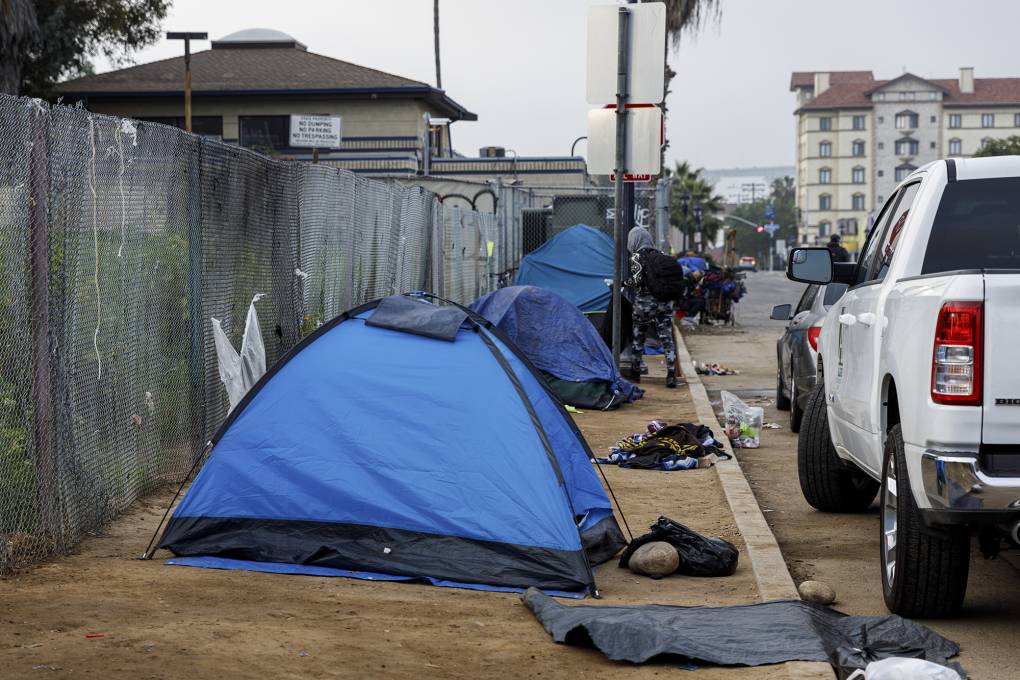
"caption": "An encampment is seen on the sidewalk near a freeway entrance in downtown San Diego on March 22, 2024. Unhoused individuals moved their belongings across the street and later came back after cleaning finished.",
"description": null,
"title": "CMEncampmentBan01",
"credit": "Kristian Carreon/CalMatters",
"status": "inherit",
"altTag": null,
"isLoading": false,
"fetchFailed": false
},
"news_11982891": {
"type": "attachments",
"id": "news_11982891",
"meta": {
"index": "attachments_1716263798",
"site": "news",
"id": "11982891",
"found": true
},
"parent": 11982884,
"imgSizes": {
"twentyfourteen-full-width": {
"file": "https://cdn.kqed.org/wp-content/uploads/sites/10/2024/04/102523-Paradise-Rebuild-AP-CM-01-copy-1038x576.jpg",
"width": 1038,
"mimeType": "image/jpeg",
"height": 576
},
"thumbnail": {
"file": "https://cdn.kqed.org/wp-content/uploads/sites/10/2024/04/102523-Paradise-Rebuild-AP-CM-01-copy-160x106.jpg",
"width": 160,
"mimeType": "image/jpeg",
"height": 106
},
"post-thumbnail": {
"file": "https://cdn.kqed.org/wp-content/uploads/sites/10/2024/04/102523-Paradise-Rebuild-AP-CM-01-copy-672x372.jpg",
"width": 672,
"mimeType": "image/jpeg",
"height": 372
},
"kqedFullSize": {
"file": "https://cdn.kqed.org/wp-content/uploads/sites/10/2024/04/102523-Paradise-Rebuild-AP-CM-01-copy.jpg",
"width": 2000,
"height": 1331
},
"large": {
"file": "https://cdn.kqed.org/wp-content/uploads/sites/10/2024/04/102523-Paradise-Rebuild-AP-CM-01-copy-1020x679.jpg",
"width": 1020,
"mimeType": "image/jpeg",
"height": 679
},
"1536x1536": {
"file": "https://cdn.kqed.org/wp-content/uploads/sites/10/2024/04/102523-Paradise-Rebuild-AP-CM-01-copy-1536x1022.jpg",
"width": 1536,
"mimeType": "image/jpeg",
"height": 1022
},
"full-width": {
"file": "https://cdn.kqed.org/wp-content/uploads/sites/10/2024/04/102523-Paradise-Rebuild-AP-CM-01-copy-1920x1278.jpg",
"width": 1920,
"mimeType": "image/jpeg",
"height": 1278
},
"medium": {
"file": "https://cdn.kqed.org/wp-content/uploads/sites/10/2024/04/102523-Paradise-Rebuild-AP-CM-01-copy-800x532.jpg",
"width": 800,
"mimeType": "image/jpeg",
"height": 532
}
},
"publishDate": 1713032814,
"modified": 1713032859,
"caption": "Jose Villanueva carries siding while building a home in Paradise, Butte County, on Oct. 25, 2023. The project is partly funded by ReCoverCA, a state program providing money to rebuild homes in disaster areas.",
"description": null,
"title": "102523-Paradise-Rebuild-AP-CM-01 copy",
"credit": "Noah Berger/AP Photo",
"status": "inherit",
"altTag": null,
"isLoading": false,
"fetchFailed": false
},
"news_11982734": {
"type": "attachments",
"id": "news_11982734",
"meta": {
"index": "attachments_1716263798",
"site": "news",
"id": "11982734",
"found": true
},
"title": "CMReparations01",
"publishDate": 1712877840,
"status": "inherit",
"parent": 11982724,
"modified": 1750184918,
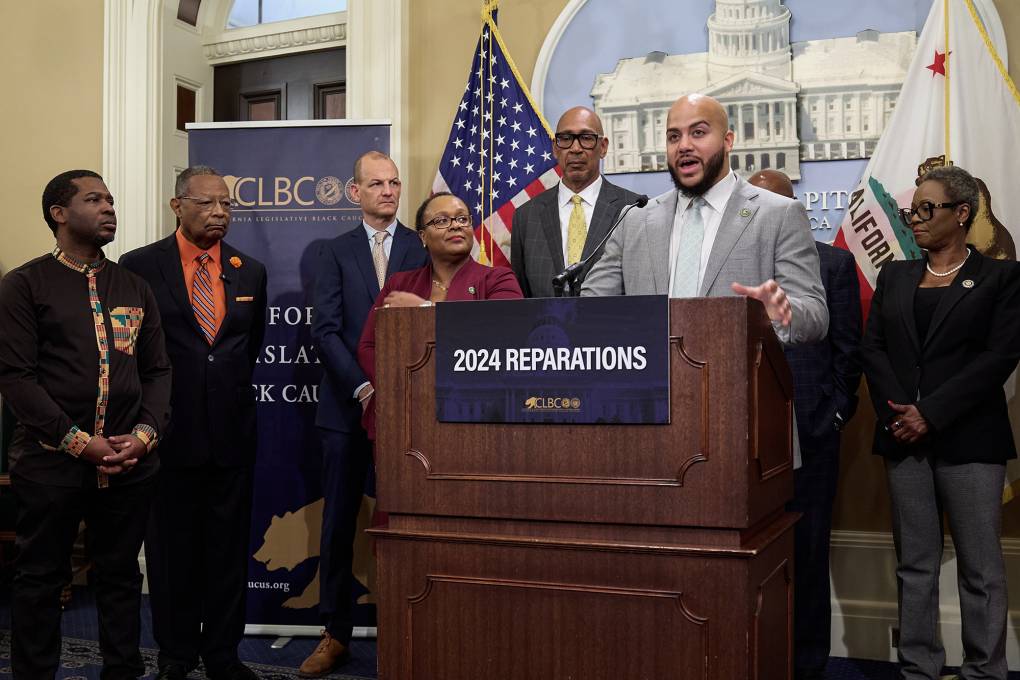
"caption": "Assemblymember Isaac Bryan speaks during a press conference led by the California Legislative Black Caucus at the state Capitol in Sacramento on Feb. 21, 2024. ",
"credit": "Fred Greaves/CalMatters",
"altTag": null,
"description": null,
"imgSizes": {
"medium": {
"file": "https://cdn.kqed.org/wp-content/uploads/sites/10/2024/04/CMReparations01-800x533.jpg",
"width": 800,
"height": 533,
"mimeType": "image/jpeg"
},
"large": {
"file": "https://cdn.kqed.org/wp-content/uploads/sites/10/2024/04/CMReparations01-1020x680.jpg",
"width": 1020,
"height": 680,
"mimeType": "image/jpeg"
},
"thumbnail": {
"file": "https://cdn.kqed.org/wp-content/uploads/sites/10/2024/04/CMReparations01-160x107.jpg",
"width": 160,
"height": 107,
"mimeType": "image/jpeg"
},
"1536x1536": {
"file": "https://cdn.kqed.org/wp-content/uploads/sites/10/2024/04/CMReparations01-1536x1024.jpg",
"width": 1536,
"height": 1024,
"mimeType": "image/jpeg"
},
"post-thumbnail": {
"file": "https://cdn.kqed.org/wp-content/uploads/sites/10/2024/04/CMReparations01-672x372.jpg",
"width": 672,
"height": 372,
"mimeType": "image/jpeg"
},
"twentyfourteen-full-width": {
"file": "https://cdn.kqed.org/wp-content/uploads/sites/10/2024/04/CMReparations01-1038x576.jpg",
"width": 1038,
"height": 576,
"mimeType": "image/jpeg"
},
"full-width": {
"file": "https://cdn.kqed.org/wp-content/uploads/sites/10/2024/04/CMReparations01-1920x1280.jpg",
"width": 1920,
"height": 1280,
"mimeType": "image/jpeg"
},
"kqedFullSize": {
"file": "https://cdn.kqed.org/wp-content/uploads/sites/10/2024/04/CMReparations01.jpg",
"width": 2000,
"height": 1333
}
},
"isLoading": false,
"fetchFailed": false
},
"news_11913601": {
"type": "attachments",
"id": "news_11913601",
"meta": {
"index": "attachments_1716263798",
"site": "news",
"id": "11913601",
"found": true
},
"parent": 11913600,
"imgSizes": {
"twentyfourteen-full-width": {
"file": "https://cdn.kqed.org/wp-content/uploads/sites/10/2022/05/gettyimages-1289013529-edit_custom-d813dd48910230c082a2780e6a5bdbe81a31a258-1038x576.jpg",
"width": 1038,
"mimeType": "image/jpeg",
"height": 576
},
"thumbnail": {
"file": "https://cdn.kqed.org/wp-content/uploads/sites/10/2022/05/gettyimages-1289013529-edit_custom-d813dd48910230c082a2780e6a5bdbe81a31a258-160x107.jpg",
"width": 160,
"mimeType": "image/jpeg",
"height": 107
},
"post-thumbnail": {
"file": "https://cdn.kqed.org/wp-content/uploads/sites/10/2022/05/gettyimages-1289013529-edit_custom-d813dd48910230c082a2780e6a5bdbe81a31a258-672x372.jpg",
"width": 672,
"mimeType": "image/jpeg",
"height": 372
},
"kqedFullSize": {
"file": "https://cdn.kqed.org/wp-content/uploads/sites/10/2022/05/gettyimages-1289013529-edit_custom-d813dd48910230c082a2780e6a5bdbe81a31a258-scaled.jpg",
"width": 2560,
"height": 1705
},
"2048x2048": {
"file": "https://cdn.kqed.org/wp-content/uploads/sites/10/2022/05/gettyimages-1289013529-edit_custom-d813dd48910230c082a2780e6a5bdbe81a31a258-2048x1364.jpg",
"width": 2048,
"mimeType": "image/jpeg",
"height": 1364
},
"large": {
"file": "https://cdn.kqed.org/wp-content/uploads/sites/10/2022/05/gettyimages-1289013529-edit_custom-d813dd48910230c082a2780e6a5bdbe81a31a258-1020x679.jpg",
"width": 1020,
"mimeType": "image/jpeg",
"height": 679
},
"1536x1536": {
"file": "https://cdn.kqed.org/wp-content/uploads/sites/10/2022/05/gettyimages-1289013529-edit_custom-d813dd48910230c082a2780e6a5bdbe81a31a258-1536x1023.jpg",
"width": 1536,
"mimeType": "image/jpeg",
"height": 1023
},
"full-width": {
"file": "https://cdn.kqed.org/wp-content/uploads/sites/10/2022/05/gettyimages-1289013529-edit_custom-d813dd48910230c082a2780e6a5bdbe81a31a258-1920x1279.jpg",
"width": 1920,
"mimeType": "image/jpeg",
"height": 1279
},
"medium": {
"file": "https://cdn.kqed.org/wp-content/uploads/sites/10/2022/05/gettyimages-1289013529-edit_custom-d813dd48910230c082a2780e6a5bdbe81a31a258-800x533.jpg",
"width": 800,
"mimeType": "image/jpeg",
"height": 533
}
},
"publishDate": 1652123066,
"modified": 1712863524,
"caption": "Audits have found that California state agencies are unprepared for cyber attacks. The state's top cybersecurity post has been empty for some time. ",
"description": "Hacker stealing password and identity, computer crime",
"title": "Twenty internet providers, including companies like AT&T, Comcast and Verizon, have committed to the the Affordable Connectivity Program, which will provide plans for no more than $30 for low-income Americans.",
"credit": "boonchai wedmakawand/Getty Images",
"status": "inherit",
"altTag": "A blue-tinted image of hands typing on a laptop keyboard.",
"isLoading": false,
"fetchFailed": false
},
"news_11982534": {
"type": "attachments",
"id": "news_11982534",
"meta": {
"index": "attachments_1716263798",
"site": "news",
"id": "11982534",
"found": true
},
"parent": 11982531,
"imgSizes": {
"twentyfourteen-full-width": {
"file": "https://cdn.kqed.org/wp-content/uploads/sites/10/2024/04/111020_Tap_Water_AW_CM_02-1038x576.jpg",
"width": 1038,
"mimeType": "image/jpeg",
"height": 576
},
"thumbnail": {
"file": "https://cdn.kqed.org/wp-content/uploads/sites/10/2024/04/111020_Tap_Water_AW_CM_02-160x107.jpg",
"width": 160,
"mimeType": "image/jpeg",
"height": 107
},
"post-thumbnail": {
"file": "https://cdn.kqed.org/wp-content/uploads/sites/10/2024/04/111020_Tap_Water_AW_CM_02-672x372.jpg",
"width": 672,
"mimeType": "image/jpeg",
"height": 372
},
"kqedFullSize": {
"file": "https://cdn.kqed.org/wp-content/uploads/sites/10/2024/04/111020_Tap_Water_AW_CM_02.jpg",
"width": 2000,
"height": 1333
},
"large": {
"file": "https://cdn.kqed.org/wp-content/uploads/sites/10/2024/04/111020_Tap_Water_AW_CM_02-1020x680.jpg",
"width": 1020,
"mimeType": "image/jpeg",
"height": 680
},
"1536x1536": {
"file": "https://cdn.kqed.org/wp-content/uploads/sites/10/2024/04/111020_Tap_Water_AW_CM_02-1536x1024.jpg",
"width": 1536,
"mimeType": "image/jpeg",
"height": 1024
},
"full-width": {
"file": "https://cdn.kqed.org/wp-content/uploads/sites/10/2024/04/111020_Tap_Water_AW_CM_02-1920x1280.jpg",
"width": 1920,
"mimeType": "image/jpeg",
"height": 1280
},
"medium": {
"file": "https://cdn.kqed.org/wp-content/uploads/sites/10/2024/04/111020_Tap_Water_AW_CM_02-800x533.jpg",
"width": 800,
"mimeType": "image/jpeg",
"height": 533
}
},
"publishDate": 1712768972,
"modified": 1712769660,
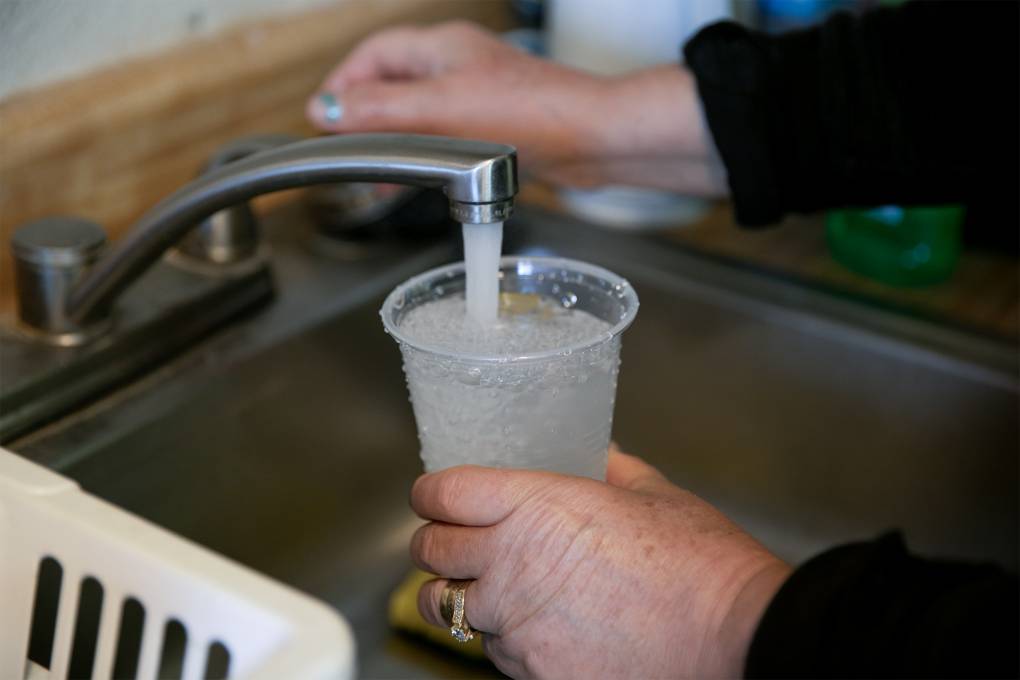
"caption": "Aracel Fernandez fills a cup with tap water at her home on Nov. 10, 2020. ",
"description": null,
"title": "111020_Tap_Water_AW_CM_02",
"credit": "Anne Wernikoff/CalMatters",
"status": "inherit",
"altTag": "A hand holds a cup as the other turns the knob of a faucet to fill the cup with water.",
"isLoading": false,
"fetchFailed": false
},
"news_11982288": {
"type": "attachments",
"id": "news_11982288",
"meta": {
"index": "attachments_1716263798",
"site": "news",
"id": "11982288",
"found": true
},
"parent": 11982269,
"imgSizes": {
"twentyfourteen-full-width": {
"file": "https://cdn.kqed.org/wp-content/uploads/sites/10/2024/04/032724_Inland-Empire-Election_CM_07-1038x576.jpg",
"width": 1038,
"mimeType": "image/jpeg",
"height": 576
},
"thumbnail": {
"file": "https://cdn.kqed.org/wp-content/uploads/sites/10/2024/04/032724_Inland-Empire-Election_CM_07-160x107.jpg",
"width": 160,
"mimeType": "image/jpeg",
"height": 107
},
"post-thumbnail": {
"file": "https://cdn.kqed.org/wp-content/uploads/sites/10/2024/04/032724_Inland-Empire-Election_CM_07-672x372.jpg",
"width": 672,
"mimeType": "image/jpeg",
"height": 372
},
"kqedFullSize": {
"file": "https://cdn.kqed.org/wp-content/uploads/sites/10/2024/04/032724_Inland-Empire-Election_CM_07.jpg",
"width": 2000,
"height": 1333
},
"large": {
"file": "https://cdn.kqed.org/wp-content/uploads/sites/10/2024/04/032724_Inland-Empire-Election_CM_07-1020x680.jpg",
"width": 1020,
"mimeType": "image/jpeg",
"height": 680
},
"1536x1536": {
"file": "https://cdn.kqed.org/wp-content/uploads/sites/10/2024/04/032724_Inland-Empire-Election_CM_07-1536x1024.jpg",
"width": 1536,
"mimeType": "image/jpeg",
"height": 1024
},
"full-width": {
"file": "https://cdn.kqed.org/wp-content/uploads/sites/10/2024/04/032724_Inland-Empire-Election_CM_07-1920x1280.jpg",
"width": 1920,
"mimeType": "image/jpeg",
"height": 1280
},
"medium": {
"file": "https://cdn.kqed.org/wp-content/uploads/sites/10/2024/04/032724_Inland-Empire-Election_CM_07-800x533.jpg",
"width": 800,
"mimeType": "image/jpeg",
"height": 533
}
},
"publishDate": 1712616714,
"modified": 1712623750,
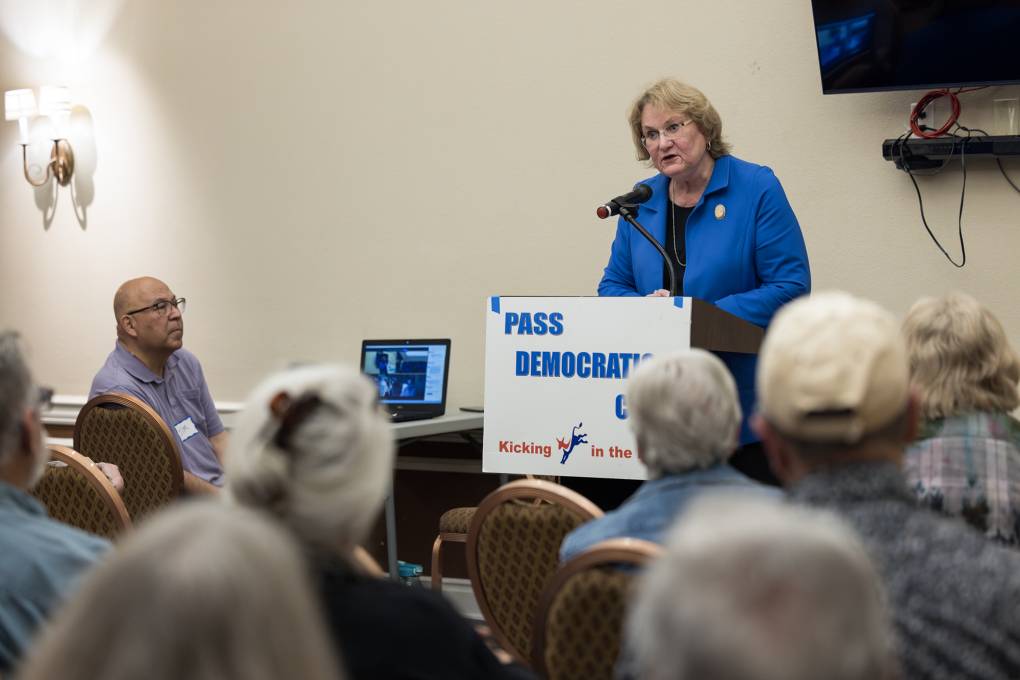
"caption": "Lisa Middleton, Palm Springs City Council member, speaks during a Pass Democratic Club meeting at the Four Seasons in Beaumont on March 27, 2024. ",
"description": null,
"title": "032724_Inland-Empire-Election_CM_07",
"credit": "Elisa Ferrari/CalMatters",
"status": "inherit",
"altTag": "A white woman wearing glasses and a blue jacket stands behind a microphone and podium in front a group of people who are seated.",
"isLoading": false,
"fetchFailed": false
},
"news_11982219": {
"type": "attachments",
"id": "news_11982219",
"meta": {
"index": "attachments_1716263798",
"site": "news",
"id": "11982219",
"found": true
},
"parent": 11982218,
"imgSizes": {
"twentyfourteen-full-width": {
"file": "https://cdn.kqed.org/wp-content/uploads/sites/10/2024/04/CMDoctors01-1038x576.jpg",
"width": 1038,
"mimeType": "image/jpeg",
"height": 576
},
"thumbnail": {
"file": "https://cdn.kqed.org/wp-content/uploads/sites/10/2024/04/CMDoctors01-160x107.jpg",
"width": 160,
"mimeType": "image/jpeg",
"height": 107
},
"post-thumbnail": {
"file": "https://cdn.kqed.org/wp-content/uploads/sites/10/2024/04/CMDoctors01-672x372.jpg",
"width": 672,
"mimeType": "image/jpeg",
"height": 372
},
"kqedFullSize": {
"file": "https://cdn.kqed.org/wp-content/uploads/sites/10/2024/04/CMDoctors01.jpg",
"width": 2000,
"height": 1333
},
"large": {
"file": "https://cdn.kqed.org/wp-content/uploads/sites/10/2024/04/CMDoctors01-1020x680.jpg",
"width": 1020,
"mimeType": "image/jpeg",
"height": 680
},
"1536x1536": {
"file": "https://cdn.kqed.org/wp-content/uploads/sites/10/2024/04/CMDoctors01-1536x1024.jpg",
"width": 1536,
"mimeType": "image/jpeg",
"height": 1024
},
"full-width": {
"file": "https://cdn.kqed.org/wp-content/uploads/sites/10/2024/04/CMDoctors01-1920x1280.jpg",
"width": 1920,
"mimeType": "image/jpeg",
"height": 1280
},
"medium": {
"file": "https://cdn.kqed.org/wp-content/uploads/sites/10/2024/04/CMDoctors01-800x533.jpg",
"width": 800,
"mimeType": "image/jpeg",
"height": 533
}
},
"publishDate": 1712594783,
"modified": 1712594821,
"caption": "Kaiser Permanente employees on strike on Oct. 4, 2023. The workers held a demonstration in front of the Kaiser Permanente South Sacramento location demanding higher wages and more staffing.",
"description": null,
"title": "CMDoctors01",
"credit": "Miguel Gutierrez Jr./CalMatters",
"status": "inherit",
"altTag": null,
"isLoading": false,
"fetchFailed": false
}
},
"audioPlayerReducer": {
"postId": "stream_live",
"isPaused": true,
"isPlaying": false,
"pfsActive": false,
"pledgeModalIsOpen": true,
"playerDrawerIsOpen": false,
"liveAudioPlayStartedAt": 0,
"liveAudioPlayContext": ""
},
"authorsReducer": {
"byline_news_11983885": {
"type": "authors",
"id": "byline_news_11983885",
"meta": {
"override": true
},
"slug": "byline_news_11983885",
"name": "Khari Johnson, CalMatters",
"isLoading": false
},
"byline_news_11983850": {
"type": "authors",
"id": "byline_news_11983850",
"meta": {
"override": true
},
"slug": "byline_news_11983850",
"name": "Lynn La\u003cbr>CalMatters\u003c/br>",
"isLoading": false
},
"byline_news_11983823": {
"type": "authors",
"id": "byline_news_11983823",
"meta": {
"override": true
},
"slug": "byline_news_11983823",
"name": "Mikhail Zinshteyn\u003cbr>CalMatters\u003c/br>",
"isLoading": false
},
"byline_news_11983622": {
"type": "authors",
"id": "byline_news_11983622",
"meta": {
"override": true
},
"slug": "byline_news_11983622",
"name": "\u003ca href=\"https://calmatters.org/author/ben-christopher/\">Ben Christopher\u003c/a>",
"isLoading": false
},
"byline_news_11983217": {
"type": "authors",
"id": "byline_news_11983217",
"meta": {
"override": true
},
"slug": "byline_news_11983217",
"name": "Kristen Hwang, CalMatters",
"isLoading": false
},
"byline_news_11983180": {
"type": "authors",
"id": "byline_news_11983180",
"meta": {
"override": true
},
"slug": "byline_news_11983180",
"name": "Marisa Kendall, CalMatters",
"isLoading": false
},
"byline_news_11982884": {
"type": "authors",
"id": "byline_news_11982884",
"meta": {
"override": true
},
"slug": "byline_news_11982884",
"name": "\u003ca href=\"https://calmatters.org/author/ryan-sabalow/\">Ryan Sabalow\u003c/a>",
"isLoading": false
},
"byline_news_11982724": {
"type": "authors",
"id": "byline_news_11982724",
"meta": {
"override": true
},
"slug": "byline_news_11982724",
"name": "\u003ca href=\"https://calmatters.org/author/wendy-fry/\">Wendy Fry\u003c/a>",
"isLoading": false
},
"byline_news_11982634": {
"type": "authors",
"id": "byline_news_11982634",
"meta": {
"override": true
},
"slug": "byline_news_11982634",
"name": "\u003ca href=\"https://calmatters.org/author/khari-johnson/\">Khari Johnson\u003c/a>",
"isLoading": false
},
"byline_news_11982531": {
"type": "authors",
"id": "byline_news_11982531",
"meta": {
"override": true
},
"slug": "byline_news_11982531",
"name": "Rachel Becker and John Osborn D’Agostino",
"isLoading": false
},
"byline_news_11982269": {
"type": "authors",
"id": "byline_news_11982269",
"meta": {
"override": true
},
"slug": "byline_news_11982269",
"name": "\u003ca href=\"https://calmatters.org/author/deborah-brennan/\">Deborah Brennan\u003c/a>",
"isLoading": false
},
"byline_news_11982218": {
"type": "authors",
"id": "byline_news_11982218",
"meta": {
"override": true
},
"slug": "byline_news_11982218",
"name": "\u003ca href=\"https://calmatters.org/author/kristen-hwang/\">Kristen Hwang\u003c/a>",
"isLoading": false
}
},
"pagesReducer": {
"news_affiliate_calmatters": {
"type": "terms",
"id": "news_18481",
"meta": {
"index": "terms_1716263798",
"site": "news",
"id": "18481",
"score": 15.355904
},
"featImg": null,
"name": "CALmatters",
"description": null,
"taxonomy": "affiliate",
"headData": {
"twImgId": null,
"twTitle": null,
"ogTitle": null,
"ogImgId": null,
"twDescription": null,
"description": null,
"title": "CALmatters Archives | KQED Arts",
"ogDescription": null
},
"ttid": 18515,
"slug": "calmatters",
"isLoading": false,
"title": "CALmatters",
"pageMeta": {
"site": "news",
"WpPageTemplate": "page-topic-editorial",
"currentPage": 33
},
"blocks": [
{
"blockName": "kqed/post-list",
"attrs": {
"layout": "cardArticle2",
"query": "posts/news?affiliate=calmatters",
"seeMore": false,
"paginated": true,
"page": 33
}
},
{
"blockName": "kqed/ad"
}
]
}
},
"pfsSessionReducer": {},
"postsReducer": {
"stream_live": {
"type": "live",
"id": "stream_live",
"audioUrl": "https://streams.kqed.org/kqedradio",
"title": "Live Stream",
"excerpt": "Live Stream information currently unavailable.",
"link": "/radio",
"featImg": "",
"label": {
"name": "KQED Live",
"link": "/"
}
},
"stream_kqedNewscast": {
"type": "posts",
"id": "stream_kqedNewscast",
"audioUrl": "https://www.kqed.org/.stream/anon/radio/RDnews/newscast.mp3?_=1",
"title": "KQED Newscast",
"featImg": "",
"label": {
"name": "88.5 FM",
"link": "/"
}
},
"news_11983885": {
"type": "posts",
"id": "news_11983885",
"meta": {
"index": "posts_1716263798",
"site": "news",
"id": "11983885",
"score": null,
"sort": [
1713985235000
]
},
"guestAuthors": [],
"slug": "california-empowers-users-with-online-privacy-tools-amid-data-sales-concerns",
"title": "Worried About Data Brokers in California? Here’s How to Protect Yourself Online",
"publishDate": 1713985235,
"format": "standard",
"headTitle": "Worried About Data Brokers in California? Here’s How to Protect Yourself Online | KQED",
"labelTerm": {},
"content": "\u003cp>If you visited a Planned Parenthood in the continental United States in the past few years, then the company Near Intelligence, a data broker, probably knew it — and may have \u003ca href=\"https://www.wsj.com/articles/antiabortion-group-used-cellphone-data-to-target-ads-to-planned-parenthood-visitors-446c1212\">sold that information to anti-abortion activists\u003c/a>. If you attended certain houses of worship or patronized particular pharmacies, the data broker known as Outlogic allegedly sold that information.\u003c/p>\n\u003cp>Near Intelligence \u003ca href=\"https://themarkup.org/privacy/2024/02/23/what-happens-to-your-sensitive-data-when-a-data-broker-goes-bankrupt\">filed for bankruptcy\u003c/a> in December. Outlogic agreed to a \u003ca href=\"https://www.ftc.gov/system/files/ftc_gov/pdf/X-ModeSocialDecisionandOrder.pdf\">settlement\u003c/a> with the Federal Trade Commission to stop selling user location data while insisting regulators had found \u003ca href=\"https://news.bloomberglaw.com/privacy-and-data-security/ftc-reaches-first-settlement-banning-location-data-tracking\">“no misuse of any data.”\u003c/a> Both were among nearly 90 companies on the latest version of the \u003ca href=\"https://cppa.ca.gov/data_broker_registry/\">California data broker registry\u003c/a> that self-reported selling data about where people are or have been.\u003c/p>\n\u003cp>For the first time this year, California requires data brokers — companies that knowingly collect and sell consumer’s data to third parties — to report if they collect location data. New state transparency requirements that kicked in this year also revealed that roughly two dozen companies collect personal data about children, and about a dozen collect reproductive health data about people who are pregnant.\u003c/p>\n\u003cp>Do data brokers somewhere have data about you? Almost certainly. Almost everywhere you go on your digital journey will collect traces of information about you. If you’ve been on the internet in the past few years, you’ve probably seen a bunch of notices asking if it’s okay for the website you’re on to collect your “cookies” — information that allows the website to remember you, essentially. Some apps on your phone may track your location. It’s hard to precisely say what information about you is where because there are so many variables — your privacy settings, the sites you visit, what you buy and from whom, etc. — but data brokers are in the business of finding, collecting, and selling that data to other businesses.\u003c/p>\n\u003cp>[ad fullwidth]\u003c/p>\n\u003cp>Brokers sell your web activity and other personal information to companies that may target advertising to you\u003cem>\u003cstrong> \u003c/strong>\u003c/em>or make important decisions about your life, such as \u003ca href=\"https://themarkup.org/locked-out/2020/05/28/access-denied-faulty-automated-background-checks-freeze-out-renters\">whether you get an apartment\u003c/a>, whether your activity is \u003ca href=\"https://epic.org/pondera-surveillance/\">labeled fraudulent\u003c/a>, or how \u003ca href=\"https://www.nytimes.com/2024/03/11/technology/carmakers-driver-tracking-insurance.html\">insurance companies treat you\u003c/a>.\u003c/p>\n\u003cp>The market is largely unregulated.\u003c/p>\n\u003cp>Selling data about people is the cornerstone of the modern internet economy, powering targeted advertising based on insights gleaned from personal data. Media investment company GroupM forecasted $258 billion in digital advertising revenue this year.\u003c/p>\n\u003cp>To give people visibility into who sells their data for profit, four years ago, California started requiring data brokers to register once a year. Since then, a new registry has come out each year based on those submissions.\u003c/p>\n\u003cp>The latest registry debuted one month ago with more detailed information and is now maintained by a relatively new state agency. A law passed last fall introduces new consumer rights and more stringent requirements for brokers.\u003c/p>\n\u003cp>Here are some important things to know:\u003c/p>\n\u003ch2>How can data brokers harm you or your loved ones?\u003c/h2>\n\u003cp>Data brokers can sell data to bad actors, ranging from scam artists to adversarial foreign governments. In testimony to a congressional committee one year ago, Georgetown Law Center associate professor Laura Moy said data brokers selling information to law enforcement agencies could amount to a violation of the Fourth Amendment right to live free from unreasonable search and seizure.\u003c/p>\n\u003cp>From Beijing to Brussels to Washington D.C. and U.S. state capitals, government regulators are creating registries and business reporting rules to prevent privacy violations or harmful forms of artificial intelligence. Privacy advocates have urged the creation of a national data broker registry with the Federal Trade Commission for years, but no such registry exists yet.\u003c/p>\n\u003ch2>Who protects my privacy rights?\u003c/h2>\n\u003cp>California voters passed a ballot measure in 2020 that gives consumers the right to access information collected about them, delete or modify that information, or tell a broker they cannot sell or share that information. Consumers can initiate the process by emailing the point of contact \u003ca href=\"https://cppa.ca.gov/data_broker_registry/\">listed on the registry website\u003c/a>.\u003c/p>\n\u003cp>Then, they must present a copy of their ID, like a driver’s license, to prove who they are. Consumers and people under 18 can also work with an authorized agent, someone who makes data deletion requests on their behalf. Companies like Transcend and nonprofit organizations like Consumer Reports offer consumer data deletion services.\u003c/p>\n\u003cp>To enforce these rights, the ballot measure created the California Privacy Protection Agency and a five-member board to govern its activity.\u003c/p>\n\u003cp>Companies that buy, sell, or share the personal data of at least 100,000 Californians or get a majority of annual revenue from selling data are required to comply with the consumer privacy law.\u003c/p>\n\u003ch2>What’s new?\u003c/h2>\n\u003cp>The most recent changes to California’s data broker registry — which took effect in January — require brokers to disclose whether they sell data about children, pregnant people, or anyone’s geolocation data.\u003c/p>\n\u003cp>However, relatively soon — at the speed at which state governments operate — consumers should be able to delete data collected about them.\u003c/p>\n\u003cp>Right now, consumers must go to hundreds of data brokers one at a time if they want them to delete their data.[aside postID=news_11947039 hero='https://ww2.kqed.org/app/uploads/sites/10/2023/04/RS40986_iStock-1170728885-qut-1020x680.jpg']Last fall, Gov. Gavin Newsom signed \u003ca href=\"https://digitaldemocracy.calmatters.org/bills/ca_202320240sb362?slug=CA_202320240SB362\">the Delete Act\u003c/a> giving consumers a way to delete data from all registered brokers by using a single tool or website.\u003c/p>\n\u003cp>Under the law — authored by state Sen. Josh Becker, a Democrat from Menlo Park — the state’s privacy agency must launch a website by 2026 that allows Californians to delete their data in 30 seconds or less. The Delete Act doubles the cost if data brokers fail to register to $200 a day, as well as the costs associated with an action brought by the state attorney general. By 2028, audits must verify that data brokers are complying with the Delete Act.\u003c/p>\n\u003cp>The other major change is that the Delete Act requires brokers to delete any information they collect about a consumer, not just information shared directly from a consumer, closing what privacy advocates called a crucial loophole that existed in the right to delete granted to consumers under the California Consumer Privacy Act.\u003c/p>\n\u003cp>The law also shifts responsibility for maintaining the registry from the Department of Justice to the California Privacy Protection Agency. That means that the power to determine which companies fail to register and comply with state privacy law or the Delete Act is decided by enforcement officers within that privacy agency.\u003c/p>\n\u003cp>And it’s up to the agency to decide whether companies should register as data brokers.\u003c/p>\n\u003cp>The enforcement division has received more than 1,200 complaints from July 2023 to February 2024, according to a staff update \u003ca href=\"https://www.cppa.ca.gov/meetings/materials/20240308_item6_enforcement_update.pdf\">last month\u003c/a>. The majority of those complaints concern the right to delete data collected about individuals.\u003c/p>\n\u003ch2>Is California’s data broker registry comprehensive?\u003c/h2>\n\u003cp>Since data brokers do not have a direct relationship with consumers, most people have never heard of companies that buy and sell data. But the registry is not comprehensive, not yet at least.\u003c/p>\n\u003cp>The registry that launched March 1 includes roughly 450 businesses and email points of contact. Brokers were required to register by Jan. 31, but in a meeting held in February, privacy protection agency attorney Liz Travis Allen warned: “If you look at the whole universe of every data broker, we don’t have that list. But that would be something we can enforce on, to figure out who isn’t registered and should be.”[aside label='Related Coverage' tag='privacy']The \u003ca href=\"https://oag.ca.gov/data-brokers\">2023 registry maintained by the state Justice Department\u003c/a> listed 550 companies.\u003c/p>\n\u003cp>Privacy Rights Clearinghouse head of privacy Emory Roane was a co-sponsor of the Delete Act. He said it’s “really cool” that the privacy protection agency data broker registry illuminates metrics you couldn’t see before, like the number of companies that track your location or collect data about kids and people who are pregnant or that the credit score agency Experian collects all three. But he said the registry is incomplete. The state of Vermont defines a data broker the same way as California, also \u003ca href=\"https://sos.vermont.gov/corporations/other-services/data-brokers/\">maintains a data broker registry\u003c/a>, and created its registry around the same time as California, but it lists 660 companies.\u003c/p>\n\u003cp>That discrepancy “suggests that there is a problem with non-registered data brokers,” he told CalMatters in an email. “As to how many brokers aren’t registered, well, that’s anyone’s guess. It could be dozens, hundreds, or even thousands.”\u003c/p>\n\u003cp>A January \u003ca href=\"https://www.consumerreports.org/electronics/privacy/each-facebook-user-is-monitored-by-thousands-of-companies-a5824207467/#:~:text=Using%20a%20panel%20of%20709,to%20Facebook%20by%202%2C230%20companies.\">Consumer Reports study\u003c/a> involving nearly 700 volunteers who shared the data Meta collects about them on Facebook and Instagram found that more than 2,220 companies track the average person.\u003c/p>\n\u003ch2>How can I tell a data broker to delete my data?\u003c/h2>\n\u003cp>Each company maintains its own privacy policy, but deleting the data it collects on you can be as simple as sending an email to the broker, whose contact email is listed on the registry. California law requires the broker to respond within 90 days.\u003c/p>\n\u003cp>You can also use third-party tools like \u003ca href=\"https://permissionslipcr.com/\">the Permission Slip app\u003c/a> to tell data brokers to delete your data.\u003c/p>\n\u003cp>Brokers must detail how to delete or modify data in a privacy policy listed on their website. If a business fails to act within 90 days, you can \u003ca href=\"https://cppa.ca.gov/webapplications/complaint\">file a complaint\u003c/a> with California’s privacy protection agency.\u003c/p>\n\u003cp>To quickly view the complete list of companies that sell kids data, reproductive health data, or geolocation data, toggle the arrow buttons at the top of the screen on California’s online registry site.\u003c/p>\n\u003ch2>How do I delete data collected about my kid?\u003c/h2>\n\u003cp>A parent or guardian who wishes to make a deletion request on a child’s behalf may follow the same steps necessary for any other Californian, but a business may require them to verify their identity with a government-issued ID card or phone or video call with a trained professional.\u003c/p>\n\u003ch2>What’s next in California?\u003c/h2>\n\u003cp>The state’s privacy protection agency is already developing a single-click data deletion option. The enforcement division will contact companies they believe should be part of the registry or face fines, fees, or legal action.\u003c/p>\n\u003cp>How aggressive will California’s consumer privacy agency be? One test is how frequently it issues fines and fees for brokers who fail to register. Privacy Protection Agency deputy director of external affairs, Megan White, wouldn’t say when enforcement officers will contact companies that they determined must register as data brokers and are in violation of the law.\u003c/p>\n\u003cp>Roane said he hopes for and expects “eager enforcers more vigilantly holding non-registering and non-conforming data brokers to account.”\u003c/p>\n\u003cp>In July, California will begin requiring data brokers to publicly report on their websites the number of requests they receive to delete, modify, or share what data they collected about individuals and the median amount of time it takes to fulfill those requests.\u003c/p>\n\u003cp>[ad floatright]\u003c/p>\n",
"blocks": [],
"excerpt": "About 450 companies are on the data broker registry in California, and a law passed last year will make it easier to delete the data they collect about people.",
"status": "publish",
"parent": 0,
"modified": 1721113975,
"stats": {
"hasAudio": false,
"hasVideo": false,
"hasChartOrMap": false,
"iframeSrcs": [],
"hasGoogleForm": false,
"hasGallery": false,
"hasHearkenModule": false,
"hasPolis": false,
"paragraphCount": 40,
"wordCount": 1880
},
"headData": {
"title": "Worried About Data Brokers in California? Here’s How to Protect Yourself Online | KQED",
"description": "About 450 companies are on the data broker registry in California, and a law passed last year will make it easier to delete the data they collect about people.",
"ogTitle": "",
"ogDescription": "",
"ogImgId": "",
"twTitle": "",
"twDescription": "",
"twImgId": "",
"schema": {
"@context": "https://schema.org",
"@type": "NewsArticle",
"headline": "Worried About Data Brokers in California? Here’s How to Protect Yourself Online",
"datePublished": "2024-04-24T12:00:35-07:00",
"dateModified": "2024-07-16T00:12:55-07:00",
"image": "https://cdn.kqed.org/wp-content/uploads/2020/02/KQED-OG-Image@1x.png",
"isAccessibleForFree": "True",
"publisher": {
"@type": "NewsMediaOrganization",
"@id": "https://www.kqed.org/#organization",
"name": "KQED",
"logo": "https://cdn.kqed.org/wp-content/uploads/2020/02/KQED-OG-Image@1x.png",
"url": "https://www.kqed.org",
"sameAs": [
"https://www.facebook.com/KQED",
"https://twitter.com/KQED",
"https://www.instagram.com/kqed/",
"https://www.tiktok.com/@kqedofficial",
"https://www.linkedin.com/company/kqed",
"https://www.youtube.com/channel/UCeC0IOo7i1P_61zVUWbJ4nw"
]
}
}
},
"source": "CalMatters",
"sourceUrl": "https://calmatters.org/",
"sticky": false,
"nprByline": "Khari Johnson, CalMatters",
"excludeFromSiteSearch": "Include",
"showOnAuthorArchivePages": "No",
"articleAge": "0",
"path": "/news/11983885/california-empowers-users-with-online-privacy-tools-amid-data-sales-concerns",
"audioTrackLength": null,
"parsedContent": [
{
"type": "contentString",
"content": "\u003cdiv class=\"post-body\">\u003cp>\u003cp>If you visited a Planned Parenthood in the continental United States in the past few years, then the company Near Intelligence, a data broker, probably knew it — and may have \u003ca href=\"https://www.wsj.com/articles/antiabortion-group-used-cellphone-data-to-target-ads-to-planned-parenthood-visitors-446c1212\">sold that information to anti-abortion activists\u003c/a>. If you attended certain houses of worship or patronized particular pharmacies, the data broker known as Outlogic allegedly sold that information.\u003c/p>\n\u003cp>Near Intelligence \u003ca href=\"https://themarkup.org/privacy/2024/02/23/what-happens-to-your-sensitive-data-when-a-data-broker-goes-bankrupt\">filed for bankruptcy\u003c/a> in December. Outlogic agreed to a \u003ca href=\"https://www.ftc.gov/system/files/ftc_gov/pdf/X-ModeSocialDecisionandOrder.pdf\">settlement\u003c/a> with the Federal Trade Commission to stop selling user location data while insisting regulators had found \u003ca href=\"https://news.bloomberglaw.com/privacy-and-data-security/ftc-reaches-first-settlement-banning-location-data-tracking\">“no misuse of any data.”\u003c/a> Both were among nearly 90 companies on the latest version of the \u003ca href=\"https://cppa.ca.gov/data_broker_registry/\">California data broker registry\u003c/a> that self-reported selling data about where people are or have been.\u003c/p>\n\u003cp>For the first time this year, California requires data brokers — companies that knowingly collect and sell consumer’s data to third parties — to report if they collect location data. New state transparency requirements that kicked in this year also revealed that roughly two dozen companies collect personal data about children, and about a dozen collect reproductive health data about people who are pregnant.\u003c/p>\n\u003cp>Do data brokers somewhere have data about you? Almost certainly. Almost everywhere you go on your digital journey will collect traces of information about you. If you’ve been on the internet in the past few years, you’ve probably seen a bunch of notices asking if it’s okay for the website you’re on to collect your “cookies” — information that allows the website to remember you, essentially. Some apps on your phone may track your location. It’s hard to precisely say what information about you is where because there are so many variables — your privacy settings, the sites you visit, what you buy and from whom, etc. — but data brokers are in the business of finding, collecting, and selling that data to other businesses.\u003c/p>\n\u003cp>\u003c/p>\u003c/div>",
"attributes": {
"named": {},
"numeric": []
}
},
{
"type": "component",
"content": "",
"name": "ad",
"attributes": {
"named": {
"label": "fullwidth"
},
"numeric": [
"fullwidth"
]
}
},
{
"type": "contentString",
"content": "\u003cdiv class=\"post-body\">\u003cp>\u003c/p>\n\u003cp>Brokers sell your web activity and other personal information to companies that may target advertising to you\u003cem>\u003cstrong> \u003c/strong>\u003c/em>or make important decisions about your life, such as \u003ca href=\"https://themarkup.org/locked-out/2020/05/28/access-denied-faulty-automated-background-checks-freeze-out-renters\">whether you get an apartment\u003c/a>, whether your activity is \u003ca href=\"https://epic.org/pondera-surveillance/\">labeled fraudulent\u003c/a>, or how \u003ca href=\"https://www.nytimes.com/2024/03/11/technology/carmakers-driver-tracking-insurance.html\">insurance companies treat you\u003c/a>.\u003c/p>\n\u003cp>The market is largely unregulated.\u003c/p>\n\u003cp>Selling data about people is the cornerstone of the modern internet economy, powering targeted advertising based on insights gleaned from personal data. Media investment company GroupM forecasted $258 billion in digital advertising revenue this year.\u003c/p>\n\u003cp>To give people visibility into who sells their data for profit, four years ago, California started requiring data brokers to register once a year. Since then, a new registry has come out each year based on those submissions.\u003c/p>\n\u003cp>The latest registry debuted one month ago with more detailed information and is now maintained by a relatively new state agency. A law passed last fall introduces new consumer rights and more stringent requirements for brokers.\u003c/p>\n\u003cp>Here are some important things to know:\u003c/p>\n\u003ch2>How can data brokers harm you or your loved ones?\u003c/h2>\n\u003cp>Data brokers can sell data to bad actors, ranging from scam artists to adversarial foreign governments. In testimony to a congressional committee one year ago, Georgetown Law Center associate professor Laura Moy said data brokers selling information to law enforcement agencies could amount to a violation of the Fourth Amendment right to live free from unreasonable search and seizure.\u003c/p>\n\u003cp>From Beijing to Brussels to Washington D.C. and U.S. state capitals, government regulators are creating registries and business reporting rules to prevent privacy violations or harmful forms of artificial intelligence. Privacy advocates have urged the creation of a national data broker registry with the Federal Trade Commission for years, but no such registry exists yet.\u003c/p>\n\u003ch2>Who protects my privacy rights?\u003c/h2>\n\u003cp>California voters passed a ballot measure in 2020 that gives consumers the right to access information collected about them, delete or modify that information, or tell a broker they cannot sell or share that information. Consumers can initiate the process by emailing the point of contact \u003ca href=\"https://cppa.ca.gov/data_broker_registry/\">listed on the registry website\u003c/a>.\u003c/p>\n\u003cp>Then, they must present a copy of their ID, like a driver’s license, to prove who they are. Consumers and people under 18 can also work with an authorized agent, someone who makes data deletion requests on their behalf. Companies like Transcend and nonprofit organizations like Consumer Reports offer consumer data deletion services.\u003c/p>\n\u003cp>To enforce these rights, the ballot measure created the California Privacy Protection Agency and a five-member board to govern its activity.\u003c/p>\n\u003cp>Companies that buy, sell, or share the personal data of at least 100,000 Californians or get a majority of annual revenue from selling data are required to comply with the consumer privacy law.\u003c/p>\n\u003ch2>What’s new?\u003c/h2>\n\u003cp>The most recent changes to California’s data broker registry — which took effect in January — require brokers to disclose whether they sell data about children, pregnant people, or anyone’s geolocation data.\u003c/p>\n\u003cp>However, relatively soon — at the speed at which state governments operate — consumers should be able to delete data collected about them.\u003c/p>\n\u003cp>Right now, consumers must go to hundreds of data brokers one at a time if they want them to delete their data.\u003c/p>\u003c/div>",
"attributes": {
"named": {},
"numeric": []
}
},
{
"type": "component",
"content": "",
"name": "aside",
"attributes": {
"named": {
"postid": "news_11947039",
"hero": "https://ww2.kqed.org/app/uploads/sites/10/2023/04/RS40986_iStock-1170728885-qut-1020x680.jpg",
"label": ""
},
"numeric": []
}
},
{
"type": "contentString",
"content": "\u003cdiv class=\"post-body\">\u003cp>Last fall, Gov. Gavin Newsom signed \u003ca href=\"https://digitaldemocracy.calmatters.org/bills/ca_202320240sb362?slug=CA_202320240SB362\">the Delete Act\u003c/a> giving consumers a way to delete data from all registered brokers by using a single tool or website.\u003c/p>\n\u003cp>Under the law — authored by state Sen. Josh Becker, a Democrat from Menlo Park — the state’s privacy agency must launch a website by 2026 that allows Californians to delete their data in 30 seconds or less. The Delete Act doubles the cost if data brokers fail to register to $200 a day, as well as the costs associated with an action brought by the state attorney general. By 2028, audits must verify that data brokers are complying with the Delete Act.\u003c/p>\n\u003cp>The other major change is that the Delete Act requires brokers to delete any information they collect about a consumer, not just information shared directly from a consumer, closing what privacy advocates called a crucial loophole that existed in the right to delete granted to consumers under the California Consumer Privacy Act.\u003c/p>\n\u003cp>The law also shifts responsibility for maintaining the registry from the Department of Justice to the California Privacy Protection Agency. That means that the power to determine which companies fail to register and comply with state privacy law or the Delete Act is decided by enforcement officers within that privacy agency.\u003c/p>\n\u003cp>And it’s up to the agency to decide whether companies should register as data brokers.\u003c/p>\n\u003cp>The enforcement division has received more than 1,200 complaints from July 2023 to February 2024, according to a staff update \u003ca href=\"https://www.cppa.ca.gov/meetings/materials/20240308_item6_enforcement_update.pdf\">last month\u003c/a>. The majority of those complaints concern the right to delete data collected about individuals.\u003c/p>\n\u003ch2>Is California’s data broker registry comprehensive?\u003c/h2>\n\u003cp>Since data brokers do not have a direct relationship with consumers, most people have never heard of companies that buy and sell data. But the registry is not comprehensive, not yet at least.\u003c/p>\n\u003cp>The registry that launched March 1 includes roughly 450 businesses and email points of contact. Brokers were required to register by Jan. 31, but in a meeting held in February, privacy protection agency attorney Liz Travis Allen warned: “If you look at the whole universe of every data broker, we don’t have that list. But that would be something we can enforce on, to figure out who isn’t registered and should be.”\u003c/p>\u003c/div>",
"attributes": {
"named": {},
"numeric": []
}
},
{
"type": "component",
"content": "",
"name": "aside",
"attributes": {
"named": {
"label": "Related Coverage ",
"tag": "privacy"
},
"numeric": []
}
},
{
"type": "contentString",
"content": "\u003cdiv class=\"post-body\">\u003cp>The \u003ca href=\"https://oag.ca.gov/data-brokers\">2023 registry maintained by the state Justice Department\u003c/a> listed 550 companies.\u003c/p>\n\u003cp>Privacy Rights Clearinghouse head of privacy Emory Roane was a co-sponsor of the Delete Act. He said it’s “really cool” that the privacy protection agency data broker registry illuminates metrics you couldn’t see before, like the number of companies that track your location or collect data about kids and people who are pregnant or that the credit score agency Experian collects all three. But he said the registry is incomplete. The state of Vermont defines a data broker the same way as California, also \u003ca href=\"https://sos.vermont.gov/corporations/other-services/data-brokers/\">maintains a data broker registry\u003c/a>, and created its registry around the same time as California, but it lists 660 companies.\u003c/p>\n\u003cp>That discrepancy “suggests that there is a problem with non-registered data brokers,” he told CalMatters in an email. “As to how many brokers aren’t registered, well, that’s anyone’s guess. It could be dozens, hundreds, or even thousands.”\u003c/p>\n\u003cp>A January \u003ca href=\"https://www.consumerreports.org/electronics/privacy/each-facebook-user-is-monitored-by-thousands-of-companies-a5824207467/#:~:text=Using%20a%20panel%20of%20709,to%20Facebook%20by%202%2C230%20companies.\">Consumer Reports study\u003c/a> involving nearly 700 volunteers who shared the data Meta collects about them on Facebook and Instagram found that more than 2,220 companies track the average person.\u003c/p>\n\u003ch2>How can I tell a data broker to delete my data?\u003c/h2>\n\u003cp>Each company maintains its own privacy policy, but deleting the data it collects on you can be as simple as sending an email to the broker, whose contact email is listed on the registry. California law requires the broker to respond within 90 days.\u003c/p>\n\u003cp>You can also use third-party tools like \u003ca href=\"https://permissionslipcr.com/\">the Permission Slip app\u003c/a> to tell data brokers to delete your data.\u003c/p>\n\u003cp>Brokers must detail how to delete or modify data in a privacy policy listed on their website. If a business fails to act within 90 days, you can \u003ca href=\"https://cppa.ca.gov/webapplications/complaint\">file a complaint\u003c/a> with California’s privacy protection agency.\u003c/p>\n\u003cp>To quickly view the complete list of companies that sell kids data, reproductive health data, or geolocation data, toggle the arrow buttons at the top of the screen on California’s online registry site.\u003c/p>\n\u003ch2>How do I delete data collected about my kid?\u003c/h2>\n\u003cp>A parent or guardian who wishes to make a deletion request on a child’s behalf may follow the same steps necessary for any other Californian, but a business may require them to verify their identity with a government-issued ID card or phone or video call with a trained professional.\u003c/p>\n\u003ch2>What’s next in California?\u003c/h2>\n\u003cp>The state’s privacy protection agency is already developing a single-click data deletion option. The enforcement division will contact companies they believe should be part of the registry or face fines, fees, or legal action.\u003c/p>\n\u003cp>How aggressive will California’s consumer privacy agency be? One test is how frequently it issues fines and fees for brokers who fail to register. Privacy Protection Agency deputy director of external affairs, Megan White, wouldn’t say when enforcement officers will contact companies that they determined must register as data brokers and are in violation of the law.\u003c/p>\n\u003cp>Roane said he hopes for and expects “eager enforcers more vigilantly holding non-registering and non-conforming data brokers to account.”\u003c/p>\n\u003cp>In July, California will begin requiring data brokers to publicly report on their websites the number of requests they receive to delete, modify, or share what data they collected about individuals and the median amount of time it takes to fulfill those requests.\u003c/p>\n\u003cp>\u003c/p>\u003c/div>",
"attributes": {
"named": {},
"numeric": []
}
},
{
"type": "component",
"content": "",
"name": "ad",
"attributes": {
"named": {
"label": "floatright"
},
"numeric": [
"floatright"
]
}
},
{
"type": "contentString",
"content": "\u003cdiv class=\"post-body\">\u003cp>\u003c/p>\n\u003c/div>\u003c/p>",
"attributes": {
"named": {},
"numeric": []
}
}
],
"link": "/news/11983885/california-empowers-users-with-online-privacy-tools-amid-data-sales-concerns",
"authors": [
"byline_news_11983885"
],
"categories": [
"news_31795",
"news_8",
"news_248"
],
"tags": [
"news_18538",
"news_30069",
"news_17725",
"news_22844",
"news_16",
"news_3137",
"news_2414",
"news_2125",
"news_1631"
],
"affiliates": [
"news_18481"
],
"featImg": "news_11983892",
"label": "source_news_11983885"
},
"news_11983850": {
"type": "posts",
"id": "news_11983850",
"meta": {
"index": "posts_1716263798",
"site": "news",
"id": "11983850",
"score": null,
"sort": [
1713956456000
]
},
"guestAuthors": [],
"slug": "will-less-homework-stress-make-california-students-happier",
"title": "Will Less Homework Stress Make California Students Happier?",
"publishDate": 1713956456,
"format": "standard",
"headTitle": "Will Less Homework Stress Make California Students Happier? | KQED",
"labelTerm": {
"term": 18481,
"site": "news"
},
"content": "\u003cp>Some bills before California’s Legislature don’t come from passionate policy advocates or powerful interest groups.\u003c/p>\n\u003cp>Sometimes, the inspiration comes from a family car ride.\u003c/p>\n\u003cp>While campaigning two years ago, Assemblymember \u003ca href=\"https://digitaldemocracy.calmatters.org/legislators/pilar-schiavo-5510\">Pilar Schiavo\u003c/a>’s daughter, then 9, asked from the backseat what her mother could do if she won.\u003c/p>\n\u003cp>Schiavo answered that she’d be able to make laws. Then, her daughter Sofia asked if she could make a law banning homework.\u003c/p>\n\u003cp>“It was a kind of a joke,” the Santa Clarita Valley Democrat said in an interview, “though I’m sure she’d be happy if homework were banned.”\u003c/p>\n\u003cp>[ad fullwidth]\u003c/p>\n\u003cp>Still, the conversation got Schiavo thinking, she said. And while \u003ca href=\"https://digitaldemocracy.calmatters.org/bills/ca_202320240ab2999?slug=CA_202320240AB2999\">Assembly Bill 2999\u003c/a> — which faces its first big test on Wednesday — is far from a ban on homework, it would require school districts, county offices of education and charter schools to develop guidelines for K–12 students. It would urge schools to be more intentional about “good” or meaningful homework.\u003c/p>\n\u003cp>Among other things, the guidelines should consider students’ physical health, how long assignments take, and how effective they are. However, the bill’s main concern is mental health and when homework adds stress to students’ daily lives.\u003c/p>\n\u003cp>Homework’s impact on happiness is partly why Schiavo brought up the proposal last month during \u003ca href=\"https://calmatters.org/politics/capitol/2024/03/happiness-california-legislature/\">the first meeting of the Legislature’s select committee on happiness\u003c/a>, led by former Assembly Speaker \u003ca href=\"https://digitaldemocracy.calmatters.org/legislators/anthony-rendon-120?_gl=1*186p1dm*_ga*MTM0NTExODk4NS4xNjkwMzA5NjYy*_ga_5TKXNLE5NK*MTcxMzg1MzY3OS45MzYuMS4xNzEzODU2ODUzLjU4LjAuMA..*_ga_GNY4L81DZE*MTcxMzg1Njg1MS4xMDAzLjAuMTcxMzg1Njg1MS4wLjAuMA..\">Anthony Rendon\u003c/a>.\u003c/p>\n\u003cp>[aside postID=\"mindshift_62400,mindshift_63052\" label=\"Related Stories\"]“This feeling of loneliness and disconnection — I know when my kid is not feeling connected,” Schiavo, a member of the happiness committee, told CalMatters. “It’s when she’s alone in her room (doing homework), not playing with her cousin, not having dinner with her family.”\u003c/p>\n\u003cp>The bill analysis cites a survey of 15,000 California high schoolers from Challenge Success, a nonprofit affiliated with the Stanford Graduate School of Education. It found that 45% said homework was a major source of stress and that 52% considered most assignments to be busywork.\u003c/p>\n\u003cp>The \u003ca href=\"https://challengesuccess.org/wp-content/uploads/2021/04/Challenge-Success-Homework-White-Paper-2020.pdf\">organization also reported in 2020\u003c/a> that students with higher workloads reported “symptoms of exhaustion and lower rates of sleep” but that spending more time on homework did not necessarily lead to higher test scores.\u003c/p>\n\u003cp>Homework’s potential to also widen inequities is why Casey Cuny supports the measure. Cuny, an English and mythology teacher at Valencia High School and \u003ca href=\"https://www.cde.ca.gov/nr/ne/yr23/yr23rel81.asp\">2024’s California Teacher of the Year\u003c/a>, said language barriers, unreliable home internet, family responsibilities or other outside factors may contribute to a student falling behind on homework.\u003c/p>\n\u003cp>“I never want a kid’s grade to be low because they have divorced parents, and their book was at their dad’s house when they were spending the weekend at mom’s house,” said Cuny, who plans to attend a press conference Wednesday to promote the bill.\u003c/p>\n\u003cp>In addition, as technology makes it easier for students to cheat — using artificial technology or chat threads to lift answers, for example — Schiavo said that the educators she has spoken to indicate they’re moving towards more in-class assignments.\u003c/p>\n\u003cp>Cuny agrees that an emphasis on classwork does help to rein in cheating and allows him to give students immediate feedback. “I feel that I should teach them what I need to teach them when I’m with them in the room,” he said.\u003c/p>\n\u003cfigure id=\"attachment_11983855\" class=\"wp-caption aligncenter\" style=\"max-width: 2000px\">\u003ca href=\"https://cdn.kqed.org/wp-content/uploads/sites/10/2024/04/031224-Happiness-Committee-FG-CM-2-.jpg\">\u003cimg loading=\"lazy\" decoding=\"async\" class=\"size-full wp-image-11983855\" src=\"https://cdn.kqed.org/wp-content/uploads/sites/10/2024/04/031224-Happiness-Committee-FG-CM-2-.jpg\" alt=\"A woman sits at a table facing a woman and man seated at a larger table with microphones attached.\" width=\"2000\" height=\"1333\" srcset=\"https://cdn.kqed.org/wp-content/uploads/sites/10/2024/04/031224-Happiness-Committee-FG-CM-2-.jpg 2000w, https://cdn.kqed.org/wp-content/uploads/sites/10/2024/04/031224-Happiness-Committee-FG-CM-2--800x533.jpg 800w, https://cdn.kqed.org/wp-content/uploads/sites/10/2024/04/031224-Happiness-Committee-FG-CM-2--1020x680.jpg 1020w, https://cdn.kqed.org/wp-content/uploads/sites/10/2024/04/031224-Happiness-Committee-FG-CM-2--160x107.jpg 160w, https://cdn.kqed.org/wp-content/uploads/sites/10/2024/04/031224-Happiness-Committee-FG-CM-2--1536x1024.jpg 1536w, https://cdn.kqed.org/wp-content/uploads/sites/10/2024/04/031224-Happiness-Committee-FG-CM-2--1920x1280.jpg 1920w\" sizes=\"(max-width: 2000px) 100vw, 2000px\">\u003c/a>\u003cfigcaption class=\"wp-caption-text\">Members of the Select Committee On Happiness And Public Policy Outcomes listen to speakers during an informational hearing at the California Capitol in Sacramento on March 12, 2024. \u003ccite>(Fred Greaves/CalMatters)\u003c/cite>\u003c/figcaption>\u003c/figure>\n\u003cp>The bill said the local homework policies should have input from teachers, parents, school counselors, social workers and students; be distributed at the beginning of every school year; and be reevaluated every five years.\u003c/p>\n\u003cp>The Assembly Committee on Education is expected to hear the bill Wednesday. Schiavo said she has received bipartisan support, and so far, no official opposition or support has been listed in the bill analysis.\u003c/p>\n\u003cp>But she acknowledges that, if passed, the measure’s provision for parental input may lead to disagreements given the recent \u003ca href=\"https://calmatters.org/newsletter/culture-wars-california-schools/\">culture war disputes\u003c/a> between Democratic officials and parental rights groups backed by some Republican lawmakers. “I’m sure there will be lively (school) board meetings,” Schiavo said.\u003c/p>\n\u003cp>Nevertheless, she hopes the proposal will overhaul the discussion around homework and mental health. The bill is especially pertinent now that the state is also poised to \u003ca href=\"https://calmatters.org/health/mental-health/2023/06/mental-health-funding-2/\">cut spending on mental health services for children\u003c/a> with the passage of \u003ca href=\"https://calmatters.org/california-voter-guide-2024/prop-1-mental-health/\">Proposition 1\u003c/a>.\u003c/p>\n\u003cp>Schiavo said the mother of a student with attention-deficit/hyperactivity disorder told her that the child’s struggle to finish homework had raised issues inside the house, as well as with the school’s principal and teachers.\u003c/p>\n\u003cp>\u003c/p>\n\u003cp>“And I’m just like, it’s sixth grade!” Schaivo said. “What’s going on?”\u003c/p>\n\n",
"blocks": [],
"excerpt": "A bill from a member of the Legislature’s happiness committee would require schools to develop homework policies that consider the mental and physical strain on students.",
"status": "publish",
"parent": 0,
"modified": 1721146427,
"stats": {
"hasAudio": false,
"hasVideo": false,
"hasChartOrMap": false,
"iframeSrcs": [],
"hasGoogleForm": false,
"hasGallery": false,
"hasHearkenModule": false,
"hasPolis": false,
"paragraphCount": 23,
"wordCount": 848
},
"headData": {
"title": "Will Less Homework Stress Make California Students Happier? | KQED",
"description": "A bill from a member of the Legislature’s happiness committee would require schools to develop homework policies that consider the mental and physical strain on students.",
"ogTitle": "",
"ogDescription": "",
"ogImgId": "",
"twTitle": "",
"twDescription": "",
"twImgId": "",
"schema": {
"@context": "https://schema.org",
"@type": "NewsArticle",
"headline": "Will Less Homework Stress Make California Students Happier?",
"datePublished": "2024-04-24T04:00:56-07:00",
"dateModified": "2024-07-16T09:13:47-07:00",
"image": "https://cdn.kqed.org/wp-content/uploads/2020/02/KQED-OG-Image@1x.png",
"isAccessibleForFree": "True",
"publisher": {
"@type": "NewsMediaOrganization",
"@id": "https://www.kqed.org/#organization",
"name": "KQED",
"logo": "https://cdn.kqed.org/wp-content/uploads/2020/02/KQED-OG-Image@1x.png",
"url": "https://www.kqed.org",
"sameAs": [
"https://www.facebook.com/KQED",
"https://twitter.com/KQED",
"https://www.instagram.com/kqed/",
"https://www.tiktok.com/@kqedofficial",
"https://www.linkedin.com/company/kqed",
"https://www.youtube.com/channel/UCeC0IOo7i1P_61zVUWbJ4nw"
]
}
}
},
"sticky": false,
"nprByline": "Lynn La\u003cbr>CalMatters\u003c/br>",
"excludeFromSiteSearch": "Include",
"showOnAuthorArchivePages": "No",
"articleAge": "0",
"path": "/news/11983850/will-less-homework-stress-make-california-students-happier",
"audioTrackLength": null,
"parsedContent": [
{
"type": "contentString",
"content": "\u003cdiv class=\"post-body\">\u003cp>\u003cp>Some bills before California’s Legislature don’t come from passionate policy advocates or powerful interest groups.\u003c/p>\n\u003cp>Sometimes, the inspiration comes from a family car ride.\u003c/p>\n\u003cp>While campaigning two years ago, Assemblymember \u003ca href=\"https://digitaldemocracy.calmatters.org/legislators/pilar-schiavo-5510\">Pilar Schiavo\u003c/a>’s daughter, then 9, asked from the backseat what her mother could do if she won.\u003c/p>\n\u003cp>Schiavo answered that she’d be able to make laws. Then, her daughter Sofia asked if she could make a law banning homework.\u003c/p>\n\u003cp>“It was a kind of a joke,” the Santa Clarita Valley Democrat said in an interview, “though I’m sure she’d be happy if homework were banned.”\u003c/p>\n\u003cp>\u003c/p>\u003c/div>",
"attributes": {
"named": {},
"numeric": []
}
},
{
"type": "component",
"content": "",
"name": "ad",
"attributes": {
"named": {
"label": "fullwidth"
},
"numeric": [
"fullwidth"
]
}
},
{
"type": "contentString",
"content": "\u003cdiv class=\"post-body\">\u003cp>\u003c/p>\n\u003cp>Still, the conversation got Schiavo thinking, she said. And while \u003ca href=\"https://digitaldemocracy.calmatters.org/bills/ca_202320240ab2999?slug=CA_202320240AB2999\">Assembly Bill 2999\u003c/a> — which faces its first big test on Wednesday — is far from a ban on homework, it would require school districts, county offices of education and charter schools to develop guidelines for K–12 students. It would urge schools to be more intentional about “good” or meaningful homework.\u003c/p>\n\u003cp>Among other things, the guidelines should consider students’ physical health, how long assignments take, and how effective they are. However, the bill’s main concern is mental health and when homework adds stress to students’ daily lives.\u003c/p>\n\u003cp>Homework’s impact on happiness is partly why Schiavo brought up the proposal last month during \u003ca href=\"https://calmatters.org/politics/capitol/2024/03/happiness-california-legislature/\">the first meeting of the Legislature’s select committee on happiness\u003c/a>, led by former Assembly Speaker \u003ca href=\"https://digitaldemocracy.calmatters.org/legislators/anthony-rendon-120?_gl=1*186p1dm*_ga*MTM0NTExODk4NS4xNjkwMzA5NjYy*_ga_5TKXNLE5NK*MTcxMzg1MzY3OS45MzYuMS4xNzEzODU2ODUzLjU4LjAuMA..*_ga_GNY4L81DZE*MTcxMzg1Njg1MS4xMDAzLjAuMTcxMzg1Njg1MS4wLjAuMA..\">Anthony Rendon\u003c/a>.\u003c/p>\n\u003cp>\u003c/p>\u003c/div>",
"attributes": {
"named": {},
"numeric": []
}
},
{
"type": "component",
"content": "",
"name": "aside",
"attributes": {
"named": {
"postid": "mindshift_62400,mindshift_63052",
"label": "Related Stories "
},
"numeric": []
}
},
{
"type": "contentString",
"content": "\u003cdiv class=\"post-body\">\u003cp>“This feeling of loneliness and disconnection — I know when my kid is not feeling connected,” Schiavo, a member of the happiness committee, told CalMatters. “It’s when she’s alone in her room (doing homework), not playing with her cousin, not having dinner with her family.”\u003c/p>\n\u003cp>The bill analysis cites a survey of 15,000 California high schoolers from Challenge Success, a nonprofit affiliated with the Stanford Graduate School of Education. It found that 45% said homework was a major source of stress and that 52% considered most assignments to be busywork.\u003c/p>\n\u003cp>The \u003ca href=\"https://challengesuccess.org/wp-content/uploads/2021/04/Challenge-Success-Homework-White-Paper-2020.pdf\">organization also reported in 2020\u003c/a> that students with higher workloads reported “symptoms of exhaustion and lower rates of sleep” but that spending more time on homework did not necessarily lead to higher test scores.\u003c/p>\n\u003cp>Homework’s potential to also widen inequities is why Casey Cuny supports the measure. Cuny, an English and mythology teacher at Valencia High School and \u003ca href=\"https://www.cde.ca.gov/nr/ne/yr23/yr23rel81.asp\">2024’s California Teacher of the Year\u003c/a>, said language barriers, unreliable home internet, family responsibilities or other outside factors may contribute to a student falling behind on homework.\u003c/p>\n\u003cp>“I never want a kid’s grade to be low because they have divorced parents, and their book was at their dad’s house when they were spending the weekend at mom’s house,” said Cuny, who plans to attend a press conference Wednesday to promote the bill.\u003c/p>\n\u003cp>In addition, as technology makes it easier for students to cheat — using artificial technology or chat threads to lift answers, for example — Schiavo said that the educators she has spoken to indicate they’re moving towards more in-class assignments.\u003c/p>\n\u003cp>Cuny agrees that an emphasis on classwork does help to rein in cheating and allows him to give students immediate feedback. “I feel that I should teach them what I need to teach them when I’m with them in the room,” he said.\u003c/p>\n\u003cfigure id=\"attachment_11983855\" class=\"wp-caption aligncenter\" style=\"max-width: 2000px\">\u003ca href=\"https://cdn.kqed.org/wp-content/uploads/sites/10/2024/04/031224-Happiness-Committee-FG-CM-2-.jpg\">\u003cimg loading=\"lazy\" decoding=\"async\" class=\"size-full wp-image-11983855\" src=\"https://cdn.kqed.org/wp-content/uploads/sites/10/2024/04/031224-Happiness-Committee-FG-CM-2-.jpg\" alt=\"A woman sits at a table facing a woman and man seated at a larger table with microphones attached.\" width=\"2000\" height=\"1333\" srcset=\"https://cdn.kqed.org/wp-content/uploads/sites/10/2024/04/031224-Happiness-Committee-FG-CM-2-.jpg 2000w, https://cdn.kqed.org/wp-content/uploads/sites/10/2024/04/031224-Happiness-Committee-FG-CM-2--800x533.jpg 800w, https://cdn.kqed.org/wp-content/uploads/sites/10/2024/04/031224-Happiness-Committee-FG-CM-2--1020x680.jpg 1020w, https://cdn.kqed.org/wp-content/uploads/sites/10/2024/04/031224-Happiness-Committee-FG-CM-2--160x107.jpg 160w, https://cdn.kqed.org/wp-content/uploads/sites/10/2024/04/031224-Happiness-Committee-FG-CM-2--1536x1024.jpg 1536w, https://cdn.kqed.org/wp-content/uploads/sites/10/2024/04/031224-Happiness-Committee-FG-CM-2--1920x1280.jpg 1920w\" sizes=\"(max-width: 2000px) 100vw, 2000px\">\u003c/a>\u003cfigcaption class=\"wp-caption-text\">Members of the Select Committee On Happiness And Public Policy Outcomes listen to speakers during an informational hearing at the California Capitol in Sacramento on March 12, 2024. \u003ccite>(Fred Greaves/CalMatters)\u003c/cite>\u003c/figcaption>\u003c/figure>\n\u003cp>The bill said the local homework policies should have input from teachers, parents, school counselors, social workers and students; be distributed at the beginning of every school year; and be reevaluated every five years.\u003c/p>\n\u003cp>The Assembly Committee on Education is expected to hear the bill Wednesday. Schiavo said she has received bipartisan support, and so far, no official opposition or support has been listed in the bill analysis.\u003c/p>\n\u003cp>But she acknowledges that, if passed, the measure’s provision for parental input may lead to disagreements given the recent \u003ca href=\"https://calmatters.org/newsletter/culture-wars-california-schools/\">culture war disputes\u003c/a> between Democratic officials and parental rights groups backed by some Republican lawmakers. “I’m sure there will be lively (school) board meetings,” Schiavo said.\u003c/p>\n\u003cp>Nevertheless, she hopes the proposal will overhaul the discussion around homework and mental health. The bill is especially pertinent now that the state is also poised to \u003ca href=\"https://calmatters.org/health/mental-health/2023/06/mental-health-funding-2/\">cut spending on mental health services for children\u003c/a> with the passage of \u003ca href=\"https://calmatters.org/california-voter-guide-2024/prop-1-mental-health/\">Proposition 1\u003c/a>.\u003c/p>\n\u003cp>Schiavo said the mother of a student with attention-deficit/hyperactivity disorder told her that the child’s struggle to finish homework had raised issues inside the house, as well as with the school’s principal and teachers.\u003c/p>\n\u003cp>\u003c/p>\n\u003cp>“And I’m just like, it’s sixth grade!” Schaivo said. “What’s going on?”\u003c/p>\n\n\u003c/div>\u003c/p>",
"attributes": {
"named": {},
"numeric": []
}
}
],
"link": "/news/11983850/will-less-homework-stress-make-california-students-happier",
"authors": [
"byline_news_11983850"
],
"categories": [
"news_18540",
"news_8"
],
"tags": [
"news_18538",
"news_27626",
"news_28683",
"news_2998",
"news_3457",
"news_6387"
],
"affiliates": [
"news_18481"
],
"featImg": "news_11983856",
"label": "news_18481"
},
"news_11983823": {
"type": "posts",
"id": "news_11983823",
"meta": {
"index": "posts_1716263798",
"site": "news",
"id": "11983823",
"score": null,
"sort": [
1713906044000
]
},
"parent": 0,
"labelTerm": {
"site": "news",
"term": 18481
},
"blocks": [],
"publishDate": 1713906044,
"format": "standard",
"title": "Planned Cal Grant Expansion for Public College Students in Jeopardy Amid Growing State Deficit",
"headTitle": "Planned Cal Grant Expansion for Public College Students in Jeopardy Amid Growing State Deficit | KQED",
"content": "\u003cp>When California’s budget surplus was in the tens of billions of dollars two years ago, legislators passed a law that would expand the state’s nationally renowned free-tuition and cash-aid program to an additional 137,000 college students by fall 2024 — \u003ca href=\"https://ebudget.ca.gov/2022-23/pdf/Enacted/BudgetSummary/HigherEducation.pdf#page=10\">but only if the money was there\u003c/a>.\u003c/p>\n\u003cp>Whether the Cal Grant tuition program grows will play out in the next two months as state legislators and Gov. Gavin Newsom grapple with a budget deficit now estimated at between \u003ca href=\"https://calmatters.org/politics/2024/01/newsom-budget-california/\">$38 billion\u003c/a> and \u003ca href=\"https://calmatters.org/politics/capitol/2024/02/california-budget-deficit-balloons/\">$73 billion\u003c/a>, depending on whom you ask.\u003c/p>\n\u003cp>Early signs suggest California’s upcoming budget, which legislators and the governor must finalize by late June, won’t be able to shoulder the new expenses. “Based on current revenue projections, those conditions are unlikely to be met in 2024–25,” wrote Lisa Qing, an analyst with the nonpartisan Legislative Analyst’s Office, in an email last week.\u003c/p>\n\u003cp>Full expansion \u003ca href=\"https://abgt.assembly.ca.gov/system/files/2024-03/sub-3-march-19-agenda-final.pdf#page=9\">would cost $245 million\u003c/a>, on top of the \u003ca href=\"https://abgt.assembly.ca.gov/system/files/2024-03/sub-3-march-19-agenda-final.pdf#page=10\">$2.4 billion the state already spends on the Cal Grant\u003c/a> program. The financial aid juggernaut fully covers tuition at the University of California and California State University and provides cash awards to community college students of $1,650, though some \u003ca href=\"https://www.csac.ca.gov/students-dependents\">students with children get more\u003c/a>. Private college students receive partial tuition waivers.\u003c/p>\n\u003cp>If implemented, \u003ca href=\"https://abgt.assembly.ca.gov/system/files/2024-03/sub-3-march-19-agenda-final.pdf#page=10\">much of the increased benefit\u003c/a> would go to lower-income community college students who aren’t eligible for the Cal Grant due to GPA restrictions.\u003c/p>\n\u003cp>[ad fullwidth]\u003c/p>\n\u003cp>Some lawmakers are asking whether the state could partially expand the grant program in the hopes that more money will be available next year — no sure bet as projections show California will battle \u003ca href=\"https://calmatters.org/politics/2024/01/california-budget-lao-review-newsom/#:~:text=Worse%2C%20both%20the%20governor%20and%20Legislative%20Analyst%E2%80%99s%20Office%20predict%20large%20deficits%20of%20about%20%2430%20billion%20annually%20through%202027%2D28.\">$30 billion deficits through 2028\u003c/a>.\u003c/p>\n\u003cp>Meanwhile, the UC system has asked lawmakers to delay changes to the Cal Grant until next year. An official cited the colossal problems caused by new \u003ca href=\"https://calmatters.org/education/higher-education/2024/03/financial-aid/\">changes to the federal financial aid application\u003c/a>, known as FAFSA, that have upended the normal workflow of financial aid offices across the country.\u003c/p>\n\u003cp>Another reason is that the proposed Cal Grant changes would generally lower the income eligibility cutoff, ultimately making fewer UC students eligible for the grant over time.\u003c/p>\n\u003cp>“Given that and the challenges that we’re facing this year with FAFSA, we would prefer that Cal Grant reform be enacted for ’25–’26,” said Shawn Brick, UC’s director of financial aid, \u003ca href=\"https://digitaldemocracy.calmatters.org/hearings/257710?t=630&f=4bdaaf3f51f0652e230d2df807380a98\">at a March Assembly hearing\u003c/a>.\u003c/p>\n\u003ch2>What full Cal Grant expansion would look like\u003c/h2>\n\u003cp>Right now, Cal Grant consists of eight programs, each with its own rules and award amounts that collectively benefit about 400,000 students. The law to revamp Cal Grant would collapse all those programs into just two: the Cal Grant 2 for community colleges and the Cal Grant 4 for four-year universities.\u003c/p>\n\u003cp>The overhaul would expand eligibility to roughly 185,000 additional students \u003ca href=\"https://abgt.assembly.ca.gov/system/files/2024-03/sub-3-march-19-agenda-final.pdf#page=9\">but exclude 48,000 students currently eligible\u003c/a> — a net increase of 137,000 students. Those already getting the award would continue to receive it.\u003c/p>\n\u003cp>Students would be \u003ca href=\"https://abgt.assembly.ca.gov/system/files/2024-03/sub-3-march-19-agenda-final.pdf#page=8\">newly eligible for several reasons\u003c/a>. If they’re community college students, they’ll no longer need to satisfy a minimum GPA of 2.0. This builds on a 2021 law that \u003ca href=\"https://ebudget.ca.gov/2021-22/pdf/Enacted/BudgetSummary/HigherEducation.pdf#page=9\">allowed more than 100,000 community college students\u003c/a> to receive the Cal Grant for the first time. University students would be newly eligible because the rules \u003ca href=\"https://abgt.assembly.ca.gov/system/files/2024-03/sub-3-march-19-agenda-final.pdf#page=8\">would no longer limit the award\u003c/a> to students under 28.\u003c/p>\n\u003cp>[aside label=\"more higher ed coverage\" tag=\"higher-education\"]The new rules would also make students eligible for the Cal Grant even if they enroll directly into a university more than a year after finishing high school, removing the time-out-of-high school restriction.\u003c/p>\n\u003cp>However, the overhaul would also lower the income ceiling, excluding about 48,000 students who are now eligible for it. For example, under current rules, the income ceiling for a family of four with a dependent student going to college is $131,000. It would drop to $76,000 under the Cal Grant overhaul, \u003ca href=\"https://digitaldemocracy.calmatters.org/hearings/257710?t=96&f=4bdaaf3f51f0652e230d2df807380a98\">Qing said at a March legislative hearing\u003c/a>.\u003c/p>\n\u003cp>Also, university students \u003ca href=\"https://digitaldemocracy.calmatters.org/hearings/257710?t=130&f=4bdaaf3f51f0652e230d2df807380a98\">would no longer be eligible\u003c/a> for some cash awards, with the expectation that campus financial aid programs \u003ca href=\"https://digitaldemocracy.calmatters.org/hearings/257710?t=159&f=4bdaaf3f51f0652e230d2df807380a98\">pick up the slack\u003c/a>. At the same time, some university students who now only receive a $1,650 cash award as freshmen would instead be granted the tuition waiver, which is a higher value.\u003c/p>\n\u003cp>Also, under the new Cal Grant rules, an additional 45,000 lower-income students who are parents would be eligible for the award, and \u003ca href=\"https://www.csac.ca.gov/students-dependents\">students with dependent children \u003c/a>could receive an additional $6,000.\u003c/p>\n\u003ch2>Most of the new awards would go to community college students\u003c/h2>\n\u003cp>The agency that oversees financial aid, the California Student Aid Commission, \u003ca href=\"https://abgt.assembly.ca.gov/system/files/2024-03/sub-3-march-19-agenda-final.pdf#page=10\">projects that by the end of the decade\u003c/a>, 120,000 more community college students will receive a Cal Grant annually under the overhaul.\u003c/p>\n\u003cp>It’s a different story for UC students. Under existing rules, the number of UC students receiving a Cal Grant is projected to grow by 17,000 by 2030. But under the overhauled Cal Grant, only 5,500 more UC students would get the award by then.\u003c/p>\n\u003cp>Still, students at UC, which has the highest tuition, would collectively receive more Cal Grant dollars than students elsewhere.\u003c/p>\n\u003cp>Assemblymember David Alvarez, a Democrat from Chula Vista, noted at a March hearing that UC is \u003ca href=\"https://abgt.assembly.ca.gov/system/files/2024-03/sub-3-march-13-final-agenda.pdf#page=6\">enrolling a smaller percentage of lower-income students\u003c/a> than in the past, which he thinks is the reason why the system is projected to see fewer of its students acquire a Cal Grant under the overhaul.\u003c/p>\n\u003cp>“Let’s identify more of our California students that are lower income to be able to attend our UC system,” \u003ca href=\"https://digitaldemocracy.calmatters.org/hearings/257710?t=1632&f=4bdaaf3f51f0652e230d2df807380a98\">Alvarez said\u003c/a>. “And therefore, I think Cal Grant can be a net benefit for the UC system.”\u003c/p>\n\u003cp>Alvarez, who leads the Assembly’s budget subcommittee on education, wants to see the Cal Grant expanded in some capacity by July when the state’s 2024–25 budget begins. “We know it will happen, but we are in a budget situation where we need to think about how that is going to happen. But I believe it must start this year,” he said.\u003c/p>\n\u003cp>Last month, state senators asked the Student Aid Commission to float some ideas for a \u003ca href=\"https://sbud.senate.ca.gov/sites/sbud.senate.ca.gov/files/March%207%202024_%20CA%20Student%20Aid%20Commission%20UC%20CSU%20CCC%20UC%20College%20of%20the%20Law%20SF%20State%20Library.pdf#page=8\">partial rollout that limits costs\u003c/a>.\u003c/p>\n\u003cp>One idea is to increase the size of the community college cash awards this year so they’re tied to inflation — one of the changes that would kick in under a full Cal Grant overhaul anyway.\u003c/p>\n\u003cp>Another option is to expand the number of students who are also parents receiving the cash award but lower the amount each student receives. An official with the commission, Jake Brymner, told lawmakers at a March hearing that doing so would mean 45,000 more students receive the cash award but that everyone \u003ca href=\"https://digitaldemocracy.calmatters.org/hearings/257579?t=410&f=cf17d1310e8ea48f9120dabd65ef74b0\">would get between $3,000 and $4,000\u003c/a> — less than the $6,000 students get now.\u003c/p>\n\u003cp>Brymner \u003ca href=\"https://digitaldemocracy.calmatters.org/hearings/257579?t=305&f=cf17d1310e8ea48f9120dabd65ef74b0\">also suggested\u003c/a> limiting the Cal Grant for community college students to those who meet the current 2.0 GPA rule.\u003c/p>\n\u003cp>Finally, lawmakers could overhaul the Cal Grant but \u003ca href=\"https://digitaldemocracy.calmatters.org/hearings/257579?t=452&f=cf17d1310e8ea48f9120dabd65ef74b0\">lower the income ceilings even more\u003c/a> to limit costs, Brymner said. That idea is likely the least popular.\u003c/p>\n\u003cp>“I would hate to see a reduction to the income ceilings,” Noelia Gonzalez, Cal State’s director for financial aid programs, said \u003ca href=\"https://digitaldemocracy.calmatters.org/hearings/257579?t=620&f=cf17d1310e8ea48f9120dabd65ef74b0\">at the same hearing\u003c/a>. She said it would come at a particularly poor time for middle-class students.\u003c/p>\n\u003cp>Because of the state’s budget deficit, Newsom favors nixing a planned one-time increase to the \u003ca href=\"https://calmatters.org/education/higher-education/2023/07/middle-class-scholarship-california/\">Middle Class Scholarship\u003c/a>, a relatively new financial aid program funded at around $630 million in 2022–23 and $860 million in 2023–24. Last year, lawmakers had promised to put \u003ca href=\"https://abgt.assembly.ca.gov/system/files/2024-03/sub-3-march-19-agenda-final.pdf#page=16\">an additional $60 million into the scholarship\u003c/a>. Instead, Newsom wants to cut it back to around $630 million.\u003c/p>\n\u003cp>[ad floatright]\u003c/p>\n\u003cp>That \u003ca href=\"https://abgt.assembly.ca.gov/system/files/2024-03/sub-3-march-19-agenda-final.pdf#page=16\">would drop average awards\u003c/a> from above $2,500 to just below $2,000 for the roughly 300,000 UC and Cal State students receiving them.\u003c/p>\n\n",
"stats": {
"hasVideo": false,
"hasChartOrMap": false,
"hasAudio": false,
"hasPolis": false,
"wordCount": 1363,
"hasGoogleForm": false,
"hasGallery": false,
"hasHearkenModule": false,
"iframeSrcs": [],
"paragraphCount": 32
},
"modified": 1713906384,
"excerpt": "Two years ago, state legislators planned to offer the Cal Grant, which fully covers tuition at the University of California and California State University, to 137,000 additional students. But it's unclear if that will happen.",
"headData": {
"twImgId": "",
"twTitle": "",
"ogTitle": "",
"ogImgId": "",
"twDescription": "",
"description": "Two years ago, state legislators planned to offer the Cal Grant, which fully covers tuition at the University of California and California State University, to 137,000 additional students. But it's unclear if that will happen.",
"title": "Planned Cal Grant Expansion for Public College Students in Jeopardy Amid Growing State Deficit | KQED",
"ogDescription": "",
"schema": {
"@context": "https://schema.org",
"@type": "NewsArticle",
"headline": "Planned Cal Grant Expansion for Public College Students in Jeopardy Amid Growing State Deficit",
"datePublished": "2024-04-23T14:00:44-07:00",
"dateModified": "2024-04-23T14:06:24-07:00",
"image": "https://cdn.kqed.org/wp-content/uploads/2020/02/KQED-OG-Image@1x.png",
"isAccessibleForFree": "True",
"publisher": {
"@type": "NewsMediaOrganization",
"@id": "https://www.kqed.org/#organization",
"name": "KQED",
"logo": "https://cdn.kqed.org/wp-content/uploads/2020/02/KQED-OG-Image@1x.png",
"url": "https://www.kqed.org",
"sameAs": [
"https://www.facebook.com/KQED",
"https://twitter.com/KQED",
"https://www.instagram.com/kqed/",
"https://www.tiktok.com/@kqedofficial",
"https://www.linkedin.com/company/kqed",
"https://www.youtube.com/channel/UCeC0IOo7i1P_61zVUWbJ4nw"
]
}
}
},
"guestAuthors": [],
"slug": "planned-cal-grant-expansion-for-public-college-students-in-jeopardy-amid-growing-state-deficit",
"status": "publish",
"nprByline": "Mikhail Zinshteyn\u003cbr>CalMatters\u003c/br>",
"excludeFromSiteSearch": "Include",
"sticky": false,
"showOnAuthorArchivePages": "No",
"articleAge": "0",
"path": "/news/11983823/planned-cal-grant-expansion-for-public-college-students-in-jeopardy-amid-growing-state-deficit",
"audioTrackLength": null,
"parsedContent": [
{
"type": "contentString",
"content": "\u003cdiv class=\"post-body\">\u003cp>\u003cp>When California’s budget surplus was in the tens of billions of dollars two years ago, legislators passed a law that would expand the state’s nationally renowned free-tuition and cash-aid program to an additional 137,000 college students by fall 2024 — \u003ca href=\"https://ebudget.ca.gov/2022-23/pdf/Enacted/BudgetSummary/HigherEducation.pdf#page=10\">but only if the money was there\u003c/a>.\u003c/p>\n\u003cp>Whether the Cal Grant tuition program grows will play out in the next two months as state legislators and Gov. Gavin Newsom grapple with a budget deficit now estimated at between \u003ca href=\"https://calmatters.org/politics/2024/01/newsom-budget-california/\">$38 billion\u003c/a> and \u003ca href=\"https://calmatters.org/politics/capitol/2024/02/california-budget-deficit-balloons/\">$73 billion\u003c/a>, depending on whom you ask.\u003c/p>\n\u003cp>Early signs suggest California’s upcoming budget, which legislators and the governor must finalize by late June, won’t be able to shoulder the new expenses. “Based on current revenue projections, those conditions are unlikely to be met in 2024–25,” wrote Lisa Qing, an analyst with the nonpartisan Legislative Analyst’s Office, in an email last week.\u003c/p>\n\u003cp>Full expansion \u003ca href=\"https://abgt.assembly.ca.gov/system/files/2024-03/sub-3-march-19-agenda-final.pdf#page=9\">would cost $245 million\u003c/a>, on top of the \u003ca href=\"https://abgt.assembly.ca.gov/system/files/2024-03/sub-3-march-19-agenda-final.pdf#page=10\">$2.4 billion the state already spends on the Cal Grant\u003c/a> program. The financial aid juggernaut fully covers tuition at the University of California and California State University and provides cash awards to community college students of $1,650, though some \u003ca href=\"https://www.csac.ca.gov/students-dependents\">students with children get more\u003c/a>. Private college students receive partial tuition waivers.\u003c/p>\n\u003cp>If implemented, \u003ca href=\"https://abgt.assembly.ca.gov/system/files/2024-03/sub-3-march-19-agenda-final.pdf#page=10\">much of the increased benefit\u003c/a> would go to lower-income community college students who aren’t eligible for the Cal Grant due to GPA restrictions.\u003c/p>\n\u003cp>\u003c/p>\u003c/div>",
"attributes": {
"named": {},
"numeric": []
}
},
{
"type": "component",
"content": "",
"name": "ad",
"attributes": {
"named": {
"label": "fullwidth"
},
"numeric": [
"fullwidth"
]
}
},
{
"type": "contentString",
"content": "\u003cdiv class=\"post-body\">\u003cp>\u003c/p>\n\u003cp>Some lawmakers are asking whether the state could partially expand the grant program in the hopes that more money will be available next year — no sure bet as projections show California will battle \u003ca href=\"https://calmatters.org/politics/2024/01/california-budget-lao-review-newsom/#:~:text=Worse%2C%20both%20the%20governor%20and%20Legislative%20Analyst%E2%80%99s%20Office%20predict%20large%20deficits%20of%20about%20%2430%20billion%20annually%20through%202027%2D28.\">$30 billion deficits through 2028\u003c/a>.\u003c/p>\n\u003cp>Meanwhile, the UC system has asked lawmakers to delay changes to the Cal Grant until next year. An official cited the colossal problems caused by new \u003ca href=\"https://calmatters.org/education/higher-education/2024/03/financial-aid/\">changes to the federal financial aid application\u003c/a>, known as FAFSA, that have upended the normal workflow of financial aid offices across the country.\u003c/p>\n\u003cp>Another reason is that the proposed Cal Grant changes would generally lower the income eligibility cutoff, ultimately making fewer UC students eligible for the grant over time.\u003c/p>\n\u003cp>“Given that and the challenges that we’re facing this year with FAFSA, we would prefer that Cal Grant reform be enacted for ’25–’26,” said Shawn Brick, UC’s director of financial aid, \u003ca href=\"https://digitaldemocracy.calmatters.org/hearings/257710?t=630&f=4bdaaf3f51f0652e230d2df807380a98\">at a March Assembly hearing\u003c/a>.\u003c/p>\n\u003ch2>What full Cal Grant expansion would look like\u003c/h2>\n\u003cp>Right now, Cal Grant consists of eight programs, each with its own rules and award amounts that collectively benefit about 400,000 students. The law to revamp Cal Grant would collapse all those programs into just two: the Cal Grant 2 for community colleges and the Cal Grant 4 for four-year universities.\u003c/p>\n\u003cp>The overhaul would expand eligibility to roughly 185,000 additional students \u003ca href=\"https://abgt.assembly.ca.gov/system/files/2024-03/sub-3-march-19-agenda-final.pdf#page=9\">but exclude 48,000 students currently eligible\u003c/a> — a net increase of 137,000 students. Those already getting the award would continue to receive it.\u003c/p>\n\u003cp>Students would be \u003ca href=\"https://abgt.assembly.ca.gov/system/files/2024-03/sub-3-march-19-agenda-final.pdf#page=8\">newly eligible for several reasons\u003c/a>. If they’re community college students, they’ll no longer need to satisfy a minimum GPA of 2.0. This builds on a 2021 law that \u003ca href=\"https://ebudget.ca.gov/2021-22/pdf/Enacted/BudgetSummary/HigherEducation.pdf#page=9\">allowed more than 100,000 community college students\u003c/a> to receive the Cal Grant for the first time. University students would be newly eligible because the rules \u003ca href=\"https://abgt.assembly.ca.gov/system/files/2024-03/sub-3-march-19-agenda-final.pdf#page=8\">would no longer limit the award\u003c/a> to students under 28.\u003c/p>\n\u003cp>\u003c/p>\u003c/div>",
"attributes": {
"named": {},
"numeric": []
}
},
{
"type": "component",
"content": "",
"name": "aside",
"attributes": {
"named": {
"label": "more higher ed coverage ",
"tag": "higher-education"
},
"numeric": []
}
},
{
"type": "contentString",
"content": "\u003cdiv class=\"post-body\">\u003cp>The new rules would also make students eligible for the Cal Grant even if they enroll directly into a university more than a year after finishing high school, removing the time-out-of-high school restriction.\u003c/p>\n\u003cp>However, the overhaul would also lower the income ceiling, excluding about 48,000 students who are now eligible for it. For example, under current rules, the income ceiling for a family of four with a dependent student going to college is $131,000. It would drop to $76,000 under the Cal Grant overhaul, \u003ca href=\"https://digitaldemocracy.calmatters.org/hearings/257710?t=96&f=4bdaaf3f51f0652e230d2df807380a98\">Qing said at a March legislative hearing\u003c/a>.\u003c/p>\n\u003cp>Also, university students \u003ca href=\"https://digitaldemocracy.calmatters.org/hearings/257710?t=130&f=4bdaaf3f51f0652e230d2df807380a98\">would no longer be eligible\u003c/a> for some cash awards, with the expectation that campus financial aid programs \u003ca href=\"https://digitaldemocracy.calmatters.org/hearings/257710?t=159&f=4bdaaf3f51f0652e230d2df807380a98\">pick up the slack\u003c/a>. At the same time, some university students who now only receive a $1,650 cash award as freshmen would instead be granted the tuition waiver, which is a higher value.\u003c/p>\n\u003cp>Also, under the new Cal Grant rules, an additional 45,000 lower-income students who are parents would be eligible for the award, and \u003ca href=\"https://www.csac.ca.gov/students-dependents\">students with dependent children \u003c/a>could receive an additional $6,000.\u003c/p>\n\u003ch2>Most of the new awards would go to community college students\u003c/h2>\n\u003cp>The agency that oversees financial aid, the California Student Aid Commission, \u003ca href=\"https://abgt.assembly.ca.gov/system/files/2024-03/sub-3-march-19-agenda-final.pdf#page=10\">projects that by the end of the decade\u003c/a>, 120,000 more community college students will receive a Cal Grant annually under the overhaul.\u003c/p>\n\u003cp>It’s a different story for UC students. Under existing rules, the number of UC students receiving a Cal Grant is projected to grow by 17,000 by 2030. But under the overhauled Cal Grant, only 5,500 more UC students would get the award by then.\u003c/p>\n\u003cp>Still, students at UC, which has the highest tuition, would collectively receive more Cal Grant dollars than students elsewhere.\u003c/p>\n\u003cp>Assemblymember David Alvarez, a Democrat from Chula Vista, noted at a March hearing that UC is \u003ca href=\"https://abgt.assembly.ca.gov/system/files/2024-03/sub-3-march-13-final-agenda.pdf#page=6\">enrolling a smaller percentage of lower-income students\u003c/a> than in the past, which he thinks is the reason why the system is projected to see fewer of its students acquire a Cal Grant under the overhaul.\u003c/p>\n\u003cp>“Let’s identify more of our California students that are lower income to be able to attend our UC system,” \u003ca href=\"https://digitaldemocracy.calmatters.org/hearings/257710?t=1632&f=4bdaaf3f51f0652e230d2df807380a98\">Alvarez said\u003c/a>. “And therefore, I think Cal Grant can be a net benefit for the UC system.”\u003c/p>\n\u003cp>Alvarez, who leads the Assembly’s budget subcommittee on education, wants to see the Cal Grant expanded in some capacity by July when the state’s 2024–25 budget begins. “We know it will happen, but we are in a budget situation where we need to think about how that is going to happen. But I believe it must start this year,” he said.\u003c/p>\n\u003cp>Last month, state senators asked the Student Aid Commission to float some ideas for a \u003ca href=\"https://sbud.senate.ca.gov/sites/sbud.senate.ca.gov/files/March%207%202024_%20CA%20Student%20Aid%20Commission%20UC%20CSU%20CCC%20UC%20College%20of%20the%20Law%20SF%20State%20Library.pdf#page=8\">partial rollout that limits costs\u003c/a>.\u003c/p>\n\u003cp>One idea is to increase the size of the community college cash awards this year so they’re tied to inflation — one of the changes that would kick in under a full Cal Grant overhaul anyway.\u003c/p>\n\u003cp>Another option is to expand the number of students who are also parents receiving the cash award but lower the amount each student receives. An official with the commission, Jake Brymner, told lawmakers at a March hearing that doing so would mean 45,000 more students receive the cash award but that everyone \u003ca href=\"https://digitaldemocracy.calmatters.org/hearings/257579?t=410&f=cf17d1310e8ea48f9120dabd65ef74b0\">would get between $3,000 and $4,000\u003c/a> — less than the $6,000 students get now.\u003c/p>\n\u003cp>Brymner \u003ca href=\"https://digitaldemocracy.calmatters.org/hearings/257579?t=305&f=cf17d1310e8ea48f9120dabd65ef74b0\">also suggested\u003c/a> limiting the Cal Grant for community college students to those who meet the current 2.0 GPA rule.\u003c/p>\n\u003cp>Finally, lawmakers could overhaul the Cal Grant but \u003ca href=\"https://digitaldemocracy.calmatters.org/hearings/257579?t=452&f=cf17d1310e8ea48f9120dabd65ef74b0\">lower the income ceilings even more\u003c/a> to limit costs, Brymner said. That idea is likely the least popular.\u003c/p>\n\u003cp>“I would hate to see a reduction to the income ceilings,” Noelia Gonzalez, Cal State’s director for financial aid programs, said \u003ca href=\"https://digitaldemocracy.calmatters.org/hearings/257579?t=620&f=cf17d1310e8ea48f9120dabd65ef74b0\">at the same hearing\u003c/a>. She said it would come at a particularly poor time for middle-class students.\u003c/p>\n\u003cp>Because of the state’s budget deficit, Newsom favors nixing a planned one-time increase to the \u003ca href=\"https://calmatters.org/education/higher-education/2023/07/middle-class-scholarship-california/\">Middle Class Scholarship\u003c/a>, a relatively new financial aid program funded at around $630 million in 2022–23 and $860 million in 2023–24. Last year, lawmakers had promised to put \u003ca href=\"https://abgt.assembly.ca.gov/system/files/2024-03/sub-3-march-19-agenda-final.pdf#page=16\">an additional $60 million into the scholarship\u003c/a>. Instead, Newsom wants to cut it back to around $630 million.\u003c/p>\n\u003cp>\u003c/p>\u003c/div>",
"attributes": {
"named": {},
"numeric": []
}
},
{
"type": "component",
"content": "",
"name": "ad",
"attributes": {
"named": {
"label": "floatright"
},
"numeric": [
"floatright"
]
}
},
{
"type": "contentString",
"content": "\u003cdiv class=\"post-body\">\u003cp>\u003c/p>\n\u003cp>That \u003ca href=\"https://abgt.assembly.ca.gov/system/files/2024-03/sub-3-march-19-agenda-final.pdf#page=16\">would drop average awards\u003c/a> from above $2,500 to just below $2,000 for the roughly 300,000 UC and Cal State students receiving them.\u003c/p>\n\n\u003c/div>\u003c/p>",
"attributes": {
"named": {},
"numeric": []
}
}
],
"link": "/news/11983823/planned-cal-grant-expansion-for-public-college-students-in-jeopardy-amid-growing-state-deficit",
"authors": [
"byline_news_11983823"
],
"categories": [
"news_8"
],
"tags": [
"news_18085",
"news_20013",
"news_31715",
"news_22697",
"news_4843",
"news_797"
],
"affiliates": [
"news_18481"
],
"featImg": "news_11968957",
"label": "news_18481"
},
"news_11983622": {
"type": "posts",
"id": "news_11983622",
"meta": {
"index": "posts_1716263798",
"site": "news",
"id": "11983622",
"score": null,
"sort": [
1713697238000
]
},
"guestAuthors": [],
"slug": "why-california-environmentalists-are-divided-over-plan-to-change-power-utility-rates",
"title": "Why California Environmentalists Are Divided Over Plan to Change Power Utility Rates",
"publishDate": 1713697238,
"format": "standard",
"headTitle": "Why California Environmentalists Are Divided Over Plan to Change Power Utility Rates | KQED",
"labelTerm": {
"term": 18481,
"site": "news"
},
"content": "\u003cp>On May 9, the California Public Utilities Commission is scheduled to vote on whether to let the state’s largest power providers slap most customers with a new fixed charge. Think of it like paying for a subscription service, except instead of forking over a monthly fee to watch old \u003cem>Friends\u003c/em> episodes, this one lets you enjoy the comforts of 20th century living.\u003c/p>\n\u003cp>Also, according to the proposed rule, the utilities will be required to lower the rate we all pay for each unit of power we consume.\u003c/p>\n\u003cp>On average, electric bills won’t go up or down, but most households aren’t exactly average. Under the proposed change, people who use less electricity will pay a bit more as a result of the fee, while those who rack up large power bills will save thanks to the lower usage rates.\u003c/p>\n\u003cp>The basic idea isn’t novel, even if it’s \u003ca href=\"https://calmatters.org/california-divide/2023/07/electricity-bills/\">wildly controversial here in California\u003c/a>; Most utilities across the country already collect fixed charges. But this proposed regulation comes with a distinctly California twist: The fixed charges would vary by income, with higher earners paying a $24 fee and lower-income households paying either $6 or $12.\u003c/p>\n\u003cp>The proposed charges are significantly less steep than ones proposed by the utilities themselves last spring, which \u003ca href=\"https://calmatters.org/newsletters/whatmatters/2023/04/california-power-bills/\">topped out at $128 per month for the highest earners\u003c/a>. But with a \u003ca href=\"https://haas.berkeley.edu/wp-content/uploads/WP294.pdf\">national average of roughly $11 per month\u003c/a>, the $24 fee under consideration is still on the high end. Though most households will be compensated, at least partially, through lower rates, that sticker shock has engendered plenty of political outrage.\u003c/p>\n\u003cp>\u003c!-- iframe plugin v.4.3 wordpress.org/plugins/iframe/ -->\u003cbr>\n\u003ciframe loading=\"lazy\" src=\"https://flo.uri.sh/visualisation/17607599/embed?auto=1\" width=\"800\" height=\"600\" scrolling=\"yes\" class=\"iframe-class\" frameborder=\"0\">\u003c/iframe>\u003c/p>\n\u003cp>\u003ca href=\"https://calmatters.org/newsletters/whatmatters/2023/04/california-power-bills/\">Republicans don’t like it\u003c/a> because the income-varying nature of the charge smacks of a progressive income tax. Many Democrats have lambasted the idea, too, because the lower volumetric rates will water down the incentive to mind one’s electric usage. The utilities say they need some kind of fixed charge to help pay down wildfire and other rising fixed costs.\u003c/p>\n\u003cp>“Those who consume more electricity, such as a single family home with (a) pool, will receive a discount at the expense of a low electricity user, such as an apartment renter,” wrote Jacqui Irwin, an Assemblymember from Thousand Oaks, along with 21 of her fellow Democratic colleagues last fall.\u003c/p>\n\u003cp>Irwin is also the lead author of a \u003ca href=\"https://leginfo.legislature.ca.gov/faces/billTextClient.xhtml?bill_id=202320240AB1999\">bill that would put a tight lid on fixed charges\u003c/a>, capping them at $10 for most customers and $5 for those enrolled in the \u003ca href=\"https://www.cpuc.ca.gov/consumer-support/financial-assistance-savings-and-discounts/california-alternate-rates-for-energy\">state’s biggest energy assistance program\u003c/a>.\u003c/p>\n\u003cp>What makes the debate especially unusual is where some of the state’s most influential environmental interests have come down on the proposal. Namely, on both sides. The Natural Resources Defense Council is for it. Environment California is against it. The \u003ca href=\"https://www.sierraclub.org/press-releases/2024/03/california-public-utilities-commission-proposes-three-tiers-income-based\">Sierra Club called it a “mixed bag.”\u003c/a>\u003c/p>\n\u003cp>Once upon a time, environmental interests shared a united view about the best way to make use of the grid: The less the better.\u003c/p>\n\u003cp>Now, depending on which green activist you ask, the regulatory proposal is either a utility-backed break from the state’s long, eco-conscious tradition of encouraging energy conservation, or a necessary first step toward electrifying our homes and vehicles for the sake of the planet’s future.\u003c/p>\n\u003cp>“Ten years ago, even, the grid was mostly powered by fossil fuels,” said Mohit Chhabra, an analyst with the Natural Resources Defense Council, which backs the proposed change. “The question now, as the grid gets cleaner, is ‘When should you use more?’”\u003c/p>\n\u003cp>As the commission prepares for its vote early next month, the debate is the latest sign that the changing economics of electricity generation in California are beginning to upend the traditional politics of the grid as well.\u003c/p>\n\u003ch2>The case for a fixed charge\u003c/h2>\n\u003cp>The origin of the current debate dates back to at least 2021 when three UC Berkeley energy economists \u003ca href=\"https://www.next10.org/sites/default/files/2021-02/Next10-electricity-rates-v2.pdf\">published a report on what’s wrong with California’s electricity prices (PDF)\u003c/a>.\u003c/p>\n\u003cp>The report is heavy on jargon, but the gist is simple: Rates are just way too high.\u003c/p>\n\u003cp>Severin Borenstein, one of the report’s authors, said that isn’t a populist argument; it’s an economic and environmental one. Providing energy through the state’s \u003ca href=\"https://www.cbsnews.com/sacramento/news/california-major-advancements-renewable-energy-usage/\">increasingly solar- and wind-saturated electric grid\u003c/a> is not only cheaper, but vastly more environmentally friendly than getting an equivalent amount of energy by burning gasoline or methane.\u003c/p>\n\u003cp>But because California has \u003ca href=\"https://calmatters.org/california-divide/2024/02/utility-rate-hikes-california/\">some of the highest retail electric rates\u003c/a> in the country, “the cost of fueling my Prius at a gas station is about the cost of fueling a Tesla — and it shouldn’t be,” he said. “We are sending entirely the wrong price signals and it’s undermining decarbonisation.”\u003c/p>\n\u003cp>[ad fullwidth]\u003c/p>\n\u003cp>The reason for the gap between the price California households pay and the actual cost of producing the energy, Borenstein argues, is that many of the costs that large utilities face — costs that have nothing to do with actually producing electricity — are larded onto the rates we pay per kilowatt hour. Those costs include paying off wildfire-related lawsuits, investments intended to ward off future fires, rebates for lower-income customers, electric vehicle charging stations, payments to customers with rooftop solar panels and upkeep of the grid itself.\u003c/p>\n\u003cp>The best way to pay for many of these costs would be out of the state budget, Borenstein argues — a political nonstarter. The report suggested an alternative: Cut rates and make up the difference with a fixed charge on every electric bill. Better yet, for the sake of fairness, make the fixed-charge vary by household income — an income tax of sorts, but paid monthly to the utilities.\u003c/p>\n\u003cp>Customers would still be on the hook, the argument goes, but at least bills would do less to discourage Californians from buying electric cars and induction stoves.\u003c/p>\n\u003cp>The next year \u003ca href=\"https://ebudget.ca.gov/2022-23/pdf/Revised/BudgetSummary/ClimateChange.pdf\">Gov. Gavin Newsom’s revised budget proposal (PDF)\u003c/a> included language that would let the state’s utility regulator do just that. An income-graduated fixed charge, the budget document read, would “enable creation of better price signals that will enhance widespread electrification efforts.”\u003c/p>\n\u003cp>A month later, that measure was \u003ca href=\"https://leginfo.legislature.ca.gov/faces/billNavClient.xhtml?bill_id=202120220AB205\">tucked in a 21,000-word budget bill\u003c/a> with little public discussion. It wasn’t until late last year, after the public utility commission began soliciting feedback on the proposal it had been tasked by the Legislature to come up with, that legislators began sounding the alarm and introducing new legislation to reverse course.\u003c/p>\n\u003cp>Newsom’s office declined to comment on the current legislation. But in January, a spokesperson for the administration told reporters that the governor “looks forward to seeing a \u003ca href=\"https://www.kcra.com/article/california-backpedal-new-electricity-rates-income-based/46586910\">commission proposal that is consistent\u003c/a>” with the 2022 budget bill language\u003c/p>\n\u003ch2>Electrification vs. conservation\u003c/h2>\n\u003cp>It’s not a coincidence that utilities in eco-conscious, politically blue California are rare among the nation’s power providers in doing without fixed charges. Sticking high energy users, believed to be higher income households, with more of the bill has always appeared to align with the state’s economically progressive bent. Charging more per unit of electricity also promotes energy efficiency.\u003c/p>\n\u003cp>[pullquote align=\"right\" size=\"medium\" citation=\"Severin Borenstein, report author\"]‘We are sending entirely the wrong price signals and it’s undermining decarbonisation.’[/pullquote]Environmental advocates who oppose the change aren’t keen on lessening the current financial penalty for being an energy hog.\u003c/p>\n\u003cp>“It’s going to have this perverse impact of incentivizing wasting energy, encouraging people to buy the biggest car, the biggest house, leaving the lights on,” said Laura Deehan, state director of Environment California, at a digital press conference on Tuesday. The change would also further discourage the uptake of rooftop solar panels, she warned.\u003c/p>\n\u003cp>It’s already been a punishing few years for the rooftop solar industry in California. In 2022, the public utilities commission \u003ca href=\"https://calmatters.org/environment/climate-change/2024/01/california-solar-demand-plummets/\">cut the payment that panel owners\u003c/a> receive for the excess energy they pipe back onto the grid. By lowering the per-unit cost of electricity that panel owners forgo, this year’s change would further chip away at the benefit of going solar, while also sticking those households with an unavoidable monthly fee.\u003c/p>\n\u003cp>“High fixed charges pick winners and losers,” explained Bernadette Del Chiaro, executive director of the California Solar & Storage Association, in an email. “The winners are high energy users. The losers are low energy users. Adding solar and batteries to your home can also make you a low energy user. So, yes, we have a dog in the fight.”\u003c/p>\n\u003cp>“But the numbers of non-solar users impacted by this are much larger,” she said.\u003c/p>\n\u003cp>\u003c!-- iframe plugin v.4.3 wordpress.org/plugins/iframe/ -->\u003cbr>\n\u003ciframe loading=\"lazy\" src=\"https://flo.uri.sh/visualisation/17622062/embed?auto=1\" width=\"800\" height=\"500\" scrolling=\"yes\" class=\"iframe-class\" frameborder=\"0\">\u003c/iframe>\u003c/p>\n\u003ch2>Winners and losers\u003c/h2>\n\u003cp>Who those affected customers are is its own spirited debate. The biggest losers will be middle income households who just miss the cut-off for a discount and who currently have small energy bills. The biggest winners will be the biggest users.\u003c/p>\n\u003cp>“High usage customers tend to be wealthier people who can afford to pay these energy bills,“ said Josh Plaisted, founder of the engineering and regulator consulting firm Flagstaff Research, which conducted analysis of the proposed change for the Clean Coalition, a nonprofit that promotes policies that support rooftop solar, microgrids and other non-utility-based energy systems.\u003c/p>\n\u003cp>Under the fixed charge proposal, “a home with a backyard pool in Walnut Creek is rocking it,” he said.\u003c/p>\n\u003cp>Supporters counter that while higher income households do tend to use more energy, the \u003ca href=\"https://haas.berkeley.edu/wp-content/uploads/WP330.pdf\">relationship isn’t as consistent as one might think (PDF)\u003c/a>.\u003c/p>\n\u003cp>Of all the things that determine whether a house uses a lot of energy or a little, income isn’t as important as local climate, household size and the efficiency of the building, said Chhabra. Wealthier families are more likely to have better insulated homes, solar panels on their roofs and live in expensive coastal cities, all of which tend to result in lower electric bills.\u003c/p>\n\u003cp>“Once you start looking through the details, a generic assumption like that just doesn’t hold,” he said.\u003c/p>\n\u003cp>For now the debate may be more symbolic than meaningful. While the biggest winners and losers under the proposed policy stand to see their yearly utility spending change by a few hundred dollars, both supporters and opponents concede that most customers will fall somewhere in the middle. Many may not even notice the change. Meanwhile, the change won’t affect commercial or industrial customers at all.\u003c/p>\n\u003cp>[aside label=\"Related Stories\" postID=\"science_1992348,news_11981173,news_11970332\"]That’s not enough to break the bank for most, but nor is it likely to make the difference for a household weighing a gas versus an electric hot water heater. “Connecting the fixed charge with ‘this enables electrification’ just rings hollow,” said Plaisted.\u003c/p>\n\u003cp>The \u003ca href=\"https://docs.cpuc.ca.gov/PublishedDocs/Efile/G000/M528/K422/528422138.PDF\">CPUC estimates (PDF)\u003c/a> that a typical household that goes fully electric — swapping out its gas-powered space and water heaters, its oven and its dryer with grid-powered alternatives — would save between $12 and $19 per month on their electric bill as a result of the new rate change.\u003c/p>\n\u003cp>Chhabra argued that the effect that a reduced rate will have on conservation is also likely to be negligible. California’s electric prices are “still the highest in the country, save Hawaii, right?” he said. “So there’s still enough signal there.”\u003c/p>\n\u003cp>But as California continues its campaign to wean itself off fossil fuels, the divide among environmental advocates and other members of the Democratic coalition who shape state energy policy isn’t likely to go away anytime soon.\u003c/p>\n\u003cp>“We are trying to balance conservation, efficiency, electrification and fairness,” said Chhabra. “And you can’t give the best thing for everything all at once.”\u003c/p>\n\u003cp>[ad floatright]\u003c/p>\n",
"blocks": [],
"excerpt": "The California Public Utilities Commission will consider a new proposal on May 9 that would change how Californians pay for electricity.",
"status": "publish",
"parent": 0,
"modified": 1721152266,
"stats": {
"hasAudio": false,
"hasVideo": false,
"hasChartOrMap": true,
"iframeSrcs": [
"https://flo.uri.sh/visualisation/17607599/embed",
"https://flo.uri.sh/visualisation/17622062/embed"
],
"hasGoogleForm": false,
"hasGallery": false,
"hasHearkenModule": false,
"hasPolis": false,
"paragraphCount": 45,
"wordCount": 2040
},
"headData": {
"title": "Why California Environmentalists Are Divided Over Plan to Change Power Utility Rates | KQED",
"description": "The California Public Utilities Commission will consider a new proposal on May 9 that would change how Californians pay for electricity.",
"ogTitle": "",
"ogDescription": "",
"ogImgId": "",
"twTitle": "",
"twDescription": "",
"twImgId": "",
"schema": {
"@context": "https://schema.org",
"@type": "NewsArticle",
"headline": "Why California Environmentalists Are Divided Over Plan to Change Power Utility Rates",
"datePublished": "2024-04-21T04:00:38-07:00",
"dateModified": "2024-07-16T10:51:06-07:00",
"image": "https://cdn.kqed.org/wp-content/uploads/2020/02/KQED-OG-Image@1x.png",
"isAccessibleForFree": "True",
"publisher": {
"@type": "NewsMediaOrganization",
"@id": "https://www.kqed.org/#organization",
"name": "KQED",
"logo": "https://cdn.kqed.org/wp-content/uploads/2020/02/KQED-OG-Image@1x.png",
"url": "https://www.kqed.org",
"sameAs": [
"https://www.facebook.com/KQED",
"https://twitter.com/KQED",
"https://www.instagram.com/kqed/",
"https://www.tiktok.com/@kqedofficial",
"https://www.linkedin.com/company/kqed",
"https://www.youtube.com/channel/UCeC0IOo7i1P_61zVUWbJ4nw"
]
}
}
},
"sticky": false,
"nprByline": "\u003ca href=\"https://calmatters.org/author/ben-christopher/\">Ben Christopher\u003c/a>",
"excludeFromSiteSearch": "Include",
"showOnAuthorArchivePages": "No",
"articleAge": "0",
"path": "/news/11983622/why-california-environmentalists-are-divided-over-plan-to-change-power-utility-rates",
"audioTrackLength": null,
"parsedContent": [
{
"type": "contentString",
"content": "\u003cdiv class=\"post-body\">\u003cp>\u003cp>On May 9, the California Public Utilities Commission is scheduled to vote on whether to let the state’s largest power providers slap most customers with a new fixed charge. Think of it like paying for a subscription service, except instead of forking over a monthly fee to watch old \u003cem>Friends\u003c/em> episodes, this one lets you enjoy the comforts of 20th century living.\u003c/p>\n\u003cp>Also, according to the proposed rule, the utilities will be required to lower the rate we all pay for each unit of power we consume.\u003c/p>\n\u003cp>On average, electric bills won’t go up or down, but most households aren’t exactly average. Under the proposed change, people who use less electricity will pay a bit more as a result of the fee, while those who rack up large power bills will save thanks to the lower usage rates.\u003c/p>\n\u003cp>The basic idea isn’t novel, even if it’s \u003ca href=\"https://calmatters.org/california-divide/2023/07/electricity-bills/\">wildly controversial here in California\u003c/a>; Most utilities across the country already collect fixed charges. But this proposed regulation comes with a distinctly California twist: The fixed charges would vary by income, with higher earners paying a $24 fee and lower-income households paying either $6 or $12.\u003c/p>\n\u003cp>The proposed charges are significantly less steep than ones proposed by the utilities themselves last spring, which \u003ca href=\"https://calmatters.org/newsletters/whatmatters/2023/04/california-power-bills/\">topped out at $128 per month for the highest earners\u003c/a>. But with a \u003ca href=\"https://haas.berkeley.edu/wp-content/uploads/WP294.pdf\">national average of roughly $11 per month\u003c/a>, the $24 fee under consideration is still on the high end. Though most households will be compensated, at least partially, through lower rates, that sticker shock has engendered plenty of political outrage.\u003c/p>\n\u003cp>\u003c!-- iframe plugin v.4.3 wordpress.org/plugins/iframe/ -->\u003cbr>\n\u003ciframe loading=\"lazy\" src=\"https://flo.uri.sh/visualisation/17607599/embed?auto=1\" width=\"800\" height=\"600\" scrolling=\"yes\" class=\"iframe-class\" frameborder=\"0\">\u003c/iframe>\u003c/p>\n\u003cp>\u003ca href=\"https://calmatters.org/newsletters/whatmatters/2023/04/california-power-bills/\">Republicans don’t like it\u003c/a> because the income-varying nature of the charge smacks of a progressive income tax. Many Democrats have lambasted the idea, too, because the lower volumetric rates will water down the incentive to mind one’s electric usage. The utilities say they need some kind of fixed charge to help pay down wildfire and other rising fixed costs.\u003c/p>\n\u003cp>“Those who consume more electricity, such as a single family home with (a) pool, will receive a discount at the expense of a low electricity user, such as an apartment renter,” wrote Jacqui Irwin, an Assemblymember from Thousand Oaks, along with 21 of her fellow Democratic colleagues last fall.\u003c/p>\n\u003cp>Irwin is also the lead author of a \u003ca href=\"https://leginfo.legislature.ca.gov/faces/billTextClient.xhtml?bill_id=202320240AB1999\">bill that would put a tight lid on fixed charges\u003c/a>, capping them at $10 for most customers and $5 for those enrolled in the \u003ca href=\"https://www.cpuc.ca.gov/consumer-support/financial-assistance-savings-and-discounts/california-alternate-rates-for-energy\">state’s biggest energy assistance program\u003c/a>.\u003c/p>\n\u003cp>What makes the debate especially unusual is where some of the state’s most influential environmental interests have come down on the proposal. Namely, on both sides. The Natural Resources Defense Council is for it. Environment California is against it. The \u003ca href=\"https://www.sierraclub.org/press-releases/2024/03/california-public-utilities-commission-proposes-three-tiers-income-based\">Sierra Club called it a “mixed bag.”\u003c/a>\u003c/p>\n\u003cp>Once upon a time, environmental interests shared a united view about the best way to make use of the grid: The less the better.\u003c/p>\n\u003cp>Now, depending on which green activist you ask, the regulatory proposal is either a utility-backed break from the state’s long, eco-conscious tradition of encouraging energy conservation, or a necessary first step toward electrifying our homes and vehicles for the sake of the planet’s future.\u003c/p>\n\u003cp>“Ten years ago, even, the grid was mostly powered by fossil fuels,” said Mohit Chhabra, an analyst with the Natural Resources Defense Council, which backs the proposed change. “The question now, as the grid gets cleaner, is ‘When should you use more?’”\u003c/p>\n\u003cp>As the commission prepares for its vote early next month, the debate is the latest sign that the changing economics of electricity generation in California are beginning to upend the traditional politics of the grid as well.\u003c/p>\n\u003ch2>The case for a fixed charge\u003c/h2>\n\u003cp>The origin of the current debate dates back to at least 2021 when three UC Berkeley energy economists \u003ca href=\"https://www.next10.org/sites/default/files/2021-02/Next10-electricity-rates-v2.pdf\">published a report on what’s wrong with California’s electricity prices (PDF)\u003c/a>.\u003c/p>\n\u003cp>The report is heavy on jargon, but the gist is simple: Rates are just way too high.\u003c/p>\n\u003cp>Severin Borenstein, one of the report’s authors, said that isn’t a populist argument; it’s an economic and environmental one. Providing energy through the state’s \u003ca href=\"https://www.cbsnews.com/sacramento/news/california-major-advancements-renewable-energy-usage/\">increasingly solar- and wind-saturated electric grid\u003c/a> is not only cheaper, but vastly more environmentally friendly than getting an equivalent amount of energy by burning gasoline or methane.\u003c/p>\n\u003cp>But because California has \u003ca href=\"https://calmatters.org/california-divide/2024/02/utility-rate-hikes-california/\">some of the highest retail electric rates\u003c/a> in the country, “the cost of fueling my Prius at a gas station is about the cost of fueling a Tesla — and it shouldn’t be,” he said. “We are sending entirely the wrong price signals and it’s undermining decarbonisation.”\u003c/p>\n\u003cp>\u003c/p>\u003c/div>",
"attributes": {
"named": {},
"numeric": []
}
},
{
"type": "component",
"content": "",
"name": "ad",
"attributes": {
"named": {
"label": "fullwidth"
},
"numeric": [
"fullwidth"
]
}
},
{
"type": "contentString",
"content": "\u003cdiv class=\"post-body\">\u003cp>\u003c/p>\n\u003cp>The reason for the gap between the price California households pay and the actual cost of producing the energy, Borenstein argues, is that many of the costs that large utilities face — costs that have nothing to do with actually producing electricity — are larded onto the rates we pay per kilowatt hour. Those costs include paying off wildfire-related lawsuits, investments intended to ward off future fires, rebates for lower-income customers, electric vehicle charging stations, payments to customers with rooftop solar panels and upkeep of the grid itself.\u003c/p>\n\u003cp>The best way to pay for many of these costs would be out of the state budget, Borenstein argues — a political nonstarter. The report suggested an alternative: Cut rates and make up the difference with a fixed charge on every electric bill. Better yet, for the sake of fairness, make the fixed-charge vary by household income — an income tax of sorts, but paid monthly to the utilities.\u003c/p>\n\u003cp>Customers would still be on the hook, the argument goes, but at least bills would do less to discourage Californians from buying electric cars and induction stoves.\u003c/p>\n\u003cp>The next year \u003ca href=\"https://ebudget.ca.gov/2022-23/pdf/Revised/BudgetSummary/ClimateChange.pdf\">Gov. Gavin Newsom’s revised budget proposal (PDF)\u003c/a> included language that would let the state’s utility regulator do just that. An income-graduated fixed charge, the budget document read, would “enable creation of better price signals that will enhance widespread electrification efforts.”\u003c/p>\n\u003cp>A month later, that measure was \u003ca href=\"https://leginfo.legislature.ca.gov/faces/billNavClient.xhtml?bill_id=202120220AB205\">tucked in a 21,000-word budget bill\u003c/a> with little public discussion. It wasn’t until late last year, after the public utility commission began soliciting feedback on the proposal it had been tasked by the Legislature to come up with, that legislators began sounding the alarm and introducing new legislation to reverse course.\u003c/p>\n\u003cp>Newsom’s office declined to comment on the current legislation. But in January, a spokesperson for the administration told reporters that the governor “looks forward to seeing a \u003ca href=\"https://www.kcra.com/article/california-backpedal-new-electricity-rates-income-based/46586910\">commission proposal that is consistent\u003c/a>” with the 2022 budget bill language\u003c/p>\n\u003ch2>Electrification vs. conservation\u003c/h2>\n\u003cp>It’s not a coincidence that utilities in eco-conscious, politically blue California are rare among the nation’s power providers in doing without fixed charges. Sticking high energy users, believed to be higher income households, with more of the bill has always appeared to align with the state’s economically progressive bent. Charging more per unit of electricity also promotes energy efficiency.\u003c/p>\n\u003cp>\u003c/p>\u003c/div>",
"attributes": {
"named": {},
"numeric": []
}
},
{
"type": "component",
"content": "‘We are sending entirely the wrong price signals and it’s undermining decarbonisation.’",
"name": "pullquote",
"attributes": {
"named": {
"align": "right",
"size": "medium",
"citation": "Severin Borenstein, report author",
"label": ""
},
"numeric": []
}
},
{
"type": "contentString",
"content": "\u003cdiv class=\"post-body\">\u003cp>Environmental advocates who oppose the change aren’t keen on lessening the current financial penalty for being an energy hog.\u003c/p>\n\u003cp>“It’s going to have this perverse impact of incentivizing wasting energy, encouraging people to buy the biggest car, the biggest house, leaving the lights on,” said Laura Deehan, state director of Environment California, at a digital press conference on Tuesday. The change would also further discourage the uptake of rooftop solar panels, she warned.\u003c/p>\n\u003cp>It’s already been a punishing few years for the rooftop solar industry in California. In 2022, the public utilities commission \u003ca href=\"https://calmatters.org/environment/climate-change/2024/01/california-solar-demand-plummets/\">cut the payment that panel owners\u003c/a> receive for the excess energy they pipe back onto the grid. By lowering the per-unit cost of electricity that panel owners forgo, this year’s change would further chip away at the benefit of going solar, while also sticking those households with an unavoidable monthly fee.\u003c/p>\n\u003cp>“High fixed charges pick winners and losers,” explained Bernadette Del Chiaro, executive director of the California Solar & Storage Association, in an email. “The winners are high energy users. The losers are low energy users. Adding solar and batteries to your home can also make you a low energy user. So, yes, we have a dog in the fight.”\u003c/p>\n\u003cp>“But the numbers of non-solar users impacted by this are much larger,” she said.\u003c/p>\n\u003cp>\u003c!-- iframe plugin v.4.3 wordpress.org/plugins/iframe/ -->\u003cbr>\n\u003ciframe loading=\"lazy\" src=\"https://flo.uri.sh/visualisation/17622062/embed?auto=1\" width=\"800\" height=\"500\" scrolling=\"yes\" class=\"iframe-class\" frameborder=\"0\">\u003c/iframe>\u003c/p>\n\u003ch2>Winners and losers\u003c/h2>\n\u003cp>Who those affected customers are is its own spirited debate. The biggest losers will be middle income households who just miss the cut-off for a discount and who currently have small energy bills. The biggest winners will be the biggest users.\u003c/p>\n\u003cp>“High usage customers tend to be wealthier people who can afford to pay these energy bills,“ said Josh Plaisted, founder of the engineering and regulator consulting firm Flagstaff Research, which conducted analysis of the proposed change for the Clean Coalition, a nonprofit that promotes policies that support rooftop solar, microgrids and other non-utility-based energy systems.\u003c/p>\n\u003cp>Under the fixed charge proposal, “a home with a backyard pool in Walnut Creek is rocking it,” he said.\u003c/p>\n\u003cp>Supporters counter that while higher income households do tend to use more energy, the \u003ca href=\"https://haas.berkeley.edu/wp-content/uploads/WP330.pdf\">relationship isn’t as consistent as one might think (PDF)\u003c/a>.\u003c/p>\n\u003cp>Of all the things that determine whether a house uses a lot of energy or a little, income isn’t as important as local climate, household size and the efficiency of the building, said Chhabra. Wealthier families are more likely to have better insulated homes, solar panels on their roofs and live in expensive coastal cities, all of which tend to result in lower electric bills.\u003c/p>\n\u003cp>“Once you start looking through the details, a generic assumption like that just doesn’t hold,” he said.\u003c/p>\n\u003cp>For now the debate may be more symbolic than meaningful. While the biggest winners and losers under the proposed policy stand to see their yearly utility spending change by a few hundred dollars, both supporters and opponents concede that most customers will fall somewhere in the middle. Many may not even notice the change. Meanwhile, the change won’t affect commercial or industrial customers at all.\u003c/p>\n\u003cp>\u003c/p>\u003c/div>",
"attributes": {
"named": {},
"numeric": []
}
},
{
"type": "component",
"content": "",
"name": "aside",
"attributes": {
"named": {
"label": "Related Stories ",
"postid": "science_1992348,news_11981173,news_11970332"
},
"numeric": []
}
},
{
"type": "contentString",
"content": "\u003cdiv class=\"post-body\">\u003cp>That’s not enough to break the bank for most, but nor is it likely to make the difference for a household weighing a gas versus an electric hot water heater. “Connecting the fixed charge with ‘this enables electrification’ just rings hollow,” said Plaisted.\u003c/p>\n\u003cp>The \u003ca href=\"https://docs.cpuc.ca.gov/PublishedDocs/Efile/G000/M528/K422/528422138.PDF\">CPUC estimates (PDF)\u003c/a> that a typical household that goes fully electric — swapping out its gas-powered space and water heaters, its oven and its dryer with grid-powered alternatives — would save between $12 and $19 per month on their electric bill as a result of the new rate change.\u003c/p>\n\u003cp>Chhabra argued that the effect that a reduced rate will have on conservation is also likely to be negligible. California’s electric prices are “still the highest in the country, save Hawaii, right?” he said. “So there’s still enough signal there.”\u003c/p>\n\u003cp>But as California continues its campaign to wean itself off fossil fuels, the divide among environmental advocates and other members of the Democratic coalition who shape state energy policy isn’t likely to go away anytime soon.\u003c/p>\n\u003cp>“We are trying to balance conservation, efficiency, electrification and fairness,” said Chhabra. “And you can’t give the best thing for everything all at once.”\u003c/p>\n\u003cp>\u003c/p>\u003c/div>",
"attributes": {
"named": {},
"numeric": []
}
},
{
"type": "component",
"content": "",
"name": "ad",
"attributes": {
"named": {
"label": "floatright"
},
"numeric": [
"floatright"
]
}
},
{
"type": "contentString",
"content": "\u003cdiv class=\"post-body\">\u003cp>\u003c/p>\n\u003c/div>\u003c/p>",
"attributes": {
"named": {},
"numeric": []
}
}
],
"link": "/news/11983622/why-california-environmentalists-are-divided-over-plan-to-change-power-utility-rates",
"authors": [
"byline_news_11983622"
],
"categories": [
"news_8"
],
"tags": [
"news_1066",
"news_27626"
],
"affiliates": [
"news_18481"
],
"featImg": "news_11983626",
"label": "news_18481"
},
"news_11983217": {
"type": "posts",
"id": "news_11983217",
"meta": {
"index": "posts_1716263798",
"site": "news",
"id": "11983217",
"score": null,
"sort": [
1713380414000
]
},
"parent": 0,
"labelTerm": {
"site": "news",
"term": 18481
},
"blocks": [],
"publishDate": 1713380414,
"format": "standard",
"title": "Why Nearly 50 California Hospitals Were Forced to End Maternity Ward Services",
"headTitle": "Why Nearly 50 California Hospitals Were Forced to End Maternity Ward Services | KQED",
"content": "\u003cp>In just the first few months of 2024, four California hospitals have closed or announced plans to close their maternity wards.\u003c/p>\n\u003cp>The closures are part of an accelerating trend unfolding across the state, creating maternity care deserts and decreasing access to prenatal care. In the past three years, 29 hospitals stopped delivering babies, according to a \u003ca href=\"https://calmatters.org/health/2023/11/california-hospitals-close-maternity-wards/\">CalMatters investigation on maternity ward closures\u003c/a>. Nearly 50 obstetrics departments have closed over the past decade.\u003c/p>\n\u003cp>Now, California lawmakers are trying to slow the trend.\u003c/p>\n\u003cp>Assemblymember \u003ca href=\"https://digitaldemocracy.calmatters.org/legislators/akilah-weber-165432\">Akilah Weber\u003c/a> and Sen. \u003ca href=\"https://digitaldemocracy.calmatters.org/legislators/dave-cortese-164699\">Dave Cortese\u003c/a> are pursuing legislation to increase transparency around planned maternity ward closures, potentially giving counties and the state time to intervene.\u003c/p>\n\u003cp>[ad fullwidth]\u003c/p>\n\u003cp>Weber, a Democrat from La Mesa, wants hospitals to notify the state a year in advance if labor and delivery services are at risk of ending. The measure would also require the state to conduct a community impact report when a hospital indicates that it may lose maternity care.\u003c/p>\n\u003cp>Cortese, a Democrat from Campbell, wants to increase the public notification requirement of an impending closure from 90 days to 120 days and require the hospital to analyze how a closure could increase costs for the county health system, where the next-closest maternity wards are located and who is most likely to be affected.\u003c/p>\n\u003cp>Cortese’s bill would also require increased notification for planned closures of inpatient psychiatric services.\u003c/p>\n\u003cp>“We cannot continue to just discuss these issues and not implement policies to prevent or mitigate the harms and the continued disparities,” Weber said during an Assembly Health Committee hearing on Tuesday.\u003c/p>\n\u003cp>Groups representing doctors and reproductive health advocates support the measure. Nurses and consumer health advocates support Cortese’s bill.\u003c/p>\n\u003ch2>Why are California maternity wards closing?\u003c/h2>\n\u003cp>Ryan Spencer, a lobbyist for the regional chapter of the American College of Obstetricians and Gynecologists who testified in support of Weber’s measure, said there are often situations during birth where “every minute can be the difference between life and death.”\u003c/p>\n\u003cp>“What if you are a patient like this and literally had nowhere to go, who had to drive hours upon hours to get care? We have to find a way to end this crisis,” Spencer said during his testimony.[aside postID=news_11968835 hero='https://ww2.kqed.org/app/uploads/sites/10/2023/12/20231108-Alameda-Black-Maternal-Health-021-JY-qut-1020x680.jpg']Maternity wards are closing for several reasons, according to hospital administrators. They cite labor shortages, increasing costs, low reimbursements and declining birth rates.\u003c/p>\n\u003cp>The California Hospital Association opposes Cortese’s bill and has registered “concerns” about Weber’s. The group argues that neither bill will address the underlying reasons for maternity ward closures and may cause hospitals to terminate services sooner as employees leave and patients look elsewhere for care, said Kirsten Barlow, vice president of policy with the hospital association, during a Senate hearing earlier this month.\u003c/p>\n\u003cp>Current law requires hospitals to notify the public 90 days before a proposed service cut but doesn’t require the state to receive additional notification. Weber said that 90 days is “clearly not sufficient for the state to be able to intervene.”\u003c/p>\n\u003ch2>Maternity care deserts emerge\u003c/h2>\n\u003cp>CalMatters found that 12 counties have no hospital delivering babies, including Madera County, where the sudden closure of the county’s only hospital in 2022 spurred a flurry of emergency legislation supporting \u003ca href=\"https://calmatters.org/health/2023/08/california-hospitals-bailout-loans/\">distressed hospitals\u003c/a>.\u003c/p>\n\u003cp>\u003ca href=\"https://calmatters.org/health/2024/02/madera-hospital-reopen/\">Madera Community Hospital\u003c/a> is now on track to reopen but without a maternity ward. The company reopening the hospital, American Advanced Management, has indicated that low insurance reimbursement rates factored into its decision to open without labor and delivery.[aside postID=news_11976372 hero='https://cdn.kqed.org/wp-content/uploads/sites/10/2024/02/010423-MaderaCommunityHospital-LV_CM_07-copy-1020x680.jpg']“Reopening maternity would be like reopening two hospitals at the same time,” Matthew Beehler, chief strategy officer at American Advanced Management, previously told CalMatters.\u003c/p>\n\u003cp>Still, the bill authors and advocates are adamant that access to maternity care is a necessity. National studies indicate that \u003ca href=\"https://www.ncbi.nlm.nih.gov/pmc/articles/PMC5885848/\">rates of preterm birth increase,\u003c/a> and \u003ca href=\"https://corey-white.com/assets/docs/frw_reduced_form_manuscript_AEJ_R1.pdf\">women receive less prenatal care\u003c/a> when labor and delivery units shut down, particularly in rural areas. CalMatters found that maternity closures in California disproportionately impact low-income and Latino communities.\u003c/p>\n\u003cp>“This is really a very simple bill. It doesn’t do much. It creates a public hearing opportunity at the local level to deal with issues that are …absolutely vital to the survival of our constituents,” Cortese said during a Senate Health Committee hearing on his measure.\u003c/p>\n\u003cp>\u003c/p>\n",
"stats": {
"hasVideo": false,
"hasChartOrMap": false,
"hasAudio": false,
"hasPolis": false,
"wordCount": 778,
"hasGoogleForm": false,
"hasGallery": false,
"hasHearkenModule": false,
"iframeSrcs": [],
"paragraphCount": 19
},
"modified": 1713380834,
"excerpt": "Two California lawmakers introduced bills intended to slow maternity ward closures after an investigation found nearly 50 hospitals had ended labor and delivery services between 2012 and 2023.",
"headData": {
"twImgId": "",
"twTitle": "",
"ogTitle": "",
"ogImgId": "",
"twDescription": "",
"description": "Two California lawmakers introduced bills intended to slow maternity ward closures after an investigation found nearly 50 hospitals had ended labor and delivery services between 2012 and 2023.",
"title": "Why Nearly 50 California Hospitals Were Forced to End Maternity Ward Services | KQED",
"ogDescription": "",
"schema": {
"@context": "https://schema.org",
"@type": "NewsArticle",
"headline": "Why Nearly 50 California Hospitals Were Forced to End Maternity Ward Services",
"datePublished": "2024-04-17T12:00:14-07:00",
"dateModified": "2024-04-17T12:07:14-07:00",
"image": "https://cdn.kqed.org/wp-content/uploads/2020/02/KQED-OG-Image@1x.png",
"isAccessibleForFree": "True",
"publisher": {
"@type": "NewsMediaOrganization",
"@id": "https://www.kqed.org/#organization",
"name": "KQED",
"logo": "https://cdn.kqed.org/wp-content/uploads/2020/02/KQED-OG-Image@1x.png",
"url": "https://www.kqed.org",
"sameAs": [
"https://www.facebook.com/KQED",
"https://twitter.com/KQED",
"https://www.instagram.com/kqed/",
"https://www.tiktok.com/@kqedofficial",
"https://www.linkedin.com/company/kqed",
"https://www.youtube.com/channel/UCeC0IOo7i1P_61zVUWbJ4nw"
]
}
}
},
"guestAuthors": [],
"slug": "why-nearly-50-california-hospitals-were-forced-to-end-maternity-ward-services",
"status": "publish",
"nprByline": "Kristen Hwang, CalMatters",
"excludeFromSiteSearch": "Include",
"sticky": false,
"showOnAuthorArchivePages": "No",
"articleAge": "0",
"path": "/news/11983217/why-nearly-50-california-hospitals-were-forced-to-end-maternity-ward-services",
"audioTrackLength": null,
"parsedContent": [
{
"type": "contentString",
"content": "\u003cdiv class=\"post-body\">\u003cp>\u003cp>In just the first few months of 2024, four California hospitals have closed or announced plans to close their maternity wards.\u003c/p>\n\u003cp>The closures are part of an accelerating trend unfolding across the state, creating maternity care deserts and decreasing access to prenatal care. In the past three years, 29 hospitals stopped delivering babies, according to a \u003ca href=\"https://calmatters.org/health/2023/11/california-hospitals-close-maternity-wards/\">CalMatters investigation on maternity ward closures\u003c/a>. Nearly 50 obstetrics departments have closed over the past decade.\u003c/p>\n\u003cp>Now, California lawmakers are trying to slow the trend.\u003c/p>\n\u003cp>Assemblymember \u003ca href=\"https://digitaldemocracy.calmatters.org/legislators/akilah-weber-165432\">Akilah Weber\u003c/a> and Sen. \u003ca href=\"https://digitaldemocracy.calmatters.org/legislators/dave-cortese-164699\">Dave Cortese\u003c/a> are pursuing legislation to increase transparency around planned maternity ward closures, potentially giving counties and the state time to intervene.\u003c/p>\n\u003cp>\u003c/p>\u003c/div>",
"attributes": {
"named": {},
"numeric": []
}
},
{
"type": "component",
"content": "",
"name": "ad",
"attributes": {
"named": {
"label": "fullwidth"
},
"numeric": [
"fullwidth"
]
}
},
{
"type": "contentString",
"content": "\u003cdiv class=\"post-body\">\u003cp>\u003c/p>\n\u003cp>Weber, a Democrat from La Mesa, wants hospitals to notify the state a year in advance if labor and delivery services are at risk of ending. The measure would also require the state to conduct a community impact report when a hospital indicates that it may lose maternity care.\u003c/p>\n\u003cp>Cortese, a Democrat from Campbell, wants to increase the public notification requirement of an impending closure from 90 days to 120 days and require the hospital to analyze how a closure could increase costs for the county health system, where the next-closest maternity wards are located and who is most likely to be affected.\u003c/p>\n\u003cp>Cortese’s bill would also require increased notification for planned closures of inpatient psychiatric services.\u003c/p>\n\u003cp>“We cannot continue to just discuss these issues and not implement policies to prevent or mitigate the harms and the continued disparities,” Weber said during an Assembly Health Committee hearing on Tuesday.\u003c/p>\n\u003cp>Groups representing doctors and reproductive health advocates support the measure. Nurses and consumer health advocates support Cortese’s bill.\u003c/p>\n\u003ch2>Why are California maternity wards closing?\u003c/h2>\n\u003cp>Ryan Spencer, a lobbyist for the regional chapter of the American College of Obstetricians and Gynecologists who testified in support of Weber’s measure, said there are often situations during birth where “every minute can be the difference between life and death.”\u003c/p>\n\u003cp>“What if you are a patient like this and literally had nowhere to go, who had to drive hours upon hours to get care? We have to find a way to end this crisis,” Spencer said during his testimony.\u003c/p>\u003c/div>",
"attributes": {
"named": {},
"numeric": []
}
},
{
"type": "component",
"content": "",
"name": "aside",
"attributes": {
"named": {
"postid": "news_11968835",
"hero": "https://ww2.kqed.org/app/uploads/sites/10/2023/12/20231108-Alameda-Black-Maternal-Health-021-JY-qut-1020x680.jpg",
"label": ""
},
"numeric": []
}
},
{
"type": "contentString",
"content": "\u003cdiv class=\"post-body\">\u003cp>Maternity wards are closing for several reasons, according to hospital administrators. They cite labor shortages, increasing costs, low reimbursements and declining birth rates.\u003c/p>\n\u003cp>The California Hospital Association opposes Cortese’s bill and has registered “concerns” about Weber’s. The group argues that neither bill will address the underlying reasons for maternity ward closures and may cause hospitals to terminate services sooner as employees leave and patients look elsewhere for care, said Kirsten Barlow, vice president of policy with the hospital association, during a Senate hearing earlier this month.\u003c/p>\n\u003cp>Current law requires hospitals to notify the public 90 days before a proposed service cut but doesn’t require the state to receive additional notification. Weber said that 90 days is “clearly not sufficient for the state to be able to intervene.”\u003c/p>\n\u003ch2>Maternity care deserts emerge\u003c/h2>\n\u003cp>CalMatters found that 12 counties have no hospital delivering babies, including Madera County, where the sudden closure of the county’s only hospital in 2022 spurred a flurry of emergency legislation supporting \u003ca href=\"https://calmatters.org/health/2023/08/california-hospitals-bailout-loans/\">distressed hospitals\u003c/a>.\u003c/p>\n\u003cp>\u003ca href=\"https://calmatters.org/health/2024/02/madera-hospital-reopen/\">Madera Community Hospital\u003c/a> is now on track to reopen but without a maternity ward. The company reopening the hospital, American Advanced Management, has indicated that low insurance reimbursement rates factored into its decision to open without labor and delivery.\u003c/p>\u003c/div>",
"attributes": {
"named": {},
"numeric": []
}
},
{
"type": "component",
"content": "",
"name": "aside",
"attributes": {
"named": {
"postid": "news_11976372",
"hero": "https://cdn.kqed.org/wp-content/uploads/sites/10/2024/02/010423-MaderaCommunityHospital-LV_CM_07-copy-1020x680.jpg",
"label": ""
},
"numeric": []
}
},
{
"type": "contentString",
"content": "\u003cdiv class=\"post-body\">\u003cp>“Reopening maternity would be like reopening two hospitals at the same time,” Matthew Beehler, chief strategy officer at American Advanced Management, previously told CalMatters.\u003c/p>\n\u003cp>Still, the bill authors and advocates are adamant that access to maternity care is a necessity. National studies indicate that \u003ca href=\"https://www.ncbi.nlm.nih.gov/pmc/articles/PMC5885848/\">rates of preterm birth increase,\u003c/a> and \u003ca href=\"https://corey-white.com/assets/docs/frw_reduced_form_manuscript_AEJ_R1.pdf\">women receive less prenatal care\u003c/a> when labor and delivery units shut down, particularly in rural areas. CalMatters found that maternity closures in California disproportionately impact low-income and Latino communities.\u003c/p>\n\u003cp>“This is really a very simple bill. It doesn’t do much. It creates a public hearing opportunity at the local level to deal with issues that are …absolutely vital to the survival of our constituents,” Cortese said during a Senate Health Committee hearing on his measure.\u003c/p>\n\u003cp>\u003c/p>\n\u003c/div>\u003c/p>",
"attributes": {
"named": {},
"numeric": []
}
}
],
"link": "/news/11983217/why-nearly-50-california-hospitals-were-forced-to-end-maternity-ward-services",
"authors": [
"byline_news_11983217"
],
"categories": [
"news_457",
"news_8"
],
"tags": [
"news_18538",
"news_18543",
"news_18659",
"news_33578",
"news_21771",
"news_33583"
],
"affiliates": [
"news_18481"
],
"featImg": "news_11983218",
"label": "news_18481"
},
"news_11983180": {
"type": "posts",
"id": "news_11983180",
"meta": {
"index": "posts_1716263798",
"site": "news",
"id": "11983180",
"score": null,
"sort": [
1713351657000
]
},
"guestAuthors": [],
"slug": "democrats-kill-california-homeless-camp-ban-again",
"title": "Democrats Again Vote Down California Ban on Unhoused Encampments",
"publishDate": 1713351657,
"format": "standard",
"headTitle": "Democrats Again Vote Down California Ban on Unhoused Encampments | KQED",
"labelTerm": {
"term": 18481,
"site": "news"
},
"content": "\u003cp>For the second year in a row, Democrats voted down a bill on Tuesday that sought to ban homeless encampments near schools, transit stops and other areas throughout California.\u003c/p>\n\u003cp>Even though cities up and down the state are grappling with a proliferation of homeless camps, legislators said they oppose penalizing down-and-out residents who sleep on public property.[aside postID=news_11983000 hero='https://cdn.kqed.org/wp-content/uploads/sites/10/2024/04/GettyImages-623874284_qut-1020x705.jpg']“Just because individuals that are unhoused make people uncomfortable does not mean that it should be criminalized. And this bill does that,” said Sen. \u003ca href=\"https://digitaldemocracy.calmatters.org/legislators/aisha-wahab-165437\">Aisha Wahab\u003c/a>, a Democrat from Fremont and chairperson of the Senate Public Safety Committee. “The penalties will just be added to their already difficult situation of paying for things.”\u003c/p>\n\u003cp>\u003ca href=\"https://digitaldemocracy.calmatters.org/bills/ca_202320240sb1011?slug=CA_202320240SB1011&_gl=1*12wezuh*_ga*Nzc5MjE5NDU2LjE2ODQ1MTA1NDg.*_ga_5TKXNLE5NK*MTcxMzI5MTE2MC4zNTAuMS4xNzEzMjk2OTk3LjYwLjAuMA..*_ga_GNY4L81DZE*MTcxMzI5MTE2MC4yOTYuMS4xNzEzMjk1NjgwLjAuMC4w\">Senate Bill 1011\u003c/a> stumbled in its first committee hearing, stalling in the Public Safety Committee on a 1–3 vote. The measure by Senate GOP leader \u003ca href=\"https://calmatters.org/legislator-tracker/brian-jones-1968/?utm_source=CalMatters%20Newsletters&utm_campaign=5df65efca8-WHATMATTERS&utm_medium=email&utm_term=0_faa7be558d-5df65efca8-151973523&mc_cid=5df65efca8&mc_eid=df84c5373c\">Brian Jones\u003c/a> and Democratic Sen. \u003ca href=\"https://digitaldemocracy.calmatters.org/legislators/catherine-blakespear-21275\">Catherine Blakespear\u003c/a>, both of the San Diego area, would have made camping within 500 feet of a school, open space or major transit stop a misdemeanor or infraction. It also would have banned camping on public sidewalks if beds were available in local homeless shelters.\u003c/p>\n\u003cp>“I’m disappointed in the closed-minded opposition from the majority party members of the Senate Public Safety Committee to new approaches and their knee-jerk support of just throwing more money at the problem with no real plan,” Jones said in a statement. “Today’s continued rejection of real solutions during this health and safety crisis is immoral and irresponsible.”\u003c/p>\n\u003cp>[ad fullwidth]\u003c/p>\n\u003cp>After today’s defeat, Jones will continue speaking with committee members to see if there is any way to negotiate a path forward for his bill, spokesperson Nina Krishel said in an email.\u003c/p>\n\u003cp>Sen. \u003ca href=\"https://digitaldemocracy.calmatters.org/legislators/nancy-skinner-34364\">Nancy Skinner\u003c/a>, a Democrat from Oakland, said while she appreciates that Californians don’t want to see encampments, she couldn’t support the bill.\u003c/p>\n\u003cp>“It’s kind of like trying to make a problem invisible versus addressing the core of the problem,” said Skinner, who joined Wahab and Sen. \u003ca href=\"https://digitaldemocracy.calmatters.org/legislators/scott-wiener-100936\">Scott Wiener\u003c/a>, a Democrat from San Francisco, in voting “no.”\u003c/p>\n\u003cp>More than three dozen people voiced their opposition to the bill during today’s hearing, speaking on behalf of organizations such as the Ella Baker Center for Human Rights and the American Civil Liberties Union California Action.[aside postID=news_11982817 hero='https://cdn.kqed.org/wp-content/uploads/sites/10/2024/04/240410-HMB-Farmworkers-TH-01-KQED-1020x680.jpg']The bill’s supporters, who numbered far fewer, included the mayor of Vista and a representative from the city of Carlsbad.\u003c/p>\n\u003cp>The lone “yes” vote came from the committee’s only Republican, Sen. \u003ca href=\"https://digitaldemocracy.calmatters.org/legislators/kelly-seyarto-165446\">Kelly Seyarto\u003c/a> of Murrieta.\u003c/p>\n\u003cp>“We had a slew of people that came forward to tell us about what we shouldn’t be doing,” he said. “But what the hell should we be doing? Because right now, we’re not doing anything.”\u003c/p>\n\u003cp>Sen. \u003ca href=\"https://digitaldemocracy.calmatters.org/legislators/steven-bradford-100945\">Steven Bradford\u003c/a>, a Democrat from Inglewood, abstained.\u003c/p>\n\u003cp>Wahab granted reconsideration, which means the committee could hear the bill again later this session. But last year, a nearly identical bill \u003ca href=\"https://calmatters.org/newsletters/whatmatters/2023/03/california-homeless-encampments/\">met the same fate\u003c/a>. SB 31, also introduced by Jones, died in the Senate Public Safety Committee with one “yes” vote, one “no” vote and three abstentions. It also received reconsideration but was never revived.\u003c/p>\n\u003cp>This year’s version of the encampment ban had more going for it. Jones found a Democratic co-author and narrowed the bill’s scope. Instead of banning people from camping within 1,000 feet of schools and other locations, the new bill would have banned people from camping within 500 feet.\u003c/p>\n\u003cp>Jones also was leaning heavily on a new camping ban in San Diego, upon which he said he modeled his bill. The San Diego ordinance, which took effect at the end of July 2023, bans camps near schools, shelters and transit hubs, in parks, and — if shelter beds are available — on public sidewalks. Jones called the ordinance a “success,” a sentiment echoed by San Diego Mayor Todd Gloria.\u003c/p>\n\u003cp>But a \u003ca href=\"https://calmatters.org/housing/homelessness/2024/04/homeless-encampment-ban/\">CalMatters investigation\u003c/a> paints a more complicated picture. While encampments have drastically decreased in some areas, such as downtown and around certain schools, they are still just as prevalent — in some cases much more so — along the city’s freeways and the banks of its river. Opponents of the ordinance say it displaces people instead of housing them.\u003c/p>\n\u003cp>And Jones’ bill failed to copy a key piece of San Diego’s approach. When the city started enforcing its encampment ban, it also opened two massive “safe sleeping” sites where about 500 people camp on vacant lots in tents purchased by the city.\u003c/p>\n\u003cp>Jones’ bill would not have forced cities to set up accommodations for people displaced from encampments because, he said, there’s no state funding for that.\u003c/p>\n\u003cp>\u003c/p>\n",
"blocks": [],
"excerpt": "A bill to ban unhoused encampments statewide near parks, schools and transit hubs failed to get out of the same legislative committee as last year.",
"status": "publish",
"parent": 0,
"modified": 1740528503,
"stats": {
"hasAudio": false,
"hasVideo": false,
"hasChartOrMap": false,
"iframeSrcs": [],
"hasGoogleForm": false,
"hasGallery": false,
"hasHearkenModule": false,
"hasPolis": false,
"paragraphCount": 19,
"wordCount": 871
},
"headData": {
"title": "Democrats Again Vote Down California Ban on Unhoused Encampments | KQED",
"description": "A bill to ban unhoused encampments statewide near parks, schools and transit hubs failed to get out of the same legislative committee as last year.",
"ogTitle": "",
"ogDescription": "",
"ogImgId": "",
"twTitle": "",
"twDescription": "",
"twImgId": "",
"schema": {
"@context": "https://schema.org",
"@type": "NewsArticle",
"headline": "Democrats Again Vote Down California Ban on Unhoused Encampments",
"datePublished": "2024-04-17T04:00:57-07:00",
"dateModified": "2025-02-25T16:08:23-08:00",
"image": "https://cdn.kqed.org/wp-content/uploads/2020/02/KQED-OG-Image@1x.png",
"isAccessibleForFree": "True",
"publisher": {
"@type": "NewsMediaOrganization",
"@id": "https://www.kqed.org/#organization",
"name": "KQED",
"logo": "https://cdn.kqed.org/wp-content/uploads/2020/02/KQED-OG-Image@1x.png",
"url": "https://www.kqed.org",
"sameAs": [
"https://www.facebook.com/KQED",
"https://twitter.com/KQED",
"https://www.instagram.com/kqed/",
"https://www.tiktok.com/@kqedofficial",
"https://www.linkedin.com/company/kqed",
"https://www.youtube.com/channel/UCeC0IOo7i1P_61zVUWbJ4nw"
]
}
}
},
"sticky": false,
"nprByline": "Marisa Kendall, CalMatters",
"excludeFromSiteSearch": "Include",
"showOnAuthorArchivePages": "No",
"articleAge": "0",
"path": "/news/11983180/democrats-kill-california-homeless-camp-ban-again",
"audioTrackLength": null,
"parsedContent": [
{
"type": "contentString",
"content": "\u003cdiv class=\"post-body\">\u003cp>\u003cp>For the second year in a row, Democrats voted down a bill on Tuesday that sought to ban homeless encampments near schools, transit stops and other areas throughout California.\u003c/p>\n\u003cp>Even though cities up and down the state are grappling with a proliferation of homeless camps, legislators said they oppose penalizing down-and-out residents who sleep on public property.\u003c/p>\u003c/div>",
"attributes": {
"named": {},
"numeric": []
}
},
{
"type": "component",
"content": "",
"name": "aside",
"attributes": {
"named": {
"postid": "news_11983000",
"hero": "https://cdn.kqed.org/wp-content/uploads/sites/10/2024/04/GettyImages-623874284_qut-1020x705.jpg",
"label": ""
},
"numeric": []
}
},
{
"type": "contentString",
"content": "\u003cdiv class=\"post-body\">\u003cp>“Just because individuals that are unhoused make people uncomfortable does not mean that it should be criminalized. And this bill does that,” said Sen. \u003ca href=\"https://digitaldemocracy.calmatters.org/legislators/aisha-wahab-165437\">Aisha Wahab\u003c/a>, a Democrat from Fremont and chairperson of the Senate Public Safety Committee. “The penalties will just be added to their already difficult situation of paying for things.”\u003c/p>\n\u003cp>\u003ca href=\"https://digitaldemocracy.calmatters.org/bills/ca_202320240sb1011?slug=CA_202320240SB1011&_gl=1*12wezuh*_ga*Nzc5MjE5NDU2LjE2ODQ1MTA1NDg.*_ga_5TKXNLE5NK*MTcxMzI5MTE2MC4zNTAuMS4xNzEzMjk2OTk3LjYwLjAuMA..*_ga_GNY4L81DZE*MTcxMzI5MTE2MC4yOTYuMS4xNzEzMjk1NjgwLjAuMC4w\">Senate Bill 1011\u003c/a> stumbled in its first committee hearing, stalling in the Public Safety Committee on a 1–3 vote. The measure by Senate GOP leader \u003ca href=\"https://calmatters.org/legislator-tracker/brian-jones-1968/?utm_source=CalMatters%20Newsletters&utm_campaign=5df65efca8-WHATMATTERS&utm_medium=email&utm_term=0_faa7be558d-5df65efca8-151973523&mc_cid=5df65efca8&mc_eid=df84c5373c\">Brian Jones\u003c/a> and Democratic Sen. \u003ca href=\"https://digitaldemocracy.calmatters.org/legislators/catherine-blakespear-21275\">Catherine Blakespear\u003c/a>, both of the San Diego area, would have made camping within 500 feet of a school, open space or major transit stop a misdemeanor or infraction. It also would have banned camping on public sidewalks if beds were available in local homeless shelters.\u003c/p>\n\u003cp>“I’m disappointed in the closed-minded opposition from the majority party members of the Senate Public Safety Committee to new approaches and their knee-jerk support of just throwing more money at the problem with no real plan,” Jones said in a statement. “Today’s continued rejection of real solutions during this health and safety crisis is immoral and irresponsible.”\u003c/p>\n\u003cp>\u003c/p>\u003c/div>",
"attributes": {
"named": {},
"numeric": []
}
},
{
"type": "component",
"content": "",
"name": "ad",
"attributes": {
"named": {
"label": "fullwidth"
},
"numeric": [
"fullwidth"
]
}
},
{
"type": "contentString",
"content": "\u003cdiv class=\"post-body\">\u003cp>\u003c/p>\n\u003cp>After today’s defeat, Jones will continue speaking with committee members to see if there is any way to negotiate a path forward for his bill, spokesperson Nina Krishel said in an email.\u003c/p>\n\u003cp>Sen. \u003ca href=\"https://digitaldemocracy.calmatters.org/legislators/nancy-skinner-34364\">Nancy Skinner\u003c/a>, a Democrat from Oakland, said while she appreciates that Californians don’t want to see encampments, she couldn’t support the bill.\u003c/p>\n\u003cp>“It’s kind of like trying to make a problem invisible versus addressing the core of the problem,” said Skinner, who joined Wahab and Sen. \u003ca href=\"https://digitaldemocracy.calmatters.org/legislators/scott-wiener-100936\">Scott Wiener\u003c/a>, a Democrat from San Francisco, in voting “no.”\u003c/p>\n\u003cp>More than three dozen people voiced their opposition to the bill during today’s hearing, speaking on behalf of organizations such as the Ella Baker Center for Human Rights and the American Civil Liberties Union California Action.\u003c/p>\u003c/div>",
"attributes": {
"named": {},
"numeric": []
}
},
{
"type": "component",
"content": "",
"name": "aside",
"attributes": {
"named": {
"postid": "news_11982817",
"hero": "https://cdn.kqed.org/wp-content/uploads/sites/10/2024/04/240410-HMB-Farmworkers-TH-01-KQED-1020x680.jpg",
"label": ""
},
"numeric": []
}
},
{
"type": "contentString",
"content": "\u003cdiv class=\"post-body\">\u003cp>The bill’s supporters, who numbered far fewer, included the mayor of Vista and a representative from the city of Carlsbad.\u003c/p>\n\u003cp>The lone “yes” vote came from the committee’s only Republican, Sen. \u003ca href=\"https://digitaldemocracy.calmatters.org/legislators/kelly-seyarto-165446\">Kelly Seyarto\u003c/a> of Murrieta.\u003c/p>\n\u003cp>“We had a slew of people that came forward to tell us about what we shouldn’t be doing,” he said. “But what the hell should we be doing? Because right now, we’re not doing anything.”\u003c/p>\n\u003cp>Sen. \u003ca href=\"https://digitaldemocracy.calmatters.org/legislators/steven-bradford-100945\">Steven Bradford\u003c/a>, a Democrat from Inglewood, abstained.\u003c/p>\n\u003cp>Wahab granted reconsideration, which means the committee could hear the bill again later this session. But last year, a nearly identical bill \u003ca href=\"https://calmatters.org/newsletters/whatmatters/2023/03/california-homeless-encampments/\">met the same fate\u003c/a>. SB 31, also introduced by Jones, died in the Senate Public Safety Committee with one “yes” vote, one “no” vote and three abstentions. It also received reconsideration but was never revived.\u003c/p>\n\u003cp>This year’s version of the encampment ban had more going for it. Jones found a Democratic co-author and narrowed the bill’s scope. Instead of banning people from camping within 1,000 feet of schools and other locations, the new bill would have banned people from camping within 500 feet.\u003c/p>\n\u003cp>Jones also was leaning heavily on a new camping ban in San Diego, upon which he said he modeled his bill. The San Diego ordinance, which took effect at the end of July 2023, bans camps near schools, shelters and transit hubs, in parks, and — if shelter beds are available — on public sidewalks. Jones called the ordinance a “success,” a sentiment echoed by San Diego Mayor Todd Gloria.\u003c/p>\n\u003cp>But a \u003ca href=\"https://calmatters.org/housing/homelessness/2024/04/homeless-encampment-ban/\">CalMatters investigation\u003c/a> paints a more complicated picture. While encampments have drastically decreased in some areas, such as downtown and around certain schools, they are still just as prevalent — in some cases much more so — along the city’s freeways and the banks of its river. Opponents of the ordinance say it displaces people instead of housing them.\u003c/p>\n\u003cp>And Jones’ bill failed to copy a key piece of San Diego’s approach. When the city started enforcing its encampment ban, it also opened two massive “safe sleeping” sites where about 500 people camp on vacant lots in tents purchased by the city.\u003c/p>\n\u003cp>Jones’ bill would not have forced cities to set up accommodations for people displaced from encampments because, he said, there’s no state funding for that.\u003c/p>\n\u003cp>\u003c/p>\n\u003c/div>\u003c/p>",
"attributes": {
"named": {},
"numeric": []
}
}
],
"link": "/news/11983180/democrats-kill-california-homeless-camp-ban-again",
"authors": [
"byline_news_11983180"
],
"categories": [
"news_6266",
"news_8"
],
"tags": [
"news_18538",
"news_22307",
"news_27626",
"news_21214",
"news_4020",
"news_1775"
],
"affiliates": [
"news_18481"
],
"featImg": "news_11983184",
"label": "news_18481"
},
"news_11982884": {
"type": "posts",
"id": "news_11982884",
"meta": {
"index": "posts_1716263798",
"site": "news",
"id": "11982884",
"score": null,
"sort": [
1713034843000
]
},
"guestAuthors": [],
"slug": "california-requires-solar-panels-on-new-homes-should-wildfire-victims-get-a-break",
"title": "California Requires Solar Panels on New Homes. Should Wildfire Victims Get a Break?",
"publishDate": 1713034843,
"format": "standard",
"headTitle": "California Requires Solar Panels on New Homes. Should Wildfire Victims Get a Break? | KQED",
"labelTerm": {
"term": 18481,
"site": "news"
},
"content": "\u003cp>Hundreds of homes in Joe Patterson’s Northern California Assembly district burned to the ground in the \u003ca href=\"https://calmatters.org/newsletters/whatmatters/2021/08/california-wildfires-caldor-fire-lake-tahoe/\">Caldor Fire\u003c/a>.\u003c/p>\n\u003cp>In the three years since that devastating summer, many of those rebuilding homeowners have ended up on the hook for tens of thousands of dollars, thanks to state laws that require solar panels on new homes — even on those that didn’t have them before they burned down.\u003c/p>\n\u003cp>“Trust me when I say this: $25,000 to build solar onto a house where people do not have solar is 100% an impediment to rebuilding,” \u003ca href=\"https://digitaldemocracy.calmatters.org/legislators/joe-patterson-133512\">Patterson, a Republican from Rocklin\u003c/a>, told the Assembly Natural Resources Committee earlier this week.\u003c/p>\n\u003cp>[ad fullwidth]\u003c/p>\n\u003cp>Patterson’s \u003ca href=\"https://digitaldemocracy.calmatters.org/bills/ca_202320240ab2787?slug=CA_202320240AB2787\">Assembly Bill 2787\u003c/a>, which passed the committee unanimously, would give some of those poorly-insured, low- and middle-income homeowners rebuilding after a natural disaster a break from the state’s solar-panel building requirement.\u003c/p>\n\u003cp>The bill would exempt homeowners at or below the median income for their county from the state’s building codes that require new solar on homes if they’re damaged or destroyed in a natural disaster. The legislation, which would expire in 2028, also would limit the benefit to those who don’t have an insurance plan that would cover the costs of the upgrade to new solar.\u003c/p>\n\u003cp>The bill now moves to the Assembly Appropriations Committee, where it faces an uncertain future. Last year, that committee killed a similar bill by Republican Assemblymember \u003ca href=\"https://digitaldemocracy.calmatters.org/legislators/jim-patterson-119\">Jim Patterson\u003c/a> of Fresno.\u003c/p>\n\u003cp>Joe Patterson, no relation, told CalMatters he expects his bill, which is coauthored by the Fresno Republican, to make it through the committee this time since it doesn’t contain funding for a study like last year’s bill.\u003c/p>\n\u003cp>[pullquote align=\"right\" size=\"medium\" citation=\"Assemblymember Joe Patterson (R-Rocklin)\"]‘$25,000 to build solar onto a house where people do not have solar is 100% an impediment to rebuilding.’[/pullquote]It’s another matter whether Gov. Gavin Newsom will sign it if the bill is also approved in the Senate and reaches his desk. In 2022, Newsom vetoed a similar bill, citing the need for solar power to reduce greenhouse gases that are a contributing factor for wildfires.\u003c/p>\n\u003cp>\u003ca href=\"https://calmatters.org/environment/climate-change/2024/01/california-solar-demand-plummets/\">Solar power\u003c/a> is a critical part of the \u003ca href=\"https://www.energy.ca.gov/news/2021-03/california-releases-report-charting-path-100-percent-clean-electricity\">state’s ambitious goal\u003c/a> to achieve 90% carbon-free electricity by 2035 and 100% by 2045. Large-scale and rooftop solar is projected to prove more than half of the grid’s power by 2045.\u003c/p>\n\u003cp>“Extending this exemption would nullify these positive outcomes and instead would increase homeowner energy costs at a time when many homeowners are facing rising electric rates and bills,” \u003ca href=\"https://www.gov.ca.gov/wp-content/uploads/2022/09/AB-1078-VETO.pdf?emrc=bded57\">Newsom wrote in his veto message (PDF)\u003c/a>.\u003c/p>\n\u003cp>Asked about this latest bill, Newsom’s press office responded that the governor doesn’t typically comment on pending legislation.\u003c/p>\n\u003cp>Joe Patterson said he hopes Newsom would support this bill, given that it’s more narrow than the one he vetoed in 2022, and because some Caldor Fire victims with poor insurance say they never received \u003ca href=\"https://www.latimes.com/california/story/2022-03-01/wildfire-survivors-decry-lack-of-fema-aid\">federal disaster relief cash to help them rebuild\u003c/a>.\u003c/p>\n\u003cfigure id=\"attachment_11982889\" class=\"wp-caption alignnone\" style=\"max-width: 1568px\">\u003cimg loading=\"lazy\" decoding=\"async\" class=\"size-full wp-image-11982889\" src=\"https://cdn.kqed.org/wp-content/uploads/sites/10/2024/04/102523-Paradise-Rebuild-AP-CM-02-copy.jpg\" alt=\"\" width=\"1568\" height=\"881\" srcset=\"https://cdn.kqed.org/wp-content/uploads/sites/10/2024/04/102523-Paradise-Rebuild-AP-CM-02-copy.jpg 1568w, https://cdn.kqed.org/wp-content/uploads/sites/10/2024/04/102523-Paradise-Rebuild-AP-CM-02-copy-800x449.jpg 800w, https://cdn.kqed.org/wp-content/uploads/sites/10/2024/04/102523-Paradise-Rebuild-AP-CM-02-copy-1020x573.jpg 1020w, https://cdn.kqed.org/wp-content/uploads/sites/10/2024/04/102523-Paradise-Rebuild-AP-CM-02-copy-160x90.jpg 160w, https://cdn.kqed.org/wp-content/uploads/sites/10/2024/04/102523-Paradise-Rebuild-AP-CM-02-copy-1536x863.jpg 1536w\" sizes=\"(max-width: 1568px) 100vw, 1568px\">\u003cfigcaption class=\"wp-caption-text\">The sun sets over Valley Ridge Drive in Paradise, Butte County, on Oct. 26, 2023. Empty lots, homes under construction and residences built after the Camp Fire line the street. \u003ccite>(Noah Berger/AP Photo)\u003c/cite>\u003c/figcaption>\u003c/figure>\n\u003cp>Meanwhile, the insurance crisis in California’s wildfire country has only gotten worse since.\u003c/p>\n\u003cp>After the devastating wildfire seasons of 2017 and 2018, private insurance companies have been dropping policies for hundreds of thousands of Californians, forcing many to join the state’s home insurer of last resort known as FAIR plan or risk going uninsured.\u003c/p>\n\u003cp>Just last month, State Farm announced it wasn’t renewing \u003ca href=\"https://www.ktvu.com/news/state-filing-shows-california-zip-codes-where-state-farm-plans-to-drop-policy-holders\">72,000 California home and apartment policies\u003c/a>.\u003c/p>\n\u003cp>In his \u003ca href=\"https://digitaldemocracy.calmatters.org/hearings/257724?t=1381&f=e9a00eed954ce559cf08ecd40c56158e\">testimony before the Natural Resources Committee\u003c/a>, Patterson said his district has seen skyrocketing numbers of constituents on the FAIR Plan.\u003c/p>\n\u003cp>[aside label=\"Related Stories\" postID=\"science_1991404,science_1985611\"]“In 2019, we had roughly 8,100 households covered by the FAIR Plan in my district,” Joe Patterson told the committee. “Now, in 2023, we have 41,000 people covered by the FAIR Plan.”\u003c/p>\n\u003cp>He said the FAIR plan, at most, will only pay 10% of the costs to upgrade a destroyed home to the most current building codes including mandatory solar panels.\u003c/p>\n\u003cp>“And that 10% coverage really won’t go very far, especially to cover a solar system that costs about $25,000,” Patterson told the committee.\u003c/p>\n\u003cdiv class=\"cm-leg-card cm-leg-card-padding\">\n\u003cp>As Patterson testified, sitting beside him was El Dorado County Supervisor George Turnboo. His district includes Grizzly Flats, which was torched in the Caldor Fire.\u003c/p>\n\u003cp>“The costly burden on the Caldor Fire survivors trying to rebuild their lives is not worth the minimal benefit solar technology provides them in a very high snow and forest region,” Turnboo said.\u003c/p>\n\u003cp>Their arguments resonated with the 11 members of the Natural Resources Committee, including eight Democrats, who voted to pass the bill over objections from the solar industry.\u003c/p>\n\u003cp>“We understand the very sympathetic plight that some of these folks are in,” said Kim Stone, a lobbyist for \u003ca href=\"https://digitaldemocracy.calmatters.org/people/926\">the California Solar and Storage Association\u003c/a>. “But we don’t exempt them from other building code upgrade requirements.”\u003c/p>\n\u003c/div>\n\u003cp>\u003c/p>\n",
"blocks": [],
"excerpt": "A California Republican’s bill would exempt low- and middle-income wildfire victims from solar panels requirements on rebuilt homes that didn’t have them when they burned down.",
"status": "publish",
"parent": 0,
"modified": 1727905222,
"stats": {
"hasAudio": false,
"hasVideo": false,
"hasChartOrMap": false,
"iframeSrcs": [],
"hasGoogleForm": false,
"hasGallery": false,
"hasHearkenModule": false,
"hasPolis": false,
"paragraphCount": 25,
"wordCount": 904
},
"headData": {
"title": "California Requires Solar Panels on New Homes. Should Wildfire Victims Get a Break? | KQED",
"description": "A California Republican’s bill would exempt low- and middle-income wildfire victims from solar panels requirements on rebuilt homes that didn’t have them when they burned down.",
"ogTitle": "",
"ogDescription": "",
"ogImgId": "",
"twTitle": "",
"twDescription": "",
"twImgId": "",
"schema": {
"@context": "https://schema.org",
"@type": "NewsArticle",
"headline": "California Requires Solar Panels on New Homes. Should Wildfire Victims Get a Break?",
"datePublished": "2024-04-13T12:00:43-07:00",
"dateModified": "2024-10-02T14:40:22-07:00",
"image": "https://cdn.kqed.org/wp-content/uploads/2020/02/KQED-OG-Image@1x.png",
"isAccessibleForFree": "True",
"publisher": {
"@type": "NewsMediaOrganization",
"@id": "https://www.kqed.org/#organization",
"name": "KQED",
"logo": "https://cdn.kqed.org/wp-content/uploads/2020/02/KQED-OG-Image@1x.png",
"url": "https://www.kqed.org",
"sameAs": [
"https://www.facebook.com/KQED",
"https://twitter.com/KQED",
"https://www.instagram.com/kqed/",
"https://www.tiktok.com/@kqedofficial",
"https://www.linkedin.com/company/kqed",
"https://www.youtube.com/channel/UCeC0IOo7i1P_61zVUWbJ4nw"
]
}
}
},
"sticky": false,
"nprByline": "\u003ca href=\"https://calmatters.org/author/ryan-sabalow/\">Ryan Sabalow\u003c/a>",
"excludeFromSiteSearch": "Include",
"showOnAuthorArchivePages": "No",
"articleAge": "0",
"path": "/news/11982884/california-requires-solar-panels-on-new-homes-should-wildfire-victims-get-a-break",
"audioTrackLength": null,
"parsedContent": [
{
"type": "contentString",
"content": "\u003cdiv class=\"post-body\">\u003cp>\u003cp>Hundreds of homes in Joe Patterson’s Northern California Assembly district burned to the ground in the \u003ca href=\"https://calmatters.org/newsletters/whatmatters/2021/08/california-wildfires-caldor-fire-lake-tahoe/\">Caldor Fire\u003c/a>.\u003c/p>\n\u003cp>In the three years since that devastating summer, many of those rebuilding homeowners have ended up on the hook for tens of thousands of dollars, thanks to state laws that require solar panels on new homes — even on those that didn’t have them before they burned down.\u003c/p>\n\u003cp>“Trust me when I say this: $25,000 to build solar onto a house where people do not have solar is 100% an impediment to rebuilding,” \u003ca href=\"https://digitaldemocracy.calmatters.org/legislators/joe-patterson-133512\">Patterson, a Republican from Rocklin\u003c/a>, told the Assembly Natural Resources Committee earlier this week.\u003c/p>\n\u003cp>\u003c/p>\u003c/div>",
"attributes": {
"named": {},
"numeric": []
}
},
{
"type": "component",
"content": "",
"name": "ad",
"attributes": {
"named": {
"label": "fullwidth"
},
"numeric": [
"fullwidth"
]
}
},
{
"type": "contentString",
"content": "\u003cdiv class=\"post-body\">\u003cp>\u003c/p>\n\u003cp>Patterson’s \u003ca href=\"https://digitaldemocracy.calmatters.org/bills/ca_202320240ab2787?slug=CA_202320240AB2787\">Assembly Bill 2787\u003c/a>, which passed the committee unanimously, would give some of those poorly-insured, low- and middle-income homeowners rebuilding after a natural disaster a break from the state’s solar-panel building requirement.\u003c/p>\n\u003cp>The bill would exempt homeowners at or below the median income for their county from the state’s building codes that require new solar on homes if they’re damaged or destroyed in a natural disaster. The legislation, which would expire in 2028, also would limit the benefit to those who don’t have an insurance plan that would cover the costs of the upgrade to new solar.\u003c/p>\n\u003cp>The bill now moves to the Assembly Appropriations Committee, where it faces an uncertain future. Last year, that committee killed a similar bill by Republican Assemblymember \u003ca href=\"https://digitaldemocracy.calmatters.org/legislators/jim-patterson-119\">Jim Patterson\u003c/a> of Fresno.\u003c/p>\n\u003cp>Joe Patterson, no relation, told CalMatters he expects his bill, which is coauthored by the Fresno Republican, to make it through the committee this time since it doesn’t contain funding for a study like last year’s bill.\u003c/p>\n\u003cp>\u003c/p>\u003c/div>",
"attributes": {
"named": {},
"numeric": []
}
},
{
"type": "component",
"content": "‘$25,000 to build solar onto a house where people do not have solar is 100% an impediment to rebuilding.’",
"name": "pullquote",
"attributes": {
"named": {
"align": "right",
"size": "medium",
"citation": "Assemblymember Joe Patterson (R-Rocklin)",
"label": ""
},
"numeric": []
}
},
{
"type": "contentString",
"content": "\u003cdiv class=\"post-body\">\u003cp>It’s another matter whether Gov. Gavin Newsom will sign it if the bill is also approved in the Senate and reaches his desk. In 2022, Newsom vetoed a similar bill, citing the need for solar power to reduce greenhouse gases that are a contributing factor for wildfires.\u003c/p>\n\u003cp>\u003ca href=\"https://calmatters.org/environment/climate-change/2024/01/california-solar-demand-plummets/\">Solar power\u003c/a> is a critical part of the \u003ca href=\"https://www.energy.ca.gov/news/2021-03/california-releases-report-charting-path-100-percent-clean-electricity\">state’s ambitious goal\u003c/a> to achieve 90% carbon-free electricity by 2035 and 100% by 2045. Large-scale and rooftop solar is projected to prove more than half of the grid’s power by 2045.\u003c/p>\n\u003cp>“Extending this exemption would nullify these positive outcomes and instead would increase homeowner energy costs at a time when many homeowners are facing rising electric rates and bills,” \u003ca href=\"https://www.gov.ca.gov/wp-content/uploads/2022/09/AB-1078-VETO.pdf?emrc=bded57\">Newsom wrote in his veto message (PDF)\u003c/a>.\u003c/p>\n\u003cp>Asked about this latest bill, Newsom’s press office responded that the governor doesn’t typically comment on pending legislation.\u003c/p>\n\u003cp>Joe Patterson said he hopes Newsom would support this bill, given that it’s more narrow than the one he vetoed in 2022, and because some Caldor Fire victims with poor insurance say they never received \u003ca href=\"https://www.latimes.com/california/story/2022-03-01/wildfire-survivors-decry-lack-of-fema-aid\">federal disaster relief cash to help them rebuild\u003c/a>.\u003c/p>\n\u003cfigure id=\"attachment_11982889\" class=\"wp-caption alignnone\" style=\"max-width: 1568px\">\u003cimg loading=\"lazy\" decoding=\"async\" class=\"size-full wp-image-11982889\" src=\"https://cdn.kqed.org/wp-content/uploads/sites/10/2024/04/102523-Paradise-Rebuild-AP-CM-02-copy.jpg\" alt=\"\" width=\"1568\" height=\"881\" srcset=\"https://cdn.kqed.org/wp-content/uploads/sites/10/2024/04/102523-Paradise-Rebuild-AP-CM-02-copy.jpg 1568w, https://cdn.kqed.org/wp-content/uploads/sites/10/2024/04/102523-Paradise-Rebuild-AP-CM-02-copy-800x449.jpg 800w, https://cdn.kqed.org/wp-content/uploads/sites/10/2024/04/102523-Paradise-Rebuild-AP-CM-02-copy-1020x573.jpg 1020w, https://cdn.kqed.org/wp-content/uploads/sites/10/2024/04/102523-Paradise-Rebuild-AP-CM-02-copy-160x90.jpg 160w, https://cdn.kqed.org/wp-content/uploads/sites/10/2024/04/102523-Paradise-Rebuild-AP-CM-02-copy-1536x863.jpg 1536w\" sizes=\"(max-width: 1568px) 100vw, 1568px\">\u003cfigcaption class=\"wp-caption-text\">The sun sets over Valley Ridge Drive in Paradise, Butte County, on Oct. 26, 2023. Empty lots, homes under construction and residences built after the Camp Fire line the street. \u003ccite>(Noah Berger/AP Photo)\u003c/cite>\u003c/figcaption>\u003c/figure>\n\u003cp>Meanwhile, the insurance crisis in California’s wildfire country has only gotten worse since.\u003c/p>\n\u003cp>After the devastating wildfire seasons of 2017 and 2018, private insurance companies have been dropping policies for hundreds of thousands of Californians, forcing many to join the state’s home insurer of last resort known as FAIR plan or risk going uninsured.\u003c/p>\n\u003cp>Just last month, State Farm announced it wasn’t renewing \u003ca href=\"https://www.ktvu.com/news/state-filing-shows-california-zip-codes-where-state-farm-plans-to-drop-policy-holders\">72,000 California home and apartment policies\u003c/a>.\u003c/p>\n\u003cp>In his \u003ca href=\"https://digitaldemocracy.calmatters.org/hearings/257724?t=1381&f=e9a00eed954ce559cf08ecd40c56158e\">testimony before the Natural Resources Committee\u003c/a>, Patterson said his district has seen skyrocketing numbers of constituents on the FAIR Plan.\u003c/p>\n\u003cp>\u003c/p>\u003c/div>",
"attributes": {
"named": {},
"numeric": []
}
},
{
"type": "component",
"content": "",
"name": "aside",
"attributes": {
"named": {
"label": "Related Stories ",
"postid": "science_1991404,science_1985611"
},
"numeric": []
}
},
{
"type": "contentString",
"content": "\u003cdiv class=\"post-body\">\u003cp>“In 2019, we had roughly 8,100 households covered by the FAIR Plan in my district,” Joe Patterson told the committee. “Now, in 2023, we have 41,000 people covered by the FAIR Plan.”\u003c/p>\n\u003cp>He said the FAIR plan, at most, will only pay 10% of the costs to upgrade a destroyed home to the most current building codes including mandatory solar panels.\u003c/p>\n\u003cp>“And that 10% coverage really won’t go very far, especially to cover a solar system that costs about $25,000,” Patterson told the committee.\u003c/p>\n\u003cdiv class=\"cm-leg-card cm-leg-card-padding\">\n\u003cp>As Patterson testified, sitting beside him was El Dorado County Supervisor George Turnboo. His district includes Grizzly Flats, which was torched in the Caldor Fire.\u003c/p>\n\u003cp>“The costly burden on the Caldor Fire survivors trying to rebuild their lives is not worth the minimal benefit solar technology provides them in a very high snow and forest region,” Turnboo said.\u003c/p>\n\u003cp>Their arguments resonated with the 11 members of the Natural Resources Committee, including eight Democrats, who voted to pass the bill over objections from the solar industry.\u003c/p>\n\u003cp>“We understand the very sympathetic plight that some of these folks are in,” said Kim Stone, a lobbyist for \u003ca href=\"https://digitaldemocracy.calmatters.org/people/926\">the California Solar and Storage Association\u003c/a>. “But we don’t exempt them from other building code upgrade requirements.”\u003c/p>\n\u003c/div>\n\u003cp>\u003c/p>\n\u003c/div>\u003c/p>",
"attributes": {
"named": {},
"numeric": []
}
}
],
"link": "/news/11982884/california-requires-solar-panels-on-new-homes-should-wildfire-victims-get-a-break",
"authors": [
"byline_news_11982884"
],
"categories": [
"news_31795",
"news_34165",
"news_1758",
"news_19906",
"news_6266",
"news_8",
"news_356"
],
"tags": [
"news_19204",
"news_18545",
"news_1775",
"news_3187",
"news_1857",
"news_4463"
],
"affiliates": [
"news_18481"
],
"featImg": "news_11982891",
"label": "news_18481"
},
"news_11982724": {
"type": "posts",
"id": "news_11982724",
"meta": {
"index": "posts_1716263798",
"site": "news",
"id": "11982724",
"score": null,
"sort": [
1712919649000
]
},
"guestAuthors": [],
"slug": "californias-black-lawmakers-are-advancing-different-sets-of-reparations-bills",
"title": "California's Black Lawmakers are Advancing Different Sets of Reparations Bills",
"publishDate": 1712919649,
"format": "standard",
"headTitle": "California’s Black Lawmakers are Advancing Different Sets of Reparations Bills | KQED",
"labelTerm": {
"term": 18481,
"site": "news"
},
"content": "\u003cp>As California becomes the first state to publicly grapple with the \u003ca href=\"https://calmatters.org/explainers/reparations-california/\">complexities of reparations\u003c/a>, a conflict has emerged between reparations advocates and some lawmakers backing bills to implement a state task force’s recommendations.\u003c/p>\n\u003cp>Leading Black lawmakers are advancing different sets of bills, raising questions about whether they have competing visions. But the chairperson of the California Legislative Black Caucus on Wednesday said there’s no rift between caucus members, just a strategic discussion over which bills to prioritize this year.[aside postID=news_11981271 hero='https://cdn.kqed.org/wp-content/uploads/sites/10/2024/02/AP24032786348814-1020x680.jpg']“I wouldn’t describe it as an internal dispute at all,” said \u003ca href=\"https://digitaldemocracy.calmatters.org/legislators/lori-wilson-165454\">Assemblymember Lori Wilson\u003c/a>, a Democrat from Suisun City in the outer Bay Area and chairperson of the coalition.\u003c/p>\n\u003cp>Even so, some advocates say the caucus is backing bills that don’t go far enough to address systemic inequities.\u003c/p>\n\u003cp>In January, the California Legislative Black Caucus introduced \u003ca href=\"https://calmatters.org/california-divide/2024/01/reparations-california-2/\">a slate of 14 reparations bills\u003c/a>. However, \u003ca href=\"https://digitaldemocracy.calmatters.org/legislators/steven-bradford-100945\">Sen. Steven Bradford\u003c/a>, a member of the state reparations task force, has introduced his own set of more ambitious bills, most of which are not listed by the caucus as part of their priority reparations package.\u003c/p>\n\u003cp>Bradford said last week the caucus’ package of bills is a great start, “but there’s much more heavy lifting that will be needed to be done in the years to come.”\u003c/p>\n\u003cp>For instance, some of Bradford’s bills are tailored specifically for the descendants of enslaved persons, which opponents say may raise constitutional issues. Some of the caucus-backed bills are not as narrowly focused.\u003c/p>\n\u003cp>[ad fullwidth]\u003c/p>\n\u003cp>Assemblymember \u003ca href=\"https://digitaldemocracy.calmatters.org/legislators/reginald-jones-sawyer-165441\">Reggie Jones-Sawyer\u003c/a>, also on the task force, is sponsoring another bill not included in the caucus’ slate to create a funding mechanism to narrow\u003ca href=\"https://digitaldemocracy.calmatters.org/bills/ca_202320240ab3152?slug=CA_202320240AB3152\"> the wealth gap\u003c/a> between white and Black communities in California.[pullquote size=\"medium\" align=\"right\" citation=\"Assemblymember Reggie Jones-Sawyer\"]‘All of the bills are important. Taken in totality, it’s not just inching this or inching that. All of these bills have a significant impact on moving forward with closing the wealth gap.’[/pullquote]“All of the bills are important,” Jones-Sawyer said Wednesday. “Taken in totality; it’s not just inching this or inching that. All of these bills have a significant impact on moving forward with closing the wealth gap.”\u003c/p>\n\u003cp>With the nation watching, Black California lawmakers are facing pushback from reparations advocates who argue the caucus’ measures fall far short of addressing the full scope of systemic injustices.\u003c/p>\n\u003cp>The conflict leaves lawmakers in a tough spot. They want to build on the momentum the first-in-the-nation reparations task force created by writing bills that will gain enough of their colleagues’ support to become laws this year.\u003c/p>\n\u003cp>“We are so mad at them,” said Chris Lodgson, an organizer with the Coalition for a Just and Equitable California, a reparations advocacy group. “We’re mad at them in a hopefully productive way.”\u003c/p>\n\u003ch2>Will California voters support reparations?\u003c/h2>\n\u003cp>Aside from activists’ dissatisfaction, lawmakers face a budget deficit that could balloon to more than $70 billion and a lack of public support for reparations.\u003c/p>\n\u003cp>Nearly 60% of California voters \u003ca href=\"https://escholarship.org/uc/item/5ks5g9f6?\">oppose reparation payments\u003c/a> for Black residents, according to a poll published in September by UC Berkeley’s Institute of Governmental Studies. Republicans overwhelmingly reject the concept, with 91% opposed, while 43% of Democrats approved of it.\u003c/p>\n\u003cp>In 2020, the police murder of George Floyd set off a nationwide racial reckoning. In its wake, California’s Secretary of State Shirley Weber, then an assemblywoman, championed a bill establishing the California Reparations Task Force that Gov. Gavin Newsom signed into law.\u003c/p>\n\u003cp>For two years, the task force traveled up and down the state, conducting hundreds of hours of public hearings and listening to residents and researchers. It released a more than 1,000-page report with findings and more than 100 recommendations.[aside postID=news_11975584 hero='https://cdn.kqed.org/wp-content/uploads/sites/10/2023/08/230825-ANTIOCH-RACIAL-JUSTICE-HEARING-MD-05-KQED-1038x576.jpg']Some of the public enthusiasm for racial justice has since waned. Meanwhile, key legislative deadlines are approaching in late April and early May. For bills to stay alive this session, they must pass their first chamber by May 24.\u003c/p>\n\u003cp>Some of Bradford’s proposed legislation would establish a new state agency called the California American Freedman Affairs Agency to \u003ca href=\"https://digitaldemocracy.calmatters.org/bills/ca_202320240sb1403?slug=CA_202320240SB1403\">administer reparations\u003c/a> and help people research their ancestry.\u003c/p>\n\u003cp>Another of his bills would establish \u003ca href=\"https://digitaldemocracy.calmatters.org/bills/ca_202320240sb1007\">homeowners’ financial assistance\u003c/a> to help descendants of enslaved people buy, insure and maintain their homes, and another would \u003ca href=\"https://digitaldemocracy.calmatters.org/bills/ca_202320240sb1331\">create a fund for reparations\u003c/a> in the state budget.\u003c/p>\n\u003cp>His homeowners’ assistance bill passed the Senate’s Housing Committee last week, and his proposal to establish the Freedman Affairs Agency passed the Senate’s Judiciary Committee on Tuesday.\u003c/p>\n\u003cp>“You have to eat the elephant one bite at a time,” Bradford explained in an interview with CalMatters last week.\u003c/p>\n\u003cp>But Bradford, 64, who is in the last year of his final term, is taking a bigger bite of the elephant than his colleagues, advocates say.\u003c/p>\n\u003cp>“He is our hero right now,” Lodgson said. “Because if it weren’t for him, I don’t know, this would be very, very ugly.”\u003c/p>\n\u003ch2>Black caucus priorities\u003c/h2>\n\u003cp>Members of the California Legislative Black Caucus say their slate of bills is only the first step in a multiyear effort to right the wrongs of slavery and racism.\u003c/p>\n\u003cp>Wilson said the caucus considered about 26 bills based on the task force’s recommendations and voted on which ones to prioritize this year while “recognizing the budget environment we’re in.”\u003c/p>\n\u003cfigure id=\"attachment_11982735\" class=\"wp-caption aligncenter\" style=\"max-width: 2000px\">\u003cimg loading=\"lazy\" decoding=\"async\" class=\"size-full wp-image-11982735\" src=\"https://cdn.kqed.org/wp-content/uploads/sites/10/2024/04/CMReparations02.jpg\" alt=\"\" width=\"2000\" height=\"1333\" srcset=\"https://cdn.kqed.org/wp-content/uploads/sites/10/2024/04/CMReparations02.jpg 2000w, https://cdn.kqed.org/wp-content/uploads/sites/10/2024/04/CMReparations02-800x533.jpg 800w, https://cdn.kqed.org/wp-content/uploads/sites/10/2024/04/CMReparations02-1020x680.jpg 1020w, https://cdn.kqed.org/wp-content/uploads/sites/10/2024/04/CMReparations02-160x107.jpg 160w, https://cdn.kqed.org/wp-content/uploads/sites/10/2024/04/CMReparations02-1536x1024.jpg 1536w, https://cdn.kqed.org/wp-content/uploads/sites/10/2024/04/CMReparations02-1920x1280.jpg 1920w\" sizes=\"(max-width: 2000px) 100vw, 2000px\">\u003cfigcaption class=\"wp-caption-text\">Assemblymember Akilah Weber speaks during a press conference led by the California Legislative Black Caucus at the state Capitol in Sacramento on Feb. 21, 2024. Assemblymember Reggie Jones-Sawyer introduced AB 3089, a bill that seeks a formal apology for the state’s role in chattel slavery. \u003ccite>(Greaves/CalMatters)\u003c/cite>\u003c/figcaption>\u003c/figure>\n\u003cp>“We ended up coming up with 14 bills that everybody was ‘all in’ on,” Wilson said. For the other bills not in the slate, it “doesn’t mean it’s not a reparations bill. It doesn’t mean that members aren’t supporting it.”\u003c/p>\n\u003cp>She noted even she has a bill modeled after the task force’s recommendations that was not included in the coalition’s slate this year. That measure is aimed at reducing the disproportionate \u003ca href=\"https://digitaldemocracy.calmatters.org/bills/ca_202320240ab2319\">maternal mortality\u003c/a> rate of Black women and \u003ca href=\"https://oag.ca.gov/news/press-releases/attorney-general-bonta-california-legislative-black-caucus-introduce-legislation\">was introduced with state Attorney General Rob Bonta\u003c/a>.\u003c/p>\n\u003cp>The differing sets of proposed laws underscore a broader debate over the extent and form of restitution necessary to redress the historical wrongs. The United Nations defines reparations as including compensation. The task force made about 115 recommendations.\u003c/p>\n\u003cp>The Black Caucus’ reparations slate includes proposed laws that would \u003ca href=\"https://digitaldemocracy.calmatters.org/bills/ca_202320240ab280\">limit solitary confinement\u003c/a> in state prisons, provide \u003ca href=\"https://digitaldemocracy.calmatters.org/bills/ca_202320240sb1013?slug=CA_202320240SB1013\">property tax relief in redlined communities\u003c/a> and prompt a \u003ca href=\"https://digitaldemocracy.calmatters.org/bills/ca_202320240acr135\">formal apology\u003c/a> from California and Newsom for the Golden State’s history of slavery and anti-Black racism.\u003c/p>\n\u003cp>“It’s almost insulting to call their bills reparations,” Lodgson said of the slate.\u003c/p>\n\u003cp>One of Bradford’s bills is included in the caucus package. That measure would create a database of California residents whose \u003ca href=\"https://digitaldemocracy.calmatters.org/bills/ca_202320240sb1050?slug=CA_202320240SB1050\">land was taken\u003c/a> through the racially motivated use of eminent domain. The bill would be a first step in returning what was taken.\u003c/p>\n\u003ch2>How to pay for California reparations\u003c/h2>\n\u003cp>None of the bills — neither the caucus’ nor Bradford’s — includes the direct cash payments recommended by the task force. Not yet, Bradford said.\u003c/p>\n\u003cp>“I’m still not of the belief that we have come that far as a state, let alone a nation, to truly embrace and understand the obligation,” Bradford said.\u003c/p>\n\u003cp>He said the possibility of cash payments isn’t off the table. One of his bills aims to create a fund for reparations in the state budget.\u003c/p>\n\u003cp>“There’s not enough money in the state’s budget or in the national budget to make descendants of slavery whole in this country,” he said. If he had to start somewhere, though, he would begin with the wealth gap between average African Americans and whites, pegged at around $370,000.\u003c/p>\n\u003cp>\u003c!-- iframe plugin v.4.3 wordpress.org/plugins/iframe/ -->\u003cbr>\n\u003ciframe loading=\"lazy\" src=\"https://e.infogram.com/de76c2c8-b0c6-41cb-bb9c-03a83a52e9dd?parent_url=https%3A%2F%2Fcalmatters.org%2Fcalifornia-divide%2F2024%2F04%2Freparations-california-legislature%2F&src=embed#async_embed\" scrolling=\"no\" frameborder=\"0\" allowfullscreen title=\"Reparations approval\" style=\"border: none; width: 653px; height: 1696px;\" width=\"100%\" height=\"500\" class=\"iframe-class\">\u003c/iframe>\u003c/p>\n\u003cp>Jones-Sawyer said one major hurdle to overcome is paying for the various reparations measures. He said his proposal would tax the same products that brought wealth to other races through slave labor — gold, cotton, tobacco, wine, olives, cane sugar, rice and coffee beans.\u003c/p>\n\u003cp>“A group of people gave free labor for 400 years. These commodities benefited greatly from that. We need to be able to figure out a way to excise money so that it can be brought back into the Black community,” he said. “It’s really a crawl back on the ill-gotten wealth that faceless and nameless individuals and corporations acquired from slave labor, who never earned a wage or benefited from their work.”\u003c/p>\n\u003cp>Recognizing the uphill battle lawmakers face, Bradford noted some Republicans won’t even vote in favor of acknowledging slavery existed.\u003c/p>\n\u003cp>Many Republicans did not cast a vote on the recently proposed resolution to “acknowledge the harms and atrocities committed by representatives of the State of California who promoted, facilitated, enforced, and permitted the institution of chattel slavery and the legacy of ongoing badges and incidents of slavery that form the systemic structures of discrimination.”\u003c/p>\n\u003cp>\u003ca href=\"https://digitaldemocracy.calmatters.org/legislators/diane-dixon-165458\">Assemblymember Diane Dixon\u003c/a>, a Republican from Newport Beach, said even though California in its early days “enacted a number of laws that intentionally discriminated against African Americans,” she was abstaining from voting in favor or against the measure because “today, we can be proud that California, in the second half … of the 20th century \u003ca href=\"https://digitaldemocracy.calmatters.org/hearings/257419?t=925&f=a9ef78e5f7c0c168cc834d40217f5e65\">became a national leader in extending civil rights to African Americans and others\u003c/a>.”\u003c/p>\n\u003cp>Dixon, 72, made her comments when the proposed legislation was before the Assembly’s judiciary committee on Feb. 20, adding she looked forward to “growing our knowledge in reading the reparations report.”\u003c/p>\n\u003ch2>Forced labor in California\u003c/h2>\n\u003cp>Some of the proposed legislation in the caucus’ reparations package were bills that previously failed, such as the measure to remove an exemption in California’s constitution that allows for forced labor. Critics say requiring incarcerated people to work, often for low pay, is a form of slavery, but state officials say prison workers save the state tens of millions of dollars.\u003c/p>\n\u003cp>Bradford said he urges all lawmakers to read the task force’s report or at least the executive summary. Several lawmakers say more education and public outreach are needed before some reparations measures can become a reality.\u003c/p>\n\u003cp>“We spent two years of our lives on this,” Bradford said, adding it cost taxpayers nearly $1 million for the task force hearings, research and report.[pullquote size=\"medium\" align=\"right\" citation=\"Sen. Steven Bradford\"]‘We spent two years of our lives on this.’[/pullquote]“And now, for legislators not to read it, I think it does a great disservice to taxpayers’ dollars that we went through this effort and the individuals who are now responsible for implementing what the report says are just ignoring it.”\u003c/p>\n\u003cp>Lodgson said that’s also where his group draws its sense of urgency.\u003c/p>\n\u003cp>“Two years of our lives, going to every hearing, hundreds of community meetings. We’re all volunteers. We come, and we spend our own money. We’ve got people breaking up with their girlfriends because they spend so much time on this,” he said. “Then to come to this year, and we’ve got bills like ‘We’re gonna get [California corrections officials] to tell us what books they’ve banned. We’re gonna apologize’ … It’s not enough.”\u003c/p>\n\u003cp>Kamilah Moore, a reparatory justice scholar and attorney who served as the task force chair, said she supports all the bills — both the caucus’ and Bradford’s and other lawmakers — because every step in the right direction is positive.\u003c/p>\n\u003cp>“With all of these bills’ passage, it just creates a solid foundation for eventually a direct cash payments bill, maybe in the next legislative session,” she said.\u003c/p>\n\u003cp>Lawmakers say progress on the caucus’ slate is inching ahead.[aside postID=news_11965926 hero='https://ww2.kqed.org/app/uploads/sites/10/2023/10/005_Sharon_230929_076-KQED-1020x680.jpg']In the last few weeks, Assembly and Senate committees took up several bills from the reparations slate.\u003c/p>\n\u003cp>One was a bill that would \u003ca href=\"https://digitaldemocracy.calmatters.org/bills/ca_202320240ab1815\">expand California’s original 2019 CROWN Act\u003c/a>, barring hair discrimination in competitive sports.\u003c/p>\n\u003cp>Speaking before the committee, the bill’s author, \u003ca href=\"https://digitaldemocracy.calmatters.org/legislators/akilah-weber-165432\">Assemblywoman Akilah Weber\u003c/a>, described \u003ca href=\"https://www.commercialappeal.com/story/opinion/columnists/2024/03/06/crown-act-law-discrimination-black-americans-natural-hair/72857014007/\">instances across the nation\u003c/a> where Black teenagers have been told to cut their hair to continue playing soccer or softball.\u003c/p>\n\u003cp>“These are incredibly dehumanizing events,” said Weber, a Democrat from San Diego. “Our hair is a symbol of who we are.”\u003c/p>\n\u003cp>Weber said the legislation is personal because her son is beginning to consider how he wants to style his hair.\u003c/p>\n\u003cp>California lawmakers enacted the original CROWN Act (which stands for Create a Respectful and Open World for Natural Hair) in 2019 to prevent discrimination based on hairstyle and hair texture in schools and workplaces. It was the first such legislation passed at the state level. Since then, 22 states have \u003ca href=\"https://www.naacpldf.org/crown-act/\">followed California’s lead\u003c/a>, but similar federal bills have failed.\u003c/p>\n\u003cp>[ad floatright]\u003c/p>\n",
"blocks": [],
"excerpt": "Though California’s Legislative Black Caucus filed a slate of 14 bills linked to reparations, a few lawmakers are floating their own proposals.",
"status": "publish",
"parent": 0,
"modified": 1725920249,
"stats": {
"hasAudio": false,
"hasVideo": false,
"hasChartOrMap": true,
"iframeSrcs": [
"https://e.infogram.com/de76c2c8-b0c6-41cb-bb9c-03a83a52e9dd"
],
"hasGoogleForm": false,
"hasGallery": false,
"hasHearkenModule": false,
"hasPolis": false,
"paragraphCount": 54,
"wordCount": 2348
},
"headData": {
"title": "California's Black Lawmakers are Advancing Different Sets of Reparations Bills | KQED",
"description": "Though California’s Legislative Black Caucus filed a slate of 14 bills linked to reparations, a few lawmakers are floating their own proposals.",
"ogTitle": "",
"ogDescription": "",
"ogImgId": "",
"twTitle": "",
"twDescription": "",
"twImgId": "",
"schema": {
"@context": "https://schema.org",
"@type": "NewsArticle",
"headline": "California's Black Lawmakers are Advancing Different Sets of Reparations Bills",
"datePublished": "2024-04-12T04:00:49-07:00",
"dateModified": "2024-09-09T15:17:29-07:00",
"image": "https://cdn.kqed.org/wp-content/uploads/2020/02/KQED-OG-Image@1x.png",
"isAccessibleForFree": "True",
"publisher": {
"@type": "NewsMediaOrganization",
"@id": "https://www.kqed.org/#organization",
"name": "KQED",
"logo": "https://cdn.kqed.org/wp-content/uploads/2020/02/KQED-OG-Image@1x.png",
"url": "https://www.kqed.org",
"sameAs": [
"https://www.facebook.com/KQED",
"https://twitter.com/KQED",
"https://www.instagram.com/kqed/",
"https://www.tiktok.com/@kqedofficial",
"https://www.linkedin.com/company/kqed",
"https://www.youtube.com/channel/UCeC0IOo7i1P_61zVUWbJ4nw"
]
}
}
},
"sticky": false,
"nprByline": "\u003ca href=\"https://calmatters.org/author/wendy-fry/\">Wendy Fry\u003c/a>",
"excludeFromSiteSearch": "Include",
"showOnAuthorArchivePages": "No",
"articleAge": "0",
"path": "/news/11982724/californias-black-lawmakers-are-advancing-different-sets-of-reparations-bills",
"audioTrackLength": null,
"parsedContent": [
{
"type": "contentString",
"content": "\u003cdiv class=\"post-body\">\u003cp>\u003cp>As California becomes the first state to publicly grapple with the \u003ca href=\"https://calmatters.org/explainers/reparations-california/\">complexities of reparations\u003c/a>, a conflict has emerged between reparations advocates and some lawmakers backing bills to implement a state task force’s recommendations.\u003c/p>\n\u003cp>Leading Black lawmakers are advancing different sets of bills, raising questions about whether they have competing visions. But the chairperson of the California Legislative Black Caucus on Wednesday said there’s no rift between caucus members, just a strategic discussion over which bills to prioritize this year.\u003c/p>\u003c/div>",
"attributes": {
"named": {},
"numeric": []
}
},
{
"type": "component",
"content": "",
"name": "aside",
"attributes": {
"named": {
"postid": "news_11981271",
"hero": "https://cdn.kqed.org/wp-content/uploads/sites/10/2024/02/AP24032786348814-1020x680.jpg",
"label": ""
},
"numeric": []
}
},
{
"type": "contentString",
"content": "\u003cdiv class=\"post-body\">\u003cp>“I wouldn’t describe it as an internal dispute at all,” said \u003ca href=\"https://digitaldemocracy.calmatters.org/legislators/lori-wilson-165454\">Assemblymember Lori Wilson\u003c/a>, a Democrat from Suisun City in the outer Bay Area and chairperson of the coalition.\u003c/p>\n\u003cp>Even so, some advocates say the caucus is backing bills that don’t go far enough to address systemic inequities.\u003c/p>\n\u003cp>In January, the California Legislative Black Caucus introduced \u003ca href=\"https://calmatters.org/california-divide/2024/01/reparations-california-2/\">a slate of 14 reparations bills\u003c/a>. However, \u003ca href=\"https://digitaldemocracy.calmatters.org/legislators/steven-bradford-100945\">Sen. Steven Bradford\u003c/a>, a member of the state reparations task force, has introduced his own set of more ambitious bills, most of which are not listed by the caucus as part of their priority reparations package.\u003c/p>\n\u003cp>Bradford said last week the caucus’ package of bills is a great start, “but there’s much more heavy lifting that will be needed to be done in the years to come.”\u003c/p>\n\u003cp>For instance, some of Bradford’s bills are tailored specifically for the descendants of enslaved persons, which opponents say may raise constitutional issues. Some of the caucus-backed bills are not as narrowly focused.\u003c/p>\n\u003cp>\u003c/p>\u003c/div>",
"attributes": {
"named": {},
"numeric": []
}
},
{
"type": "component",
"content": "",
"name": "ad",
"attributes": {
"named": {
"label": "fullwidth"
},
"numeric": [
"fullwidth"
]
}
},
{
"type": "contentString",
"content": "\u003cdiv class=\"post-body\">\u003cp>\u003c/p>\n\u003cp>Assemblymember \u003ca href=\"https://digitaldemocracy.calmatters.org/legislators/reginald-jones-sawyer-165441\">Reggie Jones-Sawyer\u003c/a>, also on the task force, is sponsoring another bill not included in the caucus’ slate to create a funding mechanism to narrow\u003ca href=\"https://digitaldemocracy.calmatters.org/bills/ca_202320240ab3152?slug=CA_202320240AB3152\"> the wealth gap\u003c/a> between white and Black communities in California.\u003c/p>\u003c/div>",
"attributes": {
"named": {},
"numeric": []
}
},
{
"type": "component",
"content": "‘All of the bills are important. Taken in totality, it’s not just inching this or inching that. All of these bills have a significant impact on moving forward with closing the wealth gap.’",
"name": "pullquote",
"attributes": {
"named": {
"size": "medium",
"align": "right",
"citation": "Assemblymember Reggie Jones-Sawyer",
"label": ""
},
"numeric": []
}
},
{
"type": "contentString",
"content": "\u003cdiv class=\"post-body\">\u003cp>“All of the bills are important,” Jones-Sawyer said Wednesday. “Taken in totality; it’s not just inching this or inching that. All of these bills have a significant impact on moving forward with closing the wealth gap.”\u003c/p>\n\u003cp>With the nation watching, Black California lawmakers are facing pushback from reparations advocates who argue the caucus’ measures fall far short of addressing the full scope of systemic injustices.\u003c/p>\n\u003cp>The conflict leaves lawmakers in a tough spot. They want to build on the momentum the first-in-the-nation reparations task force created by writing bills that will gain enough of their colleagues’ support to become laws this year.\u003c/p>\n\u003cp>“We are so mad at them,” said Chris Lodgson, an organizer with the Coalition for a Just and Equitable California, a reparations advocacy group. “We’re mad at them in a hopefully productive way.”\u003c/p>\n\u003ch2>Will California voters support reparations?\u003c/h2>\n\u003cp>Aside from activists’ dissatisfaction, lawmakers face a budget deficit that could balloon to more than $70 billion and a lack of public support for reparations.\u003c/p>\n\u003cp>Nearly 60% of California voters \u003ca href=\"https://escholarship.org/uc/item/5ks5g9f6?\">oppose reparation payments\u003c/a> for Black residents, according to a poll published in September by UC Berkeley’s Institute of Governmental Studies. Republicans overwhelmingly reject the concept, with 91% opposed, while 43% of Democrats approved of it.\u003c/p>\n\u003cp>In 2020, the police murder of George Floyd set off a nationwide racial reckoning. In its wake, California’s Secretary of State Shirley Weber, then an assemblywoman, championed a bill establishing the California Reparations Task Force that Gov. Gavin Newsom signed into law.\u003c/p>\n\u003cp>For two years, the task force traveled up and down the state, conducting hundreds of hours of public hearings and listening to residents and researchers. It released a more than 1,000-page report with findings and more than 100 recommendations.\u003c/p>\u003c/div>",
"attributes": {
"named": {},
"numeric": []
}
},
{
"type": "component",
"content": "",
"name": "aside",
"attributes": {
"named": {
"postid": "news_11975584",
"hero": "https://cdn.kqed.org/wp-content/uploads/sites/10/2023/08/230825-ANTIOCH-RACIAL-JUSTICE-HEARING-MD-05-KQED-1038x576.jpg",
"label": ""
},
"numeric": []
}
},
{
"type": "contentString",
"content": "\u003cdiv class=\"post-body\">\u003cp>Some of the public enthusiasm for racial justice has since waned. Meanwhile, key legislative deadlines are approaching in late April and early May. For bills to stay alive this session, they must pass their first chamber by May 24.\u003c/p>\n\u003cp>Some of Bradford’s proposed legislation would establish a new state agency called the California American Freedman Affairs Agency to \u003ca href=\"https://digitaldemocracy.calmatters.org/bills/ca_202320240sb1403?slug=CA_202320240SB1403\">administer reparations\u003c/a> and help people research their ancestry.\u003c/p>\n\u003cp>Another of his bills would establish \u003ca href=\"https://digitaldemocracy.calmatters.org/bills/ca_202320240sb1007\">homeowners’ financial assistance\u003c/a> to help descendants of enslaved people buy, insure and maintain their homes, and another would \u003ca href=\"https://digitaldemocracy.calmatters.org/bills/ca_202320240sb1331\">create a fund for reparations\u003c/a> in the state budget.\u003c/p>\n\u003cp>His homeowners’ assistance bill passed the Senate’s Housing Committee last week, and his proposal to establish the Freedman Affairs Agency passed the Senate’s Judiciary Committee on Tuesday.\u003c/p>\n\u003cp>“You have to eat the elephant one bite at a time,” Bradford explained in an interview with CalMatters last week.\u003c/p>\n\u003cp>But Bradford, 64, who is in the last year of his final term, is taking a bigger bite of the elephant than his colleagues, advocates say.\u003c/p>\n\u003cp>“He is our hero right now,” Lodgson said. “Because if it weren’t for him, I don’t know, this would be very, very ugly.”\u003c/p>\n\u003ch2>Black caucus priorities\u003c/h2>\n\u003cp>Members of the California Legislative Black Caucus say their slate of bills is only the first step in a multiyear effort to right the wrongs of slavery and racism.\u003c/p>\n\u003cp>Wilson said the caucus considered about 26 bills based on the task force’s recommendations and voted on which ones to prioritize this year while “recognizing the budget environment we’re in.”\u003c/p>\n\u003cfigure id=\"attachment_11982735\" class=\"wp-caption aligncenter\" style=\"max-width: 2000px\">\u003cimg loading=\"lazy\" decoding=\"async\" class=\"size-full wp-image-11982735\" src=\"https://cdn.kqed.org/wp-content/uploads/sites/10/2024/04/CMReparations02.jpg\" alt=\"\" width=\"2000\" height=\"1333\" srcset=\"https://cdn.kqed.org/wp-content/uploads/sites/10/2024/04/CMReparations02.jpg 2000w, https://cdn.kqed.org/wp-content/uploads/sites/10/2024/04/CMReparations02-800x533.jpg 800w, https://cdn.kqed.org/wp-content/uploads/sites/10/2024/04/CMReparations02-1020x680.jpg 1020w, https://cdn.kqed.org/wp-content/uploads/sites/10/2024/04/CMReparations02-160x107.jpg 160w, https://cdn.kqed.org/wp-content/uploads/sites/10/2024/04/CMReparations02-1536x1024.jpg 1536w, https://cdn.kqed.org/wp-content/uploads/sites/10/2024/04/CMReparations02-1920x1280.jpg 1920w\" sizes=\"(max-width: 2000px) 100vw, 2000px\">\u003cfigcaption class=\"wp-caption-text\">Assemblymember Akilah Weber speaks during a press conference led by the California Legislative Black Caucus at the state Capitol in Sacramento on Feb. 21, 2024. Assemblymember Reggie Jones-Sawyer introduced AB 3089, a bill that seeks a formal apology for the state’s role in chattel slavery. \u003ccite>(Greaves/CalMatters)\u003c/cite>\u003c/figcaption>\u003c/figure>\n\u003cp>“We ended up coming up with 14 bills that everybody was ‘all in’ on,” Wilson said. For the other bills not in the slate, it “doesn’t mean it’s not a reparations bill. It doesn’t mean that members aren’t supporting it.”\u003c/p>\n\u003cp>She noted even she has a bill modeled after the task force’s recommendations that was not included in the coalition’s slate this year. That measure is aimed at reducing the disproportionate \u003ca href=\"https://digitaldemocracy.calmatters.org/bills/ca_202320240ab2319\">maternal mortality\u003c/a> rate of Black women and \u003ca href=\"https://oag.ca.gov/news/press-releases/attorney-general-bonta-california-legislative-black-caucus-introduce-legislation\">was introduced with state Attorney General Rob Bonta\u003c/a>.\u003c/p>\n\u003cp>The differing sets of proposed laws underscore a broader debate over the extent and form of restitution necessary to redress the historical wrongs. The United Nations defines reparations as including compensation. The task force made about 115 recommendations.\u003c/p>\n\u003cp>The Black Caucus’ reparations slate includes proposed laws that would \u003ca href=\"https://digitaldemocracy.calmatters.org/bills/ca_202320240ab280\">limit solitary confinement\u003c/a> in state prisons, provide \u003ca href=\"https://digitaldemocracy.calmatters.org/bills/ca_202320240sb1013?slug=CA_202320240SB1013\">property tax relief in redlined communities\u003c/a> and prompt a \u003ca href=\"https://digitaldemocracy.calmatters.org/bills/ca_202320240acr135\">formal apology\u003c/a> from California and Newsom for the Golden State’s history of slavery and anti-Black racism.\u003c/p>\n\u003cp>“It’s almost insulting to call their bills reparations,” Lodgson said of the slate.\u003c/p>\n\u003cp>One of Bradford’s bills is included in the caucus package. That measure would create a database of California residents whose \u003ca href=\"https://digitaldemocracy.calmatters.org/bills/ca_202320240sb1050?slug=CA_202320240SB1050\">land was taken\u003c/a> through the racially motivated use of eminent domain. The bill would be a first step in returning what was taken.\u003c/p>\n\u003ch2>How to pay for California reparations\u003c/h2>\n\u003cp>None of the bills — neither the caucus’ nor Bradford’s — includes the direct cash payments recommended by the task force. Not yet, Bradford said.\u003c/p>\n\u003cp>“I’m still not of the belief that we have come that far as a state, let alone a nation, to truly embrace and understand the obligation,” Bradford said.\u003c/p>\n\u003cp>He said the possibility of cash payments isn’t off the table. One of his bills aims to create a fund for reparations in the state budget.\u003c/p>\n\u003cp>“There’s not enough money in the state’s budget or in the national budget to make descendants of slavery whole in this country,” he said. If he had to start somewhere, though, he would begin with the wealth gap between average African Americans and whites, pegged at around $370,000.\u003c/p>\n\u003cp>\u003c!-- iframe plugin v.4.3 wordpress.org/plugins/iframe/ -->\u003cbr>\n\u003ciframe loading=\"lazy\" src=\"https://e.infogram.com/de76c2c8-b0c6-41cb-bb9c-03a83a52e9dd?parent_url=https%3A%2F%2Fcalmatters.org%2Fcalifornia-divide%2F2024%2F04%2Freparations-california-legislature%2F&src=embed#async_embed\" scrolling=\"no\" frameborder=\"0\" allowfullscreen title=\"Reparations approval\" style=\"border: none; width: 653px; height: 1696px;\" width=\"100%\" height=\"500\" class=\"iframe-class\">\u003c/iframe>\u003c/p>\n\u003cp>Jones-Sawyer said one major hurdle to overcome is paying for the various reparations measures. He said his proposal would tax the same products that brought wealth to other races through slave labor — gold, cotton, tobacco, wine, olives, cane sugar, rice and coffee beans.\u003c/p>\n\u003cp>“A group of people gave free labor for 400 years. These commodities benefited greatly from that. We need to be able to figure out a way to excise money so that it can be brought back into the Black community,” he said. “It’s really a crawl back on the ill-gotten wealth that faceless and nameless individuals and corporations acquired from slave labor, who never earned a wage or benefited from their work.”\u003c/p>\n\u003cp>Recognizing the uphill battle lawmakers face, Bradford noted some Republicans won’t even vote in favor of acknowledging slavery existed.\u003c/p>\n\u003cp>Many Republicans did not cast a vote on the recently proposed resolution to “acknowledge the harms and atrocities committed by representatives of the State of California who promoted, facilitated, enforced, and permitted the institution of chattel slavery and the legacy of ongoing badges and incidents of slavery that form the systemic structures of discrimination.”\u003c/p>\n\u003cp>\u003ca href=\"https://digitaldemocracy.calmatters.org/legislators/diane-dixon-165458\">Assemblymember Diane Dixon\u003c/a>, a Republican from Newport Beach, said even though California in its early days “enacted a number of laws that intentionally discriminated against African Americans,” she was abstaining from voting in favor or against the measure because “today, we can be proud that California, in the second half … of the 20th century \u003ca href=\"https://digitaldemocracy.calmatters.org/hearings/257419?t=925&f=a9ef78e5f7c0c168cc834d40217f5e65\">became a national leader in extending civil rights to African Americans and others\u003c/a>.”\u003c/p>\n\u003cp>Dixon, 72, made her comments when the proposed legislation was before the Assembly’s judiciary committee on Feb. 20, adding she looked forward to “growing our knowledge in reading the reparations report.”\u003c/p>\n\u003ch2>Forced labor in California\u003c/h2>\n\u003cp>Some of the proposed legislation in the caucus’ reparations package were bills that previously failed, such as the measure to remove an exemption in California’s constitution that allows for forced labor. Critics say requiring incarcerated people to work, often for low pay, is a form of slavery, but state officials say prison workers save the state tens of millions of dollars.\u003c/p>\n\u003cp>Bradford said he urges all lawmakers to read the task force’s report or at least the executive summary. Several lawmakers say more education and public outreach are needed before some reparations measures can become a reality.\u003c/p>\n\u003cp>“We spent two years of our lives on this,” Bradford said, adding it cost taxpayers nearly $1 million for the task force hearings, research and report.\u003c/p>\u003c/div>",
"attributes": {
"named": {},
"numeric": []
}
},
{
"type": "component",
"content": "‘We spent two years of our lives on this.’",
"name": "pullquote",
"attributes": {
"named": {
"size": "medium",
"align": "right",
"citation": "Sen. Steven Bradford",
"label": ""
},
"numeric": []
}
},
{
"type": "contentString",
"content": "\u003cdiv class=\"post-body\">\u003cp>“And now, for legislators not to read it, I think it does a great disservice to taxpayers’ dollars that we went through this effort and the individuals who are now responsible for implementing what the report says are just ignoring it.”\u003c/p>\n\u003cp>Lodgson said that’s also where his group draws its sense of urgency.\u003c/p>\n\u003cp>“Two years of our lives, going to every hearing, hundreds of community meetings. We’re all volunteers. We come, and we spend our own money. We’ve got people breaking up with their girlfriends because they spend so much time on this,” he said. “Then to come to this year, and we’ve got bills like ‘We’re gonna get [California corrections officials] to tell us what books they’ve banned. We’re gonna apologize’ … It’s not enough.”\u003c/p>\n\u003cp>Kamilah Moore, a reparatory justice scholar and attorney who served as the task force chair, said she supports all the bills — both the caucus’ and Bradford’s and other lawmakers — because every step in the right direction is positive.\u003c/p>\n\u003cp>“With all of these bills’ passage, it just creates a solid foundation for eventually a direct cash payments bill, maybe in the next legislative session,” she said.\u003c/p>\n\u003cp>Lawmakers say progress on the caucus’ slate is inching ahead.\u003c/p>\u003c/div>",
"attributes": {
"named": {},
"numeric": []
}
},
{
"type": "component",
"content": "",
"name": "aside",
"attributes": {
"named": {
"postid": "news_11965926",
"hero": "https://ww2.kqed.org/app/uploads/sites/10/2023/10/005_Sharon_230929_076-KQED-1020x680.jpg",
"label": ""
},
"numeric": []
}
},
{
"type": "contentString",
"content": "\u003cdiv class=\"post-body\">\u003cp>In the last few weeks, Assembly and Senate committees took up several bills from the reparations slate.\u003c/p>\n\u003cp>One was a bill that would \u003ca href=\"https://digitaldemocracy.calmatters.org/bills/ca_202320240ab1815\">expand California’s original 2019 CROWN Act\u003c/a>, barring hair discrimination in competitive sports.\u003c/p>\n\u003cp>Speaking before the committee, the bill’s author, \u003ca href=\"https://digitaldemocracy.calmatters.org/legislators/akilah-weber-165432\">Assemblywoman Akilah Weber\u003c/a>, described \u003ca href=\"https://www.commercialappeal.com/story/opinion/columnists/2024/03/06/crown-act-law-discrimination-black-americans-natural-hair/72857014007/\">instances across the nation\u003c/a> where Black teenagers have been told to cut their hair to continue playing soccer or softball.\u003c/p>\n\u003cp>“These are incredibly dehumanizing events,” said Weber, a Democrat from San Diego. “Our hair is a symbol of who we are.”\u003c/p>\n\u003cp>Weber said the legislation is personal because her son is beginning to consider how he wants to style his hair.\u003c/p>\n\u003cp>California lawmakers enacted the original CROWN Act (which stands for Create a Respectful and Open World for Natural Hair) in 2019 to prevent discrimination based on hairstyle and hair texture in schools and workplaces. It was the first such legislation passed at the state level. Since then, 22 states have \u003ca href=\"https://www.naacpldf.org/crown-act/\">followed California’s lead\u003c/a>, but similar federal bills have failed.\u003c/p>\n\u003cp>\u003c/p>\u003c/div>",
"attributes": {
"named": {},
"numeric": []
}
},
{
"type": "component",
"content": "",
"name": "ad",
"attributes": {
"named": {
"label": "floatright"
},
"numeric": [
"floatright"
]
}
},
{
"type": "contentString",
"content": "\u003cdiv class=\"post-body\">\u003cp>\u003c/p>\n\u003c/div>\u003c/p>",
"attributes": {
"named": {},
"numeric": []
}
}
],
"link": "/news/11982724/californias-black-lawmakers-are-advancing-different-sets-of-reparations-bills",
"authors": [
"byline_news_11982724"
],
"series": [
"news_34369"
],
"categories": [
"news_8"
],
"tags": [
"news_30345",
"news_30652",
"news_2923"
],
"affiliates": [
"news_18481"
],
"featImg": "news_11982734",
"label": "news_18481"
},
"news_11982634": {
"type": "posts",
"id": "news_11982634",
"meta": {
"index": "posts_1716263798",
"site": "news",
"id": "11982634",
"score": null,
"sort": [
1712862014000
]
},
"guestAuthors": [],
"slug": "we-are-a-target-californias-top-cybersecurity-job-remains-vacant",
"title": "'We Are a Target': California's Top Cybersecurity Job Remains Vacant",
"publishDate": 1712862014,
"format": "standard",
"headTitle": "‘We Are a Target’: California’s Top Cybersecurity Job Remains Vacant | KQED",
"labelTerm": {
"term": 18481,
"site": "news"
},
"content": "\u003cp>You might think the home of Silicon Valley would rush to hire a cybersecurity chief, but you’d be wrong: California has left its top cybersecurity post vacant for nearly two years.\u003c/p>\n\u003cp>A spokesperson said there is no current timeline for Gov. Gavin Newsom to appoint anyone for the position of commander for the Cybersecurity Integration Center.\u003c/p>\n\u003cp>“We are a target,” as a tech industry leader, the most populous state in the country, one of the busiest ports in the world, and the fifth largest economy in the world, said former cybersecurity integration center commander Jonathan Nunez in a \u003ca href=\"https://www.youtube.com/watch?v=mNuaT3Vw0S8\">video posted to YouTube\u003c/a> two years ago. He took the helm in June 2020 and was the last commander appointed by Newsom, leaving the position in June 2022.\u003c/p>\n\u003cp>State officials said the vacancy hasn’t hampered the state’s ability to respond to threats, but experts outside the state government are concerned that an acting commander is spread thin.\u003c/p>\n\u003cp>[ad fullwidth]\u003c/p>\n\u003cp>The \u003ca href=\"https://calcareers.ca.gov/CalHrPublic/Jobs/JobPostingPrint.aspx?jcid=308394\">commander job\u003c/a> entails assisting law enforcement agencies with criminal investigations and safeguarding California’s economy and critical infrastructure. Other job duties include maintaining a security operation center that disseminates actionable information to all state entities, forming public and private partnerships, and developing state cybersecurity strategies. The commander is paid a salary of up to $187,000 a year.\u003c/p>\n\u003cp>The challenge of a position like cybersecurity commander is it’s not a matter of public or media interest until something goes wrong, said Dan Schnur, a former spokesperson for Gov. Pete Wilson, who now teaches political communication at the University of Southern California and University of California, Berkeley. There’s no set timeline for appointments, and it depends almost entirely upon the urgency to fill the job and the quality of applicants, but in his experience, taking more than a year to appoint is an unusually long amount of time.\u003c/p>\n\u003cp>“Either they’re going through a painstaking process to pick the right person, or it slipped through the cracks, and there’s no way to know which of the two it is,” he said. “Unless you find a unicorn who’s willing to forego that kind of financial compensation in exchange for public service, you’re already starting out with a compromise.”[pullquote size=\"medium\" align=\"right\" citation=\"Dan Schnur, professor, UC Berkeley’s Institute of Governmental Studies\"]‘Either they’re going through a painstaking process to pick the right person, or it slipped through the cracks, and there’s no way to know which of the two it is.’[/pullquote]There have been four full-time commanders before the current acting commander.\u003c/p>\n\u003cp>Keith Tresh was appointed by former Gov. Jerry Brown and acted as commander from 2016 to 2018. He is now chief information security officer at consultancy firm AMEG. Mario Garcia served as acting commander from 2018 to 2020 and now works as state coordinator for the U.S. Department of Homeland Security’s Cybersecurity and Infrastructure Security Agency. Jonathan Nunez was appointed by Gov. Newsom in 2020 and now works as an analyst at consultancy firm Gartner. David Lane served as acting commander for an unspecified period in 2022. Deputy Director of Homeland Security \u003ca href=\"https://www.caloes.ca.gov/office-of-the-director/operations/homeland-security/\">Tom Osborne\u003c/a> is also the acting commander.\u003c/p>\n\u003cp>Tresh previously served as chief information security officer for the states of California and Idaho and was the first Cybersecurity Integration Center commander. He said he jumped at the opportunity because the job acts as a second set of eyes for public institutions like city and county governments, not just the state of California.\u003c/p>\n\u003cp>“We helped school districts and regional transit authorities when they had breaches,” he said. “That’s why I think it’s absolutely a perfect position to continue on.”\u003c/p>\n\u003cp>Cyber attacks on public institutions like local governments, hospitals, and school districts are on the rise. Hospitals and health care providers are \u003ca href=\"https://calmatters.org/economy/technology/2024/03/california-health-care-cyber-attack/\">still recovering from a ransomware attack\u003c/a> that affected payment processing for Change Healthcare, which processes roughly half of all health care claims and payments nationwide.\u003c/p>\n\u003cp>The Cybersecurity Integration Center receives reports when a school district, state agency, or private company experiences a data breach. The center also receives threat reports from federal agencies such as the Federal Bureau of Investigation, the Cybersecurity and Infrastructure Security Agency, and the Department of Homeland Security.\u003c/p>\n\u003cp>Former Gov. Jerry Brown created the cybersecurity agency in 2015 to operate within the governor’s Office of Emergency Services. It works with the Department of Technology to investigate and report incidents and helps restore operations after an attack. Director Liana Bailey-Crimmins told CalMatters in an interview in February that her agency works closely with the Office of Emergency Services to address the needs of the state as they fill key positions so they never miss a step.[aside postID=news_11973657 hero='https://cdn.kqed.org/wp-content/uploads/sites/10/2024/01/IMG_0592-1020x765.jpg']A spokesperson for the governor’s Office of Emergency Services said Osborne is serving as acting commander while the governor carries out a nationwide search for a qualified candidate.\u003c/p>\n\u003cp>Over the past month, CalMatters repeatedly asked for details about data breach reports and compliance with additional duties assigned to the commander and cybersecurity integration center by a \u003ca href=\"https://cdt.ca.gov/wp-content/uploads/2021/10/Cybersecurity_Strategy_Plan_FINAL.pdf\">five-year cybersecurity plan approved in 2021 (PDF)\u003c/a> but received no comment.\u003c/p>\n\u003cp>The last time the state compiled a report detailing the types of data breaches, the number of records compromised, and the number of Californians affected in cyber attacks was \u003ca href=\"https://oag.ca.gov/sites/all/files/agweb/pdfs/dbr/2016-data-breach-report.pdf\">back in 2016 (PDF)\u003c/a> before the cybersecurity integration center existed.\u003c/p>\n\u003cp>CalMatters reached out to the office of Attorney General Rob Bonta for the latest data breach report. The attorney general’s office referred CalMatters to the cybersecurity center, which did not share new information but said it would post new data publicly later “this spring.”\u003c/p>\n\u003cp>After \u003ca href=\"https://www.govtech.com/security/state-auditor-california-agencies-arent-adequately-protecting-sensitive-data.html\">audits found\u003c/a> that state agencies were woefully unprepared for cyber attacks, California Assemblymember \u003ca href=\"https://digitaldemocracy.calmatters.org/legislators/jacqui-irwin-16\">Jacqui Irwin\u003c/a>, a Democrat from Thousand Oaks, coauthored \u003ca href=\"https://trackbill.com/bill/california-assembly-bill-2813-california-cybersecurity-integration-center/1559950/\">a 2018 \u003c/a>law that made the Cybersecurity Integration Center a permanent state agency and required development of a state cybersecurity strategy. Irwin, who is also chairperson of the Assembly cybersecurity committee, told CalMatters in a statement that finding a new commander has not been easy.\u003c/p>\n\u003cp>“The state has struggled to recruit and retain cybersecurity specialists, just as many businesses have, with their skill set in high demand,” she said.\u003c/p>\n\u003ch2>Competition with private sector\u003c/h2>\n\u003cp>Former state cybersecurity employees told CalMatters they think it’s difficult for the cybersecurity center to keep commanders because the pay is less than for similar jobs in the private sector. State employees may treat an acting commander — who will be in the job temporarily — differently than a commander appointed by Newsom.[pullquote size=\"medium\" align=\"right\" citation=\"Steven Ward, cybersecurity fellow, R Street Institute\"]‘It definitely needs to be filled. It’s important that this type of work continues without interruptions.’[/pullquote]A former cybersecurity center employee who spoke to CalMatters on background for fear of professional reprisals said the biggest issue with the position is the lack of real authority; the commander has limited capacity to act and hold people accountable.\u003c/p>\n\u003cp>Public agencies, especially in California, are major targets for cybercriminals seeking confidential information or just want to cause panic, said Steven Ward, a cybersecurity fellow at center-right think tank R Street Institute and former digital forensics examiner for law enforcement agencies in Sacramento.\u003c/p>\n\u003cp>Ward said the vacancy reflects several trends: First, the cybersecurity threat landscape moves quickly, and public agencies move slowly. Second, it mirrors a larger cybersecurity workforce shortage. California has the second-highest in the U.S., according to \u003ca href=\"https://www.isc2.org/-/media/Project/ISC2/Main/Media/documents/research/ISC2-Cybersecurity-Workforce-Study.pdf?rev=ae39d66a4616478792d38da57fb80564&hash=31B8381DC81AD70B9B6DA6FF84534B33\">a 2022 report (PDF)\u003c/a> by the nonprofit International Information System Security Certification Consortium.\u003c/p>\n\u003cp>Third, public agencies can’t compete with the pay and benefits offered by private companies. \u003ca href=\"https://www.axios.com/2022/08/30/cybersecurity-public-private-salary-gap\">Another 2022 study\u003c/a> found that the private sector pays 14% more than government agencies. The pay gap creates a situation in which entry-level employees guard highly sensitive systems. It’s hard to say what the consequences of the vacancy are, but since the center develops the state cybersecurity strategy and is a hub for sharing attack threat information and how to patch vulnerabilities, Ward said he’s worried that the acting director might be spread too thin.\u003c/p>\n\u003cp>“It definitely needs to be filled,” he said. “It’s important that this type of work continues without interruptions.”\u003c/p>\n\u003cp>[ad floatright]\u003c/p>\n",
"blocks": [],
"excerpt": "Gov. Gavin Newsom has yet to appoint a commander who will inform businesses and governments of cybersecurity threats.",
"status": "publish",
"parent": 0,
"modified": 1721130016,
"stats": {
"hasAudio": false,
"hasVideo": false,
"hasChartOrMap": false,
"iframeSrcs": [],
"hasGoogleForm": false,
"hasGallery": false,
"hasHearkenModule": false,
"hasPolis": false,
"paragraphCount": 25,
"wordCount": 1449
},
"headData": {
"title": "'We Are a Target': California's Top Cybersecurity Job Remains Vacant | KQED",
"description": "Gov. Gavin Newsom has yet to appoint a commander who will inform businesses and governments of cybersecurity threats.",
"ogTitle": "",
"ogDescription": "",
"ogImgId": "",
"twTitle": "",
"twDescription": "",
"twImgId": "",
"schema": {
"@context": "https://schema.org",
"@type": "NewsArticle",
"headline": "'We Are a Target': California's Top Cybersecurity Job Remains Vacant",
"datePublished": "2024-04-11T12:00:14-07:00",
"dateModified": "2024-07-16T04:40:16-07:00",
"image": "https://cdn.kqed.org/wp-content/uploads/2020/02/KQED-OG-Image@1x.png",
"isAccessibleForFree": "True",
"publisher": {
"@type": "NewsMediaOrganization",
"@id": "https://www.kqed.org/#organization",
"name": "KQED",
"logo": "https://cdn.kqed.org/wp-content/uploads/2020/02/KQED-OG-Image@1x.png",
"url": "https://www.kqed.org",
"sameAs": [
"https://www.facebook.com/KQED",
"https://twitter.com/KQED",
"https://www.instagram.com/kqed/",
"https://www.tiktok.com/@kqedofficial",
"https://www.linkedin.com/company/kqed",
"https://www.youtube.com/channel/UCeC0IOo7i1P_61zVUWbJ4nw"
]
}
}
},
"sticky": false,
"nprByline": "\u003ca href=\"https://calmatters.org/author/khari-johnson/\">Khari Johnson\u003c/a>",
"excludeFromSiteSearch": "Include",
"showOnAuthorArchivePages": "No",
"articleAge": "0",
"path": "/news/11982634/we-are-a-target-californias-top-cybersecurity-job-remains-vacant",
"audioTrackLength": null,
"parsedContent": [
{
"type": "contentString",
"content": "\u003cdiv class=\"post-body\">\u003cp>\u003cp>You might think the home of Silicon Valley would rush to hire a cybersecurity chief, but you’d be wrong: California has left its top cybersecurity post vacant for nearly two years.\u003c/p>\n\u003cp>A spokesperson said there is no current timeline for Gov. Gavin Newsom to appoint anyone for the position of commander for the Cybersecurity Integration Center.\u003c/p>\n\u003cp>“We are a target,” as a tech industry leader, the most populous state in the country, one of the busiest ports in the world, and the fifth largest economy in the world, said former cybersecurity integration center commander Jonathan Nunez in a \u003ca href=\"https://www.youtube.com/watch?v=mNuaT3Vw0S8\">video posted to YouTube\u003c/a> two years ago. He took the helm in June 2020 and was the last commander appointed by Newsom, leaving the position in June 2022.\u003c/p>\n\u003cp>State officials said the vacancy hasn’t hampered the state’s ability to respond to threats, but experts outside the state government are concerned that an acting commander is spread thin.\u003c/p>\n\u003cp>\u003c/p>\u003c/div>",
"attributes": {
"named": {},
"numeric": []
}
},
{
"type": "component",
"content": "",
"name": "ad",
"attributes": {
"named": {
"label": "fullwidth"
},
"numeric": [
"fullwidth"
]
}
},
{
"type": "contentString",
"content": "\u003cdiv class=\"post-body\">\u003cp>\u003c/p>\n\u003cp>The \u003ca href=\"https://calcareers.ca.gov/CalHrPublic/Jobs/JobPostingPrint.aspx?jcid=308394\">commander job\u003c/a> entails assisting law enforcement agencies with criminal investigations and safeguarding California’s economy and critical infrastructure. Other job duties include maintaining a security operation center that disseminates actionable information to all state entities, forming public and private partnerships, and developing state cybersecurity strategies. The commander is paid a salary of up to $187,000 a year.\u003c/p>\n\u003cp>The challenge of a position like cybersecurity commander is it’s not a matter of public or media interest until something goes wrong, said Dan Schnur, a former spokesperson for Gov. Pete Wilson, who now teaches political communication at the University of Southern California and University of California, Berkeley. There’s no set timeline for appointments, and it depends almost entirely upon the urgency to fill the job and the quality of applicants, but in his experience, taking more than a year to appoint is an unusually long amount of time.\u003c/p>\n\u003cp>“Either they’re going through a painstaking process to pick the right person, or it slipped through the cracks, and there’s no way to know which of the two it is,” he said. “Unless you find a unicorn who’s willing to forego that kind of financial compensation in exchange for public service, you’re already starting out with a compromise.”\u003c/p>\u003c/div>",
"attributes": {
"named": {},
"numeric": []
}
},
{
"type": "component",
"content": "‘Either they’re going through a painstaking process to pick the right person, or it slipped through the cracks, and there’s no way to know which of the two it is.’",
"name": "pullquote",
"attributes": {
"named": {
"size": "medium",
"align": "right",
"citation": "Dan Schnur, professor, UC Berkeley’s Institute of Governmental Studies",
"label": ""
},
"numeric": []
}
},
{
"type": "contentString",
"content": "\u003cdiv class=\"post-body\">\u003cp>There have been four full-time commanders before the current acting commander.\u003c/p>\n\u003cp>Keith Tresh was appointed by former Gov. Jerry Brown and acted as commander from 2016 to 2018. He is now chief information security officer at consultancy firm AMEG. Mario Garcia served as acting commander from 2018 to 2020 and now works as state coordinator for the U.S. Department of Homeland Security’s Cybersecurity and Infrastructure Security Agency. Jonathan Nunez was appointed by Gov. Newsom in 2020 and now works as an analyst at consultancy firm Gartner. David Lane served as acting commander for an unspecified period in 2022. Deputy Director of Homeland Security \u003ca href=\"https://www.caloes.ca.gov/office-of-the-director/operations/homeland-security/\">Tom Osborne\u003c/a> is also the acting commander.\u003c/p>\n\u003cp>Tresh previously served as chief information security officer for the states of California and Idaho and was the first Cybersecurity Integration Center commander. He said he jumped at the opportunity because the job acts as a second set of eyes for public institutions like city and county governments, not just the state of California.\u003c/p>\n\u003cp>“We helped school districts and regional transit authorities when they had breaches,” he said. “That’s why I think it’s absolutely a perfect position to continue on.”\u003c/p>\n\u003cp>Cyber attacks on public institutions like local governments, hospitals, and school districts are on the rise. Hospitals and health care providers are \u003ca href=\"https://calmatters.org/economy/technology/2024/03/california-health-care-cyber-attack/\">still recovering from a ransomware attack\u003c/a> that affected payment processing for Change Healthcare, which processes roughly half of all health care claims and payments nationwide.\u003c/p>\n\u003cp>The Cybersecurity Integration Center receives reports when a school district, state agency, or private company experiences a data breach. The center also receives threat reports from federal agencies such as the Federal Bureau of Investigation, the Cybersecurity and Infrastructure Security Agency, and the Department of Homeland Security.\u003c/p>\n\u003cp>Former Gov. Jerry Brown created the cybersecurity agency in 2015 to operate within the governor’s Office of Emergency Services. It works with the Department of Technology to investigate and report incidents and helps restore operations after an attack. Director Liana Bailey-Crimmins told CalMatters in an interview in February that her agency works closely with the Office of Emergency Services to address the needs of the state as they fill key positions so they never miss a step.\u003c/p>\u003c/div>",
"attributes": {
"named": {},
"numeric": []
}
},
{
"type": "component",
"content": "",
"name": "aside",
"attributes": {
"named": {
"postid": "news_11973657",
"hero": "https://cdn.kqed.org/wp-content/uploads/sites/10/2024/01/IMG_0592-1020x765.jpg",
"label": ""
},
"numeric": []
}
},
{
"type": "contentString",
"content": "\u003cdiv class=\"post-body\">\u003cp>A spokesperson for the governor’s Office of Emergency Services said Osborne is serving as acting commander while the governor carries out a nationwide search for a qualified candidate.\u003c/p>\n\u003cp>Over the past month, CalMatters repeatedly asked for details about data breach reports and compliance with additional duties assigned to the commander and cybersecurity integration center by a \u003ca href=\"https://cdt.ca.gov/wp-content/uploads/2021/10/Cybersecurity_Strategy_Plan_FINAL.pdf\">five-year cybersecurity plan approved in 2021 (PDF)\u003c/a> but received no comment.\u003c/p>\n\u003cp>The last time the state compiled a report detailing the types of data breaches, the number of records compromised, and the number of Californians affected in cyber attacks was \u003ca href=\"https://oag.ca.gov/sites/all/files/agweb/pdfs/dbr/2016-data-breach-report.pdf\">back in 2016 (PDF)\u003c/a> before the cybersecurity integration center existed.\u003c/p>\n\u003cp>CalMatters reached out to the office of Attorney General Rob Bonta for the latest data breach report. The attorney general’s office referred CalMatters to the cybersecurity center, which did not share new information but said it would post new data publicly later “this spring.”\u003c/p>\n\u003cp>After \u003ca href=\"https://www.govtech.com/security/state-auditor-california-agencies-arent-adequately-protecting-sensitive-data.html\">audits found\u003c/a> that state agencies were woefully unprepared for cyber attacks, California Assemblymember \u003ca href=\"https://digitaldemocracy.calmatters.org/legislators/jacqui-irwin-16\">Jacqui Irwin\u003c/a>, a Democrat from Thousand Oaks, coauthored \u003ca href=\"https://trackbill.com/bill/california-assembly-bill-2813-california-cybersecurity-integration-center/1559950/\">a 2018 \u003c/a>law that made the Cybersecurity Integration Center a permanent state agency and required development of a state cybersecurity strategy. Irwin, who is also chairperson of the Assembly cybersecurity committee, told CalMatters in a statement that finding a new commander has not been easy.\u003c/p>\n\u003cp>“The state has struggled to recruit and retain cybersecurity specialists, just as many businesses have, with their skill set in high demand,” she said.\u003c/p>\n\u003ch2>Competition with private sector\u003c/h2>\n\u003cp>Former state cybersecurity employees told CalMatters they think it’s difficult for the cybersecurity center to keep commanders because the pay is less than for similar jobs in the private sector. State employees may treat an acting commander — who will be in the job temporarily — differently than a commander appointed by Newsom.\u003c/p>\u003c/div>",
"attributes": {
"named": {},
"numeric": []
}
},
{
"type": "component",
"content": "‘It definitely needs to be filled. It’s important that this type of work continues without interruptions.’",
"name": "pullquote",
"attributes": {
"named": {
"size": "medium",
"align": "right",
"citation": "Steven Ward, cybersecurity fellow, R Street Institute",
"label": ""
},
"numeric": []
}
},
{
"type": "contentString",
"content": "\u003cdiv class=\"post-body\">\u003cp>A former cybersecurity center employee who spoke to CalMatters on background for fear of professional reprisals said the biggest issue with the position is the lack of real authority; the commander has limited capacity to act and hold people accountable.\u003c/p>\n\u003cp>Public agencies, especially in California, are major targets for cybercriminals seeking confidential information or just want to cause panic, said Steven Ward, a cybersecurity fellow at center-right think tank R Street Institute and former digital forensics examiner for law enforcement agencies in Sacramento.\u003c/p>\n\u003cp>Ward said the vacancy reflects several trends: First, the cybersecurity threat landscape moves quickly, and public agencies move slowly. Second, it mirrors a larger cybersecurity workforce shortage. California has the second-highest in the U.S., according to \u003ca href=\"https://www.isc2.org/-/media/Project/ISC2/Main/Media/documents/research/ISC2-Cybersecurity-Workforce-Study.pdf?rev=ae39d66a4616478792d38da57fb80564&hash=31B8381DC81AD70B9B6DA6FF84534B33\">a 2022 report (PDF)\u003c/a> by the nonprofit International Information System Security Certification Consortium.\u003c/p>\n\u003cp>Third, public agencies can’t compete with the pay and benefits offered by private companies. \u003ca href=\"https://www.axios.com/2022/08/30/cybersecurity-public-private-salary-gap\">Another 2022 study\u003c/a> found that the private sector pays 14% more than government agencies. The pay gap creates a situation in which entry-level employees guard highly sensitive systems. It’s hard to say what the consequences of the vacancy are, but since the center develops the state cybersecurity strategy and is a hub for sharing attack threat information and how to patch vulnerabilities, Ward said he’s worried that the acting director might be spread too thin.\u003c/p>\n\u003cp>“It definitely needs to be filled,” he said. “It’s important that this type of work continues without interruptions.”\u003c/p>\n\u003cp>\u003c/p>\u003c/div>",
"attributes": {
"named": {},
"numeric": []
}
},
{
"type": "component",
"content": "",
"name": "ad",
"attributes": {
"named": {
"label": "floatright"
},
"numeric": [
"floatright"
]
}
},
{
"type": "contentString",
"content": "\u003cdiv class=\"post-body\">\u003cp>\u003c/p>\n\u003c/div>\u003c/p>",
"attributes": {
"named": {},
"numeric": []
}
}
],
"link": "/news/11982634/we-are-a-target-californias-top-cybersecurity-job-remains-vacant",
"authors": [
"byline_news_11982634"
],
"categories": [
"news_8"
],
"tags": [
"news_18538",
"news_17619",
"news_2414",
"news_4308",
"news_1631"
],
"affiliates": [
"news_18481"
],
"featImg": "news_11913601",
"label": "news_18481"
},
"news_11982531": {
"type": "posts",
"id": "news_11982531",
"meta": {
"index": "posts_1716263798",
"site": "news",
"id": "11982531",
"score": null,
"sort": [
1712782832000
]
},
"guestAuthors": [],
"slug": "california-water-supplies-to-exceed-new-national-limits-on-forever-chemicals",
"title": "California Water Supplies to Exceed New National Limits on ‘Forever Chemicals’",
"publishDate": 1712782832,
"format": "standard",
"headTitle": "California Water Supplies to Exceed New National Limits on ‘Forever Chemicals’ | KQED",
"labelTerm": {
"term": 18481,
"site": "news"
},
"content": "\u003cp>The U.S. Environmental Protection Agency on Wednesday unveiled the \u003ca href=\"https://www.epa.gov/newsreleases/biden-harris-administration-proposes-first-ever-national-standard-protect-communities\">first nationwide limits\u003c/a> on dangerous “forever chemicals” in drinking water, setting standards that will have sweeping, costly effects throughout California.\u003c/p>\n\u003cp>Several thousand water systems around the country are expected to exceed the new limits for the chemicals, which \u003ca href=\"https://nap.nationalacademies.org/catalog/26156/guidance-on-pfas-exposure-testing-and-clinical-follow-up\">have been linked\u003c/a> to an array of diseases — including cancer and heart disease — and have contaminated people and animals worldwide, including \u003ca href=\"https://news.emory.edu/stories/2023/09/hs_PFAS_in_newborns_14-09-2023/story.html\">newborns\u003c/a>.\u003c/p>\n\u003cp>[pullquote size=\"medium\" align=\"right\" citation=\"Jamie DeWitt, professor of toxicology, Oregon State University\"]‘The only level that is truly protective would be zero.’[/pullquote]In California alone, traces of the compounds have been detected in water systems serving more than 25 million people, nearly a third in disadvantaged communities, according to an analysis by the \u003ca href=\"https://www.nrdc.org/resources/dirty-water-toxic-forever-pfas-chemicals-are-prevalent-drinking-water-environmental\">Natural Resources Defense Council\u003c/a>.\u003c/p>\n\u003cp>Known as “forever chemicals” because they don’t break down, \u003ca href=\"https://www.epa.gov/pfas/pfas-explained\">perfluoroalkyl and polyfluoroalkyl substances\u003c/a> have contaminated everything from Arctic ice to household dust to food. Previously used to make Teflon and found in some firefighting foam, stain-resistant coatings and other products, the chemicals leach into soil and water from industrial facilities, military bases, airports and landfills. Nearly everyone in the United States has been exposed.\u003c/p>\n\u003cp>A CalMatters analysis of 2023 state data found 214 water systems in California with 796 public wells that exceed the new federal drinking water standards. That’s more than half of the California systems that tested their water and reported their findings to the state.\u003c/p>\n\u003cp>[ad fullwidth]\u003c/p>\n\u003cp>[aside postID=\"forum_2010101894219,science_1983699,news_11982237\" label=\"Related Stories\"]California has \u003ca href=\"https://www.waterboards.ca.gov/pfas/drinking_water.html\">state guidelines for the chemicals\u003c/a> that are far less stringent. Now, under the new federal standards, the number of California wells that contain unacceptable levels will grow by 255% — an additional 572 wells, according to CalMatters’ analysis. The agencies with the contaminated wells provide water to millions of Californians, although not all of them drink the affected well water. Some suppliers may already have begun treatment or rely more heavily on other supplies.\u003c/p>\n\u003cp>Drinking water wells likely to violate the new limits are found throughout California, including in parts of Orange County, Los Angeles, San Diego, Riverside County, the Santa Clarita Valley, San Jose, Fremont, Visalia, Fresno and some military facilities, including Camp Pendleton.\u003c/p>\n\u003cp>\u003c!-- iframe plugin v.4.3 wordpress.org/plugins/iframe/ -->\u003cbr>\n\u003ciframe loading=\"lazy\" src=\"https://www.datawrapper.de/_/wPKkQ/\" width=\"700\" height=\"500\" scrolling=\"yes\" class=\"iframe-class\" frameborder=\"0\">\u003c/iframe>\u003c/p>\n\u003cp>Water agencies nationwide must now test water for the chemicals and will have five years to comply with the new federal limits.\u003c/p>\n\u003cp>Utilities and cities warned that the cost of water will rise for many consumers. Those with elevated levels will have to install treatment systems, shut down wells and replace them with more expensive imported water, or blend contaminated water with other supplies.\u003c/p>\n\u003cp>The EPA estimates that the costs could reach $1.5 billion per year. However, a water industry report last year estimated that the cost could reach \u003ca href=\"https://www.awwa.org/Portals/0/AWWA/Government/AWWA-Comments-on-Proposed-NPDWR-for-PFAS-excl-Appendix-E.pdf\">between $2.5 billion and $3.2 billion\u003c/a>, based on a previous EPA proposal.\u003c/p>\n\u003cp>Cindy Tuck of the Association of California Water Agencies said the high cost raises questions about whether the new standards are feasible. But, she added, “At the end of the day, our members are going to comply, and they need financial assistance.”\u003c/p>\n\u003cp>“Some money will come in from the polluters, some money will come in from low-interest loans or loans in general. And then some money will have to come from the customer,” said Mike Alvord, director of operations and maintenance for the \u003ca href=\"https://yourscvwater.com/who-we-are\">Santa Clarita Valley Water Agency\u003c/a>, which serves more than a quarter million people.\u003c/p>\n\u003cp>Brenda Mallory, chair of the White House Council on Environmental Quality, announced $1 billion through the Bipartisan Infrastructure Law to help fund testing and treatment for public water suppliers and private well owners, part of a $9 billion package to tackle emerging contaminants.\u003c/p>\n\u003cp>“The only level that is truly protective would be zero,” said Jamie DeWitt, an Oregon State University professor of toxicology and member of \u003ca href=\"https://sab.epa.gov/ords/sab/f?p=100:18:10311539418988:::18:P18_ID:2601#charge\">an EPA science advisory board\u003c/a>. But given the costs and the technology available, Dewitt said, “This is the best we’re going to get right now.”\u003c/p>\n\u003cp>Dewitt added, “Maybe the costs today seem really high, but if you spread those costs out over a lifetime, then it’s lower than the anticipated health care costs we may experience from higher exposure levels of those particular (chemicals).”\u003c/p>\n\u003ch2>‘Forever chemicals’ have an array of health effects\u003c/h2>\n\u003cp>The EPA estimates that the rule will prevent 30,000 illnesses and 9,600 deaths and save $1.5 billion from reduced cancers, heart disease, strokes and birth complications.\u003c/p>\n\u003cp>The health effects of the chemicals came to light with the high-profile case of \u003ca href=\"https://www.ncbi.nlm.nih.gov/pmc/articles/PMC2799461/\">a DuPont\u003c/a> factory in West Virginia that contaminated drinking water in the \u003ca href=\"https://www.ncbi.nlm.nih.gov/pmc/articles/PMC2799461/\">Ohio River Valley\u003c/a>. Long-term studies in the communities have reported a “\u003ca href=\"http://www.c8sciencepanel.org/prob_link.html\">probable link\u003c/a>” between drinking the water and heart disease, colitis, thyroid disease, testicular and kidney cancer and pregnancy disorders. In 2017, DuPont paid $671 million to settle a class-action lawsuit representing about 3,000 people in a case dramatized by the \u003ca href=\"https://www.imdb.com/title/tt9071322/\">film Dark Waters\u003c/a>.\u003c/p>\n\u003cp>In recent years, California has passed laws restricting “forever chemicals” in consumer products, including certain \u003ca href=\"https://leginfo.legislature.ca.gov/faces/billTextClient.xhtml?bill_id=202120220AB1200\">food packaging\u003c/a>, \u003ca href=\"https://leginfo.legislature.ca.gov/faces/billNavClient.xhtml?bill_id=202120220AB1817\">new clothing, fabric accessories, furnishings and other textiles\u003c/a>, and \u003ca href=\"https://leginfo.legislature.ca.gov/faces/billNavClient.xhtml?bill_id=202120220AB2771\">cosmetics\u003c/a>. Lawmakers are also \u003ca href=\"https://leginfo.legislature.ca.gov/faces/billNavClient.xhtml?bill_id=202320240SB903\">weighing a bill this year\u003c/a> that would ban the sale of products that contain intentionally added perfluoroalkyl and polyfluoroalkyl chemicals.\u003c/p>\n\u003cp>Now, cities and utilities must meet new federal standards called maximum contaminant levels \u003ca href=\"https://www.federalregister.gov/documents/2023/03/29/2023-05471/pfas-national-primary-drinking-water-regulation-rulemaking\">for five “forever chemicals\u003c/a>.” A sixth chemical is limited when it’s found in mixtures.\u003c/p>\n\u003cp>Perfluorooctanoic acid and perfluorooctane sulfonic acid, known as PFOA and PFOS, each cannot exceed the new standard of 4 parts per trillion in drinking water — equivalent to four cups of the chemical in a trillion cups of water. (\u003ca href=\"https://www.waterboards.ca.gov/pfas/drinking_water.html\">California’s guidelines\u003c/a> limited PFOA to 10 parts per trillion and PFOS to 40 parts per trillion.) In addition, three other chemicals, including some \u003ca href=\"https://www.epa.gov/sdwa/drinking-water-health-advisories-genx-chemicals-and-pfbs\">used as replacements for PFOA\u003c/a>, will be limited to 10 parts per trillion, and there’s a cap for certain mixtures, too.\u003c/p>\n\u003cp>Many California water agencies have already started to reckon with “forever chemicals” under the state’s guidelines. But they say that their costs will now climb steeply. In January, Gov. Gavin Newsom proposed \u003ca href=\"https://calmatters.org/environment/2024/01/newsom-plan-cuts-california-climate-funding/\">cutting more than $100 million from the budget of a state program\u003c/a> aimed at cleaning up the contaminants.\u003c/p>\n\u003cfigure id=\"attachment_11982533\" class=\"wp-caption aligncenter\" style=\"max-width: 2000px\">\u003ca href=\"https://cdn.kqed.org/wp-content/uploads/sites/10/2024/04/110620_Pico-Rivera_TK_CM_12.jpg\">\u003cimg loading=\"lazy\" decoding=\"async\" class=\"size-full wp-image-11982533\" src=\"https://cdn.kqed.org/wp-content/uploads/sites/10/2024/04/110620_Pico-Rivera_TK_CM_12.jpg\" alt=\"A water fountain outside.\" width=\"2000\" height=\"1382\" srcset=\"https://cdn.kqed.org/wp-content/uploads/sites/10/2024/04/110620_Pico-Rivera_TK_CM_12.jpg 2000w, https://cdn.kqed.org/wp-content/uploads/sites/10/2024/04/110620_Pico-Rivera_TK_CM_12-800x553.jpg 800w, https://cdn.kqed.org/wp-content/uploads/sites/10/2024/04/110620_Pico-Rivera_TK_CM_12-1020x705.jpg 1020w, https://cdn.kqed.org/wp-content/uploads/sites/10/2024/04/110620_Pico-Rivera_TK_CM_12-160x111.jpg 160w, https://cdn.kqed.org/wp-content/uploads/sites/10/2024/04/110620_Pico-Rivera_TK_CM_12-1536x1061.jpg 1536w, https://cdn.kqed.org/wp-content/uploads/sites/10/2024/04/110620_Pico-Rivera_TK_CM_12-1920x1327.jpg 1920w\" sizes=\"(max-width: 2000px) 100vw, 2000px\">\u003c/a>\u003cfigcaption class=\"wp-caption-text\">A water fountain at Rio Hondo Park in Pico Rivera, on Nov. 6, 2020. \u003ccite>(Tash Kimmell/CalMatters)\u003c/cite>\u003c/figcaption>\u003c/figure>\n\u003cp>Jason Dadakis of the Orange County Water District said 62 out of roughly 200 large municipal wells in the basin, which serves northern and central parts of the county, were taken offline to comply with the California guidelines.\u003c/p>\n\u003cp>Of those, 38 now undergo treatment and have come back online. Treatment facilities for the remaining wells are expected to be completed by early 2025 at an upfront cost of roughly $300 million, Dadakis said. He estimates that operations and maintenance are likely to climb to $700 million over the next 30 years.\u003c/p>\n\u003cp>Now, under the new federal limits, Dadakis estimates that another 40 wells in the basin could be affected — almost doubling construction costs and increasing yearly treatment costs to roughly $1.2 billion over 30 years.\u003c/p>\n\u003cp>The water district is weighing a 10% rate increase to the cities and water providers to help cover the costs.\u003c/p>\n\u003cp>“It’s pretty unprecedented to have an enforceable standard at that level — that very single-digit, parts-per-trillion level,” said Jason Dadakis, executive director of water quality and technical resources for the Orange County Water District. “So a lot of people are kind of grappling with that and doing testing right now to understand what the impacts to their systems could be.”\u003c/p>\n\u003cp>DuPont, 3M and other manufacturers of the chemicals have agreed to multi-billion dollar settlements \u003ca href=\"https://www.pfaswatersettlement.com/3m-frequently-asked-questions/\">following nationwide class-action lawsuits\u003c/a>. But California Attorney \u003ca href=\"https://oag.ca.gov/news/press-releases/attorney-general-bonta-leads-coalition-calling-3m-pay-more-and-sooner\">General Rob Bonta, who called\u003c/a> the payout too little, too late, filed \u003ca href=\"https://oag.ca.gov/news/press-releases/attorney-general-bonta-sues-manufacturers-toxic-forever-chemicals\">a separate lawsuit\u003c/a> against the companies seeking water treatment as well as funds for testing, medical monitoring, replacement water and more, \u003ca href=\"https://oag.ca.gov/system/files/attachments/press-docs/11.10.22%20PFAS%20Complaint.Final_.pdf\">according to the complaint\u003c/a>.\u003c/p>\n\u003cp>The Santa Clarita Valley Water Agency took out of service more than half of its 45 wells after detecting the chemicals above the state guidelines, though five are now back online with treatment. Alvord said treating the water could cost $200 million, plus yearly operation and maintenance costs — and that was before considering the new, more stringent federal guidelines.\u003c/p>\n\u003cp>Alvord said the agency was able to shut off the wells while installing treatment because it had other sources, unlike water suppliers with fewer resources. He expects smaller utilities to struggle even more now.\u003c/p>\n\u003cp>“Once you exceed a (federal standard), there’s no way out. There’s no ifs, ands or buts. … You’re done.”\u003c/p>\n\u003cp>The Pico Water District, which serves part of Pico Rivera in Los Angeles County, has already raised customers’ rates to help cover the costs of treating wells, which are the city’s only source of drinking water, General Manager Joe Basulto said.\u003c/p>\n\u003cp>Though much of the $5.5 million project was covered by a grant, the district still has to come up with the remainder, plus yearly operation costs of at least $650,000.\u003c/p>\n\u003cp>[ad floatright]\u003c/p>\n\u003cp>“It’s really hitting our reserves pretty hard right now to come up with the rest. And on top of that, too, we’ve got to plan to keep the treatment facilities online,” Basulto said. “It’s a tough road.”\u003c/p>\n\n",
"blocks": [],
"excerpt": "The nationwide cost to treat or replace contaminated drinking water is estimated at $1.5 billion a year. The ubiquitous chemicals, linked to cancer and other diseases, build up in people and the environment.",
"status": "publish",
"parent": 0,
"modified": 1721158110,
"stats": {
"hasAudio": false,
"hasVideo": false,
"hasChartOrMap": true,
"iframeSrcs": [
"https://www.datawrapper.de/_/wPKkQ/"
],
"hasGoogleForm": false,
"hasGallery": false,
"hasHearkenModule": false,
"hasPolis": false,
"paragraphCount": 36,
"wordCount": 1612
},
"headData": {
"title": "California Water Supplies to Exceed New National Limits on ‘Forever Chemicals’ | KQED",
"description": "The nationwide cost to treat or replace contaminated drinking water is estimated at $1.5 billion a year. The ubiquitous chemicals, linked to cancer and other diseases, build up in people and the environment.",
"ogTitle": "",
"ogDescription": "",
"ogImgId": "",
"twTitle": "",
"twDescription": "",
"twImgId": "",
"schema": {
"@context": "https://schema.org",
"@type": "NewsArticle",
"headline": "California Water Supplies to Exceed New National Limits on ‘Forever Chemicals’",
"datePublished": "2024-04-10T14:00:32-07:00",
"dateModified": "2024-07-16T12:28:30-07:00",
"image": "https://cdn.kqed.org/wp-content/uploads/2020/02/KQED-OG-Image@1x.png",
"isAccessibleForFree": "True",
"publisher": {
"@type": "NewsMediaOrganization",
"@id": "https://www.kqed.org/#organization",
"name": "KQED",
"logo": "https://cdn.kqed.org/wp-content/uploads/2020/02/KQED-OG-Image@1x.png",
"url": "https://www.kqed.org",
"sameAs": [
"https://www.facebook.com/KQED",
"https://twitter.com/KQED",
"https://www.instagram.com/kqed/",
"https://www.tiktok.com/@kqedofficial",
"https://www.linkedin.com/company/kqed",
"https://www.youtube.com/channel/UCeC0IOo7i1P_61zVUWbJ4nw"
]
}
}
},
"sticky": false,
"nprByline": "Rachel Becker and John Osborn D’Agostino",
"excludeFromSiteSearch": "Include",
"showOnAuthorArchivePages": "No",
"articleAge": "0",
"path": "/news/11982531/california-water-supplies-to-exceed-new-national-limits-on-forever-chemicals",
"audioTrackLength": null,
"parsedContent": [
{
"type": "contentString",
"content": "\u003cdiv class=\"post-body\">\u003cp>\u003cp>The U.S. Environmental Protection Agency on Wednesday unveiled the \u003ca href=\"https://www.epa.gov/newsreleases/biden-harris-administration-proposes-first-ever-national-standard-protect-communities\">first nationwide limits\u003c/a> on dangerous “forever chemicals” in drinking water, setting standards that will have sweeping, costly effects throughout California.\u003c/p>\n\u003cp>Several thousand water systems around the country are expected to exceed the new limits for the chemicals, which \u003ca href=\"https://nap.nationalacademies.org/catalog/26156/guidance-on-pfas-exposure-testing-and-clinical-follow-up\">have been linked\u003c/a> to an array of diseases — including cancer and heart disease — and have contaminated people and animals worldwide, including \u003ca href=\"https://news.emory.edu/stories/2023/09/hs_PFAS_in_newborns_14-09-2023/story.html\">newborns\u003c/a>.\u003c/p>\n\u003cp>\u003c/p>\u003c/div>",
"attributes": {
"named": {},
"numeric": []
}
},
{
"type": "component",
"content": "‘The only level that is truly protective would be zero.’",
"name": "pullquote",
"attributes": {
"named": {
"size": "medium",
"align": "right",
"citation": "Jamie DeWitt, professor of toxicology, Oregon State University",
"label": ""
},
"numeric": []
}
},
{
"type": "contentString",
"content": "\u003cdiv class=\"post-body\">\u003cp>In California alone, traces of the compounds have been detected in water systems serving more than 25 million people, nearly a third in disadvantaged communities, according to an analysis by the \u003ca href=\"https://www.nrdc.org/resources/dirty-water-toxic-forever-pfas-chemicals-are-prevalent-drinking-water-environmental\">Natural Resources Defense Council\u003c/a>.\u003c/p>\n\u003cp>Known as “forever chemicals” because they don’t break down, \u003ca href=\"https://www.epa.gov/pfas/pfas-explained\">perfluoroalkyl and polyfluoroalkyl substances\u003c/a> have contaminated everything from Arctic ice to household dust to food. Previously used to make Teflon and found in some firefighting foam, stain-resistant coatings and other products, the chemicals leach into soil and water from industrial facilities, military bases, airports and landfills. Nearly everyone in the United States has been exposed.\u003c/p>\n\u003cp>A CalMatters analysis of 2023 state data found 214 water systems in California with 796 public wells that exceed the new federal drinking water standards. That’s more than half of the California systems that tested their water and reported their findings to the state.\u003c/p>\n\u003cp>\u003c/p>\u003c/div>",
"attributes": {
"named": {},
"numeric": []
}
},
{
"type": "component",
"content": "",
"name": "ad",
"attributes": {
"named": {
"label": "fullwidth"
},
"numeric": [
"fullwidth"
]
}
},
{
"type": "contentString",
"content": "\u003cdiv class=\"post-body\">\u003cp>\u003c/p>\n\u003cp>\u003c/p>\u003c/div>",
"attributes": {
"named": {},
"numeric": []
}
},
{
"type": "component",
"content": "",
"name": "aside",
"attributes": {
"named": {
"postid": "forum_2010101894219,science_1983699,news_11982237",
"label": "Related Stories "
},
"numeric": []
}
},
{
"type": "contentString",
"content": "\u003cdiv class=\"post-body\">\u003cp>California has \u003ca href=\"https://www.waterboards.ca.gov/pfas/drinking_water.html\">state guidelines for the chemicals\u003c/a> that are far less stringent. Now, under the new federal standards, the number of California wells that contain unacceptable levels will grow by 255% — an additional 572 wells, according to CalMatters’ analysis. The agencies with the contaminated wells provide water to millions of Californians, although not all of them drink the affected well water. Some suppliers may already have begun treatment or rely more heavily on other supplies.\u003c/p>\n\u003cp>Drinking water wells likely to violate the new limits are found throughout California, including in parts of Orange County, Los Angeles, San Diego, Riverside County, the Santa Clarita Valley, San Jose, Fremont, Visalia, Fresno and some military facilities, including Camp Pendleton.\u003c/p>\n\u003cp>\u003c!-- iframe plugin v.4.3 wordpress.org/plugins/iframe/ -->\u003cbr>\n\u003ciframe loading=\"lazy\" src=\"https://www.datawrapper.de/_/wPKkQ/\" width=\"700\" height=\"500\" scrolling=\"yes\" class=\"iframe-class\" frameborder=\"0\">\u003c/iframe>\u003c/p>\n\u003cp>Water agencies nationwide must now test water for the chemicals and will have five years to comply with the new federal limits.\u003c/p>\n\u003cp>Utilities and cities warned that the cost of water will rise for many consumers. Those with elevated levels will have to install treatment systems, shut down wells and replace them with more expensive imported water, or blend contaminated water with other supplies.\u003c/p>\n\u003cp>The EPA estimates that the costs could reach $1.5 billion per year. However, a water industry report last year estimated that the cost could reach \u003ca href=\"https://www.awwa.org/Portals/0/AWWA/Government/AWWA-Comments-on-Proposed-NPDWR-for-PFAS-excl-Appendix-E.pdf\">between $2.5 billion and $3.2 billion\u003c/a>, based on a previous EPA proposal.\u003c/p>\n\u003cp>Cindy Tuck of the Association of California Water Agencies said the high cost raises questions about whether the new standards are feasible. But, she added, “At the end of the day, our members are going to comply, and they need financial assistance.”\u003c/p>\n\u003cp>“Some money will come in from the polluters, some money will come in from low-interest loans or loans in general. And then some money will have to come from the customer,” said Mike Alvord, director of operations and maintenance for the \u003ca href=\"https://yourscvwater.com/who-we-are\">Santa Clarita Valley Water Agency\u003c/a>, which serves more than a quarter million people.\u003c/p>\n\u003cp>Brenda Mallory, chair of the White House Council on Environmental Quality, announced $1 billion through the Bipartisan Infrastructure Law to help fund testing and treatment for public water suppliers and private well owners, part of a $9 billion package to tackle emerging contaminants.\u003c/p>\n\u003cp>“The only level that is truly protective would be zero,” said Jamie DeWitt, an Oregon State University professor of toxicology and member of \u003ca href=\"https://sab.epa.gov/ords/sab/f?p=100:18:10311539418988:::18:P18_ID:2601#charge\">an EPA science advisory board\u003c/a>. But given the costs and the technology available, Dewitt said, “This is the best we’re going to get right now.”\u003c/p>\n\u003cp>Dewitt added, “Maybe the costs today seem really high, but if you spread those costs out over a lifetime, then it’s lower than the anticipated health care costs we may experience from higher exposure levels of those particular (chemicals).”\u003c/p>\n\u003ch2>‘Forever chemicals’ have an array of health effects\u003c/h2>\n\u003cp>The EPA estimates that the rule will prevent 30,000 illnesses and 9,600 deaths and save $1.5 billion from reduced cancers, heart disease, strokes and birth complications.\u003c/p>\n\u003cp>The health effects of the chemicals came to light with the high-profile case of \u003ca href=\"https://www.ncbi.nlm.nih.gov/pmc/articles/PMC2799461/\">a DuPont\u003c/a> factory in West Virginia that contaminated drinking water in the \u003ca href=\"https://www.ncbi.nlm.nih.gov/pmc/articles/PMC2799461/\">Ohio River Valley\u003c/a>. Long-term studies in the communities have reported a “\u003ca href=\"http://www.c8sciencepanel.org/prob_link.html\">probable link\u003c/a>” between drinking the water and heart disease, colitis, thyroid disease, testicular and kidney cancer and pregnancy disorders. In 2017, DuPont paid $671 million to settle a class-action lawsuit representing about 3,000 people in a case dramatized by the \u003ca href=\"https://www.imdb.com/title/tt9071322/\">film Dark Waters\u003c/a>.\u003c/p>\n\u003cp>In recent years, California has passed laws restricting “forever chemicals” in consumer products, including certain \u003ca href=\"https://leginfo.legislature.ca.gov/faces/billTextClient.xhtml?bill_id=202120220AB1200\">food packaging\u003c/a>, \u003ca href=\"https://leginfo.legislature.ca.gov/faces/billNavClient.xhtml?bill_id=202120220AB1817\">new clothing, fabric accessories, furnishings and other textiles\u003c/a>, and \u003ca href=\"https://leginfo.legislature.ca.gov/faces/billNavClient.xhtml?bill_id=202120220AB2771\">cosmetics\u003c/a>. Lawmakers are also \u003ca href=\"https://leginfo.legislature.ca.gov/faces/billNavClient.xhtml?bill_id=202320240SB903\">weighing a bill this year\u003c/a> that would ban the sale of products that contain intentionally added perfluoroalkyl and polyfluoroalkyl chemicals.\u003c/p>\n\u003cp>Now, cities and utilities must meet new federal standards called maximum contaminant levels \u003ca href=\"https://www.federalregister.gov/documents/2023/03/29/2023-05471/pfas-national-primary-drinking-water-regulation-rulemaking\">for five “forever chemicals\u003c/a>.” A sixth chemical is limited when it’s found in mixtures.\u003c/p>\n\u003cp>Perfluorooctanoic acid and perfluorooctane sulfonic acid, known as PFOA and PFOS, each cannot exceed the new standard of 4 parts per trillion in drinking water — equivalent to four cups of the chemical in a trillion cups of water. (\u003ca href=\"https://www.waterboards.ca.gov/pfas/drinking_water.html\">California’s guidelines\u003c/a> limited PFOA to 10 parts per trillion and PFOS to 40 parts per trillion.) In addition, three other chemicals, including some \u003ca href=\"https://www.epa.gov/sdwa/drinking-water-health-advisories-genx-chemicals-and-pfbs\">used as replacements for PFOA\u003c/a>, will be limited to 10 parts per trillion, and there’s a cap for certain mixtures, too.\u003c/p>\n\u003cp>Many California water agencies have already started to reckon with “forever chemicals” under the state’s guidelines. But they say that their costs will now climb steeply. In January, Gov. Gavin Newsom proposed \u003ca href=\"https://calmatters.org/environment/2024/01/newsom-plan-cuts-california-climate-funding/\">cutting more than $100 million from the budget of a state program\u003c/a> aimed at cleaning up the contaminants.\u003c/p>\n\u003cfigure id=\"attachment_11982533\" class=\"wp-caption aligncenter\" style=\"max-width: 2000px\">\u003ca href=\"https://cdn.kqed.org/wp-content/uploads/sites/10/2024/04/110620_Pico-Rivera_TK_CM_12.jpg\">\u003cimg loading=\"lazy\" decoding=\"async\" class=\"size-full wp-image-11982533\" src=\"https://cdn.kqed.org/wp-content/uploads/sites/10/2024/04/110620_Pico-Rivera_TK_CM_12.jpg\" alt=\"A water fountain outside.\" width=\"2000\" height=\"1382\" srcset=\"https://cdn.kqed.org/wp-content/uploads/sites/10/2024/04/110620_Pico-Rivera_TK_CM_12.jpg 2000w, https://cdn.kqed.org/wp-content/uploads/sites/10/2024/04/110620_Pico-Rivera_TK_CM_12-800x553.jpg 800w, https://cdn.kqed.org/wp-content/uploads/sites/10/2024/04/110620_Pico-Rivera_TK_CM_12-1020x705.jpg 1020w, https://cdn.kqed.org/wp-content/uploads/sites/10/2024/04/110620_Pico-Rivera_TK_CM_12-160x111.jpg 160w, https://cdn.kqed.org/wp-content/uploads/sites/10/2024/04/110620_Pico-Rivera_TK_CM_12-1536x1061.jpg 1536w, https://cdn.kqed.org/wp-content/uploads/sites/10/2024/04/110620_Pico-Rivera_TK_CM_12-1920x1327.jpg 1920w\" sizes=\"(max-width: 2000px) 100vw, 2000px\">\u003c/a>\u003cfigcaption class=\"wp-caption-text\">A water fountain at Rio Hondo Park in Pico Rivera, on Nov. 6, 2020. \u003ccite>(Tash Kimmell/CalMatters)\u003c/cite>\u003c/figcaption>\u003c/figure>\n\u003cp>Jason Dadakis of the Orange County Water District said 62 out of roughly 200 large municipal wells in the basin, which serves northern and central parts of the county, were taken offline to comply with the California guidelines.\u003c/p>\n\u003cp>Of those, 38 now undergo treatment and have come back online. Treatment facilities for the remaining wells are expected to be completed by early 2025 at an upfront cost of roughly $300 million, Dadakis said. He estimates that operations and maintenance are likely to climb to $700 million over the next 30 years.\u003c/p>\n\u003cp>Now, under the new federal limits, Dadakis estimates that another 40 wells in the basin could be affected — almost doubling construction costs and increasing yearly treatment costs to roughly $1.2 billion over 30 years.\u003c/p>\n\u003cp>The water district is weighing a 10% rate increase to the cities and water providers to help cover the costs.\u003c/p>\n\u003cp>“It’s pretty unprecedented to have an enforceable standard at that level — that very single-digit, parts-per-trillion level,” said Jason Dadakis, executive director of water quality and technical resources for the Orange County Water District. “So a lot of people are kind of grappling with that and doing testing right now to understand what the impacts to their systems could be.”\u003c/p>\n\u003cp>DuPont, 3M and other manufacturers of the chemicals have agreed to multi-billion dollar settlements \u003ca href=\"https://www.pfaswatersettlement.com/3m-frequently-asked-questions/\">following nationwide class-action lawsuits\u003c/a>. But California Attorney \u003ca href=\"https://oag.ca.gov/news/press-releases/attorney-general-bonta-leads-coalition-calling-3m-pay-more-and-sooner\">General Rob Bonta, who called\u003c/a> the payout too little, too late, filed \u003ca href=\"https://oag.ca.gov/news/press-releases/attorney-general-bonta-sues-manufacturers-toxic-forever-chemicals\">a separate lawsuit\u003c/a> against the companies seeking water treatment as well as funds for testing, medical monitoring, replacement water and more, \u003ca href=\"https://oag.ca.gov/system/files/attachments/press-docs/11.10.22%20PFAS%20Complaint.Final_.pdf\">according to the complaint\u003c/a>.\u003c/p>\n\u003cp>The Santa Clarita Valley Water Agency took out of service more than half of its 45 wells after detecting the chemicals above the state guidelines, though five are now back online with treatment. Alvord said treating the water could cost $200 million, plus yearly operation and maintenance costs — and that was before considering the new, more stringent federal guidelines.\u003c/p>\n\u003cp>Alvord said the agency was able to shut off the wells while installing treatment because it had other sources, unlike water suppliers with fewer resources. He expects smaller utilities to struggle even more now.\u003c/p>\n\u003cp>“Once you exceed a (federal standard), there’s no way out. There’s no ifs, ands or buts. … You’re done.”\u003c/p>\n\u003cp>The Pico Water District, which serves part of Pico Rivera in Los Angeles County, has already raised customers’ rates to help cover the costs of treating wells, which are the city’s only source of drinking water, General Manager Joe Basulto said.\u003c/p>\n\u003cp>Though much of the $5.5 million project was covered by a grant, the district still has to come up with the remainder, plus yearly operation costs of at least $650,000.\u003c/p>\n\u003cp>\u003c/p>\u003c/div>",
"attributes": {
"named": {},
"numeric": []
}
},
{
"type": "component",
"content": "",
"name": "ad",
"attributes": {
"named": {
"label": "floatright"
},
"numeric": [
"floatright"
]
}
},
{
"type": "contentString",
"content": "\u003cdiv class=\"post-body\">\u003cp>\u003c/p>\n\u003cp>“It’s really hitting our reserves pretty hard right now to come up with the rest. And on top of that, too, we’ve got to plan to keep the treatment facilities online,” Basulto said. “It’s a tough road.”\u003c/p>\n\n\u003c/div>\u003c/p>",
"attributes": {
"named": {},
"numeric": []
}
}
],
"link": "/news/11982531/california-water-supplies-to-exceed-new-national-limits-on-forever-chemicals",
"authors": [
"byline_news_11982531"
],
"categories": [
"news_8"
],
"tags": [
"news_31973",
"news_4495"
],
"affiliates": [
"news_18481"
],
"featImg": "news_11982534",
"label": "news_18481"
},
"news_11982269": {
"type": "posts",
"id": "news_11982269",
"meta": {
"index": "posts_1716263798",
"site": "news",
"id": "11982269",
"score": null,
"sort": [
1712660441000
]
},
"parent": 0,
"labelTerm": {
"site": "news",
"term": 18481
},
"blocks": [],
"publishDate": 1712660441,
"format": "standard",
"title": "California's Inland Empire District to Choose Between GOP Latina and Transgender Democrat for State Senate",
"headTitle": "California’s Inland Empire District to Choose Between GOP Latina and Transgender Democrat for State Senate | KQED",
"content": "\u003cp>Soon after the March primary, state Senate candidate Lisa Middleton pitched her vision for Inland Empire transportation to the Pass Democratic Club in Beaumont.\u003c/p>\n\u003cp>“We’ve not built the roadways we need to serve the growing population,” she said, referring to chronic congestion on Interstate 10.\u003c/p>\n\u003cp>Middleton, a Palm Springs City Council member and former mayor, won applause describing how she secured $50 million for a storm-damaged bridge in Palm Springs. If elected, she vowed to build bridges for traffic as well as “bridges to people.”\u003c/p>\n\u003cp>“Lastly, I’m a very proud member of the LGBTQ community, and I am transgender,” Middleton, 71, concluded.\u003c/p>\n\u003cp>[pullquote size=\"medium\" align=\"right\" citation=\"Thad Kousser, political science professor, UC San Diego\"]‘There have been so many people who have been groundbreaking in their identity that now they have the freedom just to be public servants.’[/pullquote]“If I’m elected, I’ll be the first transgender person in the state Legislature. That’s not a reason to vote for me. But in California, it is time that we stand up and say anyone can run. Everyone has a chance.”\u003c/p>\n\u003cp>Middleton does have a chance, although she has her work cut out for her. She earned 46.2% of the vote in the newly constituted \u003ca href=\"https://pp.electionresults.sos.ca.gov/returns/state-senate/district/19\">state Senate District 19\u003c/a>, against incumbent \u003ca href=\"https://digitaldemocracy.calmatters.org/legislators/rosilicie-ochoa-bogh-165450\">Sen. Rosilicie Ochoa Bogh\u003c/a>’s 53.8%.\u003c/p>\n\u003cp>Like Middleton, Ochoa Bogh also knows something about breaking new ground in the Inland Empire. Since 2020, she has been the first Republican Latina lawmaker elected to the state Senate.\u003c/p>\n\u003cp>Their personal stories appear primed for a culture wars clash, but neither candidate is choosing that route. Instead they are campaigning on bread-and-butter issues, such as jobs, infrastructure and public safety.\u003c/p>\n\u003cp>“I don’t do theater; I don’t do drama,” Ochoa Bogh, 51, told CalMatters. “I will support policies that I think are good for people.”\u003c/p>\n\u003cp>[ad fullwidth]\u003c/p>\n\u003cp>With more than a dozen LGBTQ representatives in the state Legislature, sexual and gender identity may no longer be a key factor in California races.\u003c/p>\n\u003cp>“That fits with where we are in California politics,” said Thad Kousser, a UC San Diego political science professor. “There have been so many people who have been groundbreaking in their identity that now they have the freedom just to be public servants.”\u003c/p>\n\u003ch2>Smart politics or culture clash?\u003c/h2>\n\u003cp>If these candidates’ campaign strategies seem quaint in an era of partisan polarization, that may be smart politics for the district.\u003c/p>\n\u003cp>This district combines the liberal neighborhoods of Coachella Valley with conservative bedroom communities and industrial areas in San Bernardino County.\u003c/p>\n\u003cp>This is the first time Inland Empire voters will cast ballots in this state Senate district, which was redrawn after the 2020 census. In a quirk of that process, it was designated a “deferred district,” with no elected senator since then.\u003c/p>\n\u003cp>Ochoa Bogh currently represents state Senate District 23, which partially overlaps with District 19.\u003c/p>\n\u003cp>Voter registration in the new district has shifted from predominantly Republican in 2008 to a 1.5-point Democratic advantage, making for a competitive race.\u003c/p>\n\u003cp>In San Bernardino County, Ochoa Bogh prevailed with about 63% of the vote, but in Riverside County Middleton led with 53%, according to \u003ca href=\"https://californiatargetbook.com/\">California Target Book\u003c/a>.\u003c/p>\n\u003cp>“It’s not that every part of this district is purple; there’s blue and red mixed together,” Kousser said. “That makes political messaging really tricky. How do you come up with messages that work for commuter suburbs as well as Palm Springs?”\u003c/p>\n\u003cp>In a sense, Ochoa and Middleton’s messages aren’t that different. Both focus on quality of life, middle-class opportunity, and their life stories as examples of the American Dream.\u003c/p>\n\u003cfigure id=\"attachment_11982299\" class=\"wp-caption aligncenter\" style=\"max-width: 2000px\">\u003ca href=\"https://cdn.kqed.org/wp-content/uploads/sites/10/2024/04/012523-Rosilicie-Ochoa-Bogh-REUTERS-CM.jpg\">\u003cimg loading=\"lazy\" decoding=\"async\" class=\"size-full wp-image-11982299\" src=\"https://cdn.kqed.org/wp-content/uploads/sites/10/2024/04/012523-Rosilicie-Ochoa-Bogh-REUTERS-CM.jpg\" alt='A woman stands behind a podium that says \"Fix California\" on the front with people in the background.' width=\"2000\" height=\"1333\" srcset=\"https://cdn.kqed.org/wp-content/uploads/sites/10/2024/04/012523-Rosilicie-Ochoa-Bogh-REUTERS-CM.jpg 2000w, https://cdn.kqed.org/wp-content/uploads/sites/10/2024/04/012523-Rosilicie-Ochoa-Bogh-REUTERS-CM-800x533.jpg 800w, https://cdn.kqed.org/wp-content/uploads/sites/10/2024/04/012523-Rosilicie-Ochoa-Bogh-REUTERS-CM-1020x680.jpg 1020w, https://cdn.kqed.org/wp-content/uploads/sites/10/2024/04/012523-Rosilicie-Ochoa-Bogh-REUTERS-CM-160x107.jpg 160w, https://cdn.kqed.org/wp-content/uploads/sites/10/2024/04/012523-Rosilicie-Ochoa-Bogh-REUTERS-CM-1536x1024.jpg 1536w, https://cdn.kqed.org/wp-content/uploads/sites/10/2024/04/012523-Rosilicie-Ochoa-Bogh-REUTERS-CM-1920x1280.jpg 1920w\" sizes=\"(max-width: 2000px) 100vw, 2000px\">\u003c/a>\u003cfigcaption class=\"wp-caption-text\">State Sen. Rosilicie Ochoa Bogh (R-Yucaipa) addresses reporters about the public school system, during a press conference outside the 3rd District Court of Appeal building in Sacramento, on Jan. 25, 2023. \u003ccite>(Rahul Lal/Sipa USA via Reuters)\u003c/cite>\u003c/figcaption>\u003c/figure>\n\u003cp>Both candidates tout their working-class backgrounds, Ochoa Bogh as the daughter of Mexican immigrant parents and Middleton as the granddaughter of Dust Bowl refugees who settled in California.\u003c/p>\n\u003ch2 id=\"h-incumbent-experienced-homelessness\" class=\"wp-block-heading\">Incumbent experienced homelessness\u003c/h2>\n\u003cp>Ochoa Bogh’s childhood included moves to California, Hawaii, Florida and Mexico. Once she lived with her mother and sister in a single room of an apartment shared with another family, she said.\u003c/p>\n\u003cp>“When we talk about homelessness, not having a place to live, I know what that’s like,” she said.\u003c/p>\n\u003cp>She earned an undergraduate degree from UC Santa Barbara in 1996, then worked as a teacher and later a real estate agent while raising her young children. Volunteer work at her children’s school led to a seat on the Yucaipa-Calimesa Joint Unified School District Board and then election to state Senate.\u003c/p>\n\u003cp>“I wasn’t very politically engaged, but I was very civically engaged,” she said.\u003c/p>\n\u003cp>The state Legislature offered a crash course in partisan politics. Shortly after her election she discovered the \u003ca href=\"https://www.sacbee.com/news/politics-government/capitol-alert/article269771152.html\">California Latino Legislative Caucus\u003c/a>, but learned that Republicans weren’t welcome in the group.\u003c/p>\n\u003cp>“In the Legislature, there’s a lot of talk about diversity, inclusion,” Ochoa Bogh said, “but only if you think their way. If you think differently, you’re vilified.”\u003c/p>\n\u003cp>In her first term, Ochoa Bogh has \u003ca href=\"https://digitaldemocracy.calmatters.org/bills?author%5B%5D=165450\">passed about a dozen bills,\u003c/a> but her proposals to notify criminal defendants of possible murder charges for \u003ca href=\"https://digitaldemocracy.calmatters.org/bills/ca_202320240sb44\">fentanyl-related deaths\u003c/a> and to increase penalties for \u003ca href=\"https://digitaldemocracy.calmatters.org/bills/ca_202320240sb316\">shoplifters\u003c/a> failed to pass. This session she’s revisiting fentanyl addiction with bipartisan bills to \u003ca href=\"https://digitaldemocracy.calmatters.org/bills/ca_202320240sb1468?slug=CA_202320240SB1468\">expedite drug treatment\u003c/a> and \u003ca href=\"https://digitaldemocracy.calmatters.org/bills/ca_202320240sb1442\">provide fentanyl tests\u003c/a>.\u003c/p>\n\u003cp>“She’s very thoughtful, and does the very best job she can to represent the entire district, and make sure she listens to all of her constituents,” said Brian Jones, the Republican state Senate minority leader from San Diego.\u003c/p>\n\u003ch2>Challenger grew up in union household\u003c/h2>\n\u003cp>Middleton grew up in the city of Bell Gardens, in Los Angeles County, where she said her blue-collar parents entered the middle class through union jobs.\u003c/p>\n\u003cfigure id=\"attachment_11982290\" class=\"wp-caption aligncenter\" style=\"max-width: 2000px\">\u003ca href=\"https://cdn.kqed.org/wp-content/uploads/sites/10/2024/04/032724_Inland-Empire-Election_EF_CM_20.jpg\">\u003cimg loading=\"lazy\" decoding=\"async\" class=\"size-full wp-image-11982290\" src=\"https://cdn.kqed.org/wp-content/uploads/sites/10/2024/04/032724_Inland-Empire-Election_EF_CM_20.jpg\" alt=\"A white woman wearing glasses and a blue jacket sits down with books in the background.\" width=\"2000\" height=\"1334\" srcset=\"https://cdn.kqed.org/wp-content/uploads/sites/10/2024/04/032724_Inland-Empire-Election_EF_CM_20.jpg 2000w, https://cdn.kqed.org/wp-content/uploads/sites/10/2024/04/032724_Inland-Empire-Election_EF_CM_20-800x534.jpg 800w, https://cdn.kqed.org/wp-content/uploads/sites/10/2024/04/032724_Inland-Empire-Election_EF_CM_20-1020x680.jpg 1020w, https://cdn.kqed.org/wp-content/uploads/sites/10/2024/04/032724_Inland-Empire-Election_EF_CM_20-160x107.jpg 160w, https://cdn.kqed.org/wp-content/uploads/sites/10/2024/04/032724_Inland-Empire-Election_EF_CM_20-1536x1025.jpg 1536w, https://cdn.kqed.org/wp-content/uploads/sites/10/2024/04/032724_Inland-Empire-Election_EF_CM_20-1920x1281.jpg 1920w\" sizes=\"(max-width: 2000px) 100vw, 2000px\">\u003c/a>\u003cfigcaption class=\"wp-caption-text\">Lisa Middleton, Palm Springs City Council member, at the Four Seasons in Beaumont on March 27, 2024. \u003ccite>(Elisa Ferrari/CalMatters)\u003c/cite>\u003c/figcaption>\u003c/figure>\n\u003cp>She earned a BA from UCLA, then a master’s in public administration from the University of Southern California, she said. During a 36-year career with the State Compensation Insurance Fund, which administers workers’ compensation, she served as an auditor, claims officer and executive.\u003c/p>\n\u003cp>“You don’t get what you pay for; you get what you audit,” she told the Pass Democratic Club members.\u003c/p>\n\u003cp>Middleton made her gender transition in 1995 and said her biggest cheerleaders were her two children from a previous marriage.\u003c/p>\n\u003cp>“It was a lifelong struggle that I finally accepted myself as who I was,” she said, “and I have been very fortunate in coming out to have been one of those folks who continued to have opportunities.”\u003c/p>\n\u003cp>Those opportunities expanded after she left her state job, moved to the desert and swapped what she expected to be a quiet retirement for a planning commission position. She later became a council member and mayor of Palm Springs.\u003c/p>\n\u003cp>She ticks off her accomplishments in that role: boosting salaries for Palm Springs police and fire departments, expanding the city’s financial reserves, and supporting the renovation of restaurants and small businesses.\u003c/p>\n\u003cp>Middleton is “literally one of the best elected officials I have worked with” over 40 years of policing, said Palm Springs Police Chief Andrew Mills. He credits her with helping improve retention and morale in the department, which led to the local police association endorsing her.\u003c/p>\n\u003cp>“The officers as well have a lot of confidence in her as an elected official, and that’s kind of rare,” he said. “But she’s that calming voice that tries to bring people together, rather than find the extremes and push people apart.”\u003c/p>\n\u003ch2>Senate candidates clash on environment\u003c/h2>\n\u003cp>For all their emphasis on the political middle ground, Ochoa and Middleton offer some sharp contrasts on environmental and social issues.\u003c/p>\n\u003cp>To Middleton, renewable energy projects such as wind and solar are win-win solutions that fight climate change and help union workers.\u003c/p>\n\u003cp>“Building out those industries is an opportunity for us to have well-paying jobs,” she said.\u003c/p>\n\u003cp>Not so fast, said Ochoa Bogh, who argues that there’s a downside to renewable energy projects that raise the price of energy or require adoption of costly electric fleets.\u003c/p>\n\u003cfigure id=\"attachment_11982298\" class=\"wp-caption aligncenter\" style=\"max-width: 2000px\">\u003ca href=\"https://cdn.kqed.org/wp-content/uploads/sites/10/2024/04/011524-Rosilicie-Ochoa-Bogh-REUTERS-CM-01.jpg\">\u003cimg loading=\"lazy\" decoding=\"async\" class=\"size-full wp-image-11982298\" src=\"https://cdn.kqed.org/wp-content/uploads/sites/10/2024/04/011524-Rosilicie-Ochoa-Bogh-REUTERS-CM-01.jpg\" alt=\"A woman wearing all black holds a microphone and stands behind a podium.\" width=\"2000\" height=\"1353\" srcset=\"https://cdn.kqed.org/wp-content/uploads/sites/10/2024/04/011524-Rosilicie-Ochoa-Bogh-REUTERS-CM-01.jpg 2000w, https://cdn.kqed.org/wp-content/uploads/sites/10/2024/04/011524-Rosilicie-Ochoa-Bogh-REUTERS-CM-01-800x541.jpg 800w, https://cdn.kqed.org/wp-content/uploads/sites/10/2024/04/011524-Rosilicie-Ochoa-Bogh-REUTERS-CM-01-1020x690.jpg 1020w, https://cdn.kqed.org/wp-content/uploads/sites/10/2024/04/011524-Rosilicie-Ochoa-Bogh-REUTERS-CM-01-160x108.jpg 160w, https://cdn.kqed.org/wp-content/uploads/sites/10/2024/04/011524-Rosilicie-Ochoa-Bogh-REUTERS-CM-01-1536x1039.jpg 1536w, https://cdn.kqed.org/wp-content/uploads/sites/10/2024/04/011524-Rosilicie-Ochoa-Bogh-REUTERS-CM-01-1920x1299.jpg 1920w\" sizes=\"(max-width: 2000px) 100vw, 2000px\">\u003c/a>\u003cfigcaption class=\"wp-caption-text\">California State Sen. Rosilicie Ochoa Bogh speaks during the opening for Rep. Ken Calvert’s office in Palm Desert, on Jan. 13, 2024. \u003ccite>(Andy Abeyta/The Desert Sun via Reuters)\u003c/cite>\u003c/figcaption>\u003c/figure>\n\u003cp>“Who doesn’t want to be green?” she asked. “But all of those goals have a huge financial impact on working Californians, and nobody talks about that.”\u003c/p>\n\u003cp>Middleton also points to differences in their positions on abortion, noting she supports California’s stance as a haven for reproductive freedom, including abortion rights.\u003c/p>\n\u003cp>Ochoa Bogh did not state her position on abortion, but she has \u003ca href=\"https://justfacts.votesmart.org/candidate/188758/rosilicie-ochoa-bogh?categoryId=2&type=V,S,R,E,F,P\">opposed bills aimed at reinforcing abortion rights\u003c/a> in California and has received a 0% rating from Planned Parenthood and a 100% rating from the California Pro-Life Council.\u003c/p>\n\u003cp>Both candidates identified \u003ca href=\"https://calmatters.org/newsletters/whatmatters/2023/08/parental-rights-california/\">parental rights\u003c/a> as key to their campaigns, but they appear to diverge on what that means.\u003c/p>\n\u003cp>For activists and lawmakers on the right, parental rights has focused on shielding students from what they consider to be inappropriate or sexually explicit materials, and notifying parents of changes to their children’s sexual or gender identities.\u003c/p>\n\u003cp>Many on the left believe parental rights includes the ability to honor their children’s choices and expose them to diverse educational material.\u003c/p>\n\u003cp>Although she didn’t elaborate on her position, Ochoa Bogh \u003ca href=\"https://digitaldemocracy.calmatters.org/bills/ca_202320240sb1435\">authored a bill\u003c/a> that would ban elementary and middle schools and libraries from offering what the bill defines as obscene material. Last year she also \u003ca href=\"https://digitaldemocracy.calmatters.org/bills/ca_202320240ab1078?slug=CA_202320240AB1078\">voted against\u003c/a> the new law that requires a supermajority of school board members to ban books and provides a process for parents to appeal those decisions.\u003c/p>\n\u003cp>Middleton argues that parents of transgender and LGBTQ children are being disenfranchised in other states by laws restricting their options for care and treatment.\u003c/p>\n\u003cp>“Parents are being told ‘you cannot make decisions for your child,’” she said.\u003c/p>\n\u003ch2>Who can motivate Inland Empire voters?\u003c/h2>\n\u003cp>In the closely divided district, the race will hinge not only on whose message resonates, but also who can turn out their party base.\u003c/p>\n\u003cp>“The opportunities are with us, doing the canvassing, texting, phone-banking and just having the boots on the ground,” said Jim Mercado, president of the Pass Democratic Club.\u003c/p>\n\u003cp>Ochoa Bogh says she doesn’t stop with her own base but knocks on doors of Democratic and No Party Preference voters as well.\u003c/p>\n\u003cp>“I have no problem reaching out to them, because to me it’s about discussing ideas,” she said.\u003c/p>\n\u003cp>As a Republican, Ochoa Bogh maintains she can provide a counterweight to the Democratic supermajority, while also finding common ground.\u003c/p>\n\u003cp>“She’s done a very good job advocating for the conservative principles that she believes in, while also being effective at building relationships across the aisle,” Jones said.\u003c/p>\n\u003cp>At the Democratic Club meeting, Beaumont City Councilmember Julio Martinez agreed that Ochoa Bogh has worked well with local governments, but he worried that minority party members are at a disadvantage in state budget talks.\u003c/p>\n\u003cp>“For our region, how do we get our fair share of the money the state gives out?” he asked. “How much influence can a Republican have in this state?”\u003c/p>\n\u003ch2>Cash, demographics and identity\u003c/h2>\n\u003cp>For now, Ochoa Bogh has an overwhelming campaign cash advantage with $605,677 and has raised more than \u003ca href=\"https://digitaldemocracy.calmatters.org/legislators/rosilicie-ochoa-bogh-165450#financials\">double the average\u003c/a> for state legislators, based on her most recent campaign finance report. Meanwhile Middleton’s campaign reported a cash balance of $53,053.\u003c/p>\n\u003cp>It remains to be seen how the candidates’ identities will intersect with the district’s demographics. About 38% of the electorate is Latino, and Ochoa Bogh believes her focus on education and business appeals to them.\u003c/p>\n\u003cp>“I think I have a pretty strong hold on the Latino vote,” she said. “But I don’t take that for granted, which is why I knock on the doors.”\u003c/p>\n\u003cp>If elected, Middleton would not only be the first transgender state legislator in California, but she’d be among only a handful in the country, said Sean Meloy, vice president of political programs for the Victory Fund, which helps elect LGBTQ politicians nationwide and is supporting her campaign.\u003c/p>\n\u003cp>The first was \u003ca href=\"https://www.npr.org/2022/04/26/1094870343/danica-roems-new-book-shares-her-journey-from-closet-case-trans-girl-to-legislat\">Danica Roem\u003c/a>, sworn in to the Virginia House of Delegates in 2018, followed by \u003ca href=\"https://www.npr.org/2023/06/26/1184291582/sarah-mcbride-transgender-congress\">Sarah McBride\u003c/a>, a Delaware state senator now running for Congress.\u003c/p>\n\u003cp>Meloy expects voters in Coachella Valley’s substantial LGBTQ community will be galvanized by Middleton’s historic race for state Senate.\u003c/p>\n\u003cp>“I think in a place like Palm Springs there is a higher amount of LGBTQ people, and they’re yearning for some representation in the state Legislature,” he said. “And Lisa is a community leader with proven results who offers that opportunity.”\u003c/p>\n\u003cfigure id=\"attachment_11982289\" class=\"wp-caption aligncenter\" style=\"max-width: 2000px\">\u003ca href=\"https://cdn.kqed.org/wp-content/uploads/sites/10/2024/04/032724_Inland-Empire-Election_EF_CM_02.jpg\">\u003cimg loading=\"lazy\" decoding=\"async\" class=\"size-full wp-image-11982289\" src=\"https://cdn.kqed.org/wp-content/uploads/sites/10/2024/04/032724_Inland-Empire-Election_EF_CM_02.jpg\" alt=\"A group of people seated inside a building.\" width=\"2000\" height=\"1334\" srcset=\"https://cdn.kqed.org/wp-content/uploads/sites/10/2024/04/032724_Inland-Empire-Election_EF_CM_02.jpg 2000w, https://cdn.kqed.org/wp-content/uploads/sites/10/2024/04/032724_Inland-Empire-Election_EF_CM_02-800x534.jpg 800w, https://cdn.kqed.org/wp-content/uploads/sites/10/2024/04/032724_Inland-Empire-Election_EF_CM_02-1020x680.jpg 1020w, https://cdn.kqed.org/wp-content/uploads/sites/10/2024/04/032724_Inland-Empire-Election_EF_CM_02-160x107.jpg 160w, https://cdn.kqed.org/wp-content/uploads/sites/10/2024/04/032724_Inland-Empire-Election_EF_CM_02-1536x1025.jpg 1536w, https://cdn.kqed.org/wp-content/uploads/sites/10/2024/04/032724_Inland-Empire-Election_EF_CM_02-1920x1281.jpg 1920w\" sizes=\"(max-width: 2000px) 100vw, 2000px\">\u003c/a>\u003cfigcaption class=\"wp-caption-text\">Members of the Pass Democratic Club during a meeting at the Four Seasons in Beaumont on March 27, 2024. \u003ccite>(Elisa Ferrari/CalMatters)\u003c/cite>\u003c/figcaption>\u003c/figure>\n\u003cp>She also enjoys the synergy of campaigning alongside other LGBTQ Democratic candidates in the region, including Will Rollins, a former federal prosecutor challenging incumbent Rep. Ken Calvert for the 41st Congressional District, and Palm Springs Mayor Christy Holstedge, who is running for the 47th Assembly District.\u003c/p>\n\u003cp>So far Meloy said Middleton has not been subjected to attacks on her gender identity, adding he hopes that civility continues as the race heats up.\u003c/p>\n\u003cp>Middleton said she and her opponent have agreed to run “honestly and respectfully,” focusing on policy differences. For her part, Ochoa Bogh says that anti-LGBTQ rhetoric will play no part in her campaign strategy.\u003c/p>\n\u003cp>“I can win this without vilifying my opponent,” she said.\u003c/p>\n\u003cp>\u003cem>For the record: The story was updated to reflect that Middleton, if elected, would be among only a handful of state legislators in the country who is transgender. The source quoted in the story originally said Middleton would be one of three, but information obtained later indicates there may be more.\u003c/em>\u003c/p>\n\u003cp>[ad floatright]\u003c/p>\n",
"stats": {
"hasVideo": false,
"hasChartOrMap": false,
"hasAudio": false,
"hasPolis": false,
"wordCount": 2461,
"hasGoogleForm": false,
"hasGallery": false,
"hasHearkenModule": false,
"iframeSrcs": [],
"paragraphCount": 72
},
"modified": 1712685932,
"excerpt": "The two candidates seeking to become state senator for a new Inland Empire district say they’re avoiding culture war clashes to focus on bread-and-butter issues.",
"headData": {
"twImgId": "",
"twTitle": "",
"ogTitle": "",
"ogImgId": "",
"twDescription": "",
"description": "The two candidates seeking to become state senator for a new Inland Empire district say they’re avoiding culture war clashes to focus on bread-and-butter issues.",
"title": "California's Inland Empire District to Choose Between GOP Latina and Transgender Democrat for State Senate | KQED",
"ogDescription": "",
"schema": {
"@context": "https://schema.org",
"@type": "NewsArticle",
"headline": "California's Inland Empire District to Choose Between GOP Latina and Transgender Democrat for State Senate",
"datePublished": "2024-04-09T04:00:41-07:00",
"dateModified": "2024-04-09T11:05:32-07:00",
"image": "https://cdn.kqed.org/wp-content/uploads/2020/02/KQED-OG-Image@1x.png",
"isAccessibleForFree": "True",
"publisher": {
"@type": "NewsMediaOrganization",
"@id": "https://www.kqed.org/#organization",
"name": "KQED",
"logo": "https://cdn.kqed.org/wp-content/uploads/2020/02/KQED-OG-Image@1x.png",
"url": "https://www.kqed.org",
"sameAs": [
"https://www.facebook.com/KQED",
"https://twitter.com/KQED",
"https://www.instagram.com/kqed/",
"https://www.tiktok.com/@kqedofficial",
"https://www.linkedin.com/company/kqed",
"https://www.youtube.com/channel/UCeC0IOo7i1P_61zVUWbJ4nw"
]
}
}
},
"guestAuthors": [],
"slug": "californias-inland-empire-district-to-choose-between-gop-latina-and-transgender-democrat-for-state-senate",
"status": "publish",
"nprByline": "\u003ca href=\"https://calmatters.org/author/deborah-brennan/\">Deborah Brennan\u003c/a>",
"excludeFromSiteSearch": "Include",
"sticky": false,
"showOnAuthorArchivePages": "No",
"articleAge": "0",
"path": "/news/11982269/californias-inland-empire-district-to-choose-between-gop-latina-and-transgender-democrat-for-state-senate",
"audioTrackLength": null,
"parsedContent": [
{
"type": "contentString",
"content": "\u003cdiv class=\"post-body\">\u003cp>\u003cp>Soon after the March primary, state Senate candidate Lisa Middleton pitched her vision for Inland Empire transportation to the Pass Democratic Club in Beaumont.\u003c/p>\n\u003cp>“We’ve not built the roadways we need to serve the growing population,” she said, referring to chronic congestion on Interstate 10.\u003c/p>\n\u003cp>Middleton, a Palm Springs City Council member and former mayor, won applause describing how she secured $50 million for a storm-damaged bridge in Palm Springs. If elected, she vowed to build bridges for traffic as well as “bridges to people.”\u003c/p>\n\u003cp>“Lastly, I’m a very proud member of the LGBTQ community, and I am transgender,” Middleton, 71, concluded.\u003c/p>\n\u003cp>\u003c/p>\u003c/div>",
"attributes": {
"named": {},
"numeric": []
}
},
{
"type": "component",
"content": "‘There have been so many people who have been groundbreaking in their identity that now they have the freedom just to be public servants.’",
"name": "pullquote",
"attributes": {
"named": {
"size": "medium",
"align": "right",
"citation": "Thad Kousser, political science professor, UC San Diego",
"label": ""
},
"numeric": []
}
},
{
"type": "contentString",
"content": "\u003cdiv class=\"post-body\">\u003cp>“If I’m elected, I’ll be the first transgender person in the state Legislature. That’s not a reason to vote for me. But in California, it is time that we stand up and say anyone can run. Everyone has a chance.”\u003c/p>\n\u003cp>Middleton does have a chance, although she has her work cut out for her. She earned 46.2% of the vote in the newly constituted \u003ca href=\"https://pp.electionresults.sos.ca.gov/returns/state-senate/district/19\">state Senate District 19\u003c/a>, against incumbent \u003ca href=\"https://digitaldemocracy.calmatters.org/legislators/rosilicie-ochoa-bogh-165450\">Sen. Rosilicie Ochoa Bogh\u003c/a>’s 53.8%.\u003c/p>\n\u003cp>Like Middleton, Ochoa Bogh also knows something about breaking new ground in the Inland Empire. Since 2020, she has been the first Republican Latina lawmaker elected to the state Senate.\u003c/p>\n\u003cp>Their personal stories appear primed for a culture wars clash, but neither candidate is choosing that route. Instead they are campaigning on bread-and-butter issues, such as jobs, infrastructure and public safety.\u003c/p>\n\u003cp>“I don’t do theater; I don’t do drama,” Ochoa Bogh, 51, told CalMatters. “I will support policies that I think are good for people.”\u003c/p>\n\u003cp>\u003c/p>\u003c/div>",
"attributes": {
"named": {},
"numeric": []
}
},
{
"type": "component",
"content": "",
"name": "ad",
"attributes": {
"named": {
"label": "fullwidth"
},
"numeric": [
"fullwidth"
]
}
},
{
"type": "contentString",
"content": "\u003cdiv class=\"post-body\">\u003cp>\u003c/p>\n\u003cp>With more than a dozen LGBTQ representatives in the state Legislature, sexual and gender identity may no longer be a key factor in California races.\u003c/p>\n\u003cp>“That fits with where we are in California politics,” said Thad Kousser, a UC San Diego political science professor. “There have been so many people who have been groundbreaking in their identity that now they have the freedom just to be public servants.”\u003c/p>\n\u003ch2>Smart politics or culture clash?\u003c/h2>\n\u003cp>If these candidates’ campaign strategies seem quaint in an era of partisan polarization, that may be smart politics for the district.\u003c/p>\n\u003cp>This district combines the liberal neighborhoods of Coachella Valley with conservative bedroom communities and industrial areas in San Bernardino County.\u003c/p>\n\u003cp>This is the first time Inland Empire voters will cast ballots in this state Senate district, which was redrawn after the 2020 census. In a quirk of that process, it was designated a “deferred district,” with no elected senator since then.\u003c/p>\n\u003cp>Ochoa Bogh currently represents state Senate District 23, which partially overlaps with District 19.\u003c/p>\n\u003cp>Voter registration in the new district has shifted from predominantly Republican in 2008 to a 1.5-point Democratic advantage, making for a competitive race.\u003c/p>\n\u003cp>In San Bernardino County, Ochoa Bogh prevailed with about 63% of the vote, but in Riverside County Middleton led with 53%, according to \u003ca href=\"https://californiatargetbook.com/\">California Target Book\u003c/a>.\u003c/p>\n\u003cp>“It’s not that every part of this district is purple; there’s blue and red mixed together,” Kousser said. “That makes political messaging really tricky. How do you come up with messages that work for commuter suburbs as well as Palm Springs?”\u003c/p>\n\u003cp>In a sense, Ochoa and Middleton’s messages aren’t that different. Both focus on quality of life, middle-class opportunity, and their life stories as examples of the American Dream.\u003c/p>\n\u003cfigure id=\"attachment_11982299\" class=\"wp-caption aligncenter\" style=\"max-width: 2000px\">\u003ca href=\"https://cdn.kqed.org/wp-content/uploads/sites/10/2024/04/012523-Rosilicie-Ochoa-Bogh-REUTERS-CM.jpg\">\u003cimg loading=\"lazy\" decoding=\"async\" class=\"size-full wp-image-11982299\" src=\"https://cdn.kqed.org/wp-content/uploads/sites/10/2024/04/012523-Rosilicie-Ochoa-Bogh-REUTERS-CM.jpg\" alt='A woman stands behind a podium that says \"Fix California\" on the front with people in the background.' width=\"2000\" height=\"1333\" srcset=\"https://cdn.kqed.org/wp-content/uploads/sites/10/2024/04/012523-Rosilicie-Ochoa-Bogh-REUTERS-CM.jpg 2000w, https://cdn.kqed.org/wp-content/uploads/sites/10/2024/04/012523-Rosilicie-Ochoa-Bogh-REUTERS-CM-800x533.jpg 800w, https://cdn.kqed.org/wp-content/uploads/sites/10/2024/04/012523-Rosilicie-Ochoa-Bogh-REUTERS-CM-1020x680.jpg 1020w, https://cdn.kqed.org/wp-content/uploads/sites/10/2024/04/012523-Rosilicie-Ochoa-Bogh-REUTERS-CM-160x107.jpg 160w, https://cdn.kqed.org/wp-content/uploads/sites/10/2024/04/012523-Rosilicie-Ochoa-Bogh-REUTERS-CM-1536x1024.jpg 1536w, https://cdn.kqed.org/wp-content/uploads/sites/10/2024/04/012523-Rosilicie-Ochoa-Bogh-REUTERS-CM-1920x1280.jpg 1920w\" sizes=\"(max-width: 2000px) 100vw, 2000px\">\u003c/a>\u003cfigcaption class=\"wp-caption-text\">State Sen. Rosilicie Ochoa Bogh (R-Yucaipa) addresses reporters about the public school system, during a press conference outside the 3rd District Court of Appeal building in Sacramento, on Jan. 25, 2023. \u003ccite>(Rahul Lal/Sipa USA via Reuters)\u003c/cite>\u003c/figcaption>\u003c/figure>\n\u003cp>Both candidates tout their working-class backgrounds, Ochoa Bogh as the daughter of Mexican immigrant parents and Middleton as the granddaughter of Dust Bowl refugees who settled in California.\u003c/p>\n\u003ch2 id=\"h-incumbent-experienced-homelessness\" class=\"wp-block-heading\">Incumbent experienced homelessness\u003c/h2>\n\u003cp>Ochoa Bogh’s childhood included moves to California, Hawaii, Florida and Mexico. Once she lived with her mother and sister in a single room of an apartment shared with another family, she said.\u003c/p>\n\u003cp>“When we talk about homelessness, not having a place to live, I know what that’s like,” she said.\u003c/p>\n\u003cp>She earned an undergraduate degree from UC Santa Barbara in 1996, then worked as a teacher and later a real estate agent while raising her young children. Volunteer work at her children’s school led to a seat on the Yucaipa-Calimesa Joint Unified School District Board and then election to state Senate.\u003c/p>\n\u003cp>“I wasn’t very politically engaged, but I was very civically engaged,” she said.\u003c/p>\n\u003cp>The state Legislature offered a crash course in partisan politics. Shortly after her election she discovered the \u003ca href=\"https://www.sacbee.com/news/politics-government/capitol-alert/article269771152.html\">California Latino Legislative Caucus\u003c/a>, but learned that Republicans weren’t welcome in the group.\u003c/p>\n\u003cp>“In the Legislature, there’s a lot of talk about diversity, inclusion,” Ochoa Bogh said, “but only if you think their way. If you think differently, you’re vilified.”\u003c/p>\n\u003cp>In her first term, Ochoa Bogh has \u003ca href=\"https://digitaldemocracy.calmatters.org/bills?author%5B%5D=165450\">passed about a dozen bills,\u003c/a> but her proposals to notify criminal defendants of possible murder charges for \u003ca href=\"https://digitaldemocracy.calmatters.org/bills/ca_202320240sb44\">fentanyl-related deaths\u003c/a> and to increase penalties for \u003ca href=\"https://digitaldemocracy.calmatters.org/bills/ca_202320240sb316\">shoplifters\u003c/a> failed to pass. This session she’s revisiting fentanyl addiction with bipartisan bills to \u003ca href=\"https://digitaldemocracy.calmatters.org/bills/ca_202320240sb1468?slug=CA_202320240SB1468\">expedite drug treatment\u003c/a> and \u003ca href=\"https://digitaldemocracy.calmatters.org/bills/ca_202320240sb1442\">provide fentanyl tests\u003c/a>.\u003c/p>\n\u003cp>“She’s very thoughtful, and does the very best job she can to represent the entire district, and make sure she listens to all of her constituents,” said Brian Jones, the Republican state Senate minority leader from San Diego.\u003c/p>\n\u003ch2>Challenger grew up in union household\u003c/h2>\n\u003cp>Middleton grew up in the city of Bell Gardens, in Los Angeles County, where she said her blue-collar parents entered the middle class through union jobs.\u003c/p>\n\u003cfigure id=\"attachment_11982290\" class=\"wp-caption aligncenter\" style=\"max-width: 2000px\">\u003ca href=\"https://cdn.kqed.org/wp-content/uploads/sites/10/2024/04/032724_Inland-Empire-Election_EF_CM_20.jpg\">\u003cimg loading=\"lazy\" decoding=\"async\" class=\"size-full wp-image-11982290\" src=\"https://cdn.kqed.org/wp-content/uploads/sites/10/2024/04/032724_Inland-Empire-Election_EF_CM_20.jpg\" alt=\"A white woman wearing glasses and a blue jacket sits down with books in the background.\" width=\"2000\" height=\"1334\" srcset=\"https://cdn.kqed.org/wp-content/uploads/sites/10/2024/04/032724_Inland-Empire-Election_EF_CM_20.jpg 2000w, https://cdn.kqed.org/wp-content/uploads/sites/10/2024/04/032724_Inland-Empire-Election_EF_CM_20-800x534.jpg 800w, https://cdn.kqed.org/wp-content/uploads/sites/10/2024/04/032724_Inland-Empire-Election_EF_CM_20-1020x680.jpg 1020w, https://cdn.kqed.org/wp-content/uploads/sites/10/2024/04/032724_Inland-Empire-Election_EF_CM_20-160x107.jpg 160w, https://cdn.kqed.org/wp-content/uploads/sites/10/2024/04/032724_Inland-Empire-Election_EF_CM_20-1536x1025.jpg 1536w, https://cdn.kqed.org/wp-content/uploads/sites/10/2024/04/032724_Inland-Empire-Election_EF_CM_20-1920x1281.jpg 1920w\" sizes=\"(max-width: 2000px) 100vw, 2000px\">\u003c/a>\u003cfigcaption class=\"wp-caption-text\">Lisa Middleton, Palm Springs City Council member, at the Four Seasons in Beaumont on March 27, 2024. \u003ccite>(Elisa Ferrari/CalMatters)\u003c/cite>\u003c/figcaption>\u003c/figure>\n\u003cp>She earned a BA from UCLA, then a master’s in public administration from the University of Southern California, she said. During a 36-year career with the State Compensation Insurance Fund, which administers workers’ compensation, she served as an auditor, claims officer and executive.\u003c/p>\n\u003cp>“You don’t get what you pay for; you get what you audit,” she told the Pass Democratic Club members.\u003c/p>\n\u003cp>Middleton made her gender transition in 1995 and said her biggest cheerleaders were her two children from a previous marriage.\u003c/p>\n\u003cp>“It was a lifelong struggle that I finally accepted myself as who I was,” she said, “and I have been very fortunate in coming out to have been one of those folks who continued to have opportunities.”\u003c/p>\n\u003cp>Those opportunities expanded after she left her state job, moved to the desert and swapped what she expected to be a quiet retirement for a planning commission position. She later became a council member and mayor of Palm Springs.\u003c/p>\n\u003cp>She ticks off her accomplishments in that role: boosting salaries for Palm Springs police and fire departments, expanding the city’s financial reserves, and supporting the renovation of restaurants and small businesses.\u003c/p>\n\u003cp>Middleton is “literally one of the best elected officials I have worked with” over 40 years of policing, said Palm Springs Police Chief Andrew Mills. He credits her with helping improve retention and morale in the department, which led to the local police association endorsing her.\u003c/p>\n\u003cp>“The officers as well have a lot of confidence in her as an elected official, and that’s kind of rare,” he said. “But she’s that calming voice that tries to bring people together, rather than find the extremes and push people apart.”\u003c/p>\n\u003ch2>Senate candidates clash on environment\u003c/h2>\n\u003cp>For all their emphasis on the political middle ground, Ochoa and Middleton offer some sharp contrasts on environmental and social issues.\u003c/p>\n\u003cp>To Middleton, renewable energy projects such as wind and solar are win-win solutions that fight climate change and help union workers.\u003c/p>\n\u003cp>“Building out those industries is an opportunity for us to have well-paying jobs,” she said.\u003c/p>\n\u003cp>Not so fast, said Ochoa Bogh, who argues that there’s a downside to renewable energy projects that raise the price of energy or require adoption of costly electric fleets.\u003c/p>\n\u003cfigure id=\"attachment_11982298\" class=\"wp-caption aligncenter\" style=\"max-width: 2000px\">\u003ca href=\"https://cdn.kqed.org/wp-content/uploads/sites/10/2024/04/011524-Rosilicie-Ochoa-Bogh-REUTERS-CM-01.jpg\">\u003cimg loading=\"lazy\" decoding=\"async\" class=\"size-full wp-image-11982298\" src=\"https://cdn.kqed.org/wp-content/uploads/sites/10/2024/04/011524-Rosilicie-Ochoa-Bogh-REUTERS-CM-01.jpg\" alt=\"A woman wearing all black holds a microphone and stands behind a podium.\" width=\"2000\" height=\"1353\" srcset=\"https://cdn.kqed.org/wp-content/uploads/sites/10/2024/04/011524-Rosilicie-Ochoa-Bogh-REUTERS-CM-01.jpg 2000w, https://cdn.kqed.org/wp-content/uploads/sites/10/2024/04/011524-Rosilicie-Ochoa-Bogh-REUTERS-CM-01-800x541.jpg 800w, https://cdn.kqed.org/wp-content/uploads/sites/10/2024/04/011524-Rosilicie-Ochoa-Bogh-REUTERS-CM-01-1020x690.jpg 1020w, https://cdn.kqed.org/wp-content/uploads/sites/10/2024/04/011524-Rosilicie-Ochoa-Bogh-REUTERS-CM-01-160x108.jpg 160w, https://cdn.kqed.org/wp-content/uploads/sites/10/2024/04/011524-Rosilicie-Ochoa-Bogh-REUTERS-CM-01-1536x1039.jpg 1536w, https://cdn.kqed.org/wp-content/uploads/sites/10/2024/04/011524-Rosilicie-Ochoa-Bogh-REUTERS-CM-01-1920x1299.jpg 1920w\" sizes=\"(max-width: 2000px) 100vw, 2000px\">\u003c/a>\u003cfigcaption class=\"wp-caption-text\">California State Sen. Rosilicie Ochoa Bogh speaks during the opening for Rep. Ken Calvert’s office in Palm Desert, on Jan. 13, 2024. \u003ccite>(Andy Abeyta/The Desert Sun via Reuters)\u003c/cite>\u003c/figcaption>\u003c/figure>\n\u003cp>“Who doesn’t want to be green?” she asked. “But all of those goals have a huge financial impact on working Californians, and nobody talks about that.”\u003c/p>\n\u003cp>Middleton also points to differences in their positions on abortion, noting she supports California’s stance as a haven for reproductive freedom, including abortion rights.\u003c/p>\n\u003cp>Ochoa Bogh did not state her position on abortion, but she has \u003ca href=\"https://justfacts.votesmart.org/candidate/188758/rosilicie-ochoa-bogh?categoryId=2&type=V,S,R,E,F,P\">opposed bills aimed at reinforcing abortion rights\u003c/a> in California and has received a 0% rating from Planned Parenthood and a 100% rating from the California Pro-Life Council.\u003c/p>\n\u003cp>Both candidates identified \u003ca href=\"https://calmatters.org/newsletters/whatmatters/2023/08/parental-rights-california/\">parental rights\u003c/a> as key to their campaigns, but they appear to diverge on what that means.\u003c/p>\n\u003cp>For activists and lawmakers on the right, parental rights has focused on shielding students from what they consider to be inappropriate or sexually explicit materials, and notifying parents of changes to their children’s sexual or gender identities.\u003c/p>\n\u003cp>Many on the left believe parental rights includes the ability to honor their children’s choices and expose them to diverse educational material.\u003c/p>\n\u003cp>Although she didn’t elaborate on her position, Ochoa Bogh \u003ca href=\"https://digitaldemocracy.calmatters.org/bills/ca_202320240sb1435\">authored a bill\u003c/a> that would ban elementary and middle schools and libraries from offering what the bill defines as obscene material. Last year she also \u003ca href=\"https://digitaldemocracy.calmatters.org/bills/ca_202320240ab1078?slug=CA_202320240AB1078\">voted against\u003c/a> the new law that requires a supermajority of school board members to ban books and provides a process for parents to appeal those decisions.\u003c/p>\n\u003cp>Middleton argues that parents of transgender and LGBTQ children are being disenfranchised in other states by laws restricting their options for care and treatment.\u003c/p>\n\u003cp>“Parents are being told ‘you cannot make decisions for your child,’” she said.\u003c/p>\n\u003ch2>Who can motivate Inland Empire voters?\u003c/h2>\n\u003cp>In the closely divided district, the race will hinge not only on whose message resonates, but also who can turn out their party base.\u003c/p>\n\u003cp>“The opportunities are with us, doing the canvassing, texting, phone-banking and just having the boots on the ground,” said Jim Mercado, president of the Pass Democratic Club.\u003c/p>\n\u003cp>Ochoa Bogh says she doesn’t stop with her own base but knocks on doors of Democratic and No Party Preference voters as well.\u003c/p>\n\u003cp>“I have no problem reaching out to them, because to me it’s about discussing ideas,” she said.\u003c/p>\n\u003cp>As a Republican, Ochoa Bogh maintains she can provide a counterweight to the Democratic supermajority, while also finding common ground.\u003c/p>\n\u003cp>“She’s done a very good job advocating for the conservative principles that she believes in, while also being effective at building relationships across the aisle,” Jones said.\u003c/p>\n\u003cp>At the Democratic Club meeting, Beaumont City Councilmember Julio Martinez agreed that Ochoa Bogh has worked well with local governments, but he worried that minority party members are at a disadvantage in state budget talks.\u003c/p>\n\u003cp>“For our region, how do we get our fair share of the money the state gives out?” he asked. “How much influence can a Republican have in this state?”\u003c/p>\n\u003ch2>Cash, demographics and identity\u003c/h2>\n\u003cp>For now, Ochoa Bogh has an overwhelming campaign cash advantage with $605,677 and has raised more than \u003ca href=\"https://digitaldemocracy.calmatters.org/legislators/rosilicie-ochoa-bogh-165450#financials\">double the average\u003c/a> for state legislators, based on her most recent campaign finance report. Meanwhile Middleton’s campaign reported a cash balance of $53,053.\u003c/p>\n\u003cp>It remains to be seen how the candidates’ identities will intersect with the district’s demographics. About 38% of the electorate is Latino, and Ochoa Bogh believes her focus on education and business appeals to them.\u003c/p>\n\u003cp>“I think I have a pretty strong hold on the Latino vote,” she said. “But I don’t take that for granted, which is why I knock on the doors.”\u003c/p>\n\u003cp>If elected, Middleton would not only be the first transgender state legislator in California, but she’d be among only a handful in the country, said Sean Meloy, vice president of political programs for the Victory Fund, which helps elect LGBTQ politicians nationwide and is supporting her campaign.\u003c/p>\n\u003cp>The first was \u003ca href=\"https://www.npr.org/2022/04/26/1094870343/danica-roems-new-book-shares-her-journey-from-closet-case-trans-girl-to-legislat\">Danica Roem\u003c/a>, sworn in to the Virginia House of Delegates in 2018, followed by \u003ca href=\"https://www.npr.org/2023/06/26/1184291582/sarah-mcbride-transgender-congress\">Sarah McBride\u003c/a>, a Delaware state senator now running for Congress.\u003c/p>\n\u003cp>Meloy expects voters in Coachella Valley’s substantial LGBTQ community will be galvanized by Middleton’s historic race for state Senate.\u003c/p>\n\u003cp>“I think in a place like Palm Springs there is a higher amount of LGBTQ people, and they’re yearning for some representation in the state Legislature,” he said. “And Lisa is a community leader with proven results who offers that opportunity.”\u003c/p>\n\u003cfigure id=\"attachment_11982289\" class=\"wp-caption aligncenter\" style=\"max-width: 2000px\">\u003ca href=\"https://cdn.kqed.org/wp-content/uploads/sites/10/2024/04/032724_Inland-Empire-Election_EF_CM_02.jpg\">\u003cimg loading=\"lazy\" decoding=\"async\" class=\"size-full wp-image-11982289\" src=\"https://cdn.kqed.org/wp-content/uploads/sites/10/2024/04/032724_Inland-Empire-Election_EF_CM_02.jpg\" alt=\"A group of people seated inside a building.\" width=\"2000\" height=\"1334\" srcset=\"https://cdn.kqed.org/wp-content/uploads/sites/10/2024/04/032724_Inland-Empire-Election_EF_CM_02.jpg 2000w, https://cdn.kqed.org/wp-content/uploads/sites/10/2024/04/032724_Inland-Empire-Election_EF_CM_02-800x534.jpg 800w, https://cdn.kqed.org/wp-content/uploads/sites/10/2024/04/032724_Inland-Empire-Election_EF_CM_02-1020x680.jpg 1020w, https://cdn.kqed.org/wp-content/uploads/sites/10/2024/04/032724_Inland-Empire-Election_EF_CM_02-160x107.jpg 160w, https://cdn.kqed.org/wp-content/uploads/sites/10/2024/04/032724_Inland-Empire-Election_EF_CM_02-1536x1025.jpg 1536w, https://cdn.kqed.org/wp-content/uploads/sites/10/2024/04/032724_Inland-Empire-Election_EF_CM_02-1920x1281.jpg 1920w\" sizes=\"(max-width: 2000px) 100vw, 2000px\">\u003c/a>\u003cfigcaption class=\"wp-caption-text\">Members of the Pass Democratic Club during a meeting at the Four Seasons in Beaumont on March 27, 2024. \u003ccite>(Elisa Ferrari/CalMatters)\u003c/cite>\u003c/figcaption>\u003c/figure>\n\u003cp>She also enjoys the synergy of campaigning alongside other LGBTQ Democratic candidates in the region, including Will Rollins, a former federal prosecutor challenging incumbent Rep. Ken Calvert for the 41st Congressional District, and Palm Springs Mayor Christy Holstedge, who is running for the 47th Assembly District.\u003c/p>\n\u003cp>So far Meloy said Middleton has not been subjected to attacks on her gender identity, adding he hopes that civility continues as the race heats up.\u003c/p>\n\u003cp>Middleton said she and her opponent have agreed to run “honestly and respectfully,” focusing on policy differences. For her part, Ochoa Bogh says that anti-LGBTQ rhetoric will play no part in her campaign strategy.\u003c/p>\n\u003cp>“I can win this without vilifying my opponent,” she said.\u003c/p>\n\u003cp>\u003cem>For the record: The story was updated to reflect that Middleton, if elected, would be among only a handful of state legislators in the country who is transgender. The source quoted in the story originally said Middleton would be one of three, but information obtained later indicates there may be more.\u003c/em>\u003c/p>\n\u003cp>\u003c/p>\u003c/div>",
"attributes": {
"named": {},
"numeric": []
}
},
{
"type": "component",
"content": "",
"name": "ad",
"attributes": {
"named": {
"label": "floatright"
},
"numeric": [
"floatright"
]
}
},
{
"type": "contentString",
"content": "\u003cdiv class=\"post-body\">\u003cp>\u003c/p>\n\u003c/div>\u003c/p>",
"attributes": {
"named": {},
"numeric": []
}
}
],
"link": "/news/11982269/californias-inland-empire-district-to-choose-between-gop-latina-and-transgender-democrat-for-state-senate",
"authors": [
"byline_news_11982269"
],
"categories": [
"news_8",
"news_13"
],
"tags": [
"news_176",
"news_3037",
"news_20003",
"news_2486"
],
"affiliates": [
"news_18481"
],
"featImg": "news_11982288",
"label": "news_18481"
},
"news_11982218": {
"type": "posts",
"id": "news_11982218",
"meta": {
"index": "posts_1716263798",
"site": "news",
"id": "11982218",
"score": null,
"sort": [
1712602852000
]
},
"guestAuthors": [],
"slug": "californias-early-career-doctors-unionize-to-fight-80-hour-work-week-low-pay",
"title": "California's Early-Career Doctors Unionize, Demand Fair Pay and Conditions",
"publishDate": 1712602852,
"format": "standard",
"headTitle": "California’s Early-Career Doctors Unionize, Demand Fair Pay and Conditions | KQED",
"labelTerm": {
"term": 18481,
"site": "news"
},
"content": "\u003cp>In some California hospitals, early-career doctors make as little as $16 per hour working \u003ca href=\"https://www.acgme.org/newsroom/2019/1/well-being-and-work-hour-requirements/\">80-hour weeks\u003c/a>. It’s training, known as residency, that every board-certified doctor must complete.\u003c/p>\n\u003cp>The grueling schedules for little pay have been \u003ca href=\"https://www.ncbi.nlm.nih.gov/pmc/articles/PMC4269477/\">contentious in medicine for decades\u003c/a>, and they’re increasingly driving medical residents to form unions. The \u003ca href=\"https://www.acgme.org/programs-and-institutions/programs/common-program-requirements/summary-of-proposed-changes-to-acgme-common-program-requirements-section-vi/\">national accrediting agency for residency programs\u003c/a> limits the average workweek to 80 hours.\u003c/p>\n\u003cp>[pullquote size=\"medium\" align=\"right\" citation=\"Dr. Brandon Anderson, second-year internal medicine resident, Kaiser San Francisco Medical Center\"]‘We’ve become pawns in this giant game of making money for a hospital at the expense of your frontline workers.’[/pullquote]Last week, hundreds of resident physicians and fellows at Kaiser Permanente’s Northern California facilities became the latest to join the wave of medical trainees demanding better pay and working conditions. Their petition \u003ca href=\"https://www.nlrb.gov/case/32-RC-339229\">filed with the National Labor Relations Board\u003c/a> comes after Kaiser Permanente refused to voluntarily recognize the union.\u003c/p>\n\u003cp>Union membership at medical training programs in California has more than doubled since 2020, according to data from the Committee of Interns and Residents, the union that represents most unionized trainee doctors nationally. Residents at Stanford Health Care, Keck Medicine of USC and all six of the University of California academic medical centers have organized labor unions in recent years.\u003c/p>\n\u003cp>Northern California Kaiser staff now must hold a formal vote to finalize unionization. If the vote succeeds, residents could \u003ca href=\"https://calmatters.org/health/2023/10/kaiser-permanente-union-strikes-california-contract/\">join most other Kaiser workers\u003c/a> — including pharmacists, nurses and housekeepers — in gaining union representation at the largest health provider and private employer in the state. More than 9 million Californians get health care through Kaiser.\u003c/p>\n\u003cp>[ad fullwidth]\u003c/p>\n\u003cp>Dr. Brandon Anderson, a second-year internal medicine resident at Kaiser San Francisco Medical Center, said the move to organize was spurred in part by other hospital residents unionizing across the state and country. In an informal vote more than 70% of trainee doctors across Northern California Kaiser facilities supported unionizing, Anderson said.\u003c/p>\n\u003cp>“There is a huge national movement to recognize residents as decent workers,” Anderson said. “We’ve become pawns in this giant game of making money for a hospital at the expense of your frontline workers.”\u003c/p>\n\u003cp>[aside postID=news_11980953 hero='https://cdn.kqed.org/wp-content/uploads/sites/10/2024/03/240208-HospitalViolence-11-BL_qut-1020x680.jpg']Nationally, union membership among medical residents has expanded from 17,000 to more than 32,000 in a little over three years. There are more than \u003ca href=\"https://www.aamc.org/news/america-s-medical-residents-numbers-0#:~:text=The%20number%20of%20active%20medical,medical%20education%20specialty%2C%20and%20gender.\">144,000 doctors in residency programs nationally\u003c/a>, according to the Association of American Medical Colleges. In California, the number of unionized medical residents has grown by 62% since 2020, said Annie Della Fera, a spokesperson for the Committee of Interns and Residents.\u003c/p>\n\u003cp>In a statement, a spokesperson for Kaiser Permanente said the organization is committed to providing a good learning and working environment.\u003c/p>\n\u003cp>“We respect our long-standing relationships with labor unions and the rights of our employees to make decisions about whether they want to be represented by a union,” the statement said.\u003c/p>\n\u003cp>Increased pay, overtime compensation, housing stipends and more manageable schedules are at stake. Unions representing residents have bargained for fertility benefits to support delayed family planning. Dr. Berneen Bal, a third-year psychiatry resident at Kaiser’s Oakland Medical Center, said some colleagues have even traveled out of state where it’s cheaper to freeze eggs.\u003c/p>\n\u003cp>“As more residencies have unionized, it’s put greater criticism on this training structure that we’ve all just accepted for so long,” Bal said.\u003c/p>\n\u003ch2>Pay for medical residents in California\u003c/h2>\n\u003cp>At Kaiser’s eight Northern California hospitals, residents make around $80,000 per year and typically work between 60 to 80 hours a week, getting one day off per week, Anderson said. The pay range for residents at other non-unionized health systems in California is similar or lower. In contrast, starting salaries for full-fledged physicians are nearly $300,000 depending on specialty.\u003c/p>\n\u003cp>Unions represent few certified doctors in California because many employment structures make them business partners and prohibit them from joining a labor organization. Many doctors participate in the politically powerful California Medical Association, which represents their interests in the Capitol.\u003c/p>\n\u003cp>Doctors-in-training have long bemoaned grueling workweeks and little pay, but the pandemic fueled unionization, said Ken Jacobs, co-chair of the UC Berkeley Labor Center.\u003c/p>\n\u003cp>[pullquote size=\"medium\" align=\"right\" citation=\"Dr. Philip Sossenheimer, hospice and palliative medicine fellow, Stanford Medicine\"]‘It was so stark the differences of how we’re treated compared to our colleagues who are doing similar work.’[/pullquote]“\u003ca href=\"https://calmatters.org/category/health/\">In health care\u003c/a> specifically, COVID and the aftermath of COVID have pushed a lot of people into seeing the need for a union and going out and doing the work necessary to win a union election,” Jacobs said.\u003c/p>\n\u003cp>Hospitals relied on residents for surge staff during COVID-19 peaks but didn’t pay them overtime or offer other worker protections, several doctors interviewed for this story said.\u003c/p>\n\u003cp>Stanford Health Care initially excluded residents from eligibility for the \u003ca href=\"https://www.propublica.org/article/only-seven-of-stanfords-first-5-000-vaccines-were-designated-for-medical-residents#:~:text=Update%2C%20Dec.,for%20the%20new%20Pfizer%20vaccine.\">first round of COVID-19 vaccines\u003c/a> in 2020, a breaking point for trainee doctors who unionized there in 2022.\u003c/p>\n\u003cp>“It showed us that they view us as an expendable workforce,” said Dr. Philip Sossenheimer, a hospice and palliative medicine fellow at Stanford Medicine. “It was so stark the differences of how we’re treated compared to our colleagues who are doing similar work.”\u003c/p>\n\u003cp>Sossenheimer said doctors-in-training are especially vulnerable to exploitative employer practices because it is nearly impossible to leave a residency and find another position. They are contractually obligated to complete their residency training if they want to practice medicine. \u003ca href=\"https://www.acgme.org/globalassets/PDFs/ACGMEfactsheet.pdf\">Residencies last between three and seven years (PDF)\u003c/a> with additional time for specialty training known as fellowships.\u003c/p>\n\u003cp>Last year, residents at \u003ca href=\"https://www.cirseiu.org/stanford-resident-physicians-reach-historic-tentative-agreement-after-thirteen-months-of-bargaining/\">Stanford Health Care won additional benefits\u003c/a> and a 21% across-the-board pay increase in their first contract.\u003c/p>\n\u003ch2>Kaiser union could set precedent\u003c/h2>\n\u003cp>Hospitals began adhering to an 80-hour workweek for medical residents 20 years ago. A 2009 Rand Corp. study found that \u003ca href=\"https://www.nejm.org/doi/full/10.1056/NEJMsa0810251\">reducing residents’ workloads\u003c/a> to meet that standard and to prevent fatigue would cost major teaching hospitals more than $4 million a year, expenses driven by hiring substitute providers and additional residents.\u003c/p>\n\u003cp>Hospital executives across the country have been outspoken about \u003ca href=\"https://www.beckershospitalreview.com/nursing/will-rising-nurse-pay-mean-higher-healthcare-costs-its-complicated.html\">increasing labor costs leading to higher prices\u003c/a> for consumers, something which puts pressure on \u003ca href=\"https://calmatters.org/health/2024/02/health-care-costs-cap/\">California’s attempts to tamp down medical costs\u003c/a>. Research shows that \u003ca href=\"https://www.commonwealthfund.org/publications/issue-briefs/2023/oct/high-us-health-care-spending-where-is-it-all-going\">wages contribute to higher health care costs in the U.S\u003c/a>. compared to other countries, but spending on administration and prescription drugs are bigger drivers.\u003c/p>\n\u003cp>Despite the growing appetite for collective action among resident physicians, not every institution has accepted unionization efforts. Residents and fellows at \u003ca href=\"https://www.law360.com/employment-authority/articles/1719304/religious-health-consortium-drops-union-fight-at-dc-circuit\">Loma Linda University Health are locked in a legal battle\u003c/a> over bargaining. The 80-member unit won union representation last June under the Union of American Physicians and Dentists, but the hospital is refusing to bargain citing religious exemptions, according to case documents filed with the National Labor Relations Board.\u003c/p>\n\u003cp>[aside postID=science_1991739 hero='https://cdn.kqed.org/wp-content/uploads/sites/35/2024/02/240209-HOSPITALVIOLENCE-20-BL-KQED-1020x680.jpg']Loma Linda University Health is affiliated with the Seventh-day Adventist Church.\u003c/p>\n\u003cp>Dr. Jessica Muñoz, an emergency medicine resident who led unionization efforts at Loma Linda, said seeing other residents win contracts and move to organize offers hope to her and her colleagues.\u003c/p>\n\u003cp>“No matter what happens here, I’m excited for all of these residents and fellows that are unionizing around California and the country,” Muñoz said.\u003c/p>\n\u003cp>Jacobs with the Berkeley Labor Center said establishing a union among Kaiser residents could have far-reaching impacts given the size of the health care behemoth, often looked at as a leader for worker pay and benefits.\u003c/p>\n\u003cp>“It’s a big deal to take on something the size of Kaiser,” Jacobs said. “What happens here will have an impact and is likely to ripple out.”\u003c/p>\n\u003cp>\u003cem>Supported by the California Health Care Foundation (CHCF), which works to ensure that\u003c/em> \u003cem>people have access to the care they need, when they need it, at a price they can afford. Visit \u003c/em>\u003ca href=\"http://www.chcf.org/\">\u003cem>www.chcf.org\u003c/em>\u003c/a>\u003cem> to learn more.\u003c/em>\u003c/p>\n\u003cp>[ad floatright]\u003c/p>\n",
"blocks": [],
"excerpt": "Medical residents work grueling jobs, typically 60 to 80 hours weekly. Now, they're forming unions across California hospitals as they press for better pay and working conditions.",
"status": "publish",
"parent": 0,
"modified": 1721104979,
"stats": {
"hasAudio": false,
"hasVideo": false,
"hasChartOrMap": false,
"iframeSrcs": [],
"hasGoogleForm": false,
"hasGallery": false,
"hasHearkenModule": false,
"hasPolis": false,
"paragraphCount": 32,
"wordCount": 1428
},
"headData": {
"title": "California's Early-Career Doctors Unionize, Demand Fair Pay and Conditions | KQED",
"description": "Medical residents work grueling jobs, typically 60 to 80 hours weekly. Now, they're forming unions across California hospitals as they press for better pay and working conditions.",
"ogTitle": "",
"ogDescription": "",
"ogImgId": "",
"twTitle": "",
"twDescription": "",
"twImgId": "",
"schema": {
"@context": "https://schema.org",
"@type": "NewsArticle",
"headline": "California's Early-Career Doctors Unionize, Demand Fair Pay and Conditions",
"datePublished": "2024-04-08T12:00:52-07:00",
"dateModified": "2024-07-15T21:42:59-07:00",
"image": "https://cdn.kqed.org/wp-content/uploads/2020/02/KQED-OG-Image@1x.png",
"isAccessibleForFree": "True",
"publisher": {
"@type": "NewsMediaOrganization",
"@id": "https://www.kqed.org/#organization",
"name": "KQED",
"logo": "https://cdn.kqed.org/wp-content/uploads/2020/02/KQED-OG-Image@1x.png",
"url": "https://www.kqed.org",
"sameAs": [
"https://www.facebook.com/KQED",
"https://twitter.com/KQED",
"https://www.instagram.com/kqed/",
"https://www.tiktok.com/@kqedofficial",
"https://www.linkedin.com/company/kqed",
"https://www.youtube.com/channel/UCeC0IOo7i1P_61zVUWbJ4nw"
]
}
}
},
"sticky": false,
"nprByline": "\u003ca href=\"https://calmatters.org/author/kristen-hwang/\">Kristen Hwang\u003c/a>",
"excludeFromSiteSearch": "Include",
"showOnAuthorArchivePages": "No",
"articleAge": "0",
"path": "/news/11982218/californias-early-career-doctors-unionize-to-fight-80-hour-work-week-low-pay",
"audioTrackLength": null,
"parsedContent": [
{
"type": "contentString",
"content": "\u003cdiv class=\"post-body\">\u003cp>\u003cp>In some California hospitals, early-career doctors make as little as $16 per hour working \u003ca href=\"https://www.acgme.org/newsroom/2019/1/well-being-and-work-hour-requirements/\">80-hour weeks\u003c/a>. It’s training, known as residency, that every board-certified doctor must complete.\u003c/p>\n\u003cp>The grueling schedules for little pay have been \u003ca href=\"https://www.ncbi.nlm.nih.gov/pmc/articles/PMC4269477/\">contentious in medicine for decades\u003c/a>, and they’re increasingly driving medical residents to form unions. The \u003ca href=\"https://www.acgme.org/programs-and-institutions/programs/common-program-requirements/summary-of-proposed-changes-to-acgme-common-program-requirements-section-vi/\">national accrediting agency for residency programs\u003c/a> limits the average workweek to 80 hours.\u003c/p>\n\u003cp>\u003c/p>\u003c/div>",
"attributes": {
"named": {},
"numeric": []
}
},
{
"type": "component",
"content": "‘We’ve become pawns in this giant game of making money for a hospital at the expense of your frontline workers.’",
"name": "pullquote",
"attributes": {
"named": {
"size": "medium",
"align": "right",
"citation": "Dr. Brandon Anderson, second-year internal medicine resident, Kaiser San Francisco Medical Center",
"label": ""
},
"numeric": []
}
},
{
"type": "contentString",
"content": "\u003cdiv class=\"post-body\">\u003cp>Last week, hundreds of resident physicians and fellows at Kaiser Permanente’s Northern California facilities became the latest to join the wave of medical trainees demanding better pay and working conditions. Their petition \u003ca href=\"https://www.nlrb.gov/case/32-RC-339229\">filed with the National Labor Relations Board\u003c/a> comes after Kaiser Permanente refused to voluntarily recognize the union.\u003c/p>\n\u003cp>Union membership at medical training programs in California has more than doubled since 2020, according to data from the Committee of Interns and Residents, the union that represents most unionized trainee doctors nationally. Residents at Stanford Health Care, Keck Medicine of USC and all six of the University of California academic medical centers have organized labor unions in recent years.\u003c/p>\n\u003cp>Northern California Kaiser staff now must hold a formal vote to finalize unionization. If the vote succeeds, residents could \u003ca href=\"https://calmatters.org/health/2023/10/kaiser-permanente-union-strikes-california-contract/\">join most other Kaiser workers\u003c/a> — including pharmacists, nurses and housekeepers — in gaining union representation at the largest health provider and private employer in the state. More than 9 million Californians get health care through Kaiser.\u003c/p>\n\u003cp>\u003c/p>\u003c/div>",
"attributes": {
"named": {},
"numeric": []
}
},
{
"type": "component",
"content": "",
"name": "ad",
"attributes": {
"named": {
"label": "fullwidth"
},
"numeric": [
"fullwidth"
]
}
},
{
"type": "contentString",
"content": "\u003cdiv class=\"post-body\">\u003cp>\u003c/p>\n\u003cp>Dr. Brandon Anderson, a second-year internal medicine resident at Kaiser San Francisco Medical Center, said the move to organize was spurred in part by other hospital residents unionizing across the state and country. In an informal vote more than 70% of trainee doctors across Northern California Kaiser facilities supported unionizing, Anderson said.\u003c/p>\n\u003cp>“There is a huge national movement to recognize residents as decent workers,” Anderson said. “We’ve become pawns in this giant game of making money for a hospital at the expense of your frontline workers.”\u003c/p>\n\u003cp>\u003c/p>\u003c/div>",
"attributes": {
"named": {},
"numeric": []
}
},
{
"type": "component",
"content": "",
"name": "aside",
"attributes": {
"named": {
"postid": "news_11980953",
"hero": "https://cdn.kqed.org/wp-content/uploads/sites/10/2024/03/240208-HospitalViolence-11-BL_qut-1020x680.jpg",
"label": ""
},
"numeric": []
}
},
{
"type": "contentString",
"content": "\u003cdiv class=\"post-body\">\u003cp>Nationally, union membership among medical residents has expanded from 17,000 to more than 32,000 in a little over three years. There are more than \u003ca href=\"https://www.aamc.org/news/america-s-medical-residents-numbers-0#:~:text=The%20number%20of%20active%20medical,medical%20education%20specialty%2C%20and%20gender.\">144,000 doctors in residency programs nationally\u003c/a>, according to the Association of American Medical Colleges. In California, the number of unionized medical residents has grown by 62% since 2020, said Annie Della Fera, a spokesperson for the Committee of Interns and Residents.\u003c/p>\n\u003cp>In a statement, a spokesperson for Kaiser Permanente said the organization is committed to providing a good learning and working environment.\u003c/p>\n\u003cp>“We respect our long-standing relationships with labor unions and the rights of our employees to make decisions about whether they want to be represented by a union,” the statement said.\u003c/p>\n\u003cp>Increased pay, overtime compensation, housing stipends and more manageable schedules are at stake. Unions representing residents have bargained for fertility benefits to support delayed family planning. Dr. Berneen Bal, a third-year psychiatry resident at Kaiser’s Oakland Medical Center, said some colleagues have even traveled out of state where it’s cheaper to freeze eggs.\u003c/p>\n\u003cp>“As more residencies have unionized, it’s put greater criticism on this training structure that we’ve all just accepted for so long,” Bal said.\u003c/p>\n\u003ch2>Pay for medical residents in California\u003c/h2>\n\u003cp>At Kaiser’s eight Northern California hospitals, residents make around $80,000 per year and typically work between 60 to 80 hours a week, getting one day off per week, Anderson said. The pay range for residents at other non-unionized health systems in California is similar or lower. In contrast, starting salaries for full-fledged physicians are nearly $300,000 depending on specialty.\u003c/p>\n\u003cp>Unions represent few certified doctors in California because many employment structures make them business partners and prohibit them from joining a labor organization. Many doctors participate in the politically powerful California Medical Association, which represents their interests in the Capitol.\u003c/p>\n\u003cp>Doctors-in-training have long bemoaned grueling workweeks and little pay, but the pandemic fueled unionization, said Ken Jacobs, co-chair of the UC Berkeley Labor Center.\u003c/p>\n\u003cp>\u003c/p>\u003c/div>",
"attributes": {
"named": {},
"numeric": []
}
},
{
"type": "component",
"content": "‘It was so stark the differences of how we’re treated compared to our colleagues who are doing similar work.’",
"name": "pullquote",
"attributes": {
"named": {
"size": "medium",
"align": "right",
"citation": "Dr. Philip Sossenheimer, hospice and palliative medicine fellow, Stanford Medicine",
"label": ""
},
"numeric": []
}
},
{
"type": "contentString",
"content": "\u003cdiv class=\"post-body\">\u003cp>“\u003ca href=\"https://calmatters.org/category/health/\">In health care\u003c/a> specifically, COVID and the aftermath of COVID have pushed a lot of people into seeing the need for a union and going out and doing the work necessary to win a union election,” Jacobs said.\u003c/p>\n\u003cp>Hospitals relied on residents for surge staff during COVID-19 peaks but didn’t pay them overtime or offer other worker protections, several doctors interviewed for this story said.\u003c/p>\n\u003cp>Stanford Health Care initially excluded residents from eligibility for the \u003ca href=\"https://www.propublica.org/article/only-seven-of-stanfords-first-5-000-vaccines-were-designated-for-medical-residents#:~:text=Update%2C%20Dec.,for%20the%20new%20Pfizer%20vaccine.\">first round of COVID-19 vaccines\u003c/a> in 2020, a breaking point for trainee doctors who unionized there in 2022.\u003c/p>\n\u003cp>“It showed us that they view us as an expendable workforce,” said Dr. Philip Sossenheimer, a hospice and palliative medicine fellow at Stanford Medicine. “It was so stark the differences of how we’re treated compared to our colleagues who are doing similar work.”\u003c/p>\n\u003cp>Sossenheimer said doctors-in-training are especially vulnerable to exploitative employer practices because it is nearly impossible to leave a residency and find another position. They are contractually obligated to complete their residency training if they want to practice medicine. \u003ca href=\"https://www.acgme.org/globalassets/PDFs/ACGMEfactsheet.pdf\">Residencies last between three and seven years (PDF)\u003c/a> with additional time for specialty training known as fellowships.\u003c/p>\n\u003cp>Last year, residents at \u003ca href=\"https://www.cirseiu.org/stanford-resident-physicians-reach-historic-tentative-agreement-after-thirteen-months-of-bargaining/\">Stanford Health Care won additional benefits\u003c/a> and a 21% across-the-board pay increase in their first contract.\u003c/p>\n\u003ch2>Kaiser union could set precedent\u003c/h2>\n\u003cp>Hospitals began adhering to an 80-hour workweek for medical residents 20 years ago. A 2009 Rand Corp. study found that \u003ca href=\"https://www.nejm.org/doi/full/10.1056/NEJMsa0810251\">reducing residents’ workloads\u003c/a> to meet that standard and to prevent fatigue would cost major teaching hospitals more than $4 million a year, expenses driven by hiring substitute providers and additional residents.\u003c/p>\n\u003cp>Hospital executives across the country have been outspoken about \u003ca href=\"https://www.beckershospitalreview.com/nursing/will-rising-nurse-pay-mean-higher-healthcare-costs-its-complicated.html\">increasing labor costs leading to higher prices\u003c/a> for consumers, something which puts pressure on \u003ca href=\"https://calmatters.org/health/2024/02/health-care-costs-cap/\">California’s attempts to tamp down medical costs\u003c/a>. Research shows that \u003ca href=\"https://www.commonwealthfund.org/publications/issue-briefs/2023/oct/high-us-health-care-spending-where-is-it-all-going\">wages contribute to higher health care costs in the U.S\u003c/a>. compared to other countries, but spending on administration and prescription drugs are bigger drivers.\u003c/p>\n\u003cp>Despite the growing appetite for collective action among resident physicians, not every institution has accepted unionization efforts. Residents and fellows at \u003ca href=\"https://www.law360.com/employment-authority/articles/1719304/religious-health-consortium-drops-union-fight-at-dc-circuit\">Loma Linda University Health are locked in a legal battle\u003c/a> over bargaining. The 80-member unit won union representation last June under the Union of American Physicians and Dentists, but the hospital is refusing to bargain citing religious exemptions, according to case documents filed with the National Labor Relations Board.\u003c/p>\n\u003cp>\u003c/p>\u003c/div>",
"attributes": {
"named": {},
"numeric": []
}
},
{
"type": "component",
"content": "",
"name": "aside",
"attributes": {
"named": {
"postid": "science_1991739",
"hero": "https://cdn.kqed.org/wp-content/uploads/sites/35/2024/02/240209-HOSPITALVIOLENCE-20-BL-KQED-1020x680.jpg",
"label": ""
},
"numeric": []
}
},
{
"type": "contentString",
"content": "\u003cdiv class=\"post-body\">\u003cp>Loma Linda University Health is affiliated with the Seventh-day Adventist Church.\u003c/p>\n\u003cp>Dr. Jessica Muñoz, an emergency medicine resident who led unionization efforts at Loma Linda, said seeing other residents win contracts and move to organize offers hope to her and her colleagues.\u003c/p>\n\u003cp>“No matter what happens here, I’m excited for all of these residents and fellows that are unionizing around California and the country,” Muñoz said.\u003c/p>\n\u003cp>Jacobs with the Berkeley Labor Center said establishing a union among Kaiser residents could have far-reaching impacts given the size of the health care behemoth, often looked at as a leader for worker pay and benefits.\u003c/p>\n\u003cp>“It’s a big deal to take on something the size of Kaiser,” Jacobs said. “What happens here will have an impact and is likely to ripple out.”\u003c/p>\n\u003cp>\u003cem>Supported by the California Health Care Foundation (CHCF), which works to ensure that\u003c/em> \u003cem>people have access to the care they need, when they need it, at a price they can afford. Visit \u003c/em>\u003ca href=\"http://www.chcf.org/\">\u003cem>www.chcf.org\u003c/em>\u003c/a>\u003cem> to learn more.\u003c/em>\u003c/p>\n\u003cp>\u003c/p>\u003c/div>",
"attributes": {
"named": {},
"numeric": []
}
},
{
"type": "component",
"content": "",
"name": "ad",
"attributes": {
"named": {
"label": "floatright"
},
"numeric": [
"floatright"
]
}
},
{
"type": "contentString",
"content": "\u003cdiv class=\"post-body\">\u003cp>\u003c/p>\n\u003c/div>\u003c/p>",
"attributes": {
"named": {},
"numeric": []
}
}
],
"link": "/news/11982218/californias-early-career-doctors-unionize-to-fight-80-hour-work-week-low-pay",
"authors": [
"byline_news_11982218"
],
"categories": [
"news_8"
],
"tags": [
"news_18538",
"news_32547",
"news_19904",
"news_20482"
],
"affiliates": [
"news_18481"
],
"featImg": "news_11982219",
"label": "news_18481"
}
},
"podcastsReducer": {
"isFetching": false,
"fetchFailed": false,
"hasFetched": false,
"podcasts": {}
},
"radioProgramsReducer": {
"isFetching": false,
"fetchFailed": false,
"hasFetched": false,
"radioPrograms": {}
},
"radioSearchSegmentsReducer": {},
"programsReducer": {
"all-things-considered": {
"id": "all-things-considered",
"title": "All Things Considered",
"info": "Every weekday, \u003cem>All Things Considered\u003c/em> hosts Robert Siegel, Audie Cornish, Ari Shapiro, and Kelly McEvers present the program's trademark mix of news, interviews, commentaries, reviews, and offbeat features. Michel Martin hosts on the weekends.",
"airtime": "MON-FRI 1pm-2pm, 4:30pm-6:30pm\u003cbr />SAT-SUN 5pm-6pm",
"imageSrc": "https://cdn.kqed.org/wp-content/uploads/2024/04/All-Things-Considered-Podcast-Tile-360x360-1.jpg",
"officialWebsiteLink": "https://www.npr.org/programs/all-things-considered/",
"meta": {
"site": "news",
"source": "npr"
},
"link": "/radio/program/all-things-considered"
},
"american-suburb-podcast": {
"id": "american-suburb-podcast",
"title": "American Suburb: The Podcast",
"tagline": "The flip side of gentrification, told through one town",
"info": "Gentrification is changing cities across America, forcing people from neighborhoods they have long called home. Call them the displaced. Now those priced out of the Bay Area are looking for a better life in an unlikely place. American Suburb follows this migration to one California town along the Delta, 45 miles from San Francisco. But is this once sleepy suburb ready for them?",
"imageSrc": "https://cdn.kqed.org/wp-content/uploads/2024/04/American-Suburb-Podcast-Tile-703x703-1.jpg",
"officialWebsiteLink": "/news/series/american-suburb-podcast",
"meta": {
"site": "news",
"source": "kqed",
"order": 19
},
"link": "/news/series/american-suburb-podcast/",
"subscribe": {
"npr": "https://rpb3r.app.goo.gl/RBrW",
"apple": "https://itunes.apple.com/WebObjects/MZStore.woa/wa/viewPodcast?mt=2&id=1287748328",
"tuneIn": "https://tunein.com/radio/American-Suburb-p1086805/",
"rss": "https://ww2.kqed.org/news/series/american-suburb-podcast/feed/podcast",
"google": "https://podcasts.google.com/feed/aHR0cHM6Ly9mZWVkcy5tZWdhcGhvbmUuZm0vS1FJTkMzMDExODgxNjA5"
}
},
"baycurious": {
"id": "baycurious",
"title": "Bay Curious",
"tagline": "Exploring the Bay Area, one question at a time",
"info": "KQED’s new podcast, Bay Curious, gets to the bottom of the mysteries — both profound and peculiar — that give the Bay Area its unique identity. And we’ll do it with your help! You ask the questions. You decide what Bay Curious investigates. And you join us on the journey to find the answers.",
"imageSrc": "https://cdn.kqed.org/wp-content/uploads/2024/04/Bay-Curious-Podcast-Tile-703x703-1.jpg",
"imageAlt": "KQED Bay Curious",
"officialWebsiteLink": "/news/series/baycurious",
"meta": {
"site": "news",
"source": "kqed",
"order": 3
},
"link": "/podcasts/baycurious",
"subscribe": {
"apple": "https://podcasts.apple.com/us/podcast/bay-curious/id1172473406",
"npr": "https://www.npr.org/podcasts/500557090/bay-curious",
"rss": "https://ww2.kqed.org/news/category/bay-curious-podcast/feed/podcast",
"amazon": "https://music.amazon.com/podcasts/9a90d476-aa04-455d-9a4c-0871ed6216d4/bay-curious",
"stitcher": "https://www.stitcher.com/podcast/kqed/bay-curious",
"spotify": "https://open.spotify.com/show/6O76IdmhixfijmhTZLIJ8k"
}
},
"bbc-world-service": {
"id": "bbc-world-service",
"title": "BBC World Service",
"info": "The day's top stories from BBC News compiled twice daily in the week, once at weekends.",
"airtime": "MON-FRI 9pm-10pm, TUE-FRI 1am-2am",
"imageSrc": "https://cdn.kqed.org/wp-content/uploads/2024/04/BBC-World-Service-Podcast-Tile-360x360-1.jpg",
"officialWebsiteLink": "https://www.bbc.co.uk/sounds/play/live:bbc_world_service",
"meta": {
"site": "news",
"source": "BBC World Service"
},
"link": "/radio/program/bbc-world-service",
"subscribe": {
"apple": "https://itunes.apple.com/us/podcast/global-news-podcast/id135067274?mt=2",
"tuneIn": "https://tunein.com/radio/BBC-World-Service-p455581/",
"rss": "https://podcasts.files.bbci.co.uk/p02nq0gn.rss"
}
},
"californiareport": {
"id": "californiareport",
"title": "The California Report",
"tagline": "California, day by day",
"info": "KQED’s statewide radio news program providing daily coverage of issues, trends and public policy decisions.",
"imageSrc": "https://cdn.kqed.org/wp-content/uploads/2024/04/The-California-Report-Podcast-Tile-703x703-1.jpg",
"imageAlt": "KQED The California Report",
"officialWebsiteLink": "/californiareport",
"meta": {
"site": "news",
"source": "kqed",
"order": 8
},
"link": "/californiareport",
"subscribe": {
"apple": "https://podcasts.apple.com/us/podcast/kqeds-the-california-report/id79681292",
"amazon": "https://music.amazon.com/podcasts/26099305-72af-4542-9dde-ac1807fe36d5/kqed-s-the-california-report",
"npr": "https://www.npr.org/podcasts/432285393/the-california-report",
"stitcher": "https://www.stitcher.com/podcast/kqedfm-kqeds-the-california-report-podcast-8838",
"rss": "https://ww2.kqed.org/news/tag/tcram/feed/podcast"
}
},
"californiareportmagazine": {
"id": "californiareportmagazine",
"title": "The California Report Magazine",
"tagline": "Your state, your stories",
"info": "Every week, The California Report Magazine takes you on a road trip for the ears: to visit the places and meet the people who make California unique. The in-depth storytelling podcast from the California Report.",
"airtime": "FRI 4:30pm-5pm, 6:30pm-7pm, 11pm-11:30pm",
"imageSrc": "https://cdn.kqed.org/wp-content/uploads/2024/04/The-California-Report-Magazine-Podcast-Tile-703x703-1.jpg",
"imageAlt": "KQED The California Report Magazine",
"officialWebsiteLink": "/californiareportmagazine",
"meta": {
"site": "news",
"source": "kqed",
"order": 10
},
"link": "/californiareportmagazine",
"subscribe": {
"apple": "https://podcasts.apple.com/us/podcast/the-california-report-magazine/id1314750545",
"google": "https://podcasts.google.com/feed/aHR0cHM6Ly9mZWVkcy5tZWdhcGhvbmUuZm0vS1FJTkM3NjkwNjk1OTAz",
"npr": "https://www.npr.org/podcasts/564733126/the-california-report-magazine",
"stitcher": "https://www.stitcher.com/podcast/kqed/the-california-report-magazine",
"rss": "https://ww2.kqed.org/news/tag/tcrmag/feed/podcast"
}
},
"city-arts": {
"id": "city-arts",
"title": "City Arts & Lectures",
"info": "A one-hour radio program to hear celebrated writers, artists and thinkers address contemporary ideas and values, often discussing the creative process. Please note: tapes or transcripts are not available",
"imageSrc": "https://ww2.kqed.org/radio/wp-content/uploads/sites/50/2018/05/cityartsandlecture-300x300.jpg",
"officialWebsiteLink": "https://www.cityarts.net/",
"airtime": "SUN 1pm-2pm, TUE 10pm, WED 1am",
"meta": {
"site": "news",
"source": "City Arts & Lectures"
},
"link": "https://www.cityarts.net",
"subscribe": {
"tuneIn": "https://tunein.com/radio/City-Arts-and-Lectures-p692/",
"rss": "https://www.cityarts.net/feed/"
}
},
"closealltabs": {
"id": "closealltabs",
"title": "Close All Tabs",
"tagline": "Your irreverent guide to the trends redefining our world",
"info": "Close All Tabs breaks down how digital culture shapes our world through thoughtful insights and irreverent humor.",
"imageSrc": "https://cdn.kqed.org/wp-content/uploads/2025/02/CAT_2_Tile-scaled.jpg",
"imageAlt": "KQED Close All Tabs",
"officialWebsiteLink": "/podcasts/closealltabs",
"meta": {
"site": "news",
"source": "kqed",
"order": 1
},
"link": "/podcasts/closealltabs",
"subscribe": {
"apple": "https://podcasts.apple.com/us/podcast/close-all-tabs/id214663465",
"rss": "https://feeds.megaphone.fm/KQINC6993880386",
"amazon": "https://music.amazon.com/podcasts/92d9d4ac-67a3-4eed-b10a-fb45d45b1ef2/close-all-tabs",
"spotify": "https://open.spotify.com/show/6LAJFHnGK1pYXYzv6SIol6?si=deb0cae19813417c"
}
},
"code-switch-life-kit": {
"id": "code-switch-life-kit",
"title": "Code Switch / Life Kit",
"info": "\u003cem>Code Switch\u003c/em>, which listeners will hear in the first part of the hour, has fearless and much-needed conversations about race. Hosted by journalists of color, the show tackles the subject of race head-on, exploring how it impacts every part of society — from politics and pop culture to history, sports and more.\u003cbr />\u003cbr />\u003cem>Life Kit\u003c/em>, which will be in the second part of the hour, guides you through spaces and feelings no one prepares you for — from finances to mental health, from workplace microaggressions to imposter syndrome, from relationships to parenting. The show features experts with real world experience and shares their knowledge. Because everyone needs a little help being human.\u003cbr />\u003cbr />\u003ca href=\"https://www.npr.org/podcasts/510312/codeswitch\">\u003cem>Code Switch\u003c/em> offical site and podcast\u003c/a>\u003cbr />\u003ca href=\"https://www.npr.org/lifekit\">\u003cem>Life Kit\u003c/em> offical site and podcast\u003c/a>\u003cbr />",
"airtime": "SUN 9pm-10pm",
"imageSrc": "https://cdn.kqed.org/wp-content/uploads/2024/04/Code-Switch-Life-Kit-Podcast-Tile-360x360-1.jpg",
"meta": {
"site": "radio",
"source": "npr"
},
"link": "/radio/program/code-switch-life-kit",
"subscribe": {
"apple": "https://podcasts.apple.com/podcast/1112190608?mt=2&at=11l79Y&ct=nprdirectory",
"google": "https://podcasts.google.com/feed/aHR0cHM6Ly93d3cubnByLm9yZy9yc3MvcG9kY2FzdC5waHA_aWQ9NTEwMzEy",
"spotify": "https://open.spotify.com/show/3bExJ9JQpkwNhoHvaIIuyV",
"rss": "https://feeds.npr.org/510312/podcast.xml"
}
},
"commonwealth-club": {
"id": "commonwealth-club",
"title": "Commonwealth Club of California Podcast",
"info": "The Commonwealth Club of California is the nation's oldest and largest public affairs forum. As a non-partisan forum, The Club brings to the public airwaves diverse viewpoints on important topics. The Club's weekly radio broadcast - the oldest in the U.S., dating back to 1924 - is carried across the nation on public radio stations and is now podcasting. Our website archive features audio of our recent programs, as well as selected speeches from our long and distinguished history. This podcast feed is usually updated twice a week and is always un-edited.",
"airtime": "THU 10pm, FRI 1am",
"imageSrc": "https://cdn.kqed.org/wp-content/uploads/2024/04/Commonwealth-Club-Podcast-Tile-360x360-1.jpg",
"officialWebsiteLink": "https://www.commonwealthclub.org/podcasts",
"meta": {
"site": "news",
"source": "Commonwealth Club of California"
},
"link": "/radio/program/commonwealth-club",
"subscribe": {
"apple": "https://itunes.apple.com/us/podcast/commonwealth-club-of-california-podcast/id976334034?mt=2",
"google": "https://podcasts.google.com/feed/aHR0cDovL3d3dy5jb21tb253ZWFsdGhjbHViLm9yZy9hdWRpby9wb2RjYXN0L3dlZWtseS54bWw",
"tuneIn": "https://tunein.com/radio/Commonwealth-Club-of-California-p1060/"
}
},
"forum": {
"id": "forum",
"title": "Forum",
"tagline": "The conversation starts here",
"info": "KQED’s live call-in program discussing local, state, national and international issues, as well as in-depth interviews.",
"airtime": "MON-FRI 9am-11am, 10pm-11pm",
"imageSrc": "https://cdn.kqed.org/wp-content/uploads/2024/04/Forum-Podcast-Tile-703x703-1.jpg",
"imageAlt": "KQED Forum with Mina Kim and Alexis Madrigal",
"officialWebsiteLink": "/forum",
"meta": {
"site": "news",
"source": "kqed",
"order": 9
},
"link": "/forum",
"subscribe": {
"apple": "https://podcasts.apple.com/us/podcast/kqeds-forum/id73329719",
"google": "https://podcasts.google.com/feed/aHR0cHM6Ly9mZWVkcy5tZWdhcGhvbmUuZm0vS1FJTkM5NTU3MzgxNjMz",
"npr": "https://www.npr.org/podcasts/432307980/forum",
"stitcher": "https://www.stitcher.com/podcast/kqedfm-kqeds-forum-podcast",
"rss": "https://feeds.megaphone.fm/KQINC9557381633"
}
},
"freakonomics-radio": {
"id": "freakonomics-radio",
"title": "Freakonomics Radio",
"info": "Freakonomics Radio is a one-hour award-winning podcast and public-radio project hosted by Stephen Dubner, with co-author Steve Levitt as a regular guest. It is produced in partnership with WNYC.",
"imageSrc": "https://ww2.kqed.org/news/wp-content/uploads/sites/10/2018/05/freakonomicsRadio.png",
"officialWebsiteLink": "http://freakonomics.com/",
"airtime": "SUN 1am-2am, SAT 3pm-4pm",
"meta": {
"site": "radio",
"source": "WNYC"
},
"link": "/radio/program/freakonomics-radio",
"subscribe": {
"npr": "https://rpb3r.app.goo.gl/4s8b",
"apple": "https://itunes.apple.com/us/podcast/freakonomics-radio/id354668519",
"tuneIn": "https://tunein.com/podcasts/WNYC-Podcasts/Freakonomics-Radio-p272293/",
"rss": "https://feeds.feedburner.com/freakonomicsradio"
}
},
"fresh-air": {
"id": "fresh-air",
"title": "Fresh Air",
"info": "Hosted by Terry Gross, \u003cem>Fresh Air from WHYY\u003c/em> is the Peabody Award-winning weekday magazine of contemporary arts and issues. One of public radio's most popular programs, Fresh Air features intimate conversations with today's biggest luminaries.",
"airtime": "MON-FRI 7pm-8pm",
"imageSrc": "https://cdn.kqed.org/wp-content/uploads/2024/04/Fresh-Air-Podcast-Tile-360x360-1.jpg",
"officialWebsiteLink": "https://www.npr.org/programs/fresh-air/",
"meta": {
"site": "radio",
"source": "npr"
},
"link": "/radio/program/fresh-air",
"subscribe": {
"npr": "https://rpb3r.app.goo.gl/4s8b",
"apple": "https://itunes.apple.com/WebObjects/MZStore.woa/wa/viewPodcast?s=143441&mt=2&id=214089682&at=11l79Y&ct=nprdirectory",
"tuneIn": "https://tunein.com/radio/Fresh-Air-p17/",
"rss": "https://feeds.npr.org/381444908/podcast.xml"
}
},
"here-and-now": {
"id": "here-and-now",
"title": "Here & Now",
"info": "A live production of NPR and WBUR Boston, in collaboration with stations across the country, Here & Now reflects the fluid world of news as it's happening in the middle of the day, with timely, in-depth news, interviews and conversation. Hosted by Robin Young, Jeremy Hobson and Tonya Mosley.",
"airtime": "MON-THU 11am-12pm",
"imageSrc": "https://cdn.kqed.org/wp-content/uploads/2024/04/Here-And-Now-Podcast-Tile-360x360-1.jpg",
"officialWebsiteLink": "http://www.wbur.org/hereandnow",
"meta": {
"site": "news",
"source": "npr"
},
"link": "/radio/program/here-and-now",
"subsdcribe": {
"apple": "https://itunes.apple.com/WebObjects/MZStore.woa/wa/viewPodcast?mt=2&id=426698661",
"tuneIn": "https://tunein.com/radio/Here--Now-p211/",
"rss": "https://feeds.npr.org/510051/podcast.xml"
}
},
"hidden-brain": {
"id": "hidden-brain",
"title": "Hidden Brain",
"info": "Shankar Vedantam uses science and storytelling to reveal the unconscious patterns that drive human behavior, shape our choices and direct our relationships.",
"imageSrc": "https://ww2.kqed.org/radio/wp-content/uploads/sites/50/2018/05/hiddenbrain.jpg",
"officialWebsiteLink": "https://www.npr.org/series/423302056/hidden-brain",
"airtime": "SUN 7pm-8pm",
"meta": {
"site": "news",
"source": "NPR"
},
"link": "/radio/program/hidden-brain",
"subscribe": {
"apple": "https://itunes.apple.com/us/podcast/hidden-brain/id1028908750?mt=2",
"tuneIn": "https://tunein.com/podcasts/Science-Podcasts/Hidden-Brain-p787503/",
"rss": "https://feeds.npr.org/510308/podcast.xml"
}
},
"how-i-built-this": {
"id": "how-i-built-this",
"title": "How I Built This with Guy Raz",
"info": "Guy Raz dives into the stories behind some of the world's best known companies. How I Built This weaves a narrative journey about innovators, entrepreneurs and idealists—and the movements they built.",
"imageSrc": "https://ww2.kqed.org/news/wp-content/uploads/sites/10/2018/05/howIBuiltThis.png",
"officialWebsiteLink": "https://www.npr.org/podcasts/510313/how-i-built-this",
"airtime": "SUN 7:30pm-8pm",
"meta": {
"site": "news",
"source": "npr"
},
"link": "/radio/program/how-i-built-this",
"subscribe": {
"npr": "https://rpb3r.app.goo.gl/3zxy",
"apple": "https://itunes.apple.com/us/podcast/how-i-built-this-with-guy-raz/id1150510297?mt=2",
"tuneIn": "https://tunein.com/podcasts/Arts--Culture-Podcasts/How-I-Built-This-p910896/",
"rss": "https://feeds.npr.org/510313/podcast.xml"
}
},
"hyphenacion": {
"id": "hyphenacion",
"title": "Hyphenación",
"tagline": "Where conversation and cultura meet",
"info": "What kind of no sabo word is Hyphenación? For us, it’s about living within a hyphenation. Like being a third-gen Mexican-American from the Texas border now living that Bay Area Chicano life. Like Xorje! Each week we bring together a couple of hyphenated Latinos to talk all about personal life choices: family, careers, relationships, belonging … everything is on the table. ",
"imageSrc": "https://cdn.kqed.org/wp-content/uploads/2025/03/Hyphenacion_FinalAssets_PodcastTile.png",
"imageAlt": "KQED Hyphenación",
"officialWebsiteLink": "/podcasts/hyphenacion",
"meta": {
"site": "news",
"source": "kqed",
"order": 15
},
"link": "/podcasts/hyphenacion",
"subscribe": {
"apple": "https://podcasts.apple.com/us/podcast/hyphenaci%C3%B3n/id1191591838",
"spotify": "https://open.spotify.com/show/2p3Fifq96nw9BPcmFdIq0o?si=39209f7b25774f38",
"youtube": "https://www.youtube.com/c/kqedarts",
"amazon": "https://music.amazon.com/podcasts/6c3dd23c-93fb-4aab-97ba-1725fa6315f1/hyphenaci%C3%B3n",
"rss": "https://feeds.megaphone.fm/KQINC2275451163"
}
},
"jerrybrown": {
"id": "jerrybrown",
"title": "The Political Mind of Jerry Brown",
"tagline": "Lessons from a lifetime in politics",
"info": "The Political Mind of Jerry Brown brings listeners the wisdom of the former Governor, Mayor, and presidential candidate. Scott Shafer interviewed Brown for more than 40 hours, covering the former governor's life and half-century in the political game – and Brown has some lessons he'd like to share. ",
"imageSrc": "https://cdn.kqed.org/wp-content/uploads/2024/04/The-Political-Mind-of-Jerry-Brown-Podcast-Tile-703x703-1.jpg",
"imageAlt": "KQED The Political Mind of Jerry Brown",
"officialWebsiteLink": "/podcasts/jerrybrown",
"meta": {
"site": "news",
"source": "kqed",
"order": 18
},
"link": "/podcasts/jerrybrown",
"subscribe": {
"npr": "https://www.npr.org/podcasts/790253322/the-political-mind-of-jerry-brown",
"apple": "https://itunes.apple.com/us/podcast/id1492194549",
"rss": "https://ww2.kqed.org/news/series/jerrybrown/feed/podcast/",
"tuneIn": "http://tun.in/pjGcK",
"stitcher": "https://www.stitcher.com/podcast/kqed/the-political-mind-of-jerry-brown",
"spotify": "https://open.spotify.com/show/54C1dmuyFyKMFttY6X2j6r?si=K8SgRCoISNK6ZbjpXrX5-w",
"amazon": "https://music.amazon.com/podcasts/44420f75-3b0e-4301-ab3b-16da6b09e543/the-political-mind-of-jerry-brown"
}
},
"latino-usa": {
"id": "latino-usa",
"title": "Latino USA",
"airtime": "MON 1am-2am, SUN 6pm-7pm",
"info": "Latino USA, the radio journal of news and culture, is the only national, English-language radio program produced from a Latino perspective.",
"imageSrc": "https://ww2.kqed.org/radio/wp-content/uploads/sites/50/2018/04/latinoUsa.jpg",
"officialWebsiteLink": "http://latinousa.org/",
"meta": {
"site": "news",
"source": "npr"
},
"link": "/radio/program/latino-usa",
"subscribe": {
"npr": "https://rpb3r.app.goo.gl/xtTd",
"apple": "https://itunes.apple.com/WebObjects/MZStore.woa/wa/viewPodcast?s=143441&mt=2&id=79681317&at=11l79Y&ct=nprdirectory",
"tuneIn": "https://tunein.com/radio/Latino-USA-p621/",
"rss": "https://feeds.npr.org/510016/podcast.xml"
}
},
"marketplace": {
"id": "marketplace",
"title": "Marketplace",
"info": "Our flagship program, helmed by Kai Ryssdal, examines what the day in money delivered, through stories, conversations, newsworthy numbers and more. Updated Monday through Friday at about 3:30 p.m. PT.",
"airtime": "MON-FRI 4pm-4:30pm, MON-WED 6:30pm-7pm",
"imageSrc": "https://cdn.kqed.org/wp-content/uploads/2024/04/Marketplace-Podcast-Tile-360x360-1.jpg",
"officialWebsiteLink": "https://www.marketplace.org/",
"meta": {
"site": "news",
"source": "American Public Media"
},
"link": "/radio/program/marketplace",
"subscribe": {
"apple": "https://itunes.apple.com/WebObjects/MZStore.woa/wa/viewPodcast?s=143441&mt=2&id=201853034&at=11l79Y&ct=nprdirectory",
"tuneIn": "https://tunein.com/radio/APM-Marketplace-p88/",
"rss": "https://feeds.publicradio.org/public_feeds/marketplace-pm/rss/rss"
}
},
"masters-of-scale": {
"id": "masters-of-scale",
"title": "Masters of Scale",
"info": "Masters of Scale is an original podcast in which LinkedIn co-founder and Greylock Partner Reid Hoffman sets out to describe and prove theories that explain how great entrepreneurs take their companies from zero to a gazillion in ingenious fashion.",
"airtime": "Every other Wednesday June 12 through October 16 at 8pm (repeats Thursdays at 2am)",
"imageSrc": "https://cdn.kqed.org/wp-content/uploads/2024/04/Masters-of-Scale-Podcast-Tile-360x360-1.jpg",
"officialWebsiteLink": "https://mastersofscale.com/",
"meta": {
"site": "radio",
"source": "WaitWhat"
},
"link": "/radio/program/masters-of-scale",
"subscribe": {
"apple": "http://mastersofscale.app.link/",
"rss": "https://rss.art19.com/masters-of-scale"
}
},
"mindshift": {
"id": "mindshift",
"title": "MindShift",
"tagline": "A podcast about the future of learning and how we raise our kids",
"info": "The MindShift podcast explores the innovations in education that are shaping how kids learn. Hosts Ki Sung and Katrina Schwartz introduce listeners to educators, researchers, parents and students who are developing effective ways to improve how kids learn. We cover topics like how fed-up administrators are developing surprising tactics to deal with classroom disruptions; how listening to podcasts are helping kids develop reading skills; the consequences of overparenting; and why interdisciplinary learning can engage students on all ends of the traditional achievement spectrum. This podcast is part of the MindShift education site, a division of KQED News. KQED is an NPR/PBS member station based in San Francisco. You can also visit the MindShift website for episodes and supplemental blog posts or tweet us \u003ca href=\"https://twitter.com/MindShiftKQED\">@MindShiftKQED\u003c/a> or visit us at \u003ca href=\"/mindshift\">MindShift.KQED.org\u003c/a>",
"imageSrc": "https://cdn.kqed.org/wp-content/uploads/2024/04/Mindshift-Podcast-Tile-703x703-1.jpg",
"imageAlt": "KQED MindShift: How We Will Learn",
"officialWebsiteLink": "/mindshift/",
"meta": {
"site": "news",
"source": "kqed",
"order": 12
},
"link": "/podcasts/mindshift",
"subscribe": {
"apple": "https://podcasts.apple.com/us/podcast/mindshift-podcast/id1078765985",
"google": "https://podcasts.google.com/feed/aHR0cHM6Ly9mZWVkcy5tZWdhcGhvbmUuZm0vS1FJTkM1NzY0NjAwNDI5",
"npr": "https://www.npr.org/podcasts/464615685/mind-shift-podcast",
"stitcher": "https://www.stitcher.com/podcast/kqed/stories-teachers-share",
"spotify": "https://open.spotify.com/show/0MxSpNYZKNprFLCl7eEtyx"
}
},
"morning-edition": {
"id": "morning-edition",
"title": "Morning Edition",
"info": "\u003cem>Morning Edition\u003c/em> takes listeners around the country and the world with multi-faceted stories and commentaries every weekday. Hosts Steve Inskeep, David Greene and Rachel Martin bring you the latest breaking news and features to prepare you for the day.",
"airtime": "MON-FRI 3am-9am",
"imageSrc": "https://cdn.kqed.org/wp-content/uploads/2024/04/Morning-Edition-Podcast-Tile-360x360-1.jpg",
"officialWebsiteLink": "https://www.npr.org/programs/morning-edition/",
"meta": {
"site": "news",
"source": "npr"
},
"link": "/radio/program/morning-edition"
},
"onourwatch": {
"id": "onourwatch",
"title": "On Our Watch",
"tagline": "Deeply-reported investigative journalism",
"info": "For decades, the process for how police police themselves has been inconsistent – if not opaque. In some states, like California, these proceedings were completely hidden. After a new police transparency law unsealed scores of internal affairs files, our reporters set out to examine these cases and the shadow world of police discipline. On Our Watch brings listeners into the rooms where officers are questioned and witnesses are interrogated to find out who this system is really protecting. Is it the officers, or the public they've sworn to serve?",
"imageSrc": "https://cdn.kqed.org/wp-content/uploads/2024/04/On-Our-Watch-Podcast-Tile-703x703-1.jpg",
"imageAlt": "On Our Watch from NPR and KQED",
"officialWebsiteLink": "/podcasts/onourwatch",
"meta": {
"site": "news",
"source": "kqed",
"order": 11
},
"link": "/podcasts/onourwatch",
"subscribe": {
"apple": "https://podcasts.apple.com/podcast/id1567098962",
"google": "https://podcasts.google.com/feed/aHR0cHM6Ly9mZWVkcy5ucHIub3JnLzUxMDM2MC9wb2RjYXN0LnhtbD9zYz1nb29nbGVwb2RjYXN0cw",
"npr": "https://rpb3r.app.goo.gl/onourwatch",
"spotify": "https://open.spotify.com/show/0OLWoyizopu6tY1XiuX70x",
"tuneIn": "https://tunein.com/radio/On-Our-Watch-p1436229/",
"stitcher": "https://www.stitcher.com/show/on-our-watch",
"rss": "https://feeds.npr.org/510360/podcast.xml"
}
},
"on-the-media": {
"id": "on-the-media",
"title": "On The Media",
"info": "Our weekly podcast explores how the media 'sausage' is made, casts an incisive eye on fluctuations in the marketplace of ideas, and examines threats to the freedom of information and expression in America and abroad. For one hour a week, the show tries to lift the veil from the process of \"making media,\" especially news media, because it's through that lens that we see the world and the world sees us",
"airtime": "SUN 2pm-3pm, MON 12am-1am",
"imageSrc": "https://ww2.kqed.org/radio/wp-content/uploads/sites/50/2018/04/onTheMedia.png",
"officialWebsiteLink": "https://www.wnycstudios.org/shows/otm",
"meta": {
"site": "news",
"source": "wnyc"
},
"link": "/radio/program/on-the-media",
"subscribe": {
"apple": "https://itunes.apple.com/us/podcast/on-the-media/id73330715?mt=2",
"tuneIn": "https://tunein.com/radio/On-the-Media-p69/",
"rss": "http://feeds.wnyc.org/onthemedia"
}
},
"pbs-newshour": {
"id": "pbs-newshour",
"title": "PBS NewsHour",
"info": "Analysis, background reports and updates from the PBS NewsHour putting today's news in context.",
"airtime": "MON-FRI 3pm-4pm",
"imageSrc": "https://cdn.kqed.org/wp-content/uploads/2024/04/PBS-News-Hour-Podcast-Tile-360x360-1.jpg",
"officialWebsiteLink": "https://www.pbs.org/newshour/",
"meta": {
"site": "news",
"source": "pbs"
},
"link": "/radio/program/pbs-newshour",
"subscribe": {
"apple": "https://itunes.apple.com/us/podcast/pbs-newshour-full-show/id394432287?mt=2",
"tuneIn": "https://tunein.com/radio/PBS-NewsHour---Full-Show-p425698/",
"rss": "https://www.pbs.org/newshour/feeds/rss/podcasts/show"
}
},
"perspectives": {
"id": "perspectives",
"title": "Perspectives",
"tagline": "KQED's series of daily listener commentaries since 1991",
"info": "KQED's series of daily listener commentaries since 1991.",
"imageSrc": "https://cdn.kqed.org/wp-content/uploads/2025/01/Perspectives_Tile_Final.jpg",
"imageAlt": "KQED Perspectives",
"officialWebsiteLink": "/perspectives/",
"meta": {
"site": "radio",
"source": "kqed",
"order": 14
},
"link": "/perspectives",
"subscribe": {
"apple": "https://podcasts.apple.com/us/podcast/id73801135",
"npr": "https://www.npr.org/podcasts/432309616/perspectives",
"rss": "https://ww2.kqed.org/perspectives/category/perspectives/feed/",
"google": "https://podcasts.google.com/feed/aHR0cHM6Ly93dzIua3FlZC5vcmcvcGVyc3BlY3RpdmVzL2NhdGVnb3J5L3BlcnNwZWN0aXZlcy9mZWVkLw"
}
},
"planet-money": {
"id": "planet-money",
"title": "Planet Money",
"info": "The economy explained. Imagine you could call up a friend and say, Meet me at the bar and tell me what's going on with the economy. Now imagine that's actually a fun evening.",
"airtime": "SUN 3pm-4pm",
"imageSrc": "https://ww2.kqed.org/radio/wp-content/uploads/sites/50/2018/04/planetmoney.jpg",
"officialWebsiteLink": "https://www.npr.org/sections/money/",
"meta": {
"site": "news",
"source": "npr"
},
"link": "/radio/program/planet-money",
"subscribe": {
"npr": "https://rpb3r.app.goo.gl/M4f5",
"apple": "https://itunes.apple.com/us/podcast/planet-money/id290783428?mt=2",
"tuneIn": "https://tunein.com/podcasts/Business--Economics-Podcasts/Planet-Money-p164680/",
"rss": "https://feeds.npr.org/510289/podcast.xml"
}
},
"politicalbreakdown": {
"id": "politicalbreakdown",
"title": "Political Breakdown",
"tagline": "Politics from a personal perspective",
"info": "Political Breakdown is a new series that explores the political intersection of California and the nation. Each week hosts Scott Shafer and Marisa Lagos are joined with a new special guest to unpack politics -- with personality — and offer an insider’s glimpse at how politics happens.",
"airtime": "THU 6:30pm-7pm",
"imageSrc": "https://cdn.kqed.org/wp-content/uploads/2024/04/Political-Breakdown-2024-Podcast-Tile-703x703-1.jpg",
"imageAlt": "KQED Political Breakdown",
"officialWebsiteLink": "/podcasts/politicalbreakdown",
"meta": {
"site": "radio",
"source": "kqed",
"order": 5
},
"link": "/podcasts/politicalbreakdown",
"subscribe": {
"apple": "https://podcasts.apple.com/us/podcast/political-breakdown/id1327641087",
"amazon": "https://music.amazon.com/podcasts/e0c2d153-ad36-4c8d-901d-f1da6a724824/political-breakdown",
"npr": "https://www.npr.org/podcasts/572155894/political-breakdown",
"stitcher": "https://www.stitcher.com/podcast/kqed/political-breakdown",
"spotify": "https://open.spotify.com/show/07RVyIjIdk2WDuVehvBMoN",
"rss": "https://ww2.kqed.org/news/tag/political-breakdown/feed/podcast"
}
},
"possible": {
"id": "possible",
"title": "Possible",
"info": "Possible is hosted by entrepreneur Reid Hoffman and writer Aria Finger. Together in Possible, Hoffman and Finger lead enlightening discussions about building a brighter collective future. The show features interviews with visionary guests like Trevor Noah, Sam Altman and Janette Sadik-Khan. Possible paints an optimistic portrait of the world we can create through science, policy, business, art and our shared humanity. It asks: What if everything goes right for once? How can we get there? Each episode also includes a short fiction story generated by advanced AI GPT-4, serving as a thought-provoking springboard to speculate how humanity could leverage technology for good.",
"airtime": "SUN 2pm",
"imageSrc": "https://cdn.kqed.org/wp-content/uploads/2024/04/Possible-Podcast-Tile-360x360-1.jpg",
"officialWebsiteLink": "https://www.possible.fm/",
"meta": {
"site": "news",
"source": "Possible"
},
"link": "/radio/program/possible",
"subscribe": {
"apple": "https://podcasts.apple.com/us/podcast/possible/id1677184070",
"spotify": "https://open.spotify.com/show/730YpdUSNlMyPQwNnyjp4k"
}
},
"pri-the-world": {
"id": "pri-the-world",
"title": "PRI's The World: Latest Edition",
"info": "Each weekday, host Marco Werman and his team of producers bring you the world's most interesting stories in an hour of radio that reminds us just how small our planet really is.",
"airtime": "MON-FRI 2pm-3pm",
"imageSrc": "https://cdn.kqed.org/wp-content/uploads/2024/04/The-World-Podcast-Tile-360x360-1.jpg",
"officialWebsiteLink": "https://www.pri.org/programs/the-world",
"meta": {
"site": "news",
"source": "PRI"
},
"link": "/radio/program/pri-the-world",
"subscribe": {
"apple": "https://itunes.apple.com/us/podcast/pris-the-world-latest-edition/id278196007?mt=2",
"tuneIn": "https://tunein.com/podcasts/News--Politics-Podcasts/PRIs-The-World-p24/",
"rss": "http://feeds.feedburner.com/pri/theworld"
}
},
"radiolab": {
"id": "radiolab",
"title": "Radiolab",
"info": "A two-time Peabody Award-winner, Radiolab is an investigation told through sounds and stories, and centered around one big idea. In the Radiolab world, information sounds like music and science and culture collide. Hosted by Jad Abumrad and Robert Krulwich, the show is designed for listeners who demand skepticism, but appreciate wonder. WNYC Studios is the producer of other leading podcasts including Freakonomics Radio, Death, Sex & Money, On the Media and many more.",
"airtime": "SUN 12am-1am, SAT 2pm-3pm",
"imageSrc": "https://ww2.kqed.org/radio/wp-content/uploads/sites/50/2018/04/radiolab1400.png",
"officialWebsiteLink": "https://www.wnycstudios.org/shows/radiolab/",
"meta": {
"site": "science",
"source": "WNYC"
},
"link": "/radio/program/radiolab",
"subscribe": {
"apple": "https://itunes.apple.com/us/podcast/radiolab/id152249110?mt=2",
"tuneIn": "https://tunein.com/radio/RadioLab-p68032/",
"rss": "https://feeds.wnyc.org/radiolab"
}
},
"reveal": {
"id": "reveal",
"title": "Reveal",
"info": "Created by The Center for Investigative Reporting and PRX, Reveal is public radios first one-hour weekly radio show and podcast dedicated to investigative reporting. Credible, fact based and without a partisan agenda, Reveal combines the power and artistry of driveway moment storytelling with data-rich reporting on critically important issues. The result is stories that inform and inspire, arming our listeners with information to right injustices, hold the powerful accountable and improve lives.Reveal is hosted by Al Letson and showcases the award-winning work of CIR and newsrooms large and small across the nation. In a radio and podcast market crowded with choices, Reveal focuses on important and often surprising stories that illuminate the world for our listeners.",
"airtime": "SAT 4pm-5pm",
"imageSrc": "https://ww2.kqed.org/radio/wp-content/uploads/sites/50/2018/04/reveal300px.png",
"officialWebsiteLink": "https://www.revealnews.org/episodes/",
"meta": {
"site": "news",
"source": "npr"
},
"link": "/radio/program/reveal",
"subscribe": {
"apple": "https://itunes.apple.com/us/podcast/reveal/id886009669",
"tuneIn": "https://tunein.com/radio/Reveal-p679597/",
"rss": "http://feeds.revealradio.org/revealpodcast"
}
},
"rightnowish": {
"id": "rightnowish",
"title": "Rightnowish",
"tagline": "Art is where you find it",
"info": "Rightnowish digs into life in the Bay Area right now… ish. Journalist Pendarvis Harshaw takes us to galleries painted on the sides of liquor stores in West Oakland. We'll dance in warehouses in the Bayview, make smoothies with kids in South Berkeley, and listen to classical music in a 1984 Cutlass Supreme in Richmond. Every week, Pen talks to movers and shakers about how the Bay Area shapes what they create, and how they shape the place we call home.",
"imageSrc": "https://cdn.kqed.org/wp-content/uploads/2024/04/Rightnowish-Podcast-Tile-500x500-1.jpg",
"imageAlt": "KQED Rightnowish with Pendarvis Harshaw",
"officialWebsiteLink": "/podcasts/rightnowish",
"meta": {
"site": "arts",
"source": "kqed",
"order": 16
},
"link": "/podcasts/rightnowish",
"subscribe": {
"npr": "https://www.npr.org/podcasts/721590300/rightnowish",
"rss": "https://ww2.kqed.org/arts/programs/rightnowish/feed/podcast",
"apple": "https://podcasts.apple.com/us/podcast/rightnowish/id1482187648",
"stitcher": "https://www.stitcher.com/podcast/kqed/rightnowish",
"google": "https://podcasts.google.com/feed/aHR0cHM6Ly9mZWVkcy5tZWdhcGhvbmUuZm0vS1FJTkMxMjU5MTY3NDc4",
"spotify": "https://open.spotify.com/show/7kEJuafTzTVan7B78ttz1I"
}
},
"science-friday": {
"id": "science-friday",
"title": "Science Friday",
"info": "Science Friday is a weekly science talk show, broadcast live over public radio stations nationwide. Each week, the show focuses on science topics that are in the news and tries to bring an educated, balanced discussion to bear on the scientific issues at hand. Panels of expert guests join host Ira Flatow, a veteran science journalist, to discuss science and to take questions from listeners during the call-in portion of the program.",
"airtime": "FRI 11am-1pm",
"imageSrc": "https://cdn.kqed.org/wp-content/uploads/2024/04/Science-Friday-Podcast-Tile-360x360-1.jpg",
"officialWebsiteLink": "https://www.wnycstudios.org/shows/science-friday",
"meta": {
"site": "news",
"source": "npr"
},
"link": "/radio/program/science-friday",
"subscribe": {
"apple": "https://itunes.apple.com/WebObjects/MZStore.woa/wa/viewPodcast?s=143441&mt=2&id=73329284&at=11l79Y&ct=nprdirectory",
"tuneIn": "https://tunein.com/radio/Science-Friday-p394/",
"rss": "http://feeds.wnyc.org/science-friday"
}
},
"snap-judgment": {
"id": "snap-judgment",
"title": "Snap Judgment",
"tagline": "Real stories with killer beats",
"info": "The Snap Judgment radio show and podcast mixes real stories with killer beats to produce cinematic, dramatic radio. Snap's musical brand of storytelling dares listeners to see the world through the eyes of another. This is storytelling... with a BEAT!! Snap first aired on public radio stations nationwide in July 2010. Today, Snap Judgment airs on over 450 public radio stations and is brought to the airwaves by KQED & PRX.",
"airtime": "SAT 1pm-2pm, 9pm-10pm",
"imageSrc": "https://cdn.kqed.org/wp-content/uploads/2024/05/Snap-Judgment-Podcast-Tile-703x703-1.jpg",
"imageAlt": "KQED Snap Judgment",
"officialWebsiteLink": "https://snapjudgment.org",
"meta": {
"site": "arts",
"source": "kqed",
"order": 4
},
"link": "https://snapjudgment.org",
"subscribe": {
"apple": "https://podcasts.apple.com/us/podcast/snap-judgment/id283657561",
"npr": "https://www.npr.org/podcasts/449018144/snap-judgment",
"stitcher": "https://www.pandora.com/podcast/snap-judgment/PC:241?source=stitcher-sunset",
"spotify": "https://open.spotify.com/show/3Cct7ZWmxHNAtLgBTqjC5v",
"rss": "https://snap.feed.snapjudgment.org/"
}
},
"soldout": {
"id": "soldout",
"title": "SOLD OUT: Rethinking Housing in America",
"tagline": "A new future for housing",
"info": "Sold Out: Rethinking Housing in America",
"imageSrc": "https://cdn.kqed.org/wp-content/uploads/2024/04/Sold-Out-Podcast-Tile-703x703-1.jpg",
"imageAlt": "KQED Sold Out: Rethinking Housing in America",
"officialWebsiteLink": "/podcasts/soldout",
"meta": {
"site": "news",
"source": "kqed",
"order": 13
},
"link": "/podcasts/soldout",
"subscribe": {
"npr": "https://www.npr.org/podcasts/911586047/s-o-l-d-o-u-t-a-new-future-for-housing",
"apple": "https://podcasts.apple.com/us/podcast/introducing-sold-out-rethinking-housing-in-america/id1531354937",
"rss": "https://feeds.megaphone.fm/soldout",
"spotify": "https://open.spotify.com/show/38dTBSk2ISFoPiyYNoKn1X",
"stitcher": "https://www.stitcher.com/podcast/kqed/sold-out-rethinking-housing-in-america",
"tunein": "https://tunein.com/radio/SOLD-OUT-Rethinking-Housing-in-America-p1365871/"
}
},
"spooked": {
"id": "spooked",
"title": "Spooked",
"tagline": "True-life supernatural stories",
"info": "",
"imageSrc": "https://cdn.kqed.org/wp-content/uploads/2024/10/Spooked-Podcast-Tile-703x703-1.jpg",
"imageAlt": "KQED Spooked",
"officialWebsiteLink": "https://spookedpodcast.org/",
"meta": {
"site": "news",
"source": "kqed",
"order": 7
},
"link": "https://spookedpodcast.org/",
"subscribe": {
"apple": "https://podcasts.apple.com/us/podcast/spooked/id1279361017",
"npr": "https://www.npr.org/podcasts/549547848/snap-judgment-presents-spooked",
"spotify": "https://open.spotify.com/show/76571Rfl3m7PLJQZKQIGCT",
"rss": "https://feeds.simplecast.com/TBotaapn"
}
},
"tech-nation": {
"id": "tech-nation",
"title": "Tech Nation Radio Podcast",
"info": "Tech Nation is a weekly public radio program, hosted by Dr. Moira Gunn. Founded in 1993, it has grown from a simple interview show to a multi-faceted production, featuring conversations with noted technology and science leaders, and a weekly science and technology-related commentary.",
"airtime": "FRI 10pm",
"imageSrc": "https://cdn.kqed.org/wp-content/uploads/2024/04/Tech-Nation-Radio-Podcast-Tile-360x360-1.jpg",
"officialWebsiteLink": "http://technation.podomatic.com/",
"meta": {
"site": "science",
"source": "Tech Nation Media"
},
"link": "/radio/program/tech-nation",
"subscribe": {
"rss": "https://technation.podomatic.com/rss2.xml"
}
},
"ted-radio-hour": {
"id": "ted-radio-hour",
"title": "TED Radio Hour",
"info": "The TED Radio Hour is a journey through fascinating ideas, astonishing inventions, fresh approaches to old problems, and new ways to think and create.",
"airtime": "SUN 3pm-4pm, SAT 10pm-11pm",
"imageSrc": "https://ww2.kqed.org/radio/wp-content/uploads/sites/50/2018/04/tedRadioHour.jpg",
"officialWebsiteLink": "https://www.npr.org/programs/ted-radio-hour/?showDate=2018-06-22",
"meta": {
"site": "news",
"source": "npr"
},
"link": "/radio/program/ted-radio-hour",
"subscribe": {
"npr": "https://rpb3r.app.goo.gl/8vsS",
"apple": "https://itunes.apple.com/WebObjects/MZStore.woa/wa/viewPodcast?s=143441&mt=2&id=523121474&at=11l79Y&ct=nprdirectory",
"tuneIn": "https://tunein.com/radio/TED-Radio-Hour-p418021/",
"rss": "https://feeds.npr.org/510298/podcast.xml"
}
},
"thebay": {
"id": "thebay",
"title": "The Bay",
"tagline": "Local news to keep you rooted",
"info": "Host Devin Katayama walks you through the biggest story of the day with reporters and newsmakers.",
"imageSrc": "https://cdn.kqed.org/wp-content/uploads/2024/04/The-Bay-Podcast-Tile-703x703-1.jpg",
"imageAlt": "KQED The Bay",
"officialWebsiteLink": "/podcasts/thebay",
"meta": {
"site": "radio",
"source": "kqed",
"order": 2
},
"link": "/podcasts/thebay",
"subscribe": {
"apple": "https://podcasts.apple.com/us/podcast/the-bay/id1350043452",
"amazon": "https://music.amazon.com/podcasts/d800ea4c-7a2c-42f2-b861-edaf78a5db0b/the-bay",
"npr": "https://www.npr.org/podcasts/586725995/the-bay",
"stitcher": "https://www.stitcher.com/podcast/kqed/the-bay",
"spotify": "https://open.spotify.com/show/4BIKBKIujizLHlIlBNaAqQ",
"rss": "https://feeds.megaphone.fm/KQINC8259786327"
}
},
"thelatest": {
"id": "thelatest",
"title": "The Latest",
"tagline": "Trusted local news in real time",
"info": "",
"imageSrc": "https://cdn.kqed.org/wp-content/uploads/2025/05/The-Latest-2025-Podcast-Tile-703x703-1.jpg",
"imageAlt": "KQED The Latest",
"officialWebsiteLink": "/thelatest",
"meta": {
"site": "news",
"source": "kqed",
"order": 6
},
"link": "/thelatest",
"subscribe": {
"apple": "https://podcasts.apple.com/us/podcast/the-latest-from-kqed/id1197721799",
"npr": "https://www.npr.org/podcasts/1257949365/the-latest-from-k-q-e-d",
"spotify": "https://open.spotify.com/show/5KIIXMgM9GTi5AepwOYvIZ?si=bd3053fec7244dba",
"rss": "https://feeds.megaphone.fm/KQINC9137121918"
}
},
"theleap": {
"id": "theleap",
"title": "The Leap",
"tagline": "What if you closed your eyes, and jumped?",
"info": "Stories about people making dramatic, risky changes, told by award-winning public radio reporter Judy Campbell.",
"imageSrc": "https://cdn.kqed.org/wp-content/uploads/2024/04/The-Leap-Podcast-Tile-703x703-1.jpg",
"imageAlt": "KQED The Leap",
"officialWebsiteLink": "/podcasts/theleap",
"meta": {
"site": "news",
"source": "kqed",
"order": 17
},
"link": "/podcasts/theleap",
"subscribe": {
"apple": "https://podcasts.apple.com/us/podcast/the-leap/id1046668171",
"npr": "https://www.npr.org/podcasts/447248267/the-leap",
"stitcher": "https://www.stitcher.com/podcast/kqed/the-leap",
"spotify": "https://open.spotify.com/show/3sSlVHHzU0ytLwuGs1SD1U",
"rss": "https://ww2.kqed.org/news/programs/the-leap/feed/podcast"
}
},
"the-moth-radio-hour": {
"id": "the-moth-radio-hour",
"title": "The Moth Radio Hour",
"info": "Since its launch in 1997, The Moth has presented thousands of true stories, told live and without notes, to standing-room-only crowds worldwide. Moth storytellers stand alone, under a spotlight, with only a microphone and a roomful of strangers. The storyteller and the audience embark on a high-wire act of shared experience which is both terrifying and exhilarating. Since 2008, The Moth podcast has featured many of our favorite stories told live on Moth stages around the country. For information on all of our programs and live events, visit themoth.org.",
"airtime": "SAT 8pm-9pm and SUN 11am-12pm",
"imageSrc": "https://ww2.kqed.org/radio/wp-content/uploads/sites/50/2018/04/theMoth.jpg",
"officialWebsiteLink": "https://themoth.org/",
"meta": {
"site": "arts",
"source": "prx"
},
"link": "/radio/program/the-moth-radio-hour",
"subscribe": {
"apple": "https://itunes.apple.com/us/podcast/the-moth-podcast/id275699983?mt=2",
"tuneIn": "https://tunein.com/radio/The-Moth-p273888/",
"rss": "http://feeds.themoth.org/themothpodcast"
}
},
"the-new-yorker-radio-hour": {
"id": "the-new-yorker-radio-hour",
"title": "The New Yorker Radio Hour",
"info": "The New Yorker Radio Hour is a weekly program presented by the magazine's editor, David Remnick, and produced by WNYC Studios and The New Yorker. Each episode features a diverse mix of interviews, profiles, storytelling, and an occasional burst of humor inspired by the magazine, and shaped by its writers, artists, and editors. This isn't a radio version of a magazine, but something all its own, reflecting the rich possibilities of audio storytelling and conversation. Theme music for the show was composed and performed by Merrill Garbus of tUnE-YArDs.",
"airtime": "SAT 10am-11am",
"imageSrc": "https://cdn.kqed.org/wp-content/uploads/2024/04/The-New-Yorker-Podcast-Tile-360x360-1.jpg",
"officialWebsiteLink": "https://www.wnycstudios.org/shows/tnyradiohour",
"meta": {
"site": "arts",
"source": "WNYC"
},
"link": "/radio/program/the-new-yorker-radio-hour",
"subscribe": {
"apple": "https://itunes.apple.com/us/podcast/id1050430296",
"tuneIn": "https://tunein.com/podcasts/WNYC-Podcasts/New-Yorker-Radio-Hour-p803804/",
"rss": "https://feeds.feedburner.com/newyorkerradiohour"
}
},
"the-sam-sanders-show": {
"id": "the-sam-sanders-show",
"title": "The Sam Sanders Show",
"info": "One of public radio's most dynamic voices, Sam Sanders helped launch The NPR Politics Podcast and hosted NPR's hit show It's Been A Minute. Now, the award-winning host returns with something brand new, The Sam Sanders Show. Every week, Sam Sanders and friends dig into the culture that shapes our lives: what's driving the biggest trends, how artists really think, and even the memes you can't stop scrolling past. Sam is beloved for his way of unpacking the world and bringing you up close to fresh currents and engaging conversations. The Sam Sanders Show is smart, funny and always a good time.",
"airtime": "FRI 12-1pm AND SAT 11am-12pm",
"imageSrc": "https://cdn.kqed.org/wp-content/uploads/2025/11/The-Sam-Sanders-Show-Podcast-Tile-400x400-1.jpg",
"officialWebsiteLink": "https://www.kcrw.com/shows/the-sam-sanders-show/latest",
"meta": {
"site": "arts",
"source": "KCRW"
},
"link": "https://www.kcrw.com/shows/the-sam-sanders-show/latest",
"subscribe": {
"rss": "https://feed.cdnstream1.com/zjb/feed/download/ac/28/59/ac28594c-e1d0-4231-8728-61865cdc80e8.xml"
}
},
"the-splendid-table": {
"id": "the-splendid-table",
"title": "The Splendid Table",
"info": "\u003cem>The Splendid Table\u003c/em> hosts our nation's conversations about cooking, sustainability and food culture.",
"imageSrc": "https://cdn.kqed.org/wp-content/uploads/2024/04/The-Splendid-Table-Podcast-Tile-360x360-1.jpg",
"officialWebsiteLink": "https://www.splendidtable.org/",
"airtime": "SUN 10-11 pm",
"meta": {
"site": "radio",
"source": "npr"
},
"link": "/radio/program/the-splendid-table"
},
"this-american-life": {
"id": "this-american-life",
"title": "This American Life",
"info": "This American Life is a weekly public radio show, heard by 2.2 million people on more than 500 stations. Another 2.5 million people download the weekly podcast. It is hosted by Ira Glass, produced in collaboration with Chicago Public Media, delivered to stations by PRX The Public Radio Exchange, and has won all of the major broadcasting awards.",
"airtime": "SAT 12pm-1pm, 7pm-8pm",
"imageSrc": "https://ww2.kqed.org/radio/wp-content/uploads/sites/50/2018/04/thisAmericanLife.png",
"officialWebsiteLink": "https://www.thisamericanlife.org/",
"meta": {
"site": "news",
"source": "wbez"
},
"link": "/radio/program/this-american-life",
"subscribe": {
"apple": "https://itunes.apple.com/WebObjects/MZStore.woa/wa/viewPodcast?s=143441&mt=2&id=201671138&at=11l79Y&ct=nprdirectory",
"rss": "https://www.thisamericanlife.org/podcast/rss.xml"
}
},
"tinydeskradio": {
"id": "tinydeskradio",
"title": "Tiny Desk Radio",
"info": "We're bringing the best of Tiny Desk to the airwaves, only on public radio.",
"airtime": "SUN 8pm and SAT 9pm",
"imageSrc": "https://cdn.kqed.org/wp-content/uploads/2025/04/300x300-For-Member-Station-Logo-Tiny-Desk-Radio-@2x.png",
"officialWebsiteLink": "https://www.npr.org/series/g-s1-52030/tiny-desk-radio",
"meta": {
"site": "news",
"source": "npr"
},
"link": "/radio/program/tinydeskradio",
"subscribe": {
"rss": "https://feeds.npr.org/g-s1-52030/rss.xml"
}
},
"wait-wait-dont-tell-me": {
"id": "wait-wait-dont-tell-me",
"title": "Wait Wait... Don't Tell Me!",
"info": "Peter Sagal and Bill Kurtis host the weekly NPR News quiz show alongside some of the best and brightest news and entertainment personalities.",
"airtime": "SUN 10am-11am, SAT 11am-12pm, SAT 6pm-7pm",
"imageSrc": "https://cdn.kqed.org/wp-content/uploads/2024/04/Wait-Wait-Podcast-Tile-300x300-1.jpg",
"officialWebsiteLink": "https://www.npr.org/programs/wait-wait-dont-tell-me/",
"meta": {
"site": "news",
"source": "npr"
},
"link": "/radio/program/wait-wait-dont-tell-me",
"subscribe": {
"npr": "https://rpb3r.app.goo.gl/Xogv",
"apple": "https://itunes.apple.com/WebObjects/MZStore.woa/wa/viewPodcast?s=143441&mt=2&id=121493804&at=11l79Y&ct=nprdirectory",
"tuneIn": "https://tunein.com/radio/Wait-Wait-Dont-Tell-Me-p46/",
"rss": "https://feeds.npr.org/344098539/podcast.xml"
}
},
"weekend-edition-saturday": {
"id": "weekend-edition-saturday",
"title": "Weekend Edition Saturday",
"info": "Weekend Edition Saturday wraps up the week's news and offers a mix of analysis and features on a wide range of topics, including arts, sports, entertainment, and human interest stories. The two-hour program is hosted by NPR's Peabody Award-winning Scott Simon.",
"airtime": "SAT 5am-10am",
"imageSrc": "https://cdn.kqed.org/wp-content/uploads/2024/04/Weekend-Edition-Podcast-Tile-360x360-1.jpg",
"officialWebsiteLink": "https://www.npr.org/programs/weekend-edition-saturday/",
"meta": {
"site": "news",
"source": "npr"
},
"link": "/radio/program/weekend-edition-saturday"
},
"weekend-edition-sunday": {
"id": "weekend-edition-sunday",
"title": "Weekend Edition Sunday",
"info": "Weekend Edition Sunday features interviews with newsmakers, artists, scientists, politicians, musicians, writers, theologians and historians. The program has covered news events from Nelson Mandela's 1990 release from a South African prison to the capture of Saddam Hussein.",
"airtime": "SUN 5am-10am",
"imageSrc": "https://cdn.kqed.org/wp-content/uploads/2024/04/Weekend-Edition-Podcast-Tile-360x360-1.jpg",
"officialWebsiteLink": "https://www.npr.org/programs/weekend-edition-sunday/",
"meta": {
"site": "news",
"source": "npr"
},
"link": "/radio/program/weekend-edition-sunday"
}
},
"racesReducer": {},
"racesGenElectionReducer": {},
"racesGenElection2026Reducer": {},
"racesGenElection2026PresidentialReducer": {},
"radioSchedulesReducer": {},
"listsReducer": {
"posts/news?affiliate=calmatters": {
"isFetching": false,
"latestQuery": {
"from": 384,
"size": 12
},
"vitalsOnly": false,
"totalRequested": 12,
"isLoading": false,
"isLoadingMore": true,
"total": {
"value": 1005,
"relation": "eq"
},
"items": [
"news_11983885",
"news_11983850",
"news_11983823",
"news_11983622",
"news_11983217",
"news_11983180",
"news_11982884",
"news_11982724",
"news_11982634",
"news_11982531",
"news_11982269",
"news_11982218"
],
"complete": true
}
},
"recallGuideReducer": {
"intros": {},
"policy": {},
"candidates": {}
},
"savedArticleReducer": {
"articles": [],
"status": {}
},
"newslettersReducer": {
"isFetching": false,
"fetchFailed": false,
"hasFetched": false,
"newsletters": {},
"isSubscribing": false,
"isUnsubscribing": false,
"subscribedNewsletters": {}
},
"termsReducer": {
"about": {
"name": "About",
"type": "terms",
"id": "about",
"slug": "about",
"link": "/about",
"taxonomy": "site"
},
"arts": {
"name": "Arts & Culture",
"grouping": [
"arts",
"pop",
"trulyca"
],
"description": "KQED Arts provides daily in-depth coverage of the Bay Area's music, art, film, performing arts, literature and arts news, as well as cultural commentary and criticism.",
"type": "terms",
"id": "arts",
"slug": "arts",
"link": "/arts",
"taxonomy": "site"
},
"artschool": {
"name": "Art School",
"parent": "arts",
"type": "terms",
"id": "artschool",
"slug": "artschool",
"link": "/artschool",
"taxonomy": "site"
},
"bayareabites": {
"name": "KQED food",
"grouping": [
"food",
"bayareabites",
"checkplease"
],
"parent": "food",
"type": "terms",
"id": "bayareabites",
"slug": "bayareabites",
"link": "/food",
"taxonomy": "site"
},
"bayareahiphop": {
"name": "Bay Area Hiphop",
"type": "terms",
"id": "bayareahiphop",
"slug": "bayareahiphop",
"link": "/bayareahiphop",
"taxonomy": "site"
},
"campaign21": {
"name": "Campaign 21",
"type": "terms",
"id": "campaign21",
"slug": "campaign21",
"link": "/campaign21",
"taxonomy": "site"
},
"careers": {
"name": "Careers",
"type": "terms",
"id": "careers",
"slug": "careers",
"link": "/careers",
"taxonomy": "site"
},
"checkplease": {
"name": "KQED food",
"grouping": [
"food",
"bayareabites",
"checkplease"
],
"parent": "food",
"type": "terms",
"id": "checkplease",
"slug": "checkplease",
"link": "/food",
"taxonomy": "site"
},
"education": {
"name": "Education",
"grouping": [
"education"
],
"type": "terms",
"id": "education",
"slug": "education",
"link": "/education",
"taxonomy": "site"
},
"elections": {
"name": "Elections",
"type": "terms",
"id": "elections",
"slug": "elections",
"link": "/elections",
"taxonomy": "site"
},
"events": {
"name": "Events",
"type": "terms",
"id": "events",
"slug": "events",
"link": "/events",
"taxonomy": "site"
},
"event": {
"name": "Event",
"alias": "events",
"type": "terms",
"id": "event",
"slug": "event",
"link": "/event",
"taxonomy": "site"
},
"filmschoolshorts": {
"name": "Film School Shorts",
"type": "terms",
"id": "filmschoolshorts",
"slug": "filmschoolshorts",
"link": "/filmschoolshorts",
"taxonomy": "site"
},
"food": {
"name": "KQED food",
"grouping": [
"food",
"bayareabites",
"checkplease"
],
"type": "terms",
"id": "food",
"slug": "food",
"link": "/food",
"taxonomy": "site"
},
"forum": {
"name": "Forum",
"relatedContentQuery": "posts/forum?",
"parent": "news",
"type": "terms",
"id": "forum",
"slug": "forum",
"link": "/forum",
"taxonomy": "site"
},
"futureofyou": {
"name": "Future of You",
"grouping": [
"science",
"futureofyou"
],
"parent": "science",
"type": "terms",
"id": "futureofyou",
"slug": "futureofyou",
"link": "/futureofyou",
"taxonomy": "site"
},
"jpepinheart": {
"name": "KQED food",
"relatedContentQuery": "posts/food,bayareabites,checkplease",
"parent": "food",
"type": "terms",
"id": "jpepinheart",
"slug": "jpepinheart",
"link": "/food",
"taxonomy": "site"
},
"liveblog": {
"name": "Live Blog",
"type": "terms",
"id": "liveblog",
"slug": "liveblog",
"link": "/liveblog",
"taxonomy": "site"
},
"livetv": {
"name": "Live TV",
"parent": "tv",
"type": "terms",
"id": "livetv",
"slug": "livetv",
"link": "/livetv",
"taxonomy": "site"
},
"lowdown": {
"name": "The Lowdown",
"relatedContentQuery": "posts/lowdown?",
"parent": "news",
"type": "terms",
"id": "lowdown",
"slug": "lowdown",
"link": "/lowdown",
"taxonomy": "site"
},
"mindshift": {
"name": "Mindshift",
"parent": "news",
"description": "MindShift explores the future of education by highlighting the innovative – and sometimes counterintuitive – ways educators and parents are helping all children succeed.",
"type": "terms",
"id": "mindshift",
"slug": "mindshift",
"link": "/mindshift",
"taxonomy": "site"
},
"news": {
"name": "News",
"grouping": [
"news",
"forum"
],
"type": "terms",
"id": "news",
"slug": "news",
"link": "/news",
"taxonomy": "site"
},
"newsletters": {
"name": "newsletters",
"type": "terms",
"id": "newsletters",
"slug": "newsletters",
"link": "/newsletters",
"taxonomy": "site"
},
"perspectives": {
"name": "Perspectives",
"parent": "radio",
"type": "terms",
"id": "perspectives",
"slug": "perspectives",
"link": "/perspectives",
"taxonomy": "site"
},
"podcasts": {
"name": "Podcasts",
"type": "terms",
"id": "podcasts",
"slug": "podcasts",
"link": "/podcasts",
"taxonomy": "site"
},
"pop": {
"name": "Pop",
"parent": "arts",
"type": "terms",
"id": "pop",
"slug": "pop",
"link": "/pop",
"taxonomy": "site"
},
"pressroom": {
"name": "Pressroom",
"type": "terms",
"id": "pressroom",
"slug": "pressroom",
"link": "/pressroom",
"taxonomy": "site"
},
"quest": {
"name": "Quest",
"parent": "science",
"type": "terms",
"id": "quest",
"slug": "quest",
"link": "/quest",
"taxonomy": "site"
},
"radio": {
"name": "Radio",
"grouping": [
"forum",
"perspectives"
],
"description": "Listen to KQED Public Radio – home of Forum and The California Report – on 88.5 FM in San Francisco, 89.3 FM in Sacramento, 88.3 FM in Santa Rosa and 88.1 FM in Martinez.",
"type": "terms",
"id": "radio",
"slug": "radio",
"link": "/radio",
"taxonomy": "site"
},
"root": {
"name": "KQED",
"image": "https://ww2.kqed.org/app/uploads/2020/02/KQED-OG-Image@1x.png",
"imageWidth": 1200,
"imageHeight": 630,
"headData": {
"title": "KQED | News, Radio, Podcasts, TV | Public Media for Northern California",
"description": "KQED provides public radio, television, and independent reporting on issues that matter to the Bay Area. We’re the NPR and PBS member station for Northern California."
},
"type": "terms",
"id": "root",
"slug": "root",
"link": "/root",
"taxonomy": "site"
},
"science": {
"name": "Science",
"grouping": [
"science",
"futureofyou"
],
"description": "KQED Science brings you award-winning science and environment coverage from the Bay Area and beyond.",
"type": "terms",
"id": "science",
"slug": "science",
"link": "/science",
"taxonomy": "site"
},
"stateofhealth": {
"name": "State of Health",
"parent": "science",
"type": "terms",
"id": "stateofhealth",
"slug": "stateofhealth",
"link": "/stateofhealth",
"taxonomy": "site"
},
"support": {
"name": "Support",
"type": "terms",
"id": "support",
"slug": "support",
"link": "/support",
"taxonomy": "site"
},
"thedolist": {
"name": "The Do List",
"parent": "arts",
"type": "terms",
"id": "thedolist",
"slug": "thedolist",
"link": "/thedolist",
"taxonomy": "site"
},
"trulyca": {
"name": "Truly CA",
"grouping": [
"arts",
"pop",
"trulyca"
],
"parent": "arts",
"type": "terms",
"id": "trulyca",
"slug": "trulyca",
"link": "/trulyca",
"taxonomy": "site"
},
"tv": {
"name": "TV",
"type": "terms",
"id": "tv",
"slug": "tv",
"link": "/tv",
"taxonomy": "site"
},
"voterguide": {
"name": "Voter Guide",
"parent": "elections",
"alias": "elections",
"type": "terms",
"id": "voterguide",
"slug": "voterguide",
"link": "/voterguide",
"taxonomy": "site"
},
"guiaelectoral": {
"name": "Guia Electoral",
"parent": "elections",
"alias": "elections",
"type": "terms",
"id": "guiaelectoral",
"slug": "guiaelectoral",
"link": "/guiaelectoral",
"taxonomy": "site"
},
"news_affiliate_calmatters": {
"isLoading": true
},
"news_18481": {
"type": "terms",
"id": "news_18481",
"meta": {
"index": "terms_1716263798",
"site": "news",
"id": "18481",
"found": true
},
"relationships": {},
"featImg": null,
"name": "CALmatters",
"description": null,
"taxonomy": "affiliate",
"headData": {
"twImgId": null,
"twTitle": null,
"ogTitle": null,
"ogImgId": null,
"twDescription": null,
"description": null,
"title": "CALmatters Archives | KQED Arts",
"ogDescription": null
},
"ttid": 18515,
"slug": "calmatters",
"isLoading": false,
"link": "/news/affiliate/calmatters"
},
"source_news_11983885": {
"type": "terms",
"id": "source_news_11983885",
"meta": {
"override": true
},
"name": "CalMatters",
"link": "https://calmatters.org/",
"isLoading": false
},
"news_31795": {
"type": "terms",
"id": "news_31795",
"meta": {
"index": "terms_1716263798",
"site": "news",
"id": "31795",
"found": true
},
"relationships": {},
"featImg": null,
"name": "California",
"description": null,
"taxonomy": "category",
"headData": {
"twImgId": null,
"twTitle": null,
"ogTitle": null,
"ogImgId": null,
"twDescription": null,
"description": null,
"title": "California Archives | KQED News",
"ogDescription": null
},
"ttid": 31812,
"slug": "california",
"isLoading": false,
"link": "/news/category/california"
},
"news_8": {
"type": "terms",
"id": "news_8",
"meta": {
"index": "terms_1716263798",
"site": "news",
"id": "8",
"found": true
},
"relationships": {},
"featImg": null,
"name": "News",
"description": null,
"taxonomy": "category",
"headData": {
"twImgId": null,
"twTitle": null,
"ogTitle": null,
"ogImgId": null,
"twDescription": null,
"description": null,
"title": "News Archives | KQED News",
"ogDescription": null
},
"ttid": 8,
"slug": "news",
"isLoading": false,
"link": "/news/category/news"
},
"news_248": {
"type": "terms",
"id": "news_248",
"meta": {
"index": "terms_1716263798",
"site": "news",
"id": "248",
"found": true
},
"relationships": {},
"featImg": null,
"name": "Technology",
"description": null,
"taxonomy": "category",
"headData": {
"twImgId": null,
"twTitle": null,
"ogTitle": null,
"ogImgId": null,
"twDescription": null,
"description": null,
"title": "Technology Archives | KQED News",
"ogDescription": null
},
"ttid": 256,
"slug": "technology",
"isLoading": false,
"link": "/news/category/technology"
},
"news_18538": {
"type": "terms",
"id": "news_18538",
"meta": {
"index": "terms_1716263798",
"site": "news",
"id": "18538",
"found": true
},
"relationships": {},
"featImg": null,
"name": "California",
"description": null,
"taxonomy": "tag",
"headData": {
"twImgId": null,
"twTitle": null,
"ogTitle": null,
"ogImgId": null,
"twDescription": null,
"description": null,
"title": "California Archives | KQED News",
"ogDescription": null
},
"ttid": 31,
"slug": "california",
"isLoading": false,
"link": "/news/tag/california"
},
"news_30069": {
"type": "terms",
"id": "news_30069",
"meta": {
"index": "terms_1716263798",
"site": "news",
"id": "30069",
"found": true
},
"relationships": {},
"featImg": null,
"name": "california law",
"description": null,
"taxonomy": "tag",
"headData": {
"twImgId": null,
"twTitle": null,
"ogTitle": null,
"ogImgId": null,
"twDescription": null,
"description": null,
"title": "california law Archives | KQED News",
"ogDescription": null
},
"ttid": 30086,
"slug": "california-law",
"isLoading": false,
"link": "/news/tag/california-law"
},
"news_17725": {
"type": "terms",
"id": "news_17725",
"meta": {
"index": "terms_1716263798",
"site": "news",
"id": "17725",
"found": true
},
"relationships": {},
"featImg": null,
"name": "criminal justice",
"description": null,
"taxonomy": "tag",
"headData": {
"twImgId": null,
"twTitle": null,
"ogTitle": null,
"ogImgId": null,
"twDescription": null,
"description": null,
"title": "criminal justice Archives | KQED News",
"ogDescription": null
},
"ttid": 17759,
"slug": "criminal-justice",
"isLoading": false,
"link": "/news/tag/criminal-justice"
},
"news_22844": {
"type": "terms",
"id": "news_22844",
"meta": {
"index": "terms_1716263798",
"site": "news",
"id": "22844",
"found": true
},
"relationships": {},
"featImg": null,
"name": "Data Privacy",
"description": null,
"taxonomy": "tag",
"headData": {
"twImgId": null,
"twTitle": null,
"ogTitle": null,
"ogImgId": null,
"twDescription": null,
"description": null,
"title": "Data Privacy Archives | KQED News",
"ogDescription": null
},
"ttid": 22861,
"slug": "data-privacy",
"isLoading": false,
"link": "/news/tag/data-privacy"
},
"news_16": {
"type": "terms",
"id": "news_16",
"meta": {
"index": "terms_1716263798",
"site": "news",
"id": "16",
"found": true
},
"relationships": {},
"featImg": null,
"name": "Gavin Newsom",
"description": null,
"taxonomy": "tag",
"headData": {
"twImgId": null,
"twTitle": null,
"ogTitle": null,
"ogImgId": null,
"twDescription": null,
"description": null,
"title": "Gavin Newsom Archives | KQED News",
"ogDescription": null
},
"ttid": 16,
"slug": "gavin-newsom",
"isLoading": false,
"link": "/news/tag/gavin-newsom"
},
"news_3137": {
"type": "terms",
"id": "news_3137",
"meta": {
"index": "terms_1716263798",
"site": "news",
"id": "3137",
"found": true
},
"relationships": {},
"featImg": null,
"name": "internet",
"description": null,
"taxonomy": "tag",
"headData": {
"twImgId": null,
"twTitle": null,
"ogTitle": null,
"ogImgId": null,
"twDescription": null,
"description": null,
"title": "internet Archives | KQED News",
"ogDescription": null
},
"ttid": 3155,
"slug": "internet",
"isLoading": false,
"link": "/news/tag/internet"
},
"news_2414": {
"type": "terms",
"id": "news_2414",
"meta": {
"index": "terms_1716263798",
"site": "news",
"id": "2414",
"found": true
},
"relationships": {},
"featImg": null,
"name": "Internet Privacy",
"description": null,
"taxonomy": "tag",
"headData": {
"twImgId": null,
"twTitle": null,
"ogTitle": null,
"ogImgId": null,
"twDescription": null,
"description": null,
"title": "Internet Privacy Archives | KQED News",
"ogDescription": null
},
"ttid": 2429,
"slug": "internet-privacy",
"isLoading": false,
"link": "/news/tag/internet-privacy"
},
"news_2125": {
"type": "terms",
"id": "news_2125",
"meta": {
"index": "terms_1716263798",
"site": "news",
"id": "2125",
"found": true
},
"relationships": {},
"featImg": null,
"name": "online privacy",
"description": null,
"taxonomy": "tag",
"headData": {
"twImgId": null,
"twTitle": null,
"ogTitle": null,
"ogImgId": null,
"twDescription": null,
"description": null,
"title": "online privacy Archives | KQED News",
"ogDescription": null
},
"ttid": 2140,
"slug": "online-privacy",
"isLoading": false,
"link": "/news/tag/online-privacy"
},
"news_1631": {
"type": "terms",
"id": "news_1631",
"meta": {
"index": "terms_1716263798",
"site": "news",
"id": "1631",
"found": true
},
"relationships": {},
"name": "Technology",
"slug": "technology",
"taxonomy": "tag",
"description": null,
"featImg": null,
"headData": {
"title": "Technology | KQED News",
"description": null,
"ogTitle": null,
"ogDescription": null,
"ogImgId": null,
"twTitle": null,
"twDescription": null,
"twImgId": null
},
"ttid": 1643,
"isLoading": false,
"link": "/news/tag/technology"
},
"news_33738": {
"type": "terms",
"id": "news_33738",
"meta": {
"index": "terms_1716263798",
"site": "news",
"id": "33738",
"found": true
},
"relationships": {},
"featImg": null,
"name": "California",
"description": null,
"taxonomy": "interest",
"headData": {
"twImgId": null,
"twTitle": null,
"ogTitle": null,
"ogImgId": null,
"twDescription": null,
"description": null,
"title": "California Archives | KQED News",
"ogDescription": null
},
"ttid": 33755,
"slug": "california",
"isLoading": false,
"link": "/news/interest/california"
},
"news_33733": {
"type": "terms",
"id": "news_33733",
"meta": {
"index": "terms_1716263798",
"site": "news",
"id": "33733",
"found": true
},
"relationships": {},
"featImg": null,
"name": "News",
"description": null,
"taxonomy": "interest",
"headData": {
"twImgId": null,
"twTitle": null,
"ogTitle": null,
"ogImgId": null,
"twDescription": null,
"description": null,
"title": "News Archives | KQED News",
"ogDescription": null
},
"ttid": 33750,
"slug": "news",
"isLoading": false,
"link": "/news/interest/news"
},
"news_33732": {
"type": "terms",
"id": "news_33732",
"meta": {
"index": "terms_1716263798",
"site": "news",
"id": "33732",
"found": true
},
"relationships": {},
"featImg": null,
"name": "Technology",
"description": null,
"taxonomy": "interest",
"headData": {
"twImgId": null,
"twTitle": null,
"ogTitle": null,
"ogImgId": null,
"twDescription": null,
"description": null,
"title": "Technology Archives | KQED News",
"ogDescription": null
},
"ttid": 33749,
"slug": "technology",
"isLoading": false,
"link": "/news/interest/technology"
},
"news_18540": {
"type": "terms",
"id": "news_18540",
"meta": {
"index": "terms_1716263798",
"site": "news",
"id": "18540",
"found": true
},
"relationships": {},
"featImg": null,
"name": "Education",
"description": null,
"taxonomy": "category",
"headData": {
"twImgId": null,
"twTitle": null,
"ogTitle": null,
"ogImgId": null,
"twDescription": null,
"description": null,
"title": "Education Archives | KQED News",
"ogDescription": null
},
"ttid": 2595,
"slug": "education",
"isLoading": false,
"link": "/news/category/education"
},
"news_27626": {
"type": "terms",
"id": "news_27626",
"meta": {
"index": "terms_1716263798",
"site": "news",
"id": "27626",
"found": true
},
"relationships": {},
"featImg": null,
"name": "featured-news",
"description": null,
"taxonomy": "tag",
"headData": {
"twImgId": null,
"twTitle": null,
"ogTitle": null,
"ogImgId": null,
"twDescription": null,
"description": null,
"title": "featured-news Archives | KQED News",
"ogDescription": null
},
"ttid": 27643,
"slug": "featured-news",
"isLoading": false,
"link": "/news/tag/featured-news"
},
"news_28683": {
"type": "terms",
"id": "news_28683",
"meta": {
"index": "terms_1716263798",
"site": "news",
"id": "28683",
"found": true
},
"relationships": {},
"name": "happiness",
"slug": "happiness",
"taxonomy": "tag",
"description": null,
"featImg": null,
"headData": {
"title": "happiness | KQED News",
"description": null,
"ogTitle": null,
"ogDescription": null,
"ogImgId": null,
"twTitle": null,
"twDescription": null,
"twImgId": null,
"metaRobotsNoIndex": "noindex"
},
"ttid": 28700,
"isLoading": false,
"link": "/news/tag/happiness"
},
"news_2998": {
"type": "terms",
"id": "news_2998",
"meta": {
"index": "terms_1716263798",
"site": "news",
"id": "2998",
"found": true
},
"relationships": {},
"featImg": null,
"name": "schools",
"description": null,
"taxonomy": "tag",
"headData": {
"twImgId": null,
"twTitle": null,
"ogTitle": null,
"ogImgId": null,
"twDescription": null,
"description": null,
"title": "schools Archives | KQED News",
"ogDescription": null
},
"ttid": 3016,
"slug": "schools",
"isLoading": false,
"link": "/news/tag/schools"
},
"news_3457": {
"type": "terms",
"id": "news_3457",
"meta": {
"index": "terms_1716263798",
"site": "news",
"id": "3457",
"found": true
},
"relationships": {},
"name": "Students",
"slug": "students",
"taxonomy": "tag",
"description": null,
"featImg": null,
"headData": {
"title": "Students | KQED News",
"description": null,
"ogTitle": null,
"ogDescription": null,
"ogImgId": null,
"twTitle": null,
"twDescription": null,
"twImgId": null
},
"ttid": 3475,
"isLoading": false,
"link": "/news/tag/students"
},
"news_6387": {
"type": "terms",
"id": "news_6387",
"meta": {
"index": "terms_1716263798",
"site": "news",
"id": "6387",
"found": true
},
"relationships": {},
"featImg": null,
"name": "work",
"description": null,
"taxonomy": "tag",
"headData": {
"twImgId": null,
"twTitle": null,
"ogTitle": null,
"ogImgId": null,
"twDescription": null,
"description": null,
"title": "work Archives | KQED News",
"ogDescription": null
},
"ttid": 6411,
"slug": "work",
"isLoading": false,
"link": "/news/tag/work"
},
"news_33746": {
"type": "terms",
"id": "news_33746",
"meta": {
"index": "terms_1716263798",
"site": "news",
"id": "33746",
"found": true
},
"relationships": {},
"featImg": null,
"name": "Education",
"description": null,
"taxonomy": "interest",
"headData": {
"twImgId": null,
"twTitle": null,
"ogTitle": null,
"ogImgId": null,
"twDescription": null,
"description": null,
"title": "Education Archives | KQED News",
"ogDescription": null
},
"ttid": 33763,
"slug": "education",
"isLoading": false,
"link": "/news/interest/education"
},
"news_18085": {
"type": "terms",
"id": "news_18085",
"meta": {
"index": "terms_1716263798",
"site": "news",
"id": "18085",
"found": true
},
"relationships": {},
"name": "College",
"slug": "college",
"taxonomy": "tag",
"description": null,
"featImg": null,
"headData": {
"title": "College | KQED News",
"description": null,
"ogTitle": null,
"ogDescription": null,
"ogImgId": null,
"twTitle": null,
"twDescription": null,
"twImgId": null
},
"ttid": 18119,
"isLoading": false,
"link": "/news/tag/college"
},
"news_20013": {
"type": "terms",
"id": "news_20013",
"meta": {
"index": "terms_1716263798",
"site": "news",
"id": "20013",
"found": true
},
"relationships": {},
"featImg": null,
"name": "education",
"description": null,
"taxonomy": "tag",
"headData": {
"twImgId": null,
"twTitle": null,
"ogTitle": null,
"ogImgId": null,
"twDescription": null,
"description": null,
"title": "education Archives | KQED News",
"ogDescription": null
},
"ttid": 20030,
"slug": "education",
"isLoading": false,
"link": "/news/tag/education"
},
"news_31715": {
"type": "terms",
"id": "news_31715",
"meta": {
"index": "terms_1716263798",
"site": "news",
"id": "31715",
"found": true
},
"relationships": {},
"featImg": null,
"name": "FAFSA",
"description": null,
"taxonomy": "tag",
"headData": {
"twImgId": null,
"twTitle": null,
"ogTitle": null,
"ogImgId": null,
"twDescription": null,
"description": null,
"title": "FAFSA Archives | KQED News",
"ogDescription": null
},
"ttid": 31732,
"slug": "fafsa",
"isLoading": false,
"link": "/news/tag/fafsa"
},
"news_22697": {
"type": "terms",
"id": "news_22697",
"meta": {
"index": "terms_1716263798",
"site": "news",
"id": "22697",
"found": true
},
"relationships": {},
"featImg": null,
"name": "financial aid",
"description": null,
"taxonomy": "tag",
"headData": {
"twImgId": null,
"twTitle": null,
"ogTitle": null,
"ogImgId": null,
"twDescription": null,
"description": null,
"title": "financial aid Archives | KQED News",
"ogDescription": null
},
"ttid": 22714,
"slug": "financial-aid",
"isLoading": false,
"link": "/news/tag/financial-aid"
},
"news_4843": {
"type": "terms",
"id": "news_4843",
"meta": {
"index": "terms_1716263798",
"site": "news",
"id": "4843",
"found": true
},
"relationships": {},
"featImg": null,
"name": "higher education",
"description": null,
"taxonomy": "tag",
"headData": {
"twImgId": null,
"twTitle": null,
"ogTitle": null,
"ogImgId": null,
"twDescription": null,
"description": null,
"title": "higher education Archives | KQED News",
"ogDescription": null
},
"ttid": 4862,
"slug": "higher-education",
"isLoading": false,
"link": "/news/tag/higher-education"
},
"news_797": {
"type": "terms",
"id": "news_797",
"meta": {
"index": "terms_1716263798",
"site": "news",
"id": "797",
"found": true
},
"relationships": {},
"featImg": null,
"name": "tuition",
"description": null,
"taxonomy": "tag",
"headData": {
"twImgId": null,
"twTitle": null,
"ogTitle": null,
"ogImgId": null,
"twDescription": null,
"description": null,
"title": "tuition Archives | KQED News",
"ogDescription": null
},
"ttid": 807,
"slug": "tuition",
"isLoading": false,
"link": "/news/tag/tuition"
},
"news_1066": {
"type": "terms",
"id": "news_1066",
"meta": {
"index": "terms_1716263798",
"site": "news",
"id": "1066",
"found": true
},
"relationships": {},
"featImg": null,
"name": "California Public Utilities Commission",
"description": null,
"taxonomy": "tag",
"headData": {
"twImgId": null,
"twTitle": null,
"ogTitle": null,
"ogImgId": null,
"twDescription": null,
"description": null,
"title": "California Public Utilities Commission Archives | KQED News",
"ogDescription": null
},
"ttid": 1077,
"slug": "california-public-utilities-commission",
"isLoading": false,
"link": "/news/tag/california-public-utilities-commission"
},
"news_457": {
"type": "terms",
"id": "news_457",
"meta": {
"index": "terms_1716263798",
"site": "news",
"id": "457",
"found": true
},
"relationships": {},
"featImg": null,
"name": "Health",
"description": null,
"taxonomy": "category",
"headData": {
"twImgId": null,
"twTitle": null,
"ogTitle": null,
"ogImgId": null,
"twDescription": null,
"description": null,
"title": "Health Archives | KQED News",
"ogDescription": null
},
"ttid": 16998,
"slug": "health",
"isLoading": false,
"link": "/news/category/health"
},
"news_18543": {
"type": "terms",
"id": "news_18543",
"meta": {
"index": "terms_1716263798",
"site": "news",
"id": "18543",
"found": true
},
"relationships": {},
"featImg": null,
"name": "Health",
"description": null,
"taxonomy": "tag",
"headData": {
"twImgId": null,
"twTitle": null,
"ogTitle": null,
"ogImgId": null,
"twDescription": null,
"description": null,
"title": "Health Archives | KQED News",
"ogDescription": null
},
"ttid": 466,
"slug": "health",
"isLoading": false,
"link": "/news/tag/health"
},
"news_18659": {
"type": "terms",
"id": "news_18659",
"meta": {
"index": "terms_1716263798",
"site": "news",
"id": "18659",
"found": true
},
"relationships": {},
"featImg": null,
"name": "hospitals",
"description": null,
"taxonomy": "tag",
"headData": {
"twImgId": null,
"twTitle": null,
"ogTitle": null,
"ogImgId": null,
"twDescription": null,
"description": null,
"title": "hospitals Archives | KQED News",
"ogDescription": null
},
"ttid": 18676,
"slug": "hospitals",
"isLoading": false,
"link": "/news/tag/hospitals"
},
"news_33578": {
"type": "terms",
"id": "news_33578",
"meta": {
"index": "terms_1716263798",
"site": "news",
"id": "33578",
"found": true
},
"relationships": {},
"featImg": null,
"name": "maternity care",
"description": null,
"taxonomy": "tag",
"headData": {
"twImgId": null,
"twTitle": null,
"ogTitle": null,
"ogImgId": null,
"twDescription": null,
"description": null,
"title": "maternity care Archives | KQED News",
"ogDescription": null
},
"ttid": 33595,
"slug": "maternity-care",
"isLoading": false,
"link": "/news/tag/maternity-care"
},
"news_21771": {
"type": "terms",
"id": "news_21771",
"meta": {
"index": "terms_1716263798",
"site": "news",
"id": "21771",
"found": true
},
"relationships": {},
"featImg": null,
"name": "pregnancy",
"description": null,
"taxonomy": "tag",
"headData": {
"twImgId": null,
"twTitle": null,
"ogTitle": null,
"ogImgId": null,
"twDescription": null,
"description": null,
"title": "pregnancy Archives | KQED News",
"ogDescription": null
},
"ttid": 21788,
"slug": "pregnancy",
"isLoading": false,
"link": "/news/tag/pregnancy"
},
"news_33583": {
"type": "terms",
"id": "news_33583",
"meta": {
"index": "terms_1716263798",
"site": "news",
"id": "33583",
"found": true
},
"relationships": {},
"featImg": null,
"name": "pregnancy-related deaths",
"description": null,
"taxonomy": "tag",
"headData": {
"twImgId": null,
"twTitle": null,
"ogTitle": null,
"ogImgId": null,
"twDescription": null,
"description": null,
"title": "pregnancy-related deaths Archives | KQED News",
"ogDescription": null
},
"ttid": 33600,
"slug": "pregnancy-related-deaths",
"isLoading": false,
"link": "/news/tag/pregnancy-related-deaths"
},
"news_33747": {
"type": "terms",
"id": "news_33747",
"meta": {
"index": "terms_1716263798",
"site": "news",
"id": "33747",
"found": true
},
"relationships": {},
"featImg": null,
"name": "Health",
"description": null,
"taxonomy": "interest",
"headData": {
"twImgId": null,
"twTitle": null,
"ogTitle": null,
"ogImgId": null,
"twDescription": null,
"description": null,
"title": "Health Archives | KQED News",
"ogDescription": null
},
"ttid": 33764,
"slug": "health",
"isLoading": false,
"link": "/news/interest/health"
},
"news_6266": {
"type": "terms",
"id": "news_6266",
"meta": {
"index": "terms_1716263798",
"site": "news",
"id": "6266",
"found": true
},
"relationships": {},
"featImg": null,
"name": "Housing",
"description": null,
"taxonomy": "category",
"headData": {
"twImgId": null,
"twTitle": null,
"ogTitle": null,
"ogImgId": null,
"twDescription": null,
"description": null,
"title": "Housing Archives | KQED News",
"ogDescription": null
},
"ttid": 6290,
"slug": "housing",
"isLoading": false,
"link": "/news/category/housing"
},
"news_22307": {
"type": "terms",
"id": "news_22307",
"meta": {
"index": "terms_1716263798",
"site": "news",
"id": "22307",
"found": true
},
"relationships": {},
"featImg": null,
"name": "california laws",
"description": null,
"taxonomy": "tag",
"headData": {
"twImgId": null,
"twTitle": null,
"ogTitle": null,
"ogImgId": null,
"twDescription": null,
"description": null,
"title": "california laws Archives | KQED News",
"ogDescription": null
},
"ttid": 22324,
"slug": "california-laws",
"isLoading": false,
"link": "/news/tag/california-laws"
},
"news_21214": {
"type": "terms",
"id": "news_21214",
"meta": {
"index": "terms_1716263798",
"site": "news",
"id": "21214",
"found": true
},
"relationships": {},
"featImg": null,
"name": "homeless encampments",
"description": null,
"taxonomy": "tag",
"headData": {
"twImgId": null,
"twTitle": null,
"ogTitle": null,
"ogImgId": null,
"twDescription": null,
"description": null,
"title": "homeless encampments Archives | KQED News",
"ogDescription": null
},
"ttid": 21231,
"slug": "homeless-encampments",
"isLoading": false,
"link": "/news/tag/homeless-encampments"
},
"news_4020": {
"type": "terms",
"id": "news_4020",
"meta": {
"index": "terms_1716263798",
"site": "news",
"id": "4020",
"found": true
},
"relationships": {},
"name": "Homelessness",
"slug": "homelessness",
"taxonomy": "tag",
"description": null,
"featImg": null,
"headData": {
"title": "Homelessness | KQED News",
"description": null,
"ogTitle": null,
"ogDescription": null,
"ogImgId": null,
"twTitle": null,
"twDescription": null,
"twImgId": null,
"metaRobotsNoIndex": "index"
},
"ttid": 4039,
"isLoading": false,
"link": "/news/tag/homelessness"
},
"news_1775": {
"type": "terms",
"id": "news_1775",
"meta": {
"index": "terms_1716263798",
"site": "news",
"id": "1775",
"found": true
},
"relationships": {},
"featImg": null,
"name": "housing",
"description": null,
"taxonomy": "tag",
"headData": {
"twImgId": null,
"twTitle": null,
"ogTitle": null,
"ogImgId": null,
"twDescription": null,
"description": null,
"title": "housing Archives | KQED News",
"ogDescription": null
},
"ttid": 1790,
"slug": "housing",
"isLoading": false,
"link": "/news/tag/housing"
},
"news_33739": {
"type": "terms",
"id": "news_33739",
"meta": {
"index": "terms_1716263798",
"site": "news",
"id": "33739",
"found": true
},
"relationships": {},
"featImg": null,
"name": "Housing",
"description": null,
"taxonomy": "interest",
"headData": {
"twImgId": null,
"twTitle": null,
"ogTitle": null,
"ogImgId": null,
"twDescription": null,
"description": null,
"title": "Housing Archives | KQED News",
"ogDescription": null
},
"ttid": 33756,
"slug": "housing",
"isLoading": false,
"link": "/news/interest/housing"
},
"news_34165": {
"type": "terms",
"id": "news_34165",
"meta": {
"index": "terms_1716263798",
"site": "news",
"id": "34165",
"found": true
},
"relationships": {},
"name": "Climate",
"slug": "climate",
"taxonomy": "category",
"description": null,
"featImg": null,
"headData": {
"title": "Climate Archives | KQED News",
"description": null,
"ogTitle": null,
"ogDescription": null,
"ogImgId": null,
"twTitle": null,
"twDescription": null,
"twImgId": null
},
"ttid": 34182,
"isLoading": false,
"link": "/news/category/climate"
},
"news_1758": {
"type": "terms",
"id": "news_1758",
"meta": {
"index": "terms_1716263798",
"site": "news",
"id": "1758",
"found": true
},
"relationships": {},
"featImg": null,
"name": "Economy",
"description": null,
"taxonomy": "category",
"headData": {
"twImgId": null,
"twTitle": null,
"ogTitle": null,
"ogImgId": null,
"twDescription": null,
"description": "Full coverage of the economy",
"title": "Economy Archives | KQED News",
"ogDescription": null
},
"ttid": 2648,
"slug": "economy",
"isLoading": false,
"link": "/news/category/economy"
},
"news_19906": {
"type": "terms",
"id": "news_19906",
"meta": {
"index": "terms_1716263798",
"site": "news",
"id": "19906",
"found": true
},
"relationships": {},
"featImg": null,
"name": "Environment",
"description": null,
"taxonomy": "category",
"headData": {
"twImgId": null,
"twTitle": null,
"ogTitle": null,
"ogImgId": null,
"twDescription": null,
"description": null,
"title": "Environment Archives | KQED News",
"ogDescription": null
},
"ttid": 19923,
"slug": "environment",
"isLoading": false,
"link": "/news/category/environment"
},
"news_356": {
"type": "terms",
"id": "news_356",
"meta": {
"index": "terms_1716263798",
"site": "news",
"id": "356",
"found": true
},
"relationships": {},
"featImg": null,
"name": "Science",
"description": null,
"taxonomy": "category",
"headData": {
"twImgId": null,
"twTitle": null,
"ogTitle": null,
"ogImgId": null,
"twDescription": null,
"description": null,
"title": "Science Archives | KQED News",
"ogDescription": null
},
"ttid": 364,
"slug": "science",
"isLoading": false,
"link": "/news/category/science"
},
"news_19204": {
"type": "terms",
"id": "news_19204",
"meta": {
"index": "terms_1716263798",
"site": "news",
"id": "19204",
"found": true
},
"relationships": {},
"featImg": null,
"name": "climate",
"description": null,
"taxonomy": "tag",
"headData": {
"twImgId": null,
"twTitle": null,
"ogTitle": null,
"ogImgId": null,
"twDescription": null,
"description": null,
"title": "climate Archives | KQED News",
"ogDescription": null
},
"ttid": 19221,
"slug": "climate",
"isLoading": false,
"link": "/news/tag/climate"
},
"news_18545": {
"type": "terms",
"id": "news_18545",
"meta": {
"index": "terms_1716263798",
"site": "news",
"id": "18545",
"found": true
},
"relationships": {},
"featImg": null,
"name": "Economy",
"description": null,
"taxonomy": "tag",
"headData": {
"twImgId": null,
"twTitle": null,
"ogTitle": null,
"ogImgId": null,
"twDescription": null,
"description": null,
"title": "Economy Archives | KQED News",
"ogDescription": null
},
"ttid": 1771,
"slug": "economy",
"isLoading": false,
"link": "/news/tag/economy"
},
"news_3187": {
"type": "terms",
"id": "news_3187",
"meta": {
"index": "terms_1716263798",
"site": "news",
"id": "3187",
"found": true
},
"relationships": {},
"featImg": null,
"name": "science",
"description": null,
"taxonomy": "tag",
"headData": {
"twImgId": null,
"twTitle": null,
"ogTitle": null,
"ogImgId": null,
"twDescription": null,
"description": null,
"title": "science Archives | KQED News",
"ogDescription": null
},
"ttid": 3205,
"slug": "science-2",
"isLoading": false,
"link": "/news/tag/science-2"
},
"news_1857": {
"type": "terms",
"id": "news_1857",
"meta": {
"index": "terms_1716263798",
"site": "news",
"id": "1857",
"found": true
},
"relationships": {},
"featImg": null,
"name": "Solar",
"description": null,
"taxonomy": "tag",
"headData": {
"twImgId": null,
"twTitle": null,
"ogTitle": null,
"ogImgId": null,
"twDescription": null,
"description": null,
"title": "Solar Archives | KQED News",
"ogDescription": null
},
"ttid": 1872,
"slug": "solar",
"isLoading": false,
"link": "/news/tag/solar"
},
"news_4463": {
"type": "terms",
"id": "news_4463",
"meta": {
"index": "terms_1716263798",
"site": "news",
"id": "4463",
"found": true
},
"relationships": {},
"featImg": null,
"name": "wildfires",
"description": null,
"taxonomy": "tag",
"headData": {
"twImgId": null,
"twTitle": null,
"ogTitle": null,
"ogImgId": null,
"twDescription": null,
"description": null,
"title": "wildfires Archives | KQED News",
"ogDescription": null
},
"ttid": 4482,
"slug": "wildfires",
"isLoading": false,
"link": "/news/tag/wildfires"
},
"news_33750": {
"type": "terms",
"id": "news_33750",
"meta": {
"index": "terms_1716263798",
"site": "news",
"id": "33750",
"found": true
},
"relationships": {},
"featImg": null,
"name": "Climate",
"description": null,
"taxonomy": "interest",
"headData": {
"twImgId": null,
"twTitle": null,
"ogTitle": null,
"ogImgId": null,
"twDescription": null,
"description": null,
"title": "Climate Archives | KQED News",
"ogDescription": null
},
"ttid": 33767,
"slug": "climate",
"isLoading": false,
"link": "/news/interest/climate"
},
"news_33737": {
"type": "terms",
"id": "news_33737",
"meta": {
"index": "terms_1716263798",
"site": "news",
"id": "33737",
"found": true
},
"relationships": {},
"featImg": null,
"name": "Science",
"description": null,
"taxonomy": "interest",
"headData": {
"twImgId": null,
"twTitle": null,
"ogTitle": null,
"ogImgId": null,
"twDescription": null,
"description": null,
"title": "Science Archives | KQED News",
"ogDescription": null
},
"ttid": 33754,
"slug": "science",
"isLoading": false,
"link": "/news/interest/science"
},
"news_34369": {
"type": "terms",
"id": "news_34369",
"meta": {
"index": "terms_1716263798",
"site": "news",
"id": "34369",
"found": true
},
"relationships": {},
"name": "Reparations",
"slug": "reparations",
"taxonomy": "series",
"description": null,
"featImg": null,
"headData": {
"title": "Reparations Archives | KQED News",
"description": null,
"ogTitle": null,
"ogDescription": null,
"ogImgId": null,
"twTitle": null,
"twDescription": null,
"twImgId": null
},
"ttid": 34386,
"isLoading": false,
"link": "/news/series/reparations"
},
"news_30345": {
"type": "terms",
"id": "news_30345",
"meta": {
"index": "terms_1716263798",
"site": "news",
"id": "30345",
"found": true
},
"relationships": {},
"featImg": null,
"name": "California reparations task force",
"description": null,
"taxonomy": "tag",
"headData": {
"twImgId": null,
"twTitle": null,
"ogTitle": null,
"ogImgId": null,
"twDescription": null,
"description": null,
"title": "California reparations task force Archives | KQED News",
"ogDescription": null
},
"ttid": 30362,
"slug": "california-reparations-task-force",
"isLoading": false,
"link": "/news/tag/california-reparations-task-force"
},
"news_30652": {
"type": "terms",
"id": "news_30652",
"meta": {
"index": "terms_1716263798",
"site": "news",
"id": "30652",
"found": true
},
"relationships": {},
"featImg": null,
"name": "california-reparations",
"description": null,
"taxonomy": "tag",
"headData": {
"twImgId": null,
"twTitle": null,
"ogTitle": null,
"ogImgId": null,
"twDescription": null,
"description": null,
"title": "california-reparations Archives | KQED News",
"ogDescription": null
},
"ttid": 30669,
"slug": "california-reparations",
"isLoading": false,
"link": "/news/tag/california-reparations"
},
"news_2923": {
"type": "terms",
"id": "news_2923",
"meta": {
"index": "terms_1716263798",
"site": "news",
"id": "2923",
"found": true
},
"relationships": {},
"featImg": null,
"name": "reparations",
"description": null,
"taxonomy": "tag",
"headData": {
"twImgId": null,
"twTitle": null,
"ogTitle": null,
"ogImgId": null,
"twDescription": null,
"description": null,
"title": "reparations Archives | KQED News",
"ogDescription": null
},
"ttid": 2941,
"slug": "reparations",
"isLoading": false,
"link": "/news/tag/reparations"
},
"news_17619": {
"type": "terms",
"id": "news_17619",
"meta": {
"index": "terms_1716263798",
"site": "news",
"id": "17619",
"found": true
},
"relationships": {},
"featImg": null,
"name": "cybersecurity",
"description": null,
"taxonomy": "tag",
"headData": {
"twImgId": null,
"twTitle": null,
"ogTitle": null,
"ogImgId": null,
"twDescription": null,
"description": null,
"title": "cybersecurity Archives | KQED News",
"ogDescription": null
},
"ttid": 17653,
"slug": "cybersecurity",
"isLoading": false,
"link": "/news/tag/cybersecurity"
},
"news_4308": {
"type": "terms",
"id": "news_4308",
"meta": {
"index": "terms_1716263798",
"site": "news",
"id": "4308",
"found": true
},
"relationships": {},
"featImg": null,
"name": "scam",
"description": null,
"taxonomy": "tag",
"headData": {
"twImgId": null,
"twTitle": null,
"ogTitle": null,
"ogImgId": null,
"twDescription": null,
"description": null,
"title": "scam Archives | KQED News",
"ogDescription": null
},
"ttid": 4327,
"slug": "scam",
"isLoading": false,
"link": "/news/tag/scam"
},
"news_31973": {
"type": "terms",
"id": "news_31973",
"meta": {
"index": "terms_1716263798",
"site": "news",
"id": "31973",
"found": true
},
"relationships": {},
"name": "forever chemicals",
"slug": "forever-chemicals",
"taxonomy": "tag",
"description": null,
"featImg": null,
"headData": {
"title": "forever chemicals | KQED News",
"description": null,
"ogTitle": null,
"ogDescription": null,
"ogImgId": null,
"twTitle": null,
"twDescription": null,
"twImgId": null,
"metaRobotsNoIndex": "noindex"
},
"ttid": 31990,
"isLoading": false,
"link": "/news/tag/forever-chemicals"
},
"news_4495": {
"type": "terms",
"id": "news_4495",
"meta": {
"index": "terms_1716263798",
"site": "news",
"id": "4495",
"found": true
},
"relationships": {},
"name": "water district",
"slug": "water-district",
"taxonomy": "tag",
"description": null,
"featImg": null,
"headData": {
"title": "water district | KQED News",
"description": null,
"ogTitle": null,
"ogDescription": null,
"ogImgId": null,
"twTitle": null,
"twDescription": null,
"twImgId": null,
"metaRobotsNoIndex": "noindex"
},
"ttid": 4514,
"isLoading": false,
"link": "/news/tag/water-district"
},
"news_13": {
"type": "terms",
"id": "news_13",
"meta": {
"index": "terms_1716263798",
"site": "news",
"id": "13",
"found": true
},
"relationships": {},
"name": "Politics",
"slug": "politics",
"taxonomy": "category",
"description": null,
"featImg": null,
"headData": {
"title": "Politics | KQED News",
"description": null,
"ogTitle": null,
"ogDescription": null,
"ogImgId": null,
"twTitle": null,
"twDescription": null,
"twImgId": null
},
"ttid": 13,
"isLoading": false,
"link": "/news/category/politics"
},
"news_176": {
"type": "terms",
"id": "news_176",
"meta": {
"index": "terms_1716263798",
"site": "news",
"id": "176",
"found": true
},
"relationships": {},
"featImg": null,
"name": "Democrats",
"description": null,
"taxonomy": "tag",
"headData": {
"twImgId": null,
"twTitle": null,
"ogTitle": null,
"ogImgId": null,
"twDescription": null,
"description": null,
"title": "Democrats Archives | KQED News",
"ogDescription": null
},
"ttid": 183,
"slug": "democrats",
"isLoading": false,
"link": "/news/tag/democrats"
},
"news_3037": {
"type": "terms",
"id": "news_3037",
"meta": {
"index": "terms_1716263798",
"site": "news",
"id": "3037",
"found": true
},
"relationships": {},
"featImg": null,
"name": "GOP",
"description": null,
"taxonomy": "tag",
"headData": {
"twImgId": null,
"twTitle": null,
"ogTitle": null,
"ogImgId": null,
"twDescription": null,
"description": null,
"title": "GOP Archives | KQED News",
"ogDescription": null
},
"ttid": 3055,
"slug": "gop",
"isLoading": false,
"link": "/news/tag/gop"
},
"news_20003": {
"type": "terms",
"id": "news_20003",
"meta": {
"index": "terms_1716263798",
"site": "news",
"id": "20003",
"found": true
},
"relationships": {},
"featImg": null,
"name": "LGBTQ community",
"description": null,
"taxonomy": "tag",
"headData": {
"twImgId": null,
"twTitle": null,
"ogTitle": null,
"ogImgId": null,
"twDescription": null,
"description": null,
"title": "LGBTQ community Archives | KQED News",
"ogDescription": null
},
"ttid": 20020,
"slug": "lgbtq-community",
"isLoading": false,
"link": "/news/tag/lgbtq-community"
},
"news_2486": {
"type": "terms",
"id": "news_2486",
"meta": {
"index": "terms_1716263798",
"site": "news",
"id": "2486",
"found": true
},
"relationships": {},
"featImg": null,
"name": "transgender",
"description": null,
"taxonomy": "tag",
"headData": {
"twImgId": null,
"twTitle": null,
"ogTitle": null,
"ogImgId": null,
"twDescription": null,
"description": null,
"title": "transgender Archives | KQED News",
"ogDescription": null
},
"ttid": 2501,
"slug": "transgender",
"isLoading": false,
"link": "/news/tag/transgender"
},
"news_33734": {
"type": "terms",
"id": "news_33734",
"meta": {
"index": "terms_1716263798",
"site": "news",
"id": "33734",
"found": true
},
"relationships": {},
"featImg": null,
"name": "Local Politics",
"description": null,
"taxonomy": "interest",
"headData": {
"twImgId": null,
"twTitle": null,
"ogTitle": null,
"ogImgId": null,
"twDescription": null,
"description": null,
"title": "Local Politics Archives | KQED News",
"ogDescription": null
},
"ttid": 33751,
"slug": "local-politics",
"isLoading": false,
"link": "/news/interest/local-politics"
},
"news_32547": {
"type": "terms",
"id": "news_32547",
"meta": {
"index": "terms_1716263798",
"site": "news",
"id": "32547",
"found": true
},
"relationships": {},
"featImg": null,
"name": "California doctors",
"description": null,
"taxonomy": "tag",
"headData": {
"twImgId": null,
"twTitle": null,
"ogTitle": null,
"ogImgId": null,
"twDescription": null,
"description": null,
"title": "California doctors Archives | KQED News",
"ogDescription": null
},
"ttid": 32564,
"slug": "california-doctors",
"isLoading": false,
"link": "/news/tag/california-doctors"
},
"news_19904": {
"type": "terms",
"id": "news_19904",
"meta": {
"index": "terms_1716263798",
"site": "news",
"id": "19904",
"found": true
},
"relationships": {},
"name": "Labor",
"slug": "labor",
"taxonomy": "tag",
"description": null,
"featImg": null,
"headData": {
"title": "Labor | KQED News",
"description": null,
"ogTitle": null,
"ogDescription": null,
"ogImgId": null,
"twTitle": null,
"twDescription": null,
"twImgId": null
},
"ttid": 19921,
"isLoading": false,
"link": "/news/tag/labor"
},
"news_20482": {
"type": "terms",
"id": "news_20482",
"meta": {
"index": "terms_1716263798",
"site": "news",
"id": "20482",
"found": true
},
"relationships": {},
"featImg": null,
"name": "labor unions",
"description": null,
"taxonomy": "tag",
"headData": {
"twImgId": null,
"twTitle": null,
"ogTitle": null,
"ogImgId": null,
"twDescription": null,
"description": null,
"title": "labor unions Archives | KQED News",
"ogDescription": null
},
"ttid": 20499,
"slug": "labor-unions",
"isLoading": false,
"link": "/news/tag/labor-unions"
}
},
"userPermissionsReducer": {
"wpLoggedIn": false
},
"eventsReducer": {},
"fssReducer": {},
"tvDailyScheduleReducer": {},
"tvWeeklyScheduleReducer": {},
"tvPrimetimeScheduleReducer": {},
"tvMonthlyScheduleReducer": {},
"userAccountReducer": {
"user": {
"email": null,
"emailStatus": "EMAIL_UNVALIDATED",
"loggedStatus": "LOGGED_OUT",
"loggingChecked": false,
"articles": [],
"firstName": null,
"lastName": null,
"phoneNumber": null,
"fetchingMembership": false,
"membershipError": false,
"memberships": [
{
"id": null,
"startDate": null,
"firstName": null,
"lastName": null,
"familyNumber": null,
"memberNumber": null,
"memberSince": null,
"expirationDate": null,
"pfsEligible": false,
"isSustaining": false,
"membershipLevel": "Prospect",
"membershipStatus": "Non Member",
"lastGiftDate": null,
"renewalDate": null,
"lastDonationAmount": null
}
]
},
"authModal": {
"isOpen": false,
"view": "LANDING_VIEW"
},
"error": null
},
"youthMediaReducer": {},
"checkPleaseReducer": {
"filterData": {
"region": {
"key": "Restaurant Region",
"filters": [
"Any Region"
]
},
"cuisine": {
"key": "Restaurant Cuisine",
"filters": [
"Any Cuisine"
]
}
},
"restaurantDataById": {},
"restaurantIdsSorted": [],
"error": null
},
"userAgentReducer": {
"userAgent": "Mozilla/5.0 AppleWebKit/537.36 (KHTML, like Gecko; compatible; ClaudeBot/1.0; +claudebot@anthropic.com)",
"isBot": true
},
"requestOutcomesReducer": {
"notFound": []
}
}