window.__IS_SSR__=true
window.__INITIAL_STATE__={
"attachmentsReducer": {
"audio_0": {
"type": "attachments",
"id": "audio_0",
"imgSizes": {
"kqedFullSize": {
"file": "https://ww2.kqed.org/news/wp-content/themes/KQED-unified/img/audio_bgs/background0.jpg"
}
}
},
"audio_1": {
"type": "attachments",
"id": "audio_1",
"imgSizes": {
"kqedFullSize": {
"file": "https://ww2.kqed.org/news/wp-content/themes/KQED-unified/img/audio_bgs/background1.jpg"
}
}
},
"audio_2": {
"type": "attachments",
"id": "audio_2",
"imgSizes": {
"kqedFullSize": {
"file": "https://ww2.kqed.org/news/wp-content/themes/KQED-unified/img/audio_bgs/background2.jpg"
}
}
},
"audio_3": {
"type": "attachments",
"id": "audio_3",
"imgSizes": {
"kqedFullSize": {
"file": "https://ww2.kqed.org/news/wp-content/themes/KQED-unified/img/audio_bgs/background3.jpg"
}
}
},
"audio_4": {
"type": "attachments",
"id": "audio_4",
"imgSizes": {
"kqedFullSize": {
"file": "https://ww2.kqed.org/news/wp-content/themes/KQED-unified/img/audio_bgs/background4.jpg"
}
}
},
"placeholder": {
"type": "attachments",
"id": "placeholder",
"imgSizes": {
"thumbnail": {
"file": "https://cdn.kqed.org/wp-content/uploads/2024/12/KQED-Default-Image-816638274-2000x1333-1-160x107.jpg",
"width": 160,
"height": 107,
"mimeType": "image/jpeg"
},
"medium": {
"file": "https://cdn.kqed.org/wp-content/uploads/2024/12/KQED-Default-Image-816638274-2000x1333-1-800x533.jpg",
"width": 800,
"height": 533,
"mimeType": "image/jpeg"
},
"medium_large": {
"file": "https://cdn.kqed.org/wp-content/uploads/2024/12/KQED-Default-Image-816638274-2000x1333-1-768x512.jpg",
"width": 768,
"height": 512,
"mimeType": "image/jpeg"
},
"large": {
"file": "https://cdn.kqed.org/wp-content/uploads/2024/12/KQED-Default-Image-816638274-2000x1333-1-1020x680.jpg",
"width": 1020,
"height": 680,
"mimeType": "image/jpeg"
},
"1536x1536": {
"file": "https://cdn.kqed.org/wp-content/uploads/2024/12/KQED-Default-Image-816638274-2000x1333-1-1536x1024.jpg",
"width": 1536,
"height": 1024,
"mimeType": "image/jpeg"
},
"fd-lrg": {
"file": "https://cdn.kqed.org/wp-content/uploads/2024/12/KQED-Default-Image-816638274-2000x1333-1-1536x1024.jpg",
"width": 1536,
"height": 1024,
"mimeType": "image/jpeg"
},
"fd-med": {
"file": "https://cdn.kqed.org/wp-content/uploads/2024/12/KQED-Default-Image-816638274-2000x1333-1-1020x680.jpg",
"width": 1020,
"height": 680,
"mimeType": "image/jpeg"
},
"fd-sm": {
"file": "https://cdn.kqed.org/wp-content/uploads/2024/12/KQED-Default-Image-816638274-2000x1333-1-800x533.jpg",
"width": 800,
"height": 533,
"mimeType": "image/jpeg"
},
"post-thumbnail": {
"file": "https://cdn.kqed.org/wp-content/uploads/2024/12/KQED-Default-Image-816638274-2000x1333-1-672x372.jpg",
"width": 672,
"height": 372,
"mimeType": "image/jpeg"
},
"twentyfourteen-full-width": {
"file": "https://cdn.kqed.org/wp-content/uploads/2024/12/KQED-Default-Image-816638274-2000x1333-1-1038x576.jpg",
"width": 1038,
"height": 576,
"mimeType": "image/jpeg"
},
"xxsmall": {
"file": "https://cdn.kqed.org/wp-content/uploads/2024/12/KQED-Default-Image-816638274-2000x1333-1-160x107.jpg",
"width": 160,
"height": 107,
"mimeType": "image/jpeg"
},
"xsmall": {
"file": "https://cdn.kqed.org/wp-content/uploads/2024/12/KQED-Default-Image-816638274-2000x1333-1-672x372.jpg",
"width": 672,
"height": 372,
"mimeType": "image/jpeg"
},
"small": {
"file": "https://cdn.kqed.org/wp-content/uploads/2024/12/KQED-Default-Image-816638274-2000x1333-1-672x372.jpg",
"width": 672,
"height": 372,
"mimeType": "image/jpeg"
},
"xlarge": {
"file": "https://cdn.kqed.org/wp-content/uploads/2024/12/KQED-Default-Image-816638274-2000x1333-1-1020x680.jpg",
"width": 1020,
"height": 680,
"mimeType": "image/jpeg"
},
"full-width": {
"file": "https://cdn.kqed.org/wp-content/uploads/2024/12/KQED-Default-Image-816638274-2000x1333-1-1920x1280.jpg",
"width": 1920,
"height": 1280,
"mimeType": "image/jpeg"
},
"guest-author-32": {
"file": "https://cdn.kqed.org/wp-content/uploads/2025/01/KQED-Default-Image-816638274-1333x1333-1-160x160.jpg",
"width": 32,
"height": 32,
"mimeType": "image/jpeg"
},
"guest-author-50": {
"file": "https://cdn.kqed.org/wp-content/uploads/2025/01/KQED-Default-Image-816638274-1333x1333-1-160x160.jpg",
"width": 50,
"height": 50,
"mimeType": "image/jpeg"
},
"guest-author-64": {
"file": "https://cdn.kqed.org/wp-content/uploads/2025/01/KQED-Default-Image-816638274-1333x1333-1-160x160.jpg",
"width": 64,
"height": 64,
"mimeType": "image/jpeg"
},
"guest-author-96": {
"file": "https://cdn.kqed.org/wp-content/uploads/2025/01/KQED-Default-Image-816638274-1333x1333-1-160x160.jpg",
"width": 96,
"height": 96,
"mimeType": "image/jpeg"
},
"guest-author-128": {
"file": "https://cdn.kqed.org/wp-content/uploads/2025/01/KQED-Default-Image-816638274-1333x1333-1-160x160.jpg",
"width": 128,
"height": 128,
"mimeType": "image/jpeg"
},
"detail": {
"file": "https://cdn.kqed.org/wp-content/uploads/2025/01/KQED-Default-Image-816638274-1333x1333-1-160x160.jpg",
"width": 160,
"height": 160,
"mimeType": "image/jpeg"
},
"kqedFullSize": {
"file": "https://cdn.kqed.org/wp-content/uploads/2024/12/KQED-Default-Image-816638274-2000x1333-1.jpg",
"width": 2000,
"height": 1333
}
}
},
"news_11996417": {
"type": "attachments",
"id": "news_11996417",
"meta": {
"index": "attachments_1716263798",
"site": "news",
"id": "11996417",
"found": true
},
"title": "070424-Newsom-Biden-Campaign-AP-CM-01 copy",
"publishDate": 1721412981,
"status": "inherit",
"parent": 11996415,
"modified": 1721413006,
"caption": "Gov. Gavin Newsom gave a forceful defense of embattled President Joe Bidens at the Van Buren County Democratic Party Fourth of July reception in South Haven, Michigan on July 4, 2024.",
"credit": "Don Campbell/The Herald-Palladium via AP Photo",
"altTag": null,
"description": null,
"imgSizes": {
"medium": {
"file": "https://cdn.kqed.org/wp-content/uploads/sites/10/2024/07/070424-Newsom-Biden-Campaign-AP-CM-01-copy-800x494.jpg",
"width": 800,
"height": 494,
"mimeType": "image/jpeg"
},
"large": {
"file": "https://cdn.kqed.org/wp-content/uploads/sites/10/2024/07/070424-Newsom-Biden-Campaign-AP-CM-01-copy-1020x629.jpg",
"width": 1020,
"height": 629,
"mimeType": "image/jpeg"
},
"thumbnail": {
"file": "https://cdn.kqed.org/wp-content/uploads/sites/10/2024/07/070424-Newsom-Biden-Campaign-AP-CM-01-copy-160x99.jpg",
"width": 160,
"height": 99,
"mimeType": "image/jpeg"
},
"1536x1536": {
"file": "https://cdn.kqed.org/wp-content/uploads/sites/10/2024/07/070424-Newsom-Biden-Campaign-AP-CM-01-copy-1536x948.jpg",
"width": 1536,
"height": 948,
"mimeType": "image/jpeg"
},
"post-thumbnail": {
"file": "https://cdn.kqed.org/wp-content/uploads/sites/10/2024/07/070424-Newsom-Biden-Campaign-AP-CM-01-copy-672x372.jpg",
"width": 672,
"height": 372,
"mimeType": "image/jpeg"
},
"twentyfourteen-full-width": {
"file": "https://cdn.kqed.org/wp-content/uploads/sites/10/2024/07/070424-Newsom-Biden-Campaign-AP-CM-01-copy-1038x576.jpg",
"width": 1038,
"height": 576,
"mimeType": "image/jpeg"
},
"full-width": {
"file": "https://cdn.kqed.org/wp-content/uploads/sites/10/2024/07/070424-Newsom-Biden-Campaign-AP-CM-01-copy-1920x1185.jpg",
"width": 1920,
"height": 1185,
"mimeType": "image/jpeg"
},
"kqedFullSize": {
"file": "https://cdn.kqed.org/wp-content/uploads/sites/10/2024/07/070424-Newsom-Biden-Campaign-AP-CM-01-copy.jpg",
"width": 2000,
"height": 1234
}
},
"isLoading": false,
"fetchFailed": false
},
"news_11996136": {
"type": "attachments",
"id": "news_11996136",
"meta": {
"index": "attachments_1716263798",
"site": "news",
"id": "11996136",
"found": true
},
"title": "021822-UCLA-Campus-File-RN-CM-45 copy",
"publishDate": 1721253071,
"status": "inherit",
"parent": 11996132,
"modified": 1721253164,
"caption": "The UCLA campus in Los Angeles on Feb. 18, 2022. \n",
"credit": "Raquel Natalicchio for CalMatters",
"altTag": null,
"description": null,
"imgSizes": {
"medium": {
"file": "https://cdn.kqed.org/wp-content/uploads/sites/10/2024/07/021822-UCLA-Campus-File-RN-CM-45-copy-800x532.jpg",
"width": 800,
"height": 532,
"mimeType": "image/jpeg"
},
"large": {
"file": "https://cdn.kqed.org/wp-content/uploads/sites/10/2024/07/021822-UCLA-Campus-File-RN-CM-45-copy-1020x679.jpg",
"width": 1020,
"height": 679,
"mimeType": "image/jpeg"
},
"thumbnail": {
"file": "https://cdn.kqed.org/wp-content/uploads/sites/10/2024/07/021822-UCLA-Campus-File-RN-CM-45-copy-160x106.jpg",
"width": 160,
"height": 106,
"mimeType": "image/jpeg"
},
"1536x1536": {
"file": "https://cdn.kqed.org/wp-content/uploads/sites/10/2024/07/021822-UCLA-Campus-File-RN-CM-45-copy-1536x1022.jpg",
"width": 1536,
"height": 1022,
"mimeType": "image/jpeg"
},
"post-thumbnail": {
"file": "https://cdn.kqed.org/wp-content/uploads/sites/10/2024/07/021822-UCLA-Campus-File-RN-CM-45-copy-672x372.jpg",
"width": 672,
"height": 372,
"mimeType": "image/jpeg"
},
"twentyfourteen-full-width": {
"file": "https://cdn.kqed.org/wp-content/uploads/sites/10/2024/07/021822-UCLA-Campus-File-RN-CM-45-copy-1038x576.jpg",
"width": 1038,
"height": 576,
"mimeType": "image/jpeg"
},
"full-width": {
"file": "https://cdn.kqed.org/wp-content/uploads/sites/10/2024/07/021822-UCLA-Campus-File-RN-CM-45-copy-1920x1278.jpg",
"width": 1920,
"height": 1278,
"mimeType": "image/jpeg"
},
"kqedFullSize": {
"file": "https://cdn.kqed.org/wp-content/uploads/sites/10/2024/07/021822-UCLA-Campus-File-RN-CM-45-copy.jpg",
"width": 2000,
"height": 1331
}
},
"isLoading": false,
"fetchFailed": false
},
"news_11996092": {
"type": "attachments",
"id": "news_11996092",
"meta": {
"index": "attachments_1716263798",
"site": "news",
"id": "11996092",
"found": true
},
"title": "032223_SD_Encampment-Ban_KC_CM_23",
"publishDate": 1721247123,
"status": "inherit",
"parent": 11996078,
"modified": 1721248104,
"caption": "The O Lot Safe Sleeping site at Balboa Park in San Diego on March 22, 2024. ",
"credit": "Kristian Carreon / CalMatters",
"altTag": "Rows of tents outdoors from a distance.",
"description": null,
"imgSizes": {
"medium": {
"file": "https://cdn.kqed.org/wp-content/uploads/sites/10/2024/07/032223_SD_Encampment-Ban_KC_CM_23-800x533.jpg",
"width": 800,
"height": 533,
"mimeType": "image/jpeg"
},
"large": {
"file": "https://cdn.kqed.org/wp-content/uploads/sites/10/2024/07/032223_SD_Encampment-Ban_KC_CM_23-1020x680.jpg",
"width": 1020,
"height": 680,
"mimeType": "image/jpeg"
},
"thumbnail": {
"file": "https://cdn.kqed.org/wp-content/uploads/sites/10/2024/07/032223_SD_Encampment-Ban_KC_CM_23-160x107.jpg",
"width": 160,
"height": 107,
"mimeType": "image/jpeg"
},
"1536x1536": {
"file": "https://cdn.kqed.org/wp-content/uploads/sites/10/2024/07/032223_SD_Encampment-Ban_KC_CM_23-1536x1024.jpg",
"width": 1536,
"height": 1024,
"mimeType": "image/jpeg"
},
"post-thumbnail": {
"file": "https://cdn.kqed.org/wp-content/uploads/sites/10/2024/07/032223_SD_Encampment-Ban_KC_CM_23-672x372.jpg",
"width": 672,
"height": 372,
"mimeType": "image/jpeg"
},
"twentyfourteen-full-width": {
"file": "https://cdn.kqed.org/wp-content/uploads/sites/10/2024/07/032223_SD_Encampment-Ban_KC_CM_23-1038x576.jpg",
"width": 1038,
"height": 576,
"mimeType": "image/jpeg"
},
"full-width": {
"file": "https://cdn.kqed.org/wp-content/uploads/sites/10/2024/07/032223_SD_Encampment-Ban_KC_CM_23-1920x1280.jpg",
"width": 1920,
"height": 1280,
"mimeType": "image/jpeg"
},
"kqedFullSize": {
"file": "https://cdn.kqed.org/wp-content/uploads/sites/10/2024/07/032223_SD_Encampment-Ban_KC_CM_23.jpg",
"width": 2000,
"height": 1333
}
},
"isLoading": false,
"fetchFailed": false
},
"news_11995817": {
"type": "attachments",
"id": "news_11995817",
"meta": {
"index": "attachments_1716263798",
"site": "news",
"id": "11995817",
"found": true
},
"title": "062324_WIDE-EV-Charging-LV_CM_08 copy",
"publishDate": 1721154533,
"status": "inherit",
"parent": 11995784,
"modified": 1721171669,
"caption": "Cars use fast chargers at a Tesla Supercharger lot in Kettleman City. Tesla recently reached agreements with other automakers to give them access to their chargers.",
"credit": "Larry Valenzuela/CalMatters/CatchLight Local",
"altTag": null,
"description": null,
"imgSizes": {
"medium": {
"file": "https://cdn.kqed.org/wp-content/uploads/sites/10/2024/07/062324_WIDE-EV-Charging-LV_CM_08-copy-800x450.jpg",
"width": 800,
"height": 450,
"mimeType": "image/jpeg"
},
"large": {
"file": "https://cdn.kqed.org/wp-content/uploads/sites/10/2024/07/062324_WIDE-EV-Charging-LV_CM_08-copy-1020x574.jpg",
"width": 1020,
"height": 574,
"mimeType": "image/jpeg"
},
"thumbnail": {
"file": "https://cdn.kqed.org/wp-content/uploads/sites/10/2024/07/062324_WIDE-EV-Charging-LV_CM_08-copy-160x90.jpg",
"width": 160,
"height": 90,
"mimeType": "image/jpeg"
},
"1536x1536": {
"file": "https://cdn.kqed.org/wp-content/uploads/sites/10/2024/07/062324_WIDE-EV-Charging-LV_CM_08-copy-1536x864.jpg",
"width": 1536,
"height": 864,
"mimeType": "image/jpeg"
},
"post-thumbnail": {
"file": "https://cdn.kqed.org/wp-content/uploads/sites/10/2024/07/062324_WIDE-EV-Charging-LV_CM_08-copy-672x372.jpg",
"width": 672,
"height": 372,
"mimeType": "image/jpeg"
},
"twentyfourteen-full-width": {
"file": "https://cdn.kqed.org/wp-content/uploads/sites/10/2024/07/062324_WIDE-EV-Charging-LV_CM_08-copy-1038x576.jpg",
"width": 1038,
"height": 576,
"mimeType": "image/jpeg"
},
"full-width": {
"file": "https://cdn.kqed.org/wp-content/uploads/sites/10/2024/07/062324_WIDE-EV-Charging-LV_CM_08-copy-1920x1080.jpg",
"width": 1920,
"height": 1080,
"mimeType": "image/jpeg"
},
"kqedFullSize": {
"file": "https://cdn.kqed.org/wp-content/uploads/sites/10/2024/07/062324_WIDE-EV-Charging-LV_CM_08-copy.jpg",
"width": 2000,
"height": 1125
}
},
"isLoading": false,
"fetchFailed": false
},
"news_11995815": {
"type": "attachments",
"id": "news_11995815",
"meta": {
"index": "attachments_1716263798",
"site": "news",
"id": "11995815",
"found": true
},
"title": "kamala-harris-vp-joe-biden",
"publishDate": 1721154134,
"status": "inherit",
"parent": 11995538,
"modified": 1721421883,
"caption": "Vice President Kamala Harris speaks to a crowd during a campaign event at James B. Dudley High School on July 11, 2024, in Greensboro, North Carolina. ",
"credit": "Sean Rayford/Getty Images",
"altTag": "A woman smiles from a podium with several people in the background.",
"description": null,
"imgSizes": {
"medium": {
"file": "https://cdn.kqed.org/wp-content/uploads/sites/10/2024/07/GettyImages-2160991119-800x527.jpg",
"width": 800,
"height": 527,
"mimeType": "image/jpeg"
},
"large": {
"file": "https://cdn.kqed.org/wp-content/uploads/sites/10/2024/07/GettyImages-2160991119-1020x671.jpg",
"width": 1020,
"height": 671,
"mimeType": "image/jpeg"
},
"thumbnail": {
"file": "https://cdn.kqed.org/wp-content/uploads/sites/10/2024/07/GettyImages-2160991119-160x105.jpg",
"width": 160,
"height": 105,
"mimeType": "image/jpeg"
},
"post-thumbnail": {
"file": "https://cdn.kqed.org/wp-content/uploads/sites/10/2024/07/GettyImages-2160991119-672x372.jpg",
"width": 672,
"height": 372,
"mimeType": "image/jpeg"
},
"twentyfourteen-full-width": {
"file": "https://cdn.kqed.org/wp-content/uploads/sites/10/2024/07/GettyImages-2160991119-1024x576.jpg",
"width": 1024,
"height": 576,
"mimeType": "image/jpeg"
},
"kqedFullSize": {
"file": "https://cdn.kqed.org/wp-content/uploads/sites/10/2024/07/GettyImages-2160991119.jpg",
"width": 1024,
"height": 674
}
},
"isLoading": false,
"fetchFailed": false
},
"news_11994028": {
"type": "attachments",
"id": "news_11994028",
"meta": {
"index": "attachments_1716263798",
"site": "news",
"id": "11994028",
"found": true
},
"title": "05092023-BLYTHE-CM-PU-24",
"publishDate": 1721064127,
"status": "inherit",
"parent": 11994015,
"modified": 1721064835,
"caption": "Rows of California Department of Corrections and Rehabilitation uniforms hang at Halby’s on May 8, 2023 in Blythe. ",
"credit": "Pablo Unzueta / CalMatters",
"altTag": "A row of arm patches that read \"alifornia Department of Corrections and Rehabilitation.\"",
"description": null,
"imgSizes": {
"medium": {
"file": "https://cdn.kqed.org/wp-content/uploads/sites/10/2024/07/05092023-BLYTHE-CM-PU-24-800x533.jpg",
"width": 800,
"height": 533,
"mimeType": "image/jpeg"
},
"large": {
"file": "https://cdn.kqed.org/wp-content/uploads/sites/10/2024/07/05092023-BLYTHE-CM-PU-24-1020x680.jpg",
"width": 1020,
"height": 680,
"mimeType": "image/jpeg"
},
"thumbnail": {
"file": "https://cdn.kqed.org/wp-content/uploads/sites/10/2024/07/05092023-BLYTHE-CM-PU-24-160x107.jpg",
"width": 160,
"height": 107,
"mimeType": "image/jpeg"
},
"1536x1536": {
"file": "https://cdn.kqed.org/wp-content/uploads/sites/10/2024/07/05092023-BLYTHE-CM-PU-24-1536x1024.jpg",
"width": 1536,
"height": 1024,
"mimeType": "image/jpeg"
},
"2048x2048": {
"file": "https://cdn.kqed.org/wp-content/uploads/sites/10/2024/07/05092023-BLYTHE-CM-PU-24-2048x1365.jpg",
"width": 2048,
"height": 1365,
"mimeType": "image/jpeg"
},
"post-thumbnail": {
"file": "https://cdn.kqed.org/wp-content/uploads/sites/10/2024/07/05092023-BLYTHE-CM-PU-24-672x372.jpg",
"width": 672,
"height": 372,
"mimeType": "image/jpeg"
},
"twentyfourteen-full-width": {
"file": "https://cdn.kqed.org/wp-content/uploads/sites/10/2024/07/05092023-BLYTHE-CM-PU-24-1038x576.jpg",
"width": 1038,
"height": 576,
"mimeType": "image/jpeg"
},
"full-width": {
"file": "https://cdn.kqed.org/wp-content/uploads/sites/10/2024/07/05092023-BLYTHE-CM-PU-24-1920x1280.jpg",
"width": 1920,
"height": 1280,
"mimeType": "image/jpeg"
},
"kqedFullSize": {
"file": "https://cdn.kqed.org/wp-content/uploads/sites/10/2024/07/05092023-BLYTHE-CM-PU-24.jpg",
"width": 2529,
"height": 1686
}
},
"isLoading": false,
"fetchFailed": false
},
"news_11993621": {
"type": "attachments",
"id": "news_11993621",
"meta": {
"index": "attachments_1716263798",
"site": "news",
"id": "11993621",
"found": true
},
"title": "053124-Bakersfield-Rural-Homelessness-LV_05",
"publishDate": 1720718669,
"status": "inherit",
"parent": 11993616,
"modified": 1720721130,
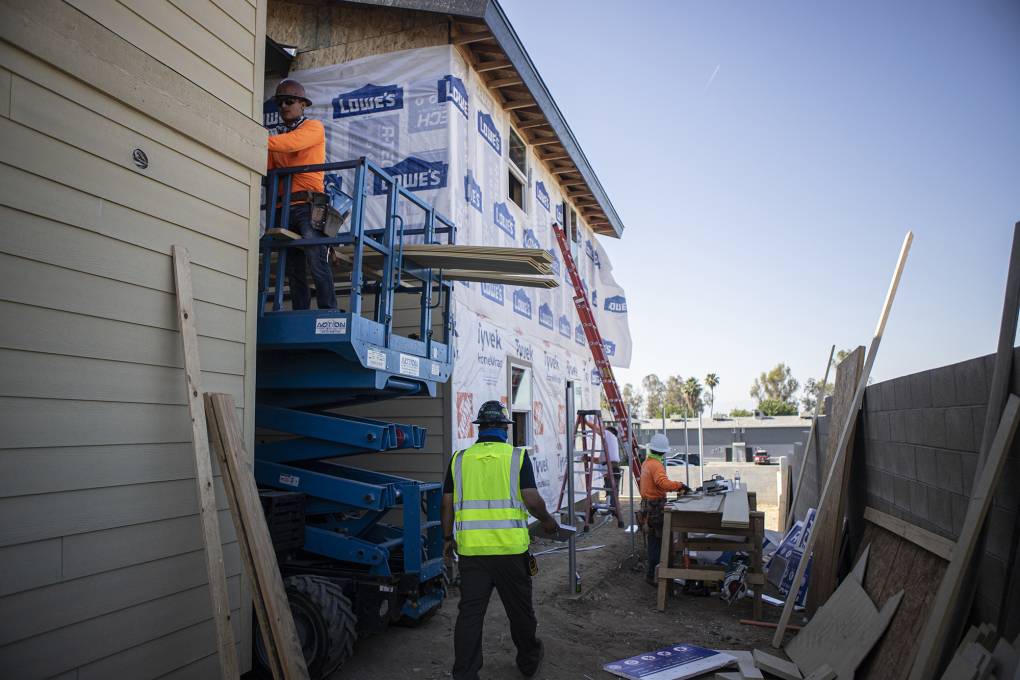
"caption": "Construction site for an affordable housing apartment complex in Bakersfield, Kern County, on May 29, 2024. ",
"credit": "Larry Valenzuela/CalMatters/CatchLight Local",
"altTag": "Men wearing bright safety uniforms and hard hats walk around a construction site.",
"description": null,
"imgSizes": {
"medium": {
"file": "https://cdn.kqed.org/wp-content/uploads/sites/10/2024/07/053124-Bakersfield-Rural-Homelessness-LV_05-800x533.jpg",
"width": 800,
"height": 533,
"mimeType": "image/jpeg"
},
"large": {
"file": "https://cdn.kqed.org/wp-content/uploads/sites/10/2024/07/053124-Bakersfield-Rural-Homelessness-LV_05-1020x680.jpg",
"width": 1020,
"height": 680,
"mimeType": "image/jpeg"
},
"thumbnail": {
"file": "https://cdn.kqed.org/wp-content/uploads/sites/10/2024/07/053124-Bakersfield-Rural-Homelessness-LV_05-160x107.jpg",
"width": 160,
"height": 107,
"mimeType": "image/jpeg"
},
"1536x1536": {
"file": "https://cdn.kqed.org/wp-content/uploads/sites/10/2024/07/053124-Bakersfield-Rural-Homelessness-LV_05-1536x1024.jpg",
"width": 1536,
"height": 1024,
"mimeType": "image/jpeg"
},
"post-thumbnail": {
"file": "https://cdn.kqed.org/wp-content/uploads/sites/10/2024/07/053124-Bakersfield-Rural-Homelessness-LV_05-672x372.jpg",
"width": 672,
"height": 372,
"mimeType": "image/jpeg"
},
"twentyfourteen-full-width": {
"file": "https://cdn.kqed.org/wp-content/uploads/sites/10/2024/07/053124-Bakersfield-Rural-Homelessness-LV_05-1038x576.jpg",
"width": 1038,
"height": 576,
"mimeType": "image/jpeg"
},
"full-width": {
"file": "https://cdn.kqed.org/wp-content/uploads/sites/10/2024/07/053124-Bakersfield-Rural-Homelessness-LV_05-1920x1280.jpg",
"width": 1920,
"height": 1280,
"mimeType": "image/jpeg"
},
"kqedFullSize": {
"file": "https://cdn.kqed.org/wp-content/uploads/sites/10/2024/07/053124-Bakersfield-Rural-Homelessness-LV_05.jpg",
"width": 2000,
"height": 1333
}
},
"isLoading": false,
"fetchFailed": false
},
"news_11977999": {
"type": "attachments",
"id": "news_11977999",
"meta": {
"index": "attachments_1716263798",
"site": "news",
"id": "11977999",
"found": true
},
"title": "Election 2024 Trump Insurrection Amendment",
"publishDate": 1709586448,
"status": "inherit",
"parent": 11977992,
"modified": 1720637670,
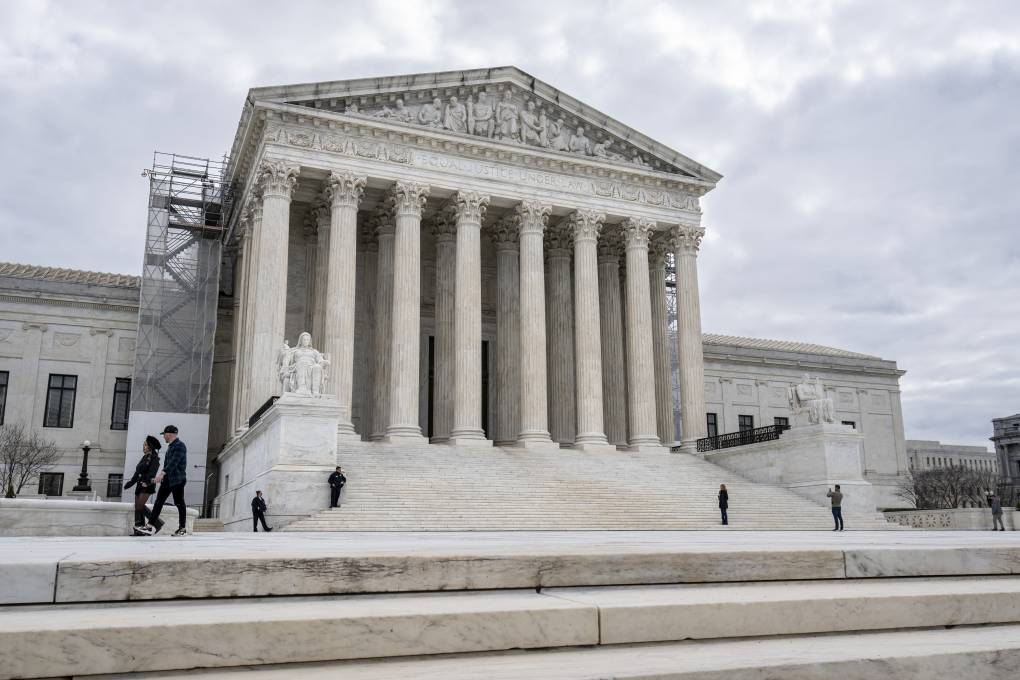
"caption": "The US Supreme Court is seen on Capitol Hill in Washington, DC, on March 4, 2024.",
"credit": "J. Scott Applewhite/The Associated Press",
"altTag": "A large building with stone columns with statues on both sides.",
"description": null,
"imgSizes": {
"medium": {
"file": "https://cdn.kqed.org/wp-content/uploads/sites/10/2024/03/AP24064585927760-800x533.jpg",
"width": 800,
"height": 533,
"mimeType": "image/jpeg"
},
"large": {
"file": "https://cdn.kqed.org/wp-content/uploads/sites/10/2024/03/AP24064585927760-1020x680.jpg",
"width": 1020,
"height": 680,
"mimeType": "image/jpeg"
},
"thumbnail": {
"file": "https://cdn.kqed.org/wp-content/uploads/sites/10/2024/03/AP24064585927760-160x107.jpg",
"width": 160,
"height": 107,
"mimeType": "image/jpeg"
},
"1536x1536": {
"file": "https://cdn.kqed.org/wp-content/uploads/sites/10/2024/03/AP24064585927760-1536x1024.jpg",
"width": 1536,
"height": 1024,
"mimeType": "image/jpeg"
},
"2048x2048": {
"file": "https://cdn.kqed.org/wp-content/uploads/sites/10/2024/03/AP24064585927760-2048x1365.jpg",
"width": 2048,
"height": 1365,
"mimeType": "image/jpeg"
},
"post-thumbnail": {
"file": "https://cdn.kqed.org/wp-content/uploads/sites/10/2024/03/AP24064585927760-672x372.jpg",
"width": 672,
"height": 372,
"mimeType": "image/jpeg"
},
"twentyfourteen-full-width": {
"file": "https://cdn.kqed.org/wp-content/uploads/sites/10/2024/03/AP24064585927760-1038x576.jpg",
"width": 1038,
"height": 576,
"mimeType": "image/jpeg"
},
"full-width": {
"file": "https://cdn.kqed.org/wp-content/uploads/sites/10/2024/03/AP24064585927760-1920x1280.jpg",
"width": 1920,
"height": 1280,
"mimeType": "image/jpeg"
},
"kqedFullSize": {
"file": "https://cdn.kqed.org/wp-content/uploads/sites/10/2024/03/AP24064585927760-scaled.jpg",
"width": 2560,
"height": 1706
}
},
"isLoading": false,
"fetchFailed": false
},
"news_11993226": {
"type": "attachments",
"id": "news_11993226",
"meta": {
"index": "attachments_1716263798",
"site": "news",
"id": "11993226",
"found": true
},
"title": "032323_SD_Encampment-Ban_KC_CM-15-2",
"publishDate": 1720463450,
"status": "inherit",
"parent": 11993217,
"modified": 1720548225,
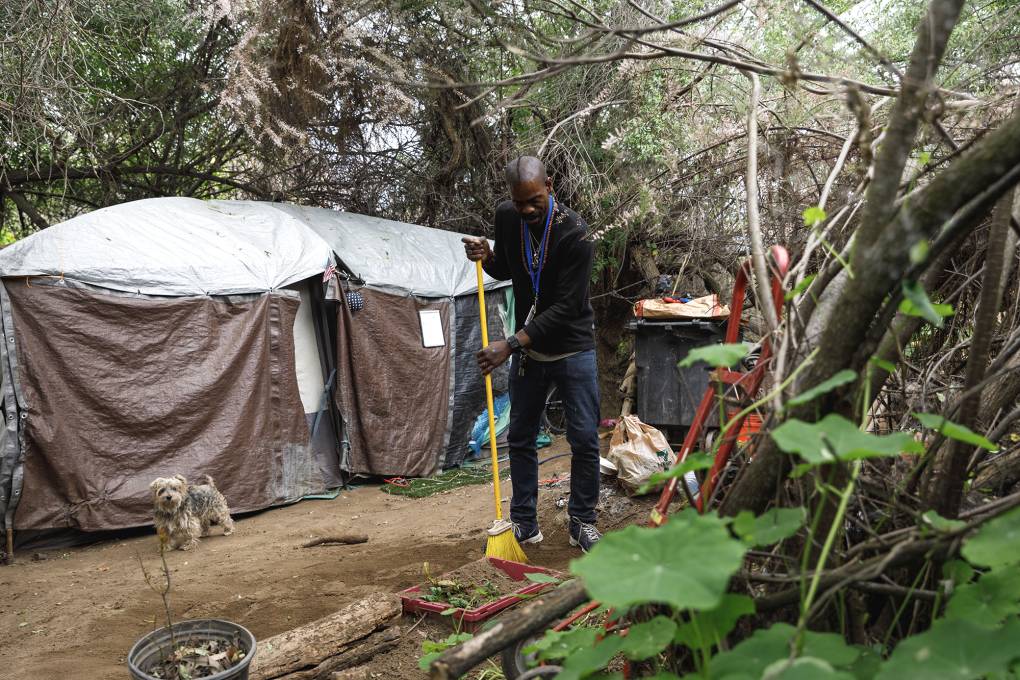
"caption": "Dullanni Waterman, 45, sweeps outside his encampment by the riverbed in San Diego on March 23, 2024. ",
"credit": "Kristian Carreon/CalMatters",
"altTag": "A Black man wearing dark clothing holds a broom in front of an encampment surrounded by trees.",
"description": null,
"imgSizes": {
"medium": {
"file": "https://cdn.kqed.org/wp-content/uploads/sites/10/2024/07/032323_SD_Encampment-Ban_KC_CM-15-2-800x533.jpg",
"width": 800,
"height": 533,
"mimeType": "image/jpeg"
},
"large": {
"file": "https://cdn.kqed.org/wp-content/uploads/sites/10/2024/07/032323_SD_Encampment-Ban_KC_CM-15-2-1020x680.jpg",
"width": 1020,
"height": 680,
"mimeType": "image/jpeg"
},
"thumbnail": {
"file": "https://cdn.kqed.org/wp-content/uploads/sites/10/2024/07/032323_SD_Encampment-Ban_KC_CM-15-2-160x107.jpg",
"width": 160,
"height": 107,
"mimeType": "image/jpeg"
},
"1536x1536": {
"file": "https://cdn.kqed.org/wp-content/uploads/sites/10/2024/07/032323_SD_Encampment-Ban_KC_CM-15-2-1536x1024.jpg",
"width": 1536,
"height": 1024,
"mimeType": "image/jpeg"
},
"post-thumbnail": {
"file": "https://cdn.kqed.org/wp-content/uploads/sites/10/2024/07/032323_SD_Encampment-Ban_KC_CM-15-2-672x372.jpg",
"width": 672,
"height": 372,
"mimeType": "image/jpeg"
},
"twentyfourteen-full-width": {
"file": "https://cdn.kqed.org/wp-content/uploads/sites/10/2024/07/032323_SD_Encampment-Ban_KC_CM-15-2-1038x576.jpg",
"width": 1038,
"height": 576,
"mimeType": "image/jpeg"
},
"full-width": {
"file": "https://cdn.kqed.org/wp-content/uploads/sites/10/2024/07/032323_SD_Encampment-Ban_KC_CM-15-2-1920x1280.jpg",
"width": 1920,
"height": 1280,
"mimeType": "image/jpeg"
},
"kqedFullSize": {
"file": "https://cdn.kqed.org/wp-content/uploads/sites/10/2024/07/032323_SD_Encampment-Ban_KC_CM-15-2.jpg",
"width": 2000,
"height": 1333
}
},
"isLoading": false,
"fetchFailed": false
},
"news_11993103": {
"type": "attachments",
"id": "news_11993103",
"meta": {
"index": "attachments_1716263798",
"site": "news",
"id": "11993103",
"found": true
},
"title": "062922-Drought-Sprinklers-Sacramento-MG-CM-04 copy",
"publishDate": 1720222303,
"status": "inherit",
"parent": 11993102,
"modified": 1720222349,
"caption": "California has adopted mandatory conservation rules for urban water agencies. ",
"credit": "Miguel Gutierrez Jr./CalMatters",
"altTag": null,
"description": null,
"imgSizes": {
"medium": {
"file": "https://cdn.kqed.org/wp-content/uploads/sites/10/2024/07/062922-Drought-Sprinklers-Sacramento-MG-CM-04-copy-800x533.jpg",
"width": 800,
"height": 533,
"mimeType": "image/jpeg"
},
"large": {
"file": "https://cdn.kqed.org/wp-content/uploads/sites/10/2024/07/062922-Drought-Sprinklers-Sacramento-MG-CM-04-copy-1020x680.jpg",
"width": 1020,
"height": 680,
"mimeType": "image/jpeg"
},
"thumbnail": {
"file": "https://cdn.kqed.org/wp-content/uploads/sites/10/2024/07/062922-Drought-Sprinklers-Sacramento-MG-CM-04-copy-160x107.jpg",
"width": 160,
"height": 107,
"mimeType": "image/jpeg"
},
"1536x1536": {
"file": "https://cdn.kqed.org/wp-content/uploads/sites/10/2024/07/062922-Drought-Sprinklers-Sacramento-MG-CM-04-copy-1536x1024.jpg",
"width": 1536,
"height": 1024,
"mimeType": "image/jpeg"
},
"post-thumbnail": {
"file": "https://cdn.kqed.org/wp-content/uploads/sites/10/2024/07/062922-Drought-Sprinklers-Sacramento-MG-CM-04-copy-672x372.jpg",
"width": 672,
"height": 372,
"mimeType": "image/jpeg"
},
"twentyfourteen-full-width": {
"file": "https://cdn.kqed.org/wp-content/uploads/sites/10/2024/07/062922-Drought-Sprinklers-Sacramento-MG-CM-04-copy-1038x576.jpg",
"width": 1038,
"height": 576,
"mimeType": "image/jpeg"
},
"full-width": {
"file": "https://cdn.kqed.org/wp-content/uploads/sites/10/2024/07/062922-Drought-Sprinklers-Sacramento-MG-CM-04-copy-1920x1280.jpg",
"width": 1920,
"height": 1280,
"mimeType": "image/jpeg"
},
"kqedFullSize": {
"file": "https://cdn.kqed.org/wp-content/uploads/sites/10/2024/07/062922-Drought-Sprinklers-Sacramento-MG-CM-04-copy.jpg",
"width": 2000,
"height": 1333
}
},
"isLoading": false,
"fetchFailed": false
},
"news_11993030": {
"type": "attachments",
"id": "news_11993030",
"meta": {
"index": "attachments_1716263798",
"site": "news",
"id": "11993030",
"found": true
},
"title": "070224-Vernon-Fireworks-TS-CM-05 copy",
"publishDate": 1720109205,
"status": "inherit",
"parent": 11993029,
"modified": 1720109332,
"caption": "A legal fireworks stand in the city of Vernon sells fireworks that aren't aerial and don't explode, on July 2, 2024. The stand is operated by the Rotary club in Vernon, Los Angeles County.\n",
"credit": "Ted Soqui for CalMatters",
"altTag": null,
"description": null,
"imgSizes": {
"medium": {
"file": "https://cdn.kqed.org/wp-content/uploads/sites/10/2024/07/070224-Vernon-Fireworks-TS-CM-05-copy-800x534.jpg",
"width": 800,
"height": 534,
"mimeType": "image/jpeg"
},
"large": {
"file": "https://cdn.kqed.org/wp-content/uploads/sites/10/2024/07/070224-Vernon-Fireworks-TS-CM-05-copy-1020x680.jpg",
"width": 1020,
"height": 680,
"mimeType": "image/jpeg"
},
"thumbnail": {
"file": "https://cdn.kqed.org/wp-content/uploads/sites/10/2024/07/070224-Vernon-Fireworks-TS-CM-05-copy-160x107.jpg",
"width": 160,
"height": 107,
"mimeType": "image/jpeg"
},
"1536x1536": {
"file": "https://cdn.kqed.org/wp-content/uploads/sites/10/2024/07/070224-Vernon-Fireworks-TS-CM-05-copy-1536x1025.jpg",
"width": 1536,
"height": 1025,
"mimeType": "image/jpeg"
},
"post-thumbnail": {
"file": "https://cdn.kqed.org/wp-content/uploads/sites/10/2024/07/070224-Vernon-Fireworks-TS-CM-05-copy-672x372.jpg",
"width": 672,
"height": 372,
"mimeType": "image/jpeg"
},
"twentyfourteen-full-width": {
"file": "https://cdn.kqed.org/wp-content/uploads/sites/10/2024/07/070224-Vernon-Fireworks-TS-CM-05-copy-1038x576.jpg",
"width": 1038,
"height": 576,
"mimeType": "image/jpeg"
},
"full-width": {
"file": "https://cdn.kqed.org/wp-content/uploads/sites/10/2024/07/070224-Vernon-Fireworks-TS-CM-05-copy-1920x1281.jpg",
"width": 1920,
"height": 1281,
"mimeType": "image/jpeg"
},
"kqedFullSize": {
"file": "https://cdn.kqed.org/wp-content/uploads/sites/10/2024/07/070224-Vernon-Fireworks-TS-CM-05-copy.jpg",
"width": 2000,
"height": 1334
}
},
"isLoading": false,
"fetchFailed": false
},
"news_11992926": {
"type": "attachments",
"id": "news_11992926",
"meta": {
"index": "attachments_1716263798",
"site": "news",
"id": "11992926",
"found": true
},
"title": "CA-Broadband-Equity_AH_CM_01",
"publishDate": 1720030800,
"status": "inherit",
"parent": 11992924,
"modified": 1720030883,
"caption": null,
"credit": "Illustration by Adriana Heldiz, CalMatters; iStock",
"altTag": "A graphic image of a vintage computer monitor that says \"Connecting to Wifi\" with the Wifi logo and coins in the background.",
"description": null,
"imgSizes": {
"medium": {
"file": "https://cdn.kqed.org/wp-content/uploads/sites/10/2024/07/CA-Broadband-Equity_AH_CM_01-800x533.jpg",
"width": 800,
"height": 533,
"mimeType": "image/jpeg"
},
"large": {
"file": "https://cdn.kqed.org/wp-content/uploads/sites/10/2024/07/CA-Broadband-Equity_AH_CM_01-1020x680.jpg",
"width": 1020,
"height": 680,
"mimeType": "image/jpeg"
},
"thumbnail": {
"file": "https://cdn.kqed.org/wp-content/uploads/sites/10/2024/07/CA-Broadband-Equity_AH_CM_01-160x107.jpg",
"width": 160,
"height": 107,
"mimeType": "image/jpeg"
},
"1536x1536": {
"file": "https://cdn.kqed.org/wp-content/uploads/sites/10/2024/07/CA-Broadband-Equity_AH_CM_01-1536x1024.jpg",
"width": 1536,
"height": 1024,
"mimeType": "image/jpeg"
},
"post-thumbnail": {
"file": "https://cdn.kqed.org/wp-content/uploads/sites/10/2024/07/CA-Broadband-Equity_AH_CM_01-672x372.jpg",
"width": 672,
"height": 372,
"mimeType": "image/jpeg"
},
"twentyfourteen-full-width": {
"file": "https://cdn.kqed.org/wp-content/uploads/sites/10/2024/07/CA-Broadband-Equity_AH_CM_01-1038x576.jpg",
"width": 1038,
"height": 576,
"mimeType": "image/jpeg"
},
"full-width": {
"file": "https://cdn.kqed.org/wp-content/uploads/sites/10/2024/07/CA-Broadband-Equity_AH_CM_01-1920x1280.jpg",
"width": 1920,
"height": 1280,
"mimeType": "image/jpeg"
},
"kqedFullSize": {
"file": "https://cdn.kqed.org/wp-content/uploads/sites/10/2024/07/CA-Broadband-Equity_AH_CM_01.jpg",
"width": 2000,
"height": 1333
}
},
"isLoading": false,
"fetchFailed": false
}
},
"audioPlayerReducer": {
"postId": "stream_live",
"isPaused": true,
"isPlaying": false,
"pfsActive": false,
"pledgeModalIsOpen": true,
"playerDrawerIsOpen": false,
"liveAudioPlayStartedAt": 0,
"liveAudioPlayContext": ""
},
"authorsReducer": {
"byline_news_11996415": {
"type": "authors",
"id": "byline_news_11996415",
"meta": {
"override": true
},
"slug": "byline_news_11996415",
"name": "\u003ca href=\"https://calmatters.org/author/alexei-koseff/\">Alexei Koseff\u003c/a>, CalMatters",
"isLoading": false
},
"byline_news_11996132": {
"type": "authors",
"id": "byline_news_11996132",
"meta": {
"override": true
},
"slug": "byline_news_11996132",
"name": "\u003ca href=\"https://calmatters.org/author/mikhailzinshteyn/\">Mikhail Zinshteyn\u003c/a>, CalMatters",
"isLoading": false
},
"byline_news_11996078": {
"type": "authors",
"id": "byline_news_11996078",
"meta": {
"override": true
},
"slug": "byline_news_11996078",
"name": "Lauren Hepler, CalMatters",
"isLoading": false
},
"byline_news_11995784": {
"type": "authors",
"id": "byline_news_11995784",
"meta": {
"override": true
},
"slug": "byline_news_11995784",
"name": "\u003ca href=\"https://calmatters.org/author/alejandro-lazo/\">Alejandro Lazo\u003c/a>, CalMatters",
"isLoading": false
},
"byline_news_11995538": {
"type": "authors",
"id": "byline_news_11995538",
"meta": {
"override": true
},
"slug": "byline_news_11995538",
"name": "\u003ca href=\"https://calmatters.org/author/ben-christopher/\">Ben Christopher\u003c/a>, CalMatters ",
"isLoading": false
},
"byline_news_11994015": {
"type": "authors",
"id": "byline_news_11994015",
"meta": {
"override": true
},
"slug": "byline_news_11994015",
"name": "Nigel Duara and Jeremia Kimelman, CalMatters",
"isLoading": false
},
"byline_news_11993616": {
"type": "authors",
"id": "byline_news_11993616",
"meta": {
"override": true
},
"slug": "byline_news_11993616",
"name": "\u003ca href=\"https://calmatters.org/author/marisa-kendall/\">Marisa Kendall\u003c/a>, CalMatters",
"isLoading": false
},
"byline_news_11993457": {
"type": "authors",
"id": "byline_news_11993457",
"meta": {
"override": true
},
"slug": "byline_news_11993457",
"name": "\u003ca href=\"https://calmatters.org/author/ben-christopher/\">Ben Christopher\u003c/a>, CalMatters",
"isLoading": false
},
"byline_news_11993217": {
"type": "authors",
"id": "byline_news_11993217",
"meta": {
"override": true
},
"slug": "byline_news_11993217",
"name": "\u003ca href=\"https://calmatters.org/author/marisa-kendall/\">Marisa Kendall\u003c/a>, CalMatters",
"isLoading": false
},
"byline_news_11993102": {
"type": "authors",
"id": "byline_news_11993102",
"meta": {
"override": true
},
"slug": "byline_news_11993102",
"name": "\u003ca href=\"https://calmatters.org/author/rachel-becker/\">Rachel Becker\u003c/a>, CalMatters",
"isLoading": false
},
"byline_news_11993029": {
"type": "authors",
"id": "byline_news_11993029",
"meta": {
"override": true
},
"slug": "byline_news_11993029",
"name": "\u003ca href=\"https://calmatters.org/author/jenna-peterson/\">Jenna Peterson\u003c/a>, CalMatters",
"isLoading": false
},
"byline_news_11992924": {
"type": "authors",
"id": "byline_news_11992924",
"meta": {
"override": true
},
"slug": "byline_news_11992924",
"name": "Khari Johnson, CalMatters",
"isLoading": false
}
},
"pagesReducer": {
"news_affiliate_calmatters": {
"type": "terms",
"id": "news_18481",
"meta": {
"index": "terms_1716263798",
"site": "news",
"id": "18481",
"score": 15.355862
},
"featImg": null,
"name": "CALmatters",
"description": null,
"taxonomy": "affiliate",
"headData": {
"twImgId": null,
"twTitle": null,
"ogTitle": null,
"ogImgId": null,
"twDescription": null,
"description": null,
"title": "CALmatters Archives | KQED Arts",
"ogDescription": null
},
"ttid": 18515,
"slug": "calmatters",
"isLoading": false,
"title": "CALmatters",
"pageMeta": {
"site": "news",
"WpPageTemplate": "page-topic-editorial",
"currentPage": 28
},
"blocks": [
{
"blockName": "kqed/post-list",
"attrs": {
"layout": "cardArticle2",
"query": "posts/news?affiliate=calmatters",
"seeMore": false,
"paginated": true,
"page": 28
}
},
{
"blockName": "kqed/ad"
}
]
}
},
"pfsSessionReducer": {},
"postsReducer": {
"stream_live": {
"type": "live",
"id": "stream_live",
"audioUrl": "https://streams.kqed.org/kqedradio",
"title": "Live Stream",
"excerpt": "Live Stream information currently unavailable.",
"link": "/radio",
"featImg": "",
"label": {
"name": "KQED Live",
"link": "/"
}
},
"stream_kqedNewscast": {
"type": "posts",
"id": "stream_kqedNewscast",
"audioUrl": "https://www.kqed.org/.stream/anon/radio/RDnews/newscast.mp3?_=1",
"title": "KQED Newscast",
"featImg": "",
"label": {
"name": "88.5 FM",
"link": "/"
}
},
"news_11996415": {
"type": "posts",
"id": "news_11996415",
"meta": {
"index": "posts_1716263798",
"site": "news",
"id": "11996415",
"score": null,
"sort": [
1721415600000
]
},
"guestAuthors": [],
"slug": "newsom-is-all-in-for-biden-as-defections-grow-strategists-say-hes-playing-the-long-game",
"title": "Newsom Is 'All In' for Biden as Defections Grow. Strategists Say He's Playing the 'Long Game'",
"publishDate": 1721415600,
"format": "standard",
"headTitle": "Newsom Is ‘All In’ for Biden as Defections Grow. Strategists Say He’s Playing the ‘Long Game’ | KQED",
"labelTerm": {
"term": 18481,
"site": "news"
},
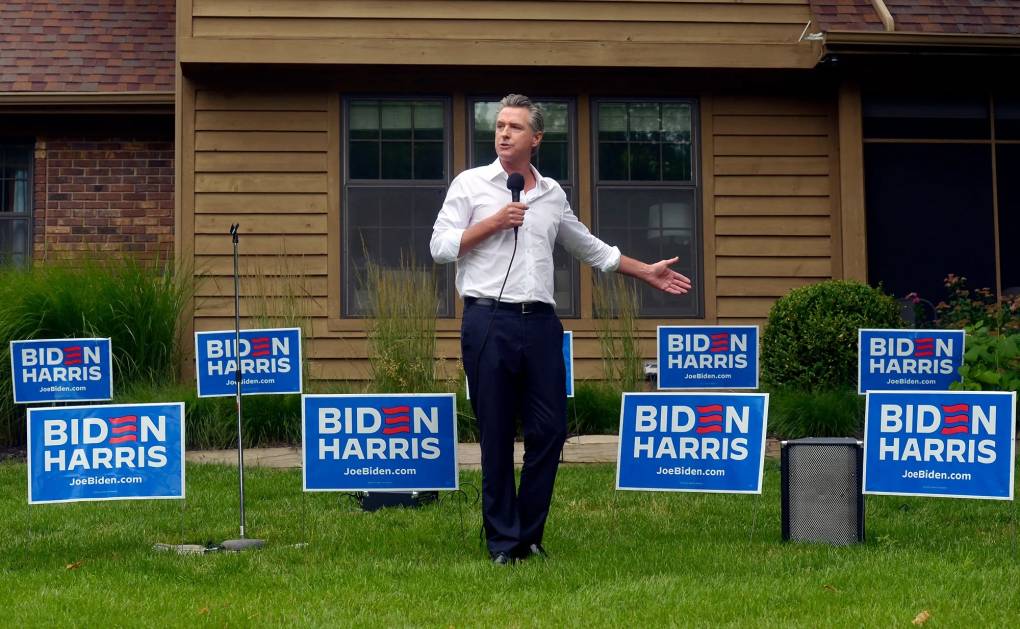
"content": "\u003cp>As efforts to push embattled President Joe Biden out of the race crescendo, Gov. Gavin Newsom has remained one of his most committed champions.\u003c/p>\n\u003cp>Asked last week by CBS News’ Robert Costa about receiving appeals to jump into the fray to replace Biden as the Democratic nominee, Newsom said he hits “delete, delete, delete, delete” on the texts and emails.\u003c/p>\n\u003cp>“I’m all in, no daylight” with Biden, Newsom said in a \u003ca href=\"https://www.youtube.com/watch?v=2iqgFXQrDCk\">short clip released by CBS News\u003c/a> to promote the interview, which was ultimately preempted after Saturday’s attempted assassination of former President Donald Trump.\u003c/p>\n\u003cp>Though not a new message from Newsom, it underscores how the governor has emerged as perhaps Biden’s most forceful surrogate through the chaos that followed the president’s June 27 debate debacle. As a growing number of elected officials call for Biden to forgo his party’s nomination for a second term, Newsom has tied himself more closely to the president than almost any Democrat in the country who’s not already on the ticket — including other ascendant younger politicians who could \u003ca href=\"https://calmatters.org/politics/elections/2024/07/gavin-newsom-for-president-assets-liabilities/\">potentially be his rivals in a future presidential race\u003c/a>.\u003c/p>\n\u003cp>[ad fullwidth]\u003c/p>\n\u003cp>Political strategists told CalMatters this is a prudent posture for Newsom, who does not have the clout to influence Biden’s decision about whether to leave the race but stands to benefit from being seen as a team player, even if Biden drops out or loses in November. In addition to shrewdly raising his own profile through aggressive advocacy for the president, Newsom’s loyalty could win him favor with party insiders positioned to boost his candidacy if he eventually runs for the Democratic nomination.\u003c/p>\n\u003cp>“Newsom wants to be seen as a loyal soldier. He doesn’t have any other cards to play,” said Matt Rodriguez, a Democratic consultant who worked on presidential campaigns for Barack Obama, Dick Gephardt and Bill Bradley. “He’s doing the thing he needs to do.”\u003c/p>\n\u003cp>A spokesperson for Newsom, who has publicly and repeatedly denied any interest in the presidency, said there is no strategy involved in his strong support for the Biden campaign.\u003c/p>\n\u003cp>“Governor Newsom’s advocacy for the President and his administration reflects a recognition of all that President Biden has accomplished, Governor Newsom’s loyalty to the President and the Vice President, and a clear view of the real danger a second Trump administration would have for California and democracy in America,” Nathan Click said in a text message.\u003c/p>\n\u003ch2 id=\"h-playing-the-long-game\" class=\"wp-block-heading\">Playing the ‘long game’\u003c/h2>\n\u003cp>When chatter about whether to dump Biden as the nominee exploded last month following his catastrophic performance in the televised debate against Trump, Newsom was \u003ca href=\"https://www.nytimes.com/article/joe-biden-democrats-nomination-gavin-newsom-whitmer.html\">among the top tier of potential replacements\u003c/a> floated by pundits. The discourse has been dominated by politicians already viewed as strong potential contenders in the 2028 Democratic primary: Vice President Kamala Harris, Transportation Secretary Pete Buttigieg, and Democratic Govs. Gretchen Whitmer of Michigan, J.B. Pritzker of Illinois, Josh Shapiro of Pennsylvania and Andy Beshear of Kentucky.\u003c/p>\n\u003cp>All have stood behind Biden as uncertainty grows over his political future, but the extent to which they’ve defended the president has ranged widely.\u003c/p>\n\u003cp>Aside from the vice president, none have been a more visible cheerleader than Newsom, who immediately appeared on television to swat down concerns about the debate, \u003ca href=\"https://www.nytimes.com/2024/07/03/us/politics/biden-meeting-democrat-governors.html\">rushed to the White House\u003c/a> for a damage-control meeting with Democratic governors that some attended remotely, and \u003ca href=\"https://www.axios.com/2024/07/10/biden-campaign-staff-morale-election-2024\">delivered a pep talk to Biden campaign staff on a conference call\u003c/a>.\u003c/p>\n\u003cfigure id=\"attachment_11996416\" class=\"wp-caption alignnone\" style=\"max-width: 1568px\">\u003cimg loading=\"lazy\" decoding=\"async\" class=\"size-full wp-image-11996416\" src=\"https://cdn.kqed.org/wp-content/uploads/sites/10/2024/07/070824-Newsom-Biden-Campaign-REUTERS-CM-01-copy.jpg\" alt=\"\" width=\"1568\" height=\"1045\" srcset=\"https://cdn.kqed.org/wp-content/uploads/sites/10/2024/07/070824-Newsom-Biden-Campaign-REUTERS-CM-01-copy.jpg 1568w, https://cdn.kqed.org/wp-content/uploads/sites/10/2024/07/070824-Newsom-Biden-Campaign-REUTERS-CM-01-copy-800x533.jpg 800w, https://cdn.kqed.org/wp-content/uploads/sites/10/2024/07/070824-Newsom-Biden-Campaign-REUTERS-CM-01-copy-1020x680.jpg 1020w, https://cdn.kqed.org/wp-content/uploads/sites/10/2024/07/070824-Newsom-Biden-Campaign-REUTERS-CM-01-copy-160x107.jpg 160w, https://cdn.kqed.org/wp-content/uploads/sites/10/2024/07/070824-Newsom-Biden-Campaign-REUTERS-CM-01-copy-1536x1024.jpg 1536w\" sizes=\"(max-width: 1568px) 100vw, 1568px\">\u003cfigcaption class=\"wp-caption-text\">Gov. Gavin Newsom, in New Hampshire to attend a fundraising event for President Joe Biden’s campaign, greets people at the Common Man Roadside Cafe & Deli in Hooksett, New Hampshire, on July 8, 2024. \u003ccite>(Reba Saldanha/Reuters via CalMatters)\u003c/cite>\u003c/figcaption>\u003c/figure>\n\u003cp>On a tour through Michigan, Pennsylvania and New Hampshire on the president’s behalf over the Fourth of July holiday weekend, Newsom told reporters that \u003ca href=\"https://www.foxnews.com/politics/biden-surrogate-newsom-says-calls-democrats-president-step-aside-not-helpful\">calls for Biden to step aside were “not helpful”\u003c/a> and he had no doubts about the president’s cognitive health.\u003c/p>\n\u003cp>“I decided instead of just rolling over and giving up, that I would step up and pick up the fight,” Newsom said \u003ca href=\"https://apnews.com/article/gavin-newsom-biden-president-democrat-new-hampshire-09d4b827dd4be869245fa790907c81be\">at one New Hampshire stop\u003c/a>.\u003c/p>\n\u003cp>Others have charted a more cautious approach, appearing to maintain some distance from Biden without abandoning him. Whitmer, who is a co-chairperson of his reelection campaign, told CNN last week that \u003ca href=\"https://www.cnn.com/2024/07/10/politics/gretchen-whitmer-biden-cognitive-test-cnntv/index.html\">“it wouldn’t hurt” for Biden to take a cognitive test\u003c/a> and later \u003ca href=\"https://www.crainsdetroit.com/politics-policy/gretchen-whitmer-miss-joe-biden-campaign-stop\">skipped a rally he held in Detroit\u003c/a>. Beshear, currently \u003ca href=\"https://apnews.com/article/kentucky-governor-asian-trip-d5e838e490f3009b6b6bff72ef7cbebd\">on a business trip in Asia\u003c/a>, has reiterated that Biden should take more steps to reassure Americans about his health.\u003c/p>\n\u003cp>Those officials may have different considerations because of the more conservative politics of their home states. But strategists agreed that Newsom, as governor of the biggest Democratic state in the country, is on a path that holds far more rewards than risks for his career.\u003c/p>\n\u003cp>Given his relatively short record as a national political figure — and his history as an \u003ca href=\"https://www.nytimes.com/2004/11/05/politics/campaign/some-democrats-blame-one-of-their-own.html\">upstart rattling the establishment\u003c/a> on issues such as gay marriage — Newsom has more to prove to Democrats, said Catherine Lew, a political consultant who worked on Bill\u003cstrong> \u003c/strong>Clinton’s first presidential campaign in 1992. Stumping for Biden should help Newsom get in the good graces of a party establishment that still deeply values loyalty, building relationships that could pay off down the road with endorsements, fundraising and staffing up a campaign.\u003c/p>\n\u003cp>“The governor obviously has the long game in mind,” Lew said.\u003c/p>\n\u003cp>Hilary McLean, who worked on California communications for Michael Bloomberg’s 2020 presidential campaign and Bill Clinton’s 1996 reelection, said becoming a leading surrogate for Biden has signaled to the public that Newsom is “an important person for Democrats in the United States of America” going forward.\u003c/p>\n\u003cp>“What people will remember is he was super eloquent; he was a feisty advocate for Democratic ideas,” she said. “They’ll remember how well he did. They’re not going to hold it against him for supporting the president.”\u003c/p>\n\u003ch2 id=\"h-newsom-is-not-going-out-on-a-limb\" class=\"wp-block-heading\">Newsom is not ‘going out on a limb’\u003c/h2>\n\u003cp>The growing defections in Democratic support for Biden, \u003ca href=\"https://calmatters.org/newsletter/biden-drop-out-california-democrats/\">including California’s Rep. Adam Schiff\u003c/a> on Wednesday, and the lack of clarity, only a month before the party convention starts on Aug. 19, about whether he will remain the nominee is an unprecedented situation that has paralyzed many officials with indecision, Rodriguez said. He applauded Newsom for not overthinking his response and for sticking by Biden.\u003c/p>\n\u003cp>If the Democratic Party wants Biden off the presidential ticket, it will take others with more sway to push him out, Rodriguez said. Newsom calling for it would just make him appear “weak and feckless,” he said, especially if Biden sees the campaign through.\u003c/p>\n\u003cp>“There’s always a risk, even if you’re right, to be the whistleblower,” Rodriguez said. “Why are you going out on a limb if you don’t have leverage?”\u003c/p>\n\u003cp>By instead remaining a vocal defender of the president through his bleakest moment, Newsom could look like a hero in the event that Biden wins a second term, though that appears increasingly unlikely. And in the meantime, the campaign may continue to elevate Newsom, such as with a prime speaking slot at next month’s Democratic National Convention — which Rodriguez noted was the launching pad for Obama’s presidential aspirations in 2004.\u003c/p>\n\u003cp>“Politics, especially at the national level, is really about timing,” Rodriguez said. “You do the best you can with what’s in front of you.”\u003c/p>\n\u003cp>Strategists brushed off the idea that a bruising loss for Biden could hurt his top surrogates by association.\u003c/p>\n\u003cp>“A lot of this is palace court stuff,” Lew said. “Voters’ memories are short, particularly when there are other pressing, day-to-day, quality-of-life issues.”\u003c/p>\n\u003cp>Rodriguez said that if Trump wins another term in November, no one in the country is better positioned to lead the fight against him than Newsom, who has two years left as governor. That’s likely to be far more relevant in the 2028 primaries than what candidates said about Biden years prior.\u003c/p>\n\u003cp>“It’s such a lifetime away,” Rodriguez said.\u003c/p>\n\u003cp>[ad floatright]\u003c/p>\n",
"blocks": [],
"excerpt": "A growing number of Democrats say President Biden can't win and should step aside. However, California's governor is standing steadfastly behind him, which could boost Newsom's future political prospects.",
"status": "publish",
"parent": 0,
"modified": 1722881261,
"stats": {
"hasAudio": false,
"hasVideo": false,
"hasChartOrMap": false,
"iframeSrcs": [],
"hasGoogleForm": false,
"hasGallery": false,
"hasHearkenModule": false,
"hasPolis": false,
"paragraphCount": 30,
"wordCount": 1442
},
"headData": {
"title": "Newsom Is 'All In' for Biden as Defections Grow. Strategists Say He's Playing the 'Long Game' | KQED",
"description": "A growing number of Democrats say President Biden can't win and should step aside. However, California's governor is standing steadfastly behind him, which could boost Newsom's future political prospects.",
"ogTitle": "",
"ogDescription": "",
"ogImgId": "",
"twTitle": "",
"twDescription": "",
"twImgId": "",
"schema": {
"@context": "https://schema.org",
"@type": "NewsArticle",
"headline": "Newsom Is 'All In' for Biden as Defections Grow. Strategists Say He's Playing the 'Long Game'",
"datePublished": "2024-07-19T12:00:00-07:00",
"dateModified": "2024-08-05T11:07:41-07:00",
"image": "https://cdn.kqed.org/wp-content/uploads/2020/02/KQED-OG-Image@1x.png",
"isAccessibleForFree": "True",
"publisher": {
"@type": "NewsMediaOrganization",
"@id": "https://www.kqed.org/#organization",
"name": "KQED",
"logo": "https://cdn.kqed.org/wp-content/uploads/2020/02/KQED-OG-Image@1x.png",
"url": "https://www.kqed.org",
"sameAs": [
"https://www.facebook.com/KQED",
"https://twitter.com/KQED",
"https://www.instagram.com/kqed/",
"https://www.tiktok.com/@kqedofficial",
"https://www.linkedin.com/company/kqed",
"https://www.youtube.com/channel/UCeC0IOo7i1P_61zVUWbJ4nw"
]
}
}
},
"sticky": false,
"nprByline": "\u003ca href=\"https://calmatters.org/author/alexei-koseff/\">Alexei Koseff\u003c/a>, CalMatters",
"nprStoryId": "kqed-11996415",
"excludeFromSiteSearch": "Include",
"showOnAuthorArchivePages": "No",
"articleAge": "0",
"path": "/news/11996415/newsom-is-all-in-for-biden-as-defections-grow-strategists-say-hes-playing-the-long-game",
"audioTrackLength": null,
"parsedContent": [
{
"type": "contentString",
"content": "\u003cdiv class=\"post-body\">\u003cp>\u003cp>As efforts to push embattled President Joe Biden out of the race crescendo, Gov. Gavin Newsom has remained one of his most committed champions.\u003c/p>\n\u003cp>Asked last week by CBS News’ Robert Costa about receiving appeals to jump into the fray to replace Biden as the Democratic nominee, Newsom said he hits “delete, delete, delete, delete” on the texts and emails.\u003c/p>\n\u003cp>“I’m all in, no daylight” with Biden, Newsom said in a \u003ca href=\"https://www.youtube.com/watch?v=2iqgFXQrDCk\">short clip released by CBS News\u003c/a> to promote the interview, which was ultimately preempted after Saturday’s attempted assassination of former President Donald Trump.\u003c/p>\n\u003cp>Though not a new message from Newsom, it underscores how the governor has emerged as perhaps Biden’s most forceful surrogate through the chaos that followed the president’s June 27 debate debacle. As a growing number of elected officials call for Biden to forgo his party’s nomination for a second term, Newsom has tied himself more closely to the president than almost any Democrat in the country who’s not already on the ticket — including other ascendant younger politicians who could \u003ca href=\"https://calmatters.org/politics/elections/2024/07/gavin-newsom-for-president-assets-liabilities/\">potentially be his rivals in a future presidential race\u003c/a>.\u003c/p>\n\u003cp>\u003c/p>\u003c/div>",
"attributes": {
"named": {},
"numeric": []
}
},
{
"type": "component",
"content": "",
"name": "ad",
"attributes": {
"named": {
"label": "fullwidth"
},
"numeric": [
"fullwidth"
]
}
},
{
"type": "contentString",
"content": "\u003cdiv class=\"post-body\">\u003cp>\u003c/p>\n\u003cp>Political strategists told CalMatters this is a prudent posture for Newsom, who does not have the clout to influence Biden’s decision about whether to leave the race but stands to benefit from being seen as a team player, even if Biden drops out or loses in November. In addition to shrewdly raising his own profile through aggressive advocacy for the president, Newsom’s loyalty could win him favor with party insiders positioned to boost his candidacy if he eventually runs for the Democratic nomination.\u003c/p>\n\u003cp>“Newsom wants to be seen as a loyal soldier. He doesn’t have any other cards to play,” said Matt Rodriguez, a Democratic consultant who worked on presidential campaigns for Barack Obama, Dick Gephardt and Bill Bradley. “He’s doing the thing he needs to do.”\u003c/p>\n\u003cp>A spokesperson for Newsom, who has publicly and repeatedly denied any interest in the presidency, said there is no strategy involved in his strong support for the Biden campaign.\u003c/p>\n\u003cp>“Governor Newsom’s advocacy for the President and his administration reflects a recognition of all that President Biden has accomplished, Governor Newsom’s loyalty to the President and the Vice President, and a clear view of the real danger a second Trump administration would have for California and democracy in America,” Nathan Click said in a text message.\u003c/p>\n\u003ch2 id=\"h-playing-the-long-game\" class=\"wp-block-heading\">Playing the ‘long game’\u003c/h2>\n\u003cp>When chatter about whether to dump Biden as the nominee exploded last month following his catastrophic performance in the televised debate against Trump, Newsom was \u003ca href=\"https://www.nytimes.com/article/joe-biden-democrats-nomination-gavin-newsom-whitmer.html\">among the top tier of potential replacements\u003c/a> floated by pundits. The discourse has been dominated by politicians already viewed as strong potential contenders in the 2028 Democratic primary: Vice President Kamala Harris, Transportation Secretary Pete Buttigieg, and Democratic Govs. Gretchen Whitmer of Michigan, J.B. Pritzker of Illinois, Josh Shapiro of Pennsylvania and Andy Beshear of Kentucky.\u003c/p>\n\u003cp>All have stood behind Biden as uncertainty grows over his political future, but the extent to which they’ve defended the president has ranged widely.\u003c/p>\n\u003cp>Aside from the vice president, none have been a more visible cheerleader than Newsom, who immediately appeared on television to swat down concerns about the debate, \u003ca href=\"https://www.nytimes.com/2024/07/03/us/politics/biden-meeting-democrat-governors.html\">rushed to the White House\u003c/a> for a damage-control meeting with Democratic governors that some attended remotely, and \u003ca href=\"https://www.axios.com/2024/07/10/biden-campaign-staff-morale-election-2024\">delivered a pep talk to Biden campaign staff on a conference call\u003c/a>.\u003c/p>\n\u003cfigure id=\"attachment_11996416\" class=\"wp-caption alignnone\" style=\"max-width: 1568px\">\u003cimg loading=\"lazy\" decoding=\"async\" class=\"size-full wp-image-11996416\" src=\"https://cdn.kqed.org/wp-content/uploads/sites/10/2024/07/070824-Newsom-Biden-Campaign-REUTERS-CM-01-copy.jpg\" alt=\"\" width=\"1568\" height=\"1045\" srcset=\"https://cdn.kqed.org/wp-content/uploads/sites/10/2024/07/070824-Newsom-Biden-Campaign-REUTERS-CM-01-copy.jpg 1568w, https://cdn.kqed.org/wp-content/uploads/sites/10/2024/07/070824-Newsom-Biden-Campaign-REUTERS-CM-01-copy-800x533.jpg 800w, https://cdn.kqed.org/wp-content/uploads/sites/10/2024/07/070824-Newsom-Biden-Campaign-REUTERS-CM-01-copy-1020x680.jpg 1020w, https://cdn.kqed.org/wp-content/uploads/sites/10/2024/07/070824-Newsom-Biden-Campaign-REUTERS-CM-01-copy-160x107.jpg 160w, https://cdn.kqed.org/wp-content/uploads/sites/10/2024/07/070824-Newsom-Biden-Campaign-REUTERS-CM-01-copy-1536x1024.jpg 1536w\" sizes=\"(max-width: 1568px) 100vw, 1568px\">\u003cfigcaption class=\"wp-caption-text\">Gov. Gavin Newsom, in New Hampshire to attend a fundraising event for President Joe Biden’s campaign, greets people at the Common Man Roadside Cafe & Deli in Hooksett, New Hampshire, on July 8, 2024. \u003ccite>(Reba Saldanha/Reuters via CalMatters)\u003c/cite>\u003c/figcaption>\u003c/figure>\n\u003cp>On a tour through Michigan, Pennsylvania and New Hampshire on the president’s behalf over the Fourth of July holiday weekend, Newsom told reporters that \u003ca href=\"https://www.foxnews.com/politics/biden-surrogate-newsom-says-calls-democrats-president-step-aside-not-helpful\">calls for Biden to step aside were “not helpful”\u003c/a> and he had no doubts about the president’s cognitive health.\u003c/p>\n\u003cp>“I decided instead of just rolling over and giving up, that I would step up and pick up the fight,” Newsom said \u003ca href=\"https://apnews.com/article/gavin-newsom-biden-president-democrat-new-hampshire-09d4b827dd4be869245fa790907c81be\">at one New Hampshire stop\u003c/a>.\u003c/p>\n\u003cp>Others have charted a more cautious approach, appearing to maintain some distance from Biden without abandoning him. Whitmer, who is a co-chairperson of his reelection campaign, told CNN last week that \u003ca href=\"https://www.cnn.com/2024/07/10/politics/gretchen-whitmer-biden-cognitive-test-cnntv/index.html\">“it wouldn’t hurt” for Biden to take a cognitive test\u003c/a> and later \u003ca href=\"https://www.crainsdetroit.com/politics-policy/gretchen-whitmer-miss-joe-biden-campaign-stop\">skipped a rally he held in Detroit\u003c/a>. Beshear, currently \u003ca href=\"https://apnews.com/article/kentucky-governor-asian-trip-d5e838e490f3009b6b6bff72ef7cbebd\">on a business trip in Asia\u003c/a>, has reiterated that Biden should take more steps to reassure Americans about his health.\u003c/p>\n\u003cp>Those officials may have different considerations because of the more conservative politics of their home states. But strategists agreed that Newsom, as governor of the biggest Democratic state in the country, is on a path that holds far more rewards than risks for his career.\u003c/p>\n\u003cp>Given his relatively short record as a national political figure — and his history as an \u003ca href=\"https://www.nytimes.com/2004/11/05/politics/campaign/some-democrats-blame-one-of-their-own.html\">upstart rattling the establishment\u003c/a> on issues such as gay marriage — Newsom has more to prove to Democrats, said Catherine Lew, a political consultant who worked on Bill\u003cstrong> \u003c/strong>Clinton’s first presidential campaign in 1992. Stumping for Biden should help Newsom get in the good graces of a party establishment that still deeply values loyalty, building relationships that could pay off down the road with endorsements, fundraising and staffing up a campaign.\u003c/p>\n\u003cp>“The governor obviously has the long game in mind,” Lew said.\u003c/p>\n\u003cp>Hilary McLean, who worked on California communications for Michael Bloomberg’s 2020 presidential campaign and Bill Clinton’s 1996 reelection, said becoming a leading surrogate for Biden has signaled to the public that Newsom is “an important person for Democrats in the United States of America” going forward.\u003c/p>\n\u003cp>“What people will remember is he was super eloquent; he was a feisty advocate for Democratic ideas,” she said. “They’ll remember how well he did. They’re not going to hold it against him for supporting the president.”\u003c/p>\n\u003ch2 id=\"h-newsom-is-not-going-out-on-a-limb\" class=\"wp-block-heading\">Newsom is not ‘going out on a limb’\u003c/h2>\n\u003cp>The growing defections in Democratic support for Biden, \u003ca href=\"https://calmatters.org/newsletter/biden-drop-out-california-democrats/\">including California’s Rep. Adam Schiff\u003c/a> on Wednesday, and the lack of clarity, only a month before the party convention starts on Aug. 19, about whether he will remain the nominee is an unprecedented situation that has paralyzed many officials with indecision, Rodriguez said. He applauded Newsom for not overthinking his response and for sticking by Biden.\u003c/p>\n\u003cp>If the Democratic Party wants Biden off the presidential ticket, it will take others with more sway to push him out, Rodriguez said. Newsom calling for it would just make him appear “weak and feckless,” he said, especially if Biden sees the campaign through.\u003c/p>\n\u003cp>“There’s always a risk, even if you’re right, to be the whistleblower,” Rodriguez said. “Why are you going out on a limb if you don’t have leverage?”\u003c/p>\n\u003cp>By instead remaining a vocal defender of the president through his bleakest moment, Newsom could look like a hero in the event that Biden wins a second term, though that appears increasingly unlikely. And in the meantime, the campaign may continue to elevate Newsom, such as with a prime speaking slot at next month’s Democratic National Convention — which Rodriguez noted was the launching pad for Obama’s presidential aspirations in 2004.\u003c/p>\n\u003cp>“Politics, especially at the national level, is really about timing,” Rodriguez said. “You do the best you can with what’s in front of you.”\u003c/p>\n\u003cp>Strategists brushed off the idea that a bruising loss for Biden could hurt his top surrogates by association.\u003c/p>\n\u003cp>“A lot of this is palace court stuff,” Lew said. “Voters’ memories are short, particularly when there are other pressing, day-to-day, quality-of-life issues.”\u003c/p>\n\u003cp>Rodriguez said that if Trump wins another term in November, no one in the country is better positioned to lead the fight against him than Newsom, who has two years left as governor. That’s likely to be far more relevant in the 2028 primaries than what candidates said about Biden years prior.\u003c/p>\n\u003cp>“It’s such a lifetime away,” Rodriguez said.\u003c/p>\n\u003cp>\u003c/p>\u003c/div>",
"attributes": {
"named": {},
"numeric": []
}
},
{
"type": "component",
"content": "",
"name": "ad",
"attributes": {
"named": {
"label": "floatright"
},
"numeric": [
"floatright"
]
}
},
{
"type": "contentString",
"content": "\u003cdiv class=\"post-body\">\u003cp>\u003c/p>\n\u003c/div>\u003c/p>",
"attributes": {
"named": {},
"numeric": []
}
}
],
"link": "/news/11996415/newsom-is-all-in-for-biden-as-defections-grow-strategists-say-hes-playing-the-long-game",
"authors": [
"byline_news_11996415"
],
"categories": [
"news_31795",
"news_8",
"news_13"
],
"tags": [
"news_32839",
"news_16",
"news_717"
],
"affiliates": [
"news_18481"
],
"featImg": "news_11996417",
"label": "news_18481"
},
"news_11996132": {
"type": "posts",
"id": "news_11996132",
"meta": {
"index": "posts_1716263798",
"site": "news",
"id": "11996132",
"score": null,
"sort": [
1721256774000
]
},
"guestAuthors": [],
"slug": "uc-moves-to-limit-where-academic-departments-post-opinions-against-backdrop-of-gaza-war",
"title": "UC to Limit Where Academic Departments Can Post Opinions Online",
"publishDate": 1721256774,
"format": "standard",
"headTitle": "UC to Limit Where Academic Departments Can Post Opinions Online | KQED",
"labelTerm": {
"term": 18481,
"site": "news"
},
"content": "\u003cp>\u003cem>Update: On July 18, the full board approved the webpage policy, with one “No” vote.\u003c/em>\u003c/p>\n\u003cp>After seven months and three voting delays, the University of California Board of Regents is on the verge of approving a \u003ca href=\"https://regents.universityofcalifornia.edu/regmeet/july24/j2.pdf\">pared-down policy (PDF)\u003c/a> outlining how academic departments should publish political and social opinions on university websites — largely embracing a set of standards that faculty themselves adopted in 2022. The journey to a consensus reenergized longstanding debates about academic freedom.\u003c/p>\n\u003cp>While entirely a faculty matter, some pro-Palestinian students condemned previous versions of the regents’ proposed policy, which they interpreted as part of a crackdown on free speech that punished protests against Israel. Student anguish over the war in Gaza — \u003ca href=\"https://calmatters.org/education/higher-education/2024/05/uc-strike/\">and their anger\u003c/a> with UC leadership for so far not calling for a cease-fire or divesting from weapons manufacturers and companies tied to Israel — helped to amplify the faculty’s alarm over the regents’ initial proposals.\u003c/p>\n\u003cp>[ad fullwidth]\u003c/p>\n\u003cp>The university will need to clarify its rules on speech and expression further by this fall. The latest state budget is \u003ca href=\"https://leginfo.legislature.ca.gov/faces/billNavClient.xhtml?bill_id=202320240SB108#:~:text=Of%20the%20funds%20appropriated%20in%20this%20item%2C%20%2425%2C000%2C000%20shall%20be%20released%20only%20if%20the%20Director%20of%20Finance%20certifies\">withholding $25 million\u003c/a> from the UC until system leadership\u003ca href=\"https://leginfo.legislature.ca.gov/faces/billNavClient.xhtml?bill_id=202320240SB108#:~:text=The%20University%20of%20California%20Office%20of%20the%20President%20will%20develop%20a%20systemwide%20framework%20to%20provide%20for%20consistency%20with%20campus%20implementation%20and%20enforcement.\"> sends a report to the governor’s office\u003c/a> explaining its policies for public demonstrations and other free speech matters. While the two concepts — what faculty can do under academic freedom and how students can express themselves under free speech rules — are distinct issues, they’re often enmeshed publicly, especially over themes as contentious as \u003ca href=\"https://calmatters.org/education/higher-education/2023/11/israeli-palestinian-conflict-california-college/\">Islamophobia, antisemitism and its connection to Israel\u003c/a>.\u003c/p>\n\u003cp>Most regents were vague about the impetus for the plan, but one regent, Hadi Makarechian, \u003ca href=\"https://calmatters.org/newsletter/california-homelessness-count/#:~:text=Mikhail%E2%80%99s%20story.-,Also%20from%20Mikhail%3A,-The%20undocumented%20students\">said in January\u003c/a> that the proposal emerged “because some people were making some political statements related to Hamas and Palestinians.” That meeting was occasionally testy, with another regent urging his peers to practice “decorum.”\u003c/p>\n\u003ch2>What the new policy would do\u003c/h2>\n\u003cp>The new rules, passed on Wednesday by a joint committee that will be voted on by the full board on Thursday, require that writings which depart from research, course information and other administrative announcements not be posted on the homepages of academic departments and other divisions. Instead,\u003ca href=\"https://regents.universityofcalifornia.edu/regmeet/july24/j2attach1.pdf#page=2\"> they can appear (PDF)\u003c/a> on other departmental web pages designated for opinions. Full-board approval is likely; the rules would take hold immediately.\u003c/p>\n\u003cp>Only one regent, student member Josiah Beharry, voted no on the measure on Wednesday.\u003c/p>\n\u003cp>These so-called “discretionary expressions,” which are writings “that comment on institutional, local, regional, global or national events, activities or issues,” also need to be clearly labeled as opinions that don’t necessarily reflect the position of the university or campus.\u003c/p>\n\u003cp>The policy \u003ca href=\"https://regents.universityofcalifornia.edu/regmeet/july24/j2attach1.pdf\">specifically avoids (PDF)\u003c/a> restricting academic research, course content or other “scholarly endeavors” — an undefined term — that may touch on political or social matters from appearing on the homepage. This was\u003ca href=\"https://regents.universityofcalifornia.edu/regmeet/july24/j2attach2.pdf\"> new wording (PDF)\u003c/a> that emerged since the last \u003ca href=\"https://calmatters.org/newsletter/california-crime-expungement-victims/#:~:text=The%20University%20of%20California%20regents%20decided%20Wednesday%20to%20postpone%20a%20vote%20on%20a%20policy%20to%20restrict%20how%20academic%20departments%20at%20its%20campuses%20publish%20%E2%80%9Cpolitical%20or%20controversial%E2%80%9D%20statements%20on%20their%20websites.%C2%A0\">draft in March\u003c/a>. Nor does the policy proscribe speech on non-campus websites.\u003c/p>\n\u003cp>“We were satisfied that the current policy does not violate principles of academic freedom or free speech,” said James Steintrager, chair of the Academic Senate, in an interview with CalMatters in May, when the proposal was on the agenda but ultimately never heard. “We’re still concerned about the drive for and necessity of a policy in this area, but we think that with the input of the senate, the Board of Regents has ended up in a much better place.”\u003c/p>\n\u003cp>That sentiment is a departure from how faculty initially received the policy proposal in January, which was saddled with confusion over the scope of the measure and what it sought. One possible takeaway was that the January plan intended to bar any expression of faculty opinion on administrative websites, “a draconian policy,” Steintrager said.\u003c/p>\n\u003cp>The regents also postponed votes in January and March after discussing the matter publicly each time.\u003c/p>\n\u003cp>During Wednesday’s regents meeting, Steintrager reaffirmed his praise and critique of the rules, adding that “public comment assertions to the contrary, this is not a ban on discretionary or political statements.”\u003c/p>\n\u003cp>Richard Leib, a regent member and former chair of the board who has viewed some of the chants at student protests against the war in Gaza as antisemitic, said that “this whole topic about free speech is all BS because what we’re trying to do is show transparency.”\u003c/p>\n\u003ch2>Does it go too far or not far enough?\u003c/h2>\n\u003cp>But if it were up to senate members, including most full-time professors across the system, the regents would just adopt the policy the senate approved in 2022. Unlike the regents’ approach, the 2022 policy provided guidance — using words like “should” rather than “must” to encourage academic departments to distinguish their opinions from the positions of the university. The Academic Senate policy also recommended that departments “\u003ca href=\"https://senate.universityofcalifornia.edu/_files/reports/rh-senate-divs-recs-for-dept-statements.pdf\">solicit minority or opposition statements” as well (PDF)\u003c/a>.\u003c/p>\n\u003cp>The Academic Senate believes that “the UC community at the level of departments and other units of the sort largely governs itself appropriately, and we favor policies that enable successful self-regulation over more restrictive measures,” Steintgrater \u003ca href=\"https://senate.universityofcalifornia.edu/_files/reports/js-rl-regents-policy-discretionary-statements.pdf\">wrote to the regents May 1 (PDF)\u003c/a>.\u003c/p>\n\u003cp>The regents’ proposal stopped short of that, preferring a mandatory set of publishing guidelines in part because few academic units or campuses “have followed the June 2022 Academic Senate advisory guidance,” a board document representing the regents said.\u003c/p>\n\u003cp>Some \u003ca href=\"https://www.jfrg.org/home\">Jewish faculty\u003c/a> wanted the regents to ban all department statements and said the proposed rules don’t go far enough. “A claim that a department of a public university takes as a political position will be taken as the official stance of the university, no matter how it is delivered and no matter what qualifications are added,” said Jeffrey Young, a clinical psychologist at UCLA, during public comment on Tuesday. Several other professors voiced similar sentiments.\u003c/p>\n\u003ch2>Focus on ethnic studies departments\u003c/h2>\n\u003cp>Regent Jay Sures pushed for the policy, arguing in January that opinions on homepages “will be mistaken as the position of the institution itself.”\u003c/p>\n\u003cp>\u003ca href=\"https://www.mediaite.com/wp-content/uploads/2023/10/Statement-on-bias-in-UC-statements-1.pdf\">In late October (PDF)\u003c/a>, he excoriated an Oct. 16 letter by UC ethnic studies faculty that faulted the UC for calling Hamas’ Oct. 7 attack on Israel an act of terrorism. \u003ca href=\"https://drive.google.com/file/d/1053yck657ENep688zvPTs6njfAGWBvE6/view\">The ethnic studies letter,\u003c/a> which didn’t name Hamas, said that “to hold the oppressed accountable for ‘terrorism’ reinscribes a colonial narrative that seeks to have the world believe that history began on Oct. 7, 2023.”\u003c/p>\n\u003cp>Sures wrote that the council’s members should “commit to learning more about antisemitism and all forms of hate and how it lives on our campuses where you are tasked and trusted with educating our next generation of students.”\u003c/p>\n\u003cp>The homepage for UC Santa Cruz’s critical race and ethnic studies department as of Wednesday still contains language calling on scholars and organizers to “act now to end Israel’s genocidal attack on Gaza,” a statement that’s been appearing since at least Oct. 25 of last year, according to the \u003ca href=\"https://web.archive.org/web/20231025234505/https://cres.ucsc.edu/\">web archiving tool Wayback Machine\u003c/a>.\u003c/p>\n\u003cp>The department was following Academic Senate guidance, department chairperson Felicity Amaya Schaeffer said in an interview, as the guidance wasn’t mandatory and deferred to campus departments.\u003c/p>\n\u003cp>With the regents committees’ backing of a mandatory rule, Schaeffer said key questions remain unanswered, mainly whether the department’s call to action counts as discretionary speech that needs to be moved to a different webpage.\u003c/p>\n\u003cp>She said the regents policy is an attack on academic freedom. She also believes the regents are overreaching rather than deferring to faculty expertise on their own subjects.\u003c/p>\n\u003cp>“We do have three faculty who work specifically on Palestine, who were hired by the university to do this kind of research,” she said. “So for us, this is not at all opinion, this is about the expertise of the department in which many of us write critically about state power, war, genocide.”\u003c/p>\n\u003cp>A rule like the one the regents is proposing is a poor fit for an ethnic studies department, Schaefer said, because “the lines between what gets called political or discretionary and research are completely entangled and inseparable.”\u003c/p>\n\u003cp>UC San Diego’s ethnic studies department, however, appears to have relocated its statements of support for Palestinians to a secondary page reserved for “statements and commentaries.”\u003c/p>\n\u003cp>A Dec. 4, 2023 \u003ca href=\"https://web.archive.org/web/20231204215827/https://ethnicstudies.ucsd.edu/\">snapshot of its homepage\u003c/a> shows a statement calling “for an immediate end to the war crimes and genocide taking place against the Palestinian people (50% of whom are children).” But by Dec. 14, the homepage \u003ca href=\"https://web.archive.org/web/20231214080803/https://ethnicstudies.ucsd.edu/\">underwent an overhaul\u003c/a>, with political statements moved from the homepage to the new “statements and commentaries” section beneath the “About Us” tab.\u003c/p>\n\u003cp>Academic department leaders will be responsible for implementing the rules. “The expectation then is that the unit leadership enforce the policy,” said Charlie Robinson, general counsel for the UC, at Wednesday’s regents meeting, “and if there are any concerns about it, then you go up the hierarchy to make sure that it’s being enforced properly.”\u003c/p>\n\u003cp>[ad floatright]\u003c/p>\n",
"blocks": [],
"excerpt": "UC's Board of Regents voted to require that statements of academic departments appear on separate web pages rather than departmental homepages, raising concerns over academic freedom.",
"status": "publish",
"parent": 0,
"modified": 1721342101,
"stats": {
"hasAudio": false,
"hasVideo": false,
"hasChartOrMap": false,
"iframeSrcs": [],
"hasGoogleForm": false,
"hasGallery": false,
"hasHearkenModule": false,
"hasPolis": false,
"paragraphCount": 32,
"wordCount": 1584
},
"headData": {
"title": "UC to Limit Where Academic Departments Can Post Opinions Online | KQED",
"description": "UC's Board of Regents voted to require that statements of academic departments appear on separate web pages rather than departmental homepages, raising concerns over academic freedom.",
"ogTitle": "",
"ogDescription": "",
"ogImgId": "",
"twTitle": "",
"twDescription": "",
"twImgId": "",
"schema": {
"@context": "https://schema.org",
"@type": "NewsArticle",
"headline": "UC to Limit Where Academic Departments Can Post Opinions Online",
"datePublished": "2024-07-17T15:52:54-07:00",
"dateModified": "2024-07-18T15:35:01-07:00",
"image": "https://cdn.kqed.org/wp-content/uploads/2020/02/KQED-OG-Image@1x.png",
"isAccessibleForFree": "True",
"publisher": {
"@type": "NewsMediaOrganization",
"@id": "https://www.kqed.org/#organization",
"name": "KQED",
"logo": "https://cdn.kqed.org/wp-content/uploads/2020/02/KQED-OG-Image@1x.png",
"url": "https://www.kqed.org",
"sameAs": [
"https://www.facebook.com/KQED",
"https://twitter.com/KQED",
"https://www.instagram.com/kqed/",
"https://www.tiktok.com/@kqedofficial",
"https://www.linkedin.com/company/kqed",
"https://www.youtube.com/channel/UCeC0IOo7i1P_61zVUWbJ4nw"
]
}
}
},
"sticky": false,
"nprByline": "\u003ca href=\"https://calmatters.org/author/mikhailzinshteyn/\">Mikhail Zinshteyn\u003c/a>, CalMatters",
"nprStoryId": "kqed-11996132",
"excludeFromSiteSearch": "Include",
"showOnAuthorArchivePages": "No",
"articleAge": "0",
"path": "/news/11996132/uc-moves-to-limit-where-academic-departments-post-opinions-against-backdrop-of-gaza-war",
"audioTrackLength": null,
"parsedContent": [
{
"type": "contentString",
"content": "\u003cdiv class=\"post-body\">\u003cp>\u003cp>\u003cem>Update: On July 18, the full board approved the webpage policy, with one “No” vote.\u003c/em>\u003c/p>\n\u003cp>After seven months and three voting delays, the University of California Board of Regents is on the verge of approving a \u003ca href=\"https://regents.universityofcalifornia.edu/regmeet/july24/j2.pdf\">pared-down policy (PDF)\u003c/a> outlining how academic departments should publish political and social opinions on university websites — largely embracing a set of standards that faculty themselves adopted in 2022. The journey to a consensus reenergized longstanding debates about academic freedom.\u003c/p>\n\u003cp>While entirely a faculty matter, some pro-Palestinian students condemned previous versions of the regents’ proposed policy, which they interpreted as part of a crackdown on free speech that punished protests against Israel. Student anguish over the war in Gaza — \u003ca href=\"https://calmatters.org/education/higher-education/2024/05/uc-strike/\">and their anger\u003c/a> with UC leadership for so far not calling for a cease-fire or divesting from weapons manufacturers and companies tied to Israel — helped to amplify the faculty’s alarm over the regents’ initial proposals.\u003c/p>\n\u003cp>\u003c/p>\u003c/div>",
"attributes": {
"named": {},
"numeric": []
}
},
{
"type": "component",
"content": "",
"name": "ad",
"attributes": {
"named": {
"label": "fullwidth"
},
"numeric": [
"fullwidth"
]
}
},
{
"type": "contentString",
"content": "\u003cdiv class=\"post-body\">\u003cp>\u003c/p>\n\u003cp>The university will need to clarify its rules on speech and expression further by this fall. The latest state budget is \u003ca href=\"https://leginfo.legislature.ca.gov/faces/billNavClient.xhtml?bill_id=202320240SB108#:~:text=Of%20the%20funds%20appropriated%20in%20this%20item%2C%20%2425%2C000%2C000%20shall%20be%20released%20only%20if%20the%20Director%20of%20Finance%20certifies\">withholding $25 million\u003c/a> from the UC until system leadership\u003ca href=\"https://leginfo.legislature.ca.gov/faces/billNavClient.xhtml?bill_id=202320240SB108#:~:text=The%20University%20of%20California%20Office%20of%20the%20President%20will%20develop%20a%20systemwide%20framework%20to%20provide%20for%20consistency%20with%20campus%20implementation%20and%20enforcement.\"> sends a report to the governor’s office\u003c/a> explaining its policies for public demonstrations and other free speech matters. While the two concepts — what faculty can do under academic freedom and how students can express themselves under free speech rules — are distinct issues, they’re often enmeshed publicly, especially over themes as contentious as \u003ca href=\"https://calmatters.org/education/higher-education/2023/11/israeli-palestinian-conflict-california-college/\">Islamophobia, antisemitism and its connection to Israel\u003c/a>.\u003c/p>\n\u003cp>Most regents were vague about the impetus for the plan, but one regent, Hadi Makarechian, \u003ca href=\"https://calmatters.org/newsletter/california-homelessness-count/#:~:text=Mikhail%E2%80%99s%20story.-,Also%20from%20Mikhail%3A,-The%20undocumented%20students\">said in January\u003c/a> that the proposal emerged “because some people were making some political statements related to Hamas and Palestinians.” That meeting was occasionally testy, with another regent urging his peers to practice “decorum.”\u003c/p>\n\u003ch2>What the new policy would do\u003c/h2>\n\u003cp>The new rules, passed on Wednesday by a joint committee that will be voted on by the full board on Thursday, require that writings which depart from research, course information and other administrative announcements not be posted on the homepages of academic departments and other divisions. Instead,\u003ca href=\"https://regents.universityofcalifornia.edu/regmeet/july24/j2attach1.pdf#page=2\"> they can appear (PDF)\u003c/a> on other departmental web pages designated for opinions. Full-board approval is likely; the rules would take hold immediately.\u003c/p>\n\u003cp>Only one regent, student member Josiah Beharry, voted no on the measure on Wednesday.\u003c/p>\n\u003cp>These so-called “discretionary expressions,” which are writings “that comment on institutional, local, regional, global or national events, activities or issues,” also need to be clearly labeled as opinions that don’t necessarily reflect the position of the university or campus.\u003c/p>\n\u003cp>The policy \u003ca href=\"https://regents.universityofcalifornia.edu/regmeet/july24/j2attach1.pdf\">specifically avoids (PDF)\u003c/a> restricting academic research, course content or other “scholarly endeavors” — an undefined term — that may touch on political or social matters from appearing on the homepage. This was\u003ca href=\"https://regents.universityofcalifornia.edu/regmeet/july24/j2attach2.pdf\"> new wording (PDF)\u003c/a> that emerged since the last \u003ca href=\"https://calmatters.org/newsletter/california-crime-expungement-victims/#:~:text=The%20University%20of%20California%20regents%20decided%20Wednesday%20to%20postpone%20a%20vote%20on%20a%20policy%20to%20restrict%20how%20academic%20departments%20at%20its%20campuses%20publish%20%E2%80%9Cpolitical%20or%20controversial%E2%80%9D%20statements%20on%20their%20websites.%C2%A0\">draft in March\u003c/a>. Nor does the policy proscribe speech on non-campus websites.\u003c/p>\n\u003cp>“We were satisfied that the current policy does not violate principles of academic freedom or free speech,” said James Steintrager, chair of the Academic Senate, in an interview with CalMatters in May, when the proposal was on the agenda but ultimately never heard. “We’re still concerned about the drive for and necessity of a policy in this area, but we think that with the input of the senate, the Board of Regents has ended up in a much better place.”\u003c/p>\n\u003cp>That sentiment is a departure from how faculty initially received the policy proposal in January, which was saddled with confusion over the scope of the measure and what it sought. One possible takeaway was that the January plan intended to bar any expression of faculty opinion on administrative websites, “a draconian policy,” Steintrager said.\u003c/p>\n\u003cp>The regents also postponed votes in January and March after discussing the matter publicly each time.\u003c/p>\n\u003cp>During Wednesday’s regents meeting, Steintrager reaffirmed his praise and critique of the rules, adding that “public comment assertions to the contrary, this is not a ban on discretionary or political statements.”\u003c/p>\n\u003cp>Richard Leib, a regent member and former chair of the board who has viewed some of the chants at student protests against the war in Gaza as antisemitic, said that “this whole topic about free speech is all BS because what we’re trying to do is show transparency.”\u003c/p>\n\u003ch2>Does it go too far or not far enough?\u003c/h2>\n\u003cp>But if it were up to senate members, including most full-time professors across the system, the regents would just adopt the policy the senate approved in 2022. Unlike the regents’ approach, the 2022 policy provided guidance — using words like “should” rather than “must” to encourage academic departments to distinguish their opinions from the positions of the university. The Academic Senate policy also recommended that departments “\u003ca href=\"https://senate.universityofcalifornia.edu/_files/reports/rh-senate-divs-recs-for-dept-statements.pdf\">solicit minority or opposition statements” as well (PDF)\u003c/a>.\u003c/p>\n\u003cp>The Academic Senate believes that “the UC community at the level of departments and other units of the sort largely governs itself appropriately, and we favor policies that enable successful self-regulation over more restrictive measures,” Steintgrater \u003ca href=\"https://senate.universityofcalifornia.edu/_files/reports/js-rl-regents-policy-discretionary-statements.pdf\">wrote to the regents May 1 (PDF)\u003c/a>.\u003c/p>\n\u003cp>The regents’ proposal stopped short of that, preferring a mandatory set of publishing guidelines in part because few academic units or campuses “have followed the June 2022 Academic Senate advisory guidance,” a board document representing the regents said.\u003c/p>\n\u003cp>Some \u003ca href=\"https://www.jfrg.org/home\">Jewish faculty\u003c/a> wanted the regents to ban all department statements and said the proposed rules don’t go far enough. “A claim that a department of a public university takes as a political position will be taken as the official stance of the university, no matter how it is delivered and no matter what qualifications are added,” said Jeffrey Young, a clinical psychologist at UCLA, during public comment on Tuesday. Several other professors voiced similar sentiments.\u003c/p>\n\u003ch2>Focus on ethnic studies departments\u003c/h2>\n\u003cp>Regent Jay Sures pushed for the policy, arguing in January that opinions on homepages “will be mistaken as the position of the institution itself.”\u003c/p>\n\u003cp>\u003ca href=\"https://www.mediaite.com/wp-content/uploads/2023/10/Statement-on-bias-in-UC-statements-1.pdf\">In late October (PDF)\u003c/a>, he excoriated an Oct. 16 letter by UC ethnic studies faculty that faulted the UC for calling Hamas’ Oct. 7 attack on Israel an act of terrorism. \u003ca href=\"https://drive.google.com/file/d/1053yck657ENep688zvPTs6njfAGWBvE6/view\">The ethnic studies letter,\u003c/a> which didn’t name Hamas, said that “to hold the oppressed accountable for ‘terrorism’ reinscribes a colonial narrative that seeks to have the world believe that history began on Oct. 7, 2023.”\u003c/p>\n\u003cp>Sures wrote that the council’s members should “commit to learning more about antisemitism and all forms of hate and how it lives on our campuses where you are tasked and trusted with educating our next generation of students.”\u003c/p>\n\u003cp>The homepage for UC Santa Cruz’s critical race and ethnic studies department as of Wednesday still contains language calling on scholars and organizers to “act now to end Israel’s genocidal attack on Gaza,” a statement that’s been appearing since at least Oct. 25 of last year, according to the \u003ca href=\"https://web.archive.org/web/20231025234505/https://cres.ucsc.edu/\">web archiving tool Wayback Machine\u003c/a>.\u003c/p>\n\u003cp>The department was following Academic Senate guidance, department chairperson Felicity Amaya Schaeffer said in an interview, as the guidance wasn’t mandatory and deferred to campus departments.\u003c/p>\n\u003cp>With the regents committees’ backing of a mandatory rule, Schaeffer said key questions remain unanswered, mainly whether the department’s call to action counts as discretionary speech that needs to be moved to a different webpage.\u003c/p>\n\u003cp>She said the regents policy is an attack on academic freedom. She also believes the regents are overreaching rather than deferring to faculty expertise on their own subjects.\u003c/p>\n\u003cp>“We do have three faculty who work specifically on Palestine, who were hired by the university to do this kind of research,” she said. “So for us, this is not at all opinion, this is about the expertise of the department in which many of us write critically about state power, war, genocide.”\u003c/p>\n\u003cp>A rule like the one the regents is proposing is a poor fit for an ethnic studies department, Schaefer said, because “the lines between what gets called political or discretionary and research are completely entangled and inseparable.”\u003c/p>\n\u003cp>UC San Diego’s ethnic studies department, however, appears to have relocated its statements of support for Palestinians to a secondary page reserved for “statements and commentaries.”\u003c/p>\n\u003cp>A Dec. 4, 2023 \u003ca href=\"https://web.archive.org/web/20231204215827/https://ethnicstudies.ucsd.edu/\">snapshot of its homepage\u003c/a> shows a statement calling “for an immediate end to the war crimes and genocide taking place against the Palestinian people (50% of whom are children).” But by Dec. 14, the homepage \u003ca href=\"https://web.archive.org/web/20231214080803/https://ethnicstudies.ucsd.edu/\">underwent an overhaul\u003c/a>, with political statements moved from the homepage to the new “statements and commentaries” section beneath the “About Us” tab.\u003c/p>\n\u003cp>Academic department leaders will be responsible for implementing the rules. “The expectation then is that the unit leadership enforce the policy,” said Charlie Robinson, general counsel for the UC, at Wednesday’s regents meeting, “and if there are any concerns about it, then you go up the hierarchy to make sure that it’s being enforced properly.”\u003c/p>\n\u003cp>\u003c/p>\u003c/div>",
"attributes": {
"named": {},
"numeric": []
}
},
{
"type": "component",
"content": "",
"name": "ad",
"attributes": {
"named": {
"label": "floatright"
},
"numeric": [
"floatright"
]
}
},
{
"type": "contentString",
"content": "\u003cdiv class=\"post-body\">\u003cp>\u003c/p>\n\u003c/div>\u003c/p>",
"attributes": {
"named": {},
"numeric": []
}
}
],
"link": "/news/11996132/uc-moves-to-limit-where-academic-departments-post-opinions-against-backdrop-of-gaza-war",
"authors": [
"byline_news_11996132"
],
"categories": [
"news_18540",
"news_8"
],
"tags": [
"news_20013",
"news_33673",
"news_33333",
"news_33647",
"news_206"
],
"affiliates": [
"news_18481"
],
"featImg": "news_11996136",
"label": "news_18481"
},
"news_11996078": {
"type": "posts",
"id": "news_11996078",
"meta": {
"index": "posts_1716263798",
"site": "news",
"id": "11996078",
"score": null,
"sort": [
1721250057000
]
},
"guestAuthors": [],
"slug": "californias-law-to-fix-unsafe-homeless-shelters-ignored-by-cities-and-counties",
"title": "California's Law to Fix Unsafe Homeless Shelters Ignored by Cities and Counties",
"publishDate": 1721250057,
"format": "standard",
"headTitle": "California’s Law to Fix Unsafe Homeless Shelters Ignored by Cities and Counties | KQED",
"labelTerm": {},
"content": "\u003cp>Now that the \u003ca href=\"https://calmatters.org/housing/2024/06/california-homeless-camps-grants-pass-ruling/\">Supreme Court\u003c/a> has granted cities more power to ban sleeping outside, homeless Californians face a crucial decision: Try to get into a shelter, or risk going to jail.\u003c/p>\n\u003cp>Those able to find a shelter bed will step into a world rife with reports of violence, theft, health hazards — and a lack of accountability. Public records obtained by CalMatters show that most cities and counties have seemingly ignored a recent state law that aimed to reform dangerous conditions in shelters.\u003c/p>\n\u003cp>In 2021, following earlier \u003ca href=\"https://www.aclusocal.org/en/publications/thisplaceiskillingme#:~:text=A%20year%2Dlong%20investigation%20by,porta%20potties%3B%20showers%20with%20no\">reports\u003c/a> of maggots, flooding and sexual harassment in shelters, the state Legislature created \u003ca href=\"https://leginfo.legislature.ca.gov/faces/billTextClient.xhtml?bill_id=202120220AB362\">a new system\u003c/a> requiring local governments to inspect the facilities after complaints and file annual reports on shelter conditions, including plans to fix safety and building code violations.\u003c/p>\n\u003cp>CalMatters found that just five of California’s 58 counties — Lake, Los Angeles, Monterey, Orange and Yuba — have filed shelter reports. Only 4 of the state’s 478 cities filed reports: Fairfield, Petaluma, Santa Rosa and Woodland, according to records from the agency in charge of implementing the law, the California Department of Housing and Community Development.\u003c/p>\n\u003cp>“It is shocking, number one, that there is so little reporting, considering that is part of the legislation,” said the law’s author, Assemblymember Sharon Quirk-Silva, a Democrat representing parts of Orange and L.A. counties. “We are asking for the basics here.”\u003c/p>\n\u003cp>[ad fullwidth]\u003c/p>\n\u003cp>In light of CalMatters’ findings, she said she has requested a meeting with officials at the state housing agency. Quirk-Silva said she will consider audits or other measures as needed.\u003c/p>\n\u003cp>“Maybe we need to add more teeth,” she said. “There certainly could be a possibility that we will follow up with another piece of legislation.”\u003c/p>\n\u003cp>Police call logs, shelter incident reports and other records obtained by CalMatters provide a hint of what’s missing as a result of the failure to report: a child falling out of an unreinforced window in San Mateo County and being hospitalized; multiple allegations of sexual harassment in Contra Costa County; food shortages in Placer County; and deaths, mold and vermin in many places across the state.\u003c/p>\n\u003cp>California has spent \u003ca href=\"https://leginfo.legislature.ca.gov/faces/billAnalysisClient.xhtml?bill_id=202120220AB362\">at least $1.5 billion\u003c/a> on shelters and related solutions since 2018, legislative reports show, on top of millions invested by cities, counties and the federal government. The facilities are designed to be a temporary stop on the road to regaining housing but increasingly function as a bridge to nowhere; the state added new emergency shelter beds at roughly five times the rate of permanent housing with supportive services from 2018 to 2023, gaining 27,544 shelter beds, \u003ca href=\"https://files.hudexchange.info/reports/published/CoC_HIC_State_CA_2023.pdf\">federal\u003c/a> \u003ca href=\"https://files.hudexchange.info/reports/published/CoC_HIC_State_CA_2018.PDF\">data\u003c/a> shows.\u003c/p>\n\u003cp>What happens in those shelters is largely a black box. No state agency keeps an updated list of how many shelters are operating or where, officials told CalMatters. There is no state licensing process for shelters. The U.S. \u003ca href=\"https://files.hudexchange.info/reports/published/CoC_HIC_State_CA_2023.pdf\">Department of Housing and Urban Development\u003c/a> tracks numbers of emergency shelter beds and how long people live in them, but no information about resident deaths, health or safety.\u003c/p>\n\u003cfigure id=\"attachment_11996094\" class=\"wp-caption aligncenter\" style=\"max-width: 2000px\">\u003ca href=\"https://cdn.kqed.org/wp-content/uploads/sites/10/2024/07/051424-OC-Shelter-JAH-CM-32.jpg\">\u003cimg loading=\"lazy\" decoding=\"async\" class=\"size-full wp-image-11996094\" src=\"https://cdn.kqed.org/wp-content/uploads/sites/10/2024/07/051424-OC-Shelter-JAH-CM-32.jpg\" alt=\"The outside of a door.\" width=\"2000\" height=\"1333\" srcset=\"https://cdn.kqed.org/wp-content/uploads/sites/10/2024/07/051424-OC-Shelter-JAH-CM-32.jpg 2000w, https://cdn.kqed.org/wp-content/uploads/sites/10/2024/07/051424-OC-Shelter-JAH-CM-32-800x533.jpg 800w, https://cdn.kqed.org/wp-content/uploads/sites/10/2024/07/051424-OC-Shelter-JAH-CM-32-1020x680.jpg 1020w, https://cdn.kqed.org/wp-content/uploads/sites/10/2024/07/051424-OC-Shelter-JAH-CM-32-160x107.jpg 160w, https://cdn.kqed.org/wp-content/uploads/sites/10/2024/07/051424-OC-Shelter-JAH-CM-32-1536x1024.jpg 1536w, https://cdn.kqed.org/wp-content/uploads/sites/10/2024/07/051424-OC-Shelter-JAH-CM-32-1920x1280.jpg 1920w\" sizes=\"auto, (max-width: 2000px) 100vw, 2000px\">\u003c/a>\u003cfigcaption class=\"wp-caption-text\">The only 24-hour outdoor access residents had at this former homeless shelter in Anaheim was a small outdoor patio used for smoking. The shelter has since been permanently shut down and partially boarded up. May 14, 2024. \u003ccite>(Jules Hotz / CalMatters)\u003c/cite>\u003c/figcaption>\u003c/figure>\n\u003cp>While not every city or county in California has a homeless shelter, \u003ca href=\"https://leginfo.legislature.ca.gov/faces/billAnalysisClient.xhtml?bill_id=202120220AB362\">state housing officials estimated\u003c/a> a total of around 1,300 shelters in 2021. Municipalities continue to invest in them as a more immediate alternative to street homelessness, even as \u003ca href=\"https://www.huduser.gov/portal/sites/default/files/pdf/2020-AHAR-Part-2.pdf\">experts stress\u003c/a> that other options — such as direct rent subsidies or housing with on-site services — are often more effective at combating the root issue.\u003c/p>\n\u003cp>“It’s a bad idea. At the same time, so many unhoused people are living in these congregate shelters,” said Eve Garrow, a senior policy analyst and advocate for the ACLU of Southern California. “We want to make sure those spaces are safe and clean for as long as people need them, but we also want to move away from that model.”\u003c/p>\n\u003cfigure id=\"attachment_11996093\" class=\"wp-caption aligncenter\" style=\"max-width: 2000px\">\u003ca href=\"https://cdn.kqed.org/wp-content/uploads/sites/10/2024/07/051424-OC-Shelter-JAH-CM-30.jpg\">\u003cimg loading=\"lazy\" decoding=\"async\" class=\"size-full wp-image-11996093\" src=\"https://cdn.kqed.org/wp-content/uploads/sites/10/2024/07/051424-OC-Shelter-JAH-CM-30.jpg\" alt=\"Shopping carts next to chairs, safety cones and other materials outside of a fenced in storage unit.\" width=\"2000\" height=\"1333\" srcset=\"https://cdn.kqed.org/wp-content/uploads/sites/10/2024/07/051424-OC-Shelter-JAH-CM-30.jpg 2000w, https://cdn.kqed.org/wp-content/uploads/sites/10/2024/07/051424-OC-Shelter-JAH-CM-30-800x533.jpg 800w, https://cdn.kqed.org/wp-content/uploads/sites/10/2024/07/051424-OC-Shelter-JAH-CM-30-1020x680.jpg 1020w, https://cdn.kqed.org/wp-content/uploads/sites/10/2024/07/051424-OC-Shelter-JAH-CM-30-160x107.jpg 160w, https://cdn.kqed.org/wp-content/uploads/sites/10/2024/07/051424-OC-Shelter-JAH-CM-30-1536x1024.jpg 1536w, https://cdn.kqed.org/wp-content/uploads/sites/10/2024/07/051424-OC-Shelter-JAH-CM-30-1920x1280.jpg 1920w\" sizes=\"auto, (max-width: 2000px) 100vw, 2000px\">\u003c/a>\u003cfigcaption class=\"wp-caption-text\">An area where folks experiencing homelessness were given space to store their belongings while staying at the shelter that has since been permanently shut down in Anaheim on May 14, 2024. \u003ccite>(Photo by )\u003c/cite>\u003c/figcaption>\u003c/figure>\n\u003cp>The 2021 state law was supposed to help enforce minimum building and safety standards for shelters by creating a new state oversight system. When people staying at shelters or their advocates \u003ca href=\"https://calcivilrights.ca.gov/wp-content/uploads/sites/32/2020/03/Discrimination-and-Harassment-in-Shelters_ENG.pdf\">file complaints\u003c/a>, the law requires cities or counties to inspect the facilities and report any violations to the state to reconsider future funding. The catch: cities and counties only have to report to the state if they determine that \u003ca href=\"https://codes.findlaw.com/ca/health-and-safety-code/hsc-sect-17920-3/?DCMP=google:ppc:TRLNA:21219027752:697523562873:161386574133&HBX_PK=&sid=9061109&source=google~ppc&tsid=latlppc&gad_source=1&gclid=CjwKCAjwtNi0BhA1EiwAWZaANIzl4kC28Sc9Kndy8F98puHpp4hD7dhJfgeGKqQGTcsejt7nrnMrGhoCSugQAvD_BwE\">a violation\u003c/a> is severe enough.\u003c/p>\n\u003cp>“Each city and county has a very unique way of processing complaints\u003cem>,\u003c/em>” said Mitchel Baker, assistant deputy director of the Department of Housing and Community Development’s codes and standards division. “What may be perceived as complaints or violations may not ultimately result in the issuance of a notice of violation or corrective order.”\u003c/p>\n\u003cp>As California and the rest of the country barrel into a new legal era for mass homelessness, promises of safe shelter will be key to determining how many people can avoid more frequent tickets or jail. Many public officials, meanwhile, cast the \u003ca href=\"https://www.supremecourt.gov/opinions/23pdf/23-175_19m2.pdf\">Supreme Court’s Grants Pass ruling\u003c/a> as a necessary clarification after years of conflict over when cities should be allowed to dismantle tents, insisting that they will continue to offer alternatives.\u003c/p>\n\u003cp>“This decision removes the legal ambiguities that have tied the hands of local officials for years,” Gov. Gavin Newsom said in a statement after the ruling. “The state will continue to work with compassion to provide individuals experiencing homelessness with the resources they need.”\u003c/p>\n\u003cp>What those resources are is often hard to know, since many shelters are closed to visitors and so few places have filed state reports on conditions. However, people who have lived in shelters paint a more dire picture.\u003c/p>\n\u003cp>Residents of one Huntington Beach shelter recently complained to health officials about mold, never-ending cases of pneumonia and neighbors walking around with infected, open sores. Homeless people and their families have \u003ca href=\"https://calmatters.org/housing/homelessness/2024/04/homeless-shelter-private-security/\">filed lawsuits\u003c/a> in several cities over shelter sexual assaults and wrongful deaths. In San Diego, Sharon Descans has been bouncing between shelters and a borrowed van after being evicted from a newer kind of publicly-funded tent city, where she said she weathered unpaid labor, multiple neighbors’ deaths and flashes of chaos.\u003c/p>\n\u003cp>“People are pulling swords on each other and hitting each other with two-by-fours,” Descans said. “All I wanted from the day I got there is to get out.”\u003c/p>\n\u003cfigure id=\"attachment_11996102\" class=\"wp-caption aligncenter\" style=\"max-width: 2000px\">\u003ca href=\"https://cdn.kqed.org/wp-content/uploads/sites/10/2024/07/062324_HomelessShelterConditions_KC_CM_005.jpg\">\u003cimg loading=\"lazy\" decoding=\"async\" class=\"size-full wp-image-11996102\" src=\"https://cdn.kqed.org/wp-content/uploads/sites/10/2024/07/062324_HomelessShelterConditions_KC_CM_005.jpg\" alt=\"A white woman wearing a dark dress rests her arm on a table outside while sitting down.\" width=\"2000\" height=\"1333\" srcset=\"https://cdn.kqed.org/wp-content/uploads/sites/10/2024/07/062324_HomelessShelterConditions_KC_CM_005.jpg 2000w, https://cdn.kqed.org/wp-content/uploads/sites/10/2024/07/062324_HomelessShelterConditions_KC_CM_005-800x533.jpg 800w, https://cdn.kqed.org/wp-content/uploads/sites/10/2024/07/062324_HomelessShelterConditions_KC_CM_005-1020x680.jpg 1020w, https://cdn.kqed.org/wp-content/uploads/sites/10/2024/07/062324_HomelessShelterConditions_KC_CM_005-160x107.jpg 160w, https://cdn.kqed.org/wp-content/uploads/sites/10/2024/07/062324_HomelessShelterConditions_KC_CM_005-1536x1024.jpg 1536w, https://cdn.kqed.org/wp-content/uploads/sites/10/2024/07/062324_HomelessShelterConditions_KC_CM_005-1920x1280.jpg 1920w\" sizes=\"auto, (max-width: 2000px) 100vw, 2000px\">\u003c/a>\u003cfigcaption class=\"wp-caption-text\">Sharon Descans at the Chula Vista Bayfront Park on June 23, 2024. Descans has been staying in a van after getting evicted from the O Lot Safe Sleeping site in San Diego’s Balboa Park. \u003ccite>(Kristian Carreon / CalMatters)\u003c/cite>\u003c/figcaption>\u003c/figure>\n\u003ch2>Old problems, new failures\u003c/h2>\n\u003cp>Up until the 1980s, many of the poorest people in California and other states could still afford rented rooms or cheap hotels. Then came a tidal wave of gentrification, wage stagnation, federal cuts to housing and cash aid, plus shocks like the AIDS and drug epidemics. In less than three decades, the state went from 37,000 dedicated beds for mental health patients to just 2,500 by 1983, according to historians at the \u003ca href=\"https://www.ncbi.nlm.nih.gov/books/NBK519584/\">National Academies of Sciences\u003c/a>.\u003c/p>\n\u003cp>Vast numbers of people “drifted onto the streets,” the historians wrote, as promised investments in community resources proved inadequate. The “modern era of homelessness” had begun.\u003c/p>\n\u003cp>Large emergency shelters with bunk beds and communal showers emerged as a stop-gap despite comparisons to jail cells or military barracks. The shelter triage approach spread as \u003ca href=\"https://calmatters.org/housing/2024/06/california-housing-law-charter-city/\">California housing construction\u003c/a> slowed and \u003ca href=\"https://calmatters.org/housing/homelessness/2024/01/california-homeless-point-in-time-count-2024/\">homelessness exploded\u003c/a>, up 40% in the past five years alone, to more than 181,000 people.\u003c/p>\n\u003cp>Shelters boomed thanks in large part to court rulings that forbid authorities from cracking down on homeless people solely for being homeless. In \u003ca href=\"https://www.sfchronicle.com/california/article/california-homeless-shelters-17423387.php\">Martin v Boise\u003c/a>, courts decided that the city violated the U.S. Constitution’s ban on cruel and unusual punishment by ticketing people for sleeping outside when there wasn’t “adequate” shelter available.\u003c/p>\n\u003cp>“What has happened is cities and counties have quite explicitly raced to build more shelters in order to criminalize more people,” Garrow said. “Shelters become kind of an arm of this criminal legal system.”\u003c/p>\n\u003cp>Quirk-Silva proposed the 2021 shelter law after a \u003ca href=\"https://www.aclusocal.org/en/publications/thisplaceiskillingme\">2019 ACLU report\u003c/a> by Garrow documented bedbug infestations, overflowing sewage and sexual harassment by shelter workers. The findings collided with Quirk-Silva’s experience talking with people on the street near her Fullerton neighborhood about why they weren’t in shelters. Her own brother died at age 50 after struggling with housing instability, mental health and alcohol abuse.\u003c/p>\n\u003cp>Shelters were growing fast, Quirk-Silva realized, and people were staying longer. California shelter residents now stay a median of about five months, or 155 days, the most recent federal \u003ca href=\"https://public.tableau.com/app/profile/system.performance.measures.hud.public.data/viz/HUDCoCSystemPerformanceMeasures/M2Returns\">data from 2023 shows\u003c/a> — a 30% increase since 2019.\u003c/p>\n\u003cp>Garrow supported the 2021 law’s effort to create minimum standards for shelters. She has seen a few problematic shelters closed down in Orange County, she said, including an old transit station in Santa Ana not meant for human habitation, which \u003ca href=\"https://www.ocregister.com/2019/03/14/aclu-report-alleges-abuse-unsanitary-conditions-common-at-orange-county-homeless-shelters/\">previously flooded\u003c/a>.\u003c/p>\n\u003cp>Still, Garrow wasn’t surprised to hear about the small number of cities and counties following through on the law, which she said several \u003ca href=\"https://leginfo.legislature.ca.gov/faces/billAnalysisClient.xhtml?bill_id=202120220AB362\">amendments\u003c/a> weakened. One removed a requirement for local officials to regularly conduct unannounced shelter inspections. Another struck a rule to add signs with information about how to file complaints at shelters.\u003c/p>\n\u003cp>“I would attribute the low number of complaints not to the fact that shelters are now clean and sanitary and abiding by a new law,” Garrow said. “But to the fact that people aren’t aware.”\u003c/p>\n\u003cp>Under the law, cities and counties that find violations in their shelters are supposed to report any conditions that are “dangerous, hazardous, imminently detrimental to life or health, or otherwise render the homeless shelter unfit for human habitation.” However, even places filing state shelter reports omit serious potential safety issues.\u003c/p>\n\u003cp>L.A. County, for example, has filed lists of its several dozen shelters and one-page inventories of violations related to rats, roaches, hot water outages and garbage. Not mentioned were issues like a \u003ca href=\"https://calmatters.org/housing/homelessness/2024/04/homeless-shelter-private-security/\">2021 conviction\u003c/a> of a former shelter security guard on multiple sexual assault charges. Or reports of shelter deaths, physical attacks and other incidents that appear in police call logs requested by CalMatters.\u003c/p>\n\u003ch2>Shelters after SCOTUS\u003c/h2>\n\u003cp>On a recent Friday in San Diego’s crown jewel of a central park, Balboa Park, Sharon Descans laid down on a concrete bench under a palm tree to ease the pain in her joints after a year of constant motion. The former college swimmer said she became homeless for the first time last year, after she got sick with COVID-19, lost two property management jobs, fell behind on rent and got evicted.\u003c/p>\n\u003cp>What followed was a tour she never wanted of last-ditch housing in a city \u003ca href=\"https://calmatters.org/housing/homelessness/2024/04/homeless-encampment-ban/\">at the forefront\u003c/a> of statewide efforts to vanquish street encampments.\u003c/p>\n\u003cp>Even before the Supreme Court decision, San Diego officials were moving people off the street to large publicly funded tent cities, called “safe sleeping” sites.\u003c/p>\n\u003cp>At a site called \u003ca href=\"https://www.sandiego.gov/insidesd/mayor-gloria-opens-second-safe-sleeping-site-unsheltered-san-diegans\">O Lot\u003c/a>, Descans and many neighbors lived in Eskimo-brand ice fishing huts that multiple residents said were prone to leaking during rain. Her anxiety spiked at the makeshift shelter, she said, since she didn’t have a door to lock and witnessed widespread drug use and unpredictable outbursts. One neighbor died of cancer alone in his tent, Descans said, after what seemed like days without anyone checking on him.\u003c/p>\n\u003cfigure id=\"attachment_11996088\" class=\"wp-caption aligncenter\" style=\"max-width: 2000px\">\u003ca href=\"https://cdn.kqed.org/wp-content/uploads/sites/10/2024/07/032223_SD_Encampment-Ban_KC_CM_02.jpg\">\u003cimg loading=\"lazy\" decoding=\"async\" class=\"size-full wp-image-11996088\" src=\"https://cdn.kqed.org/wp-content/uploads/sites/10/2024/07/032223_SD_Encampment-Ban_KC_CM_02.jpg\" alt=\"A view of tents on a street sidewalk from the a car window.\" width=\"2000\" height=\"1333\" srcset=\"https://cdn.kqed.org/wp-content/uploads/sites/10/2024/07/032223_SD_Encampment-Ban_KC_CM_02.jpg 2000w, https://cdn.kqed.org/wp-content/uploads/sites/10/2024/07/032223_SD_Encampment-Ban_KC_CM_02-800x533.jpg 800w, https://cdn.kqed.org/wp-content/uploads/sites/10/2024/07/032223_SD_Encampment-Ban_KC_CM_02-1020x680.jpg 1020w, https://cdn.kqed.org/wp-content/uploads/sites/10/2024/07/032223_SD_Encampment-Ban_KC_CM_02-160x107.jpg 160w, https://cdn.kqed.org/wp-content/uploads/sites/10/2024/07/032223_SD_Encampment-Ban_KC_CM_02-1536x1024.jpg 1536w, https://cdn.kqed.org/wp-content/uploads/sites/10/2024/07/032223_SD_Encampment-Ban_KC_CM_02-1920x1280.jpg 1920w\" sizes=\"auto, (max-width: 2000px) 100vw, 2000px\">\u003c/a>\u003cfigcaption class=\"wp-caption-text\">Sgt. Gary Gonzales’ drives past an encampment in downtown San Diego on March 22, 2024. Gonzales is a part of the neighborhood policing division of the San Diego Police Department. \u003ccite>(Kristian Carreon / CalMatters)\u003c/cite>\u003c/figcaption>\u003c/figure>\n\u003cp>None of that has been captured in state reports. San Diego is one of the many California locales that has not submitted any reports after the 2021 shelter law, according to state records, despite housing \u003ca href=\"https://sdhc.org/homelessness-solutions/city-homeless-shelters-services/#shelters\">more than a dozen shelters\u003c/a> and some 10,600 homeless residents.\u003c/p>\n\u003cp>(Even if San Diego had filed the reports, state and local spokespeople said it’s not certain they would’ve captured operations at O Lot. Though many homeless people have temporarily lived at the tent site, nonprofit operator Dreams For Change stressed that it is not technically a shelter under federal definitions.)\u003c/p>\n\u003cfigure id=\"attachment_11996089\" class=\"wp-caption aligncenter\" style=\"max-width: 2000px\">\u003ca href=\"https://cdn.kqed.org/wp-content/uploads/sites/10/2024/07/032223_SD_Encampment-Ban_KC_CM_16.jpg\">\u003cimg loading=\"lazy\" decoding=\"async\" class=\"size-full wp-image-11996089\" src=\"https://cdn.kqed.org/wp-content/uploads/sites/10/2024/07/032223_SD_Encampment-Ban_KC_CM_16.jpg\" alt=\"A row of tents with tarps over them.\" width=\"2000\" height=\"1333\" srcset=\"https://cdn.kqed.org/wp-content/uploads/sites/10/2024/07/032223_SD_Encampment-Ban_KC_CM_16.jpg 2000w, https://cdn.kqed.org/wp-content/uploads/sites/10/2024/07/032223_SD_Encampment-Ban_KC_CM_16-800x533.jpg 800w, https://cdn.kqed.org/wp-content/uploads/sites/10/2024/07/032223_SD_Encampment-Ban_KC_CM_16-1020x680.jpg 1020w, https://cdn.kqed.org/wp-content/uploads/sites/10/2024/07/032223_SD_Encampment-Ban_KC_CM_16-160x107.jpg 160w, https://cdn.kqed.org/wp-content/uploads/sites/10/2024/07/032223_SD_Encampment-Ban_KC_CM_16-1536x1024.jpg 1536w, https://cdn.kqed.org/wp-content/uploads/sites/10/2024/07/032223_SD_Encampment-Ban_KC_CM_16-1920x1280.jpg 1920w\" sizes=\"auto, (max-width: 2000px) 100vw, 2000px\">\u003c/a>\u003cfigcaption class=\"wp-caption-text\">Tents are shown at the city’s O Lot Safe Sleeping site at Balboa Park in San Diego on March 22, 2024. \u003ccite>(Kristian Carreon / CalMatters)\u003c/cite>\u003c/figcaption>\u003c/figure>\n\u003cp>When asked whether there was any process in place for complaints about homeless shelters in San Diego County, a spokesperson said only that the county does not directly operate any shelters. Under the state law, cities and counties are still responsible for monitoring complaints and reporting violations at shelters in their area with other owners or operators.\u003c/p>\n\u003cp>A spokesman for the city of San Diego said it has received five complaints since the shelter law was passed and that “city staff are working on” evaluating why a state report had not been filed.\u003c/p>\n\u003cp>“At all city-funded shelters, including the Safe Sleeping and Safe Parking programs, there is a comprehensive complaint process where potential issues are quickly and thoroughly resolved,” spokesperson Matt Hoffman said in a statement. “Every complaint is followed up on and, if needed, action is promptly taken.”\u003c/p>\n\u003cp>At O Lot, Descans tried to keep her head down. She made friends with another mom whose son had also wrestled at a nearby high school. The pair heard they could earn money to work their way out of the tents by cleaning bathrooms and doing laundry for the nonprofit Dreams for Change. Descans said she was never paid around $1,000 for 55 hours of cleaning work, which she documented in photos and text message complaints to a site supervisor.\u003c/p>\n\u003cfigure id=\"attachment_11996090\" class=\"wp-caption aligncenter\" style=\"max-width: 2000px\">\u003ca href=\"https://cdn.kqed.org/wp-content/uploads/sites/10/2024/07/032223_SD_Encampment-Ban_KC_CM_17.jpg\">\u003cimg loading=\"lazy\" decoding=\"async\" class=\"size-full wp-image-11996090\" src=\"https://cdn.kqed.org/wp-content/uploads/sites/10/2024/07/032223_SD_Encampment-Ban_KC_CM_17.jpg\" alt=\"The inside of a tent with a cot, blankets and bag.\" width=\"2000\" height=\"1333\" srcset=\"https://cdn.kqed.org/wp-content/uploads/sites/10/2024/07/032223_SD_Encampment-Ban_KC_CM_17.jpg 2000w, https://cdn.kqed.org/wp-content/uploads/sites/10/2024/07/032223_SD_Encampment-Ban_KC_CM_17-800x533.jpg 800w, https://cdn.kqed.org/wp-content/uploads/sites/10/2024/07/032223_SD_Encampment-Ban_KC_CM_17-1020x680.jpg 1020w, https://cdn.kqed.org/wp-content/uploads/sites/10/2024/07/032223_SD_Encampment-Ban_KC_CM_17-160x107.jpg 160w, https://cdn.kqed.org/wp-content/uploads/sites/10/2024/07/032223_SD_Encampment-Ban_KC_CM_17-1536x1024.jpg 1536w, https://cdn.kqed.org/wp-content/uploads/sites/10/2024/07/032223_SD_Encampment-Ban_KC_CM_17-1920x1280.jpg 1920w\" sizes=\"auto, (max-width: 2000px) 100vw, 2000px\">\u003c/a>\u003cfigcaption class=\"wp-caption-text\">The inside of one of the tents provided at the O Lot Safe Sleeping site at Balboa Park in San Diego on March 22, 2024. People are given a cot, blanket, sleeping bag, and hygiene kit. 24/7 staffing, showers, laundry, and shuttles are also provided for clients. \u003ccite>(Kristian Carreon / CalMatters)\u003c/cite>\u003c/figcaption>\u003c/figure>\n\u003cp>In June, Descans was “exited” from the shelter — nonprofit-speak for evicted — after forms said she had a verbal altercation with staff and allowed an unpermitted visit from her 17-year-old son, who lives with other family.\u003c/p>\n\u003cp>“I just feel like nobody cares,” Descans said. “It’s like cover your ass at any expense — who even cares about these homeless people?”\u003c/p>\n\u003cp>A Dreams for Change spokesperson said the nonprofit cannot comment on individual cases but has a process for formally hiring and paying residents who wish to work. The nonprofit added that it is one of several contractors that operate safe sleeping sites near Balboa Park.\u003c/p>\n\u003cp>About 80 households have secured permanent housing after living at Dreams for Change’s portion of O Lot, spokesperson Kelly Spoon said in a statement. She confirmed three deaths at the site and added, “Dealing with a diverse population, occasional altercations may arise, but physical altercations are extremely rare.”\u003c/p>\n\u003cp>Another current resident of the safe sleeping site, who asked not to be identified due to fear of retaliation, said he was also concerned about a lack of sufficient meals, deaths, sexual assaults reported by female neighbors, and a nagging lack of information from caseworkers about housing options.\u003c/p>\n\u003cp>“The animals almost get better treatment than the people,” he said. “You keep shitting on people, you’re going to get shit results.”\u003c/p>\n\u003cp>Shawn Swearigen also lived in a tent at O Lot before moving to a subsidized apartment last month. The grandson of a cattle rancher from Imperial County worked in construction for years until family deaths and the 2008 housing crash landed him on the street.\u003c/p>\n\u003cfigure id=\"attachment_11996091\" class=\"wp-caption aligncenter\" style=\"max-width: 2000px\">\u003ca href=\"https://cdn.kqed.org/wp-content/uploads/sites/10/2024/07/032223_SD_Encampment-Ban_KC_CM_20.jpg\">\u003cimg loading=\"lazy\" decoding=\"async\" class=\"size-full wp-image-11996091\" src=\"https://cdn.kqed.org/wp-content/uploads/sites/10/2024/07/032223_SD_Encampment-Ban_KC_CM_20.jpg\" alt=\"A white man wearing a cowboy hat, a reddish orange shirt and black track pants with orange stripes sits on a blanket in the grass outside.\" width=\"2000\" height=\"1333\" srcset=\"https://cdn.kqed.org/wp-content/uploads/sites/10/2024/07/032223_SD_Encampment-Ban_KC_CM_20.jpg 2000w, https://cdn.kqed.org/wp-content/uploads/sites/10/2024/07/032223_SD_Encampment-Ban_KC_CM_20-800x533.jpg 800w, https://cdn.kqed.org/wp-content/uploads/sites/10/2024/07/032223_SD_Encampment-Ban_KC_CM_20-1020x680.jpg 1020w, https://cdn.kqed.org/wp-content/uploads/sites/10/2024/07/032223_SD_Encampment-Ban_KC_CM_20-160x107.jpg 160w, https://cdn.kqed.org/wp-content/uploads/sites/10/2024/07/032223_SD_Encampment-Ban_KC_CM_20-1536x1024.jpg 1536w, https://cdn.kqed.org/wp-content/uploads/sites/10/2024/07/032223_SD_Encampment-Ban_KC_CM_20-1920x1280.jpg 1920w\" sizes=\"auto, (max-width: 2000px) 100vw, 2000px\">\u003c/a>\u003cfigcaption class=\"wp-caption-text\">Shawn Swearingen, 55, at the O Lot Safe Sleeping site at Balboa Park in San Diego on March 22, 2024. \u003ccite>(Kristian Carreon / CalMatters)\u003c/cite>\u003c/figcaption>\u003c/figure>\n\u003cp>The tent in Balboa Park “wasn’t bad,” he said, though it wasn’t immune from theft and mental health crises that he has found are two constants of homelessness. Swearigen valued having his own space, as opposed to being “dormed up” in a bunk bed like when he first became homeless and stayed at a large shelter. It was so claustrophobic and counter-productive, he said that he spent the next decade trying to stay out of sight, often camping in the woods.\u003c/p>\n\u003cp>“It was kind of like a lack of options,” Swearigen said. “I really didn’t want to be a burden on people.”\u003c/p>\n\u003cp>[ad floatright]\u003c/p>\n\u003cp>\u003cem>Have you stayed at a California homeless shelter? Tell us about your experience \u003c/em>\u003ca href=\"https://forms.gle/nFga3B3XvLRfd3dv6\">\u003cem>here\u003c/em>\u003c/a>\u003cem>.\u003c/em>\u003c/p>\n\n",
"blocks": [],
"excerpt": "The Supreme Court’s decision on homelessness will test a shelter system that has many problems and lacks accountability.",
"status": "publish",
"parent": 0,
"modified": 1740521034,
"stats": {
"hasAudio": false,
"hasVideo": false,
"hasChartOrMap": false,
"iframeSrcs": [],
"hasGoogleForm": false,
"hasGallery": false,
"hasHearkenModule": false,
"hasPolis": false,
"paragraphCount": 53,
"wordCount": 2897
},
"headData": {
"title": "California's Law to Fix Unsafe Homeless Shelters Ignored by Cities and Counties | KQED",
"description": "The Supreme Court’s decision on homelessness will test a shelter system that has many problems and lacks accountability.",
"ogTitle": "",
"ogDescription": "",
"ogImgId": "",
"twTitle": "",
"twDescription": "",
"twImgId": "",
"schema": {
"@context": "https://schema.org",
"@type": "NewsArticle",
"headline": "California's Law to Fix Unsafe Homeless Shelters Ignored by Cities and Counties",
"datePublished": "2024-07-17T14:00:57-07:00",
"dateModified": "2025-02-25T14:03:54-08:00",
"image": "https://cdn.kqed.org/wp-content/uploads/2020/02/KQED-OG-Image@1x.png",
"isAccessibleForFree": "True",
"publisher": {
"@type": "NewsMediaOrganization",
"@id": "https://www.kqed.org/#organization",
"name": "KQED",
"logo": "https://cdn.kqed.org/wp-content/uploads/2020/02/KQED-OG-Image@1x.png",
"url": "https://www.kqed.org",
"sameAs": [
"https://www.facebook.com/KQED",
"https://twitter.com/KQED",
"https://www.instagram.com/kqed/",
"https://www.tiktok.com/@kqedofficial",
"https://www.linkedin.com/company/kqed",
"https://www.youtube.com/channel/UCeC0IOo7i1P_61zVUWbJ4nw"
]
}
}
},
"source": "CalMatters",
"sticky": false,
"nprByline": "Lauren Hepler, CalMatters",
"nprStoryId": "kqed-11996078",
"excludeFromSiteSearch": "Include",
"showOnAuthorArchivePages": "No",
"articleAge": "0",
"path": "/news/11996078/californias-law-to-fix-unsafe-homeless-shelters-ignored-by-cities-and-counties",
"audioTrackLength": null,
"parsedContent": [
{
"type": "contentString",
"content": "\u003cdiv class=\"post-body\">\u003cp>\u003cp>Now that the \u003ca href=\"https://calmatters.org/housing/2024/06/california-homeless-camps-grants-pass-ruling/\">Supreme Court\u003c/a> has granted cities more power to ban sleeping outside, homeless Californians face a crucial decision: Try to get into a shelter, or risk going to jail.\u003c/p>\n\u003cp>Those able to find a shelter bed will step into a world rife with reports of violence, theft, health hazards — and a lack of accountability. Public records obtained by CalMatters show that most cities and counties have seemingly ignored a recent state law that aimed to reform dangerous conditions in shelters.\u003c/p>\n\u003cp>In 2021, following earlier \u003ca href=\"https://www.aclusocal.org/en/publications/thisplaceiskillingme#:~:text=A%20year%2Dlong%20investigation%20by,porta%20potties%3B%20showers%20with%20no\">reports\u003c/a> of maggots, flooding and sexual harassment in shelters, the state Legislature created \u003ca href=\"https://leginfo.legislature.ca.gov/faces/billTextClient.xhtml?bill_id=202120220AB362\">a new system\u003c/a> requiring local governments to inspect the facilities after complaints and file annual reports on shelter conditions, including plans to fix safety and building code violations.\u003c/p>\n\u003cp>CalMatters found that just five of California’s 58 counties — Lake, Los Angeles, Monterey, Orange and Yuba — have filed shelter reports. Only 4 of the state’s 478 cities filed reports: Fairfield, Petaluma, Santa Rosa and Woodland, according to records from the agency in charge of implementing the law, the California Department of Housing and Community Development.\u003c/p>\n\u003cp>“It is shocking, number one, that there is so little reporting, considering that is part of the legislation,” said the law’s author, Assemblymember Sharon Quirk-Silva, a Democrat representing parts of Orange and L.A. counties. “We are asking for the basics here.”\u003c/p>\n\u003cp>\u003c/p>\u003c/div>",
"attributes": {
"named": {},
"numeric": []
}
},
{
"type": "component",
"content": "",
"name": "ad",
"attributes": {
"named": {
"label": "fullwidth"
},
"numeric": [
"fullwidth"
]
}
},
{
"type": "contentString",
"content": "\u003cdiv class=\"post-body\">\u003cp>\u003c/p>\n\u003cp>In light of CalMatters’ findings, she said she has requested a meeting with officials at the state housing agency. Quirk-Silva said she will consider audits or other measures as needed.\u003c/p>\n\u003cp>“Maybe we need to add more teeth,” she said. “There certainly could be a possibility that we will follow up with another piece of legislation.”\u003c/p>\n\u003cp>Police call logs, shelter incident reports and other records obtained by CalMatters provide a hint of what’s missing as a result of the failure to report: a child falling out of an unreinforced window in San Mateo County and being hospitalized; multiple allegations of sexual harassment in Contra Costa County; food shortages in Placer County; and deaths, mold and vermin in many places across the state.\u003c/p>\n\u003cp>California has spent \u003ca href=\"https://leginfo.legislature.ca.gov/faces/billAnalysisClient.xhtml?bill_id=202120220AB362\">at least $1.5 billion\u003c/a> on shelters and related solutions since 2018, legislative reports show, on top of millions invested by cities, counties and the federal government. The facilities are designed to be a temporary stop on the road to regaining housing but increasingly function as a bridge to nowhere; the state added new emergency shelter beds at roughly five times the rate of permanent housing with supportive services from 2018 to 2023, gaining 27,544 shelter beds, \u003ca href=\"https://files.hudexchange.info/reports/published/CoC_HIC_State_CA_2023.pdf\">federal\u003c/a> \u003ca href=\"https://files.hudexchange.info/reports/published/CoC_HIC_State_CA_2018.PDF\">data\u003c/a> shows.\u003c/p>\n\u003cp>What happens in those shelters is largely a black box. No state agency keeps an updated list of how many shelters are operating or where, officials told CalMatters. There is no state licensing process for shelters. The U.S. \u003ca href=\"https://files.hudexchange.info/reports/published/CoC_HIC_State_CA_2023.pdf\">Department of Housing and Urban Development\u003c/a> tracks numbers of emergency shelter beds and how long people live in them, but no information about resident deaths, health or safety.\u003c/p>\n\u003cfigure id=\"attachment_11996094\" class=\"wp-caption aligncenter\" style=\"max-width: 2000px\">\u003ca href=\"https://cdn.kqed.org/wp-content/uploads/sites/10/2024/07/051424-OC-Shelter-JAH-CM-32.jpg\">\u003cimg loading=\"lazy\" decoding=\"async\" class=\"size-full wp-image-11996094\" src=\"https://cdn.kqed.org/wp-content/uploads/sites/10/2024/07/051424-OC-Shelter-JAH-CM-32.jpg\" alt=\"The outside of a door.\" width=\"2000\" height=\"1333\" srcset=\"https://cdn.kqed.org/wp-content/uploads/sites/10/2024/07/051424-OC-Shelter-JAH-CM-32.jpg 2000w, https://cdn.kqed.org/wp-content/uploads/sites/10/2024/07/051424-OC-Shelter-JAH-CM-32-800x533.jpg 800w, https://cdn.kqed.org/wp-content/uploads/sites/10/2024/07/051424-OC-Shelter-JAH-CM-32-1020x680.jpg 1020w, https://cdn.kqed.org/wp-content/uploads/sites/10/2024/07/051424-OC-Shelter-JAH-CM-32-160x107.jpg 160w, https://cdn.kqed.org/wp-content/uploads/sites/10/2024/07/051424-OC-Shelter-JAH-CM-32-1536x1024.jpg 1536w, https://cdn.kqed.org/wp-content/uploads/sites/10/2024/07/051424-OC-Shelter-JAH-CM-32-1920x1280.jpg 1920w\" sizes=\"auto, (max-width: 2000px) 100vw, 2000px\">\u003c/a>\u003cfigcaption class=\"wp-caption-text\">The only 24-hour outdoor access residents had at this former homeless shelter in Anaheim was a small outdoor patio used for smoking. The shelter has since been permanently shut down and partially boarded up. May 14, 2024. \u003ccite>(Jules Hotz / CalMatters)\u003c/cite>\u003c/figcaption>\u003c/figure>\n\u003cp>While not every city or county in California has a homeless shelter, \u003ca href=\"https://leginfo.legislature.ca.gov/faces/billAnalysisClient.xhtml?bill_id=202120220AB362\">state housing officials estimated\u003c/a> a total of around 1,300 shelters in 2021. Municipalities continue to invest in them as a more immediate alternative to street homelessness, even as \u003ca href=\"https://www.huduser.gov/portal/sites/default/files/pdf/2020-AHAR-Part-2.pdf\">experts stress\u003c/a> that other options — such as direct rent subsidies or housing with on-site services — are often more effective at combating the root issue.\u003c/p>\n\u003cp>“It’s a bad idea. At the same time, so many unhoused people are living in these congregate shelters,” said Eve Garrow, a senior policy analyst and advocate for the ACLU of Southern California. “We want to make sure those spaces are safe and clean for as long as people need them, but we also want to move away from that model.”\u003c/p>\n\u003cfigure id=\"attachment_11996093\" class=\"wp-caption aligncenter\" style=\"max-width: 2000px\">\u003ca href=\"https://cdn.kqed.org/wp-content/uploads/sites/10/2024/07/051424-OC-Shelter-JAH-CM-30.jpg\">\u003cimg loading=\"lazy\" decoding=\"async\" class=\"size-full wp-image-11996093\" src=\"https://cdn.kqed.org/wp-content/uploads/sites/10/2024/07/051424-OC-Shelter-JAH-CM-30.jpg\" alt=\"Shopping carts next to chairs, safety cones and other materials outside of a fenced in storage unit.\" width=\"2000\" height=\"1333\" srcset=\"https://cdn.kqed.org/wp-content/uploads/sites/10/2024/07/051424-OC-Shelter-JAH-CM-30.jpg 2000w, https://cdn.kqed.org/wp-content/uploads/sites/10/2024/07/051424-OC-Shelter-JAH-CM-30-800x533.jpg 800w, https://cdn.kqed.org/wp-content/uploads/sites/10/2024/07/051424-OC-Shelter-JAH-CM-30-1020x680.jpg 1020w, https://cdn.kqed.org/wp-content/uploads/sites/10/2024/07/051424-OC-Shelter-JAH-CM-30-160x107.jpg 160w, https://cdn.kqed.org/wp-content/uploads/sites/10/2024/07/051424-OC-Shelter-JAH-CM-30-1536x1024.jpg 1536w, https://cdn.kqed.org/wp-content/uploads/sites/10/2024/07/051424-OC-Shelter-JAH-CM-30-1920x1280.jpg 1920w\" sizes=\"auto, (max-width: 2000px) 100vw, 2000px\">\u003c/a>\u003cfigcaption class=\"wp-caption-text\">An area where folks experiencing homelessness were given space to store their belongings while staying at the shelter that has since been permanently shut down in Anaheim on May 14, 2024. \u003ccite>(Photo by )\u003c/cite>\u003c/figcaption>\u003c/figure>\n\u003cp>The 2021 state law was supposed to help enforce minimum building and safety standards for shelters by creating a new state oversight system. When people staying at shelters or their advocates \u003ca href=\"https://calcivilrights.ca.gov/wp-content/uploads/sites/32/2020/03/Discrimination-and-Harassment-in-Shelters_ENG.pdf\">file complaints\u003c/a>, the law requires cities or counties to inspect the facilities and report any violations to the state to reconsider future funding. The catch: cities and counties only have to report to the state if they determine that \u003ca href=\"https://codes.findlaw.com/ca/health-and-safety-code/hsc-sect-17920-3/?DCMP=google:ppc:TRLNA:21219027752:697523562873:161386574133&HBX_PK=&sid=9061109&source=google~ppc&tsid=latlppc&gad_source=1&gclid=CjwKCAjwtNi0BhA1EiwAWZaANIzl4kC28Sc9Kndy8F98puHpp4hD7dhJfgeGKqQGTcsejt7nrnMrGhoCSugQAvD_BwE\">a violation\u003c/a> is severe enough.\u003c/p>\n\u003cp>“Each city and county has a very unique way of processing complaints\u003cem>,\u003c/em>” said Mitchel Baker, assistant deputy director of the Department of Housing and Community Development’s codes and standards division. “What may be perceived as complaints or violations may not ultimately result in the issuance of a notice of violation or corrective order.”\u003c/p>\n\u003cp>As California and the rest of the country barrel into a new legal era for mass homelessness, promises of safe shelter will be key to determining how many people can avoid more frequent tickets or jail. Many public officials, meanwhile, cast the \u003ca href=\"https://www.supremecourt.gov/opinions/23pdf/23-175_19m2.pdf\">Supreme Court’s Grants Pass ruling\u003c/a> as a necessary clarification after years of conflict over when cities should be allowed to dismantle tents, insisting that they will continue to offer alternatives.\u003c/p>\n\u003cp>“This decision removes the legal ambiguities that have tied the hands of local officials for years,” Gov. Gavin Newsom said in a statement after the ruling. “The state will continue to work with compassion to provide individuals experiencing homelessness with the resources they need.”\u003c/p>\n\u003cp>What those resources are is often hard to know, since many shelters are closed to visitors and so few places have filed state reports on conditions. However, people who have lived in shelters paint a more dire picture.\u003c/p>\n\u003cp>Residents of one Huntington Beach shelter recently complained to health officials about mold, never-ending cases of pneumonia and neighbors walking around with infected, open sores. Homeless people and their families have \u003ca href=\"https://calmatters.org/housing/homelessness/2024/04/homeless-shelter-private-security/\">filed lawsuits\u003c/a> in several cities over shelter sexual assaults and wrongful deaths. In San Diego, Sharon Descans has been bouncing between shelters and a borrowed van after being evicted from a newer kind of publicly-funded tent city, where she said she weathered unpaid labor, multiple neighbors’ deaths and flashes of chaos.\u003c/p>\n\u003cp>“People are pulling swords on each other and hitting each other with two-by-fours,” Descans said. “All I wanted from the day I got there is to get out.”\u003c/p>\n\u003cfigure id=\"attachment_11996102\" class=\"wp-caption aligncenter\" style=\"max-width: 2000px\">\u003ca href=\"https://cdn.kqed.org/wp-content/uploads/sites/10/2024/07/062324_HomelessShelterConditions_KC_CM_005.jpg\">\u003cimg loading=\"lazy\" decoding=\"async\" class=\"size-full wp-image-11996102\" src=\"https://cdn.kqed.org/wp-content/uploads/sites/10/2024/07/062324_HomelessShelterConditions_KC_CM_005.jpg\" alt=\"A white woman wearing a dark dress rests her arm on a table outside while sitting down.\" width=\"2000\" height=\"1333\" srcset=\"https://cdn.kqed.org/wp-content/uploads/sites/10/2024/07/062324_HomelessShelterConditions_KC_CM_005.jpg 2000w, https://cdn.kqed.org/wp-content/uploads/sites/10/2024/07/062324_HomelessShelterConditions_KC_CM_005-800x533.jpg 800w, https://cdn.kqed.org/wp-content/uploads/sites/10/2024/07/062324_HomelessShelterConditions_KC_CM_005-1020x680.jpg 1020w, https://cdn.kqed.org/wp-content/uploads/sites/10/2024/07/062324_HomelessShelterConditions_KC_CM_005-160x107.jpg 160w, https://cdn.kqed.org/wp-content/uploads/sites/10/2024/07/062324_HomelessShelterConditions_KC_CM_005-1536x1024.jpg 1536w, https://cdn.kqed.org/wp-content/uploads/sites/10/2024/07/062324_HomelessShelterConditions_KC_CM_005-1920x1280.jpg 1920w\" sizes=\"auto, (max-width: 2000px) 100vw, 2000px\">\u003c/a>\u003cfigcaption class=\"wp-caption-text\">Sharon Descans at the Chula Vista Bayfront Park on June 23, 2024. Descans has been staying in a van after getting evicted from the O Lot Safe Sleeping site in San Diego’s Balboa Park. \u003ccite>(Kristian Carreon / CalMatters)\u003c/cite>\u003c/figcaption>\u003c/figure>\n\u003ch2>Old problems, new failures\u003c/h2>\n\u003cp>Up until the 1980s, many of the poorest people in California and other states could still afford rented rooms or cheap hotels. Then came a tidal wave of gentrification, wage stagnation, federal cuts to housing and cash aid, plus shocks like the AIDS and drug epidemics. In less than three decades, the state went from 37,000 dedicated beds for mental health patients to just 2,500 by 1983, according to historians at the \u003ca href=\"https://www.ncbi.nlm.nih.gov/books/NBK519584/\">National Academies of Sciences\u003c/a>.\u003c/p>\n\u003cp>Vast numbers of people “drifted onto the streets,” the historians wrote, as promised investments in community resources proved inadequate. The “modern era of homelessness” had begun.\u003c/p>\n\u003cp>Large emergency shelters with bunk beds and communal showers emerged as a stop-gap despite comparisons to jail cells or military barracks. The shelter triage approach spread as \u003ca href=\"https://calmatters.org/housing/2024/06/california-housing-law-charter-city/\">California housing construction\u003c/a> slowed and \u003ca href=\"https://calmatters.org/housing/homelessness/2024/01/california-homeless-point-in-time-count-2024/\">homelessness exploded\u003c/a>, up 40% in the past five years alone, to more than 181,000 people.\u003c/p>\n\u003cp>Shelters boomed thanks in large part to court rulings that forbid authorities from cracking down on homeless people solely for being homeless. In \u003ca href=\"https://www.sfchronicle.com/california/article/california-homeless-shelters-17423387.php\">Martin v Boise\u003c/a>, courts decided that the city violated the U.S. Constitution’s ban on cruel and unusual punishment by ticketing people for sleeping outside when there wasn’t “adequate” shelter available.\u003c/p>\n\u003cp>“What has happened is cities and counties have quite explicitly raced to build more shelters in order to criminalize more people,” Garrow said. “Shelters become kind of an arm of this criminal legal system.”\u003c/p>\n\u003cp>Quirk-Silva proposed the 2021 shelter law after a \u003ca href=\"https://www.aclusocal.org/en/publications/thisplaceiskillingme\">2019 ACLU report\u003c/a> by Garrow documented bedbug infestations, overflowing sewage and sexual harassment by shelter workers. The findings collided with Quirk-Silva’s experience talking with people on the street near her Fullerton neighborhood about why they weren’t in shelters. Her own brother died at age 50 after struggling with housing instability, mental health and alcohol abuse.\u003c/p>\n\u003cp>Shelters were growing fast, Quirk-Silva realized, and people were staying longer. California shelter residents now stay a median of about five months, or 155 days, the most recent federal \u003ca href=\"https://public.tableau.com/app/profile/system.performance.measures.hud.public.data/viz/HUDCoCSystemPerformanceMeasures/M2Returns\">data from 2023 shows\u003c/a> — a 30% increase since 2019.\u003c/p>\n\u003cp>Garrow supported the 2021 law’s effort to create minimum standards for shelters. She has seen a few problematic shelters closed down in Orange County, she said, including an old transit station in Santa Ana not meant for human habitation, which \u003ca href=\"https://www.ocregister.com/2019/03/14/aclu-report-alleges-abuse-unsanitary-conditions-common-at-orange-county-homeless-shelters/\">previously flooded\u003c/a>.\u003c/p>\n\u003cp>Still, Garrow wasn’t surprised to hear about the small number of cities and counties following through on the law, which she said several \u003ca href=\"https://leginfo.legislature.ca.gov/faces/billAnalysisClient.xhtml?bill_id=202120220AB362\">amendments\u003c/a> weakened. One removed a requirement for local officials to regularly conduct unannounced shelter inspections. Another struck a rule to add signs with information about how to file complaints at shelters.\u003c/p>\n\u003cp>“I would attribute the low number of complaints not to the fact that shelters are now clean and sanitary and abiding by a new law,” Garrow said. “But to the fact that people aren’t aware.”\u003c/p>\n\u003cp>Under the law, cities and counties that find violations in their shelters are supposed to report any conditions that are “dangerous, hazardous, imminently detrimental to life or health, or otherwise render the homeless shelter unfit for human habitation.” However, even places filing state shelter reports omit serious potential safety issues.\u003c/p>\n\u003cp>L.A. County, for example, has filed lists of its several dozen shelters and one-page inventories of violations related to rats, roaches, hot water outages and garbage. Not mentioned were issues like a \u003ca href=\"https://calmatters.org/housing/homelessness/2024/04/homeless-shelter-private-security/\">2021 conviction\u003c/a> of a former shelter security guard on multiple sexual assault charges. Or reports of shelter deaths, physical attacks and other incidents that appear in police call logs requested by CalMatters.\u003c/p>\n\u003ch2>Shelters after SCOTUS\u003c/h2>\n\u003cp>On a recent Friday in San Diego’s crown jewel of a central park, Balboa Park, Sharon Descans laid down on a concrete bench under a palm tree to ease the pain in her joints after a year of constant motion. The former college swimmer said she became homeless for the first time last year, after she got sick with COVID-19, lost two property management jobs, fell behind on rent and got evicted.\u003c/p>\n\u003cp>What followed was a tour she never wanted of last-ditch housing in a city \u003ca href=\"https://calmatters.org/housing/homelessness/2024/04/homeless-encampment-ban/\">at the forefront\u003c/a> of statewide efforts to vanquish street encampments.\u003c/p>\n\u003cp>Even before the Supreme Court decision, San Diego officials were moving people off the street to large publicly funded tent cities, called “safe sleeping” sites.\u003c/p>\n\u003cp>At a site called \u003ca href=\"https://www.sandiego.gov/insidesd/mayor-gloria-opens-second-safe-sleeping-site-unsheltered-san-diegans\">O Lot\u003c/a>, Descans and many neighbors lived in Eskimo-brand ice fishing huts that multiple residents said were prone to leaking during rain. Her anxiety spiked at the makeshift shelter, she said, since she didn’t have a door to lock and witnessed widespread drug use and unpredictable outbursts. One neighbor died of cancer alone in his tent, Descans said, after what seemed like days without anyone checking on him.\u003c/p>\n\u003cfigure id=\"attachment_11996088\" class=\"wp-caption aligncenter\" style=\"max-width: 2000px\">\u003ca href=\"https://cdn.kqed.org/wp-content/uploads/sites/10/2024/07/032223_SD_Encampment-Ban_KC_CM_02.jpg\">\u003cimg loading=\"lazy\" decoding=\"async\" class=\"size-full wp-image-11996088\" src=\"https://cdn.kqed.org/wp-content/uploads/sites/10/2024/07/032223_SD_Encampment-Ban_KC_CM_02.jpg\" alt=\"A view of tents on a street sidewalk from the a car window.\" width=\"2000\" height=\"1333\" srcset=\"https://cdn.kqed.org/wp-content/uploads/sites/10/2024/07/032223_SD_Encampment-Ban_KC_CM_02.jpg 2000w, https://cdn.kqed.org/wp-content/uploads/sites/10/2024/07/032223_SD_Encampment-Ban_KC_CM_02-800x533.jpg 800w, https://cdn.kqed.org/wp-content/uploads/sites/10/2024/07/032223_SD_Encampment-Ban_KC_CM_02-1020x680.jpg 1020w, https://cdn.kqed.org/wp-content/uploads/sites/10/2024/07/032223_SD_Encampment-Ban_KC_CM_02-160x107.jpg 160w, https://cdn.kqed.org/wp-content/uploads/sites/10/2024/07/032223_SD_Encampment-Ban_KC_CM_02-1536x1024.jpg 1536w, https://cdn.kqed.org/wp-content/uploads/sites/10/2024/07/032223_SD_Encampment-Ban_KC_CM_02-1920x1280.jpg 1920w\" sizes=\"auto, (max-width: 2000px) 100vw, 2000px\">\u003c/a>\u003cfigcaption class=\"wp-caption-text\">Sgt. Gary Gonzales’ drives past an encampment in downtown San Diego on March 22, 2024. Gonzales is a part of the neighborhood policing division of the San Diego Police Department. \u003ccite>(Kristian Carreon / CalMatters)\u003c/cite>\u003c/figcaption>\u003c/figure>\n\u003cp>None of that has been captured in state reports. San Diego is one of the many California locales that has not submitted any reports after the 2021 shelter law, according to state records, despite housing \u003ca href=\"https://sdhc.org/homelessness-solutions/city-homeless-shelters-services/#shelters\">more than a dozen shelters\u003c/a> and some 10,600 homeless residents.\u003c/p>\n\u003cp>(Even if San Diego had filed the reports, state and local spokespeople said it’s not certain they would’ve captured operations at O Lot. Though many homeless people have temporarily lived at the tent site, nonprofit operator Dreams For Change stressed that it is not technically a shelter under federal definitions.)\u003c/p>\n\u003cfigure id=\"attachment_11996089\" class=\"wp-caption aligncenter\" style=\"max-width: 2000px\">\u003ca href=\"https://cdn.kqed.org/wp-content/uploads/sites/10/2024/07/032223_SD_Encampment-Ban_KC_CM_16.jpg\">\u003cimg loading=\"lazy\" decoding=\"async\" class=\"size-full wp-image-11996089\" src=\"https://cdn.kqed.org/wp-content/uploads/sites/10/2024/07/032223_SD_Encampment-Ban_KC_CM_16.jpg\" alt=\"A row of tents with tarps over them.\" width=\"2000\" height=\"1333\" srcset=\"https://cdn.kqed.org/wp-content/uploads/sites/10/2024/07/032223_SD_Encampment-Ban_KC_CM_16.jpg 2000w, https://cdn.kqed.org/wp-content/uploads/sites/10/2024/07/032223_SD_Encampment-Ban_KC_CM_16-800x533.jpg 800w, https://cdn.kqed.org/wp-content/uploads/sites/10/2024/07/032223_SD_Encampment-Ban_KC_CM_16-1020x680.jpg 1020w, https://cdn.kqed.org/wp-content/uploads/sites/10/2024/07/032223_SD_Encampment-Ban_KC_CM_16-160x107.jpg 160w, https://cdn.kqed.org/wp-content/uploads/sites/10/2024/07/032223_SD_Encampment-Ban_KC_CM_16-1536x1024.jpg 1536w, https://cdn.kqed.org/wp-content/uploads/sites/10/2024/07/032223_SD_Encampment-Ban_KC_CM_16-1920x1280.jpg 1920w\" sizes=\"auto, (max-width: 2000px) 100vw, 2000px\">\u003c/a>\u003cfigcaption class=\"wp-caption-text\">Tents are shown at the city’s O Lot Safe Sleeping site at Balboa Park in San Diego on March 22, 2024. \u003ccite>(Kristian Carreon / CalMatters)\u003c/cite>\u003c/figcaption>\u003c/figure>\n\u003cp>When asked whether there was any process in place for complaints about homeless shelters in San Diego County, a spokesperson said only that the county does not directly operate any shelters. Under the state law, cities and counties are still responsible for monitoring complaints and reporting violations at shelters in their area with other owners or operators.\u003c/p>\n\u003cp>A spokesman for the city of San Diego said it has received five complaints since the shelter law was passed and that “city staff are working on” evaluating why a state report had not been filed.\u003c/p>\n\u003cp>“At all city-funded shelters, including the Safe Sleeping and Safe Parking programs, there is a comprehensive complaint process where potential issues are quickly and thoroughly resolved,” spokesperson Matt Hoffman said in a statement. “Every complaint is followed up on and, if needed, action is promptly taken.”\u003c/p>\n\u003cp>At O Lot, Descans tried to keep her head down. She made friends with another mom whose son had also wrestled at a nearby high school. The pair heard they could earn money to work their way out of the tents by cleaning bathrooms and doing laundry for the nonprofit Dreams for Change. Descans said she was never paid around $1,000 for 55 hours of cleaning work, which she documented in photos and text message complaints to a site supervisor.\u003c/p>\n\u003cfigure id=\"attachment_11996090\" class=\"wp-caption aligncenter\" style=\"max-width: 2000px\">\u003ca href=\"https://cdn.kqed.org/wp-content/uploads/sites/10/2024/07/032223_SD_Encampment-Ban_KC_CM_17.jpg\">\u003cimg loading=\"lazy\" decoding=\"async\" class=\"size-full wp-image-11996090\" src=\"https://cdn.kqed.org/wp-content/uploads/sites/10/2024/07/032223_SD_Encampment-Ban_KC_CM_17.jpg\" alt=\"The inside of a tent with a cot, blankets and bag.\" width=\"2000\" height=\"1333\" srcset=\"https://cdn.kqed.org/wp-content/uploads/sites/10/2024/07/032223_SD_Encampment-Ban_KC_CM_17.jpg 2000w, https://cdn.kqed.org/wp-content/uploads/sites/10/2024/07/032223_SD_Encampment-Ban_KC_CM_17-800x533.jpg 800w, https://cdn.kqed.org/wp-content/uploads/sites/10/2024/07/032223_SD_Encampment-Ban_KC_CM_17-1020x680.jpg 1020w, https://cdn.kqed.org/wp-content/uploads/sites/10/2024/07/032223_SD_Encampment-Ban_KC_CM_17-160x107.jpg 160w, https://cdn.kqed.org/wp-content/uploads/sites/10/2024/07/032223_SD_Encampment-Ban_KC_CM_17-1536x1024.jpg 1536w, https://cdn.kqed.org/wp-content/uploads/sites/10/2024/07/032223_SD_Encampment-Ban_KC_CM_17-1920x1280.jpg 1920w\" sizes=\"auto, (max-width: 2000px) 100vw, 2000px\">\u003c/a>\u003cfigcaption class=\"wp-caption-text\">The inside of one of the tents provided at the O Lot Safe Sleeping site at Balboa Park in San Diego on March 22, 2024. People are given a cot, blanket, sleeping bag, and hygiene kit. 24/7 staffing, showers, laundry, and shuttles are also provided for clients. \u003ccite>(Kristian Carreon / CalMatters)\u003c/cite>\u003c/figcaption>\u003c/figure>\n\u003cp>In June, Descans was “exited” from the shelter — nonprofit-speak for evicted — after forms said she had a verbal altercation with staff and allowed an unpermitted visit from her 17-year-old son, who lives with other family.\u003c/p>\n\u003cp>“I just feel like nobody cares,” Descans said. “It’s like cover your ass at any expense — who even cares about these homeless people?”\u003c/p>\n\u003cp>A Dreams for Change spokesperson said the nonprofit cannot comment on individual cases but has a process for formally hiring and paying residents who wish to work. The nonprofit added that it is one of several contractors that operate safe sleeping sites near Balboa Park.\u003c/p>\n\u003cp>About 80 households have secured permanent housing after living at Dreams for Change’s portion of O Lot, spokesperson Kelly Spoon said in a statement. She confirmed three deaths at the site and added, “Dealing with a diverse population, occasional altercations may arise, but physical altercations are extremely rare.”\u003c/p>\n\u003cp>Another current resident of the safe sleeping site, who asked not to be identified due to fear of retaliation, said he was also concerned about a lack of sufficient meals, deaths, sexual assaults reported by female neighbors, and a nagging lack of information from caseworkers about housing options.\u003c/p>\n\u003cp>“The animals almost get better treatment than the people,” he said. “You keep shitting on people, you’re going to get shit results.”\u003c/p>\n\u003cp>Shawn Swearigen also lived in a tent at O Lot before moving to a subsidized apartment last month. The grandson of a cattle rancher from Imperial County worked in construction for years until family deaths and the 2008 housing crash landed him on the street.\u003c/p>\n\u003cfigure id=\"attachment_11996091\" class=\"wp-caption aligncenter\" style=\"max-width: 2000px\">\u003ca href=\"https://cdn.kqed.org/wp-content/uploads/sites/10/2024/07/032223_SD_Encampment-Ban_KC_CM_20.jpg\">\u003cimg loading=\"lazy\" decoding=\"async\" class=\"size-full wp-image-11996091\" src=\"https://cdn.kqed.org/wp-content/uploads/sites/10/2024/07/032223_SD_Encampment-Ban_KC_CM_20.jpg\" alt=\"A white man wearing a cowboy hat, a reddish orange shirt and black track pants with orange stripes sits on a blanket in the grass outside.\" width=\"2000\" height=\"1333\" srcset=\"https://cdn.kqed.org/wp-content/uploads/sites/10/2024/07/032223_SD_Encampment-Ban_KC_CM_20.jpg 2000w, https://cdn.kqed.org/wp-content/uploads/sites/10/2024/07/032223_SD_Encampment-Ban_KC_CM_20-800x533.jpg 800w, https://cdn.kqed.org/wp-content/uploads/sites/10/2024/07/032223_SD_Encampment-Ban_KC_CM_20-1020x680.jpg 1020w, https://cdn.kqed.org/wp-content/uploads/sites/10/2024/07/032223_SD_Encampment-Ban_KC_CM_20-160x107.jpg 160w, https://cdn.kqed.org/wp-content/uploads/sites/10/2024/07/032223_SD_Encampment-Ban_KC_CM_20-1536x1024.jpg 1536w, https://cdn.kqed.org/wp-content/uploads/sites/10/2024/07/032223_SD_Encampment-Ban_KC_CM_20-1920x1280.jpg 1920w\" sizes=\"auto, (max-width: 2000px) 100vw, 2000px\">\u003c/a>\u003cfigcaption class=\"wp-caption-text\">Shawn Swearingen, 55, at the O Lot Safe Sleeping site at Balboa Park in San Diego on March 22, 2024. \u003ccite>(Kristian Carreon / CalMatters)\u003c/cite>\u003c/figcaption>\u003c/figure>\n\u003cp>The tent in Balboa Park “wasn’t bad,” he said, though it wasn’t immune from theft and mental health crises that he has found are two constants of homelessness. Swearigen valued having his own space, as opposed to being “dormed up” in a bunk bed like when he first became homeless and stayed at a large shelter. It was so claustrophobic and counter-productive, he said that he spent the next decade trying to stay out of sight, often camping in the woods.\u003c/p>\n\u003cp>“It was kind of like a lack of options,” Swearigen said. “I really didn’t want to be a burden on people.”\u003c/p>\n\u003cp>\u003c/p>\u003c/div>",
"attributes": {
"named": {},
"numeric": []
}
},
{
"type": "component",
"content": "",
"name": "ad",
"attributes": {
"named": {
"label": "floatright"
},
"numeric": [
"floatright"
]
}
},
{
"type": "contentString",
"content": "\u003cdiv class=\"post-body\">\u003cp>\u003c/p>\n\u003cp>\u003cem>Have you stayed at a California homeless shelter? Tell us about your experience \u003c/em>\u003ca href=\"https://forms.gle/nFga3B3XvLRfd3dv6\">\u003cem>here\u003c/em>\u003c/a>\u003cem>.\u003c/em>\u003c/p>\n\n\u003c/div>\u003c/p>",
"attributes": {
"named": {},
"numeric": []
}
}
],
"link": "/news/11996078/californias-law-to-fix-unsafe-homeless-shelters-ignored-by-cities-and-counties",
"authors": [
"byline_news_11996078"
],
"categories": [
"news_6266",
"news_8"
],
"tags": [
"news_22307",
"news_4020",
"news_1172",
"news_29607"
],
"affiliates": [
"news_18481"
],
"featImg": "news_11996092",
"label": "source_news_11996078"
},
"news_11995784": {
"type": "posts",
"id": "news_11995784",
"meta": {
"index": "posts_1716263798",
"site": "news",
"id": "11995784",
"score": null,
"sort": [
1721214043000
]
},
"guestAuthors": [],
"slug": "california-needs-a-million-ev-charging-stations-but-thats-unlikely-and-unrealistic",
"title": "Can California Build a Million EV Charging Stations to Meet Its Clean Energy Goals?",
"publishDate": 1721214043,
"format": "standard",
"headTitle": "Can California Build a Million EV Charging Stations to Meet Its Clean Energy Goals? | KQED",
"labelTerm": {
"term": 18481,
"site": "news"
},
"content": "\u003cp>California will have to build public charging stations at an unprecedented — and some experts say unrealistic — pace to meet the needs of the 7 million electric cars expected on its roads in less than seven years.\u003c/p>\n\u003cp>The sheer scale of the build-out has alarmed many experts and lawmakers, who fear that the state won’t be prepared as Californians purchase more electric cars.\u003c/p>\n\u003cp>A million public chargers are needed in California by the end of 2030, according to the \u003ca href=\"https://www.energy.ca.gov/data-reports/reports/electric-vehicle-charging-infrastructure-assessment-ab-2127\">state’s projections\u003c/a> — almost 10 times more than the \u003ca href=\"https://www.energy.ca.gov/data-reports/energy-almanac/zero-emission-vehicle-and-infrastructure-statistics-collection/electric\">number available to drivers\u003c/a> in December. To meet that target, 129,000 new stations — more than seven times the current pace — must be built every year for the next seven years. Then, the pace would have to accelerate again to reach a target of 2.1 million chargers in 2035.\u003c/p>\n\u003cp>[ad fullwidth]\u003c/p>\n\u003cp>A robust network of public chargers — akin to the state’s more than \u003ca href=\"https://www.energy.ca.gov/data-reports/energy-almanac/transportation-energy/california-retail-fuel-outlet-annual-reporting\">8,000 gas stations\u003c/a> — is essential to ensure that drivers will have the confidence to purchase electric vehicles over the next several years.\u003c/p>\n\u003cp>“It is very unlikely that we will hit our goals, and to be completely frank, the EV goals are a noble aspiration but unrealistic,” said Stanford professor Bruce Cain, who coauthored a \u003ca href=\"https://siepr.stanford.edu/publications/policy-brief/overcoming-roadblocks-californias-public-ev-charging-infrastructure\">policy briefing\u003c/a> detailing California’s electric vehicle charging problems. “This is a wakeup call that we address potential institutional and policy obstacles more seriously before we commit blindly.”\u003c/p>\n\u003cp>Under California’s landmark \u003ca href=\"https://calmatters.org/environment/2022/08/electric-cars-california-to-phase-out-gas-cars/#:~:text=This%20regulation%20will%20essentially%20end,and%20100%25%20for%202035%20models.\">electric car mandate\u003c/a>, a pillar of Gov. Gavin Newsom’s \u003ca href=\"https://calmatters.org/environment/2020/09/california-ban-gasoline-powered-cars-in-2035/\">climate change agenda\u003c/a>, 68% of all new 2030 model cars sold in the state must be zero emissions, increasing to 100% by 2035, when 15 million electric cars are expected in California.\u003c/p>\n\u003cp>“We’re going to look really silly if we are telling people that they can only buy electric vehicles, and we don’t have the charging infrastructure to support that,” said Assemblymember Jesse Gabriel, a Democrat from Encino \u003ca href=\"https://digitaldemocracy.calmatters.org/hearings/256707?t=787&f=9187f5030274d8f03a4f6e590a116f76\">who introduced\u003c/a> a package of unsuccessful bills last year aimed at expanding access to car chargers.\u003c/p>\n\u003cp>“We are way behind where we need to be,” Gabriel told CalMatters.\u003c/p>\n\u003cp>\u003c!-- iframe plugin v.4.3 wordpress.org/plugins/iframe/ -->\u003cbr>\n\u003ciframe loading=\"lazy\" src=\"https://graphic-ev-chargers.netlify.app/?initialWidth=780&childId=pym_0&parentTitle=CA%20needs%20a%20million%20EV%20chargers%20but%20experts%20say%20that%E2%80%99s%20unlikely%20-%20CalMatters&parentUrl=https%3A%2F%2Fcalmatters.org%2Fenvironment%2Fclimate-change%2F2024%2F07%2Fcalifornia-electric-car-chargers-unrealistic-goals%2F\" width=\"800\" height=\"550\" scrolling=\"yes\" class=\"iframe-class\" frameborder=\"0\">\u003c/iframe>\u003c/p>\n\u003cp>Big obstacles stand in the way of amping up the pace of new charging stations in public places. California will need billions of dollars in state, federal and private investments, streamlined city and county permitting processes, \u003ca href=\"https://calmatters.org/environment/2023/01/california-electric-cars-grid/?series=california-electric-vehicles\">major power grid upgrades\u003c/a> and accelerated efforts by utilities to connect chargers to the grid.\u003c/p>\n\u003cp>State officials are also tasked with ensuring that charging stations are available statewide, in \u003ca href=\"https://calmatters.org/environment/2024/05/electric-car-chargers-california-imperial-county/\">rural and less-affluent areas\u003c/a> where private companies are reluctant to invest, and that they are reliable and functioning whenever drivers pull up.\u003c/p>\n\u003cp>In Pacific Gas & Electric’s vast service area, home to 40% of all Californians, electric car purchases are moving twice as fast as the build-out of charging stations, said Lydia Krefta, the utility’s director of clean energy transportation. Californians now own \u003ca href=\"https://www.energy.ca.gov/data-reports/energy-almanac/zero-emission-vehicle-and-infrastructure-statistics-collection/light\">more than 1.5 million\u003c/a> battery-powered cars.\u003c/p>\n\u003cp>Patty Monahan, who’s on the Energy Commission, the state agency responsible for funding and guiding the ramp-up, told CalMatters that she is confident that California can build the chargers its residents need in time.\u003c/p>\n\u003cp>The agency’s estimate of the current chargers is likely an undercount, she said. In addition, fast-charging stations could play a bigger role than initially projected, meaning hundreds of thousands of fewer chargers might be needed. Also, as the ranges and charging speeds on cars improve, there may be less demand for public chargers.\u003c/p>\n\u003cp>“California has a history of defying the odds,” Monahan said. “We have a history of advancing clean cars, clean energy, writ-large. We have naysayers left and right saying you can’t do it, and then we do it.”\u003c/p>\n\u003ch2>Barriers to private investments: an uncertain market\u003c/h2>\n\u003cp>On a September day last year, Monahan spoke behind a podium in the parking lot of a Bay Area grocery store. A row of newly constructed car chargers rose behind her.\u003c/p>\n\u003cp>“Let’s celebrate for a moment,” she said.\u003c/p>\n\u003cp>California had met its goal of 10,000 fast electric chargers statewide — two years ahead of the \u003ca href=\"https://archive.gov.ca.gov/archive/gov39/2018/01/26/governor-brown-takes-action-to-increase-zero-emission-vehicles-fund-new-climate-investments/index.html\">target\u003c/a> set in 2018.\u003c/p>\n\u003cfigure id=\"attachment_11995800\" class=\"wp-caption alignnone\" style=\"max-width: 1568px\">\u003cimg loading=\"lazy\" decoding=\"async\" class=\"size-full wp-image-11995800\" src=\"https://cdn.kqed.org/wp-content/uploads/sites/10/2024/07/092523_EV-Fast-Charging-Event_LE_CM_10-copy.jpg\" alt=\"\" width=\"1568\" height=\"1045\" srcset=\"https://cdn.kqed.org/wp-content/uploads/sites/10/2024/07/092523_EV-Fast-Charging-Event_LE_CM_10-copy.jpg 1568w, https://cdn.kqed.org/wp-content/uploads/sites/10/2024/07/092523_EV-Fast-Charging-Event_LE_CM_10-copy-800x533.jpg 800w, https://cdn.kqed.org/wp-content/uploads/sites/10/2024/07/092523_EV-Fast-Charging-Event_LE_CM_10-copy-1020x680.jpg 1020w, https://cdn.kqed.org/wp-content/uploads/sites/10/2024/07/092523_EV-Fast-Charging-Event_LE_CM_10-copy-160x107.jpg 160w, https://cdn.kqed.org/wp-content/uploads/sites/10/2024/07/092523_EV-Fast-Charging-Event_LE_CM_10-copy-1536x1024.jpg 1536w\" sizes=\"(max-width: 1568px) 100vw, 1568px\">\u003cfigcaption class=\"wp-caption-text\">California Energy Commissioner Patty Monahan speaks during the launch of an EVgo fast charging station in Union City on Sept. 25, 2023. \u003ccite>(Loren Elliott for CalMatters)\u003c/cite>\u003c/figcaption>\u003c/figure>\n\u003cp>Fast chargers, like the new ones at the grocery store, are increasingly seen as critical to meeting the needs of drivers. They can \u003ca href=\"https://www.transportation.gov/urban-e-mobility-toolkit/e-mobility-basics/charging-speeds\">power a car to 80%\u003c/a> in 20 minutes to an hour, while the typical charger in use today, a slower Level 2, takes from four to 10 hours.\u003c/p>\n\u003cp>But installing and operating fast chargers is an expensive business — one that doesn’t easily turn a profit.\u003c/p>\n\u003cp>\u003ca href=\"https://www.nrel.gov/docs/fy23osti/85654.pdf#page=46\">Nationwide, each fast charger (PDF)\u003c/a> can cost up to $117,000, according to a 2023 study. And in California, it could be even more — between $122,000 and $440,000 each, according to \u003ca href=\"https://www.sciencedirect.com/science/article/pii/S2213624X23000238\">a separate study\u003c/a>, although the Energy Commission said the range was $110,000 to $125,000 for \u003ca href=\"https://calevip.org/\">one of its programs\u003c/a>.\u003c/p>\n\u003cp>Most of America’s publicly traded charger companies have been forced to seek more financing, lay off workers and slow their network build-outs, analysts said. \u003ca href=\"https://www.google.com/finance/quote/EVGO:NASDAQ?window=MAX\">EVgo\u003c/a>, for instance, has seen its share price crater, as has \u003ca href=\"https://www.google.com/finance/quote/CHPT:NYSE?window=MAX\">ChargePoint\u003c/a>, which specializes in selling the slower Level 2 hardware.\u003c/p>\n\u003cp>California stands apart from other states — it has by far the most chargers and electric car sales and more incentives and policies encouraging them.\u003c/p>\n\u003cp>Tesla, America’s top-selling electric car manufacturer, dominates fast-charging in both California and the U.S. — but the company didn’t get into the business to sell charges to drivers; it got into the charger business to sell its electric cars. Initially Tesla Superchargers were exclusive to its drivers, but \u003ca href=\"https://www.tesla.com/support/supercharging-other-evs#charge-if-not-tesla-vehicle\">starting this year\u003c/a> other EV drivers can use them after Tesla \u003ca href=\"https://media.ford.com/content/fordmedia/fna/us/en/news/2023/05/25/ford-ev-customers-to-gain-access-to-12-000-tesla-superchargers--.html\">provided ports to Ford\u003c/a> and other automakers.\u003c/p>\n\u003cp>Tesla’s manufacturing prowess, supply chain dominance and decade-plus of experience with fast chargers have given it an edge over competitors — a coterie of unprofitable, publicly traded startups, as well as private companies that often benefit from public subsidies, according to analysts.\u003c/p>\n\u003cp>“All the automakers joined forces with their biggest competitor,” said Loren McDonald, chief executive of the consulting firm EVAdoption. “If that doesn’t tell you how bad fast-charging networks and infrastructure were, I don’t know what else does.”\u003c/p>\n\u003cfigure id=\"attachment_11995801\" class=\"wp-caption alignnone\" style=\"max-width: 1568px\">\u003cimg loading=\"lazy\" decoding=\"async\" class=\"size-full wp-image-11995801\" src=\"https://cdn.kqed.org/wp-content/uploads/sites/10/2024/07/062324_Kettleman-City-Charging-Stations_LV_CM_16-copy.jpg\" alt=\"\" width=\"1568\" height=\"1045\" srcset=\"https://cdn.kqed.org/wp-content/uploads/sites/10/2024/07/062324_Kettleman-City-Charging-Stations_LV_CM_16-copy.jpg 1568w, https://cdn.kqed.org/wp-content/uploads/sites/10/2024/07/062324_Kettleman-City-Charging-Stations_LV_CM_16-copy-800x533.jpg 800w, https://cdn.kqed.org/wp-content/uploads/sites/10/2024/07/062324_Kettleman-City-Charging-Stations_LV_CM_16-copy-1020x680.jpg 1020w, https://cdn.kqed.org/wp-content/uploads/sites/10/2024/07/062324_Kettleman-City-Charging-Stations_LV_CM_16-copy-160x107.jpg 160w, https://cdn.kqed.org/wp-content/uploads/sites/10/2024/07/062324_Kettleman-City-Charging-Stations_LV_CM_16-copy-1536x1024.jpg 1536w\" sizes=\"(max-width: 1568px) 100vw, 1568px\">\u003cfigcaption class=\"wp-caption-text\">Tesla vehicles charge at a Supercharger lot in Kettleman City on June 23, 2024. \u003ccite>(Larry Valenzuela/CalMatters/CatchLight Local)\u003c/cite>\u003c/figcaption>\u003c/figure>\n\u003cfigure id=\"attachment_11995832\" class=\"wp-caption alignnone\" style=\"max-width: 2500px\">\u003cimg loading=\"lazy\" decoding=\"async\" class=\"size-full wp-image-11995832\" src=\"https://cdn.kqed.org/wp-content/uploads/sites/10/2024/07/EV-DIPTYCH-1-KQED-1.jpg\" alt=\"\" width=\"2500\" height=\"834\" srcset=\"https://cdn.kqed.org/wp-content/uploads/sites/10/2024/07/EV-DIPTYCH-1-KQED-1.jpg 2500w, https://cdn.kqed.org/wp-content/uploads/sites/10/2024/07/EV-DIPTYCH-1-KQED-1-800x267.jpg 800w, https://cdn.kqed.org/wp-content/uploads/sites/10/2024/07/EV-DIPTYCH-1-KQED-1-1020x340.jpg 1020w, https://cdn.kqed.org/wp-content/uploads/sites/10/2024/07/EV-DIPTYCH-1-KQED-1-160x53.jpg 160w, https://cdn.kqed.org/wp-content/uploads/sites/10/2024/07/EV-DIPTYCH-1-KQED-1-1536x512.jpg 1536w, https://cdn.kqed.org/wp-content/uploads/sites/10/2024/07/EV-DIPTYCH-1-KQED-1-2048x683.jpg 2048w, https://cdn.kqed.org/wp-content/uploads/sites/10/2024/07/EV-DIPTYCH-1-KQED-1-1920x641.jpg 1920w\" sizes=\"(max-width: 2500px) 100vw, 2500px\">\u003cfigcaption class=\"wp-caption-text\">Left: An EVgo fast charger at El Mercado Plaza Shopping Center in Union City. Right: A Hyundai Ioniq 6 charges at an Electrify America station in Oakland. \u003ccite>(Loren Elliott and Camille Cohen for CalMatters)\u003c/cite>\u003c/figcaption>\u003c/figure>\n\u003cp>Now, Tesla is showing \u003ca href=\"https://www.reuters.com/business/autos-transportation/inside-story-elon-musks-mass-firings-tesla-supercharger-staff-2024-05-15/\">uncertainty about the future of its charging business\u003c/a> amid slumping car sales and \u003ca href=\"https://www.reuters.com/business/autos-transportation/inside-story-elon-musks-mass-firings-tesla-supercharger-staff-2024-05-15/\">eliminating nearly its entire\u003c/a> 500-member Supercharger team in April. Then chief executive Elon Musk said in May that he would \u003ca href=\"https://x.com/elonmusk/status/1788834859110002716?lang=en\">spend $500 million\u003c/a> to expand the network and \u003ca href=\"https://www.bloomberg.com/news/articles/2024-05-13/tesla-rehires-some-supercharger-workers-weeks-after-musk-s-culling?accessToken=eyJhbGciOiJIUzI1NiIsInR5cCI6IkpXVCJ9.eyJzb3VyY2UiOiJTdWJzY3JpYmVyR2lmdGVkQXJ0aWNsZSIsImlhdCI6MTcxNTYyMjU0MiwiZXhwIjoxNzE2MjI3MzQyLCJhcnRpY2xlSWQiOiJTREVRQjJUMEFGQjQwMCIsImJjb25uZWN0SWQiOiIzNDVFQTA0MjNBMUQ0NTI2QjY1QkNBNUZDRUJGQThGNiJ9.2RNvF37kKk0-xvIIdZ-YnoQY2ND7fdX3l67QJ5XqjBk\">hired back\u003c/a> some fired workers.\u003c/p>\n\u003cp>In California, Electrify America, a privately held company, was created by Volkswagen as a settlement for \u003ca href=\"https://ww2.arb.ca.gov/news/california-receive-153m-final-settlement-volkswagen\">cheating on emissions tests\u003c/a> for its gas-powered cars. The company is spending $800 million on California chargers, building a robust network of 260 stations, with more than half in lower-income communities, including \u003ca href=\"https://calmatters.org/environment/2024/05/electric-car-chargers-california-imperial-county/\">the state’s worst charging desert\u003c/a>, Imperial County.\u003c/p>\n\u003cp>The problem is Electrify America was ranked dead last in a \u003ca href=\"https://www.jdpower.com/business/press-releases/2023-us-electric-vehicle-experience-evx-public-charging-study\">consumer survey\u003c/a> last year, and reliability problems and customer complaints have plagued its chargers. The California Air Resources Board in January \u003ca href=\"https://ww2.arb.ca.gov/sites/default/files/barcu/board/books/2024/012524/prores24-2.pdf#page=5\">directed Electrify America (PDF)\u003c/a> to “strive to achieve charger reliability consistent with the state of the industry.” A company spokesperson said the dissatisfaction showed “an industry in its growth trajectory.” There are signs of improvement, based on \u003ca href=\"https://www.jdpower.com/business/resources/are-recent-improvements-public-ev-charging-infrastructure-enough-reverse\">consumer data from the first three months\u003c/a> of this year.\u003c/p>\n\u003cp>Startups continue to jump into the charging business, with the number of companies offering fast chargers growing from 14 in 2020 to 41 in 2024, EVAdoption said. Seven carmakers formed a \u003ca href=\"https://www.nytimes.com/2023/07/26/business/energy-environment/electric-vehicles-fast-chargers-automakers.html\">$1 billion venture\u003c/a> to build a 30,000-charger network in North America. And \u003ca href=\"https://www.eenews.net/articles/big-winner-in-bidens-ev-charging-revolution-gas-stations/\">gas stations\u003c/a> such as Circle K offer more charging because electric car customers spend more time shopping while waiting for their rides to juice up.\u003c/p>\n\u003cp>But the realization that charging is a costly business has set in on Wall Street, and that doesn’t seem likely to change anytime soon. “Can public EV fast-charging stations be profitable in the United States?” the \u003ca href=\"https://www.mckinsey.com/features/mckinsey-center-for-future-mobility/our-insights/can-public-ev-fast-charging-stations-be-profitable-in-the-united-states\">consultancy McKinsey & Company asked\u003c/a>.\u003c/p>\n\u003cp>“The fervor, the excitement from the investor base, has definitely dwindled quite a bit, given the prospects that EV adoption in the U.S. is going to be slower, revenue growth is really slower, the path to profitability is going to be slower, and they might need more capital than everyone originally expected,” said Christopher Dendrinos, a financial analyst who covers electric car charging companies for the investment bank RBC Capital Markets.\u003c/p>\n\u003cp>The stakes are high for California when it comes to encouraging investments in expensive fast chargers: If 63,000 additional ones were built, California might need 402,000 fewer slower Level 2 chargers in 2030, according to an alternative \u003ca href=\"https://s3.documentcloud.org/documents/24795161/assembly-bill-2127-second-electric-vehicle-charging-infrastructure-second-assessment-revised-staff-report.pdf#page=18\">forecast (PDF)\u003c/a> by the Energy Commission.\u003c/p>\n\u003ch2 class=\"wp-block-heading\">Billions of public dollars: Will it be enough?\u003c/h2>\n\u003cp>Nationwide, $53 billion to $127 billion in private investments and public funding is needed by 2030 to build chargers for about 33 million electric cars, \u003ca href=\"https://www.nrel.gov/docs/fy23osti/85654.pdf#page=7\">according to a federal estimate (PDF)\u003c/a>. Of that, about half would be for public chargers.\u003c/p>\n\u003cp>Congress and the Biden administration have set aside $5 billion for a national network of fast chargers. So far, only 33 of the eight locations have been built, but more than 14,000 others are in the works, according to the Federal Highway Administration. California’s share of the federal money totals $384 million; about 500 fast chargers will be built with an initial $40.5 million, Energy Commission spokesperson Lindsay Buckley said.\u003c/p>\n\u003cp>In addition, the state has spent $584 million to build more than \u003ca href=\"https://calmatters.org/wp-content/uploads/2024/07/Clean-Transportation-Program-Plan.pdf#page=27\">33,000 electric car chargers (PDF)\u003c/a> through its Clean Transportation Program, funded by fees drivers pay when they register cars. The Legislature \u003ca href=\"https://calmatters.org/environment/2023/09/hydrogen-cars-california-funding-legislature/\">extended that program\u003c/a> for an additional decade last year.\u003c/p>\n\u003cp>Newsom has committed to spending $1 billion through 2028 on chargers with his “\u003ca href=\"https://www.gov.ca.gov/wp-content/uploads/2022/09/Fact-Sheet-California-Climate-Commitment.pdf\">California Climate Commitment (PDF)\u003c/a>,” Buckley said. But this year, Newsom and the Legislature trimmed $167 million from the charger budget as the state faces a record deficit. A lobbyist for the Electric Vehicle Charging Association said, “The state pullback sends a very challenging message” to the industry.\u003c/p>\n\u003cp>California’s commitment to charger funding is “solid,” despite the cuts, Buckley said. They have not yet estimated the total investment needed in California to meet the targets.\u003c/p>\n\u003cp>However, Ted Lamm, a UC Berkeley Law researcher who studies electric car infrastructure, said the magnitude of building what California needs in coming years likely dwarfs the public funding available.\u003c/p>\n\u003cp>State and federal programs will “only fund a fraction,” and the state needs to spend that money on lower-income communities, he said.\u003c/p>\n\u003cp>Another possible funding source is California’s \u003ca href=\"https://ww2.arb.ca.gov/our-work/programs/low-carbon-fuel-standard\">Low Carbon Fuel Standard, which is expected to be revised in November\u003c/a>. The program requires carbon-intensive fuel companies to pay for cleaner-burning transportation. Utilities get credits and use that money to pay for chargers, rebates to car buyers and grid improvements, said Laura Renger, executive director of the California Electric Transportation Coalition, which represents utilities.\u003c/p>\n\u003cp>“I think with that, we would have enough money,” Renger said. She said the program’s overhaul could help utilities invest “billions” in chargers and other electric car programs over the next two decades.\u003c/p>\n\u003ch2>Backlogged local permits and grid delays\u003c/h2>\n\u003cp>One of the biggest barriers to more chargers isn’t money. It’s that cities and counties are slow to approve plans for the vast number of stations needed.\u003c/p>\n\u003cp>State officials only have so much political power to compel local jurisdictions to do what they want — a reality made \u003ca href=\"https://calmatters.org/housing/2024/01/california-zoning/\">abundantly clear\u003c/a> by the \u003ca href=\"https://calmatters.org/tag/housing-crisis/\">housing crisis\u003c/a>, for instance. California relies on grants and persuasion to accomplish its goals, and the slow build-out of chargers shows how those strategies can fall short, said Stanford’s Cain.\u003c/p>\n\u003cp>“The locals cannot be compelled by regulatory agencies to make land and resources available for what the state wants to achieve,” Cain said.\u003c/p>\n\u003cp>The same obstacles have marked the state’s broader effort to electrify California and switch to clean energy. Local opposition and environmental reviews sometimes hold up \u003ca href=\"https://calmatters.org/environment/2022/08/renewable-energy-california-counties/\">large solar projects\u003c/a> and \u003ca href=\"https://calmatters.org/politics/2024/07/ceqa-california-energy-grid-state-parks/\">transmission projects\u003c/a> for years.\u003c/p>\n\u003cp>California has created a “culture of regulation that emphasizes the need to be extra careful and extra perfect, but this takes an incredible amount of time,” Steve Bohlen, senior director of government affairs at Lawrence Livermore National Laboratory, said last month at the \u003ca href=\"https://digitaldemocracy.calmatters.org/hearings/258152?t=2513&f=37ff81eefb4f72eb25bbcb88ea60fd30\">inaugural hearing of the state Assembly’s Select Committee on Permitting Reform\u003c/a>.\u003c/p>\n\u003cp>“We’re moving into a period of rapid change, and so perfect can’t be the enemy of the good.”\u003c/p>\n\u003cfigure id=\"attachment_11995836\" class=\"wp-caption alignnone\" style=\"max-width: 2500px\">\u003cimg loading=\"lazy\" decoding=\"async\" class=\"size-full wp-image-11995836\" src=\"https://cdn.kqed.org/wp-content/uploads/sites/10/2024/07/EV-DIPTYCH-2-KQED-1.jpg\" alt=\"\" width=\"2500\" height=\"834\" srcset=\"https://cdn.kqed.org/wp-content/uploads/sites/10/2024/07/EV-DIPTYCH-2-KQED-1.jpg 2500w, https://cdn.kqed.org/wp-content/uploads/sites/10/2024/07/EV-DIPTYCH-2-KQED-1-800x267.jpg 800w, https://cdn.kqed.org/wp-content/uploads/sites/10/2024/07/EV-DIPTYCH-2-KQED-1-1020x340.jpg 1020w, https://cdn.kqed.org/wp-content/uploads/sites/10/2024/07/EV-DIPTYCH-2-KQED-1-160x53.jpg 160w, https://cdn.kqed.org/wp-content/uploads/sites/10/2024/07/EV-DIPTYCH-2-KQED-1-1536x512.jpg 1536w, https://cdn.kqed.org/wp-content/uploads/sites/10/2024/07/EV-DIPTYCH-2-KQED-1-2048x683.jpg 2048w, https://cdn.kqed.org/wp-content/uploads/sites/10/2024/07/EV-DIPTYCH-2-KQED-1-1920x641.jpg 1920w\" sizes=\"(max-width: 2500px) 100vw, 2500px\">\u003cfigcaption class=\"wp-caption-text\">Left: Workers install a transformer to power electric car chargers in Calexico. Right: A row of new public chargers there. \u003ccite>(Adriana Heldiz/CalMatters)\u003c/cite>\u003c/figcaption>\u003c/figure>\n\u003cp>Chargers aren’t as complicated as large-scale solar or \u003ca href=\"https://calmatters.org/environment/2023/10/california-offshore-wind-humboldt/\">offshore wind projects\u003c/a>. However, most chargers installed in public spaces need a land-use or encroachment permit, among other approvals.\u003cstrong> \u003c/strong>California has \u003ca href=\"https://business.ca.gov/industries/zero-emission-vehicles/plug-in-readiness/permitting-electric-vehicle-charging-stations-best-practices/\">passed laws\u003c/a> requiring local jurisdictions to streamline permits for chargers. What’s more, the Governor’s Office of Business Development now grades cities and counties using a \u003ca href=\"https://business.ca.gov/wp-content/uploads/2020/01/Permitting-Electric-Vehicle-Charging-Stations-Scorecard.pdf\">scorecard (PDF)\u003c/a> and \u003ca href=\"https://business.ca.gov/industries/zero-emission-vehicles/plug-in-readiness/\">maintains a map\u003c/a> displaying who has or hasn’t made life easier for car charger builders. But these strategies only go so far.\u003c/p>\n\u003cp>“It doesn’t matter how many requirements you put on [local governments],” Lamm said. “If they just don’t have the time in the day to do it … it’s going to sit in the backlog because that’s how it works.”\u003c/p>\n\u003cp>The delays have consequences. Getting a station permitted in California, on average, \u003ca href=\"https://media.electrifyamerica.com/assets/documents/original/1160-2023CARBAnnualReportFinal43024Public2.pdf#page=19\">takes 26% longer (PDF)\u003c/a> than the national average, Electrify America reported. Designing and constructing a station in California can cost, on average, \u003ca href=\"https://media.electrifyamerica.com/assets/documents/original/1160-2023CARBAnnualReportFinal43024Public2.pdf#page=19\">37% more (PDF)\u003c/a> than in other states because of delays in permitting and grid connections. A utility, on average, takes 17 weeks after work is completed to connect chargers to the grid, Electric America said.\u003c/p>\n\u003cp>Powering large charging projects often requires grid upgrades, which can take a year or more for approval, said Chanel Parson, a director at Southern California Edison. Supply chain issues also make getting the right equipment a challenge.\u003c/p>\n\u003cp>Edison, which has a 10-year plan to meet expected demand, has asked the utilities commission for approval to upgrade the grid where it anticipates high charging demand.\u003c/p>\n\u003cp>“Every EV charging infrastructure project is a major construction project,” Parson said. “There are a number of variables that influence how long it takes to complete the project.”\u003c/p>\n\u003ch2>Impatient with broken chargers, bad service\u003c/h2>\n\u003cp>Inspired to help the nation reduce its dependence on fossil fuels, Zach Schiff-Abrams of Los Angeles bought a Genesis GV60. As a renter, he has relied on public charging, primarily using Electrify America stations — and that’s been his biggest problem about owning an electric car.\u003c/p>\n\u003cp>Charging speeds have been inconsistent, he said, with half-hour sessions providing only a 15% to 30% charge, and he often encounters broken chargers.\u003c/p>\n\u003cp>“I believe in electrical, so I’m really actually trying to be a responsible consumer,” Schiff-Abrams said. “I want to report them when they’re down, but the customer service is horrible.”\u003c/p>\n\u003cfigure id=\"attachment_11995802\" class=\"wp-caption alignnone\" style=\"max-width: 1568px\">\u003cimg loading=\"lazy\" decoding=\"async\" class=\"size-full wp-image-11995802\" src=\"https://cdn.kqed.org/wp-content/uploads/sites/10/2024/07/062324_Kettleman-Charging-Stations_LV_CM_21-copy.jpg\" alt=\"\" width=\"1568\" height=\"1045\" srcset=\"https://cdn.kqed.org/wp-content/uploads/sites/10/2024/07/062324_Kettleman-Charging-Stations_LV_CM_21-copy.jpg 1568w, https://cdn.kqed.org/wp-content/uploads/sites/10/2024/07/062324_Kettleman-Charging-Stations_LV_CM_21-copy-800x533.jpg 800w, https://cdn.kqed.org/wp-content/uploads/sites/10/2024/07/062324_Kettleman-Charging-Stations_LV_CM_21-copy-1020x680.jpg 1020w, https://cdn.kqed.org/wp-content/uploads/sites/10/2024/07/062324_Kettleman-Charging-Stations_LV_CM_21-copy-160x107.jpg 160w, https://cdn.kqed.org/wp-content/uploads/sites/10/2024/07/062324_Kettleman-Charging-Stations_LV_CM_21-copy-1536x1024.jpg 1536w\" sizes=\"(max-width: 1568px) 100vw, 1568px\">\u003cfigcaption class=\"wp-caption-text\">Electric vehicles line up at a busy Electrify America charging station in Kettleman City, Kings County. \u003ccite>(Larry Valenzuela/CalMatters/CatchLight Local)\u003c/cite>\u003c/figcaption>\u003c/figure>\n\u003cp>For years, the reliability of charging networks has been a well-documented problem. Only \u003ca href=\"https://papers.ssrn.com/sol3/papers.cfm?abstract_id=4077554\">73% of fast chargers in the San Francisco Bay Area were functional\u003c/a> in a 2022 study. The growth of the EV market has put increasing strain on public charging stations, \u003ca href=\"https://www.jdpower.com/business/press-releases/2022-us-electric-vehicle-experience-evx-public-charging-study\">a consumer survey found\u003c/a>.\u003c/p>\n\u003cp>In \u003ca href=\"https://ww2.arb.ca.gov/sites/default/files/barcu/board/mt/2024/mt012524.pdf#page=31\">January (PDF)\u003c/a>, the California Air Resources Board approved a final $200 million spending plan for Electrify America — but not before board chair Liane Randolph scolded its CEO.\u003c/p>\n\u003cp>Randolph — arguably one of America’s top climate regulators — told CEO Robert Barrosa about an exchange she had with his company’s customer service line after finding a broken charger at a station along Interstate 5.\u003c/p>\n\u003cp>“It didn’t work,” Randolph said during the board meeting. “Called the customer service line, waited like 10-ish minutes. … [The charger] was showing operable on the app and the guy goes, ‘Oh, my data is showing me that it has not had a successful charge in three days.’”\u003c/p>\n\u003cp>“These issues are not easy,” Barrosa responded. “Our head is not in the sand,” he \u003ca href=\"https://ww2.arb.ca.gov/sites/default/files/barcu/board/mt/2024/mt012524.pdf#page=45\">told board members (PDF)\u003c/a> earlier. “We are listening to customers.”\u003c/p>\n\u003cp>But Randolph, addressing journalists at a \u003ca href=\"https://www.sej.org/initiatives/coverage-sejs-33rd-annual-conference#mini-workshop8-04062024\">conference in Philadelphia\u003c/a>, pushed back against the idea that because the transition to electric vehicles is happening gradually that, it’s a failure. Many people will rely on charging at home or work, and batteries are becoming more efficient.\u003c/p>\n\u003cp>“The infrastructure is continuing to be rolled out at a rapid pace,” Randolph said. “It doesn’t all have to be perfect instantly. It’s a process. And it’s a process that’s continuing to move.”\u003c/p>\n\u003cp>\u003cem>Data journalists Erica Yee and Arfa Momin contributed to this report.\u003c/em>\u003c/p>\n\u003cp>[ad floatright]\u003c/p>\n",
"blocks": [],
"excerpt": "Public chargers must be built at an unprecedented pace to meet the target in less than seven years and then doubled to 2 million in 2035. The high cost is just one obstacle.",
"status": "publish",
"parent": 0,
"modified": 1721185886,
"stats": {
"hasAudio": false,
"hasVideo": false,
"hasChartOrMap": true,
"iframeSrcs": [
"https://graphic-ev-chargers.netlify.app/"
],
"hasGoogleForm": false,
"hasGallery": false,
"hasHearkenModule": false,
"hasPolis": false,
"paragraphCount": 67,
"wordCount": 3099
},
"headData": {
"title": "Can California Build a Million EV Charging Stations to Meet Its Clean Energy Goals? | KQED",
"description": "Public chargers must be built at an unprecedented pace to meet the target in less than seven years and then doubled to 2 million in 2035. The high cost is just one obstacle.",
"ogTitle": "",
"ogDescription": "",
"ogImgId": "",
"twTitle": "",
"twDescription": "",
"twImgId": "",
"schema": {
"@context": "https://schema.org",
"@type": "NewsArticle",
"headline": "Can California Build a Million EV Charging Stations to Meet Its Clean Energy Goals?",
"datePublished": "2024-07-17T04:00:43-07:00",
"dateModified": "2024-07-16T20:11:26-07:00",
"image": "https://cdn.kqed.org/wp-content/uploads/2020/02/KQED-OG-Image@1x.png",
"isAccessibleForFree": "True",
"publisher": {
"@type": "NewsMediaOrganization",
"@id": "https://www.kqed.org/#organization",
"name": "KQED",
"logo": "https://cdn.kqed.org/wp-content/uploads/2020/02/KQED-OG-Image@1x.png",
"url": "https://www.kqed.org",
"sameAs": [
"https://www.facebook.com/KQED",
"https://twitter.com/KQED",
"https://www.instagram.com/kqed/",
"https://www.tiktok.com/@kqedofficial",
"https://www.linkedin.com/company/kqed",
"https://www.youtube.com/channel/UCeC0IOo7i1P_61zVUWbJ4nw"
]
}
}
},
"sticky": false,
"nprByline": "\u003ca href=\"https://calmatters.org/author/alejandro-lazo/\">Alejandro Lazo\u003c/a>, CalMatters",
"excludeFromSiteSearch": "Include",
"showOnAuthorArchivePages": "No",
"articleAge": "0",
"path": "/news/11995784/california-needs-a-million-ev-charging-stations-but-thats-unlikely-and-unrealistic",
"audioTrackLength": null,
"parsedContent": [
{
"type": "contentString",
"content": "\u003cdiv class=\"post-body\">\u003cp>\u003cp>California will have to build public charging stations at an unprecedented — and some experts say unrealistic — pace to meet the needs of the 7 million electric cars expected on its roads in less than seven years.\u003c/p>\n\u003cp>The sheer scale of the build-out has alarmed many experts and lawmakers, who fear that the state won’t be prepared as Californians purchase more electric cars.\u003c/p>\n\u003cp>A million public chargers are needed in California by the end of 2030, according to the \u003ca href=\"https://www.energy.ca.gov/data-reports/reports/electric-vehicle-charging-infrastructure-assessment-ab-2127\">state’s projections\u003c/a> — almost 10 times more than the \u003ca href=\"https://www.energy.ca.gov/data-reports/energy-almanac/zero-emission-vehicle-and-infrastructure-statistics-collection/electric\">number available to drivers\u003c/a> in December. To meet that target, 129,000 new stations — more than seven times the current pace — must be built every year for the next seven years. Then, the pace would have to accelerate again to reach a target of 2.1 million chargers in 2035.\u003c/p>\n\u003cp>\u003c/p>\u003c/div>",
"attributes": {
"named": {},
"numeric": []
}
},
{
"type": "component",
"content": "",
"name": "ad",
"attributes": {
"named": {
"label": "fullwidth"
},
"numeric": [
"fullwidth"
]
}
},
{
"type": "contentString",
"content": "\u003cdiv class=\"post-body\">\u003cp>\u003c/p>\n\u003cp>A robust network of public chargers — akin to the state’s more than \u003ca href=\"https://www.energy.ca.gov/data-reports/energy-almanac/transportation-energy/california-retail-fuel-outlet-annual-reporting\">8,000 gas stations\u003c/a> — is essential to ensure that drivers will have the confidence to purchase electric vehicles over the next several years.\u003c/p>\n\u003cp>“It is very unlikely that we will hit our goals, and to be completely frank, the EV goals are a noble aspiration but unrealistic,” said Stanford professor Bruce Cain, who coauthored a \u003ca href=\"https://siepr.stanford.edu/publications/policy-brief/overcoming-roadblocks-californias-public-ev-charging-infrastructure\">policy briefing\u003c/a> detailing California’s electric vehicle charging problems. “This is a wakeup call that we address potential institutional and policy obstacles more seriously before we commit blindly.”\u003c/p>\n\u003cp>Under California’s landmark \u003ca href=\"https://calmatters.org/environment/2022/08/electric-cars-california-to-phase-out-gas-cars/#:~:text=This%20regulation%20will%20essentially%20end,and%20100%25%20for%202035%20models.\">electric car mandate\u003c/a>, a pillar of Gov. Gavin Newsom’s \u003ca href=\"https://calmatters.org/environment/2020/09/california-ban-gasoline-powered-cars-in-2035/\">climate change agenda\u003c/a>, 68% of all new 2030 model cars sold in the state must be zero emissions, increasing to 100% by 2035, when 15 million electric cars are expected in California.\u003c/p>\n\u003cp>“We’re going to look really silly if we are telling people that they can only buy electric vehicles, and we don’t have the charging infrastructure to support that,” said Assemblymember Jesse Gabriel, a Democrat from Encino \u003ca href=\"https://digitaldemocracy.calmatters.org/hearings/256707?t=787&f=9187f5030274d8f03a4f6e590a116f76\">who introduced\u003c/a> a package of unsuccessful bills last year aimed at expanding access to car chargers.\u003c/p>\n\u003cp>“We are way behind where we need to be,” Gabriel told CalMatters.\u003c/p>\n\u003cp>\u003c!-- iframe plugin v.4.3 wordpress.org/plugins/iframe/ -->\u003cbr>\n\u003ciframe loading=\"lazy\" src=\"https://graphic-ev-chargers.netlify.app/?initialWidth=780&childId=pym_0&parentTitle=CA%20needs%20a%20million%20EV%20chargers%20but%20experts%20say%20that%E2%80%99s%20unlikely%20-%20CalMatters&parentUrl=https%3A%2F%2Fcalmatters.org%2Fenvironment%2Fclimate-change%2F2024%2F07%2Fcalifornia-electric-car-chargers-unrealistic-goals%2F\" width=\"800\" height=\"550\" scrolling=\"yes\" class=\"iframe-class\" frameborder=\"0\">\u003c/iframe>\u003c/p>\n\u003cp>Big obstacles stand in the way of amping up the pace of new charging stations in public places. California will need billions of dollars in state, federal and private investments, streamlined city and county permitting processes, \u003ca href=\"https://calmatters.org/environment/2023/01/california-electric-cars-grid/?series=california-electric-vehicles\">major power grid upgrades\u003c/a> and accelerated efforts by utilities to connect chargers to the grid.\u003c/p>\n\u003cp>State officials are also tasked with ensuring that charging stations are available statewide, in \u003ca href=\"https://calmatters.org/environment/2024/05/electric-car-chargers-california-imperial-county/\">rural and less-affluent areas\u003c/a> where private companies are reluctant to invest, and that they are reliable and functioning whenever drivers pull up.\u003c/p>\n\u003cp>In Pacific Gas & Electric’s vast service area, home to 40% of all Californians, electric car purchases are moving twice as fast as the build-out of charging stations, said Lydia Krefta, the utility’s director of clean energy transportation. Californians now own \u003ca href=\"https://www.energy.ca.gov/data-reports/energy-almanac/zero-emission-vehicle-and-infrastructure-statistics-collection/light\">more than 1.5 million\u003c/a> battery-powered cars.\u003c/p>\n\u003cp>Patty Monahan, who’s on the Energy Commission, the state agency responsible for funding and guiding the ramp-up, told CalMatters that she is confident that California can build the chargers its residents need in time.\u003c/p>\n\u003cp>The agency’s estimate of the current chargers is likely an undercount, she said. In addition, fast-charging stations could play a bigger role than initially projected, meaning hundreds of thousands of fewer chargers might be needed. Also, as the ranges and charging speeds on cars improve, there may be less demand for public chargers.\u003c/p>\n\u003cp>“California has a history of defying the odds,” Monahan said. “We have a history of advancing clean cars, clean energy, writ-large. We have naysayers left and right saying you can’t do it, and then we do it.”\u003c/p>\n\u003ch2>Barriers to private investments: an uncertain market\u003c/h2>\n\u003cp>On a September day last year, Monahan spoke behind a podium in the parking lot of a Bay Area grocery store. A row of newly constructed car chargers rose behind her.\u003c/p>\n\u003cp>“Let’s celebrate for a moment,” she said.\u003c/p>\n\u003cp>California had met its goal of 10,000 fast electric chargers statewide — two years ahead of the \u003ca href=\"https://archive.gov.ca.gov/archive/gov39/2018/01/26/governor-brown-takes-action-to-increase-zero-emission-vehicles-fund-new-climate-investments/index.html\">target\u003c/a> set in 2018.\u003c/p>\n\u003cfigure id=\"attachment_11995800\" class=\"wp-caption alignnone\" style=\"max-width: 1568px\">\u003cimg loading=\"lazy\" decoding=\"async\" class=\"size-full wp-image-11995800\" src=\"https://cdn.kqed.org/wp-content/uploads/sites/10/2024/07/092523_EV-Fast-Charging-Event_LE_CM_10-copy.jpg\" alt=\"\" width=\"1568\" height=\"1045\" srcset=\"https://cdn.kqed.org/wp-content/uploads/sites/10/2024/07/092523_EV-Fast-Charging-Event_LE_CM_10-copy.jpg 1568w, https://cdn.kqed.org/wp-content/uploads/sites/10/2024/07/092523_EV-Fast-Charging-Event_LE_CM_10-copy-800x533.jpg 800w, https://cdn.kqed.org/wp-content/uploads/sites/10/2024/07/092523_EV-Fast-Charging-Event_LE_CM_10-copy-1020x680.jpg 1020w, https://cdn.kqed.org/wp-content/uploads/sites/10/2024/07/092523_EV-Fast-Charging-Event_LE_CM_10-copy-160x107.jpg 160w, https://cdn.kqed.org/wp-content/uploads/sites/10/2024/07/092523_EV-Fast-Charging-Event_LE_CM_10-copy-1536x1024.jpg 1536w\" sizes=\"(max-width: 1568px) 100vw, 1568px\">\u003cfigcaption class=\"wp-caption-text\">California Energy Commissioner Patty Monahan speaks during the launch of an EVgo fast charging station in Union City on Sept. 25, 2023. \u003ccite>(Loren Elliott for CalMatters)\u003c/cite>\u003c/figcaption>\u003c/figure>\n\u003cp>Fast chargers, like the new ones at the grocery store, are increasingly seen as critical to meeting the needs of drivers. They can \u003ca href=\"https://www.transportation.gov/urban-e-mobility-toolkit/e-mobility-basics/charging-speeds\">power a car to 80%\u003c/a> in 20 minutes to an hour, while the typical charger in use today, a slower Level 2, takes from four to 10 hours.\u003c/p>\n\u003cp>But installing and operating fast chargers is an expensive business — one that doesn’t easily turn a profit.\u003c/p>\n\u003cp>\u003ca href=\"https://www.nrel.gov/docs/fy23osti/85654.pdf#page=46\">Nationwide, each fast charger (PDF)\u003c/a> can cost up to $117,000, according to a 2023 study. And in California, it could be even more — between $122,000 and $440,000 each, according to \u003ca href=\"https://www.sciencedirect.com/science/article/pii/S2213624X23000238\">a separate study\u003c/a>, although the Energy Commission said the range was $110,000 to $125,000 for \u003ca href=\"https://calevip.org/\">one of its programs\u003c/a>.\u003c/p>\n\u003cp>Most of America’s publicly traded charger companies have been forced to seek more financing, lay off workers and slow their network build-outs, analysts said. \u003ca href=\"https://www.google.com/finance/quote/EVGO:NASDAQ?window=MAX\">EVgo\u003c/a>, for instance, has seen its share price crater, as has \u003ca href=\"https://www.google.com/finance/quote/CHPT:NYSE?window=MAX\">ChargePoint\u003c/a>, which specializes in selling the slower Level 2 hardware.\u003c/p>\n\u003cp>California stands apart from other states — it has by far the most chargers and electric car sales and more incentives and policies encouraging them.\u003c/p>\n\u003cp>Tesla, America’s top-selling electric car manufacturer, dominates fast-charging in both California and the U.S. — but the company didn’t get into the business to sell charges to drivers; it got into the charger business to sell its electric cars. Initially Tesla Superchargers were exclusive to its drivers, but \u003ca href=\"https://www.tesla.com/support/supercharging-other-evs#charge-if-not-tesla-vehicle\">starting this year\u003c/a> other EV drivers can use them after Tesla \u003ca href=\"https://media.ford.com/content/fordmedia/fna/us/en/news/2023/05/25/ford-ev-customers-to-gain-access-to-12-000-tesla-superchargers--.html\">provided ports to Ford\u003c/a> and other automakers.\u003c/p>\n\u003cp>Tesla’s manufacturing prowess, supply chain dominance and decade-plus of experience with fast chargers have given it an edge over competitors — a coterie of unprofitable, publicly traded startups, as well as private companies that often benefit from public subsidies, according to analysts.\u003c/p>\n\u003cp>“All the automakers joined forces with their biggest competitor,” said Loren McDonald, chief executive of the consulting firm EVAdoption. “If that doesn’t tell you how bad fast-charging networks and infrastructure were, I don’t know what else does.”\u003c/p>\n\u003cfigure id=\"attachment_11995801\" class=\"wp-caption alignnone\" style=\"max-width: 1568px\">\u003cimg loading=\"lazy\" decoding=\"async\" class=\"size-full wp-image-11995801\" src=\"https://cdn.kqed.org/wp-content/uploads/sites/10/2024/07/062324_Kettleman-City-Charging-Stations_LV_CM_16-copy.jpg\" alt=\"\" width=\"1568\" height=\"1045\" srcset=\"https://cdn.kqed.org/wp-content/uploads/sites/10/2024/07/062324_Kettleman-City-Charging-Stations_LV_CM_16-copy.jpg 1568w, https://cdn.kqed.org/wp-content/uploads/sites/10/2024/07/062324_Kettleman-City-Charging-Stations_LV_CM_16-copy-800x533.jpg 800w, https://cdn.kqed.org/wp-content/uploads/sites/10/2024/07/062324_Kettleman-City-Charging-Stations_LV_CM_16-copy-1020x680.jpg 1020w, https://cdn.kqed.org/wp-content/uploads/sites/10/2024/07/062324_Kettleman-City-Charging-Stations_LV_CM_16-copy-160x107.jpg 160w, https://cdn.kqed.org/wp-content/uploads/sites/10/2024/07/062324_Kettleman-City-Charging-Stations_LV_CM_16-copy-1536x1024.jpg 1536w\" sizes=\"(max-width: 1568px) 100vw, 1568px\">\u003cfigcaption class=\"wp-caption-text\">Tesla vehicles charge at a Supercharger lot in Kettleman City on June 23, 2024. \u003ccite>(Larry Valenzuela/CalMatters/CatchLight Local)\u003c/cite>\u003c/figcaption>\u003c/figure>\n\u003cfigure id=\"attachment_11995832\" class=\"wp-caption alignnone\" style=\"max-width: 2500px\">\u003cimg loading=\"lazy\" decoding=\"async\" class=\"size-full wp-image-11995832\" src=\"https://cdn.kqed.org/wp-content/uploads/sites/10/2024/07/EV-DIPTYCH-1-KQED-1.jpg\" alt=\"\" width=\"2500\" height=\"834\" srcset=\"https://cdn.kqed.org/wp-content/uploads/sites/10/2024/07/EV-DIPTYCH-1-KQED-1.jpg 2500w, https://cdn.kqed.org/wp-content/uploads/sites/10/2024/07/EV-DIPTYCH-1-KQED-1-800x267.jpg 800w, https://cdn.kqed.org/wp-content/uploads/sites/10/2024/07/EV-DIPTYCH-1-KQED-1-1020x340.jpg 1020w, https://cdn.kqed.org/wp-content/uploads/sites/10/2024/07/EV-DIPTYCH-1-KQED-1-160x53.jpg 160w, https://cdn.kqed.org/wp-content/uploads/sites/10/2024/07/EV-DIPTYCH-1-KQED-1-1536x512.jpg 1536w, https://cdn.kqed.org/wp-content/uploads/sites/10/2024/07/EV-DIPTYCH-1-KQED-1-2048x683.jpg 2048w, https://cdn.kqed.org/wp-content/uploads/sites/10/2024/07/EV-DIPTYCH-1-KQED-1-1920x641.jpg 1920w\" sizes=\"(max-width: 2500px) 100vw, 2500px\">\u003cfigcaption class=\"wp-caption-text\">Left: An EVgo fast charger at El Mercado Plaza Shopping Center in Union City. Right: A Hyundai Ioniq 6 charges at an Electrify America station in Oakland. \u003ccite>(Loren Elliott and Camille Cohen for CalMatters)\u003c/cite>\u003c/figcaption>\u003c/figure>\n\u003cp>Now, Tesla is showing \u003ca href=\"https://www.reuters.com/business/autos-transportation/inside-story-elon-musks-mass-firings-tesla-supercharger-staff-2024-05-15/\">uncertainty about the future of its charging business\u003c/a> amid slumping car sales and \u003ca href=\"https://www.reuters.com/business/autos-transportation/inside-story-elon-musks-mass-firings-tesla-supercharger-staff-2024-05-15/\">eliminating nearly its entire\u003c/a> 500-member Supercharger team in April. Then chief executive Elon Musk said in May that he would \u003ca href=\"https://x.com/elonmusk/status/1788834859110002716?lang=en\">spend $500 million\u003c/a> to expand the network and \u003ca href=\"https://www.bloomberg.com/news/articles/2024-05-13/tesla-rehires-some-supercharger-workers-weeks-after-musk-s-culling?accessToken=eyJhbGciOiJIUzI1NiIsInR5cCI6IkpXVCJ9.eyJzb3VyY2UiOiJTdWJzY3JpYmVyR2lmdGVkQXJ0aWNsZSIsImlhdCI6MTcxNTYyMjU0MiwiZXhwIjoxNzE2MjI3MzQyLCJhcnRpY2xlSWQiOiJTREVRQjJUMEFGQjQwMCIsImJjb25uZWN0SWQiOiIzNDVFQTA0MjNBMUQ0NTI2QjY1QkNBNUZDRUJGQThGNiJ9.2RNvF37kKk0-xvIIdZ-YnoQY2ND7fdX3l67QJ5XqjBk\">hired back\u003c/a> some fired workers.\u003c/p>\n\u003cp>In California, Electrify America, a privately held company, was created by Volkswagen as a settlement for \u003ca href=\"https://ww2.arb.ca.gov/news/california-receive-153m-final-settlement-volkswagen\">cheating on emissions tests\u003c/a> for its gas-powered cars. The company is spending $800 million on California chargers, building a robust network of 260 stations, with more than half in lower-income communities, including \u003ca href=\"https://calmatters.org/environment/2024/05/electric-car-chargers-california-imperial-county/\">the state’s worst charging desert\u003c/a>, Imperial County.\u003c/p>\n\u003cp>The problem is Electrify America was ranked dead last in a \u003ca href=\"https://www.jdpower.com/business/press-releases/2023-us-electric-vehicle-experience-evx-public-charging-study\">consumer survey\u003c/a> last year, and reliability problems and customer complaints have plagued its chargers. The California Air Resources Board in January \u003ca href=\"https://ww2.arb.ca.gov/sites/default/files/barcu/board/books/2024/012524/prores24-2.pdf#page=5\">directed Electrify America (PDF)\u003c/a> to “strive to achieve charger reliability consistent with the state of the industry.” A company spokesperson said the dissatisfaction showed “an industry in its growth trajectory.” There are signs of improvement, based on \u003ca href=\"https://www.jdpower.com/business/resources/are-recent-improvements-public-ev-charging-infrastructure-enough-reverse\">consumer data from the first three months\u003c/a> of this year.\u003c/p>\n\u003cp>Startups continue to jump into the charging business, with the number of companies offering fast chargers growing from 14 in 2020 to 41 in 2024, EVAdoption said. Seven carmakers formed a \u003ca href=\"https://www.nytimes.com/2023/07/26/business/energy-environment/electric-vehicles-fast-chargers-automakers.html\">$1 billion venture\u003c/a> to build a 30,000-charger network in North America. And \u003ca href=\"https://www.eenews.net/articles/big-winner-in-bidens-ev-charging-revolution-gas-stations/\">gas stations\u003c/a> such as Circle K offer more charging because electric car customers spend more time shopping while waiting for their rides to juice up.\u003c/p>\n\u003cp>But the realization that charging is a costly business has set in on Wall Street, and that doesn’t seem likely to change anytime soon. “Can public EV fast-charging stations be profitable in the United States?” the \u003ca href=\"https://www.mckinsey.com/features/mckinsey-center-for-future-mobility/our-insights/can-public-ev-fast-charging-stations-be-profitable-in-the-united-states\">consultancy McKinsey & Company asked\u003c/a>.\u003c/p>\n\u003cp>“The fervor, the excitement from the investor base, has definitely dwindled quite a bit, given the prospects that EV adoption in the U.S. is going to be slower, revenue growth is really slower, the path to profitability is going to be slower, and they might need more capital than everyone originally expected,” said Christopher Dendrinos, a financial analyst who covers electric car charging companies for the investment bank RBC Capital Markets.\u003c/p>\n\u003cp>The stakes are high for California when it comes to encouraging investments in expensive fast chargers: If 63,000 additional ones were built, California might need 402,000 fewer slower Level 2 chargers in 2030, according to an alternative \u003ca href=\"https://s3.documentcloud.org/documents/24795161/assembly-bill-2127-second-electric-vehicle-charging-infrastructure-second-assessment-revised-staff-report.pdf#page=18\">forecast (PDF)\u003c/a> by the Energy Commission.\u003c/p>\n\u003ch2 class=\"wp-block-heading\">Billions of public dollars: Will it be enough?\u003c/h2>\n\u003cp>Nationwide, $53 billion to $127 billion in private investments and public funding is needed by 2030 to build chargers for about 33 million electric cars, \u003ca href=\"https://www.nrel.gov/docs/fy23osti/85654.pdf#page=7\">according to a federal estimate (PDF)\u003c/a>. Of that, about half would be for public chargers.\u003c/p>\n\u003cp>Congress and the Biden administration have set aside $5 billion for a national network of fast chargers. So far, only 33 of the eight locations have been built, but more than 14,000 others are in the works, according to the Federal Highway Administration. California’s share of the federal money totals $384 million; about 500 fast chargers will be built with an initial $40.5 million, Energy Commission spokesperson Lindsay Buckley said.\u003c/p>\n\u003cp>In addition, the state has spent $584 million to build more than \u003ca href=\"https://calmatters.org/wp-content/uploads/2024/07/Clean-Transportation-Program-Plan.pdf#page=27\">33,000 electric car chargers (PDF)\u003c/a> through its Clean Transportation Program, funded by fees drivers pay when they register cars. The Legislature \u003ca href=\"https://calmatters.org/environment/2023/09/hydrogen-cars-california-funding-legislature/\">extended that program\u003c/a> for an additional decade last year.\u003c/p>\n\u003cp>Newsom has committed to spending $1 billion through 2028 on chargers with his “\u003ca href=\"https://www.gov.ca.gov/wp-content/uploads/2022/09/Fact-Sheet-California-Climate-Commitment.pdf\">California Climate Commitment (PDF)\u003c/a>,” Buckley said. But this year, Newsom and the Legislature trimmed $167 million from the charger budget as the state faces a record deficit. A lobbyist for the Electric Vehicle Charging Association said, “The state pullback sends a very challenging message” to the industry.\u003c/p>\n\u003cp>California’s commitment to charger funding is “solid,” despite the cuts, Buckley said. They have not yet estimated the total investment needed in California to meet the targets.\u003c/p>\n\u003cp>However, Ted Lamm, a UC Berkeley Law researcher who studies electric car infrastructure, said the magnitude of building what California needs in coming years likely dwarfs the public funding available.\u003c/p>\n\u003cp>State and federal programs will “only fund a fraction,” and the state needs to spend that money on lower-income communities, he said.\u003c/p>\n\u003cp>Another possible funding source is California’s \u003ca href=\"https://ww2.arb.ca.gov/our-work/programs/low-carbon-fuel-standard\">Low Carbon Fuel Standard, which is expected to be revised in November\u003c/a>. The program requires carbon-intensive fuel companies to pay for cleaner-burning transportation. Utilities get credits and use that money to pay for chargers, rebates to car buyers and grid improvements, said Laura Renger, executive director of the California Electric Transportation Coalition, which represents utilities.\u003c/p>\n\u003cp>“I think with that, we would have enough money,” Renger said. She said the program’s overhaul could help utilities invest “billions” in chargers and other electric car programs over the next two decades.\u003c/p>\n\u003ch2>Backlogged local permits and grid delays\u003c/h2>\n\u003cp>One of the biggest barriers to more chargers isn’t money. It’s that cities and counties are slow to approve plans for the vast number of stations needed.\u003c/p>\n\u003cp>State officials only have so much political power to compel local jurisdictions to do what they want — a reality made \u003ca href=\"https://calmatters.org/housing/2024/01/california-zoning/\">abundantly clear\u003c/a> by the \u003ca href=\"https://calmatters.org/tag/housing-crisis/\">housing crisis\u003c/a>, for instance. California relies on grants and persuasion to accomplish its goals, and the slow build-out of chargers shows how those strategies can fall short, said Stanford’s Cain.\u003c/p>\n\u003cp>“The locals cannot be compelled by regulatory agencies to make land and resources available for what the state wants to achieve,” Cain said.\u003c/p>\n\u003cp>The same obstacles have marked the state’s broader effort to electrify California and switch to clean energy. Local opposition and environmental reviews sometimes hold up \u003ca href=\"https://calmatters.org/environment/2022/08/renewable-energy-california-counties/\">large solar projects\u003c/a> and \u003ca href=\"https://calmatters.org/politics/2024/07/ceqa-california-energy-grid-state-parks/\">transmission projects\u003c/a> for years.\u003c/p>\n\u003cp>California has created a “culture of regulation that emphasizes the need to be extra careful and extra perfect, but this takes an incredible amount of time,” Steve Bohlen, senior director of government affairs at Lawrence Livermore National Laboratory, said last month at the \u003ca href=\"https://digitaldemocracy.calmatters.org/hearings/258152?t=2513&f=37ff81eefb4f72eb25bbcb88ea60fd30\">inaugural hearing of the state Assembly’s Select Committee on Permitting Reform\u003c/a>.\u003c/p>\n\u003cp>“We’re moving into a period of rapid change, and so perfect can’t be the enemy of the good.”\u003c/p>\n\u003cfigure id=\"attachment_11995836\" class=\"wp-caption alignnone\" style=\"max-width: 2500px\">\u003cimg loading=\"lazy\" decoding=\"async\" class=\"size-full wp-image-11995836\" src=\"https://cdn.kqed.org/wp-content/uploads/sites/10/2024/07/EV-DIPTYCH-2-KQED-1.jpg\" alt=\"\" width=\"2500\" height=\"834\" srcset=\"https://cdn.kqed.org/wp-content/uploads/sites/10/2024/07/EV-DIPTYCH-2-KQED-1.jpg 2500w, https://cdn.kqed.org/wp-content/uploads/sites/10/2024/07/EV-DIPTYCH-2-KQED-1-800x267.jpg 800w, https://cdn.kqed.org/wp-content/uploads/sites/10/2024/07/EV-DIPTYCH-2-KQED-1-1020x340.jpg 1020w, https://cdn.kqed.org/wp-content/uploads/sites/10/2024/07/EV-DIPTYCH-2-KQED-1-160x53.jpg 160w, https://cdn.kqed.org/wp-content/uploads/sites/10/2024/07/EV-DIPTYCH-2-KQED-1-1536x512.jpg 1536w, https://cdn.kqed.org/wp-content/uploads/sites/10/2024/07/EV-DIPTYCH-2-KQED-1-2048x683.jpg 2048w, https://cdn.kqed.org/wp-content/uploads/sites/10/2024/07/EV-DIPTYCH-2-KQED-1-1920x641.jpg 1920w\" sizes=\"(max-width: 2500px) 100vw, 2500px\">\u003cfigcaption class=\"wp-caption-text\">Left: Workers install a transformer to power electric car chargers in Calexico. Right: A row of new public chargers there. \u003ccite>(Adriana Heldiz/CalMatters)\u003c/cite>\u003c/figcaption>\u003c/figure>\n\u003cp>Chargers aren’t as complicated as large-scale solar or \u003ca href=\"https://calmatters.org/environment/2023/10/california-offshore-wind-humboldt/\">offshore wind projects\u003c/a>. However, most chargers installed in public spaces need a land-use or encroachment permit, among other approvals.\u003cstrong> \u003c/strong>California has \u003ca href=\"https://business.ca.gov/industries/zero-emission-vehicles/plug-in-readiness/permitting-electric-vehicle-charging-stations-best-practices/\">passed laws\u003c/a> requiring local jurisdictions to streamline permits for chargers. What’s more, the Governor’s Office of Business Development now grades cities and counties using a \u003ca href=\"https://business.ca.gov/wp-content/uploads/2020/01/Permitting-Electric-Vehicle-Charging-Stations-Scorecard.pdf\">scorecard (PDF)\u003c/a> and \u003ca href=\"https://business.ca.gov/industries/zero-emission-vehicles/plug-in-readiness/\">maintains a map\u003c/a> displaying who has or hasn’t made life easier for car charger builders. But these strategies only go so far.\u003c/p>\n\u003cp>“It doesn’t matter how many requirements you put on [local governments],” Lamm said. “If they just don’t have the time in the day to do it … it’s going to sit in the backlog because that’s how it works.”\u003c/p>\n\u003cp>The delays have consequences. Getting a station permitted in California, on average, \u003ca href=\"https://media.electrifyamerica.com/assets/documents/original/1160-2023CARBAnnualReportFinal43024Public2.pdf#page=19\">takes 26% longer (PDF)\u003c/a> than the national average, Electrify America reported. Designing and constructing a station in California can cost, on average, \u003ca href=\"https://media.electrifyamerica.com/assets/documents/original/1160-2023CARBAnnualReportFinal43024Public2.pdf#page=19\">37% more (PDF)\u003c/a> than in other states because of delays in permitting and grid connections. A utility, on average, takes 17 weeks after work is completed to connect chargers to the grid, Electric America said.\u003c/p>\n\u003cp>Powering large charging projects often requires grid upgrades, which can take a year or more for approval, said Chanel Parson, a director at Southern California Edison. Supply chain issues also make getting the right equipment a challenge.\u003c/p>\n\u003cp>Edison, which has a 10-year plan to meet expected demand, has asked the utilities commission for approval to upgrade the grid where it anticipates high charging demand.\u003c/p>\n\u003cp>“Every EV charging infrastructure project is a major construction project,” Parson said. “There are a number of variables that influence how long it takes to complete the project.”\u003c/p>\n\u003ch2>Impatient with broken chargers, bad service\u003c/h2>\n\u003cp>Inspired to help the nation reduce its dependence on fossil fuels, Zach Schiff-Abrams of Los Angeles bought a Genesis GV60. As a renter, he has relied on public charging, primarily using Electrify America stations — and that’s been his biggest problem about owning an electric car.\u003c/p>\n\u003cp>Charging speeds have been inconsistent, he said, with half-hour sessions providing only a 15% to 30% charge, and he often encounters broken chargers.\u003c/p>\n\u003cp>“I believe in electrical, so I’m really actually trying to be a responsible consumer,” Schiff-Abrams said. “I want to report them when they’re down, but the customer service is horrible.”\u003c/p>\n\u003cfigure id=\"attachment_11995802\" class=\"wp-caption alignnone\" style=\"max-width: 1568px\">\u003cimg loading=\"lazy\" decoding=\"async\" class=\"size-full wp-image-11995802\" src=\"https://cdn.kqed.org/wp-content/uploads/sites/10/2024/07/062324_Kettleman-Charging-Stations_LV_CM_21-copy.jpg\" alt=\"\" width=\"1568\" height=\"1045\" srcset=\"https://cdn.kqed.org/wp-content/uploads/sites/10/2024/07/062324_Kettleman-Charging-Stations_LV_CM_21-copy.jpg 1568w, https://cdn.kqed.org/wp-content/uploads/sites/10/2024/07/062324_Kettleman-Charging-Stations_LV_CM_21-copy-800x533.jpg 800w, https://cdn.kqed.org/wp-content/uploads/sites/10/2024/07/062324_Kettleman-Charging-Stations_LV_CM_21-copy-1020x680.jpg 1020w, https://cdn.kqed.org/wp-content/uploads/sites/10/2024/07/062324_Kettleman-Charging-Stations_LV_CM_21-copy-160x107.jpg 160w, https://cdn.kqed.org/wp-content/uploads/sites/10/2024/07/062324_Kettleman-Charging-Stations_LV_CM_21-copy-1536x1024.jpg 1536w\" sizes=\"(max-width: 1568px) 100vw, 1568px\">\u003cfigcaption class=\"wp-caption-text\">Electric vehicles line up at a busy Electrify America charging station in Kettleman City, Kings County. \u003ccite>(Larry Valenzuela/CalMatters/CatchLight Local)\u003c/cite>\u003c/figcaption>\u003c/figure>\n\u003cp>For years, the reliability of charging networks has been a well-documented problem. Only \u003ca href=\"https://papers.ssrn.com/sol3/papers.cfm?abstract_id=4077554\">73% of fast chargers in the San Francisco Bay Area were functional\u003c/a> in a 2022 study. The growth of the EV market has put increasing strain on public charging stations, \u003ca href=\"https://www.jdpower.com/business/press-releases/2022-us-electric-vehicle-experience-evx-public-charging-study\">a consumer survey found\u003c/a>.\u003c/p>\n\u003cp>In \u003ca href=\"https://ww2.arb.ca.gov/sites/default/files/barcu/board/mt/2024/mt012524.pdf#page=31\">January (PDF)\u003c/a>, the California Air Resources Board approved a final $200 million spending plan for Electrify America — but not before board chair Liane Randolph scolded its CEO.\u003c/p>\n\u003cp>Randolph — arguably one of America’s top climate regulators — told CEO Robert Barrosa about an exchange she had with his company’s customer service line after finding a broken charger at a station along Interstate 5.\u003c/p>\n\u003cp>“It didn’t work,” Randolph said during the board meeting. “Called the customer service line, waited like 10-ish minutes. … [The charger] was showing operable on the app and the guy goes, ‘Oh, my data is showing me that it has not had a successful charge in three days.’”\u003c/p>\n\u003cp>“These issues are not easy,” Barrosa responded. “Our head is not in the sand,” he \u003ca href=\"https://ww2.arb.ca.gov/sites/default/files/barcu/board/mt/2024/mt012524.pdf#page=45\">told board members (PDF)\u003c/a> earlier. “We are listening to customers.”\u003c/p>\n\u003cp>But Randolph, addressing journalists at a \u003ca href=\"https://www.sej.org/initiatives/coverage-sejs-33rd-annual-conference#mini-workshop8-04062024\">conference in Philadelphia\u003c/a>, pushed back against the idea that because the transition to electric vehicles is happening gradually that, it’s a failure. Many people will rely on charging at home or work, and batteries are becoming more efficient.\u003c/p>\n\u003cp>“The infrastructure is continuing to be rolled out at a rapid pace,” Randolph said. “It doesn’t all have to be perfect instantly. It’s a process. And it’s a process that’s continuing to move.”\u003c/p>\n\u003cp>\u003cem>Data journalists Erica Yee and Arfa Momin contributed to this report.\u003c/em>\u003c/p>\n\u003cp>\u003c/p>\u003c/div>",
"attributes": {
"named": {},
"numeric": []
}
},
{
"type": "component",
"content": "",
"name": "ad",
"attributes": {
"named": {
"label": "floatright"
},
"numeric": [
"floatright"
]
}
},
{
"type": "contentString",
"content": "\u003cdiv class=\"post-body\">\u003cp>\u003c/p>\n\u003c/div>\u003c/p>",
"attributes": {
"named": {},
"numeric": []
}
}
],
"link": "/news/11995784/california-needs-a-million-ev-charging-stations-but-thats-unlikely-and-unrealistic",
"authors": [
"byline_news_11995784"
],
"categories": [
"news_31795",
"news_8",
"news_356",
"news_248",
"news_1397"
],
"tags": [
"news_22457",
"news_34146",
"news_20517"
],
"affiliates": [
"news_18481"
],
"featImg": "news_11995817",
"label": "news_18481"
},
"news_11995538": {
"type": "posts",
"id": "news_11995538",
"meta": {
"index": "posts_1716263798",
"site": "news",
"id": "11995538",
"score": null,
"sort": [
1721156458000
]
},
"guestAuthors": [],
"slug": "a-california-story-kamala-harris-road-to-the-white-house",
"title": "A California Story: Kamala Harris' Road to the White House",
"publishDate": 1721156458,
"format": "standard",
"headTitle": "A California Story: Kamala Harris’ Road to the White House | KQED",
"labelTerm": {
"term": 18481,
"site": "news"
},
"content": "\u003cp>Whether President Joe Biden bows to the growing chorus of \u003ca href=\"https://www.nbcnews.com/politics/joe-biden/more-democrats-call-biden-step-down-2024-race-press-conference-rcna161486\">elected Democrats\u003c/a> and \u003ca href=\"https://www.washingtonpost.com/politics/2024/07/11/poll-biden-drop-out-election/\">Democratic voters\u003c/a> calling for him to exit the 2024 race or continues to seek a second term as a visibly frail 81-year-old, suddenly everyone is taking another good hard look at \u003ca href=\"https://calmatters.org/tag/kamala-harris/\">Kamala Harris\u003c/a>.\u003c/p>\n\u003cp>Vice presidents rarely get much attention. What attention Harris has gotten on the job hasn’t been particularly positive. Counter to the reputation she cultivated early on in the campaign trail as a pragmatic politician and sharp-minded prosecutor, public opinion on Harris soured in the \u003ca href=\"https://www.latimes.com/projects/kamala-harris-approval-rating-polls-vs-biden-other-vps/#:~:text=A%20California%20native%2C%20Harris%20is,according%20to%20a%20Times%20average.\">summer of 2021\u003c/a> and has mostly stayed sour.\u003c/p>\n\u003cp>That was partly thanks to the White House saddling her with a series of \u003ca href=\"https://slate.com/news-and-politics/2021/06/harris-biden-immigration-voting-rights.html\">unenviable and intractable tasks\u003c/a>. Beyond that, her role, like that of most vice presidents, has been high on profile but low on actual responsibility. It’s a job perhaps best described by fictional \u003ca href=\"https://www.nationalreview.com/corner/veep-final-episode-review/\">Veep Selina Meyer\u003c/a> as the political equivalent of being “declawed, defanged, neutered, ball-gagged, and sealed in an abandoned coal mine.”\u003c/p>\n\u003cp>Nor was Harris faring much better with voters in her home state. Last year, 59% of California voters in a Berkeley Institute of Governmental Studies poll said they would not welcome her at the top of the ticket.\u003c/p>\n\u003cp>But now that Harris is being considered as the most likely substitute for Biden, more voters seem to be warming to her. A fresh Washington Post poll found that the vast majority of \u003ca href=\"https://www.washingtonpost.com/politics/2024/07/11/poll-biden-drop-out-election/\">Democratic voters nationwide would be “satisfied”\u003c/a> with Harris at the top of the ticket. The same poll found her narrowly beating Trump in a head-to-head election among registered voters.\u003c/p>\n\u003cp>[ad fullwidth]\u003c/p>\n\u003cp>And so the nation is catching itself back up to speed on all things Harris — and that means catching up on a life of accomplishment and controversy here. More than any other vice president in generations, Kamala Harris’ biography is singularly Californian.\u003c/p>\n\u003cp>Born in Oakland, bussed to school in Berkeley, tested by San Francisco’s cutthroat municipal politics and propelled onto the national stage as the state’s top law enforcement officer and then its first female senator of color, Harris’ approach to politics and policymaking were honed here.\u003c/p>\n\u003cp>Now that voters are reconsidering whether Harris has what it takes to be president of the United States — and as \u003ca href=\"https://calmatters.org/tag/donald-trump/\">Donald Trump\u003c/a> and \u003ca href=\"https://apnews.com/article/trump-vice-president-vance-rubio-burgum-rnc-6cc438a8370a21b2631f5a53b06b71d0\">JD Vance\u003c/a> train their \u003ca href=\"https://abcnews.go.com/US/wireStory/republicans-turn-focus-harris-talk-replacing-biden-democratic-111705713\">oppo-machine \u003c/a>upon her — we’re resurrecting this look at her California years and career. Here are nine ways that California shaped Kamala Harris and that Harris shaped California.\u003c/p>\n\u003ch2>1. A child of Berkeley\u003c/h2>\n\u003cp>In a state full of transplants, Harris is a lifelong Californian.\u003c/p>\n\u003cp>She was born in 1964 in Oakland — the hospital a little over a mile from the city hall where, more than half a century later, she would announce her short-lived 2020 bid for the presidency. She spent her childhood in Berkeley during the Free Speech Movement, born to immigrant parents who met while getting their PhDs and protesting for civil rights at UC Berkeley. Harris’ father, Donald Harris, is from Jamaica, and her mother, Shyamala Gopalan, is from India. The couple split when Harris was 7, and Harris and her sister Maya were raised mostly by her mother, who died in 2009.\u003c/p>\n\u003cp>In the first Democratic presidential debate in 2019, Harris \u003ca href=\"https://abcnews.go.com/Politics/girl-senator-harris-vice-president-biden-spar-desegregation/story?id=64007842\">famously skewered Joe Biden\u003c/a> — then her campaign rival — for his past opposition to federally mandated busing to desegregate public schools. For Harris, she said, the issue was “personal.”\u003c/p>\n\u003cp>Specifically, Harris \u003ca href=\"https://www.washingtonpost.com/lifestyle/2019/07/23/who-is-real-kamala-harris-her-sister-maya-knows-answer/?utm_term=.375222da13c3\">rode the “red rooster”\u003c/a> from Berkeley’s working-class flatlands to Thousand Oaks Elementary School at the base of the affluent north Berkeley hills. This was 1969, just one year after Berkeley Unified \u003ca href=\"https://www.berkeleyside.com/2018/10/16/a-radical-decision-an-unfinished-legacy\">introduced\u003c/a> its “two-way” busing program across its elementary schools. Berkeley being Berkeley, unlike local integration plans across the country, the city had undertaken this one on its own accord.\u003c/p>\n\u003cfigure id=\"attachment_11901143\" class=\"wp-caption aligncenter\" style=\"max-width: 2560px\">\u003ca href=\"https://cdn.kqed.org/wp-content/uploads/sites/10/2022/01/Art.16-scaled.jpg\">\u003cimg loading=\"lazy\" decoding=\"async\" class=\"size-full wp-image-11901143\" src=\"https://cdn.kqed.org/wp-content/uploads/sites/10/2022/01/Art.16-scaled.jpg\" alt=\"Kamala Harris as a young girl.\" width=\"2560\" height=\"1753\" srcset=\"https://cdn.kqed.org/wp-content/uploads/sites/10/2022/01/Art.16-scaled.jpg 2560w, https://cdn.kqed.org/wp-content/uploads/sites/10/2022/01/Art.16-800x548.jpg 800w, https://cdn.kqed.org/wp-content/uploads/sites/10/2022/01/Art.16-1020x698.jpg 1020w, https://cdn.kqed.org/wp-content/uploads/sites/10/2022/01/Art.16-160x110.jpg 160w, https://cdn.kqed.org/wp-content/uploads/sites/10/2022/01/Art.16-1536x1052.jpg 1536w, https://cdn.kqed.org/wp-content/uploads/sites/10/2022/01/Art.16-2048x1402.jpg 2048w, https://cdn.kqed.org/wp-content/uploads/sites/10/2022/01/Art.16-1920x1315.jpg 1920w\" sizes=\"(max-width: 2560px) 100vw, 2560px\">\u003c/a>\u003cfigcaption class=\"wp-caption-text\">Kamala Harris, at age 7, in Berkeley. In her memoir, Harris recalls attending events as a young girl at The Rainbow Sign, including a Nina Simone concert. \u003ccite>(Courtesy Kamala Harris/Penguin Random House)\u003c/cite>\u003c/figcaption>\u003c/figure>\n\u003cp>After the debate dust-up, Harris clarified that she \u003ca href=\"https://www.pbs.org/newshour/politics/harris-says-busing-should-be-considered-by-school-districts-not-federally-mandated\">does not support federally mandated busing\u003c/a>, a policy stance not so dissimilar from the one she needled Biden over.\u003c/p>\n\u003cp>Traversing back and forth between different strata of society — black, white and Asian; well-off and working-class — is a familiar trope in Harris’ biography.\u003c/p>\n\u003cp>“It wasn’t a homogenous life,” said Debbie Mesloh, a friend who has also worked for Harris as a communication director and a consultant. “She’s a very resourceful person in that she can move in between these worlds.”\u003c/p>\n\u003cp>Harris spent her teenage years in Montreal, moving there with her sister and mother when Gopalan accepted a university research position there. She earned a political science and economics degree at Howard University in Washington D.C. but returned to California to get her law degree in 1989 at the University of California, Hastings in San Francisco.\u003c/p>\n\u003cp>Until her most recent move to Washington, she called California home.\u003c/p>\n\u003cp>Fresh out of law school, she joined the Alameda County district attorney’s office in 1990, serving there for eight years before crossing the bay to San Francisco. In 2003, she unexpectedly won the election as San Francisco district attorney, where she served two terms before her narrow election as state attorney general in 2010. She was elected to the U.S. Senate in 2016.\u003c/p>\n\u003ch2>2. The influence of king/queen-maker Willie Brown\u003c/h2>\n\u003cp>Former state Assembly Speaker and San Francisco Mayor Willie Brown has helped accelerate many a successful political career in California (including that of Gov. \u003ca href=\"https://calmatters.org/tag/gavin-newsom/\">Gavin Newsom\u003c/a>). Harris got a boost from Brown, too.\u003c/p>\n\u003cp>In March 1994, San Francisco Chronicle’s legendary columnist Herb Caen described the scene at Brown’s surprise 60th birthday party. Clint Eastwood was there, wrote Caen, and he “spilled champagne on the Speaker’s new steady, Kamala Harris.” Brown had a reputation for dating much younger women. In his column, Caen described Harris, then a deputy district attorney of Alameda County, as “something new in Willie’s love life. She’s a woman, not a girl.”\u003c/p>\n\u003cp>The relationship ended after two years, but her connection to Brown, three decades her senior, did have an outsized effect on her career.\u003c/p>\n\u003cfigure id=\"attachment_11995841\" class=\"wp-caption aligncenter\" style=\"max-width: 1554px\">\u003ca href=\"https://cdn.kqed.org/wp-content/uploads/sites/10/2024/07/Screenshot-2024-07-16-at-10.18.42%E2%80%AFAM.png\">\u003cimg loading=\"lazy\" decoding=\"async\" class=\"size-full wp-image-11995841\" src=\"https://cdn.kqed.org/wp-content/uploads/sites/10/2024/07/Screenshot-2024-07-16-at-10.18.42%E2%80%AFAM.png\" alt=\"A vintage image of a Black man in a tuxedo and a woman in a black dress.\" width=\"1554\" height=\"870\" srcset=\"https://cdn.kqed.org/wp-content/uploads/sites/10/2024/07/Screenshot-2024-07-16-at-10.18.42 AM.png 1554w, https://cdn.kqed.org/wp-content/uploads/sites/10/2024/07/Screenshot-2024-07-16-at-10.18.42 AM-800x448.png 800w, https://cdn.kqed.org/wp-content/uploads/sites/10/2024/07/Screenshot-2024-07-16-at-10.18.42 AM-1020x571.png 1020w, https://cdn.kqed.org/wp-content/uploads/sites/10/2024/07/Screenshot-2024-07-16-at-10.18.42 AM-160x90.png 160w, https://cdn.kqed.org/wp-content/uploads/sites/10/2024/07/Screenshot-2024-07-16-at-10.18.42 AM-1536x860.png 1536w\" sizes=\"(max-width: 1554px) 100vw, 1554px\">\u003c/a>\u003cfigcaption class=\"wp-caption-text\">Willie Brown and Kamala Harris in 1994. \u003ccite>(Courtesy of CalMatters)\u003c/cite>\u003c/figcaption>\u003c/figure>\n\u003cp>“I would think it’s fair to say that most of the people in San Francisco met her through Willie,” John Burton, who used to be president pro tem of the state Senate, former chair of the California Democratic Party and a San Francisco political powerhouse in his own right, told \u003ca href=\"https://www.politico.com/magazine/story/2019/08/09/kamala-harris-2020-president-profile-san-francisco-elite-227611\">Politico\u003c/a>.\u003c/p>\n\u003cp>The speaker gave Harris a couple of plum positions on two state regulatory boards — the Unemployment Insurance Appeals Board and the California Medical Assistance Commission. “If you were asked to be on a board that regulated medical care, would you say no?” Harris told \u003ca href=\"http://www.sfweekly.com/news/kamalas-karma/\">SFWeekly\u003c/a> a few years later.\u003c/p>\n\u003cp>Harris’ connection to Brown also helped her connect with San Francisco’s high society and California’s political elite. In 1996, a year after Brown became mayor and Harris broke off the relationship, she joined the board of trustees at the San Francisco Museum of Modern Art.\u003c/p>\n\u003cp>When Harris ran for San Francisco district attorney nearly a decade later, \u003ca href=\"https://public.netfile.com/Pub2/AllFilingsByFiler.aspx?id=6679828\">her first contribution \u003c/a>came from Elaine McKeon, \u003ca href=\"https://www.sfgate.com/bayarea/article/Elaine-McKeon-key-figure-in-SFMOMA-s-growth-dies-2502350.php\">chair of the museum’s board\u003c/a>. More — much more — poured in from donors with last names like Fisher, Getty, Buell, Haas and other noble houses of the Bay Area.\u003c/p>\n\u003cp>But from the beginning of her political career, Harris has seen her connection with Brown as a liability — a cudgel that opponents \u003ca href=\"http://www.sfweekly.com/news/kamalas-karma/\">can use against her\u003c/a> and, at worst, a tired, sexist trope used to \u003ca href=\"https://www.washingtonpost.com/arts-entertainment/2019/08/01/tomi-lahren-apologizes-after-saying-kamala-harris-slept-her-way-top/?noredirect=on\">question the legitimacy\u003c/a> of her ascendant career. In the first run to be San Francisco’s district attorney, Harris deliberately hired a campaign consultant known for working with clients outside the Brown political machine. During that same campaign, she described her past relationship with the former speaker and mayor as “an albatross hanging around my neck.”\u003c/p>\n\u003cp>As for Brown, he recently told a reporter, regretfully, that he and Harris are \u003ca href=\"https://calmatters.org/commentary/2024/03/california-willie-brown-reflects-career/\">no longer in touch\u003c/a>.\u003c/p>\n\u003ch2>3. A lack of clarity\u003c/h2>\n\u003cp>You saw it in the presidential race. You’ve seen it in her \u003ca href=\"https://www.cnn.com/2021/06/14/politics/kamala-harris-border-answer-fallout/index.html\">as vice president\u003c/a>. As the New York Times once\u003ca href=\"https://www.nytimes.com/2019/07/27/us/politics/kamala-harris-2020-election.html?searchResultPosition=6\"> put it\u003c/a>: “The content of her message remains a work in progress.” We saw it before in California.\u003c/p>\n\u003cp>While running the California Department of Justice, Harris was often loath to wade into the political battles taking place just a few blocks away in the state Legislature.\u003c/p>\n\u003cp>There was a bill that would have required her office to investigate police shootings. She did not take a formal position (though she did \u003ca href=\"https://www.sfgate.com/news/article/Kamala-Harris-sees-safeguards-in-D-A-s-5972586.php\">tell a reporter\u003c/a> it would be bad policy). The bill died.\u003c/p>\n\u003cp>There was the proposal to force police departments to gather data on the ethnicity and race of the civilians they stop. Harris also \u003ca href=\"https://www.latimes.com/politics/story/2019-08-05/kamala-harris-police-shootings-black-lives-matter\">declined\u003c/a> to take a position. It passed anyway.\u003c/p>\n\u003cp>And on the biggest criminal justice overhaul in California in a generation, Harris also kept mum.\u003c/p>\n\u003cp>Prompted by a judicial decree that the state had to dramatically cut the population of its overcrowded prison system, “realignment” was a package of state policies passed in 2011 that shifted tens of thousands of inmates out of state custody and into county jails or onto the rolls of local probation systems.\u003c/p>\n\u003cp>Despite in many ways reflecting the lessons described in her book “Smart on Crime,” which argued that non-violent criminals can be redirected into less punitive systems without jeopardizing public safety, Harris, the state’s top law enforcement officer, was silent on the policy.\u003c/p>\n\u003cp>That earned a rebuke from the Los Angeles Times Editorial Board, which \u003ca href=\"https://www.latimes.com/opinion/editorials/la-ed-senate-endorsement-20161006-snap-story.html\">wrote\u003c/a> in its endorsement of her 2016 Senate candidacy that Harris “has been too cautious and unwilling to stake out a position on controversial issues, even when her voice would have been valuable to the debate.”\u003c/p>\n\u003cp>What some critics call prevarication or flip-floppery, her supporters call pragmatism. Those are just two ways of describing the same quality, said Corey Cook, a political scientist and provost at St. Mary’s College and a longtime observer of San Francisco politics.\u003c/p>\n\u003cp>“She’s not an ideologue,” he said, meaning rather than stake out the boldest, ideologically coherent agenda, she tends to focus on individual fixes to specific problems. Hence, the “\u003ca href=\"http://v/\">3am agenda\u003c/a>” of her presidential campaign, a collection of policy changes designed to address the problems that keep the average voter up at night.\u003c/p>\n\u003cp>“The idea that she would have consistent positions on issues informed by ideology isn’t who she is,” Cook said. Harris may appear to pick her battles, he said, because for her, “the only lasting solutions are going to be the ones that are able to sustain a majority coalition of support.”\u003c/p>\n\u003ch2>4. Making a mark: sex crimes, domestic violence, child abuse\u003c/h2>\n\u003cp>Harris has never shied away from the “tough on crime” label when it comes to a certain class of criminals: domestic violence perpetrators, child abusers and sex traffickers.\u003c/p>\n\u003cp>After nearly a decade in Alameda County and a short stint as a deputy district attorney in San Francisco (she left, calling the leadership there “\u003ca href=\"https://www.sfgate.com/news/article/Top-S-F-Prosecutor-Quits-D-A-s-Office-2710499.php\">dysfunctional\u003c/a>”), in 2000, Harris joined the San Francisco city attorney’s office under Louise Renne.\u003c/p>\n\u003cp>Renne said she was looking for someone to head the office’s Child and Family Service unit, which investigates child abuse cases. This was not considered a prestigious post. Prosecutors inside the unit had taken to calling it “kiddie law.”\u003c/p>\n\u003cp>Renne thought Harris, who had focused on child abuse and sexual exploitation cases in Alameda County, would be a good fit.\u003c/p>\n\u003cp>That instinct was confirmed on Harris’ first day on the job, Renne said, when a number of children who had been separated from their parents were formally adopted into new families.\u003c/p>\n\u003cp>“She comes into my office and says, ‘Come on, Louise, we’ve got to go over to court. There are going to be adoptions today,’ and she had all these teddy bears,” Renne recalled. “She knew the occasion. She knew it was an important one, and it should be celebrated.”\u003c/p>\n\u003cp>Harris’ focus on the victims of abuse and exploitation continued after she was elected as San Francisco’s District Attorney.\u003c/p>\n\u003cp>“I don’t know what the term ‘teenage prostitute’ means. I have never met a ‘teenage prostitute.’ I have met exploited kids,” Mesloh, then Harris’ communications director, recalls her boss saying at her first all-staff meeting. Harris then ordered her prosecutors not to use the term in court. A year later, Harris sponsored a bill putting the crime of human trafficking into the state criminal code.\u003c/p>\n\u003cp>Some Democrats say Harris’ prior life as a prosecutor with a focus on sex crimes would be a \u003ca href=\"https://www.thedailybeast.com/why-kamala-harris-is-the-prosecutor-this-nation-needs\">key advantage\u003c/a> in a potential general election contest against Trump, who has been found \u003ca href=\"https://www.washingtonpost.com/nation/2023/05/09/e-jean-carroll-trump-trial-verdict/\">liable in a civil case for sexual assault\u003c/a> and recently became the first former president to be convicted of a felony. In that case, the 34 counts were related to the falsifying of business records in connection to an alleged sexual encounter with a pornographic film actress.\u003c/p>\n\u003cp>But using the full force of the law to penalize pimps, traffickers and other abusers has earned Harris some criticism from \u003ca href=\"https://www.politico.com/magazine/story/2018/07/29/first-amendment-limits-backpage-escort-ads-219034\">civil libertarians\u003c/a> and from \u003ca href=\"https://www.lamag.com/citythinkblog/kamala-harris-sex-workers/\">advocates for sex workers\u003c/a>.\u003c/p>\n\u003cp>In one of her final acts as California’s attorney general, Harris had the CEO of Backpage.com, Carl Ferrer, arrested on pimping charges. Backpage was an online classifieds site known for its “adult services” section, which prosecutors had long warned served as a marketplace for sex traffickers.\u003c/p>\n\u003cp>The arrest was based on a contentious legal argument that pitted anti-trafficking fervor against the First Amendment. Since Backpage was merely a platform for ads, its lawyers argued that it was protected by the same law that protects Google from being held liable for illicit websites listed in its search results. A superior court judge \u003ca href=\"https://www.courthousenews.com/wp-content/uploads/2016/12/Backpage-Order.pdf\">agreed\u003c/a> and threw out the case, though an amended charge, pursued by Harris’ successor, then-Attorney General Xavier Becerra, led Ferrer to \u003ca href=\"https://www.washingtonpost.com/news/true-crime/wp/2018/04/13/backpage-ceo-carl-ferrer-pleads-guilty-in-three-states-agrees-to-testify-against-other-website-officials/\">plead guilty\u003c/a> to money laundering and conspiracy to facilitate prostitution and to the shuttering of the site.\u003c/p>\n\u003ch2>5. The Harris mantra: ‘Smart on Crime’\u003c/h2>\n\u003cp>One of the reasons Harris became known as a rising star District Attorney was her focus on prevention, which she explained in her book, \u003cem>Smart on Crime\u003c/em>, written in 2009, the year before she ran for attorney general.\u003c/p>\n\u003cp>“Public health practitioners know that the most beneficial use of resources is to prevent an outbreak, not to treat it,” Harris wrote. “Instead of just reacting to a crime every time it is committed, we have to step back and figure out how to disrupt the routes of infection.”\u003c/p>\n\u003cfigure id=\"attachment_11995813\" class=\"wp-caption aligncenter\" style=\"max-width: 1024px\">\u003ca href=\"https://cdn.kqed.org/wp-content/uploads/sites/10/2024/07/GettyImages-1206642641.jpg\">\u003cimg loading=\"lazy\" decoding=\"async\" class=\"size-full wp-image-11995813\" src=\"https://cdn.kqed.org/wp-content/uploads/sites/10/2024/07/GettyImages-1206642641.jpg\" alt=\"A woman wearing a business suit with two flags in the background. \" width=\"1024\" height=\"704\" srcset=\"https://cdn.kqed.org/wp-content/uploads/sites/10/2024/07/GettyImages-1206642641.jpg 1024w, https://cdn.kqed.org/wp-content/uploads/sites/10/2024/07/GettyImages-1206642641-800x550.jpg 800w, https://cdn.kqed.org/wp-content/uploads/sites/10/2024/07/GettyImages-1206642641-1020x701.jpg 1020w, https://cdn.kqed.org/wp-content/uploads/sites/10/2024/07/GettyImages-1206642641-160x110.jpg 160w\" sizes=\"(max-width: 1024px) 100vw, 1024px\">\u003c/a>\u003cfigcaption class=\"wp-caption-text\">Kamala Harris, the district attorney for San Francisco, stands for a portrait in her Hall of Justice office on Tuesday, April 28, 2009, in San Francisco. \u003ccite>(Mike Kepka/San Francisco Chronicle via Getty Images))\u003c/cite>\u003c/figcaption>\u003c/figure>\n\u003cp>Harris’ “Back on Track” program, considered the most successful implementation of this idea, redirected first-time, non-violent drug offenders into supervised education, job training courses, therapy sessions and life skills classes. It was a modest program but a novel one compared to what most other big city law enforcement officers were doing in 2005.\u003c/p>\n\u003cp>“In that time period, I think that she was a radical,” Mesloh said. Cities around the country have since emulated the program. When Harris became attorney general, she launched a similar pilot program for Los Angeles County.\u003c/p>\n\u003cp>Harris’ focus on prevention produced some of her key accomplishments as district attorney. However, in the context of the 2020 presidential primary, some of those same accomplishments struck many critics on the left as overly punitive.\u003c/p>\n\u003cp>The year after launching Back on Track, Harris introduced an anti-truancy initiative. Based on a statistical correlation that chronic class skippers are more likely to be both perpetrators and victims of homicide, Harris’ office began threatening the parents of persistently absent students with prosecution.\u003c/p>\n\u003cp>Harris has been quick to point out that the “stick” in this carrot-and-stick approach only came out after a series of escalating interventions, including mandatory meetings with school staff and social workers. No one went to jail under the program, though a handful of parents were fined. Within a few years, city truancy rates fell by a \u003ca href=\"https://sfdistrictattorney.org/sfs-anti-truancy-initiative-goes-statewide\">third\u003c/a> and Harris took credit.\u003c/p>\n\u003cp>In 2010, her office \u003ca href=\"http://leginfo.legislature.ca.gov/faces/billNavClient.xhtml?bill_id=200920100SB1317\">sponsored a bill\u003c/a> to take the program statewide. In the hands of other district attorneys, the statute was used in at least a \u003ca href=\"https://losangeles.cbslocal.com/2011/05/11/truancy-crackdown-lands-oc-parents-in-jail/\">handful\u003c/a> \u003ca href=\"https://hanfordsentinel.com/news/local/truancy-case-not-a-first-for-lemoore-mom/article_53291246-075a-11e1-bc7c-001cc4c002e0.html\">of\u003c/a> \u003ca href=\"https://kmph.com/archive/mom-jailed-for-kids-truancy-hanford-mother-sentenced-to-180-days\">cases\u003c/a> to put parents behind bars. Critics have said that the policy has been disproportionately \u003ca href=\"https://www.huffpost.com/entry/kamala-harris-truancy-arrests-2020-progressive-prosecutor_n_5c995789e4b0f7bfa1b57d2e\">wielded against poor parents of color\u003c/a>.\u003c/p>\n\u003cp>In a 2019 \u003ca href=\"https://crooked.com/podcast/2020-kamala-harris-on-american-identity-and-secret-recipes/\">interview\u003c/a>, Harris said she regretted any “unintended consequences” of the state law.\u003c/p>\n\u003ch2>6. Harris has (almost) always opposed capital punishment\u003c/h2>\n\u003cp>Her opposition to the death penalty has been one of the most controversial stands in her career, but it’s also an example for those who criticize her lack of consistency.\u003c/p>\n\u003cp>On April 10, 2004, three months after her inauguration as San Francisco’s new district attorney, 29-year-old police officer Isaac Espinoza was gunned down by a 21-year-old with an AK-47. Three days later, Harris made good on a campaign promise and vowed not to seek the death penalty for the shooter. David Hill was later convicted of second-degree murder and sentenced to life without the possibility of parole.\u003c/p>\n\u003cp>The decision engendered a predictably fierce backlash from the police union and rebukes from politicians. “This is not only the definition of tragedy,” Sen. Dianne Feinstein said at Espinoza’s funeral, “it’s the special circumstance called for by the death penalty law.” The assembled officers cheered while Harris remained seated.\u003c/p>\n\u003cp>Some of Harris’ critics say she has wavered in tougher political circumstances.\u003c/p>\n\u003cp>In 2014, when a \u003ca href=\"https://www.latimes.com/local/lanow/la-me-ln-death-penalty-appeal-20140821-story.html\">federal court judge ruled\u003c/a> that California’s administration of the death penalty was unconstitutional, Harris appealed the decision as state attorney general, arguing that it was “not supported by the law.”\u003c/p>\n\u003cp>Harris later \u003ca href=\"https://www.sacbee.com/news/politics-government/capitol-alert/article74792387.html\">said\u003c/a> that she was obligated to defend capital punishment as the legal representative of the state. Many have pointed out that she was happy not to defend a constitutional ban on same-sex marriage that voters passed in Proposition 8 when it was challenged a year earlier. Harris’ response: She was merely reflecting the position of her client, Gov. Jerry Brown’s administration.\u003c/p>\n\u003cp>She also \u003ca href=\"https://www.sfchronicle.com/opinion/diaz/article/Harris-and-the-death-penalty-years-of-13693075.php?psid=e8d2h\">explained\u003c/a> that the judge’s ruling, which held that the long delays between sentencing and execution in California amounted to “cruel and unusual punishment,” could be used to justify speeding up the state’s system of capital punishment.\u003c/p>\n\u003ch2>7. Prosecutorial overreach controversies\u003c/h2>\n\u003cp>Both as district attorney and as state attorney general, Harris led offices that criminal justice advocates say were overly aggressive in pursuing convictions and lacked transparency in a way that belies Harris’ brand as a “\u003ca href=\"https://www.usatoday.com/story/opinion/voices/2020/08/10/kamala-harris-progressive-pioneer-san-francisco-da-column/3334668001/\">progressive prosecutor\u003c/a>.”\u003c/p>\n\u003cp>In March 2010, just as Harris was campaigning to become California’s attorney general, San Francisco authorities shut down a police department crime lab in the city’s Hunters Point naval yard. A technician named Deborah Madden was accused of skimming drugs, raising broader questions about the lab’s ability to appropriately handle evidence in criminal cases. (Madden later pleaded guilty).\u003c/p>\n\u003cp>Harris immediately dismissed 20 drug cases, but the number eventually grew to \u003ca href=\"https://www.sfgate.com/crime/article/Prosecutor-SFPD-ignored-tech-s-unreliability-3267300.php\">over 1,500 \u003c/a>after documents showed that prosecutors within Harris’ office had known about Madden’s potential unreliability months before the lab was closed but had neglected to tell defense attorneys.\u003c/p>\n\u003cp>A superior court judge later \u003ca href=\"https://legalpad.typepad.com/files/massulloorder.pdf\">excoriated\u003c/a> Harris’ office, writing that the violations infringed on the defendants’ constitutional rights.\u003c/p>\n\u003cp>Afterward, Harris formed a unit to handle the sharing of evidence with criminal defense attorneys. She has also said that she \u003ca href=\"https://www.washingtonpost.com/politics/crime-lab-scandal-rocked-kamala-harriss-term-as-san-francisco-district-attorney/2019/03/06/825df094-392b-11e9-a06c-3ec8ed509d15_story.html\">did not know\u003c/a> about the problems at the crime lab until after the scandal blew up.\u003c/p>\n\u003cp>But that hasn’t done much to assuage the concerns of critics who say Harris \u003ca href=\"https://www.nytimes.com/2019/01/17/opinion/kamala-harris-criminal-justice.html\">tended prosecutorial overreach\u003c/a>, which continued once Harris became the state’s attorney general.\u003c/p>\n\u003cfigure id=\"attachment_11836111\" class=\"wp-caption aligncenter\" style=\"max-width: 2560px\">\u003ca href=\"https://cdn.kqed.org/wp-content/uploads/sites/10/2020/08/GettyImages-168960200-scaled.jpg\">\u003cimg loading=\"lazy\" decoding=\"async\" class=\"size-full wp-image-11836111\" src=\"https://cdn.kqed.org/wp-content/uploads/sites/10/2020/08/GettyImages-168960200-scaled.jpg\" alt=\"A woman wearing a business suit gestures with her hands while standing at a podium. Two men are behind her.\" width=\"2560\" height=\"1836\" srcset=\"https://cdn.kqed.org/wp-content/uploads/sites/10/2020/08/GettyImages-168960200-scaled.jpg 2560w, https://cdn.kqed.org/wp-content/uploads/sites/10/2020/08/GettyImages-168960200-800x574.jpg 800w, https://cdn.kqed.org/wp-content/uploads/sites/10/2020/08/GettyImages-168960200-1020x732.jpg 1020w, https://cdn.kqed.org/wp-content/uploads/sites/10/2020/08/GettyImages-168960200-160x115.jpg 160w, https://cdn.kqed.org/wp-content/uploads/sites/10/2020/08/GettyImages-168960200-1536x1102.jpg 1536w, https://cdn.kqed.org/wp-content/uploads/sites/10/2020/08/GettyImages-168960200-2048x1469.jpg 2048w, https://cdn.kqed.org/wp-content/uploads/sites/10/2020/08/GettyImages-168960200-1920x1377.jpg 1920w\" sizes=\"(max-width: 2560px) 100vw, 2560px\">\u003c/a>\u003cfigcaption class=\"wp-caption-text\">Then-California Attorney General Kamala Harris speaks at a news conference on May 17, 2013, in Los Angeles. \u003ccite>(Kevork Djansezian/Getty Images)\u003c/cite>\u003c/figcaption>\u003c/figure>\n\u003cp>In 2015, for example, lawyers for an inmate convicted of murder attempted to have the case thrown out after new evidence suggested that Riverside County prosecutors lied on the stand during the initial trial. Harris’ office, representing the state prison system, resisted, only backing down after footage of one of her \u003ca href=\"https://youtu.be/2sCUrhgXjH4?t=962\">deputies being eviscerated\u003c/a> by three federal judges went viral.\u003c/p>\n\u003cp>A spokesperson for her since-abandoned presidential campaign said Harris ordered her office to drop the challenge as soon as “she became aware” of the case.\u003c/p>\n\u003cp>Critics point to other examples. There was her office’s decision to \u003ca href=\"https://observer.com/2015/03/california-prosecutor-falsifies-transcript-of-confession/\">defend\u003c/a> a molestation conviction that local prosecutors had secured with a false confession.\u003c/p>\n\u003cp>Asked about that case, the spokesperson said that it was “long-standing practice” for prosecutors within the Californian Department of Justice to file legal motions without the express approval of the Attorney General, implying that, again, Harris was not aware that her office was making the argument. But in this case, the spokesperson added, state prosecutors believed “the original case…was valid and that the victim in the case deserved justice.”\u003c/p>\n\u003cp>Another example: her office’s \u003ca href=\"https://www.nytimes.com/2019/02/11/us/kamala-harris-progressive-prosecutor.html\">refusal\u003c/a> to take over a 2011 Seal Beach mass shooting case after a judge recused the entire Orange County District Attorney’s office for widespread prosecutorial misconduct. Harris \u003ca href=\"https://www.nytimes.com/2019/02/11/us/kamala-harris-progressive-prosecutor.html\">defended\u003c/a> her decision: “It was being handled at the local level.”\u003c/p>\n\u003cp>Such a track record is to be expected of any prosecutor, said Sally Lieber, who worked with Harris on human trafficking legislation while representing Mountain View in the state Assembly.\u003c/p>\n\u003cp>“It is an adversarial system, and so she was filling a particular role, but I think that she was able to do it in a very sophisticated, smart and responsive way,” she said.\u003c/p>\n\u003ch2>8. As California’s AG: Playing hardball\u003c/h2>\n\u003cp>Harris’ biggest accomplishment as California’s attorney general was securing a financial settlement with some of the country’s largest banks accused of illegally foreclosing on homeowners.\u003c/p>\n\u003cp>In September 2011, Harris pulled out of ongoing negotiations between attorneys general from nearly every U.S. state and the five banks, \u003ca href=\"https://www.youtube.com/watch?v=1JhiSDgCc-g&feature=youtu.be&t=558\">calling\u003c/a> the proposed deal of $2 billion to $4 billion “crumbs on the table.”\u003c/p>\n\u003cfigure id=\"attachment_10405137\" class=\"wp-caption aligncenter\" style=\"max-width: 1920px\">\u003ca href=\"https://cdn.kqed.org/wp-content/uploads/sites/10/2015/01/RS4476_148166024-e1431097814175.jpg\">\u003cimg loading=\"lazy\" decoding=\"async\" class=\"size-full wp-image-10405137\" src=\"https://cdn.kqed.org/wp-content/uploads/sites/10/2015/01/RS4476_148166024-e1431097814175.jpg\" alt=\"A closeup of a woman with her hand raised.\" width=\"1920\" height=\"1335\">\u003c/a>\u003cfigcaption class=\"wp-caption-text\">Attorney General Kamala Harris has won an extension of the state’s deadline to process an initiative that would impose the death penalty for gay sex. \u003ccite>(Justin Sullivan/Getty Images)\u003c/cite>\u003c/figcaption>\u003c/figure>\n\u003cp>Harris was not the first attorney general to walk away, but the departure of the country’s largest state seemed to have its intended effect.\u003c/p>\n\u003cp>A few months later, with California back in the mix, a new deal was struck. This time, California got $20.2 billion in debt reductions and direct financial assistance.\u003c/p>\n\u003cp>Still, some consumer groups and outside experts were critical of the deal, arguing that the banks would have been forced to write off much of that bad debt eventually. “\u003ca href=\"https://www.creditslips.org/creditslips/2012/02/the-servicing-settlement-banks-1-public-0.html\">All sizzle, no steak\u003c/a>,” is how Georgetown law professor Adam Levitin put it.\u003c/p>\n\u003cp>But Harris’ willingness to play hardball did result in a bigger settlement, said Rob McKenna, former Washington attorney general who was part of the negotiations.\u003c/p>\n\u003cp>“It’s possible for states to overstate the impact they had on the final settlement. The former New York Attorney General (Eric Schneiderman) would sometimes make claims about the settlement and improvements he had obtained,” he said. “But it’s fair to say that Attorney General Harris negotiated and obtained some improvement in the settlement for California.”\u003c/p>\n\u003ch2>9. Kamala, the campaigner\u003c/h2>\n\u003cp>Harris launched her 2020 presidential campaign high on fanfare and hype, only to \u003ca href=\"https://www.politico.com/states/california/story/2019/12/03/kamala-harris-drops-out-of-presidential-race-1230369\">flame out less than a year later\u003c/a> before even making it to Iowa. It was a historically stark underperformance from a candidate that many Democratic insiders believed would be a formidable contender.\u003c/p>\n\u003cp>In California, Harris’ electoral track record has been mixed.\u003c/p>\n\u003cp>Her first spin on the campaign trail was a superlative success. In her 2003 race for San Francisco District Attorney, she pushed out a two-term incumbent and won more votes than any other candidate running for a city-wide office that year.\u003c/p>\n\u003cp>Harris’ first run for statewide office didn’t go quite smoothly. Her race for Attorney General against Republican Steve Cooley wasn’t called until \u003ca href=\"https://www.latimes.com/archives/la-xpm-2010-nov-25-la-me-cooley-20101125-story.html\">weeks after Election Day\u003c/a>. Yes, Harris won. But she did so by less than a percentage point.\u003c/p>\n\u003cp>Now, after 18 years in which not a single Republican has won statewide office in California, it’s easy to look back at that nail-biter of an election and see an early sign of Harris’ weakness as a candidate. But at the time, the calculus was a little different. Cooley, a relative moderate, was considered the favorite to win against Harris, a San Francisco liberal. This was 2010, which proved to be a historic landslide election for the GOP. The fact that Harris eked it out despite those headwinds, and as the first woman and person of color to hold that office no less, \u003ca href=\"https://www.politico.com/story/2010/12/kamala-harris-democrats-anti-palin-046783\">cemented her status as a rising star\u003c/a> in the Democratic Party.\u003c/p>\n\u003cfigure id=\"attachment_11995814\" class=\"wp-caption aligncenter\" style=\"max-width: 1024px\">\u003ca href=\"https://cdn.kqed.org/wp-content/uploads/sites/10/2024/07/GettyImages-1272701490.jpg\">\u003cimg loading=\"lazy\" decoding=\"async\" class=\"size-full wp-image-11995814\" src=\"https://cdn.kqed.org/wp-content/uploads/sites/10/2024/07/GettyImages-1272701490.jpg\" alt=\"A man and woman wearing face masks walk outside.\" width=\"1024\" height=\"929\" srcset=\"https://cdn.kqed.org/wp-content/uploads/sites/10/2024/07/GettyImages-1272701490.jpg 1024w, https://cdn.kqed.org/wp-content/uploads/sites/10/2024/07/GettyImages-1272701490-800x726.jpg 800w, https://cdn.kqed.org/wp-content/uploads/sites/10/2024/07/GettyImages-1272701490-1020x925.jpg 1020w, https://cdn.kqed.org/wp-content/uploads/sites/10/2024/07/GettyImages-1272701490-160x145.jpg 160w\" sizes=\"(max-width: 1024px) 100vw, 1024px\">\u003c/a>\u003cfigcaption class=\"wp-caption-text\">Sen. Kamala Harris, the Democratic vice presidential nominee, met with Gov. Gavin Newsom and CalFire officials to review the devastation of the Creek fire in Pineridge on Tuesday, Sept. 15, 2020. \u003ccite>(Carlos Avila Gonzalez/The San Francisco Chronicle via Getty Images)\u003c/cite>\u003c/figcaption>\u003c/figure>\n\u003cp>Also rising was Gavin Newsom. The two were San Francisco friends who ran in the same social circles even before their political careers ignited. They share the same political consultants. And when the two most prestigious California elective offices opened up — for governor and U.S. senator — they sidestepped a ballot rivalry when she successfully ran for the Senate, as did he for governor.\u003c/p>\n\u003cp>Newsom has \u003ca href=\"https://www.nbcnews.com/meet-the-press/video/full-newsom-i-m-not-convinced-we-ve-learned-the-lessons-from-covid-192566853729\">said\u003c/a> — and recently \u003ca href=\"https://www.latimes.com/california/story/2024-07-12/as-kamala-harris-rises-gavin-newsoms-short-term-presidential-prospects-fall\">reiterated\u003c/a> — that he would not challenge Harris for the Democratic presidential nomination should Biden withdraw. Although \u003ca href=\"https://calmatters.org/politics/elections/2024/07/gavin-newsom-for-president-assets-liabilities/\">Newsom’s name frequently appears\u003c/a> on lists of hypothetical Biden replacements, she is already on the ticket and is seen by many as the heir-apparent.\u003c/p>\n\u003cp>Regardless, both are publicly saying now, again and again, that they are backing Biden.\u003c/p>\n\u003cp>[ad floatright]\u003c/p>\n\u003cp>\u003cem>This story incorporates prior reporting and interviews from CalMatters’ 2020 election coverage.\u003c/em>\u003c/p>\n\n",
"blocks": [],
"excerpt": "Is she on track to be the first Democratic president from California? Here are nine ways that California shaped Kamala Harris and that Harris has shaped California.",
"status": "publish",
"parent": 0,
"modified": 1721421898,
"stats": {
"hasAudio": false,
"hasVideo": false,
"hasChartOrMap": false,
"iframeSrcs": [],
"hasGoogleForm": false,
"hasGallery": false,
"hasHearkenModule": false,
"hasPolis": false,
"paragraphCount": 97,
"wordCount": 4564
},
"headData": {
"title": "A California Story: Kamala Harris' Road to the White House | KQED",
"description": "Is she on track to be the first Democratic president from California? Here are nine ways that California shaped Kamala Harris and that Harris has shaped California.",
"ogTitle": "",
"ogDescription": "",
"ogImgId": "",
"twTitle": "",
"twDescription": "",
"twImgId": "",
"schema": {
"@context": "https://schema.org",
"@type": "NewsArticle",
"headline": "A California Story: Kamala Harris' Road to the White House",
"datePublished": "2024-07-16T12:00:58-07:00",
"dateModified": "2024-07-19T13:44:58-07:00",
"image": "https://cdn.kqed.org/wp-content/uploads/2020/02/KQED-OG-Image@1x.png",
"isAccessibleForFree": "True",
"publisher": {
"@type": "NewsMediaOrganization",
"@id": "https://www.kqed.org/#organization",
"name": "KQED",
"logo": "https://cdn.kqed.org/wp-content/uploads/2020/02/KQED-OG-Image@1x.png",
"url": "https://www.kqed.org",
"sameAs": [
"https://www.facebook.com/KQED",
"https://twitter.com/KQED",
"https://www.instagram.com/kqed/",
"https://www.tiktok.com/@kqedofficial",
"https://www.linkedin.com/company/kqed",
"https://www.youtube.com/channel/UCeC0IOo7i1P_61zVUWbJ4nw"
]
}
}
},
"sticky": false,
"WpOldSlug": "a-california-story-kamala-harris-and-her-road-to-the-white-house",
"nprByline": "\u003ca href=\"https://calmatters.org/author/ben-christopher/\">Ben Christopher\u003c/a>, CalMatters ",
"nprStoryId": "kqed-11995538",
"excludeFromSiteSearch": "Include",
"showOnAuthorArchivePages": "No",
"articleAge": "0",
"path": "/news/11995538/a-california-story-kamala-harris-road-to-the-white-house",
"audioTrackLength": null,
"parsedContent": [
{
"type": "contentString",
"content": "\u003cdiv class=\"post-body\">\u003cp>\u003cp>Whether President Joe Biden bows to the growing chorus of \u003ca href=\"https://www.nbcnews.com/politics/joe-biden/more-democrats-call-biden-step-down-2024-race-press-conference-rcna161486\">elected Democrats\u003c/a> and \u003ca href=\"https://www.washingtonpost.com/politics/2024/07/11/poll-biden-drop-out-election/\">Democratic voters\u003c/a> calling for him to exit the 2024 race or continues to seek a second term as a visibly frail 81-year-old, suddenly everyone is taking another good hard look at \u003ca href=\"https://calmatters.org/tag/kamala-harris/\">Kamala Harris\u003c/a>.\u003c/p>\n\u003cp>Vice presidents rarely get much attention. What attention Harris has gotten on the job hasn’t been particularly positive. Counter to the reputation she cultivated early on in the campaign trail as a pragmatic politician and sharp-minded prosecutor, public opinion on Harris soured in the \u003ca href=\"https://www.latimes.com/projects/kamala-harris-approval-rating-polls-vs-biden-other-vps/#:~:text=A%20California%20native%2C%20Harris%20is,according%20to%20a%20Times%20average.\">summer of 2021\u003c/a> and has mostly stayed sour.\u003c/p>\n\u003cp>That was partly thanks to the White House saddling her with a series of \u003ca href=\"https://slate.com/news-and-politics/2021/06/harris-biden-immigration-voting-rights.html\">unenviable and intractable tasks\u003c/a>. Beyond that, her role, like that of most vice presidents, has been high on profile but low on actual responsibility. It’s a job perhaps best described by fictional \u003ca href=\"https://www.nationalreview.com/corner/veep-final-episode-review/\">Veep Selina Meyer\u003c/a> as the political equivalent of being “declawed, defanged, neutered, ball-gagged, and sealed in an abandoned coal mine.”\u003c/p>\n\u003cp>Nor was Harris faring much better with voters in her home state. Last year, 59% of California voters in a Berkeley Institute of Governmental Studies poll said they would not welcome her at the top of the ticket.\u003c/p>\n\u003cp>But now that Harris is being considered as the most likely substitute for Biden, more voters seem to be warming to her. A fresh Washington Post poll found that the vast majority of \u003ca href=\"https://www.washingtonpost.com/politics/2024/07/11/poll-biden-drop-out-election/\">Democratic voters nationwide would be “satisfied”\u003c/a> with Harris at the top of the ticket. The same poll found her narrowly beating Trump in a head-to-head election among registered voters.\u003c/p>\n\u003cp>\u003c/p>\u003c/div>",
"attributes": {
"named": {},
"numeric": []
}
},
{
"type": "component",
"content": "",
"name": "ad",
"attributes": {
"named": {
"label": "fullwidth"
},
"numeric": [
"fullwidth"
]
}
},
{
"type": "contentString",
"content": "\u003cdiv class=\"post-body\">\u003cp>\u003c/p>\n\u003cp>And so the nation is catching itself back up to speed on all things Harris — and that means catching up on a life of accomplishment and controversy here. More than any other vice president in generations, Kamala Harris’ biography is singularly Californian.\u003c/p>\n\u003cp>Born in Oakland, bussed to school in Berkeley, tested by San Francisco’s cutthroat municipal politics and propelled onto the national stage as the state’s top law enforcement officer and then its first female senator of color, Harris’ approach to politics and policymaking were honed here.\u003c/p>\n\u003cp>Now that voters are reconsidering whether Harris has what it takes to be president of the United States — and as \u003ca href=\"https://calmatters.org/tag/donald-trump/\">Donald Trump\u003c/a> and \u003ca href=\"https://apnews.com/article/trump-vice-president-vance-rubio-burgum-rnc-6cc438a8370a21b2631f5a53b06b71d0\">JD Vance\u003c/a> train their \u003ca href=\"https://abcnews.go.com/US/wireStory/republicans-turn-focus-harris-talk-replacing-biden-democratic-111705713\">oppo-machine \u003c/a>upon her — we’re resurrecting this look at her California years and career. Here are nine ways that California shaped Kamala Harris and that Harris shaped California.\u003c/p>\n\u003ch2>1. A child of Berkeley\u003c/h2>\n\u003cp>In a state full of transplants, Harris is a lifelong Californian.\u003c/p>\n\u003cp>She was born in 1964 in Oakland — the hospital a little over a mile from the city hall where, more than half a century later, she would announce her short-lived 2020 bid for the presidency. She spent her childhood in Berkeley during the Free Speech Movement, born to immigrant parents who met while getting their PhDs and protesting for civil rights at UC Berkeley. Harris’ father, Donald Harris, is from Jamaica, and her mother, Shyamala Gopalan, is from India. The couple split when Harris was 7, and Harris and her sister Maya were raised mostly by her mother, who died in 2009.\u003c/p>\n\u003cp>In the first Democratic presidential debate in 2019, Harris \u003ca href=\"https://abcnews.go.com/Politics/girl-senator-harris-vice-president-biden-spar-desegregation/story?id=64007842\">famously skewered Joe Biden\u003c/a> — then her campaign rival — for his past opposition to federally mandated busing to desegregate public schools. For Harris, she said, the issue was “personal.”\u003c/p>\n\u003cp>Specifically, Harris \u003ca href=\"https://www.washingtonpost.com/lifestyle/2019/07/23/who-is-real-kamala-harris-her-sister-maya-knows-answer/?utm_term=.375222da13c3\">rode the “red rooster”\u003c/a> from Berkeley’s working-class flatlands to Thousand Oaks Elementary School at the base of the affluent north Berkeley hills. This was 1969, just one year after Berkeley Unified \u003ca href=\"https://www.berkeleyside.com/2018/10/16/a-radical-decision-an-unfinished-legacy\">introduced\u003c/a> its “two-way” busing program across its elementary schools. Berkeley being Berkeley, unlike local integration plans across the country, the city had undertaken this one on its own accord.\u003c/p>\n\u003cfigure id=\"attachment_11901143\" class=\"wp-caption aligncenter\" style=\"max-width: 2560px\">\u003ca href=\"https://cdn.kqed.org/wp-content/uploads/sites/10/2022/01/Art.16-scaled.jpg\">\u003cimg loading=\"lazy\" decoding=\"async\" class=\"size-full wp-image-11901143\" src=\"https://cdn.kqed.org/wp-content/uploads/sites/10/2022/01/Art.16-scaled.jpg\" alt=\"Kamala Harris as a young girl.\" width=\"2560\" height=\"1753\" srcset=\"https://cdn.kqed.org/wp-content/uploads/sites/10/2022/01/Art.16-scaled.jpg 2560w, https://cdn.kqed.org/wp-content/uploads/sites/10/2022/01/Art.16-800x548.jpg 800w, https://cdn.kqed.org/wp-content/uploads/sites/10/2022/01/Art.16-1020x698.jpg 1020w, https://cdn.kqed.org/wp-content/uploads/sites/10/2022/01/Art.16-160x110.jpg 160w, https://cdn.kqed.org/wp-content/uploads/sites/10/2022/01/Art.16-1536x1052.jpg 1536w, https://cdn.kqed.org/wp-content/uploads/sites/10/2022/01/Art.16-2048x1402.jpg 2048w, https://cdn.kqed.org/wp-content/uploads/sites/10/2022/01/Art.16-1920x1315.jpg 1920w\" sizes=\"(max-width: 2560px) 100vw, 2560px\">\u003c/a>\u003cfigcaption class=\"wp-caption-text\">Kamala Harris, at age 7, in Berkeley. In her memoir, Harris recalls attending events as a young girl at The Rainbow Sign, including a Nina Simone concert. \u003ccite>(Courtesy Kamala Harris/Penguin Random House)\u003c/cite>\u003c/figcaption>\u003c/figure>\n\u003cp>After the debate dust-up, Harris clarified that she \u003ca href=\"https://www.pbs.org/newshour/politics/harris-says-busing-should-be-considered-by-school-districts-not-federally-mandated\">does not support federally mandated busing\u003c/a>, a policy stance not so dissimilar from the one she needled Biden over.\u003c/p>\n\u003cp>Traversing back and forth between different strata of society — black, white and Asian; well-off and working-class — is a familiar trope in Harris’ biography.\u003c/p>\n\u003cp>“It wasn’t a homogenous life,” said Debbie Mesloh, a friend who has also worked for Harris as a communication director and a consultant. “She’s a very resourceful person in that she can move in between these worlds.”\u003c/p>\n\u003cp>Harris spent her teenage years in Montreal, moving there with her sister and mother when Gopalan accepted a university research position there. She earned a political science and economics degree at Howard University in Washington D.C. but returned to California to get her law degree in 1989 at the University of California, Hastings in San Francisco.\u003c/p>\n\u003cp>Until her most recent move to Washington, she called California home.\u003c/p>\n\u003cp>Fresh out of law school, she joined the Alameda County district attorney’s office in 1990, serving there for eight years before crossing the bay to San Francisco. In 2003, she unexpectedly won the election as San Francisco district attorney, where she served two terms before her narrow election as state attorney general in 2010. She was elected to the U.S. Senate in 2016.\u003c/p>\n\u003ch2>2. The influence of king/queen-maker Willie Brown\u003c/h2>\n\u003cp>Former state Assembly Speaker and San Francisco Mayor Willie Brown has helped accelerate many a successful political career in California (including that of Gov. \u003ca href=\"https://calmatters.org/tag/gavin-newsom/\">Gavin Newsom\u003c/a>). Harris got a boost from Brown, too.\u003c/p>\n\u003cp>In March 1994, San Francisco Chronicle’s legendary columnist Herb Caen described the scene at Brown’s surprise 60th birthday party. Clint Eastwood was there, wrote Caen, and he “spilled champagne on the Speaker’s new steady, Kamala Harris.” Brown had a reputation for dating much younger women. In his column, Caen described Harris, then a deputy district attorney of Alameda County, as “something new in Willie’s love life. She’s a woman, not a girl.”\u003c/p>\n\u003cp>The relationship ended after two years, but her connection to Brown, three decades her senior, did have an outsized effect on her career.\u003c/p>\n\u003cfigure id=\"attachment_11995841\" class=\"wp-caption aligncenter\" style=\"max-width: 1554px\">\u003ca href=\"https://cdn.kqed.org/wp-content/uploads/sites/10/2024/07/Screenshot-2024-07-16-at-10.18.42%E2%80%AFAM.png\">\u003cimg loading=\"lazy\" decoding=\"async\" class=\"size-full wp-image-11995841\" src=\"https://cdn.kqed.org/wp-content/uploads/sites/10/2024/07/Screenshot-2024-07-16-at-10.18.42%E2%80%AFAM.png\" alt=\"A vintage image of a Black man in a tuxedo and a woman in a black dress.\" width=\"1554\" height=\"870\" srcset=\"https://cdn.kqed.org/wp-content/uploads/sites/10/2024/07/Screenshot-2024-07-16-at-10.18.42 AM.png 1554w, https://cdn.kqed.org/wp-content/uploads/sites/10/2024/07/Screenshot-2024-07-16-at-10.18.42 AM-800x448.png 800w, https://cdn.kqed.org/wp-content/uploads/sites/10/2024/07/Screenshot-2024-07-16-at-10.18.42 AM-1020x571.png 1020w, https://cdn.kqed.org/wp-content/uploads/sites/10/2024/07/Screenshot-2024-07-16-at-10.18.42 AM-160x90.png 160w, https://cdn.kqed.org/wp-content/uploads/sites/10/2024/07/Screenshot-2024-07-16-at-10.18.42 AM-1536x860.png 1536w\" sizes=\"(max-width: 1554px) 100vw, 1554px\">\u003c/a>\u003cfigcaption class=\"wp-caption-text\">Willie Brown and Kamala Harris in 1994. \u003ccite>(Courtesy of CalMatters)\u003c/cite>\u003c/figcaption>\u003c/figure>\n\u003cp>“I would think it’s fair to say that most of the people in San Francisco met her through Willie,” John Burton, who used to be president pro tem of the state Senate, former chair of the California Democratic Party and a San Francisco political powerhouse in his own right, told \u003ca href=\"https://www.politico.com/magazine/story/2019/08/09/kamala-harris-2020-president-profile-san-francisco-elite-227611\">Politico\u003c/a>.\u003c/p>\n\u003cp>The speaker gave Harris a couple of plum positions on two state regulatory boards — the Unemployment Insurance Appeals Board and the California Medical Assistance Commission. “If you were asked to be on a board that regulated medical care, would you say no?” Harris told \u003ca href=\"http://www.sfweekly.com/news/kamalas-karma/\">SFWeekly\u003c/a> a few years later.\u003c/p>\n\u003cp>Harris’ connection to Brown also helped her connect with San Francisco’s high society and California’s political elite. In 1996, a year after Brown became mayor and Harris broke off the relationship, she joined the board of trustees at the San Francisco Museum of Modern Art.\u003c/p>\n\u003cp>When Harris ran for San Francisco district attorney nearly a decade later, \u003ca href=\"https://public.netfile.com/Pub2/AllFilingsByFiler.aspx?id=6679828\">her first contribution \u003c/a>came from Elaine McKeon, \u003ca href=\"https://www.sfgate.com/bayarea/article/Elaine-McKeon-key-figure-in-SFMOMA-s-growth-dies-2502350.php\">chair of the museum’s board\u003c/a>. More — much more — poured in from donors with last names like Fisher, Getty, Buell, Haas and other noble houses of the Bay Area.\u003c/p>\n\u003cp>But from the beginning of her political career, Harris has seen her connection with Brown as a liability — a cudgel that opponents \u003ca href=\"http://www.sfweekly.com/news/kamalas-karma/\">can use against her\u003c/a> and, at worst, a tired, sexist trope used to \u003ca href=\"https://www.washingtonpost.com/arts-entertainment/2019/08/01/tomi-lahren-apologizes-after-saying-kamala-harris-slept-her-way-top/?noredirect=on\">question the legitimacy\u003c/a> of her ascendant career. In the first run to be San Francisco’s district attorney, Harris deliberately hired a campaign consultant known for working with clients outside the Brown political machine. During that same campaign, she described her past relationship with the former speaker and mayor as “an albatross hanging around my neck.”\u003c/p>\n\u003cp>As for Brown, he recently told a reporter, regretfully, that he and Harris are \u003ca href=\"https://calmatters.org/commentary/2024/03/california-willie-brown-reflects-career/\">no longer in touch\u003c/a>.\u003c/p>\n\u003ch2>3. A lack of clarity\u003c/h2>\n\u003cp>You saw it in the presidential race. You’ve seen it in her \u003ca href=\"https://www.cnn.com/2021/06/14/politics/kamala-harris-border-answer-fallout/index.html\">as vice president\u003c/a>. As the New York Times once\u003ca href=\"https://www.nytimes.com/2019/07/27/us/politics/kamala-harris-2020-election.html?searchResultPosition=6\"> put it\u003c/a>: “The content of her message remains a work in progress.” We saw it before in California.\u003c/p>\n\u003cp>While running the California Department of Justice, Harris was often loath to wade into the political battles taking place just a few blocks away in the state Legislature.\u003c/p>\n\u003cp>There was a bill that would have required her office to investigate police shootings. She did not take a formal position (though she did \u003ca href=\"https://www.sfgate.com/news/article/Kamala-Harris-sees-safeguards-in-D-A-s-5972586.php\">tell a reporter\u003c/a> it would be bad policy). The bill died.\u003c/p>\n\u003cp>There was the proposal to force police departments to gather data on the ethnicity and race of the civilians they stop. Harris also \u003ca href=\"https://www.latimes.com/politics/story/2019-08-05/kamala-harris-police-shootings-black-lives-matter\">declined\u003c/a> to take a position. It passed anyway.\u003c/p>\n\u003cp>And on the biggest criminal justice overhaul in California in a generation, Harris also kept mum.\u003c/p>\n\u003cp>Prompted by a judicial decree that the state had to dramatically cut the population of its overcrowded prison system, “realignment” was a package of state policies passed in 2011 that shifted tens of thousands of inmates out of state custody and into county jails or onto the rolls of local probation systems.\u003c/p>\n\u003cp>Despite in many ways reflecting the lessons described in her book “Smart on Crime,” which argued that non-violent criminals can be redirected into less punitive systems without jeopardizing public safety, Harris, the state’s top law enforcement officer, was silent on the policy.\u003c/p>\n\u003cp>That earned a rebuke from the Los Angeles Times Editorial Board, which \u003ca href=\"https://www.latimes.com/opinion/editorials/la-ed-senate-endorsement-20161006-snap-story.html\">wrote\u003c/a> in its endorsement of her 2016 Senate candidacy that Harris “has been too cautious and unwilling to stake out a position on controversial issues, even when her voice would have been valuable to the debate.”\u003c/p>\n\u003cp>What some critics call prevarication or flip-floppery, her supporters call pragmatism. Those are just two ways of describing the same quality, said Corey Cook, a political scientist and provost at St. Mary’s College and a longtime observer of San Francisco politics.\u003c/p>\n\u003cp>“She’s not an ideologue,” he said, meaning rather than stake out the boldest, ideologically coherent agenda, she tends to focus on individual fixes to specific problems. Hence, the “\u003ca href=\"http://v/\">3am agenda\u003c/a>” of her presidential campaign, a collection of policy changes designed to address the problems that keep the average voter up at night.\u003c/p>\n\u003cp>“The idea that she would have consistent positions on issues informed by ideology isn’t who she is,” Cook said. Harris may appear to pick her battles, he said, because for her, “the only lasting solutions are going to be the ones that are able to sustain a majority coalition of support.”\u003c/p>\n\u003ch2>4. Making a mark: sex crimes, domestic violence, child abuse\u003c/h2>\n\u003cp>Harris has never shied away from the “tough on crime” label when it comes to a certain class of criminals: domestic violence perpetrators, child abusers and sex traffickers.\u003c/p>\n\u003cp>After nearly a decade in Alameda County and a short stint as a deputy district attorney in San Francisco (she left, calling the leadership there “\u003ca href=\"https://www.sfgate.com/news/article/Top-S-F-Prosecutor-Quits-D-A-s-Office-2710499.php\">dysfunctional\u003c/a>”), in 2000, Harris joined the San Francisco city attorney’s office under Louise Renne.\u003c/p>\n\u003cp>Renne said she was looking for someone to head the office’s Child and Family Service unit, which investigates child abuse cases. This was not considered a prestigious post. Prosecutors inside the unit had taken to calling it “kiddie law.”\u003c/p>\n\u003cp>Renne thought Harris, who had focused on child abuse and sexual exploitation cases in Alameda County, would be a good fit.\u003c/p>\n\u003cp>That instinct was confirmed on Harris’ first day on the job, Renne said, when a number of children who had been separated from their parents were formally adopted into new families.\u003c/p>\n\u003cp>“She comes into my office and says, ‘Come on, Louise, we’ve got to go over to court. There are going to be adoptions today,’ and she had all these teddy bears,” Renne recalled. “She knew the occasion. She knew it was an important one, and it should be celebrated.”\u003c/p>\n\u003cp>Harris’ focus on the victims of abuse and exploitation continued after she was elected as San Francisco’s District Attorney.\u003c/p>\n\u003cp>“I don’t know what the term ‘teenage prostitute’ means. I have never met a ‘teenage prostitute.’ I have met exploited kids,” Mesloh, then Harris’ communications director, recalls her boss saying at her first all-staff meeting. Harris then ordered her prosecutors not to use the term in court. A year later, Harris sponsored a bill putting the crime of human trafficking into the state criminal code.\u003c/p>\n\u003cp>Some Democrats say Harris’ prior life as a prosecutor with a focus on sex crimes would be a \u003ca href=\"https://www.thedailybeast.com/why-kamala-harris-is-the-prosecutor-this-nation-needs\">key advantage\u003c/a> in a potential general election contest against Trump, who has been found \u003ca href=\"https://www.washingtonpost.com/nation/2023/05/09/e-jean-carroll-trump-trial-verdict/\">liable in a civil case for sexual assault\u003c/a> and recently became the first former president to be convicted of a felony. In that case, the 34 counts were related to the falsifying of business records in connection to an alleged sexual encounter with a pornographic film actress.\u003c/p>\n\u003cp>But using the full force of the law to penalize pimps, traffickers and other abusers has earned Harris some criticism from \u003ca href=\"https://www.politico.com/magazine/story/2018/07/29/first-amendment-limits-backpage-escort-ads-219034\">civil libertarians\u003c/a> and from \u003ca href=\"https://www.lamag.com/citythinkblog/kamala-harris-sex-workers/\">advocates for sex workers\u003c/a>.\u003c/p>\n\u003cp>In one of her final acts as California’s attorney general, Harris had the CEO of Backpage.com, Carl Ferrer, arrested on pimping charges. Backpage was an online classifieds site known for its “adult services” section, which prosecutors had long warned served as a marketplace for sex traffickers.\u003c/p>\n\u003cp>The arrest was based on a contentious legal argument that pitted anti-trafficking fervor against the First Amendment. Since Backpage was merely a platform for ads, its lawyers argued that it was protected by the same law that protects Google from being held liable for illicit websites listed in its search results. A superior court judge \u003ca href=\"https://www.courthousenews.com/wp-content/uploads/2016/12/Backpage-Order.pdf\">agreed\u003c/a> and threw out the case, though an amended charge, pursued by Harris’ successor, then-Attorney General Xavier Becerra, led Ferrer to \u003ca href=\"https://www.washingtonpost.com/news/true-crime/wp/2018/04/13/backpage-ceo-carl-ferrer-pleads-guilty-in-three-states-agrees-to-testify-against-other-website-officials/\">plead guilty\u003c/a> to money laundering and conspiracy to facilitate prostitution and to the shuttering of the site.\u003c/p>\n\u003ch2>5. The Harris mantra: ‘Smart on Crime’\u003c/h2>\n\u003cp>One of the reasons Harris became known as a rising star District Attorney was her focus on prevention, which she explained in her book, \u003cem>Smart on Crime\u003c/em>, written in 2009, the year before she ran for attorney general.\u003c/p>\n\u003cp>“Public health practitioners know that the most beneficial use of resources is to prevent an outbreak, not to treat it,” Harris wrote. “Instead of just reacting to a crime every time it is committed, we have to step back and figure out how to disrupt the routes of infection.”\u003c/p>\n\u003cfigure id=\"attachment_11995813\" class=\"wp-caption aligncenter\" style=\"max-width: 1024px\">\u003ca href=\"https://cdn.kqed.org/wp-content/uploads/sites/10/2024/07/GettyImages-1206642641.jpg\">\u003cimg loading=\"lazy\" decoding=\"async\" class=\"size-full wp-image-11995813\" src=\"https://cdn.kqed.org/wp-content/uploads/sites/10/2024/07/GettyImages-1206642641.jpg\" alt=\"A woman wearing a business suit with two flags in the background. \" width=\"1024\" height=\"704\" srcset=\"https://cdn.kqed.org/wp-content/uploads/sites/10/2024/07/GettyImages-1206642641.jpg 1024w, https://cdn.kqed.org/wp-content/uploads/sites/10/2024/07/GettyImages-1206642641-800x550.jpg 800w, https://cdn.kqed.org/wp-content/uploads/sites/10/2024/07/GettyImages-1206642641-1020x701.jpg 1020w, https://cdn.kqed.org/wp-content/uploads/sites/10/2024/07/GettyImages-1206642641-160x110.jpg 160w\" sizes=\"(max-width: 1024px) 100vw, 1024px\">\u003c/a>\u003cfigcaption class=\"wp-caption-text\">Kamala Harris, the district attorney for San Francisco, stands for a portrait in her Hall of Justice office on Tuesday, April 28, 2009, in San Francisco. \u003ccite>(Mike Kepka/San Francisco Chronicle via Getty Images))\u003c/cite>\u003c/figcaption>\u003c/figure>\n\u003cp>Harris’ “Back on Track” program, considered the most successful implementation of this idea, redirected first-time, non-violent drug offenders into supervised education, job training courses, therapy sessions and life skills classes. It was a modest program but a novel one compared to what most other big city law enforcement officers were doing in 2005.\u003c/p>\n\u003cp>“In that time period, I think that she was a radical,” Mesloh said. Cities around the country have since emulated the program. When Harris became attorney general, she launched a similar pilot program for Los Angeles County.\u003c/p>\n\u003cp>Harris’ focus on prevention produced some of her key accomplishments as district attorney. However, in the context of the 2020 presidential primary, some of those same accomplishments struck many critics on the left as overly punitive.\u003c/p>\n\u003cp>The year after launching Back on Track, Harris introduced an anti-truancy initiative. Based on a statistical correlation that chronic class skippers are more likely to be both perpetrators and victims of homicide, Harris’ office began threatening the parents of persistently absent students with prosecution.\u003c/p>\n\u003cp>Harris has been quick to point out that the “stick” in this carrot-and-stick approach only came out after a series of escalating interventions, including mandatory meetings with school staff and social workers. No one went to jail under the program, though a handful of parents were fined. Within a few years, city truancy rates fell by a \u003ca href=\"https://sfdistrictattorney.org/sfs-anti-truancy-initiative-goes-statewide\">third\u003c/a> and Harris took credit.\u003c/p>\n\u003cp>In 2010, her office \u003ca href=\"http://leginfo.legislature.ca.gov/faces/billNavClient.xhtml?bill_id=200920100SB1317\">sponsored a bill\u003c/a> to take the program statewide. In the hands of other district attorneys, the statute was used in at least a \u003ca href=\"https://losangeles.cbslocal.com/2011/05/11/truancy-crackdown-lands-oc-parents-in-jail/\">handful\u003c/a> \u003ca href=\"https://hanfordsentinel.com/news/local/truancy-case-not-a-first-for-lemoore-mom/article_53291246-075a-11e1-bc7c-001cc4c002e0.html\">of\u003c/a> \u003ca href=\"https://kmph.com/archive/mom-jailed-for-kids-truancy-hanford-mother-sentenced-to-180-days\">cases\u003c/a> to put parents behind bars. Critics have said that the policy has been disproportionately \u003ca href=\"https://www.huffpost.com/entry/kamala-harris-truancy-arrests-2020-progressive-prosecutor_n_5c995789e4b0f7bfa1b57d2e\">wielded against poor parents of color\u003c/a>.\u003c/p>\n\u003cp>In a 2019 \u003ca href=\"https://crooked.com/podcast/2020-kamala-harris-on-american-identity-and-secret-recipes/\">interview\u003c/a>, Harris said she regretted any “unintended consequences” of the state law.\u003c/p>\n\u003ch2>6. Harris has (almost) always opposed capital punishment\u003c/h2>\n\u003cp>Her opposition to the death penalty has been one of the most controversial stands in her career, but it’s also an example for those who criticize her lack of consistency.\u003c/p>\n\u003cp>On April 10, 2004, three months after her inauguration as San Francisco’s new district attorney, 29-year-old police officer Isaac Espinoza was gunned down by a 21-year-old with an AK-47. Three days later, Harris made good on a campaign promise and vowed not to seek the death penalty for the shooter. David Hill was later convicted of second-degree murder and sentenced to life without the possibility of parole.\u003c/p>\n\u003cp>The decision engendered a predictably fierce backlash from the police union and rebukes from politicians. “This is not only the definition of tragedy,” Sen. Dianne Feinstein said at Espinoza’s funeral, “it’s the special circumstance called for by the death penalty law.” The assembled officers cheered while Harris remained seated.\u003c/p>\n\u003cp>Some of Harris’ critics say she has wavered in tougher political circumstances.\u003c/p>\n\u003cp>In 2014, when a \u003ca href=\"https://www.latimes.com/local/lanow/la-me-ln-death-penalty-appeal-20140821-story.html\">federal court judge ruled\u003c/a> that California’s administration of the death penalty was unconstitutional, Harris appealed the decision as state attorney general, arguing that it was “not supported by the law.”\u003c/p>\n\u003cp>Harris later \u003ca href=\"https://www.sacbee.com/news/politics-government/capitol-alert/article74792387.html\">said\u003c/a> that she was obligated to defend capital punishment as the legal representative of the state. Many have pointed out that she was happy not to defend a constitutional ban on same-sex marriage that voters passed in Proposition 8 when it was challenged a year earlier. Harris’ response: She was merely reflecting the position of her client, Gov. Jerry Brown’s administration.\u003c/p>\n\u003cp>She also \u003ca href=\"https://www.sfchronicle.com/opinion/diaz/article/Harris-and-the-death-penalty-years-of-13693075.php?psid=e8d2h\">explained\u003c/a> that the judge’s ruling, which held that the long delays between sentencing and execution in California amounted to “cruel and unusual punishment,” could be used to justify speeding up the state’s system of capital punishment.\u003c/p>\n\u003ch2>7. Prosecutorial overreach controversies\u003c/h2>\n\u003cp>Both as district attorney and as state attorney general, Harris led offices that criminal justice advocates say were overly aggressive in pursuing convictions and lacked transparency in a way that belies Harris’ brand as a “\u003ca href=\"https://www.usatoday.com/story/opinion/voices/2020/08/10/kamala-harris-progressive-pioneer-san-francisco-da-column/3334668001/\">progressive prosecutor\u003c/a>.”\u003c/p>\n\u003cp>In March 2010, just as Harris was campaigning to become California’s attorney general, San Francisco authorities shut down a police department crime lab in the city’s Hunters Point naval yard. A technician named Deborah Madden was accused of skimming drugs, raising broader questions about the lab’s ability to appropriately handle evidence in criminal cases. (Madden later pleaded guilty).\u003c/p>\n\u003cp>Harris immediately dismissed 20 drug cases, but the number eventually grew to \u003ca href=\"https://www.sfgate.com/crime/article/Prosecutor-SFPD-ignored-tech-s-unreliability-3267300.php\">over 1,500 \u003c/a>after documents showed that prosecutors within Harris’ office had known about Madden’s potential unreliability months before the lab was closed but had neglected to tell defense attorneys.\u003c/p>\n\u003cp>A superior court judge later \u003ca href=\"https://legalpad.typepad.com/files/massulloorder.pdf\">excoriated\u003c/a> Harris’ office, writing that the violations infringed on the defendants’ constitutional rights.\u003c/p>\n\u003cp>Afterward, Harris formed a unit to handle the sharing of evidence with criminal defense attorneys. She has also said that she \u003ca href=\"https://www.washingtonpost.com/politics/crime-lab-scandal-rocked-kamala-harriss-term-as-san-francisco-district-attorney/2019/03/06/825df094-392b-11e9-a06c-3ec8ed509d15_story.html\">did not know\u003c/a> about the problems at the crime lab until after the scandal blew up.\u003c/p>\n\u003cp>But that hasn’t done much to assuage the concerns of critics who say Harris \u003ca href=\"https://www.nytimes.com/2019/01/17/opinion/kamala-harris-criminal-justice.html\">tended prosecutorial overreach\u003c/a>, which continued once Harris became the state’s attorney general.\u003c/p>\n\u003cfigure id=\"attachment_11836111\" class=\"wp-caption aligncenter\" style=\"max-width: 2560px\">\u003ca href=\"https://cdn.kqed.org/wp-content/uploads/sites/10/2020/08/GettyImages-168960200-scaled.jpg\">\u003cimg loading=\"lazy\" decoding=\"async\" class=\"size-full wp-image-11836111\" src=\"https://cdn.kqed.org/wp-content/uploads/sites/10/2020/08/GettyImages-168960200-scaled.jpg\" alt=\"A woman wearing a business suit gestures with her hands while standing at a podium. Two men are behind her.\" width=\"2560\" height=\"1836\" srcset=\"https://cdn.kqed.org/wp-content/uploads/sites/10/2020/08/GettyImages-168960200-scaled.jpg 2560w, https://cdn.kqed.org/wp-content/uploads/sites/10/2020/08/GettyImages-168960200-800x574.jpg 800w, https://cdn.kqed.org/wp-content/uploads/sites/10/2020/08/GettyImages-168960200-1020x732.jpg 1020w, https://cdn.kqed.org/wp-content/uploads/sites/10/2020/08/GettyImages-168960200-160x115.jpg 160w, https://cdn.kqed.org/wp-content/uploads/sites/10/2020/08/GettyImages-168960200-1536x1102.jpg 1536w, https://cdn.kqed.org/wp-content/uploads/sites/10/2020/08/GettyImages-168960200-2048x1469.jpg 2048w, https://cdn.kqed.org/wp-content/uploads/sites/10/2020/08/GettyImages-168960200-1920x1377.jpg 1920w\" sizes=\"(max-width: 2560px) 100vw, 2560px\">\u003c/a>\u003cfigcaption class=\"wp-caption-text\">Then-California Attorney General Kamala Harris speaks at a news conference on May 17, 2013, in Los Angeles. \u003ccite>(Kevork Djansezian/Getty Images)\u003c/cite>\u003c/figcaption>\u003c/figure>\n\u003cp>In 2015, for example, lawyers for an inmate convicted of murder attempted to have the case thrown out after new evidence suggested that Riverside County prosecutors lied on the stand during the initial trial. Harris’ office, representing the state prison system, resisted, only backing down after footage of one of her \u003ca href=\"https://youtu.be/2sCUrhgXjH4?t=962\">deputies being eviscerated\u003c/a> by three federal judges went viral.\u003c/p>\n\u003cp>A spokesperson for her since-abandoned presidential campaign said Harris ordered her office to drop the challenge as soon as “she became aware” of the case.\u003c/p>\n\u003cp>Critics point to other examples. There was her office’s decision to \u003ca href=\"https://observer.com/2015/03/california-prosecutor-falsifies-transcript-of-confession/\">defend\u003c/a> a molestation conviction that local prosecutors had secured with a false confession.\u003c/p>\n\u003cp>Asked about that case, the spokesperson said that it was “long-standing practice” for prosecutors within the Californian Department of Justice to file legal motions without the express approval of the Attorney General, implying that, again, Harris was not aware that her office was making the argument. But in this case, the spokesperson added, state prosecutors believed “the original case…was valid and that the victim in the case deserved justice.”\u003c/p>\n\u003cp>Another example: her office’s \u003ca href=\"https://www.nytimes.com/2019/02/11/us/kamala-harris-progressive-prosecutor.html\">refusal\u003c/a> to take over a 2011 Seal Beach mass shooting case after a judge recused the entire Orange County District Attorney’s office for widespread prosecutorial misconduct. Harris \u003ca href=\"https://www.nytimes.com/2019/02/11/us/kamala-harris-progressive-prosecutor.html\">defended\u003c/a> her decision: “It was being handled at the local level.”\u003c/p>\n\u003cp>Such a track record is to be expected of any prosecutor, said Sally Lieber, who worked with Harris on human trafficking legislation while representing Mountain View in the state Assembly.\u003c/p>\n\u003cp>“It is an adversarial system, and so she was filling a particular role, but I think that she was able to do it in a very sophisticated, smart and responsive way,” she said.\u003c/p>\n\u003ch2>8. As California’s AG: Playing hardball\u003c/h2>\n\u003cp>Harris’ biggest accomplishment as California’s attorney general was securing a financial settlement with some of the country’s largest banks accused of illegally foreclosing on homeowners.\u003c/p>\n\u003cp>In September 2011, Harris pulled out of ongoing negotiations between attorneys general from nearly every U.S. state and the five banks, \u003ca href=\"https://www.youtube.com/watch?v=1JhiSDgCc-g&feature=youtu.be&t=558\">calling\u003c/a> the proposed deal of $2 billion to $4 billion “crumbs on the table.”\u003c/p>\n\u003cfigure id=\"attachment_10405137\" class=\"wp-caption aligncenter\" style=\"max-width: 1920px\">\u003ca href=\"https://cdn.kqed.org/wp-content/uploads/sites/10/2015/01/RS4476_148166024-e1431097814175.jpg\">\u003cimg loading=\"lazy\" decoding=\"async\" class=\"size-full wp-image-10405137\" src=\"https://cdn.kqed.org/wp-content/uploads/sites/10/2015/01/RS4476_148166024-e1431097814175.jpg\" alt=\"A closeup of a woman with her hand raised.\" width=\"1920\" height=\"1335\">\u003c/a>\u003cfigcaption class=\"wp-caption-text\">Attorney General Kamala Harris has won an extension of the state’s deadline to process an initiative that would impose the death penalty for gay sex. \u003ccite>(Justin Sullivan/Getty Images)\u003c/cite>\u003c/figcaption>\u003c/figure>\n\u003cp>Harris was not the first attorney general to walk away, but the departure of the country’s largest state seemed to have its intended effect.\u003c/p>\n\u003cp>A few months later, with California back in the mix, a new deal was struck. This time, California got $20.2 billion in debt reductions and direct financial assistance.\u003c/p>\n\u003cp>Still, some consumer groups and outside experts were critical of the deal, arguing that the banks would have been forced to write off much of that bad debt eventually. “\u003ca href=\"https://www.creditslips.org/creditslips/2012/02/the-servicing-settlement-banks-1-public-0.html\">All sizzle, no steak\u003c/a>,” is how Georgetown law professor Adam Levitin put it.\u003c/p>\n\u003cp>But Harris’ willingness to play hardball did result in a bigger settlement, said Rob McKenna, former Washington attorney general who was part of the negotiations.\u003c/p>\n\u003cp>“It’s possible for states to overstate the impact they had on the final settlement. The former New York Attorney General (Eric Schneiderman) would sometimes make claims about the settlement and improvements he had obtained,” he said. “But it’s fair to say that Attorney General Harris negotiated and obtained some improvement in the settlement for California.”\u003c/p>\n\u003ch2>9. Kamala, the campaigner\u003c/h2>\n\u003cp>Harris launched her 2020 presidential campaign high on fanfare and hype, only to \u003ca href=\"https://www.politico.com/states/california/story/2019/12/03/kamala-harris-drops-out-of-presidential-race-1230369\">flame out less than a year later\u003c/a> before even making it to Iowa. It was a historically stark underperformance from a candidate that many Democratic insiders believed would be a formidable contender.\u003c/p>\n\u003cp>In California, Harris’ electoral track record has been mixed.\u003c/p>\n\u003cp>Her first spin on the campaign trail was a superlative success. In her 2003 race for San Francisco District Attorney, she pushed out a two-term incumbent and won more votes than any other candidate running for a city-wide office that year.\u003c/p>\n\u003cp>Harris’ first run for statewide office didn’t go quite smoothly. Her race for Attorney General against Republican Steve Cooley wasn’t called until \u003ca href=\"https://www.latimes.com/archives/la-xpm-2010-nov-25-la-me-cooley-20101125-story.html\">weeks after Election Day\u003c/a>. Yes, Harris won. But she did so by less than a percentage point.\u003c/p>\n\u003cp>Now, after 18 years in which not a single Republican has won statewide office in California, it’s easy to look back at that nail-biter of an election and see an early sign of Harris’ weakness as a candidate. But at the time, the calculus was a little different. Cooley, a relative moderate, was considered the favorite to win against Harris, a San Francisco liberal. This was 2010, which proved to be a historic landslide election for the GOP. The fact that Harris eked it out despite those headwinds, and as the first woman and person of color to hold that office no less, \u003ca href=\"https://www.politico.com/story/2010/12/kamala-harris-democrats-anti-palin-046783\">cemented her status as a rising star\u003c/a> in the Democratic Party.\u003c/p>\n\u003cfigure id=\"attachment_11995814\" class=\"wp-caption aligncenter\" style=\"max-width: 1024px\">\u003ca href=\"https://cdn.kqed.org/wp-content/uploads/sites/10/2024/07/GettyImages-1272701490.jpg\">\u003cimg loading=\"lazy\" decoding=\"async\" class=\"size-full wp-image-11995814\" src=\"https://cdn.kqed.org/wp-content/uploads/sites/10/2024/07/GettyImages-1272701490.jpg\" alt=\"A man and woman wearing face masks walk outside.\" width=\"1024\" height=\"929\" srcset=\"https://cdn.kqed.org/wp-content/uploads/sites/10/2024/07/GettyImages-1272701490.jpg 1024w, https://cdn.kqed.org/wp-content/uploads/sites/10/2024/07/GettyImages-1272701490-800x726.jpg 800w, https://cdn.kqed.org/wp-content/uploads/sites/10/2024/07/GettyImages-1272701490-1020x925.jpg 1020w, https://cdn.kqed.org/wp-content/uploads/sites/10/2024/07/GettyImages-1272701490-160x145.jpg 160w\" sizes=\"(max-width: 1024px) 100vw, 1024px\">\u003c/a>\u003cfigcaption class=\"wp-caption-text\">Sen. Kamala Harris, the Democratic vice presidential nominee, met with Gov. Gavin Newsom and CalFire officials to review the devastation of the Creek fire in Pineridge on Tuesday, Sept. 15, 2020. \u003ccite>(Carlos Avila Gonzalez/The San Francisco Chronicle via Getty Images)\u003c/cite>\u003c/figcaption>\u003c/figure>\n\u003cp>Also rising was Gavin Newsom. The two were San Francisco friends who ran in the same social circles even before their political careers ignited. They share the same political consultants. And when the two most prestigious California elective offices opened up — for governor and U.S. senator — they sidestepped a ballot rivalry when she successfully ran for the Senate, as did he for governor.\u003c/p>\n\u003cp>Newsom has \u003ca href=\"https://www.nbcnews.com/meet-the-press/video/full-newsom-i-m-not-convinced-we-ve-learned-the-lessons-from-covid-192566853729\">said\u003c/a> — and recently \u003ca href=\"https://www.latimes.com/california/story/2024-07-12/as-kamala-harris-rises-gavin-newsoms-short-term-presidential-prospects-fall\">reiterated\u003c/a> — that he would not challenge Harris for the Democratic presidential nomination should Biden withdraw. Although \u003ca href=\"https://calmatters.org/politics/elections/2024/07/gavin-newsom-for-president-assets-liabilities/\">Newsom’s name frequently appears\u003c/a> on lists of hypothetical Biden replacements, she is already on the ticket and is seen by many as the heir-apparent.\u003c/p>\n\u003cp>Regardless, both are publicly saying now, again and again, that they are backing Biden.\u003c/p>\n\u003cp>\u003c/p>\u003c/div>",
"attributes": {
"named": {},
"numeric": []
}
},
{
"type": "component",
"content": "",
"name": "ad",
"attributes": {
"named": {
"label": "floatright"
},
"numeric": [
"floatright"
]
}
},
{
"type": "contentString",
"content": "\u003cdiv class=\"post-body\">\u003cp>\u003c/p>\n\u003cp>\u003cem>This story incorporates prior reporting and interviews from CalMatters’ 2020 election coverage.\u003c/em>\u003c/p>\n\n\u003c/div>\u003c/p>",
"attributes": {
"named": {},
"numeric": []
}
}
],
"link": "/news/11995538/a-california-story-kamala-harris-road-to-the-white-house",
"authors": [
"byline_news_11995538"
],
"categories": [
"news_8",
"news_13"
],
"tags": [
"news_129",
"news_20251",
"news_61",
"news_559",
"news_28194"
],
"affiliates": [
"news_18481"
],
"featImg": "news_11995815",
"label": "news_18481"
},
"news_11994015": {
"type": "posts",
"id": "news_11994015",
"meta": {
"index": "posts_1716263798",
"site": "news",
"id": "11994015",
"score": null,
"sort": [
1721070058000
]
},
"guestAuthors": [],
"slug": "is-a-california-prison-union-losing-ground-in-the-face-of-changing-prison-dynamics",
"title": "Is a California Prison Union Losing Ground in the Face of Changing Prison Dynamics?",
"publishDate": 1721070058,
"format": "standard",
"headTitle": "Is a California Prison Union Losing Ground in the Face of Changing Prison Dynamics? | KQED",
"labelTerm": {
"term": 18481,
"site": "news"
},
"content": "\u003cp>A year after he took the top job in 2019, the president of one of California’s largest and most powerful unions \u003ca href=\"https://www.sacbee.com/news/politics-government/the-state-worker/article246020620.html\" target=\"_blank\" rel=\"noreferrer noopener\">said in a newsletter\u003c/a> that he wanted to be “the 800-pound gorilla” in Sacramento politics.\u003c/p>\n\u003cp>Since then, the California Correctional Peace Officers Association, the union known as CCPOA representing 26,000 state prison guards, has spent and spent in a way it never did before. Its biggest recipient is Gov. \u003ca href=\"https://calmatters.org/tag/gavin-newsom/\" target=\"_blank\" rel=\"noreferrer noopener\">Gavin Newsom\u003c/a>, who has taken $2.9 million from the union since he was elected governor.\u003c/p>\n\u003cp>That’s 31% of all political spending by the union since 2001.\u003c/p>\n\u003cp>The union, under \u003ca href=\"http://www.ccpoa.org/\">President Glen Stailey,\u003c/a> gave $1.75 million to Newsom’s anti-recall campaign in 2021 — the largest single contribution to that effort — and another $1 million to support Proposition 1, Newsom’s treatment and housing plan for people experiencing serious mental illness, which \u003ca href=\"https://calmatters.org/politics/elections/2024/03/election-result-proposition-1/\" target=\"_blank\" rel=\"noreferrer noopener\">passed by the narrowest of margins this year.\u003c/a>\u003c/p>\n\u003cp>That’s a noted contrast to the union’s relationship with the three governors who preceded Newsom, especially former Gov. Arnold Schwarzenegger, \u003ca href=\"https://www.sfgate.com/politics/article/Prison-guards-union-chief-in-leadership-fight-3195334.php\" target=\"_blank\" rel=\"noreferrer noopener\">who fought the union’s proposed raises \u003c/a>and was the target of an \u003ca href=\"https://www.dailynews.com/2008/10/17/guards-give-up-effort-to-recall-gov-arnold-schwarzenegger/\" target=\"_blank\" rel=\"noreferrer noopener\">aborted recall campaign\u003c/a> launched by the union.\u003c/p>\n\u003cp>[ad fullwidth]\u003c/p>\n\u003cp>\u003c!-- iframe plugin v.4.3 wordpress.org/plugins/iframe/ -->\u003cbr>\n\u003ciframe loading=\"lazy\" src=\"https://www.datawrapper.de/_/r3OSp/\" width=\"800\" height=\"400\" scrolling=\"yes\" class=\"iframe-class\" frameborder=\"0\">\u003c/iframe>\u003c/p>\n\u003cp>Prior to the Newsom administration, the prison union’s biggest political expense came in 2005, when it joined other labor organizations in fighting a package of ballot measures sponsored by Schwarzenegger that would have curbed state spending and weakened public employee unions. The unions won, \u003ca href=\"https://www.latimes.com/archives/la-xpm-2005-nov-09-me-election9-story.html\" target=\"_blank\" rel=\"noreferrer noopener\">dealing Schwarzenegger a major defeat\u003c/a>.\u003c/p>\n\u003cp>Campaign finance records show the union largely stayed out of political fights during former Gov. Jerry Brown’s administration. It avoided the ballot measures that \u003ca href=\"https://www.kqed.org/news/11975692/prop-47s-impact-on-californias-criminal-justice-system\" target=\"_blank\" rel=\"noreferrer noopener\">lowered criminal sentences\u003c/a> for nonviolent crimes and gave inmates \u003ca href=\"https://www.kqed.org/news/11081078/gov-brown-sees-prop-57-as-key-to-ending-court-prison-oversight\" target=\"_blank\" rel=\"noreferrer noopener\">more opportunities for parole\u003c/a> — propositions that voters passed and that contributed to declining headcounts in state prisons.\u003c/p>\n\u003cp>Then Newsom took office, and the union’s pocketbook opened wide.\u003c/p>\n\u003cp>There are two ways to look at that spending, according to interviews with legislators, labor leaders, former prison officials and budget watchdogs.\u003c/p>\n\u003cp>In one, it’s a naked display of power: one of the richest unions in a labor-friendly state reminding its top politicians that it can spend with them — or against them. That’s primarily the view from outside the Capitol.\u003c/p>\n\u003cp>In the other view, from inside the Capitol, it’s a reflection of the union’s anxiety in the face of waning influence as California’s future almost certainly includes fewer prisons and fewer union-represented prison guards to staff them. The numbers don’t lie: \u003ca href=\"https://www.ppic.org/publication/realignment-incarceration-and-crime-trends-in-california/#:~:text=In%20September%202011%2C%20the%20month,355%20inmates%20per%20100%2C000%20residents).\" target=\"_blank\" rel=\"noreferrer noopener\">California is housing 70,000 fewer inmates\u003c/a> in state prisons than it did in 2011.\u003c/p>\n\u003cp>At the outset of his first term, Newsom floated the idea of closing a single-state prison. He’s since closed three and canceled a contract on another private prison, collectively saving hundreds of millions of dollars. However, facing a budget deficit and \u003ca href=\"https://www.cdcr.ca.gov/research/wp-content/uploads/sites/174/2024/01/Fall-2023-Population-Projections-Publication.pdf\" target=\"_blank\" rel=\"noreferrer noopener\">4,000 fewer inmates\u003c/a> projected to be in prison by the end of his term in 2026, Newsom demurred this year from shutting down another institution.\u003c/p>\n\u003cp>In a year of budget scarcity, when \u003ca href=\"https://calmatters.org/justice/2024/01/california-prison-cost-per-inmate/\" target=\"_blank\" rel=\"noreferrer noopener\">each inmate costs about $132,000\u003c/a> to house annually and the Legislative Analyst’s Office has said the state has space to close five more prisons, Newsom has been stubborn about keeping prisons open. He has said he wants to keep some additional capacity in the system and that he wants to build up \u003ca href=\"https://www.gov.ca.gov/2023/03/17/san-quentin-transformation/\" target=\"_blank\" rel=\"noreferrer noopener\">rehabilitative programs\u003c/a> that can help inmates reintegrate into society.\u003c/p>\n\u003cp>Izzy Gardon, a spokesperson for Newsom, in a written statement said that the governor has tried to balance potential budget savings with public safety needs inside prisons.\u003c/p>\n\u003cp>“Saving taxpayers billions of dollars without impacting public safety, Gov. Newsom has closed more prisons than any of his predecessors,” he wrote. “The governor’s decisions have been based exclusively on meeting the evolving needs of our criminal justice system in a manner that maximizes public safety and the judicious use of taxpayer dollars.\u003c/p>\n\u003cp>Nathan Ballard, an adviser to the union and a longtime Newsom ally, said in written responses to questions from CalMatters that the union and the governor had “respectful and substantive” discussions about potential prison closures this budget cycle.\u003c/p>\n\u003cp>“Union leaders clearly aired their views and listened very carefully to the administration’s priorities,” Ballard said. “The governor made it known that he valued the union’s input. Ultimately, Gov. Newsom’s process is his own, and it would be irresponsible to speculate about how he arrives at any particular decision.”\u003c/p>\n\u003cp>The millions of dollars the union shoveled into Newsom’s most significant projects were a reflection of the union’s priorities, he said.\u003c/p>\n\u003cp>“When the union and the governor are in alignment policy-wise, as they were during Proposition 1, the CCPOA does not hesitate to fight hard for the governor’s initiatives,” he said.\u003c/p>\n\u003cp>“Even while grappling with policy areas where they are less aligned, there is a strong commitment to finding areas of agreement and progress.”\u003c/p>\n\u003ch2>CCPOA’s big contracts in Newsom years\u003c/h2>\n\u003cp>Spending lots of money to support the most powerful executive in the state is perhaps not surprising. So what happens to the politicians who cross the prison guard union?\u003c/p>\n\u003cp>When the union wanted to get rid of John Moorlach, a Republican state senator who was \u003ca href=\"https://www.sacbee.com/news/politics-government/the-state-worker/article146516764.html\" target=\"_blank\" rel=\"noreferrer noopener\">questioning pension benefits\u003c/a> for California public employees, it spent more than $1 million against him in his Orange County race. Then, the flyers started popping up, sponsored by the union, tying the Never Trumper senator to the policies and personal predilections of Donald Trump.\u003c/p>\n\u003cp>“It was cartoonish,” said Lance Christensen, Moorloch’s campaign manager in that 2020 race. “You would think that the public safety unions whose job it is to serve and defend and protect Californians would want a guy like John Moorlach, who was law and order and supportive generally of public safety programs.”\u003c/p>\n\u003cfigure id=\"attachment_11994026\" class=\"wp-caption aligncenter\" style=\"max-width: 2000px\">\u003ca href=\"https://cdn.kqed.org/wp-content/uploads/sites/10/2024/07/010720_WorkersCompAudit_AW_CM_17.jpg\">\u003cimg loading=\"lazy\" decoding=\"async\" class=\"size-full wp-image-11994026\" src=\"https://cdn.kqed.org/wp-content/uploads/sites/10/2024/07/010720_WorkersCompAudit_AW_CM_17.jpg\" alt=\"A white man wearing a business suit sits down with a name marker in front of him with a microphone.\" width=\"2000\" height=\"1300\" srcset=\"https://cdn.kqed.org/wp-content/uploads/sites/10/2024/07/010720_WorkersCompAudit_AW_CM_17.jpg 2000w, https://cdn.kqed.org/wp-content/uploads/sites/10/2024/07/010720_WorkersCompAudit_AW_CM_17-800x520.jpg 800w, https://cdn.kqed.org/wp-content/uploads/sites/10/2024/07/010720_WorkersCompAudit_AW_CM_17-1020x663.jpg 1020w, https://cdn.kqed.org/wp-content/uploads/sites/10/2024/07/010720_WorkersCompAudit_AW_CM_17-160x104.jpg 160w, https://cdn.kqed.org/wp-content/uploads/sites/10/2024/07/010720_WorkersCompAudit_AW_CM_17-1536x998.jpg 1536w, https://cdn.kqed.org/wp-content/uploads/sites/10/2024/07/010720_WorkersCompAudit_AW_CM_17-1920x1248.jpg 1920w\" sizes=\"auto, (max-width: 2000px) 100vw, 2000px\">\u003c/a>\u003cfigcaption class=\"wp-caption-text\">Sen. John Moorlach poses a question to State Auditor Elaine Howle during a Joint Committee on Legislative Audit hearing on workers’ compensation on January 7, 2020. \u003ccite>(Anne Wernikoff / CalMatters)\u003c/cite>\u003c/figcaption>\u003c/figure>\n\u003cp>The prison guard union has spent $3.8 million across 32 state legislative races in this century — $1.2 million of that was spent to defeat Moorlach. He lost to Democrat Dave Min, 51%–49%.\u003c/p>\n\u003cp>“They decided that it was time to go hammer and tong after him and take him out,” Christensen said.\u003c/p>\n\u003cp>The union, which represents about 10% of all state workers, has undoubtedly gotten good deals for its members, arguably none more so than last year, when it negotiated \u003ca href=\"https://www.calhr.ca.gov/labor-relations/Documents/Summary%20of%20Agreement%20with%20Unit%206%20July%203,%202023%20through%20July%202,%202025.pdf\" target=\"_blank\" rel=\"noreferrer noopener\">a $1 billion raise\u003c/a> over three years. Correctional officers also got a \u003ca href=\"https://calmatters.org/justice/2023/08/ccpoa-contract-2023-california-prisons/\" target=\"_blank\" rel=\"noreferrer noopener\">new state-funded retirement perk\u003c/a> out of the deal, in addition to their California Public Employees’ Retirement System pensions. And when the state mandated COVID-19 vaccinations for state employees, \u003ca href=\"https://calmatters.org/justice/2023/08/ccpoa-contract-2023-california-prisons/\">prison guards were permitted to skip them\u003c/a>.\u003c/p>\n\u003cp>That spending has consistently come under fire from the Legislative Analyst’s Office, which found in 2019 and 2021 that the Newsom administration offered \u003ca href=\"https://lao.ca.gov/Publications/Report/4078\" target=\"_blank\" rel=\"noreferrer noopener\">“no evidence to justify (a) pay increase”\u003c/a> in an unusually harsh analysis of proposed prison guard raises.\u003c/p>\n\u003cp>The analysis found that California prison guards have neither a recruitment nor a retention problem and that their salaries were already in line with the salaries in the counties where they work — if not more than 5% higher than comparable job classifications.\u003c/p>\n\u003cp>Last year, the Legislative Analyst’s Office \u003ca href=\"https://www.lao.ca.gov/Publications/Report/4800\" target=\"_blank\" rel=\"noreferrer noopener\">excoriated Newsom’s administration\u003c/a> for repeatedly refusing to make public a 2018 compensation study on prison guard salaries and benefits. The administration regularly publishes compensation studies regarding its \u003ca href=\"https://www.calhr.ca.gov/state-hr-professionals/Pages/salary-surveys-main.aspx\" target=\"_blank\" rel=\"noreferrer noopener\">18 other employee bargaining units\u003c/a>.\u003c/p>\n\u003cp>Instead, the administration provided a 2022 compensation study, which the Legislative Analyst’s Office called “flawed” for its failure to account for overtime pay and its selection of large, metropolitan counties as pay comparison points rather than the rural areas where most prison guards work.\u003c/p>\n\u003cp>“The study is flawed to the point that it is not helpful in meeting its stated objective and we recommend policymakers not use it to assess whether the state’s compensation package for correctional officers is appropriate to attract and retain qualified workers,” according to the Legislative Analyst’s Office.\u003c/p>\n\u003cp>Those raises, said Brian Kaneda, deputy director for Californians United for a Responsible Budget, put the state’s budget crisis in sharper relief.\u003c/p>\n\u003cp>“The CCPOA has a stranglehold on Sacramento politics,” Kaneda said. “Everyone’s struggling right now, but prison guards are getting a $1 billion raise. Explain how this could possibly be the right move for California as we tussle with this historic budget deficit.”\u003c/p>\n\u003cp>When asked to gauge the union’s influence in Sacramento and the diverging views on its power, Ballard said union leadership concentrates on its members more than its lobby.\u003c/p>\n\u003cp>“The union’s leaders are focused on matters of character, not reputation,” he said. “The CCPOA’s leaders are street-smart correctional officers who have worked in very tough conditions for decades, and as a group, they are not terribly concerned with perceived status.”\u003c/p>\n\u003ch2>Is CCPOA a factor in Newsom’s prison closures?\u003c/h2>\n\u003cp>Newsom began identifying prisons to close in 2020. More followed in 2022. Then, Newsom stopped naming additional prisons to close even though they have thousands of empty beds.\u003c/p>\n\u003cp>What changed? For one, people’s \u003ca href=\"https://www.ppic.org/blog/solid-majorities-of-californians-view-crime-as-a-problem/\">perception of crime\u003c/a> spiked in the pandemic — though the kind of crimes that would merit prison time mostly went down.\u003c/p>\n\u003cp>For a governor who perhaps has \u003ca href=\"https://calmatters.org/politics/elections/2024/07/gavin-newsom-for-president-assets-liabilities/\" target=\"_blank\" rel=\"noreferrer noopener\">ambitions beyond Sacramento\u003c/a>, that’s important, said one Democratic legislator who did not want their name used for fear of retaliation by both the governor’s office and the prison guard union.\u003c/p>\n\u003cp>“I don’t think the CCPOA is the reason we’ve stalled on prison closures,” the legislator said. “I think it’s the governor himself or someone in the governor’s office protecting (the California Department of Corrections and Rehabilitation).\u003c/p>\n\u003cp>“My presumption is the governor is moderating his views on public safety because of where he wants to go nationally. And so he’s super careful about any perception of being soft on crime.”\u003c/p>\n\u003cfigure id=\"attachment_11994027\" class=\"wp-caption aligncenter\" style=\"max-width: 2000px\">\u003ca href=\"https://cdn.kqed.org/wp-content/uploads/sites/10/2024/07/031723-SAN-QUENTIN-REHABILITATION-CENTER-MHN-CM-37.jpg\">\u003cimg loading=\"lazy\" decoding=\"async\" class=\"size-full wp-image-11994027\" src=\"https://cdn.kqed.org/wp-content/uploads/sites/10/2024/07/031723-SAN-QUENTIN-REHABILITATION-CENTER-MHN-CM-37.jpg\" alt='A white man wearing a business suit stand in front of a podium and microphone with a sign that reads \"San Quentin Rehabilitation Center.\"' width=\"2000\" height=\"1333\" srcset=\"https://cdn.kqed.org/wp-content/uploads/sites/10/2024/07/031723-SAN-QUENTIN-REHABILITATION-CENTER-MHN-CM-37.jpg 2000w, https://cdn.kqed.org/wp-content/uploads/sites/10/2024/07/031723-SAN-QUENTIN-REHABILITATION-CENTER-MHN-CM-37-800x533.jpg 800w, https://cdn.kqed.org/wp-content/uploads/sites/10/2024/07/031723-SAN-QUENTIN-REHABILITATION-CENTER-MHN-CM-37-1020x680.jpg 1020w, https://cdn.kqed.org/wp-content/uploads/sites/10/2024/07/031723-SAN-QUENTIN-REHABILITATION-CENTER-MHN-CM-37-160x107.jpg 160w, https://cdn.kqed.org/wp-content/uploads/sites/10/2024/07/031723-SAN-QUENTIN-REHABILITATION-CENTER-MHN-CM-37-1536x1024.jpg 1536w, https://cdn.kqed.org/wp-content/uploads/sites/10/2024/07/031723-SAN-QUENTIN-REHABILITATION-CENTER-MHN-CM-37-1920x1280.jpg 1920w\" sizes=\"auto, (max-width: 2000px) 100vw, 2000px\">\u003c/a>\u003cfigcaption class=\"wp-caption-text\">Gov. Gavin Newsom speaks at San Quentin State Prison, announcing that the facility will be transformed to focus on training and rehabilitation on March 17, 2023. \u003ccite>(Martin do Nascimento/CalMatters)\u003c/cite>\u003c/figcaption>\u003c/figure>\n\u003cp>In its heyday during the prison building boom of the 1990s and 2000s, the prison guard union would never have had to account for such calculations, former Corrections Secretary Matt Cate said. Back then, both parties had incentives to make nice with the union.\u003c/p>\n\u003cp>“At the time, the Democrats were more moderate than they are now, and they were doing everything to support labor generally,” said Cate, who was appointed corrections secretary in 2008 by Schwarzenegger and stayed for two years under Brown, leaving the office in 2011. “Meanwhile, Republicans were staunchly in favor of law enforcement and long sentences because they didn’t believe in rehabilitation and reentry.\u003c/p>\n\u003cp>“So CCPOA had an open field. It was just a much easier job than what the CCPOA faces today. It’s not as easy today to be an 800-pound gorilla as it would have been 20 years ago.”\u003c/p>\n\u003cp>Cate doubts the union is the sole reason, or even the main reason, that Newsom stopped designating prisons for closure. Closing a prison is like closing “a small city,” Cate said, with 3,000 inmates and 800–1,000 employees represented by a dozen or more different unions. The \u003ca href=\"https://cchcs.ca.gov/\" target=\"_blank\" rel=\"noreferrer noopener\">prison system’s health care\u003c/a> is managed by a federal monitor, and another federal monitor oversees \u003ca href=\"https://www.cdcr.ca.gov/dhcs/smhp-coleman/\" target=\"_blank\" rel=\"noreferrer noopener\">the state’s prison mental health care.\u003c/a>\u003c/p>\n\u003cp>\u003c!-- iframe plugin v.4.3 wordpress.org/plugins/iframe/ -->\u003cbr>\n\u003ciframe loading=\"lazy\" src=\"https://www.datawrapper.de/_/vMFSK/\" width=\"800\" height=\"500\" scrolling=\"yes\" class=\"iframe-class\" frameborder=\"0\">\u003c/iframe>\u003c/p>\n\u003ch2>Taking on a Democrat and losing\u003c/h2>\n\u003cp>One legislator who crossed the prison union and whose career survived was Assemblymember Reggie Jones-Sawyer, a Los Angeles Democrat, who said the sharp-elbowed tactics employed by the union under Stailey, its president, were reflective of the union’s approach in the 1990s, a time when the union’s power was at its height.\u003c/p>\n\u003cp>“If they sneezed,” he said, “people got a cold.”\u003c/p>\n\u003cp>In 2020, Jones-Sawyer fell into their crosshairs, \u003ca href=\"https://www.sacbee.com/news/politics-government/the-state-worker/article245822830.html\" target=\"_blank\" rel=\"noreferrer noopener\">literally\u003c/a>.\u003c/p>\n\u003cp>The union ran an online ad against Jones-Sawyer that showed Stailey \u003ca href=\"https://www.sacbee.com/news/politics-government/the-state-worker/article245822830.html\" target=\"_blank\" rel=\"noreferrer noopener\">pointing at a wall of photos\u003c/a> of legislators. Over Jones-Sawyer’s photo was a piece of white paper with crosshairs and a red dot. Jones-Sawyer \u003ca href=\"https://a57.asmdc.org/video/20200918-jones-sawyer-calls-investigation-ccpoa-advertisement\" target=\"_blank\" rel=\"noreferrer noopener\">took that as a threat\u003c/a>, and the union pledged to pull the ad down and re-edit it.\u003c/p>\n\u003cp>“It became clear that if they wanted to get back the power, they needed to take somebody out to put the fear into everybody,” said Jones-Sawyer, who won reelection that year. “They thought I was an easy target to take out. They learned that was not the case.”\u003c/p>\n\u003cp>Jones-Sawyer notes that the union didn’t spend much under former Gov. Brown — not until the threat of prison closures became a reality after Newsom’s election in 2018.\u003c/p>\n\u003cp>“Once they started talking about closing prisons, that’s when the fear from the CCPOA came up,” Jones-Sawyer said. “That’s when they started writing double max-out checks.”\u003c/p>\n\u003cp>Jones-Sawyer said he’s frustrated by what he sees as abuses within the prison system, especially guards with multiple infractions keeping their jobs. The Office of the Inspector General earlier this year found that the corrections department had \u003ca href=\"https://www.oig.ca.gov/wp-content/uploads/2024/01/OIG-Special-Review-No-SR-23-01.pdf\" target=\"_blank\" rel=\"noreferrer noopener\">reclassified a backlog of staff misconduct complaints\u003c/a> as “routine grievances” and allowed the statute of limitations to expire in 127 complaints between 2022 and 2023.\u003c/p>\n\u003cp>Now, Jones-Sawyer said, he’s considering calling for an audit of the prison system’s facilities and spending.\u003c/p>\n\u003cp>“When (the corrections department) comes back and says this is the best way to do it, we try to see their logic and a lot of times we don’t,” he said.\u003c/p>\n\u003cp>Are those hard-charging tactics isolating the prison union? One bill introduced this year may be an indication. The bill would limit the number of \u003ca href=\"https://digitaldemocracy.calmatters.org/bills/ca_202320240ab2178?slug=CA_202320240AB2178\" target=\"_blank\" rel=\"noreferrer noopener\">empty beds available in the prison system \u003c/a>to account for the declining inmate population.\u003c/p>\n\u003cp>Among the bill’s registered supporters are immigration advocates, the California Public Defenders Association and anti-incarceration lobbies.\u003c/p>\n\u003cp>[ad floatright]\u003c/p>\n\u003cp>There was just one group registered in opposition: the CCPOA.\u003c/p>\n\n",
"blocks": [],
"excerpt": "The California Correctional Peace Officers Association faces a complicated political environment as inmate populations decline and calls to close prisons increase.",
"status": "publish",
"parent": 0,
"modified": 1740699798,
"stats": {
"hasAudio": false,
"hasVideo": false,
"hasChartOrMap": true,
"iframeSrcs": [
"https://www.datawrapper.de/_/r3OSp/",
"https://www.datawrapper.de/_/vMFSK/"
],
"hasGoogleForm": false,
"hasGallery": false,
"hasHearkenModule": false,
"hasPolis": false,
"paragraphCount": 61,
"wordCount": 2480
},
"headData": {
"title": "Is a California Prison Union Losing Ground in the Face of Changing Prison Dynamics? | KQED",
"description": "The California Correctional Peace Officers Association faces a complicated political environment as inmate populations decline and calls to close prisons increase.",
"ogTitle": "",
"ogDescription": "",
"ogImgId": "",
"twTitle": "",
"twDescription": "",
"twImgId": "",
"schema": {
"@context": "https://schema.org",
"@type": "NewsArticle",
"headline": "Is a California Prison Union Losing Ground in the Face of Changing Prison Dynamics?",
"datePublished": "2024-07-15T12:00:58-07:00",
"dateModified": "2025-02-27T15:43:18-08:00",
"image": "https://cdn.kqed.org/wp-content/uploads/2020/02/KQED-OG-Image@1x.png",
"isAccessibleForFree": "True",
"publisher": {
"@type": "NewsMediaOrganization",
"@id": "https://www.kqed.org/#organization",
"name": "KQED",
"logo": "https://cdn.kqed.org/wp-content/uploads/2020/02/KQED-OG-Image@1x.png",
"url": "https://www.kqed.org",
"sameAs": [
"https://www.facebook.com/KQED",
"https://twitter.com/KQED",
"https://www.instagram.com/kqed/",
"https://www.tiktok.com/@kqedofficial",
"https://www.linkedin.com/company/kqed",
"https://www.youtube.com/channel/UCeC0IOo7i1P_61zVUWbJ4nw"
]
}
}
},
"sticky": false,
"nprByline": "Nigel Duara and Jeremia Kimelman, CalMatters",
"nprStoryId": "kqed-11994015",
"excludeFromSiteSearch": "Include",
"showOnAuthorArchivePages": "No",
"articleAge": "0",
"path": "/news/11994015/is-a-california-prison-union-losing-ground-in-the-face-of-changing-prison-dynamics",
"audioTrackLength": null,
"parsedContent": [
{
"type": "contentString",
"content": "\u003cdiv class=\"post-body\">\u003cp>\u003cp>A year after he took the top job in 2019, the president of one of California’s largest and most powerful unions \u003ca href=\"https://www.sacbee.com/news/politics-government/the-state-worker/article246020620.html\" target=\"_blank\" rel=\"noreferrer noopener\">said in a newsletter\u003c/a> that he wanted to be “the 800-pound gorilla” in Sacramento politics.\u003c/p>\n\u003cp>Since then, the California Correctional Peace Officers Association, the union known as CCPOA representing 26,000 state prison guards, has spent and spent in a way it never did before. Its biggest recipient is Gov. \u003ca href=\"https://calmatters.org/tag/gavin-newsom/\" target=\"_blank\" rel=\"noreferrer noopener\">Gavin Newsom\u003c/a>, who has taken $2.9 million from the union since he was elected governor.\u003c/p>\n\u003cp>That’s 31% of all political spending by the union since 2001.\u003c/p>\n\u003cp>The union, under \u003ca href=\"http://www.ccpoa.org/\">President Glen Stailey,\u003c/a> gave $1.75 million to Newsom’s anti-recall campaign in 2021 — the largest single contribution to that effort — and another $1 million to support Proposition 1, Newsom’s treatment and housing plan for people experiencing serious mental illness, which \u003ca href=\"https://calmatters.org/politics/elections/2024/03/election-result-proposition-1/\" target=\"_blank\" rel=\"noreferrer noopener\">passed by the narrowest of margins this year.\u003c/a>\u003c/p>\n\u003cp>That’s a noted contrast to the union’s relationship with the three governors who preceded Newsom, especially former Gov. Arnold Schwarzenegger, \u003ca href=\"https://www.sfgate.com/politics/article/Prison-guards-union-chief-in-leadership-fight-3195334.php\" target=\"_blank\" rel=\"noreferrer noopener\">who fought the union’s proposed raises \u003c/a>and was the target of an \u003ca href=\"https://www.dailynews.com/2008/10/17/guards-give-up-effort-to-recall-gov-arnold-schwarzenegger/\" target=\"_blank\" rel=\"noreferrer noopener\">aborted recall campaign\u003c/a> launched by the union.\u003c/p>\n\u003cp>\u003c/p>\u003c/div>",
"attributes": {
"named": {},
"numeric": []
}
},
{
"type": "component",
"content": "",
"name": "ad",
"attributes": {
"named": {
"label": "fullwidth"
},
"numeric": [
"fullwidth"
]
}
},
{
"type": "contentString",
"content": "\u003cdiv class=\"post-body\">\u003cp>\u003c/p>\n\u003cp>\u003c!-- iframe plugin v.4.3 wordpress.org/plugins/iframe/ -->\u003cbr>\n\u003ciframe loading=\"lazy\" src=\"https://www.datawrapper.de/_/r3OSp/\" width=\"800\" height=\"400\" scrolling=\"yes\" class=\"iframe-class\" frameborder=\"0\">\u003c/iframe>\u003c/p>\n\u003cp>Prior to the Newsom administration, the prison union’s biggest political expense came in 2005, when it joined other labor organizations in fighting a package of ballot measures sponsored by Schwarzenegger that would have curbed state spending and weakened public employee unions. The unions won, \u003ca href=\"https://www.latimes.com/archives/la-xpm-2005-nov-09-me-election9-story.html\" target=\"_blank\" rel=\"noreferrer noopener\">dealing Schwarzenegger a major defeat\u003c/a>.\u003c/p>\n\u003cp>Campaign finance records show the union largely stayed out of political fights during former Gov. Jerry Brown’s administration. It avoided the ballot measures that \u003ca href=\"https://www.kqed.org/news/11975692/prop-47s-impact-on-californias-criminal-justice-system\" target=\"_blank\" rel=\"noreferrer noopener\">lowered criminal sentences\u003c/a> for nonviolent crimes and gave inmates \u003ca href=\"https://www.kqed.org/news/11081078/gov-brown-sees-prop-57-as-key-to-ending-court-prison-oversight\" target=\"_blank\" rel=\"noreferrer noopener\">more opportunities for parole\u003c/a> — propositions that voters passed and that contributed to declining headcounts in state prisons.\u003c/p>\n\u003cp>Then Newsom took office, and the union’s pocketbook opened wide.\u003c/p>\n\u003cp>There are two ways to look at that spending, according to interviews with legislators, labor leaders, former prison officials and budget watchdogs.\u003c/p>\n\u003cp>In one, it’s a naked display of power: one of the richest unions in a labor-friendly state reminding its top politicians that it can spend with them — or against them. That’s primarily the view from outside the Capitol.\u003c/p>\n\u003cp>In the other view, from inside the Capitol, it’s a reflection of the union’s anxiety in the face of waning influence as California’s future almost certainly includes fewer prisons and fewer union-represented prison guards to staff them. The numbers don’t lie: \u003ca href=\"https://www.ppic.org/publication/realignment-incarceration-and-crime-trends-in-california/#:~:text=In%20September%202011%2C%20the%20month,355%20inmates%20per%20100%2C000%20residents).\" target=\"_blank\" rel=\"noreferrer noopener\">California is housing 70,000 fewer inmates\u003c/a> in state prisons than it did in 2011.\u003c/p>\n\u003cp>At the outset of his first term, Newsom floated the idea of closing a single-state prison. He’s since closed three and canceled a contract on another private prison, collectively saving hundreds of millions of dollars. However, facing a budget deficit and \u003ca href=\"https://www.cdcr.ca.gov/research/wp-content/uploads/sites/174/2024/01/Fall-2023-Population-Projections-Publication.pdf\" target=\"_blank\" rel=\"noreferrer noopener\">4,000 fewer inmates\u003c/a> projected to be in prison by the end of his term in 2026, Newsom demurred this year from shutting down another institution.\u003c/p>\n\u003cp>In a year of budget scarcity, when \u003ca href=\"https://calmatters.org/justice/2024/01/california-prison-cost-per-inmate/\" target=\"_blank\" rel=\"noreferrer noopener\">each inmate costs about $132,000\u003c/a> to house annually and the Legislative Analyst’s Office has said the state has space to close five more prisons, Newsom has been stubborn about keeping prisons open. He has said he wants to keep some additional capacity in the system and that he wants to build up \u003ca href=\"https://www.gov.ca.gov/2023/03/17/san-quentin-transformation/\" target=\"_blank\" rel=\"noreferrer noopener\">rehabilitative programs\u003c/a> that can help inmates reintegrate into society.\u003c/p>\n\u003cp>Izzy Gardon, a spokesperson for Newsom, in a written statement said that the governor has tried to balance potential budget savings with public safety needs inside prisons.\u003c/p>\n\u003cp>“Saving taxpayers billions of dollars without impacting public safety, Gov. Newsom has closed more prisons than any of his predecessors,” he wrote. “The governor’s decisions have been based exclusively on meeting the evolving needs of our criminal justice system in a manner that maximizes public safety and the judicious use of taxpayer dollars.\u003c/p>\n\u003cp>Nathan Ballard, an adviser to the union and a longtime Newsom ally, said in written responses to questions from CalMatters that the union and the governor had “respectful and substantive” discussions about potential prison closures this budget cycle.\u003c/p>\n\u003cp>“Union leaders clearly aired their views and listened very carefully to the administration’s priorities,” Ballard said. “The governor made it known that he valued the union’s input. Ultimately, Gov. Newsom’s process is his own, and it would be irresponsible to speculate about how he arrives at any particular decision.”\u003c/p>\n\u003cp>The millions of dollars the union shoveled into Newsom’s most significant projects were a reflection of the union’s priorities, he said.\u003c/p>\n\u003cp>“When the union and the governor are in alignment policy-wise, as they were during Proposition 1, the CCPOA does not hesitate to fight hard for the governor’s initiatives,” he said.\u003c/p>\n\u003cp>“Even while grappling with policy areas where they are less aligned, there is a strong commitment to finding areas of agreement and progress.”\u003c/p>\n\u003ch2>CCPOA’s big contracts in Newsom years\u003c/h2>\n\u003cp>Spending lots of money to support the most powerful executive in the state is perhaps not surprising. So what happens to the politicians who cross the prison guard union?\u003c/p>\n\u003cp>When the union wanted to get rid of John Moorlach, a Republican state senator who was \u003ca href=\"https://www.sacbee.com/news/politics-government/the-state-worker/article146516764.html\" target=\"_blank\" rel=\"noreferrer noopener\">questioning pension benefits\u003c/a> for California public employees, it spent more than $1 million against him in his Orange County race. Then, the flyers started popping up, sponsored by the union, tying the Never Trumper senator to the policies and personal predilections of Donald Trump.\u003c/p>\n\u003cp>“It was cartoonish,” said Lance Christensen, Moorloch’s campaign manager in that 2020 race. “You would think that the public safety unions whose job it is to serve and defend and protect Californians would want a guy like John Moorlach, who was law and order and supportive generally of public safety programs.”\u003c/p>\n\u003cfigure id=\"attachment_11994026\" class=\"wp-caption aligncenter\" style=\"max-width: 2000px\">\u003ca href=\"https://cdn.kqed.org/wp-content/uploads/sites/10/2024/07/010720_WorkersCompAudit_AW_CM_17.jpg\">\u003cimg loading=\"lazy\" decoding=\"async\" class=\"size-full wp-image-11994026\" src=\"https://cdn.kqed.org/wp-content/uploads/sites/10/2024/07/010720_WorkersCompAudit_AW_CM_17.jpg\" alt=\"A white man wearing a business suit sits down with a name marker in front of him with a microphone.\" width=\"2000\" height=\"1300\" srcset=\"https://cdn.kqed.org/wp-content/uploads/sites/10/2024/07/010720_WorkersCompAudit_AW_CM_17.jpg 2000w, https://cdn.kqed.org/wp-content/uploads/sites/10/2024/07/010720_WorkersCompAudit_AW_CM_17-800x520.jpg 800w, https://cdn.kqed.org/wp-content/uploads/sites/10/2024/07/010720_WorkersCompAudit_AW_CM_17-1020x663.jpg 1020w, https://cdn.kqed.org/wp-content/uploads/sites/10/2024/07/010720_WorkersCompAudit_AW_CM_17-160x104.jpg 160w, https://cdn.kqed.org/wp-content/uploads/sites/10/2024/07/010720_WorkersCompAudit_AW_CM_17-1536x998.jpg 1536w, https://cdn.kqed.org/wp-content/uploads/sites/10/2024/07/010720_WorkersCompAudit_AW_CM_17-1920x1248.jpg 1920w\" sizes=\"auto, (max-width: 2000px) 100vw, 2000px\">\u003c/a>\u003cfigcaption class=\"wp-caption-text\">Sen. John Moorlach poses a question to State Auditor Elaine Howle during a Joint Committee on Legislative Audit hearing on workers’ compensation on January 7, 2020. \u003ccite>(Anne Wernikoff / CalMatters)\u003c/cite>\u003c/figcaption>\u003c/figure>\n\u003cp>The prison guard union has spent $3.8 million across 32 state legislative races in this century — $1.2 million of that was spent to defeat Moorlach. He lost to Democrat Dave Min, 51%–49%.\u003c/p>\n\u003cp>“They decided that it was time to go hammer and tong after him and take him out,” Christensen said.\u003c/p>\n\u003cp>The union, which represents about 10% of all state workers, has undoubtedly gotten good deals for its members, arguably none more so than last year, when it negotiated \u003ca href=\"https://www.calhr.ca.gov/labor-relations/Documents/Summary%20of%20Agreement%20with%20Unit%206%20July%203,%202023%20through%20July%202,%202025.pdf\" target=\"_blank\" rel=\"noreferrer noopener\">a $1 billion raise\u003c/a> over three years. Correctional officers also got a \u003ca href=\"https://calmatters.org/justice/2023/08/ccpoa-contract-2023-california-prisons/\" target=\"_blank\" rel=\"noreferrer noopener\">new state-funded retirement perk\u003c/a> out of the deal, in addition to their California Public Employees’ Retirement System pensions. And when the state mandated COVID-19 vaccinations for state employees, \u003ca href=\"https://calmatters.org/justice/2023/08/ccpoa-contract-2023-california-prisons/\">prison guards were permitted to skip them\u003c/a>.\u003c/p>\n\u003cp>That spending has consistently come under fire from the Legislative Analyst’s Office, which found in 2019 and 2021 that the Newsom administration offered \u003ca href=\"https://lao.ca.gov/Publications/Report/4078\" target=\"_blank\" rel=\"noreferrer noopener\">“no evidence to justify (a) pay increase”\u003c/a> in an unusually harsh analysis of proposed prison guard raises.\u003c/p>\n\u003cp>The analysis found that California prison guards have neither a recruitment nor a retention problem and that their salaries were already in line with the salaries in the counties where they work — if not more than 5% higher than comparable job classifications.\u003c/p>\n\u003cp>Last year, the Legislative Analyst’s Office \u003ca href=\"https://www.lao.ca.gov/Publications/Report/4800\" target=\"_blank\" rel=\"noreferrer noopener\">excoriated Newsom’s administration\u003c/a> for repeatedly refusing to make public a 2018 compensation study on prison guard salaries and benefits. The administration regularly publishes compensation studies regarding its \u003ca href=\"https://www.calhr.ca.gov/state-hr-professionals/Pages/salary-surveys-main.aspx\" target=\"_blank\" rel=\"noreferrer noopener\">18 other employee bargaining units\u003c/a>.\u003c/p>\n\u003cp>Instead, the administration provided a 2022 compensation study, which the Legislative Analyst’s Office called “flawed” for its failure to account for overtime pay and its selection of large, metropolitan counties as pay comparison points rather than the rural areas where most prison guards work.\u003c/p>\n\u003cp>“The study is flawed to the point that it is not helpful in meeting its stated objective and we recommend policymakers not use it to assess whether the state’s compensation package for correctional officers is appropriate to attract and retain qualified workers,” according to the Legislative Analyst’s Office.\u003c/p>\n\u003cp>Those raises, said Brian Kaneda, deputy director for Californians United for a Responsible Budget, put the state’s budget crisis in sharper relief.\u003c/p>\n\u003cp>“The CCPOA has a stranglehold on Sacramento politics,” Kaneda said. “Everyone’s struggling right now, but prison guards are getting a $1 billion raise. Explain how this could possibly be the right move for California as we tussle with this historic budget deficit.”\u003c/p>\n\u003cp>When asked to gauge the union’s influence in Sacramento and the diverging views on its power, Ballard said union leadership concentrates on its members more than its lobby.\u003c/p>\n\u003cp>“The union’s leaders are focused on matters of character, not reputation,” he said. “The CCPOA’s leaders are street-smart correctional officers who have worked in very tough conditions for decades, and as a group, they are not terribly concerned with perceived status.”\u003c/p>\n\u003ch2>Is CCPOA a factor in Newsom’s prison closures?\u003c/h2>\n\u003cp>Newsom began identifying prisons to close in 2020. More followed in 2022. Then, Newsom stopped naming additional prisons to close even though they have thousands of empty beds.\u003c/p>\n\u003cp>What changed? For one, people’s \u003ca href=\"https://www.ppic.org/blog/solid-majorities-of-californians-view-crime-as-a-problem/\">perception of crime\u003c/a> spiked in the pandemic — though the kind of crimes that would merit prison time mostly went down.\u003c/p>\n\u003cp>For a governor who perhaps has \u003ca href=\"https://calmatters.org/politics/elections/2024/07/gavin-newsom-for-president-assets-liabilities/\" target=\"_blank\" rel=\"noreferrer noopener\">ambitions beyond Sacramento\u003c/a>, that’s important, said one Democratic legislator who did not want their name used for fear of retaliation by both the governor’s office and the prison guard union.\u003c/p>\n\u003cp>“I don’t think the CCPOA is the reason we’ve stalled on prison closures,” the legislator said. “I think it’s the governor himself or someone in the governor’s office protecting (the California Department of Corrections and Rehabilitation).\u003c/p>\n\u003cp>“My presumption is the governor is moderating his views on public safety because of where he wants to go nationally. And so he’s super careful about any perception of being soft on crime.”\u003c/p>\n\u003cfigure id=\"attachment_11994027\" class=\"wp-caption aligncenter\" style=\"max-width: 2000px\">\u003ca href=\"https://cdn.kqed.org/wp-content/uploads/sites/10/2024/07/031723-SAN-QUENTIN-REHABILITATION-CENTER-MHN-CM-37.jpg\">\u003cimg loading=\"lazy\" decoding=\"async\" class=\"size-full wp-image-11994027\" src=\"https://cdn.kqed.org/wp-content/uploads/sites/10/2024/07/031723-SAN-QUENTIN-REHABILITATION-CENTER-MHN-CM-37.jpg\" alt='A white man wearing a business suit stand in front of a podium and microphone with a sign that reads \"San Quentin Rehabilitation Center.\"' width=\"2000\" height=\"1333\" srcset=\"https://cdn.kqed.org/wp-content/uploads/sites/10/2024/07/031723-SAN-QUENTIN-REHABILITATION-CENTER-MHN-CM-37.jpg 2000w, https://cdn.kqed.org/wp-content/uploads/sites/10/2024/07/031723-SAN-QUENTIN-REHABILITATION-CENTER-MHN-CM-37-800x533.jpg 800w, https://cdn.kqed.org/wp-content/uploads/sites/10/2024/07/031723-SAN-QUENTIN-REHABILITATION-CENTER-MHN-CM-37-1020x680.jpg 1020w, https://cdn.kqed.org/wp-content/uploads/sites/10/2024/07/031723-SAN-QUENTIN-REHABILITATION-CENTER-MHN-CM-37-160x107.jpg 160w, https://cdn.kqed.org/wp-content/uploads/sites/10/2024/07/031723-SAN-QUENTIN-REHABILITATION-CENTER-MHN-CM-37-1536x1024.jpg 1536w, https://cdn.kqed.org/wp-content/uploads/sites/10/2024/07/031723-SAN-QUENTIN-REHABILITATION-CENTER-MHN-CM-37-1920x1280.jpg 1920w\" sizes=\"auto, (max-width: 2000px) 100vw, 2000px\">\u003c/a>\u003cfigcaption class=\"wp-caption-text\">Gov. Gavin Newsom speaks at San Quentin State Prison, announcing that the facility will be transformed to focus on training and rehabilitation on March 17, 2023. \u003ccite>(Martin do Nascimento/CalMatters)\u003c/cite>\u003c/figcaption>\u003c/figure>\n\u003cp>In its heyday during the prison building boom of the 1990s and 2000s, the prison guard union would never have had to account for such calculations, former Corrections Secretary Matt Cate said. Back then, both parties had incentives to make nice with the union.\u003c/p>\n\u003cp>“At the time, the Democrats were more moderate than they are now, and they were doing everything to support labor generally,” said Cate, who was appointed corrections secretary in 2008 by Schwarzenegger and stayed for two years under Brown, leaving the office in 2011. “Meanwhile, Republicans were staunchly in favor of law enforcement and long sentences because they didn’t believe in rehabilitation and reentry.\u003c/p>\n\u003cp>“So CCPOA had an open field. It was just a much easier job than what the CCPOA faces today. It’s not as easy today to be an 800-pound gorilla as it would have been 20 years ago.”\u003c/p>\n\u003cp>Cate doubts the union is the sole reason, or even the main reason, that Newsom stopped designating prisons for closure. Closing a prison is like closing “a small city,” Cate said, with 3,000 inmates and 800–1,000 employees represented by a dozen or more different unions. The \u003ca href=\"https://cchcs.ca.gov/\" target=\"_blank\" rel=\"noreferrer noopener\">prison system’s health care\u003c/a> is managed by a federal monitor, and another federal monitor oversees \u003ca href=\"https://www.cdcr.ca.gov/dhcs/smhp-coleman/\" target=\"_blank\" rel=\"noreferrer noopener\">the state’s prison mental health care.\u003c/a>\u003c/p>\n\u003cp>\u003c!-- iframe plugin v.4.3 wordpress.org/plugins/iframe/ -->\u003cbr>\n\u003ciframe loading=\"lazy\" src=\"https://www.datawrapper.de/_/vMFSK/\" width=\"800\" height=\"500\" scrolling=\"yes\" class=\"iframe-class\" frameborder=\"0\">\u003c/iframe>\u003c/p>\n\u003ch2>Taking on a Democrat and losing\u003c/h2>\n\u003cp>One legislator who crossed the prison union and whose career survived was Assemblymember Reggie Jones-Sawyer, a Los Angeles Democrat, who said the sharp-elbowed tactics employed by the union under Stailey, its president, were reflective of the union’s approach in the 1990s, a time when the union’s power was at its height.\u003c/p>\n\u003cp>“If they sneezed,” he said, “people got a cold.”\u003c/p>\n\u003cp>In 2020, Jones-Sawyer fell into their crosshairs, \u003ca href=\"https://www.sacbee.com/news/politics-government/the-state-worker/article245822830.html\" target=\"_blank\" rel=\"noreferrer noopener\">literally\u003c/a>.\u003c/p>\n\u003cp>The union ran an online ad against Jones-Sawyer that showed Stailey \u003ca href=\"https://www.sacbee.com/news/politics-government/the-state-worker/article245822830.html\" target=\"_blank\" rel=\"noreferrer noopener\">pointing at a wall of photos\u003c/a> of legislators. Over Jones-Sawyer’s photo was a piece of white paper with crosshairs and a red dot. Jones-Sawyer \u003ca href=\"https://a57.asmdc.org/video/20200918-jones-sawyer-calls-investigation-ccpoa-advertisement\" target=\"_blank\" rel=\"noreferrer noopener\">took that as a threat\u003c/a>, and the union pledged to pull the ad down and re-edit it.\u003c/p>\n\u003cp>“It became clear that if they wanted to get back the power, they needed to take somebody out to put the fear into everybody,” said Jones-Sawyer, who won reelection that year. “They thought I was an easy target to take out. They learned that was not the case.”\u003c/p>\n\u003cp>Jones-Sawyer notes that the union didn’t spend much under former Gov. Brown — not until the threat of prison closures became a reality after Newsom’s election in 2018.\u003c/p>\n\u003cp>“Once they started talking about closing prisons, that’s when the fear from the CCPOA came up,” Jones-Sawyer said. “That’s when they started writing double max-out checks.”\u003c/p>\n\u003cp>Jones-Sawyer said he’s frustrated by what he sees as abuses within the prison system, especially guards with multiple infractions keeping their jobs. The Office of the Inspector General earlier this year found that the corrections department had \u003ca href=\"https://www.oig.ca.gov/wp-content/uploads/2024/01/OIG-Special-Review-No-SR-23-01.pdf\" target=\"_blank\" rel=\"noreferrer noopener\">reclassified a backlog of staff misconduct complaints\u003c/a> as “routine grievances” and allowed the statute of limitations to expire in 127 complaints between 2022 and 2023.\u003c/p>\n\u003cp>Now, Jones-Sawyer said, he’s considering calling for an audit of the prison system’s facilities and spending.\u003c/p>\n\u003cp>“When (the corrections department) comes back and says this is the best way to do it, we try to see their logic and a lot of times we don’t,” he said.\u003c/p>\n\u003cp>Are those hard-charging tactics isolating the prison union? One bill introduced this year may be an indication. The bill would limit the number of \u003ca href=\"https://digitaldemocracy.calmatters.org/bills/ca_202320240ab2178?slug=CA_202320240AB2178\" target=\"_blank\" rel=\"noreferrer noopener\">empty beds available in the prison system \u003c/a>to account for the declining inmate population.\u003c/p>\n\u003cp>Among the bill’s registered supporters are immigration advocates, the California Public Defenders Association and anti-incarceration lobbies.\u003c/p>\n\u003cp>\u003c/p>\u003c/div>",
"attributes": {
"named": {},
"numeric": []
}
},
{
"type": "component",
"content": "",
"name": "ad",
"attributes": {
"named": {
"label": "floatright"
},
"numeric": [
"floatright"
]
}
},
{
"type": "contentString",
"content": "\u003cdiv class=\"post-body\">\u003cp>\u003c/p>\n\u003cp>There was just one group registered in opposition: the CCPOA.\u003c/p>\n\n\u003c/div>\u003c/p>",
"attributes": {
"named": {},
"numeric": []
}
}
],
"link": "/news/11994015/is-a-california-prison-union-losing-ground-in-the-face-of-changing-prison-dynamics",
"authors": [
"byline_news_11994015"
],
"categories": [
"news_34167",
"news_8"
],
"tags": [
"news_26658",
"news_616",
"news_118",
"news_1305",
"news_794"
],
"affiliates": [
"news_18481"
],
"featImg": "news_11994028",
"label": "news_18481"
},
"news_11993616": {
"type": "posts",
"id": "news_11993616",
"meta": {
"index": "posts_1716263798",
"site": "news",
"id": "11993616",
"score": null,
"sort": [
1720724436000
]
},
"guestAuthors": [],
"slug": "california-health-care-providers-tackle-homelessness-crisis-with-new-state-funds",
"title": "California Health Care Providers Tackle Homelessness Crisis With New State Funds",
"publishDate": 1720724436,
"format": "standard",
"headTitle": "California Health Care Providers Tackle Homelessness Crisis With New State Funds | KQED",
"labelTerm": {
"term": 18481,
"site": "news"
},
"content": "\u003cp>When a shortfall of several hundred thousand dollars almost derailed new homeless housing in Bakersfield, the savior that swooped in to salvage the project wasn’t an affordable housing nonprofit, state housing grant or other traditional source.\u003c/p>\n\u003cp>Instead, it was a health care company that had never before built a single home.\u003c/p>\n\u003cp>That unorthodox move is part of a broader effort to commingle California’s health care and homeless services agencies, as providers in both areas increasingly acknowledge a glaring truth: It’s nearly impossible to be healthy if you’re living on the street.\u003c/p>\n\u003cp>Health care company Akido Labs, which runs clinics and street medicine teams in Southern and Central California, covered about 10% of the cost to build that 16-unit project in Bakersfield. Health insurance giant Anthem Blue Cross Blue Shield is funding homeless housing projects in Alameda, Kings and Tulare counties. And Los Angeles County’s biggest health plan is paying to lease properties for its homeless clients.\u003c/p>\n\u003cp>“For the unhoused, housing is medicine,” said Karthik Murali, head of public health at Akido Labs. “Providing stable housing can alleviate more health conditions than taking them to the ICU and the hospital and providing street medicine. … Knowing that fact, we wanted to be part of the solution.”\u003c/p>\n\u003cp>[ad fullwidth]\u003c/p>\n\u003cp>People who are \u003ca href=\"https://calmatters.org/explainers/californias-homelessness-crisis-explained/\">homeless\u003c/a> have higher rates of illness, and die an average of 12 years younger than the general U.S. population, according to the \u003ca href=\"https://nhchc.org/wp-content/uploads/2019/08/homelessness-and-health.pdf\">National Health Care for the Homeless Council (PDF)\u003c/a>.\u003c/p>\n\u003cp>Gov. Gavin Newsom set the marriage between housing and health care in motion in 2022, via his \u003ca href=\"https://calmatters.org/health/2022/02/california-medi-cal-reform/\">massive overhaul\u003c/a> of the state’s Medicaid system. With the launch of CalAIM, the state allows \u003ca href=\"https://calmatters.org/tag/medi-cal\">Medi-Cal\u003c/a> to fund things not traditionally covered as health care — such as helping \u003ca href=\"https://calmatters.org/category/housing/homelessness/\">homeless\u003c/a> clients find housing, paying for security deposits and preventing evictions.\u003c/p>\n\u003cp>As an incentive for health care plans to ramp up these new services, the state also provided $1.3 billion in additional funding under the \u003ca href=\"https://www.chcf.org/resource-center/homelessness-health-care/medi-cal-and-homelessness/housing-and-homelessness-incentive-program/\">Housing and Homelessness Incentive Program\u003c/a>. Managed care plans can earn those funds by investing in solutions to homelessness. It’s that money Akido and other health care providers are using to build and lease new homeless housing.\u003c/p>\n\u003cfigure id=\"attachment_11993619\" class=\"wp-caption aligncenter\" style=\"max-width: 2000px\">\u003ca href=\"https://cdn.kqed.org/wp-content/uploads/sites/10/2024/07/053124-Bakersfield-Injectable-LV_13.jpg\">\u003cimg loading=\"lazy\" decoding=\"async\" class=\"size-full wp-image-11993619\" src=\"https://cdn.kqed.org/wp-content/uploads/sites/10/2024/07/053124-Bakersfield-Injectable-LV_13.jpg\" alt=\"A man wearing a hat sits down next to bags of medicine and equipment in a vineyard.\" width=\"2000\" height=\"1333\" srcset=\"https://cdn.kqed.org/wp-content/uploads/sites/10/2024/07/053124-Bakersfield-Injectable-LV_13.jpg 2000w, https://cdn.kqed.org/wp-content/uploads/sites/10/2024/07/053124-Bakersfield-Injectable-LV_13-800x533.jpg 800w, https://cdn.kqed.org/wp-content/uploads/sites/10/2024/07/053124-Bakersfield-Injectable-LV_13-1020x680.jpg 1020w, https://cdn.kqed.org/wp-content/uploads/sites/10/2024/07/053124-Bakersfield-Injectable-LV_13-160x107.jpg 160w, https://cdn.kqed.org/wp-content/uploads/sites/10/2024/07/053124-Bakersfield-Injectable-LV_13-1536x1024.jpg 1536w, https://cdn.kqed.org/wp-content/uploads/sites/10/2024/07/053124-Bakersfield-Injectable-LV_13-1920x1280.jpg 1920w\" sizes=\"auto, (max-width: 2000px) 100vw, 2000px\">\u003c/a>\u003cfigcaption class=\"wp-caption-text\">Dr. Rishi Patel from the Akido street medicine team checks on a homeless man living in a vineyard in Arvin on May 28, 2024. Street medicine teams throughout California are increasingly using long-acting injectable antipsychotic medication to stabilize the mental health of people living in homeless encampments. \u003ccite>(Larry Valenzuela/CalMatters/CatchLight Local)\u003c/cite>\u003c/figcaption>\u003c/figure>\n\u003cp>It’s still a relatively rare use of the money — it’s more likely to pay for services for unhoused people, such as case managers or safe RV parking sites. That’s partly because creating housing is so expensive in California, and partly because most health care providers don’t know much about homebuilding.\u003c/p>\n\u003cp>Even so, Murali said the new funds made a big difference. Recognizing that it could only do so much to help its homeless patients as long as they were living on the street, Akido had long wanted to get into the business of developing housing. The incentive program gave it the funds to do so.\u003c/p>\n\u003cp>“It could not have been possible before, and it’s possible now,” Murali said.\u003c/p>\n\u003ch2>Housing as medicine\u003c/h2>\n\u003cp>Los Angeles-based Akido Labs got its start as a health tech company out of Y Combinator, the startup incubator that grew big-name companies such as Airbnb and Dropbox. It later launched medical clinics and street medicine teams in Central and Southern California.\u003c/p>\n\u003cp>When the Kern County Housing Authority found itself over budget on the Bakersfield homeless housing project — in part because the housing authority underestimated the cost of an expensive retaining wall — Akido jumped in.\u003c/p>\n\u003cfigure id=\"attachment_11993622\" class=\"wp-caption aligncenter\" style=\"max-width: 2000px\">\u003ca href=\"https://cdn.kqed.org/wp-content/uploads/sites/10/2024/07/053124-Bakersfield-Rural-Homelessness-LV_06.jpg\">\u003cimg loading=\"lazy\" decoding=\"async\" class=\"size-full wp-image-11993622\" src=\"https://cdn.kqed.org/wp-content/uploads/sites/10/2024/07/053124-Bakersfield-Rural-Homelessness-LV_06.jpg\" alt=\"Men wearing bright safety uniforms and hard hats look up near a construction site.\" width=\"2000\" height=\"1333\" srcset=\"https://cdn.kqed.org/wp-content/uploads/sites/10/2024/07/053124-Bakersfield-Rural-Homelessness-LV_06.jpg 2000w, https://cdn.kqed.org/wp-content/uploads/sites/10/2024/07/053124-Bakersfield-Rural-Homelessness-LV_06-800x533.jpg 800w, https://cdn.kqed.org/wp-content/uploads/sites/10/2024/07/053124-Bakersfield-Rural-Homelessness-LV_06-1020x680.jpg 1020w, https://cdn.kqed.org/wp-content/uploads/sites/10/2024/07/053124-Bakersfield-Rural-Homelessness-LV_06-160x107.jpg 160w, https://cdn.kqed.org/wp-content/uploads/sites/10/2024/07/053124-Bakersfield-Rural-Homelessness-LV_06-1536x1024.jpg 1536w, https://cdn.kqed.org/wp-content/uploads/sites/10/2024/07/053124-Bakersfield-Rural-Homelessness-LV_06-1920x1280.jpg 1920w\" sizes=\"auto, (max-width: 2000px) 100vw, 2000px\">\u003c/a>\u003cfigcaption class=\"wp-caption-text\">Construction site for an affordable housing apartment complex in Bakersfield on May 29, 2024. \u003ccite>(Larry Valenzuela/CalMatters/CatchLight Local)\u003c/cite>\u003c/figcaption>\u003c/figure>\n\u003cp>“We would have been stalled, and who knows where it would have been now if we hadn’t had that money come in,” said Stephen Pelz, executive director of the housing authority, who said Akido funded about 10% of the roughly $3 million project.\u003c/p>\n\u003cfigure id=\"attachment_11993620\" class=\"wp-caption aligncenter\" style=\"max-width: 2000px\">\u003ca href=\"https://cdn.kqed.org/wp-content/uploads/sites/10/2024/07/053124-Bakersfield-Rural-Homelessness-LV_04.jpg\">\u003cimg loading=\"lazy\" decoding=\"async\" class=\"size-full wp-image-11993620\" src=\"https://cdn.kqed.org/wp-content/uploads/sites/10/2024/07/053124-Bakersfield-Rural-Homelessness-LV_04.jpg\" alt=\"The inside of a building under construction.\" width=\"2000\" height=\"1333\" srcset=\"https://cdn.kqed.org/wp-content/uploads/sites/10/2024/07/053124-Bakersfield-Rural-Homelessness-LV_04.jpg 2000w, https://cdn.kqed.org/wp-content/uploads/sites/10/2024/07/053124-Bakersfield-Rural-Homelessness-LV_04-800x533.jpg 800w, https://cdn.kqed.org/wp-content/uploads/sites/10/2024/07/053124-Bakersfield-Rural-Homelessness-LV_04-1020x680.jpg 1020w, https://cdn.kqed.org/wp-content/uploads/sites/10/2024/07/053124-Bakersfield-Rural-Homelessness-LV_04-160x107.jpg 160w, https://cdn.kqed.org/wp-content/uploads/sites/10/2024/07/053124-Bakersfield-Rural-Homelessness-LV_04-1536x1024.jpg 1536w, https://cdn.kqed.org/wp-content/uploads/sites/10/2024/07/053124-Bakersfield-Rural-Homelessness-LV_04-1920x1280.jpg 1920w\" sizes=\"auto, (max-width: 2000px) 100vw, 2000px\">\u003c/a>\u003cfigcaption class=\"wp-caption-text\">Construction site for an affordable housing apartment complex in Bakersfield on May 29, 2024. \u003ccite>(Larry Valenzuela/CalMatters/CatchLight Local)\u003c/cite>\u003c/figcaption>\u003c/figure>\n\u003cp>The two-story development, where tenants will pay 30% of their income in rent, sits on a formerly vacant lot next to what used to be a large homeless encampment. Each apartment is a small one-bedroom, one-bath — about 500 square feet — and you can see the Sierra Nevada from the upstairs windows on a clear day. It’s a big deal to complete a project in that area, where most of the street doesn’t even have a sidewalk and new construction is rare, Pelz said. You’re more likely to see something here catch fire and then be torn down than you are to see something new get built, he said.\u003c/p>\n\u003cp>Akido also took on a second, 40-unit homeless housing project in Bakersfield. That development, now set to open in 2025, would have fallen apart without the health care company’s funding. The county had applied for a state \u003ca href=\"https://calmatters.org/housing/homelessness/2023/12/california-homeless-developer-investigation/\">Homekey\u003c/a> grant, but that wasn’t enough to buy the property or fund the project.\u003c/p>\n\u003cp>Akido paid about 20% of the project’s total $10 million cost, and it’s now working with the county housing authority. Akido is advocating for features it knows will help its clients, such as wheelchair accessible outdoor spaces, suicide prevention designs (such as shelves in closets instead of rails) and semigloss paint that makes cleaning easier. The health care company is learning to navigate the complicated world of housing production as it goes.\u003c/p>\n\u003cp>“That’s been an interesting process,” Murali said.\u003c/p>\n\u003ch2>Homeless housing from Sacramento to LA\u003c/h2>\n\u003cp>Other counties are using the money to secure housing units without putting shovels in the ground. Sacramento County won $3.2 million for its Landlord Engagement and Assistance Program, which gives unhoused clients rental subsidies and places them with private landlords, while also working with landlords to prevent evictions.\u003c/p>\n\u003cp>That money will allow the county to expand that program by about 30%, said human services program manager Neil Kurtz.\u003c/p>\n\u003cp>“It’s everything,” Kurtz said. “We’re going to be able to make a significant impact, I think, in reducing homelessness.”\u003c/p>\n\u003cfigure id=\"attachment_11993624\" class=\"wp-caption aligncenter\" style=\"max-width: 2000px\">\u003ca href=\"https://cdn.kqed.org/wp-content/uploads/sites/10/2024/07/04112023-Homeless-Encampment-Enforcement-RL-05-CM.jpg\">\u003cimg loading=\"lazy\" decoding=\"async\" class=\"size-full wp-image-11993624\" src=\"https://cdn.kqed.org/wp-content/uploads/sites/10/2024/07/04112023-Homeless-Encampment-Enforcement-RL-05-CM.jpg\" alt=\"A tarp and other debris forming a living structure underneath an overpass.\" width=\"2000\" height=\"1333\" srcset=\"https://cdn.kqed.org/wp-content/uploads/sites/10/2024/07/04112023-Homeless-Encampment-Enforcement-RL-05-CM.jpg 2000w, https://cdn.kqed.org/wp-content/uploads/sites/10/2024/07/04112023-Homeless-Encampment-Enforcement-RL-05-CM-800x533.jpg 800w, https://cdn.kqed.org/wp-content/uploads/sites/10/2024/07/04112023-Homeless-Encampment-Enforcement-RL-05-CM-1020x680.jpg 1020w, https://cdn.kqed.org/wp-content/uploads/sites/10/2024/07/04112023-Homeless-Encampment-Enforcement-RL-05-CM-160x107.jpg 160w, https://cdn.kqed.org/wp-content/uploads/sites/10/2024/07/04112023-Homeless-Encampment-Enforcement-RL-05-CM-1536x1024.jpg 1536w, https://cdn.kqed.org/wp-content/uploads/sites/10/2024/07/04112023-Homeless-Encampment-Enforcement-RL-05-CM-1920x1280.jpg 1920w\" sizes=\"auto, (max-width: 2000px) 100vw, 2000px\">\u003c/a>\u003cfigcaption class=\"wp-caption-text\">A homeless encampment on W Street and Alhambra Boulevard in Sacramento on April 11, 2023. \u003ccite>(Rahul Lal/CalMatters)\u003c/cite>\u003c/figcaption>\u003c/figure>\n\u003cp>Los Angeles County’s largest health plan, LA Care, is using the incentive funds to help open 1,700 homes to homeless residents by 2027. Working with the county, the health plan is funding programs to buy and lease those units, or pay for security deposits and other expenses. As of the end of last year, 600 of those homes were available, said Dr. Sameer Amin, chief medical officer for LA Care.\u003c/p>\n\u003cp>Anthem Blue Cross Blue Shield recently put money into a 42-unit homeless housing project in Tulare County, helped fund two more projects in Kings County, and contributed to a fund in Alameda County that’s building additional units.\u003c/p>\n\u003cp>“We’re looking at other opportunities,” said Kris Kuntz, program director for housing and homeless strategy at Anthem. ”We’re looking at: Do we go purchase single family homes that are on the market? Things like that.”\u003c/p>\n\u003ch2>Can the housing-health care partnership be sustainable?\u003c/h2>\n\u003cp>Blurring the line between housing and health care has been confusing for many involved, said Carolina Reid, faculty research advisor at the UC Berkeley Terner Center for Housing Innovation.\u003c/p>\n\u003cp>Health care providers don’t know what organizations to partner with in order to get housing built, or how to enter their clients’ information into the state’s homelessness data system. Housing providers don’t know how to navigate strict patient privacy laws. The Terner Center is \u003ca href=\"https://ternercenter.berkeley.edu/wp-content/uploads/2024/02/CalAIM-Brief-February-2024.pdf\">researching (PDF)\u003c/a> ways to help both sides adjust.\u003c/p>\n\u003cp>The state paints this health-care-meets-housing experiment as a success so far. Health care providers using the Housing and Homelessness Incentive Program money reported they now are more frequently screening their patients for homelessness, while also offering them more housing-related services. According to the state Department of Health Care Services, 48,172 patients have received housing — and 81% of them have remained housed.\u003c/p>\n\u003cp>But the problem with this money is that it’s a one-time grant, and Newsom has given no indication that he’ll replenish the coffers when it runs out. After Newsom and legislators \u003ca href=\"https://calmatters.org/politics/capitol/2024/06/california-budget-deal-4/\">scrambled to close\u003c/a> a multibillion-dollar budget deficit this year, there’s little state funding up for grabs.\u003c/p>\n\u003cp>“One question I have that I can’t answer is: Are these efforts sustained after the HHIP funds run out?” Reid said. “There needs to be a sustained source of funding to help managed care plans do this type of work.”\u003c/p>\n\u003cfigure id=\"attachment_11993623\" class=\"wp-caption aligncenter\" style=\"max-width: 2000px\">\u003ca href=\"https://cdn.kqed.org/wp-content/uploads/sites/10/2024/07/053124-Bakersfield-Rural-Homelessness-LV_08.jpg\">\u003cimg loading=\"lazy\" decoding=\"async\" class=\"size-full wp-image-11993623\" src=\"https://cdn.kqed.org/wp-content/uploads/sites/10/2024/07/053124-Bakersfield-Rural-Homelessness-LV_08.jpg\" alt=\"A sign that reads "Golden Empire Affordable Housing SWPPP's Strictly Enforced" with bullet points and text on a fence in front of a building and vehicle.\" width=\"2000\" height=\"1333\" srcset=\"https://cdn.kqed.org/wp-content/uploads/sites/10/2024/07/053124-Bakersfield-Rural-Homelessness-LV_08.jpg 2000w, https://cdn.kqed.org/wp-content/uploads/sites/10/2024/07/053124-Bakersfield-Rural-Homelessness-LV_08-800x533.jpg 800w, https://cdn.kqed.org/wp-content/uploads/sites/10/2024/07/053124-Bakersfield-Rural-Homelessness-LV_08-1020x680.jpg 1020w, https://cdn.kqed.org/wp-content/uploads/sites/10/2024/07/053124-Bakersfield-Rural-Homelessness-LV_08-160x107.jpg 160w, https://cdn.kqed.org/wp-content/uploads/sites/10/2024/07/053124-Bakersfield-Rural-Homelessness-LV_08-1536x1024.jpg 1536w, https://cdn.kqed.org/wp-content/uploads/sites/10/2024/07/053124-Bakersfield-Rural-Homelessness-LV_08-1920x1280.jpg 1920w\" sizes=\"auto, (max-width: 2000px) 100vw, 2000px\">\u003c/a>\u003cfigcaption class=\"wp-caption-text\">Construction site for an affordable housing apartment complex in Bakersfield on May 29, 2024. \u003ccite>(Larry Valenzuela/CalMatters/CatchLight Local)\u003c/cite>\u003c/figcaption>\u003c/figure>\n\u003cp>Murali hopes Akido can drum up private equity to replace the state funding in future projects, but whether investors can be convinced it’s a good business move remains to be seen.\u003c/p>\n\u003cp>What’s more, when up against the steep cost of building or buying housing in California, the money the state allocated doesn’t amount to that much, Reid said. That’s why, she said, we haven’t seen more health care providers using the money to create new housing.\u003c/p>\n\u003cp>Kuntz agrees.\u003c/p>\n\u003cp>“When it comes to housing and homelessness,” he said, “you think it’s a large amount of money, but per county, it’s still … not huge, per say, given the need.”\u003c/p>\n\u003cp>In Kern County, the housing authority typically receives anywhere from 500 to 1,000 applications for each new project, Pelz said. The project set to finish next month in Bakersfield has room for just 16 households.\u003c/p>\n\u003cp>[ad floatright]\u003c/p>\n\u003cp>That means, if you get chosen, Pelz said, “It’s kind of like winning the lottery.”\u003c/p>\n\n",
"blocks": [],
"excerpt": "Some California health care providers are starting to offer what their homeless patients really need: housing.",
"status": "publish",
"parent": 0,
"modified": 1740530278,
"stats": {
"hasAudio": false,
"hasVideo": false,
"hasChartOrMap": false,
"iframeSrcs": [],
"hasGoogleForm": false,
"hasGallery": false,
"hasHearkenModule": false,
"hasPolis": false,
"paragraphCount": 37,
"wordCount": 1735
},
"headData": {
"title": "California Health Care Providers Tackle Homelessness Crisis With New State Funds | KQED",
"description": "Some California health care providers are starting to offer what their homeless patients really need: housing.",
"ogTitle": "",
"ogDescription": "",
"ogImgId": "",
"twTitle": "",
"twDescription": "",
"twImgId": "",
"schema": {
"@context": "https://schema.org",
"@type": "NewsArticle",
"headline": "California Health Care Providers Tackle Homelessness Crisis With New State Funds",
"datePublished": "2024-07-11T12:00:36-07:00",
"dateModified": "2025-02-25T16:37:58-08:00",
"image": "https://cdn.kqed.org/wp-content/uploads/2020/02/KQED-OG-Image@1x.png",
"isAccessibleForFree": "True",
"publisher": {
"@type": "NewsMediaOrganization",
"@id": "https://www.kqed.org/#organization",
"name": "KQED",
"logo": "https://cdn.kqed.org/wp-content/uploads/2020/02/KQED-OG-Image@1x.png",
"url": "https://www.kqed.org",
"sameAs": [
"https://www.facebook.com/KQED",
"https://twitter.com/KQED",
"https://www.instagram.com/kqed/",
"https://www.tiktok.com/@kqedofficial",
"https://www.linkedin.com/company/kqed",
"https://www.youtube.com/channel/UCeC0IOo7i1P_61zVUWbJ4nw"
]
}
}
},
"sticky": false,
"nprByline": "\u003ca href=\"https://calmatters.org/author/marisa-kendall/\">Marisa Kendall\u003c/a>, CalMatters",
"nprStoryId": "kqed-11993616",
"excludeFromSiteSearch": "Include",
"showOnAuthorArchivePages": "No",
"articleAge": "0",
"path": "/news/11993616/california-health-care-providers-tackle-homelessness-crisis-with-new-state-funds",
"audioTrackLength": null,
"parsedContent": [
{
"type": "contentString",
"content": "\u003cdiv class=\"post-body\">\u003cp>\u003cp>When a shortfall of several hundred thousand dollars almost derailed new homeless housing in Bakersfield, the savior that swooped in to salvage the project wasn’t an affordable housing nonprofit, state housing grant or other traditional source.\u003c/p>\n\u003cp>Instead, it was a health care company that had never before built a single home.\u003c/p>\n\u003cp>That unorthodox move is part of a broader effort to commingle California’s health care and homeless services agencies, as providers in both areas increasingly acknowledge a glaring truth: It’s nearly impossible to be healthy if you’re living on the street.\u003c/p>\n\u003cp>Health care company Akido Labs, which runs clinics and street medicine teams in Southern and Central California, covered about 10% of the cost to build that 16-unit project in Bakersfield. Health insurance giant Anthem Blue Cross Blue Shield is funding homeless housing projects in Alameda, Kings and Tulare counties. And Los Angeles County’s biggest health plan is paying to lease properties for its homeless clients.\u003c/p>\n\u003cp>“For the unhoused, housing is medicine,” said Karthik Murali, head of public health at Akido Labs. “Providing stable housing can alleviate more health conditions than taking them to the ICU and the hospital and providing street medicine. … Knowing that fact, we wanted to be part of the solution.”\u003c/p>\n\u003cp>\u003c/p>\u003c/div>",
"attributes": {
"named": {},
"numeric": []
}
},
{
"type": "component",
"content": "",
"name": "ad",
"attributes": {
"named": {
"label": "fullwidth"
},
"numeric": [
"fullwidth"
]
}
},
{
"type": "contentString",
"content": "\u003cdiv class=\"post-body\">\u003cp>\u003c/p>\n\u003cp>People who are \u003ca href=\"https://calmatters.org/explainers/californias-homelessness-crisis-explained/\">homeless\u003c/a> have higher rates of illness, and die an average of 12 years younger than the general U.S. population, according to the \u003ca href=\"https://nhchc.org/wp-content/uploads/2019/08/homelessness-and-health.pdf\">National Health Care for the Homeless Council (PDF)\u003c/a>.\u003c/p>\n\u003cp>Gov. Gavin Newsom set the marriage between housing and health care in motion in 2022, via his \u003ca href=\"https://calmatters.org/health/2022/02/california-medi-cal-reform/\">massive overhaul\u003c/a> of the state’s Medicaid system. With the launch of CalAIM, the state allows \u003ca href=\"https://calmatters.org/tag/medi-cal\">Medi-Cal\u003c/a> to fund things not traditionally covered as health care — such as helping \u003ca href=\"https://calmatters.org/category/housing/homelessness/\">homeless\u003c/a> clients find housing, paying for security deposits and preventing evictions.\u003c/p>\n\u003cp>As an incentive for health care plans to ramp up these new services, the state also provided $1.3 billion in additional funding under the \u003ca href=\"https://www.chcf.org/resource-center/homelessness-health-care/medi-cal-and-homelessness/housing-and-homelessness-incentive-program/\">Housing and Homelessness Incentive Program\u003c/a>. Managed care plans can earn those funds by investing in solutions to homelessness. It’s that money Akido and other health care providers are using to build and lease new homeless housing.\u003c/p>\n\u003cfigure id=\"attachment_11993619\" class=\"wp-caption aligncenter\" style=\"max-width: 2000px\">\u003ca href=\"https://cdn.kqed.org/wp-content/uploads/sites/10/2024/07/053124-Bakersfield-Injectable-LV_13.jpg\">\u003cimg loading=\"lazy\" decoding=\"async\" class=\"size-full wp-image-11993619\" src=\"https://cdn.kqed.org/wp-content/uploads/sites/10/2024/07/053124-Bakersfield-Injectable-LV_13.jpg\" alt=\"A man wearing a hat sits down next to bags of medicine and equipment in a vineyard.\" width=\"2000\" height=\"1333\" srcset=\"https://cdn.kqed.org/wp-content/uploads/sites/10/2024/07/053124-Bakersfield-Injectable-LV_13.jpg 2000w, https://cdn.kqed.org/wp-content/uploads/sites/10/2024/07/053124-Bakersfield-Injectable-LV_13-800x533.jpg 800w, https://cdn.kqed.org/wp-content/uploads/sites/10/2024/07/053124-Bakersfield-Injectable-LV_13-1020x680.jpg 1020w, https://cdn.kqed.org/wp-content/uploads/sites/10/2024/07/053124-Bakersfield-Injectable-LV_13-160x107.jpg 160w, https://cdn.kqed.org/wp-content/uploads/sites/10/2024/07/053124-Bakersfield-Injectable-LV_13-1536x1024.jpg 1536w, https://cdn.kqed.org/wp-content/uploads/sites/10/2024/07/053124-Bakersfield-Injectable-LV_13-1920x1280.jpg 1920w\" sizes=\"auto, (max-width: 2000px) 100vw, 2000px\">\u003c/a>\u003cfigcaption class=\"wp-caption-text\">Dr. Rishi Patel from the Akido street medicine team checks on a homeless man living in a vineyard in Arvin on May 28, 2024. Street medicine teams throughout California are increasingly using long-acting injectable antipsychotic medication to stabilize the mental health of people living in homeless encampments. \u003ccite>(Larry Valenzuela/CalMatters/CatchLight Local)\u003c/cite>\u003c/figcaption>\u003c/figure>\n\u003cp>It’s still a relatively rare use of the money — it’s more likely to pay for services for unhoused people, such as case managers or safe RV parking sites. That’s partly because creating housing is so expensive in California, and partly because most health care providers don’t know much about homebuilding.\u003c/p>\n\u003cp>Even so, Murali said the new funds made a big difference. Recognizing that it could only do so much to help its homeless patients as long as they were living on the street, Akido had long wanted to get into the business of developing housing. The incentive program gave it the funds to do so.\u003c/p>\n\u003cp>“It could not have been possible before, and it’s possible now,” Murali said.\u003c/p>\n\u003ch2>Housing as medicine\u003c/h2>\n\u003cp>Los Angeles-based Akido Labs got its start as a health tech company out of Y Combinator, the startup incubator that grew big-name companies such as Airbnb and Dropbox. It later launched medical clinics and street medicine teams in Central and Southern California.\u003c/p>\n\u003cp>When the Kern County Housing Authority found itself over budget on the Bakersfield homeless housing project — in part because the housing authority underestimated the cost of an expensive retaining wall — Akido jumped in.\u003c/p>\n\u003cfigure id=\"attachment_11993622\" class=\"wp-caption aligncenter\" style=\"max-width: 2000px\">\u003ca href=\"https://cdn.kqed.org/wp-content/uploads/sites/10/2024/07/053124-Bakersfield-Rural-Homelessness-LV_06.jpg\">\u003cimg loading=\"lazy\" decoding=\"async\" class=\"size-full wp-image-11993622\" src=\"https://cdn.kqed.org/wp-content/uploads/sites/10/2024/07/053124-Bakersfield-Rural-Homelessness-LV_06.jpg\" alt=\"Men wearing bright safety uniforms and hard hats look up near a construction site.\" width=\"2000\" height=\"1333\" srcset=\"https://cdn.kqed.org/wp-content/uploads/sites/10/2024/07/053124-Bakersfield-Rural-Homelessness-LV_06.jpg 2000w, https://cdn.kqed.org/wp-content/uploads/sites/10/2024/07/053124-Bakersfield-Rural-Homelessness-LV_06-800x533.jpg 800w, https://cdn.kqed.org/wp-content/uploads/sites/10/2024/07/053124-Bakersfield-Rural-Homelessness-LV_06-1020x680.jpg 1020w, https://cdn.kqed.org/wp-content/uploads/sites/10/2024/07/053124-Bakersfield-Rural-Homelessness-LV_06-160x107.jpg 160w, https://cdn.kqed.org/wp-content/uploads/sites/10/2024/07/053124-Bakersfield-Rural-Homelessness-LV_06-1536x1024.jpg 1536w, https://cdn.kqed.org/wp-content/uploads/sites/10/2024/07/053124-Bakersfield-Rural-Homelessness-LV_06-1920x1280.jpg 1920w\" sizes=\"auto, (max-width: 2000px) 100vw, 2000px\">\u003c/a>\u003cfigcaption class=\"wp-caption-text\">Construction site for an affordable housing apartment complex in Bakersfield on May 29, 2024. \u003ccite>(Larry Valenzuela/CalMatters/CatchLight Local)\u003c/cite>\u003c/figcaption>\u003c/figure>\n\u003cp>“We would have been stalled, and who knows where it would have been now if we hadn’t had that money come in,” said Stephen Pelz, executive director of the housing authority, who said Akido funded about 10% of the roughly $3 million project.\u003c/p>\n\u003cfigure id=\"attachment_11993620\" class=\"wp-caption aligncenter\" style=\"max-width: 2000px\">\u003ca href=\"https://cdn.kqed.org/wp-content/uploads/sites/10/2024/07/053124-Bakersfield-Rural-Homelessness-LV_04.jpg\">\u003cimg loading=\"lazy\" decoding=\"async\" class=\"size-full wp-image-11993620\" src=\"https://cdn.kqed.org/wp-content/uploads/sites/10/2024/07/053124-Bakersfield-Rural-Homelessness-LV_04.jpg\" alt=\"The inside of a building under construction.\" width=\"2000\" height=\"1333\" srcset=\"https://cdn.kqed.org/wp-content/uploads/sites/10/2024/07/053124-Bakersfield-Rural-Homelessness-LV_04.jpg 2000w, https://cdn.kqed.org/wp-content/uploads/sites/10/2024/07/053124-Bakersfield-Rural-Homelessness-LV_04-800x533.jpg 800w, https://cdn.kqed.org/wp-content/uploads/sites/10/2024/07/053124-Bakersfield-Rural-Homelessness-LV_04-1020x680.jpg 1020w, https://cdn.kqed.org/wp-content/uploads/sites/10/2024/07/053124-Bakersfield-Rural-Homelessness-LV_04-160x107.jpg 160w, https://cdn.kqed.org/wp-content/uploads/sites/10/2024/07/053124-Bakersfield-Rural-Homelessness-LV_04-1536x1024.jpg 1536w, https://cdn.kqed.org/wp-content/uploads/sites/10/2024/07/053124-Bakersfield-Rural-Homelessness-LV_04-1920x1280.jpg 1920w\" sizes=\"auto, (max-width: 2000px) 100vw, 2000px\">\u003c/a>\u003cfigcaption class=\"wp-caption-text\">Construction site for an affordable housing apartment complex in Bakersfield on May 29, 2024. \u003ccite>(Larry Valenzuela/CalMatters/CatchLight Local)\u003c/cite>\u003c/figcaption>\u003c/figure>\n\u003cp>The two-story development, where tenants will pay 30% of their income in rent, sits on a formerly vacant lot next to what used to be a large homeless encampment. Each apartment is a small one-bedroom, one-bath — about 500 square feet — and you can see the Sierra Nevada from the upstairs windows on a clear day. It’s a big deal to complete a project in that area, where most of the street doesn’t even have a sidewalk and new construction is rare, Pelz said. You’re more likely to see something here catch fire and then be torn down than you are to see something new get built, he said.\u003c/p>\n\u003cp>Akido also took on a second, 40-unit homeless housing project in Bakersfield. That development, now set to open in 2025, would have fallen apart without the health care company’s funding. The county had applied for a state \u003ca href=\"https://calmatters.org/housing/homelessness/2023/12/california-homeless-developer-investigation/\">Homekey\u003c/a> grant, but that wasn’t enough to buy the property or fund the project.\u003c/p>\n\u003cp>Akido paid about 20% of the project’s total $10 million cost, and it’s now working with the county housing authority. Akido is advocating for features it knows will help its clients, such as wheelchair accessible outdoor spaces, suicide prevention designs (such as shelves in closets instead of rails) and semigloss paint that makes cleaning easier. The health care company is learning to navigate the complicated world of housing production as it goes.\u003c/p>\n\u003cp>“That’s been an interesting process,” Murali said.\u003c/p>\n\u003ch2>Homeless housing from Sacramento to LA\u003c/h2>\n\u003cp>Other counties are using the money to secure housing units without putting shovels in the ground. Sacramento County won $3.2 million for its Landlord Engagement and Assistance Program, which gives unhoused clients rental subsidies and places them with private landlords, while also working with landlords to prevent evictions.\u003c/p>\n\u003cp>That money will allow the county to expand that program by about 30%, said human services program manager Neil Kurtz.\u003c/p>\n\u003cp>“It’s everything,” Kurtz said. “We’re going to be able to make a significant impact, I think, in reducing homelessness.”\u003c/p>\n\u003cfigure id=\"attachment_11993624\" class=\"wp-caption aligncenter\" style=\"max-width: 2000px\">\u003ca href=\"https://cdn.kqed.org/wp-content/uploads/sites/10/2024/07/04112023-Homeless-Encampment-Enforcement-RL-05-CM.jpg\">\u003cimg loading=\"lazy\" decoding=\"async\" class=\"size-full wp-image-11993624\" src=\"https://cdn.kqed.org/wp-content/uploads/sites/10/2024/07/04112023-Homeless-Encampment-Enforcement-RL-05-CM.jpg\" alt=\"A tarp and other debris forming a living structure underneath an overpass.\" width=\"2000\" height=\"1333\" srcset=\"https://cdn.kqed.org/wp-content/uploads/sites/10/2024/07/04112023-Homeless-Encampment-Enforcement-RL-05-CM.jpg 2000w, https://cdn.kqed.org/wp-content/uploads/sites/10/2024/07/04112023-Homeless-Encampment-Enforcement-RL-05-CM-800x533.jpg 800w, https://cdn.kqed.org/wp-content/uploads/sites/10/2024/07/04112023-Homeless-Encampment-Enforcement-RL-05-CM-1020x680.jpg 1020w, https://cdn.kqed.org/wp-content/uploads/sites/10/2024/07/04112023-Homeless-Encampment-Enforcement-RL-05-CM-160x107.jpg 160w, https://cdn.kqed.org/wp-content/uploads/sites/10/2024/07/04112023-Homeless-Encampment-Enforcement-RL-05-CM-1536x1024.jpg 1536w, https://cdn.kqed.org/wp-content/uploads/sites/10/2024/07/04112023-Homeless-Encampment-Enforcement-RL-05-CM-1920x1280.jpg 1920w\" sizes=\"auto, (max-width: 2000px) 100vw, 2000px\">\u003c/a>\u003cfigcaption class=\"wp-caption-text\">A homeless encampment on W Street and Alhambra Boulevard in Sacramento on April 11, 2023. \u003ccite>(Rahul Lal/CalMatters)\u003c/cite>\u003c/figcaption>\u003c/figure>\n\u003cp>Los Angeles County’s largest health plan, LA Care, is using the incentive funds to help open 1,700 homes to homeless residents by 2027. Working with the county, the health plan is funding programs to buy and lease those units, or pay for security deposits and other expenses. As of the end of last year, 600 of those homes were available, said Dr. Sameer Amin, chief medical officer for LA Care.\u003c/p>\n\u003cp>Anthem Blue Cross Blue Shield recently put money into a 42-unit homeless housing project in Tulare County, helped fund two more projects in Kings County, and contributed to a fund in Alameda County that’s building additional units.\u003c/p>\n\u003cp>“We’re looking at other opportunities,” said Kris Kuntz, program director for housing and homeless strategy at Anthem. ”We’re looking at: Do we go purchase single family homes that are on the market? Things like that.”\u003c/p>\n\u003ch2>Can the housing-health care partnership be sustainable?\u003c/h2>\n\u003cp>Blurring the line between housing and health care has been confusing for many involved, said Carolina Reid, faculty research advisor at the UC Berkeley Terner Center for Housing Innovation.\u003c/p>\n\u003cp>Health care providers don’t know what organizations to partner with in order to get housing built, or how to enter their clients’ information into the state’s homelessness data system. Housing providers don’t know how to navigate strict patient privacy laws. The Terner Center is \u003ca href=\"https://ternercenter.berkeley.edu/wp-content/uploads/2024/02/CalAIM-Brief-February-2024.pdf\">researching (PDF)\u003c/a> ways to help both sides adjust.\u003c/p>\n\u003cp>The state paints this health-care-meets-housing experiment as a success so far. Health care providers using the Housing and Homelessness Incentive Program money reported they now are more frequently screening their patients for homelessness, while also offering them more housing-related services. According to the state Department of Health Care Services, 48,172 patients have received housing — and 81% of them have remained housed.\u003c/p>\n\u003cp>But the problem with this money is that it’s a one-time grant, and Newsom has given no indication that he’ll replenish the coffers when it runs out. After Newsom and legislators \u003ca href=\"https://calmatters.org/politics/capitol/2024/06/california-budget-deal-4/\">scrambled to close\u003c/a> a multibillion-dollar budget deficit this year, there’s little state funding up for grabs.\u003c/p>\n\u003cp>“One question I have that I can’t answer is: Are these efforts sustained after the HHIP funds run out?” Reid said. “There needs to be a sustained source of funding to help managed care plans do this type of work.”\u003c/p>\n\u003cfigure id=\"attachment_11993623\" class=\"wp-caption aligncenter\" style=\"max-width: 2000px\">\u003ca href=\"https://cdn.kqed.org/wp-content/uploads/sites/10/2024/07/053124-Bakersfield-Rural-Homelessness-LV_08.jpg\">\u003cimg loading=\"lazy\" decoding=\"async\" class=\"size-full wp-image-11993623\" src=\"https://cdn.kqed.org/wp-content/uploads/sites/10/2024/07/053124-Bakersfield-Rural-Homelessness-LV_08.jpg\" alt=\"A sign that reads "Golden Empire Affordable Housing SWPPP's Strictly Enforced" with bullet points and text on a fence in front of a building and vehicle.\" width=\"2000\" height=\"1333\" srcset=\"https://cdn.kqed.org/wp-content/uploads/sites/10/2024/07/053124-Bakersfield-Rural-Homelessness-LV_08.jpg 2000w, https://cdn.kqed.org/wp-content/uploads/sites/10/2024/07/053124-Bakersfield-Rural-Homelessness-LV_08-800x533.jpg 800w, https://cdn.kqed.org/wp-content/uploads/sites/10/2024/07/053124-Bakersfield-Rural-Homelessness-LV_08-1020x680.jpg 1020w, https://cdn.kqed.org/wp-content/uploads/sites/10/2024/07/053124-Bakersfield-Rural-Homelessness-LV_08-160x107.jpg 160w, https://cdn.kqed.org/wp-content/uploads/sites/10/2024/07/053124-Bakersfield-Rural-Homelessness-LV_08-1536x1024.jpg 1536w, https://cdn.kqed.org/wp-content/uploads/sites/10/2024/07/053124-Bakersfield-Rural-Homelessness-LV_08-1920x1280.jpg 1920w\" sizes=\"auto, (max-width: 2000px) 100vw, 2000px\">\u003c/a>\u003cfigcaption class=\"wp-caption-text\">Construction site for an affordable housing apartment complex in Bakersfield on May 29, 2024. \u003ccite>(Larry Valenzuela/CalMatters/CatchLight Local)\u003c/cite>\u003c/figcaption>\u003c/figure>\n\u003cp>Murali hopes Akido can drum up private equity to replace the state funding in future projects, but whether investors can be convinced it’s a good business move remains to be seen.\u003c/p>\n\u003cp>What’s more, when up against the steep cost of building or buying housing in California, the money the state allocated doesn’t amount to that much, Reid said. That’s why, she said, we haven’t seen more health care providers using the money to create new housing.\u003c/p>\n\u003cp>Kuntz agrees.\u003c/p>\n\u003cp>“When it comes to housing and homelessness,” he said, “you think it’s a large amount of money, but per county, it’s still … not huge, per say, given the need.”\u003c/p>\n\u003cp>In Kern County, the housing authority typically receives anywhere from 500 to 1,000 applications for each new project, Pelz said. The project set to finish next month in Bakersfield has room for just 16 households.\u003c/p>\n\u003cp>\u003c/p>\u003c/div>",
"attributes": {
"named": {},
"numeric": []
}
},
{
"type": "component",
"content": "",
"name": "ad",
"attributes": {
"named": {
"label": "floatright"
},
"numeric": [
"floatright"
]
}
},
{
"type": "contentString",
"content": "\u003cdiv class=\"post-body\">\u003cp>\u003c/p>\n\u003cp>That means, if you get chosen, Pelz said, “It’s kind of like winning the lottery.”\u003c/p>\n\n\u003c/div>\u003c/p>",
"attributes": {
"named": {},
"numeric": []
}
}
],
"link": "/news/11993616/california-health-care-providers-tackle-homelessness-crisis-with-new-state-funds",
"authors": [
"byline_news_11993616"
],
"categories": [
"news_6266",
"news_8"
],
"tags": [
"news_3921",
"news_16",
"news_18543",
"news_4020"
],
"affiliates": [
"news_18481"
],
"featImg": "news_11993621",
"label": "news_18481"
},
"news_11993457": {
"type": "posts",
"id": "news_11993457",
"meta": {
"index": "posts_1716263798",
"site": "news",
"id": "11993457",
"score": null,
"sort": [
1720645205000
]
},
"guestAuthors": [],
"slug": "will-california-rules-ensure-protections-after-supreme-courts-blow-to-federal-regulators",
"title": "Will California Rules Ensure Protections After Supreme Court's Blow to Federal Regulators?",
"publishDate": 1720645205,
"format": "standard",
"headTitle": "Will California Rules Ensure Protections After Supreme Court’s Blow to Federal Regulators? | KQED",
"labelTerm": {
"term": 18481,
"site": "news"
},
"content": "\u003cp>Tucked between headline-grabbing opinions on \u003ca href=\"https://www.washingtonpost.com/politics/2024/07/02/what-is-presidential-immunity-trump-supreme-court/\">presidential immunity\u003c/a>, \u003ca href=\"https://www.npr.org/2024/06/14/nx-s1-5005999/supreme-court-jan-6-prosecutions\">Jan. 6 rioters\u003c/a> and \u003ca href=\"https://calmatters.org/housing/2024/06/california-homeless-camps-grants-pass-ruling/\">homeless encampments\u003c/a>, the U.S. Supreme Court closed out a momentous session late last month with a series of body blows to the federal bureaucracy.\u003c/p>\n\u003cp>Under three back-to-back rulings, regulations that touch nearly every aspect of the American economy and American life (see: rules on food safety, water quality, overtime pay, medical billing, carbon emissions, fisheries monitoring and housing discrimination, to name a few) may soon be \u003ca href=\"https://www.supremecourt.gov/opinions/23pdf/22-859_1924.pdf\">harder to enforce (PDF)\u003c/a>, more convenient to \u003ca href=\"https://www.supremecourt.gov/DocketPDF/22/22-1008/295695/20240112160022813_22-1008%20Merit%20Reply%20Brief%20Final.pdf\">challenge in court (PDF)\u003c/a> and \u003ca href=\"https://www.supremecourt.gov/opinions/23pdf/22-451_7m58.pdf\">easier to strike down once challenged (PDF)\u003c/a>. For the conservative legal movement and for major business interests who bristle under what they see as an overreaching federal regulatory apparatus, the rulings mark a once-in-a-generation victory against the “\u003ca href=\"https://www.amacad.org/publication/milestones-evolution-administrative-state\">administrative state\u003c/a>.”\u003c/p>\n\u003cp>But in California, the effects of those rulings may be a bit more muted, legal experts say. California has an administrative state of its own.\u003c/p>\n\u003cp>From worker safeguards to water regulations to LGBTQ-protections on college campuses, the rules enforced by California state agencies often meet and exceed the stringency of their federal counterparts. If judges begin swatting down federal regulations as a result of the recent decisions, California’s own rules could serve as a regulatory backup.\u003c/p>\n\u003cp>[ad fullwidth]\u003c/p>\n\u003cp>For critics of the court’s recent decisions, that’s some consolation.\u003c/p>\n\u003cp>“California is, in a way, better situated than some other states because it is big enough and it has enough expertise in state government to actually provide state law protections that can kind of compensate for weakened federal ones,” said Sean Donahue, a lawyer who represents the Environmental Defense Fund. “That may not be true in some smaller states.”\u003c/p>\n\u003cp>California has plenty of practice playing the role of Blue State bulwark against federal regulatory shifts to the right. During the Trump administration, the state’s Democratic leaders \u003ca href=\"https://story.californiasunday.com/thegreatexception/\">beefed up many state rules\u003c/a> in the face of real or anticipated rollbacks out of Washington, D.C.\u003c/p>\n\u003cp>But as the state discovered then, there is a limit to how far California can go its own way. Many federal statutes explicitly prohibit states from overriding them. Such federal preemption has been decreed by the courts in other cases.\u003c/p>\n\u003cp>“Sometimes yes, California can go on its own,” said Ashutosh Bhagwat, an administrative law professor at UC Davis. “Sometimes it absolutely can’t, and sometimes it’s complicated.”\u003c/p>\n\u003ch2>Three rulings against the bureaucracy\u003c/h2>\n\u003cp>In what may be the most consequential of the session’s three regulatory rulings, the court’s conservative majority swept aside a 40-year-old judicial rule of thumb, known as “Chevron deference.”\u003c/p>\n\u003cp>The concept, named for the \u003ca href=\"https://www.oyez.org/cases/1983/82-1005\">1984 case\u003c/a> that spawned it, required judges to defer to a federal regulator’s interpretation of how to implement a Congressional statute. In a high school civics class version of government, Congress passes the laws and the executive branch, with the President sitting at the top, simply enforces them. But enforcement is rarely simple. Congressional laws can be vague or fail to anticipate every eventuality, technological development or unforeseen problem. Since the New Deal, the federal government’s powers and responsibilities have expanded and grown more complex.\u003c/p>\n\u003cp>Chevron deference is the notion that if a statute is ambiguous and an agency’s interpretation is reasonable on its face, courts should let the bureaucracy call the shots.\u003c/p>\n\u003cp>No more.\u003c/p>\n\u003cp>In his opinion, Supreme Court Chief Justice John Roberts wrote that courts may “respect” federal agency expertise, but \u003ca href=\"https://www.supremecourt.gov/opinions/23pdf/22-451_7m58.pdf\">cannot automatically defer to it (PDF)\u003c/a>. “Agencies have no special competence in resolving statutory ambiguities. Courts do,” he wrote. The upshot: Regulated industries now have a better shot at successfully challenging the federal rules that govern them.\u003c/p>\n\u003cp>Building on the theme of putting a leash on federal bureaucrats, the majority also ruled against the Securities and Exchange Commission and put new limits on when agencies can \u003ca href=\"https://www.supremecourt.gov/opinions/23pdf/22-859_1924.pdf\">use in-house administrative courts (PDF)\u003c/a> to levy fines, instead requiring agencies to take alleged rule breakers to court.\u003c/p>\n\u003cp>In a third opinion, the Supreme Court ruled that the six-year statute of limitations for when an aggrieved business can challenge a federal regulation starts ticking \u003ca href=\"https://www.supremecourt.gov/opinions/23pdf/22-1008_1b82.pdf\">whenever that suing party is first affected by the rule\u003c/a>. Financial regulators in that case had argued that the shot clock starts when the rule itself is enacted, giving regulations a degree of finality once that time expires.\u003c/p>\n\u003cp>All three rulings were decided 6–3, with the court’s conservatives in the majority.\u003c/p>\n\u003ch2>Climate change regulations especially vulnerable\u003c/h2>\n\u003cp>In her dissent in the statute of limitations case, Justice Ketanji Brown Jackson, a Biden appointee, warned that together with the end of Chevron deference, the court’s rulings would unleash a “\u003ca href=\"https://www.supremecourt.gov/opinions/23pdf/22-1008_1b82.pdf\">tsunami of lawsuits (PDF)\u003c/a> against agencies” with the “potential to devastate the functioning of the Federal Government.”\u003c/p>\n\u003cp>Legal experts are still debating just how consequential these rulings will be. Granting less flexibility to federal regulators and opening them up to the threat of indefinite legal challenge from regulated industries implicates an unknowably vast universe of rules. But no one knows which rules are most vulnerable until they wind up in court.\u003c/p>\n\u003cp>“We’ll probably see now a wave of litigation challenging regulations that many had thought of as being long-settled, and how that shakes out in terms of its application to California businesses and California residents and consumers, we just don’t know,” said Julia Stein, an environmental law professor at UCLA.\u003c/p>\n\u003cp>Climate change regulations may be especially ripe for challenge. Lacking much actual legislation on the subject from Congress, the Environmental Protection Agency has resorted to creative interpretations of old environmental statutes, like the \u003ca href=\"https://www.epa.gov/clean-air-act-overview/evolution-clean-air-act#:~:text=Introduction,Air%20Act%20Amendments%20of%201990\">1970 Clean Air Act\u003c/a>, to justify its rules governing greenhouse gas emissions.\u003c/p>\n\u003cp>Such creativity may no longer fly, at least with conservative judges.\u003c/p>\n\u003cp>Federal regulators are “kind of hamstrung in the ability to take innovative approaches,” Stein said, now that the Chevron decision is history. “States, like California, are going to try to make up for that on the back end through their own authority and regulatory power, but it won’t be nearly as effective as if both those entities were working together.”\u003c/p>\n\u003cp>When a state can set its own rules isn’t always clear. Almost 60 years ago, Congress granted California the authority to set its own emission standards for vehicles. But a California mandate requiring major truck manufacturers to ramp up the \u003ca href=\"https://calmatters.org/environment/2019/12/california-controversial-advanced-clean-trucks-regulation-air-pollution/\">sale of zero-emission vehicles \u003c/a>might be an early test case, since experts are divided as to whether an interpretation of the Clean Air Act properly allows for such a law.\u003c/p>\n\u003ch2>California, above and beyond\u003c/h2>\n\u003cp>There are areas of the regulatory universe where California law clearly can, and often does, go far above what the feds require.\u003c/p>\n\u003cp>Labor law is one example.\u003c/p>\n\u003cp>Most California workplace laws are more protective of employees than federal rules. Not only is the state’s $16 minimum wage more than double that required nationwide, the state also maintains and enforces its own rules on overtime pay, independent contractor status, workplace discrimination and workplace safety.\u003c/p>\n\u003cp>Most recently, the federal Occupational Safety and Health Administration proposed a rule requiring employers to \u003ca href=\"https://www.washingtonpost.com/climate-environment/2024/07/02/osha-workers-extreme-heat-protections/\">protect workers from heat illness\u003c/a>. California’s own workplace safety agency has had such a rule in place since 2005 for outdoor workers and is \u003ca href=\"https://calmatters.org/california-divide/2024/06/extreme-heat-california-workplace-rules/\">expanding it to those working indoors\u003c/a> this year.\u003c/p>\n\u003cp>Those rules will stand regardless of legal challenges at the federal level.\u003c/p>\n\u003cp>[aside postID=\"news_11992777,news_11992365,news_11991285\" label=\"Related Stories\"]Such challenges are already on the way elsewhere. The same day the high court snagged final say over rulemaking from federal agencies, a Texas judge cited the Chevron-ending decision in putting a \u003ca href=\"https://www.hrdive.com/news/texas-state-employees-overtime-rule/720251/\">new Biden administration overtime rule on hold\u003c/a> for state employees.\u003c/p>\n\u003cp>A long established stereotype of California would suggest that lawmakers here are already ideologically predisposed to out-red-tape Washington. But many of California’s supercharged state rules are of recent vintage, born out of resistance to the Trump administration.\u003c/p>\n\u003cp>In 2019, then-California state Sen. Hannah-Beth Jackson authored a \u003ca href=\"https://www.edhat.com/news/jackson-bill-to-put-federal-title-ix-standards-into-state-law-passes-out-of-committee/\">handful\u003c/a> of \u003ca href=\"https://www.noozhawk.com/gov-_newsom_signs_state_sen-_jacksons_fairness_bill_for_survivors_of_sexual/\">laws\u003c/a> to put the federal rules that govern gender discrimination in schools and universities into state statute. That was in anticipation of \u003ca href=\"https://www.cnn.com/2020/05/06/politics/education-secretary-betsy-devos-title-ix-regulations/index.html\">controversial changes to Title IX\u003c/a>, a 1972 civil rights law, proposed by the Trump administration.\u003c/p>\n\u003cp>Federal education regulators have mined Title IX’s \u003ca href=\"https://www.espn.com/espnw/title-ix/story/_/id/7722632/37-words-changed-everything\">mere 37 words\u003c/a> to justify regulations on everything from school sports to sexual assault reporting standards to scholarships.\u003c/p>\n\u003cp>Protections for \u003ca href=\"https://calmatters.org/environment/2020/06/california-regulations-wetlands-birds/\">wetlands and migratory birds\u003c/a> and bans of \u003ca href=\"https://www.latimes.com/business/story/2019-08-14/california-bans-pesticide-defying-trump-epa\">certain pesticides\u003c/a> were also ratcheted up in California during the Trump era.\u003c/p>\n\u003cp>But that blue state playbook didn’t always go as planned.\u003c/p>\n\u003cp>In 2019, San Diego Sen. Toni Atkins, then the top Democrat in the state Senate, authored a bill for an \u003ca href=\"https://calmatters.org/environment/2019/09/california-water-dispute-trump-environment-rollbacks/\">anti-Trump “backstop”\u003c/a> — essentially copying and pasting the more stringent federal environmental and workplace rules from the Obama era onto the state’s books. Gov. Gavin Newsom vetoed that bill, calling it “\u003ca href=\"https://calmatters.org/environment/2019/09/veto-environment-bill-california-water-wars-cost-newsom-support/\">a solution in search of a problem\u003c/a>.”\u003c/p>\n\u003ch2>California: A vision of life after Chevron?\u003c/h2>\n\u003cp>The raft of rulings were momentous, but not especially surprising to many court watchers. The Supreme Court had been either ignoring or \u003ca href=\"https://www.nytimes.com/2023/03/06/us/politics/supreme-court-major-questions-doctrine.html\">actively chipping away\u003c/a> at Chevron deference for years.\u003c/p>\n\u003cp>That has some legal experts, even self-described liberals, skeptical that the final effect will be as dramatic as the Supreme Court’s liberal dissenters and many alarmed commentators have suggested.\u003c/p>\n\u003cp>“The major clean water and clean air acts were passed in the ’70s, long before Chevron,” said Bhagwat at UC Davis. “There was administrative law before that. So, the idea that you can’t have administrative law without Chevron is stupid.”\u003c/p>\n\u003cp>Ironically, anyone looking to see what a post-Chevron world might look like could turn to California. State courts never adopted a Chevron-like rule in reviewing regulations. Instead, they’ve taken a \u003ca href=\"https://law.justia.com/cases/california/supreme-court/4th/19/1.html\">more holistic approach\u003c/a>, in which agency interpretations might be granted more weight when they’ve been consistent over time and are based on its own area of expertise. That, in effect, is pretty similar to the new rules of the federal road laid out last month by the U.S. Supreme Court.\u003c/p>\n\u003cp>“So when people say, ‘Oh, this is kind of the end of the world, abolishing Chevron,’ it’s like, well, it hasn’t been the end of the world in California,” said Keith Bishop, a partner with the law firm Allen Matkins who used to work as a California state financial regulator. “At least, not yet.”\u003c/p>\n\u003cp>Still, there are reasons to believe that certain courts outside of California will be keener to uproot regulations than they have been in California. That isn’t a result of differences in legal doctrine between courts, but of political philosophy, said David Carpenter, an appellate lawyer and partner at the law firm Sidley.\u003c/p>\n\u003cp>“In California, there would be a view that courts are going to be relatively more inclined to abide by or to follow or consider or give weight or respect to agency interpretations,” he said. “Depending on what jurisdiction the challenge is raised in, you might expect more hostility between the federal court and whichever administration is in power.”\u003c/p>\n\u003cp>Bhagwat shares the view that the outcome of a regulatory challenge will depend largely on the ideology of a given judge or court. That has led him to offer a less dramatic forecast of the law after this year’s spate of anti-regulatory rulings. “They were ignoring Chevron anyway,” he said. But it has led him to a much more dramatic and darker view of the law in general.\u003c/p>\n\u003cp>“We’re seeing the judiciary starting to reflect the polarization generally in American society,” he said. “There’s this sort of brutal reality on the ground, which is that the law doesn’t matter that much anymore.”\u003c/p>\n\u003cp>\u003cem>Rachel Becker and Jeanne Kuang contributed reporting to this story. \u003c/em>\u003c/p>\n\u003cp>[ad floatright]\u003c/p>\n",
"blocks": [],
"excerpt": "In three rulings, the US Supreme Court dealt a body blow to the federal bureaucracy. From health care to climate to workers' rights, California’s rules often go farther.",
"status": "publish",
"parent": 0,
"modified": 1726000534,
"stats": {
"hasAudio": false,
"hasVideo": false,
"hasChartOrMap": false,
"iframeSrcs": [],
"hasGoogleForm": false,
"hasGallery": false,
"hasHearkenModule": false,
"hasPolis": false,
"paragraphCount": 48,
"wordCount": 2059
},
"headData": {
"title": "Will California Rules Ensure Protections After Supreme Court's Blow to Federal Regulators? | KQED",
"description": "In three rulings, the US Supreme Court dealt a body blow to the federal bureaucracy. From health care to climate to workers' rights, California’s rules often go farther.",
"ogTitle": "",
"ogDescription": "",
"ogImgId": "",
"twTitle": "",
"twDescription": "",
"twImgId": "",
"schema": {
"@context": "https://schema.org",
"@type": "NewsArticle",
"headline": "Will California Rules Ensure Protections After Supreme Court's Blow to Federal Regulators?",
"datePublished": "2024-07-10T14:00:05-07:00",
"dateModified": "2024-09-10T13:35:34-07:00",
"image": "https://cdn.kqed.org/wp-content/uploads/2020/02/KQED-OG-Image@1x.png",
"isAccessibleForFree": "True",
"publisher": {
"@type": "NewsMediaOrganization",
"@id": "https://www.kqed.org/#organization",
"name": "KQED",
"logo": "https://cdn.kqed.org/wp-content/uploads/2020/02/KQED-OG-Image@1x.png",
"url": "https://www.kqed.org",
"sameAs": [
"https://www.facebook.com/KQED",
"https://twitter.com/KQED",
"https://www.instagram.com/kqed/",
"https://www.tiktok.com/@kqedofficial",
"https://www.linkedin.com/company/kqed",
"https://www.youtube.com/channel/UCeC0IOo7i1P_61zVUWbJ4nw"
]
}
}
},
"sticky": false,
"nprByline": "\u003ca href=\"https://calmatters.org/author/ben-christopher/\">Ben Christopher\u003c/a>, CalMatters",
"nprStoryId": "kqed-11993457",
"excludeFromSiteSearch": "Include",
"showOnAuthorArchivePages": "No",
"articleAge": "0",
"path": "/news/11993457/will-california-rules-ensure-protections-after-supreme-courts-blow-to-federal-regulators",
"audioTrackLength": null,
"parsedContent": [
{
"type": "contentString",
"content": "\u003cdiv class=\"post-body\">\u003cp>\u003cp>Tucked between headline-grabbing opinions on \u003ca href=\"https://www.washingtonpost.com/politics/2024/07/02/what-is-presidential-immunity-trump-supreme-court/\">presidential immunity\u003c/a>, \u003ca href=\"https://www.npr.org/2024/06/14/nx-s1-5005999/supreme-court-jan-6-prosecutions\">Jan. 6 rioters\u003c/a> and \u003ca href=\"https://calmatters.org/housing/2024/06/california-homeless-camps-grants-pass-ruling/\">homeless encampments\u003c/a>, the U.S. Supreme Court closed out a momentous session late last month with a series of body blows to the federal bureaucracy.\u003c/p>\n\u003cp>Under three back-to-back rulings, regulations that touch nearly every aspect of the American economy and American life (see: rules on food safety, water quality, overtime pay, medical billing, carbon emissions, fisheries monitoring and housing discrimination, to name a few) may soon be \u003ca href=\"https://www.supremecourt.gov/opinions/23pdf/22-859_1924.pdf\">harder to enforce (PDF)\u003c/a>, more convenient to \u003ca href=\"https://www.supremecourt.gov/DocketPDF/22/22-1008/295695/20240112160022813_22-1008%20Merit%20Reply%20Brief%20Final.pdf\">challenge in court (PDF)\u003c/a> and \u003ca href=\"https://www.supremecourt.gov/opinions/23pdf/22-451_7m58.pdf\">easier to strike down once challenged (PDF)\u003c/a>. For the conservative legal movement and for major business interests who bristle under what they see as an overreaching federal regulatory apparatus, the rulings mark a once-in-a-generation victory against the “\u003ca href=\"https://www.amacad.org/publication/milestones-evolution-administrative-state\">administrative state\u003c/a>.”\u003c/p>\n\u003cp>But in California, the effects of those rulings may be a bit more muted, legal experts say. California has an administrative state of its own.\u003c/p>\n\u003cp>From worker safeguards to water regulations to LGBTQ-protections on college campuses, the rules enforced by California state agencies often meet and exceed the stringency of their federal counterparts. If judges begin swatting down federal regulations as a result of the recent decisions, California’s own rules could serve as a regulatory backup.\u003c/p>\n\u003cp>\u003c/p>\u003c/div>",
"attributes": {
"named": {},
"numeric": []
}
},
{
"type": "component",
"content": "",
"name": "ad",
"attributes": {
"named": {
"label": "fullwidth"
},
"numeric": [
"fullwidth"
]
}
},
{
"type": "contentString",
"content": "\u003cdiv class=\"post-body\">\u003cp>\u003c/p>\n\u003cp>For critics of the court’s recent decisions, that’s some consolation.\u003c/p>\n\u003cp>“California is, in a way, better situated than some other states because it is big enough and it has enough expertise in state government to actually provide state law protections that can kind of compensate for weakened federal ones,” said Sean Donahue, a lawyer who represents the Environmental Defense Fund. “That may not be true in some smaller states.”\u003c/p>\n\u003cp>California has plenty of practice playing the role of Blue State bulwark against federal regulatory shifts to the right. During the Trump administration, the state’s Democratic leaders \u003ca href=\"https://story.californiasunday.com/thegreatexception/\">beefed up many state rules\u003c/a> in the face of real or anticipated rollbacks out of Washington, D.C.\u003c/p>\n\u003cp>But as the state discovered then, there is a limit to how far California can go its own way. Many federal statutes explicitly prohibit states from overriding them. Such federal preemption has been decreed by the courts in other cases.\u003c/p>\n\u003cp>“Sometimes yes, California can go on its own,” said Ashutosh Bhagwat, an administrative law professor at UC Davis. “Sometimes it absolutely can’t, and sometimes it’s complicated.”\u003c/p>\n\u003ch2>Three rulings against the bureaucracy\u003c/h2>\n\u003cp>In what may be the most consequential of the session’s three regulatory rulings, the court’s conservative majority swept aside a 40-year-old judicial rule of thumb, known as “Chevron deference.”\u003c/p>\n\u003cp>The concept, named for the \u003ca href=\"https://www.oyez.org/cases/1983/82-1005\">1984 case\u003c/a> that spawned it, required judges to defer to a federal regulator’s interpretation of how to implement a Congressional statute. In a high school civics class version of government, Congress passes the laws and the executive branch, with the President sitting at the top, simply enforces them. But enforcement is rarely simple. Congressional laws can be vague or fail to anticipate every eventuality, technological development or unforeseen problem. Since the New Deal, the federal government’s powers and responsibilities have expanded and grown more complex.\u003c/p>\n\u003cp>Chevron deference is the notion that if a statute is ambiguous and an agency’s interpretation is reasonable on its face, courts should let the bureaucracy call the shots.\u003c/p>\n\u003cp>No more.\u003c/p>\n\u003cp>In his opinion, Supreme Court Chief Justice John Roberts wrote that courts may “respect” federal agency expertise, but \u003ca href=\"https://www.supremecourt.gov/opinions/23pdf/22-451_7m58.pdf\">cannot automatically defer to it (PDF)\u003c/a>. “Agencies have no special competence in resolving statutory ambiguities. Courts do,” he wrote. The upshot: Regulated industries now have a better shot at successfully challenging the federal rules that govern them.\u003c/p>\n\u003cp>Building on the theme of putting a leash on federal bureaucrats, the majority also ruled against the Securities and Exchange Commission and put new limits on when agencies can \u003ca href=\"https://www.supremecourt.gov/opinions/23pdf/22-859_1924.pdf\">use in-house administrative courts (PDF)\u003c/a> to levy fines, instead requiring agencies to take alleged rule breakers to court.\u003c/p>\n\u003cp>In a third opinion, the Supreme Court ruled that the six-year statute of limitations for when an aggrieved business can challenge a federal regulation starts ticking \u003ca href=\"https://www.supremecourt.gov/opinions/23pdf/22-1008_1b82.pdf\">whenever that suing party is first affected by the rule\u003c/a>. Financial regulators in that case had argued that the shot clock starts when the rule itself is enacted, giving regulations a degree of finality once that time expires.\u003c/p>\n\u003cp>All three rulings were decided 6–3, with the court’s conservatives in the majority.\u003c/p>\n\u003ch2>Climate change regulations especially vulnerable\u003c/h2>\n\u003cp>In her dissent in the statute of limitations case, Justice Ketanji Brown Jackson, a Biden appointee, warned that together with the end of Chevron deference, the court’s rulings would unleash a “\u003ca href=\"https://www.supremecourt.gov/opinions/23pdf/22-1008_1b82.pdf\">tsunami of lawsuits (PDF)\u003c/a> against agencies” with the “potential to devastate the functioning of the Federal Government.”\u003c/p>\n\u003cp>Legal experts are still debating just how consequential these rulings will be. Granting less flexibility to federal regulators and opening them up to the threat of indefinite legal challenge from regulated industries implicates an unknowably vast universe of rules. But no one knows which rules are most vulnerable until they wind up in court.\u003c/p>\n\u003cp>“We’ll probably see now a wave of litigation challenging regulations that many had thought of as being long-settled, and how that shakes out in terms of its application to California businesses and California residents and consumers, we just don’t know,” said Julia Stein, an environmental law professor at UCLA.\u003c/p>\n\u003cp>Climate change regulations may be especially ripe for challenge. Lacking much actual legislation on the subject from Congress, the Environmental Protection Agency has resorted to creative interpretations of old environmental statutes, like the \u003ca href=\"https://www.epa.gov/clean-air-act-overview/evolution-clean-air-act#:~:text=Introduction,Air%20Act%20Amendments%20of%201990\">1970 Clean Air Act\u003c/a>, to justify its rules governing greenhouse gas emissions.\u003c/p>\n\u003cp>Such creativity may no longer fly, at least with conservative judges.\u003c/p>\n\u003cp>Federal regulators are “kind of hamstrung in the ability to take innovative approaches,” Stein said, now that the Chevron decision is history. “States, like California, are going to try to make up for that on the back end through their own authority and regulatory power, but it won’t be nearly as effective as if both those entities were working together.”\u003c/p>\n\u003cp>When a state can set its own rules isn’t always clear. Almost 60 years ago, Congress granted California the authority to set its own emission standards for vehicles. But a California mandate requiring major truck manufacturers to ramp up the \u003ca href=\"https://calmatters.org/environment/2019/12/california-controversial-advanced-clean-trucks-regulation-air-pollution/\">sale of zero-emission vehicles \u003c/a>might be an early test case, since experts are divided as to whether an interpretation of the Clean Air Act properly allows for such a law.\u003c/p>\n\u003ch2>California, above and beyond\u003c/h2>\n\u003cp>There are areas of the regulatory universe where California law clearly can, and often does, go far above what the feds require.\u003c/p>\n\u003cp>Labor law is one example.\u003c/p>\n\u003cp>Most California workplace laws are more protective of employees than federal rules. Not only is the state’s $16 minimum wage more than double that required nationwide, the state also maintains and enforces its own rules on overtime pay, independent contractor status, workplace discrimination and workplace safety.\u003c/p>\n\u003cp>Most recently, the federal Occupational Safety and Health Administration proposed a rule requiring employers to \u003ca href=\"https://www.washingtonpost.com/climate-environment/2024/07/02/osha-workers-extreme-heat-protections/\">protect workers from heat illness\u003c/a>. California’s own workplace safety agency has had such a rule in place since 2005 for outdoor workers and is \u003ca href=\"https://calmatters.org/california-divide/2024/06/extreme-heat-california-workplace-rules/\">expanding it to those working indoors\u003c/a> this year.\u003c/p>\n\u003cp>Those rules will stand regardless of legal challenges at the federal level.\u003c/p>\n\u003cp>\u003c/p>\u003c/div>",
"attributes": {
"named": {},
"numeric": []
}
},
{
"type": "component",
"content": "",
"name": "aside",
"attributes": {
"named": {
"postid": "news_11992777,news_11992365,news_11991285",
"label": "Related Stories "
},
"numeric": []
}
},
{
"type": "contentString",
"content": "\u003cdiv class=\"post-body\">\u003cp>Such challenges are already on the way elsewhere. The same day the high court snagged final say over rulemaking from federal agencies, a Texas judge cited the Chevron-ending decision in putting a \u003ca href=\"https://www.hrdive.com/news/texas-state-employees-overtime-rule/720251/\">new Biden administration overtime rule on hold\u003c/a> for state employees.\u003c/p>\n\u003cp>A long established stereotype of California would suggest that lawmakers here are already ideologically predisposed to out-red-tape Washington. But many of California’s supercharged state rules are of recent vintage, born out of resistance to the Trump administration.\u003c/p>\n\u003cp>In 2019, then-California state Sen. Hannah-Beth Jackson authored a \u003ca href=\"https://www.edhat.com/news/jackson-bill-to-put-federal-title-ix-standards-into-state-law-passes-out-of-committee/\">handful\u003c/a> of \u003ca href=\"https://www.noozhawk.com/gov-_newsom_signs_state_sen-_jacksons_fairness_bill_for_survivors_of_sexual/\">laws\u003c/a> to put the federal rules that govern gender discrimination in schools and universities into state statute. That was in anticipation of \u003ca href=\"https://www.cnn.com/2020/05/06/politics/education-secretary-betsy-devos-title-ix-regulations/index.html\">controversial changes to Title IX\u003c/a>, a 1972 civil rights law, proposed by the Trump administration.\u003c/p>\n\u003cp>Federal education regulators have mined Title IX’s \u003ca href=\"https://www.espn.com/espnw/title-ix/story/_/id/7722632/37-words-changed-everything\">mere 37 words\u003c/a> to justify regulations on everything from school sports to sexual assault reporting standards to scholarships.\u003c/p>\n\u003cp>Protections for \u003ca href=\"https://calmatters.org/environment/2020/06/california-regulations-wetlands-birds/\">wetlands and migratory birds\u003c/a> and bans of \u003ca href=\"https://www.latimes.com/business/story/2019-08-14/california-bans-pesticide-defying-trump-epa\">certain pesticides\u003c/a> were also ratcheted up in California during the Trump era.\u003c/p>\n\u003cp>But that blue state playbook didn’t always go as planned.\u003c/p>\n\u003cp>In 2019, San Diego Sen. Toni Atkins, then the top Democrat in the state Senate, authored a bill for an \u003ca href=\"https://calmatters.org/environment/2019/09/california-water-dispute-trump-environment-rollbacks/\">anti-Trump “backstop”\u003c/a> — essentially copying and pasting the more stringent federal environmental and workplace rules from the Obama era onto the state’s books. Gov. Gavin Newsom vetoed that bill, calling it “\u003ca href=\"https://calmatters.org/environment/2019/09/veto-environment-bill-california-water-wars-cost-newsom-support/\">a solution in search of a problem\u003c/a>.”\u003c/p>\n\u003ch2>California: A vision of life after Chevron?\u003c/h2>\n\u003cp>The raft of rulings were momentous, but not especially surprising to many court watchers. The Supreme Court had been either ignoring or \u003ca href=\"https://www.nytimes.com/2023/03/06/us/politics/supreme-court-major-questions-doctrine.html\">actively chipping away\u003c/a> at Chevron deference for years.\u003c/p>\n\u003cp>That has some legal experts, even self-described liberals, skeptical that the final effect will be as dramatic as the Supreme Court’s liberal dissenters and many alarmed commentators have suggested.\u003c/p>\n\u003cp>“The major clean water and clean air acts were passed in the ’70s, long before Chevron,” said Bhagwat at UC Davis. “There was administrative law before that. So, the idea that you can’t have administrative law without Chevron is stupid.”\u003c/p>\n\u003cp>Ironically, anyone looking to see what a post-Chevron world might look like could turn to California. State courts never adopted a Chevron-like rule in reviewing regulations. Instead, they’ve taken a \u003ca href=\"https://law.justia.com/cases/california/supreme-court/4th/19/1.html\">more holistic approach\u003c/a>, in which agency interpretations might be granted more weight when they’ve been consistent over time and are based on its own area of expertise. That, in effect, is pretty similar to the new rules of the federal road laid out last month by the U.S. Supreme Court.\u003c/p>\n\u003cp>“So when people say, ‘Oh, this is kind of the end of the world, abolishing Chevron,’ it’s like, well, it hasn’t been the end of the world in California,” said Keith Bishop, a partner with the law firm Allen Matkins who used to work as a California state financial regulator. “At least, not yet.”\u003c/p>\n\u003cp>Still, there are reasons to believe that certain courts outside of California will be keener to uproot regulations than they have been in California. That isn’t a result of differences in legal doctrine between courts, but of political philosophy, said David Carpenter, an appellate lawyer and partner at the law firm Sidley.\u003c/p>\n\u003cp>“In California, there would be a view that courts are going to be relatively more inclined to abide by or to follow or consider or give weight or respect to agency interpretations,” he said. “Depending on what jurisdiction the challenge is raised in, you might expect more hostility between the federal court and whichever administration is in power.”\u003c/p>\n\u003cp>Bhagwat shares the view that the outcome of a regulatory challenge will depend largely on the ideology of a given judge or court. That has led him to offer a less dramatic forecast of the law after this year’s spate of anti-regulatory rulings. “They were ignoring Chevron anyway,” he said. But it has led him to a much more dramatic and darker view of the law in general.\u003c/p>\n\u003cp>“We’re seeing the judiciary starting to reflect the polarization generally in American society,” he said. “There’s this sort of brutal reality on the ground, which is that the law doesn’t matter that much anymore.”\u003c/p>\n\u003cp>\u003cem>Rachel Becker and Jeanne Kuang contributed reporting to this story. \u003c/em>\u003c/p>\n\u003cp>\u003c/p>\u003c/div>",
"attributes": {
"named": {},
"numeric": []
}
},
{
"type": "component",
"content": "",
"name": "ad",
"attributes": {
"named": {
"label": "floatright"
},
"numeric": [
"floatright"
]
}
},
{
"type": "contentString",
"content": "\u003cdiv class=\"post-body\">\u003cp>\u003c/p>\n\u003c/div>\u003c/p>",
"attributes": {
"named": {},
"numeric": []
}
}
],
"link": "/news/11993457/will-california-rules-ensure-protections-after-supreme-courts-blow-to-federal-regulators",
"authors": [
"byline_news_11993457"
],
"categories": [
"news_34165",
"news_6188",
"news_8"
],
"tags": [
"news_22307",
"news_424",
"news_255",
"news_20149",
"news_17825",
"news_21891",
"news_3195",
"news_4155"
],
"affiliates": [
"news_18481"
],
"featImg": "news_11977999",
"label": "news_18481"
},
"news_11993217": {
"type": "posts",
"id": "news_11993217",
"meta": {
"index": "posts_1716263798",
"site": "news",
"id": "11993217",
"score": null,
"sort": [
1720535435000
]
},
"guestAuthors": [],
"slug": "debunking-6-common-myths-about-homelessness-in-california",
"title": "Debunking 6 Common Myths About Homelessness in California",
"publishDate": 1720535435,
"format": "standard",
"headTitle": "Debunking 6 Common Myths About Homelessness in California | KQED",
"labelTerm": {
"term": 18481,
"site": "news"
},
"content": "\u003cp>Homelessness is one of the most prominent, hardest to solve — and most polarizing — problems California faces today. It’s an intensely emotional issue, as images of squalid encampments are enough to bring many to tears. But it’s also an intensely political one, with state and local leaders squabbling over how best to address the crisis, all while facing acute pressure from their constituents to act.\u003c/p>\n\u003cp>So it’s no wonder that when it comes to the homelessness crisis, there’s a lot of talk out there — and not everything you hear is true. Here are some of the most common myths surrounding homelessness. Let us help you separate fact from fiction using data.\u003c/p>\n\u003chr class=\"wp-block-separator has-alpha-channel-opacity\">\n\u003ch2>1. MYTH: Most unhoused people come here from somewhere else\u003c/h2>\n\u003cp>\u003cstrong>FACT:\u003c/strong> It’s often said that people who are down on their luck move here because of the nice weather and abundant social services. But the data doesn’t bear that out.\u003c/p>\n\u003cp>The vast majority of people who are homeless in California are from California — and most are still living in the same county where they lost their housing, according to a recent large-scale \u003ca href=\"https://homelessness.ucsf.edu/sites/default/files/2023-06/CASPEH_Report_62023.pdf\">survey of unhoused Californians (PDF)\u003c/a> conducted by the UCSF Benioff Homelessness and Housing Initiative. The survey found that 90% of participants were from California (meaning they lived in California when they became homeless) and 75% lived in the same county where they were last housed. And 66% were born in California, while 87% were born in the United States.\u003c/p>\n\u003cp>Local data shows the same thing. In Santa Clara County, for example, \u003ca href=\"https://osh.sccgov.org/continuum-care/reports-and-publications/santa-clara-county-homeless-census-and-survey-reports-point\">85% of people surveyed \u003c/a>during the 2023 point-in-time count reported they were residents of the county when they became homeless. And 54% had lived in Santa Clara County for 10 or more years.\u003c/p>\n\u003chr class=\"wp-block-separator has-alpha-channel-opacity\">\n\u003ch2>2. MYTH: Everyone living on the street is addicted to drugs or mentally ill\u003c/h2>\n\u003cp>\u003cstrong>FACT:\u003c/strong> People living on the street are more likely to experience addiction or a mental illness than the general population — but by no means do those two conditions affect everyone.\u003c/p>\n\u003cp>[ad fullwidth]\u003c/p>\n\u003cp>When asked if they had ever been hospitalized due to a mental health condition, 27% of homeless Californians \u003ca href=\"https://homelessness.ucsf.edu/sites/default/files/2023-06/CASPEH_Report_62023.pdf\">surveyed by UCSF (PDF)\u003c/a> said yes. One in three reported attempting suicide at some point during their life. And 23% reported ever experiencing a significant period of hallucinations, while 25% said they had been diagnosed with post-traumatic stress disorder.\u003c/p>\n\u003cp>When it comes to drug use, 56% of people surveyed by UCSF reported ever using amphetamines regularly, 33% reported ever using cocaine regularly, and 22% reported ever using non-prescribed opioids regularly.\u003c/p>\n\u003cp>\u003ca href=\"https://www.lahsa.org/documents?id=8164-2024-greater-los-angeles-homeless-count-results-long-version-.pdf\">Newly released data\u003c/a> from Los Angeles County found similar results — 24% of people surveyed during this year’s point-in-time count reported having a serious mental illness, and 27% reported a substance-use disorder.\u003c/p>\n\u003cp>Those rates are far higher than among the general population. Less than 4% of adults in California have a serious mental illness, according to the \u003ca href=\"https://www.chcf.org/publication/2022-edition-mental-health-california/#related-links-and-downloads\">California Health Care Foundation\u003c/a>. Rates of mental illness are higher in families with incomes below the federal poverty line and among people who are incarcerated.\u003c/p>\n\u003cp>Meanwhile, 9% of Californians met the criteria for a \u003ca href=\"https://www.chcf.org/wp-content/uploads/2022/01/SubstanceUseDisorderAlmanac2022.pdf\">substance use disorder (PDF)\u003c/a> in 2021, according to the California Health Care Foundation.\u003c/p>\n\u003chr class=\"wp-block-separator has-alpha-channel-opacity\">\n\u003ch2>3. MYTH: Most people living on the streets are veterans\u003c/h2>\n\u003cp>\u003cstrong>FACT: \u003c/strong>Veterans are disproportionately represented in California’s homeless population. But thanks to a major effort by the federal government to end veteran homelessness over the past decade, the number of homeless vets in California has dropped significantly — \u003ca href=\"https://calmatters.org/housing/homelessness/2023/11/homeless-veterans-california-election-2024/\">falling\u003c/a> from nearly 16,800 in 2011 to almost 10,400 in 2022. But in recent years, the number has plateaued. State-funded homes for unhoused vets are \u003ca href=\"https://calmatters.org/housing/homelessness/2023/11/homeless-veterans-california-election-2024/\">underused\u003c/a>.\u003c/p>\n\u003cp>Now, new efforts to tackle homelessness are setting aside special resources for unhoused vets. \u003ca href=\"https://calmatters.org/housing/homelessness/2024/01/california-homeless-prop-1/\">Proposition 1\u003c/a>, a recently approved $6.4 billion bond, promises to create 4,350 new homes for unhoused people who need mental health and addiction services. About half of those new homes will be reserved for veterans.\u003c/p>\n\u003cp>How great is the need for those services? Of the homeless Californians surveyed by UCSF, 6% reported serving in the military. Of those who served, just 19% reported receiving benefits from the Veterans Administration.\u003c/p>\n\u003cp>Santa Clara County’s \u003ca href=\"https://osh.sccgov.org/continuum-care/reports-and-publications/santa-clara-county-homeless-census-and-survey-reports-point\">2023 point-in-time count\u003c/a> tallied 508 unhoused veterans — 5% of the county’s total homeless population. This year, \u003ca href=\"https://hsh.sfgov.org/about/research-and-reports/pit/\">San Francisco\u003c/a> counted 587 homeless veterans — 7% of the city’s total homeless population.\u003c/p>\n\u003cfigure id=\"attachment_11993225\" class=\"wp-caption aligncenter\" style=\"max-width: 2000px\">\u003ca href=\"https://cdn.kqed.org/wp-content/uploads/sites/10/2024/07/021122-Fresno-Homeless-Camps-LV-CM-12.jpg\">\u003cimg loading=\"lazy\" decoding=\"async\" class=\"size-full wp-image-11993225\" src=\"https://cdn.kqed.org/wp-content/uploads/sites/10/2024/07/021122-Fresno-Homeless-Camps-LV-CM-12.jpg\" alt=\"A small dog is seen near an encampment filled with pieces of wood, metal and tents.\" width=\"2000\" height=\"1333\" srcset=\"https://cdn.kqed.org/wp-content/uploads/sites/10/2024/07/021122-Fresno-Homeless-Camps-LV-CM-12.jpg 2000w, https://cdn.kqed.org/wp-content/uploads/sites/10/2024/07/021122-Fresno-Homeless-Camps-LV-CM-12-800x533.jpg 800w, https://cdn.kqed.org/wp-content/uploads/sites/10/2024/07/021122-Fresno-Homeless-Camps-LV-CM-12-1020x680.jpg 1020w, https://cdn.kqed.org/wp-content/uploads/sites/10/2024/07/021122-Fresno-Homeless-Camps-LV-CM-12-160x107.jpg 160w, https://cdn.kqed.org/wp-content/uploads/sites/10/2024/07/021122-Fresno-Homeless-Camps-LV-CM-12-1536x1024.jpg 1536w, https://cdn.kqed.org/wp-content/uploads/sites/10/2024/07/021122-Fresno-Homeless-Camps-LV-CM-12-1920x1280.jpg 1920w\" sizes=\"(max-width: 2000px) 100vw, 2000px\">\u003c/a>\u003cfigcaption class=\"wp-caption-text\">Tents line up against a fence at a homeless encampment near Highway 180 in west Fresno on Feb. 11, 2022. \u003ccite>(Larry Valenzuela / CalMatters)\u003c/cite>\u003c/figcaption>\u003c/figure>\n\u003chr class=\"wp-block-separator has-alpha-channel-opacity\">\n\u003ch2>4. MYTH: People who are homeless don’t work and don’t want to work\u003c/h2>\n\u003cp>\u003cstrong>FACT:\u003c/strong> Some people who don’t have a home still hold down one or more jobs, while others are trying to find work.\u003c/p>\n\u003cp>Among the homeless Californians \u003ca href=\"https://homelessness.ucsf.edu/sites/default/files/2023-06/CASPEH_Report_62023.pdf\">surveyed by UCSF (PDF)\u003c/a>, 18% reported earning income from a job (either formal employment or informal/gig work) in the past month. When the researchers eliminated people who were older than 62 or had mental or physical disabilities from the data, the percentage was higher — 25% reported working in the past month.\u003c/p>\n\u003cp>But even if people are working, they aren’t making enough to afford rent. Fast food workers, for example, make a median wage of $17.32 an hour in California, but they’d need to make more than twice that to rent a one-bedroom home, according to the \u003ca href=\"https://nlihc.org/oor/state/ca\">National Low Income Housing Coalition\u003c/a>.\u003c/p>\n\u003cp>That doesn’t mean people aren’t trying. Of everyone surveyed by UCSF, 44% said they were looking for work. Others made ends meet in other ways; 40% reported earning income from recycling or odd jobs.\u003c/p>\n\u003cp>Many participants reported barriers to working or finding work, including: their age, a disability, lack of transportation to and from a job, a criminal record, and the amount of time they spent trying to find food, water and shelter while also safeguarding their belongings on the street.\u003c/p>\n\u003cp>In \u003ca href=\"https://hsh.sfgov.org/wp-content/uploads/2022/08/2022-PIT-Count-Report-San-Francisco-Updated-8.19.22.pdf\">San Francisco (PDF)\u003c/a>, 17% of homeless residents surveyed during the 2022 point-in-time count were working, while 32% were unemployed and looking for work, 32% weren’t looking for work, and 20% were unable to work.\u003c/p>\n\u003cp>Job loss also contributed to many people becoming homeless. In \u003ca href=\"https://hsh.sfgov.org/wp-content/uploads/2022/08/2022-PIT-Count-Report-San-Francisco-Updated-8.19.22.pdf\">San Francisco (PDF)\u003c/a>, 21% of people surveyed in 2022 reported that losing their jobs was what drove them into homelessness.\u003c/p>\n\u003chr class=\"wp-block-separator has-alpha-channel-opacity\">\n\u003ch2>5. MYTH: People who are homeless don’t want shelter or housing\u003c/h2>\n\u003cp>\u003cstrong>FACT:\u003c/strong> City leaders will sometimes label homeless residents as “service-resistant” if they refuse to accept shelter or other services. However, outreach workers say the reality is much more complicated.\u003c/p>\n\u003cp>“A lot of people want to go inside, but they also want to be met halfway,” said Shaunn Cartwright, who has worked with homeless communities in San José for years. “Why would I go into a tiny home if I’m only going to be thrown out later? Or why would I want to go into a tiny home if there’s no housing after?”\u003c/p>\n\u003cp>Other people living on the streets have severe post-traumatic stress disorder or other mental health conditions and can’t live in a barracks-style shelter where dozens of people sleep side-by-side on cots, she said. Many shelters also prohibit pets, won’t let couples bunk together, or don’t have room for people to store their belongings. All of those restrictions deter many people from accepting a placement.\u003c/p>\n\u003cp>[aside postID=\"news_11991834,news_11991340,news_11989926\" label=\"Related Stories\"]But data suggests that when people are offered shelter that meets their needs, they are likely to accept it. Cities and counties throughout California opened hotels and motels for homeless residents during the COVID-19 pandemic through the state’s Project Roomkey program. It was a novel idea at the time — offering private rooms as shelter for homeless residents instead of the traditional barracks-style model. And it was widely used, according to a recent \u003ca href=\"https://calmatters.org/housing/homelessness/2024/05/california-homeless-project-roomkey/\">statewide analysis of the program\u003c/a>. That proves that people are eager to come inside given the right conditions, Nichole Fiore, a principal associate with research firm Abt Global, who co-authored the report, told CalMatters in May. She said people who had refused shelter in the past were willing to try Roomkey.\u003c/p>\n\u003cp>“People will come indoors if they are offered autonomy, safety, privacy if they’re able to keep their partners, their pets, their possessions,” Fiore said. “When their needs are met and their needs are considered, then people will come indoors.”\u003c/p>\n\u003chr class=\"wp-block-separator has-alpha-channel-opacity\">\n\u003ch2>6. MYTH: If you want to help, leave food at a homeless encampment\u003c/h2>\n\u003cp>\u003cstrong>FACT:\u003c/strong> Leaving food at a homeless camp without first asking what type of food the residents there want — or if they even want food at all — actually can cause more harm than good.\u003c/p>\n\u003cp>“You’ll just see boxes of food just sitting on a corner,” Cartwright said, “and you can tell that somebody dropped it off, but it’s not necessarily what people are interested in.”\u003c/p>\n\u003cp>Uneaten food will sit there and rot, attracting rats and flies and making the entire area smell. And rotting food can add to an encampment’s garbage problem, making it more likely the authorities will come and sweep the camp, forcing the residents to leave.\u003c/p>\n\u003cp>Illegal dumping is already a major problem at homeless encampments, Cartwright said. Sometimes, people who live in nearby houses will take their trash to the camp and dump it — leaving the camp residents to deal with trash that was never theirs to begin with, she said.\u003c/p>\n\u003cp>[ad floatright]\u003c/p>\n\u003cp>If you do want to help, Cartwright has some advice: “Ask the people in the area, ‘Hey, what are you guys into?’”\u003c/p>\n\n",
"blocks": [],
"excerpt": "There’s a lot of misinformation floating around out there about homelessness in California. The data dispels several common myths.",
"status": "publish",
"parent": 0,
"modified": 1725923656,
"stats": {
"hasAudio": false,
"hasVideo": false,
"hasChartOrMap": false,
"iframeSrcs": [],
"hasGoogleForm": false,
"hasGallery": false,
"hasHearkenModule": false,
"hasPolis": false,
"paragraphCount": 34,
"wordCount": 1669
},
"headData": {
"title": "Debunking 6 Common Myths About Homelessness in California | KQED",
"description": "There’s a lot of misinformation floating around out there about homelessness in California. The data dispels several common myths.",
"ogTitle": "",
"ogDescription": "",
"ogImgId": "",
"twTitle": "",
"twDescription": "",
"twImgId": "",
"schema": {
"@context": "https://schema.org",
"@type": "NewsArticle",
"headline": "Debunking 6 Common Myths About Homelessness in California",
"datePublished": "2024-07-09T07:30:35-07:00",
"dateModified": "2024-09-09T16:14:16-07:00",
"image": "https://cdn.kqed.org/wp-content/uploads/2020/02/KQED-OG-Image@1x.png",
"isAccessibleForFree": "True",
"publisher": {
"@type": "NewsMediaOrganization",
"@id": "https://www.kqed.org/#organization",
"name": "KQED",
"logo": "https://cdn.kqed.org/wp-content/uploads/2020/02/KQED-OG-Image@1x.png",
"url": "https://www.kqed.org",
"sameAs": [
"https://www.facebook.com/KQED",
"https://twitter.com/KQED",
"https://www.instagram.com/kqed/",
"https://www.tiktok.com/@kqedofficial",
"https://www.linkedin.com/company/kqed",
"https://www.youtube.com/channel/UCeC0IOo7i1P_61zVUWbJ4nw"
]
}
}
},
"sticky": false,
"nprByline": "\u003ca href=\"https://calmatters.org/author/marisa-kendall/\">Marisa Kendall\u003c/a>, CalMatters",
"nprStoryId": "kqed-11993217",
"excludeFromSiteSearch": "Include",
"showOnAuthorArchivePages": "No",
"articleAge": "0",
"path": "/news/11993217/debunking-6-common-myths-about-homelessness-in-california",
"audioTrackLength": null,
"parsedContent": [
{
"type": "contentString",
"content": "\u003cdiv class=\"post-body\">\u003cp>\u003cp>Homelessness is one of the most prominent, hardest to solve — and most polarizing — problems California faces today. It’s an intensely emotional issue, as images of squalid encampments are enough to bring many to tears. But it’s also an intensely political one, with state and local leaders squabbling over how best to address the crisis, all while facing acute pressure from their constituents to act.\u003c/p>\n\u003cp>So it’s no wonder that when it comes to the homelessness crisis, there’s a lot of talk out there — and not everything you hear is true. Here are some of the most common myths surrounding homelessness. Let us help you separate fact from fiction using data.\u003c/p>\n\u003chr class=\"wp-block-separator has-alpha-channel-opacity\">\n\u003ch2>1. MYTH: Most unhoused people come here from somewhere else\u003c/h2>\n\u003cp>\u003cstrong>FACT:\u003c/strong> It’s often said that people who are down on their luck move here because of the nice weather and abundant social services. But the data doesn’t bear that out.\u003c/p>\n\u003cp>The vast majority of people who are homeless in California are from California — and most are still living in the same county where they lost their housing, according to a recent large-scale \u003ca href=\"https://homelessness.ucsf.edu/sites/default/files/2023-06/CASPEH_Report_62023.pdf\">survey of unhoused Californians (PDF)\u003c/a> conducted by the UCSF Benioff Homelessness and Housing Initiative. The survey found that 90% of participants were from California (meaning they lived in California when they became homeless) and 75% lived in the same county where they were last housed. And 66% were born in California, while 87% were born in the United States.\u003c/p>\n\u003cp>Local data shows the same thing. In Santa Clara County, for example, \u003ca href=\"https://osh.sccgov.org/continuum-care/reports-and-publications/santa-clara-county-homeless-census-and-survey-reports-point\">85% of people surveyed \u003c/a>during the 2023 point-in-time count reported they were residents of the county when they became homeless. And 54% had lived in Santa Clara County for 10 or more years.\u003c/p>\n\u003chr class=\"wp-block-separator has-alpha-channel-opacity\">\n\u003ch2>2. MYTH: Everyone living on the street is addicted to drugs or mentally ill\u003c/h2>\n\u003cp>\u003cstrong>FACT:\u003c/strong> People living on the street are more likely to experience addiction or a mental illness than the general population — but by no means do those two conditions affect everyone.\u003c/p>\n\u003cp>\u003c/p>\u003c/div>",
"attributes": {
"named": {},
"numeric": []
}
},
{
"type": "component",
"content": "",
"name": "ad",
"attributes": {
"named": {
"label": "fullwidth"
},
"numeric": [
"fullwidth"
]
}
},
{
"type": "contentString",
"content": "\u003cdiv class=\"post-body\">\u003cp>\u003c/p>\n\u003cp>When asked if they had ever been hospitalized due to a mental health condition, 27% of homeless Californians \u003ca href=\"https://homelessness.ucsf.edu/sites/default/files/2023-06/CASPEH_Report_62023.pdf\">surveyed by UCSF (PDF)\u003c/a> said yes. One in three reported attempting suicide at some point during their life. And 23% reported ever experiencing a significant period of hallucinations, while 25% said they had been diagnosed with post-traumatic stress disorder.\u003c/p>\n\u003cp>When it comes to drug use, 56% of people surveyed by UCSF reported ever using amphetamines regularly, 33% reported ever using cocaine regularly, and 22% reported ever using non-prescribed opioids regularly.\u003c/p>\n\u003cp>\u003ca href=\"https://www.lahsa.org/documents?id=8164-2024-greater-los-angeles-homeless-count-results-long-version-.pdf\">Newly released data\u003c/a> from Los Angeles County found similar results — 24% of people surveyed during this year’s point-in-time count reported having a serious mental illness, and 27% reported a substance-use disorder.\u003c/p>\n\u003cp>Those rates are far higher than among the general population. Less than 4% of adults in California have a serious mental illness, according to the \u003ca href=\"https://www.chcf.org/publication/2022-edition-mental-health-california/#related-links-and-downloads\">California Health Care Foundation\u003c/a>. Rates of mental illness are higher in families with incomes below the federal poverty line and among people who are incarcerated.\u003c/p>\n\u003cp>Meanwhile, 9% of Californians met the criteria for a \u003ca href=\"https://www.chcf.org/wp-content/uploads/2022/01/SubstanceUseDisorderAlmanac2022.pdf\">substance use disorder (PDF)\u003c/a> in 2021, according to the California Health Care Foundation.\u003c/p>\n\u003chr class=\"wp-block-separator has-alpha-channel-opacity\">\n\u003ch2>3. MYTH: Most people living on the streets are veterans\u003c/h2>\n\u003cp>\u003cstrong>FACT: \u003c/strong>Veterans are disproportionately represented in California’s homeless population. But thanks to a major effort by the federal government to end veteran homelessness over the past decade, the number of homeless vets in California has dropped significantly — \u003ca href=\"https://calmatters.org/housing/homelessness/2023/11/homeless-veterans-california-election-2024/\">falling\u003c/a> from nearly 16,800 in 2011 to almost 10,400 in 2022. But in recent years, the number has plateaued. State-funded homes for unhoused vets are \u003ca href=\"https://calmatters.org/housing/homelessness/2023/11/homeless-veterans-california-election-2024/\">underused\u003c/a>.\u003c/p>\n\u003cp>Now, new efforts to tackle homelessness are setting aside special resources for unhoused vets. \u003ca href=\"https://calmatters.org/housing/homelessness/2024/01/california-homeless-prop-1/\">Proposition 1\u003c/a>, a recently approved $6.4 billion bond, promises to create 4,350 new homes for unhoused people who need mental health and addiction services. About half of those new homes will be reserved for veterans.\u003c/p>\n\u003cp>How great is the need for those services? Of the homeless Californians surveyed by UCSF, 6% reported serving in the military. Of those who served, just 19% reported receiving benefits from the Veterans Administration.\u003c/p>\n\u003cp>Santa Clara County’s \u003ca href=\"https://osh.sccgov.org/continuum-care/reports-and-publications/santa-clara-county-homeless-census-and-survey-reports-point\">2023 point-in-time count\u003c/a> tallied 508 unhoused veterans — 5% of the county’s total homeless population. This year, \u003ca href=\"https://hsh.sfgov.org/about/research-and-reports/pit/\">San Francisco\u003c/a> counted 587 homeless veterans — 7% of the city’s total homeless population.\u003c/p>\n\u003cfigure id=\"attachment_11993225\" class=\"wp-caption aligncenter\" style=\"max-width: 2000px\">\u003ca href=\"https://cdn.kqed.org/wp-content/uploads/sites/10/2024/07/021122-Fresno-Homeless-Camps-LV-CM-12.jpg\">\u003cimg loading=\"lazy\" decoding=\"async\" class=\"size-full wp-image-11993225\" src=\"https://cdn.kqed.org/wp-content/uploads/sites/10/2024/07/021122-Fresno-Homeless-Camps-LV-CM-12.jpg\" alt=\"A small dog is seen near an encampment filled with pieces of wood, metal and tents.\" width=\"2000\" height=\"1333\" srcset=\"https://cdn.kqed.org/wp-content/uploads/sites/10/2024/07/021122-Fresno-Homeless-Camps-LV-CM-12.jpg 2000w, https://cdn.kqed.org/wp-content/uploads/sites/10/2024/07/021122-Fresno-Homeless-Camps-LV-CM-12-800x533.jpg 800w, https://cdn.kqed.org/wp-content/uploads/sites/10/2024/07/021122-Fresno-Homeless-Camps-LV-CM-12-1020x680.jpg 1020w, https://cdn.kqed.org/wp-content/uploads/sites/10/2024/07/021122-Fresno-Homeless-Camps-LV-CM-12-160x107.jpg 160w, https://cdn.kqed.org/wp-content/uploads/sites/10/2024/07/021122-Fresno-Homeless-Camps-LV-CM-12-1536x1024.jpg 1536w, https://cdn.kqed.org/wp-content/uploads/sites/10/2024/07/021122-Fresno-Homeless-Camps-LV-CM-12-1920x1280.jpg 1920w\" sizes=\"(max-width: 2000px) 100vw, 2000px\">\u003c/a>\u003cfigcaption class=\"wp-caption-text\">Tents line up against a fence at a homeless encampment near Highway 180 in west Fresno on Feb. 11, 2022. \u003ccite>(Larry Valenzuela / CalMatters)\u003c/cite>\u003c/figcaption>\u003c/figure>\n\u003chr class=\"wp-block-separator has-alpha-channel-opacity\">\n\u003ch2>4. MYTH: People who are homeless don’t work and don’t want to work\u003c/h2>\n\u003cp>\u003cstrong>FACT:\u003c/strong> Some people who don’t have a home still hold down one or more jobs, while others are trying to find work.\u003c/p>\n\u003cp>Among the homeless Californians \u003ca href=\"https://homelessness.ucsf.edu/sites/default/files/2023-06/CASPEH_Report_62023.pdf\">surveyed by UCSF (PDF)\u003c/a>, 18% reported earning income from a job (either formal employment or informal/gig work) in the past month. When the researchers eliminated people who were older than 62 or had mental or physical disabilities from the data, the percentage was higher — 25% reported working in the past month.\u003c/p>\n\u003cp>But even if people are working, they aren’t making enough to afford rent. Fast food workers, for example, make a median wage of $17.32 an hour in California, but they’d need to make more than twice that to rent a one-bedroom home, according to the \u003ca href=\"https://nlihc.org/oor/state/ca\">National Low Income Housing Coalition\u003c/a>.\u003c/p>\n\u003cp>That doesn’t mean people aren’t trying. Of everyone surveyed by UCSF, 44% said they were looking for work. Others made ends meet in other ways; 40% reported earning income from recycling or odd jobs.\u003c/p>\n\u003cp>Many participants reported barriers to working or finding work, including: their age, a disability, lack of transportation to and from a job, a criminal record, and the amount of time they spent trying to find food, water and shelter while also safeguarding their belongings on the street.\u003c/p>\n\u003cp>In \u003ca href=\"https://hsh.sfgov.org/wp-content/uploads/2022/08/2022-PIT-Count-Report-San-Francisco-Updated-8.19.22.pdf\">San Francisco (PDF)\u003c/a>, 17% of homeless residents surveyed during the 2022 point-in-time count were working, while 32% were unemployed and looking for work, 32% weren’t looking for work, and 20% were unable to work.\u003c/p>\n\u003cp>Job loss also contributed to many people becoming homeless. In \u003ca href=\"https://hsh.sfgov.org/wp-content/uploads/2022/08/2022-PIT-Count-Report-San-Francisco-Updated-8.19.22.pdf\">San Francisco (PDF)\u003c/a>, 21% of people surveyed in 2022 reported that losing their jobs was what drove them into homelessness.\u003c/p>\n\u003chr class=\"wp-block-separator has-alpha-channel-opacity\">\n\u003ch2>5. MYTH: People who are homeless don’t want shelter or housing\u003c/h2>\n\u003cp>\u003cstrong>FACT:\u003c/strong> City leaders will sometimes label homeless residents as “service-resistant” if they refuse to accept shelter or other services. However, outreach workers say the reality is much more complicated.\u003c/p>\n\u003cp>“A lot of people want to go inside, but they also want to be met halfway,” said Shaunn Cartwright, who has worked with homeless communities in San José for years. “Why would I go into a tiny home if I’m only going to be thrown out later? Or why would I want to go into a tiny home if there’s no housing after?”\u003c/p>\n\u003cp>Other people living on the streets have severe post-traumatic stress disorder or other mental health conditions and can’t live in a barracks-style shelter where dozens of people sleep side-by-side on cots, she said. Many shelters also prohibit pets, won’t let couples bunk together, or don’t have room for people to store their belongings. All of those restrictions deter many people from accepting a placement.\u003c/p>\n\u003cp>\u003c/p>\u003c/div>",
"attributes": {
"named": {},
"numeric": []
}
},
{
"type": "component",
"content": "",
"name": "aside",
"attributes": {
"named": {
"postid": "news_11991834,news_11991340,news_11989926",
"label": "Related Stories "
},
"numeric": []
}
},
{
"type": "contentString",
"content": "\u003cdiv class=\"post-body\">\u003cp>But data suggests that when people are offered shelter that meets their needs, they are likely to accept it. Cities and counties throughout California opened hotels and motels for homeless residents during the COVID-19 pandemic through the state’s Project Roomkey program. It was a novel idea at the time — offering private rooms as shelter for homeless residents instead of the traditional barracks-style model. And it was widely used, according to a recent \u003ca href=\"https://calmatters.org/housing/homelessness/2024/05/california-homeless-project-roomkey/\">statewide analysis of the program\u003c/a>. That proves that people are eager to come inside given the right conditions, Nichole Fiore, a principal associate with research firm Abt Global, who co-authored the report, told CalMatters in May. She said people who had refused shelter in the past were willing to try Roomkey.\u003c/p>\n\u003cp>“People will come indoors if they are offered autonomy, safety, privacy if they’re able to keep their partners, their pets, their possessions,” Fiore said. “When their needs are met and their needs are considered, then people will come indoors.”\u003c/p>\n\u003chr class=\"wp-block-separator has-alpha-channel-opacity\">\n\u003ch2>6. MYTH: If you want to help, leave food at a homeless encampment\u003c/h2>\n\u003cp>\u003cstrong>FACT:\u003c/strong> Leaving food at a homeless camp without first asking what type of food the residents there want — or if they even want food at all — actually can cause more harm than good.\u003c/p>\n\u003cp>“You’ll just see boxes of food just sitting on a corner,” Cartwright said, “and you can tell that somebody dropped it off, but it’s not necessarily what people are interested in.”\u003c/p>\n\u003cp>Uneaten food will sit there and rot, attracting rats and flies and making the entire area smell. And rotting food can add to an encampment’s garbage problem, making it more likely the authorities will come and sweep the camp, forcing the residents to leave.\u003c/p>\n\u003cp>Illegal dumping is already a major problem at homeless encampments, Cartwright said. Sometimes, people who live in nearby houses will take their trash to the camp and dump it — leaving the camp residents to deal with trash that was never theirs to begin with, she said.\u003c/p>\n\u003cp>\u003c/p>\u003c/div>",
"attributes": {
"named": {},
"numeric": []
}
},
{
"type": "component",
"content": "",
"name": "ad",
"attributes": {
"named": {
"label": "floatright"
},
"numeric": [
"floatright"
]
}
},
{
"type": "contentString",
"content": "\u003cdiv class=\"post-body\">\u003cp>\u003c/p>\n\u003cp>If you do want to help, Cartwright has some advice: “Ask the people in the area, ‘Hey, what are you guys into?’”\u003c/p>\n\n\u003c/div>\u003c/p>",
"attributes": {
"named": {},
"numeric": []
}
}
],
"link": "/news/11993217/debunking-6-common-myths-about-homelessness-in-california",
"authors": [
"byline_news_11993217"
],
"categories": [
"news_6266",
"news_8"
],
"tags": [
"news_29546",
"news_21214",
"news_4020",
"news_28146"
],
"affiliates": [
"news_18481"
],
"featImg": "news_11993226",
"label": "news_18481"
},
"news_11993102": {
"type": "posts",
"id": "news_11993102",
"meta": {
"index": "posts_1716263798",
"site": "news",
"id": "11993102",
"score": null,
"sort": [
1720263634000
]
},
"guestAuthors": [],
"slug": "california-now-has-mandatory-water-conservation-in-urban-areas-how-will-the-new-rules-affect-your-supplier",
"title": "California Now Has Mandatory Water Conservation in Urban Areas: How Will the New Rules Affect Your Supplier?",
"publishDate": 1720263634,
"format": "standard",
"headTitle": "California Now Has Mandatory Water Conservation in Urban Areas: How Will the New Rules Affect Your Supplier? | KQED",
"labelTerm": {
"term": 18481,
"site": "news"
},
"content": "\u003cp>Despite California’s perpetual struggles with water shortages, state regulators adopted mandatory conservation measures this week that are substantially weaker and save less water than they originally planned.\u003c/p>\n\u003cp>The rules, years in the making, were mandated by a package of laws that tasked state agencies with making “\u003ca href=\"https://water.ca.gov/-/media/DWR-Website/Web-Pages/Programs/Water-Use-And-Efficiency/Make-Water-Conservation-A-California-Way-of-Life/Files/PDFs/Final-WCL-Primer.pdf?la=en&hash=B442FD7A34349FA91DA5CDEFC47134EA38ABF209\">water conservation a California way of life (PDF)\u003c/a>.” They force 405 cities and other urban water suppliers serving about 95% of Californians to meet individualized water budgets that decline over time.\u003c/p>\n\u003cp>The regulations, adopted unanimously by the State Water Resources Control Board on Wednesday, usher in a new phase of mandatory conservation for California. They set long-term targets for water use that aim to account for myriad regional differences, from climate to ownership of llamas and other livestock.\u003c/p>\n\u003cp>[ad fullwidth]\u003c/p>\n\u003cp>The water board’s initial proposal — \u003ca href=\"https://calmatters.org/environment/water/2023/10/california-water-conservation/\">unveiled last year\u003c/a> and estimated to cost $13.5 billion at the time — faced an onslaught of criticism from water suppliers and state analysts who called the rules \u003ca href=\"https://calmatters.org/environment/2024/01/california-new-water-conservation-rules-analyst-report/\">too costly and difficult to achieve\u003c/a>. In March, the state water agency \u003ca href=\"https://calmatters.org/environment/water/2024/03/california-water-conservation-rules-relaxed/\">revised its proposal\u003c/a> to delay enforcement of the conservation targets and extend the timeline for tightening the water budgets based on outdoor residential use.\u003c/p>\n\u003cp>Individual residents won’t be regulated — only suppliers, who must meet their conservation targets or face fines or other penalties. The costs of complying through 2050 are now estimated at $4.7 billion — which is largely expected to be passed onto ratepayers — but water agencies and their customers will also save about $6.2 billion, in large part from buying less water, \u003ca href=\"https://www.waterboards.ca.gov/water_issues/programs/conservation_portal/regs/docs/2024/sria.pdf\">according to the agency’s analysis (PDF)\u003c/a>.\u003c/p>\n\u003cp>Water board staff estimate that through 2040, the measures will save 1.7 million acre-feet — enough to supply almost half the state’s population for a year. That’s about 73% less than the earlier proposal, which would have saved 6.3 million acre-feet through 2040, staff told CalMatters. Through 2050, the savings could reach about 3.9 million acre-feet — more than a year’s supply for the state’s entire population.\u003c/p>\n\u003cp>Local water providers told the board that the targets would still be difficult to meet and warned that the costs could hit lower- and fixed-income members of their communities especially hard. They urged the board to provide more technical assistance and funding. Still, many applauded the changes, which they said will soften impacts to customers and communities.\u003c/p>\n\u003cp>“Water suppliers will need to develop and implement new programs that require long-term customer behavior change and significant investments,” Chelsea Haines of the Association of California Water Agencies, which represents more than 450 public agencies, told CalMatters. “It’s an unprecedented approach that will require a level of commitment that we’ve never seen before.”\u003c/p>\n\u003cp>However, environmental groups and lawmakers say the weakened rules reduce and delay the water conservation that the drought-plagued state needs.\u003c/p>\n\u003cp>“Failing to prepare is preparing to fail,” said Heather Cooley, director of research at the Pacific Institute, a global water think-tank. “While surface reservoirs are full now, I think there’s a tendency to forget about water scarcity and drought.”\u003c/p>\n\u003cp>The authors of the bills that required mandatory conservation rules — former state Sen. Bob Hertzberg and Assemblymember Laura Friedman from Burbank — \u003ca href=\"https://www.latimes.com/opinion/story/2024-03-28/california-water-conservation-state-law-drought\">said in a March opinion piece that the water board’s changes\u003c/a> “trample on the hard-won work that’s been done so far by allowing water utilities until 2035 or later to implement meaningful reductions.”\u003c/p>\n\u003cp>“The State Water Resources Control Board has decided to kick the can of California’s water future down the road at a time when we can least afford such inaction,” Friedman told CalMatters after the vote, adding that California must invest more in water efficiency or be forced to spend billions on wastewater recycling and desalination.\u003c/p>\n\u003cp>Water board Chairman \u003ca href=\"https://www.waterboards.ca.gov/about_us/board_members/\">Joaquin Esquivel\u003c/a> said, “This is not a perfect regulation. We can never have a perfect regulation. But it is a significant one and moves us into a direction here into the future that we can all be proud of — and that is nation-leading.”\u003c/p>\n\u003cp>“The arc of conservation in this state has been an incredible one. Californians know that conservation is critical,” he said during the meeting. “What this creates is really a floor. And importantly, it’s not a policy in isolation.”\u003c/p>\n\u003cp>Although the rules were changed multiple times before they came up for a vote on Wednesday, the fundamental concept remains the same. Each local agency’s water budget is calculated from a combination of standards for indoor and outdoor water use at residences, certain commercial landscapes and losses like leaks. Other factors, such as livestock and recycled water, are also taken into account.\u003c/p>\n\u003cp>Suppliers must meet targets through a combination of rebates encouraging thriftier landscapes and appliances and rate changes penalizing thirstier water users.\u003c/p>\n\u003cp>A previous, more stringent version of the rule carried the hefty price tag of around \u003ca href=\"https://calmatters.org/environment/water/2023/10/california-water-conservation/\">$13.5 billion\u003c/a> from lost revenues and the costs of funding rebates, infrastructure improvements and other conservation measures. The benefits of having to buy less water or scrounge for expensive new supplies were tallied at around $15.6 billion.\u003c/p>\n\u003cp>[aside label=\"Related Stories\" postID=\"news_11928042,news_11923873,news_11918450\"]At the time, the state’s Legislative Analyst questioned \u003ca href=\"https://calmatters.org/environment/2024/01/california-new-water-conservation-rules-analyst-report/\">whether the costs were truly worth the benefits\u003c/a>. “These doubts are particularly worrisome given we find that suppliers will face notable challenges complying with these requirements,” a January report said.\u003c/p>\n\u003cp>However, the water board staff told CalMatters that the staggering costs and elevated benefits were partly due to an accounting error. Combined with policy changes and new data, the latest cost estimate is about $4.7 billion, while the benefits will drop to about $6.2 billion.\u003c/p>\n\u003cp>Water regulators revised the proposal to delay enforcement of the conservation targets by two years until 2027 and extend the deadline for ramping down outdoor water use by five years, starting in 2035.\u003c/p>\n\u003cp>The rules also provide alternatives for the water suppliers that must make substantial cuts. Those required to reduce use by more than 20%, and who serve communities with household incomes below the state median, could cut use by only 1% per year and still comply, provided they meet other requirements. Those facing cuts of more than 30% could cut use by only 2% per year.\u003c/p>\n\u003cp>More than a third of suppliers serving about 42% of the state’s population will not need to change their water use to meet the 2035 standards — up from 18% under a previous version, according to state data. And 31%, serving about 12.5 million people, will be able to continue their current practices through 2040.\u003c/p>\n\u003cp>Gov. Gavin Newsom has called for Californians in cities and towns to cut water use by about 500,000 acre-feet a year starting by 2030. Under the new rules, Californians are expected to save about \u003ca href=\"https://www.waterboards.ca.gov/water_issues/programs/conservation_portal/regs/docs/2024/sria.pdf\">235,000 acre-feet of water a year (PDF)\u003c/a> 20 years later, in 2050.\u003c/p>\n\u003cp>However, a water board analysis reported, that combined with current conservation levels and other efforts, the new rules are “estimated to save levels of water consistent with (Newsom’s) goal.”\u003c/p>\n\u003cp>[ad floatright]\u003c/p>\n",
"blocks": [],
"excerpt": "The measures are substantially weaker than a previous proposal after an onslaught of criticism, but they will still save enough water through 2050 to supply the state’s entire population for a year, at a cost of $4.7 billion.",
"status": "publish",
"parent": 0,
"modified": 1727905170,
"stats": {
"hasAudio": false,
"hasVideo": false,
"hasChartOrMap": false,
"iframeSrcs": [],
"hasGoogleForm": false,
"hasGallery": false,
"hasHearkenModule": false,
"hasPolis": false,
"paragraphCount": 26,
"wordCount": 1251
},
"headData": {
"title": "California Now Has Mandatory Water Conservation in Urban Areas: How Will the New Rules Affect Your Supplier? | KQED",
"description": "The measures are substantially weaker than a previous proposal after an onslaught of criticism, but they will still save enough water through 2050 to supply the state’s entire population for a year, at a cost of $4.7 billion.",
"ogTitle": "",
"ogDescription": "",
"ogImgId": "",
"twTitle": "",
"twDescription": "",
"twImgId": "",
"schema": {
"@context": "https://schema.org",
"@type": "NewsArticle",
"headline": "California Now Has Mandatory Water Conservation in Urban Areas: How Will the New Rules Affect Your Supplier?",
"datePublished": "2024-07-06T04:00:34-07:00",
"dateModified": "2024-10-02T14:39:30-07:00",
"image": "https://cdn.kqed.org/wp-content/uploads/2020/02/KQED-OG-Image@1x.png",
"isAccessibleForFree": "True",
"publisher": {
"@type": "NewsMediaOrganization",
"@id": "https://www.kqed.org/#organization",
"name": "KQED",
"logo": "https://cdn.kqed.org/wp-content/uploads/2020/02/KQED-OG-Image@1x.png",
"url": "https://www.kqed.org",
"sameAs": [
"https://www.facebook.com/KQED",
"https://twitter.com/KQED",
"https://www.instagram.com/kqed/",
"https://www.tiktok.com/@kqedofficial",
"https://www.linkedin.com/company/kqed",
"https://www.youtube.com/channel/UCeC0IOo7i1P_61zVUWbJ4nw"
]
}
}
},
"sticky": false,
"nprByline": "\u003ca href=\"https://calmatters.org/author/rachel-becker/\">Rachel Becker\u003c/a>, CalMatters",
"nprStoryId": "kqed-11993102",
"excludeFromSiteSearch": "Include",
"showOnAuthorArchivePages": "No",
"articleAge": "0",
"path": "/news/11993102/california-now-has-mandatory-water-conservation-in-urban-areas-how-will-the-new-rules-affect-your-supplier",
"audioTrackLength": null,
"parsedContent": [
{
"type": "contentString",
"content": "\u003cdiv class=\"post-body\">\u003cp>\u003cp>Despite California’s perpetual struggles with water shortages, state regulators adopted mandatory conservation measures this week that are substantially weaker and save less water than they originally planned.\u003c/p>\n\u003cp>The rules, years in the making, were mandated by a package of laws that tasked state agencies with making “\u003ca href=\"https://water.ca.gov/-/media/DWR-Website/Web-Pages/Programs/Water-Use-And-Efficiency/Make-Water-Conservation-A-California-Way-of-Life/Files/PDFs/Final-WCL-Primer.pdf?la=en&hash=B442FD7A34349FA91DA5CDEFC47134EA38ABF209\">water conservation a California way of life (PDF)\u003c/a>.” They force 405 cities and other urban water suppliers serving about 95% of Californians to meet individualized water budgets that decline over time.\u003c/p>\n\u003cp>The regulations, adopted unanimously by the State Water Resources Control Board on Wednesday, usher in a new phase of mandatory conservation for California. They set long-term targets for water use that aim to account for myriad regional differences, from climate to ownership of llamas and other livestock.\u003c/p>\n\u003cp>\u003c/p>\u003c/div>",
"attributes": {
"named": {},
"numeric": []
}
},
{
"type": "component",
"content": "",
"name": "ad",
"attributes": {
"named": {
"label": "fullwidth"
},
"numeric": [
"fullwidth"
]
}
},
{
"type": "contentString",
"content": "\u003cdiv class=\"post-body\">\u003cp>\u003c/p>\n\u003cp>The water board’s initial proposal — \u003ca href=\"https://calmatters.org/environment/water/2023/10/california-water-conservation/\">unveiled last year\u003c/a> and estimated to cost $13.5 billion at the time — faced an onslaught of criticism from water suppliers and state analysts who called the rules \u003ca href=\"https://calmatters.org/environment/2024/01/california-new-water-conservation-rules-analyst-report/\">too costly and difficult to achieve\u003c/a>. In March, the state water agency \u003ca href=\"https://calmatters.org/environment/water/2024/03/california-water-conservation-rules-relaxed/\">revised its proposal\u003c/a> to delay enforcement of the conservation targets and extend the timeline for tightening the water budgets based on outdoor residential use.\u003c/p>\n\u003cp>Individual residents won’t be regulated — only suppliers, who must meet their conservation targets or face fines or other penalties. The costs of complying through 2050 are now estimated at $4.7 billion — which is largely expected to be passed onto ratepayers — but water agencies and their customers will also save about $6.2 billion, in large part from buying less water, \u003ca href=\"https://www.waterboards.ca.gov/water_issues/programs/conservation_portal/regs/docs/2024/sria.pdf\">according to the agency’s analysis (PDF)\u003c/a>.\u003c/p>\n\u003cp>Water board staff estimate that through 2040, the measures will save 1.7 million acre-feet — enough to supply almost half the state’s population for a year. That’s about 73% less than the earlier proposal, which would have saved 6.3 million acre-feet through 2040, staff told CalMatters. Through 2050, the savings could reach about 3.9 million acre-feet — more than a year’s supply for the state’s entire population.\u003c/p>\n\u003cp>Local water providers told the board that the targets would still be difficult to meet and warned that the costs could hit lower- and fixed-income members of their communities especially hard. They urged the board to provide more technical assistance and funding. Still, many applauded the changes, which they said will soften impacts to customers and communities.\u003c/p>\n\u003cp>“Water suppliers will need to develop and implement new programs that require long-term customer behavior change and significant investments,” Chelsea Haines of the Association of California Water Agencies, which represents more than 450 public agencies, told CalMatters. “It’s an unprecedented approach that will require a level of commitment that we’ve never seen before.”\u003c/p>\n\u003cp>However, environmental groups and lawmakers say the weakened rules reduce and delay the water conservation that the drought-plagued state needs.\u003c/p>\n\u003cp>“Failing to prepare is preparing to fail,” said Heather Cooley, director of research at the Pacific Institute, a global water think-tank. “While surface reservoirs are full now, I think there’s a tendency to forget about water scarcity and drought.”\u003c/p>\n\u003cp>The authors of the bills that required mandatory conservation rules — former state Sen. Bob Hertzberg and Assemblymember Laura Friedman from Burbank — \u003ca href=\"https://www.latimes.com/opinion/story/2024-03-28/california-water-conservation-state-law-drought\">said in a March opinion piece that the water board’s changes\u003c/a> “trample on the hard-won work that’s been done so far by allowing water utilities until 2035 or later to implement meaningful reductions.”\u003c/p>\n\u003cp>“The State Water Resources Control Board has decided to kick the can of California’s water future down the road at a time when we can least afford such inaction,” Friedman told CalMatters after the vote, adding that California must invest more in water efficiency or be forced to spend billions on wastewater recycling and desalination.\u003c/p>\n\u003cp>Water board Chairman \u003ca href=\"https://www.waterboards.ca.gov/about_us/board_members/\">Joaquin Esquivel\u003c/a> said, “This is not a perfect regulation. We can never have a perfect regulation. But it is a significant one and moves us into a direction here into the future that we can all be proud of — and that is nation-leading.”\u003c/p>\n\u003cp>“The arc of conservation in this state has been an incredible one. Californians know that conservation is critical,” he said during the meeting. “What this creates is really a floor. And importantly, it’s not a policy in isolation.”\u003c/p>\n\u003cp>Although the rules were changed multiple times before they came up for a vote on Wednesday, the fundamental concept remains the same. Each local agency’s water budget is calculated from a combination of standards for indoor and outdoor water use at residences, certain commercial landscapes and losses like leaks. Other factors, such as livestock and recycled water, are also taken into account.\u003c/p>\n\u003cp>Suppliers must meet targets through a combination of rebates encouraging thriftier landscapes and appliances and rate changes penalizing thirstier water users.\u003c/p>\n\u003cp>A previous, more stringent version of the rule carried the hefty price tag of around \u003ca href=\"https://calmatters.org/environment/water/2023/10/california-water-conservation/\">$13.5 billion\u003c/a> from lost revenues and the costs of funding rebates, infrastructure improvements and other conservation measures. The benefits of having to buy less water or scrounge for expensive new supplies were tallied at around $15.6 billion.\u003c/p>\n\u003cp>\u003c/p>\u003c/div>",
"attributes": {
"named": {},
"numeric": []
}
},
{
"type": "component",
"content": "",
"name": "aside",
"attributes": {
"named": {
"label": "Related Stories ",
"postid": "news_11928042,news_11923873,news_11918450"
},
"numeric": []
}
},
{
"type": "contentString",
"content": "\u003cdiv class=\"post-body\">\u003cp>At the time, the state’s Legislative Analyst questioned \u003ca href=\"https://calmatters.org/environment/2024/01/california-new-water-conservation-rules-analyst-report/\">whether the costs were truly worth the benefits\u003c/a>. “These doubts are particularly worrisome given we find that suppliers will face notable challenges complying with these requirements,” a January report said.\u003c/p>\n\u003cp>However, the water board staff told CalMatters that the staggering costs and elevated benefits were partly due to an accounting error. Combined with policy changes and new data, the latest cost estimate is about $4.7 billion, while the benefits will drop to about $6.2 billion.\u003c/p>\n\u003cp>Water regulators revised the proposal to delay enforcement of the conservation targets by two years until 2027 and extend the deadline for ramping down outdoor water use by five years, starting in 2035.\u003c/p>\n\u003cp>The rules also provide alternatives for the water suppliers that must make substantial cuts. Those required to reduce use by more than 20%, and who serve communities with household incomes below the state median, could cut use by only 1% per year and still comply, provided they meet other requirements. Those facing cuts of more than 30% could cut use by only 2% per year.\u003c/p>\n\u003cp>More than a third of suppliers serving about 42% of the state’s population will not need to change their water use to meet the 2035 standards — up from 18% under a previous version, according to state data. And 31%, serving about 12.5 million people, will be able to continue their current practices through 2040.\u003c/p>\n\u003cp>Gov. Gavin Newsom has called for Californians in cities and towns to cut water use by about 500,000 acre-feet a year starting by 2030. Under the new rules, Californians are expected to save about \u003ca href=\"https://www.waterboards.ca.gov/water_issues/programs/conservation_portal/regs/docs/2024/sria.pdf\">235,000 acre-feet of water a year (PDF)\u003c/a> 20 years later, in 2050.\u003c/p>\n\u003cp>However, a water board analysis reported, that combined with current conservation levels and other efforts, the new rules are “estimated to save levels of water consistent with (Newsom’s) goal.”\u003c/p>\n\u003cp>\u003c/p>\u003c/div>",
"attributes": {
"named": {},
"numeric": []
}
},
{
"type": "component",
"content": "",
"name": "ad",
"attributes": {
"named": {
"label": "floatright"
},
"numeric": [
"floatright"
]
}
},
{
"type": "contentString",
"content": "\u003cdiv class=\"post-body\">\u003cp>\u003c/p>\n\u003c/div>\u003c/p>",
"attributes": {
"named": {},
"numeric": []
}
}
],
"link": "/news/11993102/california-now-has-mandatory-water-conservation-in-urban-areas-how-will-the-new-rules-affect-your-supplier",
"authors": [
"byline_news_11993102"
],
"categories": [
"news_31795",
"news_34165",
"news_19906",
"news_8"
],
"tags": [
"news_31711",
"news_20447",
"news_19204",
"news_20023",
"news_27626",
"news_3187"
],
"affiliates": [
"news_18481"
],
"featImg": "news_11993103",
"label": "news_18481"
},
"news_11993029": {
"type": "posts",
"id": "news_11993029",
"meta": {
"index": "posts_1716263798",
"site": "news",
"id": "11993029",
"score": null,
"sort": [
1720112406000
]
},
"guestAuthors": [],
"slug": "a-new-bistate-initiative-could-end-illegal-fireworks-in-california-by-next-july-fourth",
"title": "A New Bistate Initiative Could End Illegal Fireworks in California by Next July Fourth",
"publishDate": 1720112406,
"format": "standard",
"headTitle": "A New Bistate Initiative Could End Illegal Fireworks in California by Next July Fourth | KQED",
"labelTerm": {
"term": 18481,
"site": "news"
},
"content": "\u003cp>For eight years, Mike Salazar has spent Fourth of July week selling fireworks in an empty parking lot in Vernon. His truck is covered floor to ceiling with boxes of small snappers, sky rockets and $500 pre-built show packages.\u003c/p>\n\u003cp>“By the Fourth, there’s been times where we’ve been able to sell out everything and be out of here by 2 o’clock,” Salazar said. “I’ll be trying to close and people stop by saying, ‘I’ll buy whatever’s left!’”\u003c/p>\n\u003cp>The stand is one of hundreds across the country owned by TNT Fireworks, generating $110 million in revenue in California. It is already the country’s largest distributor of consumer fireworks.\u003c/p>\n\u003cp>Now, the company is trying to get California to crack down on illegal fireworks, including those sold in Nevada — and maybe boost its sales.\u003c/p>\n\u003cp>While “safe and sane” fireworks — including sparklers, smokeballs and noisemakers — are legal in many cities throughout California, projectile and explosive fireworks are illegal everywhere in the state.\u003c/p>\n\u003cp>[aside postID=news_11992781 hero='https://cdn.kqed.org/wp-content/uploads/sites/10/2024/07/GettyImages-1409046890-scaled.jpg']So far this year, California has seized more than 120 tons of illegal fireworks, which is “well above” average, state Fire Marshal Daniel Berlant said in a press conference Tuesday. Last month, police seized 75 tons of illegal fireworks from a warehouse in Gardena — the largest bust in California’s history.\u003c/p>\n\u003cp>“It’s a glaring, shocking example of how the problem has grown to such proportions that there is so much more out there in this state, that something has to be done about it,” said Dennis Revell, CEO of Revell Communications, which represents TNT Fireworks.\u003c/p>\n\u003cp>Every Fourth of July, police and fire departments \u003ca href=\"https://www.ocregister.com/2024/07/02/an-uphill-battle-as-southern-california-cities-try-to-combat-illegal-fourth-of-july-fireworks/\">get swamped with calls about illegal fireworks\u003c/a>.\u003c/p>\n\u003cp>Revell said that many illegal fireworks are coming from stores in Nevada counties where all fireworks are legal — some just eight miles from the California border.\u003c/p>\n\u003cp>In 2021, the Los Angeles Police Department detonated 16 tons of illegal fireworks found in a South Los Angeles home, injuring 17 people and displacing residents of the neighborhood. The city just \u003ca href=\"https://laist.com/news/la-agrees-to-21m-settlement-for-families-forced-from-homes-by-lapd-fireworks-detonation\">reached a $21 million settlement\u003c/a> with the affected families. The owner of the fireworks testified that he purchased most of them from Area 51, a store in Pahrump, Nevada.\u003c/p>\n\u003ch2>Seeking an agreement with Nevada\u003c/h2>\n\u003cp>Since January 2023, TNT Fireworks has spent more than $300,000 on lobbying California’s Legislature, governor’s office, fire marshal, Cal Fire and the attorney general’s office, according to the Secretary of State’s office. The company has donated nearly $7,000 to campaigns this election, including $2,000 to Assemblymember \u003ca href=\"https://digitaldemocracy.calmatters.org/legislators/eduardo-garcia-38\">Eduardo Garcia\u003c/a>, a Coachella Democrat and the author of \u003ca href=\"https://digitaldemocracy.calmatters.org/bills/ca_202320240ab1403?slug=CA_202320240AB1403\">Assembly Bill 1403\u003c/a>, the focus of its lobbying efforts.\u003c/p>\n\u003cp>Last year, the Legislature passed and Gov. Gavin Newsom signed the bill, which doubled the range of illegal firework fines. The maximum — for possessing at least 5,000 pounds — jumped from $50,000 to $100,000.\u003c/p>\n\u003cp>[ad fullwidth]\u003c/p>\n\u003cp>An earlier version of the bill set aside a portion of the state sales tax on “safe and sane” fireworks to fund increased statewide enforcement against illegal fireworks. The provision was removed, and that’s when Revell came up with a new plan that he proposed to a fire marshal’s advisory committee: California and Nevada should work together to stop illegal firework sales earlier.\u003c/p>\n\u003cp>Firework stores in Nevada are already required to log information about their customers, including their ID. Through an interstate compact, Revell said, Nevada could require stores to put this information into a state database and alert California law enforcement when a California resident buys fireworks that are illegal here.\u003c/p>\n\u003cp>The proposal is now in Berlant’s hands. He’s reviewing it, and if it moves forward, Berlant will present it to Gov. Gavin Newsom’s office, which would discuss it with Nevada Gov. Joe Lombardo.\u003c/p>\n\u003cp>Newsom has signed other interstate compacts, including a 2020 agreement with four Western states to curb COVID-19’s effect on the economy and a 2022 deal with the \u003ca href=\"https://www.cnn.com/2022/10/06/us/west-governors-california-climate-agreement/index.html\">governors of Oregon and Washington and the premier of British Columbia\u003c/a> to combat climate change.\u003c/p>\n\u003cp>Because of this history, Revell said he thinks Newsom will be receptive to an agreement with Nevada. “I wish there was a better solution, but it’s the best we’ve been able to come up with given the circumstances that we’re facing,” Revell said.\u003c/p>\n\u003cp>If the compact requires approval from Nevada’s legislature, it is out of session until 2025.\u003c/p>\n\u003cp>“We have a very short time window to try and accomplish this, and we fully expect that the majority of Nevada firework stores will fight that effort if it requires any legislation, because of the potential impact it could have on their business,” Revell said.\u003c/p>\n\u003ch2>Same concerns, smaller scale\u003c/h2>\n\u003cp>In some California cities, fireworks are completely banned — even those labeled “safe and sane.” Among these cities are Los Angeles, San Diego and Long Beach.\u003c/p>\n\u003cp>Located just outside Los Angeles, Vernon has only 222 residents, according to the 2020 Census. But Salazar — treasurer of the Rotary Club of Rio Hondo-Vernon — said his fireworks cart makes about $12,000 to $15,000 each year.\u003c/p>\n\u003cp>“Our advantage is we get a lot of people that come from the Valley, over there it’s illegal,” Salazar said. “We’re literally the first one off the freeways.”\u003c/p>\n\u003cfigure id=\"attachment_11993031\" class=\"wp-caption alignnone\" style=\"max-width: 1568px\">\u003cimg loading=\"lazy\" decoding=\"async\" class=\"wp-image-11993031 size-full\" src=\"https://cdn.kqed.org/wp-content/uploads/sites/10/2024/07/070224-Vernon-Fireworks-TS-CM-16-copy.jpg\" alt=\"\" width=\"1568\" height=\"1046\" srcset=\"https://cdn.kqed.org/wp-content/uploads/sites/10/2024/07/070224-Vernon-Fireworks-TS-CM-16-copy.jpg 1568w, https://cdn.kqed.org/wp-content/uploads/sites/10/2024/07/070224-Vernon-Fireworks-TS-CM-16-copy-800x534.jpg 800w, https://cdn.kqed.org/wp-content/uploads/sites/10/2024/07/070224-Vernon-Fireworks-TS-CM-16-copy-1020x680.jpg 1020w, https://cdn.kqed.org/wp-content/uploads/sites/10/2024/07/070224-Vernon-Fireworks-TS-CM-16-copy-160x107.jpg 160w, https://cdn.kqed.org/wp-content/uploads/sites/10/2024/07/070224-Vernon-Fireworks-TS-CM-16-copy-1536x1025.jpg 1536w\" sizes=\"(max-width: 1568px) 100vw, 1568px\">\u003cfigcaption class=\"wp-caption-text\">Mike Salazar of the Rotary Club at a ‘Safe and Sane’ fireworks stand in the City of Vernon on July 2, 2024. \u003ccite>(Ted Soqui for CalMatters)\u003c/cite>\u003c/figcaption>\u003c/figure>\n\u003cp>Salazar said “safe and sane” fireworks should be legal throughout the state. Many TNT stands are operated by nonprofits — such as the Rotary Club — that split the proceeds with the company. Under AB 1403, cities that allow the sale of legal fireworks collect 7% of profits to put toward local efforts to combat illegal fireworks.\u003c/p>\n\u003cp>“Not only do you take away from most of the nonprofits in the area that could generate a decent amount of money and do some good in the community,” Salazar said, “but you’re also losing that tax.”\u003c/p>\n\u003ch2>‘Perfect recipe for a disaster’\u003c/h2>\n\u003cp>On the other hand, fireworks safety is always a concern.\u003c/p>\n\u003cp>And state fire officials are warning Californians about the dangers of setting off fireworks in the middle of a triple-digit heat wave when the wildfire risk is already elevated. Red flag warnings are in place in seven California counties, and two wildfires broke out Tuesday morning in Northern California.\u003c/p>\n\u003cp>In Tuesday’s press conference, state fire officials said that some “safe and sane” fireworks, such as sparklers, can get as hot as 12,000 degrees.\u003c/p>\n\u003cp>Californians who use “safe and sane” fireworks this holiday should avoid setting them off near flammable objects or vegetation.\u003c/p>\n\u003cp>“The dry grass, the vegetation across the state, coupled with triple-digit temperatures and the wind is a perfect recipe for a disaster,” Berlant said.\u003c/p>\n\u003cp>\u003cem>CalMatters data journalist \u003c/em>\u003ca href=\"https://calmatters.org/author/jeremia-kimelman/\">\u003cem>Jeremia Kimelman\u003c/em>\u003c/a>\u003cem> contributed to this story.\u003c/em>\u003c/p>\n\u003cp>[ad floatright]\u003c/p>\n",
"blocks": [],
"excerpt": "The biggest US seller of legal fireworks wants the state to sign a deal with Nevada to stop illegal fireworks from crossing the border. The state fire marshal warns of fireworks danger this July Fourth during the heat wave.",
"status": "publish",
"parent": 0,
"modified": 1720198001,
"stats": {
"hasAudio": false,
"hasVideo": false,
"hasChartOrMap": false,
"iframeSrcs": [],
"hasGoogleForm": false,
"hasGallery": false,
"hasHearkenModule": false,
"hasPolis": false,
"paragraphCount": 32,
"wordCount": 1252
},
"headData": {
"title": "A New Bistate Initiative Could End Illegal Fireworks in California by Next July Fourth | KQED",
"description": "The biggest US seller of legal fireworks wants the state to sign a deal with Nevada to stop illegal fireworks from crossing the border. The state fire marshal warns of fireworks danger this July Fourth during the heat wave.",
"ogTitle": "",
"ogDescription": "",
"ogImgId": "",
"twTitle": "",
"twDescription": "",
"twImgId": "",
"schema": {
"@context": "https://schema.org",
"@type": "NewsArticle",
"headline": "A New Bistate Initiative Could End Illegal Fireworks in California by Next July Fourth",
"datePublished": "2024-07-04T10:00:06-07:00",
"dateModified": "2024-07-05T09:46:41-07:00",
"image": "https://cdn.kqed.org/wp-content/uploads/2020/02/KQED-OG-Image@1x.png",
"isAccessibleForFree": "True",
"publisher": {
"@type": "NewsMediaOrganization",
"@id": "https://www.kqed.org/#organization",
"name": "KQED",
"logo": "https://cdn.kqed.org/wp-content/uploads/2020/02/KQED-OG-Image@1x.png",
"url": "https://www.kqed.org",
"sameAs": [
"https://www.facebook.com/KQED",
"https://twitter.com/KQED",
"https://www.instagram.com/kqed/",
"https://www.tiktok.com/@kqedofficial",
"https://www.linkedin.com/company/kqed",
"https://www.youtube.com/channel/UCeC0IOo7i1P_61zVUWbJ4nw"
]
}
}
},
"sticky": false,
"nprByline": "\u003ca href=\"https://calmatters.org/author/jenna-peterson/\">Jenna Peterson\u003c/a>, CalMatters",
"nprStoryId": "kqed-11993029",
"excludeFromSiteSearch": "Include",
"showOnAuthorArchivePages": "No",
"articleAge": "0",
"path": "/news/11993029/a-new-bistate-initiative-could-end-illegal-fireworks-in-california-by-next-july-fourth",
"audioTrackLength": null,
"parsedContent": [
{
"type": "contentString",
"content": "\u003cdiv class=\"post-body\">\u003cp>\u003cp>For eight years, Mike Salazar has spent Fourth of July week selling fireworks in an empty parking lot in Vernon. His truck is covered floor to ceiling with boxes of small snappers, sky rockets and $500 pre-built show packages.\u003c/p>\n\u003cp>“By the Fourth, there’s been times where we’ve been able to sell out everything and be out of here by 2 o’clock,” Salazar said. “I’ll be trying to close and people stop by saying, ‘I’ll buy whatever’s left!’”\u003c/p>\n\u003cp>The stand is one of hundreds across the country owned by TNT Fireworks, generating $110 million in revenue in California. It is already the country’s largest distributor of consumer fireworks.\u003c/p>\n\u003cp>Now, the company is trying to get California to crack down on illegal fireworks, including those sold in Nevada — and maybe boost its sales.\u003c/p>\n\u003cp>While “safe and sane” fireworks — including sparklers, smokeballs and noisemakers — are legal in many cities throughout California, projectile and explosive fireworks are illegal everywhere in the state.\u003c/p>\n\u003cp>\u003c/p>\u003c/div>",
"attributes": {
"named": {},
"numeric": []
}
},
{
"type": "component",
"content": "",
"name": "aside",
"attributes": {
"named": {
"postid": "news_11992781",
"hero": "https://cdn.kqed.org/wp-content/uploads/sites/10/2024/07/GettyImages-1409046890-scaled.jpg",
"label": ""
},
"numeric": []
}
},
{
"type": "contentString",
"content": "\u003cdiv class=\"post-body\">\u003cp>So far this year, California has seized more than 120 tons of illegal fireworks, which is “well above” average, state Fire Marshal Daniel Berlant said in a press conference Tuesday. Last month, police seized 75 tons of illegal fireworks from a warehouse in Gardena — the largest bust in California’s history.\u003c/p>\n\u003cp>“It’s a glaring, shocking example of how the problem has grown to such proportions that there is so much more out there in this state, that something has to be done about it,” said Dennis Revell, CEO of Revell Communications, which represents TNT Fireworks.\u003c/p>\n\u003cp>Every Fourth of July, police and fire departments \u003ca href=\"https://www.ocregister.com/2024/07/02/an-uphill-battle-as-southern-california-cities-try-to-combat-illegal-fourth-of-july-fireworks/\">get swamped with calls about illegal fireworks\u003c/a>.\u003c/p>\n\u003cp>Revell said that many illegal fireworks are coming from stores in Nevada counties where all fireworks are legal — some just eight miles from the California border.\u003c/p>\n\u003cp>In 2021, the Los Angeles Police Department detonated 16 tons of illegal fireworks found in a South Los Angeles home, injuring 17 people and displacing residents of the neighborhood. The city just \u003ca href=\"https://laist.com/news/la-agrees-to-21m-settlement-for-families-forced-from-homes-by-lapd-fireworks-detonation\">reached a $21 million settlement\u003c/a> with the affected families. The owner of the fireworks testified that he purchased most of them from Area 51, a store in Pahrump, Nevada.\u003c/p>\n\u003ch2>Seeking an agreement with Nevada\u003c/h2>\n\u003cp>Since January 2023, TNT Fireworks has spent more than $300,000 on lobbying California’s Legislature, governor’s office, fire marshal, Cal Fire and the attorney general’s office, according to the Secretary of State’s office. The company has donated nearly $7,000 to campaigns this election, including $2,000 to Assemblymember \u003ca href=\"https://digitaldemocracy.calmatters.org/legislators/eduardo-garcia-38\">Eduardo Garcia\u003c/a>, a Coachella Democrat and the author of \u003ca href=\"https://digitaldemocracy.calmatters.org/bills/ca_202320240ab1403?slug=CA_202320240AB1403\">Assembly Bill 1403\u003c/a>, the focus of its lobbying efforts.\u003c/p>\n\u003cp>Last year, the Legislature passed and Gov. Gavin Newsom signed the bill, which doubled the range of illegal firework fines. The maximum — for possessing at least 5,000 pounds — jumped from $50,000 to $100,000.\u003c/p>\n\u003cp>\u003c/p>\u003c/div>",
"attributes": {
"named": {},
"numeric": []
}
},
{
"type": "component",
"content": "",
"name": "ad",
"attributes": {
"named": {
"label": "fullwidth"
},
"numeric": [
"fullwidth"
]
}
},
{
"type": "contentString",
"content": "\u003cdiv class=\"post-body\">\u003cp>\u003c/p>\n\u003cp>An earlier version of the bill set aside a portion of the state sales tax on “safe and sane” fireworks to fund increased statewide enforcement against illegal fireworks. The provision was removed, and that’s when Revell came up with a new plan that he proposed to a fire marshal’s advisory committee: California and Nevada should work together to stop illegal firework sales earlier.\u003c/p>\n\u003cp>Firework stores in Nevada are already required to log information about their customers, including their ID. Through an interstate compact, Revell said, Nevada could require stores to put this information into a state database and alert California law enforcement when a California resident buys fireworks that are illegal here.\u003c/p>\n\u003cp>The proposal is now in Berlant’s hands. He’s reviewing it, and if it moves forward, Berlant will present it to Gov. Gavin Newsom’s office, which would discuss it with Nevada Gov. Joe Lombardo.\u003c/p>\n\u003cp>Newsom has signed other interstate compacts, including a 2020 agreement with four Western states to curb COVID-19’s effect on the economy and a 2022 deal with the \u003ca href=\"https://www.cnn.com/2022/10/06/us/west-governors-california-climate-agreement/index.html\">governors of Oregon and Washington and the premier of British Columbia\u003c/a> to combat climate change.\u003c/p>\n\u003cp>Because of this history, Revell said he thinks Newsom will be receptive to an agreement with Nevada. “I wish there was a better solution, but it’s the best we’ve been able to come up with given the circumstances that we’re facing,” Revell said.\u003c/p>\n\u003cp>If the compact requires approval from Nevada’s legislature, it is out of session until 2025.\u003c/p>\n\u003cp>“We have a very short time window to try and accomplish this, and we fully expect that the majority of Nevada firework stores will fight that effort if it requires any legislation, because of the potential impact it could have on their business,” Revell said.\u003c/p>\n\u003ch2>Same concerns, smaller scale\u003c/h2>\n\u003cp>In some California cities, fireworks are completely banned — even those labeled “safe and sane.” Among these cities are Los Angeles, San Diego and Long Beach.\u003c/p>\n\u003cp>Located just outside Los Angeles, Vernon has only 222 residents, according to the 2020 Census. But Salazar — treasurer of the Rotary Club of Rio Hondo-Vernon — said his fireworks cart makes about $12,000 to $15,000 each year.\u003c/p>\n\u003cp>“Our advantage is we get a lot of people that come from the Valley, over there it’s illegal,” Salazar said. “We’re literally the first one off the freeways.”\u003c/p>\n\u003cfigure id=\"attachment_11993031\" class=\"wp-caption alignnone\" style=\"max-width: 1568px\">\u003cimg loading=\"lazy\" decoding=\"async\" class=\"wp-image-11993031 size-full\" src=\"https://cdn.kqed.org/wp-content/uploads/sites/10/2024/07/070224-Vernon-Fireworks-TS-CM-16-copy.jpg\" alt=\"\" width=\"1568\" height=\"1046\" srcset=\"https://cdn.kqed.org/wp-content/uploads/sites/10/2024/07/070224-Vernon-Fireworks-TS-CM-16-copy.jpg 1568w, https://cdn.kqed.org/wp-content/uploads/sites/10/2024/07/070224-Vernon-Fireworks-TS-CM-16-copy-800x534.jpg 800w, https://cdn.kqed.org/wp-content/uploads/sites/10/2024/07/070224-Vernon-Fireworks-TS-CM-16-copy-1020x680.jpg 1020w, https://cdn.kqed.org/wp-content/uploads/sites/10/2024/07/070224-Vernon-Fireworks-TS-CM-16-copy-160x107.jpg 160w, https://cdn.kqed.org/wp-content/uploads/sites/10/2024/07/070224-Vernon-Fireworks-TS-CM-16-copy-1536x1025.jpg 1536w\" sizes=\"(max-width: 1568px) 100vw, 1568px\">\u003cfigcaption class=\"wp-caption-text\">Mike Salazar of the Rotary Club at a ‘Safe and Sane’ fireworks stand in the City of Vernon on July 2, 2024. \u003ccite>(Ted Soqui for CalMatters)\u003c/cite>\u003c/figcaption>\u003c/figure>\n\u003cp>Salazar said “safe and sane” fireworks should be legal throughout the state. Many TNT stands are operated by nonprofits — such as the Rotary Club — that split the proceeds with the company. Under AB 1403, cities that allow the sale of legal fireworks collect 7% of profits to put toward local efforts to combat illegal fireworks.\u003c/p>\n\u003cp>“Not only do you take away from most of the nonprofits in the area that could generate a decent amount of money and do some good in the community,” Salazar said, “but you’re also losing that tax.”\u003c/p>\n\u003ch2>‘Perfect recipe for a disaster’\u003c/h2>\n\u003cp>On the other hand, fireworks safety is always a concern.\u003c/p>\n\u003cp>And state fire officials are warning Californians about the dangers of setting off fireworks in the middle of a triple-digit heat wave when the wildfire risk is already elevated. Red flag warnings are in place in seven California counties, and two wildfires broke out Tuesday morning in Northern California.\u003c/p>\n\u003cp>In Tuesday’s press conference, state fire officials said that some “safe and sane” fireworks, such as sparklers, can get as hot as 12,000 degrees.\u003c/p>\n\u003cp>Californians who use “safe and sane” fireworks this holiday should avoid setting them off near flammable objects or vegetation.\u003c/p>\n\u003cp>“The dry grass, the vegetation across the state, coupled with triple-digit temperatures and the wind is a perfect recipe for a disaster,” Berlant said.\u003c/p>\n\u003cp>\u003cem>CalMatters data journalist \u003c/em>\u003ca href=\"https://calmatters.org/author/jeremia-kimelman/\">\u003cem>Jeremia Kimelman\u003c/em>\u003c/a>\u003cem> contributed to this story.\u003c/em>\u003c/p>\n\u003cp>\u003c/p>\u003c/div>",
"attributes": {
"named": {},
"numeric": []
}
},
{
"type": "component",
"content": "",
"name": "ad",
"attributes": {
"named": {
"label": "floatright"
},
"numeric": [
"floatright"
]
}
},
{
"type": "contentString",
"content": "\u003cdiv class=\"post-body\">\u003cp>\u003c/p>\n\u003c/div>\u003c/p>",
"attributes": {
"named": {},
"numeric": []
}
}
],
"link": "/news/11993029/a-new-bistate-initiative-could-end-illegal-fireworks-in-california-by-next-july-fourth",
"authors": [
"byline_news_11993029"
],
"categories": [
"news_8"
],
"tags": [
"news_18538",
"news_1619",
"news_1616",
"news_3034"
],
"affiliates": [
"news_18481"
],
"featImg": "news_11993030",
"label": "news_18481"
},
"news_11992924": {
"type": "posts",
"id": "news_11992924",
"meta": {
"index": "posts_1716263798",
"site": "news",
"id": "11992924",
"score": null,
"sort": [
1720033248000
]
},
"guestAuthors": [],
"slug": "is-the-2-billion-broadband-investment-plan-doomed-to-fail-advocacy-groups-raise-concerns",
"title": "Critics Fear Failure of 'Once in a Century' Broadband Investment Plan",
"publishDate": 1720033248,
"format": "standard",
"headTitle": "Critics Fear Failure of ‘Once in a Century’ Broadband Investment Plan | KQED",
"labelTerm": {
"term": 18481,
"site": "news"
},
"content": "\u003cp>Starting next week, California residents have 30 days to challenge maps that will determine how $1.8 billion is distributed to increase internet access in the state.\u003c/p>\n\u003cp>Actually, getting the California Public Utilities Commission to accept changes to the federal maps is quite difficult, which internet access advocates with educational backgrounds are raising alarm over.\u003c/p>\n\u003cp>For example, after the COVID-19 pandemic hit and teachers at the Fresno Unified School District started teaching classes remotely, Philip Neufeld started work to ensure 7,000 students could log on.\u003c/p>\n\u003cp>Neufeld, a district IT worker and member of the \u003ca href=\"https://www.tcmfresno.org/broadband\">Fresno Coalition for Digital Inclusion\u003c/a>, started noticing patterns. He heard about students going to Taco Bell and McDonald’s for Wi-Fi to do their homework, but he saw comparatively low download speeds across entire neighborhoods, disparities that reminded him of redlining, the practice of denying people housing and wealth based on their race. Neufeld and a colleague built an open-source tool to gather 14 million speed tests across Fresno over the span of two years.\u003c/p>\n\u003cp>“What it shows is that it’s not just people in rural areas who have a real need for better internet,” he said. “It’s people in urban, low-income neighborhoods in apartment buildings and mobile home parks, and these patterns are showing up across multiple large cities that have higher poverty.”\u003c/p>\n\u003cp>[ad fullwidth]\u003c/p>\n\u003cp>Data collected from students in Fresno \u003ca href=\"https://themarkup.org/show-your-work/2022/10/19/how-we-uncovered-disparities-in-internet-deals\">mirrors “digital redlining” documented in other parts of the United States\u003c/a>. But the government won’t use data like the kind collected in Fresno to redraw a map that will decide how to distribute the money because Neufeld’s data doesn’t conform precisely to the strict challenge process that’s been put in place. That’s one of a number of ways advocacy groups say the process to challenge how funding for affordable high-speed internet is difficult. Some advocates have gone so far as to suggest the challenge process is broken by design.\u003c/p>\n\u003ch2>‘Once in a century’ broadband funding\u003c/h2>\n\u003cp>Shortly after the COVID-19 pandemic exposed areas of the digital divide — the gap between people with ready access to reliable internet and those who don’t — for students and workers, Congress passed an infrastructure bill in 2021 to invest more than $42 billion in broadband internet projects in all 50 U.S. states and six territories. California got $1.8 billion for such projects. A U.S. Department of Commerce agency oversees the program and the California Public Utilities Commission distributes the money to local projects.\u003c/p>\n\u003cp>\u003c!-- iframe plugin v.4.3 wordpress.org/plugins/iframe/ -->\u003cbr>\n\u003ciframe loading=\"lazy\" src=\"https://calmatters-fcc-broadband-bead.netlify.app/cpuc-disposition?initialWidth=780&childId=pym_0&parentTitle=Internet%20access%20windfall%20at%20stake%20over%20next%20month%20-%20CalMatters&parentUrl=https%3A%2F%2Fcalmatters.org%2Feconomy%2Ftechnology%2F2024%2F07%2Fbead-funding-challenge-period%2F\" width=\"800\" height=\"750\" scrolling=\"yes\" class=\"iframe-class\" frameborder=\"0\">\u003c/iframe>\u003c/p>\n\u003cp>Government officials and advocates alike refer to the Broadband Equity Access and Deployment, or \u003ca href=\"https://www.cpuc.ca.gov/beadprogram\">BEAD program\u003c/a>, as a once-in-a-generation or, as a contractor working with the California Public Utilities Commission \u003ca href=\"https://www.youtube.com/watch?v=pJCYzKeoVWM\">put it\u003c/a>, a “once-in-a-century” investment in affordable high-speed internet access.\u003c/p>\n\u003cp>However, advocates say maps compiled with data provided by internet service providers are highly inaccurate while the challenge process is short, arduous, and unfairly places the burden of proving that inaccuracy on people in areas unserved or underserved. They warn this could lead to the once-in-a-generation money being misspent.\u003c/p>\n\u003ch2>How to challenge government Internet access maps\u003c/h2>\n\u003cp>Anyone can \u003ca href=\"https://register.challenge.cpuc.ca.gov/\">visit a state online portal\u003c/a> to find out if their home or nearby community institutions are designated as eligible for funding or if the map inaccurately says they have internet access or adequate internet speed. They can use the same portal to run tests to challenge things about their home internet, like speed or latency. Successful challenges can change a home designation, but there’s no guarantee that the challenge will make a difference because only certain parties can challenge the maps.\u003c/p>\n\u003cp>Only local and tribal governments, internet service providers, and advocacy groups can demand changes to the map, and so in order for an individual who challenges claims about their internet access to be heard, one of these groups must verify the evidence gathered by an individual and claim their challenge in order for it to be recognized by state and federal agencies.\u003c/p>\n\u003cp>Among more than 80 such organizations registered to participate in the challenge process, roughly two dozen are municipal, county, or tribal governments.\u003c/p>\n\u003cp>To successfully challenge internet speeds, an individual must carry out speed tests three times a day over the span of three days and provide details. They must also subscribe to a \u003ca href=\"https://broadbandusa.ntia.gov/about-us/frequently-asked-questions/how-fast-broadband\">broadband speed plan\u003c/a> or the highest tier plan available from an internet service provider.\u003c/p>\n\u003cp>Inspired by Neufeld, Oakland Undivided did a similar speed test in late 2023 in partnership with the Oakland Unified School District and HubbleIQ. There, they found that more than half of 18,000 students had download speeds that would qualify for BEAD funding and heat map patterns that resemble historical redlining. Speeds are 10 times better in high-income neighborhoods in the area serviced by AT&T, Comcast, Sonic, and T-Mobile, but the FCC map shows that adequate coverage is nearly ubiquitous throughout the city of Oakland.\u003c/p>\n\u003cp>“We’ve been talking with a lot of other digital equity coalitions around the state in Fresno, LA, and we kind of all agree that this process is designed to make it impossible for communities to submit data,” said Patrick Messac, director of Oakland Undivided, a nonprofit organization started during the COVID-19 pandemic that last year \u003ca href=\"https://calmatters.org/california-divide/2023/10/california-broadband/\">critiqued a map for distributing billions of dollars for a state broadband program\u003c/a>.\u003c/p>\n\u003cp>Because of the difficulty in collecting speed test data, Oakland Undivided changed its focus from speed tests and the challenge process to seeking greater internet availability for community institutions. But Messac, who also works in IT for the city of Oakland, worries that the federal broadband dollars could get depleted before places like schools, libraries, and Head Start centers would be in line for funding.\u003c/p>\n\u003cp>“What we are finding, and others have noted as well, is that the National Map overstates coverage,” said Adeyinka Ogunlegan, the vice president of government affairs and policy for EducationSuperhighway.\u003c/p>\n\u003cp>That group is focused on improving internet speeds in apartment buildings since roughly 1 in 4 people without internet access live there. It’s one of the only organizations nationwide planning to mount challenges in all 50 U.S. states, with 800 planned challenges in California alone. EducationSuperhighway is also choosing to focus on availability challenges instead of speed tests. Ogunlegan wouldn’t go so far as to say the challenge process is designed to fail but said it’s difficult for organized groups that have followed the process for years to participate, so it must be challenging for the average individual as well. Making people call internet service providers instead of using an online tool, for example, makes it harder to gather evidence that an internet provider does not offer services at your address.\u003c/p>\n\u003cp>John Windhausen is executive director of Schools, Health, and Libraries Broadband Coalition, a nonprofit organization with hundreds of member groups. He’s hearing from members that the challenge process is very difficult.\u003c/p>\n\u003cp>“We are concerned that internet service providers allege that they serve areas, but many locations cannot receive the level of service required by the BEAD program,” he said.\u003c/p>\n\u003cp>Alexis Schrubbe is director of the Internet Equity Initiative at the University of Chicago and a member of the National Broadband Mapping Coalition. She helped make an open-source tool for residents to carry out speed tests and agrees with other broadband experts who say the map for allocating the federal funding overstates coverage. She encourages anyone dissatisfied with their internet to mount a challenge and take the opportunity to participate. It can seem like a lot of labor, but it’s really not for a once-in-a-lifetime chance.\u003c/p>\n\u003cp>[aside postID=\"news_11989413,news_11984321,news_11982394\" label=\"Related Stories\"]“This is everybody’s best chance to have their complaint heard, so they should take advantage of it,” she said. “Don’t be afraid to ask questions, and don’t be intimidated by the process. It’s our best chance to make the maps right and to stand up and advocate for ourselves.”\u003c/p>\n\u003ch2>‘(California) should be a leader in this space’\u003c/h2>\n\u003cp>The challenge process for the federal money in California begins July 3 and ends Aug. 5. After the public submits challenges to the map, internet service providers get their chance to rebut those challenges. The California Public Utilities Commission expects to make final determinations by the end of the year.\u003c/p>\n\u003cp>Initiatives to narrow the digital divide started to backslide in recent months, with the \u003ca href=\"https://calmatters.org/economy/technology/2024/04/digital-divide/\">loss of the federal Affordable Connectivity Program subsidy in April\u003c/a>.\u003c/p>\n\u003cp>In more positive news, 10 affordable broadband projects \u003ca href=\"https://docs.cpuc.ca.gov/PublishedDocs/Published/G000/M534/K761/534761657.PDF\">received initial approval\u003c/a> last week. The public utilities commission is slated to make a final decision with a vote in August. Also, last week, the Federal Communications Commission said it plans to \u003ca href=\"https://www.fcc.gov/document/modernizing-e-rate-support-wi-fi-hotspots\">modernize its E-Rate program\u003c/a>. A change, if adopted at a July 18 meeting, would allow more schools access to funding to loan students Wi-Fi hotspots for use at home.\u003c/p>\n\u003cp>Both internet service providers and groups passionate about ending the digital divide are campaigning for \u003ca href=\"https://digitaldemocracy.calmatters.org/bills/ca_202320240ab2239\">AB 2239\u003c/a>, a draft bill that defines digital discrimination to broadband internet access and allows city attorneys and district attorneys to file suit against internet service providers.\u003c/p>\n\u003cp>However, the challenge process turns out that Neufeld wants state education groups to continue to routinely run speed tests on devices loaned to students. If anonymized and made into a formal process, the tests could inform broadband investments or prove patterns of neglect that can lead to legal action under AB 2239 to hold internet service providers accountable.\u003c/p>\n\u003cp>[ad floatright]\u003c/p>\n\u003cp>“We [California] should be a leader in this space,” he said. “There’s no reason at a state level that we couldn’t have a better way of mapping users’ real experience.”\u003c/p>\n\n",
"blocks": [],
"excerpt": "Nearly $2 billion in broadband funding is at stake in the next 30 days, but advocacy groups say the challenge process is designed to fail.",
"status": "publish",
"parent": 0,
"modified": 1720035872,
"stats": {
"hasAudio": false,
"hasVideo": false,
"hasChartOrMap": true,
"iframeSrcs": [
"https://calmatters-fcc-broadband-bead.netlify.app/cpuc-disposition"
],
"hasGoogleForm": false,
"hasGallery": false,
"hasHearkenModule": false,
"hasPolis": false,
"paragraphCount": 31,
"wordCount": 1679
},
"headData": {
"title": "Critics Fear Failure of 'Once in a Century' Broadband Investment Plan | KQED",
"description": "Nearly $2 billion in broadband funding is at stake in the next 30 days, but advocacy groups say the challenge process is designed to fail.",
"ogTitle": "",
"ogDescription": "",
"ogImgId": "",
"twTitle": "",
"twDescription": "",
"twImgId": "",
"schema": {
"@context": "https://schema.org",
"@type": "NewsArticle",
"headline": "Critics Fear Failure of 'Once in a Century' Broadband Investment Plan",
"datePublished": "2024-07-03T12:00:48-07:00",
"dateModified": "2024-07-03T12:44:32-07:00",
"image": "https://cdn.kqed.org/wp-content/uploads/2020/02/KQED-OG-Image@1x.png",
"isAccessibleForFree": "True",
"publisher": {
"@type": "NewsMediaOrganization",
"@id": "https://www.kqed.org/#organization",
"name": "KQED",
"logo": "https://cdn.kqed.org/wp-content/uploads/2020/02/KQED-OG-Image@1x.png",
"url": "https://www.kqed.org",
"sameAs": [
"https://www.facebook.com/KQED",
"https://twitter.com/KQED",
"https://www.instagram.com/kqed/",
"https://www.tiktok.com/@kqedofficial",
"https://www.linkedin.com/company/kqed",
"https://www.youtube.com/channel/UCeC0IOo7i1P_61zVUWbJ4nw"
]
}
}
},
"sticky": false,
"nprByline": "Khari Johnson, CalMatters",
"nprStoryId": "kqed-11992924",
"excludeFromSiteSearch": "Include",
"showOnAuthorArchivePages": "No",
"articleAge": "0",
"path": "/news/11992924/is-the-2-billion-broadband-investment-plan-doomed-to-fail-advocacy-groups-raise-concerns",
"audioTrackLength": null,
"parsedContent": [
{
"type": "contentString",
"content": "\u003cdiv class=\"post-body\">\u003cp>\u003cp>Starting next week, California residents have 30 days to challenge maps that will determine how $1.8 billion is distributed to increase internet access in the state.\u003c/p>\n\u003cp>Actually, getting the California Public Utilities Commission to accept changes to the federal maps is quite difficult, which internet access advocates with educational backgrounds are raising alarm over.\u003c/p>\n\u003cp>For example, after the COVID-19 pandemic hit and teachers at the Fresno Unified School District started teaching classes remotely, Philip Neufeld started work to ensure 7,000 students could log on.\u003c/p>\n\u003cp>Neufeld, a district IT worker and member of the \u003ca href=\"https://www.tcmfresno.org/broadband\">Fresno Coalition for Digital Inclusion\u003c/a>, started noticing patterns. He heard about students going to Taco Bell and McDonald’s for Wi-Fi to do their homework, but he saw comparatively low download speeds across entire neighborhoods, disparities that reminded him of redlining, the practice of denying people housing and wealth based on their race. Neufeld and a colleague built an open-source tool to gather 14 million speed tests across Fresno over the span of two years.\u003c/p>\n\u003cp>“What it shows is that it’s not just people in rural areas who have a real need for better internet,” he said. “It’s people in urban, low-income neighborhoods in apartment buildings and mobile home parks, and these patterns are showing up across multiple large cities that have higher poverty.”\u003c/p>\n\u003cp>\u003c/p>\u003c/div>",
"attributes": {
"named": {},
"numeric": []
}
},
{
"type": "component",
"content": "",
"name": "ad",
"attributes": {
"named": {
"label": "fullwidth"
},
"numeric": [
"fullwidth"
]
}
},
{
"type": "contentString",
"content": "\u003cdiv class=\"post-body\">\u003cp>\u003c/p>\n\u003cp>Data collected from students in Fresno \u003ca href=\"https://themarkup.org/show-your-work/2022/10/19/how-we-uncovered-disparities-in-internet-deals\">mirrors “digital redlining” documented in other parts of the United States\u003c/a>. But the government won’t use data like the kind collected in Fresno to redraw a map that will decide how to distribute the money because Neufeld’s data doesn’t conform precisely to the strict challenge process that’s been put in place. That’s one of a number of ways advocacy groups say the process to challenge how funding for affordable high-speed internet is difficult. Some advocates have gone so far as to suggest the challenge process is broken by design.\u003c/p>\n\u003ch2>‘Once in a century’ broadband funding\u003c/h2>\n\u003cp>Shortly after the COVID-19 pandemic exposed areas of the digital divide — the gap between people with ready access to reliable internet and those who don’t — for students and workers, Congress passed an infrastructure bill in 2021 to invest more than $42 billion in broadband internet projects in all 50 U.S. states and six territories. California got $1.8 billion for such projects. A U.S. Department of Commerce agency oversees the program and the California Public Utilities Commission distributes the money to local projects.\u003c/p>\n\u003cp>\u003c!-- iframe plugin v.4.3 wordpress.org/plugins/iframe/ -->\u003cbr>\n\u003ciframe loading=\"lazy\" src=\"https://calmatters-fcc-broadband-bead.netlify.app/cpuc-disposition?initialWidth=780&childId=pym_0&parentTitle=Internet%20access%20windfall%20at%20stake%20over%20next%20month%20-%20CalMatters&parentUrl=https%3A%2F%2Fcalmatters.org%2Feconomy%2Ftechnology%2F2024%2F07%2Fbead-funding-challenge-period%2F\" width=\"800\" height=\"750\" scrolling=\"yes\" class=\"iframe-class\" frameborder=\"0\">\u003c/iframe>\u003c/p>\n\u003cp>Government officials and advocates alike refer to the Broadband Equity Access and Deployment, or \u003ca href=\"https://www.cpuc.ca.gov/beadprogram\">BEAD program\u003c/a>, as a once-in-a-generation or, as a contractor working with the California Public Utilities Commission \u003ca href=\"https://www.youtube.com/watch?v=pJCYzKeoVWM\">put it\u003c/a>, a “once-in-a-century” investment in affordable high-speed internet access.\u003c/p>\n\u003cp>However, advocates say maps compiled with data provided by internet service providers are highly inaccurate while the challenge process is short, arduous, and unfairly places the burden of proving that inaccuracy on people in areas unserved or underserved. They warn this could lead to the once-in-a-generation money being misspent.\u003c/p>\n\u003ch2>How to challenge government Internet access maps\u003c/h2>\n\u003cp>Anyone can \u003ca href=\"https://register.challenge.cpuc.ca.gov/\">visit a state online portal\u003c/a> to find out if their home or nearby community institutions are designated as eligible for funding or if the map inaccurately says they have internet access or adequate internet speed. They can use the same portal to run tests to challenge things about their home internet, like speed or latency. Successful challenges can change a home designation, but there’s no guarantee that the challenge will make a difference because only certain parties can challenge the maps.\u003c/p>\n\u003cp>Only local and tribal governments, internet service providers, and advocacy groups can demand changes to the map, and so in order for an individual who challenges claims about their internet access to be heard, one of these groups must verify the evidence gathered by an individual and claim their challenge in order for it to be recognized by state and federal agencies.\u003c/p>\n\u003cp>Among more than 80 such organizations registered to participate in the challenge process, roughly two dozen are municipal, county, or tribal governments.\u003c/p>\n\u003cp>To successfully challenge internet speeds, an individual must carry out speed tests three times a day over the span of three days and provide details. They must also subscribe to a \u003ca href=\"https://broadbandusa.ntia.gov/about-us/frequently-asked-questions/how-fast-broadband\">broadband speed plan\u003c/a> or the highest tier plan available from an internet service provider.\u003c/p>\n\u003cp>Inspired by Neufeld, Oakland Undivided did a similar speed test in late 2023 in partnership with the Oakland Unified School District and HubbleIQ. There, they found that more than half of 18,000 students had download speeds that would qualify for BEAD funding and heat map patterns that resemble historical redlining. Speeds are 10 times better in high-income neighborhoods in the area serviced by AT&T, Comcast, Sonic, and T-Mobile, but the FCC map shows that adequate coverage is nearly ubiquitous throughout the city of Oakland.\u003c/p>\n\u003cp>“We’ve been talking with a lot of other digital equity coalitions around the state in Fresno, LA, and we kind of all agree that this process is designed to make it impossible for communities to submit data,” said Patrick Messac, director of Oakland Undivided, a nonprofit organization started during the COVID-19 pandemic that last year \u003ca href=\"https://calmatters.org/california-divide/2023/10/california-broadband/\">critiqued a map for distributing billions of dollars for a state broadband program\u003c/a>.\u003c/p>\n\u003cp>Because of the difficulty in collecting speed test data, Oakland Undivided changed its focus from speed tests and the challenge process to seeking greater internet availability for community institutions. But Messac, who also works in IT for the city of Oakland, worries that the federal broadband dollars could get depleted before places like schools, libraries, and Head Start centers would be in line for funding.\u003c/p>\n\u003cp>“What we are finding, and others have noted as well, is that the National Map overstates coverage,” said Adeyinka Ogunlegan, the vice president of government affairs and policy for EducationSuperhighway.\u003c/p>\n\u003cp>That group is focused on improving internet speeds in apartment buildings since roughly 1 in 4 people without internet access live there. It’s one of the only organizations nationwide planning to mount challenges in all 50 U.S. states, with 800 planned challenges in California alone. EducationSuperhighway is also choosing to focus on availability challenges instead of speed tests. Ogunlegan wouldn’t go so far as to say the challenge process is designed to fail but said it’s difficult for organized groups that have followed the process for years to participate, so it must be challenging for the average individual as well. Making people call internet service providers instead of using an online tool, for example, makes it harder to gather evidence that an internet provider does not offer services at your address.\u003c/p>\n\u003cp>John Windhausen is executive director of Schools, Health, and Libraries Broadband Coalition, a nonprofit organization with hundreds of member groups. He’s hearing from members that the challenge process is very difficult.\u003c/p>\n\u003cp>“We are concerned that internet service providers allege that they serve areas, but many locations cannot receive the level of service required by the BEAD program,” he said.\u003c/p>\n\u003cp>Alexis Schrubbe is director of the Internet Equity Initiative at the University of Chicago and a member of the National Broadband Mapping Coalition. She helped make an open-source tool for residents to carry out speed tests and agrees with other broadband experts who say the map for allocating the federal funding overstates coverage. She encourages anyone dissatisfied with their internet to mount a challenge and take the opportunity to participate. It can seem like a lot of labor, but it’s really not for a once-in-a-lifetime chance.\u003c/p>\n\u003cp>\u003c/p>\u003c/div>",
"attributes": {
"named": {},
"numeric": []
}
},
{
"type": "component",
"content": "",
"name": "aside",
"attributes": {
"named": {
"postid": "news_11989413,news_11984321,news_11982394",
"label": "Related Stories "
},
"numeric": []
}
},
{
"type": "contentString",
"content": "\u003cdiv class=\"post-body\">\u003cp>“This is everybody’s best chance to have their complaint heard, so they should take advantage of it,” she said. “Don’t be afraid to ask questions, and don’t be intimidated by the process. It’s our best chance to make the maps right and to stand up and advocate for ourselves.”\u003c/p>\n\u003ch2>‘(California) should be a leader in this space’\u003c/h2>\n\u003cp>The challenge process for the federal money in California begins July 3 and ends Aug. 5. After the public submits challenges to the map, internet service providers get their chance to rebut those challenges. The California Public Utilities Commission expects to make final determinations by the end of the year.\u003c/p>\n\u003cp>Initiatives to narrow the digital divide started to backslide in recent months, with the \u003ca href=\"https://calmatters.org/economy/technology/2024/04/digital-divide/\">loss of the federal Affordable Connectivity Program subsidy in April\u003c/a>.\u003c/p>\n\u003cp>In more positive news, 10 affordable broadband projects \u003ca href=\"https://docs.cpuc.ca.gov/PublishedDocs/Published/G000/M534/K761/534761657.PDF\">received initial approval\u003c/a> last week. The public utilities commission is slated to make a final decision with a vote in August. Also, last week, the Federal Communications Commission said it plans to \u003ca href=\"https://www.fcc.gov/document/modernizing-e-rate-support-wi-fi-hotspots\">modernize its E-Rate program\u003c/a>. A change, if adopted at a July 18 meeting, would allow more schools access to funding to loan students Wi-Fi hotspots for use at home.\u003c/p>\n\u003cp>Both internet service providers and groups passionate about ending the digital divide are campaigning for \u003ca href=\"https://digitaldemocracy.calmatters.org/bills/ca_202320240ab2239\">AB 2239\u003c/a>, a draft bill that defines digital discrimination to broadband internet access and allows city attorneys and district attorneys to file suit against internet service providers.\u003c/p>\n\u003cp>However, the challenge process turns out that Neufeld wants state education groups to continue to routinely run speed tests on devices loaned to students. If anonymized and made into a formal process, the tests could inform broadband investments or prove patterns of neglect that can lead to legal action under AB 2239 to hold internet service providers accountable.\u003c/p>\n\u003cp>\u003c/p>\u003c/div>",
"attributes": {
"named": {},
"numeric": []
}
},
{
"type": "component",
"content": "",
"name": "ad",
"attributes": {
"named": {
"label": "floatright"
},
"numeric": [
"floatright"
]
}
},
{
"type": "contentString",
"content": "\u003cdiv class=\"post-body\">\u003cp>\u003c/p>\n\u003cp>“We [California] should be a leader in this space,” he said. “There’s no reason at a state level that we couldn’t have a better way of mapping users’ real experience.”\u003c/p>\n\n\u003c/div>\u003c/p>",
"attributes": {
"named": {},
"numeric": []
}
}
],
"link": "/news/11992924/is-the-2-billion-broadband-investment-plan-doomed-to-fail-advocacy-groups-raise-concerns",
"authors": [
"byline_news_11992924"
],
"categories": [
"news_8",
"news_248"
],
"tags": [
"news_19179",
"news_22057",
"news_33383",
"news_31079"
],
"affiliates": [
"news_18481"
],
"featImg": "news_11992926",
"label": "news_18481"
}
},
"podcastsReducer": {
"isFetching": false,
"fetchFailed": false,
"hasFetched": false,
"podcasts": {}
},
"radioProgramsReducer": {
"isFetching": false,
"fetchFailed": false,
"hasFetched": false,
"radioPrograms": {}
},
"radioSearchSegmentsReducer": {},
"programsReducer": {
"all-things-considered": {
"id": "all-things-considered",
"title": "All Things Considered",
"info": "Every weekday, \u003cem>All Things Considered\u003c/em> hosts Robert Siegel, Audie Cornish, Ari Shapiro, and Kelly McEvers present the program's trademark mix of news, interviews, commentaries, reviews, and offbeat features. Michel Martin hosts on the weekends.",
"airtime": "MON-FRI 1pm-2pm, 4:30pm-6:30pm\u003cbr />SAT-SUN 5pm-6pm",
"imageSrc": "https://cdn.kqed.org/wp-content/uploads/2024/04/All-Things-Considered-Podcast-Tile-360x360-1.jpg",
"officialWebsiteLink": "https://www.npr.org/programs/all-things-considered/",
"meta": {
"site": "news",
"source": "npr"
},
"link": "/radio/program/all-things-considered"
},
"american-suburb-podcast": {
"id": "american-suburb-podcast",
"title": "American Suburb: The Podcast",
"tagline": "The flip side of gentrification, told through one town",
"info": "Gentrification is changing cities across America, forcing people from neighborhoods they have long called home. Call them the displaced. Now those priced out of the Bay Area are looking for a better life in an unlikely place. American Suburb follows this migration to one California town along the Delta, 45 miles from San Francisco. But is this once sleepy suburb ready for them?",
"imageSrc": "https://cdn.kqed.org/wp-content/uploads/2024/04/American-Suburb-Podcast-Tile-703x703-1.jpg",
"officialWebsiteLink": "/news/series/american-suburb-podcast",
"meta": {
"site": "news",
"source": "kqed",
"order": 19
},
"link": "/news/series/american-suburb-podcast/",
"subscribe": {
"npr": "https://rpb3r.app.goo.gl/RBrW",
"apple": "https://itunes.apple.com/WebObjects/MZStore.woa/wa/viewPodcast?mt=2&id=1287748328",
"tuneIn": "https://tunein.com/radio/American-Suburb-p1086805/",
"rss": "https://ww2.kqed.org/news/series/american-suburb-podcast/feed/podcast",
"google": "https://podcasts.google.com/feed/aHR0cHM6Ly9mZWVkcy5tZWdhcGhvbmUuZm0vS1FJTkMzMDExODgxNjA5"
}
},
"baycurious": {
"id": "baycurious",
"title": "Bay Curious",
"tagline": "Exploring the Bay Area, one question at a time",
"info": "KQED’s new podcast, Bay Curious, gets to the bottom of the mysteries — both profound and peculiar — that give the Bay Area its unique identity. And we’ll do it with your help! You ask the questions. You decide what Bay Curious investigates. And you join us on the journey to find the answers.",
"imageSrc": "https://cdn.kqed.org/wp-content/uploads/2024/04/Bay-Curious-Podcast-Tile-703x703-1.jpg",
"imageAlt": "KQED Bay Curious",
"officialWebsiteLink": "/news/series/baycurious",
"meta": {
"site": "news",
"source": "kqed",
"order": 3
},
"link": "/podcasts/baycurious",
"subscribe": {
"apple": "https://podcasts.apple.com/us/podcast/bay-curious/id1172473406",
"npr": "https://www.npr.org/podcasts/500557090/bay-curious",
"rss": "https://ww2.kqed.org/news/category/bay-curious-podcast/feed/podcast",
"amazon": "https://music.amazon.com/podcasts/9a90d476-aa04-455d-9a4c-0871ed6216d4/bay-curious",
"stitcher": "https://www.stitcher.com/podcast/kqed/bay-curious",
"spotify": "https://open.spotify.com/show/6O76IdmhixfijmhTZLIJ8k"
}
},
"bbc-world-service": {
"id": "bbc-world-service",
"title": "BBC World Service",
"info": "The day's top stories from BBC News compiled twice daily in the week, once at weekends.",
"airtime": "MON-FRI 9pm-10pm, TUE-FRI 1am-2am",
"imageSrc": "https://cdn.kqed.org/wp-content/uploads/2024/04/BBC-World-Service-Podcast-Tile-360x360-1.jpg",
"officialWebsiteLink": "https://www.bbc.co.uk/sounds/play/live:bbc_world_service",
"meta": {
"site": "news",
"source": "BBC World Service"
},
"link": "/radio/program/bbc-world-service",
"subscribe": {
"apple": "https://itunes.apple.com/us/podcast/global-news-podcast/id135067274?mt=2",
"tuneIn": "https://tunein.com/radio/BBC-World-Service-p455581/",
"rss": "https://podcasts.files.bbci.co.uk/p02nq0gn.rss"
}
},
"californiareport": {
"id": "californiareport",
"title": "The California Report",
"tagline": "California, day by day",
"info": "KQED’s statewide radio news program providing daily coverage of issues, trends and public policy decisions.",
"imageSrc": "https://cdn.kqed.org/wp-content/uploads/2024/04/The-California-Report-Podcast-Tile-703x703-1.jpg",
"imageAlt": "KQED The California Report",
"officialWebsiteLink": "/californiareport",
"meta": {
"site": "news",
"source": "kqed",
"order": 8
},
"link": "/californiareport",
"subscribe": {
"apple": "https://podcasts.apple.com/us/podcast/kqeds-the-california-report/id79681292",
"amazon": "https://music.amazon.com/podcasts/26099305-72af-4542-9dde-ac1807fe36d5/kqed-s-the-california-report",
"npr": "https://www.npr.org/podcasts/432285393/the-california-report",
"stitcher": "https://www.stitcher.com/podcast/kqedfm-kqeds-the-california-report-podcast-8838",
"rss": "https://ww2.kqed.org/news/tag/tcram/feed/podcast"
}
},
"californiareportmagazine": {
"id": "californiareportmagazine",
"title": "The California Report Magazine",
"tagline": "Your state, your stories",
"info": "Every week, The California Report Magazine takes you on a road trip for the ears: to visit the places and meet the people who make California unique. The in-depth storytelling podcast from the California Report.",
"airtime": "FRI 4:30pm-5pm, 6:30pm-7pm, 11pm-11:30pm",
"imageSrc": "https://cdn.kqed.org/wp-content/uploads/2024/04/The-California-Report-Magazine-Podcast-Tile-703x703-1.jpg",
"imageAlt": "KQED The California Report Magazine",
"officialWebsiteLink": "/californiareportmagazine",
"meta": {
"site": "news",
"source": "kqed",
"order": 10
},
"link": "/californiareportmagazine",
"subscribe": {
"apple": "https://podcasts.apple.com/us/podcast/the-california-report-magazine/id1314750545",
"google": "https://podcasts.google.com/feed/aHR0cHM6Ly9mZWVkcy5tZWdhcGhvbmUuZm0vS1FJTkM3NjkwNjk1OTAz",
"npr": "https://www.npr.org/podcasts/564733126/the-california-report-magazine",
"stitcher": "https://www.stitcher.com/podcast/kqed/the-california-report-magazine",
"rss": "https://ww2.kqed.org/news/tag/tcrmag/feed/podcast"
}
},
"city-arts": {
"id": "city-arts",
"title": "City Arts & Lectures",
"info": "A one-hour radio program to hear celebrated writers, artists and thinkers address contemporary ideas and values, often discussing the creative process. Please note: tapes or transcripts are not available",
"imageSrc": "https://ww2.kqed.org/radio/wp-content/uploads/sites/50/2018/05/cityartsandlecture-300x300.jpg",
"officialWebsiteLink": "https://www.cityarts.net/",
"airtime": "SUN 1pm-2pm, TUE 10pm, WED 1am",
"meta": {
"site": "news",
"source": "City Arts & Lectures"
},
"link": "https://www.cityarts.net",
"subscribe": {
"tuneIn": "https://tunein.com/radio/City-Arts-and-Lectures-p692/",
"rss": "https://www.cityarts.net/feed/"
}
},
"closealltabs": {
"id": "closealltabs",
"title": "Close All Tabs",
"tagline": "Your irreverent guide to the trends redefining our world",
"info": "Close All Tabs breaks down how digital culture shapes our world through thoughtful insights and irreverent humor.",
"imageSrc": "https://cdn.kqed.org/wp-content/uploads/2025/02/CAT_2_Tile-scaled.jpg",
"imageAlt": "KQED Close All Tabs",
"officialWebsiteLink": "/podcasts/closealltabs",
"meta": {
"site": "news",
"source": "kqed",
"order": 1
},
"link": "/podcasts/closealltabs",
"subscribe": {
"apple": "https://podcasts.apple.com/us/podcast/close-all-tabs/id214663465",
"rss": "https://feeds.megaphone.fm/KQINC6993880386",
"amazon": "https://music.amazon.com/podcasts/92d9d4ac-67a3-4eed-b10a-fb45d45b1ef2/close-all-tabs",
"spotify": "https://open.spotify.com/show/6LAJFHnGK1pYXYzv6SIol6?si=deb0cae19813417c"
}
},
"code-switch-life-kit": {
"id": "code-switch-life-kit",
"title": "Code Switch / Life Kit",
"info": "\u003cem>Code Switch\u003c/em>, which listeners will hear in the first part of the hour, has fearless and much-needed conversations about race. Hosted by journalists of color, the show tackles the subject of race head-on, exploring how it impacts every part of society — from politics and pop culture to history, sports and more.\u003cbr />\u003cbr />\u003cem>Life Kit\u003c/em>, which will be in the second part of the hour, guides you through spaces and feelings no one prepares you for — from finances to mental health, from workplace microaggressions to imposter syndrome, from relationships to parenting. The show features experts with real world experience and shares their knowledge. Because everyone needs a little help being human.\u003cbr />\u003cbr />\u003ca href=\"https://www.npr.org/podcasts/510312/codeswitch\">\u003cem>Code Switch\u003c/em> offical site and podcast\u003c/a>\u003cbr />\u003ca href=\"https://www.npr.org/lifekit\">\u003cem>Life Kit\u003c/em> offical site and podcast\u003c/a>\u003cbr />",
"airtime": "SUN 9pm-10pm",
"imageSrc": "https://cdn.kqed.org/wp-content/uploads/2024/04/Code-Switch-Life-Kit-Podcast-Tile-360x360-1.jpg",
"meta": {
"site": "radio",
"source": "npr"
},
"link": "/radio/program/code-switch-life-kit",
"subscribe": {
"apple": "https://podcasts.apple.com/podcast/1112190608?mt=2&at=11l79Y&ct=nprdirectory",
"google": "https://podcasts.google.com/feed/aHR0cHM6Ly93d3cubnByLm9yZy9yc3MvcG9kY2FzdC5waHA_aWQ9NTEwMzEy",
"spotify": "https://open.spotify.com/show/3bExJ9JQpkwNhoHvaIIuyV",
"rss": "https://feeds.npr.org/510312/podcast.xml"
}
},
"commonwealth-club": {
"id": "commonwealth-club",
"title": "Commonwealth Club of California Podcast",
"info": "The Commonwealth Club of California is the nation's oldest and largest public affairs forum. As a non-partisan forum, The Club brings to the public airwaves diverse viewpoints on important topics. The Club's weekly radio broadcast - the oldest in the U.S., dating back to 1924 - is carried across the nation on public radio stations and is now podcasting. Our website archive features audio of our recent programs, as well as selected speeches from our long and distinguished history. This podcast feed is usually updated twice a week and is always un-edited.",
"airtime": "THU 10pm, FRI 1am",
"imageSrc": "https://cdn.kqed.org/wp-content/uploads/2024/04/Commonwealth-Club-Podcast-Tile-360x360-1.jpg",
"officialWebsiteLink": "https://www.commonwealthclub.org/podcasts",
"meta": {
"site": "news",
"source": "Commonwealth Club of California"
},
"link": "/radio/program/commonwealth-club",
"subscribe": {
"apple": "https://itunes.apple.com/us/podcast/commonwealth-club-of-california-podcast/id976334034?mt=2",
"google": "https://podcasts.google.com/feed/aHR0cDovL3d3dy5jb21tb253ZWFsdGhjbHViLm9yZy9hdWRpby9wb2RjYXN0L3dlZWtseS54bWw",
"tuneIn": "https://tunein.com/radio/Commonwealth-Club-of-California-p1060/"
}
},
"forum": {
"id": "forum",
"title": "Forum",
"tagline": "The conversation starts here",
"info": "KQED’s live call-in program discussing local, state, national and international issues, as well as in-depth interviews.",
"airtime": "MON-FRI 9am-11am, 10pm-11pm",
"imageSrc": "https://cdn.kqed.org/wp-content/uploads/2024/04/Forum-Podcast-Tile-703x703-1.jpg",
"imageAlt": "KQED Forum with Mina Kim and Alexis Madrigal",
"officialWebsiteLink": "/forum",
"meta": {
"site": "news",
"source": "kqed",
"order": 9
},
"link": "/forum",
"subscribe": {
"apple": "https://podcasts.apple.com/us/podcast/kqeds-forum/id73329719",
"google": "https://podcasts.google.com/feed/aHR0cHM6Ly9mZWVkcy5tZWdhcGhvbmUuZm0vS1FJTkM5NTU3MzgxNjMz",
"npr": "https://www.npr.org/podcasts/432307980/forum",
"stitcher": "https://www.stitcher.com/podcast/kqedfm-kqeds-forum-podcast",
"rss": "https://feeds.megaphone.fm/KQINC9557381633"
}
},
"freakonomics-radio": {
"id": "freakonomics-radio",
"title": "Freakonomics Radio",
"info": "Freakonomics Radio is a one-hour award-winning podcast and public-radio project hosted by Stephen Dubner, with co-author Steve Levitt as a regular guest. It is produced in partnership with WNYC.",
"imageSrc": "https://ww2.kqed.org/news/wp-content/uploads/sites/10/2018/05/freakonomicsRadio.png",
"officialWebsiteLink": "http://freakonomics.com/",
"airtime": "SUN 1am-2am, SAT 3pm-4pm",
"meta": {
"site": "radio",
"source": "WNYC"
},
"link": "/radio/program/freakonomics-radio",
"subscribe": {
"npr": "https://rpb3r.app.goo.gl/4s8b",
"apple": "https://itunes.apple.com/us/podcast/freakonomics-radio/id354668519",
"tuneIn": "https://tunein.com/podcasts/WNYC-Podcasts/Freakonomics-Radio-p272293/",
"rss": "https://feeds.feedburner.com/freakonomicsradio"
}
},
"fresh-air": {
"id": "fresh-air",
"title": "Fresh Air",
"info": "Hosted by Terry Gross, \u003cem>Fresh Air from WHYY\u003c/em> is the Peabody Award-winning weekday magazine of contemporary arts and issues. One of public radio's most popular programs, Fresh Air features intimate conversations with today's biggest luminaries.",
"airtime": "MON-FRI 7pm-8pm",
"imageSrc": "https://cdn.kqed.org/wp-content/uploads/2024/04/Fresh-Air-Podcast-Tile-360x360-1.jpg",
"officialWebsiteLink": "https://www.npr.org/programs/fresh-air/",
"meta": {
"site": "radio",
"source": "npr"
},
"link": "/radio/program/fresh-air",
"subscribe": {
"npr": "https://rpb3r.app.goo.gl/4s8b",
"apple": "https://itunes.apple.com/WebObjects/MZStore.woa/wa/viewPodcast?s=143441&mt=2&id=214089682&at=11l79Y&ct=nprdirectory",
"tuneIn": "https://tunein.com/radio/Fresh-Air-p17/",
"rss": "https://feeds.npr.org/381444908/podcast.xml"
}
},
"here-and-now": {
"id": "here-and-now",
"title": "Here & Now",
"info": "A live production of NPR and WBUR Boston, in collaboration with stations across the country, Here & Now reflects the fluid world of news as it's happening in the middle of the day, with timely, in-depth news, interviews and conversation. Hosted by Robin Young, Jeremy Hobson and Tonya Mosley.",
"airtime": "MON-THU 11am-12pm",
"imageSrc": "https://cdn.kqed.org/wp-content/uploads/2024/04/Here-And-Now-Podcast-Tile-360x360-1.jpg",
"officialWebsiteLink": "http://www.wbur.org/hereandnow",
"meta": {
"site": "news",
"source": "npr"
},
"link": "/radio/program/here-and-now",
"subsdcribe": {
"apple": "https://itunes.apple.com/WebObjects/MZStore.woa/wa/viewPodcast?mt=2&id=426698661",
"tuneIn": "https://tunein.com/radio/Here--Now-p211/",
"rss": "https://feeds.npr.org/510051/podcast.xml"
}
},
"hidden-brain": {
"id": "hidden-brain",
"title": "Hidden Brain",
"info": "Shankar Vedantam uses science and storytelling to reveal the unconscious patterns that drive human behavior, shape our choices and direct our relationships.",
"imageSrc": "https://ww2.kqed.org/radio/wp-content/uploads/sites/50/2018/05/hiddenbrain.jpg",
"officialWebsiteLink": "https://www.npr.org/series/423302056/hidden-brain",
"airtime": "SUN 7pm-8pm",
"meta": {
"site": "news",
"source": "NPR"
},
"link": "/radio/program/hidden-brain",
"subscribe": {
"apple": "https://itunes.apple.com/us/podcast/hidden-brain/id1028908750?mt=2",
"tuneIn": "https://tunein.com/podcasts/Science-Podcasts/Hidden-Brain-p787503/",
"rss": "https://feeds.npr.org/510308/podcast.xml"
}
},
"how-i-built-this": {
"id": "how-i-built-this",
"title": "How I Built This with Guy Raz",
"info": "Guy Raz dives into the stories behind some of the world's best known companies. How I Built This weaves a narrative journey about innovators, entrepreneurs and idealists—and the movements they built.",
"imageSrc": "https://ww2.kqed.org/news/wp-content/uploads/sites/10/2018/05/howIBuiltThis.png",
"officialWebsiteLink": "https://www.npr.org/podcasts/510313/how-i-built-this",
"airtime": "SUN 7:30pm-8pm",
"meta": {
"site": "news",
"source": "npr"
},
"link": "/radio/program/how-i-built-this",
"subscribe": {
"npr": "https://rpb3r.app.goo.gl/3zxy",
"apple": "https://itunes.apple.com/us/podcast/how-i-built-this-with-guy-raz/id1150510297?mt=2",
"tuneIn": "https://tunein.com/podcasts/Arts--Culture-Podcasts/How-I-Built-This-p910896/",
"rss": "https://feeds.npr.org/510313/podcast.xml"
}
},
"hyphenacion": {
"id": "hyphenacion",
"title": "Hyphenación",
"tagline": "Where conversation and cultura meet",
"info": "What kind of no sabo word is Hyphenación? For us, it’s about living within a hyphenation. Like being a third-gen Mexican-American from the Texas border now living that Bay Area Chicano life. Like Xorje! Each week we bring together a couple of hyphenated Latinos to talk all about personal life choices: family, careers, relationships, belonging … everything is on the table. ",
"imageSrc": "https://cdn.kqed.org/wp-content/uploads/2025/03/Hyphenacion_FinalAssets_PodcastTile.png",
"imageAlt": "KQED Hyphenación",
"officialWebsiteLink": "/podcasts/hyphenacion",
"meta": {
"site": "news",
"source": "kqed",
"order": 15
},
"link": "/podcasts/hyphenacion",
"subscribe": {
"apple": "https://podcasts.apple.com/us/podcast/hyphenaci%C3%B3n/id1191591838",
"spotify": "https://open.spotify.com/show/2p3Fifq96nw9BPcmFdIq0o?si=39209f7b25774f38",
"youtube": "https://www.youtube.com/c/kqedarts",
"amazon": "https://music.amazon.com/podcasts/6c3dd23c-93fb-4aab-97ba-1725fa6315f1/hyphenaci%C3%B3n",
"rss": "https://feeds.megaphone.fm/KQINC2275451163"
}
},
"jerrybrown": {
"id": "jerrybrown",
"title": "The Political Mind of Jerry Brown",
"tagline": "Lessons from a lifetime in politics",
"info": "The Political Mind of Jerry Brown brings listeners the wisdom of the former Governor, Mayor, and presidential candidate. Scott Shafer interviewed Brown for more than 40 hours, covering the former governor's life and half-century in the political game – and Brown has some lessons he'd like to share. ",
"imageSrc": "https://cdn.kqed.org/wp-content/uploads/2024/04/The-Political-Mind-of-Jerry-Brown-Podcast-Tile-703x703-1.jpg",
"imageAlt": "KQED The Political Mind of Jerry Brown",
"officialWebsiteLink": "/podcasts/jerrybrown",
"meta": {
"site": "news",
"source": "kqed",
"order": 18
},
"link": "/podcasts/jerrybrown",
"subscribe": {
"npr": "https://www.npr.org/podcasts/790253322/the-political-mind-of-jerry-brown",
"apple": "https://itunes.apple.com/us/podcast/id1492194549",
"rss": "https://ww2.kqed.org/news/series/jerrybrown/feed/podcast/",
"tuneIn": "http://tun.in/pjGcK",
"stitcher": "https://www.stitcher.com/podcast/kqed/the-political-mind-of-jerry-brown",
"spotify": "https://open.spotify.com/show/54C1dmuyFyKMFttY6X2j6r?si=K8SgRCoISNK6ZbjpXrX5-w",
"amazon": "https://music.amazon.com/podcasts/44420f75-3b0e-4301-ab3b-16da6b09e543/the-political-mind-of-jerry-brown"
}
},
"latino-usa": {
"id": "latino-usa",
"title": "Latino USA",
"airtime": "MON 1am-2am, SUN 6pm-7pm",
"info": "Latino USA, the radio journal of news and culture, is the only national, English-language radio program produced from a Latino perspective.",
"imageSrc": "https://ww2.kqed.org/radio/wp-content/uploads/sites/50/2018/04/latinoUsa.jpg",
"officialWebsiteLink": "http://latinousa.org/",
"meta": {
"site": "news",
"source": "npr"
},
"link": "/radio/program/latino-usa",
"subscribe": {
"npr": "https://rpb3r.app.goo.gl/xtTd",
"apple": "https://itunes.apple.com/WebObjects/MZStore.woa/wa/viewPodcast?s=143441&mt=2&id=79681317&at=11l79Y&ct=nprdirectory",
"tuneIn": "https://tunein.com/radio/Latino-USA-p621/",
"rss": "https://feeds.npr.org/510016/podcast.xml"
}
},
"marketplace": {
"id": "marketplace",
"title": "Marketplace",
"info": "Our flagship program, helmed by Kai Ryssdal, examines what the day in money delivered, through stories, conversations, newsworthy numbers and more. Updated Monday through Friday at about 3:30 p.m. PT.",
"airtime": "MON-FRI 4pm-4:30pm, MON-WED 6:30pm-7pm",
"imageSrc": "https://cdn.kqed.org/wp-content/uploads/2024/04/Marketplace-Podcast-Tile-360x360-1.jpg",
"officialWebsiteLink": "https://www.marketplace.org/",
"meta": {
"site": "news",
"source": "American Public Media"
},
"link": "/radio/program/marketplace",
"subscribe": {
"apple": "https://itunes.apple.com/WebObjects/MZStore.woa/wa/viewPodcast?s=143441&mt=2&id=201853034&at=11l79Y&ct=nprdirectory",
"tuneIn": "https://tunein.com/radio/APM-Marketplace-p88/",
"rss": "https://feeds.publicradio.org/public_feeds/marketplace-pm/rss/rss"
}
},
"masters-of-scale": {
"id": "masters-of-scale",
"title": "Masters of Scale",
"info": "Masters of Scale is an original podcast in which LinkedIn co-founder and Greylock Partner Reid Hoffman sets out to describe and prove theories that explain how great entrepreneurs take their companies from zero to a gazillion in ingenious fashion.",
"airtime": "Every other Wednesday June 12 through October 16 at 8pm (repeats Thursdays at 2am)",
"imageSrc": "https://cdn.kqed.org/wp-content/uploads/2024/04/Masters-of-Scale-Podcast-Tile-360x360-1.jpg",
"officialWebsiteLink": "https://mastersofscale.com/",
"meta": {
"site": "radio",
"source": "WaitWhat"
},
"link": "/radio/program/masters-of-scale",
"subscribe": {
"apple": "http://mastersofscale.app.link/",
"rss": "https://rss.art19.com/masters-of-scale"
}
},
"mindshift": {
"id": "mindshift",
"title": "MindShift",
"tagline": "A podcast about the future of learning and how we raise our kids",
"info": "The MindShift podcast explores the innovations in education that are shaping how kids learn. Hosts Ki Sung and Katrina Schwartz introduce listeners to educators, researchers, parents and students who are developing effective ways to improve how kids learn. We cover topics like how fed-up administrators are developing surprising tactics to deal with classroom disruptions; how listening to podcasts are helping kids develop reading skills; the consequences of overparenting; and why interdisciplinary learning can engage students on all ends of the traditional achievement spectrum. This podcast is part of the MindShift education site, a division of KQED News. KQED is an NPR/PBS member station based in San Francisco. You can also visit the MindShift website for episodes and supplemental blog posts or tweet us \u003ca href=\"https://twitter.com/MindShiftKQED\">@MindShiftKQED\u003c/a> or visit us at \u003ca href=\"/mindshift\">MindShift.KQED.org\u003c/a>",
"imageSrc": "https://cdn.kqed.org/wp-content/uploads/2024/04/Mindshift-Podcast-Tile-703x703-1.jpg",
"imageAlt": "KQED MindShift: How We Will Learn",
"officialWebsiteLink": "/mindshift/",
"meta": {
"site": "news",
"source": "kqed",
"order": 12
},
"link": "/podcasts/mindshift",
"subscribe": {
"apple": "https://podcasts.apple.com/us/podcast/mindshift-podcast/id1078765985",
"google": "https://podcasts.google.com/feed/aHR0cHM6Ly9mZWVkcy5tZWdhcGhvbmUuZm0vS1FJTkM1NzY0NjAwNDI5",
"npr": "https://www.npr.org/podcasts/464615685/mind-shift-podcast",
"stitcher": "https://www.stitcher.com/podcast/kqed/stories-teachers-share",
"spotify": "https://open.spotify.com/show/0MxSpNYZKNprFLCl7eEtyx"
}
},
"morning-edition": {
"id": "morning-edition",
"title": "Morning Edition",
"info": "\u003cem>Morning Edition\u003c/em> takes listeners around the country and the world with multi-faceted stories and commentaries every weekday. Hosts Steve Inskeep, David Greene and Rachel Martin bring you the latest breaking news and features to prepare you for the day.",
"airtime": "MON-FRI 3am-9am",
"imageSrc": "https://cdn.kqed.org/wp-content/uploads/2024/04/Morning-Edition-Podcast-Tile-360x360-1.jpg",
"officialWebsiteLink": "https://www.npr.org/programs/morning-edition/",
"meta": {
"site": "news",
"source": "npr"
},
"link": "/radio/program/morning-edition"
},
"onourwatch": {
"id": "onourwatch",
"title": "On Our Watch",
"tagline": "Deeply-reported investigative journalism",
"info": "For decades, the process for how police police themselves has been inconsistent – if not opaque. In some states, like California, these proceedings were completely hidden. After a new police transparency law unsealed scores of internal affairs files, our reporters set out to examine these cases and the shadow world of police discipline. On Our Watch brings listeners into the rooms where officers are questioned and witnesses are interrogated to find out who this system is really protecting. Is it the officers, or the public they've sworn to serve?",
"imageSrc": "https://cdn.kqed.org/wp-content/uploads/2024/04/On-Our-Watch-Podcast-Tile-703x703-1.jpg",
"imageAlt": "On Our Watch from NPR and KQED",
"officialWebsiteLink": "/podcasts/onourwatch",
"meta": {
"site": "news",
"source": "kqed",
"order": 11
},
"link": "/podcasts/onourwatch",
"subscribe": {
"apple": "https://podcasts.apple.com/podcast/id1567098962",
"google": "https://podcasts.google.com/feed/aHR0cHM6Ly9mZWVkcy5ucHIub3JnLzUxMDM2MC9wb2RjYXN0LnhtbD9zYz1nb29nbGVwb2RjYXN0cw",
"npr": "https://rpb3r.app.goo.gl/onourwatch",
"spotify": "https://open.spotify.com/show/0OLWoyizopu6tY1XiuX70x",
"tuneIn": "https://tunein.com/radio/On-Our-Watch-p1436229/",
"stitcher": "https://www.stitcher.com/show/on-our-watch",
"rss": "https://feeds.npr.org/510360/podcast.xml"
}
},
"on-the-media": {
"id": "on-the-media",
"title": "On The Media",
"info": "Our weekly podcast explores how the media 'sausage' is made, casts an incisive eye on fluctuations in the marketplace of ideas, and examines threats to the freedom of information and expression in America and abroad. For one hour a week, the show tries to lift the veil from the process of \"making media,\" especially news media, because it's through that lens that we see the world and the world sees us",
"airtime": "SUN 2pm-3pm, MON 12am-1am",
"imageSrc": "https://ww2.kqed.org/radio/wp-content/uploads/sites/50/2018/04/onTheMedia.png",
"officialWebsiteLink": "https://www.wnycstudios.org/shows/otm",
"meta": {
"site": "news",
"source": "wnyc"
},
"link": "/radio/program/on-the-media",
"subscribe": {
"apple": "https://itunes.apple.com/us/podcast/on-the-media/id73330715?mt=2",
"tuneIn": "https://tunein.com/radio/On-the-Media-p69/",
"rss": "http://feeds.wnyc.org/onthemedia"
}
},
"pbs-newshour": {
"id": "pbs-newshour",
"title": "PBS NewsHour",
"info": "Analysis, background reports and updates from the PBS NewsHour putting today's news in context.",
"airtime": "MON-FRI 3pm-4pm",
"imageSrc": "https://cdn.kqed.org/wp-content/uploads/2024/04/PBS-News-Hour-Podcast-Tile-360x360-1.jpg",
"officialWebsiteLink": "https://www.pbs.org/newshour/",
"meta": {
"site": "news",
"source": "pbs"
},
"link": "/radio/program/pbs-newshour",
"subscribe": {
"apple": "https://itunes.apple.com/us/podcast/pbs-newshour-full-show/id394432287?mt=2",
"tuneIn": "https://tunein.com/radio/PBS-NewsHour---Full-Show-p425698/",
"rss": "https://www.pbs.org/newshour/feeds/rss/podcasts/show"
}
},
"perspectives": {
"id": "perspectives",
"title": "Perspectives",
"tagline": "KQED's series of daily listener commentaries since 1991",
"info": "KQED's series of daily listener commentaries since 1991.",
"imageSrc": "https://cdn.kqed.org/wp-content/uploads/2025/01/Perspectives_Tile_Final.jpg",
"imageAlt": "KQED Perspectives",
"officialWebsiteLink": "/perspectives/",
"meta": {
"site": "radio",
"source": "kqed",
"order": 14
},
"link": "/perspectives",
"subscribe": {
"apple": "https://podcasts.apple.com/us/podcast/id73801135",
"npr": "https://www.npr.org/podcasts/432309616/perspectives",
"rss": "https://ww2.kqed.org/perspectives/category/perspectives/feed/",
"google": "https://podcasts.google.com/feed/aHR0cHM6Ly93dzIua3FlZC5vcmcvcGVyc3BlY3RpdmVzL2NhdGVnb3J5L3BlcnNwZWN0aXZlcy9mZWVkLw"
}
},
"planet-money": {
"id": "planet-money",
"title": "Planet Money",
"info": "The economy explained. Imagine you could call up a friend and say, Meet me at the bar and tell me what's going on with the economy. Now imagine that's actually a fun evening.",
"airtime": "SUN 3pm-4pm",
"imageSrc": "https://ww2.kqed.org/radio/wp-content/uploads/sites/50/2018/04/planetmoney.jpg",
"officialWebsiteLink": "https://www.npr.org/sections/money/",
"meta": {
"site": "news",
"source": "npr"
},
"link": "/radio/program/planet-money",
"subscribe": {
"npr": "https://rpb3r.app.goo.gl/M4f5",
"apple": "https://itunes.apple.com/us/podcast/planet-money/id290783428?mt=2",
"tuneIn": "https://tunein.com/podcasts/Business--Economics-Podcasts/Planet-Money-p164680/",
"rss": "https://feeds.npr.org/510289/podcast.xml"
}
},
"politicalbreakdown": {
"id": "politicalbreakdown",
"title": "Political Breakdown",
"tagline": "Politics from a personal perspective",
"info": "Political Breakdown is a new series that explores the political intersection of California and the nation. Each week hosts Scott Shafer and Marisa Lagos are joined with a new special guest to unpack politics -- with personality — and offer an insider’s glimpse at how politics happens.",
"airtime": "THU 6:30pm-7pm",
"imageSrc": "https://cdn.kqed.org/wp-content/uploads/2024/04/Political-Breakdown-2024-Podcast-Tile-703x703-1.jpg",
"imageAlt": "KQED Political Breakdown",
"officialWebsiteLink": "/podcasts/politicalbreakdown",
"meta": {
"site": "radio",
"source": "kqed",
"order": 5
},
"link": "/podcasts/politicalbreakdown",
"subscribe": {
"apple": "https://podcasts.apple.com/us/podcast/political-breakdown/id1327641087",
"amazon": "https://music.amazon.com/podcasts/e0c2d153-ad36-4c8d-901d-f1da6a724824/political-breakdown",
"npr": "https://www.npr.org/podcasts/572155894/political-breakdown",
"stitcher": "https://www.stitcher.com/podcast/kqed/political-breakdown",
"spotify": "https://open.spotify.com/show/07RVyIjIdk2WDuVehvBMoN",
"rss": "https://ww2.kqed.org/news/tag/political-breakdown/feed/podcast"
}
},
"possible": {
"id": "possible",
"title": "Possible",
"info": "Possible is hosted by entrepreneur Reid Hoffman and writer Aria Finger. Together in Possible, Hoffman and Finger lead enlightening discussions about building a brighter collective future. The show features interviews with visionary guests like Trevor Noah, Sam Altman and Janette Sadik-Khan. Possible paints an optimistic portrait of the world we can create through science, policy, business, art and our shared humanity. It asks: What if everything goes right for once? How can we get there? Each episode also includes a short fiction story generated by advanced AI GPT-4, serving as a thought-provoking springboard to speculate how humanity could leverage technology for good.",
"airtime": "SUN 2pm",
"imageSrc": "https://cdn.kqed.org/wp-content/uploads/2024/04/Possible-Podcast-Tile-360x360-1.jpg",
"officialWebsiteLink": "https://www.possible.fm/",
"meta": {
"site": "news",
"source": "Possible"
},
"link": "/radio/program/possible",
"subscribe": {
"apple": "https://podcasts.apple.com/us/podcast/possible/id1677184070",
"spotify": "https://open.spotify.com/show/730YpdUSNlMyPQwNnyjp4k"
}
},
"pri-the-world": {
"id": "pri-the-world",
"title": "PRI's The World: Latest Edition",
"info": "Each weekday, host Marco Werman and his team of producers bring you the world's most interesting stories in an hour of radio that reminds us just how small our planet really is.",
"airtime": "MON-FRI 2pm-3pm",
"imageSrc": "https://cdn.kqed.org/wp-content/uploads/2024/04/The-World-Podcast-Tile-360x360-1.jpg",
"officialWebsiteLink": "https://www.pri.org/programs/the-world",
"meta": {
"site": "news",
"source": "PRI"
},
"link": "/radio/program/pri-the-world",
"subscribe": {
"apple": "https://itunes.apple.com/us/podcast/pris-the-world-latest-edition/id278196007?mt=2",
"tuneIn": "https://tunein.com/podcasts/News--Politics-Podcasts/PRIs-The-World-p24/",
"rss": "http://feeds.feedburner.com/pri/theworld"
}
},
"radiolab": {
"id": "radiolab",
"title": "Radiolab",
"info": "A two-time Peabody Award-winner, Radiolab is an investigation told through sounds and stories, and centered around one big idea. In the Radiolab world, information sounds like music and science and culture collide. Hosted by Jad Abumrad and Robert Krulwich, the show is designed for listeners who demand skepticism, but appreciate wonder. WNYC Studios is the producer of other leading podcasts including Freakonomics Radio, Death, Sex & Money, On the Media and many more.",
"airtime": "SUN 12am-1am, SAT 2pm-3pm",
"imageSrc": "https://ww2.kqed.org/radio/wp-content/uploads/sites/50/2018/04/radiolab1400.png",
"officialWebsiteLink": "https://www.wnycstudios.org/shows/radiolab/",
"meta": {
"site": "science",
"source": "WNYC"
},
"link": "/radio/program/radiolab",
"subscribe": {
"apple": "https://itunes.apple.com/us/podcast/radiolab/id152249110?mt=2",
"tuneIn": "https://tunein.com/radio/RadioLab-p68032/",
"rss": "https://feeds.wnyc.org/radiolab"
}
},
"reveal": {
"id": "reveal",
"title": "Reveal",
"info": "Created by The Center for Investigative Reporting and PRX, Reveal is public radios first one-hour weekly radio show and podcast dedicated to investigative reporting. Credible, fact based and without a partisan agenda, Reveal combines the power and artistry of driveway moment storytelling with data-rich reporting on critically important issues. The result is stories that inform and inspire, arming our listeners with information to right injustices, hold the powerful accountable and improve lives.Reveal is hosted by Al Letson and showcases the award-winning work of CIR and newsrooms large and small across the nation. In a radio and podcast market crowded with choices, Reveal focuses on important and often surprising stories that illuminate the world for our listeners.",
"airtime": "SAT 4pm-5pm",
"imageSrc": "https://ww2.kqed.org/radio/wp-content/uploads/sites/50/2018/04/reveal300px.png",
"officialWebsiteLink": "https://www.revealnews.org/episodes/",
"meta": {
"site": "news",
"source": "npr"
},
"link": "/radio/program/reveal",
"subscribe": {
"apple": "https://itunes.apple.com/us/podcast/reveal/id886009669",
"tuneIn": "https://tunein.com/radio/Reveal-p679597/",
"rss": "http://feeds.revealradio.org/revealpodcast"
}
},
"rightnowish": {
"id": "rightnowish",
"title": "Rightnowish",
"tagline": "Art is where you find it",
"info": "Rightnowish digs into life in the Bay Area right now… ish. Journalist Pendarvis Harshaw takes us to galleries painted on the sides of liquor stores in West Oakland. We'll dance in warehouses in the Bayview, make smoothies with kids in South Berkeley, and listen to classical music in a 1984 Cutlass Supreme in Richmond. Every week, Pen talks to movers and shakers about how the Bay Area shapes what they create, and how they shape the place we call home.",
"imageSrc": "https://cdn.kqed.org/wp-content/uploads/2024/04/Rightnowish-Podcast-Tile-500x500-1.jpg",
"imageAlt": "KQED Rightnowish with Pendarvis Harshaw",
"officialWebsiteLink": "/podcasts/rightnowish",
"meta": {
"site": "arts",
"source": "kqed",
"order": 16
},
"link": "/podcasts/rightnowish",
"subscribe": {
"npr": "https://www.npr.org/podcasts/721590300/rightnowish",
"rss": "https://ww2.kqed.org/arts/programs/rightnowish/feed/podcast",
"apple": "https://podcasts.apple.com/us/podcast/rightnowish/id1482187648",
"stitcher": "https://www.stitcher.com/podcast/kqed/rightnowish",
"google": "https://podcasts.google.com/feed/aHR0cHM6Ly9mZWVkcy5tZWdhcGhvbmUuZm0vS1FJTkMxMjU5MTY3NDc4",
"spotify": "https://open.spotify.com/show/7kEJuafTzTVan7B78ttz1I"
}
},
"science-friday": {
"id": "science-friday",
"title": "Science Friday",
"info": "Science Friday is a weekly science talk show, broadcast live over public radio stations nationwide. Each week, the show focuses on science topics that are in the news and tries to bring an educated, balanced discussion to bear on the scientific issues at hand. Panels of expert guests join host Ira Flatow, a veteran science journalist, to discuss science and to take questions from listeners during the call-in portion of the program.",
"airtime": "FRI 11am-1pm",
"imageSrc": "https://cdn.kqed.org/wp-content/uploads/2024/04/Science-Friday-Podcast-Tile-360x360-1.jpg",
"officialWebsiteLink": "https://www.wnycstudios.org/shows/science-friday",
"meta": {
"site": "news",
"source": "npr"
},
"link": "/radio/program/science-friday",
"subscribe": {
"apple": "https://itunes.apple.com/WebObjects/MZStore.woa/wa/viewPodcast?s=143441&mt=2&id=73329284&at=11l79Y&ct=nprdirectory",
"tuneIn": "https://tunein.com/radio/Science-Friday-p394/",
"rss": "http://feeds.wnyc.org/science-friday"
}
},
"snap-judgment": {
"id": "snap-judgment",
"title": "Snap Judgment",
"tagline": "Real stories with killer beats",
"info": "The Snap Judgment radio show and podcast mixes real stories with killer beats to produce cinematic, dramatic radio. Snap's musical brand of storytelling dares listeners to see the world through the eyes of another. This is storytelling... with a BEAT!! Snap first aired on public radio stations nationwide in July 2010. Today, Snap Judgment airs on over 450 public radio stations and is brought to the airwaves by KQED & PRX.",
"airtime": "SAT 1pm-2pm, 9pm-10pm",
"imageSrc": "https://cdn.kqed.org/wp-content/uploads/2024/05/Snap-Judgment-Podcast-Tile-703x703-1.jpg",
"imageAlt": "KQED Snap Judgment",
"officialWebsiteLink": "https://snapjudgment.org",
"meta": {
"site": "arts",
"source": "kqed",
"order": 4
},
"link": "https://snapjudgment.org",
"subscribe": {
"apple": "https://podcasts.apple.com/us/podcast/snap-judgment/id283657561",
"npr": "https://www.npr.org/podcasts/449018144/snap-judgment",
"stitcher": "https://www.pandora.com/podcast/snap-judgment/PC:241?source=stitcher-sunset",
"spotify": "https://open.spotify.com/show/3Cct7ZWmxHNAtLgBTqjC5v",
"rss": "https://snap.feed.snapjudgment.org/"
}
},
"soldout": {
"id": "soldout",
"title": "SOLD OUT: Rethinking Housing in America",
"tagline": "A new future for housing",
"info": "Sold Out: Rethinking Housing in America",
"imageSrc": "https://cdn.kqed.org/wp-content/uploads/2024/04/Sold-Out-Podcast-Tile-703x703-1.jpg",
"imageAlt": "KQED Sold Out: Rethinking Housing in America",
"officialWebsiteLink": "/podcasts/soldout",
"meta": {
"site": "news",
"source": "kqed",
"order": 13
},
"link": "/podcasts/soldout",
"subscribe": {
"npr": "https://www.npr.org/podcasts/911586047/s-o-l-d-o-u-t-a-new-future-for-housing",
"apple": "https://podcasts.apple.com/us/podcast/introducing-sold-out-rethinking-housing-in-america/id1531354937",
"rss": "https://feeds.megaphone.fm/soldout",
"spotify": "https://open.spotify.com/show/38dTBSk2ISFoPiyYNoKn1X",
"stitcher": "https://www.stitcher.com/podcast/kqed/sold-out-rethinking-housing-in-america",
"tunein": "https://tunein.com/radio/SOLD-OUT-Rethinking-Housing-in-America-p1365871/"
}
},
"spooked": {
"id": "spooked",
"title": "Spooked",
"tagline": "True-life supernatural stories",
"info": "",
"imageSrc": "https://cdn.kqed.org/wp-content/uploads/2024/10/Spooked-Podcast-Tile-703x703-1.jpg",
"imageAlt": "KQED Spooked",
"officialWebsiteLink": "https://spookedpodcast.org/",
"meta": {
"site": "news",
"source": "kqed",
"order": 7
},
"link": "https://spookedpodcast.org/",
"subscribe": {
"apple": "https://podcasts.apple.com/us/podcast/spooked/id1279361017",
"npr": "https://www.npr.org/podcasts/549547848/snap-judgment-presents-spooked",
"spotify": "https://open.spotify.com/show/76571Rfl3m7PLJQZKQIGCT",
"rss": "https://feeds.simplecast.com/TBotaapn"
}
},
"tech-nation": {
"id": "tech-nation",
"title": "Tech Nation Radio Podcast",
"info": "Tech Nation is a weekly public radio program, hosted by Dr. Moira Gunn. Founded in 1993, it has grown from a simple interview show to a multi-faceted production, featuring conversations with noted technology and science leaders, and a weekly science and technology-related commentary.",
"airtime": "FRI 10pm",
"imageSrc": "https://cdn.kqed.org/wp-content/uploads/2024/04/Tech-Nation-Radio-Podcast-Tile-360x360-1.jpg",
"officialWebsiteLink": "http://technation.podomatic.com/",
"meta": {
"site": "science",
"source": "Tech Nation Media"
},
"link": "/radio/program/tech-nation",
"subscribe": {
"rss": "https://technation.podomatic.com/rss2.xml"
}
},
"ted-radio-hour": {
"id": "ted-radio-hour",
"title": "TED Radio Hour",
"info": "The TED Radio Hour is a journey through fascinating ideas, astonishing inventions, fresh approaches to old problems, and new ways to think and create.",
"airtime": "SUN 3pm-4pm, SAT 10pm-11pm",
"imageSrc": "https://ww2.kqed.org/radio/wp-content/uploads/sites/50/2018/04/tedRadioHour.jpg",
"officialWebsiteLink": "https://www.npr.org/programs/ted-radio-hour/?showDate=2018-06-22",
"meta": {
"site": "news",
"source": "npr"
},
"link": "/radio/program/ted-radio-hour",
"subscribe": {
"npr": "https://rpb3r.app.goo.gl/8vsS",
"apple": "https://itunes.apple.com/WebObjects/MZStore.woa/wa/viewPodcast?s=143441&mt=2&id=523121474&at=11l79Y&ct=nprdirectory",
"tuneIn": "https://tunein.com/radio/TED-Radio-Hour-p418021/",
"rss": "https://feeds.npr.org/510298/podcast.xml"
}
},
"thebay": {
"id": "thebay",
"title": "The Bay",
"tagline": "Local news to keep you rooted",
"info": "Host Devin Katayama walks you through the biggest story of the day with reporters and newsmakers.",
"imageSrc": "https://cdn.kqed.org/wp-content/uploads/2024/04/The-Bay-Podcast-Tile-703x703-1.jpg",
"imageAlt": "KQED The Bay",
"officialWebsiteLink": "/podcasts/thebay",
"meta": {
"site": "radio",
"source": "kqed",
"order": 2
},
"link": "/podcasts/thebay",
"subscribe": {
"apple": "https://podcasts.apple.com/us/podcast/the-bay/id1350043452",
"amazon": "https://music.amazon.com/podcasts/d800ea4c-7a2c-42f2-b861-edaf78a5db0b/the-bay",
"npr": "https://www.npr.org/podcasts/586725995/the-bay",
"stitcher": "https://www.stitcher.com/podcast/kqed/the-bay",
"spotify": "https://open.spotify.com/show/4BIKBKIujizLHlIlBNaAqQ",
"rss": "https://feeds.megaphone.fm/KQINC8259786327"
}
},
"thelatest": {
"id": "thelatest",
"title": "The Latest",
"tagline": "Trusted local news in real time",
"info": "",
"imageSrc": "https://cdn.kqed.org/wp-content/uploads/2025/05/The-Latest-2025-Podcast-Tile-703x703-1.jpg",
"imageAlt": "KQED The Latest",
"officialWebsiteLink": "/thelatest",
"meta": {
"site": "news",
"source": "kqed",
"order": 6
},
"link": "/thelatest",
"subscribe": {
"apple": "https://podcasts.apple.com/us/podcast/the-latest-from-kqed/id1197721799",
"npr": "https://www.npr.org/podcasts/1257949365/the-latest-from-k-q-e-d",
"spotify": "https://open.spotify.com/show/5KIIXMgM9GTi5AepwOYvIZ?si=bd3053fec7244dba",
"rss": "https://feeds.megaphone.fm/KQINC9137121918"
}
},
"theleap": {
"id": "theleap",
"title": "The Leap",
"tagline": "What if you closed your eyes, and jumped?",
"info": "Stories about people making dramatic, risky changes, told by award-winning public radio reporter Judy Campbell.",
"imageSrc": "https://cdn.kqed.org/wp-content/uploads/2024/04/The-Leap-Podcast-Tile-703x703-1.jpg",
"imageAlt": "KQED The Leap",
"officialWebsiteLink": "/podcasts/theleap",
"meta": {
"site": "news",
"source": "kqed",
"order": 17
},
"link": "/podcasts/theleap",
"subscribe": {
"apple": "https://podcasts.apple.com/us/podcast/the-leap/id1046668171",
"npr": "https://www.npr.org/podcasts/447248267/the-leap",
"stitcher": "https://www.stitcher.com/podcast/kqed/the-leap",
"spotify": "https://open.spotify.com/show/3sSlVHHzU0ytLwuGs1SD1U",
"rss": "https://ww2.kqed.org/news/programs/the-leap/feed/podcast"
}
},
"the-moth-radio-hour": {
"id": "the-moth-radio-hour",
"title": "The Moth Radio Hour",
"info": "Since its launch in 1997, The Moth has presented thousands of true stories, told live and without notes, to standing-room-only crowds worldwide. Moth storytellers stand alone, under a spotlight, with only a microphone and a roomful of strangers. The storyteller and the audience embark on a high-wire act of shared experience which is both terrifying and exhilarating. Since 2008, The Moth podcast has featured many of our favorite stories told live on Moth stages around the country. For information on all of our programs and live events, visit themoth.org.",
"airtime": "SAT 8pm-9pm and SUN 11am-12pm",
"imageSrc": "https://ww2.kqed.org/radio/wp-content/uploads/sites/50/2018/04/theMoth.jpg",
"officialWebsiteLink": "https://themoth.org/",
"meta": {
"site": "arts",
"source": "prx"
},
"link": "/radio/program/the-moth-radio-hour",
"subscribe": {
"apple": "https://itunes.apple.com/us/podcast/the-moth-podcast/id275699983?mt=2",
"tuneIn": "https://tunein.com/radio/The-Moth-p273888/",
"rss": "http://feeds.themoth.org/themothpodcast"
}
},
"the-new-yorker-radio-hour": {
"id": "the-new-yorker-radio-hour",
"title": "The New Yorker Radio Hour",
"info": "The New Yorker Radio Hour is a weekly program presented by the magazine's editor, David Remnick, and produced by WNYC Studios and The New Yorker. Each episode features a diverse mix of interviews, profiles, storytelling, and an occasional burst of humor inspired by the magazine, and shaped by its writers, artists, and editors. This isn't a radio version of a magazine, but something all its own, reflecting the rich possibilities of audio storytelling and conversation. Theme music for the show was composed and performed by Merrill Garbus of tUnE-YArDs.",
"airtime": "SAT 10am-11am",
"imageSrc": "https://cdn.kqed.org/wp-content/uploads/2024/04/The-New-Yorker-Podcast-Tile-360x360-1.jpg",
"officialWebsiteLink": "https://www.wnycstudios.org/shows/tnyradiohour",
"meta": {
"site": "arts",
"source": "WNYC"
},
"link": "/radio/program/the-new-yorker-radio-hour",
"subscribe": {
"apple": "https://itunes.apple.com/us/podcast/id1050430296",
"tuneIn": "https://tunein.com/podcasts/WNYC-Podcasts/New-Yorker-Radio-Hour-p803804/",
"rss": "https://feeds.feedburner.com/newyorkerradiohour"
}
},
"the-sam-sanders-show": {
"id": "the-sam-sanders-show",
"title": "The Sam Sanders Show",
"info": "One of public radio's most dynamic voices, Sam Sanders helped launch The NPR Politics Podcast and hosted NPR's hit show It's Been A Minute. Now, the award-winning host returns with something brand new, The Sam Sanders Show. Every week, Sam Sanders and friends dig into the culture that shapes our lives: what's driving the biggest trends, how artists really think, and even the memes you can't stop scrolling past. Sam is beloved for his way of unpacking the world and bringing you up close to fresh currents and engaging conversations. The Sam Sanders Show is smart, funny and always a good time.",
"airtime": "FRI 12-1pm AND SAT 11am-12pm",
"imageSrc": "https://cdn.kqed.org/wp-content/uploads/2025/11/The-Sam-Sanders-Show-Podcast-Tile-400x400-1.jpg",
"officialWebsiteLink": "https://www.kcrw.com/shows/the-sam-sanders-show/latest",
"meta": {
"site": "arts",
"source": "KCRW"
},
"link": "https://www.kcrw.com/shows/the-sam-sanders-show/latest",
"subscribe": {
"rss": "https://feed.cdnstream1.com/zjb/feed/download/ac/28/59/ac28594c-e1d0-4231-8728-61865cdc80e8.xml"
}
},
"the-splendid-table": {
"id": "the-splendid-table",
"title": "The Splendid Table",
"info": "\u003cem>The Splendid Table\u003c/em> hosts our nation's conversations about cooking, sustainability and food culture.",
"imageSrc": "https://cdn.kqed.org/wp-content/uploads/2024/04/The-Splendid-Table-Podcast-Tile-360x360-1.jpg",
"officialWebsiteLink": "https://www.splendidtable.org/",
"airtime": "SUN 10-11 pm",
"meta": {
"site": "radio",
"source": "npr"
},
"link": "/radio/program/the-splendid-table"
},
"this-american-life": {
"id": "this-american-life",
"title": "This American Life",
"info": "This American Life is a weekly public radio show, heard by 2.2 million people on more than 500 stations. Another 2.5 million people download the weekly podcast. It is hosted by Ira Glass, produced in collaboration with Chicago Public Media, delivered to stations by PRX The Public Radio Exchange, and has won all of the major broadcasting awards.",
"airtime": "SAT 12pm-1pm, 7pm-8pm",
"imageSrc": "https://ww2.kqed.org/radio/wp-content/uploads/sites/50/2018/04/thisAmericanLife.png",
"officialWebsiteLink": "https://www.thisamericanlife.org/",
"meta": {
"site": "news",
"source": "wbez"
},
"link": "/radio/program/this-american-life",
"subscribe": {
"apple": "https://itunes.apple.com/WebObjects/MZStore.woa/wa/viewPodcast?s=143441&mt=2&id=201671138&at=11l79Y&ct=nprdirectory",
"rss": "https://www.thisamericanlife.org/podcast/rss.xml"
}
},
"tinydeskradio": {
"id": "tinydeskradio",
"title": "Tiny Desk Radio",
"info": "We're bringing the best of Tiny Desk to the airwaves, only on public radio.",
"airtime": "SUN 8pm and SAT 9pm",
"imageSrc": "https://cdn.kqed.org/wp-content/uploads/2025/04/300x300-For-Member-Station-Logo-Tiny-Desk-Radio-@2x.png",
"officialWebsiteLink": "https://www.npr.org/series/g-s1-52030/tiny-desk-radio",
"meta": {
"site": "news",
"source": "npr"
},
"link": "/radio/program/tinydeskradio",
"subscribe": {
"rss": "https://feeds.npr.org/g-s1-52030/rss.xml"
}
},
"wait-wait-dont-tell-me": {
"id": "wait-wait-dont-tell-me",
"title": "Wait Wait... Don't Tell Me!",
"info": "Peter Sagal and Bill Kurtis host the weekly NPR News quiz show alongside some of the best and brightest news and entertainment personalities.",
"airtime": "SUN 10am-11am, SAT 11am-12pm, SAT 6pm-7pm",
"imageSrc": "https://cdn.kqed.org/wp-content/uploads/2024/04/Wait-Wait-Podcast-Tile-300x300-1.jpg",
"officialWebsiteLink": "https://www.npr.org/programs/wait-wait-dont-tell-me/",
"meta": {
"site": "news",
"source": "npr"
},
"link": "/radio/program/wait-wait-dont-tell-me",
"subscribe": {
"npr": "https://rpb3r.app.goo.gl/Xogv",
"apple": "https://itunes.apple.com/WebObjects/MZStore.woa/wa/viewPodcast?s=143441&mt=2&id=121493804&at=11l79Y&ct=nprdirectory",
"tuneIn": "https://tunein.com/radio/Wait-Wait-Dont-Tell-Me-p46/",
"rss": "https://feeds.npr.org/344098539/podcast.xml"
}
},
"weekend-edition-saturday": {
"id": "weekend-edition-saturday",
"title": "Weekend Edition Saturday",
"info": "Weekend Edition Saturday wraps up the week's news and offers a mix of analysis and features on a wide range of topics, including arts, sports, entertainment, and human interest stories. The two-hour program is hosted by NPR's Peabody Award-winning Scott Simon.",
"airtime": "SAT 5am-10am",
"imageSrc": "https://cdn.kqed.org/wp-content/uploads/2024/04/Weekend-Edition-Podcast-Tile-360x360-1.jpg",
"officialWebsiteLink": "https://www.npr.org/programs/weekend-edition-saturday/",
"meta": {
"site": "news",
"source": "npr"
},
"link": "/radio/program/weekend-edition-saturday"
},
"weekend-edition-sunday": {
"id": "weekend-edition-sunday",
"title": "Weekend Edition Sunday",
"info": "Weekend Edition Sunday features interviews with newsmakers, artists, scientists, politicians, musicians, writers, theologians and historians. The program has covered news events from Nelson Mandela's 1990 release from a South African prison to the capture of Saddam Hussein.",
"airtime": "SUN 5am-10am",
"imageSrc": "https://cdn.kqed.org/wp-content/uploads/2024/04/Weekend-Edition-Podcast-Tile-360x360-1.jpg",
"officialWebsiteLink": "https://www.npr.org/programs/weekend-edition-sunday/",
"meta": {
"site": "news",
"source": "npr"
},
"link": "/radio/program/weekend-edition-sunday"
}
},
"racesReducer": {},
"racesGenElectionReducer": {},
"racesGenElection2026Reducer": {},
"racesGenElection2026PresidentialReducer": {},
"radioSchedulesReducer": {},
"listsReducer": {
"posts/news?affiliate=calmatters": {
"isFetching": false,
"latestQuery": {
"from": 324,
"size": 12
},
"vitalsOnly": false,
"totalRequested": 12,
"isLoading": false,
"isLoadingMore": true,
"total": {
"value": 1005,
"relation": "eq"
},
"items": [
"news_11996415",
"news_11996132",
"news_11996078",
"news_11995784",
"news_11995538",
"news_11994015",
"news_11993616",
"news_11993457",
"news_11993217",
"news_11993102",
"news_11993029",
"news_11992924"
],
"complete": true
}
},
"recallGuideReducer": {
"intros": {},
"policy": {},
"candidates": {}
},
"savedArticleReducer": {
"articles": [],
"status": {}
},
"newslettersReducer": {
"isFetching": false,
"fetchFailed": false,
"hasFetched": false,
"newsletters": {},
"isSubscribing": false,
"isUnsubscribing": false,
"subscribedNewsletters": {}
},
"termsReducer": {
"about": {
"name": "About",
"type": "terms",
"id": "about",
"slug": "about",
"link": "/about",
"taxonomy": "site"
},
"arts": {
"name": "Arts & Culture",
"grouping": [
"arts",
"pop",
"trulyca"
],
"description": "KQED Arts provides daily in-depth coverage of the Bay Area's music, art, film, performing arts, literature and arts news, as well as cultural commentary and criticism.",
"type": "terms",
"id": "arts",
"slug": "arts",
"link": "/arts",
"taxonomy": "site"
},
"artschool": {
"name": "Art School",
"parent": "arts",
"type": "terms",
"id": "artschool",
"slug": "artschool",
"link": "/artschool",
"taxonomy": "site"
},
"bayareabites": {
"name": "KQED food",
"grouping": [
"food",
"bayareabites",
"checkplease"
],
"parent": "food",
"type": "terms",
"id": "bayareabites",
"slug": "bayareabites",
"link": "/food",
"taxonomy": "site"
},
"bayareahiphop": {
"name": "Bay Area Hiphop",
"type": "terms",
"id": "bayareahiphop",
"slug": "bayareahiphop",
"link": "/bayareahiphop",
"taxonomy": "site"
},
"campaign21": {
"name": "Campaign 21",
"type": "terms",
"id": "campaign21",
"slug": "campaign21",
"link": "/campaign21",
"taxonomy": "site"
},
"careers": {
"name": "Careers",
"type": "terms",
"id": "careers",
"slug": "careers",
"link": "/careers",
"taxonomy": "site"
},
"checkplease": {
"name": "KQED food",
"grouping": [
"food",
"bayareabites",
"checkplease"
],
"parent": "food",
"type": "terms",
"id": "checkplease",
"slug": "checkplease",
"link": "/food",
"taxonomy": "site"
},
"education": {
"name": "Education",
"grouping": [
"education"
],
"type": "terms",
"id": "education",
"slug": "education",
"link": "/education",
"taxonomy": "site"
},
"elections": {
"name": "Elections",
"type": "terms",
"id": "elections",
"slug": "elections",
"link": "/elections",
"taxonomy": "site"
},
"events": {
"name": "Events",
"type": "terms",
"id": "events",
"slug": "events",
"link": "/events",
"taxonomy": "site"
},
"event": {
"name": "Event",
"alias": "events",
"type": "terms",
"id": "event",
"slug": "event",
"link": "/event",
"taxonomy": "site"
},
"filmschoolshorts": {
"name": "Film School Shorts",
"type": "terms",
"id": "filmschoolshorts",
"slug": "filmschoolshorts",
"link": "/filmschoolshorts",
"taxonomy": "site"
},
"food": {
"name": "KQED food",
"grouping": [
"food",
"bayareabites",
"checkplease"
],
"type": "terms",
"id": "food",
"slug": "food",
"link": "/food",
"taxonomy": "site"
},
"forum": {
"name": "Forum",
"relatedContentQuery": "posts/forum?",
"parent": "news",
"type": "terms",
"id": "forum",
"slug": "forum",
"link": "/forum",
"taxonomy": "site"
},
"futureofyou": {
"name": "Future of You",
"grouping": [
"science",
"futureofyou"
],
"parent": "science",
"type": "terms",
"id": "futureofyou",
"slug": "futureofyou",
"link": "/futureofyou",
"taxonomy": "site"
},
"jpepinheart": {
"name": "KQED food",
"relatedContentQuery": "posts/food,bayareabites,checkplease",
"parent": "food",
"type": "terms",
"id": "jpepinheart",
"slug": "jpepinheart",
"link": "/food",
"taxonomy": "site"
},
"liveblog": {
"name": "Live Blog",
"type": "terms",
"id": "liveblog",
"slug": "liveblog",
"link": "/liveblog",
"taxonomy": "site"
},
"livetv": {
"name": "Live TV",
"parent": "tv",
"type": "terms",
"id": "livetv",
"slug": "livetv",
"link": "/livetv",
"taxonomy": "site"
},
"lowdown": {
"name": "The Lowdown",
"relatedContentQuery": "posts/lowdown?",
"parent": "news",
"type": "terms",
"id": "lowdown",
"slug": "lowdown",
"link": "/lowdown",
"taxonomy": "site"
},
"mindshift": {
"name": "Mindshift",
"parent": "news",
"description": "MindShift explores the future of education by highlighting the innovative – and sometimes counterintuitive – ways educators and parents are helping all children succeed.",
"type": "terms",
"id": "mindshift",
"slug": "mindshift",
"link": "/mindshift",
"taxonomy": "site"
},
"news": {
"name": "News",
"grouping": [
"news",
"forum"
],
"type": "terms",
"id": "news",
"slug": "news",
"link": "/news",
"taxonomy": "site"
},
"newsletters": {
"name": "newsletters",
"type": "terms",
"id": "newsletters",
"slug": "newsletters",
"link": "/newsletters",
"taxonomy": "site"
},
"perspectives": {
"name": "Perspectives",
"parent": "radio",
"type": "terms",
"id": "perspectives",
"slug": "perspectives",
"link": "/perspectives",
"taxonomy": "site"
},
"podcasts": {
"name": "Podcasts",
"type": "terms",
"id": "podcasts",
"slug": "podcasts",
"link": "/podcasts",
"taxonomy": "site"
},
"pop": {
"name": "Pop",
"parent": "arts",
"type": "terms",
"id": "pop",
"slug": "pop",
"link": "/pop",
"taxonomy": "site"
},
"pressroom": {
"name": "Pressroom",
"type": "terms",
"id": "pressroom",
"slug": "pressroom",
"link": "/pressroom",
"taxonomy": "site"
},
"quest": {
"name": "Quest",
"parent": "science",
"type": "terms",
"id": "quest",
"slug": "quest",
"link": "/quest",
"taxonomy": "site"
},
"radio": {
"name": "Radio",
"grouping": [
"forum",
"perspectives"
],
"description": "Listen to KQED Public Radio – home of Forum and The California Report – on 88.5 FM in San Francisco, 89.3 FM in Sacramento, 88.3 FM in Santa Rosa and 88.1 FM in Martinez.",
"type": "terms",
"id": "radio",
"slug": "radio",
"link": "/radio",
"taxonomy": "site"
},
"root": {
"name": "KQED",
"image": "https://ww2.kqed.org/app/uploads/2020/02/KQED-OG-Image@1x.png",
"imageWidth": 1200,
"imageHeight": 630,
"headData": {
"title": "KQED | News, Radio, Podcasts, TV | Public Media for Northern California",
"description": "KQED provides public radio, television, and independent reporting on issues that matter to the Bay Area. We’re the NPR and PBS member station for Northern California."
},
"type": "terms",
"id": "root",
"slug": "root",
"link": "/root",
"taxonomy": "site"
},
"science": {
"name": "Science",
"grouping": [
"science",
"futureofyou"
],
"description": "KQED Science brings you award-winning science and environment coverage from the Bay Area and beyond.",
"type": "terms",
"id": "science",
"slug": "science",
"link": "/science",
"taxonomy": "site"
},
"stateofhealth": {
"name": "State of Health",
"parent": "science",
"type": "terms",
"id": "stateofhealth",
"slug": "stateofhealth",
"link": "/stateofhealth",
"taxonomy": "site"
},
"support": {
"name": "Support",
"type": "terms",
"id": "support",
"slug": "support",
"link": "/support",
"taxonomy": "site"
},
"thedolist": {
"name": "The Do List",
"parent": "arts",
"type": "terms",
"id": "thedolist",
"slug": "thedolist",
"link": "/thedolist",
"taxonomy": "site"
},
"trulyca": {
"name": "Truly CA",
"grouping": [
"arts",
"pop",
"trulyca"
],
"parent": "arts",
"type": "terms",
"id": "trulyca",
"slug": "trulyca",
"link": "/trulyca",
"taxonomy": "site"
},
"tv": {
"name": "TV",
"type": "terms",
"id": "tv",
"slug": "tv",
"link": "/tv",
"taxonomy": "site"
},
"voterguide": {
"name": "Voter Guide",
"parent": "elections",
"alias": "elections",
"type": "terms",
"id": "voterguide",
"slug": "voterguide",
"link": "/voterguide",
"taxonomy": "site"
},
"guiaelectoral": {
"name": "Guia Electoral",
"parent": "elections",
"alias": "elections",
"type": "terms",
"id": "guiaelectoral",
"slug": "guiaelectoral",
"link": "/guiaelectoral",
"taxonomy": "site"
},
"news_affiliate_calmatters": {
"isLoading": true
},
"news_18481": {
"type": "terms",
"id": "news_18481",
"meta": {
"index": "terms_1716263798",
"site": "news",
"id": "18481",
"found": true
},
"relationships": {},
"featImg": null,
"name": "CALmatters",
"description": null,
"taxonomy": "affiliate",
"headData": {
"twImgId": null,
"twTitle": null,
"ogTitle": null,
"ogImgId": null,
"twDescription": null,
"description": null,
"title": "CALmatters Archives | KQED Arts",
"ogDescription": null
},
"ttid": 18515,
"slug": "calmatters",
"isLoading": false,
"link": "/news/affiliate/calmatters"
},
"source_news_11996078": {
"type": "terms",
"id": "source_news_11996078",
"meta": {
"override": true
},
"name": "CalMatters",
"isLoading": false
},
"news_31795": {
"type": "terms",
"id": "news_31795",
"meta": {
"index": "terms_1716263798",
"site": "news",
"id": "31795",
"found": true
},
"relationships": {},
"featImg": null,
"name": "California",
"description": null,
"taxonomy": "category",
"headData": {
"twImgId": null,
"twTitle": null,
"ogTitle": null,
"ogImgId": null,
"twDescription": null,
"description": null,
"title": "California Archives | KQED News",
"ogDescription": null
},
"ttid": 31812,
"slug": "california",
"isLoading": false,
"link": "/news/category/california"
},
"news_8": {
"type": "terms",
"id": "news_8",
"meta": {
"index": "terms_1716263798",
"site": "news",
"id": "8",
"found": true
},
"relationships": {},
"featImg": null,
"name": "News",
"description": null,
"taxonomy": "category",
"headData": {
"twImgId": null,
"twTitle": null,
"ogTitle": null,
"ogImgId": null,
"twDescription": null,
"description": null,
"title": "News Archives | KQED News",
"ogDescription": null
},
"ttid": 8,
"slug": "news",
"isLoading": false,
"link": "/news/category/news"
},
"news_13": {
"type": "terms",
"id": "news_13",
"meta": {
"index": "terms_1716263798",
"site": "news",
"id": "13",
"found": true
},
"relationships": {},
"name": "Politics",
"slug": "politics",
"taxonomy": "category",
"description": null,
"featImg": null,
"headData": {
"title": "Politics | KQED News",
"description": null,
"ogTitle": null,
"ogDescription": null,
"ogImgId": null,
"twTitle": null,
"twDescription": null,
"twImgId": null
},
"ttid": 13,
"isLoading": false,
"link": "/news/category/politics"
},
"news_32839": {
"type": "terms",
"id": "news_32839",
"meta": {
"index": "terms_1716263798",
"site": "news",
"id": "32839",
"found": true
},
"relationships": {},
"featImg": null,
"name": "Election 2024",
"description": null,
"taxonomy": "tag",
"headData": {
"twImgId": null,
"twTitle": null,
"ogTitle": null,
"ogImgId": null,
"twDescription": null,
"description": null,
"title": "Election 2024 Archives | KQED News",
"ogDescription": null
},
"ttid": 32856,
"slug": "election-2024",
"isLoading": false,
"link": "/news/tag/election-2024"
},
"news_16": {
"type": "terms",
"id": "news_16",
"meta": {
"index": "terms_1716263798",
"site": "news",
"id": "16",
"found": true
},
"relationships": {},
"featImg": null,
"name": "Gavin Newsom",
"description": null,
"taxonomy": "tag",
"headData": {
"twImgId": null,
"twTitle": null,
"ogTitle": null,
"ogImgId": null,
"twDescription": null,
"description": null,
"title": "Gavin Newsom Archives | KQED News",
"ogDescription": null
},
"ttid": 16,
"slug": "gavin-newsom",
"isLoading": false,
"link": "/news/tag/gavin-newsom"
},
"news_717": {
"type": "terms",
"id": "news_717",
"meta": {
"index": "terms_1716263798",
"site": "news",
"id": "717",
"found": true
},
"relationships": {},
"featImg": null,
"name": "Joe Biden",
"description": null,
"taxonomy": "tag",
"headData": {
"twImgId": null,
"twTitle": null,
"ogTitle": null,
"ogImgId": null,
"twDescription": null,
"description": null,
"title": "Joe Biden Archives | KQED News",
"ogDescription": null
},
"ttid": 726,
"slug": "joe-biden",
"isLoading": false,
"link": "/news/tag/joe-biden"
},
"news_33738": {
"type": "terms",
"id": "news_33738",
"meta": {
"index": "terms_1716263798",
"site": "news",
"id": "33738",
"found": true
},
"relationships": {},
"featImg": null,
"name": "California",
"description": null,
"taxonomy": "interest",
"headData": {
"twImgId": null,
"twTitle": null,
"ogTitle": null,
"ogImgId": null,
"twDescription": null,
"description": null,
"title": "California Archives | KQED News",
"ogDescription": null
},
"ttid": 33755,
"slug": "california",
"isLoading": false,
"link": "/news/interest/california"
},
"news_33733": {
"type": "terms",
"id": "news_33733",
"meta": {
"index": "terms_1716263798",
"site": "news",
"id": "33733",
"found": true
},
"relationships": {},
"featImg": null,
"name": "News",
"description": null,
"taxonomy": "interest",
"headData": {
"twImgId": null,
"twTitle": null,
"ogTitle": null,
"ogImgId": null,
"twDescription": null,
"description": null,
"title": "News Archives | KQED News",
"ogDescription": null
},
"ttid": 33750,
"slug": "news",
"isLoading": false,
"link": "/news/interest/news"
},
"news_18540": {
"type": "terms",
"id": "news_18540",
"meta": {
"index": "terms_1716263798",
"site": "news",
"id": "18540",
"found": true
},
"relationships": {},
"featImg": null,
"name": "Education",
"description": null,
"taxonomy": "category",
"headData": {
"twImgId": null,
"twTitle": null,
"ogTitle": null,
"ogImgId": null,
"twDescription": null,
"description": null,
"title": "Education Archives | KQED News",
"ogDescription": null
},
"ttid": 2595,
"slug": "education",
"isLoading": false,
"link": "/news/category/education"
},
"news_20013": {
"type": "terms",
"id": "news_20013",
"meta": {
"index": "terms_1716263798",
"site": "news",
"id": "20013",
"found": true
},
"relationships": {},
"featImg": null,
"name": "education",
"description": null,
"taxonomy": "tag",
"headData": {
"twImgId": null,
"twTitle": null,
"ogTitle": null,
"ogImgId": null,
"twDescription": null,
"description": null,
"title": "education Archives | KQED News",
"ogDescription": null
},
"ttid": 20030,
"slug": "education",
"isLoading": false,
"link": "/news/tag/education"
},
"news_33673": {
"type": "terms",
"id": "news_33673",
"meta": {
"index": "terms_1716263798",
"site": "news",
"id": "33673",
"found": true
},
"relationships": {},
"featImg": null,
"name": "israel-gaza war",
"description": null,
"taxonomy": "tag",
"headData": {
"twImgId": null,
"twTitle": null,
"ogTitle": null,
"ogImgId": null,
"twDescription": null,
"description": null,
"title": "israel-gaza war Archives | KQED News",
"ogDescription": null
},
"ttid": 33690,
"slug": "israel-gaza-war",
"isLoading": false,
"link": "/news/tag/israel-gaza-war"
},
"news_33333": {
"type": "terms",
"id": "news_33333",
"meta": {
"index": "terms_1716263798",
"site": "news",
"id": "33333",
"found": true
},
"relationships": {},
"featImg": null,
"name": "Israel-Hamas War",
"description": null,
"taxonomy": "tag",
"headData": {
"twImgId": null,
"twTitle": null,
"ogTitle": null,
"ogImgId": null,
"twDescription": null,
"description": null,
"title": "Israel-Hamas War Archives | KQED News",
"ogDescription": null
},
"ttid": 33350,
"slug": "israel-hamas-war",
"isLoading": false,
"link": "/news/tag/israel-hamas-war"
},
"news_33647": {
"type": "terms",
"id": "news_33647",
"meta": {
"index": "terms_1716263798",
"site": "news",
"id": "33647",
"found": true
},
"relationships": {},
"featImg": null,
"name": "pro-palestinian protest",
"description": null,
"taxonomy": "tag",
"headData": {
"twImgId": null,
"twTitle": null,
"ogTitle": null,
"ogImgId": null,
"twDescription": null,
"description": null,
"title": "pro-palestinian protest Archives | KQED News",
"ogDescription": null
},
"ttid": 33664,
"slug": "pro-palestinian-protest",
"isLoading": false,
"link": "/news/tag/pro-palestinian-protest"
},
"news_206": {
"type": "terms",
"id": "news_206",
"meta": {
"index": "terms_1716263798",
"site": "news",
"id": "206",
"found": true
},
"relationships": {},
"featImg": null,
"name": "University of California",
"description": null,
"taxonomy": "tag",
"headData": {
"twImgId": null,
"twTitle": null,
"ogTitle": null,
"ogImgId": null,
"twDescription": null,
"description": null,
"title": "University of California Archives | KQED News",
"ogDescription": null
},
"ttid": 214,
"slug": "university-of-california",
"isLoading": false,
"link": "/news/tag/university-of-california"
},
"news_33746": {
"type": "terms",
"id": "news_33746",
"meta": {
"index": "terms_1716263798",
"site": "news",
"id": "33746",
"found": true
},
"relationships": {},
"featImg": null,
"name": "Education",
"description": null,
"taxonomy": "interest",
"headData": {
"twImgId": null,
"twTitle": null,
"ogTitle": null,
"ogImgId": null,
"twDescription": null,
"description": null,
"title": "Education Archives | KQED News",
"ogDescription": null
},
"ttid": 33763,
"slug": "education",
"isLoading": false,
"link": "/news/interest/education"
},
"news_6266": {
"type": "terms",
"id": "news_6266",
"meta": {
"index": "terms_1716263798",
"site": "news",
"id": "6266",
"found": true
},
"relationships": {},
"featImg": null,
"name": "Housing",
"description": null,
"taxonomy": "category",
"headData": {
"twImgId": null,
"twTitle": null,
"ogTitle": null,
"ogImgId": null,
"twDescription": null,
"description": null,
"title": "Housing Archives | KQED News",
"ogDescription": null
},
"ttid": 6290,
"slug": "housing",
"isLoading": false,
"link": "/news/category/housing"
},
"news_22307": {
"type": "terms",
"id": "news_22307",
"meta": {
"index": "terms_1716263798",
"site": "news",
"id": "22307",
"found": true
},
"relationships": {},
"featImg": null,
"name": "california laws",
"description": null,
"taxonomy": "tag",
"headData": {
"twImgId": null,
"twTitle": null,
"ogTitle": null,
"ogImgId": null,
"twDescription": null,
"description": null,
"title": "california laws Archives | KQED News",
"ogDescription": null
},
"ttid": 22324,
"slug": "california-laws",
"isLoading": false,
"link": "/news/tag/california-laws"
},
"news_4020": {
"type": "terms",
"id": "news_4020",
"meta": {
"index": "terms_1716263798",
"site": "news",
"id": "4020",
"found": true
},
"relationships": {},
"name": "Homelessness",
"slug": "homelessness",
"taxonomy": "tag",
"description": null,
"featImg": null,
"headData": {
"title": "Homelessness | KQED News",
"description": null,
"ogTitle": null,
"ogDescription": null,
"ogImgId": null,
"twTitle": null,
"twDescription": null,
"twImgId": null,
"metaRobotsNoIndex": "index"
},
"ttid": 4039,
"isLoading": false,
"link": "/news/tag/homelessness"
},
"news_1172": {
"type": "terms",
"id": "news_1172",
"meta": {
"index": "terms_1716263798",
"site": "news",
"id": "1172",
"found": true
},
"relationships": {},
"featImg": null,
"name": "U.S. Supreme Court",
"description": null,
"taxonomy": "tag",
"headData": {
"twImgId": null,
"twTitle": null,
"ogTitle": null,
"ogImgId": null,
"twDescription": null,
"description": null,
"title": "U.S. Supreme Court Archives | KQED News",
"ogDescription": null
},
"ttid": 1183,
"slug": "u-s-supreme-court",
"isLoading": false,
"link": "/news/tag/u-s-supreme-court"
},
"news_29607": {
"type": "terms",
"id": "news_29607",
"meta": {
"index": "terms_1716263798",
"site": "news",
"id": "29607",
"found": true
},
"relationships": {},
"featImg": null,
"name": "unhoused",
"description": null,
"taxonomy": "tag",
"headData": {
"twImgId": null,
"twTitle": null,
"ogTitle": null,
"ogImgId": null,
"twDescription": null,
"description": null,
"title": "unhoused Archives | KQED News",
"ogDescription": null
},
"ttid": 29624,
"slug": "unhoused",
"isLoading": false,
"link": "/news/tag/unhoused"
},
"news_356": {
"type": "terms",
"id": "news_356",
"meta": {
"index": "terms_1716263798",
"site": "news",
"id": "356",
"found": true
},
"relationships": {},
"featImg": null,
"name": "Science",
"description": null,
"taxonomy": "category",
"headData": {
"twImgId": null,
"twTitle": null,
"ogTitle": null,
"ogImgId": null,
"twDescription": null,
"description": null,
"title": "Science Archives | KQED News",
"ogDescription": null
},
"ttid": 364,
"slug": "science",
"isLoading": false,
"link": "/news/category/science"
},
"news_248": {
"type": "terms",
"id": "news_248",
"meta": {
"index": "terms_1716263798",
"site": "news",
"id": "248",
"found": true
},
"relationships": {},
"featImg": null,
"name": "Technology",
"description": null,
"taxonomy": "category",
"headData": {
"twImgId": null,
"twTitle": null,
"ogTitle": null,
"ogImgId": null,
"twDescription": null,
"description": null,
"title": "Technology Archives | KQED News",
"ogDescription": null
},
"ttid": 256,
"slug": "technology",
"isLoading": false,
"link": "/news/category/technology"
},
"news_1397": {
"type": "terms",
"id": "news_1397",
"meta": {
"index": "terms_1716263798",
"site": "news",
"id": "1397",
"found": true
},
"relationships": {},
"featImg": null,
"name": "Transportation",
"description": null,
"taxonomy": "category",
"headData": {
"twImgId": null,
"twTitle": null,
"ogTitle": null,
"ogImgId": null,
"twDescription": null,
"description": null,
"title": "Transportation Archives | KQED News",
"ogDescription": null
},
"ttid": 1409,
"slug": "transportation",
"isLoading": false,
"link": "/news/category/transportation"
},
"news_22457": {
"type": "terms",
"id": "news_22457",
"meta": {
"index": "terms_1716263798",
"site": "news",
"id": "22457",
"found": true
},
"relationships": {},
"featImg": null,
"name": "electric cars",
"description": null,
"taxonomy": "tag",
"headData": {
"twImgId": null,
"twTitle": null,
"ogTitle": null,
"ogImgId": null,
"twDescription": null,
"description": null,
"title": "electric cars Archives | KQED News",
"ogDescription": null
},
"ttid": 22474,
"slug": "electric-cars",
"isLoading": false,
"link": "/news/tag/electric-cars"
},
"news_34146": {
"type": "terms",
"id": "news_34146",
"meta": {
"index": "terms_1716263798",
"site": "news",
"id": "34146",
"found": true
},
"relationships": {},
"name": "EVs",
"slug": "evs",
"taxonomy": "tag",
"description": null,
"featImg": null,
"headData": {
"title": "EVs Archives | KQED News",
"description": null,
"ogTitle": null,
"ogDescription": null,
"ogImgId": null,
"twTitle": null,
"twDescription": null,
"twImgId": null
},
"ttid": 34163,
"isLoading": false,
"link": "/news/tag/evs"
},
"news_20517": {
"type": "terms",
"id": "news_20517",
"meta": {
"index": "terms_1716263798",
"site": "news",
"id": "20517",
"found": true
},
"relationships": {},
"featImg": null,
"name": "transportation",
"description": null,
"taxonomy": "tag",
"headData": {
"twImgId": null,
"twTitle": null,
"ogTitle": null,
"ogImgId": null,
"twDescription": null,
"description": null,
"title": "transportation Archives | KQED News",
"ogDescription": null
},
"ttid": 20534,
"slug": "transportation",
"isLoading": false,
"link": "/news/tag/transportation"
},
"news_33737": {
"type": "terms",
"id": "news_33737",
"meta": {
"index": "terms_1716263798",
"site": "news",
"id": "33737",
"found": true
},
"relationships": {},
"featImg": null,
"name": "Science",
"description": null,
"taxonomy": "interest",
"headData": {
"twImgId": null,
"twTitle": null,
"ogTitle": null,
"ogImgId": null,
"twDescription": null,
"description": null,
"title": "Science Archives | KQED News",
"ogDescription": null
},
"ttid": 33754,
"slug": "science",
"isLoading": false,
"link": "/news/interest/science"
},
"news_33732": {
"type": "terms",
"id": "news_33732",
"meta": {
"index": "terms_1716263798",
"site": "news",
"id": "33732",
"found": true
},
"relationships": {},
"featImg": null,
"name": "Technology",
"description": null,
"taxonomy": "interest",
"headData": {
"twImgId": null,
"twTitle": null,
"ogTitle": null,
"ogImgId": null,
"twDescription": null,
"description": null,
"title": "Technology Archives | KQED News",
"ogDescription": null
},
"ttid": 33749,
"slug": "technology",
"isLoading": false,
"link": "/news/interest/technology"
},
"news_129": {
"type": "terms",
"id": "news_129",
"meta": {
"index": "terms_1716263798",
"site": "news",
"id": "129",
"found": true
},
"relationships": {},
"featImg": null,
"name": "Berkeley",
"description": null,
"taxonomy": "tag",
"headData": {
"twImgId": null,
"twTitle": null,
"ogTitle": null,
"ogImgId": null,
"twDescription": null,
"description": null,
"title": "Berkeley Archives | KQED News",
"ogDescription": null
},
"ttid": 133,
"slug": "berkeley",
"isLoading": false,
"link": "/news/tag/berkeley"
},
"news_20251": {
"type": "terms",
"id": "news_20251",
"meta": {
"index": "terms_1716263798",
"site": "news",
"id": "20251",
"found": true
},
"relationships": {},
"featImg": null,
"name": "California Democrats",
"description": null,
"taxonomy": "tag",
"headData": {
"twImgId": null,
"twTitle": null,
"ogTitle": null,
"ogImgId": null,
"twDescription": null,
"description": null,
"title": "California Democrats Archives | KQED News",
"ogDescription": null
},
"ttid": 20268,
"slug": "california-democrats",
"isLoading": false,
"link": "/news/tag/california-democrats"
},
"news_61": {
"type": "terms",
"id": "news_61",
"meta": {
"index": "terms_1716263798",
"site": "news",
"id": "61",
"found": true
},
"relationships": {},
"name": "Kamala Harris",
"slug": "kamala-harris",
"taxonomy": "tag",
"description": "Browse all our stories on Vice President Kamala Harris, including archive coverage of her accomplishments — and controversies — during her time in Bay Area and California politics before 2020.\r\n\r\nThe Oakland-born, Berkeley-raised Harris was San Francisco district attorney from 2004–10, California attorney general from 2011–17 and United States senator for California from 2017–21. In 2020, she became the first woman, the first Black woman and the first South Asian woman to be elected to vice president.",
"featImg": null,
"headData": {
"title": "Kamala Harris Archives | KQED News",
"description": "Browse all our stories on Vice President Kamala Harris, including archive coverage of her accomplishments — and controversies — during her time in Bay Area and California politics before 2020. The Oakland-born, Berkeley-raised Harris was San Francisco district attorney from 2004–10, California attorney general from 2011–17 and United States senator for California from 2017–21. In 2020, she became the first woman, the first Black woman and the first South Asian woman to be elected to vice president.",
"ogTitle": null,
"ogDescription": null,
"ogImgId": null,
"twTitle": null,
"twDescription": null,
"twImgId": null
},
"ttid": 62,
"isLoading": false,
"link": "/news/tag/kamala-harris"
},
"news_559": {
"type": "terms",
"id": "news_559",
"meta": {
"index": "terms_1716263798",
"site": "news",
"id": "559",
"found": true
},
"relationships": {},
"featImg": null,
"name": "San Francisco District Attorney",
"description": null,
"taxonomy": "tag",
"headData": {
"twImgId": null,
"twTitle": null,
"ogTitle": null,
"ogImgId": null,
"twDescription": null,
"description": null,
"title": "San Francisco District Attorney Archives | KQED News",
"ogDescription": null
},
"ttid": 568,
"slug": "san-francisco-district-attorney",
"isLoading": false,
"link": "/news/tag/san-francisco-district-attorney"
},
"news_28194": {
"type": "terms",
"id": "news_28194",
"meta": {
"index": "terms_1716263798",
"site": "news",
"id": "28194",
"found": true
},
"relationships": {},
"featImg": null,
"name": "Vice President",
"description": null,
"taxonomy": "tag",
"headData": {
"twImgId": null,
"twTitle": null,
"ogTitle": null,
"ogImgId": null,
"twDescription": null,
"description": null,
"title": "Vice President Archives | KQED News",
"ogDescription": null
},
"ttid": 28211,
"slug": "vice-president",
"isLoading": false,
"link": "/news/tag/vice-president"
},
"news_33734": {
"type": "terms",
"id": "news_33734",
"meta": {
"index": "terms_1716263798",
"site": "news",
"id": "33734",
"found": true
},
"relationships": {},
"featImg": null,
"name": "Local Politics",
"description": null,
"taxonomy": "interest",
"headData": {
"twImgId": null,
"twTitle": null,
"ogTitle": null,
"ogImgId": null,
"twDescription": null,
"description": null,
"title": "Local Politics Archives | KQED News",
"ogDescription": null
},
"ttid": 33751,
"slug": "local-politics",
"isLoading": false,
"link": "/news/interest/local-politics"
},
"news_34167": {
"type": "terms",
"id": "news_34167",
"meta": {
"index": "terms_1716263798",
"site": "news",
"id": "34167",
"found": true
},
"relationships": {},
"name": "Criminal Justice",
"slug": "criminal-justice",
"taxonomy": "category",
"description": null,
"featImg": null,
"headData": {
"title": "Criminal Justice Archives | KQED News",
"description": null,
"ogTitle": null,
"ogDescription": null,
"ogImgId": null,
"twTitle": null,
"twDescription": null,
"twImgId": null
},
"ttid": 34184,
"isLoading": false,
"link": "/news/category/criminal-justice"
},
"news_26658": {
"type": "terms",
"id": "news_26658",
"meta": {
"index": "terms_1716263798",
"site": "news",
"id": "26658",
"found": true
},
"relationships": {},
"featImg": null,
"name": "California Department of Correction and Rehabilitation",
"description": null,
"taxonomy": "tag",
"headData": {
"twImgId": null,
"twTitle": null,
"ogTitle": null,
"ogImgId": null,
"twDescription": null,
"description": null,
"title": "California Department of Correction and Rehabilitation Archives | KQED News",
"ogDescription": null
},
"ttid": 26675,
"slug": "california-department-of-correction-and-rehabilitation",
"isLoading": false,
"link": "/news/tag/california-department-of-correction-and-rehabilitation"
},
"news_616": {
"type": "terms",
"id": "news_616",
"meta": {
"index": "terms_1716263798",
"site": "news",
"id": "616",
"found": true
},
"relationships": {},
"featImg": null,
"name": "California prisons",
"description": null,
"taxonomy": "tag",
"headData": {
"twImgId": null,
"twTitle": null,
"ogTitle": null,
"ogImgId": null,
"twDescription": null,
"description": null,
"title": "California prisons Archives | KQED News",
"ogDescription": null
},
"ttid": 625,
"slug": "california-prisons",
"isLoading": false,
"link": "/news/tag/california-prisons"
},
"news_118": {
"type": "terms",
"id": "news_118",
"meta": {
"index": "terms_1716263798",
"site": "news",
"id": "118",
"found": true
},
"relationships": {},
"featImg": null,
"name": "pensions",
"description": null,
"taxonomy": "tag",
"headData": {
"twImgId": null,
"twTitle": null,
"ogTitle": null,
"ogImgId": null,
"twDescription": null,
"description": null,
"title": "pensions Archives | KQED News",
"ogDescription": null
},
"ttid": 122,
"slug": "pensions",
"isLoading": false,
"link": "/news/tag/pensions"
},
"news_1305": {
"type": "terms",
"id": "news_1305",
"meta": {
"index": "terms_1716263798",
"site": "news",
"id": "1305",
"found": true
},
"relationships": {},
"featImg": null,
"name": "prison guards",
"description": null,
"taxonomy": "tag",
"headData": {
"twImgId": null,
"twTitle": null,
"ogTitle": null,
"ogImgId": null,
"twDescription": null,
"description": null,
"title": "prison guards Archives | KQED News",
"ogDescription": null
},
"ttid": 1317,
"slug": "prison-guards",
"isLoading": false,
"link": "/news/tag/prison-guards"
},
"news_794": {
"type": "terms",
"id": "news_794",
"meta": {
"index": "terms_1716263798",
"site": "news",
"id": "794",
"found": true
},
"relationships": {},
"name": "Unions",
"slug": "unions",
"taxonomy": "tag",
"description": null,
"featImg": null,
"headData": {
"title": "Unions | KQED News",
"description": null,
"ogTitle": null,
"ogDescription": null,
"ogImgId": null,
"twTitle": null,
"twDescription": null,
"twImgId": null
},
"ttid": 804,
"isLoading": false,
"link": "/news/tag/unions"
},
"news_3921": {
"type": "terms",
"id": "news_3921",
"meta": {
"index": "terms_1716263798",
"site": "news",
"id": "3921",
"found": true
},
"relationships": {},
"featImg": null,
"name": "affordable housing",
"description": null,
"taxonomy": "tag",
"headData": {
"twImgId": null,
"twTitle": null,
"ogTitle": null,
"ogImgId": null,
"twDescription": null,
"description": null,
"title": "affordable housing Archives | KQED News",
"ogDescription": null
},
"ttid": 3940,
"slug": "affordable-housing",
"isLoading": false,
"link": "/news/tag/affordable-housing"
},
"news_18543": {
"type": "terms",
"id": "news_18543",
"meta": {
"index": "terms_1716263798",
"site": "news",
"id": "18543",
"found": true
},
"relationships": {},
"featImg": null,
"name": "Health",
"description": null,
"taxonomy": "tag",
"headData": {
"twImgId": null,
"twTitle": null,
"ogTitle": null,
"ogImgId": null,
"twDescription": null,
"description": null,
"title": "Health Archives | KQED News",
"ogDescription": null
},
"ttid": 466,
"slug": "health",
"isLoading": false,
"link": "/news/tag/health"
},
"news_33747": {
"type": "terms",
"id": "news_33747",
"meta": {
"index": "terms_1716263798",
"site": "news",
"id": "33747",
"found": true
},
"relationships": {},
"featImg": null,
"name": "Health",
"description": null,
"taxonomy": "interest",
"headData": {
"twImgId": null,
"twTitle": null,
"ogTitle": null,
"ogImgId": null,
"twDescription": null,
"description": null,
"title": "Health Archives | KQED News",
"ogDescription": null
},
"ttid": 33764,
"slug": "health",
"isLoading": false,
"link": "/news/interest/health"
},
"news_33739": {
"type": "terms",
"id": "news_33739",
"meta": {
"index": "terms_1716263798",
"site": "news",
"id": "33739",
"found": true
},
"relationships": {},
"featImg": null,
"name": "Housing",
"description": null,
"taxonomy": "interest",
"headData": {
"twImgId": null,
"twTitle": null,
"ogTitle": null,
"ogImgId": null,
"twDescription": null,
"description": null,
"title": "Housing Archives | KQED News",
"ogDescription": null
},
"ttid": 33756,
"slug": "housing",
"isLoading": false,
"link": "/news/interest/housing"
},
"news_34165": {
"type": "terms",
"id": "news_34165",
"meta": {
"index": "terms_1716263798",
"site": "news",
"id": "34165",
"found": true
},
"relationships": {},
"name": "Climate",
"slug": "climate",
"taxonomy": "category",
"description": null,
"featImg": null,
"headData": {
"title": "Climate Archives | KQED News",
"description": null,
"ogTitle": null,
"ogDescription": null,
"ogImgId": null,
"twTitle": null,
"twDescription": null,
"twImgId": null
},
"ttid": 34182,
"isLoading": false,
"link": "/news/category/climate"
},
"news_6188": {
"type": "terms",
"id": "news_6188",
"meta": {
"index": "terms_1716263798",
"site": "news",
"id": "6188",
"found": true
},
"relationships": {},
"featImg": null,
"name": "Law and Justice",
"description": null,
"taxonomy": "category",
"headData": {
"twImgId": null,
"twTitle": null,
"ogTitle": null,
"ogImgId": null,
"twDescription": null,
"description": null,
"title": "Law and Justice Archives | KQED News",
"ogDescription": null
},
"ttid": 6212,
"slug": "law-and-justice",
"isLoading": false,
"link": "/news/category/law-and-justice"
},
"news_424": {
"type": "terms",
"id": "news_424",
"meta": {
"index": "terms_1716263798",
"site": "news",
"id": "424",
"found": true
},
"relationships": {},
"featImg": null,
"name": "Chevron",
"description": null,
"taxonomy": "tag",
"headData": {
"twImgId": null,
"twTitle": null,
"ogTitle": null,
"ogImgId": null,
"twDescription": null,
"description": null,
"title": "Chevron Archives | KQED News",
"ogDescription": null
},
"ttid": 433,
"slug": "chevron",
"isLoading": false,
"link": "/news/tag/chevron"
},
"news_255": {
"type": "terms",
"id": "news_255",
"meta": {
"index": "terms_1716263798",
"site": "news",
"id": "255",
"found": true
},
"relationships": {},
"featImg": null,
"name": "climate change",
"description": null,
"taxonomy": "tag",
"headData": {
"twImgId": null,
"twTitle": null,
"ogTitle": null,
"ogImgId": null,
"twDescription": null,
"description": null,
"title": "climate change Archives | KQED News",
"ogDescription": null
},
"ttid": 263,
"slug": "climate-change",
"isLoading": false,
"link": "/news/tag/climate-change"
},
"news_20149": {
"type": "terms",
"id": "news_20149",
"meta": {
"index": "terms_1716263798",
"site": "news",
"id": "20149",
"found": true
},
"relationships": {},
"featImg": null,
"name": "Congress",
"description": null,
"taxonomy": "tag",
"headData": {
"twImgId": null,
"twTitle": null,
"ogTitle": null,
"ogImgId": null,
"twDescription": null,
"description": null,
"title": "Congress Archives | KQED News",
"ogDescription": null
},
"ttid": 20166,
"slug": "congress",
"isLoading": false,
"link": "/news/tag/congress"
},
"news_17825": {
"type": "terms",
"id": "news_17825",
"meta": {
"index": "terms_1716263798",
"site": "news",
"id": "17825",
"found": true
},
"relationships": {},
"featImg": null,
"name": "courts",
"description": null,
"taxonomy": "tag",
"headData": {
"twImgId": null,
"twTitle": null,
"ogTitle": null,
"ogImgId": null,
"twDescription": null,
"description": null,
"title": "courts Archives | KQED News",
"ogDescription": null
},
"ttid": 17859,
"slug": "courts",
"isLoading": false,
"link": "/news/tag/courts"
},
"news_21891": {
"type": "terms",
"id": "news_21891",
"meta": {
"index": "terms_1716263798",
"site": "news",
"id": "21891",
"found": true
},
"relationships": {},
"featImg": null,
"name": "lawsuits",
"description": null,
"taxonomy": "tag",
"headData": {
"twImgId": null,
"twTitle": null,
"ogTitle": null,
"ogImgId": null,
"twDescription": null,
"description": null,
"title": "lawsuits Archives | KQED News",
"ogDescription": null
},
"ttid": 21908,
"slug": "lawsuits",
"isLoading": false,
"link": "/news/tag/lawsuits"
},
"news_3195": {
"type": "terms",
"id": "news_3195",
"meta": {
"index": "terms_1716263798",
"site": "news",
"id": "3195",
"found": true
},
"relationships": {},
"featImg": null,
"name": "regulation",
"description": null,
"taxonomy": "tag",
"headData": {
"twImgId": null,
"twTitle": null,
"ogTitle": null,
"ogImgId": null,
"twDescription": null,
"description": null,
"title": "regulation Archives | KQED News",
"ogDescription": null
},
"ttid": 3213,
"slug": "regulation",
"isLoading": false,
"link": "/news/tag/regulation"
},
"news_4155": {
"type": "terms",
"id": "news_4155",
"meta": {
"index": "terms_1716263798",
"site": "news",
"id": "4155",
"found": true
},
"relationships": {},
"name": "ruling",
"slug": "ruling",
"taxonomy": "tag",
"description": null,
"featImg": null,
"headData": {
"title": "ruling | KQED News",
"description": null,
"ogTitle": null,
"ogDescription": null,
"ogImgId": null,
"twTitle": null,
"twDescription": null,
"twImgId": null,
"metaRobotsNoIndex": "noindex"
},
"ttid": 4174,
"isLoading": false,
"link": "/news/tag/ruling"
},
"news_33745": {
"type": "terms",
"id": "news_33745",
"meta": {
"index": "terms_1716263798",
"site": "news",
"id": "33745",
"found": true
},
"relationships": {},
"featImg": null,
"name": "Criminal Justice",
"description": null,
"taxonomy": "interest",
"headData": {
"twImgId": null,
"twTitle": null,
"ogTitle": null,
"ogImgId": null,
"twDescription": null,
"description": null,
"title": "Criminal Justice Archives | KQED News",
"ogDescription": null
},
"ttid": 33762,
"slug": "criminal-justice",
"isLoading": false,
"link": "/news/interest/criminal-justice"
},
"news_29546": {
"type": "terms",
"id": "news_29546",
"meta": {
"index": "terms_1716263798",
"site": "news",
"id": "29546",
"found": true
},
"relationships": {},
"featImg": null,
"name": "Covid 19 Pandemic",
"description": null,
"taxonomy": "tag",
"headData": {
"twImgId": null,
"twTitle": null,
"ogTitle": null,
"ogImgId": null,
"twDescription": null,
"description": null,
"title": "Covid 19 Pandemic Archives | KQED News",
"ogDescription": null
},
"ttid": 29563,
"slug": "covid-19-pandemic",
"isLoading": false,
"link": "/news/tag/covid-19-pandemic"
},
"news_21214": {
"type": "terms",
"id": "news_21214",
"meta": {
"index": "terms_1716263798",
"site": "news",
"id": "21214",
"found": true
},
"relationships": {},
"featImg": null,
"name": "homeless encampments",
"description": null,
"taxonomy": "tag",
"headData": {
"twImgId": null,
"twTitle": null,
"ogTitle": null,
"ogImgId": null,
"twDescription": null,
"description": null,
"title": "homeless encampments Archives | KQED News",
"ogDescription": null
},
"ttid": 21231,
"slug": "homeless-encampments",
"isLoading": false,
"link": "/news/tag/homeless-encampments"
},
"news_28146": {
"type": "terms",
"id": "news_28146",
"meta": {
"index": "terms_1716263798",
"site": "news",
"id": "28146",
"found": true
},
"relationships": {},
"featImg": null,
"name": "project roomkey",
"description": null,
"taxonomy": "tag",
"headData": {
"twImgId": null,
"twTitle": null,
"ogTitle": null,
"ogImgId": null,
"twDescription": null,
"description": null,
"title": "project roomkey Archives | KQED News",
"ogDescription": null
},
"ttid": 28163,
"slug": "project-roomkey",
"isLoading": false,
"link": "/news/tag/project-roomkey"
},
"news_19906": {
"type": "terms",
"id": "news_19906",
"meta": {
"index": "terms_1716263798",
"site": "news",
"id": "19906",
"found": true
},
"relationships": {},
"featImg": null,
"name": "Environment",
"description": null,
"taxonomy": "category",
"headData": {
"twImgId": null,
"twTitle": null,
"ogTitle": null,
"ogImgId": null,
"twDescription": null,
"description": null,
"title": "Environment Archives | KQED News",
"ogDescription": null
},
"ttid": 19923,
"slug": "environment",
"isLoading": false,
"link": "/news/category/environment"
},
"news_31711": {
"type": "terms",
"id": "news_31711",
"meta": {
"index": "terms_1716263798",
"site": "news",
"id": "31711",
"found": true
},
"relationships": {},
"name": "#water",
"slug": "water",
"taxonomy": "tag",
"description": null,
"featImg": null,
"headData": {
"title": "#water | KQED News",
"description": null,
"ogTitle": null,
"ogDescription": null,
"ogImgId": null,
"twTitle": null,
"twDescription": null,
"twImgId": null
},
"ttid": 31728,
"isLoading": false,
"link": "/news/tag/water"
},
"news_20447": {
"type": "terms",
"id": "news_20447",
"meta": {
"index": "terms_1716263798",
"site": "news",
"id": "20447",
"found": true
},
"relationships": {},
"featImg": null,
"name": "California water",
"description": null,
"taxonomy": "tag",
"headData": {
"twImgId": null,
"twTitle": null,
"ogTitle": null,
"ogImgId": null,
"twDescription": null,
"description": null,
"title": "California water Archives | KQED News",
"ogDescription": null
},
"ttid": 20464,
"slug": "california-water",
"isLoading": false,
"link": "/news/tag/california-water"
},
"news_19204": {
"type": "terms",
"id": "news_19204",
"meta": {
"index": "terms_1716263798",
"site": "news",
"id": "19204",
"found": true
},
"relationships": {},
"featImg": null,
"name": "climate",
"description": null,
"taxonomy": "tag",
"headData": {
"twImgId": null,
"twTitle": null,
"ogTitle": null,
"ogImgId": null,
"twDescription": null,
"description": null,
"title": "climate Archives | KQED News",
"ogDescription": null
},
"ttid": 19221,
"slug": "climate",
"isLoading": false,
"link": "/news/tag/climate"
},
"news_20023": {
"type": "terms",
"id": "news_20023",
"meta": {
"index": "terms_1716263798",
"site": "news",
"id": "20023",
"found": true
},
"relationships": {},
"featImg": null,
"name": "environment",
"description": null,
"taxonomy": "tag",
"headData": {
"twImgId": null,
"twTitle": null,
"ogTitle": null,
"ogImgId": null,
"twDescription": null,
"description": null,
"title": "environment Archives | KQED News",
"ogDescription": null
},
"ttid": 20040,
"slug": "environment",
"isLoading": false,
"link": "/news/tag/environment"
},
"news_27626": {
"type": "terms",
"id": "news_27626",
"meta": {
"index": "terms_1716263798",
"site": "news",
"id": "27626",
"found": true
},
"relationships": {},
"featImg": null,
"name": "featured-news",
"description": null,
"taxonomy": "tag",
"headData": {
"twImgId": null,
"twTitle": null,
"ogTitle": null,
"ogImgId": null,
"twDescription": null,
"description": null,
"title": "featured-news Archives | KQED News",
"ogDescription": null
},
"ttid": 27643,
"slug": "featured-news",
"isLoading": false,
"link": "/news/tag/featured-news"
},
"news_3187": {
"type": "terms",
"id": "news_3187",
"meta": {
"index": "terms_1716263798",
"site": "news",
"id": "3187",
"found": true
},
"relationships": {},
"featImg": null,
"name": "science",
"description": null,
"taxonomy": "tag",
"headData": {
"twImgId": null,
"twTitle": null,
"ogTitle": null,
"ogImgId": null,
"twDescription": null,
"description": null,
"title": "science Archives | KQED News",
"ogDescription": null
},
"ttid": 3205,
"slug": "science-2",
"isLoading": false,
"link": "/news/tag/science-2"
},
"news_33750": {
"type": "terms",
"id": "news_33750",
"meta": {
"index": "terms_1716263798",
"site": "news",
"id": "33750",
"found": true
},
"relationships": {},
"featImg": null,
"name": "Climate",
"description": null,
"taxonomy": "interest",
"headData": {
"twImgId": null,
"twTitle": null,
"ogTitle": null,
"ogImgId": null,
"twDescription": null,
"description": null,
"title": "Climate Archives | KQED News",
"ogDescription": null
},
"ttid": 33767,
"slug": "climate",
"isLoading": false,
"link": "/news/interest/climate"
},
"news_18538": {
"type": "terms",
"id": "news_18538",
"meta": {
"index": "terms_1716263798",
"site": "news",
"id": "18538",
"found": true
},
"relationships": {},
"featImg": null,
"name": "California",
"description": null,
"taxonomy": "tag",
"headData": {
"twImgId": null,
"twTitle": null,
"ogTitle": null,
"ogImgId": null,
"twDescription": null,
"description": null,
"title": "California Archives | KQED News",
"ogDescription": null
},
"ttid": 31,
"slug": "california",
"isLoading": false,
"link": "/news/tag/california"
},
"news_1619": {
"type": "terms",
"id": "news_1619",
"meta": {
"index": "terms_1716263798",
"site": "news",
"id": "1619",
"found": true
},
"relationships": {},
"featImg": null,
"name": "fireworks",
"description": null,
"taxonomy": "tag",
"headData": {
"twImgId": null,
"twTitle": null,
"ogTitle": null,
"ogImgId": null,
"twDescription": null,
"description": null,
"title": "fireworks Archives | KQED News",
"ogDescription": null
},
"ttid": 1631,
"slug": "fireworks",
"isLoading": false,
"link": "/news/tag/fireworks"
},
"news_1616": {
"type": "terms",
"id": "news_1616",
"meta": {
"index": "terms_1716263798",
"site": "news",
"id": "1616",
"found": true
},
"relationships": {},
"featImg": null,
"name": "Fourth of July",
"description": null,
"taxonomy": "tag",
"headData": {
"twImgId": null,
"twTitle": null,
"ogTitle": null,
"ogImgId": null,
"twDescription": null,
"description": null,
"title": "Fourth of July Archives | KQED News",
"ogDescription": null
},
"ttid": 1628,
"slug": "fourth-of-july",
"isLoading": false,
"link": "/news/tag/fourth-of-july"
},
"news_3034": {
"type": "terms",
"id": "news_3034",
"meta": {
"index": "terms_1716263798",
"site": "news",
"id": "3034",
"found": true
},
"relationships": {},
"featImg": null,
"name": "Nevada",
"description": null,
"taxonomy": "tag",
"headData": {
"twImgId": null,
"twTitle": null,
"ogTitle": null,
"ogImgId": null,
"twDescription": null,
"description": null,
"title": "Nevada Archives | KQED News",
"ogDescription": null
},
"ttid": 3052,
"slug": "nevada",
"isLoading": false,
"link": "/news/tag/nevada"
},
"news_19179": {
"type": "terms",
"id": "news_19179",
"meta": {
"index": "terms_1716263798",
"site": "news",
"id": "19179",
"found": true
},
"relationships": {},
"featImg": null,
"name": "CPUC",
"description": null,
"taxonomy": "tag",
"headData": {
"twImgId": null,
"twTitle": null,
"ogTitle": null,
"ogImgId": null,
"twDescription": null,
"description": null,
"title": "CPUC Archives | KQED News",
"ogDescription": null
},
"ttid": 19196,
"slug": "cpuc",
"isLoading": false,
"link": "/news/tag/cpuc"
},
"news_22057": {
"type": "terms",
"id": "news_22057",
"meta": {
"index": "terms_1716263798",
"site": "news",
"id": "22057",
"found": true
},
"relationships": {},
"featImg": null,
"name": "FCC",
"description": null,
"taxonomy": "tag",
"headData": {
"twImgId": null,
"twTitle": null,
"ogTitle": null,
"ogImgId": null,
"twDescription": null,
"description": null,
"title": "FCC Archives | KQED News",
"ogDescription": null
},
"ttid": 22074,
"slug": "fcc",
"isLoading": false,
"link": "/news/tag/fcc"
},
"news_33383": {
"type": "terms",
"id": "news_33383",
"meta": {
"index": "terms_1716263798",
"site": "news",
"id": "33383",
"found": true
},
"relationships": {},
"name": "high speed internet",
"slug": "high-speed-internet",
"taxonomy": "tag",
"description": null,
"featImg": null,
"headData": {
"title": "high speed internet | KQED News",
"description": null,
"ogTitle": null,
"ogDescription": null,
"ogImgId": null,
"twTitle": null,
"twDescription": null,
"twImgId": null,
"metaRobotsNoIndex": "noindex"
},
"ttid": 33400,
"isLoading": false,
"link": "/news/tag/high-speed-internet"
},
"news_31079": {
"type": "terms",
"id": "news_31079",
"meta": {
"index": "terms_1716263798",
"site": "news",
"id": "31079",
"found": true
},
"relationships": {},
"featImg": null,
"name": "internet access",
"description": null,
"taxonomy": "tag",
"headData": {
"twImgId": null,
"twTitle": null,
"ogTitle": null,
"ogImgId": null,
"twDescription": null,
"description": null,
"title": "internet access Archives | KQED News",
"ogDescription": null
},
"ttid": 31096,
"slug": "internet-access",
"isLoading": false,
"link": "/news/tag/internet-access"
}
},
"userPermissionsReducer": {
"wpLoggedIn": false
},
"eventsReducer": {},
"fssReducer": {},
"tvDailyScheduleReducer": {},
"tvWeeklyScheduleReducer": {},
"tvPrimetimeScheduleReducer": {},
"tvMonthlyScheduleReducer": {},
"userAccountReducer": {
"user": {
"email": null,
"emailStatus": "EMAIL_UNVALIDATED",
"loggedStatus": "LOGGED_OUT",
"loggingChecked": false,
"articles": [],
"firstName": null,
"lastName": null,
"phoneNumber": null,
"fetchingMembership": false,
"membershipError": false,
"memberships": [
{
"id": null,
"startDate": null,
"firstName": null,
"lastName": null,
"familyNumber": null,
"memberNumber": null,
"memberSince": null,
"expirationDate": null,
"pfsEligible": false,
"isSustaining": false,
"membershipLevel": "Prospect",
"membershipStatus": "Non Member",
"lastGiftDate": null,
"renewalDate": null,
"lastDonationAmount": null
}
]
},
"authModal": {
"isOpen": false,
"view": "LANDING_VIEW"
},
"error": null
},
"youthMediaReducer": {},
"checkPleaseReducer": {
"filterData": {
"region": {
"key": "Restaurant Region",
"filters": [
"Any Region"
]
},
"cuisine": {
"key": "Restaurant Cuisine",
"filters": [
"Any Cuisine"
]
}
},
"restaurantDataById": {},
"restaurantIdsSorted": [],
"error": null
},
"userAgentReducer": {
"userAgent": "Mozilla/5.0 AppleWebKit/537.36 (KHTML, like Gecko; compatible; ClaudeBot/1.0; +claudebot@anthropic.com)",
"isBot": true
},
"requestOutcomesReducer": {
"notFound": []
}
}