window.__IS_SSR__=true
window.__INITIAL_STATE__={
"attachmentsReducer": {
"audio_0": {
"type": "attachments",
"id": "audio_0",
"imgSizes": {
"kqedFullSize": {
"file": "https://ww2.kqed.org/news/wp-content/themes/KQED-unified/img/audio_bgs/background0.jpg"
}
}
},
"audio_1": {
"type": "attachments",
"id": "audio_1",
"imgSizes": {
"kqedFullSize": {
"file": "https://ww2.kqed.org/news/wp-content/themes/KQED-unified/img/audio_bgs/background1.jpg"
}
}
},
"audio_2": {
"type": "attachments",
"id": "audio_2",
"imgSizes": {
"kqedFullSize": {
"file": "https://ww2.kqed.org/news/wp-content/themes/KQED-unified/img/audio_bgs/background2.jpg"
}
}
},
"audio_3": {
"type": "attachments",
"id": "audio_3",
"imgSizes": {
"kqedFullSize": {
"file": "https://ww2.kqed.org/news/wp-content/themes/KQED-unified/img/audio_bgs/background3.jpg"
}
}
},
"audio_4": {
"type": "attachments",
"id": "audio_4",
"imgSizes": {
"kqedFullSize": {
"file": "https://ww2.kqed.org/news/wp-content/themes/KQED-unified/img/audio_bgs/background4.jpg"
}
}
},
"placeholder": {
"type": "attachments",
"id": "placeholder",
"imgSizes": {
"thumbnail": {
"file": "https://cdn.kqed.org/wp-content/uploads/2024/12/KQED-Default-Image-816638274-2000x1333-1-160x107.jpg",
"width": 160,
"height": 107,
"mimeType": "image/jpeg"
},
"medium": {
"file": "https://cdn.kqed.org/wp-content/uploads/2024/12/KQED-Default-Image-816638274-2000x1333-1-800x533.jpg",
"width": 800,
"height": 533,
"mimeType": "image/jpeg"
},
"medium_large": {
"file": "https://cdn.kqed.org/wp-content/uploads/2024/12/KQED-Default-Image-816638274-2000x1333-1-768x512.jpg",
"width": 768,
"height": 512,
"mimeType": "image/jpeg"
},
"large": {
"file": "https://cdn.kqed.org/wp-content/uploads/2024/12/KQED-Default-Image-816638274-2000x1333-1-1020x680.jpg",
"width": 1020,
"height": 680,
"mimeType": "image/jpeg"
},
"1536x1536": {
"file": "https://cdn.kqed.org/wp-content/uploads/2024/12/KQED-Default-Image-816638274-2000x1333-1-1536x1024.jpg",
"width": 1536,
"height": 1024,
"mimeType": "image/jpeg"
},
"fd-lrg": {
"file": "https://cdn.kqed.org/wp-content/uploads/2024/12/KQED-Default-Image-816638274-2000x1333-1-1536x1024.jpg",
"width": 1536,
"height": 1024,
"mimeType": "image/jpeg"
},
"fd-med": {
"file": "https://cdn.kqed.org/wp-content/uploads/2024/12/KQED-Default-Image-816638274-2000x1333-1-1020x680.jpg",
"width": 1020,
"height": 680,
"mimeType": "image/jpeg"
},
"fd-sm": {
"file": "https://cdn.kqed.org/wp-content/uploads/2024/12/KQED-Default-Image-816638274-2000x1333-1-800x533.jpg",
"width": 800,
"height": 533,
"mimeType": "image/jpeg"
},
"post-thumbnail": {
"file": "https://cdn.kqed.org/wp-content/uploads/2024/12/KQED-Default-Image-816638274-2000x1333-1-672x372.jpg",
"width": 672,
"height": 372,
"mimeType": "image/jpeg"
},
"twentyfourteen-full-width": {
"file": "https://cdn.kqed.org/wp-content/uploads/2024/12/KQED-Default-Image-816638274-2000x1333-1-1038x576.jpg",
"width": 1038,
"height": 576,
"mimeType": "image/jpeg"
},
"xxsmall": {
"file": "https://cdn.kqed.org/wp-content/uploads/2024/12/KQED-Default-Image-816638274-2000x1333-1-160x107.jpg",
"width": 160,
"height": 107,
"mimeType": "image/jpeg"
},
"xsmall": {
"file": "https://cdn.kqed.org/wp-content/uploads/2024/12/KQED-Default-Image-816638274-2000x1333-1-672x372.jpg",
"width": 672,
"height": 372,
"mimeType": "image/jpeg"
},
"small": {
"file": "https://cdn.kqed.org/wp-content/uploads/2024/12/KQED-Default-Image-816638274-2000x1333-1-672x372.jpg",
"width": 672,
"height": 372,
"mimeType": "image/jpeg"
},
"xlarge": {
"file": "https://cdn.kqed.org/wp-content/uploads/2024/12/KQED-Default-Image-816638274-2000x1333-1-1020x680.jpg",
"width": 1020,
"height": 680,
"mimeType": "image/jpeg"
},
"full-width": {
"file": "https://cdn.kqed.org/wp-content/uploads/2024/12/KQED-Default-Image-816638274-2000x1333-1-1920x1280.jpg",
"width": 1920,
"height": 1280,
"mimeType": "image/jpeg"
},
"guest-author-32": {
"file": "https://cdn.kqed.org/wp-content/uploads/2025/01/KQED-Default-Image-816638274-1333x1333-1-160x160.jpg",
"width": 32,
"height": 32,
"mimeType": "image/jpeg"
},
"guest-author-50": {
"file": "https://cdn.kqed.org/wp-content/uploads/2025/01/KQED-Default-Image-816638274-1333x1333-1-160x160.jpg",
"width": 50,
"height": 50,
"mimeType": "image/jpeg"
},
"guest-author-64": {
"file": "https://cdn.kqed.org/wp-content/uploads/2025/01/KQED-Default-Image-816638274-1333x1333-1-160x160.jpg",
"width": 64,
"height": 64,
"mimeType": "image/jpeg"
},
"guest-author-96": {
"file": "https://cdn.kqed.org/wp-content/uploads/2025/01/KQED-Default-Image-816638274-1333x1333-1-160x160.jpg",
"width": 96,
"height": 96,
"mimeType": "image/jpeg"
},
"guest-author-128": {
"file": "https://cdn.kqed.org/wp-content/uploads/2025/01/KQED-Default-Image-816638274-1333x1333-1-160x160.jpg",
"width": 128,
"height": 128,
"mimeType": "image/jpeg"
},
"detail": {
"file": "https://cdn.kqed.org/wp-content/uploads/2025/01/KQED-Default-Image-816638274-1333x1333-1-160x160.jpg",
"width": 160,
"height": 160,
"mimeType": "image/jpeg"
},
"kqedFullSize": {
"file": "https://cdn.kqed.org/wp-content/uploads/2024/12/KQED-Default-Image-816638274-2000x1333-1.jpg",
"width": 2000,
"height": 1333
}
}
},
"news_12000426": {
"type": "attachments",
"id": "news_12000426",
"meta": {
"index": "attachments_1716263798",
"site": "news",
"id": "12000426",
"found": true
},
"title": "Kamala-Cases_AH_CM_01",
"publishDate": 1723751469,
"status": "inherit",
"parent": 12000397,
"modified": 1723753516,
"caption": null,
"credit": "Illustration by Adriana Heldiz / CalMatters; iStock",
"altTag": "An illustration of a woman holding a microphone with a scale, a for sale sign and buildings in the background.",
"description": null,
"imgSizes": {
"medium": {
"file": "https://cdn.kqed.org/wp-content/uploads/sites/10/2024/08/Kamala-Cases_AH_CM_01-800x533.jpg",
"width": 800,
"height": 533,
"mimeType": "image/jpeg"
},
"large": {
"file": "https://cdn.kqed.org/wp-content/uploads/sites/10/2024/08/Kamala-Cases_AH_CM_01-1020x680.jpg",
"width": 1020,
"height": 680,
"mimeType": "image/jpeg"
},
"thumbnail": {
"file": "https://cdn.kqed.org/wp-content/uploads/sites/10/2024/08/Kamala-Cases_AH_CM_01-160x107.jpg",
"width": 160,
"height": 107,
"mimeType": "image/jpeg"
},
"1536x1536": {
"file": "https://cdn.kqed.org/wp-content/uploads/sites/10/2024/08/Kamala-Cases_AH_CM_01-1536x1024.jpg",
"width": 1536,
"height": 1024,
"mimeType": "image/jpeg"
},
"post-thumbnail": {
"file": "https://cdn.kqed.org/wp-content/uploads/sites/10/2024/08/Kamala-Cases_AH_CM_01-672x372.jpg",
"width": 672,
"height": 372,
"mimeType": "image/jpeg"
},
"twentyfourteen-full-width": {
"file": "https://cdn.kqed.org/wp-content/uploads/sites/10/2024/08/Kamala-Cases_AH_CM_01-1038x576.jpg",
"width": 1038,
"height": 576,
"mimeType": "image/jpeg"
},
"full-width": {
"file": "https://cdn.kqed.org/wp-content/uploads/sites/10/2024/08/Kamala-Cases_AH_CM_01-1920x1280.jpg",
"width": 1920,
"height": 1280,
"mimeType": "image/jpeg"
},
"kqedFullSize": {
"file": "https://cdn.kqed.org/wp-content/uploads/sites/10/2024/08/Kamala-Cases_AH_CM_01.jpg",
"width": 2000,
"height": 1333
}
},
"isLoading": false,
"fetchFailed": false
},
"news_12000111": {
"type": "attachments",
"id": "news_12000111",
"meta": {
"index": "attachments_1716263798",
"site": "news",
"id": "12000111",
"found": true
},
"title": "020924_FAST_FOOD_UNION_JAH_CM_00739",
"publishDate": 1723653789,
"status": "inherit",
"parent": 12000107,
"modified": 1723654183,
"caption": "Maria Maldonado, CFFWU Statewide Field Director, leads a panel, at the California Fast Food Workers Union SEIU Membership Launch Event in Los Angeles on Feb. 9, 2024. ",
"credit": "Jules Hotz/CalMatters",
"altTag": "An audience watches a woman wearing purple and yellow holds a microphone with four other people seated near her on stage.",
"description": null,
"imgSizes": {
"medium": {
"file": "https://cdn.kqed.org/wp-content/uploads/sites/10/2024/08/020924_FAST_FOOD_UNION_JAH_CM_00739-800x533.jpg",
"width": 800,
"height": 533,
"mimeType": "image/jpeg"
},
"large": {
"file": "https://cdn.kqed.org/wp-content/uploads/sites/10/2024/08/020924_FAST_FOOD_UNION_JAH_CM_00739-1020x680.jpg",
"width": 1020,
"height": 680,
"mimeType": "image/jpeg"
},
"thumbnail": {
"file": "https://cdn.kqed.org/wp-content/uploads/sites/10/2024/08/020924_FAST_FOOD_UNION_JAH_CM_00739-160x107.jpg",
"width": 160,
"height": 107,
"mimeType": "image/jpeg"
},
"1536x1536": {
"file": "https://cdn.kqed.org/wp-content/uploads/sites/10/2024/08/020924_FAST_FOOD_UNION_JAH_CM_00739-1536x1024.jpg",
"width": 1536,
"height": 1024,
"mimeType": "image/jpeg"
},
"post-thumbnail": {
"file": "https://cdn.kqed.org/wp-content/uploads/sites/10/2024/08/020924_FAST_FOOD_UNION_JAH_CM_00739-672x372.jpg",
"width": 672,
"height": 372,
"mimeType": "image/jpeg"
},
"twentyfourteen-full-width": {
"file": "https://cdn.kqed.org/wp-content/uploads/sites/10/2024/08/020924_FAST_FOOD_UNION_JAH_CM_00739-1038x576.jpg",
"width": 1038,
"height": 576,
"mimeType": "image/jpeg"
},
"full-width": {
"file": "https://cdn.kqed.org/wp-content/uploads/sites/10/2024/08/020924_FAST_FOOD_UNION_JAH_CM_00739-1920x1280.jpg",
"width": 1920,
"height": 1280,
"mimeType": "image/jpeg"
},
"kqedFullSize": {
"file": "https://cdn.kqed.org/wp-content/uploads/sites/10/2024/08/020924_FAST_FOOD_UNION_JAH_CM_00739.jpg",
"width": 2000,
"height": 1333
}
},
"isLoading": false,
"fetchFailed": false
},
"news_11999967": {
"type": "attachments",
"id": "news_11999967",
"meta": {
"index": "attachments_1716263798",
"site": "news",
"id": "11999967",
"found": true
},
"title": "071223_San-Francisco_SN_CM_02 copy",
"publishDate": 1723568893,
"status": "inherit",
"parent": 11999966,
"modified": 1723568917,
"caption": "Houses in San Francisco on July 12, 2023. \n",
"credit": "Semantha Norris/CalMatters",
"altTag": null,
"description": null,
"imgSizes": {
"medium": {
"file": "https://cdn.kqed.org/wp-content/uploads/sites/10/2024/08/071223_San-Francisco_SN_CM_02-copy-800x533.jpg",
"width": 800,
"height": 533,
"mimeType": "image/jpeg"
},
"large": {
"file": "https://cdn.kqed.org/wp-content/uploads/sites/10/2024/08/071223_San-Francisco_SN_CM_02-copy-1020x680.jpg",
"width": 1020,
"height": 680,
"mimeType": "image/jpeg"
},
"thumbnail": {
"file": "https://cdn.kqed.org/wp-content/uploads/sites/10/2024/08/071223_San-Francisco_SN_CM_02-copy-160x107.jpg",
"width": 160,
"height": 107,
"mimeType": "image/jpeg"
},
"1536x1536": {
"file": "https://cdn.kqed.org/wp-content/uploads/sites/10/2024/08/071223_San-Francisco_SN_CM_02-copy-1536x1024.jpg",
"width": 1536,
"height": 1024,
"mimeType": "image/jpeg"
},
"post-thumbnail": {
"file": "https://cdn.kqed.org/wp-content/uploads/sites/10/2024/08/071223_San-Francisco_SN_CM_02-copy-672x372.jpg",
"width": 672,
"height": 372,
"mimeType": "image/jpeg"
},
"twentyfourteen-full-width": {
"file": "https://cdn.kqed.org/wp-content/uploads/sites/10/2024/08/071223_San-Francisco_SN_CM_02-copy-1038x576.jpg",
"width": 1038,
"height": 576,
"mimeType": "image/jpeg"
},
"full-width": {
"file": "https://cdn.kqed.org/wp-content/uploads/sites/10/2024/08/071223_San-Francisco_SN_CM_02-copy-1920x1280.jpg",
"width": 1920,
"height": 1280,
"mimeType": "image/jpeg"
},
"kqedFullSize": {
"file": "https://cdn.kqed.org/wp-content/uploads/sites/10/2024/08/071223_San-Francisco_SN_CM_02-copy.jpg",
"width": 2000,
"height": 1333
}
},
"isLoading": false,
"fetchFailed": false
},
"news_11999553": {
"type": "attachments",
"id": "news_11999553",
"meta": {
"index": "attachments_1716263798",
"site": "news",
"id": "11999553",
"found": true
},
"title": "080224_ParkFireCommandPost_FM_CM_30 copy",
"publishDate": 1723161605,
"status": "inherit",
"parent": 11999549,
"modified": 1723161641,
"caption": "Chris Castleman, a Cal Fire firefighter, at the Park Fire command post in Chico on Aug. 2, 2024, shortly after returning from fighting the blaze. Castleman said he looks forward to sleeping in his hotel room after the 36-hour shift. To unwind, he likes walking to the nearby gas station. ",
"credit": "Florence Middleton/CalMatters",
"altTag": null,
"description": null,
"imgSizes": {
"medium": {
"file": "https://cdn.kqed.org/wp-content/uploads/sites/10/2024/08/080224_ParkFireCommandPost_FM_CM_30-copy-800x533.jpg",
"width": 800,
"height": 533,
"mimeType": "image/jpeg"
},
"large": {
"file": "https://cdn.kqed.org/wp-content/uploads/sites/10/2024/08/080224_ParkFireCommandPost_FM_CM_30-copy-1020x680.jpg",
"width": 1020,
"height": 680,
"mimeType": "image/jpeg"
},
"thumbnail": {
"file": "https://cdn.kqed.org/wp-content/uploads/sites/10/2024/08/080224_ParkFireCommandPost_FM_CM_30-copy-160x107.jpg",
"width": 160,
"height": 107,
"mimeType": "image/jpeg"
},
"1536x1536": {
"file": "https://cdn.kqed.org/wp-content/uploads/sites/10/2024/08/080224_ParkFireCommandPost_FM_CM_30-copy-1536x1024.jpg",
"width": 1536,
"height": 1024,
"mimeType": "image/jpeg"
},
"post-thumbnail": {
"file": "https://cdn.kqed.org/wp-content/uploads/sites/10/2024/08/080224_ParkFireCommandPost_FM_CM_30-copy-672x372.jpg",
"width": 672,
"height": 372,
"mimeType": "image/jpeg"
},
"twentyfourteen-full-width": {
"file": "https://cdn.kqed.org/wp-content/uploads/sites/10/2024/08/080224_ParkFireCommandPost_FM_CM_30-copy-1038x576.jpg",
"width": 1038,
"height": 576,
"mimeType": "image/jpeg"
},
"full-width": {
"file": "https://cdn.kqed.org/wp-content/uploads/sites/10/2024/08/080224_ParkFireCommandPost_FM_CM_30-copy-1920x1280.jpg",
"width": 1920,
"height": 1280,
"mimeType": "image/jpeg"
},
"kqedFullSize": {
"file": "https://cdn.kqed.org/wp-content/uploads/sites/10/2024/08/080224_ParkFireCommandPost_FM_CM_30-copy.jpg",
"width": 2000,
"height": 1333
}
},
"isLoading": false,
"fetchFailed": false
},
"news_11999173": {
"type": "attachments",
"id": "news_11999173",
"meta": {
"index": "attachments_1716263798",
"site": "news",
"id": "11999173",
"found": true
},
"title": "061024_Heat-Farm-Workers-LA_CM_06 copy",
"publishDate": 1723052969,
"status": "inherit",
"parent": 11999172,
"modified": 1723053000,
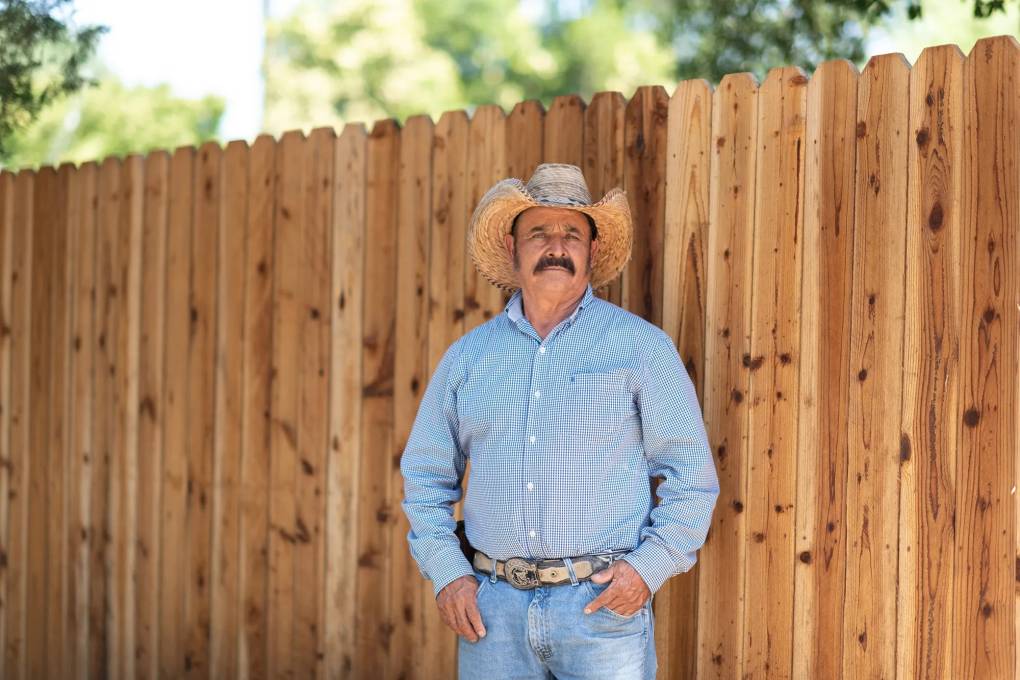
"caption": "Farmworker Isidro Fierros Hernandez, 68, at City Park in Winters on June 10, 2024. He is among a group of workers who lost their jobs at a tomato field after they decided to go home early after feeling sick due to the heat.",
"credit": "Laure Andrillon for CalMatters",
"altTag": null,
"description": null,
"imgSizes": {
"medium": {
"file": "https://cdn.kqed.org/wp-content/uploads/sites/10/2024/08/061024_Heat-Farm-Workers-LA_CM_06-copy-800x533.jpg",
"width": 800,
"height": 533,
"mimeType": "image/jpeg"
},
"large": {
"file": "https://cdn.kqed.org/wp-content/uploads/sites/10/2024/08/061024_Heat-Farm-Workers-LA_CM_06-copy-1020x680.jpg",
"width": 1020,
"height": 680,
"mimeType": "image/jpeg"
},
"thumbnail": {
"file": "https://cdn.kqed.org/wp-content/uploads/sites/10/2024/08/061024_Heat-Farm-Workers-LA_CM_06-copy-160x107.jpg",
"width": 160,
"height": 107,
"mimeType": "image/jpeg"
},
"1536x1536": {
"file": "https://cdn.kqed.org/wp-content/uploads/sites/10/2024/08/061024_Heat-Farm-Workers-LA_CM_06-copy-1536x1024.jpg",
"width": 1536,
"height": 1024,
"mimeType": "image/jpeg"
},
"post-thumbnail": {
"file": "https://cdn.kqed.org/wp-content/uploads/sites/10/2024/08/061024_Heat-Farm-Workers-LA_CM_06-copy-672x372.jpg",
"width": 672,
"height": 372,
"mimeType": "image/jpeg"
},
"twentyfourteen-full-width": {
"file": "https://cdn.kqed.org/wp-content/uploads/sites/10/2024/08/061024_Heat-Farm-Workers-LA_CM_06-copy-1038x576.jpg",
"width": 1038,
"height": 576,
"mimeType": "image/jpeg"
},
"full-width": {
"file": "https://cdn.kqed.org/wp-content/uploads/sites/10/2024/08/061024_Heat-Farm-Workers-LA_CM_06-copy-1920x1280.jpg",
"width": 1920,
"height": 1280,
"mimeType": "image/jpeg"
},
"kqedFullSize": {
"file": "https://cdn.kqed.org/wp-content/uploads/sites/10/2024/08/061024_Heat-Farm-Workers-LA_CM_06-copy.jpg",
"width": 2000,
"height": 1333
}
},
"isLoading": false,
"fetchFailed": false
},
"news_11998626": {
"type": "attachments",
"id": "news_11998626",
"meta": {
"index": "attachments_1716263798",
"site": "news",
"id": "11998626",
"found": true
},
"title": "080124_PigeonPalace_FM_CM_05 copy",
"publishDate": 1722624273,
"status": "inherit",
"parent": 11998618,
"modified": 1722629672,
"caption": "The Pigeon Palace covered in scaffolding and tarps in San Francisco on Aug. 1, 2024. The housing complex operates through a community land trust or a nonprofit that buys land and then sells or rents the buildings to low-income residents to create permanently affordable housing. The Pigeon Palace tenants, who co-manage the building, are renovating the space. ",
"credit": "Florence Middleton/CalMatters",
"altTag": null,
"description": null,
"imgSizes": {
"medium": {
"file": "https://cdn.kqed.org/wp-content/uploads/sites/10/2024/08/080124_PigeonPalace_FM_CM_05-copy-800x534.jpg",
"width": 800,
"height": 534,
"mimeType": "image/jpeg"
},
"large": {
"file": "https://cdn.kqed.org/wp-content/uploads/sites/10/2024/08/080124_PigeonPalace_FM_CM_05-copy-1020x680.jpg",
"width": 1020,
"height": 680,
"mimeType": "image/jpeg"
},
"thumbnail": {
"file": "https://cdn.kqed.org/wp-content/uploads/sites/10/2024/08/080124_PigeonPalace_FM_CM_05-copy-160x107.jpg",
"width": 160,
"height": 107,
"mimeType": "image/jpeg"
},
"1536x1536": {
"file": "https://cdn.kqed.org/wp-content/uploads/sites/10/2024/08/080124_PigeonPalace_FM_CM_05-copy-1536x1025.jpg",
"width": 1536,
"height": 1025,
"mimeType": "image/jpeg"
},
"post-thumbnail": {
"file": "https://cdn.kqed.org/wp-content/uploads/sites/10/2024/08/080124_PigeonPalace_FM_CM_05-copy-672x372.jpg",
"width": 672,
"height": 372,
"mimeType": "image/jpeg"
},
"twentyfourteen-full-width": {
"file": "https://cdn.kqed.org/wp-content/uploads/sites/10/2024/08/080124_PigeonPalace_FM_CM_05-copy-1038x576.jpg",
"width": 1038,
"height": 576,
"mimeType": "image/jpeg"
},
"full-width": {
"file": "https://cdn.kqed.org/wp-content/uploads/sites/10/2024/08/080124_PigeonPalace_FM_CM_05-copy-1920x1281.jpg",
"width": 1920,
"height": 1281,
"mimeType": "image/jpeg"
},
"kqedFullSize": {
"file": "https://cdn.kqed.org/wp-content/uploads/sites/10/2024/08/080124_PigeonPalace_FM_CM_05-copy.jpg",
"width": 2000,
"height": 1334
}
},
"isLoading": false,
"fetchFailed": false
},
"news_11998225": {
"type": "attachments",
"id": "news_11998225",
"meta": {
"index": "attachments_1716263798",
"site": "news",
"id": "11998225",
"found": true
},
"title": "072924-Park-FIre-AP-NC-CM-01 copy",
"publishDate": 1722455389,
"status": "inherit",
"parent": 11998224,
"modified": 1722455415,
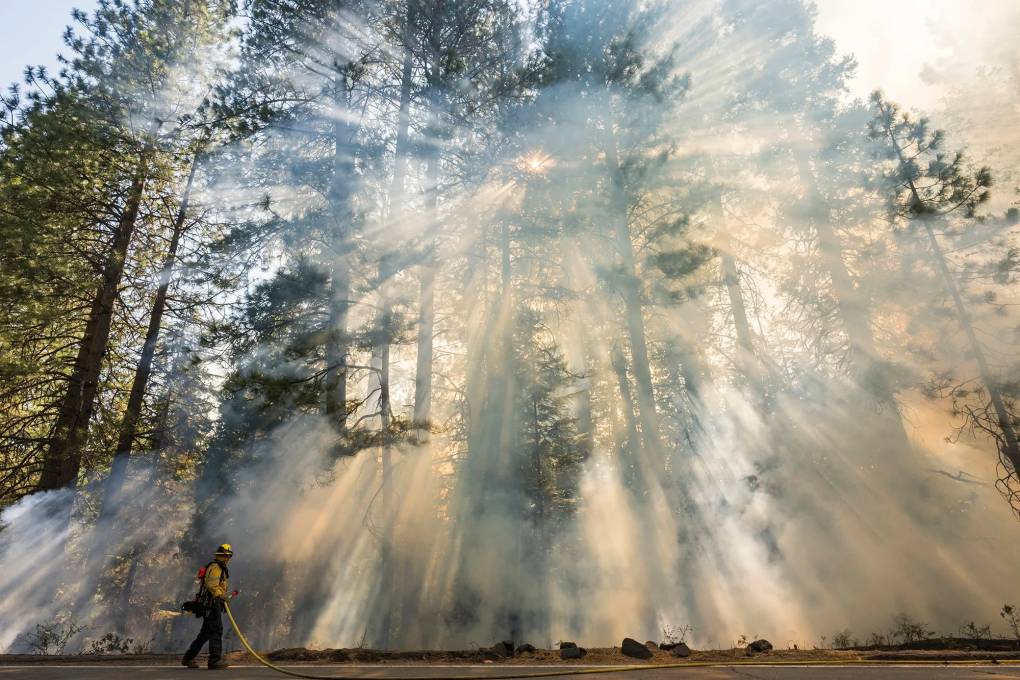
"caption": "A firefighter monitors a burn operation on Highway 32 to combat the Park Fire near Forest Ranch on July 28, 2024. \n",
"credit": "Nic Coury/AP Photo",
"altTag": null,
"description": null,
"imgSizes": {
"medium": {
"file": "https://cdn.kqed.org/wp-content/uploads/sites/10/2024/07/072924-Park-FIre-AP-NC-CM-01-copy-800x533.jpg",
"width": 800,
"height": 533,
"mimeType": "image/jpeg"
},
"large": {
"file": "https://cdn.kqed.org/wp-content/uploads/sites/10/2024/07/072924-Park-FIre-AP-NC-CM-01-copy-1020x680.jpg",
"width": 1020,
"height": 680,
"mimeType": "image/jpeg"
},
"thumbnail": {
"file": "https://cdn.kqed.org/wp-content/uploads/sites/10/2024/07/072924-Park-FIre-AP-NC-CM-01-copy-160x107.jpg",
"width": 160,
"height": 107,
"mimeType": "image/jpeg"
},
"1536x1536": {
"file": "https://cdn.kqed.org/wp-content/uploads/sites/10/2024/07/072924-Park-FIre-AP-NC-CM-01-copy-1536x1024.jpg",
"width": 1536,
"height": 1024,
"mimeType": "image/jpeg"
},
"post-thumbnail": {
"file": "https://cdn.kqed.org/wp-content/uploads/sites/10/2024/07/072924-Park-FIre-AP-NC-CM-01-copy-672x372.jpg",
"width": 672,
"height": 372,
"mimeType": "image/jpeg"
},
"twentyfourteen-full-width": {
"file": "https://cdn.kqed.org/wp-content/uploads/sites/10/2024/07/072924-Park-FIre-AP-NC-CM-01-copy-1038x576.jpg",
"width": 1038,
"height": 576,
"mimeType": "image/jpeg"
},
"full-width": {
"file": "https://cdn.kqed.org/wp-content/uploads/sites/10/2024/07/072924-Park-FIre-AP-NC-CM-01-copy-1920x1280.jpg",
"width": 1920,
"height": 1280,
"mimeType": "image/jpeg"
},
"kqedFullSize": {
"file": "https://cdn.kqed.org/wp-content/uploads/sites/10/2024/07/072924-Park-FIre-AP-NC-CM-01-copy.jpg",
"width": 2000,
"height": 1333
}
},
"isLoading": false,
"fetchFailed": false
},
"news_11998166": {
"type": "attachments",
"id": "news_11998166",
"meta": {
"index": "attachments_1716263798",
"site": "news",
"id": "11998166",
"found": true
},
"title": "072924-Park-Fire-EG-AP-CM-02 copy",
"publishDate": 1722446592,
"status": "inherit",
"parent": 11998160,
"modified": 1722446618,
"caption": "Property damaged by the Park Fire in the Cohasset community of Butte County on July 28, 2024. ",
"credit": "Eugene Garcia/AP Photo",
"altTag": null,
"description": null,
"imgSizes": {
"medium": {
"file": "https://cdn.kqed.org/wp-content/uploads/sites/10/2024/07/072924-Park-Fire-EG-AP-CM-02-copy-800x533.jpg",
"width": 800,
"height": 533,
"mimeType": "image/jpeg"
},
"large": {
"file": "https://cdn.kqed.org/wp-content/uploads/sites/10/2024/07/072924-Park-Fire-EG-AP-CM-02-copy-1020x680.jpg",
"width": 1020,
"height": 680,
"mimeType": "image/jpeg"
},
"thumbnail": {
"file": "https://cdn.kqed.org/wp-content/uploads/sites/10/2024/07/072924-Park-Fire-EG-AP-CM-02-copy-160x107.jpg",
"width": 160,
"height": 107,
"mimeType": "image/jpeg"
},
"1536x1536": {
"file": "https://cdn.kqed.org/wp-content/uploads/sites/10/2024/07/072924-Park-Fire-EG-AP-CM-02-copy-1536x1024.jpg",
"width": 1536,
"height": 1024,
"mimeType": "image/jpeg"
},
"post-thumbnail": {
"file": "https://cdn.kqed.org/wp-content/uploads/sites/10/2024/07/072924-Park-Fire-EG-AP-CM-02-copy-672x372.jpg",
"width": 672,
"height": 372,
"mimeType": "image/jpeg"
},
"twentyfourteen-full-width": {
"file": "https://cdn.kqed.org/wp-content/uploads/sites/10/2024/07/072924-Park-Fire-EG-AP-CM-02-copy-1038x576.jpg",
"width": 1038,
"height": 576,
"mimeType": "image/jpeg"
},
"full-width": {
"file": "https://cdn.kqed.org/wp-content/uploads/sites/10/2024/07/072924-Park-Fire-EG-AP-CM-02-copy-1920x1280.jpg",
"width": 1920,
"height": 1280,
"mimeType": "image/jpeg"
},
"kqedFullSize": {
"file": "https://cdn.kqed.org/wp-content/uploads/sites/10/2024/07/072924-Park-Fire-EG-AP-CM-02-copy.jpg",
"width": 2000,
"height": 1333
}
},
"isLoading": false,
"fetchFailed": false
},
"news_11997713": {
"type": "attachments",
"id": "news_11997713",
"meta": {
"index": "attachments_1716263798",
"site": "news",
"id": "11997713",
"found": true
},
"title": "072324-Kamala-Harris-REUTERS-CM copy",
"publishDate": 1722106328,
"status": "inherit",
"parent": 11997712,
"modified": 1722106351,
"caption": "Vice President Kamala Harris speaks to supporters at her first campaign event as the presumptive Democratic nominee at West Allis High School in West Allis, Wisconsin, on July 23, 2024. ",
"credit": "Kevin Mohatt/Reuters via CalMatters",
"altTag": null,
"description": null,
"imgSizes": {
"medium": {
"file": "https://cdn.kqed.org/wp-content/uploads/sites/10/2024/07/072324-Kamala-Harris-REUTERS-CM-copy-800x534.jpg",
"width": 800,
"height": 534,
"mimeType": "image/jpeg"
},
"large": {
"file": "https://cdn.kqed.org/wp-content/uploads/sites/10/2024/07/072324-Kamala-Harris-REUTERS-CM-copy-1020x680.jpg",
"width": 1020,
"height": 680,
"mimeType": "image/jpeg"
},
"thumbnail": {
"file": "https://cdn.kqed.org/wp-content/uploads/sites/10/2024/07/072324-Kamala-Harris-REUTERS-CM-copy-160x107.jpg",
"width": 160,
"height": 107,
"mimeType": "image/jpeg"
},
"1536x1536": {
"file": "https://cdn.kqed.org/wp-content/uploads/sites/10/2024/07/072324-Kamala-Harris-REUTERS-CM-copy-1536x1025.jpg",
"width": 1536,
"height": 1025,
"mimeType": "image/jpeg"
},
"post-thumbnail": {
"file": "https://cdn.kqed.org/wp-content/uploads/sites/10/2024/07/072324-Kamala-Harris-REUTERS-CM-copy-672x372.jpg",
"width": 672,
"height": 372,
"mimeType": "image/jpeg"
},
"twentyfourteen-full-width": {
"file": "https://cdn.kqed.org/wp-content/uploads/sites/10/2024/07/072324-Kamala-Harris-REUTERS-CM-copy-1038x576.jpg",
"width": 1038,
"height": 576,
"mimeType": "image/jpeg"
},
"full-width": {
"file": "https://cdn.kqed.org/wp-content/uploads/sites/10/2024/07/072324-Kamala-Harris-REUTERS-CM-copy-1920x1281.jpg",
"width": 1920,
"height": 1281,
"mimeType": "image/jpeg"
},
"kqedFullSize": {
"file": "https://cdn.kqed.org/wp-content/uploads/sites/10/2024/07/072324-Kamala-Harris-REUTERS-CM-copy.jpg",
"width": 2000,
"height": 1334
}
},
"isLoading": false,
"fetchFailed": false
},
"news_11997543": {
"type": "attachments",
"id": "news_11997543",
"meta": {
"index": "attachments_1716263798",
"site": "news",
"id": "11997543",
"found": true
},
"title": "070824-FireFight-Training-JAH-CM-06 copy",
"publishDate": 1722014247,
"status": "inherit",
"parent": 11997534,
"modified": 1722014273,
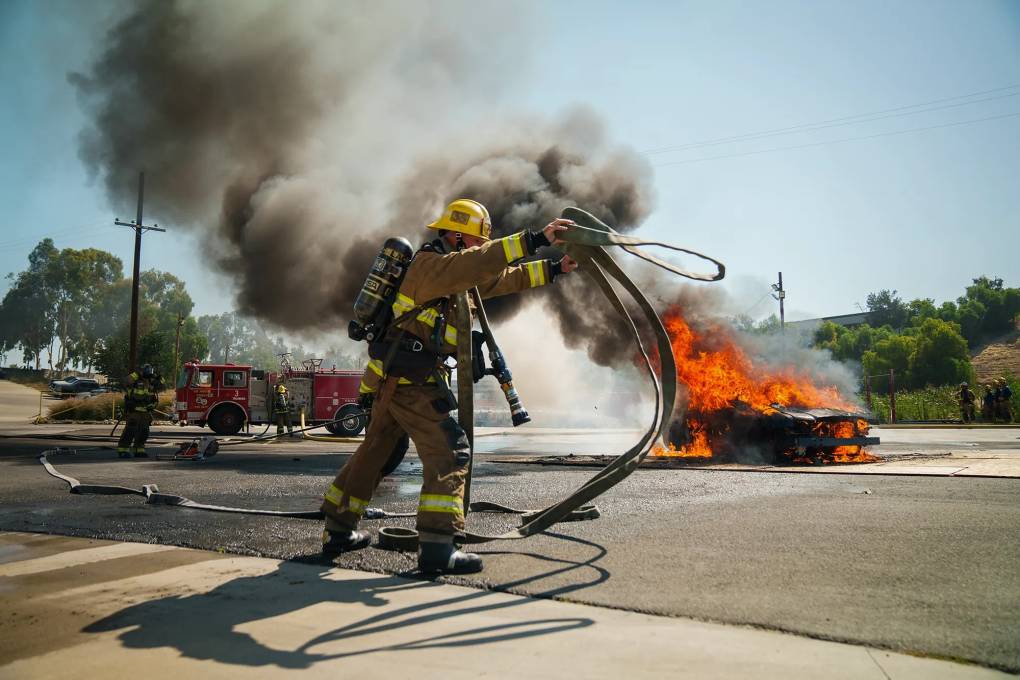
"caption": "A car burns during a training session as an apprentice lays out a fire hose at the Los Angeles County Fire Department East County Training Center, in Pomona, on July 8, 2024. ",
"credit": "Jules Hotz for CalMatters",
"altTag": null,
"description": null,
"imgSizes": {
"medium": {
"file": "https://cdn.kqed.org/wp-content/uploads/sites/10/2024/07/070824-FireFight-Training-JAH-CM-06-copy-800x533.jpg",
"width": 800,
"height": 533,
"mimeType": "image/jpeg"
},
"large": {
"file": "https://cdn.kqed.org/wp-content/uploads/sites/10/2024/07/070824-FireFight-Training-JAH-CM-06-copy-1020x680.jpg",
"width": 1020,
"height": 680,
"mimeType": "image/jpeg"
},
"thumbnail": {
"file": "https://cdn.kqed.org/wp-content/uploads/sites/10/2024/07/070824-FireFight-Training-JAH-CM-06-copy-160x107.jpg",
"width": 160,
"height": 107,
"mimeType": "image/jpeg"
},
"1536x1536": {
"file": "https://cdn.kqed.org/wp-content/uploads/sites/10/2024/07/070824-FireFight-Training-JAH-CM-06-copy-1536x1024.jpg",
"width": 1536,
"height": 1024,
"mimeType": "image/jpeg"
},
"post-thumbnail": {
"file": "https://cdn.kqed.org/wp-content/uploads/sites/10/2024/07/070824-FireFight-Training-JAH-CM-06-copy-672x372.jpg",
"width": 672,
"height": 372,
"mimeType": "image/jpeg"
},
"twentyfourteen-full-width": {
"file": "https://cdn.kqed.org/wp-content/uploads/sites/10/2024/07/070824-FireFight-Training-JAH-CM-06-copy-1038x576.jpg",
"width": 1038,
"height": 576,
"mimeType": "image/jpeg"
},
"full-width": {
"file": "https://cdn.kqed.org/wp-content/uploads/sites/10/2024/07/070824-FireFight-Training-JAH-CM-06-copy-1920x1280.jpg",
"width": 1920,
"height": 1280,
"mimeType": "image/jpeg"
},
"kqedFullSize": {
"file": "https://cdn.kqed.org/wp-content/uploads/sites/10/2024/07/070824-FireFight-Training-JAH-CM-06-copy.jpg",
"width": 2000,
"height": 1333
}
},
"isLoading": false,
"fetchFailed": false
},
"news_11997354": {
"type": "attachments",
"id": "news_11997354",
"meta": {
"index": "attachments_1716263798",
"site": "news",
"id": "11997354",
"found": true
},
"title": "042924_Covered-CA_AH_CM_04",
"publishDate": 1721925016,
"status": "inherit",
"parent": 11997351,
"modified": 1721932461,
"caption": "A Covered California Enrollment Center in Chula Vista on April 29, 2024.",
"credit": "Adriana Heldiz, CalMatters",
"altTag": "A window has a sign that reads \"Health Insurance Covered California.\"",
"description": null,
"imgSizes": {
"medium": {
"file": "https://cdn.kqed.org/wp-content/uploads/sites/10/2024/07/042924_Covered-CA_AH_CM_04-800x533.jpg",
"width": 800,
"height": 533,
"mimeType": "image/jpeg"
},
"large": {
"file": "https://cdn.kqed.org/wp-content/uploads/sites/10/2024/07/042924_Covered-CA_AH_CM_04-1020x680.jpg",
"width": 1020,
"height": 680,
"mimeType": "image/jpeg"
},
"thumbnail": {
"file": "https://cdn.kqed.org/wp-content/uploads/sites/10/2024/07/042924_Covered-CA_AH_CM_04-160x107.jpg",
"width": 160,
"height": 107,
"mimeType": "image/jpeg"
},
"1536x1536": {
"file": "https://cdn.kqed.org/wp-content/uploads/sites/10/2024/07/042924_Covered-CA_AH_CM_04-1536x1024.jpg",
"width": 1536,
"height": 1024,
"mimeType": "image/jpeg"
},
"post-thumbnail": {
"file": "https://cdn.kqed.org/wp-content/uploads/sites/10/2024/07/042924_Covered-CA_AH_CM_04-672x372.jpg",
"width": 672,
"height": 372,
"mimeType": "image/jpeg"
},
"twentyfourteen-full-width": {
"file": "https://cdn.kqed.org/wp-content/uploads/sites/10/2024/07/042924_Covered-CA_AH_CM_04-1038x576.jpg",
"width": 1038,
"height": 576,
"mimeType": "image/jpeg"
},
"full-width": {
"file": "https://cdn.kqed.org/wp-content/uploads/sites/10/2024/07/042924_Covered-CA_AH_CM_04-1920x1280.jpg",
"width": 1920,
"height": 1280,
"mimeType": "image/jpeg"
},
"kqedFullSize": {
"file": "https://cdn.kqed.org/wp-content/uploads/sites/10/2024/07/042924_Covered-CA_AH_CM_04.jpg",
"width": 2000,
"height": 1333
}
},
"isLoading": false,
"fetchFailed": false
},
"news_11996599": {
"type": "attachments",
"id": "news_11996599",
"meta": {
"index": "attachments_1716263798",
"site": "news",
"id": "11996599",
"found": true
},
"title": "2024.06.27_Middleton_HospitalBill_128-2 copy",
"publishDate": 1721513144,
"status": "inherit",
"parent": 11996598,
"modified": 1721513168,
"caption": "Sultan Khan, who received a bill from the California Department of State Hospitals for nearly $770,000 for his care after he was involuntarily committed to Napa State Hospital, in Martinez, on June 27, 2024. ",
"credit": "Florence Middleton/CalMatters",
"altTag": null,
"description": null,
"imgSizes": {
"medium": {
"file": "https://cdn.kqed.org/wp-content/uploads/sites/10/2024/07/2024.06.27_Middleton_HospitalBill_128-2-copy-800x534.jpg",
"width": 800,
"height": 534,
"mimeType": "image/jpeg"
},
"large": {
"file": "https://cdn.kqed.org/wp-content/uploads/sites/10/2024/07/2024.06.27_Middleton_HospitalBill_128-2-copy-1020x680.jpg",
"width": 1020,
"height": 680,
"mimeType": "image/jpeg"
},
"thumbnail": {
"file": "https://cdn.kqed.org/wp-content/uploads/sites/10/2024/07/2024.06.27_Middleton_HospitalBill_128-2-copy-160x107.jpg",
"width": 160,
"height": 107,
"mimeType": "image/jpeg"
},
"1536x1536": {
"file": "https://cdn.kqed.org/wp-content/uploads/sites/10/2024/07/2024.06.27_Middleton_HospitalBill_128-2-copy-1536x1025.jpg",
"width": 1536,
"height": 1025,
"mimeType": "image/jpeg"
},
"post-thumbnail": {
"file": "https://cdn.kqed.org/wp-content/uploads/sites/10/2024/07/2024.06.27_Middleton_HospitalBill_128-2-copy-672x372.jpg",
"width": 672,
"height": 372,
"mimeType": "image/jpeg"
},
"twentyfourteen-full-width": {
"file": "https://cdn.kqed.org/wp-content/uploads/sites/10/2024/07/2024.06.27_Middleton_HospitalBill_128-2-copy-1038x576.jpg",
"width": 1038,
"height": 576,
"mimeType": "image/jpeg"
},
"full-width": {
"file": "https://cdn.kqed.org/wp-content/uploads/sites/10/2024/07/2024.06.27_Middleton_HospitalBill_128-2-copy-1920x1281.jpg",
"width": 1920,
"height": 1281,
"mimeType": "image/jpeg"
},
"kqedFullSize": {
"file": "https://cdn.kqed.org/wp-content/uploads/sites/10/2024/07/2024.06.27_Middleton_HospitalBill_128-2-copy.jpg",
"width": 2000,
"height": 1334
}
},
"isLoading": false,
"fetchFailed": false
}
},
"audioPlayerReducer": {
"postId": "stream_live",
"isPaused": true,
"isPlaying": false,
"pfsActive": false,
"pledgeModalIsOpen": true,
"playerDrawerIsOpen": false,
"liveAudioPlayStartedAt": 0,
"liveAudioPlayContext": ""
},
"authorsReducer": {
"byline_news_12000397": {
"type": "authors",
"id": "byline_news_12000397",
"meta": {
"override": true
},
"slug": "byline_news_12000397",
"name": "\u003ca href=\"https://calmatters.org/author/nigelduara\">Nigel Duara, CalMatters\u003c/a>",
"isLoading": false
},
"byline_news_12000107": {
"type": "authors",
"id": "byline_news_12000107",
"meta": {
"override": true
},
"slug": "byline_news_12000107",
"name": "Jeanne Kuang, CalMatters",
"isLoading": false
},
"byline_news_11999966": {
"type": "authors",
"id": "byline_news_11999966",
"meta": {
"override": true
},
"slug": "byline_news_11999966",
"name": "\u003ca href=\"https://calmatters.org/author/levi-sumagaysay/\">Levi Sumagaysay\u003c/a>, CalMatters",
"isLoading": false
},
"byline_news_11999549": {
"type": "authors",
"id": "byline_news_11999549",
"meta": {
"override": true
},
"slug": "byline_news_11999549",
"name": "\u003ca href=\"https://calmatters.org/author/julie-cart/\">Julie Cart\u003c/a>, CalMatters",
"isLoading": false
},
"byline_news_11999172": {
"type": "authors",
"id": "byline_news_11999172",
"meta": {
"override": true
},
"slug": "byline_news_11999172",
"name": "\u003ca href=\"https://calmatters.org/author/jeanne-kuang/\">Jeanne Kuang\u003c/a>, CalMatters",
"isLoading": false
},
"byline_news_11998618": {
"type": "authors",
"id": "byline_news_11998618",
"meta": {
"override": true
},
"slug": "byline_news_11998618",
"name": "\u003ca href=\"https://calmatters.org/author/feliciacalmatters-org/\">Felicia Mello\u003c/a>, CalMatters",
"isLoading": false
},
"byline_news_11998224": {
"type": "authors",
"id": "byline_news_11998224",
"meta": {
"override": true
},
"slug": "byline_news_11998224",
"name": "\u003ca href=\"https://calmatters.org/author/rachel-becker/\">Rachel Becker\u003c/a>, CalMatters",
"isLoading": false
},
"byline_news_11998160": {
"type": "authors",
"id": "byline_news_11998160",
"meta": {
"override": true
},
"slug": "byline_news_11998160",
"name": "\u003ca href=\"https://calmatters.org/author/julie-cart/\">Julie Cart\u003c/a>, CalMatters",
"isLoading": false
},
"byline_news_11997712": {
"type": "authors",
"id": "byline_news_11997712",
"meta": {
"override": true
},
"slug": "byline_news_11997712",
"name": "\u003ca href=\"https://calmatters.org/author/yue-yu/\">Yue Stella Yu\u003c/a>, CalMatters",
"isLoading": false
},
"byline_news_11997534": {
"type": "authors",
"id": "byline_news_11997534",
"meta": {
"override": true
},
"slug": "byline_news_11997534",
"name": "\u003ca href=\"https://calmatters.org/author/adam-echelman/\">Adam Echelman\u003c/a>, CalMatters",
"isLoading": false
},
"byline_news_11997351": {
"type": "authors",
"id": "byline_news_11997351",
"meta": {
"override": true
},
"slug": "byline_news_11997351",
"name": "Ana B. Ibarra, CalMatters",
"isLoading": false
},
"byline_news_11996598": {
"type": "authors",
"id": "byline_news_11996598",
"meta": {
"override": true
},
"slug": "byline_news_11996598",
"name": "\u003ca href=\"https://calmatters.org/health/mental-health/2024/07/state-hospital-bill/\">Jocelyn Wiener\u003c/a>, CalMatters",
"isLoading": false
}
},
"pagesReducer": {
"news_affiliate_calmatters": {
"type": "terms",
"id": "news_18481",
"meta": {
"index": "terms_1716263798",
"site": "news",
"id": "18481",
"score": 15.355904
},
"featImg": null,
"name": "CALmatters",
"description": null,
"taxonomy": "affiliate",
"headData": {
"twImgId": null,
"twTitle": null,
"ogTitle": null,
"ogImgId": null,
"twDescription": null,
"description": null,
"title": "CALmatters Archives | KQED Arts",
"ogDescription": null
},
"ttid": 18515,
"slug": "calmatters",
"isLoading": false,
"title": "CALmatters",
"pageMeta": {
"site": "news",
"WpPageTemplate": "page-topic-editorial",
"currentPage": 27
},
"blocks": [
{
"blockName": "kqed/post-list",
"attrs": {
"layout": "cardArticle2",
"query": "posts/news?affiliate=calmatters",
"seeMore": false,
"paginated": true,
"page": 27
}
},
{
"blockName": "kqed/ad"
}
]
}
},
"pfsSessionReducer": {},
"postsReducer": {
"stream_live": {
"type": "live",
"id": "stream_live",
"audioUrl": "https://streams.kqed.org/kqedradio",
"title": "Live Stream",
"excerpt": "Live Stream information currently unavailable.",
"link": "/radio",
"featImg": "",
"label": {
"name": "KQED Live",
"link": "/"
}
},
"stream_kqedNewscast": {
"type": "posts",
"id": "stream_kqedNewscast",
"audioUrl": "https://www.kqed.org/.stream/anon/radio/RDnews/newscast.mp3?_=1",
"title": "KQED Newscast",
"featImg": "",
"label": {
"name": "88.5 FM",
"link": "/"
}
},
"news_12000397": {
"type": "posts",
"id": "news_12000397",
"meta": {
"index": "posts_1716263798",
"site": "news",
"id": "12000397",
"score": null,
"sort": [
1723755608000
]
},
"guestAuthors": [],
"slug": "what-9-cases-from-kamala-harris-past-say-about-her-record-as-a-california-prosecutor",
"title": "What 9 Cases From Kamala Harris’ Past Say About Her Record as a California Prosecutor",
"publishDate": 1723755608,
"format": "standard",
"headTitle": "What 9 Cases From Kamala Harris’ Past Say About Her Record as a California Prosecutor | KQED",
"labelTerm": {
"term": 18481,
"site": "news"
},
"content": "\u003cp>In campaign mode, Kamala Harris doesn’t refer to herself as a politician but as a prosecutor.\u003c/p>\n\u003cp>Her rise in Democratic politics began in California’s courtrooms. Voters elected her first as San Francisco’s district attorney and then as the state’s attorney general.\u003c/p>\n\u003cp>She battled multinational corporations on behalf of Californians but also oversaw the wrongful conviction of someone who was later stabbed in prison. As the state’s lawyer, she refused to defend California’s gay marriage ban but did the opposite on the death penalty, defending the state’s policy despite her personal opposition to it.\u003c/p>\n\u003cp>When she first ran for president five years ago, in a time of rising skepticism about policing, she pitched herself to Democratic primary voters as not merely a prosecutor but a \u003cem>progressive \u003c/em>prosecutor. Today, in a general election campaign that may hinge on winning over independents concerned about crime, she’s largely dropped the modifier. Her record as a prosecutor draws criticism from both sides: The left has \u003ca href=\"https://www.nytimes.com/2019/01/17/opinion/kamala-harris-criminal-justice.html\">criticized her for having been too tough\u003c/a>, even as the Trump campaign charges that she was “\u003ca href=\"https://x.com/TheStevenCheung/status/1816148262908293360\">soft as CHARMIN\u003c/a>.”\u003c/p>\n\u003cp>These nine cases — some successes, some stumbles — helped define the complicated law enforcement legacy of the Democratic Party’s presidential nominee:\u003c/p>\n\u003ch2>1. Harris faces first test when a cop is killed\u003c/h2>\n\u003cp>The shooting of a police officer on a poorly lit street in San Francisco in 2004 would haunt Harris for decades.\u003c/p>\n\u003cp>[ad fullwidth]\u003c/p>\n\u003cp>Officer \u003ca href=\"https://www.odmp.org/officer/17277-police-officer-isaac-anthony-espinoza\">Isaac Espinoza\u003c/a> and his partner were in plainclothes when they approached a man in their unmarked vehicle on April 10. Espinoza, 29, stepped out and flashed a light at David Hill, according to \u003ca href=\"https://www.sfexaminer.com/news/gang-member-guilty-of-officer-s-murder/article_0ffd1f81-386a-5cb4-ba7f-826ebff0b185.html\">accounts of trial testimony\u003c/a>.\u003c/p>\n\u003cp>Hill fired several rounds from an AK-47. Two struck Espinoza, killing him. Espinoza’s partner was injured, and Hill was accused of first-degree murder, along with other charges.\u003c/p>\n\u003cp>The newly elected DA, Harris, declined to pursue the death penalty against Hill – consistent with her position while she campaigned for the office, but offensive to many who attended Espinoza’s funeral.\u003c/p>\n\u003cfigure id=\"attachment_12000425\" class=\"wp-caption aligncenter\" style=\"max-width: 900px\">\u003ca href=\"https://cdn.kqed.org/wp-content/uploads/sites/10/2024/08/Isaac-Espinoza_CM_01.jpg\">\u003cimg loading=\"lazy\" decoding=\"async\" class=\"size-full wp-image-12000425\" src=\"https://cdn.kqed.org/wp-content/uploads/sites/10/2024/08/Isaac-Espinoza_CM_01.jpg\" alt=\"An image of a man dressed in a police uniform.\" width=\"900\" height=\"1200\" srcset=\"https://cdn.kqed.org/wp-content/uploads/sites/10/2024/08/Isaac-Espinoza_CM_01.jpg 900w, https://cdn.kqed.org/wp-content/uploads/sites/10/2024/08/Isaac-Espinoza_CM_01-800x1067.jpg 800w, https://cdn.kqed.org/wp-content/uploads/sites/10/2024/08/Isaac-Espinoza_CM_01-160x213.jpg 160w\" sizes=\"(max-width: 900px) 100vw, 900px\">\u003c/a>\u003cfigcaption class=\"wp-caption-text\">San Francisco Police Officer Isaac Espinoza was shot and killed while working undercover in 2004. \u003ccite>(Photo via San Francisco Police Officers Association’s X account, the platform formerly known as Twitter)\u003c/cite>\u003c/figcaption>\u003c/figure>\n\u003cp>“This is not only the definition of tragedy, it’s the special circumstance called for by the death penalty law,” \u003ca href=\"https://www.sfgate.com/bayarea/article/SAN-FRANCISCO-Police-mourn-hero-who-refused-to-2766747.php\">former Sen. Dianne Feinstein told the mourners\u003c/a>, provoking a resounding standing ovation.\u003c/p>\n\u003cp>The decision immediately pitted Harris — the first woman, first Black and first Asian American district attorney in San Francisco history — against the police.\u003c/p>\n\u003cp>“Isaac paid the ultimate price,” said San Francisco Police Officers Association President Gary Delagnes \u003ca href=\"https://www.sfgate.com/bayarea/article/SAN-FRANCISCO-Police-mourn-hero-who-refused-to-2766747.php%5C\">at the funeral\u003c/a>. “And I speak for all officers in demanding that his killer also pay the ultimate price.”\u003c/p>\n\u003cp>After eight weeks of testimony, jurors convicted Hill of second-degree murder and attempted murder. They rejected the charge of first-degree murder, not finding the act premeditated, and Hill’s \u003ca href=\"https://www.sfgate.com/crime/article/Court-upholds-conviction-for-killing-S-F-cop-2462026.php\">conviction and life sentence\u003c/a> were upheld in 2011.\u003c/p>\n\u003cp>In her 2009 book “Smart on Crime,” Harris wrote: “The broadly held assumption that simply increasing the penalty for any crime will automatically deter more people from committing the crime is a myth. We have to understand why long sentences alone are not sufficient to rock the crime pyramid for many types of crimes.”\u003c/p>\n\u003ch2>2. Harris’ office convicts the wrong man — a $13 million mistake\u003c/h2>\n\u003cp>Actor Jamal Trulove was a contestant on VH1’s “I Love New York 2,” a “Bachelor”-style dating show in which 20 men competed for the affections of a failed reality show contestant.\u003c/p>\n\u003cp>A viewer who happened to have witnessed a fatal July 2007 shooting at San Francisco’s Sunnydale housing project \u003ca href=\"https://www.law.umich.edu/special/exoneration/Pages/casedetail.aspx?caseid=4658\">saw the show\u003c/a> and told police she was convinced: \u003ca href=\"https://www.law.umich.edu/special/exoneration/Pages/casedetail.aspx?caseid=4658\">Trulove\u003c/a>, she said, had been the shooter.\u003c/p>\n\u003cp>The witness, Priscilla Lualemaga, had initially identified a different man as the shooter. When police showed her a photo lineup and told her the shooter in that lineup, Lualemaga said \u003ca href=\"http://trulove/\">Trulove\u003c/a> “looks like the guy who could have shot” the victim.\u003c/p>\n\u003cp>But after the show aired, Lualemaga said she was certain.\u003c/p>\n\u003cp>When the \u003ca href=\"https://www.politifact.com/factchecks/2020/oct/09/viral-image/harris-didnt-frame-and-prosecute-man-murder/\">case went to trial\u003c/a> in 2010, the DA’s office put both Lualemaga and her sister in witness protection, citing alleged threats. The jury convicted Trulove of first-degree murder, and he was sentenced to 50 years to life.\u003c/p>\n\u003cfigure id=\"attachment_12000422\" class=\"wp-caption aligncenter\" style=\"max-width: 2000px\">\u003ca href=\"https://cdn.kqed.org/wp-content/uploads/sites/10/2024/08/081424-Jamal-Trulove-YT-CM.jpg\">\u003cimg loading=\"lazy\" decoding=\"async\" class=\"size-full wp-image-12000422\" src=\"https://cdn.kqed.org/wp-content/uploads/sites/10/2024/08/081424-Jamal-Trulove-YT-CM.jpg\" alt=\"A Black man wearing sun glasses and a black leather jacket sits down inside a building.\" width=\"2000\" height=\"1125\" srcset=\"https://cdn.kqed.org/wp-content/uploads/sites/10/2024/08/081424-Jamal-Trulove-YT-CM.jpg 2000w, https://cdn.kqed.org/wp-content/uploads/sites/10/2024/08/081424-Jamal-Trulove-YT-CM-800x450.jpg 800w, https://cdn.kqed.org/wp-content/uploads/sites/10/2024/08/081424-Jamal-Trulove-YT-CM-1020x574.jpg 1020w, https://cdn.kqed.org/wp-content/uploads/sites/10/2024/08/081424-Jamal-Trulove-YT-CM-160x90.jpg 160w, https://cdn.kqed.org/wp-content/uploads/sites/10/2024/08/081424-Jamal-Trulove-YT-CM-1536x864.jpg 1536w, https://cdn.kqed.org/wp-content/uploads/sites/10/2024/08/081424-Jamal-Trulove-YT-CM-1920x1080.jpg 1920w\" sizes=\"(max-width: 2000px) 100vw, 2000px\">\u003c/a>\u003cfigcaption class=\"wp-caption-text\">Jamal Trulove during an interview on the music podcast The Art of Dialogue. \u003ccite>(Image via screenshot of The Art of Dialogue’s YouTube Channel)\u003c/cite>\u003c/figcaption>\u003c/figure>\n\u003cp>But on appeal, a ballistics expert testified that Lualemaga — \u003ca href=\"https://casetext.com/case/people-v-trulove\">the only eyewitness\u003c/a> to testify that Trulove was at the scene — could not have observed the shooting from the direction she was facing, given the rounds’ trajectory.\u003c/p>\n\u003cp>“The prosecutor wove these points into the very fabric of her closing argument, going so far as to urge the jury to have the same ‘courage’ as Lualemaga and find defendant guilty,” \u003ca href=\"https://casetext.com/case/people-v-trulove\">wrote appellate court judges\u003c/a>. “There was no evidence of any threats or other actual danger presented by defendant, his friends, or his family to Lualemaga or her family…”\u003c/p>\n\u003cp>Trulove was acquitted in March 2015 and went on to a role in the film “The Last Black Man in San Francisco.”\u003c/p>\n\u003cp>A \u003ca href=\"https://www.scribd.com/document/415119960/Trulove-Complaint\">federal lawsuit he filed after his release\u003c/a> — noting he was stabbed in prison when he failed to give his cell’s bottom bunk to a gang leader — cost the city and county of San Francisco $13 million.\u003c/p>\n\u003cp>In a new \u003ca href=\"https://www.youtube.com/watch?v=8gGA4VGj9Qw\">podcast interview\u003c/a>, he recounted his conviction: “I’ll never forget, when I turned around, and I looked, and I seen Kamala Harris — we locked eyes this one time, and she laughed — she literally just kinda busted out laughing,” said Trulove, who’s endorsed, Donald Trump.\u003c/p>\n\u003ch2>3. Harris vs. the mentally ill woman shot by police, then prosecuted\u003c/h2>\n\u003cp>The Espinoza case left Harris on shaky ground with the San Francisco Police Department — tension she sought to soothe via a monthly spot in the \u003ca href=\"https://calmatters.org/justice/2019/09/kamala-harris-prosecuted-mentally-ill-woman-police-shot-democratic-presidential-campaign-san-francisco/\">police union newsletter.\u003c/a> In October 2008, here’s how her office \u003ca href=\"https://sfpoa.org/journal_archives/Vol_40_No_10_October_2008.pdf\">presented\u003c/a> a case in which police responded to a mentally ill woman in crisis:\u003c/p>\n\u003cp>“When police were called to the defendant’s home, she allegedly attempted to assault the responding officers with a knife. The police subdued the defendant by shooting her several times.”\u003c/p>\n\u003cp>Put another way: Police repeatedly shot a schizophrenic woman. And then Harris prosecuted her — but the jury balked.\u003c/p>\n\u003cp>In August 2008, Teresa Sheehan, then 56, was living in a group home for people with mental illness. When one of the home’s workers attempted to check on her, Sheehan replied with threats and \u003ca href=\"https://supreme.justia.com/cases/federal/us/575/600/#tab-opinion-3407052\">said she had a knife\u003c/a>.\u003c/p>\n\u003cp>A worker summoned police. Two officers knocked on Sheehan’s private room and eventually used a key to open her door. She grabbed a knife with a five-inch blade, the officers would later testify and said, “I am going to kill you. I don’t need help. Get out.”\u003c/p>\n\u003cfigure id=\"attachment_12000423\" class=\"wp-caption aligncenter\" style=\"max-width: 1934px\">\u003ca href=\"https://cdn.kqed.org/wp-content/uploads/sites/10/2024/08/081424-Teresa-A-Sheehan-Christmas-2013-Photo-Courtesy-of-Patricia-Sheehan-CM.jpg\">\u003cimg loading=\"lazy\" decoding=\"async\" class=\"size-full wp-image-12000423\" src=\"https://cdn.kqed.org/wp-content/uploads/sites/10/2024/08/081424-Teresa-A-Sheehan-Christmas-2013-Photo-Courtesy-of-Patricia-Sheehan-CM.jpg\" alt=\"A woman wearing glasses and a black shirt sits down at a kitchen table.\" width=\"1934\" height=\"1289\" srcset=\"https://cdn.kqed.org/wp-content/uploads/sites/10/2024/08/081424-Teresa-A-Sheehan-Christmas-2013-Photo-Courtesy-of-Patricia-Sheehan-CM.jpg 1934w, https://cdn.kqed.org/wp-content/uploads/sites/10/2024/08/081424-Teresa-A-Sheehan-Christmas-2013-Photo-Courtesy-of-Patricia-Sheehan-CM-800x533.jpg 800w, https://cdn.kqed.org/wp-content/uploads/sites/10/2024/08/081424-Teresa-A-Sheehan-Christmas-2013-Photo-Courtesy-of-Patricia-Sheehan-CM-1020x680.jpg 1020w, https://cdn.kqed.org/wp-content/uploads/sites/10/2024/08/081424-Teresa-A-Sheehan-Christmas-2013-Photo-Courtesy-of-Patricia-Sheehan-CM-160x107.jpg 160w, https://cdn.kqed.org/wp-content/uploads/sites/10/2024/08/081424-Teresa-A-Sheehan-Christmas-2013-Photo-Courtesy-of-Patricia-Sheehan-CM-1536x1024.jpg 1536w, https://cdn.kqed.org/wp-content/uploads/sites/10/2024/08/081424-Teresa-A-Sheehan-Christmas-2013-Photo-Courtesy-of-Patricia-Sheehan-CM-1920x1280.jpg 1920w\" sizes=\"(max-width: 1934px) 100vw, 1934px\">\u003c/a>\u003cfigcaption class=\"wp-caption-text\">Teresa Sheehan during Christmas in 2013 \u003ccite>(Photo courtesy of Patricia Sheehan)\u003c/cite>\u003c/figcaption>\u003c/figure>\n\u003cp>The officers later testified that they retreated but, worried that Sheehan might climb out of her window and to a fire escape, they opened the door again. One pepper-sprayed Sheehan, and when she didn’t drop the knife, the other shot her twice. The first officer also shot her.\u003c/p>\n\u003cp>She survived, and a jury acquitted her of making criminal threats and deadlocked on assault, though \u003ca href=\"https://calmatters.org/justice/2019/09/kamala-harris-prosecuted-mentally-ill-woman-police-shot-democratic-presidential-campaign-san-francisco/\">11 of 12 jurors\u003c/a> voted for acquittal. Sheehan sued San Francisco, settling for $1 million.\u003c/p>\n\u003cp>“If (Harris) actually looked at it and said, ‘This is a righteous case, I want to go after a mentally ill woman who was shot,’ then you question that decision,” Laurie Levenson, a criminal law professor at LA’s Loyola Law School \u003ca href=\"https://calmatters.org/justice/2019/09/kamala-harris-prosecuted-mentally-ill-woman-police-shot-democratic-presidential-campaign-san-francisco/\">told CalMatters\u003c/a>. “If she didn’t know about it, then you question her management skills.”\u003c/p>\n\u003ch2>4. Harris vs. a ‘predatory’ for-profit college\u003c/h2>\n\u003cp>When a 2013 U.S. Justice Department investigation turned up evidence that the for-profit Corinthian Colleges were \u003ca href=\"https://www.latimes.com/business/la-xpm-2013-oct-10-la-fi-mo-corinthian-colleges-kamala-harris-lawsuit-20131010-story.html\">targeting “isolated” people\u003c/a> who were “unable to see and plan well for the future” while falsely promising prospective students job placement rates as high as 100%, it caught the eye of Kamala Harris. As California’s new attorney general, she sued them, alleging false advertising and deceptive marketing.\u003c/p>\n\u003cp>The Santa Ana-based company had purchased several private for-profit colleges that were in financial trouble, including at least three in California. By 2010, it had enrolled more than 110,000 students at 105 campuses.\u003c/p>\n\u003cp>Soon, a number of Corinthian students told the U.S. Education Department that the \u003ca href=\"https://www.ed.gov/news/press-releases/department-education-and-attorney-general-kamala-harris-announce-findings-investigation-wyotech-and-everest-programs\">schools weren’t placing them in jobs\u003c/a> at the rates Corinthian had promised, leaving them saddled with student debt. The Office of Federal Student Aid forced the schools to stop any mergers, purchases of new schools or offering new programs.\u003c/p>\n\u003cp>Harris said the schools were targeting some of California’s most vulnerable prospective students.\u003c/p>\n\u003cp>“The predatory scheme devised by executives at Corinthian Colleges, Inc. is unconscionable,” Harris \u003ca href=\"https://oag.ca.gov/news/press-releases/attorney-general-kamala-d-harris-files-suit-alleged-profit-college-predatory\">said in 2013\u003c/a>. “Designed to rake in profits and mislead investors, they targeted some of our state’s most particularly vulnerable people—including low-income, single mothers and veterans returning from combat.”\u003c/p>\n\u003cp>In March 2016, Harris won a default judgment against Corinthian for $1.1 billion; the company never answered Harris’ legal complaint, and its lawyers \u003ca href=\"https://oag.ca.gov/system/files/attachments/press_releases/Corinthian%20Final%20Judgment_1.pdf\">didn’t appear in court on the day of the verdict.\u003c/a>\u003c/p>\n\u003cp>In 2022, the U.S. Department of Education discharged \u003ca href=\"https://www.ed.gov/news/press-releases/education-department-approves-58-billion-group-discharge-cancel-all-remaining-loans-560000-borrowers-who-attended-corinthian-colleges\">$5.8 billion in student loan debt\u003c/a> to 560,000 borrowers who paid to attend Corinthian Colleges.\u003c/p>\n\u003ch2>5. Harris vs. big banks in the mortgage meltdown\u003c/h2>\n\u003cp>Harris’ entry into the national spotlight came at the tail end of the Great Recession in 2011, when, as California’s attorney general, she rejected a settlement offer from five major mortgage lenders — one other states agreed to.[aside postID=\"news_11996875,news_11996883,news_11996704\" label=\"Related Stories\"]\u003c/p>\n\u003cp>It could have jeopardized the deal, \u003ca href=\"https://www.cbsnews.com/sanfrancisco/news/california-to-receive-more-than-20-billion-from-mortgage-settlement/\">but her brinkmanship\u003c/a> worked: The banks kicked in a lot more, allowing California to collect about $20 billion from \u003ca href=\"https://oag.ca.gov/news/press-releases/attorney-general-kamala-d-harris-secures-18-billion-california-commitment\">an initial settlement offer of $4 billion.\u003c/a>\u003c/p>\n\u003cp>The agreement meant Bank of America Corp., JPMorgan Chase & Co., Wells Fargo & Co., Citigroup Inc. and Ally Financial Inc. collectively reduced $12 billion in principal on loans or offered short sales to about 250,000 California homeowners who owed more on their mortgages than their houses were worth.\u003c/p>\n\u003cp>The story of that negotiation and settlement became \u003ca href=\"https://www.reuters.com/article/world/kamala-harris-stood-up-to-big-banks-with-mixed-results-for-consumers-in-crisis-idUSKCN1SF0Z4/\">a key part\u003c/a> of Harris’ political narrative, especially during her first candidacy for president in the 2020 Democratic primaries.\u003c/p>\n\u003cp>But the shine has somewhat worn off that victory in the years since.\u003c/p>\n\u003cp>A recent \u003ca href=\"https://www.wsj.com/finance/harris-says-she-rescued-california-homeowners-hurt-by-the-financial-crisis-the-reality-is-more-complex-0b38ffbc\">Wall Street Journal analysis\u003c/a> of the settlement found that, though Harris wanted to use the settlement money to reduce mortgage principals, about half the settlement went to banks that wrote off the mortgages on homes that had already been abandoned. Each Californian with a defaulted mortgage got a check for $1,400, which the state suggested it could use to help pay a month’s worth of rent.\u003c/p>\n\u003cp>Another $4.7 billion was used to reduce debt on second mortgages, often home equity credit lines. Only about $4.5 billion was used to lower debt on primary mortgages.\u003c/p>\n\u003cp>At the time, Harris \u003ca href=\"https://www.nytimes.com/2012/02/14/business/how-kamala-harris-finessed-a-foreclosure-deal-for-california.html\">told the \u003cem>New York Times\u003c/em>\u003c/a> that in a homicide case, “you’re talking about something where the body’s cold. So the conversation is about punishment, it’s about restitution. This was not that. Every day, there are homeowners in California who will either receive relief so they can stay in their home or will be in the foreclosure process and potentially lose their home. And that always weighed heavily on my mind.”\u003c/p>\n\u003ch2>6. When Harris defended the death penalty she opposes\u003c/h2>\n\u003cp>When Julia Miller’s husband found her body on Aug. 25, 1992, she had been bound with a telephone cord and stabbed to death. She had two knives still in her neck. There were pieces of three other knives near her body. There was a rag stuffed in her mouth.\u003c/p>\n\u003cp>Evidence immediately pointed to \u003ca href=\"https://scocal.stanford.edu/opinion/people-v-jones-ernest-33266\">Miller’s daughter’s boyfriend\u003c/a>, Ernest Dewayne Jones, who had already served six years in state prison for raping his previous girlfriend’s mother.\u003c/p>\n\u003cp>Pamela Miller, Juila’s daughter, told the court, “That bastard needs to be sentenced to death.” A judge agreed, and Jones was sent to California’s death row. But Pamela Miller told an\u003cem> LA Times\u003c/em> reporter that the sentencing was pointless because of how rarely executions were carried out.\u003c/p>\n\u003cp>Nearly 20 years later, while Jones awaited execution, \u003ca href=\"https://deathpenaltyinfo.org/documents/CarneyOrder.pdf\">a federal judge overturned the sentence, declaring\u003c/a> California’s death penalty was unconstitutional because of the “inordinate and unpredictable period of delay” before execution.”\u003c/p>\n\u003cp>Harris — despite her own personal opposition to the death penalty and \u003ca href=\"https://www.latimes.com/local/lanow/la-me-ln-death-penalty-appeal-20140821-story.html\">over the objections of death penalty opponents\u003c/a> — went to court to defend it. “I am appealing the court’s decision because it is not supported by the law,” \u003ca href=\"https://oag.ca.gov/news/press-releases/attorney-general-kamala-d-harris-issues-statement-appeal-court-ruling-california\">Harris said in 2014\u003c/a>, “and it undermines important protections that our courts provide to defendants.”\u003c/p>\n\u003cp>She prevailed, and the 9th U.S. Circuit Court of Appeals \u003ca href=\"https://www.reuters.com/article/world/uk/us-appeals-court-rejects-challenge-to-california-death-penalty-idUSKCN0T12B9/\">reinstated Jones’ death sentence\u003c/a>. In 2019, Gov. Gavin Newsom issued a \u003ca href=\"https://calmatters.org/justice/2019/03/gavin-newsom-halts-executions-california/\">moratorium on executions\u003c/a>, shuttering San Quentin’s death chamber.\u003c/p>\n\u003ch2>7. When Harris refused to defend a same-sex marriage ban\u003c/h2>\n\u003cp>For 29 days in early 2004, San Francisco issued more than 4,000 marriage licenses. Then-mayor Newsom had decided to allow same-sex couples to marry three weeks into his first term; the number of people \u003ca href=\"https://www.sfchronicle.com/news/article/Newsom-was-central-to-same-sex-marriage-saga-3186381.php\">calling City Hall\u003c/a> temporarily knocked out its phone lines.\u003c/p>\n\u003cp>The weddings were, technically, against the law. Newsom’s office expected an immediate injunction after the first wedding, but it didn’t come for a month. Among those who officiated weddings during that 29-day blitz was the city’s district attorney, Kamala Harris.\u003c/p>\n\u003cp>“One of the most joyful (moments of my career) was performing the marriages in 2004. Truly joyful,” \u003ca href=\"https://www.yahoo.com/news/kamala-harris-marks-20-years-122723615.html\">Harris told The Advocate\u003c/a> earlier this year.\u003c/p>\n\u003cp>The California Supreme Court \u003ca href=\"https://www.nbcnews.com/id/wbna5685429\">nullified all of the marriages\u003c/a> in April 2004, and voters then approved Proposition 8, which defined marriage as between a man and a woman.\u003c/p>\n\u003cp>When same-sex couples challenged the ballot measure all the way to the nation’s highest court, then-Attorney General Harris \u003ca href=\"https://oag.ca.gov/news/press-releases/attorney-general-kamala-d-harris-issues-statement-prop-8-arguments\">refused to defend it\u003c/a>, saying it was unconstitutional. “The Supreme Court has described marriage as a fundamental right 14 times since 1888,” Harris said in 2013. “The time has come for this right to be afforded to every citizen.”\u003c/p>\n\u003cp>Later that year, when the 9th U.S. Circuit Court of Appeals cleared the way for same-sex marriages to resume in California, \u003ca href=\"https://www.latimes.com/local/lanow/la-xpm-2013-jun-28-la-me-ln-gay-marriage-resumes-20130628-story.html\">Harris officiated the first wedding\u003c/a>.\u003c/p>\n\u003ch2>8. Cheap prison labor, defended by Harris’ office\u003c/h2>\n\u003cp>Harris read a news story one day in 2014 and discovered that attorneys at the state Justice Department she was heading had \u003ca href=\"https://www.latimes.com/local/political/la-me-ff-federal-judges-order-state-to-release-more-prisoners-20141114-story.html\">argued against the release\u003c/a> of minimum-security prisoners because of their value to the state labor pool.\u003c/p>\n\u003cp>That, at least, is how she explained it in an interview with Buzzfeed News.\u003c/p>\n\u003cp>“I will be very candid with you because I saw that article this morning, and I was shocked, and I’m looking into it to see if the way it was characterized in the paper is actually how it occurred in court,” \u003ca href=\"https://www.buzzfeednews.com/article/adamserwer/some-lawyers-just-want-to-see-the-world-burn\">Harris told BuzzFeed News in a 2014 interview\u003c/a>. “I was very troubled by what I read. I just need to find out what did we actually say in court.”\u003c/p>\n\u003cp>The inmates working in prisons as groundskeepers, janitors and cooks earned between \u003ca href=\"https://documents.latimes.com/inmate-wages/\">8 and 37 cents per hour\u003c/a>.\u003c/p>\n\u003cp>A federal judicial panel overseeing California’s overcrowded prison system had ordered the state to increase the sentence reductions minimum-security inmates earned for participating in rehabilitation and education programs.\u003c/p>\n\u003cp>However, California Justice Department attorneys had a different view, arguing that prisons needed cheap inmate labor to keep functioning.\u003c/p>\n\u003cp>“Extending 2-for-1 credits to all minimum custody inmates at this time would severely impact fire camp participation — a dangerous outcome while California is in the middle of a difficult fire season and severe drought,” \u003ca href=\"https://www.buzzfeednews.com/article/adamserwer/some-lawyers-just-want-to-see-the-world-burn\">Justice Department attorneys wrote\u003c/a> in a September 2014 filing.\u003c/p>\n\u003cp>The argument, later disavowed by Harris, was part of her office’s frequent conflicts with the three-judge panel overseeing the prison system.\u003c/p>\n\u003cp>Harris’ attorney general’s office “continually equivocated regarding the facts and the law,” the three-judge panel \u003ca href=\"https://prospect.org/justice/how-kamala-harris-fought-to-keep-nonviolent-prisoners-locked-up/\">wrote in 2013\u003c/a>. “This court would, therefore, be within its rights to issue an order to show cause and institute contempt proceedings immediately.”\u003c/p>\n\u003cp>The judges said they didn’t do so because that might further delay the state’s release of nonviolent prisoners.\u003c/p>\n\u003ch2>9. Harris, her lawyers and a fake confession\u003c/h2>\n\u003cp>A Kern County prosecutor invented two lines of incriminating testimony in a defendant’s 2013 deposition and sent the faked transcript to the defendant’s public defender.\u003c/p>\n\u003cp>The phony lines read like a confession from defendant Efrain Velasco-Palacios and would have changed the potential charges of lewd and lascivious conduct with a child to penetrative sex with a child — meaning a conviction could trigger a life sentence.\u003c/p>\n\u003cp>When the public defender discovered the fabrication, he successfully \u003ca href=\"https://caselaw.findlaw.com/court/ca-court-of-appeal/1695398.html\">argued to get the case dismissed\u003c/a>.\u003c/p>\n\u003cp>Then, Harris’ Justice Department appealed.\u003c/p>\n\u003cp>Their argument: The charges shouldn’t have been dismissed because, while the prosecutor did fake the lines, he didn’t physically assault Velasco-Palacios.\u003c/p>\n\u003cp>“Dismissal is an appropriate sanction for government misconduct that is egregious enough to prejudice a defendant’s constitutional rights,” the California Court of Appeals found in 2015. “On appeal, however, the People dispute that (the prosecutor’s) misconduct was outrageous or conscience shocking in a constitutional sense, as it was not physically brutal.”\u003c/p>\n\u003cp>The appellate court justices said it found “no support” for that argument.\u003c/p>\n\u003cfigure id=\"attachment_12000424\" class=\"wp-caption aligncenter\" style=\"max-width: 2193px\">\u003ca href=\"https://cdn.kqed.org/wp-content/uploads/sites/10/2024/08/AP24216054883839.jpg\">\u003cimg loading=\"lazy\" decoding=\"async\" class=\"size-full wp-image-12000424\" src=\"https://cdn.kqed.org/wp-content/uploads/sites/10/2024/08/AP24216054883839.jpg\" alt=\"A woman wearing a business suit outfit expresses herself with her hands behind a podium with the California flag in the background.\" width=\"2193\" height=\"1461\" srcset=\"https://cdn.kqed.org/wp-content/uploads/sites/10/2024/08/AP24216054883839.jpg 2193w, https://cdn.kqed.org/wp-content/uploads/sites/10/2024/08/AP24216054883839-800x533.jpg 800w, https://cdn.kqed.org/wp-content/uploads/sites/10/2024/08/AP24216054883839-1020x680.jpg 1020w, https://cdn.kqed.org/wp-content/uploads/sites/10/2024/08/AP24216054883839-160x107.jpg 160w, https://cdn.kqed.org/wp-content/uploads/sites/10/2024/08/AP24216054883839-1536x1023.jpg 1536w, https://cdn.kqed.org/wp-content/uploads/sites/10/2024/08/AP24216054883839-2048x1364.jpg 2048w, https://cdn.kqed.org/wp-content/uploads/sites/10/2024/08/AP24216054883839-1920x1279.jpg 1920w\" sizes=\"(max-width: 2193px) 100vw, 2193px\">\u003c/a>\u003cfigcaption class=\"wp-caption-text\">Former California Attorney General Kamala Harris gives her first news conference in Los Angeles on Nov. 30, 2010. \u003ccite>(Damian Dovarganes/The Associated Press)\u003c/cite>\u003c/figcaption>\u003c/figure>\n\u003cp>“If Harris really thinks that knowingly producing a fraudulent document to secure an illicit advantage isn’t ‘outrageous,’ then perhaps she slept through her legal ethics courses,” \u003ca href=\"https://www.usatoday.com/story/opinion/2015/03/08/justice-honesty-government-prosecutor-column/24611623/\">wrote Glenn Harlan Reynolds\u003c/a>, a University of Tennessee law professor, in 2015.\u003c/p>\n\u003cp>\u003ca href=\"https://apps.calbar.ca.gov/attorney/Licensee/Detail/228691\">Robert Murray\u003c/a>, the prosecutor who filed the false transcript, \u003ca href=\"https://www.statebarcourt.ca.gov/Portals/2/documents/opinions/Murray.doc\">would later describe\u003c/a> his actions to the State Bar Court as a joke and a prank. It recommended a two-year suspension. Murray now works at the Office of the Inspector General and has had an active law license since 2018, according to the state bar website.\u003c/p>\n\u003cp>In her 2009 autobiography, in which she recounted her years as a prosecutor, Harris wrote about the kind of crimes that motivated her.\u003c/p>\n\u003cp>[ad floatright]\u003c/p>\n\u003cp>“In nearly twenty years as a prosecutor, the last six as the elected District Attorney of the City and County of San Francisco, I have spent a lot of time moving between the bright spotlight that shines on certain aspects of our criminal justice system and the darker places that the public doesn’t see,” she wrote. “I have prosecuted the manipulative predators who commit sexual assaults on children. I have prosecuted conduct that is so destructive that my first and only priority has been to remove the perpetrator from free society for as long as humanly possible. Sometimes, forever.”\u003c/p>\n\n",
"blocks": [],
"excerpt": "Was the former California attorney general and San Francisco DA too soft on crime? Or too tough? Her critics are quick to label her, but the reality isn’t so simple.",
"status": "publish",
"parent": 0,
"modified": 1726011727,
"stats": {
"hasAudio": false,
"hasVideo": false,
"hasChartOrMap": false,
"iframeSrcs": [],
"hasGoogleForm": false,
"hasGallery": false,
"hasHearkenModule": false,
"hasPolis": false,
"paragraphCount": 82,
"wordCount": 3376
},
"headData": {
"title": "What 9 Cases From Kamala Harris’ Past Say About Her Record as a California Prosecutor | KQED",
"description": "Was the former California attorney general and San Francisco DA too soft on crime? Or too tough? Her critics are quick to label her, but the reality isn’t so simple.",
"ogTitle": "",
"ogDescription": "",
"ogImgId": "",
"twTitle": "",
"twDescription": "",
"twImgId": "",
"schema": {
"@context": "https://schema.org",
"@type": "NewsArticle",
"headline": "What 9 Cases From Kamala Harris’ Past Say About Her Record as a California Prosecutor",
"datePublished": "2024-08-15T14:00:08-07:00",
"dateModified": "2024-09-10T16:42:07-07:00",
"image": "https://cdn.kqed.org/wp-content/uploads/2020/02/KQED-OG-Image@1x.png",
"isAccessibleForFree": "True",
"publisher": {
"@type": "NewsMediaOrganization",
"@id": "https://www.kqed.org/#organization",
"name": "KQED",
"logo": "https://cdn.kqed.org/wp-content/uploads/2020/02/KQED-OG-Image@1x.png",
"url": "https://www.kqed.org",
"sameAs": [
"https://www.facebook.com/KQED",
"https://twitter.com/KQED",
"https://www.instagram.com/kqed/",
"https://www.tiktok.com/@kqedofficial",
"https://www.linkedin.com/company/kqed",
"https://www.youtube.com/channel/UCeC0IOo7i1P_61zVUWbJ4nw"
]
}
}
},
"sticky": false,
"nprByline": "\u003ca href=\"https://calmatters.org/author/nigelduara\">Nigel Duara, CalMatters\u003c/a>",
"nprStoryId": "kqed-12000397",
"excludeFromSiteSearch": "Include",
"showOnAuthorArchivePages": "No",
"articleAge": "0",
"path": "/news/12000397/what-9-cases-from-kamala-harris-past-say-about-her-record-as-a-california-prosecutor",
"audioTrackLength": null,
"parsedContent": [
{
"type": "contentString",
"content": "\u003cdiv class=\"post-body\">\u003cp>\u003cp>In campaign mode, Kamala Harris doesn’t refer to herself as a politician but as a prosecutor.\u003c/p>\n\u003cp>Her rise in Democratic politics began in California’s courtrooms. Voters elected her first as San Francisco’s district attorney and then as the state’s attorney general.\u003c/p>\n\u003cp>She battled multinational corporations on behalf of Californians but also oversaw the wrongful conviction of someone who was later stabbed in prison. As the state’s lawyer, she refused to defend California’s gay marriage ban but did the opposite on the death penalty, defending the state’s policy despite her personal opposition to it.\u003c/p>\n\u003cp>When she first ran for president five years ago, in a time of rising skepticism about policing, she pitched herself to Democratic primary voters as not merely a prosecutor but a \u003cem>progressive \u003c/em>prosecutor. Today, in a general election campaign that may hinge on winning over independents concerned about crime, she’s largely dropped the modifier. Her record as a prosecutor draws criticism from both sides: The left has \u003ca href=\"https://www.nytimes.com/2019/01/17/opinion/kamala-harris-criminal-justice.html\">criticized her for having been too tough\u003c/a>, even as the Trump campaign charges that she was “\u003ca href=\"https://x.com/TheStevenCheung/status/1816148262908293360\">soft as CHARMIN\u003c/a>.”\u003c/p>\n\u003cp>These nine cases — some successes, some stumbles — helped define the complicated law enforcement legacy of the Democratic Party’s presidential nominee:\u003c/p>\n\u003ch2>1. Harris faces first test when a cop is killed\u003c/h2>\n\u003cp>The shooting of a police officer on a poorly lit street in San Francisco in 2004 would haunt Harris for decades.\u003c/p>\n\u003cp>\u003c/p>\u003c/div>",
"attributes": {
"named": {},
"numeric": []
}
},
{
"type": "component",
"content": "",
"name": "ad",
"attributes": {
"named": {
"label": "fullwidth"
},
"numeric": [
"fullwidth"
]
}
},
{
"type": "contentString",
"content": "\u003cdiv class=\"post-body\">\u003cp>\u003c/p>\n\u003cp>Officer \u003ca href=\"https://www.odmp.org/officer/17277-police-officer-isaac-anthony-espinoza\">Isaac Espinoza\u003c/a> and his partner were in plainclothes when they approached a man in their unmarked vehicle on April 10. Espinoza, 29, stepped out and flashed a light at David Hill, according to \u003ca href=\"https://www.sfexaminer.com/news/gang-member-guilty-of-officer-s-murder/article_0ffd1f81-386a-5cb4-ba7f-826ebff0b185.html\">accounts of trial testimony\u003c/a>.\u003c/p>\n\u003cp>Hill fired several rounds from an AK-47. Two struck Espinoza, killing him. Espinoza’s partner was injured, and Hill was accused of first-degree murder, along with other charges.\u003c/p>\n\u003cp>The newly elected DA, Harris, declined to pursue the death penalty against Hill – consistent with her position while she campaigned for the office, but offensive to many who attended Espinoza’s funeral.\u003c/p>\n\u003cfigure id=\"attachment_12000425\" class=\"wp-caption aligncenter\" style=\"max-width: 900px\">\u003ca href=\"https://cdn.kqed.org/wp-content/uploads/sites/10/2024/08/Isaac-Espinoza_CM_01.jpg\">\u003cimg loading=\"lazy\" decoding=\"async\" class=\"size-full wp-image-12000425\" src=\"https://cdn.kqed.org/wp-content/uploads/sites/10/2024/08/Isaac-Espinoza_CM_01.jpg\" alt=\"An image of a man dressed in a police uniform.\" width=\"900\" height=\"1200\" srcset=\"https://cdn.kqed.org/wp-content/uploads/sites/10/2024/08/Isaac-Espinoza_CM_01.jpg 900w, https://cdn.kqed.org/wp-content/uploads/sites/10/2024/08/Isaac-Espinoza_CM_01-800x1067.jpg 800w, https://cdn.kqed.org/wp-content/uploads/sites/10/2024/08/Isaac-Espinoza_CM_01-160x213.jpg 160w\" sizes=\"(max-width: 900px) 100vw, 900px\">\u003c/a>\u003cfigcaption class=\"wp-caption-text\">San Francisco Police Officer Isaac Espinoza was shot and killed while working undercover in 2004. \u003ccite>(Photo via San Francisco Police Officers Association’s X account, the platform formerly known as Twitter)\u003c/cite>\u003c/figcaption>\u003c/figure>\n\u003cp>“This is not only the definition of tragedy, it’s the special circumstance called for by the death penalty law,” \u003ca href=\"https://www.sfgate.com/bayarea/article/SAN-FRANCISCO-Police-mourn-hero-who-refused-to-2766747.php\">former Sen. Dianne Feinstein told the mourners\u003c/a>, provoking a resounding standing ovation.\u003c/p>\n\u003cp>The decision immediately pitted Harris — the first woman, first Black and first Asian American district attorney in San Francisco history — against the police.\u003c/p>\n\u003cp>“Isaac paid the ultimate price,” said San Francisco Police Officers Association President Gary Delagnes \u003ca href=\"https://www.sfgate.com/bayarea/article/SAN-FRANCISCO-Police-mourn-hero-who-refused-to-2766747.php%5C\">at the funeral\u003c/a>. “And I speak for all officers in demanding that his killer also pay the ultimate price.”\u003c/p>\n\u003cp>After eight weeks of testimony, jurors convicted Hill of second-degree murder and attempted murder. They rejected the charge of first-degree murder, not finding the act premeditated, and Hill’s \u003ca href=\"https://www.sfgate.com/crime/article/Court-upholds-conviction-for-killing-S-F-cop-2462026.php\">conviction and life sentence\u003c/a> were upheld in 2011.\u003c/p>\n\u003cp>In her 2009 book “Smart on Crime,” Harris wrote: “The broadly held assumption that simply increasing the penalty for any crime will automatically deter more people from committing the crime is a myth. We have to understand why long sentences alone are not sufficient to rock the crime pyramid for many types of crimes.”\u003c/p>\n\u003ch2>2. Harris’ office convicts the wrong man — a $13 million mistake\u003c/h2>\n\u003cp>Actor Jamal Trulove was a contestant on VH1’s “I Love New York 2,” a “Bachelor”-style dating show in which 20 men competed for the affections of a failed reality show contestant.\u003c/p>\n\u003cp>A viewer who happened to have witnessed a fatal July 2007 shooting at San Francisco’s Sunnydale housing project \u003ca href=\"https://www.law.umich.edu/special/exoneration/Pages/casedetail.aspx?caseid=4658\">saw the show\u003c/a> and told police she was convinced: \u003ca href=\"https://www.law.umich.edu/special/exoneration/Pages/casedetail.aspx?caseid=4658\">Trulove\u003c/a>, she said, had been the shooter.\u003c/p>\n\u003cp>The witness, Priscilla Lualemaga, had initially identified a different man as the shooter. When police showed her a photo lineup and told her the shooter in that lineup, Lualemaga said \u003ca href=\"http://trulove/\">Trulove\u003c/a> “looks like the guy who could have shot” the victim.\u003c/p>\n\u003cp>But after the show aired, Lualemaga said she was certain.\u003c/p>\n\u003cp>When the \u003ca href=\"https://www.politifact.com/factchecks/2020/oct/09/viral-image/harris-didnt-frame-and-prosecute-man-murder/\">case went to trial\u003c/a> in 2010, the DA’s office put both Lualemaga and her sister in witness protection, citing alleged threats. The jury convicted Trulove of first-degree murder, and he was sentenced to 50 years to life.\u003c/p>\n\u003cfigure id=\"attachment_12000422\" class=\"wp-caption aligncenter\" style=\"max-width: 2000px\">\u003ca href=\"https://cdn.kqed.org/wp-content/uploads/sites/10/2024/08/081424-Jamal-Trulove-YT-CM.jpg\">\u003cimg loading=\"lazy\" decoding=\"async\" class=\"size-full wp-image-12000422\" src=\"https://cdn.kqed.org/wp-content/uploads/sites/10/2024/08/081424-Jamal-Trulove-YT-CM.jpg\" alt=\"A Black man wearing sun glasses and a black leather jacket sits down inside a building.\" width=\"2000\" height=\"1125\" srcset=\"https://cdn.kqed.org/wp-content/uploads/sites/10/2024/08/081424-Jamal-Trulove-YT-CM.jpg 2000w, https://cdn.kqed.org/wp-content/uploads/sites/10/2024/08/081424-Jamal-Trulove-YT-CM-800x450.jpg 800w, https://cdn.kqed.org/wp-content/uploads/sites/10/2024/08/081424-Jamal-Trulove-YT-CM-1020x574.jpg 1020w, https://cdn.kqed.org/wp-content/uploads/sites/10/2024/08/081424-Jamal-Trulove-YT-CM-160x90.jpg 160w, https://cdn.kqed.org/wp-content/uploads/sites/10/2024/08/081424-Jamal-Trulove-YT-CM-1536x864.jpg 1536w, https://cdn.kqed.org/wp-content/uploads/sites/10/2024/08/081424-Jamal-Trulove-YT-CM-1920x1080.jpg 1920w\" sizes=\"(max-width: 2000px) 100vw, 2000px\">\u003c/a>\u003cfigcaption class=\"wp-caption-text\">Jamal Trulove during an interview on the music podcast The Art of Dialogue. \u003ccite>(Image via screenshot of The Art of Dialogue’s YouTube Channel)\u003c/cite>\u003c/figcaption>\u003c/figure>\n\u003cp>But on appeal, a ballistics expert testified that Lualemaga — \u003ca href=\"https://casetext.com/case/people-v-trulove\">the only eyewitness\u003c/a> to testify that Trulove was at the scene — could not have observed the shooting from the direction she was facing, given the rounds’ trajectory.\u003c/p>\n\u003cp>“The prosecutor wove these points into the very fabric of her closing argument, going so far as to urge the jury to have the same ‘courage’ as Lualemaga and find defendant guilty,” \u003ca href=\"https://casetext.com/case/people-v-trulove\">wrote appellate court judges\u003c/a>. “There was no evidence of any threats or other actual danger presented by defendant, his friends, or his family to Lualemaga or her family…”\u003c/p>\n\u003cp>Trulove was acquitted in March 2015 and went on to a role in the film “The Last Black Man in San Francisco.”\u003c/p>\n\u003cp>A \u003ca href=\"https://www.scribd.com/document/415119960/Trulove-Complaint\">federal lawsuit he filed after his release\u003c/a> — noting he was stabbed in prison when he failed to give his cell’s bottom bunk to a gang leader — cost the city and county of San Francisco $13 million.\u003c/p>\n\u003cp>In a new \u003ca href=\"https://www.youtube.com/watch?v=8gGA4VGj9Qw\">podcast interview\u003c/a>, he recounted his conviction: “I’ll never forget, when I turned around, and I looked, and I seen Kamala Harris — we locked eyes this one time, and she laughed — she literally just kinda busted out laughing,” said Trulove, who’s endorsed, Donald Trump.\u003c/p>\n\u003ch2>3. Harris vs. the mentally ill woman shot by police, then prosecuted\u003c/h2>\n\u003cp>The Espinoza case left Harris on shaky ground with the San Francisco Police Department — tension she sought to soothe via a monthly spot in the \u003ca href=\"https://calmatters.org/justice/2019/09/kamala-harris-prosecuted-mentally-ill-woman-police-shot-democratic-presidential-campaign-san-francisco/\">police union newsletter.\u003c/a> In October 2008, here’s how her office \u003ca href=\"https://sfpoa.org/journal_archives/Vol_40_No_10_October_2008.pdf\">presented\u003c/a> a case in which police responded to a mentally ill woman in crisis:\u003c/p>\n\u003cp>“When police were called to the defendant’s home, she allegedly attempted to assault the responding officers with a knife. The police subdued the defendant by shooting her several times.”\u003c/p>\n\u003cp>Put another way: Police repeatedly shot a schizophrenic woman. And then Harris prosecuted her — but the jury balked.\u003c/p>\n\u003cp>In August 2008, Teresa Sheehan, then 56, was living in a group home for people with mental illness. When one of the home’s workers attempted to check on her, Sheehan replied with threats and \u003ca href=\"https://supreme.justia.com/cases/federal/us/575/600/#tab-opinion-3407052\">said she had a knife\u003c/a>.\u003c/p>\n\u003cp>A worker summoned police. Two officers knocked on Sheehan’s private room and eventually used a key to open her door. She grabbed a knife with a five-inch blade, the officers would later testify and said, “I am going to kill you. I don’t need help. Get out.”\u003c/p>\n\u003cfigure id=\"attachment_12000423\" class=\"wp-caption aligncenter\" style=\"max-width: 1934px\">\u003ca href=\"https://cdn.kqed.org/wp-content/uploads/sites/10/2024/08/081424-Teresa-A-Sheehan-Christmas-2013-Photo-Courtesy-of-Patricia-Sheehan-CM.jpg\">\u003cimg loading=\"lazy\" decoding=\"async\" class=\"size-full wp-image-12000423\" src=\"https://cdn.kqed.org/wp-content/uploads/sites/10/2024/08/081424-Teresa-A-Sheehan-Christmas-2013-Photo-Courtesy-of-Patricia-Sheehan-CM.jpg\" alt=\"A woman wearing glasses and a black shirt sits down at a kitchen table.\" width=\"1934\" height=\"1289\" srcset=\"https://cdn.kqed.org/wp-content/uploads/sites/10/2024/08/081424-Teresa-A-Sheehan-Christmas-2013-Photo-Courtesy-of-Patricia-Sheehan-CM.jpg 1934w, https://cdn.kqed.org/wp-content/uploads/sites/10/2024/08/081424-Teresa-A-Sheehan-Christmas-2013-Photo-Courtesy-of-Patricia-Sheehan-CM-800x533.jpg 800w, https://cdn.kqed.org/wp-content/uploads/sites/10/2024/08/081424-Teresa-A-Sheehan-Christmas-2013-Photo-Courtesy-of-Patricia-Sheehan-CM-1020x680.jpg 1020w, https://cdn.kqed.org/wp-content/uploads/sites/10/2024/08/081424-Teresa-A-Sheehan-Christmas-2013-Photo-Courtesy-of-Patricia-Sheehan-CM-160x107.jpg 160w, https://cdn.kqed.org/wp-content/uploads/sites/10/2024/08/081424-Teresa-A-Sheehan-Christmas-2013-Photo-Courtesy-of-Patricia-Sheehan-CM-1536x1024.jpg 1536w, https://cdn.kqed.org/wp-content/uploads/sites/10/2024/08/081424-Teresa-A-Sheehan-Christmas-2013-Photo-Courtesy-of-Patricia-Sheehan-CM-1920x1280.jpg 1920w\" sizes=\"(max-width: 1934px) 100vw, 1934px\">\u003c/a>\u003cfigcaption class=\"wp-caption-text\">Teresa Sheehan during Christmas in 2013 \u003ccite>(Photo courtesy of Patricia Sheehan)\u003c/cite>\u003c/figcaption>\u003c/figure>\n\u003cp>The officers later testified that they retreated but, worried that Sheehan might climb out of her window and to a fire escape, they opened the door again. One pepper-sprayed Sheehan, and when she didn’t drop the knife, the other shot her twice. The first officer also shot her.\u003c/p>\n\u003cp>She survived, and a jury acquitted her of making criminal threats and deadlocked on assault, though \u003ca href=\"https://calmatters.org/justice/2019/09/kamala-harris-prosecuted-mentally-ill-woman-police-shot-democratic-presidential-campaign-san-francisco/\">11 of 12 jurors\u003c/a> voted for acquittal. Sheehan sued San Francisco, settling for $1 million.\u003c/p>\n\u003cp>“If (Harris) actually looked at it and said, ‘This is a righteous case, I want to go after a mentally ill woman who was shot,’ then you question that decision,” Laurie Levenson, a criminal law professor at LA’s Loyola Law School \u003ca href=\"https://calmatters.org/justice/2019/09/kamala-harris-prosecuted-mentally-ill-woman-police-shot-democratic-presidential-campaign-san-francisco/\">told CalMatters\u003c/a>. “If she didn’t know about it, then you question her management skills.”\u003c/p>\n\u003ch2>4. Harris vs. a ‘predatory’ for-profit college\u003c/h2>\n\u003cp>When a 2013 U.S. Justice Department investigation turned up evidence that the for-profit Corinthian Colleges were \u003ca href=\"https://www.latimes.com/business/la-xpm-2013-oct-10-la-fi-mo-corinthian-colleges-kamala-harris-lawsuit-20131010-story.html\">targeting “isolated” people\u003c/a> who were “unable to see and plan well for the future” while falsely promising prospective students job placement rates as high as 100%, it caught the eye of Kamala Harris. As California’s new attorney general, she sued them, alleging false advertising and deceptive marketing.\u003c/p>\n\u003cp>The Santa Ana-based company had purchased several private for-profit colleges that were in financial trouble, including at least three in California. By 2010, it had enrolled more than 110,000 students at 105 campuses.\u003c/p>\n\u003cp>Soon, a number of Corinthian students told the U.S. Education Department that the \u003ca href=\"https://www.ed.gov/news/press-releases/department-education-and-attorney-general-kamala-harris-announce-findings-investigation-wyotech-and-everest-programs\">schools weren’t placing them in jobs\u003c/a> at the rates Corinthian had promised, leaving them saddled with student debt. The Office of Federal Student Aid forced the schools to stop any mergers, purchases of new schools or offering new programs.\u003c/p>\n\u003cp>Harris said the schools were targeting some of California’s most vulnerable prospective students.\u003c/p>\n\u003cp>“The predatory scheme devised by executives at Corinthian Colleges, Inc. is unconscionable,” Harris \u003ca href=\"https://oag.ca.gov/news/press-releases/attorney-general-kamala-d-harris-files-suit-alleged-profit-college-predatory\">said in 2013\u003c/a>. “Designed to rake in profits and mislead investors, they targeted some of our state’s most particularly vulnerable people—including low-income, single mothers and veterans returning from combat.”\u003c/p>\n\u003cp>In March 2016, Harris won a default judgment against Corinthian for $1.1 billion; the company never answered Harris’ legal complaint, and its lawyers \u003ca href=\"https://oag.ca.gov/system/files/attachments/press_releases/Corinthian%20Final%20Judgment_1.pdf\">didn’t appear in court on the day of the verdict.\u003c/a>\u003c/p>\n\u003cp>In 2022, the U.S. Department of Education discharged \u003ca href=\"https://www.ed.gov/news/press-releases/education-department-approves-58-billion-group-discharge-cancel-all-remaining-loans-560000-borrowers-who-attended-corinthian-colleges\">$5.8 billion in student loan debt\u003c/a> to 560,000 borrowers who paid to attend Corinthian Colleges.\u003c/p>\n\u003ch2>5. Harris vs. big banks in the mortgage meltdown\u003c/h2>\n\u003cp>Harris’ entry into the national spotlight came at the tail end of the Great Recession in 2011, when, as California’s attorney general, she rejected a settlement offer from five major mortgage lenders — one other states agreed to.\u003c/p>\u003c/div>",
"attributes": {
"named": {},
"numeric": []
}
},
{
"type": "component",
"content": "",
"name": "aside",
"attributes": {
"named": {
"postid": "news_11996875,news_11996883,news_11996704",
"label": "Related Stories "
},
"numeric": []
}
},
{
"type": "contentString",
"content": "\u003cdiv class=\"post-body\">\u003cp>\u003c/p>\n\u003cp>It could have jeopardized the deal, \u003ca href=\"https://www.cbsnews.com/sanfrancisco/news/california-to-receive-more-than-20-billion-from-mortgage-settlement/\">but her brinkmanship\u003c/a> worked: The banks kicked in a lot more, allowing California to collect about $20 billion from \u003ca href=\"https://oag.ca.gov/news/press-releases/attorney-general-kamala-d-harris-secures-18-billion-california-commitment\">an initial settlement offer of $4 billion.\u003c/a>\u003c/p>\n\u003cp>The agreement meant Bank of America Corp., JPMorgan Chase & Co., Wells Fargo & Co., Citigroup Inc. and Ally Financial Inc. collectively reduced $12 billion in principal on loans or offered short sales to about 250,000 California homeowners who owed more on their mortgages than their houses were worth.\u003c/p>\n\u003cp>The story of that negotiation and settlement became \u003ca href=\"https://www.reuters.com/article/world/kamala-harris-stood-up-to-big-banks-with-mixed-results-for-consumers-in-crisis-idUSKCN1SF0Z4/\">a key part\u003c/a> of Harris’ political narrative, especially during her first candidacy for president in the 2020 Democratic primaries.\u003c/p>\n\u003cp>But the shine has somewhat worn off that victory in the years since.\u003c/p>\n\u003cp>A recent \u003ca href=\"https://www.wsj.com/finance/harris-says-she-rescued-california-homeowners-hurt-by-the-financial-crisis-the-reality-is-more-complex-0b38ffbc\">Wall Street Journal analysis\u003c/a> of the settlement found that, though Harris wanted to use the settlement money to reduce mortgage principals, about half the settlement went to banks that wrote off the mortgages on homes that had already been abandoned. Each Californian with a defaulted mortgage got a check for $1,400, which the state suggested it could use to help pay a month’s worth of rent.\u003c/p>\n\u003cp>Another $4.7 billion was used to reduce debt on second mortgages, often home equity credit lines. Only about $4.5 billion was used to lower debt on primary mortgages.\u003c/p>\n\u003cp>At the time, Harris \u003ca href=\"https://www.nytimes.com/2012/02/14/business/how-kamala-harris-finessed-a-foreclosure-deal-for-california.html\">told the \u003cem>New York Times\u003c/em>\u003c/a> that in a homicide case, “you’re talking about something where the body’s cold. So the conversation is about punishment, it’s about restitution. This was not that. Every day, there are homeowners in California who will either receive relief so they can stay in their home or will be in the foreclosure process and potentially lose their home. And that always weighed heavily on my mind.”\u003c/p>\n\u003ch2>6. When Harris defended the death penalty she opposes\u003c/h2>\n\u003cp>When Julia Miller’s husband found her body on Aug. 25, 1992, she had been bound with a telephone cord and stabbed to death. She had two knives still in her neck. There were pieces of three other knives near her body. There was a rag stuffed in her mouth.\u003c/p>\n\u003cp>Evidence immediately pointed to \u003ca href=\"https://scocal.stanford.edu/opinion/people-v-jones-ernest-33266\">Miller’s daughter’s boyfriend\u003c/a>, Ernest Dewayne Jones, who had already served six years in state prison for raping his previous girlfriend’s mother.\u003c/p>\n\u003cp>Pamela Miller, Juila’s daughter, told the court, “That bastard needs to be sentenced to death.” A judge agreed, and Jones was sent to California’s death row. But Pamela Miller told an\u003cem> LA Times\u003c/em> reporter that the sentencing was pointless because of how rarely executions were carried out.\u003c/p>\n\u003cp>Nearly 20 years later, while Jones awaited execution, \u003ca href=\"https://deathpenaltyinfo.org/documents/CarneyOrder.pdf\">a federal judge overturned the sentence, declaring\u003c/a> California’s death penalty was unconstitutional because of the “inordinate and unpredictable period of delay” before execution.”\u003c/p>\n\u003cp>Harris — despite her own personal opposition to the death penalty and \u003ca href=\"https://www.latimes.com/local/lanow/la-me-ln-death-penalty-appeal-20140821-story.html\">over the objections of death penalty opponents\u003c/a> — went to court to defend it. “I am appealing the court’s decision because it is not supported by the law,” \u003ca href=\"https://oag.ca.gov/news/press-releases/attorney-general-kamala-d-harris-issues-statement-appeal-court-ruling-california\">Harris said in 2014\u003c/a>, “and it undermines important protections that our courts provide to defendants.”\u003c/p>\n\u003cp>She prevailed, and the 9th U.S. Circuit Court of Appeals \u003ca href=\"https://www.reuters.com/article/world/uk/us-appeals-court-rejects-challenge-to-california-death-penalty-idUSKCN0T12B9/\">reinstated Jones’ death sentence\u003c/a>. In 2019, Gov. Gavin Newsom issued a \u003ca href=\"https://calmatters.org/justice/2019/03/gavin-newsom-halts-executions-california/\">moratorium on executions\u003c/a>, shuttering San Quentin’s death chamber.\u003c/p>\n\u003ch2>7. When Harris refused to defend a same-sex marriage ban\u003c/h2>\n\u003cp>For 29 days in early 2004, San Francisco issued more than 4,000 marriage licenses. Then-mayor Newsom had decided to allow same-sex couples to marry three weeks into his first term; the number of people \u003ca href=\"https://www.sfchronicle.com/news/article/Newsom-was-central-to-same-sex-marriage-saga-3186381.php\">calling City Hall\u003c/a> temporarily knocked out its phone lines.\u003c/p>\n\u003cp>The weddings were, technically, against the law. Newsom’s office expected an immediate injunction after the first wedding, but it didn’t come for a month. Among those who officiated weddings during that 29-day blitz was the city’s district attorney, Kamala Harris.\u003c/p>\n\u003cp>“One of the most joyful (moments of my career) was performing the marriages in 2004. Truly joyful,” \u003ca href=\"https://www.yahoo.com/news/kamala-harris-marks-20-years-122723615.html\">Harris told The Advocate\u003c/a> earlier this year.\u003c/p>\n\u003cp>The California Supreme Court \u003ca href=\"https://www.nbcnews.com/id/wbna5685429\">nullified all of the marriages\u003c/a> in April 2004, and voters then approved Proposition 8, which defined marriage as between a man and a woman.\u003c/p>\n\u003cp>When same-sex couples challenged the ballot measure all the way to the nation’s highest court, then-Attorney General Harris \u003ca href=\"https://oag.ca.gov/news/press-releases/attorney-general-kamala-d-harris-issues-statement-prop-8-arguments\">refused to defend it\u003c/a>, saying it was unconstitutional. “The Supreme Court has described marriage as a fundamental right 14 times since 1888,” Harris said in 2013. “The time has come for this right to be afforded to every citizen.”\u003c/p>\n\u003cp>Later that year, when the 9th U.S. Circuit Court of Appeals cleared the way for same-sex marriages to resume in California, \u003ca href=\"https://www.latimes.com/local/lanow/la-xpm-2013-jun-28-la-me-ln-gay-marriage-resumes-20130628-story.html\">Harris officiated the first wedding\u003c/a>.\u003c/p>\n\u003ch2>8. Cheap prison labor, defended by Harris’ office\u003c/h2>\n\u003cp>Harris read a news story one day in 2014 and discovered that attorneys at the state Justice Department she was heading had \u003ca href=\"https://www.latimes.com/local/political/la-me-ff-federal-judges-order-state-to-release-more-prisoners-20141114-story.html\">argued against the release\u003c/a> of minimum-security prisoners because of their value to the state labor pool.\u003c/p>\n\u003cp>That, at least, is how she explained it in an interview with Buzzfeed News.\u003c/p>\n\u003cp>“I will be very candid with you because I saw that article this morning, and I was shocked, and I’m looking into it to see if the way it was characterized in the paper is actually how it occurred in court,” \u003ca href=\"https://www.buzzfeednews.com/article/adamserwer/some-lawyers-just-want-to-see-the-world-burn\">Harris told BuzzFeed News in a 2014 interview\u003c/a>. “I was very troubled by what I read. I just need to find out what did we actually say in court.”\u003c/p>\n\u003cp>The inmates working in prisons as groundskeepers, janitors and cooks earned between \u003ca href=\"https://documents.latimes.com/inmate-wages/\">8 and 37 cents per hour\u003c/a>.\u003c/p>\n\u003cp>A federal judicial panel overseeing California’s overcrowded prison system had ordered the state to increase the sentence reductions minimum-security inmates earned for participating in rehabilitation and education programs.\u003c/p>\n\u003cp>However, California Justice Department attorneys had a different view, arguing that prisons needed cheap inmate labor to keep functioning.\u003c/p>\n\u003cp>“Extending 2-for-1 credits to all minimum custody inmates at this time would severely impact fire camp participation — a dangerous outcome while California is in the middle of a difficult fire season and severe drought,” \u003ca href=\"https://www.buzzfeednews.com/article/adamserwer/some-lawyers-just-want-to-see-the-world-burn\">Justice Department attorneys wrote\u003c/a> in a September 2014 filing.\u003c/p>\n\u003cp>The argument, later disavowed by Harris, was part of her office’s frequent conflicts with the three-judge panel overseeing the prison system.\u003c/p>\n\u003cp>Harris’ attorney general’s office “continually equivocated regarding the facts and the law,” the three-judge panel \u003ca href=\"https://prospect.org/justice/how-kamala-harris-fought-to-keep-nonviolent-prisoners-locked-up/\">wrote in 2013\u003c/a>. “This court would, therefore, be within its rights to issue an order to show cause and institute contempt proceedings immediately.”\u003c/p>\n\u003cp>The judges said they didn’t do so because that might further delay the state’s release of nonviolent prisoners.\u003c/p>\n\u003ch2>9. Harris, her lawyers and a fake confession\u003c/h2>\n\u003cp>A Kern County prosecutor invented two lines of incriminating testimony in a defendant’s 2013 deposition and sent the faked transcript to the defendant’s public defender.\u003c/p>\n\u003cp>The phony lines read like a confession from defendant Efrain Velasco-Palacios and would have changed the potential charges of lewd and lascivious conduct with a child to penetrative sex with a child — meaning a conviction could trigger a life sentence.\u003c/p>\n\u003cp>When the public defender discovered the fabrication, he successfully \u003ca href=\"https://caselaw.findlaw.com/court/ca-court-of-appeal/1695398.html\">argued to get the case dismissed\u003c/a>.\u003c/p>\n\u003cp>Then, Harris’ Justice Department appealed.\u003c/p>\n\u003cp>Their argument: The charges shouldn’t have been dismissed because, while the prosecutor did fake the lines, he didn’t physically assault Velasco-Palacios.\u003c/p>\n\u003cp>“Dismissal is an appropriate sanction for government misconduct that is egregious enough to prejudice a defendant’s constitutional rights,” the California Court of Appeals found in 2015. “On appeal, however, the People dispute that (the prosecutor’s) misconduct was outrageous or conscience shocking in a constitutional sense, as it was not physically brutal.”\u003c/p>\n\u003cp>The appellate court justices said it found “no support” for that argument.\u003c/p>\n\u003cfigure id=\"attachment_12000424\" class=\"wp-caption aligncenter\" style=\"max-width: 2193px\">\u003ca href=\"https://cdn.kqed.org/wp-content/uploads/sites/10/2024/08/AP24216054883839.jpg\">\u003cimg loading=\"lazy\" decoding=\"async\" class=\"size-full wp-image-12000424\" src=\"https://cdn.kqed.org/wp-content/uploads/sites/10/2024/08/AP24216054883839.jpg\" alt=\"A woman wearing a business suit outfit expresses herself with her hands behind a podium with the California flag in the background.\" width=\"2193\" height=\"1461\" srcset=\"https://cdn.kqed.org/wp-content/uploads/sites/10/2024/08/AP24216054883839.jpg 2193w, https://cdn.kqed.org/wp-content/uploads/sites/10/2024/08/AP24216054883839-800x533.jpg 800w, https://cdn.kqed.org/wp-content/uploads/sites/10/2024/08/AP24216054883839-1020x680.jpg 1020w, https://cdn.kqed.org/wp-content/uploads/sites/10/2024/08/AP24216054883839-160x107.jpg 160w, https://cdn.kqed.org/wp-content/uploads/sites/10/2024/08/AP24216054883839-1536x1023.jpg 1536w, https://cdn.kqed.org/wp-content/uploads/sites/10/2024/08/AP24216054883839-2048x1364.jpg 2048w, https://cdn.kqed.org/wp-content/uploads/sites/10/2024/08/AP24216054883839-1920x1279.jpg 1920w\" sizes=\"(max-width: 2193px) 100vw, 2193px\">\u003c/a>\u003cfigcaption class=\"wp-caption-text\">Former California Attorney General Kamala Harris gives her first news conference in Los Angeles on Nov. 30, 2010. \u003ccite>(Damian Dovarganes/The Associated Press)\u003c/cite>\u003c/figcaption>\u003c/figure>\n\u003cp>“If Harris really thinks that knowingly producing a fraudulent document to secure an illicit advantage isn’t ‘outrageous,’ then perhaps she slept through her legal ethics courses,” \u003ca href=\"https://www.usatoday.com/story/opinion/2015/03/08/justice-honesty-government-prosecutor-column/24611623/\">wrote Glenn Harlan Reynolds\u003c/a>, a University of Tennessee law professor, in 2015.\u003c/p>\n\u003cp>\u003ca href=\"https://apps.calbar.ca.gov/attorney/Licensee/Detail/228691\">Robert Murray\u003c/a>, the prosecutor who filed the false transcript, \u003ca href=\"https://www.statebarcourt.ca.gov/Portals/2/documents/opinions/Murray.doc\">would later describe\u003c/a> his actions to the State Bar Court as a joke and a prank. It recommended a two-year suspension. Murray now works at the Office of the Inspector General and has had an active law license since 2018, according to the state bar website.\u003c/p>\n\u003cp>In her 2009 autobiography, in which she recounted her years as a prosecutor, Harris wrote about the kind of crimes that motivated her.\u003c/p>\n\u003cp>\u003c/p>\u003c/div>",
"attributes": {
"named": {},
"numeric": []
}
},
{
"type": "component",
"content": "",
"name": "ad",
"attributes": {
"named": {
"label": "floatright"
},
"numeric": [
"floatright"
]
}
},
{
"type": "contentString",
"content": "\u003cdiv class=\"post-body\">\u003cp>\u003c/p>\n\u003cp>“In nearly twenty years as a prosecutor, the last six as the elected District Attorney of the City and County of San Francisco, I have spent a lot of time moving between the bright spotlight that shines on certain aspects of our criminal justice system and the darker places that the public doesn’t see,” she wrote. “I have prosecuted the manipulative predators who commit sexual assaults on children. I have prosecuted conduct that is so destructive that my first and only priority has been to remove the perpetrator from free society for as long as humanly possible. Sometimes, forever.”\u003c/p>\n\n\u003c/div>\u003c/p>",
"attributes": {
"named": {},
"numeric": []
}
}
],
"link": "/news/12000397/what-9-cases-from-kamala-harris-past-say-about-her-record-as-a-california-prosecutor",
"authors": [
"byline_news_12000397"
],
"categories": [
"news_34167",
"news_34168",
"news_8"
],
"tags": [
"news_32707",
"news_3014",
"news_17825",
"news_17725",
"news_2842",
"news_61"
],
"affiliates": [
"news_18481"
],
"featImg": "news_12000426",
"label": "news_18481"
},
"news_12000107": {
"type": "posts",
"id": "news_12000107",
"meta": {
"index": "posts_1716263798",
"site": "news",
"id": "12000107",
"score": null,
"sort": [
1723669238000
]
},
"guestAuthors": [],
"slug": "californians-will-vote-on-a-18-minimum-wage-workers-already-want-25-and-more",
"title": "Californians Will Vote on $18 Minimum Wage. Workers Say It's Still Not Nearly Livable",
"publishDate": 1723669238,
"format": "standard",
"headTitle": "Californians Will Vote on $18 Minimum Wage. Workers Say It’s Still Not Nearly Livable | KQED",
"labelTerm": {
"term": 18481,
"site": "news"
},
"content": "\u003cp>California touted a victory for working people in 2016 when it enacted a sweeping series of minimum hikes, making sure the lowest-wage workers would earn at least $15 an hour by 2022.\u003c/p>\n\u003cp>Then-Gov. Jerry Brown, while \u003ca href=\"https://www.latimes.com/politics/la-pol-ca-jerry-brown-signs-minimum-wage-20160404-story.html\">signing the law\u003c/a>, spoke of “giving people their due,” then-Senate leader Kevin de León said in Spanish of making it possible to achieve the American dream.\u003c/p>\n\u003cp>Now, California voters are being asked to boost the \u003ca href=\"https://www.dir.ca.gov/dlse/minimum_wage.htm\">statewide minimum wage\u003c/a> again, just two years after the landmark $15 wage championed by unions and embraced by Democratic politicians nationwide took effect.\u003c/p>\n\u003cp>However, when \u003ca href=\"https://calmatters.org/california-voter-guide-2024/propositions/prop-32-minimum-wage/\">Proposition 32\u003c/a> — the measure to raise the minimum wage to $18 next year — was confirmed for Californians’ ballots in November, it wasn’t with the same fanfare.\u003c/p>\n\u003cp>That’s because a lot has changed:\u003c/p>\n\u003cul class=\"wp-block-list\">\n\u003cli>The current law came with boosts tied to inflation, which has pulled the statewide minimum wage steadily up to $16 this year — and which \u003ca href=\"https://calmatters.org/wp-content/uploads/2024/08/8.1.2024-Minimum-Wage-Increase-Director-of-Finance-Determination-and-Certification-CC.pdf\">will bump it up to $16.50\u003c/a> in January.\u003c/li>\n\u003c/ul>\n\u003cul class=\"wp-block-list\">\n\u003cli>The skyrocketing cost of living has prompted local officials in more than two dozen cities to enact their own faster-growing minimum wages since 2016. Now, \u003ca href=\"https://laborcenter.berkeley.edu/inventory-of-us-city-and-county-minimum-wage-ordinances/#s-2\">40 cities and counties have a higher minimum wage\u003c/a> than the state. Most are in the Bay Area or Los Angeles County, covering an estimated one-third of California’s low-wage workers. Several are already above $18 or just one inflationary bump away.\u003c/li>\n\u003c/ul>\n\u003cul class=\"wp-block-list\">\n\u003cli>Unions in California took a different approach. They’ve won industry-specific wage floors for \u003ca href=\"https://calmatters.org/politics/2023/09/california-fast-food-deal/\">fast food\u003c/a>, \u003ca href=\"https://calmatters.org/health/2024/07/health-care-minimum-wage-raises/\">health care\u003c/a>, and, in some cities, hotels that are well above the statewide minimum. Fast food workers, who got a raise to a minimum of $20 in April, are seeking an inflationary bump for next year. In Los Angeles, hotel and airport workers are \u003ca href=\"https://calmatters.org/california-divide/2023/06/california-minimum-wage-2/\">demanding a $25 minimum wage\u003c/a> and a raise to $30 in time for the 2028 Olympics.\u003c/li>\n\u003cli>Many low-wage workers received more amid a tight labor market during the pandemic, marking the first economic recovery in two decades in which they got raises \u003ca href=\"https://calmatters.org/newsletter/what-you-dont-know-about-low-wage-workers-in-california/\">faster than higher-wage workers\u003c/a>.\u003c/li>\n\u003c/ul>\n\u003cp>This year in the Legislature, business and labor groups focused on other fights, and it was uncertain whether the measure would even stay on the ballot. Some proponents argued it wasn’t nearly ambitious enough to help the working poor afford California, where MIT researchers estimate the average single, childless adult needs $27 an hour to be “self-sufficient.”\u003c/p>\n\u003cp>[ad fullwidth]\u003c/p>\n\u003cp>One of them, the workers’ advocacy group One Fair Wage, asked the sponsor to pull it from the ballot in favor of advocating for a $20 wage; the organization’s president, Saru Jayaraman, said Proposition 32 is needed but only a “first step.”\u003c/p>\n\u003cp>And though the sponsor, investor-turned-anti-poverty advocate Joe Sanberg, said he believes the measure will make a difference in workers’ lives, even he openly agrees that $18 “is not enough.”\u003c/p>\n\u003cp>“In some ways, at the point where this measure is heading to the ballot, it’s kind of underwhelming,” said Chris Tilly, a UCLA professor of urban planning who studies labor markets.\u003c/p>\n\u003cfigure id=\"attachment_12000113\" class=\"wp-caption aligncenter\" style=\"max-width: 2000px\">\u003ca href=\"https://cdn.kqed.org/wp-content/uploads/sites/10/2024/08/062223-Hotel-Workers-Strike-ZS-CM-22.jpg\">\u003cimg loading=\"lazy\" decoding=\"async\" class=\"size-full wp-image-12000113\" src=\"https://cdn.kqed.org/wp-content/uploads/sites/10/2024/08/062223-Hotel-Workers-Strike-ZS-CM-22.jpg\" alt=\"Several people wearing red shirts hold signs and sit down outside.\" width=\"2000\" height=\"1333\" srcset=\"https://cdn.kqed.org/wp-content/uploads/sites/10/2024/08/062223-Hotel-Workers-Strike-ZS-CM-22.jpg 2000w, https://cdn.kqed.org/wp-content/uploads/sites/10/2024/08/062223-Hotel-Workers-Strike-ZS-CM-22-800x533.jpg 800w, https://cdn.kqed.org/wp-content/uploads/sites/10/2024/08/062223-Hotel-Workers-Strike-ZS-CM-22-1020x680.jpg 1020w, https://cdn.kqed.org/wp-content/uploads/sites/10/2024/08/062223-Hotel-Workers-Strike-ZS-CM-22-160x107.jpg 160w, https://cdn.kqed.org/wp-content/uploads/sites/10/2024/08/062223-Hotel-Workers-Strike-ZS-CM-22-1536x1024.jpg 1536w, https://cdn.kqed.org/wp-content/uploads/sites/10/2024/08/062223-Hotel-Workers-Strike-ZS-CM-22-1920x1280.jpg 1920w\" sizes=\"auto, (max-width: 2000px) 100vw, 2000px\">\u003c/a>\u003cfigcaption class=\"wp-caption-text\">Hotel workers and Unite Here Local 11 supporters sit in during a protest at one of the main entrances to LAX airport on June 22, 2023. \u003ccite>(Zaydee Sanchez/CalMatters)\u003c/cite>\u003c/figcaption>\u003c/figure>\n\u003cp>It’s not that workers and their advocates are uninterested.\u003c/p>\n\u003cp>The campaign estimates 2 million workers would still get a raise under the ballot measure — but that’s significantly fewer than the \u003ca href=\"https://irle.berkeley.edu/publications/irle-policy-brief/an-18-minimum-wage-for-california/\">4.8 million\u003c/a> calculated by UC Berkeley economist Michael Reich in 2022 when the measure was first proposed \u003ca href=\"https://calmatters.org/economy/2022/07/california-minimum-wage-november-ballot/\">and then delayed\u003c/a> because Sanberg missed an administrative deadline. Under the measure, the minimum wage would be $18 in January, with a delay until 2026 for employers with fewer than 26 workers.\u003cstrong> \u003c/strong>\u003c/p>\n\u003cp>Gustavo Miranda is one worker who would benefit. The 32-year-old Pomona resident makes $16.50 an hour sorting packages and loading trailers at an Inland Empire warehouse. Rent — $1,000 a month — swallows nearly 40% of his income, and he said grocery prices have risen. To make ends meet, he spends weekends refereeing youth sports. A raise, he said, would help him with car payments and sending money to support his daughter.\u003c/p>\n\u003cp>In the Central Valley, Stockton retail worker Donna Bowman said she’s been left behind by the state’s raising wages for other industries. The 55-year-old works part-time nights at a Dollar General to supplement her Social Security payments and said the price of gas has forced her to cut back visits to her grandchildren.\u003c/p>\n\u003cp>“I don’t know how, with the way things are right now and inflation, the government expects you to live on $16 an hour,” she said.\u003c/p>\n\u003cp>Proponents are banking on that simple message to convince voters. “From the standpoint of people who are going to be voting, the question is very clear,” Sanberg said.\u003c/p>\n\u003cp>After Sanberg poured more than $10 million into gathering signatures for the measure in 2022, the proponents have hardly spent anything. They don’t have a campaign account after Sanberg shut it down earlier this year.[aside postID=\"news_11992472,news_11985277,news_11990750\" label=\"Related Stories\"]\u003c/p>\n\u003cp>But organizers, including Ada Briceño, co-president of the Southern California hotel workers’ union UNITE HERE Local 11, said the measure is naturally popular and could turn out votes for other races.\u003c/p>\n\u003cp>The most powerful proponent, the California Labor Federation, which represents 2.3 million union members, isn’t yet sure how much effort it’s going to put toward passing the measure. While the federation was not involved in qualifying the measure, it endorsed it in July and plans to include it in other statewide campaign materials.\u003c/p>\n\u003cp>“I just don’t know how much opposition there will be, quite honestly,” Labor Federation president Lorena Gonzalez said.\u003c/p>\n\u003cp>Gonzalez sees the ballot measure as a “way to move things forward” at a time when lawmakers are unlikely to take up the minimum wage. “When we jumped to $15 and did it legislatively, that was really profound,” she said.\u003c/p>\n\u003cp>But $18 today?\u003c/p>\n\u003cp>“Sure,” it makes a difference, she said, but “it’s not really a living wage.”\u003c/p>\n\u003cfigure id=\"attachment_12000112\" class=\"wp-caption aligncenter\" style=\"max-width: 2000px\">\u003ca href=\"https://cdn.kqed.org/wp-content/uploads/sites/10/2024/08/041624_San-Ysidro-Border-Economy_AH_CM-11.jpg\">\u003cimg loading=\"lazy\" decoding=\"async\" class=\"size-full wp-image-12000112\" src=\"https://cdn.kqed.org/wp-content/uploads/sites/10/2024/08/041624_San-Ysidro-Border-Economy_AH_CM-11.jpg\" alt=\"A man wearing a black shirt prepares food in a restaurant kitchen with another man using the sink.\" width=\"2000\" height=\"1334\" srcset=\"https://cdn.kqed.org/wp-content/uploads/sites/10/2024/08/041624_San-Ysidro-Border-Economy_AH_CM-11.jpg 2000w, https://cdn.kqed.org/wp-content/uploads/sites/10/2024/08/041624_San-Ysidro-Border-Economy_AH_CM-11-800x534.jpg 800w, https://cdn.kqed.org/wp-content/uploads/sites/10/2024/08/041624_San-Ysidro-Border-Economy_AH_CM-11-1020x680.jpg 1020w, https://cdn.kqed.org/wp-content/uploads/sites/10/2024/08/041624_San-Ysidro-Border-Economy_AH_CM-11-160x107.jpg 160w, https://cdn.kqed.org/wp-content/uploads/sites/10/2024/08/041624_San-Ysidro-Border-Economy_AH_CM-11-1536x1025.jpg 1536w, https://cdn.kqed.org/wp-content/uploads/sites/10/2024/08/041624_San-Ysidro-Border-Economy_AH_CM-11-1920x1281.jpg 1920w\" sizes=\"auto, (max-width: 2000px) 100vw, 2000px\">\u003c/a>\u003cfigcaption class=\"wp-caption-text\">Cook Tony Peña prepares food at El Rincon restaurant in the San Ysidro neighborhood of San Diego on April 16, 2024. \u003ccite>(Adriana Heldiz/CalMatters)\u003c/cite>\u003c/figcaption>\u003c/figure>\n\u003cp>Opposition is still organizing.\u003c/p>\n\u003cp>A legislative deal and a state Supreme Court ruling resolved what would have been the biggest ballot fights between business and labor — a law allowing \u003ca href=\"https://calmatters.org/politics/capitol/2024/06/california-workers-labor-violations-deal/\">workers to sue their bosses \u003c/a>and a ballot initiative that would have asked voters to make it \u003ca href=\"https://calmatters.org/politics/2024/06/california-taxes-supreme-court-ballot/\">more difficult to raise taxes\u003c/a>.\u003c/p>\n\u003cp>So business groups say they’re now turning their sights toward Proposition 32. Three major employers’ groups with deep pockets — the Chamber of Commerce, the California Grocers Association and the California Restaurant Association — are leading the opposition.\u003c/p>\n\u003cp>Chamber CEO Jennifer Barrera said employers will also focus on a simple message: the threat of price hikes.\u003c/p>\n\u003cp>“There is a heightened sensitivity to the impact of increasing these labor costs on businesses and what that ultimately does for the cost of living,” she said. “Our belief is that the cost of living is directly impacted when you raise these costs on businesses. There’s only so many places where they can make adjustments.”\u003c/p>\n\u003cp>That warning could resonate with voters pessimistic about an uncertain economy.\u003c/p>\n\u003cp>Opponents point out Gov. Gavin Newsom this year, facing lower-than-expected tax revenues and a yawning budget deficit, \u003ca href=\"https://calmatters.org/health/2024/07/health-care-minimum-wage-raises/\">delayed the state’s new $25 minimum wage\u003c/a> for health care workers until the fall out of concern the state could not yet afford it. Private employers, they said, should be given the same time to adjust. Newsom has not taken a position on Proposition 32, and several spokespeople did not respond to inquiries from CalMatters in the last two weeks.\u003c/p>\n\u003cp>Unemployment in California is 5.2%, \u003ca href=\"https://www.bls.gov/news.release/laus.nr0.htm\">higher than the national 4.1%\u003c/a>, and youth unemployment is worse. Business groups contend that increases in the minimum wage cause employers to offer fewer opportunities to less-experienced workers, though many economists disagree wage hikes directly lead to unemployment.\u003c/p>\n\u003cp>Reich, of UC Berkeley, last fall \u003ca href=\"https://calmatters.org/commentary/2024/04/fast-food-minimum-wage-research/\">published a study\u003c/a> with other academics finding the ramp-up to a $15 minimum wage in California and New York had little effect on employment in fast food and among youth — and in the post-pandemic years that industry even added jobs.\u003c/p>\n\u003cp>However, employers point to recent local minimum wage hikes as test cases — particularly the small, relatively wealthy community of West Hollywood, which last year set what was the nation’s highest wage floor of $19.08 and required generous paid sick leave. (This year, Emeryville surpassed that with an inflation-induced $19.36, in another display of cities leaving $18 in the rearview.)\u003c/p>\n\u003cp>West Hollywood officials this year \u003ca href=\"https://weho.granicus.com/MetaViewer.php?view_id=&event_id=1526&meta_id=271843\">commissioned surveys\u003c/a> in which 42% of business owners said they laid off staff or cut workers’ hours, and city council members agreed to pause the next wage increase until January. Part of the city’s challenge was that business owners had to compete with employers just down the street in Los Angeles, where the minimum wage is $17.28, and Beverly Hills, which uses the state minimum of $16.\u003c/p>\n\u003cp>Walter Schild, owner of a West Hollywood restaurant, said the policy forced him to raise the wages of servers who were making the minimum wage but received substantial extra income in tips, leaving little room to also give raises to back-of-house staff who were making about $19 to $21. He said he eliminated three jobs, including a baker and a barista, and cut a third of the restaurant’s hours, but the business is “barely surviving.”\u003c/p>\n\u003cp>Schild called minimum wage hikes a “misguided” decision that makes little dent in the cost of living. A wage of $18 or $19 hardly makes rent affordable in West Hollywood anyway, he said.\u003c/p>\n\u003cp>“I don’t think the minimum wage is supposed to make sure everyone can afford rent in their area,” he said. “This is not supposed to support a family … We ought to have an environment where people can gain skills.”\u003c/p>\n\u003cp>The restaurant industry, still recovering from pandemic-induced losses and food price inflation, is likely to make up the bulk of the pushback to the measure. Many were already shaken up by the $20 minimum wage for fast food workers that started in April.\u003c/p>\n\u003cp>It may be too soon to tell the actual effects of the fast food increase, though proponents and opponents have both touted monthly jobs figures at convenient times. The \u003ca href=\"https://fred.stlouisfed.org/series/SMU06000007072259001SA\">latest seasonally adjusted federal employment numbers\u003c/a> — recommended by experts because the restaurant workforce typically peaks in the summer and shrinks in the winter — show California fast food jobs have dipped since a high point in January but remain close to last summer’s levels. Overall, the industry has about 20,000 more jobs than before the pandemic.\u003c/p>\n\u003cp>Still, stories of job cuts have spread, and some workers report having hours cut after receiving the raises. Some chains have hiked prices, too.\u003c/p>\n\u003cp>Erik Freeman, CEO of the Sacramento-based 40-restaurant chain Jimboy’s Tacos, said he’s worried restaurants are reaching a tipping point where increasing labor costs will force them to raise prices to a level consumers can’t afford.\u003c/p>\n\u003cp>Most of the chain’s nearly 500 workers make $16 to $20, Freeman said. Because of its relatively smaller number of stores, Jimboy’s was not subject to the fast food wage hike. However, the restaurants still saw decreased sales, and Freeman suspects it’s because price hikes at other chains changed consumers’ habits. He estimated in his restaurants, there’s a 3% decrease in sales for every 5% increase in prices, which he said may have to happen if wages are raised.\u003c/p>\n\u003cp>“Any price increase that we do at this point, we’re concerned about pricing ourselves out of the market,” he said. “There’s never been a time that (restaurant owners are) as worried about it as they are now.”\u003c/p>\n\u003cp>Other business owners say they’re more or less prepared for a rising minimum wage.\u003c/p>\n\u003cp>“It has been on this path for the last several years,” said Katya Christian, co-owner of her family’s cabin-leasing resort in the Sierra Nevada. “We try to anticipate it.”\u003c/p>\n\u003cp>The seasonal business hires a handful of college students during the summers to maintain the property and accommodate guests. Christian pays most of them the minimum wage, and this year raised the cabin’s rates to make up for the past few years of wage hikes.\u003c/p>\n\u003cp>[ad floatright]\u003c/p>\n\u003cp>She said she’ll likely vote for the ballot measure, acknowledging that if it passes, her business is more able to absorb such increases because her customers can typically afford higher prices. Then, perhaps a year after a new wage kicks in, she said, she would likely raise the cabins’ rates.\u003c/p>\n\n",
"blocks": [],
"excerpt": "Proposition 32 to increase the minimum wage from $16 isn’t as far-reaching as when it was first proposed. Worker groups are already pushing for more.",
"status": "publish",
"parent": 0,
"modified": 1740699790,
"stats": {
"hasAudio": false,
"hasVideo": false,
"hasChartOrMap": false,
"iframeSrcs": [],
"hasGoogleForm": false,
"hasGallery": false,
"hasHearkenModule": false,
"hasPolis": false,
"paragraphCount": 48,
"wordCount": 2251
},
"headData": {
"title": "Californians Will Vote on $18 Minimum Wage. Workers Say It's Still Not Nearly Livable | KQED",
"description": "Proposition 32 to increase the minimum wage from $16 isn’t as far-reaching as when it was first proposed. Worker groups are already pushing for more.",
"ogTitle": "",
"ogDescription": "",
"ogImgId": "",
"twTitle": "",
"twDescription": "",
"twImgId": "",
"schema": {
"@context": "https://schema.org",
"@type": "NewsArticle",
"headline": "Californians Will Vote on $18 Minimum Wage. Workers Say It's Still Not Nearly Livable",
"datePublished": "2024-08-14T14:00:38-07:00",
"dateModified": "2025-02-27T15:43:10-08:00",
"image": "https://cdn.kqed.org/wp-content/uploads/2020/02/KQED-OG-Image@1x.png",
"isAccessibleForFree": "True",
"publisher": {
"@type": "NewsMediaOrganization",
"@id": "https://www.kqed.org/#organization",
"name": "KQED",
"logo": "https://cdn.kqed.org/wp-content/uploads/2020/02/KQED-OG-Image@1x.png",
"url": "https://www.kqed.org",
"sameAs": [
"https://www.facebook.com/KQED",
"https://twitter.com/KQED",
"https://www.instagram.com/kqed/",
"https://www.tiktok.com/@kqedofficial",
"https://www.linkedin.com/company/kqed",
"https://www.youtube.com/channel/UCeC0IOo7i1P_61zVUWbJ4nw"
]
}
}
},
"sticky": false,
"nprByline": "Jeanne Kuang, CalMatters",
"nprStoryId": "kqed-12000107",
"excludeFromSiteSearch": "Include",
"showOnAuthorArchivePages": "No",
"articleAge": "0",
"path": "/news/12000107/californians-will-vote-on-a-18-minimum-wage-workers-already-want-25-and-more",
"audioTrackLength": null,
"parsedContent": [
{
"type": "contentString",
"content": "\u003cdiv class=\"post-body\">\u003cp>\u003cp>California touted a victory for working people in 2016 when it enacted a sweeping series of minimum hikes, making sure the lowest-wage workers would earn at least $15 an hour by 2022.\u003c/p>\n\u003cp>Then-Gov. Jerry Brown, while \u003ca href=\"https://www.latimes.com/politics/la-pol-ca-jerry-brown-signs-minimum-wage-20160404-story.html\">signing the law\u003c/a>, spoke of “giving people their due,” then-Senate leader Kevin de León said in Spanish of making it possible to achieve the American dream.\u003c/p>\n\u003cp>Now, California voters are being asked to boost the \u003ca href=\"https://www.dir.ca.gov/dlse/minimum_wage.htm\">statewide minimum wage\u003c/a> again, just two years after the landmark $15 wage championed by unions and embraced by Democratic politicians nationwide took effect.\u003c/p>\n\u003cp>However, when \u003ca href=\"https://calmatters.org/california-voter-guide-2024/propositions/prop-32-minimum-wage/\">Proposition 32\u003c/a> — the measure to raise the minimum wage to $18 next year — was confirmed for Californians’ ballots in November, it wasn’t with the same fanfare.\u003c/p>\n\u003cp>That’s because a lot has changed:\u003c/p>\n\u003cul class=\"wp-block-list\">\n\u003cli>The current law came with boosts tied to inflation, which has pulled the statewide minimum wage steadily up to $16 this year — and which \u003ca href=\"https://calmatters.org/wp-content/uploads/2024/08/8.1.2024-Minimum-Wage-Increase-Director-of-Finance-Determination-and-Certification-CC.pdf\">will bump it up to $16.50\u003c/a> in January.\u003c/li>\n\u003c/ul>\n\u003cul class=\"wp-block-list\">\n\u003cli>The skyrocketing cost of living has prompted local officials in more than two dozen cities to enact their own faster-growing minimum wages since 2016. Now, \u003ca href=\"https://laborcenter.berkeley.edu/inventory-of-us-city-and-county-minimum-wage-ordinances/#s-2\">40 cities and counties have a higher minimum wage\u003c/a> than the state. Most are in the Bay Area or Los Angeles County, covering an estimated one-third of California’s low-wage workers. Several are already above $18 or just one inflationary bump away.\u003c/li>\n\u003c/ul>\n\u003cul class=\"wp-block-list\">\n\u003cli>Unions in California took a different approach. They’ve won industry-specific wage floors for \u003ca href=\"https://calmatters.org/politics/2023/09/california-fast-food-deal/\">fast food\u003c/a>, \u003ca href=\"https://calmatters.org/health/2024/07/health-care-minimum-wage-raises/\">health care\u003c/a>, and, in some cities, hotels that are well above the statewide minimum. Fast food workers, who got a raise to a minimum of $20 in April, are seeking an inflationary bump for next year. In Los Angeles, hotel and airport workers are \u003ca href=\"https://calmatters.org/california-divide/2023/06/california-minimum-wage-2/\">demanding a $25 minimum wage\u003c/a> and a raise to $30 in time for the 2028 Olympics.\u003c/li>\n\u003cli>Many low-wage workers received more amid a tight labor market during the pandemic, marking the first economic recovery in two decades in which they got raises \u003ca href=\"https://calmatters.org/newsletter/what-you-dont-know-about-low-wage-workers-in-california/\">faster than higher-wage workers\u003c/a>.\u003c/li>\n\u003c/ul>\n\u003cp>This year in the Legislature, business and labor groups focused on other fights, and it was uncertain whether the measure would even stay on the ballot. Some proponents argued it wasn’t nearly ambitious enough to help the working poor afford California, where MIT researchers estimate the average single, childless adult needs $27 an hour to be “self-sufficient.”\u003c/p>\n\u003cp>\u003c/p>\u003c/div>",
"attributes": {
"named": {},
"numeric": []
}
},
{
"type": "component",
"content": "",
"name": "ad",
"attributes": {
"named": {
"label": "fullwidth"
},
"numeric": [
"fullwidth"
]
}
},
{
"type": "contentString",
"content": "\u003cdiv class=\"post-body\">\u003cp>\u003c/p>\n\u003cp>One of them, the workers’ advocacy group One Fair Wage, asked the sponsor to pull it from the ballot in favor of advocating for a $20 wage; the organization’s president, Saru Jayaraman, said Proposition 32 is needed but only a “first step.”\u003c/p>\n\u003cp>And though the sponsor, investor-turned-anti-poverty advocate Joe Sanberg, said he believes the measure will make a difference in workers’ lives, even he openly agrees that $18 “is not enough.”\u003c/p>\n\u003cp>“In some ways, at the point where this measure is heading to the ballot, it’s kind of underwhelming,” said Chris Tilly, a UCLA professor of urban planning who studies labor markets.\u003c/p>\n\u003cfigure id=\"attachment_12000113\" class=\"wp-caption aligncenter\" style=\"max-width: 2000px\">\u003ca href=\"https://cdn.kqed.org/wp-content/uploads/sites/10/2024/08/062223-Hotel-Workers-Strike-ZS-CM-22.jpg\">\u003cimg loading=\"lazy\" decoding=\"async\" class=\"size-full wp-image-12000113\" src=\"https://cdn.kqed.org/wp-content/uploads/sites/10/2024/08/062223-Hotel-Workers-Strike-ZS-CM-22.jpg\" alt=\"Several people wearing red shirts hold signs and sit down outside.\" width=\"2000\" height=\"1333\" srcset=\"https://cdn.kqed.org/wp-content/uploads/sites/10/2024/08/062223-Hotel-Workers-Strike-ZS-CM-22.jpg 2000w, https://cdn.kqed.org/wp-content/uploads/sites/10/2024/08/062223-Hotel-Workers-Strike-ZS-CM-22-800x533.jpg 800w, https://cdn.kqed.org/wp-content/uploads/sites/10/2024/08/062223-Hotel-Workers-Strike-ZS-CM-22-1020x680.jpg 1020w, https://cdn.kqed.org/wp-content/uploads/sites/10/2024/08/062223-Hotel-Workers-Strike-ZS-CM-22-160x107.jpg 160w, https://cdn.kqed.org/wp-content/uploads/sites/10/2024/08/062223-Hotel-Workers-Strike-ZS-CM-22-1536x1024.jpg 1536w, https://cdn.kqed.org/wp-content/uploads/sites/10/2024/08/062223-Hotel-Workers-Strike-ZS-CM-22-1920x1280.jpg 1920w\" sizes=\"auto, (max-width: 2000px) 100vw, 2000px\">\u003c/a>\u003cfigcaption class=\"wp-caption-text\">Hotel workers and Unite Here Local 11 supporters sit in during a protest at one of the main entrances to LAX airport on June 22, 2023. \u003ccite>(Zaydee Sanchez/CalMatters)\u003c/cite>\u003c/figcaption>\u003c/figure>\n\u003cp>It’s not that workers and their advocates are uninterested.\u003c/p>\n\u003cp>The campaign estimates 2 million workers would still get a raise under the ballot measure — but that’s significantly fewer than the \u003ca href=\"https://irle.berkeley.edu/publications/irle-policy-brief/an-18-minimum-wage-for-california/\">4.8 million\u003c/a> calculated by UC Berkeley economist Michael Reich in 2022 when the measure was first proposed \u003ca href=\"https://calmatters.org/economy/2022/07/california-minimum-wage-november-ballot/\">and then delayed\u003c/a> because Sanberg missed an administrative deadline. Under the measure, the minimum wage would be $18 in January, with a delay until 2026 for employers with fewer than 26 workers.\u003cstrong> \u003c/strong>\u003c/p>\n\u003cp>Gustavo Miranda is one worker who would benefit. The 32-year-old Pomona resident makes $16.50 an hour sorting packages and loading trailers at an Inland Empire warehouse. Rent — $1,000 a month — swallows nearly 40% of his income, and he said grocery prices have risen. To make ends meet, he spends weekends refereeing youth sports. A raise, he said, would help him with car payments and sending money to support his daughter.\u003c/p>\n\u003cp>In the Central Valley, Stockton retail worker Donna Bowman said she’s been left behind by the state’s raising wages for other industries. The 55-year-old works part-time nights at a Dollar General to supplement her Social Security payments and said the price of gas has forced her to cut back visits to her grandchildren.\u003c/p>\n\u003cp>“I don’t know how, with the way things are right now and inflation, the government expects you to live on $16 an hour,” she said.\u003c/p>\n\u003cp>Proponents are banking on that simple message to convince voters. “From the standpoint of people who are going to be voting, the question is very clear,” Sanberg said.\u003c/p>\n\u003cp>After Sanberg poured more than $10 million into gathering signatures for the measure in 2022, the proponents have hardly spent anything. They don’t have a campaign account after Sanberg shut it down earlier this year.\u003c/p>\u003c/div>",
"attributes": {
"named": {},
"numeric": []
}
},
{
"type": "component",
"content": "",
"name": "aside",
"attributes": {
"named": {
"postid": "news_11992472,news_11985277,news_11990750",
"label": "Related Stories "
},
"numeric": []
}
},
{
"type": "contentString",
"content": "\u003cdiv class=\"post-body\">\u003cp>\u003c/p>\n\u003cp>But organizers, including Ada Briceño, co-president of the Southern California hotel workers’ union UNITE HERE Local 11, said the measure is naturally popular and could turn out votes for other races.\u003c/p>\n\u003cp>The most powerful proponent, the California Labor Federation, which represents 2.3 million union members, isn’t yet sure how much effort it’s going to put toward passing the measure. While the federation was not involved in qualifying the measure, it endorsed it in July and plans to include it in other statewide campaign materials.\u003c/p>\n\u003cp>“I just don’t know how much opposition there will be, quite honestly,” Labor Federation president Lorena Gonzalez said.\u003c/p>\n\u003cp>Gonzalez sees the ballot measure as a “way to move things forward” at a time when lawmakers are unlikely to take up the minimum wage. “When we jumped to $15 and did it legislatively, that was really profound,” she said.\u003c/p>\n\u003cp>But $18 today?\u003c/p>\n\u003cp>“Sure,” it makes a difference, she said, but “it’s not really a living wage.”\u003c/p>\n\u003cfigure id=\"attachment_12000112\" class=\"wp-caption aligncenter\" style=\"max-width: 2000px\">\u003ca href=\"https://cdn.kqed.org/wp-content/uploads/sites/10/2024/08/041624_San-Ysidro-Border-Economy_AH_CM-11.jpg\">\u003cimg loading=\"lazy\" decoding=\"async\" class=\"size-full wp-image-12000112\" src=\"https://cdn.kqed.org/wp-content/uploads/sites/10/2024/08/041624_San-Ysidro-Border-Economy_AH_CM-11.jpg\" alt=\"A man wearing a black shirt prepares food in a restaurant kitchen with another man using the sink.\" width=\"2000\" height=\"1334\" srcset=\"https://cdn.kqed.org/wp-content/uploads/sites/10/2024/08/041624_San-Ysidro-Border-Economy_AH_CM-11.jpg 2000w, https://cdn.kqed.org/wp-content/uploads/sites/10/2024/08/041624_San-Ysidro-Border-Economy_AH_CM-11-800x534.jpg 800w, https://cdn.kqed.org/wp-content/uploads/sites/10/2024/08/041624_San-Ysidro-Border-Economy_AH_CM-11-1020x680.jpg 1020w, https://cdn.kqed.org/wp-content/uploads/sites/10/2024/08/041624_San-Ysidro-Border-Economy_AH_CM-11-160x107.jpg 160w, https://cdn.kqed.org/wp-content/uploads/sites/10/2024/08/041624_San-Ysidro-Border-Economy_AH_CM-11-1536x1025.jpg 1536w, https://cdn.kqed.org/wp-content/uploads/sites/10/2024/08/041624_San-Ysidro-Border-Economy_AH_CM-11-1920x1281.jpg 1920w\" sizes=\"auto, (max-width: 2000px) 100vw, 2000px\">\u003c/a>\u003cfigcaption class=\"wp-caption-text\">Cook Tony Peña prepares food at El Rincon restaurant in the San Ysidro neighborhood of San Diego on April 16, 2024. \u003ccite>(Adriana Heldiz/CalMatters)\u003c/cite>\u003c/figcaption>\u003c/figure>\n\u003cp>Opposition is still organizing.\u003c/p>\n\u003cp>A legislative deal and a state Supreme Court ruling resolved what would have been the biggest ballot fights between business and labor — a law allowing \u003ca href=\"https://calmatters.org/politics/capitol/2024/06/california-workers-labor-violations-deal/\">workers to sue their bosses \u003c/a>and a ballot initiative that would have asked voters to make it \u003ca href=\"https://calmatters.org/politics/2024/06/california-taxes-supreme-court-ballot/\">more difficult to raise taxes\u003c/a>.\u003c/p>\n\u003cp>So business groups say they’re now turning their sights toward Proposition 32. Three major employers’ groups with deep pockets — the Chamber of Commerce, the California Grocers Association and the California Restaurant Association — are leading the opposition.\u003c/p>\n\u003cp>Chamber CEO Jennifer Barrera said employers will also focus on a simple message: the threat of price hikes.\u003c/p>\n\u003cp>“There is a heightened sensitivity to the impact of increasing these labor costs on businesses and what that ultimately does for the cost of living,” she said. “Our belief is that the cost of living is directly impacted when you raise these costs on businesses. There’s only so many places where they can make adjustments.”\u003c/p>\n\u003cp>That warning could resonate with voters pessimistic about an uncertain economy.\u003c/p>\n\u003cp>Opponents point out Gov. Gavin Newsom this year, facing lower-than-expected tax revenues and a yawning budget deficit, \u003ca href=\"https://calmatters.org/health/2024/07/health-care-minimum-wage-raises/\">delayed the state’s new $25 minimum wage\u003c/a> for health care workers until the fall out of concern the state could not yet afford it. Private employers, they said, should be given the same time to adjust. Newsom has not taken a position on Proposition 32, and several spokespeople did not respond to inquiries from CalMatters in the last two weeks.\u003c/p>\n\u003cp>Unemployment in California is 5.2%, \u003ca href=\"https://www.bls.gov/news.release/laus.nr0.htm\">higher than the national 4.1%\u003c/a>, and youth unemployment is worse. Business groups contend that increases in the minimum wage cause employers to offer fewer opportunities to less-experienced workers, though many economists disagree wage hikes directly lead to unemployment.\u003c/p>\n\u003cp>Reich, of UC Berkeley, last fall \u003ca href=\"https://calmatters.org/commentary/2024/04/fast-food-minimum-wage-research/\">published a study\u003c/a> with other academics finding the ramp-up to a $15 minimum wage in California and New York had little effect on employment in fast food and among youth — and in the post-pandemic years that industry even added jobs.\u003c/p>\n\u003cp>However, employers point to recent local minimum wage hikes as test cases — particularly the small, relatively wealthy community of West Hollywood, which last year set what was the nation’s highest wage floor of $19.08 and required generous paid sick leave. (This year, Emeryville surpassed that with an inflation-induced $19.36, in another display of cities leaving $18 in the rearview.)\u003c/p>\n\u003cp>West Hollywood officials this year \u003ca href=\"https://weho.granicus.com/MetaViewer.php?view_id=&event_id=1526&meta_id=271843\">commissioned surveys\u003c/a> in which 42% of business owners said they laid off staff or cut workers’ hours, and city council members agreed to pause the next wage increase until January. Part of the city’s challenge was that business owners had to compete with employers just down the street in Los Angeles, where the minimum wage is $17.28, and Beverly Hills, which uses the state minimum of $16.\u003c/p>\n\u003cp>Walter Schild, owner of a West Hollywood restaurant, said the policy forced him to raise the wages of servers who were making the minimum wage but received substantial extra income in tips, leaving little room to also give raises to back-of-house staff who were making about $19 to $21. He said he eliminated three jobs, including a baker and a barista, and cut a third of the restaurant’s hours, but the business is “barely surviving.”\u003c/p>\n\u003cp>Schild called minimum wage hikes a “misguided” decision that makes little dent in the cost of living. A wage of $18 or $19 hardly makes rent affordable in West Hollywood anyway, he said.\u003c/p>\n\u003cp>“I don’t think the minimum wage is supposed to make sure everyone can afford rent in their area,” he said. “This is not supposed to support a family … We ought to have an environment where people can gain skills.”\u003c/p>\n\u003cp>The restaurant industry, still recovering from pandemic-induced losses and food price inflation, is likely to make up the bulk of the pushback to the measure. Many were already shaken up by the $20 minimum wage for fast food workers that started in April.\u003c/p>\n\u003cp>It may be too soon to tell the actual effects of the fast food increase, though proponents and opponents have both touted monthly jobs figures at convenient times. The \u003ca href=\"https://fred.stlouisfed.org/series/SMU06000007072259001SA\">latest seasonally adjusted federal employment numbers\u003c/a> — recommended by experts because the restaurant workforce typically peaks in the summer and shrinks in the winter — show California fast food jobs have dipped since a high point in January but remain close to last summer’s levels. Overall, the industry has about 20,000 more jobs than before the pandemic.\u003c/p>\n\u003cp>Still, stories of job cuts have spread, and some workers report having hours cut after receiving the raises. Some chains have hiked prices, too.\u003c/p>\n\u003cp>Erik Freeman, CEO of the Sacramento-based 40-restaurant chain Jimboy’s Tacos, said he’s worried restaurants are reaching a tipping point where increasing labor costs will force them to raise prices to a level consumers can’t afford.\u003c/p>\n\u003cp>Most of the chain’s nearly 500 workers make $16 to $20, Freeman said. Because of its relatively smaller number of stores, Jimboy’s was not subject to the fast food wage hike. However, the restaurants still saw decreased sales, and Freeman suspects it’s because price hikes at other chains changed consumers’ habits. He estimated in his restaurants, there’s a 3% decrease in sales for every 5% increase in prices, which he said may have to happen if wages are raised.\u003c/p>\n\u003cp>“Any price increase that we do at this point, we’re concerned about pricing ourselves out of the market,” he said. “There’s never been a time that (restaurant owners are) as worried about it as they are now.”\u003c/p>\n\u003cp>Other business owners say they’re more or less prepared for a rising minimum wage.\u003c/p>\n\u003cp>“It has been on this path for the last several years,” said Katya Christian, co-owner of her family’s cabin-leasing resort in the Sierra Nevada. “We try to anticipate it.”\u003c/p>\n\u003cp>The seasonal business hires a handful of college students during the summers to maintain the property and accommodate guests. Christian pays most of them the minimum wage, and this year raised the cabin’s rates to make up for the past few years of wage hikes.\u003c/p>\n\u003cp>\u003c/p>\u003c/div>",
"attributes": {
"named": {},
"numeric": []
}
},
{
"type": "component",
"content": "",
"name": "ad",
"attributes": {
"named": {
"label": "floatright"
},
"numeric": [
"floatright"
]
}
},
{
"type": "contentString",
"content": "\u003cdiv class=\"post-body\">\u003cp>\u003c/p>\n\u003cp>She said she’ll likely vote for the ballot measure, acknowledging that if it passes, her business is more able to absorb such increases because her customers can typically afford higher prices. Then, perhaps a year after a new wage kicks in, she said, she would likely raise the cabins’ rates.\u003c/p>\n\n\u003c/div>\u003c/p>",
"attributes": {
"named": {},
"numeric": []
}
}
],
"link": "/news/12000107/californians-will-vote-on-a-18-minimum-wage-workers-already-want-25-and-more",
"authors": [
"byline_news_12000107"
],
"categories": [
"news_34551",
"news_8"
],
"tags": [
"news_18862",
"news_19904",
"news_2141",
"news_23732",
"news_794"
],
"affiliates": [
"news_18481"
],
"featImg": "news_12000111",
"label": "news_18481"
},
"news_11999966": {
"type": "posts",
"id": "news_11999966",
"meta": {
"index": "posts_1716263798",
"site": "news",
"id": "11999966",
"score": null,
"sort": [
1723576509000
]
},
"guestAuthors": [],
"slug": "your-rent-may-go-up-because-of-rising-insurance-rates",
"title": "Your Rent May Go Up Because of Rising Insurance Rates",
"publishDate": 1723576509,
"format": "standard",
"headTitle": "Your Rent May Go Up Because of Rising Insurance Rates | KQED",
"labelTerm": {
"term": 18481,
"site": "news"
},
"content": "\u003cp>Like single-family homeowners in California, landlords also face higher insurance premiums. And they’re passing along some of those costs to their tenants.\u003c/p>\n\u003cp>Many insurance companies have stopped writing policies in the state because of increased wildfire risks, but that’s not the only reason. They say that in the case of any catastrophe, the potential costs of replacing any residential or commercial property, from labor to material costs, are just plain more expensive now. So, even owners of properties in areas that are not at high risk for wildfires have had their policies canceled because their buildings may need repairs or improvements. Landlords are having to find other insurers or having to turn to the \u003ca href=\"https://calmatters.org/economy/2024/01/california-fire-insurance-2/\">ever-growing and more expensive FAIR Plan\u003c/a>, the insurance industry-run plan that is mandated under California law to be the insurer of last resort.\u003c/p>\n\u003cp>This is where the insurance crisis could worsen the housing crisis, according to some experts. Increased insurance costs for properties other than single-family homes are starting to affect the rental market — in a state where almost half of residents are renters — and could compound the state’s housing problems, they say.\u003c/p>\n\u003cp>[ad fullwidth]\u003c/p>\n\u003cp>Josh Hoover, an insurance broker in the Los Angeles area, handles mostly commercial accounts and said “it’s almost impossible” to find coverage for any large structure. In late 2022, Allstate said it would stop writing new property insurance in the state, including commercial policies. Then State Farm, the biggest insurer in the state, recently \u003ca href=\"https://www.sacbee.com/news/california/article286963825.html\">canceled policies\u003c/a> for tens of thousands of homes, residential community associations, business owners and commercial apartment properties.\u003c/p>\n\u003cp>“Even buildings made in the ’80s are now considered old, which is ridiculous,” Hoover said. “Most carriers want everything updated in the last 30 years. They want a new roof, electrical redone, plumbing redone — they want you to have copper pipes.”\u003c/p>\n\u003ch2>For landlords, ‘death by a thousand cuts’\u003c/h2>\n\u003cp>Earlier this year, Farmers canceled the policy on a 33-unit apartment building in San Bernardino that was built in the 1960s, said its co-owner, Uwe Karbenk. Karbenk found an out-of-state insurer instead of going with the more expensive FAIR Plan, but his premium has still increased by $28,000 to more than $41,000 a year.\u003c/p>\n\u003cp>Combined with state laws that \u003ca href=\"https://calmatters.org/housing/2023/06/california-rent-control-settlement/\">limit how much he is allowed to raise the rent\u003c/a> each year — 5% plus inflation, or up to 10% in some cases, with \u003ca href=\"https://calmatters.org/newsletter/california-rent-control-propositions/\">possibly other rent-control measures on the way\u003c/a> — Karbenk said being a landlord in California is “a little bit like death by a thousand cuts.” He added that if his profit margin continues to shrink, he would rather invest in something else besides real estate.\u003c/p>\n\u003cp>“One of these measures, it’s not a big deal,” Karbenk said. “But over the years, it’s really difficult for mom-and-pops.”\u003c/p>\n\u003cfigure id=\"attachment_11999968\" class=\"wp-caption alignnone\" style=\"max-width: 1536px\">\u003cimg loading=\"lazy\" decoding=\"async\" class=\"size-full wp-image-11999968\" src=\"https://cdn.kqed.org/wp-content/uploads/sites/10/2024/08/081224_Mike-Placido_JH_CM_02-copy.jpg\" alt=\"\" width=\"1536\" height=\"1024\" srcset=\"https://cdn.kqed.org/wp-content/uploads/sites/10/2024/08/081224_Mike-Placido_JH_CM_02-copy.jpg 1536w, https://cdn.kqed.org/wp-content/uploads/sites/10/2024/08/081224_Mike-Placido_JH_CM_02-copy-800x533.jpg 800w, https://cdn.kqed.org/wp-content/uploads/sites/10/2024/08/081224_Mike-Placido_JH_CM_02-copy-1020x680.jpg 1020w, https://cdn.kqed.org/wp-content/uploads/sites/10/2024/08/081224_Mike-Placido_JH_CM_02-copy-160x107.jpg 160w\" sizes=\"(max-width: 1536px) 100vw, 1536px\">\u003cfigcaption class=\"wp-caption-text\">Mike Placido in front of a four-unit rental property that he and his wife own and manage in San Gabriel on Aug. 12, 2024. \u003ccite>(Jules Hotz for CalMatters)\u003c/cite>\u003c/figcaption>\u003c/figure>\n\u003cp>Mike Placido and his wife are definitely a mom-and-pop. They own two rental properties, a four-unit building in San Gabriel and a duplex in Alhambra. He said they bought the properties as a way to supplement their retirement income when the time comes in a few years.\u003c/p>\n\u003cp>When State Farm canceled the policy on their San Gabriel property, Placido got a quote from the FAIR Plan for $8,600, much higher than their old $2,600 premium. Instead, he was able to cobble together three different policies from a Florida-based insurer to get the coverage the old policy provided for $6,500, a 150% increase. So he said he plans to raise rents in January.\u003c/p>\n\u003cp>“It’s not like I’m some land baron,” Placido said. “I’ll pass along as much as I possibly can, as much as the market can bear, and I’ll shoulder the rest. I have no choice.”\u003c/p>\n\u003ch2>Yet another worry for renters\u003c/h2>\n\u003cp>About 44% of Californians are renters, according to the U.S. Census. The median monthly rent in the state is $2,850, a third higher than the national figure, according to online real estate marketer Zillow. About 30% of the state’s renters are considered severely cost-burdened, meaning they spend at least half of their income on housing, \u003ca href=\"https://www.ppic.org/blog/californias-renters/#:~:text=Renters%20make%20up%20a%20much,over%20the%20last%20six%20decades.\">according to an analysis\u003c/a> by the Public Policy Institute of California. Now, their rents could rise to even more burdensome levels.\u003c/p>\n\u003cp>[aside label=\"Related Stories\" postID=\"news_11995878,forum_2010101895350,news_11997351\"]\u003c/p>\n\u003cp>Shanti Singh, legislative director for statewide renters’ rights organization Tenants Together, said, “It’s still kind of an unknown how common it is” that tenants’ rents are rising along with insurance costs, partly because not all landlords say why they’re raising rents.\u003c/p>\n\u003cp>“It depends on the landlords,” Singh said. “Some are transparent; a lot of them aren’t.”\u003c/p>\n\u003cp>Any significant rent increases have not yet shown up in Zillow’s data, which shows California’s median rent is actually down about $100 compared with last year, though it has climbed higher since the beginning of the year.\u003c/p>\n\u003cp>In the Bay Area, two renters who didn’t want to be named out of fear of retaliation from their landlord said the rents at their live-work complex jumped earlier this year, and the reason was spelled out to them in an email with “insurance costs” in the subject line.\u003c/p>\n\u003cp>Singh said she fears things will only get worse for renters as the effects of climate change, such as wildfires, continue to weigh on the affordability of insurance and, in turn, housing.\u003c/p>\n\u003cp>“Tenants are going to have the least recourse,” Singh said. They “always end up bearing a disproportionate brunt of what they can afford.”\u003c/p>\n\u003ch2>Housing and climate change\u003c/h2>\n\u003cp>Singh and others who deal with California’s lack of affordable housing expressed concern about whether certain parts of the state will eventually be uninhabitable and uninsurable — whichever comes first.\u003c/p>\n\u003cp>Sarah Karlinsky, director of research at the Terner Center for Housing Innovation at UC Berkeley, said the lack of enough housing within already developed cities means more building “at the fringe of regions, in places that are more dangerous,” also known as the wildland-urban interface, or the WUI, in wildfire speak.\u003c/p>\n\u003cp>“If we don’t want to continue down this road, we have to fundamentally rethink our development patterns,” Karlinsky added.\u003c/p>\n\u003cfigure id=\"attachment_11999969\" class=\"wp-caption alignnone\" style=\"max-width: 1536px\">\u003cimg loading=\"lazy\" decoding=\"async\" class=\"size-full wp-image-11999969\" src=\"https://cdn.kqed.org/wp-content/uploads/sites/10/2024/08/072723-Fresno-Rent-LV_CM_04-copy.jpg\" alt=\"\" width=\"1536\" height=\"1024\" srcset=\"https://cdn.kqed.org/wp-content/uploads/sites/10/2024/08/072723-Fresno-Rent-LV_CM_04-copy.jpg 1536w, https://cdn.kqed.org/wp-content/uploads/sites/10/2024/08/072723-Fresno-Rent-LV_CM_04-copy-800x533.jpg 800w, https://cdn.kqed.org/wp-content/uploads/sites/10/2024/08/072723-Fresno-Rent-LV_CM_04-copy-1020x680.jpg 1020w, https://cdn.kqed.org/wp-content/uploads/sites/10/2024/08/072723-Fresno-Rent-LV_CM_04-copy-160x107.jpg 160w\" sizes=\"(max-width: 1536px) 100vw, 1536px\">\u003cfigcaption class=\"wp-caption-text\">A rental sign in front of an apartment complex in Tower District in Fresno on July 27, 2023. \u003ccite>(Larry Valenzuela/CalMatters/Catchlight Local)\u003c/cite>\u003c/figcaption>\u003c/figure>\n\u003cp>Laurie Johnson, an urban planner and former chief catastrophe response and resiliency officer for the California Earthquake Authority, pointed out that some property owners in the state who own their buildings and have no mortgages might choose not to insure their properties because of the rising costs. That’s worrisome, she said.\u003c/p>\n\u003cp>“It feels like we want to keep our multifamily stock insured and don’t want to take the risk of losing it,” Johnson said. Hoover, the insurance broker, agreed and said he has had some clients tell him they plan to forgo insurance.\u003c/p>\n\u003cp>Johnson added that just as jurisdictions have been requiring seismic retrofitting in case of earthquakes, protection against fires and other catastrophes — and the ability to replace whatever might be lost — is vital: “You would be displacing so many people.”\u003c/p>\n\u003cp>The growing risks of climate change make it more important than ever for renters to have their own insurance, said Emily Rogan, senior program officer for United Policyholders, a consumer advocacy group.\u003c/p>\n\u003cp>Renters insurance would cover the costs for tenants to stay “somewhere else as you figure out where to live in case of a severe weather event,” Rogan said.\u003c/p>\n\u003ch2>Effects on commercial properties and businesses\u003c/h2>\n\u003cp>Small businesses that rent their space will be affected by their landlords’ rising premiums, too.\u003c/p>\n\u003cp>John Reed owns a mixed-use commercial property in Oakhurst, outside Yosemite — an area that has seen its share of fires in the past several years. Last year, his fire insurance cost about $2,800, but Berkshire Hathaway canceled his policy. He got three different quotes from the FAIR Plan, with the highest being $24,000. Then, he found a plan from Lloyd’s of London for about $14,000.\u003c/p>\n\u003cfigure id=\"attachment_11999972\" class=\"wp-caption alignnone\" style=\"max-width: 1536px\">\u003cimg loading=\"lazy\" decoding=\"async\" class=\"size-full wp-image-11999972\" src=\"https://cdn.kqed.org/wp-content/uploads/sites/10/2024/08/081124_Oakhurst-Landlord-TB_CM_14-copy.jpg\" alt=\"\" width=\"1536\" height=\"1024\" srcset=\"https://cdn.kqed.org/wp-content/uploads/sites/10/2024/08/081124_Oakhurst-Landlord-TB_CM_14-copy.jpg 1536w, https://cdn.kqed.org/wp-content/uploads/sites/10/2024/08/081124_Oakhurst-Landlord-TB_CM_14-copy-800x533.jpg 800w, https://cdn.kqed.org/wp-content/uploads/sites/10/2024/08/081124_Oakhurst-Landlord-TB_CM_14-copy-1020x680.jpg 1020w, https://cdn.kqed.org/wp-content/uploads/sites/10/2024/08/081124_Oakhurst-Landlord-TB_CM_14-copy-160x107.jpg 160w\" sizes=\"(max-width: 1536px) 100vw, 1536px\">\u003cfigcaption class=\"wp-caption-text\">The MVP Commercial building. \u003ccite>(Tracy Barbutes for CalMatters)\u003c/cite>\u003c/figcaption>\u003c/figure>\n\u003cfigure id=\"attachment_11999971\" class=\"wp-caption alignnone\" style=\"max-width: 1536px\">\u003cimg loading=\"lazy\" decoding=\"async\" class=\"size-full wp-image-11999971\" src=\"https://cdn.kqed.org/wp-content/uploads/sites/10/2024/08/081124_Oakhurst-Landlord-TB_CM_08-copy.jpg\" alt=\"\" width=\"1536\" height=\"1024\" srcset=\"https://cdn.kqed.org/wp-content/uploads/sites/10/2024/08/081124_Oakhurst-Landlord-TB_CM_08-copy.jpg 1536w, https://cdn.kqed.org/wp-content/uploads/sites/10/2024/08/081124_Oakhurst-Landlord-TB_CM_08-copy-800x533.jpg 800w, https://cdn.kqed.org/wp-content/uploads/sites/10/2024/08/081124_Oakhurst-Landlord-TB_CM_08-copy-1020x680.jpg 1020w, https://cdn.kqed.org/wp-content/uploads/sites/10/2024/08/081124_Oakhurst-Landlord-TB_CM_08-copy-160x107.jpg 160w\" sizes=\"(max-width: 1536px) 100vw, 1536px\">\u003cfigcaption class=\"wp-caption-text\">John Reed outside of the MVP Commercial building. Oakhurst on Aug. 11, 2024. \u003ccite>(Tracy Barbutes for CalMatters)\u003c/cite>\u003c/figcaption>\u003c/figure>\n\u003cp>Reed said he will have to pass on his increased costs to his six tenants. “As a landlord, I can’t hit them with the whole burden all at once,” he said. “If I’m able to afford it, I will try to spread that out over a two- or three-year period.”\u003c/p>\n\u003cp>California’s insurance commissioner, Ricardo Lara, has unveiled a multi-part plan to address the state’s insurance woes, mainly focused on wildfires. For example, insurers will be allowed to \u003ca href=\"https://calmatters.org/economy/2024/03/california-home-insurance-market/\">use catastrophe models\u003c/a> if they \u003ca href=\"https://calmatters.org/economy/2024/06/california-pushes-insurers-to-cover-more-homes-in-these-areas-is-your-zip-included/\">agree to write policies in certain areas of the state\u003c/a>. However, the insurance department spokesperson Michael Soller pointed out that Lara also recently announced a deal with the FAIR Plan, which creates a high-value commercial coverage option.\u003c/p>\n\u003cp>“The reforms will have broad benefits for the availability of insurance,” Soller said.\u003c/p>\n\u003cp>[ad floatright]\u003c/p>\n",
"blocks": [],
"excerpt": "California landlords see rising insurance costs, so they say they will have to raise rents. But they complain about laws that limit their ability to do so.",
"status": "publish",
"parent": 0,
"modified": 1723576394,
"stats": {
"hasAudio": false,
"hasVideo": false,
"hasChartOrMap": false,
"iframeSrcs": [],
"hasGoogleForm": false,
"hasGallery": false,
"hasHearkenModule": false,
"hasPolis": false,
"paragraphCount": 34,
"wordCount": 1631
},
"headData": {
"title": "Your Rent May Go Up Because of Rising Insurance Rates | KQED",
"description": "California landlords see rising insurance costs, so they say they will have to raise rents. But they complain about laws that limit their ability to do so.",
"ogTitle": "",
"ogDescription": "",
"ogImgId": "",
"twTitle": "",
"twDescription": "",
"twImgId": "",
"schema": {
"@context": "https://schema.org",
"@type": "NewsArticle",
"headline": "Your Rent May Go Up Because of Rising Insurance Rates",
"datePublished": "2024-08-13T12:15:09-07:00",
"dateModified": "2024-08-13T12:13:14-07:00",
"image": "https://cdn.kqed.org/wp-content/uploads/2020/02/KQED-OG-Image@1x.png",
"isAccessibleForFree": "True",
"publisher": {
"@type": "NewsMediaOrganization",
"@id": "https://www.kqed.org/#organization",
"name": "KQED",
"logo": "https://cdn.kqed.org/wp-content/uploads/2020/02/KQED-OG-Image@1x.png",
"url": "https://www.kqed.org",
"sameAs": [
"https://www.facebook.com/KQED",
"https://twitter.com/KQED",
"https://www.instagram.com/kqed/",
"https://www.tiktok.com/@kqedofficial",
"https://www.linkedin.com/company/kqed",
"https://www.youtube.com/channel/UCeC0IOo7i1P_61zVUWbJ4nw"
]
}
}
},
"sticky": false,
"nprByline": "\u003ca href=\"https://calmatters.org/author/levi-sumagaysay/\">Levi Sumagaysay\u003c/a>, CalMatters",
"excludeFromSiteSearch": "Include",
"showOnAuthorArchivePages": "No",
"articleAge": "0",
"path": "/news/11999966/your-rent-may-go-up-because-of-rising-insurance-rates",
"audioTrackLength": null,
"parsedContent": [
{
"type": "contentString",
"content": "\u003cdiv class=\"post-body\">\u003cp>\u003cp>Like single-family homeowners in California, landlords also face higher insurance premiums. And they’re passing along some of those costs to their tenants.\u003c/p>\n\u003cp>Many insurance companies have stopped writing policies in the state because of increased wildfire risks, but that’s not the only reason. They say that in the case of any catastrophe, the potential costs of replacing any residential or commercial property, from labor to material costs, are just plain more expensive now. So, even owners of properties in areas that are not at high risk for wildfires have had their policies canceled because their buildings may need repairs or improvements. Landlords are having to find other insurers or having to turn to the \u003ca href=\"https://calmatters.org/economy/2024/01/california-fire-insurance-2/\">ever-growing and more expensive FAIR Plan\u003c/a>, the insurance industry-run plan that is mandated under California law to be the insurer of last resort.\u003c/p>\n\u003cp>This is where the insurance crisis could worsen the housing crisis, according to some experts. Increased insurance costs for properties other than single-family homes are starting to affect the rental market — in a state where almost half of residents are renters — and could compound the state’s housing problems, they say.\u003c/p>\n\u003cp>\u003c/p>\u003c/div>",
"attributes": {
"named": {},
"numeric": []
}
},
{
"type": "component",
"content": "",
"name": "ad",
"attributes": {
"named": {
"label": "fullwidth"
},
"numeric": [
"fullwidth"
]
}
},
{
"type": "contentString",
"content": "\u003cdiv class=\"post-body\">\u003cp>\u003c/p>\n\u003cp>Josh Hoover, an insurance broker in the Los Angeles area, handles mostly commercial accounts and said “it’s almost impossible” to find coverage for any large structure. In late 2022, Allstate said it would stop writing new property insurance in the state, including commercial policies. Then State Farm, the biggest insurer in the state, recently \u003ca href=\"https://www.sacbee.com/news/california/article286963825.html\">canceled policies\u003c/a> for tens of thousands of homes, residential community associations, business owners and commercial apartment properties.\u003c/p>\n\u003cp>“Even buildings made in the ’80s are now considered old, which is ridiculous,” Hoover said. “Most carriers want everything updated in the last 30 years. They want a new roof, electrical redone, plumbing redone — they want you to have copper pipes.”\u003c/p>\n\u003ch2>For landlords, ‘death by a thousand cuts’\u003c/h2>\n\u003cp>Earlier this year, Farmers canceled the policy on a 33-unit apartment building in San Bernardino that was built in the 1960s, said its co-owner, Uwe Karbenk. Karbenk found an out-of-state insurer instead of going with the more expensive FAIR Plan, but his premium has still increased by $28,000 to more than $41,000 a year.\u003c/p>\n\u003cp>Combined with state laws that \u003ca href=\"https://calmatters.org/housing/2023/06/california-rent-control-settlement/\">limit how much he is allowed to raise the rent\u003c/a> each year — 5% plus inflation, or up to 10% in some cases, with \u003ca href=\"https://calmatters.org/newsletter/california-rent-control-propositions/\">possibly other rent-control measures on the way\u003c/a> — Karbenk said being a landlord in California is “a little bit like death by a thousand cuts.” He added that if his profit margin continues to shrink, he would rather invest in something else besides real estate.\u003c/p>\n\u003cp>“One of these measures, it’s not a big deal,” Karbenk said. “But over the years, it’s really difficult for mom-and-pops.”\u003c/p>\n\u003cfigure id=\"attachment_11999968\" class=\"wp-caption alignnone\" style=\"max-width: 1536px\">\u003cimg loading=\"lazy\" decoding=\"async\" class=\"size-full wp-image-11999968\" src=\"https://cdn.kqed.org/wp-content/uploads/sites/10/2024/08/081224_Mike-Placido_JH_CM_02-copy.jpg\" alt=\"\" width=\"1536\" height=\"1024\" srcset=\"https://cdn.kqed.org/wp-content/uploads/sites/10/2024/08/081224_Mike-Placido_JH_CM_02-copy.jpg 1536w, https://cdn.kqed.org/wp-content/uploads/sites/10/2024/08/081224_Mike-Placido_JH_CM_02-copy-800x533.jpg 800w, https://cdn.kqed.org/wp-content/uploads/sites/10/2024/08/081224_Mike-Placido_JH_CM_02-copy-1020x680.jpg 1020w, https://cdn.kqed.org/wp-content/uploads/sites/10/2024/08/081224_Mike-Placido_JH_CM_02-copy-160x107.jpg 160w\" sizes=\"(max-width: 1536px) 100vw, 1536px\">\u003cfigcaption class=\"wp-caption-text\">Mike Placido in front of a four-unit rental property that he and his wife own and manage in San Gabriel on Aug. 12, 2024. \u003ccite>(Jules Hotz for CalMatters)\u003c/cite>\u003c/figcaption>\u003c/figure>\n\u003cp>Mike Placido and his wife are definitely a mom-and-pop. They own two rental properties, a four-unit building in San Gabriel and a duplex in Alhambra. He said they bought the properties as a way to supplement their retirement income when the time comes in a few years.\u003c/p>\n\u003cp>When State Farm canceled the policy on their San Gabriel property, Placido got a quote from the FAIR Plan for $8,600, much higher than their old $2,600 premium. Instead, he was able to cobble together three different policies from a Florida-based insurer to get the coverage the old policy provided for $6,500, a 150% increase. So he said he plans to raise rents in January.\u003c/p>\n\u003cp>“It’s not like I’m some land baron,” Placido said. “I’ll pass along as much as I possibly can, as much as the market can bear, and I’ll shoulder the rest. I have no choice.”\u003c/p>\n\u003ch2>Yet another worry for renters\u003c/h2>\n\u003cp>About 44% of Californians are renters, according to the U.S. Census. The median monthly rent in the state is $2,850, a third higher than the national figure, according to online real estate marketer Zillow. About 30% of the state’s renters are considered severely cost-burdened, meaning they spend at least half of their income on housing, \u003ca href=\"https://www.ppic.org/blog/californias-renters/#:~:text=Renters%20make%20up%20a%20much,over%20the%20last%20six%20decades.\">according to an analysis\u003c/a> by the Public Policy Institute of California. Now, their rents could rise to even more burdensome levels.\u003c/p>\n\u003cp>\u003c/p>\u003c/div>",
"attributes": {
"named": {},
"numeric": []
}
},
{
"type": "component",
"content": "",
"name": "aside",
"attributes": {
"named": {
"label": "Related Stories ",
"postid": "news_11995878,forum_2010101895350,news_11997351"
},
"numeric": []
}
},
{
"type": "contentString",
"content": "\u003cdiv class=\"post-body\">\u003cp>\u003c/p>\n\u003cp>Shanti Singh, legislative director for statewide renters’ rights organization Tenants Together, said, “It’s still kind of an unknown how common it is” that tenants’ rents are rising along with insurance costs, partly because not all landlords say why they’re raising rents.\u003c/p>\n\u003cp>“It depends on the landlords,” Singh said. “Some are transparent; a lot of them aren’t.”\u003c/p>\n\u003cp>Any significant rent increases have not yet shown up in Zillow’s data, which shows California’s median rent is actually down about $100 compared with last year, though it has climbed higher since the beginning of the year.\u003c/p>\n\u003cp>In the Bay Area, two renters who didn’t want to be named out of fear of retaliation from their landlord said the rents at their live-work complex jumped earlier this year, and the reason was spelled out to them in an email with “insurance costs” in the subject line.\u003c/p>\n\u003cp>Singh said she fears things will only get worse for renters as the effects of climate change, such as wildfires, continue to weigh on the affordability of insurance and, in turn, housing.\u003c/p>\n\u003cp>“Tenants are going to have the least recourse,” Singh said. They “always end up bearing a disproportionate brunt of what they can afford.”\u003c/p>\n\u003ch2>Housing and climate change\u003c/h2>\n\u003cp>Singh and others who deal with California’s lack of affordable housing expressed concern about whether certain parts of the state will eventually be uninhabitable and uninsurable — whichever comes first.\u003c/p>\n\u003cp>Sarah Karlinsky, director of research at the Terner Center for Housing Innovation at UC Berkeley, said the lack of enough housing within already developed cities means more building “at the fringe of regions, in places that are more dangerous,” also known as the wildland-urban interface, or the WUI, in wildfire speak.\u003c/p>\n\u003cp>“If we don’t want to continue down this road, we have to fundamentally rethink our development patterns,” Karlinsky added.\u003c/p>\n\u003cfigure id=\"attachment_11999969\" class=\"wp-caption alignnone\" style=\"max-width: 1536px\">\u003cimg loading=\"lazy\" decoding=\"async\" class=\"size-full wp-image-11999969\" src=\"https://cdn.kqed.org/wp-content/uploads/sites/10/2024/08/072723-Fresno-Rent-LV_CM_04-copy.jpg\" alt=\"\" width=\"1536\" height=\"1024\" srcset=\"https://cdn.kqed.org/wp-content/uploads/sites/10/2024/08/072723-Fresno-Rent-LV_CM_04-copy.jpg 1536w, https://cdn.kqed.org/wp-content/uploads/sites/10/2024/08/072723-Fresno-Rent-LV_CM_04-copy-800x533.jpg 800w, https://cdn.kqed.org/wp-content/uploads/sites/10/2024/08/072723-Fresno-Rent-LV_CM_04-copy-1020x680.jpg 1020w, https://cdn.kqed.org/wp-content/uploads/sites/10/2024/08/072723-Fresno-Rent-LV_CM_04-copy-160x107.jpg 160w\" sizes=\"(max-width: 1536px) 100vw, 1536px\">\u003cfigcaption class=\"wp-caption-text\">A rental sign in front of an apartment complex in Tower District in Fresno on July 27, 2023. \u003ccite>(Larry Valenzuela/CalMatters/Catchlight Local)\u003c/cite>\u003c/figcaption>\u003c/figure>\n\u003cp>Laurie Johnson, an urban planner and former chief catastrophe response and resiliency officer for the California Earthquake Authority, pointed out that some property owners in the state who own their buildings and have no mortgages might choose not to insure their properties because of the rising costs. That’s worrisome, she said.\u003c/p>\n\u003cp>“It feels like we want to keep our multifamily stock insured and don’t want to take the risk of losing it,” Johnson said. Hoover, the insurance broker, agreed and said he has had some clients tell him they plan to forgo insurance.\u003c/p>\n\u003cp>Johnson added that just as jurisdictions have been requiring seismic retrofitting in case of earthquakes, protection against fires and other catastrophes — and the ability to replace whatever might be lost — is vital: “You would be displacing so many people.”\u003c/p>\n\u003cp>The growing risks of climate change make it more important than ever for renters to have their own insurance, said Emily Rogan, senior program officer for United Policyholders, a consumer advocacy group.\u003c/p>\n\u003cp>Renters insurance would cover the costs for tenants to stay “somewhere else as you figure out where to live in case of a severe weather event,” Rogan said.\u003c/p>\n\u003ch2>Effects on commercial properties and businesses\u003c/h2>\n\u003cp>Small businesses that rent their space will be affected by their landlords’ rising premiums, too.\u003c/p>\n\u003cp>John Reed owns a mixed-use commercial property in Oakhurst, outside Yosemite — an area that has seen its share of fires in the past several years. Last year, his fire insurance cost about $2,800, but Berkshire Hathaway canceled his policy. He got three different quotes from the FAIR Plan, with the highest being $24,000. Then, he found a plan from Lloyd’s of London for about $14,000.\u003c/p>\n\u003cfigure id=\"attachment_11999972\" class=\"wp-caption alignnone\" style=\"max-width: 1536px\">\u003cimg loading=\"lazy\" decoding=\"async\" class=\"size-full wp-image-11999972\" src=\"https://cdn.kqed.org/wp-content/uploads/sites/10/2024/08/081124_Oakhurst-Landlord-TB_CM_14-copy.jpg\" alt=\"\" width=\"1536\" height=\"1024\" srcset=\"https://cdn.kqed.org/wp-content/uploads/sites/10/2024/08/081124_Oakhurst-Landlord-TB_CM_14-copy.jpg 1536w, https://cdn.kqed.org/wp-content/uploads/sites/10/2024/08/081124_Oakhurst-Landlord-TB_CM_14-copy-800x533.jpg 800w, https://cdn.kqed.org/wp-content/uploads/sites/10/2024/08/081124_Oakhurst-Landlord-TB_CM_14-copy-1020x680.jpg 1020w, https://cdn.kqed.org/wp-content/uploads/sites/10/2024/08/081124_Oakhurst-Landlord-TB_CM_14-copy-160x107.jpg 160w\" sizes=\"(max-width: 1536px) 100vw, 1536px\">\u003cfigcaption class=\"wp-caption-text\">The MVP Commercial building. \u003ccite>(Tracy Barbutes for CalMatters)\u003c/cite>\u003c/figcaption>\u003c/figure>\n\u003cfigure id=\"attachment_11999971\" class=\"wp-caption alignnone\" style=\"max-width: 1536px\">\u003cimg loading=\"lazy\" decoding=\"async\" class=\"size-full wp-image-11999971\" src=\"https://cdn.kqed.org/wp-content/uploads/sites/10/2024/08/081124_Oakhurst-Landlord-TB_CM_08-copy.jpg\" alt=\"\" width=\"1536\" height=\"1024\" srcset=\"https://cdn.kqed.org/wp-content/uploads/sites/10/2024/08/081124_Oakhurst-Landlord-TB_CM_08-copy.jpg 1536w, https://cdn.kqed.org/wp-content/uploads/sites/10/2024/08/081124_Oakhurst-Landlord-TB_CM_08-copy-800x533.jpg 800w, https://cdn.kqed.org/wp-content/uploads/sites/10/2024/08/081124_Oakhurst-Landlord-TB_CM_08-copy-1020x680.jpg 1020w, https://cdn.kqed.org/wp-content/uploads/sites/10/2024/08/081124_Oakhurst-Landlord-TB_CM_08-copy-160x107.jpg 160w\" sizes=\"(max-width: 1536px) 100vw, 1536px\">\u003cfigcaption class=\"wp-caption-text\">John Reed outside of the MVP Commercial building. Oakhurst on Aug. 11, 2024. \u003ccite>(Tracy Barbutes for CalMatters)\u003c/cite>\u003c/figcaption>\u003c/figure>\n\u003cp>Reed said he will have to pass on his increased costs to his six tenants. “As a landlord, I can’t hit them with the whole burden all at once,” he said. “If I’m able to afford it, I will try to spread that out over a two- or three-year period.”\u003c/p>\n\u003cp>California’s insurance commissioner, Ricardo Lara, has unveiled a multi-part plan to address the state’s insurance woes, mainly focused on wildfires. For example, insurers will be allowed to \u003ca href=\"https://calmatters.org/economy/2024/03/california-home-insurance-market/\">use catastrophe models\u003c/a> if they \u003ca href=\"https://calmatters.org/economy/2024/06/california-pushes-insurers-to-cover-more-homes-in-these-areas-is-your-zip-included/\">agree to write policies in certain areas of the state\u003c/a>. However, the insurance department spokesperson Michael Soller pointed out that Lara also recently announced a deal with the FAIR Plan, which creates a high-value commercial coverage option.\u003c/p>\n\u003cp>“The reforms will have broad benefits for the availability of insurance,” Soller said.\u003c/p>\n\u003cp>\u003c/p>\u003c/div>",
"attributes": {
"named": {},
"numeric": []
}
},
{
"type": "component",
"content": "",
"name": "ad",
"attributes": {
"named": {
"label": "floatright"
},
"numeric": [
"floatright"
]
}
},
{
"type": "contentString",
"content": "\u003cdiv class=\"post-body\">\u003cp>\u003c/p>\n\u003c/div>\u003c/p>",
"attributes": {
"named": {},
"numeric": []
}
}
],
"link": "/news/11999966/your-rent-may-go-up-because-of-rising-insurance-rates",
"authors": [
"byline_news_11999966"
],
"categories": [
"news_31795",
"news_6266",
"news_8"
],
"tags": [
"news_34178",
"news_1775",
"news_18159"
],
"affiliates": [
"news_18481"
],
"featImg": "news_11999967",
"label": "news_18481"
},
"news_11999549": {
"type": "posts",
"id": "news_11999549",
"meta": {
"index": "posts_1716263798",
"site": "news",
"id": "11999549",
"score": null,
"sort": [
1723309239000
]
},
"guestAuthors": [],
"slug": "managing-a-wildfire-is-an-intricate-game-of-chess-and-mutual-aid-is-crucial",
"title": "Managing a Wildfire Is an Intricate Game of Chess — and Mutual Aid Is Crucial",
"publishDate": 1723309239,
"format": "standard",
"headTitle": "Managing a Wildfire Is an Intricate Game of Chess — and Mutual Aid Is Crucial | KQED",
"labelTerm": {
"term": 18481,
"site": "news"
},
"content": "\u003cp>On the surface, fighting wildfires doesn’t appear to require delicacy or nuance. Fire bosses speak in the language of war: weapons, attack, suppression, control.\u003c/p>\n\u003cp>But to effectively \u003cem>manage \u003c/em>a wildfire is to engage in an intricate game of multidimensional chess: moving firefighters and equipment where they are most needed or where they are predicted to be required, then coaxing and caring for these resources so that they can continue to be used and moved around a fiery board.\u003c/p>\n\u003cp>Take the \u003ca href=\"https://www.fire.ca.gov/incidents/2024/7/24/park-fire\">Park Fire\u003c/a>, which is blazing through Butte, Plumas, Shasta and Tehama counties, already consuming about 415,000 acres. Now burning for two weeks, it’s the fourth largest fire in California history.\u003c/p>\n\u003cp>It’s a difficult fire to manage because of the steep, remote terrain, its early start in the season, and the \u003ca href=\"https://www.nifc.gov/fire-information/statistics\">nearly 30,000\u003c/a> other wildfires around the country this year that have been gobbling up firefighters and equipment.\u003c/p>\n\u003cp>[ad fullwidth]\u003c/p>\n\u003cp>“Some people might ask, ‘Are there enough resources in California?’” Cal Fire Chief Joe Tyler said during a news conference last week from the \u003ca href=\"https://www.fire.ca.gov/incidents/2024/7/24/borel-fire\">Borel Fire\u003c/a> in Kern County. “A fire chief’s standard response is ‘Yes, but we could use more.’ Thanks to mutual aid, help is here and more is coming from around the state, nation and world.”\u003c/p>\n\u003cp>As Cal Fire wrestles with long shifts, stressful conditions, sizzling heatwaves and budget restraints, California’s statewide mutual aid pact and reciprocal assistance from crews across the U.S. and other nations are critical to ensuring there are enough firefighters to battle its \u003ca href=\"https://calmatters.org/explainers/california-wildfires-explained/\">intensifying wildfires\u003c/a>.\u003c/p>\n\u003cp>California “is very successful at handling its incidents” with its own platoons of firefighters and specially-equipped fleets of aircraft, said Sean Peterson, manager of the federal government’s \u003ca href=\"https://www.nifc.gov/\">National Interagency Coordination Center\u003c/a>, which triages the nation’s large fires by deciding where to send reinforcements. “They have more resources, with state and federal cooperators, than the rest of the U.S. combined.”\u003c/p>\n\u003cp>At the Park Fire, a dusty parking lot at the Silver Dollar Fairground near Chico is crammed with red, yellow and green fire engines and crew trucks emblazoned with the logo of the agency that sent them.\u003c/p>\n\u003cp>Jeff Whitehouse, an engineer with the Ventura County Fire Department, sat in his fire engine on a recent day with the air conditioning blasting against the 100-degree-plus temperatures at the Park Fire command post.\u003c/p>\n\u003cp>He had been on the fire for a week and, after working shifts of 24 hours on and 24 hours off, he said his priorities are sharply focused: “Hydrate, eat and sleep,” Whitehouse said. “On days off, after I get myself squared away, I don’t have trouble sleeping. Then it’s back at it.”\u003c/p>\n\u003cfigure id=\"attachment_11999555\" class=\"wp-caption alignnone\" style=\"max-width: 2000px\">\u003cimg loading=\"lazy\" decoding=\"async\" class=\"size-full wp-image-11999555\" src=\"https://cdn.kqed.org/wp-content/uploads/sites/10/2024/08/080224_ParkFireCommandPost_FM_CM_21-copy.jpg\" alt=\"\" width=\"2000\" height=\"1333\" srcset=\"https://cdn.kqed.org/wp-content/uploads/sites/10/2024/08/080224_ParkFireCommandPost_FM_CM_21-copy.jpg 2000w, https://cdn.kqed.org/wp-content/uploads/sites/10/2024/08/080224_ParkFireCommandPost_FM_CM_21-copy-800x533.jpg 800w, https://cdn.kqed.org/wp-content/uploads/sites/10/2024/08/080224_ParkFireCommandPost_FM_CM_21-copy-1020x680.jpg 1020w, https://cdn.kqed.org/wp-content/uploads/sites/10/2024/08/080224_ParkFireCommandPost_FM_CM_21-copy-160x107.jpg 160w, https://cdn.kqed.org/wp-content/uploads/sites/10/2024/08/080224_ParkFireCommandPost_FM_CM_21-copy-1536x1024.jpg 1536w, https://cdn.kqed.org/wp-content/uploads/sites/10/2024/08/080224_ParkFireCommandPost_FM_CM_21-copy-1920x1280.jpg 1920w\" sizes=\"(max-width: 2000px) 100vw, 2000px\">\u003cfigcaption class=\"wp-caption-text\">Jeff Whitehouse, a Ventura County Fire Department engineer, in his engine at the Park Fire command post in Chico on Aug. 2, 2024. \u003ccite>(Florence Middleton/CalMatters)\u003c/cite>\u003c/figcaption>\u003c/figure>\n\u003cp>Emiliano Lopez, a firefighter from the Riverside County Fire Department, said he hasn’t had a bad day yet, that he’s managing the heat, taking time to rest and taking breaks when he can.\u003c/p>\n\u003cp>State officials say implementing a shortened 66-hour workweek — down from 72 hours — and \u003ca href=\"https://www.gov.ca.gov/2024/07/10/governor-newsom-and-fire-officials-highlight-californias-wildfire-readiness-and-response/\">planning to phase in more firefighters\u003c/a> over five years will take some of the stress off overworked Cal Fire firefighters. For wildfires, state crews stay as needed, generally working 14 to 21 days before they are rotated out.\u003c/p>\n\u003cp>“Our focus is on getting the health welfare and rest time,” Cal Fire Battalion Chief David Acuna said. “It used to be that the large incidents were so infrequent that you’d get to go home for a week. We have made a more concerted effort to make those 21-day cycles a reality and allow people more time at home.”\u003c/p>\n\u003cp>Cal Fire would not allow its firefighters at the Park Fire to be interviewed by CalMatters.\u003c/p>\n\u003cp>The fire is so vast that the fairground is one of two incident command posts established to better stage the nearly 6,600 personnel on the fire.\u003c/p>\n\u003cp>According to Chris Hardy, Cal Fire’s deputy chief of command and control, federal fire crews from the U.S. Forest Service, Bureau of Land Management, Bureau of Indian Affairs, National Park Service and the Fish and Wildlife Service are deployed on California fires.\u003c/p>\n\u003cp>Hand crews from the California Conservation Corps and the National Guard are working fire lines. The state Office of Emergency Services assigned hundreds of engines from local jurisdictions to join the fight.\u003c/p>\n\u003cfigure id=\"attachment_11999557\" class=\"wp-caption alignnone\" style=\"max-width: 2000px\">\u003cimg loading=\"lazy\" decoding=\"async\" class=\"size-full wp-image-11999557\" src=\"https://cdn.kqed.org/wp-content/uploads/sites/10/2024/08/073024-Park-Fire-FG-REUTERS-01-copy.jpg\" alt=\"\" width=\"2000\" height=\"1333\" srcset=\"https://cdn.kqed.org/wp-content/uploads/sites/10/2024/08/073024-Park-Fire-FG-REUTERS-01-copy.jpg 2000w, https://cdn.kqed.org/wp-content/uploads/sites/10/2024/08/073024-Park-Fire-FG-REUTERS-01-copy-800x533.jpg 800w, https://cdn.kqed.org/wp-content/uploads/sites/10/2024/08/073024-Park-Fire-FG-REUTERS-01-copy-1020x680.jpg 1020w, https://cdn.kqed.org/wp-content/uploads/sites/10/2024/08/073024-Park-Fire-FG-REUTERS-01-copy-160x107.jpg 160w, https://cdn.kqed.org/wp-content/uploads/sites/10/2024/08/073024-Park-Fire-FG-REUTERS-01-copy-1536x1024.jpg 1536w, https://cdn.kqed.org/wp-content/uploads/sites/10/2024/08/073024-Park-Fire-FG-REUTERS-01-copy-1920x1280.jpg 1920w\" sizes=\"(max-width: 2000px) 100vw, 2000px\">\u003cfigcaption class=\"wp-caption-text\">A firefighter gestures as the Park Fire burns near Chico on July 25, 2024. \u003ccite>(Fred Greaves/Reuters)\u003c/cite>\u003c/figcaption>\u003c/figure>\n\u003cp>Outside of California, help is coming from all points of the compass. Texas dispatched 25 engines, Utah sent engines and water tenders and Nevada deployed an engine. A fire engine from North Dakota is making its way to the state. A cadre of fire supervisors from Florida, Arkansas and Oregon are working California fires.\u003c/p>\n\u003cp>And a group from the New York City Fire Department is assisting with a \u003ca href=\"https://www.fire.ca.gov/incidents/2024/7/13/2024-sqf-lightning-complex/updates/2d64827f-aaa7-47b8-81df-a17df50bb7e7\">complex of fires\u003c/a> in the Sequoia National Forest.\u003c/p>\n\u003cp>Two waves of Australian firefighters — whose extensive experience and familiarity with California fires is highly prized — are expected to arrive this week. Canada, a reliable partner, is enduring its own fire assault and regrets it cannot help.\u003c/p>\n\u003cp>“I got calls from governors on the East Coast who were willing to send help,” California Gov. Gavin Newsom said. “That’s a hell of a thing.”\u003c/p>\n\u003cp>It’s a two-way assistance channel: Despite its already severe fire year — with \u003ca href=\"https://www.fire.ca.gov/our-impact/statistics\">almost four times more acreage burned\u003c/a> so far than the average for this time of year — California already has sent crews to Oregon and Texas, state officials said.\u003c/p>\n\u003ch2 id=\"h-a-nationwide-level-5-alert-the-highest\" class=\"wp-block-heading\">A nationwide Level 5 alert — the highest\u003c/h2>\n\u003cp>Tyler praised California’s \u003ca href=\"https://www.caloes.ca.gov/wp-content/uploads/Fire-Rescue/Documents/CalOES_-_Fire_and_Rescue_-_Mutual_Aid_Plan-3.pdf\">mutual aid system (PDF)\u003c/a> for its ability to marshal resources from cooperating agencies quickly. The agreements are pledges that when calls for help come in from another agency within California, fire departments will answer if they can.\u003c/p>\n\u003cp>The state’s \u003ca href=\"https://calmatters.org/category/environment/wildfires/\">overall fire response\u003c/a> is bifurcated, with north and south operations centers set up to more nimbly respond to fires in each region.\u003c/p>\n\u003cp>With \u003ca href=\"https://www.fire.ca.gov/incidents\">nearly 4,900 fires in California \u003c/a>so far this year and \u003ca href=\"https://calmatters.org/california-wildfire-map-tracker/\">more sparking every day\u003c/a>, the system’s limits are being tested.\u003c/p>\n\u003cp>“We recognize the need to order additional resources,” Tyler said. “We continue to reach out and ask for resources across the U.S.”\u003c/p>\n\u003cp>Some of those requests are sent to the National Interagency Fire Center in Boise, where Peterson oversees the daily national fire situation report, making decisions on where to send crews, engines and planes.\u003c/p>\n\u003cp>With the U.S. now on Preparedness Level 5, the highest, it’s a sobering outlook. It’s only the fourth time in 20 years that the alert level has been reached so early in the summer.\u003c/p>\n\u003cp>For those requesting assistance and for those sending it, it’s starting to be everything, everywhere, all at once.\u003c/p>\n\u003cp>“All of our western geographic areas are ordering resources,” Peterson said. “When I came in at 7 o’clock today, we already had 800 orders sitting here. No large fire is going to get every resource they ask for right now. We are almost fully committed with our resources.”\u003c/p>\n\u003cp>\u003cimg loading=\"lazy\" decoding=\"async\" class=\"alignnone size-full wp-image-11999566\" src=\"https://cdn.kqed.org/wp-content/uploads/sites/10/2024/08/080224_ParkFireCommandPost_FM_CM_33-copy.jpg\" alt=\"\" width=\"2000\" height=\"1333\" srcset=\"https://cdn.kqed.org/wp-content/uploads/sites/10/2024/08/080224_ParkFireCommandPost_FM_CM_33-copy.jpg 2000w, https://cdn.kqed.org/wp-content/uploads/sites/10/2024/08/080224_ParkFireCommandPost_FM_CM_33-copy-800x533.jpg 800w, https://cdn.kqed.org/wp-content/uploads/sites/10/2024/08/080224_ParkFireCommandPost_FM_CM_33-copy-1020x680.jpg 1020w, https://cdn.kqed.org/wp-content/uploads/sites/10/2024/08/080224_ParkFireCommandPost_FM_CM_33-copy-160x107.jpg 160w, https://cdn.kqed.org/wp-content/uploads/sites/10/2024/08/080224_ParkFireCommandPost_FM_CM_33-copy-1536x1024.jpg 1536w, https://cdn.kqed.org/wp-content/uploads/sites/10/2024/08/080224_ParkFireCommandPost_FM_CM_33-copy-1920x1280.jpg 1920w\" sizes=\"(max-width: 2000px) 100vw, 2000px\">\u003c/p>\n\u003cfigure id=\"attachment_11999698\" class=\"wp-caption alignnone\" style=\"max-width: 2500px\">\u003cimg loading=\"lazy\" decoding=\"async\" class=\"size-full wp-image-11999698\" src=\"https://cdn.kqed.org/wp-content/uploads/sites/10/2024/08/080224_ParkFireCommandPost_FM_CM_25-KQED-2.jpg\" alt=\"\" width=\"2500\" height=\"836\" srcset=\"https://cdn.kqed.org/wp-content/uploads/sites/10/2024/08/080224_ParkFireCommandPost_FM_CM_25-KQED-2.jpg 2500w, https://cdn.kqed.org/wp-content/uploads/sites/10/2024/08/080224_ParkFireCommandPost_FM_CM_25-KQED-2-800x268.jpg 800w, https://cdn.kqed.org/wp-content/uploads/sites/10/2024/08/080224_ParkFireCommandPost_FM_CM_25-KQED-2-1020x341.jpg 1020w, https://cdn.kqed.org/wp-content/uploads/sites/10/2024/08/080224_ParkFireCommandPost_FM_CM_25-KQED-2-160x54.jpg 160w, https://cdn.kqed.org/wp-content/uploads/sites/10/2024/08/080224_ParkFireCommandPost_FM_CM_25-KQED-2-1536x514.jpg 1536w, https://cdn.kqed.org/wp-content/uploads/sites/10/2024/08/080224_ParkFireCommandPost_FM_CM_25-KQED-2-2048x685.jpg 2048w, https://cdn.kqed.org/wp-content/uploads/sites/10/2024/08/080224_ParkFireCommandPost_FM_CM_25-KQED-2-1920x642.jpg 1920w\" sizes=\"(max-width: 2500px) 100vw, 2500px\">\u003cfigcaption class=\"wp-caption-text\">Top: Cal Fire crews are rewinding hoses at the Park Fire command post in Chico on Aug. 2, 2024. Bottom left: A Cal Fire firefighter unpacks a fire engine shortly after fighting the Park Fire. Bottom right: Dean, a Cal Fire firefighter who preferred to not give his last name, works in temperatures that exceeded 100 degrees in Chico, on Aug. 2, 2024. \u003ccite>(Florence Middleton/CalMatters)\u003c/cite>\u003c/figcaption>\u003c/figure>\n\u003cp>Peterson, who was born in Redding and grew up in Paradise, the \u003ca href=\"https://www.fire.ca.gov/incidents/2018/11/8/camp-fire/\">scene of California’s most deadly fire\u003c/a>, is a third-generation firefighter who used to work for Cal Fire before joining the U.S. Forest Service.\u003c/p>\n\u003cp>As the chessmaster responsible for moving much of the nation’s firefighting pieces, Peterson said the current challenge is “we don’t have people to send. It’s a balancing act, it can be a chess game. It’s a game we have been playing for several decades.”\u003c/p>\n\u003cp>Newsom said last week that “a lot of mutual aid is being stretched to West-wide fires,” acknowledging that California is not always the top national priority.\u003c/p>\n\u003cp>“We haven’t skimped on staffing, we have a record number of personnel. When I got here as governor, we had 6,700 personnel at Cal Fire. Today, more than 9,700 men and women work at Cal Fire,” Newsom said at a news conference.\u003c/p>\n\u003ch2 id=\"h-rest-is-paramount-for-hotshots-state-crews\" class=\"wp-block-heading\">Rest ‘is paramount’ for Hotshots, state crews\u003c/h2>\n\u003cp>The Forest Service has adjusted, too. The standard staffing on its Hotshot crews in recent years has expanded to 25. These highly-trained crews are often positioned at the most dangerous parts of fires. With at least 18 members required to deploy, a firefighter who needs to stand down can do so without affecting the functionality of the crew.\u003c/p>\n\u003cp>The \u003ca href=\"https://calmatters.org/environment/wildfires/2024/07/park-fire-size-mapped/\">Park Fire\u003c/a>, stubborn and dangerous, has grown into a “campaign fire,” an informal designation that acknowledges it’s a blaze likely to be around for some time. The million-acre \u003ca href=\"https://www.fire.ca.gov/incidents/2020/8/16/august-complex-includes-doe-fire\">August Complex\u003c/a> fire in 2020 burned in seven Northern California counties for nearly three months.\u003c/p>\n\u003cfigure id=\"attachment_11999700\" class=\"wp-caption alignnone\" style=\"max-width: 2500px\">\u003cimg loading=\"lazy\" decoding=\"async\" class=\"size-full wp-image-11999700\" src=\"https://cdn.kqed.org/wp-content/uploads/sites/10/2024/08/080224_ParkFireCommandPost_FM_CM_25-KQED-1.jpg\" alt=\"\" width=\"2500\" height=\"836\" srcset=\"https://cdn.kqed.org/wp-content/uploads/sites/10/2024/08/080224_ParkFireCommandPost_FM_CM_25-KQED-1.jpg 2500w, https://cdn.kqed.org/wp-content/uploads/sites/10/2024/08/080224_ParkFireCommandPost_FM_CM_25-KQED-1-800x268.jpg 800w, https://cdn.kqed.org/wp-content/uploads/sites/10/2024/08/080224_ParkFireCommandPost_FM_CM_25-KQED-1-1020x341.jpg 1020w, https://cdn.kqed.org/wp-content/uploads/sites/10/2024/08/080224_ParkFireCommandPost_FM_CM_25-KQED-1-160x54.jpg 160w, https://cdn.kqed.org/wp-content/uploads/sites/10/2024/08/080224_ParkFireCommandPost_FM_CM_25-KQED-1-1536x514.jpg 1536w, https://cdn.kqed.org/wp-content/uploads/sites/10/2024/08/080224_ParkFireCommandPost_FM_CM_25-KQED-1-2048x685.jpg 2048w, https://cdn.kqed.org/wp-content/uploads/sites/10/2024/08/080224_ParkFireCommandPost_FM_CM_25-KQED-1-1920x642.jpg 1920w\" sizes=\"(max-width: 2500px) 100vw, 2500px\">\u003cfigcaption class=\"wp-caption-text\">Left: Firefighters at the Park Fire command post in Chico on Aug. 2, 2024, after a 24-hour shift. Right: The Park Fire command post in Chico serves as headquarters for crews, offering food, accommodations, showers and mental health support, among other services. \u003ccite>(Florence Middleton/CalMatters)\u003c/cite>\u003c/figcaption>\u003c/figure>\n\u003cp>On a fire line, that translates into days and nights that blur. Sixteen-hour shifts or longer are not uncommon. Already tired crews settle into a rhythm of hours on the fire followed by a handful of hours to shower, eat and, critically, sleep.\u003c/p>\n\u003cp>“Getting the crew sufficient rest is paramount for me once we are off the fire line,” said Dan Mallia, superintendent for the Redding Hot Shots, an elite Forest Service team that worked the Park Fire.\u003c/p>\n\u003cp>He said the fire service has a better understanding of the link between sleep and maintaining physical and mental health. To that end, some crews sleep in specially retrofitted trailers at the incident command post, while others, such as Cal Fire, stay in local hotels.\u003c/p>\n\u003cp>But fire camps, which can be loud, bustling places with round-the-clock lights and noise, are not ideal places to rest. Mallia said, after decades of fighting fires in remote places in California, “I know all the hidey-holes. It needs to be quiet and it needs to be dark. We find a campsite, put a sleeping pad down and get in our bags. I’ve slept in hundreds of high school gyms.”\u003c/p>\n\u003cp>Veteran firefighters joke about being able to sleep standing up. Talking this week while waiting for his team to be assigned, Mallia said the crew was in trucks, ready to go. “I guarantee you they are catnapping,” he said.\u003c/p>\n\u003ch3 id=\"h-can-i-pet-your-dog\" class=\"wp-block-heading\">‘Can I pet your dog?’\u003c/h3>\n\u003cp>Fire bosses now understand that rest and time away from the fire line are critical to maintaining crews’ ability to stay at work and mentally stay on the job. With firefighters facing months of racing from fire to fire, officials employ anything that can reduce the strain of an already stressful job.\u003c/p>\n\u003cp>Ember, \u003ca href=\"https://www.youtube.com/watch?v=q18tLsRzd1U\">a cheerful yellow labrador\u003c/a>, is one such tool. Richard Alamo is her handler, and as he strides through the sprawling camp he is greeted with “Can I pet your dog?,” exactly the reaction he’s looking for.\u003c/p>\n\u003cp>Alamo, a captain with the Sacramento Fire Department, employs Ember and her ever-swishing tail as a therapy dog to allow firefighters to decompress by petting and playing with the dog, a small moment of normalcy in a frenetic place.\u003c/p>\n\u003cp>“They’re working long hours. They’re waiting to see some of the devastation,” he said. “And so when you come up, they’re all smiles. We’re making a huge impact.\u003c/p>\n\u003cfigure id=\"attachment_11999568\" class=\"wp-caption alignnone\" style=\"max-width: 2000px\">\u003cimg loading=\"lazy\" decoding=\"async\" class=\"size-full wp-image-11999568\" src=\"https://cdn.kqed.org/wp-content/uploads/sites/10/2024/08/080224_ParkFireCommandPost_FM_CM_05-copy.jpg\" alt=\"\" width=\"2000\" height=\"1333\" srcset=\"https://cdn.kqed.org/wp-content/uploads/sites/10/2024/08/080224_ParkFireCommandPost_FM_CM_05-copy.jpg 2000w, https://cdn.kqed.org/wp-content/uploads/sites/10/2024/08/080224_ParkFireCommandPost_FM_CM_05-copy-800x533.jpg 800w, https://cdn.kqed.org/wp-content/uploads/sites/10/2024/08/080224_ParkFireCommandPost_FM_CM_05-copy-1020x680.jpg 1020w, https://cdn.kqed.org/wp-content/uploads/sites/10/2024/08/080224_ParkFireCommandPost_FM_CM_05-copy-160x107.jpg 160w, https://cdn.kqed.org/wp-content/uploads/sites/10/2024/08/080224_ParkFireCommandPost_FM_CM_05-copy-1536x1024.jpg 1536w, https://cdn.kqed.org/wp-content/uploads/sites/10/2024/08/080224_ParkFireCommandPost_FM_CM_05-copy-1920x1280.jpg 1920w\" sizes=\"(max-width: 2000px) 100vw, 2000px\">\u003cfigcaption class=\"wp-caption-text\">A firefighter embraces Ember, a therapy dog, at the Park Fire command post in Chico on Aug. 2, 2024, after returning from a long shift fighting the Park Fire. Ember and other therapy dogs are available to crew members at the command post to alleviate stress. \u003ccite>(Florence Middleton/CalMatters)\u003c/cite>\u003c/figcaption>\u003c/figure>\n\u003cp>“She has a calming nature, and she just loves people,” Alamo said, stroking the dog’s head. “It’s amazing to see her seek out certain people who might be stressed or have some type of emotion, and she’ll provide a little nudge, then position herself right in front of them so they can pet her. Sometimes, there’s no conversation that needs to be had. Just her simply going up to that person and saying, ‘Hey, I’m here.’”\u003c/p>\n\u003cp>Those moments of decompression are now part of the state’s overall fire strategy. Tyler has said that attending to the mental health of his employees is a top priority amid what some state officials have described as a \u003ca href=\"https://calmatters.org/environment/2022/06/cal-fire-firefighter-ptsd/\">crisis of PTSD and suicide\u003c/a>.\u003c/p>\n\u003cp>The department has a team of peer support counselors who travel to fire stations and set up in trailers on large fires, with an open-door policy for anyone working the fire to talk.\u003c/p>\n\u003cp>The frequency and intensity of fires now leave little downtime, on a fire or after, because they might be quickly redeployed.\u003c/p>\n\u003cp>It’s a never-ending chess game.\u003c/p>\n\u003cp>“It has the potential to be a very long fire season,” Peterson said. “It does give us pause; yes, it does.”\u003c/p>\n\u003cp>[ad floatright]\u003c/p>\n",
"blocks": [],
"excerpt": "So many intense wildfires all at once require intricate maneuvering of firefighters and equipment across California and the West.",
"status": "publish",
"parent": 0,
"modified": 1723512388,
"stats": {
"hasAudio": false,
"hasVideo": false,
"hasChartOrMap": false,
"iframeSrcs": [],
"hasGoogleForm": false,
"hasGallery": false,
"hasHearkenModule": false,
"hasPolis": false,
"paragraphCount": 54,
"wordCount": 2379
},
"headData": {
"title": "Managing a Wildfire Is an Intricate Game of Chess — and Mutual Aid Is Crucial | KQED",
"description": "So many intense wildfires all at once require intricate maneuvering of firefighters and equipment across California and the West.",
"ogTitle": "",
"ogDescription": "",
"ogImgId": "",
"twTitle": "",
"twDescription": "",
"twImgId": "",
"schema": {
"@context": "https://schema.org",
"@type": "NewsArticle",
"headline": "Managing a Wildfire Is an Intricate Game of Chess — and Mutual Aid Is Crucial",
"datePublished": "2024-08-10T10:00:39-07:00",
"dateModified": "2024-08-12T18:26:28-07:00",
"image": "https://cdn.kqed.org/wp-content/uploads/2020/02/KQED-OG-Image@1x.png",
"isAccessibleForFree": "True",
"publisher": {
"@type": "NewsMediaOrganization",
"@id": "https://www.kqed.org/#organization",
"name": "KQED",
"logo": "https://cdn.kqed.org/wp-content/uploads/2020/02/KQED-OG-Image@1x.png",
"url": "https://www.kqed.org",
"sameAs": [
"https://www.facebook.com/KQED",
"https://twitter.com/KQED",
"https://www.instagram.com/kqed/",
"https://www.tiktok.com/@kqedofficial",
"https://www.linkedin.com/company/kqed",
"https://www.youtube.com/channel/UCeC0IOo7i1P_61zVUWbJ4nw"
]
}
}
},
"sticky": false,
"nprByline": "\u003ca href=\"https://calmatters.org/author/julie-cart/\">Julie Cart\u003c/a>, CalMatters",
"nprStoryId": "kqed-11999549",
"excludeFromSiteSearch": "Include",
"showOnAuthorArchivePages": "No",
"articleAge": "0",
"path": "/news/11999549/managing-a-wildfire-is-an-intricate-game-of-chess-and-mutual-aid-is-crucial",
"audioTrackLength": null,
"parsedContent": [
{
"type": "contentString",
"content": "\u003cdiv class=\"post-body\">\u003cp>\u003cp>On the surface, fighting wildfires doesn’t appear to require delicacy or nuance. Fire bosses speak in the language of war: weapons, attack, suppression, control.\u003c/p>\n\u003cp>But to effectively \u003cem>manage \u003c/em>a wildfire is to engage in an intricate game of multidimensional chess: moving firefighters and equipment where they are most needed or where they are predicted to be required, then coaxing and caring for these resources so that they can continue to be used and moved around a fiery board.\u003c/p>\n\u003cp>Take the \u003ca href=\"https://www.fire.ca.gov/incidents/2024/7/24/park-fire\">Park Fire\u003c/a>, which is blazing through Butte, Plumas, Shasta and Tehama counties, already consuming about 415,000 acres. Now burning for two weeks, it’s the fourth largest fire in California history.\u003c/p>\n\u003cp>It’s a difficult fire to manage because of the steep, remote terrain, its early start in the season, and the \u003ca href=\"https://www.nifc.gov/fire-information/statistics\">nearly 30,000\u003c/a> other wildfires around the country this year that have been gobbling up firefighters and equipment.\u003c/p>\n\u003cp>\u003c/p>\u003c/div>",
"attributes": {
"named": {},
"numeric": []
}
},
{
"type": "component",
"content": "",
"name": "ad",
"attributes": {
"named": {
"label": "fullwidth"
},
"numeric": [
"fullwidth"
]
}
},
{
"type": "contentString",
"content": "\u003cdiv class=\"post-body\">\u003cp>\u003c/p>\n\u003cp>“Some people might ask, ‘Are there enough resources in California?’” Cal Fire Chief Joe Tyler said during a news conference last week from the \u003ca href=\"https://www.fire.ca.gov/incidents/2024/7/24/borel-fire\">Borel Fire\u003c/a> in Kern County. “A fire chief’s standard response is ‘Yes, but we could use more.’ Thanks to mutual aid, help is here and more is coming from around the state, nation and world.”\u003c/p>\n\u003cp>As Cal Fire wrestles with long shifts, stressful conditions, sizzling heatwaves and budget restraints, California’s statewide mutual aid pact and reciprocal assistance from crews across the U.S. and other nations are critical to ensuring there are enough firefighters to battle its \u003ca href=\"https://calmatters.org/explainers/california-wildfires-explained/\">intensifying wildfires\u003c/a>.\u003c/p>\n\u003cp>California “is very successful at handling its incidents” with its own platoons of firefighters and specially-equipped fleets of aircraft, said Sean Peterson, manager of the federal government’s \u003ca href=\"https://www.nifc.gov/\">National Interagency Coordination Center\u003c/a>, which triages the nation’s large fires by deciding where to send reinforcements. “They have more resources, with state and federal cooperators, than the rest of the U.S. combined.”\u003c/p>\n\u003cp>At the Park Fire, a dusty parking lot at the Silver Dollar Fairground near Chico is crammed with red, yellow and green fire engines and crew trucks emblazoned with the logo of the agency that sent them.\u003c/p>\n\u003cp>Jeff Whitehouse, an engineer with the Ventura County Fire Department, sat in his fire engine on a recent day with the air conditioning blasting against the 100-degree-plus temperatures at the Park Fire command post.\u003c/p>\n\u003cp>He had been on the fire for a week and, after working shifts of 24 hours on and 24 hours off, he said his priorities are sharply focused: “Hydrate, eat and sleep,” Whitehouse said. “On days off, after I get myself squared away, I don’t have trouble sleeping. Then it’s back at it.”\u003c/p>\n\u003cfigure id=\"attachment_11999555\" class=\"wp-caption alignnone\" style=\"max-width: 2000px\">\u003cimg loading=\"lazy\" decoding=\"async\" class=\"size-full wp-image-11999555\" src=\"https://cdn.kqed.org/wp-content/uploads/sites/10/2024/08/080224_ParkFireCommandPost_FM_CM_21-copy.jpg\" alt=\"\" width=\"2000\" height=\"1333\" srcset=\"https://cdn.kqed.org/wp-content/uploads/sites/10/2024/08/080224_ParkFireCommandPost_FM_CM_21-copy.jpg 2000w, https://cdn.kqed.org/wp-content/uploads/sites/10/2024/08/080224_ParkFireCommandPost_FM_CM_21-copy-800x533.jpg 800w, https://cdn.kqed.org/wp-content/uploads/sites/10/2024/08/080224_ParkFireCommandPost_FM_CM_21-copy-1020x680.jpg 1020w, https://cdn.kqed.org/wp-content/uploads/sites/10/2024/08/080224_ParkFireCommandPost_FM_CM_21-copy-160x107.jpg 160w, https://cdn.kqed.org/wp-content/uploads/sites/10/2024/08/080224_ParkFireCommandPost_FM_CM_21-copy-1536x1024.jpg 1536w, https://cdn.kqed.org/wp-content/uploads/sites/10/2024/08/080224_ParkFireCommandPost_FM_CM_21-copy-1920x1280.jpg 1920w\" sizes=\"(max-width: 2000px) 100vw, 2000px\">\u003cfigcaption class=\"wp-caption-text\">Jeff Whitehouse, a Ventura County Fire Department engineer, in his engine at the Park Fire command post in Chico on Aug. 2, 2024. \u003ccite>(Florence Middleton/CalMatters)\u003c/cite>\u003c/figcaption>\u003c/figure>\n\u003cp>Emiliano Lopez, a firefighter from the Riverside County Fire Department, said he hasn’t had a bad day yet, that he’s managing the heat, taking time to rest and taking breaks when he can.\u003c/p>\n\u003cp>State officials say implementing a shortened 66-hour workweek — down from 72 hours — and \u003ca href=\"https://www.gov.ca.gov/2024/07/10/governor-newsom-and-fire-officials-highlight-californias-wildfire-readiness-and-response/\">planning to phase in more firefighters\u003c/a> over five years will take some of the stress off overworked Cal Fire firefighters. For wildfires, state crews stay as needed, generally working 14 to 21 days before they are rotated out.\u003c/p>\n\u003cp>“Our focus is on getting the health welfare and rest time,” Cal Fire Battalion Chief David Acuna said. “It used to be that the large incidents were so infrequent that you’d get to go home for a week. We have made a more concerted effort to make those 21-day cycles a reality and allow people more time at home.”\u003c/p>\n\u003cp>Cal Fire would not allow its firefighters at the Park Fire to be interviewed by CalMatters.\u003c/p>\n\u003cp>The fire is so vast that the fairground is one of two incident command posts established to better stage the nearly 6,600 personnel on the fire.\u003c/p>\n\u003cp>According to Chris Hardy, Cal Fire’s deputy chief of command and control, federal fire crews from the U.S. Forest Service, Bureau of Land Management, Bureau of Indian Affairs, National Park Service and the Fish and Wildlife Service are deployed on California fires.\u003c/p>\n\u003cp>Hand crews from the California Conservation Corps and the National Guard are working fire lines. The state Office of Emergency Services assigned hundreds of engines from local jurisdictions to join the fight.\u003c/p>\n\u003cfigure id=\"attachment_11999557\" class=\"wp-caption alignnone\" style=\"max-width: 2000px\">\u003cimg loading=\"lazy\" decoding=\"async\" class=\"size-full wp-image-11999557\" src=\"https://cdn.kqed.org/wp-content/uploads/sites/10/2024/08/073024-Park-Fire-FG-REUTERS-01-copy.jpg\" alt=\"\" width=\"2000\" height=\"1333\" srcset=\"https://cdn.kqed.org/wp-content/uploads/sites/10/2024/08/073024-Park-Fire-FG-REUTERS-01-copy.jpg 2000w, https://cdn.kqed.org/wp-content/uploads/sites/10/2024/08/073024-Park-Fire-FG-REUTERS-01-copy-800x533.jpg 800w, https://cdn.kqed.org/wp-content/uploads/sites/10/2024/08/073024-Park-Fire-FG-REUTERS-01-copy-1020x680.jpg 1020w, https://cdn.kqed.org/wp-content/uploads/sites/10/2024/08/073024-Park-Fire-FG-REUTERS-01-copy-160x107.jpg 160w, https://cdn.kqed.org/wp-content/uploads/sites/10/2024/08/073024-Park-Fire-FG-REUTERS-01-copy-1536x1024.jpg 1536w, https://cdn.kqed.org/wp-content/uploads/sites/10/2024/08/073024-Park-Fire-FG-REUTERS-01-copy-1920x1280.jpg 1920w\" sizes=\"(max-width: 2000px) 100vw, 2000px\">\u003cfigcaption class=\"wp-caption-text\">A firefighter gestures as the Park Fire burns near Chico on July 25, 2024. \u003ccite>(Fred Greaves/Reuters)\u003c/cite>\u003c/figcaption>\u003c/figure>\n\u003cp>Outside of California, help is coming from all points of the compass. Texas dispatched 25 engines, Utah sent engines and water tenders and Nevada deployed an engine. A fire engine from North Dakota is making its way to the state. A cadre of fire supervisors from Florida, Arkansas and Oregon are working California fires.\u003c/p>\n\u003cp>And a group from the New York City Fire Department is assisting with a \u003ca href=\"https://www.fire.ca.gov/incidents/2024/7/13/2024-sqf-lightning-complex/updates/2d64827f-aaa7-47b8-81df-a17df50bb7e7\">complex of fires\u003c/a> in the Sequoia National Forest.\u003c/p>\n\u003cp>Two waves of Australian firefighters — whose extensive experience and familiarity with California fires is highly prized — are expected to arrive this week. Canada, a reliable partner, is enduring its own fire assault and regrets it cannot help.\u003c/p>\n\u003cp>“I got calls from governors on the East Coast who were willing to send help,” California Gov. Gavin Newsom said. “That’s a hell of a thing.”\u003c/p>\n\u003cp>It’s a two-way assistance channel: Despite its already severe fire year — with \u003ca href=\"https://www.fire.ca.gov/our-impact/statistics\">almost four times more acreage burned\u003c/a> so far than the average for this time of year — California already has sent crews to Oregon and Texas, state officials said.\u003c/p>\n\u003ch2 id=\"h-a-nationwide-level-5-alert-the-highest\" class=\"wp-block-heading\">A nationwide Level 5 alert — the highest\u003c/h2>\n\u003cp>Tyler praised California’s \u003ca href=\"https://www.caloes.ca.gov/wp-content/uploads/Fire-Rescue/Documents/CalOES_-_Fire_and_Rescue_-_Mutual_Aid_Plan-3.pdf\">mutual aid system (PDF)\u003c/a> for its ability to marshal resources from cooperating agencies quickly. The agreements are pledges that when calls for help come in from another agency within California, fire departments will answer if they can.\u003c/p>\n\u003cp>The state’s \u003ca href=\"https://calmatters.org/category/environment/wildfires/\">overall fire response\u003c/a> is bifurcated, with north and south operations centers set up to more nimbly respond to fires in each region.\u003c/p>\n\u003cp>With \u003ca href=\"https://www.fire.ca.gov/incidents\">nearly 4,900 fires in California \u003c/a>so far this year and \u003ca href=\"https://calmatters.org/california-wildfire-map-tracker/\">more sparking every day\u003c/a>, the system’s limits are being tested.\u003c/p>\n\u003cp>“We recognize the need to order additional resources,” Tyler said. “We continue to reach out and ask for resources across the U.S.”\u003c/p>\n\u003cp>Some of those requests are sent to the National Interagency Fire Center in Boise, where Peterson oversees the daily national fire situation report, making decisions on where to send crews, engines and planes.\u003c/p>\n\u003cp>With the U.S. now on Preparedness Level 5, the highest, it’s a sobering outlook. It’s only the fourth time in 20 years that the alert level has been reached so early in the summer.\u003c/p>\n\u003cp>For those requesting assistance and for those sending it, it’s starting to be everything, everywhere, all at once.\u003c/p>\n\u003cp>“All of our western geographic areas are ordering resources,” Peterson said. “When I came in at 7 o’clock today, we already had 800 orders sitting here. No large fire is going to get every resource they ask for right now. We are almost fully committed with our resources.”\u003c/p>\n\u003cp>\u003cimg loading=\"lazy\" decoding=\"async\" class=\"alignnone size-full wp-image-11999566\" src=\"https://cdn.kqed.org/wp-content/uploads/sites/10/2024/08/080224_ParkFireCommandPost_FM_CM_33-copy.jpg\" alt=\"\" width=\"2000\" height=\"1333\" srcset=\"https://cdn.kqed.org/wp-content/uploads/sites/10/2024/08/080224_ParkFireCommandPost_FM_CM_33-copy.jpg 2000w, https://cdn.kqed.org/wp-content/uploads/sites/10/2024/08/080224_ParkFireCommandPost_FM_CM_33-copy-800x533.jpg 800w, https://cdn.kqed.org/wp-content/uploads/sites/10/2024/08/080224_ParkFireCommandPost_FM_CM_33-copy-1020x680.jpg 1020w, https://cdn.kqed.org/wp-content/uploads/sites/10/2024/08/080224_ParkFireCommandPost_FM_CM_33-copy-160x107.jpg 160w, https://cdn.kqed.org/wp-content/uploads/sites/10/2024/08/080224_ParkFireCommandPost_FM_CM_33-copy-1536x1024.jpg 1536w, https://cdn.kqed.org/wp-content/uploads/sites/10/2024/08/080224_ParkFireCommandPost_FM_CM_33-copy-1920x1280.jpg 1920w\" sizes=\"(max-width: 2000px) 100vw, 2000px\">\u003c/p>\n\u003cfigure id=\"attachment_11999698\" class=\"wp-caption alignnone\" style=\"max-width: 2500px\">\u003cimg loading=\"lazy\" decoding=\"async\" class=\"size-full wp-image-11999698\" src=\"https://cdn.kqed.org/wp-content/uploads/sites/10/2024/08/080224_ParkFireCommandPost_FM_CM_25-KQED-2.jpg\" alt=\"\" width=\"2500\" height=\"836\" srcset=\"https://cdn.kqed.org/wp-content/uploads/sites/10/2024/08/080224_ParkFireCommandPost_FM_CM_25-KQED-2.jpg 2500w, https://cdn.kqed.org/wp-content/uploads/sites/10/2024/08/080224_ParkFireCommandPost_FM_CM_25-KQED-2-800x268.jpg 800w, https://cdn.kqed.org/wp-content/uploads/sites/10/2024/08/080224_ParkFireCommandPost_FM_CM_25-KQED-2-1020x341.jpg 1020w, https://cdn.kqed.org/wp-content/uploads/sites/10/2024/08/080224_ParkFireCommandPost_FM_CM_25-KQED-2-160x54.jpg 160w, https://cdn.kqed.org/wp-content/uploads/sites/10/2024/08/080224_ParkFireCommandPost_FM_CM_25-KQED-2-1536x514.jpg 1536w, https://cdn.kqed.org/wp-content/uploads/sites/10/2024/08/080224_ParkFireCommandPost_FM_CM_25-KQED-2-2048x685.jpg 2048w, https://cdn.kqed.org/wp-content/uploads/sites/10/2024/08/080224_ParkFireCommandPost_FM_CM_25-KQED-2-1920x642.jpg 1920w\" sizes=\"(max-width: 2500px) 100vw, 2500px\">\u003cfigcaption class=\"wp-caption-text\">Top: Cal Fire crews are rewinding hoses at the Park Fire command post in Chico on Aug. 2, 2024. Bottom left: A Cal Fire firefighter unpacks a fire engine shortly after fighting the Park Fire. Bottom right: Dean, a Cal Fire firefighter who preferred to not give his last name, works in temperatures that exceeded 100 degrees in Chico, on Aug. 2, 2024. \u003ccite>(Florence Middleton/CalMatters)\u003c/cite>\u003c/figcaption>\u003c/figure>\n\u003cp>Peterson, who was born in Redding and grew up in Paradise, the \u003ca href=\"https://www.fire.ca.gov/incidents/2018/11/8/camp-fire/\">scene of California’s most deadly fire\u003c/a>, is a third-generation firefighter who used to work for Cal Fire before joining the U.S. Forest Service.\u003c/p>\n\u003cp>As the chessmaster responsible for moving much of the nation’s firefighting pieces, Peterson said the current challenge is “we don’t have people to send. It’s a balancing act, it can be a chess game. It’s a game we have been playing for several decades.”\u003c/p>\n\u003cp>Newsom said last week that “a lot of mutual aid is being stretched to West-wide fires,” acknowledging that California is not always the top national priority.\u003c/p>\n\u003cp>“We haven’t skimped on staffing, we have a record number of personnel. When I got here as governor, we had 6,700 personnel at Cal Fire. Today, more than 9,700 men and women work at Cal Fire,” Newsom said at a news conference.\u003c/p>\n\u003ch2 id=\"h-rest-is-paramount-for-hotshots-state-crews\" class=\"wp-block-heading\">Rest ‘is paramount’ for Hotshots, state crews\u003c/h2>\n\u003cp>The Forest Service has adjusted, too. The standard staffing on its Hotshot crews in recent years has expanded to 25. These highly-trained crews are often positioned at the most dangerous parts of fires. With at least 18 members required to deploy, a firefighter who needs to stand down can do so without affecting the functionality of the crew.\u003c/p>\n\u003cp>The \u003ca href=\"https://calmatters.org/environment/wildfires/2024/07/park-fire-size-mapped/\">Park Fire\u003c/a>, stubborn and dangerous, has grown into a “campaign fire,” an informal designation that acknowledges it’s a blaze likely to be around for some time. The million-acre \u003ca href=\"https://www.fire.ca.gov/incidents/2020/8/16/august-complex-includes-doe-fire\">August Complex\u003c/a> fire in 2020 burned in seven Northern California counties for nearly three months.\u003c/p>\n\u003cfigure id=\"attachment_11999700\" class=\"wp-caption alignnone\" style=\"max-width: 2500px\">\u003cimg loading=\"lazy\" decoding=\"async\" class=\"size-full wp-image-11999700\" src=\"https://cdn.kqed.org/wp-content/uploads/sites/10/2024/08/080224_ParkFireCommandPost_FM_CM_25-KQED-1.jpg\" alt=\"\" width=\"2500\" height=\"836\" srcset=\"https://cdn.kqed.org/wp-content/uploads/sites/10/2024/08/080224_ParkFireCommandPost_FM_CM_25-KQED-1.jpg 2500w, https://cdn.kqed.org/wp-content/uploads/sites/10/2024/08/080224_ParkFireCommandPost_FM_CM_25-KQED-1-800x268.jpg 800w, https://cdn.kqed.org/wp-content/uploads/sites/10/2024/08/080224_ParkFireCommandPost_FM_CM_25-KQED-1-1020x341.jpg 1020w, https://cdn.kqed.org/wp-content/uploads/sites/10/2024/08/080224_ParkFireCommandPost_FM_CM_25-KQED-1-160x54.jpg 160w, https://cdn.kqed.org/wp-content/uploads/sites/10/2024/08/080224_ParkFireCommandPost_FM_CM_25-KQED-1-1536x514.jpg 1536w, https://cdn.kqed.org/wp-content/uploads/sites/10/2024/08/080224_ParkFireCommandPost_FM_CM_25-KQED-1-2048x685.jpg 2048w, https://cdn.kqed.org/wp-content/uploads/sites/10/2024/08/080224_ParkFireCommandPost_FM_CM_25-KQED-1-1920x642.jpg 1920w\" sizes=\"(max-width: 2500px) 100vw, 2500px\">\u003cfigcaption class=\"wp-caption-text\">Left: Firefighters at the Park Fire command post in Chico on Aug. 2, 2024, after a 24-hour shift. Right: The Park Fire command post in Chico serves as headquarters for crews, offering food, accommodations, showers and mental health support, among other services. \u003ccite>(Florence Middleton/CalMatters)\u003c/cite>\u003c/figcaption>\u003c/figure>\n\u003cp>On a fire line, that translates into days and nights that blur. Sixteen-hour shifts or longer are not uncommon. Already tired crews settle into a rhythm of hours on the fire followed by a handful of hours to shower, eat and, critically, sleep.\u003c/p>\n\u003cp>“Getting the crew sufficient rest is paramount for me once we are off the fire line,” said Dan Mallia, superintendent for the Redding Hot Shots, an elite Forest Service team that worked the Park Fire.\u003c/p>\n\u003cp>He said the fire service has a better understanding of the link between sleep and maintaining physical and mental health. To that end, some crews sleep in specially retrofitted trailers at the incident command post, while others, such as Cal Fire, stay in local hotels.\u003c/p>\n\u003cp>But fire camps, which can be loud, bustling places with round-the-clock lights and noise, are not ideal places to rest. Mallia said, after decades of fighting fires in remote places in California, “I know all the hidey-holes. It needs to be quiet and it needs to be dark. We find a campsite, put a sleeping pad down and get in our bags. I’ve slept in hundreds of high school gyms.”\u003c/p>\n\u003cp>Veteran firefighters joke about being able to sleep standing up. Talking this week while waiting for his team to be assigned, Mallia said the crew was in trucks, ready to go. “I guarantee you they are catnapping,” he said.\u003c/p>\n\u003ch3 id=\"h-can-i-pet-your-dog\" class=\"wp-block-heading\">‘Can I pet your dog?’\u003c/h3>\n\u003cp>Fire bosses now understand that rest and time away from the fire line are critical to maintaining crews’ ability to stay at work and mentally stay on the job. With firefighters facing months of racing from fire to fire, officials employ anything that can reduce the strain of an already stressful job.\u003c/p>\n\u003cp>Ember, \u003ca href=\"https://www.youtube.com/watch?v=q18tLsRzd1U\">a cheerful yellow labrador\u003c/a>, is one such tool. Richard Alamo is her handler, and as he strides through the sprawling camp he is greeted with “Can I pet your dog?,” exactly the reaction he’s looking for.\u003c/p>\n\u003cp>Alamo, a captain with the Sacramento Fire Department, employs Ember and her ever-swishing tail as a therapy dog to allow firefighters to decompress by petting and playing with the dog, a small moment of normalcy in a frenetic place.\u003c/p>\n\u003cp>“They’re working long hours. They’re waiting to see some of the devastation,” he said. “And so when you come up, they’re all smiles. We’re making a huge impact.\u003c/p>\n\u003cfigure id=\"attachment_11999568\" class=\"wp-caption alignnone\" style=\"max-width: 2000px\">\u003cimg loading=\"lazy\" decoding=\"async\" class=\"size-full wp-image-11999568\" src=\"https://cdn.kqed.org/wp-content/uploads/sites/10/2024/08/080224_ParkFireCommandPost_FM_CM_05-copy.jpg\" alt=\"\" width=\"2000\" height=\"1333\" srcset=\"https://cdn.kqed.org/wp-content/uploads/sites/10/2024/08/080224_ParkFireCommandPost_FM_CM_05-copy.jpg 2000w, https://cdn.kqed.org/wp-content/uploads/sites/10/2024/08/080224_ParkFireCommandPost_FM_CM_05-copy-800x533.jpg 800w, https://cdn.kqed.org/wp-content/uploads/sites/10/2024/08/080224_ParkFireCommandPost_FM_CM_05-copy-1020x680.jpg 1020w, https://cdn.kqed.org/wp-content/uploads/sites/10/2024/08/080224_ParkFireCommandPost_FM_CM_05-copy-160x107.jpg 160w, https://cdn.kqed.org/wp-content/uploads/sites/10/2024/08/080224_ParkFireCommandPost_FM_CM_05-copy-1536x1024.jpg 1536w, https://cdn.kqed.org/wp-content/uploads/sites/10/2024/08/080224_ParkFireCommandPost_FM_CM_05-copy-1920x1280.jpg 1920w\" sizes=\"(max-width: 2000px) 100vw, 2000px\">\u003cfigcaption class=\"wp-caption-text\">A firefighter embraces Ember, a therapy dog, at the Park Fire command post in Chico on Aug. 2, 2024, after returning from a long shift fighting the Park Fire. Ember and other therapy dogs are available to crew members at the command post to alleviate stress. \u003ccite>(Florence Middleton/CalMatters)\u003c/cite>\u003c/figcaption>\u003c/figure>\n\u003cp>“She has a calming nature, and she just loves people,” Alamo said, stroking the dog’s head. “It’s amazing to see her seek out certain people who might be stressed or have some type of emotion, and she’ll provide a little nudge, then position herself right in front of them so they can pet her. Sometimes, there’s no conversation that needs to be had. Just her simply going up to that person and saying, ‘Hey, I’m here.’”\u003c/p>\n\u003cp>Those moments of decompression are now part of the state’s overall fire strategy. Tyler has said that attending to the mental health of his employees is a top priority amid what some state officials have described as a \u003ca href=\"https://calmatters.org/environment/2022/06/cal-fire-firefighter-ptsd/\">crisis of PTSD and suicide\u003c/a>.\u003c/p>\n\u003cp>The department has a team of peer support counselors who travel to fire stations and set up in trailers on large fires, with an open-door policy for anyone working the fire to talk.\u003c/p>\n\u003cp>The frequency and intensity of fires now leave little downtime, on a fire or after, because they might be quickly redeployed.\u003c/p>\n\u003cp>It’s a never-ending chess game.\u003c/p>\n\u003cp>“It has the potential to be a very long fire season,” Peterson said. “It does give us pause; yes, it does.”\u003c/p>\n\u003cp>\u003c/p>\u003c/div>",
"attributes": {
"named": {},
"numeric": []
}
},
{
"type": "component",
"content": "",
"name": "ad",
"attributes": {
"named": {
"label": "floatright"
},
"numeric": [
"floatright"
]
}
},
{
"type": "contentString",
"content": "\u003cdiv class=\"post-body\">\u003cp>\u003c/p>\n\u003c/div>\u003c/p>",
"attributes": {
"named": {},
"numeric": []
}
}
],
"link": "/news/11999549/managing-a-wildfire-is-an-intricate-game-of-chess-and-mutual-aid-is-crucial",
"authors": [
"byline_news_11999549"
],
"categories": [
"news_31795",
"news_34165",
"news_19906",
"news_8",
"news_356"
],
"tags": [
"news_18512",
"news_4463"
],
"affiliates": [
"news_18481"
],
"featImg": "news_11999553",
"label": "news_18481"
},
"news_11999172": {
"type": "posts",
"id": "news_11999172",
"meta": {
"index": "posts_1716263798",
"site": "news",
"id": "11999172",
"score": null,
"sort": [
1723150812000
]
},
"guestAuthors": [],
"slug": "californians-say-they-were-fired-for-leaving-their-jobs-in-sweltering-heat-is-the-state-on-their-side",
"title": "They Were Fired After Leaving Their Jobs in Sweltering Heat. Is the State on Their Side?",
"publishDate": 1723150812,
"format": "standard",
"headTitle": "They Were Fired After Leaving Their Jobs in Sweltering Heat. Is the State on Their Side? | KQED",
"labelTerm": {
"term": 18481,
"site": "news"
},
"content": "\u003cp>They worked nearly three triple-digit days before it felt unsafe to go on.\u003c/p>\n\u003cp>Maria Paredes said she already had a headache while working in a tomato field near Dixon on June 5, when high temperatures hit between 99 to 107 degrees. The hotter the next day got, the 40-year-old farmworker said, “the more it started to go back to my head, and I started to feel like vomiting.”\u003c/p>\n\u003cp>Seeing other workers feeling ill, Paredes and five coworkers said they got their forewoman’s permission to go home early on June 6, during one of the first heat waves this year.\u003c/p>\n\u003cp>But when they showed up again at dawn the next day, they were given their last checks — and told there was no more work for them.\u003c/p>\n\u003cp>[ad fullwidth]\u003c/p>\n\u003cp>Two state agencies are investigating the incident as a retaliatory firing. Conrad Ruiz, owner of the contractor that employed the workers, denied that’s what happened but declined to explain further.\u003c/p>\n\u003cp>As California confronts the dangers of extreme heat, labor advocates say some workers are underprotected despite the state’s nearly two-decade-old outdoor workplace heat rules. \u003ca href=\"https://calmatters.org/politics/capitol/2024/02/california-farmworkers-safety/\">Enforcement is slow, the Division of Occupational Safety and Health is understaffed\u003c/a> and hesitance to report poor conditions is widespread among low-wage workers. After a sharp decrease in inspections during the COVID-19 pandemic, Cal/OSHA reports show the agency hasn’t returned to its pre-pandemic heat enforcement levels.\u003c/p>\n\u003cp>Following up on the workers’ complaint, the agency is investigating whether Ruiz had followed the heat rules, which require water, shade, breaks, training for workers and a plan to prevent heat illness.\u003c/p>\n\u003cp>Those who were let go say they’re worried the incident will discourage their former coworkers from taking breaks or raising concerns. As they await the results of the state’s investigations, they have embarked on a series of media interviews to warn other farmworkers of the risks of heat illness.\u003c/p>\n\u003cp>“If you die in the fields, what will happen to your kids?” asks Paredes, who made $16 an hour in the tomato field.\u003c/p>\n\u003cfigure id=\"attachment_11999176\" class=\"wp-caption alignnone\" style=\"max-width: 1548px\">\u003cimg loading=\"lazy\" decoding=\"async\" class=\"size-full wp-image-11999176\" src=\"https://cdn.kqed.org/wp-content/uploads/sites/10/2024/08/061024_Heat-Farm-Workers-LA_CM_15-copy-e1723053362522.jpg\" alt=\"\" width=\"1548\" height=\"944\" srcset=\"https://cdn.kqed.org/wp-content/uploads/sites/10/2024/08/061024_Heat-Farm-Workers-LA_CM_15-copy-e1723053362522.jpg 1548w, https://cdn.kqed.org/wp-content/uploads/sites/10/2024/08/061024_Heat-Farm-Workers-LA_CM_15-copy-e1723053362522-800x488.jpg 800w, https://cdn.kqed.org/wp-content/uploads/sites/10/2024/08/061024_Heat-Farm-Workers-LA_CM_15-copy-e1723053362522-1020x622.jpg 1020w, https://cdn.kqed.org/wp-content/uploads/sites/10/2024/08/061024_Heat-Farm-Workers-LA_CM_15-copy-e1723053362522-160x98.jpg 160w, https://cdn.kqed.org/wp-content/uploads/sites/10/2024/08/061024_Heat-Farm-Workers-LA_CM_15-copy-e1723053362522-1536x937.jpg 1536w\" sizes=\"(max-width: 1548px) 100vw, 1548px\">\u003cfigcaption class=\"wp-caption-text\">Farmworker Maria Paredes, 40, at City Park in Winters on June 10, 2024. She lost her job at a tomato field the day after she decided to go home early after feeling sick due to the heat. \u003ccite>(Laure Andrillon for CalMatters)\u003c/cite>\u003c/figcaption>\u003c/figure>\n\u003cp>A 2022 \u003ca href=\"https://clc.ucmerced.edu/sites/clc.ucmerced.edu/files/page/documents/fwhs_report_2.2.2383.pdf\">UC Merced study (PDF)\u003c/a> found that 20% of surveyed farmworkers said their employers never monitored the temperature on hot days, as required by the state rules, and 15% said they were never provided shade. More than a quarter of workers said they were unaware of their right to file safety complaints, and nearly two-thirds said they would not report a violation out of fear of retaliation or concern they’d lose their jobs.\u003c/p>\n\u003cp>The United Farm Workers union this year is pushing a bill that they say will prompt employers to make farm work safer.\u003c/p>\n\u003cp>\u003ca href=\"https://digitaldemocracy.calmatters.org/bills/ca_202320240sb1299?slug=CA_202320240SB1299\">Senate Bill 1299\u003c/a> — authored by Silicon Valley Democratic Sen. \u003ca href=\"https://digitaldemocracy.calmatters.org/legislators/dave-cortese-164699\">Dave Cortese\u003c/a>, a former farmworker, and co-authored by Assembly Speaker \u003ca href=\"https://digitaldemocracy.calmatters.org/legislators/robert-rivas-165041\">Robert Rivas\u003c/a>, a Salinas Democrat and \u003ca href=\"https://x.com/EytanWallace/status/1590921265019486208\">son of farmworkers\u003c/a> — would make it easier for workers to make a workers’ compensation claim for heat illness. It would specifically apply when employers can’t prove they were taking all the required precautions under the heat rule.\u003c/p>\n\u003cp>Workers’ compensation claims cover all workplace injuries regardless of whether the employer is at fault. An approved claim can cover costs such as medical care, lost wages and death benefits to family members; it’s paid for by insurance policies that employers purchase. But it’s often difficult to prove heat illness cases were developed at work, said Megan Ruble, president of the California Applicants’ Attorneys Association, whose members represent injured workers.\u003c/p>\n\u003cp>[aside label=\"Related Stories\" postID=\"news_11999014,news_11886628,news_11991314\"]\u003c/p>\n\u003cp>The bill proposes tying eligibility for workers’ comp coverage to not following the Cal/OSHA heat rules, despite the two systems being handled by separate state agencies — a novel approach that the union says adds financial pressure for employers to protect workers.\u003c/p>\n\u003cp>“Cal/OSHA’s enforcement is limited,” UFW President Teresa Romero said during a June hearing on the bill. “It is nearly impossible, and no amount of money can monitor approximately 40,000 farms in this state. For the basic standards in outdoor heat regulations, this bill encourages employer compliance.”\u003c/p>\n\u003cp>The California Chamber of Commerce and insurance carriers, however, \u003ca href=\"https://advocacy.calchamber.com/2024/08/05/advertising-tax-ai-regulation-and-other-bills-to-watch-in-final-month-of-legislative-session/\">oppose the bill\u003c/a>, arguing that the workers’ comp system should not be enforcing Cal/OSHA’s rules. They also warn the bill could saddle employers and insurance companies with unrelated injuries. A study \u003ca href=\"https://www.cwci.org/document.php?file=5767.pdf\">conducted by an insurers’ organization (PDF)\u003c/a> found less than 1% of California agricultural workers’ comp claims involved heat injuries.\u003c/p>\n\u003cp>Bryan Little, director of labor affairs at the California Farm Bureau, an association of growers and labor contractors, is skeptical that more regulation is needed. He said he regularly educates farm employers on heat safety; many have responded to extreme heat by shifting work schedules, using more machinery instead of hired labor or at times even scheduling shifts at night. It’s not uncommon, he said, for supervisors to cut the workday short rather than risk workers’ safety.\u003c/p>\n\u003cp>“The regulations have been in place a long time, everybody understands it, and it works as a result,” Little said.\u003c/p>\n\u003cp>Still, the bill has sailed through the Legislature so far with the endorsement of liberal politicians eager to stake a claim on protecting vulnerable groups in the face of climate change. Attorney General Rob Bonta also supports the legislation, which could be heard in the Assembly Appropriations Committee as soon as today.\u003c/p>\n\u003cp>Nationally, policymakers are looking at California as they grapple with how to prevent workplace heat illness. The Biden administration last month announced a federal workplace heat rule that mirrors many of the state’s requirements. Tuesday, Health and Human Services Secretary Xavier Becerra marked \u003ca href=\"https://x.com/SenToniAtkins/status/1820862594107994180\">Farmworker Appreciation Day\u003c/a> by meeting a group of grape pickers in the Sacramento Delta and touting planned programs to give farmworkers and employers “advance warnings” of extreme heat and wildfire smoke levels.\u003c/p>\n\u003cp>Some of the workers he met said they worry about the heat — but worry about paying their bills more. Sayda Turcios, a Yolo County farmworker and member of the advocacy group Líderes Campesinas, said the hotter it gets, the more she sees her hours cut when supervisors decide it’s unsafe to work.\u003c/p>\n\u003cp>“It affects us in pay,” she said. “They end work early, three or four hours. At the end of the week, when they pay us, it’s reduced a lot.”\u003c/p>\n\u003cfigure id=\"attachment_11999179\" class=\"wp-caption alignnone\" style=\"max-width: 1568px\">\u003cimg loading=\"lazy\" decoding=\"async\" class=\"size-full wp-image-11999179\" src=\"https://cdn.kqed.org/wp-content/uploads/sites/10/2024/08/072723-Farmworkers-LV_CM_05-copy.jpg\" alt=\"\" width=\"1568\" height=\"1045\" srcset=\"https://cdn.kqed.org/wp-content/uploads/sites/10/2024/08/072723-Farmworkers-LV_CM_05-copy.jpg 1568w, https://cdn.kqed.org/wp-content/uploads/sites/10/2024/08/072723-Farmworkers-LV_CM_05-copy-800x533.jpg 800w, https://cdn.kqed.org/wp-content/uploads/sites/10/2024/08/072723-Farmworkers-LV_CM_05-copy-1020x680.jpg 1020w, https://cdn.kqed.org/wp-content/uploads/sites/10/2024/08/072723-Farmworkers-LV_CM_05-copy-160x107.jpg 160w, https://cdn.kqed.org/wp-content/uploads/sites/10/2024/08/072723-Farmworkers-LV_CM_05-copy-1536x1024.jpg 1536w\" sizes=\"(max-width: 1568px) 100vw, 1568px\">\u003cfigcaption class=\"wp-caption-text\">Farmworkers work on a field outside Mendota in Fresno County on July 12, 2023. \u003ccite>(Larry Valenzuela/CalMatters/CatchLight Local)\u003c/cite>\u003c/figcaption>\u003c/figure>\n\u003cp>California was the first state in the nation to adopt outdoor heat rules in 2005 after the deaths of four farmworkers.\u003c/p>\n\u003cp>The rules require outdoor employers to provide water, shade, breaks and training to workers on preventing heat illness. On days hotter than 95 degrees, even stricter regulations apply for certain industries, including agriculture and construction. Farm employers must provide 10-minute breaks every two hours of work.\u003c/p>\n\u003cp>The United Farm Workers sued twice, in 2009 and 2012, to boost Cal/OSHA’s enforcement of the rule. It’s now \u003ca href=\"https://www.dir.ca.gov/dosh/statistics/Frequently-cited-standards.html\">one of the most-cited\u003c/a> workplace safety violations. The agency must respond to complaints with an in-person inspection rather than an \u003ca href=\"https://calmatters.org/california-divide/2020/10/cal-osha-response-covid-complaints/\">inquiry “by letter.”\u003c/a>\u003c/p>\n\u003cp>However, state reports\u003cstrong> \u003c/strong>show that the enforcement of heat rules has declined in recent years, even as heat waves grow longer \u003ca href=\"https://earthobservatory.nasa.gov/images/147256/california-heatwave-fits-a-trend\">and more intense\u003c/a>. A Cal/OSHA report, which includes data for almost all of 2023, shows the agency opened 1,000 fewer heat-related inspections than in 2019 and issued nearly 800 fewer citations.\u003c/p>\n\u003cp>\u003cimg loading=\"lazy\" decoding=\"async\" class=\"alignnone size-full wp-image-11999193\" src=\"https://cdn.kqed.org/wp-content/uploads/sites/10/2024/08/Image-8-7-24-at-2.29%E2%80%AFPM-scaled-e1723055678276.jpg\" alt=\"\" width=\"2150\" height=\"840\" srcset=\"https://cdn.kqed.org/wp-content/uploads/sites/10/2024/08/Image-8-7-24-at-2.29 PM-scaled-e1723055678276.jpg 2150w, https://cdn.kqed.org/wp-content/uploads/sites/10/2024/08/Image-8-7-24-at-2.29 PM-scaled-e1723055678276-800x313.jpg 800w, https://cdn.kqed.org/wp-content/uploads/sites/10/2024/08/Image-8-7-24-at-2.29 PM-scaled-e1723055678276-1020x399.jpg 1020w, https://cdn.kqed.org/wp-content/uploads/sites/10/2024/08/Image-8-7-24-at-2.29 PM-scaled-e1723055678276-160x63.jpg 160w, https://cdn.kqed.org/wp-content/uploads/sites/10/2024/08/Image-8-7-24-at-2.29 PM-scaled-e1723055678276-1536x600.jpg 1536w, https://cdn.kqed.org/wp-content/uploads/sites/10/2024/08/Image-8-7-24-at-2.29 PM-scaled-e1723055678276-2048x800.jpg 2048w, https://cdn.kqed.org/wp-content/uploads/sites/10/2024/08/Image-8-7-24-at-2.29 PM-scaled-e1723055678276-1920x750.jpg 1920w\" sizes=\"(max-width: 2150px) 100vw, 2150px\">\u003c/p>\n\u003cp>Two months after being let go, the group of workers at the Dixon tomato farm are still waiting to hear the results of their complaints.\u003c/p>\n\u003cp>Jorge Santana said he called Cal/OSHA to report concerns about heat safety at Ruiz Farm Labor the day the workers were dismissed but said he only spoke with an inspector about three weeks later.\u003c/p>\n\u003cp>Some of the workers said they spoke in June with the Agricultural Labor Relations Board, which confirmed it has opened an investigation into the dismissals. And some, with the help of local advocate and United Farm Workers spokesperson Antonio De Loera-Brust, also filed a retaliation complaint at the state Labor Commissioner’s Office.\u003c/p>\n\u003cfigure id=\"attachment_11999180\" class=\"wp-caption alignnone\" style=\"max-width: 1568px\">\u003cimg loading=\"lazy\" decoding=\"async\" class=\"size-full wp-image-11999180\" src=\"https://cdn.kqed.org/wp-content/uploads/sites/10/2024/08/061024_Heat-Farm-Workers_LA_CM_13-copy.jpg\" alt=\"\" width=\"1568\" height=\"1045\" srcset=\"https://cdn.kqed.org/wp-content/uploads/sites/10/2024/08/061024_Heat-Farm-Workers_LA_CM_13-copy.jpg 1568w, https://cdn.kqed.org/wp-content/uploads/sites/10/2024/08/061024_Heat-Farm-Workers_LA_CM_13-copy-800x533.jpg 800w, https://cdn.kqed.org/wp-content/uploads/sites/10/2024/08/061024_Heat-Farm-Workers_LA_CM_13-copy-1020x680.jpg 1020w, https://cdn.kqed.org/wp-content/uploads/sites/10/2024/08/061024_Heat-Farm-Workers_LA_CM_13-copy-160x107.jpg 160w, https://cdn.kqed.org/wp-content/uploads/sites/10/2024/08/061024_Heat-Farm-Workers_LA_CM_13-copy-1536x1024.jpg 1536w\" sizes=\"(max-width: 1568px) 100vw, 1568px\">\u003cfigcaption class=\"wp-caption-text\">Farmworker Jorge Santana, 61, at City Park in Winters on June 10, 2024. \u003ccite>(Laure Andrillon for CalMatters)\u003c/cite>\u003c/figcaption>\u003c/figure>\n\u003cp>Reached by phone in July, Ruiz, the labor contractor, said none of the workers had been fired. “They weren’t fired, they were let go,” he said. “Everybody’s got it wrong. You’re going to have to talk to my lawyer.”\u003c/p>\n\u003cp>But he declined to refer a reporter to the attorney, saying only, “She’s telling me to say no comment.”\u003c/p>\n\u003cp>CalMatters spoke with five of the six who were dismissed, including Paredes. Their accounts match hers and the retaliation complaint. Several said they saw other workers who felt ill but finished the workday.\u003c/p>\n\u003cp>Santana, 61, said he knew the state’s heat rules from previous work in construction. He said there was water and shade for workers at the tomato field, but on forecasted hot days, supervisors didn’t always hold meetings to remind workers of the risks, which he said is common in other fields. When he saw others getting sick on June 6, he didn’t want to risk it and left along with Paredes and four others.\u003c/p>\n\u003cp>When they were handed their checks the next day, Santana said he argued with Ruiz over the phone.\u003c/p>\n\u003cp>“I tried to tell him, there was a lot of people around here feeling sick and getting sick because of the heat,” Santana said. “He said, ‘The checks are made out, I don’t have to explain.’”\u003c/p>\n\u003cfigure id=\"attachment_11999182\" class=\"wp-caption alignnone\" style=\"max-width: 1568px\">\u003cimg loading=\"lazy\" decoding=\"async\" class=\"size-full wp-image-11999182\" src=\"https://cdn.kqed.org/wp-content/uploads/sites/10/2024/08/061024_Heat-Farm-Workers_LA_CM_07-copy-e1723054680594.jpg\" alt=\"\" width=\"1568\" height=\"976\" srcset=\"https://cdn.kqed.org/wp-content/uploads/sites/10/2024/08/061024_Heat-Farm-Workers_LA_CM_07-copy-e1723054680594.jpg 1568w, https://cdn.kqed.org/wp-content/uploads/sites/10/2024/08/061024_Heat-Farm-Workers_LA_CM_07-copy-e1723054680594-800x498.jpg 800w, https://cdn.kqed.org/wp-content/uploads/sites/10/2024/08/061024_Heat-Farm-Workers_LA_CM_07-copy-e1723054680594-1020x635.jpg 1020w, https://cdn.kqed.org/wp-content/uploads/sites/10/2024/08/061024_Heat-Farm-Workers_LA_CM_07-copy-e1723054680594-160x100.jpg 160w, https://cdn.kqed.org/wp-content/uploads/sites/10/2024/08/061024_Heat-Farm-Workers_LA_CM_07-copy-e1723054680594-1536x956.jpg 1536w\" sizes=\"(max-width: 1568px) 100vw, 1568px\">\u003cfigcaption class=\"wp-caption-text\">Farmworker Gerardo Reyes, 69, at City Park in Winters on June 10, 2024. \u003ccite>(Laure Andrillon for CalMatters)\u003c/cite>\u003c/figcaption>\u003c/figure>\n\u003cp>Santana and another worker, Gerardo Reyes, disputed Ruiz’s characterization and said the six workers were fired in retaliation for raising concerns about heat. They said there was still work on June 7 for all the crew members who hadn’t left the field.\u003c/p>\n\u003cp>Santana said he doesn’t regret raising concerns: “I’d rather lose a couple of hours of work than lose my life.”\u003c/p>\n\u003cp>The worker who felt the most ill, a 32-year-old woman, felt differently. “If I had known they were going to fire me,” the next day, she said, “I would have stayed. I would have held on.”\u003c/p>\n\u003cp>The worker declined to file a complaint out of fear of jeopardizing an immigration case and agreed to an interview only if she was not named.\u003c/p>\n\u003cp>She said she had felt sick on a hot day about two weeks prior, and a relative of the forewoman had taken her home early. Reyes, a longtime farmworker with whom the 32-year-old carpools, corroborated her account.\u003c/p>\n\u003cp>On June 6, she said, she again felt dizzy and nauseated. At the forewoman’s direction, she took a break under a tree, taking off her hat, gloves and shoes. It helped, she said, but when she returned to work, temperatures had climbed. She was shaking, had stopped sweating and said she thought she might fall over.\u003c/p>\n\u003cp>It was Reyes who insisted she couldn’t keep working; he was among those who left — with the forewoman’s permission, he said — so that he could drive her home.\u003c/p>\n\u003cp>The pair have since found a couple of other jobs in the fields, but both times, the work ran out after about a week. In one of them, the woman said she felt ill again and missed a day of work during the early July heat wave. Around her, she said, she saw older workers falling ill with hardly any shade. But she didn’t make a report.\u003c/p>\n\u003cp>With debts to pay and three children to support overseas, she said she’s desperate to find another job. She considers farm work her only prospect, though she said she now knows of the dangers of working outside in extreme heat.\u003c/p>\n\u003cp>“I’m the one who has to adapt,” she said. “The weather is something no one can control.”\u003c/p>\n\u003cp>\u003cem>CalMatters’ Carlos Aviles contributed to this story.\u003c/em>\u003c/p>\n\u003cp>[ad floatright]\u003c/p>\n",
"blocks": [],
"excerpt": "While California has rules to protect farmworkers from excessive heat, inspections and citations are significantly down. A bill before the Legislature would make it easier to file workers’ compensation claims for heat illnesses.",
"status": "publish",
"parent": 0,
"modified": 1723070026,
"stats": {
"hasAudio": false,
"hasVideo": false,
"hasChartOrMap": false,
"iframeSrcs": [],
"hasGoogleForm": false,
"hasGallery": false,
"hasHearkenModule": false,
"hasPolis": false,
"paragraphCount": 50,
"wordCount": 2157
},
"headData": {
"title": "They Were Fired After Leaving Their Jobs in Sweltering Heat. Is the State on Their Side? | KQED",
"description": "While California has rules to protect farmworkers from excessive heat, inspections and citations are significantly down. A bill before the Legislature would make it easier to file workers’ compensation claims for heat illnesses.",
"ogTitle": "",
"ogDescription": "",
"ogImgId": "",
"twTitle": "",
"twDescription": "",
"twImgId": "",
"schema": {
"@context": "https://schema.org",
"@type": "NewsArticle",
"headline": "They Were Fired After Leaving Their Jobs in Sweltering Heat. Is the State on Their Side?",
"datePublished": "2024-08-08T14:00:12-07:00",
"dateModified": "2024-08-07T15:33:46-07:00",
"image": "https://cdn.kqed.org/wp-content/uploads/2020/02/KQED-OG-Image@1x.png",
"isAccessibleForFree": "True",
"publisher": {
"@type": "NewsMediaOrganization",
"@id": "https://www.kqed.org/#organization",
"name": "KQED",
"logo": "https://cdn.kqed.org/wp-content/uploads/2020/02/KQED-OG-Image@1x.png",
"url": "https://www.kqed.org",
"sameAs": [
"https://www.facebook.com/KQED",
"https://twitter.com/KQED",
"https://www.instagram.com/kqed/",
"https://www.tiktok.com/@kqedofficial",
"https://www.linkedin.com/company/kqed",
"https://www.youtube.com/channel/UCeC0IOo7i1P_61zVUWbJ4nw"
]
}
}
},
"sticky": false,
"nprByline": "\u003ca href=\"https://calmatters.org/author/jeanne-kuang/\">Jeanne Kuang\u003c/a>, CalMatters",
"excludeFromSiteSearch": "Include",
"showOnAuthorArchivePages": "No",
"articleAge": "0",
"path": "/news/11999172/californians-say-they-were-fired-for-leaving-their-jobs-in-sweltering-heat-is-the-state-on-their-side",
"audioTrackLength": null,
"parsedContent": [
{
"type": "contentString",
"content": "\u003cdiv class=\"post-body\">\u003cp>\u003cp>They worked nearly three triple-digit days before it felt unsafe to go on.\u003c/p>\n\u003cp>Maria Paredes said she already had a headache while working in a tomato field near Dixon on June 5, when high temperatures hit between 99 to 107 degrees. The hotter the next day got, the 40-year-old farmworker said, “the more it started to go back to my head, and I started to feel like vomiting.”\u003c/p>\n\u003cp>Seeing other workers feeling ill, Paredes and five coworkers said they got their forewoman’s permission to go home early on June 6, during one of the first heat waves this year.\u003c/p>\n\u003cp>But when they showed up again at dawn the next day, they were given their last checks — and told there was no more work for them.\u003c/p>\n\u003cp>\u003c/p>\u003c/div>",
"attributes": {
"named": {},
"numeric": []
}
},
{
"type": "component",
"content": "",
"name": "ad",
"attributes": {
"named": {
"label": "fullwidth"
},
"numeric": [
"fullwidth"
]
}
},
{
"type": "contentString",
"content": "\u003cdiv class=\"post-body\">\u003cp>\u003c/p>\n\u003cp>Two state agencies are investigating the incident as a retaliatory firing. Conrad Ruiz, owner of the contractor that employed the workers, denied that’s what happened but declined to explain further.\u003c/p>\n\u003cp>As California confronts the dangers of extreme heat, labor advocates say some workers are underprotected despite the state’s nearly two-decade-old outdoor workplace heat rules. \u003ca href=\"https://calmatters.org/politics/capitol/2024/02/california-farmworkers-safety/\">Enforcement is slow, the Division of Occupational Safety and Health is understaffed\u003c/a> and hesitance to report poor conditions is widespread among low-wage workers. After a sharp decrease in inspections during the COVID-19 pandemic, Cal/OSHA reports show the agency hasn’t returned to its pre-pandemic heat enforcement levels.\u003c/p>\n\u003cp>Following up on the workers’ complaint, the agency is investigating whether Ruiz had followed the heat rules, which require water, shade, breaks, training for workers and a plan to prevent heat illness.\u003c/p>\n\u003cp>Those who were let go say they’re worried the incident will discourage their former coworkers from taking breaks or raising concerns. As they await the results of the state’s investigations, they have embarked on a series of media interviews to warn other farmworkers of the risks of heat illness.\u003c/p>\n\u003cp>“If you die in the fields, what will happen to your kids?” asks Paredes, who made $16 an hour in the tomato field.\u003c/p>\n\u003cfigure id=\"attachment_11999176\" class=\"wp-caption alignnone\" style=\"max-width: 1548px\">\u003cimg loading=\"lazy\" decoding=\"async\" class=\"size-full wp-image-11999176\" src=\"https://cdn.kqed.org/wp-content/uploads/sites/10/2024/08/061024_Heat-Farm-Workers-LA_CM_15-copy-e1723053362522.jpg\" alt=\"\" width=\"1548\" height=\"944\" srcset=\"https://cdn.kqed.org/wp-content/uploads/sites/10/2024/08/061024_Heat-Farm-Workers-LA_CM_15-copy-e1723053362522.jpg 1548w, https://cdn.kqed.org/wp-content/uploads/sites/10/2024/08/061024_Heat-Farm-Workers-LA_CM_15-copy-e1723053362522-800x488.jpg 800w, https://cdn.kqed.org/wp-content/uploads/sites/10/2024/08/061024_Heat-Farm-Workers-LA_CM_15-copy-e1723053362522-1020x622.jpg 1020w, https://cdn.kqed.org/wp-content/uploads/sites/10/2024/08/061024_Heat-Farm-Workers-LA_CM_15-copy-e1723053362522-160x98.jpg 160w, https://cdn.kqed.org/wp-content/uploads/sites/10/2024/08/061024_Heat-Farm-Workers-LA_CM_15-copy-e1723053362522-1536x937.jpg 1536w\" sizes=\"(max-width: 1548px) 100vw, 1548px\">\u003cfigcaption class=\"wp-caption-text\">Farmworker Maria Paredes, 40, at City Park in Winters on June 10, 2024. She lost her job at a tomato field the day after she decided to go home early after feeling sick due to the heat. \u003ccite>(Laure Andrillon for CalMatters)\u003c/cite>\u003c/figcaption>\u003c/figure>\n\u003cp>A 2022 \u003ca href=\"https://clc.ucmerced.edu/sites/clc.ucmerced.edu/files/page/documents/fwhs_report_2.2.2383.pdf\">UC Merced study (PDF)\u003c/a> found that 20% of surveyed farmworkers said their employers never monitored the temperature on hot days, as required by the state rules, and 15% said they were never provided shade. More than a quarter of workers said they were unaware of their right to file safety complaints, and nearly two-thirds said they would not report a violation out of fear of retaliation or concern they’d lose their jobs.\u003c/p>\n\u003cp>The United Farm Workers union this year is pushing a bill that they say will prompt employers to make farm work safer.\u003c/p>\n\u003cp>\u003ca href=\"https://digitaldemocracy.calmatters.org/bills/ca_202320240sb1299?slug=CA_202320240SB1299\">Senate Bill 1299\u003c/a> — authored by Silicon Valley Democratic Sen. \u003ca href=\"https://digitaldemocracy.calmatters.org/legislators/dave-cortese-164699\">Dave Cortese\u003c/a>, a former farmworker, and co-authored by Assembly Speaker \u003ca href=\"https://digitaldemocracy.calmatters.org/legislators/robert-rivas-165041\">Robert Rivas\u003c/a>, a Salinas Democrat and \u003ca href=\"https://x.com/EytanWallace/status/1590921265019486208\">son of farmworkers\u003c/a> — would make it easier for workers to make a workers’ compensation claim for heat illness. It would specifically apply when employers can’t prove they were taking all the required precautions under the heat rule.\u003c/p>\n\u003cp>Workers’ compensation claims cover all workplace injuries regardless of whether the employer is at fault. An approved claim can cover costs such as medical care, lost wages and death benefits to family members; it’s paid for by insurance policies that employers purchase. But it’s often difficult to prove heat illness cases were developed at work, said Megan Ruble, president of the California Applicants’ Attorneys Association, whose members represent injured workers.\u003c/p>\n\u003cp>\u003c/p>\u003c/div>",
"attributes": {
"named": {},
"numeric": []
}
},
{
"type": "component",
"content": "",
"name": "aside",
"attributes": {
"named": {
"label": "Related Stories ",
"postid": "news_11999014,news_11886628,news_11991314"
},
"numeric": []
}
},
{
"type": "contentString",
"content": "\u003cdiv class=\"post-body\">\u003cp>\u003c/p>\n\u003cp>The bill proposes tying eligibility for workers’ comp coverage to not following the Cal/OSHA heat rules, despite the two systems being handled by separate state agencies — a novel approach that the union says adds financial pressure for employers to protect workers.\u003c/p>\n\u003cp>“Cal/OSHA’s enforcement is limited,” UFW President Teresa Romero said during a June hearing on the bill. “It is nearly impossible, and no amount of money can monitor approximately 40,000 farms in this state. For the basic standards in outdoor heat regulations, this bill encourages employer compliance.”\u003c/p>\n\u003cp>The California Chamber of Commerce and insurance carriers, however, \u003ca href=\"https://advocacy.calchamber.com/2024/08/05/advertising-tax-ai-regulation-and-other-bills-to-watch-in-final-month-of-legislative-session/\">oppose the bill\u003c/a>, arguing that the workers’ comp system should not be enforcing Cal/OSHA’s rules. They also warn the bill could saddle employers and insurance companies with unrelated injuries. A study \u003ca href=\"https://www.cwci.org/document.php?file=5767.pdf\">conducted by an insurers’ organization (PDF)\u003c/a> found less than 1% of California agricultural workers’ comp claims involved heat injuries.\u003c/p>\n\u003cp>Bryan Little, director of labor affairs at the California Farm Bureau, an association of growers and labor contractors, is skeptical that more regulation is needed. He said he regularly educates farm employers on heat safety; many have responded to extreme heat by shifting work schedules, using more machinery instead of hired labor or at times even scheduling shifts at night. It’s not uncommon, he said, for supervisors to cut the workday short rather than risk workers’ safety.\u003c/p>\n\u003cp>“The regulations have been in place a long time, everybody understands it, and it works as a result,” Little said.\u003c/p>\n\u003cp>Still, the bill has sailed through the Legislature so far with the endorsement of liberal politicians eager to stake a claim on protecting vulnerable groups in the face of climate change. Attorney General Rob Bonta also supports the legislation, which could be heard in the Assembly Appropriations Committee as soon as today.\u003c/p>\n\u003cp>Nationally, policymakers are looking at California as they grapple with how to prevent workplace heat illness. The Biden administration last month announced a federal workplace heat rule that mirrors many of the state’s requirements. Tuesday, Health and Human Services Secretary Xavier Becerra marked \u003ca href=\"https://x.com/SenToniAtkins/status/1820862594107994180\">Farmworker Appreciation Day\u003c/a> by meeting a group of grape pickers in the Sacramento Delta and touting planned programs to give farmworkers and employers “advance warnings” of extreme heat and wildfire smoke levels.\u003c/p>\n\u003cp>Some of the workers he met said they worry about the heat — but worry about paying their bills more. Sayda Turcios, a Yolo County farmworker and member of the advocacy group Líderes Campesinas, said the hotter it gets, the more she sees her hours cut when supervisors decide it’s unsafe to work.\u003c/p>\n\u003cp>“It affects us in pay,” she said. “They end work early, three or four hours. At the end of the week, when they pay us, it’s reduced a lot.”\u003c/p>\n\u003cfigure id=\"attachment_11999179\" class=\"wp-caption alignnone\" style=\"max-width: 1568px\">\u003cimg loading=\"lazy\" decoding=\"async\" class=\"size-full wp-image-11999179\" src=\"https://cdn.kqed.org/wp-content/uploads/sites/10/2024/08/072723-Farmworkers-LV_CM_05-copy.jpg\" alt=\"\" width=\"1568\" height=\"1045\" srcset=\"https://cdn.kqed.org/wp-content/uploads/sites/10/2024/08/072723-Farmworkers-LV_CM_05-copy.jpg 1568w, https://cdn.kqed.org/wp-content/uploads/sites/10/2024/08/072723-Farmworkers-LV_CM_05-copy-800x533.jpg 800w, https://cdn.kqed.org/wp-content/uploads/sites/10/2024/08/072723-Farmworkers-LV_CM_05-copy-1020x680.jpg 1020w, https://cdn.kqed.org/wp-content/uploads/sites/10/2024/08/072723-Farmworkers-LV_CM_05-copy-160x107.jpg 160w, https://cdn.kqed.org/wp-content/uploads/sites/10/2024/08/072723-Farmworkers-LV_CM_05-copy-1536x1024.jpg 1536w\" sizes=\"(max-width: 1568px) 100vw, 1568px\">\u003cfigcaption class=\"wp-caption-text\">Farmworkers work on a field outside Mendota in Fresno County on July 12, 2023. \u003ccite>(Larry Valenzuela/CalMatters/CatchLight Local)\u003c/cite>\u003c/figcaption>\u003c/figure>\n\u003cp>California was the first state in the nation to adopt outdoor heat rules in 2005 after the deaths of four farmworkers.\u003c/p>\n\u003cp>The rules require outdoor employers to provide water, shade, breaks and training to workers on preventing heat illness. On days hotter than 95 degrees, even stricter regulations apply for certain industries, including agriculture and construction. Farm employers must provide 10-minute breaks every two hours of work.\u003c/p>\n\u003cp>The United Farm Workers sued twice, in 2009 and 2012, to boost Cal/OSHA’s enforcement of the rule. It’s now \u003ca href=\"https://www.dir.ca.gov/dosh/statistics/Frequently-cited-standards.html\">one of the most-cited\u003c/a> workplace safety violations. The agency must respond to complaints with an in-person inspection rather than an \u003ca href=\"https://calmatters.org/california-divide/2020/10/cal-osha-response-covid-complaints/\">inquiry “by letter.”\u003c/a>\u003c/p>\n\u003cp>However, state reports\u003cstrong> \u003c/strong>show that the enforcement of heat rules has declined in recent years, even as heat waves grow longer \u003ca href=\"https://earthobservatory.nasa.gov/images/147256/california-heatwave-fits-a-trend\">and more intense\u003c/a>. A Cal/OSHA report, which includes data for almost all of 2023, shows the agency opened 1,000 fewer heat-related inspections than in 2019 and issued nearly 800 fewer citations.\u003c/p>\n\u003cp>\u003cimg loading=\"lazy\" decoding=\"async\" class=\"alignnone size-full wp-image-11999193\" src=\"https://cdn.kqed.org/wp-content/uploads/sites/10/2024/08/Image-8-7-24-at-2.29%E2%80%AFPM-scaled-e1723055678276.jpg\" alt=\"\" width=\"2150\" height=\"840\" srcset=\"https://cdn.kqed.org/wp-content/uploads/sites/10/2024/08/Image-8-7-24-at-2.29 PM-scaled-e1723055678276.jpg 2150w, https://cdn.kqed.org/wp-content/uploads/sites/10/2024/08/Image-8-7-24-at-2.29 PM-scaled-e1723055678276-800x313.jpg 800w, https://cdn.kqed.org/wp-content/uploads/sites/10/2024/08/Image-8-7-24-at-2.29 PM-scaled-e1723055678276-1020x399.jpg 1020w, https://cdn.kqed.org/wp-content/uploads/sites/10/2024/08/Image-8-7-24-at-2.29 PM-scaled-e1723055678276-160x63.jpg 160w, https://cdn.kqed.org/wp-content/uploads/sites/10/2024/08/Image-8-7-24-at-2.29 PM-scaled-e1723055678276-1536x600.jpg 1536w, https://cdn.kqed.org/wp-content/uploads/sites/10/2024/08/Image-8-7-24-at-2.29 PM-scaled-e1723055678276-2048x800.jpg 2048w, https://cdn.kqed.org/wp-content/uploads/sites/10/2024/08/Image-8-7-24-at-2.29 PM-scaled-e1723055678276-1920x750.jpg 1920w\" sizes=\"(max-width: 2150px) 100vw, 2150px\">\u003c/p>\n\u003cp>Two months after being let go, the group of workers at the Dixon tomato farm are still waiting to hear the results of their complaints.\u003c/p>\n\u003cp>Jorge Santana said he called Cal/OSHA to report concerns about heat safety at Ruiz Farm Labor the day the workers were dismissed but said he only spoke with an inspector about three weeks later.\u003c/p>\n\u003cp>Some of the workers said they spoke in June with the Agricultural Labor Relations Board, which confirmed it has opened an investigation into the dismissals. And some, with the help of local advocate and United Farm Workers spokesperson Antonio De Loera-Brust, also filed a retaliation complaint at the state Labor Commissioner’s Office.\u003c/p>\n\u003cfigure id=\"attachment_11999180\" class=\"wp-caption alignnone\" style=\"max-width: 1568px\">\u003cimg loading=\"lazy\" decoding=\"async\" class=\"size-full wp-image-11999180\" src=\"https://cdn.kqed.org/wp-content/uploads/sites/10/2024/08/061024_Heat-Farm-Workers_LA_CM_13-copy.jpg\" alt=\"\" width=\"1568\" height=\"1045\" srcset=\"https://cdn.kqed.org/wp-content/uploads/sites/10/2024/08/061024_Heat-Farm-Workers_LA_CM_13-copy.jpg 1568w, https://cdn.kqed.org/wp-content/uploads/sites/10/2024/08/061024_Heat-Farm-Workers_LA_CM_13-copy-800x533.jpg 800w, https://cdn.kqed.org/wp-content/uploads/sites/10/2024/08/061024_Heat-Farm-Workers_LA_CM_13-copy-1020x680.jpg 1020w, https://cdn.kqed.org/wp-content/uploads/sites/10/2024/08/061024_Heat-Farm-Workers_LA_CM_13-copy-160x107.jpg 160w, https://cdn.kqed.org/wp-content/uploads/sites/10/2024/08/061024_Heat-Farm-Workers_LA_CM_13-copy-1536x1024.jpg 1536w\" sizes=\"(max-width: 1568px) 100vw, 1568px\">\u003cfigcaption class=\"wp-caption-text\">Farmworker Jorge Santana, 61, at City Park in Winters on June 10, 2024. \u003ccite>(Laure Andrillon for CalMatters)\u003c/cite>\u003c/figcaption>\u003c/figure>\n\u003cp>Reached by phone in July, Ruiz, the labor contractor, said none of the workers had been fired. “They weren’t fired, they were let go,” he said. “Everybody’s got it wrong. You’re going to have to talk to my lawyer.”\u003c/p>\n\u003cp>But he declined to refer a reporter to the attorney, saying only, “She’s telling me to say no comment.”\u003c/p>\n\u003cp>CalMatters spoke with five of the six who were dismissed, including Paredes. Their accounts match hers and the retaliation complaint. Several said they saw other workers who felt ill but finished the workday.\u003c/p>\n\u003cp>Santana, 61, said he knew the state’s heat rules from previous work in construction. He said there was water and shade for workers at the tomato field, but on forecasted hot days, supervisors didn’t always hold meetings to remind workers of the risks, which he said is common in other fields. When he saw others getting sick on June 6, he didn’t want to risk it and left along with Paredes and four others.\u003c/p>\n\u003cp>When they were handed their checks the next day, Santana said he argued with Ruiz over the phone.\u003c/p>\n\u003cp>“I tried to tell him, there was a lot of people around here feeling sick and getting sick because of the heat,” Santana said. “He said, ‘The checks are made out, I don’t have to explain.’”\u003c/p>\n\u003cfigure id=\"attachment_11999182\" class=\"wp-caption alignnone\" style=\"max-width: 1568px\">\u003cimg loading=\"lazy\" decoding=\"async\" class=\"size-full wp-image-11999182\" src=\"https://cdn.kqed.org/wp-content/uploads/sites/10/2024/08/061024_Heat-Farm-Workers_LA_CM_07-copy-e1723054680594.jpg\" alt=\"\" width=\"1568\" height=\"976\" srcset=\"https://cdn.kqed.org/wp-content/uploads/sites/10/2024/08/061024_Heat-Farm-Workers_LA_CM_07-copy-e1723054680594.jpg 1568w, https://cdn.kqed.org/wp-content/uploads/sites/10/2024/08/061024_Heat-Farm-Workers_LA_CM_07-copy-e1723054680594-800x498.jpg 800w, https://cdn.kqed.org/wp-content/uploads/sites/10/2024/08/061024_Heat-Farm-Workers_LA_CM_07-copy-e1723054680594-1020x635.jpg 1020w, https://cdn.kqed.org/wp-content/uploads/sites/10/2024/08/061024_Heat-Farm-Workers_LA_CM_07-copy-e1723054680594-160x100.jpg 160w, https://cdn.kqed.org/wp-content/uploads/sites/10/2024/08/061024_Heat-Farm-Workers_LA_CM_07-copy-e1723054680594-1536x956.jpg 1536w\" sizes=\"(max-width: 1568px) 100vw, 1568px\">\u003cfigcaption class=\"wp-caption-text\">Farmworker Gerardo Reyes, 69, at City Park in Winters on June 10, 2024. \u003ccite>(Laure Andrillon for CalMatters)\u003c/cite>\u003c/figcaption>\u003c/figure>\n\u003cp>Santana and another worker, Gerardo Reyes, disputed Ruiz’s characterization and said the six workers were fired in retaliation for raising concerns about heat. They said there was still work on June 7 for all the crew members who hadn’t left the field.\u003c/p>\n\u003cp>Santana said he doesn’t regret raising concerns: “I’d rather lose a couple of hours of work than lose my life.”\u003c/p>\n\u003cp>The worker who felt the most ill, a 32-year-old woman, felt differently. “If I had known they were going to fire me,” the next day, she said, “I would have stayed. I would have held on.”\u003c/p>\n\u003cp>The worker declined to file a complaint out of fear of jeopardizing an immigration case and agreed to an interview only if she was not named.\u003c/p>\n\u003cp>She said she had felt sick on a hot day about two weeks prior, and a relative of the forewoman had taken her home early. Reyes, a longtime farmworker with whom the 32-year-old carpools, corroborated her account.\u003c/p>\n\u003cp>On June 6, she said, she again felt dizzy and nauseated. At the forewoman’s direction, she took a break under a tree, taking off her hat, gloves and shoes. It helped, she said, but when she returned to work, temperatures had climbed. She was shaking, had stopped sweating and said she thought she might fall over.\u003c/p>\n\u003cp>It was Reyes who insisted she couldn’t keep working; he was among those who left — with the forewoman’s permission, he said — so that he could drive her home.\u003c/p>\n\u003cp>The pair have since found a couple of other jobs in the fields, but both times, the work ran out after about a week. In one of them, the woman said she felt ill again and missed a day of work during the early July heat wave. Around her, she said, she saw older workers falling ill with hardly any shade. But she didn’t make a report.\u003c/p>\n\u003cp>With debts to pay and three children to support overseas, she said she’s desperate to find another job. She considers farm work her only prospect, though she said she now knows of the dangers of working outside in extreme heat.\u003c/p>\n\u003cp>“I’m the one who has to adapt,” she said. “The weather is something no one can control.”\u003c/p>\n\u003cp>\u003cem>CalMatters’ Carlos Aviles contributed to this story.\u003c/em>\u003c/p>\n\u003cp>\u003c/p>\u003c/div>",
"attributes": {
"named": {},
"numeric": []
}
},
{
"type": "component",
"content": "",
"name": "ad",
"attributes": {
"named": {
"label": "floatright"
},
"numeric": [
"floatright"
]
}
},
{
"type": "contentString",
"content": "\u003cdiv class=\"post-body\">\u003cp>\u003c/p>\n\u003c/div>\u003c/p>",
"attributes": {
"named": {},
"numeric": []
}
}
],
"link": "/news/11999172/californians-say-they-were-fired-for-leaving-their-jobs-in-sweltering-heat-is-the-state-on-their-side",
"authors": [
"byline_news_11999172"
],
"categories": [
"news_1758",
"news_19906",
"news_457",
"news_8"
],
"tags": [
"news_18269",
"news_2929",
"news_31551",
"news_19904"
],
"affiliates": [
"news_18481"
],
"featImg": "news_11999173",
"label": "news_18481"
},
"news_11998618": {
"type": "posts",
"id": "news_11998618",
"meta": {
"index": "posts_1716263798",
"site": "news",
"id": "11998618",
"score": null,
"sort": [
1722695492000
]
},
"guestAuthors": [],
"slug": "taking-it-off-the-speculative-market-these-nonprofits-help-tenants-afford-to-stay-put",
"title": "'Affordable Housing for Another Generation': California Trusts Pull Properties Off the Market",
"publishDate": 1722695492,
"format": "standard",
"headTitle": "‘Affordable Housing for Another Generation’: California Trusts Pull Properties Off the Market | KQED",
"labelTerm": {
"term": 18481,
"site": "news"
},
"content": "\u003cp>Nine years ago, tenants of the Pigeon Palace at 2840–2848 Folsom Street in San Francisco faced a dilemma. Their aging landlord, who had long rented at affordable rates, was unable to continue overseeing the place. Instead, a court-appointed conservator took steps to auction off the building.\u003c/p>\n\u003cp>Because Pigeon Palace is in the popular and increasingly expensive Mission neighborhood, the residents feared a new owner might dramatically raise their rents — or kick them out altogether. So they crowdfunded $300,000 and gave it to a nonprofit called the San Francisco Community Land Trust, which combined it with loans from a bank and the city to place the winning bid of more than $3 million. The trust then rented units back to the tenants at affordable rates.\u003c/p>\n\u003cp>Much of the political debate about California’s housing crisis has focused on building new units. However, community land trusts, a method of preserving existing affordable housing that dates back to the Civil Rights Movement, have quietly been gaining steam.\u003c/p>\n\u003cp>The number of community land trusts — nonprofits that buy up land and then sell or rent the buildings on top of it to residents with low-income — has tripled in California since 2014, according to the \u003ca href=\"https://www.cacltnetwork.org/\">California Community Land Trust Network\u003c/a>.\u003c/p>\n\u003cp>[ad fullwidth]\u003c/p>\n\u003cp>While the housing units that such trusts oversee number only in the low thousands, supporters say the model is cheaper than building new and can help stabilize communities at risk of gentrification and displacement. Indigenous tribes, immigrant neighborhoods and formerly affordable inland cities are among the communities experimenting with community land trusts.\u003c/p>\n\u003cp>Today, tenants of Pigeon Palace, a six-unit Queen Anne building, pay between $1,400 and $3,000 per month for spacious two-bedroom apartments in one of the pricey city’s most desirable neighborhoods. They share a bike room and garden with outdoor meeting space and make decisions together about building management.\u003c/p>\n\u003cp>“We shifted from being renters in a market where someone could buy our building any day to where no one’s coming to buy our building,” said Keith Hennessy, an experimental dance performer who’s lived at the Palace for 22 years. With that stability, he said, “it’s easier to build a family. It’s easier to build community.”\u003c/p>\n\u003cp>Meanwhile, the San Francisco Community Land Trust has grown to oversee 150 units, including two larger buildings in the Tenderloin district that primarily house Spanish- and Mayan-speaking service workers. Last year, philanthropist \u003ca href=\"https://www.sfchronicle.com/sf/article/bezo-s-ex-donates-20m-s-f-affordable-housing-18353981.php\">MacKenzie Scott gave the organization $20 million\u003c/a> to expand its portfolio and help incubate new land trusts.\u003c/p>\n\u003cp>Community land trusts can oversee single-family homes or multi-unit buildings, and residents can rent or own. When residents own their homes, the trust retains control over the land, leasing it to homeowners long-term and requiring that any home sales be to other lower- or moderate-income buyers or back to the trust. Tenants in multi-unit buildings typically cooperate to manage the property and sit on the trust’s board.\u003c/p>\n\u003cp>Rather than just creating new affordable housing, community land trusts help stem the bleed of existing affordable housing being converted to units for wealthier residents. While the trusts are not new in California, concern about growing \u003ca href=\"https://calmatters.org/housing/2024/03/institutional-investors-corporate-landlords/\">corporate control of housing\u003c/a> and the rising cost of new construction have driven increased interest in the model, experts say.\u003c/p>\n\u003cp>The California Community Land Trust Network represents 50 established and emerging trusts across the state, with most of the newest ones springing up in working-class Black and brown communities, according to the network.\u003c/p>\n\u003cp>“We’re giving control of buildings to the community. We’re taking it off the speculative market, and we’re ensuring that tenants can become homeowners if they want to,” said Jessica Melendez, director of policy for T.R.U.S.T. South LA, which recently bought two small multi-unit buildings in gentrifying South Los Angeles with the goal of turning them into cooperatives.\u003c/p>\n\u003cp>The organization also owns the Rolland Curtis Gardens, a 140-unit apartment complex with a health clinic and market near the University of Southern California, on a site that was slated for conversion to market-rate housing until the trust purchased and rehabbed it.\u003c/p>\n\u003cp>\u003c!-- iframe plugin v.4.3 wordpress.org/plugins/iframe/ -->\u003cbr>\n\u003ciframe loading=\"lazy\" src=\"https://datawrapper.dwcdn.net/327SC/6/\" width=\"800\" height=\"850\" scrolling=\"yes\" class=\"iframe-class\" frameborder=\"0\">\u003c/iframe>\u003c/p>\n\u003cp>“Community land trusts could be a tool to help close the homeownership gap between Black and white individuals,” said Muhammad Alameldin, a policy associate at \u003ca href=\"https://ternercenter.berkeley.edu/\">UC Berkeley’s Terner Center for Housing Innovation\u003c/a>. The construction of condominiums has slowed nationwide in the past 15 years, he said, restricting options for entry-level homeowners who \u003ca href=\"https://calmatters.org/california-divide/2022/03/california-home-prices-black-latino-households/\">lack generational wealth\u003c/a>.\u003c/p>\n\u003cp>But he said community land trusts also have to navigate a financial and legal system that doesn’t tend to favor cooperative ownership.\u003c/p>\n\u003cp>The challenge of raising capital has constrained the growth of community land trusts. They currently house about 3,500 California residents, with most properties consisting of fewer than 10 units.\u003c/p>\n\u003cp>The movement took a hit this year when California lawmakers seeking to close a budget deficit scrapped a $500 million program that would have given tenants and community land trusts grants to buy properties at risk of foreclosure.\u003c/p>\n\u003cfigure id=\"attachment_11998629\" class=\"wp-caption alignnone\" style=\"max-width: 1568px\">\u003cimg loading=\"lazy\" decoding=\"async\" class=\"size-full wp-image-11998629\" src=\"https://cdn.kqed.org/wp-content/uploads/sites/10/2024/08/080124_PigeonPalace_FM_CM-06-copy.jpg\" alt=\"\" width=\"1568\" height=\"1046\" srcset=\"https://cdn.kqed.org/wp-content/uploads/sites/10/2024/08/080124_PigeonPalace_FM_CM-06-copy.jpg 1568w, https://cdn.kqed.org/wp-content/uploads/sites/10/2024/08/080124_PigeonPalace_FM_CM-06-copy-800x534.jpg 800w, https://cdn.kqed.org/wp-content/uploads/sites/10/2024/08/080124_PigeonPalace_FM_CM-06-copy-1020x680.jpg 1020w, https://cdn.kqed.org/wp-content/uploads/sites/10/2024/08/080124_PigeonPalace_FM_CM-06-copy-160x107.jpg 160w, https://cdn.kqed.org/wp-content/uploads/sites/10/2024/08/080124_PigeonPalace_FM_CM-06-copy-1536x1025.jpg 1536w\" sizes=\"(max-width: 1568px) 100vw, 1568px\">\u003cfigcaption class=\"wp-caption-text\">The Pigeon Palace in San Francisco, on Aug. 1, 2024. \u003ccite>(Florence Middleton/CalMatters)\u003c/cite>\u003c/figcaption>\u003c/figure>\n\u003cp>Community land trusts are instead turning to local funding streams: A $20 billion affordable \u003ca href=\"https://calmatters.org/housing/2024/06/california-housing-bond-bahfa-billion/\">housing bond on the ballot in the San Francisco Bay Area \u003c/a>this November would set aside $3 billion to preserve existing affordable housing, plus $6 billion for local communities to spend flexibly on priorities including preservation. And in Los Angeles, part of the revenue from the city’s “mansion tax” on real estate purchases, over $5 million, will go toward acquiring and rehabilitating affordable housing.\u003c/p>\n\u003cp>Once concentrated in the Bay Area and Los Angeles, community land trusts are spreading to other areas where the cost of living is rising. The Bakersfield City Council voted last year to establish a community land trust; Irvine already has one, and Long Beach is considering it.\u003c/p>\n\u003cp>[aside label=\"Related Stories\" postID=\"news_11979610,news_11992758,news_11997102\"]\u003c/p>\n\u003cp>The fledgling Sacramento Community Land Trust just bought its first property — a garden used by residents transitioning out of homelessness — where it plans to build tiny homes, executive director Tamika L’Ecluse said.\u003c/p>\n\u003cp>And the Wiyot Tribe in Humboldt County has set up a land trust focused on conservation as well as housing. “As housing prices are pricing our people out of the Tribe’s ancestral lands, this land trust is an attempt to make change in our community,” tribal administrator Michelle Vassel said by email. “Our intention is to take the profit margin out of housing development.”\u003c/p>\n\u003cp>Whether or not community land trusts can scale to become a significant part of California’s housing landscape, the model cuts across some of the traditional binaries of the state’s housing conversation. Land trust acquisitions can bring together cash-strapped tenants and small landlords who want to sell their properties, two groups often pitted against each other. And the idea goes beyond the debate between NIMBYs and YIMBYs about whether to build; community land trust advocates argue it’s not just about how much housing we have but who controls it.\u003c/p>\n\u003cp>Hennessy, the Pigeon Palace tenant, said he loves co-managing his building with a multi-ethnic community of 11 adults, four kids and two regularly visiting grandchildren. The building is undergoing renovations, and he said the tenants made decisions together about everything, down to the paint colors for its facade (lavender in back, greens and blues in front).\u003c/p>\n\u003cp>“This is affordable housing for another generation,” he said. He doesn’t have children himself, but his unit will go to another lower- to moderate-income tenant after him.\u003c/p>\n\u003cp>“I’m building a house for people I don’t know in the future,” he said. “It’s another kind of legacy.”\u003c/p>\n\u003cp>\u003cem>Ben Christopher contributed reporting.\u003c/em>\u003c/p>\n\u003cp>[ad floatright]\u003c/p>\n",
"blocks": [],
"excerpt": "California community land trusts — which buy land and sell or rent the buildings on it to lower-income residents — have tripled.",
"status": "publish",
"parent": 0,
"modified": 1722876064,
"stats": {
"hasAudio": false,
"hasVideo": false,
"hasChartOrMap": true,
"iframeSrcs": [
"https://datawrapper.dwcdn.net/327SC/6/"
],
"hasGoogleForm": false,
"hasGallery": false,
"hasHearkenModule": false,
"hasPolis": false,
"paragraphCount": 30,
"wordCount": 1353
},
"headData": {
"title": "'Affordable Housing for Another Generation': California Trusts Pull Properties Off the Market | KQED",
"description": "California community land trusts — which buy land and sell or rent the buildings on it to lower-income residents — have tripled.",
"ogTitle": "",
"ogDescription": "",
"ogImgId": "",
"twTitle": "",
"twDescription": "",
"twImgId": "",
"schema": {
"@context": "https://schema.org",
"@type": "NewsArticle",
"headline": "'Affordable Housing for Another Generation': California Trusts Pull Properties Off the Market",
"datePublished": "2024-08-03T07:31:32-07:00",
"dateModified": "2024-08-05T09:41:04-07:00",
"image": "https://cdn.kqed.org/wp-content/uploads/2020/02/KQED-OG-Image@1x.png",
"isAccessibleForFree": "True",
"publisher": {
"@type": "NewsMediaOrganization",
"@id": "https://www.kqed.org/#organization",
"name": "KQED",
"logo": "https://cdn.kqed.org/wp-content/uploads/2020/02/KQED-OG-Image@1x.png",
"url": "https://www.kqed.org",
"sameAs": [
"https://www.facebook.com/KQED",
"https://twitter.com/KQED",
"https://www.instagram.com/kqed/",
"https://www.tiktok.com/@kqedofficial",
"https://www.linkedin.com/company/kqed",
"https://www.youtube.com/channel/UCeC0IOo7i1P_61zVUWbJ4nw"
]
}
}
},
"sticky": false,
"nprByline": "\u003ca href=\"https://calmatters.org/author/feliciacalmatters-org/\">Felicia Mello\u003c/a>, CalMatters",
"nprStoryId": "kqed-11998618",
"excludeFromSiteSearch": "Include",
"showOnAuthorArchivePages": "No",
"articleAge": "0",
"path": "/news/11998618/taking-it-off-the-speculative-market-these-nonprofits-help-tenants-afford-to-stay-put",
"audioTrackLength": null,
"parsedContent": [
{
"type": "contentString",
"content": "\u003cdiv class=\"post-body\">\u003cp>\u003cp>Nine years ago, tenants of the Pigeon Palace at 2840–2848 Folsom Street in San Francisco faced a dilemma. Their aging landlord, who had long rented at affordable rates, was unable to continue overseeing the place. Instead, a court-appointed conservator took steps to auction off the building.\u003c/p>\n\u003cp>Because Pigeon Palace is in the popular and increasingly expensive Mission neighborhood, the residents feared a new owner might dramatically raise their rents — or kick them out altogether. So they crowdfunded $300,000 and gave it to a nonprofit called the San Francisco Community Land Trust, which combined it with loans from a bank and the city to place the winning bid of more than $3 million. The trust then rented units back to the tenants at affordable rates.\u003c/p>\n\u003cp>Much of the political debate about California’s housing crisis has focused on building new units. However, community land trusts, a method of preserving existing affordable housing that dates back to the Civil Rights Movement, have quietly been gaining steam.\u003c/p>\n\u003cp>The number of community land trusts — nonprofits that buy up land and then sell or rent the buildings on top of it to residents with low-income — has tripled in California since 2014, according to the \u003ca href=\"https://www.cacltnetwork.org/\">California Community Land Trust Network\u003c/a>.\u003c/p>\n\u003cp>\u003c/p>\u003c/div>",
"attributes": {
"named": {},
"numeric": []
}
},
{
"type": "component",
"content": "",
"name": "ad",
"attributes": {
"named": {
"label": "fullwidth"
},
"numeric": [
"fullwidth"
]
}
},
{
"type": "contentString",
"content": "\u003cdiv class=\"post-body\">\u003cp>\u003c/p>\n\u003cp>While the housing units that such trusts oversee number only in the low thousands, supporters say the model is cheaper than building new and can help stabilize communities at risk of gentrification and displacement. Indigenous tribes, immigrant neighborhoods and formerly affordable inland cities are among the communities experimenting with community land trusts.\u003c/p>\n\u003cp>Today, tenants of Pigeon Palace, a six-unit Queen Anne building, pay between $1,400 and $3,000 per month for spacious two-bedroom apartments in one of the pricey city’s most desirable neighborhoods. They share a bike room and garden with outdoor meeting space and make decisions together about building management.\u003c/p>\n\u003cp>“We shifted from being renters in a market where someone could buy our building any day to where no one’s coming to buy our building,” said Keith Hennessy, an experimental dance performer who’s lived at the Palace for 22 years. With that stability, he said, “it’s easier to build a family. It’s easier to build community.”\u003c/p>\n\u003cp>Meanwhile, the San Francisco Community Land Trust has grown to oversee 150 units, including two larger buildings in the Tenderloin district that primarily house Spanish- and Mayan-speaking service workers. Last year, philanthropist \u003ca href=\"https://www.sfchronicle.com/sf/article/bezo-s-ex-donates-20m-s-f-affordable-housing-18353981.php\">MacKenzie Scott gave the organization $20 million\u003c/a> to expand its portfolio and help incubate new land trusts.\u003c/p>\n\u003cp>Community land trusts can oversee single-family homes or multi-unit buildings, and residents can rent or own. When residents own their homes, the trust retains control over the land, leasing it to homeowners long-term and requiring that any home sales be to other lower- or moderate-income buyers or back to the trust. Tenants in multi-unit buildings typically cooperate to manage the property and sit on the trust’s board.\u003c/p>\n\u003cp>Rather than just creating new affordable housing, community land trusts help stem the bleed of existing affordable housing being converted to units for wealthier residents. While the trusts are not new in California, concern about growing \u003ca href=\"https://calmatters.org/housing/2024/03/institutional-investors-corporate-landlords/\">corporate control of housing\u003c/a> and the rising cost of new construction have driven increased interest in the model, experts say.\u003c/p>\n\u003cp>The California Community Land Trust Network represents 50 established and emerging trusts across the state, with most of the newest ones springing up in working-class Black and brown communities, according to the network.\u003c/p>\n\u003cp>“We’re giving control of buildings to the community. We’re taking it off the speculative market, and we’re ensuring that tenants can become homeowners if they want to,” said Jessica Melendez, director of policy for T.R.U.S.T. South LA, which recently bought two small multi-unit buildings in gentrifying South Los Angeles with the goal of turning them into cooperatives.\u003c/p>\n\u003cp>The organization also owns the Rolland Curtis Gardens, a 140-unit apartment complex with a health clinic and market near the University of Southern California, on a site that was slated for conversion to market-rate housing until the trust purchased and rehabbed it.\u003c/p>\n\u003cp>\u003c!-- iframe plugin v.4.3 wordpress.org/plugins/iframe/ -->\u003cbr>\n\u003ciframe loading=\"lazy\" src=\"https://datawrapper.dwcdn.net/327SC/6/\" width=\"800\" height=\"850\" scrolling=\"yes\" class=\"iframe-class\" frameborder=\"0\">\u003c/iframe>\u003c/p>\n\u003cp>“Community land trusts could be a tool to help close the homeownership gap between Black and white individuals,” said Muhammad Alameldin, a policy associate at \u003ca href=\"https://ternercenter.berkeley.edu/\">UC Berkeley’s Terner Center for Housing Innovation\u003c/a>. The construction of condominiums has slowed nationwide in the past 15 years, he said, restricting options for entry-level homeowners who \u003ca href=\"https://calmatters.org/california-divide/2022/03/california-home-prices-black-latino-households/\">lack generational wealth\u003c/a>.\u003c/p>\n\u003cp>But he said community land trusts also have to navigate a financial and legal system that doesn’t tend to favor cooperative ownership.\u003c/p>\n\u003cp>The challenge of raising capital has constrained the growth of community land trusts. They currently house about 3,500 California residents, with most properties consisting of fewer than 10 units.\u003c/p>\n\u003cp>The movement took a hit this year when California lawmakers seeking to close a budget deficit scrapped a $500 million program that would have given tenants and community land trusts grants to buy properties at risk of foreclosure.\u003c/p>\n\u003cfigure id=\"attachment_11998629\" class=\"wp-caption alignnone\" style=\"max-width: 1568px\">\u003cimg loading=\"lazy\" decoding=\"async\" class=\"size-full wp-image-11998629\" src=\"https://cdn.kqed.org/wp-content/uploads/sites/10/2024/08/080124_PigeonPalace_FM_CM-06-copy.jpg\" alt=\"\" width=\"1568\" height=\"1046\" srcset=\"https://cdn.kqed.org/wp-content/uploads/sites/10/2024/08/080124_PigeonPalace_FM_CM-06-copy.jpg 1568w, https://cdn.kqed.org/wp-content/uploads/sites/10/2024/08/080124_PigeonPalace_FM_CM-06-copy-800x534.jpg 800w, https://cdn.kqed.org/wp-content/uploads/sites/10/2024/08/080124_PigeonPalace_FM_CM-06-copy-1020x680.jpg 1020w, https://cdn.kqed.org/wp-content/uploads/sites/10/2024/08/080124_PigeonPalace_FM_CM-06-copy-160x107.jpg 160w, https://cdn.kqed.org/wp-content/uploads/sites/10/2024/08/080124_PigeonPalace_FM_CM-06-copy-1536x1025.jpg 1536w\" sizes=\"(max-width: 1568px) 100vw, 1568px\">\u003cfigcaption class=\"wp-caption-text\">The Pigeon Palace in San Francisco, on Aug. 1, 2024. \u003ccite>(Florence Middleton/CalMatters)\u003c/cite>\u003c/figcaption>\u003c/figure>\n\u003cp>Community land trusts are instead turning to local funding streams: A $20 billion affordable \u003ca href=\"https://calmatters.org/housing/2024/06/california-housing-bond-bahfa-billion/\">housing bond on the ballot in the San Francisco Bay Area \u003c/a>this November would set aside $3 billion to preserve existing affordable housing, plus $6 billion for local communities to spend flexibly on priorities including preservation. And in Los Angeles, part of the revenue from the city’s “mansion tax” on real estate purchases, over $5 million, will go toward acquiring and rehabilitating affordable housing.\u003c/p>\n\u003cp>Once concentrated in the Bay Area and Los Angeles, community land trusts are spreading to other areas where the cost of living is rising. The Bakersfield City Council voted last year to establish a community land trust; Irvine already has one, and Long Beach is considering it.\u003c/p>\n\u003cp>\u003c/p>\u003c/div>",
"attributes": {
"named": {},
"numeric": []
}
},
{
"type": "component",
"content": "",
"name": "aside",
"attributes": {
"named": {
"label": "Related Stories ",
"postid": "news_11979610,news_11992758,news_11997102"
},
"numeric": []
}
},
{
"type": "contentString",
"content": "\u003cdiv class=\"post-body\">\u003cp>\u003c/p>\n\u003cp>The fledgling Sacramento Community Land Trust just bought its first property — a garden used by residents transitioning out of homelessness — where it plans to build tiny homes, executive director Tamika L’Ecluse said.\u003c/p>\n\u003cp>And the Wiyot Tribe in Humboldt County has set up a land trust focused on conservation as well as housing. “As housing prices are pricing our people out of the Tribe’s ancestral lands, this land trust is an attempt to make change in our community,” tribal administrator Michelle Vassel said by email. “Our intention is to take the profit margin out of housing development.”\u003c/p>\n\u003cp>Whether or not community land trusts can scale to become a significant part of California’s housing landscape, the model cuts across some of the traditional binaries of the state’s housing conversation. Land trust acquisitions can bring together cash-strapped tenants and small landlords who want to sell their properties, two groups often pitted against each other. And the idea goes beyond the debate between NIMBYs and YIMBYs about whether to build; community land trust advocates argue it’s not just about how much housing we have but who controls it.\u003c/p>\n\u003cp>Hennessy, the Pigeon Palace tenant, said he loves co-managing his building with a multi-ethnic community of 11 adults, four kids and two regularly visiting grandchildren. The building is undergoing renovations, and he said the tenants made decisions together about everything, down to the paint colors for its facade (lavender in back, greens and blues in front).\u003c/p>\n\u003cp>“This is affordable housing for another generation,” he said. He doesn’t have children himself, but his unit will go to another lower- to moderate-income tenant after him.\u003c/p>\n\u003cp>“I’m building a house for people I don’t know in the future,” he said. “It’s another kind of legacy.”\u003c/p>\n\u003cp>\u003cem>Ben Christopher contributed reporting.\u003c/em>\u003c/p>\n\u003cp>\u003c/p>\u003c/div>",
"attributes": {
"named": {},
"numeric": []
}
},
{
"type": "component",
"content": "",
"name": "ad",
"attributes": {
"named": {
"label": "floatright"
},
"numeric": [
"floatright"
]
}
},
{
"type": "contentString",
"content": "\u003cdiv class=\"post-body\">\u003cp>\u003c/p>\n\u003c/div>\u003c/p>",
"attributes": {
"named": {},
"numeric": []
}
}
],
"link": "/news/11998618/taking-it-off-the-speculative-market-these-nonprofits-help-tenants-afford-to-stay-put",
"authors": [
"byline_news_11998618"
],
"categories": [
"news_31795",
"news_1758",
"news_6266",
"news_8"
],
"tags": [
"news_3921",
"news_1775",
"news_34360",
"news_28957",
"news_21308",
"news_25160",
"news_34359"
],
"affiliates": [
"news_18481"
],
"featImg": "news_11998626",
"label": "news_18481"
},
"news_11998224": {
"type": "posts",
"id": "news_11998224",
"meta": {
"index": "posts_1716263798",
"site": "news",
"id": "11998224",
"score": null,
"sort": [
1722517258000
]
},
"guestAuthors": [],
"slug": "park-fire-jeopardizes-californias-iconic-spring-run-chinook-salmon",
"title": "Park Fire Could Deal 'Final Death Blow' to California's Endangered Spring-Run Chinook Salmon",
"publishDate": 1722517258,
"format": "standard",
"headTitle": "Park Fire Could Deal ‘Final Death Blow’ to California’s Endangered Spring-Run Chinook Salmon | KQED",
"labelTerm": {
"term": 18481,
"site": "news"
},
"content": "\u003cp>California’s \u003ca href=\"https://34c031f8-c9fd-4018-8c5a-4159cdff6b0d-cdn-endpoint.azureedge.net/-/media/calfire-website/our-impact/fire-statistics/top-20-largest-ca-wildfires.pdf?rev=396e3fe5db424fc39487bfa4d219cf81&hash=8529C4E1F1BC3073E31AD0337E875199\">fifth-largest wildfire\u003c/a> is encroaching on some of the last strongholds for imperiled salmon, potentially devastating a species already on the brink.\u003c/p>\n\u003cp>The explosive \u003ca href=\"https://calmatters.org/california-wildfire-map-tracker/?gad_source=1&gbraid=0AAAAADM7b5fnW3mGXtExwmDCEiUAs79MF&gclid=CjwKCAjwnqK1BhBvEiwAi7o0X5DbAkFK6qHOxZ4XVHXMv4B_ZnIYhxYUJf5o0jmOChQNE1AKz38MYhoCpUIQAvD_BwE\">Park Fire\u003c/a> has spread into the \u003ca href=\"https://wildlife.ca.gov/Drought/Projects/Mill-Creek\">Mill\u003c/a> and \u003ca href=\"https://wildlife.ca.gov/Drought/Projects/Deer-Creek\">Deer Creek watersheds\u003c/a> in Tehama County, which are two of the three remaining creeks where wild, independent populations of spring-run Chinook, a threatened species, still spawn in the Central Valley.\u003c/p>\n\u003cp>If the Park Fire climbs to higher altitudes, federal and state officials said it could strike the final death blow to the region’s spring-run salmon, which are already at risk of extinction.\u003c/p>\n\u003cp>“It’s really concerning. It’s really sad. Spring-run Chinook populations have taken such a hit over the past few years, and they’re just at a critically low point,” said Howard Brown, senior policy adviser with the Central Valley office of the National Oceanic and Atmospheric Administration’s West Coast fisheries region. “The emotional toll of seeing a fire like this hit such an important place, with (critically at-risk) populations that are suffering so bad, it just feels like the cards are stacked up deeply.”\u003c/p>\n\u003cp>[ad fullwidth]\u003c/p>\n\u003cp>Experts are anxiously awaiting the wildfire’s next move, hoping that it doesn’t spread farther into higher elevations. That’s where adult salmon wait in cool pools for water temperatures to drop and flows to rise so they can spawn and where year-old juveniles gain strength before migrating to the ocean.\u003c/p>\n\u003cp>“We’re kind of at the mercy of the weather and wind to see if these fires creep along doing beneficial to less-severe things, or if we see a big run that really cooks the watershed,” said Matt Johnson, a senior environmental scientist with the California Department of Fish and Wildlife Northern Region Anadromous Fisheries Program.\u003c/p>\n\u003cp>“The species is at real risk of extirpation or blinking out. We hope that doesn’t happen,” he said.\u003c/p>\n\u003cp>Flames are not the primary, immediate threat. The spring-fed streams are moving so fast that ash in the water will quickly wash away, according to wildlife officials. Instead, firefighting efforts could pose a direct threat to the waterways, including the use of fire retardant, \u003ca href=\"https://www.fs.usda.gov/rm/fire/wfcs/documents/2021%20EcoRA-Retardants-Nov2021-final.pdf#page=%5B13%5D\">which is toxic to fish\u003c/a>, though experts say it’s a necessary tradeoff.\u003c/p>\n\u003cp>“The important thing right now is to just try to stop it on the head, so it doesn’t burn up these really precious watersheds,” Brown said.\u003cem> “\u003c/em>The next few days will be pretty telling.”\u003c/p>\n\u003cp>The most severe damage could come later this year — if \u003ca href=\"https://calmatters.org/environment/2020/10/california-wildfires-unsafe-drinking-water/\">heavy rains wash ash, chemicals and sediment from the burn scar into the creeks\u003c/a>. Too much sediment can smother the eggs and baby fish or spark a microbial bloom that sucks oxygen from the water. Larger debris flows also could scour the waterways and fill in holding pools.\u003c/p>\n\u003cp>“It’s like liquid cement coming down the river channel,” said Steve Lindley, director of fisheries ecology at the National Oceanic and Atmospheric Administration’s Southwest Fisheries Science Center lab. “It just scours the river down to the bedrock, and everything in it is crushed and ground up.”\u003c/p>\n\u003cp>Two years ago, flash floods sent debris from Siskiyou County’s \u003ca href=\"https://www.fire.ca.gov/incidents/2022/7/29/mckinney-fire\">McKinney Fire\u003c/a> into the Klamath River, where the Karuk Tribe reported a devastating fish kill.\u003c/p>\n\u003cp>Protected by the \u003ca href=\"https://www.fisheries.noaa.gov/west-coast/endangered-species-conservation/central-valley-spring-run-chinook-salmon#:~:text=The%20Central%20Valley%20spring%2Drun,under%20the%20Endangered%20Species%20Act.\">nation’s Endangered Species Act since 1999\u003c/a>, Central Valley spring-run Chinook have already \u003ca href=\"https://www.waterboards.ca.gov/waterrights/water_issues/programs/bay_delta/docs/2024/2024.04.16-revised-cdfw-ltr.pdf\">experienced catastrophic declines\u003c/a>, reaching record lows last year with only \u003ca href=\"https://nrm.dfg.ca.gov/FileHandler.ashx?DocumentID=84381&inline\">16 adults returning to spawn in Deer Creek and 34 to Mill Creek\u003c/a>. These populations, the California Department of Fish and Wildlife \u003ca href=\"https://www.waterboards.ca.gov/waterrights/water_issues/programs/bay_delta/docs/2024/2024.04.16-revised-cdfw-ltr.pdf\">warned earlier this year,\u003c/a> “are now at high risk of extinction.”\u003c/p>\n\u003cp>“To see really big, hot fires like this move into what used to be their strongholds — it’s really a tough thing to witness,” Brown said. “Right now, it feels like the frontlines of climate change.”\u003c/p>\n\u003ch2 id=\"h-salmon-are-really-struggling\" class=\"wp-block-heading\">Salmon ‘are really struggling’\u003c/h2>\n\u003cp>Spring-run Chinook salmon were once the cornerstone of California’s commercial fishery, with \u003ca href=\"https://afspubs.onlinelibrary.wiley.com/doi/full/10.1577/1548-8675%281998%29018%3C0487%3AHAADOC%3E2.0.CO%3B2\">more than half a million fish caught in 1883 alone\u003c/a>.\u003c/p>\n\u003cp>But California’s big dam era in the 20th century also sparked \u003ca href=\"https://calmatters.org/environment/2024/01/california-salmon-newsom-plan/\">a massive decline of spring-run Chinook\u003c/a>, one of the four runs of salmon named for the season when they return to freshwater to spawn. The dams cut off \u003ca href=\"https://calmatters.org/environment/water/2024/03/california-salmon-restrictions-ban-2024/\">critical upstream spawning habitat, shifted the timing of flows\u003c/a> and degraded downstream waterways.\u003c/p>\n\u003cp>Now, nearly all of the Central Valley’s spring-run populations are gone. The remaining ones are largely confined to the northern Sacramento Valley, where Mill and Deer Creeks provide some of the last high-quality, high-elevation habitat for the species, as well as for \u003ca href=\"https://www.fisheries.noaa.gov/west-coast/endangered-species-conservation/california-central-valley-steelhead\">threatened Central Valley steelhead\u003c/a>.\u003c/p>\n\u003cp>Both are \u003ca href=\"https://www.fisheries.noaa.gov/west-coast/about-us/sacramento-river-basin-california\">tributaries to the Sacramento River\u003c/a>. Born in Lassen Volcanic National Park, Mill Creek flows through forests and meadows before dropping through a steep rock canyon into the Sacramento Valley, where it meets the Sacramento River. Deer Creek emerges near the summit of Butt Mountain, flowing 60 miles before it reaches the valley floor and stretches another 11 miles to join the Sacramento River near Vina.\u003c/p>\n\u003cp>“Deer and Mill Creeks have always represented this exceptional habitat piece for salmon,” Johnson said. “Unfortunately, despite that great habitat, the fish populations are really struggling.”\u003c/p>\n\u003cp>Last year, \u003cspan style=\"margin: 0px;padding: 0px\">the number of returning adults was so low that scientists described it as \u003ca href=\"https://wildlife.ca.gov/News/Archive/state-and-federal-fish-agencies-take-urgent-actions-to-save-spring-run-chinook-salmon\" target=\"_blank\" rel=\"noopener\">a cohort collapse\u003c/a>—\u003c/span>meaning there were too few to successfully produce a new generation. The catastrophic declines prompted state and federal wildlife agencies to begin \u003ca href=\"https://www.ucdavis.edu/news/uc-davis-safeguard-spring-run-chinook-salmon-broodstock\">a conservation hatchery program at UC Davis\u003c/a>.\u003c/p>\n\u003cp>The program was in response to the “threat that this species could blink out because nothing would return in subsequent years. So the captive brood population is like a little insurance plan or bank account of genetic material,” Johnson said.\u003c/p>\n\u003cp>With so few returning adults, a hit to the next generation from the Park Fire could be catastrophic. Johnson said \u003ca href=\"https://www.fire.ca.gov/incidents/2021/7/13/dixie-fire/updates/697a2a02-5e2a-4454-af9d-2107e4e08f7a\">after the Dixie Fire in 2021\u003c/a>, he saw the first rains of the season turn \u003ca href=\"https://www.nps.gov/lavo/planyourvisit/visit-after-dixie-fire.htm\">Mill Creek black with runoff\u003c/a>.\u003c/p>\n\u003cp>“The adults returning this year are from that Dixie Fire cohort, and we’re looking at preliminary very low returns,” Johnson said. Though he doesn’t have the evidence yet to back it up, the fire “could be a contributing factor.”\u003c/p>\n\u003cp>State wildlife officials warned water regulators in February that fish \u003ca href=\"https://www.waterboards.ca.gov/waterrights/water_issues/programs/bay_delta/docs/2024/2024.04.16-revised-cdfw-ltr.pdf\">have been in steep decline since 2015 (PDF)\u003c/a> — in part \u003ca href=\"https://wildlife.ca.gov/Drought/Projects/Deer-Creek\">because agricultural water diversions\u003c/a> from the lower rivers frequently drain the creeks. They urged the State Water Resources Control Board to set minimum water levels that must flow through the creeks to protect fish.\u003c/p>\n\u003cp>“Historical water diversion and water use practices have long been out of balance with ecological needs on these critical watersheds,” Tina Bartlett, regional manager of the northern region, wrote to the water board. In recent years, climate change and frequent droughts have amplified the problem.\u003c/p>\n\u003cp>Water board staff are \u003ca href=\"https://www.waterboards.ca.gov/waterrights/water_issues/programs/bay_delta/mill-deer-antelope-creeks.html#:~:text=Mill%2C%20Deer%2C%20and%20Antelope%20Creeks%20are%20tributaries%20to%20the%20Sacramento,%2C%20Steelhead%2C%20and%20Pacific%20Lamprey.\">reviewing the recommendations\u003c/a>, according to spokesperson Ailene Voisin.\u003c/p>\n\u003ch2 id=\"h-eggs-and-young-fish-could-be-smothered\" class=\"wp-block-heading\">Eggs and young fish could be smothered\u003c/h2>\n\u003cp>Because of the fire, state wildlife officials cannot survey the number of adult salmon that returned this year, Johnson said. However, preliminary estimates for this year remain very low, prompting alarm from scientists.\u003c/p>\n\u003cp>“We had a really bad year last year. We had a really bad year this year,” said Andrew Rypel, director of the Center for Watershed Sciences at UC Davis. “Say we wipe out this cohort. Salmon are on a three-year lifecycle. That’s starting to look like the anatomy of an extinction.”\u003c/p>\n\u003cp>The \u003ca href=\"https://calmatters.org/category/environment/wildfires/\">wildfire\u003c/a> is not an imminent threat to adults who are in the creeks right now, Johnson said. The creeks have abundant cool water, and as of Monday, the fire was not affecting flow or temperatures.\u003c/p>\n\u003cp>“What this fire represents, if it were to consume the habitat in the upper watersheds, is a degradation of that habitat. It’s just another hit to the species that’s already struggling,” Johnson said.\u003c/p>\n\u003cp>In these fire-prone landscapes, low-intensity fires can be beneficial. Some sediment in the water can help hide juveniles from predators. Downed trees in the stream can create fish habitats.\u003c/p>\n\u003cp>However, Johnson and others are concerned about the heat and intensity of the fire. If the first rain events send mud and ash flooding into the creeks, the eggs or juveniles could be smothered by the sediment or suffocate if oxygen levels plummet. Chemicals could degrade the water quality.\u003c/p>\n\u003cp>Brown said that these hot fires could reshape this wild, remote landscape. Recent studies show that the one-two punch of climate change and severe fires can change \u003ca href=\"https://www.pnas.org/doi/full/10.1073/pnas.2208120120\">which plants return\u003c/a> to a fire-scoured region.\u003cstrong> \u003c/strong>Denuded slopes are primed for erosion, and the loss of tree cover could allow these vital, cool stretches of river to warm in the summer.\u003c/p>\n\u003cp>“At this point, my greatest concern is the fire moving any further up Mill and Deer Creek. A hot fire blowup could have devastating ecological consequences for the watershed health of these streams,” he said. “The watersheds and the salmon are irreplaceable resources in the state of California, and they are almost gone. This hurts.”\u003c/p>\n\u003cp>[ad floatright]\u003c/p>\n",
"blocks": [],
"excerpt": "The fire is moving into areas where salmon are waiting to spawn. Already in dire shape, experts worry that the Park Fire could push these fish to extinction.",
"status": "publish",
"parent": 0,
"modified": 1722638046,
"stats": {
"hasAudio": false,
"hasVideo": false,
"hasChartOrMap": false,
"iframeSrcs": [],
"hasGoogleForm": false,
"hasGallery": false,
"hasHearkenModule": false,
"hasPolis": false,
"paragraphCount": 36,
"wordCount": 1616
},
"headData": {
"title": "Park Fire Could Deal 'Final Death Blow' to California's Endangered Spring-Run Chinook Salmon | KQED",
"description": "The fire is moving into areas where salmon are waiting to spawn. Already in dire shape, experts worry that the Park Fire could push these fish to extinction.",
"ogTitle": "",
"ogDescription": "",
"ogImgId": "",
"twTitle": "",
"twDescription": "",
"twImgId": "",
"schema": {
"@context": "https://schema.org",
"@type": "NewsArticle",
"headline": "Park Fire Could Deal 'Final Death Blow' to California's Endangered Spring-Run Chinook Salmon",
"datePublished": "2024-08-01T06:00:58-07:00",
"dateModified": "2024-08-02T15:34:06-07:00",
"image": "https://cdn.kqed.org/wp-content/uploads/2020/02/KQED-OG-Image@1x.png",
"isAccessibleForFree": "True",
"publisher": {
"@type": "NewsMediaOrganization",
"@id": "https://www.kqed.org/#organization",
"name": "KQED",
"logo": "https://cdn.kqed.org/wp-content/uploads/2020/02/KQED-OG-Image@1x.png",
"url": "https://www.kqed.org",
"sameAs": [
"https://www.facebook.com/KQED",
"https://twitter.com/KQED",
"https://www.instagram.com/kqed/",
"https://www.tiktok.com/@kqedofficial",
"https://www.linkedin.com/company/kqed",
"https://www.youtube.com/channel/UCeC0IOo7i1P_61zVUWbJ4nw"
]
}
}
},
"sticky": false,
"nprByline": "\u003ca href=\"https://calmatters.org/author/rachel-becker/\">Rachel Becker\u003c/a>, CalMatters",
"nprStoryId": "kqed-11998224",
"excludeFromSiteSearch": "Include",
"showOnAuthorArchivePages": "No",
"articleAge": "0",
"path": "/news/11998224/park-fire-jeopardizes-californias-iconic-spring-run-chinook-salmon",
"audioTrackLength": null,
"parsedContent": [
{
"type": "contentString",
"content": "\u003cdiv class=\"post-body\">\u003cp>\u003cp>California’s \u003ca href=\"https://34c031f8-c9fd-4018-8c5a-4159cdff6b0d-cdn-endpoint.azureedge.net/-/media/calfire-website/our-impact/fire-statistics/top-20-largest-ca-wildfires.pdf?rev=396e3fe5db424fc39487bfa4d219cf81&hash=8529C4E1F1BC3073E31AD0337E875199\">fifth-largest wildfire\u003c/a> is encroaching on some of the last strongholds for imperiled salmon, potentially devastating a species already on the brink.\u003c/p>\n\u003cp>The explosive \u003ca href=\"https://calmatters.org/california-wildfire-map-tracker/?gad_source=1&gbraid=0AAAAADM7b5fnW3mGXtExwmDCEiUAs79MF&gclid=CjwKCAjwnqK1BhBvEiwAi7o0X5DbAkFK6qHOxZ4XVHXMv4B_ZnIYhxYUJf5o0jmOChQNE1AKz38MYhoCpUIQAvD_BwE\">Park Fire\u003c/a> has spread into the \u003ca href=\"https://wildlife.ca.gov/Drought/Projects/Mill-Creek\">Mill\u003c/a> and \u003ca href=\"https://wildlife.ca.gov/Drought/Projects/Deer-Creek\">Deer Creek watersheds\u003c/a> in Tehama County, which are two of the three remaining creeks where wild, independent populations of spring-run Chinook, a threatened species, still spawn in the Central Valley.\u003c/p>\n\u003cp>If the Park Fire climbs to higher altitudes, federal and state officials said it could strike the final death blow to the region’s spring-run salmon, which are already at risk of extinction.\u003c/p>\n\u003cp>“It’s really concerning. It’s really sad. Spring-run Chinook populations have taken such a hit over the past few years, and they’re just at a critically low point,” said Howard Brown, senior policy adviser with the Central Valley office of the National Oceanic and Atmospheric Administration’s West Coast fisheries region. “The emotional toll of seeing a fire like this hit such an important place, with (critically at-risk) populations that are suffering so bad, it just feels like the cards are stacked up deeply.”\u003c/p>\n\u003cp>\u003c/p>\u003c/div>",
"attributes": {
"named": {},
"numeric": []
}
},
{
"type": "component",
"content": "",
"name": "ad",
"attributes": {
"named": {
"label": "fullwidth"
},
"numeric": [
"fullwidth"
]
}
},
{
"type": "contentString",
"content": "\u003cdiv class=\"post-body\">\u003cp>\u003c/p>\n\u003cp>Experts are anxiously awaiting the wildfire’s next move, hoping that it doesn’t spread farther into higher elevations. That’s where adult salmon wait in cool pools for water temperatures to drop and flows to rise so they can spawn and where year-old juveniles gain strength before migrating to the ocean.\u003c/p>\n\u003cp>“We’re kind of at the mercy of the weather and wind to see if these fires creep along doing beneficial to less-severe things, or if we see a big run that really cooks the watershed,” said Matt Johnson, a senior environmental scientist with the California Department of Fish and Wildlife Northern Region Anadromous Fisheries Program.\u003c/p>\n\u003cp>“The species is at real risk of extirpation or blinking out. We hope that doesn’t happen,” he said.\u003c/p>\n\u003cp>Flames are not the primary, immediate threat. The spring-fed streams are moving so fast that ash in the water will quickly wash away, according to wildlife officials. Instead, firefighting efforts could pose a direct threat to the waterways, including the use of fire retardant, \u003ca href=\"https://www.fs.usda.gov/rm/fire/wfcs/documents/2021%20EcoRA-Retardants-Nov2021-final.pdf#page=%5B13%5D\">which is toxic to fish\u003c/a>, though experts say it’s a necessary tradeoff.\u003c/p>\n\u003cp>“The important thing right now is to just try to stop it on the head, so it doesn’t burn up these really precious watersheds,” Brown said.\u003cem> “\u003c/em>The next few days will be pretty telling.”\u003c/p>\n\u003cp>The most severe damage could come later this year — if \u003ca href=\"https://calmatters.org/environment/2020/10/california-wildfires-unsafe-drinking-water/\">heavy rains wash ash, chemicals and sediment from the burn scar into the creeks\u003c/a>. Too much sediment can smother the eggs and baby fish or spark a microbial bloom that sucks oxygen from the water. Larger debris flows also could scour the waterways and fill in holding pools.\u003c/p>\n\u003cp>“It’s like liquid cement coming down the river channel,” said Steve Lindley, director of fisheries ecology at the National Oceanic and Atmospheric Administration’s Southwest Fisheries Science Center lab. “It just scours the river down to the bedrock, and everything in it is crushed and ground up.”\u003c/p>\n\u003cp>Two years ago, flash floods sent debris from Siskiyou County’s \u003ca href=\"https://www.fire.ca.gov/incidents/2022/7/29/mckinney-fire\">McKinney Fire\u003c/a> into the Klamath River, where the Karuk Tribe reported a devastating fish kill.\u003c/p>\n\u003cp>Protected by the \u003ca href=\"https://www.fisheries.noaa.gov/west-coast/endangered-species-conservation/central-valley-spring-run-chinook-salmon#:~:text=The%20Central%20Valley%20spring%2Drun,under%20the%20Endangered%20Species%20Act.\">nation’s Endangered Species Act since 1999\u003c/a>, Central Valley spring-run Chinook have already \u003ca href=\"https://www.waterboards.ca.gov/waterrights/water_issues/programs/bay_delta/docs/2024/2024.04.16-revised-cdfw-ltr.pdf\">experienced catastrophic declines\u003c/a>, reaching record lows last year with only \u003ca href=\"https://nrm.dfg.ca.gov/FileHandler.ashx?DocumentID=84381&inline\">16 adults returning to spawn in Deer Creek and 34 to Mill Creek\u003c/a>. These populations, the California Department of Fish and Wildlife \u003ca href=\"https://www.waterboards.ca.gov/waterrights/water_issues/programs/bay_delta/docs/2024/2024.04.16-revised-cdfw-ltr.pdf\">warned earlier this year,\u003c/a> “are now at high risk of extinction.”\u003c/p>\n\u003cp>“To see really big, hot fires like this move into what used to be their strongholds — it’s really a tough thing to witness,” Brown said. “Right now, it feels like the frontlines of climate change.”\u003c/p>\n\u003ch2 id=\"h-salmon-are-really-struggling\" class=\"wp-block-heading\">Salmon ‘are really struggling’\u003c/h2>\n\u003cp>Spring-run Chinook salmon were once the cornerstone of California’s commercial fishery, with \u003ca href=\"https://afspubs.onlinelibrary.wiley.com/doi/full/10.1577/1548-8675%281998%29018%3C0487%3AHAADOC%3E2.0.CO%3B2\">more than half a million fish caught in 1883 alone\u003c/a>.\u003c/p>\n\u003cp>But California’s big dam era in the 20th century also sparked \u003ca href=\"https://calmatters.org/environment/2024/01/california-salmon-newsom-plan/\">a massive decline of spring-run Chinook\u003c/a>, one of the four runs of salmon named for the season when they return to freshwater to spawn. The dams cut off \u003ca href=\"https://calmatters.org/environment/water/2024/03/california-salmon-restrictions-ban-2024/\">critical upstream spawning habitat, shifted the timing of flows\u003c/a> and degraded downstream waterways.\u003c/p>\n\u003cp>Now, nearly all of the Central Valley’s spring-run populations are gone. The remaining ones are largely confined to the northern Sacramento Valley, where Mill and Deer Creeks provide some of the last high-quality, high-elevation habitat for the species, as well as for \u003ca href=\"https://www.fisheries.noaa.gov/west-coast/endangered-species-conservation/california-central-valley-steelhead\">threatened Central Valley steelhead\u003c/a>.\u003c/p>\n\u003cp>Both are \u003ca href=\"https://www.fisheries.noaa.gov/west-coast/about-us/sacramento-river-basin-california\">tributaries to the Sacramento River\u003c/a>. Born in Lassen Volcanic National Park, Mill Creek flows through forests and meadows before dropping through a steep rock canyon into the Sacramento Valley, where it meets the Sacramento River. Deer Creek emerges near the summit of Butt Mountain, flowing 60 miles before it reaches the valley floor and stretches another 11 miles to join the Sacramento River near Vina.\u003c/p>\n\u003cp>“Deer and Mill Creeks have always represented this exceptional habitat piece for salmon,” Johnson said. “Unfortunately, despite that great habitat, the fish populations are really struggling.”\u003c/p>\n\u003cp>Last year, \u003cspan style=\"margin: 0px;padding: 0px\">the number of returning adults was so low that scientists described it as \u003ca href=\"https://wildlife.ca.gov/News/Archive/state-and-federal-fish-agencies-take-urgent-actions-to-save-spring-run-chinook-salmon\" target=\"_blank\" rel=\"noopener\">a cohort collapse\u003c/a>—\u003c/span>meaning there were too few to successfully produce a new generation. The catastrophic declines prompted state and federal wildlife agencies to begin \u003ca href=\"https://www.ucdavis.edu/news/uc-davis-safeguard-spring-run-chinook-salmon-broodstock\">a conservation hatchery program at UC Davis\u003c/a>.\u003c/p>\n\u003cp>The program was in response to the “threat that this species could blink out because nothing would return in subsequent years. So the captive brood population is like a little insurance plan or bank account of genetic material,” Johnson said.\u003c/p>\n\u003cp>With so few returning adults, a hit to the next generation from the Park Fire could be catastrophic. Johnson said \u003ca href=\"https://www.fire.ca.gov/incidents/2021/7/13/dixie-fire/updates/697a2a02-5e2a-4454-af9d-2107e4e08f7a\">after the Dixie Fire in 2021\u003c/a>, he saw the first rains of the season turn \u003ca href=\"https://www.nps.gov/lavo/planyourvisit/visit-after-dixie-fire.htm\">Mill Creek black with runoff\u003c/a>.\u003c/p>\n\u003cp>“The adults returning this year are from that Dixie Fire cohort, and we’re looking at preliminary very low returns,” Johnson said. Though he doesn’t have the evidence yet to back it up, the fire “could be a contributing factor.”\u003c/p>\n\u003cp>State wildlife officials warned water regulators in February that fish \u003ca href=\"https://www.waterboards.ca.gov/waterrights/water_issues/programs/bay_delta/docs/2024/2024.04.16-revised-cdfw-ltr.pdf\">have been in steep decline since 2015 (PDF)\u003c/a> — in part \u003ca href=\"https://wildlife.ca.gov/Drought/Projects/Deer-Creek\">because agricultural water diversions\u003c/a> from the lower rivers frequently drain the creeks. They urged the State Water Resources Control Board to set minimum water levels that must flow through the creeks to protect fish.\u003c/p>\n\u003cp>“Historical water diversion and water use practices have long been out of balance with ecological needs on these critical watersheds,” Tina Bartlett, regional manager of the northern region, wrote to the water board. In recent years, climate change and frequent droughts have amplified the problem.\u003c/p>\n\u003cp>Water board staff are \u003ca href=\"https://www.waterboards.ca.gov/waterrights/water_issues/programs/bay_delta/mill-deer-antelope-creeks.html#:~:text=Mill%2C%20Deer%2C%20and%20Antelope%20Creeks%20are%20tributaries%20to%20the%20Sacramento,%2C%20Steelhead%2C%20and%20Pacific%20Lamprey.\">reviewing the recommendations\u003c/a>, according to spokesperson Ailene Voisin.\u003c/p>\n\u003ch2 id=\"h-eggs-and-young-fish-could-be-smothered\" class=\"wp-block-heading\">Eggs and young fish could be smothered\u003c/h2>\n\u003cp>Because of the fire, state wildlife officials cannot survey the number of adult salmon that returned this year, Johnson said. However, preliminary estimates for this year remain very low, prompting alarm from scientists.\u003c/p>\n\u003cp>“We had a really bad year last year. We had a really bad year this year,” said Andrew Rypel, director of the Center for Watershed Sciences at UC Davis. “Say we wipe out this cohort. Salmon are on a three-year lifecycle. That’s starting to look like the anatomy of an extinction.”\u003c/p>\n\u003cp>The \u003ca href=\"https://calmatters.org/category/environment/wildfires/\">wildfire\u003c/a> is not an imminent threat to adults who are in the creeks right now, Johnson said. The creeks have abundant cool water, and as of Monday, the fire was not affecting flow or temperatures.\u003c/p>\n\u003cp>“What this fire represents, if it were to consume the habitat in the upper watersheds, is a degradation of that habitat. It’s just another hit to the species that’s already struggling,” Johnson said.\u003c/p>\n\u003cp>In these fire-prone landscapes, low-intensity fires can be beneficial. Some sediment in the water can help hide juveniles from predators. Downed trees in the stream can create fish habitats.\u003c/p>\n\u003cp>However, Johnson and others are concerned about the heat and intensity of the fire. If the first rain events send mud and ash flooding into the creeks, the eggs or juveniles could be smothered by the sediment or suffocate if oxygen levels plummet. Chemicals could degrade the water quality.\u003c/p>\n\u003cp>Brown said that these hot fires could reshape this wild, remote landscape. Recent studies show that the one-two punch of climate change and severe fires can change \u003ca href=\"https://www.pnas.org/doi/full/10.1073/pnas.2208120120\">which plants return\u003c/a> to a fire-scoured region.\u003cstrong> \u003c/strong>Denuded slopes are primed for erosion, and the loss of tree cover could allow these vital, cool stretches of river to warm in the summer.\u003c/p>\n\u003cp>“At this point, my greatest concern is the fire moving any further up Mill and Deer Creek. A hot fire blowup could have devastating ecological consequences for the watershed health of these streams,” he said. “The watersheds and the salmon are irreplaceable resources in the state of California, and they are almost gone. This hurts.”\u003c/p>\n\u003cp>\u003c/p>\u003c/div>",
"attributes": {
"named": {},
"numeric": []
}
},
{
"type": "component",
"content": "",
"name": "ad",
"attributes": {
"named": {
"label": "floatright"
},
"numeric": [
"floatright"
]
}
},
{
"type": "contentString",
"content": "\u003cdiv class=\"post-body\">\u003cp>\u003c/p>\n\u003c/div>\u003c/p>",
"attributes": {
"named": {},
"numeric": []
}
}
],
"link": "/news/11998224/park-fire-jeopardizes-californias-iconic-spring-run-chinook-salmon",
"authors": [
"byline_news_11998224"
],
"categories": [
"news_31795",
"news_34165",
"news_19906",
"news_8",
"news_356"
],
"tags": [
"news_34332",
"news_3531",
"news_4463",
"news_1421"
],
"affiliates": [
"news_18481"
],
"featImg": "news_11998225",
"label": "news_18481"
},
"news_11998160": {
"type": "posts",
"id": "news_11998160",
"meta": {
"index": "posts_1716263798",
"site": "news",
"id": "11998160",
"score": null,
"sort": [
1722459641000
]
},
"guestAuthors": [],
"slug": "toilet-paper-and-flat-tires-the-strange-ways-that-californians-ignite-wildfires",
"title": "Flat Tires and Toilet Paper: Bizarre Human Flubs Are at the Root of Most Big Wildfires in California",
"publishDate": 1722459641,
"format": "standard",
"headTitle": "Flat Tires and Toilet Paper: Bizarre Human Flubs Are at the Root of Most Big Wildfires in California | KQED",
"labelTerm": {
"term": 18481,
"site": "news"
},
"content": "\u003cp>Of all the \u003ca href=\"https://calmatters.org/newsletter/park-fire-california-wildfires/\">insidious threats faced by wildland firefighters\u003c/a> — extreme heat, desiccated forests, unpredictable fire behavior and a nearly year-round fire season — what might be the most fearsome?\u003c/p>\n\u003cp>Humans.\u003c/p>\n\u003cp>People do dangerous things, things that start \u003ca href=\"https://calmatters.org/category/environment/wildfires/\">wildfires.\u003c/a> Pushing a burning car into a gully. Mowing the lawn on a hot summer day. Mis-wiring a hot tub. Driving cars with flat tires. Burning toilet paper rather than packing it out of a campsite. Setting off smoke bombs at gender reveal parties.\u003c/p>\n\u003cp>In hot, dry conditions already primed for fire, people’s actions can quickly escalate from a harmless mistake — such as hammering a metal stake into the parched ground — to igniting a blaze that kills a firefighter.\u003c/p>\n\u003cp>People — whether purposeful, reckless or simply careless — are responsible for about 95% of \u003ca href=\"https://calmatters.org/california-wildfire-map-tracker/\">California’s wildfires\u003c/a>. Last year alone, people caused \u003ca href=\"https://www.nifc.gov/fire-information/statistics/human-caused\">more than 7,000 wildfires\u003c/a> in California; nationally, it was more than 50,000.\u003c/p>\n\u003cp>[ad fullwidth]\u003c/p>\n\u003cp>“Humans are incredibly predictable,” Cal Fire Battalion Chief David Acuna said. “They drag chains, and they leave campfires to burn or they have a flat tire but think they can \u003cem>juuust \u003c/em>make it to the next exit.\u003c/p>\n\u003cp>“It’s people not using appropriate judgment,” he added. “They are not looking at what they are doing and whether or not it’s going to start a fire. I believe in the ability of humans to recognize what is not in their best interest, but people constantly prove me wrong.”\u003c/p>\n\u003cp>Add to the list the \u003ca href=\"https://www.fire.ca.gov/incidents/2024/7/24/park-fire\">Park Fire\u003c/a>, a fierce fire raging across 600 square miles in four Sacramento Valley counties that is already the fifth \u003ca href=\"https://34c031f8-c9fd-4018-8c5a-4159cdff6b0d-cdn-endpoint.azureedge.net/-/media/calfire-website/our-impact/fire-statistics/top-20-largest-ca-wildfires.pdf?rev=396e3fe5db424fc39487bfa4d219cf81&hash=8529C4E1F1BC3073E31AD0337E875199\">largest in California history (PDF)\u003c/a>. \u003ca href=\"https://www.buttecounty.net/DocumentCenter/View/13770/July-25-2024---CHICO-MAN-ARRESTED-FOR-PARK-FIRE-ARSON---UPDATE\">Butte County authorities (PDF) \u003c/a>arrested a 42-year-old Chico man suspected of pushing a burning vehicle into a ravine.\u003c/p>\n\u003cp>Human action, tragically, also may have caused the 57,300-acre \u003ca href=\"https://inciweb.fs2c.usda.gov/incident-information/casqf-borel-fire\">Borel Fire in Kern County\u003c/a>, which began last week on the side of Highway 178, possibly sparked when a vehicle crashed, killing the driver.\u003c/p>\n\u003cp>In a summer of severe fires, with dangerous lightning storms possible in the coming weeks, authorities wish people would stop doing stupid stuff. Nature doesn’t need any help starting fires.\u003c/p>\n\u003cp>That would include the man accused of driving his truck for more than four miles, minus a front tire, in Sonoma County last week. The metal scraping on the road sparked the \u003ca href=\"https://www.fire.ca.gov/incidents/2024/7/24/flora-fire\">Flora Fire\u003c/a>, a small blaze east of Healdsburg. The fire was contained last Sunday and a suspect is in custody. Cal Fire lists the cause as “vehicle.”\u003c/p>\n\u003cp>A similar maneuver started the 2018 \u003ca href=\"https://www.fire.ca.gov/incidents/2018/7/23/carr-fire\">Carr Fire\u003c/a> near Redding. The fire, which killed three people fighting the fire and five civilians and burned nearly 230,000 acres, was ignited by a spark caused by someone driving a trailer with a flat tire.\u003c/p>\n\u003cp>Another major human cause is related to institutions — the power utilities — rather than reckless individuals. “Since 2015, \u003ca href=\"https://information.auditor.ca.gov/pdfs/reports/2021-117.pdf\">power lines (PDF)\u003c/a> have caused six of the state’s 20 most destructive wildfires,” according to a 2022 report from the State Auditor’s office. \u003ca href=\"https://34c031f8-c9fd-4018-8c5a-4159cdff6b0d-cdn-endpoint.azureedge.net/-/media/calfire-website/our-impact/fire-statistics/top-20-destructive-ca-wildfires.pdf?rev=9e4974c273274858880c2dd28292a96f&hash=29E21CBFCE8D9885F606246607D21CEB\">California’s most deadly fire (PDF)\u003c/a>, the 2018 Camp Fire, which killed 85 people, was started by arcing transmission lines whipped by high winds.\u003c/p>\n\u003cp>Natural causes still play a significant role, especially \u003ca href=\"https://calmatters.org/environment/2021/09/california-fires-lightning/\">lightning, which could become an even bigger threat due to climate change\u003c/a>.\u003c/p>\n\u003ch2 id=\"h-intentional-arson-is-rare-in-wildfires\" class=\"wp-block-heading\">Intentional arson is rare in wildfires\u003c/h2>\n\u003cp>Arsonists purposefully setting fires is not common, accounting for about 10% of California fires, depending on the year. Last year \u003ca href=\"https://www.fire.ca.gov/our-impact\">111 people were arrested for arson-caused fires\u003c/a> in the state.\u003c/p>\n\u003cp>Thousands of human-caused fires fall into the unofficial category of people being knuckleheads: Folks doing something they think is safe or, absent any thinking, something they come to regret.\u003c/p>\n\u003cp>A few examples:\u003c/p>\n\u003cul class=\"wp-block-list\">\n\u003cli>A smoke bomb at a \u003ca href=\"https://www.theguardian.com/us-news/2021/jul/21/couple-gender-reveal-party-wildfire-charged\">gender-reveal party\u003c/a> sparked the deadly 2020 El Dorado Fire in San Bernardino and Riverside counties, which killed a firefighter and cost $42 million to suppress.\u003c/li>\n\u003c/ul>\n\u003cul class=\"wp-block-list\">\n\u003cli>A person using a \u003ca href=\"https://www.fire.ca.gov/incidents/2024/7/4/french-fire\">lawnmower\u003c/a> in Mariposa County caused the French Fire on July 4.\u003c/li>\n\u003c/ul>\n\u003cul class=\"wp-block-list\">\n\u003cli>\u003ca href=\"https://www.sandiego.gov/fire/about/majorfires/2003cedar\">Starting a fire to signal for help\u003c/a>, a hunter inadvertently started the 2003 Cedar Fire near San Diego, which burned 280,278 acres, destroyed 2,820 buildings and killed 15 people.\u003c/li>\n\u003c/ul>\n\u003cul class=\"wp-block-list\">\n\u003cli>\u003ca href=\"https://www.fire.ca.gov/incidents/2015/9/12/valley-fire\">Faulty wiring on a hot tub\u003c/a> in 2015 ignited a fire that burned for longer than a month in Lake County.\u003c/li>\n\u003c/ul>\n\u003cul class=\"wp-block-list\">\n\u003cli>\u003ca href=\"https://www.fire.ca.gov/incidents/2017/7/16/detwiler-fire\">Weapons fired in the backcountry\u003c/a> started the 2017 Detwiler Fire, destroying 134 structures and threatening Yosemite National Park. \u003ca href=\"https://www.fire.ca.gov/incidents/2008/7/25/telegraph-fire/\">The same cause in the same area\u003c/a> sparked the Telegraph Fire nine years earlier.\u003c/li>\n\u003c/ul>\n\u003cul class=\"wp-block-list\">\n\u003cli>A homeowner attempting to install a shade cloth on his property \u003ca href=\"https://www.fire.ca.gov/incidents/2018/7/27/ranch-fire-mendocino-complex\">used a hammer to drive a metal stake into the ground\u003c/a>. The sparks set off the Ranch Fire, which killed a firefighter and burned more than 410,000 acres in Colusa, Glenn, Lake and Mendocino counties in 2018.\u003c/li>\n\u003c/ul>\n\u003cp>Throw into the mix: escaped Mylar balloons sparking utility lines, unattended campfires, Weedwackers, cigarette butts tossed out of car windows, trains, backyard fireworks. It’s a wonder that the state doesn’t burn down every year.\u003c/p>\n\u003cp>Dispatching crews to human-caused fires takes resources away from the fires that nature creates, said Adrienne Freeman, a spokesperson with the U.S. Forest Service.\u003c/p>\n\u003cp>“The answer is to use common sense,” she said. “It’s important not to place blame, but if you have a flat tire and you are 500 feet from the gas station, you may want to push (the car instead.) Think about it in the bigger picture.”\u003c/p>\n\u003cp>Freeman said a particular numbskull decision she’s seen is, evidently, common: backcountry campers setting fire to used toilet paper so they don’t have to pack it out.\u003c/p>\n\u003ch2 id=\"h-vehicles-lawn-equipment-are-leading-causes-of-wildfires\" class=\"wp-block-heading\">Vehicles, lawn equipment are leading causes of wildfires\u003c/h2>\n\u003cp>“The unsung reason is parking on dry grass. It’s common,” she said. “People pull up to a river access and see all these cars parked on the same strip you are parked on. What do you do? You park there.”\u003c/p>\n\u003cp>California firefighters respond to countless brush fires every summer that were started by a hot tailpipe making contact with high and dry grasses next to a road. The flammability of grasses is so well known that even those in the fire service are on guard not to spark fires when they use or move equipment.\u003c/p>\n\u003cp>“You can actually start fires while fighting fires,” Freeman said, noting that heavy-duty fire engines and other fire vehicles can kick up rocks and cause sparks. “You are moving your dozers to respond to a fire, you have to be very careful.”\u003c/p>\n\u003cp>Dave Winnacker, fire chief of the \u003ca href=\"https://www.mofd.org/our-district/district-overview/fire-chief\">Moraga-Orinda Fire District\u003c/a> east of Berkeley, said human-caused fires commonly involve using equipment outdoors unsafely and vehicle accidents. His department operates a rigorous fire awareness program but sometimes education and warnings are not enough. In June, the fire district instituted a near-total \u003ca href=\"https://www.mofd.org/our-district/fuels-mitigation-fire-prevention/burn-ban-status#:~:text=What%20is%20banned%3F,or%20NG)%20outdoor%20flame%20devices.\">outdoor fire ban\u003c/a>.\u003c/p>\n\u003cp>Many California counties suggest mowing grass early in the day or late afternoon, but it’s not mandatory.\u003c/p>\n\u003cp>“We rely on our education and spreading the word. At the end of the day, some people are going to get it and some are not,” said Andy VanSciver, public information officer for the \u003ca href=\"https://vcfd.org/fire-hazard-reduction-program-fhrp/\">Ventura County Fire Department.\u003c/a>\u003c/p>\n\u003cp>[ad floatright]\u003c/p>\n",
"blocks": [],
"excerpt": "Californians trigger thousands of wildfires every year with poor choices and reckless behavior. The Park Fire, ignited by a man pushing a burning car, was one.",
"status": "publish",
"parent": 0,
"modified": 1722631875,
"stats": {
"hasAudio": false,
"hasVideo": false,
"hasChartOrMap": false,
"iframeSrcs": [],
"hasGoogleForm": false,
"hasGallery": false,
"hasHearkenModule": false,
"hasPolis": false,
"paragraphCount": 29,
"wordCount": 1274
},
"headData": {
"title": "Flat Tires and Toilet Paper: Bizarre Human Flubs Are at the Root of Most Big Wildfires in California | KQED",
"description": "Californians trigger thousands of wildfires every year with poor choices and reckless behavior. The Park Fire, ignited by a man pushing a burning car, was one.",
"ogTitle": "",
"ogDescription": "",
"ogImgId": "",
"twTitle": "",
"twDescription": "",
"twImgId": "",
"schema": {
"@context": "https://schema.org",
"@type": "NewsArticle",
"headline": "Flat Tires and Toilet Paper: Bizarre Human Flubs Are at the Root of Most Big Wildfires in California",
"datePublished": "2024-07-31T14:00:41-07:00",
"dateModified": "2024-08-02T13:51:15-07:00",
"image": "https://cdn.kqed.org/wp-content/uploads/2020/02/KQED-OG-Image@1x.png",
"isAccessibleForFree": "True",
"publisher": {
"@type": "NewsMediaOrganization",
"@id": "https://www.kqed.org/#organization",
"name": "KQED",
"logo": "https://cdn.kqed.org/wp-content/uploads/2020/02/KQED-OG-Image@1x.png",
"url": "https://www.kqed.org",
"sameAs": [
"https://www.facebook.com/KQED",
"https://twitter.com/KQED",
"https://www.instagram.com/kqed/",
"https://www.tiktok.com/@kqedofficial",
"https://www.linkedin.com/company/kqed",
"https://www.youtube.com/channel/UCeC0IOo7i1P_61zVUWbJ4nw"
]
}
}
},
"sticky": false,
"nprByline": "\u003ca href=\"https://calmatters.org/author/julie-cart/\">Julie Cart\u003c/a>, CalMatters",
"excludeFromSiteSearch": "Include",
"showOnAuthorArchivePages": "No",
"articleAge": "0",
"path": "/news/11998160/toilet-paper-and-flat-tires-the-strange-ways-that-californians-ignite-wildfires",
"audioTrackLength": null,
"parsedContent": [
{
"type": "contentString",
"content": "\u003cdiv class=\"post-body\">\u003cp>\u003cp>Of all the \u003ca href=\"https://calmatters.org/newsletter/park-fire-california-wildfires/\">insidious threats faced by wildland firefighters\u003c/a> — extreme heat, desiccated forests, unpredictable fire behavior and a nearly year-round fire season — what might be the most fearsome?\u003c/p>\n\u003cp>Humans.\u003c/p>\n\u003cp>People do dangerous things, things that start \u003ca href=\"https://calmatters.org/category/environment/wildfires/\">wildfires.\u003c/a> Pushing a burning car into a gully. Mowing the lawn on a hot summer day. Mis-wiring a hot tub. Driving cars with flat tires. Burning toilet paper rather than packing it out of a campsite. Setting off smoke bombs at gender reveal parties.\u003c/p>\n\u003cp>In hot, dry conditions already primed for fire, people’s actions can quickly escalate from a harmless mistake — such as hammering a metal stake into the parched ground — to igniting a blaze that kills a firefighter.\u003c/p>\n\u003cp>People — whether purposeful, reckless or simply careless — are responsible for about 95% of \u003ca href=\"https://calmatters.org/california-wildfire-map-tracker/\">California’s wildfires\u003c/a>. Last year alone, people caused \u003ca href=\"https://www.nifc.gov/fire-information/statistics/human-caused\">more than 7,000 wildfires\u003c/a> in California; nationally, it was more than 50,000.\u003c/p>\n\u003cp>\u003c/p>\u003c/div>",
"attributes": {
"named": {},
"numeric": []
}
},
{
"type": "component",
"content": "",
"name": "ad",
"attributes": {
"named": {
"label": "fullwidth"
},
"numeric": [
"fullwidth"
]
}
},
{
"type": "contentString",
"content": "\u003cdiv class=\"post-body\">\u003cp>\u003c/p>\n\u003cp>“Humans are incredibly predictable,” Cal Fire Battalion Chief David Acuna said. “They drag chains, and they leave campfires to burn or they have a flat tire but think they can \u003cem>juuust \u003c/em>make it to the next exit.\u003c/p>\n\u003cp>“It’s people not using appropriate judgment,” he added. “They are not looking at what they are doing and whether or not it’s going to start a fire. I believe in the ability of humans to recognize what is not in their best interest, but people constantly prove me wrong.”\u003c/p>\n\u003cp>Add to the list the \u003ca href=\"https://www.fire.ca.gov/incidents/2024/7/24/park-fire\">Park Fire\u003c/a>, a fierce fire raging across 600 square miles in four Sacramento Valley counties that is already the fifth \u003ca href=\"https://34c031f8-c9fd-4018-8c5a-4159cdff6b0d-cdn-endpoint.azureedge.net/-/media/calfire-website/our-impact/fire-statistics/top-20-largest-ca-wildfires.pdf?rev=396e3fe5db424fc39487bfa4d219cf81&hash=8529C4E1F1BC3073E31AD0337E875199\">largest in California history (PDF)\u003c/a>. \u003ca href=\"https://www.buttecounty.net/DocumentCenter/View/13770/July-25-2024---CHICO-MAN-ARRESTED-FOR-PARK-FIRE-ARSON---UPDATE\">Butte County authorities (PDF) \u003c/a>arrested a 42-year-old Chico man suspected of pushing a burning vehicle into a ravine.\u003c/p>\n\u003cp>Human action, tragically, also may have caused the 57,300-acre \u003ca href=\"https://inciweb.fs2c.usda.gov/incident-information/casqf-borel-fire\">Borel Fire in Kern County\u003c/a>, which began last week on the side of Highway 178, possibly sparked when a vehicle crashed, killing the driver.\u003c/p>\n\u003cp>In a summer of severe fires, with dangerous lightning storms possible in the coming weeks, authorities wish people would stop doing stupid stuff. Nature doesn’t need any help starting fires.\u003c/p>\n\u003cp>That would include the man accused of driving his truck for more than four miles, minus a front tire, in Sonoma County last week. The metal scraping on the road sparked the \u003ca href=\"https://www.fire.ca.gov/incidents/2024/7/24/flora-fire\">Flora Fire\u003c/a>, a small blaze east of Healdsburg. The fire was contained last Sunday and a suspect is in custody. Cal Fire lists the cause as “vehicle.”\u003c/p>\n\u003cp>A similar maneuver started the 2018 \u003ca href=\"https://www.fire.ca.gov/incidents/2018/7/23/carr-fire\">Carr Fire\u003c/a> near Redding. The fire, which killed three people fighting the fire and five civilians and burned nearly 230,000 acres, was ignited by a spark caused by someone driving a trailer with a flat tire.\u003c/p>\n\u003cp>Another major human cause is related to institutions — the power utilities — rather than reckless individuals. “Since 2015, \u003ca href=\"https://information.auditor.ca.gov/pdfs/reports/2021-117.pdf\">power lines (PDF)\u003c/a> have caused six of the state’s 20 most destructive wildfires,” according to a 2022 report from the State Auditor’s office. \u003ca href=\"https://34c031f8-c9fd-4018-8c5a-4159cdff6b0d-cdn-endpoint.azureedge.net/-/media/calfire-website/our-impact/fire-statistics/top-20-destructive-ca-wildfires.pdf?rev=9e4974c273274858880c2dd28292a96f&hash=29E21CBFCE8D9885F606246607D21CEB\">California’s most deadly fire (PDF)\u003c/a>, the 2018 Camp Fire, which killed 85 people, was started by arcing transmission lines whipped by high winds.\u003c/p>\n\u003cp>Natural causes still play a significant role, especially \u003ca href=\"https://calmatters.org/environment/2021/09/california-fires-lightning/\">lightning, which could become an even bigger threat due to climate change\u003c/a>.\u003c/p>\n\u003ch2 id=\"h-intentional-arson-is-rare-in-wildfires\" class=\"wp-block-heading\">Intentional arson is rare in wildfires\u003c/h2>\n\u003cp>Arsonists purposefully setting fires is not common, accounting for about 10% of California fires, depending on the year. Last year \u003ca href=\"https://www.fire.ca.gov/our-impact\">111 people were arrested for arson-caused fires\u003c/a> in the state.\u003c/p>\n\u003cp>Thousands of human-caused fires fall into the unofficial category of people being knuckleheads: Folks doing something they think is safe or, absent any thinking, something they come to regret.\u003c/p>\n\u003cp>A few examples:\u003c/p>\n\u003cul class=\"wp-block-list\">\n\u003cli>A smoke bomb at a \u003ca href=\"https://www.theguardian.com/us-news/2021/jul/21/couple-gender-reveal-party-wildfire-charged\">gender-reveal party\u003c/a> sparked the deadly 2020 El Dorado Fire in San Bernardino and Riverside counties, which killed a firefighter and cost $42 million to suppress.\u003c/li>\n\u003c/ul>\n\u003cul class=\"wp-block-list\">\n\u003cli>A person using a \u003ca href=\"https://www.fire.ca.gov/incidents/2024/7/4/french-fire\">lawnmower\u003c/a> in Mariposa County caused the French Fire on July 4.\u003c/li>\n\u003c/ul>\n\u003cul class=\"wp-block-list\">\n\u003cli>\u003ca href=\"https://www.sandiego.gov/fire/about/majorfires/2003cedar\">Starting a fire to signal for help\u003c/a>, a hunter inadvertently started the 2003 Cedar Fire near San Diego, which burned 280,278 acres, destroyed 2,820 buildings and killed 15 people.\u003c/li>\n\u003c/ul>\n\u003cul class=\"wp-block-list\">\n\u003cli>\u003ca href=\"https://www.fire.ca.gov/incidents/2015/9/12/valley-fire\">Faulty wiring on a hot tub\u003c/a> in 2015 ignited a fire that burned for longer than a month in Lake County.\u003c/li>\n\u003c/ul>\n\u003cul class=\"wp-block-list\">\n\u003cli>\u003ca href=\"https://www.fire.ca.gov/incidents/2017/7/16/detwiler-fire\">Weapons fired in the backcountry\u003c/a> started the 2017 Detwiler Fire, destroying 134 structures and threatening Yosemite National Park. \u003ca href=\"https://www.fire.ca.gov/incidents/2008/7/25/telegraph-fire/\">The same cause in the same area\u003c/a> sparked the Telegraph Fire nine years earlier.\u003c/li>\n\u003c/ul>\n\u003cul class=\"wp-block-list\">\n\u003cli>A homeowner attempting to install a shade cloth on his property \u003ca href=\"https://www.fire.ca.gov/incidents/2018/7/27/ranch-fire-mendocino-complex\">used a hammer to drive a metal stake into the ground\u003c/a>. The sparks set off the Ranch Fire, which killed a firefighter and burned more than 410,000 acres in Colusa, Glenn, Lake and Mendocino counties in 2018.\u003c/li>\n\u003c/ul>\n\u003cp>Throw into the mix: escaped Mylar balloons sparking utility lines, unattended campfires, Weedwackers, cigarette butts tossed out of car windows, trains, backyard fireworks. It’s a wonder that the state doesn’t burn down every year.\u003c/p>\n\u003cp>Dispatching crews to human-caused fires takes resources away from the fires that nature creates, said Adrienne Freeman, a spokesperson with the U.S. Forest Service.\u003c/p>\n\u003cp>“The answer is to use common sense,” she said. “It’s important not to place blame, but if you have a flat tire and you are 500 feet from the gas station, you may want to push (the car instead.) Think about it in the bigger picture.”\u003c/p>\n\u003cp>Freeman said a particular numbskull decision she’s seen is, evidently, common: backcountry campers setting fire to used toilet paper so they don’t have to pack it out.\u003c/p>\n\u003ch2 id=\"h-vehicles-lawn-equipment-are-leading-causes-of-wildfires\" class=\"wp-block-heading\">Vehicles, lawn equipment are leading causes of wildfires\u003c/h2>\n\u003cp>“The unsung reason is parking on dry grass. It’s common,” she said. “People pull up to a river access and see all these cars parked on the same strip you are parked on. What do you do? You park there.”\u003c/p>\n\u003cp>California firefighters respond to countless brush fires every summer that were started by a hot tailpipe making contact with high and dry grasses next to a road. The flammability of grasses is so well known that even those in the fire service are on guard not to spark fires when they use or move equipment.\u003c/p>\n\u003cp>“You can actually start fires while fighting fires,” Freeman said, noting that heavy-duty fire engines and other fire vehicles can kick up rocks and cause sparks. “You are moving your dozers to respond to a fire, you have to be very careful.”\u003c/p>\n\u003cp>Dave Winnacker, fire chief of the \u003ca href=\"https://www.mofd.org/our-district/district-overview/fire-chief\">Moraga-Orinda Fire District\u003c/a> east of Berkeley, said human-caused fires commonly involve using equipment outdoors unsafely and vehicle accidents. His department operates a rigorous fire awareness program but sometimes education and warnings are not enough. In June, the fire district instituted a near-total \u003ca href=\"https://www.mofd.org/our-district/fuels-mitigation-fire-prevention/burn-ban-status#:~:text=What%20is%20banned%3F,or%20NG)%20outdoor%20flame%20devices.\">outdoor fire ban\u003c/a>.\u003c/p>\n\u003cp>Many California counties suggest mowing grass early in the day or late afternoon, but it’s not mandatory.\u003c/p>\n\u003cp>“We rely on our education and spreading the word. At the end of the day, some people are going to get it and some are not,” said Andy VanSciver, public information officer for the \u003ca href=\"https://vcfd.org/fire-hazard-reduction-program-fhrp/\">Ventura County Fire Department.\u003c/a>\u003c/p>\n\u003cp>\u003c/p>\u003c/div>",
"attributes": {
"named": {},
"numeric": []
}
},
{
"type": "component",
"content": "",
"name": "ad",
"attributes": {
"named": {
"label": "floatright"
},
"numeric": [
"floatright"
]
}
},
{
"type": "contentString",
"content": "\u003cdiv class=\"post-body\">\u003cp>\u003c/p>\n\u003c/div>\u003c/p>",
"attributes": {
"named": {},
"numeric": []
}
}
],
"link": "/news/11998160/toilet-paper-and-flat-tires-the-strange-ways-that-californians-ignite-wildfires",
"authors": [
"byline_news_11998160"
],
"categories": [
"news_31795",
"news_34165",
"news_19906",
"news_8",
"news_356"
],
"tags": [
"news_6383",
"news_787",
"news_18512",
"news_4463"
],
"affiliates": [
"news_18481"
],
"featImg": "news_11998166",
"label": "news_18481"
},
"news_11997712": {
"type": "posts",
"id": "news_11997712",
"meta": {
"index": "posts_1716263798",
"site": "news",
"id": "11997712",
"score": null,
"sort": [
1722164418000
]
},
"guestAuthors": [],
"slug": "california-is-a-piggy-bank-for-kamala-harris-and-donald-trump-heres-how-theyre-trying-to-cash-in",
"title": "California Is a Piggy Bank for Kamala Harris — and Donald Trump. Here's How They're Trying to Cash In",
"publishDate": 1722164418,
"format": "standard",
"headTitle": "California Is a Piggy Bank for Kamala Harris — and Donald Trump. Here’s How They’re Trying to Cash In | KQED",
"labelTerm": {
"term": 18481,
"site": "news"
},
"content": "\u003cp>Within a minute or two, a free Sunday turned into a fundraising frenzy for Dale Schroedel.\u003c/p>\n\u003cp>Shortly after President Joe Biden withdrew from the race and endorsed Vice President \u003ca href=\"https://calmatters.org/tag/kamala-harris/\">Kamala Harris\u003c/a>, Schroedel — a San Francisco Democratic fundraiser for female candidates — was flooded with texts, calls and emails. From her living room, she began contacting donors for Harris for the first time.\u003c/p>\n\u003cp>“It just was non-stop … and I barely remember what happened the rest of the day,” said Schroedel, who raised money for Hillary Clinton’s two presidential bids and Rep. Barbara Lee’s U.S. Senate campaign this year. “The day was suddenly gone.”\u003c/p>\n\u003cp>[ad fullwidth]\u003c/p>\n\u003cp>The feverish fundraising highlights the historical significance of California money in presidential races. For decades, Democrats and Republicans alike have looked to the Golden State’s wealthiest donors. California — boasting ultra-affluent Silicon Valley and star-studded Hollywood — is often the \u003ca href=\"https://www.fec.gov/data/raising-bythenumbers/\">top-giving state\u003c/a>.\u003c/p>\n\u003cp>“When you see candidates making appearances in California, that’s just them making an appearance since they are here raising money,” said Republican consultant Jon Fleischman.\u003c/p>\n\u003cp>“The term that I prefer to use is performing a ‘cash-ectomy,’ which is really what it is,” he said. “It’s the surgical removal of cash from everybody’s pocket.”\u003c/p>\n\u003cp>The wealth is already helping Harris, an \u003ca href=\"https://calmatters.org/politics/2024/07/kamala-harris-california-background/\">Oakland native and California’s favorite daughter\u003c/a> who has decades-long personal relationships with some of the most prolific fundraisers. \u003ca href=\"https://www.politico.com/live-updates/2024/07/22/kamala-harris-campaign-biden-drop-out/big-donors-00170367\">Some California Democratic mega donors\u003c/a> — many of whom had paused their donations to Biden — pledged hundreds of millions to support Harris. Within 24 hours of Biden’s announcement, \u003ca href=\"https://www.latimes.com/politics/story/2024-07-22/kamala-harris-record-breaking-81-million-presidential-bid#:~:text=Vice%20President%20Kamala%20Harris%20raised,such%20a%20period%20in%20history.\">Harris raised a historic $81 million\u003c/a> nationwide — the most anyone has ever raised in such a period in American history — including \u003ca href=\"https://apnews.com/article/kamala-harris-fundraising-democrat-president-biden-trump-434a55ea1eb29e5da92cc9b1f9cb401f\">more than 500,000\u003c/a> first-time donors.\u003c/p>\n\u003cp>But Harris isn’t the only one with California ties.\u003c/p>\n\u003cp>U.S. Sen. J.D. Vance of Ohio — former President Donald Trump’s running mate — brings a network of tech executives and crypto investors he built in the nearly five years he spent \u003ca href=\"https://www.nytimes.com/2024/07/17/technology/jd-vance-tech-silicon-valley.html\">working in Silicon Valley\u003c/a>. The experience is paying off: Vance frequently attends \u003ca href=\"https://www.nytimes.com/2024/07/17/technology/jd-vance-tech-silicon-valley.html\">private dinners\u003c/a> with tech moguls, many of whom have publicly endorsed the Republican ticket. A Vance fundraiser is set for Monday in Silicon Valley: \u003ca href=\"https://x.com/teddyschleifer/status/1815751711601868970\">$15,000 for dinner and a photo\u003c/a>, $3,300 just for the meal. On Wednesday, he’s scheduled to collect checks at \u003ca href=\"https://abc30.com/post/republican-vice-presidential-nominee-jd-vance-coming-coalinga/15069748/\">Harris Ranch in Coalinga\u003c/a>.\u003c/p>\n\u003ch2>‘It’s our money’\u003c/h2>\n\u003cp>For decades, California has been a cash cow for Democrats nationwide. In 2020, money from the state helped Democrats book “every ad time slot” on TV in Atlanta and Philadelphia, said Christian Grose, professor of political science and public policy at the University of Southern California. Those are the biggest TV markets in those two key swing states, which helped put Biden in the White House.\u003c/p>\n\u003cp>But that same fundraising power served as leverage to force Biden to bow out of the 2024 race, Grose said.\u003c/p>\n\u003cp>\u003ca href=\"https://www.latimes.com/politics/story/2024-06-15/biden-obama-celebrities-raise-millions-in-l-a-for-presidents-reelection-bid\">At a Hollywood fundraiser earlier this year\u003c/a> featuring Julia Roberts and George Clooney, Biden and former President Barack Obama raised $30 million. But the event left Clooney so concerned about Biden’s mental and physical decline that he penned an opinion piece urging the president to withdraw. “It’s devastating to say it, but the Joe Biden I was with three weeks ago at the fund-raiser was not the Joe ‘big F— deal’ Biden of 2010,” \u003ca href=\"https://www.nytimes.com/2024/07/10/opinion/joe-biden-democratic-nominee.html\">Clooney wrote\u003c/a>.\u003c/p>\n\u003cp>The significance of Hollywood donors — and the potential of losing them — “is what was so frightening to the Democrats,” Grose said, because that money could fund campaign staffers and get-out-to-vote efforts in key swing states.\u003c/p>\n\u003cp>Now, it appears Hollywood is \u003ca href=\"https://www.latimes.com/entertainment-arts/business/story/2024-07-24/hollywood-power-brokers-pushed-for-biden-to-step-down-now-theyre-stepping-up-for-harris?sfmc_id=6532aaaf25b3640666e1785c&skey_id=7e620d2a1f1d2285f074ab51185984300f0a193a148c3979bc4d5e30d90578da&utm_id=36166407&utm_source=Sailthru&utm_medium=email&utm_campaign=NLTR-Email-List-Essential%20California&utm_term=Newsletter%20-%20Essential%20California\">embracing Harris\u003c/a>.\u003c/p>\n\u003cp>That money will add onto Biden’s warchest that Harris inherited. Between Jan. 1, 2023 and June 30, the Democratic presidential campaign account and allied groups had raised almost $54 million from Californians who each contributed more than $200, according to a CalMatters analysis of campaign finance reports filed with the Federal Election Commission.\u003c/p>\n\u003cp>The Biden-Harris campaign committee alone raised almost $30 million from California. That is more than the $29.4 million raised by Trump’s campaign and 15 other pro-Trump groups combined from California donors who gave more than $200 each.\u003c/p>\n\u003cp>While California is solidly Democratic in presidential races, it is still a fundraising powerhouse for Republicans since it has more GOP voters than any other state, said Fleischman, who noted that Trump collected more money from California than any other state in 2020.\u003c/p>\n\u003cp>But the money Trump and Vance raise in California will likely be spent in battleground states, he said.\u003c/p>\n\u003cp>“Our votes are no longer the commodity that makes California relevant in the presidential elections. It’s our money.”\u003c/p>\n\u003ch2>‘Shot of adrenaline’\u003c/h2>\n\u003cp>For Harris, California donors will likely be critical, and she may have a better shot at their money than during her 2020 presidential bid.\u003c/p>\n\u003cp>\u003ca href=\"https://www.nbcnews.com/politics/2024-election/harris-2020-campaign-was-mess-ended-ticket-time-lot-different-rcna162737\">Harris — then a first-term U.S. senator from California — was struggling to raise\u003c/a> the necessary cash to stand out in the crowded Democratic primary field. \u003ca href=\"https://www.opensecrets.org/news/2019/11/kamala-harris-bundlers-are-funding-other/\">Half of her bundlers\u003c/a> — fundraisers collecting checks on her behalf — were also bundling for her rivals and donating to them as early as a month after Harris launched her campaign.\u003c/p>\n\u003cp>Within a day after Harris became Biden’s chosen successor, she raised $81 million, \u003ca href=\"https://www.fec.gov/data/candidate/P00009423/?cycle=2020&election_full=true\">almost double\u003c/a> the $44 million she raised over the entire 11 months of her earlier campaign.\u003c/p>\n\u003cp>A Sunday Zoom fundraising call organized by a group called “Win With Black Women” drew more than 44,000 participants and another 50,000 “couldn’t get on” the call, said Schroedel, the Democratic fundraiser. The event raised \u003ca href=\"https://www.bloomberg.com/news/articles/2024-07-22/how-44-000-black-women-galvanized-support-for-kamala-harris-on-sunday-night?srnd=homepage-asia&embedded-checkout=true\">$1.5 million\u003c/a> in three hours, Bloomberg reported.\u003c/p>\n\u003cp>The momentum behind Harris “defies every stereotype imaginable,” Schroedel said. Historically, Black women running for office have had a hard time \u003ca href=\"https://www.washingtonpost.com/gender-identity/black-women-are-running-for-office-in-historic-numbers-but-they-arent-getting-the-financial-support-they-need-records-show/\">mustering enough financial support\u003c/a>, she noted.\u003c/p>\n\u003cp>The timing of Biden’s withdrawal and endorsement has helped Harris, Schroedel said. Harris \u003ca href=\"https://calmatters.org/politics/elections/2024/07/biden-drops-out-california-delegates/\">quickly consolidated support among party delegates\u003c/a> and key Democratic leaders, leaving little room for others to challenge her. “It’s the opportunity of the moment,” Schroedel said.\u003c/p>\n\u003cp>Democrats are now looking to Harris to prevent a second term for Trump, Schroedel added. Harris also holds a bolder stance \u003ca href=\"https://www.nbcnews.com/health/health-news/harris-bold-abortion-stance-impact-2024-election-biden-exit-rcna163016\">on abortion rights\u003c/a> than Biden, who \u003ca href=\"https://apnews.com/article/harris-abortion-biden-election-congress-0df7d4956b4323b77139f55f7fe22a75\">rarely uttered the term “abortion,”\u003c/a> Schroedel said: “She’s willing and able to speak about it in a much deeper and personal, profound way.”\u003c/p>\n\u003cp>On a \u003ca href=\"https://x.com/AngeliqueAshby/status/1815900315625087349\">Thursday call for Democratic women\u003c/a> featuring state Sen. \u003ca href=\"https://digitaldemocracy.calmatters.org/legislators/angelique-ashby-165434\">Angelique Ashby\u003c/a>, a Sacramento Democrat, participants hailed from Pennsylvania, Michigan and Arizona. Speakers deemed the November election a fight about advancing reproductive freedom or going backward.\u003c/p>\n\u003cp>“I think the scariest thing in this moment is that the men in this race, the men on the opposing side, would like to define us,” Ashby said.\u003c/p>\n\u003cp>Kimberly Ellis, a San Francisco activist, urged participants — especially Black women — to volunteer and contribute to races up and down the ballot. “This moment isn’t just about electing the first woman president to the United States of America. This moment is also about retaking Congress, keeping the Senate, flipping those swing districts that we need to and making sure we elect women, women of color and Black women at the local level,” she said.\u003c/p>\n\u003cp>The fundraising momentum demonstrates excitement for Harris, and Harris-related memes have gone viral on social media platforms, which could resonate with young voters, said Kevin Liao, a Democratic consultant who worked on Massachusetts U.S. Sen. Elizabeth Warren’s presidential bid and then on Biden’s campaign in Nevada in 2020.\u003c/p>\n\u003cp>“The party was in a doldrums after that first debate,” Liao said. “(Harris) was just like a shot of adrenaline and energy into the party.”\u003c/p>\n\u003cp>Harris’ personal relationships could help open doors. Her husband, Doug Emhoff, was an \u003ca href=\"https://www.washingtonpost.com/politics/2024/07/23/doug-emhoff-kamala-harris-husband/\">entertainment industry attorney\u003c/a> in Los Angeles for 30 years, and Harris is also friends with some Democratic mega donors and fundraisers such as \u003ca href=\"https://www.latimes.com/politics/la-na-pol-buell-harris-20190201-story.html\">Susie Tompkins Buell\u003c/a> and \u003ca href=\"https://www.essence.com/news/california-attorney-general-kamala-harris-americas-next-black-female-senator/\">Chrisette Hudlin\u003c/a>.\u003c/p>\n\u003cp>“Her existing relationships, combined with the sort of donors being less excited about Biden, has made her really situated to benefit quite a bit,” Grose said.\u003c/p>\n\u003ch2>Silicon Valley elegy\u003c/h2>\n\u003cp>Personal relationships Vance has cultivated in Silicon Valley have also helped solidify support for Trump among some of California’s wealthiest, even though the area \u003ca href=\"https://results.enr.clarityelections.com/CA/Santa_Clara/106043/web.264614/#/summary\">overwhelmingly backed Biden\u003c/a> in 2020.\u003c/p>\n\u003cp>Last month, Vance held a fundraiser for Trump in San Francisco and introduced prominent entrepreneurs — including David Sacks — to the former president, \u003cem>The New York Times\u003c/em> reported. A few days later, \u003ca href=\"https://www.nytimes.com/2024/06/06/us/politics/trump-sacks-silicon-valley-donors.html\">Sacks hosted Trump\u003c/a> at his own $20 million mansion in the Pacific Heights neighborhood, raising more than $12 million.\u003c/p>\n\u003cp>“If you’ve got a fellow tech-savvy, venture capitalist who’s now in the race to be the second most powerful person in America and a potential frontrunner for president in four years, that sounds kind of cool,” Fleischman said.\u003c/p>\n\u003cfigure id=\"attachment_11997714\" class=\"wp-caption alignnone\" style=\"max-width: 1568px\">\u003cimg loading=\"lazy\" decoding=\"async\" class=\"size-full wp-image-11997714\" src=\"https://cdn.kqed.org/wp-content/uploads/sites/10/2024/07/072024_Vance-Trump_REUTERS_CM_01-copy.jpg\" alt=\"\" width=\"1568\" height=\"1045\" srcset=\"https://cdn.kqed.org/wp-content/uploads/sites/10/2024/07/072024_Vance-Trump_REUTERS_CM_01-copy.jpg 1568w, https://cdn.kqed.org/wp-content/uploads/sites/10/2024/07/072024_Vance-Trump_REUTERS_CM_01-copy-800x533.jpg 800w, https://cdn.kqed.org/wp-content/uploads/sites/10/2024/07/072024_Vance-Trump_REUTERS_CM_01-copy-1020x680.jpg 1020w, https://cdn.kqed.org/wp-content/uploads/sites/10/2024/07/072024_Vance-Trump_REUTERS_CM_01-copy-160x107.jpg 160w, https://cdn.kqed.org/wp-content/uploads/sites/10/2024/07/072024_Vance-Trump_REUTERS_CM_01-copy-1536x1024.jpg 1536w\" sizes=\"(max-width: 1568px) 100vw, 1568px\">\u003cfigcaption class=\"wp-caption-text\">Former President Donald Trump (right) stands with Sen. J.D. Vance, his Republican running mate, at a rally in Grand Rapids, Mich., on July 20, 2024. \u003ccite>(Tom Brenner/Reuters via CalMatters)\u003c/cite>\u003c/figcaption>\u003c/figure>\n\u003cp>Despite his time in California, Vance is better known for “Hillbilly Elegy,” his best-selling memoir about growing up poor in Ohio. It is that dual background that could help Trump make inroads among Silicon Valley’s economically conservative donors, while also winning working-class votes in midwestern states, said Cathy Abernathy, longtime GOP strategist and an ally to former House Speaker Kevin McCarthy.\u003c/p>\n\u003cp>“The tech world and the rust belt are somehow in the same wavelength with someone like Vance,” she said.\u003c/p>\n\u003cp>Even before Trump picked Vance, some Silicon Valley tycoons were already warming up to the former president.\u003c/p>\n\u003cp>Tesla CEO Elon Musk, for example, endorsed Trump shortly after the assassination attempt two weeks ago, and his allies helped start a \u003ca href=\"https://www.nytimes.com/2024/07/15/us/politics/elon-musk-trump-super-pac.html\">super PAC\u003c/a> to support Trump. Hedge fund executive \u003ca href=\"https://www.washingtonpost.com/technology/2024/07/18/trump-jd-vance-silicon-valley-musk-gop/\">Bill Ackman\u003c/a>, who has largely supported Democrats, also endorsed Trump following the shooting. Ben Horowitz and Marc Andreessen, who founded venture capital firm A16Z, \u003ca href=\"https://www.theguardian.com/us-news/article/2024/jul/17/co-founders-of-silicon-valley-venture-capital-firm-back-trump-presidential-bid\">are also backing Trump\u003c/a>.\u003c/p>\n\u003cp>In the past two decades, it was hard raising money for Republicans in the Bay area, where only Democrats got elected, Abernathy said. But the growing public support from some Silicon Valley executives signals the increasing dissatisfaction with Democratic policies on tech, tax and crime, she said.\u003c/p>\n\u003cp>\u003ca href=\"https://www.latimes.com/entertainment-arts/business/story/2024-07-18/why-some-silicon-valley-investors-are-backing-the-trump-vance-campaign\">Some executives\u003c/a> have pointed to the Biden administration’s antitrust lawsuits against Apple and Google, \u003ca href=\"https://www.wsj.com/articles/sec-ends-probe-into-paxos-over-binance-usd-token-73aeb78a\">federal investigations\u003c/a> into crypto businesses and Biden’s proposal to increase capital gains taxes, the \u003cem>Los Angeles Times\u003c/em> reported.\u003c/p>\n\u003cp>“How much rhetoric do you need to hear that the rich don’t pay enough and we want to raise more taxes?” Fleischman said. “Well, at some point, rich people don’t really like to hear that.”\u003c/p>\n\u003cp>[ad floatright]\u003c/p>\n",
"blocks": [],
"excerpt": "Kamala Harris is bringing back Democratic donors who soured on President Biden. Donald Trump is counting on VP pick J.D. Vance to raise money in Silicon Valley.",
"status": "publish",
"parent": 0,
"modified": 1722107093,
"stats": {
"hasAudio": false,
"hasVideo": false,
"hasChartOrMap": false,
"iframeSrcs": [],
"hasGoogleForm": false,
"hasGallery": false,
"hasHearkenModule": false,
"hasPolis": false,
"paragraphCount": 45,
"wordCount": 1944
},
"headData": {
"title": "California Is a Piggy Bank for Kamala Harris — and Donald Trump. Here's How They're Trying to Cash In | KQED",
"description": "Kamala Harris is bringing back Democratic donors who soured on President Biden. Donald Trump is counting on VP pick J.D. Vance to raise money in Silicon Valley.",
"ogTitle": "",
"ogDescription": "",
"ogImgId": "",
"twTitle": "",
"twDescription": "",
"twImgId": "",
"schema": {
"@context": "https://schema.org",
"@type": "NewsArticle",
"headline": "California Is a Piggy Bank for Kamala Harris — and Donald Trump. Here's How They're Trying to Cash In",
"datePublished": "2024-07-28T04:00:18-07:00",
"dateModified": "2024-07-27T12:04:53-07:00",
"image": "https://cdn.kqed.org/wp-content/uploads/2020/02/KQED-OG-Image@1x.png",
"isAccessibleForFree": "True",
"publisher": {
"@type": "NewsMediaOrganization",
"@id": "https://www.kqed.org/#organization",
"name": "KQED",
"logo": "https://cdn.kqed.org/wp-content/uploads/2020/02/KQED-OG-Image@1x.png",
"url": "https://www.kqed.org",
"sameAs": [
"https://www.facebook.com/KQED",
"https://twitter.com/KQED",
"https://www.instagram.com/kqed/",
"https://www.tiktok.com/@kqedofficial",
"https://www.linkedin.com/company/kqed",
"https://www.youtube.com/channel/UCeC0IOo7i1P_61zVUWbJ4nw"
]
}
}
},
"sticky": false,
"nprByline": "\u003ca href=\"https://calmatters.org/author/yue-yu/\">Yue Stella Yu\u003c/a>, CalMatters",
"excludeFromSiteSearch": "Include",
"showOnAuthorArchivePages": "No",
"articleAge": "0",
"path": "/news/11997712/california-is-a-piggy-bank-for-kamala-harris-and-donald-trump-heres-how-theyre-trying-to-cash-in",
"audioTrackLength": null,
"parsedContent": [
{
"type": "contentString",
"content": "\u003cdiv class=\"post-body\">\u003cp>\u003cp>Within a minute or two, a free Sunday turned into a fundraising frenzy for Dale Schroedel.\u003c/p>\n\u003cp>Shortly after President Joe Biden withdrew from the race and endorsed Vice President \u003ca href=\"https://calmatters.org/tag/kamala-harris/\">Kamala Harris\u003c/a>, Schroedel — a San Francisco Democratic fundraiser for female candidates — was flooded with texts, calls and emails. From her living room, she began contacting donors for Harris for the first time.\u003c/p>\n\u003cp>“It just was non-stop … and I barely remember what happened the rest of the day,” said Schroedel, who raised money for Hillary Clinton’s two presidential bids and Rep. Barbara Lee’s U.S. Senate campaign this year. “The day was suddenly gone.”\u003c/p>\n\u003cp>\u003c/p>\u003c/div>",
"attributes": {
"named": {},
"numeric": []
}
},
{
"type": "component",
"content": "",
"name": "ad",
"attributes": {
"named": {
"label": "fullwidth"
},
"numeric": [
"fullwidth"
]
}
},
{
"type": "contentString",
"content": "\u003cdiv class=\"post-body\">\u003cp>\u003c/p>\n\u003cp>The feverish fundraising highlights the historical significance of California money in presidential races. For decades, Democrats and Republicans alike have looked to the Golden State’s wealthiest donors. California — boasting ultra-affluent Silicon Valley and star-studded Hollywood — is often the \u003ca href=\"https://www.fec.gov/data/raising-bythenumbers/\">top-giving state\u003c/a>.\u003c/p>\n\u003cp>“When you see candidates making appearances in California, that’s just them making an appearance since they are here raising money,” said Republican consultant Jon Fleischman.\u003c/p>\n\u003cp>“The term that I prefer to use is performing a ‘cash-ectomy,’ which is really what it is,” he said. “It’s the surgical removal of cash from everybody’s pocket.”\u003c/p>\n\u003cp>The wealth is already helping Harris, an \u003ca href=\"https://calmatters.org/politics/2024/07/kamala-harris-california-background/\">Oakland native and California’s favorite daughter\u003c/a> who has decades-long personal relationships with some of the most prolific fundraisers. \u003ca href=\"https://www.politico.com/live-updates/2024/07/22/kamala-harris-campaign-biden-drop-out/big-donors-00170367\">Some California Democratic mega donors\u003c/a> — many of whom had paused their donations to Biden — pledged hundreds of millions to support Harris. Within 24 hours of Biden’s announcement, \u003ca href=\"https://www.latimes.com/politics/story/2024-07-22/kamala-harris-record-breaking-81-million-presidential-bid#:~:text=Vice%20President%20Kamala%20Harris%20raised,such%20a%20period%20in%20history.\">Harris raised a historic $81 million\u003c/a> nationwide — the most anyone has ever raised in such a period in American history — including \u003ca href=\"https://apnews.com/article/kamala-harris-fundraising-democrat-president-biden-trump-434a55ea1eb29e5da92cc9b1f9cb401f\">more than 500,000\u003c/a> first-time donors.\u003c/p>\n\u003cp>But Harris isn’t the only one with California ties.\u003c/p>\n\u003cp>U.S. Sen. J.D. Vance of Ohio — former President Donald Trump’s running mate — brings a network of tech executives and crypto investors he built in the nearly five years he spent \u003ca href=\"https://www.nytimes.com/2024/07/17/technology/jd-vance-tech-silicon-valley.html\">working in Silicon Valley\u003c/a>. The experience is paying off: Vance frequently attends \u003ca href=\"https://www.nytimes.com/2024/07/17/technology/jd-vance-tech-silicon-valley.html\">private dinners\u003c/a> with tech moguls, many of whom have publicly endorsed the Republican ticket. A Vance fundraiser is set for Monday in Silicon Valley: \u003ca href=\"https://x.com/teddyschleifer/status/1815751711601868970\">$15,000 for dinner and a photo\u003c/a>, $3,300 just for the meal. On Wednesday, he’s scheduled to collect checks at \u003ca href=\"https://abc30.com/post/republican-vice-presidential-nominee-jd-vance-coming-coalinga/15069748/\">Harris Ranch in Coalinga\u003c/a>.\u003c/p>\n\u003ch2>‘It’s our money’\u003c/h2>\n\u003cp>For decades, California has been a cash cow for Democrats nationwide. In 2020, money from the state helped Democrats book “every ad time slot” on TV in Atlanta and Philadelphia, said Christian Grose, professor of political science and public policy at the University of Southern California. Those are the biggest TV markets in those two key swing states, which helped put Biden in the White House.\u003c/p>\n\u003cp>But that same fundraising power served as leverage to force Biden to bow out of the 2024 race, Grose said.\u003c/p>\n\u003cp>\u003ca href=\"https://www.latimes.com/politics/story/2024-06-15/biden-obama-celebrities-raise-millions-in-l-a-for-presidents-reelection-bid\">At a Hollywood fundraiser earlier this year\u003c/a> featuring Julia Roberts and George Clooney, Biden and former President Barack Obama raised $30 million. But the event left Clooney so concerned about Biden’s mental and physical decline that he penned an opinion piece urging the president to withdraw. “It’s devastating to say it, but the Joe Biden I was with three weeks ago at the fund-raiser was not the Joe ‘big F— deal’ Biden of 2010,” \u003ca href=\"https://www.nytimes.com/2024/07/10/opinion/joe-biden-democratic-nominee.html\">Clooney wrote\u003c/a>.\u003c/p>\n\u003cp>The significance of Hollywood donors — and the potential of losing them — “is what was so frightening to the Democrats,” Grose said, because that money could fund campaign staffers and get-out-to-vote efforts in key swing states.\u003c/p>\n\u003cp>Now, it appears Hollywood is \u003ca href=\"https://www.latimes.com/entertainment-arts/business/story/2024-07-24/hollywood-power-brokers-pushed-for-biden-to-step-down-now-theyre-stepping-up-for-harris?sfmc_id=6532aaaf25b3640666e1785c&skey_id=7e620d2a1f1d2285f074ab51185984300f0a193a148c3979bc4d5e30d90578da&utm_id=36166407&utm_source=Sailthru&utm_medium=email&utm_campaign=NLTR-Email-List-Essential%20California&utm_term=Newsletter%20-%20Essential%20California\">embracing Harris\u003c/a>.\u003c/p>\n\u003cp>That money will add onto Biden’s warchest that Harris inherited. Between Jan. 1, 2023 and June 30, the Democratic presidential campaign account and allied groups had raised almost $54 million from Californians who each contributed more than $200, according to a CalMatters analysis of campaign finance reports filed with the Federal Election Commission.\u003c/p>\n\u003cp>The Biden-Harris campaign committee alone raised almost $30 million from California. That is more than the $29.4 million raised by Trump’s campaign and 15 other pro-Trump groups combined from California donors who gave more than $200 each.\u003c/p>\n\u003cp>While California is solidly Democratic in presidential races, it is still a fundraising powerhouse for Republicans since it has more GOP voters than any other state, said Fleischman, who noted that Trump collected more money from California than any other state in 2020.\u003c/p>\n\u003cp>But the money Trump and Vance raise in California will likely be spent in battleground states, he said.\u003c/p>\n\u003cp>“Our votes are no longer the commodity that makes California relevant in the presidential elections. It’s our money.”\u003c/p>\n\u003ch2>‘Shot of adrenaline’\u003c/h2>\n\u003cp>For Harris, California donors will likely be critical, and she may have a better shot at their money than during her 2020 presidential bid.\u003c/p>\n\u003cp>\u003ca href=\"https://www.nbcnews.com/politics/2024-election/harris-2020-campaign-was-mess-ended-ticket-time-lot-different-rcna162737\">Harris — then a first-term U.S. senator from California — was struggling to raise\u003c/a> the necessary cash to stand out in the crowded Democratic primary field. \u003ca href=\"https://www.opensecrets.org/news/2019/11/kamala-harris-bundlers-are-funding-other/\">Half of her bundlers\u003c/a> — fundraisers collecting checks on her behalf — were also bundling for her rivals and donating to them as early as a month after Harris launched her campaign.\u003c/p>\n\u003cp>Within a day after Harris became Biden’s chosen successor, she raised $81 million, \u003ca href=\"https://www.fec.gov/data/candidate/P00009423/?cycle=2020&election_full=true\">almost double\u003c/a> the $44 million she raised over the entire 11 months of her earlier campaign.\u003c/p>\n\u003cp>A Sunday Zoom fundraising call organized by a group called “Win With Black Women” drew more than 44,000 participants and another 50,000 “couldn’t get on” the call, said Schroedel, the Democratic fundraiser. The event raised \u003ca href=\"https://www.bloomberg.com/news/articles/2024-07-22/how-44-000-black-women-galvanized-support-for-kamala-harris-on-sunday-night?srnd=homepage-asia&embedded-checkout=true\">$1.5 million\u003c/a> in three hours, Bloomberg reported.\u003c/p>\n\u003cp>The momentum behind Harris “defies every stereotype imaginable,” Schroedel said. Historically, Black women running for office have had a hard time \u003ca href=\"https://www.washingtonpost.com/gender-identity/black-women-are-running-for-office-in-historic-numbers-but-they-arent-getting-the-financial-support-they-need-records-show/\">mustering enough financial support\u003c/a>, she noted.\u003c/p>\n\u003cp>The timing of Biden’s withdrawal and endorsement has helped Harris, Schroedel said. Harris \u003ca href=\"https://calmatters.org/politics/elections/2024/07/biden-drops-out-california-delegates/\">quickly consolidated support among party delegates\u003c/a> and key Democratic leaders, leaving little room for others to challenge her. “It’s the opportunity of the moment,” Schroedel said.\u003c/p>\n\u003cp>Democrats are now looking to Harris to prevent a second term for Trump, Schroedel added. Harris also holds a bolder stance \u003ca href=\"https://www.nbcnews.com/health/health-news/harris-bold-abortion-stance-impact-2024-election-biden-exit-rcna163016\">on abortion rights\u003c/a> than Biden, who \u003ca href=\"https://apnews.com/article/harris-abortion-biden-election-congress-0df7d4956b4323b77139f55f7fe22a75\">rarely uttered the term “abortion,”\u003c/a> Schroedel said: “She’s willing and able to speak about it in a much deeper and personal, profound way.”\u003c/p>\n\u003cp>On a \u003ca href=\"https://x.com/AngeliqueAshby/status/1815900315625087349\">Thursday call for Democratic women\u003c/a> featuring state Sen. \u003ca href=\"https://digitaldemocracy.calmatters.org/legislators/angelique-ashby-165434\">Angelique Ashby\u003c/a>, a Sacramento Democrat, participants hailed from Pennsylvania, Michigan and Arizona. Speakers deemed the November election a fight about advancing reproductive freedom or going backward.\u003c/p>\n\u003cp>“I think the scariest thing in this moment is that the men in this race, the men on the opposing side, would like to define us,” Ashby said.\u003c/p>\n\u003cp>Kimberly Ellis, a San Francisco activist, urged participants — especially Black women — to volunteer and contribute to races up and down the ballot. “This moment isn’t just about electing the first woman president to the United States of America. This moment is also about retaking Congress, keeping the Senate, flipping those swing districts that we need to and making sure we elect women, women of color and Black women at the local level,” she said.\u003c/p>\n\u003cp>The fundraising momentum demonstrates excitement for Harris, and Harris-related memes have gone viral on social media platforms, which could resonate with young voters, said Kevin Liao, a Democratic consultant who worked on Massachusetts U.S. Sen. Elizabeth Warren’s presidential bid and then on Biden’s campaign in Nevada in 2020.\u003c/p>\n\u003cp>“The party was in a doldrums after that first debate,” Liao said. “(Harris) was just like a shot of adrenaline and energy into the party.”\u003c/p>\n\u003cp>Harris’ personal relationships could help open doors. Her husband, Doug Emhoff, was an \u003ca href=\"https://www.washingtonpost.com/politics/2024/07/23/doug-emhoff-kamala-harris-husband/\">entertainment industry attorney\u003c/a> in Los Angeles for 30 years, and Harris is also friends with some Democratic mega donors and fundraisers such as \u003ca href=\"https://www.latimes.com/politics/la-na-pol-buell-harris-20190201-story.html\">Susie Tompkins Buell\u003c/a> and \u003ca href=\"https://www.essence.com/news/california-attorney-general-kamala-harris-americas-next-black-female-senator/\">Chrisette Hudlin\u003c/a>.\u003c/p>\n\u003cp>“Her existing relationships, combined with the sort of donors being less excited about Biden, has made her really situated to benefit quite a bit,” Grose said.\u003c/p>\n\u003ch2>Silicon Valley elegy\u003c/h2>\n\u003cp>Personal relationships Vance has cultivated in Silicon Valley have also helped solidify support for Trump among some of California’s wealthiest, even though the area \u003ca href=\"https://results.enr.clarityelections.com/CA/Santa_Clara/106043/web.264614/#/summary\">overwhelmingly backed Biden\u003c/a> in 2020.\u003c/p>\n\u003cp>Last month, Vance held a fundraiser for Trump in San Francisco and introduced prominent entrepreneurs — including David Sacks — to the former president, \u003cem>The New York Times\u003c/em> reported. A few days later, \u003ca href=\"https://www.nytimes.com/2024/06/06/us/politics/trump-sacks-silicon-valley-donors.html\">Sacks hosted Trump\u003c/a> at his own $20 million mansion in the Pacific Heights neighborhood, raising more than $12 million.\u003c/p>\n\u003cp>“If you’ve got a fellow tech-savvy, venture capitalist who’s now in the race to be the second most powerful person in America and a potential frontrunner for president in four years, that sounds kind of cool,” Fleischman said.\u003c/p>\n\u003cfigure id=\"attachment_11997714\" class=\"wp-caption alignnone\" style=\"max-width: 1568px\">\u003cimg loading=\"lazy\" decoding=\"async\" class=\"size-full wp-image-11997714\" src=\"https://cdn.kqed.org/wp-content/uploads/sites/10/2024/07/072024_Vance-Trump_REUTERS_CM_01-copy.jpg\" alt=\"\" width=\"1568\" height=\"1045\" srcset=\"https://cdn.kqed.org/wp-content/uploads/sites/10/2024/07/072024_Vance-Trump_REUTERS_CM_01-copy.jpg 1568w, https://cdn.kqed.org/wp-content/uploads/sites/10/2024/07/072024_Vance-Trump_REUTERS_CM_01-copy-800x533.jpg 800w, https://cdn.kqed.org/wp-content/uploads/sites/10/2024/07/072024_Vance-Trump_REUTERS_CM_01-copy-1020x680.jpg 1020w, https://cdn.kqed.org/wp-content/uploads/sites/10/2024/07/072024_Vance-Trump_REUTERS_CM_01-copy-160x107.jpg 160w, https://cdn.kqed.org/wp-content/uploads/sites/10/2024/07/072024_Vance-Trump_REUTERS_CM_01-copy-1536x1024.jpg 1536w\" sizes=\"(max-width: 1568px) 100vw, 1568px\">\u003cfigcaption class=\"wp-caption-text\">Former President Donald Trump (right) stands with Sen. J.D. Vance, his Republican running mate, at a rally in Grand Rapids, Mich., on July 20, 2024. \u003ccite>(Tom Brenner/Reuters via CalMatters)\u003c/cite>\u003c/figcaption>\u003c/figure>\n\u003cp>Despite his time in California, Vance is better known for “Hillbilly Elegy,” his best-selling memoir about growing up poor in Ohio. It is that dual background that could help Trump make inroads among Silicon Valley’s economically conservative donors, while also winning working-class votes in midwestern states, said Cathy Abernathy, longtime GOP strategist and an ally to former House Speaker Kevin McCarthy.\u003c/p>\n\u003cp>“The tech world and the rust belt are somehow in the same wavelength with someone like Vance,” she said.\u003c/p>\n\u003cp>Even before Trump picked Vance, some Silicon Valley tycoons were already warming up to the former president.\u003c/p>\n\u003cp>Tesla CEO Elon Musk, for example, endorsed Trump shortly after the assassination attempt two weeks ago, and his allies helped start a \u003ca href=\"https://www.nytimes.com/2024/07/15/us/politics/elon-musk-trump-super-pac.html\">super PAC\u003c/a> to support Trump. Hedge fund executive \u003ca href=\"https://www.washingtonpost.com/technology/2024/07/18/trump-jd-vance-silicon-valley-musk-gop/\">Bill Ackman\u003c/a>, who has largely supported Democrats, also endorsed Trump following the shooting. Ben Horowitz and Marc Andreessen, who founded venture capital firm A16Z, \u003ca href=\"https://www.theguardian.com/us-news/article/2024/jul/17/co-founders-of-silicon-valley-venture-capital-firm-back-trump-presidential-bid\">are also backing Trump\u003c/a>.\u003c/p>\n\u003cp>In the past two decades, it was hard raising money for Republicans in the Bay area, where only Democrats got elected, Abernathy said. But the growing public support from some Silicon Valley executives signals the increasing dissatisfaction with Democratic policies on tech, tax and crime, she said.\u003c/p>\n\u003cp>\u003ca href=\"https://www.latimes.com/entertainment-arts/business/story/2024-07-18/why-some-silicon-valley-investors-are-backing-the-trump-vance-campaign\">Some executives\u003c/a> have pointed to the Biden administration’s antitrust lawsuits against Apple and Google, \u003ca href=\"https://www.wsj.com/articles/sec-ends-probe-into-paxos-over-binance-usd-token-73aeb78a\">federal investigations\u003c/a> into crypto businesses and Biden’s proposal to increase capital gains taxes, the \u003cem>Los Angeles Times\u003c/em> reported.\u003c/p>\n\u003cp>“How much rhetoric do you need to hear that the rich don’t pay enough and we want to raise more taxes?” Fleischman said. “Well, at some point, rich people don’t really like to hear that.”\u003c/p>\n\u003cp>\u003c/p>\u003c/div>",
"attributes": {
"named": {},
"numeric": []
}
},
{
"type": "component",
"content": "",
"name": "ad",
"attributes": {
"named": {
"label": "floatright"
},
"numeric": [
"floatright"
]
}
},
{
"type": "contentString",
"content": "\u003cdiv class=\"post-body\">\u003cp>\u003c/p>\n\u003c/div>\u003c/p>",
"attributes": {
"named": {},
"numeric": []
}
}
],
"link": "/news/11997712/california-is-a-piggy-bank-for-kamala-harris-and-donald-trump-heres-how-theyre-trying-to-cash-in",
"authors": [
"byline_news_11997712"
],
"categories": [
"news_8",
"news_13"
],
"tags": [
"news_19905",
"news_26256",
"news_21983",
"news_1323",
"news_3037",
"news_61"
],
"affiliates": [
"news_18481"
],
"featImg": "news_11997713",
"label": "news_18481"
},
"news_11997534": {
"type": "posts",
"id": "news_11997534",
"meta": {
"index": "posts_1716263798",
"site": "news",
"id": "11997534",
"score": null,
"sort": [
1722103224000
]
},
"guestAuthors": [],
"slug": "firefighting-is-the-most-popular-new-career-path-in-newsoms-california-apprenticeship-program",
"title": "Firefighting Is the Most Popular New Career Path in Newsom's California Apprenticeship Program",
"publishDate": 1722103224,
"format": "standard",
"headTitle": "Firefighting Is the Most Popular New Career Path in Newsom’s California Apprenticeship Program | KQED",
"labelTerm": {
"term": 18481,
"site": "news"
},
"content": "\u003cp>Flames curled around a white 1997 Buick as the airbags exploded, sounding like gunshots. The tires popped next, sending metal pieces flying. Four men battled the blaze, shooting water through a firehose while Captain Michael Chapman looked on.\u003c/p>\n\u003cp>By the end of the day, he said, this training academy of the Los Angeles County Fire Department will torch 10 cars.\u003c/p>\n\u003cp>Not only is the training free for these firefighters-in-training — they also get paid. They’re in an apprenticeship program, which means \u003ca href=\"https://calmatters.org/education/higher-education/college-beat/2023/06/california-apprenticeships/\">they learn on the job\u003c/a>.\u003c/p>\n\u003cp>It’s a model that’s gaining \u003ca href=\"https://calmatters.org/economy/2024/06/california-workers-apprenticeships-ideas-festival/\">new attention\u003c/a>. During his 2018 campaign, Gov. Gavin Newsom said he would create \u003ca href=\"https://medium.com/@GavinNewsom/heres-how-we-grow-california-s-economy-for-everyone-b1b06c7b49c9#:~:text=Second%2C%20we%20will%20establish%20500%2C000%20earn%2Dand%2Dlearn%20apprenticeships%20by%202029%2C%20creating%20a%20new%20vocational%20pipeline%20of%20high%2Dskill%20workers.%20In%20an%20increasingly%20global%20world%2C%20apprenticeships%20provide%20the%20education%20and%20training%20necessary%20to%20prepare%20Californians%20for%20the%20jobs%20of%20today%20and%20tomorrow.\">500,000 new apprenticeships\u003c/a> in the decade after taking office. Firefighting is the most popular so far, with nearly 18,000 apprentices joining programs since Newsom’s inauguration in January 2019, according to Adele Burnes, the deputy chief of the state’s Division of Apprenticeship Standards. As of this month, she said the state has registered more than 180,000 apprentices across all industries in the last five years.\u003c/p>\n\u003cp>[ad fullwidth]\u003c/p>\n\u003cp>The California Firefighter Joint Apprenticeship Committee helps create these firefighter apprenticeships by bringing together local fire departments and their union leaders, who jointly set the terms for apprentice pay and training. The state subsidizes apprenticeship training just like it subsidizes public colleges and universities.\u003c/p>\n\u003ch2>Learning without getting burned\u003c/h2>\n\u003cp>Today, the majority of professional firefighters in California are trained through apprenticeship programs, said Yvonne de la Peña, who oversees the joint committee. She said getting to that point took more than 30 years of incremental work, negotiating apprenticeship agreements department by department.\u003c/p>\n\u003cp>The 36 Los Angeles County apprentices, all men, each with the same buzz cut. After every lesson in their 18-week training program, they split into small groups and lined up in rows, where their instructors shouted commands.\u003c/p>\n\u003cp>“We have to be militaristic,” Chapman said. “Someone has to take charge.”\u003c/p>\n\u003cp>The pay varies, but in large fire departments, apprentices can make more than $40 an hour, according to de la Peña. Once they finish apprenticeship training, they get a raise.\u003c/p>\n\u003cfigure id=\"attachment_11997537\" class=\"wp-caption alignnone\" style=\"max-width: 2150px\">\u003cimg loading=\"lazy\" decoding=\"async\" class=\"size-full wp-image-11997537\" src=\"https://cdn.kqed.org/wp-content/uploads/sites/10/2024/07/070824-FireFight-Training-JAH-CM-29-DIPTYCH-1-KQED.jpg\" alt=\"\" width=\"2150\" height=\"1333\" srcset=\"https://cdn.kqed.org/wp-content/uploads/sites/10/2024/07/070824-FireFight-Training-JAH-CM-29-DIPTYCH-1-KQED.jpg 2150w, https://cdn.kqed.org/wp-content/uploads/sites/10/2024/07/070824-FireFight-Training-JAH-CM-29-DIPTYCH-1-KQED-800x496.jpg 800w, https://cdn.kqed.org/wp-content/uploads/sites/10/2024/07/070824-FireFight-Training-JAH-CM-29-DIPTYCH-1-KQED-1020x632.jpg 1020w, https://cdn.kqed.org/wp-content/uploads/sites/10/2024/07/070824-FireFight-Training-JAH-CM-29-DIPTYCH-1-KQED-160x99.jpg 160w, https://cdn.kqed.org/wp-content/uploads/sites/10/2024/07/070824-FireFight-Training-JAH-CM-29-DIPTYCH-1-KQED-1536x952.jpg 1536w, https://cdn.kqed.org/wp-content/uploads/sites/10/2024/07/070824-FireFight-Training-JAH-CM-29-DIPTYCH-1-KQED-2048x1270.jpg 2048w, https://cdn.kqed.org/wp-content/uploads/sites/10/2024/07/070824-FireFight-Training-JAH-CM-29-DIPTYCH-1-KQED-1920x1190.jpg 1920w\" sizes=\"(max-width: 2150px) 100vw, 2150px\">\u003cfigcaption class=\"wp-caption-text\">Left: A car burns during firefighter training. Right: An apprentice carries a saw. \u003ccite>(Jules Hotz for CalMatters)\u003c/cite>\u003c/figcaption>\u003c/figure>\n\u003cfigure id=\"attachment_11997538\" class=\"wp-caption alignnone\" style=\"max-width: 1568px\">\u003cimg loading=\"lazy\" decoding=\"async\" class=\"size-full wp-image-11997538\" src=\"https://cdn.kqed.org/wp-content/uploads/sites/10/2024/07/070824-FireFight-Training-JAH-CM-10-copy.jpg\" alt=\"\" width=\"1568\" height=\"1045\" srcset=\"https://cdn.kqed.org/wp-content/uploads/sites/10/2024/07/070824-FireFight-Training-JAH-CM-10-copy.jpg 1568w, https://cdn.kqed.org/wp-content/uploads/sites/10/2024/07/070824-FireFight-Training-JAH-CM-10-copy-800x533.jpg 800w, https://cdn.kqed.org/wp-content/uploads/sites/10/2024/07/070824-FireFight-Training-JAH-CM-10-copy-1020x680.jpg 1020w, https://cdn.kqed.org/wp-content/uploads/sites/10/2024/07/070824-FireFight-Training-JAH-CM-10-copy-160x107.jpg 160w, https://cdn.kqed.org/wp-content/uploads/sites/10/2024/07/070824-FireFight-Training-JAH-CM-10-copy-1536x1024.jpg 1536w\" sizes=\"(max-width: 1568px) 100vw, 1568px\">\u003cfigcaption class=\"wp-caption-text\">Apprentices work to extinguish the flames on a burning car. \u003ccite>(Jules Hotz for CalMatters)\u003c/cite>\u003c/figcaption>\u003c/figure>\n\u003cp>The state reimburses the departments for some training costs, typically about $10 an hour for each hour of training. In the 2022–23 budget year, which ended last June, the state gave fire departments a total of more than $24 million for apprenticeship training, according to Melissa Villarin, a spokesperson for the California Community Colleges Chancellor’s Office. The money passes through education agencies because it comes from Proposition 98, the same source used to fund K–12 education and community colleges.\u003c/p>\n\u003cp>In addition to its hourly reimbursement, which is provided to almost any registered apprenticeship program, California allocated around $130 million for apprenticeships in the last budget year. Most of that money went to programs that help diversify apprenticeships or to industries that are interested in launching an apprenticeship model for the first time. It’s part of an \u003ca href=\"https://calmatters.org/commentary/2022/08/500000-californians-stand-to-benefit-from-new-apprenticeship-plan/#:~:text=The%20recently%20enacted%20budget%20includes%20an%20unprecedented%20%24480%20million%20over%20the%20next%20three%20years%20to%20support%20this%20expansion.\">unprecedented state investment\u003c/a> in apprenticeships in recent years.\u003c/p>\n\u003cp>In Los Angeles County, the fire department didn’t qualify for many of those grants, but it received over $4 million from the state for training reimbursement.\u003c/p>\n\u003cp>A few hours after quenching the car fire, the apprentices rotate to other lessons, including the most dangerous one: a burning building. For that section, instructors outnumber students. “The last thing we want is to burn one of them,” said Chapman, pointing to the apprentices. “Or burn one of the staff.”\u003c/p>\n\u003cp>To simulate a burning building, the instructors use shipping containers, lining sections of the interior walls with wooden pallets and sound boards, then lighting them on fire. Four apprentices run from a fire truck in the parking lot toward the shipping containers, carrying a firehouse between them, and crawl inside, one by one, escorted by their instructors at the front and the rear of the line.\u003c/p>\n\u003cp>At one point, while inside, the firehose snags a corner, but the apprentices struggle to communicate with one another to ask for more slack.\u003c/p>\n\u003cfigure id=\"attachment_11997539\" class=\"wp-caption alignnone\" style=\"max-width: 2500px\">\u003cimg loading=\"lazy\" decoding=\"async\" class=\"size-full wp-image-11997539\" src=\"https://cdn.kqed.org/wp-content/uploads/sites/10/2024/07/070824-FireFight-Training-JAH-CM-29-DIPTYCH-2-KQED.jpg\" alt=\"\" width=\"2500\" height=\"834\" srcset=\"https://cdn.kqed.org/wp-content/uploads/sites/10/2024/07/070824-FireFight-Training-JAH-CM-29-DIPTYCH-2-KQED.jpg 2500w, https://cdn.kqed.org/wp-content/uploads/sites/10/2024/07/070824-FireFight-Training-JAH-CM-29-DIPTYCH-2-KQED-800x267.jpg 800w, https://cdn.kqed.org/wp-content/uploads/sites/10/2024/07/070824-FireFight-Training-JAH-CM-29-DIPTYCH-2-KQED-1020x340.jpg 1020w, https://cdn.kqed.org/wp-content/uploads/sites/10/2024/07/070824-FireFight-Training-JAH-CM-29-DIPTYCH-2-KQED-160x53.jpg 160w, https://cdn.kqed.org/wp-content/uploads/sites/10/2024/07/070824-FireFight-Training-JAH-CM-29-DIPTYCH-2-KQED-1536x512.jpg 1536w, https://cdn.kqed.org/wp-content/uploads/sites/10/2024/07/070824-FireFight-Training-JAH-CM-29-DIPTYCH-2-KQED-2048x683.jpg 2048w, https://cdn.kqed.org/wp-content/uploads/sites/10/2024/07/070824-FireFight-Training-JAH-CM-29-DIPTYCH-2-KQED-1920x641.jpg 1920w\" sizes=\"(max-width: 2500px) 100vw, 2500px\">\u003cfigcaption class=\"wp-caption-text\">Apprentices, in yellow helmets, run a hose over to the entrance of a shipping container during training. \u003ccite>(Jules Hotz for CalMatters)\u003c/cite>\u003c/figcaption>\u003c/figure>\n\u003cfigure id=\"attachment_11997540\" class=\"wp-caption alignnone\" style=\"max-width: 1568px\">\u003cimg loading=\"lazy\" decoding=\"async\" class=\"size-full wp-image-11997540\" src=\"https://cdn.kqed.org/wp-content/uploads/sites/10/2024/07/070824-FireFight-Training-JAH-CM-35-copy.jpg\" alt=\"\" width=\"1568\" height=\"1045\" srcset=\"https://cdn.kqed.org/wp-content/uploads/sites/10/2024/07/070824-FireFight-Training-JAH-CM-35-copy.jpg 1568w, https://cdn.kqed.org/wp-content/uploads/sites/10/2024/07/070824-FireFight-Training-JAH-CM-35-copy-800x533.jpg 800w, https://cdn.kqed.org/wp-content/uploads/sites/10/2024/07/070824-FireFight-Training-JAH-CM-35-copy-1020x680.jpg 1020w, https://cdn.kqed.org/wp-content/uploads/sites/10/2024/07/070824-FireFight-Training-JAH-CM-35-copy-160x107.jpg 160w, https://cdn.kqed.org/wp-content/uploads/sites/10/2024/07/070824-FireFight-Training-JAH-CM-35-copy-1536x1024.jpg 1536w\" sizes=\"(max-width: 1568px) 100vw, 1568px\">\u003cfigcaption class=\"wp-caption-text\">Several instructors take off their gear and cool off between training sessions. \u003ccite>(Jules Hotz for CalMatters)\u003c/cite>\u003c/figcaption>\u003c/figure>\n\u003cp>They lose about 30 seconds but put out the fire nonetheless. They exit the shipping container slowly, too exhausted to run, then they strip off their uniforms and dunk their heads into a trash bin filled with ice water. Both apprentices and instructors are dripping in water and sweat as they sit down to debrief the lesson.\u003c/p>\n\u003cp>“Did they not hear you, or did you not understand?” said instructor Zack Balderrama, referring to the moment when the firehose got stuck.\u003c/p>\n\u003cp>“Both,” said a group of four apprentices in unison.\u003c/p>\n\u003ch2>‘Parallels’ to education\u003c/h2>\n\u003cp>On-the-job training has long been a part of firefighting, said de la Peña, with the joint apprenticeship committee. “The apprenticeship model hasn’t changed how someone becomes a firefighter.” The difference, she said, is that now fire departments are reimbursed directly by the state for some of their training costs. Their training is more standardized and union leaders play a larger part in determining it, she said.\u003c/p>\n\u003cp>Some industries, such as carpentry, have also created robust apprenticeship programs. Since 2019, the state has registered roughly 14,000 carpenter apprentices, said Burnes, with the state standards division.\u003c/p>\n\u003cp>Industries such as firefighting and carpentry will continue to add apprentices, but not at the scale needed to meet the governor’s goal of 500,000. “If we do nothing and maintain the status quo, we will serve approximately 330,000 apprentices by 2029,” wrote state agency leaders in a \u003ca href=\"https://www.dir.ca.gov/DAS/e-News/2022/Five-Point-Action-Plan.pdf#page=11\">2022 report (PDF)\u003c/a>. One of the solutions, they wrote, is to “expand new and innovative apprenticeships” in fields such as education, health care, and technology.\u003c/p>\n\u003cp>Teachers and firefighters have few skills in common, but when it comes to forming apprenticeship programs, Burnes said there are “parallels.” Both industries are primarily composed of unionized, public sector employees who are spread out across hundreds of independently governed districts.\u003c/p>\n\u003cfigure id=\"attachment_11997535\" class=\"wp-caption alignnone\" style=\"max-width: 1568px\">\u003cimg loading=\"lazy\" decoding=\"async\" class=\"size-full wp-image-11997535\" src=\"https://cdn.kqed.org/wp-content/uploads/sites/10/2024/07/070824-FireFight-Training-JAH-CM-01-copy.jpg\" alt=\"\" width=\"1568\" height=\"1045\" srcset=\"https://cdn.kqed.org/wp-content/uploads/sites/10/2024/07/070824-FireFight-Training-JAH-CM-01-copy.jpg 1568w, https://cdn.kqed.org/wp-content/uploads/sites/10/2024/07/070824-FireFight-Training-JAH-CM-01-copy-800x533.jpg 800w, https://cdn.kqed.org/wp-content/uploads/sites/10/2024/07/070824-FireFight-Training-JAH-CM-01-copy-1020x680.jpg 1020w, https://cdn.kqed.org/wp-content/uploads/sites/10/2024/07/070824-FireFight-Training-JAH-CM-01-copy-160x107.jpg 160w, https://cdn.kqed.org/wp-content/uploads/sites/10/2024/07/070824-FireFight-Training-JAH-CM-01-copy-1536x1024.jpg 1536w\" sizes=\"(max-width: 1568px) 100vw, 1568px\">\u003cfigcaption class=\"wp-caption-text\">Apprentices turn to walk to their next lesson. \u003ccite>(Jules Hotz for CalMatters)\u003c/cite>\u003c/figcaption>\u003c/figure>\n\u003cp>California — population 39 million — currently has two teacher apprentices, according to the organization, and they’re registered with the federal government, not the state. California has yet to certify an apprenticeship program for K–12 teachers, Burnes said. “There’s a whole system of teacher credentialing in California. That’s a different nut to crack.” The goal, she said, is to create a pathway for students to earn while they learn without diminishing the quality of the state’s teaching credentials.\u003c/p>\n\u003cp>In health care, Burnes pointed to one promising program, which trains licensed vocational nurses to become registered nurses. She said it has enrolled 84 apprentices since 2016.\u003c/p>\n\u003ch2>Making room for women in firefighting\u003c/h2>\n\u003cp>To train in Los Angeles County, the 36 apprentices needed to pass physical agility, medical and written tests, and to be certified Emergency Medical Technicians or paramedics before starting training. Many took over 20 different written exams, in multiple counties and states, waiting years just to get hired with a department. This particular class of apprentices took its written exam in 2019.\u003c/p>\n\u003cp>The greatest challenge is often physical. During training, apprentices must prove they can carry ladders, chainsaws, and hoses while wearing heavy uniforms, helmets, and oxygen tanks — in over 100° heat.\u003c/p>\n\u003cp>Initially, the fire department accepted 56 people, but in the first few weeks of class, 20 apprentices either got injured or failed to meet the performance requirements. Among those who failed was the sole woman.\u003c/p>\n\u003cp>“Everybody is held to the same standard,” said Chapman, adding that both men and women struggle with the physical agility exam and apprenticeship training. “Size or gender has nothing to do with it.”\u003c/p>\n\u003cp>While the governor’s goal focuses on the volume of apprentices in California, state agencies and fire departments are also concerned about diversity. Apprenticeships help\u003ca href=\"https://calmatters.org/california-divide/2024/03/youth-apprenticeships-california/#:~:text=Those%20who%20complete%20apprenticeships%20can%20earn%20starting%20salaries%20of%20%2477%2C000%2C%20and%20their%20average%20lifetime%20earnings%20could%20outpace%20their%20peers%E2%80%99%20by%20more%20than%20%24300%2C000%2C%20according%20to%20research%20by%20Jobs%20for%20the%20Future%2C%20a%20national%20organization%20that%20promotes%20workforce%20development.\"> train people for high-paying jobs,\u003c/a> but historically, the industries that offer apprenticeships have been male-dominated. In firefighting and construction, for example, just 4% of apprentices are women, according to the state’s 2022 report.\u003c/p>\n\u003cp>Diversifying those industries and creating new apprenticeship programs in female-dominated industries, such as education, can help close the pay gap between men and women, Burnes said.\u003c/p>\n\u003cp>Through \u003ca href=\"https://digitaldemocracy.calmatters.org/bills/ca_201720180ab579\">a 2017 bill\u003c/a>, the state Legislature required the California Firefighter Joint Apprenticeship Committee to create programs that prepare applicants, especially women and people of color, for firefighter jobs. Last year, the Los Angeles County Board of Supervisors called on its fire department to \u003ca href=\"https://hahn.lacounty.gov/supervisors-move-to-improve-diversity-in-la-county-fire-department/#:~:text=To%20ensure%20a%20more%20inclusive,of%20color%2C%20and%20LGBTQ%20individuals.\">do the same\u003c/a>.\u003c/p>\n\u003cp>Today, de la Peña said the joint committee offers classes in San Diego, Sacramento, and Los Angeles, where students can get certified as a paramedic and practice for the other components of the firefighter apprenticeship.\u003c/p>\n\u003cfigure id=\"attachment_11997541\" class=\"wp-caption alignnone\" style=\"max-width: 2135px\">\u003cimg loading=\"lazy\" decoding=\"async\" class=\"size-full wp-image-11997541\" src=\"https://cdn.kqed.org/wp-content/uploads/sites/10/2024/07/070824-FireFight-Training-JAH-CM-29-DIPTYCH-3-KQED.jpg\" alt=\"\" width=\"2135\" height=\"1333\" srcset=\"https://cdn.kqed.org/wp-content/uploads/sites/10/2024/07/070824-FireFight-Training-JAH-CM-29-DIPTYCH-3-KQED.jpg 2135w, https://cdn.kqed.org/wp-content/uploads/sites/10/2024/07/070824-FireFight-Training-JAH-CM-29-DIPTYCH-3-KQED-800x499.jpg 800w, https://cdn.kqed.org/wp-content/uploads/sites/10/2024/07/070824-FireFight-Training-JAH-CM-29-DIPTYCH-3-KQED-1020x637.jpg 1020w, https://cdn.kqed.org/wp-content/uploads/sites/10/2024/07/070824-FireFight-Training-JAH-CM-29-DIPTYCH-3-KQED-160x100.jpg 160w, https://cdn.kqed.org/wp-content/uploads/sites/10/2024/07/070824-FireFight-Training-JAH-CM-29-DIPTYCH-3-KQED-1536x959.jpg 1536w, https://cdn.kqed.org/wp-content/uploads/sites/10/2024/07/070824-FireFight-Training-JAH-CM-29-DIPTYCH-3-KQED-2048x1279.jpg 2048w, https://cdn.kqed.org/wp-content/uploads/sites/10/2024/07/070824-FireFight-Training-JAH-CM-29-DIPTYCH-3-KQED-1920x1199.jpg 1920w\" sizes=\"(max-width: 2135px) 100vw, 2135px\">\u003cfigcaption class=\"wp-caption-text\">Apprentices’ gear and a helmet are laid out on a bench. \u003ccite>(Jules Hotz for CalMatters)\u003c/cite>\u003c/figcaption>\u003c/figure>\n\u003cp>For Michaela Levell, a student in Los Angeles, the greatest benefit is the cost. “It’s free,” she said, referring to her paramedic class, and she’s able to continue working as an EMT since school is only three days a week. The UCLA paramedic program nearby is four days a week and costs \u003ca href=\"https://www.cpc.mednet.ucla.edu/paramedic-planningforcosts\">about $13,000.\u003c/a>\u003c/p>\n\u003cp>Growing up in Indiana, Levell said she didn’t see any other women in the fire service, so she decided to go to college and study social work instead. “It’s a daunting thing to know how few females there are in the fire department,” she said.\u003c/p>\n\u003cp>After getting her bachelor’s degree, she has around $50,000 in debt and said she wishes she had pursued a firefighter apprenticeship earlier. Once she moved to Los Angeles, she came across female firefighters through her EMT work. She said they’re some of “the most badass women I’ve ever met.”\u003c/p>\n\u003cp>\u003cem>Adam Echelman covers California’s community colleges in partnership with Open Campus, a nonprofit newsroom focused on higher education. \u003c/em>\u003cem>Financial support for this story was provided by the Smidt and Irvine foundations.\u003c/em>\u003c/p>\n\u003cp>[ad floatright]\u003c/p>\n",
"blocks": [],
"excerpt": "In his 2018 campaign, Gov. Gavin Newsom said he would create 500,000 new apprenticeships in the decade after taking office. So far, the state has registered more than 180,000 new apprenticeships, many of them firefighters.",
"status": "publish",
"parent": 0,
"modified": 1722643897,
"stats": {
"hasAudio": false,
"hasVideo": false,
"hasChartOrMap": false,
"iframeSrcs": [],
"hasGoogleForm": false,
"hasGallery": false,
"hasHearkenModule": false,
"hasPolis": false,
"paragraphCount": 38,
"wordCount": 1792
},
"headData": {
"title": "Firefighting Is the Most Popular New Career Path in Newsom's California Apprenticeship Program | KQED",
"description": "In his 2018 campaign, Gov. Gavin Newsom said he would create 500,000 new apprenticeships in the decade after taking office. So far, the state has registered more than 180,000 new apprenticeships, many of them firefighters.",
"ogTitle": "",
"ogDescription": "",
"ogImgId": "",
"twTitle": "",
"twDescription": "",
"twImgId": "",
"schema": {
"@context": "https://schema.org",
"@type": "NewsArticle",
"headline": "Firefighting Is the Most Popular New Career Path in Newsom's California Apprenticeship Program",
"datePublished": "2024-07-27T11:00:24-07:00",
"dateModified": "2024-08-02T17:11:37-07:00",
"image": "https://cdn.kqed.org/wp-content/uploads/2020/02/KQED-OG-Image@1x.png",
"isAccessibleForFree": "True",
"publisher": {
"@type": "NewsMediaOrganization",
"@id": "https://www.kqed.org/#organization",
"name": "KQED",
"logo": "https://cdn.kqed.org/wp-content/uploads/2020/02/KQED-OG-Image@1x.png",
"url": "https://www.kqed.org",
"sameAs": [
"https://www.facebook.com/KQED",
"https://twitter.com/KQED",
"https://www.instagram.com/kqed/",
"https://www.tiktok.com/@kqedofficial",
"https://www.linkedin.com/company/kqed",
"https://www.youtube.com/channel/UCeC0IOo7i1P_61zVUWbJ4nw"
]
}
}
},
"sticky": false,
"nprByline": "\u003ca href=\"https://calmatters.org/author/adam-echelman/\">Adam Echelman\u003c/a>, CalMatters",
"nprStoryId": "kqed-11997534",
"excludeFromSiteSearch": "Include",
"showOnAuthorArchivePages": "No",
"articleAge": "0",
"path": "/news/11997534/firefighting-is-the-most-popular-new-career-path-in-newsoms-california-apprenticeship-program",
"audioTrackLength": null,
"parsedContent": [
{
"type": "contentString",
"content": "\u003cdiv class=\"post-body\">\u003cp>\u003cp>Flames curled around a white 1997 Buick as the airbags exploded, sounding like gunshots. The tires popped next, sending metal pieces flying. Four men battled the blaze, shooting water through a firehose while Captain Michael Chapman looked on.\u003c/p>\n\u003cp>By the end of the day, he said, this training academy of the Los Angeles County Fire Department will torch 10 cars.\u003c/p>\n\u003cp>Not only is the training free for these firefighters-in-training — they also get paid. They’re in an apprenticeship program, which means \u003ca href=\"https://calmatters.org/education/higher-education/college-beat/2023/06/california-apprenticeships/\">they learn on the job\u003c/a>.\u003c/p>\n\u003cp>It’s a model that’s gaining \u003ca href=\"https://calmatters.org/economy/2024/06/california-workers-apprenticeships-ideas-festival/\">new attention\u003c/a>. During his 2018 campaign, Gov. Gavin Newsom said he would create \u003ca href=\"https://medium.com/@GavinNewsom/heres-how-we-grow-california-s-economy-for-everyone-b1b06c7b49c9#:~:text=Second%2C%20we%20will%20establish%20500%2C000%20earn%2Dand%2Dlearn%20apprenticeships%20by%202029%2C%20creating%20a%20new%20vocational%20pipeline%20of%20high%2Dskill%20workers.%20In%20an%20increasingly%20global%20world%2C%20apprenticeships%20provide%20the%20education%20and%20training%20necessary%20to%20prepare%20Californians%20for%20the%20jobs%20of%20today%20and%20tomorrow.\">500,000 new apprenticeships\u003c/a> in the decade after taking office. Firefighting is the most popular so far, with nearly 18,000 apprentices joining programs since Newsom’s inauguration in January 2019, according to Adele Burnes, the deputy chief of the state’s Division of Apprenticeship Standards. As of this month, she said the state has registered more than 180,000 apprentices across all industries in the last five years.\u003c/p>\n\u003cp>\u003c/p>\u003c/div>",
"attributes": {
"named": {},
"numeric": []
}
},
{
"type": "component",
"content": "",
"name": "ad",
"attributes": {
"named": {
"label": "fullwidth"
},
"numeric": [
"fullwidth"
]
}
},
{
"type": "contentString",
"content": "\u003cdiv class=\"post-body\">\u003cp>\u003c/p>\n\u003cp>The California Firefighter Joint Apprenticeship Committee helps create these firefighter apprenticeships by bringing together local fire departments and their union leaders, who jointly set the terms for apprentice pay and training. The state subsidizes apprenticeship training just like it subsidizes public colleges and universities.\u003c/p>\n\u003ch2>Learning without getting burned\u003c/h2>\n\u003cp>Today, the majority of professional firefighters in California are trained through apprenticeship programs, said Yvonne de la Peña, who oversees the joint committee. She said getting to that point took more than 30 years of incremental work, negotiating apprenticeship agreements department by department.\u003c/p>\n\u003cp>The 36 Los Angeles County apprentices, all men, each with the same buzz cut. After every lesson in their 18-week training program, they split into small groups and lined up in rows, where their instructors shouted commands.\u003c/p>\n\u003cp>“We have to be militaristic,” Chapman said. “Someone has to take charge.”\u003c/p>\n\u003cp>The pay varies, but in large fire departments, apprentices can make more than $40 an hour, according to de la Peña. Once they finish apprenticeship training, they get a raise.\u003c/p>\n\u003cfigure id=\"attachment_11997537\" class=\"wp-caption alignnone\" style=\"max-width: 2150px\">\u003cimg loading=\"lazy\" decoding=\"async\" class=\"size-full wp-image-11997537\" src=\"https://cdn.kqed.org/wp-content/uploads/sites/10/2024/07/070824-FireFight-Training-JAH-CM-29-DIPTYCH-1-KQED.jpg\" alt=\"\" width=\"2150\" height=\"1333\" srcset=\"https://cdn.kqed.org/wp-content/uploads/sites/10/2024/07/070824-FireFight-Training-JAH-CM-29-DIPTYCH-1-KQED.jpg 2150w, https://cdn.kqed.org/wp-content/uploads/sites/10/2024/07/070824-FireFight-Training-JAH-CM-29-DIPTYCH-1-KQED-800x496.jpg 800w, https://cdn.kqed.org/wp-content/uploads/sites/10/2024/07/070824-FireFight-Training-JAH-CM-29-DIPTYCH-1-KQED-1020x632.jpg 1020w, https://cdn.kqed.org/wp-content/uploads/sites/10/2024/07/070824-FireFight-Training-JAH-CM-29-DIPTYCH-1-KQED-160x99.jpg 160w, https://cdn.kqed.org/wp-content/uploads/sites/10/2024/07/070824-FireFight-Training-JAH-CM-29-DIPTYCH-1-KQED-1536x952.jpg 1536w, https://cdn.kqed.org/wp-content/uploads/sites/10/2024/07/070824-FireFight-Training-JAH-CM-29-DIPTYCH-1-KQED-2048x1270.jpg 2048w, https://cdn.kqed.org/wp-content/uploads/sites/10/2024/07/070824-FireFight-Training-JAH-CM-29-DIPTYCH-1-KQED-1920x1190.jpg 1920w\" sizes=\"(max-width: 2150px) 100vw, 2150px\">\u003cfigcaption class=\"wp-caption-text\">Left: A car burns during firefighter training. Right: An apprentice carries a saw. \u003ccite>(Jules Hotz for CalMatters)\u003c/cite>\u003c/figcaption>\u003c/figure>\n\u003cfigure id=\"attachment_11997538\" class=\"wp-caption alignnone\" style=\"max-width: 1568px\">\u003cimg loading=\"lazy\" decoding=\"async\" class=\"size-full wp-image-11997538\" src=\"https://cdn.kqed.org/wp-content/uploads/sites/10/2024/07/070824-FireFight-Training-JAH-CM-10-copy.jpg\" alt=\"\" width=\"1568\" height=\"1045\" srcset=\"https://cdn.kqed.org/wp-content/uploads/sites/10/2024/07/070824-FireFight-Training-JAH-CM-10-copy.jpg 1568w, https://cdn.kqed.org/wp-content/uploads/sites/10/2024/07/070824-FireFight-Training-JAH-CM-10-copy-800x533.jpg 800w, https://cdn.kqed.org/wp-content/uploads/sites/10/2024/07/070824-FireFight-Training-JAH-CM-10-copy-1020x680.jpg 1020w, https://cdn.kqed.org/wp-content/uploads/sites/10/2024/07/070824-FireFight-Training-JAH-CM-10-copy-160x107.jpg 160w, https://cdn.kqed.org/wp-content/uploads/sites/10/2024/07/070824-FireFight-Training-JAH-CM-10-copy-1536x1024.jpg 1536w\" sizes=\"(max-width: 1568px) 100vw, 1568px\">\u003cfigcaption class=\"wp-caption-text\">Apprentices work to extinguish the flames on a burning car. \u003ccite>(Jules Hotz for CalMatters)\u003c/cite>\u003c/figcaption>\u003c/figure>\n\u003cp>The state reimburses the departments for some training costs, typically about $10 an hour for each hour of training. In the 2022–23 budget year, which ended last June, the state gave fire departments a total of more than $24 million for apprenticeship training, according to Melissa Villarin, a spokesperson for the California Community Colleges Chancellor’s Office. The money passes through education agencies because it comes from Proposition 98, the same source used to fund K–12 education and community colleges.\u003c/p>\n\u003cp>In addition to its hourly reimbursement, which is provided to almost any registered apprenticeship program, California allocated around $130 million for apprenticeships in the last budget year. Most of that money went to programs that help diversify apprenticeships or to industries that are interested in launching an apprenticeship model for the first time. It’s part of an \u003ca href=\"https://calmatters.org/commentary/2022/08/500000-californians-stand-to-benefit-from-new-apprenticeship-plan/#:~:text=The%20recently%20enacted%20budget%20includes%20an%20unprecedented%20%24480%20million%20over%20the%20next%20three%20years%20to%20support%20this%20expansion.\">unprecedented state investment\u003c/a> in apprenticeships in recent years.\u003c/p>\n\u003cp>In Los Angeles County, the fire department didn’t qualify for many of those grants, but it received over $4 million from the state for training reimbursement.\u003c/p>\n\u003cp>A few hours after quenching the car fire, the apprentices rotate to other lessons, including the most dangerous one: a burning building. For that section, instructors outnumber students. “The last thing we want is to burn one of them,” said Chapman, pointing to the apprentices. “Or burn one of the staff.”\u003c/p>\n\u003cp>To simulate a burning building, the instructors use shipping containers, lining sections of the interior walls with wooden pallets and sound boards, then lighting them on fire. Four apprentices run from a fire truck in the parking lot toward the shipping containers, carrying a firehouse between them, and crawl inside, one by one, escorted by their instructors at the front and the rear of the line.\u003c/p>\n\u003cp>At one point, while inside, the firehose snags a corner, but the apprentices struggle to communicate with one another to ask for more slack.\u003c/p>\n\u003cfigure id=\"attachment_11997539\" class=\"wp-caption alignnone\" style=\"max-width: 2500px\">\u003cimg loading=\"lazy\" decoding=\"async\" class=\"size-full wp-image-11997539\" src=\"https://cdn.kqed.org/wp-content/uploads/sites/10/2024/07/070824-FireFight-Training-JAH-CM-29-DIPTYCH-2-KQED.jpg\" alt=\"\" width=\"2500\" height=\"834\" srcset=\"https://cdn.kqed.org/wp-content/uploads/sites/10/2024/07/070824-FireFight-Training-JAH-CM-29-DIPTYCH-2-KQED.jpg 2500w, https://cdn.kqed.org/wp-content/uploads/sites/10/2024/07/070824-FireFight-Training-JAH-CM-29-DIPTYCH-2-KQED-800x267.jpg 800w, https://cdn.kqed.org/wp-content/uploads/sites/10/2024/07/070824-FireFight-Training-JAH-CM-29-DIPTYCH-2-KQED-1020x340.jpg 1020w, https://cdn.kqed.org/wp-content/uploads/sites/10/2024/07/070824-FireFight-Training-JAH-CM-29-DIPTYCH-2-KQED-160x53.jpg 160w, https://cdn.kqed.org/wp-content/uploads/sites/10/2024/07/070824-FireFight-Training-JAH-CM-29-DIPTYCH-2-KQED-1536x512.jpg 1536w, https://cdn.kqed.org/wp-content/uploads/sites/10/2024/07/070824-FireFight-Training-JAH-CM-29-DIPTYCH-2-KQED-2048x683.jpg 2048w, https://cdn.kqed.org/wp-content/uploads/sites/10/2024/07/070824-FireFight-Training-JAH-CM-29-DIPTYCH-2-KQED-1920x641.jpg 1920w\" sizes=\"(max-width: 2500px) 100vw, 2500px\">\u003cfigcaption class=\"wp-caption-text\">Apprentices, in yellow helmets, run a hose over to the entrance of a shipping container during training. \u003ccite>(Jules Hotz for CalMatters)\u003c/cite>\u003c/figcaption>\u003c/figure>\n\u003cfigure id=\"attachment_11997540\" class=\"wp-caption alignnone\" style=\"max-width: 1568px\">\u003cimg loading=\"lazy\" decoding=\"async\" class=\"size-full wp-image-11997540\" src=\"https://cdn.kqed.org/wp-content/uploads/sites/10/2024/07/070824-FireFight-Training-JAH-CM-35-copy.jpg\" alt=\"\" width=\"1568\" height=\"1045\" srcset=\"https://cdn.kqed.org/wp-content/uploads/sites/10/2024/07/070824-FireFight-Training-JAH-CM-35-copy.jpg 1568w, https://cdn.kqed.org/wp-content/uploads/sites/10/2024/07/070824-FireFight-Training-JAH-CM-35-copy-800x533.jpg 800w, https://cdn.kqed.org/wp-content/uploads/sites/10/2024/07/070824-FireFight-Training-JAH-CM-35-copy-1020x680.jpg 1020w, https://cdn.kqed.org/wp-content/uploads/sites/10/2024/07/070824-FireFight-Training-JAH-CM-35-copy-160x107.jpg 160w, https://cdn.kqed.org/wp-content/uploads/sites/10/2024/07/070824-FireFight-Training-JAH-CM-35-copy-1536x1024.jpg 1536w\" sizes=\"(max-width: 1568px) 100vw, 1568px\">\u003cfigcaption class=\"wp-caption-text\">Several instructors take off their gear and cool off between training sessions. \u003ccite>(Jules Hotz for CalMatters)\u003c/cite>\u003c/figcaption>\u003c/figure>\n\u003cp>They lose about 30 seconds but put out the fire nonetheless. They exit the shipping container slowly, too exhausted to run, then they strip off their uniforms and dunk their heads into a trash bin filled with ice water. Both apprentices and instructors are dripping in water and sweat as they sit down to debrief the lesson.\u003c/p>\n\u003cp>“Did they not hear you, or did you not understand?” said instructor Zack Balderrama, referring to the moment when the firehose got stuck.\u003c/p>\n\u003cp>“Both,” said a group of four apprentices in unison.\u003c/p>\n\u003ch2>‘Parallels’ to education\u003c/h2>\n\u003cp>On-the-job training has long been a part of firefighting, said de la Peña, with the joint apprenticeship committee. “The apprenticeship model hasn’t changed how someone becomes a firefighter.” The difference, she said, is that now fire departments are reimbursed directly by the state for some of their training costs. Their training is more standardized and union leaders play a larger part in determining it, she said.\u003c/p>\n\u003cp>Some industries, such as carpentry, have also created robust apprenticeship programs. Since 2019, the state has registered roughly 14,000 carpenter apprentices, said Burnes, with the state standards division.\u003c/p>\n\u003cp>Industries such as firefighting and carpentry will continue to add apprentices, but not at the scale needed to meet the governor’s goal of 500,000. “If we do nothing and maintain the status quo, we will serve approximately 330,000 apprentices by 2029,” wrote state agency leaders in a \u003ca href=\"https://www.dir.ca.gov/DAS/e-News/2022/Five-Point-Action-Plan.pdf#page=11\">2022 report (PDF)\u003c/a>. One of the solutions, they wrote, is to “expand new and innovative apprenticeships” in fields such as education, health care, and technology.\u003c/p>\n\u003cp>Teachers and firefighters have few skills in common, but when it comes to forming apprenticeship programs, Burnes said there are “parallels.” Both industries are primarily composed of unionized, public sector employees who are spread out across hundreds of independently governed districts.\u003c/p>\n\u003cfigure id=\"attachment_11997535\" class=\"wp-caption alignnone\" style=\"max-width: 1568px\">\u003cimg loading=\"lazy\" decoding=\"async\" class=\"size-full wp-image-11997535\" src=\"https://cdn.kqed.org/wp-content/uploads/sites/10/2024/07/070824-FireFight-Training-JAH-CM-01-copy.jpg\" alt=\"\" width=\"1568\" height=\"1045\" srcset=\"https://cdn.kqed.org/wp-content/uploads/sites/10/2024/07/070824-FireFight-Training-JAH-CM-01-copy.jpg 1568w, https://cdn.kqed.org/wp-content/uploads/sites/10/2024/07/070824-FireFight-Training-JAH-CM-01-copy-800x533.jpg 800w, https://cdn.kqed.org/wp-content/uploads/sites/10/2024/07/070824-FireFight-Training-JAH-CM-01-copy-1020x680.jpg 1020w, https://cdn.kqed.org/wp-content/uploads/sites/10/2024/07/070824-FireFight-Training-JAH-CM-01-copy-160x107.jpg 160w, https://cdn.kqed.org/wp-content/uploads/sites/10/2024/07/070824-FireFight-Training-JAH-CM-01-copy-1536x1024.jpg 1536w\" sizes=\"(max-width: 1568px) 100vw, 1568px\">\u003cfigcaption class=\"wp-caption-text\">Apprentices turn to walk to their next lesson. \u003ccite>(Jules Hotz for CalMatters)\u003c/cite>\u003c/figcaption>\u003c/figure>\n\u003cp>California — population 39 million — currently has two teacher apprentices, according to the organization, and they’re registered with the federal government, not the state. California has yet to certify an apprenticeship program for K–12 teachers, Burnes said. “There’s a whole system of teacher credentialing in California. That’s a different nut to crack.” The goal, she said, is to create a pathway for students to earn while they learn without diminishing the quality of the state’s teaching credentials.\u003c/p>\n\u003cp>In health care, Burnes pointed to one promising program, which trains licensed vocational nurses to become registered nurses. She said it has enrolled 84 apprentices since 2016.\u003c/p>\n\u003ch2>Making room for women in firefighting\u003c/h2>\n\u003cp>To train in Los Angeles County, the 36 apprentices needed to pass physical agility, medical and written tests, and to be certified Emergency Medical Technicians or paramedics before starting training. Many took over 20 different written exams, in multiple counties and states, waiting years just to get hired with a department. This particular class of apprentices took its written exam in 2019.\u003c/p>\n\u003cp>The greatest challenge is often physical. During training, apprentices must prove they can carry ladders, chainsaws, and hoses while wearing heavy uniforms, helmets, and oxygen tanks — in over 100° heat.\u003c/p>\n\u003cp>Initially, the fire department accepted 56 people, but in the first few weeks of class, 20 apprentices either got injured or failed to meet the performance requirements. Among those who failed was the sole woman.\u003c/p>\n\u003cp>“Everybody is held to the same standard,” said Chapman, adding that both men and women struggle with the physical agility exam and apprenticeship training. “Size or gender has nothing to do with it.”\u003c/p>\n\u003cp>While the governor’s goal focuses on the volume of apprentices in California, state agencies and fire departments are also concerned about diversity. Apprenticeships help\u003ca href=\"https://calmatters.org/california-divide/2024/03/youth-apprenticeships-california/#:~:text=Those%20who%20complete%20apprenticeships%20can%20earn%20starting%20salaries%20of%20%2477%2C000%2C%20and%20their%20average%20lifetime%20earnings%20could%20outpace%20their%20peers%E2%80%99%20by%20more%20than%20%24300%2C000%2C%20according%20to%20research%20by%20Jobs%20for%20the%20Future%2C%20a%20national%20organization%20that%20promotes%20workforce%20development.\"> train people for high-paying jobs,\u003c/a> but historically, the industries that offer apprenticeships have been male-dominated. In firefighting and construction, for example, just 4% of apprentices are women, according to the state’s 2022 report.\u003c/p>\n\u003cp>Diversifying those industries and creating new apprenticeship programs in female-dominated industries, such as education, can help close the pay gap between men and women, Burnes said.\u003c/p>\n\u003cp>Through \u003ca href=\"https://digitaldemocracy.calmatters.org/bills/ca_201720180ab579\">a 2017 bill\u003c/a>, the state Legislature required the California Firefighter Joint Apprenticeship Committee to create programs that prepare applicants, especially women and people of color, for firefighter jobs. Last year, the Los Angeles County Board of Supervisors called on its fire department to \u003ca href=\"https://hahn.lacounty.gov/supervisors-move-to-improve-diversity-in-la-county-fire-department/#:~:text=To%20ensure%20a%20more%20inclusive,of%20color%2C%20and%20LGBTQ%20individuals.\">do the same\u003c/a>.\u003c/p>\n\u003cp>Today, de la Peña said the joint committee offers classes in San Diego, Sacramento, and Los Angeles, where students can get certified as a paramedic and practice for the other components of the firefighter apprenticeship.\u003c/p>\n\u003cfigure id=\"attachment_11997541\" class=\"wp-caption alignnone\" style=\"max-width: 2135px\">\u003cimg loading=\"lazy\" decoding=\"async\" class=\"size-full wp-image-11997541\" src=\"https://cdn.kqed.org/wp-content/uploads/sites/10/2024/07/070824-FireFight-Training-JAH-CM-29-DIPTYCH-3-KQED.jpg\" alt=\"\" width=\"2135\" height=\"1333\" srcset=\"https://cdn.kqed.org/wp-content/uploads/sites/10/2024/07/070824-FireFight-Training-JAH-CM-29-DIPTYCH-3-KQED.jpg 2135w, https://cdn.kqed.org/wp-content/uploads/sites/10/2024/07/070824-FireFight-Training-JAH-CM-29-DIPTYCH-3-KQED-800x499.jpg 800w, https://cdn.kqed.org/wp-content/uploads/sites/10/2024/07/070824-FireFight-Training-JAH-CM-29-DIPTYCH-3-KQED-1020x637.jpg 1020w, https://cdn.kqed.org/wp-content/uploads/sites/10/2024/07/070824-FireFight-Training-JAH-CM-29-DIPTYCH-3-KQED-160x100.jpg 160w, https://cdn.kqed.org/wp-content/uploads/sites/10/2024/07/070824-FireFight-Training-JAH-CM-29-DIPTYCH-3-KQED-1536x959.jpg 1536w, https://cdn.kqed.org/wp-content/uploads/sites/10/2024/07/070824-FireFight-Training-JAH-CM-29-DIPTYCH-3-KQED-2048x1279.jpg 2048w, https://cdn.kqed.org/wp-content/uploads/sites/10/2024/07/070824-FireFight-Training-JAH-CM-29-DIPTYCH-3-KQED-1920x1199.jpg 1920w\" sizes=\"(max-width: 2135px) 100vw, 2135px\">\u003cfigcaption class=\"wp-caption-text\">Apprentices’ gear and a helmet are laid out on a bench. \u003ccite>(Jules Hotz for CalMatters)\u003c/cite>\u003c/figcaption>\u003c/figure>\n\u003cp>For Michaela Levell, a student in Los Angeles, the greatest benefit is the cost. “It’s free,” she said, referring to her paramedic class, and she’s able to continue working as an EMT since school is only three days a week. The UCLA paramedic program nearby is four days a week and costs \u003ca href=\"https://www.cpc.mednet.ucla.edu/paramedic-planningforcosts\">about $13,000.\u003c/a>\u003c/p>\n\u003cp>Growing up in Indiana, Levell said she didn’t see any other women in the fire service, so she decided to go to college and study social work instead. “It’s a daunting thing to know how few females there are in the fire department,” she said.\u003c/p>\n\u003cp>After getting her bachelor’s degree, she has around $50,000 in debt and said she wishes she had pursued a firefighter apprenticeship earlier. Once she moved to Los Angeles, she came across female firefighters through her EMT work. She said they’re some of “the most badass women I’ve ever met.”\u003c/p>\n\u003cp>\u003cem>Adam Echelman covers California’s community colleges in partnership with Open Campus, a nonprofit newsroom focused on higher education. \u003c/em>\u003cem>Financial support for this story was provided by the Smidt and Irvine foundations.\u003c/em>\u003c/p>\n\u003cp>\u003c/p>\u003c/div>",
"attributes": {
"named": {},
"numeric": []
}
},
{
"type": "component",
"content": "",
"name": "ad",
"attributes": {
"named": {
"label": "floatright"
},
"numeric": [
"floatright"
]
}
},
{
"type": "contentString",
"content": "\u003cdiv class=\"post-body\">\u003cp>\u003c/p>\n\u003c/div>\u003c/p>",
"attributes": {
"named": {},
"numeric": []
}
}
],
"link": "/news/11997534/firefighting-is-the-most-popular-new-career-path-in-newsoms-california-apprenticeship-program",
"authors": [
"byline_news_11997534"
],
"categories": [
"news_31795",
"news_34165",
"news_1758",
"news_19906",
"news_8",
"news_13"
],
"tags": [
"news_18512",
"news_16",
"news_1760",
"news_4463"
],
"affiliates": [
"news_18481"
],
"featImg": "news_11997543",
"label": "news_18481"
},
"news_11997351": {
"type": "posts",
"id": "news_11997351",
"meta": {
"index": "posts_1716263798",
"site": "news",
"id": "11997351",
"score": null,
"sort": [
1721934029000
]
},
"guestAuthors": [],
"slug": "premiums-for-covered-california-insurance-will-go-up-in-2025-heres-how-much",
"title": "Find Out How Much Covered California Insurance Premiums Will Increase in 2025",
"publishDate": 1721934029,
"format": "standard",
"headTitle": "Find Out How Much Covered California Insurance Premiums Will Increase in 2025 | KQED",
"labelTerm": {
"term": 18481,
"site": "news"
},
"content": "\u003cp>Premiums for health insurance sold through the state’s marketplace will increase by nearly 8% in 2025, Covered California officials announced Wednesday.\u003c/p>\n\u003cp>That’s a smaller increase than this year’s 10% hike, which was the biggest jump in \u003ca href=\"https://calmatters.org/health/2023/07/covered-california-2024-health-rates/\" target=\"_blank\" rel=\"noreferrer noopener\">Covered California insurance costs\u003c/a> since 2018.\u003c/p>\n\u003cp>Covered California Executive Director Jessica Altman, in a media call, attributed the upcoming increase to factors such as rising pharmacy costs, labor shortages and wage increases in the \u003ca href=\"https://calmatters.org/health/2024/06/health-care-minimum-wage/\" target=\"_blank\" rel=\"noreferrer noopener\">health care industry\u003c/a>.\u003c/p>\n\u003cp>So, what does this mean for consumers?\u003c/p>\n\u003cp>Most enrollees are typically shielded from annual premium increases because they receive financial assistance from the government. When the cost of premiums rise, usually so do government-funded subsidies.\u003c/p>\n\u003cp>[ad fullwidth]\u003c/p>\n\u003cp>People who don’t qualify for subsidies bear the full cost of rate hikes. About 90% of Covered California’s 1.7 million enrollees receive aid.\u003c/p>\n\u003cp>Premium increases vary by region and insurance carrier. Like most years, the 29,000 enrollees in the coastal region comprising Monterey, San Benito and Santa Cruz counties will see the biggest spike: an average increase of 15.7%.\u003c/p>\n\u003cp>That area is one of the \u003ca href=\"https://calmatters.org/health/2024/01/california-hospital-salinas-cost/\" target=\"_blank\" rel=\"noreferrer noopener\">most expensive health care markets\u003c/a> in the country. Experts have blamed geographic isolation and lack of market competition in the area for its high \u003ca href=\"https://calmatters.org/tag/health-care/\" target=\"_blank\" rel=\"noreferrer noopener\">health care \u003c/a>costs.\u003c/p>\n\u003cp>A notable change in 2025 for that area is that Kaiser Permanente will begin serving residents in Monterey County and is expected to cover about half of the marketplace enrollees there.\u003c/p>\n\u003cp>In terms of insurance carriers, Aetna CVS Health, Anthem Blue Cross and Blue Shield have proposed the biggest rate hikes — 15.4%, 12.7% and 8.4%, respectively. Blue Shield and Anthem cover about 40% of all Covered California enrollees.\u003c/p>\n\u003ch2>Subsidies for Covered California premiums\u003c/h2>\n\u003cp>A combination of state and federal subsidies has kept premiums affordable for many Californians despite recent inflation.\u003c/p>\n\u003cp>In the new \u003ca href=\"https://calmatters.org/tag/california-budget/\" target=\"_blank\" rel=\"noreferrer noopener\">state budget\u003c/a>, lawmakers and Gov. Gavin Newsom approved $165 million to eliminate or reduce deductibles and lower copays for enrollees.\u003c/p>\n\u003cp>That’s in addition to the premium assistance provided by the federal government.\u003c/p>\n\u003cp>Under the Affordable Care Act, the federal government has consistently provided some financial assistance. More recent laws adopted during the COVID-19 pandemic — the American Rescue Plan and then later the Inflation Reduction Act — enhanced that aid by capping what people spend on their health insurance premiums to 8.5% of their income. That allowed more middle-income people to qualify for aid.\u003c/p>\n\u003cp>“Despite the rate increase, Californians who enroll in health insurance through Covered California in 2025 will benefit from the greatest level of financial support ever offered by Covered California,” Altman said.\u003c/p>\n\u003cp>What people end up paying for a health plan depends largely on their income, household size and age. Individuals and families on the lower end of the income spectrum may find they qualify for a plan with a monthly premium of $0 a month or $20 a month.\u003c/p>\n\u003cp>The enhanced financial assistance provided by the Inflation Reduction Act expires at the end of 2025. Congress would have to extend this aid for it to continue beyond next year.\u003c/p>\n\u003cp>“Us and advocates all across the country are hoping that it does not end at the end of 2025. We hope that we will be able to get a continuation of these subsidies that have been really popular across the country and especially in California,” said Diana Douglas, director of policy and legislative advocacy at the advocacy group Health Access California.\u003c/p>\n\u003ch2>Tax penalties for uninsured Californians\u003c/h2>\n\u003cp>Many Californians who go without insurance may unknowingly pay more in tax penalties than they would for a health plan. California is one of four states, plus the District of Columbia, that penalizes residents for not having health insurance. This most recent tax season, Californians saw penalties of up to $850 per adult and $425 per child.\u003c/p>\n\u003cp>During the 2022 tax season, the latest year for which data is available, more than 271,000 households paid\u003ca href=\"https://www.ftb.ca.gov/about-ftb/data-reports-plans/Health-Care-Minimum-Essential-Coverage-Mandated-Report-2023-Process-Year-2022%20.pdf\" target=\"_blank\" rel=\"noreferrer noopener\"> fines for lacking health insurance\u003c/a>, according to the Franchise Tax Board. Most of those who paid the fines earned less than $50,000.\u003c/p>\n\u003cp>Advocates also advise that Covered California enrollees should ensure their household and income information is up to date. If that information is outdated because of a job change or another life event, enrollees could receive excess premium subsidies. In that case, they may find that they’ll have to \u003ca href=\"https://calmatters.org/health/2024/06/affordable-care-act-repayment/\" target=\"_blank\" rel=\"noreferrer noopener\">repay some of that assistance\u003c/a> when they next file their taxes. Conversely, some people may learn they are eligible for more assistance than they currently receive.\u003c/p>\n\u003cp>\u003c/p>\n\u003cp>Open enrollment for 2025 starts Nov. 1.\u003c/p>\n\n",
"blocks": [],
"excerpt": "Premium increases are expected to vary largely by region and plan, but most consumers will receive subsidies protecting them from steep hikes.",
"status": "publish",
"parent": 0,
"modified": 1721933776,
"stats": {
"hasAudio": false,
"hasVideo": false,
"hasChartOrMap": false,
"iframeSrcs": [],
"hasGoogleForm": false,
"hasGallery": false,
"hasHearkenModule": false,
"hasPolis": false,
"paragraphCount": 24,
"wordCount": 773
},
"headData": {
"title": "Find Out How Much Covered California Insurance Premiums Will Increase in 2025 | KQED",
"description": "Premium increases are expected to vary largely by region and plan, but most consumers will receive subsidies protecting them from steep hikes.",
"ogTitle": "",
"ogDescription": "",
"ogImgId": "",
"twTitle": "",
"twDescription": "",
"twImgId": "",
"schema": {
"@context": "https://schema.org",
"@type": "NewsArticle",
"headline": "Find Out How Much Covered California Insurance Premiums Will Increase in 2025",
"datePublished": "2024-07-25T12:00:29-07:00",
"dateModified": "2024-07-25T11:56:16-07:00",
"image": "https://cdn.kqed.org/wp-content/uploads/2020/02/KQED-OG-Image@1x.png",
"isAccessibleForFree": "True",
"publisher": {
"@type": "NewsMediaOrganization",
"@id": "https://www.kqed.org/#organization",
"name": "KQED",
"logo": "https://cdn.kqed.org/wp-content/uploads/2020/02/KQED-OG-Image@1x.png",
"url": "https://www.kqed.org",
"sameAs": [
"https://www.facebook.com/KQED",
"https://twitter.com/KQED",
"https://www.instagram.com/kqed/",
"https://www.tiktok.com/@kqedofficial",
"https://www.linkedin.com/company/kqed",
"https://www.youtube.com/channel/UCeC0IOo7i1P_61zVUWbJ4nw"
]
}
}
},
"sticky": false,
"nprByline": "Ana B. Ibarra, CalMatters",
"excludeFromSiteSearch": "Include",
"showOnAuthorArchivePages": "No",
"articleAge": "0",
"path": "/news/11997351/premiums-for-covered-california-insurance-will-go-up-in-2025-heres-how-much",
"audioTrackLength": null,
"parsedContent": [
{
"type": "contentString",
"content": "\u003cdiv class=\"post-body\">\u003cp>\u003cp>Premiums for health insurance sold through the state’s marketplace will increase by nearly 8% in 2025, Covered California officials announced Wednesday.\u003c/p>\n\u003cp>That’s a smaller increase than this year’s 10% hike, which was the biggest jump in \u003ca href=\"https://calmatters.org/health/2023/07/covered-california-2024-health-rates/\" target=\"_blank\" rel=\"noreferrer noopener\">Covered California insurance costs\u003c/a> since 2018.\u003c/p>\n\u003cp>Covered California Executive Director Jessica Altman, in a media call, attributed the upcoming increase to factors such as rising pharmacy costs, labor shortages and wage increases in the \u003ca href=\"https://calmatters.org/health/2024/06/health-care-minimum-wage/\" target=\"_blank\" rel=\"noreferrer noopener\">health care industry\u003c/a>.\u003c/p>\n\u003cp>So, what does this mean for consumers?\u003c/p>\n\u003cp>Most enrollees are typically shielded from annual premium increases because they receive financial assistance from the government. When the cost of premiums rise, usually so do government-funded subsidies.\u003c/p>\n\u003cp>\u003c/p>\u003c/div>",
"attributes": {
"named": {},
"numeric": []
}
},
{
"type": "component",
"content": "",
"name": "ad",
"attributes": {
"named": {
"label": "fullwidth"
},
"numeric": [
"fullwidth"
]
}
},
{
"type": "contentString",
"content": "\u003cdiv class=\"post-body\">\u003cp>\u003c/p>\n\u003cp>People who don’t qualify for subsidies bear the full cost of rate hikes. About 90% of Covered California’s 1.7 million enrollees receive aid.\u003c/p>\n\u003cp>Premium increases vary by region and insurance carrier. Like most years, the 29,000 enrollees in the coastal region comprising Monterey, San Benito and Santa Cruz counties will see the biggest spike: an average increase of 15.7%.\u003c/p>\n\u003cp>That area is one of the \u003ca href=\"https://calmatters.org/health/2024/01/california-hospital-salinas-cost/\" target=\"_blank\" rel=\"noreferrer noopener\">most expensive health care markets\u003c/a> in the country. Experts have blamed geographic isolation and lack of market competition in the area for its high \u003ca href=\"https://calmatters.org/tag/health-care/\" target=\"_blank\" rel=\"noreferrer noopener\">health care \u003c/a>costs.\u003c/p>\n\u003cp>A notable change in 2025 for that area is that Kaiser Permanente will begin serving residents in Monterey County and is expected to cover about half of the marketplace enrollees there.\u003c/p>\n\u003cp>In terms of insurance carriers, Aetna CVS Health, Anthem Blue Cross and Blue Shield have proposed the biggest rate hikes — 15.4%, 12.7% and 8.4%, respectively. Blue Shield and Anthem cover about 40% of all Covered California enrollees.\u003c/p>\n\u003ch2>Subsidies for Covered California premiums\u003c/h2>\n\u003cp>A combination of state and federal subsidies has kept premiums affordable for many Californians despite recent inflation.\u003c/p>\n\u003cp>In the new \u003ca href=\"https://calmatters.org/tag/california-budget/\" target=\"_blank\" rel=\"noreferrer noopener\">state budget\u003c/a>, lawmakers and Gov. Gavin Newsom approved $165 million to eliminate or reduce deductibles and lower copays for enrollees.\u003c/p>\n\u003cp>That’s in addition to the premium assistance provided by the federal government.\u003c/p>\n\u003cp>Under the Affordable Care Act, the federal government has consistently provided some financial assistance. More recent laws adopted during the COVID-19 pandemic — the American Rescue Plan and then later the Inflation Reduction Act — enhanced that aid by capping what people spend on their health insurance premiums to 8.5% of their income. That allowed more middle-income people to qualify for aid.\u003c/p>\n\u003cp>“Despite the rate increase, Californians who enroll in health insurance through Covered California in 2025 will benefit from the greatest level of financial support ever offered by Covered California,” Altman said.\u003c/p>\n\u003cp>What people end up paying for a health plan depends largely on their income, household size and age. Individuals and families on the lower end of the income spectrum may find they qualify for a plan with a monthly premium of $0 a month or $20 a month.\u003c/p>\n\u003cp>The enhanced financial assistance provided by the Inflation Reduction Act expires at the end of 2025. Congress would have to extend this aid for it to continue beyond next year.\u003c/p>\n\u003cp>“Us and advocates all across the country are hoping that it does not end at the end of 2025. We hope that we will be able to get a continuation of these subsidies that have been really popular across the country and especially in California,” said Diana Douglas, director of policy and legislative advocacy at the advocacy group Health Access California.\u003c/p>\n\u003ch2>Tax penalties for uninsured Californians\u003c/h2>\n\u003cp>Many Californians who go without insurance may unknowingly pay more in tax penalties than they would for a health plan. California is one of four states, plus the District of Columbia, that penalizes residents for not having health insurance. This most recent tax season, Californians saw penalties of up to $850 per adult and $425 per child.\u003c/p>\n\u003cp>During the 2022 tax season, the latest year for which data is available, more than 271,000 households paid\u003ca href=\"https://www.ftb.ca.gov/about-ftb/data-reports-plans/Health-Care-Minimum-Essential-Coverage-Mandated-Report-2023-Process-Year-2022%20.pdf\" target=\"_blank\" rel=\"noreferrer noopener\"> fines for lacking health insurance\u003c/a>, according to the Franchise Tax Board. Most of those who paid the fines earned less than $50,000.\u003c/p>\n\u003cp>Advocates also advise that Covered California enrollees should ensure their household and income information is up to date. If that information is outdated because of a job change or another life event, enrollees could receive excess premium subsidies. In that case, they may find that they’ll have to \u003ca href=\"https://calmatters.org/health/2024/06/affordable-care-act-repayment/\" target=\"_blank\" rel=\"noreferrer noopener\">repay some of that assistance\u003c/a> when they next file their taxes. Conversely, some people may learn they are eligible for more assistance than they currently receive.\u003c/p>\n\u003cp>\u003c/p>\n\u003cp>Open enrollment for 2025 starts Nov. 1.\u003c/p>\n\n\u003c/div>\u003c/p>",
"attributes": {
"named": {},
"numeric": []
}
}
],
"link": "/news/11997351/premiums-for-covered-california-insurance-will-go-up-in-2025-heres-how-much",
"authors": [
"byline_news_11997351"
],
"categories": [
"news_457",
"news_8"
],
"tags": [
"news_5164",
"news_1054",
"news_423"
],
"affiliates": [
"news_18481"
],
"featImg": "news_11997354",
"label": "news_18481"
},
"news_11996598": {
"type": "posts",
"id": "news_11996598",
"meta": {
"index": "posts_1716263798",
"site": "news",
"id": "11996598",
"score": null,
"sort": [
1721514118000
]
},
"guestAuthors": [],
"slug": "california-sent-a-mentally-ill-man-to-a-state-hospital-and-charged-him-nearly-770000",
"title": "California Sent a Mentally Ill Man to a State Hospital and Charged Him Nearly $770,000",
"publishDate": 1721514118,
"format": "standard",
"headTitle": "California Sent a Mentally Ill Man to a State Hospital and Charged Him Nearly $770,000 | KQED",
"labelTerm": {
"term": 18481,
"site": "news"
},
"content": "\u003cp>The first bill arrived in Sultan Khan’s mailbox two years after his release from Napa State Hospital. Khan had received psychiatric treatment there for three years after pleading not guilty by reason of insanity to a criminal charge stemming from an assault.\u003c/p>\n\u003cp>He stared in disbelief at the paper in front of him.\u003c/p>\n\u003cp>The Department of State Hospitals wanted him to pay back the cost of that stay: $769,490.\u003c/p>\n\u003cp>Wondering if he was being scammed, Khan phoned the department.\u003c/p>\n\u003cp>They suggested a payment plan.\u003c/p>\n\u003cp>[ad fullwidth]\u003c/p>\n\u003cp>The department’s practice of billing patients exorbitant sums after releasing them from its care has existed for decades, attorneys and advocates say. Such billing has been required under state law since 1967, and has been allowable since the 1930s. The practice has endured even though the state has passed laws in recent years preventing other government entities from charging big fees to vulnerable populations. One example: People leaving prisons and jails no longer have to pay for many of the costs of their incarceration.\u003c/p>\n\u003cp>“Here’s (the Department of State Hospitals) quietly collecting hundreds of thousands of dollars from our absolutely most, most vulnerable clients with the least ability to make any kind of payment,” said Rachel Draznin-Nagy, Khan’s public defender in Contra Costa county. “I’m so furious about it.”\u003c/p>\n\u003cp>California has five state mental health hospitals caring for more than 5,500 patients, the vast majority of them from the criminal justice system. Most have been charged with or convicted of offenses related to their serious mental illnesses; some, like Khan, are sick enough to be found not guilty by reason of insanity. \u003ca href=\"https://calmatters.org/tag/medi-cal/\">Medi-Cal\u003c/a> does not insure people who are in state hospitals.\u003c/p>\n\u003cp>After they are released months or years later, few of these patients have the financial resources to pay off massive bills, Draznin-Nagy and other public defenders said.\u003c/p>\n\u003cp>The Department of State Hospitals refused to make anyone available to speak with CalMatters about its fee collections program. But, in an unsigned email, representatives of the department said it “recognizes the stress and concern that individuals may experience when receiving financial notifications.”\u003c/p>\n\u003cp>They pointed to \u003ca href=\"https://codes.findlaw.com/ca/welfare-and-institutions-code/wic-sect-7275/\">statutes\u003c/a> “which require (the department) to collect upon the cost of care delivered in state hospitals.” In order to be reimbursed by Medicare, they said, state agencies must bill patients for the cost of care when such billing is required by state law.\u003c/p>\n\u003cp>This past May, thanks to \u003ca href=\"https://legiscan.com/CA/text/SB184/id/2600107\">recent changes in law\u003c/a>, the department rolled out a new \u003ca href=\"https://www.dsh.ca.gov/Financial_Assistance_Program/index.html\">financial assistance program\u003c/a> that allows it to forgive some or all of a patient’s debt. But public defenders say many of their clients do not have the wherewithal to complete the paperwork required to apply for the program in a timely manner.\u003c/p>\n\u003cp>The evening before publication, the department announced it had fully forgiven the debt of its first applicant.\u003c/p>\n\u003cp>Data from a report to the Legislature in 2022 showed that the department collected $418,861 from an unspecified number of former patients between January 2018 and September 2021. The report also noted that the department had filed six lawsuits seeking collections during that time. It had not written off, reduced or canceled any patient debt in that period. The department did not provide CalMatters with more recent data. Its current budget is \u003ca href=\"https://www.dsh.ca.gov/About_Us/docs/DSH_2024-25_Budget_Act_Highlights.pdf\">$3.4 billion (PDF)\u003c/a>.\u003c/p>\n\u003cp>In its email, the department’s representatives said it has neither sent former patients to collections agencies nor garnished their wages. But if patients have not made an effort to pay their bills or been in contact about making payment arrangements, contesting their bill, or applying for the financial assistance program, the department can forward a request to the Franchise Tax Board to collect unclaimed property, funds or tax returns to offset the cost of care.\u003c/p>\n\u003ch2>‘Shocking’ hospital bills\u003c/h2>\n\u003cp>In recent years, advocates and attorneys have convinced the Legislature to overturn other policies that require billing vulnerable groups, often low-income people of color.\u003c/p>\n\u003cp>In 2018, California led the way nationally in \u003ca href=\"https://digitaldemocracy.calmatters.org/bills/ca_201720180sb190\">abolishing fees for juvenile offenders\u003c/a>.\u003c/p>\n\u003cp>In 2022, the state halted the collection of fees from people in jail and prison for\u003ca href=\"https://leginfo.legislature.ca.gov/faces/billTextClient.xhtml?bill_id=202120220AB177\"> costs associated with their incarceration\u003c/a>.\u003c/p>\n\u003cfigure id=\"attachment_11996600\" class=\"wp-caption alignnone\" style=\"max-width: 1568px\">\u003cimg loading=\"lazy\" decoding=\"async\" class=\"size-full wp-image-11996600\" src=\"https://cdn.kqed.org/wp-content/uploads/sites/10/2024/07/2024.06.27_Middleton_HospitalBill_72-2-copy.jpg\" alt=\"\" width=\"1568\" height=\"1046\" srcset=\"https://cdn.kqed.org/wp-content/uploads/sites/10/2024/07/2024.06.27_Middleton_HospitalBill_72-2-copy.jpg 1568w, https://cdn.kqed.org/wp-content/uploads/sites/10/2024/07/2024.06.27_Middleton_HospitalBill_72-2-copy-800x534.jpg 800w, https://cdn.kqed.org/wp-content/uploads/sites/10/2024/07/2024.06.27_Middleton_HospitalBill_72-2-copy-1020x680.jpg 1020w, https://cdn.kqed.org/wp-content/uploads/sites/10/2024/07/2024.06.27_Middleton_HospitalBill_72-2-copy-160x107.jpg 160w, https://cdn.kqed.org/wp-content/uploads/sites/10/2024/07/2024.06.27_Middleton_HospitalBill_72-2-copy-1536x1025.jpg 1536w\" sizes=\"auto, (max-width: 1568px) 100vw, 1568px\">\u003cfigcaption class=\"wp-caption-text\">Sultan Khan’s medical bills and related letters that he received from the California Department of State in Martinez, on June 27, 2024. \u003ccite>(Florence Middleton/CalMatters)\u003c/cite>\u003c/figcaption>\u003c/figure>\n\u003cp>Stephanie Campos-Bui, a Berkeley Law professor involved with those efforts, said the size of Department of State Hospitals bills, such as the one Khan received, is “shocking.” Part of what led to legislative changes banning collection of other types of fees is that the cost to the state often negates any revenue such fees might generate, she said.\u003c/p>\n\u003cp>“If we really think it’s in our interest as a society to be placing these people in state hospitals, that should be on the general fund, the taxpayers, to do that, not on people who are involuntarily being committed to these facilities,” she said.\u003c/p>\n\u003cp>Joseph Gocke, a public defender from Yolo County, said one of his clients received a bill in 2022 for $81,491 after spending months in a state hospital.\u003c/p>\n\u003cp>“We went to court. We contested it. We lost, unfortunately,” he said.\u003c/p>\n\u003cp>Some of the case law that allows the department to collect such fees dates back to the 1950s and early ’60s, he said, predating even the right to an attorney, which was \u003ca href=\"https://supreme.justia.com/cases/federal/us/372/335/\">established in 1963\u003c/a>.\u003c/p>\n\u003cp>“It’s bizarre that this is still allowed because these are clients of ours that the law also mandates that they go to the state hospital for treatment,” he said. “And to then turn around and give them a bill for something they’re not choosing seems fundamentally unfair.”\u003c/p>\n\u003cp>Elizabeth Madsen, a Placer County public defender, requested an itemized bill for one client in 2020, after he was deemed incompetent to stand trial and sent to a state hospital. The Department of State Hospitals, the bill showed, charged $520 a day for his three-month stay. State officials sent multiple bills to his parents trying to collect a total of $51,945, which included the day rate as well as the cost of medications and vaccines.\u003c/p>\n\u003cfigure id=\"attachment_11996602\" class=\"wp-caption alignnone\" style=\"max-width: 1568px\">\u003cimg loading=\"lazy\" decoding=\"async\" class=\"size-full wp-image-11996602\" src=\"https://cdn.kqed.org/wp-content/uploads/sites/10/2024/07/2024.06.27_Middleton_HospitalBill_51-2-copy.jpg\" alt=\"\" width=\"1568\" height=\"1046\" srcset=\"https://cdn.kqed.org/wp-content/uploads/sites/10/2024/07/2024.06.27_Middleton_HospitalBill_51-2-copy.jpg 1568w, https://cdn.kqed.org/wp-content/uploads/sites/10/2024/07/2024.06.27_Middleton_HospitalBill_51-2-copy-800x534.jpg 800w, https://cdn.kqed.org/wp-content/uploads/sites/10/2024/07/2024.06.27_Middleton_HospitalBill_51-2-copy-1020x680.jpg 1020w, https://cdn.kqed.org/wp-content/uploads/sites/10/2024/07/2024.06.27_Middleton_HospitalBill_51-2-copy-160x107.jpg 160w, https://cdn.kqed.org/wp-content/uploads/sites/10/2024/07/2024.06.27_Middleton_HospitalBill_51-2-copy-1536x1025.jpg 1536w\" sizes=\"auto, (max-width: 1568px) 100vw, 1568px\">\u003cfigcaption class=\"wp-caption-text\">Sultan Khan at the Contra Costa County Public Defenders’ office in Martinez on June 27, 2024. \u003ccite>(Florence Middleton/CalMatters)\u003c/cite>\u003c/figcaption>\u003c/figure>\n\u003cp>Madsen said this was the only such bill she was aware of any of her clients receiving over the years, leading her and other public defenders to believe such billing is unevenly implemented. She said state hospital representatives told her they sent such bills all the time.\u003c/p>\n\u003cp>The email from the Department of State Hospitals earlier this month noted that, “upon any individual’s admission to the state hospital, the Hospital’s Trust Office informs the patient about their liability for the care, support, and maintenance in a state institution.”\u003c/p>\n\u003ch2>‘I’m basically going to be in debt for the rest of my life’\u003c/h2>\n\u003cp>Khan doesn’t remember anyone telling him he’d be on the hook for so much money. He was struggling with a new diagnosis of schizophrenia and his life being upended at the time: “I had other things on my mind,” he said.\u003c/p>\n\u003cp>If hospital officials had explained how much debt he’d be in, he said, he might have opted to just go to prison – even though he feels the treatment he received at the state hospital ultimately helped him enormously.\u003c/p>\n\u003cp>“I mean, $760,000, I’m basically going to be in debt for the rest of my life,” he said recently, sitting in a conference room in downtown Martinez with his public defender, Draznin-Nagy. “It’s not a good feeling, believe me.”\u003c/p>\n\u003cfigure id=\"attachment_11996601\" class=\"wp-caption alignnone\" style=\"max-width: 1568px\">\u003cimg loading=\"lazy\" decoding=\"async\" class=\"size-full wp-image-11996601\" src=\"https://cdn.kqed.org/wp-content/uploads/sites/10/2024/07/2024.06.27_Middleton_HospitalBill_68-2-copy.jpg\" alt=\"\" width=\"1568\" height=\"1046\" srcset=\"https://cdn.kqed.org/wp-content/uploads/sites/10/2024/07/2024.06.27_Middleton_HospitalBill_68-2-copy.jpg 1568w, https://cdn.kqed.org/wp-content/uploads/sites/10/2024/07/2024.06.27_Middleton_HospitalBill_68-2-copy-800x534.jpg 800w, https://cdn.kqed.org/wp-content/uploads/sites/10/2024/07/2024.06.27_Middleton_HospitalBill_68-2-copy-1020x680.jpg 1020w, https://cdn.kqed.org/wp-content/uploads/sites/10/2024/07/2024.06.27_Middleton_HospitalBill_68-2-copy-160x107.jpg 160w, https://cdn.kqed.org/wp-content/uploads/sites/10/2024/07/2024.06.27_Middleton_HospitalBill_68-2-copy-1536x1025.jpg 1536w\" sizes=\"auto, (max-width: 1568px) 100vw, 1568px\">\u003cfigcaption class=\"wp-caption-text\">Sultan Khan’s medical bills and related letters that he received from the California Department of State after he was involuntarily committed to Napa State Hospital by Contra Costa County in Martinez, on June 27, 2024. \u003ccite>(Florence Middleton/CalMatters)\u003c/cite>\u003c/figcaption>\u003c/figure>\n\u003cp>Khan had landed in the criminal justice system soon after he returned from a stint as a Pashto interpreter at Guantanamo Bay, the controversial detention camp in Cuba where the United States military housed detainees after 9/11. The violence he saw while working there traumatized him, he said. In addition to experiencing Post Traumatic Stress Disorder and depression, he was diagnosed with schizophrenia in jail. In the state hospital, his illness responded well to medication and treatment. He was discharged in 2018, and began the process of piecing his life back together. He moved in with his family. He started collecting disability payments. He got a part-time job at a local grocery store.\u003c/p>\n\u003cp>He received the first bill two years later. The treatment team that worked with him in the county’s conditional release program sent the department proof of his inability to pay, he and Draznin-Nagy said.\u003c/p>\n\u003cp>A year went by before Khan received another letter from the department informing him that it was updating its policies and would not pursue collection until that process was completed.\u003c/p>\n\u003cp>Almost three years after that, Khan received a third letter this past May. If he did not contact the department’s Patient Cost Recovery Section to request financial help within 30 days, it said, the department would resume billing.\u003c/p>\n\u003cp>Even though he has reached out to the state through his attorney, Khan says anxiety about the bill keeps him awake at night. He thinks about it while he’s working and during walks through the local park that used to help him clear his head.\u003c/p>\n\u003cp>“It’s like a weight on my shoulders,” he said. “It lingers in my mind.”\u003c/p>\n\u003cp>[ad floatright]\u003c/p>\n",
"blocks": [],
"excerpt": "California State Hospitals can bill patients for the care they receive during confinement. The charges often run in the tens of thousands of dollars, putting vulnerable people in debt for years.",
"status": "publish",
"parent": 0,
"modified": 1738186152,
"stats": {
"hasAudio": false,
"hasVideo": false,
"hasChartOrMap": false,
"iframeSrcs": [],
"hasGoogleForm": false,
"hasGallery": false,
"hasHearkenModule": false,
"hasPolis": false,
"paragraphCount": 38,
"wordCount": 1667
},
"headData": {
"title": "California Sent a Mentally Ill Man to a State Hospital and Charged Him Nearly $770,000 | KQED",
"description": "California State Hospitals can bill patients for the care they receive during confinement. The charges often run in the tens of thousands of dollars, putting vulnerable people in debt for years.",
"ogTitle": "",
"ogDescription": "",
"ogImgId": "",
"twTitle": "",
"twDescription": "",
"twImgId": "",
"schema": {
"@context": "https://schema.org",
"@type": "NewsArticle",
"headline": "California Sent a Mentally Ill Man to a State Hospital and Charged Him Nearly $770,000",
"datePublished": "2024-07-20T15:21:58-07:00",
"dateModified": "2025-01-29T13:29:12-08:00",
"image": "https://cdn.kqed.org/wp-content/uploads/2020/02/KQED-OG-Image@1x.png",
"isAccessibleForFree": "True",
"publisher": {
"@type": "NewsMediaOrganization",
"@id": "https://www.kqed.org/#organization",
"name": "KQED",
"logo": "https://cdn.kqed.org/wp-content/uploads/2020/02/KQED-OG-Image@1x.png",
"url": "https://www.kqed.org",
"sameAs": [
"https://www.facebook.com/KQED",
"https://twitter.com/KQED",
"https://www.instagram.com/kqed/",
"https://www.tiktok.com/@kqedofficial",
"https://www.linkedin.com/company/kqed",
"https://www.youtube.com/channel/UCeC0IOo7i1P_61zVUWbJ4nw"
]
}
}
},
"sticky": false,
"nprByline": "\u003ca href=\"https://calmatters.org/health/mental-health/2024/07/state-hospital-bill/\">Jocelyn Wiener\u003c/a>, CalMatters",
"nprStoryId": "kqed-11996598",
"excludeFromSiteSearch": "Include",
"showOnAuthorArchivePages": "No",
"articleAge": "0",
"path": "/news/11996598/california-sent-a-mentally-ill-man-to-a-state-hospital-and-charged-him-nearly-770000",
"audioTrackLength": null,
"parsedContent": [
{
"type": "contentString",
"content": "\u003cdiv class=\"post-body\">\u003cp>\u003cp>The first bill arrived in Sultan Khan’s mailbox two years after his release from Napa State Hospital. Khan had received psychiatric treatment there for three years after pleading not guilty by reason of insanity to a criminal charge stemming from an assault.\u003c/p>\n\u003cp>He stared in disbelief at the paper in front of him.\u003c/p>\n\u003cp>The Department of State Hospitals wanted him to pay back the cost of that stay: $769,490.\u003c/p>\n\u003cp>Wondering if he was being scammed, Khan phoned the department.\u003c/p>\n\u003cp>They suggested a payment plan.\u003c/p>\n\u003cp>\u003c/p>\u003c/div>",
"attributes": {
"named": {},
"numeric": []
}
},
{
"type": "component",
"content": "",
"name": "ad",
"attributes": {
"named": {
"label": "fullwidth"
},
"numeric": [
"fullwidth"
]
}
},
{
"type": "contentString",
"content": "\u003cdiv class=\"post-body\">\u003cp>\u003c/p>\n\u003cp>The department’s practice of billing patients exorbitant sums after releasing them from its care has existed for decades, attorneys and advocates say. Such billing has been required under state law since 1967, and has been allowable since the 1930s. The practice has endured even though the state has passed laws in recent years preventing other government entities from charging big fees to vulnerable populations. One example: People leaving prisons and jails no longer have to pay for many of the costs of their incarceration.\u003c/p>\n\u003cp>“Here’s (the Department of State Hospitals) quietly collecting hundreds of thousands of dollars from our absolutely most, most vulnerable clients with the least ability to make any kind of payment,” said Rachel Draznin-Nagy, Khan’s public defender in Contra Costa county. “I’m so furious about it.”\u003c/p>\n\u003cp>California has five state mental health hospitals caring for more than 5,500 patients, the vast majority of them from the criminal justice system. Most have been charged with or convicted of offenses related to their serious mental illnesses; some, like Khan, are sick enough to be found not guilty by reason of insanity. \u003ca href=\"https://calmatters.org/tag/medi-cal/\">Medi-Cal\u003c/a> does not insure people who are in state hospitals.\u003c/p>\n\u003cp>After they are released months or years later, few of these patients have the financial resources to pay off massive bills, Draznin-Nagy and other public defenders said.\u003c/p>\n\u003cp>The Department of State Hospitals refused to make anyone available to speak with CalMatters about its fee collections program. But, in an unsigned email, representatives of the department said it “recognizes the stress and concern that individuals may experience when receiving financial notifications.”\u003c/p>\n\u003cp>They pointed to \u003ca href=\"https://codes.findlaw.com/ca/welfare-and-institutions-code/wic-sect-7275/\">statutes\u003c/a> “which require (the department) to collect upon the cost of care delivered in state hospitals.” In order to be reimbursed by Medicare, they said, state agencies must bill patients for the cost of care when such billing is required by state law.\u003c/p>\n\u003cp>This past May, thanks to \u003ca href=\"https://legiscan.com/CA/text/SB184/id/2600107\">recent changes in law\u003c/a>, the department rolled out a new \u003ca href=\"https://www.dsh.ca.gov/Financial_Assistance_Program/index.html\">financial assistance program\u003c/a> that allows it to forgive some or all of a patient’s debt. But public defenders say many of their clients do not have the wherewithal to complete the paperwork required to apply for the program in a timely manner.\u003c/p>\n\u003cp>The evening before publication, the department announced it had fully forgiven the debt of its first applicant.\u003c/p>\n\u003cp>Data from a report to the Legislature in 2022 showed that the department collected $418,861 from an unspecified number of former patients between January 2018 and September 2021. The report also noted that the department had filed six lawsuits seeking collections during that time. It had not written off, reduced or canceled any patient debt in that period. The department did not provide CalMatters with more recent data. Its current budget is \u003ca href=\"https://www.dsh.ca.gov/About_Us/docs/DSH_2024-25_Budget_Act_Highlights.pdf\">$3.4 billion (PDF)\u003c/a>.\u003c/p>\n\u003cp>In its email, the department’s representatives said it has neither sent former patients to collections agencies nor garnished their wages. But if patients have not made an effort to pay their bills or been in contact about making payment arrangements, contesting their bill, or applying for the financial assistance program, the department can forward a request to the Franchise Tax Board to collect unclaimed property, funds or tax returns to offset the cost of care.\u003c/p>\n\u003ch2>‘Shocking’ hospital bills\u003c/h2>\n\u003cp>In recent years, advocates and attorneys have convinced the Legislature to overturn other policies that require billing vulnerable groups, often low-income people of color.\u003c/p>\n\u003cp>In 2018, California led the way nationally in \u003ca href=\"https://digitaldemocracy.calmatters.org/bills/ca_201720180sb190\">abolishing fees for juvenile offenders\u003c/a>.\u003c/p>\n\u003cp>In 2022, the state halted the collection of fees from people in jail and prison for\u003ca href=\"https://leginfo.legislature.ca.gov/faces/billTextClient.xhtml?bill_id=202120220AB177\"> costs associated with their incarceration\u003c/a>.\u003c/p>\n\u003cfigure id=\"attachment_11996600\" class=\"wp-caption alignnone\" style=\"max-width: 1568px\">\u003cimg loading=\"lazy\" decoding=\"async\" class=\"size-full wp-image-11996600\" src=\"https://cdn.kqed.org/wp-content/uploads/sites/10/2024/07/2024.06.27_Middleton_HospitalBill_72-2-copy.jpg\" alt=\"\" width=\"1568\" height=\"1046\" srcset=\"https://cdn.kqed.org/wp-content/uploads/sites/10/2024/07/2024.06.27_Middleton_HospitalBill_72-2-copy.jpg 1568w, https://cdn.kqed.org/wp-content/uploads/sites/10/2024/07/2024.06.27_Middleton_HospitalBill_72-2-copy-800x534.jpg 800w, https://cdn.kqed.org/wp-content/uploads/sites/10/2024/07/2024.06.27_Middleton_HospitalBill_72-2-copy-1020x680.jpg 1020w, https://cdn.kqed.org/wp-content/uploads/sites/10/2024/07/2024.06.27_Middleton_HospitalBill_72-2-copy-160x107.jpg 160w, https://cdn.kqed.org/wp-content/uploads/sites/10/2024/07/2024.06.27_Middleton_HospitalBill_72-2-copy-1536x1025.jpg 1536w\" sizes=\"auto, (max-width: 1568px) 100vw, 1568px\">\u003cfigcaption class=\"wp-caption-text\">Sultan Khan’s medical bills and related letters that he received from the California Department of State in Martinez, on June 27, 2024. \u003ccite>(Florence Middleton/CalMatters)\u003c/cite>\u003c/figcaption>\u003c/figure>\n\u003cp>Stephanie Campos-Bui, a Berkeley Law professor involved with those efforts, said the size of Department of State Hospitals bills, such as the one Khan received, is “shocking.” Part of what led to legislative changes banning collection of other types of fees is that the cost to the state often negates any revenue such fees might generate, she said.\u003c/p>\n\u003cp>“If we really think it’s in our interest as a society to be placing these people in state hospitals, that should be on the general fund, the taxpayers, to do that, not on people who are involuntarily being committed to these facilities,” she said.\u003c/p>\n\u003cp>Joseph Gocke, a public defender from Yolo County, said one of his clients received a bill in 2022 for $81,491 after spending months in a state hospital.\u003c/p>\n\u003cp>“We went to court. We contested it. We lost, unfortunately,” he said.\u003c/p>\n\u003cp>Some of the case law that allows the department to collect such fees dates back to the 1950s and early ’60s, he said, predating even the right to an attorney, which was \u003ca href=\"https://supreme.justia.com/cases/federal/us/372/335/\">established in 1963\u003c/a>.\u003c/p>\n\u003cp>“It’s bizarre that this is still allowed because these are clients of ours that the law also mandates that they go to the state hospital for treatment,” he said. “And to then turn around and give them a bill for something they’re not choosing seems fundamentally unfair.”\u003c/p>\n\u003cp>Elizabeth Madsen, a Placer County public defender, requested an itemized bill for one client in 2020, after he was deemed incompetent to stand trial and sent to a state hospital. The Department of State Hospitals, the bill showed, charged $520 a day for his three-month stay. State officials sent multiple bills to his parents trying to collect a total of $51,945, which included the day rate as well as the cost of medications and vaccines.\u003c/p>\n\u003cfigure id=\"attachment_11996602\" class=\"wp-caption alignnone\" style=\"max-width: 1568px\">\u003cimg loading=\"lazy\" decoding=\"async\" class=\"size-full wp-image-11996602\" src=\"https://cdn.kqed.org/wp-content/uploads/sites/10/2024/07/2024.06.27_Middleton_HospitalBill_51-2-copy.jpg\" alt=\"\" width=\"1568\" height=\"1046\" srcset=\"https://cdn.kqed.org/wp-content/uploads/sites/10/2024/07/2024.06.27_Middleton_HospitalBill_51-2-copy.jpg 1568w, https://cdn.kqed.org/wp-content/uploads/sites/10/2024/07/2024.06.27_Middleton_HospitalBill_51-2-copy-800x534.jpg 800w, https://cdn.kqed.org/wp-content/uploads/sites/10/2024/07/2024.06.27_Middleton_HospitalBill_51-2-copy-1020x680.jpg 1020w, https://cdn.kqed.org/wp-content/uploads/sites/10/2024/07/2024.06.27_Middleton_HospitalBill_51-2-copy-160x107.jpg 160w, https://cdn.kqed.org/wp-content/uploads/sites/10/2024/07/2024.06.27_Middleton_HospitalBill_51-2-copy-1536x1025.jpg 1536w\" sizes=\"auto, (max-width: 1568px) 100vw, 1568px\">\u003cfigcaption class=\"wp-caption-text\">Sultan Khan at the Contra Costa County Public Defenders’ office in Martinez on June 27, 2024. \u003ccite>(Florence Middleton/CalMatters)\u003c/cite>\u003c/figcaption>\u003c/figure>\n\u003cp>Madsen said this was the only such bill she was aware of any of her clients receiving over the years, leading her and other public defenders to believe such billing is unevenly implemented. She said state hospital representatives told her they sent such bills all the time.\u003c/p>\n\u003cp>The email from the Department of State Hospitals earlier this month noted that, “upon any individual’s admission to the state hospital, the Hospital’s Trust Office informs the patient about their liability for the care, support, and maintenance in a state institution.”\u003c/p>\n\u003ch2>‘I’m basically going to be in debt for the rest of my life’\u003c/h2>\n\u003cp>Khan doesn’t remember anyone telling him he’d be on the hook for so much money. He was struggling with a new diagnosis of schizophrenia and his life being upended at the time: “I had other things on my mind,” he said.\u003c/p>\n\u003cp>If hospital officials had explained how much debt he’d be in, he said, he might have opted to just go to prison – even though he feels the treatment he received at the state hospital ultimately helped him enormously.\u003c/p>\n\u003cp>“I mean, $760,000, I’m basically going to be in debt for the rest of my life,” he said recently, sitting in a conference room in downtown Martinez with his public defender, Draznin-Nagy. “It’s not a good feeling, believe me.”\u003c/p>\n\u003cfigure id=\"attachment_11996601\" class=\"wp-caption alignnone\" style=\"max-width: 1568px\">\u003cimg loading=\"lazy\" decoding=\"async\" class=\"size-full wp-image-11996601\" src=\"https://cdn.kqed.org/wp-content/uploads/sites/10/2024/07/2024.06.27_Middleton_HospitalBill_68-2-copy.jpg\" alt=\"\" width=\"1568\" height=\"1046\" srcset=\"https://cdn.kqed.org/wp-content/uploads/sites/10/2024/07/2024.06.27_Middleton_HospitalBill_68-2-copy.jpg 1568w, https://cdn.kqed.org/wp-content/uploads/sites/10/2024/07/2024.06.27_Middleton_HospitalBill_68-2-copy-800x534.jpg 800w, https://cdn.kqed.org/wp-content/uploads/sites/10/2024/07/2024.06.27_Middleton_HospitalBill_68-2-copy-1020x680.jpg 1020w, https://cdn.kqed.org/wp-content/uploads/sites/10/2024/07/2024.06.27_Middleton_HospitalBill_68-2-copy-160x107.jpg 160w, https://cdn.kqed.org/wp-content/uploads/sites/10/2024/07/2024.06.27_Middleton_HospitalBill_68-2-copy-1536x1025.jpg 1536w\" sizes=\"auto, (max-width: 1568px) 100vw, 1568px\">\u003cfigcaption class=\"wp-caption-text\">Sultan Khan’s medical bills and related letters that he received from the California Department of State after he was involuntarily committed to Napa State Hospital by Contra Costa County in Martinez, on June 27, 2024. \u003ccite>(Florence Middleton/CalMatters)\u003c/cite>\u003c/figcaption>\u003c/figure>\n\u003cp>Khan had landed in the criminal justice system soon after he returned from a stint as a Pashto interpreter at Guantanamo Bay, the controversial detention camp in Cuba where the United States military housed detainees after 9/11. The violence he saw while working there traumatized him, he said. In addition to experiencing Post Traumatic Stress Disorder and depression, he was diagnosed with schizophrenia in jail. In the state hospital, his illness responded well to medication and treatment. He was discharged in 2018, and began the process of piecing his life back together. He moved in with his family. He started collecting disability payments. He got a part-time job at a local grocery store.\u003c/p>\n\u003cp>He received the first bill two years later. The treatment team that worked with him in the county’s conditional release program sent the department proof of his inability to pay, he and Draznin-Nagy said.\u003c/p>\n\u003cp>A year went by before Khan received another letter from the department informing him that it was updating its policies and would not pursue collection until that process was completed.\u003c/p>\n\u003cp>Almost three years after that, Khan received a third letter this past May. If he did not contact the department’s Patient Cost Recovery Section to request financial help within 30 days, it said, the department would resume billing.\u003c/p>\n\u003cp>Even though he has reached out to the state through his attorney, Khan says anxiety about the bill keeps him awake at night. He thinks about it while he’s working and during walks through the local park that used to help him clear his head.\u003c/p>\n\u003cp>“It’s like a weight on my shoulders,” he said. “It lingers in my mind.”\u003c/p>\n\u003cp>\u003c/p>\u003c/div>",
"attributes": {
"named": {},
"numeric": []
}
},
{
"type": "component",
"content": "",
"name": "ad",
"attributes": {
"named": {
"label": "floatright"
},
"numeric": [
"floatright"
]
}
},
{
"type": "contentString",
"content": "\u003cdiv class=\"post-body\">\u003cp>\u003c/p>\n\u003c/div>\u003c/p>",
"attributes": {
"named": {},
"numeric": []
}
}
],
"link": "/news/11996598/california-sent-a-mentally-ill-man-to-a-state-hospital-and-charged-him-nearly-770000",
"authors": [
"byline_news_11996598"
],
"categories": [
"news_31795",
"news_457",
"news_8"
],
"tags": [
"news_18543",
"news_21770",
"news_2605",
"news_26763",
"news_17983"
],
"affiliates": [
"news_18481"
],
"featImg": "news_11996599",
"label": "news_18481"
}
},
"podcastsReducer": {
"isFetching": false,
"fetchFailed": false,
"hasFetched": false,
"podcasts": {}
},
"radioProgramsReducer": {
"isFetching": false,
"fetchFailed": false,
"hasFetched": false,
"radioPrograms": {}
},
"radioSearchSegmentsReducer": {},
"programsReducer": {
"all-things-considered": {
"id": "all-things-considered",
"title": "All Things Considered",
"info": "Every weekday, \u003cem>All Things Considered\u003c/em> hosts Robert Siegel, Audie Cornish, Ari Shapiro, and Kelly McEvers present the program's trademark mix of news, interviews, commentaries, reviews, and offbeat features. Michel Martin hosts on the weekends.",
"airtime": "MON-FRI 1pm-2pm, 4:30pm-6:30pm\u003cbr />SAT-SUN 5pm-6pm",
"imageSrc": "https://cdn.kqed.org/wp-content/uploads/2024/04/All-Things-Considered-Podcast-Tile-360x360-1.jpg",
"officialWebsiteLink": "https://www.npr.org/programs/all-things-considered/",
"meta": {
"site": "news",
"source": "npr"
},
"link": "/radio/program/all-things-considered"
},
"american-suburb-podcast": {
"id": "american-suburb-podcast",
"title": "American Suburb: The Podcast",
"tagline": "The flip side of gentrification, told through one town",
"info": "Gentrification is changing cities across America, forcing people from neighborhoods they have long called home. Call them the displaced. Now those priced out of the Bay Area are looking for a better life in an unlikely place. American Suburb follows this migration to one California town along the Delta, 45 miles from San Francisco. But is this once sleepy suburb ready for them?",
"imageSrc": "https://cdn.kqed.org/wp-content/uploads/2024/04/American-Suburb-Podcast-Tile-703x703-1.jpg",
"officialWebsiteLink": "/news/series/american-suburb-podcast",
"meta": {
"site": "news",
"source": "kqed",
"order": 19
},
"link": "/news/series/american-suburb-podcast/",
"subscribe": {
"npr": "https://rpb3r.app.goo.gl/RBrW",
"apple": "https://itunes.apple.com/WebObjects/MZStore.woa/wa/viewPodcast?mt=2&id=1287748328",
"tuneIn": "https://tunein.com/radio/American-Suburb-p1086805/",
"rss": "https://ww2.kqed.org/news/series/american-suburb-podcast/feed/podcast",
"google": "https://podcasts.google.com/feed/aHR0cHM6Ly9mZWVkcy5tZWdhcGhvbmUuZm0vS1FJTkMzMDExODgxNjA5"
}
},
"baycurious": {
"id": "baycurious",
"title": "Bay Curious",
"tagline": "Exploring the Bay Area, one question at a time",
"info": "KQED’s new podcast, Bay Curious, gets to the bottom of the mysteries — both profound and peculiar — that give the Bay Area its unique identity. And we’ll do it with your help! You ask the questions. You decide what Bay Curious investigates. And you join us on the journey to find the answers.",
"imageSrc": "https://cdn.kqed.org/wp-content/uploads/2024/04/Bay-Curious-Podcast-Tile-703x703-1.jpg",
"imageAlt": "KQED Bay Curious",
"officialWebsiteLink": "/news/series/baycurious",
"meta": {
"site": "news",
"source": "kqed",
"order": 3
},
"link": "/podcasts/baycurious",
"subscribe": {
"apple": "https://podcasts.apple.com/us/podcast/bay-curious/id1172473406",
"npr": "https://www.npr.org/podcasts/500557090/bay-curious",
"rss": "https://ww2.kqed.org/news/category/bay-curious-podcast/feed/podcast",
"amazon": "https://music.amazon.com/podcasts/9a90d476-aa04-455d-9a4c-0871ed6216d4/bay-curious",
"stitcher": "https://www.stitcher.com/podcast/kqed/bay-curious",
"spotify": "https://open.spotify.com/show/6O76IdmhixfijmhTZLIJ8k"
}
},
"bbc-world-service": {
"id": "bbc-world-service",
"title": "BBC World Service",
"info": "The day's top stories from BBC News compiled twice daily in the week, once at weekends.",
"airtime": "MON-FRI 9pm-10pm, TUE-FRI 1am-2am",
"imageSrc": "https://cdn.kqed.org/wp-content/uploads/2024/04/BBC-World-Service-Podcast-Tile-360x360-1.jpg",
"officialWebsiteLink": "https://www.bbc.co.uk/sounds/play/live:bbc_world_service",
"meta": {
"site": "news",
"source": "BBC World Service"
},
"link": "/radio/program/bbc-world-service",
"subscribe": {
"apple": "https://itunes.apple.com/us/podcast/global-news-podcast/id135067274?mt=2",
"tuneIn": "https://tunein.com/radio/BBC-World-Service-p455581/",
"rss": "https://podcasts.files.bbci.co.uk/p02nq0gn.rss"
}
},
"californiareport": {
"id": "californiareport",
"title": "The California Report",
"tagline": "California, day by day",
"info": "KQED’s statewide radio news program providing daily coverage of issues, trends and public policy decisions.",
"imageSrc": "https://cdn.kqed.org/wp-content/uploads/2024/04/The-California-Report-Podcast-Tile-703x703-1.jpg",
"imageAlt": "KQED The California Report",
"officialWebsiteLink": "/californiareport",
"meta": {
"site": "news",
"source": "kqed",
"order": 8
},
"link": "/californiareport",
"subscribe": {
"apple": "https://podcasts.apple.com/us/podcast/kqeds-the-california-report/id79681292",
"amazon": "https://music.amazon.com/podcasts/26099305-72af-4542-9dde-ac1807fe36d5/kqed-s-the-california-report",
"npr": "https://www.npr.org/podcasts/432285393/the-california-report",
"stitcher": "https://www.stitcher.com/podcast/kqedfm-kqeds-the-california-report-podcast-8838",
"rss": "https://ww2.kqed.org/news/tag/tcram/feed/podcast"
}
},
"californiareportmagazine": {
"id": "californiareportmagazine",
"title": "The California Report Magazine",
"tagline": "Your state, your stories",
"info": "Every week, The California Report Magazine takes you on a road trip for the ears: to visit the places and meet the people who make California unique. The in-depth storytelling podcast from the California Report.",
"airtime": "FRI 4:30pm-5pm, 6:30pm-7pm, 11pm-11:30pm",
"imageSrc": "https://cdn.kqed.org/wp-content/uploads/2024/04/The-California-Report-Magazine-Podcast-Tile-703x703-1.jpg",
"imageAlt": "KQED The California Report Magazine",
"officialWebsiteLink": "/californiareportmagazine",
"meta": {
"site": "news",
"source": "kqed",
"order": 10
},
"link": "/californiareportmagazine",
"subscribe": {
"apple": "https://podcasts.apple.com/us/podcast/the-california-report-magazine/id1314750545",
"google": "https://podcasts.google.com/feed/aHR0cHM6Ly9mZWVkcy5tZWdhcGhvbmUuZm0vS1FJTkM3NjkwNjk1OTAz",
"npr": "https://www.npr.org/podcasts/564733126/the-california-report-magazine",
"stitcher": "https://www.stitcher.com/podcast/kqed/the-california-report-magazine",
"rss": "https://ww2.kqed.org/news/tag/tcrmag/feed/podcast"
}
},
"city-arts": {
"id": "city-arts",
"title": "City Arts & Lectures",
"info": "A one-hour radio program to hear celebrated writers, artists and thinkers address contemporary ideas and values, often discussing the creative process. Please note: tapes or transcripts are not available",
"imageSrc": "https://ww2.kqed.org/radio/wp-content/uploads/sites/50/2018/05/cityartsandlecture-300x300.jpg",
"officialWebsiteLink": "https://www.cityarts.net/",
"airtime": "SUN 1pm-2pm, TUE 10pm, WED 1am",
"meta": {
"site": "news",
"source": "City Arts & Lectures"
},
"link": "https://www.cityarts.net",
"subscribe": {
"tuneIn": "https://tunein.com/radio/City-Arts-and-Lectures-p692/",
"rss": "https://www.cityarts.net/feed/"
}
},
"closealltabs": {
"id": "closealltabs",
"title": "Close All Tabs",
"tagline": "Your irreverent guide to the trends redefining our world",
"info": "Close All Tabs breaks down how digital culture shapes our world through thoughtful insights and irreverent humor.",
"imageSrc": "https://cdn.kqed.org/wp-content/uploads/2025/02/CAT_2_Tile-scaled.jpg",
"imageAlt": "KQED Close All Tabs",
"officialWebsiteLink": "/podcasts/closealltabs",
"meta": {
"site": "news",
"source": "kqed",
"order": 1
},
"link": "/podcasts/closealltabs",
"subscribe": {
"apple": "https://podcasts.apple.com/us/podcast/close-all-tabs/id214663465",
"rss": "https://feeds.megaphone.fm/KQINC6993880386",
"amazon": "https://music.amazon.com/podcasts/92d9d4ac-67a3-4eed-b10a-fb45d45b1ef2/close-all-tabs",
"spotify": "https://open.spotify.com/show/6LAJFHnGK1pYXYzv6SIol6?si=deb0cae19813417c"
}
},
"code-switch-life-kit": {
"id": "code-switch-life-kit",
"title": "Code Switch / Life Kit",
"info": "\u003cem>Code Switch\u003c/em>, which listeners will hear in the first part of the hour, has fearless and much-needed conversations about race. Hosted by journalists of color, the show tackles the subject of race head-on, exploring how it impacts every part of society — from politics and pop culture to history, sports and more.\u003cbr />\u003cbr />\u003cem>Life Kit\u003c/em>, which will be in the second part of the hour, guides you through spaces and feelings no one prepares you for — from finances to mental health, from workplace microaggressions to imposter syndrome, from relationships to parenting. The show features experts with real world experience and shares their knowledge. Because everyone needs a little help being human.\u003cbr />\u003cbr />\u003ca href=\"https://www.npr.org/podcasts/510312/codeswitch\">\u003cem>Code Switch\u003c/em> offical site and podcast\u003c/a>\u003cbr />\u003ca href=\"https://www.npr.org/lifekit\">\u003cem>Life Kit\u003c/em> offical site and podcast\u003c/a>\u003cbr />",
"airtime": "SUN 9pm-10pm",
"imageSrc": "https://cdn.kqed.org/wp-content/uploads/2024/04/Code-Switch-Life-Kit-Podcast-Tile-360x360-1.jpg",
"meta": {
"site": "radio",
"source": "npr"
},
"link": "/radio/program/code-switch-life-kit",
"subscribe": {
"apple": "https://podcasts.apple.com/podcast/1112190608?mt=2&at=11l79Y&ct=nprdirectory",
"google": "https://podcasts.google.com/feed/aHR0cHM6Ly93d3cubnByLm9yZy9yc3MvcG9kY2FzdC5waHA_aWQ9NTEwMzEy",
"spotify": "https://open.spotify.com/show/3bExJ9JQpkwNhoHvaIIuyV",
"rss": "https://feeds.npr.org/510312/podcast.xml"
}
},
"commonwealth-club": {
"id": "commonwealth-club",
"title": "Commonwealth Club of California Podcast",
"info": "The Commonwealth Club of California is the nation's oldest and largest public affairs forum. As a non-partisan forum, The Club brings to the public airwaves diverse viewpoints on important topics. The Club's weekly radio broadcast - the oldest in the U.S., dating back to 1924 - is carried across the nation on public radio stations and is now podcasting. Our website archive features audio of our recent programs, as well as selected speeches from our long and distinguished history. This podcast feed is usually updated twice a week and is always un-edited.",
"airtime": "THU 10pm, FRI 1am",
"imageSrc": "https://cdn.kqed.org/wp-content/uploads/2024/04/Commonwealth-Club-Podcast-Tile-360x360-1.jpg",
"officialWebsiteLink": "https://www.commonwealthclub.org/podcasts",
"meta": {
"site": "news",
"source": "Commonwealth Club of California"
},
"link": "/radio/program/commonwealth-club",
"subscribe": {
"apple": "https://itunes.apple.com/us/podcast/commonwealth-club-of-california-podcast/id976334034?mt=2",
"google": "https://podcasts.google.com/feed/aHR0cDovL3d3dy5jb21tb253ZWFsdGhjbHViLm9yZy9hdWRpby9wb2RjYXN0L3dlZWtseS54bWw",
"tuneIn": "https://tunein.com/radio/Commonwealth-Club-of-California-p1060/"
}
},
"forum": {
"id": "forum",
"title": "Forum",
"tagline": "The conversation starts here",
"info": "KQED’s live call-in program discussing local, state, national and international issues, as well as in-depth interviews.",
"airtime": "MON-FRI 9am-11am, 10pm-11pm",
"imageSrc": "https://cdn.kqed.org/wp-content/uploads/2024/04/Forum-Podcast-Tile-703x703-1.jpg",
"imageAlt": "KQED Forum with Mina Kim and Alexis Madrigal",
"officialWebsiteLink": "/forum",
"meta": {
"site": "news",
"source": "kqed",
"order": 9
},
"link": "/forum",
"subscribe": {
"apple": "https://podcasts.apple.com/us/podcast/kqeds-forum/id73329719",
"google": "https://podcasts.google.com/feed/aHR0cHM6Ly9mZWVkcy5tZWdhcGhvbmUuZm0vS1FJTkM5NTU3MzgxNjMz",
"npr": "https://www.npr.org/podcasts/432307980/forum",
"stitcher": "https://www.stitcher.com/podcast/kqedfm-kqeds-forum-podcast",
"rss": "https://feeds.megaphone.fm/KQINC9557381633"
}
},
"freakonomics-radio": {
"id": "freakonomics-radio",
"title": "Freakonomics Radio",
"info": "Freakonomics Radio is a one-hour award-winning podcast and public-radio project hosted by Stephen Dubner, with co-author Steve Levitt as a regular guest. It is produced in partnership with WNYC.",
"imageSrc": "https://ww2.kqed.org/news/wp-content/uploads/sites/10/2018/05/freakonomicsRadio.png",
"officialWebsiteLink": "http://freakonomics.com/",
"airtime": "SUN 1am-2am, SAT 3pm-4pm",
"meta": {
"site": "radio",
"source": "WNYC"
},
"link": "/radio/program/freakonomics-radio",
"subscribe": {
"npr": "https://rpb3r.app.goo.gl/4s8b",
"apple": "https://itunes.apple.com/us/podcast/freakonomics-radio/id354668519",
"tuneIn": "https://tunein.com/podcasts/WNYC-Podcasts/Freakonomics-Radio-p272293/",
"rss": "https://feeds.feedburner.com/freakonomicsradio"
}
},
"fresh-air": {
"id": "fresh-air",
"title": "Fresh Air",
"info": "Hosted by Terry Gross, \u003cem>Fresh Air from WHYY\u003c/em> is the Peabody Award-winning weekday magazine of contemporary arts and issues. One of public radio's most popular programs, Fresh Air features intimate conversations with today's biggest luminaries.",
"airtime": "MON-FRI 7pm-8pm",
"imageSrc": "https://cdn.kqed.org/wp-content/uploads/2024/04/Fresh-Air-Podcast-Tile-360x360-1.jpg",
"officialWebsiteLink": "https://www.npr.org/programs/fresh-air/",
"meta": {
"site": "radio",
"source": "npr"
},
"link": "/radio/program/fresh-air",
"subscribe": {
"npr": "https://rpb3r.app.goo.gl/4s8b",
"apple": "https://itunes.apple.com/WebObjects/MZStore.woa/wa/viewPodcast?s=143441&mt=2&id=214089682&at=11l79Y&ct=nprdirectory",
"tuneIn": "https://tunein.com/radio/Fresh-Air-p17/",
"rss": "https://feeds.npr.org/381444908/podcast.xml"
}
},
"here-and-now": {
"id": "here-and-now",
"title": "Here & Now",
"info": "A live production of NPR and WBUR Boston, in collaboration with stations across the country, Here & Now reflects the fluid world of news as it's happening in the middle of the day, with timely, in-depth news, interviews and conversation. Hosted by Robin Young, Jeremy Hobson and Tonya Mosley.",
"airtime": "MON-THU 11am-12pm",
"imageSrc": "https://cdn.kqed.org/wp-content/uploads/2024/04/Here-And-Now-Podcast-Tile-360x360-1.jpg",
"officialWebsiteLink": "http://www.wbur.org/hereandnow",
"meta": {
"site": "news",
"source": "npr"
},
"link": "/radio/program/here-and-now",
"subsdcribe": {
"apple": "https://itunes.apple.com/WebObjects/MZStore.woa/wa/viewPodcast?mt=2&id=426698661",
"tuneIn": "https://tunein.com/radio/Here--Now-p211/",
"rss": "https://feeds.npr.org/510051/podcast.xml"
}
},
"hidden-brain": {
"id": "hidden-brain",
"title": "Hidden Brain",
"info": "Shankar Vedantam uses science and storytelling to reveal the unconscious patterns that drive human behavior, shape our choices and direct our relationships.",
"imageSrc": "https://ww2.kqed.org/radio/wp-content/uploads/sites/50/2018/05/hiddenbrain.jpg",
"officialWebsiteLink": "https://www.npr.org/series/423302056/hidden-brain",
"airtime": "SUN 7pm-8pm",
"meta": {
"site": "news",
"source": "NPR"
},
"link": "/radio/program/hidden-brain",
"subscribe": {
"apple": "https://itunes.apple.com/us/podcast/hidden-brain/id1028908750?mt=2",
"tuneIn": "https://tunein.com/podcasts/Science-Podcasts/Hidden-Brain-p787503/",
"rss": "https://feeds.npr.org/510308/podcast.xml"
}
},
"how-i-built-this": {
"id": "how-i-built-this",
"title": "How I Built This with Guy Raz",
"info": "Guy Raz dives into the stories behind some of the world's best known companies. How I Built This weaves a narrative journey about innovators, entrepreneurs and idealists—and the movements they built.",
"imageSrc": "https://ww2.kqed.org/news/wp-content/uploads/sites/10/2018/05/howIBuiltThis.png",
"officialWebsiteLink": "https://www.npr.org/podcasts/510313/how-i-built-this",
"airtime": "SUN 7:30pm-8pm",
"meta": {
"site": "news",
"source": "npr"
},
"link": "/radio/program/how-i-built-this",
"subscribe": {
"npr": "https://rpb3r.app.goo.gl/3zxy",
"apple": "https://itunes.apple.com/us/podcast/how-i-built-this-with-guy-raz/id1150510297?mt=2",
"tuneIn": "https://tunein.com/podcasts/Arts--Culture-Podcasts/How-I-Built-This-p910896/",
"rss": "https://feeds.npr.org/510313/podcast.xml"
}
},
"hyphenacion": {
"id": "hyphenacion",
"title": "Hyphenación",
"tagline": "Where conversation and cultura meet",
"info": "What kind of no sabo word is Hyphenación? For us, it’s about living within a hyphenation. Like being a third-gen Mexican-American from the Texas border now living that Bay Area Chicano life. Like Xorje! Each week we bring together a couple of hyphenated Latinos to talk all about personal life choices: family, careers, relationships, belonging … everything is on the table. ",
"imageSrc": "https://cdn.kqed.org/wp-content/uploads/2025/03/Hyphenacion_FinalAssets_PodcastTile.png",
"imageAlt": "KQED Hyphenación",
"officialWebsiteLink": "/podcasts/hyphenacion",
"meta": {
"site": "news",
"source": "kqed",
"order": 15
},
"link": "/podcasts/hyphenacion",
"subscribe": {
"apple": "https://podcasts.apple.com/us/podcast/hyphenaci%C3%B3n/id1191591838",
"spotify": "https://open.spotify.com/show/2p3Fifq96nw9BPcmFdIq0o?si=39209f7b25774f38",
"youtube": "https://www.youtube.com/c/kqedarts",
"amazon": "https://music.amazon.com/podcasts/6c3dd23c-93fb-4aab-97ba-1725fa6315f1/hyphenaci%C3%B3n",
"rss": "https://feeds.megaphone.fm/KQINC2275451163"
}
},
"jerrybrown": {
"id": "jerrybrown",
"title": "The Political Mind of Jerry Brown",
"tagline": "Lessons from a lifetime in politics",
"info": "The Political Mind of Jerry Brown brings listeners the wisdom of the former Governor, Mayor, and presidential candidate. Scott Shafer interviewed Brown for more than 40 hours, covering the former governor's life and half-century in the political game – and Brown has some lessons he'd like to share. ",
"imageSrc": "https://cdn.kqed.org/wp-content/uploads/2024/04/The-Political-Mind-of-Jerry-Brown-Podcast-Tile-703x703-1.jpg",
"imageAlt": "KQED The Political Mind of Jerry Brown",
"officialWebsiteLink": "/podcasts/jerrybrown",
"meta": {
"site": "news",
"source": "kqed",
"order": 18
},
"link": "/podcasts/jerrybrown",
"subscribe": {
"npr": "https://www.npr.org/podcasts/790253322/the-political-mind-of-jerry-brown",
"apple": "https://itunes.apple.com/us/podcast/id1492194549",
"rss": "https://ww2.kqed.org/news/series/jerrybrown/feed/podcast/",
"tuneIn": "http://tun.in/pjGcK",
"stitcher": "https://www.stitcher.com/podcast/kqed/the-political-mind-of-jerry-brown",
"spotify": "https://open.spotify.com/show/54C1dmuyFyKMFttY6X2j6r?si=K8SgRCoISNK6ZbjpXrX5-w",
"amazon": "https://music.amazon.com/podcasts/44420f75-3b0e-4301-ab3b-16da6b09e543/the-political-mind-of-jerry-brown"
}
},
"latino-usa": {
"id": "latino-usa",
"title": "Latino USA",
"airtime": "MON 1am-2am, SUN 6pm-7pm",
"info": "Latino USA, the radio journal of news and culture, is the only national, English-language radio program produced from a Latino perspective.",
"imageSrc": "https://ww2.kqed.org/radio/wp-content/uploads/sites/50/2018/04/latinoUsa.jpg",
"officialWebsiteLink": "http://latinousa.org/",
"meta": {
"site": "news",
"source": "npr"
},
"link": "/radio/program/latino-usa",
"subscribe": {
"npr": "https://rpb3r.app.goo.gl/xtTd",
"apple": "https://itunes.apple.com/WebObjects/MZStore.woa/wa/viewPodcast?s=143441&mt=2&id=79681317&at=11l79Y&ct=nprdirectory",
"tuneIn": "https://tunein.com/radio/Latino-USA-p621/",
"rss": "https://feeds.npr.org/510016/podcast.xml"
}
},
"marketplace": {
"id": "marketplace",
"title": "Marketplace",
"info": "Our flagship program, helmed by Kai Ryssdal, examines what the day in money delivered, through stories, conversations, newsworthy numbers and more. Updated Monday through Friday at about 3:30 p.m. PT.",
"airtime": "MON-FRI 4pm-4:30pm, MON-WED 6:30pm-7pm",
"imageSrc": "https://cdn.kqed.org/wp-content/uploads/2024/04/Marketplace-Podcast-Tile-360x360-1.jpg",
"officialWebsiteLink": "https://www.marketplace.org/",
"meta": {
"site": "news",
"source": "American Public Media"
},
"link": "/radio/program/marketplace",
"subscribe": {
"apple": "https://itunes.apple.com/WebObjects/MZStore.woa/wa/viewPodcast?s=143441&mt=2&id=201853034&at=11l79Y&ct=nprdirectory",
"tuneIn": "https://tunein.com/radio/APM-Marketplace-p88/",
"rss": "https://feeds.publicradio.org/public_feeds/marketplace-pm/rss/rss"
}
},
"masters-of-scale": {
"id": "masters-of-scale",
"title": "Masters of Scale",
"info": "Masters of Scale is an original podcast in which LinkedIn co-founder and Greylock Partner Reid Hoffman sets out to describe and prove theories that explain how great entrepreneurs take their companies from zero to a gazillion in ingenious fashion.",
"airtime": "Every other Wednesday June 12 through October 16 at 8pm (repeats Thursdays at 2am)",
"imageSrc": "https://cdn.kqed.org/wp-content/uploads/2024/04/Masters-of-Scale-Podcast-Tile-360x360-1.jpg",
"officialWebsiteLink": "https://mastersofscale.com/",
"meta": {
"site": "radio",
"source": "WaitWhat"
},
"link": "/radio/program/masters-of-scale",
"subscribe": {
"apple": "http://mastersofscale.app.link/",
"rss": "https://rss.art19.com/masters-of-scale"
}
},
"mindshift": {
"id": "mindshift",
"title": "MindShift",
"tagline": "A podcast about the future of learning and how we raise our kids",
"info": "The MindShift podcast explores the innovations in education that are shaping how kids learn. Hosts Ki Sung and Katrina Schwartz introduce listeners to educators, researchers, parents and students who are developing effective ways to improve how kids learn. We cover topics like how fed-up administrators are developing surprising tactics to deal with classroom disruptions; how listening to podcasts are helping kids develop reading skills; the consequences of overparenting; and why interdisciplinary learning can engage students on all ends of the traditional achievement spectrum. This podcast is part of the MindShift education site, a division of KQED News. KQED is an NPR/PBS member station based in San Francisco. You can also visit the MindShift website for episodes and supplemental blog posts or tweet us \u003ca href=\"https://twitter.com/MindShiftKQED\">@MindShiftKQED\u003c/a> or visit us at \u003ca href=\"/mindshift\">MindShift.KQED.org\u003c/a>",
"imageSrc": "https://cdn.kqed.org/wp-content/uploads/2024/04/Mindshift-Podcast-Tile-703x703-1.jpg",
"imageAlt": "KQED MindShift: How We Will Learn",
"officialWebsiteLink": "/mindshift/",
"meta": {
"site": "news",
"source": "kqed",
"order": 12
},
"link": "/podcasts/mindshift",
"subscribe": {
"apple": "https://podcasts.apple.com/us/podcast/mindshift-podcast/id1078765985",
"google": "https://podcasts.google.com/feed/aHR0cHM6Ly9mZWVkcy5tZWdhcGhvbmUuZm0vS1FJTkM1NzY0NjAwNDI5",
"npr": "https://www.npr.org/podcasts/464615685/mind-shift-podcast",
"stitcher": "https://www.stitcher.com/podcast/kqed/stories-teachers-share",
"spotify": "https://open.spotify.com/show/0MxSpNYZKNprFLCl7eEtyx"
}
},
"morning-edition": {
"id": "morning-edition",
"title": "Morning Edition",
"info": "\u003cem>Morning Edition\u003c/em> takes listeners around the country and the world with multi-faceted stories and commentaries every weekday. Hosts Steve Inskeep, David Greene and Rachel Martin bring you the latest breaking news and features to prepare you for the day.",
"airtime": "MON-FRI 3am-9am",
"imageSrc": "https://cdn.kqed.org/wp-content/uploads/2024/04/Morning-Edition-Podcast-Tile-360x360-1.jpg",
"officialWebsiteLink": "https://www.npr.org/programs/morning-edition/",
"meta": {
"site": "news",
"source": "npr"
},
"link": "/radio/program/morning-edition"
},
"onourwatch": {
"id": "onourwatch",
"title": "On Our Watch",
"tagline": "Deeply-reported investigative journalism",
"info": "For decades, the process for how police police themselves has been inconsistent – if not opaque. In some states, like California, these proceedings were completely hidden. After a new police transparency law unsealed scores of internal affairs files, our reporters set out to examine these cases and the shadow world of police discipline. On Our Watch brings listeners into the rooms where officers are questioned and witnesses are interrogated to find out who this system is really protecting. Is it the officers, or the public they've sworn to serve?",
"imageSrc": "https://cdn.kqed.org/wp-content/uploads/2024/04/On-Our-Watch-Podcast-Tile-703x703-1.jpg",
"imageAlt": "On Our Watch from NPR and KQED",
"officialWebsiteLink": "/podcasts/onourwatch",
"meta": {
"site": "news",
"source": "kqed",
"order": 11
},
"link": "/podcasts/onourwatch",
"subscribe": {
"apple": "https://podcasts.apple.com/podcast/id1567098962",
"google": "https://podcasts.google.com/feed/aHR0cHM6Ly9mZWVkcy5ucHIub3JnLzUxMDM2MC9wb2RjYXN0LnhtbD9zYz1nb29nbGVwb2RjYXN0cw",
"npr": "https://rpb3r.app.goo.gl/onourwatch",
"spotify": "https://open.spotify.com/show/0OLWoyizopu6tY1XiuX70x",
"tuneIn": "https://tunein.com/radio/On-Our-Watch-p1436229/",
"stitcher": "https://www.stitcher.com/show/on-our-watch",
"rss": "https://feeds.npr.org/510360/podcast.xml"
}
},
"on-the-media": {
"id": "on-the-media",
"title": "On The Media",
"info": "Our weekly podcast explores how the media 'sausage' is made, casts an incisive eye on fluctuations in the marketplace of ideas, and examines threats to the freedom of information and expression in America and abroad. For one hour a week, the show tries to lift the veil from the process of \"making media,\" especially news media, because it's through that lens that we see the world and the world sees us",
"airtime": "SUN 2pm-3pm, MON 12am-1am",
"imageSrc": "https://ww2.kqed.org/radio/wp-content/uploads/sites/50/2018/04/onTheMedia.png",
"officialWebsiteLink": "https://www.wnycstudios.org/shows/otm",
"meta": {
"site": "news",
"source": "wnyc"
},
"link": "/radio/program/on-the-media",
"subscribe": {
"apple": "https://itunes.apple.com/us/podcast/on-the-media/id73330715?mt=2",
"tuneIn": "https://tunein.com/radio/On-the-Media-p69/",
"rss": "http://feeds.wnyc.org/onthemedia"
}
},
"pbs-newshour": {
"id": "pbs-newshour",
"title": "PBS NewsHour",
"info": "Analysis, background reports and updates from the PBS NewsHour putting today's news in context.",
"airtime": "MON-FRI 3pm-4pm",
"imageSrc": "https://cdn.kqed.org/wp-content/uploads/2024/04/PBS-News-Hour-Podcast-Tile-360x360-1.jpg",
"officialWebsiteLink": "https://www.pbs.org/newshour/",
"meta": {
"site": "news",
"source": "pbs"
},
"link": "/radio/program/pbs-newshour",
"subscribe": {
"apple": "https://itunes.apple.com/us/podcast/pbs-newshour-full-show/id394432287?mt=2",
"tuneIn": "https://tunein.com/radio/PBS-NewsHour---Full-Show-p425698/",
"rss": "https://www.pbs.org/newshour/feeds/rss/podcasts/show"
}
},
"perspectives": {
"id": "perspectives",
"title": "Perspectives",
"tagline": "KQED's series of daily listener commentaries since 1991",
"info": "KQED's series of daily listener commentaries since 1991.",
"imageSrc": "https://cdn.kqed.org/wp-content/uploads/2025/01/Perspectives_Tile_Final.jpg",
"imageAlt": "KQED Perspectives",
"officialWebsiteLink": "/perspectives/",
"meta": {
"site": "radio",
"source": "kqed",
"order": 14
},
"link": "/perspectives",
"subscribe": {
"apple": "https://podcasts.apple.com/us/podcast/id73801135",
"npr": "https://www.npr.org/podcasts/432309616/perspectives",
"rss": "https://ww2.kqed.org/perspectives/category/perspectives/feed/",
"google": "https://podcasts.google.com/feed/aHR0cHM6Ly93dzIua3FlZC5vcmcvcGVyc3BlY3RpdmVzL2NhdGVnb3J5L3BlcnNwZWN0aXZlcy9mZWVkLw"
}
},
"planet-money": {
"id": "planet-money",
"title": "Planet Money",
"info": "The economy explained. Imagine you could call up a friend and say, Meet me at the bar and tell me what's going on with the economy. Now imagine that's actually a fun evening.",
"airtime": "SUN 3pm-4pm",
"imageSrc": "https://ww2.kqed.org/radio/wp-content/uploads/sites/50/2018/04/planetmoney.jpg",
"officialWebsiteLink": "https://www.npr.org/sections/money/",
"meta": {
"site": "news",
"source": "npr"
},
"link": "/radio/program/planet-money",
"subscribe": {
"npr": "https://rpb3r.app.goo.gl/M4f5",
"apple": "https://itunes.apple.com/us/podcast/planet-money/id290783428?mt=2",
"tuneIn": "https://tunein.com/podcasts/Business--Economics-Podcasts/Planet-Money-p164680/",
"rss": "https://feeds.npr.org/510289/podcast.xml"
}
},
"politicalbreakdown": {
"id": "politicalbreakdown",
"title": "Political Breakdown",
"tagline": "Politics from a personal perspective",
"info": "Political Breakdown is a new series that explores the political intersection of California and the nation. Each week hosts Scott Shafer and Marisa Lagos are joined with a new special guest to unpack politics -- with personality — and offer an insider’s glimpse at how politics happens.",
"airtime": "THU 6:30pm-7pm",
"imageSrc": "https://cdn.kqed.org/wp-content/uploads/2024/04/Political-Breakdown-2024-Podcast-Tile-703x703-1.jpg",
"imageAlt": "KQED Political Breakdown",
"officialWebsiteLink": "/podcasts/politicalbreakdown",
"meta": {
"site": "radio",
"source": "kqed",
"order": 5
},
"link": "/podcasts/politicalbreakdown",
"subscribe": {
"apple": "https://podcasts.apple.com/us/podcast/political-breakdown/id1327641087",
"amazon": "https://music.amazon.com/podcasts/e0c2d153-ad36-4c8d-901d-f1da6a724824/political-breakdown",
"npr": "https://www.npr.org/podcasts/572155894/political-breakdown",
"stitcher": "https://www.stitcher.com/podcast/kqed/political-breakdown",
"spotify": "https://open.spotify.com/show/07RVyIjIdk2WDuVehvBMoN",
"rss": "https://ww2.kqed.org/news/tag/political-breakdown/feed/podcast"
}
},
"possible": {
"id": "possible",
"title": "Possible",
"info": "Possible is hosted by entrepreneur Reid Hoffman and writer Aria Finger. Together in Possible, Hoffman and Finger lead enlightening discussions about building a brighter collective future. The show features interviews with visionary guests like Trevor Noah, Sam Altman and Janette Sadik-Khan. Possible paints an optimistic portrait of the world we can create through science, policy, business, art and our shared humanity. It asks: What if everything goes right for once? How can we get there? Each episode also includes a short fiction story generated by advanced AI GPT-4, serving as a thought-provoking springboard to speculate how humanity could leverage technology for good.",
"airtime": "SUN 2pm",
"imageSrc": "https://cdn.kqed.org/wp-content/uploads/2024/04/Possible-Podcast-Tile-360x360-1.jpg",
"officialWebsiteLink": "https://www.possible.fm/",
"meta": {
"site": "news",
"source": "Possible"
},
"link": "/radio/program/possible",
"subscribe": {
"apple": "https://podcasts.apple.com/us/podcast/possible/id1677184070",
"spotify": "https://open.spotify.com/show/730YpdUSNlMyPQwNnyjp4k"
}
},
"pri-the-world": {
"id": "pri-the-world",
"title": "PRI's The World: Latest Edition",
"info": "Each weekday, host Marco Werman and his team of producers bring you the world's most interesting stories in an hour of radio that reminds us just how small our planet really is.",
"airtime": "MON-FRI 2pm-3pm",
"imageSrc": "https://cdn.kqed.org/wp-content/uploads/2024/04/The-World-Podcast-Tile-360x360-1.jpg",
"officialWebsiteLink": "https://www.pri.org/programs/the-world",
"meta": {
"site": "news",
"source": "PRI"
},
"link": "/radio/program/pri-the-world",
"subscribe": {
"apple": "https://itunes.apple.com/us/podcast/pris-the-world-latest-edition/id278196007?mt=2",
"tuneIn": "https://tunein.com/podcasts/News--Politics-Podcasts/PRIs-The-World-p24/",
"rss": "http://feeds.feedburner.com/pri/theworld"
}
},
"radiolab": {
"id": "radiolab",
"title": "Radiolab",
"info": "A two-time Peabody Award-winner, Radiolab is an investigation told through sounds and stories, and centered around one big idea. In the Radiolab world, information sounds like music and science and culture collide. Hosted by Jad Abumrad and Robert Krulwich, the show is designed for listeners who demand skepticism, but appreciate wonder. WNYC Studios is the producer of other leading podcasts including Freakonomics Radio, Death, Sex & Money, On the Media and many more.",
"airtime": "SUN 12am-1am, SAT 2pm-3pm",
"imageSrc": "https://ww2.kqed.org/radio/wp-content/uploads/sites/50/2018/04/radiolab1400.png",
"officialWebsiteLink": "https://www.wnycstudios.org/shows/radiolab/",
"meta": {
"site": "science",
"source": "WNYC"
},
"link": "/radio/program/radiolab",
"subscribe": {
"apple": "https://itunes.apple.com/us/podcast/radiolab/id152249110?mt=2",
"tuneIn": "https://tunein.com/radio/RadioLab-p68032/",
"rss": "https://feeds.wnyc.org/radiolab"
}
},
"reveal": {
"id": "reveal",
"title": "Reveal",
"info": "Created by The Center for Investigative Reporting and PRX, Reveal is public radios first one-hour weekly radio show and podcast dedicated to investigative reporting. Credible, fact based and without a partisan agenda, Reveal combines the power and artistry of driveway moment storytelling with data-rich reporting on critically important issues. The result is stories that inform and inspire, arming our listeners with information to right injustices, hold the powerful accountable and improve lives.Reveal is hosted by Al Letson and showcases the award-winning work of CIR and newsrooms large and small across the nation. In a radio and podcast market crowded with choices, Reveal focuses on important and often surprising stories that illuminate the world for our listeners.",
"airtime": "SAT 4pm-5pm",
"imageSrc": "https://ww2.kqed.org/radio/wp-content/uploads/sites/50/2018/04/reveal300px.png",
"officialWebsiteLink": "https://www.revealnews.org/episodes/",
"meta": {
"site": "news",
"source": "npr"
},
"link": "/radio/program/reveal",
"subscribe": {
"apple": "https://itunes.apple.com/us/podcast/reveal/id886009669",
"tuneIn": "https://tunein.com/radio/Reveal-p679597/",
"rss": "http://feeds.revealradio.org/revealpodcast"
}
},
"rightnowish": {
"id": "rightnowish",
"title": "Rightnowish",
"tagline": "Art is where you find it",
"info": "Rightnowish digs into life in the Bay Area right now… ish. Journalist Pendarvis Harshaw takes us to galleries painted on the sides of liquor stores in West Oakland. We'll dance in warehouses in the Bayview, make smoothies with kids in South Berkeley, and listen to classical music in a 1984 Cutlass Supreme in Richmond. Every week, Pen talks to movers and shakers about how the Bay Area shapes what they create, and how they shape the place we call home.",
"imageSrc": "https://cdn.kqed.org/wp-content/uploads/2024/04/Rightnowish-Podcast-Tile-500x500-1.jpg",
"imageAlt": "KQED Rightnowish with Pendarvis Harshaw",
"officialWebsiteLink": "/podcasts/rightnowish",
"meta": {
"site": "arts",
"source": "kqed",
"order": 16
},
"link": "/podcasts/rightnowish",
"subscribe": {
"npr": "https://www.npr.org/podcasts/721590300/rightnowish",
"rss": "https://ww2.kqed.org/arts/programs/rightnowish/feed/podcast",
"apple": "https://podcasts.apple.com/us/podcast/rightnowish/id1482187648",
"stitcher": "https://www.stitcher.com/podcast/kqed/rightnowish",
"google": "https://podcasts.google.com/feed/aHR0cHM6Ly9mZWVkcy5tZWdhcGhvbmUuZm0vS1FJTkMxMjU5MTY3NDc4",
"spotify": "https://open.spotify.com/show/7kEJuafTzTVan7B78ttz1I"
}
},
"science-friday": {
"id": "science-friday",
"title": "Science Friday",
"info": "Science Friday is a weekly science talk show, broadcast live over public radio stations nationwide. Each week, the show focuses on science topics that are in the news and tries to bring an educated, balanced discussion to bear on the scientific issues at hand. Panels of expert guests join host Ira Flatow, a veteran science journalist, to discuss science and to take questions from listeners during the call-in portion of the program.",
"airtime": "FRI 11am-1pm",
"imageSrc": "https://cdn.kqed.org/wp-content/uploads/2024/04/Science-Friday-Podcast-Tile-360x360-1.jpg",
"officialWebsiteLink": "https://www.wnycstudios.org/shows/science-friday",
"meta": {
"site": "news",
"source": "npr"
},
"link": "/radio/program/science-friday",
"subscribe": {
"apple": "https://itunes.apple.com/WebObjects/MZStore.woa/wa/viewPodcast?s=143441&mt=2&id=73329284&at=11l79Y&ct=nprdirectory",
"tuneIn": "https://tunein.com/radio/Science-Friday-p394/",
"rss": "http://feeds.wnyc.org/science-friday"
}
},
"snap-judgment": {
"id": "snap-judgment",
"title": "Snap Judgment",
"tagline": "Real stories with killer beats",
"info": "The Snap Judgment radio show and podcast mixes real stories with killer beats to produce cinematic, dramatic radio. Snap's musical brand of storytelling dares listeners to see the world through the eyes of another. This is storytelling... with a BEAT!! Snap first aired on public radio stations nationwide in July 2010. Today, Snap Judgment airs on over 450 public radio stations and is brought to the airwaves by KQED & PRX.",
"airtime": "SAT 1pm-2pm, 9pm-10pm",
"imageSrc": "https://cdn.kqed.org/wp-content/uploads/2024/05/Snap-Judgment-Podcast-Tile-703x703-1.jpg",
"imageAlt": "KQED Snap Judgment",
"officialWebsiteLink": "https://snapjudgment.org",
"meta": {
"site": "arts",
"source": "kqed",
"order": 4
},
"link": "https://snapjudgment.org",
"subscribe": {
"apple": "https://podcasts.apple.com/us/podcast/snap-judgment/id283657561",
"npr": "https://www.npr.org/podcasts/449018144/snap-judgment",
"stitcher": "https://www.pandora.com/podcast/snap-judgment/PC:241?source=stitcher-sunset",
"spotify": "https://open.spotify.com/show/3Cct7ZWmxHNAtLgBTqjC5v",
"rss": "https://snap.feed.snapjudgment.org/"
}
},
"soldout": {
"id": "soldout",
"title": "SOLD OUT: Rethinking Housing in America",
"tagline": "A new future for housing",
"info": "Sold Out: Rethinking Housing in America",
"imageSrc": "https://cdn.kqed.org/wp-content/uploads/2024/04/Sold-Out-Podcast-Tile-703x703-1.jpg",
"imageAlt": "KQED Sold Out: Rethinking Housing in America",
"officialWebsiteLink": "/podcasts/soldout",
"meta": {
"site": "news",
"source": "kqed",
"order": 13
},
"link": "/podcasts/soldout",
"subscribe": {
"npr": "https://www.npr.org/podcasts/911586047/s-o-l-d-o-u-t-a-new-future-for-housing",
"apple": "https://podcasts.apple.com/us/podcast/introducing-sold-out-rethinking-housing-in-america/id1531354937",
"rss": "https://feeds.megaphone.fm/soldout",
"spotify": "https://open.spotify.com/show/38dTBSk2ISFoPiyYNoKn1X",
"stitcher": "https://www.stitcher.com/podcast/kqed/sold-out-rethinking-housing-in-america",
"tunein": "https://tunein.com/radio/SOLD-OUT-Rethinking-Housing-in-America-p1365871/"
}
},
"spooked": {
"id": "spooked",
"title": "Spooked",
"tagline": "True-life supernatural stories",
"info": "",
"imageSrc": "https://cdn.kqed.org/wp-content/uploads/2024/10/Spooked-Podcast-Tile-703x703-1.jpg",
"imageAlt": "KQED Spooked",
"officialWebsiteLink": "https://spookedpodcast.org/",
"meta": {
"site": "news",
"source": "kqed",
"order": 7
},
"link": "https://spookedpodcast.org/",
"subscribe": {
"apple": "https://podcasts.apple.com/us/podcast/spooked/id1279361017",
"npr": "https://www.npr.org/podcasts/549547848/snap-judgment-presents-spooked",
"spotify": "https://open.spotify.com/show/76571Rfl3m7PLJQZKQIGCT",
"rss": "https://feeds.simplecast.com/TBotaapn"
}
},
"tech-nation": {
"id": "tech-nation",
"title": "Tech Nation Radio Podcast",
"info": "Tech Nation is a weekly public radio program, hosted by Dr. Moira Gunn. Founded in 1993, it has grown from a simple interview show to a multi-faceted production, featuring conversations with noted technology and science leaders, and a weekly science and technology-related commentary.",
"airtime": "FRI 10pm",
"imageSrc": "https://cdn.kqed.org/wp-content/uploads/2024/04/Tech-Nation-Radio-Podcast-Tile-360x360-1.jpg",
"officialWebsiteLink": "http://technation.podomatic.com/",
"meta": {
"site": "science",
"source": "Tech Nation Media"
},
"link": "/radio/program/tech-nation",
"subscribe": {
"rss": "https://technation.podomatic.com/rss2.xml"
}
},
"ted-radio-hour": {
"id": "ted-radio-hour",
"title": "TED Radio Hour",
"info": "The TED Radio Hour is a journey through fascinating ideas, astonishing inventions, fresh approaches to old problems, and new ways to think and create.",
"airtime": "SUN 3pm-4pm, SAT 10pm-11pm",
"imageSrc": "https://ww2.kqed.org/radio/wp-content/uploads/sites/50/2018/04/tedRadioHour.jpg",
"officialWebsiteLink": "https://www.npr.org/programs/ted-radio-hour/?showDate=2018-06-22",
"meta": {
"site": "news",
"source": "npr"
},
"link": "/radio/program/ted-radio-hour",
"subscribe": {
"npr": "https://rpb3r.app.goo.gl/8vsS",
"apple": "https://itunes.apple.com/WebObjects/MZStore.woa/wa/viewPodcast?s=143441&mt=2&id=523121474&at=11l79Y&ct=nprdirectory",
"tuneIn": "https://tunein.com/radio/TED-Radio-Hour-p418021/",
"rss": "https://feeds.npr.org/510298/podcast.xml"
}
},
"thebay": {
"id": "thebay",
"title": "The Bay",
"tagline": "Local news to keep you rooted",
"info": "Host Devin Katayama walks you through the biggest story of the day with reporters and newsmakers.",
"imageSrc": "https://cdn.kqed.org/wp-content/uploads/2024/04/The-Bay-Podcast-Tile-703x703-1.jpg",
"imageAlt": "KQED The Bay",
"officialWebsiteLink": "/podcasts/thebay",
"meta": {
"site": "radio",
"source": "kqed",
"order": 2
},
"link": "/podcasts/thebay",
"subscribe": {
"apple": "https://podcasts.apple.com/us/podcast/the-bay/id1350043452",
"amazon": "https://music.amazon.com/podcasts/d800ea4c-7a2c-42f2-b861-edaf78a5db0b/the-bay",
"npr": "https://www.npr.org/podcasts/586725995/the-bay",
"stitcher": "https://www.stitcher.com/podcast/kqed/the-bay",
"spotify": "https://open.spotify.com/show/4BIKBKIujizLHlIlBNaAqQ",
"rss": "https://feeds.megaphone.fm/KQINC8259786327"
}
},
"thelatest": {
"id": "thelatest",
"title": "The Latest",
"tagline": "Trusted local news in real time",
"info": "",
"imageSrc": "https://cdn.kqed.org/wp-content/uploads/2025/05/The-Latest-2025-Podcast-Tile-703x703-1.jpg",
"imageAlt": "KQED The Latest",
"officialWebsiteLink": "/thelatest",
"meta": {
"site": "news",
"source": "kqed",
"order": 6
},
"link": "/thelatest",
"subscribe": {
"apple": "https://podcasts.apple.com/us/podcast/the-latest-from-kqed/id1197721799",
"npr": "https://www.npr.org/podcasts/1257949365/the-latest-from-k-q-e-d",
"spotify": "https://open.spotify.com/show/5KIIXMgM9GTi5AepwOYvIZ?si=bd3053fec7244dba",
"rss": "https://feeds.megaphone.fm/KQINC9137121918"
}
},
"theleap": {
"id": "theleap",
"title": "The Leap",
"tagline": "What if you closed your eyes, and jumped?",
"info": "Stories about people making dramatic, risky changes, told by award-winning public radio reporter Judy Campbell.",
"imageSrc": "https://cdn.kqed.org/wp-content/uploads/2024/04/The-Leap-Podcast-Tile-703x703-1.jpg",
"imageAlt": "KQED The Leap",
"officialWebsiteLink": "/podcasts/theleap",
"meta": {
"site": "news",
"source": "kqed",
"order": 17
},
"link": "/podcasts/theleap",
"subscribe": {
"apple": "https://podcasts.apple.com/us/podcast/the-leap/id1046668171",
"npr": "https://www.npr.org/podcasts/447248267/the-leap",
"stitcher": "https://www.stitcher.com/podcast/kqed/the-leap",
"spotify": "https://open.spotify.com/show/3sSlVHHzU0ytLwuGs1SD1U",
"rss": "https://ww2.kqed.org/news/programs/the-leap/feed/podcast"
}
},
"the-moth-radio-hour": {
"id": "the-moth-radio-hour",
"title": "The Moth Radio Hour",
"info": "Since its launch in 1997, The Moth has presented thousands of true stories, told live and without notes, to standing-room-only crowds worldwide. Moth storytellers stand alone, under a spotlight, with only a microphone and a roomful of strangers. The storyteller and the audience embark on a high-wire act of shared experience which is both terrifying and exhilarating. Since 2008, The Moth podcast has featured many of our favorite stories told live on Moth stages around the country. For information on all of our programs and live events, visit themoth.org.",
"airtime": "SAT 8pm-9pm and SUN 11am-12pm",
"imageSrc": "https://ww2.kqed.org/radio/wp-content/uploads/sites/50/2018/04/theMoth.jpg",
"officialWebsiteLink": "https://themoth.org/",
"meta": {
"site": "arts",
"source": "prx"
},
"link": "/radio/program/the-moth-radio-hour",
"subscribe": {
"apple": "https://itunes.apple.com/us/podcast/the-moth-podcast/id275699983?mt=2",
"tuneIn": "https://tunein.com/radio/The-Moth-p273888/",
"rss": "http://feeds.themoth.org/themothpodcast"
}
},
"the-new-yorker-radio-hour": {
"id": "the-new-yorker-radio-hour",
"title": "The New Yorker Radio Hour",
"info": "The New Yorker Radio Hour is a weekly program presented by the magazine's editor, David Remnick, and produced by WNYC Studios and The New Yorker. Each episode features a diverse mix of interviews, profiles, storytelling, and an occasional burst of humor inspired by the magazine, and shaped by its writers, artists, and editors. This isn't a radio version of a magazine, but something all its own, reflecting the rich possibilities of audio storytelling and conversation. Theme music for the show was composed and performed by Merrill Garbus of tUnE-YArDs.",
"airtime": "SAT 10am-11am",
"imageSrc": "https://cdn.kqed.org/wp-content/uploads/2024/04/The-New-Yorker-Podcast-Tile-360x360-1.jpg",
"officialWebsiteLink": "https://www.wnycstudios.org/shows/tnyradiohour",
"meta": {
"site": "arts",
"source": "WNYC"
},
"link": "/radio/program/the-new-yorker-radio-hour",
"subscribe": {
"apple": "https://itunes.apple.com/us/podcast/id1050430296",
"tuneIn": "https://tunein.com/podcasts/WNYC-Podcasts/New-Yorker-Radio-Hour-p803804/",
"rss": "https://feeds.feedburner.com/newyorkerradiohour"
}
},
"the-sam-sanders-show": {
"id": "the-sam-sanders-show",
"title": "The Sam Sanders Show",
"info": "One of public radio's most dynamic voices, Sam Sanders helped launch The NPR Politics Podcast and hosted NPR's hit show It's Been A Minute. Now, the award-winning host returns with something brand new, The Sam Sanders Show. Every week, Sam Sanders and friends dig into the culture that shapes our lives: what's driving the biggest trends, how artists really think, and even the memes you can't stop scrolling past. Sam is beloved for his way of unpacking the world and bringing you up close to fresh currents and engaging conversations. The Sam Sanders Show is smart, funny and always a good time.",
"airtime": "FRI 12-1pm AND SAT 11am-12pm",
"imageSrc": "https://cdn.kqed.org/wp-content/uploads/2025/11/The-Sam-Sanders-Show-Podcast-Tile-400x400-1.jpg",
"officialWebsiteLink": "https://www.kcrw.com/shows/the-sam-sanders-show/latest",
"meta": {
"site": "arts",
"source": "KCRW"
},
"link": "https://www.kcrw.com/shows/the-sam-sanders-show/latest",
"subscribe": {
"rss": "https://feed.cdnstream1.com/zjb/feed/download/ac/28/59/ac28594c-e1d0-4231-8728-61865cdc80e8.xml"
}
},
"the-splendid-table": {
"id": "the-splendid-table",
"title": "The Splendid Table",
"info": "\u003cem>The Splendid Table\u003c/em> hosts our nation's conversations about cooking, sustainability and food culture.",
"imageSrc": "https://cdn.kqed.org/wp-content/uploads/2024/04/The-Splendid-Table-Podcast-Tile-360x360-1.jpg",
"officialWebsiteLink": "https://www.splendidtable.org/",
"airtime": "SUN 10-11 pm",
"meta": {
"site": "radio",
"source": "npr"
},
"link": "/radio/program/the-splendid-table"
},
"this-american-life": {
"id": "this-american-life",
"title": "This American Life",
"info": "This American Life is a weekly public radio show, heard by 2.2 million people on more than 500 stations. Another 2.5 million people download the weekly podcast. It is hosted by Ira Glass, produced in collaboration with Chicago Public Media, delivered to stations by PRX The Public Radio Exchange, and has won all of the major broadcasting awards.",
"airtime": "SAT 12pm-1pm, 7pm-8pm",
"imageSrc": "https://ww2.kqed.org/radio/wp-content/uploads/sites/50/2018/04/thisAmericanLife.png",
"officialWebsiteLink": "https://www.thisamericanlife.org/",
"meta": {
"site": "news",
"source": "wbez"
},
"link": "/radio/program/this-american-life",
"subscribe": {
"apple": "https://itunes.apple.com/WebObjects/MZStore.woa/wa/viewPodcast?s=143441&mt=2&id=201671138&at=11l79Y&ct=nprdirectory",
"rss": "https://www.thisamericanlife.org/podcast/rss.xml"
}
},
"tinydeskradio": {
"id": "tinydeskradio",
"title": "Tiny Desk Radio",
"info": "We're bringing the best of Tiny Desk to the airwaves, only on public radio.",
"airtime": "SUN 8pm and SAT 9pm",
"imageSrc": "https://cdn.kqed.org/wp-content/uploads/2025/04/300x300-For-Member-Station-Logo-Tiny-Desk-Radio-@2x.png",
"officialWebsiteLink": "https://www.npr.org/series/g-s1-52030/tiny-desk-radio",
"meta": {
"site": "news",
"source": "npr"
},
"link": "/radio/program/tinydeskradio",
"subscribe": {
"rss": "https://feeds.npr.org/g-s1-52030/rss.xml"
}
},
"wait-wait-dont-tell-me": {
"id": "wait-wait-dont-tell-me",
"title": "Wait Wait... Don't Tell Me!",
"info": "Peter Sagal and Bill Kurtis host the weekly NPR News quiz show alongside some of the best and brightest news and entertainment personalities.",
"airtime": "SUN 10am-11am, SAT 11am-12pm, SAT 6pm-7pm",
"imageSrc": "https://cdn.kqed.org/wp-content/uploads/2024/04/Wait-Wait-Podcast-Tile-300x300-1.jpg",
"officialWebsiteLink": "https://www.npr.org/programs/wait-wait-dont-tell-me/",
"meta": {
"site": "news",
"source": "npr"
},
"link": "/radio/program/wait-wait-dont-tell-me",
"subscribe": {
"npr": "https://rpb3r.app.goo.gl/Xogv",
"apple": "https://itunes.apple.com/WebObjects/MZStore.woa/wa/viewPodcast?s=143441&mt=2&id=121493804&at=11l79Y&ct=nprdirectory",
"tuneIn": "https://tunein.com/radio/Wait-Wait-Dont-Tell-Me-p46/",
"rss": "https://feeds.npr.org/344098539/podcast.xml"
}
},
"weekend-edition-saturday": {
"id": "weekend-edition-saturday",
"title": "Weekend Edition Saturday",
"info": "Weekend Edition Saturday wraps up the week's news and offers a mix of analysis and features on a wide range of topics, including arts, sports, entertainment, and human interest stories. The two-hour program is hosted by NPR's Peabody Award-winning Scott Simon.",
"airtime": "SAT 5am-10am",
"imageSrc": "https://cdn.kqed.org/wp-content/uploads/2024/04/Weekend-Edition-Podcast-Tile-360x360-1.jpg",
"officialWebsiteLink": "https://www.npr.org/programs/weekend-edition-saturday/",
"meta": {
"site": "news",
"source": "npr"
},
"link": "/radio/program/weekend-edition-saturday"
},
"weekend-edition-sunday": {
"id": "weekend-edition-sunday",
"title": "Weekend Edition Sunday",
"info": "Weekend Edition Sunday features interviews with newsmakers, artists, scientists, politicians, musicians, writers, theologians and historians. The program has covered news events from Nelson Mandela's 1990 release from a South African prison to the capture of Saddam Hussein.",
"airtime": "SUN 5am-10am",
"imageSrc": "https://cdn.kqed.org/wp-content/uploads/2024/04/Weekend-Edition-Podcast-Tile-360x360-1.jpg",
"officialWebsiteLink": "https://www.npr.org/programs/weekend-edition-sunday/",
"meta": {
"site": "news",
"source": "npr"
},
"link": "/radio/program/weekend-edition-sunday"
}
},
"racesReducer": {},
"racesGenElectionReducer": {},
"racesGenElection2026Reducer": {},
"racesGenElection2026PresidentialReducer": {},
"radioSchedulesReducer": {},
"listsReducer": {
"posts/news?affiliate=calmatters": {
"isFetching": false,
"latestQuery": {
"from": 312,
"size": 12
},
"vitalsOnly": false,
"totalRequested": 12,
"isLoading": false,
"isLoadingMore": true,
"total": {
"value": 1005,
"relation": "eq"
},
"items": [
"news_12000397",
"news_12000107",
"news_11999966",
"news_11999549",
"news_11999172",
"news_11998618",
"news_11998224",
"news_11998160",
"news_11997712",
"news_11997534",
"news_11997351",
"news_11996598"
],
"complete": true
}
},
"recallGuideReducer": {
"intros": {},
"policy": {},
"candidates": {}
},
"savedArticleReducer": {
"articles": [],
"status": {}
},
"newslettersReducer": {
"isFetching": false,
"fetchFailed": false,
"hasFetched": false,
"newsletters": {},
"isSubscribing": false,
"isUnsubscribing": false,
"subscribedNewsletters": {}
},
"termsReducer": {
"about": {
"name": "About",
"type": "terms",
"id": "about",
"slug": "about",
"link": "/about",
"taxonomy": "site"
},
"arts": {
"name": "Arts & Culture",
"grouping": [
"arts",
"pop",
"trulyca"
],
"description": "KQED Arts provides daily in-depth coverage of the Bay Area's music, art, film, performing arts, literature and arts news, as well as cultural commentary and criticism.",
"type": "terms",
"id": "arts",
"slug": "arts",
"link": "/arts",
"taxonomy": "site"
},
"artschool": {
"name": "Art School",
"parent": "arts",
"type": "terms",
"id": "artschool",
"slug": "artschool",
"link": "/artschool",
"taxonomy": "site"
},
"bayareabites": {
"name": "KQED food",
"grouping": [
"food",
"bayareabites",
"checkplease"
],
"parent": "food",
"type": "terms",
"id": "bayareabites",
"slug": "bayareabites",
"link": "/food",
"taxonomy": "site"
},
"bayareahiphop": {
"name": "Bay Area Hiphop",
"type": "terms",
"id": "bayareahiphop",
"slug": "bayareahiphop",
"link": "/bayareahiphop",
"taxonomy": "site"
},
"campaign21": {
"name": "Campaign 21",
"type": "terms",
"id": "campaign21",
"slug": "campaign21",
"link": "/campaign21",
"taxonomy": "site"
},
"careers": {
"name": "Careers",
"type": "terms",
"id": "careers",
"slug": "careers",
"link": "/careers",
"taxonomy": "site"
},
"checkplease": {
"name": "KQED food",
"grouping": [
"food",
"bayareabites",
"checkplease"
],
"parent": "food",
"type": "terms",
"id": "checkplease",
"slug": "checkplease",
"link": "/food",
"taxonomy": "site"
},
"education": {
"name": "Education",
"grouping": [
"education"
],
"type": "terms",
"id": "education",
"slug": "education",
"link": "/education",
"taxonomy": "site"
},
"elections": {
"name": "Elections",
"type": "terms",
"id": "elections",
"slug": "elections",
"link": "/elections",
"taxonomy": "site"
},
"events": {
"name": "Events",
"type": "terms",
"id": "events",
"slug": "events",
"link": "/events",
"taxonomy": "site"
},
"event": {
"name": "Event",
"alias": "events",
"type": "terms",
"id": "event",
"slug": "event",
"link": "/event",
"taxonomy": "site"
},
"filmschoolshorts": {
"name": "Film School Shorts",
"type": "terms",
"id": "filmschoolshorts",
"slug": "filmschoolshorts",
"link": "/filmschoolshorts",
"taxonomy": "site"
},
"food": {
"name": "KQED food",
"grouping": [
"food",
"bayareabites",
"checkplease"
],
"type": "terms",
"id": "food",
"slug": "food",
"link": "/food",
"taxonomy": "site"
},
"forum": {
"name": "Forum",
"relatedContentQuery": "posts/forum?",
"parent": "news",
"type": "terms",
"id": "forum",
"slug": "forum",
"link": "/forum",
"taxonomy": "site"
},
"futureofyou": {
"name": "Future of You",
"grouping": [
"science",
"futureofyou"
],
"parent": "science",
"type": "terms",
"id": "futureofyou",
"slug": "futureofyou",
"link": "/futureofyou",
"taxonomy": "site"
},
"jpepinheart": {
"name": "KQED food",
"relatedContentQuery": "posts/food,bayareabites,checkplease",
"parent": "food",
"type": "terms",
"id": "jpepinheart",
"slug": "jpepinheart",
"link": "/food",
"taxonomy": "site"
},
"liveblog": {
"name": "Live Blog",
"type": "terms",
"id": "liveblog",
"slug": "liveblog",
"link": "/liveblog",
"taxonomy": "site"
},
"livetv": {
"name": "Live TV",
"parent": "tv",
"type": "terms",
"id": "livetv",
"slug": "livetv",
"link": "/livetv",
"taxonomy": "site"
},
"lowdown": {
"name": "The Lowdown",
"relatedContentQuery": "posts/lowdown?",
"parent": "news",
"type": "terms",
"id": "lowdown",
"slug": "lowdown",
"link": "/lowdown",
"taxonomy": "site"
},
"mindshift": {
"name": "Mindshift",
"parent": "news",
"description": "MindShift explores the future of education by highlighting the innovative – and sometimes counterintuitive – ways educators and parents are helping all children succeed.",
"type": "terms",
"id": "mindshift",
"slug": "mindshift",
"link": "/mindshift",
"taxonomy": "site"
},
"news": {
"name": "News",
"grouping": [
"news",
"forum"
],
"type": "terms",
"id": "news",
"slug": "news",
"link": "/news",
"taxonomy": "site"
},
"newsletters": {
"name": "newsletters",
"type": "terms",
"id": "newsletters",
"slug": "newsletters",
"link": "/newsletters",
"taxonomy": "site"
},
"perspectives": {
"name": "Perspectives",
"parent": "radio",
"type": "terms",
"id": "perspectives",
"slug": "perspectives",
"link": "/perspectives",
"taxonomy": "site"
},
"podcasts": {
"name": "Podcasts",
"type": "terms",
"id": "podcasts",
"slug": "podcasts",
"link": "/podcasts",
"taxonomy": "site"
},
"pop": {
"name": "Pop",
"parent": "arts",
"type": "terms",
"id": "pop",
"slug": "pop",
"link": "/pop",
"taxonomy": "site"
},
"pressroom": {
"name": "Pressroom",
"type": "terms",
"id": "pressroom",
"slug": "pressroom",
"link": "/pressroom",
"taxonomy": "site"
},
"quest": {
"name": "Quest",
"parent": "science",
"type": "terms",
"id": "quest",
"slug": "quest",
"link": "/quest",
"taxonomy": "site"
},
"radio": {
"name": "Radio",
"grouping": [
"forum",
"perspectives"
],
"description": "Listen to KQED Public Radio – home of Forum and The California Report – on 88.5 FM in San Francisco, 89.3 FM in Sacramento, 88.3 FM in Santa Rosa and 88.1 FM in Martinez.",
"type": "terms",
"id": "radio",
"slug": "radio",
"link": "/radio",
"taxonomy": "site"
},
"root": {
"name": "KQED",
"image": "https://ww2.kqed.org/app/uploads/2020/02/KQED-OG-Image@1x.png",
"imageWidth": 1200,
"imageHeight": 630,
"headData": {
"title": "KQED | News, Radio, Podcasts, TV | Public Media for Northern California",
"description": "KQED provides public radio, television, and independent reporting on issues that matter to the Bay Area. We’re the NPR and PBS member station for Northern California."
},
"type": "terms",
"id": "root",
"slug": "root",
"link": "/root",
"taxonomy": "site"
},
"science": {
"name": "Science",
"grouping": [
"science",
"futureofyou"
],
"description": "KQED Science brings you award-winning science and environment coverage from the Bay Area and beyond.",
"type": "terms",
"id": "science",
"slug": "science",
"link": "/science",
"taxonomy": "site"
},
"stateofhealth": {
"name": "State of Health",
"parent": "science",
"type": "terms",
"id": "stateofhealth",
"slug": "stateofhealth",
"link": "/stateofhealth",
"taxonomy": "site"
},
"support": {
"name": "Support",
"type": "terms",
"id": "support",
"slug": "support",
"link": "/support",
"taxonomy": "site"
},
"thedolist": {
"name": "The Do List",
"parent": "arts",
"type": "terms",
"id": "thedolist",
"slug": "thedolist",
"link": "/thedolist",
"taxonomy": "site"
},
"trulyca": {
"name": "Truly CA",
"grouping": [
"arts",
"pop",
"trulyca"
],
"parent": "arts",
"type": "terms",
"id": "trulyca",
"slug": "trulyca",
"link": "/trulyca",
"taxonomy": "site"
},
"tv": {
"name": "TV",
"type": "terms",
"id": "tv",
"slug": "tv",
"link": "/tv",
"taxonomy": "site"
},
"voterguide": {
"name": "Voter Guide",
"parent": "elections",
"alias": "elections",
"type": "terms",
"id": "voterguide",
"slug": "voterguide",
"link": "/voterguide",
"taxonomy": "site"
},
"guiaelectoral": {
"name": "Guia Electoral",
"parent": "elections",
"alias": "elections",
"type": "terms",
"id": "guiaelectoral",
"slug": "guiaelectoral",
"link": "/guiaelectoral",
"taxonomy": "site"
},
"news_affiliate_calmatters": {
"isLoading": true
},
"news_18481": {
"type": "terms",
"id": "news_18481",
"meta": {
"index": "terms_1716263798",
"site": "news",
"id": "18481",
"found": true
},
"relationships": {},
"featImg": null,
"name": "CALmatters",
"description": null,
"taxonomy": "affiliate",
"headData": {
"twImgId": null,
"twTitle": null,
"ogTitle": null,
"ogImgId": null,
"twDescription": null,
"description": null,
"title": "CALmatters Archives | KQED Arts",
"ogDescription": null
},
"ttid": 18515,
"slug": "calmatters",
"isLoading": false,
"link": "/news/affiliate/calmatters"
},
"news_34167": {
"type": "terms",
"id": "news_34167",
"meta": {
"index": "terms_1716263798",
"site": "news",
"id": "34167",
"found": true
},
"relationships": {},
"name": "Criminal Justice",
"slug": "criminal-justice",
"taxonomy": "category",
"description": null,
"featImg": null,
"headData": {
"title": "Criminal Justice Archives | KQED News",
"description": null,
"ogTitle": null,
"ogDescription": null,
"ogImgId": null,
"twTitle": null,
"twDescription": null,
"twImgId": null
},
"ttid": 34184,
"isLoading": false,
"link": "/news/category/criminal-justice"
},
"news_34168": {
"type": "terms",
"id": "news_34168",
"meta": {
"index": "terms_1716263798",
"site": "news",
"id": "34168",
"found": true
},
"relationships": {},
"name": "Guides and Explainers",
"slug": "guides-and-explainers",
"taxonomy": "category",
"description": null,
"featImg": null,
"headData": {
"title": "Guides and Explainers Archives | KQED News",
"description": null,
"ogTitle": null,
"ogDescription": null,
"ogImgId": null,
"twTitle": null,
"twDescription": null,
"twImgId": null
},
"ttid": 34185,
"isLoading": false,
"link": "/news/category/guides-and-explainers"
},
"news_8": {
"type": "terms",
"id": "news_8",
"meta": {
"index": "terms_1716263798",
"site": "news",
"id": "8",
"found": true
},
"relationships": {},
"featImg": null,
"name": "News",
"description": null,
"taxonomy": "category",
"headData": {
"twImgId": null,
"twTitle": null,
"ogTitle": null,
"ogImgId": null,
"twDescription": null,
"description": null,
"title": "News Archives | KQED News",
"ogDescription": null
},
"ttid": 8,
"slug": "news",
"isLoading": false,
"link": "/news/category/news"
},
"news_32707": {
"type": "terms",
"id": "news_32707",
"meta": {
"index": "terms_1716263798",
"site": "news",
"id": "32707",
"found": true
},
"relationships": {},
"featImg": null,
"name": "audience-news",
"description": null,
"taxonomy": "tag",
"headData": {
"twImgId": null,
"twTitle": null,
"ogTitle": null,
"ogImgId": null,
"twDescription": null,
"description": null,
"title": "audience-news Archives | KQED News",
"ogDescription": null
},
"ttid": 32724,
"slug": "audience-news",
"isLoading": false,
"link": "/news/tag/audience-news"
},
"news_3014": {
"type": "terms",
"id": "news_3014",
"meta": {
"index": "terms_1716263798",
"site": "news",
"id": "3014",
"found": true
},
"relationships": {},
"featImg": null,
"name": "California Department of Justice",
"description": null,
"taxonomy": "tag",
"headData": {
"twImgId": null,
"twTitle": null,
"ogTitle": null,
"ogImgId": null,
"twDescription": null,
"description": null,
"title": "California Department of Justice Archives | KQED News",
"ogDescription": null
},
"ttid": 3032,
"slug": "california-department-of-justice",
"isLoading": false,
"link": "/news/tag/california-department-of-justice"
},
"news_17825": {
"type": "terms",
"id": "news_17825",
"meta": {
"index": "terms_1716263798",
"site": "news",
"id": "17825",
"found": true
},
"relationships": {},
"featImg": null,
"name": "courts",
"description": null,
"taxonomy": "tag",
"headData": {
"twImgId": null,
"twTitle": null,
"ogTitle": null,
"ogImgId": null,
"twDescription": null,
"description": null,
"title": "courts Archives | KQED News",
"ogDescription": null
},
"ttid": 17859,
"slug": "courts",
"isLoading": false,
"link": "/news/tag/courts"
},
"news_17725": {
"type": "terms",
"id": "news_17725",
"meta": {
"index": "terms_1716263798",
"site": "news",
"id": "17725",
"found": true
},
"relationships": {},
"featImg": null,
"name": "criminal justice",
"description": null,
"taxonomy": "tag",
"headData": {
"twImgId": null,
"twTitle": null,
"ogTitle": null,
"ogImgId": null,
"twDescription": null,
"description": null,
"title": "criminal justice Archives | KQED News",
"ogDescription": null
},
"ttid": 17759,
"slug": "criminal-justice",
"isLoading": false,
"link": "/news/tag/criminal-justice"
},
"news_2842": {
"type": "terms",
"id": "news_2842",
"meta": {
"index": "terms_1716263798",
"site": "news",
"id": "2842",
"found": true
},
"relationships": {},
"featImg": null,
"name": "incarceration",
"description": null,
"taxonomy": "tag",
"headData": {
"twImgId": null,
"twTitle": null,
"ogTitle": null,
"ogImgId": null,
"twDescription": null,
"description": null,
"title": "incarceration Archives | KQED News",
"ogDescription": null
},
"ttid": 2860,
"slug": "incarceration",
"isLoading": false,
"link": "/news/tag/incarceration"
},
"news_61": {
"type": "terms",
"id": "news_61",
"meta": {
"index": "terms_1716263798",
"site": "news",
"id": "61",
"found": true
},
"relationships": {},
"name": "Kamala Harris",
"slug": "kamala-harris",
"taxonomy": "tag",
"description": "Browse all our stories on Vice President Kamala Harris, including archive coverage of her accomplishments — and controversies — during her time in Bay Area and California politics before 2020.\r\n\r\nThe Oakland-born, Berkeley-raised Harris was San Francisco district attorney from 2004–10, California attorney general from 2011–17 and United States senator for California from 2017–21. In 2020, she became the first woman, the first Black woman and the first South Asian woman to be elected to vice president.",
"featImg": null,
"headData": {
"title": "Kamala Harris Archives | KQED News",
"description": "Browse all our stories on Vice President Kamala Harris, including archive coverage of her accomplishments — and controversies — during her time in Bay Area and California politics before 2020. The Oakland-born, Berkeley-raised Harris was San Francisco district attorney from 2004–10, California attorney general from 2011–17 and United States senator for California from 2017–21. In 2020, she became the first woman, the first Black woman and the first South Asian woman to be elected to vice president.",
"ogTitle": null,
"ogDescription": null,
"ogImgId": null,
"twTitle": null,
"twDescription": null,
"twImgId": null
},
"ttid": 62,
"isLoading": false,
"link": "/news/tag/kamala-harris"
},
"news_33745": {
"type": "terms",
"id": "news_33745",
"meta": {
"index": "terms_1716263798",
"site": "news",
"id": "33745",
"found": true
},
"relationships": {},
"featImg": null,
"name": "Criminal Justice",
"description": null,
"taxonomy": "interest",
"headData": {
"twImgId": null,
"twTitle": null,
"ogTitle": null,
"ogImgId": null,
"twDescription": null,
"description": null,
"title": "Criminal Justice Archives | KQED News",
"ogDescription": null
},
"ttid": 33762,
"slug": "criminal-justice",
"isLoading": false,
"link": "/news/interest/criminal-justice"
},
"news_33733": {
"type": "terms",
"id": "news_33733",
"meta": {
"index": "terms_1716263798",
"site": "news",
"id": "33733",
"found": true
},
"relationships": {},
"featImg": null,
"name": "News",
"description": null,
"taxonomy": "interest",
"headData": {
"twImgId": null,
"twTitle": null,
"ogTitle": null,
"ogImgId": null,
"twDescription": null,
"description": null,
"title": "News Archives | KQED News",
"ogDescription": null
},
"ttid": 33750,
"slug": "news",
"isLoading": false,
"link": "/news/interest/news"
},
"news_34551": {
"type": "terms",
"id": "news_34551",
"meta": {
"index": "terms_1716263798",
"site": "news",
"id": "34551",
"found": true
},
"relationships": {},
"name": "Labor",
"slug": "labor",
"taxonomy": "category",
"description": "We examine worker safety, workplace regulation, employment trends and union organizing.",
"featImg": null,
"headData": {
"title": "Labor | KQED News",
"description": "We examine worker safety, workplace regulation, employment trends and union organizing.",
"ogTitle": null,
"ogDescription": null,
"ogImgId": null,
"twTitle": null,
"twDescription": null,
"twImgId": null
},
"ttid": 34568,
"isLoading": false,
"link": "/news/category/labor"
},
"news_18862": {
"type": "terms",
"id": "news_18862",
"meta": {
"index": "terms_1716263798",
"site": "news",
"id": "18862",
"found": true
},
"relationships": {},
"featImg": null,
"name": "ballot measures",
"description": null,
"taxonomy": "tag",
"headData": {
"twImgId": null,
"twTitle": null,
"ogTitle": null,
"ogImgId": null,
"twDescription": null,
"description": null,
"title": "ballot measures Archives | KQED News",
"ogDescription": null
},
"ttid": 18879,
"slug": "ballot-measures",
"isLoading": false,
"link": "/news/tag/ballot-measures"
},
"news_19904": {
"type": "terms",
"id": "news_19904",
"meta": {
"index": "terms_1716263798",
"site": "news",
"id": "19904",
"found": true
},
"relationships": {},
"name": "Labor",
"slug": "labor",
"taxonomy": "tag",
"description": null,
"featImg": null,
"headData": {
"title": "Labor | KQED News",
"description": null,
"ogTitle": null,
"ogDescription": null,
"ogImgId": null,
"twTitle": null,
"twDescription": null,
"twImgId": null
},
"ttid": 19921,
"isLoading": false,
"link": "/news/tag/labor"
},
"news_2141": {
"type": "terms",
"id": "news_2141",
"meta": {
"index": "terms_1716263798",
"site": "news",
"id": "2141",
"found": true
},
"relationships": {},
"featImg": null,
"name": "minimum wage",
"description": null,
"taxonomy": "tag",
"headData": {
"twImgId": null,
"twTitle": null,
"ogTitle": null,
"ogImgId": null,
"twDescription": null,
"description": null,
"title": "minimum wage Archives | KQED News",
"ogDescription": null
},
"ttid": 2156,
"slug": "minimum-wage",
"isLoading": false,
"link": "/news/tag/minimum-wage"
},
"news_23732": {
"type": "terms",
"id": "news_23732",
"meta": {
"index": "terms_1716263798",
"site": "news",
"id": "23732",
"found": true
},
"relationships": {},
"featImg": null,
"name": "Organizing",
"description": null,
"taxonomy": "tag",
"headData": {
"twImgId": null,
"twTitle": null,
"ogTitle": null,
"ogImgId": null,
"twDescription": null,
"description": null,
"title": "Organizing Archives | KQED News",
"ogDescription": null
},
"ttid": 23749,
"slug": "organizing",
"isLoading": false,
"link": "/news/tag/organizing"
},
"news_794": {
"type": "terms",
"id": "news_794",
"meta": {
"index": "terms_1716263798",
"site": "news",
"id": "794",
"found": true
},
"relationships": {},
"name": "Unions",
"slug": "unions",
"taxonomy": "tag",
"description": null,
"featImg": null,
"headData": {
"title": "Unions | KQED News",
"description": null,
"ogTitle": null,
"ogDescription": null,
"ogImgId": null,
"twTitle": null,
"twDescription": null,
"twImgId": null
},
"ttid": 804,
"isLoading": false,
"link": "/news/tag/unions"
},
"news_33738": {
"type": "terms",
"id": "news_33738",
"meta": {
"index": "terms_1716263798",
"site": "news",
"id": "33738",
"found": true
},
"relationships": {},
"featImg": null,
"name": "California",
"description": null,
"taxonomy": "interest",
"headData": {
"twImgId": null,
"twTitle": null,
"ogTitle": null,
"ogImgId": null,
"twDescription": null,
"description": null,
"title": "California Archives | KQED News",
"ogDescription": null
},
"ttid": 33755,
"slug": "california",
"isLoading": false,
"link": "/news/interest/california"
},
"news_31795": {
"type": "terms",
"id": "news_31795",
"meta": {
"index": "terms_1716263798",
"site": "news",
"id": "31795",
"found": true
},
"relationships": {},
"featImg": null,
"name": "California",
"description": null,
"taxonomy": "category",
"headData": {
"twImgId": null,
"twTitle": null,
"ogTitle": null,
"ogImgId": null,
"twDescription": null,
"description": null,
"title": "California Archives | KQED News",
"ogDescription": null
},
"ttid": 31812,
"slug": "california",
"isLoading": false,
"link": "/news/category/california"
},
"news_6266": {
"type": "terms",
"id": "news_6266",
"meta": {
"index": "terms_1716263798",
"site": "news",
"id": "6266",
"found": true
},
"relationships": {},
"featImg": null,
"name": "Housing",
"description": null,
"taxonomy": "category",
"headData": {
"twImgId": null,
"twTitle": null,
"ogTitle": null,
"ogImgId": null,
"twDescription": null,
"description": null,
"title": "Housing Archives | KQED News",
"ogDescription": null
},
"ttid": 6290,
"slug": "housing",
"isLoading": false,
"link": "/news/category/housing"
},
"news_34178": {
"type": "terms",
"id": "news_34178",
"meta": {
"index": "terms_1716263798",
"site": "news",
"id": "34178",
"found": true
},
"relationships": {},
"name": "home insurance",
"slug": "home-insurance",
"taxonomy": "tag",
"description": null,
"featImg": null,
"headData": {
"title": "home insurance Archives | KQED News",
"description": null,
"ogTitle": null,
"ogDescription": null,
"ogImgId": null,
"twTitle": null,
"twDescription": null,
"twImgId": null
},
"ttid": 34195,
"isLoading": false,
"link": "/news/tag/home-insurance"
},
"news_1775": {
"type": "terms",
"id": "news_1775",
"meta": {
"index": "terms_1716263798",
"site": "news",
"id": "1775",
"found": true
},
"relationships": {},
"featImg": null,
"name": "housing",
"description": null,
"taxonomy": "tag",
"headData": {
"twImgId": null,
"twTitle": null,
"ogTitle": null,
"ogImgId": null,
"twDescription": null,
"description": null,
"title": "housing Archives | KQED News",
"ogDescription": null
},
"ttid": 1790,
"slug": "housing",
"isLoading": false,
"link": "/news/tag/housing"
},
"news_18159": {
"type": "terms",
"id": "news_18159",
"meta": {
"index": "terms_1716263798",
"site": "news",
"id": "18159",
"found": true
},
"relationships": {},
"featImg": null,
"name": "insurance",
"description": null,
"taxonomy": "tag",
"headData": {
"twImgId": null,
"twTitle": null,
"ogTitle": null,
"ogImgId": null,
"twDescription": null,
"description": null,
"title": "insurance Archives | KQED News",
"ogDescription": null
},
"ttid": 18193,
"slug": "insurance",
"isLoading": false,
"link": "/news/tag/insurance"
},
"news_33739": {
"type": "terms",
"id": "news_33739",
"meta": {
"index": "terms_1716263798",
"site": "news",
"id": "33739",
"found": true
},
"relationships": {},
"featImg": null,
"name": "Housing",
"description": null,
"taxonomy": "interest",
"headData": {
"twImgId": null,
"twTitle": null,
"ogTitle": null,
"ogImgId": null,
"twDescription": null,
"description": null,
"title": "Housing Archives | KQED News",
"ogDescription": null
},
"ttid": 33756,
"slug": "housing",
"isLoading": false,
"link": "/news/interest/housing"
},
"news_34165": {
"type": "terms",
"id": "news_34165",
"meta": {
"index": "terms_1716263798",
"site": "news",
"id": "34165",
"found": true
},
"relationships": {},
"name": "Climate",
"slug": "climate",
"taxonomy": "category",
"description": null,
"featImg": null,
"headData": {
"title": "Climate Archives | KQED News",
"description": null,
"ogTitle": null,
"ogDescription": null,
"ogImgId": null,
"twTitle": null,
"twDescription": null,
"twImgId": null
},
"ttid": 34182,
"isLoading": false,
"link": "/news/category/climate"
},
"news_19906": {
"type": "terms",
"id": "news_19906",
"meta": {
"index": "terms_1716263798",
"site": "news",
"id": "19906",
"found": true
},
"relationships": {},
"featImg": null,
"name": "Environment",
"description": null,
"taxonomy": "category",
"headData": {
"twImgId": null,
"twTitle": null,
"ogTitle": null,
"ogImgId": null,
"twDescription": null,
"description": null,
"title": "Environment Archives | KQED News",
"ogDescription": null
},
"ttid": 19923,
"slug": "environment",
"isLoading": false,
"link": "/news/category/environment"
},
"news_356": {
"type": "terms",
"id": "news_356",
"meta": {
"index": "terms_1716263798",
"site": "news",
"id": "356",
"found": true
},
"relationships": {},
"featImg": null,
"name": "Science",
"description": null,
"taxonomy": "category",
"headData": {
"twImgId": null,
"twTitle": null,
"ogTitle": null,
"ogImgId": null,
"twDescription": null,
"description": null,
"title": "Science Archives | KQED News",
"ogDescription": null
},
"ttid": 364,
"slug": "science",
"isLoading": false,
"link": "/news/category/science"
},
"news_18512": {
"type": "terms",
"id": "news_18512",
"meta": {
"index": "terms_1716263798",
"site": "news",
"id": "18512",
"found": true
},
"relationships": {},
"featImg": null,
"name": "firefighters",
"description": null,
"taxonomy": "tag",
"headData": {
"twImgId": null,
"twTitle": null,
"ogTitle": null,
"ogImgId": null,
"twDescription": null,
"description": null,
"title": "firefighters Archives | KQED News",
"ogDescription": null
},
"ttid": 18546,
"slug": "firefighters",
"isLoading": false,
"link": "/news/tag/firefighters"
},
"news_4463": {
"type": "terms",
"id": "news_4463",
"meta": {
"index": "terms_1716263798",
"site": "news",
"id": "4463",
"found": true
},
"relationships": {},
"featImg": null,
"name": "wildfires",
"description": null,
"taxonomy": "tag",
"headData": {
"twImgId": null,
"twTitle": null,
"ogTitle": null,
"ogImgId": null,
"twDescription": null,
"description": null,
"title": "wildfires Archives | KQED News",
"ogDescription": null
},
"ttid": 4482,
"slug": "wildfires",
"isLoading": false,
"link": "/news/tag/wildfires"
},
"news_33750": {
"type": "terms",
"id": "news_33750",
"meta": {
"index": "terms_1716263798",
"site": "news",
"id": "33750",
"found": true
},
"relationships": {},
"featImg": null,
"name": "Climate",
"description": null,
"taxonomy": "interest",
"headData": {
"twImgId": null,
"twTitle": null,
"ogTitle": null,
"ogImgId": null,
"twDescription": null,
"description": null,
"title": "Climate Archives | KQED News",
"ogDescription": null
},
"ttid": 33767,
"slug": "climate",
"isLoading": false,
"link": "/news/interest/climate"
},
"news_33737": {
"type": "terms",
"id": "news_33737",
"meta": {
"index": "terms_1716263798",
"site": "news",
"id": "33737",
"found": true
},
"relationships": {},
"featImg": null,
"name": "Science",
"description": null,
"taxonomy": "interest",
"headData": {
"twImgId": null,
"twTitle": null,
"ogTitle": null,
"ogImgId": null,
"twDescription": null,
"description": null,
"title": "Science Archives | KQED News",
"ogDescription": null
},
"ttid": 33754,
"slug": "science",
"isLoading": false,
"link": "/news/interest/science"
},
"news_1758": {
"type": "terms",
"id": "news_1758",
"meta": {
"index": "terms_1716263798",
"site": "news",
"id": "1758",
"found": true
},
"relationships": {},
"featImg": null,
"name": "Economy",
"description": null,
"taxonomy": "category",
"headData": {
"twImgId": null,
"twTitle": null,
"ogTitle": null,
"ogImgId": null,
"twDescription": null,
"description": "Full coverage of the economy",
"title": "Economy Archives | KQED News",
"ogDescription": null
},
"ttid": 2648,
"slug": "economy",
"isLoading": false,
"link": "/news/category/economy"
},
"news_457": {
"type": "terms",
"id": "news_457",
"meta": {
"index": "terms_1716263798",
"site": "news",
"id": "457",
"found": true
},
"relationships": {},
"featImg": null,
"name": "Health",
"description": null,
"taxonomy": "category",
"headData": {
"twImgId": null,
"twTitle": null,
"ogTitle": null,
"ogImgId": null,
"twDescription": null,
"description": null,
"title": "Health Archives | KQED News",
"ogDescription": null
},
"ttid": 16998,
"slug": "health",
"isLoading": false,
"link": "/news/category/health"
},
"news_18269": {
"type": "terms",
"id": "news_18269",
"meta": {
"index": "terms_1716263798",
"site": "news",
"id": "18269",
"found": true
},
"relationships": {},
"featImg": null,
"name": "farmworkers",
"description": null,
"taxonomy": "tag",
"headData": {
"twImgId": null,
"twTitle": null,
"ogTitle": null,
"ogImgId": null,
"twDescription": null,
"description": null,
"title": "farmworkers Archives | KQED News",
"ogDescription": null
},
"ttid": 18303,
"slug": "farmworkers",
"isLoading": false,
"link": "/news/tag/farmworkers"
},
"news_2929": {
"type": "terms",
"id": "news_2929",
"meta": {
"index": "terms_1716263798",
"site": "news",
"id": "2929",
"found": true
},
"relationships": {},
"featImg": null,
"name": "heat",
"description": null,
"taxonomy": "tag",
"headData": {
"twImgId": null,
"twTitle": null,
"ogTitle": null,
"ogImgId": null,
"twDescription": null,
"description": null,
"title": "heat Archives | KQED News",
"ogDescription": null
},
"ttid": 2947,
"slug": "heat",
"isLoading": false,
"link": "/news/tag/heat"
},
"news_31551": {
"type": "terms",
"id": "news_31551",
"meta": {
"index": "terms_1716263798",
"site": "news",
"id": "31551",
"found": true
},
"relationships": {},
"featImg": null,
"name": "heat illness",
"description": null,
"taxonomy": "tag",
"headData": {
"twImgId": null,
"twTitle": null,
"ogTitle": null,
"ogImgId": null,
"twDescription": null,
"description": null,
"title": "heat illness Archives | KQED News",
"ogDescription": null
},
"ttid": 31568,
"slug": "heat-illness",
"isLoading": false,
"link": "/news/tag/heat-illness"
},
"news_33747": {
"type": "terms",
"id": "news_33747",
"meta": {
"index": "terms_1716263798",
"site": "news",
"id": "33747",
"found": true
},
"relationships": {},
"featImg": null,
"name": "Health",
"description": null,
"taxonomy": "interest",
"headData": {
"twImgId": null,
"twTitle": null,
"ogTitle": null,
"ogImgId": null,
"twDescription": null,
"description": null,
"title": "Health Archives | KQED News",
"ogDescription": null
},
"ttid": 33764,
"slug": "health",
"isLoading": false,
"link": "/news/interest/health"
},
"news_3921": {
"type": "terms",
"id": "news_3921",
"meta": {
"index": "terms_1716263798",
"site": "news",
"id": "3921",
"found": true
},
"relationships": {},
"featImg": null,
"name": "affordable housing",
"description": null,
"taxonomy": "tag",
"headData": {
"twImgId": null,
"twTitle": null,
"ogTitle": null,
"ogImgId": null,
"twDescription": null,
"description": null,
"title": "affordable housing Archives | KQED News",
"ogDescription": null
},
"ttid": 3940,
"slug": "affordable-housing",
"isLoading": false,
"link": "/news/tag/affordable-housing"
},
"news_34360": {
"type": "terms",
"id": "news_34360",
"meta": {
"index": "terms_1716263798",
"site": "news",
"id": "34360",
"found": true
},
"relationships": {},
"name": "land trust",
"slug": "land-trust",
"taxonomy": "tag",
"description": null,
"featImg": null,
"headData": {
"title": "land trust | KQED News",
"description": null,
"ogTitle": null,
"ogDescription": null,
"ogImgId": null,
"twTitle": null,
"twDescription": null,
"twImgId": null,
"metaRobotsNoIndex": "noindex"
},
"ttid": 34377,
"isLoading": false,
"link": "/news/tag/land-trust"
},
"news_28957": {
"type": "terms",
"id": "news_28957",
"meta": {
"index": "terms_1716263798",
"site": "news",
"id": "28957",
"found": true
},
"relationships": {},
"featImg": null,
"name": "landlords",
"description": null,
"taxonomy": "tag",
"headData": {
"twImgId": null,
"twTitle": null,
"ogTitle": null,
"ogImgId": null,
"twDescription": null,
"description": null,
"title": "landlords Archives | KQED News",
"ogDescription": null
},
"ttid": 28974,
"slug": "landlords",
"isLoading": false,
"link": "/news/tag/landlords"
},
"news_21308": {
"type": "terms",
"id": "news_21308",
"meta": {
"index": "terms_1716263798",
"site": "news",
"id": "21308",
"found": true
},
"relationships": {},
"featImg": null,
"name": "low-income",
"description": null,
"taxonomy": "tag",
"headData": {
"twImgId": null,
"twTitle": null,
"ogTitle": null,
"ogImgId": null,
"twDescription": null,
"description": null,
"title": "low-income Archives | KQED News",
"ogDescription": null
},
"ttid": 21325,
"slug": "low-income",
"isLoading": false,
"link": "/news/tag/low-income"
},
"news_25160": {
"type": "terms",
"id": "news_25160",
"meta": {
"index": "terms_1716263798",
"site": "news",
"id": "25160",
"found": true
},
"relationships": {},
"featImg": null,
"name": "NIMBY",
"description": null,
"taxonomy": "tag",
"headData": {
"twImgId": null,
"twTitle": null,
"ogTitle": null,
"ogImgId": null,
"twDescription": null,
"description": null,
"title": "NIMBY Archives | KQED News",
"ogDescription": null
},
"ttid": 25177,
"slug": "nimby",
"isLoading": false,
"link": "/news/tag/nimby"
},
"news_34359": {
"type": "terms",
"id": "news_34359",
"meta": {
"index": "terms_1716263798",
"site": "news",
"id": "34359",
"found": true
},
"relationships": {},
"name": "nonprofit",
"slug": "nonprofit",
"taxonomy": "tag",
"description": null,
"featImg": null,
"headData": {
"title": "nonprofit | KQED News",
"description": null,
"ogTitle": null,
"ogDescription": null,
"ogImgId": null,
"twTitle": null,
"twDescription": null,
"twImgId": null,
"metaRobotsNoIndex": "noindex"
},
"ttid": 34376,
"isLoading": false,
"link": "/news/tag/nonprofit"
},
"news_33729": {
"type": "terms",
"id": "news_33729",
"meta": {
"index": "terms_1716263798",
"site": "news",
"id": "33729",
"found": true
},
"relationships": {},
"featImg": null,
"name": "San Francisco",
"description": null,
"taxonomy": "interest",
"headData": {
"twImgId": null,
"twTitle": null,
"ogTitle": null,
"ogImgId": null,
"twDescription": null,
"description": null,
"title": "San Francisco Archives | KQED News",
"ogDescription": null
},
"ttid": 33746,
"slug": "san-francisco",
"isLoading": false,
"link": "/news/interest/san-francisco"
},
"news_34332": {
"type": "terms",
"id": "news_34332",
"meta": {
"index": "terms_1716263798",
"site": "news",
"id": "34332",
"found": true
},
"relationships": {},
"name": "Park Fire",
"slug": "park-fire",
"taxonomy": "tag",
"description": null,
"featImg": null,
"headData": {
"title": "Park Fire Archives | KQED News",
"description": null,
"ogTitle": null,
"ogDescription": null,
"ogImgId": null,
"twTitle": null,
"twDescription": null,
"twImgId": null
},
"ttid": 34349,
"isLoading": false,
"link": "/news/tag/park-fire"
},
"news_3531": {
"type": "terms",
"id": "news_3531",
"meta": {
"index": "terms_1716263798",
"site": "news",
"id": "3531",
"found": true
},
"relationships": {},
"featImg": null,
"name": "salmon",
"description": null,
"taxonomy": "tag",
"headData": {
"twImgId": null,
"twTitle": null,
"ogTitle": null,
"ogImgId": null,
"twDescription": null,
"description": null,
"title": "salmon Archives | KQED News",
"ogDescription": null
},
"ttid": 3549,
"slug": "salmon",
"isLoading": false,
"link": "/news/tag/salmon"
},
"news_1421": {
"type": "terms",
"id": "news_1421",
"meta": {
"index": "terms_1716263798",
"site": "news",
"id": "1421",
"found": true
},
"relationships": {},
"featImg": null,
"name": "wildlife",
"description": null,
"taxonomy": "tag",
"headData": {
"twImgId": null,
"twTitle": null,
"ogTitle": null,
"ogImgId": null,
"twDescription": null,
"description": null,
"title": "wildlife Archives | KQED News",
"ogDescription": null
},
"ttid": 1433,
"slug": "wildlife",
"isLoading": false,
"link": "/news/tag/wildlife"
},
"news_6383": {
"type": "terms",
"id": "news_6383",
"meta": {
"index": "terms_1716263798",
"site": "news",
"id": "6383",
"found": true
},
"relationships": {},
"featImg": null,
"name": "Cal Fire",
"description": null,
"taxonomy": "tag",
"headData": {
"twImgId": null,
"twTitle": null,
"ogTitle": null,
"ogImgId": null,
"twDescription": null,
"description": null,
"title": "Cal Fire Archives | KQED News",
"ogDescription": null
},
"ttid": 6407,
"slug": "cal-fire",
"isLoading": false,
"link": "/news/tag/cal-fire"
},
"news_787": {
"type": "terms",
"id": "news_787",
"meta": {
"index": "terms_1716263798",
"site": "news",
"id": "787",
"found": true
},
"relationships": {},
"featImg": null,
"name": "fire",
"description": null,
"taxonomy": "tag",
"headData": {
"twImgId": null,
"twTitle": null,
"ogTitle": null,
"ogImgId": null,
"twDescription": null,
"description": null,
"title": "fire Archives | KQED News",
"ogDescription": null
},
"ttid": 797,
"slug": "fire-2",
"isLoading": false,
"link": "/news/tag/fire-2"
},
"news_13": {
"type": "terms",
"id": "news_13",
"meta": {
"index": "terms_1716263798",
"site": "news",
"id": "13",
"found": true
},
"relationships": {},
"name": "Politics",
"slug": "politics",
"taxonomy": "category",
"description": null,
"featImg": null,
"headData": {
"title": "Politics | KQED News",
"description": null,
"ogTitle": null,
"ogDescription": null,
"ogImgId": null,
"twTitle": null,
"twDescription": null,
"twImgId": null
},
"ttid": 13,
"isLoading": false,
"link": "/news/category/politics"
},
"news_19905": {
"type": "terms",
"id": "news_19905",
"meta": {
"index": "terms_1716263798",
"site": "news",
"id": "19905",
"found": true
},
"relationships": {},
"featImg": null,
"name": "campaign finance",
"description": null,
"taxonomy": "tag",
"headData": {
"twImgId": null,
"twTitle": null,
"ogTitle": null,
"ogImgId": null,
"twDescription": null,
"description": null,
"title": "campaign finance Archives | KQED News",
"ogDescription": null
},
"ttid": 19922,
"slug": "campaign-finance",
"isLoading": false,
"link": "/news/tag/campaign-finance"
},
"news_26256": {
"type": "terms",
"id": "news_26256",
"meta": {
"index": "terms_1716263798",
"site": "news",
"id": "26256",
"found": true
},
"relationships": {},
"featImg": null,
"name": "campaign fundraising",
"description": null,
"taxonomy": "tag",
"headData": {
"twImgId": null,
"twTitle": null,
"ogTitle": null,
"ogImgId": null,
"twDescription": null,
"description": null,
"title": "campaign fundraising Archives | KQED News",
"ogDescription": null
},
"ttid": 26273,
"slug": "campaign-fundraising",
"isLoading": false,
"link": "/news/tag/campaign-fundraising"
},
"news_21983": {
"type": "terms",
"id": "news_21983",
"meta": {
"index": "terms_1716263798",
"site": "news",
"id": "21983",
"found": true
},
"relationships": {},
"featImg": null,
"name": "democratic party",
"description": null,
"taxonomy": "tag",
"headData": {
"twImgId": null,
"twTitle": null,
"ogTitle": null,
"ogImgId": null,
"twDescription": null,
"description": null,
"title": "democratic party Archives | KQED News",
"ogDescription": null
},
"ttid": 22000,
"slug": "democratic-party",
"isLoading": false,
"link": "/news/tag/democratic-party"
},
"news_1323": {
"type": "terms",
"id": "news_1323",
"meta": {
"index": "terms_1716263798",
"site": "news",
"id": "1323",
"found": true
},
"relationships": {},
"featImg": null,
"name": "Donald Trump",
"description": null,
"taxonomy": "tag",
"headData": {
"twImgId": null,
"twTitle": null,
"ogTitle": null,
"ogImgId": null,
"twDescription": null,
"description": null,
"title": "Donald Trump Archives | KQED News",
"ogDescription": null
},
"ttid": 1335,
"slug": "donald-trump",
"isLoading": false,
"link": "/news/tag/donald-trump"
},
"news_3037": {
"type": "terms",
"id": "news_3037",
"meta": {
"index": "terms_1716263798",
"site": "news",
"id": "3037",
"found": true
},
"relationships": {},
"featImg": null,
"name": "GOP",
"description": null,
"taxonomy": "tag",
"headData": {
"twImgId": null,
"twTitle": null,
"ogTitle": null,
"ogImgId": null,
"twDescription": null,
"description": null,
"title": "GOP Archives | KQED News",
"ogDescription": null
},
"ttid": 3055,
"slug": "gop",
"isLoading": false,
"link": "/news/tag/gop"
},
"news_16": {
"type": "terms",
"id": "news_16",
"meta": {
"index": "terms_1716263798",
"site": "news",
"id": "16",
"found": true
},
"relationships": {},
"featImg": null,
"name": "Gavin Newsom",
"description": null,
"taxonomy": "tag",
"headData": {
"twImgId": null,
"twTitle": null,
"ogTitle": null,
"ogImgId": null,
"twDescription": null,
"description": null,
"title": "Gavin Newsom Archives | KQED News",
"ogDescription": null
},
"ttid": 16,
"slug": "gavin-newsom",
"isLoading": false,
"link": "/news/tag/gavin-newsom"
},
"news_1760": {
"type": "terms",
"id": "news_1760",
"meta": {
"index": "terms_1716263798",
"site": "news",
"id": "1760",
"found": true
},
"relationships": {},
"featImg": null,
"name": "Jobs",
"description": null,
"taxonomy": "tag",
"headData": {
"twImgId": null,
"twTitle": null,
"ogTitle": null,
"ogImgId": null,
"twDescription": null,
"description": null,
"title": "Jobs Archives | KQED News",
"ogDescription": null
},
"ttid": 1773,
"slug": "jobs",
"isLoading": false,
"link": "/news/tag/jobs"
},
"news_5164": {
"type": "terms",
"id": "news_5164",
"meta": {
"index": "terms_1716263798",
"site": "news",
"id": "5164",
"found": true
},
"relationships": {},
"featImg": null,
"name": "Covered California",
"description": null,
"taxonomy": "tag",
"headData": {
"twImgId": null,
"twTitle": null,
"ogTitle": null,
"ogImgId": null,
"twDescription": null,
"description": null,
"title": "Covered California Archives | KQED News",
"ogDescription": null
},
"ttid": 5185,
"slug": "covered-california",
"isLoading": false,
"link": "/news/tag/covered-california"
},
"news_1054": {
"type": "terms",
"id": "news_1054",
"meta": {
"index": "terms_1716263798",
"site": "news",
"id": "1054",
"found": true
},
"relationships": {},
"featImg": null,
"name": "health insurance",
"description": null,
"taxonomy": "tag",
"headData": {
"twImgId": null,
"twTitle": null,
"ogTitle": null,
"ogImgId": null,
"twDescription": null,
"description": null,
"title": "health insurance Archives | KQED News",
"ogDescription": null
},
"ttid": 1065,
"slug": "health-insurance",
"isLoading": false,
"link": "/news/tag/health-insurance"
},
"news_423": {
"type": "terms",
"id": "news_423",
"meta": {
"index": "terms_1716263798",
"site": "news",
"id": "423",
"found": true
},
"relationships": {},
"featImg": null,
"name": "taxes",
"description": null,
"taxonomy": "tag",
"headData": {
"twImgId": null,
"twTitle": null,
"ogTitle": null,
"ogImgId": null,
"twDescription": null,
"description": null,
"title": "taxes Archives | KQED News",
"ogDescription": null
},
"ttid": 432,
"slug": "taxes",
"isLoading": false,
"link": "/news/tag/taxes"
},
"news_18543": {
"type": "terms",
"id": "news_18543",
"meta": {
"index": "terms_1716263798",
"site": "news",
"id": "18543",
"found": true
},
"relationships": {},
"featImg": null,
"name": "Health",
"description": null,
"taxonomy": "tag",
"headData": {
"twImgId": null,
"twTitle": null,
"ogTitle": null,
"ogImgId": null,
"twDescription": null,
"description": null,
"title": "Health Archives | KQED News",
"ogDescription": null
},
"ttid": 466,
"slug": "health",
"isLoading": false,
"link": "/news/tag/health"
},
"news_21770": {
"type": "terms",
"id": "news_21770",
"meta": {
"index": "terms_1716263798",
"site": "news",
"id": "21770",
"found": true
},
"relationships": {},
"featImg": null,
"name": "hospital",
"description": null,
"taxonomy": "tag",
"headData": {
"twImgId": null,
"twTitle": null,
"ogTitle": null,
"ogImgId": null,
"twDescription": null,
"description": null,
"title": "hospital Archives | KQED News",
"ogDescription": null
},
"ttid": 21787,
"slug": "hospital",
"isLoading": false,
"link": "/news/tag/hospital"
},
"news_2605": {
"type": "terms",
"id": "news_2605",
"meta": {
"index": "terms_1716263798",
"site": "news",
"id": "2605",
"found": true
},
"relationships": {},
"featImg": null,
"name": "Medi-Cal",
"description": null,
"taxonomy": "tag",
"headData": {
"twImgId": null,
"twTitle": null,
"ogTitle": null,
"ogImgId": null,
"twDescription": null,
"description": null,
"title": "Medi-Cal Archives | KQED News",
"ogDescription": null
},
"ttid": 2621,
"slug": "medi-cal",
"isLoading": false,
"link": "/news/tag/medi-cal"
},
"news_26763": {
"type": "terms",
"id": "news_26763",
"meta": {
"index": "terms_1716263798",
"site": "news",
"id": "26763",
"found": true
},
"relationships": {},
"featImg": null,
"name": "Medicare",
"description": null,
"taxonomy": "tag",
"headData": {
"twImgId": null,
"twTitle": null,
"ogTitle": null,
"ogImgId": null,
"twDescription": null,
"description": null,
"title": "Medicare Archives | KQED News",
"ogDescription": null
},
"ttid": 26780,
"slug": "medicare",
"isLoading": false,
"link": "/news/tag/medicare"
},
"news_17983": {
"type": "terms",
"id": "news_17983",
"meta": {
"index": "terms_1716263798",
"site": "news",
"id": "17983",
"found": true
},
"relationships": {},
"featImg": null,
"name": "mental illness",
"description": null,
"taxonomy": "tag",
"headData": {
"twImgId": null,
"twTitle": null,
"ogTitle": null,
"ogImgId": null,
"twDescription": null,
"description": null,
"title": "mental illness Archives | KQED News",
"ogDescription": null
},
"ttid": 18017,
"slug": "mental-illness",
"isLoading": false,
"link": "/news/tag/mental-illness"
},
"news_33743": {
"type": "terms",
"id": "news_33743",
"meta": {
"index": "terms_1716263798",
"site": "news",
"id": "33743",
"found": true
},
"relationships": {},
"featImg": null,
"name": "North Bay",
"description": null,
"taxonomy": "interest",
"headData": {
"twImgId": null,
"twTitle": null,
"ogTitle": null,
"ogImgId": null,
"twDescription": null,
"description": null,
"title": "North Bay Archives | KQED News",
"ogDescription": null
},
"ttid": 33760,
"slug": "north-bay",
"isLoading": false,
"link": "/news/interest/north-bay"
}
},
"userPermissionsReducer": {
"wpLoggedIn": false
},
"eventsReducer": {},
"fssReducer": {},
"tvDailyScheduleReducer": {},
"tvWeeklyScheduleReducer": {},
"tvPrimetimeScheduleReducer": {},
"tvMonthlyScheduleReducer": {},
"userAccountReducer": {
"user": {
"email": null,
"emailStatus": "EMAIL_UNVALIDATED",
"loggedStatus": "LOGGED_OUT",
"loggingChecked": false,
"articles": [],
"firstName": null,
"lastName": null,
"phoneNumber": null,
"fetchingMembership": false,
"membershipError": false,
"memberships": [
{
"id": null,
"startDate": null,
"firstName": null,
"lastName": null,
"familyNumber": null,
"memberNumber": null,
"memberSince": null,
"expirationDate": null,
"pfsEligible": false,
"isSustaining": false,
"membershipLevel": "Prospect",
"membershipStatus": "Non Member",
"lastGiftDate": null,
"renewalDate": null,
"lastDonationAmount": null
}
]
},
"authModal": {
"isOpen": false,
"view": "LANDING_VIEW"
},
"error": null
},
"youthMediaReducer": {},
"checkPleaseReducer": {
"filterData": {
"region": {
"key": "Restaurant Region",
"filters": [
"Any Region"
]
},
"cuisine": {
"key": "Restaurant Cuisine",
"filters": [
"Any Cuisine"
]
}
},
"restaurantDataById": {},
"restaurantIdsSorted": [],
"error": null
},
"userAgentReducer": {
"userAgent": "Mozilla/5.0 AppleWebKit/537.36 (KHTML, like Gecko; compatible; ClaudeBot/1.0; +claudebot@anthropic.com)",
"isBot": true
},
"requestOutcomesReducer": {
"notFound": []
}
}