Renting in the Bay Area? What to Do if Your Home Is Damaged by Floods During El Niño
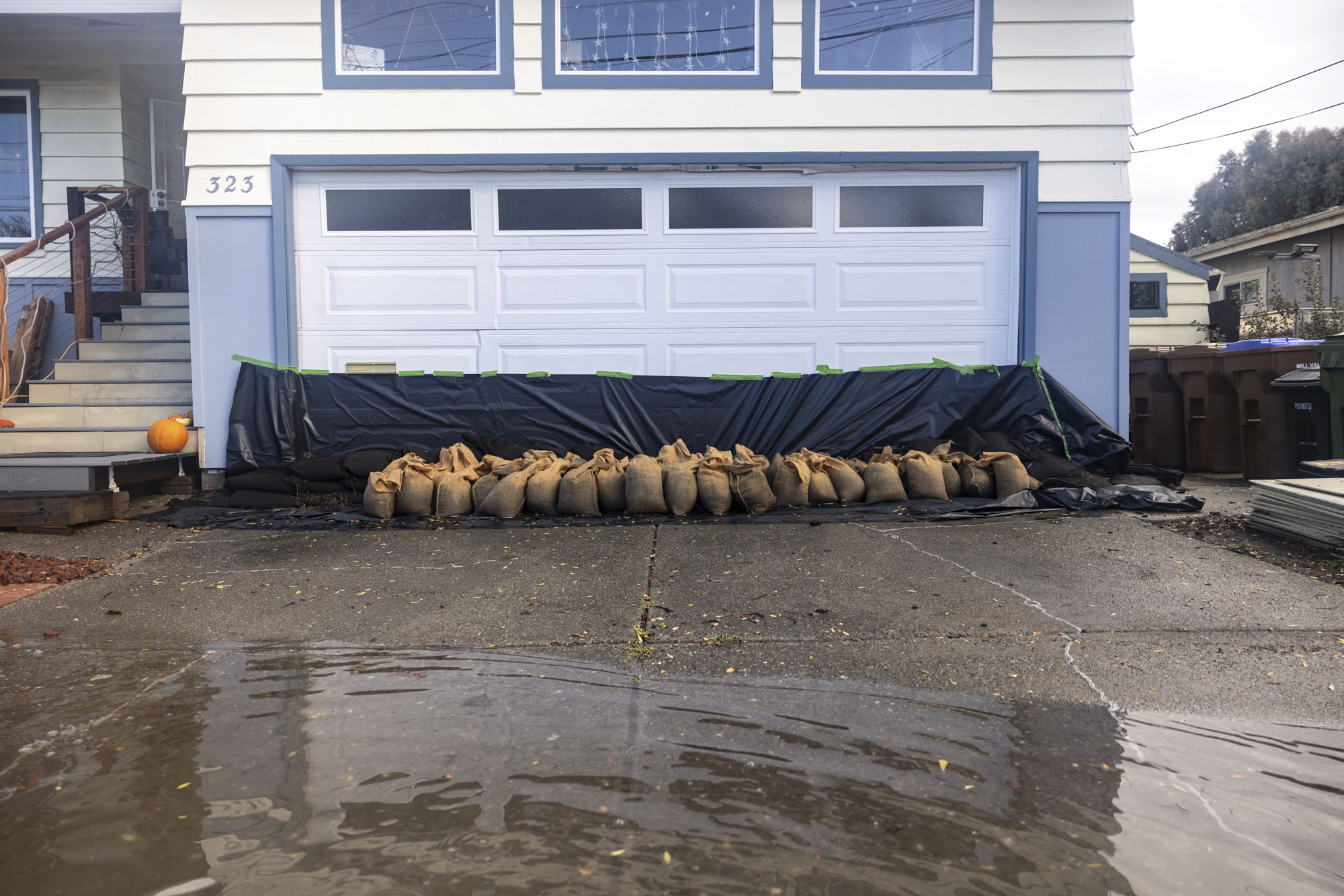
California is preparing for what could be the strongest El Niño on record. This climate phenomenon pushes warm ocean water from Asia to the West Coast. And that can cause intense — and, at times, historic — storms.
Pair that with a rising ocean. High tides are expected across the Bay Area throughout the holiday season and beyond. Earlier this month, the National Oceanic and Atmospheric Administration reported that tides in San Francisco were around 2 feet above predicted levels. Climate scientist Daniel Swain said the higher seas, king tides, waves and storms could cause record-breaking flooding across the region.
Swain, with UC Agriculture and Natural Resources, is particularly worried about bayside Marin, San Francisco and San Mateo counties, as well as parts of the East Bay, like the island city of Alameda.
“These are all places that could see major highways, and even neighborhoods, underwater,” Swain said. “Don’t be surprised if you can’t drive on Highway 101 for multiple consecutive days.”
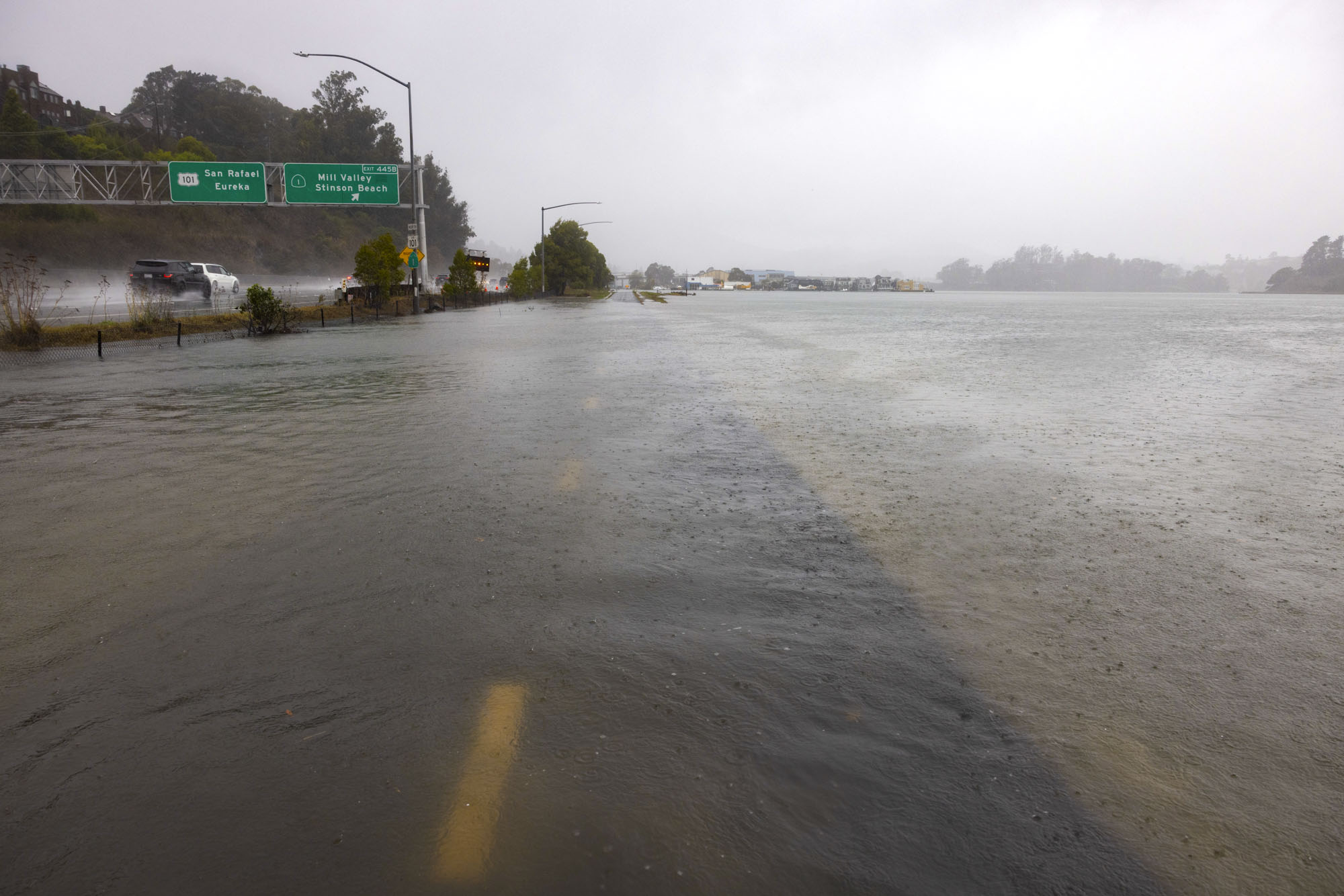
Corte Madera in Marin County already saw multiple streets flooded after recent storms. And entire vehicles were submerged in San Francisco’s Marina, Mission and Sunset districts around that same time.
But if you are a tenant renting your home and your home floods after a storm, who is responsible for repairs?
According to state law, that’s the landlord’s obligation. And these responsibilities still apply if you are renting month-to-month without a written lease contract.
KQED spoke to Leah Simon-Weisberg, executive director of California Center for Movement Legal Services, to better understand what rights tenants have during and after the winter storms and how to best communicate with your landlord.
(And if you’re a homeowner reading this, instead of a tenant? We’ve got a guide to why your existing home insurance policy almost certainly doesn’t cover flooding — and what to do about it.)
Step 1: What are the damages?
In California, tenants are protected by a health and safety code in the state’s Housing Law that lays out how a home should be maintained.
This regulation requires landlords to ensure their properties have things like working toilets and sinks, but it also prohibits homes from having walls, ceilings and floors that are deteriorating or damaged, along with leaks, mold and lack of heating.
“Those are all things that have impacts on people’s health and are not considered lawful in California,” said Simon-Weisberg.
If you believe the conditions in your home have become unsafe after the storms and your life could be in danger, leave the house immediately and call 911, said Simon-Weisberg.
But if it’s something smaller, she said, “something you can contain with towels or a pot, call your landlord.”
How to talk with your landlord
It’s understandable that some tenants may feel nervous about talking with a landlord, especially if they do not have a lease contract or are afraid of some sort of ramification for speaking up. That said, it’s important to have the conversation.
“I really want to encourage people to have the courage to call their landlords,” Simon-Weisberg said.
“First off, it’s against the law to retaliate against a tenant for speaking about repairs,” she said. “A landlord is always responsible for maintaining a unit so that it is healthy and safe for the tenant.”
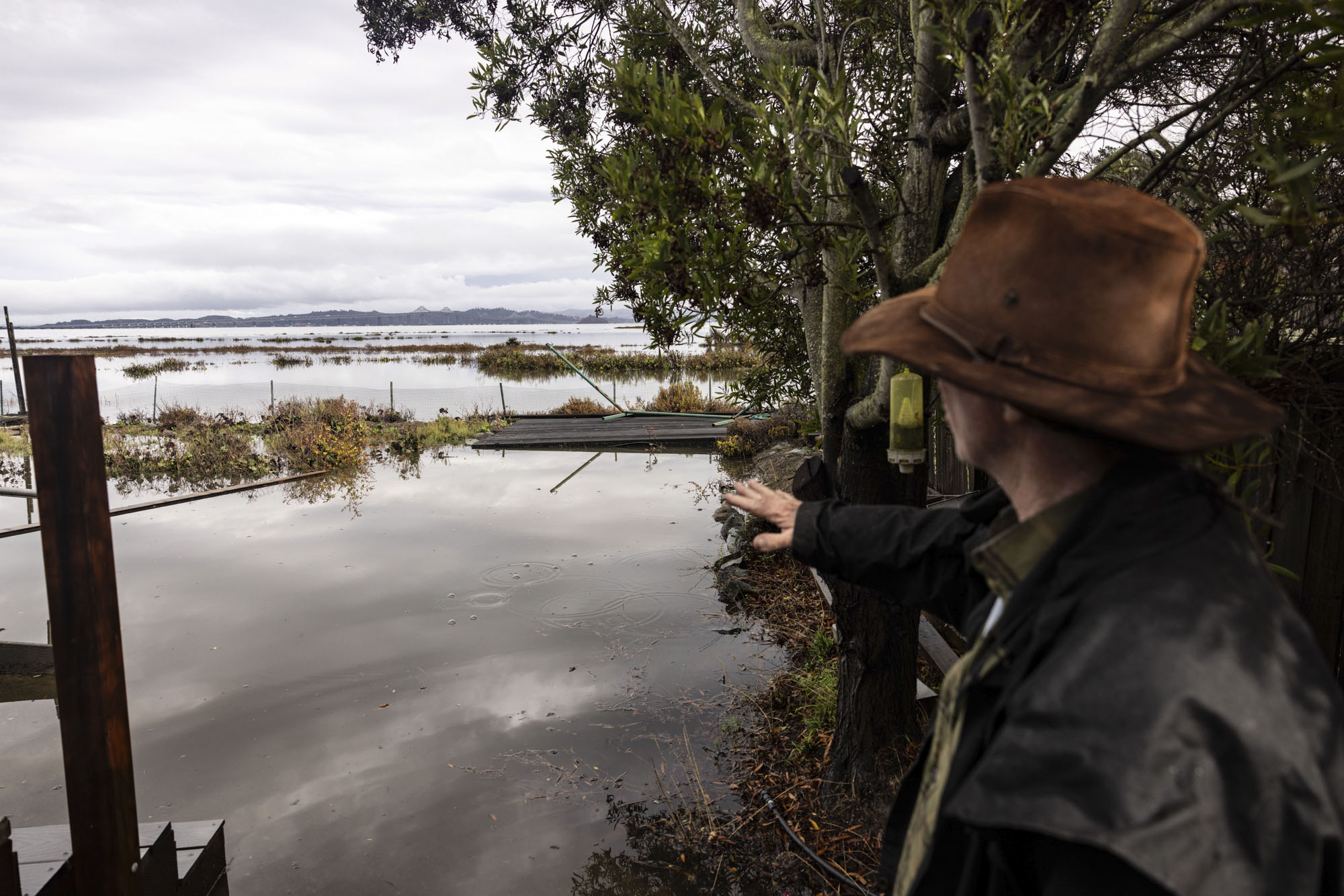
These tenant protections apply even if you do not currently have a written lease contract. California recognizes verbal agreements and property owners cannot use damages caused by the storm as an excuse to evict tenants.
“Once the landlord has accepted a dollar for rent, then you have a tenancy and [tenants] can’t be evicted without using the legal process,” Simon-Weisberg said.
Once you are ready to contact your landlord, keep in mind that a phone call works, but it is best to back that up with an email or text message that confirms what you talked about. Make sure to include:
- Photos of the damage;
- The time it occurred;
- Details about personal belongings that may have also been damaged.
“The sooner someone is in there to make repairs, the safer you are,” Simon-Weisberg said. “And the less damage that’s going to happen both to where you’re living, but also to your belongings.”
I’m having problems getting my landlord to make repairs
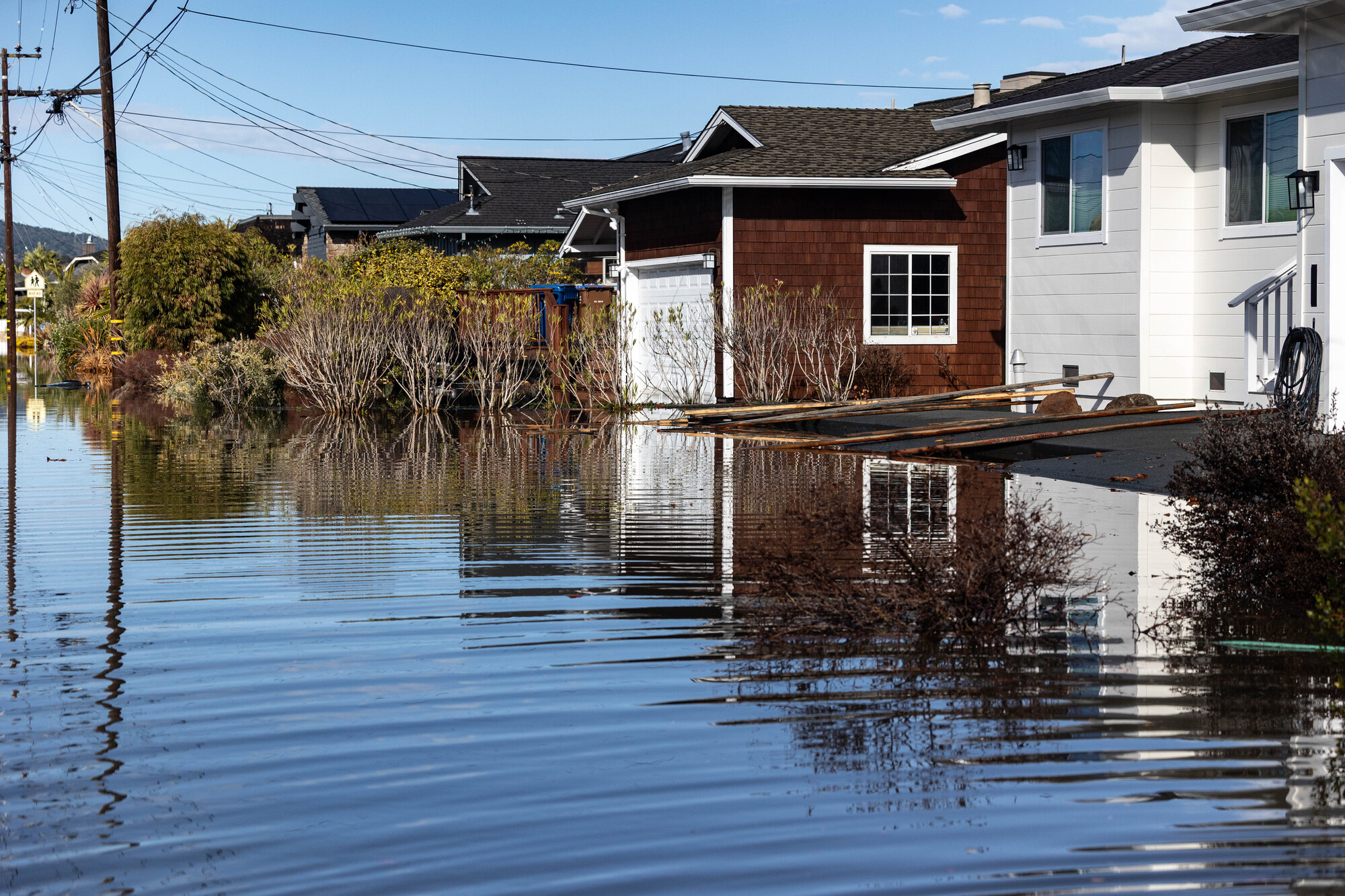
In some instances, landlords may push back and argue that it is not their responsibility to make repairs after a flood, claiming there’s a natural disaster exemption.
Simon-Weisberg disagrees with this argument and from her legal perspective she argued that this kind of exemption can be used when a natural phenomenon, like an earthquake or a tsunami, affects all houses in a city or region.
“If people’s houses are flooding, it’s because they’re not being properly maintained,” she said.
A landlord should let you know what repairs will be made and give you a timeframe. If you’re still being rejected or not hearing back at all, that’s when you call the government, Simon-Weisberg says.
One option is to call your city’s code enforcement agency, the office responsible for making sure all homes follow the state’s housing law. You can reach out to them to let them know what situation your home is in and that your landlord has failed to resolve it.
Below is the contact information for code enforcement agencies for several Bay Area cities. If the situation in your home has worsened and your life is in immediate danger, call 911.
- San Francisco: Call 311 or file a complaint about a San Francisco rental online.
- San José: Call (408) 535-7770 or file a complaint about a San José rental online
- Oakland: Call (510) 238-3444 or file a complaint about an Oakland rental online
- Redwood City: Call (650) 780-7577
- Santa Rosa: Email [email protected] or file a complaint about a Santa Rosa rental online.
- Richmond: Call 311 or (804) 646-6398.
- Vallejo: Call the city’s Building Division at (707) 648-4374.
I can no longer live in my home because of the damages. What can I do?
If your landlord has scheduled repairs that require you to live somewhere else in the meantime, they are required to pay for your housing, which could be a hotel or another property.
“That being said,” Simon-Weisberg added, “you will probably need to be paying rent while they pay for those other things. You can’t both withhold rent and have your hotel paid.”
What if my belongings were also damaged by water?
If water damage has destroyed your belongings, like a computer or furniture, make sure to document that and include this information when communicating with your landlord.
Janet Ruiz, director of strategic communication for the Insurance Information Institute, an industry group, told KQED in 2023 that “your landlord is not responsible for your belongings,” and that, instead, “renters’ insurance or flood-renters’ insurance … would cover your belongings.”
If you do have renters’ insurance, check in with your agent to understand what your policy covers and what costs you or your landlord may have to cover.
If you don’t have renters’ insurance, however, keep in mind most policies come with a 30-day wait period for the benefits to begin, so damages potentially caused by recent storms would most likely not be covered.
Additionally, some tenants may have to pay higher premiums due to where they live, how old their home is and even how many floors there are in their building.
KQED’s Ezra David Romero and Brian Watt contributed to this report. An earlier version of this story was originally published in 2023.