My Car Was Parked on a Street That Flooded. Now What?
Bay Area residents will likely need to brace for more flooding this week, as another storm is predicted to hit the region on Tuesday and Wednesday, according to the National Weather Service.
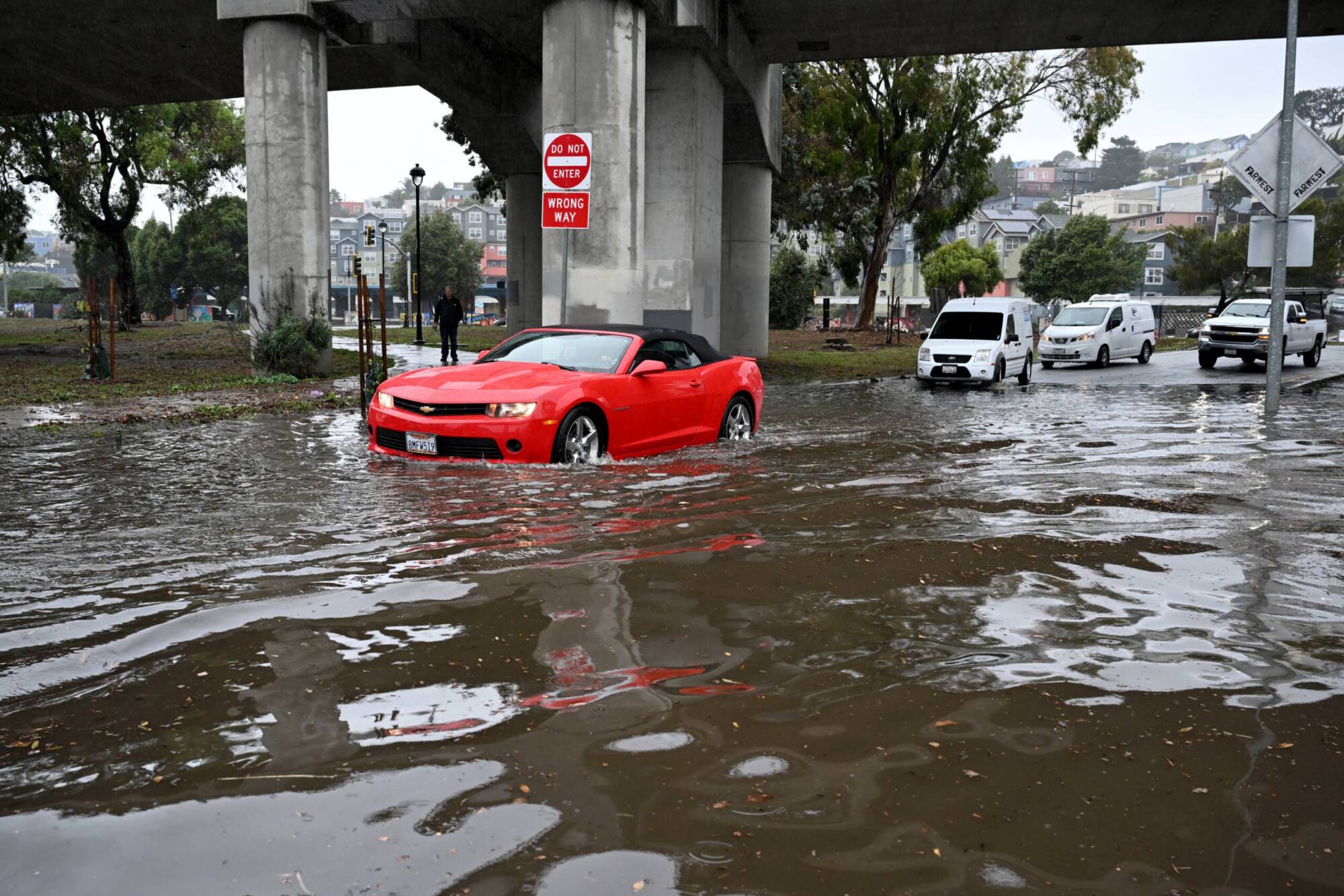
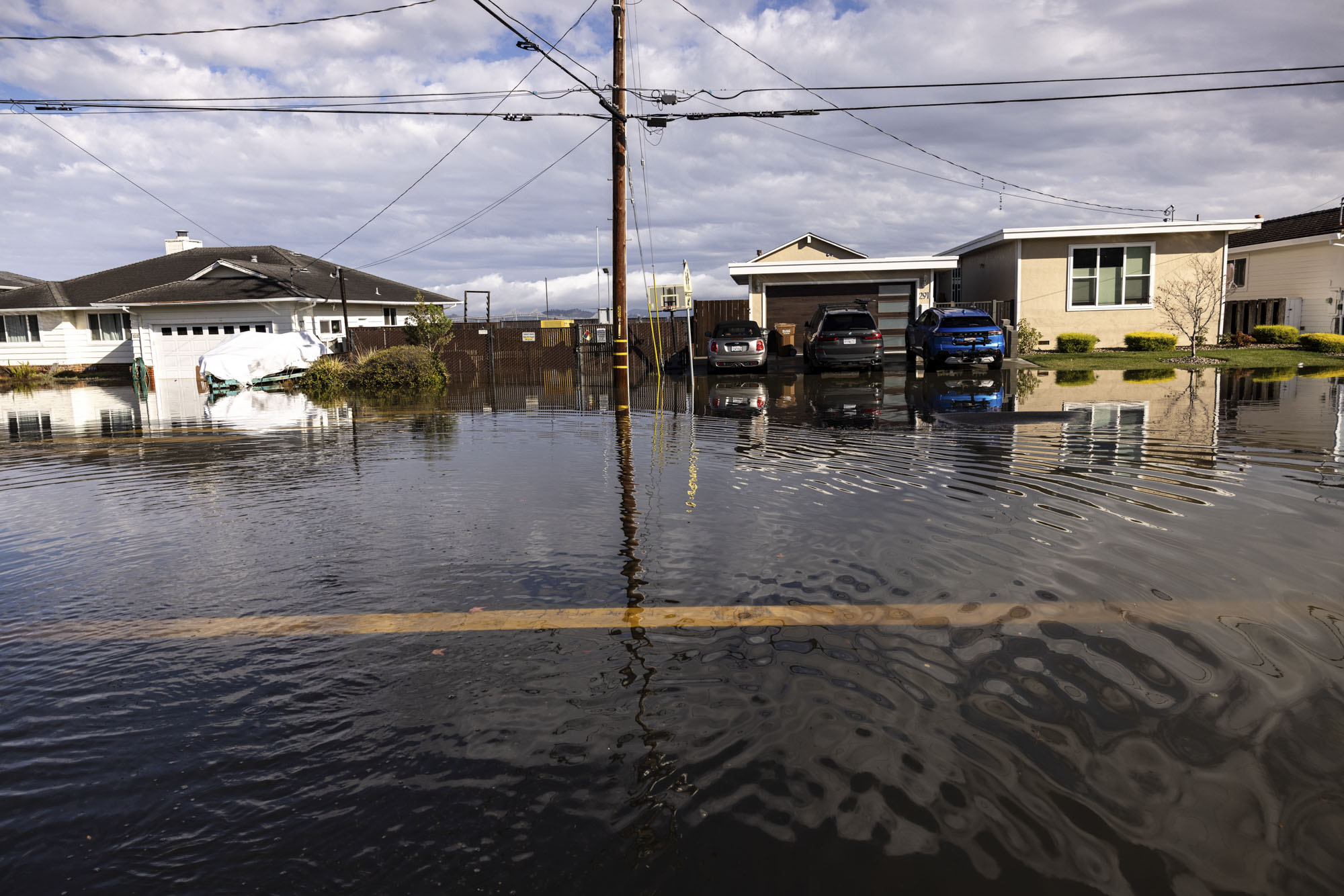
Impacts from last week’s weather include power outages, flight delays, downed trees and cars stuck on flooded streets.
While San Francisco Fire Department’s Public Information Officer Lt. Bruno Bovo said that he does not have a confirmed count of flooded vehicles in the city, “Wednesday’s storm caused significant flooding in several low-lying and coastal areas,” with cars and vehicles submerged along Marina Boulevard in the Marina District, Folsom Street in the Mission District and Noriega Street in the Sunset District.
Steps are being taken by the city to make it easier for people to avoid flood zones — including a suspension of parking enforcement at meters and on streets with time limits on Monday through Wednesday. (Mayor Daniel Lurie said in a social media post that street sweeping is currently scheduled to continue.)
If you are a Bay Area resident with a car, there is a chance that it may get caught up in this week’s powerful rainfall. While this is a major hassle with a lot of insurance paperwork, it can also be a potentially dangerous situation. Read on to learn what immediate actions you can take — all while staying safe.
My car got stuck in a flooded area. Should I even enter the water to get my car?
According to Bovo, you should stay out of floodwater since it can expose you to waste, downed power lines and chemicals.
“Floodwater can contain sewage, fuel, and debris, and it can hide road hazards (i.e., washed out roadways and displaced manhole covers),” he explained in an email.
And yes — there is a chance that sewage here includes feces. You can be at risk of getting infections, rashes, gastrointestinal illnesses and tetanus.
If someone is trapped in flood water or in immediate danger, call 911, he said.
If you are in your car and you approach a flooded area, do not attempt to drive through it. According to the California State Water Board, 6 inches of water can sweep away an adult and 12 inches of water can sweep away a car.
Should I try to start my car engine?
Bovo said that if your car was flooded, you should not start it. Starting it can worsen engine or electrical damage.
“Once the water recedes, contact your insurer or roadside assistance to arrange a tow and have the vehicle inspected by the manufacturer or certified auto shop,” he wrote in an email. Roadside assistance includes service providers like AAA.
While you may be too stressed out to be thinking long-term, it’s important to make sure you take pictures of everything before the car is moved, according to AAA. Pictures should include the vehicle’s surroundings, its exterior and — when possible — its interior.
Focus on any “waterlines” or places with water marks where you wouldn’t expect. You’ll need this kind of documentation if you are hoping to report damages to your insurance provider.
Are electric vehicles at a different level of danger?
Flooded electric vehicles do carry additional risks, Bovo said.

“Damage to the high-voltage battery can cause electric shock, toxic fumes, or a fire that starts after the water recedes,” he explained. “Seawater is especially dangerous because saltwater conducts electricity and can corrode battery components, increasing the risk of a short circuit and a delayed fire.”
He said that people should not start, drive or charge a flooded — or possibly flooded — electric vehicle, like a Tesla. Instead, tell a tow operator that you have a flooded EV, Bovo said.
If you see smoke or fire, move away and call 911.
What happens if I do touch floodwater? What should I do?
According to the Centers for Disease Control and Prevention, wash the area with soap and water as soon as possible. Alcohol wipes or sanitizer can also be used as a backup.
You should also wash your clothes in hot water and detergent, and throw away items that cannot be disinfected.