California Democrats Rally to ‘Deliver’ on Proposition 50. Was It Really Needed?

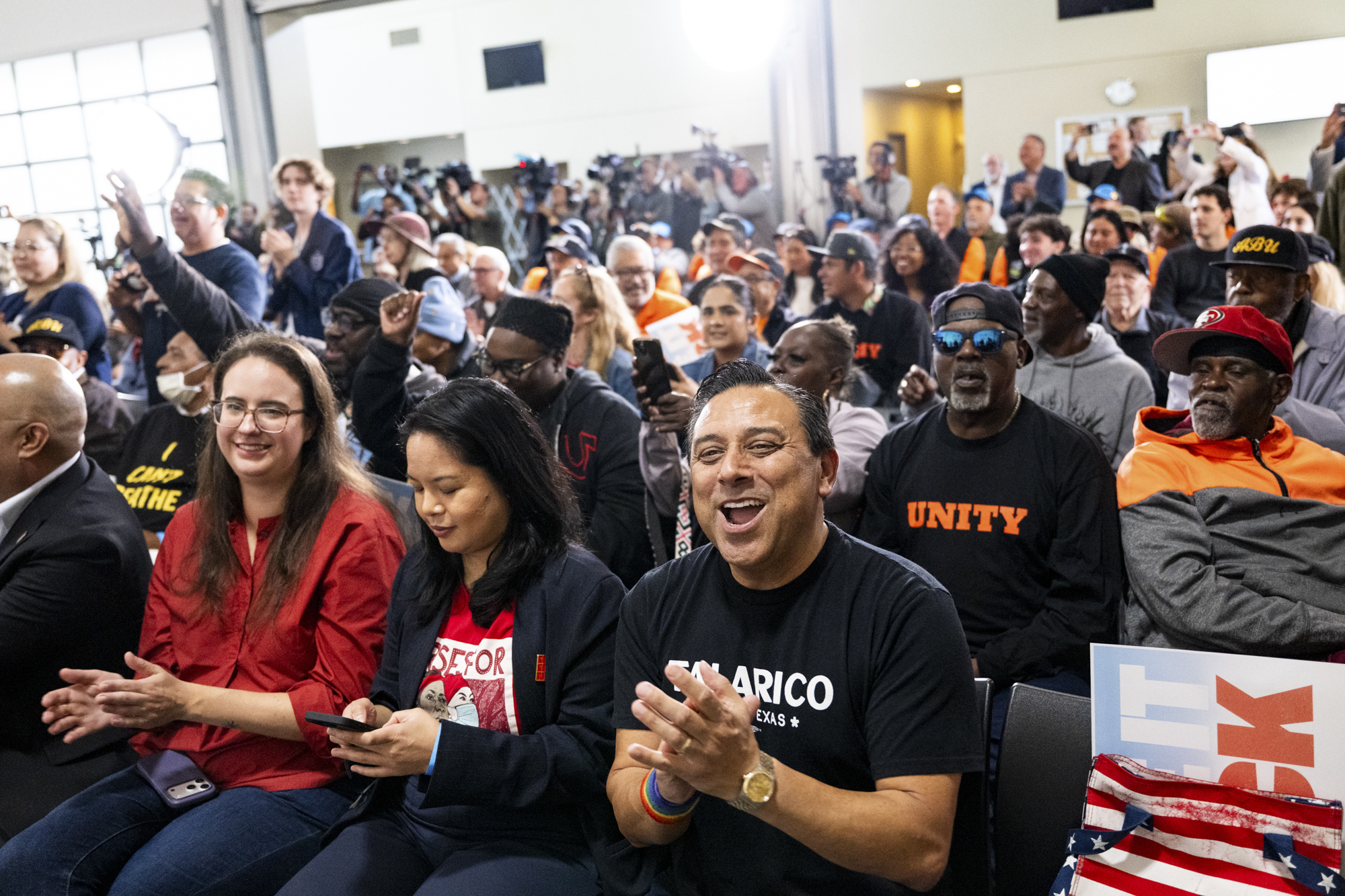
Feeling buoyant about their chances to retake the U.S. House of Representatives in November, California’s leading Democrats took a victory lap Friday over the congressional maps they drew last year to flip Republican-held seats amid a nationwide redistricting battle.
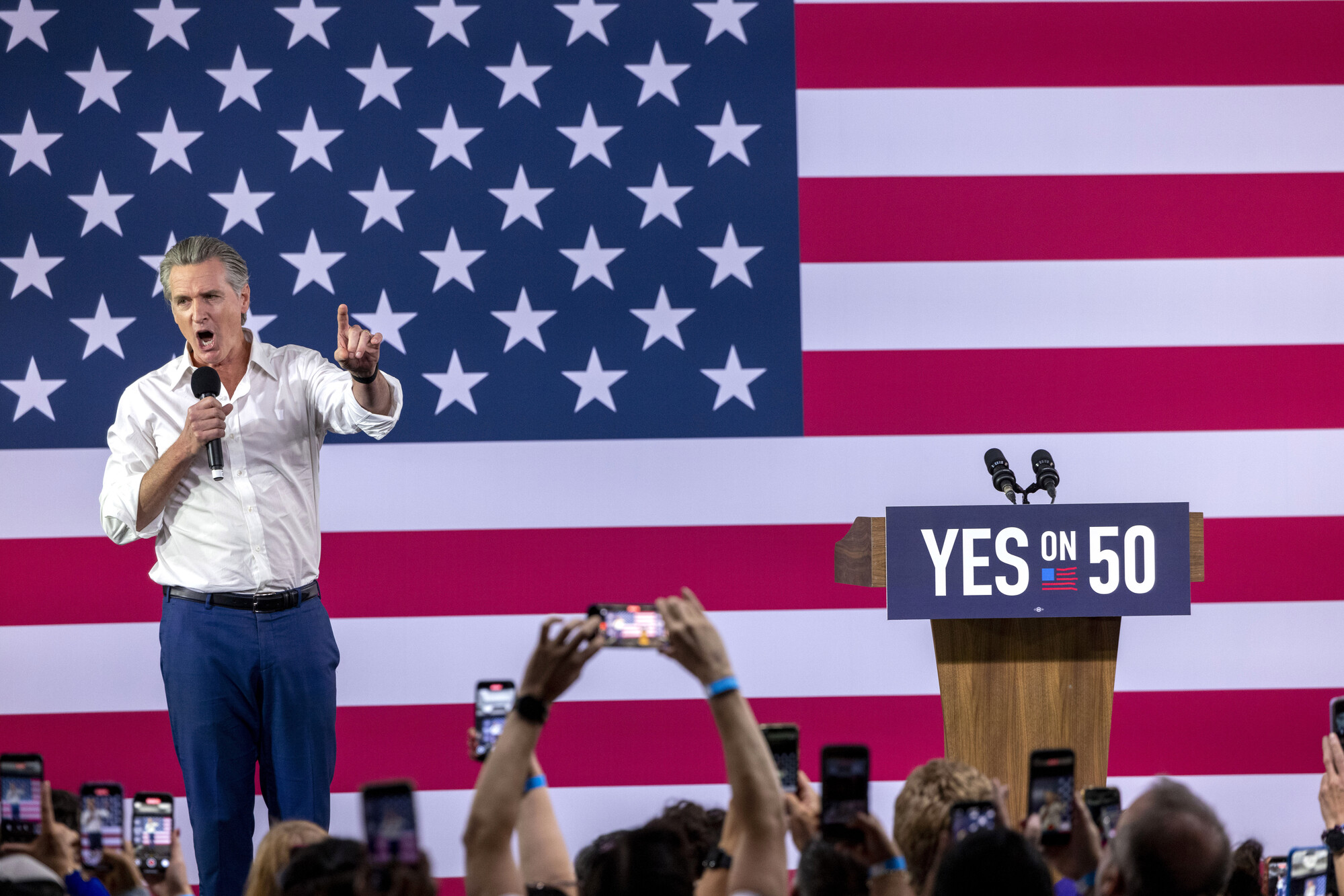
“Donald Trump’s presidency as we know it ends on November 3rd, as long as we do our job,” Gov. Gavin Newsom said at a rally in a San Francisco union hall.
The passage of Proposition 50 in a special election last November won Newsom praise from Democrats across the country who saw the daring redistricting move as a powerful counterpunch against Republican gerrymanders in Texas and other states.

At the time, Newsom pitched the gerrymandering measure as an existential fight: “If Californians don’t act now, Donald Trump will seize total power for two more years,” the governor wrote in the official voter guide argument.
But a year later, that outcome seems increasingly unlikely, and the gains made through what some Democrats called “emergency maps” could be rendered a mere drop in a blue wave.
Nonpartisan analysts now project Democrats could capture as many as 20 Republican-held seats nationwide in the Nov. 3 midterm election — raising the possibility that Democrats could claim a majority regardless of results in California.
Dragged down by President Donald Trump’s plummeting approval rating, the political environment has gotten so dire for the GOP that multiple California Republicans likely would have been endangered even under the state’s old maps.
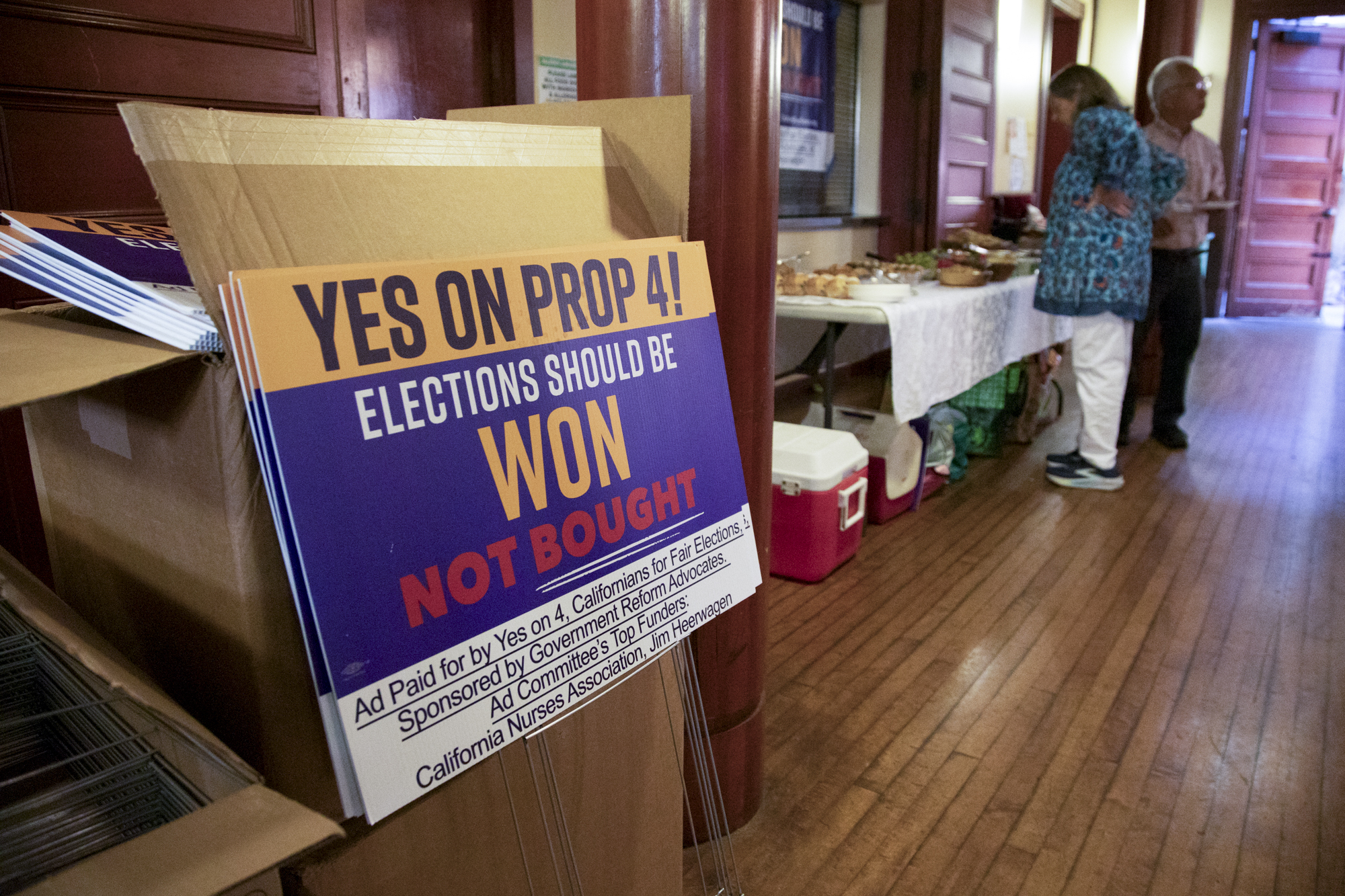
“It very well could be [Democrats] would have taken back Congress anyway, it turns out,” said Rob Stutzman, a Republican strategist. “But at the time it did make a lot of political sense.”
Supporters of Proposition 50 said the new maps, which paved the way for Democrats to add up to five additional seats in California, were an appropriate response to what they described as an emergency for democracy.
Spurred on by Trump, Republicans in Texas had launched an effort to redraw their maps to add five seats to the GOP column, followed by similar plans in North Carolina, Ohio, Florida and a handful of southern states that together could have tilted anywhere from seven to 15 seats toward Republicans.
Proposition 50 passed with over 64% of the vote. But in the process of wading into the gerrymandering battle, California voters cast aside political lines drawn by the California Citizens Redistricting Commission — an independent panel of citizens who seek to group communities together in districts based on shared needs, not political aims.
The commission collected months of testimony about shared commute patterns, natural boundaries and local industries to inform their district lines.
“And that matters because one would hope that the elected official that a community elects would represent those issues in Congress,” redistricting commissioner Pedro Toledo told KQED last year.
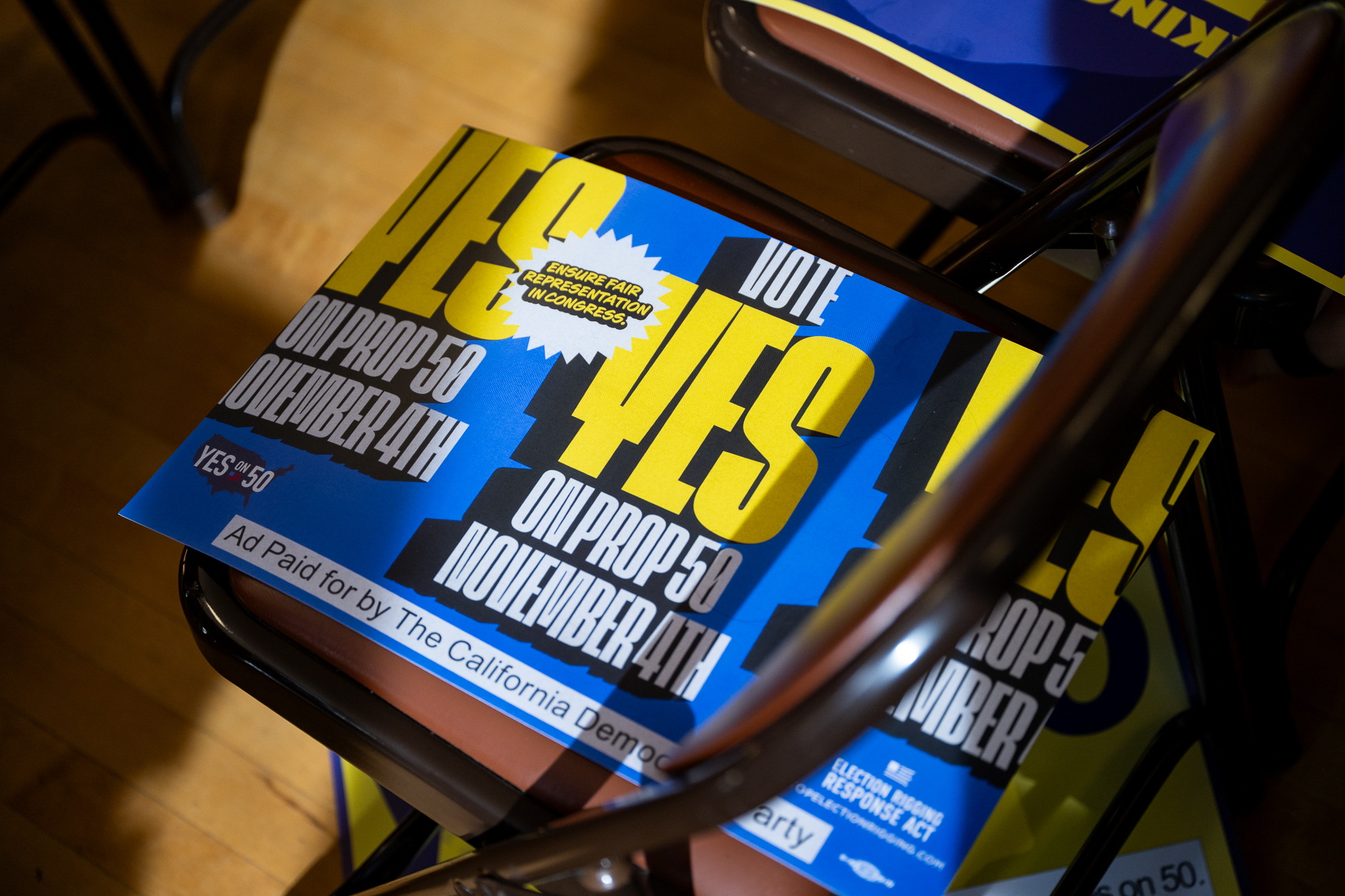
What’s more, the Proposition 50 lines have brought headaches for some Democratic incumbents, who suddenly were forced to run for reelection in reshaped districts.
Asked after Friday’s rally whether he would still consider Proposition 50 worthwhile if Democrats win a big victory in the House, Newsom said the measure signaled “a pivotal moment when we stood up and we fought back.”
“We fought fire with fire, and that moment I think is coming full circle,” Newsom said. “But we’ve got to deliver on the promise and the promotion, and that’s why it’s critical that we get those five seats and not just redraw those five districts.”
Defenders of Proposition 50 said the message was just as important as the math. At a time when liberal voters were yearning for a fight, the redistricting push showed Democrats willing to take their gloves off.

“I think it started that momentum,” said Jodi Hicks, CEO of Planned Parenthood Affiliates of California. “It was voters having a chance to stand up and say that they want to stop what Washington is doing…. I think the whole country was looking at California.”
The measure added hundreds of thousands of Democratic voters to two GOP-held seats in Northern California — and drastically reconfigured the Inland Empire district held by Republican Rep. Ken Calvert. The Proposition 50 maps also bolstered Democrats’ chances in two additional seats held by Republicans: the 22nd District in the Central Valley, and the 48th District, which covers parts of San Diego and Riverside counties.
But the national political climate suggests Democrats are likely to win back the House, even without the Proposition 50 redraw.
Trump’s approval rating has fallen below 40% in public polling as tariffs, health care cuts and rising gas prices driven by the war in Iran have roiled many voters.
Nationwide, voters now prefer a generic Democratic candidate over a generic Republican by 8 points, according to Real Clear Polling, and nonpartisan analysts are increasingly bullish about Democrats’ chances in the House.
Both the Cook Political Report and Sabato’s Crystal Ball at the University of Virginia have Democrats winning around 235 seats on the high end of likely outcomes — well past the 218 needed for a majority.
“At this point not only would it be a shock if Republicans held the House, but it would also be a surprise if Democrats did not at least exceed the tiny-sized majorities of the last three Congresses,” managing editor Kyle Kondik wrote in Sabato’s Crystal Ball this week.
Democrats are running competitive races in deep red territory and continue to be hopeful about their chances to pick up seats in Iowa, Texas and Montana that Trump won by 10 points or more in 2024.
Under a wave of that size, Democrats could have realistically won a handful of seats in California even without the Proposition 50 redraw, said Eric McGhee, senior fellow at the Public Policy Institute of California.
The Bakersfield-area 22nd District held by Republican Rep. David Valadao shifted toward Trump in 2024 but would have remained competitive under the old maps. In Southern California, Trump won the old 41st District, held by Calvert, by less than 6 points in the last election and the 40th District, represented by Republican Rep. Young Kim, by less than 3 points. And in Northern California, Rep. Kevin Kiley would have been tasked with defending a Sacramento-area seat that Trump won by less than 4 points.
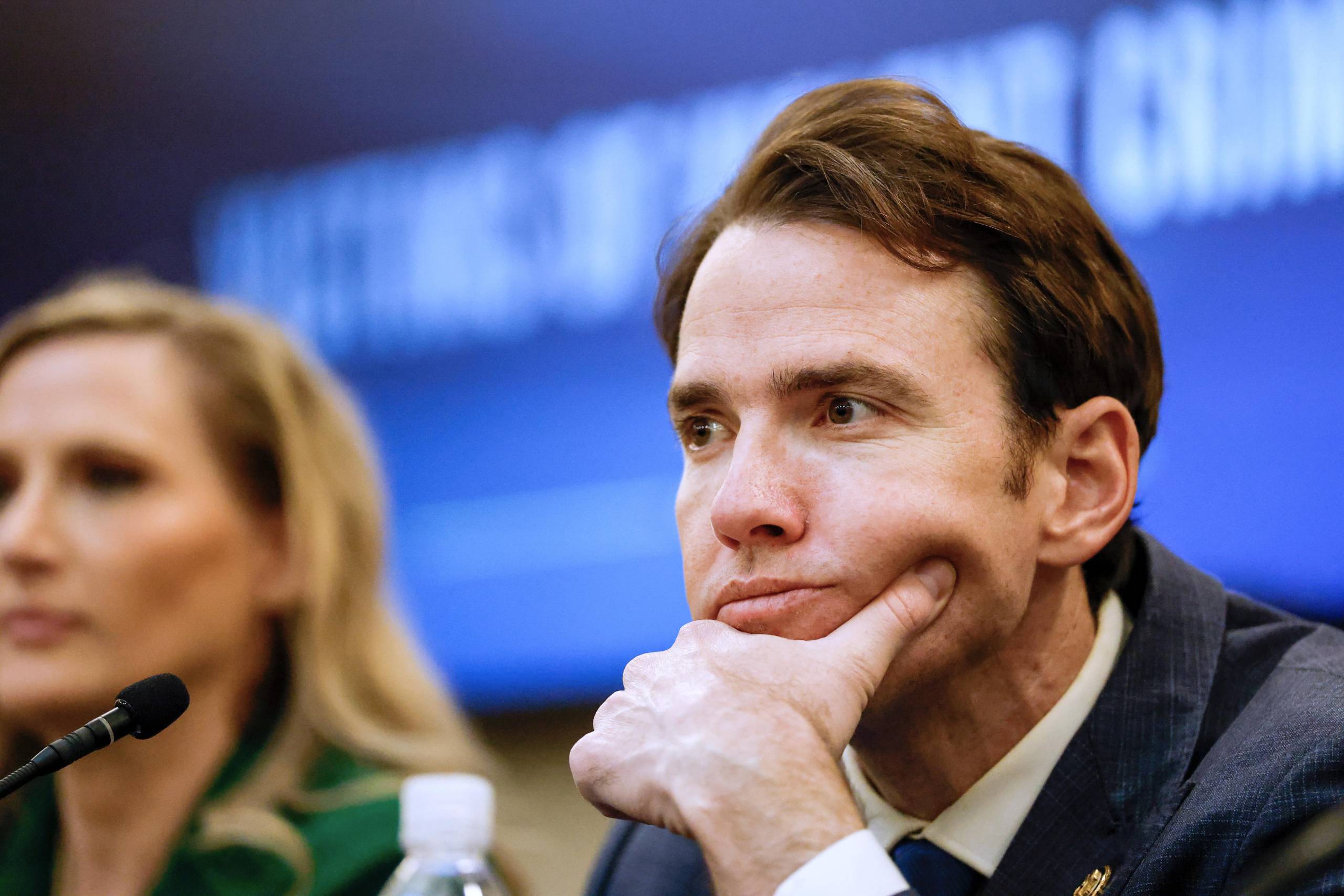
“It’s not clear in a midterm election with an unpopular president that the Democrats wouldn’t just pick up these seats anyway,” McGhee said.
Instead, the Proposition 50 lines moved Calvert’s seat to a safe blue part of Los Angeles and forced Kim and Calvert into a head-to-head matchup that will ensure one incumbent will be leaving Congress after the election. Kiley responded to the gerrymandering of his seat by running as an independent in a neighboring district.
Democrats running in safe blue seats were also affected by the line changes.
In the North Bay, Rep. Mike Thompson is facing a challenge from fellow Democrat Eric Jones in a district that lost tens of thousands of Democratic voters that Thompson had previously represented in Sonoma. Rep. Doris Matsui faces a similar dynamic as she seeks reelection in Sacramento against Democratic City Councilmember Mai Vang.
To be sure, Proposition 50 did more than simply elevate Democrats’ chances of flipping Republican-held seats in 2026. The new maps also increased the party’s margins in competitive districts already held by Democrats — providing a fire wall against a more unfavorable political climate in 2028 or 2030. Under current law, the independent redistricting commission won’t resume its work until after the 2030 election.
“There’s definitely opportunities for a harder year for Democrats to come along, and this plan is helpful to them for those kinds of years,” said McGhee.
And few politicians seemed to grasp the desire for a partisan scrap more than Newsom, who emerged from the Proposition 50 campaign as a leading contender for the party’s presidential nomination in 2028.
“He’s positioned himself as a fighter against Trump,” said former Democratic Assemblymember Phil Ting. “You see Democrats across the country feeling kind of helpless — they’re saying, ‘Hey Democratic leaders, who is fighting for us?’ And they see our governor fighting.”
As for the prospect of a big Democratic wave washing away the relevance of Proposition 50?
“I’ll believe it when I see it,” Ting said. “Absolutely it was worth it because you had to set the tone … are we just going to stand and watch or are we going to fight?”