One Key To California's Climate Goals? How We Cook
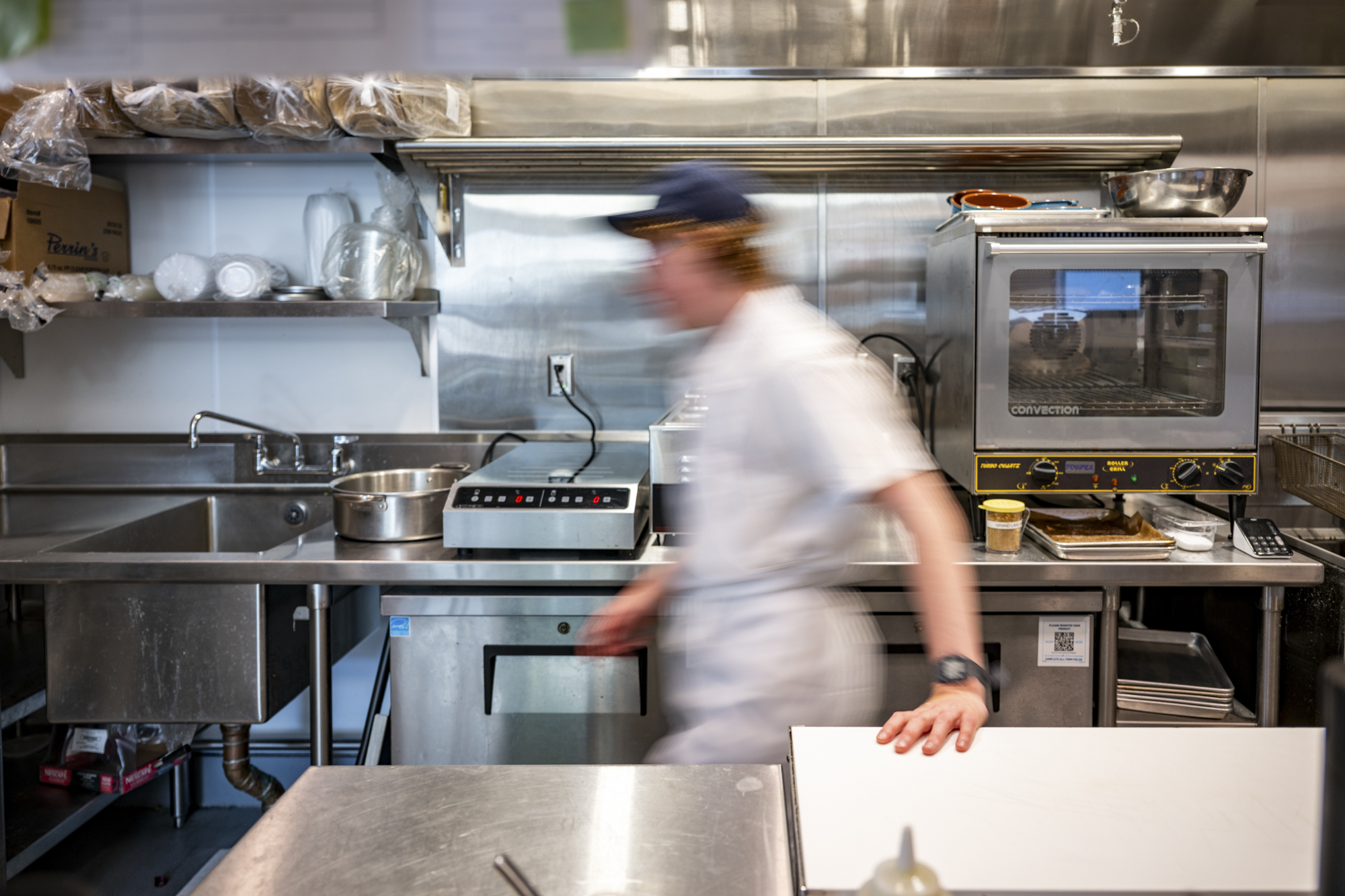
The vast majority of commercial kitchens in California — some 85% — rely on gas to power their appliances. But scientists say that will have to change if the state hopes to reach its goal of net-zero greenhouse gas emissions by 2045. Bay Area food franchise Flour + Water is one of many local shops leading the charge away from gas appliances. In today’s episode, KQED reporter Azul Dahlstrom-Eckman visits an electric pizza kitchen to help us understand the benefits of electrification and what’s preventing more kitchens from making the switch.
Links:
Episode Transcript
This transcript is computer-generated. While our team has reviewed it, there may be errors.
Ericka Cruz Guevarra: [00:00:00] I’m Ericka Cruz Guevarra and welcome to The Bay, local news to keep you rooted. Many think of California as a leader when it comes to fighting climate change. We’ve got this ambitious goal of net zero greenhouse gas emissions by 2045. But there are a lot of things that get in the way of that. Like our reliance on cars and perhaps one less obvious reason, how we cook.
Azul Dahlstrom-Eckman: [00:00:32] As long as there are stoves with a gas pipe leading to them, we’re going to keep burning gas in this state. And restaurants are this very entrenched use of natural gas.
Ericka Cruz Guevarra: [00:00:47] 85% of California restaurants use gas to power their appliances. And it turns out, electrifying restaurant kitchens could actually play a pretty big role in getting us closer to our climate goals.
Rob Jackson: [00:01:04] We know that the pollution that’s created by burning fossil fuels is harmful and there’s no reason to do that now when cleaner, better technologies are available.
Ericka Cruz Guevarra: [00:01:14] Today, the benefits of electrifying California’s restaurants and what it’s gonna take to get more of them on board.
Azul Dahlstrom-Eckman: [00:01:30] You know, we think of California as like this leader in climate change, right? We have more efficient fuel for our cars. We invest in transit and carpooling and all this stuff.
Ericka Cruz Guevarra: [00:01:39] Azul Dahlstrom-Eckman is a reporter for KQED.
Azul Dahlstrom-Eckman: [00:01:44] Buildings, and then restaurants in particular, are this one place where we’re really behind. Buildings are responsible for about a quarter of all of California’s greenhouse gas emissions and restaurants in our state use gas at a much higher rate than other states.
Brandy Seals: [00:02:03] This is a sleeper issue. A lot of people don’t realize it.
Azul Dahlstrom-Eckman: [00:02:07] Brandy Seals is the Director of the Electrification for Health program at Stanford University. And they’re really looking at benefits of electrifying.
Brandy Seals: [00:02:18] So when you look at commercial spaces, kitchens, and food service, they have about five times the energy usage of a standard office.
Azul Dahlstrom-Eckman: [00:02:28] She says that commercial kitchens really like punch above their weight. Because restaurants use gas, they’re also sort of cementing this demand for gas. So she says that if we’re gonna really address this issue of climate change, we need to start looking at buildings and specifically restaurants.
Ericka Cruz Guevarra: [00:02:48] So it sounds like commercial kitchens are maybe an untapped space for electrification that I’m definitely not thinking about. But what are the barriers to actually making it happen and also making it more common?
Azul Dahlstrom-Eckman: [00:03:03] Well, I think like, first off, just put yourself in the shoes of a restaurant owner, right? Restaurants run on extremely thin margins. You know, there’s a lot of turnover, like, you know, most restaurants don’t even make it a year, right. And in order to switch to electricity, that’s a big investment, right, most restaurants are going to come with gas hookups for your appliances. But in order to switch electric, you gotta get a new panel, you got to pay for new electric service. You gotta buy these appliances. Electricity, not cheap in California. I mean, we have the most expensive electricity in the Continental 48. There’s also not as much of a demand in the market. So it’s just kind of like this small niche thing that’s growing that is kind of still waiting to see its moment.
Ericka Cruz Guevarra: [00:03:59] So you visited a restaurant that actually went electric. Who did you meet and what did they say about the practical barriers that they faced?
Azul Dahlstrom-Eckman: [00:04:11] Can we do a little tour?
Thomas McNaughton: [00:04:12] Yeah, of course. So our pantry section or garmagé.
Azul Dahlstrom-Eckman: [00:04:16] So I went to Flower and Water. They have a pizza shop in Oakland, but they’re part of this restaurant group. They’ve essentially committed to making all of their future restaurants electric.
Azul Dahlstrom-Eckman: [00:04:29] Machines, slushies, burners, fryers, everything here runs on electric.
Azul Dahlstrom-Eckman: [00:04:35] I talked to their CEO, Thomas McNaughton. He said basically, when you said like electric oven to him like 10 years ago, he was like, he thought of like an Easy Bake Oven, you know, like a toy.
Thomas McNaughton: [00:04:45] And I didn’t realize how evolved the technology really is.
Azul Dahlstrom-Eckman: [00:04:49] But he said that changed around six years ago. He started seeing these electric ovens that were like really powerful.
Thomas McNaughton: [00:04:56] And that kind of introduced us to the idea, saying, like, if this oven is so powerful, couldn’t we build our entire operation around electricity?
Azul Dahlstrom-Eckman: [00:05:07] He said that sustainability is like a really important value of theirs.
Thomas McNaughton: [00:05:11] Sustainability for us is not just where we buy our seafood from.
Azul Dahlstrom-Eckman: [00:05:19] In terms of like the challenges that he faced, he said that whether or not a space has the ability to like accommodate the electrical load that like an electric kitchen requires is a limiting factor.
Thomas McNaughton: [00:05:36] A lot of older properties we’re not able to look at. And so that’s one that can feel somewhat constricting at times. Problem solving is one of the most fascinating parts of the job of a chef or a restaurateur.
Ericka Cruz Guevarra: [00:05:51] And that sounds kind of expensive, maybe? What was that process like?
Azul Dahlstrom-Eckman: [00:05:55] What McNaughton said is that in general to buy electric appliances is a little more expensive than gas ones, to run them is more expensive. They spend about $8,000 a month at their Oakland location on electricity, which is like 34 times higher than the average household in California. Oh my goodness. So it’s a considerable load.
Ericka Cruz Guevarra: [00:06:16] That’s a lot of money every month, Azul, for electricity. I mean, what makes it worth it for him?
Azul Dahlstrom-Eckman: [00:06:22] Well, I think on one hand, you know, he said sustainability is like a big part of their business So there is value in sort of like a non numerical thing for them I think now it’s sort of liked baked in no pun intended into their business, right? Like they are an electric Restaurant and it’s part of like kind of the identity of their pizza
Thomas McNaughton: [00:06:46] And really, these electric ovens, I think, really are creating this kind of new wave of pizza making because they’re so powerful, because you can toggle both deck top and bottom heat. It actually, we can incorporate a fair amount of char, like a Neapolitan pizza, but actually slow down the bake time. And that incorporates a lot more texture into our high-hydration dough that, to me, is incredibly craveable.
Ericka Cruz Guevarra: [00:07:16] Did you taste it?
Azul Dahlstrom-Eckman: [00:07:17] I did. yeah, I mean flower waters. It’s good pizza. I don’t think that’s a controversial take McNaughton’s like a finalist for like the James Beard Awards before so
Ericka Cruz Guevarra: [00:07:29] Yeah, they’re doing pretty well.
Azul Dahlstrom-Eckman: [00:07:31] Yeah.
Azul Dahlstrom-Eckman: [00:07:32] So my name’s Azul, I’m a reporter at KQED. Did you know that flour and water was all electric?
Commerical: [00:07:38] I did not know that they were all electric.
Ericka Cruz Guevarra: [00:07:59] We’re gonna take a quick break, but when we come back, the health case for electric kitchens. By the way, if you appreciate the local deep dives that we bring you here on the Bay, consider becoming a sustaining KQED member. We can’t do this work without you. Just go to donate.kqed.org slash podcasts. We’ll be right back.
Ericka Cruz Guevarra: [00:08:27] I guess aside from the broader ecological benefits of going electric, what do experts say about the other benefits for restaurants going electric?
Azul Dahlstrom-Eckman: [00:08:38] Just to like put a number on it, there’s a new study that actually came out this month that found that 70% of gas burning kitchens, so these are commercial kitchens that were studied, exceeded the recommended limits for nitrogen dioxide that’s like federal health standards. They also found, you know, like elevated levels of carbon dioxide, benzene, carbon monoxide.
Rob Jackson: [00:09:04] You would never stand over the tailpipe of your car breathing in those pollutants, and yet people stand over a stove breathing the same pollutants day after day, meal after meal.
Azul Dahlstrom-Eckman: [00:09:13] I talked to Rob Jackson, he’s an environmental scientist at Stanford University, and he talked about this.
Rob Jackson: [00:09:18] We know that the pollution that’s created by burning fossil fuels is harmful, and there’s no reason to do that now when cleaner, better technologies are available.
Azul Dahlstrom-Eckman: [00:09:28] And then imagine if you’re a chef in a kitchen, you’re standing over that burner for eight hours a day. And I talked to some of the chefs, they said like, it’s less greasy, you have a little bit more control. Like one thing they said about induction is like, you’ll never have a pot of cream boil over because with an induction cooktop, you can just like set it at a number and it’ll just stay there. Whereas with like flame, the heat transfer, things just get hotter and hotter. There is like some push back against cooking with induction or electric. A lot of chefs, you know, have hesitation around changing their cooking practices. The California Restaurant Association, which is this trade association group for the California restaurant industry, in a commercial from 2019, they said like, what about like searing meat or charring vegetables?
Commerical: [00:10:23] Or cooking food in a wok over high intensity heat. All of that would go away.
Azul Dahlstrom-Eckman: [00:10:28] Some of that could be due to the fact that induction is still catching up to where it needs to be in terms of technology.
Commerical: [00:10:36] Try doing three or 400 covers a night on an electric stove.
Azul Dahlstrom-Eckman: [00:10:42] How you cook is very personal. There’s cultural practices, there’s how you learned in cooking school, all these things that go into it. So, while McNaughton promotes this move that he’s made very heavily, a lot of people have doubts about it.
Ericka Cruz Guevarra: [00:10:56] Have there been any efforts at the local and statewide level to push more commercial kitchens to make this change?
Azul Dahlstrom-Eckman: [00:11:04] There’s been like a specific push for commercial kitchens and there’s been a broader push just to get gas out of all buildings. So you can go back to like 2019 in Berkeley. Berkeley passed a ban on natural gas in new construction. And the city of Berkeley is leading the charge with the law that covers new construction. That got a lot of pushback from the California restaurant association that successfully defeated the, the band in the courts by arguing basically like Berkeley was overstepping its bounds. They were trying to regulate the efficiency of things when that’s the remit of the title.
Newscaster: [00:11:40] New at 10 tonight, the City of Berkeley lost its latest legal battle. Today, the U.S. Court of Appeals for the Ninth Circuit denied Berkeley’s petition for the court to rehear the case after the ban was ruled illegal last year.
Azul Dahlstrom-Eckman: [00:11:53] There’s also efforts at the state level to incentivize kitchens specifically to go all electric. There’s rebates available through California utilities like PG&E for commercial kitchens to buy appliances. There’s these Chef Fluencers that is run by this group called the Building Decarbonization Coalition. And their jobs are basically to like preach the good word of induction and encourage people to adopt it.
Ericka Cruz Guevarra: [00:12:22] Yeah, there’s the practical piece of it of just making it easier, lowering the barriers for restaurants to get access to these things. But also there’s this norms piece of like really trying to get people in the restaurant industry to, I guess, see this as a thing that they could do that wouldn’t impact their food quality.
Azul Dahlstrom-Eckman: [00:12:46] Yeah, I mean, you know, when most people think of electric cooking, they think of those like janky electric coil stoves.
Ericka Cruz Guevarra: [00:12:52] Oh yeah, me too.
Azul Dahlstrom-Eckman: [00:12:53] But like that’s not what this is. This is like the technology has come a long way.
Katie Chin: [00:12:58] I think that there’s some misconceptions about it. Oh my goodness, it’s not gonna achieve the same quality.
Azul Dahlstrom-Eckman: [00:13:06] I spoke to Katie Chin. She’s a chef fluencer and a caterer based in Southern California. And she’s had her own journey with induction. Like when she first used it, she was like, oh no, like, you know, I’m a cater, I’m professional caterer. Like I gotta cook.
Katie Chin: [00:13:22] I had never cooked on one and it scared me.
Azul Dahlstrom-Eckman: [00:13:25] She told me this story about being stuck in Southern California traffic on the way to a catering gig and actually being thankful that there was induction at her client’s house.
Katie Chin: [00:13:36] Seeing is believing. So I was able to boil the water for, you know, 600 dumplings in a fraction of the time it would have taken for me to use a gas stove and heat up all that water. [00:13:45][9.1]
Azul Dahlstrom-Eckman: [00:13:46] She really says that people should try to keep an open mind.
Katie Chin: [00:13:52] And a lot of people associate like, well, how can you, how can get those great stir fries if you’re not like, you know how people flip the wok like this? I think the main stereotype is that, oh, it’s not gonna get hot enough. And I see no difference at all.
Ericka Cruz Guevarra: [00:14:09] I gotta say, Azul, when I think about our state fighting climate change, I don’t really think about commercial kitchens very much, but how much of a difference could it actually make if more commercial kitchens in the state address their emissions?
Azul Dahlstrom-Eckman: [00:14:26] I think it comes down to this thing where it’s like, as long as there are stoves with a gas pipe leading to them, we’re going to keep burning gas in this state. And if California is going to truly like decarbonize and get off gas, then we need to start looking at our buildings and restaurants are this very entrenched use of natural gas.
Ericka Cruz Guevarra: [00:14:55] Azul, this was such an interesting story. Thank you so much for sharing your reporting with us. Appreciate it.
Azul Dahlstrom-Eckman: [00:15:01] You’re welcome.
Some members of the KQED podcast team are represented by The Screen Actors Guild, American Federation of Television and Radio Artists, San Francisco-Northern California Local.