window.__IS_SSR__=true
window.__INITIAL_STATE__={
"attachmentsReducer": {
"audio_0": {
"type": "attachments",
"id": "audio_0",
"imgSizes": {
"kqedFullSize": {
"file": "https://ww2.kqed.org/news/wp-content/themes/KQED-unified/img/audio_bgs/background0.jpg"
}
}
},
"audio_1": {
"type": "attachments",
"id": "audio_1",
"imgSizes": {
"kqedFullSize": {
"file": "https://ww2.kqed.org/news/wp-content/themes/KQED-unified/img/audio_bgs/background1.jpg"
}
}
},
"audio_2": {
"type": "attachments",
"id": "audio_2",
"imgSizes": {
"kqedFullSize": {
"file": "https://ww2.kqed.org/news/wp-content/themes/KQED-unified/img/audio_bgs/background2.jpg"
}
}
},
"audio_3": {
"type": "attachments",
"id": "audio_3",
"imgSizes": {
"kqedFullSize": {
"file": "https://ww2.kqed.org/news/wp-content/themes/KQED-unified/img/audio_bgs/background3.jpg"
}
}
},
"audio_4": {
"type": "attachments",
"id": "audio_4",
"imgSizes": {
"kqedFullSize": {
"file": "https://ww2.kqed.org/news/wp-content/themes/KQED-unified/img/audio_bgs/background4.jpg"
}
}
},
"placeholder": {
"type": "attachments",
"id": "placeholder",
"imgSizes": {
"thumbnail": {
"file": "https://cdn.kqed.org/wp-content/uploads/2024/12/KQED-Default-Image-816638274-2000x1333-1-160x107.jpg",
"width": 160,
"height": 107,
"mimeType": "image/jpeg"
},
"medium": {
"file": "https://cdn.kqed.org/wp-content/uploads/2024/12/KQED-Default-Image-816638274-2000x1333-1-800x533.jpg",
"width": 800,
"height": 533,
"mimeType": "image/jpeg"
},
"medium_large": {
"file": "https://cdn.kqed.org/wp-content/uploads/2024/12/KQED-Default-Image-816638274-2000x1333-1-768x512.jpg",
"width": 768,
"height": 512,
"mimeType": "image/jpeg"
},
"large": {
"file": "https://cdn.kqed.org/wp-content/uploads/2024/12/KQED-Default-Image-816638274-2000x1333-1-1020x680.jpg",
"width": 1020,
"height": 680,
"mimeType": "image/jpeg"
},
"1536x1536": {
"file": "https://cdn.kqed.org/wp-content/uploads/2024/12/KQED-Default-Image-816638274-2000x1333-1-1536x1024.jpg",
"width": 1536,
"height": 1024,
"mimeType": "image/jpeg"
},
"fd-lrg": {
"file": "https://cdn.kqed.org/wp-content/uploads/2024/12/KQED-Default-Image-816638274-2000x1333-1-1536x1024.jpg",
"width": 1536,
"height": 1024,
"mimeType": "image/jpeg"
},
"fd-med": {
"file": "https://cdn.kqed.org/wp-content/uploads/2024/12/KQED-Default-Image-816638274-2000x1333-1-1020x680.jpg",
"width": 1020,
"height": 680,
"mimeType": "image/jpeg"
},
"fd-sm": {
"file": "https://cdn.kqed.org/wp-content/uploads/2024/12/KQED-Default-Image-816638274-2000x1333-1-800x533.jpg",
"width": 800,
"height": 533,
"mimeType": "image/jpeg"
},
"post-thumbnail": {
"file": "https://cdn.kqed.org/wp-content/uploads/2024/12/KQED-Default-Image-816638274-2000x1333-1-672x372.jpg",
"width": 672,
"height": 372,
"mimeType": "image/jpeg"
},
"twentyfourteen-full-width": {
"file": "https://cdn.kqed.org/wp-content/uploads/2024/12/KQED-Default-Image-816638274-2000x1333-1-1038x576.jpg",
"width": 1038,
"height": 576,
"mimeType": "image/jpeg"
},
"xxsmall": {
"file": "https://cdn.kqed.org/wp-content/uploads/2024/12/KQED-Default-Image-816638274-2000x1333-1-160x107.jpg",
"width": 160,
"height": 107,
"mimeType": "image/jpeg"
},
"xsmall": {
"file": "https://cdn.kqed.org/wp-content/uploads/2024/12/KQED-Default-Image-816638274-2000x1333-1-672x372.jpg",
"width": 672,
"height": 372,
"mimeType": "image/jpeg"
},
"small": {
"file": "https://cdn.kqed.org/wp-content/uploads/2024/12/KQED-Default-Image-816638274-2000x1333-1-672x372.jpg",
"width": 672,
"height": 372,
"mimeType": "image/jpeg"
},
"xlarge": {
"file": "https://cdn.kqed.org/wp-content/uploads/2024/12/KQED-Default-Image-816638274-2000x1333-1-1020x680.jpg",
"width": 1020,
"height": 680,
"mimeType": "image/jpeg"
},
"full-width": {
"file": "https://cdn.kqed.org/wp-content/uploads/2024/12/KQED-Default-Image-816638274-2000x1333-1-1920x1280.jpg",
"width": 1920,
"height": 1280,
"mimeType": "image/jpeg"
},
"guest-author-32": {
"file": "https://cdn.kqed.org/wp-content/uploads/2025/01/KQED-Default-Image-816638274-1333x1333-1-160x160.jpg",
"width": 32,
"height": 32,
"mimeType": "image/jpeg"
},
"guest-author-50": {
"file": "https://cdn.kqed.org/wp-content/uploads/2025/01/KQED-Default-Image-816638274-1333x1333-1-160x160.jpg",
"width": 50,
"height": 50,
"mimeType": "image/jpeg"
},
"guest-author-64": {
"file": "https://cdn.kqed.org/wp-content/uploads/2025/01/KQED-Default-Image-816638274-1333x1333-1-160x160.jpg",
"width": 64,
"height": 64,
"mimeType": "image/jpeg"
},
"guest-author-96": {
"file": "https://cdn.kqed.org/wp-content/uploads/2025/01/KQED-Default-Image-816638274-1333x1333-1-160x160.jpg",
"width": 96,
"height": 96,
"mimeType": "image/jpeg"
},
"guest-author-128": {
"file": "https://cdn.kqed.org/wp-content/uploads/2025/01/KQED-Default-Image-816638274-1333x1333-1-160x160.jpg",
"width": 128,
"height": 128,
"mimeType": "image/jpeg"
},
"detail": {
"file": "https://cdn.kqed.org/wp-content/uploads/2025/01/KQED-Default-Image-816638274-1333x1333-1-160x160.jpg",
"width": 160,
"height": 160,
"mimeType": "image/jpeg"
},
"kqedFullSize": {
"file": "https://cdn.kqed.org/wp-content/uploads/2024/12/KQED-Default-Image-816638274-2000x1333-1.jpg",
"width": 2000,
"height": 1333
}
}
},
"mindshift_43065": {
"type": "attachments",
"id": "mindshift_43065",
"meta": {
"index": "attachments_1716263798",
"site": "mindshift",
"id": "43065",
"found": true
},
"parent": 43057,
"imgSizes": {
"twentyfourteen-full-width": {
"file": "https://ww2.kqed.org/app/uploads/sites/23/2015/12/Laptop-1038x576.jpg",
"width": 1038,
"mimeType": "image/jpeg",
"height": 576
},
"thumbnail": {
"file": "https://ww2.kqed.org/app/uploads/sites/23/2015/12/Laptop-400x225.jpg",
"width": 400,
"mimeType": "image/jpeg",
"height": 225
},
"fd-sm": {
"file": "https://ww2.kqed.org/app/uploads/sites/23/2015/12/Laptop-960x540.jpg",
"width": 960,
"mimeType": "image/jpeg",
"height": 540
},
"post-thumbnail": {
"file": "https://ww2.kqed.org/app/uploads/sites/23/2015/12/Laptop-672x372.jpg",
"width": 672,
"mimeType": "image/jpeg",
"height": 372
},
"kqedFullSize": {
"file": "https://ww2.kqed.org/app/uploads/sites/23/2015/12/Laptop.jpg",
"width": 1920,
"height": 1080
},
"large": {
"file": "https://ww2.kqed.org/app/uploads/sites/23/2015/12/Laptop-1440x810.jpg",
"width": 1440,
"mimeType": "image/jpeg",
"height": 810
},
"guest-author-96": {
"file": "https://ww2.kqed.org/app/uploads/sites/23/2015/12/Laptop-96x96.jpg",
"width": 96,
"mimeType": "image/jpeg",
"height": 96
},
"medium": {
"file": "https://ww2.kqed.org/app/uploads/sites/23/2015/12/Laptop-800x450.jpg",
"width": 800,
"mimeType": "image/jpeg",
"height": 450
},
"guest-author-64": {
"file": "https://ww2.kqed.org/app/uploads/sites/23/2015/12/Laptop-64x64.jpg",
"width": 64,
"mimeType": "image/jpeg",
"height": 64
},
"guest-author-32": {
"file": "https://ww2.kqed.org/app/uploads/sites/23/2015/12/Laptop-32x32.jpg",
"width": 32,
"mimeType": "image/jpeg",
"height": 32
},
"cat_post_thumb_sizecategory-posts-2": {
"file": "https://ww2.kqed.org/app/uploads/sites/23/2015/12/Laptop-50x50.jpg",
"width": 50,
"mimeType": "image/jpeg",
"height": 50
},
"fd-lrg": {
"file": "https://ww2.kqed.org/app/uploads/sites/23/2015/12/Laptop-1920x1080.jpg",
"width": 1920,
"mimeType": "image/jpeg",
"height": 1080
},
"fd-med": {
"file": "https://ww2.kqed.org/app/uploads/sites/23/2015/12/Laptop-1180x664.jpg",
"width": 1180,
"mimeType": "image/jpeg",
"height": 664
},
"detail": {
"file": "https://ww2.kqed.org/app/uploads/sites/23/2015/12/Laptop-75x75.jpg",
"width": 75,
"mimeType": "image/jpeg",
"height": 75
},
"medium_large": {
"file": "https://ww2.kqed.org/app/uploads/sites/23/2015/12/Laptop-768x432.jpg",
"width": 768,
"mimeType": "image/jpeg",
"height": 432
},
"guest-author-128": {
"file": "https://ww2.kqed.org/app/uploads/sites/23/2015/12/Laptop-128x128.jpg",
"width": 128,
"mimeType": "image/jpeg",
"height": 128
}
},
"publishDate": 1450086779,
"modified": 1450086787,
"caption": null,
"description": null,
"title": "Laptop",
"credit": "iStock",
"status": "inherit",
"isLoading": false,
"fetchFailed": false
},
"mindshift_43013": {
"type": "attachments",
"id": "mindshift_43013",
"meta": {
"index": "attachments_1716263798",
"site": "mindshift",
"id": "43013",
"found": true
},
"parent": 43003,
"imgSizes": {
"twentyfourteen-full-width": {
"file": "https://ww2.kqed.org/app/uploads/sites/23/2015/12/TEDx-1038x576.jpg",
"width": 1038,
"mimeType": "image/jpeg",
"height": 576
},
"thumbnail": {
"file": "https://ww2.kqed.org/app/uploads/sites/23/2015/12/TEDx-400x204.jpg",
"width": 400,
"mimeType": "image/jpeg",
"height": 204
},
"fd-sm": {
"file": "https://ww2.kqed.org/app/uploads/sites/23/2015/12/TEDx-960x490.jpg",
"width": 960,
"mimeType": "image/jpeg",
"height": 490
},
"post-thumbnail": {
"file": "https://ww2.kqed.org/app/uploads/sites/23/2015/12/TEDx-672x372.jpg",
"width": 672,
"mimeType": "image/jpeg",
"height": 372
},
"kqedFullSize": {
"file": "https://ww2.kqed.org/app/uploads/sites/23/2015/12/TEDx.jpg",
"width": 1920,
"height": 980
},
"large": {
"file": "https://ww2.kqed.org/app/uploads/sites/23/2015/12/TEDx-1440x735.jpg",
"width": 1440,
"mimeType": "image/jpeg",
"height": 735
},
"guest-author-96": {
"file": "https://ww2.kqed.org/app/uploads/sites/23/2015/12/TEDx-96x96.jpg",
"width": 96,
"mimeType": "image/jpeg",
"height": 96
},
"medium": {
"file": "https://ww2.kqed.org/app/uploads/sites/23/2015/12/TEDx-800x408.jpg",
"width": 800,
"mimeType": "image/jpeg",
"height": 408
},
"guest-author-64": {
"file": "https://ww2.kqed.org/app/uploads/sites/23/2015/12/TEDx-64x64.jpg",
"width": 64,
"mimeType": "image/jpeg",
"height": 64
},
"guest-author-32": {
"file": "https://ww2.kqed.org/app/uploads/sites/23/2015/12/TEDx-32x32.jpg",
"width": 32,
"mimeType": "image/jpeg",
"height": 32
},
"cat_post_thumb_sizecategory-posts-2": {
"file": "https://ww2.kqed.org/app/uploads/sites/23/2015/12/TEDx-50x50.jpg",
"width": 50,
"mimeType": "image/jpeg",
"height": 50
},
"fd-lrg": {
"file": "https://ww2.kqed.org/app/uploads/sites/23/2015/12/TEDx-1920x980.jpg",
"width": 1920,
"mimeType": "image/jpeg",
"height": 980
},
"fd-med": {
"file": "https://ww2.kqed.org/app/uploads/sites/23/2015/12/TEDx-1180x602.jpg",
"width": 1180,
"mimeType": "image/jpeg",
"height": 602
},
"detail": {
"file": "https://ww2.kqed.org/app/uploads/sites/23/2015/12/TEDx-75x75.jpg",
"width": 75,
"mimeType": "image/jpeg",
"height": 75
},
"guest-author-128": {
"file": "https://ww2.kqed.org/app/uploads/sites/23/2015/12/TEDx-128x128.jpg",
"width": 128,
"mimeType": "image/jpeg",
"height": 128
}
},
"publishDate": 1449214359,
"modified": 1449214371,
"caption": null,
"description": null,
"title": "TEDx",
"credit": "TEDx",
"status": "inherit",
"isLoading": false,
"fetchFailed": false
},
"mindshift_43044": {
"type": "attachments",
"id": "mindshift_43044",
"meta": {
"index": "attachments_1716263798",
"site": "mindshift",
"id": "43044",
"found": true
},
"parent": 43037,
"imgSizes": {
"twentyfourteen-full-width": {
"file": "https://ww2.kqed.org/app/uploads/sites/23/2015/12/brain-and-identity-1038x576.jpg",
"width": 1038,
"mimeType": "image/jpeg",
"height": 576
},
"thumbnail": {
"file": "https://ww2.kqed.org/app/uploads/sites/23/2015/12/brain-and-identity-400x225.jpg",
"width": 400,
"mimeType": "image/jpeg",
"height": 225
},
"fd-sm": {
"file": "https://ww2.kqed.org/app/uploads/sites/23/2015/12/brain-and-identity-960x540.jpg",
"width": 960,
"mimeType": "image/jpeg",
"height": 540
},
"post-thumbnail": {
"file": "https://ww2.kqed.org/app/uploads/sites/23/2015/12/brain-and-identity-672x372.jpg",
"width": 672,
"mimeType": "image/jpeg",
"height": 372
},
"kqedFullSize": {
"file": "https://ww2.kqed.org/app/uploads/sites/23/2015/12/brain-and-identity.jpg",
"width": 1920,
"height": 1080
},
"large": {
"file": "https://ww2.kqed.org/app/uploads/sites/23/2015/12/brain-and-identity-1440x810.jpg",
"width": 1440,
"mimeType": "image/jpeg",
"height": 810
},
"guest-author-96": {
"file": "https://ww2.kqed.org/app/uploads/sites/23/2015/12/brain-and-identity-96x96.jpg",
"width": 96,
"mimeType": "image/jpeg",
"height": 96
},
"medium": {
"file": "https://ww2.kqed.org/app/uploads/sites/23/2015/12/brain-and-identity-800x450.jpg",
"width": 800,
"mimeType": "image/jpeg",
"height": 450
},
"guest-author-64": {
"file": "https://ww2.kqed.org/app/uploads/sites/23/2015/12/brain-and-identity-64x64.jpg",
"width": 64,
"mimeType": "image/jpeg",
"height": 64
},
"guest-author-32": {
"file": "https://ww2.kqed.org/app/uploads/sites/23/2015/12/brain-and-identity-32x32.jpg",
"width": 32,
"mimeType": "image/jpeg",
"height": 32
},
"cat_post_thumb_sizecategory-posts-2": {
"file": "https://ww2.kqed.org/app/uploads/sites/23/2015/12/brain-and-identity-50x50.jpg",
"width": 50,
"mimeType": "image/jpeg",
"height": 50
},
"fd-lrg": {
"file": "https://ww2.kqed.org/app/uploads/sites/23/2015/12/brain-and-identity-1920x1080.jpg",
"width": 1920,
"mimeType": "image/jpeg",
"height": 1080
},
"fd-med": {
"file": "https://ww2.kqed.org/app/uploads/sites/23/2015/12/brain-and-identity-1180x664.jpg",
"width": 1180,
"mimeType": "image/jpeg",
"height": 664
},
"detail": {
"file": "https://ww2.kqed.org/app/uploads/sites/23/2015/12/brain-and-identity-75x75.jpg",
"width": 75,
"mimeType": "image/jpeg",
"height": 75
},
"guest-author-128": {
"file": "https://ww2.kqed.org/app/uploads/sites/23/2015/12/brain-and-identity-128x128.jpg",
"width": 128,
"mimeType": "image/jpeg",
"height": 128
}
},
"publishDate": 1449753882,
"modified": 1449753894,
"caption": null,
"description": null,
"title": "brain-and-identity",
"credit": "iStock",
"status": "inherit",
"isLoading": false,
"fetchFailed": false
},
"mindshift_43011": {
"type": "attachments",
"id": "mindshift_43011",
"meta": {
"index": "attachments_1716263798",
"site": "mindshift",
"id": "43011",
"found": true
},
"parent": 41562,
"imgSizes": {
"twentyfourteen-full-width": {
"file": "https://ww2.kqed.org/app/uploads/sites/23/2015/08/binoculars-1038x576.jpg",
"width": 1038,
"mimeType": "image/jpeg",
"height": 576
},
"thumbnail": {
"file": "https://ww2.kqed.org/app/uploads/sites/23/2015/08/binoculars-400x225.jpg",
"width": 400,
"mimeType": "image/jpeg",
"height": 225
},
"fd-sm": {
"file": "https://ww2.kqed.org/app/uploads/sites/23/2015/08/binoculars-960x540.jpg",
"width": 960,
"mimeType": "image/jpeg",
"height": 540
},
"post-thumbnail": {
"file": "https://ww2.kqed.org/app/uploads/sites/23/2015/08/binoculars-672x372.jpg",
"width": 672,
"mimeType": "image/jpeg",
"height": 372
},
"kqedFullSize": {
"file": "https://ww2.kqed.org/app/uploads/sites/23/2015/08/binoculars.jpg",
"width": 1920,
"height": 1080
},
"large": {
"file": "https://ww2.kqed.org/app/uploads/sites/23/2015/08/binoculars-1440x810.jpg",
"width": 1440,
"mimeType": "image/jpeg",
"height": 810
},
"guest-author-96": {
"file": "https://ww2.kqed.org/app/uploads/sites/23/2015/08/binoculars-96x96.jpg",
"width": 96,
"mimeType": "image/jpeg",
"height": 96
},
"medium": {
"file": "https://ww2.kqed.org/app/uploads/sites/23/2015/08/binoculars-800x450.jpg",
"width": 800,
"mimeType": "image/jpeg",
"height": 450
},
"guest-author-64": {
"file": "https://ww2.kqed.org/app/uploads/sites/23/2015/08/binoculars-64x64.jpg",
"width": 64,
"mimeType": "image/jpeg",
"height": 64
},
"guest-author-32": {
"file": "https://ww2.kqed.org/app/uploads/sites/23/2015/08/binoculars-32x32.jpg",
"width": 32,
"mimeType": "image/jpeg",
"height": 32
},
"cat_post_thumb_sizecategory-posts-2": {
"file": "https://ww2.kqed.org/app/uploads/sites/23/2015/08/binoculars-50x50.jpg",
"width": 50,
"mimeType": "image/jpeg",
"height": 50
},
"fd-lrg": {
"file": "https://ww2.kqed.org/app/uploads/sites/23/2015/08/binoculars-1920x1080.jpg",
"width": 1920,
"mimeType": "image/jpeg",
"height": 1080
},
"fd-med": {
"file": "https://ww2.kqed.org/app/uploads/sites/23/2015/08/binoculars-1180x664.jpg",
"width": 1180,
"mimeType": "image/jpeg",
"height": 664
},
"detail": {
"file": "https://ww2.kqed.org/app/uploads/sites/23/2015/08/binoculars-75x75.jpg",
"width": 75,
"mimeType": "image/jpeg",
"height": 75
},
"guest-author-128": {
"file": "https://ww2.kqed.org/app/uploads/sites/23/2015/08/binoculars-128x128.jpg",
"width": 128,
"mimeType": "image/jpeg",
"height": 128
}
},
"publishDate": 1449211908,
"modified": 1449211915,
"caption": null,
"description": null,
"title": "binoculars",
"credit": "iStock",
"status": "inherit",
"isLoading": false,
"fetchFailed": false
},
"mindshift_42964": {
"type": "attachments",
"id": "mindshift_42964",
"meta": {
"index": "attachments_1716263798",
"site": "mindshift",
"id": "42964",
"found": true
},
"parent": 42963,
"imgSizes": {
"twentyfourteen-full-width": {
"file": "https://ww2.kqed.org/app/uploads/sites/23/2015/12/Cernavskis-TracyNGSS-1-1038x576.jpg",
"width": 1038,
"mimeType": "image/jpeg",
"height": 576
},
"thumbnail": {
"file": "https://ww2.kqed.org/app/uploads/sites/23/2015/12/Cernavskis-TracyNGSS-1-400x246.jpg",
"width": 400,
"mimeType": "image/jpeg",
"height": 246
},
"fd-sm": {
"file": "https://ww2.kqed.org/app/uploads/sites/23/2015/12/Cernavskis-TracyNGSS-1-960x590.jpg",
"width": 960,
"mimeType": "image/jpeg",
"height": 590
},
"post-thumbnail": {
"file": "https://ww2.kqed.org/app/uploads/sites/23/2015/12/Cernavskis-TracyNGSS-1-672x372.jpg",
"width": 672,
"mimeType": "image/jpeg",
"height": 372
},
"kqedFullSize": {
"file": "https://ww2.kqed.org/app/uploads/sites/23/2015/12/Cernavskis-TracyNGSS-1.jpg",
"width": 1920,
"height": 1179
},
"large": {
"file": "https://ww2.kqed.org/app/uploads/sites/23/2015/12/Cernavskis-TracyNGSS-1-1440x884.jpg",
"width": 1440,
"mimeType": "image/jpeg",
"height": 884
},
"guest-author-96": {
"file": "https://ww2.kqed.org/app/uploads/sites/23/2015/12/Cernavskis-TracyNGSS-1-96x96.jpg",
"width": 96,
"mimeType": "image/jpeg",
"height": 96
},
"medium": {
"file": "https://ww2.kqed.org/app/uploads/sites/23/2015/12/Cernavskis-TracyNGSS-1-800x491.jpg",
"width": 800,
"mimeType": "image/jpeg",
"height": 491
},
"guest-author-64": {
"file": "https://ww2.kqed.org/app/uploads/sites/23/2015/12/Cernavskis-TracyNGSS-1-64x64.jpg",
"width": 64,
"mimeType": "image/jpeg",
"height": 64
},
"guest-author-32": {
"file": "https://ww2.kqed.org/app/uploads/sites/23/2015/12/Cernavskis-TracyNGSS-1-32x32.jpg",
"width": 32,
"mimeType": "image/jpeg",
"height": 32
},
"cat_post_thumb_sizecategory-posts-2": {
"file": "https://ww2.kqed.org/app/uploads/sites/23/2015/12/Cernavskis-TracyNGSS-1-50x50.jpg",
"width": 50,
"mimeType": "image/jpeg",
"height": 50
},
"fd-lrg": {
"file": "https://ww2.kqed.org/app/uploads/sites/23/2015/12/Cernavskis-TracyNGSS-1-1920x1179.jpg",
"width": 1920,
"mimeType": "image/jpeg",
"height": 1179
},
"fd-med": {
"file": "https://ww2.kqed.org/app/uploads/sites/23/2015/12/Cernavskis-TracyNGSS-1-1180x725.jpg",
"width": 1180,
"mimeType": "image/jpeg",
"height": 725
},
"detail": {
"file": "https://ww2.kqed.org/app/uploads/sites/23/2015/12/Cernavskis-TracyNGSS-1-75x75.jpg",
"width": 75,
"mimeType": "image/jpeg",
"height": 75
},
"guest-author-128": {
"file": "https://ww2.kqed.org/app/uploads/sites/23/2015/12/Cernavskis-TracyNGSS-1-128x128.jpg",
"width": 128,
"mimeType": "image/jpeg",
"height": 128
}
},
"publishDate": 1449083406,
"modified": 1449083446,
"caption": "Students in Andrea Easley’s third grade classroom learn about force and acceleration with a marble, ruler, and books. ",
"description": null,
"title": "Cernavskis-TracyNGSS-1",
"credit": "Andra Cernavskis",
"status": "inherit",
"isLoading": false,
"fetchFailed": false
},
"mindshift_42954": {
"type": "attachments",
"id": "mindshift_42954",
"meta": {
"index": "attachments_1716263798",
"site": "mindshift",
"id": "42954",
"found": true
},
"parent": 42910,
"imgSizes": {
"twentyfourteen-full-width": {
"file": "https://ww2.kqed.org/app/uploads/sites/23/2015/11/PBL-1038x576.jpg",
"width": 1038,
"mimeType": "image/jpeg",
"height": 576
},
"thumbnail": {
"file": "https://ww2.kqed.org/app/uploads/sites/23/2015/11/PBL-400x246.jpg",
"width": 400,
"mimeType": "image/jpeg",
"height": 246
},
"fd-sm": {
"file": "https://ww2.kqed.org/app/uploads/sites/23/2015/11/PBL-960x590.jpg",
"width": 960,
"mimeType": "image/jpeg",
"height": 590
},
"post-thumbnail": {
"file": "https://ww2.kqed.org/app/uploads/sites/23/2015/11/PBL-672x372.jpg",
"width": 672,
"mimeType": "image/jpeg",
"height": 372
},
"kqedFullSize": {
"file": "https://ww2.kqed.org/app/uploads/sites/23/2015/11/PBL.jpg",
"width": 1920,
"height": 1179
},
"large": {
"file": "https://ww2.kqed.org/app/uploads/sites/23/2015/11/PBL-1440x884.jpg",
"width": 1440,
"mimeType": "image/jpeg",
"height": 884
},
"guest-author-96": {
"file": "https://ww2.kqed.org/app/uploads/sites/23/2015/11/PBL-96x96.jpg",
"width": 96,
"mimeType": "image/jpeg",
"height": 96
},
"medium": {
"file": "https://ww2.kqed.org/app/uploads/sites/23/2015/11/PBL-800x491.jpg",
"width": 800,
"mimeType": "image/jpeg",
"height": 491
},
"guest-author-64": {
"file": "https://ww2.kqed.org/app/uploads/sites/23/2015/11/PBL-64x64.jpg",
"width": 64,
"mimeType": "image/jpeg",
"height": 64
},
"guest-author-32": {
"file": "https://ww2.kqed.org/app/uploads/sites/23/2015/11/PBL-32x32.jpg",
"width": 32,
"mimeType": "image/jpeg",
"height": 32
},
"cat_post_thumb_sizecategory-posts-2": {
"file": "https://ww2.kqed.org/app/uploads/sites/23/2015/11/PBL-50x50.jpg",
"width": 50,
"mimeType": "image/jpeg",
"height": 50
},
"fd-lrg": {
"file": "https://ww2.kqed.org/app/uploads/sites/23/2015/11/PBL-1920x1179.jpg",
"width": 1920,
"mimeType": "image/jpeg",
"height": 1179
},
"fd-med": {
"file": "https://ww2.kqed.org/app/uploads/sites/23/2015/11/PBL-1180x725.jpg",
"width": 1180,
"mimeType": "image/jpeg",
"height": 725
},
"detail": {
"file": "https://ww2.kqed.org/app/uploads/sites/23/2015/11/PBL-75x75.jpg",
"width": 75,
"mimeType": "image/jpeg",
"height": 75
},
"guest-author-128": {
"file": "https://ww2.kqed.org/app/uploads/sites/23/2015/11/PBL-128x128.jpg",
"width": 128,
"mimeType": "image/jpeg",
"height": 128
}
},
"publishDate": 1449043145,
"modified": 1449043152,
"caption": null,
"description": null,
"title": "PBL",
"credit": "iStock",
"status": "inherit",
"isLoading": false,
"fetchFailed": false
},
"mindshift_42879": {
"type": "attachments",
"id": "mindshift_42879",
"meta": {
"index": "attachments_1716263798",
"site": "mindshift",
"id": "42879",
"found": true
},
"parent": 42874,
"imgSizes": {
"twentyfourteen-full-width": {
"file": "https://ww2.kqed.org/app/uploads/sites/23/2015/11/Types-of-Mistakes-Chart_v3-792x576.jpg",
"width": 792,
"mimeType": "image/jpeg",
"height": 576
},
"thumbnail": {
"file": "https://ww2.kqed.org/app/uploads/sites/23/2015/11/Types-of-Mistakes-Chart_v3-400x309.jpg",
"width": 400,
"mimeType": "image/jpeg",
"height": 309
},
"post-thumbnail": {
"file": "https://ww2.kqed.org/app/uploads/sites/23/2015/11/Types-of-Mistakes-Chart_v3-672x372.jpg",
"width": 672,
"mimeType": "image/jpeg",
"height": 372
},
"kqedFullSize": {
"file": "https://ww2.kqed.org/app/uploads/sites/23/2015/11/Types-of-Mistakes-Chart_v3.jpg",
"width": 792,
"height": 612
},
"cat_post_thumb_sizecategory-posts-2": {
"file": "https://ww2.kqed.org/app/uploads/sites/23/2015/11/Types-of-Mistakes-Chart_v3-50x50.jpg",
"width": 50,
"mimeType": "image/jpeg",
"height": 50
},
"guest-author-96": {
"file": "https://ww2.kqed.org/app/uploads/sites/23/2015/11/Types-of-Mistakes-Chart_v3-96x96.jpg",
"width": 96,
"mimeType": "image/jpeg",
"height": 96
},
"guest-author-64": {
"file": "https://ww2.kqed.org/app/uploads/sites/23/2015/11/Types-of-Mistakes-Chart_v3-64x64.jpg",
"width": 64,
"mimeType": "image/jpeg",
"height": 64
},
"detail": {
"file": "https://ww2.kqed.org/app/uploads/sites/23/2015/11/Types-of-Mistakes-Chart_v3-75x75.jpg",
"width": 75,
"mimeType": "image/jpeg",
"height": 75
},
"guest-author-32": {
"file": "https://ww2.kqed.org/app/uploads/sites/23/2015/11/Types-of-Mistakes-Chart_v3-32x32.jpg",
"width": 32,
"mimeType": "image/jpeg",
"height": 32
},
"guest-author-128": {
"file": "https://ww2.kqed.org/app/uploads/sites/23/2015/11/Types-of-Mistakes-Chart_v3-128x128.jpg",
"width": 128,
"mimeType": "image/jpeg",
"height": 128
}
},
"publishDate": 1448264502,
"modified": 1448264514,
"caption": null,
"description": null,
"title": "Types-of-Mistakes-Chart",
"credit": null,
"status": "inherit",
"isLoading": false,
"fetchFailed": false
},
"mindshift_42864": {
"type": "attachments",
"id": "mindshift_42864",
"meta": {
"index": "attachments_1716263798",
"site": "mindshift",
"id": "42864",
"found": true
},
"parent": 42861,
"imgSizes": {
"twentyfourteen-full-width": {
"file": "https://ww2.kqed.org/app/uploads/sites/23/2015/11/Love-STEM-1038x576.jpg",
"width": 1038,
"mimeType": "image/jpeg",
"height": 576
},
"thumbnail": {
"file": "https://ww2.kqed.org/app/uploads/sites/23/2015/11/Love-STEM-400x246.jpg",
"width": 400,
"mimeType": "image/jpeg",
"height": 246
},
"fd-sm": {
"file": "https://ww2.kqed.org/app/uploads/sites/23/2015/11/Love-STEM-960x590.jpg",
"width": 960,
"mimeType": "image/jpeg",
"height": 590
},
"post-thumbnail": {
"file": "https://ww2.kqed.org/app/uploads/sites/23/2015/11/Love-STEM-672x372.jpg",
"width": 672,
"mimeType": "image/jpeg",
"height": 372
},
"kqedFullSize": {
"file": "https://ww2.kqed.org/app/uploads/sites/23/2015/11/Love-STEM.jpg",
"width": 1920,
"height": 1179
},
"large": {
"file": "https://ww2.kqed.org/app/uploads/sites/23/2015/11/Love-STEM-1440x884.jpg",
"width": 1440,
"mimeType": "image/jpeg",
"height": 884
},
"guest-author-96": {
"file": "https://ww2.kqed.org/app/uploads/sites/23/2015/11/Love-STEM-96x96.jpg",
"width": 96,
"mimeType": "image/jpeg",
"height": 96
},
"medium": {
"file": "https://ww2.kqed.org/app/uploads/sites/23/2015/11/Love-STEM-800x491.jpg",
"width": 800,
"mimeType": "image/jpeg",
"height": 491
},
"guest-author-64": {
"file": "https://ww2.kqed.org/app/uploads/sites/23/2015/11/Love-STEM-64x64.jpg",
"width": 64,
"mimeType": "image/jpeg",
"height": 64
},
"guest-author-32": {
"file": "https://ww2.kqed.org/app/uploads/sites/23/2015/11/Love-STEM-32x32.jpg",
"width": 32,
"mimeType": "image/jpeg",
"height": 32
},
"cat_post_thumb_sizecategory-posts-2": {
"file": "https://ww2.kqed.org/app/uploads/sites/23/2015/11/Love-STEM-50x50.jpg",
"width": 50,
"mimeType": "image/jpeg",
"height": 50
},
"fd-lrg": {
"file": "https://ww2.kqed.org/app/uploads/sites/23/2015/11/Love-STEM-1920x1179.jpg",
"width": 1920,
"mimeType": "image/jpeg",
"height": 1179
},
"fd-med": {
"file": "https://ww2.kqed.org/app/uploads/sites/23/2015/11/Love-STEM-1180x725.jpg",
"width": 1180,
"mimeType": "image/jpeg",
"height": 725
},
"detail": {
"file": "https://ww2.kqed.org/app/uploads/sites/23/2015/11/Love-STEM-75x75.jpg",
"width": 75,
"mimeType": "image/jpeg",
"height": 75
},
"guest-author-128": {
"file": "https://ww2.kqed.org/app/uploads/sites/23/2015/11/Love-STEM-128x128.jpg",
"width": 128,
"mimeType": "image/jpeg",
"height": 128
}
},
"publishDate": 1448006318,
"modified": 1448006341,
"caption": null,
"description": null,
"title": "Love-STEM",
"credit": "Flickr/Wellington College",
"status": "inherit",
"isLoading": false,
"fetchFailed": false
},
"mindshift_42776": {
"type": "attachments",
"id": "mindshift_42776",
"meta": {
"index": "attachments_1716263798",
"site": "mindshift",
"id": "42776",
"found": true
},
"parent": 42769,
"imgSizes": {
"twentyfourteen-full-width": {
"file": "https://ww2.kqed.org/app/uploads/sites/23/2015/11/Brains-1038x576.jpg",
"width": 1038,
"mimeType": "image/jpeg",
"height": 576
},
"thumbnail": {
"file": "https://ww2.kqed.org/app/uploads/sites/23/2015/11/Brains-400x246.jpg",
"width": 400,
"mimeType": "image/jpeg",
"height": 246
},
"fd-sm": {
"file": "https://ww2.kqed.org/app/uploads/sites/23/2015/11/Brains-960x590.jpg",
"width": 960,
"mimeType": "image/jpeg",
"height": 590
},
"post-thumbnail": {
"file": "https://ww2.kqed.org/app/uploads/sites/23/2015/11/Brains-672x372.jpg",
"width": 672,
"mimeType": "image/jpeg",
"height": 372
},
"kqedFullSize": {
"file": "https://ww2.kqed.org/app/uploads/sites/23/2015/11/Brains.jpg",
"width": 1920,
"height": 1179
},
"large": {
"file": "https://ww2.kqed.org/app/uploads/sites/23/2015/11/Brains-1440x884.jpg",
"width": 1440,
"mimeType": "image/jpeg",
"height": 884
},
"guest-author-96": {
"file": "https://ww2.kqed.org/app/uploads/sites/23/2015/11/Brains-96x96.jpg",
"width": 96,
"mimeType": "image/jpeg",
"height": 96
},
"medium": {
"file": "https://ww2.kqed.org/app/uploads/sites/23/2015/11/Brains-800x491.jpg",
"width": 800,
"mimeType": "image/jpeg",
"height": 491
},
"guest-author-64": {
"file": "https://ww2.kqed.org/app/uploads/sites/23/2015/11/Brains-64x64.jpg",
"width": 64,
"mimeType": "image/jpeg",
"height": 64
},
"guest-author-32": {
"file": "https://ww2.kqed.org/app/uploads/sites/23/2015/11/Brains-32x32.jpg",
"width": 32,
"mimeType": "image/jpeg",
"height": 32
},
"cat_post_thumb_sizecategory-posts-2": {
"file": "https://ww2.kqed.org/app/uploads/sites/23/2015/11/Brains-50x50.jpg",
"width": 50,
"mimeType": "image/jpeg",
"height": 50
},
"fd-lrg": {
"file": "https://ww2.kqed.org/app/uploads/sites/23/2015/11/Brains-1920x1179.jpg",
"width": 1920,
"mimeType": "image/jpeg",
"height": 1179
},
"fd-med": {
"file": "https://ww2.kqed.org/app/uploads/sites/23/2015/11/Brains-1180x725.jpg",
"width": 1180,
"mimeType": "image/jpeg",
"height": 725
},
"detail": {
"file": "https://ww2.kqed.org/app/uploads/sites/23/2015/11/Brains-75x75.jpg",
"width": 75,
"mimeType": "image/jpeg",
"height": 75
},
"guest-author-128": {
"file": "https://ww2.kqed.org/app/uploads/sites/23/2015/11/Brains-128x128.jpg",
"width": 128,
"mimeType": "image/jpeg",
"height": 128
}
},
"publishDate": 1447662254,
"modified": 1447662264,
"caption": null,
"description": null,
"title": "Brains",
"credit": "iStock",
"status": "inherit",
"isLoading": false,
"fetchFailed": false
},
"mindshift_42466": {
"type": "attachments",
"id": "mindshift_42466",
"meta": {
"index": "attachments_1716263798",
"site": "mindshift",
"id": "42466",
"found": true
},
"parent": 42464,
"imgSizes": {
"twentyfourteen-full-width": {
"file": "https://ww2.kqed.org/app/uploads/sites/23/2015/10/CCOL1-1038x576.jpg",
"width": 1038,
"mimeType": "image/jpeg",
"height": 576
},
"thumbnail": {
"file": "https://ww2.kqed.org/app/uploads/sites/23/2015/10/CCOL1-400x225.jpg",
"width": 400,
"mimeType": "image/jpeg",
"height": 225
},
"fd-sm": {
"file": "https://ww2.kqed.org/app/uploads/sites/23/2015/10/CCOL1-960x540.jpg",
"width": 960,
"mimeType": "image/jpeg",
"height": 540
},
"post-thumbnail": {
"file": "https://ww2.kqed.org/app/uploads/sites/23/2015/10/CCOL1-672x372.jpg",
"width": 672,
"mimeType": "image/jpeg",
"height": 372
},
"kqedFullSize": {
"file": "https://ww2.kqed.org/app/uploads/sites/23/2015/10/CCOL1.jpg",
"width": 5760,
"height": 3240
},
"large": {
"file": "https://ww2.kqed.org/app/uploads/sites/23/2015/10/CCOL1-1440x810.jpg",
"width": 1440,
"mimeType": "image/jpeg",
"height": 810
},
"guest-author-96": {
"file": "https://ww2.kqed.org/app/uploads/sites/23/2015/10/CCOL1-96x96.jpg",
"width": 96,
"mimeType": "image/jpeg",
"height": 96
},
"medium": {
"file": "https://ww2.kqed.org/app/uploads/sites/23/2015/10/CCOL1-800x450.jpg",
"width": 800,
"mimeType": "image/jpeg",
"height": 450
},
"guest-author-64": {
"file": "https://ww2.kqed.org/app/uploads/sites/23/2015/10/CCOL1-64x64.jpg",
"width": 64,
"mimeType": "image/jpeg",
"height": 64
},
"guest-author-32": {
"file": "https://ww2.kqed.org/app/uploads/sites/23/2015/10/CCOL1-32x32.jpg",
"width": 32,
"mimeType": "image/jpeg",
"height": 32
},
"cat_post_thumb_sizecategory-posts-2": {
"file": "https://ww2.kqed.org/app/uploads/sites/23/2015/10/CCOL1-50x50.jpg",
"width": 50,
"mimeType": "image/jpeg",
"height": 50
},
"fd-lrg": {
"file": "https://ww2.kqed.org/app/uploads/sites/23/2015/10/CCOL1-1920x1080.jpg",
"width": 1920,
"mimeType": "image/jpeg",
"height": 1080
},
"fd-med": {
"file": "https://ww2.kqed.org/app/uploads/sites/23/2015/10/CCOL1-1180x664.jpg",
"width": 1180,
"mimeType": "image/jpeg",
"height": 664
},
"detail": {
"file": "https://ww2.kqed.org/app/uploads/sites/23/2015/10/CCOL1-75x75.jpg",
"width": 75,
"mimeType": "image/jpeg",
"height": 75
},
"guest-author-128": {
"file": "https://ww2.kqed.org/app/uploads/sites/23/2015/10/CCOL1-128x128.jpg",
"width": 128,
"mimeType": "image/jpeg",
"height": 128
}
},
"publishDate": 1444956617,
"modified": 1445027236,
"caption": "Kids play with new technology unveiled at the first mobile van event in Columbus Park, Chicago.",
"description": null,
"title": "CCOL1",
"credit": "Michelle Lytle/Courtesy of Chicago City of Learning",
"status": "inherit",
"isLoading": false,
"fetchFailed": false
},
"mindshift_42376": {
"type": "attachments",
"id": "mindshift_42376",
"meta": {
"index": "attachments_1716263798",
"site": "mindshift",
"id": "42376",
"found": true
},
"parent": 42368,
"imgSizes": {
"twentyfourteen-full-width": {
"file": "https://ww2.kqed.org/app/uploads/sites/23/2015/10/MetWestcomposite2-1038x576.jpg",
"width": 1038,
"mimeType": "image/jpeg",
"height": 576
},
"thumbnail": {
"file": "https://ww2.kqed.org/app/uploads/sites/23/2015/10/MetWestcomposite2-400x225.jpg",
"width": 400,
"mimeType": "image/jpeg",
"height": 225
},
"fd-sm": {
"file": "https://ww2.kqed.org/app/uploads/sites/23/2015/10/MetWestcomposite2-960x540.jpg",
"width": 960,
"mimeType": "image/jpeg",
"height": 540
},
"post-thumbnail": {
"file": "https://ww2.kqed.org/app/uploads/sites/23/2015/10/MetWestcomposite2-672x372.jpg",
"width": 672,
"mimeType": "image/jpeg",
"height": 372
},
"kqedFullSize": {
"file": "https://ww2.kqed.org/app/uploads/sites/23/2015/10/MetWestcomposite2.jpg",
"width": 1920,
"height": 1080
},
"large": {
"file": "https://ww2.kqed.org/app/uploads/sites/23/2015/10/MetWestcomposite2-1440x810.jpg",
"width": 1440,
"mimeType": "image/jpeg",
"height": 810
},
"guest-author-96": {
"file": "https://ww2.kqed.org/app/uploads/sites/23/2015/10/MetWestcomposite2-96x96.jpg",
"width": 96,
"mimeType": "image/jpeg",
"height": 96
},
"medium": {
"file": "https://ww2.kqed.org/app/uploads/sites/23/2015/10/MetWestcomposite2-800x450.jpg",
"width": 800,
"mimeType": "image/jpeg",
"height": 450
},
"guest-author-64": {
"file": "https://ww2.kqed.org/app/uploads/sites/23/2015/10/MetWestcomposite2-64x64.jpg",
"width": 64,
"mimeType": "image/jpeg",
"height": 64
},
"guest-author-32": {
"file": "https://ww2.kqed.org/app/uploads/sites/23/2015/10/MetWestcomposite2-32x32.jpg",
"width": 32,
"mimeType": "image/jpeg",
"height": 32
},
"cat_post_thumb_sizecategory-posts-2": {
"file": "https://ww2.kqed.org/app/uploads/sites/23/2015/10/MetWestcomposite2-50x50.jpg",
"width": 50,
"mimeType": "image/jpeg",
"height": 50
},
"fd-lrg": {
"file": "https://ww2.kqed.org/app/uploads/sites/23/2015/10/MetWestcomposite2-1920x1080.jpg",
"width": 1920,
"mimeType": "image/jpeg",
"height": 1080
},
"fd-med": {
"file": "https://ww2.kqed.org/app/uploads/sites/23/2015/10/MetWestcomposite2-1180x664.jpg",
"width": 1180,
"mimeType": "image/jpeg",
"height": 664
},
"detail": {
"file": "https://ww2.kqed.org/app/uploads/sites/23/2015/10/MetWestcomposite2-75x75.jpg",
"width": 75,
"mimeType": "image/jpeg",
"height": 75
},
"guest-author-128": {
"file": "https://ww2.kqed.org/app/uploads/sites/23/2015/10/MetWestcomposite2-128x128.jpg",
"width": 128,
"mimeType": "image/jpeg",
"height": 128
}
},
"publishDate": 1444429125,
"modified": 1446705260,
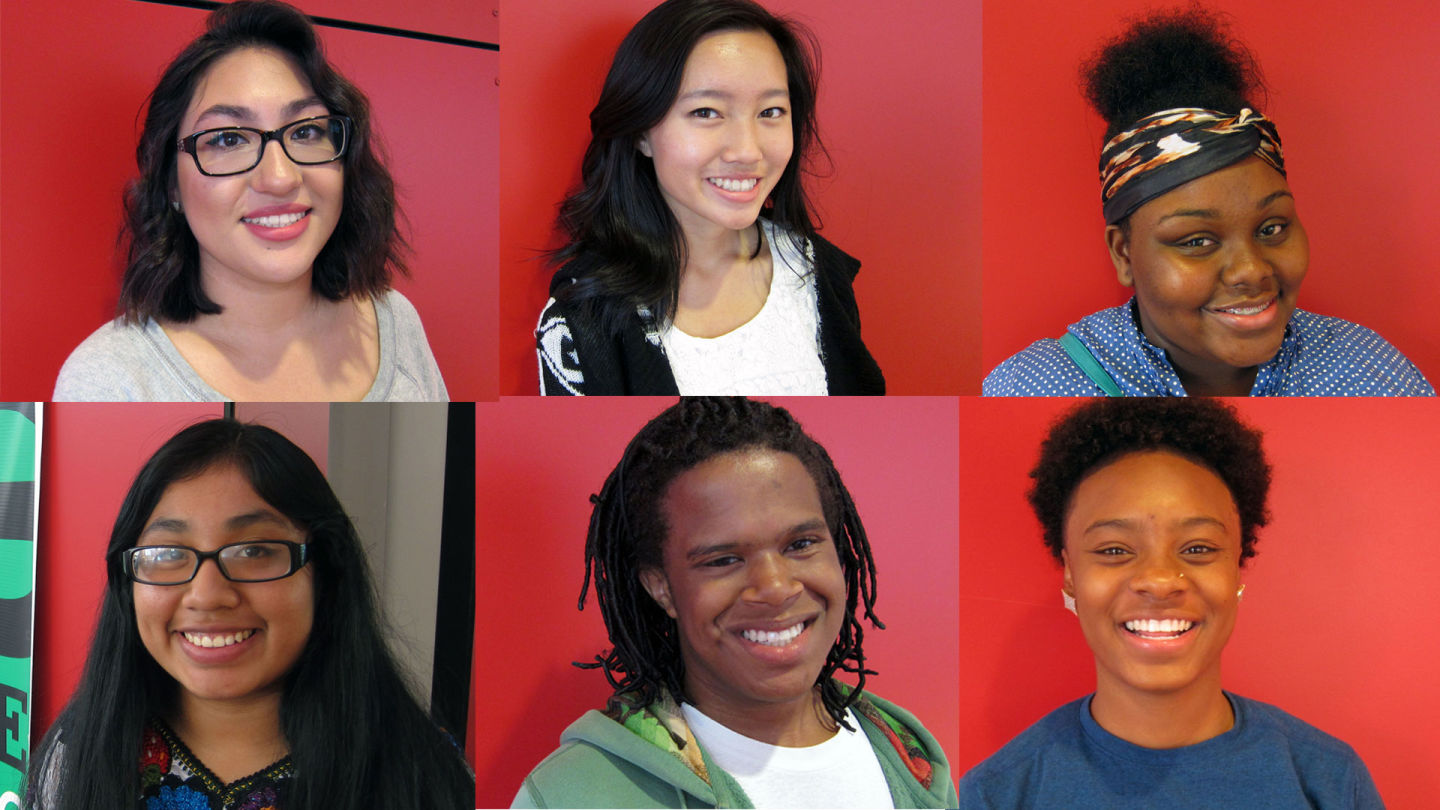
"caption": "MetWest High School juniors. From top left to bottom right: Evelyn Rodriguez, Grace Pang, Jade Herbert, Maya Martín, Myles McConico, and Natanee Collins.",
"description": null,
"title": "MetWestcomposite2",
"credit": "Katrina Schwartz",
"status": "inherit",
"isLoading": false,
"fetchFailed": false
},
"mindshift_42617": {
"type": "attachments",
"id": "mindshift_42617",
"meta": {
"index": "attachments_1716263798",
"site": "mindshift",
"id": "42617",
"found": true
},
"parent": 41997,
"imgSizes": {
"twentyfourteen-full-width": {
"file": "https://ww2.kqed.org/app/uploads/sites/23/2015/10/Reading-boy-1038x576.jpg",
"width": 1038,
"mimeType": "image/jpeg",
"height": 576
},
"thumbnail": {
"file": "https://ww2.kqed.org/app/uploads/sites/23/2015/10/Reading-boy-400x225.jpg",
"width": 400,
"mimeType": "image/jpeg",
"height": 225
},
"fd-sm": {
"file": "https://ww2.kqed.org/app/uploads/sites/23/2015/10/Reading-boy-960x540.jpg",
"width": 960,
"mimeType": "image/jpeg",
"height": 540
},
"post-thumbnail": {
"file": "https://ww2.kqed.org/app/uploads/sites/23/2015/10/Reading-boy-672x372.jpg",
"width": 672,
"mimeType": "image/jpeg",
"height": 372
},
"kqedFullSize": {
"file": "https://ww2.kqed.org/app/uploads/sites/23/2015/10/Reading-boy.jpg",
"width": 1920,
"height": 1080
},
"large": {
"file": "https://ww2.kqed.org/app/uploads/sites/23/2015/10/Reading-boy-1440x810.jpg",
"width": 1440,
"mimeType": "image/jpeg",
"height": 810
},
"guest-author-96": {
"file": "https://ww2.kqed.org/app/uploads/sites/23/2015/10/Reading-boy-96x96.jpg",
"width": 96,
"mimeType": "image/jpeg",
"height": 96
},
"medium": {
"file": "https://ww2.kqed.org/app/uploads/sites/23/2015/10/Reading-boy-800x450.jpg",
"width": 800,
"mimeType": "image/jpeg",
"height": 450
},
"guest-author-64": {
"file": "https://ww2.kqed.org/app/uploads/sites/23/2015/10/Reading-boy-64x64.jpg",
"width": 64,
"mimeType": "image/jpeg",
"height": 64
},
"guest-author-32": {
"file": "https://ww2.kqed.org/app/uploads/sites/23/2015/10/Reading-boy-32x32.jpg",
"width": 32,
"mimeType": "image/jpeg",
"height": 32
},
"cat_post_thumb_sizecategory-posts-2": {
"file": "https://ww2.kqed.org/app/uploads/sites/23/2015/10/Reading-boy-50x50.jpg",
"width": 50,
"mimeType": "image/jpeg",
"height": 50
},
"fd-lrg": {
"file": "https://ww2.kqed.org/app/uploads/sites/23/2015/10/Reading-boy-1920x1080.jpg",
"width": 1920,
"mimeType": "image/jpeg",
"height": 1080
},
"fd-med": {
"file": "https://ww2.kqed.org/app/uploads/sites/23/2015/10/Reading-boy-1180x664.jpg",
"width": 1180,
"mimeType": "image/jpeg",
"height": 664
},
"detail": {
"file": "https://ww2.kqed.org/app/uploads/sites/23/2015/10/Reading-boy-75x75.jpg",
"width": 75,
"mimeType": "image/jpeg",
"height": 75
},
"guest-author-128": {
"file": "https://ww2.kqed.org/app/uploads/sites/23/2015/10/Reading-boy-128x128.jpg",
"width": 128,
"mimeType": "image/jpeg",
"height": 128
}
},
"publishDate": 1446178772,
"modified": 1446178782,
"caption": null,
"description": null,
"title": "Reading-boy",
"credit": "iStock",
"status": "inherit",
"isLoading": false,
"fetchFailed": false
}
},
"audioPlayerReducer": {
"postId": "stream_live",
"isPaused": true,
"isPlaying": false,
"pfsActive": false,
"pledgeModalIsOpen": true,
"playerDrawerIsOpen": false,
"liveAudioPlayStartedAt": 0,
"liveAudioPlayContext": ""
},
"authorsReducer": {
"byline_mindshift_42861": {
"type": "authors",
"id": "byline_mindshift_42861",
"meta": {
"override": true
},
"slug": "byline_mindshift_42861",
"name": "Gary Stager",
"isLoading": false
},
"katrinaschwartz": {
"type": "authors",
"id": "234",
"meta": {
"index": "authors_1716337520",
"id": "234",
"found": true
},
"name": "Katrina Schwartz",
"firstName": "Katrina",
"lastName": "Schwartz",
"slug": "katrinaschwartz",
"email": "kschwartz@kqed.org",
"display_author_email": false,
"staff_mastheads": [
"news"
],
"title": "Producer",
"bio": "Katrina Schwartz is a journalist based in San Francisco. She's worked at KPCC public radio in LA and has reported on air and online for KQED since 2010. She covered how teaching and learning is changing for MindShift between 2012 and 2020. She is the co-host of the MindShift podcast and now produces KQED's Bay Curious podcast.",
"avatar": "https://secure.gravatar.com/avatar/edb4ee79070447a018538c9aae6eeecf28786515b8a0c30e43b6b7dce5aa44c8?s=600&d=blank&r=g",
"twitter": "kschwart",
"bluesky": null,
"facebook": null,
"instagram": null,
"linkedin": null,
"sites": [
{
"site": "",
"roles": [
"editor"
]
},
{
"site": "news",
"roles": [
"editor"
]
},
{
"site": "mindshift",
"roles": [
"administrator"
]
},
{
"site": "stateofhealth",
"roles": [
"author"
]
},
{
"site": "science",
"roles": [
"editor"
]
}
],
"headData": {
"title": "Katrina Schwartz | KQED",
"description": "Producer",
"ogImgSrc": "https://secure.gravatar.com/avatar/edb4ee79070447a018538c9aae6eeecf28786515b8a0c30e43b6b7dce5aa44c8?s=600&d=blank&r=g",
"twImgSrc": "https://secure.gravatar.com/avatar/edb4ee79070447a018538c9aae6eeecf28786515b8a0c30e43b6b7dce5aa44c8?s=600&d=blank&r=g"
},
"isLoading": false,
"link": "/author/katrinaschwartz"
},
"hollykorbey": {
"type": "authors",
"id": "4445",
"meta": {
"index": "authors_1716337520",
"id": "4445",
"found": true
},
"name": "Holly Korbey",
"firstName": "Holly",
"lastName": "Korbey",
"slug": "hollykorbey",
"email": "holly@hollykorbey.com",
"display_author_email": false,
"staff_mastheads": [],
"title": null,
"bio": "Holly Korbey's work on parenting and education has appeared in The New York Times, The Atlantic, Babble, Brain, Child Magazine, and others. She lives in Nashville with her family. Follow her on Twitter: @HKorbey",
"avatar": "https://secure.gravatar.com/avatar/f385f7a3b90e52ecd5e85c24fbd0a363?s=600&d=blank&r=g",
"twitter": null,
"facebook": null,
"instagram": null,
"linkedin": null,
"sites": [
{
"site": "mindshift",
"roles": [
"contributor"
]
}
],
"headData": {
"title": "Holly Korbey | KQED",
"description": null,
"ogImgSrc": "https://secure.gravatar.com/avatar/f385f7a3b90e52ecd5e85c24fbd0a363?s=600&d=blank&r=g",
"twImgSrc": "https://secure.gravatar.com/avatar/f385f7a3b90e52ecd5e85c24fbd0a363?s=600&d=blank&r=g"
},
"isLoading": false,
"link": "/author/hollykorbey"
}
},
"pagesReducer": {
"mindshift_category_big-ideas": {
"type": "terms",
"id": "mindshift_192",
"meta": {
"index": "terms_1716263798",
"site": "mindshift",
"id": "192",
"score": 14.406914
},
"featImg": null,
"name": "Big Ideas",
"description": "The latest findings from experts in the field related to the future of learning.",
"taxonomy": "category",
"headData": {
"twImgId": null,
"twTitle": null,
"ogTitle": null,
"ogImgId": null,
"twDescription": null,
"description": "The latest findings from experts in the field related to the future of learning.",
"title": "Big Ideas Archives | KQED Mindshift",
"ogDescription": null
},
"ttid": 192,
"slug": "big-ideas",
"isLoading": false,
"title": "Big Ideas",
"pageMeta": {
"site": "mindshift",
"WpPageTemplate": "page-topic-editorial",
"currentPage": 49
},
"blocks": [
{
"blockName": "kqed/company-paragraph",
"content": "The latest findings from experts in the field related to the future of learning."
},
{
"blockName": "kqed/post-list",
"attrs": {
"layout": "cardArticle2",
"query": "posts/mindshift?category=big-ideas",
"seeMore": false,
"paginated": true,
"page": 49
}
},
{
"blockName": "kqed/ad"
}
]
}
},
"pfsSessionReducer": {},
"postsReducer": {
"stream_live": {
"type": "live",
"id": "stream_live",
"audioUrl": "https://streams.kqed.org/kqedradio",
"title": "Live Stream",
"excerpt": "Live Stream information currently unavailable.",
"link": "/radio",
"featImg": "",
"label": {
"name": "KQED Live",
"link": "/"
}
},
"stream_kqedNewscast": {
"type": "posts",
"id": "stream_kqedNewscast",
"audioUrl": "https://www.kqed.org/.stream/anon/radio/RDnews/newscast.mp3?_=1",
"title": "KQED Newscast",
"featImg": "",
"label": {
"name": "88.5 FM",
"link": "/"
}
},
"mindshift_43057": {
"type": "posts",
"id": "mindshift_43057",
"meta": {
"index": "posts_1716263798",
"site": "mindshift",
"id": "43057",
"score": null,
"sort": [
1450087332000
]
},
"parent": 0,
"labelTerm": {
"site": "mindshift"
},
"blocks": [],
"publishDate": 1450087332,
"format": "standard",
"disqusTitle": "What Achieving Digital Equity Using Online Courses Could Look Like",
"title": "What Achieving Digital Equity Using Online Courses Could Look Like",
"headTitle": "MindShift | KQED News",
"content": "\u003cp>\u003cstrong>By John Hansen and Justin Reich\u003c/strong>\u003c/p>\n\u003cp>For almost a century, technology enthusiasts have promised that new innovations can democratize education. In 1932, Benjamin Darrow, founder of the Ohio School of the Air, argued that radio would “make universally available the services of the finest teachers.” In 1961, the Ford Foundation’s \u003cem>Teaching by Television \u003c/em>report declared that TV would provide poor students with “instruction of a higher order than they might otherwise receive.” In our own time, advocates of online learning promise to level the educational playing fields with massive open online courses, MOOCs.\u003c/p>\n\u003cp>The most compelling evidence for the democratizing power of MOOCs comes from a new generation of Horatio Alger stories, where the video lecture replaces the bootblack’s cloth. In 2013, the New York Times Magazine told the story of Battushig Myanganbavar, the “\u003ca href=\"http://www.nytimes.com/2013/09/15/magazine/the-boy-genius-of-ulan-bator.html?pagewanted=all&_r=0\">Boy Genius of Ulan Bator\u003c/a>,” who earned a perfect score on MIT’s first MOOC as a high school student in Mongolia and subsequently gained admission to MIT. This year, MIT has featured the story of Ahaan Rungta, a 16 year old Freshman, born in Calcutta, who has completed 55 courses on edX and MIT’s OpenCourseWare. Rungta’s father is the manager of the Indian restaurant in the MIT student center.\u003c/p>\n\u003cp>As powerful as these stories are, the extensive data collected by MOOCs tell another story. While there are extraordinarily talented students from all backgrounds who succeed in MOOCs, those from more affluent and better-educated neighborhoods are more likely to enroll and succeed in these courses. Moreover, the relationship between socioeconomic resources and course success is strongest among teens and college-aged students, exactly the ages where we might hope that online courses could provide a new entry point into higher education.\u003c/p>\n\u003cp>In a recent study published in \u003cem>\u003ca href=\"https://www.sciencemag.org/content/350/6265/1245.full.pdf\">Science\u003c/a>\u003c/em>, we found that young students enrolling in HarvardX and MITx courses live in neighborhoods where the median income is 38% higher than typical American neighborhoods. Among teenagers who register for a HarvardX course, those with a college-educated parent have nearly twice the odds of finishing compared to students whose parents did not complete college.\u003c/p>\n\u003cp>[ad fullwidth]\u003c/p>\n\u003cp>Even when online learning is free, people with greater financial, social, and technological resources are better able to take advantage of these new opportunities. Technologies that truly democratize education should disproportionately benefit the students who otherwise wouldn’t be able to access high-quality learning experiences. Compared to previous broadcast technologies, online learning has a key advantage: the ability to personalize learning experiences at a large scale. From the reams of clickstream data collected by online learning environments, we can target additional supports and scaffolds to the students who need them most.\u003c/p>\n\u003cp>Two very different and promising lines of research might form the foundation of a new set of design principles for digital equity. Research on stereotype threat has shown that some of the barriers that disadvantaged students face are psychological in nature: subtle cues in a learning environment can trigger anxieties in marginalized students. Researchers at Stanford have identified achievement gaps between students from developed and developing countries in MOOCs, and early findings suggest that simple exercises to encourage a \u003ca href=\"https://vptl.stanford.edu/frontier-science-learning\">sense of belonging in an online community\u003c/a> can substantially reduce those gaps.\u003c/p>\n\u003cp>These experimental approaches can be paired with social services that have a long history of effectiveness. In St. Louis, the nonprofit \u003ca href=\"https://www.launchcode.org/\">LaunchCode\u003c/a> offers a physical community and job placement services for students taking HarvardX’s Introduction to Computer Science class, CS50x. By providing additional human supports to underserved students with great potential, LaunchCode joins a tradition of programs from Hull House to the Boys and Girls Clubs that are essential to social mobility in America.\u003c/p>\n\u003cp>MOOCs and other forms of online learning don’t yet live up to their promise to democratize education, but we shouldn’t abandon those efforts. Closing education’s digital divide is exactly the kind of grand challenge that the world’s greatest universities should be tackling head on.\u003c/p>\n\u003cp>\u003c/p>\n\u003cp>\u003cem>\u003ca href=\"https://twitter.com/@jdnhansen\">John Hansen\u003c/a> is a doctoral student at the Harvard Graduate School of Education and \u003ca href=\"https://twitter.com/bjfr\">Justin Reich\u003c/a> is executive director of the MIT Teaching Systems Lab. \u003c/em>\u003c/p>\n\n",
"disqusIdentifier": "43057 http://ww2.kqed.org/mindshift/?p=43057",
"disqusUrl": "https://ww2.kqed.org/mindshift/2015/12/14/what-achieving-digital-equity-using-online-courses-could-look-like/",
"stats": {
"hasVideo": false,
"hasChartOrMap": false,
"hasAudio": false,
"hasPolis": false,
"wordCount": 707,
"hasGoogleForm": false,
"hasGallery": false,
"hasHearkenModule": false,
"iframeSrcs": [],
"paragraphCount": 12
},
"modified": 1450473376,
"excerpt": "Many students benefiting from massive open online courses are from higher income households, so what can be done to reach those who need the most help? ",
"headData": {
"twImgId": "",
"twTitle": "",
"ogTitle": "",
"ogImgId": "",
"twDescription": "",
"description": "Many students benefiting from massive open online courses are from higher income households, so what can be done to reach those who need the most help? ",
"title": "What Achieving Digital Equity Using Online Courses Could Look Like | KQED",
"ogDescription": "",
"schema": {
"@context": "https://schema.org",
"@type": "Article",
"headline": "What Achieving Digital Equity Using Online Courses Could Look Like",
"datePublished": "2015-12-14T02:02:12-08:00",
"dateModified": "2015-12-18T13:16:16-08:00",
"image": "https://cdn.kqed.org/wp-content/uploads/2020/02/KQED-OG-Image@1x.png"
}
},
"guestAuthors": [],
"slug": "what-achieving-digital-equity-using-online-courses-could-look-like",
"status": "publish",
"path": "/mindshift/43057/what-achieving-digital-equity-using-online-courses-could-look-like",
"audioTrackLength": null,
"parsedContent": [
{
"type": "contentString",
"content": "\u003cdiv class=\"post-body\">\u003cp>\u003cp>\u003cstrong>By John Hansen and Justin Reich\u003c/strong>\u003c/p>\n\u003cp>For almost a century, technology enthusiasts have promised that new innovations can democratize education. In 1932, Benjamin Darrow, founder of the Ohio School of the Air, argued that radio would “make universally available the services of the finest teachers.” In 1961, the Ford Foundation’s \u003cem>Teaching by Television \u003c/em>report declared that TV would provide poor students with “instruction of a higher order than they might otherwise receive.” In our own time, advocates of online learning promise to level the educational playing fields with massive open online courses, MOOCs.\u003c/p>\n\u003cp>The most compelling evidence for the democratizing power of MOOCs comes from a new generation of Horatio Alger stories, where the video lecture replaces the bootblack’s cloth. In 2013, the New York Times Magazine told the story of Battushig Myanganbavar, the “\u003ca href=\"http://www.nytimes.com/2013/09/15/magazine/the-boy-genius-of-ulan-bator.html?pagewanted=all&_r=0\">Boy Genius of Ulan Bator\u003c/a>,” who earned a perfect score on MIT’s first MOOC as a high school student in Mongolia and subsequently gained admission to MIT. This year, MIT has featured the story of Ahaan Rungta, a 16 year old Freshman, born in Calcutta, who has completed 55 courses on edX and MIT’s OpenCourseWare. Rungta’s father is the manager of the Indian restaurant in the MIT student center.\u003c/p>\n\u003cp>As powerful as these stories are, the extensive data collected by MOOCs tell another story. While there are extraordinarily talented students from all backgrounds who succeed in MOOCs, those from more affluent and better-educated neighborhoods are more likely to enroll and succeed in these courses. Moreover, the relationship between socioeconomic resources and course success is strongest among teens and college-aged students, exactly the ages where we might hope that online courses could provide a new entry point into higher education.\u003c/p>\n\u003cp>In a recent study published in \u003cem>\u003ca href=\"https://www.sciencemag.org/content/350/6265/1245.full.pdf\">Science\u003c/a>\u003c/em>, we found that young students enrolling in HarvardX and MITx courses live in neighborhoods where the median income is 38% higher than typical American neighborhoods. Among teenagers who register for a HarvardX course, those with a college-educated parent have nearly twice the odds of finishing compared to students whose parents did not complete college.\u003c/p>\n\u003cp>\u003c/p>\u003c/div>",
"attributes": {
"named": {},
"numeric": []
}
},
{
"type": "component",
"content": "",
"name": "ad",
"attributes": {
"named": {
"label": "fullwidth"
},
"numeric": [
"fullwidth"
]
}
},
{
"type": "contentString",
"content": "\u003cdiv class=\"post-body\">\u003cp>\u003c/p>\n\u003cp>Even when online learning is free, people with greater financial, social, and technological resources are better able to take advantage of these new opportunities. Technologies that truly democratize education should disproportionately benefit the students who otherwise wouldn’t be able to access high-quality learning experiences. Compared to previous broadcast technologies, online learning has a key advantage: the ability to personalize learning experiences at a large scale. From the reams of clickstream data collected by online learning environments, we can target additional supports and scaffolds to the students who need them most.\u003c/p>\n\u003cp>Two very different and promising lines of research might form the foundation of a new set of design principles for digital equity. Research on stereotype threat has shown that some of the barriers that disadvantaged students face are psychological in nature: subtle cues in a learning environment can trigger anxieties in marginalized students. Researchers at Stanford have identified achievement gaps between students from developed and developing countries in MOOCs, and early findings suggest that simple exercises to encourage a \u003ca href=\"https://vptl.stanford.edu/frontier-science-learning\">sense of belonging in an online community\u003c/a> can substantially reduce those gaps.\u003c/p>\n\u003cp>These experimental approaches can be paired with social services that have a long history of effectiveness. In St. Louis, the nonprofit \u003ca href=\"https://www.launchcode.org/\">LaunchCode\u003c/a> offers a physical community and job placement services for students taking HarvardX’s Introduction to Computer Science class, CS50x. By providing additional human supports to underserved students with great potential, LaunchCode joins a tradition of programs from Hull House to the Boys and Girls Clubs that are essential to social mobility in America.\u003c/p>\n\u003cp>MOOCs and other forms of online learning don’t yet live up to their promise to democratize education, but we shouldn’t abandon those efforts. Closing education’s digital divide is exactly the kind of grand challenge that the world’s greatest universities should be tackling head on.\u003c/p>\n\u003cp>\u003c/p>\n\u003cp>\u003cem>\u003ca href=\"https://twitter.com/@jdnhansen\">John Hansen\u003c/a> is a doctoral student at the Harvard Graduate School of Education and \u003ca href=\"https://twitter.com/bjfr\">Justin Reich\u003c/a> is executive director of the MIT Teaching Systems Lab. \u003c/em>\u003c/p>\n\n\u003c/div>\u003c/p>",
"attributes": {
"named": {},
"numeric": []
}
}
],
"link": "/mindshift/43057/what-achieving-digital-equity-using-online-courses-could-look-like",
"authors": [
"4354"
],
"categories": [
"mindshift_192",
"mindshift_195"
],
"tags": [
"mindshift_908",
"mindshift_20701",
"mindshift_20784",
"mindshift_1040",
"mindshift_20608",
"mindshift_825"
],
"featImg": "mindshift_43065",
"label": "mindshift"
},
"mindshift_43003": {
"type": "posts",
"id": "mindshift_43003",
"meta": {
"index": "posts_1716263798",
"site": "mindshift",
"id": "43003",
"score": null,
"sort": [
1449818896000
]
},
"parent": 0,
"labelTerm": {
"site": "mindshift"
},
"blocks": [],
"publishDate": 1449818896,
"format": "standard",
"disqusTitle": "When One Career Path Isn't Enough",
"title": "When One Career Path Isn't Enough",
"headTitle": "MindShift | KQED News",
"content": "\u003cp class=\"p1\">Kids and young people are often expected to set a path for themselves, such as a college major that sets up a career track for a life's work. Committing to one choice can mean forgoing other options, sometimes for the rest of one's life. Emilie Wapnick wants to draw more attention to people who want to follow multiple paths throughout their lives and feel accepted for doing so. Drawing from examples of people who pursue multiple professions, like a psychotherapist who also repairs violins, Wapnick, a creative director who also teaches music, wants to open up the space for people who are comfortable with a more varied life.\u003c/p>\n\u003cp class=\"p1\">In her \u003ca href=\"https://www.ted.com/talks/emilie_wapnick_why_some_of_us_don_t_have_one_true_calling?language=en\" target=\"_blank\">TEDx talk\u003c/a>, she says:\u003c/p>\n\u003cp class=\"talk-transcript__para\">\u003cspan class=\"talk-transcript__para__text\">\u003cspan id=\"t-295218\" class=\"talk-transcript__fragment\">\u003cspan id=\"t-289403\" class=\"talk-transcript__fragment\">\"The notion of the narrowly focused life\u003c/span> \u003cspan id=\"t-292419\" class=\"talk-transcript__fragment\">is highly romanticized in our culture.\u003c/span> It's this idea of destiny or the one true calling,\u003c/span> \u003cspan id=\"t-299422\" class=\"talk-transcript__fragment\">the idea that we each have one great thing\u003c/span> \u003cspan id=\"t-302203\" class=\"talk-transcript__fragment\">we are meant to do during our time on this earth,\u003c/span> \u003cspan id=\"t-304560\" class=\"talk-transcript__fragment\">and you need to figure out what that thing is\u003c/span> \u003cspan id=\"t-307467\" class=\"talk-transcript__fragment\">and devote your life to it.\u003c/span>\u003c/span>\u003c/p>\n\u003cp class=\"talk-transcript__para\">\u003cspan class=\"talk-transcript__para__text\">\u003cspan id=\"t-311135\" class=\"talk-transcript__fragment\">But what if you're someone who isn't wired this way?\u003c/span> \u003cspan id=\"t-314999\" class=\"talk-transcript__fragment\">What if there are a lot of different subjects that you're curious about,\u003c/span> \u003cspan id=\"t-318428\" class=\"talk-transcript__fragment\">and many different things you want to do?\u003c/span> \u003cspan id=\"t-321246\" class=\"talk-transcript__fragment\">Well, there is no room for someone like you in this framework.\u003c/span> \u003cspan id=\"t-325814\" class=\"talk-transcript__fragment\">And so you might feel alone.\u003c/span> \u003cspan id=\"t-328412\" class=\"talk-transcript__fragment\">You might feel like you don't have a purpose. \u003c/span>\u003cspan id=\"t-331017\" class=\"talk-transcript__fragment\">And you might feel like there's something wrong with you.\u003c/span> \u003cspan id=\"t-334758\" class=\"talk-transcript__fragment\">There's nothing wrong with you.\u003c/span> \u003cspan id=\"t-336908\" class=\"talk-transcript__fragment\">What you are is a multipotentialite.\"\u003c/span>\u003c/span>\u003c/p>\n\u003cp>https://www.youtube.com/watch?v=QJORi5VO1F8\u003c/p>\n\u003cp>[ad fullwidth]\u003c/p>\n\u003cp>\u003c/p>\n\u003cp> \u003c/p>\n\n",
"disqusIdentifier": "43003 http://ww2.kqed.org/mindshift/?p=43003",
"disqusUrl": "https://ww2.kqed.org/mindshift/2015/12/10/when-one-career-path-isnt-enough/",
"stats": {
"hasVideo": true,
"hasChartOrMap": false,
"hasAudio": false,
"hasPolis": false,
"wordCount": 278,
"hasGoogleForm": false,
"hasGallery": false,
"hasHearkenModule": false,
"iframeSrcs": [],
"paragraphCount": 2
},
"modified": 1449818896,
"excerpt": "When messages about specialization can seem like the norm, people with multiple deep interests throughout the course of their lives can feel out of place. ",
"headData": {
"twImgId": "",
"twTitle": "",
"ogTitle": "",
"ogImgId": "",
"twDescription": "",
"description": "When messages about specialization can seem like the norm, people with multiple deep interests throughout the course of their lives can feel out of place. ",
"title": "When One Career Path Isn't Enough | KQED",
"ogDescription": "",
"schema": {
"@context": "https://schema.org",
"@type": "Article",
"headline": "When One Career Path Isn't Enough",
"datePublished": "2015-12-10T23:28:16-08:00",
"dateModified": "2015-12-10T23:28:16-08:00",
"image": "https://cdn.kqed.org/wp-content/uploads/2020/02/KQED-OG-Image@1x.png"
}
},
"guestAuthors": [],
"slug": "when-one-career-path-isnt-enough",
"status": "publish",
"path": "/mindshift/43003/when-one-career-path-isnt-enough",
"audioTrackLength": null,
"parsedContent": [
{
"type": "contentString",
"content": "\u003cdiv class=\"post-body\">\u003cp>\u003cp class=\"p1\">Kids and young people are often expected to set a path for themselves, such as a college major that sets up a career track for a life's work. Committing to one choice can mean forgoing other options, sometimes for the rest of one's life. Emilie Wapnick wants to draw more attention to people who want to follow multiple paths throughout their lives and feel accepted for doing so. Drawing from examples of people who pursue multiple professions, like a psychotherapist who also repairs violins, Wapnick, a creative director who also teaches music, wants to open up the space for people who are comfortable with a more varied life.\u003c/p>\n\u003cp class=\"p1\">In her \u003ca href=\"https://www.ted.com/talks/emilie_wapnick_why_some_of_us_don_t_have_one_true_calling?language=en\" target=\"_blank\">TEDx talk\u003c/a>, she says:\u003c/p>\n\u003cp class=\"talk-transcript__para\">\u003cspan class=\"talk-transcript__para__text\">\u003cspan id=\"t-295218\" class=\"talk-transcript__fragment\">\u003cspan id=\"t-289403\" class=\"talk-transcript__fragment\">\"The notion of the narrowly focused life\u003c/span> \u003cspan id=\"t-292419\" class=\"talk-transcript__fragment\">is highly romanticized in our culture.\u003c/span> It's this idea of destiny or the one true calling,\u003c/span> \u003cspan id=\"t-299422\" class=\"talk-transcript__fragment\">the idea that we each have one great thing\u003c/span> \u003cspan id=\"t-302203\" class=\"talk-transcript__fragment\">we are meant to do during our time on this earth,\u003c/span> \u003cspan id=\"t-304560\" class=\"talk-transcript__fragment\">and you need to figure out what that thing is\u003c/span> \u003cspan id=\"t-307467\" class=\"talk-transcript__fragment\">and devote your life to it.\u003c/span>\u003c/span>\u003c/p>\n\u003cp class=\"talk-transcript__para\">\u003cspan class=\"talk-transcript__para__text\">\u003cspan id=\"t-311135\" class=\"talk-transcript__fragment\">But what if you're someone who isn't wired this way?\u003c/span> \u003cspan id=\"t-314999\" class=\"talk-transcript__fragment\">What if there are a lot of different subjects that you're curious about,\u003c/span> \u003cspan id=\"t-318428\" class=\"talk-transcript__fragment\">and many different things you want to do?\u003c/span> \u003cspan id=\"t-321246\" class=\"talk-transcript__fragment\">Well, there is no room for someone like you in this framework.\u003c/span> \u003cspan id=\"t-325814\" class=\"talk-transcript__fragment\">And so you might feel alone.\u003c/span> \u003cspan id=\"t-328412\" class=\"talk-transcript__fragment\">You might feel like you don't have a purpose. \u003c/span>\u003cspan id=\"t-331017\" class=\"talk-transcript__fragment\">And you might feel like there's something wrong with you.\u003c/span> \u003cspan id=\"t-334758\" class=\"talk-transcript__fragment\">There's nothing wrong with you.\u003c/span> \u003cspan id=\"t-336908\" class=\"talk-transcript__fragment\">What you are is a multipotentialite.\"\u003c/span>\u003c/span>\u003c/p>\u003c/p>\u003cp>\u003cspan class='utils-parseShortcode-shortcodes-__youtubeShortcode__embedYoutube'>\n \u003cspan class='utils-parseShortcode-shortcodes-__youtubeShortcode__embedYoutubeInside'>\n \u003ciframe\n loading='lazy'\n class='utils-parseShortcode-shortcodes-__youtubeShortcode__youtubePlayer'\n type='text/html'\n src='//www.youtube.com/embed/QJORi5VO1F8'\n title='//www.youtube.com/embed/QJORi5VO1F8'\n allowfullscreen='true'\n style='border:0;'>\u003c/iframe>\n \u003c/span>\n \u003c/span>\u003c/p>\u003cp>\u003cp>\u003c/p>\u003c/div>",
"attributes": {
"named": {},
"numeric": []
}
},
{
"type": "component",
"content": "",
"name": "ad",
"attributes": {
"named": {
"label": "fullwidth"
},
"numeric": [
"fullwidth"
]
}
},
{
"type": "contentString",
"content": "\u003cdiv class=\"post-body\">\u003cp>\u003c/p>\n\u003cp>\u003c/p>\n\u003cp> \u003c/p>\n\n\u003c/div>\u003c/p>",
"attributes": {
"named": {},
"numeric": []
}
}
],
"link": "/mindshift/43003/when-one-career-path-isnt-enough",
"authors": [
"4354"
],
"categories": [
"mindshift_192"
],
"tags": [
"mindshift_20784",
"mindshift_1040",
"mindshift_780"
],
"featImg": "mindshift_43013",
"label": "mindshift"
},
"mindshift_43037": {
"type": "posts",
"id": "mindshift_43037",
"meta": {
"index": "posts_1716263798",
"site": "mindshift",
"id": "43037",
"score": null,
"sort": [
1449753981000
]
},
"parent": 0,
"labelTerm": {
"site": "mindshift"
},
"blocks": [],
"publishDate": 1449753981,
"format": "standard",
"disqusTitle": "Why Identity and Emotion are Central To Motivating the Teen Brain",
"title": "Why Identity and Emotion are Central To Motivating the Teen Brain",
"headTitle": "MindShift | KQED News",
"content": "\u003cp>\u003cstrong>By \u003ca href=\"http://www.ewa.org/profile/emmeline-zhao\" target=\"_blank\">Emmeline Zhao\u003c/a>\u003c/strong>\u003c/p>\n\u003cp>For years, common experience and studies have prescribed that humans learn best in their earliest years of life – when the \u003ca href=\"http://developingchild.harvard.edu/science/key-concepts/brain-architecture/\" target=\"_blank\">brain is developing at its fastest\u003c/a>. Recently, though, research has suggested that the period of optimal learning extends well into adolescence.\u003c/p>\n\u003cp>The flurry of new findings may force a total rethinking of how educators and parents nurture this vulnerable age group, turning moments of frustration into previously unseen opportunities for learning and academic excitement.\u003c/p>\n\u003cp>New evidence shows that the window for formative brain development continues into the onset of puberty, between ages 9 and 13, and likely through the teenage years, according to \u003ca href=\"http://dahl-lab.berkeley.edu/\" target=\"_blank\">Ronald Dahl\u003c/a>, professor of community health and human development at the University of California, Berkeley. Dahl spoke at a recent \u003ca href=\"http://www.ewa.org/new-lens-learning-hidden-value-motivation-grit-and-engagement\" target=\"_blank\">Education Writers Association seminar\u003c/a> on motivation and engagement.\u003c/p>\n\u003caside class=\"pullquote alignright\">“This is a flexible period for goal engagement, and the main part of what’s underneath what we think about setting goals in conscious ways – the bottom-up-based pull to feel motivated toward things.'\u003ccite>Ronald Dahl, Community Health and Human Development Professor at UC Berkeley\u003c/cite>\u003c/aside>\n\u003cp>Adolescence is a tornado of change: Not only is it the period of fastest \u003ca href=\"http://www.stanfordchildrens.org/en/topic/default?id=the-growing-child-adolescent-13-to-18-years-90-P02175\" target=\"_blank\">physical change\u003c/a> in life – aside from infancy – but also newfound drives, motivations, and feelings of sexuality are amplified. There are profound shifts to metabolisms and sleeping cycles, as well as social roles – especially in the context of schools. During these years, motivation is propelled not by a tangible goal to work toward, but by a feeling of wanting and thirst. Within the tumult of pre-teens or teens is an opportunity to enhance their desire and interest to learn. \u003c/p>\n\u003cp>[ad fullwidth]\u003c/p>\n\u003cp>In the past decade, neuroscientists have been able to identify what makes the adolescent brain so geared for the kind of inquiry that can pay dividends in the classroom. As children enter adolescence, some developing neural systems have already stabilized, Dahl said. But puberty creates a whole new set of elastic neural systems that, when interacting with the already stabilized systems, offers unique windows of opportunity for engagement and experiencing the world around them in multiple ways.\u003c/p>\n\u003cp>“Adolescence is a perfect storm of opportunities to align these changes in positive ways,” Dahl said. “Learning, exploration, acquiring skills and habits, intrinsic motivations, attitudes, setting goals and priorities: There’s compelling need for transdisciplinary research to understand unique opportunities for social and emotional learning. But few people do it in fear of these challenges.”\u003c/p>\n\u003cp>These new scientific insights have large implications for how schools teach adolescents, which have traditionally viewed this age group as \u003ca href=\"https://www.psychologytoday.com/blog/surviving-your-childs-adolescence/201004/adolescence-and-the-problems-puberty\" target=\"_blank\">troublesome\u003c/a>.\u003c/p>\n\u003caside class=\"pullquote alignleft\">'One way to think about puberty is to think of it as a learning spurt for heartfelt goals.It’s a particularly opportune time to fall in love with learning itself.'\u003c/aside>\n\u003cp>The feelings of acceptance, rejection, admiration, among others, are all the story of adolescence. Children in this age group also seek physical sensations and thrills. There’s heightened awareness of social status, especially as they realize that acts of courage can earn them higher social status among peers. Their wildly swinging neurological systems also mean that adolescents can readjust quickly – making those years critical for educators to engage students in “the right ways,” when the brain is learning to calibrate complex social and emotional value systems that use feelings as fast signals, Dahl said.\u003c/p>\n\u003cp>Contrary to common belief, children in this age range don’t actually have “broken brains.” Rather, these children are undergoing a profound update to how they process the world around them. Adolescents are often considered bad decision-makers who are thrill-seekers. These myths, however, stem from young people’s desire to display courage, which is valued across cultures — and adolescents constantly seek the emotional satisfaction of being admired. In fact, Dahl said that adolescents take risks to overcome their fears, not seek them out. \u003c/p>\n\u003cp>“[Adolescents] are learning about the complex social world they must navigate, including the hierarchies, social rules for gaining acceptance and status, and the mystifying discovery of a sexual self,” Dahl said. “This is a flexible period for goal engagement, and the main part of what’s underneath what we think about setting goals in conscious ways – the bottom-up-based pull to feel motivated toward things.”\u003c/p>\n\u003cp>Adding to the confusion over how best to respond to adolescents is a wave of research showing children around the world are \u003ca href=\"http://www.theguardian.com/politics/2013/nov/04/why-is-puberty-starting-younger-precocious\" target=\"_blank\">entering puberty at younger ages\u003c/a>. One report found that in the 1860s, puberty for girls began at age 16. In the 1950s, it occurred at 13. Today it’s closer to eight years old. The transition for boys is similar, according to the report. The earlier onset of these pronounced biological changes puts pressure on educators and parents to update their expectations for what it means to be young, and how youth plays into adulthood.\u003c/p>\n\u003cp>“This is an interesting potential opportunity, with the longer time to learn activated motivational systems, longer time to increase skills and develop patterns of developing knowledge,” Dahl said. “If kids grow up in opportune settings, they can take advantage of the scaffolding and freedom to go on to take adult roles. But the risks are probably more amplified than opportunities for kids in disadvantaged settings.”\u003c/p>\n\u003cp>It’s still unclear how the earlier development happening in children might create other sets of challenges, Dahl noted, but it’s evident that it’s a key development window of motivational learning, a time when the brain more intensely senses motivational feelings, strengthening the patterns of connections to heartfelt goals, and creates potential for deep, sustained learning.\u003c/p>\n\u003cp>This period of learning is exemplified by even the forbidden love of Shakespeare’s Romeo and Juliet. The young couple is brought together by a single brief encounter, after which all mental processes of planning, goals, motivations, longing, and desire are transformed. They begin to obsess over reuniting, and would sacrifice anything – including comfort, safety, family, and friends – to be together again. \u003c/p>\n\u003cp>Without the context that adolescents’ motives can explode entirely by the spark of a single passion, Romeo and Juliet’s story would be one of utter insanity, Dahl said. But adolescents’ abilities to rapidly reshape motivations and goals both supports their emotional volatility as well as presents a key period to find love – not necessarily romantically for others, but for academic activities and goals.\u003c/p>\n\u003cp>“With the feelings that pull you to persevere, maybe [adolescence is] a particularly opportune time to fall in love with learning itself, to love that feeling of exploring,” Dahl said. “There’s a new window to create that ‘Yes!’ feeling.”\u003c/p>\n\u003cp>[ad floatright]\u003c/p>\n\u003cp>\u003cem>This story was written for the \u003ca href=\"http://www.ewa.org/\" target=\"_blank\">Education Writers Association\u003c/a> and originally appeared there.\u003c/em>\u003c/p>\n\n",
"disqusIdentifier": "43037 http://ww2.kqed.org/mindshift/?p=43037",
"disqusUrl": "https://ww2.kqed.org/mindshift/2015/12/10/why-identity-and-emotion-are-central-to-motivating-the-teen-brain/",
"stats": {
"hasVideo": false,
"hasChartOrMap": false,
"hasAudio": false,
"hasPolis": false,
"wordCount": 1155,
"hasGoogleForm": false,
"hasGallery": false,
"hasHearkenModule": false,
"iframeSrcs": [],
"paragraphCount": 20
},
"modified": 1449753981,
"excerpt": "Adolescence could be a time of explosive academic learning if what's taught can be connected to the central preoccupation of young people -- their identities.",
"headData": {
"twImgId": "",
"twTitle": "",
"ogTitle": "",
"ogImgId": "",
"twDescription": "",
"description": "Adolescence could be a time of explosive academic learning if what's taught can be connected to the central preoccupation of young people -- their identities.",
"title": "Why Identity and Emotion are Central To Motivating the Teen Brain | KQED",
"ogDescription": "",
"schema": {
"@context": "https://schema.org",
"@type": "Article",
"headline": "Why Identity and Emotion are Central To Motivating the Teen Brain",
"datePublished": "2015-12-10T05:26:21-08:00",
"dateModified": "2015-12-10T05:26:21-08:00",
"image": "https://cdn.kqed.org/wp-content/uploads/2020/02/KQED-OG-Image@1x.png"
}
},
"guestAuthors": [],
"slug": "why-identity-and-emotion-are-central-to-motivating-the-teen-brain",
"status": "publish",
"path": "/mindshift/43037/why-identity-and-emotion-are-central-to-motivating-the-teen-brain",
"audioTrackLength": null,
"parsedContent": [
{
"type": "contentString",
"content": "\u003cdiv class=\"post-body\">\u003cp>\u003cp>\u003cstrong>By \u003ca href=\"http://www.ewa.org/profile/emmeline-zhao\" target=\"_blank\">Emmeline Zhao\u003c/a>\u003c/strong>\u003c/p>\n\u003cp>For years, common experience and studies have prescribed that humans learn best in their earliest years of life – when the \u003ca href=\"http://developingchild.harvard.edu/science/key-concepts/brain-architecture/\" target=\"_blank\">brain is developing at its fastest\u003c/a>. Recently, though, research has suggested that the period of optimal learning extends well into adolescence.\u003c/p>\n\u003cp>The flurry of new findings may force a total rethinking of how educators and parents nurture this vulnerable age group, turning moments of frustration into previously unseen opportunities for learning and academic excitement.\u003c/p>\n\u003cp>New evidence shows that the window for formative brain development continues into the onset of puberty, between ages 9 and 13, and likely through the teenage years, according to \u003ca href=\"http://dahl-lab.berkeley.edu/\" target=\"_blank\">Ronald Dahl\u003c/a>, professor of community health and human development at the University of California, Berkeley. Dahl spoke at a recent \u003ca href=\"http://www.ewa.org/new-lens-learning-hidden-value-motivation-grit-and-engagement\" target=\"_blank\">Education Writers Association seminar\u003c/a> on motivation and engagement.\u003c/p>\n\u003caside class=\"pullquote alignright\">“This is a flexible period for goal engagement, and the main part of what’s underneath what we think about setting goals in conscious ways – the bottom-up-based pull to feel motivated toward things.'\u003ccite>Ronald Dahl, Community Health and Human Development Professor at UC Berkeley\u003c/cite>\u003c/aside>\n\u003cp>Adolescence is a tornado of change: Not only is it the period of fastest \u003ca href=\"http://www.stanfordchildrens.org/en/topic/default?id=the-growing-child-adolescent-13-to-18-years-90-P02175\" target=\"_blank\">physical change\u003c/a> in life – aside from infancy – but also newfound drives, motivations, and feelings of sexuality are amplified. There are profound shifts to metabolisms and sleeping cycles, as well as social roles – especially in the context of schools. During these years, motivation is propelled not by a tangible goal to work toward, but by a feeling of wanting and thirst. Within the tumult of pre-teens or teens is an opportunity to enhance their desire and interest to learn. \u003c/p>\n\u003cp>\u003c/p>\u003c/div>",
"attributes": {
"named": {},
"numeric": []
}
},
{
"type": "component",
"content": "",
"name": "ad",
"attributes": {
"named": {
"label": "fullwidth"
},
"numeric": [
"fullwidth"
]
}
},
{
"type": "contentString",
"content": "\u003cdiv class=\"post-body\">\u003cp>\u003c/p>\n\u003cp>In the past decade, neuroscientists have been able to identify what makes the adolescent brain so geared for the kind of inquiry that can pay dividends in the classroom. As children enter adolescence, some developing neural systems have already stabilized, Dahl said. But puberty creates a whole new set of elastic neural systems that, when interacting with the already stabilized systems, offers unique windows of opportunity for engagement and experiencing the world around them in multiple ways.\u003c/p>\n\u003cp>“Adolescence is a perfect storm of opportunities to align these changes in positive ways,” Dahl said. “Learning, exploration, acquiring skills and habits, intrinsic motivations, attitudes, setting goals and priorities: There’s compelling need for transdisciplinary research to understand unique opportunities for social and emotional learning. But few people do it in fear of these challenges.”\u003c/p>\n\u003cp>These new scientific insights have large implications for how schools teach adolescents, which have traditionally viewed this age group as \u003ca href=\"https://www.psychologytoday.com/blog/surviving-your-childs-adolescence/201004/adolescence-and-the-problems-puberty\" target=\"_blank\">troublesome\u003c/a>.\u003c/p>\n\u003caside class=\"pullquote alignleft\">'One way to think about puberty is to think of it as a learning spurt for heartfelt goals.It’s a particularly opportune time to fall in love with learning itself.'\u003c/aside>\n\u003cp>The feelings of acceptance, rejection, admiration, among others, are all the story of adolescence. Children in this age group also seek physical sensations and thrills. There’s heightened awareness of social status, especially as they realize that acts of courage can earn them higher social status among peers. Their wildly swinging neurological systems also mean that adolescents can readjust quickly – making those years critical for educators to engage students in “the right ways,” when the brain is learning to calibrate complex social and emotional value systems that use feelings as fast signals, Dahl said.\u003c/p>\n\u003cp>Contrary to common belief, children in this age range don’t actually have “broken brains.” Rather, these children are undergoing a profound update to how they process the world around them. Adolescents are often considered bad decision-makers who are thrill-seekers. These myths, however, stem from young people’s desire to display courage, which is valued across cultures — and adolescents constantly seek the emotional satisfaction of being admired. In fact, Dahl said that adolescents take risks to overcome their fears, not seek them out. \u003c/p>\n\u003cp>“[Adolescents] are learning about the complex social world they must navigate, including the hierarchies, social rules for gaining acceptance and status, and the mystifying discovery of a sexual self,” Dahl said. “This is a flexible period for goal engagement, and the main part of what’s underneath what we think about setting goals in conscious ways – the bottom-up-based pull to feel motivated toward things.”\u003c/p>\n\u003cp>Adding to the confusion over how best to respond to adolescents is a wave of research showing children around the world are \u003ca href=\"http://www.theguardian.com/politics/2013/nov/04/why-is-puberty-starting-younger-precocious\" target=\"_blank\">entering puberty at younger ages\u003c/a>. One report found that in the 1860s, puberty for girls began at age 16. In the 1950s, it occurred at 13. Today it’s closer to eight years old. The transition for boys is similar, according to the report. The earlier onset of these pronounced biological changes puts pressure on educators and parents to update their expectations for what it means to be young, and how youth plays into adulthood.\u003c/p>\n\u003cp>“This is an interesting potential opportunity, with the longer time to learn activated motivational systems, longer time to increase skills and develop patterns of developing knowledge,” Dahl said. “If kids grow up in opportune settings, they can take advantage of the scaffolding and freedom to go on to take adult roles. But the risks are probably more amplified than opportunities for kids in disadvantaged settings.”\u003c/p>\n\u003cp>It’s still unclear how the earlier development happening in children might create other sets of challenges, Dahl noted, but it’s evident that it’s a key development window of motivational learning, a time when the brain more intensely senses motivational feelings, strengthening the patterns of connections to heartfelt goals, and creates potential for deep, sustained learning.\u003c/p>\n\u003cp>This period of learning is exemplified by even the forbidden love of Shakespeare’s Romeo and Juliet. The young couple is brought together by a single brief encounter, after which all mental processes of planning, goals, motivations, longing, and desire are transformed. They begin to obsess over reuniting, and would sacrifice anything – including comfort, safety, family, and friends – to be together again. \u003c/p>\n\u003cp>Without the context that adolescents’ motives can explode entirely by the spark of a single passion, Romeo and Juliet’s story would be one of utter insanity, Dahl said. But adolescents’ abilities to rapidly reshape motivations and goals both supports their emotional volatility as well as presents a key period to find love – not necessarily romantically for others, but for academic activities and goals.\u003c/p>\n\u003cp>“With the feelings that pull you to persevere, maybe [adolescence is] a particularly opportune time to fall in love with learning itself, to love that feeling of exploring,” Dahl said. “There’s a new window to create that ‘Yes!’ feeling.”\u003c/p>\n\u003cp>\u003c/p>\u003c/div>",
"attributes": {
"named": {},
"numeric": []
}
},
{
"type": "component",
"content": "",
"name": "ad",
"attributes": {
"named": {
"label": "floatright"
},
"numeric": [
"floatright"
]
}
},
{
"type": "contentString",
"content": "\u003cdiv class=\"post-body\">\u003cp>\u003c/p>\n\u003cp>\u003cem>This story was written for the \u003ca href=\"http://www.ewa.org/\" target=\"_blank\">Education Writers Association\u003c/a> and originally appeared there.\u003c/em>\u003c/p>\n\n\u003c/div>\u003c/p>",
"attributes": {
"named": {},
"numeric": []
}
}
],
"link": "/mindshift/43037/why-identity-and-emotion-are-central-to-motivating-the-teen-brain",
"authors": [
"4354"
],
"categories": [
"mindshift_192",
"mindshift_20874"
],
"tags": [
"mindshift_20811",
"mindshift_767",
"mindshift_20784",
"mindshift_1040"
],
"featImg": "mindshift_43044",
"label": "mindshift"
},
"mindshift_41562": {
"type": "posts",
"id": "mindshift_41562",
"meta": {
"index": "posts_1716263798",
"site": "mindshift",
"id": "41562",
"score": null,
"sort": [
1449561600000
]
},
"parent": 0,
"labelTerm": {
"site": "mindshift"
},
"blocks": [],
"publishDate": 1449561600,
"format": "standard",
"disqusTitle": "Can a Truly Student-Centered Education Be Available to All?",
"title": "Can a Truly Student-Centered Education Be Available to All?",
"headTitle": "MindShift | KQED News",
"content": "\u003cp>Unschooling is a \u003ca href=\"http://ww2.kqed.org/mindshift/2014/09/02/how-do-unschoolers-turn-out/\" target=\"_blank\">hotly debated topic\u003c/a> on MindShift. This subset of home schooling, which doesn’t use any set curriculum and is instead directed by the child’s interests, is vastly different from traditional public and private schools. While the freedom inherent in the model excites some readers, others question whether young people educated this way will learn the important information and skills they need to become productive adults in our society.\u003c/p>\n\u003cp>Some readers object to unschooling because its proponents have opted out of the public system. They argue that a student-centered teaching approach like unschooling could never exist in a public system governed by standardized tests. But in reality there have been public schools modeled after unschooling, and a few still operate programs that hold self-direction at their core.\u003c/p>\n\u003cp>\u003cstrong>BIG PICTURE SCHOOLS\u003c/strong>\u003c/p>\n\u003cp>The \u003ca href=\"http://www.bigpicture.org/\" target=\"_blank\">Big Picture Learning\u003c/a> network started with the \u003ca href=\"http://metcenter.org/\" target=\"_blank\">Metropolitan Regional Career and Technical Center (MET)\u003c/a> in Providence, Rhode Island, and has expanded to almost 100 schools around the world, with 55 in the U.S. alone. The majority of the U.S.-based schools are traditional in-district public schools, although about 25 percent are public charter schools. Many are located in tough urban environments and serve challenging populations.\u003c/p>\n\u003cp>In a \u003ca href=\"http://www.bigpicture.org/wp-content/uploads/2015/04/bplinfograph.pdf\" target=\"_blank\">longitudinal study\u003c/a> of 23 U.S.-based Big Picture schools, 56 percent of the students identified a language other than English as their first language, 18 percent were certified special needs and 62-74 percent were low income. All the Big Picture Learning schools use the learner and his or her interests and passions as the organizing principle of school.\u003c/p>\n\u003cp>[ad fullwidth]\u003c/p>\n\u003cp>“The focus is on each and every student, not on courses and classes,” said Elliot Washor, co-founder of Big Picture Learning. “We changed the lowest common denominator from the course to the student.”\u003c/p>\n\u003cp>This model relies on small learning communities, about 150 kids per high school, although the model can be used in a larger high school that is broken down into smaller communities. Within that, each student gets \u003ca href=\"http://www.bigpicture.org/2008/10/advisory-structure/\" target=\"_blank\">an adviser \u003c/a>who stays consistent for at least two years, but often as many as four years. The adviser’s job is a complex mix of getting to know the student and his family and setting learning plans quarterly that include academic and social goals, as well as independent learning and internships outside of school. Each adviser has between 15-20 students.\u003c/p>\n\u003caside class=\"pullquote alignright\">'We changed the lowest common denominator from the course to the student.'\u003c/aside>\n\u003cp>“It’s a design that’s malleable and always evolving,” Washor said.\u003c/p>\n\u003cp>Students may change their interests, but their advisers, who are also credentialed teachers, are keeping in mind the standards required by the state and fitting those into the interests of the students. The combination of internship, independent projects and teacher-led projects help cover the learning goals of the school, which are broadly: empirical reasoning, quantitative reasoning, communication, social reasoning and the personal qualities necessary for success in any endeavor.\u003c/p>\n\u003cp>While the adviser plays a big role in pulling these strands together and helping to shape independent projects, she also brings in other community resources when necessary to support a student's individual academic, social or home-life needs.\u003c/p>\n\u003cp>If a student wants to dig into a specific subject, he or she will often take a class at a nearby community college. Big Picture schools bring in mentors and tutors from the community, and two days a week students are \u003ca href=\"http://www.bigpicture.org/2008/11/learning-in-the-real-world-lti/\" target=\"_blank\">learning in the community through internships\u003c/a>.\u003c/p>\n\u003cp>“Application is a very important part of knowing and it’s not a very important part of school,” Washor said. “How you use the things you learn outside of school in your daily life and how you manage yourself socially, emotionally and personally are all important. \u003ca href=\"http://ww2.kqed.org/mindshift/2015/07/06/beyond-academics-what-a-holistic-approach-to-learning-could-look-like/\" target=\"_blank\">You can’t separate all these things\u003c/a>.”\u003c/p>\n\u003cp>A big part of the Big Picture Learning approach is to make the learner accountable for his own education. When a student sits down with his adviser and guardian to set quarterly learning goals, he has much more power than in a traditional school when the same student might receive a schedule of required classes. The adviser works with students to scaffold skills like time management, goal setting and interest discovery, which are crucial to an independent learner.\u003c/p>\n\u003cp>\u003c!-- iframe plugin v.4.3 wordpress.org/plugins/iframe/ -->\u003cbr>\n\u003ciframe width=\"640\" height=\"360\" src=\"https://www.youtube.com/embed/0N1OP6VeL4c?list=PL62E2379E99A3FA16\" frameborder=\"0\" scrolling=\"yes\" class=\"iframe-class\">\u003c/iframe>\u003c/p>\n\u003cp>At Big Picture schools, those quarterly meetings result in a spreadsheet of learning goals that the student is working toward, with deadlines and resources to help him accomplish them. Then, throughout the quarter, the adviser guides that student to meet the goals, teaching when that’s appropriate, finding experts if necessary and providing emotional support as well.\u003c/p>\n\u003cp>Students are studying different things at different times and the focus is not on “mastery,” as it often is in \u003ca href=\"http://ww2.kqed.org/mindshift/2012/11/14/how-teachers-mix-online-math-with-classroom-instruction/\" target=\"_blank\">other asynchronous learning models\u003c/a>. There are still classes, but they aren't necessarily attended by every student in a grade.\u003c/p>\n\u003cp>“We think you’re on a journey, and when you really learn how to do something well you realize how little mastery you have over something,” Washor said.\u003c/p>\n\u003cp>He admits teaching in this way is time-consuming and it takes trust between the student and her adviser, but Washor says learning takes time and is based in relationships. Big Picture schools honor the \u003ca href=\"http://ww2.kqed.org/mindshift/2014/08/26/what-would-a-slow-education-movement-look-like/\" target=\"_blank\">slow process of learning\u003c/a>, trying hard to \u003ca href=\"http://ww2.kqed.org/mindshift/2014/03/12/how-to-teach-the-standards-without-becoming-standardized/\" target=\"_blank\">meet required standards in non-standardized\u003c/a> ways without sacrificing depth.\u003c/p>\n\u003cp>Despite the unconventional approach and structure, Big Picture schools generally \u003ca href=\"http://www.bigpicture.org/wp-content/uploads/2015/04/bplinfograph.pdf\" target=\"_blank\">perform better than the district average\u003c/a> on state tests, Washor said. He doesn’t believe those tests measure much about students, but good scores allow his staff to maintain their commitment to student interests, while still having a voice in the public system.\u003c/p>\n\u003cp>Big Picture Learning has made sure that outside evaluators are monitoring its work, including a \u003ca href=\"http://www.bigpicture.org/wp-content/uploads/2015/04/Post-secondary-Outcomes-of-Innovative-High-Schools-The-Big-Picture-Longitudinal-Study-.pdf\" target=\"_blank\">longitudinal study on post-secondary activities\u003c/a> of its graduates that shows that the vast majority are either in college or employed in meaningful work.\u003c/p>\n\u003cp>\u003cstrong>DO FAMILIES WANT STUDENT-CENTERED LEARNING?\u003c/strong>\u003c/p>\n\u003cp>Critics of home schooling and unschooling often say only affluent alternative families choose this path. While it’s true that home-schooling families tend to be at least middle class, there are also families who choose it despite economic hardship.\u003c/p>\n\u003caside class=\"pullquote alignright\">'The reason there are so few truly unconventional publicly funded schools is that society doesn’t want them.'\u003c/aside>\n\u003cp>When student-directed, choice-filled education was offered free to public school families in New Orleans, a wide array of families chose to attend the school, according to Bob Ferris, a founding teacher and onetime principal of the New Orleans Free School before it shut down in 2005. They had many low-income families and by the time the school closed the school was about 95 percent African-American.\u003c/p>\n\u003cp>“Black and Latino parents would come to us. Some were quite desperate,” said \u003ca href=\"http://www.chrismercogliano.com/\" target=\"_blank\">Chris Mercogliano\u003c/a>, the former principal of the \u003ca href=\"http://www.albanyfreeschool.org/\" target=\"_blank\">Albany Free School\u003c/a>, an independent school operating on a sliding-scale model. “Their kid has already flunked out of five schools and they had nowhere else to turn.” Those parents were often skeptical of the model, which allowed students to choose what they studied, had mixed-age groups and looked very little like the schools they themselves had attended.\u003c/p>\n\u003cp>But over time, Mercogliano said parents couldn’t deny the change in their kids. Students who had been kicked out of multiple schools were suddenly begging to go to school. Staff members were saying positive things about students’ intelligence and unique ways of looking at the world, not calling with the newest problem. All of these things helped parents see beyond the traditional model and appreciate what Albany Free School offered their kids.\u003c/p>\n\u003cp>Still, very few people are ever exposed to this model, and those who are often find it threatening.\u003c/p>\n\u003cp>“The reason there are so few truly unconventional publicly funded schools is that society doesn’t want them,” Mercogliano said. “School districts and school boards and school people don’t want them.”\u003c/p>\n\u003cp>But is that the same thing as families not wanting them? If some kids find success in a more open, choice-based, free environment, isn’t it worth having that option for families that want it? Perhaps the real answer is not to turn all public schools into free schools, but to allow for a bit more variety within the public system so there is something for every kind of learner.\u003c/p>\n\u003cp>\u003cem>Still curious about the Free School movement? Check out this admittedly long (55-minute) documentary on the New Orleans Free School.\u003c/em>\u003c/p>\n\u003cp>[ad floatright]\u003c/p>\n\u003cp>\u003c!-- iframe plugin v.4.3 wordpress.org/plugins/iframe/ -->\u003cbr>\n\u003ciframe src=\"https://player.vimeo.com/video/16116168?title=0&byline=0&portrait=0\" width=\"640\" height=\"480\" frameborder=\"0\" scrolling=\"yes\" class=\"iframe-class\">\u003c/iframe>\u003c/p>\n\n",
"disqusIdentifier": "41562 http://ww2.kqed.org/mindshift/?p=41562",
"disqusUrl": "https://ww2.kqed.org/mindshift/2015/12/08/is-the-public-system-scared-to-put-students-at-the-center-of-education/",
"stats": {
"hasVideo": true,
"hasChartOrMap": true,
"hasAudio": false,
"hasPolis": false,
"wordCount": 1458,
"hasGoogleForm": false,
"hasGallery": false,
"hasHearkenModule": false,
"iframeSrcs": [
"https://www.youtube.com/embed/0N1OP6VeL4c",
"https://player.vimeo.com/video/16116168"
],
"paragraphCount": 32
},
"modified": 1449643188,
"excerpt": "Radically student-centered public schools do exist, often producing students that perform well on standardized tests without focusing on them at all.",
"headData": {
"twImgId": "",
"twTitle": "",
"ogTitle": "",
"ogImgId": "",
"twDescription": "",
"description": "Radically student-centered public schools do exist, often producing students that perform well on standardized tests without focusing on them at all.",
"title": "Can a Truly Student-Centered Education Be Available to All? | KQED",
"ogDescription": "",
"schema": {
"@context": "https://schema.org",
"@type": "Article",
"headline": "Can a Truly Student-Centered Education Be Available to All?",
"datePublished": "2015-12-08T00:00:00-08:00",
"dateModified": "2015-12-08T22:39:48-08:00",
"image": "https://cdn.kqed.org/wp-content/uploads/2020/02/KQED-OG-Image@1x.png"
}
},
"guestAuthors": [],
"slug": "is-the-public-system-scared-to-put-students-at-the-center-of-education",
"status": "publish",
"path": "/mindshift/41562/is-the-public-system-scared-to-put-students-at-the-center-of-education",
"audioTrackLength": null,
"parsedContent": [
{
"type": "contentString",
"content": "\u003cdiv class=\"post-body\">\u003cp>\u003cp>Unschooling is a \u003ca href=\"http://ww2.kqed.org/mindshift/2014/09/02/how-do-unschoolers-turn-out/\" target=\"_blank\">hotly debated topic\u003c/a> on MindShift. This subset of home schooling, which doesn’t use any set curriculum and is instead directed by the child’s interests, is vastly different from traditional public and private schools. While the freedom inherent in the model excites some readers, others question whether young people educated this way will learn the important information and skills they need to become productive adults in our society.\u003c/p>\n\u003cp>Some readers object to unschooling because its proponents have opted out of the public system. They argue that a student-centered teaching approach like unschooling could never exist in a public system governed by standardized tests. But in reality there have been public schools modeled after unschooling, and a few still operate programs that hold self-direction at their core.\u003c/p>\n\u003cp>\u003cstrong>BIG PICTURE SCHOOLS\u003c/strong>\u003c/p>\n\u003cp>The \u003ca href=\"http://www.bigpicture.org/\" target=\"_blank\">Big Picture Learning\u003c/a> network started with the \u003ca href=\"http://metcenter.org/\" target=\"_blank\">Metropolitan Regional Career and Technical Center (MET)\u003c/a> in Providence, Rhode Island, and has expanded to almost 100 schools around the world, with 55 in the U.S. alone. The majority of the U.S.-based schools are traditional in-district public schools, although about 25 percent are public charter schools. Many are located in tough urban environments and serve challenging populations.\u003c/p>\n\u003cp>In a \u003ca href=\"http://www.bigpicture.org/wp-content/uploads/2015/04/bplinfograph.pdf\" target=\"_blank\">longitudinal study\u003c/a> of 23 U.S.-based Big Picture schools, 56 percent of the students identified a language other than English as their first language, 18 percent were certified special needs and 62-74 percent were low income. All the Big Picture Learning schools use the learner and his or her interests and passions as the organizing principle of school.\u003c/p>\n\u003cp>\u003c/p>\u003c/div>",
"attributes": {
"named": {},
"numeric": []
}
},
{
"type": "component",
"content": "",
"name": "ad",
"attributes": {
"named": {
"label": "fullwidth"
},
"numeric": [
"fullwidth"
]
}
},
{
"type": "contentString",
"content": "\u003cdiv class=\"post-body\">\u003cp>\u003c/p>\n\u003cp>“The focus is on each and every student, not on courses and classes,” said Elliot Washor, co-founder of Big Picture Learning. “We changed the lowest common denominator from the course to the student.”\u003c/p>\n\u003cp>This model relies on small learning communities, about 150 kids per high school, although the model can be used in a larger high school that is broken down into smaller communities. Within that, each student gets \u003ca href=\"http://www.bigpicture.org/2008/10/advisory-structure/\" target=\"_blank\">an adviser \u003c/a>who stays consistent for at least two years, but often as many as four years. The adviser’s job is a complex mix of getting to know the student and his family and setting learning plans quarterly that include academic and social goals, as well as independent learning and internships outside of school. Each adviser has between 15-20 students.\u003c/p>\n\u003caside class=\"pullquote alignright\">'We changed the lowest common denominator from the course to the student.'\u003c/aside>\n\u003cp>“It’s a design that’s malleable and always evolving,” Washor said.\u003c/p>\n\u003cp>Students may change their interests, but their advisers, who are also credentialed teachers, are keeping in mind the standards required by the state and fitting those into the interests of the students. The combination of internship, independent projects and teacher-led projects help cover the learning goals of the school, which are broadly: empirical reasoning, quantitative reasoning, communication, social reasoning and the personal qualities necessary for success in any endeavor.\u003c/p>\n\u003cp>While the adviser plays a big role in pulling these strands together and helping to shape independent projects, she also brings in other community resources when necessary to support a student's individual academic, social or home-life needs.\u003c/p>\n\u003cp>If a student wants to dig into a specific subject, he or she will often take a class at a nearby community college. Big Picture schools bring in mentors and tutors from the community, and two days a week students are \u003ca href=\"http://www.bigpicture.org/2008/11/learning-in-the-real-world-lti/\" target=\"_blank\">learning in the community through internships\u003c/a>.\u003c/p>\n\u003cp>“Application is a very important part of knowing and it’s not a very important part of school,” Washor said. “How you use the things you learn outside of school in your daily life and how you manage yourself socially, emotionally and personally are all important. \u003ca href=\"http://ww2.kqed.org/mindshift/2015/07/06/beyond-academics-what-a-holistic-approach-to-learning-could-look-like/\" target=\"_blank\">You can’t separate all these things\u003c/a>.”\u003c/p>\n\u003cp>A big part of the Big Picture Learning approach is to make the learner accountable for his own education. When a student sits down with his adviser and guardian to set quarterly learning goals, he has much more power than in a traditional school when the same student might receive a schedule of required classes. The adviser works with students to scaffold skills like time management, goal setting and interest discovery, which are crucial to an independent learner.\u003c/p>\n\u003cp>\u003c!-- iframe plugin v.4.3 wordpress.org/plugins/iframe/ -->\u003cbr>\n\u003ciframe width=\"640\" height=\"360\" src=\"https://www.youtube.com/embed/0N1OP6VeL4c?list=PL62E2379E99A3FA16\" frameborder=\"0\" scrolling=\"yes\" class=\"iframe-class\">\u003c/iframe>\u003c/p>\n\u003cp>At Big Picture schools, those quarterly meetings result in a spreadsheet of learning goals that the student is working toward, with deadlines and resources to help him accomplish them. Then, throughout the quarter, the adviser guides that student to meet the goals, teaching when that’s appropriate, finding experts if necessary and providing emotional support as well.\u003c/p>\n\u003cp>Students are studying different things at different times and the focus is not on “mastery,” as it often is in \u003ca href=\"http://ww2.kqed.org/mindshift/2012/11/14/how-teachers-mix-online-math-with-classroom-instruction/\" target=\"_blank\">other asynchronous learning models\u003c/a>. There are still classes, but they aren't necessarily attended by every student in a grade.\u003c/p>\n\u003cp>“We think you’re on a journey, and when you really learn how to do something well you realize how little mastery you have over something,” Washor said.\u003c/p>\n\u003cp>He admits teaching in this way is time-consuming and it takes trust between the student and her adviser, but Washor says learning takes time and is based in relationships. Big Picture schools honor the \u003ca href=\"http://ww2.kqed.org/mindshift/2014/08/26/what-would-a-slow-education-movement-look-like/\" target=\"_blank\">slow process of learning\u003c/a>, trying hard to \u003ca href=\"http://ww2.kqed.org/mindshift/2014/03/12/how-to-teach-the-standards-without-becoming-standardized/\" target=\"_blank\">meet required standards in non-standardized\u003c/a> ways without sacrificing depth.\u003c/p>\n\u003cp>Despite the unconventional approach and structure, Big Picture schools generally \u003ca href=\"http://www.bigpicture.org/wp-content/uploads/2015/04/bplinfograph.pdf\" target=\"_blank\">perform better than the district average\u003c/a> on state tests, Washor said. He doesn’t believe those tests measure much about students, but good scores allow his staff to maintain their commitment to student interests, while still having a voice in the public system.\u003c/p>\n\u003cp>Big Picture Learning has made sure that outside evaluators are monitoring its work, including a \u003ca href=\"http://www.bigpicture.org/wp-content/uploads/2015/04/Post-secondary-Outcomes-of-Innovative-High-Schools-The-Big-Picture-Longitudinal-Study-.pdf\" target=\"_blank\">longitudinal study on post-secondary activities\u003c/a> of its graduates that shows that the vast majority are either in college or employed in meaningful work.\u003c/p>\n\u003cp>\u003cstrong>DO FAMILIES WANT STUDENT-CENTERED LEARNING?\u003c/strong>\u003c/p>\n\u003cp>Critics of home schooling and unschooling often say only affluent alternative families choose this path. While it’s true that home-schooling families tend to be at least middle class, there are also families who choose it despite economic hardship.\u003c/p>\n\u003caside class=\"pullquote alignright\">'The reason there are so few truly unconventional publicly funded schools is that society doesn’t want them.'\u003c/aside>\n\u003cp>When student-directed, choice-filled education was offered free to public school families in New Orleans, a wide array of families chose to attend the school, according to Bob Ferris, a founding teacher and onetime principal of the New Orleans Free School before it shut down in 2005. They had many low-income families and by the time the school closed the school was about 95 percent African-American.\u003c/p>\n\u003cp>“Black and Latino parents would come to us. Some were quite desperate,” said \u003ca href=\"http://www.chrismercogliano.com/\" target=\"_blank\">Chris Mercogliano\u003c/a>, the former principal of the \u003ca href=\"http://www.albanyfreeschool.org/\" target=\"_blank\">Albany Free School\u003c/a>, an independent school operating on a sliding-scale model. “Their kid has already flunked out of five schools and they had nowhere else to turn.” Those parents were often skeptical of the model, which allowed students to choose what they studied, had mixed-age groups and looked very little like the schools they themselves had attended.\u003c/p>\n\u003cp>But over time, Mercogliano said parents couldn’t deny the change in their kids. Students who had been kicked out of multiple schools were suddenly begging to go to school. Staff members were saying positive things about students’ intelligence and unique ways of looking at the world, not calling with the newest problem. All of these things helped parents see beyond the traditional model and appreciate what Albany Free School offered their kids.\u003c/p>\n\u003cp>Still, very few people are ever exposed to this model, and those who are often find it threatening.\u003c/p>\n\u003cp>“The reason there are so few truly unconventional publicly funded schools is that society doesn’t want them,” Mercogliano said. “School districts and school boards and school people don’t want them.”\u003c/p>\n\u003cp>But is that the same thing as families not wanting them? If some kids find success in a more open, choice-based, free environment, isn’t it worth having that option for families that want it? Perhaps the real answer is not to turn all public schools into free schools, but to allow for a bit more variety within the public system so there is something for every kind of learner.\u003c/p>\n\u003cp>\u003cem>Still curious about the Free School movement? Check out this admittedly long (55-minute) documentary on the New Orleans Free School.\u003c/em>\u003c/p>\n\u003cp>\u003c/p>\u003c/div>",
"attributes": {
"named": {},
"numeric": []
}
},
{
"type": "component",
"content": "",
"name": "ad",
"attributes": {
"named": {
"label": "floatright"
},
"numeric": [
"floatright"
]
}
},
{
"type": "contentString",
"content": "\u003cdiv class=\"post-body\">\u003cp>\u003c/p>\n\u003cp>\u003c!-- iframe plugin v.4.3 wordpress.org/plugins/iframe/ -->\u003cbr>\n\u003ciframe src=\"https://player.vimeo.com/video/16116168?title=0&byline=0&portrait=0\" width=\"640\" height=\"480\" frameborder=\"0\" scrolling=\"yes\" class=\"iframe-class\">\u003c/iframe>\u003c/p>\n\n\u003c/div>\u003c/p>",
"attributes": {
"named": {},
"numeric": []
}
}
],
"link": "/mindshift/41562/is-the-public-system-scared-to-put-students-at-the-center-of-education",
"authors": [
"234"
],
"categories": [
"mindshift_192",
"mindshift_193"
],
"tags": [
"mindshift_20879",
"mindshift_20889",
"mindshift_20891",
"mindshift_20763",
"mindshift_20784",
"mindshift_1040",
"mindshift_20718"
],
"featImg": "mindshift_43011",
"label": "mindshift"
},
"mindshift_42963": {
"type": "posts",
"id": "mindshift_42963",
"meta": {
"index": "posts_1716263798",
"site": "mindshift",
"id": "42963",
"score": null,
"sort": [
1449131202000
]
},
"parent": 0,
"labelTerm": {
"site": "mindshift"
},
"blocks": [],
"publishDate": 1449131202,
"format": "standard",
"disqusTitle": "What Teacher Training for New Science Standards Could Look Like",
"title": "What Teacher Training for New Science Standards Could Look Like",
"headTitle": "MindShift | KQED News",
"content": "\u003cp>By Andra Cernavskis, \u003ca href=\"http://www.hechingerreport.org\">The Hechinger Report\u003c/a>\u003c/p>\n\u003cp>\u003cem>This story was written by \u003c/em>\u003ca href=\"http://hechingerreport.org/\">The Hechinger Report\u003c/a>\u003cem>, a nonprofit, independent news organization focused on inequality and innovation in education. Read more about \u003c/em>\u003ca href=\"http://hechingerreport.org/special-reports/california/\">\u003cem>California schools.\u003c/em>\u003c/a>\u003c/p>\n\u003cp>TRACY, Calif. — On an early October morning, a mix of six kindergarten and third-grade teachers walked into Andrea Easley’s third grade classroom in Tracy, California to teach a science lesson. Students stared eagerly at the newcomers as Easley positioned herself the front of the classroom.\u003c/p>\n\u003cp>“Today we are going to do another experiment,” Easley said.\u003c/p>\n\u003cp>“Yay!” the third graders cheered, some jumping out of their chairs in excitement.\u003c/p>\n\u003cp>[ad fullwidth]\u003c/p>\n\u003cp>Most of the teachers who were with Easley that day had never witnessed that kind of reaction from students when it came to learning science. Three weeks earlier, 12 teachers, including the six in Easley’s classroom, had met to plan their first lesson as part of California’s Next Generation Science Standards pilot program. They split into two groups and chose two classrooms — one kindergarten and one third grade — in which to collectively teach a science lesson.\u003c/p>\n\u003cp>The national Next Generation Science Standards were established in April 2013 with the goal of improving the country’s performance in science, technology, engineering and math — often called the STEM fields. Twenty-six states have adopted the standards. Although they are not part of the Common Core Standards, which focus on language arts and math, the idea behind the science standards is very similar to that of Common Core: less emphasis on rote memorization of facts in favor of teaching a deeper understanding of scientific principles.\u003c/p>\n\u003cp>The pilot program in California, now in its second year, was developed and directed by the \u003ca href=\"http://k12alliance.org/index.php\">K-12 Alliance\u003c/a>, the science and math arm of the research non-profit WestED. The Alliance is training the teachers in the standards and overseeing the planning and implementation of lessons.\u003c/p>\n\u003cp>“We want to help kids to think like scientists and to develop the kinds of minds that engineers have,” said Kathy DiRanna, K-12 Alliance’s statewide project director. “We want to add the ‘how’ and ‘why’ along with the ‘what’ back into science education.”\u003c/p>\n\u003cp>The goal is to teach students how to develop hypotheses, test models and make evidence-based predictions.\u003c/p>\n\u003cp>Tracy Unified is one of 10 California districts participating in the pilot program. The others are Oakland, Galt, Vista, Lakeside, Palm Springs, Kings Canyon, San Diego, and two charter districts, Aspire and High Tech High.\u003c/p>\n\u003cp>“What happens when I add two books?” Maria Villasenor, a kindergarten teacher, asked her group of four third graders.\u003c/p>\n\u003cp>The students’ first trial had shown that with one textbook, the cup traveled one inch, a fact each third grader promptly wrote down on a sheet of paper.\u003c/p>\n\u003cp>“It’s going to go farther,” Taylor Griffin, 8, responded, referring to the red Solo cup located at the bottom of the ruler.\u003c/p>\n\u003cp>Sure enough, the cup traveled twice as far as it had when there was one book.\u003c/p>\n\u003cp>“Two inches,” Griffin said enthusiastically.\u003c/p>\n\u003cp>“Would you say there’s a pattern?” Villasenor asked the group.\u003c/p>\n\u003cp>“Yes,” the four students replied in unison.\u003c/p>\n\u003cp>“What would happen if we put five books under the ruler?” Villasenor asked.\u003c/p>\n\u003cp>“That would be way awesome!” replied Justice Lawhorn, 8\u003c/p>\n\u003cp>For the most part, the third graders appeared to understand the experiment and were able to adequately convey their understanding in written responses at the end of the lesson. The lesson was simpler for the kindergarteners. Without being asked to record their data, they were able to predict that the cup would move farther with more books under the ruler. In a group discussion after the experiment, many students were able to accurately describe the forces that caused the cup to move.\u003c/p>\n\u003cp>The Tracy teachers, none of whom has a strong background in science, had expressed concern about their ability to teach the subject. When they finished the day’s two short lessons, the teachers were as enthused as their students. The new approach, coupled with attendance at some preparatory summer sessions, increased their confidence, they said.\u003c/p>\n\u003cp>The new methods “make teaching science so much more fun,” said Debbie Patterson, a third grade teacher, when the team first got together to plan the lesson in September. “The kids are excited too. They are as excited to learn science as they are to go to recess.”\u003c/p>\n\u003cp>Jody Sherriff, one of the Alliance’s regional directors, oversees the teaching teams in both the Tracy and Galt districts. A former middle school teacher, Sherriff started using similar methods to teach science in the 1990s. She expressed cautious optimism after the first two lessons in Tracy.\u003c/p>\n\u003cp>“These teachers have been brought up in the era of explicit, direct instruction, so we are trying to break some of that,” Sherriff said. “I felt the group was locked in to this is what I do when I’m with you and then I do what I normally do when I’m in the classroom.” She said the goal is to get the teachers to start thinking about using the new methods “all the time.”\u003c/p>\n\u003cp>The hope, according to DiRanna and Sherriff, is that the 10 districts currently participating in the pilot program will serve as examples for other districts in the state.\u003c/p>\n\u003cp>Jonathan Osborne, a professor of science education at Stanford University and one of the developers of the science standards framework, said it is too early to say whether the effort will help meet the long-term goals of getting students to think about careers in science. But the enthusiasm of the students in the two Tracy classrooms was a good beginning, he said.\u003c/p>\n\u003cp>“All the research shows that if you are worried about people heading onto scientific careers, all that matters is that students are interested and engaged by their formal science education,” Osborne said. “If they are not interested or engaged, it doesn’t matter what you put in the curriculum, they will not pursue a career in science.”\u003c/p>\n\u003cp>Other education researchers are more skeptical about California’s science standards. The Thomas B. Fordham Institute, an independent education foundation, found the standards to be mediocre at best. In a \u003ca href=\"http://edexcellence.net/publications/final-evaluation-of-NGSS.html\">report\u003c/a> released two years ago, it gave California’s former science standards an A grade and the new standards a C.\u003c/p>\n\u003cp>“One of the big problems is that there is a lot more emphasis on process rather than content,” said Robert Pondiscio, a senior fellow at the Fordham Institute. “It’s kind of a cliché to say that the goal is to teach kids to think like a scientist as opposed to master any body of content. You can’t think like a scientist unless you know what a scientist knows.”\u003c/p>\n\u003cp>The teachers in Tracy finished both lessons by lunchtime. At the end of the third grade session, Debbie Patterson, who normally teaches a different third grade class in the same school, asked the students to provide a written explanation for what caused the cup to move farther as the ramp was raised. After gathering the papers, the teachers left the classroom to discuss the lesson in the staff lounge, where they read the responses and divided them into four categories: fully understood the lesson, mostly understood the lesson, partly understood the lesson, and did not understand the lesson at all.\u003c/p>\n\u003cp>The group’s leader, Sherriff, gave the toughest feedback.\u003c/p>\n\u003cp>“Scientists have to communicate their findings and be really clear,” she told her cadre while moving a piece of paper from the first pile to the second because the paper lacked clarity due to the indiscriminate use of “it,” which could have referred to the ruler, cup, marble, or force. “We have to get students to be clear.”\u003c/p>\n\u003cp>“They think we are trying to trick them and asking them to come up with something new,” Easley said in response to the many papers falling into the “did not fully understand/did not understand” categories.\u003c/p>\n\u003cp>“That’s because we did that for so many years,” Sherriff replied.\u003c/p>\n\u003cp>The Tracy teachers have several weeks to reassess and develop their methods: the next planning session in the pilot program will take place in early 2016.\u003c/p>\n\u003cp>[ad floatright]\u003c/p>\n\u003cp>\u003cem>This story was written by \u003c/em>\u003ca href=\"http://hechingerreport.org/\">The Hechinger Report\u003c/a>\u003cem>, a nonprofit, independent news organization focused on inequality and innovation in education. Read more about \u003c/em>\u003ca href=\"http://hechingerreport.org/special-reports/california/\">\u003cem>California schools.\u003c/em>\u003c/a>\u003c/p>\n\n",
"disqusIdentifier": "42963 http://ww2.kqed.org/mindshift/?p=42963",
"disqusUrl": "https://ww2.kqed.org/mindshift/2015/12/03/what-teacher-training-for-new-science-standards-could-look-like/",
"stats": {
"hasVideo": false,
"hasChartOrMap": false,
"hasAudio": false,
"hasPolis": false,
"wordCount": 1473,
"hasGoogleForm": false,
"hasGallery": false,
"hasHearkenModule": false,
"iframeSrcs": [],
"paragraphCount": 39
},
"modified": 1449131202,
"excerpt": "The introduction of Next Generation Science Standards has educators thinking creatively about how best to educate students on science. ",
"headData": {
"twImgId": "",
"twTitle": "",
"ogTitle": "",
"ogImgId": "",
"twDescription": "",
"description": "The introduction of Next Generation Science Standards has educators thinking creatively about how best to educate students on science. ",
"title": "What Teacher Training for New Science Standards Could Look Like | KQED",
"ogDescription": "",
"schema": {
"@context": "https://schema.org",
"@type": "Article",
"headline": "What Teacher Training for New Science Standards Could Look Like",
"datePublished": "2015-12-03T00:26:42-08:00",
"dateModified": "2015-12-03T00:26:42-08:00",
"image": "https://cdn.kqed.org/wp-content/uploads/2020/02/KQED-OG-Image@1x.png"
}
},
"guestAuthors": [],
"slug": "what-teacher-training-for-new-science-standards-could-look-like",
"status": "publish",
"path": "/mindshift/42963/what-teacher-training-for-new-science-standards-could-look-like",
"audioTrackLength": null,
"parsedContent": [
{
"type": "contentString",
"content": "\u003cdiv class=\"post-body\">\u003cp>\u003cp>By Andra Cernavskis, \u003ca href=\"http://www.hechingerreport.org\">The Hechinger Report\u003c/a>\u003c/p>\n\u003cp>\u003cem>This story was written by \u003c/em>\u003ca href=\"http://hechingerreport.org/\">The Hechinger Report\u003c/a>\u003cem>, a nonprofit, independent news organization focused on inequality and innovation in education. Read more about \u003c/em>\u003ca href=\"http://hechingerreport.org/special-reports/california/\">\u003cem>California schools.\u003c/em>\u003c/a>\u003c/p>\n\u003cp>TRACY, Calif. — On an early October morning, a mix of six kindergarten and third-grade teachers walked into Andrea Easley’s third grade classroom in Tracy, California to teach a science lesson. Students stared eagerly at the newcomers as Easley positioned herself the front of the classroom.\u003c/p>\n\u003cp>“Today we are going to do another experiment,” Easley said.\u003c/p>\n\u003cp>“Yay!” the third graders cheered, some jumping out of their chairs in excitement.\u003c/p>\n\u003cp>\u003c/p>\u003c/div>",
"attributes": {
"named": {},
"numeric": []
}
},
{
"type": "component",
"content": "",
"name": "ad",
"attributes": {
"named": {
"label": "fullwidth"
},
"numeric": [
"fullwidth"
]
}
},
{
"type": "contentString",
"content": "\u003cdiv class=\"post-body\">\u003cp>\u003c/p>\n\u003cp>Most of the teachers who were with Easley that day had never witnessed that kind of reaction from students when it came to learning science. Three weeks earlier, 12 teachers, including the six in Easley’s classroom, had met to plan their first lesson as part of California’s Next Generation Science Standards pilot program. They split into two groups and chose two classrooms — one kindergarten and one third grade — in which to collectively teach a science lesson.\u003c/p>\n\u003cp>The national Next Generation Science Standards were established in April 2013 with the goal of improving the country’s performance in science, technology, engineering and math — often called the STEM fields. Twenty-six states have adopted the standards. Although they are not part of the Common Core Standards, which focus on language arts and math, the idea behind the science standards is very similar to that of Common Core: less emphasis on rote memorization of facts in favor of teaching a deeper understanding of scientific principles.\u003c/p>\n\u003cp>The pilot program in California, now in its second year, was developed and directed by the \u003ca href=\"http://k12alliance.org/index.php\">K-12 Alliance\u003c/a>, the science and math arm of the research non-profit WestED. The Alliance is training the teachers in the standards and overseeing the planning and implementation of lessons.\u003c/p>\n\u003cp>“We want to help kids to think like scientists and to develop the kinds of minds that engineers have,” said Kathy DiRanna, K-12 Alliance’s statewide project director. “We want to add the ‘how’ and ‘why’ along with the ‘what’ back into science education.”\u003c/p>\n\u003cp>The goal is to teach students how to develop hypotheses, test models and make evidence-based predictions.\u003c/p>\n\u003cp>Tracy Unified is one of 10 California districts participating in the pilot program. The others are Oakland, Galt, Vista, Lakeside, Palm Springs, Kings Canyon, San Diego, and two charter districts, Aspire and High Tech High.\u003c/p>\n\u003cp>“What happens when I add two books?” Maria Villasenor, a kindergarten teacher, asked her group of four third graders.\u003c/p>\n\u003cp>The students’ first trial had shown that with one textbook, the cup traveled one inch, a fact each third grader promptly wrote down on a sheet of paper.\u003c/p>\n\u003cp>“It’s going to go farther,” Taylor Griffin, 8, responded, referring to the red Solo cup located at the bottom of the ruler.\u003c/p>\n\u003cp>Sure enough, the cup traveled twice as far as it had when there was one book.\u003c/p>\n\u003cp>“Two inches,” Griffin said enthusiastically.\u003c/p>\n\u003cp>“Would you say there’s a pattern?” Villasenor asked the group.\u003c/p>\n\u003cp>“Yes,” the four students replied in unison.\u003c/p>\n\u003cp>“What would happen if we put five books under the ruler?” Villasenor asked.\u003c/p>\n\u003cp>“That would be way awesome!” replied Justice Lawhorn, 8\u003c/p>\n\u003cp>For the most part, the third graders appeared to understand the experiment and were able to adequately convey their understanding in written responses at the end of the lesson. The lesson was simpler for the kindergarteners. Without being asked to record their data, they were able to predict that the cup would move farther with more books under the ruler. In a group discussion after the experiment, many students were able to accurately describe the forces that caused the cup to move.\u003c/p>\n\u003cp>The Tracy teachers, none of whom has a strong background in science, had expressed concern about their ability to teach the subject. When they finished the day’s two short lessons, the teachers were as enthused as their students. The new approach, coupled with attendance at some preparatory summer sessions, increased their confidence, they said.\u003c/p>\n\u003cp>The new methods “make teaching science so much more fun,” said Debbie Patterson, a third grade teacher, when the team first got together to plan the lesson in September. “The kids are excited too. They are as excited to learn science as they are to go to recess.”\u003c/p>\n\u003cp>Jody Sherriff, one of the Alliance’s regional directors, oversees the teaching teams in both the Tracy and Galt districts. A former middle school teacher, Sherriff started using similar methods to teach science in the 1990s. She expressed cautious optimism after the first two lessons in Tracy.\u003c/p>\n\u003cp>“These teachers have been brought up in the era of explicit, direct instruction, so we are trying to break some of that,” Sherriff said. “I felt the group was locked in to this is what I do when I’m with you and then I do what I normally do when I’m in the classroom.” She said the goal is to get the teachers to start thinking about using the new methods “all the time.”\u003c/p>\n\u003cp>The hope, according to DiRanna and Sherriff, is that the 10 districts currently participating in the pilot program will serve as examples for other districts in the state.\u003c/p>\n\u003cp>Jonathan Osborne, a professor of science education at Stanford University and one of the developers of the science standards framework, said it is too early to say whether the effort will help meet the long-term goals of getting students to think about careers in science. But the enthusiasm of the students in the two Tracy classrooms was a good beginning, he said.\u003c/p>\n\u003cp>“All the research shows that if you are worried about people heading onto scientific careers, all that matters is that students are interested and engaged by their formal science education,” Osborne said. “If they are not interested or engaged, it doesn’t matter what you put in the curriculum, they will not pursue a career in science.”\u003c/p>\n\u003cp>Other education researchers are more skeptical about California’s science standards. The Thomas B. Fordham Institute, an independent education foundation, found the standards to be mediocre at best. In a \u003ca href=\"http://edexcellence.net/publications/final-evaluation-of-NGSS.html\">report\u003c/a> released two years ago, it gave California’s former science standards an A grade and the new standards a C.\u003c/p>\n\u003cp>“One of the big problems is that there is a lot more emphasis on process rather than content,” said Robert Pondiscio, a senior fellow at the Fordham Institute. “It’s kind of a cliché to say that the goal is to teach kids to think like a scientist as opposed to master any body of content. You can’t think like a scientist unless you know what a scientist knows.”\u003c/p>\n\u003cp>The teachers in Tracy finished both lessons by lunchtime. At the end of the third grade session, Debbie Patterson, who normally teaches a different third grade class in the same school, asked the students to provide a written explanation for what caused the cup to move farther as the ramp was raised. After gathering the papers, the teachers left the classroom to discuss the lesson in the staff lounge, where they read the responses and divided them into four categories: fully understood the lesson, mostly understood the lesson, partly understood the lesson, and did not understand the lesson at all.\u003c/p>\n\u003cp>The group’s leader, Sherriff, gave the toughest feedback.\u003c/p>\n\u003cp>“Scientists have to communicate their findings and be really clear,” she told her cadre while moving a piece of paper from the first pile to the second because the paper lacked clarity due to the indiscriminate use of “it,” which could have referred to the ruler, cup, marble, or force. “We have to get students to be clear.”\u003c/p>\n\u003cp>“They think we are trying to trick them and asking them to come up with something new,” Easley said in response to the many papers falling into the “did not fully understand/did not understand” categories.\u003c/p>\n\u003cp>“That’s because we did that for so many years,” Sherriff replied.\u003c/p>\n\u003cp>The Tracy teachers have several weeks to reassess and develop their methods: the next planning session in the pilot program will take place in early 2016.\u003c/p>\n\u003cp>\u003c/p>\u003c/div>",
"attributes": {
"named": {},
"numeric": []
}
},
{
"type": "component",
"content": "",
"name": "ad",
"attributes": {
"named": {
"label": "floatright"
},
"numeric": [
"floatright"
]
}
},
{
"type": "contentString",
"content": "\u003cdiv class=\"post-body\">\u003cp>\u003c/p>\n\u003cp>\u003cem>This story was written by \u003c/em>\u003ca href=\"http://hechingerreport.org/\">The Hechinger Report\u003c/a>\u003cem>, a nonprofit, independent news organization focused on inequality and innovation in education. Read more about \u003c/em>\u003ca href=\"http://hechingerreport.org/special-reports/california/\">\u003cem>California schools.\u003c/em>\u003c/a>\u003c/p>\n\n\u003c/div>\u003c/p>",
"attributes": {
"named": {},
"numeric": []
}
}
],
"link": "/mindshift/42963/what-teacher-training-for-new-science-standards-could-look-like",
"authors": [
"4354"
],
"categories": [
"mindshift_192",
"mindshift_193"
],
"tags": [
"mindshift_20784",
"mindshift_1040",
"mindshift_20946",
"mindshift_391"
],
"featImg": "mindshift_42964",
"label": "mindshift"
},
"mindshift_42910": {
"type": "posts",
"id": "mindshift_42910",
"meta": {
"index": "posts_1716263798",
"site": "mindshift",
"id": "42910",
"score": null,
"sort": [
1449046576000
]
},
"parent": 0,
"labelTerm": {
"site": "mindshift"
},
"blocks": [],
"publishDate": 1449046576,
"format": "standard",
"disqusTitle": "How to Make Sure That Project-based Learning is Applied Well in Schools",
"title": "How to Make Sure That Project-based Learning is Applied Well in Schools",
"headTitle": "MindShift | KQED News",
"content": "\u003cp>By Thom Markham\u003c/p>\n\u003cp>Now that project-based learning (PBL) is becoming more popular, the doubters and haters also have surfaced. The recent \u003ca href=\"http://www.nytimes.com/2015/10/16/opinion/schools-for-wisdom.html?_r=0\">anti-PBL message\u003c/a> by David Brooks in the New York Times, which was fortunately \u003ca href=\"http://gettingsmart.com/2015/11/enriching-the-path-to-wisdom/\">well rebutted\u003c/a>, exemplifies the resistance. Citing High Tech High in San Diego, Brooks’ core message is that PBL is a kind of mindless education dressed up by technology and devoid of the ‘wisdom’ taught in traditional schools. Given that there are probably another thousand-plus schools across the country embracing PBL, this is a serious charge. And it’s false.\u003c/p>\n\u003cp>But it should also be a warning to PBL advocates. PBL is gaining in popularity, but it’s not being done particularly well in many schools. Early in the school year, I worked with a group of earnest, professionally focused, K-5 teachers who had received three days of PBL training during the summer from a highly reputable PBL organization. They could recite the basics of PBL: Design a problem around standards; put student in groups; and plan an exhibition. But they left the training believing that the underlying goal is to cover standards by cleverly posing a problem for students that teachers can already answer. They hadn’t been instructed—or inspired—to practice the breakthrough kind of learning that PBL promises—the kind that leads to greater personalization, innovation, design thinking, self-directed learning, and, most critically, the kind of wisdom required in today’s world rather than the 1950’s.\u003c/p>\n\u003cp>This is no one’s fault. Education continues to operate in a ‘safe’ zone where standards and pre-ordained outcomes predominate. As a result, many teachers practice a problem-based approach to PBL—the academic, teacher-focused method that originated in the 1960s in colleges and schools of medicine. The two approaches appear similar, but there’s a huge, and critical, distinction. PBL is designed to break students out of the box of conventional thinking by having them engage the world, exceed standards, and deliver creative solutions to authentic issues. A simple way to say it is this: Problem based learning teaches \u003cem>to\u003c/em> the standards; PBL teaches students to \u003cem>apply\u003c/em> the standards.\u003c/p>\n\u003cp>Why would we not settle for highly constrained problem-based PBL? Isn’t it enough to have a bit more student-oriented problem solving in classrooms than ten years ago? Maybe. But that also means settling for staying inside the lines of the current system of teaching and learning. Continuing the obsessive focus on the ‘right’ standards, accepting vague simulations of critical thinking, and applauding students who deliver a bulleted list of talking points via PowerPoint presentations does not lead to transformation.\u003c/p>\n\u003cp>[ad fullwidth]\u003c/p>\n\u003cp>To get at the depth of purpose and engagement necessary for learners today, there’s work to do in PBL. The way out of the box is to encourage teachers to let go, take risks, live with uncertain outcomes—and design projects that \u003cem>matter\u003c/em>. Enter the world \u003cem>as it is\u003c/em> at this time—as a place of wide open spaces and immense needs. Invent and deliver projects that retain the full power of PBL and, in the process, push education forward to meet its mid-century destiny. How? Here are five big ideas:\u003c/p>\n\u003cp>\u003cstrong>See PBL as a mind shift, not a method. \u003c/strong>PBL offers a great structure for problem solving – it’s a Monday morning solution. But the process of PBL, when done well, takes students deep. It can awaken as well as teach, help students dig into their psyche a bit, and actually mature young people in ways that problem based and front of the room instruction can’t touch. PBL gives us a path forward out of the industrial past and into a world that requires a deep set of attitudes and skills necessary for navigation. But since the future is not fully unveiled, PBL teachers should be mission-driven, fueled by a sense of urgency and contribution.\u003c/p>\n\u003cp>\u003cstrong>Put challenge first. \u003c/strong>Obviously, standards need to be addressed. That’s why starting a project plan by listing standards to be taught has become conventional advice from today’s PBL top trainers. I disagree. Teachers see standards as a helpful guide and organizer, but orienting to standards alone is dispiriting; they are not the grail we seek.\u003c/p>\n\u003cp>Once the human mind sees a list, it’s in check-off mode. Instead, start with a challenge that excites students. Daydream. Muse. Envision students’ faces at the end of the project. Once the vision and intention is fixed—and a teacher \u003cem>feels\u003c/em> the challenge—that’s the time to return to linear mode: What standards will students learn, and how?\u003c/p>\n\u003cp>\u003cstrong>Get a lot better at Driving Questions. \u003c/strong>In general, PBL experts do not show teachers how to write great Driving Questions, nor is it well understood that the question or the problem is the high leverage key to deeper learning. For example, a typical question such as ‘How can we prevent climate change?’ encourages in-the-box thinking and a laundry list of suggestions drawn from the internet. That’s more coverage. Instead, ‘How can we, as 7\u003csup>th\u003c/sup> graders facing severe climate issues in adulthood, use data to effectively lobby our community about the dangers of climate change?’ forces students to grapple with core, authentic issues around the topic of climate change: Who do we believe? Why? How do we educate ourselves? How do we change attitudes?\u003c/p>\n\u003cp>\u003cstrong>Turn skills and content into one conversation. \u003c/strong>PBL advocates assure doubters that PBL teaches academic content. And it does—but in depth, not quantity. It’s time to own that little sidestep. Also, 21\u003csup>st\u003c/sup> century skills still feel the tailwind from the past. Generally, skills are taught as an add-on to content. The goal is to define a \u003cem>third way\u003c/em> that paints a fully realized, blended picture of knowing and doing. PBL offers a \u003cem>learning experience\u003c/em> that seamlessly blends core concepts, key facts, reflective thinking, careful judgment, and skillful application of knowledge—all of which coalesce into a solution to a meaningful problem. In life and learning, skills and strengths now assume a role equal to or paramount to content acquisition. Identifying and verbalizing that new definition of rigor is central to overcoming the argument about lack of ‘wisdom.’\u003c/p>\n\u003cp>\u003cstrong>Coach for openness. \u003c/strong>A skillful PBL teacher does much more than teach, and PBL offers amazing opportunities to go for the real gold in education: Helping young people become open, curious adults. A meaningful project taps into a student’s—and a teacher’s—desire to engage in purposeful work. From shared purpose flows a natural, engaged, caring, relationship where feeling, emotion, and respectful conversation become a central tool for opening the mind to intellectual work and a desire for further inquiry. The brain never works in isolation from the body and the heart, and when the whole child enrolls in the process of learning, the sense of satisfaction translates into a permanent attitude. There’s a shift, most likely in the neuronal pathways, but also in the less understood realms of brightness, a forward-facing personality, and the \u003cem>desire\u003c/em> for wisdom. Simply put, good coaching can push the permanent learning button.\u003cem> \u003c/em>\u003c/p>\n\u003cp>[ad floatright]\u003c/p>\n\u003cp>\u003cem>Thom Markham is a psychologist, educator, CEO of PBL Global, author of leading books on PBL and intelligence, and an internationally-respected consultant on project based learning, 21\u003csup>st\u003c/sup> century skills, innovation, and high performance cultures. You can find him on Twitter \u003ca href=\"http://@thommarkham\">@thommarkham\u003c/a>. \u003c/em>\u003c/p>\n\n",
"disqusIdentifier": "42910 http://ww2.kqed.org/mindshift/?p=42910",
"disqusUrl": "https://ww2.kqed.org/mindshift/2015/12/02/how-to-make-sure-that-project-based-learning-is-applied-well-in-schools/",
"stats": {
"hasVideo": false,
"hasChartOrMap": false,
"hasAudio": false,
"hasPolis": false,
"wordCount": 1288,
"hasGoogleForm": false,
"hasGallery": false,
"hasHearkenModule": false,
"iframeSrcs": [],
"paragraphCount": 15
},
"modified": 1450201630,
"excerpt": "It's not uncommon to see popular education strategies become muddied by people who don't understand them well. ",
"headData": {
"twImgId": "",
"twTitle": "",
"ogTitle": "",
"ogImgId": "",
"twDescription": "",
"description": "It's not uncommon to see popular education strategies become muddied by people who don't understand them well. ",
"title": "How to Make Sure That Project-based Learning is Applied Well in Schools | KQED",
"ogDescription": "",
"schema": {
"@context": "https://schema.org",
"@type": "Article",
"headline": "How to Make Sure That Project-based Learning is Applied Well in Schools",
"datePublished": "2015-12-02T00:56:16-08:00",
"dateModified": "2015-12-15T09:47:10-08:00",
"image": "https://cdn.kqed.org/wp-content/uploads/2020/02/KQED-OG-Image@1x.png"
}
},
"guestAuthors": [],
"slug": "how-to-make-sure-that-project-based-learning-is-applied-well-in-schools",
"status": "publish",
"path": "/mindshift/42910/how-to-make-sure-that-project-based-learning-is-applied-well-in-schools",
"audioTrackLength": null,
"parsedContent": [
{
"type": "contentString",
"content": "\u003cdiv class=\"post-body\">\u003cp>\u003cp>By Thom Markham\u003c/p>\n\u003cp>Now that project-based learning (PBL) is becoming more popular, the doubters and haters also have surfaced. The recent \u003ca href=\"http://www.nytimes.com/2015/10/16/opinion/schools-for-wisdom.html?_r=0\">anti-PBL message\u003c/a> by David Brooks in the New York Times, which was fortunately \u003ca href=\"http://gettingsmart.com/2015/11/enriching-the-path-to-wisdom/\">well rebutted\u003c/a>, exemplifies the resistance. Citing High Tech High in San Diego, Brooks’ core message is that PBL is a kind of mindless education dressed up by technology and devoid of the ‘wisdom’ taught in traditional schools. Given that there are probably another thousand-plus schools across the country embracing PBL, this is a serious charge. And it’s false.\u003c/p>\n\u003cp>But it should also be a warning to PBL advocates. PBL is gaining in popularity, but it’s not being done particularly well in many schools. Early in the school year, I worked with a group of earnest, professionally focused, K-5 teachers who had received three days of PBL training during the summer from a highly reputable PBL organization. They could recite the basics of PBL: Design a problem around standards; put student in groups; and plan an exhibition. But they left the training believing that the underlying goal is to cover standards by cleverly posing a problem for students that teachers can already answer. They hadn’t been instructed—or inspired—to practice the breakthrough kind of learning that PBL promises—the kind that leads to greater personalization, innovation, design thinking, self-directed learning, and, most critically, the kind of wisdom required in today’s world rather than the 1950’s.\u003c/p>\n\u003cp>This is no one’s fault. Education continues to operate in a ‘safe’ zone where standards and pre-ordained outcomes predominate. As a result, many teachers practice a problem-based approach to PBL—the academic, teacher-focused method that originated in the 1960s in colleges and schools of medicine. The two approaches appear similar, but there’s a huge, and critical, distinction. PBL is designed to break students out of the box of conventional thinking by having them engage the world, exceed standards, and deliver creative solutions to authentic issues. A simple way to say it is this: Problem based learning teaches \u003cem>to\u003c/em> the standards; PBL teaches students to \u003cem>apply\u003c/em> the standards.\u003c/p>\n\u003cp>Why would we not settle for highly constrained problem-based PBL? Isn’t it enough to have a bit more student-oriented problem solving in classrooms than ten years ago? Maybe. But that also means settling for staying inside the lines of the current system of teaching and learning. Continuing the obsessive focus on the ‘right’ standards, accepting vague simulations of critical thinking, and applauding students who deliver a bulleted list of talking points via PowerPoint presentations does not lead to transformation.\u003c/p>\n\u003cp>\u003c/p>\u003c/div>",
"attributes": {
"named": {},
"numeric": []
}
},
{
"type": "component",
"content": "",
"name": "ad",
"attributes": {
"named": {
"label": "fullwidth"
},
"numeric": [
"fullwidth"
]
}
},
{
"type": "contentString",
"content": "\u003cdiv class=\"post-body\">\u003cp>\u003c/p>\n\u003cp>To get at the depth of purpose and engagement necessary for learners today, there’s work to do in PBL. The way out of the box is to encourage teachers to let go, take risks, live with uncertain outcomes—and design projects that \u003cem>matter\u003c/em>. Enter the world \u003cem>as it is\u003c/em> at this time—as a place of wide open spaces and immense needs. Invent and deliver projects that retain the full power of PBL and, in the process, push education forward to meet its mid-century destiny. How? Here are five big ideas:\u003c/p>\n\u003cp>\u003cstrong>See PBL as a mind shift, not a method. \u003c/strong>PBL offers a great structure for problem solving – it’s a Monday morning solution. But the process of PBL, when done well, takes students deep. It can awaken as well as teach, help students dig into their psyche a bit, and actually mature young people in ways that problem based and front of the room instruction can’t touch. PBL gives us a path forward out of the industrial past and into a world that requires a deep set of attitudes and skills necessary for navigation. But since the future is not fully unveiled, PBL teachers should be mission-driven, fueled by a sense of urgency and contribution.\u003c/p>\n\u003cp>\u003cstrong>Put challenge first. \u003c/strong>Obviously, standards need to be addressed. That’s why starting a project plan by listing standards to be taught has become conventional advice from today’s PBL top trainers. I disagree. Teachers see standards as a helpful guide and organizer, but orienting to standards alone is dispiriting; they are not the grail we seek.\u003c/p>\n\u003cp>Once the human mind sees a list, it’s in check-off mode. Instead, start with a challenge that excites students. Daydream. Muse. Envision students’ faces at the end of the project. Once the vision and intention is fixed—and a teacher \u003cem>feels\u003c/em> the challenge—that’s the time to return to linear mode: What standards will students learn, and how?\u003c/p>\n\u003cp>\u003cstrong>Get a lot better at Driving Questions. \u003c/strong>In general, PBL experts do not show teachers how to write great Driving Questions, nor is it well understood that the question or the problem is the high leverage key to deeper learning. For example, a typical question such as ‘How can we prevent climate change?’ encourages in-the-box thinking and a laundry list of suggestions drawn from the internet. That’s more coverage. Instead, ‘How can we, as 7\u003csup>th\u003c/sup> graders facing severe climate issues in adulthood, use data to effectively lobby our community about the dangers of climate change?’ forces students to grapple with core, authentic issues around the topic of climate change: Who do we believe? Why? How do we educate ourselves? How do we change attitudes?\u003c/p>\n\u003cp>\u003cstrong>Turn skills and content into one conversation. \u003c/strong>PBL advocates assure doubters that PBL teaches academic content. And it does—but in depth, not quantity. It’s time to own that little sidestep. Also, 21\u003csup>st\u003c/sup> century skills still feel the tailwind from the past. Generally, skills are taught as an add-on to content. The goal is to define a \u003cem>third way\u003c/em> that paints a fully realized, blended picture of knowing and doing. PBL offers a \u003cem>learning experience\u003c/em> that seamlessly blends core concepts, key facts, reflective thinking, careful judgment, and skillful application of knowledge—all of which coalesce into a solution to a meaningful problem. In life and learning, skills and strengths now assume a role equal to or paramount to content acquisition. Identifying and verbalizing that new definition of rigor is central to overcoming the argument about lack of ‘wisdom.’\u003c/p>\n\u003cp>\u003cstrong>Coach for openness. \u003c/strong>A skillful PBL teacher does much more than teach, and PBL offers amazing opportunities to go for the real gold in education: Helping young people become open, curious adults. A meaningful project taps into a student’s—and a teacher’s—desire to engage in purposeful work. From shared purpose flows a natural, engaged, caring, relationship where feeling, emotion, and respectful conversation become a central tool for opening the mind to intellectual work and a desire for further inquiry. The brain never works in isolation from the body and the heart, and when the whole child enrolls in the process of learning, the sense of satisfaction translates into a permanent attitude. There’s a shift, most likely in the neuronal pathways, but also in the less understood realms of brightness, a forward-facing personality, and the \u003cem>desire\u003c/em> for wisdom. Simply put, good coaching can push the permanent learning button.\u003cem> \u003c/em>\u003c/p>\n\u003cp>\u003c/p>\u003c/div>",
"attributes": {
"named": {},
"numeric": []
}
},
{
"type": "component",
"content": "",
"name": "ad",
"attributes": {
"named": {
"label": "floatright"
},
"numeric": [
"floatright"
]
}
},
{
"type": "contentString",
"content": "\u003cdiv class=\"post-body\">\u003cp>\u003c/p>\n\u003cp>\u003cem>Thom Markham is a psychologist, educator, CEO of PBL Global, author of leading books on PBL and intelligence, and an internationally-respected consultant on project based learning, 21\u003csup>st\u003c/sup> century skills, innovation, and high performance cultures. You can find him on Twitter \u003ca href=\"http://@thommarkham\">@thommarkham\u003c/a>. \u003c/em>\u003c/p>\n\n\u003c/div>\u003c/p>",
"attributes": {
"named": {},
"numeric": []
}
}
],
"link": "/mindshift/42910/how-to-make-sure-that-project-based-learning-is-applied-well-in-schools",
"authors": [
"4354"
],
"categories": [
"mindshift_192",
"mindshift_193"
],
"tags": [
"mindshift_20784",
"mindshift_1040",
"mindshift_256"
],
"featImg": "mindshift_42954",
"label": "mindshift"
},
"mindshift_42874": {
"type": "posts",
"id": "mindshift_42874",
"meta": {
"index": "posts_1716263798",
"site": "mindshift",
"id": "42874",
"score": null,
"sort": [
1448266767000
]
},
"parent": 0,
"labelTerm": {
"site": "mindshift"
},
"blocks": [],
"publishDate": 1448266767,
"format": "standard",
"disqusTitle": "Why Understanding These Four Types of Mistakes Can Help Us Learn",
"title": "Why Understanding These Four Types of Mistakes Can Help Us Learn",
"headTitle": "MindShift | KQED News",
"content": "\u003cp>by Eduardo Briceño\u003c/p>\n\u003cp>\u003cem>This article was first published in the \u003c/em>\u003ca href=\"http://community.mindsetworks.com/blog-page/home-blogs/entry/mistakes-are-not-all-created-equal\">\u003cem>Mindset Works newsletter\u003c/em>\u003c/a>\u003cem>.\u003c/em>\u003c/p>\n\u003cp>We can deepen our own and our students' understanding of mistakes, which are not all created equal, and are not always desirable. After all, our ability to manage and learn from mistakes is not fixed. We can improve it.\u003c/p>\n\u003cp>Here are two quotes about mistakes that I like and use, but that can also lead to confusion if we don't further clarify what we mean:\u003c/p>\n\u003cp>\u003cem>\"A life spent making mistakes is not only most honorable but more useful than a life spent doing nothing\" - George Bernard Shaw\u003c/em>\u003c/p>\n\u003cp>[ad fullwidth]\u003c/p>\n\u003cp>\u003cem>\"It is well to cultivate a friendly feeling towards error, to treat it as a companion inseparable from our lives, as something having a purpose which it truly has.\" - Maria Montessori\u003c/em>\u003c/p>\n\u003cp>These constructive quotes communicate that mistakes are desirable, which is a positive message and part of what we want students to learn. An appreciation of mistakes helps us overcome our fear of making them, enabling us to take risks. But we also want students to understand what kinds of mistakes are most useful and how to most learn from them.\u003c/p>\n\u003cp>\u003cstrong>Types of mistakes\u003c/strong>\u003c/p>\n\u003cp>\u003cstrong>\u003cem>The stretch mistakes\u003c/em>\u003c/strong>\u003c/p>\n\u003cp>Stretch mistakes happen when we're working to expand our current abilities. We're not trying to make these mistakes in that we're not trying to do something incorrectly, but instead, we're trying to do something that is beyond what we already can do without help, so we're bound to make some errors.\u003c/p>\n\u003cp>Stretch mistakes are positive. If we never made stretch mistakes, it would mean that we never truly challenged ourselves to learn new knowledge or skills.\u003c/p>\n\u003cp>Sometimes when we're stuck making and repeating the same stretch mistake, the issue may be that we're mindlessly going through the motions, rather than truly focusing on improving our abilities. Other times the root cause may be that our approach to learning is ineffective and we should try a different strategy to learn that new skill. Or it may be that what we're trying is too far beyond what we already know, and we're not yet ready to master that level of challenge. It is not a problem to test our boundaries and rate of growth, exploring how far and quickly we can progress. But if we feel stuck, one thing we can do is adjust the task, decreasing the level of challenge but still keeping it beyond what we already know. Our zone of proximal development (ZPD) is the zone slightly beyond what we already can do without help, which is a fruitful level of challenge for learning.\u003c/p>\n\u003cp>We want to make stretch mistakes! We want to do so not by trying to do things incorrectly, but by trying to do things that are challenging. When we make stretch mistakes we want to reflect, identify what we can learn, and then adjust our approach to practice, until we master the new level of ability. Then we want to identify a new area of challenge and continue stretching ourselves.\u003c/p>\n\u003cp>\u003cstrong>\u003cem>The aha-moment mistakes\u003c/em>\u003c/strong>\u003c/p>\n\u003cp>Another positive type of mistake, but one that is harder to strive or plan for, is the aha-moment mistake. This happens when we achieve what we intend to do, but then realize that it was a mistake to do so because of some knowledge we lacked which is now becoming apparent. There are lots of examples of this, such as:\u003c/p>\n\u003cul>\n\u003cli>When we lack the content knowledge: e.g. not finding water, we try to extinguish a fire with alcohol, which we didn't realize is flammable.\u003c/li>\n\u003cli>When we find there is more nuance than we realized: e.g. in our painting, we color a sun near the horizon as yellow, and later notice that the sun does not always look yellow.\u003c/li>\n\u003cli>When we make incorrect assumptions: e.g. we try to help someone else, thinking that help is always welcome, but we find out that the person did not want help at that moment.\u003c/li>\n\u003cli>When we make systematic mistakes: e.g. a fellow educator observes us doing a lesson and later points out, with compelling back-up data, that we tend to call on Caucasian girls much more often than we do other students.\u003c/li>\n\u003cli>When we misremember: e.g. we call a friend for their birthday on the right date, but the wrong month.\u003c/li>\n\u003c/ul>\n\u003cp>We can gain more aha moments from mistakes by being reflective. We can ask ourselves What was unexpected? Why did that result occur? What went well and what didn't? Is there anything I could try differently next time? We can also ask people around us for information we may not be aware of, or for ideas for improvement.\u003c/p>\n\u003cp>\u003cimg class=\"alignnone size-full wp-image-42876\" src=\"http://ww2.kqed.org/mindshift/wp-content/uploads/sites/23/2015/11/Four.jpg\" alt=\"Four\" width=\"1920\" height=\"1179\" srcset=\"https://ww2.kqed.org/app/uploads/sites/23/2015/11/Four.jpg 1920w, https://ww2.kqed.org/app/uploads/sites/23/2015/11/Four-400x246.jpg 400w, https://ww2.kqed.org/app/uploads/sites/23/2015/11/Four-800x491.jpg 800w, https://ww2.kqed.org/app/uploads/sites/23/2015/11/Four-1440x884.jpg 1440w, https://ww2.kqed.org/app/uploads/sites/23/2015/11/Four-1180x725.jpg 1180w, https://ww2.kqed.org/app/uploads/sites/23/2015/11/Four-960x590.jpg 960w\" sizes=\"(max-width: 1920px) 100vw, 1920px\">\u003c/p>\n\u003cp>\u003cstrong>\u003cem>The sloppy mistakes\u003c/em>\u003c/strong>\u003c/p>\n\u003cp>Sloppy mistakes happen when we're doing something we already know how to do, but we do it incorrectly because we lose concentration. We all make sloppy mistakes occasionally because we're human. However, when we make too many of these mistakes, especially on a task that we intend to focus on at the time, it signals an opportunity to enhance our focus, processes, environment, or habits.\u003c/p>\n\u003cp>Sometimes sloppy mistakes can be turned into aha moments. If we make a mistake because we're not focused on the task at hand, or we're too tired, or something distracted us, upon reflection we can gain aha-moments on how to improve, such as realizing we're better at certain tasks after a good night's sleep, or that if we silence our gadgets or close our doors we can focus better.\u003c/p>\n\u003cp>\u003cstrong>\u003cem>The high-stakes mistakes\u003c/em>\u003c/strong>\u003c/p>\n\u003cp>Sometimes we don't want to make a mistake because it would be catastrophic. For example, in potentially dangerous situations we want to be safe. A big mistake from the person in charge of security in a nuclear power plant could lead to a nuclear disaster. We don't want a school bus driver to take a risk going too fast making a turn, or a student in that bus to blindfold the bus driver. In those cases, we want to put processes in place to minimize high-stakes mistakes. We also want to be clear with students about why we don't want the risk-taking behavior and experimentation in these situations, and how they're different from learning-oriented tasks.\u003c/p>\n\u003cp>Aside from life-threatening situations, we can sometimes consider performance situations to be high-stakes. For example, if going to a prestigious college is important to someone, taking the SAT could be a high-stakes event because the performance in that assessment has important ramifications. Or if a sports team has trained for years, working very hard to maximize growth, a championship final can be considered a high-stakes event. It is okay to see these events as performance events rather than as learning events, and to seek to minimize mistakes and maximize performance in these events. We're putting our best foot forward, trying to perform as best as we can. How we do in these events gives us information about how effective we have become through our hard work and effort. Of course, it is also ok to embed learning activities in high-stakes events that don't involve safety concerns. We can try something that is beyond what we already know and see how it works, as long as we realize that it may impact our performance (positively or negatively). And of course, we can always learn from these performance events by afterwards reflecting and discussing how things went, what we could do differently next time, and how we could adjust our practice.\u003c/p>\n\u003cp>In a high-stakes event, if we don't achieve our goal of a high test score or winning the championship, let's reflect on the progress we've made through time, on the approaches that have and haven't helped us grow, and on what we can do to grow more effectively. Then let's go back to spending most of our time practicing, challenging ourselves, and seeking stretch mistakes and learning from those mistakes. On the other hand, if we achieve our target score or win a championship, that's great. Let's celebrate the achievement and how much progress we've made. Then let's ask ourselves the same questions. Let's go back to spending most of our time practicing, challenging ourselves, and growing our abilities.\u003c/p>\n\u003cp>We're all fortunate to be able to enjoy growth and learning throughout life, no matter what our current level of ability is. Nobody can ever take that source of fulfillment away from us.\u003c/p>\n\u003cp>\u003cstrong>Let's be clear\u003c/strong>\u003c/p>\n\u003cp>Mistakes are not all created equal, and they are not always desirable. In addition, learning from mistakes is not all automatic. In order to learn from them the most we need to reflect on our errors and extract lessons from them.\u003c/p>\n\u003cp>If we're more precise in our own understanding of mistakes and in our communication with students, it will increase their understanding, buy-in, and efficacy as learners.\u003c/p>\n\u003cp>[ad floatright]\u003c/p>\n\u003cp>\u003cem>Eduardo Briceño is the Co-Founder & CEO of \u003c/em>\u003ca href=\"http://www.mindsetworks.com/\">\u003cem>Mindset Works\u003c/em>\u003c/a>\u003cem>, which he created with Carol Dweck, Lisa Blackwell and others to help people develop as motivated and effective learners. Carol Dweck is still on the board of directors, but has no financial interest in or income from Mindset Works. The ideas expressed in this article, which \u003c/em>\u003ca href=\"http://community.mindsetworks.com/blog-page/home-blogs/entry/mistakes-are-not-all-created-equal\">\u003cem>was first published\u003c/em>\u003c/a>\u003cem> in the Mindset Works newsletter, are entirely Eduardo Briceño’s.\u003c/em>\u003c/p>\n\n",
"disqusIdentifier": "42874 http://ww2.kqed.org/mindshift/?p=42874",
"disqusUrl": "https://ww2.kqed.org/mindshift/2015/11/23/why-understanding-these-four-types-of-mistakes-can-help-us-learn/",
"stats": {
"hasVideo": false,
"hasChartOrMap": false,
"hasAudio": false,
"hasPolis": false,
"wordCount": 1594,
"hasGoogleForm": false,
"hasGallery": false,
"hasHearkenModule": false,
"iframeSrcs": [],
"paragraphCount": 31
},
"modified": 1448266767,
"excerpt": "By understanding the level of learning and intentionality in our mistakes, we can identify what helps us grow as learners. ",
"headData": {
"twImgId": "",
"twTitle": "",
"ogTitle": "",
"ogImgId": "",
"twDescription": "",
"description": "By understanding the level of learning and intentionality in our mistakes, we can identify what helps us grow as learners. ",
"title": "Why Understanding These Four Types of Mistakes Can Help Us Learn | KQED",
"ogDescription": "",
"schema": {
"@context": "https://schema.org",
"@type": "Article",
"headline": "Why Understanding These Four Types of Mistakes Can Help Us Learn",
"datePublished": "2015-11-23T00:19:27-08:00",
"dateModified": "2015-11-23T00:19:27-08:00",
"image": "https://cdn.kqed.org/wp-content/uploads/2020/02/KQED-OG-Image@1x.png"
}
},
"guestAuthors": [],
"slug": "why-understanding-these-four-types-of-mistakes-can-help-us-learn",
"status": "publish",
"path": "/mindshift/42874/why-understanding-these-four-types-of-mistakes-can-help-us-learn",
"audioTrackLength": null,
"parsedContent": [
{
"type": "contentString",
"content": "\u003cdiv class=\"post-body\">\u003cp>\u003cp>by Eduardo Briceño\u003c/p>\n\u003cp>\u003cem>This article was first published in the \u003c/em>\u003ca href=\"http://community.mindsetworks.com/blog-page/home-blogs/entry/mistakes-are-not-all-created-equal\">\u003cem>Mindset Works newsletter\u003c/em>\u003c/a>\u003cem>.\u003c/em>\u003c/p>\n\u003cp>We can deepen our own and our students' understanding of mistakes, which are not all created equal, and are not always desirable. After all, our ability to manage and learn from mistakes is not fixed. We can improve it.\u003c/p>\n\u003cp>Here are two quotes about mistakes that I like and use, but that can also lead to confusion if we don't further clarify what we mean:\u003c/p>\n\u003cp>\u003cem>\"A life spent making mistakes is not only most honorable but more useful than a life spent doing nothing\" - George Bernard Shaw\u003c/em>\u003c/p>\n\u003cp>\u003c/p>\u003c/div>",
"attributes": {
"named": {},
"numeric": []
}
},
{
"type": "component",
"content": "",
"name": "ad",
"attributes": {
"named": {
"label": "fullwidth"
},
"numeric": [
"fullwidth"
]
}
},
{
"type": "contentString",
"content": "\u003cdiv class=\"post-body\">\u003cp>\u003c/p>\n\u003cp>\u003cem>\"It is well to cultivate a friendly feeling towards error, to treat it as a companion inseparable from our lives, as something having a purpose which it truly has.\" - Maria Montessori\u003c/em>\u003c/p>\n\u003cp>These constructive quotes communicate that mistakes are desirable, which is a positive message and part of what we want students to learn. An appreciation of mistakes helps us overcome our fear of making them, enabling us to take risks. But we also want students to understand what kinds of mistakes are most useful and how to most learn from them.\u003c/p>\n\u003cp>\u003cstrong>Types of mistakes\u003c/strong>\u003c/p>\n\u003cp>\u003cstrong>\u003cem>The stretch mistakes\u003c/em>\u003c/strong>\u003c/p>\n\u003cp>Stretch mistakes happen when we're working to expand our current abilities. We're not trying to make these mistakes in that we're not trying to do something incorrectly, but instead, we're trying to do something that is beyond what we already can do without help, so we're bound to make some errors.\u003c/p>\n\u003cp>Stretch mistakes are positive. If we never made stretch mistakes, it would mean that we never truly challenged ourselves to learn new knowledge or skills.\u003c/p>\n\u003cp>Sometimes when we're stuck making and repeating the same stretch mistake, the issue may be that we're mindlessly going through the motions, rather than truly focusing on improving our abilities. Other times the root cause may be that our approach to learning is ineffective and we should try a different strategy to learn that new skill. Or it may be that what we're trying is too far beyond what we already know, and we're not yet ready to master that level of challenge. It is not a problem to test our boundaries and rate of growth, exploring how far and quickly we can progress. But if we feel stuck, one thing we can do is adjust the task, decreasing the level of challenge but still keeping it beyond what we already know. Our zone of proximal development (ZPD) is the zone slightly beyond what we already can do without help, which is a fruitful level of challenge for learning.\u003c/p>\n\u003cp>We want to make stretch mistakes! We want to do so not by trying to do things incorrectly, but by trying to do things that are challenging. When we make stretch mistakes we want to reflect, identify what we can learn, and then adjust our approach to practice, until we master the new level of ability. Then we want to identify a new area of challenge and continue stretching ourselves.\u003c/p>\n\u003cp>\u003cstrong>\u003cem>The aha-moment mistakes\u003c/em>\u003c/strong>\u003c/p>\n\u003cp>Another positive type of mistake, but one that is harder to strive or plan for, is the aha-moment mistake. This happens when we achieve what we intend to do, but then realize that it was a mistake to do so because of some knowledge we lacked which is now becoming apparent. There are lots of examples of this, such as:\u003c/p>\n\u003cul>\n\u003cli>When we lack the content knowledge: e.g. not finding water, we try to extinguish a fire with alcohol, which we didn't realize is flammable.\u003c/li>\n\u003cli>When we find there is more nuance than we realized: e.g. in our painting, we color a sun near the horizon as yellow, and later notice that the sun does not always look yellow.\u003c/li>\n\u003cli>When we make incorrect assumptions: e.g. we try to help someone else, thinking that help is always welcome, but we find out that the person did not want help at that moment.\u003c/li>\n\u003cli>When we make systematic mistakes: e.g. a fellow educator observes us doing a lesson and later points out, with compelling back-up data, that we tend to call on Caucasian girls much more often than we do other students.\u003c/li>\n\u003cli>When we misremember: e.g. we call a friend for their birthday on the right date, but the wrong month.\u003c/li>\n\u003c/ul>\n\u003cp>We can gain more aha moments from mistakes by being reflective. We can ask ourselves What was unexpected? Why did that result occur? What went well and what didn't? Is there anything I could try differently next time? We can also ask people around us for information we may not be aware of, or for ideas for improvement.\u003c/p>\n\u003cp>\u003cimg class=\"alignnone size-full wp-image-42876\" src=\"http://ww2.kqed.org/mindshift/wp-content/uploads/sites/23/2015/11/Four.jpg\" alt=\"Four\" width=\"1920\" height=\"1179\" srcset=\"https://ww2.kqed.org/app/uploads/sites/23/2015/11/Four.jpg 1920w, https://ww2.kqed.org/app/uploads/sites/23/2015/11/Four-400x246.jpg 400w, https://ww2.kqed.org/app/uploads/sites/23/2015/11/Four-800x491.jpg 800w, https://ww2.kqed.org/app/uploads/sites/23/2015/11/Four-1440x884.jpg 1440w, https://ww2.kqed.org/app/uploads/sites/23/2015/11/Four-1180x725.jpg 1180w, https://ww2.kqed.org/app/uploads/sites/23/2015/11/Four-960x590.jpg 960w\" sizes=\"(max-width: 1920px) 100vw, 1920px\">\u003c/p>\n\u003cp>\u003cstrong>\u003cem>The sloppy mistakes\u003c/em>\u003c/strong>\u003c/p>\n\u003cp>Sloppy mistakes happen when we're doing something we already know how to do, but we do it incorrectly because we lose concentration. We all make sloppy mistakes occasionally because we're human. However, when we make too many of these mistakes, especially on a task that we intend to focus on at the time, it signals an opportunity to enhance our focus, processes, environment, or habits.\u003c/p>\n\u003cp>Sometimes sloppy mistakes can be turned into aha moments. If we make a mistake because we're not focused on the task at hand, or we're too tired, or something distracted us, upon reflection we can gain aha-moments on how to improve, such as realizing we're better at certain tasks after a good night's sleep, or that if we silence our gadgets or close our doors we can focus better.\u003c/p>\n\u003cp>\u003cstrong>\u003cem>The high-stakes mistakes\u003c/em>\u003c/strong>\u003c/p>\n\u003cp>Sometimes we don't want to make a mistake because it would be catastrophic. For example, in potentially dangerous situations we want to be safe. A big mistake from the person in charge of security in a nuclear power plant could lead to a nuclear disaster. We don't want a school bus driver to take a risk going too fast making a turn, or a student in that bus to blindfold the bus driver. In those cases, we want to put processes in place to minimize high-stakes mistakes. We also want to be clear with students about why we don't want the risk-taking behavior and experimentation in these situations, and how they're different from learning-oriented tasks.\u003c/p>\n\u003cp>Aside from life-threatening situations, we can sometimes consider performance situations to be high-stakes. For example, if going to a prestigious college is important to someone, taking the SAT could be a high-stakes event because the performance in that assessment has important ramifications. Or if a sports team has trained for years, working very hard to maximize growth, a championship final can be considered a high-stakes event. It is okay to see these events as performance events rather than as learning events, and to seek to minimize mistakes and maximize performance in these events. We're putting our best foot forward, trying to perform as best as we can. How we do in these events gives us information about how effective we have become through our hard work and effort. Of course, it is also ok to embed learning activities in high-stakes events that don't involve safety concerns. We can try something that is beyond what we already know and see how it works, as long as we realize that it may impact our performance (positively or negatively). And of course, we can always learn from these performance events by afterwards reflecting and discussing how things went, what we could do differently next time, and how we could adjust our practice.\u003c/p>\n\u003cp>In a high-stakes event, if we don't achieve our goal of a high test score or winning the championship, let's reflect on the progress we've made through time, on the approaches that have and haven't helped us grow, and on what we can do to grow more effectively. Then let's go back to spending most of our time practicing, challenging ourselves, and seeking stretch mistakes and learning from those mistakes. On the other hand, if we achieve our target score or win a championship, that's great. Let's celebrate the achievement and how much progress we've made. Then let's ask ourselves the same questions. Let's go back to spending most of our time practicing, challenging ourselves, and growing our abilities.\u003c/p>\n\u003cp>We're all fortunate to be able to enjoy growth and learning throughout life, no matter what our current level of ability is. Nobody can ever take that source of fulfillment away from us.\u003c/p>\n\u003cp>\u003cstrong>Let's be clear\u003c/strong>\u003c/p>\n\u003cp>Mistakes are not all created equal, and they are not always desirable. In addition, learning from mistakes is not all automatic. In order to learn from them the most we need to reflect on our errors and extract lessons from them.\u003c/p>\n\u003cp>If we're more precise in our own understanding of mistakes and in our communication with students, it will increase their understanding, buy-in, and efficacy as learners.\u003c/p>\n\u003cp>\u003c/p>\u003c/div>",
"attributes": {
"named": {},
"numeric": []
}
},
{
"type": "component",
"content": "",
"name": "ad",
"attributes": {
"named": {
"label": "floatright"
},
"numeric": [
"floatright"
]
}
},
{
"type": "contentString",
"content": "\u003cdiv class=\"post-body\">\u003cp>\u003c/p>\n\u003cp>\u003cem>Eduardo Briceño is the Co-Founder & CEO of \u003c/em>\u003ca href=\"http://www.mindsetworks.com/\">\u003cem>Mindset Works\u003c/em>\u003c/a>\u003cem>, which he created with Carol Dweck, Lisa Blackwell and others to help people develop as motivated and effective learners. Carol Dweck is still on the board of directors, but has no financial interest in or income from Mindset Works. The ideas expressed in this article, which \u003c/em>\u003ca href=\"http://community.mindsetworks.com/blog-page/home-blogs/entry/mistakes-are-not-all-created-equal\">\u003cem>was first published\u003c/em>\u003c/a>\u003cem> in the Mindset Works newsletter, are entirely Eduardo Briceño’s.\u003c/em>\u003c/p>\n\n\u003c/div>\u003c/p>",
"attributes": {
"named": {},
"numeric": []
}
}
],
"link": "/mindshift/42874/why-understanding-these-four-types-of-mistakes-can-help-us-learn",
"authors": [
"4354"
],
"categories": [
"mindshift_192",
"mindshift_20827"
],
"tags": [
"mindshift_796",
"mindshift_870",
"mindshift_20784",
"mindshift_1040",
"mindshift_20512"
],
"featImg": "mindshift_42879",
"label": "mindshift"
},
"mindshift_42861": {
"type": "posts",
"id": "mindshift_42861",
"meta": {
"index": "posts_1716263798",
"site": "mindshift",
"id": "42861",
"score": null,
"sort": [
1448006726000
]
},
"parent": 0,
"labelTerm": {
"site": "mindshift"
},
"blocks": [],
"publishDate": 1448006726,
"format": "standard",
"disqusTitle": "The Personal Road to Reinventing Mathematics Education",
"title": "The Personal Road to Reinventing Mathematics Education",
"headTitle": "MindShift | KQED News",
"content": "\u003cp>Math education has fascinated me for a very long time. I was always good at arithmetic and despite having a pretty bleak elementary school experience, I could do what they called, “math.” Test scores in the 6\u003csup>th\u003c/sup> grade indicted that I was mathematically gifted and earned me a place in something called Unified Math. “Unified” was an accelerated course intended to rocket me to mathematical superiority between grades 7 and 12. Rather than take discrete algebra, geometry, trigonometry, etc., Unified Math was promised as a high-speed roller-coaster ride through various branches of mathematics.\u003c/p>\n\u003cp>Then through the miracle of mathematics instruction I was back in a low Algebra track by 9\u003csup>th\u003c/sup> grade and limped along through terrible math classes until my senior year in high school. In 12\u003csup>th\u003c/sup> grade, I enrolled in a course called, “Math for Liberal Arts.” Today this course might be called, “Math for Dummies Who Still Intend to Go to College.” I remember my teacher welcoming us and saying, “Now, let’s see if I can teach you all the stuff my colleagues were supposed to have taught you.”\u003c/p>\n\u003cp>This led to two observations:\u003c/p>\n\u003col>\n\u003cli>Mr. O’Connor knew there was something terribly wrong with math education in his school.\u003c/li>\n\u003cli>I looked around the room and realized that most of my classmates had been in Unified Math with me in 7\u003csup>th\u003c/sup> grade. These lifeless souls identified as mathematically gifted six years ago were now in the “Math for Dummies Who Still Intend to Go to College” class. If this occurred to me, I wondered why none of the smart adults in the school or district had observed this destructive pattern?\u003c/li>\n\u003c/ol>\n\u003cp>Two things I learned in school between 7\u003csup>th\u003c/sup> and 12\u003csup>th\u003c/sup> grade kept me sane. I learned to program computers and compose music. I was actually quite good at both and felt confident thinking symbolically. However, majoring in computer science was a path closed to me since I wasn’t good at (school) math – or so I was told.\u003c/p>\n\u003cp>I began teaching children in 1982 and teachers in 1983. I was 18-19 years old at the time. While teaching others to program, I saw them engage with powerful mathematical ideas in ways they had never experienced before. Often, within a few minutes of working on a personally meaningful programming project, kids and teachers alike would experience mathematical epiphanies in which they learned “more math” than during their entire schooling.\u003c/p>\n\u003cp>[ad fullwidth]\u003c/p>\n\u003cp>In the words of \u003ca href=\"http://dailypapert.com/\" target=\"_blank\">Seymour Papert\u003c/a>, “They were being mathematicians rather than being taught math.”\u003c/p>\n\u003cp>Teaching kids to program in Logo exposed me to Papert’s “\u003ca href=\"https://vimeo.com/44907186\" target=\"_blank\">Mathland\u003c/a>,” a place inside of computing where one could learn to be a mathematician as casually as one would learn French by living in France, as opposed to being taught French in a New Jersey high school class for forty-three minutes per day.\u003c/p>\n\u003cp>I met Seymour Papert in 1985 and had the great privilege of working with him for the next 20+ years.\u003c/p>\n\u003cp>Papert was a great mathematician with a couple of doctorates in the subject. He was the expert Jean Piaget called upon to help him understand how children construct mathematical knowledge. Papert then went on to be a pioneer in artificial intelligence and that work returned him to thinking about thinking. This time, Papert thought that if young children could teach a computer to think (via programming), they would become better thinkers themselves. With Cynthia Solomon and Wally Feurzig, Papert invented the first programming language for children, called Logo. That was in 1968.\u003c/p>\n\u003cp>What makes Papert so extraordinary is that despite being a gifted mathematician he possesses the awareness and empathy required to notice that not everyone feels the same way about mathematics or their mathematical ability as he does. His life’s work was dedicated to a notion he first expressed in the 1960s. Instead of teaching children a math they hate, why not offer them a mathematics they can love?\u003c/p>\n\u003cp>As an active member of what was known as the Logo community, I met mathematicians who loved messing about with mathematics in a way completely foreign to my secondary math teachers. I also met gifted educators who made all sorts of mathematics accessible to children in new and exciting ways. I fell in love with branches of mathematics I would never have been taught in school \u003cem>and I understood them.\u003c/em>Computer programming was an onramp to intellectual empowerment; math class was a life sentence.\u003c/p>\n\u003cp>It became clear to me that there is no discipline where there exists a wider gap than the crevasse between the subject and the teaching of that subject than between the beauty, power, wonder, and utility of mathematics and what kids get in school – math.\u003c/p>\n\u003cblockquote>\u003cp>Papert has accused school math of “killing something I love.”\u003c/p>\n\u003cp>Marvin Minsky said that what’s taught in school doesn’t even deserve to be called mathematics, perhaps it should just be called “Ma.”\u003c/p>\n\u003cp>One of our speakers, Conrad Wolfram, says that every discipline is faced with the choice between teaching the mechanics of today and the essence of the subject. Wolfram estimates that schools spend 80% of their time and effort teaching hand calculations at the expense of mathematics. That may be a generous evaluation.\u003c/p>\u003c/blockquote>\n\u003cp>Over the years, I’ve gotten to know gifted mathematicians like Brian Silverman, David Thornburg, Seymour Papert, Marvin Minsky, and Alan Kay. I’ve even spent a few hours chatting with two of the world’s most preeminent mathematicians, John Conway and Stephen Wolfram. In each instance, I found (real) mathematicians to embody the same soul, wit, passion, creativity, and kindness found in the jazz musicians I adore. More significantly, math teachers often made me feel stupid; mathematicians never did.\u003c/p>\n\u003cp>[ad floatright]\u003c/p>\n\u003cp>\u003cem>You can read the\u003ca href=\"http://reinventingmath.com/?p=87\"> remainder of this post \u003c/a>at the Reinventing Mathematics Education blog, which originally published this piece. \u003ca href=\"http://reinventingmath.com/?speaker=dr-gary-stager\">Gary Stager \u003c/a>is the founder of the \u003ca href=\"http://constructingmodernknowledge.com/\">Constructing Modern Knowledge summer institute\u003c/a> for educators. \u003c/em>\u003cem>He will lead a day-long symposium in Los Angeles on January 4th to explore \u003ca href=\"http://reinventingmath.com\">Reinventing Mathematics Education\u003c/a>. \u003c/em>\u003cem>Dr. Stager’s latest book, \u003ca title=\"Invent To Learn\" href=\"http://inventtolearn.com/\" target=\"_blank\">Invent To Learn – Making, Tinkering, and Engineering in the Classroom\u003c/a> was published in May 2013 by Constructing Modern Knowledge Press.\u003c/em>\u003c/p>\n\n",
"disqusIdentifier": "42861 http://ww2.kqed.org/mindshift/?p=42861",
"disqusUrl": "https://ww2.kqed.org/mindshift/2015/11/20/the-personal-road-to-reinventing-mathematics-education/",
"stats": {
"hasVideo": false,
"hasChartOrMap": false,
"hasAudio": false,
"hasPolis": false,
"wordCount": 1075,
"hasGoogleForm": false,
"hasGallery": false,
"hasHearkenModule": false,
"iframeSrcs": [],
"paragraphCount": 19
},
"modified": 1448042060,
"excerpt": "When traditional ways of teaching math fail to excite kids, Gary Stager encourages educators to think beyond what's been done in the past. ",
"headData": {
"twImgId": "",
"twTitle": "",
"ogTitle": "",
"ogImgId": "",
"twDescription": "",
"description": "When traditional ways of teaching math fail to excite kids, Gary Stager encourages educators to think beyond what's been done in the past. ",
"title": "The Personal Road to Reinventing Mathematics Education | KQED",
"ogDescription": "",
"schema": {
"@context": "https://schema.org",
"@type": "Article",
"headline": "The Personal Road to Reinventing Mathematics Education",
"datePublished": "2015-11-20T00:05:26-08:00",
"dateModified": "2015-11-20T09:54:20-08:00",
"image": "https://cdn.kqed.org/wp-content/uploads/2020/02/KQED-OG-Image@1x.png"
}
},
"guestAuthors": [],
"slug": "the-personal-road-to-reinventing-mathematics-education",
"status": "publish",
"nprByline": "Gary Stager",
"path": "/mindshift/42861/the-personal-road-to-reinventing-mathematics-education",
"audioTrackLength": null,
"parsedContent": [
{
"type": "contentString",
"content": "\u003cdiv class=\"post-body\">\u003cp>\u003cp>Math education has fascinated me for a very long time. I was always good at arithmetic and despite having a pretty bleak elementary school experience, I could do what they called, “math.” Test scores in the 6\u003csup>th\u003c/sup> grade indicted that I was mathematically gifted and earned me a place in something called Unified Math. “Unified” was an accelerated course intended to rocket me to mathematical superiority between grades 7 and 12. Rather than take discrete algebra, geometry, trigonometry, etc., Unified Math was promised as a high-speed roller-coaster ride through various branches of mathematics.\u003c/p>\n\u003cp>Then through the miracle of mathematics instruction I was back in a low Algebra track by 9\u003csup>th\u003c/sup> grade and limped along through terrible math classes until my senior year in high school. In 12\u003csup>th\u003c/sup> grade, I enrolled in a course called, “Math for Liberal Arts.” Today this course might be called, “Math for Dummies Who Still Intend to Go to College.” I remember my teacher welcoming us and saying, “Now, let’s see if I can teach you all the stuff my colleagues were supposed to have taught you.”\u003c/p>\n\u003cp>This led to two observations:\u003c/p>\n\u003col>\n\u003cli>Mr. O’Connor knew there was something terribly wrong with math education in his school.\u003c/li>\n\u003cli>I looked around the room and realized that most of my classmates had been in Unified Math with me in 7\u003csup>th\u003c/sup> grade. These lifeless souls identified as mathematically gifted six years ago were now in the “Math for Dummies Who Still Intend to Go to College” class. If this occurred to me, I wondered why none of the smart adults in the school or district had observed this destructive pattern?\u003c/li>\n\u003c/ol>\n\u003cp>Two things I learned in school between 7\u003csup>th\u003c/sup> and 12\u003csup>th\u003c/sup> grade kept me sane. I learned to program computers and compose music. I was actually quite good at both and felt confident thinking symbolically. However, majoring in computer science was a path closed to me since I wasn’t good at (school) math – or so I was told.\u003c/p>\n\u003cp>I began teaching children in 1982 and teachers in 1983. I was 18-19 years old at the time. While teaching others to program, I saw them engage with powerful mathematical ideas in ways they had never experienced before. Often, within a few minutes of working on a personally meaningful programming project, kids and teachers alike would experience mathematical epiphanies in which they learned “more math” than during their entire schooling.\u003c/p>\n\u003cp>\u003c/p>\u003c/div>",
"attributes": {
"named": {},
"numeric": []
}
},
{
"type": "component",
"content": "",
"name": "ad",
"attributes": {
"named": {
"label": "fullwidth"
},
"numeric": [
"fullwidth"
]
}
},
{
"type": "contentString",
"content": "\u003cdiv class=\"post-body\">\u003cp>\u003c/p>\n\u003cp>In the words of \u003ca href=\"http://dailypapert.com/\" target=\"_blank\">Seymour Papert\u003c/a>, “They were being mathematicians rather than being taught math.”\u003c/p>\n\u003cp>Teaching kids to program in Logo exposed me to Papert’s “\u003ca href=\"https://vimeo.com/44907186\" target=\"_blank\">Mathland\u003c/a>,” a place inside of computing where one could learn to be a mathematician as casually as one would learn French by living in France, as opposed to being taught French in a New Jersey high school class for forty-three minutes per day.\u003c/p>\n\u003cp>I met Seymour Papert in 1985 and had the great privilege of working with him for the next 20+ years.\u003c/p>\n\u003cp>Papert was a great mathematician with a couple of doctorates in the subject. He was the expert Jean Piaget called upon to help him understand how children construct mathematical knowledge. Papert then went on to be a pioneer in artificial intelligence and that work returned him to thinking about thinking. This time, Papert thought that if young children could teach a computer to think (via programming), they would become better thinkers themselves. With Cynthia Solomon and Wally Feurzig, Papert invented the first programming language for children, called Logo. That was in 1968.\u003c/p>\n\u003cp>What makes Papert so extraordinary is that despite being a gifted mathematician he possesses the awareness and empathy required to notice that not everyone feels the same way about mathematics or their mathematical ability as he does. His life’s work was dedicated to a notion he first expressed in the 1960s. Instead of teaching children a math they hate, why not offer them a mathematics they can love?\u003c/p>\n\u003cp>As an active member of what was known as the Logo community, I met mathematicians who loved messing about with mathematics in a way completely foreign to my secondary math teachers. I also met gifted educators who made all sorts of mathematics accessible to children in new and exciting ways. I fell in love with branches of mathematics I would never have been taught in school \u003cem>and I understood them.\u003c/em>Computer programming was an onramp to intellectual empowerment; math class was a life sentence.\u003c/p>\n\u003cp>It became clear to me that there is no discipline where there exists a wider gap than the crevasse between the subject and the teaching of that subject than between the beauty, power, wonder, and utility of mathematics and what kids get in school – math.\u003c/p>\n\u003cblockquote>\u003cp>Papert has accused school math of “killing something I love.”\u003c/p>\n\u003cp>Marvin Minsky said that what’s taught in school doesn’t even deserve to be called mathematics, perhaps it should just be called “Ma.”\u003c/p>\n\u003cp>One of our speakers, Conrad Wolfram, says that every discipline is faced with the choice between teaching the mechanics of today and the essence of the subject. Wolfram estimates that schools spend 80% of their time and effort teaching hand calculations at the expense of mathematics. That may be a generous evaluation.\u003c/p>\u003c/blockquote>\n\u003cp>Over the years, I’ve gotten to know gifted mathematicians like Brian Silverman, David Thornburg, Seymour Papert, Marvin Minsky, and Alan Kay. I’ve even spent a few hours chatting with two of the world’s most preeminent mathematicians, John Conway and Stephen Wolfram. In each instance, I found (real) mathematicians to embody the same soul, wit, passion, creativity, and kindness found in the jazz musicians I adore. More significantly, math teachers often made me feel stupid; mathematicians never did.\u003c/p>\n\u003cp>\u003c/p>\u003c/div>",
"attributes": {
"named": {},
"numeric": []
}
},
{
"type": "component",
"content": "",
"name": "ad",
"attributes": {
"named": {
"label": "floatright"
},
"numeric": [
"floatright"
]
}
},
{
"type": "contentString",
"content": "\u003cdiv class=\"post-body\">\u003cp>\u003c/p>\n\u003cp>\u003cem>You can read the\u003ca href=\"http://reinventingmath.com/?p=87\"> remainder of this post \u003c/a>at the Reinventing Mathematics Education blog, which originally published this piece. \u003ca href=\"http://reinventingmath.com/?speaker=dr-gary-stager\">Gary Stager \u003c/a>is the founder of the \u003ca href=\"http://constructingmodernknowledge.com/\">Constructing Modern Knowledge summer institute\u003c/a> for educators. \u003c/em>\u003cem>He will lead a day-long symposium in Los Angeles on January 4th to explore \u003ca href=\"http://reinventingmath.com\">Reinventing Mathematics Education\u003c/a>. \u003c/em>\u003cem>Dr. Stager’s latest book, \u003ca title=\"Invent To Learn\" href=\"http://inventtolearn.com/\" target=\"_blank\">Invent To Learn – Making, Tinkering, and Engineering in the Classroom\u003c/a> was published in May 2013 by Constructing Modern Knowledge Press.\u003c/em>\u003c/p>\n\n\u003c/div>\u003c/p>",
"attributes": {
"named": {},
"numeric": []
}
}
],
"link": "/mindshift/42861/the-personal-road-to-reinventing-mathematics-education",
"authors": [
"byline_mindshift_42861"
],
"categories": [
"mindshift_192"
],
"tags": [
"mindshift_20784",
"mindshift_1040",
"mindshift_392",
"mindshift_391"
],
"featImg": "mindshift_42864",
"label": "mindshift"
},
"mindshift_42769": {
"type": "posts",
"id": "mindshift_42769",
"meta": {
"index": "posts_1716263798",
"site": "mindshift",
"id": "42769",
"score": null,
"sort": [
1447663660000
]
},
"parent": 0,
"labelTerm": {
"site": "mindshift"
},
"blocks": [],
"publishDate": 1447663660,
"format": "standard",
"disqusTitle": "Growth Mindset: Clearing up Some Common Confusions",
"title": "Growth Mindset: Clearing up Some Common Confusions",
"headTitle": "MindShift | KQED News",
"content": "\u003cp>By Eduardo Briceño\u003c/p>\n\u003cp>A growth mindset is the understanding that personal qualities and abilities can change. It leads people to take on challenges, persevere in the face of setbacks, and become more effective learners. As \u003ca href=\"http://www.google.com/trends/explore#q=%22growth%20mindset%22\">more and more people learn about the growth mindset\u003c/a>, which was first discovered by Stanford Professor Carol Dweck, we sometimes observe some confusions about it. Recently some critiques have emerged. Of course we invite critical analysis and feedback, as it helps all of us learn and improve, but some of the recent commentary seems to point to misunderstandings of growth mindset research and practice. This article summarizes some common confusions and offers some reflections.\u003c/p>\n\u003cp>\u003cstrong>Confusion #1: What a growth mindset is\u003c/strong>\u003c/p>\n\u003cp>When we ask people to tell us what the growth mindset is, we often get lots of different answers, such as working hard, having high expectations, being resilient, or more general ideas like being open or flexible. But a growth mindset is none of those things. It is the belief that qualities can change and that we can develop our intelligence and abilities. The opposite of having a growth mindset is having a fixed mindset, which is the belief that intelligence and abilities cannot be developed. The reason that this definition of growth mindset is important is that research has shown that this specific belief leads people to take on challenges, work harder and more effectively, and persevere in the face of struggle, all of which makes people more successful learners. It is hard to directly change these behaviors without also working to change the underlying understanding of the nature of abilities.\u003c/p>\n\u003cp>\u003cstrong>Confusion #2: To foster a growth mindset, simply praise children for working hard\u003c/strong>\u003c/p>\n\u003cp>[ad fullwidth]\u003c/p>\n\u003cp>A \u003ca href=\"https://psychology.stanford.edu/sites/all/files/Intelligence%20Praise%20Can%20Undermine%20Motivation%20and%20Performance_0.pdf\">body of research\u003c/a> has shown that telling children that they’re smart and implying that their success depends on it fosters fixed mindsets. When these children later experience struggle, they tend to conclude that their ability is not high after all, and as a result they lose confidence, so our praise has the opposite effect of what we intended. On the other hand, praising hard work or strategies used, things that children control, has been shown to support a growth mindset.\u003c/p>\n\u003cp>This research was designed to learn more about \u003cem>one\u003c/em> of the ways to support a growth mindset, not to identify all there is to fostering a growth mindset. When people newer to the growth mindset framework initially learn about this research, they sometimes conclude that we should simply praise children for working hard. But this is a nascent level of understanding. First, exhorting students to work hard would be an attempt to directly change behaviors without changing the underlying belief about the nature of abilities. \u003c/p>\n\u003cp>Second, students often haven’t learned that working hard involves thinking hard, which involves reflecting on and changing our strategies so we become more and more effective learners over time, and we need to guide them to come to understand this. For example, a novice teacher who sees a student trying very hard but not making any progress may think “well, at least she’s working hard, so I’ll praise her effort,” but if the student continues to do what she’s doing, or even more of it, it’s unlikely to lead to success. Instead, the teacher can coach the student to try different approaches to working, studying, and learning, so that she is thinking more deeply (i.e. mentally working harder) to become a better learner, and of course the teacher should do the same: reflect on how to adjust instruction. “It’s not just about effort. You also need to learn skills that let you use your brain in a smarter way. . . to get better at something.” (\u003ca href=\"http://eric.ed.gov/?id=EJ983023\">Yeager & Dweck, 2012\u003c/a>.) \u003c/p>\n\u003cp>Third, cultivating growth mindsets involves a gradual process of releasing responsibility to students for them to become more self-sufficient learners, and praise is a communications technique that tends to be more helpful earlier in that process of building agency. Later on, adults can ask students questions that prompt them to reflect, so that they’re progressing down the path toward independence. \u003c/p>\n\u003cp>Fourth, praise and coaching are not the only, or most powerful, ways to foster growth mindsets. For example, another method is modeling lifelong learning and making it visible, which gets us to the next confusion.\u003c/p>\n\u003cp>\u003cstrong>Confusion #3: Growth mindset is about changing young people, not adults\u003c/strong>\u003c/p>\n\u003cp>Some recent criticisms paint growth mindset work as solely focused on the students and not the adults. This is a misunderstanding of what growth mindset efforts are about. In our work with educators, we encourage the adults to start with themselves. If we don’t work to shift our own mindset about ourselves and our students, then we won’t work to change many other important things in the system necessary to improve education. Furthermore, our efforts to foster growth mindsets in students are likely to fail because we will say and do things that reflect our fixed mindset beliefs, which students will notice. We must deeply explore mindsets within ourselves and then gradually work to develop our own growth mindsets and our habits as learners. This means authentically working to become better at what we do throughout our lives, including how we teach and how we create contexts that help students thrive, and making our learning process visible to one another and to students.\u003c/p>\n\u003cp>We encourage the schools we serve to train teachers early in their growth mindset efforts, involving reflections and discussions on adult beliefs and continuous improvement practices. We provide \u003ca href=\"http://www.mindsetworks.com/professional-development-and-tools/\">professional learning resources\u003c/a> to help them do so. Dr. Dweck and other mindset researchers speak about the importance of fostering a growth mindset in adults and have researched the mindsets of educators, managers, leaders, and other grownups. Growth mindset research is about learning how we humans can all become more motivated and effective learners, not about how we can change students but not ourselves.\u003c/p>\n\u003cp>\u003cstrong>Confusion #4: All that matters is what’s in the mind\u003c/strong>\u003c/p>\n\u003cp>Another confusion about mindset is that the only determinant of success is our mindset. But that’s not the case. Context, culture, environment, and systems matter. For one thing, people's mindsets (as well as other beliefs and behaviors) are strongly shaped by the people around them. Beyond that, people's destiny is not only a function of what's within them, but also of what's around them. A lot of the early mindset research studies focused on individual's minds because they were seeking to understand how humans work. But mindset researchers recognize, research, and speak about the importance of shifting culture, context, and systems, and both researchers and practitioners actively work on that aspect of change efforts.\u003c/p>\n\u003cp>\u003cstrong>Confusion #5: Improvement is all about changing beliefs and not doing anything else\u003c/strong>\u003c/p>\n\u003cp>Related to that, another confusion we see, also reflected in recent commentaries, is that growth mindset work is solely about fostering the belief that we can improve, but not about changing the educational system or actually doing anything about that belief. Carol Dweck has talked extensively about changing learning tasks, testing practices, and grading systems. Too many tasks and teaching approaches are superficial, irrelevant, unengaging, and not learner-centered. We do need to change these tasks, the curriculum, and the pedagogy. We need to change the idea that school is about testing rather than about learning. We also need to better tackle broader issues such as childhood trauma and lack of exposure to early reading. People who dive deeper into growth mindsets learn about how important these issues are and how we might begin to address them, and a growth mindset helps them take on the challenges. As David Yeager and Gregory Walton point out:\u003c/p>\n\u003cp>\u003cem>[Mindset] interventions complement—and do not replace—traditional educational reforms. They do not teach students academic content or skills, restructure schools, or improve teacher training. Instead, they allow students to take better advantage of learning opportunities that are present in schools and tap into existing recursive processes to generate long-lasting effects . . . Indeed, [Mindset] interventions may make the effects of high-quality educational reforms such as improved instruction or curricula more apparent (\u003c/em>\u003ca href=\"http://rer.sagepub.com/content/81/2/267\">\u003cem>Yeager & Walton, 2011\u003c/em>\u003c/a>\u003cem>).\u003c/em>\u003c/p>\n\u003cp>\u003cstrong>Deepening our understanding over time\u003c/strong>\u003c/p>\n\u003cp>As with anything else, the deeper we go into mindsets, the deeper our understanding becomes. Over time, more nuanced questions arise, such as about the relationship between mindset and performance, results, failure, potential, assessments, mistakes, and many other things. For example, early on a teacher who is learning about mindset may start oversimplifying mistakes as always being ‘good’, but this can confuse learners, as mistakes are not always something we should seek to do. With time we start distinguishing \u003ca href=\"http://community.mindsetworks.com/blog-page/home-blogs/entry/mistakes-are-not-all-created-equal\">\u003cem>stretch mistakes, sloppy mistakes, aha-moment mistakes, and high-stakes mistakes\u003c/em>\u003c/a>.\u003c/p>\n\u003cp>\u003cimg class=\"alignnone size-full wp-image-42774\" src=\"http://ww2.kqed.org/mindshift/wp-content/uploads/sites/23/2015/11/mistakes_whiteboard_noicons_lowres.jpg\" alt=\"mistakes_whiteboard \" width=\"793\" height=\"612\" srcset=\"https://ww2.kqed.org/app/uploads/sites/23/2015/11/mistakes_whiteboard_noicons_lowres.jpg 793w, https://ww2.kqed.org/app/uploads/sites/23/2015/11/mistakes_whiteboard_noicons_lowres-400x309.jpg 400w\" sizes=\"(max-width: 793px) 100vw, 793px\">\u003c/p>\n\u003cp>\u003cstrong>Growth Mindset Enables Change \u003c/strong>\u003c/p>\n\u003cp>Research has shown that developing a growth mindset is beneficial in a variety of contexts, from education to the workplace to interpersonal relationships to sports to health. It leads people to take on challenges they can learn from, to find more effective ways to improve, to persevere in the face of setbacks, and to make greater progress, all of which we need to further cultivate in education. Furthermore, there is evidence that its benefits are most pronounced for people who face negative stereotypes, such as underserved minorities and females in \u003ca href=\"https://en.wikipedia.org/wiki/STEM_fields\">STEM\u003c/a>, and as a result growth mindset efforts can narrow the achievement gap.\u003c/p>\n\u003cp>\u003cstrong>Let’s Learn Together\u003c/strong>\u003c/p>\n\u003cp>Growth mindset is a seemingly simple concept, but there is a lot of nuance to the framework and its applications. I hope that this article helps clarify common misconceptions. We invite people to continue diving deeper into this body of work and engage in explorations together. We welcome further feedback because it takes a village, or more precisely, all of us, to foster better learning.\u003c/p>\n\u003cp>[ad floatright]\u003c/p>\n\u003cp>\u003cem>Eduardo Briceño is the Co-Founder & CEO of \u003c/em>\u003ca href=\"http://www.mindsetworks.com/\">\u003cem>Mindset Works\u003c/em>\u003c/a>\u003cem>, which he created with Carol Dweck, Lisa Blackwell and others to help people develop as motivated and effective learners, including \u003c/em>\u003ca href=\"http://www.mindsetworks.com/professional-development-and-tools/\">\u003cem>educators\u003c/em>\u003c/a>\u003cem>. Carol Dweck is still on the board of directors, but has no financial interest in or income from Mindset Works. The ideas expressed in this article are entirely Eduardo Briceño’s.\u003c/em>\u003c/p>\n\n",
"disqusIdentifier": "42769 http://ww2.kqed.org/mindshift/?p=42769",
"disqusUrl": "https://ww2.kqed.org/mindshift/2015/11/16/growth-mindset-clearing-up-some-common-confusions/",
"stats": {
"hasVideo": false,
"hasChartOrMap": false,
"hasAudio": false,
"hasPolis": false,
"wordCount": 1731,
"hasGoogleForm": false,
"hasGallery": false,
"hasHearkenModule": false,
"iframeSrcs": [],
"paragraphCount": 28
},
"modified": 1447721164,
"excerpt": "Carol Dweck's work has made growth mindset a hotly discussed topic in education. It has also spawned misunderstandings about growth mindset and what it means in education.",
"headData": {
"twImgId": "",
"twTitle": "",
"ogTitle": "",
"ogImgId": "",
"twDescription": "",
"description": "Carol Dweck's work has made growth mindset a hotly discussed topic in education. It has also spawned misunderstandings about growth mindset and what it means in education.",
"title": "Growth Mindset: Clearing up Some Common Confusions | KQED",
"ogDescription": "",
"schema": {
"@context": "https://schema.org",
"@type": "Article",
"headline": "Growth Mindset: Clearing up Some Common Confusions",
"datePublished": "2015-11-16T00:47:40-08:00",
"dateModified": "2015-11-16T16:46:04-08:00",
"image": "https://cdn.kqed.org/wp-content/uploads/2020/02/KQED-OG-Image@1x.png"
}
},
"guestAuthors": [],
"slug": "growth-mindset-clearing-up-some-common-confusions",
"status": "publish",
"path": "/mindshift/42769/growth-mindset-clearing-up-some-common-confusions",
"audioTrackLength": null,
"parsedContent": [
{
"type": "contentString",
"content": "\u003cdiv class=\"post-body\">\u003cp>\u003cp>By Eduardo Briceño\u003c/p>\n\u003cp>A growth mindset is the understanding that personal qualities and abilities can change. It leads people to take on challenges, persevere in the face of setbacks, and become more effective learners. As \u003ca href=\"http://www.google.com/trends/explore#q=%22growth%20mindset%22\">more and more people learn about the growth mindset\u003c/a>, which was first discovered by Stanford Professor Carol Dweck, we sometimes observe some confusions about it. Recently some critiques have emerged. Of course we invite critical analysis and feedback, as it helps all of us learn and improve, but some of the recent commentary seems to point to misunderstandings of growth mindset research and practice. This article summarizes some common confusions and offers some reflections.\u003c/p>\n\u003cp>\u003cstrong>Confusion #1: What a growth mindset is\u003c/strong>\u003c/p>\n\u003cp>When we ask people to tell us what the growth mindset is, we often get lots of different answers, such as working hard, having high expectations, being resilient, or more general ideas like being open or flexible. But a growth mindset is none of those things. It is the belief that qualities can change and that we can develop our intelligence and abilities. The opposite of having a growth mindset is having a fixed mindset, which is the belief that intelligence and abilities cannot be developed. The reason that this definition of growth mindset is important is that research has shown that this specific belief leads people to take on challenges, work harder and more effectively, and persevere in the face of struggle, all of which makes people more successful learners. It is hard to directly change these behaviors without also working to change the underlying understanding of the nature of abilities.\u003c/p>\n\u003cp>\u003cstrong>Confusion #2: To foster a growth mindset, simply praise children for working hard\u003c/strong>\u003c/p>\n\u003cp>\u003c/p>\u003c/div>",
"attributes": {
"named": {},
"numeric": []
}
},
{
"type": "component",
"content": "",
"name": "ad",
"attributes": {
"named": {
"label": "fullwidth"
},
"numeric": [
"fullwidth"
]
}
},
{
"type": "contentString",
"content": "\u003cdiv class=\"post-body\">\u003cp>\u003c/p>\n\u003cp>A \u003ca href=\"https://psychology.stanford.edu/sites/all/files/Intelligence%20Praise%20Can%20Undermine%20Motivation%20and%20Performance_0.pdf\">body of research\u003c/a> has shown that telling children that they’re smart and implying that their success depends on it fosters fixed mindsets. When these children later experience struggle, they tend to conclude that their ability is not high after all, and as a result they lose confidence, so our praise has the opposite effect of what we intended. On the other hand, praising hard work or strategies used, things that children control, has been shown to support a growth mindset.\u003c/p>\n\u003cp>This research was designed to learn more about \u003cem>one\u003c/em> of the ways to support a growth mindset, not to identify all there is to fostering a growth mindset. When people newer to the growth mindset framework initially learn about this research, they sometimes conclude that we should simply praise children for working hard. But this is a nascent level of understanding. First, exhorting students to work hard would be an attempt to directly change behaviors without changing the underlying belief about the nature of abilities. \u003c/p>\n\u003cp>Second, students often haven’t learned that working hard involves thinking hard, which involves reflecting on and changing our strategies so we become more and more effective learners over time, and we need to guide them to come to understand this. For example, a novice teacher who sees a student trying very hard but not making any progress may think “well, at least she’s working hard, so I’ll praise her effort,” but if the student continues to do what she’s doing, or even more of it, it’s unlikely to lead to success. Instead, the teacher can coach the student to try different approaches to working, studying, and learning, so that she is thinking more deeply (i.e. mentally working harder) to become a better learner, and of course the teacher should do the same: reflect on how to adjust instruction. “It’s not just about effort. You also need to learn skills that let you use your brain in a smarter way. . . to get better at something.” (\u003ca href=\"http://eric.ed.gov/?id=EJ983023\">Yeager & Dweck, 2012\u003c/a>.) \u003c/p>\n\u003cp>Third, cultivating growth mindsets involves a gradual process of releasing responsibility to students for them to become more self-sufficient learners, and praise is a communications technique that tends to be more helpful earlier in that process of building agency. Later on, adults can ask students questions that prompt them to reflect, so that they’re progressing down the path toward independence. \u003c/p>\n\u003cp>Fourth, praise and coaching are not the only, or most powerful, ways to foster growth mindsets. For example, another method is modeling lifelong learning and making it visible, which gets us to the next confusion.\u003c/p>\n\u003cp>\u003cstrong>Confusion #3: Growth mindset is about changing young people, not adults\u003c/strong>\u003c/p>\n\u003cp>Some recent criticisms paint growth mindset work as solely focused on the students and not the adults. This is a misunderstanding of what growth mindset efforts are about. In our work with educators, we encourage the adults to start with themselves. If we don’t work to shift our own mindset about ourselves and our students, then we won’t work to change many other important things in the system necessary to improve education. Furthermore, our efforts to foster growth mindsets in students are likely to fail because we will say and do things that reflect our fixed mindset beliefs, which students will notice. We must deeply explore mindsets within ourselves and then gradually work to develop our own growth mindsets and our habits as learners. This means authentically working to become better at what we do throughout our lives, including how we teach and how we create contexts that help students thrive, and making our learning process visible to one another and to students.\u003c/p>\n\u003cp>We encourage the schools we serve to train teachers early in their growth mindset efforts, involving reflections and discussions on adult beliefs and continuous improvement practices. We provide \u003ca href=\"http://www.mindsetworks.com/professional-development-and-tools/\">professional learning resources\u003c/a> to help them do so. Dr. Dweck and other mindset researchers speak about the importance of fostering a growth mindset in adults and have researched the mindsets of educators, managers, leaders, and other grownups. Growth mindset research is about learning how we humans can all become more motivated and effective learners, not about how we can change students but not ourselves.\u003c/p>\n\u003cp>\u003cstrong>Confusion #4: All that matters is what’s in the mind\u003c/strong>\u003c/p>\n\u003cp>Another confusion about mindset is that the only determinant of success is our mindset. But that’s not the case. Context, culture, environment, and systems matter. For one thing, people's mindsets (as well as other beliefs and behaviors) are strongly shaped by the people around them. Beyond that, people's destiny is not only a function of what's within them, but also of what's around them. A lot of the early mindset research studies focused on individual's minds because they were seeking to understand how humans work. But mindset researchers recognize, research, and speak about the importance of shifting culture, context, and systems, and both researchers and practitioners actively work on that aspect of change efforts.\u003c/p>\n\u003cp>\u003cstrong>Confusion #5: Improvement is all about changing beliefs and not doing anything else\u003c/strong>\u003c/p>\n\u003cp>Related to that, another confusion we see, also reflected in recent commentaries, is that growth mindset work is solely about fostering the belief that we can improve, but not about changing the educational system or actually doing anything about that belief. Carol Dweck has talked extensively about changing learning tasks, testing practices, and grading systems. Too many tasks and teaching approaches are superficial, irrelevant, unengaging, and not learner-centered. We do need to change these tasks, the curriculum, and the pedagogy. We need to change the idea that school is about testing rather than about learning. We also need to better tackle broader issues such as childhood trauma and lack of exposure to early reading. People who dive deeper into growth mindsets learn about how important these issues are and how we might begin to address them, and a growth mindset helps them take on the challenges. As David Yeager and Gregory Walton point out:\u003c/p>\n\u003cp>\u003cem>[Mindset] interventions complement—and do not replace—traditional educational reforms. They do not teach students academic content or skills, restructure schools, or improve teacher training. Instead, they allow students to take better advantage of learning opportunities that are present in schools and tap into existing recursive processes to generate long-lasting effects . . . Indeed, [Mindset] interventions may make the effects of high-quality educational reforms such as improved instruction or curricula more apparent (\u003c/em>\u003ca href=\"http://rer.sagepub.com/content/81/2/267\">\u003cem>Yeager & Walton, 2011\u003c/em>\u003c/a>\u003cem>).\u003c/em>\u003c/p>\n\u003cp>\u003cstrong>Deepening our understanding over time\u003c/strong>\u003c/p>\n\u003cp>As with anything else, the deeper we go into mindsets, the deeper our understanding becomes. Over time, more nuanced questions arise, such as about the relationship between mindset and performance, results, failure, potential, assessments, mistakes, and many other things. For example, early on a teacher who is learning about mindset may start oversimplifying mistakes as always being ‘good’, but this can confuse learners, as mistakes are not always something we should seek to do. With time we start distinguishing \u003ca href=\"http://community.mindsetworks.com/blog-page/home-blogs/entry/mistakes-are-not-all-created-equal\">\u003cem>stretch mistakes, sloppy mistakes, aha-moment mistakes, and high-stakes mistakes\u003c/em>\u003c/a>.\u003c/p>\n\u003cp>\u003cimg class=\"alignnone size-full wp-image-42774\" src=\"http://ww2.kqed.org/mindshift/wp-content/uploads/sites/23/2015/11/mistakes_whiteboard_noicons_lowres.jpg\" alt=\"mistakes_whiteboard \" width=\"793\" height=\"612\" srcset=\"https://ww2.kqed.org/app/uploads/sites/23/2015/11/mistakes_whiteboard_noicons_lowres.jpg 793w, https://ww2.kqed.org/app/uploads/sites/23/2015/11/mistakes_whiteboard_noicons_lowres-400x309.jpg 400w\" sizes=\"(max-width: 793px) 100vw, 793px\">\u003c/p>\n\u003cp>\u003cstrong>Growth Mindset Enables Change \u003c/strong>\u003c/p>\n\u003cp>Research has shown that developing a growth mindset is beneficial in a variety of contexts, from education to the workplace to interpersonal relationships to sports to health. It leads people to take on challenges they can learn from, to find more effective ways to improve, to persevere in the face of setbacks, and to make greater progress, all of which we need to further cultivate in education. Furthermore, there is evidence that its benefits are most pronounced for people who face negative stereotypes, such as underserved minorities and females in \u003ca href=\"https://en.wikipedia.org/wiki/STEM_fields\">STEM\u003c/a>, and as a result growth mindset efforts can narrow the achievement gap.\u003c/p>\n\u003cp>\u003cstrong>Let’s Learn Together\u003c/strong>\u003c/p>\n\u003cp>Growth mindset is a seemingly simple concept, but there is a lot of nuance to the framework and its applications. I hope that this article helps clarify common misconceptions. We invite people to continue diving deeper into this body of work and engage in explorations together. We welcome further feedback because it takes a village, or more precisely, all of us, to foster better learning.\u003c/p>\n\u003cp>\u003c/p>\u003c/div>",
"attributes": {
"named": {},
"numeric": []
}
},
{
"type": "component",
"content": "",
"name": "ad",
"attributes": {
"named": {
"label": "floatright"
},
"numeric": [
"floatright"
]
}
},
{
"type": "contentString",
"content": "\u003cdiv class=\"post-body\">\u003cp>\u003c/p>\n\u003cp>\u003cem>Eduardo Briceño is the Co-Founder & CEO of \u003c/em>\u003ca href=\"http://www.mindsetworks.com/\">\u003cem>Mindset Works\u003c/em>\u003c/a>\u003cem>, which he created with Carol Dweck, Lisa Blackwell and others to help people develop as motivated and effective learners, including \u003c/em>\u003ca href=\"http://www.mindsetworks.com/professional-development-and-tools/\">\u003cem>educators\u003c/em>\u003c/a>\u003cem>. Carol Dweck is still on the board of directors, but has no financial interest in or income from Mindset Works. The ideas expressed in this article are entirely Eduardo Briceño’s.\u003c/em>\u003c/p>\n\n\u003c/div>\u003c/p>",
"attributes": {
"named": {},
"numeric": []
}
}
],
"link": "/mindshift/42769/growth-mindset-clearing-up-some-common-confusions",
"authors": [
"4354"
],
"categories": [
"mindshift_192"
],
"tags": [
"mindshift_796",
"mindshift_20784",
"mindshift_1040",
"mindshift_20512",
"mindshift_20772"
],
"featImg": "mindshift_42776",
"label": "mindshift"
},
"mindshift_42464": {
"type": "posts",
"id": "mindshift_42464",
"meta": {
"index": "posts_1716263798",
"site": "mindshift",
"id": "42464",
"score": null,
"sort": [
1447144099000
]
},
"parent": 0,
"labelTerm": {
"site": "mindshift"
},
"blocks": [],
"publishDate": 1447144099,
"format": "standard",
"disqusTitle": "How Can We Harness the Power of Learning Beyond the School Day?",
"title": "How Can We Harness the Power of Learning Beyond the School Day?",
"headTitle": "MindShift | KQED News",
"content": "\u003cp>Discussions of learning tend to focus on what happens in schools, but many students are learning lots of important skills outside of school through extracurriculars like sports, music, art, politics or any other passion. Often students don’t get recognition for the learning they pursue on their own, and many times they don’t even see their passion as learning at all. The \u003ca href=\"https://chicagocityoflearning.org/\" target=\"_blank\">Chicago City of Learning\u003c/a> project is trying to meet that need by helping connect youth to resources that support their interests and provide validation for the hard work that goes into learning outside the academic setting.\u003c/p>\n\u003cp>Chicago City of Learning started in 2013, growing out of a prolonged teachers strike that prompted the city to think about how it could connect its youth to non-school constructive activities that they might be able to get credit for later. At that time, city official realized there was no centralized place for youth to discover opportunities related to their interests and no way for the city to keep track of the hundreds of organizations offering programming. Chicago City of Learning was born as a mayor’s initiative, but was soon taken over by partner organizations.\u003c/p>\n\u003cp>“It was the first time we had a centralized database where someone could come and search for a program connected to their interests,” said Sybil Madison-Boyd, learning pathways program director for the \u003ca href=\"http://digitalyouthnetwork.org/\" target=\"_blank\">Digital Youth Network\u003c/a>. Madison-Boyd has been actively involved in launching the program and helping it grow in response to feedback from youth and the organizations themselves.\u003c/p>\n\u003caside class=\"pullquote alignright\">'It was more of you as an individual going out there, finding something you like, and doing it and exploring it.'\u003ccite>Hope Jernigan, Youth Advisory Council member\u003c/cite>\u003c/aside>\n\u003cp>At first the program focused on the summer months, when kids are out of school and looking for opportunities to fill their time. Now that the program is more mature and has seen some success, the database has proven to be a powerful way for the city to catalog participating organizations, the programs they offer and the geographic diversity of that programming.\u003c/p>\n\u003cp>Often a kid will be connected to an organization that does one specific thing, say, visual arts instruction, but if the kid decides he’s interested in music, that organization might not know where to send him. Now both adults and students can search the Chicago City of Learning website by interest, neighborhood or category.\u003c/p>\n\u003cp>[ad fullwidth]\u003c/p>\n\u003cp>“We can begin to see neighborhoods that don’t have any programs,” Madison-Boyd said. Or, maybe a neighborhood has sports programming, but nothing in the arts or sciences. With a centralized network of programs, the city is beginning to see where it needs to do more work and how left out some communities have been.\u003c/p>\n\u003cp>The digital network has also shared feedback and search data with program providers to help them craft programming that appeals to changing student interests. Madison-Boyd says coding and music programs are always popular, and recently fashion opportunities have been in high demand.\u003c/p>\n\u003cp>Another big part of the City of Learning project has been to help students get recognition for the passions they pursue outside of school. The MacArthur Foundation got involved in the project and recommended \u003ca href=\"http://ww2.kqed.org/mindshift/2013/03/25/how-mozillas-open-badges-may-work-in-the-real-world/\" target=\"_blank\">digital badges\u003c/a>, one of its \u003ca href=\"https://www.macfound.org/programs/digital-badges/\" target=\"_blank\">areas of investment\u003c/a>. Youth can develop digital portfolios, called “digital backpacks” by Chicago City of Learning, that represent their personalities, interests and achievements beyond school.\u003c/p>\n\u003cp>“We’ve helped partner organizations to design badges to articulate the knowledge and skills the kids have developed,” Madison-Boyd said. And she and her colleagues solicited feedback from a youth council representing a diverse group of student interests, ethnicities and geography.\u003c/p>\n\u003cp>\u003cstrong>YOUTH FEEDBACK\u003c/strong>\u003c/p>\n\u003cp>“They really want to know how the badges related to jobs and college,” Madison-Boyd said. Youth are often balancing the desire to pursue their passions with summer jobs and other commitments. They weren’t interested in badges that didn’t mean anything to anyone else. If badges aren’t taken seriously, most youth said they’d rather take a job and earn some money.\u003c/p>\n\u003cfigure id=\"attachment_42468\" class=\"wp-caption alignleft\" style=\"max-width: 400px\">\u003cimg class=\"size-thumbnail wp-image-42468\" src=\"http://ww2.kqed.org/mindshift/wp-content/uploads/sites/23/2015/10/CCOL2-400x225.jpg\" alt=\"Sample badges.\" width=\"400\" height=\"225\" srcset=\"https://ww2.kqed.org/app/uploads/sites/23/2015/10/CCOL2-400x225.jpg 400w, https://ww2.kqed.org/app/uploads/sites/23/2015/10/CCOL2-800x450.jpg 800w, https://ww2.kqed.org/app/uploads/sites/23/2015/10/CCOL2-1440x810.jpg 1440w, https://ww2.kqed.org/app/uploads/sites/23/2015/10/CCOL2-1180x664.jpg 1180w, https://ww2.kqed.org/app/uploads/sites/23/2015/10/CCOL2-960x540.jpg 960w\" sizes=\"(max-width: 400px) 100vw, 400px\">\u003cfigcaption class=\"wp-caption-text\">Sample badges. \u003ccite>(Michelle Lytle/Courtesy of Chicago City of Learning)\u003c/cite>\u003c/figcaption>\u003c/figure>\n\u003cp>“The idea of a badge has tons of potential,” said Hope Jernigan, now a sophomore at University of Illinois, Chicago and a former member of the Youth Advisory Council. She and her fellow students held focus groups with their peers to collect feedback on the City of Learning program and offer recommendations on how to improve it. Badges were a big part of that feedback.\u003c/p>\n\u003cp>Jernigan said her own experiences with the programming offered through City of Learning was excellent. Over the winter she participated in several programs, including an Art Institute of Chicago program where she got to pick a work of art she liked, write about it and share it on Tumblr.\u003c/p>\n\u003cp>“It was more of you as an individual going out there, finding something you like, and doing it and exploring it,” Jernigan said. “I liked that platform and dynamic of learning, rather than the classroom where someone’s telling you what to do.” She felt the program inspired her own creativity and voice, something she didn’t often experience in more formal academic settings.\u003c/p>\n\u003cp>Jernigan said badges have the potential to bridge the gap between extracurricular activities like those offered through the City of Learning network and the in-school learning that students are compelled to do daily. She’d like to be able to come back from an experience and present a “critical thinking badge” to her teacher, but she says the system is not set up right now to support that kind of collaboration and validation of learning outside the classroom.\u003c/p>\n\u003cp>\u003cstrong>MAKING IT COUNT\u003c/strong>\u003c/p>\n\u003cp>While badges and digital portfolios are far from mainstream, Sybil Madison-Boyd says the program is trying to strengthen its relationship to Chicago Public Schools and its teachers. She’d like to see teachers using badges as a way of learning more about student passions and leveraging that knowledge to strengthen relationships and individualize classroom learning. This year Chicago City of Learning is trying to elevate the idea of the “digital backpack” as a meaningful representation of learning that school administrators and employers take seriously.\u003c/p>\n\u003cp>\u003c!-- iframe plugin v.4.3 wordpress.org/plugins/iframe/ -->\u003cbr>\n\u003ciframe width=\"640\" height=\"360\" src=\"https://www.youtube.com/embed/HgLLq7ybDtc?rel=0\" frameborder=\"0\" scrolling=\"yes\" class=\"iframe-class\">\u003c/iframe>\u003c/p>\n\u003cp>All 400,000 CPS students have Chicago City of Learning accounts waiting for them, but only about 60,000 accounts are active. Madison-Boyd sees buy-in from teachers as a crucial way to engage students and raise the program’s profile.\u003c/p>\n\u003cp>The Chicago City of Learning team is also trying to use feedback to improve other aspects of the program. They’re highly aware that the resource they are offering is only available online, which brings up the access issues that plague all tech-based solutions.\u003c/p>\n\u003cp>“We’d always been concerned about the fact that the primary communication mechanism that we have is the website,” Madison-Boyd said. “We’ve always been trying to think of ways for kids and families who cannot easily connect to get connected.”\u003c/p>\n\u003cp>To begin addressing this problem, City of Learning ran a mobile van with 30 laptops and Wi-Fi, which visited locations on the south and west sides of Chicago where there weren’t a lot of opportunities for design, making and coding. The van offered a curriculum loosely focused around computational thinking and engaged a cohort of youth at each location. Once a day for five weeks, the same kids showed up to mess around with computer programming, prototype projects and fix things.\u003c/p>\n\u003cfigure id=\"attachment_42467\" class=\"wp-caption aligncenter\" style=\"max-width: 5760px\">\u003cimg class=\"size-full wp-image-42467\" src=\"http://ww2.kqed.org/mindshift/wp-content/uploads/sites/23/2015/10/CCOL3.jpg\" alt=\"The mobile vans used in the summer of 2015 to bring computational thinking programming to neighborhoods without access.\" width=\"5760\" height=\"3240\" srcset=\"https://ww2.kqed.org/app/uploads/sites/23/2015/10/CCOL3.jpg 5760w, https://ww2.kqed.org/app/uploads/sites/23/2015/10/CCOL3-400x225.jpg 400w, https://ww2.kqed.org/app/uploads/sites/23/2015/10/CCOL3-800x450.jpg 800w, https://ww2.kqed.org/app/uploads/sites/23/2015/10/CCOL3-1440x810.jpg 1440w, https://ww2.kqed.org/app/uploads/sites/23/2015/10/CCOL3-1180x664.jpg 1180w, https://ww2.kqed.org/app/uploads/sites/23/2015/10/CCOL3-960x540.jpg 960w\" sizes=\"(max-width: 5760px) 100vw, 5760px\">\u003cfigcaption class=\"wp-caption-text\">The mobile vans used in the summer of 2015 to bring computational thinking programming to neighborhoods without access. \u003ccite>(Michelle Lytle/Courtesy Chicago City of Learning)\u003c/cite>\u003c/figcaption>\u003c/figure>\n\u003cp>“Youth love the van coming to where they are,” said Amy Eshleman, who manages the Mobile Van Initiative. “That’s been really important to address the opportunity gap in Chicago.” The van also traveled to different street fairs, farmers markets and other public events to provide a fun way for youth to learn about Chicago City of Learning and all the opportunities found there.\u003c/p>\n\u003cp>“It’s so important that we’re popping up in places where kids are hanging out and then hopefully activating them to Chicago City of Learning as a resource for things they really like to do,” Madison-Boyd said. The long-term question is whether users signed up in this fashion remain actively engaged with the site.\u003c/p>\n\u003cp>[ad floatright]\u003c/p>\n\u003cp>Chicago City of Learning has engaged 90,410 youth over its two years of existence, enough proof to engender similar programs in Dallas, Washington, D.C. and Pittsburgh. Now the initiative, largely sponsored by the MacArthur Foundation, is getting even bigger with the launch of \u003ca href=\"https://www.lrng.org/\" target=\"_blank\">Cities of LRNG\u003c/a>, a program and platform to connect young people to experiences all over the country.\u003c/p>\n\n",
"disqusIdentifier": "42464 http://ww2.kqed.org/mindshift/?p=42464",
"disqusUrl": "https://ww2.kqed.org/mindshift/2015/11/10/how-can-we-harness-the-power-of-learning-beyond-the-school-day/",
"stats": {
"hasVideo": true,
"hasChartOrMap": true,
"hasAudio": false,
"hasPolis": false,
"wordCount": 1509,
"hasGoogleForm": false,
"hasGallery": false,
"hasHearkenModule": false,
"iframeSrcs": [
"https://www.youtube.com/embed/HgLLq7ybDtc"
],
"paragraphCount": 27
},
"modified": 1447144354,
"excerpt": "Several cities are working to link educational opportunities offered by organizations, museums and schools through digital badges that represent all of a student's skills.",
"headData": {
"twImgId": "",
"twTitle": "",
"ogTitle": "",
"ogImgId": "",
"twDescription": "",
"description": "Several cities are working to link educational opportunities offered by organizations, museums and schools through digital badges that represent all of a student's skills.",
"title": "How Can We Harness the Power of Learning Beyond the School Day? | KQED",
"ogDescription": "",
"schema": {
"@context": "https://schema.org",
"@type": "Article",
"headline": "How Can We Harness the Power of Learning Beyond the School Day?",
"datePublished": "2015-11-10T00:28:19-08:00",
"dateModified": "2015-11-10T00:32:34-08:00",
"image": "https://cdn.kqed.org/wp-content/uploads/2020/02/KQED-OG-Image@1x.png"
}
},
"guestAuthors": [],
"slug": "how-can-we-harness-the-power-of-learning-beyond-the-school-day",
"status": "publish",
"path": "/mindshift/42464/how-can-we-harness-the-power-of-learning-beyond-the-school-day",
"audioTrackLength": null,
"parsedContent": [
{
"type": "contentString",
"content": "\u003cdiv class=\"post-body\">\u003cp>\u003cp>Discussions of learning tend to focus on what happens in schools, but many students are learning lots of important skills outside of school through extracurriculars like sports, music, art, politics or any other passion. Often students don’t get recognition for the learning they pursue on their own, and many times they don’t even see their passion as learning at all. The \u003ca href=\"https://chicagocityoflearning.org/\" target=\"_blank\">Chicago City of Learning\u003c/a> project is trying to meet that need by helping connect youth to resources that support their interests and provide validation for the hard work that goes into learning outside the academic setting.\u003c/p>\n\u003cp>Chicago City of Learning started in 2013, growing out of a prolonged teachers strike that prompted the city to think about how it could connect its youth to non-school constructive activities that they might be able to get credit for later. At that time, city official realized there was no centralized place for youth to discover opportunities related to their interests and no way for the city to keep track of the hundreds of organizations offering programming. Chicago City of Learning was born as a mayor’s initiative, but was soon taken over by partner organizations.\u003c/p>\n\u003cp>“It was the first time we had a centralized database where someone could come and search for a program connected to their interests,” said Sybil Madison-Boyd, learning pathways program director for the \u003ca href=\"http://digitalyouthnetwork.org/\" target=\"_blank\">Digital Youth Network\u003c/a>. Madison-Boyd has been actively involved in launching the program and helping it grow in response to feedback from youth and the organizations themselves.\u003c/p>\n\u003caside class=\"pullquote alignright\">'It was more of you as an individual going out there, finding something you like, and doing it and exploring it.'\u003ccite>Hope Jernigan, Youth Advisory Council member\u003c/cite>\u003c/aside>\n\u003cp>At first the program focused on the summer months, when kids are out of school and looking for opportunities to fill their time. Now that the program is more mature and has seen some success, the database has proven to be a powerful way for the city to catalog participating organizations, the programs they offer and the geographic diversity of that programming.\u003c/p>\n\u003cp>Often a kid will be connected to an organization that does one specific thing, say, visual arts instruction, but if the kid decides he’s interested in music, that organization might not know where to send him. Now both adults and students can search the Chicago City of Learning website by interest, neighborhood or category.\u003c/p>\n\u003cp>\u003c/p>\u003c/div>",
"attributes": {
"named": {},
"numeric": []
}
},
{
"type": "component",
"content": "",
"name": "ad",
"attributes": {
"named": {
"label": "fullwidth"
},
"numeric": [
"fullwidth"
]
}
},
{
"type": "contentString",
"content": "\u003cdiv class=\"post-body\">\u003cp>\u003c/p>\n\u003cp>“We can begin to see neighborhoods that don’t have any programs,” Madison-Boyd said. Or, maybe a neighborhood has sports programming, but nothing in the arts or sciences. With a centralized network of programs, the city is beginning to see where it needs to do more work and how left out some communities have been.\u003c/p>\n\u003cp>The digital network has also shared feedback and search data with program providers to help them craft programming that appeals to changing student interests. Madison-Boyd says coding and music programs are always popular, and recently fashion opportunities have been in high demand.\u003c/p>\n\u003cp>Another big part of the City of Learning project has been to help students get recognition for the passions they pursue outside of school. The MacArthur Foundation got involved in the project and recommended \u003ca href=\"http://ww2.kqed.org/mindshift/2013/03/25/how-mozillas-open-badges-may-work-in-the-real-world/\" target=\"_blank\">digital badges\u003c/a>, one of its \u003ca href=\"https://www.macfound.org/programs/digital-badges/\" target=\"_blank\">areas of investment\u003c/a>. Youth can develop digital portfolios, called “digital backpacks” by Chicago City of Learning, that represent their personalities, interests and achievements beyond school.\u003c/p>\n\u003cp>“We’ve helped partner organizations to design badges to articulate the knowledge and skills the kids have developed,” Madison-Boyd said. And she and her colleagues solicited feedback from a youth council representing a diverse group of student interests, ethnicities and geography.\u003c/p>\n\u003cp>\u003cstrong>YOUTH FEEDBACK\u003c/strong>\u003c/p>\n\u003cp>“They really want to know how the badges related to jobs and college,” Madison-Boyd said. Youth are often balancing the desire to pursue their passions with summer jobs and other commitments. They weren’t interested in badges that didn’t mean anything to anyone else. If badges aren’t taken seriously, most youth said they’d rather take a job and earn some money.\u003c/p>\n\u003cfigure id=\"attachment_42468\" class=\"wp-caption alignleft\" style=\"max-width: 400px\">\u003cimg class=\"size-thumbnail wp-image-42468\" src=\"http://ww2.kqed.org/mindshift/wp-content/uploads/sites/23/2015/10/CCOL2-400x225.jpg\" alt=\"Sample badges.\" width=\"400\" height=\"225\" srcset=\"https://ww2.kqed.org/app/uploads/sites/23/2015/10/CCOL2-400x225.jpg 400w, https://ww2.kqed.org/app/uploads/sites/23/2015/10/CCOL2-800x450.jpg 800w, https://ww2.kqed.org/app/uploads/sites/23/2015/10/CCOL2-1440x810.jpg 1440w, https://ww2.kqed.org/app/uploads/sites/23/2015/10/CCOL2-1180x664.jpg 1180w, https://ww2.kqed.org/app/uploads/sites/23/2015/10/CCOL2-960x540.jpg 960w\" sizes=\"(max-width: 400px) 100vw, 400px\">\u003cfigcaption class=\"wp-caption-text\">Sample badges. \u003ccite>(Michelle Lytle/Courtesy of Chicago City of Learning)\u003c/cite>\u003c/figcaption>\u003c/figure>\n\u003cp>“The idea of a badge has tons of potential,” said Hope Jernigan, now a sophomore at University of Illinois, Chicago and a former member of the Youth Advisory Council. She and her fellow students held focus groups with their peers to collect feedback on the City of Learning program and offer recommendations on how to improve it. Badges were a big part of that feedback.\u003c/p>\n\u003cp>Jernigan said her own experiences with the programming offered through City of Learning was excellent. Over the winter she participated in several programs, including an Art Institute of Chicago program where she got to pick a work of art she liked, write about it and share it on Tumblr.\u003c/p>\n\u003cp>“It was more of you as an individual going out there, finding something you like, and doing it and exploring it,” Jernigan said. “I liked that platform and dynamic of learning, rather than the classroom where someone’s telling you what to do.” She felt the program inspired her own creativity and voice, something she didn’t often experience in more formal academic settings.\u003c/p>\n\u003cp>Jernigan said badges have the potential to bridge the gap between extracurricular activities like those offered through the City of Learning network and the in-school learning that students are compelled to do daily. She’d like to be able to come back from an experience and present a “critical thinking badge” to her teacher, but she says the system is not set up right now to support that kind of collaboration and validation of learning outside the classroom.\u003c/p>\n\u003cp>\u003cstrong>MAKING IT COUNT\u003c/strong>\u003c/p>\n\u003cp>While badges and digital portfolios are far from mainstream, Sybil Madison-Boyd says the program is trying to strengthen its relationship to Chicago Public Schools and its teachers. She’d like to see teachers using badges as a way of learning more about student passions and leveraging that knowledge to strengthen relationships and individualize classroom learning. This year Chicago City of Learning is trying to elevate the idea of the “digital backpack” as a meaningful representation of learning that school administrators and employers take seriously.\u003c/p>\n\u003cp>\u003c!-- iframe plugin v.4.3 wordpress.org/plugins/iframe/ -->\u003cbr>\n\u003ciframe width=\"640\" height=\"360\" src=\"https://www.youtube.com/embed/HgLLq7ybDtc?rel=0\" frameborder=\"0\" scrolling=\"yes\" class=\"iframe-class\">\u003c/iframe>\u003c/p>\n\u003cp>All 400,000 CPS students have Chicago City of Learning accounts waiting for them, but only about 60,000 accounts are active. Madison-Boyd sees buy-in from teachers as a crucial way to engage students and raise the program’s profile.\u003c/p>\n\u003cp>The Chicago City of Learning team is also trying to use feedback to improve other aspects of the program. They’re highly aware that the resource they are offering is only available online, which brings up the access issues that plague all tech-based solutions.\u003c/p>\n\u003cp>“We’d always been concerned about the fact that the primary communication mechanism that we have is the website,” Madison-Boyd said. “We’ve always been trying to think of ways for kids and families who cannot easily connect to get connected.”\u003c/p>\n\u003cp>To begin addressing this problem, City of Learning ran a mobile van with 30 laptops and Wi-Fi, which visited locations on the south and west sides of Chicago where there weren’t a lot of opportunities for design, making and coding. The van offered a curriculum loosely focused around computational thinking and engaged a cohort of youth at each location. Once a day for five weeks, the same kids showed up to mess around with computer programming, prototype projects and fix things.\u003c/p>\n\u003cfigure id=\"attachment_42467\" class=\"wp-caption aligncenter\" style=\"max-width: 5760px\">\u003cimg class=\"size-full wp-image-42467\" src=\"http://ww2.kqed.org/mindshift/wp-content/uploads/sites/23/2015/10/CCOL3.jpg\" alt=\"The mobile vans used in the summer of 2015 to bring computational thinking programming to neighborhoods without access.\" width=\"5760\" height=\"3240\" srcset=\"https://ww2.kqed.org/app/uploads/sites/23/2015/10/CCOL3.jpg 5760w, https://ww2.kqed.org/app/uploads/sites/23/2015/10/CCOL3-400x225.jpg 400w, https://ww2.kqed.org/app/uploads/sites/23/2015/10/CCOL3-800x450.jpg 800w, https://ww2.kqed.org/app/uploads/sites/23/2015/10/CCOL3-1440x810.jpg 1440w, https://ww2.kqed.org/app/uploads/sites/23/2015/10/CCOL3-1180x664.jpg 1180w, https://ww2.kqed.org/app/uploads/sites/23/2015/10/CCOL3-960x540.jpg 960w\" sizes=\"(max-width: 5760px) 100vw, 5760px\">\u003cfigcaption class=\"wp-caption-text\">The mobile vans used in the summer of 2015 to bring computational thinking programming to neighborhoods without access. \u003ccite>(Michelle Lytle/Courtesy Chicago City of Learning)\u003c/cite>\u003c/figcaption>\u003c/figure>\n\u003cp>“Youth love the van coming to where they are,” said Amy Eshleman, who manages the Mobile Van Initiative. “That’s been really important to address the opportunity gap in Chicago.” The van also traveled to different street fairs, farmers markets and other public events to provide a fun way for youth to learn about Chicago City of Learning and all the opportunities found there.\u003c/p>\n\u003cp>“It’s so important that we’re popping up in places where kids are hanging out and then hopefully activating them to Chicago City of Learning as a resource for things they really like to do,” Madison-Boyd said. The long-term question is whether users signed up in this fashion remain actively engaged with the site.\u003c/p>\n\u003cp>\u003c/p>\u003c/div>",
"attributes": {
"named": {},
"numeric": []
}
},
{
"type": "component",
"content": "",
"name": "ad",
"attributes": {
"named": {
"label": "floatright"
},
"numeric": [
"floatright"
]
}
},
{
"type": "contentString",
"content": "\u003cdiv class=\"post-body\">\u003cp>\u003c/p>\n\u003cp>Chicago City of Learning has engaged 90,410 youth over its two years of existence, enough proof to engender similar programs in Dallas, Washington, D.C. and Pittsburgh. Now the initiative, largely sponsored by the MacArthur Foundation, is getting even bigger with the launch of \u003ca href=\"https://www.lrng.org/\" target=\"_blank\">Cities of LRNG\u003c/a>, a program and platform to connect young people to experiences all over the country.\u003c/p>\n\n\u003c/div>\u003c/p>",
"attributes": {
"named": {},
"numeric": []
}
}
],
"link": "/mindshift/42464/how-can-we-harness-the-power-of-learning-beyond-the-school-day",
"authors": [
"234"
],
"categories": [
"mindshift_192",
"mindshift_20697"
],
"tags": [
"mindshift_20928",
"mindshift_775",
"mindshift_20929",
"mindshift_20784",
"mindshift_1040"
],
"featImg": "mindshift_42466",
"label": "mindshift"
},
"mindshift_42368": {
"type": "posts",
"id": "mindshift_42368",
"meta": {
"index": "posts_1716263798",
"site": "mindshift",
"id": "42368",
"score": null,
"sort": [
1446705433000
]
},
"parent": 0,
"labelTerm": {
"site": "mindshift"
},
"blocks": [],
"publishDate": 1446705433,
"format": "standard",
"disqusTitle": "Talk to Teachers: Students Share How and Why They'd Change Education",
"title": "Talk to Teachers: Students Share How and Why They'd Change Education",
"headTitle": "MindShift | KQED News",
"content": "\u003cp>Shannon Carey has been exploring powerful writing with her class of juniors in an Oakland, California public school. To help her students see why powerful writing matters, she's framed it as a form of powerful resistance, a way to be heard on the issues young people care most about. That framing makes the imperative of writing clearly and with force more explicit to these young people who have already experienced their fair share of discrimination and alienation.\u003c/p>\n\u003cp>Carey asked her students to read James Baldwin's essay \"\u003ca href=\"http://richgibson.com/talktoteachers.htm\" target=\"_blank\">A Talk to Teachers\u003c/a>,\" in which he lays out the the influence teachers have to shape a new generation of thinkers and revolutionaries who will change the society we live in. The students dissected the text, looking for specific examples of how Baldwin makes his argument compelling. Carey explains the assignment in detail on \u003ca href=\"https://myyearofteachingdangerously.wordpress.com/2015/09/10/listening-to-james-baldwin/\" target=\"_blank\">her blog\u003c/a>:\u003c/p>\n\u003cblockquote>\u003cp>...students then investigated what writing moves Baldwin made that were so powerful. The criteria they generated was clear and, to me, is a clear and strong baseline for what powerful, defiant writing is. Here are some of their criteria:\u003c/p>\n\u003cp>He speaks from the heart\u003cbr>\nHe does not sugarcoat the truth\u003cbr>\nHe uses repetition to build intensity and cohesion\u003cbr>\nHe uses powerful language\u003cbr>\nHe is fearless\u003cbr>\nHe uses history to talk about the present\u003c/p>\u003c/blockquote>\n\u003cp>Then, Carey asked the students to choose a real audience and write their own \"letter to teachers\" about how education could change to fit them better.\u003c/p>\n\u003cblockquote>\u003cp>\"I started my school year by asking my challenging my [sic] juniors with another essential question: how might we own and control our education? I’ve asked them to think about why they are still in school (they all know plenty of people who have dropped out or been pushed out of school), and what they want out of the valuable hours of their wild and precious life that they spend in our classroom. This resulted in a classroom \u003ca href=\"https://myyearofteachingdangerously.wordpress.com/2015/09/06/what-my-students-want/\" target=\"_blank\">manifesto\u003c/a>, and in my serious consideration about how to radically individualize my class. It’s exciting and it’s dangerous, so, naturally, I’m digging it.\u003c/p>\n\u003cp>I also want my beautiful young people to realize that, as 11th graders, they have more immediate experience and expertise in American public schools than any other young people, save the (frazzled, worried, ass-kicking) seniors. They have a lot to say. I am re-envisioning an important part of my work as being ways for other humans in the US to hear what our young people need, what they notice, and what they are thinking.\"\u003c/p>\u003c/blockquote>\n\u003cp>The students came up with powerful messages for the educators in their lives. Carey picked six students to read their essays. Listen to them below.\u003c/p>\n\u003cdiv style=\"float: left;margin: 0 15px 15px 0\">[soundcloud url=\"https://api.soundcloud.com/tracks/227676846\" params=\"auto_play=false&hide_related=true&show_comments=true&show_user=true&show_reposts=false&visual=true\" width=\"100%\" height=\"300\" iframe=\"true\" /]\u003c/div>\n\u003cdiv style=\"float: left;margin: 0 15px 15px 0\">[soundcloud url=\"https://api.soundcloud.com/tracks/227676039\" params=\"auto_play=false&hide_related=true&show_comments=true&show_user=true&show_reposts=false&visual=true\" width=\"100%\" height=\"300\" iframe=\"true\" /]\u003c/div>\n\u003cdiv style=\"float: left;margin: 0 15px 15px 0\">[soundcloud url=\"https://api.soundcloud.com/tracks/227676642\" params=\"auto_play=false&hide_related=true&show_comments=true&show_user=true&show_reposts=false&visual=true\" width=\"100%\" height=\"300\" iframe=\"true\" /]\u003c/div>\n\u003cdiv style=\"float: left;margin: 0 15px 15px 0\">[soundcloud url=\"https://api.soundcloud.com/tracks/227676195\" params=\"auto_play=false&hide_related=true&show_comments=true&show_user=true&show_reposts=false&visual=true\" width=\"100%\" height=\"300\" iframe=\"true\" /]\u003c/div>\n\u003cdiv style=\"float: left;margin: 0 15px 15px 0\">[soundcloud url=\"https://api.soundcloud.com/tracks/227676344\" params=\"auto_play=false&hide_related=true&show_comments=true&show_user=true&show_reposts=false&visual=true\" width=\"100%\" height=\"300\" iframe=\"true\" /]\u003c/div>\n\u003cdiv style=\"float: left;margin: 0 15px 15px 0\">[soundcloud url=\"https://api.soundcloud.com/tracks/227675819\" params=\"auto_play=false&hide_related=true&show_comments=true&show_user=true&show_reposts=false&visual=true\" width=\"100%\" height=\"300\" iframe=\"true\" /]\u003c/div>\n\u003cdiv style=\"clear: both;margin-bottom: 30px\">\u003c/div>\n\u003cp>A short clip of Baldwin speaking about the experience of education for black people back in 1974.\u003c/p>\n\u003cp>[ad fullwidth]\u003c/p>\n\u003cp>\u003c/p>\n\u003cp>\u003c!-- iframe plugin v.4.3 wordpress.org/plugins/iframe/ -->\u003cbr>\n\u003ciframe width=\"748\" height=\"451\" src=\"https://www.youtube.com/embed/piGSgnSqO5E\" frameborder=\"0\" scrolling=\"yes\" class=\"iframe-class\">\u003c/iframe>\u003c/p>\n\n",
"disqusIdentifier": "42368 http://ww2.kqed.org/mindshift/?p=42368",
"disqusUrl": "https://ww2.kqed.org/mindshift/2015/11/04/talk-to-teachers-students-share-how-and-why-theyd-change-education/",
"stats": {
"hasVideo": true,
"hasChartOrMap": true,
"hasAudio": false,
"hasPolis": false,
"wordCount": 666,
"hasGoogleForm": false,
"hasGallery": false,
"hasHearkenModule": false,
"iframeSrcs": [
"https://www.youtube.com/embed/piGSgnSqO5E"
],
"paragraphCount": 12
},
"modified": 1446705433,
"excerpt": "Students have a lot of opinions about how their education could better serve them. We just have to ask.",
"headData": {
"twImgId": "",
"twTitle": "",
"ogTitle": "",
"ogImgId": "",
"twDescription": "",
"description": "Students have a lot of opinions about how their education could better serve them. We just have to ask.",
"title": "Talk to Teachers: Students Share How and Why They'd Change Education | KQED",
"ogDescription": "",
"schema": {
"@context": "https://schema.org",
"@type": "Article",
"headline": "Talk to Teachers: Students Share How and Why They'd Change Education",
"datePublished": "2015-11-04T22:37:13-08:00",
"dateModified": "2015-11-04T22:37:13-08:00",
"image": "https://cdn.kqed.org/wp-content/uploads/2020/02/KQED-OG-Image@1x.png"
}
},
"guestAuthors": [],
"slug": "talk-to-teachers-students-share-how-and-why-theyd-change-education",
"status": "publish",
"path": "/mindshift/42368/talk-to-teachers-students-share-how-and-why-theyd-change-education",
"audioTrackLength": null,
"parsedContent": [
{
"type": "contentString",
"content": "\u003cdiv class=\"post-body\">\u003cp>\u003cp>Shannon Carey has been exploring powerful writing with her class of juniors in an Oakland, California public school. To help her students see why powerful writing matters, she's framed it as a form of powerful resistance, a way to be heard on the issues young people care most about. That framing makes the imperative of writing clearly and with force more explicit to these young people who have already experienced their fair share of discrimination and alienation.\u003c/p>\n\u003cp>Carey asked her students to read James Baldwin's essay \"\u003ca href=\"http://richgibson.com/talktoteachers.htm\" target=\"_blank\">A Talk to Teachers\u003c/a>,\" in which he lays out the the influence teachers have to shape a new generation of thinkers and revolutionaries who will change the society we live in. The students dissected the text, looking for specific examples of how Baldwin makes his argument compelling. Carey explains the assignment in detail on \u003ca href=\"https://myyearofteachingdangerously.wordpress.com/2015/09/10/listening-to-james-baldwin/\" target=\"_blank\">her blog\u003c/a>:\u003c/p>\n\u003cblockquote>\u003cp>...students then investigated what writing moves Baldwin made that were so powerful. The criteria they generated was clear and, to me, is a clear and strong baseline for what powerful, defiant writing is. Here are some of their criteria:\u003c/p>\n\u003cp>He speaks from the heart\u003cbr>\nHe does not sugarcoat the truth\u003cbr>\nHe uses repetition to build intensity and cohesion\u003cbr>\nHe uses powerful language\u003cbr>\nHe is fearless\u003cbr>\nHe uses history to talk about the present\u003c/p>\u003c/blockquote>\n\u003cp>Then, Carey asked the students to choose a real audience and write their own \"letter to teachers\" about how education could change to fit them better.\u003c/p>\n\u003cblockquote>\u003cp>\"I started my school year by asking my challenging my [sic] juniors with another essential question: how might we own and control our education? I’ve asked them to think about why they are still in school (they all know plenty of people who have dropped out or been pushed out of school), and what they want out of the valuable hours of their wild and precious life that they spend in our classroom. This resulted in a classroom \u003ca href=\"https://myyearofteachingdangerously.wordpress.com/2015/09/06/what-my-students-want/\" target=\"_blank\">manifesto\u003c/a>, and in my serious consideration about how to radically individualize my class. It’s exciting and it’s dangerous, so, naturally, I’m digging it.\u003c/p>\n\u003cp>I also want my beautiful young people to realize that, as 11th graders, they have more immediate experience and expertise in American public schools than any other young people, save the (frazzled, worried, ass-kicking) seniors. They have a lot to say. I am re-envisioning an important part of my work as being ways for other humans in the US to hear what our young people need, what they notice, and what they are thinking.\"\u003c/p>\u003c/blockquote>\n\u003cp>The students came up with powerful messages for the educators in their lives. Carey picked six students to read their essays. Listen to them below.\u003c/p>\n\u003cdiv style=\"float: left;margin: 0 15px 15px 0\">\u003c/p>\u003cp>\u003cdiv class='utils-parseShortcode-shortcodes-__shortcodes__shortcodeWrapper'>\n \u003ciframe width='100%' height='300'\n scrolling='no' frameborder='no'\n src='https://w.soundcloud.com/player/?url=https://api.soundcloud.com/tracks/227676846&visual=true&auto_play=false&hide_related=true&show_comments=true&show_user=true&show_reposts=false&visual=true'\n title='https://api.soundcloud.com/tracks/227676846'>\n \u003c/iframe>\n \u003c/div>\u003c/p>\u003cp>\u003c/div>\n\u003cdiv style=\"float: left;margin: 0 15px 15px 0\">\u003c/p>\u003cp>\u003cdiv class='utils-parseShortcode-shortcodes-__shortcodes__shortcodeWrapper'>\n \u003ciframe width='100%' height='300'\n scrolling='no' frameborder='no'\n src='https://w.soundcloud.com/player/?url=https://api.soundcloud.com/tracks/227676039&visual=true&auto_play=false&hide_related=true&show_comments=true&show_user=true&show_reposts=false&visual=true'\n title='https://api.soundcloud.com/tracks/227676039'>\n \u003c/iframe>\n \u003c/div>\u003c/p>\u003cp>\u003c/div>\n\u003cdiv style=\"float: left;margin: 0 15px 15px 0\">\u003c/p>\u003cp>\u003cdiv class='utils-parseShortcode-shortcodes-__shortcodes__shortcodeWrapper'>\n \u003ciframe width='100%' height='300'\n scrolling='no' frameborder='no'\n src='https://w.soundcloud.com/player/?url=https://api.soundcloud.com/tracks/227676642&visual=true&auto_play=false&hide_related=true&show_comments=true&show_user=true&show_reposts=false&visual=true'\n title='https://api.soundcloud.com/tracks/227676642'>\n \u003c/iframe>\n \u003c/div>\u003c/p>\u003cp>\u003c/div>\n\u003cdiv style=\"float: left;margin: 0 15px 15px 0\">\u003c/p>\u003cp>\u003cdiv class='utils-parseShortcode-shortcodes-__shortcodes__shortcodeWrapper'>\n \u003ciframe width='100%' height='300'\n scrolling='no' frameborder='no'\n src='https://w.soundcloud.com/player/?url=https://api.soundcloud.com/tracks/227676195&visual=true&auto_play=false&hide_related=true&show_comments=true&show_user=true&show_reposts=false&visual=true'\n title='https://api.soundcloud.com/tracks/227676195'>\n \u003c/iframe>\n \u003c/div>\u003c/p>\u003cp>\u003c/div>\n\u003cdiv style=\"float: left;margin: 0 15px 15px 0\">\u003c/p>\u003cp>\u003cdiv class='utils-parseShortcode-shortcodes-__shortcodes__shortcodeWrapper'>\n \u003ciframe width='100%' height='300'\n scrolling='no' frameborder='no'\n src='https://w.soundcloud.com/player/?url=https://api.soundcloud.com/tracks/227676344&visual=true&auto_play=false&hide_related=true&show_comments=true&show_user=true&show_reposts=false&visual=true'\n title='https://api.soundcloud.com/tracks/227676344'>\n \u003c/iframe>\n \u003c/div>\u003c/p>\u003cp>\u003c/div>\n\u003cdiv style=\"float: left;margin: 0 15px 15px 0\">\u003c/p>\u003cp>\u003cdiv class='utils-parseShortcode-shortcodes-__shortcodes__shortcodeWrapper'>\n \u003ciframe width='100%' height='300'\n scrolling='no' frameborder='no'\n src='https://w.soundcloud.com/player/?url=https://api.soundcloud.com/tracks/227675819&visual=true&auto_play=false&hide_related=true&show_comments=true&show_user=true&show_reposts=false&visual=true'\n title='https://api.soundcloud.com/tracks/227675819'>\n \u003c/iframe>\n \u003c/div>\u003c/p>\u003cp>\u003c/div>\n\u003cdiv style=\"clear: both;margin-bottom: 30px\">\u003c/div>\n\u003cp>A short clip of Baldwin speaking about the experience of education for black people back in 1974.\u003c/p>\n\u003cp>\u003c/p>\u003c/div>",
"attributes": {
"named": {},
"numeric": []
}
},
{
"type": "component",
"content": "",
"name": "ad",
"attributes": {
"named": {
"label": "fullwidth"
},
"numeric": [
"fullwidth"
]
}
},
{
"type": "contentString",
"content": "\u003cdiv class=\"post-body\">\u003cp>\u003c/p>\n\u003cp>\u003c/p>\n\u003cp>\u003c!-- iframe plugin v.4.3 wordpress.org/plugins/iframe/ -->\u003cbr>\n\u003ciframe width=\"748\" height=\"451\" src=\"https://www.youtube.com/embed/piGSgnSqO5E\" frameborder=\"0\" scrolling=\"yes\" class=\"iframe-class\">\u003c/iframe>\u003c/p>\n\n\u003c/div>\u003c/p>",
"attributes": {
"named": {},
"numeric": []
}
}
],
"link": "/mindshift/42368/talk-to-teachers-students-share-how-and-why-theyd-change-education",
"authors": [
"234"
],
"categories": [
"mindshift_192",
"mindshift_20874"
],
"tags": [
"mindshift_167",
"mindshift_20784",
"mindshift_1040",
"mindshift_20923",
"mindshift_20779"
],
"featImg": "mindshift_42376",
"label": "mindshift"
},
"mindshift_41997": {
"type": "posts",
"id": "mindshift_41997",
"meta": {
"index": "posts_1716263798",
"site": "mindshift",
"id": "41997",
"score": null,
"sort": [
1446189640000
]
},
"parent": 0,
"labelTerm": {
"site": "mindshift"
},
"blocks": [],
"publishDate": 1446189640,
"format": "standard",
"disqusTitle": "Who Helps Kids With Dyslexia Gain Reading Fluency?",
"title": "Who Helps Kids With Dyslexia Gain Reading Fluency?",
"headTitle": "MindShift | KQED News",
"content": "\u003cp>When Martha Youman was starting out as a second-grade teacher, every Friday she would stay late after school to make what she called “seat work” for her 30 students— packets to help differentiate instruction for the three levels of learners in her classroom.\u003c/p>\n\u003cp class=\"p2\">“My high-level [students] would get lots of reading passages with reading comprehension questions,” she said. “My medium level would get the same thing, but shorter. And my students at the low level would get things like coloring pages, connect the dots — just things to keep them busy so they wouldn’t act out.”\u003c/p>\n\u003cp class=\"p2\">She said that some students at the lowest learning level couldn’t even write the alphabet yet, so she’d even put kindergarten-style trace-the-letter pages into their seat work.\u003c/p>\n\u003cp class=\"p2\">While the “seat work” kept behavior in check, it was failing as a teaching strategy. Youman, who had been a New York City Teaching Fellow, said she knew that some of these kids were struggling to read, but also knew from class interactions that they were smart. “I kept them busy. Truly, there were interventions they needed, I just didn’t know how to help them,” she said. “I had a master's in teaching, and didn’t know how to deal with these students.”\u003c/p>\n\u003cp class=\"p2\">Youman now understands that some of her struggling second-graders were most likely dyslexic, with neurobiologically different brains that often fail to read words and sentences without direct, specific intervention.\u003c/p>\n\u003cp>[ad fullwidth]\u003c/p>\n\u003cp class=\"p2\">“I received zero dyslexia training in grad school,” she said. “I received one class in how to teach reading, one in how to teach language arts, how to teach science, how to teach math. But these classes focused more on lesson planning and strategies at a class level. We did not talk at all about kids who can’t catch up, ever. The word dyslexia was never even mentioned.”\u003c/p>\n\u003cp class=\"p2\">After a few years in what felt like “the front lines of a war zone,” she went back to school to pursue a Ph.D. in school psychology, figuring she’d become the expert the struggling kids needed to intervene on their behalf.\u003c/p>\n\u003cp class=\"p2\">It was only after she took a doctorate-level class called “High-Incidence Disabilities” with \u003ca href=\"http://ww2.kqed.org/mindshift/2015/10/08/why-recognizing-dyslexia-in-children-at-school-can-be-difficult/\">Dr. Nancy Mather\u003c/a> at the University of Arizona did the lightbulb switch on. She learned that reading disabilities affect anywhere from 5 percent to 20 percent of students. Youman recalled discussing dyslexia in the class and feeling perplexed. “I stopped and said, 'Wait, this happens a lot? Then why don’t we know about it?' ”\u003c/p>\n\u003cp class=\"p2\">The 7- and 8-year-olds who couldn’t even write the alphabet, she discovered, might have been helped if someone had stepped in to find out \u003ci>why\u003c/i>—was it a deficiency with roots in the child’s environment, or lack of phoneme awareness? Or a comprehension deficiency, or some combination of any or all of them? Youman quickly decided that this is where she could be useful -- to go inside schools and help find the kids who were struggling, figure out what was happening and try to intervene.\u003c/p>\n\u003cp class=\"p2\">Armed with a Ph.D. in school psychology and currently diagnosing disabilities at a middle school in the Jefferson Elementary School District in Daly City (near San Francisco), Youman now understands more clearly why she didn’t know then how to help her struggling students: First, she was never trained how to specifically help students become better readers; and second, there are multiple bureaucratic barriers standing in the way of students getting help. For example, until very recently, California law provided 13 disability categories that could qualify students for services through an Individualized Education Program (IEP), but dyslexia wasn’t one of them.*\u003c/p>\n\u003cp class=\"p2\">“When I’m testing a child to decide if they need special education services, I have to say that they have a Specified Learning Disorder, or SLD,” she said, noting that dyslexia is one of the categories buried under the umbrella term SLD. “But that can be confusing for parents if psychologists in one state say your kid has dyslexia. If they were to move to another state and say, 'We were told our child has dyslexia,' their new school might say, ‘Dyslexia isn’t a thing here.’”\u003c/p>\n\u003cp class=\"p1\">That’s recently changed, aided in part by advocacy work Youman herself has done to get a new bill passed that addresses dyslexia in schools directly. On October 8, the California state legislature enacted \u003ca href=\"http://leginfo.legislature.ca.gov/faces/billNavClient.xhtml?bill_id=201520160AB1369\">Assembly Bill 1369\u003c/a>, which will require schools to assess young readers for dyslexia specifically. The new law, which will make allowances for school psychologists to diagnose a “phonological processing deficit” also known as dyslexia, may seem like a small change, but Youman said its impact on how children can get intervention will be huge.\u003c/p>\n\u003cp class=\"p1\">“With this change, we can actually tell parents and teachers that a child being evaluated has dyslexia,” said Youman. “And we can recommend specific interventions that help at home and in the classroom. Hooray! This change seems very minor, but it is really huge.” Although Youman said that no direct changes have come to schools yet, at least they are on their way. And she’s hoping that just being able to say the word dyslexia will open the doors to more and better changes, including more sophisticated in-school tutoring and teacher training on how to recognize and teach to dyslexics.\u003c/p>\n\u003cp class=\"p1\">Assembly Bill 1369 has helped to clarify the overall SLD category, which Youman described as “messy.\" Much of the time, she is forced to rely on her clinical judgement to decide who gets an IEP.\u003c/p>\n\u003cp class=\"p1\">In addition, Youman said that whether or not IEPs actually help depends upon the individual school’s resources, because teachers and paraprofessionals need to be trained on what exercises to do to help students diagnosed with dyslexia, and the best results come from individual instruction. She admitted that in many cases, IEPs don’t really work and many families must rely on private tutors.\u003c/p>\n\u003cp class=\"p2\">Youman wishes that dyslexia intervention had the outcomes of speech and language therapy, a school-rendered intervention she said actually works. “For speech and language therapy, the student sees a trained person. What they do is targeted, one-on-one or two-on-one, and they do a really good job targeting the specific areas of weakness.” But with dyslexia (or SLD), at her school, students are pulled out in groups of 10 to get help with their homework, and that’s the whole of the intervention. And Youman, now an expert in dyslexia, said it’s not enough.\u003c/p>\n\u003cp class=\"p2\">\u003cstrong>Where is the Training?\u003c/strong>\u003c/p>\n\u003cp class=\"p2\">In a recent New York Times op-ed titled “\u003ca href=\"http://www.nytimes.com/2015/09/08/opinion/teachers-arent-dumb.html?_r=0\">Teachers Aren’t Dumb,”\u003c/a> cognitive psychologist Daniel T. Willingham at the University of Virginia wrote that many teachers don’t know the basic concepts of reading -- ones agreed upon by the \u003ca href=\"https://www.nichd.nih.gov/research/supported/Pages/nrp.aspx\">National Reading Panel\u003c/a>. He cited one study of undergraduates preparing to be teachers, “fresh from their coursework in reading instruction,” in which 42 percent couldn’t correctly define the term “phonological awareness,” the first of the \u003ca href=\"http://www.readinghorizons.com/reading-strategies/teaching/\">five pillars of reading\u003c/a>. In Willingham's estimation, American schools of education are dropping the ball when it comes to preparing teachers how to teach.\u003c/p>\n\u003cp class=\"p2\">Laurie Cutting, professor of special education and faculty director of the \u003ca href=\"http://vkc.mc.vanderbilt.edu/vkc/services/disabilityservices/reading_clinic/\">Vanderbilt Kennedy Center Reading Clinic\u003c/a>, called the lack of American teacher training in reading “a disgrace,” considering she has yet to meet a teacher who doesn’t want to do right by her students. Yet misinformation abounds. She said teachers who don't know how to teach reading make a logical, if flawed, observation about it, based on classroom experience: 50 percent of any group of kids are going to “magically” learn how to read. Teachers then may assume that the second half will also magically learn how to read, given enough time.\u003c/p>\n\u003cp class=\"p2\">Cutting said that’s not the case. That second half will struggle and need some direct instruction; within that group, a portion will need a whole lot of direct instruction (perhaps even intervention). The half (maybe a little more in affluent schools) that learns to read as if it were natural can subtly influence how teachers think of reading -- which may lead teachers to lean on more holistic views of language, focusing more on enriching vocabularies and exposure to literature instead of phonics.\u003c/p>\n\u003cp class=\"p2\">But the 50 percent who need direct instruction need first to learn how to \u003ca href=\"http://www.readinghorizons.com/reading-strategies/decoding/what-is\">decode\u003c/a>, or be able to match the sounds of letters to print letters in order to form words. Teaching the whole class the basics of decoding will not damage the students who are already reading (Cutting said some research suggests that it might actually make their reading stronger). But direct instruction on exactly how to teach phonemic awareness and decoding to that other 50 percent may be getting short shrift in education schools (think of Martha Youman, with her master's in teaching, but no idea how to help struggling readers). Dr. Louisa Moats, vice president of the International Dyslexia Association, has called this gap between what the scientific community knows about reading and what teachers learn the \u003ca href=\"http://www.childrenofthecode.org/interviews/moats.htm\">“Knowledge Gulf.”\u003c/a> She travels widely, offering whole-school interventions in reading training.\u003c/p>\n\u003cp class=\"p2\">“It really is a disgrace,” Cutting said, “because we know how to do it [teach decoding]. We have these tools, and we know how to teach this part of reading. The other parts are not as easily addressed, like fluency, but we know how to teach kids how to decode.”\u003c/p>\n\u003cp class=\"p2\">Cutting said approximately 1-2 percent of kids will always struggle, but that leaves 48 percent -- nearly all of that second half of the classroom -- who would be greatly helped with direct instruction correctly administered.\u003c/p>\n\u003cp class=\"p2\">Enriching students and exposing them to literature is a necessary part of learning to read, but only one leg of the \u003ca href=\"http://psychology.uiowa.edu/maclab/research/reading\">triangle model\u003c/a> of reading. Cutting explained that in order for reading fluency to happen, students must have strong connections in all three pieces: a semantic representation, or knowing what the word means; an orthographic representation, knowing what the word looks like; and a phonological representation, knowing what the word sounds like.\u003c/p>\n\u003cp class=\"p2\">For many dyslexics, at least one piece of this triangle isn’t represented, sometimes two. But, as Maryanne Wolf wrote in \"Proust in the Squid,\" the most common deficit among children who can't read is phoneme awareness: the ability to see letters and sound them out efficiently to form words.\u003c/p>\n\u003cp class=\"p2\">\u003cstrong>What Individualized Instruction Looks Like\u003c/strong>\u003c/p>\n\u003cp class=\"p2\">Since each human brain must learn to \u003ca href=\"http://ww2.kqed.org/mindshift/2015/10/01/understanding-dyslexia-and-the-reading-brain-in-kids/\">read on its own\u003c/a>, Cutting, along with Brooke Soden, associate director at the Vanderbilt Kennedy Center Reading Clinic, understand that deficiencies and weaknesses are individual, and often must be addressed on a case-by-case basis.\u003c/p>\n\u003cp class=\"p2\">That’s how the clinic tackles reading disabilities: one child at a time. Soden coordinates and manages the clinic, overseeing one-on-one tutoring as well as providing community training to teachers on how to teach reading. Often children arriving at the clinic are the hardest ones to work with, after their parents and teachers have tried everything else, so Soden assesses students to tease out what’s really going on and where their weaknesses are, then works with tutors on individual plans of action for each child. In most cases, the tutoring involves systematic, direct instruction, much of which is a version of the Orton-Gillingham method created to teach dyslexics to read nearly 100 years ago.\u003c/p>\n\u003cp class=\"p2\">Developmental pediatrician Sheryl Rimrodt, who works with Cutting and Soden in helping to diagnose children with both behavioral and reading disabilities, said that since dyslexia doesn’t have any biomarkers to distinguish it, diagnoses are made up of descriptions of what they see happening, blended with the child’s history.\u003c/p>\n\u003cp class=\"p2\">Often, reading problems go hand-in-hand with attention and impulsivity issues like ADHD (Cutting suggested that current research may find a link between the two, having to do with executive function), which creates yet another challenge: Is the child acting out because they can’t read? Or, is it the other way around?\u003c/p>\n\u003cp class=\"p2\">If sorting out the diagnosis and treatment of dyslexia weren’t complicated enough, the Vanderbilt researchers mention the most crucial piece for schools and clinics alike: deciding who is going to get special intervention services. The Reading Clinic costs money, even though scholarships are available to the financially needy. And IEPs in schools also cost money; it costs money to train teachers and bring on extra staff to do the crucial one-on-one work necessary to improve dyslexia.\u003c/p>\n\u003cp class=\"p2\">“You have a finite amount of money, and a bunch of kids. The kids who are going to get the services are most likely the ones who are the most severe, or have the most advocates,” Cutting said. “It’s sort of a fundamental fact of life. It’s too bad that we are not able to capture kids early enough to do some remediation so that they don’t have as many word-level problems. It’s too bad that teachers many times aren’t trained in a way that allows those kids to work through their weaknesses, to sound out their words. Because that would benefit all of the kids.”\u003c/p>\n\u003cp>[ad floatright]\u003c/p>\n\u003cp class=\"p2\">\u003cem>*Note: An earlier version of this post misidentified \"Individualized Education Program\" as \"Individualized Education Plan.\" It also misidentified Youman's school district as the San Francisco Unified School District. We regret these errors. \u003c/em>\u003c/p>\n\n",
"disqusIdentifier": "41997 http://ww2.kqed.org/mindshift/?p=41997",
"disqusUrl": "https://ww2.kqed.org/mindshift/2015/10/30/who-helps-kids-with-dyslexia-gain-reading-fluency/",
"stats": {
"hasVideo": false,
"hasChartOrMap": false,
"hasAudio": false,
"hasPolis": false,
"wordCount": 2345,
"hasGoogleForm": false,
"hasGallery": false,
"hasHearkenModule": false,
"iframeSrcs": [],
"paragraphCount": 3
},
"modified": 1447264038,
"excerpt": "Educating kids with dyslexia can be a major challenge for teachers, especially when training specific to dyslexia might be overlooked in teacher training programs. ",
"headData": {
"twImgId": "",
"twTitle": "",
"ogTitle": "",
"ogImgId": "",
"twDescription": "",
"description": "Educating kids with dyslexia can be a major challenge for teachers, especially when training specific to dyslexia might be overlooked in teacher training programs. ",
"title": "Who Helps Kids With Dyslexia Gain Reading Fluency? | KQED",
"ogDescription": "",
"schema": {
"@context": "https://schema.org",
"@type": "Article",
"headline": "Who Helps Kids With Dyslexia Gain Reading Fluency?",
"datePublished": "2015-10-30T00:20:40-07:00",
"dateModified": "2015-11-11T09:47:18-08:00",
"image": "https://cdn.kqed.org/wp-content/uploads/2020/02/KQED-OG-Image@1x.png"
}
},
"guestAuthors": [],
"slug": "who-helps-kids-with-dyslexia-gain-reading-fluency",
"status": "publish",
"path": "/mindshift/41997/who-helps-kids-with-dyslexia-gain-reading-fluency",
"audioTrackLength": null,
"parsedContent": [
{
"type": "contentString",
"content": "\u003cdiv class=\"post-body\">\u003cp>\u003cp>When Martha Youman was starting out as a second-grade teacher, every Friday she would stay late after school to make what she called “seat work” for her 30 students— packets to help differentiate instruction for the three levels of learners in her classroom.\u003c/p>\n\u003cp class=\"p2\">“My high-level [students] would get lots of reading passages with reading comprehension questions,” she said. “My medium level would get the same thing, but shorter. And my students at the low level would get things like coloring pages, connect the dots — just things to keep them busy so they wouldn’t act out.”\u003c/p>\n\u003cp class=\"p2\">She said that some students at the lowest learning level couldn’t even write the alphabet yet, so she’d even put kindergarten-style trace-the-letter pages into their seat work.\u003c/p>\n\u003cp class=\"p2\">While the “seat work” kept behavior in check, it was failing as a teaching strategy. Youman, who had been a New York City Teaching Fellow, said she knew that some of these kids were struggling to read, but also knew from class interactions that they were smart. “I kept them busy. Truly, there were interventions they needed, I just didn’t know how to help them,” she said. “I had a master's in teaching, and didn’t know how to deal with these students.”\u003c/p>\n\u003cp class=\"p2\">Youman now understands that some of her struggling second-graders were most likely dyslexic, with neurobiologically different brains that often fail to read words and sentences without direct, specific intervention.\u003c/p>\n\u003cp>\u003c/p>\u003c/div>",
"attributes": {
"named": {},
"numeric": []
}
},
{
"type": "component",
"content": "",
"name": "ad",
"attributes": {
"named": {
"label": "fullwidth"
},
"numeric": [
"fullwidth"
]
}
},
{
"type": "contentString",
"content": "\u003cdiv class=\"post-body\">\u003cp>\u003c/p>\n\u003cp class=\"p2\">“I received zero dyslexia training in grad school,” she said. “I received one class in how to teach reading, one in how to teach language arts, how to teach science, how to teach math. But these classes focused more on lesson planning and strategies at a class level. We did not talk at all about kids who can’t catch up, ever. The word dyslexia was never even mentioned.”\u003c/p>\n\u003cp class=\"p2\">After a few years in what felt like “the front lines of a war zone,” she went back to school to pursue a Ph.D. in school psychology, figuring she’d become the expert the struggling kids needed to intervene on their behalf.\u003c/p>\n\u003cp class=\"p2\">It was only after she took a doctorate-level class called “High-Incidence Disabilities” with \u003ca href=\"http://ww2.kqed.org/mindshift/2015/10/08/why-recognizing-dyslexia-in-children-at-school-can-be-difficult/\">Dr. Nancy Mather\u003c/a> at the University of Arizona did the lightbulb switch on. She learned that reading disabilities affect anywhere from 5 percent to 20 percent of students. Youman recalled discussing dyslexia in the class and feeling perplexed. “I stopped and said, 'Wait, this happens a lot? Then why don’t we know about it?' ”\u003c/p>\n\u003cp class=\"p2\">The 7- and 8-year-olds who couldn’t even write the alphabet, she discovered, might have been helped if someone had stepped in to find out \u003ci>why\u003c/i>—was it a deficiency with roots in the child’s environment, or lack of phoneme awareness? Or a comprehension deficiency, or some combination of any or all of them? Youman quickly decided that this is where she could be useful -- to go inside schools and help find the kids who were struggling, figure out what was happening and try to intervene.\u003c/p>\n\u003cp class=\"p2\">Armed with a Ph.D. in school psychology and currently diagnosing disabilities at a middle school in the Jefferson Elementary School District in Daly City (near San Francisco), Youman now understands more clearly why she didn’t know then how to help her struggling students: First, she was never trained how to specifically help students become better readers; and second, there are multiple bureaucratic barriers standing in the way of students getting help. For example, until very recently, California law provided 13 disability categories that could qualify students for services through an Individualized Education Program (IEP), but dyslexia wasn’t one of them.*\u003c/p>\n\u003cp class=\"p2\">“When I’m testing a child to decide if they need special education services, I have to say that they have a Specified Learning Disorder, or SLD,” she said, noting that dyslexia is one of the categories buried under the umbrella term SLD. “But that can be confusing for parents if psychologists in one state say your kid has dyslexia. If they were to move to another state and say, 'We were told our child has dyslexia,' their new school might say, ‘Dyslexia isn’t a thing here.’”\u003c/p>\n\u003cp class=\"p1\">That’s recently changed, aided in part by advocacy work Youman herself has done to get a new bill passed that addresses dyslexia in schools directly. On October 8, the California state legislature enacted \u003ca href=\"http://leginfo.legislature.ca.gov/faces/billNavClient.xhtml?bill_id=201520160AB1369\">Assembly Bill 1369\u003c/a>, which will require schools to assess young readers for dyslexia specifically. The new law, which will make allowances for school psychologists to diagnose a “phonological processing deficit” also known as dyslexia, may seem like a small change, but Youman said its impact on how children can get intervention will be huge.\u003c/p>\n\u003cp class=\"p1\">“With this change, we can actually tell parents and teachers that a child being evaluated has dyslexia,” said Youman. “And we can recommend specific interventions that help at home and in the classroom. Hooray! This change seems very minor, but it is really huge.” Although Youman said that no direct changes have come to schools yet, at least they are on their way. And she’s hoping that just being able to say the word dyslexia will open the doors to more and better changes, including more sophisticated in-school tutoring and teacher training on how to recognize and teach to dyslexics.\u003c/p>\n\u003cp class=\"p1\">Assembly Bill 1369 has helped to clarify the overall SLD category, which Youman described as “messy.\" Much of the time, she is forced to rely on her clinical judgement to decide who gets an IEP.\u003c/p>\n\u003cp class=\"p1\">In addition, Youman said that whether or not IEPs actually help depends upon the individual school’s resources, because teachers and paraprofessionals need to be trained on what exercises to do to help students diagnosed with dyslexia, and the best results come from individual instruction. She admitted that in many cases, IEPs don’t really work and many families must rely on private tutors.\u003c/p>\n\u003cp class=\"p2\">Youman wishes that dyslexia intervention had the outcomes of speech and language therapy, a school-rendered intervention she said actually works. “For speech and language therapy, the student sees a trained person. What they do is targeted, one-on-one or two-on-one, and they do a really good job targeting the specific areas of weakness.” But with dyslexia (or SLD), at her school, students are pulled out in groups of 10 to get help with their homework, and that’s the whole of the intervention. And Youman, now an expert in dyslexia, said it’s not enough.\u003c/p>\n\u003cp class=\"p2\">\u003cstrong>Where is the Training?\u003c/strong>\u003c/p>\n\u003cp class=\"p2\">In a recent New York Times op-ed titled “\u003ca href=\"http://www.nytimes.com/2015/09/08/opinion/teachers-arent-dumb.html?_r=0\">Teachers Aren’t Dumb,”\u003c/a> cognitive psychologist Daniel T. Willingham at the University of Virginia wrote that many teachers don’t know the basic concepts of reading -- ones agreed upon by the \u003ca href=\"https://www.nichd.nih.gov/research/supported/Pages/nrp.aspx\">National Reading Panel\u003c/a>. He cited one study of undergraduates preparing to be teachers, “fresh from their coursework in reading instruction,” in which 42 percent couldn’t correctly define the term “phonological awareness,” the first of the \u003ca href=\"http://www.readinghorizons.com/reading-strategies/teaching/\">five pillars of reading\u003c/a>. In Willingham's estimation, American schools of education are dropping the ball when it comes to preparing teachers how to teach.\u003c/p>\n\u003cp class=\"p2\">Laurie Cutting, professor of special education and faculty director of the \u003ca href=\"http://vkc.mc.vanderbilt.edu/vkc/services/disabilityservices/reading_clinic/\">Vanderbilt Kennedy Center Reading Clinic\u003c/a>, called the lack of American teacher training in reading “a disgrace,” considering she has yet to meet a teacher who doesn’t want to do right by her students. Yet misinformation abounds. She said teachers who don't know how to teach reading make a logical, if flawed, observation about it, based on classroom experience: 50 percent of any group of kids are going to “magically” learn how to read. Teachers then may assume that the second half will also magically learn how to read, given enough time.\u003c/p>\n\u003cp class=\"p2\">Cutting said that’s not the case. That second half will struggle and need some direct instruction; within that group, a portion will need a whole lot of direct instruction (perhaps even intervention). The half (maybe a little more in affluent schools) that learns to read as if it were natural can subtly influence how teachers think of reading -- which may lead teachers to lean on more holistic views of language, focusing more on enriching vocabularies and exposure to literature instead of phonics.\u003c/p>\n\u003cp class=\"p2\">But the 50 percent who need direct instruction need first to learn how to \u003ca href=\"http://www.readinghorizons.com/reading-strategies/decoding/what-is\">decode\u003c/a>, or be able to match the sounds of letters to print letters in order to form words. Teaching the whole class the basics of decoding will not damage the students who are already reading (Cutting said some research suggests that it might actually make their reading stronger). But direct instruction on exactly how to teach phonemic awareness and decoding to that other 50 percent may be getting short shrift in education schools (think of Martha Youman, with her master's in teaching, but no idea how to help struggling readers). Dr. Louisa Moats, vice president of the International Dyslexia Association, has called this gap between what the scientific community knows about reading and what teachers learn the \u003ca href=\"http://www.childrenofthecode.org/interviews/moats.htm\">“Knowledge Gulf.”\u003c/a> She travels widely, offering whole-school interventions in reading training.\u003c/p>\n\u003cp class=\"p2\">“It really is a disgrace,” Cutting said, “because we know how to do it [teach decoding]. We have these tools, and we know how to teach this part of reading. The other parts are not as easily addressed, like fluency, but we know how to teach kids how to decode.”\u003c/p>\n\u003cp class=\"p2\">Cutting said approximately 1-2 percent of kids will always struggle, but that leaves 48 percent -- nearly all of that second half of the classroom -- who would be greatly helped with direct instruction correctly administered.\u003c/p>\n\u003cp class=\"p2\">Enriching students and exposing them to literature is a necessary part of learning to read, but only one leg of the \u003ca href=\"http://psychology.uiowa.edu/maclab/research/reading\">triangle model\u003c/a> of reading. Cutting explained that in order for reading fluency to happen, students must have strong connections in all three pieces: a semantic representation, or knowing what the word means; an orthographic representation, knowing what the word looks like; and a phonological representation, knowing what the word sounds like.\u003c/p>\n\u003cp class=\"p2\">For many dyslexics, at least one piece of this triangle isn’t represented, sometimes two. But, as Maryanne Wolf wrote in \"Proust in the Squid,\" the most common deficit among children who can't read is phoneme awareness: the ability to see letters and sound them out efficiently to form words.\u003c/p>\n\u003cp class=\"p2\">\u003cstrong>What Individualized Instruction Looks Like\u003c/strong>\u003c/p>\n\u003cp class=\"p2\">Since each human brain must learn to \u003ca href=\"http://ww2.kqed.org/mindshift/2015/10/01/understanding-dyslexia-and-the-reading-brain-in-kids/\">read on its own\u003c/a>, Cutting, along with Brooke Soden, associate director at the Vanderbilt Kennedy Center Reading Clinic, understand that deficiencies and weaknesses are individual, and often must be addressed on a case-by-case basis.\u003c/p>\n\u003cp class=\"p2\">That’s how the clinic tackles reading disabilities: one child at a time. Soden coordinates and manages the clinic, overseeing one-on-one tutoring as well as providing community training to teachers on how to teach reading. Often children arriving at the clinic are the hardest ones to work with, after their parents and teachers have tried everything else, so Soden assesses students to tease out what’s really going on and where their weaknesses are, then works with tutors on individual plans of action for each child. In most cases, the tutoring involves systematic, direct instruction, much of which is a version of the Orton-Gillingham method created to teach dyslexics to read nearly 100 years ago.\u003c/p>\n\u003cp class=\"p2\">Developmental pediatrician Sheryl Rimrodt, who works with Cutting and Soden in helping to diagnose children with both behavioral and reading disabilities, said that since dyslexia doesn’t have any biomarkers to distinguish it, diagnoses are made up of descriptions of what they see happening, blended with the child’s history.\u003c/p>\n\u003cp class=\"p2\">Often, reading problems go hand-in-hand with attention and impulsivity issues like ADHD (Cutting suggested that current research may find a link between the two, having to do with executive function), which creates yet another challenge: Is the child acting out because they can’t read? Or, is it the other way around?\u003c/p>\n\u003cp class=\"p2\">If sorting out the diagnosis and treatment of dyslexia weren’t complicated enough, the Vanderbilt researchers mention the most crucial piece for schools and clinics alike: deciding who is going to get special intervention services. The Reading Clinic costs money, even though scholarships are available to the financially needy. And IEPs in schools also cost money; it costs money to train teachers and bring on extra staff to do the crucial one-on-one work necessary to improve dyslexia.\u003c/p>\n\u003cp class=\"p2\">“You have a finite amount of money, and a bunch of kids. The kids who are going to get the services are most likely the ones who are the most severe, or have the most advocates,” Cutting said. “It’s sort of a fundamental fact of life. It’s too bad that we are not able to capture kids early enough to do some remediation so that they don’t have as many word-level problems. It’s too bad that teachers many times aren’t trained in a way that allows those kids to work through their weaknesses, to sound out their words. Because that would benefit all of the kids.”\u003c/p>\n\u003cp>\u003c/p>\u003c/div>",
"attributes": {
"named": {},
"numeric": []
}
},
{
"type": "component",
"content": "",
"name": "ad",
"attributes": {
"named": {
"label": "floatright"
},
"numeric": [
"floatright"
]
}
},
{
"type": "contentString",
"content": "\u003cdiv class=\"post-body\">\u003cp>\u003c/p>\n\u003cp class=\"p2\">\u003cem>*Note: An earlier version of this post misidentified \"Individualized Education Program\" as \"Individualized Education Plan.\" It also misidentified Youman's school district as the San Francisco Unified School District. We regret these errors. \u003c/em>\u003c/p>\n\n\u003c/div>\u003c/p>",
"attributes": {
"named": {},
"numeric": []
}
}
],
"link": "/mindshift/41997/who-helps-kids-with-dyslexia-gain-reading-fluency",
"authors": [
"4445"
],
"categories": [
"mindshift_192"
],
"tags": [
"mindshift_160",
"mindshift_20784",
"mindshift_1040",
"mindshift_20935",
"mindshift_163"
],
"featImg": "mindshift_42617",
"label": "mindshift"
}
},
"podcastsReducer": {
"isFetching": false,
"fetchFailed": false,
"hasFetched": false,
"podcasts": {}
},
"radioProgramsReducer": {
"isFetching": false,
"fetchFailed": false,
"hasFetched": false,
"radioPrograms": {}
},
"radioSearchSegmentsReducer": {},
"programsReducer": {
"all-things-considered": {
"id": "all-things-considered",
"title": "All Things Considered",
"info": "Every weekday, \u003cem>All Things Considered\u003c/em> hosts Robert Siegel, Audie Cornish, Ari Shapiro, and Kelly McEvers present the program's trademark mix of news, interviews, commentaries, reviews, and offbeat features. Michel Martin hosts on the weekends.",
"airtime": "MON-FRI 1pm-2pm, 4:30pm-6:30pm\u003cbr />SAT-SUN 5pm-6pm",
"imageSrc": "https://cdn.kqed.org/wp-content/uploads/2024/04/All-Things-Considered-Podcast-Tile-360x360-1.jpg",
"officialWebsiteLink": "https://www.npr.org/programs/all-things-considered/",
"meta": {
"site": "news",
"source": "npr"
},
"link": "/radio/program/all-things-considered"
},
"american-suburb-podcast": {
"id": "american-suburb-podcast",
"title": "American Suburb: The Podcast",
"tagline": "The flip side of gentrification, told through one town",
"info": "Gentrification is changing cities across America, forcing people from neighborhoods they have long called home. Call them the displaced. Now those priced out of the Bay Area are looking for a better life in an unlikely place. American Suburb follows this migration to one California town along the Delta, 45 miles from San Francisco. But is this once sleepy suburb ready for them?",
"imageSrc": "https://cdn.kqed.org/wp-content/uploads/2024/04/American-Suburb-Podcast-Tile-703x703-1.jpg",
"officialWebsiteLink": "/news/series/american-suburb-podcast",
"meta": {
"site": "news",
"source": "kqed",
"order": 19
},
"link": "/news/series/american-suburb-podcast/",
"subscribe": {
"npr": "https://rpb3r.app.goo.gl/RBrW",
"apple": "https://itunes.apple.com/WebObjects/MZStore.woa/wa/viewPodcast?mt=2&id=1287748328",
"tuneIn": "https://tunein.com/radio/American-Suburb-p1086805/",
"rss": "https://ww2.kqed.org/news/series/american-suburb-podcast/feed/podcast",
"google": "https://podcasts.google.com/feed/aHR0cHM6Ly9mZWVkcy5tZWdhcGhvbmUuZm0vS1FJTkMzMDExODgxNjA5"
}
},
"baycurious": {
"id": "baycurious",
"title": "Bay Curious",
"tagline": "Exploring the Bay Area, one question at a time",
"info": "KQED’s new podcast, Bay Curious, gets to the bottom of the mysteries — both profound and peculiar — that give the Bay Area its unique identity. And we’ll do it with your help! You ask the questions. You decide what Bay Curious investigates. And you join us on the journey to find the answers.",
"imageSrc": "https://cdn.kqed.org/wp-content/uploads/2024/04/Bay-Curious-Podcast-Tile-703x703-1.jpg",
"imageAlt": "KQED Bay Curious",
"officialWebsiteLink": "/news/series/baycurious",
"meta": {
"site": "news",
"source": "kqed",
"order": 3
},
"link": "/podcasts/baycurious",
"subscribe": {
"apple": "https://podcasts.apple.com/us/podcast/bay-curious/id1172473406",
"npr": "https://www.npr.org/podcasts/500557090/bay-curious",
"rss": "https://ww2.kqed.org/news/category/bay-curious-podcast/feed/podcast",
"amazon": "https://music.amazon.com/podcasts/9a90d476-aa04-455d-9a4c-0871ed6216d4/bay-curious",
"stitcher": "https://www.stitcher.com/podcast/kqed/bay-curious",
"spotify": "https://open.spotify.com/show/6O76IdmhixfijmhTZLIJ8k"
}
},
"bbc-world-service": {
"id": "bbc-world-service",
"title": "BBC World Service",
"info": "The day's top stories from BBC News compiled twice daily in the week, once at weekends.",
"airtime": "MON-FRI 9pm-10pm, TUE-FRI 1am-2am",
"imageSrc": "https://cdn.kqed.org/wp-content/uploads/2024/04/BBC-World-Service-Podcast-Tile-360x360-1.jpg",
"officialWebsiteLink": "https://www.bbc.co.uk/sounds/play/live:bbc_world_service",
"meta": {
"site": "news",
"source": "BBC World Service"
},
"link": "/radio/program/bbc-world-service",
"subscribe": {
"apple": "https://itunes.apple.com/us/podcast/global-news-podcast/id135067274?mt=2",
"tuneIn": "https://tunein.com/radio/BBC-World-Service-p455581/",
"rss": "https://podcasts.files.bbci.co.uk/p02nq0gn.rss"
}
},
"californiareport": {
"id": "californiareport",
"title": "The California Report",
"tagline": "California, day by day",
"info": "KQED’s statewide radio news program providing daily coverage of issues, trends and public policy decisions.",
"imageSrc": "https://cdn.kqed.org/wp-content/uploads/2024/04/The-California-Report-Podcast-Tile-703x703-1.jpg",
"imageAlt": "KQED The California Report",
"officialWebsiteLink": "/californiareport",
"meta": {
"site": "news",
"source": "kqed",
"order": 8
},
"link": "/californiareport",
"subscribe": {
"apple": "https://podcasts.apple.com/us/podcast/kqeds-the-california-report/id79681292",
"amazon": "https://music.amazon.com/podcasts/26099305-72af-4542-9dde-ac1807fe36d5/kqed-s-the-california-report",
"npr": "https://www.npr.org/podcasts/432285393/the-california-report",
"stitcher": "https://www.stitcher.com/podcast/kqedfm-kqeds-the-california-report-podcast-8838",
"rss": "https://ww2.kqed.org/news/tag/tcram/feed/podcast"
}
},
"californiareportmagazine": {
"id": "californiareportmagazine",
"title": "The California Report Magazine",
"tagline": "Your state, your stories",
"info": "Every week, The California Report Magazine takes you on a road trip for the ears: to visit the places and meet the people who make California unique. The in-depth storytelling podcast from the California Report.",
"airtime": "FRI 4:30pm-5pm, 6:30pm-7pm, 11pm-11:30pm",
"imageSrc": "https://cdn.kqed.org/wp-content/uploads/2024/04/The-California-Report-Magazine-Podcast-Tile-703x703-1.jpg",
"imageAlt": "KQED The California Report Magazine",
"officialWebsiteLink": "/californiareportmagazine",
"meta": {
"site": "news",
"source": "kqed",
"order": 10
},
"link": "/californiareportmagazine",
"subscribe": {
"apple": "https://podcasts.apple.com/us/podcast/the-california-report-magazine/id1314750545",
"google": "https://podcasts.google.com/feed/aHR0cHM6Ly9mZWVkcy5tZWdhcGhvbmUuZm0vS1FJTkM3NjkwNjk1OTAz",
"npr": "https://www.npr.org/podcasts/564733126/the-california-report-magazine",
"stitcher": "https://www.stitcher.com/podcast/kqed/the-california-report-magazine",
"rss": "https://ww2.kqed.org/news/tag/tcrmag/feed/podcast"
}
},
"city-arts": {
"id": "city-arts",
"title": "City Arts & Lectures",
"info": "A one-hour radio program to hear celebrated writers, artists and thinkers address contemporary ideas and values, often discussing the creative process. Please note: tapes or transcripts are not available",
"imageSrc": "https://ww2.kqed.org/radio/wp-content/uploads/sites/50/2018/05/cityartsandlecture-300x300.jpg",
"officialWebsiteLink": "https://www.cityarts.net/",
"airtime": "SUN 1pm-2pm, TUE 10pm, WED 1am",
"meta": {
"site": "news",
"source": "City Arts & Lectures"
},
"link": "https://www.cityarts.net",
"subscribe": {
"tuneIn": "https://tunein.com/radio/City-Arts-and-Lectures-p692/",
"rss": "https://www.cityarts.net/feed/"
}
},
"closealltabs": {
"id": "closealltabs",
"title": "Close All Tabs",
"tagline": "Your irreverent guide to the trends redefining our world",
"info": "Close All Tabs breaks down how digital culture shapes our world through thoughtful insights and irreverent humor.",
"imageSrc": "https://cdn.kqed.org/wp-content/uploads/2025/02/CAT_2_Tile-scaled.jpg",
"imageAlt": "KQED Close All Tabs",
"officialWebsiteLink": "/podcasts/closealltabs",
"meta": {
"site": "news",
"source": "kqed",
"order": 1
},
"link": "/podcasts/closealltabs",
"subscribe": {
"apple": "https://podcasts.apple.com/us/podcast/close-all-tabs/id214663465",
"rss": "https://feeds.megaphone.fm/KQINC6993880386",
"amazon": "https://music.amazon.com/podcasts/92d9d4ac-67a3-4eed-b10a-fb45d45b1ef2/close-all-tabs",
"spotify": "https://open.spotify.com/show/6LAJFHnGK1pYXYzv6SIol6?si=deb0cae19813417c"
}
},
"code-switch-life-kit": {
"id": "code-switch-life-kit",
"title": "Code Switch / Life Kit",
"info": "\u003cem>Code Switch\u003c/em>, which listeners will hear in the first part of the hour, has fearless and much-needed conversations about race. Hosted by journalists of color, the show tackles the subject of race head-on, exploring how it impacts every part of society — from politics and pop culture to history, sports and more.\u003cbr />\u003cbr />\u003cem>Life Kit\u003c/em>, which will be in the second part of the hour, guides you through spaces and feelings no one prepares you for — from finances to mental health, from workplace microaggressions to imposter syndrome, from relationships to parenting. The show features experts with real world experience and shares their knowledge. Because everyone needs a little help being human.\u003cbr />\u003cbr />\u003ca href=\"https://www.npr.org/podcasts/510312/codeswitch\">\u003cem>Code Switch\u003c/em> offical site and podcast\u003c/a>\u003cbr />\u003ca href=\"https://www.npr.org/lifekit\">\u003cem>Life Kit\u003c/em> offical site and podcast\u003c/a>\u003cbr />",
"airtime": "SUN 9pm-10pm",
"imageSrc": "https://cdn.kqed.org/wp-content/uploads/2024/04/Code-Switch-Life-Kit-Podcast-Tile-360x360-1.jpg",
"meta": {
"site": "radio",
"source": "npr"
},
"link": "/radio/program/code-switch-life-kit",
"subscribe": {
"apple": "https://podcasts.apple.com/podcast/1112190608?mt=2&at=11l79Y&ct=nprdirectory",
"google": "https://podcasts.google.com/feed/aHR0cHM6Ly93d3cubnByLm9yZy9yc3MvcG9kY2FzdC5waHA_aWQ9NTEwMzEy",
"spotify": "https://open.spotify.com/show/3bExJ9JQpkwNhoHvaIIuyV",
"rss": "https://feeds.npr.org/510312/podcast.xml"
}
},
"commonwealth-club": {
"id": "commonwealth-club",
"title": "Commonwealth Club of California Podcast",
"info": "The Commonwealth Club of California is the nation's oldest and largest public affairs forum. As a non-partisan forum, The Club brings to the public airwaves diverse viewpoints on important topics. The Club's weekly radio broadcast - the oldest in the U.S., dating back to 1924 - is carried across the nation on public radio stations and is now podcasting. Our website archive features audio of our recent programs, as well as selected speeches from our long and distinguished history. This podcast feed is usually updated twice a week and is always un-edited.",
"airtime": "THU 10pm, FRI 1am",
"imageSrc": "https://cdn.kqed.org/wp-content/uploads/2024/04/Commonwealth-Club-Podcast-Tile-360x360-1.jpg",
"officialWebsiteLink": "https://www.commonwealthclub.org/podcasts",
"meta": {
"site": "news",
"source": "Commonwealth Club of California"
},
"link": "/radio/program/commonwealth-club",
"subscribe": {
"apple": "https://itunes.apple.com/us/podcast/commonwealth-club-of-california-podcast/id976334034?mt=2",
"google": "https://podcasts.google.com/feed/aHR0cDovL3d3dy5jb21tb253ZWFsdGhjbHViLm9yZy9hdWRpby9wb2RjYXN0L3dlZWtseS54bWw",
"tuneIn": "https://tunein.com/radio/Commonwealth-Club-of-California-p1060/"
}
},
"forum": {
"id": "forum",
"title": "Forum",
"tagline": "The conversation starts here",
"info": "KQED’s live call-in program discussing local, state, national and international issues, as well as in-depth interviews.",
"airtime": "MON-FRI 9am-11am, 10pm-11pm",
"imageSrc": "https://cdn.kqed.org/wp-content/uploads/2024/04/Forum-Podcast-Tile-703x703-1.jpg",
"imageAlt": "KQED Forum with Mina Kim and Alexis Madrigal",
"officialWebsiteLink": "/forum",
"meta": {
"site": "news",
"source": "kqed",
"order": 9
},
"link": "/forum",
"subscribe": {
"apple": "https://podcasts.apple.com/us/podcast/kqeds-forum/id73329719",
"google": "https://podcasts.google.com/feed/aHR0cHM6Ly9mZWVkcy5tZWdhcGhvbmUuZm0vS1FJTkM5NTU3MzgxNjMz",
"npr": "https://www.npr.org/podcasts/432307980/forum",
"stitcher": "https://www.stitcher.com/podcast/kqedfm-kqeds-forum-podcast",
"rss": "https://feeds.megaphone.fm/KQINC9557381633"
}
},
"freakonomics-radio": {
"id": "freakonomics-radio",
"title": "Freakonomics Radio",
"info": "Freakonomics Radio is a one-hour award-winning podcast and public-radio project hosted by Stephen Dubner, with co-author Steve Levitt as a regular guest. It is produced in partnership with WNYC.",
"imageSrc": "https://ww2.kqed.org/news/wp-content/uploads/sites/10/2018/05/freakonomicsRadio.png",
"officialWebsiteLink": "http://freakonomics.com/",
"airtime": "SUN 1am-2am, SAT 3pm-4pm",
"meta": {
"site": "radio",
"source": "WNYC"
},
"link": "/radio/program/freakonomics-radio",
"subscribe": {
"npr": "https://rpb3r.app.goo.gl/4s8b",
"apple": "https://itunes.apple.com/us/podcast/freakonomics-radio/id354668519",
"tuneIn": "https://tunein.com/podcasts/WNYC-Podcasts/Freakonomics-Radio-p272293/",
"rss": "https://feeds.feedburner.com/freakonomicsradio"
}
},
"fresh-air": {
"id": "fresh-air",
"title": "Fresh Air",
"info": "Hosted by Terry Gross, \u003cem>Fresh Air from WHYY\u003c/em> is the Peabody Award-winning weekday magazine of contemporary arts and issues. One of public radio's most popular programs, Fresh Air features intimate conversations with today's biggest luminaries.",
"airtime": "MON-FRI 7pm-8pm",
"imageSrc": "https://cdn.kqed.org/wp-content/uploads/2024/04/Fresh-Air-Podcast-Tile-360x360-1.jpg",
"officialWebsiteLink": "https://www.npr.org/programs/fresh-air/",
"meta": {
"site": "radio",
"source": "npr"
},
"link": "/radio/program/fresh-air",
"subscribe": {
"npr": "https://rpb3r.app.goo.gl/4s8b",
"apple": "https://itunes.apple.com/WebObjects/MZStore.woa/wa/viewPodcast?s=143441&mt=2&id=214089682&at=11l79Y&ct=nprdirectory",
"tuneIn": "https://tunein.com/radio/Fresh-Air-p17/",
"rss": "https://feeds.npr.org/381444908/podcast.xml"
}
},
"here-and-now": {
"id": "here-and-now",
"title": "Here & Now",
"info": "A live production of NPR and WBUR Boston, in collaboration with stations across the country, Here & Now reflects the fluid world of news as it's happening in the middle of the day, with timely, in-depth news, interviews and conversation. Hosted by Robin Young, Jeremy Hobson and Tonya Mosley.",
"airtime": "MON-THU 11am-12pm",
"imageSrc": "https://cdn.kqed.org/wp-content/uploads/2024/04/Here-And-Now-Podcast-Tile-360x360-1.jpg",
"officialWebsiteLink": "http://www.wbur.org/hereandnow",
"meta": {
"site": "news",
"source": "npr"
},
"link": "/radio/program/here-and-now",
"subsdcribe": {
"apple": "https://itunes.apple.com/WebObjects/MZStore.woa/wa/viewPodcast?mt=2&id=426698661",
"tuneIn": "https://tunein.com/radio/Here--Now-p211/",
"rss": "https://feeds.npr.org/510051/podcast.xml"
}
},
"hidden-brain": {
"id": "hidden-brain",
"title": "Hidden Brain",
"info": "Shankar Vedantam uses science and storytelling to reveal the unconscious patterns that drive human behavior, shape our choices and direct our relationships.",
"imageSrc": "https://ww2.kqed.org/radio/wp-content/uploads/sites/50/2018/05/hiddenbrain.jpg",
"officialWebsiteLink": "https://www.npr.org/series/423302056/hidden-brain",
"airtime": "SUN 7pm-8pm",
"meta": {
"site": "news",
"source": "NPR"
},
"link": "/radio/program/hidden-brain",
"subscribe": {
"apple": "https://itunes.apple.com/us/podcast/hidden-brain/id1028908750?mt=2",
"tuneIn": "https://tunein.com/podcasts/Science-Podcasts/Hidden-Brain-p787503/",
"rss": "https://feeds.npr.org/510308/podcast.xml"
}
},
"how-i-built-this": {
"id": "how-i-built-this",
"title": "How I Built This with Guy Raz",
"info": "Guy Raz dives into the stories behind some of the world's best known companies. How I Built This weaves a narrative journey about innovators, entrepreneurs and idealists—and the movements they built.",
"imageSrc": "https://ww2.kqed.org/news/wp-content/uploads/sites/10/2018/05/howIBuiltThis.png",
"officialWebsiteLink": "https://www.npr.org/podcasts/510313/how-i-built-this",
"airtime": "SUN 7:30pm-8pm",
"meta": {
"site": "news",
"source": "npr"
},
"link": "/radio/program/how-i-built-this",
"subscribe": {
"npr": "https://rpb3r.app.goo.gl/3zxy",
"apple": "https://itunes.apple.com/us/podcast/how-i-built-this-with-guy-raz/id1150510297?mt=2",
"tuneIn": "https://tunein.com/podcasts/Arts--Culture-Podcasts/How-I-Built-This-p910896/",
"rss": "https://feeds.npr.org/510313/podcast.xml"
}
},
"hyphenacion": {
"id": "hyphenacion",
"title": "Hyphenación",
"tagline": "Where conversation and cultura meet",
"info": "What kind of no sabo word is Hyphenación? For us, it’s about living within a hyphenation. Like being a third-gen Mexican-American from the Texas border now living that Bay Area Chicano life. Like Xorje! Each week we bring together a couple of hyphenated Latinos to talk all about personal life choices: family, careers, relationships, belonging … everything is on the table. ",
"imageSrc": "https://cdn.kqed.org/wp-content/uploads/2025/03/Hyphenacion_FinalAssets_PodcastTile.png",
"imageAlt": "KQED Hyphenación",
"officialWebsiteLink": "/podcasts/hyphenacion",
"meta": {
"site": "news",
"source": "kqed",
"order": 15
},
"link": "/podcasts/hyphenacion",
"subscribe": {
"apple": "https://podcasts.apple.com/us/podcast/hyphenaci%C3%B3n/id1191591838",
"spotify": "https://open.spotify.com/show/2p3Fifq96nw9BPcmFdIq0o?si=39209f7b25774f38",
"youtube": "https://www.youtube.com/c/kqedarts",
"amazon": "https://music.amazon.com/podcasts/6c3dd23c-93fb-4aab-97ba-1725fa6315f1/hyphenaci%C3%B3n",
"rss": "https://feeds.megaphone.fm/KQINC2275451163"
}
},
"jerrybrown": {
"id": "jerrybrown",
"title": "The Political Mind of Jerry Brown",
"tagline": "Lessons from a lifetime in politics",
"info": "The Political Mind of Jerry Brown brings listeners the wisdom of the former Governor, Mayor, and presidential candidate. Scott Shafer interviewed Brown for more than 40 hours, covering the former governor's life and half-century in the political game – and Brown has some lessons he'd like to share. ",
"imageSrc": "https://cdn.kqed.org/wp-content/uploads/2024/04/The-Political-Mind-of-Jerry-Brown-Podcast-Tile-703x703-1.jpg",
"imageAlt": "KQED The Political Mind of Jerry Brown",
"officialWebsiteLink": "/podcasts/jerrybrown",
"meta": {
"site": "news",
"source": "kqed",
"order": 18
},
"link": "/podcasts/jerrybrown",
"subscribe": {
"npr": "https://www.npr.org/podcasts/790253322/the-political-mind-of-jerry-brown",
"apple": "https://itunes.apple.com/us/podcast/id1492194549",
"rss": "https://ww2.kqed.org/news/series/jerrybrown/feed/podcast/",
"tuneIn": "http://tun.in/pjGcK",
"stitcher": "https://www.stitcher.com/podcast/kqed/the-political-mind-of-jerry-brown",
"spotify": "https://open.spotify.com/show/54C1dmuyFyKMFttY6X2j6r?si=K8SgRCoISNK6ZbjpXrX5-w",
"amazon": "https://music.amazon.com/podcasts/44420f75-3b0e-4301-ab3b-16da6b09e543/the-political-mind-of-jerry-brown"
}
},
"latino-usa": {
"id": "latino-usa",
"title": "Latino USA",
"airtime": "MON 1am-2am, SUN 6pm-7pm",
"info": "Latino USA, the radio journal of news and culture, is the only national, English-language radio program produced from a Latino perspective.",
"imageSrc": "https://ww2.kqed.org/radio/wp-content/uploads/sites/50/2018/04/latinoUsa.jpg",
"officialWebsiteLink": "http://latinousa.org/",
"meta": {
"site": "news",
"source": "npr"
},
"link": "/radio/program/latino-usa",
"subscribe": {
"npr": "https://rpb3r.app.goo.gl/xtTd",
"apple": "https://itunes.apple.com/WebObjects/MZStore.woa/wa/viewPodcast?s=143441&mt=2&id=79681317&at=11l79Y&ct=nprdirectory",
"tuneIn": "https://tunein.com/radio/Latino-USA-p621/",
"rss": "https://feeds.npr.org/510016/podcast.xml"
}
},
"marketplace": {
"id": "marketplace",
"title": "Marketplace",
"info": "Our flagship program, helmed by Kai Ryssdal, examines what the day in money delivered, through stories, conversations, newsworthy numbers and more. Updated Monday through Friday at about 3:30 p.m. PT.",
"airtime": "MON-FRI 4pm-4:30pm, MON-WED 6:30pm-7pm",
"imageSrc": "https://cdn.kqed.org/wp-content/uploads/2024/04/Marketplace-Podcast-Tile-360x360-1.jpg",
"officialWebsiteLink": "https://www.marketplace.org/",
"meta": {
"site": "news",
"source": "American Public Media"
},
"link": "/radio/program/marketplace",
"subscribe": {
"apple": "https://itunes.apple.com/WebObjects/MZStore.woa/wa/viewPodcast?s=143441&mt=2&id=201853034&at=11l79Y&ct=nprdirectory",
"tuneIn": "https://tunein.com/radio/APM-Marketplace-p88/",
"rss": "https://feeds.publicradio.org/public_feeds/marketplace-pm/rss/rss"
}
},
"masters-of-scale": {
"id": "masters-of-scale",
"title": "Masters of Scale",
"info": "Masters of Scale is an original podcast in which LinkedIn co-founder and Greylock Partner Reid Hoffman sets out to describe and prove theories that explain how great entrepreneurs take their companies from zero to a gazillion in ingenious fashion.",
"airtime": "Every other Wednesday June 12 through October 16 at 8pm (repeats Thursdays at 2am)",
"imageSrc": "https://cdn.kqed.org/wp-content/uploads/2024/04/Masters-of-Scale-Podcast-Tile-360x360-1.jpg",
"officialWebsiteLink": "https://mastersofscale.com/",
"meta": {
"site": "radio",
"source": "WaitWhat"
},
"link": "/radio/program/masters-of-scale",
"subscribe": {
"apple": "http://mastersofscale.app.link/",
"rss": "https://rss.art19.com/masters-of-scale"
}
},
"mindshift": {
"id": "mindshift",
"title": "MindShift",
"tagline": "A podcast about the future of learning and how we raise our kids",
"info": "The MindShift podcast explores the innovations in education that are shaping how kids learn. Hosts Ki Sung and Katrina Schwartz introduce listeners to educators, researchers, parents and students who are developing effective ways to improve how kids learn. We cover topics like how fed-up administrators are developing surprising tactics to deal with classroom disruptions; how listening to podcasts are helping kids develop reading skills; the consequences of overparenting; and why interdisciplinary learning can engage students on all ends of the traditional achievement spectrum. This podcast is part of the MindShift education site, a division of KQED News. KQED is an NPR/PBS member station based in San Francisco. You can also visit the MindShift website for episodes and supplemental blog posts or tweet us \u003ca href=\"https://twitter.com/MindShiftKQED\">@MindShiftKQED\u003c/a> or visit us at \u003ca href=\"/mindshift\">MindShift.KQED.org\u003c/a>",
"imageSrc": "https://cdn.kqed.org/wp-content/uploads/2024/04/Mindshift-Podcast-Tile-703x703-1.jpg",
"imageAlt": "KQED MindShift: How We Will Learn",
"officialWebsiteLink": "/mindshift/",
"meta": {
"site": "news",
"source": "kqed",
"order": 12
},
"link": "/podcasts/mindshift",
"subscribe": {
"apple": "https://podcasts.apple.com/us/podcast/mindshift-podcast/id1078765985",
"google": "https://podcasts.google.com/feed/aHR0cHM6Ly9mZWVkcy5tZWdhcGhvbmUuZm0vS1FJTkM1NzY0NjAwNDI5",
"npr": "https://www.npr.org/podcasts/464615685/mind-shift-podcast",
"stitcher": "https://www.stitcher.com/podcast/kqed/stories-teachers-share",
"spotify": "https://open.spotify.com/show/0MxSpNYZKNprFLCl7eEtyx"
}
},
"morning-edition": {
"id": "morning-edition",
"title": "Morning Edition",
"info": "\u003cem>Morning Edition\u003c/em> takes listeners around the country and the world with multi-faceted stories and commentaries every weekday. Hosts Steve Inskeep, David Greene and Rachel Martin bring you the latest breaking news and features to prepare you for the day.",
"airtime": "MON-FRI 3am-9am",
"imageSrc": "https://cdn.kqed.org/wp-content/uploads/2024/04/Morning-Edition-Podcast-Tile-360x360-1.jpg",
"officialWebsiteLink": "https://www.npr.org/programs/morning-edition/",
"meta": {
"site": "news",
"source": "npr"
},
"link": "/radio/program/morning-edition"
},
"onourwatch": {
"id": "onourwatch",
"title": "On Our Watch",
"tagline": "Deeply-reported investigative journalism",
"info": "For decades, the process for how police police themselves has been inconsistent – if not opaque. In some states, like California, these proceedings were completely hidden. After a new police transparency law unsealed scores of internal affairs files, our reporters set out to examine these cases and the shadow world of police discipline. On Our Watch brings listeners into the rooms where officers are questioned and witnesses are interrogated to find out who this system is really protecting. Is it the officers, or the public they've sworn to serve?",
"imageSrc": "https://cdn.kqed.org/wp-content/uploads/2024/04/On-Our-Watch-Podcast-Tile-703x703-1.jpg",
"imageAlt": "On Our Watch from NPR and KQED",
"officialWebsiteLink": "/podcasts/onourwatch",
"meta": {
"site": "news",
"source": "kqed",
"order": 11
},
"link": "/podcasts/onourwatch",
"subscribe": {
"apple": "https://podcasts.apple.com/podcast/id1567098962",
"google": "https://podcasts.google.com/feed/aHR0cHM6Ly9mZWVkcy5ucHIub3JnLzUxMDM2MC9wb2RjYXN0LnhtbD9zYz1nb29nbGVwb2RjYXN0cw",
"npr": "https://rpb3r.app.goo.gl/onourwatch",
"spotify": "https://open.spotify.com/show/0OLWoyizopu6tY1XiuX70x",
"tuneIn": "https://tunein.com/radio/On-Our-Watch-p1436229/",
"stitcher": "https://www.stitcher.com/show/on-our-watch",
"rss": "https://feeds.npr.org/510360/podcast.xml"
}
},
"on-the-media": {
"id": "on-the-media",
"title": "On The Media",
"info": "Our weekly podcast explores how the media 'sausage' is made, casts an incisive eye on fluctuations in the marketplace of ideas, and examines threats to the freedom of information and expression in America and abroad. For one hour a week, the show tries to lift the veil from the process of \"making media,\" especially news media, because it's through that lens that we see the world and the world sees us",
"airtime": "SUN 2pm-3pm, MON 12am-1am",
"imageSrc": "https://ww2.kqed.org/radio/wp-content/uploads/sites/50/2018/04/onTheMedia.png",
"officialWebsiteLink": "https://www.wnycstudios.org/shows/otm",
"meta": {
"site": "news",
"source": "wnyc"
},
"link": "/radio/program/on-the-media",
"subscribe": {
"apple": "https://itunes.apple.com/us/podcast/on-the-media/id73330715?mt=2",
"tuneIn": "https://tunein.com/radio/On-the-Media-p69/",
"rss": "http://feeds.wnyc.org/onthemedia"
}
},
"pbs-newshour": {
"id": "pbs-newshour",
"title": "PBS NewsHour",
"info": "Analysis, background reports and updates from the PBS NewsHour putting today's news in context.",
"airtime": "MON-FRI 3pm-4pm",
"imageSrc": "https://cdn.kqed.org/wp-content/uploads/2024/04/PBS-News-Hour-Podcast-Tile-360x360-1.jpg",
"officialWebsiteLink": "https://www.pbs.org/newshour/",
"meta": {
"site": "news",
"source": "pbs"
},
"link": "/radio/program/pbs-newshour",
"subscribe": {
"apple": "https://itunes.apple.com/us/podcast/pbs-newshour-full-show/id394432287?mt=2",
"tuneIn": "https://tunein.com/radio/PBS-NewsHour---Full-Show-p425698/",
"rss": "https://www.pbs.org/newshour/feeds/rss/podcasts/show"
}
},
"perspectives": {
"id": "perspectives",
"title": "Perspectives",
"tagline": "KQED's series of daily listener commentaries since 1991",
"info": "KQED's series of daily listener commentaries since 1991.",
"imageSrc": "https://cdn.kqed.org/wp-content/uploads/2025/01/Perspectives_Tile_Final.jpg",
"imageAlt": "KQED Perspectives",
"officialWebsiteLink": "/perspectives/",
"meta": {
"site": "radio",
"source": "kqed",
"order": 14
},
"link": "/perspectives",
"subscribe": {
"apple": "https://podcasts.apple.com/us/podcast/id73801135",
"npr": "https://www.npr.org/podcasts/432309616/perspectives",
"rss": "https://ww2.kqed.org/perspectives/category/perspectives/feed/",
"google": "https://podcasts.google.com/feed/aHR0cHM6Ly93dzIua3FlZC5vcmcvcGVyc3BlY3RpdmVzL2NhdGVnb3J5L3BlcnNwZWN0aXZlcy9mZWVkLw"
}
},
"planet-money": {
"id": "planet-money",
"title": "Planet Money",
"info": "The economy explained. Imagine you could call up a friend and say, Meet me at the bar and tell me what's going on with the economy. Now imagine that's actually a fun evening.",
"airtime": "SUN 3pm-4pm",
"imageSrc": "https://ww2.kqed.org/radio/wp-content/uploads/sites/50/2018/04/planetmoney.jpg",
"officialWebsiteLink": "https://www.npr.org/sections/money/",
"meta": {
"site": "news",
"source": "npr"
},
"link": "/radio/program/planet-money",
"subscribe": {
"npr": "https://rpb3r.app.goo.gl/M4f5",
"apple": "https://itunes.apple.com/us/podcast/planet-money/id290783428?mt=2",
"tuneIn": "https://tunein.com/podcasts/Business--Economics-Podcasts/Planet-Money-p164680/",
"rss": "https://feeds.npr.org/510289/podcast.xml"
}
},
"politicalbreakdown": {
"id": "politicalbreakdown",
"title": "Political Breakdown",
"tagline": "Politics from a personal perspective",
"info": "Political Breakdown is a new series that explores the political intersection of California and the nation. Each week hosts Scott Shafer and Marisa Lagos are joined with a new special guest to unpack politics -- with personality — and offer an insider’s glimpse at how politics happens.",
"airtime": "THU 6:30pm-7pm",
"imageSrc": "https://cdn.kqed.org/wp-content/uploads/2024/04/Political-Breakdown-2024-Podcast-Tile-703x703-1.jpg",
"imageAlt": "KQED Political Breakdown",
"officialWebsiteLink": "/podcasts/politicalbreakdown",
"meta": {
"site": "radio",
"source": "kqed",
"order": 5
},
"link": "/podcasts/politicalbreakdown",
"subscribe": {
"apple": "https://podcasts.apple.com/us/podcast/political-breakdown/id1327641087",
"amazon": "https://music.amazon.com/podcasts/e0c2d153-ad36-4c8d-901d-f1da6a724824/political-breakdown",
"npr": "https://www.npr.org/podcasts/572155894/political-breakdown",
"stitcher": "https://www.stitcher.com/podcast/kqed/political-breakdown",
"spotify": "https://open.spotify.com/show/07RVyIjIdk2WDuVehvBMoN",
"rss": "https://ww2.kqed.org/news/tag/political-breakdown/feed/podcast"
}
},
"possible": {
"id": "possible",
"title": "Possible",
"info": "Possible is hosted by entrepreneur Reid Hoffman and writer Aria Finger. Together in Possible, Hoffman and Finger lead enlightening discussions about building a brighter collective future. The show features interviews with visionary guests like Trevor Noah, Sam Altman and Janette Sadik-Khan. Possible paints an optimistic portrait of the world we can create through science, policy, business, art and our shared humanity. It asks: What if everything goes right for once? How can we get there? Each episode also includes a short fiction story generated by advanced AI GPT-4, serving as a thought-provoking springboard to speculate how humanity could leverage technology for good.",
"airtime": "SUN 2pm",
"imageSrc": "https://cdn.kqed.org/wp-content/uploads/2024/04/Possible-Podcast-Tile-360x360-1.jpg",
"officialWebsiteLink": "https://www.possible.fm/",
"meta": {
"site": "news",
"source": "Possible"
},
"link": "/radio/program/possible",
"subscribe": {
"apple": "https://podcasts.apple.com/us/podcast/possible/id1677184070",
"spotify": "https://open.spotify.com/show/730YpdUSNlMyPQwNnyjp4k"
}
},
"pri-the-world": {
"id": "pri-the-world",
"title": "PRI's The World: Latest Edition",
"info": "Each weekday, host Marco Werman and his team of producers bring you the world's most interesting stories in an hour of radio that reminds us just how small our planet really is.",
"airtime": "MON-FRI 2pm-3pm",
"imageSrc": "https://cdn.kqed.org/wp-content/uploads/2024/04/The-World-Podcast-Tile-360x360-1.jpg",
"officialWebsiteLink": "https://www.pri.org/programs/the-world",
"meta": {
"site": "news",
"source": "PRI"
},
"link": "/radio/program/pri-the-world",
"subscribe": {
"apple": "https://itunes.apple.com/us/podcast/pris-the-world-latest-edition/id278196007?mt=2",
"tuneIn": "https://tunein.com/podcasts/News--Politics-Podcasts/PRIs-The-World-p24/",
"rss": "http://feeds.feedburner.com/pri/theworld"
}
},
"radiolab": {
"id": "radiolab",
"title": "Radiolab",
"info": "A two-time Peabody Award-winner, Radiolab is an investigation told through sounds and stories, and centered around one big idea. In the Radiolab world, information sounds like music and science and culture collide. Hosted by Jad Abumrad and Robert Krulwich, the show is designed for listeners who demand skepticism, but appreciate wonder. WNYC Studios is the producer of other leading podcasts including Freakonomics Radio, Death, Sex & Money, On the Media and many more.",
"airtime": "SUN 12am-1am, SAT 2pm-3pm",
"imageSrc": "https://ww2.kqed.org/radio/wp-content/uploads/sites/50/2018/04/radiolab1400.png",
"officialWebsiteLink": "https://www.wnycstudios.org/shows/radiolab/",
"meta": {
"site": "science",
"source": "WNYC"
},
"link": "/radio/program/radiolab",
"subscribe": {
"apple": "https://itunes.apple.com/us/podcast/radiolab/id152249110?mt=2",
"tuneIn": "https://tunein.com/radio/RadioLab-p68032/",
"rss": "https://feeds.wnyc.org/radiolab"
}
},
"reveal": {
"id": "reveal",
"title": "Reveal",
"info": "Created by The Center for Investigative Reporting and PRX, Reveal is public radios first one-hour weekly radio show and podcast dedicated to investigative reporting. Credible, fact based and without a partisan agenda, Reveal combines the power and artistry of driveway moment storytelling with data-rich reporting on critically important issues. The result is stories that inform and inspire, arming our listeners with information to right injustices, hold the powerful accountable and improve lives.Reveal is hosted by Al Letson and showcases the award-winning work of CIR and newsrooms large and small across the nation. In a radio and podcast market crowded with choices, Reveal focuses on important and often surprising stories that illuminate the world for our listeners.",
"airtime": "SAT 4pm-5pm",
"imageSrc": "https://ww2.kqed.org/radio/wp-content/uploads/sites/50/2018/04/reveal300px.png",
"officialWebsiteLink": "https://www.revealnews.org/episodes/",
"meta": {
"site": "news",
"source": "npr"
},
"link": "/radio/program/reveal",
"subscribe": {
"apple": "https://itunes.apple.com/us/podcast/reveal/id886009669",
"tuneIn": "https://tunein.com/radio/Reveal-p679597/",
"rss": "http://feeds.revealradio.org/revealpodcast"
}
},
"rightnowish": {
"id": "rightnowish",
"title": "Rightnowish",
"tagline": "Art is where you find it",
"info": "Rightnowish digs into life in the Bay Area right now… ish. Journalist Pendarvis Harshaw takes us to galleries painted on the sides of liquor stores in West Oakland. We'll dance in warehouses in the Bayview, make smoothies with kids in South Berkeley, and listen to classical music in a 1984 Cutlass Supreme in Richmond. Every week, Pen talks to movers and shakers about how the Bay Area shapes what they create, and how they shape the place we call home.",
"imageSrc": "https://cdn.kqed.org/wp-content/uploads/2024/04/Rightnowish-Podcast-Tile-500x500-1.jpg",
"imageAlt": "KQED Rightnowish with Pendarvis Harshaw",
"officialWebsiteLink": "/podcasts/rightnowish",
"meta": {
"site": "arts",
"source": "kqed",
"order": 16
},
"link": "/podcasts/rightnowish",
"subscribe": {
"npr": "https://www.npr.org/podcasts/721590300/rightnowish",
"rss": "https://ww2.kqed.org/arts/programs/rightnowish/feed/podcast",
"apple": "https://podcasts.apple.com/us/podcast/rightnowish/id1482187648",
"stitcher": "https://www.stitcher.com/podcast/kqed/rightnowish",
"google": "https://podcasts.google.com/feed/aHR0cHM6Ly9mZWVkcy5tZWdhcGhvbmUuZm0vS1FJTkMxMjU5MTY3NDc4",
"spotify": "https://open.spotify.com/show/7kEJuafTzTVan7B78ttz1I"
}
},
"science-friday": {
"id": "science-friday",
"title": "Science Friday",
"info": "Science Friday is a weekly science talk show, broadcast live over public radio stations nationwide. Each week, the show focuses on science topics that are in the news and tries to bring an educated, balanced discussion to bear on the scientific issues at hand. Panels of expert guests join host Ira Flatow, a veteran science journalist, to discuss science and to take questions from listeners during the call-in portion of the program.",
"airtime": "FRI 11am-1pm",
"imageSrc": "https://cdn.kqed.org/wp-content/uploads/2024/04/Science-Friday-Podcast-Tile-360x360-1.jpg",
"officialWebsiteLink": "https://www.wnycstudios.org/shows/science-friday",
"meta": {
"site": "news",
"source": "npr"
},
"link": "/radio/program/science-friday",
"subscribe": {
"apple": "https://itunes.apple.com/WebObjects/MZStore.woa/wa/viewPodcast?s=143441&mt=2&id=73329284&at=11l79Y&ct=nprdirectory",
"tuneIn": "https://tunein.com/radio/Science-Friday-p394/",
"rss": "http://feeds.wnyc.org/science-friday"
}
},
"snap-judgment": {
"id": "snap-judgment",
"title": "Snap Judgment",
"tagline": "Real stories with killer beats",
"info": "The Snap Judgment radio show and podcast mixes real stories with killer beats to produce cinematic, dramatic radio. Snap's musical brand of storytelling dares listeners to see the world through the eyes of another. This is storytelling... with a BEAT!! Snap first aired on public radio stations nationwide in July 2010. Today, Snap Judgment airs on over 450 public radio stations and is brought to the airwaves by KQED & PRX.",
"airtime": "SAT 1pm-2pm, 9pm-10pm",
"imageSrc": "https://cdn.kqed.org/wp-content/uploads/2024/05/Snap-Judgment-Podcast-Tile-703x703-1.jpg",
"imageAlt": "KQED Snap Judgment",
"officialWebsiteLink": "https://snapjudgment.org",
"meta": {
"site": "arts",
"source": "kqed",
"order": 4
},
"link": "https://snapjudgment.org",
"subscribe": {
"apple": "https://podcasts.apple.com/us/podcast/snap-judgment/id283657561",
"npr": "https://www.npr.org/podcasts/449018144/snap-judgment",
"stitcher": "https://www.pandora.com/podcast/snap-judgment/PC:241?source=stitcher-sunset",
"spotify": "https://open.spotify.com/show/3Cct7ZWmxHNAtLgBTqjC5v",
"rss": "https://snap.feed.snapjudgment.org/"
}
},
"soldout": {
"id": "soldout",
"title": "SOLD OUT: Rethinking Housing in America",
"tagline": "A new future for housing",
"info": "Sold Out: Rethinking Housing in America",
"imageSrc": "https://cdn.kqed.org/wp-content/uploads/2024/04/Sold-Out-Podcast-Tile-703x703-1.jpg",
"imageAlt": "KQED Sold Out: Rethinking Housing in America",
"officialWebsiteLink": "/podcasts/soldout",
"meta": {
"site": "news",
"source": "kqed",
"order": 13
},
"link": "/podcasts/soldout",
"subscribe": {
"npr": "https://www.npr.org/podcasts/911586047/s-o-l-d-o-u-t-a-new-future-for-housing",
"apple": "https://podcasts.apple.com/us/podcast/introducing-sold-out-rethinking-housing-in-america/id1531354937",
"rss": "https://feeds.megaphone.fm/soldout",
"spotify": "https://open.spotify.com/show/38dTBSk2ISFoPiyYNoKn1X",
"stitcher": "https://www.stitcher.com/podcast/kqed/sold-out-rethinking-housing-in-america",
"tunein": "https://tunein.com/radio/SOLD-OUT-Rethinking-Housing-in-America-p1365871/"
}
},
"spooked": {
"id": "spooked",
"title": "Spooked",
"tagline": "True-life supernatural stories",
"info": "",
"imageSrc": "https://cdn.kqed.org/wp-content/uploads/2024/10/Spooked-Podcast-Tile-703x703-1.jpg",
"imageAlt": "KQED Spooked",
"officialWebsiteLink": "https://spookedpodcast.org/",
"meta": {
"site": "news",
"source": "kqed",
"order": 7
},
"link": "https://spookedpodcast.org/",
"subscribe": {
"apple": "https://podcasts.apple.com/us/podcast/spooked/id1279361017",
"npr": "https://www.npr.org/podcasts/549547848/snap-judgment-presents-spooked",
"spotify": "https://open.spotify.com/show/76571Rfl3m7PLJQZKQIGCT",
"rss": "https://feeds.simplecast.com/TBotaapn"
}
},
"tech-nation": {
"id": "tech-nation",
"title": "Tech Nation Radio Podcast",
"info": "Tech Nation is a weekly public radio program, hosted by Dr. Moira Gunn. Founded in 1993, it has grown from a simple interview show to a multi-faceted production, featuring conversations with noted technology and science leaders, and a weekly science and technology-related commentary.",
"airtime": "FRI 10pm",
"imageSrc": "https://cdn.kqed.org/wp-content/uploads/2024/04/Tech-Nation-Radio-Podcast-Tile-360x360-1.jpg",
"officialWebsiteLink": "http://technation.podomatic.com/",
"meta": {
"site": "science",
"source": "Tech Nation Media"
},
"link": "/radio/program/tech-nation",
"subscribe": {
"rss": "https://technation.podomatic.com/rss2.xml"
}
},
"ted-radio-hour": {
"id": "ted-radio-hour",
"title": "TED Radio Hour",
"info": "The TED Radio Hour is a journey through fascinating ideas, astonishing inventions, fresh approaches to old problems, and new ways to think and create.",
"airtime": "SUN 3pm-4pm, SAT 10pm-11pm",
"imageSrc": "https://ww2.kqed.org/radio/wp-content/uploads/sites/50/2018/04/tedRadioHour.jpg",
"officialWebsiteLink": "https://www.npr.org/programs/ted-radio-hour/?showDate=2018-06-22",
"meta": {
"site": "news",
"source": "npr"
},
"link": "/radio/program/ted-radio-hour",
"subscribe": {
"npr": "https://rpb3r.app.goo.gl/8vsS",
"apple": "https://itunes.apple.com/WebObjects/MZStore.woa/wa/viewPodcast?s=143441&mt=2&id=523121474&at=11l79Y&ct=nprdirectory",
"tuneIn": "https://tunein.com/radio/TED-Radio-Hour-p418021/",
"rss": "https://feeds.npr.org/510298/podcast.xml"
}
},
"thebay": {
"id": "thebay",
"title": "The Bay",
"tagline": "Local news to keep you rooted",
"info": "Host Devin Katayama walks you through the biggest story of the day with reporters and newsmakers.",
"imageSrc": "https://cdn.kqed.org/wp-content/uploads/2024/04/The-Bay-Podcast-Tile-703x703-1.jpg",
"imageAlt": "KQED The Bay",
"officialWebsiteLink": "/podcasts/thebay",
"meta": {
"site": "radio",
"source": "kqed",
"order": 2
},
"link": "/podcasts/thebay",
"subscribe": {
"apple": "https://podcasts.apple.com/us/podcast/the-bay/id1350043452",
"amazon": "https://music.amazon.com/podcasts/d800ea4c-7a2c-42f2-b861-edaf78a5db0b/the-bay",
"npr": "https://www.npr.org/podcasts/586725995/the-bay",
"stitcher": "https://www.stitcher.com/podcast/kqed/the-bay",
"spotify": "https://open.spotify.com/show/4BIKBKIujizLHlIlBNaAqQ",
"rss": "https://feeds.megaphone.fm/KQINC8259786327"
}
},
"thelatest": {
"id": "thelatest",
"title": "The Latest",
"tagline": "Trusted local news in real time",
"info": "",
"imageSrc": "https://cdn.kqed.org/wp-content/uploads/2025/05/The-Latest-2025-Podcast-Tile-703x703-1.jpg",
"imageAlt": "KQED The Latest",
"officialWebsiteLink": "/thelatest",
"meta": {
"site": "news",
"source": "kqed",
"order": 6
},
"link": "/thelatest",
"subscribe": {
"apple": "https://podcasts.apple.com/us/podcast/the-latest-from-kqed/id1197721799",
"npr": "https://www.npr.org/podcasts/1257949365/the-latest-from-k-q-e-d",
"spotify": "https://open.spotify.com/show/5KIIXMgM9GTi5AepwOYvIZ?si=bd3053fec7244dba",
"rss": "https://feeds.megaphone.fm/KQINC9137121918"
}
},
"theleap": {
"id": "theleap",
"title": "The Leap",
"tagline": "What if you closed your eyes, and jumped?",
"info": "Stories about people making dramatic, risky changes, told by award-winning public radio reporter Judy Campbell.",
"imageSrc": "https://cdn.kqed.org/wp-content/uploads/2024/04/The-Leap-Podcast-Tile-703x703-1.jpg",
"imageAlt": "KQED The Leap",
"officialWebsiteLink": "/podcasts/theleap",
"meta": {
"site": "news",
"source": "kqed",
"order": 17
},
"link": "/podcasts/theleap",
"subscribe": {
"apple": "https://podcasts.apple.com/us/podcast/the-leap/id1046668171",
"npr": "https://www.npr.org/podcasts/447248267/the-leap",
"stitcher": "https://www.stitcher.com/podcast/kqed/the-leap",
"spotify": "https://open.spotify.com/show/3sSlVHHzU0ytLwuGs1SD1U",
"rss": "https://ww2.kqed.org/news/programs/the-leap/feed/podcast"
}
},
"the-moth-radio-hour": {
"id": "the-moth-radio-hour",
"title": "The Moth Radio Hour",
"info": "Since its launch in 1997, The Moth has presented thousands of true stories, told live and without notes, to standing-room-only crowds worldwide. Moth storytellers stand alone, under a spotlight, with only a microphone and a roomful of strangers. The storyteller and the audience embark on a high-wire act of shared experience which is both terrifying and exhilarating. Since 2008, The Moth podcast has featured many of our favorite stories told live on Moth stages around the country. For information on all of our programs and live events, visit themoth.org.",
"airtime": "SAT 8pm-9pm and SUN 11am-12pm",
"imageSrc": "https://ww2.kqed.org/radio/wp-content/uploads/sites/50/2018/04/theMoth.jpg",
"officialWebsiteLink": "https://themoth.org/",
"meta": {
"site": "arts",
"source": "prx"
},
"link": "/radio/program/the-moth-radio-hour",
"subscribe": {
"apple": "https://itunes.apple.com/us/podcast/the-moth-podcast/id275699983?mt=2",
"tuneIn": "https://tunein.com/radio/The-Moth-p273888/",
"rss": "http://feeds.themoth.org/themothpodcast"
}
},
"the-new-yorker-radio-hour": {
"id": "the-new-yorker-radio-hour",
"title": "The New Yorker Radio Hour",
"info": "The New Yorker Radio Hour is a weekly program presented by the magazine's editor, David Remnick, and produced by WNYC Studios and The New Yorker. Each episode features a diverse mix of interviews, profiles, storytelling, and an occasional burst of humor inspired by the magazine, and shaped by its writers, artists, and editors. This isn't a radio version of a magazine, but something all its own, reflecting the rich possibilities of audio storytelling and conversation. Theme music for the show was composed and performed by Merrill Garbus of tUnE-YArDs.",
"airtime": "SAT 10am-11am",
"imageSrc": "https://cdn.kqed.org/wp-content/uploads/2024/04/The-New-Yorker-Podcast-Tile-360x360-1.jpg",
"officialWebsiteLink": "https://www.wnycstudios.org/shows/tnyradiohour",
"meta": {
"site": "arts",
"source": "WNYC"
},
"link": "/radio/program/the-new-yorker-radio-hour",
"subscribe": {
"apple": "https://itunes.apple.com/us/podcast/id1050430296",
"tuneIn": "https://tunein.com/podcasts/WNYC-Podcasts/New-Yorker-Radio-Hour-p803804/",
"rss": "https://feeds.feedburner.com/newyorkerradiohour"
}
},
"the-sam-sanders-show": {
"id": "the-sam-sanders-show",
"title": "The Sam Sanders Show",
"info": "One of public radio's most dynamic voices, Sam Sanders helped launch The NPR Politics Podcast and hosted NPR's hit show It's Been A Minute. Now, the award-winning host returns with something brand new, The Sam Sanders Show. Every week, Sam Sanders and friends dig into the culture that shapes our lives: what's driving the biggest trends, how artists really think, and even the memes you can't stop scrolling past. Sam is beloved for his way of unpacking the world and bringing you up close to fresh currents and engaging conversations. The Sam Sanders Show is smart, funny and always a good time.",
"airtime": "FRI 12-1pm AND SAT 11am-12pm",
"imageSrc": "https://cdn.kqed.org/wp-content/uploads/2025/11/The-Sam-Sanders-Show-Podcast-Tile-400x400-1.jpg",
"officialWebsiteLink": "https://www.kcrw.com/shows/the-sam-sanders-show/latest",
"meta": {
"site": "arts",
"source": "KCRW"
},
"link": "https://www.kcrw.com/shows/the-sam-sanders-show/latest",
"subscribe": {
"rss": "https://feed.cdnstream1.com/zjb/feed/download/ac/28/59/ac28594c-e1d0-4231-8728-61865cdc80e8.xml"
}
},
"the-splendid-table": {
"id": "the-splendid-table",
"title": "The Splendid Table",
"info": "\u003cem>The Splendid Table\u003c/em> hosts our nation's conversations about cooking, sustainability and food culture.",
"imageSrc": "https://cdn.kqed.org/wp-content/uploads/2024/04/The-Splendid-Table-Podcast-Tile-360x360-1.jpg",
"officialWebsiteLink": "https://www.splendidtable.org/",
"airtime": "SUN 10-11 pm",
"meta": {
"site": "radio",
"source": "npr"
},
"link": "/radio/program/the-splendid-table"
},
"this-american-life": {
"id": "this-american-life",
"title": "This American Life",
"info": "This American Life is a weekly public radio show, heard by 2.2 million people on more than 500 stations. Another 2.5 million people download the weekly podcast. It is hosted by Ira Glass, produced in collaboration with Chicago Public Media, delivered to stations by PRX The Public Radio Exchange, and has won all of the major broadcasting awards.",
"airtime": "SAT 12pm-1pm, 7pm-8pm",
"imageSrc": "https://ww2.kqed.org/radio/wp-content/uploads/sites/50/2018/04/thisAmericanLife.png",
"officialWebsiteLink": "https://www.thisamericanlife.org/",
"meta": {
"site": "news",
"source": "wbez"
},
"link": "/radio/program/this-american-life",
"subscribe": {
"apple": "https://itunes.apple.com/WebObjects/MZStore.woa/wa/viewPodcast?s=143441&mt=2&id=201671138&at=11l79Y&ct=nprdirectory",
"rss": "https://www.thisamericanlife.org/podcast/rss.xml"
}
},
"tinydeskradio": {
"id": "tinydeskradio",
"title": "Tiny Desk Radio",
"info": "We're bringing the best of Tiny Desk to the airwaves, only on public radio.",
"airtime": "SUN 8pm and SAT 9pm",
"imageSrc": "https://cdn.kqed.org/wp-content/uploads/2025/04/300x300-For-Member-Station-Logo-Tiny-Desk-Radio-@2x.png",
"officialWebsiteLink": "https://www.npr.org/series/g-s1-52030/tiny-desk-radio",
"meta": {
"site": "news",
"source": "npr"
},
"link": "/radio/program/tinydeskradio",
"subscribe": {
"rss": "https://feeds.npr.org/g-s1-52030/rss.xml"
}
},
"wait-wait-dont-tell-me": {
"id": "wait-wait-dont-tell-me",
"title": "Wait Wait... Don't Tell Me!",
"info": "Peter Sagal and Bill Kurtis host the weekly NPR News quiz show alongside some of the best and brightest news and entertainment personalities.",
"airtime": "SUN 10am-11am, SAT 11am-12pm, SAT 6pm-7pm",
"imageSrc": "https://cdn.kqed.org/wp-content/uploads/2024/04/Wait-Wait-Podcast-Tile-300x300-1.jpg",
"officialWebsiteLink": "https://www.npr.org/programs/wait-wait-dont-tell-me/",
"meta": {
"site": "news",
"source": "npr"
},
"link": "/radio/program/wait-wait-dont-tell-me",
"subscribe": {
"npr": "https://rpb3r.app.goo.gl/Xogv",
"apple": "https://itunes.apple.com/WebObjects/MZStore.woa/wa/viewPodcast?s=143441&mt=2&id=121493804&at=11l79Y&ct=nprdirectory",
"tuneIn": "https://tunein.com/radio/Wait-Wait-Dont-Tell-Me-p46/",
"rss": "https://feeds.npr.org/344098539/podcast.xml"
}
},
"weekend-edition-saturday": {
"id": "weekend-edition-saturday",
"title": "Weekend Edition Saturday",
"info": "Weekend Edition Saturday wraps up the week's news and offers a mix of analysis and features on a wide range of topics, including arts, sports, entertainment, and human interest stories. The two-hour program is hosted by NPR's Peabody Award-winning Scott Simon.",
"airtime": "SAT 5am-10am",
"imageSrc": "https://cdn.kqed.org/wp-content/uploads/2024/04/Weekend-Edition-Podcast-Tile-360x360-1.jpg",
"officialWebsiteLink": "https://www.npr.org/programs/weekend-edition-saturday/",
"meta": {
"site": "news",
"source": "npr"
},
"link": "/radio/program/weekend-edition-saturday"
},
"weekend-edition-sunday": {
"id": "weekend-edition-sunday",
"title": "Weekend Edition Sunday",
"info": "Weekend Edition Sunday features interviews with newsmakers, artists, scientists, politicians, musicians, writers, theologians and historians. The program has covered news events from Nelson Mandela's 1990 release from a South African prison to the capture of Saddam Hussein.",
"airtime": "SUN 5am-10am",
"imageSrc": "https://cdn.kqed.org/wp-content/uploads/2024/04/Weekend-Edition-Podcast-Tile-360x360-1.jpg",
"officialWebsiteLink": "https://www.npr.org/programs/weekend-edition-sunday/",
"meta": {
"site": "news",
"source": "npr"
},
"link": "/radio/program/weekend-edition-sunday"
}
},
"racesReducer": {},
"racesGenElectionReducer": {},
"racesGenElection2026Reducer": {},
"racesGenElection2026PresidentialReducer": {},
"radioSchedulesReducer": {},
"listsReducer": {
"posts/mindshift?category=big-ideas": {
"isFetching": false,
"latestQuery": {
"from": 576,
"size": 12
},
"vitalsOnly": false,
"totalRequested": 12,
"isLoading": false,
"isLoadingMore": true,
"total": {
"value": 993,
"relation": "eq"
},
"items": [
"mindshift_43057",
"mindshift_43003",
"mindshift_43037",
"mindshift_41562",
"mindshift_42963",
"mindshift_42910",
"mindshift_42874",
"mindshift_42861",
"mindshift_42769",
"mindshift_42464",
"mindshift_42368",
"mindshift_41997"
],
"complete": true
}
},
"recallGuideReducer": {
"intros": {},
"policy": {},
"candidates": {}
},
"savedArticleReducer": {
"articles": [],
"status": {}
},
"newslettersReducer": {
"isFetching": false,
"fetchFailed": false,
"hasFetched": false,
"newsletters": {},
"isSubscribing": false,
"isUnsubscribing": false,
"subscribedNewsletters": {}
},
"termsReducer": {
"about": {
"name": "About",
"type": "terms",
"id": "about",
"slug": "about",
"link": "/about",
"taxonomy": "site"
},
"arts": {
"name": "Arts & Culture",
"grouping": [
"arts",
"pop",
"trulyca"
],
"description": "KQED Arts provides daily in-depth coverage of the Bay Area's music, art, film, performing arts, literature and arts news, as well as cultural commentary and criticism.",
"type": "terms",
"id": "arts",
"slug": "arts",
"link": "/arts",
"taxonomy": "site"
},
"artschool": {
"name": "Art School",
"parent": "arts",
"type": "terms",
"id": "artschool",
"slug": "artschool",
"link": "/artschool",
"taxonomy": "site"
},
"bayareabites": {
"name": "KQED food",
"grouping": [
"food",
"bayareabites",
"checkplease"
],
"parent": "food",
"type": "terms",
"id": "bayareabites",
"slug": "bayareabites",
"link": "/food",
"taxonomy": "site"
},
"bayareahiphop": {
"name": "Bay Area Hiphop",
"type": "terms",
"id": "bayareahiphop",
"slug": "bayareahiphop",
"link": "/bayareahiphop",
"taxonomy": "site"
},
"campaign21": {
"name": "Campaign 21",
"type": "terms",
"id": "campaign21",
"slug": "campaign21",
"link": "/campaign21",
"taxonomy": "site"
},
"careers": {
"name": "Careers",
"type": "terms",
"id": "careers",
"slug": "careers",
"link": "/careers",
"taxonomy": "site"
},
"checkplease": {
"name": "KQED food",
"grouping": [
"food",
"bayareabites",
"checkplease"
],
"parent": "food",
"type": "terms",
"id": "checkplease",
"slug": "checkplease",
"link": "/food",
"taxonomy": "site"
},
"education": {
"name": "Education",
"grouping": [
"education"
],
"type": "terms",
"id": "education",
"slug": "education",
"link": "/education",
"taxonomy": "site"
},
"elections": {
"name": "Elections",
"type": "terms",
"id": "elections",
"slug": "elections",
"link": "/elections",
"taxonomy": "site"
},
"events": {
"name": "Events",
"type": "terms",
"id": "events",
"slug": "events",
"link": "/events",
"taxonomy": "site"
},
"event": {
"name": "Event",
"alias": "events",
"type": "terms",
"id": "event",
"slug": "event",
"link": "/event",
"taxonomy": "site"
},
"filmschoolshorts": {
"name": "Film School Shorts",
"type": "terms",
"id": "filmschoolshorts",
"slug": "filmschoolshorts",
"link": "/filmschoolshorts",
"taxonomy": "site"
},
"food": {
"name": "KQED food",
"grouping": [
"food",
"bayareabites",
"checkplease"
],
"type": "terms",
"id": "food",
"slug": "food",
"link": "/food",
"taxonomy": "site"
},
"forum": {
"name": "Forum",
"relatedContentQuery": "posts/forum?",
"parent": "news",
"type": "terms",
"id": "forum",
"slug": "forum",
"link": "/forum",
"taxonomy": "site"
},
"futureofyou": {
"name": "Future of You",
"grouping": [
"science",
"futureofyou"
],
"parent": "science",
"type": "terms",
"id": "futureofyou",
"slug": "futureofyou",
"link": "/futureofyou",
"taxonomy": "site"
},
"jpepinheart": {
"name": "KQED food",
"relatedContentQuery": "posts/food,bayareabites,checkplease",
"parent": "food",
"type": "terms",
"id": "jpepinheart",
"slug": "jpepinheart",
"link": "/food",
"taxonomy": "site"
},
"liveblog": {
"name": "Live Blog",
"type": "terms",
"id": "liveblog",
"slug": "liveblog",
"link": "/liveblog",
"taxonomy": "site"
},
"livetv": {
"name": "Live TV",
"parent": "tv",
"type": "terms",
"id": "livetv",
"slug": "livetv",
"link": "/livetv",
"taxonomy": "site"
},
"lowdown": {
"name": "The Lowdown",
"relatedContentQuery": "posts/lowdown?",
"parent": "news",
"type": "terms",
"id": "lowdown",
"slug": "lowdown",
"link": "/lowdown",
"taxonomy": "site"
},
"mindshift": {
"name": "Mindshift",
"parent": "news",
"description": "MindShift explores the future of education by highlighting the innovative – and sometimes counterintuitive – ways educators and parents are helping all children succeed.",
"type": "terms",
"id": "mindshift",
"slug": "mindshift",
"link": "/mindshift",
"taxonomy": "site"
},
"news": {
"name": "News",
"grouping": [
"news",
"forum"
],
"type": "terms",
"id": "news",
"slug": "news",
"link": "/news",
"taxonomy": "site"
},
"newsletters": {
"name": "newsletters",
"type": "terms",
"id": "newsletters",
"slug": "newsletters",
"link": "/newsletters",
"taxonomy": "site"
},
"perspectives": {
"name": "Perspectives",
"parent": "radio",
"type": "terms",
"id": "perspectives",
"slug": "perspectives",
"link": "/perspectives",
"taxonomy": "site"
},
"podcasts": {
"name": "Podcasts",
"type": "terms",
"id": "podcasts",
"slug": "podcasts",
"link": "/podcasts",
"taxonomy": "site"
},
"pop": {
"name": "Pop",
"parent": "arts",
"type": "terms",
"id": "pop",
"slug": "pop",
"link": "/pop",
"taxonomy": "site"
},
"pressroom": {
"name": "Pressroom",
"type": "terms",
"id": "pressroom",
"slug": "pressroom",
"link": "/pressroom",
"taxonomy": "site"
},
"quest": {
"name": "Quest",
"parent": "science",
"type": "terms",
"id": "quest",
"slug": "quest",
"link": "/quest",
"taxonomy": "site"
},
"radio": {
"name": "Radio",
"grouping": [
"forum",
"perspectives"
],
"description": "Listen to KQED Public Radio – home of Forum and The California Report – on 88.5 FM in San Francisco, 89.3 FM in Sacramento, 88.3 FM in Santa Rosa and 88.1 FM in Martinez.",
"type": "terms",
"id": "radio",
"slug": "radio",
"link": "/radio",
"taxonomy": "site"
},
"root": {
"name": "KQED",
"image": "https://ww2.kqed.org/app/uploads/2020/02/KQED-OG-Image@1x.png",
"imageWidth": 1200,
"imageHeight": 630,
"headData": {
"title": "KQED | News, Radio, Podcasts, TV | Public Media for Northern California",
"description": "KQED provides public radio, television, and independent reporting on issues that matter to the Bay Area. We’re the NPR and PBS member station for Northern California."
},
"type": "terms",
"id": "root",
"slug": "root",
"link": "/root",
"taxonomy": "site"
},
"science": {
"name": "Science",
"grouping": [
"science",
"futureofyou"
],
"description": "KQED Science brings you award-winning science and environment coverage from the Bay Area and beyond.",
"type": "terms",
"id": "science",
"slug": "science",
"link": "/science",
"taxonomy": "site"
},
"stateofhealth": {
"name": "State of Health",
"parent": "science",
"type": "terms",
"id": "stateofhealth",
"slug": "stateofhealth",
"link": "/stateofhealth",
"taxonomy": "site"
},
"support": {
"name": "Support",
"type": "terms",
"id": "support",
"slug": "support",
"link": "/support",
"taxonomy": "site"
},
"thedolist": {
"name": "The Do List",
"parent": "arts",
"type": "terms",
"id": "thedolist",
"slug": "thedolist",
"link": "/thedolist",
"taxonomy": "site"
},
"trulyca": {
"name": "Truly CA",
"grouping": [
"arts",
"pop",
"trulyca"
],
"parent": "arts",
"type": "terms",
"id": "trulyca",
"slug": "trulyca",
"link": "/trulyca",
"taxonomy": "site"
},
"tv": {
"name": "TV",
"type": "terms",
"id": "tv",
"slug": "tv",
"link": "/tv",
"taxonomy": "site"
},
"voterguide": {
"name": "Voter Guide",
"parent": "elections",
"alias": "elections",
"type": "terms",
"id": "voterguide",
"slug": "voterguide",
"link": "/voterguide",
"taxonomy": "site"
},
"guiaelectoral": {
"name": "Guia Electoral",
"parent": "elections",
"alias": "elections",
"type": "terms",
"id": "guiaelectoral",
"slug": "guiaelectoral",
"link": "/guiaelectoral",
"taxonomy": "site"
},
"mindshift_category_big-ideas": {
"isLoading": true
},
"mindshift_192": {
"type": "terms",
"id": "mindshift_192",
"meta": {
"index": "terms_1716263798",
"site": "mindshift",
"id": "192",
"found": true
},
"relationships": {},
"featImg": null,
"name": "Big Ideas",
"description": "The latest findings from experts in the field related to the future of learning.",
"taxonomy": "category",
"headData": {
"twImgId": null,
"twTitle": null,
"ogTitle": null,
"ogImgId": null,
"twDescription": null,
"description": "The latest findings from experts in the field related to the future of learning.",
"title": "Big Ideas Archives | KQED Mindshift",
"ogDescription": null
},
"ttid": 192,
"slug": "big-ideas",
"isLoading": false,
"link": "/mindshift/category/big-ideas"
},
"mindshift_195": {
"type": "terms",
"id": "mindshift_195",
"meta": {
"index": "terms_1716263798",
"site": "mindshift",
"id": "195",
"found": true
},
"relationships": {},
"featImg": null,
"name": "Digital Tools",
"description": "How devices, software, and the Internet are changing the classroom dynamic.",
"taxonomy": "category",
"headData": {
"twImgId": null,
"twTitle": null,
"ogTitle": null,
"ogImgId": null,
"twDescription": null,
"description": "How devices, software, and the Internet are changing the classroom dynamic.",
"title": "Digital Tools Archives | KQED Mindshift",
"ogDescription": null
},
"ttid": 195,
"slug": "digital-tools",
"isLoading": false,
"link": "/mindshift/category/digital-tools"
},
"mindshift_908": {
"type": "terms",
"id": "mindshift_908",
"meta": {
"index": "terms_1716263798",
"site": "mindshift",
"id": "908",
"found": true
},
"relationships": {},
"featImg": null,
"name": "edX",
"description": null,
"taxonomy": "tag",
"headData": {
"twImgId": null,
"twTitle": null,
"ogTitle": null,
"ogImgId": null,
"twDescription": null,
"description": null,
"title": "edX Archives | KQED Mindshift",
"ogDescription": null
},
"ttid": 912,
"slug": "edx",
"isLoading": false,
"link": "/mindshift/tag/edx"
},
"mindshift_20701": {
"type": "terms",
"id": "mindshift_20701",
"meta": {
"index": "terms_1716263798",
"site": "mindshift",
"id": "20701",
"found": true
},
"relationships": {},
"featImg": null,
"name": "equity",
"description": null,
"taxonomy": "tag",
"headData": {
"twImgId": null,
"twTitle": null,
"ogTitle": null,
"ogImgId": null,
"twDescription": null,
"description": null,
"title": "equity Archives - KQED Mindshift",
"ogDescription": null
},
"ttid": 19978,
"slug": "equity",
"isLoading": false,
"link": "/mindshift/tag/equity"
},
"mindshift_20784": {
"type": "terms",
"id": "mindshift_20784",
"meta": {
"index": "terms_1716263798",
"site": "mindshift",
"id": "20784",
"found": true
},
"relationships": {},
"featImg": null,
"name": "featured",
"description": null,
"taxonomy": "tag",
"headData": {
"twImgId": null,
"twTitle": null,
"ogTitle": null,
"ogImgId": null,
"twDescription": null,
"description": null,
"title": "featured Archives | KQED Mindshift",
"ogDescription": null
},
"ttid": 20061,
"slug": "featured",
"isLoading": false,
"link": "/mindshift/tag/featured"
},
"mindshift_1040": {
"type": "terms",
"id": "mindshift_1040",
"meta": {
"index": "terms_1716263798",
"site": "mindshift",
"id": "1040",
"found": true
},
"relationships": {},
"featImg": null,
"name": "full-image",
"description": null,
"taxonomy": "tag",
"headData": {
"twImgId": null,
"twTitle": null,
"ogTitle": null,
"ogImgId": null,
"twDescription": null,
"description": null,
"title": "full-image Archives | KQED Mindshift",
"ogDescription": null
},
"ttid": 1045,
"slug": "full-image",
"isLoading": false,
"link": "/mindshift/tag/full-image"
},
"mindshift_20608": {
"type": "terms",
"id": "mindshift_20608",
"meta": {
"index": "terms_1716263798",
"site": "mindshift",
"id": "20608",
"found": true
},
"relationships": {},
"featImg": null,
"name": "MOOCs",
"description": null,
"taxonomy": "tag",
"headData": {
"twImgId": null,
"twTitle": null,
"ogTitle": null,
"ogImgId": null,
"twDescription": null,
"description": null,
"title": "MOOCs Archives | KQED Mindshift",
"ogDescription": null
},
"ttid": 19885,
"slug": "moocs",
"isLoading": false,
"link": "/mindshift/tag/moocs"
},
"mindshift_825": {
"type": "terms",
"id": "mindshift_825",
"meta": {
"index": "terms_1716263798",
"site": "mindshift",
"id": "825",
"found": true
},
"relationships": {},
"featImg": null,
"name": "stereotypes",
"description": null,
"taxonomy": "tag",
"headData": {
"twImgId": null,
"twTitle": null,
"ogTitle": null,
"ogImgId": null,
"twDescription": null,
"description": null,
"title": "stereotypes Archives | KQED Mindshift",
"ogDescription": null
},
"ttid": 828,
"slug": "stereotypes",
"isLoading": false,
"link": "/mindshift/tag/stereotypes"
},
"mindshift_780": {
"type": "terms",
"id": "mindshift_780",
"meta": {
"index": "terms_1716263798",
"site": "mindshift",
"id": "780",
"found": true
},
"relationships": {},
"featImg": null,
"name": "TED",
"description": null,
"taxonomy": "tag",
"headData": {
"twImgId": null,
"twTitle": null,
"ogTitle": null,
"ogImgId": null,
"twDescription": null,
"description": null,
"title": "TED Archives | KQED Mindshift",
"ogDescription": null
},
"ttid": 783,
"slug": "ted",
"isLoading": false,
"link": "/mindshift/tag/ted"
},
"mindshift_20874": {
"type": "terms",
"id": "mindshift_20874",
"meta": {
"index": "terms_1716263798",
"site": "mindshift",
"id": "20874",
"found": true
},
"relationships": {},
"featImg": null,
"name": "Teenage Years",
"description": null,
"taxonomy": "category",
"headData": {
"twImgId": null,
"twTitle": null,
"ogTitle": null,
"ogImgId": null,
"twDescription": null,
"description": null,
"title": "Teenage Years Archives | KQED Mindshift",
"ogDescription": null
},
"ttid": 20152,
"slug": "teenage-years",
"isLoading": false,
"link": "/mindshift/category/teenage-years"
},
"mindshift_20811": {
"type": "terms",
"id": "mindshift_20811",
"meta": {
"index": "terms_1716263798",
"site": "mindshift",
"id": "20811",
"found": true
},
"relationships": {},
"featImg": null,
"name": "adolescents",
"description": null,
"taxonomy": "tag",
"headData": {
"twImgId": null,
"twTitle": null,
"ogTitle": null,
"ogImgId": null,
"twDescription": null,
"description": null,
"title": "adolescents Archives | KQED Mindshift",
"ogDescription": null
},
"ttid": 20088,
"slug": "adolescents",
"isLoading": false,
"link": "/mindshift/tag/adolescents"
},
"mindshift_767": {
"type": "terms",
"id": "mindshift_767",
"meta": {
"index": "terms_1716263798",
"site": "mindshift",
"id": "767",
"found": true
},
"relationships": {},
"featImg": null,
"name": "brain research",
"description": null,
"taxonomy": "tag",
"headData": {
"twImgId": null,
"twTitle": null,
"ogTitle": null,
"ogImgId": null,
"twDescription": null,
"description": null,
"title": "brain research Archives | KQED Mindshift",
"ogDescription": null
},
"ttid": 770,
"slug": "brain-research",
"isLoading": false,
"link": "/mindshift/tag/brain-research"
},
"mindshift_193": {
"type": "terms",
"id": "mindshift_193",
"meta": {
"index": "terms_1716263798",
"site": "mindshift",
"id": "193",
"found": true
},
"relationships": {},
"featImg": null,
"name": "Teaching Strategies",
"description": "Innovative ideas - projects, processes, curricula, and more - that are transforming how we teach and learn.",
"taxonomy": "category",
"headData": {
"twImgId": null,
"twTitle": null,
"ogTitle": null,
"ogImgId": null,
"twDescription": null,
"description": "Innovative ideas - projects, processes, curricula, and more - that are transforming how we teach and learn.",
"title": "Teaching Strategies Archives | KQED Mindshift",
"ogDescription": null
},
"ttid": 193,
"slug": "teaching-strategies",
"isLoading": false,
"link": "/mindshift/category/teaching-strategies"
},
"mindshift_20879": {
"type": "terms",
"id": "mindshift_20879",
"meta": {
"index": "terms_1716263798",
"site": "mindshift",
"id": "20879",
"found": true
},
"relationships": {},
"featImg": null,
"name": "AERO",
"description": null,
"taxonomy": "tag",
"headData": {
"twImgId": null,
"twTitle": null,
"ogTitle": null,
"ogImgId": null,
"twDescription": null,
"description": null,
"title": "AERO Archives | KQED Mindshift",
"ogDescription": null
},
"ttid": 20157,
"slug": "aero",
"isLoading": false,
"link": "/mindshift/tag/aero"
},
"mindshift_20889": {
"type": "terms",
"id": "mindshift_20889",
"meta": {
"index": "terms_1716263798",
"site": "mindshift",
"id": "20889",
"found": true
},
"relationships": {},
"featImg": null,
"name": "alternative school",
"description": null,
"taxonomy": "tag",
"headData": {
"twImgId": null,
"twTitle": null,
"ogTitle": null,
"ogImgId": null,
"twDescription": null,
"description": null,
"title": "alternative school Archives | KQED Mindshift",
"ogDescription": null
},
"ttid": 20167,
"slug": "alternative-school",
"isLoading": false,
"link": "/mindshift/tag/alternative-school"
},
"mindshift_20891": {
"type": "terms",
"id": "mindshift_20891",
"meta": {
"index": "terms_1716263798",
"site": "mindshift",
"id": "20891",
"found": true
},
"relationships": {},
"featImg": null,
"name": "Big Picture Learning",
"description": null,
"taxonomy": "tag",
"headData": {
"twImgId": null,
"twTitle": null,
"ogTitle": null,
"ogImgId": null,
"twDescription": null,
"description": null,
"title": "Big Picture Learning Archives | KQED Mindshift",
"ogDescription": null
},
"ttid": 20169,
"slug": "big-picture-learning",
"isLoading": false,
"link": "/mindshift/tag/big-picture-learning"
},
"mindshift_20763": {
"type": "terms",
"id": "mindshift_20763",
"meta": {
"index": "terms_1716263798",
"site": "mindshift",
"id": "20763",
"found": true
},
"relationships": {},
"featImg": null,
"name": "democratic school",
"description": null,
"taxonomy": "tag",
"headData": {
"twImgId": null,
"twTitle": null,
"ogTitle": null,
"ogImgId": null,
"twDescription": null,
"description": null,
"title": "democratic school Archives | KQED Mindshift",
"ogDescription": null
},
"ttid": 20040,
"slug": "democratic-school",
"isLoading": false,
"link": "/mindshift/tag/democratic-school"
},
"mindshift_20718": {
"type": "terms",
"id": "mindshift_20718",
"meta": {
"index": "terms_1716263798",
"site": "mindshift",
"id": "20718",
"found": true
},
"relationships": {},
"featImg": null,
"name": "unschooling",
"description": null,
"taxonomy": "tag",
"headData": {
"twImgId": null,
"twTitle": null,
"ogTitle": null,
"ogImgId": null,
"twDescription": null,
"description": null,
"title": "unschooling Archives | KQED Mindshift",
"ogDescription": null
},
"ttid": 19995,
"slug": "unschooling",
"isLoading": false,
"link": "/mindshift/tag/unschooling"
},
"mindshift_20946": {
"type": "terms",
"id": "mindshift_20946",
"meta": {
"index": "terms_1716263798",
"site": "mindshift",
"id": "20946",
"found": true
},
"relationships": {},
"featImg": null,
"name": "Next Generation Science Standards",
"description": null,
"taxonomy": "tag",
"headData": {
"twImgId": null,
"twTitle": null,
"ogTitle": null,
"ogImgId": null,
"twDescription": null,
"description": null,
"title": "Next Generation Science Standards Archives | KQED Mindshift",
"ogDescription": null
},
"ttid": 20218,
"slug": "next-generation-science-standards",
"isLoading": false,
"link": "/mindshift/tag/next-generation-science-standards"
},
"mindshift_391": {
"type": "terms",
"id": "mindshift_391",
"meta": {
"index": "terms_1716263798",
"site": "mindshift",
"id": "391",
"found": true
},
"relationships": {},
"featImg": null,
"name": "STEM education",
"description": null,
"taxonomy": "tag",
"headData": {
"twImgId": null,
"twTitle": null,
"ogTitle": null,
"ogImgId": null,
"twDescription": null,
"description": null,
"title": "STEM education Archives | KQED Mindshift",
"ogDescription": null
},
"ttid": 392,
"slug": "stem-education",
"isLoading": false,
"link": "/mindshift/tag/stem-education"
},
"mindshift_256": {
"type": "terms",
"id": "mindshift_256",
"meta": {
"index": "terms_1716263798",
"site": "mindshift",
"id": "256",
"found": true
},
"relationships": {},
"featImg": null,
"name": "Project Based Learning",
"description": "Educators use Project Based Learning to allow students to make projects as they learn certain subjects.",
"taxonomy": "tag",
"headData": {
"twImgId": null,
"twTitle": null,
"ogTitle": null,
"ogImgId": null,
"twDescription": null,
"description": "Educators use Project Based Learning to allow students to make projects as they learn certain subjects.",
"title": "Project Based Learning Archives - KQED Mindshift",
"ogDescription": null
},
"ttid": 256,
"slug": "project-based-learning",
"isLoading": false,
"link": "/mindshift/tag/project-based-learning"
},
"mindshift_20827": {
"type": "terms",
"id": "mindshift_20827",
"meta": {
"index": "terms_1716263798",
"site": "mindshift",
"id": "20827",
"found": true
},
"relationships": {},
"featImg": null,
"name": "Motivation",
"description": null,
"taxonomy": "category",
"headData": {
"twImgId": null,
"twTitle": null,
"ogTitle": null,
"ogImgId": null,
"twDescription": null,
"description": null,
"title": "Motivation Archives | KQED Mindshift",
"ogDescription": null
},
"ttid": 20105,
"slug": "motivation",
"isLoading": false,
"link": "/mindshift/category/motivation"
},
"mindshift_796": {
"type": "terms",
"id": "mindshift_796",
"meta": {
"index": "terms_1716263798",
"site": "mindshift",
"id": "796",
"found": true
},
"relationships": {},
"featImg": null,
"name": "Carol Dweck",
"description": null,
"taxonomy": "tag",
"headData": {
"twImgId": null,
"twTitle": null,
"ogTitle": null,
"ogImgId": null,
"twDescription": null,
"description": null,
"title": "Carol Dweck Archives | KQED Mindshift",
"ogDescription": null
},
"ttid": 799,
"slug": "carol-dweck",
"isLoading": false,
"link": "/mindshift/tag/carol-dweck"
},
"mindshift_870": {
"type": "terms",
"id": "mindshift_870",
"meta": {
"index": "terms_1716263798",
"site": "mindshift",
"id": "870",
"found": true
},
"relationships": {},
"featImg": null,
"name": "Failure",
"description": null,
"taxonomy": "tag",
"headData": {
"twImgId": null,
"twTitle": null,
"ogTitle": null,
"ogImgId": null,
"twDescription": null,
"description": null,
"title": "Failure Archives | KQED Mindshift",
"ogDescription": null
},
"ttid": 873,
"slug": "failure",
"isLoading": false,
"link": "/mindshift/tag/failure"
},
"mindshift_20512": {
"type": "terms",
"id": "mindshift_20512",
"meta": {
"index": "terms_1716263798",
"site": "mindshift",
"id": "20512",
"found": true
},
"relationships": {},
"featImg": null,
"name": "growth mindset",
"description": null,
"taxonomy": "tag",
"headData": {
"twImgId": null,
"twTitle": null,
"ogTitle": null,
"ogImgId": null,
"twDescription": null,
"description": null,
"title": "growth mindset Archives - KQED Mindshift",
"ogDescription": null
},
"ttid": 19789,
"slug": "growth-mindset",
"isLoading": false,
"link": "/mindshift/tag/growth-mindset"
},
"mindshift_392": {
"type": "terms",
"id": "mindshift_392",
"meta": {
"index": "terms_1716263798",
"site": "mindshift",
"id": "392",
"found": true
},
"relationships": {},
"featImg": null,
"name": "math",
"description": null,
"taxonomy": "tag",
"headData": {
"twImgId": null,
"twTitle": null,
"ogTitle": null,
"ogImgId": null,
"twDescription": null,
"description": null,
"title": "math Archives - KQED Mindshift",
"ogDescription": null
},
"ttid": 393,
"slug": "math",
"isLoading": false,
"link": "/mindshift/tag/math"
},
"mindshift_20772": {
"type": "terms",
"id": "mindshift_20772",
"meta": {
"index": "terms_1716263798",
"site": "mindshift",
"id": "20772",
"found": true
},
"relationships": {},
"featImg": null,
"name": "intrinsic motivation",
"description": null,
"taxonomy": "tag",
"headData": {
"twImgId": null,
"twTitle": null,
"ogTitle": null,
"ogImgId": null,
"twDescription": null,
"description": null,
"title": "intrinsic motivation Archives | KQED Mindshift",
"ogDescription": null
},
"ttid": 20049,
"slug": "intrinsic-motivation",
"isLoading": false,
"link": "/mindshift/tag/intrinsic-motivation"
},
"mindshift_20697": {
"type": "terms",
"id": "mindshift_20697",
"meta": {
"index": "terms_1716263798",
"site": "mindshift",
"id": "20697",
"found": true
},
"relationships": {},
"featImg": null,
"name": "Summer Learning",
"description": null,
"taxonomy": "category",
"headData": {
"twImgId": null,
"twTitle": null,
"ogTitle": null,
"ogImgId": null,
"twDescription": null,
"description": null,
"title": "Summer Learning Archives | KQED Mindshift",
"ogDescription": null
},
"ttid": 19974,
"slug": "summer-learning-ideas",
"isLoading": false,
"link": "/mindshift/category/summer-learning-ideas"
},
"mindshift_20928": {
"type": "terms",
"id": "mindshift_20928",
"meta": {
"index": "terms_1716263798",
"site": "mindshift",
"id": "20928",
"found": true
},
"relationships": {},
"featImg": null,
"name": "afterschool",
"description": null,
"taxonomy": "tag",
"headData": {
"twImgId": null,
"twTitle": null,
"ogTitle": null,
"ogImgId": null,
"twDescription": null,
"description": null,
"title": "afterschool Archives | KQED Mindshift",
"ogDescription": null
},
"ttid": 20200,
"slug": "afterschool",
"isLoading": false,
"link": "/mindshift/tag/afterschool"
},
"mindshift_775": {
"type": "terms",
"id": "mindshift_775",
"meta": {
"index": "terms_1716263798",
"site": "mindshift",
"id": "775",
"found": true
},
"relationships": {},
"featImg": null,
"name": "badges",
"description": null,
"taxonomy": "tag",
"headData": {
"twImgId": null,
"twTitle": null,
"ogTitle": null,
"ogImgId": null,
"twDescription": null,
"description": null,
"title": "badges Archives | KQED Mindshift",
"ogDescription": null
},
"ttid": 778,
"slug": "badges",
"isLoading": false,
"link": "/mindshift/tag/badges"
},
"mindshift_20929": {
"type": "terms",
"id": "mindshift_20929",
"meta": {
"index": "terms_1716263798",
"site": "mindshift",
"id": "20929",
"found": true
},
"relationships": {},
"featImg": null,
"name": "Cities of Learning",
"description": null,
"taxonomy": "tag",
"headData": {
"twImgId": null,
"twTitle": null,
"ogTitle": null,
"ogImgId": null,
"twDescription": null,
"description": null,
"title": "Cities of Learning Archives | KQED Mindshift",
"ogDescription": null
},
"ttid": 20201,
"slug": "cities-of-learning",
"isLoading": false,
"link": "/mindshift/tag/cities-of-learning"
},
"mindshift_167": {
"type": "terms",
"id": "mindshift_167",
"meta": {
"index": "terms_1716263798",
"site": "mindshift",
"id": "167",
"found": true
},
"relationships": {},
"featImg": null,
"name": "design thinking",
"description": null,
"taxonomy": "tag",
"headData": {
"twImgId": null,
"twTitle": null,
"ogTitle": null,
"ogImgId": null,
"twDescription": null,
"description": null,
"title": "design thinking Archives | KQED Mindshift",
"ogDescription": null
},
"ttid": 167,
"slug": "design-thinking",
"isLoading": false,
"link": "/mindshift/tag/design-thinking"
},
"mindshift_20923": {
"type": "terms",
"id": "mindshift_20923",
"meta": {
"index": "terms_1716263798",
"site": "mindshift",
"id": "20923",
"found": true
},
"relationships": {},
"featImg": null,
"name": "MetWest",
"description": null,
"taxonomy": "tag",
"headData": {
"twImgId": null,
"twTitle": null,
"ogTitle": null,
"ogImgId": null,
"twDescription": null,
"description": null,
"title": "MetWest Archives | KQED Mindshift",
"ogDescription": null
},
"ttid": 20195,
"slug": "metwest",
"isLoading": false,
"link": "/mindshift/tag/metwest"
},
"mindshift_20779": {
"type": "terms",
"id": "mindshift_20779",
"meta": {
"index": "terms_1716263798",
"site": "mindshift",
"id": "20779",
"found": true
},
"relationships": {},
"featImg": null,
"name": "student voice",
"description": null,
"taxonomy": "tag",
"headData": {
"twImgId": null,
"twTitle": null,
"ogTitle": null,
"ogImgId": null,
"twDescription": null,
"description": null,
"title": "student voice Archives - KQED Mindshift",
"ogDescription": null
},
"ttid": 20056,
"slug": "student-voice",
"isLoading": false,
"link": "/mindshift/tag/student-voice"
},
"mindshift_160": {
"type": "terms",
"id": "mindshift_160",
"meta": {
"index": "terms_1716263798",
"site": "mindshift",
"id": "160",
"found": true
},
"relationships": {},
"featImg": null,
"name": "dyslexia",
"description": null,
"taxonomy": "tag",
"headData": {
"twImgId": null,
"twTitle": null,
"ogTitle": null,
"ogImgId": null,
"twDescription": null,
"description": null,
"title": "dyslexia Archives | KQED Mindshift",
"ogDescription": null
},
"ttid": 160,
"slug": "dyslexia",
"isLoading": false,
"link": "/mindshift/tag/dyslexia"
},
"mindshift_20935": {
"type": "terms",
"id": "mindshift_20935",
"meta": {
"index": "terms_1716263798",
"site": "mindshift",
"id": "20935",
"found": true
},
"relationships": {},
"featImg": null,
"name": "individualized education program",
"description": null,
"taxonomy": "tag",
"headData": {
"twImgId": null,
"twTitle": null,
"ogTitle": null,
"ogImgId": null,
"twDescription": null,
"description": null,
"title": "individualized education program Archives | KQED Mindshift",
"ogDescription": null
},
"ttid": 20207,
"slug": "individualized-education-program",
"isLoading": false,
"link": "/mindshift/tag/individualized-education-program"
},
"mindshift_163": {
"type": "terms",
"id": "mindshift_163",
"meta": {
"index": "terms_1716263798",
"site": "mindshift",
"id": "163",
"found": true
},
"relationships": {},
"featImg": null,
"name": "learning disabilities",
"description": null,
"taxonomy": "tag",
"headData": {
"twImgId": null,
"twTitle": null,
"ogTitle": null,
"ogImgId": null,
"twDescription": null,
"description": null,
"title": "learning disabilities Archives | KQED Mindshift",
"ogDescription": null
},
"ttid": 163,
"slug": "learning-disabilities",
"isLoading": false,
"link": "/mindshift/tag/learning-disabilities"
}
},
"userPermissionsReducer": {
"wpLoggedIn": false
},
"eventsReducer": {},
"fssReducer": {},
"tvDailyScheduleReducer": {},
"tvWeeklyScheduleReducer": {},
"tvPrimetimeScheduleReducer": {},
"tvMonthlyScheduleReducer": {},
"userAccountReducer": {
"user": {
"email": null,
"emailStatus": "EMAIL_UNVALIDATED",
"loggedStatus": "LOGGED_OUT",
"loggingChecked": false,
"articles": [],
"firstName": null,
"lastName": null,
"phoneNumber": null,
"fetchingMembership": false,
"membershipError": false,
"memberships": [
{
"id": null,
"startDate": null,
"firstName": null,
"lastName": null,
"familyNumber": null,
"memberNumber": null,
"memberSince": null,
"expirationDate": null,
"pfsEligible": false,
"isSustaining": false,
"membershipLevel": "Prospect",
"membershipStatus": "Non Member",
"lastGiftDate": null,
"renewalDate": null,
"lastDonationAmount": null
}
]
},
"authModal": {
"isOpen": false,
"view": "LANDING_VIEW"
},
"error": null
},
"youthMediaReducer": {},
"checkPleaseReducer": {
"filterData": {
"region": {
"key": "Restaurant Region",
"filters": [
"Any Region"
]
},
"cuisine": {
"key": "Restaurant Cuisine",
"filters": [
"Any Cuisine"
]
}
},
"restaurantDataById": {},
"restaurantIdsSorted": [],
"error": null
},
"userAgentReducer": {
"userAgent": "Mozilla/5.0 AppleWebKit/537.36 (KHTML, like Gecko; compatible; ClaudeBot/1.0; +claudebot@anthropic.com)",
"isBot": true
},
"requestOutcomesReducer": {
"notFound": []
}
}